window.__IS_SSR__=true
window.__INITIAL_STATE__={
"attachmentsReducer": {
"audio_0": {
"type": "attachments",
"id": "audio_0",
"imgSizes": {
"kqedFullSize": {
"file": "https://ww2.kqed.org/news/wp-content/themes/KQED-unified/img/audio_bgs/background0.jpg"
}
}
},
"audio_1": {
"type": "attachments",
"id": "audio_1",
"imgSizes": {
"kqedFullSize": {
"file": "https://ww2.kqed.org/news/wp-content/themes/KQED-unified/img/audio_bgs/background1.jpg"
}
}
},
"audio_2": {
"type": "attachments",
"id": "audio_2",
"imgSizes": {
"kqedFullSize": {
"file": "https://ww2.kqed.org/news/wp-content/themes/KQED-unified/img/audio_bgs/background2.jpg"
}
}
},
"audio_3": {
"type": "attachments",
"id": "audio_3",
"imgSizes": {
"kqedFullSize": {
"file": "https://ww2.kqed.org/news/wp-content/themes/KQED-unified/img/audio_bgs/background3.jpg"
}
}
},
"audio_4": {
"type": "attachments",
"id": "audio_4",
"imgSizes": {
"kqedFullSize": {
"file": "https://ww2.kqed.org/news/wp-content/themes/KQED-unified/img/audio_bgs/background4.jpg"
}
}
},
"placeholder": {
"type": "attachments",
"id": "placeholder",
"imgSizes": {
"thumbnail": {
"file": "https://cdn.kqed.org/wp-content/uploads/2024/12/KQED-Default-Image-816638274-2000x1333-1-160x107.jpg",
"width": 160,
"height": 107,
"mimeType": "image/jpeg"
},
"medium": {
"file": "https://cdn.kqed.org/wp-content/uploads/2024/12/KQED-Default-Image-816638274-2000x1333-1-800x533.jpg",
"width": 800,
"height": 533,
"mimeType": "image/jpeg"
},
"medium_large": {
"file": "https://cdn.kqed.org/wp-content/uploads/2024/12/KQED-Default-Image-816638274-2000x1333-1-768x512.jpg",
"width": 768,
"height": 512,
"mimeType": "image/jpeg"
},
"large": {
"file": "https://cdn.kqed.org/wp-content/uploads/2024/12/KQED-Default-Image-816638274-2000x1333-1-1020x680.jpg",
"width": 1020,
"height": 680,
"mimeType": "image/jpeg"
},
"1536x1536": {
"file": "https://cdn.kqed.org/wp-content/uploads/2024/12/KQED-Default-Image-816638274-2000x1333-1-1536x1024.jpg",
"width": 1536,
"height": 1024,
"mimeType": "image/jpeg"
},
"fd-lrg": {
"file": "https://cdn.kqed.org/wp-content/uploads/2024/12/KQED-Default-Image-816638274-2000x1333-1-1536x1024.jpg",
"width": 1536,
"height": 1024,
"mimeType": "image/jpeg"
},
"fd-med": {
"file": "https://cdn.kqed.org/wp-content/uploads/2024/12/KQED-Default-Image-816638274-2000x1333-1-1020x680.jpg",
"width": 1020,
"height": 680,
"mimeType": "image/jpeg"
},
"fd-sm": {
"file": "https://cdn.kqed.org/wp-content/uploads/2024/12/KQED-Default-Image-816638274-2000x1333-1-800x533.jpg",
"width": 800,
"height": 533,
"mimeType": "image/jpeg"
},
"post-thumbnail": {
"file": "https://cdn.kqed.org/wp-content/uploads/2024/12/KQED-Default-Image-816638274-2000x1333-1-672x372.jpg",
"width": 672,
"height": 372,
"mimeType": "image/jpeg"
},
"twentyfourteen-full-width": {
"file": "https://cdn.kqed.org/wp-content/uploads/2024/12/KQED-Default-Image-816638274-2000x1333-1-1038x576.jpg",
"width": 1038,
"height": 576,
"mimeType": "image/jpeg"
},
"xxsmall": {
"file": "https://cdn.kqed.org/wp-content/uploads/2024/12/KQED-Default-Image-816638274-2000x1333-1-160x107.jpg",
"width": 160,
"height": 107,
"mimeType": "image/jpeg"
},
"xsmall": {
"file": "https://cdn.kqed.org/wp-content/uploads/2024/12/KQED-Default-Image-816638274-2000x1333-1-672x372.jpg",
"width": 672,
"height": 372,
"mimeType": "image/jpeg"
},
"small": {
"file": "https://cdn.kqed.org/wp-content/uploads/2024/12/KQED-Default-Image-816638274-2000x1333-1-672x372.jpg",
"width": 672,
"height": 372,
"mimeType": "image/jpeg"
},
"xlarge": {
"file": "https://cdn.kqed.org/wp-content/uploads/2024/12/KQED-Default-Image-816638274-2000x1333-1-1020x680.jpg",
"width": 1020,
"height": 680,
"mimeType": "image/jpeg"
},
"full-width": {
"file": "https://cdn.kqed.org/wp-content/uploads/2024/12/KQED-Default-Image-816638274-2000x1333-1-1920x1280.jpg",
"width": 1920,
"height": 1280,
"mimeType": "image/jpeg"
},
"guest-author-32": {
"file": "https://cdn.kqed.org/wp-content/uploads/2025/01/KQED-Default-Image-816638274-1333x1333-1-160x160.jpg",
"width": 32,
"height": 32,
"mimeType": "image/jpeg"
},
"guest-author-50": {
"file": "https://cdn.kqed.org/wp-content/uploads/2025/01/KQED-Default-Image-816638274-1333x1333-1-160x160.jpg",
"width": 50,
"height": 50,
"mimeType": "image/jpeg"
},
"guest-author-64": {
"file": "https://cdn.kqed.org/wp-content/uploads/2025/01/KQED-Default-Image-816638274-1333x1333-1-160x160.jpg",
"width": 64,
"height": 64,
"mimeType": "image/jpeg"
},
"guest-author-96": {
"file": "https://cdn.kqed.org/wp-content/uploads/2025/01/KQED-Default-Image-816638274-1333x1333-1-160x160.jpg",
"width": 96,
"height": 96,
"mimeType": "image/jpeg"
},
"guest-author-128": {
"file": "https://cdn.kqed.org/wp-content/uploads/2025/01/KQED-Default-Image-816638274-1333x1333-1-160x160.jpg",
"width": 128,
"height": 128,
"mimeType": "image/jpeg"
},
"detail": {
"file": "https://cdn.kqed.org/wp-content/uploads/2025/01/KQED-Default-Image-816638274-1333x1333-1-160x160.jpg",
"width": 160,
"height": 160,
"mimeType": "image/jpeg"
},
"kqedFullSize": {
"file": "https://cdn.kqed.org/wp-content/uploads/2024/12/KQED-Default-Image-816638274-2000x1333-1.jpg",
"width": 2000,
"height": 1333
}
}
},
"news_10342207": {
"type": "attachments",
"id": "news_10342207",
"meta": {
"index": "attachments_1716263798",
"site": "news",
"id": "10342207",
"found": true
},
"parent": 10341901,
"imgSizes": {
"twentyfourteen-full-width": {
"file": "https://ww2.kqed.org/app/uploads/sites/10/2014/10/12552_transform-1038x576.jpg",
"width": 1038,
"mimeType": "image/jpeg",
"height": 576
},
"thumbnail": {
"file": "https://ww2.kqed.org/app/uploads/sites/10/2014/10/12552_transform-400x237.jpg",
"width": 400,
"mimeType": "image/jpeg",
"height": 237
},
"post-thumbnail": {
"file": "https://ww2.kqed.org/app/uploads/sites/10/2014/10/12552_transform-672x372.jpg",
"width": 672,
"mimeType": "image/jpeg",
"height": 372
},
"kqedFullSize": {
"file": "https://ww2.kqed.org/app/uploads/sites/10/2014/10/12552_transform.jpg",
"width": 1400,
"height": 832
},
"guest-author-96": {
"file": "https://ww2.kqed.org/app/uploads/sites/10/2014/10/12552_transform-96x96.jpg",
"width": 96,
"mimeType": "image/jpeg",
"height": 96
},
"medium": {
"file": "https://ww2.kqed.org/app/uploads/sites/10/2014/10/12552_transform-800x475.jpg",
"width": 800,
"mimeType": "image/jpeg",
"height": 475
},
"guest-author-64": {
"file": "https://ww2.kqed.org/app/uploads/sites/10/2014/10/12552_transform-64x64.jpg",
"width": 64,
"mimeType": "image/jpeg",
"height": 64
},
"detail": {
"file": "https://ww2.kqed.org/app/uploads/sites/10/2014/10/12552_transform-75x75.jpg",
"width": 75,
"mimeType": "image/jpeg",
"height": 75
},
"guest-author-32": {
"file": "https://ww2.kqed.org/app/uploads/sites/10/2014/10/12552_transform-32x32.jpg",
"width": 32,
"mimeType": "image/jpeg",
"height": 32
},
"guest-author-128": {
"file": "https://ww2.kqed.org/app/uploads/sites/10/2014/10/12552_transform-128x128.jpg",
"width": 128,
"mimeType": "image/jpeg",
"height": 128
}
},
"publishDate": 1412359628,
"modified": 1412359628,
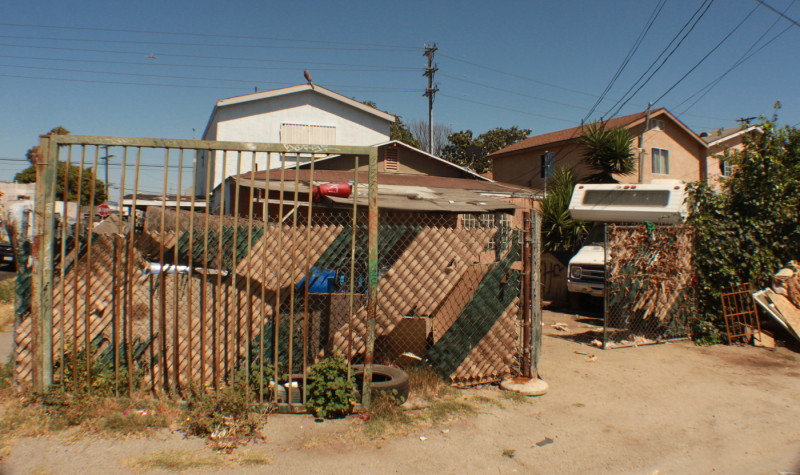
"caption": "A new state law could make it easier to remove trespassers from homes like this one in South L.A. where squatters apparently moved in after the house was foreclosed on (Steven Cuevas/KQED)",
"description": "A new state law could make it easier to remove trespassers from homes like this one in South L.A. where squatters apparently moved in after the house was foreclosed on (Steven Cuevas/KQED)",
"title": "12552_transform",
"credit": null,
"status": "inherit",
"isLoading": false,
"fetchFailed": false
},
"news_10341871": {
"type": "attachments",
"id": "news_10341871",
"meta": {
"index": "attachments_1716263798",
"site": "news",
"id": "10341871",
"found": true
},
"parent": 10341433,
"imgSizes": {
"thumbnail": {
"file": "https://ww2.kqed.org/app/uploads/sites/10/2014/09/RS11991_MetroHomeless-800-400x225.jpg",
"width": 400,
"mimeType": "image/jpeg",
"height": 225
},
"post-thumbnail": {
"file": "https://ww2.kqed.org/app/uploads/sites/10/2014/09/RS11991_MetroHomeless-800-672x372.jpg",
"width": 672,
"mimeType": "image/jpeg",
"height": 372
},
"kqedFullSize": {
"file": "https://ww2.kqed.org/app/uploads/sites/10/2014/09/RS11991_MetroHomeless-800.jpg",
"width": 800,
"height": 450
},
"guest-author-96": {
"file": "https://ww2.kqed.org/app/uploads/sites/10/2014/09/RS11991_MetroHomeless-800-96x96.jpg",
"width": 96,
"mimeType": "image/jpeg",
"height": 96
},
"guest-author-64": {
"file": "https://ww2.kqed.org/app/uploads/sites/10/2014/09/RS11991_MetroHomeless-800-64x64.jpg",
"width": 64,
"mimeType": "image/jpeg",
"height": 64
},
"detail": {
"file": "https://ww2.kqed.org/app/uploads/sites/10/2014/09/RS11991_MetroHomeless-800-75x75.jpg",
"width": 75,
"mimeType": "image/jpeg",
"height": 75
},
"guest-author-32": {
"file": "https://ww2.kqed.org/app/uploads/sites/10/2014/09/RS11991_MetroHomeless-800-32x32.jpg",
"width": 32,
"mimeType": "image/jpeg",
"height": 32
},
"guest-author-128": {
"file": "https://ww2.kqed.org/app/uploads/sites/10/2014/09/RS11991_MetroHomeless-800-128x128.jpg",
"width": 128,
"mimeType": "image/jpeg",
"height": 128
}
},
"publishDate": 1412188216,
"modified": 1412188216,
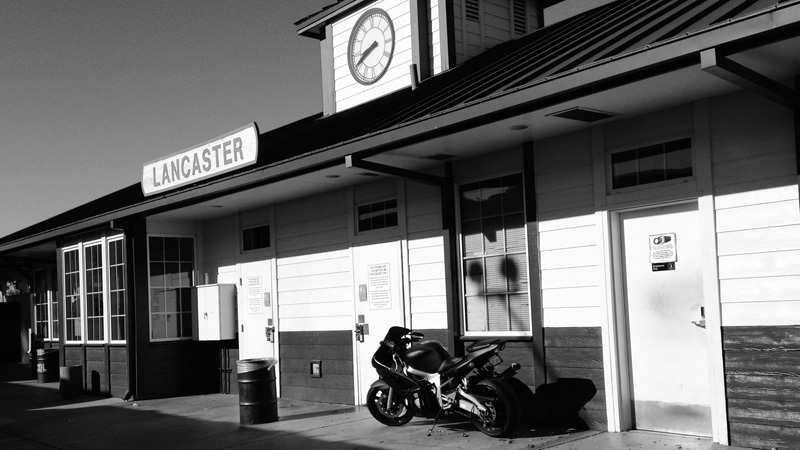
"caption": "Officials in the city of Lancaster are contemplating a possible closure of the only Metrolink train station in town to help stem an alleged flood of homeless people from the L.A. area. (Steven Cuevas)",
"description": null,
"title": "RS11991_MetroHomeless-800",
"credit": null,
"status": "inherit",
"isLoading": false,
"fetchFailed": false
},
"news_10341647": {
"type": "attachments",
"id": "news_10341647",
"meta": {
"index": "attachments_1716263798",
"site": "news",
"id": "10341647",
"found": true
},
"parent": 10341646,
"imgSizes": {
"thumbnail": {
"file": "https://ww2.kqed.org/app/uploads/sites/10/2014/09/MetroLinkSheriff-400x225.jpg",
"width": 400,
"mimeType": "image/jpeg",
"height": 225
},
"post-thumbnail": {
"file": "https://ww2.kqed.org/app/uploads/sites/10/2014/09/MetroLinkSheriff-672x372.jpg",
"width": 672,
"mimeType": "image/jpeg",
"height": 372
},
"kqedFullSize": {
"file": "https://ww2.kqed.org/app/uploads/sites/10/2014/09/MetroLinkSheriff.jpg",
"width": 800,
"height": 450
},
"guest-author-96": {
"file": "https://ww2.kqed.org/app/uploads/sites/10/2014/09/MetroLinkSheriff-96x96.jpg",
"width": 96,
"mimeType": "image/jpeg",
"height": 96
},
"guest-author-64": {
"file": "https://ww2.kqed.org/app/uploads/sites/10/2014/09/MetroLinkSheriff-64x64.jpg",
"width": 64,
"mimeType": "image/jpeg",
"height": 64
},
"detail": {
"file": "https://ww2.kqed.org/app/uploads/sites/10/2014/09/MetroLinkSheriff-75x75.jpg",
"width": 75,
"mimeType": "image/jpeg",
"height": 75
},
"guest-author-32": {
"file": "https://ww2.kqed.org/app/uploads/sites/10/2014/09/MetroLinkSheriff-32x32.jpg",
"width": 32,
"mimeType": "image/jpeg",
"height": 32
},
"guest-author-128": {
"file": "https://ww2.kqed.org/app/uploads/sites/10/2014/09/MetroLinkSheriff-128x128.jpg",
"width": 128,
"mimeType": "image/jpeg",
"height": 128
}
},
"publishDate": 1412108499,
"modified": 1412108499,
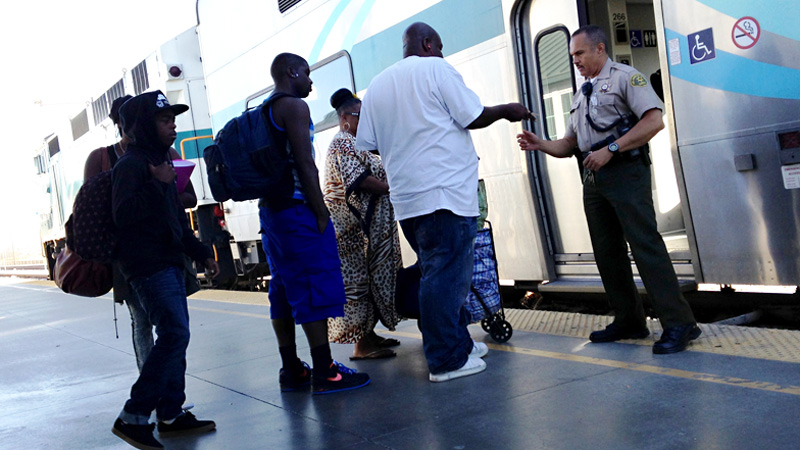
"caption": "A sheriff's deputy checks tickets outside an L.A.-bound train in Lancaster. When told the city may close the station, he expressed surprise and said he doesn't see many who appear to be homeless. (Steven Cuevas/KQED)",
"description": null,
"title": "MetroLinkSheriff",
"credit": null,
"status": "inherit",
"isLoading": false,
"fetchFailed": false
},
"news_145394": {
"type": "attachments",
"id": "news_145394",
"meta": {
"index": "attachments_1716263798",
"site": "news",
"id": "145394",
"found": true
},
"parent": 145363,
"imgSizes": {
"kqedFullSize": {
"file": "https://ww2.kqed.org/app/uploads/sites/10/2014/08/tents-eco-structure.jpg",
"width": 640,
"height": 335
}
},
"publishDate": 1408670030,
"modified": 1408670030,
"caption": "There are around ten residents living at Fresno's Dakota EcoGarden. (Adam Grossberg/KQED)",
"description": null,
"title": "tents-eco-structure",
"credit": null,
"status": "inherit",
"isLoading": false,
"fetchFailed": false
},
"stateofhealth_20652": {
"type": "attachments",
"id": "stateofhealth_20652",
"meta": {
"index": "attachments_1716263798",
"site": "stateofhealth",
"id": "20652",
"found": true
},
"parent": 20600,
"imgSizes": {
"thumbnail": {
"file": "https://ww2.kqed.org/app/uploads/sites/27/2014/08/LavaMae-e1407548749650-400x266.jpg",
"width": 400,
"mimeType": "image/jpeg",
"height": 266
},
"fd-sm": {
"file": "https://ww2.kqed.org/app/uploads/sites/27/2014/08/LavaMae-e1407548749650-320x213.jpg",
"width": 320,
"mimeType": "image/jpeg",
"height": 213
},
"post-thumbnail": {
"file": "https://ww2.kqed.org/app/uploads/sites/27/2014/08/LavaMae-e1407548749650-641x372.jpg",
"width": 641,
"mimeType": "image/jpeg",
"height": 372
},
"kqedFullSize": {
"file": "https://ww2.kqed.org/app/uploads/sites/27/2014/08/LavaMae-e1407548749650.jpg",
"width": 641,
"height": 427
},
"guest-author-96": {
"file": "https://ww2.kqed.org/app/uploads/sites/27/2014/08/LavaMae-e1407548749650-96x96.jpg",
"width": 96,
"mimeType": "image/jpeg",
"height": 96
},
"guest-author-64": {
"file": "https://ww2.kqed.org/app/uploads/sites/27/2014/08/LavaMae-e1407548749650-64x64.jpg",
"width": 64,
"mimeType": "image/jpeg",
"height": 64
},
"detail": {
"file": "https://ww2.kqed.org/app/uploads/sites/27/2014/08/LavaMae-e1407548749650-75x75.jpg",
"width": 75,
"mimeType": "image/jpeg",
"height": 75
},
"guest-author-32": {
"file": "https://ww2.kqed.org/app/uploads/sites/27/2014/08/LavaMae-e1407548749650-32x32.jpg",
"width": 32,
"mimeType": "image/jpeg",
"height": 32
},
"guest-author-128": {
"file": "https://ww2.kqed.org/app/uploads/sites/27/2014/08/LavaMae-e1407548749650-128x128.jpg",
"width": 128,
"mimeType": "image/jpeg",
"height": 128
}
},
"publishDate": 1407548731,
"modified": 1407548731,
"caption": "Doniece Sandoval, founder of Lava Mae, a mobile shower service for homeless people.",
"description": "Lava Mae",
"title": "LavaMae",
"credit": null,
"status": "inherit",
"isLoading": false,
"fetchFailed": false
},
"news_144134": {
"type": "attachments",
"id": "news_144134",
"meta": {
"index": "attachments_1716263798",
"site": "news",
"id": "144134",
"found": true
},
"parent": 144132,
"imgSizes": {
"kqedFullSize": {
"file": "https://ww2.kqed.org/app/uploads/sites/10/2014/08/for-sale-sign.jpg",
"width": 659,
"height": 446
}
},
"publishDate": 1407439582,
"modified": 1407439582,
"caption": "For sale sign in Oakland. (Oakland Local)",
"description": null,
"title": "for sale sign",
"credit": null,
"status": "inherit",
"isLoading": false,
"fetchFailed": false
},
"news_144292": {
"type": "attachments",
"id": "news_144292",
"meta": {
"index": "attachments_1716263798",
"site": "news",
"id": "144292",
"found": true
},
"parent": 144291,
"imgSizes": {
"kqedFullSize": {
"file": "https://ww2.kqed.org/app/uploads/sites/10/2014/08/tamalelady-620x348.jpg",
"width": 620,
"height": 348
}
},
"publishDate": 1407519061,
"modified": 1407519061,
"caption": "Fourplex owned by Virginia Ramos: aka The Tomale Lady. (Lydia Chavez/Mission Local)",
"description": null,
"title": "tamalelady-620x348",
"credit": null,
"status": "inherit",
"isLoading": false,
"fetchFailed": false
},
"news_134899": {
"type": "attachments",
"id": "news_134899",
"meta": {
"index": "attachments_1716263798",
"site": "news",
"id": "134899",
"found": true
},
"parent": 134897,
"imgSizes": {
"kqedFullSize": {
"file": "https://ww2.kqed.org/app/uploads/sites/10/2014/05/Airbnb.jpg",
"width": 1280,
"height": 900
}
},
"publishDate": 1399053016,
"modified": 1399053016,
"caption": "Kathryn Blum rents a spare guest room in her home to visitors. \"It's my property -- I want to be able to do with it as I choose,\" she said at a rally in April. (Mark Boyer/KQED)",
"description": null,
"title": "Airbnb",
"credit": null,
"status": "inherit",
"isLoading": false,
"fetchFailed": false
},
"news_143302": {
"type": "attachments",
"id": "news_143302",
"meta": {
"index": "attachments_1716263798",
"site": "news",
"id": "143302",
"found": true
},
"parent": 143301,
"imgSizes": {
"kqedFullSize": {
"file": "https://ww2.kqed.org/app/uploads/sites/10/2014/07/rail-homeless.jpg",
"width": 720,
"height": 520
}
},
"publishDate": 1406746463,
"modified": 1406746463,
"caption": "The eviction of the Albany Bulb and the clean-up of the Gilman underpass have prompted homeless to sleep along the West Berkeley train tracks. (Berkeleyside)",
"description": null,
"title": "rail homeless",
"credit": null,
"status": "inherit",
"isLoading": false,
"fetchFailed": false
},
"news_143289": {
"type": "attachments",
"id": "news_143289",
"meta": {
"index": "attachments_1716263798",
"site": "news",
"id": "143289",
"found": true
},
"parent": 143234,
"imgSizes": {
"kqedFullSize": {
"file": "https://ww2.kqed.org/app/uploads/sites/10/2014/07/RS7966_victorian.jpg",
"width": 640,
"height": 360
}
},
"publishDate": 1406741782,
"modified": 1406741782,
"caption": null,
"description": null,
"title": "RS7966_victorian",
"credit": null,
"status": "inherit",
"isLoading": false,
"fetchFailed": false
},
"news_143078": {
"type": "attachments",
"id": "news_143078",
"meta": {
"index": "attachments_1716263798",
"site": "news",
"id": "143078",
"found": true
},
"parent": 143077,
"imgSizes": {
"kqedFullSize": {
"file": "https://ww2.kqed.org/app/uploads/sites/10/2014/07/homeless-620x736.jpg",
"width": 620,
"height": 736
}
},
"publishDate": 1406571280,
"modified": 1406571280,
"caption": "On Valencia Street. (Mission Local)",
"description": null,
"title": "homeless-620x736",
"credit": null,
"status": "inherit",
"isLoading": false,
"fetchFailed": false
},
"news_126781": {
"type": "attachments",
"id": "news_126781",
"meta": {
"index": "attachments_1716263798",
"site": "news",
"id": "126781",
"found": true
},
"parent": 126156,
"imgSizes": {
"kqedFullSize": {
"file": "https://ww2.kqed.org/app/uploads/sites/10/2014/02/richmondproject_832_la1.jpg",
"width": 1200,
"height": 800
}
},
"publishDate": 1392689863,
"modified": 1392689863,
"caption": "The Hacienda public housing complex in Richmond. (Lacy Atkins/San Francisco Chronicle)\n",
"description": "Steve Muccular visits his family at the Hacienda public housing complex in Richmond. The building’s security guards don’t venture up to the sixth floor, he says, so he squatted in the laundry room for months. (Lacy Atkins/San Francisco Chronicle)",
"title": "Richmond Public Housing-Hacienda",
"credit": null,
"status": "inherit",
"isLoading": false,
"fetchFailed": false
}
},
"audioPlayerReducer": {
"postId": "stream_live",
"isPaused": true,
"isPlaying": false,
"pfsActive": false,
"pledgeModalIsOpen": true,
"playerDrawerIsOpen": false,
"liveAudioPlayStartedAt": 0,
"liveAudioPlayContext": ""
},
"authorsReducer": {
"smartin": {
"type": "authors",
"id": "89",
"meta": {
"index": "authors_1716337520",
"id": "89",
"found": true
},
"name": "Stephanie Martin Taylor",
"firstName": "Stephanie Martin",
"lastName": "Taylor",
"slug": "smartin",
"email": "smartin@kqed.org",
"display_author_email": false,
"staff_mastheads": [],
"title": null,
"bio": "Stephanie Martin is a radio news reporter and anchor, and an occasional host of the \u003cem>KQED Newsroom \u003c/em>television program. While she currently focuses on housing and development issues, she has also reported on topics ranging from state and local politics to religion to arts and culture.\r\n\r\nPrior to joining KQED in 2005, Stephanie was an anchor and reporter for WFDD, the NPR affiliate in Winston-Salem, NC. She also spent several years as a television anchor, reporter and producer at various stations around the country.\r\n\r\nStephanie has received numerous awards for her reporting, including two National Headliner Awards, the Religion Newswriters Association's Best Radio Reporting Award and honors from the Associated Press and the Radio and Television Digital News Association. A series she produced from Iraq in 2005 earned a Best of Radio Award from the Society of Professional Journalists.\r\n\r\nStephanie received a graduate degree in Journalism from Columbia University. As an undergraduate at Colgate University, she worked and studied in Paris and Dijon, France, and spent a summer interning in the White House Press Office.\r\n\r\nStephanie grew up in Dallas, TX, and now lives with her husband in San Francisco.",
"avatar": "https://secure.gravatar.com/avatar/9fd3f8e9af01e14afde39822c19646e0?s=600&d=blank&r=g",
"twitter": "SMartinTaylor",
"facebook": null,
"instagram": null,
"linkedin": null,
"sites": [
{
"site": "arts",
"roles": [
"Contributor",
"subscriber"
]
},
{
"site": "news",
"roles": [
"subscriber"
]
},
{
"site": "stateofhealth",
"roles": [
"subscriber"
]
}
],
"headData": {
"title": "Stephanie Martin Taylor | KQED",
"description": null,
"ogImgSrc": "https://secure.gravatar.com/avatar/9fd3f8e9af01e14afde39822c19646e0?s=600&d=blank&r=g",
"twImgSrc": "https://secure.gravatar.com/avatar/9fd3f8e9af01e14afde39822c19646e0?s=600&d=blank&r=g"
},
"isLoading": false,
"link": "/author/smartin"
},
"lisapickoffwhite-2": {
"type": "authors",
"id": "199",
"meta": {
"index": "authors_1716337520",
"id": "199",
"found": true
},
"name": "Lisa Pickoff-White",
"firstName": "Lisa",
"lastName": "Pickoff-White",
"slug": "lisapickoffwhite-2",
"email": "lpickoffwhite@kqed.org",
"display_author_email": false,
"staff_mastheads": [
"news"
],
"title": "Data Journalist, Senior Producer",
"bio": "Lisa Pickoff-White is KQED's data reporter. Lisa specializes in simplifying complex topics and bringing them to life through compelling visuals, including photography and data visualizations. She previously has worked at the Center for Investigative Reporting and other national outlets. Her work has been honored with awards from the Online News Association, Investigative Reporters and Editors, the Society of Professional Journalists and SXSW Interactive. \u003cstrong> \u003c/strong>",
"avatar": "https://secure.gravatar.com/avatar/5513c5f3967df792aa65bee2501e84d6?s=600&d=blank&r=g",
"twitter": "pickoffwhite",
"facebook": null,
"instagram": null,
"linkedin": null,
"sites": [
{
"site": "",
"roles": [
"editor"
]
},
{
"site": "arts",
"roles": []
},
{
"site": "news",
"roles": [
"administrator"
]
},
{
"site": "about",
"roles": [
"editor"
]
},
{
"site": "stateofhealth",
"roles": [
"administrator"
]
},
{
"site": "science",
"roles": [
"editor"
]
},
{
"site": "quest",
"roles": [
"editor"
]
},
{
"site": "forum",
"roles": [
"editor"
]
}
],
"headData": {
"title": "Lisa Pickoff-White | KQED",
"description": "Data Journalist, Senior Producer",
"ogImgSrc": "https://secure.gravatar.com/avatar/5513c5f3967df792aa65bee2501e84d6?s=600&d=blank&r=g",
"twImgSrc": "https://secure.gravatar.com/avatar/5513c5f3967df792aa65bee2501e84d6?s=600&d=blank&r=g"
},
"isLoading": false,
"link": "/author/lisapickoffwhite-2"
},
"aliceldaniel": {
"type": "authors",
"id": "208",
"meta": {
"index": "authors_1716337520",
"id": "208",
"found": true
},
"name": "Alice Daniel",
"firstName": "Alice",
"lastName": "Daniel",
"slug": "aliceldaniel",
"email": "adaniel@kqed.org",
"display_author_email": false,
"staff_mastheads": [],
"title": null,
"bio": "Alice Daniel loves the listening aspect of reporting because she gets to briefly walk in other people’s shoes. She has rappelled down into caves and gone up in helicopters for KQED’s The California Report but her favorite place to pursue a story is the High Sierra or any family-run bakery, of course. Alice has a masters in journalism from Columbia University and teaches at Fresno State. She is a California Healthline Regional Correspondent and a frequent contributor to Success magazine. In her free time, she skis and hikes, throws pottery, practices piano and looks out the window.",
"avatar": "https://secure.gravatar.com/avatar/e611aa06593b114a67f9f123a8e875ad?s=600&d=blank&r=g",
"twitter": null,
"facebook": null,
"instagram": null,
"linkedin": null,
"sites": [
{
"site": "news",
"roles": [
"author"
]
},
{
"site": "stateofhealth",
"roles": [
"author"
]
}
],
"headData": {
"title": "Alice Daniel | KQED",
"description": null,
"ogImgSrc": "https://secure.gravatar.com/avatar/e611aa06593b114a67f9f123a8e875ad?s=600&d=blank&r=g",
"twImgSrc": "https://secure.gravatar.com/avatar/e611aa06593b114a67f9f123a8e875ad?s=600&d=blank&r=g"
},
"isLoading": false,
"link": "/author/aliceldaniel"
},
"danbrekke": {
"type": "authors",
"id": "222",
"meta": {
"index": "authors_1716337520",
"id": "222",
"found": true
},
"name": "Dan Brekke",
"firstName": "Dan",
"lastName": "Brekke",
"slug": "danbrekke",
"email": "dbrekke@kqed.org",
"display_author_email": true,
"staff_mastheads": [
"news",
"science"
],
"title": "KQED Editor and Reporter",
"bio": "Dan Brekke is a reporter and editor for KQED News, responsible for coverage of topics ranging from California water issues to the Bay Area's transportation challenges. In a newsroom career that began in Chicago in 1972, Dan has worked for \u003cem>The San Francisco Examiner,\u003c/em> Wired and TechTV and has been published in The New York Times, The New York Times Magazine, Business 2.0, Salon and elsewhere.\r\n\r\nSince joining KQED in 2007, Dan has reported, edited and produced both radio and online features and breaking news pieces. He has shared as both editor and reporter in four Society of Professional Journalists Norcal Excellence in Journalism awards and one Edward R. Murrow regional award. He was chosen for a spring 2017 residency at the Mesa Refuge to advance his research on California salmon.\r\n\r\nEmail Dan at: \u003ca href=\"mailto:dbrekke@kqed.org\">dbrekke@kqed.org\u003c/a>\r\n\r\n\u003cstrong>Twitter:\u003c/strong> \u003ca href=\"https://twitter.com/danbrekke\" rel=\"noopener noreferrer\">twitter.com/danbrekke\u003c/a>\r\n\u003cstrong>Facebook:\u003c/strong> \u003ca href=\"https://www.facebook.com/danbrekke\" rel=\"noopener noreferrer\">www.facebook.com/danbrekke\u003c/a>\r\n\u003cstrong>LinkedIn:\u003c/strong> \u003ca href=\"https://www.linkedin.com/in/danbrekke\" rel=\"noopener noreferrer\">www.linkedin.com/in/danbrekke\u003c/a>",
"avatar": "https://secure.gravatar.com/avatar/8f1f0d2a978fb3b23426c922c7e2af558fa36905b49c4ce76a97dc3c72d27226?s=600&d=mm&r=g",
"twitter": "danbrekke",
"bluesky": null,
"facebook": null,
"instagram": "https://www.instagram.com/dan.brekke/",
"linkedin": "https://www.linkedin.com/in/danbrekke/",
"sites": [
{
"site": "news",
"roles": [
"administrator",
"create_posts"
]
},
{
"site": "stateofhealth",
"roles": [
"editor"
]
},
{
"site": "science",
"roles": [
"editor"
]
},
{
"site": "quest",
"roles": [
"contributor"
]
},
{
"site": "food",
"roles": [
"contributor"
]
},
{
"site": "forum",
"roles": [
"contributor"
]
},
{
"site": "elections",
"roles": [
"editor"
]
},
{
"site": "liveblog",
"roles": [
"editor"
]
}
],
"headData": {
"title": "Dan Brekke | KQED",
"description": "KQED Editor and Reporter",
"ogImgSrc": "https://secure.gravatar.com/avatar/8f1f0d2a978fb3b23426c922c7e2af558fa36905b49c4ce76a97dc3c72d27226?s=600&d=mm&r=g",
"twImgSrc": "https://secure.gravatar.com/avatar/8f1f0d2a978fb3b23426c922c7e2af558fa36905b49c4ce76a97dc3c72d27226?s=600&d=mm&r=g"
},
"isLoading": false,
"link": "/author/danbrekke"
},
"kqed": {
"type": "authors",
"id": "236",
"meta": {
"index": "authors_1716337520",
"id": "236",
"found": true
},
"name": "KQED News Staff",
"firstName": "KQED News Staff",
"lastName": null,
"slug": "kqed",
"email": "faq@kqed.org",
"display_author_email": false,
"staff_mastheads": [],
"title": null,
"bio": null,
"avatar": "https://secure.gravatar.com/avatar/ef0e801a68c4c54afa9180db14084167?s=600&d=blank&r=g",
"twitter": null,
"facebook": null,
"instagram": null,
"linkedin": null,
"sites": [
{
"site": "arts",
"roles": [
"contributor"
]
},
{
"site": "news",
"roles": [
"editor"
]
},
{
"site": "futureofyou",
"roles": [
"author"
]
}
],
"headData": {
"title": "KQED News Staff | KQED",
"description": null,
"ogImgSrc": "https://secure.gravatar.com/avatar/ef0e801a68c4c54afa9180db14084167?s=600&d=blank&r=g",
"twImgSrc": "https://secure.gravatar.com/avatar/ef0e801a68c4c54afa9180db14084167?s=600&d=blank&r=g"
},
"isLoading": false,
"link": "/author/kqed"
},
"scuevas": {
"type": "authors",
"id": "2600",
"meta": {
"index": "authors_1716337520",
"id": "2600",
"found": true
},
"name": "Steven Cuevas",
"firstName": "Steven",
"lastName": "Cuevas",
"slug": "scuevas",
"email": "scuevas@kqed.org",
"display_author_email": false,
"staff_mastheads": [],
"title": "KQED Contributor",
"bio": "Steven is a former Los Angeles bureau chief for The California Report.\r\n\r\nHe reports on an array of issues across the Southland, from immigration and regional politics to religion, the performing arts and pop culture.\r\n\r\nPrior to joining KQED in 2012, Steven covered Inland southern California for KPCC in Pasadena. He also helped establish the first newsroom at \u003ca href=\"http://kut.org/\">KUT\u003c/a> in Austin, Texas where he was a general assignment reporter.\r\n\r\nSteven has received numerous awards for his reporting including an RTNDA Edward R. Murrow Award for investigative reporting in addition to awards from the LA Press Club, the Associated Press and the Society for Professional Journalists.\r\n\r\nSteven grew up in and around San Francisco and now lives in Pasadena just a short jog from the foot of the San Gabriel Mountains.",
"avatar": "https://secure.gravatar.com/avatar/2d253580794f8e026100fae05cfabbbd4889b4fe15146146cacb82a01974c538?s=600&d=blank&r=g",
"twitter": null,
"bluesky": null,
"facebook": null,
"instagram": null,
"linkedin": null,
"sites": [
{
"site": "news",
"roles": [
"subscriber"
]
}
],
"headData": {
"title": "Steven Cuevas | KQED",
"description": "KQED Contributor",
"ogImgSrc": "https://secure.gravatar.com/avatar/2d253580794f8e026100fae05cfabbbd4889b4fe15146146cacb82a01974c538?s=600&d=blank&r=g",
"twImgSrc": "https://secure.gravatar.com/avatar/2d253580794f8e026100fae05cfabbbd4889b4fe15146146cacb82a01974c538?s=600&d=blank&r=g"
},
"isLoading": false,
"link": "/author/scuevas"
},
"state-of-health": {
"type": "authors",
"id": "8344",
"meta": {
"index": "authors_1716337520",
"id": "8344",
"found": true
},
"name": "State of Health",
"firstName": "State of Health",
"lastName": null,
"slug": "state-of-health",
"email": "stateofhealth@kqed.org",
"display_author_email": false,
"staff_mastheads": [],
"title": null,
"bio": null,
"avatar": "https://secure.gravatar.com/avatar/66de4bf6d331fa7402bba1ffe8135e17?s=600&d=blank&r=g",
"twitter": null,
"facebook": null,
"instagram": null,
"linkedin": null,
"sites": [
{
"site": "arts",
"roles": [
"author"
]
},
{
"site": "stateofhealth",
"roles": [
"editor"
]
}
],
"headData": {
"title": "State of Health | KQED",
"description": null,
"ogImgSrc": "https://secure.gravatar.com/avatar/66de4bf6d331fa7402bba1ffe8135e17?s=600&d=blank&r=g",
"twImgSrc": "https://secure.gravatar.com/avatar/66de4bf6d331fa7402bba1ffe8135e17?s=600&d=blank&r=g"
},
"isLoading": false,
"link": "/author/state-of-health"
}
},
"pagesReducer": {
"news_category_housing": {
"type": "terms",
"id": "news_6266",
"meta": {
"index": "terms_1716263798",
"site": "news",
"id": "6266",
"score": 11.037003
},
"featImg": null,
"name": "Housing",
"description": null,
"taxonomy": "category",
"headData": {
"twImgId": null,
"twTitle": null,
"ogTitle": null,
"ogImgId": null,
"twDescription": null,
"description": null,
"title": "Housing Archives | KQED News",
"ogDescription": null
},
"ttid": 6290,
"slug": "housing",
"isLoading": false,
"title": "Housing",
"pageMeta": {
"site": "news",
"WpPageTemplate": "page-topic-editorial",
"currentPage": 179
},
"blocks": [
{
"blockName": "kqed/post-list",
"attrs": {
"layout": "cardArticle2",
"query": "posts/news?category=housing",
"seeMore": false,
"paginated": true,
"page": 179
}
},
{
"blockName": "kqed/ad"
}
]
}
},
"pfsSessionReducer": {},
"postsReducer": {
"stream_live": {
"type": "live",
"id": "stream_live",
"audioUrl": "https://hls.kqed.org/hls/kqed_app/playlist.m3u8",
"title": "Live Stream",
"excerpt": "Live Stream information currently unavailable.",
"link": "/radio",
"featImg": "",
"label": {
"name": "KQED Live",
"link": "/"
}
},
"stream_kqedNewscast": {
"type": "posts",
"id": "stream_kqedNewscast",
"audioUrl": "https://www.kqed.org/.stream/anon/radio/RDnews/newscast.mp3?_=1",
"title": "KQED Newscast",
"featImg": "",
"label": {
"name": "88.5 FM",
"link": "/"
}
},
"news_10341901": {
"type": "posts",
"id": "news_10341901",
"meta": {
"index": "posts_1716263798",
"site": "news",
"id": "10341901",
"score": null,
"sort": [
1412205110000
]
},
"parent": 0,
"labelTerm": {
"site": "news",
"term": 72
},
"blocks": [],
"publishDate": 1412205110,
"format": "standard",
"disqusTitle": "Governor Signs Anti-Squatter Bill Despite Protest from Tenant Advocates",
"title": "Governor Signs Anti-Squatter Bill Despite Protest from Tenant Advocates",
"headTitle": "The California Report | KQED News",
"content": "\u003cp>[audio mp3=\"http://www.kqed.org/.stream/anon/radio/tcr/2014/10/2014-10-02b-tcr.mp3\"][/audio]\u003c/p>\n\u003cp>New state legislation signed into law by Gov. Jerry Brown this week aims to roust unwanted tenants from vacant properties.\u003c/p>\n\u003cp>The bill’s author, \u003ca title=\"Assemblyman Steve Fox\" href=\"http://asmdc.org/members/a36/%20\">Democratic Assemblyman Steve Fox from Palmdale\u003c/a>, said the bill is designed to help residential property owners remove trespassers, or squatters, from a home quickly.\u003c/p>\n\u003cp>“It can speed up the process real quick. It doesn’t have to take a couple months. It can be right now,” says Fox, speaking from his district in the Antelope Valley about 70 miles north of Los Angeles.\u003cbr>\nThe law enables homeowners to obtain a Declaration of Ownership from authorities when a property is vacant, such as while awaiting sale or before a new tenant moves in.\u003c/p>\n\u003cp>“You post the notice now, squatter comes by, you let the sheriff’s (department) know, the sheriff will give ‘em 48 hours’ notice,” explains Fox.\u003c/p>\n\u003cp>[ad fullwidth]\u003c/p>\n\u003cp>“If they don’t leave, the sheriffs can move them and their belongings out without a civil process. Right now they’d have to go through the eviction court, so you are paying the mortgage payments and the cost of eviction.”\u003c/p>\n\u003cp>That’s because, before Fox’s bill, there was no state law that gave landlords and law enforcement a mechanism to swiftly remove a person who may be claiming a right of tenancy through fraud, such as a bogus rental agreement.\u003c/p>\n\u003cp>But Dean Preston says the law could end up backfiring on legal renters.\u003c/p>\n\u003cp>“It was introduced as an eviction-by-declaration bill to enable property owners to remove tenants without having to go to court,” says Dean Preston, executive director of\u003ca title=\"Tenants Together\" href=\"http://www.tenantstogether.org/%20\"> Tenants Together\u003c/a>, a statewide advocacy group.\u003c/p>\n\u003cp>“And the idea of making it easier to evict tenants after seeing what we saw through the foreclosure crisis is completely the opposite of what our Legislature should be doing,\" Preston says. \"We should be passing additional protections.\"\u003c/p>\n\u003cp>In response to pressure from advocacy groups and to win over dubious fellow lawmakers, Fox amended the bill to include several additional protections for lawful tenants.\u003c/p>\n\u003cp>\u003c/p>\n\u003cp>The legislation’s initial rollout will also be limited to the cities of Lancaster, Palmdale and Ukiah. More cities could be added in an amended version.\u003c/p>\n\n",
"disqusIdentifier": "10341901 http://ww2.kqed.org/news/?p=10341901",
"disqusUrl": "https://ww2.kqed.org/news/2014/10/01/governor-signs-anti-squatter-bill-despite-protest-from-tenant-advocates/",
"stats": {
"hasVideo": false,
"hasChartOrMap": false,
"hasAudio": true,
"hasPolis": false,
"wordCount": 400,
"hasGoogleForm": false,
"hasGallery": false,
"hasHearkenModule": false,
"iframeSrcs": [],
"paragraphCount": 13
},
"modified": 1412359645,
"excerpt": "Law is designed to remove trespassers from vacant properties quickly, without having to go to court.",
"headData": {
"twImgId": "",
"twTitle": "",
"ogTitle": "",
"ogImgId": "",
"twDescription": "",
"description": "Law is designed to remove trespassers from vacant properties quickly, without having to go to court.",
"title": "Governor Signs Anti-Squatter Bill Despite Protest from Tenant Advocates | KQED",
"ogDescription": "",
"schema": {
"@context": "https://schema.org",
"@type": "NewsArticle",
"headline": "Governor Signs Anti-Squatter Bill Despite Protest from Tenant Advocates",
"datePublished": "2014-10-01T16:11:50-07:00",
"dateModified": "2014-10-03T11:07:25-07:00",
"image": "https://cdn.kqed.org/wp-content/uploads/2020/02/KQED-OG-Image@1x.png",
"isAccessibleForFree": "True",
"publisher": {
"@type": "NewsMediaOrganization",
"@id": "https://www.kqed.org/#organization",
"name": "KQED",
"logo": "https://cdn.kqed.org/wp-content/uploads/2020/02/KQED-OG-Image@1x.png",
"url": "https://www.kqed.org",
"sameAs": [
"https://www.facebook.com/KQED",
"https://twitter.com/KQED",
"https://www.instagram.com/kqed/",
"https://www.tiktok.com/@kqedofficial",
"https://www.linkedin.com/company/kqed",
"https://www.youtube.com/channel/UCeC0IOo7i1P_61zVUWbJ4nw"
]
}
}
},
"guestAuthors": [],
"slug": "governor-signs-anti-squatter-bill-despite-protest-from-tenant-advocates",
"status": "publish",
"path": "/news/10341901/governor-signs-anti-squatter-bill-despite-protest-from-tenant-advocates",
"audioUrl": "http://www.kqed.org/.stream/anon/radio/tcr/2014/10/2014-10-02b-tcr.mp3",
"audioDuration": null,
"audioTrackLength": null,
"parsedContent": [
{
"type": "contentString",
"content": "\u003cdiv class=\"post-body\">\u003cp>\u003cp>\u003c/p>\u003c/div>",
"attributes": {
"named": {},
"numeric": []
}
},
{
"type": "component",
"content": "",
"name": "audio",
"attributes": {
"named": {
"mp3": "http://www.kqed.org/.stream/anon/radio/tcr/2014/10/2014-10-02b-tcr.mp3",
"label": ""
},
"numeric": []
}
},
{
"type": "contentString",
"content": "\u003cdiv class=\"post-body\">\u003cp>\u003c/p>\n\u003cp>New state legislation signed into law by Gov. Jerry Brown this week aims to roust unwanted tenants from vacant properties.\u003c/p>\n\u003cp>The bill’s author, \u003ca title=\"Assemblyman Steve Fox\" href=\"http://asmdc.org/members/a36/%20\">Democratic Assemblyman Steve Fox from Palmdale\u003c/a>, said the bill is designed to help residential property owners remove trespassers, or squatters, from a home quickly.\u003c/p>\n\u003cp>“It can speed up the process real quick. It doesn’t have to take a couple months. It can be right now,” says Fox, speaking from his district in the Antelope Valley about 70 miles north of Los Angeles.\u003cbr>\nThe law enables homeowners to obtain a Declaration of Ownership from authorities when a property is vacant, such as while awaiting sale or before a new tenant moves in.\u003c/p>\n\u003cp>“You post the notice now, squatter comes by, you let the sheriff’s (department) know, the sheriff will give ‘em 48 hours’ notice,” explains Fox.\u003c/p>\n\u003cp>\u003c/p>\u003c/div>",
"attributes": {
"named": {},
"numeric": []
}
},
{
"type": "component",
"content": "",
"name": "ad",
"attributes": {
"named": {
"label": "fullwidth"
},
"numeric": [
"fullwidth"
]
}
},
{
"type": "contentString",
"content": "\u003cdiv class=\"post-body\">\u003cp>\u003c/p>\n\u003cp>“If they don’t leave, the sheriffs can move them and their belongings out without a civil process. Right now they’d have to go through the eviction court, so you are paying the mortgage payments and the cost of eviction.”\u003c/p>\n\u003cp>That’s because, before Fox’s bill, there was no state law that gave landlords and law enforcement a mechanism to swiftly remove a person who may be claiming a right of tenancy through fraud, such as a bogus rental agreement.\u003c/p>\n\u003cp>But Dean Preston says the law could end up backfiring on legal renters.\u003c/p>\n\u003cp>“It was introduced as an eviction-by-declaration bill to enable property owners to remove tenants without having to go to court,” says Dean Preston, executive director of\u003ca title=\"Tenants Together\" href=\"http://www.tenantstogether.org/%20\"> Tenants Together\u003c/a>, a statewide advocacy group.\u003c/p>\n\u003cp>“And the idea of making it easier to evict tenants after seeing what we saw through the foreclosure crisis is completely the opposite of what our Legislature should be doing,\" Preston says. \"We should be passing additional protections.\"\u003c/p>\n\u003cp>In response to pressure from advocacy groups and to win over dubious fellow lawmakers, Fox amended the bill to include several additional protections for lawful tenants.\u003c/p>\n\u003cp>\u003c/p>\n\u003cp>The legislation’s initial rollout will also be limited to the cities of Lancaster, Palmdale and Ukiah. More cities could be added in an amended version.\u003c/p>\n\n\u003c/div>\u003c/p>",
"attributes": {
"named": {},
"numeric": []
}
}
],
"link": "/news/10341901/governor-signs-anti-squatter-bill-despite-protest-from-tenant-advocates",
"authors": [
"2600"
],
"programs": [
"news_72"
],
"categories": [
"news_6266",
"news_13"
],
"tags": [
"news_3921",
"news_30",
"news_17041"
],
"featImg": "news_10342207",
"label": "news_72"
},
"news_10341433": {
"type": "posts",
"id": "news_10341433",
"meta": {
"index": "posts_1716263798",
"site": "news",
"id": "10341433",
"score": null,
"sort": [
1411398049000
]
},
"guestAuthors": [],
"slug": "funding-homeless-services-in-the-city-of-lancaster",
"title": "Funding Homeless Services in the City of Lancaster",
"publishDate": 1411398049,
"format": "standard",
"headTitle": "Funding Homeless Services in the City of Lancaster | KQED",
"labelTerm": {
"term": 72,
"site": "news"
},
"content": "\u003cp>http://www.kqed.org/.stream/anon/radio/tcr/2014/09/2014-09-22b-tcr.mp3\u003c/p>\n\u003cp>\u003cem>The California Report\u003c/em> recently broadcast a story about a push to close the sole commuter train station that connects the desert city of \u003ca href=\"http://www.cityoflancasterca.org/\" target=\"_blank\" rel=\"noopener\">Lancaster\u003c/a> to L.A.\u003c/p>\n\u003cp>Lancaster officials claim it’s the last stop for scores of homeless people hoping to take advantage of their city’s public services.\u003c/p>\n\u003cp>But local homeless advocates say the real problem is a gap in county funding for those services and what the city aims to do about it.\u003c/p>\n\u003cp>The Antelope Valley, home to the cities of Palmdale and Lancaster, is also home to roughly 16 percent of L.A. County’s homeless. Yet it receives just 2 percent of overall funding for homeless services.\u003c/p>\n\u003cp>[ad fullwidth]\u003c/p>\n\u003cp>“We have the fourth-highest homeless count in all of L.A. County and we get the least amount of resources,” says Judy Cooperberg, regional director of \u003ca href=\"http://www.mhala.org/\">Mental Health America.\u003c/a>\u003c/p>\n\u003cp>“And downtown L.A., skid row, has 19 percent of the homeless in the whole county but get 49 percent of the money,” says Steve Baker of \u003ca href=\"http://www.graceresources.org/\">Grace Resource Center \u003c/a>in Lancaster, the valley’s biggest homeless services agency.\u003c/p>\n\u003cp>Look at the numbers and it would seem Baker and Cooperberg have their work cut out for them.\u003c/p>\n\u003cp>L.A. County’s most recent homeless count tallied over 6,000 homeless people in the Antelope Valley. That’s about four times the amount counted in 2011. Local service providers say the spike is mainly due to a more efficient counting process.\u003c/p>\n\u003cp>But officials in Lancaster say it’s evidence that the L.A. County’s homeless services department is actually directing homeless people to their city some 80 miles north of downtown Los Angeles.\u003c/p>\n\u003cp>“As far as I’m concerned, what the county does to underprivileged people by getting them to come up here is a homicide,” says Lancaster Mayor Rex Parris.\u003c/p>\n\u003cp>He says not only is L.A. County steering the homeless to his city, it is also withholding critical funds for the city’s small network of public services.\u003c/p>\n\u003cp>“L.A. (County) could fix it that fast,” says Parris, snapping his fingers. “But they won’t. So hopefully we can embarrass them enough to say, ‘Hey, this is not a solution.’ ”\u003c/p>\n\u003cp>While there’s no concrete evidence to back up claims of homeless dumping in Lancaster, the city hinted earlier this year that it might sue the \u003ca href=\"http://www.lahsa.org/\">Los Angeles Homeless Services Authority \u003c/a>(LAHSA) over the alleged withholding of funds.\u003c/p>\n\u003cp>LAHSA spokesman George McQuade says the agency isn’t withholding anything. “Since 2009 Lancaster has applied for zero, I repeat zero, federal funds for homeless services under the McKinney-Vento Act,” says McQuade.\u003c/p>\n\u003cp>McQuade is referring to U.S. Department of Housing and Urban Development money earmarked for specific uses. LAHSA is responsible for delivering those federal dollars based on a demonstrated need.\u003c/p>\n\u003cp>Baker of Grace Resource Center, which operates the Antelope Valley’s only shelter, says the region doesn’t qualify for a sizable chunk of that HUD money because much of it is directed to permanent supportive housing — a priority for the federal government but something not widely available in the Antelope Valley.\u003c/p>\n\u003cp>“We didn’t ask for some of the funds because some of it was specific to things we can’t provide here,” says Baker. “We don’t have enough housing to do permanent supportive housing because a lot of the older housing was so old it got torn down.”\u003c/p>\n\u003cp>What Lancaster really needs from the county, says Cooperberg of Mental Health America, is more money for supportive services like shelter beds, substance abuse programs and psychiatric counseling.\u003c/p>\n\u003cp>She says valley agencies feel at a disadvantage because of their remote location and what’s perceived as an overemphasis on L.A.’s skid row. “And that’s a fight we’ve been having for many years,” says Cooperberg.\u003c/p>\n\u003cp>According to figures provided by the L.A. Homeless Services Authority, requests for funding, including from the city of Lancaster, are being met.\u003c/p>\n\u003cp>LAHSA’s McQuade says it’s a competitive process. Sometimes cities and agencies get the full amount requested, sometimes they don’t.\u003c/p>\n\u003cp>He also adds that LAHSA officials earlier this year traveled to Lancaster and met with city leaders to explain the full range of funding options and how to obtain them.\u003c/p>\n\u003cp>“They seemed very receptive, but I think they were not really informed,” says McQuade. “They didn’t know what resources were available, so we explained all that to them and we offered an open-door policy, call us anytime, come on down and meet with us and we’ll be willing to help you.”\u003c/p>\n\u003cp>As well intentioned as Lancaster’s renewed involvement in the region’s homeless problem may be, Cooperberg says it’s late in coming: “My question is, why is it that the city of Lancaster, all of the sudden it’s an issue?”\u003c/p>\n\u003cp>She also worries it could actually jeopardize inroads made with county officials that hold the purse strings.\u003c/p>\n\u003cp>“And we’ve been begging them to advocate with us (for years) and all the sudden they are, and they are not going about it in a very collaborative way,” says Cooperberg.\u003c/p>\n\u003cp>Coopersburg points to the city’s threat of lawsuits, and its recent crusade to shutter its only Metrolink station over unsubstantiated claims that it’s a magnet for the homeless.\u003c/p>\n\u003cp>It’s not the first time Lancaster has been accused of mishandling the issue of homelessness.\u003c/p>\n\u003cp>\u003c/p>\n\u003cp>More: \u003ca href=\"http://www.californiareport.org/archive/R201409110850/b\" target=\"_blank\" rel=\"noopener\">Citing Homeless Infusion, Lancaster Officials Move to Shutter Metrolink Station\u003c/a>\u003c/p>\n\n",
"blocks": [],
"excerpt": "L.A. County's most recent count tallied more than 6,000 people without shelter in Antelope Valley.",
"status": "publish",
"parent": 0,
"modified": 1721150243,
"stats": {
"hasAudio": true,
"hasVideo": false,
"hasChartOrMap": false,
"iframeSrcs": [],
"hasGoogleForm": false,
"hasGallery": false,
"hasHearkenModule": false,
"hasPolis": false,
"paragraphCount": 31,
"wordCount": 995
},
"headData": {
"title": "Funding Homeless Services in the City of Lancaster | KQED",
"description": "L.A. County's most recent count tallied more than 6,000 people without shelter in Antelope Valley.",
"ogTitle": "",
"ogDescription": "",
"ogImgId": "",
"twTitle": "",
"twDescription": "",
"twImgId": "",
"schema": {
"@context": "https://schema.org",
"@type": "NewsArticle",
"headline": "Funding Homeless Services in the City of Lancaster",
"datePublished": "2014-09-22T08:00:49-07:00",
"dateModified": "2024-07-16T10:17:23-07:00",
"image": "https://cdn.kqed.org/wp-content/uploads/2020/02/KQED-OG-Image@1x.png",
"isAccessibleForFree": "True",
"publisher": {
"@type": "NewsMediaOrganization",
"@id": "https://www.kqed.org/#organization",
"name": "KQED",
"logo": "https://cdn.kqed.org/wp-content/uploads/2020/02/KQED-OG-Image@1x.png",
"url": "https://www.kqed.org",
"sameAs": [
"https://www.facebook.com/KQED",
"https://twitter.com/KQED",
"https://www.instagram.com/kqed/",
"https://www.tiktok.com/@kqedofficial",
"https://www.linkedin.com/company/kqed",
"https://www.youtube.com/channel/UCeC0IOo7i1P_61zVUWbJ4nw"
]
}
}
},
"sticky": false,
"path": "/news/10341433/funding-homeless-services-in-the-city-of-lancaster",
"audioUrl": "http://www.kqed.org/.stream/anon/radio/tcr/2014/09/2014-09-22b-tcr.mp3",
"audioDuration": null,
"audioTrackLength": null,
"parsedContent": [
{
"type": "contentString",
"content": "\u003cdiv class=\"post-body\">\u003cp>\u003cp>http://www.kqed.org/.stream/anon/radio/tcr/2014/09/2014-09-22b-tcr.mp3\u003c/p>\n\u003cp>\u003cem>The California Report\u003c/em> recently broadcast a story about a push to close the sole commuter train station that connects the desert city of \u003ca href=\"http://www.cityoflancasterca.org/\" target=\"_blank\" rel=\"noopener\">Lancaster\u003c/a> to L.A.\u003c/p>\n\u003cp>Lancaster officials claim it’s the last stop for scores of homeless people hoping to take advantage of their city’s public services.\u003c/p>\n\u003cp>But local homeless advocates say the real problem is a gap in county funding for those services and what the city aims to do about it.\u003c/p>\n\u003cp>The Antelope Valley, home to the cities of Palmdale and Lancaster, is also home to roughly 16 percent of L.A. County’s homeless. Yet it receives just 2 percent of overall funding for homeless services.\u003c/p>\n\u003cp>\u003c/p>\u003c/div>",
"attributes": {
"named": {},
"numeric": []
}
},
{
"type": "component",
"content": "",
"name": "ad",
"attributes": {
"named": {
"label": "fullwidth"
},
"numeric": [
"fullwidth"
]
}
},
{
"type": "contentString",
"content": "\u003cdiv class=\"post-body\">\u003cp>\u003c/p>\n\u003cp>“We have the fourth-highest homeless count in all of L.A. County and we get the least amount of resources,” says Judy Cooperberg, regional director of \u003ca href=\"http://www.mhala.org/\">Mental Health America.\u003c/a>\u003c/p>\n\u003cp>“And downtown L.A., skid row, has 19 percent of the homeless in the whole county but get 49 percent of the money,” says Steve Baker of \u003ca href=\"http://www.graceresources.org/\">Grace Resource Center \u003c/a>in Lancaster, the valley’s biggest homeless services agency.\u003c/p>\n\u003cp>Look at the numbers and it would seem Baker and Cooperberg have their work cut out for them.\u003c/p>\n\u003cp>L.A. County’s most recent homeless count tallied over 6,000 homeless people in the Antelope Valley. That’s about four times the amount counted in 2011. Local service providers say the spike is mainly due to a more efficient counting process.\u003c/p>\n\u003cp>But officials in Lancaster say it’s evidence that the L.A. County’s homeless services department is actually directing homeless people to their city some 80 miles north of downtown Los Angeles.\u003c/p>\n\u003cp>“As far as I’m concerned, what the county does to underprivileged people by getting them to come up here is a homicide,” says Lancaster Mayor Rex Parris.\u003c/p>\n\u003cp>He says not only is L.A. County steering the homeless to his city, it is also withholding critical funds for the city’s small network of public services.\u003c/p>\n\u003cp>“L.A. (County) could fix it that fast,” says Parris, snapping his fingers. “But they won’t. So hopefully we can embarrass them enough to say, ‘Hey, this is not a solution.’ ”\u003c/p>\n\u003cp>While there’s no concrete evidence to back up claims of homeless dumping in Lancaster, the city hinted earlier this year that it might sue the \u003ca href=\"http://www.lahsa.org/\">Los Angeles Homeless Services Authority \u003c/a>(LAHSA) over the alleged withholding of funds.\u003c/p>\n\u003cp>LAHSA spokesman George McQuade says the agency isn’t withholding anything. “Since 2009 Lancaster has applied for zero, I repeat zero, federal funds for homeless services under the McKinney-Vento Act,” says McQuade.\u003c/p>\n\u003cp>McQuade is referring to U.S. Department of Housing and Urban Development money earmarked for specific uses. LAHSA is responsible for delivering those federal dollars based on a demonstrated need.\u003c/p>\n\u003cp>Baker of Grace Resource Center, which operates the Antelope Valley’s only shelter, says the region doesn’t qualify for a sizable chunk of that HUD money because much of it is directed to permanent supportive housing — a priority for the federal government but something not widely available in the Antelope Valley.\u003c/p>\n\u003cp>“We didn’t ask for some of the funds because some of it was specific to things we can’t provide here,” says Baker. “We don’t have enough housing to do permanent supportive housing because a lot of the older housing was so old it got torn down.”\u003c/p>\n\u003cp>What Lancaster really needs from the county, says Cooperberg of Mental Health America, is more money for supportive services like shelter beds, substance abuse programs and psychiatric counseling.\u003c/p>\n\u003cp>She says valley agencies feel at a disadvantage because of their remote location and what’s perceived as an overemphasis on L.A.’s skid row. “And that’s a fight we’ve been having for many years,” says Cooperberg.\u003c/p>\n\u003cp>According to figures provided by the L.A. Homeless Services Authority, requests for funding, including from the city of Lancaster, are being met.\u003c/p>\n\u003cp>LAHSA’s McQuade says it’s a competitive process. Sometimes cities and agencies get the full amount requested, sometimes they don’t.\u003c/p>\n\u003cp>He also adds that LAHSA officials earlier this year traveled to Lancaster and met with city leaders to explain the full range of funding options and how to obtain them.\u003c/p>\n\u003cp>“They seemed very receptive, but I think they were not really informed,” says McQuade. “They didn’t know what resources were available, so we explained all that to them and we offered an open-door policy, call us anytime, come on down and meet with us and we’ll be willing to help you.”\u003c/p>\n\u003cp>As well intentioned as Lancaster’s renewed involvement in the region’s homeless problem may be, Cooperberg says it’s late in coming: “My question is, why is it that the city of Lancaster, all of the sudden it’s an issue?”\u003c/p>\n\u003cp>She also worries it could actually jeopardize inroads made with county officials that hold the purse strings.\u003c/p>\n\u003cp>“And we’ve been begging them to advocate with us (for years) and all the sudden they are, and they are not going about it in a very collaborative way,” says Cooperberg.\u003c/p>\n\u003cp>Coopersburg points to the city’s threat of lawsuits, and its recent crusade to shutter its only Metrolink station over unsubstantiated claims that it’s a magnet for the homeless.\u003c/p>\n\u003cp>It’s not the first time Lancaster has been accused of mishandling the issue of homelessness.\u003c/p>\n\u003cp>\u003c/p>\n\u003cp>More: \u003ca href=\"http://www.californiareport.org/archive/R201409110850/b\" target=\"_blank\" rel=\"noopener\">Citing Homeless Infusion, Lancaster Officials Move to Shutter Metrolink Station\u003c/a>\u003c/p>\n\n\u003c/div>\u003c/p>",
"attributes": {
"named": {},
"numeric": []
}
}
],
"link": "/news/10341433/funding-homeless-services-in-the-city-of-lancaster",
"authors": [
"2600"
],
"programs": [
"news_72"
],
"series": [
"news_19491"
],
"categories": [
"news_6266"
],
"tags": [
"news_4020"
],
"featImg": "news_10341871",
"label": "news_72"
},
"news_10341646": {
"type": "posts",
"id": "news_10341646",
"meta": {
"index": "posts_1716263798",
"site": "news",
"id": "10341646",
"score": null,
"sort": [
1410447649000
]
},
"guestAuthors": [],
"slug": "citing-homeless-infusion-lancaster-officials-move-to-shutter-metrolink-station",
"title": "Citing Homeless Infusion, Lancaster Officials Move to Shutter Metrolink Station",
"publishDate": 1410447649,
"format": "standard",
"headTitle": "Citing Homeless Infusion, Lancaster Officials Move to Shutter Metrolink Station | KQED",
"labelTerm": {
"term": 72,
"site": "news"
},
"content": "\u003cp>http://www.kqed.org/.stream/anon/radio/tcr/2014/09/2014-09-11b-tcr.mp3\u003c/p>\n\u003cp>The Antelope Valley, about an hour and a half north of Los Angeles, is home to roughly 12 percent of the county’s homeless population. Officials from the city of \u003ca href=\"http://www.cityoflancasterca.org/\" target=\"_blank\" rel=\"noopener\">Lancaster\u003c/a> claim that number grows by the day because of an alleged migration of train-hopping homeless people.\u003c/p>\n\u003cp>To curb this apparent surge of homelessness, the city aims to shutter the sole commuter train station linking Lancaster to L.A.\u003c/p>\n\u003cp>On a recent weekday morning in Lancaster, about two dozen young people, senior citizens and neatly dressed professionals disembark from one of just two trains that arrive from Los Angeles each morning.\u003c/p>\n\u003cp>According to Lancaster’s chief of public safety, Lee D’Errico, \u003ca href=\"http://www.metrolinktrains.com/\" target=\"_blank\" rel=\"noopener\">Metrolink\u003c/a> commuter trains also ferry dozens of homeless people a week to the city. His office recently conducted a three-day homeless survey.\u003c/p>\n\u003cp>[ad fullwidth]\u003c/p>\n\u003cp>“And on one particular day we counted and contacted over 67 individuals that were coming here for transitory services being provided,” said D’Errico during a presentation to the City Council last month. “And they indicated to us that the train was their main mechanism for moving throughout communities to obtain those services.”\u003c/p>\n\u003cp>Details of how the study was conducted are unclear, other than it was apparently carried out with the assistance of the \u003ca href=\"http://sheriff.lacounty.gov/wps/portal/lasd\" target=\"_blank\" rel=\"noopener\">L.A. County Sheriff’s Department\u003c/a> and a local merchants association.\u003c/p>\n\u003cp>Numerous city officials reached for this story would not disclose, among other things, how many homeless individuals were contacted in total over the three-day study, what kind of questions were asked or even what specific dates the survey was done.\u003c/p>\n\u003cp>D’Errico declined several requests for an interview and for data collected in the survey. He referred all inquiries to City Manager Mark Bozigian.\u003c/p>\n\u003cp>“The purpose (of the survey) was to ascertain general information regarding point of origin and need for services for Metrolink riders arriving at the Lancaster Metrolink station,” said Bozigian in a written response to a series of emailed questions from The California Report.\u003c/p>\n\u003cp>Bozigian suggested that in fact some individuals counted in the survey might not have actually been homeless or seeking services in Lancaster, only “likely” doing so.\u003c/p>\n\u003cp>“During one survey day, it was observed that 67 individuals who arrived via Metrolink were likely homeless and/or arriving for the purpose of receiving social services,” said Bozigian.\u003c/p>\n\u003cp>No written report on the results of the survey was ever submitted to, or apparently requested by, the City Council. Yet it is being cited by Mayor Rex Parris and other officials as justification to either shut down or move the Lancaster Metrolink station about 10 miles to the south. \u003c/p>\n\u003cp>“It doesn’t take a rocket scientist to figure out 67 homeless people a day being shipped from downtown to us is, uh. I, I mean, isn’t it about time we quit being victims of downtown Los Angeles?” said Parris during an August council meeting.\u003c/p>\n\u003cp>The Lancaster Metrolink station is used by some 400 L.A.-bound commuters a day, including Dominic Bongiovanni, a Vietnam War veteran with a bushy beard and long silver hair who gets around with the help of a motorized wheelchair.\u003c/p>\n\u003cp>Bongiovanni uses Metrolink several times a week to get to and from doctor appointments in West L.A. He usually catches the first train out of Lancaster at 3:58 AM to get to those appointments on time.\u003c/p>\n\u003cp>“Now you wanna move the station somewhere else? I have to hope the buses are running on time and I get that train,” says Bongiovanni.\u003c/p>\n\u003cp>I ask if he sees many homeless people on his rides back from L.A.\u003c/p>\n\u003cp> “I look like I’m homeless!” he laughs.\u003c/p>\n\u003cp>“I’ve seen maybe three times homeless people and I’ve been riding Metrolink for the six years I’ve lived up here.”\u003c/p>\n\u003cp>The Lancaster Metrolink station has long been an irritant to police and city officials. It became a haven for prostitution, drug dealing and other petty crime. A Metrolink spokesman says the agency is taking steps to increase security. That includes more security personal and fencing off the station platform so it cannot be accessed by people without tickets.\u003c/p>\n\u003cp>It’s common to find a few homeless people loitering in or around the property. The station is a short walk from numerous homeless service providers, including Grace Resource Center, the biggest in the region.\u003c/p>\n\u003cp>It operates a cavernous thrift store, a food bank and the area’s only shelter for homeless families and individuals. The center’s director, Steve Baker, says people occasionally do drop in from outside the area.\u003c/p>\n\u003cp> “The ones that I see that are not local. A lot of them they just hop on the train to get away from somebody down in L.A.,” says Baker.\u003c/p>\n\u003cp>“And I go, you came here because you think there’s a lot of help? Well, there isn’t. How about we send you back? And then I’ll work it out, and try to get them back on the train.”\u003c/p>\n\u003cp>The Antelope Valley, which includes the cities of Lancaster and Palmdale, is home to approximately 6,000 homeless people. Service providers in the region try to funnel those seeking assistance through a coordinated intake center in Lancaster. \u003c/p>\n\u003cp>According to the local branch of the organization Mental Health America, the number of people coming through the center is fairly stable — roughly 300 to 400 a month.\u003c/p>\n\u003cp>A small fraction are from outside the region, says MHA’s director, Judy Cooperberg.\u003c/p>\n\u003cp>“A very, very small percentage,” she says.\u003c/p>\n\u003cp>“The majority of people we serve are indigenous to the Antelope Valley. I do not believe that we have 67 people a day coming from L.A.,” says Cooperberg, contradicting the findings of Lancaster’s recent street survey. \u003c/p>\n\u003cp>But Lancaster’s vice mayor, Marvin Crist, says it doesn’t matter if it’s 67 people a day or just one a day.\u003c/p>\n\u003cp>“Say it’s one a day. That still overwhelms our system,” says Crist.\u003c/p>\n\u003cp>“If you gave us the resources to take care of the homeless population, absolutely. But we’re having to react because we don’t have the resources to take care of them,” he says.\u003c/p>\n\u003cp>Officials have long complained that Los Angeles receives a disproportionate amount of county funding for homeless services compared with the Antelope Valley.\u003c/p>\n\u003cp>George McQuade, a spokesman for L.A. County homeless services, says that if Lancaster wants more money, it needs to apply for it. McQuade says there have been few specific funding increase requests over the last several years.\u003c/p>\n\u003cp>But the apparent funding gap isn’t all that’s driving the move to shutter Lancaster’s Metrolink stop.\u003c/p>\n\u003cp>It’s also a thorn in the side of the city’s ongoing campaign to revitalize its downtown shopping district. Parris says shuttering the station, or moving it south nearly 10 miles to the border of Palmdale, would help shield downtown from the homeless.\u003c/p>\n\u003cp>“If you have to get 10 miles without transportation to whatever services are there, you are less likely to make the trip in the first place,” says Perris, speaking after this week’s Lancaster City Council meeting.\u003c/p>\n\u003cp>Better, he says, the problem move somewhere else.\u003c/p>\n\u003cp>“Better it goes any place but Lancaster. I have 146,000 people and I will protect them, no matter what the consequences elsewhere.”\u003c/p>\n\u003cp>A vote to close the transit station would also require an environmental review, public hearings and the approval of Metrolink’s board of directors. \u003c/p>\n\u003cp>[ad floatright]\u003c/p>\n\u003cp>But Parris says he won’t wait for approval. If the City Council votes to close the station, he’ll have it fenced off immediately.\u003c/p>\n\n",
"blocks": [],
"excerpt": "The Antelope Valley is home to roughly 12 percent of the Los Angeles County’s homeless population.",
"status": "publish",
"parent": 0,
"modified": 1721150247,
"stats": {
"hasAudio": true,
"hasVideo": false,
"hasChartOrMap": false,
"iframeSrcs": [],
"hasGoogleForm": false,
"hasGallery": false,
"hasHearkenModule": false,
"hasPolis": false,
"paragraphCount": 43,
"wordCount": 1353
},
"headData": {
"title": "Citing Homeless Infusion, Lancaster Officials Move to Shutter Metrolink Station | KQED",
"description": "The Antelope Valley is home to roughly 12 percent of the Los Angeles County’s homeless population.",
"ogTitle": "",
"ogDescription": "",
"ogImgId": "",
"twTitle": "",
"twDescription": "",
"twImgId": "",
"schema": {
"@context": "https://schema.org",
"@type": "NewsArticle",
"headline": "Citing Homeless Infusion, Lancaster Officials Move to Shutter Metrolink Station",
"datePublished": "2014-09-11T08:00:49-07:00",
"dateModified": "2024-07-16T10:17:27-07:00",
"image": "https://cdn.kqed.org/wp-content/uploads/2020/02/KQED-OG-Image@1x.png",
"isAccessibleForFree": "True",
"publisher": {
"@type": "NewsMediaOrganization",
"@id": "https://www.kqed.org/#organization",
"name": "KQED",
"logo": "https://cdn.kqed.org/wp-content/uploads/2020/02/KQED-OG-Image@1x.png",
"url": "https://www.kqed.org",
"sameAs": [
"https://www.facebook.com/KQED",
"https://twitter.com/KQED",
"https://www.instagram.com/kqed/",
"https://www.tiktok.com/@kqedofficial",
"https://www.linkedin.com/company/kqed",
"https://www.youtube.com/channel/UCeC0IOo7i1P_61zVUWbJ4nw"
]
}
}
},
"sticky": false,
"path": "/news/10341646/citing-homeless-infusion-lancaster-officials-move-to-shutter-metrolink-station",
"audioUrl": "http://www.kqed.org/.stream/anon/radio/tcr/2014/09/2014-09-11b-tcr.mp3",
"audioDuration": null,
"audioTrackLength": null,
"parsedContent": [
{
"type": "contentString",
"content": "\u003cdiv class=\"post-body\">\u003cp>\u003cp>http://www.kqed.org/.stream/anon/radio/tcr/2014/09/2014-09-11b-tcr.mp3\u003c/p>\n\u003cp>The Antelope Valley, about an hour and a half north of Los Angeles, is home to roughly 12 percent of the county’s homeless population. Officials from the city of \u003ca href=\"http://www.cityoflancasterca.org/\" target=\"_blank\" rel=\"noopener\">Lancaster\u003c/a> claim that number grows by the day because of an alleged migration of train-hopping homeless people.\u003c/p>\n\u003cp>To curb this apparent surge of homelessness, the city aims to shutter the sole commuter train station linking Lancaster to L.A.\u003c/p>\n\u003cp>On a recent weekday morning in Lancaster, about two dozen young people, senior citizens and neatly dressed professionals disembark from one of just two trains that arrive from Los Angeles each morning.\u003c/p>\n\u003cp>According to Lancaster’s chief of public safety, Lee D’Errico, \u003ca href=\"http://www.metrolinktrains.com/\" target=\"_blank\" rel=\"noopener\">Metrolink\u003c/a> commuter trains also ferry dozens of homeless people a week to the city. His office recently conducted a three-day homeless survey.\u003c/p>\n\u003cp>\u003c/p>\u003c/div>",
"attributes": {
"named": {},
"numeric": []
}
},
{
"type": "component",
"content": "",
"name": "ad",
"attributes": {
"named": {
"label": "fullwidth"
},
"numeric": [
"fullwidth"
]
}
},
{
"type": "contentString",
"content": "\u003cdiv class=\"post-body\">\u003cp>\u003c/p>\n\u003cp>“And on one particular day we counted and contacted over 67 individuals that were coming here for transitory services being provided,” said D’Errico during a presentation to the City Council last month. “And they indicated to us that the train was their main mechanism for moving throughout communities to obtain those services.”\u003c/p>\n\u003cp>Details of how the study was conducted are unclear, other than it was apparently carried out with the assistance of the \u003ca href=\"http://sheriff.lacounty.gov/wps/portal/lasd\" target=\"_blank\" rel=\"noopener\">L.A. County Sheriff’s Department\u003c/a> and a local merchants association.\u003c/p>\n\u003cp>Numerous city officials reached for this story would not disclose, among other things, how many homeless individuals were contacted in total over the three-day study, what kind of questions were asked or even what specific dates the survey was done.\u003c/p>\n\u003cp>D’Errico declined several requests for an interview and for data collected in the survey. He referred all inquiries to City Manager Mark Bozigian.\u003c/p>\n\u003cp>“The purpose (of the survey) was to ascertain general information regarding point of origin and need for services for Metrolink riders arriving at the Lancaster Metrolink station,” said Bozigian in a written response to a series of emailed questions from The California Report.\u003c/p>\n\u003cp>Bozigian suggested that in fact some individuals counted in the survey might not have actually been homeless or seeking services in Lancaster, only “likely” doing so.\u003c/p>\n\u003cp>“During one survey day, it was observed that 67 individuals who arrived via Metrolink were likely homeless and/or arriving for the purpose of receiving social services,” said Bozigian.\u003c/p>\n\u003cp>No written report on the results of the survey was ever submitted to, or apparently requested by, the City Council. Yet it is being cited by Mayor Rex Parris and other officials as justification to either shut down or move the Lancaster Metrolink station about 10 miles to the south. \u003c/p>\n\u003cp>“It doesn’t take a rocket scientist to figure out 67 homeless people a day being shipped from downtown to us is, uh. I, I mean, isn’t it about time we quit being victims of downtown Los Angeles?” said Parris during an August council meeting.\u003c/p>\n\u003cp>The Lancaster Metrolink station is used by some 400 L.A.-bound commuters a day, including Dominic Bongiovanni, a Vietnam War veteran with a bushy beard and long silver hair who gets around with the help of a motorized wheelchair.\u003c/p>\n\u003cp>Bongiovanni uses Metrolink several times a week to get to and from doctor appointments in West L.A. He usually catches the first train out of Lancaster at 3:58 AM to get to those appointments on time.\u003c/p>\n\u003cp>“Now you wanna move the station somewhere else? I have to hope the buses are running on time and I get that train,” says Bongiovanni.\u003c/p>\n\u003cp>I ask if he sees many homeless people on his rides back from L.A.\u003c/p>\n\u003cp> “I look like I’m homeless!” he laughs.\u003c/p>\n\u003cp>“I’ve seen maybe three times homeless people and I’ve been riding Metrolink for the six years I’ve lived up here.”\u003c/p>\n\u003cp>The Lancaster Metrolink station has long been an irritant to police and city officials. It became a haven for prostitution, drug dealing and other petty crime. A Metrolink spokesman says the agency is taking steps to increase security. That includes more security personal and fencing off the station platform so it cannot be accessed by people without tickets.\u003c/p>\n\u003cp>It’s common to find a few homeless people loitering in or around the property. The station is a short walk from numerous homeless service providers, including Grace Resource Center, the biggest in the region.\u003c/p>\n\u003cp>It operates a cavernous thrift store, a food bank and the area’s only shelter for homeless families and individuals. The center’s director, Steve Baker, says people occasionally do drop in from outside the area.\u003c/p>\n\u003cp> “The ones that I see that are not local. A lot of them they just hop on the train to get away from somebody down in L.A.,” says Baker.\u003c/p>\n\u003cp>“And I go, you came here because you think there’s a lot of help? Well, there isn’t. How about we send you back? And then I’ll work it out, and try to get them back on the train.”\u003c/p>\n\u003cp>The Antelope Valley, which includes the cities of Lancaster and Palmdale, is home to approximately 6,000 homeless people. Service providers in the region try to funnel those seeking assistance through a coordinated intake center in Lancaster. \u003c/p>\n\u003cp>According to the local branch of the organization Mental Health America, the number of people coming through the center is fairly stable — roughly 300 to 400 a month.\u003c/p>\n\u003cp>A small fraction are from outside the region, says MHA’s director, Judy Cooperberg.\u003c/p>\n\u003cp>“A very, very small percentage,” she says.\u003c/p>\n\u003cp>“The majority of people we serve are indigenous to the Antelope Valley. I do not believe that we have 67 people a day coming from L.A.,” says Cooperberg, contradicting the findings of Lancaster’s recent street survey. \u003c/p>\n\u003cp>But Lancaster’s vice mayor, Marvin Crist, says it doesn’t matter if it’s 67 people a day or just one a day.\u003c/p>\n\u003cp>“Say it’s one a day. That still overwhelms our system,” says Crist.\u003c/p>\n\u003cp>“If you gave us the resources to take care of the homeless population, absolutely. But we’re having to react because we don’t have the resources to take care of them,” he says.\u003c/p>\n\u003cp>Officials have long complained that Los Angeles receives a disproportionate amount of county funding for homeless services compared with the Antelope Valley.\u003c/p>\n\u003cp>George McQuade, a spokesman for L.A. County homeless services, says that if Lancaster wants more money, it needs to apply for it. McQuade says there have been few specific funding increase requests over the last several years.\u003c/p>\n\u003cp>But the apparent funding gap isn’t all that’s driving the move to shutter Lancaster’s Metrolink stop.\u003c/p>\n\u003cp>It’s also a thorn in the side of the city’s ongoing campaign to revitalize its downtown shopping district. Parris says shuttering the station, or moving it south nearly 10 miles to the border of Palmdale, would help shield downtown from the homeless.\u003c/p>\n\u003cp>“If you have to get 10 miles without transportation to whatever services are there, you are less likely to make the trip in the first place,” says Perris, speaking after this week’s Lancaster City Council meeting.\u003c/p>\n\u003cp>Better, he says, the problem move somewhere else.\u003c/p>\n\u003cp>“Better it goes any place but Lancaster. I have 146,000 people and I will protect them, no matter what the consequences elsewhere.”\u003c/p>\n\u003cp>A vote to close the transit station would also require an environmental review, public hearings and the approval of Metrolink’s board of directors. \u003c/p>\n\u003cp>\u003c/p>\u003c/div>",
"attributes": {
"named": {},
"numeric": []
}
},
{
"type": "component",
"content": "",
"name": "ad",
"attributes": {
"named": {
"label": "floatright"
},
"numeric": [
"floatright"
]
}
},
{
"type": "contentString",
"content": "\u003cdiv class=\"post-body\">\u003cp>\u003c/p>\n\u003cp>But Parris says he won’t wait for approval. If the City Council votes to close the station, he’ll have it fenced off immediately.\u003c/p>\n\n\u003c/div>\u003c/p>",
"attributes": {
"named": {},
"numeric": []
}
}
],
"link": "/news/10341646/citing-homeless-infusion-lancaster-officials-move-to-shutter-metrolink-station",
"authors": [
"2600"
],
"programs": [
"news_72"
],
"categories": [
"news_1758",
"news_6266"
],
"tags": [
"news_4020"
],
"featImg": "news_10341647",
"label": "news_72"
},
"news_145363": {
"type": "posts",
"id": "news_145363",
"meta": {
"index": "posts_1716263798",
"site": "news",
"id": "145363",
"score": null,
"sort": [
1408744803000
]
},
"parent": 0,
"labelTerm": {
"site": "news",
"term": 6944
},
"blocks": [],
"publishDate": 1408744803,
"format": "aside",
"disqusTitle": "Communal Project in Fresno Has Found a Different Way to Treat the Homeless [Video]",
"title": "Communal Project in Fresno Has Found a Different Way to Treat the Homeless [Video]",
"headTitle": "SF Homeless Project | News Fix | KQED News",
"content": "\u003caside class=\"aligncenter\">[vimeo 104034738 w=640 h=360]\u003c/aside>\n\u003cp>Nancy Holmes grabs an olive from a bowl on the kitchen counter. “I think these oughta be test-driven before they go in the pasta,” she says with a laugh.\u003c/p>\n\u003cp>It’s dinnertime at Dakota EcoGarden in Fresno. The folks gathered here to cook and share a meal aren’t related — but they’re all connected by homelessness. Some are advocates like Dixie Salazar, a local poet and painter. Others, like Brittani Fanciullo and Holmes, are survivors of life on the streets.\u003c/p>\n\u003caside class=\"pullquote alignleft\">'I was gonna be basically living out of my truck and you know, fortunately, this situation came up.'\u003c/aside>\n\u003cp>\"All right, pass me everything!” Fanciullo says enthusiastically, looking at a table full of summery dishes.\u003c/p>\n\u003cp>“Everything all at once?” someone asks.\u003c/p>\n\u003cp>These days, Fanciullo, 30, spends plenty of time in this kitchen. She does a lot of cooking.\u003c/p>\n\u003cp>[ad fullwidth]\u003c/p>\n\u003cp>“They [my housemates] always drag me into cooking, and tons of cleaning, and I always do what I can out in the yard,” she says.\u003c/p>\n\u003cp>Fanciullo says she does her part because she gets to live at Dakota EcoGarden for free. She moved in nine months ago, sober after years of drug use.\u003c/p>\n\u003cp>Dakota EcoGarden is a communal project for the homeless spearheaded by retired schoolteacher Nancy Waidtlow. She wanted to create a safe space for people to live.\u003c/p>\n\u003cp>“And I’m sure being over 70 years old and not having that much to lose is part of it,” says Waidtlow with her characteristic dry humor.\u003c/p>\n\u003cp>So, she took her savings and some inheritance money and bought and refurbished a $64,000 house with a yard roomy enough for nine tents on pallets and an organic garden.\u003c/p>\n\u003cfigure id=\"attachment_145381\" class=\"wp-caption aligncenter\" style=\"max-width: 640px\">\u003ca href=\"http://ww2.kqed.org/news/wp-content/uploads/sites/10/2014/08/tents.jpg\">\u003cimg class=\"size-full wp-image-145381\" src=\"http://ww2.kqed.org/news/wp-content/uploads/sites/10/2014/08/tents.jpg\" alt=\"There are around ten residents living at Fresno's Dakota Eco Garden. (Adam Grossberg/KQED)\" width=\"640\" height=\"360\">\u003c/a>\u003cfigcaption class=\"wp-caption-text\">There are about 10 residents living at Fresno's Dakota EcoGarden. (Adam Grossberg/KQED)\u003c/figcaption>\u003c/figure>\n\u003cp>Plenty of people questioned Nancy Waidtlow’s sanity, some of them asking her, “What the hell was I thinking?” Her response? “I mean fools rush in where angels fear to tread!”\u003c/p>\n\u003cp>But Waidtlow says she believes in the golden rule and couldn’t stand watching the homeless encampments in downtown Fresno get bulldozed. She also likes to get things done, so she corralled a few fellow activists and they emboldened themselves with little outside guidance but plenty of chutzpah.\u003c/p>\n\u003cp>Fresno has been in the national spotlight for its controversial policies regarding the homeless. In 2008, the city lost a $2.35 million class-action lawsuit for destroying personal property when it bulldozed several encampments.\u003c/p>\n\u003cp>Last year, 62-year-old Nancy Holmes lived in an encampment for eight months after losing her job as a security guard. A nearby canal provided a decent bathing spot. “I’d take a jug of water and set it in the sun and wash my hair,’ she says.\u003c/p>\n\u003cp>But then the city bulldozed the camp , along with other encampments downtown.\u003c/p>\n\u003cp>“It was the worst thing I think I’d ever experienced out there,” she says. “Because that was my home.”\u003c/p>\n\u003cfigure id=\"attachment_145388\" class=\"wp-caption alignleft\" style=\"max-width: 378px\">\u003ca href=\"http://ww2.kqed.org/news/wp-content/uploads/sites/10/2014/08/couch-group_small.jpg\">\u003cimg class=\" wp-image-145388\" src=\"http://ww2.kqed.org/news/wp-content/uploads/sites/10/2014/08/couch-group_small.jpg\" alt=\"Nancy Holmes (left) and other residents spend time in the living room of the Dakota Eco Garden. (Adam Grossberg/KQED)\" width=\"378\" height=\"213\">\u003c/a>\u003cfigcaption class=\"wp-caption-text\">Nancy Holmes (left) and other residents spend time in the living room at Dakota EcoGarden. (Adam Grossberg/KQED)\u003c/figcaption>\u003c/figure>\n\u003cp>Holmes moved to Dakota EcoGarden nine months ago and is the official go-to person. “It’s given me a new life, coming here,” she says.\u003c/p>\n\u003cp>Waidtlow says some lessons were learned the hard way — like the time a homeless woman wrecked the car she was living in and desperately needed a place to stay.\u003c/p>\n\u003cp>“It was a real emergency,” says Waidtlow, who allowed the person to stay. “But, you know, she did abandon us and her cat and all her drug paraphernalia.\"\u003c/p>\n\u003cp>Waidtlow learned her lesson. “So we have an intake procedure now, and that includes drug testing,” she says.\u003c/p>\n\u003cp>Applicants have to test clean for 90 days. And there are other criteria: no severe mental illness and no violence. There’s no limit to how long residents can stay, but they’re expected to do their share of household chores. Although there is the occasional conflict, so far things seem to be running pretty smoothly, with everyone lending some expertise.\u003c/p>\n\u003cp>One resident installed solar panels so the tents could have electricity. Others tend the garden, like 58-year-old Frank, who asked not to use his real name. Frank ran his own business until he had some debilitating health problems. While he looks for a new job, he’s also putting his agriculture degree to work.\u003c/p>\n\u003cp>“I mean, I’ve seen some little infestation here and there, of course. Aphids got to the squash, too,” he says pointing to a row of vegetables in the organic garden. “So that’s what’s going on, but see, you can see the tomatoes are really doing well.”\u003c/p>\n\u003cp>He says he’s thankful for the opportunity to live here. “I was gonna be basically living out of my truck and you know, fortunately, this situation came up and it’s worked out great. I mean you could say it’s a symbiotic relationship -- no pun intended!”\u003c/p>\n\u003cp>Not far from the garden is another green project, the EcoShelter. It’s essentially an off-the-grid tiny house designed by renowned local architect Art Dyson and built by retired professor Jerry Bill.\u003c/p>\n\u003cfigure id=\"attachment_145375\" class=\"wp-caption aligncenter\" style=\"max-width: 640px\">\u003ca href=\"http://ww2.kqed.org/news/wp-content/uploads/sites/10/2014/08/tent-panel.jpg\">\u003cimg class=\"wp-image-145375 size-full\" src=\"http://ww2.kqed.org/news/wp-content/uploads/sites/10/2014/08/tent-panel.jpg\" alt=\"The Dakota Eco Garden in Fresno features solar panels that power fans and LED lights. (Adam Grossberg/KQED)\" width=\"640\" height=\"360\">\u003c/a>\u003cfigcaption class=\"wp-caption-text\">The Dakota EcoGarden in Fresno features solar panels that power fans and LED lights. (Adam Grossberg/KQED)\u003c/figcaption>\u003c/figure>\n\u003cp>“It’s solar-heated, solar-cooled and a small place made to feel big,” says Bill, who has assisted in many projects around the house. “And Art’s whole idea is that it’s got to be a dignified dwelling — makes a person feel proud to live in it.”\u003c/p>\n\u003cp>Like 46-year-old Gerardo Castillo, who gets to live in it because he’s been here the longest, one year.\u003c/p>\n\u003cp>“I get my own little backyard,” Castillo says, pointing to an area between the fence and the shelter. “I wouldn’t mind having a dog, you know.\"\u003c/p>\n\u003cp>And that would be all right. Dakota EcoGarden allows pets.\u003c/p>\n\u003cp>Right now the project relies solely on free labor, donations and the income generated from renting two of the rooms in the house. There’s been no official recognition from the city.\u003c/p>\n\u003cp>[ad floatright]\u003c/p>\n\u003cp>In an ideal world, homeless advocates involved in the project say they’d like to build more shelters like Castillo’s to replace the tents. And maybe even one day have an entire Eco Village to help put a real dent in the city’s homeless problem.\u003c/p>\n\n",
"disqusIdentifier": "145363 http://ww2.kqed.org/news/?p=145363",
"disqusUrl": "https://ww2.kqed.org/news/2014/08/22/communal-project-in-fresno-has-found-a-different-way-to-treat-the-homeless-video/",
"stats": {
"hasVideo": true,
"hasChartOrMap": false,
"hasAudio": false,
"hasPolis": false,
"wordCount": 1135,
"hasGoogleForm": false,
"hasGallery": false,
"hasHearkenModule": false,
"iframeSrcs": [],
"paragraphCount": 33
},
"modified": 1466559399,
"excerpt": "Dakota EcoGarden was founded by a retired schoolteacher who used her savings to buy and refurbish a house.",
"headData": {
"twImgId": "",
"twTitle": "",
"ogTitle": "",
"ogImgId": "",
"twDescription": "",
"description": "Dakota EcoGarden was founded by a retired schoolteacher who used her savings to buy and refurbish a house.",
"title": "Communal Project in Fresno Has Found a Different Way to Treat the Homeless [Video] | KQED",
"ogDescription": "",
"schema": {
"@context": "https://schema.org",
"@type": "NewsArticle",
"headline": "Communal Project in Fresno Has Found a Different Way to Treat the Homeless [Video]",
"datePublished": "2014-08-22T15:00:03-07:00",
"dateModified": "2016-06-21T18:36:39-07:00",
"image": "https://cdn.kqed.org/wp-content/uploads/2020/02/KQED-OG-Image@1x.png",
"isAccessibleForFree": "True",
"publisher": {
"@type": "NewsMediaOrganization",
"@id": "https://www.kqed.org/#organization",
"name": "KQED",
"logo": "https://cdn.kqed.org/wp-content/uploads/2020/02/KQED-OG-Image@1x.png",
"url": "https://www.kqed.org",
"sameAs": [
"https://www.facebook.com/KQED",
"https://twitter.com/KQED",
"https://www.instagram.com/kqed/",
"https://www.tiktok.com/@kqedofficial",
"https://www.linkedin.com/company/kqed",
"https://www.youtube.com/channel/UCeC0IOo7i1P_61zVUWbJ4nw"
]
}
}
},
"guestAuthors": [],
"slug": "communal-project-in-fresno-has-found-a-different-way-to-treat-the-homeless-video",
"status": "publish",
"customPermalink": "2014/08/22/communal-project-in-fresno-dakota-eco-garden/",
"path": "/news/145363/communal-project-in-fresno-has-found-a-different-way-to-treat-the-homeless-video",
"audioTrackLength": null,
"parsedContent": [
{
"type": "contentString",
"content": "\u003cdiv class=\"post-body\">\u003cp>\u003caside class=\"aligncenter\">\u003c/p>\u003c/div>",
"attributes": {
"named": {},
"numeric": []
}
},
{
"type": "component",
"content": "",
"name": "vimeo",
"attributes": {
"named": {
"w": "640",
"h": "360",
"label": "104034738"
},
"numeric": [
"104034738"
]
}
},
{
"type": "contentString",
"content": "\u003cdiv class=\"post-body\">\u003cp>\u003c/aside>\n\u003cp>Nancy Holmes grabs an olive from a bowl on the kitchen counter. “I think these oughta be test-driven before they go in the pasta,” she says with a laugh.\u003c/p>\n\u003cp>It’s dinnertime at Dakota EcoGarden in Fresno. The folks gathered here to cook and share a meal aren’t related — but they’re all connected by homelessness. Some are advocates like Dixie Salazar, a local poet and painter. Others, like Brittani Fanciullo and Holmes, are survivors of life on the streets.\u003c/p>\n\u003caside class=\"pullquote alignleft\">'I was gonna be basically living out of my truck and you know, fortunately, this situation came up.'\u003c/aside>\n\u003cp>\"All right, pass me everything!” Fanciullo says enthusiastically, looking at a table full of summery dishes.\u003c/p>\n\u003cp>“Everything all at once?” someone asks.\u003c/p>\n\u003cp>These days, Fanciullo, 30, spends plenty of time in this kitchen. She does a lot of cooking.\u003c/p>\n\u003cp>\u003c/p>\u003c/div>",
"attributes": {
"named": {},
"numeric": []
}
},
{
"type": "component",
"content": "",
"name": "ad",
"attributes": {
"named": {
"label": "fullwidth"
},
"numeric": [
"fullwidth"
]
}
},
{
"type": "contentString",
"content": "\u003cdiv class=\"post-body\">\u003cp>\u003c/p>\n\u003cp>“They [my housemates] always drag me into cooking, and tons of cleaning, and I always do what I can out in the yard,” she says.\u003c/p>\n\u003cp>Fanciullo says she does her part because she gets to live at Dakota EcoGarden for free. She moved in nine months ago, sober after years of drug use.\u003c/p>\n\u003cp>Dakota EcoGarden is a communal project for the homeless spearheaded by retired schoolteacher Nancy Waidtlow. She wanted to create a safe space for people to live.\u003c/p>\n\u003cp>“And I’m sure being over 70 years old and not having that much to lose is part of it,” says Waidtlow with her characteristic dry humor.\u003c/p>\n\u003cp>So, she took her savings and some inheritance money and bought and refurbished a $64,000 house with a yard roomy enough for nine tents on pallets and an organic garden.\u003c/p>\n\u003cfigure id=\"attachment_145381\" class=\"wp-caption aligncenter\" style=\"max-width: 640px\">\u003ca href=\"http://ww2.kqed.org/news/wp-content/uploads/sites/10/2014/08/tents.jpg\">\u003cimg class=\"size-full wp-image-145381\" src=\"http://ww2.kqed.org/news/wp-content/uploads/sites/10/2014/08/tents.jpg\" alt=\"There are around ten residents living at Fresno's Dakota Eco Garden. (Adam Grossberg/KQED)\" width=\"640\" height=\"360\">\u003c/a>\u003cfigcaption class=\"wp-caption-text\">There are about 10 residents living at Fresno's Dakota EcoGarden. (Adam Grossberg/KQED)\u003c/figcaption>\u003c/figure>\n\u003cp>Plenty of people questioned Nancy Waidtlow’s sanity, some of them asking her, “What the hell was I thinking?” Her response? “I mean fools rush in where angels fear to tread!”\u003c/p>\n\u003cp>But Waidtlow says she believes in the golden rule and couldn’t stand watching the homeless encampments in downtown Fresno get bulldozed. She also likes to get things done, so she corralled a few fellow activists and they emboldened themselves with little outside guidance but plenty of chutzpah.\u003c/p>\n\u003cp>Fresno has been in the national spotlight for its controversial policies regarding the homeless. In 2008, the city lost a $2.35 million class-action lawsuit for destroying personal property when it bulldozed several encampments.\u003c/p>\n\u003cp>Last year, 62-year-old Nancy Holmes lived in an encampment for eight months after losing her job as a security guard. A nearby canal provided a decent bathing spot. “I’d take a jug of water and set it in the sun and wash my hair,’ she says.\u003c/p>\n\u003cp>But then the city bulldozed the camp , along with other encampments downtown.\u003c/p>\n\u003cp>“It was the worst thing I think I’d ever experienced out there,” she says. “Because that was my home.”\u003c/p>\n\u003cfigure id=\"attachment_145388\" class=\"wp-caption alignleft\" style=\"max-width: 378px\">\u003ca href=\"http://ww2.kqed.org/news/wp-content/uploads/sites/10/2014/08/couch-group_small.jpg\">\u003cimg class=\" wp-image-145388\" src=\"http://ww2.kqed.org/news/wp-content/uploads/sites/10/2014/08/couch-group_small.jpg\" alt=\"Nancy Holmes (left) and other residents spend time in the living room of the Dakota Eco Garden. (Adam Grossberg/KQED)\" width=\"378\" height=\"213\">\u003c/a>\u003cfigcaption class=\"wp-caption-text\">Nancy Holmes (left) and other residents spend time in the living room at Dakota EcoGarden. (Adam Grossberg/KQED)\u003c/figcaption>\u003c/figure>\n\u003cp>Holmes moved to Dakota EcoGarden nine months ago and is the official go-to person. “It’s given me a new life, coming here,” she says.\u003c/p>\n\u003cp>Waidtlow says some lessons were learned the hard way — like the time a homeless woman wrecked the car she was living in and desperately needed a place to stay.\u003c/p>\n\u003cp>“It was a real emergency,” says Waidtlow, who allowed the person to stay. “But, you know, she did abandon us and her cat and all her drug paraphernalia.\"\u003c/p>\n\u003cp>Waidtlow learned her lesson. “So we have an intake procedure now, and that includes drug testing,” she says.\u003c/p>\n\u003cp>Applicants have to test clean for 90 days. And there are other criteria: no severe mental illness and no violence. There’s no limit to how long residents can stay, but they’re expected to do their share of household chores. Although there is the occasional conflict, so far things seem to be running pretty smoothly, with everyone lending some expertise.\u003c/p>\n\u003cp>One resident installed solar panels so the tents could have electricity. Others tend the garden, like 58-year-old Frank, who asked not to use his real name. Frank ran his own business until he had some debilitating health problems. While he looks for a new job, he’s also putting his agriculture degree to work.\u003c/p>\n\u003cp>“I mean, I’ve seen some little infestation here and there, of course. Aphids got to the squash, too,” he says pointing to a row of vegetables in the organic garden. “So that’s what’s going on, but see, you can see the tomatoes are really doing well.”\u003c/p>\n\u003cp>He says he’s thankful for the opportunity to live here. “I was gonna be basically living out of my truck and you know, fortunately, this situation came up and it’s worked out great. I mean you could say it’s a symbiotic relationship -- no pun intended!”\u003c/p>\n\u003cp>Not far from the garden is another green project, the EcoShelter. It’s essentially an off-the-grid tiny house designed by renowned local architect Art Dyson and built by retired professor Jerry Bill.\u003c/p>\n\u003cfigure id=\"attachment_145375\" class=\"wp-caption aligncenter\" style=\"max-width: 640px\">\u003ca href=\"http://ww2.kqed.org/news/wp-content/uploads/sites/10/2014/08/tent-panel.jpg\">\u003cimg class=\"wp-image-145375 size-full\" src=\"http://ww2.kqed.org/news/wp-content/uploads/sites/10/2014/08/tent-panel.jpg\" alt=\"The Dakota Eco Garden in Fresno features solar panels that power fans and LED lights. (Adam Grossberg/KQED)\" width=\"640\" height=\"360\">\u003c/a>\u003cfigcaption class=\"wp-caption-text\">The Dakota EcoGarden in Fresno features solar panels that power fans and LED lights. (Adam Grossberg/KQED)\u003c/figcaption>\u003c/figure>\n\u003cp>“It’s solar-heated, solar-cooled and a small place made to feel big,” says Bill, who has assisted in many projects around the house. “And Art’s whole idea is that it’s got to be a dignified dwelling — makes a person feel proud to live in it.”\u003c/p>\n\u003cp>Like 46-year-old Gerardo Castillo, who gets to live in it because he’s been here the longest, one year.\u003c/p>\n\u003cp>“I get my own little backyard,” Castillo says, pointing to an area between the fence and the shelter. “I wouldn’t mind having a dog, you know.\"\u003c/p>\n\u003cp>And that would be all right. Dakota EcoGarden allows pets.\u003c/p>\n\u003cp>Right now the project relies solely on free labor, donations and the income generated from renting two of the rooms in the house. There’s been no official recognition from the city.\u003c/p>\n\u003cp>\u003c/p>\u003c/div>",
"attributes": {
"named": {},
"numeric": []
}
},
{
"type": "component",
"content": "",
"name": "ad",
"attributes": {
"named": {
"label": "floatright"
},
"numeric": [
"floatright"
]
}
},
{
"type": "contentString",
"content": "\u003cdiv class=\"post-body\">\u003cp>\u003c/p>\n\u003cp>In an ideal world, homeless advocates involved in the project say they’d like to build more shelters like Castillo’s to replace the tents. And maybe even one day have an entire Eco Village to help put a real dent in the city’s homeless problem.\u003c/p>\n\n\u003c/div>\u003c/p>",
"attributes": {
"named": {},
"numeric": []
}
}
],
"link": "/news/145363/communal-project-in-fresno-has-found-a-different-way-to-treat-the-homeless-video",
"authors": [
"208"
],
"programs": [
"news_6944"
],
"series": [
"news_19491"
],
"categories": [
"news_1758",
"news_6266",
"news_8"
],
"tags": [
"news_37",
"news_4020",
"news_150"
],
"featImg": "news_145394",
"label": "news_6944"
},
"stateofhealth_20600": {
"type": "posts",
"id": "stateofhealth_20600",
"meta": {
"index": "posts_1716263798",
"site": "stateofhealth",
"id": "20600",
"score": null,
"sort": [
1408111243000
]
},
"guestAuthors": [],
"slug": "old-muni-buses-reborn-as-mobile-showers-for-homeless",
"title": "Old Muni Buses Are Reborn as Mobile Showers for the Homeless",
"publishDate": 1408111243,
"format": "aside",
"headTitle": "Old Muni Buses Are Reborn as Mobile Showers for the Homeless | KQED",
"labelTerm": {
"site": "stateofhealth"
},
"content": "\u003cfigure id=\"attachment_20652\" class=\"wp-caption aligncenter\" style=\"max-width: 640px\">\u003ca href=\"http://ww2.kqed.org/stateofhealth/wp-content/uploads/sites/27/2014/08/LavaMae-e1407548749650.jpg\">\u003cimg loading=\"lazy\" decoding=\"async\" class=\"size-large wp-image-20652\" title=\"\" src=\"http://ww2.kqed.org/stateofhealth/wp-content/uploads/sites/27/2014/08/LavaMae-640x426.jpg\" alt=\"Doniece Sandoval is the founder of Lava Mae, a mobile shower service for homeless people.\" width=\"640\" height=\"426\">\u003c/a>\u003cfigcaption class=\"wp-caption-text\">Doniece Sandoval is the founder of Lava Mae, a mobile shower service for homeless people. (Lynne Shallcross/KQED)\u003c/figcaption>\u003c/figure>\n\u003cp>\u003cstrong>By Lynne Shallcross\u003c/strong>\u003c/p>\n\u003cp>Showering is a daily routine that most of us probably take for granted. But for people living on the streets or in shelters in San Francisco, finding a shower can be one of the biggest daily challenges.\u003c/p>\n\u003caside class=\"pullquote alignleft\">‘Then no one has to know you’re homeless unless you tell them.’\u003c/aside>\n\u003cp>For the more than 3,000 unsheltered homeless people in San Francisco, there are only roughly 20 showers available — fewer if any are out of service. Then there are the logistics of sign-up lists, limited hours, waiting lines and figuring out how to get there.\u003c/p>\n\u003cp>Doniece Sandoval, a marketing and communications professional and South Texas native, had seen plenty of shower-less homeless in her two decades in San Francisco. But when she passed a young homeless woman on the street who was crying that she’d never be clean, Sandoval decided to do something about it.\u003c/p>\n\u003cp>So she hatched the idea for \u003ca href=\"http://www.lavamae.org\" target=\"_blank\" rel=\"noopener\">Lava Mae\u003c/a>, a new service that provides showers in a retrofitted, retired Muni bus. Lava Mae, a play on the Spanish word for “wash me,” is in the pilot phase of its service.\u003c!--more-->\u003c/p>\n\u003cp>[ad fullwidth]\u003c/p>\n\u003cp>Lava Mae’s first day in the Bayview District was last week, and 52-year-old Demetri, who declined to give his last name, was among the first to shower. Demetri said he has been homeless on and off for a decade.\u003c/p>\n\u003cp>“I think a lot of times, homeless people get depressed because those things that people take for granted — having a place to lay down, having a place to wash your clothes, having a place to shower — if they’re not available, it can really bring your spirits down,” he said.\u003c/p>\n\u003cp>After 20 minutes inside the retrofitted 1993 N-Judah bus — which now has two separate shower-and-bathroom stations — Demetri stepped out refreshed. “It was like showering in a nice hotel,” he said. “On a scale of 1 to 10, it’s 11.”\u003c/p>\n\u003cfigure id=\"attachment_20818\" class=\"wp-caption alignright\" style=\"max-width: 300px\">\u003ca href=\"http://ww2.kqed.org/stateofhealth/wp-content/uploads/sites/27/2014/08/IMG_2032.jpeg\">\u003cimg loading=\"lazy\" decoding=\"async\" class=\"size-medium wp-image-20818\" title=\"\" src=\"http://ww2.kqed.org/stateofhealth/wp-content/uploads/sites/27/2014/08/IMG_2032-300x200.jpeg\" alt=\"San Francisco donated four retired Muni buses to Lava Mae. (Lynne Shallcross/KQED)\" width=\"300\" height=\"200\">\u003c/a>\u003cfigcaption class=\"wp-caption-text\">San Francisco donated four retired Muni buses to Lava Mae. (Lynne Shallcross/KQED)\u003c/figcaption>\u003c/figure>\n\u003cp>While showers are “extremely important,” Demetri said, they can be a logistical challenge. And when you go days without showering or washing your clothes, it wears on you mentally, he said.\u003c/p>\n\u003cp>“You start to avoid people subconsciously. You don’t go to the library or you don’t go for the job interviews or you don’t go for the resources. So what happens is that you just start to pull away. But you know, if you can wash your clothes and take a shower and brush your teeth, then no one has to know you’re homeless unless you tell them. So it’s a huge thing. Huge.”\u003c/p>\n\u003cp>Demetri’s comment points straight to Lava Mae’s mission, which is to bring dignity through hygiene — and opportunity through dignity. “We’re doing this because we think people have the right to be clean,” Sandoval said. “But at the end of the day, if what that does is remove barriers for people to interview for jobs, to apply for housing, then that is amazing.”\u003c/p>\n\u003cp>In October, soon after she launched a fundraising campaign to raise the $75,000 needed to retrofit the first Muni bus, Sandoval challenged herself \u003ca href=\"http://ww2.kqed.org/stateofhealth/2013/10/10/empathizing-with-the-homeless-san-francisco-woman-goes-a-week-without-a-shower/\" target=\"_blank\" rel=\"noopener\">to go a week without a shower\u003c/a>. “You’re supposed to think about these publicity stunts to raise visibility, but it was also a chance for me to kind of step in, in a very small way, to the shoes of the people that we would be serving.”\u003c/p>\n\u003cp>A self-described “clean freak,” Sandoval said she was already feeling “unsettled” by Day Two. When Day Seven arrived and she was able to take a shower, she cried.\u003c/p>\n\u003cp>[soundcloud url=”https://api.soundcloud.com/tracks/162166256″]\u003c/p>\n\u003cp>“In a small way, I really understood what it was like. I kept thinking, what if I was sleeping on the sidewalks, what if I had to put on the same clothes? All of these things occurred to me, and it was just so powerful. And so, when we’re out here with our guests and making it possible for them to have a shower, it drives it home for me every single time.”\u003c/p>\n\u003cp>The idea for Lava Mae came together as Sandoval thought about the popularity of food trucks, wondering why gourmet food could travel on wheels but not showers. As she researched the idea, she found other communities in the country that had transformed horse trailers and mobile homes into mobile showers.\u003c/p>\n\u003cp>At the same time, Sandoval read in the news that San Francisco was planning to replace its old Muni diesel buses. “That’s when everything went, ‘Ding, ding, ding, ding, ding!’ We’ve got to get a Muni bus.”\u003c/p>\n\u003cp>The city donated four retired buses to Lava Mae, and Sandoval is hoping to do more fundraising this fall, with the goal of retrofitting at least one more bus.\u003c/p>\n\u003cfigure id=\"attachment_20813\" class=\"wp-caption alignright\" style=\"max-width: 640px\">\u003ca href=\"http://ww2.kqed.org/stateofhealth/wp-content/uploads/sites/27/2014/08/shower.jpeg\">\u003cimg loading=\"lazy\" decoding=\"async\" class=\"wp-image-20813 size-large\" src=\"http://ww2.kqed.org/stateofhealth/wp-content/uploads/sites/27/2014/08/shower-640x426.jpeg\" alt=\"The bus is equipped with two shower suites. This one is accessible for the disabled. (Lynne Shallcross/KQED)\" width=\"640\" height=\"426\">\u003c/a>\u003cfigcaption class=\"wp-caption-text\">The bus is equipped with two shower suites. This one is accessible for the disabled. (Lynne Shallcross/KQED)\u003c/figcaption>\u003c/figure>\n\u003cp>Retrofitting the buses means adding two shower “suites,” one of which is accessible for the disabled. Each has a shower, toilet, sink and hair dryer. Dr. Bronner’s is donating the soap, and Kohler donated and installed the bathroom fixtures. For water, Lava Mae hooks up to city fire hydrants at each location and uses an on-board water heater.\u003c/p>\n\u003cp>Lava Mae is now serving the Tenderloin, Bayview and Mission districts and is operating three days a week. After the pilot phase wraps up at the end of the year, Sandoval hopes to increase service to five days a week.\u003c/p>\n\u003cp>\u003c/p>\n\u003cp>In addition to planning the expansion of Lava Mae within San Francisco, Sandoval is also spending time replying to people from all over the country and the world who have heard about Lava Mae and want to bring it to their cities. More than 50 cities have reached out to Sandoval so far — everywhere from Sao Paolo and Sydney to Washington, D.C., and Orlando, Florida.\u003c/p>\n\n",
"blocks": [],
"excerpt": "When Doniece Sandoval passed a homeless woman who was crying that she’d never be clean, she took action.",
"status": "publish",
"parent": 0,
"modified": 1721149118,
"stats": {
"hasAudio": false,
"hasVideo": false,
"hasChartOrMap": false,
"iframeSrcs": [],
"hasGoogleForm": false,
"hasGallery": false,
"hasHearkenModule": false,
"hasPolis": false,
"paragraphCount": 23,
"wordCount": 1076
},
"headData": {
"title": "Old Muni Buses Are Reborn as Mobile Showers for the Homeless",
"description": "When Doniece Sandoval passed a homeless woman who was crying that she’d never be clean, she took action.",
"ogTitle": "",
"ogDescription": "",
"ogImgId": "",
"twTitle": "",
"twDescription": "",
"twImgId": "",
"schema": {
"@context": "https://schema.org",
"@type": "Article",
"headline": "Old Muni Buses Are Reborn as Mobile Showers for the Homeless",
"datePublished": "2014-08-15T07:00:43-07:00",
"dateModified": "2024-07-16T09:58:38-07:00",
"image": "https://cdn.kqed.org/wp-content/uploads/2020/02/KQED-OG-Image@1x.png"
}
},
"sticky": false,
"path": "/stateofhealth/20600/old-muni-buses-reborn-as-mobile-showers-for-homeless",
"audioTrackLength": null,
"parsedContent": [
{
"type": "contentString",
"content": "\u003cdiv class=\"post-body\">\u003cp>\u003cfigure id=\"attachment_20652\" class=\"wp-caption aligncenter\" style=\"max-width: 640px\">\u003ca href=\"http://ww2.kqed.org/stateofhealth/wp-content/uploads/sites/27/2014/08/LavaMae-e1407548749650.jpg\">\u003cimg loading=\"lazy\" decoding=\"async\" class=\"size-large wp-image-20652\" title=\"\" src=\"http://ww2.kqed.org/stateofhealth/wp-content/uploads/sites/27/2014/08/LavaMae-640x426.jpg\" alt=\"Doniece Sandoval is the founder of Lava Mae, a mobile shower service for homeless people.\" width=\"640\" height=\"426\">\u003c/a>\u003cfigcaption class=\"wp-caption-text\">Doniece Sandoval is the founder of Lava Mae, a mobile shower service for homeless people. (Lynne Shallcross/KQED)\u003c/figcaption>\u003c/figure>\n\u003cp>\u003cstrong>By Lynne Shallcross\u003c/strong>\u003c/p>\n\u003cp>Showering is a daily routine that most of us probably take for granted. But for people living on the streets or in shelters in San Francisco, finding a shower can be one of the biggest daily challenges.\u003c/p>\n\u003caside class=\"pullquote alignleft\">‘Then no one has to know you’re homeless unless you tell them.’\u003c/aside>\n\u003cp>For the more than 3,000 unsheltered homeless people in San Francisco, there are only roughly 20 showers available — fewer if any are out of service. Then there are the logistics of sign-up lists, limited hours, waiting lines and figuring out how to get there.\u003c/p>\n\u003cp>Doniece Sandoval, a marketing and communications professional and South Texas native, had seen plenty of shower-less homeless in her two decades in San Francisco. But when she passed a young homeless woman on the street who was crying that she’d never be clean, Sandoval decided to do something about it.\u003c/p>\n\u003cp>So she hatched the idea for \u003ca href=\"http://www.lavamae.org\" target=\"_blank\" rel=\"noopener\">Lava Mae\u003c/a>, a new service that provides showers in a retrofitted, retired Muni bus. Lava Mae, a play on the Spanish word for “wash me,” is in the pilot phase of its service.\u003c!--more-->\u003c/p>\n\u003cp>\u003c/p>\u003c/div>",
"attributes": {
"named": {},
"numeric": []
}
},
{
"type": "component",
"content": "",
"name": "ad",
"attributes": {
"named": {
"label": "fullwidth"
},
"numeric": [
"fullwidth"
]
}
},
{
"type": "contentString",
"content": "\u003cdiv class=\"post-body\">\u003cp>\u003c/p>\n\u003cp>Lava Mae’s first day in the Bayview District was last week, and 52-year-old Demetri, who declined to give his last name, was among the first to shower. Demetri said he has been homeless on and off for a decade.\u003c/p>\n\u003cp>“I think a lot of times, homeless people get depressed because those things that people take for granted — having a place to lay down, having a place to wash your clothes, having a place to shower — if they’re not available, it can really bring your spirits down,” he said.\u003c/p>\n\u003cp>After 20 minutes inside the retrofitted 1993 N-Judah bus — which now has two separate shower-and-bathroom stations — Demetri stepped out refreshed. “It was like showering in a nice hotel,” he said. “On a scale of 1 to 10, it’s 11.”\u003c/p>\n\u003cfigure id=\"attachment_20818\" class=\"wp-caption alignright\" style=\"max-width: 300px\">\u003ca href=\"http://ww2.kqed.org/stateofhealth/wp-content/uploads/sites/27/2014/08/IMG_2032.jpeg\">\u003cimg loading=\"lazy\" decoding=\"async\" class=\"size-medium wp-image-20818\" title=\"\" src=\"http://ww2.kqed.org/stateofhealth/wp-content/uploads/sites/27/2014/08/IMG_2032-300x200.jpeg\" alt=\"San Francisco donated four retired Muni buses to Lava Mae. (Lynne Shallcross/KQED)\" width=\"300\" height=\"200\">\u003c/a>\u003cfigcaption class=\"wp-caption-text\">San Francisco donated four retired Muni buses to Lava Mae. (Lynne Shallcross/KQED)\u003c/figcaption>\u003c/figure>\n\u003cp>While showers are “extremely important,” Demetri said, they can be a logistical challenge. And when you go days without showering or washing your clothes, it wears on you mentally, he said.\u003c/p>\n\u003cp>“You start to avoid people subconsciously. You don’t go to the library or you don’t go for the job interviews or you don’t go for the resources. So what happens is that you just start to pull away. But you know, if you can wash your clothes and take a shower and brush your teeth, then no one has to know you’re homeless unless you tell them. So it’s a huge thing. Huge.”\u003c/p>\n\u003cp>Demetri’s comment points straight to Lava Mae’s mission, which is to bring dignity through hygiene — and opportunity through dignity. “We’re doing this because we think people have the right to be clean,” Sandoval said. “But at the end of the day, if what that does is remove barriers for people to interview for jobs, to apply for housing, then that is amazing.”\u003c/p>\n\u003cp>In October, soon after she launched a fundraising campaign to raise the $75,000 needed to retrofit the first Muni bus, Sandoval challenged herself \u003ca href=\"http://ww2.kqed.org/stateofhealth/2013/10/10/empathizing-with-the-homeless-san-francisco-woman-goes-a-week-without-a-shower/\" target=\"_blank\" rel=\"noopener\">to go a week without a shower\u003c/a>. “You’re supposed to think about these publicity stunts to raise visibility, but it was also a chance for me to kind of step in, in a very small way, to the shoes of the people that we would be serving.”\u003c/p>\n\u003cp>A self-described “clean freak,” Sandoval said she was already feeling “unsettled” by Day Two. When Day Seven arrived and she was able to take a shower, she cried.\u003c/p>\n\u003cp>\u003c/p>\u003cp>\u003cdiv class='utils-parseShortcode-shortcodes-__shortcodes__shortcodeWrapper'>\n \u003ciframe width='undefined' height='undefined'\n scrolling='no' frameborder='no'\n src='https://w.soundcloud.com/player/?url=”https://api.soundcloud.com/tracks/162166256″&visual=true&undefined'\n title='”https://api.soundcloud.com/tracks/162166256″'>\n \u003c/iframe>\n \u003c/div>\u003c/p>\u003cp>\u003c/p>\n\u003cp>“In a small way, I really understood what it was like. I kept thinking, what if I was sleeping on the sidewalks, what if I had to put on the same clothes? All of these things occurred to me, and it was just so powerful. And so, when we’re out here with our guests and making it possible for them to have a shower, it drives it home for me every single time.”\u003c/p>\n\u003cp>The idea for Lava Mae came together as Sandoval thought about the popularity of food trucks, wondering why gourmet food could travel on wheels but not showers. As she researched the idea, she found other communities in the country that had transformed horse trailers and mobile homes into mobile showers.\u003c/p>\n\u003cp>At the same time, Sandoval read in the news that San Francisco was planning to replace its old Muni diesel buses. “That’s when everything went, ‘Ding, ding, ding, ding, ding!’ We’ve got to get a Muni bus.”\u003c/p>\n\u003cp>The city donated four retired buses to Lava Mae, and Sandoval is hoping to do more fundraising this fall, with the goal of retrofitting at least one more bus.\u003c/p>\n\u003cfigure id=\"attachment_20813\" class=\"wp-caption alignright\" style=\"max-width: 640px\">\u003ca href=\"http://ww2.kqed.org/stateofhealth/wp-content/uploads/sites/27/2014/08/shower.jpeg\">\u003cimg loading=\"lazy\" decoding=\"async\" class=\"wp-image-20813 size-large\" src=\"http://ww2.kqed.org/stateofhealth/wp-content/uploads/sites/27/2014/08/shower-640x426.jpeg\" alt=\"The bus is equipped with two shower suites. This one is accessible for the disabled. (Lynne Shallcross/KQED)\" width=\"640\" height=\"426\">\u003c/a>\u003cfigcaption class=\"wp-caption-text\">The bus is equipped with two shower suites. This one is accessible for the disabled. (Lynne Shallcross/KQED)\u003c/figcaption>\u003c/figure>\n\u003cp>Retrofitting the buses means adding two shower “suites,” one of which is accessible for the disabled. Each has a shower, toilet, sink and hair dryer. Dr. Bronner’s is donating the soap, and Kohler donated and installed the bathroom fixtures. For water, Lava Mae hooks up to city fire hydrants at each location and uses an on-board water heater.\u003c/p>\n\u003cp>Lava Mae is now serving the Tenderloin, Bayview and Mission districts and is operating three days a week. After the pilot phase wraps up at the end of the year, Sandoval hopes to increase service to five days a week.\u003c/p>\n\u003cp>\u003c/p>\n\u003cp>In addition to planning the expansion of Lava Mae within San Francisco, Sandoval is also spending time replying to people from all over the country and the world who have heard about Lava Mae and want to bring it to their cities. More than 50 cities have reached out to Sandoval so far — everywhere from Sao Paolo and Sydney to Washington, D.C., and Orlando, Florida.\u003c/p>\n\n\u003c/div>\u003c/p>",
"attributes": {
"named": {},
"numeric": []
}
}
],
"link": "/stateofhealth/20600/old-muni-buses-reborn-as-mobile-showers-for-homeless",
"authors": [
"8344"
],
"categories": [
"stateofhealth_11"
],
"tags": [
"stateofhealth_333"
],
"featImg": "stateofhealth_20652",
"label": "stateofhealth"
},
"news_144132": {
"type": "posts",
"id": "news_144132",
"meta": {
"index": "posts_1716263798",
"site": "news",
"id": "144132",
"score": null,
"sort": [
1407535254000
]
},
"parent": 0,
"labelTerm": {
"site": "news",
"term": 6944
},
"blocks": [],
"publishDate": 1407535254,
"format": "aside",
"disqusTitle": "Cash Buyers Dominate Oakland Real Estate Market",
"title": "Cash Buyers Dominate Oakland Real Estate Market",
"headTitle": "Priced Out | News Fix | KQED News",
"content": "\u003cp>\u003cstrong>By Laura McCamy,\u003cbr>\n\u003ca href=\"http://oaklandlocal.com/2014/08/oakland-real-estate-market-awash-in-cash/\" target=\"_blank\">Oakland Local\u003c/a>\u003c/strong>\u003c/p>\n\u003cfigure id=\"attachment_144134\" class=\"wp-caption aligncenter\" style=\"max-width: 659px\">\u003ca href=\"http://ww2.kqed.org/news/wp-content/uploads/sites/10/2014/08/for-sale-sign.jpg\">\u003cimg class=\"size-full wp-image-144134\" src=\"http://ww2.kqed.org/news/wp-content/uploads/sites/10/2014/08/for-sale-sign.jpg\" alt=\"For sale sign in Oakland. (Oakland Local)\" width=\"659\" height=\"446\">\u003c/a>\u003cfigcaption class=\"wp-caption-text\">For sale sign in Oakland. (Oakland Local)\u003c/figcaption>\u003c/figure>\n\u003cp>Today's overheated Bay Area real estate market is very different for buyers than the real estate bubble of the mid-2000s.\u003c/p>\n\u003cp>“There have been a lot of all-cash deals,” says realtor \u003ca href=\"http://www.pacunion.com/agents/marthahill\" target=\"_blank\">Martha Hill\u003c/a> of Pacific Union, noting that cash appeals to sellers who want to close the deal more quickly (escrow for an all-cash deal is usually about 14 days, as opposed to 21 days or more when a bank loan is involved).\u003c/p>\n\u003cp>“This is new. I don’t remember it 10 years ago at all,” Hill says.\u003c/p>\n\u003cp>Real estate professionals don’t know where the glut of cash is coming from, but they agree that there is no single source.\u003c/p>\n\u003cp>[ad fullwidth]\u003c/p>\n\u003cp>“During the downturn, all cash was relegated to investors and flippers,” Hill says. Now, she says, “I’ve seen everything.”\u003c/p>\n\u003cp>Some people are taking money from their 401(k)s or borrowing from family members. Hill notes that “it seems like the lion’s share of the all-cash offers are at the high end of the market,” which she defines as sales over $1 million.\u003c/p>\n\u003caside class=\"pullquote alignleft\">'There are really some traumatized buyers out there.'\u003cbr>\n-- Martha Hill, Pacific Union realtor\u003c/aside>\n\u003cp>\u003ca href=\"http://www.vicjoshi.com/home.html\" target=\"_blank\">Viral Joshi\u003c/a>, a Loan Consultant and Branch Manager for C2 Financial Corporation, offers a possible explanation: \u003ca href=\"http://en.wikipedia.org/wiki/Fannie_Mae\" target=\"_blank\">Fannie Mae\u003c/a> and \u003ca href=\"http://en.wikipedia.org/wiki/Freddie_Mac\" target=\"_blank\">Freddie Mac\u003c/a> won’t buy loans larger than $625,000. During the financial downturn, banks stopped offering larger loans, called \u003ca href=\"http://en.wikipedia.org/wiki/Jumbo_mortgage\" target=\"_blank\">jumbo mortgages\u003c/a>.\u003c/p>\n\u003cp>Now he says institutional lenders are starting to write bigger loans at competitive rates.\u003c/p>\n\u003cp>Still, he says, “Everyone is \u003ca href=\"http://www.thefreedictionary.com/jump+bid\" target=\"_blank\">jump bidding\u003c/a> right now.” He adds, “It squeezes out a lot of first-time home buyers.”\u003c/p>\n\u003cp>The standard 20 percent down payment on homes priced between $400,000 and $700,00 means that buyers often need $100,000 or more in cash just to make an offer. Joshi notes, “Those people who are getting into contracts have to be fairly aggressive about what they’re bidding.”\u003c/p>\n\u003cp>Joshi sees the current competitive market as part of a predictable real estate cycle. “As property values fell, sellers were reluctant to put their houses on the market,” he says.\u003c/p>\n\u003cp>That creates a shortage of inventory. As interest rates have ticked up, people are jumping into the housing market hoping to get in while they can still get a low rate.\u003c/p>\n\u003cp>“The consumers act as one. They’re kind of like lemmings,” he adds. “They all jump in at the same time.”\u003c/p>\n\u003cp>Sellers, on the other hand, are sitting tight, trying to hold out for the highest possible price.\u003c/p>\n\u003cp>“I’ve seen at least 50 to 70 percent appreciation” on homes in Oakland appraised for refinance recently, Joshi says.\u003c/p>\n\u003cp>“When we’re at these inflated prices and interest rates go up, buyer’s will flee the market,” he says. “I’ve advised people not to buy now.”\u003c/p>\n\u003cp>He predicts that, as home prices start to fall, sellers will flood the market, further reducing prices, and it will once again become a buyers market.\u003c/p>\n\u003cp>Joshi has worked with buyers who have spent over a year bidding unsuccessfully on houses in Oakland. Some give up trying and leave the market. Hill agrees that house shopping in Oakland can be discouraging right now, noting that “there are really some traumatized buyers out there.”\u003c/p>\n\u003cp>“I’ve spoken to agents who have buyers who have written four offers and gotten clobbered,” Hill says.\u003c/p>\n\u003cp>Buyers become reluctant to write any more offers. She sees an opportunity in this: “When everybody zigs, you have to zag. So if people are getting burnt out on the market, that’s your opportunity to buy a house.”\u003c/p>\n\u003cp>\u003c/p>\n\u003cp>\u003cem>This story originally appeared on KQED News Associate site \u003ca href=\"http://oaklandlocal.com/\" target=\"_blank\">Oakland Local\u003c/a>.\u003c/em>\u003c/p>\n\n",
"disqusIdentifier": "144132 http://ww2.kqed.org/news/?p=144132",
"disqusUrl": "https://ww2.kqed.org/news/2014/08/08/cash-buyers-dominate-oakland-real-estate-market/",
"stats": {
"hasVideo": false,
"hasChartOrMap": false,
"hasAudio": false,
"hasPolis": false,
"wordCount": 668,
"hasGoogleForm": false,
"hasGallery": false,
"hasHearkenModule": false,
"iframeSrcs": [],
"paragraphCount": 24
},
"modified": 1407543138,
"excerpt": "Oakland isn't immune to the glut of cash in the Bay Area's hot real estate market.",
"headData": {
"twImgId": "",
"twTitle": "",
"ogTitle": "",
"ogImgId": "",
"twDescription": "",
"description": "Oakland isn't immune to the glut of cash in the Bay Area's hot real estate market.",
"title": "Cash Buyers Dominate Oakland Real Estate Market | KQED",
"ogDescription": "",
"schema": {
"@context": "https://schema.org",
"@type": "NewsArticle",
"headline": "Cash Buyers Dominate Oakland Real Estate Market",
"datePublished": "2014-08-08T15:00:54-07:00",
"dateModified": "2014-08-08T17:12:18-07:00",
"image": "https://cdn.kqed.org/wp-content/uploads/2020/02/KQED-OG-Image@1x.png",
"isAccessibleForFree": "True",
"publisher": {
"@type": "NewsMediaOrganization",
"@id": "https://www.kqed.org/#organization",
"name": "KQED",
"logo": "https://cdn.kqed.org/wp-content/uploads/2020/02/KQED-OG-Image@1x.png",
"url": "https://www.kqed.org",
"sameAs": [
"https://www.facebook.com/KQED",
"https://twitter.com/KQED",
"https://www.instagram.com/kqed/",
"https://www.tiktok.com/@kqedofficial",
"https://www.linkedin.com/company/kqed",
"https://www.youtube.com/channel/UCeC0IOo7i1P_61zVUWbJ4nw"
]
}
}
},
"guestAuthors": [],
"slug": "cash-buyers-dominate-oakland-real-estate-market",
"status": "publish",
"customPermalink": "2014/08/08/Oakland-real-estate-housing-cash-buyers/",
"path": "/news/144132/cash-buyers-dominate-oakland-real-estate-market",
"audioTrackLength": null,
"parsedContent": [
{
"type": "contentString",
"content": "\u003cdiv class=\"post-body\">\u003cp>\u003cp>\u003cstrong>By Laura McCamy,\u003cbr>\n\u003ca href=\"http://oaklandlocal.com/2014/08/oakland-real-estate-market-awash-in-cash/\" target=\"_blank\">Oakland Local\u003c/a>\u003c/strong>\u003c/p>\n\u003cfigure id=\"attachment_144134\" class=\"wp-caption aligncenter\" style=\"max-width: 659px\">\u003ca href=\"http://ww2.kqed.org/news/wp-content/uploads/sites/10/2014/08/for-sale-sign.jpg\">\u003cimg class=\"size-full wp-image-144134\" src=\"http://ww2.kqed.org/news/wp-content/uploads/sites/10/2014/08/for-sale-sign.jpg\" alt=\"For sale sign in Oakland. (Oakland Local)\" width=\"659\" height=\"446\">\u003c/a>\u003cfigcaption class=\"wp-caption-text\">For sale sign in Oakland. (Oakland Local)\u003c/figcaption>\u003c/figure>\n\u003cp>Today's overheated Bay Area real estate market is very different for buyers than the real estate bubble of the mid-2000s.\u003c/p>\n\u003cp>“There have been a lot of all-cash deals,” says realtor \u003ca href=\"http://www.pacunion.com/agents/marthahill\" target=\"_blank\">Martha Hill\u003c/a> of Pacific Union, noting that cash appeals to sellers who want to close the deal more quickly (escrow for an all-cash deal is usually about 14 days, as opposed to 21 days or more when a bank loan is involved).\u003c/p>\n\u003cp>“This is new. I don’t remember it 10 years ago at all,” Hill says.\u003c/p>\n\u003cp>Real estate professionals don’t know where the glut of cash is coming from, but they agree that there is no single source.\u003c/p>\n\u003cp>\u003c/p>\u003c/div>",
"attributes": {
"named": {},
"numeric": []
}
},
{
"type": "component",
"content": "",
"name": "ad",
"attributes": {
"named": {
"label": "fullwidth"
},
"numeric": [
"fullwidth"
]
}
},
{
"type": "contentString",
"content": "\u003cdiv class=\"post-body\">\u003cp>\u003c/p>\n\u003cp>“During the downturn, all cash was relegated to investors and flippers,” Hill says. Now, she says, “I’ve seen everything.”\u003c/p>\n\u003cp>Some people are taking money from their 401(k)s or borrowing from family members. Hill notes that “it seems like the lion’s share of the all-cash offers are at the high end of the market,” which she defines as sales over $1 million.\u003c/p>\n\u003caside class=\"pullquote alignleft\">'There are really some traumatized buyers out there.'\u003cbr>\n-- Martha Hill, Pacific Union realtor\u003c/aside>\n\u003cp>\u003ca href=\"http://www.vicjoshi.com/home.html\" target=\"_blank\">Viral Joshi\u003c/a>, a Loan Consultant and Branch Manager for C2 Financial Corporation, offers a possible explanation: \u003ca href=\"http://en.wikipedia.org/wiki/Fannie_Mae\" target=\"_blank\">Fannie Mae\u003c/a> and \u003ca href=\"http://en.wikipedia.org/wiki/Freddie_Mac\" target=\"_blank\">Freddie Mac\u003c/a> won’t buy loans larger than $625,000. During the financial downturn, banks stopped offering larger loans, called \u003ca href=\"http://en.wikipedia.org/wiki/Jumbo_mortgage\" target=\"_blank\">jumbo mortgages\u003c/a>.\u003c/p>\n\u003cp>Now he says institutional lenders are starting to write bigger loans at competitive rates.\u003c/p>\n\u003cp>Still, he says, “Everyone is \u003ca href=\"http://www.thefreedictionary.com/jump+bid\" target=\"_blank\">jump bidding\u003c/a> right now.” He adds, “It squeezes out a lot of first-time home buyers.”\u003c/p>\n\u003cp>The standard 20 percent down payment on homes priced between $400,000 and $700,00 means that buyers often need $100,000 or more in cash just to make an offer. Joshi notes, “Those people who are getting into contracts have to be fairly aggressive about what they’re bidding.”\u003c/p>\n\u003cp>Joshi sees the current competitive market as part of a predictable real estate cycle. “As property values fell, sellers were reluctant to put their houses on the market,” he says.\u003c/p>\n\u003cp>That creates a shortage of inventory. As interest rates have ticked up, people are jumping into the housing market hoping to get in while they can still get a low rate.\u003c/p>\n\u003cp>“The consumers act as one. They’re kind of like lemmings,” he adds. “They all jump in at the same time.”\u003c/p>\n\u003cp>Sellers, on the other hand, are sitting tight, trying to hold out for the highest possible price.\u003c/p>\n\u003cp>“I’ve seen at least 50 to 70 percent appreciation” on homes in Oakland appraised for refinance recently, Joshi says.\u003c/p>\n\u003cp>“When we’re at these inflated prices and interest rates go up, buyer’s will flee the market,” he says. “I’ve advised people not to buy now.”\u003c/p>\n\u003cp>He predicts that, as home prices start to fall, sellers will flood the market, further reducing prices, and it will once again become a buyers market.\u003c/p>\n\u003cp>Joshi has worked with buyers who have spent over a year bidding unsuccessfully on houses in Oakland. Some give up trying and leave the market. Hill agrees that house shopping in Oakland can be discouraging right now, noting that “there are really some traumatized buyers out there.”\u003c/p>\n\u003cp>“I’ve spoken to agents who have buyers who have written four offers and gotten clobbered,” Hill says.\u003c/p>\n\u003cp>Buyers become reluctant to write any more offers. She sees an opportunity in this: “When everybody zigs, you have to zag. So if people are getting burnt out on the market, that’s your opportunity to buy a house.”\u003c/p>\n\u003cp>\u003c/p>\n\u003cp>\u003cem>This story originally appeared on KQED News Associate site \u003ca href=\"http://oaklandlocal.com/\" target=\"_blank\">Oakland Local\u003c/a>.\u003c/em>\u003c/p>\n\n\u003c/div>\u003c/p>",
"attributes": {
"named": {},
"numeric": []
}
}
],
"link": "/news/144132/cash-buyers-dominate-oakland-real-estate-market",
"authors": [
"236"
],
"programs": [
"news_6944"
],
"series": [
"news_18549"
],
"categories": [
"news_6266"
],
"tags": [
"news_18",
"news_137"
],
"affiliates": [
"news_1983"
],
"featImg": "news_144134",
"label": "news_6944"
},
"news_144291": {
"type": "posts",
"id": "news_144291",
"meta": {
"index": "posts_1716263798",
"site": "news",
"id": "144291",
"score": null,
"sort": [
1407521878000
]
},
"guestAuthors": [],
"slug": "san-franciscos-tamale-lady-struggling",
"title": "San Francisco's Tamale Lady Struggling",
"publishDate": 1407521878,
"format": "aside",
"headTitle": "San Francisco’s Tamale Lady Struggling | KQED",
"labelTerm": {
"term": 6944,
"site": "news"
},
"content": "\u003cp>\u003cstrong>By Laura Wenus, Andrea Valencia and Lydia Chávez\u003cbr>\n\u003ca href=\"https://missionlocal.org/\" target=\"_blank\" rel=\"noopener\">Mission Local\u003c/a>\u003c/strong>\u003c/p>\n\u003cfigure id=\"attachment_144292\" class=\"wp-caption aligncenter\" style=\"max-width: 620px\">\u003ca href=\"http://ww2.kqed.org/news/wp-content/uploads/sites/10/2014/08/tamalelady-620x348.jpg\">\u003cimg loading=\"lazy\" decoding=\"async\" class=\"size-full wp-image-144292\" src=\"http://ww2.kqed.org/news/wp-content/uploads/sites/10/2014/08/tamalelady-620x348.jpg\" alt=\"Fourplex owned by Virginia Ramos: aka The Tomale Lady. (Lydia Chavez/Mission Local)\" width=\"620\" height=\"348\">\u003c/a>\u003cfigcaption class=\"wp-caption-text\">Fourplex owned by Virginia Ramos: aka the Tamale Lady. (Lydia Chavez/Mission Local)\u003c/figcaption>\u003c/figure>\n\u003cp>While tamale lovers await the opening of the Tamale Lady’s brick-and-mortar restaurant, few know that the Mission’s beloved Virginia Ramos is grappling with the responsibility of managing a fourplex she has owned at 3175 24th St. since 2008.\u003c/p>\n\u003cp>To her tenants, Ramos is simply “la señora Virginia,” their industrious but struggling and somewhat distant landlady who has had a difficult time maintaining her building. Mission Local spoke with tenants in each of the units and most complained about a lack of maintenance, but said they simply fix things themselves. One called it fair since the rents for the two-bedroom apartments are well below market value. Others are unhappy and would like to see the building repaired.\u003c/p>\n\u003cp>So would Ramos, but for now she is focusing on her finances. “When I get the loan, all of this is going to be solved,” Ramos said in reference to the business loan she is seeking to open her tamale restaurant on 16th Street.\u003c/p>\n\u003cp>The Mission Economic Development Agency (MEDA), which is helping Ramos with her business plan, issued a press release Thursday calling Ramos a “victim of predatory lending” and saying that Ramos “tried to fix her loan issue on her own starting in 2010 when a balloon payment came due. No luck.”\u003c/p>\n\u003cp>[ad fullwidth]\u003c/p>\n\u003cp>\u003c/p>\n\u003cp>\u003ca href=\"https://missionlocal.org/2014/08/tamale-lady-struggles-as-landlady/\" target=\"_blank\" rel=\"noopener\">Read the full story on Mission Local.\u003c/a>\u003c/p>\n\n",
"blocks": [],
"excerpt": "She's having problems getting loan to open a restaurant while maintaining building she owns in Mission. ",
"status": "publish",
"parent": 0,
"modified": 1721108376,
"stats": {
"hasAudio": false,
"hasVideo": false,
"hasChartOrMap": false,
"iframeSrcs": [],
"hasGoogleForm": false,
"hasGallery": false,
"hasHearkenModule": false,
"hasPolis": false,
"paragraphCount": 8,
"wordCount": 261
},
"headData": {
"title": "San Francisco's Tamale Lady Struggling | KQED",
"description": "She's having problems getting loan to open a restaurant while maintaining building she owns in Mission. ",
"ogTitle": "",
"ogDescription": "",
"ogImgId": "",
"twTitle": "",
"twDescription": "",
"twImgId": "",
"schema": {
"@context": "https://schema.org",
"@type": "NewsArticle",
"headline": "San Francisco's Tamale Lady Struggling",
"datePublished": "2014-08-08T11:17:58-07:00",
"dateModified": "2024-07-15T22:39:36-07:00",
"image": "https://cdn.kqed.org/wp-content/uploads/2020/02/KQED-OG-Image@1x.png",
"isAccessibleForFree": "True",
"publisher": {
"@type": "NewsMediaOrganization",
"@id": "https://www.kqed.org/#organization",
"name": "KQED",
"logo": "https://cdn.kqed.org/wp-content/uploads/2020/02/KQED-OG-Image@1x.png",
"url": "https://www.kqed.org",
"sameAs": [
"https://www.facebook.com/KQED",
"https://twitter.com/KQED",
"https://www.instagram.com/kqed/",
"https://www.tiktok.com/@kqedofficial",
"https://www.linkedin.com/company/kqed",
"https://www.youtube.com/channel/UCeC0IOo7i1P_61zVUWbJ4nw"
]
}
}
},
"sticky": false,
"customPermalink": "2014/08/08/tamale-lady-mission-district-san-francisco-landlady/",
"path": "/news/144291/san-franciscos-tamale-lady-struggling",
"audioTrackLength": null,
"parsedContent": [
{
"type": "contentString",
"content": "\u003cdiv class=\"post-body\">\u003cp>\u003cp>\u003cstrong>By Laura Wenus, Andrea Valencia and Lydia Chávez\u003cbr>\n\u003ca href=\"https://missionlocal.org/\" target=\"_blank\" rel=\"noopener\">Mission Local\u003c/a>\u003c/strong>\u003c/p>\n\u003cfigure id=\"attachment_144292\" class=\"wp-caption aligncenter\" style=\"max-width: 620px\">\u003ca href=\"http://ww2.kqed.org/news/wp-content/uploads/sites/10/2014/08/tamalelady-620x348.jpg\">\u003cimg loading=\"lazy\" decoding=\"async\" class=\"size-full wp-image-144292\" src=\"http://ww2.kqed.org/news/wp-content/uploads/sites/10/2014/08/tamalelady-620x348.jpg\" alt=\"Fourplex owned by Virginia Ramos: aka The Tomale Lady. (Lydia Chavez/Mission Local)\" width=\"620\" height=\"348\">\u003c/a>\u003cfigcaption class=\"wp-caption-text\">Fourplex owned by Virginia Ramos: aka the Tamale Lady. (Lydia Chavez/Mission Local)\u003c/figcaption>\u003c/figure>\n\u003cp>While tamale lovers await the opening of the Tamale Lady’s brick-and-mortar restaurant, few know that the Mission’s beloved Virginia Ramos is grappling with the responsibility of managing a fourplex she has owned at 3175 24th St. since 2008.\u003c/p>\n\u003cp>To her tenants, Ramos is simply “la señora Virginia,” their industrious but struggling and somewhat distant landlady who has had a difficult time maintaining her building. Mission Local spoke with tenants in each of the units and most complained about a lack of maintenance, but said they simply fix things themselves. One called it fair since the rents for the two-bedroom apartments are well below market value. Others are unhappy and would like to see the building repaired.\u003c/p>\n\u003cp>So would Ramos, but for now she is focusing on her finances. “When I get the loan, all of this is going to be solved,” Ramos said in reference to the business loan she is seeking to open her tamale restaurant on 16th Street.\u003c/p>\n\u003cp>The Mission Economic Development Agency (MEDA), which is helping Ramos with her business plan, issued a press release Thursday calling Ramos a “victim of predatory lending” and saying that Ramos “tried to fix her loan issue on her own starting in 2010 when a balloon payment came due. No luck.”\u003c/p>\n\u003cp>\u003c/p>\u003c/div>",
"attributes": {
"named": {},
"numeric": []
}
},
{
"type": "component",
"content": "",
"name": "ad",
"attributes": {
"named": {
"label": "fullwidth"
},
"numeric": [
"fullwidth"
]
}
},
{
"type": "contentString",
"content": "\u003cdiv class=\"post-body\">\u003cp>\u003c/p>\n\u003cp>\u003c/p>\n\u003cp>\u003ca href=\"https://missionlocal.org/2014/08/tamale-lady-struggles-as-landlady/\" target=\"_blank\" rel=\"noopener\">Read the full story on Mission Local.\u003c/a>\u003c/p>\n\n\u003c/div>\u003c/p>",
"attributes": {
"named": {},
"numeric": []
}
}
],
"link": "/news/144291/san-franciscos-tamale-lady-struggling",
"authors": [
"236"
],
"programs": [
"news_6944"
],
"categories": [
"news_6266"
],
"tags": [
"news_205",
"news_519",
"news_6748"
],
"featImg": "news_144292",
"label": "news_6944"
},
"news_144212": {
"type": "posts",
"id": "news_144212",
"meta": {
"index": "posts_1716263798",
"site": "news",
"id": "144212",
"score": null,
"sort": [
1407499237000
]
},
"parent": 0,
"labelTerm": {
"site": "news",
"term": 6944
},
"blocks": [],
"publishDate": 1407499237,
"format": "aside",
"disqusTitle": "S.F. Planners Back Chiu's 'Airbnb' Proposal But Make It Tougher",
"title": "S.F. Planners Back Chiu's 'Airbnb' Proposal But Make It Tougher",
"headTitle": "News Fix | KQED News",
"content": "\u003cfigure id=\"attachment_134899\" class=\"wp-caption aligncenter\" style=\"max-width: 640px\">\u003ca href=\"http://ww2.kqed.org/news/wp-content/uploads/sites/10/2014/05/Airbnb.jpg\">\u003cimg class=\"size-medium wp-image-134899\" src=\"http://ww2.kqed.org/news/wp-content/uploads/sites/10/2014/05/Airbnb-640x450.jpg\" alt=\"Kathryn Blum rents a spare guest room in her home to visitors. "It's my property -- I want to be able to do with it as I choose," she said at a rally in April. (Mark Andrew Boyer/KQED)\" width=\"640\" height=\"450\">\u003c/a>\u003cfigcaption class=\"wp-caption-text\">Kathryn Blum rents a spare guest room in her home to visitors. \"It's my property -- I want to be able to do with it as I choose,\" she said at a rally in April. (Mark Andrew Boyer/KQED)\u003c/figcaption>\u003c/figure>\n\u003cp>The San Francisco Planning Commission approved a plan by Supervisor David Chiu to legalize and regulate home rental services following a marathon meeting that began Thursday afternoon and ended 6½ hours later.\u003c/p>\n\u003cp>The San Francisco Board of Supervisors is expected to take up the legislation in September.\u003c/p>\n\u003cp>Under Chiu's proposal, San Franciscans whose homes are their primary residences for nine months of the year could legally rent out their units for up to 90 days.\u003c/p>\n\u003cp>Residents would have to apply for a permit from the city. To qualify, San Franciscans would need to meet several requirements:\u003c/p>\n\u003cul>\n\u003cli>be able to prove that they live in the unit for at least 275 days a year\u003c/li>\n\u003cli>hosts who live in units with rent control could not charge short-term visitors more than they are paying to their landlord\u003c/li>\n\u003cli>pay San Francisco’s 14 percent hotel tax\u003c/li>\n\u003cli>and maintain rental or homeowners insurance for at least $150,000 worth of property damage.\u003c/li>\n\u003c/ul>\n\u003cp>Violators who continue to rent out their apartments beyond the 90 days would be subject to a $416-a-day fine for the first offense and $1,000 a day thereafter. The planning department pushed Chiu to extend the 90-day cap to single homes as well multi-unit dwellings.\u003c/p>\n\u003cp>[ad fullwidth]\u003c/p>\n\u003cp>Planning department officials stressed that only addresses -- and not names -- would be made public under the registry. They also want to publish the frequency of rentals and display the information on a map.\u003c/p>\n\u003cp>\u003cstrong>San Francisco's Housing Landscape\u003c/strong>\u003c/p>\n\u003cp>Five companies account for 80 percent of current short-term rentals: VRBO, Airbnb, HomeAway, Craigslist and FlipKey, according to a commission report. In most cases property owners either manage the listings or employ an agent to manage their property as a short-term rental.\u003c/p>\n\u003cp>The planning commission found that 4,000 to 5,000 entire housing units have been removed from San Francisco housing stock and are being advertised online as short-term rentals. This number accounts for 1.3 percent of all housing units in the City.\u003c/p>\n\u003cp>A \u003ca href=\"http://www.sfchronicle.com/business/item/window-into-airbnb-s-hidden-impact-on-s-f-30110.php\" target=\"_blank\">San Francisco Chronicle report\u003c/a> found that close to 5,000 San Francisco homes, apartments and private or shared rooms were for rent via Airbnb alone and two-thirds were entire houses or apartments.\u003c/p>\n\u003cp>In comparison, 2,669 units were converted into condos between 2009 and 2013.\u003c/p>\n\u003cp>\u003cstrong>Opposing Views on Home Rentals' Impact on the Housing Crisis\u003c/strong>\u003c/p>\n\u003cp>At the hearing, a number of people who rent rooms in their homes testified about how it has helped them make ends meet and send tourism dollars to businesses in their neighborhoods.\u003c/p>\n\u003cp>\"Most of our friends find it impossible to stay in the city once they have kids, and most if not all of my colleagues find it impossible to live as artists in San Francisco. Home sharing has made it possible for me to do both,\" said Julie, an artist who lives with her family in a house in Noe Valley.\u003c/p>\n\u003cp>[contextly_sidebar id=\"py3q7HYIREe9l4zXfl2fKad1s5kBSQdI\"]\u003c/p>\n\u003cp>Some felt the legislation was too stringent.\u003c/p>\n\u003cp>\"I would be severely hurt economically by the 90 cap and I disagree with the public registration for privacy reasons,\" said Sondra, who said offering a short-term rental has helped provide money for her son's college tuition.\u003c/p>\n\u003cp>Airbnb \u003ca href=\"http://www.sfbg.com/2014/05/21/making-sausage-airbnb-helped-write-its-own-regulations\" target=\"_blank\">recently turned against\u003c/a> Chiu's legislation and urged its hosts and users to protest at the meeting. Last week the company launched \u003ca href=\"http://sf.fairtoshare.org/tos\" target=\"_blank\">Fair to Share\u003c/a>, a coalition to support \"home sharing.\" The organization wants to increase the legislation's 90-day limit to 180.\u003c/p>\n\u003cp>But several people, including some tenant activists, called on the commission to take a harder look at the issue and redraft the legislation.\u003c/p>\n\u003cp>\"The legislation before you will only exacerbate the problems by rezoning the entire city so that every permanent resident can rent out to tourists for 275 days a year and for 90 days when they're not there,\" said Douglas Engmann, representing San Franciscans for Neighborhoods, Affordable Housing and Jobs.\u003c/p>\n\u003cp>Bob Planthold, a disabled rights activist, was concerned the rentals don't comply with the American with Disabilities Act. He also urged the commission to study the issue further.\u003c/p>\n\u003cp>\"Nobody has yet said, what about the disabled? Why aren't they able to participate and why aren't they included, and why isn't there any analysis about this constituency?\" Planthold said.\u003c/p>\n\u003cp>Planning Director John Rahaim said the city does not have the ability to enforce the ADA because it is a federal law.\u003c/p>\n\u003cp>\u003cstrong>Who Would Regulate the Rentals?\u003c/strong>\u003c/p>\n\u003cp>The planning department said it's trying to legalize home rentals without making the tight rental market worse.\u003c/p>\n\u003cp>These days, it can take up to 12 weeks to cite violators, Rahaim said.\u003c/p>\n\u003cp>\"We are recommending that we get citation authority. So, for example, if someone is already at 90 days and they advertise for their unit for 10 more days we would be able to cite them immediately,\" Rahaim said.\u003c/p>\n\u003cp>Chiu said he agreed with a recommendation that the planning department be the primary enforcement agency, but several speakers, including former Board of Supervisors President Aaron Peskin, urged officials to strengthen enforcement. The original legislation calls for the Department of Building Inspection to enforce the measure should it become law.\u003c/p>\n\u003cp>Commissioners Hisashi Sugaya and Kathrin Moore opposed the plan.\u003c/p>\n\u003cp>Commissioner Rich Hillis asked that the Board of Supervisors extend the 90-day cap, exclude SROs and notify and give landlords 30 days to object, and that planning staff check units for code violations.\u003c/p>\n\u003cp style=\"margin: 12px auto 6px auto;font-family: Helvetica,Arial,Sans-serif;font-style: normal;font-variant: normal;font-weight: normal;font-size: 14px;line-height: normal\">\u003ca style=\"text-decoration: underline\" title=\"View San Francisco Planning Commission on AirBnB on Scribd\" href=\"http://www.scribd.com/doc/236182600/San-Francisco-Planning-Commission-on-AirBnB\">San Francisco Planning Commission on AirBnB\u003c/a> by \u003ca style=\"text-decoration: underline\" title=\"View KQED News's profile on Scribd\" href=\"http://www.scribd.com/KQED_News\">KQED News\u003c/a>\u003c/p>\n\u003cp>\u003ciframe id=\"doc_11621\" class=\"scribd_iframe_embed\" src=\"//www.scribd.com/embeds/236182600/content?start_page=1&view_mode=scroll&access_key=key-cPpHT6pQBXLMZxRfxPUV&show_recommendations=false\" width=\"640\" height=\"853\" frameborder=\"0\" scrolling=\"no\">\u003c/iframe>\u003c/p>\n\u003cp>\u003c/p>\n\u003cp>\u003cem>KQED's Bryan Goebel contributed to this report.\u003c/em>\u003c/p>\n\n",
"disqusIdentifier": "144212 http://ww2.kqed.org/news/?p=144212",
"disqusUrl": "https://ww2.kqed.org/news/2014/08/08/home-rental-law-heads-to-the-san-francisco-supervisors/",
"stats": {
"hasVideo": false,
"hasChartOrMap": false,
"hasAudio": false,
"hasPolis": false,
"wordCount": 964,
"hasGoogleForm": false,
"hasGallery": false,
"hasHearkenModule": false,
"iframeSrcs": [],
"paragraphCount": 34
},
"modified": 1407538077,
"excerpt": "Legislation would legalize and regulate thousands of short-term rentals and cap them at 90 days.",
"headData": {
"twImgId": "",
"twTitle": "",
"ogTitle": "",
"ogImgId": "",
"twDescription": "",
"description": "Legislation would legalize and regulate thousands of short-term rentals and cap them at 90 days.",
"title": "S.F. Planners Back Chiu's 'Airbnb' Proposal But Make It Tougher | KQED",
"ogDescription": "",
"schema": {
"@context": "https://schema.org",
"@type": "NewsArticle",
"headline": "S.F. Planners Back Chiu's 'Airbnb' Proposal But Make It Tougher",
"datePublished": "2014-08-08T05:00:37-07:00",
"dateModified": "2014-08-08T15:47:57-07:00",
"image": "https://cdn.kqed.org/wp-content/uploads/2020/02/KQED-OG-Image@1x.png",
"isAccessibleForFree": "True",
"publisher": {
"@type": "NewsMediaOrganization",
"@id": "https://www.kqed.org/#organization",
"name": "KQED",
"logo": "https://cdn.kqed.org/wp-content/uploads/2020/02/KQED-OG-Image@1x.png",
"url": "https://www.kqed.org",
"sameAs": [
"https://www.facebook.com/KQED",
"https://twitter.com/KQED",
"https://www.instagram.com/kqed/",
"https://www.tiktok.com/@kqedofficial",
"https://www.linkedin.com/company/kqed",
"https://www.youtube.com/channel/UCeC0IOo7i1P_61zVUWbJ4nw"
]
}
}
},
"guestAuthors": [],
"slug": "home-rental-law-heads-to-the-san-francisco-supervisors",
"status": "publish",
"customPermalink": "2014/08/08/home-rental-airbnb-san-francisco-law/",
"path": "/news/144212/home-rental-law-heads-to-the-san-francisco-supervisors",
"audioTrackLength": null,
"parsedContent": [
{
"type": "contentString",
"content": "\u003cdiv class=\"post-body\">\u003cp>\u003cfigure id=\"attachment_134899\" class=\"wp-caption aligncenter\" style=\"max-width: 640px\">\u003ca href=\"http://ww2.kqed.org/news/wp-content/uploads/sites/10/2014/05/Airbnb.jpg\">\u003cimg class=\"size-medium wp-image-134899\" src=\"http://ww2.kqed.org/news/wp-content/uploads/sites/10/2014/05/Airbnb-640x450.jpg\" alt=\"Kathryn Blum rents a spare guest room in her home to visitors. "It's my property -- I want to be able to do with it as I choose," she said at a rally in April. (Mark Andrew Boyer/KQED)\" width=\"640\" height=\"450\">\u003c/a>\u003cfigcaption class=\"wp-caption-text\">Kathryn Blum rents a spare guest room in her home to visitors. \"It's my property -- I want to be able to do with it as I choose,\" she said at a rally in April. (Mark Andrew Boyer/KQED)\u003c/figcaption>\u003c/figure>\n\u003cp>The San Francisco Planning Commission approved a plan by Supervisor David Chiu to legalize and regulate home rental services following a marathon meeting that began Thursday afternoon and ended 6½ hours later.\u003c/p>\n\u003cp>The San Francisco Board of Supervisors is expected to take up the legislation in September.\u003c/p>\n\u003cp>Under Chiu's proposal, San Franciscans whose homes are their primary residences for nine months of the year could legally rent out their units for up to 90 days.\u003c/p>\n\u003cp>Residents would have to apply for a permit from the city. To qualify, San Franciscans would need to meet several requirements:\u003c/p>\n\u003cul>\n\u003cli>be able to prove that they live in the unit for at least 275 days a year\u003c/li>\n\u003cli>hosts who live in units with rent control could not charge short-term visitors more than they are paying to their landlord\u003c/li>\n\u003cli>pay San Francisco’s 14 percent hotel tax\u003c/li>\n\u003cli>and maintain rental or homeowners insurance for at least $150,000 worth of property damage.\u003c/li>\n\u003c/ul>\n\u003cp>Violators who continue to rent out their apartments beyond the 90 days would be subject to a $416-a-day fine for the first offense and $1,000 a day thereafter. The planning department pushed Chiu to extend the 90-day cap to single homes as well multi-unit dwellings.\u003c/p>\n\u003cp>\u003c/p>\u003c/div>",
"attributes": {
"named": {},
"numeric": []
}
},
{
"type": "component",
"content": "",
"name": "ad",
"attributes": {
"named": {
"label": "fullwidth"
},
"numeric": [
"fullwidth"
]
}
},
{
"type": "contentString",
"content": "\u003cdiv class=\"post-body\">\u003cp>\u003c/p>\n\u003cp>Planning department officials stressed that only addresses -- and not names -- would be made public under the registry. They also want to publish the frequency of rentals and display the information on a map.\u003c/p>\n\u003cp>\u003cstrong>San Francisco's Housing Landscape\u003c/strong>\u003c/p>\n\u003cp>Five companies account for 80 percent of current short-term rentals: VRBO, Airbnb, HomeAway, Craigslist and FlipKey, according to a commission report. In most cases property owners either manage the listings or employ an agent to manage their property as a short-term rental.\u003c/p>\n\u003cp>The planning commission found that 4,000 to 5,000 entire housing units have been removed from San Francisco housing stock and are being advertised online as short-term rentals. This number accounts for 1.3 percent of all housing units in the City.\u003c/p>\n\u003cp>A \u003ca href=\"http://www.sfchronicle.com/business/item/window-into-airbnb-s-hidden-impact-on-s-f-30110.php\" target=\"_blank\">San Francisco Chronicle report\u003c/a> found that close to 5,000 San Francisco homes, apartments and private or shared rooms were for rent via Airbnb alone and two-thirds were entire houses or apartments.\u003c/p>\n\u003cp>In comparison, 2,669 units were converted into condos between 2009 and 2013.\u003c/p>\n\u003cp>\u003cstrong>Opposing Views on Home Rentals' Impact on the Housing Crisis\u003c/strong>\u003c/p>\n\u003cp>At the hearing, a number of people who rent rooms in their homes testified about how it has helped them make ends meet and send tourism dollars to businesses in their neighborhoods.\u003c/p>\n\u003cp>\"Most of our friends find it impossible to stay in the city once they have kids, and most if not all of my colleagues find it impossible to live as artists in San Francisco. Home sharing has made it possible for me to do both,\" said Julie, an artist who lives with her family in a house in Noe Valley.\u003c/p>\n\u003cp>\u003c/p>\u003cp>\u003c/p>\u003cp>\u003c/p>\n\u003cp>Some felt the legislation was too stringent.\u003c/p>\n\u003cp>\"I would be severely hurt economically by the 90 cap and I disagree with the public registration for privacy reasons,\" said Sondra, who said offering a short-term rental has helped provide money for her son's college tuition.\u003c/p>\n\u003cp>Airbnb \u003ca href=\"http://www.sfbg.com/2014/05/21/making-sausage-airbnb-helped-write-its-own-regulations\" target=\"_blank\">recently turned against\u003c/a> Chiu's legislation and urged its hosts and users to protest at the meeting. Last week the company launched \u003ca href=\"http://sf.fairtoshare.org/tos\" target=\"_blank\">Fair to Share\u003c/a>, a coalition to support \"home sharing.\" The organization wants to increase the legislation's 90-day limit to 180.\u003c/p>\n\u003cp>But several people, including some tenant activists, called on the commission to take a harder look at the issue and redraft the legislation.\u003c/p>\n\u003cp>\"The legislation before you will only exacerbate the problems by rezoning the entire city so that every permanent resident can rent out to tourists for 275 days a year and for 90 days when they're not there,\" said Douglas Engmann, representing San Franciscans for Neighborhoods, Affordable Housing and Jobs.\u003c/p>\n\u003cp>Bob Planthold, a disabled rights activist, was concerned the rentals don't comply with the American with Disabilities Act. He also urged the commission to study the issue further.\u003c/p>\n\u003cp>\"Nobody has yet said, what about the disabled? Why aren't they able to participate and why aren't they included, and why isn't there any analysis about this constituency?\" Planthold said.\u003c/p>\n\u003cp>Planning Director John Rahaim said the city does not have the ability to enforce the ADA because it is a federal law.\u003c/p>\n\u003cp>\u003cstrong>Who Would Regulate the Rentals?\u003c/strong>\u003c/p>\n\u003cp>The planning department said it's trying to legalize home rentals without making the tight rental market worse.\u003c/p>\n\u003cp>These days, it can take up to 12 weeks to cite violators, Rahaim said.\u003c/p>\n\u003cp>\"We are recommending that we get citation authority. So, for example, if someone is already at 90 days and they advertise for their unit for 10 more days we would be able to cite them immediately,\" Rahaim said.\u003c/p>\n\u003cp>Chiu said he agreed with a recommendation that the planning department be the primary enforcement agency, but several speakers, including former Board of Supervisors President Aaron Peskin, urged officials to strengthen enforcement. The original legislation calls for the Department of Building Inspection to enforce the measure should it become law.\u003c/p>\n\u003cp>Commissioners Hisashi Sugaya and Kathrin Moore opposed the plan.\u003c/p>\n\u003cp>Commissioner Rich Hillis asked that the Board of Supervisors extend the 90-day cap, exclude SROs and notify and give landlords 30 days to object, and that planning staff check units for code violations.\u003c/p>\n\u003cp style=\"margin: 12px auto 6px auto;font-family: Helvetica,Arial,Sans-serif;font-style: normal;font-variant: normal;font-weight: normal;font-size: 14px;line-height: normal\">\u003ca style=\"text-decoration: underline\" title=\"View San Francisco Planning Commission on AirBnB on Scribd\" href=\"http://www.scribd.com/doc/236182600/San-Francisco-Planning-Commission-on-AirBnB\">San Francisco Planning Commission on AirBnB\u003c/a> by \u003ca style=\"text-decoration: underline\" title=\"View KQED News's profile on Scribd\" href=\"http://www.scribd.com/KQED_News\">KQED News\u003c/a>\u003c/p>\n\u003cp>\u003ciframe id=\"doc_11621\" class=\"scribd_iframe_embed\" src=\"//www.scribd.com/embeds/236182600/content?start_page=1&view_mode=scroll&access_key=key-cPpHT6pQBXLMZxRfxPUV&show_recommendations=false\" width=\"640\" height=\"853\" frameborder=\"0\" scrolling=\"no\">\u003c/iframe>\u003c/p>\n\u003cp>\u003c/p>\n\u003cp>\u003cem>KQED's Bryan Goebel contributed to this report.\u003c/em>\u003c/p>\n\n\u003c/div>\u003c/p>",
"attributes": {
"named": {},
"numeric": []
}
}
],
"link": "/news/144212/home-rental-law-heads-to-the-san-francisco-supervisors",
"authors": [
"199"
],
"programs": [
"news_6944"
],
"categories": [
"news_6266",
"news_8",
"news_13"
],
"tags": [
"news_3921",
"news_1735",
"news_6111"
],
"featImg": "news_134899",
"label": "news_6944"
},
"news_143301": {
"type": "posts",
"id": "news_143301",
"meta": {
"index": "posts_1716263798",
"site": "news",
"id": "143301",
"score": null,
"sort": [
1406748238000
]
},
"parent": 0,
"labelTerm": {
"site": "news",
"term": 6944
},
"blocks": [],
"publishDate": 1406748238,
"format": "aside",
"disqusTitle": "Berkeley Homeless Contingent Settles In Along Busy Rail Line",
"title": "Berkeley Homeless Contingent Settles In Along Busy Rail Line",
"headTitle": "News Fix | KQED News",
"content": "\u003cp>\u003cstrong>By Natalie Orenstein\u003cbr>\n\u003ca href=\"http://www.berkeleyside.com/2014/07/30/homeless-relocate-to-railroad-tracks-after-gilman-clean-up/\" target=\"_blank\">Berkeleyside\u003c/a>\u003c/strong>\u003c/p>\n\u003cfigure id=\"attachment_143302\" class=\"wp-caption aligncenter\" style=\"max-width: 640px\">\u003ca href=\"http://ww2.kqed.org/news/wp-content/uploads/sites/10/2014/07/rail-homeless.jpg\">\u003cimg class=\"size-medium wp-image-143302\" src=\"http://ww2.kqed.org/news/wp-content/uploads/sites/10/2014/07/rail-homeless-640x462.jpg\" alt=\"The eviction of the Albany Bulb and the clean-up of the Gilman underpass have prompted homeless to sleep along the West Berkeley train tracks. (Berkeleyside)\" width=\"640\" height=\"462\">\u003c/a>\u003cfigcaption class=\"wp-caption-text\">The eviction at the Albany Bulb and the cleanup of the Gilman underpass have prompted homeless to sleep along the West Berkeley train tracks. (Berkeleyside)\u003c/figcaption>\u003c/figure>\n\u003cp>Homeless individuals — many relocating from Albany or other parts of West Berkeley — have set up camp along the train tracks south of Gilman Street in recent weeks.\u003c/p>\n\u003cp>Although a few people have lived near the tracks for years, the population expanded after the residents at the Albany Bulb were evicted in May, neighbors say. Several new encampments have appeared following a city of Berkeley \u003ca href=\"http://www.berkeleyside.com/2014/07/18/rodents-trash-prompt-city-of-berkeley-clean-up-of-homeless-camp-on-gilman-residents-scattered/\" target=\"_blank\">cleanup of the Gilman-Interstate 80 underpass earlier this month\u003c/a>, which prompted people living there to disperse.\u003c/p>\n\u003cp>A Union Pacific spokesman said the company has talked to the people living along the tracks and is working to clean up the area.\u003c/p>\n\u003cp>“We have already addressed the issue directly with the folks populating the encampments and are working this week to clean up the illegal dumping and squatting,” said Union Pacific spokesman Aaron Hunt via email. “We have been in touch with the city regarding the issue as well.”\u003c/p>\n\u003cp>[ad fullwidth]\u003c/p>\n\u003cp>Some of the new encampments are protected by fencing, but a few people are sleeping just feet from the tracks. The stretch of railroad has been the site of multiple fatal accidents. Most recently, a Union Pacific freight train \u003ca href=\"http://www.berkeleyside.com/2014/03/17/breaking-person-hit-killed-by-freight-train-in-berkeley/\" target=\"_blank\">struck and killed a 28-year-old man\u003c/a> in March. Hunt said Union Pacific is constantly working to prevent trespassing on the tracks, where fast passenger trains like those on the Capitol Corridor route pose a particular threat.\u003c/p>\n\u003cp>Rena Slaughter, owner of RAS Metals on Cedar Street by the tracks, said she worries about the people in the encampments.\u003c/p>\n\u003cp>“Being on the side of the tracks there is not the safest place,” she said. Slaughter called Union Pacific a few weeks ago about the initial influx of homeless people, and the company made the individuals who were there at the time leave, she said.\u003c/p>\n\u003cp>“It would be nice if they have somewhere to go,” she said. “I have customers who are homeless. It's kind of sad that when they had them moved out, they didn’t think of where to tell them to go or what to do with them.”\u003c/p>\n\u003cp>Following the Albany Bulb eviction, large piles of trash — torn mattresses, empty bottles, miscellaneous broken electronics, plastic bags and wrappers — appeared throughout the railroad area as well. A Berkeleyside reader who asked not to be named took these photos of the encampments and trash between June 16 and July 23.\u003c/p>\n\u003cfigure id=\"attachment_143303\" class=\"wp-caption aligncenter\" style=\"max-width: 640px\">\u003ca href=\"http://ww2.kqed.org/news/wp-content/uploads/sites/10/2014/07/rail-trash2.jpg\">\u003cimg class=\"size-medium wp-image-143303\" src=\"http://ww2.kqed.org/news/wp-content/uploads/sites/10/2014/07/rail-trash2-640x462.jpg\" alt=\"What looks like trash has accumulated in large piles along the railway in West Berkeley. (Berkeleyside)\" width=\"640\" height=\"462\">\u003c/a>\u003cfigcaption class=\"wp-caption-text\">What looks like trash has accumulated in large piles along the railroad tracks in West Berkeley. (Berkeleyside)\u003c/figcaption>\u003c/figure>\n\u003cfigure id=\"attachment_143304\" class=\"wp-caption aligncenter\" style=\"max-width: 640px\">\u003ca href=\"http://ww2.kqed.org/news/wp-content/uploads/sites/10/2014/07/rail-trash.jpg\">\u003cimg class=\"size-medium wp-image-143304\" src=\"http://ww2.kqed.org/news/wp-content/uploads/sites/10/2014/07/rail-trash-640x462.jpg\" alt=\"Some homeless have found places behind fences, but many are staying just feet from the rails. (Berkeleyside)\" width=\"640\" height=\"462\">\u003c/a>\u003cfigcaption class=\"wp-caption-text\">Some homeless have found places to stay behind fences, but many are sleeping just feet from the rails. (Berkeleyside)\u003c/figcaption>\u003c/figure>\n\u003cp>\u003c/p>\n\u003cp>\u003cem>KQED News Associate Berkeleyside is an independently owned news website based in Berkeley, Calif. \u003ca href=\"http://berkeleyside.us2.list-manage.com/subscribe?u=4851428a10883a05193b1dd6c&id=aad4b5ee64\" target=\"_blank\">Click here\u003c/a> if you would you like to receive the latest Berkeley news in your inbox once a day for free with Berkeleyside’s Daily Briefing email.\u003c/em>\u003c/p>\n\n",
"disqusIdentifier": "143301 http://ww2.kqed.org/news/?p=143301",
"disqusUrl": "https://ww2.kqed.org/news/2014/07/30/berkeleys-roving-homeless-contingent-settles-in-along-busy-rail-line/",
"stats": {
"hasVideo": false,
"hasChartOrMap": false,
"hasAudio": false,
"hasPolis": false,
"wordCount": 517,
"hasGoogleForm": false,
"hasGallery": false,
"hasHearkenModule": false,
"iframeSrcs": [],
"paragraphCount": 13
},
"modified": 1406757388,
"excerpt": "Following evictions in Albany, West Berkeley, rail officials and neighbors express concern about camps.",
"headData": {
"twImgId": "",
"twTitle": "",
"ogTitle": "",
"ogImgId": "",
"twDescription": "",
"description": "Following evictions in Albany, West Berkeley, rail officials and neighbors express concern about camps.",
"title": "Berkeley Homeless Contingent Settles In Along Busy Rail Line | KQED",
"ogDescription": "",
"schema": {
"@context": "https://schema.org",
"@type": "NewsArticle",
"headline": "Berkeley Homeless Contingent Settles In Along Busy Rail Line",
"datePublished": "2014-07-30T12:23:58-07:00",
"dateModified": "2014-07-30T14:56:28-07:00",
"image": "https://cdn.kqed.org/wp-content/uploads/2020/02/KQED-OG-Image@1x.png",
"isAccessibleForFree": "True",
"publisher": {
"@type": "NewsMediaOrganization",
"@id": "https://www.kqed.org/#organization",
"name": "KQED",
"logo": "https://cdn.kqed.org/wp-content/uploads/2020/02/KQED-OG-Image@1x.png",
"url": "https://www.kqed.org",
"sameAs": [
"https://www.facebook.com/KQED",
"https://twitter.com/KQED",
"https://www.instagram.com/kqed/",
"https://www.tiktok.com/@kqedofficial",
"https://www.linkedin.com/company/kqed",
"https://www.youtube.com/channel/UCeC0IOo7i1P_61zVUWbJ4nw"
]
}
}
},
"guestAuthors": [],
"slug": "berkeleys-roving-homeless-contingent-settles-in-along-busy-rail-line",
"status": "publish",
"customPermalink": "2014/07/30/Berkeley-homeless-camp-Gilman-railroad/",
"path": "/news/143301/berkeleys-roving-homeless-contingent-settles-in-along-busy-rail-line",
"audioTrackLength": null,
"parsedContent": [
{
"type": "contentString",
"content": "\u003cdiv class=\"post-body\">\u003cp>\u003cp>\u003cstrong>By Natalie Orenstein\u003cbr>\n\u003ca href=\"http://www.berkeleyside.com/2014/07/30/homeless-relocate-to-railroad-tracks-after-gilman-clean-up/\" target=\"_blank\">Berkeleyside\u003c/a>\u003c/strong>\u003c/p>\n\u003cfigure id=\"attachment_143302\" class=\"wp-caption aligncenter\" style=\"max-width: 640px\">\u003ca href=\"http://ww2.kqed.org/news/wp-content/uploads/sites/10/2014/07/rail-homeless.jpg\">\u003cimg class=\"size-medium wp-image-143302\" src=\"http://ww2.kqed.org/news/wp-content/uploads/sites/10/2014/07/rail-homeless-640x462.jpg\" alt=\"The eviction of the Albany Bulb and the clean-up of the Gilman underpass have prompted homeless to sleep along the West Berkeley train tracks. (Berkeleyside)\" width=\"640\" height=\"462\">\u003c/a>\u003cfigcaption class=\"wp-caption-text\">The eviction at the Albany Bulb and the cleanup of the Gilman underpass have prompted homeless to sleep along the West Berkeley train tracks. (Berkeleyside)\u003c/figcaption>\u003c/figure>\n\u003cp>Homeless individuals — many relocating from Albany or other parts of West Berkeley — have set up camp along the train tracks south of Gilman Street in recent weeks.\u003c/p>\n\u003cp>Although a few people have lived near the tracks for years, the population expanded after the residents at the Albany Bulb were evicted in May, neighbors say. Several new encampments have appeared following a city of Berkeley \u003ca href=\"http://www.berkeleyside.com/2014/07/18/rodents-trash-prompt-city-of-berkeley-clean-up-of-homeless-camp-on-gilman-residents-scattered/\" target=\"_blank\">cleanup of the Gilman-Interstate 80 underpass earlier this month\u003c/a>, which prompted people living there to disperse.\u003c/p>\n\u003cp>A Union Pacific spokesman said the company has talked to the people living along the tracks and is working to clean up the area.\u003c/p>\n\u003cp>“We have already addressed the issue directly with the folks populating the encampments and are working this week to clean up the illegal dumping and squatting,” said Union Pacific spokesman Aaron Hunt via email. “We have been in touch with the city regarding the issue as well.”\u003c/p>\n\u003cp>\u003c/p>\u003c/div>",
"attributes": {
"named": {},
"numeric": []
}
},
{
"type": "component",
"content": "",
"name": "ad",
"attributes": {
"named": {
"label": "fullwidth"
},
"numeric": [
"fullwidth"
]
}
},
{
"type": "contentString",
"content": "\u003cdiv class=\"post-body\">\u003cp>\u003c/p>\n\u003cp>Some of the new encampments are protected by fencing, but a few people are sleeping just feet from the tracks. The stretch of railroad has been the site of multiple fatal accidents. Most recently, a Union Pacific freight train \u003ca href=\"http://www.berkeleyside.com/2014/03/17/breaking-person-hit-killed-by-freight-train-in-berkeley/\" target=\"_blank\">struck and killed a 28-year-old man\u003c/a> in March. Hunt said Union Pacific is constantly working to prevent trespassing on the tracks, where fast passenger trains like those on the Capitol Corridor route pose a particular threat.\u003c/p>\n\u003cp>Rena Slaughter, owner of RAS Metals on Cedar Street by the tracks, said she worries about the people in the encampments.\u003c/p>\n\u003cp>“Being on the side of the tracks there is not the safest place,” she said. Slaughter called Union Pacific a few weeks ago about the initial influx of homeless people, and the company made the individuals who were there at the time leave, she said.\u003c/p>\n\u003cp>“It would be nice if they have somewhere to go,” she said. “I have customers who are homeless. It's kind of sad that when they had them moved out, they didn’t think of where to tell them to go or what to do with them.”\u003c/p>\n\u003cp>Following the Albany Bulb eviction, large piles of trash — torn mattresses, empty bottles, miscellaneous broken electronics, plastic bags and wrappers — appeared throughout the railroad area as well. A Berkeleyside reader who asked not to be named took these photos of the encampments and trash between June 16 and July 23.\u003c/p>\n\u003cfigure id=\"attachment_143303\" class=\"wp-caption aligncenter\" style=\"max-width: 640px\">\u003ca href=\"http://ww2.kqed.org/news/wp-content/uploads/sites/10/2014/07/rail-trash2.jpg\">\u003cimg class=\"size-medium wp-image-143303\" src=\"http://ww2.kqed.org/news/wp-content/uploads/sites/10/2014/07/rail-trash2-640x462.jpg\" alt=\"What looks like trash has accumulated in large piles along the railway in West Berkeley. (Berkeleyside)\" width=\"640\" height=\"462\">\u003c/a>\u003cfigcaption class=\"wp-caption-text\">What looks like trash has accumulated in large piles along the railroad tracks in West Berkeley. (Berkeleyside)\u003c/figcaption>\u003c/figure>\n\u003cfigure id=\"attachment_143304\" class=\"wp-caption aligncenter\" style=\"max-width: 640px\">\u003ca href=\"http://ww2.kqed.org/news/wp-content/uploads/sites/10/2014/07/rail-trash.jpg\">\u003cimg class=\"size-medium wp-image-143304\" src=\"http://ww2.kqed.org/news/wp-content/uploads/sites/10/2014/07/rail-trash-640x462.jpg\" alt=\"Some homeless have found places behind fences, but many are staying just feet from the rails. (Berkeleyside)\" width=\"640\" height=\"462\">\u003c/a>\u003cfigcaption class=\"wp-caption-text\">Some homeless have found places to stay behind fences, but many are sleeping just feet from the rails. (Berkeleyside)\u003c/figcaption>\u003c/figure>\n\u003cp>\u003c/p>\n\u003cp>\u003cem>KQED News Associate Berkeleyside is an independently owned news website based in Berkeley, Calif. \u003ca href=\"http://berkeleyside.us2.list-manage.com/subscribe?u=4851428a10883a05193b1dd6c&id=aad4b5ee64\" target=\"_blank\">Click here\u003c/a> if you would you like to receive the latest Berkeley news in your inbox once a day for free with Berkeleyside’s Daily Briefing email.\u003c/em>\u003c/p>\n\n\u003c/div>\u003c/p>",
"attributes": {
"named": {},
"numeric": []
}
}
],
"link": "/news/143301/berkeleys-roving-homeless-contingent-settles-in-along-busy-rail-line",
"authors": [
"236"
],
"programs": [
"news_6944"
],
"categories": [
"news_6266"
],
"tags": [
"news_4020"
],
"affiliates": [
"news_5078"
],
"featImg": "news_143302",
"label": "news_6944"
},
"news_143234": {
"type": "posts",
"id": "news_143234",
"meta": {
"index": "posts_1716263798",
"site": "news",
"id": "143234",
"score": null,
"sort": [
1406732429000
]
},
"parent": 0,
"labelTerm": {
"site": "news",
"term": 6944
},
"blocks": [],
"publishDate": 1406732429,
"format": "aside",
"disqusTitle": "Campos Wants San Francisco to Regulate Tenant Buyouts by Landlords",
"title": "Campos Wants San Francisco to Regulate Tenant Buyouts by Landlords",
"headTitle": "Priced Out | News Fix | KQED News",
"content": "\u003cfigure id=\"attachment_143267\" class=\"wp-caption aligncenter\" style=\"max-width: 640px\">\u003ca href=\"http://ww2.kqed.org/news/wp-content/uploads/sites/10/2014/07/Stephanies-dog.jpg\">\u003cimg class=\"size-medium wp-image-143267\" src=\"http://ww2.kqed.org/news/wp-content/uploads/sites/10/2014/07/Stephanies-dog-640x480.jpg\" alt=\"Bella stands on the back porch of Stephanie Martin Taylor's Noe Valley apartment. Neither dog nor human wanted to relocate. (Stephanie Martin Taylor/KQED)\" width=\"640\" height=\"480\">\u003c/a>\u003cfigcaption class=\"wp-caption-text\">Bella stands on the back porch of Stephanie Martin Taylor's Noe Valley apartment. Neither dog nor human wanted to relocate. (Stephanie Martin Taylor/KQED)\u003c/figcaption>\u003c/figure>\n\u003cp>San Francisco Supervisor \u003ca href=\"http://www.sfbos.org/index.aspx?page=2117\" target=\"_blank\">David Campos\u003c/a> has introduced legislation aimed at regulating buyout agreements between landlords and their tenants.\u003c/p>\n\u003cp>Before we get into some of the details, let me say first that I know a little something about buyouts from personal experience: About two years ago, a landlord offered me money to vacate my flat in San Francisco.\u003c/p>\n\u003cp>Even before I received the buyout offer, I had concluded that, for a variety of reasons, my rent was simply too high to sustain much longer. For me, accepting the offer was a no-brainer -- and extra incentive to make the jump as quickly as possible.\u003c/p>\n\u003cp>My landlord and I drew up a contract and, after finding the city's dog-friendly options depressingly limited, I moved to the East Bay. Under the agreement, I would receive the money as soon as my landlord sold the two-unit building, which I assumed would happen quickly in Noe Valley's red-hot real estate market.\u003c/p>\n\u003cp>I was mistaken -- but more on that later.\u003c/p>\n\u003cp>[ad fullwidth]\u003c/p>\n\u003cp>Tenant rights groups report that for every eviction in the city right now, there are as many as seven buyouts. But it's hard to say for sure how accurate that estimate is because the city doesn't keep track.\u003c/p>\n\u003cp>Campos says if San Francisco is serious about understanding the scope of tenant displacement, it needs to regulate buyouts, just as it does evictions. Furthermore, he says, tenants who agree to buyouts should be aware of their rights so that no one moves out unnecessarily.\u003c/p>\n\u003cp>\"I think it's really an effort on the part of the city to regulate something that is completely unregulated right now,\" Campos says.\u003c/p>\n\u003cp>Campos says the legislation he's proposing would:\u003c/p>\n\u003cul>\n\u003cli>Require landlords offering buyouts to give their tenants information about their rights well before negotiations begin.\u003c/li>\n\u003cli>Require landlords to submit any written agreement or material terms of an oral agreement to the city's rent board.\u003c/li>\n\u003cli>Grant the rent board power to initiate administrative action against landlords who fail to comply with either of the above regulations.\u003c/li>\n\u003cli>Give tenants the right to initiate civil action against landlords who begin buyout negotiations without first informing the tenant of his or her rights.\u003c/li>\n\u003cli>Require the rent board to post buyout agreements on its website.\u003c/li>\n\u003cli>Impose the same condo conversion prohibitions that are already in place for no-fault evictions.\u003c/li>\n\u003c/ul>\n\u003cp>The \u003ca href=\"http://www.sfaa.org\" target=\"_blank\">San Francisco Apartment Association,\u003c/a> which advocates on behalf of landlords, opposes the idea.\u003c/p>\n\u003cp>\"We just believe that two individuals have a right to make a contract between one another,\" says Janan New, the association's executive director.\u003c/p>\n\u003cp>\"If the legislation does pass, our biggest concern is paying member dollars to sue the city under the First Amendment. And the unfortunate ramification for taxpayers in San Francisco is that they're going to have to pay for another lawsuit,\" she adds.\u003c/p>\n\u003cp>In other words, stay tuned for what could shape up to be a big battle over buyouts at City Hall.\u003c/p>\n\u003cp>Now, back to my own story.\u003c/p>\n\u003cp>I mentioned earlier that I believed that my landlord's property would sell quickly, and that I would receive the promised payout within months of my move. Perhaps because my downstairs neighbors refused to budge, perhaps because the property itself was a fixer-upper, there were no acceptable offers. He gave up and took the property off the market.\u003c/p>\n\u003cp>Yikes, I thought. My buyout contract hinged on the assumption that the house would sell. My landlord, an attorney, had no legal reason to cough up the promised payout. For all I knew, it could be generations before the property changed hands.\u003c/p>\n\u003cp>Lucky for me, the landlord had a heart -- not to mention a big infusion of market rate rent from my old apartment's new tenants. About two months ago, he left a message on my cellphone.\u003c/p>\n\u003cp>\u003c/p>\n\u003cp>\"I have a check for you,\" he said.\u003c/p>\n\n",
"disqusIdentifier": "143234 http://ww2.kqed.org/news/?p=143234",
"disqusUrl": "https://ww2.kqed.org/news/2014/07/30/campos-wants-san-francisco-to-regulate-tenant-buyouts-by-landlords/",
"stats": {
"hasVideo": false,
"hasChartOrMap": false,
"hasAudio": false,
"hasPolis": false,
"wordCount": 673,
"hasGoogleForm": false,
"hasGallery": false,
"hasHearkenModule": false,
"iframeSrcs": [],
"paragraphCount": 20
},
"modified": 1420846054,
"excerpt": "Proposed ordinance would reveal true scope of renters' displacement by tracking payments to tenants.",
"headData": {
"twImgId": "",
"twTitle": "",
"ogTitle": "",
"ogImgId": "",
"twDescription": "",
"description": "Proposed ordinance would reveal true scope of renters' displacement by tracking payments to tenants.",
"title": "Campos Wants San Francisco to Regulate Tenant Buyouts by Landlords | KQED",
"ogDescription": "",
"schema": {
"@context": "https://schema.org",
"@type": "NewsArticle",
"headline": "Campos Wants San Francisco to Regulate Tenant Buyouts by Landlords",
"datePublished": "2014-07-30T08:00:29-07:00",
"dateModified": "2015-01-09T15:27:34-08:00",
"image": "https://cdn.kqed.org/wp-content/uploads/2020/02/KQED-OG-Image@1x.png",
"isAccessibleForFree": "True",
"publisher": {
"@type": "NewsMediaOrganization",
"@id": "https://www.kqed.org/#organization",
"name": "KQED",
"logo": "https://cdn.kqed.org/wp-content/uploads/2020/02/KQED-OG-Image@1x.png",
"url": "https://www.kqed.org",
"sameAs": [
"https://www.facebook.com/KQED",
"https://twitter.com/KQED",
"https://www.instagram.com/kqed/",
"https://www.tiktok.com/@kqedofficial",
"https://www.linkedin.com/company/kqed",
"https://www.youtube.com/channel/UCeC0IOo7i1P_61zVUWbJ4nw"
]
}
}
},
"guestAuthors": [],
"slug": "campos-wants-san-francisco-to-regulate-tenant-buyouts-by-landlords",
"status": "publish",
"customPermalink": "2014/07/29/san-francisco-could-regulate-landlord-tenant-buyout-agreements/",
"path": "/news/143234/campos-wants-san-francisco-to-regulate-tenant-buyouts-by-landlords",
"audioTrackLength": null,
"parsedContent": [
{
"type": "contentString",
"content": "\u003cdiv class=\"post-body\">\u003cp>\u003cfigure id=\"attachment_143267\" class=\"wp-caption aligncenter\" style=\"max-width: 640px\">\u003ca href=\"http://ww2.kqed.org/news/wp-content/uploads/sites/10/2014/07/Stephanies-dog.jpg\">\u003cimg class=\"size-medium wp-image-143267\" src=\"http://ww2.kqed.org/news/wp-content/uploads/sites/10/2014/07/Stephanies-dog-640x480.jpg\" alt=\"Bella stands on the back porch of Stephanie Martin Taylor's Noe Valley apartment. Neither dog nor human wanted to relocate. (Stephanie Martin Taylor/KQED)\" width=\"640\" height=\"480\">\u003c/a>\u003cfigcaption class=\"wp-caption-text\">Bella stands on the back porch of Stephanie Martin Taylor's Noe Valley apartment. Neither dog nor human wanted to relocate. (Stephanie Martin Taylor/KQED)\u003c/figcaption>\u003c/figure>\n\u003cp>San Francisco Supervisor \u003ca href=\"http://www.sfbos.org/index.aspx?page=2117\" target=\"_blank\">David Campos\u003c/a> has introduced legislation aimed at regulating buyout agreements between landlords and their tenants.\u003c/p>\n\u003cp>Before we get into some of the details, let me say first that I know a little something about buyouts from personal experience: About two years ago, a landlord offered me money to vacate my flat in San Francisco.\u003c/p>\n\u003cp>Even before I received the buyout offer, I had concluded that, for a variety of reasons, my rent was simply too high to sustain much longer. For me, accepting the offer was a no-brainer -- and extra incentive to make the jump as quickly as possible.\u003c/p>\n\u003cp>My landlord and I drew up a contract and, after finding the city's dog-friendly options depressingly limited, I moved to the East Bay. Under the agreement, I would receive the money as soon as my landlord sold the two-unit building, which I assumed would happen quickly in Noe Valley's red-hot real estate market.\u003c/p>\n\u003cp>I was mistaken -- but more on that later.\u003c/p>\n\u003cp>\u003c/p>\u003c/div>",
"attributes": {
"named": {},
"numeric": []
}
},
{
"type": "component",
"content": "",
"name": "ad",
"attributes": {
"named": {
"label": "fullwidth"
},
"numeric": [
"fullwidth"
]
}
},
{
"type": "contentString",
"content": "\u003cdiv class=\"post-body\">\u003cp>\u003c/p>\n\u003cp>Tenant rights groups report that for every eviction in the city right now, there are as many as seven buyouts. But it's hard to say for sure how accurate that estimate is because the city doesn't keep track.\u003c/p>\n\u003cp>Campos says if San Francisco is serious about understanding the scope of tenant displacement, it needs to regulate buyouts, just as it does evictions. Furthermore, he says, tenants who agree to buyouts should be aware of their rights so that no one moves out unnecessarily.\u003c/p>\n\u003cp>\"I think it's really an effort on the part of the city to regulate something that is completely unregulated right now,\" Campos says.\u003c/p>\n\u003cp>Campos says the legislation he's proposing would:\u003c/p>\n\u003cul>\n\u003cli>Require landlords offering buyouts to give their tenants information about their rights well before negotiations begin.\u003c/li>\n\u003cli>Require landlords to submit any written agreement or material terms of an oral agreement to the city's rent board.\u003c/li>\n\u003cli>Grant the rent board power to initiate administrative action against landlords who fail to comply with either of the above regulations.\u003c/li>\n\u003cli>Give tenants the right to initiate civil action against landlords who begin buyout negotiations without first informing the tenant of his or her rights.\u003c/li>\n\u003cli>Require the rent board to post buyout agreements on its website.\u003c/li>\n\u003cli>Impose the same condo conversion prohibitions that are already in place for no-fault evictions.\u003c/li>\n\u003c/ul>\n\u003cp>The \u003ca href=\"http://www.sfaa.org\" target=\"_blank\">San Francisco Apartment Association,\u003c/a> which advocates on behalf of landlords, opposes the idea.\u003c/p>\n\u003cp>\"We just believe that two individuals have a right to make a contract between one another,\" says Janan New, the association's executive director.\u003c/p>\n\u003cp>\"If the legislation does pass, our biggest concern is paying member dollars to sue the city under the First Amendment. And the unfortunate ramification for taxpayers in San Francisco is that they're going to have to pay for another lawsuit,\" she adds.\u003c/p>\n\u003cp>In other words, stay tuned for what could shape up to be a big battle over buyouts at City Hall.\u003c/p>\n\u003cp>Now, back to my own story.\u003c/p>\n\u003cp>I mentioned earlier that I believed that my landlord's property would sell quickly, and that I would receive the promised payout within months of my move. Perhaps because my downstairs neighbors refused to budge, perhaps because the property itself was a fixer-upper, there were no acceptable offers. He gave up and took the property off the market.\u003c/p>\n\u003cp>Yikes, I thought. My buyout contract hinged on the assumption that the house would sell. My landlord, an attorney, had no legal reason to cough up the promised payout. For all I knew, it could be generations before the property changed hands.\u003c/p>\n\u003cp>Lucky for me, the landlord had a heart -- not to mention a big infusion of market rate rent from my old apartment's new tenants. About two months ago, he left a message on my cellphone.\u003c/p>\n\u003cp>\u003c/p>\n\u003cp>\"I have a check for you,\" he said.\u003c/p>\n\n\u003c/div>\u003c/p>",
"attributes": {
"named": {},
"numeric": []
}
}
],
"link": "/news/143234/campos-wants-san-francisco-to-regulate-tenant-buyouts-by-landlords",
"authors": [
"89"
],
"programs": [
"news_6944"
],
"series": [
"news_18549"
],
"categories": [
"news_6266",
"news_8"
],
"tags": [
"news_4367"
],
"featImg": "news_143289",
"label": "news_6944"
},
"news_143077": {
"type": "posts",
"id": "news_143077",
"meta": {
"index": "posts_1716263798",
"site": "news",
"id": "143077",
"score": null,
"sort": [
1406642451000
]
},
"guestAuthors": [],
"slug": "when-do-you-call-for-help-for-the-homeless",
"title": "When Do You Call for Help for the Homeless?",
"publishDate": 1406642451,
"format": "aside",
"headTitle": "When Do You Call for Help for the Homeless? | KQED",
"labelTerm": {
"term": 6944,
"site": "news"
},
"content": "\u003cfigure id=\"attachment_143078\" class=\"wp-caption aligncenter\" style=\"max-width: 539px\">\u003ca href=\"http://ww2.kqed.org/news/wp-content/uploads/sites/10/2014/07/homeless-620x736.jpg\">\u003cimg loading=\"lazy\" decoding=\"async\" class=\"size-medium wp-image-143078\" src=\"http://ww2.kqed.org/news/wp-content/uploads/sites/10/2014/07/homeless-620x736-539x640.jpg\" alt=\"On Valencia Street. (Mission Local)\" width=\"539\" height=\"640\">\u003c/a>\u003cfigcaption class=\"wp-caption-text\">On Valencia Street. (Mission Local)\u003c/figcaption>\u003c/figure>\n\u003cp>More than \u003ca href=\"http://www.sfgov3.org/modules/showdocument.aspx?documentid=4819\" target=\"_blank\" rel=\"noopener\">7,300 people were homeless\u003c/a> in San Francisco at last count. It’s all too easy to simply walk by and ignore people in the city. And it’s also sometimes hard to tell when to call for help.\u003c/p>\n\u003cp>Last Friday, Mission Local’s Jennifer Quinn \u003ca href=\"https://missionlocal.org/2014/07/death-of-a-homeless-man-on-16th-and-valencia/comment-page-1/\" target=\"_blank\" rel=\"noopener\">wrote about her experience\u003c/a> watching Frankie Bizo, 67, die at the corner of 16th and Valencia streets in the Mission.\u003c/p>\n\u003cblockquote>\u003cp>Today, I watched a homeless man die on 16th and Valencia.\u003c/p>\n\u003cp>I was eating a salad, 15 feet away. He was lying on a cardboard mat, with his head sliding off a makeshift pillow made of some clothes in a plastic produce bag. I sat and watched him for a minute, wondering if I should call the police.\u003c/p>\n\u003cp>It was hot, and he was shirtless. At the least, he’d wake up with a nasty sunburn, I and another onlooker thought. I decided he was probably really tired, and as he wasn’t in anyone’s way, I figured I should just let him sleep.\u003c/p>\n\u003cp>What I didn’t even consider was that he was most likely dehydrated. Severely. And, as it turns out, fatally so.\u003c/p>\n\u003cp>His arm was bouncing around spasmodically. I thought he might be doing it on purpose, maybe he was listening to some imaginary drum beat in his head. Turns out, I was watching him convulse. Probably at the very moment that his life was leaving his body.\u003c/p>\n\u003cp>Someone did finally call the police. Not sure who. Several people walked by, seeing him, and shrugging their shoulders. I did the very same thing, even though I did not think of him as a scourge the Mission would be better off without.\u003c/p>\n\u003cp>And I truly believe that most people walking by would have stopped to help if any of us had thought he was in real, immediate trouble. The truth is, I didn’t know what to do, and I doubt most people do. Calling the cops or 911 seems extreme.\u003c/p>\u003c/blockquote>\n\u003cp>\u003cstrong>A Daily Dilemma\u003c/strong>\u003c/p>\n\u003cp>Quinn’s account raises the dilemma that many of us face on a nearly daily basis in our communities — not just San Francisco, but in San Jose, Oakland, Berkeley and elsewhere. Those folks we see huddled on the streets, oblivious to what’s going on around them — are they really OK? And how can you tell? How far should you go to intervene?\u003c/p>\n\u003cp>If someone is unresponsive and not breathing it’s important to call 911 right away, says Jason Albertson, a clinical social worker and part of San Francisco’s Homeless Outreach Team. “If there’s any question, please call 911,” he says. “They will walk you through attempts to rouse.”\u003c/p>\n\u003cp>[ad fullwidth]\u003c/p>\n\u003cp>To check on whether someone is responsive, you can kneel down near the person.\u003c/p>\n\u003cp>“We don’t stand over someone who is sleeping or supine. We kneel down next to them and say, ‘Hey, are you alright.’ We don’t put hands on people,” Albertson said.\u003c/p>\n\u003caside class=\"pullquote alignleft\">‘One [call] in 20 saves someone’s life.’\u003c/aside>\n\u003cp>If the threat seems less urgent, you can call 311 in most cities. Your call will be referred to emergency respondents or, in some cities, to local groups including the Outreach Team. However, 311 operators are not always in the best position to take detailed descriptions or answer questions, Albertson says. \u003c/p>\n\u003cp>You can call San Francisco’s Homeless Team at any time at (415) 734-4233 to report on someone who may be in distress, homeless or intoxicated. Please include a physical description of the person, so that the mobile team can look for the person if he or she moves. You can also call the San Francisco Mobile Crisis Treatment Team at (415) 970-4000 for people who appear to need mental help.\u003c/p>\n\u003cp>“Citizens are in a great position to be the eyes and ears,” Albertson says. “Maybe only one in ten times will someone accept help. But one time in 20 saves someone’s life.”\u003c/p>\n\u003cp>The Homeless Outreach Team eulogized 118 people who passed away in 2013. Albertson says he personally knew at least 20.\u003c/p>\n\u003cp>“There have been fairly substantial demographic changes in San Francisco, and it’s more difficult for people who have not resided in town for a long time to perform acts of care,” Albertson said. “It’s all the more important for people to remind themselves that everyone came from a mother, a father, a sister and a brother.”\u003c/p>\n\u003cp>There are several local groups in San Francisco that also assist the homeless.\u003c/p>\n\u003cp>\u003cstrong>San Francisco Homeless Outreach Team\u003c/strong> (415) 734-4233\u003cbr>\nThe Outreach Team is a collaboration between Community Awareness & Treatment Services, the San Francisco Department of Public Health and the Human Services Agency. Earlier this year the Homeless Team integrated the Mobile Assistance Patrol. \u003c/p>\n\u003cp>\u003cstrong>San Francisco Mobile Crisis Treatment Team\u003c/strong> (415) 970-4000\u003cbr>\nThe Crisis Team offers psychiatric crisis intervention for adults currently residing San Francisco.\u003c/p>\n\u003cp>\u003c/p>\n\u003cp>\u003cstrong>\u003ca href=\"http://sfgsa.org/index.aspx?page=5250\" target=\"_blank\" rel=\"noopener\">Community Ambassadors\u003c/a>\u003c/strong> 311\u003cbr>\nThe Ambassadors are part of a public safety program operating in several neighborhoods. \u003c/p>\n\n",
"blocks": [],
"excerpt": "Numbers and organizations to reach when you think a homeless person is in distress.",
"status": "publish",
"parent": 0,
"modified": 1725926820,
"stats": {
"hasAudio": false,
"hasVideo": false,
"hasChartOrMap": false,
"iframeSrcs": [],
"hasGoogleForm": false,
"hasGallery": false,
"hasHearkenModule": false,
"hasPolis": false,
"paragraphCount": 25,
"wordCount": 877
},
"headData": {
"title": "When Do You Call for Help for the Homeless? | KQED",
"description": "Numbers and organizations to reach when you think a homeless person is in distress.",
"ogTitle": "",
"ogDescription": "",
"ogImgId": "",
"twTitle": "",
"twDescription": "",
"twImgId": "",
"schema": {
"@context": "https://schema.org",
"@type": "NewsArticle",
"headline": "When Do You Call for Help for the Homeless?",
"datePublished": "2014-07-29T07:00:51-07:00",
"dateModified": "2024-09-09T17:07:00-07:00",
"image": "https://cdn.kqed.org/wp-content/uploads/2020/02/KQED-OG-Image@1x.png",
"isAccessibleForFree": "True",
"publisher": {
"@type": "NewsMediaOrganization",
"@id": "https://www.kqed.org/#organization",
"name": "KQED",
"logo": "https://cdn.kqed.org/wp-content/uploads/2020/02/KQED-OG-Image@1x.png",
"url": "https://www.kqed.org",
"sameAs": [
"https://www.facebook.com/KQED",
"https://twitter.com/KQED",
"https://www.instagram.com/kqed/",
"https://www.tiktok.com/@kqedofficial",
"https://www.linkedin.com/company/kqed",
"https://www.youtube.com/channel/UCeC0IOo7i1P_61zVUWbJ4nw"
]
}
}
},
"sticky": false,
"customPermalink": "2014/07/help-homeless-san-francisco/",
"path": "/news/143077/when-do-you-call-for-help-for-the-homeless",
"audioTrackLength": null,
"parsedContent": [
{
"type": "contentString",
"content": "\u003cdiv class=\"post-body\">\u003cp>\u003cfigure id=\"attachment_143078\" class=\"wp-caption aligncenter\" style=\"max-width: 539px\">\u003ca href=\"http://ww2.kqed.org/news/wp-content/uploads/sites/10/2014/07/homeless-620x736.jpg\">\u003cimg loading=\"lazy\" decoding=\"async\" class=\"size-medium wp-image-143078\" src=\"http://ww2.kqed.org/news/wp-content/uploads/sites/10/2014/07/homeless-620x736-539x640.jpg\" alt=\"On Valencia Street. (Mission Local)\" width=\"539\" height=\"640\">\u003c/a>\u003cfigcaption class=\"wp-caption-text\">On Valencia Street. (Mission Local)\u003c/figcaption>\u003c/figure>\n\u003cp>More than \u003ca href=\"http://www.sfgov3.org/modules/showdocument.aspx?documentid=4819\" target=\"_blank\" rel=\"noopener\">7,300 people were homeless\u003c/a> in San Francisco at last count. It’s all too easy to simply walk by and ignore people in the city. And it’s also sometimes hard to tell when to call for help.\u003c/p>\n\u003cp>Last Friday, Mission Local’s Jennifer Quinn \u003ca href=\"https://missionlocal.org/2014/07/death-of-a-homeless-man-on-16th-and-valencia/comment-page-1/\" target=\"_blank\" rel=\"noopener\">wrote about her experience\u003c/a> watching Frankie Bizo, 67, die at the corner of 16th and Valencia streets in the Mission.\u003c/p>\n\u003cblockquote>\u003cp>Today, I watched a homeless man die on 16th and Valencia.\u003c/p>\n\u003cp>I was eating a salad, 15 feet away. He was lying on a cardboard mat, with his head sliding off a makeshift pillow made of some clothes in a plastic produce bag. I sat and watched him for a minute, wondering if I should call the police.\u003c/p>\n\u003cp>It was hot, and he was shirtless. At the least, he’d wake up with a nasty sunburn, I and another onlooker thought. I decided he was probably really tired, and as he wasn’t in anyone’s way, I figured I should just let him sleep.\u003c/p>\n\u003cp>What I didn’t even consider was that he was most likely dehydrated. Severely. And, as it turns out, fatally so.\u003c/p>\n\u003cp>His arm was bouncing around spasmodically. I thought he might be doing it on purpose, maybe he was listening to some imaginary drum beat in his head. Turns out, I was watching him convulse. Probably at the very moment that his life was leaving his body.\u003c/p>\n\u003cp>Someone did finally call the police. Not sure who. Several people walked by, seeing him, and shrugging their shoulders. I did the very same thing, even though I did not think of him as a scourge the Mission would be better off without.\u003c/p>\n\u003cp>And I truly believe that most people walking by would have stopped to help if any of us had thought he was in real, immediate trouble. The truth is, I didn’t know what to do, and I doubt most people do. Calling the cops or 911 seems extreme.\u003c/p>\u003c/blockquote>\n\u003cp>\u003cstrong>A Daily Dilemma\u003c/strong>\u003c/p>\n\u003cp>Quinn’s account raises the dilemma that many of us face on a nearly daily basis in our communities — not just San Francisco, but in San Jose, Oakland, Berkeley and elsewhere. Those folks we see huddled on the streets, oblivious to what’s going on around them — are they really OK? And how can you tell? How far should you go to intervene?\u003c/p>\n\u003cp>If someone is unresponsive and not breathing it’s important to call 911 right away, says Jason Albertson, a clinical social worker and part of San Francisco’s Homeless Outreach Team. “If there’s any question, please call 911,” he says. “They will walk you through attempts to rouse.”\u003c/p>\n\u003cp>\u003c/p>\u003c/div>",
"attributes": {
"named": {},
"numeric": []
}
},
{
"type": "component",
"content": "",
"name": "ad",
"attributes": {
"named": {
"label": "fullwidth"
},
"numeric": [
"fullwidth"
]
}
},
{
"type": "contentString",
"content": "\u003cdiv class=\"post-body\">\u003cp>\u003c/p>\n\u003cp>To check on whether someone is responsive, you can kneel down near the person.\u003c/p>\n\u003cp>“We don’t stand over someone who is sleeping or supine. We kneel down next to them and say, ‘Hey, are you alright.’ We don’t put hands on people,” Albertson said.\u003c/p>\n\u003caside class=\"pullquote alignleft\">‘One [call] in 20 saves someone’s life.’\u003c/aside>\n\u003cp>If the threat seems less urgent, you can call 311 in most cities. Your call will be referred to emergency respondents or, in some cities, to local groups including the Outreach Team. However, 311 operators are not always in the best position to take detailed descriptions or answer questions, Albertson says. \u003c/p>\n\u003cp>You can call San Francisco’s Homeless Team at any time at (415) 734-4233 to report on someone who may be in distress, homeless or intoxicated. Please include a physical description of the person, so that the mobile team can look for the person if he or she moves. You can also call the San Francisco Mobile Crisis Treatment Team at (415) 970-4000 for people who appear to need mental help.\u003c/p>\n\u003cp>“Citizens are in a great position to be the eyes and ears,” Albertson says. “Maybe only one in ten times will someone accept help. But one time in 20 saves someone’s life.”\u003c/p>\n\u003cp>The Homeless Outreach Team eulogized 118 people who passed away in 2013. Albertson says he personally knew at least 20.\u003c/p>\n\u003cp>“There have been fairly substantial demographic changes in San Francisco, and it’s more difficult for people who have not resided in town for a long time to perform acts of care,” Albertson said. “It’s all the more important for people to remind themselves that everyone came from a mother, a father, a sister and a brother.”\u003c/p>\n\u003cp>There are several local groups in San Francisco that also assist the homeless.\u003c/p>\n\u003cp>\u003cstrong>San Francisco Homeless Outreach Team\u003c/strong> (415) 734-4233\u003cbr>\nThe Outreach Team is a collaboration between Community Awareness & Treatment Services, the San Francisco Department of Public Health and the Human Services Agency. Earlier this year the Homeless Team integrated the Mobile Assistance Patrol. \u003c/p>\n\u003cp>\u003cstrong>San Francisco Mobile Crisis Treatment Team\u003c/strong> (415) 970-4000\u003cbr>\nThe Crisis Team offers psychiatric crisis intervention for adults currently residing San Francisco.\u003c/p>\n\u003cp>\u003c/p>\n\u003cp>\u003cstrong>\u003ca href=\"http://sfgsa.org/index.aspx?page=5250\" target=\"_blank\" rel=\"noopener\">Community Ambassadors\u003c/a>\u003c/strong> 311\u003cbr>\nThe Ambassadors are part of a public safety program operating in several neighborhoods. \u003c/p>\n\n\u003c/div>\u003c/p>",
"attributes": {
"named": {},
"numeric": []
}
}
],
"link": "/news/143077/when-do-you-call-for-help-for-the-homeless",
"authors": [
"199"
],
"programs": [
"news_6944"
],
"categories": [
"news_6266",
"news_8"
],
"tags": [
"news_4020",
"news_205",
"news_6681",
"news_38"
],
"featImg": "news_143078",
"label": "news_6944"
},
"news_142929": {
"type": "posts",
"id": "news_142929",
"meta": {
"index": "posts_1716263798",
"site": "news",
"id": "142929",
"score": null,
"sort": [
1406309036000
]
},
"guestAuthors": [],
"slug": "richmond-police-investigating-housing-authority-contracts",
"title": "Richmond Police Investigating Housing Authority Contracts",
"publishDate": 1406309036,
"format": "aside",
"headTitle": "Richmond Police Investigating Housing Authority Contracts | KQED",
"labelTerm": {
"term": 6944,
"site": "news"
},
"content": "\u003cfigure id=\"attachment_126781\" class=\"wp-caption aligncenter\" style=\"max-width: 640px\">\u003ca href=\"http://ww2.kqed.org/news/wp-content/uploads/sites/10/2014/02/richmondproject_832_la1.jpg\">\u003cimg loading=\"lazy\" decoding=\"async\" class=\"size-medium wp-image-126781\" src=\"http://ww2.kqed.org/news/wp-content/uploads/sites/10/2014/02/richmondproject_832_la1-640x426.jpg\" alt=\"The Hacienda public housing complex in Richmond. (Lacy Atkins/San Francisco Chronicle) \" width=\"640\" height=\"426\">\u003c/a>\u003cfigcaption class=\"wp-caption-text\">The Hacienda public housing complex in Richmond. (Lacy Atkins/San Francisco Chronicle)\u003c/figcaption>\u003c/figure>\n\u003cp>The Center for Investigative Reporting earlier this year drew attention to \u003ca href=\"https://beta.cironline.org/investigations/subsidized-squalor/\" target=\"_blank\" rel=\"noopener\">the crisis at the Richmond Housing Authority\u003c/a>. Among other things, CIR documented the deplorable conditions at one major RHA apartment building, the Hacienda housing project, and the agency’s problems handling money.\u003c/p>\n\u003cp>Now the public landlord for hundreds of low-income households is in the spotlight again. Several news outlets are reporting that Richmond police are investigating Debra Holter, an RHA employee who allegedly steered $340,000 in contracts to Strong Built Construction, a firm to which her husband, Sidney Holter, is connected.\u003c/p>\n\u003cp>Robert Rogers of the Contra Costa Times \u003ca href=\"http://www.contracostatimes.com/west-county-times/ci_26210471/richmond-police-investigate-housing-authority-manager-alleged-misuse\" target=\"_blank\" rel=\"noopener\">reported Friday\u003c/a>:\u003c/p>\n\u003cblockquote>\u003cp>“Goods and services paid for with taxpayer funds may not have been truly delivered,” said Richmond Police Capt. Mark Gagan. “This may be a symptom of the bigger problem (in the housing authority).”\u003c/p>\n\u003cp>The investigation, which began last week, is of Debra Holter, a Public Housing asset specialist assigned to the Hacienda Housing Project, the city’s largest and most troubled. Gagan said that Holter’s job included managing maintenance contracts, but one company received a disproportionate share of them.\u003c/p>\n\u003cp>“It looks like she circumvented the normal process and had no oversight, no one signing off, on these contracts she was allegedly funneling to this company,” Gagan said.\u003c/p>\u003c/blockquote>\n\u003cp>KTVU \u003ca href=\"http://www.ktvu.com/news/news/local/richmond-police-investigate-housing-authority/ngmfW/\" target=\"_blank\" rel=\"noopener\">broke the story \u003c/a>earlier this week and says police are also looking into exactly how the money was spent. The money was reportedly allocated for repairs and replacement of appliances at the Hacienda facility. But Gagan told the station: “Items were purchased from Home Depot, but never delivered to the residences or units. But rather, refurbished units were put in their place.”\u003c/p>\n\u003cp>Conditions at the 150-unit Hacienda building are so bad — with rampant mold, insect and rodent infestations, sewage overflows and broken elevators — that the city decided earlier this year to move all the residents out. That hasn’t happened yet.\u003c/p>\n\u003cp>[ad fullwidth]\u003c/p>\u003cp>\u003c/p>\n",
"blocks": [],
"excerpt": "Probe centers on $340,000 in maintenance funds allegedly steered to firm linked to insider. ",
"status": "publish",
"parent": 0,
"modified": 1721107494,
"stats": {
"hasAudio": false,
"hasVideo": false,
"hasChartOrMap": false,
"iframeSrcs": [],
"hasGoogleForm": false,
"hasGallery": false,
"hasHearkenModule": false,
"hasPolis": false,
"paragraphCount": 10,
"wordCount": 342
},
"headData": {
"title": "Richmond Police Investigating Housing Authority Contracts | KQED",
"description": "Probe centers on $340,000 in maintenance funds allegedly steered to firm linked to insider. ",
"ogTitle": "",
"ogDescription": "",
"ogImgId": "",
"twTitle": "",
"twDescription": "",
"twImgId": "",
"schema": {
"@context": "https://schema.org",
"@type": "NewsArticle",
"headline": "Richmond Police Investigating Housing Authority Contracts",
"datePublished": "2014-07-25T10:23:56-07:00",
"dateModified": "2024-07-15T22:24:54-07:00",
"image": "https://cdn.kqed.org/wp-content/uploads/2020/02/KQED-OG-Image@1x.png",
"isAccessibleForFree": "True",
"publisher": {
"@type": "NewsMediaOrganization",
"@id": "https://www.kqed.org/#organization",
"name": "KQED",
"logo": "https://cdn.kqed.org/wp-content/uploads/2020/02/KQED-OG-Image@1x.png",
"url": "https://www.kqed.org",
"sameAs": [
"https://www.facebook.com/KQED",
"https://twitter.com/KQED",
"https://www.instagram.com/kqed/",
"https://www.tiktok.com/@kqedofficial",
"https://www.linkedin.com/company/kqed",
"https://www.youtube.com/channel/UCeC0IOo7i1P_61zVUWbJ4nw"
]
}
}
},
"sticky": false,
"path": "/news/142929/richmond-police-investigating-housing-authority-contracts",
"audioTrackLength": null,
"parsedContent": [
{
"type": "contentString",
"content": "\u003cdiv class=\"post-body\">\u003cp>\u003cfigure id=\"attachment_126781\" class=\"wp-caption aligncenter\" style=\"max-width: 640px\">\u003ca href=\"http://ww2.kqed.org/news/wp-content/uploads/sites/10/2014/02/richmondproject_832_la1.jpg\">\u003cimg loading=\"lazy\" decoding=\"async\" class=\"size-medium wp-image-126781\" src=\"http://ww2.kqed.org/news/wp-content/uploads/sites/10/2014/02/richmondproject_832_la1-640x426.jpg\" alt=\"The Hacienda public housing complex in Richmond. (Lacy Atkins/San Francisco Chronicle) \" width=\"640\" height=\"426\">\u003c/a>\u003cfigcaption class=\"wp-caption-text\">The Hacienda public housing complex in Richmond. (Lacy Atkins/San Francisco Chronicle)\u003c/figcaption>\u003c/figure>\n\u003cp>The Center for Investigative Reporting earlier this year drew attention to \u003ca href=\"https://beta.cironline.org/investigations/subsidized-squalor/\" target=\"_blank\" rel=\"noopener\">the crisis at the Richmond Housing Authority\u003c/a>. Among other things, CIR documented the deplorable conditions at one major RHA apartment building, the Hacienda housing project, and the agency’s problems handling money.\u003c/p>\n\u003cp>Now the public landlord for hundreds of low-income households is in the spotlight again. Several news outlets are reporting that Richmond police are investigating Debra Holter, an RHA employee who allegedly steered $340,000 in contracts to Strong Built Construction, a firm to which her husband, Sidney Holter, is connected.\u003c/p>\n\u003cp>Robert Rogers of the Contra Costa Times \u003ca href=\"http://www.contracostatimes.com/west-county-times/ci_26210471/richmond-police-investigate-housing-authority-manager-alleged-misuse\" target=\"_blank\" rel=\"noopener\">reported Friday\u003c/a>:\u003c/p>\n\u003cblockquote>\u003cp>“Goods and services paid for with taxpayer funds may not have been truly delivered,” said Richmond Police Capt. Mark Gagan. “This may be a symptom of the bigger problem (in the housing authority).”\u003c/p>\n\u003cp>The investigation, which began last week, is of Debra Holter, a Public Housing asset specialist assigned to the Hacienda Housing Project, the city’s largest and most troubled. Gagan said that Holter’s job included managing maintenance contracts, but one company received a disproportionate share of them.\u003c/p>\n\u003cp>“It looks like she circumvented the normal process and had no oversight, no one signing off, on these contracts she was allegedly funneling to this company,” Gagan said.\u003c/p>\u003c/blockquote>\n\u003cp>KTVU \u003ca href=\"http://www.ktvu.com/news/news/local/richmond-police-investigate-housing-authority/ngmfW/\" target=\"_blank\" rel=\"noopener\">broke the story \u003c/a>earlier this week and says police are also looking into exactly how the money was spent. The money was reportedly allocated for repairs and replacement of appliances at the Hacienda facility. But Gagan told the station: “Items were purchased from Home Depot, but never delivered to the residences or units. But rather, refurbished units were put in their place.”\u003c/p>\n\u003cp>Conditions at the 150-unit Hacienda building are so bad — with rampant mold, insect and rodent infestations, sewage overflows and broken elevators — that the city decided earlier this year to move all the residents out. That hasn’t happened yet.\u003c/p>\n\u003cp>\u003c/p>\u003c/div>",
"attributes": {
"named": {},
"numeric": []
}
},
{
"type": "component",
"content": "",
"name": "ad",
"attributes": {
"named": {
"label": "fullwidth"
},
"numeric": [
"fullwidth"
]
}
},
{
"type": "contentString",
"content": "\u003cdiv class=\"post-body\">\u003cp>\u003c/p>\u003cp>\u003c/p>\n\u003c/div>\u003c/p>",
"attributes": {
"named": {},
"numeric": []
}
}
],
"link": "/news/142929/richmond-police-investigating-housing-authority-contracts",
"authors": [
"222"
],
"programs": [
"news_6944"
],
"categories": [
"news_6266"
],
"tags": [
"news_579",
"news_5771"
],
"featImg": "news_126781",
"label": "news_6944"
}
},
"podcastsReducer": {
"isFetching": false,
"fetchFailed": false,
"hasFetched": false,
"podcasts": {}
},
"radioProgramsReducer": {
"isFetching": false,
"fetchFailed": false,
"hasFetched": false,
"radioPrograms": {}
},
"radioSearchSegmentsReducer": {},
"programsReducer": {
"all-things-considered": {
"id": "all-things-considered",
"title": "All Things Considered",
"info": "Every weekday, \u003cem>All Things Considered\u003c/em> hosts Robert Siegel, Audie Cornish, Ari Shapiro, and Kelly McEvers present the program's trademark mix of news, interviews, commentaries, reviews, and offbeat features. Michel Martin hosts on the weekends.",
"airtime": "MON-FRI 1pm-2pm, 4:30pm-6:30pm\u003cbr />SAT-SUN 5pm-6pm",
"imageSrc": "https://cdn.kqed.org/wp-content/uploads/2024/04/All-Things-Considered-Podcast-Tile-360x360-1.jpg",
"officialWebsiteLink": "https://www.npr.org/programs/all-things-considered/",
"meta": {
"site": "news",
"source": "npr"
},
"link": "/radio/program/all-things-considered"
},
"american-suburb-podcast": {
"id": "american-suburb-podcast",
"title": "American Suburb: The Podcast",
"tagline": "The flip side of gentrification, told through one town",
"info": "Gentrification is changing cities across America, forcing people from neighborhoods they have long called home. Call them the displaced. Now those priced out of the Bay Area are looking for a better life in an unlikely place. American Suburb follows this migration to one California town along the Delta, 45 miles from San Francisco. But is this once sleepy suburb ready for them?",
"imageSrc": "https://cdn.kqed.org/wp-content/uploads/2024/04/American-Suburb-Podcast-Tile-703x703-1.jpg",
"officialWebsiteLink": "/news/series/american-suburb-podcast",
"meta": {
"site": "news",
"source": "kqed",
"order": 19
},
"link": "/news/series/american-suburb-podcast/",
"subscribe": {
"npr": "https://rpb3r.app.goo.gl/RBrW",
"apple": "https://itunes.apple.com/WebObjects/MZStore.woa/wa/viewPodcast?mt=2&id=1287748328",
"tuneIn": "https://tunein.com/radio/American-Suburb-p1086805/",
"rss": "https://ww2.kqed.org/news/series/american-suburb-podcast/feed/podcast",
"google": "https://podcasts.google.com/feed/aHR0cHM6Ly9mZWVkcy5tZWdhcGhvbmUuZm0vS1FJTkMzMDExODgxNjA5"
}
},
"baycurious": {
"id": "baycurious",
"title": "Bay Curious",
"tagline": "Exploring the Bay Area, one question at a time",
"info": "KQED’s new podcast, Bay Curious, gets to the bottom of the mysteries — both profound and peculiar — that give the Bay Area its unique identity. And we’ll do it with your help! You ask the questions. You decide what Bay Curious investigates. And you join us on the journey to find the answers.",
"imageSrc": "https://cdn.kqed.org/wp-content/uploads/2024/04/Bay-Curious-Podcast-Tile-703x703-1.jpg",
"imageAlt": "KQED Bay Curious",
"officialWebsiteLink": "/news/series/baycurious",
"meta": {
"site": "news",
"source": "kqed",
"order": 3
},
"link": "/podcasts/baycurious",
"subscribe": {
"apple": "https://podcasts.apple.com/us/podcast/bay-curious/id1172473406",
"npr": "https://www.npr.org/podcasts/500557090/bay-curious",
"rss": "https://ww2.kqed.org/news/category/bay-curious-podcast/feed/podcast",
"amazon": "https://music.amazon.com/podcasts/9a90d476-aa04-455d-9a4c-0871ed6216d4/bay-curious",
"stitcher": "https://www.stitcher.com/podcast/kqed/bay-curious",
"spotify": "https://open.spotify.com/show/6O76IdmhixfijmhTZLIJ8k"
}
},
"bbc-world-service": {
"id": "bbc-world-service",
"title": "BBC World Service",
"info": "The day's top stories from BBC News compiled twice daily in the week, once at weekends.",
"airtime": "MON-FRI 9pm-10pm, TUE-FRI 1am-2am",
"imageSrc": "https://cdn.kqed.org/wp-content/uploads/2024/04/BBC-World-Service-Podcast-Tile-360x360-1.jpg",
"officialWebsiteLink": "https://www.bbc.co.uk/sounds/play/live:bbc_world_service",
"meta": {
"site": "news",
"source": "BBC World Service"
},
"link": "/radio/program/bbc-world-service",
"subscribe": {
"apple": "https://itunes.apple.com/us/podcast/global-news-podcast/id135067274?mt=2",
"tuneIn": "https://tunein.com/radio/BBC-World-Service-p455581/",
"rss": "https://podcasts.files.bbci.co.uk/p02nq0gn.rss"
}
},
"californiareport": {
"id": "californiareport",
"title": "The California Report",
"tagline": "California, day by day",
"info": "KQED’s statewide radio news program providing daily coverage of issues, trends and public policy decisions.",
"imageSrc": "https://cdn.kqed.org/wp-content/uploads/2024/04/The-California-Report-Podcast-Tile-703x703-1.jpg",
"imageAlt": "KQED The California Report",
"officialWebsiteLink": "/californiareport",
"meta": {
"site": "news",
"source": "kqed",
"order": 8
},
"link": "/californiareport",
"subscribe": {
"apple": "https://podcasts.apple.com/us/podcast/kqeds-the-california-report/id79681292",
"amazon": "https://music.amazon.com/podcasts/26099305-72af-4542-9dde-ac1807fe36d5/kqed-s-the-california-report",
"npr": "https://www.npr.org/podcasts/432285393/the-california-report",
"stitcher": "https://www.stitcher.com/podcast/kqedfm-kqeds-the-california-report-podcast-8838",
"rss": "https://ww2.kqed.org/news/tag/tcram/feed/podcast"
}
},
"californiareportmagazine": {
"id": "californiareportmagazine",
"title": "The California Report Magazine",
"tagline": "Your state, your stories",
"info": "Every week, The California Report Magazine takes you on a road trip for the ears: to visit the places and meet the people who make California unique. The in-depth storytelling podcast from the California Report.",
"airtime": "FRI 4:30pm-5pm, 6:30pm-7pm, 11pm-11:30pm",
"imageSrc": "https://cdn.kqed.org/wp-content/uploads/2024/04/The-California-Report-Magazine-Podcast-Tile-703x703-1.jpg",
"imageAlt": "KQED The California Report Magazine",
"officialWebsiteLink": "/californiareportmagazine",
"meta": {
"site": "news",
"source": "kqed",
"order": 10
},
"link": "/californiareportmagazine",
"subscribe": {
"apple": "https://podcasts.apple.com/us/podcast/the-california-report-magazine/id1314750545",
"google": "https://podcasts.google.com/feed/aHR0cHM6Ly9mZWVkcy5tZWdhcGhvbmUuZm0vS1FJTkM3NjkwNjk1OTAz",
"npr": "https://www.npr.org/podcasts/564733126/the-california-report-magazine",
"stitcher": "https://www.stitcher.com/podcast/kqed/the-california-report-magazine",
"rss": "https://ww2.kqed.org/news/tag/tcrmag/feed/podcast"
}
},
"city-arts": {
"id": "city-arts",
"title": "City Arts & Lectures",
"info": "A one-hour radio program to hear celebrated writers, artists and thinkers address contemporary ideas and values, often discussing the creative process. Please note: tapes or transcripts are not available",
"imageSrc": "https://ww2.kqed.org/radio/wp-content/uploads/sites/50/2018/05/cityartsandlecture-300x300.jpg",
"officialWebsiteLink": "https://www.cityarts.net/",
"airtime": "SUN 1pm-2pm, TUE 10pm, WED 1am",
"meta": {
"site": "news",
"source": "City Arts & Lectures"
},
"link": "https://www.cityarts.net",
"subscribe": {
"tuneIn": "https://tunein.com/radio/City-Arts-and-Lectures-p692/",
"rss": "https://www.cityarts.net/feed/"
}
},
"closealltabs": {
"id": "closealltabs",
"title": "Close All Tabs",
"tagline": "Your irreverent guide to the trends redefining our world",
"info": "Close All Tabs breaks down how digital culture shapes our world through thoughtful insights and irreverent humor.",
"imageSrc": "https://cdn.kqed.org/wp-content/uploads/2025/02/CAT_2_Tile-scaled.jpg",
"imageAlt": "KQED Close All Tabs",
"officialWebsiteLink": "/podcasts/closealltabs",
"meta": {
"site": "news",
"source": "kqed",
"order": 1
},
"link": "/podcasts/closealltabs",
"subscribe": {
"apple": "https://podcasts.apple.com/us/podcast/close-all-tabs/id214663465",
"rss": "https://feeds.megaphone.fm/KQINC6993880386",
"amazon": "https://music.amazon.com/podcasts/92d9d4ac-67a3-4eed-b10a-fb45d45b1ef2/close-all-tabs",
"spotify": "https://open.spotify.com/show/6LAJFHnGK1pYXYzv6SIol6?si=deb0cae19813417c"
}
},
"code-switch-life-kit": {
"id": "code-switch-life-kit",
"title": "Code Switch / Life Kit",
"info": "\u003cem>Code Switch\u003c/em>, which listeners will hear in the first part of the hour, has fearless and much-needed conversations about race. Hosted by journalists of color, the show tackles the subject of race head-on, exploring how it impacts every part of society — from politics and pop culture to history, sports and more.\u003cbr />\u003cbr />\u003cem>Life Kit\u003c/em>, which will be in the second part of the hour, guides you through spaces and feelings no one prepares you for — from finances to mental health, from workplace microaggressions to imposter syndrome, from relationships to parenting. The show features experts with real world experience and shares their knowledge. Because everyone needs a little help being human.\u003cbr />\u003cbr />\u003ca href=\"https://www.npr.org/podcasts/510312/codeswitch\">\u003cem>Code Switch\u003c/em> offical site and podcast\u003c/a>\u003cbr />\u003ca href=\"https://www.npr.org/lifekit\">\u003cem>Life Kit\u003c/em> offical site and podcast\u003c/a>\u003cbr />",
"airtime": "SUN 9pm-10pm",
"imageSrc": "https://cdn.kqed.org/wp-content/uploads/2024/04/Code-Switch-Life-Kit-Podcast-Tile-360x360-1.jpg",
"meta": {
"site": "radio",
"source": "npr"
},
"link": "/radio/program/code-switch-life-kit",
"subscribe": {
"apple": "https://podcasts.apple.com/podcast/1112190608?mt=2&at=11l79Y&ct=nprdirectory",
"google": "https://podcasts.google.com/feed/aHR0cHM6Ly93d3cubnByLm9yZy9yc3MvcG9kY2FzdC5waHA_aWQ9NTEwMzEy",
"spotify": "https://open.spotify.com/show/3bExJ9JQpkwNhoHvaIIuyV",
"rss": "https://feeds.npr.org/510312/podcast.xml"
}
},
"commonwealth-club": {
"id": "commonwealth-club",
"title": "Commonwealth Club of California Podcast",
"info": "The Commonwealth Club of California is the nation's oldest and largest public affairs forum. As a non-partisan forum, The Club brings to the public airwaves diverse viewpoints on important topics. The Club's weekly radio broadcast - the oldest in the U.S., dating back to 1924 - is carried across the nation on public radio stations and is now podcasting. Our website archive features audio of our recent programs, as well as selected speeches from our long and distinguished history. This podcast feed is usually updated twice a week and is always un-edited.",
"airtime": "THU 10pm, FRI 1am",
"imageSrc": "https://cdn.kqed.org/wp-content/uploads/2024/04/Commonwealth-Club-Podcast-Tile-360x360-1.jpg",
"officialWebsiteLink": "https://www.commonwealthclub.org/podcasts",
"meta": {
"site": "news",
"source": "Commonwealth Club of California"
},
"link": "/radio/program/commonwealth-club",
"subscribe": {
"apple": "https://itunes.apple.com/us/podcast/commonwealth-club-of-california-podcast/id976334034?mt=2",
"google": "https://podcasts.google.com/feed/aHR0cDovL3d3dy5jb21tb253ZWFsdGhjbHViLm9yZy9hdWRpby9wb2RjYXN0L3dlZWtseS54bWw",
"tuneIn": "https://tunein.com/radio/Commonwealth-Club-of-California-p1060/"
}
},
"forum": {
"id": "forum",
"title": "Forum",
"tagline": "The conversation starts here",
"info": "KQED’s live call-in program discussing local, state, national and international issues, as well as in-depth interviews.",
"airtime": "MON-FRI 9am-11am, 10pm-11pm",
"imageSrc": "https://cdn.kqed.org/wp-content/uploads/2024/04/Forum-Podcast-Tile-703x703-1.jpg",
"imageAlt": "KQED Forum with Mina Kim and Alexis Madrigal",
"officialWebsiteLink": "/forum",
"meta": {
"site": "news",
"source": "kqed",
"order": 9
},
"link": "/forum",
"subscribe": {
"apple": "https://podcasts.apple.com/us/podcast/kqeds-forum/id73329719",
"google": "https://podcasts.google.com/feed/aHR0cHM6Ly9mZWVkcy5tZWdhcGhvbmUuZm0vS1FJTkM5NTU3MzgxNjMz",
"npr": "https://www.npr.org/podcasts/432307980/forum",
"stitcher": "https://www.stitcher.com/podcast/kqedfm-kqeds-forum-podcast",
"rss": "https://feeds.megaphone.fm/KQINC9557381633"
}
},
"freakonomics-radio": {
"id": "freakonomics-radio",
"title": "Freakonomics Radio",
"info": "Freakonomics Radio is a one-hour award-winning podcast and public-radio project hosted by Stephen Dubner, with co-author Steve Levitt as a regular guest. It is produced in partnership with WNYC.",
"imageSrc": "https://ww2.kqed.org/news/wp-content/uploads/sites/10/2018/05/freakonomicsRadio.png",
"officialWebsiteLink": "http://freakonomics.com/",
"airtime": "SUN 1am-2am, SAT 3pm-4pm",
"meta": {
"site": "radio",
"source": "WNYC"
},
"link": "/radio/program/freakonomics-radio",
"subscribe": {
"npr": "https://rpb3r.app.goo.gl/4s8b",
"apple": "https://itunes.apple.com/us/podcast/freakonomics-radio/id354668519",
"tuneIn": "https://tunein.com/podcasts/WNYC-Podcasts/Freakonomics-Radio-p272293/",
"rss": "https://feeds.feedburner.com/freakonomicsradio"
}
},
"fresh-air": {
"id": "fresh-air",
"title": "Fresh Air",
"info": "Hosted by Terry Gross, \u003cem>Fresh Air from WHYY\u003c/em> is the Peabody Award-winning weekday magazine of contemporary arts and issues. One of public radio's most popular programs, Fresh Air features intimate conversations with today's biggest luminaries.",
"airtime": "MON-FRI 7pm-8pm",
"imageSrc": "https://cdn.kqed.org/wp-content/uploads/2024/04/Fresh-Air-Podcast-Tile-360x360-1.jpg",
"officialWebsiteLink": "https://www.npr.org/programs/fresh-air/",
"meta": {
"site": "radio",
"source": "npr"
},
"link": "/radio/program/fresh-air",
"subscribe": {
"npr": "https://rpb3r.app.goo.gl/4s8b",
"apple": "https://itunes.apple.com/WebObjects/MZStore.woa/wa/viewPodcast?s=143441&mt=2&id=214089682&at=11l79Y&ct=nprdirectory",
"tuneIn": "https://tunein.com/radio/Fresh-Air-p17/",
"rss": "https://feeds.npr.org/381444908/podcast.xml"
}
},
"here-and-now": {
"id": "here-and-now",
"title": "Here & Now",
"info": "A live production of NPR and WBUR Boston, in collaboration with stations across the country, Here & Now reflects the fluid world of news as it's happening in the middle of the day, with timely, in-depth news, interviews and conversation. Hosted by Robin Young, Jeremy Hobson and Tonya Mosley.",
"airtime": "MON-THU 11am-12pm",
"imageSrc": "https://cdn.kqed.org/wp-content/uploads/2024/04/Here-And-Now-Podcast-Tile-360x360-1.jpg",
"officialWebsiteLink": "http://www.wbur.org/hereandnow",
"meta": {
"site": "news",
"source": "npr"
},
"link": "/radio/program/here-and-now",
"subsdcribe": {
"apple": "https://itunes.apple.com/WebObjects/MZStore.woa/wa/viewPodcast?mt=2&id=426698661",
"tuneIn": "https://tunein.com/radio/Here--Now-p211/",
"rss": "https://feeds.npr.org/510051/podcast.xml"
}
},
"hidden-brain": {
"id": "hidden-brain",
"title": "Hidden Brain",
"info": "Shankar Vedantam uses science and storytelling to reveal the unconscious patterns that drive human behavior, shape our choices and direct our relationships.",
"imageSrc": "https://ww2.kqed.org/radio/wp-content/uploads/sites/50/2018/05/hiddenbrain.jpg",
"officialWebsiteLink": "https://www.npr.org/series/423302056/hidden-brain",
"airtime": "SUN 7pm-8pm",
"meta": {
"site": "news",
"source": "NPR"
},
"link": "/radio/program/hidden-brain",
"subscribe": {
"apple": "https://itunes.apple.com/us/podcast/hidden-brain/id1028908750?mt=2",
"tuneIn": "https://tunein.com/podcasts/Science-Podcasts/Hidden-Brain-p787503/",
"rss": "https://feeds.npr.org/510308/podcast.xml"
}
},
"how-i-built-this": {
"id": "how-i-built-this",
"title": "How I Built This with Guy Raz",
"info": "Guy Raz dives into the stories behind some of the world's best known companies. How I Built This weaves a narrative journey about innovators, entrepreneurs and idealists—and the movements they built.",
"imageSrc": "https://ww2.kqed.org/news/wp-content/uploads/sites/10/2018/05/howIBuiltThis.png",
"officialWebsiteLink": "https://www.npr.org/podcasts/510313/how-i-built-this",
"airtime": "SUN 7:30pm-8pm",
"meta": {
"site": "news",
"source": "npr"
},
"link": "/radio/program/how-i-built-this",
"subscribe": {
"npr": "https://rpb3r.app.goo.gl/3zxy",
"apple": "https://itunes.apple.com/us/podcast/how-i-built-this-with-guy-raz/id1150510297?mt=2",
"tuneIn": "https://tunein.com/podcasts/Arts--Culture-Podcasts/How-I-Built-This-p910896/",
"rss": "https://feeds.npr.org/510313/podcast.xml"
}
},
"hyphenacion": {
"id": "hyphenacion",
"title": "Hyphenación",
"tagline": "Where conversation and cultura meet",
"info": "What kind of no sabo word is Hyphenación? For us, it’s about living within a hyphenation. Like being a third-gen Mexican-American from the Texas border now living that Bay Area Chicano life. Like Xorje! Each week we bring together a couple of hyphenated Latinos to talk all about personal life choices: family, careers, relationships, belonging … everything is on the table. ",
"imageSrc": "https://cdn.kqed.org/wp-content/uploads/2025/03/Hyphenacion_FinalAssets_PodcastTile.png",
"imageAlt": "KQED Hyphenación",
"officialWebsiteLink": "/podcasts/hyphenacion",
"meta": {
"site": "news",
"source": "kqed",
"order": 15
},
"link": "/podcasts/hyphenacion",
"subscribe": {
"apple": "https://podcasts.apple.com/us/podcast/hyphenaci%C3%B3n/id1191591838",
"spotify": "https://open.spotify.com/show/2p3Fifq96nw9BPcmFdIq0o?si=39209f7b25774f38",
"youtube": "https://www.youtube.com/c/kqedarts",
"amazon": "https://music.amazon.com/podcasts/6c3dd23c-93fb-4aab-97ba-1725fa6315f1/hyphenaci%C3%B3n",
"rss": "https://feeds.megaphone.fm/KQINC2275451163"
}
},
"jerrybrown": {
"id": "jerrybrown",
"title": "The Political Mind of Jerry Brown",
"tagline": "Lessons from a lifetime in politics",
"info": "The Political Mind of Jerry Brown brings listeners the wisdom of the former Governor, Mayor, and presidential candidate. Scott Shafer interviewed Brown for more than 40 hours, covering the former governor's life and half-century in the political game – and Brown has some lessons he'd like to share. ",
"imageSrc": "https://cdn.kqed.org/wp-content/uploads/2024/04/The-Political-Mind-of-Jerry-Brown-Podcast-Tile-703x703-1.jpg",
"imageAlt": "KQED The Political Mind of Jerry Brown",
"officialWebsiteLink": "/podcasts/jerrybrown",
"meta": {
"site": "news",
"source": "kqed",
"order": 18
},
"link": "/podcasts/jerrybrown",
"subscribe": {
"npr": "https://www.npr.org/podcasts/790253322/the-political-mind-of-jerry-brown",
"apple": "https://itunes.apple.com/us/podcast/id1492194549",
"rss": "https://ww2.kqed.org/news/series/jerrybrown/feed/podcast/",
"tuneIn": "http://tun.in/pjGcK",
"stitcher": "https://www.stitcher.com/podcast/kqed/the-political-mind-of-jerry-brown",
"spotify": "https://open.spotify.com/show/54C1dmuyFyKMFttY6X2j6r?si=K8SgRCoISNK6ZbjpXrX5-w",
"amazon": "https://music.amazon.com/podcasts/44420f75-3b0e-4301-ab3b-16da6b09e543/the-political-mind-of-jerry-brown"
}
},
"latino-usa": {
"id": "latino-usa",
"title": "Latino USA",
"airtime": "MON 1am-2am, SUN 6pm-7pm",
"info": "Latino USA, the radio journal of news and culture, is the only national, English-language radio program produced from a Latino perspective.",
"imageSrc": "https://ww2.kqed.org/radio/wp-content/uploads/sites/50/2018/04/latinoUsa.jpg",
"officialWebsiteLink": "http://latinousa.org/",
"meta": {
"site": "news",
"source": "npr"
},
"link": "/radio/program/latino-usa",
"subscribe": {
"npr": "https://rpb3r.app.goo.gl/xtTd",
"apple": "https://itunes.apple.com/WebObjects/MZStore.woa/wa/viewPodcast?s=143441&mt=2&id=79681317&at=11l79Y&ct=nprdirectory",
"tuneIn": "https://tunein.com/radio/Latino-USA-p621/",
"rss": "https://feeds.npr.org/510016/podcast.xml"
}
},
"marketplace": {
"id": "marketplace",
"title": "Marketplace",
"info": "Our flagship program, helmed by Kai Ryssdal, examines what the day in money delivered, through stories, conversations, newsworthy numbers and more. Updated Monday through Friday at about 3:30 p.m. PT.",
"airtime": "MON-FRI 4pm-4:30pm, MON-WED 6:30pm-7pm",
"imageSrc": "https://cdn.kqed.org/wp-content/uploads/2024/04/Marketplace-Podcast-Tile-360x360-1.jpg",
"officialWebsiteLink": "https://www.marketplace.org/",
"meta": {
"site": "news",
"source": "American Public Media"
},
"link": "/radio/program/marketplace",
"subscribe": {
"apple": "https://itunes.apple.com/WebObjects/MZStore.woa/wa/viewPodcast?s=143441&mt=2&id=201853034&at=11l79Y&ct=nprdirectory",
"tuneIn": "https://tunein.com/radio/APM-Marketplace-p88/",
"rss": "https://feeds.publicradio.org/public_feeds/marketplace-pm/rss/rss"
}
},
"masters-of-scale": {
"id": "masters-of-scale",
"title": "Masters of Scale",
"info": "Masters of Scale is an original podcast in which LinkedIn co-founder and Greylock Partner Reid Hoffman sets out to describe and prove theories that explain how great entrepreneurs take their companies from zero to a gazillion in ingenious fashion.",
"airtime": "Every other Wednesday June 12 through October 16 at 8pm (repeats Thursdays at 2am)",
"imageSrc": "https://cdn.kqed.org/wp-content/uploads/2024/04/Masters-of-Scale-Podcast-Tile-360x360-1.jpg",
"officialWebsiteLink": "https://mastersofscale.com/",
"meta": {
"site": "radio",
"source": "WaitWhat"
},
"link": "/radio/program/masters-of-scale",
"subscribe": {
"apple": "http://mastersofscale.app.link/",
"rss": "https://rss.art19.com/masters-of-scale"
}
},
"mindshift": {
"id": "mindshift",
"title": "MindShift",
"tagline": "A podcast about the future of learning and how we raise our kids",
"info": "The MindShift podcast explores the innovations in education that are shaping how kids learn. Hosts Ki Sung and Katrina Schwartz introduce listeners to educators, researchers, parents and students who are developing effective ways to improve how kids learn. We cover topics like how fed-up administrators are developing surprising tactics to deal with classroom disruptions; how listening to podcasts are helping kids develop reading skills; the consequences of overparenting; and why interdisciplinary learning can engage students on all ends of the traditional achievement spectrum. This podcast is part of the MindShift education site, a division of KQED News. KQED is an NPR/PBS member station based in San Francisco. You can also visit the MindShift website for episodes and supplemental blog posts or tweet us \u003ca href=\"https://twitter.com/MindShiftKQED\">@MindShiftKQED\u003c/a> or visit us at \u003ca href=\"/mindshift\">MindShift.KQED.org\u003c/a>",
"imageSrc": "https://cdn.kqed.org/wp-content/uploads/2024/04/Mindshift-Podcast-Tile-703x703-1.jpg",
"imageAlt": "KQED MindShift: How We Will Learn",
"officialWebsiteLink": "/mindshift/",
"meta": {
"site": "news",
"source": "kqed",
"order": 12
},
"link": "/podcasts/mindshift",
"subscribe": {
"apple": "https://podcasts.apple.com/us/podcast/mindshift-podcast/id1078765985",
"google": "https://podcasts.google.com/feed/aHR0cHM6Ly9mZWVkcy5tZWdhcGhvbmUuZm0vS1FJTkM1NzY0NjAwNDI5",
"npr": "https://www.npr.org/podcasts/464615685/mind-shift-podcast",
"stitcher": "https://www.stitcher.com/podcast/kqed/stories-teachers-share",
"spotify": "https://open.spotify.com/show/0MxSpNYZKNprFLCl7eEtyx"
}
},
"morning-edition": {
"id": "morning-edition",
"title": "Morning Edition",
"info": "\u003cem>Morning Edition\u003c/em> takes listeners around the country and the world with multi-faceted stories and commentaries every weekday. Hosts Steve Inskeep, David Greene and Rachel Martin bring you the latest breaking news and features to prepare you for the day.",
"airtime": "MON-FRI 3am-9am",
"imageSrc": "https://cdn.kqed.org/wp-content/uploads/2024/04/Morning-Edition-Podcast-Tile-360x360-1.jpg",
"officialWebsiteLink": "https://www.npr.org/programs/morning-edition/",
"meta": {
"site": "news",
"source": "npr"
},
"link": "/radio/program/morning-edition"
},
"onourwatch": {
"id": "onourwatch",
"title": "On Our Watch",
"tagline": "Deeply-reported investigative journalism",
"info": "For decades, the process for how police police themselves has been inconsistent – if not opaque. In some states, like California, these proceedings were completely hidden. After a new police transparency law unsealed scores of internal affairs files, our reporters set out to examine these cases and the shadow world of police discipline. On Our Watch brings listeners into the rooms where officers are questioned and witnesses are interrogated to find out who this system is really protecting. Is it the officers, or the public they've sworn to serve?",
"imageSrc": "https://cdn.kqed.org/wp-content/uploads/2024/04/On-Our-Watch-Podcast-Tile-703x703-1.jpg",
"imageAlt": "On Our Watch from NPR and KQED",
"officialWebsiteLink": "/podcasts/onourwatch",
"meta": {
"site": "news",
"source": "kqed",
"order": 11
},
"link": "/podcasts/onourwatch",
"subscribe": {
"apple": "https://podcasts.apple.com/podcast/id1567098962",
"google": "https://podcasts.google.com/feed/aHR0cHM6Ly9mZWVkcy5ucHIub3JnLzUxMDM2MC9wb2RjYXN0LnhtbD9zYz1nb29nbGVwb2RjYXN0cw",
"npr": "https://rpb3r.app.goo.gl/onourwatch",
"spotify": "https://open.spotify.com/show/0OLWoyizopu6tY1XiuX70x",
"tuneIn": "https://tunein.com/radio/On-Our-Watch-p1436229/",
"stitcher": "https://www.stitcher.com/show/on-our-watch",
"rss": "https://feeds.npr.org/510360/podcast.xml"
}
},
"on-the-media": {
"id": "on-the-media",
"title": "On The Media",
"info": "Our weekly podcast explores how the media 'sausage' is made, casts an incisive eye on fluctuations in the marketplace of ideas, and examines threats to the freedom of information and expression in America and abroad. For one hour a week, the show tries to lift the veil from the process of \"making media,\" especially news media, because it's through that lens that we see the world and the world sees us",
"airtime": "SUN 2pm-3pm, MON 12am-1am",
"imageSrc": "https://ww2.kqed.org/radio/wp-content/uploads/sites/50/2018/04/onTheMedia.png",
"officialWebsiteLink": "https://www.wnycstudios.org/shows/otm",
"meta": {
"site": "news",
"source": "wnyc"
},
"link": "/radio/program/on-the-media",
"subscribe": {
"apple": "https://itunes.apple.com/us/podcast/on-the-media/id73330715?mt=2",
"tuneIn": "https://tunein.com/radio/On-the-Media-p69/",
"rss": "http://feeds.wnyc.org/onthemedia"
}
},
"pbs-newshour": {
"id": "pbs-newshour",
"title": "PBS NewsHour",
"info": "Analysis, background reports and updates from the PBS NewsHour putting today's news in context.",
"airtime": "MON-FRI 3pm-4pm",
"imageSrc": "https://cdn.kqed.org/wp-content/uploads/2024/04/PBS-News-Hour-Podcast-Tile-360x360-1.jpg",
"officialWebsiteLink": "https://www.pbs.org/newshour/",
"meta": {
"site": "news",
"source": "pbs"
},
"link": "/radio/program/pbs-newshour",
"subscribe": {
"apple": "https://itunes.apple.com/us/podcast/pbs-newshour-full-show/id394432287?mt=2",
"tuneIn": "https://tunein.com/radio/PBS-NewsHour---Full-Show-p425698/",
"rss": "https://www.pbs.org/newshour/feeds/rss/podcasts/show"
}
},
"perspectives": {
"id": "perspectives",
"title": "Perspectives",
"tagline": "KQED's series of daily listener commentaries since 1991",
"info": "KQED's series of daily listener commentaries since 1991.",
"imageSrc": "https://cdn.kqed.org/wp-content/uploads/2025/01/Perspectives_Tile_Final.jpg",
"imageAlt": "KQED Perspectives",
"officialWebsiteLink": "/perspectives/",
"meta": {
"site": "radio",
"source": "kqed",
"order": 14
},
"link": "/perspectives",
"subscribe": {
"apple": "https://podcasts.apple.com/us/podcast/id73801135",
"npr": "https://www.npr.org/podcasts/432309616/perspectives",
"rss": "https://ww2.kqed.org/perspectives/category/perspectives/feed/",
"google": "https://podcasts.google.com/feed/aHR0cHM6Ly93dzIua3FlZC5vcmcvcGVyc3BlY3RpdmVzL2NhdGVnb3J5L3BlcnNwZWN0aXZlcy9mZWVkLw"
}
},
"planet-money": {
"id": "planet-money",
"title": "Planet Money",
"info": "The economy explained. Imagine you could call up a friend and say, Meet me at the bar and tell me what's going on with the economy. Now imagine that's actually a fun evening.",
"airtime": "SUN 3pm-4pm",
"imageSrc": "https://ww2.kqed.org/radio/wp-content/uploads/sites/50/2018/04/planetmoney.jpg",
"officialWebsiteLink": "https://www.npr.org/sections/money/",
"meta": {
"site": "news",
"source": "npr"
},
"link": "/radio/program/planet-money",
"subscribe": {
"npr": "https://rpb3r.app.goo.gl/M4f5",
"apple": "https://itunes.apple.com/us/podcast/planet-money/id290783428?mt=2",
"tuneIn": "https://tunein.com/podcasts/Business--Economics-Podcasts/Planet-Money-p164680/",
"rss": "https://feeds.npr.org/510289/podcast.xml"
}
},
"politicalbreakdown": {
"id": "politicalbreakdown",
"title": "Political Breakdown",
"tagline": "Politics from a personal perspective",
"info": "Political Breakdown is a new series that explores the political intersection of California and the nation. Each week hosts Scott Shafer and Marisa Lagos are joined with a new special guest to unpack politics -- with personality — and offer an insider’s glimpse at how politics happens.",
"airtime": "THU 6:30pm-7pm",
"imageSrc": "https://cdn.kqed.org/wp-content/uploads/2024/04/Political-Breakdown-2024-Podcast-Tile-703x703-1.jpg",
"imageAlt": "KQED Political Breakdown",
"officialWebsiteLink": "/podcasts/politicalbreakdown",
"meta": {
"site": "radio",
"source": "kqed",
"order": 5
},
"link": "/podcasts/politicalbreakdown",
"subscribe": {
"apple": "https://podcasts.apple.com/us/podcast/political-breakdown/id1327641087",
"amazon": "https://music.amazon.com/podcasts/e0c2d153-ad36-4c8d-901d-f1da6a724824/political-breakdown",
"npr": "https://www.npr.org/podcasts/572155894/political-breakdown",
"stitcher": "https://www.stitcher.com/podcast/kqed/political-breakdown",
"spotify": "https://open.spotify.com/show/07RVyIjIdk2WDuVehvBMoN",
"rss": "https://ww2.kqed.org/news/tag/political-breakdown/feed/podcast"
}
},
"possible": {
"id": "possible",
"title": "Possible",
"info": "Possible is hosted by entrepreneur Reid Hoffman and writer Aria Finger. Together in Possible, Hoffman and Finger lead enlightening discussions about building a brighter collective future. The show features interviews with visionary guests like Trevor Noah, Sam Altman and Janette Sadik-Khan. Possible paints an optimistic portrait of the world we can create through science, policy, business, art and our shared humanity. It asks: What if everything goes right for once? How can we get there? Each episode also includes a short fiction story generated by advanced AI GPT-4, serving as a thought-provoking springboard to speculate how humanity could leverage technology for good.",
"airtime": "SUN 2pm",
"imageSrc": "https://cdn.kqed.org/wp-content/uploads/2024/04/Possible-Podcast-Tile-360x360-1.jpg",
"officialWebsiteLink": "https://www.possible.fm/",
"meta": {
"site": "news",
"source": "Possible"
},
"link": "/radio/program/possible",
"subscribe": {
"apple": "https://podcasts.apple.com/us/podcast/possible/id1677184070",
"spotify": "https://open.spotify.com/show/730YpdUSNlMyPQwNnyjp4k"
}
},
"pri-the-world": {
"id": "pri-the-world",
"title": "PRI's The World: Latest Edition",
"info": "Each weekday, host Marco Werman and his team of producers bring you the world's most interesting stories in an hour of radio that reminds us just how small our planet really is.",
"airtime": "MON-FRI 2pm-3pm",
"imageSrc": "https://cdn.kqed.org/wp-content/uploads/2024/04/The-World-Podcast-Tile-360x360-1.jpg",
"officialWebsiteLink": "https://www.pri.org/programs/the-world",
"meta": {
"site": "news",
"source": "PRI"
},
"link": "/radio/program/pri-the-world",
"subscribe": {
"apple": "https://itunes.apple.com/us/podcast/pris-the-world-latest-edition/id278196007?mt=2",
"tuneIn": "https://tunein.com/podcasts/News--Politics-Podcasts/PRIs-The-World-p24/",
"rss": "http://feeds.feedburner.com/pri/theworld"
}
},
"radiolab": {
"id": "radiolab",
"title": "Radiolab",
"info": "A two-time Peabody Award-winner, Radiolab is an investigation told through sounds and stories, and centered around one big idea. In the Radiolab world, information sounds like music and science and culture collide. Hosted by Jad Abumrad and Robert Krulwich, the show is designed for listeners who demand skepticism, but appreciate wonder. WNYC Studios is the producer of other leading podcasts including Freakonomics Radio, Death, Sex & Money, On the Media and many more.",
"airtime": "SUN 12am-1am, SAT 2pm-3pm",
"imageSrc": "https://ww2.kqed.org/radio/wp-content/uploads/sites/50/2018/04/radiolab1400.png",
"officialWebsiteLink": "https://www.wnycstudios.org/shows/radiolab/",
"meta": {
"site": "science",
"source": "WNYC"
},
"link": "/radio/program/radiolab",
"subscribe": {
"apple": "https://itunes.apple.com/us/podcast/radiolab/id152249110?mt=2",
"tuneIn": "https://tunein.com/radio/RadioLab-p68032/",
"rss": "https://feeds.wnyc.org/radiolab"
}
},
"reveal": {
"id": "reveal",
"title": "Reveal",
"info": "Created by The Center for Investigative Reporting and PRX, Reveal is public radios first one-hour weekly radio show and podcast dedicated to investigative reporting. Credible, fact based and without a partisan agenda, Reveal combines the power and artistry of driveway moment storytelling with data-rich reporting on critically important issues. The result is stories that inform and inspire, arming our listeners with information to right injustices, hold the powerful accountable and improve lives.Reveal is hosted by Al Letson and showcases the award-winning work of CIR and newsrooms large and small across the nation. In a radio and podcast market crowded with choices, Reveal focuses on important and often surprising stories that illuminate the world for our listeners.",
"airtime": "SAT 4pm-5pm",
"imageSrc": "https://ww2.kqed.org/radio/wp-content/uploads/sites/50/2018/04/reveal300px.png",
"officialWebsiteLink": "https://www.revealnews.org/episodes/",
"meta": {
"site": "news",
"source": "npr"
},
"link": "/radio/program/reveal",
"subscribe": {
"apple": "https://itunes.apple.com/us/podcast/reveal/id886009669",
"tuneIn": "https://tunein.com/radio/Reveal-p679597/",
"rss": "http://feeds.revealradio.org/revealpodcast"
}
},
"rightnowish": {
"id": "rightnowish",
"title": "Rightnowish",
"tagline": "Art is where you find it",
"info": "Rightnowish digs into life in the Bay Area right now… ish. Journalist Pendarvis Harshaw takes us to galleries painted on the sides of liquor stores in West Oakland. We'll dance in warehouses in the Bayview, make smoothies with kids in South Berkeley, and listen to classical music in a 1984 Cutlass Supreme in Richmond. Every week, Pen talks to movers and shakers about how the Bay Area shapes what they create, and how they shape the place we call home.",
"imageSrc": "https://cdn.kqed.org/wp-content/uploads/2024/04/Rightnowish-Podcast-Tile-500x500-1.jpg",
"imageAlt": "KQED Rightnowish with Pendarvis Harshaw",
"officialWebsiteLink": "/podcasts/rightnowish",
"meta": {
"site": "arts",
"source": "kqed",
"order": 16
},
"link": "/podcasts/rightnowish",
"subscribe": {
"npr": "https://www.npr.org/podcasts/721590300/rightnowish",
"rss": "https://ww2.kqed.org/arts/programs/rightnowish/feed/podcast",
"apple": "https://podcasts.apple.com/us/podcast/rightnowish/id1482187648",
"stitcher": "https://www.stitcher.com/podcast/kqed/rightnowish",
"google": "https://podcasts.google.com/feed/aHR0cHM6Ly9mZWVkcy5tZWdhcGhvbmUuZm0vS1FJTkMxMjU5MTY3NDc4",
"spotify": "https://open.spotify.com/show/7kEJuafTzTVan7B78ttz1I"
}
},
"science-friday": {
"id": "science-friday",
"title": "Science Friday",
"info": "Science Friday is a weekly science talk show, broadcast live over public radio stations nationwide. Each week, the show focuses on science topics that are in the news and tries to bring an educated, balanced discussion to bear on the scientific issues at hand. Panels of expert guests join host Ira Flatow, a veteran science journalist, to discuss science and to take questions from listeners during the call-in portion of the program.",
"airtime": "FRI 11am-1pm",
"imageSrc": "https://cdn.kqed.org/wp-content/uploads/2024/04/Science-Friday-Podcast-Tile-360x360-1.jpg",
"officialWebsiteLink": "https://www.wnycstudios.org/shows/science-friday",
"meta": {
"site": "news",
"source": "npr"
},
"link": "/radio/program/science-friday",
"subscribe": {
"apple": "https://itunes.apple.com/WebObjects/MZStore.woa/wa/viewPodcast?s=143441&mt=2&id=73329284&at=11l79Y&ct=nprdirectory",
"tuneIn": "https://tunein.com/radio/Science-Friday-p394/",
"rss": "http://feeds.wnyc.org/science-friday"
}
},
"snap-judgment": {
"id": "snap-judgment",
"title": "Snap Judgment",
"tagline": "Real stories with killer beats",
"info": "The Snap Judgment radio show and podcast mixes real stories with killer beats to produce cinematic, dramatic radio. Snap's musical brand of storytelling dares listeners to see the world through the eyes of another. This is storytelling... with a BEAT!! Snap first aired on public radio stations nationwide in July 2010. Today, Snap Judgment airs on over 450 public radio stations and is brought to the airwaves by KQED & PRX.",
"airtime": "SAT 1pm-2pm, 9pm-10pm",
"imageSrc": "https://cdn.kqed.org/wp-content/uploads/2024/05/Snap-Judgment-Podcast-Tile-703x703-1.jpg",
"imageAlt": "KQED Snap Judgment",
"officialWebsiteLink": "https://snapjudgment.org",
"meta": {
"site": "arts",
"source": "kqed",
"order": 4
},
"link": "https://snapjudgment.org",
"subscribe": {
"apple": "https://podcasts.apple.com/us/podcast/snap-judgment/id283657561",
"npr": "https://www.npr.org/podcasts/449018144/snap-judgment",
"stitcher": "https://www.pandora.com/podcast/snap-judgment/PC:241?source=stitcher-sunset",
"spotify": "https://open.spotify.com/show/3Cct7ZWmxHNAtLgBTqjC5v",
"rss": "https://snap.feed.snapjudgment.org/"
}
},
"soldout": {
"id": "soldout",
"title": "SOLD OUT: Rethinking Housing in America",
"tagline": "A new future for housing",
"info": "Sold Out: Rethinking Housing in America",
"imageSrc": "https://cdn.kqed.org/wp-content/uploads/2024/04/Sold-Out-Podcast-Tile-703x703-1.jpg",
"imageAlt": "KQED Sold Out: Rethinking Housing in America",
"officialWebsiteLink": "/podcasts/soldout",
"meta": {
"site": "news",
"source": "kqed",
"order": 13
},
"link": "/podcasts/soldout",
"subscribe": {
"npr": "https://www.npr.org/podcasts/911586047/s-o-l-d-o-u-t-a-new-future-for-housing",
"apple": "https://podcasts.apple.com/us/podcast/introducing-sold-out-rethinking-housing-in-america/id1531354937",
"rss": "https://feeds.megaphone.fm/soldout",
"spotify": "https://open.spotify.com/show/38dTBSk2ISFoPiyYNoKn1X",
"stitcher": "https://www.stitcher.com/podcast/kqed/sold-out-rethinking-housing-in-america",
"tunein": "https://tunein.com/radio/SOLD-OUT-Rethinking-Housing-in-America-p1365871/"
}
},
"spooked": {
"id": "spooked",
"title": "Spooked",
"tagline": "True-life supernatural stories",
"info": "",
"imageSrc": "https://cdn.kqed.org/wp-content/uploads/2024/10/Spooked-Podcast-Tile-703x703-1.jpg",
"imageAlt": "KQED Spooked",
"officialWebsiteLink": "https://spookedpodcast.org/",
"meta": {
"site": "news",
"source": "kqed",
"order": 7
},
"link": "https://spookedpodcast.org/",
"subscribe": {
"apple": "https://podcasts.apple.com/us/podcast/spooked/id1279361017",
"npr": "https://www.npr.org/podcasts/549547848/snap-judgment-presents-spooked",
"spotify": "https://open.spotify.com/show/76571Rfl3m7PLJQZKQIGCT",
"rss": "https://feeds.simplecast.com/TBotaapn"
}
},
"tech-nation": {
"id": "tech-nation",
"title": "Tech Nation Radio Podcast",
"info": "Tech Nation is a weekly public radio program, hosted by Dr. Moira Gunn. Founded in 1993, it has grown from a simple interview show to a multi-faceted production, featuring conversations with noted technology and science leaders, and a weekly science and technology-related commentary.",
"airtime": "FRI 10pm",
"imageSrc": "https://cdn.kqed.org/wp-content/uploads/2024/04/Tech-Nation-Radio-Podcast-Tile-360x360-1.jpg",
"officialWebsiteLink": "http://technation.podomatic.com/",
"meta": {
"site": "science",
"source": "Tech Nation Media"
},
"link": "/radio/program/tech-nation",
"subscribe": {
"rss": "https://technation.podomatic.com/rss2.xml"
}
},
"ted-radio-hour": {
"id": "ted-radio-hour",
"title": "TED Radio Hour",
"info": "The TED Radio Hour is a journey through fascinating ideas, astonishing inventions, fresh approaches to old problems, and new ways to think and create.",
"airtime": "SUN 3pm-4pm, SAT 10pm-11pm",
"imageSrc": "https://ww2.kqed.org/radio/wp-content/uploads/sites/50/2018/04/tedRadioHour.jpg",
"officialWebsiteLink": "https://www.npr.org/programs/ted-radio-hour/?showDate=2018-06-22",
"meta": {
"site": "news",
"source": "npr"
},
"link": "/radio/program/ted-radio-hour",
"subscribe": {
"npr": "https://rpb3r.app.goo.gl/8vsS",
"apple": "https://itunes.apple.com/WebObjects/MZStore.woa/wa/viewPodcast?s=143441&mt=2&id=523121474&at=11l79Y&ct=nprdirectory",
"tuneIn": "https://tunein.com/radio/TED-Radio-Hour-p418021/",
"rss": "https://feeds.npr.org/510298/podcast.xml"
}
},
"thebay": {
"id": "thebay",
"title": "The Bay",
"tagline": "Local news to keep you rooted",
"info": "Host Devin Katayama walks you through the biggest story of the day with reporters and newsmakers.",
"imageSrc": "https://cdn.kqed.org/wp-content/uploads/2024/04/The-Bay-Podcast-Tile-703x703-1.jpg",
"imageAlt": "KQED The Bay",
"officialWebsiteLink": "/podcasts/thebay",
"meta": {
"site": "radio",
"source": "kqed",
"order": 2
},
"link": "/podcasts/thebay",
"subscribe": {
"apple": "https://podcasts.apple.com/us/podcast/the-bay/id1350043452",
"amazon": "https://music.amazon.com/podcasts/d800ea4c-7a2c-42f2-b861-edaf78a5db0b/the-bay",
"npr": "https://www.npr.org/podcasts/586725995/the-bay",
"stitcher": "https://www.stitcher.com/podcast/kqed/the-bay",
"spotify": "https://open.spotify.com/show/4BIKBKIujizLHlIlBNaAqQ",
"rss": "https://feeds.megaphone.fm/KQINC8259786327"
}
},
"thelatest": {
"id": "thelatest",
"title": "The Latest",
"tagline": "Trusted local news in real time",
"info": "",
"imageSrc": "https://cdn.kqed.org/wp-content/uploads/2025/05/The-Latest-2025-Podcast-Tile-703x703-1.jpg",
"imageAlt": "KQED The Latest",
"officialWebsiteLink": "/thelatest",
"meta": {
"site": "news",
"source": "kqed",
"order": 6
},
"link": "/thelatest",
"subscribe": {
"apple": "https://podcasts.apple.com/us/podcast/the-latest-from-kqed/id1197721799",
"npr": "https://www.npr.org/podcasts/1257949365/the-latest-from-k-q-e-d",
"spotify": "https://open.spotify.com/show/5KIIXMgM9GTi5AepwOYvIZ?si=bd3053fec7244dba",
"rss": "https://feeds.megaphone.fm/KQINC9137121918"
}
},
"theleap": {
"id": "theleap",
"title": "The Leap",
"tagline": "What if you closed your eyes, and jumped?",
"info": "Stories about people making dramatic, risky changes, told by award-winning public radio reporter Judy Campbell.",
"imageSrc": "https://cdn.kqed.org/wp-content/uploads/2024/04/The-Leap-Podcast-Tile-703x703-1.jpg",
"imageAlt": "KQED The Leap",
"officialWebsiteLink": "/podcasts/theleap",
"meta": {
"site": "news",
"source": "kqed",
"order": 17
},
"link": "/podcasts/theleap",
"subscribe": {
"apple": "https://podcasts.apple.com/us/podcast/the-leap/id1046668171",
"npr": "https://www.npr.org/podcasts/447248267/the-leap",
"stitcher": "https://www.stitcher.com/podcast/kqed/the-leap",
"spotify": "https://open.spotify.com/show/3sSlVHHzU0ytLwuGs1SD1U",
"rss": "https://ww2.kqed.org/news/programs/the-leap/feed/podcast"
}
},
"the-moth-radio-hour": {
"id": "the-moth-radio-hour",
"title": "The Moth Radio Hour",
"info": "Since its launch in 1997, The Moth has presented thousands of true stories, told live and without notes, to standing-room-only crowds worldwide. Moth storytellers stand alone, under a spotlight, with only a microphone and a roomful of strangers. The storyteller and the audience embark on a high-wire act of shared experience which is both terrifying and exhilarating. Since 2008, The Moth podcast has featured many of our favorite stories told live on Moth stages around the country. For information on all of our programs and live events, visit themoth.org.",
"airtime": "SAT 8pm-9pm and SUN 11am-12pm",
"imageSrc": "https://ww2.kqed.org/radio/wp-content/uploads/sites/50/2018/04/theMoth.jpg",
"officialWebsiteLink": "https://themoth.org/",
"meta": {
"site": "arts",
"source": "prx"
},
"link": "/radio/program/the-moth-radio-hour",
"subscribe": {
"apple": "https://itunes.apple.com/us/podcast/the-moth-podcast/id275699983?mt=2",
"tuneIn": "https://tunein.com/radio/The-Moth-p273888/",
"rss": "http://feeds.themoth.org/themothpodcast"
}
},
"the-new-yorker-radio-hour": {
"id": "the-new-yorker-radio-hour",
"title": "The New Yorker Radio Hour",
"info": "The New Yorker Radio Hour is a weekly program presented by the magazine's editor, David Remnick, and produced by WNYC Studios and The New Yorker. Each episode features a diverse mix of interviews, profiles, storytelling, and an occasional burst of humor inspired by the magazine, and shaped by its writers, artists, and editors. This isn't a radio version of a magazine, but something all its own, reflecting the rich possibilities of audio storytelling and conversation. Theme music for the show was composed and performed by Merrill Garbus of tUnE-YArDs.",
"airtime": "SAT 10am-11am",
"imageSrc": "https://cdn.kqed.org/wp-content/uploads/2024/04/The-New-Yorker-Podcast-Tile-360x360-1.jpg",
"officialWebsiteLink": "https://www.wnycstudios.org/shows/tnyradiohour",
"meta": {
"site": "arts",
"source": "WNYC"
},
"link": "/radio/program/the-new-yorker-radio-hour",
"subscribe": {
"apple": "https://itunes.apple.com/us/podcast/id1050430296",
"tuneIn": "https://tunein.com/podcasts/WNYC-Podcasts/New-Yorker-Radio-Hour-p803804/",
"rss": "https://feeds.feedburner.com/newyorkerradiohour"
}
},
"the-sam-sanders-show": {
"id": "the-sam-sanders-show",
"title": "The Sam Sanders Show",
"info": "One of public radio's most dynamic voices, Sam Sanders helped launch The NPR Politics Podcast and hosted NPR's hit show It's Been A Minute. Now, the award-winning host returns with something brand new, The Sam Sanders Show. Every week, Sam Sanders and friends dig into the culture that shapes our lives: what's driving the biggest trends, how artists really think, and even the memes you can't stop scrolling past. Sam is beloved for his way of unpacking the world and bringing you up close to fresh currents and engaging conversations. The Sam Sanders Show is smart, funny and always a good time.",
"airtime": "FRI 12-1pm AND SAT 11am-12pm",
"imageSrc": "https://cdn.kqed.org/wp-content/uploads/2025/11/The-Sam-Sanders-Show-Podcast-Tile-400x400-1.jpg",
"officialWebsiteLink": "https://www.kcrw.com/shows/the-sam-sanders-show/latest",
"meta": {
"site": "arts",
"source": "KCRW"
},
"link": "https://www.kcrw.com/shows/the-sam-sanders-show/latest",
"subscribe": {
"rss": "https://feed.cdnstream1.com/zjb/feed/download/ac/28/59/ac28594c-e1d0-4231-8728-61865cdc80e8.xml"
}
},
"the-splendid-table": {
"id": "the-splendid-table",
"title": "The Splendid Table",
"info": "\u003cem>The Splendid Table\u003c/em> hosts our nation's conversations about cooking, sustainability and food culture.",
"imageSrc": "https://cdn.kqed.org/wp-content/uploads/2024/04/The-Splendid-Table-Podcast-Tile-360x360-1.jpg",
"officialWebsiteLink": "https://www.splendidtable.org/",
"airtime": "SUN 10-11 pm",
"meta": {
"site": "radio",
"source": "npr"
},
"link": "/radio/program/the-splendid-table"
},
"this-american-life": {
"id": "this-american-life",
"title": "This American Life",
"info": "This American Life is a weekly public radio show, heard by 2.2 million people on more than 500 stations. Another 2.5 million people download the weekly podcast. It is hosted by Ira Glass, produced in collaboration with Chicago Public Media, delivered to stations by PRX The Public Radio Exchange, and has won all of the major broadcasting awards.",
"airtime": "SAT 12pm-1pm, 7pm-8pm",
"imageSrc": "https://ww2.kqed.org/radio/wp-content/uploads/sites/50/2018/04/thisAmericanLife.png",
"officialWebsiteLink": "https://www.thisamericanlife.org/",
"meta": {
"site": "news",
"source": "wbez"
},
"link": "/radio/program/this-american-life",
"subscribe": {
"apple": "https://itunes.apple.com/WebObjects/MZStore.woa/wa/viewPodcast?s=143441&mt=2&id=201671138&at=11l79Y&ct=nprdirectory",
"rss": "https://www.thisamericanlife.org/podcast/rss.xml"
}
},
"tinydeskradio": {
"id": "tinydeskradio",
"title": "Tiny Desk Radio",
"info": "We're bringing the best of Tiny Desk to the airwaves, only on public radio.",
"airtime": "SUN 8pm and SAT 9pm",
"imageSrc": "https://cdn.kqed.org/wp-content/uploads/2025/04/300x300-For-Member-Station-Logo-Tiny-Desk-Radio-@2x.png",
"officialWebsiteLink": "https://www.npr.org/series/g-s1-52030/tiny-desk-radio",
"meta": {
"site": "news",
"source": "npr"
},
"link": "/radio/program/tinydeskradio",
"subscribe": {
"rss": "https://feeds.npr.org/g-s1-52030/rss.xml"
}
},
"wait-wait-dont-tell-me": {
"id": "wait-wait-dont-tell-me",
"title": "Wait Wait... Don't Tell Me!",
"info": "Peter Sagal and Bill Kurtis host the weekly NPR News quiz show alongside some of the best and brightest news and entertainment personalities.",
"airtime": "SUN 10am-11am, SAT 11am-12pm, SAT 6pm-7pm",
"imageSrc": "https://cdn.kqed.org/wp-content/uploads/2024/04/Wait-Wait-Podcast-Tile-300x300-1.jpg",
"officialWebsiteLink": "https://www.npr.org/programs/wait-wait-dont-tell-me/",
"meta": {
"site": "news",
"source": "npr"
},
"link": "/radio/program/wait-wait-dont-tell-me",
"subscribe": {
"npr": "https://rpb3r.app.goo.gl/Xogv",
"apple": "https://itunes.apple.com/WebObjects/MZStore.woa/wa/viewPodcast?s=143441&mt=2&id=121493804&at=11l79Y&ct=nprdirectory",
"tuneIn": "https://tunein.com/radio/Wait-Wait-Dont-Tell-Me-p46/",
"rss": "https://feeds.npr.org/344098539/podcast.xml"
}
},
"weekend-edition-saturday": {
"id": "weekend-edition-saturday",
"title": "Weekend Edition Saturday",
"info": "Weekend Edition Saturday wraps up the week's news and offers a mix of analysis and features on a wide range of topics, including arts, sports, entertainment, and human interest stories. The two-hour program is hosted by NPR's Peabody Award-winning Scott Simon.",
"airtime": "SAT 5am-10am",
"imageSrc": "https://cdn.kqed.org/wp-content/uploads/2024/04/Weekend-Edition-Podcast-Tile-360x360-1.jpg",
"officialWebsiteLink": "https://www.npr.org/programs/weekend-edition-saturday/",
"meta": {
"site": "news",
"source": "npr"
},
"link": "/radio/program/weekend-edition-saturday"
},
"weekend-edition-sunday": {
"id": "weekend-edition-sunday",
"title": "Weekend Edition Sunday",
"info": "Weekend Edition Sunday features interviews with newsmakers, artists, scientists, politicians, musicians, writers, theologians and historians. The program has covered news events from Nelson Mandela's 1990 release from a South African prison to the capture of Saddam Hussein.",
"airtime": "SUN 5am-10am",
"imageSrc": "https://cdn.kqed.org/wp-content/uploads/2024/04/Weekend-Edition-Podcast-Tile-360x360-1.jpg",
"officialWebsiteLink": "https://www.npr.org/programs/weekend-edition-sunday/",
"meta": {
"site": "news",
"source": "npr"
},
"link": "/radio/program/weekend-edition-sunday"
}
},
"racesReducer": {},
"racesGenElectionReducer": {},
"racesGenElection2026Reducer": {},
"racesGeneralEl2026Reducer": {},
"radioSchedulesReducer": {},
"listsReducer": {
"posts/news?category=housing": {
"isFetching": false,
"latestQuery": {
"from": 2136,
"size": 12
},
"vitalsOnly": false,
"totalRequested": 12,
"isLoading": false,
"isLoadingMore": true,
"total": {
"value": 2359,
"relation": "eq"
},
"items": [
"news_10341901",
"news_10341433",
"news_10341646",
"news_145363",
"stateofhealth_20600",
"news_144132",
"news_144291",
"news_144212",
"news_143301",
"news_143234",
"news_143077",
"news_142929"
],
"complete": true
}
},
"recallGuideReducer": {
"intros": {},
"policy": {},
"candidates": {}
},
"savedArticleReducer": {
"articles": [],
"status": {}
},
"newslettersReducer": {
"isFetching": false,
"fetchFailed": false,
"hasFetched": false,
"newsletters": {},
"isSubscribing": false,
"isUnsubscribing": false,
"subscribedNewsletters": {}
},
"termsReducer": {
"about": {
"name": "About",
"type": "terms",
"id": "about",
"slug": "about",
"link": "/about",
"taxonomy": "site"
},
"arts": {
"name": "Arts & Culture",
"grouping": [
"arts",
"pop",
"trulyca"
],
"description": "KQED Arts provides daily in-depth coverage of the Bay Area's music, art, film, performing arts, literature and arts news, as well as cultural commentary and criticism.",
"type": "terms",
"id": "arts",
"slug": "arts",
"link": "/arts",
"taxonomy": "site"
},
"artschool": {
"name": "Art School",
"parent": "arts",
"type": "terms",
"id": "artschool",
"slug": "artschool",
"link": "/artschool",
"taxonomy": "site"
},
"bayareabites": {
"name": "KQED food",
"grouping": [
"food",
"bayareabites",
"checkplease"
],
"parent": "food",
"type": "terms",
"id": "bayareabites",
"slug": "bayareabites",
"link": "/food",
"taxonomy": "site"
},
"bayareahiphop": {
"name": "Bay Area Hiphop",
"type": "terms",
"id": "bayareahiphop",
"slug": "bayareahiphop",
"link": "/bayareahiphop",
"taxonomy": "site"
},
"campaign21": {
"name": "Campaign 21",
"type": "terms",
"id": "campaign21",
"slug": "campaign21",
"link": "/campaign21",
"taxonomy": "site"
},
"careers": {
"name": "Careers",
"type": "terms",
"id": "careers",
"slug": "careers",
"link": "/careers",
"taxonomy": "site"
},
"checkplease": {
"name": "KQED food",
"grouping": [
"food",
"bayareabites",
"checkplease"
],
"parent": "food",
"type": "terms",
"id": "checkplease",
"slug": "checkplease",
"link": "/food",
"taxonomy": "site"
},
"education": {
"name": "Education",
"grouping": [
"education"
],
"type": "terms",
"id": "education",
"slug": "education",
"link": "/education",
"taxonomy": "site"
},
"elections": {
"name": "Elections",
"type": "terms",
"id": "elections",
"slug": "elections",
"link": "/elections",
"taxonomy": "site"
},
"events": {
"name": "Events",
"type": "terms",
"id": "events",
"slug": "events",
"link": "/events",
"taxonomy": "site"
},
"event": {
"name": "Event",
"alias": "events",
"type": "terms",
"id": "event",
"slug": "event",
"link": "/event",
"taxonomy": "site"
},
"filmschoolshorts": {
"name": "Film School Shorts",
"type": "terms",
"id": "filmschoolshorts",
"slug": "filmschoolshorts",
"link": "/filmschoolshorts",
"taxonomy": "site"
},
"food": {
"name": "KQED food",
"grouping": [
"food",
"bayareabites",
"checkplease"
],
"type": "terms",
"id": "food",
"slug": "food",
"link": "/food",
"taxonomy": "site"
},
"forum": {
"name": "Forum",
"relatedContentQuery": "posts/forum?",
"parent": "news",
"type": "terms",
"id": "forum",
"slug": "forum",
"link": "/forum",
"taxonomy": "site"
},
"futureofyou": {
"name": "Future of You",
"grouping": [
"science",
"futureofyou"
],
"parent": "science",
"type": "terms",
"id": "futureofyou",
"slug": "futureofyou",
"link": "/futureofyou",
"taxonomy": "site"
},
"jpepinheart": {
"name": "KQED food",
"relatedContentQuery": "posts/food,bayareabites,checkplease",
"parent": "food",
"type": "terms",
"id": "jpepinheart",
"slug": "jpepinheart",
"link": "/food",
"taxonomy": "site"
},
"liveblog": {
"name": "Live Blog",
"type": "terms",
"id": "liveblog",
"slug": "liveblog",
"link": "/liveblog",
"taxonomy": "site"
},
"livetv": {
"name": "Live TV",
"parent": "tv",
"type": "terms",
"id": "livetv",
"slug": "livetv",
"link": "/livetv",
"taxonomy": "site"
},
"lowdown": {
"name": "The Lowdown",
"relatedContentQuery": "posts/lowdown?",
"parent": "news",
"type": "terms",
"id": "lowdown",
"slug": "lowdown",
"link": "/lowdown",
"taxonomy": "site"
},
"mindshift": {
"name": "Mindshift",
"parent": "news",
"description": "MindShift explores the future of education by highlighting the innovative – and sometimes counterintuitive – ways educators and parents are helping all children succeed.",
"type": "terms",
"id": "mindshift",
"slug": "mindshift",
"link": "/mindshift",
"taxonomy": "site"
},
"news": {
"name": "News",
"grouping": [
"news",
"forum"
],
"type": "terms",
"id": "news",
"slug": "news",
"link": "/news",
"taxonomy": "site"
},
"newsletters": {
"name": "newsletters",
"type": "terms",
"id": "newsletters",
"slug": "newsletters",
"link": "/newsletters",
"taxonomy": "site"
},
"perspectives": {
"name": "Perspectives",
"parent": "radio",
"type": "terms",
"id": "perspectives",
"slug": "perspectives",
"link": "/perspectives",
"taxonomy": "site"
},
"podcasts": {
"name": "Podcasts",
"type": "terms",
"id": "podcasts",
"slug": "podcasts",
"link": "/podcasts",
"taxonomy": "site"
},
"pop": {
"name": "Pop",
"parent": "arts",
"type": "terms",
"id": "pop",
"slug": "pop",
"link": "/pop",
"taxonomy": "site"
},
"pressroom": {
"name": "Pressroom",
"type": "terms",
"id": "pressroom",
"slug": "pressroom",
"link": "/pressroom",
"taxonomy": "site"
},
"quest": {
"name": "Quest",
"parent": "science",
"type": "terms",
"id": "quest",
"slug": "quest",
"link": "/quest",
"taxonomy": "site"
},
"radio": {
"name": "Radio",
"grouping": [
"forum",
"perspectives"
],
"description": "Listen to KQED Public Radio – home of Forum and The California Report – on 88.5 FM in San Francisco, 89.3 FM in Sacramento, 88.3 FM in Santa Rosa and 88.1 FM in Martinez.",
"type": "terms",
"id": "radio",
"slug": "radio",
"link": "/radio",
"taxonomy": "site"
},
"root": {
"name": "KQED",
"image": "https://ww2.kqed.org/app/uploads/2020/02/KQED-OG-Image@1x.png",
"imageWidth": 1200,
"imageHeight": 630,
"headData": {
"title": "KQED | News, Radio, Podcasts, TV | Public Media for Northern California",
"description": "KQED provides public radio, television, and independent reporting on issues that matter to the Bay Area. We’re the NPR and PBS member station for Northern California."
},
"type": "terms",
"id": "root",
"slug": "root",
"link": "/root",
"taxonomy": "site"
},
"science": {
"name": "Science",
"grouping": [
"science",
"futureofyou"
],
"description": "KQED Science brings you award-winning science and environment coverage from the Bay Area and beyond.",
"type": "terms",
"id": "science",
"slug": "science",
"link": "/science",
"taxonomy": "site"
},
"stateofhealth": {
"name": "State of Health",
"parent": "science",
"type": "terms",
"id": "stateofhealth",
"slug": "stateofhealth",
"link": "/stateofhealth",
"taxonomy": "site"
},
"support": {
"name": "Support",
"type": "terms",
"id": "support",
"slug": "support",
"link": "/support",
"taxonomy": "site"
},
"thedolist": {
"name": "The Do List",
"parent": "arts",
"type": "terms",
"id": "thedolist",
"slug": "thedolist",
"link": "/thedolist",
"taxonomy": "site"
},
"trulyca": {
"name": "Truly CA",
"grouping": [
"arts",
"pop",
"trulyca"
],
"parent": "arts",
"type": "terms",
"id": "trulyca",
"slug": "trulyca",
"link": "/trulyca",
"taxonomy": "site"
},
"tv": {
"name": "TV",
"type": "terms",
"id": "tv",
"slug": "tv",
"link": "/tv",
"taxonomy": "site"
},
"voterguide": {
"name": "Voter Guide",
"parent": "elections",
"alias": "elections",
"type": "terms",
"id": "voterguide",
"slug": "voterguide",
"link": "/voterguide",
"taxonomy": "site"
},
"guiaelectoral": {
"name": "Guia Electoral",
"parent": "elections",
"alias": "elections",
"type": "terms",
"id": "guiaelectoral",
"slug": "guiaelectoral",
"link": "/guiaelectoral",
"taxonomy": "site"
},
"news_category_housing": {
"isLoading": true
},
"news_6266": {
"type": "terms",
"id": "news_6266",
"meta": {
"index": "terms_1716263798",
"site": "news",
"id": "6266",
"found": true
},
"relationships": {},
"featImg": null,
"name": "Housing",
"description": null,
"taxonomy": "category",
"headData": {
"twImgId": null,
"twTitle": null,
"ogTitle": null,
"ogImgId": null,
"twDescription": null,
"description": null,
"title": "Housing Archives | KQED News",
"ogDescription": null
},
"ttid": 6290,
"slug": "housing",
"isLoading": false,
"link": "/news/category/housing"
},
"news_72": {
"type": "terms",
"id": "news_72",
"meta": {
"index": "terms_1716263798",
"site": "news",
"id": "72",
"found": true
},
"relationships": {},
"featImg": "https://ww2.kqed.org/app/uploads/sites/10/2014/10/TCR-2-Logo-Web-Banners-03.png",
"name": "The California Report",
"description": null,
"taxonomy": "program",
"headData": {
"twImgId": null,
"twTitle": null,
"ogTitle": null,
"ogImgId": null,
"twDescription": null,
"description": null,
"title": "The California Report Archives | KQED News",
"ogDescription": null
},
"ttid": 6969,
"slug": "the-california-report",
"isLoading": false,
"link": "/news/program/the-california-report"
},
"news_13": {
"type": "terms",
"id": "news_13",
"meta": {
"index": "terms_1716263798",
"site": "news",
"id": "13",
"found": true
},
"relationships": {},
"name": "Politics",
"slug": "politics",
"taxonomy": "category",
"description": null,
"featImg": null,
"headData": {
"title": "Politics | KQED News",
"description": null,
"ogTitle": null,
"ogDescription": null,
"ogImgId": null,
"twTitle": null,
"twDescription": null,
"twImgId": null
},
"ttid": 13,
"isLoading": false,
"link": "/news/category/politics"
},
"news_3921": {
"type": "terms",
"id": "news_3921",
"meta": {
"index": "terms_1716263798",
"site": "news",
"id": "3921",
"found": true
},
"relationships": {},
"featImg": null,
"name": "affordable housing",
"description": null,
"taxonomy": "tag",
"headData": {
"twImgId": null,
"twTitle": null,
"ogTitle": null,
"ogImgId": null,
"twDescription": null,
"description": null,
"title": "affordable housing Archives | KQED News",
"ogDescription": null
},
"ttid": 3940,
"slug": "affordable-housing",
"isLoading": false,
"link": "/news/tag/affordable-housing"
},
"news_30": {
"type": "terms",
"id": "news_30",
"meta": {
"index": "terms_1716263798",
"site": "news",
"id": "30",
"found": true
},
"relationships": {},
"featImg": null,
"name": "Jerry Brown",
"description": null,
"taxonomy": "tag",
"headData": {
"twImgId": null,
"twTitle": null,
"ogTitle": null,
"ogImgId": null,
"twDescription": null,
"description": null,
"title": "Jerry Brown Archives | KQED News",
"ogDescription": null
},
"ttid": 30,
"slug": "jerry-brown",
"isLoading": false,
"link": "/news/tag/jerry-brown"
},
"news_17041": {
"type": "terms",
"id": "news_17041",
"meta": {
"index": "terms_1716263798",
"site": "news",
"id": "17041",
"found": true
},
"relationships": {},
"featImg": null,
"name": "the-california-report-featured",
"description": null,
"taxonomy": "tag",
"headData": {
"twImgId": null,
"twTitle": null,
"ogTitle": null,
"ogImgId": null,
"twDescription": null,
"description": null,
"title": "the-california-report-featured Archives | KQED News",
"ogDescription": null
},
"ttid": 17067,
"slug": "the-california-report-featured",
"isLoading": false,
"link": "/news/tag/the-california-report-featured"
},
"news_19491": {
"type": "terms",
"id": "news_19491",
"meta": {
"index": "terms_1716263798",
"site": "news",
"id": "19491",
"found": true
},
"relationships": {},
"featImg": "https://ww2.kqed.org/app/uploads/sites/10/2016/06/SFHomeless_long_Horizontal-02-e1467163328567.png",
"name": "SF Homeless Project",
"description": "Thousands of people are homeless in San Francisco, and even more throughout the Bay Area. Despite years of concern and millions of dollars of investment, the problem persists.\r\n\r\nWho are the people who live on the streets and on the edge of homelessness? Why have we failed to create lasting change? And are there solutions that offer hope for the future? \u003cstrong>As part of a collaboration with dozens of Bay Area news organizations, KQED is exploring these questions, and more.\u003c/strong>",
"taxonomy": "series",
"headData": {
"twImgId": null,
"twTitle": null,
"ogTitle": null,
"ogImgId": null,
"twDescription": null,
"description": "KQED's SF Homeless Project is an in-depth look at homelessness in SF. We explore the causes, the challenges, and the efforts being made to address this crisis.",
"title": "SF Homeless Project: Diving into Homelessness in SF | KQED",
"ogDescription": null
},
"ttid": 19508,
"slug": "sf-homeless-project",
"isLoading": false,
"link": "/news/series/sf-homeless-project"
},
"news_4020": {
"type": "terms",
"id": "news_4020",
"meta": {
"index": "terms_1716263798",
"site": "news",
"id": "4020",
"found": true
},
"relationships": {},
"name": "Homelessness",
"slug": "homelessness",
"taxonomy": "tag",
"description": null,
"featImg": null,
"headData": {
"title": "Homelessness | KQED News",
"description": null,
"ogTitle": null,
"ogDescription": null,
"ogImgId": null,
"twTitle": null,
"twDescription": null,
"twImgId": null,
"metaRobotsNoIndex": "index"
},
"ttid": 4039,
"isLoading": false,
"link": "/news/tag/homelessness"
},
"news_1758": {
"type": "terms",
"id": "news_1758",
"meta": {
"index": "terms_1716263798",
"site": "news",
"id": "1758",
"found": true
},
"relationships": {},
"featImg": null,
"name": "Economy",
"description": null,
"taxonomy": "category",
"headData": {
"twImgId": null,
"twTitle": null,
"ogTitle": null,
"ogImgId": null,
"twDescription": null,
"description": "Full coverage of the economy",
"title": "Economy Archives | KQED News",
"ogDescription": null
},
"ttid": 2648,
"slug": "economy",
"isLoading": false,
"link": "/news/category/economy"
},
"news_6944": {
"type": "terms",
"id": "news_6944",
"meta": {
"index": "terms_1716263798",
"site": "news",
"id": "6944",
"found": true
},
"relationships": {},
"featImg": "https://ww2.kqed.org/app/uploads/sites/10/2014/10/News-Fix-Logo-Web-Banners-04.png",
"name": "News Fix",
"description": null,
"taxonomy": "program",
"headData": {
"twImgId": null,
"twTitle": null,
"ogTitle": null,
"ogImgId": null,
"twDescription": null,
"description": "The News Fix is a daily news podcast from KQED that breaks down the latest headlines and provides in-depth analysis of the stories that matter to the Bay Area.",
"title": "News Fix - Daily Dose of Bay Area News | KQED",
"ogDescription": null
},
"ttid": 6968,
"slug": "news-fix",
"isLoading": false,
"link": "/news/program/news-fix"
},
"news_8": {
"type": "terms",
"id": "news_8",
"meta": {
"index": "terms_1716263798",
"site": "news",
"id": "8",
"found": true
},
"relationships": {},
"featImg": null,
"name": "News",
"description": null,
"taxonomy": "category",
"headData": {
"twImgId": null,
"twTitle": null,
"ogTitle": null,
"ogImgId": null,
"twDescription": null,
"description": null,
"title": "News Archives | KQED News",
"ogDescription": null
},
"ttid": 8,
"slug": "news",
"isLoading": false,
"link": "/news/category/news"
},
"news_37": {
"type": "terms",
"id": "news_37",
"meta": {
"index": "terms_1716263798",
"site": "news",
"id": "37",
"found": true
},
"relationships": {},
"featImg": null,
"name": "Fresno",
"description": null,
"taxonomy": "tag",
"headData": {
"twImgId": null,
"twTitle": null,
"ogTitle": null,
"ogImgId": null,
"twDescription": null,
"description": null,
"title": "Fresno Archives | KQED News",
"ogDescription": null
},
"ttid": 37,
"slug": "fresno",
"isLoading": false,
"link": "/news/tag/fresno"
},
"news_150": {
"type": "terms",
"id": "news_150",
"meta": {
"index": "terms_1716263798",
"site": "news",
"id": "150",
"found": true
},
"relationships": {},
"featImg": null,
"name": "video",
"description": null,
"taxonomy": "tag",
"headData": {
"twImgId": null,
"twTitle": null,
"ogTitle": null,
"ogImgId": null,
"twDescription": null,
"description": null,
"title": "video Archives | KQED News",
"ogDescription": null
},
"ttid": 157,
"slug": "video",
"isLoading": false,
"link": "/news/tag/video"
},
"stateofhealth_11": {
"type": "terms",
"id": "stateofhealth_11",
"meta": {
"index": "terms_1716263798",
"site": "stateofhealth",
"id": "11",
"found": true
},
"relationships": {},
"featImg": null,
"name": "Community Health",
"description": "\r\n\r\nFrom rural California to urban neighborhoods, where you live affects your health",
"taxonomy": "category",
"headData": {
"twImgId": null,
"twTitle": null,
"ogTitle": null,
"ogImgId": null,
"twDescription": null,
"description": "From rural California to urban neighborhoods, where you live affects your health",
"title": "Community Health Archives | KQED Arts",
"ogDescription": null
},
"ttid": 11,
"slug": "place-matters",
"isLoading": false,
"link": "/stateofhealth/category/place-matters"
},
"stateofhealth_333": {
"type": "terms",
"id": "stateofhealth_333",
"meta": {
"index": "terms_1716263798",
"site": "stateofhealth",
"id": "333",
"found": true
},
"relationships": {},
"featImg": null,
"name": "Homeless",
"description": null,
"taxonomy": "tag",
"headData": {
"twImgId": null,
"twTitle": null,
"ogTitle": null,
"ogImgId": null,
"twDescription": null,
"description": null,
"title": "Homeless Archives | KQED Arts",
"ogDescription": null
},
"ttid": 334,
"slug": "homeless",
"isLoading": false,
"link": "/stateofhealth/tag/homeless"
},
"news_18549": {
"type": "terms",
"id": "news_18549",
"meta": {
"index": "terms_1716263798",
"site": "news",
"id": "18549",
"found": true
},
"relationships": {},
"featImg": null,
"name": "Priced Out",
"description": "It seems that almost everyone in the Bay Area has a housing horror story to tell. Anecdotes abound of renters spending months looking for a new place, and the pound of flesh extracted when they do find one. Equally scary are the stories from aspiring, seemingly qualified homeowners who are turned away by banks. \r\n \r\nThroughout 2014, KQED brought out the facts and stories behind the Bay Area housing crisis as part of our series called ‘Priced Out.’ We told the stories of people struggling and surviving amidst the increasing cost of living. We examined the changing neighborhoods and cities in the Bay Area, looked at who is getting evicted and why, as well as the potential solutions that have emerged.",
"taxonomy": "series",
"headData": {
"twImgId": null,
"twTitle": null,
"ogTitle": null,
"ogImgId": null,
"twDescription": null,
"description": "It seems that almost everyone in the Bay Area has a housing horror story to tell. Anecdotes abound of renters spending months looking for a new place, and the pound of flesh extracted when they do find one. Equally scary are the stories from aspiring, seemingly qualified homeowners who are turned away by banks. Throughout 2014, KQED brought out the facts and stories behind the Bay Area housing crisis as part of our series called ‘Priced Out.’ We told the stories of people struggling and surviving amidst the increasing cost of living. We examined the changing neighborhoods and cities in the Bay Area, looked at who is getting evicted and why, as well as the potential solutions that have emerged.",
"title": "Priced Out Archives | KQED News",
"ogDescription": null
},
"ttid": 5066,
"slug": "priced-out",
"isLoading": false,
"link": "/news/series/priced-out"
},
"news_137": {
"type": "terms",
"id": "news_137",
"meta": {
"index": "terms_1716263798",
"site": "news",
"id": "137",
"found": true
},
"relationships": {},
"featImg": null,
"name": "real estate",
"description": null,
"taxonomy": "tag",
"headData": {
"twImgId": null,
"twTitle": null,
"ogTitle": null,
"ogImgId": null,
"twDescription": null,
"description": null,
"title": "real estate Archives | KQED News",
"ogDescription": null
},
"ttid": 141,
"slug": "real-estate",
"isLoading": false,
"link": "/news/tag/real-estate"
},
"news_1983": {
"type": "terms",
"id": "news_1983",
"meta": {
"index": "terms_1716263798",
"site": "news",
"id": "1983",
"found": true
},
"relationships": {},
"featImg": null,
"name": "Oakland Local",
"description": null,
"taxonomy": "affiliate",
"headData": {
"twImgId": null,
"twTitle": null,
"ogTitle": null,
"ogImgId": null,
"twDescription": null,
"description": null,
"title": "Oakland Local Archives | KQED Arts",
"ogDescription": null
},
"ttid": 5255,
"slug": "oakland-local",
"isLoading": false,
"link": "/news/affiliate/oakland-local"
},
"news_205": {
"type": "terms",
"id": "news_205",
"meta": {
"index": "terms_1716263798",
"site": "news",
"id": "205",
"found": true
},
"relationships": {},
"featImg": null,
"name": "Media",
"description": null,
"taxonomy": "tag",
"headData": {
"twImgId": null,
"twTitle": null,
"ogTitle": null,
"ogImgId": null,
"twDescription": null,
"description": null,
"title": "Media Archives | KQED News",
"ogDescription": null
},
"ttid": 213,
"slug": "media",
"isLoading": false,
"link": "/news/tag/media"
},
"news_519": {
"type": "terms",
"id": "news_519",
"meta": {
"index": "terms_1716263798",
"site": "news",
"id": "519",
"found": true
},
"relationships": {},
"featImg": null,
"name": "the Mission",
"description": null,
"taxonomy": "tag",
"headData": {
"twImgId": null,
"twTitle": null,
"ogTitle": null,
"ogImgId": null,
"twDescription": null,
"description": null,
"title": "the Mission Archives | KQED News",
"ogDescription": null
},
"ttid": 528,
"slug": "the-mission",
"isLoading": false,
"link": "/news/tag/the-mission"
},
"news_6748": {
"type": "terms",
"id": "news_6748",
"meta": {
"index": "terms_1716263798",
"site": "news",
"id": "6748",
"found": true
},
"relationships": {},
"name": "tomale lady",
"slug": "tomale-lady",
"taxonomy": "tag",
"description": null,
"featImg": null,
"headData": {
"title": "tomale lady | KQED News",
"description": null,
"ogTitle": null,
"ogDescription": null,
"ogImgId": null,
"twTitle": null,
"twDescription": null,
"twImgId": null,
"metaRobotsNoIndex": "noindex"
},
"ttid": 6772,
"isLoading": false,
"link": "/news/tag/tomale-lady"
},
"news_1735": {
"type": "terms",
"id": "news_1735",
"meta": {
"index": "terms_1716263798",
"site": "news",
"id": "1735",
"found": true
},
"relationships": {},
"featImg": null,
"name": "Airbnb",
"description": null,
"taxonomy": "tag",
"headData": {
"twImgId": null,
"twTitle": null,
"ogTitle": null,
"ogImgId": null,
"twDescription": null,
"description": null,
"title": "Airbnb Archives | KQED News",
"ogDescription": null
},
"ttid": 1747,
"slug": "airbnb",
"isLoading": false,
"link": "/news/tag/airbnb"
},
"news_6111": {
"type": "terms",
"id": "news_6111",
"meta": {
"index": "terms_1716263798",
"site": "news",
"id": "6111",
"found": true
},
"relationships": {},
"featImg": null,
"name": "short term rentals",
"description": null,
"taxonomy": "tag",
"headData": {
"twImgId": null,
"twTitle": null,
"ogTitle": null,
"ogImgId": null,
"twDescription": null,
"description": null,
"title": "short term rentals Archives | KQED News",
"ogDescription": null
},
"ttid": 6135,
"slug": "short-term-rentals",
"isLoading": false,
"link": "/news/tag/short-term-rentals"
},
"news_5078": {
"type": "terms",
"id": "news_5078",
"meta": {
"index": "terms_1716263798",
"site": "news",
"id": "5078",
"found": true
},
"relationships": {},
"featImg": null,
"name": "Berkeleyside",
"description": "Berkeleyside is Berkeley, California’s independently owned local news site. We report on the extraordinary diversity of people, issues, events, food and environment in our city on the Bay.",
"taxonomy": "affiliate",
"headData": {
"twImgId": null,
"twTitle": null,
"ogTitle": null,
"ogImgId": null,
"twDescription": null,
"description": "Berkeleyside is Berkeley, California’s independently owned local news site. We report on the extraordinary diversity of people, issues, events, food and environment in our city on the Bay.",
"title": "Berkeleyside Archives | KQED Arts",
"ogDescription": null
},
"ttid": 5099,
"slug": "berkeleyside-2",
"isLoading": false,
"link": "/news/affiliate/berkeleyside-2"
},
"news_4367": {
"type": "terms",
"id": "news_4367",
"meta": {
"index": "terms_1716263798",
"site": "news",
"id": "4367",
"found": true
},
"relationships": {},
"featImg": null,
"name": "David Campos",
"description": null,
"taxonomy": "tag",
"headData": {
"twImgId": null,
"twTitle": null,
"ogTitle": null,
"ogImgId": null,
"twDescription": null,
"description": null,
"title": "David Campos Archives | KQED News",
"ogDescription": null
},
"ttid": 4386,
"slug": "david-campos",
"isLoading": false,
"link": "/news/tag/david-campos"
},
"news_6681": {
"type": "terms",
"id": "news_6681",
"meta": {
"index": "terms_1716263798",
"site": "news",
"id": "6681",
"found": true
},
"relationships": {},
"name": "Mobile Assistance Patrol",
"slug": "mobile-assistance-patrol",
"taxonomy": "tag",
"description": null,
"featImg": null,
"headData": {
"title": "Mobile Assistance Patrol | KQED News",
"description": null,
"ogTitle": null,
"ogDescription": null,
"ogImgId": null,
"twTitle": null,
"twDescription": null,
"twImgId": null,
"metaRobotsNoIndex": "noindex"
},
"ttid": 6705,
"isLoading": false,
"link": "/news/tag/mobile-assistance-patrol"
},
"news_38": {
"type": "terms",
"id": "news_38",
"meta": {
"index": "terms_1716263798",
"site": "news",
"id": "38",
"found": true
},
"relationships": {},
"featImg": null,
"name": "San Francisco",
"description": null,
"taxonomy": "tag",
"headData": {
"twImgId": null,
"twTitle": null,
"ogTitle": null,
"ogImgId": null,
"twDescription": null,
"description": null,
"title": "San Francisco Archives | KQED News",
"ogDescription": null
},
"ttid": 58,
"slug": "san-francisco",
"isLoading": false,
"link": "/news/tag/san-francisco"
},
"news_579": {
"type": "terms",
"id": "news_579",
"meta": {
"index": "terms_1716263798",
"site": "news",
"id": "579",
"found": true
},
"relationships": {},
"featImg": null,
"name": "Richmond",
"description": null,
"taxonomy": "tag",
"headData": {
"twImgId": null,
"twTitle": null,
"ogTitle": null,
"ogImgId": null,
"twDescription": null,
"description": null,
"title": "Richmond Archives | KQED News",
"ogDescription": null
},
"ttid": 2717,
"slug": "richmond",
"isLoading": false,
"link": "/news/tag/richmond"
},
"news_5771": {
"type": "terms",
"id": "news_5771",
"meta": {
"index": "terms_1716263798",
"site": "news",
"id": "5771",
"found": true
},
"relationships": {},
"name": "Richmond Housing Authority",
"slug": "richmond-housing-authority",
"taxonomy": "tag",
"description": null,
"featImg": null,
"headData": {
"title": "Richmond Housing Authority | KQED News",
"description": null,
"ogTitle": null,
"ogDescription": null,
"ogImgId": null,
"twTitle": null,
"twDescription": null,
"twImgId": null,
"metaRobotsNoIndex": "noindex"
},
"ttid": 5795,
"isLoading": false,
"link": "/news/tag/richmond-housing-authority"
}
},
"userPermissionsReducer": {
"wpLoggedIn": false
},
"eventsReducer": {},
"fssReducer": {},
"tvDailyScheduleReducer": {},
"tvWeeklyScheduleReducer": {},
"tvPrimetimeScheduleReducer": {},
"tvMonthlyScheduleReducer": {},
"userAccountReducer": {
"user": {
"email": null,
"emailStatus": "EMAIL_UNVALIDATED",
"loggedStatus": "LOGGED_OUT",
"loggingChecked": false,
"articles": [],
"firstName": null,
"lastName": null,
"phoneNumber": null,
"fetchingMembership": false,
"membershipError": false,
"memberships": [
{
"id": null,
"startDate": null,
"firstName": null,
"lastName": null,
"familyNumber": null,
"memberNumber": null,
"memberSince": null,
"expirationDate": null,
"pfsEligible": false,
"isSustaining": false,
"membershipLevel": "Prospect",
"membershipStatus": "Non Member",
"lastGiftDate": null,
"renewalDate": null,
"lastDonationAmount": null
}
]
},
"authModal": {
"isOpen": false,
"view": "LANDING_VIEW"
},
"error": null
},
"youthMediaReducer": {},
"checkPleaseReducer": {
"filterData": {
"region": {
"key": "Restaurant Region",
"filters": [
"Any Region"
]
},
"cuisine": {
"key": "Restaurant Cuisine",
"filters": [
"Any Cuisine"
]
}
},
"restaurantDataById": {},
"restaurantIdsSorted": [],
"error": null
},
"userAgentReducer": {
"userAgent": "Mozilla/5.0 AppleWebKit/537.36 (KHTML, like Gecko; compatible; ClaudeBot/1.0; +claudebot@anthropic.com)",
"isBot": true
},
"requestOutcomesReducer": {
"notFound": []
},
"navPromosReducer": {
"isFetching": false,
"fetchFailed": false,
"hasFetched": true,
"promos": {
"news": {},
"podcasts-radio": {},
"video-tv": {},
"events": {},
"support": {
"name": "Shop exclusive Bay Area offers",
"link": "https://shop.kqed.org/",
"imageURL": "https://cdn.kqed.org/wp-content/uploads/2026/11/Nav-Support-KQED-Marketplace@2x-e29b8111.png",
"description": "100% of net proceeds go to support KQED’s mission."
}
}
}
}