window.__IS_SSR__=true
window.__INITIAL_STATE__={
"attachmentsReducer": {
"audio_0": {
"type": "attachments",
"id": "audio_0",
"imgSizes": {
"kqedFullSize": {
"file": "https://ww2.kqed.org/news/wp-content/themes/KQED-unified/img/audio_bgs/background0.jpg"
}
}
},
"audio_1": {
"type": "attachments",
"id": "audio_1",
"imgSizes": {
"kqedFullSize": {
"file": "https://ww2.kqed.org/news/wp-content/themes/KQED-unified/img/audio_bgs/background1.jpg"
}
}
},
"audio_2": {
"type": "attachments",
"id": "audio_2",
"imgSizes": {
"kqedFullSize": {
"file": "https://ww2.kqed.org/news/wp-content/themes/KQED-unified/img/audio_bgs/background2.jpg"
}
}
},
"audio_3": {
"type": "attachments",
"id": "audio_3",
"imgSizes": {
"kqedFullSize": {
"file": "https://ww2.kqed.org/news/wp-content/themes/KQED-unified/img/audio_bgs/background3.jpg"
}
}
},
"audio_4": {
"type": "attachments",
"id": "audio_4",
"imgSizes": {
"kqedFullSize": {
"file": "https://ww2.kqed.org/news/wp-content/themes/KQED-unified/img/audio_bgs/background4.jpg"
}
}
},
"placeholder": {
"type": "attachments",
"id": "placeholder",
"imgSizes": {
"thumbnail": {
"file": "https://cdn.kqed.org/wp-content/uploads/2024/12/KQED-Default-Image-816638274-2000x1333-1-160x107.jpg",
"width": 160,
"height": 107,
"mimeType": "image/jpeg"
},
"medium": {
"file": "https://cdn.kqed.org/wp-content/uploads/2024/12/KQED-Default-Image-816638274-2000x1333-1-800x533.jpg",
"width": 800,
"height": 533,
"mimeType": "image/jpeg"
},
"medium_large": {
"file": "https://cdn.kqed.org/wp-content/uploads/2024/12/KQED-Default-Image-816638274-2000x1333-1-768x512.jpg",
"width": 768,
"height": 512,
"mimeType": "image/jpeg"
},
"large": {
"file": "https://cdn.kqed.org/wp-content/uploads/2024/12/KQED-Default-Image-816638274-2000x1333-1-1020x680.jpg",
"width": 1020,
"height": 680,
"mimeType": "image/jpeg"
},
"1536x1536": {
"file": "https://cdn.kqed.org/wp-content/uploads/2024/12/KQED-Default-Image-816638274-2000x1333-1-1536x1024.jpg",
"width": 1536,
"height": 1024,
"mimeType": "image/jpeg"
},
"fd-lrg": {
"file": "https://cdn.kqed.org/wp-content/uploads/2024/12/KQED-Default-Image-816638274-2000x1333-1-1536x1024.jpg",
"width": 1536,
"height": 1024,
"mimeType": "image/jpeg"
},
"fd-med": {
"file": "https://cdn.kqed.org/wp-content/uploads/2024/12/KQED-Default-Image-816638274-2000x1333-1-1020x680.jpg",
"width": 1020,
"height": 680,
"mimeType": "image/jpeg"
},
"fd-sm": {
"file": "https://cdn.kqed.org/wp-content/uploads/2024/12/KQED-Default-Image-816638274-2000x1333-1-800x533.jpg",
"width": 800,
"height": 533,
"mimeType": "image/jpeg"
},
"post-thumbnail": {
"file": "https://cdn.kqed.org/wp-content/uploads/2024/12/KQED-Default-Image-816638274-2000x1333-1-672x372.jpg",
"width": 672,
"height": 372,
"mimeType": "image/jpeg"
},
"twentyfourteen-full-width": {
"file": "https://cdn.kqed.org/wp-content/uploads/2024/12/KQED-Default-Image-816638274-2000x1333-1-1038x576.jpg",
"width": 1038,
"height": 576,
"mimeType": "image/jpeg"
},
"xxsmall": {
"file": "https://cdn.kqed.org/wp-content/uploads/2024/12/KQED-Default-Image-816638274-2000x1333-1-160x107.jpg",
"width": 160,
"height": 107,
"mimeType": "image/jpeg"
},
"xsmall": {
"file": "https://cdn.kqed.org/wp-content/uploads/2024/12/KQED-Default-Image-816638274-2000x1333-1-672x372.jpg",
"width": 672,
"height": 372,
"mimeType": "image/jpeg"
},
"small": {
"file": "https://cdn.kqed.org/wp-content/uploads/2024/12/KQED-Default-Image-816638274-2000x1333-1-672x372.jpg",
"width": 672,
"height": 372,
"mimeType": "image/jpeg"
},
"xlarge": {
"file": "https://cdn.kqed.org/wp-content/uploads/2024/12/KQED-Default-Image-816638274-2000x1333-1-1020x680.jpg",
"width": 1020,
"height": 680,
"mimeType": "image/jpeg"
},
"full-width": {
"file": "https://cdn.kqed.org/wp-content/uploads/2024/12/KQED-Default-Image-816638274-2000x1333-1-1920x1280.jpg",
"width": 1920,
"height": 1280,
"mimeType": "image/jpeg"
},
"guest-author-32": {
"file": "https://cdn.kqed.org/wp-content/uploads/2025/01/KQED-Default-Image-816638274-1333x1333-1-160x160.jpg",
"width": 32,
"height": 32,
"mimeType": "image/jpeg"
},
"guest-author-50": {
"file": "https://cdn.kqed.org/wp-content/uploads/2025/01/KQED-Default-Image-816638274-1333x1333-1-160x160.jpg",
"width": 50,
"height": 50,
"mimeType": "image/jpeg"
},
"guest-author-64": {
"file": "https://cdn.kqed.org/wp-content/uploads/2025/01/KQED-Default-Image-816638274-1333x1333-1-160x160.jpg",
"width": 64,
"height": 64,
"mimeType": "image/jpeg"
},
"guest-author-96": {
"file": "https://cdn.kqed.org/wp-content/uploads/2025/01/KQED-Default-Image-816638274-1333x1333-1-160x160.jpg",
"width": 96,
"height": 96,
"mimeType": "image/jpeg"
},
"guest-author-128": {
"file": "https://cdn.kqed.org/wp-content/uploads/2025/01/KQED-Default-Image-816638274-1333x1333-1-160x160.jpg",
"width": 128,
"height": 128,
"mimeType": "image/jpeg"
},
"detail": {
"file": "https://cdn.kqed.org/wp-content/uploads/2025/01/KQED-Default-Image-816638274-1333x1333-1-160x160.jpg",
"width": 160,
"height": 160,
"mimeType": "image/jpeg"
},
"kqedFullSize": {
"file": "https://cdn.kqed.org/wp-content/uploads/2024/12/KQED-Default-Image-816638274-2000x1333-1.jpg",
"width": 2000,
"height": 1333
}
}
},
"news_12049328": {
"type": "attachments",
"id": "news_12049328",
"meta": {
"index": "attachments_1716263798",
"site": "news",
"id": "12049328",
"found": true
},
"title": "240610-HomelessFamilies-12-BL_qed",
"publishDate": 1753290695,
"status": "inherit",
"parent": 12049323,
"modified": 1753290712,
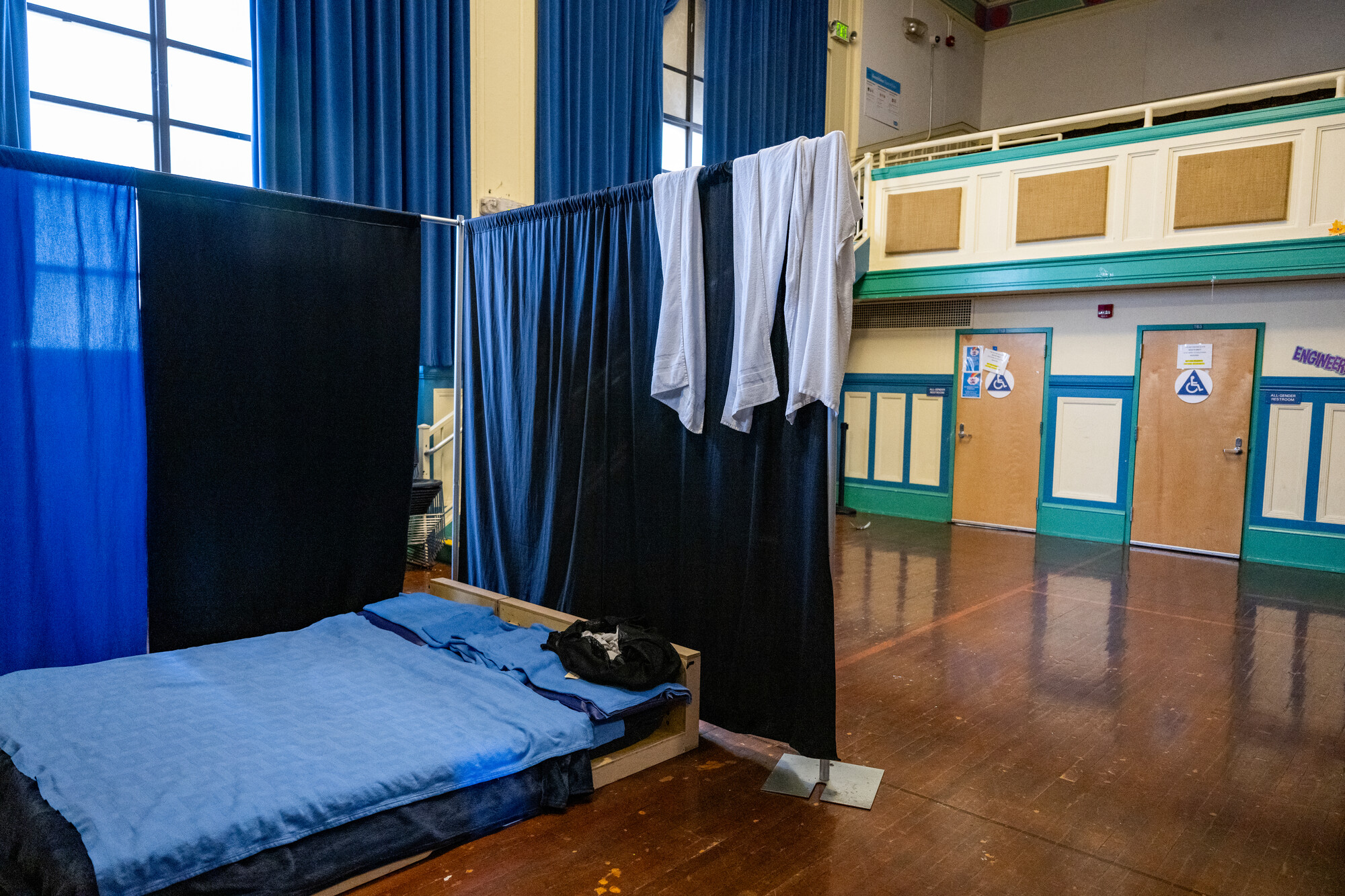
"caption": "Shelter beds are set up in an auditorium at Buena Vista Horace Mann Community School on June 10, 2024, which operates as one of San Francisco's largest homeless shelters. San Francisco will make it easier for families to stay in temporary shelters for longer, following criticism from some supervisors and advocates of limits put in place in December.",
"credit": "Beth LaBerge/KQED",
"altTag": null,
"description": null,
"imgSizes": {
"thumbnail": {
"file": "https://cdn.kqed.org/wp-content/uploads/sites/10/2025/07/240610-HomelessFamilies-12-BL_qed-160x107.jpg",
"width": 160,
"height": 107,
"mimeType": "image/jpeg"
},
"1536x1536": {
"file": "https://cdn.kqed.org/wp-content/uploads/sites/10/2025/07/240610-HomelessFamilies-12-BL_qed-1536x1024.jpg",
"width": 1536,
"height": 1024,
"mimeType": "image/jpeg"
},
"post-thumbnail": {
"file": "https://cdn.kqed.org/wp-content/uploads/sites/10/2025/07/240610-HomelessFamilies-12-BL_qed-672x372.jpg",
"width": 672,
"height": 372,
"mimeType": "image/jpeg"
},
"twentyfourteen-full-width": {
"file": "https://cdn.kqed.org/wp-content/uploads/sites/10/2025/07/240610-HomelessFamilies-12-BL_qed-1038x576.jpg",
"width": 1038,
"height": 576,
"mimeType": "image/jpeg"
},
"kqedFullSize": {
"file": "https://cdn.kqed.org/wp-content/uploads/sites/10/2025/07/240610-HomelessFamilies-12-BL_qed.jpg",
"width": 2000,
"height": 1333
}
},
"isLoading": false,
"fetchFailed": false
},
"news_12048452": {
"type": "attachments",
"id": "news_12048452",
"meta": {
"index": "attachments_1716263798",
"site": "news",
"id": "12048452",
"found": true
},
"title": "CAForever",
"publishDate": 1752709628,
"status": "inherit",
"parent": 12048321,
"modified": 1752709654,
"caption": "The Solano Foundry would be built next to homes within California Forever's proposed mega-development and would provide space for defense tech, transportation, energy and other advanced manufacturing companies. The company's announcement comes just a year after it pulled a ballot initiative to build a city from scratch in southeast Solano County.",
"credit": "Courtesy of California Forever",
"altTag": null,
"description": null,
"imgSizes": {
"thumbnail": {
"file": "https://cdn.kqed.org/wp-content/uploads/sites/10/2025/07/CAForever-160x90.jpg",
"width": 160,
"height": 90,
"mimeType": "image/jpeg"
},
"1536x1536": {
"file": "https://cdn.kqed.org/wp-content/uploads/sites/10/2025/07/CAForever-1536x864.jpg",
"width": 1536,
"height": 864,
"mimeType": "image/jpeg"
},
"post-thumbnail": {
"file": "https://cdn.kqed.org/wp-content/uploads/sites/10/2025/07/CAForever-672x372.jpg",
"width": 672,
"height": 372,
"mimeType": "image/jpeg"
},
"twentyfourteen-full-width": {
"file": "https://cdn.kqed.org/wp-content/uploads/sites/10/2025/07/CAForever-1038x576.jpg",
"width": 1038,
"height": 576,
"mimeType": "image/jpeg"
},
"kqedFullSize": {
"file": "https://cdn.kqed.org/wp-content/uploads/sites/10/2025/07/CAForever.jpg",
"width": 2000,
"height": 1125
}
},
"isLoading": false,
"fetchFailed": false
},
"news_12048401": {
"type": "attachments",
"id": "news_12048401",
"meta": {
"index": "attachments_1716263798",
"site": "news",
"id": "12048401",
"found": true
},
"title": "250716-CherrylandUnincorporated-11-BL_qed",
"publishDate": 1752704081,
"status": "inherit",
"parent": 0,
"modified": 1752704174,
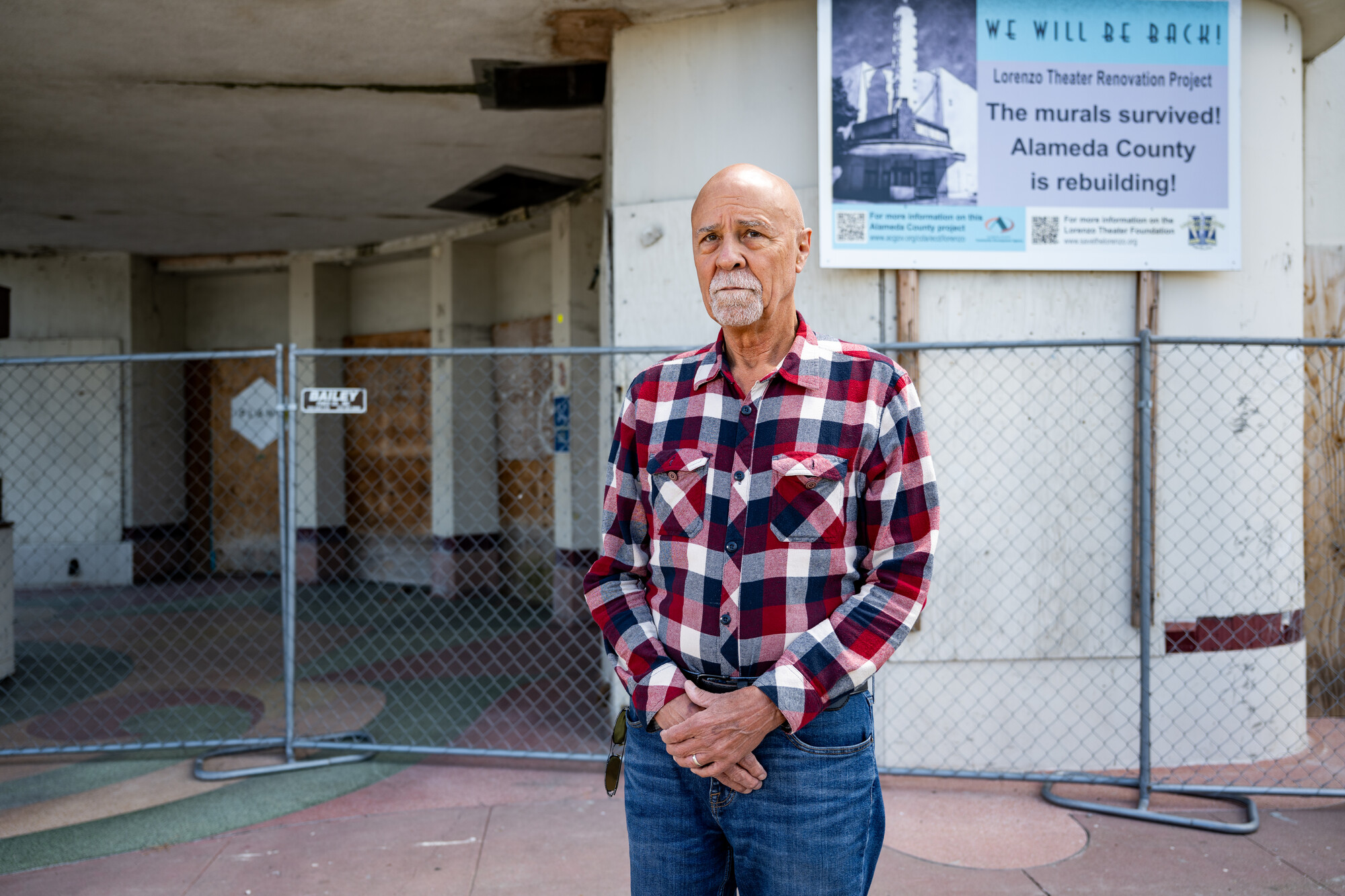
"caption": "Keith Barros, a longtime San Lorenzo resident and community advocate, stands outside the historic Lorenzo Theatre in the unincorporated area of Alameda County on July 16, 2025.",
"credit": "Beth LaBerge/KQED",
"altTag": null,
"description": null,
"imgSizes": {
"thumbnail": {
"file": "https://cdn.kqed.org/wp-content/uploads/sites/10/2025/07/250716-CherrylandUnincorporated-11-BL_qed-160x107.jpg",
"width": 160,
"height": 107,
"mimeType": "image/jpeg"
},
"1536x1536": {
"file": "https://cdn.kqed.org/wp-content/uploads/sites/10/2025/07/250716-CherrylandUnincorporated-11-BL_qed-1536x1024.jpg",
"width": 1536,
"height": 1024,
"mimeType": "image/jpeg"
},
"post-thumbnail": {
"file": "https://cdn.kqed.org/wp-content/uploads/sites/10/2025/07/250716-CherrylandUnincorporated-11-BL_qed-672x372.jpg",
"width": 672,
"height": 372,
"mimeType": "image/jpeg"
},
"twentyfourteen-full-width": {
"file": "https://cdn.kqed.org/wp-content/uploads/sites/10/2025/07/250716-CherrylandUnincorporated-11-BL_qed-1038x576.jpg",
"width": 1038,
"height": 576,
"mimeType": "image/jpeg"
},
"kqedFullSize": {
"file": "https://cdn.kqed.org/wp-content/uploads/sites/10/2025/07/250716-CherrylandUnincorporated-11-BL_qed.jpg",
"width": 2000,
"height": 1333
}
},
"isLoading": false,
"fetchFailed": false
},
"news_12048309": {
"type": "attachments",
"id": "news_12048309",
"meta": {
"index": "attachments_1716263798",
"site": "news",
"id": "12048309",
"found": true
},
"title": "240130-HomelessCount-24-BL_qed",
"publishDate": 1752685135,
"status": "inherit",
"parent": 12048307,
"modified": 1752685161,
"caption": "San Francisco Homeless Outreach Team members look for vehicles and RVs serving as shelters during a point-in-time homeless population count in the Bayview Hunters Point neighborhood in San Francisco on Jan. 30, 2024. Teams spread out through San Francisco to count sheltered and unsheltered people experiencing homelessness on a single night.",
"credit": "Beth LaBerge/KQED",
"altTag": null,
"description": null,
"imgSizes": {
"thumbnail": {
"file": "https://cdn.kqed.org/wp-content/uploads/sites/10/2025/07/240130-HomelessCount-24-BL_qed-160x107.jpg",
"width": 160,
"height": 107,
"mimeType": "image/jpeg"
},
"1536x1536": {
"file": "https://cdn.kqed.org/wp-content/uploads/sites/10/2025/07/240130-HomelessCount-24-BL_qed-1536x1024.jpg",
"width": 1536,
"height": 1024,
"mimeType": "image/jpeg"
},
"post-thumbnail": {
"file": "https://cdn.kqed.org/wp-content/uploads/sites/10/2025/07/240130-HomelessCount-24-BL_qed-672x372.jpg",
"width": 672,
"height": 372,
"mimeType": "image/jpeg"
},
"twentyfourteen-full-width": {
"file": "https://cdn.kqed.org/wp-content/uploads/sites/10/2025/07/240130-HomelessCount-24-BL_qed-1038x576.jpg",
"width": 1038,
"height": 576,
"mimeType": "image/jpeg"
},
"kqedFullSize": {
"file": "https://cdn.kqed.org/wp-content/uploads/sites/10/2025/07/240130-HomelessCount-24-BL_qed.jpg",
"width": 1999,
"height": 1333
}
},
"isLoading": false,
"fetchFailed": false
},
"news_12047855": {
"type": "attachments",
"id": "news_12047855",
"meta": {
"index": "attachments_1716263798",
"site": "news",
"id": "12047855",
"found": true
},
"title": "HOUSING-ORG_AH_CM_02 copy",
"publishDate": 1752428904,
"status": "inherit",
"parent": 12047853,
"modified": 1752428931,
"caption": null,
"credit": "Illustration by Adriana Heldiz/CalMatters/iStock",
"altTag": null,
"description": null,
"imgSizes": {
"thumbnail": {
"file": "https://cdn.kqed.org/wp-content/uploads/sites/10/2025/07/HOUSING-ORG_AH_CM_02-copy-160x107.jpg",
"width": 160,
"height": 107,
"mimeType": "image/jpeg"
},
"1536x1536": {
"file": "https://cdn.kqed.org/wp-content/uploads/sites/10/2025/07/HOUSING-ORG_AH_CM_02-copy-1536x1024.jpg",
"width": 1536,
"height": 1024,
"mimeType": "image/jpeg"
},
"post-thumbnail": {
"file": "https://cdn.kqed.org/wp-content/uploads/sites/10/2025/07/HOUSING-ORG_AH_CM_02-copy-672x372.jpg",
"width": 672,
"height": 372,
"mimeType": "image/jpeg"
},
"twentyfourteen-full-width": {
"file": "https://cdn.kqed.org/wp-content/uploads/sites/10/2025/07/HOUSING-ORG_AH_CM_02-copy-1038x576.jpg",
"width": 1038,
"height": 576,
"mimeType": "image/jpeg"
},
"kqedFullSize": {
"file": "https://cdn.kqed.org/wp-content/uploads/sites/10/2025/07/HOUSING-ORG_AH_CM_02-copy.jpg",
"width": 2000,
"height": 1333
}
},
"isLoading": false,
"fetchFailed": false
},
"news_12047671": {
"type": "attachments",
"id": "news_12047671",
"meta": {
"index": "attachments_1716263798",
"site": "news",
"id": "12047671",
"found": true
},
"title": "250710-WoodStreetCabins-05-BL_qed",
"publishDate": 1752258075,
"status": "inherit",
"parent": 0,
"modified": 1752258316,
"caption": "Residents walk through the Wood Street Cabins in Oakland on July 10, 2025, before the city shuts down the temporary tiny-home site, which opened in 2023 to shelter people displaced from a nearby encampment.",
"credit": "Beth LaBerge/KQED",
"altTag": null,
"description": null,
"imgSizes": {
"thumbnail": {
"file": "https://cdn.kqed.org/wp-content/uploads/sites/10/2025/07/250710-WoodStreetCabins-05-BL_qed-160x107.jpg",
"width": 160,
"height": 107,
"mimeType": "image/jpeg"
},
"1536x1536": {
"file": "https://cdn.kqed.org/wp-content/uploads/sites/10/2025/07/250710-WoodStreetCabins-05-BL_qed-1536x1024.jpg",
"width": 1536,
"height": 1024,
"mimeType": "image/jpeg"
},
"post-thumbnail": {
"file": "https://cdn.kqed.org/wp-content/uploads/sites/10/2025/07/250710-WoodStreetCabins-05-BL_qed-672x372.jpg",
"width": 672,
"height": 372,
"mimeType": "image/jpeg"
},
"twentyfourteen-full-width": {
"file": "https://cdn.kqed.org/wp-content/uploads/sites/10/2025/07/250710-WoodStreetCabins-05-BL_qed-1038x576.jpg",
"width": 1038,
"height": 576,
"mimeType": "image/jpeg"
},
"kqedFullSize": {
"file": "https://cdn.kqed.org/wp-content/uploads/sites/10/2025/07/250710-WoodStreetCabins-05-BL_qed.jpg",
"width": 2000,
"height": 1333
}
},
"isLoading": false,
"fetchFailed": false
},
"news_12047573": {
"type": "attachments",
"id": "news_12047573",
"meta": {
"index": "attachments_1716263798",
"site": "news",
"id": "12047573",
"found": true
},
"title": "231017-LakeMercedRVs-023-BL_qed",
"publishDate": 1752174460,
"status": "inherit",
"parent": 12047562,
"modified": 1752175079,
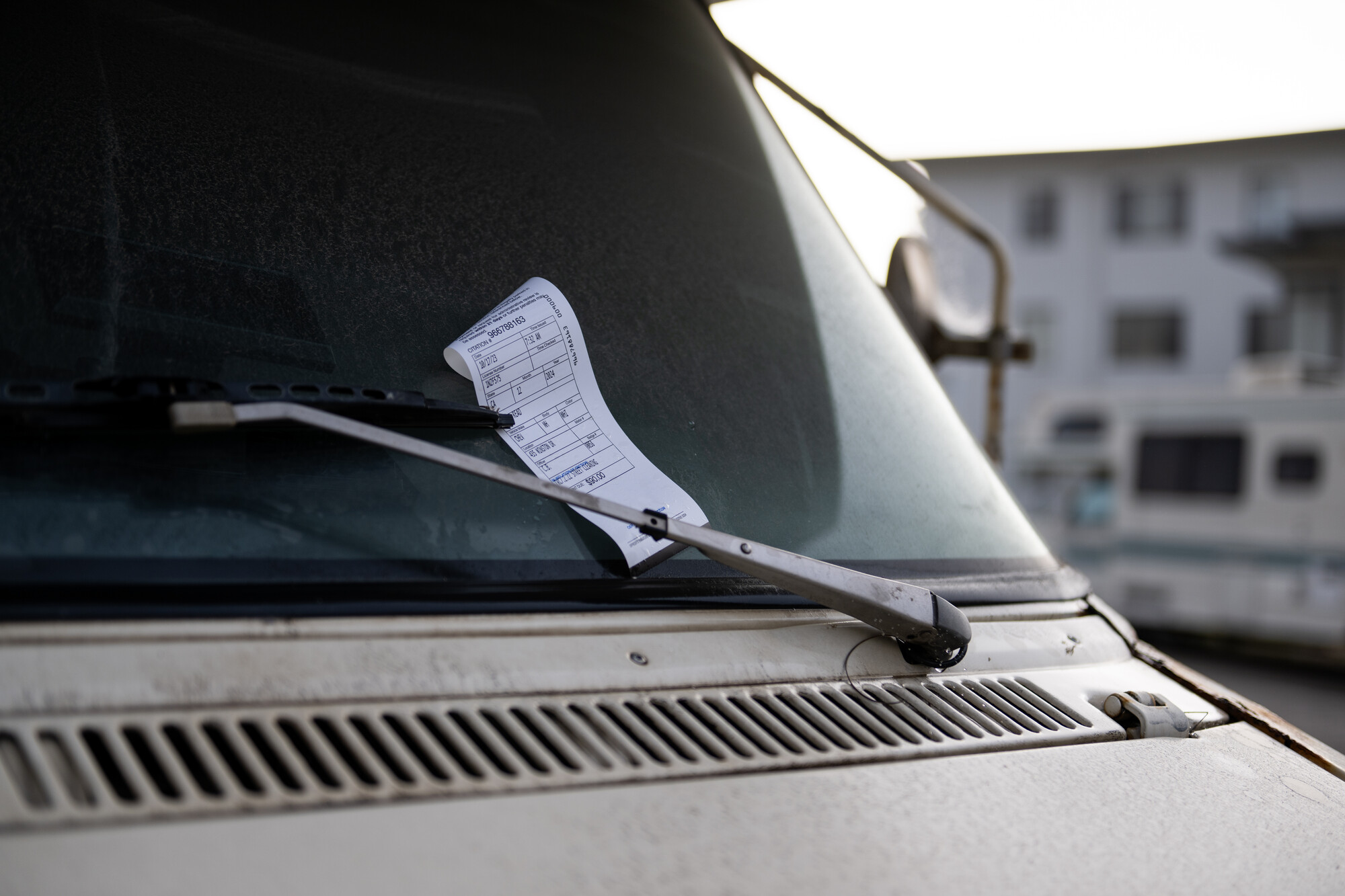
"caption": "An SFMTA parking ticket for street cleaning sits on the windshield of an RV along Winston Drive in San Francisco, California, on Oct. 17, 2023, near San Francisco State University.",
"credit": "Beth LaBerge/KQED",
"altTag": null,
"description": null,
"imgSizes": {
"thumbnail": {
"file": "https://cdn.kqed.org/wp-content/uploads/sites/10/2025/07/231017-LakeMercedRVs-023-BL_qed-160x107.jpg",
"width": 160,
"height": 107,
"mimeType": "image/jpeg"
},
"1536x1536": {
"file": "https://cdn.kqed.org/wp-content/uploads/sites/10/2025/07/231017-LakeMercedRVs-023-BL_qed-1536x1024.jpg",
"width": 1536,
"height": 1024,
"mimeType": "image/jpeg"
},
"post-thumbnail": {
"file": "https://cdn.kqed.org/wp-content/uploads/sites/10/2025/07/231017-LakeMercedRVs-023-BL_qed-672x372.jpg",
"width": 672,
"height": 372,
"mimeType": "image/jpeg"
},
"twentyfourteen-full-width": {
"file": "https://cdn.kqed.org/wp-content/uploads/sites/10/2025/07/231017-LakeMercedRVs-023-BL_qed-1038x576.jpg",
"width": 1038,
"height": 576,
"mimeType": "image/jpeg"
},
"kqedFullSize": {
"file": "https://cdn.kqed.org/wp-content/uploads/sites/10/2025/07/231017-LakeMercedRVs-023-BL_qed.jpg",
"width": 2000,
"height": 1333
}
},
"isLoading": false,
"fetchFailed": false
},
"news_12038608": {
"type": "attachments",
"id": "news_12038608",
"meta": {
"index": "attachments_1716263798",
"site": "news",
"id": "12038608",
"found": true
},
"title": "250502-TENDERLOINTRIAGECENTER-26-BL-KQED",
"publishDate": 1746219107,
"status": "inherit",
"parent": 12038376,
"modified": 1746232323,
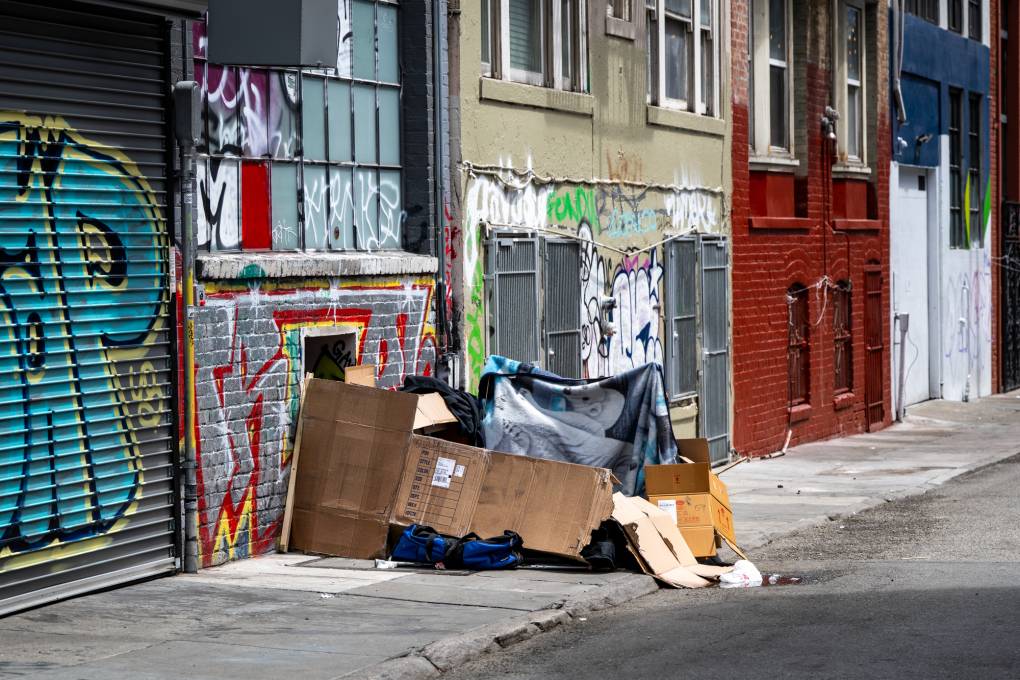
"caption": "A shelter made of cardboard boxes and blankets sits on a sidewalk in the Tenderloin neighborhood of San Francisco on May 2, 2025.",
"credit": "Beth LaBerge/KQED",
"altTag": null,
"description": null,
"imgSizes": {
"medium": {
"file": "https://cdn.kqed.org/wp-content/uploads/sites/10/2025/05/250502-TENDERLOINTRIAGECENTER-26-BL-KQED-800x533.jpg",
"width": 800,
"height": 533,
"mimeType": "image/jpeg"
},
"large": {
"file": "https://cdn.kqed.org/wp-content/uploads/sites/10/2025/05/250502-TENDERLOINTRIAGECENTER-26-BL-KQED-1020x680.jpg",
"width": 1020,
"height": 680,
"mimeType": "image/jpeg"
},
"thumbnail": {
"file": "https://cdn.kqed.org/wp-content/uploads/sites/10/2025/05/250502-TENDERLOINTRIAGECENTER-26-BL-KQED-160x107.jpg",
"width": 160,
"height": 107,
"mimeType": "image/jpeg"
},
"1536x1536": {
"file": "https://cdn.kqed.org/wp-content/uploads/sites/10/2025/05/250502-TENDERLOINTRIAGECENTER-26-BL-KQED-1536x1024.jpg",
"width": 1536,
"height": 1024,
"mimeType": "image/jpeg"
},
"post-thumbnail": {
"file": "https://cdn.kqed.org/wp-content/uploads/sites/10/2025/05/250502-TENDERLOINTRIAGECENTER-26-BL-KQED-672x372.jpg",
"width": 672,
"height": 372,
"mimeType": "image/jpeg"
},
"twentyfourteen-full-width": {
"file": "https://cdn.kqed.org/wp-content/uploads/sites/10/2025/05/250502-TENDERLOINTRIAGECENTER-26-BL-KQED-1038x576.jpg",
"width": 1038,
"height": 576,
"mimeType": "image/jpeg"
},
"full-width": {
"file": "https://cdn.kqed.org/wp-content/uploads/sites/10/2025/05/250502-TENDERLOINTRIAGECENTER-26-BL-KQED-1920x1280.jpg",
"width": 1920,
"height": 1280,
"mimeType": "image/jpeg"
},
"kqedFullSize": {
"file": "https://cdn.kqed.org/wp-content/uploads/sites/10/2025/05/250502-TENDERLOINTRIAGECENTER-26-BL-KQED.jpg",
"width": 2000,
"height": 1333
}
},
"isLoading": false,
"fetchFailed": false
},
"news_12046934": {
"type": "attachments",
"id": "news_12046934",
"meta": {
"index": "attachments_1716263798",
"site": "news",
"id": "12046934",
"found": true
},
"title": "SF HOUSE EXTERIOR",
"publishDate": 1751506075,
"status": "inherit",
"parent": 12046933,
"modified": 1751506110,
"caption": "Un cartel de “Se alquila” cuelga en la ventana de un edificio de apartamentos en Nob Hill, San Francisco, el 29 de julio de 2021. Incluso sin contrato, en el momento en que se paga el alquiler al propietario, se establece un contrato de arrendamiento reconocido por el estado de California.",
"credit": "Beth LaBerge/KQED",
"altTag": null,
"description": null,
"imgSizes": {
"thumbnail": {
"file": "https://cdn.kqed.org/wp-content/uploads/sites/10/2025/07/SF-HOUSE-EXTERIOR-160x107.jpg",
"width": 160,
"height": 107,
"mimeType": "image/jpeg"
},
"post-thumbnail": {
"file": "https://cdn.kqed.org/wp-content/uploads/sites/10/2025/07/SF-HOUSE-EXTERIOR-672x372.jpg",
"width": 672,
"height": 372,
"mimeType": "image/jpeg"
},
"twentyfourteen-full-width": {
"file": "https://cdn.kqed.org/wp-content/uploads/sites/10/2025/07/SF-HOUSE-EXTERIOR-1020x576.jpg",
"width": 1020,
"height": 576,
"mimeType": "image/jpeg"
},
"kqedFullSize": {
"file": "https://cdn.kqed.org/wp-content/uploads/sites/10/2025/07/SF-HOUSE-EXTERIOR.jpg",
"width": 1020,
"height": 680
}
},
"isLoading": false,
"fetchFailed": false
},
"news_12046858": {
"type": "attachments",
"id": "news_12046858",
"meta": {
"index": "attachments_1716263798",
"site": "news",
"id": "12046858",
"found": true
},
"title": "021_SanFrancisco_Housing_07292021_qed",
"publishDate": 1751483863,
"status": "inherit",
"parent": 12046854,
"modified": 1751483882,
"caption": "A \"For Rent\" sign hangs in the window of an apartment building in Nob Hill in San Francisco on July 29, 2021.",
"credit": "Beth LaBerge/KQED",
"altTag": null,
"description": null,
"imgSizes": {
"thumbnail": {
"file": "https://cdn.kqed.org/wp-content/uploads/sites/10/2025/07/021_SanFrancisco_Housing_07292021_qed-160x107.jpg",
"width": 160,
"height": 107,
"mimeType": "image/jpeg"
},
"1536x1536": {
"file": "https://cdn.kqed.org/wp-content/uploads/sites/10/2025/07/021_SanFrancisco_Housing_07292021_qed-1536x1024.jpg",
"width": 1536,
"height": 1024,
"mimeType": "image/jpeg"
},
"post-thumbnail": {
"file": "https://cdn.kqed.org/wp-content/uploads/sites/10/2025/07/021_SanFrancisco_Housing_07292021_qed-672x372.jpg",
"width": 672,
"height": 372,
"mimeType": "image/jpeg"
},
"twentyfourteen-full-width": {
"file": "https://cdn.kqed.org/wp-content/uploads/sites/10/2025/07/021_SanFrancisco_Housing_07292021_qed-1038x576.jpg",
"width": 1038,
"height": 576,
"mimeType": "image/jpeg"
},
"kqedFullSize": {
"file": "https://cdn.kqed.org/wp-content/uploads/sites/10/2025/07/021_SanFrancisco_Housing_07292021_qed.jpg",
"width": 2000,
"height": 1333
}
},
"isLoading": false,
"fetchFailed": false
},
"news_12046572": {
"type": "attachments",
"id": "news_12046572",
"meta": {
"index": "attachments_1716263798",
"site": "news",
"id": "12046572",
"found": true
},
"title": "Immigration Governors",
"publishDate": 1751307765,
"status": "inherit",
"parent": 12046558,
"modified": 1751330600,
"caption": "Gov. Gavin Newsom presents his revised state budget during a news conference in Sacramento, California, on Wednesday, May 14, 2025.",
"credit": "Rich Pedroncelli/AP Photo",
"altTag": null,
"description": null,
"imgSizes": {
"thumbnail": {
"file": "https://cdn.kqed.org/wp-content/uploads/sites/10/2025/06/GavinNewsomAP3-160x107.jpg",
"width": 160,
"height": 107,
"mimeType": "image/jpeg"
},
"1536x1536": {
"file": "https://cdn.kqed.org/wp-content/uploads/sites/10/2025/06/GavinNewsomAP3-1536x1024.jpg",
"width": 1536,
"height": 1024,
"mimeType": "image/jpeg"
},
"post-thumbnail": {
"file": "https://cdn.kqed.org/wp-content/uploads/sites/10/2025/06/GavinNewsomAP3-672x372.jpg",
"width": 672,
"height": 372,
"mimeType": "image/jpeg"
},
"twentyfourteen-full-width": {
"file": "https://cdn.kqed.org/wp-content/uploads/sites/10/2025/06/GavinNewsomAP3-1038x576.jpg",
"width": 1038,
"height": 576,
"mimeType": "image/jpeg"
},
"kqedFullSize": {
"file": "https://cdn.kqed.org/wp-content/uploads/sites/10/2025/06/GavinNewsomAP3.jpg",
"width": 2000,
"height": 1333
}
},
"isLoading": false,
"fetchFailed": false
},
"news_12046294": {
"type": "attachments",
"id": "news_12046294",
"meta": {
"index": "attachments_1716263798",
"site": "news",
"id": "12046294",
"found": true
},
"title": "An apartment building in the Elmwood neighborhood of Berkeley on July 18, 2024.",
"publishDate": 1751044475,
"status": "inherit",
"parent": 12046283,
"modified": 1751044490,
"caption": "An apartment building in the Elmwood neighborhood of Berkeley on July 18, 2024.",
"credit": "Beth LaBerge/KQED",
"altTag": null,
"description": null,
"imgSizes": {
"thumbnail": {
"file": "https://cdn.kqed.org/wp-content/uploads/sites/10/2025/06/240718-BerkeleyMissingMiddleHousing-24-BL_qed-160x107.jpg",
"width": 160,
"height": 107,
"mimeType": "image/jpeg"
},
"1536x1536": {
"file": "https://cdn.kqed.org/wp-content/uploads/sites/10/2025/06/240718-BerkeleyMissingMiddleHousing-24-BL_qed-1536x1024.jpg",
"width": 1536,
"height": 1024,
"mimeType": "image/jpeg"
},
"post-thumbnail": {
"file": "https://cdn.kqed.org/wp-content/uploads/sites/10/2025/06/240718-BerkeleyMissingMiddleHousing-24-BL_qed-672x372.jpg",
"width": 672,
"height": 372,
"mimeType": "image/jpeg"
},
"twentyfourteen-full-width": {
"file": "https://cdn.kqed.org/wp-content/uploads/sites/10/2025/06/240718-BerkeleyMissingMiddleHousing-24-BL_qed-1038x576.jpg",
"width": 1038,
"height": 576,
"mimeType": "image/jpeg"
},
"kqedFullSize": {
"file": "https://cdn.kqed.org/wp-content/uploads/sites/10/2025/06/240718-BerkeleyMissingMiddleHousing-24-BL_qed.jpg",
"width": 1999,
"height": 1333
}
},
"isLoading": false,
"fetchFailed": false
}
},
"audioPlayerReducer": {
"postId": "stream_live",
"isPaused": true,
"isPlaying": false,
"pfsActive": false,
"pledgeModalIsOpen": true,
"playerDrawerIsOpen": false,
"liveAudioPlayStartedAt": 0,
"liveAudioPlayContext": ""
},
"authorsReducer": {
"byline_news_12047853": {
"type": "authors",
"id": "byline_news_12047853",
"meta": {
"override": true
},
"slug": "byline_news_12047853",
"name": "Ben Christopher, CalMatters",
"isLoading": false
},
"ebaldassari": {
"type": "authors",
"id": "11652",
"meta": {
"index": "authors_1716337520",
"id": "11652",
"found": true
},
"name": "Erin Baldassari",
"firstName": "Erin",
"lastName": "Baldassari",
"slug": "ebaldassari",
"email": "ebaldassari@KQED.org",
"display_author_email": true,
"staff_mastheads": [
"news"
],
"title": "Staff Writer",
"bio": "Erin Baldassari covers housing for KQED. She's a former print journalist and most recently worked as the transportation reporter for the \u003cem>Mercury News\u003c/em> and \u003cem>East Bay Times. \u003c/em>There, she focused on how the Bay Area’s housing shortage has changed the way people move around the region. She also served on the \u003cem>East Bay Times\u003c/em>’ 2017 Pulitzer Prize-winning team for coverage of the Ghost Ship Fire in Oakland. Prior to that, Erin worked as a breaking news and general assignment reporter for a variety of outlets in the Bay Area and the greater Boston area. A Tufts University alumna, Erin grew up in the foothills of the Sierra Nevada mountains and in Sonoma County. She is a life-long KQED listener.",
"avatar": "https://secure.gravatar.com/avatar/5e95cad64a8ca08288082212e199d2b0cbeb4fd8e8ef5339395f361032bbe005?s=600&d=blank&r=g",
"twitter": "e_baldi",
"bluesky": null,
"facebook": null,
"instagram": null,
"linkedin": null,
"sites": [
{
"site": "news",
"roles": [
"edit_others_posts",
"editor"
]
},
{
"site": "science",
"roles": [
"editor"
]
},
{
"site": "liveblog",
"roles": [
"editor"
]
}
],
"headData": {
"title": "Erin Baldassari | KQED",
"description": "Staff Writer",
"ogImgSrc": "https://secure.gravatar.com/avatar/5e95cad64a8ca08288082212e199d2b0cbeb4fd8e8ef5339395f361032bbe005?s=600&d=blank&r=g",
"twImgSrc": "https://secure.gravatar.com/avatar/5e95cad64a8ca08288082212e199d2b0cbeb4fd8e8ef5339395f361032bbe005?s=600&d=blank&r=g"
},
"isLoading": false,
"link": "/author/ebaldassari"
},
"abandlamudi": {
"type": "authors",
"id": "11672",
"meta": {
"index": "authors_1716337520",
"id": "11672",
"found": true
},
"name": "Adhiti Bandlamudi",
"firstName": "Adhiti",
"lastName": "Bandlamudi",
"slug": "abandlamudi",
"email": "abandlamudi@kqed.org",
"display_author_email": false,
"staff_mastheads": [
"news"
],
"title": "KQED Housing Reporter",
"bio": "Adhiti Bandlamudi reports for KQED's Housing desk. She focuses on how housing gets built across the Bay Area. Before joining KQED in 2020, she reported for WUNC in Durham, North Carolina, WABE in Atlanta, Georgia and Capital Public Radio in Sacramento. In 2017, she was awarded a Kroc Fellowship at NPR where she reported on everything from sprinkles to the Golden State Killer's arrest. When she's not reporting, she's baking new recipes in her kitchen or watching movies with friends and family. She's originally from Georgia and has strong opinions about Great British Bake Off.",
"avatar": "https://secure.gravatar.com/avatar/868129c8b257bb99a3500e2c86a65400?s=600&d=mm&r=g",
"twitter": "oddity_adhiti",
"facebook": null,
"instagram": null,
"linkedin": null,
"sites": [
{
"site": "arts",
"roles": [
"author"
]
},
{
"site": "news",
"roles": [
"editor"
]
},
{
"site": "liveblog",
"roles": [
"author"
]
}
],
"headData": {
"title": "Adhiti Bandlamudi | KQED",
"description": "KQED Housing Reporter",
"ogImgSrc": "https://secure.gravatar.com/avatar/868129c8b257bb99a3500e2c86a65400?s=600&d=mm&r=g",
"twImgSrc": "https://secure.gravatar.com/avatar/868129c8b257bb99a3500e2c86a65400?s=600&d=mm&r=g"
},
"isLoading": false,
"link": "/author/abandlamudi"
},
"ccabreralomeli": {
"type": "authors",
"id": "11708",
"meta": {
"index": "authors_1716337520",
"id": "11708",
"found": true
},
"name": "Carlos Cabrera-Lomelí",
"firstName": "Carlos",
"lastName": "Cabrera-Lomelí",
"slug": "ccabreralomeli",
"email": "ccabreralomeli@KQED.org",
"display_author_email": true,
"staff_mastheads": [
"news"
],
"title": "Community Reporter",
"bio": "Carlos Cabrera-Lomelí is a community reporter with KQED's digital engagement team. He also reports and co-produces for KQED's bilingual news hub KQED en Español. He grew up in San Francisco's Mission District and has previously worked with Univision, 48 Hills and REFORMA in Mexico City.",
"avatar": "https://secure.gravatar.com/avatar/c309be9665e484f887b818c89e273ecc673004f426f36b24d00a4d813a2e0518?s=600&d=blank&r=g",
"twitter": "@LomeliCabrera",
"bluesky": null,
"facebook": null,
"instagram": null,
"linkedin": null,
"sites": [
{
"site": "arts",
"roles": [
"editor"
]
},
{
"site": "news",
"roles": [
"editor"
]
},
{
"site": "about",
"roles": [
"editor"
]
},
{
"site": "science",
"roles": [
"editor"
]
},
{
"site": "perspectives",
"roles": [
"editor"
]
},
{
"site": "elections",
"roles": [
"editor"
]
},
{
"site": "liveblog",
"roles": [
"contributor"
]
}
],
"headData": {
"title": "Carlos Cabrera-Lomelí | KQED",
"description": "Community Reporter",
"ogImgSrc": "https://secure.gravatar.com/avatar/c309be9665e484f887b818c89e273ecc673004f426f36b24d00a4d813a2e0518?s=600&d=blank&r=g",
"twImgSrc": "https://secure.gravatar.com/avatar/c309be9665e484f887b818c89e273ecc673004f426f36b24d00a4d813a2e0518?s=600&d=blank&r=g"
},
"isLoading": false,
"link": "/author/ccabreralomeli"
},
"kdebenedetti": {
"type": "authors",
"id": "11913",
"meta": {
"index": "authors_1716337520",
"id": "11913",
"found": true
},
"name": "Katie DeBenedetti",
"firstName": "Katie",
"lastName": "DeBenedetti",
"slug": "kdebenedetti",
"email": "kdebenedetti@kqed.org",
"display_author_email": false,
"staff_mastheads": [
"news",
"science"
],
"title": "KQED Contributor",
"bio": "Katie DeBenedetti is a digital reporter covering daily news for the Express Desk. Prior to joining KQED as a culture reporting intern in January 2024, she covered education and city government for the Napa Valley Register.",
"avatar": "https://secure.gravatar.com/avatar/6e31073cb8f7e4214ab03f42771d0f45?s=600&d=blank&r=g",
"twitter": null,
"facebook": null,
"instagram": null,
"linkedin": null,
"sites": [
{
"site": "news",
"roles": [
"author"
]
},
{
"site": "science",
"roles": [
"author"
]
},
{
"site": "liveblog",
"roles": [
"author"
]
}
],
"headData": {
"title": "Katie DeBenedetti | KQED",
"description": "KQED Contributor",
"ogImgSrc": "https://secure.gravatar.com/avatar/6e31073cb8f7e4214ab03f42771d0f45?s=600&d=blank&r=g",
"twImgSrc": "https://secure.gravatar.com/avatar/6e31073cb8f7e4214ab03f42771d0f45?s=600&d=blank&r=g"
},
"isLoading": false,
"link": "/author/kdebenedetti"
},
"bkrans": {
"type": "authors",
"id": "11923",
"meta": {
"index": "authors_1716337520",
"id": "11923",
"found": true
},
"name": "Brian Krans",
"firstName": "Brian",
"lastName": "Krans",
"slug": "bkrans",
"email": "bkrans@kqed.org",
"display_author_email": false,
"staff_mastheads": [
"news"
],
"title": "KQED Contributing Reporter",
"bio": "Brian Krans is an award-winning local news and investigative reporter who has been proudly working as a general assignment reporter for KQED since August 2023. He lives in Richmond, where he also reports on air pollution for Richmondside. He is also a founding member of the Vallejo Sun.",
"avatar": "https://secure.gravatar.com/avatar/71fa91f931774612559f7640390b53d9c2840ff72b20f195a25239aab2d9fbb9?s=600&d=blank&r=g",
"twitter": "citizenkrans",
"bluesky": null,
"facebook": null,
"instagram": null,
"linkedin": null,
"sites": [
{
"site": "news",
"roles": [
"editor"
]
}
],
"headData": {
"title": "Brian Krans | KQED",
"description": "KQED Contributing Reporter",
"ogImgSrc": "https://secure.gravatar.com/avatar/71fa91f931774612559f7640390b53d9c2840ff72b20f195a25239aab2d9fbb9?s=600&d=blank&r=g",
"twImgSrc": "https://secure.gravatar.com/avatar/71fa91f931774612559f7640390b53d9c2840ff72b20f195a25239aab2d9fbb9?s=600&d=blank&r=g"
},
"isLoading": false,
"link": "/author/bkrans"
},
"gzada": {
"type": "authors",
"id": "11929",
"meta": {
"index": "authors_1716337520",
"id": "11929",
"found": true
},
"name": "Gilare Zada",
"firstName": "Gilare",
"lastName": "Zada",
"slug": "gzada",
"email": "gzada@kqed.org",
"display_author_email": true,
"staff_mastheads": [
"news"
],
"title": null,
"bio": "Gilare Zada is a Kurdish-American from San Diego, CA. Storytelling, fitness, and binge reading are some of her passions outside of news reporting. Her work has appeared in Mission Local, the Peninsula Press, the San Francisco Press Club, and more. She also writes as a class correspondent for the Stanford Magazine - go Card!",
"avatar": "https://secure.gravatar.com/avatar/33a75f2b947669a488a805edec3fbf3838c1cedaedda710e983770633b4d6a75?s=600&d=blank&r=g",
"twitter": null,
"bluesky": null,
"facebook": null,
"instagram": null,
"linkedin": null,
"sites": [
{
"site": "",
"roles": [
"editor"
]
},
{
"site": "arts",
"roles": [
"editor"
]
},
{
"site": "news",
"roles": [
"administrator"
]
},
{
"site": "science",
"roles": [
"editor"
]
}
],
"headData": {
"title": "Gilare Zada | KQED",
"description": null,
"ogImgSrc": "https://secure.gravatar.com/avatar/33a75f2b947669a488a805edec3fbf3838c1cedaedda710e983770633b4d6a75?s=600&d=blank&r=g",
"twImgSrc": "https://secure.gravatar.com/avatar/33a75f2b947669a488a805edec3fbf3838c1cedaedda710e983770633b4d6a75?s=600&d=blank&r=g"
},
"isLoading": false,
"link": "/author/gzada"
}
},
"pagesReducer": {
"news_category_housing": {
"type": "terms",
"id": "news_6266",
"meta": {
"index": "terms_1716263798",
"site": "news",
"id": "6266",
"score": 11.039913
},
"featImg": null,
"name": "Housing",
"description": null,
"taxonomy": "category",
"headData": {
"twImgId": null,
"twTitle": null,
"ogTitle": null,
"ogImgId": null,
"twDescription": null,
"description": null,
"title": "Housing Archives | KQED News",
"ogDescription": null
},
"ttid": 6290,
"slug": "housing",
"isLoading": false,
"title": "Housing",
"pageMeta": {
"site": "news",
"WpPageTemplate": "page-topic-editorial",
"currentPage": 15
},
"blocks": [
{
"blockName": "kqed/post-list",
"attrs": {
"layout": "cardArticle2",
"query": "posts/news?category=housing",
"seeMore": false,
"paginated": true,
"page": 15
}
},
{
"blockName": "kqed/ad"
}
]
}
},
"pfsSessionReducer": {},
"postsReducer": {
"stream_live": {
"type": "live",
"id": "stream_live",
"audioUrl": "https://streams.kqed.org/kqedradio",
"title": "Live Stream",
"excerpt": "Live Stream information currently unavailable.",
"link": "/radio",
"featImg": "",
"label": {
"name": "KQED Live",
"link": "/"
}
},
"stream_kqedNewscast": {
"type": "posts",
"id": "stream_kqedNewscast",
"audioUrl": "https://www.kqed.org/.stream/anon/radio/RDnews/newscast.mp3?_=1",
"title": "KQED Newscast",
"featImg": "",
"label": {
"name": "88.5 FM",
"link": "/"
}
},
"news_12049323": {
"type": "posts",
"id": "news_12049323",
"meta": {
"index": "posts_1716263798",
"site": "news",
"id": "12049323",
"score": null,
"sort": [
1753299126000
]
},
"guestAuthors": [],
"slug": "sf-homeless-agency-walks-back-more-restrictive-policy-on-family-shelter-stays",
"title": "SF Homeless Agency Walks Back More Restrictive Policy on Family Shelter Stays",
"publishDate": 1753299126,
"format": "standard",
"headTitle": "SF Homeless Agency Walks Back More Restrictive Policy on Family Shelter Stays | KQED",
"labelTerm": {
"site": "news"
},
"content": "\u003cp>San Francisco will make it easier for \u003ca href=\"https://www.kqed.org/news/12029619/luries-nonprofit-giving-san-francisco-11-million-prevent-family-homelessness\">families\u003c/a> to remain in its temporary shelters for longer this fall, according to a Department of Homelessness and Supportive Housing memo sent to the Board of Supervisors this month.\u003c/p>\n\u003cp>Beginning Oct. 1, the department will allow people in its temporary family shelter system to apply for an unlimited number of 90-day extensions, so long as they meet eligibility requirements.\u003c/p>\n\u003cp>The policy shift comes after months of pushback against a reinstated rule, implemented in December, that requires families to apply for 30-day extensions after their initial 90-day stay in one of the temporary shelters.\u003c/p>\n\u003cp>[ad fullwidth]\u003c/p>\n\u003cp>“In response to listening sessions with families using the shelter system, analysis of shelter outcomes data, and input from our service providers, HSH is moving forward with making the following changes to the Family Shelter Length of Stay policy,” the July 8 memo from HSH’s Executive Director Shireen McSpadden reads.\u003c/p>\n\u003cp>Currently, families enrolled in either of the department’s temporary family housing programs — which offer 14-day emergency and 90-day temporary shelter placements — are eligible for 30-day extensions, as long as they continue to engage with case managers and search for more stable housing. The shelter itself can approve the first three-monthlong stints itself, but additional extensions require HSH’s approval.\u003c/p>\n\u003cfigure id=\"attachment_12041396\" class=\"wp-caption aligncenter\" style=\"max-width: 2000px\">\u003cimg loading=\"lazy\" decoding=\"async\" class=\"size-full wp-image-12041396\" src=\"https://cdn.kqed.org/wp-content/uploads/sites/10/2025/05/250128-SFImmigration-25-BL_qed.jpg\" alt=\"\" width=\"2000\" height=\"1333\" srcset=\"https://cdn.kqed.org/wp-content/uploads/sites/10/2025/05/250128-SFImmigration-25-BL_qed.jpg 2000w, https://cdn.kqed.org/wp-content/uploads/sites/10/2025/05/250128-SFImmigration-25-BL_qed-800x533.jpg 800w, https://cdn.kqed.org/wp-content/uploads/sites/10/2025/05/250128-SFImmigration-25-BL_qed-1020x680.jpg 1020w, https://cdn.kqed.org/wp-content/uploads/sites/10/2025/05/250128-SFImmigration-25-BL_qed-160x107.jpg 160w, https://cdn.kqed.org/wp-content/uploads/sites/10/2025/05/250128-SFImmigration-25-BL_qed-1536x1024.jpg 1536w, https://cdn.kqed.org/wp-content/uploads/sites/10/2025/05/250128-SFImmigration-25-BL_qed-1920x1280.jpg 1920w\" sizes=\"auto, (max-width: 2000px) 100vw, 2000px\">\u003cfigcaption class=\"wp-caption-text\">San Francisco Supervisor Jackie Fielder speaks during a press conference with elected and public safety officials and labor leaders in front of City Hall in San Francisco on Tuesday, Jan. 28, 2025, to reaffirm San Francisco’s commitment to being a Sanctuary City. \u003ccite>(Beth LaBerge/KQED)\u003c/cite>\u003c/figcaption>\u003c/figure>\n\u003cp>Among the leading critics of the limited-extensions policy, which was suspended during the pandemic, was Supervisor Jackie Fielder, who said eviction warnings sent to families at the end of their 90-day housing placement “caused undue harm and stress.”\u003c/p>\n\u003cp>In April, Fielder proposed legislation that would allow families to receive extensions to remain in shelters for up to a year as they search for permanent accommodations.\u003c/p>\n\u003cp>“[The new policy] was designed to protect children who were at risk of being sent back out to the street under the previous policy,” she said in a statement provided Wednesday.\u003c/p>\n\u003cp>When she put forward the legislation, cosponsored by Supervisors Shamann Walton, Chyanne Chen, Myrna Melgar and Connie Chan, Fielder \u003ca href=\"https://www.sfchronicle.com/sf/article/s-f-leader-pushes-back-on-90-days-family-shelter-20275675.php\">told the \u003cem>San Francisco Chronicle\u003c/em>\u003c/a> that Mayor Daniel Lurie’s office had refused to direct HSH to rescind the December policy when she asked.[aside postID=news_12048307 hero='https://cdn.kqed.org/wp-content/uploads/sites/10/2025/07/240130-HomelessCount-24-BL_qed.jpg']Now, the department appears to be bending to the supervisors’ requests.\u003c/p>\n\u003cp>The changes HSH plans to make will make extensions longer. Shelter providers will be allowed to authorize a first 90-day extension themselves, while HSH will need to grant further extensions.\u003c/p>\n\u003cp>Christin Evans, the vice chair of San Francisco’s Homelessness Oversight Commission, said the new policy will help prevent families who are seeking more permanent housing from slipping \u003ca href=\"https://www.kqed.org/news/12047353/heres-why-sf-homeless-advocates-are-glad-lurie-ditched-push-for-1500-shelter-beds\">back into unsheltered homelessness\u003c/a>. She said there are hundreds of families vying for a limited number of support services, including rapid re-housing vouchers and supportive housing placements.\u003c/p>\n\u003cp>“There are very long waitlists for people to get those resources,” she told KQED. “It’s really concerning that they know that there’s these limited resources and they’re essentially giving people very limited time in the shelter and knowing that this will result in people reentering homelessness, unsheltered homelessness.”\u003c/p>\n\u003cp>HSH said the updated policy reflects conversations with service providers and families as well as an analysis of shelter outcome data, which revealed that the gap threatened to let families in the supportive housing system backslide.\u003c/p>\n\u003cp>“This updated policy leads with compassion for those in shelter trying to provide for their families while helping them access permanent housing opportunities,” Mayor Daniel Lurie said in a statement. “And it will help encourage flow in our system, opening up much-needed space for families on the street right now.\u003c/p>\n\u003cp>“When government isn’t afraid to try things and listen to feedback, we can craft thoughtful, effective policies, and that’s what we’ve done here,” he said.\u003c/p>\n\u003cp>\u003cem>KQED’s \u003c/em>\u003ca href=\"https://www.kqed.org/author/sjohnson\">\u003cem>Sydney Johnson\u003c/em>\u003c/a>\u003cem> contributed to this report.\u003c/em>\u003c/p>\n\u003cp>\u003c/p>\n",
"blocks": [],
"excerpt": "San Francisco will make it easier for families to stay in temporary shelters for longer, following criticism from some supervisors and advocates of limits put in place in December.",
"status": "publish",
"parent": 0,
"modified": 1753299992,
"stats": {
"hasAudio": false,
"hasVideo": false,
"hasChartOrMap": false,
"iframeSrcs": [],
"hasGoogleForm": false,
"hasGallery": false,
"hasHearkenModule": false,
"hasPolis": false,
"paragraphCount": 18,
"wordCount": 730
},
"headData": {
"title": "SF Homeless Agency Walks Back More Restrictive Policy on Family Shelter Stays | KQED",
"description": "San Francisco will make it easier for families to stay in temporary shelters for longer, following criticism from some supervisors and advocates of limits put in place in December.",
"ogTitle": "",
"ogDescription": "",
"ogImgId": "",
"twTitle": "",
"twDescription": "",
"twImgId": "",
"schema": {
"@context": "https://schema.org",
"@type": "NewsArticle",
"headline": "SF Homeless Agency Walks Back More Restrictive Policy on Family Shelter Stays",
"datePublished": "2025-07-23T12:32:06-07:00",
"dateModified": "2025-07-23T12:46:32-07:00",
"image": "https://cdn.kqed.org/wp-content/uploads/2020/02/KQED-OG-Image@1x.png",
"isAccessibleForFree": "True",
"publisher": {
"@type": "NewsMediaOrganization",
"@id": "https://www.kqed.org/#organization",
"name": "KQED",
"logo": "https://cdn.kqed.org/wp-content/uploads/2020/02/KQED-OG-Image@1x.png",
"url": "https://www.kqed.org",
"sameAs": [
"https://www.facebook.com/KQED",
"https://twitter.com/KQED",
"https://www.instagram.com/kqed/",
"https://www.tiktok.com/@kqedofficial",
"https://www.linkedin.com/company/kqed",
"https://www.youtube.com/channel/UCeC0IOo7i1P_61zVUWbJ4nw"
]
}
}
},
"primaryCategory": {
"termId": 8,
"slug": "news",
"name": "News"
},
"sticky": false,
"nprStoryId": "kqed-12049323",
"templateType": "standard",
"featuredImageType": "standard",
"excludeFromSiteSearch": "Include",
"articleAge": "0",
"path": "/news/12049323/sf-homeless-agency-walks-back-more-restrictive-policy-on-family-shelter-stays",
"audioTrackLength": null,
"parsedContent": [
{
"type": "contentString",
"content": "\u003cdiv class=\"post-body\">\u003cp>\u003cp>San Francisco will make it easier for \u003ca href=\"https://www.kqed.org/news/12029619/luries-nonprofit-giving-san-francisco-11-million-prevent-family-homelessness\">families\u003c/a> to remain in its temporary shelters for longer this fall, according to a Department of Homelessness and Supportive Housing memo sent to the Board of Supervisors this month.\u003c/p>\n\u003cp>Beginning Oct. 1, the department will allow people in its temporary family shelter system to apply for an unlimited number of 90-day extensions, so long as they meet eligibility requirements.\u003c/p>\n\u003cp>The policy shift comes after months of pushback against a reinstated rule, implemented in December, that requires families to apply for 30-day extensions after their initial 90-day stay in one of the temporary shelters.\u003c/p>\n\u003cp>\u003c/p>\u003c/div>",
"attributes": {
"named": {},
"numeric": []
}
},
{
"type": "component",
"content": "",
"name": "ad",
"attributes": {
"named": {
"label": "fullwidth"
},
"numeric": [
"fullwidth"
]
}
},
{
"type": "contentString",
"content": "\u003cdiv class=\"post-body\">\u003cp>\u003c/p>\n\u003cp>“In response to listening sessions with families using the shelter system, analysis of shelter outcomes data, and input from our service providers, HSH is moving forward with making the following changes to the Family Shelter Length of Stay policy,” the July 8 memo from HSH’s Executive Director Shireen McSpadden reads.\u003c/p>\n\u003cp>Currently, families enrolled in either of the department’s temporary family housing programs — which offer 14-day emergency and 90-day temporary shelter placements — are eligible for 30-day extensions, as long as they continue to engage with case managers and search for more stable housing. The shelter itself can approve the first three-monthlong stints itself, but additional extensions require HSH’s approval.\u003c/p>\n\u003cfigure id=\"attachment_12041396\" class=\"wp-caption aligncenter\" style=\"max-width: 2000px\">\u003cimg loading=\"lazy\" decoding=\"async\" class=\"size-full wp-image-12041396\" src=\"https://cdn.kqed.org/wp-content/uploads/sites/10/2025/05/250128-SFImmigration-25-BL_qed.jpg\" alt=\"\" width=\"2000\" height=\"1333\" srcset=\"https://cdn.kqed.org/wp-content/uploads/sites/10/2025/05/250128-SFImmigration-25-BL_qed.jpg 2000w, https://cdn.kqed.org/wp-content/uploads/sites/10/2025/05/250128-SFImmigration-25-BL_qed-800x533.jpg 800w, https://cdn.kqed.org/wp-content/uploads/sites/10/2025/05/250128-SFImmigration-25-BL_qed-1020x680.jpg 1020w, https://cdn.kqed.org/wp-content/uploads/sites/10/2025/05/250128-SFImmigration-25-BL_qed-160x107.jpg 160w, https://cdn.kqed.org/wp-content/uploads/sites/10/2025/05/250128-SFImmigration-25-BL_qed-1536x1024.jpg 1536w, https://cdn.kqed.org/wp-content/uploads/sites/10/2025/05/250128-SFImmigration-25-BL_qed-1920x1280.jpg 1920w\" sizes=\"auto, (max-width: 2000px) 100vw, 2000px\">\u003cfigcaption class=\"wp-caption-text\">San Francisco Supervisor Jackie Fielder speaks during a press conference with elected and public safety officials and labor leaders in front of City Hall in San Francisco on Tuesday, Jan. 28, 2025, to reaffirm San Francisco’s commitment to being a Sanctuary City. \u003ccite>(Beth LaBerge/KQED)\u003c/cite>\u003c/figcaption>\u003c/figure>\n\u003cp>Among the leading critics of the limited-extensions policy, which was suspended during the pandemic, was Supervisor Jackie Fielder, who said eviction warnings sent to families at the end of their 90-day housing placement “caused undue harm and stress.”\u003c/p>\n\u003cp>In April, Fielder proposed legislation that would allow families to receive extensions to remain in shelters for up to a year as they search for permanent accommodations.\u003c/p>\n\u003cp>“[The new policy] was designed to protect children who were at risk of being sent back out to the street under the previous policy,” she said in a statement provided Wednesday.\u003c/p>\n\u003cp>When she put forward the legislation, cosponsored by Supervisors Shamann Walton, Chyanne Chen, Myrna Melgar and Connie Chan, Fielder \u003ca href=\"https://www.sfchronicle.com/sf/article/s-f-leader-pushes-back-on-90-days-family-shelter-20275675.php\">told the \u003cem>San Francisco Chronicle\u003c/em>\u003c/a> that Mayor Daniel Lurie’s office had refused to direct HSH to rescind the December policy when she asked.\u003c/p>\u003c/div>",
"attributes": {
"named": {},
"numeric": []
}
},
{
"type": "component",
"content": "",
"name": "aside",
"attributes": {
"named": {
"postid": "news_12048307",
"hero": "https://cdn.kqed.org/wp-content/uploads/sites/10/2025/07/240130-HomelessCount-24-BL_qed.jpg",
"label": ""
},
"numeric": []
}
},
{
"type": "contentString",
"content": "\u003cdiv class=\"post-body\">\u003cp>Now, the department appears to be bending to the supervisors’ requests.\u003c/p>\n\u003cp>The changes HSH plans to make will make extensions longer. Shelter providers will be allowed to authorize a first 90-day extension themselves, while HSH will need to grant further extensions.\u003c/p>\n\u003cp>Christin Evans, the vice chair of San Francisco’s Homelessness Oversight Commission, said the new policy will help prevent families who are seeking more permanent housing from slipping \u003ca href=\"https://www.kqed.org/news/12047353/heres-why-sf-homeless-advocates-are-glad-lurie-ditched-push-for-1500-shelter-beds\">back into unsheltered homelessness\u003c/a>. She said there are hundreds of families vying for a limited number of support services, including rapid re-housing vouchers and supportive housing placements.\u003c/p>\n\u003cp>“There are very long waitlists for people to get those resources,” she told KQED. “It’s really concerning that they know that there’s these limited resources and they’re essentially giving people very limited time in the shelter and knowing that this will result in people reentering homelessness, unsheltered homelessness.”\u003c/p>\n\u003cp>HSH said the updated policy reflects conversations with service providers and families as well as an analysis of shelter outcome data, which revealed that the gap threatened to let families in the supportive housing system backslide.\u003c/p>\n\u003cp>“This updated policy leads with compassion for those in shelter trying to provide for their families while helping them access permanent housing opportunities,” Mayor Daniel Lurie said in a statement. “And it will help encourage flow in our system, opening up much-needed space for families on the street right now.\u003c/p>\n\u003cp>“When government isn’t afraid to try things and listen to feedback, we can craft thoughtful, effective policies, and that’s what we’ve done here,” he said.\u003c/p>\n\u003cp>\u003cem>KQED’s \u003c/em>\u003ca href=\"https://www.kqed.org/author/sjohnson\">\u003cem>Sydney Johnson\u003c/em>\u003c/a>\u003cem> contributed to this report.\u003c/em>\u003c/p>\n\u003cp>\u003c/p>\n\u003c/div>\u003c/p>",
"attributes": {
"named": {},
"numeric": []
}
}
],
"link": "/news/12049323/sf-homeless-agency-walks-back-more-restrictive-policy-on-family-shelter-stays",
"authors": [
"11913"
],
"categories": [
"news_6266",
"news_28250",
"news_8"
],
"tags": [
"news_3921",
"news_2043",
"news_23333",
"news_27626",
"news_35213",
"news_4020",
"news_1775",
"news_38",
"news_3327"
],
"featImg": "news_12049328",
"label": "news"
},
"news_12048321": {
"type": "posts",
"id": "news_12048321",
"meta": {
"index": "posts_1716263798",
"site": "news",
"id": "12048321",
"score": null,
"sort": [
1752771634000
]
},
"guestAuthors": [],
"slug": "california-forever-wants-to-build-a-manufacturing-town",
"title": "California Forever Wants to Build a Manufacturing Town",
"publishDate": 1752771634,
"format": "standard",
"headTitle": "California Forever Wants to Build a Manufacturing Town | KQED",
"labelTerm": {
"site": "news"
},
"content": "\u003cp>\u003cem>Updated at 11:35 a.m.\u003c/em>\u003c/p>\n\u003cp>Last year, officials from California Forever \u003ca href=\"https://www.kqed.org/news/12011148/sold-out-california-forevers-uphill-battle-to-build-a-walkable-city\">pulled an initiative from the ballot box\u003c/a> to build a city from scratch in Solano County. Now, it’s back with a plan to build something else there, too: the largest site for advanced manufacturing in North America.\u003c/p>\n\u003cp>CEO Jan Sramek announced the plans at the Reindustrialize Summit in Detroit on Thursday. The proposed 2,100-acre site, called the “Solano Foundry,” would be located within the \u003ca href=\"https://www.kqed.org/news/12043295/suisun-city-proposes-annexing-most-of-california-forevers-new-city\">mega-development \u003c/a>the company is pursuing in southeast Solano County. It includes dedicated manufacturing space for companies focused on robotics, logistics, energy, aerospace and defense, among other fields.\u003c/p>\n\u003cp>Andreas Lieber, the Foundry’s general manager, said the proposal solves several problems plaguing Silicon Valley — and the United States — right now: \u003ca href=\"https://www.pewresearch.org/race-and-ethnicity/2024/05/31/the-state-of-the-american-middle-class/\">a shrinking middle class\u003c/a> and a \u003ca href=\"https://www.stlouisfed.org/on-the-economy/2021/may/investigating-us-reliance-foreign-suppliers#:~:text=In%20a%20further%20breakdown%20of,machinery%20and%20equipment%20(18.4%25)%3B\">dependence on other countries to build things\u003c/a>, among other issues.\u003c/p>\n\u003cp>[ad fullwidth]\u003c/p>\n\u003cp>“You cannot really operate as a country if you’re only doing service jobs and basically outsource your middle class,” he said. “And then you’re not building anything anymore.”\u003c/p>\n\u003cp>But opponents of California Forever’s proposed megaproject argue the company doesn’t have to build a whole new city to bring jobs to the county. It could just build factories in existing cities. Nate Huntington, a member of Solano Together, a coalition opposed to the project, said the Foundry announcement could be “just another marketing gimmick.”\u003c/p>\n\u003cp>“There are sites that can accommodate industries such as this that do not require… the development of an entire new community to make this happen,” he said. “Many of the things that they put out [are] to create hype and potential attraction to this project, but some of those things fade.”\u003c/p>\n\u003cp>The announcement comes nearly four months after executives expressed \u003ca href=\"https://www.kqed.org/news/12037142/california-forevers-shipbuilding-plans-need-more-details-solano-county-officials-say\">interest in building ships\u003c/a> in Collinsville, an unincorporated town in Solano County that sits at the mouth of the Sacramento River.\u003c/p>\n\u003cfigure id=\"attachment_12048457\" class=\"wp-caption aligncenter\" style=\"max-width: 2000px\">\u003cimg loading=\"lazy\" decoding=\"async\" class=\"size-full wp-image-12048457\" src=\"https://cdn.kqed.org/wp-content/uploads/sites/10/2025/07/CAForever2.jpg\" alt=\"\" width=\"2000\" height=\"1048\" srcset=\"https://cdn.kqed.org/wp-content/uploads/sites/10/2025/07/CAForever2.jpg 2000w, https://cdn.kqed.org/wp-content/uploads/sites/10/2025/07/CAForever2-160x84.jpg 160w, https://cdn.kqed.org/wp-content/uploads/sites/10/2025/07/CAForever2-1536x805.jpg 1536w\" sizes=\"auto, (max-width: 2000px) 100vw, 2000px\">\u003cfigcaption class=\"wp-caption-text\">The Solano Foundry would be located in an area previously designated for “industry and technology” within the new city. It would also be close to Collinsville, where the company wants to build a shipyard. \u003ccite>(Courtesy of California Forever)\u003c/cite>\u003c/figcaption>\u003c/figure>\n\u003cp>The Foundry would be located just seven miles away and includes space for companies working on advanced transportation systems and supply chain technology, which officials say could help support \u003ca href=\"https://californiaforever.com/california-forevers-statement-on-bringing-shipbuilding-back-to-solano-county/\">shipbuilding\u003c/a>.\u003c/p>\n\u003cp>The white paper projected the Foundry could produce about 40,000 jobs — and even more with shipbuilding — adding billions of dollars to the county’s economy.\u003c/p>\n\u003cp>That’s a significant increase from the 15,000 jobs the company proposed last year, when it \u003ca href=\"https://www.kqed.org/news/11986569/california-forever-says-12-start-ups-will-open-workplaces-in-its-new-city\">announced 12 start-ups would open\u003c/a> in its proposed city. The Foundry would be built next to homes, in an area that has been designated for industrial space, according to previous maps the company released. California Forever will work with commercial real estate broker JLL to lease space on the site.\u003c/p>\n\u003cfigure id=\"attachment_12048464\" class=\"wp-caption aligncenter\" style=\"max-width: 1199px\">\u003cimg loading=\"lazy\" decoding=\"async\" class=\"size-full wp-image-12048464\" src=\"https://cdn.kqed.org/wp-content/uploads/sites/10/2025/07/CaliforniaForeverMap-1.jpg\" alt=\"\" width=\"1199\" height=\"763\" srcset=\"https://cdn.kqed.org/wp-content/uploads/sites/10/2025/07/CaliforniaForeverMap-1.jpg 1199w, https://cdn.kqed.org/wp-content/uploads/sites/10/2025/07/CaliforniaForeverMap-1-160x102.jpg 160w\" sizes=\"auto, (max-width: 1199px) 100vw, 1199px\">\u003cfigcaption class=\"wp-caption-text\">California Forever’s proposed plans for its new city last year. \u003ccite>(Courtesy of California Forever)\u003c/cite>\u003c/figcaption>\u003c/figure>\n\u003cp>According to a whitepaper JLL published Thursday, several companies expressed interest, including some that had already pledged support last year: aerospace company Hadrian and Serve Robotics. The expressed interest is not legally binding.\u003c/p>\n\u003cp>Nevertheless, Lieber said these companies realize that the state is at an inflection point. It’s not that manufacturing doesn’t happen at all in Silicon Valley, the birthplace of semiconductors and the microchip, but that it doesn’t happen at a large enough scale. And when companies want to expand their factories, they leave California, often to states with lower tax and regulatory burdens, or to \u003ca href=\"https://www.jec.senate.gov/public/_cache/files/94bf8985-1e87-438b-9a3a-e3334489dd30/background-on-issues-in-us-manufacturing-and-supply-chains-final.pdf\">other countries entirely\u003c/a>.\u003c/p>\n\u003cp>According to a recent report from the \u003ca href=\"https://www.ppic.org/publication/are-company-headquarters-leaving-california/#overall-trends-in-headquarter-relocations\">Public Policy Institute of California\u003c/a>, fewer than 2% of the state’s more than 47,000 headquarters left the state between 2011 and 2021. But of those, roughly half were in manufacturing, wholesale trade or business services.[aside postID=news_12043295 hero='https://cdn.kqed.org/wp-content/uploads/sites/10/2025/06/250513-CaliforniaForeverAnnexExplainer-38-BL_qed.jpg']The perception that manufacturing jobs are fleeing California and the country has been echoed by \u003ca href=\"https://sd11.senate.ca.gov/news/governor-newsom-signs-broadest-ceqa-reform-ever-boost-affordability-cut-red-tape\">state\u003c/a> leaders and the administrations of both Presidents \u003ca href=\"https://bidenwhitehouse.archives.gov/briefing-room/statements-releases/2024/08/09/fact-sheet-two-years-after-the-chips-and-science-act-biden-%E2%81%A0harris-administration-celebrates-historic-achievements-in-bringing-semiconductor-supply-chains-home-creating-jobs-supporting-inn/\">Joe Biden\u003c/a> and \u003ca href=\"https://www.cnbc.com/2025/07/02/chipmakers-get-bigger-tax-credits-in-trumps-latest-big-beautiful-bill.html\">Donald Trump\u003c/a>.\u003c/p>\n\u003cp>Earlier this month, \u003ca href=\"https://www.kqed.org/news/12046558/california-lawmakers-approve-major-overhaul-of-landmark-environmental-law\">Governor Newsom refused to sign the state’s budget\u003c/a> unless two bills aimed at streamlining reviews under the state’s landmark environmental law were included. One of those bills included a carve-out to hasten environmental reviews specifically for advanced manufacturing sites.\u003c/p>\n\u003cp>The burgeoning \u003ca href=\"https://siepr.stanford.edu/news/our-country-has-building-problem\">Abundance movement also highlights this issue\u003c/a> as one of the biggest impediments to the country’s economic progress. And, in late June, a company called \u003ca href=\"https://www.kqed.org/news/12044710/a-company-wants-to-build-a-city-for-ai-on-alameda-point-but-the-land-is-already-spoken-for\">Frontier Valley\u003c/a> proposed building a similar site on the former Naval Air Station in Alameda.\u003c/p>\n\u003cp>Russell Hancock, president and CEO of think tank Joint Venture Silicon Valley, studies economic and social trends of the region and said that, while California Forever might not be well-liked — or even trusted — amongst locals, the company’s premise is realistic.\u003c/p>\n\u003cp>“They’re going in with a lot of attitude. I call them swashbucklers,” he said. “They need to spend time with the locals. They need to talk it through. Lots of lunches, lots of community meetings. They have to sit there and listen to the public comment. And they’re not doing that very well. But the idea is fairly sound.”\u003c/p>\n\u003cfigure id=\"attachment_12043297\" class=\"wp-caption aligncenter\" style=\"max-width: 2000px\">\u003cimg loading=\"lazy\" decoding=\"async\" class=\"size-full wp-image-12043297\" src=\"https://cdn.kqed.org/wp-content/uploads/sites/10/2025/06/250513-CaliforniaForeverAnnexExplainer-38-BL_qed.jpg\" alt=\"\" width=\"2000\" height=\"1333\" srcset=\"https://cdn.kqed.org/wp-content/uploads/sites/10/2025/06/250513-CaliforniaForeverAnnexExplainer-38-BL_qed.jpg 2000w, https://cdn.kqed.org/wp-content/uploads/sites/10/2025/06/250513-CaliforniaForeverAnnexExplainer-38-BL_qed-160x107.jpg 160w, https://cdn.kqed.org/wp-content/uploads/sites/10/2025/06/250513-CaliforniaForeverAnnexExplainer-38-BL_qed-1536x1024.jpg 1536w\" sizes=\"auto, (max-width: 2000px) 100vw, 2000px\">\u003cfigcaption class=\"wp-caption-text\">Wind turbines in Solano County outside of Suisun City on May 13, 2025. \u003ccite>(Beth LaBerge/KQED)\u003c/cite>\u003c/figcaption>\u003c/figure>\n\u003cp>Some leaders, including \u003ca href=\"https://www.nytimes.com/2025/05/23/technology/apple-iphone-trump-india-china.html\">Trump\u003c/a>, have called for consumer products, like smartphones, to be built in the United States. But economists and \u003ca href=\"https://tech.yahoo.com/business/articles/trump-pushes-apple-iphones-u-181027224.html?guccounter=1&guce_referrer=aHR0cHM6Ly93d3cuZ29vZ2xlLmNvbS8&guce_referrer_sig=AQAAAIDG0dn2U58Xz3RI61CO9mezIPLk_NGf-PpHojSvkhOxnDmfNT24LYSIxUYMCxa4LIa7T9mJjDuUq_4Lu-whbPr7Ezlx3IP7ldG0xCVtw59egwlQsmyjBjbNXcV0-fNIpU5KqV9yoDUhT9-tuti0LOcf9qN1fGp3rjzqtOb-t_c5\">history\u003c/a> have shown those ventures to be economically infeasible for companies to realistically pursue.\u003c/p>\n\u003cp>Hancock said the factories California Forever wants to build likely won’t be for “stamping out widgets,” but instead for building complicated electronics that require highly-skilled workers.\u003c/p>\n\u003cp>Manveer Sandhu, a city council member for Fairfield, a city that neighbors California Forever’s proposed development, said he has seen his constituents and friends commute long distances to work in Silicon Valley. Sometimes, they move out of the city entirely.[aside postID=news_12046558 hero='https://cdn.kqed.org/wp-content/uploads/sites/10/2025/06/GavinNewsomAP3.jpg']But if jobs were closer to Fairfield, the city could keep those residents and maybe benefit from the tax revenue, too.\u003c/p>\n\u003cp>“In order to sustain the future of Fairfield, the future of Solano County, you have to continue to grow your commercial base,” he said. “And the only way to do that, I think, [is] you have to have new industries come in to diversify your economy.”\u003c/p>\n\u003cp>The company is currently working with nearby \u003ca href=\"https://www.kqed.org/news/12040357/2-solano-cities-could-annex-some-california-forevers-land-heres-how\">Rio Vista\u003c/a> and Suisun City to annex \u003ca href=\"https://www.kqed.org/news/12043295/suisun-city-proposes-annexing-most-of-california-forevers-new-city\">most of its proposed development\u003c/a>. The Solano Foundry would be included in the development’s master plan.\u003c/p>\n\u003cp>Chris Rico, head of the Solano Economic Development Corporation, said the opportunity is a great one, but he worried that county offices are not properly staffed to deal with a project of this scale.\u003c/p>\n\u003cp>Last month, \u003ca href=\"https://www.thereporter.com/2025/06/10/solano-supes-ask-suisun-city-to-halt-california-forever-annexation-talks/\">county supervisors requested a pause\u003c/a> on annexation talks until it’s further along in updating its general plan — a process that can take years to complete.\u003c/p>\n\u003cp>“If you have these opportunities, you get up there and say, ‘We’re here to do whatever it takes to get this, and we’ll figure out the details as we go along because we’re gonna have to,’” he said. “[County officials are] gonna have to react and act in a way that they’re not used to acting in order to make this happen.”\u003c/p>\n\u003cp>[ad floatright]\u003c/p>\n",
"blocks": [],
"excerpt": "Company executives say a proposed manufacturing site will provide space for start-ups focused on robotics, defense tech, advanced transportation and other industries only a couple hours away from Silicon Valley. ",
"status": "publish",
"parent": 0,
"modified": 1752777533,
"stats": {
"hasAudio": false,
"hasVideo": false,
"hasChartOrMap": false,
"iframeSrcs": [],
"hasGoogleForm": false,
"hasGallery": false,
"hasHearkenModule": false,
"hasPolis": false,
"paragraphCount": 28,
"wordCount": 1307
},
"headData": {
"title": "California Forever Wants to Build a Manufacturing Town | KQED",
"description": "Company executives say a proposed manufacturing site will provide space for start-ups focused on robotics, defense tech, advanced transportation and other industries only a couple hours away from Silicon Valley. ",
"ogTitle": "",
"ogDescription": "",
"ogImgId": "",
"twTitle": "",
"twDescription": "",
"twImgId": "",
"schema": {
"@context": "https://schema.org",
"@type": "NewsArticle",
"headline": "California Forever Wants to Build a Manufacturing Town",
"datePublished": "2025-07-17T10:00:34-07:00",
"dateModified": "2025-07-17T11:38:53-07:00",
"image": "https://cdn.kqed.org/wp-content/uploads/2020/02/KQED-OG-Image@1x.png",
"isAccessibleForFree": "True",
"publisher": {
"@type": "NewsMediaOrganization",
"@id": "https://www.kqed.org/#organization",
"name": "KQED",
"logo": "https://cdn.kqed.org/wp-content/uploads/2020/02/KQED-OG-Image@1x.png",
"url": "https://www.kqed.org",
"sameAs": [
"https://www.facebook.com/KQED",
"https://twitter.com/KQED",
"https://www.instagram.com/kqed/",
"https://www.tiktok.com/@kqedofficial",
"https://www.linkedin.com/company/kqed",
"https://www.youtube.com/channel/UCeC0IOo7i1P_61zVUWbJ4nw"
]
}
}
},
"primaryCategory": {
"termId": 8,
"slug": "news",
"name": "News"
},
"sticky": false,
"nprStoryId": "kqed-12048321",
"templateType": "standard",
"featuredImageType": "standard",
"excludeFromSiteSearch": "Include",
"articleAge": "0",
"path": "/news/12048321/california-forever-wants-to-build-a-manufacturing-town",
"audioTrackLength": null,
"parsedContent": [
{
"type": "contentString",
"content": "\u003cdiv class=\"post-body\">\u003cp>\u003cp>\u003cem>Updated at 11:35 a.m.\u003c/em>\u003c/p>\n\u003cp>Last year, officials from California Forever \u003ca href=\"https://www.kqed.org/news/12011148/sold-out-california-forevers-uphill-battle-to-build-a-walkable-city\">pulled an initiative from the ballot box\u003c/a> to build a city from scratch in Solano County. Now, it’s back with a plan to build something else there, too: the largest site for advanced manufacturing in North America.\u003c/p>\n\u003cp>CEO Jan Sramek announced the plans at the Reindustrialize Summit in Detroit on Thursday. The proposed 2,100-acre site, called the “Solano Foundry,” would be located within the \u003ca href=\"https://www.kqed.org/news/12043295/suisun-city-proposes-annexing-most-of-california-forevers-new-city\">mega-development \u003c/a>the company is pursuing in southeast Solano County. It includes dedicated manufacturing space for companies focused on robotics, logistics, energy, aerospace and defense, among other fields.\u003c/p>\n\u003cp>Andreas Lieber, the Foundry’s general manager, said the proposal solves several problems plaguing Silicon Valley — and the United States — right now: \u003ca href=\"https://www.pewresearch.org/race-and-ethnicity/2024/05/31/the-state-of-the-american-middle-class/\">a shrinking middle class\u003c/a> and a \u003ca href=\"https://www.stlouisfed.org/on-the-economy/2021/may/investigating-us-reliance-foreign-suppliers#:~:text=In%20a%20further%20breakdown%20of,machinery%20and%20equipment%20(18.4%25)%3B\">dependence on other countries to build things\u003c/a>, among other issues.\u003c/p>\n\u003cp>\u003c/p>\u003c/div>",
"attributes": {
"named": {},
"numeric": []
}
},
{
"type": "component",
"content": "",
"name": "ad",
"attributes": {
"named": {
"label": "fullwidth"
},
"numeric": [
"fullwidth"
]
}
},
{
"type": "contentString",
"content": "\u003cdiv class=\"post-body\">\u003cp>\u003c/p>\n\u003cp>“You cannot really operate as a country if you’re only doing service jobs and basically outsource your middle class,” he said. “And then you’re not building anything anymore.”\u003c/p>\n\u003cp>But opponents of California Forever’s proposed megaproject argue the company doesn’t have to build a whole new city to bring jobs to the county. It could just build factories in existing cities. Nate Huntington, a member of Solano Together, a coalition opposed to the project, said the Foundry announcement could be “just another marketing gimmick.”\u003c/p>\n\u003cp>“There are sites that can accommodate industries such as this that do not require… the development of an entire new community to make this happen,” he said. “Many of the things that they put out [are] to create hype and potential attraction to this project, but some of those things fade.”\u003c/p>\n\u003cp>The announcement comes nearly four months after executives expressed \u003ca href=\"https://www.kqed.org/news/12037142/california-forevers-shipbuilding-plans-need-more-details-solano-county-officials-say\">interest in building ships\u003c/a> in Collinsville, an unincorporated town in Solano County that sits at the mouth of the Sacramento River.\u003c/p>\n\u003cfigure id=\"attachment_12048457\" class=\"wp-caption aligncenter\" style=\"max-width: 2000px\">\u003cimg loading=\"lazy\" decoding=\"async\" class=\"size-full wp-image-12048457\" src=\"https://cdn.kqed.org/wp-content/uploads/sites/10/2025/07/CAForever2.jpg\" alt=\"\" width=\"2000\" height=\"1048\" srcset=\"https://cdn.kqed.org/wp-content/uploads/sites/10/2025/07/CAForever2.jpg 2000w, https://cdn.kqed.org/wp-content/uploads/sites/10/2025/07/CAForever2-160x84.jpg 160w, https://cdn.kqed.org/wp-content/uploads/sites/10/2025/07/CAForever2-1536x805.jpg 1536w\" sizes=\"auto, (max-width: 2000px) 100vw, 2000px\">\u003cfigcaption class=\"wp-caption-text\">The Solano Foundry would be located in an area previously designated for “industry and technology” within the new city. It would also be close to Collinsville, where the company wants to build a shipyard. \u003ccite>(Courtesy of California Forever)\u003c/cite>\u003c/figcaption>\u003c/figure>\n\u003cp>The Foundry would be located just seven miles away and includes space for companies working on advanced transportation systems and supply chain technology, which officials say could help support \u003ca href=\"https://californiaforever.com/california-forevers-statement-on-bringing-shipbuilding-back-to-solano-county/\">shipbuilding\u003c/a>.\u003c/p>\n\u003cp>The white paper projected the Foundry could produce about 40,000 jobs — and even more with shipbuilding — adding billions of dollars to the county’s economy.\u003c/p>\n\u003cp>That’s a significant increase from the 15,000 jobs the company proposed last year, when it \u003ca href=\"https://www.kqed.org/news/11986569/california-forever-says-12-start-ups-will-open-workplaces-in-its-new-city\">announced 12 start-ups would open\u003c/a> in its proposed city. The Foundry would be built next to homes, in an area that has been designated for industrial space, according to previous maps the company released. California Forever will work with commercial real estate broker JLL to lease space on the site.\u003c/p>\n\u003cfigure id=\"attachment_12048464\" class=\"wp-caption aligncenter\" style=\"max-width: 1199px\">\u003cimg loading=\"lazy\" decoding=\"async\" class=\"size-full wp-image-12048464\" src=\"https://cdn.kqed.org/wp-content/uploads/sites/10/2025/07/CaliforniaForeverMap-1.jpg\" alt=\"\" width=\"1199\" height=\"763\" srcset=\"https://cdn.kqed.org/wp-content/uploads/sites/10/2025/07/CaliforniaForeverMap-1.jpg 1199w, https://cdn.kqed.org/wp-content/uploads/sites/10/2025/07/CaliforniaForeverMap-1-160x102.jpg 160w\" sizes=\"auto, (max-width: 1199px) 100vw, 1199px\">\u003cfigcaption class=\"wp-caption-text\">California Forever’s proposed plans for its new city last year. \u003ccite>(Courtesy of California Forever)\u003c/cite>\u003c/figcaption>\u003c/figure>\n\u003cp>According to a whitepaper JLL published Thursday, several companies expressed interest, including some that had already pledged support last year: aerospace company Hadrian and Serve Robotics. The expressed interest is not legally binding.\u003c/p>\n\u003cp>Nevertheless, Lieber said these companies realize that the state is at an inflection point. It’s not that manufacturing doesn’t happen at all in Silicon Valley, the birthplace of semiconductors and the microchip, but that it doesn’t happen at a large enough scale. And when companies want to expand their factories, they leave California, often to states with lower tax and regulatory burdens, or to \u003ca href=\"https://www.jec.senate.gov/public/_cache/files/94bf8985-1e87-438b-9a3a-e3334489dd30/background-on-issues-in-us-manufacturing-and-supply-chains-final.pdf\">other countries entirely\u003c/a>.\u003c/p>\n\u003cp>According to a recent report from the \u003ca href=\"https://www.ppic.org/publication/are-company-headquarters-leaving-california/#overall-trends-in-headquarter-relocations\">Public Policy Institute of California\u003c/a>, fewer than 2% of the state’s more than 47,000 headquarters left the state between 2011 and 2021. But of those, roughly half were in manufacturing, wholesale trade or business services.\u003c/p>\u003c/div>",
"attributes": {
"named": {},
"numeric": []
}
},
{
"type": "component",
"content": "",
"name": "aside",
"attributes": {
"named": {
"postid": "news_12043295",
"hero": "https://cdn.kqed.org/wp-content/uploads/sites/10/2025/06/250513-CaliforniaForeverAnnexExplainer-38-BL_qed.jpg",
"label": ""
},
"numeric": []
}
},
{
"type": "contentString",
"content": "\u003cdiv class=\"post-body\">\u003cp>The perception that manufacturing jobs are fleeing California and the country has been echoed by \u003ca href=\"https://sd11.senate.ca.gov/news/governor-newsom-signs-broadest-ceqa-reform-ever-boost-affordability-cut-red-tape\">state\u003c/a> leaders and the administrations of both Presidents \u003ca href=\"https://bidenwhitehouse.archives.gov/briefing-room/statements-releases/2024/08/09/fact-sheet-two-years-after-the-chips-and-science-act-biden-%E2%81%A0harris-administration-celebrates-historic-achievements-in-bringing-semiconductor-supply-chains-home-creating-jobs-supporting-inn/\">Joe Biden\u003c/a> and \u003ca href=\"https://www.cnbc.com/2025/07/02/chipmakers-get-bigger-tax-credits-in-trumps-latest-big-beautiful-bill.html\">Donald Trump\u003c/a>.\u003c/p>\n\u003cp>Earlier this month, \u003ca href=\"https://www.kqed.org/news/12046558/california-lawmakers-approve-major-overhaul-of-landmark-environmental-law\">Governor Newsom refused to sign the state’s budget\u003c/a> unless two bills aimed at streamlining reviews under the state’s landmark environmental law were included. One of those bills included a carve-out to hasten environmental reviews specifically for advanced manufacturing sites.\u003c/p>\n\u003cp>The burgeoning \u003ca href=\"https://siepr.stanford.edu/news/our-country-has-building-problem\">Abundance movement also highlights this issue\u003c/a> as one of the biggest impediments to the country’s economic progress. And, in late June, a company called \u003ca href=\"https://www.kqed.org/news/12044710/a-company-wants-to-build-a-city-for-ai-on-alameda-point-but-the-land-is-already-spoken-for\">Frontier Valley\u003c/a> proposed building a similar site on the former Naval Air Station in Alameda.\u003c/p>\n\u003cp>Russell Hancock, president and CEO of think tank Joint Venture Silicon Valley, studies economic and social trends of the region and said that, while California Forever might not be well-liked — or even trusted — amongst locals, the company’s premise is realistic.\u003c/p>\n\u003cp>“They’re going in with a lot of attitude. I call them swashbucklers,” he said. “They need to spend time with the locals. They need to talk it through. Lots of lunches, lots of community meetings. They have to sit there and listen to the public comment. And they’re not doing that very well. But the idea is fairly sound.”\u003c/p>\n\u003cfigure id=\"attachment_12043297\" class=\"wp-caption aligncenter\" style=\"max-width: 2000px\">\u003cimg loading=\"lazy\" decoding=\"async\" class=\"size-full wp-image-12043297\" src=\"https://cdn.kqed.org/wp-content/uploads/sites/10/2025/06/250513-CaliforniaForeverAnnexExplainer-38-BL_qed.jpg\" alt=\"\" width=\"2000\" height=\"1333\" srcset=\"https://cdn.kqed.org/wp-content/uploads/sites/10/2025/06/250513-CaliforniaForeverAnnexExplainer-38-BL_qed.jpg 2000w, https://cdn.kqed.org/wp-content/uploads/sites/10/2025/06/250513-CaliforniaForeverAnnexExplainer-38-BL_qed-160x107.jpg 160w, https://cdn.kqed.org/wp-content/uploads/sites/10/2025/06/250513-CaliforniaForeverAnnexExplainer-38-BL_qed-1536x1024.jpg 1536w\" sizes=\"auto, (max-width: 2000px) 100vw, 2000px\">\u003cfigcaption class=\"wp-caption-text\">Wind turbines in Solano County outside of Suisun City on May 13, 2025. \u003ccite>(Beth LaBerge/KQED)\u003c/cite>\u003c/figcaption>\u003c/figure>\n\u003cp>Some leaders, including \u003ca href=\"https://www.nytimes.com/2025/05/23/technology/apple-iphone-trump-india-china.html\">Trump\u003c/a>, have called for consumer products, like smartphones, to be built in the United States. But economists and \u003ca href=\"https://tech.yahoo.com/business/articles/trump-pushes-apple-iphones-u-181027224.html?guccounter=1&guce_referrer=aHR0cHM6Ly93d3cuZ29vZ2xlLmNvbS8&guce_referrer_sig=AQAAAIDG0dn2U58Xz3RI61CO9mezIPLk_NGf-PpHojSvkhOxnDmfNT24LYSIxUYMCxa4LIa7T9mJjDuUq_4Lu-whbPr7Ezlx3IP7ldG0xCVtw59egwlQsmyjBjbNXcV0-fNIpU5KqV9yoDUhT9-tuti0LOcf9qN1fGp3rjzqtOb-t_c5\">history\u003c/a> have shown those ventures to be economically infeasible for companies to realistically pursue.\u003c/p>\n\u003cp>Hancock said the factories California Forever wants to build likely won’t be for “stamping out widgets,” but instead for building complicated electronics that require highly-skilled workers.\u003c/p>\n\u003cp>Manveer Sandhu, a city council member for Fairfield, a city that neighbors California Forever’s proposed development, said he has seen his constituents and friends commute long distances to work in Silicon Valley. Sometimes, they move out of the city entirely.\u003c/p>\u003c/div>",
"attributes": {
"named": {},
"numeric": []
}
},
{
"type": "component",
"content": "",
"name": "aside",
"attributes": {
"named": {
"postid": "news_12046558",
"hero": "https://cdn.kqed.org/wp-content/uploads/sites/10/2025/06/GavinNewsomAP3.jpg",
"label": ""
},
"numeric": []
}
},
{
"type": "contentString",
"content": "\u003cdiv class=\"post-body\">\u003cp>But if jobs were closer to Fairfield, the city could keep those residents and maybe benefit from the tax revenue, too.\u003c/p>\n\u003cp>“In order to sustain the future of Fairfield, the future of Solano County, you have to continue to grow your commercial base,” he said. “And the only way to do that, I think, [is] you have to have new industries come in to diversify your economy.”\u003c/p>\n\u003cp>The company is currently working with nearby \u003ca href=\"https://www.kqed.org/news/12040357/2-solano-cities-could-annex-some-california-forevers-land-heres-how\">Rio Vista\u003c/a> and Suisun City to annex \u003ca href=\"https://www.kqed.org/news/12043295/suisun-city-proposes-annexing-most-of-california-forevers-new-city\">most of its proposed development\u003c/a>. The Solano Foundry would be included in the development’s master plan.\u003c/p>\n\u003cp>Chris Rico, head of the Solano Economic Development Corporation, said the opportunity is a great one, but he worried that county offices are not properly staffed to deal with a project of this scale.\u003c/p>\n\u003cp>Last month, \u003ca href=\"https://www.thereporter.com/2025/06/10/solano-supes-ask-suisun-city-to-halt-california-forever-annexation-talks/\">county supervisors requested a pause\u003c/a> on annexation talks until it’s further along in updating its general plan — a process that can take years to complete.\u003c/p>\n\u003cp>“If you have these opportunities, you get up there and say, ‘We’re here to do whatever it takes to get this, and we’ll figure out the details as we go along because we’re gonna have to,’” he said. “[County officials are] gonna have to react and act in a way that they’re not used to acting in order to make this happen.”\u003c/p>\n\u003cp>\u003c/p>\u003c/div>",
"attributes": {
"named": {},
"numeric": []
}
},
{
"type": "component",
"content": "",
"name": "ad",
"attributes": {
"named": {
"label": "floatright"
},
"numeric": [
"floatright"
]
}
},
{
"type": "contentString",
"content": "\u003cdiv class=\"post-body\">\u003cp>\u003c/p>\n\u003c/div>\u003c/p>",
"attributes": {
"named": {},
"numeric": []
}
}
],
"link": "/news/12048321/california-forever-wants-to-build-a-manufacturing-town",
"authors": [
"11672"
],
"categories": [
"news_31795",
"news_6266",
"news_28250",
"news_8"
],
"tags": [
"news_3921",
"news_33689",
"news_1775",
"news_3167",
"news_28225",
"news_23938"
],
"featImg": "news_12048452",
"label": "news"
},
"news_12048251": {
"type": "posts",
"id": "news_12048251",
"meta": {
"index": "posts_1716263798",
"site": "news",
"id": "12048251",
"score": null,
"sort": [
1752746432000
]
},
"guestAuthors": [],
"slug": "150000-people-live-in-unincorporated-alameda-county-what-does-that-mean-for-them",
"title": "150,000 People Live in Unincorporated Alameda County. What Does That Mean for Them?",
"publishDate": 1752746432,
"format": "standard",
"headTitle": "150,000 People Live in Unincorporated Alameda County. What Does That Mean for Them? | KQED",
"labelTerm": {
"term": 33523,
"site": "news"
},
"content": "\u003cp>\u003ca href=\"#episode-transcript\">\u003ci>View the full episode transcript.\u003c/i>\u003c/a>\u003c/p>\n\u003cp>There’s a fire station in the East Bay, on Meekland Avenue, with a mosaic depicting big homes in a pastoral landscape. It evokes a time long ago when this area, the stretch of the East Bay flats sandwiched between San Leandro and Hayward, was known for its orchards. \u003ca href=\"https://cargocollective.com/davidburke/Public-Projects-by-Hungry-Ghost-Studio\">A local artist named David Burke created the mosaic\u003c/a>.\u003c/p>\n\u003cp>When the artist’s friend, Sam Hopkins, learned about the project at the Cherryland Fire Station, he remembered slogging through traffic on the 238 connector between I-580 and I-880 and seeing somewhat mystifying signs that said “entering Cherryland” and “entering Ashland.” He thought to himself, “Where’s Cherryland?” When Hopkins finally stopped by to see his friend’s work at \u003ca href=\"https://www.acgov.org/cda/ecd/projects/cherryland_fire_station.htm\">the single-engine fire station\u003c/a>, he noticed something. “It says Alameda County Fire Department,” he said.\u003c/p>\n\u003cp>When he looked it up, he realized that sprinkled throughout the densely residential East Bay flats are several unincorporated areas, two of which are called Ashland and Cherryland. Hopkins hadn’t even realized they were there.\u003c/p>\n\u003cp>[ad fullwidth]\u003c/p>\n\u003cp>He wondered: “What is the history behind Ashland and Cherryland, two unincorporated communities in the East Bay? What defines an ‘unincorporated’ community?”\u003c/p>\n\u003cp>[baycuriousbug]\u003c/p>\n\u003cp>Named for the cherry orchards and ash trees that used to grow in this area in the early 1900s, these places wedged between San Leandro and Hayward are urban now and they deal with some of the same issues as other Bay Area communities, but also come with consequences for residents’ ability to access political representation, housing protections and a sense of community identity.\u003c/p>\n\u003ch2>Welcome to unincorporated Alameda County\u003c/h2>\n\u003cp>About 10% of Alameda County’s population lives on unincorporated land. That means they aren’t part of any of the county’s cities and don’t have city departments for public services like fire, police or public works. And, they often pay lower property taxes because of this setup.\u003c/p>\n\u003cp>Instead, the roughly 150,000 people who live in unincorporated Alameda County depend on the county for those things, which often confuses new residents to the area.\u003c/p>\n\u003cfigure id=\"attachment_12048404\" class=\"wp-caption aligncenter\" style=\"max-width: 2000px\">\u003cimg loading=\"lazy\" decoding=\"async\" class=\"size-full wp-image-12048404\" src=\"https://cdn.kqed.org/wp-content/uploads/sites/10/2025/07/250716-CherrylandUnincorporated-14-BL_qed.jpg\" alt=\"\" width=\"2000\" height=\"1333\" srcset=\"https://cdn.kqed.org/wp-content/uploads/sites/10/2025/07/250716-CherrylandUnincorporated-14-BL_qed.jpg 2000w, https://cdn.kqed.org/wp-content/uploads/sites/10/2025/07/250716-CherrylandUnincorporated-14-BL_qed-160x107.jpg 160w, https://cdn.kqed.org/wp-content/uploads/sites/10/2025/07/250716-CherrylandUnincorporated-14-BL_qed-1536x1024.jpg 1536w\" sizes=\"auto, (max-width: 2000px) 100vw, 2000px\">\u003cfigcaption class=\"wp-caption-text\">Keith Barros, a longtime San Lorenzo resident and community advocate, walks through a neighborhood in the unincorporated area of Alameda County on July 16, 2025. \u003ccite>(Beth LaBerge/KQED)\u003c/cite>\u003c/figcaption>\u003c/figure>\n\u003cp>“I live in San Leandro, so I’m gonna call the San Leandro police department,” said Keith Barros, a longtime resident of Ashland, giving an example of a mixup. “[But if] you call the San Leandro Police Department, it’s like, ‘I’m sorry, you’re not in our jurisdiction. You need to call the Alameda County Sheriff.’”\u003c/p>\n\u003cp>East Bay residents who live in cities like Oakland or Hayward don’t have this problem because police and fire are among the many services provided by their city governments, funded by local taxes.\u003c/p>\n\u003cp>One big issue Barros, a former UPS driver, has been fighting for is formal recognition of their community identity on legal mail. Until recently, unincorporated residents had to list the nearest city as their official addresses.\u003c/p>\n\u003cp>So, for example, Ashland residents would list their addresses with San Leandro, even though they aren’t part of the city. Earlier this year, the \u003ca href=\"https://www.acgov.org/cda/addresschange.htm\">county successfully petitioned the U.S. Postal Service\u003c/a> to allow it to list the community, like Cherryland or Ashland, as its official address.\u003c/p>\n\u003cfigure id=\"attachment_12048410\" class=\"wp-caption aligncenter\" style=\"max-width: 2000px\">\u003cimg loading=\"lazy\" decoding=\"async\" class=\"size-full wp-image-12048410\" src=\"https://cdn.kqed.org/wp-content/uploads/sites/10/2025/07/250716-CherrylandUnincorporated-33-BL_qed.jpg\" alt=\"\" width=\"2000\" height=\"1333\" srcset=\"https://cdn.kqed.org/wp-content/uploads/sites/10/2025/07/250716-CherrylandUnincorporated-33-BL_qed.jpg 2000w, https://cdn.kqed.org/wp-content/uploads/sites/10/2025/07/250716-CherrylandUnincorporated-33-BL_qed-160x107.jpg 160w, https://cdn.kqed.org/wp-content/uploads/sites/10/2025/07/250716-CherrylandUnincorporated-33-BL_qed-1536x1024.jpg 1536w\" sizes=\"auto, (max-width: 2000px) 100vw, 2000px\">\u003cfigcaption class=\"wp-caption-text\">The Ashland Youth Center in an unincorporated area of Alameda County on July 16, 2025. \u003ccite>(Beth LaBerge/KQED)\u003c/cite>\u003c/figcaption>\u003c/figure>\n\u003cp>And there have been other wins as well. Barros advocated for building the \u003ca href=\"https://reachashland.org/\">REACH Ashland Youth Center\u003c/a> on a once-blighted property.\u003c/p>\n\u003cp>“This area has needed something like this. The youth of this area, for a long time, just didn’t have a place to go,” Barros said. “It gives them a sense of community, a sense of identity.”\u003c/p>\n\u003cp>The youth center feels like a victory on a lot of fronts because one of the most difficult aspects of being unincorporated is that there’s no hyperlocal government to reach out to for help. Instead, residents like Barros have to go to the county board of supervisors, where they’ve had limited success.\u003c/p>\n\u003cp>“Ashland and Cherryland, in particular, there’s more of a transient population that lives here,” Barros said. “A lot of renters, they’ve been kind of disenfranchised from the political process, because they haven’t really had any representation of any kind. There’s no city council, nothing like that.”\u003c/p>\n\u003cfigure id=\"attachment_12048408\" class=\"wp-caption aligncenter\" style=\"max-width: 1999px\">\u003cimg loading=\"lazy\" decoding=\"async\" class=\"size-full wp-image-12048408\" src=\"https://cdn.kqed.org/wp-content/uploads/sites/10/2025/07/250716-CherrylandUnincorporated-31-BL_qed.jpg\" alt=\"\" width=\"1999\" height=\"1333\" srcset=\"https://cdn.kqed.org/wp-content/uploads/sites/10/2025/07/250716-CherrylandUnincorporated-31-BL_qed.jpg 1999w, https://cdn.kqed.org/wp-content/uploads/sites/10/2025/07/250716-CherrylandUnincorporated-31-BL_qed-160x107.jpg 160w, https://cdn.kqed.org/wp-content/uploads/sites/10/2025/07/250716-CherrylandUnincorporated-31-BL_qed-1536x1024.jpg 1536w\" sizes=\"auto, (max-width: 1999px) 100vw, 1999px\">\u003cfigcaption class=\"wp-caption-text\">A sign for Cherryland, an unincorporated area of Alameda County, on July 16, 2025. \u003ccite>(Beth LaBerge/KQED)\u003c/cite>\u003c/figcaption>\u003c/figure>\n\u003cp>Barros said even though Alameda County supervisors are their elected representatives, they have bigger, countywide issues on their plates. Unincorporated residents said it has been hard to get them to pay attention to their local needs.\u003c/p>\n\u003cp>“I really don’t like injustice,” Barros said. “I don’t like it when things are not fair.”\u003c/p>\n\u003cp>Barros spent years organizing his neighbors to push for their own advisory council that would advocate for Ashland and Cherryland to the county board. In 2020, they formed the \u003ca href=\"https://www.acgov.org/bc/emac/aboutus.htm\">Eden Area Municipal Advisory Council\u003c/a>. The \u003ca href=\"https://www.acgov.org/edenareavision/documents/EALICommunityProfile.pdf\">Eden Area\u003c/a> is the collective term for a 25-square-mile section of unincorporated area that includes Ashland, Cherryland, Castro Valley, Fairview, and San Lorenzo.\u003c/p>\n\u003cp>“Their voices are being heard, and they’re there,” Barros said. “Their opinions are making their way up to where they need to, at the [County] Board of Supervisors, because that’s our governing body.”\u003c/p>\n\u003ch2>Organizing to protect tenants\u003c/h2>\n\u003cp>One of the first issues the council worked on was renter protections.\u003c/p>\n\u003cp>“The thing about representing the unincorporated area, when we looked at it, it had no community power,” said Claudia Albano, deputy chief of staff for Alameda County Supervisor Nate Miley, who represents most of the urban unincorporated areas. “The only people who had community power were the landlords, the real estate industry.”\u003c/p>\n\u003cfigure id=\"attachment_12048407\" class=\"wp-caption aligncenter\" style=\"max-width: 2000px\">\u003cimg loading=\"lazy\" decoding=\"async\" class=\"size-full wp-image-12048407\" src=\"https://cdn.kqed.org/wp-content/uploads/sites/10/2025/07/250716-CherrylandUnincorporated-30-BL.jpg\" alt=\"\" width=\"2000\" height=\"1333\" srcset=\"https://cdn.kqed.org/wp-content/uploads/sites/10/2025/07/250716-CherrylandUnincorporated-30-BL.jpg 2000w, https://cdn.kqed.org/wp-content/uploads/sites/10/2025/07/250716-CherrylandUnincorporated-30-BL-160x107.jpg 160w, https://cdn.kqed.org/wp-content/uploads/sites/10/2025/07/250716-CherrylandUnincorporated-30-BL-1536x1024.jpg 1536w\" sizes=\"auto, (max-width: 2000px) 100vw, 2000px\">\u003cfigcaption class=\"wp-caption-text\">A home under construction in Cherryland, an unincorporated area of Alameda County, on July 16, 2025. \u003ccite>(Beth LaBerge/KQED)\u003c/cite>\u003c/figcaption>\u003c/figure>\n\u003cp>It has been Albano’s job over the past eight years to bring different community groups together and help them advocate for themselves. And one of the biggest issues is that renters in unincorporated areas aren’t protected by rental laws that individual cities pass. They are more vulnerable to eviction in a power imbalance favoring landlords.\u003c/p>\n\u003cp>“It has been terrible,” said Elena Torres, a low-income renter in the area. “Like in my case, I have a two-year battle with my landlord.”\u003c/p>\n\u003cp>Torres said she asked her landlord to get rid of a roach infestation and to fix things like a broken furnace and water heater. Instead, he evicted her from the one-bedroom apartment she shared with her husband and daughter.[aside postID=news_12044710 hero='https://cdn.kqed.org/wp-content/uploads/sites/10/2025/06/P1000647_qed.jpg']“They have no real cause for eviction, but they decide only because you are asking [for it] to be fixed, you are out,” Torres said. “Eviction is a business practice for them, in order to not take the responsibilities. And it’s not fair.”\u003c/p>\n\u003cp>The experience prompted Torres to get involved with a social justice group called \u003ca href=\"https://www.myedenvoice.org/\">My Eden Voice\u003c/a>.\u003c/p>\n\u003cp>Two years ago, the organization \u003ca href=\"https://ebho.org/wp-content/uploads/2023/07/In-the-Shadows-of-Eden-Report.pdf\">issued a report\u003c/a> that found many residents in unincorporated areas are forced to live in housing that would normally be considered uninhabitable, endure verbal abuse from landlords, and live in fear of eviction, all while having no clear avenues to get help.\u003c/p>\n\u003cp>“If you go and make a complaint that he’s harassing you, if you call the sheriff, the sheriff can’t do anything because it’s his property,” Torres said. “So you have to go to the actual court and go through the process.”\u003c/p>\n\u003cp>Despite winning in court, Torres said her landlord was set on evicting her one way or another. She pleaded to her representatives on the county board of supervisors for help.\u003c/p>\n\u003cp>“I even sent them letters. I tell them the situation. I tell them the issues that the tenants are having and they didn’t do anything,” she said.\u003c/p>\n\u003cfigure id=\"attachment_12048399\" class=\"wp-caption aligncenter\" style=\"max-width: 2000px\">\u003cimg loading=\"lazy\" decoding=\"async\" class=\"size-full wp-image-12048399\" src=\"https://cdn.kqed.org/wp-content/uploads/sites/10/2025/07/250716-CherrylandUnincorporated-05-BL_qed.jpg\" alt=\"\" width=\"2000\" height=\"1333\" srcset=\"https://cdn.kqed.org/wp-content/uploads/sites/10/2025/07/250716-CherrylandUnincorporated-05-BL_qed.jpg 2000w, https://cdn.kqed.org/wp-content/uploads/sites/10/2025/07/250716-CherrylandUnincorporated-05-BL_qed-160x107.jpg 160w, https://cdn.kqed.org/wp-content/uploads/sites/10/2025/07/250716-CherrylandUnincorporated-05-BL_qed-1536x1024.jpg 1536w\" sizes=\"auto, (max-width: 2000px) 100vw, 2000px\">\u003cfigcaption class=\"wp-caption-text\">Elena Torres, evicted from her previous home in an unincorporated area of Alameda County, holds a drawing her daughter made during their housing struggle at their new home in Hayward on July 16, 2025. \u003ccite>(Beth LaBerge/KQED)\u003c/cite>\u003c/figcaption>\u003c/figure>\n\u003cp>Torres didn’t want to move to a nearby city with stricter rental protections already in place because her daughter is thriving at her current school.\u003c/p>\n\u003cp>“It’s not that simple because my daughter has been an honor student for eight years in a row,” she said. “The only thing I can give my daughter is education. That’s a legacy.”\u003c/p>\n\u003cp>After Torres and her family were forced out of their apartment in January of this year, she and her daughter moved in with a friend — who was also facing eviction — while her husband lived in their only car.\u003c/p>\n\u003cp>Torres kept reaching out to the county for help, but she was frustrated at their response and the slow pace of change.\u003c/p>\n\u003cfigure id=\"attachment_12048396\" class=\"wp-caption aligncenter\" style=\"max-width: 2000px\">\u003cimg loading=\"lazy\" decoding=\"async\" class=\"size-full wp-image-12048396\" src=\"https://cdn.kqed.org/wp-content/uploads/sites/10/2025/07/250716-CherrylandUnincorporated-01-BL_qed.jpg\" alt=\"\" width=\"2000\" height=\"1333\" srcset=\"https://cdn.kqed.org/wp-content/uploads/sites/10/2025/07/250716-CherrylandUnincorporated-01-BL_qed.jpg 2000w, https://cdn.kqed.org/wp-content/uploads/sites/10/2025/07/250716-CherrylandUnincorporated-01-BL_qed-160x107.jpg 160w, https://cdn.kqed.org/wp-content/uploads/sites/10/2025/07/250716-CherrylandUnincorporated-01-BL_qed-1536x1024.jpg 1536w\" sizes=\"auto, (max-width: 2000px) 100vw, 2000px\">\u003cfigcaption class=\"wp-caption-text\">Elena Torres stands outside her new home in Hayward on July 16, 2025, after being displaced from her previous home in an unincorporated area — a change that led her to get involved with My Eden Voice, where she now advocates for housing justice. \u003ccite>(Beth LaBerge/KQED)\u003c/cite>\u003c/figcaption>\u003c/figure>\n\u003cp>“We are the ones dealing with landlords,” she said. “They are not the ones losing everything. I lose everything.”\u003c/p>\n\u003cp>After five years of discussion, \u003ca href=\"https://ebho.org/eden-area-renters-win-key-vote-in-years-long-battle-for-tenants-rights/#:~:text=For%20single%20mother%20Zuleny%20Pais,Board%20can%20protect%20our%20families.%E2%80%9D\">Alameda County supervisors passed just cause protections\u003c/a> in February, which included protecting families from being evicted during the school year and ending retaliatory evictions after tenants attempt to assert their rights.\u003c/p>\n\u003cp>These “just cause” protections are rights that tenants in other Bay Area cities have long enjoyed. Renting in an unincorporated community just got a little bit easier. After six months living separately in makeshift accommodations, Torres recently found her family a new place to live together under one roof.\u003c/p>\n\u003cp>[baycuriousquestion]\u003c/p>\n\u003ch2 id=\"episode-transcript\">Episode Transcript\u003c/h2>\n\u003cp>\u003cstrong>Katrina Schwartz:\u003c/strong> On the east side of the bay, towns fan out across the flatlands, sandwiched between the East Bay hills and the water. Oakland is the biggest, of course, but drive south from there and you’re soon in San Leandro, Hayward, Union City and Fremont. But there are some far less well-known communities hidden in that same stretch.\u003c/p>\n\u003cp>\u003cstrong>Rachel Osajima: \u003c/strong>Thank you for being here for the Ashland-Cherryland community identifier ribbon cutting ceremony. \u003cem>(sounds of crowd cheering)\u003c/em>\u003c/p>\n\u003cp>\u003cstrong>Katrina Schwartz: \u003c/strong>Ashland and Cherryland are two unincorporated communities wedged between San Leandro and Hayward.\u003c/p>\n\u003cp>\u003cstrong>Bill Ouirk: \u003c/strong>They want to be recognized as communities. As Ashland, as Cherryland.\u003c/p>\n\u003cp>\u003cstrong>Katrina Schwartz: \u003c/strong>The thing is, it’s really easy to miss these places. That’s why \u003ca href=\"https://www.acgov.org/board/bos_calendar/documents/DocsAgendaReg_6_29_16/GENERAL%20ADMINISTRATION/Regular%20Calendar/Identifier_Mural_Draft_report_6_29_16.pdf\">the county commissioned a muralist \u003c/a>to paint an overpass on East 14th Street. One side reads Ashland and the other Cherryland.\u003c/p>\n\u003cp>\u003cstrong>Barisha Spriggs: \u003c/strong>We’re very proud of this accomplishment. That this will be a lasting memento to all of our unincorporated communities for years to come.\u003c/p>\n\u003cp>\u003cstrong>Katrina Schwartz:\u003c/strong> Bay Curious listener, Sam Hopkins, was one of the many people who hadn’t thought much…if ever… about these places until recently. His friend was asked to work on a mosaic at a fire station in Cherryland. When Sam heard that, he thought to himself: Where’s Cherryland? And when he saw on the map that both Ashland and Cherryland are smack in the middle of the East Bay, he got curious.\u003c/p>\n\u003cp>\u003cstrong>Sam Hopkins: \u003c/strong>What is the history behind Ashland and Cherryland, two unincorporated communities in the East Bay? What defines an “unincorporated” community?\u003c/p>\n\u003cp>\u003cstrong>Katrina Schwartz: \u003c/strong>Named for the cherry orchards and ash trees that used to grow in this area in the early 1900s, these places are definitely urban now, and they deal with some of the same issues as other Bay Area communities. Today on the show, we’ll explain what it means for an area to be “unincorporated.” It turns out living in one of these communities has big consequences for residents’ ability to access political representation and housing protections. I’m Katrina Schwartz, stay with us.\u003c/p>\n\u003cp>Alameda is the second most populous county in the Bay Area…after Santa Clara. Oakland is the biggest city, but the county stretches all the way out to Livermore in the East and Fremont in the South. It’s a big swath of land, and about half of it is “unincorporated,” including two areas known as Cherryland and Ashland. KQED reporter Brian Krans set out to discover more about the day-to-day realities of living in an unincorporated area.\u003c/p>\n\u003cp>\u003cstrong>Brian Krans:\u003c/strong> About 10% of Alameda County’s population lives on unincorporated land.\u003c/p>\n\u003cp>That means they aren’t part of any of the county’s cities and don’t have city departments for public services like fire, police or public works.\u003c/p>\n\u003cp>Instead, people who live in unincorporated communities like Cherryland and Ashland depend on the county for those things.\u003c/p>\n\u003cp>\u003cstrong>Keith Barros: \u003c/strong>This is 94578, which is a San Leandro zip code. But it’s not, it’s not the city of San Leandro.\u003c/p>\n\u003cp>\u003cstrong>Brian Krans: \u003c/strong>Keith Barros knows all about the headaches that come with being unincorporated.\u003c/p>\n\u003cp>He says a lot of times, residents themselves don’t know that \u003cem>where they live\u003c/em> is unincorporated, leading to mistakes like this one.\u003c/p>\n\u003cp>\u003cstrong>Keith Barros: \u003c/strong>So, okay, I live in San Leandro, so I’m gonna call the San Leandro police department. You call the San Leandro Police Department. It’s like, I’m sorry, you’re not in our jurisdiction. You need to call the Alameda County Sheriff.\u003c/p>\n\u003cp>\u003cstrong>Brian Krans: \u003c/strong>East Bay residents who live in cities don’t have this problem. If they need to call the police or fire department, it’s a city service. But for the roughly 150,000 people who live in unincorporated Alameda County, it’s not that simple. They depend on county-level services, like the sheriff or county fire department, in an emergency. And as so often happens, that adversity has made residents even more invested in their community.\u003c/p>\n\u003cp>\u003cstrong>Keith Barros: \u003c/strong>Because I think those of us here, number one, we want to hold on to our own identity.\u003c/p>\n\u003cp>\u003cstrong>Brian Krans: \u003c/strong>Keith is proud that he’s from unincorporated Alameda County and has worked to gain recognition for the community.\u003c/p>\n\u003cp>\u003cstrong>Keith Barros: \u003c/strong>Where we happen to be standing right now, this used to be a blighted property.\u003c/p>\n\u003cp>\u003cstrong>Brian Krans: \u003c/strong>Take the Ashland REACH center where we’re standing. Keith advocated hard to get this youth center built.\u003c/p>\n\u003cp>\u003cstrong>Keith Barros: \u003c/strong>This area has needed something like this. The youth of this area, for a long time, just didn’t have a place to go. It gives them a sense of community, a sense of identity.\u003c/p>\n\u003cp>\u003cstrong>Brian Krans: \u003c/strong>The youth center feels like a victory on a lot of fronts because one of the most difficult aspects of being unincorporated is that there’s no city council to complain to when things need doing. Instead, residents like Keith have to go to the county board of supervisors. And it’s been tough to get folks organized.\u003c/p>\n\u003cp>\u003cstrong>Keith Barros: \u003c/strong>Ashland and Cherryland, in particular, are more there’s more of a transient population that lives here. A lot of renters, and they’ve been, they’re kind of disenfranchised from the political process, because they haven’t really had any representation of any kind. There’s no city council, nothing like that.\u003c/p>\n\u003cp>\u003cstrong>Brian Krans: \u003c/strong>Keith says even though the Alameda County supervisors are their elected representatives, they have big countywide issues on their plates. It’s hard to get them to pay attention to local needs.\u003c/p>\n\u003cp>\u003cstrong>Keith Barros: \u003c/strong>I really don’t like injustice. I don’t like it when things are not fair.\u003c/p>\n\u003cp>\u003cstrong>Brian Krans: \u003c/strong>He spent years organizing his neighbors to push for their own advisory council that would advocate for Ashland and Cherryland to the county board. They finally formed the \u003ca href=\"https://www.acgov.org/bc/emac/aboutus.htm\">Eden Area Municipal Advisory Council\u003c/a> in 2020. “Eden Area” is the collective name for Ashland and Cherryland and several other nearby unincorporated areas together.\u003c/p>\n\u003cp>\u003cstrong>Keith Barros: \u003c/strong>They’re being heard. Their voices are being heard, and they’re there. Their opinions are, you know, are making their way up to where they need to, at the Board of Supervisors, because that’s our governing body.\u003c/p>\n\u003cp>\u003cstrong>Brian Krans: \u003c/strong>One of the first issues the council worked on was renter protections.\u003c/p>\n\u003cp>\u003cstrong>Claudia Albano: \u003c/strong>The thing about representing the unincorporated area, when we looked at it, it had no community power.\u003c/p>\n\u003cp>\u003cstrong>Brian Krans: \u003c/strong>Claudia Albano is the Deputy Chief of Staff for Alameda County Supervisor Nate Miley … who represents most of the urban unincorporated areas.\u003c/p>\n\u003cp>\u003cstrong>Claudia Albano: \u003c/strong>The only people who had community power were the small the landlords, the real estate industry.\u003c/p>\n\u003cp>\u003cstrong>Brian Krans: \u003c/strong>It has been Claudia’s job over the past eight years to bring together different community groups and help them advocate for themselves. And one of the biggest issues is that renters in unincorporated areas aren’t protected by rental laws that individual cities pass, making them more vulnerable to eviction. That’s left an imbalance of power in communities like Ashland and Cherryland.\u003c/p>\n\u003cp>Low-income renters like Elena Torres have paid the price.\u003c/p>\n\u003cp>\u003cstrong>Elena Torres: \u003c/strong>It has been terrible. Like in my case, I have a two-years battle with my landlord.\u003c/p>\n\u003cp>\u003cstrong>Brian Krans: \u003c/strong>She says she asked her landlord to get rid of a roach infestation and to fix things like a broken furnace and water heater. Instead, he evicted her from the one-bedroom apartment she shared with her husband and daughter.\u003c/p>\n\u003cp>\u003cstrong>Elena Torres: \u003c/strong>They have no real cause for eviction, but they decide only because you are asking to be fixed, to have any reparation. You are out. Eviction is a business practice for them, in order to not take the responsibilities. And it’s not fair.\u003c/p>\n\u003cp>\u003cstrong>Brian Krans: \u003c/strong>The experience prompted Elena to get involved with a social justice group called My Eden Voice. Two years ago, the organization issued a report that found many residents in unincorporated areas are forced to live in housing that would normally be considered uninhabitable, endure verbal abuse from landlords, and live in fear of eviction. And they don’t have clear avenues to get help.\u003c/p>\n\u003cp>\u003cstrong>Elena Torres: \u003c/strong>If you go and make a complaint, he’s harassing you, if you call the sheriff, the sheriff can’t do anything, because it’s his property. So you have to go to the court, to the actual court, and go through the process.\u003c/p>\n\u003cp>\u003cstrong>Brian Krans: \u003c/strong>Despite winning in court, Elena said her landlord was set on evicting her one way or another. She pleaded to her representatives on the county board of supervisors for help.\u003c/p>\n\u003cp>\u003cstrong>Elena Torres:\u003c/strong> I even sent them letters. I tell them the situation. I tell them the issues that the tenants are having, and they didn’t do anything.\u003c/p>\n\u003cp>\u003cstrong>Brian Krans: \u003c/strong>Elena and her family were forced out of their apartment in January of this year. She and her daughter moved in with a friend who was also facing eviction, while her husband lived in their only car. Elena kept reaching out to the county for help, but was frustrated at their response and the slow pace of change.\u003c/p>\n\u003cp>\u003cstrong>Elena Torres: \u003c/strong>We are the ones dealing with landlords. They are not the ones losing everything. I lose everything.\u003c/p>\n\u003cp>\u003cstrong>Brian Krans: \u003c/strong>Elena didn’t want to move to a nearby city with stricter rental protections already in place because her daughter is thriving at her current school.\u003c/p>\n\u003cp>\u003cstrong>Elena Torres: \u003c/strong>It’s not that simple because my daughter has been an honor student for eight years in a row. The only thing I can give my daughter is education. That’s a legacy.\u003c/p>\n\u003cp>\u003cstrong>Brian Krans: \u003c/strong>After five years of discussion, Alameda County supervisors passed just cause protections in February, which included protecting families from being evicted during the school year and ending retaliatory evictions after tenants attempt to assert their rights.\u003c/p>\n\u003cp>These “just cause” protections are rights that tenants in other Bay Area cities have long enjoyed. Living in an unincorporated community just got a little bit easier. Especially now that Elena recently found a new place for her family and they’re celebrating being under one roof together — a first in six months.\u003c/p>\n\u003cp>\u003cstrong>Katrina Schwartz:\u003c/strong> That was KQED reporter Brian Krans.\u003c/p>\n\u003cp>Thanks to our question-asker, Sam Hopkins. His question won a Bay Curious voting round. You can vote on what we cover next, by heading to \u003ca href=\"https://www.kqed.org/podcasts/baycurious\">kqed.org slash baycurious\u003c/a>. And while you’re there, consider making a donation to KQED. As you may have heard, this is a perilous time for public media and every little bit helps to support the shows you love. Thank you so much.\u003c/p>\n\u003cp>Bay Curious is produced in San Francisco at member-supported KQED. Our show is made by Gabriela Glueck, Christopher Beale and me, Katrina Schwartz. With extra support from Maha Sanad, Katie Springer, Jen Chien and everyone on team KQED.\u003c/p>\n\u003cp>Some members of the KQED podcast team are represented by the Screen Actors Guild, American Federation of Television and Radio Artists. San Francisco Northern California Local.\u003c/p>\n\u003cp>Have a great week.\u003c/p>\n\u003cp>[ad floatright]\u003c/p>\n",
"blocks": [],
"excerpt": "Alameda County’s unincorporated areas, like Ashland and Cherryland, recently received rental protections their neighbors have long enjoyed. ",
"status": "publish",
"parent": 0,
"modified": 1752771935,
"stats": {
"hasAudio": false,
"hasVideo": false,
"hasChartOrMap": false,
"iframeSrcs": [],
"hasGoogleForm": false,
"hasGallery": false,
"hasHearkenModule": true,
"hasPolis": false,
"paragraphCount": 94,
"wordCount": 3689
},
"headData": {
"title": "150,000 People Live in Unincorporated Alameda County. What Does That Mean for Them? | KQED",
"description": "Alameda County’s unincorporated areas, like Ashland and Cherryland, recently received rental protections their neighbors have long enjoyed. ",
"ogTitle": "",
"ogDescription": "",
"ogImgId": "",
"twTitle": "",
"twDescription": "",
"twImgId": "",
"schema": {
"@context": "https://schema.org",
"@type": "NewsArticle",
"headline": "150,000 People Live in Unincorporated Alameda County. What Does That Mean for Them?",
"datePublished": "2025-07-17T03:00:32-07:00",
"dateModified": "2025-07-17T10:05:35-07:00",
"image": "https://cdn.kqed.org/wp-content/uploads/2020/02/KQED-OG-Image@1x.png",
"isAccessibleForFree": "True",
"publisher": {
"@type": "NewsMediaOrganization",
"@id": "https://www.kqed.org/#organization",
"name": "KQED",
"logo": "https://cdn.kqed.org/wp-content/uploads/2020/02/KQED-OG-Image@1x.png",
"url": "https://www.kqed.org",
"sameAs": [
"https://www.facebook.com/KQED",
"https://twitter.com/KQED",
"https://www.instagram.com/kqed/",
"https://www.tiktok.com/@kqedofficial",
"https://www.linkedin.com/company/kqed",
"https://www.youtube.com/channel/UCeC0IOo7i1P_61zVUWbJ4nw"
]
}
}
},
"primaryCategory": {
"termId": 8,
"slug": "news",
"name": "News"
},
"audioUrl": "https://www.podtrac.com/pts/redirect.mp3/pdst.fm/e/chrt.fm/track/G6C7C3/traffic.megaphone.fm/KQINC7858877387.mp3?updated=1752277984",
"sticky": false,
"nprStoryId": "kqed-12048251",
"templateType": "standard",
"featuredImageType": "standard",
"excludeFromSiteSearch": "Include",
"articleAge": "0",
"path": "/news/12048251/150000-people-live-in-unincorporated-alameda-county-what-does-that-mean-for-them",
"audioTrackLength": null,
"parsedContent": [
{
"type": "contentString",
"content": "\u003cdiv class=\"post-body\">\u003cp>\u003cp>\u003ca href=\"#episode-transcript\">\u003ci>View the full episode transcript.\u003c/i>\u003c/a>\u003c/p>\n\u003cp>There’s a fire station in the East Bay, on Meekland Avenue, with a mosaic depicting big homes in a pastoral landscape. It evokes a time long ago when this area, the stretch of the East Bay flats sandwiched between San Leandro and Hayward, was known for its orchards. \u003ca href=\"https://cargocollective.com/davidburke/Public-Projects-by-Hungry-Ghost-Studio\">A local artist named David Burke created the mosaic\u003c/a>.\u003c/p>\n\u003cp>When the artist’s friend, Sam Hopkins, learned about the project at the Cherryland Fire Station, he remembered slogging through traffic on the 238 connector between I-580 and I-880 and seeing somewhat mystifying signs that said “entering Cherryland” and “entering Ashland.” He thought to himself, “Where’s Cherryland?” When Hopkins finally stopped by to see his friend’s work at \u003ca href=\"https://www.acgov.org/cda/ecd/projects/cherryland_fire_station.htm\">the single-engine fire station\u003c/a>, he noticed something. “It says Alameda County Fire Department,” he said.\u003c/p>\n\u003cp>When he looked it up, he realized that sprinkled throughout the densely residential East Bay flats are several unincorporated areas, two of which are called Ashland and Cherryland. Hopkins hadn’t even realized they were there.\u003c/p>\n\u003cp>\u003c/p>\u003c/div>",
"attributes": {
"named": {},
"numeric": []
}
},
{
"type": "component",
"content": "",
"name": "ad",
"attributes": {
"named": {
"label": "fullwidth"
},
"numeric": [
"fullwidth"
]
}
},
{
"type": "contentString",
"content": "\u003cdiv class=\"post-body\">\u003cp>\u003c/p>\n\u003cp>He wondered: “What is the history behind Ashland and Cherryland, two unincorporated communities in the East Bay? What defines an ‘unincorporated’ community?”\u003c/p>\n\u003cp>\u003c/p>\u003cp>\u003caside class=\"alignleft utils-parseShortcode-shortcodes-__bayCuriousPodcastShortcode__bayCurious\">\u003cimg src=https://cdn.kqed.org/wp-content/uploads/2023/02/bayCuriousLogo.png alt=\"Bay Curious Podcast\" loading=\"lazy\" />\n What do you wonder about the Bay Area, its culture or people that you want KQED to investigate?\n \u003ca href=\"/news/series/baycurious\">Ask Bay Curious.\u003c/a>\u003c/aside>\u003c/p>\u003cp>\u003c/p>\n\u003cp>Named for the cherry orchards and ash trees that used to grow in this area in the early 1900s, these places wedged between San Leandro and Hayward are urban now and they deal with some of the same issues as other Bay Area communities, but also come with consequences for residents’ ability to access political representation, housing protections and a sense of community identity.\u003c/p>\n\u003ch2>Welcome to unincorporated Alameda County\u003c/h2>\n\u003cp>About 10% of Alameda County’s population lives on unincorporated land. That means they aren’t part of any of the county’s cities and don’t have city departments for public services like fire, police or public works. And, they often pay lower property taxes because of this setup.\u003c/p>\n\u003cp>Instead, the roughly 150,000 people who live in unincorporated Alameda County depend on the county for those things, which often confuses new residents to the area.\u003c/p>\n\u003cfigure id=\"attachment_12048404\" class=\"wp-caption aligncenter\" style=\"max-width: 2000px\">\u003cimg loading=\"lazy\" decoding=\"async\" class=\"size-full wp-image-12048404\" src=\"https://cdn.kqed.org/wp-content/uploads/sites/10/2025/07/250716-CherrylandUnincorporated-14-BL_qed.jpg\" alt=\"\" width=\"2000\" height=\"1333\" srcset=\"https://cdn.kqed.org/wp-content/uploads/sites/10/2025/07/250716-CherrylandUnincorporated-14-BL_qed.jpg 2000w, https://cdn.kqed.org/wp-content/uploads/sites/10/2025/07/250716-CherrylandUnincorporated-14-BL_qed-160x107.jpg 160w, https://cdn.kqed.org/wp-content/uploads/sites/10/2025/07/250716-CherrylandUnincorporated-14-BL_qed-1536x1024.jpg 1536w\" sizes=\"auto, (max-width: 2000px) 100vw, 2000px\">\u003cfigcaption class=\"wp-caption-text\">Keith Barros, a longtime San Lorenzo resident and community advocate, walks through a neighborhood in the unincorporated area of Alameda County on July 16, 2025. \u003ccite>(Beth LaBerge/KQED)\u003c/cite>\u003c/figcaption>\u003c/figure>\n\u003cp>“I live in San Leandro, so I’m gonna call the San Leandro police department,” said Keith Barros, a longtime resident of Ashland, giving an example of a mixup. “[But if] you call the San Leandro Police Department, it’s like, ‘I’m sorry, you’re not in our jurisdiction. You need to call the Alameda County Sheriff.’”\u003c/p>\n\u003cp>East Bay residents who live in cities like Oakland or Hayward don’t have this problem because police and fire are among the many services provided by their city governments, funded by local taxes.\u003c/p>\n\u003cp>One big issue Barros, a former UPS driver, has been fighting for is formal recognition of their community identity on legal mail. Until recently, unincorporated residents had to list the nearest city as their official addresses.\u003c/p>\n\u003cp>So, for example, Ashland residents would list their addresses with San Leandro, even though they aren’t part of the city. Earlier this year, the \u003ca href=\"https://www.acgov.org/cda/addresschange.htm\">county successfully petitioned the U.S. Postal Service\u003c/a> to allow it to list the community, like Cherryland or Ashland, as its official address.\u003c/p>\n\u003cfigure id=\"attachment_12048410\" class=\"wp-caption aligncenter\" style=\"max-width: 2000px\">\u003cimg loading=\"lazy\" decoding=\"async\" class=\"size-full wp-image-12048410\" src=\"https://cdn.kqed.org/wp-content/uploads/sites/10/2025/07/250716-CherrylandUnincorporated-33-BL_qed.jpg\" alt=\"\" width=\"2000\" height=\"1333\" srcset=\"https://cdn.kqed.org/wp-content/uploads/sites/10/2025/07/250716-CherrylandUnincorporated-33-BL_qed.jpg 2000w, https://cdn.kqed.org/wp-content/uploads/sites/10/2025/07/250716-CherrylandUnincorporated-33-BL_qed-160x107.jpg 160w, https://cdn.kqed.org/wp-content/uploads/sites/10/2025/07/250716-CherrylandUnincorporated-33-BL_qed-1536x1024.jpg 1536w\" sizes=\"auto, (max-width: 2000px) 100vw, 2000px\">\u003cfigcaption class=\"wp-caption-text\">The Ashland Youth Center in an unincorporated area of Alameda County on July 16, 2025. \u003ccite>(Beth LaBerge/KQED)\u003c/cite>\u003c/figcaption>\u003c/figure>\n\u003cp>And there have been other wins as well. Barros advocated for building the \u003ca href=\"https://reachashland.org/\">REACH Ashland Youth Center\u003c/a> on a once-blighted property.\u003c/p>\n\u003cp>“This area has needed something like this. The youth of this area, for a long time, just didn’t have a place to go,” Barros said. “It gives them a sense of community, a sense of identity.”\u003c/p>\n\u003cp>The youth center feels like a victory on a lot of fronts because one of the most difficult aspects of being unincorporated is that there’s no hyperlocal government to reach out to for help. Instead, residents like Barros have to go to the county board of supervisors, where they’ve had limited success.\u003c/p>\n\u003cp>“Ashland and Cherryland, in particular, there’s more of a transient population that lives here,” Barros said. “A lot of renters, they’ve been kind of disenfranchised from the political process, because they haven’t really had any representation of any kind. There’s no city council, nothing like that.”\u003c/p>\n\u003cfigure id=\"attachment_12048408\" class=\"wp-caption aligncenter\" style=\"max-width: 1999px\">\u003cimg loading=\"lazy\" decoding=\"async\" class=\"size-full wp-image-12048408\" src=\"https://cdn.kqed.org/wp-content/uploads/sites/10/2025/07/250716-CherrylandUnincorporated-31-BL_qed.jpg\" alt=\"\" width=\"1999\" height=\"1333\" srcset=\"https://cdn.kqed.org/wp-content/uploads/sites/10/2025/07/250716-CherrylandUnincorporated-31-BL_qed.jpg 1999w, https://cdn.kqed.org/wp-content/uploads/sites/10/2025/07/250716-CherrylandUnincorporated-31-BL_qed-160x107.jpg 160w, https://cdn.kqed.org/wp-content/uploads/sites/10/2025/07/250716-CherrylandUnincorporated-31-BL_qed-1536x1024.jpg 1536w\" sizes=\"auto, (max-width: 1999px) 100vw, 1999px\">\u003cfigcaption class=\"wp-caption-text\">A sign for Cherryland, an unincorporated area of Alameda County, on July 16, 2025. \u003ccite>(Beth LaBerge/KQED)\u003c/cite>\u003c/figcaption>\u003c/figure>\n\u003cp>Barros said even though Alameda County supervisors are their elected representatives, they have bigger, countywide issues on their plates. Unincorporated residents said it has been hard to get them to pay attention to their local needs.\u003c/p>\n\u003cp>“I really don’t like injustice,” Barros said. “I don’t like it when things are not fair.”\u003c/p>\n\u003cp>Barros spent years organizing his neighbors to push for their own advisory council that would advocate for Ashland and Cherryland to the county board. In 2020, they formed the \u003ca href=\"https://www.acgov.org/bc/emac/aboutus.htm\">Eden Area Municipal Advisory Council\u003c/a>. The \u003ca href=\"https://www.acgov.org/edenareavision/documents/EALICommunityProfile.pdf\">Eden Area\u003c/a> is the collective term for a 25-square-mile section of unincorporated area that includes Ashland, Cherryland, Castro Valley, Fairview, and San Lorenzo.\u003c/p>\n\u003cp>“Their voices are being heard, and they’re there,” Barros said. “Their opinions are making their way up to where they need to, at the [County] Board of Supervisors, because that’s our governing body.”\u003c/p>\n\u003ch2>Organizing to protect tenants\u003c/h2>\n\u003cp>One of the first issues the council worked on was renter protections.\u003c/p>\n\u003cp>“The thing about representing the unincorporated area, when we looked at it, it had no community power,” said Claudia Albano, deputy chief of staff for Alameda County Supervisor Nate Miley, who represents most of the urban unincorporated areas. “The only people who had community power were the landlords, the real estate industry.”\u003c/p>\n\u003cfigure id=\"attachment_12048407\" class=\"wp-caption aligncenter\" style=\"max-width: 2000px\">\u003cimg loading=\"lazy\" decoding=\"async\" class=\"size-full wp-image-12048407\" src=\"https://cdn.kqed.org/wp-content/uploads/sites/10/2025/07/250716-CherrylandUnincorporated-30-BL.jpg\" alt=\"\" width=\"2000\" height=\"1333\" srcset=\"https://cdn.kqed.org/wp-content/uploads/sites/10/2025/07/250716-CherrylandUnincorporated-30-BL.jpg 2000w, https://cdn.kqed.org/wp-content/uploads/sites/10/2025/07/250716-CherrylandUnincorporated-30-BL-160x107.jpg 160w, https://cdn.kqed.org/wp-content/uploads/sites/10/2025/07/250716-CherrylandUnincorporated-30-BL-1536x1024.jpg 1536w\" sizes=\"auto, (max-width: 2000px) 100vw, 2000px\">\u003cfigcaption class=\"wp-caption-text\">A home under construction in Cherryland, an unincorporated area of Alameda County, on July 16, 2025. \u003ccite>(Beth LaBerge/KQED)\u003c/cite>\u003c/figcaption>\u003c/figure>\n\u003cp>It has been Albano’s job over the past eight years to bring different community groups together and help them advocate for themselves. And one of the biggest issues is that renters in unincorporated areas aren’t protected by rental laws that individual cities pass. They are more vulnerable to eviction in a power imbalance favoring landlords.\u003c/p>\n\u003cp>“It has been terrible,” said Elena Torres, a low-income renter in the area. “Like in my case, I have a two-year battle with my landlord.”\u003c/p>\n\u003cp>Torres said she asked her landlord to get rid of a roach infestation and to fix things like a broken furnace and water heater. Instead, he evicted her from the one-bedroom apartment she shared with her husband and daughter.\u003c/p>\u003c/div>",
"attributes": {
"named": {},
"numeric": []
}
},
{
"type": "component",
"content": "",
"name": "aside",
"attributes": {
"named": {
"postid": "news_12044710",
"hero": "https://cdn.kqed.org/wp-content/uploads/sites/10/2025/06/P1000647_qed.jpg",
"label": ""
},
"numeric": []
}
},
{
"type": "contentString",
"content": "\u003cdiv class=\"post-body\">\u003cp>“They have no real cause for eviction, but they decide only because you are asking [for it] to be fixed, you are out,” Torres said. “Eviction is a business practice for them, in order to not take the responsibilities. And it’s not fair.”\u003c/p>\n\u003cp>The experience prompted Torres to get involved with a social justice group called \u003ca href=\"https://www.myedenvoice.org/\">My Eden Voice\u003c/a>.\u003c/p>\n\u003cp>Two years ago, the organization \u003ca href=\"https://ebho.org/wp-content/uploads/2023/07/In-the-Shadows-of-Eden-Report.pdf\">issued a report\u003c/a> that found many residents in unincorporated areas are forced to live in housing that would normally be considered uninhabitable, endure verbal abuse from landlords, and live in fear of eviction, all while having no clear avenues to get help.\u003c/p>\n\u003cp>“If you go and make a complaint that he’s harassing you, if you call the sheriff, the sheriff can’t do anything because it’s his property,” Torres said. “So you have to go to the actual court and go through the process.”\u003c/p>\n\u003cp>Despite winning in court, Torres said her landlord was set on evicting her one way or another. She pleaded to her representatives on the county board of supervisors for help.\u003c/p>\n\u003cp>“I even sent them letters. I tell them the situation. I tell them the issues that the tenants are having and they didn’t do anything,” she said.\u003c/p>\n\u003cfigure id=\"attachment_12048399\" class=\"wp-caption aligncenter\" style=\"max-width: 2000px\">\u003cimg loading=\"lazy\" decoding=\"async\" class=\"size-full wp-image-12048399\" src=\"https://cdn.kqed.org/wp-content/uploads/sites/10/2025/07/250716-CherrylandUnincorporated-05-BL_qed.jpg\" alt=\"\" width=\"2000\" height=\"1333\" srcset=\"https://cdn.kqed.org/wp-content/uploads/sites/10/2025/07/250716-CherrylandUnincorporated-05-BL_qed.jpg 2000w, https://cdn.kqed.org/wp-content/uploads/sites/10/2025/07/250716-CherrylandUnincorporated-05-BL_qed-160x107.jpg 160w, https://cdn.kqed.org/wp-content/uploads/sites/10/2025/07/250716-CherrylandUnincorporated-05-BL_qed-1536x1024.jpg 1536w\" sizes=\"auto, (max-width: 2000px) 100vw, 2000px\">\u003cfigcaption class=\"wp-caption-text\">Elena Torres, evicted from her previous home in an unincorporated area of Alameda County, holds a drawing her daughter made during their housing struggle at their new home in Hayward on July 16, 2025. \u003ccite>(Beth LaBerge/KQED)\u003c/cite>\u003c/figcaption>\u003c/figure>\n\u003cp>Torres didn’t want to move to a nearby city with stricter rental protections already in place because her daughter is thriving at her current school.\u003c/p>\n\u003cp>“It’s not that simple because my daughter has been an honor student for eight years in a row,” she said. “The only thing I can give my daughter is education. That’s a legacy.”\u003c/p>\n\u003cp>After Torres and her family were forced out of their apartment in January of this year, she and her daughter moved in with a friend — who was also facing eviction — while her husband lived in their only car.\u003c/p>\n\u003cp>Torres kept reaching out to the county for help, but she was frustrated at their response and the slow pace of change.\u003c/p>\n\u003cfigure id=\"attachment_12048396\" class=\"wp-caption aligncenter\" style=\"max-width: 2000px\">\u003cimg loading=\"lazy\" decoding=\"async\" class=\"size-full wp-image-12048396\" src=\"https://cdn.kqed.org/wp-content/uploads/sites/10/2025/07/250716-CherrylandUnincorporated-01-BL_qed.jpg\" alt=\"\" width=\"2000\" height=\"1333\" srcset=\"https://cdn.kqed.org/wp-content/uploads/sites/10/2025/07/250716-CherrylandUnincorporated-01-BL_qed.jpg 2000w, https://cdn.kqed.org/wp-content/uploads/sites/10/2025/07/250716-CherrylandUnincorporated-01-BL_qed-160x107.jpg 160w, https://cdn.kqed.org/wp-content/uploads/sites/10/2025/07/250716-CherrylandUnincorporated-01-BL_qed-1536x1024.jpg 1536w\" sizes=\"auto, (max-width: 2000px) 100vw, 2000px\">\u003cfigcaption class=\"wp-caption-text\">Elena Torres stands outside her new home in Hayward on July 16, 2025, after being displaced from her previous home in an unincorporated area — a change that led her to get involved with My Eden Voice, where she now advocates for housing justice. \u003ccite>(Beth LaBerge/KQED)\u003c/cite>\u003c/figcaption>\u003c/figure>\n\u003cp>“We are the ones dealing with landlords,” she said. “They are not the ones losing everything. I lose everything.”\u003c/p>\n\u003cp>After five years of discussion, \u003ca href=\"https://ebho.org/eden-area-renters-win-key-vote-in-years-long-battle-for-tenants-rights/#:~:text=For%20single%20mother%20Zuleny%20Pais,Board%20can%20protect%20our%20families.%E2%80%9D\">Alameda County supervisors passed just cause protections\u003c/a> in February, which included protecting families from being evicted during the school year and ending retaliatory evictions after tenants attempt to assert their rights.\u003c/p>\n\u003cp>These “just cause” protections are rights that tenants in other Bay Area cities have long enjoyed. Renting in an unincorporated community just got a little bit easier. After six months living separately in makeshift accommodations, Torres recently found her family a new place to live together under one roof.\u003c/p>\n\u003cp>\u003c/p>\u003c/div>",
"attributes": {
"named": {},
"numeric": []
}
},
{
"type": "component",
"content": "",
"name": "baycuriousquestion",
"attributes": {
"named": {
"label": ""
},
"numeric": []
}
},
{
"type": "contentString",
"content": "\u003cdiv class=\"post-body\">\u003c/div>",
"attributes": {
"named": {},
"numeric": []
}
},
{
"type": "contentString",
"content": "\u003cdiv class=\"post-content post-body\">\u003ch2 id=\"episode-transcript\">Episode Transcript\u003c/h2>\n\u003cp>\u003cstrong>Katrina Schwartz:\u003c/strong> On the east side of the bay, towns fan out across the flatlands, sandwiched between the East Bay hills and the water. Oakland is the biggest, of course, but drive south from there and you’re soon in San Leandro, Hayward, Union City and Fremont. But there are some far less well-known communities hidden in that same stretch.\u003c/p>\n\u003cp>\u003cstrong>Rachel Osajima: \u003c/strong>Thank you for being here for the Ashland-Cherryland community identifier ribbon cutting ceremony. \u003cem>(sounds of crowd cheering)\u003c/em>\u003c/p>\n\u003cp>\u003cstrong>Katrina Schwartz: \u003c/strong>Ashland and Cherryland are two unincorporated communities wedged between San Leandro and Hayward.\u003c/p>\n\u003cp>\u003cstrong>Bill Ouirk: \u003c/strong>They want to be recognized as communities. As Ashland, as Cherryland.\u003c/p>\n\u003cp>\u003cstrong>Katrina Schwartz: \u003c/strong>The thing is, it’s really easy to miss these places. That’s why \u003ca href=\"https://www.acgov.org/board/bos_calendar/documents/DocsAgendaReg_6_29_16/GENERAL%20ADMINISTRATION/Regular%20Calendar/Identifier_Mural_Draft_report_6_29_16.pdf\">the county commissioned a muralist \u003c/a>to paint an overpass on East 14th Street. One side reads Ashland and the other Cherryland.\u003c/p>\n\u003cp>\u003cstrong>Barisha Spriggs: \u003c/strong>We’re very proud of this accomplishment. That this will be a lasting memento to all of our unincorporated communities for years to come.\u003c/p>\n\u003cp>\u003cstrong>Katrina Schwartz:\u003c/strong> Bay Curious listener, Sam Hopkins, was one of the many people who hadn’t thought much…if ever… about these places until recently. His friend was asked to work on a mosaic at a fire station in Cherryland. When Sam heard that, he thought to himself: Where’s Cherryland? And when he saw on the map that both Ashland and Cherryland are smack in the middle of the East Bay, he got curious.\u003c/p>\n\u003cp>\u003cstrong>Sam Hopkins: \u003c/strong>What is the history behind Ashland and Cherryland, two unincorporated communities in the East Bay? What defines an “unincorporated” community?\u003c/p>\n\u003cp>\u003cstrong>Katrina Schwartz: \u003c/strong>Named for the cherry orchards and ash trees that used to grow in this area in the early 1900s, these places are definitely urban now, and they deal with some of the same issues as other Bay Area communities. Today on the show, we’ll explain what it means for an area to be “unincorporated.” It turns out living in one of these communities has big consequences for residents’ ability to access political representation and housing protections. I’m Katrina Schwartz, stay with us.\u003c/p>\n\u003cp>Alameda is the second most populous county in the Bay Area…after Santa Clara. Oakland is the biggest city, but the county stretches all the way out to Livermore in the East and Fremont in the South. It’s a big swath of land, and about half of it is “unincorporated,” including two areas known as Cherryland and Ashland. KQED reporter Brian Krans set out to discover more about the day-to-day realities of living in an unincorporated area.\u003c/p>\n\u003cp>\u003cstrong>Brian Krans:\u003c/strong> About 10% of Alameda County’s population lives on unincorporated land.\u003c/p>\n\u003cp>That means they aren’t part of any of the county’s cities and don’t have city departments for public services like fire, police or public works.\u003c/p>\n\u003cp>Instead, people who live in unincorporated communities like Cherryland and Ashland depend on the county for those things.\u003c/p>\n\u003cp>\u003cstrong>Keith Barros: \u003c/strong>This is 94578, which is a San Leandro zip code. But it’s not, it’s not the city of San Leandro.\u003c/p>\n\u003cp>\u003cstrong>Brian Krans: \u003c/strong>Keith Barros knows all about the headaches that come with being unincorporated.\u003c/p>\n\u003cp>He says a lot of times, residents themselves don’t know that \u003cem>where they live\u003c/em> is unincorporated, leading to mistakes like this one.\u003c/p>\n\u003cp>\u003cstrong>Keith Barros: \u003c/strong>So, okay, I live in San Leandro, so I’m gonna call the San Leandro police department. You call the San Leandro Police Department. It’s like, I’m sorry, you’re not in our jurisdiction. You need to call the Alameda County Sheriff.\u003c/p>\n\u003cp>\u003cstrong>Brian Krans: \u003c/strong>East Bay residents who live in cities don’t have this problem. If they need to call the police or fire department, it’s a city service. But for the roughly 150,000 people who live in unincorporated Alameda County, it’s not that simple. They depend on county-level services, like the sheriff or county fire department, in an emergency. And as so often happens, that adversity has made residents even more invested in their community.\u003c/p>\n\u003cp>\u003cstrong>Keith Barros: \u003c/strong>Because I think those of us here, number one, we want to hold on to our own identity.\u003c/p>\n\u003cp>\u003cstrong>Brian Krans: \u003c/strong>Keith is proud that he’s from unincorporated Alameda County and has worked to gain recognition for the community.\u003c/p>\n\u003cp>\u003cstrong>Keith Barros: \u003c/strong>Where we happen to be standing right now, this used to be a blighted property.\u003c/p>\n\u003cp>\u003cstrong>Brian Krans: \u003c/strong>Take the Ashland REACH center where we’re standing. Keith advocated hard to get this youth center built.\u003c/p>\n\u003cp>\u003cstrong>Keith Barros: \u003c/strong>This area has needed something like this. The youth of this area, for a long time, just didn’t have a place to go. It gives them a sense of community, a sense of identity.\u003c/p>\n\u003cp>\u003cstrong>Brian Krans: \u003c/strong>The youth center feels like a victory on a lot of fronts because one of the most difficult aspects of being unincorporated is that there’s no city council to complain to when things need doing. Instead, residents like Keith have to go to the county board of supervisors. And it’s been tough to get folks organized.\u003c/p>\n\u003cp>\u003cstrong>Keith Barros: \u003c/strong>Ashland and Cherryland, in particular, are more there’s more of a transient population that lives here. A lot of renters, and they’ve been, they’re kind of disenfranchised from the political process, because they haven’t really had any representation of any kind. There’s no city council, nothing like that.\u003c/p>\n\u003cp>\u003cstrong>Brian Krans: \u003c/strong>Keith says even though the Alameda County supervisors are their elected representatives, they have big countywide issues on their plates. It’s hard to get them to pay attention to local needs.\u003c/p>\n\u003cp>\u003cstrong>Keith Barros: \u003c/strong>I really don’t like injustice. I don’t like it when things are not fair.\u003c/p>\n\u003cp>\u003cstrong>Brian Krans: \u003c/strong>He spent years organizing his neighbors to push for their own advisory council that would advocate for Ashland and Cherryland to the county board. They finally formed the \u003ca href=\"https://www.acgov.org/bc/emac/aboutus.htm\">Eden Area Municipal Advisory Council\u003c/a> in 2020. “Eden Area” is the collective name for Ashland and Cherryland and several other nearby unincorporated areas together.\u003c/p>\n\u003cp>\u003cstrong>Keith Barros: \u003c/strong>They’re being heard. Their voices are being heard, and they’re there. Their opinions are, you know, are making their way up to where they need to, at the Board of Supervisors, because that’s our governing body.\u003c/p>\n\u003cp>\u003cstrong>Brian Krans: \u003c/strong>One of the first issues the council worked on was renter protections.\u003c/p>\n\u003cp>\u003cstrong>Claudia Albano: \u003c/strong>The thing about representing the unincorporated area, when we looked at it, it had no community power.\u003c/p>\n\u003cp>\u003cstrong>Brian Krans: \u003c/strong>Claudia Albano is the Deputy Chief of Staff for Alameda County Supervisor Nate Miley … who represents most of the urban unincorporated areas.\u003c/p>\n\u003cp>\u003cstrong>Claudia Albano: \u003c/strong>The only people who had community power were the small the landlords, the real estate industry.\u003c/p>\n\u003cp>\u003cstrong>Brian Krans: \u003c/strong>It has been Claudia’s job over the past eight years to bring together different community groups and help them advocate for themselves. And one of the biggest issues is that renters in unincorporated areas aren’t protected by rental laws that individual cities pass, making them more vulnerable to eviction. That’s left an imbalance of power in communities like Ashland and Cherryland.\u003c/p>\n\u003cp>Low-income renters like Elena Torres have paid the price.\u003c/p>\n\u003cp>\u003cstrong>Elena Torres: \u003c/strong>It has been terrible. Like in my case, I have a two-years battle with my landlord.\u003c/p>\n\u003cp>\u003cstrong>Brian Krans: \u003c/strong>She says she asked her landlord to get rid of a roach infestation and to fix things like a broken furnace and water heater. Instead, he evicted her from the one-bedroom apartment she shared with her husband and daughter.\u003c/p>\n\u003cp>\u003cstrong>Elena Torres: \u003c/strong>They have no real cause for eviction, but they decide only because you are asking to be fixed, to have any reparation. You are out. Eviction is a business practice for them, in order to not take the responsibilities. And it’s not fair.\u003c/p>\n\u003cp>\u003cstrong>Brian Krans: \u003c/strong>The experience prompted Elena to get involved with a social justice group called My Eden Voice. Two years ago, the organization issued a report that found many residents in unincorporated areas are forced to live in housing that would normally be considered uninhabitable, endure verbal abuse from landlords, and live in fear of eviction. And they don’t have clear avenues to get help.\u003c/p>\n\u003cp>\u003cstrong>Elena Torres: \u003c/strong>If you go and make a complaint, he’s harassing you, if you call the sheriff, the sheriff can’t do anything, because it’s his property. So you have to go to the court, to the actual court, and go through the process.\u003c/p>\n\u003cp>\u003cstrong>Brian Krans: \u003c/strong>Despite winning in court, Elena said her landlord was set on evicting her one way or another. She pleaded to her representatives on the county board of supervisors for help.\u003c/p>\n\u003cp>\u003cstrong>Elena Torres:\u003c/strong> I even sent them letters. I tell them the situation. I tell them the issues that the tenants are having, and they didn’t do anything.\u003c/p>\n\u003cp>\u003cstrong>Brian Krans: \u003c/strong>Elena and her family were forced out of their apartment in January of this year. She and her daughter moved in with a friend who was also facing eviction, while her husband lived in their only car. Elena kept reaching out to the county for help, but was frustrated at their response and the slow pace of change.\u003c/p>\n\u003cp>\u003cstrong>Elena Torres: \u003c/strong>We are the ones dealing with landlords. They are not the ones losing everything. I lose everything.\u003c/p>\n\u003cp>\u003cstrong>Brian Krans: \u003c/strong>Elena didn’t want to move to a nearby city with stricter rental protections already in place because her daughter is thriving at her current school.\u003c/p>\n\u003cp>\u003cstrong>Elena Torres: \u003c/strong>It’s not that simple because my daughter has been an honor student for eight years in a row. The only thing I can give my daughter is education. That’s a legacy.\u003c/p>\n\u003cp>\u003cstrong>Brian Krans: \u003c/strong>After five years of discussion, Alameda County supervisors passed just cause protections in February, which included protecting families from being evicted during the school year and ending retaliatory evictions after tenants attempt to assert their rights.\u003c/p>\n\u003cp>These “just cause” protections are rights that tenants in other Bay Area cities have long enjoyed. Living in an unincorporated community just got a little bit easier. Especially now that Elena recently found a new place for her family and they’re celebrating being under one roof together — a first in six months.\u003c/p>\n\u003cp>\u003cstrong>Katrina Schwartz:\u003c/strong> That was KQED reporter Brian Krans.\u003c/p>\n\u003cp>Thanks to our question-asker, Sam Hopkins. His question won a Bay Curious voting round. You can vote on what we cover next, by heading to \u003ca href=\"https://www.kqed.org/podcasts/baycurious\">kqed.org slash baycurious\u003c/a>. And while you’re there, consider making a donation to KQED. As you may have heard, this is a perilous time for public media and every little bit helps to support the shows you love. Thank you so much.\u003c/p>\n\u003cp>Bay Curious is produced in San Francisco at member-supported KQED. Our show is made by Gabriela Glueck, Christopher Beale and me, Katrina Schwartz. With extra support from Maha Sanad, Katie Springer, Jen Chien and everyone on team KQED.\u003c/p>\n\u003cp>Some members of the KQED podcast team are represented by the Screen Actors Guild, American Federation of Television and Radio Artists. San Francisco Northern California Local.\u003c/p>\n\u003cp>Have a great week.\u003c/p>\n\u003cp>\u003c/p>\n\u003c/div>"
}
],
"link": "/news/12048251/150000-people-live-in-unincorporated-alameda-county-what-does-that-mean-for-them",
"authors": [
"11923"
],
"programs": [
"news_33523"
],
"series": [
"news_17986"
],
"categories": [
"news_31795",
"news_6266",
"news_28250",
"news_8"
],
"tags": [
"news_3921",
"news_260",
"news_1386",
"news_18426",
"news_18352",
"news_1775",
"news_35233",
"news_3924",
"news_35193",
"news_23276"
],
"featImg": "news_12048401",
"label": "news_33523"
},
"news_12048307": {
"type": "posts",
"id": "news_12048307",
"meta": {
"index": "posts_1716263798",
"site": "news",
"id": "12048307",
"score": null,
"sort": [
1752690512000
]
},
"guestAuthors": [],
"slug": "sf-just-voted-to-ban-long-term-rv-parking-what-happens-to-the-people-inside",
"title": "SF Just Voted to Ban Long-Term RV Parking. What Happens to the People Inside?",
"publishDate": 1752690512,
"format": "standard",
"headTitle": "SF Just Voted to Ban Long-Term RV Parking. What Happens to the People Inside? | KQED",
"labelTerm": {
"site": "news"
},
"content": "\u003cp>After years of strife over RV dwellers living on San Francisco streets, the Board of Supervisors voted Tuesday to \u003ca href=\"https://www.kqed.org/news/12047562/please-just-let-us-be-san-francisco-rv-crackdown-advances-despite-families-pleas\">ban long-term oversized vehicle parking\u003c/a> citywide.\u003c/p>\n\u003cp>The initial vote by the board means people residing in RVs will soon have to move their vehicles every two hours unless they acquire a permit, leaving hundreds of people at risk of being displaced.\u003c/p>\n\u003cp>“To say that someone living in a vehicle does not have a home is malicious when they have no other form of shelter,” Supervisor Shamann Walton, who voted against the ban, said at Tuesday’s board meeting. “This legislation is alluding to supporting brick and mortar as the only possible home in the most expensive city on the planet.\u003c/p>\n\u003cp>[ad fullwidth]\u003c/p>\n\u003cp>“I cannot condone mass evictions to the streets for people trying to live in their homes — especially at a time when there’s an attack on immigrants, people of color, our LGBTQ community and basically anyone that is not in the one percent.”\u003c/p>\n\u003cp>\u003cstrong>Catch up fast:\u003c/strong> In 2024, city officials attempted to implement targeted parking restrictions in neighborhoods with longstanding RV communities, like the Lake Merced area near \u003ca href=\"https://www.kqed.org/news/11965352/san-francisco-rv-community-fears-new-parking-rules-could-push-them-closer-to-homelessness\">Stonestown Galleria and San Francisco State University\u003c/a> and Bernal Hill. In the fall, former Mayor London Breed proposed legislation that would allow vehicles parked overnight to be towed citywide if residents had previously refused shelter, but \u003ca href=\"https://www.kqed.org/news/12017544/sf-supes-reverse-citys-controversial-rv-parking-ban\">supervisors blocked it\u003c/a> in December after pushback from community advocates. Last month, Mayor Daniel Lurie revived the ban, proposing a strict two-hour limit for oversized vehicles on all city streets.\u003c/p>\n\u003cfigure id=\"attachment_12036906\" class=\"wp-caption aligncenter\" style=\"max-width: 2000px\">\u003cimg loading=\"lazy\" decoding=\"async\" class=\"size-full wp-image-12036906\" src=\"https://cdn.kqed.org/wp-content/uploads/sites/10/2025/04/250418-SFPDFILE-35-BL-KQED.jpg\" alt=\"\" width=\"2000\" height=\"1333\" srcset=\"https://cdn.kqed.org/wp-content/uploads/sites/10/2025/04/250418-SFPDFILE-35-BL-KQED.jpg 2000w, https://cdn.kqed.org/wp-content/uploads/sites/10/2025/04/250418-SFPDFILE-35-BL-KQED-800x533.jpg 800w, https://cdn.kqed.org/wp-content/uploads/sites/10/2025/04/250418-SFPDFILE-35-BL-KQED-1020x680.jpg 1020w, https://cdn.kqed.org/wp-content/uploads/sites/10/2025/04/250418-SFPDFILE-35-BL-KQED-160x107.jpg 160w, https://cdn.kqed.org/wp-content/uploads/sites/10/2025/04/250418-SFPDFILE-35-BL-KQED-1536x1024.jpg 1536w, https://cdn.kqed.org/wp-content/uploads/sites/10/2025/04/250418-SFPDFILE-35-BL-KQED-1920x1280.jpg 1920w\" sizes=\"auto, (max-width: 2000px) 100vw, 2000px\">\u003cfigcaption class=\"wp-caption-text\">Mayor Daniel Lurie speaks with San Francisco Homeless Outreach Team members at 16th and Mission Streets in San Francisco on April 18, 2025. \u003ccite>(Beth LaBerge/KQED)\u003c/cite>\u003c/figcaption>\u003c/figure>\n\u003cp>\u003cstrong>The latest: \u003c/strong>Lurie’s \u003ca href=\"https://www.kqed.org/news/12043568/san-francisco-mayor-proposes-to-ban-rvs-from-long-term-street-parking\">June legislation\u003c/a> takes a citywide approach to address the reshuffling caused by earlier iterations and includes incentives for people moving into housing, his office told the board this month. Some carve-outs will be made for commercial vehicles parked in industrial areas. The proposal received unanimous approval from the city’s Budget and Finance Committee last week, and this week, it passed a first vote, 9–2. Supervisor Jackie Fielder, who represents the Mission, and Walton, whose district spans the Bayview and Potrero Hill, opposed the legislation.\u003c/p>\n\u003cp>In a statement, Lurie’s office said the plan “offers a path forward on what has long been an intractable challenge.”\u003c/p>\n\u003cp>“With compassion and accountability, we will give those living in vehicles a better option and deliver safe and clean streets for our communities,” he said in a statement. \u003c/p>\n\u003cp>\u003cstrong>The context: \u003c/strong>Other cities across the Bay Area, including Berkeley and Fremont in the East Bay, have also been cracking down on vehicle homelessness. In February, \u003ca href=\"https://www.kqed.org/news/12026580/this-bay-area-city-just-passed-the-most-extreme-encampment-ban-in-california\">Fremont passed\u003c/a> what is believed to be the most restrictive overnight camping ban in the state, prohibiting RV parking on public and private property, including residential streets, for more than three consecutive nights.[aside postID=news_12047562 hero='https://cdn.kqed.org/wp-content/uploads/sites/10/2025/07/231017-LakeMercedRVs-023-BL_qed.jpg']In November, Berkeley’s city council directed city workers to \u003ca href=\"https://www.kqed.org/news/12014227/progressive-berkeley-new-tough-stance-homeless-encampments\">clean up a known RV community\u003c/a> on Second Street in West Berkeley. The move was in line with a new \u003ca href=\"https://www.kqed.org/news/12014227/progressive-berkeley-new-tough-stance-homeless-encampments\">aggressive approach\u003c/a> to sweeping encampments, which allows people to be cleared from streets even if the city cannot offer them housing. Both cities’ new rules came after Gov. Gavin Newsom \u003ca href=\"https://www.kqed.org/news/11997352/newsom-orders-state-agencies-to-dismantle-homeless-encampments-across-california\">ordered state agencies\u003c/a> last July to dismantle homeless encampments across the state.\u003c/p>\n\u003cp>\u003cstrong>What we’re watching: \u003c/strong>If Lurie’s legislation passes a second vote in the coming weeks as expected, the new parking regulations will take effect. Homelessness advocates say this could affect residents living in about 475 vehicles, many of whom may not be willing to trade their private mobile homes for the housing options the city can provide.\u003c/p>\n\u003cp>Residents actively looking for housing will be eligible for permits up to six months to remain in their RVs while they wait to relocate. The legislation includes funding to subsidize 65 rapid rehousing slots in addition to more than 300 similar subsidies added to the Department of Homelessness and Supportive Housing’s annual budget this year.\u003c/p>\n\u003cp>Advocates are awaiting more details about another incentive to move people off the streets: a vehicle buyback program that will offer people cash for their RVs. It’s unclear how much residents stand to receive, though the legislation includes a $500,000 budget for buybacks. Earlier this year, Berkeley \u003ca href=\"https://www.kqed.org/news/12043516/rv-encampments-are-notoriously-hard-to-close-this-city-found-something-that-works\">piloted a similar program\u003c/a> that pays residents $175 per linear foot of an RV, or about $6,000 for a 35-foot vehicle.\u003c/p>\n\u003cp>It’s also unclear if San Francisco is still pursuing a new westside safe parking site similar to one opened in the Bayview during the COVID-19 pandemic. Last year, the city was looking for two lots in the area to convert into safe parking, but neither of the sites has been secured.\u003c/p>\n\u003cp>\u003c/p>\n",
"blocks": [],
"excerpt": "San Francisco voted to ban long-term RV parking citywide, putting hundreds of vehicle dwellers at risk of displacement and raising urgent questions about where they’ll go next.",
"status": "publish",
"parent": 0,
"modified": 1752765464,
"stats": {
"hasAudio": false,
"hasVideo": false,
"hasChartOrMap": false,
"iframeSrcs": [],
"hasGoogleForm": false,
"hasGallery": false,
"hasHearkenModule": false,
"hasPolis": false,
"paragraphCount": 15,
"wordCount": 836
},
"headData": {
"title": "SF Just Voted to Ban Long-Term RV Parking. What Happens to the People Inside? | KQED",
"description": "San Francisco voted to ban long-term RV parking citywide, putting hundreds of vehicle dwellers at risk of displacement and raising urgent questions about where they’ll go next.",
"ogTitle": "",
"ogDescription": "",
"ogImgId": "",
"twTitle": "",
"twDescription": "",
"twImgId": "",
"schema": {
"@context": "https://schema.org",
"@type": "NewsArticle",
"headline": "SF Just Voted to Ban Long-Term RV Parking. What Happens to the People Inside?",
"datePublished": "2025-07-16T11:28:32-07:00",
"dateModified": "2025-07-17T08:17:44-07:00",
"image": "https://cdn.kqed.org/wp-content/uploads/2020/02/KQED-OG-Image@1x.png",
"isAccessibleForFree": "True",
"publisher": {
"@type": "NewsMediaOrganization",
"@id": "https://www.kqed.org/#organization",
"name": "KQED",
"logo": "https://cdn.kqed.org/wp-content/uploads/2020/02/KQED-OG-Image@1x.png",
"url": "https://www.kqed.org",
"sameAs": [
"https://www.facebook.com/KQED",
"https://twitter.com/KQED",
"https://www.instagram.com/kqed/",
"https://www.tiktok.com/@kqedofficial",
"https://www.linkedin.com/company/kqed",
"https://www.youtube.com/channel/UCeC0IOo7i1P_61zVUWbJ4nw"
]
}
}
},
"primaryCategory": {
"termId": 8,
"slug": "news",
"name": "News"
},
"sticky": false,
"nprStoryId": "kqed-12048307",
"templateType": "standard",
"featuredImageType": "standard",
"excludeFromSiteSearch": "Include",
"articleAge": "0",
"path": "/news/12048307/sf-just-voted-to-ban-long-term-rv-parking-what-happens-to-the-people-inside",
"audioTrackLength": null,
"parsedContent": [
{
"type": "contentString",
"content": "\u003cdiv class=\"post-body\">\u003cp>\u003cp>After years of strife over RV dwellers living on San Francisco streets, the Board of Supervisors voted Tuesday to \u003ca href=\"https://www.kqed.org/news/12047562/please-just-let-us-be-san-francisco-rv-crackdown-advances-despite-families-pleas\">ban long-term oversized vehicle parking\u003c/a> citywide.\u003c/p>\n\u003cp>The initial vote by the board means people residing in RVs will soon have to move their vehicles every two hours unless they acquire a permit, leaving hundreds of people at risk of being displaced.\u003c/p>\n\u003cp>“To say that someone living in a vehicle does not have a home is malicious when they have no other form of shelter,” Supervisor Shamann Walton, who voted against the ban, said at Tuesday’s board meeting. “This legislation is alluding to supporting brick and mortar as the only possible home in the most expensive city on the planet.\u003c/p>\n\u003cp>\u003c/p>\u003c/div>",
"attributes": {
"named": {},
"numeric": []
}
},
{
"type": "component",
"content": "",
"name": "ad",
"attributes": {
"named": {
"label": "fullwidth"
},
"numeric": [
"fullwidth"
]
}
},
{
"type": "contentString",
"content": "\u003cdiv class=\"post-body\">\u003cp>\u003c/p>\n\u003cp>“I cannot condone mass evictions to the streets for people trying to live in their homes — especially at a time when there’s an attack on immigrants, people of color, our LGBTQ community and basically anyone that is not in the one percent.”\u003c/p>\n\u003cp>\u003cstrong>Catch up fast:\u003c/strong> In 2024, city officials attempted to implement targeted parking restrictions in neighborhoods with longstanding RV communities, like the Lake Merced area near \u003ca href=\"https://www.kqed.org/news/11965352/san-francisco-rv-community-fears-new-parking-rules-could-push-them-closer-to-homelessness\">Stonestown Galleria and San Francisco State University\u003c/a> and Bernal Hill. In the fall, former Mayor London Breed proposed legislation that would allow vehicles parked overnight to be towed citywide if residents had previously refused shelter, but \u003ca href=\"https://www.kqed.org/news/12017544/sf-supes-reverse-citys-controversial-rv-parking-ban\">supervisors blocked it\u003c/a> in December after pushback from community advocates. Last month, Mayor Daniel Lurie revived the ban, proposing a strict two-hour limit for oversized vehicles on all city streets.\u003c/p>\n\u003cfigure id=\"attachment_12036906\" class=\"wp-caption aligncenter\" style=\"max-width: 2000px\">\u003cimg loading=\"lazy\" decoding=\"async\" class=\"size-full wp-image-12036906\" src=\"https://cdn.kqed.org/wp-content/uploads/sites/10/2025/04/250418-SFPDFILE-35-BL-KQED.jpg\" alt=\"\" width=\"2000\" height=\"1333\" srcset=\"https://cdn.kqed.org/wp-content/uploads/sites/10/2025/04/250418-SFPDFILE-35-BL-KQED.jpg 2000w, https://cdn.kqed.org/wp-content/uploads/sites/10/2025/04/250418-SFPDFILE-35-BL-KQED-800x533.jpg 800w, https://cdn.kqed.org/wp-content/uploads/sites/10/2025/04/250418-SFPDFILE-35-BL-KQED-1020x680.jpg 1020w, https://cdn.kqed.org/wp-content/uploads/sites/10/2025/04/250418-SFPDFILE-35-BL-KQED-160x107.jpg 160w, https://cdn.kqed.org/wp-content/uploads/sites/10/2025/04/250418-SFPDFILE-35-BL-KQED-1536x1024.jpg 1536w, https://cdn.kqed.org/wp-content/uploads/sites/10/2025/04/250418-SFPDFILE-35-BL-KQED-1920x1280.jpg 1920w\" sizes=\"auto, (max-width: 2000px) 100vw, 2000px\">\u003cfigcaption class=\"wp-caption-text\">Mayor Daniel Lurie speaks with San Francisco Homeless Outreach Team members at 16th and Mission Streets in San Francisco on April 18, 2025. \u003ccite>(Beth LaBerge/KQED)\u003c/cite>\u003c/figcaption>\u003c/figure>\n\u003cp>\u003cstrong>The latest: \u003c/strong>Lurie’s \u003ca href=\"https://www.kqed.org/news/12043568/san-francisco-mayor-proposes-to-ban-rvs-from-long-term-street-parking\">June legislation\u003c/a> takes a citywide approach to address the reshuffling caused by earlier iterations and includes incentives for people moving into housing, his office told the board this month. Some carve-outs will be made for commercial vehicles parked in industrial areas. The proposal received unanimous approval from the city’s Budget and Finance Committee last week, and this week, it passed a first vote, 9–2. Supervisor Jackie Fielder, who represents the Mission, and Walton, whose district spans the Bayview and Potrero Hill, opposed the legislation.\u003c/p>\n\u003cp>In a statement, Lurie’s office said the plan “offers a path forward on what has long been an intractable challenge.”\u003c/p>\n\u003cp>“With compassion and accountability, we will give those living in vehicles a better option and deliver safe and clean streets for our communities,” he said in a statement. \u003c/p>\n\u003cp>\u003cstrong>The context: \u003c/strong>Other cities across the Bay Area, including Berkeley and Fremont in the East Bay, have also been cracking down on vehicle homelessness. In February, \u003ca href=\"https://www.kqed.org/news/12026580/this-bay-area-city-just-passed-the-most-extreme-encampment-ban-in-california\">Fremont passed\u003c/a> what is believed to be the most restrictive overnight camping ban in the state, prohibiting RV parking on public and private property, including residential streets, for more than three consecutive nights.\u003c/p>\u003c/div>",
"attributes": {
"named": {},
"numeric": []
}
},
{
"type": "component",
"content": "",
"name": "aside",
"attributes": {
"named": {
"postid": "news_12047562",
"hero": "https://cdn.kqed.org/wp-content/uploads/sites/10/2025/07/231017-LakeMercedRVs-023-BL_qed.jpg",
"label": ""
},
"numeric": []
}
},
{
"type": "contentString",
"content": "\u003cdiv class=\"post-body\">\u003cp>In November, Berkeley’s city council directed city workers to \u003ca href=\"https://www.kqed.org/news/12014227/progressive-berkeley-new-tough-stance-homeless-encampments\">clean up a known RV community\u003c/a> on Second Street in West Berkeley. The move was in line with a new \u003ca href=\"https://www.kqed.org/news/12014227/progressive-berkeley-new-tough-stance-homeless-encampments\">aggressive approach\u003c/a> to sweeping encampments, which allows people to be cleared from streets even if the city cannot offer them housing. Both cities’ new rules came after Gov. Gavin Newsom \u003ca href=\"https://www.kqed.org/news/11997352/newsom-orders-state-agencies-to-dismantle-homeless-encampments-across-california\">ordered state agencies\u003c/a> last July to dismantle homeless encampments across the state.\u003c/p>\n\u003cp>\u003cstrong>What we’re watching: \u003c/strong>If Lurie’s legislation passes a second vote in the coming weeks as expected, the new parking regulations will take effect. Homelessness advocates say this could affect residents living in about 475 vehicles, many of whom may not be willing to trade their private mobile homes for the housing options the city can provide.\u003c/p>\n\u003cp>Residents actively looking for housing will be eligible for permits up to six months to remain in their RVs while they wait to relocate. The legislation includes funding to subsidize 65 rapid rehousing slots in addition to more than 300 similar subsidies added to the Department of Homelessness and Supportive Housing’s annual budget this year.\u003c/p>\n\u003cp>Advocates are awaiting more details about another incentive to move people off the streets: a vehicle buyback program that will offer people cash for their RVs. It’s unclear how much residents stand to receive, though the legislation includes a $500,000 budget for buybacks. Earlier this year, Berkeley \u003ca href=\"https://www.kqed.org/news/12043516/rv-encampments-are-notoriously-hard-to-close-this-city-found-something-that-works\">piloted a similar program\u003c/a> that pays residents $175 per linear foot of an RV, or about $6,000 for a 35-foot vehicle.\u003c/p>\n\u003cp>It’s also unclear if San Francisco is still pursuing a new westside safe parking site similar to one opened in the Bayview during the COVID-19 pandemic. Last year, the city was looking for two lots in the area to convert into safe parking, but neither of the sites has been secured.\u003c/p>\n\u003cp>\u003c/p>\n\u003c/div>\u003c/p>",
"attributes": {
"named": {},
"numeric": []
}
}
],
"link": "/news/12048307/sf-just-voted-to-ban-long-term-rv-parking-what-happens-to-the-people-inside",
"authors": [
"11913"
],
"categories": [
"news_31795",
"news_6266",
"news_28250",
"news_8"
],
"tags": [
"news_3921",
"news_34055",
"news_21214",
"news_4020",
"news_1775",
"news_24635",
"news_38",
"news_196"
],
"featImg": "news_12048309",
"label": "news"
},
"news_12047853": {
"type": "posts",
"id": "news_12047853",
"meta": {
"index": "posts_1716263798",
"site": "news",
"id": "12047853",
"score": null,
"sort": [
1752436826000
]
},
"guestAuthors": [],
"slug": "california-epicenter-of-the-nations-housing-crisis-is-finally-getting-a-housing-agency",
"title": "California, Epicenter of the Nation’s Housing Crisis, Is Finally Getting a Housing Agency",
"publishDate": 1752436826,
"format": "standard",
"headTitle": "California, Epicenter of the Nation’s Housing Crisis, Is Finally Getting a Housing Agency | KQED",
"labelTerm": {
"term": 18481,
"site": "news"
},
"content": "\u003cp>\u003c!-- Creative Commons Attribution-NonCommercial-NoDerivatives https://creativecommons.org/licenses/by-nc-nd/4.0/ -->\u003c/p>\n\u003cp>\u003cem>This story was originally published by \u003ca href=\"https://calmatters.org/\">CalMatters\u003c/a>. \u003ca href=\"https://calmatters.org/subscribe-to-calmatters/\">Sign up\u003c/a> for their newsletters.\u003c/em>\u003c/p>\n\u003cp>After years of soaring rents, increasingly out-of-reach home prices and an enduring homelessness crisis that touches every corner of the state, California is finally creating a state agency exclusively focused on housing issues.\u003c/p>\n\u003cp>You might wonder what took so long.\u003c/p>\n\u003cp>Earlier this year, Gov. Gavin Newsom \u003ca href=\"https://ebudget.ca.gov/2025-26/pdf/BudgetSummary/HousingandHomelessness.pdf\">introduced a proposal\u003c/a> to split up the Business, Consumer Services and Housing Agency — an awkward grabbag of disparate bureaucratic operations — into two fresh agencies: One just for housing and homelessness-related departments and one for everything else.\u003c/p>\n\u003cp>The Legislature had until July 4 to veto the plan. It didn’t (though \u003ca href=\"https://calmatters.digitaldemocracy.org/bills/ca_202520260sr52\">some Republicans tried\u003c/a>). Now the work of standing up California’s first housing agency begins.\u003c/p>\n\u003cp>[ad fullwidth]\u003c/p>\n\u003cp>Supporters of the bureaucratic reshuffle say the move is long overdue. In surveys, Californians regularly name housing costs and homelessness as among the \u003ca href=\"https://www.ppic.org/publication/ppic-statewide-survey-californians-and-their-government-june-2025/\">state’s top concerns\u003c/a>. That alone warrants the creation of a new cabinet-level adviser to the governor, said Ray Pearl, executive director of the California Housing Consortium, which advocates for affordable housing development.\u003c/p>\n\u003cp>“A cabinet-level secretary who will sit with other cabinet secretaries, whose purview will be housing … that is elevating the agenda to the highest level,” he said.\u003c/p>\n\u003cp>Pearl, like virtually every expert interviewed for this article about the new agency, described the reorganization as “just the first step” in bringing much-needed order and efficiency to California’s network of funding programs for affordable housing.\u003c/p>\n\u003cp>[aside postID=forum_2010101910295 hero='https://cdn.kqed.org/wp-content/uploads/sites/43/2025/06/housing2.png']\u003c/p>\n\u003cp>“Simply moving people around and giving them a new business card doesn’t change the system,” he said.\u003c/p>\n\u003cp>A spokesperson for the governor stressed that the creation of a new housing agency is part of a broader effort by Newsom to prioritize one of California’s most vexing issues. Since taking the helm of state government in 2018, the governor has \u003ca href=\"https://www.dailyjournal.com/articles/381011-newsom-threatens-to-sue-more-cities-over-housing\">ramped up pressure\u003c/a> on local governments to plan for more housing, urged them to \u003ca href=\"https://calmatters.org/housing/2025/05/newsom-encampment-sweep-ordinance/\">clear encampments\u003c/a> of unhoused Californians and pushed for legislation \u003ca href=\"https://calmatters.org/housing/2025/06/ceqa-urban-development-infill-budget/\">aimed at ramping up construction\u003c/a>.\u003c/p>\n\u003cp>“This is the first administration to make this a part of our everyday conversation — putting a magnifying glass on the issue of homelessness and finding ways to effectively address it. These structural and policy changes are going to create a generational impact,” said spokesperson Tara Gallegos.\u003c/p>\n\u003cp>Among the seven cabinet-level agencies, the BCSH has always seemed like the “everything else” wing of state government. Affordable housing grantmakers, lenders and urban planning regulators share agency letterhead with cannabis and alcohol industry overseers, professional licensors, car mechanic watchdogs and everyone at the California Horse Racing Board.\u003c/p>\n\u003cp>“We used to call it ‘The Island of Misfit Toys,’” said Claudia Cappio, who ran both the California Housing Finance Agency and the Department of Housing and Community Development in the years immediately before and after 2012 when both were packed into the newly created BCSH. “Imagine a staff meeting of all those things … I learned a lot about horse racing.”\u003c/p>\n\u003ch2>How many financing systems is too many?\u003c/h2>\n\u003cp>Aside from giving housing and homelessness its own box atop Newsom’s organizational chart, the chief selling point of the reorganization has been to simplify the state’s hydra of affordable housing financing systems.\u003c/p>\n\u003cp>Currently, there is \u003ca href=\"https://www.calhfa.ca.gov/\">one state organization\u003c/a> where affordable housing developers apply for loans, another where they \u003ca href=\"https://www.hcd.ca.gov/\">go for most grants\u003c/a>, a \u003ca href=\"https://www.treasurer.ca.gov/ctcac/\">third\u003c/a> where they apply for the \u003ca href=\"https://shelterforce.org/wp-content/uploads/2023/11/Final_Shelterforce-LIHTC-Explainer.pdf\">federal tax credits\u003c/a> that builders use to entice private investors to back their projects and a \u003ca href=\"https://www.treasurer.ca.gov/cdlac/\">fourth\u003c/a> for the \u003ca href=\"http://e\">bonds needed\u003c/a> to secure many of those credits. This doesn’t include one-off programs for \u003ca href=\"https://www.calvet.ca.gov/calvet-programs/veteran-homes\">veterans\u003c/a>, \u003ca href=\"https://sgc.ca.gov/grant-programs/ahsc/\">transit-oriented development\u003c/a> and \u003ca href=\"https://bridgehousing.buildingcalhhs.com/\">short-term housing\u003c/a> for homeless people, which are sprinkled across state government.\u003c/p>\n\u003cp>Complicating things further, the tax credit and bond funding programs — the backbone of funding for affordable housing development across the country — aren’t even under the governor’s control. Those programs are run by the state’s independently elected treasurer.[aside postID=news_12046718 hero='https://cdn.kqed.org/wp-content/uploads/sites/10/2025/06/250519-AffordableHousingFile-13-BL_qed.jpg']“Many, many states have what is essentially a housing finance agency that controls the majority of affordable housing funds,” said Sarah Karlinsky, who directs research at UC Berkeley’s Terner Center for Housing Innovation. California’s programs are split up, which is unusual.\u003c/p>\n\u003cp>Beyond that, “what makes California so unique,” said Karlinksy, “is the fact that the resources are spread across two different constitutional officers.”\u003c/p>\n\u003cp>That fragmentation appears to be adding to the cost of construction in California. A \u003ca href=\"https://ternercenter.berkeley.edu/blog/reducing-the-complexity-in-californias-affordable-housing-finance-system/\">Terner Center analysis\u003c/a> this spring estimated that each additional public funding source delays a project by, on average, four months, and adds an additional $20,460 in costs per unit.\u003c/p>\n\u003cp>Affordable housing construction is already distinctly expensive here. Building a publicly funded project in California costs more than 2.5 times more per square foot than in both Texas and Colorado, a \u003ca href=\"https://calmatters.org/commentary/2025/04/california-affordable-housing-costs-time/\">recent report\u003c/a> from the Rand Institute found.\u003c/p>\n\u003ch2>The dance of secretaries\u003c/h2>\n\u003cp>Will the new housing agency solve that problem? Not everyone is convinced.\u003c/p>\n\u003cp>Of the many ways in which the scarcity of affordable housing affects most people, “the lines on the org chart” don’t crack the “top 100 list,” Sen. Christopher Cabaldon, a Napa Democrat, said about the governor’s proposal at a \u003ca href=\"https://calmatters.digitaldemocracy.org/hearings/258768?t=280&f=1c6b70cfd4945984f9bb6137feda8d9d\">hearing in March\u003c/a>.\u003c/p>\n\u003cp>Cabaldon noted that executive reorganizations are a semi-regular feature of California governance. The Business, Consumer Services and Housing Agency is itself the \u003ca href=\"https://archive.gov.ca.gov/archive/gov39/2012/07/03/news17617/index.html\">product of a reorganization\u003c/a> which spun off California’s independent transportation agency.\u003c/p>\n\u003cp>“The dance of the secretaries we do constantly, always with grand ambitions,” said Cabaldon. “Simply saying that it’s going to cause more focus, that it will be streamlined, that it will cause leadership level action — but \u003cem>how\u003c/em>?”\u003c/p>\n\u003cp>As written, the new housing agency will consist of the current agency’s housing-related entities along with a new Affordable Housing Finance Committee, which will be tasked with coordinating the \u003ca href=\"https://www.bcsh.ca.gov/about/chha_overview.pdf\">housing subsidy programs\u003c/a> currently under the governor’s control.\u003c/p>\n\u003cp>But the major funding sources managed by the treasurer’s office will remain where they are. The California constitution wouldn’t have allowed Newsom to commandeer those functions from the independent treasurer even had he wanted to.\u003c/p>\n\u003cp>That’s a significant shortcoming, according to the Little Hoover Commission, the state government’s independent oversight agency, which reviewed the governor’s plan before it was passed along to the Legislature. In its \u003ca href=\"https://lhc.ca.gov/wp-content/uploads/Report-287.pdf\">final report\u003c/a>, the commission recommended that the governor and treasurer strike a formal deal to “create a unified application and review process” for all the affordable finance programs under their respective purviews.\u003c/p>\n\u003cp>Neither the governor’s office nor the office of state Treasurer Fiona Ma would say if or how they are pursuing that goal.\u003c/p>\n\u003cp>A single, unified application for every one of California’s public affordable housing funding programs has been the bureaucratic holy grail of California affordable developers and policy wonks since at least the mid-1990s. Though the reorganization stops short of requiring that, it set up both constitutional offices to better coordinate in the future, said Matt Schwartz, president of the California Housing Partnership, a nonprofit that advocates for affordable housing.\u003c/p>\n\u003cp>“There’s going to be a bit of diplomacy” between the two executive branches to work out a joint application, said Schwartz, who spoke to CalMatters earlier this year after the governor first introduced the proposal. “That’s the longer-term prize that many of us will be pushing to come out of this process.”\u003c/p>\n\u003cp>Some affordable housing advocates have urged lawmakers to be cautious in mushing the various bureaucracies together.\u003c/p>\n\u003cp>In a \u003ca href=\"https://calmatters.org/wp-content/uploads/2025/07/CHC_BudgetCommittees_Reorg.pdf\">letter to four powerful Democratic legislators\u003c/a>, the California Housing Consortium stressed that the application systems administered by the treasurer’s office already “function extremely well.”\u003c/p>\n\u003cp>That process “is not broken and doesn’t need fixing,” said Pearl, the consortium’s director. Before monkeying with it, he said, “let’s get the agency set up.”\u003c/p>\n\u003cp>Pearl and the consortium also noted that \u003ca href=\"https://calmatters.digitaldemocracy.org/bills/ca_202320240ab519\">past legislation\u003c/a> has already mandated the creation of a working group to propose a consolidated application. The findings of that group are due on July 1, 2026. That’s the same day the current BCSH is set to officially dissolve and the two new agencies will take its place.\u003c/p>\n\u003cp>That’s also just five months before statewide elections will be held to replace Newsom and Ma, giving voters a chance to decide who will shape the future of affordable housing policy in California.\u003c/p>\n\u003cp>\u003cem>This article was \u003ca href=\"https://calmatters.org/housing/2025/07/california-construction-unions-housing-2/\">originally published on CalMatters\u003c/a> and was republished under the \u003ca href=\"https://creativecommons.org/licenses/by-nc-nd/4.0/\">Creative Commons Attribution-NonCommercial-NoDerivatives\u003c/a> license.\u003c/em>\u003c/p>\n\u003cp>[ad floatright]\u003c/p>\n",
"blocks": [],
"excerpt": "Aside from giving housing and homelessness its own box atop Gov. Gavin Newsom’s organizational chart, the reorg is supposed to simplify the state’s snarled affordable housing financing system.",
"status": "publish",
"parent": 0,
"modified": 1752429294,
"stats": {
"hasAudio": false,
"hasVideo": false,
"hasChartOrMap": false,
"iframeSrcs": [],
"hasGoogleForm": false,
"hasGallery": false,
"hasHearkenModule": false,
"hasPolis": false,
"paragraphCount": 39,
"wordCount": 1532
},
"headData": {
"title": "California, Epicenter of the Nation’s Housing Crisis, Is Finally Getting a Housing Agency | KQED",
"description": "Aside from giving housing and homelessness its own box atop Gov. Gavin Newsom’s organizational chart, the reorg is supposed to simplify the state’s snarled affordable housing financing system.",
"ogTitle": "",
"ogDescription": "",
"ogImgId": "",
"twTitle": "",
"twDescription": "",
"twImgId": "",
"schema": {
"@context": "https://schema.org",
"@type": "NewsArticle",
"headline": "California, Epicenter of the Nation’s Housing Crisis, Is Finally Getting a Housing Agency",
"datePublished": "2025-07-13T13:00:26-07:00",
"dateModified": "2025-07-13T10:54:54-07:00",
"image": "https://cdn.kqed.org/wp-content/uploads/2020/02/KQED-OG-Image@1x.png",
"isAccessibleForFree": "True",
"publisher": {
"@type": "NewsMediaOrganization",
"@id": "https://www.kqed.org/#organization",
"name": "KQED",
"logo": "https://cdn.kqed.org/wp-content/uploads/2020/02/KQED-OG-Image@1x.png",
"url": "https://www.kqed.org",
"sameAs": [
"https://www.facebook.com/KQED",
"https://twitter.com/KQED",
"https://www.instagram.com/kqed/",
"https://www.tiktok.com/@kqedofficial",
"https://www.linkedin.com/company/kqed",
"https://www.youtube.com/channel/UCeC0IOo7i1P_61zVUWbJ4nw"
]
}
}
},
"primaryCategory": {
"termId": 8,
"slug": "news",
"name": "News"
},
"sticky": false,
"nprByline": "Ben Christopher, CalMatters",
"templateType": "standard",
"featuredImageType": "standard",
"excludeFromSiteSearch": "Include",
"showOnAuthorArchivePages": "No",
"articleAge": "0",
"path": "/news/12047853/california-epicenter-of-the-nations-housing-crisis-is-finally-getting-a-housing-agency",
"audioTrackLength": null,
"parsedContent": [
{
"type": "contentString",
"content": "\u003cdiv class=\"post-body\">\u003cp>\u003cp>\u003c!-- Creative Commons Attribution-NonCommercial-NoDerivatives https://creativecommons.org/licenses/by-nc-nd/4.0/ -->\u003c/p>\n\u003cp>\u003cem>This story was originally published by \u003ca href=\"https://calmatters.org/\">CalMatters\u003c/a>. \u003ca href=\"https://calmatters.org/subscribe-to-calmatters/\">Sign up\u003c/a> for their newsletters.\u003c/em>\u003c/p>\n\u003cp>After years of soaring rents, increasingly out-of-reach home prices and an enduring homelessness crisis that touches every corner of the state, California is finally creating a state agency exclusively focused on housing issues.\u003c/p>\n\u003cp>You might wonder what took so long.\u003c/p>\n\u003cp>Earlier this year, Gov. Gavin Newsom \u003ca href=\"https://ebudget.ca.gov/2025-26/pdf/BudgetSummary/HousingandHomelessness.pdf\">introduced a proposal\u003c/a> to split up the Business, Consumer Services and Housing Agency — an awkward grabbag of disparate bureaucratic operations — into two fresh agencies: One just for housing and homelessness-related departments and one for everything else.\u003c/p>\n\u003cp>The Legislature had until July 4 to veto the plan. It didn’t (though \u003ca href=\"https://calmatters.digitaldemocracy.org/bills/ca_202520260sr52\">some Republicans tried\u003c/a>). Now the work of standing up California’s first housing agency begins.\u003c/p>\n\u003cp>\u003c/p>\u003c/div>",
"attributes": {
"named": {},
"numeric": []
}
},
{
"type": "component",
"content": "",
"name": "ad",
"attributes": {
"named": {
"label": "fullwidth"
},
"numeric": [
"fullwidth"
]
}
},
{
"type": "contentString",
"content": "\u003cdiv class=\"post-body\">\u003cp>\u003c/p>\n\u003cp>Supporters of the bureaucratic reshuffle say the move is long overdue. In surveys, Californians regularly name housing costs and homelessness as among the \u003ca href=\"https://www.ppic.org/publication/ppic-statewide-survey-californians-and-their-government-june-2025/\">state’s top concerns\u003c/a>. That alone warrants the creation of a new cabinet-level adviser to the governor, said Ray Pearl, executive director of the California Housing Consortium, which advocates for affordable housing development.\u003c/p>\n\u003cp>“A cabinet-level secretary who will sit with other cabinet secretaries, whose purview will be housing … that is elevating the agenda to the highest level,” he said.\u003c/p>\n\u003cp>Pearl, like virtually every expert interviewed for this article about the new agency, described the reorganization as “just the first step” in bringing much-needed order and efficiency to California’s network of funding programs for affordable housing.\u003c/p>\n\u003cp>\u003c/p>\u003c/div>",
"attributes": {
"named": {},
"numeric": []
}
},
{
"type": "component",
"content": "",
"name": "aside",
"attributes": {
"named": {
"postid": "forum_2010101910295",
"hero": "https://cdn.kqed.org/wp-content/uploads/sites/43/2025/06/housing2.png",
"label": ""
},
"numeric": []
}
},
{
"type": "contentString",
"content": "\u003cdiv class=\"post-body\">\u003cp>\u003c/p>\n\u003cp>“Simply moving people around and giving them a new business card doesn’t change the system,” he said.\u003c/p>\n\u003cp>A spokesperson for the governor stressed that the creation of a new housing agency is part of a broader effort by Newsom to prioritize one of California’s most vexing issues. Since taking the helm of state government in 2018, the governor has \u003ca href=\"https://www.dailyjournal.com/articles/381011-newsom-threatens-to-sue-more-cities-over-housing\">ramped up pressure\u003c/a> on local governments to plan for more housing, urged them to \u003ca href=\"https://calmatters.org/housing/2025/05/newsom-encampment-sweep-ordinance/\">clear encampments\u003c/a> of unhoused Californians and pushed for legislation \u003ca href=\"https://calmatters.org/housing/2025/06/ceqa-urban-development-infill-budget/\">aimed at ramping up construction\u003c/a>.\u003c/p>\n\u003cp>“This is the first administration to make this a part of our everyday conversation — putting a magnifying glass on the issue of homelessness and finding ways to effectively address it. These structural and policy changes are going to create a generational impact,” said spokesperson Tara Gallegos.\u003c/p>\n\u003cp>Among the seven cabinet-level agencies, the BCSH has always seemed like the “everything else” wing of state government. Affordable housing grantmakers, lenders and urban planning regulators share agency letterhead with cannabis and alcohol industry overseers, professional licensors, car mechanic watchdogs and everyone at the California Horse Racing Board.\u003c/p>\n\u003cp>“We used to call it ‘The Island of Misfit Toys,’” said Claudia Cappio, who ran both the California Housing Finance Agency and the Department of Housing and Community Development in the years immediately before and after 2012 when both were packed into the newly created BCSH. “Imagine a staff meeting of all those things … I learned a lot about horse racing.”\u003c/p>\n\u003ch2>How many financing systems is too many?\u003c/h2>\n\u003cp>Aside from giving housing and homelessness its own box atop Newsom’s organizational chart, the chief selling point of the reorganization has been to simplify the state’s hydra of affordable housing financing systems.\u003c/p>\n\u003cp>Currently, there is \u003ca href=\"https://www.calhfa.ca.gov/\">one state organization\u003c/a> where affordable housing developers apply for loans, another where they \u003ca href=\"https://www.hcd.ca.gov/\">go for most grants\u003c/a>, a \u003ca href=\"https://www.treasurer.ca.gov/ctcac/\">third\u003c/a> where they apply for the \u003ca href=\"https://shelterforce.org/wp-content/uploads/2023/11/Final_Shelterforce-LIHTC-Explainer.pdf\">federal tax credits\u003c/a> that builders use to entice private investors to back their projects and a \u003ca href=\"https://www.treasurer.ca.gov/cdlac/\">fourth\u003c/a> for the \u003ca href=\"http://e\">bonds needed\u003c/a> to secure many of those credits. This doesn’t include one-off programs for \u003ca href=\"https://www.calvet.ca.gov/calvet-programs/veteran-homes\">veterans\u003c/a>, \u003ca href=\"https://sgc.ca.gov/grant-programs/ahsc/\">transit-oriented development\u003c/a> and \u003ca href=\"https://bridgehousing.buildingcalhhs.com/\">short-term housing\u003c/a> for homeless people, which are sprinkled across state government.\u003c/p>\n\u003cp>Complicating things further, the tax credit and bond funding programs — the backbone of funding for affordable housing development across the country — aren’t even under the governor’s control. Those programs are run by the state’s independently elected treasurer.\u003c/p>\u003c/div>",
"attributes": {
"named": {},
"numeric": []
}
},
{
"type": "component",
"content": "",
"name": "aside",
"attributes": {
"named": {
"postid": "news_12046718",
"hero": "https://cdn.kqed.org/wp-content/uploads/sites/10/2025/06/250519-AffordableHousingFile-13-BL_qed.jpg",
"label": ""
},
"numeric": []
}
},
{
"type": "contentString",
"content": "\u003cdiv class=\"post-body\">\u003cp>“Many, many states have what is essentially a housing finance agency that controls the majority of affordable housing funds,” said Sarah Karlinsky, who directs research at UC Berkeley’s Terner Center for Housing Innovation. California’s programs are split up, which is unusual.\u003c/p>\n\u003cp>Beyond that, “what makes California so unique,” said Karlinksy, “is the fact that the resources are spread across two different constitutional officers.”\u003c/p>\n\u003cp>That fragmentation appears to be adding to the cost of construction in California. A \u003ca href=\"https://ternercenter.berkeley.edu/blog/reducing-the-complexity-in-californias-affordable-housing-finance-system/\">Terner Center analysis\u003c/a> this spring estimated that each additional public funding source delays a project by, on average, four months, and adds an additional $20,460 in costs per unit.\u003c/p>\n\u003cp>Affordable housing construction is already distinctly expensive here. Building a publicly funded project in California costs more than 2.5 times more per square foot than in both Texas and Colorado, a \u003ca href=\"https://calmatters.org/commentary/2025/04/california-affordable-housing-costs-time/\">recent report\u003c/a> from the Rand Institute found.\u003c/p>\n\u003ch2>The dance of secretaries\u003c/h2>\n\u003cp>Will the new housing agency solve that problem? Not everyone is convinced.\u003c/p>\n\u003cp>Of the many ways in which the scarcity of affordable housing affects most people, “the lines on the org chart” don’t crack the “top 100 list,” Sen. Christopher Cabaldon, a Napa Democrat, said about the governor’s proposal at a \u003ca href=\"https://calmatters.digitaldemocracy.org/hearings/258768?t=280&f=1c6b70cfd4945984f9bb6137feda8d9d\">hearing in March\u003c/a>.\u003c/p>\n\u003cp>Cabaldon noted that executive reorganizations are a semi-regular feature of California governance. The Business, Consumer Services and Housing Agency is itself the \u003ca href=\"https://archive.gov.ca.gov/archive/gov39/2012/07/03/news17617/index.html\">product of a reorganization\u003c/a> which spun off California’s independent transportation agency.\u003c/p>\n\u003cp>“The dance of the secretaries we do constantly, always with grand ambitions,” said Cabaldon. “Simply saying that it’s going to cause more focus, that it will be streamlined, that it will cause leadership level action — but \u003cem>how\u003c/em>?”\u003c/p>\n\u003cp>As written, the new housing agency will consist of the current agency’s housing-related entities along with a new Affordable Housing Finance Committee, which will be tasked with coordinating the \u003ca href=\"https://www.bcsh.ca.gov/about/chha_overview.pdf\">housing subsidy programs\u003c/a> currently under the governor’s control.\u003c/p>\n\u003cp>But the major funding sources managed by the treasurer’s office will remain where they are. The California constitution wouldn’t have allowed Newsom to commandeer those functions from the independent treasurer even had he wanted to.\u003c/p>\n\u003cp>That’s a significant shortcoming, according to the Little Hoover Commission, the state government’s independent oversight agency, which reviewed the governor’s plan before it was passed along to the Legislature. In its \u003ca href=\"https://lhc.ca.gov/wp-content/uploads/Report-287.pdf\">final report\u003c/a>, the commission recommended that the governor and treasurer strike a formal deal to “create a unified application and review process” for all the affordable finance programs under their respective purviews.\u003c/p>\n\u003cp>Neither the governor’s office nor the office of state Treasurer Fiona Ma would say if or how they are pursuing that goal.\u003c/p>\n\u003cp>A single, unified application for every one of California’s public affordable housing funding programs has been the bureaucratic holy grail of California affordable developers and policy wonks since at least the mid-1990s. Though the reorganization stops short of requiring that, it set up both constitutional offices to better coordinate in the future, said Matt Schwartz, president of the California Housing Partnership, a nonprofit that advocates for affordable housing.\u003c/p>\n\u003cp>“There’s going to be a bit of diplomacy” between the two executive branches to work out a joint application, said Schwartz, who spoke to CalMatters earlier this year after the governor first introduced the proposal. “That’s the longer-term prize that many of us will be pushing to come out of this process.”\u003c/p>\n\u003cp>Some affordable housing advocates have urged lawmakers to be cautious in mushing the various bureaucracies together.\u003c/p>\n\u003cp>In a \u003ca href=\"https://calmatters.org/wp-content/uploads/2025/07/CHC_BudgetCommittees_Reorg.pdf\">letter to four powerful Democratic legislators\u003c/a>, the California Housing Consortium stressed that the application systems administered by the treasurer’s office already “function extremely well.”\u003c/p>\n\u003cp>That process “is not broken and doesn’t need fixing,” said Pearl, the consortium’s director. Before monkeying with it, he said, “let’s get the agency set up.”\u003c/p>\n\u003cp>Pearl and the consortium also noted that \u003ca href=\"https://calmatters.digitaldemocracy.org/bills/ca_202320240ab519\">past legislation\u003c/a> has already mandated the creation of a working group to propose a consolidated application. The findings of that group are due on July 1, 2026. That’s the same day the current BCSH is set to officially dissolve and the two new agencies will take its place.\u003c/p>\n\u003cp>That’s also just five months before statewide elections will be held to replace Newsom and Ma, giving voters a chance to decide who will shape the future of affordable housing policy in California.\u003c/p>\n\u003cp>\u003cem>This article was \u003ca href=\"https://calmatters.org/housing/2025/07/california-construction-unions-housing-2/\">originally published on CalMatters\u003c/a> and was republished under the \u003ca href=\"https://creativecommons.org/licenses/by-nc-nd/4.0/\">Creative Commons Attribution-NonCommercial-NoDerivatives\u003c/a> license.\u003c/em>\u003c/p>\n\u003cp>\u003c/p>\u003c/div>",
"attributes": {
"named": {},
"numeric": []
}
},
{
"type": "component",
"content": "",
"name": "ad",
"attributes": {
"named": {
"label": "floatright"
},
"numeric": [
"floatright"
]
}
},
{
"type": "contentString",
"content": "\u003cdiv class=\"post-body\">\u003cp>\u003c/p>\n\u003c/div>\u003c/p>",
"attributes": {
"named": {},
"numeric": []
}
}
],
"link": "/news/12047853/california-epicenter-of-the-nations-housing-crisis-is-finally-getting-a-housing-agency",
"authors": [
"byline_news_12047853"
],
"categories": [
"news_6266",
"news_8"
],
"tags": [
"news_3921",
"news_18538",
"news_1775",
"news_21358"
],
"affiliates": [
"news_18481"
],
"featImg": "news_12047855",
"label": "news_18481"
},
"news_12047641": {
"type": "posts",
"id": "news_12047641",
"meta": {
"index": "posts_1716263798",
"site": "news",
"id": "12047641",
"score": null,
"sort": [
1752263282000
]
},
"guestAuthors": [],
"slug": "oakland-built-a-shelter-for-unhoused-residents-of-wood-street-now-its-evicting-them",
"title": "Oakland Built a Shelter for Unhoused Residents of Wood Street. Now, It’s Evicting Them",
"publishDate": 1752263282,
"format": "standard",
"headTitle": "Oakland Built a Shelter for Unhoused Residents of Wood Street. Now, It’s Evicting Them | KQED",
"labelTerm": {
"site": "news"
},
"content": "\u003cp>\u003cem>Updated 2:05 p.m. Friday\u003c/em>\u003c/p>\n\u003cp>On Monday, Oakland officials are expected to begin evicting residents of two city-run homeless shelters along Wood Street, the site of what was once the \u003ca href=\"https://www.kqed.org/news/11949327/the-end-of-wood-street-inside-the-struggle-for-stability-housing-on-the-margins-of-the-bay-area\">largest community of unhoused people\u003c/a> in Northern California.\u003c/p>\n\u003cp>The two sites — a safe RV parking site with 40 spots and a 100-bed cabin community — were always meant to be temporary shelters, but ceased operation in mid-May, \u003ca href=\"https://www.mercurynews.com/2025/05/30/oakland-wood-street-cabins-shelter/\">when the shelter operator abruptly left\u003c/a>. While some residents have found permanent housing, others have already left to find shelter in tents, RVs or other makeshift homes, according to SheMika Crawford, who was living in the cabins until she moved out on Thursday. At least five residents remain, city officials said.\u003c/p>\n\u003cp>Two weeks ago, Crawford signed the lease on a new home. She was only meant to stay at the cabin for 90 days, but June marked two years living there.\u003c/p>\n\u003cp>[ad fullwidth]\u003c/p>\n\u003cp>“You’re looking at the cabin falling apart,” she said. “We fix it ourselves.”\u003c/p>\n\u003cp>After BOSS stopped managing the sites in May, Crawford said, “We’ve been winging it.”\u003c/p>\n\u003cp>In 2022, the city and Caltrans began evicting unhoused residents from a sprawling, nearly milelong encampment on a vacant lot underneath Interstate 580 that runs parallel to Wood Street.\u003c/p>\n\u003cfigure id=\"attachment_12047669\" class=\"wp-caption aligncenter\" style=\"max-width: 1999px\">\u003cimg loading=\"lazy\" decoding=\"async\" class=\"size-full wp-image-12047669\" src=\"https://cdn.kqed.org/wp-content/uploads/sites/10/2025/07/250710-WoodStreetCabins-03-BL_qed.jpg\" alt=\"\" width=\"1999\" height=\"1333\" srcset=\"https://cdn.kqed.org/wp-content/uploads/sites/10/2025/07/250710-WoodStreetCabins-03-BL_qed.jpg 1999w, https://cdn.kqed.org/wp-content/uploads/sites/10/2025/07/250710-WoodStreetCabins-03-BL_qed-160x107.jpg 160w, https://cdn.kqed.org/wp-content/uploads/sites/10/2025/07/250710-WoodStreetCabins-03-BL_qed-1536x1024.jpg 1536w\" sizes=\"auto, (max-width: 1999px) 100vw, 1999px\">\u003cfigcaption class=\"wp-caption-text\">Resident SheMika Crawford stands near the Wood Street Cabins in Oakland on July 10, 2025, before the city shuts down the temporary tiny-home site, which opened in 2023 to shelter people displaced from a nearby encampment. \u003ccite>(Beth LaBerge/KQED)\u003c/cite>\u003c/figcaption>\u003c/figure>\n\u003cp>Most of the RVs and makeshift homes were on Caltrans’ land, which the agency closed in the fall of 2022. A portion of the encampment, which was on city-owned land, remained there until the spring of 2023, when the city moved many of the remaining residents into the newly opened cabin community.\u003c/p>\n\u003cp>It partnered with nonprofit Building Opportunities for Self-Sufficiency (BOSS) to operate \u003ca href=\"https://www.self-sufficiency.org/post/wood-street-community-cabins-registration-is-open\">both sites\u003c/a>. Along with RV spaces and cabin beds, BOSS also promised to provide services to find stable housing and employment opportunities. During its two years of operation, 185 people lived between the two sites.[aside postID=news_12032734 hero='https://cdn.kqed.org/wp-content/uploads/sites/10/2025/03/005_KQED_WoodStreet_12162022_qed-1020x680.jpg']But in late May, the nonprofit stopped operating the sites \u003ca href=\"https://www.kqed.org/news/12032734/homeless-services-nonprofits-oakland-fails-pay-contracts\">after months of late or missing payments\u003c/a> from the city of Oakland. In June, the City Council voted to \u003ca href=\"https://www.kqed.org/news/12045763/oaklands-wood-street-shelters-to-close-on-june-30\">decommission the two sites\u003c/a> and return them to the owner by December. According to a city notice, residents remaining after 5 p.m. on Monday will be arrested. Any belongings will be discarded and vehicles will be towed.\u003c/p>\n\u003cp>“The city estimates that the work to restore the property to returnable condition will require up to six months,” Sean Maher, a spokesperson for the city of Oakland, wrote in an email to KQED. “Work to implement this closure and find alternative support for the program residents has been underway for the last several months.”\u003c/p>\n\u003cp>BOSS started providing housing and employment services for people living at the RV safe parking site on Wood Street in July 2022, according to the company. From then through late May, the nonprofit served 48 people. Of those, 75% found permanent housing before the nonprofit left the site.\u003c/p>\n\u003cp>But the numbers look more grim for those who lived in the cabins. Of the 137 residents, fewer than a quarter found permanent housing and nearly 84% went to other shelters.\u003c/p>\n\u003cp>Donald Frazier, CEO of the nonprofit, said the program had its issues — the roads leading to the sites were riddled with potholes, staff slowly left and services dwindled as the city’s payments to the nonprofit grew less frequent. Though people are remaining on the sites, he said it’s not for a lack of trying on BOSS’s part.\u003c/p>\n\u003cfigure id=\"attachment_12047668\" class=\"wp-caption aligncenter\" style=\"max-width: 2000px\">\u003cimg loading=\"lazy\" decoding=\"async\" class=\"size-full wp-image-12047668\" src=\"https://cdn.kqed.org/wp-content/uploads/sites/10/2025/07/250710-WoodStreetCabins-01-BL_qed.jpg\" alt=\"\" width=\"2000\" height=\"1333\" srcset=\"https://cdn.kqed.org/wp-content/uploads/sites/10/2025/07/250710-WoodStreetCabins-01-BL_qed.jpg 2000w, https://cdn.kqed.org/wp-content/uploads/sites/10/2025/07/250710-WoodStreetCabins-01-BL_qed-160x107.jpg 160w, https://cdn.kqed.org/wp-content/uploads/sites/10/2025/07/250710-WoodStreetCabins-01-BL_qed-1536x1024.jpg 1536w\" sizes=\"auto, (max-width: 2000px) 100vw, 2000px\">\u003cfigcaption class=\"wp-caption-text\">The Wood Street Cabins in Oakland on July 10, 2025, before the city shuts down the temporary tiny-home site, which opened in 2023 to shelter people displaced from a nearby encampment. \u003ccite>(Beth LaBerge/KQED)\u003c/cite>\u003c/figcaption>\u003c/figure>\n\u003cp>“We were brought in from the beginning to provide housing navigation services, clinical services and just day-to-day services, food and making sure that everything is operational,” he said. “A vast majority of people were successful.”\u003c/p>\n\u003cp>According to the \u003ca href=\"https://homelessness.acgov.org/homelessness-assets/docs/infographic/Oakland%20PIT%202024%20Infographic.pdf\">city’s latest count\u003c/a>, roughly 5,480 unhoused people were living in Oakland last year, about two-thirds of whom were living in tents, cars and RVs.\u003c/p>\n\u003cp>Maher said the city is working with Alameda County officials to place those remaining at the sites into temporary housing. In the meantime, John Janosko, a former resident of the Wood Street cabins, hopes the city and the county consider the solutions he and other housing rights advocates proposed to address housing insecurity.\u003c/p>\n\u003cp>\u003cstrong>“\u003c/strong>The city needs to really start listening to us,” he said. “We have an opportunity because of Barbara Lee right now to change the narrative, to change how things are being done, how we treat unhoused people in Oakland right now and in Alameda County and be a leader in change.”\u003c/p>\n\u003cp>\u003cem>KQED’s \u003ca href=\"https://www.kqed.org/author/blaberge\">Beth LaBerge\u003c/a> contributed to this report.\u003c/em>\u003c/p>\n\u003cp>\u003c/p>\n",
"blocks": [],
"excerpt": "While some left the site and found permanent housing, others remain and could face either arrest or a return to street homelessness.",
"status": "publish",
"parent": 0,
"modified": 1752267944,
"stats": {
"hasAudio": false,
"hasVideo": false,
"hasChartOrMap": false,
"iframeSrcs": [],
"hasGoogleForm": false,
"hasGallery": false,
"hasHearkenModule": false,
"hasPolis": false,
"paragraphCount": 20,
"wordCount": 873
},
"headData": {
"title": "Oakland Built a Shelter for Unhoused Residents of Wood Street. Now, It’s Evicting Them | KQED",
"description": "While some left the site and found permanent housing, others remain and could face either arrest or a return to street homelessness.",
"ogTitle": "",
"ogDescription": "",
"ogImgId": "",
"twTitle": "",
"twDescription": "",
"twImgId": "",
"schema": {
"@context": "https://schema.org",
"@type": "NewsArticle",
"headline": "Oakland Built a Shelter for Unhoused Residents of Wood Street. Now, It’s Evicting Them",
"datePublished": "2025-07-11T12:48:02-07:00",
"dateModified": "2025-07-11T14:05:44-07:00",
"image": "https://cdn.kqed.org/wp-content/uploads/2020/02/KQED-OG-Image@1x.png",
"isAccessibleForFree": "True",
"publisher": {
"@type": "NewsMediaOrganization",
"@id": "https://www.kqed.org/#organization",
"name": "KQED",
"logo": "https://cdn.kqed.org/wp-content/uploads/2020/02/KQED-OG-Image@1x.png",
"url": "https://www.kqed.org",
"sameAs": [
"https://www.facebook.com/KQED",
"https://twitter.com/KQED",
"https://www.instagram.com/kqed/",
"https://www.tiktok.com/@kqedofficial",
"https://www.linkedin.com/company/kqed",
"https://www.youtube.com/channel/UCeC0IOo7i1P_61zVUWbJ4nw"
]
}
}
},
"primaryCategory": {
"termId": 8,
"slug": "news",
"name": "News"
},
"sticky": false,
"nprStoryId": "kqed-12047641",
"templateType": "standard",
"featuredImageType": "standard",
"excludeFromSiteSearch": "Include",
"articleAge": "0",
"path": "/news/12047641/oakland-built-a-shelter-for-unhoused-residents-of-wood-street-now-its-evicting-them",
"audioTrackLength": null,
"parsedContent": [
{
"type": "contentString",
"content": "\u003cdiv class=\"post-body\">\u003cp>\u003cp>\u003cem>Updated 2:05 p.m. Friday\u003c/em>\u003c/p>\n\u003cp>On Monday, Oakland officials are expected to begin evicting residents of two city-run homeless shelters along Wood Street, the site of what was once the \u003ca href=\"https://www.kqed.org/news/11949327/the-end-of-wood-street-inside-the-struggle-for-stability-housing-on-the-margins-of-the-bay-area\">largest community of unhoused people\u003c/a> in Northern California.\u003c/p>\n\u003cp>The two sites — a safe RV parking site with 40 spots and a 100-bed cabin community — were always meant to be temporary shelters, but ceased operation in mid-May, \u003ca href=\"https://www.mercurynews.com/2025/05/30/oakland-wood-street-cabins-shelter/\">when the shelter operator abruptly left\u003c/a>. While some residents have found permanent housing, others have already left to find shelter in tents, RVs or other makeshift homes, according to SheMika Crawford, who was living in the cabins until she moved out on Thursday. At least five residents remain, city officials said.\u003c/p>\n\u003cp>Two weeks ago, Crawford signed the lease on a new home. She was only meant to stay at the cabin for 90 days, but June marked two years living there.\u003c/p>\n\u003cp>\u003c/p>\u003c/div>",
"attributes": {
"named": {},
"numeric": []
}
},
{
"type": "component",
"content": "",
"name": "ad",
"attributes": {
"named": {
"label": "fullwidth"
},
"numeric": [
"fullwidth"
]
}
},
{
"type": "contentString",
"content": "\u003cdiv class=\"post-body\">\u003cp>\u003c/p>\n\u003cp>“You’re looking at the cabin falling apart,” she said. “We fix it ourselves.”\u003c/p>\n\u003cp>After BOSS stopped managing the sites in May, Crawford said, “We’ve been winging it.”\u003c/p>\n\u003cp>In 2022, the city and Caltrans began evicting unhoused residents from a sprawling, nearly milelong encampment on a vacant lot underneath Interstate 580 that runs parallel to Wood Street.\u003c/p>\n\u003cfigure id=\"attachment_12047669\" class=\"wp-caption aligncenter\" style=\"max-width: 1999px\">\u003cimg loading=\"lazy\" decoding=\"async\" class=\"size-full wp-image-12047669\" src=\"https://cdn.kqed.org/wp-content/uploads/sites/10/2025/07/250710-WoodStreetCabins-03-BL_qed.jpg\" alt=\"\" width=\"1999\" height=\"1333\" srcset=\"https://cdn.kqed.org/wp-content/uploads/sites/10/2025/07/250710-WoodStreetCabins-03-BL_qed.jpg 1999w, https://cdn.kqed.org/wp-content/uploads/sites/10/2025/07/250710-WoodStreetCabins-03-BL_qed-160x107.jpg 160w, https://cdn.kqed.org/wp-content/uploads/sites/10/2025/07/250710-WoodStreetCabins-03-BL_qed-1536x1024.jpg 1536w\" sizes=\"auto, (max-width: 1999px) 100vw, 1999px\">\u003cfigcaption class=\"wp-caption-text\">Resident SheMika Crawford stands near the Wood Street Cabins in Oakland on July 10, 2025, before the city shuts down the temporary tiny-home site, which opened in 2023 to shelter people displaced from a nearby encampment. \u003ccite>(Beth LaBerge/KQED)\u003c/cite>\u003c/figcaption>\u003c/figure>\n\u003cp>Most of the RVs and makeshift homes were on Caltrans’ land, which the agency closed in the fall of 2022. A portion of the encampment, which was on city-owned land, remained there until the spring of 2023, when the city moved many of the remaining residents into the newly opened cabin community.\u003c/p>\n\u003cp>It partnered with nonprofit Building Opportunities for Self-Sufficiency (BOSS) to operate \u003ca href=\"https://www.self-sufficiency.org/post/wood-street-community-cabins-registration-is-open\">both sites\u003c/a>. Along with RV spaces and cabin beds, BOSS also promised to provide services to find stable housing and employment opportunities. During its two years of operation, 185 people lived between the two sites.\u003c/p>\u003c/div>",
"attributes": {
"named": {},
"numeric": []
}
},
{
"type": "component",
"content": "",
"name": "aside",
"attributes": {
"named": {
"postid": "news_12032734",
"hero": "https://cdn.kqed.org/wp-content/uploads/sites/10/2025/03/005_KQED_WoodStreet_12162022_qed-1020x680.jpg",
"label": ""
},
"numeric": []
}
},
{
"type": "contentString",
"content": "\u003cdiv class=\"post-body\">\u003cp>But in late May, the nonprofit stopped operating the sites \u003ca href=\"https://www.kqed.org/news/12032734/homeless-services-nonprofits-oakland-fails-pay-contracts\">after months of late or missing payments\u003c/a> from the city of Oakland. In June, the City Council voted to \u003ca href=\"https://www.kqed.org/news/12045763/oaklands-wood-street-shelters-to-close-on-june-30\">decommission the two sites\u003c/a> and return them to the owner by December. According to a city notice, residents remaining after 5 p.m. on Monday will be arrested. Any belongings will be discarded and vehicles will be towed.\u003c/p>\n\u003cp>“The city estimates that the work to restore the property to returnable condition will require up to six months,” Sean Maher, a spokesperson for the city of Oakland, wrote in an email to KQED. “Work to implement this closure and find alternative support for the program residents has been underway for the last several months.”\u003c/p>\n\u003cp>BOSS started providing housing and employment services for people living at the RV safe parking site on Wood Street in July 2022, according to the company. From then through late May, the nonprofit served 48 people. Of those, 75% found permanent housing before the nonprofit left the site.\u003c/p>\n\u003cp>But the numbers look more grim for those who lived in the cabins. Of the 137 residents, fewer than a quarter found permanent housing and nearly 84% went to other shelters.\u003c/p>\n\u003cp>Donald Frazier, CEO of the nonprofit, said the program had its issues — the roads leading to the sites were riddled with potholes, staff slowly left and services dwindled as the city’s payments to the nonprofit grew less frequent. Though people are remaining on the sites, he said it’s not for a lack of trying on BOSS’s part.\u003c/p>\n\u003cfigure id=\"attachment_12047668\" class=\"wp-caption aligncenter\" style=\"max-width: 2000px\">\u003cimg loading=\"lazy\" decoding=\"async\" class=\"size-full wp-image-12047668\" src=\"https://cdn.kqed.org/wp-content/uploads/sites/10/2025/07/250710-WoodStreetCabins-01-BL_qed.jpg\" alt=\"\" width=\"2000\" height=\"1333\" srcset=\"https://cdn.kqed.org/wp-content/uploads/sites/10/2025/07/250710-WoodStreetCabins-01-BL_qed.jpg 2000w, https://cdn.kqed.org/wp-content/uploads/sites/10/2025/07/250710-WoodStreetCabins-01-BL_qed-160x107.jpg 160w, https://cdn.kqed.org/wp-content/uploads/sites/10/2025/07/250710-WoodStreetCabins-01-BL_qed-1536x1024.jpg 1536w\" sizes=\"auto, (max-width: 2000px) 100vw, 2000px\">\u003cfigcaption class=\"wp-caption-text\">The Wood Street Cabins in Oakland on July 10, 2025, before the city shuts down the temporary tiny-home site, which opened in 2023 to shelter people displaced from a nearby encampment. \u003ccite>(Beth LaBerge/KQED)\u003c/cite>\u003c/figcaption>\u003c/figure>\n\u003cp>“We were brought in from the beginning to provide housing navigation services, clinical services and just day-to-day services, food and making sure that everything is operational,” he said. “A vast majority of people were successful.”\u003c/p>\n\u003cp>According to the \u003ca href=\"https://homelessness.acgov.org/homelessness-assets/docs/infographic/Oakland%20PIT%202024%20Infographic.pdf\">city’s latest count\u003c/a>, roughly 5,480 unhoused people were living in Oakland last year, about two-thirds of whom were living in tents, cars and RVs.\u003c/p>\n\u003cp>Maher said the city is working with Alameda County officials to place those remaining at the sites into temporary housing. In the meantime, John Janosko, a former resident of the Wood Street cabins, hopes the city and the county consider the solutions he and other housing rights advocates proposed to address housing insecurity.\u003c/p>\n\u003cp>\u003cstrong>“\u003c/strong>The city needs to really start listening to us,” he said. “We have an opportunity because of Barbara Lee right now to change the narrative, to change how things are being done, how we treat unhoused people in Oakland right now and in Alameda County and be a leader in change.”\u003c/p>\n\u003cp>\u003cem>KQED’s \u003ca href=\"https://www.kqed.org/author/blaberge\">Beth LaBerge\u003c/a> contributed to this report.\u003c/em>\u003c/p>\n\u003cp>\u003c/p>\n\u003c/div>\u003c/p>",
"attributes": {
"named": {},
"numeric": []
}
}
],
"link": "/news/12047641/oakland-built-a-shelter-for-unhoused-residents-of-wood-street-now-its-evicting-them",
"authors": [
"11672"
],
"categories": [
"news_6266",
"news_28250",
"news_8"
],
"tags": [
"news_3921",
"news_1386",
"news_18352",
"news_27626",
"news_21214",
"news_35213",
"news_4020",
"news_1775",
"news_34054",
"news_2318",
"news_31342"
],
"featImg": "news_12047671",
"label": "news"
},
"news_12047562": {
"type": "posts",
"id": "news_12047562",
"meta": {
"index": "posts_1716263798",
"site": "news",
"id": "12047562",
"score": null,
"sort": [
1752180925000
]
},
"guestAuthors": [],
"slug": "please-just-let-us-be-san-francisco-rv-crackdown-advances-despite-families-pleas",
"title": "‘Please Just Let Us Be’: San Francisco RV Crackdown Advances Despite Families’ Pleas",
"publishDate": 1752180925,
"format": "standard",
"headTitle": "‘Please Just Let Us Be’: San Francisco RV Crackdown Advances Despite Families’ Pleas | KQED",
"labelTerm": {
"site": "news"
},
"content": "\u003cp>San Francisco’s proposed \u003ca href=\"https://www.kqed.org/news/12043568/san-francisco-mayor-proposes-to-ban-rvs-from-long-term-street-parking\">crackdown on RV parking\u003c/a> is one step closer to reality after a key committee gave it the green light on Wednesday, despite unhoused residents and advocates’ pleas to reconsider.\u003c/p>\n\u003cp>The city’s Budget and Finance Committee voted unanimously to recommend policy changes limiting the amount of time RVs can park on streets citywide to two hours, sending the ordinance to the full Board of Supervisors after years of strife over the large vehicles.\u003c/p>\n\u003cp>During the meeting, San Franciscans who have lived in RVs for years asked board members to drop the legislation proposed by Mayor Daniel Lurie, which they said would exacerbate their housing difficulties and pose challenges for their families.\u003c/p>\n\u003cp>[ad fullwidth]\u003c/p>\n\u003cp>“I’m asking you to please legislate from your heart,” a woman named Lucy told the supervisors in Spanish. She was one of dozens who opposed the policy during public comment. “We feel like we were not heard. I feel personally destroyed.\u003c/p>\n\u003cp>“We don’t bother anybody, we’re not asking for money, please just let us be in a place where we can have our home and be at peace,” she continued, speaking through tears.\u003c/p>\n\u003cfigure id=\"attachment_12017563\" class=\"wp-caption aligncenter\" style=\"max-width: 2000px\">\u003cimg loading=\"lazy\" decoding=\"async\" class=\"size-full wp-image-12017563\" src=\"https://cdn.kqed.org/wp-content/uploads/sites/10/2024/12/231017-LakeMercedRVs-020-BL_qed.jpg\" alt=\"\" width=\"2000\" height=\"1333\" srcset=\"https://cdn.kqed.org/wp-content/uploads/sites/10/2024/12/231017-LakeMercedRVs-020-BL_qed.jpg 2000w, https://cdn.kqed.org/wp-content/uploads/sites/10/2024/12/231017-LakeMercedRVs-020-BL_qed-800x533.jpg 800w, https://cdn.kqed.org/wp-content/uploads/sites/10/2024/12/231017-LakeMercedRVs-020-BL_qed-1020x680.jpg 1020w, https://cdn.kqed.org/wp-content/uploads/sites/10/2024/12/231017-LakeMercedRVs-020-BL_qed-160x107.jpg 160w, https://cdn.kqed.org/wp-content/uploads/sites/10/2024/12/231017-LakeMercedRVs-020-BL_qed-1536x1024.jpg 1536w, https://cdn.kqed.org/wp-content/uploads/sites/10/2024/12/231017-LakeMercedRVs-020-BL_qed-1920x1280.jpg 1920w\" sizes=\"auto, (max-width: 2000px) 100vw, 2000px\">\u003cfigcaption class=\"wp-caption-text\">RVs line Winston Drive in San Francisco on Oct. 17, 2023, near San Francisco State University. \u003ccite>(Beth LaBerge/KQED)\u003c/cite>\u003c/figcaption>\u003c/figure>\n\u003cp>Lurie’s plan is the latest effort to reduce the number of people living in RVs in pockets of the city, estimated to total hundreds citywide. The vehicles have blocked sidewalks, caused traffic congestion and created health hazards that harm surrounding neighborhoods, Lurie’s chief of health, homelessness and family services, Kunal Modi, told the supervisors on Wednesday.\u003c/p>\n\u003cp>Much of the ongoing controversy has centered on the quiet westside streets around Lake Merced, where \u003ca href=\"https://www.kqed.org/news/11965352/san-francisco-rv-community-fears-new-parking-rules-could-push-them-closer-to-homelessness\">dozens of families have lived for years\u003c/a>.\u003c/p>\n\u003cp>Residents parked along Winston Drive behind Stonestown Galleria were forced to move last year after the San Francisco Municipal Transportation Agency passed new parking restrictions for the area in 2023. The changes came amid mounting complaints from neighbors and were meant to clear space for San Francisco State students and staff to park.\u003c/p>\n\u003cp>When those limits briefly went into effect over the summer of 2024, RV dwellers \u003ca href=\"https://www.kqed.org/news/11999643/unhoused-san-francisco-rv-families-forced-to-move-yet-again-with-nowhere-to-go\">moved to Zoo Road near Lake Merced\u003c/a> before facing similar pushback and notices to vacate.[aside postID=news_12047353 hero='https://cdn.kqed.org/wp-content/uploads/sites/10/2025/05/250502-TENDERLOINTRIAGECENTER-26-BL-KQED-1020x680.jpg']In the months since, oversized vehicles have \u003ca href=\"https://www.kqed.org/news/12000285/unhoused-rv-families-return-to-winston-drive-after-eviction-from-s-f-zoo-road\">shuffled around the area\u003c/a> as then-Mayor London Breed and now Lurie proposed plans that sought to appease residents in surrounding neighborhoods while coming up with housing solutions, including promises to find \u003ca href=\"https://www.kqed.org/news/11970299/city-delays-parking-restrictions-near-sf-state-offering-brief-reprieve-to-rv-community\">new westside spaces for a safe parking site\u003c/a> similar to one \u003ca href=\"https://www.allhomeca.org/solutions/bayview-vehicle-triage-center/\">opened in the Bayview\u003c/a> during the pandemic.\u003c/p>\n\u003cp>Last fall, Breed proposed a plan that would have allowed SFMTA to tow large vehicles if people living in them refused shelter and housing services. That ban on overnight parking was set to go into effect in November, but an \u003ca href=\"https://sfgov.legistar.com/View.ashx?M=F&ID=13531123&GUID=EE66C5B2-A7B2-4941-B9E6-1F0B62A1DC95\">appeal\u003c/a> from homelessness advocates delayed it, and \u003ca href=\"https://www.kqed.org/news/12017544/sf-supes-reverse-citys-controversial-rv-parking-ban\">the Board of Supervisors later reversed it\u003c/a>.\u003c/p>\n\u003cp>Modi told the board’s Budget and Finance Committee that his plan, which seems to have wider support, differs from previous attempts to restrict RV parking.\u003c/p>\n\u003cp>“We owe our small businesses and residents safe and clean public spaces,” he said. “People experiencing RV homelessness deserve compassion and pathways to stability. At the same time, our neighborhoods and small businesses deserve safe and clean streets. We really do believe that we can do both.”\u003c/p>\n\u003cp>The three-person committee — including Supervisors Connie Chan and Myrna Melgar, who had voted to overturn Breed’s policy — unanimously forwarded the proposal with a positive recommendation. It also has support from Board President Rafael Mandelman and Supervisors Stephen Sherrill, Matt Dorsey and Joel Engardio, who are co-sponsors of the ordinance.\u003c/p>\n\u003cfigure id=\"attachment_12047592\" class=\"wp-caption aligncenter\" style=\"max-width: 2000px\">\u003cimg loading=\"lazy\" decoding=\"async\" class=\"size-full wp-image-12047592\" src=\"https://cdn.kqed.org/wp-content/uploads/sites/10/2025/07/231017-LakeMercedRVs-011-BL_qed.jpg\" alt=\"\" width=\"2000\" height=\"1333\" srcset=\"https://cdn.kqed.org/wp-content/uploads/sites/10/2025/07/231017-LakeMercedRVs-011-BL_qed.jpg 2000w, https://cdn.kqed.org/wp-content/uploads/sites/10/2025/07/231017-LakeMercedRVs-011-BL_qed-160x107.jpg 160w, https://cdn.kqed.org/wp-content/uploads/sites/10/2025/07/231017-LakeMercedRVs-011-BL_qed-1536x1024.jpg 1536w\" sizes=\"auto, (max-width: 2000px) 100vw, 2000px\">\u003cfigcaption class=\"wp-caption-text\">RVs line Winston Drive in San Francisco on Oct. 17, 2023. \u003ccite>(Beth LaBerge/KQED)\u003c/cite>\u003c/figcaption>\u003c/figure>\n\u003cp>Under the proposal, some RV dwellers who are actively pursuing housing options would be eligible to receive temporary parking permits for up to six months while they wait to relocate, Modi said.\u003c/p>\n\u003cp>It also includes funding to subsidize 65 rapid rehousing slots, which policy documents say would be in addition to over 300 of these subsidies added to the Department of Homelessness and Supportive Housing’s annual budget for families, adults and young people this year. About 437 vehicles are currently being used as housing in San Francisco, according to city documents.\u003c/p>\n\u003cp>A new half-million-dollar \u003ca href=\"https://www.kqed.org/news/12043568/san-francisco-mayor-proposes-to-ban-rvs-from-long-term-street-parking\">rebate program\u003c/a> would also allow residents to sell their vehicles back to the city — an idea some advocates believe \u003ca href=\"https://www.kqed.org/news/12043516/rv-encampments-are-notoriously-hard-to-close-this-city-found-something-that-works\">could be valuable\u003c/a> so long as RV owners get fair compensation, but others view as possibly coercive.\u003c/p>\n\u003cp>Christin Evans, co-chair of San Francisco’s Homeless Oversight Commission, warned that the ban on long-term parking might not have a significant effect on the level of street homelessness in the city, since it’s unlikely many families will agree to a communal or highly regulated housing option over their vehicles.\u003c/p>\n\u003cp>“That is not really a rational choice for somebody to make to switch out of a vehicle where they have privacy, a private bathroom, and move into a congregate shelter where they’re in a very crowded situation,” Evans \u003ca href=\"https://www.kqed.org/news/12047353/heres-why-sf-homeless-advocates-are-glad-lurie-ditched-push-for-1500-shelter-beds\">told KQED earlier this week\u003c/a>.\u003c/p>\n\u003cp>If vehicles are towed or impounded as a result of the crackdown, she said, it could increase the strain on the city’s shelters and housing resources.\u003c/p>\n\u003cp>“If we don’t have those resources, I don’t know that that should be our priority,” she said.\u003c/p>\n\u003cp>She and other homelessness advocates have urged supervisors to reconsider before the whole board is expected to hear the proposal in September.\u003c/p>\n\u003cp>\u003c/p>\n",
"blocks": [],
"excerpt": "A key city committee gave the green light to Mayor Daniel Lurie’s proposal to limit RV parking to two hours, after years of strife over the large vehicles and those who live in them.",
"status": "publish",
"parent": 0,
"modified": 1752181885,
"stats": {
"hasAudio": false,
"hasVideo": false,
"hasChartOrMap": false,
"iframeSrcs": [],
"hasGoogleForm": false,
"hasGallery": false,
"hasHearkenModule": false,
"hasPolis": false,
"paragraphCount": 23,
"wordCount": 978
},
"headData": {
"title": "‘Please Just Let Us Be’: San Francisco RV Crackdown Advances Despite Families’ Pleas | KQED",
"description": "A key city committee gave the green light to Mayor Daniel Lurie’s proposal to limit RV parking to two hours, after years of strife over the large vehicles and those who live in them.",
"ogTitle": "",
"ogDescription": "",
"ogImgId": "",
"twTitle": "",
"twDescription": "",
"twImgId": "",
"schema": {
"@context": "https://schema.org",
"@type": "NewsArticle",
"headline": "‘Please Just Let Us Be’: San Francisco RV Crackdown Advances Despite Families’ Pleas",
"datePublished": "2025-07-10T13:55:25-07:00",
"dateModified": "2025-07-10T14:11:25-07:00",
"image": "https://cdn.kqed.org/wp-content/uploads/2020/02/KQED-OG-Image@1x.png",
"isAccessibleForFree": "True",
"publisher": {
"@type": "NewsMediaOrganization",
"@id": "https://www.kqed.org/#organization",
"name": "KQED",
"logo": "https://cdn.kqed.org/wp-content/uploads/2020/02/KQED-OG-Image@1x.png",
"url": "https://www.kqed.org",
"sameAs": [
"https://www.facebook.com/KQED",
"https://twitter.com/KQED",
"https://www.instagram.com/kqed/",
"https://www.tiktok.com/@kqedofficial",
"https://www.linkedin.com/company/kqed",
"https://www.youtube.com/channel/UCeC0IOo7i1P_61zVUWbJ4nw"
]
}
}
},
"primaryCategory": {
"termId": 8,
"slug": "news",
"name": "News"
},
"sticky": false,
"nprStoryId": "kqed-12047562",
"templateType": "standard",
"featuredImageType": "standard",
"excludeFromSiteSearch": "Include",
"articleAge": "0",
"path": "/news/12047562/please-just-let-us-be-san-francisco-rv-crackdown-advances-despite-families-pleas",
"audioTrackLength": null,
"parsedContent": [
{
"type": "contentString",
"content": "\u003cdiv class=\"post-body\">\u003cp>\u003cp>San Francisco’s proposed \u003ca href=\"https://www.kqed.org/news/12043568/san-francisco-mayor-proposes-to-ban-rvs-from-long-term-street-parking\">crackdown on RV parking\u003c/a> is one step closer to reality after a key committee gave it the green light on Wednesday, despite unhoused residents and advocates’ pleas to reconsider.\u003c/p>\n\u003cp>The city’s Budget and Finance Committee voted unanimously to recommend policy changes limiting the amount of time RVs can park on streets citywide to two hours, sending the ordinance to the full Board of Supervisors after years of strife over the large vehicles.\u003c/p>\n\u003cp>During the meeting, San Franciscans who have lived in RVs for years asked board members to drop the legislation proposed by Mayor Daniel Lurie, which they said would exacerbate their housing difficulties and pose challenges for their families.\u003c/p>\n\u003cp>\u003c/p>\u003c/div>",
"attributes": {
"named": {},
"numeric": []
}
},
{
"type": "component",
"content": "",
"name": "ad",
"attributes": {
"named": {
"label": "fullwidth"
},
"numeric": [
"fullwidth"
]
}
},
{
"type": "contentString",
"content": "\u003cdiv class=\"post-body\">\u003cp>\u003c/p>\n\u003cp>“I’m asking you to please legislate from your heart,” a woman named Lucy told the supervisors in Spanish. She was one of dozens who opposed the policy during public comment. “We feel like we were not heard. I feel personally destroyed.\u003c/p>\n\u003cp>“We don’t bother anybody, we’re not asking for money, please just let us be in a place where we can have our home and be at peace,” she continued, speaking through tears.\u003c/p>\n\u003cfigure id=\"attachment_12017563\" class=\"wp-caption aligncenter\" style=\"max-width: 2000px\">\u003cimg loading=\"lazy\" decoding=\"async\" class=\"size-full wp-image-12017563\" src=\"https://cdn.kqed.org/wp-content/uploads/sites/10/2024/12/231017-LakeMercedRVs-020-BL_qed.jpg\" alt=\"\" width=\"2000\" height=\"1333\" srcset=\"https://cdn.kqed.org/wp-content/uploads/sites/10/2024/12/231017-LakeMercedRVs-020-BL_qed.jpg 2000w, https://cdn.kqed.org/wp-content/uploads/sites/10/2024/12/231017-LakeMercedRVs-020-BL_qed-800x533.jpg 800w, https://cdn.kqed.org/wp-content/uploads/sites/10/2024/12/231017-LakeMercedRVs-020-BL_qed-1020x680.jpg 1020w, https://cdn.kqed.org/wp-content/uploads/sites/10/2024/12/231017-LakeMercedRVs-020-BL_qed-160x107.jpg 160w, https://cdn.kqed.org/wp-content/uploads/sites/10/2024/12/231017-LakeMercedRVs-020-BL_qed-1536x1024.jpg 1536w, https://cdn.kqed.org/wp-content/uploads/sites/10/2024/12/231017-LakeMercedRVs-020-BL_qed-1920x1280.jpg 1920w\" sizes=\"auto, (max-width: 2000px) 100vw, 2000px\">\u003cfigcaption class=\"wp-caption-text\">RVs line Winston Drive in San Francisco on Oct. 17, 2023, near San Francisco State University. \u003ccite>(Beth LaBerge/KQED)\u003c/cite>\u003c/figcaption>\u003c/figure>\n\u003cp>Lurie’s plan is the latest effort to reduce the number of people living in RVs in pockets of the city, estimated to total hundreds citywide. The vehicles have blocked sidewalks, caused traffic congestion and created health hazards that harm surrounding neighborhoods, Lurie’s chief of health, homelessness and family services, Kunal Modi, told the supervisors on Wednesday.\u003c/p>\n\u003cp>Much of the ongoing controversy has centered on the quiet westside streets around Lake Merced, where \u003ca href=\"https://www.kqed.org/news/11965352/san-francisco-rv-community-fears-new-parking-rules-could-push-them-closer-to-homelessness\">dozens of families have lived for years\u003c/a>.\u003c/p>\n\u003cp>Residents parked along Winston Drive behind Stonestown Galleria were forced to move last year after the San Francisco Municipal Transportation Agency passed new parking restrictions for the area in 2023. The changes came amid mounting complaints from neighbors and were meant to clear space for San Francisco State students and staff to park.\u003c/p>\n\u003cp>When those limits briefly went into effect over the summer of 2024, RV dwellers \u003ca href=\"https://www.kqed.org/news/11999643/unhoused-san-francisco-rv-families-forced-to-move-yet-again-with-nowhere-to-go\">moved to Zoo Road near Lake Merced\u003c/a> before facing similar pushback and notices to vacate.\u003c/p>\u003c/div>",
"attributes": {
"named": {},
"numeric": []
}
},
{
"type": "component",
"content": "",
"name": "aside",
"attributes": {
"named": {
"postid": "news_12047353",
"hero": "https://cdn.kqed.org/wp-content/uploads/sites/10/2025/05/250502-TENDERLOINTRIAGECENTER-26-BL-KQED-1020x680.jpg",
"label": ""
},
"numeric": []
}
},
{
"type": "contentString",
"content": "\u003cdiv class=\"post-body\">\u003cp>In the months since, oversized vehicles have \u003ca href=\"https://www.kqed.org/news/12000285/unhoused-rv-families-return-to-winston-drive-after-eviction-from-s-f-zoo-road\">shuffled around the area\u003c/a> as then-Mayor London Breed and now Lurie proposed plans that sought to appease residents in surrounding neighborhoods while coming up with housing solutions, including promises to find \u003ca href=\"https://www.kqed.org/news/11970299/city-delays-parking-restrictions-near-sf-state-offering-brief-reprieve-to-rv-community\">new westside spaces for a safe parking site\u003c/a> similar to one \u003ca href=\"https://www.allhomeca.org/solutions/bayview-vehicle-triage-center/\">opened in the Bayview\u003c/a> during the pandemic.\u003c/p>\n\u003cp>Last fall, Breed proposed a plan that would have allowed SFMTA to tow large vehicles if people living in them refused shelter and housing services. That ban on overnight parking was set to go into effect in November, but an \u003ca href=\"https://sfgov.legistar.com/View.ashx?M=F&ID=13531123&GUID=EE66C5B2-A7B2-4941-B9E6-1F0B62A1DC95\">appeal\u003c/a> from homelessness advocates delayed it, and \u003ca href=\"https://www.kqed.org/news/12017544/sf-supes-reverse-citys-controversial-rv-parking-ban\">the Board of Supervisors later reversed it\u003c/a>.\u003c/p>\n\u003cp>Modi told the board’s Budget and Finance Committee that his plan, which seems to have wider support, differs from previous attempts to restrict RV parking.\u003c/p>\n\u003cp>“We owe our small businesses and residents safe and clean public spaces,” he said. “People experiencing RV homelessness deserve compassion and pathways to stability. At the same time, our neighborhoods and small businesses deserve safe and clean streets. We really do believe that we can do both.”\u003c/p>\n\u003cp>The three-person committee — including Supervisors Connie Chan and Myrna Melgar, who had voted to overturn Breed’s policy — unanimously forwarded the proposal with a positive recommendation. It also has support from Board President Rafael Mandelman and Supervisors Stephen Sherrill, Matt Dorsey and Joel Engardio, who are co-sponsors of the ordinance.\u003c/p>\n\u003cfigure id=\"attachment_12047592\" class=\"wp-caption aligncenter\" style=\"max-width: 2000px\">\u003cimg loading=\"lazy\" decoding=\"async\" class=\"size-full wp-image-12047592\" src=\"https://cdn.kqed.org/wp-content/uploads/sites/10/2025/07/231017-LakeMercedRVs-011-BL_qed.jpg\" alt=\"\" width=\"2000\" height=\"1333\" srcset=\"https://cdn.kqed.org/wp-content/uploads/sites/10/2025/07/231017-LakeMercedRVs-011-BL_qed.jpg 2000w, https://cdn.kqed.org/wp-content/uploads/sites/10/2025/07/231017-LakeMercedRVs-011-BL_qed-160x107.jpg 160w, https://cdn.kqed.org/wp-content/uploads/sites/10/2025/07/231017-LakeMercedRVs-011-BL_qed-1536x1024.jpg 1536w\" sizes=\"auto, (max-width: 2000px) 100vw, 2000px\">\u003cfigcaption class=\"wp-caption-text\">RVs line Winston Drive in San Francisco on Oct. 17, 2023. \u003ccite>(Beth LaBerge/KQED)\u003c/cite>\u003c/figcaption>\u003c/figure>\n\u003cp>Under the proposal, some RV dwellers who are actively pursuing housing options would be eligible to receive temporary parking permits for up to six months while they wait to relocate, Modi said.\u003c/p>\n\u003cp>It also includes funding to subsidize 65 rapid rehousing slots, which policy documents say would be in addition to over 300 of these subsidies added to the Department of Homelessness and Supportive Housing’s annual budget for families, adults and young people this year. About 437 vehicles are currently being used as housing in San Francisco, according to city documents.\u003c/p>\n\u003cp>A new half-million-dollar \u003ca href=\"https://www.kqed.org/news/12043568/san-francisco-mayor-proposes-to-ban-rvs-from-long-term-street-parking\">rebate program\u003c/a> would also allow residents to sell their vehicles back to the city — an idea some advocates believe \u003ca href=\"https://www.kqed.org/news/12043516/rv-encampments-are-notoriously-hard-to-close-this-city-found-something-that-works\">could be valuable\u003c/a> so long as RV owners get fair compensation, but others view as possibly coercive.\u003c/p>\n\u003cp>Christin Evans, co-chair of San Francisco’s Homeless Oversight Commission, warned that the ban on long-term parking might not have a significant effect on the level of street homelessness in the city, since it’s unlikely many families will agree to a communal or highly regulated housing option over their vehicles.\u003c/p>\n\u003cp>“That is not really a rational choice for somebody to make to switch out of a vehicle where they have privacy, a private bathroom, and move into a congregate shelter where they’re in a very crowded situation,” Evans \u003ca href=\"https://www.kqed.org/news/12047353/heres-why-sf-homeless-advocates-are-glad-lurie-ditched-push-for-1500-shelter-beds\">told KQED earlier this week\u003c/a>.\u003c/p>\n\u003cp>If vehicles are towed or impounded as a result of the crackdown, she said, it could increase the strain on the city’s shelters and housing resources.\u003c/p>\n\u003cp>“If we don’t have those resources, I don’t know that that should be our priority,” she said.\u003c/p>\n\u003cp>She and other homelessness advocates have urged supervisors to reconsider before the whole board is expected to hear the proposal in September.\u003c/p>\n\u003cp>\u003c/p>\n\u003c/div>\u003c/p>",
"attributes": {
"named": {},
"numeric": []
}
}
],
"link": "/news/12047562/please-just-let-us-be-san-francisco-rv-crackdown-advances-despite-families-pleas",
"authors": [
"11913"
],
"categories": [
"news_31795",
"news_6266",
"news_28250",
"news_8"
],
"tags": [
"news_3921",
"news_1386",
"news_34055",
"news_4020",
"news_1775",
"news_38"
],
"featImg": "news_12047573",
"label": "news"
},
"news_12047353": {
"type": "posts",
"id": "news_12047353",
"meta": {
"index": "posts_1716263798",
"site": "news",
"id": "12047353",
"score": null,
"sort": [
1752012934000
]
},
"guestAuthors": [],
"slug": "heres-why-sf-homeless-advocates-are-glad-lurie-ditched-push-for-1500-shelter-beds",
"title": "Here’s Why SF Homeless Advocates Are Glad Lurie Ditched Push for 1,500 Shelter Beds",
"publishDate": 1752012934,
"format": "standard",
"headTitle": "Here’s Why SF Homeless Advocates Are Glad Lurie Ditched Push for 1,500 Shelter Beds | KQED",
"labelTerm": {
"site": "news"
},
"content": "\u003cp>Six months into his term, San Francisco Mayor \u003ca href=\"https://www.kqed.org/news/tag/daniel-lurie\">Daniel Lurie\u003c/a> is abandoning his headline-making campaign promise to build 1,500 shelter beds in that time, but homelessness experts and nonprofit leaders are optimistic about the shift in priorities.\u003c/p>\n\u003cp>On the campaign trail, Lurie vowed to help end unsheltered homelessness by significantly expanding the city’s shelter capacity in his first six months, a lofty goal that some homelessness advocates warned at the time was likely both unattainable and unproductive.\u003c/p>\n\u003cp>After his election, though, Lurie doubled down on the plan in \u003ca href=\"https://www.kqed.org/news/12031581/first-look-sf-mayor-luries-yearlong-plan-homelessness-response\">an executive order\u003c/a>, and in May, he announced he’d raised nearly $40 million toward the goal.\u003c/p>\n\u003cp>[ad fullwidth]\u003c/p>\n\u003cp>But at the six-month mark, Lurie has fallen short, with just 400 beds opening during his term so far. Now, the pivot suggests he is coming to terms with advocates’ warnings that the huge investment in short-term housing might not be the best way to address San Francisco’s homelessness and behavioral health crises.\u003c/p>\n\u003cp>Instead, Lurie’s chief of homelessness policy, Kunal Modi, wrote in an \u003ca href=\"https://sfstandard.com/opinion/2025/07/07/we-promised-the-city-1500-shelter-beds-heres-what-were-doing-instead/\">op-ed published by the \u003cem>San Francisco Standard\u003c/em>\u003c/a> on Monday that the administration will focus on “making our system more effective, not building toward a specific number of beds.”\u003c/p>\n\u003cfigure id=\"attachment_12036906\" class=\"wp-caption aligncenter\" style=\"max-width: 2000px\">\u003cimg loading=\"lazy\" decoding=\"async\" class=\"size-full wp-image-12036906\" src=\"https://cdn.kqed.org/wp-content/uploads/sites/10/2025/04/250418-SFPDFILE-35-BL-KQED.jpg\" alt=\"\" width=\"2000\" height=\"1333\" srcset=\"https://cdn.kqed.org/wp-content/uploads/sites/10/2025/04/250418-SFPDFILE-35-BL-KQED.jpg 2000w, https://cdn.kqed.org/wp-content/uploads/sites/10/2025/04/250418-SFPDFILE-35-BL-KQED-800x533.jpg 800w, https://cdn.kqed.org/wp-content/uploads/sites/10/2025/04/250418-SFPDFILE-35-BL-KQED-1020x680.jpg 1020w, https://cdn.kqed.org/wp-content/uploads/sites/10/2025/04/250418-SFPDFILE-35-BL-KQED-160x107.jpg 160w, https://cdn.kqed.org/wp-content/uploads/sites/10/2025/04/250418-SFPDFILE-35-BL-KQED-1536x1024.jpg 1536w, https://cdn.kqed.org/wp-content/uploads/sites/10/2025/04/250418-SFPDFILE-35-BL-KQED-1920x1280.jpg 1920w\" sizes=\"auto, (max-width: 2000px) 100vw, 2000px\">\u003cfigcaption class=\"wp-caption-text\">Mayor Daniel Lurie speaks with San Francisco Homeless Outreach Team members at 16th and Mission streets in San Francisco on April 18, 2025. \u003ccite>(Beth LaBerge/KQED)\u003c/cite>\u003c/figcaption>\u003c/figure>\n\u003cp>Modi said that while San Francisco’s unsheltered homeless population needs places to sleep, many also \u003ca href=\"https://www.kqed.org/news/12045893/sf-supervisors-preserve-millions-for-homeless-prevention-housing-in-budget\">need wraparound services\u003c/a> like drug treatment options, mental health care and more permanent housing support.\u003c/p>\n\u003cp>Advocates expressed optimism about the Lurie administration’s pivot, but they’re also urging the mayor not to bow to constituent pressure and initiatives that are more focused on the public’s perception of homelessness than on systemic improvement.\u003c/p>\n\u003cp>Without access to resources like those wraparound services, many people who are placed in short-term shelters remain homeless, said Jennifer Friedenbach, the executive director of the Coalition on Homelessness.[aside postID=news_12046854 hero='https://cdn.kqed.org/wp-content/uploads/sites/10/2025/07/021_SanFrancisco_Housing_07292021_qed.jpg']Right now, only 13% of people who make use of San Francisco’s different shelter types move into permanent housing, according to Friedenbach.\u003c/p>\n\u003cp>“Their health outcomes are still diminished. They don’t have the stability. They don’t have that opportunity for the transformation that often takes place once folks leave homelessness behind and have a safe and dignified home,” she told KQED.\u003c/p>\n\u003cp>“What you really want to do is make sure that folks have housing so that they can move out of shelter and then that bed can be available for someone else,” Friedenbach said. “You want to invest in prevention. That really has been our recommendation all along.”\u003c/p>\n\u003cp>Friedenbach said that ideally, when the city adds a shelter bed, it should also be adding two to three longer-term housing exits for people to move into next.\u003c/p>\n\u003cp>In recent years, San Francisco has overinvested in shelter beds compared to other types of supportive housing, she said, which often results in a short-term reprieve from street homelessness, followed by a strong resurgence. Similarly, San Franciscans who go into \u003ca href=\"https://www.kqed.org/news/12036307/sf-expand-combination-shelter-opioid-treatment-program-homeless-residents\">drug treatment\u003c/a> but don’t have a suitable housing option to transition to often end up back on the street, she told KQED.\u003c/p>\n\u003cp>“The systems that work the best … really concentrate on system flow,” Friedenbach said. “We’ve done massive expansion to shelter over the past few years, and that has not resulted in a dramatic difference, but it’s been quite expensive. You [have] got to have this more balanced approach.”\u003c/p>\n\u003cfigure id=\"attachment_11950986\" class=\"wp-caption aligncenter\" style=\"max-width: 1024px\">\u003cimg loading=\"lazy\" decoding=\"async\" class=\"size-full wp-image-11950986\" src=\"https://cdn.kqed.org/wp-content/uploads/sites/10/2023/05/GettyImages-1321591779.jpg\" alt=\"A white woman standings preparing a document, wearing a blue dress, and a man and woman beside her in a large crowded hall.\" width=\"1024\" height=\"683\" srcset=\"https://cdn.kqed.org/wp-content/uploads/sites/10/2023/05/GettyImages-1321591779.jpg 1024w, https://cdn.kqed.org/wp-content/uploads/sites/10/2023/05/GettyImages-1321591779-800x534.jpg 800w, https://cdn.kqed.org/wp-content/uploads/sites/10/2023/05/GettyImages-1321591779-1020x680.jpg 1020w, https://cdn.kqed.org/wp-content/uploads/sites/10/2023/05/GettyImages-1321591779-160x107.jpg 160w\" sizes=\"auto, (max-width: 1024px) 100vw, 1024px\">\u003cfigcaption class=\"wp-caption-text\">Jennifer Friedenbach (right) from the Coalition on Homelessness helps people lining up to place questions for the speakers in the first in a series of town hall city budget meetings at Tenderloin Community School, in San Francisco, with then-mayor Ed Lee and then-supervisor Jane Kim on March 16, 2011. \u003ccite>(Liz Hafalia/The San Francisco Chronicle via Getty Images)\u003c/cite>\u003c/figcaption>\u003c/figure>\n\u003cp>Modi said Lurie’s office would aim to improve the existing homelessness services system by investing in programs that support people who are within the first 48 hours of getting housed, coordinating street teams and upping the number of shelter, short-term and permanent supportive housing options that offer clinical care.\u003c/p>\n\u003cp>Both Friedenbach and Homeless Oversight Commission co-chair Christin Evans commended Lurie’s pivot, but they also warned that other policies in the pipeline to reduce visible homelessness could similarly backfire.\u003c/p>\n\u003cp>Evans pointed to Lurie’s proposed \u003ca href=\"https://www.kqed.org/news/12043568/san-francisco-mayor-proposes-to-ban-rvs-from-long-term-street-parking\">ban on long-term RV parking\u003c/a> as an example. The new ordinance would allocate $3 million for enforcement of a two-hour limit on large vehicle parking on all city streets, along with funding for housing subsidies and a \u003ca href=\"https://www.kqed.org/news/12043516/rv-encampments-are-notoriously-hard-to-close-this-city-found-something-that-works\">vehicle buyback option\u003c/a>.[aside postID=news_12045893 hero='https://cdn.kqed.org/wp-content/uploads/sites/10/2025/06/GETTYIMAGES-2197492442-KQED.jpg']“He’s getting constituent pressure. The visible homelessness signs have clearly been a priority of his,” she said. But of the RV ban, she added, “It’s not as much about actually reducing homelessness, unfortunately.”\u003c/p>\n\u003cp>The strategy probably won’t significantly decrease the number of unhoused San Franciscans, Evans said, but it could increase the strain on shelters and housing resources. Many people living in vehicles also won’t likely be willing to accept the housing offered.\u003c/p>\n\u003cp>“That is not really a rational choice for somebody to make to switch out of a vehicle where they have privacy, a private bathroom, and move into a congregate shelter where they’re in a very crowded situation,” Evans said.\u003c/p>\n\u003cp>“If we don’t have those resources, I don’t know that that should be our priority,” she said.\u003c/p>\n\u003cp>Both she and Friedenbach also worry about the mayor’s request for the Board of Supervisors to weaken its legislative check on Proposition C spending, which is mostly aimed at homeless family housing.\u003c/p>\n\u003cfigure id=\"attachment_12043580\" class=\"wp-caption aligncenter\" style=\"max-width: 2000px\">\u003cimg loading=\"lazy\" decoding=\"async\" class=\"size-full wp-image-12043580\" src=\"https://cdn.kqed.org/wp-content/uploads/sites/10/2025/06/240130-HomelessCount-46-BL_qed.jpg\" alt=\"\" width=\"2000\" height=\"1333\" srcset=\"https://cdn.kqed.org/wp-content/uploads/sites/10/2025/06/240130-HomelessCount-46-BL_qed.jpg 2000w, https://cdn.kqed.org/wp-content/uploads/sites/10/2025/06/240130-HomelessCount-46-BL_qed-160x107.jpg 160w, https://cdn.kqed.org/wp-content/uploads/sites/10/2025/06/240130-HomelessCount-46-BL_qed-1536x1024.jpg 1536w\" sizes=\"auto, (max-width: 2000px) 100vw, 2000px\">\u003cfigcaption class=\"wp-caption-text\">San Francisco Homeless Outreach Team members look for vehicles and RVs serving as shelters during a point-in-time homeless population count in the Bayview-Hunters Point neighborhood in San Francisco on Jan. 30, 2024. Teams spread out through San Francisco to count sheltered and unsheltered people experiencing homelessness on a single night. \u003ccite>(Beth LaBerge/KQED)\u003c/cite>\u003c/figcaption>\u003c/figure>\n\u003cp>The measure, which instituted an additional tax on businesses and people who make more than $50 million a year, passed in 2018, creating the Our City, Our Home Fund to help pay for access to permanent housing, with large portions of the revenue funding family and youth housing.\u003c/p>\n\u003cp>Lurie’s original budget proposal this spring would have used unspent money and interest earned on the Our City, Our Home Fund \u003ca href=\"https://www.kqed.org/news/12045893/sf-supervisors-preserve-millions-for-homeless-prevention-housing-in-budget\">to fund additional adult shelter beds\u003c/a>, but he faced pushback from homelessness advocates who said the focus on young people was important.\u003c/p>\n\u003cp>“Children, when they experience homelessness, are more likely to become homeless themselves later in life if they experience that homelessness longer than six months,” Evans said.\u003c/p>\n\u003cp>After negotiations, the revised budget retains much of the family homelessness support, but Lurie has still asked supervisors to remove a requirement that a supermajority of the board approve changes in how he allocates leftover Our City, Our Home funding in future years.\u003c/p>\n\u003cp>“For the past three years, mayors keep proposing moving money … three years ago, it was $60 million from family and youth housing. This year, $88.5 million being taken away primarily from family youth housing and moving it over primarily to single adult shelter,” Friedenbach said ahead of a rally opposing the policy change, which was scheduled for a vote on Tuesday.\u003c/p>\n\u003cp>“Families have doubled in San Francisco in homelessness, and this is where we’re failing and we need the most resources,” she said.\u003c/p>\n\u003cp>[ad floatright]\u003c/p>\n",
"blocks": [],
"excerpt": "San Francisco Mayor Daniel Lurie is abandoning his campaign promise to build 1,500 new shelter beds in his first six months, but advocates are optimistic about a shift toward services.",
"status": "publish",
"parent": 0,
"modified": 1752014426,
"stats": {
"hasAudio": false,
"hasVideo": false,
"hasChartOrMap": false,
"iframeSrcs": [],
"hasGoogleForm": false,
"hasGallery": false,
"hasHearkenModule": false,
"hasPolis": false,
"paragraphCount": 28,
"wordCount": 1340
},
"headData": {
"title": "Here’s Why SF Homeless Advocates Are Glad Lurie Ditched Push for 1,500 Shelter Beds | KQED",
"description": "San Francisco Mayor Daniel Lurie is abandoning his campaign promise to build 1,500 new shelter beds in his first six months, but advocates are optimistic about a shift toward services.",
"ogTitle": "",
"ogDescription": "",
"ogImgId": "",
"twTitle": "",
"twDescription": "",
"twImgId": "",
"schema": {
"@context": "https://schema.org",
"@type": "NewsArticle",
"headline": "Here’s Why SF Homeless Advocates Are Glad Lurie Ditched Push for 1,500 Shelter Beds",
"datePublished": "2025-07-08T15:15:34-07:00",
"dateModified": "2025-07-08T15:40:26-07:00",
"image": "https://cdn.kqed.org/wp-content/uploads/2020/02/KQED-OG-Image@1x.png",
"isAccessibleForFree": "True",
"publisher": {
"@type": "NewsMediaOrganization",
"@id": "https://www.kqed.org/#organization",
"name": "KQED",
"logo": "https://cdn.kqed.org/wp-content/uploads/2020/02/KQED-OG-Image@1x.png",
"url": "https://www.kqed.org",
"sameAs": [
"https://www.facebook.com/KQED",
"https://twitter.com/KQED",
"https://www.instagram.com/kqed/",
"https://www.tiktok.com/@kqedofficial",
"https://www.linkedin.com/company/kqed",
"https://www.youtube.com/channel/UCeC0IOo7i1P_61zVUWbJ4nw"
]
}
}
},
"primaryCategory": {
"termId": 8,
"slug": "news",
"name": "News"
},
"sticky": false,
"nprStoryId": "kqed-12047353",
"templateType": "standard",
"featuredImageType": "standard",
"excludeFromSiteSearch": "Include",
"articleAge": "0",
"path": "/news/12047353/heres-why-sf-homeless-advocates-are-glad-lurie-ditched-push-for-1500-shelter-beds",
"audioTrackLength": null,
"parsedContent": [
{
"type": "contentString",
"content": "\u003cdiv class=\"post-body\">\u003cp>\u003cp>Six months into his term, San Francisco Mayor \u003ca href=\"https://www.kqed.org/news/tag/daniel-lurie\">Daniel Lurie\u003c/a> is abandoning his headline-making campaign promise to build 1,500 shelter beds in that time, but homelessness experts and nonprofit leaders are optimistic about the shift in priorities.\u003c/p>\n\u003cp>On the campaign trail, Lurie vowed to help end unsheltered homelessness by significantly expanding the city’s shelter capacity in his first six months, a lofty goal that some homelessness advocates warned at the time was likely both unattainable and unproductive.\u003c/p>\n\u003cp>After his election, though, Lurie doubled down on the plan in \u003ca href=\"https://www.kqed.org/news/12031581/first-look-sf-mayor-luries-yearlong-plan-homelessness-response\">an executive order\u003c/a>, and in May, he announced he’d raised nearly $40 million toward the goal.\u003c/p>\n\u003cp>\u003c/p>\u003c/div>",
"attributes": {
"named": {},
"numeric": []
}
},
{
"type": "component",
"content": "",
"name": "ad",
"attributes": {
"named": {
"label": "fullwidth"
},
"numeric": [
"fullwidth"
]
}
},
{
"type": "contentString",
"content": "\u003cdiv class=\"post-body\">\u003cp>\u003c/p>\n\u003cp>But at the six-month mark, Lurie has fallen short, with just 400 beds opening during his term so far. Now, the pivot suggests he is coming to terms with advocates’ warnings that the huge investment in short-term housing might not be the best way to address San Francisco’s homelessness and behavioral health crises.\u003c/p>\n\u003cp>Instead, Lurie’s chief of homelessness policy, Kunal Modi, wrote in an \u003ca href=\"https://sfstandard.com/opinion/2025/07/07/we-promised-the-city-1500-shelter-beds-heres-what-were-doing-instead/\">op-ed published by the \u003cem>San Francisco Standard\u003c/em>\u003c/a> on Monday that the administration will focus on “making our system more effective, not building toward a specific number of beds.”\u003c/p>\n\u003cfigure id=\"attachment_12036906\" class=\"wp-caption aligncenter\" style=\"max-width: 2000px\">\u003cimg loading=\"lazy\" decoding=\"async\" class=\"size-full wp-image-12036906\" src=\"https://cdn.kqed.org/wp-content/uploads/sites/10/2025/04/250418-SFPDFILE-35-BL-KQED.jpg\" alt=\"\" width=\"2000\" height=\"1333\" srcset=\"https://cdn.kqed.org/wp-content/uploads/sites/10/2025/04/250418-SFPDFILE-35-BL-KQED.jpg 2000w, https://cdn.kqed.org/wp-content/uploads/sites/10/2025/04/250418-SFPDFILE-35-BL-KQED-800x533.jpg 800w, https://cdn.kqed.org/wp-content/uploads/sites/10/2025/04/250418-SFPDFILE-35-BL-KQED-1020x680.jpg 1020w, https://cdn.kqed.org/wp-content/uploads/sites/10/2025/04/250418-SFPDFILE-35-BL-KQED-160x107.jpg 160w, https://cdn.kqed.org/wp-content/uploads/sites/10/2025/04/250418-SFPDFILE-35-BL-KQED-1536x1024.jpg 1536w, https://cdn.kqed.org/wp-content/uploads/sites/10/2025/04/250418-SFPDFILE-35-BL-KQED-1920x1280.jpg 1920w\" sizes=\"auto, (max-width: 2000px) 100vw, 2000px\">\u003cfigcaption class=\"wp-caption-text\">Mayor Daniel Lurie speaks with San Francisco Homeless Outreach Team members at 16th and Mission streets in San Francisco on April 18, 2025. \u003ccite>(Beth LaBerge/KQED)\u003c/cite>\u003c/figcaption>\u003c/figure>\n\u003cp>Modi said that while San Francisco’s unsheltered homeless population needs places to sleep, many also \u003ca href=\"https://www.kqed.org/news/12045893/sf-supervisors-preserve-millions-for-homeless-prevention-housing-in-budget\">need wraparound services\u003c/a> like drug treatment options, mental health care and more permanent housing support.\u003c/p>\n\u003cp>Advocates expressed optimism about the Lurie administration’s pivot, but they’re also urging the mayor not to bow to constituent pressure and initiatives that are more focused on the public’s perception of homelessness than on systemic improvement.\u003c/p>\n\u003cp>Without access to resources like those wraparound services, many people who are placed in short-term shelters remain homeless, said Jennifer Friedenbach, the executive director of the Coalition on Homelessness.\u003c/p>\u003c/div>",
"attributes": {
"named": {},
"numeric": []
}
},
{
"type": "component",
"content": "",
"name": "aside",
"attributes": {
"named": {
"postid": "news_12046854",
"hero": "https://cdn.kqed.org/wp-content/uploads/sites/10/2025/07/021_SanFrancisco_Housing_07292021_qed.jpg",
"label": ""
},
"numeric": []
}
},
{
"type": "contentString",
"content": "\u003cdiv class=\"post-body\">\u003cp>Right now, only 13% of people who make use of San Francisco’s different shelter types move into permanent housing, according to Friedenbach.\u003c/p>\n\u003cp>“Their health outcomes are still diminished. They don’t have the stability. They don’t have that opportunity for the transformation that often takes place once folks leave homelessness behind and have a safe and dignified home,” she told KQED.\u003c/p>\n\u003cp>“What you really want to do is make sure that folks have housing so that they can move out of shelter and then that bed can be available for someone else,” Friedenbach said. “You want to invest in prevention. That really has been our recommendation all along.”\u003c/p>\n\u003cp>Friedenbach said that ideally, when the city adds a shelter bed, it should also be adding two to three longer-term housing exits for people to move into next.\u003c/p>\n\u003cp>In recent years, San Francisco has overinvested in shelter beds compared to other types of supportive housing, she said, which often results in a short-term reprieve from street homelessness, followed by a strong resurgence. Similarly, San Franciscans who go into \u003ca href=\"https://www.kqed.org/news/12036307/sf-expand-combination-shelter-opioid-treatment-program-homeless-residents\">drug treatment\u003c/a> but don’t have a suitable housing option to transition to often end up back on the street, she told KQED.\u003c/p>\n\u003cp>“The systems that work the best … really concentrate on system flow,” Friedenbach said. “We’ve done massive expansion to shelter over the past few years, and that has not resulted in a dramatic difference, but it’s been quite expensive. You [have] got to have this more balanced approach.”\u003c/p>\n\u003cfigure id=\"attachment_11950986\" class=\"wp-caption aligncenter\" style=\"max-width: 1024px\">\u003cimg loading=\"lazy\" decoding=\"async\" class=\"size-full wp-image-11950986\" src=\"https://cdn.kqed.org/wp-content/uploads/sites/10/2023/05/GettyImages-1321591779.jpg\" alt=\"A white woman standings preparing a document, wearing a blue dress, and a man and woman beside her in a large crowded hall.\" width=\"1024\" height=\"683\" srcset=\"https://cdn.kqed.org/wp-content/uploads/sites/10/2023/05/GettyImages-1321591779.jpg 1024w, https://cdn.kqed.org/wp-content/uploads/sites/10/2023/05/GettyImages-1321591779-800x534.jpg 800w, https://cdn.kqed.org/wp-content/uploads/sites/10/2023/05/GettyImages-1321591779-1020x680.jpg 1020w, https://cdn.kqed.org/wp-content/uploads/sites/10/2023/05/GettyImages-1321591779-160x107.jpg 160w\" sizes=\"auto, (max-width: 1024px) 100vw, 1024px\">\u003cfigcaption class=\"wp-caption-text\">Jennifer Friedenbach (right) from the Coalition on Homelessness helps people lining up to place questions for the speakers in the first in a series of town hall city budget meetings at Tenderloin Community School, in San Francisco, with then-mayor Ed Lee and then-supervisor Jane Kim on March 16, 2011. \u003ccite>(Liz Hafalia/The San Francisco Chronicle via Getty Images)\u003c/cite>\u003c/figcaption>\u003c/figure>\n\u003cp>Modi said Lurie’s office would aim to improve the existing homelessness services system by investing in programs that support people who are within the first 48 hours of getting housed, coordinating street teams and upping the number of shelter, short-term and permanent supportive housing options that offer clinical care.\u003c/p>\n\u003cp>Both Friedenbach and Homeless Oversight Commission co-chair Christin Evans commended Lurie’s pivot, but they also warned that other policies in the pipeline to reduce visible homelessness could similarly backfire.\u003c/p>\n\u003cp>Evans pointed to Lurie’s proposed \u003ca href=\"https://www.kqed.org/news/12043568/san-francisco-mayor-proposes-to-ban-rvs-from-long-term-street-parking\">ban on long-term RV parking\u003c/a> as an example. The new ordinance would allocate $3 million for enforcement of a two-hour limit on large vehicle parking on all city streets, along with funding for housing subsidies and a \u003ca href=\"https://www.kqed.org/news/12043516/rv-encampments-are-notoriously-hard-to-close-this-city-found-something-that-works\">vehicle buyback option\u003c/a>.\u003c/p>\u003c/div>",
"attributes": {
"named": {},
"numeric": []
}
},
{
"type": "component",
"content": "",
"name": "aside",
"attributes": {
"named": {
"postid": "news_12045893",
"hero": "https://cdn.kqed.org/wp-content/uploads/sites/10/2025/06/GETTYIMAGES-2197492442-KQED.jpg",
"label": ""
},
"numeric": []
}
},
{
"type": "contentString",
"content": "\u003cdiv class=\"post-body\">\u003cp>“He’s getting constituent pressure. The visible homelessness signs have clearly been a priority of his,” she said. But of the RV ban, she added, “It’s not as much about actually reducing homelessness, unfortunately.”\u003c/p>\n\u003cp>The strategy probably won’t significantly decrease the number of unhoused San Franciscans, Evans said, but it could increase the strain on shelters and housing resources. Many people living in vehicles also won’t likely be willing to accept the housing offered.\u003c/p>\n\u003cp>“That is not really a rational choice for somebody to make to switch out of a vehicle where they have privacy, a private bathroom, and move into a congregate shelter where they’re in a very crowded situation,” Evans said.\u003c/p>\n\u003cp>“If we don’t have those resources, I don’t know that that should be our priority,” she said.\u003c/p>\n\u003cp>Both she and Friedenbach also worry about the mayor’s request for the Board of Supervisors to weaken its legislative check on Proposition C spending, which is mostly aimed at homeless family housing.\u003c/p>\n\u003cfigure id=\"attachment_12043580\" class=\"wp-caption aligncenter\" style=\"max-width: 2000px\">\u003cimg loading=\"lazy\" decoding=\"async\" class=\"size-full wp-image-12043580\" src=\"https://cdn.kqed.org/wp-content/uploads/sites/10/2025/06/240130-HomelessCount-46-BL_qed.jpg\" alt=\"\" width=\"2000\" height=\"1333\" srcset=\"https://cdn.kqed.org/wp-content/uploads/sites/10/2025/06/240130-HomelessCount-46-BL_qed.jpg 2000w, https://cdn.kqed.org/wp-content/uploads/sites/10/2025/06/240130-HomelessCount-46-BL_qed-160x107.jpg 160w, https://cdn.kqed.org/wp-content/uploads/sites/10/2025/06/240130-HomelessCount-46-BL_qed-1536x1024.jpg 1536w\" sizes=\"auto, (max-width: 2000px) 100vw, 2000px\">\u003cfigcaption class=\"wp-caption-text\">San Francisco Homeless Outreach Team members look for vehicles and RVs serving as shelters during a point-in-time homeless population count in the Bayview-Hunters Point neighborhood in San Francisco on Jan. 30, 2024. Teams spread out through San Francisco to count sheltered and unsheltered people experiencing homelessness on a single night. \u003ccite>(Beth LaBerge/KQED)\u003c/cite>\u003c/figcaption>\u003c/figure>\n\u003cp>The measure, which instituted an additional tax on businesses and people who make more than $50 million a year, passed in 2018, creating the Our City, Our Home Fund to help pay for access to permanent housing, with large portions of the revenue funding family and youth housing.\u003c/p>\n\u003cp>Lurie’s original budget proposal this spring would have used unspent money and interest earned on the Our City, Our Home Fund \u003ca href=\"https://www.kqed.org/news/12045893/sf-supervisors-preserve-millions-for-homeless-prevention-housing-in-budget\">to fund additional adult shelter beds\u003c/a>, but he faced pushback from homelessness advocates who said the focus on young people was important.\u003c/p>\n\u003cp>“Children, when they experience homelessness, are more likely to become homeless themselves later in life if they experience that homelessness longer than six months,” Evans said.\u003c/p>\n\u003cp>After negotiations, the revised budget retains much of the family homelessness support, but Lurie has still asked supervisors to remove a requirement that a supermajority of the board approve changes in how he allocates leftover Our City, Our Home funding in future years.\u003c/p>\n\u003cp>“For the past three years, mayors keep proposing moving money … three years ago, it was $60 million from family and youth housing. This year, $88.5 million being taken away primarily from family youth housing and moving it over primarily to single adult shelter,” Friedenbach said ahead of a rally opposing the policy change, which was scheduled for a vote on Tuesday.\u003c/p>\n\u003cp>“Families have doubled in San Francisco in homelessness, and this is where we’re failing and we need the most resources,” she said.\u003c/p>\n\u003cp>\u003c/p>\u003c/div>",
"attributes": {
"named": {},
"numeric": []
}
},
{
"type": "component",
"content": "",
"name": "ad",
"attributes": {
"named": {
"label": "floatright"
},
"numeric": [
"floatright"
]
}
},
{
"type": "contentString",
"content": "\u003cdiv class=\"post-body\">\u003cp>\u003c/p>\n\u003c/div>\u003c/p>",
"attributes": {
"named": {},
"numeric": []
}
}
],
"link": "/news/12047353/heres-why-sf-homeless-advocates-are-glad-lurie-ditched-push-for-1500-shelter-beds",
"authors": [
"11913"
],
"categories": [
"news_6266",
"news_28250",
"news_8"
],
"tags": [
"news_3921",
"news_34055",
"news_35213",
"news_4020",
"news_1775",
"news_38",
"news_3327",
"news_29607"
],
"featImg": "news_12038608",
"label": "news"
},
"news_12046933": {
"type": "posts",
"id": "news_12046933",
"meta": {
"index": "posts_1716263798",
"site": "news",
"id": "12046933",
"score": null,
"sort": [
1751572846000
]
},
"guestAuthors": [],
"slug": "renta-sin-contrato-tiene-derechos-california",
"title": "¿Renta su hogar sin contrato? Todavía tiene derechos como inquilino en California",
"publishDate": 1751572846,
"format": "standard",
"headTitle": "¿Renta su hogar sin contrato? Todavía tiene derechos como inquilino en California | KQED",
"labelTerm": {},
"content": "\u003cp>\u003ca href=\"https://www.kqed.org/news/12044014/renter-tenant-protections-without-lease-california-contract-renting-law\">\u003cem>Read in English\u003c/em>\u003c/a>\u003c/p>\n\u003cp>En California, casi 17 millones de personas\u003ca href=\"https://www.kqed.org/news/12040028/paying-rent-in-california-it-could-now-help-your-credit-score\"> alquilan sus viviendas\u003c/a>. Y aunque muchas firman un contrato al inicio del alquiler, otras lo hacen sin un acuerdo por escrito.\u003c/p>\n\u003cp>Es difícil calcular con exactitud cuántas personas alquilan sin contrato, pero\u003ca href=\"https://www.bls.gov/spotlight/2022/housing-leases-in-the-u-s-rental-market/home.htm\"> según datos federales\u003c/a>, California es el estado con la mayor proporción de alquileres mensuales, algo que suele ocurrir cuando no hay un contrato por escrito.\u003c/p>\n\u003cp>Para muchos inquilinos, alquilar sin contrato ofrece una cierta flexibilidad que funciona bien cuando se vive con familiares o amigos, y también es una opción\u003ca href=\"https://www.law.georgetown.edu/poverty-journal/wp-content/uploads/sites/25/2021/07/159-Ayano-Tenants-Without-Rights.pdf\"> utilizada por personas que han emigrado a Estados Unidos\u003c/a> y se están adaptando a una nueva vida. Pero este acuerdo también puede dar lugar a problemas entre el inquilino y el propietario, según Ora Prochovnick, directora de litigios del grupo de defensa de los derechos de los inquilinos de San Francisco, Eviction Defense Collaborative (o EDC por sus siglas en inglés).\u003c/p>\n\u003cp>“Si hay un acuerdo escrito y firmado, se sabe exactamente cuáles son las normas en cuanto al importe del alquiler, cuándo hay que pagarlo y quién va a pagar los servicios públicos … Todo está muy claro”, afirma. “Si es de palabra, no está tan claro cuál es el acuerdo”.\u003c/p>\n\u003ch3>\u003cb>El poder de un contrato verbal\u003c/b>\u003c/h3>\n\u003cp>Los inquilinos que firman estos acuerdos “informales” pueden\u003ca href=\"https://www.law.georgetown.edu/poverty-journal/wp-content/uploads/sites/25/2021/07/159-Ayano-Tenants-Without-Rights.pdf\"> sufrir abusos o negligencia\u003c/a> por parte de sus propietarios, que pueden pensar que, al no existir un contrato escrito, no se aplican las leyes de vivienda. Pero los inquilinos sin contrato escrito tienen los mismos derechos que los que lo tienen, según Prochovnick.\u003c/p>\n\u003cp>“\u003ci>Sí\u003c/i> existe un contrato, sólo que no está por escrito”, afirma. “El contrato es verbal y se puede demostrar porque el inquilino ha estado pagando el alquiler”.\u003cbr>\n[ad fullwidth]\u003cbr>\nSegún la ley estatal, los contratos de alquiler establecidos verbalmente son acuerdos legalmente vinculantes, siempre que el contrato\u003ca href=\"https://leginfo.legislature.ca.gov/faces/codes_displaySection.xhtml?lawCode=CIV§ionNum=1624.\"> sea de un año o menos\u003c/a>. Si, por ejemplo, alquila una habitación en la casa de su primo mes a mes y ha acordado el alquiler por teléfono, se trata de un acuerdo reconocido por la ley.\u003c/p>\n\u003cp>KQED habló con expertos jurídicos para comprender qué protecciones tienen los inquilinos cuando no existe un contrato de alquiler por escrito, así como las responsabilidades de los propietarios. Para algunos inquilinos, puede resultar difícil hablar abiertamente con su propietario, especialmente si alquilan a un familiar o a alguien que les amenaza con desalojarlos. Siga leyendo para obtener consejos sobre cómo manejar estas conversaciones importantes.\u003c/p>\n\u003cp>\u003cb>Ir directo a:\u003c/b>\u003c/p>\n\u003cul>\n\u003cli>\u003ca href=\"#alquiler\">\u003cstrong>¿Cuánto puede aumentar el alquiler mi arrendador?\u003c/strong>\u003c/a>\u003c/li>\n\u003cli>\u003ca href=\"#privacidad\">\u003cstrong>¿Cuáles son mis derechos de privacidad cuando alquilo una habitación en la casa de alguien?\u003c/strong>\u003c/a>\u003c/li>\n\u003cli>\u003ca href=\"#vivienda\">\u003cstrong>¿Qué puedo hacer si mi vivienda necesita reparaciones?\u003c/strong>\u003c/a>\u003c/li>\n\u003cli>\u003ca href=\"#arrendatario\">\u003cstrong>¿Cuándo puede desalojarme mi arrendatario?\u003c/strong>\u003c/a>\u003c/li>\n\u003cli>\u003ca href=\"#indocumentado\">\u003cstrong>Soy indocumentado y mi arrendador me amenaza por mi situación migratoria.\u003c/strong>\u003c/a>\u003c/li>\n\u003c/ul>\n\u003ch3>\u003cb>Mantenga el historial de su alquiler\u003c/b>\u003c/h3>\n\u003cp>El riesgo más grande que puede correr un inquilino sin contrato de alquiler por escrito es pagar el alquiler en efectivo, según Leah Simon-Weisberg, directora ejecutiva del California Center for Movement Legal Services. “Es muy difícil demostrar que pagó”, afirma.\u003c/p>\n\u003cp>No obstante, si, por cualquier motivo, paga el alquiler en efectivo, asegúrese de pedirle al propietario un recibo, que puede ser un correo electrónico o un mensaje de texto que incluya la confirmación de que ha pagado el alquiler, cuánto pagó y por qué (si el contrato incluye un espacio de estacionamiento, por ejemplo). Tener los recibos también le protegerá en el futuro, ya que tendrá algún tipo de documentación que demuestre la existencia de su contrato de alquiler.[aside label='Más en español' tag='kqed-en-espanol']Si paga con cheque o giro postal (en inglés conocido como “money order”), asegúrese de añadir su dirección, aconseja Simon-Weisberg. “Así, cuando se cobren los cheques, servirán como prueba de que el propietario reconoce que usted vive allí”.\u003c/p>\n\u003cp>Hay otras cosas que puede hacer para documentar su contrato de alquiler, como obtener\u003ca href=\"https://www.kqed.org/news/12027050/apply-for-real-id-deadline-may-7-can-i-fly-without\"> un permiso de conducir o un documento de identidad estatal\u003c/a> con su dirección o guardar las facturas de los servicios públicos. Si tiene hijos, asegúrese de que estén matriculados en la escuela con su dirección actual, ya que así podrá pedir a la escuela en el futuro documentación oficial que incluya esa información. “O incluso puede enviarse a sí mismo una carta por correo postal”, dijo Simon-Weisberg.\u003c/p>\n\u003ch3>\u003ca id=\"alquiler\">\u003c/a>¿Cuánto puede subir mi alquiler si no tengo un contrato por escrito?\u003c/h3>\n\u003cp>“Una de las protecciones que tienen los inquilinos, ya sea con un contrato verbal o escrito, es el control del alquiler”, dijo Prochovnick.\u003c/p>\n\u003cp>Si usted paga mil dólares al mes por una habitación, su propietario no puede subir el alquiler a 2 mil dólares de un mes para otro, ya que eso superaría los límites permitidos por el límite de alquiler del estado.\u003c/p>\n\u003cp>Ese límite de alquiler\u003ca href=\"https://leginfo.legislature.ca.gov/faces/codes_displaySection.xhtml?sectionNum=1947.12.&lawCode=CIV\"> impide a los propietarios subir el alquiler más de un 10 %\u003c/a> en un periodo de 12 meses, a menos que viva en una propiedad nueva construida en los últimos 15 años. \u003ca href=\"https://oag.ca.gov/tenants#:~:text=Eviction%20Process%20guide.-,Who%20These%20Protections%20Apply%20To,Section%208%20Housing%20Choice%20Vouchers.\">Otras excepciones\u003c/a> incluyen ciertas viviendas unifamiliares, la mayoría de las casas móviles y los dúplex en los que el propietario vive en una de las unidades.\u003c/p>\n\u003cp>Algunos condados, como Alameda, Contra Costa, Marín, San Francisco y San Mateo, en el área de la bahía, tienen\u003ca href=\"https://oag.ca.gov/system/files/media/Know-Your-Rights-Tenants-English.pdf\"> normas adicionales de control de alquileres\u003c/a> que pueden limitar aún más la cantidad que los propietarios pueden aumentar el alquiler cada año.\u003c/p>\n\u003cp>El control de alquileres también se aplica si se alquila mes a mes. Cualquier aumento del alquiler debe comunicarse mediante una notificación formal por escrito\u003ca href=\"https://oag.ca.gov/system/files/media/Know-Your-Rights-Tenants-English.pdf\"> con al menos 30 días de anticipación\u003c/a>.\u003c/p>\n\u003ch3>\u003ca id=\"privacidad\">\u003c/a>¿Vive en la casa de otra persona? Usted tiene derecho a la privacidad\u003c/h3>\n\u003cp>Una situación que Prochovnick, de EDC, ha visto antes es cuando los inquilinos alquilan una habitación en la casa de un familiar y surgen discusiones cuando no se respeta la privacidad del inquilino. “Incluso si su arrendador es su primo o su padre, no puede entrar en su dormitorio sin una razón válida y sin avisarle previamente”, afirma.\u003c/p>\n\u003cp>Una de esas razones podría ser que usted haya invitado al propietario a entrar en su habitación o que se trate de una emergencia. De no ser así, el propietario\u003ca href=\"https://leginfo.legislature.ca.gov/faces/codes_displaySection.xhtml?sectionNum=1954.&lawCode=CIV\"> solo podrá entrar\u003c/a> para:\u003c/p>\n\u003cul>\n\u003cli style=\"font-weight: 400\">Realizar reparaciones necesarias o acordadas.\u003c/li>\n\u003cli style=\"font-weight: 400\">Inspeccionar el estado de la habitación al inicio o al final del contrato de alquiler.\u003c/li>\n\u003cli style=\"font-weight: 400\">Mostrar el espacio a un posible inquilino.\u003c/li>\n\u003c/ul>\n\u003cp>Si se da alguna de estas condiciones, el propietario debe avisarle por escrito con al menos 24 horas de anticipación.\u003c/p>\n\u003cp>“No puede ser simplemente porque quiere ver qué está pasando y curiosear en sus cajones”, afirma Prochovnick. También sugirió que una forma de evitar malentendidos podría ser que el inquilino y el propietario establecieran claramente qué espacios alquila el inquilino.\u003c/p>\n\u003cp>“¿Alquilan todo el apartamento? ¿Solo alquilan una habitación?”, dijo. “¿Qué espacio obtienen a cambio del alquiler?”.\u003c/p>\n\u003ch3>\u003ca id=\"vivienda\">\u003c/a>Mi vivienda necesita reparaciones. ¿Quién es el responsable?\u003c/h3>\n\u003cp>El propietario debe cumplir\u003ca href=\"https://nchh.org/resource-library/HH_Codes_CA_9-9-07.pdf\"> el código de salud y seguridad del estado\u003c/a>, que exige que la vivienda tenga un cuarto de baño en buen estado, fontanería funcional, equipo de calefacción que\u003ca href=\"https://www.kqed.org/news/11970546/rental-home-getting-cold-this-winter-what-you-can-legally-ask-of-your-landlord\"> pueda mantener la temperatura interior a un mínimo de 70 grados\u003c/a> y que esté libre de insectos y roedores, entre otras normas.\u003c/p>\n\u003cp>“Da igual si el contrato de alquiler está por escrito o no, el propietario tiene la responsabilidad de mantener la propiedad”, dijo Simon-Weisberg. “Es la ley estatal; no tiene nada que ver con el contrato”.\u003c/p>\n\u003cp>Si usted está rentando de un inquilino y esa persona alquila de alguien más, el responsable es el propietario del inmueble.\u003c/p>\n\u003ch3>\u003ca id=\"arrendatario\">\u003c/a>¿Cuándo puede desalojarme mi arrendatario?\u003c/h3>\n\u003cp>Aunque California cuenta con algunas de las \u003ca href=\"https://calmatters.org/calmatters-en-espanol/2024/09/inquilinos-desalojo-notificaciones-zonas-rurales-ayuda-legal-propietarios/\">protecciones más sólidas contra los desalojos\u003c/a> del país, algunos propietarios siguen sacando a sus inquilinos mediante amenazas, desinformación o incluso cambiando las cerraduras de la puerta. Estos “desalojos encubiertos” se vieron \u003ca href=\"https://www.kqed.org/news/11890298/the-unofficial-evictions-affecting-latino-immigrants\">durante la pandemia de COVID-19\u003c/a>, cuando los propietarios intentaban eludir la moratoria estatal sobre los desalojos.\u003c/p>\n\u003cp>“Los propietarios no pueden simplemente sacar sus cosas a la calle y cambiar las cerraduras”, dijo Prochovnick. “Tienen que seguir un procedimiento judicial adecuado para desalojar al inquilino”.\u003c/p>\n\u003cp>La\u003ca href=\"https://oag.ca.gov/system/files/media/Tenant-Protection-Act-Landlords-and-Property-Managers-English.pdf\"> Ley de Protección de los Inquilinos\u003c/a> del estado exige que el propietario tenga una “causa justificada” para desalojar a un inquilino, que puede incluir:\u003c/p>\n\u003cul>\n\u003cli style=\"font-weight: 400\">El inquilino no ha pagado el alquiler.\u003c/li>\n\u003cli style=\"font-weight: 400\">El inquilino ha incumplido los términos del contrato de alquiler.\u003c/li>\n\u003cli style=\"font-weight: 400\">El propietario ya no quiere alquilar el espacio.\u003c/li>\n\u003cli style=\"font-weight: 400\">El propietario quiere utilizar la vivienda para sí mismo o para un familiar.\u003c/li>\n\u003cli style=\"font-weight: 400\">El propietario tiene previsto demoler la vivienda o remodelarla sustancialmente, lo que podría incluir la eliminación de pintura con plomo, moho o amianto.\u003c/li>\n\u003cli style=\"font-weight: 400\">El propietario ha recibido una orden del gobierno para que se desocupe la vivienda.\u003c/li>\n\u003c/ul>\n\u003cp>El propietario tiene que \u003ca href=\"https://selfhelp.courts.ca.gov/es/desalojo-propietario/aviso-entrega\">entregarle una notificación por escrito\u003c/a>, ya sea en persona o por correo, explicando los motivos del desalojo, junto con la fecha límite para que se mude. El tiempo que se le conceda \u003ca href=\"https://selfhelp.courts.ca.gov/es/desalojo-inquilino/tipos-aviso\">dependerá de las circunstancias del desalojo\u003c/a>. “Incluso si el contrato de alquiler es verbal, la notificación de rescisión debe hacerse por escrito”, dijo Prochovnick.\u003c/p>\n\u003cp>Usted tiene la posibilidad de impugnar la orden de desalojo ante un tribunal: después de recibir la notificación de desalojo de su arrendador, tiene 10 días para presentar una respuesta ante el tribunal de su condado. Con este formulario, puede explicar las circunstancias de su contrato de alquiler y cualquier problema que haya surgido con su arrendador en el pasado, y un juez \u003ca href=\"https://selfhelp.courts.ca.gov/es/desalojo-inquilino/juicio\">llevará a cabo un juicio de desalojo\u003c/a> para decidir si tiene que abandonar su vivienda. \u003ca href=\"https://selfhelp.courts.ca.gov/es/desalojo-inquilino/respuesta\">\u003cb>Obtenga más información sobre cómo responder a una notificación de desalojo\u003c/b>\u003c/a>\u003cb>.\u003c/b>\u003c/p>\n\u003cp>Si decide acudir a los tribunales, los expertos legales recomiendan tener a mano los recibos y la documentación que demuestren que ha estado pagando el alquiler de su vivienda y durante cuánto tiempo.\u003c/p>\n\u003ch3>\u003ca id=\"indocumentado\">\u003c/a>Soy indocumentado. ¿Mi estatus migratorio es un problema para alquilar?\u003c/h3>\n\u003cp>En 2017, los legisladores de California aprobaron la ley\u003ca href=\"https://leginfo.legislature.ca.gov/faces/billTextClient.xhtml?bill_id=201720180AB291\"> AB 291\u003c/a>, que prohíbe a los propietarios amenazar a los inquilinos indocumentados con denunciarlos a las autoridades de inmigración. Los defensores de los inmigrantes\u003ca href=\"https://www.sanpabloca.gov/DocumentCenter/View/17573/AB-291-Immigration-Tenant-Protection-Fact-Sheet\"> han señalado durante años\u003c/a> que los inmigrantes indocumentados son especialmente vulnerables al abandono y al abuso de sus propietarios, que pueden amenazarles con llamar a la policía si se quejan de reparaciones necesarias o de un desalojo ilegal.\u003c/p>\n\u003cp>“Sin importar que tenga papeles o no, no hay ninguna diferencia: todos tenemos los mismos derechos a la vivienda”, dijo Simon-Weisberg. “Si un propietario le discrimina por su estatus migratorio, eso es ilegal”.\u003c/p>\n\u003cp>Un tribunal podría multar al propietario con hasta 2 mil dólares por infringir esta ley.\u003c/p>\n\u003ch3>\u003cb>¿Cómo puedo hablar con mi arrendador sobre este tema de manera eficaz, sobre todo si es de mi familia?\u003c/b>\u003c/h3>\n\u003cp>Sin lugar a dudas, puede resultar extraño o incluso incómodo sacar a colación todo este tema legal, especialmente si el propietario es un amigo o familiar.\u003c/p>\n\u003cp>Pero es importante encontrar un equilibrio entre ver a esta persona como alguien que conoce y alguien con quien tiene una relación comercial, dijo Simon-Weisberg. “Tanto si used es pariente de la persona como si no, una persona es la propietaria y otra la inquilina”, dijo.\u003c/p>\n\u003cp>Un problema que ha observado a lo largo de los años es que los inquilinos están en desacuerdo con el propietario sobre lo que realmente incluye el contrato de alquiler. Ella recomienda enviar al propietario un correo electrónico o un mensaje de texto después de una conversación importante en el que se resuma lo que ambos han acordado.\u003c/p>\n\u003cp>“No asuma que está alquilando de alguien que conoce”, dijo. “Si está trabajando para un amigo, igual debe hacer todo lo que haría normalmente, porque el hecho de que sea su amigo de ninguna manera le protege necesariamente”.\u003c/p>\n\u003cp>Aunque tiene derecho a pedirle al propietario que no entre en su dormitorio o que realice las reparaciones necesarias, “es natural que los inquilinos se sientan nerviosos”, afirma Prochovnick. “Existe una dinámica de autoridad entre propietarios e inquilinos”.\u003c/p>\n\u003cp>“Todos necesitamos una vivienda y no queremos ponerla en riesgo resistiéndonos”, afirmó, pero “nuestros derechos legales, en igual medida, sólo son tan fuertes como nuestra voluntad de defenderlos”.\u003c/p>\n\u003cp>Estas conversaciones tampoco tienen que ser argumentos, dijo, señalando que muchos grupos comunitarios de California ofrecen servicios de mediación entre propietarios e inquilinos. “Eso podría ser algo que las personas en estas situaciones podrían intentar en lugar de acabar en los tribunales peleándose entre sí, especialmente si son miembros de la familia y quieren preservar lo que en un momento fue una buena relación”, dijo.\u003c/p>\n\u003cp>\u003cem>Este artículo fue traducido por la periodista \u003ca href=\"https://www.kqed.org/author/mpena/\">María Peña\u003c/a> y esa traducción fue editada por el periodista \u003ca href=\"https://www.kqed.org/author/ccabreralomeli\">Carlos Cabrera-Lomelí\u003c/a>.\u003c/em>\u003c/p>\n\u003cp>[ad fullwidth]\u003c/p>\n\u003cp>[ad floatright]\u003c/p>\n",
"blocks": [],
"excerpt": "Incluso si eres un inquilino informal, tienes derechos garantizados por el estado de California, sin importar tu estatus migratorio. Nuestra guía explica cómo hablar con tu arrendador, incluso si es un familiar.",
"status": "publish",
"parent": 0,
"modified": 1751572846,
"stats": {
"hasAudio": false,
"hasVideo": false,
"hasChartOrMap": false,
"iframeSrcs": [],
"hasGoogleForm": false,
"hasGallery": false,
"hasHearkenModule": false,
"hasPolis": false,
"paragraphCount": 44,
"wordCount": 2503
},
"headData": {
"title": "¿Renta su hogar sin contrato? Todavía tiene derechos como inquilino en California | KQED",
"description": "Incluso si eres un inquilino informal, tienes derechos garantizados por el estado de California, sin importar tu estatus migratorio. Nuestra guía explica cómo hablar con tu arrendador, incluso si es un familiar.",
"ogTitle": "",
"ogDescription": "",
"ogImgId": "",
"twTitle": "",
"twDescription": "",
"twImgId": "",
"translatedArticles": [
{
"path": "/news/12044014/renter-tenant-protections-without-lease-california-contract-renting-law",
"lang": "en"
}
],
"schema": {
"@context": "https://schema.org",
"@type": "NewsArticle",
"headline": "¿Renta su hogar sin contrato? Todavía tiene derechos como inquilino en California",
"datePublished": "2025-07-03T13:00:46-07:00",
"dateModified": "2025-07-03T13:00:46-07:00",
"image": "https://cdn.kqed.org/wp-content/uploads/2020/02/KQED-OG-Image@1x.png",
"isAccessibleForFree": "True",
"publisher": {
"@type": "NewsMediaOrganization",
"@id": "https://www.kqed.org/#organization",
"name": "KQED",
"logo": "https://cdn.kqed.org/wp-content/uploads/2020/02/KQED-OG-Image@1x.png",
"url": "https://www.kqed.org",
"sameAs": [
"https://www.facebook.com/KQED",
"https://twitter.com/KQED",
"https://www.instagram.com/kqed/",
"https://www.tiktok.com/@kqedofficial",
"https://www.linkedin.com/company/kqed",
"https://www.youtube.com/channel/UCeC0IOo7i1P_61zVUWbJ4nw"
]
}
}
},
"primaryCategory": {
"termId": 28523,
"slug": "kqed-en-espanol",
"name": "KQED en Español"
},
"source": "KQED en Español",
"sourceUrl": "https://www.kqed.org/kqedenespanol",
"sticky": false,
"nprStoryId": "kqed-12046933",
"templateType": "standard",
"featuredImageType": "standard",
"excludeFromSiteSearch": "Include",
"showOnAuthorArchivePages": "No",
"articleAge": "0",
"path": "/news/12046933/renta-sin-contrato-tiene-derechos-california",
"audioTrackLength": null,
"parsedContent": [
{
"type": "contentString",
"content": "\u003cdiv class=\"post-body\">\u003cp>\u003cp>\u003ca href=\"https://www.kqed.org/news/12044014/renter-tenant-protections-without-lease-california-contract-renting-law\">\u003cem>Read in English\u003c/em>\u003c/a>\u003c/p>\n\u003cp>En California, casi 17 millones de personas\u003ca href=\"https://www.kqed.org/news/12040028/paying-rent-in-california-it-could-now-help-your-credit-score\"> alquilan sus viviendas\u003c/a>. Y aunque muchas firman un contrato al inicio del alquiler, otras lo hacen sin un acuerdo por escrito.\u003c/p>\n\u003cp>Es difícil calcular con exactitud cuántas personas alquilan sin contrato, pero\u003ca href=\"https://www.bls.gov/spotlight/2022/housing-leases-in-the-u-s-rental-market/home.htm\"> según datos federales\u003c/a>, California es el estado con la mayor proporción de alquileres mensuales, algo que suele ocurrir cuando no hay un contrato por escrito.\u003c/p>\n\u003cp>Para muchos inquilinos, alquilar sin contrato ofrece una cierta flexibilidad que funciona bien cuando se vive con familiares o amigos, y también es una opción\u003ca href=\"https://www.law.georgetown.edu/poverty-journal/wp-content/uploads/sites/25/2021/07/159-Ayano-Tenants-Without-Rights.pdf\"> utilizada por personas que han emigrado a Estados Unidos\u003c/a> y se están adaptando a una nueva vida. Pero este acuerdo también puede dar lugar a problemas entre el inquilino y el propietario, según Ora Prochovnick, directora de litigios del grupo de defensa de los derechos de los inquilinos de San Francisco, Eviction Defense Collaborative (o EDC por sus siglas en inglés).\u003c/p>\n\u003cp>“Si hay un acuerdo escrito y firmado, se sabe exactamente cuáles son las normas en cuanto al importe del alquiler, cuándo hay que pagarlo y quién va a pagar los servicios públicos … Todo está muy claro”, afirma. “Si es de palabra, no está tan claro cuál es el acuerdo”.\u003c/p>\n\u003ch3>\u003cb>El poder de un contrato verbal\u003c/b>\u003c/h3>\n\u003cp>Los inquilinos que firman estos acuerdos “informales” pueden\u003ca href=\"https://www.law.georgetown.edu/poverty-journal/wp-content/uploads/sites/25/2021/07/159-Ayano-Tenants-Without-Rights.pdf\"> sufrir abusos o negligencia\u003c/a> por parte de sus propietarios, que pueden pensar que, al no existir un contrato escrito, no se aplican las leyes de vivienda. Pero los inquilinos sin contrato escrito tienen los mismos derechos que los que lo tienen, según Prochovnick.\u003c/p>\n\u003cp>“\u003ci>Sí\u003c/i> existe un contrato, sólo que no está por escrito”, afirma. “El contrato es verbal y se puede demostrar porque el inquilino ha estado pagando el alquiler”.\u003cbr>\n\u003c/p>\u003c/div>",
"attributes": {
"named": {},
"numeric": []
}
},
{
"type": "component",
"content": "",
"name": "ad",
"attributes": {
"named": {
"label": "fullwidth"
},
"numeric": [
"fullwidth"
]
}
},
{
"type": "contentString",
"content": "\u003cdiv class=\"post-body\">\u003cp>\u003cbr>\nSegún la ley estatal, los contratos de alquiler establecidos verbalmente son acuerdos legalmente vinculantes, siempre que el contrato\u003ca href=\"https://leginfo.legislature.ca.gov/faces/codes_displaySection.xhtml?lawCode=CIV§ionNum=1624.\"> sea de un año o menos\u003c/a>. Si, por ejemplo, alquila una habitación en la casa de su primo mes a mes y ha acordado el alquiler por teléfono, se trata de un acuerdo reconocido por la ley.\u003c/p>\n\u003cp>KQED habló con expertos jurídicos para comprender qué protecciones tienen los inquilinos cuando no existe un contrato de alquiler por escrito, así como las responsabilidades de los propietarios. Para algunos inquilinos, puede resultar difícil hablar abiertamente con su propietario, especialmente si alquilan a un familiar o a alguien que les amenaza con desalojarlos. Siga leyendo para obtener consejos sobre cómo manejar estas conversaciones importantes.\u003c/p>\n\u003cp>\u003cb>Ir directo a:\u003c/b>\u003c/p>\n\u003cul>\n\u003cli>\u003ca href=\"#alquiler\">\u003cstrong>¿Cuánto puede aumentar el alquiler mi arrendador?\u003c/strong>\u003c/a>\u003c/li>\n\u003cli>\u003ca href=\"#privacidad\">\u003cstrong>¿Cuáles son mis derechos de privacidad cuando alquilo una habitación en la casa de alguien?\u003c/strong>\u003c/a>\u003c/li>\n\u003cli>\u003ca href=\"#vivienda\">\u003cstrong>¿Qué puedo hacer si mi vivienda necesita reparaciones?\u003c/strong>\u003c/a>\u003c/li>\n\u003cli>\u003ca href=\"#arrendatario\">\u003cstrong>¿Cuándo puede desalojarme mi arrendatario?\u003c/strong>\u003c/a>\u003c/li>\n\u003cli>\u003ca href=\"#indocumentado\">\u003cstrong>Soy indocumentado y mi arrendador me amenaza por mi situación migratoria.\u003c/strong>\u003c/a>\u003c/li>\n\u003c/ul>\n\u003ch3>\u003cb>Mantenga el historial de su alquiler\u003c/b>\u003c/h3>\n\u003cp>El riesgo más grande que puede correr un inquilino sin contrato de alquiler por escrito es pagar el alquiler en efectivo, según Leah Simon-Weisberg, directora ejecutiva del California Center for Movement Legal Services. “Es muy difícil demostrar que pagó”, afirma.\u003c/p>\n\u003cp>No obstante, si, por cualquier motivo, paga el alquiler en efectivo, asegúrese de pedirle al propietario un recibo, que puede ser un correo electrónico o un mensaje de texto que incluya la confirmación de que ha pagado el alquiler, cuánto pagó y por qué (si el contrato incluye un espacio de estacionamiento, por ejemplo). Tener los recibos también le protegerá en el futuro, ya que tendrá algún tipo de documentación que demuestre la existencia de su contrato de alquiler.\u003c/p>\u003c/div>",
"attributes": {
"named": {},
"numeric": []
}
},
{
"type": "component",
"content": "",
"name": "aside",
"attributes": {
"named": {
"label": "Más en español ",
"tag": "kqed-en-espanol"
},
"numeric": []
}
},
{
"type": "contentString",
"content": "\u003cdiv class=\"post-body\">\u003cp>Si paga con cheque o giro postal (en inglés conocido como “money order”), asegúrese de añadir su dirección, aconseja Simon-Weisberg. “Así, cuando se cobren los cheques, servirán como prueba de que el propietario reconoce que usted vive allí”.\u003c/p>\n\u003cp>Hay otras cosas que puede hacer para documentar su contrato de alquiler, como obtener\u003ca href=\"https://www.kqed.org/news/12027050/apply-for-real-id-deadline-may-7-can-i-fly-without\"> un permiso de conducir o un documento de identidad estatal\u003c/a> con su dirección o guardar las facturas de los servicios públicos. Si tiene hijos, asegúrese de que estén matriculados en la escuela con su dirección actual, ya que así podrá pedir a la escuela en el futuro documentación oficial que incluya esa información. “O incluso puede enviarse a sí mismo una carta por correo postal”, dijo Simon-Weisberg.\u003c/p>\n\u003ch3>\u003ca id=\"alquiler\">\u003c/a>¿Cuánto puede subir mi alquiler si no tengo un contrato por escrito?\u003c/h3>\n\u003cp>“Una de las protecciones que tienen los inquilinos, ya sea con un contrato verbal o escrito, es el control del alquiler”, dijo Prochovnick.\u003c/p>\n\u003cp>Si usted paga mil dólares al mes por una habitación, su propietario no puede subir el alquiler a 2 mil dólares de un mes para otro, ya que eso superaría los límites permitidos por el límite de alquiler del estado.\u003c/p>\n\u003cp>Ese límite de alquiler\u003ca href=\"https://leginfo.legislature.ca.gov/faces/codes_displaySection.xhtml?sectionNum=1947.12.&lawCode=CIV\"> impide a los propietarios subir el alquiler más de un 10 %\u003c/a> en un periodo de 12 meses, a menos que viva en una propiedad nueva construida en los últimos 15 años. \u003ca href=\"https://oag.ca.gov/tenants#:~:text=Eviction%20Process%20guide.-,Who%20These%20Protections%20Apply%20To,Section%208%20Housing%20Choice%20Vouchers.\">Otras excepciones\u003c/a> incluyen ciertas viviendas unifamiliares, la mayoría de las casas móviles y los dúplex en los que el propietario vive en una de las unidades.\u003c/p>\n\u003cp>Algunos condados, como Alameda, Contra Costa, Marín, San Francisco y San Mateo, en el área de la bahía, tienen\u003ca href=\"https://oag.ca.gov/system/files/media/Know-Your-Rights-Tenants-English.pdf\"> normas adicionales de control de alquileres\u003c/a> que pueden limitar aún más la cantidad que los propietarios pueden aumentar el alquiler cada año.\u003c/p>\n\u003cp>El control de alquileres también se aplica si se alquila mes a mes. Cualquier aumento del alquiler debe comunicarse mediante una notificación formal por escrito\u003ca href=\"https://oag.ca.gov/system/files/media/Know-Your-Rights-Tenants-English.pdf\"> con al menos 30 días de anticipación\u003c/a>.\u003c/p>\n\u003ch3>\u003ca id=\"privacidad\">\u003c/a>¿Vive en la casa de otra persona? Usted tiene derecho a la privacidad\u003c/h3>\n\u003cp>Una situación que Prochovnick, de EDC, ha visto antes es cuando los inquilinos alquilan una habitación en la casa de un familiar y surgen discusiones cuando no se respeta la privacidad del inquilino. “Incluso si su arrendador es su primo o su padre, no puede entrar en su dormitorio sin una razón válida y sin avisarle previamente”, afirma.\u003c/p>\n\u003cp>Una de esas razones podría ser que usted haya invitado al propietario a entrar en su habitación o que se trate de una emergencia. De no ser así, el propietario\u003ca href=\"https://leginfo.legislature.ca.gov/faces/codes_displaySection.xhtml?sectionNum=1954.&lawCode=CIV\"> solo podrá entrar\u003c/a> para:\u003c/p>\n\u003cul>\n\u003cli style=\"font-weight: 400\">Realizar reparaciones necesarias o acordadas.\u003c/li>\n\u003cli style=\"font-weight: 400\">Inspeccionar el estado de la habitación al inicio o al final del contrato de alquiler.\u003c/li>\n\u003cli style=\"font-weight: 400\">Mostrar el espacio a un posible inquilino.\u003c/li>\n\u003c/ul>\n\u003cp>Si se da alguna de estas condiciones, el propietario debe avisarle por escrito con al menos 24 horas de anticipación.\u003c/p>\n\u003cp>“No puede ser simplemente porque quiere ver qué está pasando y curiosear en sus cajones”, afirma Prochovnick. También sugirió que una forma de evitar malentendidos podría ser que el inquilino y el propietario establecieran claramente qué espacios alquila el inquilino.\u003c/p>\n\u003cp>“¿Alquilan todo el apartamento? ¿Solo alquilan una habitación?”, dijo. “¿Qué espacio obtienen a cambio del alquiler?”.\u003c/p>\n\u003ch3>\u003ca id=\"vivienda\">\u003c/a>Mi vivienda necesita reparaciones. ¿Quién es el responsable?\u003c/h3>\n\u003cp>El propietario debe cumplir\u003ca href=\"https://nchh.org/resource-library/HH_Codes_CA_9-9-07.pdf\"> el código de salud y seguridad del estado\u003c/a>, que exige que la vivienda tenga un cuarto de baño en buen estado, fontanería funcional, equipo de calefacción que\u003ca href=\"https://www.kqed.org/news/11970546/rental-home-getting-cold-this-winter-what-you-can-legally-ask-of-your-landlord\"> pueda mantener la temperatura interior a un mínimo de 70 grados\u003c/a> y que esté libre de insectos y roedores, entre otras normas.\u003c/p>\n\u003cp>“Da igual si el contrato de alquiler está por escrito o no, el propietario tiene la responsabilidad de mantener la propiedad”, dijo Simon-Weisberg. “Es la ley estatal; no tiene nada que ver con el contrato”.\u003c/p>\n\u003cp>Si usted está rentando de un inquilino y esa persona alquila de alguien más, el responsable es el propietario del inmueble.\u003c/p>\n\u003ch3>\u003ca id=\"arrendatario\">\u003c/a>¿Cuándo puede desalojarme mi arrendatario?\u003c/h3>\n\u003cp>Aunque California cuenta con algunas de las \u003ca href=\"https://calmatters.org/calmatters-en-espanol/2024/09/inquilinos-desalojo-notificaciones-zonas-rurales-ayuda-legal-propietarios/\">protecciones más sólidas contra los desalojos\u003c/a> del país, algunos propietarios siguen sacando a sus inquilinos mediante amenazas, desinformación o incluso cambiando las cerraduras de la puerta. Estos “desalojos encubiertos” se vieron \u003ca href=\"https://www.kqed.org/news/11890298/the-unofficial-evictions-affecting-latino-immigrants\">durante la pandemia de COVID-19\u003c/a>, cuando los propietarios intentaban eludir la moratoria estatal sobre los desalojos.\u003c/p>\n\u003cp>“Los propietarios no pueden simplemente sacar sus cosas a la calle y cambiar las cerraduras”, dijo Prochovnick. “Tienen que seguir un procedimiento judicial adecuado para desalojar al inquilino”.\u003c/p>\n\u003cp>La\u003ca href=\"https://oag.ca.gov/system/files/media/Tenant-Protection-Act-Landlords-and-Property-Managers-English.pdf\"> Ley de Protección de los Inquilinos\u003c/a> del estado exige que el propietario tenga una “causa justificada” para desalojar a un inquilino, que puede incluir:\u003c/p>\n\u003cul>\n\u003cli style=\"font-weight: 400\">El inquilino no ha pagado el alquiler.\u003c/li>\n\u003cli style=\"font-weight: 400\">El inquilino ha incumplido los términos del contrato de alquiler.\u003c/li>\n\u003cli style=\"font-weight: 400\">El propietario ya no quiere alquilar el espacio.\u003c/li>\n\u003cli style=\"font-weight: 400\">El propietario quiere utilizar la vivienda para sí mismo o para un familiar.\u003c/li>\n\u003cli style=\"font-weight: 400\">El propietario tiene previsto demoler la vivienda o remodelarla sustancialmente, lo que podría incluir la eliminación de pintura con plomo, moho o amianto.\u003c/li>\n\u003cli style=\"font-weight: 400\">El propietario ha recibido una orden del gobierno para que se desocupe la vivienda.\u003c/li>\n\u003c/ul>\n\u003cp>El propietario tiene que \u003ca href=\"https://selfhelp.courts.ca.gov/es/desalojo-propietario/aviso-entrega\">entregarle una notificación por escrito\u003c/a>, ya sea en persona o por correo, explicando los motivos del desalojo, junto con la fecha límite para que se mude. El tiempo que se le conceda \u003ca href=\"https://selfhelp.courts.ca.gov/es/desalojo-inquilino/tipos-aviso\">dependerá de las circunstancias del desalojo\u003c/a>. “Incluso si el contrato de alquiler es verbal, la notificación de rescisión debe hacerse por escrito”, dijo Prochovnick.\u003c/p>\n\u003cp>Usted tiene la posibilidad de impugnar la orden de desalojo ante un tribunal: después de recibir la notificación de desalojo de su arrendador, tiene 10 días para presentar una respuesta ante el tribunal de su condado. Con este formulario, puede explicar las circunstancias de su contrato de alquiler y cualquier problema que haya surgido con su arrendador en el pasado, y un juez \u003ca href=\"https://selfhelp.courts.ca.gov/es/desalojo-inquilino/juicio\">llevará a cabo un juicio de desalojo\u003c/a> para decidir si tiene que abandonar su vivienda. \u003ca href=\"https://selfhelp.courts.ca.gov/es/desalojo-inquilino/respuesta\">\u003cb>Obtenga más información sobre cómo responder a una notificación de desalojo\u003c/b>\u003c/a>\u003cb>.\u003c/b>\u003c/p>\n\u003cp>Si decide acudir a los tribunales, los expertos legales recomiendan tener a mano los recibos y la documentación que demuestren que ha estado pagando el alquiler de su vivienda y durante cuánto tiempo.\u003c/p>\n\u003ch3>\u003ca id=\"indocumentado\">\u003c/a>Soy indocumentado. ¿Mi estatus migratorio es un problema para alquilar?\u003c/h3>\n\u003cp>En 2017, los legisladores de California aprobaron la ley\u003ca href=\"https://leginfo.legislature.ca.gov/faces/billTextClient.xhtml?bill_id=201720180AB291\"> AB 291\u003c/a>, que prohíbe a los propietarios amenazar a los inquilinos indocumentados con denunciarlos a las autoridades de inmigración. Los defensores de los inmigrantes\u003ca href=\"https://www.sanpabloca.gov/DocumentCenter/View/17573/AB-291-Immigration-Tenant-Protection-Fact-Sheet\"> han señalado durante años\u003c/a> que los inmigrantes indocumentados son especialmente vulnerables al abandono y al abuso de sus propietarios, que pueden amenazarles con llamar a la policía si se quejan de reparaciones necesarias o de un desalojo ilegal.\u003c/p>\n\u003cp>“Sin importar que tenga papeles o no, no hay ninguna diferencia: todos tenemos los mismos derechos a la vivienda”, dijo Simon-Weisberg. “Si un propietario le discrimina por su estatus migratorio, eso es ilegal”.\u003c/p>\n\u003cp>Un tribunal podría multar al propietario con hasta 2 mil dólares por infringir esta ley.\u003c/p>\n\u003ch3>\u003cb>¿Cómo puedo hablar con mi arrendador sobre este tema de manera eficaz, sobre todo si es de mi familia?\u003c/b>\u003c/h3>\n\u003cp>Sin lugar a dudas, puede resultar extraño o incluso incómodo sacar a colación todo este tema legal, especialmente si el propietario es un amigo o familiar.\u003c/p>\n\u003cp>Pero es importante encontrar un equilibrio entre ver a esta persona como alguien que conoce y alguien con quien tiene una relación comercial, dijo Simon-Weisberg. “Tanto si used es pariente de la persona como si no, una persona es la propietaria y otra la inquilina”, dijo.\u003c/p>\n\u003cp>Un problema que ha observado a lo largo de los años es que los inquilinos están en desacuerdo con el propietario sobre lo que realmente incluye el contrato de alquiler. Ella recomienda enviar al propietario un correo electrónico o un mensaje de texto después de una conversación importante en el que se resuma lo que ambos han acordado.\u003c/p>\n\u003cp>“No asuma que está alquilando de alguien que conoce”, dijo. “Si está trabajando para un amigo, igual debe hacer todo lo que haría normalmente, porque el hecho de que sea su amigo de ninguna manera le protege necesariamente”.\u003c/p>\n\u003cp>Aunque tiene derecho a pedirle al propietario que no entre en su dormitorio o que realice las reparaciones necesarias, “es natural que los inquilinos se sientan nerviosos”, afirma Prochovnick. “Existe una dinámica de autoridad entre propietarios e inquilinos”.\u003c/p>\n\u003cp>“Todos necesitamos una vivienda y no queremos ponerla en riesgo resistiéndonos”, afirmó, pero “nuestros derechos legales, en igual medida, sólo son tan fuertes como nuestra voluntad de defenderlos”.\u003c/p>\n\u003cp>Estas conversaciones tampoco tienen que ser argumentos, dijo, señalando que muchos grupos comunitarios de California ofrecen servicios de mediación entre propietarios e inquilinos. “Eso podría ser algo que las personas en estas situaciones podrían intentar en lugar de acabar en los tribunales peleándose entre sí, especialmente si son miembros de la familia y quieren preservar lo que en un momento fue una buena relación”, dijo.\u003c/p>\n\u003cp>\u003cem>Este artículo fue traducido por la periodista \u003ca href=\"https://www.kqed.org/author/mpena/\">María Peña\u003c/a> y esa traducción fue editada por el periodista \u003ca href=\"https://www.kqed.org/author/ccabreralomeli\">Carlos Cabrera-Lomelí\u003c/a>.\u003c/em>\u003c/p>\n\u003cp>\u003c/p>\u003c/div>",
"attributes": {
"named": {},
"numeric": []
}
},
{
"type": "component",
"content": "",
"name": "ad",
"attributes": {
"named": {
"label": "fullwidth"
},
"numeric": [
"fullwidth"
]
}
},
{
"type": "contentString",
"content": "\u003cdiv class=\"post-body\">\u003cp>\u003c/p>\n\u003cp>\u003c/p>\u003c/div>",
"attributes": {
"named": {},
"numeric": []
}
},
{
"type": "component",
"content": "",
"name": "ad",
"attributes": {
"named": {
"label": "floatright"
},
"numeric": [
"floatright"
]
}
},
{
"type": "contentString",
"content": "\u003cdiv class=\"post-body\">\u003cp>\u003c/p>\n\u003c/div>\u003c/p>",
"attributes": {
"named": {},
"numeric": []
}
}
],
"link": "/news/12046933/renta-sin-contrato-tiene-derechos-california",
"authors": [
"11708"
],
"categories": [
"news_31795",
"news_6266",
"news_28523",
"news_8"
],
"tags": [
"news_32707",
"news_28586",
"news_30152",
"news_1775",
"news_34502",
"news_27775",
"news_26702",
"news_28444",
"news_34973"
],
"featImg": "news_12046934",
"label": "source_news_12046933"
},
"news_12046854": {
"type": "posts",
"id": "news_12046854",
"meta": {
"index": "posts_1716263798",
"site": "news",
"id": "12046854",
"score": null,
"sort": [
1751500331000
]
},
"guestAuthors": [],
"slug": "sf-supervisor-proposes-overhauling-outdated-housing-code-to-allow-shared-living",
"title": "SF Supervisor Proposes Overhauling ‘Outdated’ Housing Code to Allow Shared Living",
"publishDate": 1751500331,
"format": "standard",
"headTitle": "SF Supervisor Proposes Overhauling ‘Outdated’ Housing Code to Allow Shared Living | KQED",
"labelTerm": {
"site": "news"
},
"content": "\u003cp>San Francisco Supervisor Bilal Mahmood is introducing legislation that could \u003ca href=\"https://www.kqed.org/housing\">expand access to shared housing\u003c/a> by removing the city’s current cap on the number of unrelated individuals who can legally live together.\u003c/p>\n\u003cp>Mahmood’s proposal this week calls for an update of an obscure city planning code which restricts the number of individuals who can legally live together in the same “dwelling unit” to five — unless they’re legally related or share meals and groceries.\u003c/p>\n\u003cp>Mahmood’s legislation would replace the term “family” with “household” throughout the Planning Code.\u003c/p>\n\u003cp>[ad fullwidth]\u003c/p>\n\u003cp>“We’re one of the last cities to actually amend our city code to make sure that we’re not discriminating between how people want to live,” Mahmood told KQED, alluding to a state \u003ca href=\"https://calcivilrights.ca.gov/housing/#:~:text=California%20law%20protects%20individuals%20from,roommate%2C%20or%20any%20other%20associate.\">law \u003c/a>that bars discrimination between related and unrelated people.\u003c/p>\n\u003cp>“So I think it’s time that San Francisco has our city code reflect our inclusive values,” he said.\u003c/p>\n\u003cp>The proposed change comes as young people have left San Francisco in droves, with the share of the population of residents in their 20s decreasing from 18% to 14% between 2013 and 2023 — the largest drop of any big city in the U.S., the San Francisco Chronicle \u003ca href=\"https://www.sfchronicle.com/sf/article/san-francisco-20somethings-exodus-20178534.php\">reported\u003c/a>.\u003c/p>\n\u003cfigure id=\"attachment_12046919\" class=\"wp-caption aligncenter\" style=\"max-width: 1999px\">\u003cimg loading=\"lazy\" decoding=\"async\" class=\"size-full wp-image-12046919\" src=\"https://cdn.kqed.org/wp-content/uploads/sites/10/2025/07/230609-InTheBlack-41-BL_qed.jpg\" alt=\"\" width=\"1999\" height=\"1333\" srcset=\"https://cdn.kqed.org/wp-content/uploads/sites/10/2025/07/230609-InTheBlack-41-BL_qed.jpg 1999w, https://cdn.kqed.org/wp-content/uploads/sites/10/2025/07/230609-InTheBlack-41-BL_qed-160x107.jpg 160w, https://cdn.kqed.org/wp-content/uploads/sites/10/2025/07/230609-InTheBlack-41-BL_qed-1536x1024.jpg 1536w\" sizes=\"auto, (max-width: 1999px) 100vw, 1999px\">\u003cfigcaption class=\"wp-caption-text\">A bus passes by a Victorian home next to a modern apartment building in the Fillmore district of San Francisco on June 9, 2023. \u003ccite>(Beth LaBerge/KQED)\u003c/cite>\u003c/figcaption>\u003c/figure>\n\u003cp>Josh Masimore, a 30-year-old property manager of a co-living space in Russian Hill, said he received over 400 applications for a single spot in his shared space this year.\u003c/p>\n\u003cp>While San Francisco has long embraced co-living arrangements in tech dorms or “pods,” single-family homes and large apartments have been off-limits.\u003c/p>\n\u003cp>Turning down so many people was disheartening, Masimore said, and he reached out to real estate agents and architects about the prospect of potentially acquiring another property to make into a co-living space and expanding his community.\u003c/p>\n\u003cp>“Well, this property has more than five bedrooms, you’re breaking the law, you shouldn’t do that,” Masimore said, recounting realtors’ responses to their inquiries. “We were just hearing pushback.”[aside postID=news_12046558 hero='https://cdn.kqed.org/wp-content/uploads/sites/10/2025/06/GavinNewsomAP3.jpg']Those reactions emphasized the need, Masimore said, for a legislative overhaul.\u003c/p>\n\u003cp>“The industry creates their housing products with that rule in mind,” Masimore said.\u003c/p>\n\u003cp>Under San Francisco’s present \u003ca href=\"https://generalplan.sfplanning.org/I1_Housing_Implementing_Programs.htm\">code\u003c/a>, households with more than five unrelated residents must meet more stringent “group housing standards”. This includes barring group housing units from having a full kitchen, and allowing only “limited cooking facilities.”\u003c/p>\n\u003cp>Dan Sider, the city planning department’s chief of staff, confirmed that since 2020, his agency has taken action against those violating the five-person law 14 times.\u003c/p>\n\u003cp>Mahmood, who was elected in November, said developers and residents have already reached out to his office with reservations about breaking the law.\u003c/p>\n\u003cp>“When they found out about this law, they were afraid of building more co-ops and more shared housing,” Mahmood said. “They didn’t want to cross this five-person threshold.”\u003cbr>\nMasimore said he believes this new legislation could see more co-living spaces and co-ops sprouting in the city.\u003c/p>\n\u003cp>“If we just completely fail to deliver on this type of housing product, the housing option that so many young people want, they’re gonna go to the places where they can have it.”\u003c/p>\n\u003cp>\u003c/p>\n",
"blocks": [],
"excerpt": "New legislation from Supervisor Bilal Mahmood could reform the city’s housing stock to allow more unrelated roommates in San Francisco.",
"status": "publish",
"parent": 0,
"modified": 1751509682,
"stats": {
"hasAudio": false,
"hasVideo": false,
"hasChartOrMap": false,
"iframeSrcs": [],
"hasGoogleForm": false,
"hasGallery": false,
"hasHearkenModule": false,
"hasPolis": false,
"paragraphCount": 18,
"wordCount": 613
},
"headData": {
"title": "SF Supervisor Proposes Overhauling ‘Outdated’ Housing Code to Allow Shared Living | KQED",
"description": "New legislation from Supervisor Bilal Mahmood could reform the city’s housing stock to allow more unrelated roommates in San Francisco.",
"ogTitle": "",
"ogDescription": "",
"ogImgId": "",
"twTitle": "",
"twDescription": "",
"twImgId": "",
"schema": {
"@context": "https://schema.org",
"@type": "NewsArticle",
"headline": "SF Supervisor Proposes Overhauling ‘Outdated’ Housing Code to Allow Shared Living",
"datePublished": "2025-07-02T16:52:11-07:00",
"dateModified": "2025-07-02T19:28:02-07:00",
"image": "https://cdn.kqed.org/wp-content/uploads/2020/02/KQED-OG-Image@1x.png",
"isAccessibleForFree": "True",
"publisher": {
"@type": "NewsMediaOrganization",
"@id": "https://www.kqed.org/#organization",
"name": "KQED",
"logo": "https://cdn.kqed.org/wp-content/uploads/2020/02/KQED-OG-Image@1x.png",
"url": "https://www.kqed.org",
"sameAs": [
"https://www.facebook.com/KQED",
"https://twitter.com/KQED",
"https://www.instagram.com/kqed/",
"https://www.tiktok.com/@kqedofficial",
"https://www.linkedin.com/company/kqed",
"https://www.youtube.com/channel/UCeC0IOo7i1P_61zVUWbJ4nw"
]
}
}
},
"primaryCategory": {
"termId": 8,
"slug": "news",
"name": "News"
},
"sticky": false,
"nprStoryId": "kqed-12046854",
"templateType": "standard",
"featuredImageType": "standard",
"excludeFromSiteSearch": "Include",
"articleAge": "0",
"path": "/news/12046854/sf-supervisor-proposes-overhauling-outdated-housing-code-to-allow-shared-living",
"audioTrackLength": null,
"parsedContent": [
{
"type": "contentString",
"content": "\u003cdiv class=\"post-body\">\u003cp>\u003cp>San Francisco Supervisor Bilal Mahmood is introducing legislation that could \u003ca href=\"https://www.kqed.org/housing\">expand access to shared housing\u003c/a> by removing the city’s current cap on the number of unrelated individuals who can legally live together.\u003c/p>\n\u003cp>Mahmood’s proposal this week calls for an update of an obscure city planning code which restricts the number of individuals who can legally live together in the same “dwelling unit” to five — unless they’re legally related or share meals and groceries.\u003c/p>\n\u003cp>Mahmood’s legislation would replace the term “family” with “household” throughout the Planning Code.\u003c/p>\n\u003cp>\u003c/p>\u003c/div>",
"attributes": {
"named": {},
"numeric": []
}
},
{
"type": "component",
"content": "",
"name": "ad",
"attributes": {
"named": {
"label": "fullwidth"
},
"numeric": [
"fullwidth"
]
}
},
{
"type": "contentString",
"content": "\u003cdiv class=\"post-body\">\u003cp>\u003c/p>\n\u003cp>“We’re one of the last cities to actually amend our city code to make sure that we’re not discriminating between how people want to live,” Mahmood told KQED, alluding to a state \u003ca href=\"https://calcivilrights.ca.gov/housing/#:~:text=California%20law%20protects%20individuals%20from,roommate%2C%20or%20any%20other%20associate.\">law \u003c/a>that bars discrimination between related and unrelated people.\u003c/p>\n\u003cp>“So I think it’s time that San Francisco has our city code reflect our inclusive values,” he said.\u003c/p>\n\u003cp>The proposed change comes as young people have left San Francisco in droves, with the share of the population of residents in their 20s decreasing from 18% to 14% between 2013 and 2023 — the largest drop of any big city in the U.S., the San Francisco Chronicle \u003ca href=\"https://www.sfchronicle.com/sf/article/san-francisco-20somethings-exodus-20178534.php\">reported\u003c/a>.\u003c/p>\n\u003cfigure id=\"attachment_12046919\" class=\"wp-caption aligncenter\" style=\"max-width: 1999px\">\u003cimg loading=\"lazy\" decoding=\"async\" class=\"size-full wp-image-12046919\" src=\"https://cdn.kqed.org/wp-content/uploads/sites/10/2025/07/230609-InTheBlack-41-BL_qed.jpg\" alt=\"\" width=\"1999\" height=\"1333\" srcset=\"https://cdn.kqed.org/wp-content/uploads/sites/10/2025/07/230609-InTheBlack-41-BL_qed.jpg 1999w, https://cdn.kqed.org/wp-content/uploads/sites/10/2025/07/230609-InTheBlack-41-BL_qed-160x107.jpg 160w, https://cdn.kqed.org/wp-content/uploads/sites/10/2025/07/230609-InTheBlack-41-BL_qed-1536x1024.jpg 1536w\" sizes=\"auto, (max-width: 1999px) 100vw, 1999px\">\u003cfigcaption class=\"wp-caption-text\">A bus passes by a Victorian home next to a modern apartment building in the Fillmore district of San Francisco on June 9, 2023. \u003ccite>(Beth LaBerge/KQED)\u003c/cite>\u003c/figcaption>\u003c/figure>\n\u003cp>Josh Masimore, a 30-year-old property manager of a co-living space in Russian Hill, said he received over 400 applications for a single spot in his shared space this year.\u003c/p>\n\u003cp>While San Francisco has long embraced co-living arrangements in tech dorms or “pods,” single-family homes and large apartments have been off-limits.\u003c/p>\n\u003cp>Turning down so many people was disheartening, Masimore said, and he reached out to real estate agents and architects about the prospect of potentially acquiring another property to make into a co-living space and expanding his community.\u003c/p>\n\u003cp>“Well, this property has more than five bedrooms, you’re breaking the law, you shouldn’t do that,” Masimore said, recounting realtors’ responses to their inquiries. “We were just hearing pushback.”\u003c/p>\u003c/div>",
"attributes": {
"named": {},
"numeric": []
}
},
{
"type": "component",
"content": "",
"name": "aside",
"attributes": {
"named": {
"postid": "news_12046558",
"hero": "https://cdn.kqed.org/wp-content/uploads/sites/10/2025/06/GavinNewsomAP3.jpg",
"label": ""
},
"numeric": []
}
},
{
"type": "contentString",
"content": "\u003cdiv class=\"post-body\">\u003cp>Those reactions emphasized the need, Masimore said, for a legislative overhaul.\u003c/p>\n\u003cp>“The industry creates their housing products with that rule in mind,” Masimore said.\u003c/p>\n\u003cp>Under San Francisco’s present \u003ca href=\"https://generalplan.sfplanning.org/I1_Housing_Implementing_Programs.htm\">code\u003c/a>, households with more than five unrelated residents must meet more stringent “group housing standards”. This includes barring group housing units from having a full kitchen, and allowing only “limited cooking facilities.”\u003c/p>\n\u003cp>Dan Sider, the city planning department’s chief of staff, confirmed that since 2020, his agency has taken action against those violating the five-person law 14 times.\u003c/p>\n\u003cp>Mahmood, who was elected in November, said developers and residents have already reached out to his office with reservations about breaking the law.\u003c/p>\n\u003cp>“When they found out about this law, they were afraid of building more co-ops and more shared housing,” Mahmood said. “They didn’t want to cross this five-person threshold.”\u003cbr>\nMasimore said he believes this new legislation could see more co-living spaces and co-ops sprouting in the city.\u003c/p>\n\u003cp>“If we just completely fail to deliver on this type of housing product, the housing option that so many young people want, they’re gonna go to the places where they can have it.”\u003c/p>\n\u003cp>\u003c/p>\n\u003c/div>\u003c/p>",
"attributes": {
"named": {},
"numeric": []
}
}
],
"link": "/news/12046854/sf-supervisor-proposes-overhauling-outdated-housing-code-to-allow-shared-living",
"authors": [
"11929"
],
"categories": [
"news_31795",
"news_6266",
"news_28250",
"news_8"
],
"tags": [
"news_3921",
"news_1775",
"news_20967",
"news_38"
],
"featImg": "news_12046858",
"label": "news"
},
"news_12046558": {
"type": "posts",
"id": "news_12046558",
"meta": {
"index": "posts_1716263798",
"site": "news",
"id": "12046558",
"score": null,
"sort": [
1751330325000
]
},
"guestAuthors": [],
"slug": "california-lawmakers-approve-major-overhaul-of-landmark-environmental-law",
"title": "California Lawmakers Approve Major Overhaul of Landmark Environmental Law",
"publishDate": 1751330325,
"format": "standard",
"headTitle": "California Lawmakers Approve Major Overhaul of Landmark Environmental Law | KQED",
"labelTerm": {
"site": "news"
},
"content": "\u003cp>After weeks of tense negotiations with California lawmakers, Gov. Gavin Newsom on Monday signed legislation that \u003ca href=\"https://www.kqed.org/news/12036917/bill-reform-controversial-environmental-law-faces-first-legislative-hurdle\">promises to make big changes\u003c/a> to the state’s landmark environmental law, calling it the “most consequential housing reform we’ve seen in modern history.”\u003c/p>\n\u003cp>The two bills — AB 609 from Asm. Buffy Wicks, D-Oakland, and SB 607, by Sen. Scott Wiener, D-San Francisco — were folded into addendums to the state budget, which was \u003ca href=\"https://www.gov.ca.gov/2025/06/27/budget/\">approved Friday\u003c/a>. They both take aim at the \u003ca href=\"https://oag.ca.gov/environment/ceqa\">1970 California Environmental Quality Act\u003c/a>, known as CEQA (pronounced “see-kwah” in state legislative parlance), which has been the ire of \u003ca href=\"https://calmatters.org/housing/2025/03/ceqa-infill-housing-wicks/\">housing\u003c/a> \u003ca href=\"https://calmatters.org/commentary/2025/06/ceqa-environmental-law-reform/\">advocates\u003c/a> and \u003ca href=\"https://lhc.ca.gov/report/california-environmental-quality-act-ceqa/\">oversight agencies\u003c/a> for years. Critics claim its ever-broadening scope and lengthy review process have slowed development and made it too expensive to build.\u003c/p>\n\u003cp>“This budget that is connected to [those reforms] is a budget that builds,” Newsom said Monday. “It’s not just a housing package, it’s also about infrastructure, it’s also about high speed rail.”\u003c/p>\n\u003cp>For years, however, reforming CEQA has been a divisive issue among state Democrats, due to its ardent support among labor, \u003ca href=\"https://ceja.org/what-we-do/green-zones/ceqa-case-studies/\">environmental\u003c/a> \u003ca href=\"https://ceqaworks.org/\">groups\u003c/a> and others, who have heralded it as one of the \u003ca href=\"https://w.ecovote.org/california-environmental-quality-act-the-myths-vs-the-facts/\">most important tools\u003c/a> to fight pollution and sprawl. And they often point to \u003ca href=\"https://papers.ssrn.com/sol3/papers.cfm?abstract_id=3956250\">studies \u003c/a>\u003ca href=\"https://www.cp-dr.com/articles/how-long-can-the-swiss-cheese-approach-ceqa-go/b24c31e081204b8eb4cbbf4f6313f2db\">calling into question\u003c/a> whether it truly stops development from moving forward.\u003c/p>\n\u003cp>[ad fullwidth]\u003c/p>\n\u003cp>Matt Baker, state policy director for the Planning and Conservation League, an environmental advocacy group, said he was particularly concerned with the provisions in SB 607, which he called “the worst rollback of environmental and public health protections” the state has seen in decades.\u003c/p>\n\u003cp>“Side-stepping the legislative process in a fast-track budget deal that has had zero transparency for such significant changes to the one law that gives our communities voice in the planning decisions that affect them is just simply a disgrace to our democracy,” he said. “This is the way you do bad things.”\u003c/p>\n\u003cfigure id=\"attachment_12046617\" class=\"wp-caption aligncenter\" style=\"max-width: 2000px\">\u003cimg loading=\"lazy\" decoding=\"async\" class=\"size-full wp-image-12046617\" src=\"https://cdn.kqed.org/wp-content/uploads/sites/10/2025/06/250519-AffordableHousingFile-13-BL_qed.jpg\" alt=\"\" width=\"2000\" height=\"1333\" srcset=\"https://cdn.kqed.org/wp-content/uploads/sites/10/2025/06/250519-AffordableHousingFile-13-BL_qed.jpg 2000w, https://cdn.kqed.org/wp-content/uploads/sites/10/2025/06/250519-AffordableHousingFile-13-BL_qed-160x107.jpg 160w, https://cdn.kqed.org/wp-content/uploads/sites/10/2025/06/250519-AffordableHousingFile-13-BL_qed-1536x1024.jpg 1536w\" sizes=\"auto, (max-width: 2000px) 100vw, 2000px\">\u003cfigcaption class=\"wp-caption-text\">Construction is underway on an affordable housing apartment building at 2550 Irving Street in San Francisco’s Sunset District on May 19, 2025. \u003ccite>(Beth LaBerge/KQED)\u003c/cite>\u003c/figcaption>\u003c/figure>\n\u003cp>But as the state seeks to make housing more affordable and meet its energy goals, Wiener said it needs to be easier for projects to get approved and built.\u003c/p>\n\u003cp>“The high costs devastating our communities stem directly from our extreme shortage of housing, childcare, affordable healthcare, and so many of the other things families need to thrive,” he said in a statement shortly after the Legislature’s vote. “These bills get red tape and major process hurdles out of the way, allowing us to finally start addressing these shortages and securing an affordable California and a brighter future.”\u003c/p>\n\u003cp>For years, legislators have taken a “\u003ca href=\"https://www.cp-dr.com/articles/how-long-can-the-swiss-cheese-approach-ceqa-go/b24c31e081204b8eb4cbbf4f6313f2db\">Swiss cheese\u003c/a>” approach to CEQA reform, bypassing the more onerous requirements by exempting \u003ca href=\"https://www.scag.ca.gov/sites/default/files/2024-05/ceqa_exemptions_for_housing_projects_-_project_eligibility_review_matrix.pdf\">certain kinds of development\u003c/a>, or \u003ca href=\"https://www.latimes.com/california/story/2024-06-27/california-lawmakers-ceqa-exemption-environmental-law-capitol-annex-renovation\">even\u003c/a> \u003ca href=\"https://www.kqed.org/news/11959483/legislation-that-could-push-peoples-park-student-housing-project-forward-heads-to-newsom\">specific\u003c/a> \u003ca href=\"https://www.latimes.com/politics/la-pol-sac-stadium-bills-failures-20170411-story.html\">projects\u003c/a>. But the two bills included in this year’s budget aim to make bolder moves: AB 609 exempts all urban housing development from individually going through the review process, while SB 607 exempts another nine categories of projects from review under the law, if they meet certain criteria, and narrows its scope for a variety of projects by avoiding what Wiener described as “repetitive” studies.\u003c/p>\n\u003cp>Newsom \u003ca href=\"https://www.latimes.com/california/story/2025-05-14/newsom-announces-support-for-ceqa-exemption-bills\">publicly supported these bills\u003c/a> when he included them in his revised budget in May, but his strongest endorsement came last week, when he \u003ca href=\"https://leginfo.legislature.ca.gov/faces/billTextClient.xhtml?bill_id=202520260AB102\">required\u003c/a> the bills to be included in two “trailer bills” — AB 130 and SB 131 — and approved, or the budget would be repealed entirely.[aside postID=news_12046283 hero='https://cdn.kqed.org/wp-content/uploads/sites/10/2025/06/240718-BerkeleyMissingMiddleHousing-24-BL_qed.jpg']“It was too urgent, too important to allow the process to unfold as it has for the last generation, invariably falling prey to all kinds of pratfall and I was too concerned that that would indeed occur again if we allowed this process to unfold in the traditional way,” Newsom said, addressing criticism that the bills were fast-tracked. “If we can’t address this issue, we’re going to lose trust, and that’s just the truth.”\u003c/p>\n\u003cp>Chris Elmendorf, a land-use and housing law expert at the UC Davis School of Law, called the maneuver “pretty bold.” The governor typically remains on the sidelines during legislative battles, he said, especially those involving controversial housing bills.\u003c/p>\n\u003cp>“He doesn’t really get involved in arm-twisting in the legislature, [but he] did the most intensive form of arm-twisting which is available to him,” Elmendorf said. “Because we need a budget. And in fact, if the budget isn’t passed on time, legislators don’t get paid.”\u003c/p>\n\u003cp>That arm-twisting is partly what concerns environmental groups that wanted more public discussion about what these bills would do before they got signed into law. Asha Sharma, state policy manager for the Leadership Counsel for Justice and Accountability, said she wanted to see Newsom taking a stronger stance to uphold environmental protections in California, especially amidst \u003ca href=\"https://www.epa.gov/newsreleases/epa-launches-biggest-deregulatory-action-us-history\">federal\u003c/a> rollbacks.\u003c/p>\n\u003cp>“CEQA is really the only way that we have any type of voice or say in what these projects look like,” she said. “It is really concerning that that is where [Newsom’s] priorities are, especially in such a precarious moment at a federal level.”\u003c/p>\n\u003cfigure id=\"attachment_12046618\" class=\"wp-caption aligncenter\" style=\"max-width: 1997px\">\u003cimg loading=\"lazy\" decoding=\"async\" class=\"size-full wp-image-12046618\" src=\"https://cdn.kqed.org/wp-content/uploads/sites/10/2025/06/DSC0888_qed.jpg\" alt=\"\" width=\"1997\" height=\"1333\" srcset=\"https://cdn.kqed.org/wp-content/uploads/sites/10/2025/06/DSC0888_qed.jpg 1997w, https://cdn.kqed.org/wp-content/uploads/sites/10/2025/06/DSC0888_qed-160x107.jpg 160w, https://cdn.kqed.org/wp-content/uploads/sites/10/2025/06/DSC0888_qed-1536x1025.jpg 1536w\" sizes=\"auto, (max-width: 1997px) 100vw, 1997px\">\u003cfigcaption class=\"wp-caption-text\">A mother and daughter watch the construction from the balcony of their new home, which they helped to build in the Central Commons development in Fremont, California, on June 17, 2019. \u003ccite>(Stephanie Lister/KQED)\u003c/cite>\u003c/figcaption>\u003c/figure>\n\u003cp>But housing advocates argue that protecting the environment is at the heart of the two bills featured in the budget.\u003c/p>\n\u003cp>Language from Wick’s bill is included in trailer bill \u003ca href=\"https://leginfo.legislature.ca.gov/faces/billNavClient.xhtml?bill_id=202520260AB130\">AB 130\u003c/a>, which exempts infill housing — homes built within an existing city — from lengthy CEQA reviews. If it’s easier for developers to build homes in denser areas, Wicks argues it could help reduce greenhouse gas emissions caused by longer commutes to \u003ca href=\"https://news.berkeley.edu/2014/01/06/suburban-sprawl-cancels-carbon-footprint-savings-of-dense-urban-cores/\">far-off\u003c/a> \u003ca href=\"https://unu.edu/article/suburban-living-worst-carbon-emissions-new-research\">suburbs\u003c/a>. Apartments also tend to \u003ca href=\"https://www.eia.gov/todayinenergy/detail.php?id=11731\">use less energy\u003c/a> than detached homes, according to the US Energy Information Administration.\u003c/p>\n\u003cp>“All these places that are already urban, already developed, already have infrastructure … that type of housing development is by far the most environmentally beneficial,” said Matthew Lewis, spokesperson for the housing lobbying group, CA YIMBY. “What these bills do is they basically codify that by saying, we recognize that these types of homes are good for the environment and therefore do not have to go through these extensive environmental processes.”[aside postID=news_12011579 hero='https://cdn.kqed.org/wp-content/uploads/sites/10/2024/10/20240930_CEQACHILDCARE_GC-45-KQED.jpg']Trailer bill \u003ca href=\"https://leginfo.legislature.ca.gov/faces/billNavClient.xhtml?bill_id=202520260SB131\">SB 131\u003c/a>, which includes Wiener’s bill, makes more technical changes to CEQA reviews, but ultimately tries to avoid redundancies in the process. Among other provisions, the bill includes a number of CEQA exemptions for certain categories of development, including high-speed rail, trails and wildfire mitigation projects.\u003c/p>\n\u003cp>It also exempts advanced manufacturing facilities in industrial areas, a feature Wiener hopes will spur the production of electronics and semiconductors in the state.\u003c/p>\n\u003cp>“We’re seeing a new kind of manufacturing that we’re trying to reshore into the US, whether it’s semiconductors, electronics, other kinds of advanced technology that we want to be produced here,” Wiener told KQED. “And the last thing we want is for California to get skipped over.”\u003c/p>\n\u003cp>But environmental groups say this exemption is precisely what concerns them about the bill. Semiconductor factories often require significant amounts of water to fabricate microchips and can release hazardous chemicals into the air and water supplies.\u003c/p>\n\u003cfigure id=\"attachment_12046616\" class=\"wp-caption aligncenter\" style=\"max-width: 2000px\">\u003cimg loading=\"lazy\" decoding=\"async\" class=\"size-full wp-image-12046616\" src=\"https://cdn.kqed.org/wp-content/uploads/sites/10/2025/06/250618-NewTeacherHousing-19-BL_qed.jpg\" alt=\"\" width=\"2000\" height=\"1333\" srcset=\"https://cdn.kqed.org/wp-content/uploads/sites/10/2025/06/250618-NewTeacherHousing-19-BL_qed.jpg 2000w, https://cdn.kqed.org/wp-content/uploads/sites/10/2025/06/250618-NewTeacherHousing-19-BL_qed-160x107.jpg 160w, https://cdn.kqed.org/wp-content/uploads/sites/10/2025/06/250618-NewTeacherHousing-19-BL_qed-1536x1024.jpg 1536w\" sizes=\"auto, (max-width: 2000px) 100vw, 2000px\">\u003cfigcaption class=\"wp-caption-text\">Construction workers build at 750 Golden Gate Avenue in San Francisco on June 18, 2025, during a groundbreaking ceremony marking the start of two affordable housing projects. One will deliver 75 units prioritized for SFUSD and City College educators, and the other at 850 Turk will add 92 family apartments. \u003ccite>(Beth LaBerge/KQED)\u003c/cite>\u003c/figcaption>\u003c/figure>\n\u003cp>Silicon Valley garnered international esteem for its semiconductor and microprocessor facilities, but now has \u003ca href=\"https://www.epa.gov/superfund/search-superfund-sites-where-you-live\">23 toxic Superfund sites,\u003c/a> a designation the Environmental Protection Agency gives to the worst hazardous waste sites in the United States.\u003c/p>\n\u003cp>“There are examples across the state of how the communities surrounding these facilities have just really experienced a lot of health harm,” Raquel Mason, senior legislative manager with the California Environmental Justice Alliance, said at a press conference opposing the bill. “This is why CEQA [was created], so that we can have this review and make sure that there’s safety and health considerations for projects exactly like that.”\u003c/p>\n\u003cp>When it comes to housing, however, some advocates argue those reviews can result in more process than progress. They have criticized \u003ca href=\"https://www.kqed.org/news/12002905/it-was-a-sleepy-year-for-housing-legislation-here-are-some-that-made-it-through\">recent legislation as being ineffective\u003c/a> because they made too many concessions to environmental groups and often fell into an \u003ca href=\"https://www.nytimes.com/2023/04/02/opinion/democrats-liberalism.html\">everything bagel black hole\u003c/a> of qualifications — an idea central to the burgeoning \u003ca href=\"https://www.abundancenetwork.com/the-movement/\">Abundance\u003c/a> movement. That Newsom fought to get Wicks’ and Wiener’s bills passed so quickly is telling, Lewis said.\u003c/p>\n\u003cp>CEQA has been the third rail of California politics for decades, but Lewis argued the state no longer has the luxury to delay the housing it needs.\u003c/p>\n\u003cp>“It is just fundamentally irresponsible to be blocking homes in California cities in 2025 when we’re seeing the incredible heat waves across the country. We’re seeing wildfires, we’re seeing flooding, we’re seeing storms destroy entire communities, all because of the pollution caused from sprawl and traffic and other pollution,” he said. “It’s time to get over that.”\u003c/p>\n\u003cp>[ad floatright]\u003c/p>\n",
"blocks": [],
"excerpt": "Gov. Gavin Newsom threatened to repeal the state’s budget if lawmakers did not include two bills that aim to streamline environmental reviews for housing.",
"status": "publish",
"parent": 0,
"modified": 1751388580,
"stats": {
"hasAudio": false,
"hasVideo": false,
"hasChartOrMap": false,
"iframeSrcs": [],
"hasGoogleForm": false,
"hasGallery": false,
"hasHearkenModule": false,
"hasPolis": false,
"paragraphCount": 27,
"wordCount": 1660
},
"headData": {
"title": "California Lawmakers Approve Major Overhaul of Landmark Environmental Law | KQED",
"description": "Gov. Gavin Newsom threatened to repeal the state’s budget if lawmakers did not include two bills that aim to streamline environmental reviews for housing.",
"ogTitle": "",
"ogDescription": "",
"ogImgId": "",
"twTitle": "",
"twDescription": "",
"twImgId": "",
"schema": {
"@context": "https://schema.org",
"@type": "NewsArticle",
"headline": "California Lawmakers Approve Major Overhaul of Landmark Environmental Law",
"datePublished": "2025-06-30T17:38:45-07:00",
"dateModified": "2025-07-01T09:49:40-07:00",
"image": "https://cdn.kqed.org/wp-content/uploads/2020/02/KQED-OG-Image@1x.png",
"isAccessibleForFree": "True",
"publisher": {
"@type": "NewsMediaOrganization",
"@id": "https://www.kqed.org/#organization",
"name": "KQED",
"logo": "https://cdn.kqed.org/wp-content/uploads/2020/02/KQED-OG-Image@1x.png",
"url": "https://www.kqed.org",
"sameAs": [
"https://www.facebook.com/KQED",
"https://twitter.com/KQED",
"https://www.instagram.com/kqed/",
"https://www.tiktok.com/@kqedofficial",
"https://www.linkedin.com/company/kqed",
"https://www.youtube.com/channel/UCeC0IOo7i1P_61zVUWbJ4nw"
]
}
}
},
"primaryCategory": {
"termId": 8,
"slug": "news",
"name": "News"
},
"sticky": false,
"nprStoryId": "kqed-12046558",
"templateType": "standard",
"featuredImageType": "standard",
"excludeFromSiteSearch": "Include",
"articleAge": "0",
"path": "/news/12046558/california-lawmakers-approve-major-overhaul-of-landmark-environmental-law",
"audioTrackLength": null,
"parsedContent": [
{
"type": "contentString",
"content": "\u003cdiv class=\"post-body\">\u003cp>\u003cp>After weeks of tense negotiations with California lawmakers, Gov. Gavin Newsom on Monday signed legislation that \u003ca href=\"https://www.kqed.org/news/12036917/bill-reform-controversial-environmental-law-faces-first-legislative-hurdle\">promises to make big changes\u003c/a> to the state’s landmark environmental law, calling it the “most consequential housing reform we’ve seen in modern history.”\u003c/p>\n\u003cp>The two bills — AB 609 from Asm. Buffy Wicks, D-Oakland, and SB 607, by Sen. Scott Wiener, D-San Francisco — were folded into addendums to the state budget, which was \u003ca href=\"https://www.gov.ca.gov/2025/06/27/budget/\">approved Friday\u003c/a>. They both take aim at the \u003ca href=\"https://oag.ca.gov/environment/ceqa\">1970 California Environmental Quality Act\u003c/a>, known as CEQA (pronounced “see-kwah” in state legislative parlance), which has been the ire of \u003ca href=\"https://calmatters.org/housing/2025/03/ceqa-infill-housing-wicks/\">housing\u003c/a> \u003ca href=\"https://calmatters.org/commentary/2025/06/ceqa-environmental-law-reform/\">advocates\u003c/a> and \u003ca href=\"https://lhc.ca.gov/report/california-environmental-quality-act-ceqa/\">oversight agencies\u003c/a> for years. Critics claim its ever-broadening scope and lengthy review process have slowed development and made it too expensive to build.\u003c/p>\n\u003cp>“This budget that is connected to [those reforms] is a budget that builds,” Newsom said Monday. “It’s not just a housing package, it’s also about infrastructure, it’s also about high speed rail.”\u003c/p>\n\u003cp>For years, however, reforming CEQA has been a divisive issue among state Democrats, due to its ardent support among labor, \u003ca href=\"https://ceja.org/what-we-do/green-zones/ceqa-case-studies/\">environmental\u003c/a> \u003ca href=\"https://ceqaworks.org/\">groups\u003c/a> and others, who have heralded it as one of the \u003ca href=\"https://w.ecovote.org/california-environmental-quality-act-the-myths-vs-the-facts/\">most important tools\u003c/a> to fight pollution and sprawl. And they often point to \u003ca href=\"https://papers.ssrn.com/sol3/papers.cfm?abstract_id=3956250\">studies \u003c/a>\u003ca href=\"https://www.cp-dr.com/articles/how-long-can-the-swiss-cheese-approach-ceqa-go/b24c31e081204b8eb4cbbf4f6313f2db\">calling into question\u003c/a> whether it truly stops development from moving forward.\u003c/p>\n\u003cp>\u003c/p>\u003c/div>",
"attributes": {
"named": {},
"numeric": []
}
},
{
"type": "component",
"content": "",
"name": "ad",
"attributes": {
"named": {
"label": "fullwidth"
},
"numeric": [
"fullwidth"
]
}
},
{
"type": "contentString",
"content": "\u003cdiv class=\"post-body\">\u003cp>\u003c/p>\n\u003cp>Matt Baker, state policy director for the Planning and Conservation League, an environmental advocacy group, said he was particularly concerned with the provisions in SB 607, which he called “the worst rollback of environmental and public health protections” the state has seen in decades.\u003c/p>\n\u003cp>“Side-stepping the legislative process in a fast-track budget deal that has had zero transparency for such significant changes to the one law that gives our communities voice in the planning decisions that affect them is just simply a disgrace to our democracy,” he said. “This is the way you do bad things.”\u003c/p>\n\u003cfigure id=\"attachment_12046617\" class=\"wp-caption aligncenter\" style=\"max-width: 2000px\">\u003cimg loading=\"lazy\" decoding=\"async\" class=\"size-full wp-image-12046617\" src=\"https://cdn.kqed.org/wp-content/uploads/sites/10/2025/06/250519-AffordableHousingFile-13-BL_qed.jpg\" alt=\"\" width=\"2000\" height=\"1333\" srcset=\"https://cdn.kqed.org/wp-content/uploads/sites/10/2025/06/250519-AffordableHousingFile-13-BL_qed.jpg 2000w, https://cdn.kqed.org/wp-content/uploads/sites/10/2025/06/250519-AffordableHousingFile-13-BL_qed-160x107.jpg 160w, https://cdn.kqed.org/wp-content/uploads/sites/10/2025/06/250519-AffordableHousingFile-13-BL_qed-1536x1024.jpg 1536w\" sizes=\"auto, (max-width: 2000px) 100vw, 2000px\">\u003cfigcaption class=\"wp-caption-text\">Construction is underway on an affordable housing apartment building at 2550 Irving Street in San Francisco’s Sunset District on May 19, 2025. \u003ccite>(Beth LaBerge/KQED)\u003c/cite>\u003c/figcaption>\u003c/figure>\n\u003cp>But as the state seeks to make housing more affordable and meet its energy goals, Wiener said it needs to be easier for projects to get approved and built.\u003c/p>\n\u003cp>“The high costs devastating our communities stem directly from our extreme shortage of housing, childcare, affordable healthcare, and so many of the other things families need to thrive,” he said in a statement shortly after the Legislature’s vote. “These bills get red tape and major process hurdles out of the way, allowing us to finally start addressing these shortages and securing an affordable California and a brighter future.”\u003c/p>\n\u003cp>For years, legislators have taken a “\u003ca href=\"https://www.cp-dr.com/articles/how-long-can-the-swiss-cheese-approach-ceqa-go/b24c31e081204b8eb4cbbf4f6313f2db\">Swiss cheese\u003c/a>” approach to CEQA reform, bypassing the more onerous requirements by exempting \u003ca href=\"https://www.scag.ca.gov/sites/default/files/2024-05/ceqa_exemptions_for_housing_projects_-_project_eligibility_review_matrix.pdf\">certain kinds of development\u003c/a>, or \u003ca href=\"https://www.latimes.com/california/story/2024-06-27/california-lawmakers-ceqa-exemption-environmental-law-capitol-annex-renovation\">even\u003c/a> \u003ca href=\"https://www.kqed.org/news/11959483/legislation-that-could-push-peoples-park-student-housing-project-forward-heads-to-newsom\">specific\u003c/a> \u003ca href=\"https://www.latimes.com/politics/la-pol-sac-stadium-bills-failures-20170411-story.html\">projects\u003c/a>. But the two bills included in this year’s budget aim to make bolder moves: AB 609 exempts all urban housing development from individually going through the review process, while SB 607 exempts another nine categories of projects from review under the law, if they meet certain criteria, and narrows its scope for a variety of projects by avoiding what Wiener described as “repetitive” studies.\u003c/p>\n\u003cp>Newsom \u003ca href=\"https://www.latimes.com/california/story/2025-05-14/newsom-announces-support-for-ceqa-exemption-bills\">publicly supported these bills\u003c/a> when he included them in his revised budget in May, but his strongest endorsement came last week, when he \u003ca href=\"https://leginfo.legislature.ca.gov/faces/billTextClient.xhtml?bill_id=202520260AB102\">required\u003c/a> the bills to be included in two “trailer bills” — AB 130 and SB 131 — and approved, or the budget would be repealed entirely.\u003c/p>\u003c/div>",
"attributes": {
"named": {},
"numeric": []
}
},
{
"type": "component",
"content": "",
"name": "aside",
"attributes": {
"named": {
"postid": "news_12046283",
"hero": "https://cdn.kqed.org/wp-content/uploads/sites/10/2025/06/240718-BerkeleyMissingMiddleHousing-24-BL_qed.jpg",
"label": ""
},
"numeric": []
}
},
{
"type": "contentString",
"content": "\u003cdiv class=\"post-body\">\u003cp>“It was too urgent, too important to allow the process to unfold as it has for the last generation, invariably falling prey to all kinds of pratfall and I was too concerned that that would indeed occur again if we allowed this process to unfold in the traditional way,” Newsom said, addressing criticism that the bills were fast-tracked. “If we can’t address this issue, we’re going to lose trust, and that’s just the truth.”\u003c/p>\n\u003cp>Chris Elmendorf, a land-use and housing law expert at the UC Davis School of Law, called the maneuver “pretty bold.” The governor typically remains on the sidelines during legislative battles, he said, especially those involving controversial housing bills.\u003c/p>\n\u003cp>“He doesn’t really get involved in arm-twisting in the legislature, [but he] did the most intensive form of arm-twisting which is available to him,” Elmendorf said. “Because we need a budget. And in fact, if the budget isn’t passed on time, legislators don’t get paid.”\u003c/p>\n\u003cp>That arm-twisting is partly what concerns environmental groups that wanted more public discussion about what these bills would do before they got signed into law. Asha Sharma, state policy manager for the Leadership Counsel for Justice and Accountability, said she wanted to see Newsom taking a stronger stance to uphold environmental protections in California, especially amidst \u003ca href=\"https://www.epa.gov/newsreleases/epa-launches-biggest-deregulatory-action-us-history\">federal\u003c/a> rollbacks.\u003c/p>\n\u003cp>“CEQA is really the only way that we have any type of voice or say in what these projects look like,” she said. “It is really concerning that that is where [Newsom’s] priorities are, especially in such a precarious moment at a federal level.”\u003c/p>\n\u003cfigure id=\"attachment_12046618\" class=\"wp-caption aligncenter\" style=\"max-width: 1997px\">\u003cimg loading=\"lazy\" decoding=\"async\" class=\"size-full wp-image-12046618\" src=\"https://cdn.kqed.org/wp-content/uploads/sites/10/2025/06/DSC0888_qed.jpg\" alt=\"\" width=\"1997\" height=\"1333\" srcset=\"https://cdn.kqed.org/wp-content/uploads/sites/10/2025/06/DSC0888_qed.jpg 1997w, https://cdn.kqed.org/wp-content/uploads/sites/10/2025/06/DSC0888_qed-160x107.jpg 160w, https://cdn.kqed.org/wp-content/uploads/sites/10/2025/06/DSC0888_qed-1536x1025.jpg 1536w\" sizes=\"auto, (max-width: 1997px) 100vw, 1997px\">\u003cfigcaption class=\"wp-caption-text\">A mother and daughter watch the construction from the balcony of their new home, which they helped to build in the Central Commons development in Fremont, California, on June 17, 2019. \u003ccite>(Stephanie Lister/KQED)\u003c/cite>\u003c/figcaption>\u003c/figure>\n\u003cp>But housing advocates argue that protecting the environment is at the heart of the two bills featured in the budget.\u003c/p>\n\u003cp>Language from Wick’s bill is included in trailer bill \u003ca href=\"https://leginfo.legislature.ca.gov/faces/billNavClient.xhtml?bill_id=202520260AB130\">AB 130\u003c/a>, which exempts infill housing — homes built within an existing city — from lengthy CEQA reviews. If it’s easier for developers to build homes in denser areas, Wicks argues it could help reduce greenhouse gas emissions caused by longer commutes to \u003ca href=\"https://news.berkeley.edu/2014/01/06/suburban-sprawl-cancels-carbon-footprint-savings-of-dense-urban-cores/\">far-off\u003c/a> \u003ca href=\"https://unu.edu/article/suburban-living-worst-carbon-emissions-new-research\">suburbs\u003c/a>. Apartments also tend to \u003ca href=\"https://www.eia.gov/todayinenergy/detail.php?id=11731\">use less energy\u003c/a> than detached homes, according to the US Energy Information Administration.\u003c/p>\n\u003cp>“All these places that are already urban, already developed, already have infrastructure … that type of housing development is by far the most environmentally beneficial,” said Matthew Lewis, spokesperson for the housing lobbying group, CA YIMBY. “What these bills do is they basically codify that by saying, we recognize that these types of homes are good for the environment and therefore do not have to go through these extensive environmental processes.”\u003c/p>\u003c/div>",
"attributes": {
"named": {},
"numeric": []
}
},
{
"type": "component",
"content": "",
"name": "aside",
"attributes": {
"named": {
"postid": "news_12011579",
"hero": "https://cdn.kqed.org/wp-content/uploads/sites/10/2024/10/20240930_CEQACHILDCARE_GC-45-KQED.jpg",
"label": ""
},
"numeric": []
}
},
{
"type": "contentString",
"content": "\u003cdiv class=\"post-body\">\u003cp>Trailer bill \u003ca href=\"https://leginfo.legislature.ca.gov/faces/billNavClient.xhtml?bill_id=202520260SB131\">SB 131\u003c/a>, which includes Wiener’s bill, makes more technical changes to CEQA reviews, but ultimately tries to avoid redundancies in the process. Among other provisions, the bill includes a number of CEQA exemptions for certain categories of development, including high-speed rail, trails and wildfire mitigation projects.\u003c/p>\n\u003cp>It also exempts advanced manufacturing facilities in industrial areas, a feature Wiener hopes will spur the production of electronics and semiconductors in the state.\u003c/p>\n\u003cp>“We’re seeing a new kind of manufacturing that we’re trying to reshore into the US, whether it’s semiconductors, electronics, other kinds of advanced technology that we want to be produced here,” Wiener told KQED. “And the last thing we want is for California to get skipped over.”\u003c/p>\n\u003cp>But environmental groups say this exemption is precisely what concerns them about the bill. Semiconductor factories often require significant amounts of water to fabricate microchips and can release hazardous chemicals into the air and water supplies.\u003c/p>\n\u003cfigure id=\"attachment_12046616\" class=\"wp-caption aligncenter\" style=\"max-width: 2000px\">\u003cimg loading=\"lazy\" decoding=\"async\" class=\"size-full wp-image-12046616\" src=\"https://cdn.kqed.org/wp-content/uploads/sites/10/2025/06/250618-NewTeacherHousing-19-BL_qed.jpg\" alt=\"\" width=\"2000\" height=\"1333\" srcset=\"https://cdn.kqed.org/wp-content/uploads/sites/10/2025/06/250618-NewTeacherHousing-19-BL_qed.jpg 2000w, https://cdn.kqed.org/wp-content/uploads/sites/10/2025/06/250618-NewTeacherHousing-19-BL_qed-160x107.jpg 160w, https://cdn.kqed.org/wp-content/uploads/sites/10/2025/06/250618-NewTeacherHousing-19-BL_qed-1536x1024.jpg 1536w\" sizes=\"auto, (max-width: 2000px) 100vw, 2000px\">\u003cfigcaption class=\"wp-caption-text\">Construction workers build at 750 Golden Gate Avenue in San Francisco on June 18, 2025, during a groundbreaking ceremony marking the start of two affordable housing projects. One will deliver 75 units prioritized for SFUSD and City College educators, and the other at 850 Turk will add 92 family apartments. \u003ccite>(Beth LaBerge/KQED)\u003c/cite>\u003c/figcaption>\u003c/figure>\n\u003cp>Silicon Valley garnered international esteem for its semiconductor and microprocessor facilities, but now has \u003ca href=\"https://www.epa.gov/superfund/search-superfund-sites-where-you-live\">23 toxic Superfund sites,\u003c/a> a designation the Environmental Protection Agency gives to the worst hazardous waste sites in the United States.\u003c/p>\n\u003cp>“There are examples across the state of how the communities surrounding these facilities have just really experienced a lot of health harm,” Raquel Mason, senior legislative manager with the California Environmental Justice Alliance, said at a press conference opposing the bill. “This is why CEQA [was created], so that we can have this review and make sure that there’s safety and health considerations for projects exactly like that.”\u003c/p>\n\u003cp>When it comes to housing, however, some advocates argue those reviews can result in more process than progress. They have criticized \u003ca href=\"https://www.kqed.org/news/12002905/it-was-a-sleepy-year-for-housing-legislation-here-are-some-that-made-it-through\">recent legislation as being ineffective\u003c/a> because they made too many concessions to environmental groups and often fell into an \u003ca href=\"https://www.nytimes.com/2023/04/02/opinion/democrats-liberalism.html\">everything bagel black hole\u003c/a> of qualifications — an idea central to the burgeoning \u003ca href=\"https://www.abundancenetwork.com/the-movement/\">Abundance\u003c/a> movement. That Newsom fought to get Wicks’ and Wiener’s bills passed so quickly is telling, Lewis said.\u003c/p>\n\u003cp>CEQA has been the third rail of California politics for decades, but Lewis argued the state no longer has the luxury to delay the housing it needs.\u003c/p>\n\u003cp>“It is just fundamentally irresponsible to be blocking homes in California cities in 2025 when we’re seeing the incredible heat waves across the country. We’re seeing wildfires, we’re seeing flooding, we’re seeing storms destroy entire communities, all because of the pollution caused from sprawl and traffic and other pollution,” he said. “It’s time to get over that.”\u003c/p>\n\u003cp>\u003c/p>\u003c/div>",
"attributes": {
"named": {},
"numeric": []
}
},
{
"type": "component",
"content": "",
"name": "ad",
"attributes": {
"named": {
"label": "floatright"
},
"numeric": [
"floatright"
]
}
},
{
"type": "contentString",
"content": "\u003cdiv class=\"post-body\">\u003cp>\u003c/p>\n\u003c/div>\u003c/p>",
"attributes": {
"named": {},
"numeric": []
}
}
],
"link": "/news/12046558/california-lawmakers-approve-major-overhaul-of-landmark-environmental-law",
"authors": [
"11672"
],
"categories": [
"news_31795",
"news_6266",
"news_8"
],
"tags": [
"news_3921",
"news_20179",
"news_18538",
"news_22307",
"news_4248",
"news_20023",
"news_27626",
"news_34377",
"news_16",
"news_1775",
"news_17968",
"news_19960",
"news_1217"
],
"featImg": "news_12046572",
"label": "news"
},
"news_12046283": {
"type": "posts",
"id": "news_12046283",
"meta": {
"index": "posts_1716263798",
"site": "news",
"id": "12046283",
"score": null,
"sort": [
1751045131000
]
},
"guestAuthors": [],
"slug": "berkeley-council-oks-zoning-overhaul-allows-small-apartments-across-most-of-city",
"title": "Berkeley Council OKs Zoning Overhaul, Allows Small Apartments Across Most of City",
"publishDate": 1751045131,
"format": "standard",
"headTitle": "Berkeley Council OKs Zoning Overhaul, Allows Small Apartments Across Most of City | KQED",
"labelTerm": {
"site": "news"
},
"content": "\u003cp>Amid a generationally divided debate, the \u003ca href=\"https://www.kqed.org/news/tag/berkeley\">Berkeley\u003c/a> City Council on Thursday unanimously voted to overturn a more-than-century-old housing policy, allowing small apartment buildings in most of the city.\u003c/p>\n\u003cp>The \u003ca href=\"https://www.kqed.org/news/12045685/berkeley-considers-middle-housing-plan-that-could-reshape-neighborhoods\">Middle Housing ordinance\u003c/a> will permit three-story buildings with up to eight units on a typical 5,000-square-foot lot, not including accessory dwelling units. The actual number will vary on lot size. The changes will apply citywide, except in Berkeley’s hills neighborhoods, which were excluded while the city studies evacuation routes in the high fire-risk zone.\u003c/p>\n\u003cp>The proposal must come back to the council for a second reading in July and is expected to be implemented in November. It comes four years after former Councilmember Lori Droste introduced a resolution to \u003ca href=\"https://berkeleyca.gov/sites/default/files/2022-02/2021-02-23%20Item%2029%20Resolution%20to%20End%20Exclusionary.pdf\" target=\"_blank\" rel=\"noopener\">end exclusionary zoning\u003c/a> in the city that came in the \u003ca href=\"https://www.kqed.org/news/11996229/berkeley-first-city-to-sanctify-single-family-zoning-considers-historic-reversal-allowing-small-apartments\">wake of George Floyd’s murder\u003c/a> and a nationwide \u003ca href=\"https://www.kqed.org/forum/2010101910087/remembering-george-floyd-and-the-racial-reckoning-he-sparked\">racial reckoning\u003c/a> that followed.\u003c/p>\n\u003cp>[ad fullwidth]\u003c/p>\n\u003cp>Councilmember Rashi Kesarwani, who has championed the \u003ca href=\"https://berkeleyca.gov/sites/default/files/documents/2025-06-26%20Special%20Item%2001%20Zoning%20Ordinance%20and%20General%20Plan.pdf\" target=\"_blank\" rel=\"noopener\">current proposal\u003c/a>, said the changes would allow more opportunities for young people, families and middle-income residents to live in Berkeley.\u003c/p>\n\u003cp>“We are actually trying to create more starter-home opportunities for middle-class workers, for people of color, for people who have historically not had an opportunity to own a home and build multi-generational wealth,” Kesarwani said. “That is actually at the root of what I believe we are striving for with this entire ordinance.”\u003c/p>\n\u003cp>The unanimous vote, just before midnight, followed a nearly six-hour meeting punctuated by a sometimes raucous crowd. More than 100 people spoke during public comment, with opinions split roughly 60–40 in support.\u003c/p>\n\u003cfigure id=\"attachment_12046296\" class=\"wp-caption aligncenter\" style=\"max-width: 1999px\">\u003cimg loading=\"lazy\" decoding=\"async\" class=\"size-full wp-image-12046296\" src=\"https://cdn.kqed.org/wp-content/uploads/sites/10/2025/06/250623-BerkeleyMiddleHousing-33-BL_qed.jpg\" alt=\"\" width=\"1999\" height=\"1333\" srcset=\"https://cdn.kqed.org/wp-content/uploads/sites/10/2025/06/250623-BerkeleyMiddleHousing-33-BL_qed.jpg 1999w, https://cdn.kqed.org/wp-content/uploads/sites/10/2025/06/250623-BerkeleyMiddleHousing-33-BL_qed-160x107.jpg 160w, https://cdn.kqed.org/wp-content/uploads/sites/10/2025/06/250623-BerkeleyMiddleHousing-33-BL_qed-1536x1024.jpg 1536w\" sizes=\"auto, (max-width: 1999px) 100vw, 1999px\">\u003cfigcaption class=\"wp-caption-text\">Housing in Berkeley on June 23, 2025. \u003ccite>(Beth LaBerge/KQED)\u003c/cite>\u003c/figcaption>\u003c/figure>\n\u003cp>Supporters included students, renters, parents with small children in tow and millennials, who advocated for more diverse housing options to meet the needs of young people and families trying to gain or keep a toehold in Berkeley.\u003c/p>\n\u003cp>“Not everyone wants to or can live in a single-family home,” said Nina Ichikawa, who identified herself as a third-generation Cal grad. “By just sticking to one type of housing, we’re limiting what Berkeley has to offer.”\u003c/p>\n\u003cp>They confronted a group composed largely of homeowners, who had bought into Berkeley decades ago and were worried the proposal would have the opposite of its intended effect, driving out more working families and changing the city beyond recognition.\u003c/p>\n\u003cp>“[In] 1973, Berkeley citizens passed the neighborhood preservation ordinance,” said resident Clifford Fred. “Now, 52 years later, you’re poised to pass the neighborhood destruction ordinance, I’m afraid to say.”[aside postID=news_12045685 hero='https://cdn.kqed.org/wp-content/uploads/sites/10/2025/06/250623-BERKELEYMIDDLEHOUSING-03-BL-KQED.jpg']But hills resident Andrea Horbinski said the city shouldn’t be frozen in amber and should be allowed to grow.\u003c/p>\n\u003cp>“There are a lot of people who want to keep it as a necropolis for current homeowners, people who bought in the ’60s and ’70s,” Horbinski said. “Is it a tomb or is it a living community? A living community is what we want.”\u003c/p>\n\u003cp>Advocates also pointed to Berkeley’s role in \u003ca href=\"https://belonging.berkeley.edu/rootsraceplace\">pioneering exclusionary zoning\u003c/a> as a driver of manufactured housing scarcity and rising costs. In 1916, the city became the first in the country \u003ca href=\"https://babel.hathitrust.org/cgi/pt?id=uc1.c044977650&seq=9&q1=dance\">to adopt single-family zoning\u003c/a>, which was designed to protect property values from a perceived “\u003ca href=\"https://www.google.com/books/edition/Berkeley_Civic_Bulletin/u0reKZelu2MC?hl=en&gbpv=1&dq=elmwood&pg=RA2-PA105&printsec=frontcover\">invasion\u003c/a>” of lower-cost housing — and \u003ca href=\"https://escholarship.org/uc/item/26b8d8zh\">the people who lived there\u003c/a> — that would devalue homeowners’ investments.\u003c/p>\n\u003cp>Reforming exclusionary zoning, said Councilmember Ben Bartlett, a co-author of the Middle Housing proposal, is “the equity issue of our time.”\u003c/p>\n\u003cp>“We cannot keep deluding ourselves that we don’t have a scarcity problem,” Bartlett said. “You have to realize land is the foundation of wealth. And yet it remains out of reach due to the same scarcity that we prescribed, that we invented in our zoning code here.”\u003c/p>\n\u003cp>As of May, the “\u003ca href=\"https://www.zillow.com/research/data/\">typical\u003c/a>” Berkeley home sold for $1.4 million, according to Zillow, up more than 270% from a quarter-century ago. As home prices have risen, racial segregation in housing \u003ca href=\"https://belonging.berkeley.edu/bay-segregation-map\">has persisted\u003c/a>. In Berkeley, the portion of Black residents has dropped from \u003ca href=\"https://census.bayareametro.gov/historical-data/1970/berkeley\">24% in 1970\u003c/a> to around \u003ca href=\"https://www.census.gov/quickfacts/fact/table/berkeleycitycalifornia/PST045223\">7% last year\u003c/a>.\u003c/p>\n\u003cfigure id=\"attachment_12045599\" class=\"wp-caption aligncenter\" style=\"max-width: 2000px\">\u003cimg loading=\"lazy\" decoding=\"async\" class=\"size-full wp-image-12045599\" src=\"https://cdn.kqed.org/wp-content/uploads/sites/10/2025/06/250623-BERKELEYMIDDLEHOUSING-14-BL-KQED.jpg\" alt=\"\" width=\"2000\" height=\"1333\" srcset=\"https://cdn.kqed.org/wp-content/uploads/sites/10/2025/06/250623-BERKELEYMIDDLEHOUSING-14-BL-KQED.jpg 2000w, https://cdn.kqed.org/wp-content/uploads/sites/10/2025/06/250623-BERKELEYMIDDLEHOUSING-14-BL-KQED-160x107.jpg 160w, https://cdn.kqed.org/wp-content/uploads/sites/10/2025/06/250623-BERKELEYMIDDLEHOUSING-14-BL-KQED-1536x1024.jpg 1536w\" sizes=\"auto, (max-width: 2000px) 100vw, 2000px\">\u003cfigcaption class=\"wp-caption-text\">An apartment building in Berkeley on June 23, 2025. \u003ccite>(Beth LaBerge/KQED)\u003c/cite>\u003c/figcaption>\u003c/figure>\n\u003cp>Many opponents, however, refuted the idea that Middle Housing would lead to greater diversity and criticized the lack of any dedicated, affordable housing in the proposal — though projects would be subject to the \u003ca href=\"https://berkeleyca.gov/sites/default/files/documents/2025-02-25%20Item%2014%20Inclusionary%20Housing%20Ordinance.pdf\" target=\"_blank\" rel=\"noopener\">affordable housing impact fees\u003c/a> that apply to all residential developments over 5,000 square feet.\u003c/p>\n\u003cp>“There’s no affordability in your plan. There’s no Section 8 support in your plan. There’s no guarantee of rent control in your plans, although many of these lots have houses on them,” said Negeene Mosaed, chair of the Berkeley Tenant Union. “You are not protecting the community. You are destroying it.”\u003c/p>\n\u003cp>Mosaed pointed to a \u003ca href=\"https://rentboard.berkeleyca.gov/sites/default/files/2022-05/Anti-Eviction%20Mapping%20Project_UpzoningReport_REV_FINAL_03-22-2022.pdf\" target=\"_blank\" rel=\"noopener\">2022 study\u003c/a> by the Anti-Eviction Mapping Project that found allowing more development could lead to “speculation, increased land values, and displacement.”\u003c/p>\n\u003cp>By expanding the buildable potential of properties in Berkeley, resident Janis Ching said it would incentivize developers to outbid would-be homeowners.\u003c/p>\n\u003cfigure id=\"attachment_12045600\" class=\"wp-caption aligncenter\" style=\"max-width: 2000px\">\u003cimg loading=\"lazy\" decoding=\"async\" class=\"size-full wp-image-12045600\" src=\"https://cdn.kqed.org/wp-content/uploads/sites/10/2025/06/250623-BERKELEYMIDDLEHOUSING-21-BL-KQED.jpg\" alt=\"\" width=\"2000\" height=\"1333\" srcset=\"https://cdn.kqed.org/wp-content/uploads/sites/10/2025/06/250623-BERKELEYMIDDLEHOUSING-21-BL-KQED.jpg 2000w, https://cdn.kqed.org/wp-content/uploads/sites/10/2025/06/250623-BERKELEYMIDDLEHOUSING-21-BL-KQED-160x107.jpg 160w, https://cdn.kqed.org/wp-content/uploads/sites/10/2025/06/250623-BERKELEYMIDDLEHOUSING-21-BL-KQED-1536x1024.jpg 1536w\" sizes=\"auto, (max-width: 2000px) 100vw, 2000px\">\u003cfigcaption class=\"wp-caption-text\">A house for sale in Berkeley on June 23, 2025. \u003ccite>(Beth LaBerge/KQED)\u003c/cite>\u003c/figcaption>\u003c/figure>\n\u003cp>“This ordinance is going to commodify our land,” she said. “It’s going to make it difficult for homebuyers to compete with developers who want to build different types of housing, and also, it’s going to put pressure on people to sell and leave.”\u003c/p>\n\u003cp>Cheryl Davila, a former city council member, called the proposal and its promises for greater equity a “facade.”\u003c/p>\n\u003cp>“So this is all a fake,” she said. “People are going to get displaced and what’s going to be left? A white Berkeley or a Berkeley of billionaires.”\u003c/p>\n\u003cp>Other opponents pointed to the loss of open space, trees and other natural habitats for urban animals, along with concerns that three-story buildings would shade solar panels on single-story rooftops.[aside postID=news_12045703 hero='https://cdn.kqed.org/wp-content/uploads/sites/10/2025/06/250623-BerkeleyMiddleHousing-18-BL_qed.jpg']The ordinance allows buildings to cover 60% of the lot in most districts. It also requires the building height to step down to 22 feet in the rear of the property, partly, staff said, to address concerns about loss of light on neighbors’ properties.\u003c/p>\n\u003cp>But Councilmember Mark Humbert acknowledged some tradeoffs would have to be made.\u003c/p>\n\u003cp>“What is a bigger hit to our quality of life: losing a few hours of direct sunlight in the winter or losing our children to another state when they can’t afford a home in California?” he asked. “What really makes life in Berkeley less pleasant: a few more cars parked on the streets — hopefully more bicycles in foyers — or seeing more and more human beings forced to sleep on our streets?”\u003c/p>\n\u003cp>And even Duncan McDuffie, a real estate developer and \u003ca href=\"https://escholarship.org/uc/item/26b8d8zh\">key architect of Berkeley’s original plan\u003c/a>, recognized that eventually, the zoning would need to change to reflect the city’s changing needs. At an annual dinner in the banquet room of the Hotel Shattuck \u003ca href=\"https://www.google.com/books/edition/Berkeley_Civic_Bulletin/u0reKZelu2MC?hl=en&gbpv=1&dq=elmwood&pg=RA2-PA105&printsec=frontcover\">on Jan. 21, 1916\u003c/a>, he said city planning “must be rigid enough to direct the growth of the community and elastic enough to meet changing conditions. It should be a living thing — never fully completed but always being realized.”\u003c/p>\n\u003cp>The council directed staff to develop objective design standards and to return with a report two years after adoption or after 25 applications for Middle Housing projects have been filed, whichever comes first. The report is expected to assess the ordinance’s effectiveness and impact on equity, among other factors.\u003c/p>\n\u003cp>[ad floatright]\u003c/p>\n",
"blocks": [],
"excerpt": "Berkeley, the first city in the nation to adopt single-family zoning, will now allow small apartment buildings in most neighborhoods.",
"status": "publish",
"parent": 0,
"modified": 1751054756,
"stats": {
"hasAudio": false,
"hasVideo": false,
"hasChartOrMap": false,
"iframeSrcs": [],
"hasGoogleForm": false,
"hasGallery": false,
"hasHearkenModule": false,
"hasPolis": false,
"paragraphCount": 29,
"wordCount": 1356
},
"headData": {
"title": "Berkeley Council OKs Zoning Overhaul, Allows Small Apartments Across Most of City | KQED",
"description": "Berkeley, the first city in the nation to adopt single-family zoning, will now allow small apartment buildings in most neighborhoods.",
"ogTitle": "",
"ogDescription": "",
"ogImgId": "",
"twTitle": "",
"twDescription": "",
"twImgId": "",
"schema": {
"@context": "https://schema.org",
"@type": "NewsArticle",
"headline": "Berkeley Council OKs Zoning Overhaul, Allows Small Apartments Across Most of City",
"datePublished": "2025-06-27T10:25:31-07:00",
"dateModified": "2025-06-27T13:05:56-07:00",
"image": "https://cdn.kqed.org/wp-content/uploads/2020/02/KQED-OG-Image@1x.png",
"isAccessibleForFree": "True",
"publisher": {
"@type": "NewsMediaOrganization",
"@id": "https://www.kqed.org/#organization",
"name": "KQED",
"logo": "https://cdn.kqed.org/wp-content/uploads/2020/02/KQED-OG-Image@1x.png",
"url": "https://www.kqed.org",
"sameAs": [
"https://www.facebook.com/KQED",
"https://twitter.com/KQED",
"https://www.instagram.com/kqed/",
"https://www.tiktok.com/@kqedofficial",
"https://www.linkedin.com/company/kqed",
"https://www.youtube.com/channel/UCeC0IOo7i1P_61zVUWbJ4nw"
]
}
}
},
"primaryCategory": {
"termId": 8,
"slug": "news",
"name": "News"
},
"sticky": false,
"nprStoryId": "kqed-12046283",
"templateType": "standard",
"featuredImageType": "standard",
"excludeFromSiteSearch": "Include",
"articleAge": "0",
"path": "/news/12046283/berkeley-council-oks-zoning-overhaul-allows-small-apartments-across-most-of-city",
"audioTrackLength": null,
"parsedContent": [
{
"type": "contentString",
"content": "\u003cdiv class=\"post-body\">\u003cp>\u003cp>Amid a generationally divided debate, the \u003ca href=\"https://www.kqed.org/news/tag/berkeley\">Berkeley\u003c/a> City Council on Thursday unanimously voted to overturn a more-than-century-old housing policy, allowing small apartment buildings in most of the city.\u003c/p>\n\u003cp>The \u003ca href=\"https://www.kqed.org/news/12045685/berkeley-considers-middle-housing-plan-that-could-reshape-neighborhoods\">Middle Housing ordinance\u003c/a> will permit three-story buildings with up to eight units on a typical 5,000-square-foot lot, not including accessory dwelling units. The actual number will vary on lot size. The changes will apply citywide, except in Berkeley’s hills neighborhoods, which were excluded while the city studies evacuation routes in the high fire-risk zone.\u003c/p>\n\u003cp>The proposal must come back to the council for a second reading in July and is expected to be implemented in November. It comes four years after former Councilmember Lori Droste introduced a resolution to \u003ca href=\"https://berkeleyca.gov/sites/default/files/2022-02/2021-02-23%20Item%2029%20Resolution%20to%20End%20Exclusionary.pdf\" target=\"_blank\" rel=\"noopener\">end exclusionary zoning\u003c/a> in the city that came in the \u003ca href=\"https://www.kqed.org/news/11996229/berkeley-first-city-to-sanctify-single-family-zoning-considers-historic-reversal-allowing-small-apartments\">wake of George Floyd’s murder\u003c/a> and a nationwide \u003ca href=\"https://www.kqed.org/forum/2010101910087/remembering-george-floyd-and-the-racial-reckoning-he-sparked\">racial reckoning\u003c/a> that followed.\u003c/p>\n\u003cp>\u003c/p>\u003c/div>",
"attributes": {
"named": {},
"numeric": []
}
},
{
"type": "component",
"content": "",
"name": "ad",
"attributes": {
"named": {
"label": "fullwidth"
},
"numeric": [
"fullwidth"
]
}
},
{
"type": "contentString",
"content": "\u003cdiv class=\"post-body\">\u003cp>\u003c/p>\n\u003cp>Councilmember Rashi Kesarwani, who has championed the \u003ca href=\"https://berkeleyca.gov/sites/default/files/documents/2025-06-26%20Special%20Item%2001%20Zoning%20Ordinance%20and%20General%20Plan.pdf\" target=\"_blank\" rel=\"noopener\">current proposal\u003c/a>, said the changes would allow more opportunities for young people, families and middle-income residents to live in Berkeley.\u003c/p>\n\u003cp>“We are actually trying to create more starter-home opportunities for middle-class workers, for people of color, for people who have historically not had an opportunity to own a home and build multi-generational wealth,” Kesarwani said. “That is actually at the root of what I believe we are striving for with this entire ordinance.”\u003c/p>\n\u003cp>The unanimous vote, just before midnight, followed a nearly six-hour meeting punctuated by a sometimes raucous crowd. More than 100 people spoke during public comment, with opinions split roughly 60–40 in support.\u003c/p>\n\u003cfigure id=\"attachment_12046296\" class=\"wp-caption aligncenter\" style=\"max-width: 1999px\">\u003cimg loading=\"lazy\" decoding=\"async\" class=\"size-full wp-image-12046296\" src=\"https://cdn.kqed.org/wp-content/uploads/sites/10/2025/06/250623-BerkeleyMiddleHousing-33-BL_qed.jpg\" alt=\"\" width=\"1999\" height=\"1333\" srcset=\"https://cdn.kqed.org/wp-content/uploads/sites/10/2025/06/250623-BerkeleyMiddleHousing-33-BL_qed.jpg 1999w, https://cdn.kqed.org/wp-content/uploads/sites/10/2025/06/250623-BerkeleyMiddleHousing-33-BL_qed-160x107.jpg 160w, https://cdn.kqed.org/wp-content/uploads/sites/10/2025/06/250623-BerkeleyMiddleHousing-33-BL_qed-1536x1024.jpg 1536w\" sizes=\"auto, (max-width: 1999px) 100vw, 1999px\">\u003cfigcaption class=\"wp-caption-text\">Housing in Berkeley on June 23, 2025. \u003ccite>(Beth LaBerge/KQED)\u003c/cite>\u003c/figcaption>\u003c/figure>\n\u003cp>Supporters included students, renters, parents with small children in tow and millennials, who advocated for more diverse housing options to meet the needs of young people and families trying to gain or keep a toehold in Berkeley.\u003c/p>\n\u003cp>“Not everyone wants to or can live in a single-family home,” said Nina Ichikawa, who identified herself as a third-generation Cal grad. “By just sticking to one type of housing, we’re limiting what Berkeley has to offer.”\u003c/p>\n\u003cp>They confronted a group composed largely of homeowners, who had bought into Berkeley decades ago and were worried the proposal would have the opposite of its intended effect, driving out more working families and changing the city beyond recognition.\u003c/p>\n\u003cp>“[In] 1973, Berkeley citizens passed the neighborhood preservation ordinance,” said resident Clifford Fred. “Now, 52 years later, you’re poised to pass the neighborhood destruction ordinance, I’m afraid to say.”\u003c/p>\u003c/div>",
"attributes": {
"named": {},
"numeric": []
}
},
{
"type": "component",
"content": "",
"name": "aside",
"attributes": {
"named": {
"postid": "news_12045685",
"hero": "https://cdn.kqed.org/wp-content/uploads/sites/10/2025/06/250623-BERKELEYMIDDLEHOUSING-03-BL-KQED.jpg",
"label": ""
},
"numeric": []
}
},
{
"type": "contentString",
"content": "\u003cdiv class=\"post-body\">\u003cp>But hills resident Andrea Horbinski said the city shouldn’t be frozen in amber and should be allowed to grow.\u003c/p>\n\u003cp>“There are a lot of people who want to keep it as a necropolis for current homeowners, people who bought in the ’60s and ’70s,” Horbinski said. “Is it a tomb or is it a living community? A living community is what we want.”\u003c/p>\n\u003cp>Advocates also pointed to Berkeley’s role in \u003ca href=\"https://belonging.berkeley.edu/rootsraceplace\">pioneering exclusionary zoning\u003c/a> as a driver of manufactured housing scarcity and rising costs. In 1916, the city became the first in the country \u003ca href=\"https://babel.hathitrust.org/cgi/pt?id=uc1.c044977650&seq=9&q1=dance\">to adopt single-family zoning\u003c/a>, which was designed to protect property values from a perceived “\u003ca href=\"https://www.google.com/books/edition/Berkeley_Civic_Bulletin/u0reKZelu2MC?hl=en&gbpv=1&dq=elmwood&pg=RA2-PA105&printsec=frontcover\">invasion\u003c/a>” of lower-cost housing — and \u003ca href=\"https://escholarship.org/uc/item/26b8d8zh\">the people who lived there\u003c/a> — that would devalue homeowners’ investments.\u003c/p>\n\u003cp>Reforming exclusionary zoning, said Councilmember Ben Bartlett, a co-author of the Middle Housing proposal, is “the equity issue of our time.”\u003c/p>\n\u003cp>“We cannot keep deluding ourselves that we don’t have a scarcity problem,” Bartlett said. “You have to realize land is the foundation of wealth. And yet it remains out of reach due to the same scarcity that we prescribed, that we invented in our zoning code here.”\u003c/p>\n\u003cp>As of May, the “\u003ca href=\"https://www.zillow.com/research/data/\">typical\u003c/a>” Berkeley home sold for $1.4 million, according to Zillow, up more than 270% from a quarter-century ago. As home prices have risen, racial segregation in housing \u003ca href=\"https://belonging.berkeley.edu/bay-segregation-map\">has persisted\u003c/a>. In Berkeley, the portion of Black residents has dropped from \u003ca href=\"https://census.bayareametro.gov/historical-data/1970/berkeley\">24% in 1970\u003c/a> to around \u003ca href=\"https://www.census.gov/quickfacts/fact/table/berkeleycitycalifornia/PST045223\">7% last year\u003c/a>.\u003c/p>\n\u003cfigure id=\"attachment_12045599\" class=\"wp-caption aligncenter\" style=\"max-width: 2000px\">\u003cimg loading=\"lazy\" decoding=\"async\" class=\"size-full wp-image-12045599\" src=\"https://cdn.kqed.org/wp-content/uploads/sites/10/2025/06/250623-BERKELEYMIDDLEHOUSING-14-BL-KQED.jpg\" alt=\"\" width=\"2000\" height=\"1333\" srcset=\"https://cdn.kqed.org/wp-content/uploads/sites/10/2025/06/250623-BERKELEYMIDDLEHOUSING-14-BL-KQED.jpg 2000w, https://cdn.kqed.org/wp-content/uploads/sites/10/2025/06/250623-BERKELEYMIDDLEHOUSING-14-BL-KQED-160x107.jpg 160w, https://cdn.kqed.org/wp-content/uploads/sites/10/2025/06/250623-BERKELEYMIDDLEHOUSING-14-BL-KQED-1536x1024.jpg 1536w\" sizes=\"auto, (max-width: 2000px) 100vw, 2000px\">\u003cfigcaption class=\"wp-caption-text\">An apartment building in Berkeley on June 23, 2025. \u003ccite>(Beth LaBerge/KQED)\u003c/cite>\u003c/figcaption>\u003c/figure>\n\u003cp>Many opponents, however, refuted the idea that Middle Housing would lead to greater diversity and criticized the lack of any dedicated, affordable housing in the proposal — though projects would be subject to the \u003ca href=\"https://berkeleyca.gov/sites/default/files/documents/2025-02-25%20Item%2014%20Inclusionary%20Housing%20Ordinance.pdf\" target=\"_blank\" rel=\"noopener\">affordable housing impact fees\u003c/a> that apply to all residential developments over 5,000 square feet.\u003c/p>\n\u003cp>“There’s no affordability in your plan. There’s no Section 8 support in your plan. There’s no guarantee of rent control in your plans, although many of these lots have houses on them,” said Negeene Mosaed, chair of the Berkeley Tenant Union. “You are not protecting the community. You are destroying it.”\u003c/p>\n\u003cp>Mosaed pointed to a \u003ca href=\"https://rentboard.berkeleyca.gov/sites/default/files/2022-05/Anti-Eviction%20Mapping%20Project_UpzoningReport_REV_FINAL_03-22-2022.pdf\" target=\"_blank\" rel=\"noopener\">2022 study\u003c/a> by the Anti-Eviction Mapping Project that found allowing more development could lead to “speculation, increased land values, and displacement.”\u003c/p>\n\u003cp>By expanding the buildable potential of properties in Berkeley, resident Janis Ching said it would incentivize developers to outbid would-be homeowners.\u003c/p>\n\u003cfigure id=\"attachment_12045600\" class=\"wp-caption aligncenter\" style=\"max-width: 2000px\">\u003cimg loading=\"lazy\" decoding=\"async\" class=\"size-full wp-image-12045600\" src=\"https://cdn.kqed.org/wp-content/uploads/sites/10/2025/06/250623-BERKELEYMIDDLEHOUSING-21-BL-KQED.jpg\" alt=\"\" width=\"2000\" height=\"1333\" srcset=\"https://cdn.kqed.org/wp-content/uploads/sites/10/2025/06/250623-BERKELEYMIDDLEHOUSING-21-BL-KQED.jpg 2000w, https://cdn.kqed.org/wp-content/uploads/sites/10/2025/06/250623-BERKELEYMIDDLEHOUSING-21-BL-KQED-160x107.jpg 160w, https://cdn.kqed.org/wp-content/uploads/sites/10/2025/06/250623-BERKELEYMIDDLEHOUSING-21-BL-KQED-1536x1024.jpg 1536w\" sizes=\"auto, (max-width: 2000px) 100vw, 2000px\">\u003cfigcaption class=\"wp-caption-text\">A house for sale in Berkeley on June 23, 2025. \u003ccite>(Beth LaBerge/KQED)\u003c/cite>\u003c/figcaption>\u003c/figure>\n\u003cp>“This ordinance is going to commodify our land,” she said. “It’s going to make it difficult for homebuyers to compete with developers who want to build different types of housing, and also, it’s going to put pressure on people to sell and leave.”\u003c/p>\n\u003cp>Cheryl Davila, a former city council member, called the proposal and its promises for greater equity a “facade.”\u003c/p>\n\u003cp>“So this is all a fake,” she said. “People are going to get displaced and what’s going to be left? A white Berkeley or a Berkeley of billionaires.”\u003c/p>\n\u003cp>Other opponents pointed to the loss of open space, trees and other natural habitats for urban animals, along with concerns that three-story buildings would shade solar panels on single-story rooftops.\u003c/p>\u003c/div>",
"attributes": {
"named": {},
"numeric": []
}
},
{
"type": "component",
"content": "",
"name": "aside",
"attributes": {
"named": {
"postid": "news_12045703",
"hero": "https://cdn.kqed.org/wp-content/uploads/sites/10/2025/06/250623-BerkeleyMiddleHousing-18-BL_qed.jpg",
"label": ""
},
"numeric": []
}
},
{
"type": "contentString",
"content": "\u003cdiv class=\"post-body\">\u003cp>The ordinance allows buildings to cover 60% of the lot in most districts. It also requires the building height to step down to 22 feet in the rear of the property, partly, staff said, to address concerns about loss of light on neighbors’ properties.\u003c/p>\n\u003cp>But Councilmember Mark Humbert acknowledged some tradeoffs would have to be made.\u003c/p>\n\u003cp>“What is a bigger hit to our quality of life: losing a few hours of direct sunlight in the winter or losing our children to another state when they can’t afford a home in California?” he asked. “What really makes life in Berkeley less pleasant: a few more cars parked on the streets — hopefully more bicycles in foyers — or seeing more and more human beings forced to sleep on our streets?”\u003c/p>\n\u003cp>And even Duncan McDuffie, a real estate developer and \u003ca href=\"https://escholarship.org/uc/item/26b8d8zh\">key architect of Berkeley’s original plan\u003c/a>, recognized that eventually, the zoning would need to change to reflect the city’s changing needs. At an annual dinner in the banquet room of the Hotel Shattuck \u003ca href=\"https://www.google.com/books/edition/Berkeley_Civic_Bulletin/u0reKZelu2MC?hl=en&gbpv=1&dq=elmwood&pg=RA2-PA105&printsec=frontcover\">on Jan. 21, 1916\u003c/a>, he said city planning “must be rigid enough to direct the growth of the community and elastic enough to meet changing conditions. It should be a living thing — never fully completed but always being realized.”\u003c/p>\n\u003cp>The council directed staff to develop objective design standards and to return with a report two years after adoption or after 25 applications for Middle Housing projects have been filed, whichever comes first. The report is expected to assess the ordinance’s effectiveness and impact on equity, among other factors.\u003c/p>\n\u003cp>\u003c/p>\u003c/div>",
"attributes": {
"named": {},
"numeric": []
}
},
{
"type": "component",
"content": "",
"name": "ad",
"attributes": {
"named": {
"label": "floatright"
},
"numeric": [
"floatright"
]
}
},
{
"type": "contentString",
"content": "\u003cdiv class=\"post-body\">\u003cp>\u003c/p>\n\u003c/div>\u003c/p>",
"attributes": {
"named": {},
"numeric": []
}
}
],
"link": "/news/12046283/berkeley-council-oks-zoning-overhaul-allows-small-apartments-across-most-of-city",
"authors": [
"11652"
],
"categories": [
"news_31795",
"news_6266",
"news_28250",
"news_8"
],
"tags": [
"news_3921",
"news_129",
"news_673",
"news_18352",
"news_1775",
"news_27208"
],
"featImg": "news_12046294",
"label": "news"
}
},
"podcastsReducer": {
"isFetching": false,
"fetchFailed": false,
"hasFetched": false,
"podcasts": {}
},
"radioProgramsReducer": {
"isFetching": false,
"fetchFailed": false,
"hasFetched": false,
"radioPrograms": {}
},
"radioSearchSegmentsReducer": {},
"programsReducer": {
"all-things-considered": {
"id": "all-things-considered",
"title": "All Things Considered",
"info": "Every weekday, \u003cem>All Things Considered\u003c/em> hosts Robert Siegel, Audie Cornish, Ari Shapiro, and Kelly McEvers present the program's trademark mix of news, interviews, commentaries, reviews, and offbeat features. Michel Martin hosts on the weekends.",
"airtime": "MON-FRI 1pm-2pm, 4:30pm-6:30pm\u003cbr />SAT-SUN 5pm-6pm",
"imageSrc": "https://cdn.kqed.org/wp-content/uploads/2024/04/All-Things-Considered-Podcast-Tile-360x360-1.jpg",
"officialWebsiteLink": "https://www.npr.org/programs/all-things-considered/",
"meta": {
"site": "news",
"source": "npr"
},
"link": "/radio/program/all-things-considered"
},
"american-suburb-podcast": {
"id": "american-suburb-podcast",
"title": "American Suburb: The Podcast",
"tagline": "The flip side of gentrification, told through one town",
"info": "Gentrification is changing cities across America, forcing people from neighborhoods they have long called home. Call them the displaced. Now those priced out of the Bay Area are looking for a better life in an unlikely place. American Suburb follows this migration to one California town along the Delta, 45 miles from San Francisco. But is this once sleepy suburb ready for them?",
"imageSrc": "https://cdn.kqed.org/wp-content/uploads/2024/04/American-Suburb-Podcast-Tile-703x703-1.jpg",
"officialWebsiteLink": "/news/series/american-suburb-podcast",
"meta": {
"site": "news",
"source": "kqed",
"order": 19
},
"link": "/news/series/american-suburb-podcast/",
"subscribe": {
"npr": "https://rpb3r.app.goo.gl/RBrW",
"apple": "https://itunes.apple.com/WebObjects/MZStore.woa/wa/viewPodcast?mt=2&id=1287748328",
"tuneIn": "https://tunein.com/radio/American-Suburb-p1086805/",
"rss": "https://ww2.kqed.org/news/series/american-suburb-podcast/feed/podcast",
"google": "https://podcasts.google.com/feed/aHR0cHM6Ly9mZWVkcy5tZWdhcGhvbmUuZm0vS1FJTkMzMDExODgxNjA5"
}
},
"baycurious": {
"id": "baycurious",
"title": "Bay Curious",
"tagline": "Exploring the Bay Area, one question at a time",
"info": "KQED’s new podcast, Bay Curious, gets to the bottom of the mysteries — both profound and peculiar — that give the Bay Area its unique identity. And we’ll do it with your help! You ask the questions. You decide what Bay Curious investigates. And you join us on the journey to find the answers.",
"imageSrc": "https://cdn.kqed.org/wp-content/uploads/2024/04/Bay-Curious-Podcast-Tile-703x703-1.jpg",
"imageAlt": "KQED Bay Curious",
"officialWebsiteLink": "/news/series/baycurious",
"meta": {
"site": "news",
"source": "kqed",
"order": 3
},
"link": "/podcasts/baycurious",
"subscribe": {
"apple": "https://podcasts.apple.com/us/podcast/bay-curious/id1172473406",
"npr": "https://www.npr.org/podcasts/500557090/bay-curious",
"rss": "https://ww2.kqed.org/news/category/bay-curious-podcast/feed/podcast",
"amazon": "https://music.amazon.com/podcasts/9a90d476-aa04-455d-9a4c-0871ed6216d4/bay-curious",
"stitcher": "https://www.stitcher.com/podcast/kqed/bay-curious",
"spotify": "https://open.spotify.com/show/6O76IdmhixfijmhTZLIJ8k"
}
},
"bbc-world-service": {
"id": "bbc-world-service",
"title": "BBC World Service",
"info": "The day's top stories from BBC News compiled twice daily in the week, once at weekends.",
"airtime": "MON-FRI 9pm-10pm, TUE-FRI 1am-2am",
"imageSrc": "https://cdn.kqed.org/wp-content/uploads/2024/04/BBC-World-Service-Podcast-Tile-360x360-1.jpg",
"officialWebsiteLink": "https://www.bbc.co.uk/sounds/play/live:bbc_world_service",
"meta": {
"site": "news",
"source": "BBC World Service"
},
"link": "/radio/program/bbc-world-service",
"subscribe": {
"apple": "https://itunes.apple.com/us/podcast/global-news-podcast/id135067274?mt=2",
"tuneIn": "https://tunein.com/radio/BBC-World-Service-p455581/",
"rss": "https://podcasts.files.bbci.co.uk/p02nq0gn.rss"
}
},
"californiareport": {
"id": "californiareport",
"title": "The California Report",
"tagline": "California, day by day",
"info": "KQED’s statewide radio news program providing daily coverage of issues, trends and public policy decisions.",
"imageSrc": "https://cdn.kqed.org/wp-content/uploads/2024/04/The-California-Report-Podcast-Tile-703x703-1.jpg",
"imageAlt": "KQED The California Report",
"officialWebsiteLink": "/californiareport",
"meta": {
"site": "news",
"source": "kqed",
"order": 8
},
"link": "/californiareport",
"subscribe": {
"apple": "https://podcasts.apple.com/us/podcast/kqeds-the-california-report/id79681292",
"amazon": "https://music.amazon.com/podcasts/26099305-72af-4542-9dde-ac1807fe36d5/kqed-s-the-california-report",
"npr": "https://www.npr.org/podcasts/432285393/the-california-report",
"stitcher": "https://www.stitcher.com/podcast/kqedfm-kqeds-the-california-report-podcast-8838",
"rss": "https://ww2.kqed.org/news/tag/tcram/feed/podcast"
}
},
"californiareportmagazine": {
"id": "californiareportmagazine",
"title": "The California Report Magazine",
"tagline": "Your state, your stories",
"info": "Every week, The California Report Magazine takes you on a road trip for the ears: to visit the places and meet the people who make California unique. The in-depth storytelling podcast from the California Report.",
"airtime": "FRI 4:30pm-5pm, 6:30pm-7pm, 11pm-11:30pm",
"imageSrc": "https://cdn.kqed.org/wp-content/uploads/2024/04/The-California-Report-Magazine-Podcast-Tile-703x703-1.jpg",
"imageAlt": "KQED The California Report Magazine",
"officialWebsiteLink": "/californiareportmagazine",
"meta": {
"site": "news",
"source": "kqed",
"order": 10
},
"link": "/californiareportmagazine",
"subscribe": {
"apple": "https://podcasts.apple.com/us/podcast/the-california-report-magazine/id1314750545",
"google": "https://podcasts.google.com/feed/aHR0cHM6Ly9mZWVkcy5tZWdhcGhvbmUuZm0vS1FJTkM3NjkwNjk1OTAz",
"npr": "https://www.npr.org/podcasts/564733126/the-california-report-magazine",
"stitcher": "https://www.stitcher.com/podcast/kqed/the-california-report-magazine",
"rss": "https://ww2.kqed.org/news/tag/tcrmag/feed/podcast"
}
},
"city-arts": {
"id": "city-arts",
"title": "City Arts & Lectures",
"info": "A one-hour radio program to hear celebrated writers, artists and thinkers address contemporary ideas and values, often discussing the creative process. Please note: tapes or transcripts are not available",
"imageSrc": "https://ww2.kqed.org/radio/wp-content/uploads/sites/50/2018/05/cityartsandlecture-300x300.jpg",
"officialWebsiteLink": "https://www.cityarts.net/",
"airtime": "SUN 1pm-2pm, TUE 10pm, WED 1am",
"meta": {
"site": "news",
"source": "City Arts & Lectures"
},
"link": "https://www.cityarts.net",
"subscribe": {
"tuneIn": "https://tunein.com/radio/City-Arts-and-Lectures-p692/",
"rss": "https://www.cityarts.net/feed/"
}
},
"closealltabs": {
"id": "closealltabs",
"title": "Close All Tabs",
"tagline": "Your irreverent guide to the trends redefining our world",
"info": "Close All Tabs breaks down how digital culture shapes our world through thoughtful insights and irreverent humor.",
"imageSrc": "https://cdn.kqed.org/wp-content/uploads/2025/02/CAT_2_Tile-scaled.jpg",
"imageAlt": "KQED Close All Tabs",
"officialWebsiteLink": "/podcasts/closealltabs",
"meta": {
"site": "news",
"source": "kqed",
"order": 1
},
"link": "/podcasts/closealltabs",
"subscribe": {
"apple": "https://podcasts.apple.com/us/podcast/close-all-tabs/id214663465",
"rss": "https://feeds.megaphone.fm/KQINC6993880386",
"amazon": "https://music.amazon.com/podcasts/92d9d4ac-67a3-4eed-b10a-fb45d45b1ef2/close-all-tabs",
"spotify": "https://open.spotify.com/show/6LAJFHnGK1pYXYzv6SIol6?si=deb0cae19813417c"
}
},
"code-switch-life-kit": {
"id": "code-switch-life-kit",
"title": "Code Switch / Life Kit",
"info": "\u003cem>Code Switch\u003c/em>, which listeners will hear in the first part of the hour, has fearless and much-needed conversations about race. Hosted by journalists of color, the show tackles the subject of race head-on, exploring how it impacts every part of society — from politics and pop culture to history, sports and more.\u003cbr />\u003cbr />\u003cem>Life Kit\u003c/em>, which will be in the second part of the hour, guides you through spaces and feelings no one prepares you for — from finances to mental health, from workplace microaggressions to imposter syndrome, from relationships to parenting. The show features experts with real world experience and shares their knowledge. Because everyone needs a little help being human.\u003cbr />\u003cbr />\u003ca href=\"https://www.npr.org/podcasts/510312/codeswitch\">\u003cem>Code Switch\u003c/em> offical site and podcast\u003c/a>\u003cbr />\u003ca href=\"https://www.npr.org/lifekit\">\u003cem>Life Kit\u003c/em> offical site and podcast\u003c/a>\u003cbr />",
"airtime": "SUN 9pm-10pm",
"imageSrc": "https://cdn.kqed.org/wp-content/uploads/2024/04/Code-Switch-Life-Kit-Podcast-Tile-360x360-1.jpg",
"meta": {
"site": "radio",
"source": "npr"
},
"link": "/radio/program/code-switch-life-kit",
"subscribe": {
"apple": "https://podcasts.apple.com/podcast/1112190608?mt=2&at=11l79Y&ct=nprdirectory",
"google": "https://podcasts.google.com/feed/aHR0cHM6Ly93d3cubnByLm9yZy9yc3MvcG9kY2FzdC5waHA_aWQ9NTEwMzEy",
"spotify": "https://open.spotify.com/show/3bExJ9JQpkwNhoHvaIIuyV",
"rss": "https://feeds.npr.org/510312/podcast.xml"
}
},
"commonwealth-club": {
"id": "commonwealth-club",
"title": "Commonwealth Club of California Podcast",
"info": "The Commonwealth Club of California is the nation's oldest and largest public affairs forum. As a non-partisan forum, The Club brings to the public airwaves diverse viewpoints on important topics. The Club's weekly radio broadcast - the oldest in the U.S., dating back to 1924 - is carried across the nation on public radio stations and is now podcasting. Our website archive features audio of our recent programs, as well as selected speeches from our long and distinguished history. This podcast feed is usually updated twice a week and is always un-edited.",
"airtime": "THU 10pm, FRI 1am",
"imageSrc": "https://cdn.kqed.org/wp-content/uploads/2024/04/Commonwealth-Club-Podcast-Tile-360x360-1.jpg",
"officialWebsiteLink": "https://www.commonwealthclub.org/podcasts",
"meta": {
"site": "news",
"source": "Commonwealth Club of California"
},
"link": "/radio/program/commonwealth-club",
"subscribe": {
"apple": "https://itunes.apple.com/us/podcast/commonwealth-club-of-california-podcast/id976334034?mt=2",
"google": "https://podcasts.google.com/feed/aHR0cDovL3d3dy5jb21tb253ZWFsdGhjbHViLm9yZy9hdWRpby9wb2RjYXN0L3dlZWtseS54bWw",
"tuneIn": "https://tunein.com/radio/Commonwealth-Club-of-California-p1060/"
}
},
"forum": {
"id": "forum",
"title": "Forum",
"tagline": "The conversation starts here",
"info": "KQED’s live call-in program discussing local, state, national and international issues, as well as in-depth interviews.",
"airtime": "MON-FRI 9am-11am, 10pm-11pm",
"imageSrc": "https://cdn.kqed.org/wp-content/uploads/2024/04/Forum-Podcast-Tile-703x703-1.jpg",
"imageAlt": "KQED Forum with Mina Kim and Alexis Madrigal",
"officialWebsiteLink": "/forum",
"meta": {
"site": "news",
"source": "kqed",
"order": 9
},
"link": "/forum",
"subscribe": {
"apple": "https://podcasts.apple.com/us/podcast/kqeds-forum/id73329719",
"google": "https://podcasts.google.com/feed/aHR0cHM6Ly9mZWVkcy5tZWdhcGhvbmUuZm0vS1FJTkM5NTU3MzgxNjMz",
"npr": "https://www.npr.org/podcasts/432307980/forum",
"stitcher": "https://www.stitcher.com/podcast/kqedfm-kqeds-forum-podcast",
"rss": "https://feeds.megaphone.fm/KQINC9557381633"
}
},
"freakonomics-radio": {
"id": "freakonomics-radio",
"title": "Freakonomics Radio",
"info": "Freakonomics Radio is a one-hour award-winning podcast and public-radio project hosted by Stephen Dubner, with co-author Steve Levitt as a regular guest. It is produced in partnership with WNYC.",
"imageSrc": "https://ww2.kqed.org/news/wp-content/uploads/sites/10/2018/05/freakonomicsRadio.png",
"officialWebsiteLink": "http://freakonomics.com/",
"airtime": "SUN 1am-2am, SAT 3pm-4pm",
"meta": {
"site": "radio",
"source": "WNYC"
},
"link": "/radio/program/freakonomics-radio",
"subscribe": {
"npr": "https://rpb3r.app.goo.gl/4s8b",
"apple": "https://itunes.apple.com/us/podcast/freakonomics-radio/id354668519",
"tuneIn": "https://tunein.com/podcasts/WNYC-Podcasts/Freakonomics-Radio-p272293/",
"rss": "https://feeds.feedburner.com/freakonomicsradio"
}
},
"fresh-air": {
"id": "fresh-air",
"title": "Fresh Air",
"info": "Hosted by Terry Gross, \u003cem>Fresh Air from WHYY\u003c/em> is the Peabody Award-winning weekday magazine of contemporary arts and issues. One of public radio's most popular programs, Fresh Air features intimate conversations with today's biggest luminaries.",
"airtime": "MON-FRI 7pm-8pm",
"imageSrc": "https://cdn.kqed.org/wp-content/uploads/2024/04/Fresh-Air-Podcast-Tile-360x360-1.jpg",
"officialWebsiteLink": "https://www.npr.org/programs/fresh-air/",
"meta": {
"site": "radio",
"source": "npr"
},
"link": "/radio/program/fresh-air",
"subscribe": {
"npr": "https://rpb3r.app.goo.gl/4s8b",
"apple": "https://itunes.apple.com/WebObjects/MZStore.woa/wa/viewPodcast?s=143441&mt=2&id=214089682&at=11l79Y&ct=nprdirectory",
"tuneIn": "https://tunein.com/radio/Fresh-Air-p17/",
"rss": "https://feeds.npr.org/381444908/podcast.xml"
}
},
"here-and-now": {
"id": "here-and-now",
"title": "Here & Now",
"info": "A live production of NPR and WBUR Boston, in collaboration with stations across the country, Here & Now reflects the fluid world of news as it's happening in the middle of the day, with timely, in-depth news, interviews and conversation. Hosted by Robin Young, Jeremy Hobson and Tonya Mosley.",
"airtime": "MON-THU 11am-12pm",
"imageSrc": "https://cdn.kqed.org/wp-content/uploads/2024/04/Here-And-Now-Podcast-Tile-360x360-1.jpg",
"officialWebsiteLink": "http://www.wbur.org/hereandnow",
"meta": {
"site": "news",
"source": "npr"
},
"link": "/radio/program/here-and-now",
"subsdcribe": {
"apple": "https://itunes.apple.com/WebObjects/MZStore.woa/wa/viewPodcast?mt=2&id=426698661",
"tuneIn": "https://tunein.com/radio/Here--Now-p211/",
"rss": "https://feeds.npr.org/510051/podcast.xml"
}
},
"hidden-brain": {
"id": "hidden-brain",
"title": "Hidden Brain",
"info": "Shankar Vedantam uses science and storytelling to reveal the unconscious patterns that drive human behavior, shape our choices and direct our relationships.",
"imageSrc": "https://ww2.kqed.org/radio/wp-content/uploads/sites/50/2018/05/hiddenbrain.jpg",
"officialWebsiteLink": "https://www.npr.org/series/423302056/hidden-brain",
"airtime": "SUN 7pm-8pm",
"meta": {
"site": "news",
"source": "NPR"
},
"link": "/radio/program/hidden-brain",
"subscribe": {
"apple": "https://itunes.apple.com/us/podcast/hidden-brain/id1028908750?mt=2",
"tuneIn": "https://tunein.com/podcasts/Science-Podcasts/Hidden-Brain-p787503/",
"rss": "https://feeds.npr.org/510308/podcast.xml"
}
},
"how-i-built-this": {
"id": "how-i-built-this",
"title": "How I Built This with Guy Raz",
"info": "Guy Raz dives into the stories behind some of the world's best known companies. How I Built This weaves a narrative journey about innovators, entrepreneurs and idealists—and the movements they built.",
"imageSrc": "https://ww2.kqed.org/news/wp-content/uploads/sites/10/2018/05/howIBuiltThis.png",
"officialWebsiteLink": "https://www.npr.org/podcasts/510313/how-i-built-this",
"airtime": "SUN 7:30pm-8pm",
"meta": {
"site": "news",
"source": "npr"
},
"link": "/radio/program/how-i-built-this",
"subscribe": {
"npr": "https://rpb3r.app.goo.gl/3zxy",
"apple": "https://itunes.apple.com/us/podcast/how-i-built-this-with-guy-raz/id1150510297?mt=2",
"tuneIn": "https://tunein.com/podcasts/Arts--Culture-Podcasts/How-I-Built-This-p910896/",
"rss": "https://feeds.npr.org/510313/podcast.xml"
}
},
"hyphenacion": {
"id": "hyphenacion",
"title": "Hyphenación",
"tagline": "Where conversation and cultura meet",
"info": "What kind of no sabo word is Hyphenación? For us, it’s about living within a hyphenation. Like being a third-gen Mexican-American from the Texas border now living that Bay Area Chicano life. Like Xorje! Each week we bring together a couple of hyphenated Latinos to talk all about personal life choices: family, careers, relationships, belonging … everything is on the table. ",
"imageSrc": "https://cdn.kqed.org/wp-content/uploads/2025/03/Hyphenacion_FinalAssets_PodcastTile.png",
"imageAlt": "KQED Hyphenación",
"officialWebsiteLink": "/podcasts/hyphenacion",
"meta": {
"site": "news",
"source": "kqed",
"order": 15
},
"link": "/podcasts/hyphenacion",
"subscribe": {
"apple": "https://podcasts.apple.com/us/podcast/hyphenaci%C3%B3n/id1191591838",
"spotify": "https://open.spotify.com/show/2p3Fifq96nw9BPcmFdIq0o?si=39209f7b25774f38",
"youtube": "https://www.youtube.com/c/kqedarts",
"amazon": "https://music.amazon.com/podcasts/6c3dd23c-93fb-4aab-97ba-1725fa6315f1/hyphenaci%C3%B3n",
"rss": "https://feeds.megaphone.fm/KQINC2275451163"
}
},
"jerrybrown": {
"id": "jerrybrown",
"title": "The Political Mind of Jerry Brown",
"tagline": "Lessons from a lifetime in politics",
"info": "The Political Mind of Jerry Brown brings listeners the wisdom of the former Governor, Mayor, and presidential candidate. Scott Shafer interviewed Brown for more than 40 hours, covering the former governor's life and half-century in the political game – and Brown has some lessons he'd like to share. ",
"imageSrc": "https://cdn.kqed.org/wp-content/uploads/2024/04/The-Political-Mind-of-Jerry-Brown-Podcast-Tile-703x703-1.jpg",
"imageAlt": "KQED The Political Mind of Jerry Brown",
"officialWebsiteLink": "/podcasts/jerrybrown",
"meta": {
"site": "news",
"source": "kqed",
"order": 18
},
"link": "/podcasts/jerrybrown",
"subscribe": {
"npr": "https://www.npr.org/podcasts/790253322/the-political-mind-of-jerry-brown",
"apple": "https://itunes.apple.com/us/podcast/id1492194549",
"rss": "https://ww2.kqed.org/news/series/jerrybrown/feed/podcast/",
"tuneIn": "http://tun.in/pjGcK",
"stitcher": "https://www.stitcher.com/podcast/kqed/the-political-mind-of-jerry-brown",
"spotify": "https://open.spotify.com/show/54C1dmuyFyKMFttY6X2j6r?si=K8SgRCoISNK6ZbjpXrX5-w",
"amazon": "https://music.amazon.com/podcasts/44420f75-3b0e-4301-ab3b-16da6b09e543/the-political-mind-of-jerry-brown"
}
},
"latino-usa": {
"id": "latino-usa",
"title": "Latino USA",
"airtime": "MON 1am-2am, SUN 6pm-7pm",
"info": "Latino USA, the radio journal of news and culture, is the only national, English-language radio program produced from a Latino perspective.",
"imageSrc": "https://ww2.kqed.org/radio/wp-content/uploads/sites/50/2018/04/latinoUsa.jpg",
"officialWebsiteLink": "http://latinousa.org/",
"meta": {
"site": "news",
"source": "npr"
},
"link": "/radio/program/latino-usa",
"subscribe": {
"npr": "https://rpb3r.app.goo.gl/xtTd",
"apple": "https://itunes.apple.com/WebObjects/MZStore.woa/wa/viewPodcast?s=143441&mt=2&id=79681317&at=11l79Y&ct=nprdirectory",
"tuneIn": "https://tunein.com/radio/Latino-USA-p621/",
"rss": "https://feeds.npr.org/510016/podcast.xml"
}
},
"marketplace": {
"id": "marketplace",
"title": "Marketplace",
"info": "Our flagship program, helmed by Kai Ryssdal, examines what the day in money delivered, through stories, conversations, newsworthy numbers and more. Updated Monday through Friday at about 3:30 p.m. PT.",
"airtime": "MON-FRI 4pm-4:30pm, MON-WED 6:30pm-7pm",
"imageSrc": "https://cdn.kqed.org/wp-content/uploads/2024/04/Marketplace-Podcast-Tile-360x360-1.jpg",
"officialWebsiteLink": "https://www.marketplace.org/",
"meta": {
"site": "news",
"source": "American Public Media"
},
"link": "/radio/program/marketplace",
"subscribe": {
"apple": "https://itunes.apple.com/WebObjects/MZStore.woa/wa/viewPodcast?s=143441&mt=2&id=201853034&at=11l79Y&ct=nprdirectory",
"tuneIn": "https://tunein.com/radio/APM-Marketplace-p88/",
"rss": "https://feeds.publicradio.org/public_feeds/marketplace-pm/rss/rss"
}
},
"masters-of-scale": {
"id": "masters-of-scale",
"title": "Masters of Scale",
"info": "Masters of Scale is an original podcast in which LinkedIn co-founder and Greylock Partner Reid Hoffman sets out to describe and prove theories that explain how great entrepreneurs take their companies from zero to a gazillion in ingenious fashion.",
"airtime": "Every other Wednesday June 12 through October 16 at 8pm (repeats Thursdays at 2am)",
"imageSrc": "https://cdn.kqed.org/wp-content/uploads/2024/04/Masters-of-Scale-Podcast-Tile-360x360-1.jpg",
"officialWebsiteLink": "https://mastersofscale.com/",
"meta": {
"site": "radio",
"source": "WaitWhat"
},
"link": "/radio/program/masters-of-scale",
"subscribe": {
"apple": "http://mastersofscale.app.link/",
"rss": "https://rss.art19.com/masters-of-scale"
}
},
"mindshift": {
"id": "mindshift",
"title": "MindShift",
"tagline": "A podcast about the future of learning and how we raise our kids",
"info": "The MindShift podcast explores the innovations in education that are shaping how kids learn. Hosts Ki Sung and Katrina Schwartz introduce listeners to educators, researchers, parents and students who are developing effective ways to improve how kids learn. We cover topics like how fed-up administrators are developing surprising tactics to deal with classroom disruptions; how listening to podcasts are helping kids develop reading skills; the consequences of overparenting; and why interdisciplinary learning can engage students on all ends of the traditional achievement spectrum. This podcast is part of the MindShift education site, a division of KQED News. KQED is an NPR/PBS member station based in San Francisco. You can also visit the MindShift website for episodes and supplemental blog posts or tweet us \u003ca href=\"https://twitter.com/MindShiftKQED\">@MindShiftKQED\u003c/a> or visit us at \u003ca href=\"/mindshift\">MindShift.KQED.org\u003c/a>",
"imageSrc": "https://cdn.kqed.org/wp-content/uploads/2024/04/Mindshift-Podcast-Tile-703x703-1.jpg",
"imageAlt": "KQED MindShift: How We Will Learn",
"officialWebsiteLink": "/mindshift/",
"meta": {
"site": "news",
"source": "kqed",
"order": 12
},
"link": "/podcasts/mindshift",
"subscribe": {
"apple": "https://podcasts.apple.com/us/podcast/mindshift-podcast/id1078765985",
"google": "https://podcasts.google.com/feed/aHR0cHM6Ly9mZWVkcy5tZWdhcGhvbmUuZm0vS1FJTkM1NzY0NjAwNDI5",
"npr": "https://www.npr.org/podcasts/464615685/mind-shift-podcast",
"stitcher": "https://www.stitcher.com/podcast/kqed/stories-teachers-share",
"spotify": "https://open.spotify.com/show/0MxSpNYZKNprFLCl7eEtyx"
}
},
"morning-edition": {
"id": "morning-edition",
"title": "Morning Edition",
"info": "\u003cem>Morning Edition\u003c/em> takes listeners around the country and the world with multi-faceted stories and commentaries every weekday. Hosts Steve Inskeep, David Greene and Rachel Martin bring you the latest breaking news and features to prepare you for the day.",
"airtime": "MON-FRI 3am-9am",
"imageSrc": "https://cdn.kqed.org/wp-content/uploads/2024/04/Morning-Edition-Podcast-Tile-360x360-1.jpg",
"officialWebsiteLink": "https://www.npr.org/programs/morning-edition/",
"meta": {
"site": "news",
"source": "npr"
},
"link": "/radio/program/morning-edition"
},
"onourwatch": {
"id": "onourwatch",
"title": "On Our Watch",
"tagline": "Deeply-reported investigative journalism",
"info": "For decades, the process for how police police themselves has been inconsistent – if not opaque. In some states, like California, these proceedings were completely hidden. After a new police transparency law unsealed scores of internal affairs files, our reporters set out to examine these cases and the shadow world of police discipline. On Our Watch brings listeners into the rooms where officers are questioned and witnesses are interrogated to find out who this system is really protecting. Is it the officers, or the public they've sworn to serve?",
"imageSrc": "https://cdn.kqed.org/wp-content/uploads/2024/04/On-Our-Watch-Podcast-Tile-703x703-1.jpg",
"imageAlt": "On Our Watch from NPR and KQED",
"officialWebsiteLink": "/podcasts/onourwatch",
"meta": {
"site": "news",
"source": "kqed",
"order": 11
},
"link": "/podcasts/onourwatch",
"subscribe": {
"apple": "https://podcasts.apple.com/podcast/id1567098962",
"google": "https://podcasts.google.com/feed/aHR0cHM6Ly9mZWVkcy5ucHIub3JnLzUxMDM2MC9wb2RjYXN0LnhtbD9zYz1nb29nbGVwb2RjYXN0cw",
"npr": "https://rpb3r.app.goo.gl/onourwatch",
"spotify": "https://open.spotify.com/show/0OLWoyizopu6tY1XiuX70x",
"tuneIn": "https://tunein.com/radio/On-Our-Watch-p1436229/",
"stitcher": "https://www.stitcher.com/show/on-our-watch",
"rss": "https://feeds.npr.org/510360/podcast.xml"
}
},
"on-the-media": {
"id": "on-the-media",
"title": "On The Media",
"info": "Our weekly podcast explores how the media 'sausage' is made, casts an incisive eye on fluctuations in the marketplace of ideas, and examines threats to the freedom of information and expression in America and abroad. For one hour a week, the show tries to lift the veil from the process of \"making media,\" especially news media, because it's through that lens that we see the world and the world sees us",
"airtime": "SUN 2pm-3pm, MON 12am-1am",
"imageSrc": "https://ww2.kqed.org/radio/wp-content/uploads/sites/50/2018/04/onTheMedia.png",
"officialWebsiteLink": "https://www.wnycstudios.org/shows/otm",
"meta": {
"site": "news",
"source": "wnyc"
},
"link": "/radio/program/on-the-media",
"subscribe": {
"apple": "https://itunes.apple.com/us/podcast/on-the-media/id73330715?mt=2",
"tuneIn": "https://tunein.com/radio/On-the-Media-p69/",
"rss": "http://feeds.wnyc.org/onthemedia"
}
},
"pbs-newshour": {
"id": "pbs-newshour",
"title": "PBS NewsHour",
"info": "Analysis, background reports and updates from the PBS NewsHour putting today's news in context.",
"airtime": "MON-FRI 3pm-4pm",
"imageSrc": "https://cdn.kqed.org/wp-content/uploads/2024/04/PBS-News-Hour-Podcast-Tile-360x360-1.jpg",
"officialWebsiteLink": "https://www.pbs.org/newshour/",
"meta": {
"site": "news",
"source": "pbs"
},
"link": "/radio/program/pbs-newshour",
"subscribe": {
"apple": "https://itunes.apple.com/us/podcast/pbs-newshour-full-show/id394432287?mt=2",
"tuneIn": "https://tunein.com/radio/PBS-NewsHour---Full-Show-p425698/",
"rss": "https://www.pbs.org/newshour/feeds/rss/podcasts/show"
}
},
"perspectives": {
"id": "perspectives",
"title": "Perspectives",
"tagline": "KQED's series of daily listener commentaries since 1991",
"info": "KQED's series of daily listener commentaries since 1991.",
"imageSrc": "https://cdn.kqed.org/wp-content/uploads/2025/01/Perspectives_Tile_Final.jpg",
"imageAlt": "KQED Perspectives",
"officialWebsiteLink": "/perspectives/",
"meta": {
"site": "radio",
"source": "kqed",
"order": 14
},
"link": "/perspectives",
"subscribe": {
"apple": "https://podcasts.apple.com/us/podcast/id73801135",
"npr": "https://www.npr.org/podcasts/432309616/perspectives",
"rss": "https://ww2.kqed.org/perspectives/category/perspectives/feed/",
"google": "https://podcasts.google.com/feed/aHR0cHM6Ly93dzIua3FlZC5vcmcvcGVyc3BlY3RpdmVzL2NhdGVnb3J5L3BlcnNwZWN0aXZlcy9mZWVkLw"
}
},
"planet-money": {
"id": "planet-money",
"title": "Planet Money",
"info": "The economy explained. Imagine you could call up a friend and say, Meet me at the bar and tell me what's going on with the economy. Now imagine that's actually a fun evening.",
"airtime": "SUN 3pm-4pm",
"imageSrc": "https://ww2.kqed.org/radio/wp-content/uploads/sites/50/2018/04/planetmoney.jpg",
"officialWebsiteLink": "https://www.npr.org/sections/money/",
"meta": {
"site": "news",
"source": "npr"
},
"link": "/radio/program/planet-money",
"subscribe": {
"npr": "https://rpb3r.app.goo.gl/M4f5",
"apple": "https://itunes.apple.com/us/podcast/planet-money/id290783428?mt=2",
"tuneIn": "https://tunein.com/podcasts/Business--Economics-Podcasts/Planet-Money-p164680/",
"rss": "https://feeds.npr.org/510289/podcast.xml"
}
},
"politicalbreakdown": {
"id": "politicalbreakdown",
"title": "Political Breakdown",
"tagline": "Politics from a personal perspective",
"info": "Political Breakdown is a new series that explores the political intersection of California and the nation. Each week hosts Scott Shafer and Marisa Lagos are joined with a new special guest to unpack politics -- with personality — and offer an insider’s glimpse at how politics happens.",
"airtime": "THU 6:30pm-7pm",
"imageSrc": "https://cdn.kqed.org/wp-content/uploads/2024/04/Political-Breakdown-2024-Podcast-Tile-703x703-1.jpg",
"imageAlt": "KQED Political Breakdown",
"officialWebsiteLink": "/podcasts/politicalbreakdown",
"meta": {
"site": "radio",
"source": "kqed",
"order": 5
},
"link": "/podcasts/politicalbreakdown",
"subscribe": {
"apple": "https://podcasts.apple.com/us/podcast/political-breakdown/id1327641087",
"amazon": "https://music.amazon.com/podcasts/e0c2d153-ad36-4c8d-901d-f1da6a724824/political-breakdown",
"npr": "https://www.npr.org/podcasts/572155894/political-breakdown",
"stitcher": "https://www.stitcher.com/podcast/kqed/political-breakdown",
"spotify": "https://open.spotify.com/show/07RVyIjIdk2WDuVehvBMoN",
"rss": "https://ww2.kqed.org/news/tag/political-breakdown/feed/podcast"
}
},
"possible": {
"id": "possible",
"title": "Possible",
"info": "Possible is hosted by entrepreneur Reid Hoffman and writer Aria Finger. Together in Possible, Hoffman and Finger lead enlightening discussions about building a brighter collective future. The show features interviews with visionary guests like Trevor Noah, Sam Altman and Janette Sadik-Khan. Possible paints an optimistic portrait of the world we can create through science, policy, business, art and our shared humanity. It asks: What if everything goes right for once? How can we get there? Each episode also includes a short fiction story generated by advanced AI GPT-4, serving as a thought-provoking springboard to speculate how humanity could leverage technology for good.",
"airtime": "SUN 2pm",
"imageSrc": "https://cdn.kqed.org/wp-content/uploads/2024/04/Possible-Podcast-Tile-360x360-1.jpg",
"officialWebsiteLink": "https://www.possible.fm/",
"meta": {
"site": "news",
"source": "Possible"
},
"link": "/radio/program/possible",
"subscribe": {
"apple": "https://podcasts.apple.com/us/podcast/possible/id1677184070",
"spotify": "https://open.spotify.com/show/730YpdUSNlMyPQwNnyjp4k"
}
},
"pri-the-world": {
"id": "pri-the-world",
"title": "PRI's The World: Latest Edition",
"info": "Each weekday, host Marco Werman and his team of producers bring you the world's most interesting stories in an hour of radio that reminds us just how small our planet really is.",
"airtime": "MON-FRI 2pm-3pm",
"imageSrc": "https://cdn.kqed.org/wp-content/uploads/2024/04/The-World-Podcast-Tile-360x360-1.jpg",
"officialWebsiteLink": "https://www.pri.org/programs/the-world",
"meta": {
"site": "news",
"source": "PRI"
},
"link": "/radio/program/pri-the-world",
"subscribe": {
"apple": "https://itunes.apple.com/us/podcast/pris-the-world-latest-edition/id278196007?mt=2",
"tuneIn": "https://tunein.com/podcasts/News--Politics-Podcasts/PRIs-The-World-p24/",
"rss": "http://feeds.feedburner.com/pri/theworld"
}
},
"radiolab": {
"id": "radiolab",
"title": "Radiolab",
"info": "A two-time Peabody Award-winner, Radiolab is an investigation told through sounds and stories, and centered around one big idea. In the Radiolab world, information sounds like music and science and culture collide. Hosted by Jad Abumrad and Robert Krulwich, the show is designed for listeners who demand skepticism, but appreciate wonder. WNYC Studios is the producer of other leading podcasts including Freakonomics Radio, Death, Sex & Money, On the Media and many more.",
"airtime": "SUN 12am-1am, SAT 2pm-3pm",
"imageSrc": "https://ww2.kqed.org/radio/wp-content/uploads/sites/50/2018/04/radiolab1400.png",
"officialWebsiteLink": "https://www.wnycstudios.org/shows/radiolab/",
"meta": {
"site": "science",
"source": "WNYC"
},
"link": "/radio/program/radiolab",
"subscribe": {
"apple": "https://itunes.apple.com/us/podcast/radiolab/id152249110?mt=2",
"tuneIn": "https://tunein.com/radio/RadioLab-p68032/",
"rss": "https://feeds.wnyc.org/radiolab"
}
},
"reveal": {
"id": "reveal",
"title": "Reveal",
"info": "Created by The Center for Investigative Reporting and PRX, Reveal is public radios first one-hour weekly radio show and podcast dedicated to investigative reporting. Credible, fact based and without a partisan agenda, Reveal combines the power and artistry of driveway moment storytelling with data-rich reporting on critically important issues. The result is stories that inform and inspire, arming our listeners with information to right injustices, hold the powerful accountable and improve lives.Reveal is hosted by Al Letson and showcases the award-winning work of CIR and newsrooms large and small across the nation. In a radio and podcast market crowded with choices, Reveal focuses on important and often surprising stories that illuminate the world for our listeners.",
"airtime": "SAT 4pm-5pm",
"imageSrc": "https://ww2.kqed.org/radio/wp-content/uploads/sites/50/2018/04/reveal300px.png",
"officialWebsiteLink": "https://www.revealnews.org/episodes/",
"meta": {
"site": "news",
"source": "npr"
},
"link": "/radio/program/reveal",
"subscribe": {
"apple": "https://itunes.apple.com/us/podcast/reveal/id886009669",
"tuneIn": "https://tunein.com/radio/Reveal-p679597/",
"rss": "http://feeds.revealradio.org/revealpodcast"
}
},
"rightnowish": {
"id": "rightnowish",
"title": "Rightnowish",
"tagline": "Art is where you find it",
"info": "Rightnowish digs into life in the Bay Area right now… ish. Journalist Pendarvis Harshaw takes us to galleries painted on the sides of liquor stores in West Oakland. We'll dance in warehouses in the Bayview, make smoothies with kids in South Berkeley, and listen to classical music in a 1984 Cutlass Supreme in Richmond. Every week, Pen talks to movers and shakers about how the Bay Area shapes what they create, and how they shape the place we call home.",
"imageSrc": "https://cdn.kqed.org/wp-content/uploads/2024/04/Rightnowish-Podcast-Tile-500x500-1.jpg",
"imageAlt": "KQED Rightnowish with Pendarvis Harshaw",
"officialWebsiteLink": "/podcasts/rightnowish",
"meta": {
"site": "arts",
"source": "kqed",
"order": 16
},
"link": "/podcasts/rightnowish",
"subscribe": {
"npr": "https://www.npr.org/podcasts/721590300/rightnowish",
"rss": "https://ww2.kqed.org/arts/programs/rightnowish/feed/podcast",
"apple": "https://podcasts.apple.com/us/podcast/rightnowish/id1482187648",
"stitcher": "https://www.stitcher.com/podcast/kqed/rightnowish",
"google": "https://podcasts.google.com/feed/aHR0cHM6Ly9mZWVkcy5tZWdhcGhvbmUuZm0vS1FJTkMxMjU5MTY3NDc4",
"spotify": "https://open.spotify.com/show/7kEJuafTzTVan7B78ttz1I"
}
},
"science-friday": {
"id": "science-friday",
"title": "Science Friday",
"info": "Science Friday is a weekly science talk show, broadcast live over public radio stations nationwide. Each week, the show focuses on science topics that are in the news and tries to bring an educated, balanced discussion to bear on the scientific issues at hand. Panels of expert guests join host Ira Flatow, a veteran science journalist, to discuss science and to take questions from listeners during the call-in portion of the program.",
"airtime": "FRI 11am-1pm",
"imageSrc": "https://cdn.kqed.org/wp-content/uploads/2024/04/Science-Friday-Podcast-Tile-360x360-1.jpg",
"officialWebsiteLink": "https://www.wnycstudios.org/shows/science-friday",
"meta": {
"site": "news",
"source": "npr"
},
"link": "/radio/program/science-friday",
"subscribe": {
"apple": "https://itunes.apple.com/WebObjects/MZStore.woa/wa/viewPodcast?s=143441&mt=2&id=73329284&at=11l79Y&ct=nprdirectory",
"tuneIn": "https://tunein.com/radio/Science-Friday-p394/",
"rss": "http://feeds.wnyc.org/science-friday"
}
},
"snap-judgment": {
"id": "snap-judgment",
"title": "Snap Judgment",
"tagline": "Real stories with killer beats",
"info": "The Snap Judgment radio show and podcast mixes real stories with killer beats to produce cinematic, dramatic radio. Snap's musical brand of storytelling dares listeners to see the world through the eyes of another. This is storytelling... with a BEAT!! Snap first aired on public radio stations nationwide in July 2010. Today, Snap Judgment airs on over 450 public radio stations and is brought to the airwaves by KQED & PRX.",
"airtime": "SAT 1pm-2pm, 9pm-10pm",
"imageSrc": "https://cdn.kqed.org/wp-content/uploads/2024/05/Snap-Judgment-Podcast-Tile-703x703-1.jpg",
"imageAlt": "KQED Snap Judgment",
"officialWebsiteLink": "https://snapjudgment.org",
"meta": {
"site": "arts",
"source": "kqed",
"order": 4
},
"link": "https://snapjudgment.org",
"subscribe": {
"apple": "https://podcasts.apple.com/us/podcast/snap-judgment/id283657561",
"npr": "https://www.npr.org/podcasts/449018144/snap-judgment",
"stitcher": "https://www.pandora.com/podcast/snap-judgment/PC:241?source=stitcher-sunset",
"spotify": "https://open.spotify.com/show/3Cct7ZWmxHNAtLgBTqjC5v",
"rss": "https://snap.feed.snapjudgment.org/"
}
},
"soldout": {
"id": "soldout",
"title": "SOLD OUT: Rethinking Housing in America",
"tagline": "A new future for housing",
"info": "Sold Out: Rethinking Housing in America",
"imageSrc": "https://cdn.kqed.org/wp-content/uploads/2024/04/Sold-Out-Podcast-Tile-703x703-1.jpg",
"imageAlt": "KQED Sold Out: Rethinking Housing in America",
"officialWebsiteLink": "/podcasts/soldout",
"meta": {
"site": "news",
"source": "kqed",
"order": 13
},
"link": "/podcasts/soldout",
"subscribe": {
"npr": "https://www.npr.org/podcasts/911586047/s-o-l-d-o-u-t-a-new-future-for-housing",
"apple": "https://podcasts.apple.com/us/podcast/introducing-sold-out-rethinking-housing-in-america/id1531354937",
"rss": "https://feeds.megaphone.fm/soldout",
"spotify": "https://open.spotify.com/show/38dTBSk2ISFoPiyYNoKn1X",
"stitcher": "https://www.stitcher.com/podcast/kqed/sold-out-rethinking-housing-in-america",
"tunein": "https://tunein.com/radio/SOLD-OUT-Rethinking-Housing-in-America-p1365871/"
}
},
"spooked": {
"id": "spooked",
"title": "Spooked",
"tagline": "True-life supernatural stories",
"info": "",
"imageSrc": "https://cdn.kqed.org/wp-content/uploads/2024/10/Spooked-Podcast-Tile-703x703-1.jpg",
"imageAlt": "KQED Spooked",
"officialWebsiteLink": "https://spookedpodcast.org/",
"meta": {
"site": "news",
"source": "kqed",
"order": 7
},
"link": "https://spookedpodcast.org/",
"subscribe": {
"apple": "https://podcasts.apple.com/us/podcast/spooked/id1279361017",
"npr": "https://www.npr.org/podcasts/549547848/snap-judgment-presents-spooked",
"spotify": "https://open.spotify.com/show/76571Rfl3m7PLJQZKQIGCT",
"rss": "https://feeds.simplecast.com/TBotaapn"
}
},
"tech-nation": {
"id": "tech-nation",
"title": "Tech Nation Radio Podcast",
"info": "Tech Nation is a weekly public radio program, hosted by Dr. Moira Gunn. Founded in 1993, it has grown from a simple interview show to a multi-faceted production, featuring conversations with noted technology and science leaders, and a weekly science and technology-related commentary.",
"airtime": "FRI 10pm",
"imageSrc": "https://cdn.kqed.org/wp-content/uploads/2024/04/Tech-Nation-Radio-Podcast-Tile-360x360-1.jpg",
"officialWebsiteLink": "http://technation.podomatic.com/",
"meta": {
"site": "science",
"source": "Tech Nation Media"
},
"link": "/radio/program/tech-nation",
"subscribe": {
"rss": "https://technation.podomatic.com/rss2.xml"
}
},
"ted-radio-hour": {
"id": "ted-radio-hour",
"title": "TED Radio Hour",
"info": "The TED Radio Hour is a journey through fascinating ideas, astonishing inventions, fresh approaches to old problems, and new ways to think and create.",
"airtime": "SUN 3pm-4pm, SAT 10pm-11pm",
"imageSrc": "https://ww2.kqed.org/radio/wp-content/uploads/sites/50/2018/04/tedRadioHour.jpg",
"officialWebsiteLink": "https://www.npr.org/programs/ted-radio-hour/?showDate=2018-06-22",
"meta": {
"site": "news",
"source": "npr"
},
"link": "/radio/program/ted-radio-hour",
"subscribe": {
"npr": "https://rpb3r.app.goo.gl/8vsS",
"apple": "https://itunes.apple.com/WebObjects/MZStore.woa/wa/viewPodcast?s=143441&mt=2&id=523121474&at=11l79Y&ct=nprdirectory",
"tuneIn": "https://tunein.com/radio/TED-Radio-Hour-p418021/",
"rss": "https://feeds.npr.org/510298/podcast.xml"
}
},
"thebay": {
"id": "thebay",
"title": "The Bay",
"tagline": "Local news to keep you rooted",
"info": "Host Devin Katayama walks you through the biggest story of the day with reporters and newsmakers.",
"imageSrc": "https://cdn.kqed.org/wp-content/uploads/2024/04/The-Bay-Podcast-Tile-703x703-1.jpg",
"imageAlt": "KQED The Bay",
"officialWebsiteLink": "/podcasts/thebay",
"meta": {
"site": "radio",
"source": "kqed",
"order": 2
},
"link": "/podcasts/thebay",
"subscribe": {
"apple": "https://podcasts.apple.com/us/podcast/the-bay/id1350043452",
"amazon": "https://music.amazon.com/podcasts/d800ea4c-7a2c-42f2-b861-edaf78a5db0b/the-bay",
"npr": "https://www.npr.org/podcasts/586725995/the-bay",
"stitcher": "https://www.stitcher.com/podcast/kqed/the-bay",
"spotify": "https://open.spotify.com/show/4BIKBKIujizLHlIlBNaAqQ",
"rss": "https://feeds.megaphone.fm/KQINC8259786327"
}
},
"thelatest": {
"id": "thelatest",
"title": "The Latest",
"tagline": "Trusted local news in real time",
"info": "",
"imageSrc": "https://cdn.kqed.org/wp-content/uploads/2025/05/The-Latest-2025-Podcast-Tile-703x703-1.jpg",
"imageAlt": "KQED The Latest",
"officialWebsiteLink": "/thelatest",
"meta": {
"site": "news",
"source": "kqed",
"order": 6
},
"link": "/thelatest",
"subscribe": {
"apple": "https://podcasts.apple.com/us/podcast/the-latest-from-kqed/id1197721799",
"npr": "https://www.npr.org/podcasts/1257949365/the-latest-from-k-q-e-d",
"spotify": "https://open.spotify.com/show/5KIIXMgM9GTi5AepwOYvIZ?si=bd3053fec7244dba",
"rss": "https://feeds.megaphone.fm/KQINC9137121918"
}
},
"theleap": {
"id": "theleap",
"title": "The Leap",
"tagline": "What if you closed your eyes, and jumped?",
"info": "Stories about people making dramatic, risky changes, told by award-winning public radio reporter Judy Campbell.",
"imageSrc": "https://cdn.kqed.org/wp-content/uploads/2024/04/The-Leap-Podcast-Tile-703x703-1.jpg",
"imageAlt": "KQED The Leap",
"officialWebsiteLink": "/podcasts/theleap",
"meta": {
"site": "news",
"source": "kqed",
"order": 17
},
"link": "/podcasts/theleap",
"subscribe": {
"apple": "https://podcasts.apple.com/us/podcast/the-leap/id1046668171",
"npr": "https://www.npr.org/podcasts/447248267/the-leap",
"stitcher": "https://www.stitcher.com/podcast/kqed/the-leap",
"spotify": "https://open.spotify.com/show/3sSlVHHzU0ytLwuGs1SD1U",
"rss": "https://ww2.kqed.org/news/programs/the-leap/feed/podcast"
}
},
"the-moth-radio-hour": {
"id": "the-moth-radio-hour",
"title": "The Moth Radio Hour",
"info": "Since its launch in 1997, The Moth has presented thousands of true stories, told live and without notes, to standing-room-only crowds worldwide. Moth storytellers stand alone, under a spotlight, with only a microphone and a roomful of strangers. The storyteller and the audience embark on a high-wire act of shared experience which is both terrifying and exhilarating. Since 2008, The Moth podcast has featured many of our favorite stories told live on Moth stages around the country. For information on all of our programs and live events, visit themoth.org.",
"airtime": "SAT 8pm-9pm and SUN 11am-12pm",
"imageSrc": "https://ww2.kqed.org/radio/wp-content/uploads/sites/50/2018/04/theMoth.jpg",
"officialWebsiteLink": "https://themoth.org/",
"meta": {
"site": "arts",
"source": "prx"
},
"link": "/radio/program/the-moth-radio-hour",
"subscribe": {
"apple": "https://itunes.apple.com/us/podcast/the-moth-podcast/id275699983?mt=2",
"tuneIn": "https://tunein.com/radio/The-Moth-p273888/",
"rss": "http://feeds.themoth.org/themothpodcast"
}
},
"the-new-yorker-radio-hour": {
"id": "the-new-yorker-radio-hour",
"title": "The New Yorker Radio Hour",
"info": "The New Yorker Radio Hour is a weekly program presented by the magazine's editor, David Remnick, and produced by WNYC Studios and The New Yorker. Each episode features a diverse mix of interviews, profiles, storytelling, and an occasional burst of humor inspired by the magazine, and shaped by its writers, artists, and editors. This isn't a radio version of a magazine, but something all its own, reflecting the rich possibilities of audio storytelling and conversation. Theme music for the show was composed and performed by Merrill Garbus of tUnE-YArDs.",
"airtime": "SAT 10am-11am",
"imageSrc": "https://cdn.kqed.org/wp-content/uploads/2024/04/The-New-Yorker-Podcast-Tile-360x360-1.jpg",
"officialWebsiteLink": "https://www.wnycstudios.org/shows/tnyradiohour",
"meta": {
"site": "arts",
"source": "WNYC"
},
"link": "/radio/program/the-new-yorker-radio-hour",
"subscribe": {
"apple": "https://itunes.apple.com/us/podcast/id1050430296",
"tuneIn": "https://tunein.com/podcasts/WNYC-Podcasts/New-Yorker-Radio-Hour-p803804/",
"rss": "https://feeds.feedburner.com/newyorkerradiohour"
}
},
"the-sam-sanders-show": {
"id": "the-sam-sanders-show",
"title": "The Sam Sanders Show",
"info": "One of public radio's most dynamic voices, Sam Sanders helped launch The NPR Politics Podcast and hosted NPR's hit show It's Been A Minute. Now, the award-winning host returns with something brand new, The Sam Sanders Show. Every week, Sam Sanders and friends dig into the culture that shapes our lives: what's driving the biggest trends, how artists really think, and even the memes you can't stop scrolling past. Sam is beloved for his way of unpacking the world and bringing you up close to fresh currents and engaging conversations. The Sam Sanders Show is smart, funny and always a good time.",
"airtime": "FRI 12-1pm AND SAT 11am-12pm",
"imageSrc": "https://cdn.kqed.org/wp-content/uploads/2025/11/The-Sam-Sanders-Show-Podcast-Tile-400x400-1.jpg",
"officialWebsiteLink": "https://www.kcrw.com/shows/the-sam-sanders-show/latest",
"meta": {
"site": "arts",
"source": "KCRW"
},
"link": "https://www.kcrw.com/shows/the-sam-sanders-show/latest",
"subscribe": {
"rss": "https://feed.cdnstream1.com/zjb/feed/download/ac/28/59/ac28594c-e1d0-4231-8728-61865cdc80e8.xml"
}
},
"the-splendid-table": {
"id": "the-splendid-table",
"title": "The Splendid Table",
"info": "\u003cem>The Splendid Table\u003c/em> hosts our nation's conversations about cooking, sustainability and food culture.",
"imageSrc": "https://cdn.kqed.org/wp-content/uploads/2024/04/The-Splendid-Table-Podcast-Tile-360x360-1.jpg",
"officialWebsiteLink": "https://www.splendidtable.org/",
"airtime": "SUN 10-11 pm",
"meta": {
"site": "radio",
"source": "npr"
},
"link": "/radio/program/the-splendid-table"
},
"this-american-life": {
"id": "this-american-life",
"title": "This American Life",
"info": "This American Life is a weekly public radio show, heard by 2.2 million people on more than 500 stations. Another 2.5 million people download the weekly podcast. It is hosted by Ira Glass, produced in collaboration with Chicago Public Media, delivered to stations by PRX The Public Radio Exchange, and has won all of the major broadcasting awards.",
"airtime": "SAT 12pm-1pm, 7pm-8pm",
"imageSrc": "https://ww2.kqed.org/radio/wp-content/uploads/sites/50/2018/04/thisAmericanLife.png",
"officialWebsiteLink": "https://www.thisamericanlife.org/",
"meta": {
"site": "news",
"source": "wbez"
},
"link": "/radio/program/this-american-life",
"subscribe": {
"apple": "https://itunes.apple.com/WebObjects/MZStore.woa/wa/viewPodcast?s=143441&mt=2&id=201671138&at=11l79Y&ct=nprdirectory",
"rss": "https://www.thisamericanlife.org/podcast/rss.xml"
}
},
"tinydeskradio": {
"id": "tinydeskradio",
"title": "Tiny Desk Radio",
"info": "We're bringing the best of Tiny Desk to the airwaves, only on public radio.",
"airtime": "SUN 8pm and SAT 9pm",
"imageSrc": "https://cdn.kqed.org/wp-content/uploads/2025/04/300x300-For-Member-Station-Logo-Tiny-Desk-Radio-@2x.png",
"officialWebsiteLink": "https://www.npr.org/series/g-s1-52030/tiny-desk-radio",
"meta": {
"site": "news",
"source": "npr"
},
"link": "/radio/program/tinydeskradio",
"subscribe": {
"rss": "https://feeds.npr.org/g-s1-52030/rss.xml"
}
},
"wait-wait-dont-tell-me": {
"id": "wait-wait-dont-tell-me",
"title": "Wait Wait... Don't Tell Me!",
"info": "Peter Sagal and Bill Kurtis host the weekly NPR News quiz show alongside some of the best and brightest news and entertainment personalities.",
"airtime": "SUN 10am-11am, SAT 11am-12pm, SAT 6pm-7pm",
"imageSrc": "https://cdn.kqed.org/wp-content/uploads/2024/04/Wait-Wait-Podcast-Tile-300x300-1.jpg",
"officialWebsiteLink": "https://www.npr.org/programs/wait-wait-dont-tell-me/",
"meta": {
"site": "news",
"source": "npr"
},
"link": "/radio/program/wait-wait-dont-tell-me",
"subscribe": {
"npr": "https://rpb3r.app.goo.gl/Xogv",
"apple": "https://itunes.apple.com/WebObjects/MZStore.woa/wa/viewPodcast?s=143441&mt=2&id=121493804&at=11l79Y&ct=nprdirectory",
"tuneIn": "https://tunein.com/radio/Wait-Wait-Dont-Tell-Me-p46/",
"rss": "https://feeds.npr.org/344098539/podcast.xml"
}
},
"weekend-edition-saturday": {
"id": "weekend-edition-saturday",
"title": "Weekend Edition Saturday",
"info": "Weekend Edition Saturday wraps up the week's news and offers a mix of analysis and features on a wide range of topics, including arts, sports, entertainment, and human interest stories. The two-hour program is hosted by NPR's Peabody Award-winning Scott Simon.",
"airtime": "SAT 5am-10am",
"imageSrc": "https://cdn.kqed.org/wp-content/uploads/2024/04/Weekend-Edition-Podcast-Tile-360x360-1.jpg",
"officialWebsiteLink": "https://www.npr.org/programs/weekend-edition-saturday/",
"meta": {
"site": "news",
"source": "npr"
},
"link": "/radio/program/weekend-edition-saturday"
},
"weekend-edition-sunday": {
"id": "weekend-edition-sunday",
"title": "Weekend Edition Sunday",
"info": "Weekend Edition Sunday features interviews with newsmakers, artists, scientists, politicians, musicians, writers, theologians and historians. The program has covered news events from Nelson Mandela's 1990 release from a South African prison to the capture of Saddam Hussein.",
"airtime": "SUN 5am-10am",
"imageSrc": "https://cdn.kqed.org/wp-content/uploads/2024/04/Weekend-Edition-Podcast-Tile-360x360-1.jpg",
"officialWebsiteLink": "https://www.npr.org/programs/weekend-edition-sunday/",
"meta": {
"site": "news",
"source": "npr"
},
"link": "/radio/program/weekend-edition-sunday"
}
},
"racesReducer": {},
"racesGenElectionReducer": {},
"racesGenElection2026Reducer": {},
"racesGenElection2026PresidentialReducer": {},
"radioSchedulesReducer": {},
"listsReducer": {
"posts/news?category=housing": {
"isFetching": false,
"latestQuery": {
"from": 168,
"size": 12
},
"vitalsOnly": false,
"totalRequested": 12,
"isLoading": false,
"isLoadingMore": true,
"total": {
"value": 2339,
"relation": "eq"
},
"items": [
"news_12049323",
"news_12048321",
"news_12048251",
"news_12048307",
"news_12047853",
"news_12047641",
"news_12047562",
"news_12047353",
"news_12046933",
"news_12046854",
"news_12046558",
"news_12046283"
],
"complete": true
}
},
"recallGuideReducer": {
"intros": {},
"policy": {},
"candidates": {}
},
"savedArticleReducer": {
"articles": [],
"status": {}
},
"newslettersReducer": {
"isFetching": false,
"fetchFailed": false,
"hasFetched": false,
"newsletters": {},
"isSubscribing": false,
"isUnsubscribing": false,
"subscribedNewsletters": {}
},
"termsReducer": {
"about": {
"name": "About",
"type": "terms",
"id": "about",
"slug": "about",
"link": "/about",
"taxonomy": "site"
},
"arts": {
"name": "Arts & Culture",
"grouping": [
"arts",
"pop",
"trulyca"
],
"description": "KQED Arts provides daily in-depth coverage of the Bay Area's music, art, film, performing arts, literature and arts news, as well as cultural commentary and criticism.",
"type": "terms",
"id": "arts",
"slug": "arts",
"link": "/arts",
"taxonomy": "site"
},
"artschool": {
"name": "Art School",
"parent": "arts",
"type": "terms",
"id": "artschool",
"slug": "artschool",
"link": "/artschool",
"taxonomy": "site"
},
"bayareabites": {
"name": "KQED food",
"grouping": [
"food",
"bayareabites",
"checkplease"
],
"parent": "food",
"type": "terms",
"id": "bayareabites",
"slug": "bayareabites",
"link": "/food",
"taxonomy": "site"
},
"bayareahiphop": {
"name": "Bay Area Hiphop",
"type": "terms",
"id": "bayareahiphop",
"slug": "bayareahiphop",
"link": "/bayareahiphop",
"taxonomy": "site"
},
"campaign21": {
"name": "Campaign 21",
"type": "terms",
"id": "campaign21",
"slug": "campaign21",
"link": "/campaign21",
"taxonomy": "site"
},
"careers": {
"name": "Careers",
"type": "terms",
"id": "careers",
"slug": "careers",
"link": "/careers",
"taxonomy": "site"
},
"checkplease": {
"name": "KQED food",
"grouping": [
"food",
"bayareabites",
"checkplease"
],
"parent": "food",
"type": "terms",
"id": "checkplease",
"slug": "checkplease",
"link": "/food",
"taxonomy": "site"
},
"education": {
"name": "Education",
"grouping": [
"education"
],
"type": "terms",
"id": "education",
"slug": "education",
"link": "/education",
"taxonomy": "site"
},
"elections": {
"name": "Elections",
"type": "terms",
"id": "elections",
"slug": "elections",
"link": "/elections",
"taxonomy": "site"
},
"events": {
"name": "Events",
"type": "terms",
"id": "events",
"slug": "events",
"link": "/events",
"taxonomy": "site"
},
"event": {
"name": "Event",
"alias": "events",
"type": "terms",
"id": "event",
"slug": "event",
"link": "/event",
"taxonomy": "site"
},
"filmschoolshorts": {
"name": "Film School Shorts",
"type": "terms",
"id": "filmschoolshorts",
"slug": "filmschoolshorts",
"link": "/filmschoolshorts",
"taxonomy": "site"
},
"food": {
"name": "KQED food",
"grouping": [
"food",
"bayareabites",
"checkplease"
],
"type": "terms",
"id": "food",
"slug": "food",
"link": "/food",
"taxonomy": "site"
},
"forum": {
"name": "Forum",
"relatedContentQuery": "posts/forum?",
"parent": "news",
"type": "terms",
"id": "forum",
"slug": "forum",
"link": "/forum",
"taxonomy": "site"
},
"futureofyou": {
"name": "Future of You",
"grouping": [
"science",
"futureofyou"
],
"parent": "science",
"type": "terms",
"id": "futureofyou",
"slug": "futureofyou",
"link": "/futureofyou",
"taxonomy": "site"
},
"jpepinheart": {
"name": "KQED food",
"relatedContentQuery": "posts/food,bayareabites,checkplease",
"parent": "food",
"type": "terms",
"id": "jpepinheart",
"slug": "jpepinheart",
"link": "/food",
"taxonomy": "site"
},
"liveblog": {
"name": "Live Blog",
"type": "terms",
"id": "liveblog",
"slug": "liveblog",
"link": "/liveblog",
"taxonomy": "site"
},
"livetv": {
"name": "Live TV",
"parent": "tv",
"type": "terms",
"id": "livetv",
"slug": "livetv",
"link": "/livetv",
"taxonomy": "site"
},
"lowdown": {
"name": "The Lowdown",
"relatedContentQuery": "posts/lowdown?",
"parent": "news",
"type": "terms",
"id": "lowdown",
"slug": "lowdown",
"link": "/lowdown",
"taxonomy": "site"
},
"mindshift": {
"name": "Mindshift",
"parent": "news",
"description": "MindShift explores the future of education by highlighting the innovative – and sometimes counterintuitive – ways educators and parents are helping all children succeed.",
"type": "terms",
"id": "mindshift",
"slug": "mindshift",
"link": "/mindshift",
"taxonomy": "site"
},
"news": {
"name": "News",
"grouping": [
"news",
"forum"
],
"type": "terms",
"id": "news",
"slug": "news",
"link": "/news",
"taxonomy": "site"
},
"newsletters": {
"name": "newsletters",
"type": "terms",
"id": "newsletters",
"slug": "newsletters",
"link": "/newsletters",
"taxonomy": "site"
},
"perspectives": {
"name": "Perspectives",
"parent": "radio",
"type": "terms",
"id": "perspectives",
"slug": "perspectives",
"link": "/perspectives",
"taxonomy": "site"
},
"podcasts": {
"name": "Podcasts",
"type": "terms",
"id": "podcasts",
"slug": "podcasts",
"link": "/podcasts",
"taxonomy": "site"
},
"pop": {
"name": "Pop",
"parent": "arts",
"type": "terms",
"id": "pop",
"slug": "pop",
"link": "/pop",
"taxonomy": "site"
},
"pressroom": {
"name": "Pressroom",
"type": "terms",
"id": "pressroom",
"slug": "pressroom",
"link": "/pressroom",
"taxonomy": "site"
},
"quest": {
"name": "Quest",
"parent": "science",
"type": "terms",
"id": "quest",
"slug": "quest",
"link": "/quest",
"taxonomy": "site"
},
"radio": {
"name": "Radio",
"grouping": [
"forum",
"perspectives"
],
"description": "Listen to KQED Public Radio – home of Forum and The California Report – on 88.5 FM in San Francisco, 89.3 FM in Sacramento, 88.3 FM in Santa Rosa and 88.1 FM in Martinez.",
"type": "terms",
"id": "radio",
"slug": "radio",
"link": "/radio",
"taxonomy": "site"
},
"root": {
"name": "KQED",
"image": "https://ww2.kqed.org/app/uploads/2020/02/KQED-OG-Image@1x.png",
"imageWidth": 1200,
"imageHeight": 630,
"headData": {
"title": "KQED | News, Radio, Podcasts, TV | Public Media for Northern California",
"description": "KQED provides public radio, television, and independent reporting on issues that matter to the Bay Area. We’re the NPR and PBS member station for Northern California."
},
"type": "terms",
"id": "root",
"slug": "root",
"link": "/root",
"taxonomy": "site"
},
"science": {
"name": "Science",
"grouping": [
"science",
"futureofyou"
],
"description": "KQED Science brings you award-winning science and environment coverage from the Bay Area and beyond.",
"type": "terms",
"id": "science",
"slug": "science",
"link": "/science",
"taxonomy": "site"
},
"stateofhealth": {
"name": "State of Health",
"parent": "science",
"type": "terms",
"id": "stateofhealth",
"slug": "stateofhealth",
"link": "/stateofhealth",
"taxonomy": "site"
},
"support": {
"name": "Support",
"type": "terms",
"id": "support",
"slug": "support",
"link": "/support",
"taxonomy": "site"
},
"thedolist": {
"name": "The Do List",
"parent": "arts",
"type": "terms",
"id": "thedolist",
"slug": "thedolist",
"link": "/thedolist",
"taxonomy": "site"
},
"trulyca": {
"name": "Truly CA",
"grouping": [
"arts",
"pop",
"trulyca"
],
"parent": "arts",
"type": "terms",
"id": "trulyca",
"slug": "trulyca",
"link": "/trulyca",
"taxonomy": "site"
},
"tv": {
"name": "TV",
"type": "terms",
"id": "tv",
"slug": "tv",
"link": "/tv",
"taxonomy": "site"
},
"voterguide": {
"name": "Voter Guide",
"parent": "elections",
"alias": "elections",
"type": "terms",
"id": "voterguide",
"slug": "voterguide",
"link": "/voterguide",
"taxonomy": "site"
},
"guiaelectoral": {
"name": "Guia Electoral",
"parent": "elections",
"alias": "elections",
"type": "terms",
"id": "guiaelectoral",
"slug": "guiaelectoral",
"link": "/guiaelectoral",
"taxonomy": "site"
},
"news_category_housing": {
"isLoading": true
},
"news_6266": {
"type": "terms",
"id": "news_6266",
"meta": {
"index": "terms_1716263798",
"site": "news",
"id": "6266",
"found": true
},
"relationships": {},
"featImg": null,
"name": "Housing",
"description": null,
"taxonomy": "category",
"headData": {
"twImgId": null,
"twTitle": null,
"ogTitle": null,
"ogImgId": null,
"twDescription": null,
"description": null,
"title": "Housing Archives | KQED News",
"ogDescription": null
},
"ttid": 6290,
"slug": "housing",
"isLoading": false,
"link": "/news/category/housing"
},
"source_news_12046933": {
"type": "terms",
"id": "source_news_12046933",
"meta": {
"override": true
},
"name": "KQED en Español",
"link": "https://www.kqed.org/kqedenespanol",
"isLoading": false
},
"news_28250": {
"type": "terms",
"id": "news_28250",
"meta": {
"index": "terms_1716263798",
"site": "news",
"id": "28250",
"found": true
},
"relationships": {},
"featImg": null,
"name": "Local",
"description": null,
"taxonomy": "category",
"headData": {
"twImgId": null,
"twTitle": null,
"ogTitle": null,
"ogImgId": null,
"twDescription": null,
"description": null,
"title": "Local Archives | KQED News",
"ogDescription": null
},
"ttid": 28267,
"slug": "local",
"isLoading": false,
"link": "/news/category/local"
},
"news_8": {
"type": "terms",
"id": "news_8",
"meta": {
"index": "terms_1716263798",
"site": "news",
"id": "8",
"found": true
},
"relationships": {},
"featImg": null,
"name": "News",
"description": null,
"taxonomy": "category",
"headData": {
"twImgId": null,
"twTitle": null,
"ogTitle": null,
"ogImgId": null,
"twDescription": null,
"description": null,
"title": "News Archives | KQED News",
"ogDescription": null
},
"ttid": 8,
"slug": "news",
"isLoading": false,
"link": "/news/category/news"
},
"news_3921": {
"type": "terms",
"id": "news_3921",
"meta": {
"index": "terms_1716263798",
"site": "news",
"id": "3921",
"found": true
},
"relationships": {},
"featImg": null,
"name": "affordable housing",
"description": null,
"taxonomy": "tag",
"headData": {
"twImgId": null,
"twTitle": null,
"ogTitle": null,
"ogImgId": null,
"twDescription": null,
"description": null,
"title": "affordable housing Archives | KQED News",
"ogDescription": null
},
"ttid": 3940,
"slug": "affordable-housing",
"isLoading": false,
"link": "/news/tag/affordable-housing"
},
"news_2043": {
"type": "terms",
"id": "news_2043",
"meta": {
"index": "terms_1716263798",
"site": "news",
"id": "2043",
"found": true
},
"relationships": {},
"featImg": null,
"name": "children",
"description": null,
"taxonomy": "tag",
"headData": {
"twImgId": null,
"twTitle": null,
"ogTitle": null,
"ogImgId": null,
"twDescription": null,
"description": null,
"title": "children Archives | KQED News",
"ogDescription": null
},
"ttid": 2058,
"slug": "children",
"isLoading": false,
"link": "/news/tag/children"
},
"news_23333": {
"type": "terms",
"id": "news_23333",
"meta": {
"index": "terms_1716263798",
"site": "news",
"id": "23333",
"found": true
},
"relationships": {},
"featImg": null,
"name": "families",
"description": null,
"taxonomy": "tag",
"headData": {
"twImgId": null,
"twTitle": null,
"ogTitle": null,
"ogImgId": null,
"twDescription": null,
"description": null,
"title": "families Archives | KQED News",
"ogDescription": null
},
"ttid": 23350,
"slug": "families",
"isLoading": false,
"link": "/news/tag/families"
},
"news_27626": {
"type": "terms",
"id": "news_27626",
"meta": {
"index": "terms_1716263798",
"site": "news",
"id": "27626",
"found": true
},
"relationships": {},
"featImg": null,
"name": "featured-news",
"description": null,
"taxonomy": "tag",
"headData": {
"twImgId": null,
"twTitle": null,
"ogTitle": null,
"ogImgId": null,
"twDescription": null,
"description": null,
"title": "featured-news Archives | KQED News",
"ogDescription": null
},
"ttid": 27643,
"slug": "featured-news",
"isLoading": false,
"link": "/news/tag/featured-news"
},
"news_35213": {
"type": "terms",
"id": "news_35213",
"meta": {
"index": "terms_1716263798",
"site": "news",
"id": "35213",
"found": true
},
"relationships": {},
"name": "homeless shelters",
"slug": "homeless-shelters",
"taxonomy": "tag",
"description": null,
"featImg": null,
"headData": {
"title": "homeless shelters | KQED News",
"description": null,
"ogTitle": null,
"ogDescription": null,
"ogImgId": null,
"twTitle": null,
"twDescription": null,
"twImgId": null
},
"ttid": 35230,
"isLoading": false,
"link": "/news/tag/homeless-shelters"
},
"news_4020": {
"type": "terms",
"id": "news_4020",
"meta": {
"index": "terms_1716263798",
"site": "news",
"id": "4020",
"found": true
},
"relationships": {},
"name": "Homelessness",
"slug": "homelessness",
"taxonomy": "tag",
"description": null,
"featImg": null,
"headData": {
"title": "Homelessness | KQED News",
"description": null,
"ogTitle": null,
"ogDescription": null,
"ogImgId": null,
"twTitle": null,
"twDescription": null,
"twImgId": null,
"metaRobotsNoIndex": "index"
},
"ttid": 4039,
"isLoading": false,
"link": "/news/tag/homelessness"
},
"news_1775": {
"type": "terms",
"id": "news_1775",
"meta": {
"index": "terms_1716263798",
"site": "news",
"id": "1775",
"found": true
},
"relationships": {},
"featImg": null,
"name": "housing",
"description": null,
"taxonomy": "tag",
"headData": {
"twImgId": null,
"twTitle": null,
"ogTitle": null,
"ogImgId": null,
"twDescription": null,
"description": null,
"title": "housing Archives | KQED News",
"ogDescription": null
},
"ttid": 1790,
"slug": "housing",
"isLoading": false,
"link": "/news/tag/housing"
},
"news_38": {
"type": "terms",
"id": "news_38",
"meta": {
"index": "terms_1716263798",
"site": "news",
"id": "38",
"found": true
},
"relationships": {},
"featImg": null,
"name": "San Francisco",
"description": null,
"taxonomy": "tag",
"headData": {
"twImgId": null,
"twTitle": null,
"ogTitle": null,
"ogImgId": null,
"twDescription": null,
"description": null,
"title": "San Francisco Archives | KQED News",
"ogDescription": null
},
"ttid": 58,
"slug": "san-francisco",
"isLoading": false,
"link": "/news/tag/san-francisco"
},
"news_3327": {
"type": "terms",
"id": "news_3327",
"meta": {
"index": "terms_1716263798",
"site": "news",
"id": "3327",
"found": true
},
"relationships": {},
"featImg": null,
"name": "shelter",
"description": null,
"taxonomy": "tag",
"headData": {
"twImgId": null,
"twTitle": null,
"ogTitle": null,
"ogImgId": null,
"twDescription": null,
"description": null,
"title": "shelter Archives | KQED News",
"ogDescription": null
},
"ttid": 3345,
"slug": "shelter",
"isLoading": false,
"link": "/news/tag/shelter"
},
"news_33739": {
"type": "terms",
"id": "news_33739",
"meta": {
"index": "terms_1716263798",
"site": "news",
"id": "33739",
"found": true
},
"relationships": {},
"featImg": null,
"name": "Housing",
"description": null,
"taxonomy": "interest",
"headData": {
"twImgId": null,
"twTitle": null,
"ogTitle": null,
"ogImgId": null,
"twDescription": null,
"description": null,
"title": "Housing Archives | KQED News",
"ogDescription": null
},
"ttid": 33756,
"slug": "housing",
"isLoading": false,
"link": "/news/interest/housing"
},
"news_33733": {
"type": "terms",
"id": "news_33733",
"meta": {
"index": "terms_1716263798",
"site": "news",
"id": "33733",
"found": true
},
"relationships": {},
"featImg": null,
"name": "News",
"description": null,
"taxonomy": "interest",
"headData": {
"twImgId": null,
"twTitle": null,
"ogTitle": null,
"ogImgId": null,
"twDescription": null,
"description": null,
"title": "News Archives | KQED News",
"ogDescription": null
},
"ttid": 33750,
"slug": "news",
"isLoading": false,
"link": "/news/interest/news"
},
"news_33729": {
"type": "terms",
"id": "news_33729",
"meta": {
"index": "terms_1716263798",
"site": "news",
"id": "33729",
"found": true
},
"relationships": {},
"featImg": null,
"name": "San Francisco",
"description": null,
"taxonomy": "interest",
"headData": {
"twImgId": null,
"twTitle": null,
"ogTitle": null,
"ogImgId": null,
"twDescription": null,
"description": null,
"title": "San Francisco Archives | KQED News",
"ogDescription": null
},
"ttid": 33746,
"slug": "san-francisco",
"isLoading": false,
"link": "/news/interest/san-francisco"
},
"news_31795": {
"type": "terms",
"id": "news_31795",
"meta": {
"index": "terms_1716263798",
"site": "news",
"id": "31795",
"found": true
},
"relationships": {},
"featImg": null,
"name": "California",
"description": null,
"taxonomy": "category",
"headData": {
"twImgId": null,
"twTitle": null,
"ogTitle": null,
"ogImgId": null,
"twDescription": null,
"description": null,
"title": "California Archives | KQED News",
"ogDescription": null
},
"ttid": 31812,
"slug": "california",
"isLoading": false,
"link": "/news/category/california"
},
"news_33689": {
"type": "terms",
"id": "news_33689",
"meta": {
"index": "terms_1716263798",
"site": "news",
"id": "33689",
"found": true
},
"relationships": {},
"featImg": null,
"name": "california forever",
"description": null,
"taxonomy": "tag",
"headData": {
"twImgId": null,
"twTitle": null,
"ogTitle": null,
"ogImgId": null,
"twDescription": null,
"description": null,
"title": "california forever Archives | KQED News",
"ogDescription": null
},
"ttid": 33706,
"slug": "california-forever",
"isLoading": false,
"link": "/news/tag/california-forever"
},
"news_3167": {
"type": "terms",
"id": "news_3167",
"meta": {
"index": "terms_1716263798",
"site": "news",
"id": "3167",
"found": true
},
"relationships": {},
"featImg": null,
"name": "manufacturing",
"description": null,
"taxonomy": "tag",
"headData": {
"twImgId": null,
"twTitle": null,
"ogTitle": null,
"ogImgId": null,
"twDescription": null,
"description": null,
"title": "manufacturing Archives | KQED News",
"ogDescription": null
},
"ttid": 3185,
"slug": "manufacturing",
"isLoading": false,
"link": "/news/tag/manufacturing"
},
"news_28225": {
"type": "terms",
"id": "news_28225",
"meta": {
"index": "terms_1716263798",
"site": "news",
"id": "28225",
"found": true
},
"relationships": {},
"featImg": null,
"name": "rio vista",
"description": null,
"taxonomy": "tag",
"headData": {
"twImgId": null,
"twTitle": null,
"ogTitle": null,
"ogImgId": null,
"twDescription": null,
"description": null,
"title": "rio vista Archives | KQED News",
"ogDescription": null
},
"ttid": 28242,
"slug": "rio-vista",
"isLoading": false,
"link": "/news/tag/rio-vista"
},
"news_23938": {
"type": "terms",
"id": "news_23938",
"meta": {
"index": "terms_1716263798",
"site": "news",
"id": "23938",
"found": true
},
"relationships": {},
"featImg": null,
"name": "Solano County",
"description": null,
"taxonomy": "tag",
"headData": {
"twImgId": null,
"twTitle": null,
"ogTitle": null,
"ogImgId": null,
"twDescription": null,
"description": null,
"title": "Solano County Archives | KQED News",
"ogDescription": null
},
"ttid": 23955,
"slug": "solano-county",
"isLoading": false,
"link": "/news/tag/solano-county"
},
"news_33738": {
"type": "terms",
"id": "news_33738",
"meta": {
"index": "terms_1716263798",
"site": "news",
"id": "33738",
"found": true
},
"relationships": {},
"featImg": null,
"name": "California",
"description": null,
"taxonomy": "interest",
"headData": {
"twImgId": null,
"twTitle": null,
"ogTitle": null,
"ogImgId": null,
"twDescription": null,
"description": null,
"title": "California Archives | KQED News",
"ogDescription": null
},
"ttid": 33755,
"slug": "california",
"isLoading": false,
"link": "/news/interest/california"
},
"news_33523": {
"type": "terms",
"id": "news_33523",
"meta": {
"index": "terms_1716263798",
"site": "news",
"id": "33523",
"found": true
},
"relationships": {},
"featImg": null,
"name": "Bay Curious",
"description": null,
"taxonomy": "program",
"headData": {
"twImgId": null,
"twTitle": null,
"ogTitle": null,
"ogImgId": null,
"twDescription": null,
"description": null,
"title": "Bay Curious Archives | KQED News",
"ogDescription": null
},
"ttid": 33540,
"slug": "bay-curious",
"isLoading": false,
"link": "/news/program/bay-curious"
},
"news_17986": {
"type": "terms",
"id": "news_17986",
"meta": {
"index": "terms_1716263798",
"site": "news",
"id": "17986",
"found": true
},
"relationships": {},
"featImg": "https://ww2.kqed.org/app/uploads/sites/10/2016/11/BayCuriousLogoFinal01-e1493662037229.png",
"name": "Bay Curious",
"description": "\u003ch2>A podcast exploring the Bay Area one question at a time\u003c/h2>\r\n\r\n\u003caside>\r\n\u003cdiv style=\"width: 100%; padding-right: 20px;\">\r\n\r\nKQED’s \u003cstrong>Bay Curious\u003c/strong> gets to the bottom of the mysteries — both profound and peculiar — that give the Bay Area its unique identity. And we’ll do it with your help! You ask the questions. You decide what Bay Curious investigates. And you join us on the journey to find the answers.\r\n\u003cbr />\r\n\u003cspan class=\"alignleft\">\u003ca href=\"https://itunes.apple.com/us/podcast/id1172473406\">\u003cimg width=\"75px\" src=\"https://ww2.kqed.org/news/wp-content/uploads/sites/10/2016/11/DownloadOniTunes_100x100.png\">\u003c/a> \u003ca href=\"https://goo.gl/app/playmusic?ibi=com.google.PlayMusic&isi=691797987&ius=googleplaymusic&link=https://play.google.com/music/m/Ipi2mc5aqfen4nr2daayiziiyuy?t%3DBay_Curious\">\u003cimg width=\"75px\" src=\"https://ww2.kqed.org/news/wp-content/uploads/sites/10/2016/11/Google_Play_100x100.png\">\u003c/a>\u003c/span>\u003c/div>\r\n\u003c/aside> \r\n\u003ch2>What's your question?\u003c/h2>\r\n\u003cdiv id=\"huxq6\" class=\"curiosity-module\" data-pym-src=\"//modules.wearehearken.com/kqed/curiosity_modules/133\">\u003c/div>\r\n\u003cscript src=\"//assets.wearehearken.com/production/thirdparty/p.m.js\">\u003c/script>\r\n\u003ch2>Bay Curious monthly newsletter\u003c/h2>\r\nWe're launching it soon! \u003ca href=\"https://docs.google.com/forms/d/e/1FAIpQLSdEtzbyNbSQkRHCCAkKhoGiAl3Bd0zWxhk0ZseJ1KH_o_ZDjQ/viewform\" target=\"_blank\">Sign up\u003c/a> so you don't miss it when it drops.\r\n",
"taxonomy": "series",
"headData": {
"twImgId": null,
"twTitle": null,
"ogTitle": null,
"ogImgId": null,
"twDescription": null,
"description": "A podcast exploring the Bay Area one question at a time KQED’s Bay Curious gets to the bottom of the mysteries — both profound and peculiar — that give the Bay Area its unique identity. And we’ll do it with your help! You ask the questions. You decide what Bay Curious investigates. And you join us on the journey to find the answers. What's your question? Bay Curious monthly newsletter We're launching it soon! Sign up so you don't miss it when it drops.",
"title": "Bay Curious Archives | KQED News",
"ogDescription": null
},
"ttid": 18020,
"slug": "baycurious",
"isLoading": false,
"link": "/news/series/baycurious"
},
"news_260": {
"type": "terms",
"id": "news_260",
"meta": {
"index": "terms_1716263798",
"site": "news",
"id": "260",
"found": true
},
"relationships": {},
"featImg": null,
"name": "Alameda County",
"description": null,
"taxonomy": "tag",
"headData": {
"twImgId": null,
"twTitle": null,
"ogTitle": null,
"ogImgId": null,
"twDescription": null,
"description": null,
"title": "Alameda County Archives | KQED News",
"ogDescription": null
},
"ttid": 268,
"slug": "alameda-county",
"isLoading": false,
"link": "/news/tag/alameda-county"
},
"news_1386": {
"type": "terms",
"id": "news_1386",
"meta": {
"index": "terms_1716263798",
"site": "news",
"id": "1386",
"found": true
},
"relationships": {},
"featImg": null,
"name": "Bay Area",
"description": null,
"taxonomy": "tag",
"headData": {
"twImgId": null,
"twTitle": null,
"ogTitle": null,
"ogImgId": null,
"twDescription": null,
"description": null,
"title": "Bay Area Archives | KQED News",
"ogDescription": null
},
"ttid": 1398,
"slug": "bay-area",
"isLoading": false,
"link": "/news/tag/bay-area"
},
"news_18426": {
"type": "terms",
"id": "news_18426",
"meta": {
"index": "terms_1716263798",
"site": "news",
"id": "18426",
"found": true
},
"relationships": {},
"featImg": null,
"name": "Bay Curious",
"description": null,
"taxonomy": "tag",
"headData": {
"twImgId": null,
"twTitle": null,
"ogTitle": null,
"ogImgId": null,
"twDescription": null,
"description": null,
"title": "Bay Curious Archives | KQED News",
"ogDescription": null
},
"ttid": 18460,
"slug": "bay-curious",
"isLoading": false,
"link": "/news/tag/bay-curious"
},
"news_18352": {
"type": "terms",
"id": "news_18352",
"meta": {
"index": "terms_1716263798",
"site": "news",
"id": "18352",
"found": true
},
"relationships": {},
"featImg": null,
"name": "East Bay",
"description": null,
"taxonomy": "tag",
"headData": {
"twImgId": null,
"twTitle": null,
"ogTitle": null,
"ogImgId": null,
"twDescription": null,
"description": null,
"title": "East Bay Archives | KQED News",
"ogDescription": null
},
"ttid": 18386,
"slug": "east-bay",
"isLoading": false,
"link": "/news/tag/east-bay"
},
"news_35233": {
"type": "terms",
"id": "news_35233",
"meta": {
"index": "terms_1716263798",
"site": "news",
"id": "35233",
"found": true
},
"relationships": {},
"name": "property owners",
"slug": "property-owners",
"taxonomy": "tag",
"description": null,
"featImg": null,
"headData": {
"title": "property owners | KQED News",
"description": null,
"ogTitle": null,
"ogDescription": null,
"ogImgId": null,
"twTitle": null,
"twDescription": null,
"twImgId": null
},
"ttid": 35250,
"isLoading": false,
"link": "/news/tag/property-owners"
},
"news_3924": {
"type": "terms",
"id": "news_3924",
"meta": {
"index": "terms_1716263798",
"site": "news",
"id": "3924",
"found": true
},
"relationships": {},
"name": "Rent Control",
"slug": "rent-control",
"taxonomy": "tag",
"description": null,
"featImg": null,
"headData": {
"title": "Rent Control | KQED News",
"description": null,
"ogTitle": null,
"ogDescription": null,
"ogImgId": null,
"twTitle": null,
"twDescription": null,
"twImgId": null
},
"ttid": 3943,
"isLoading": false,
"link": "/news/tag/rent-control"
},
"news_35193": {
"type": "terms",
"id": "news_35193",
"meta": {
"index": "terms_1716263798",
"site": "news",
"id": "35193",
"found": true
},
"relationships": {},
"name": "rental assistance",
"slug": "rental-assistance",
"taxonomy": "tag",
"description": null,
"featImg": null,
"headData": {
"title": "rental assistance | KQED News",
"description": null,
"ogTitle": null,
"ogDescription": null,
"ogImgId": null,
"twTitle": null,
"twDescription": null,
"twImgId": null
},
"ttid": 35210,
"isLoading": false,
"link": "/news/tag/rental-assistance"
},
"news_23276": {
"type": "terms",
"id": "news_23276",
"meta": {
"index": "terms_1716263798",
"site": "news",
"id": "23276",
"found": true
},
"relationships": {},
"featImg": null,
"name": "San Leandro",
"description": null,
"taxonomy": "tag",
"headData": {
"twImgId": null,
"twTitle": null,
"ogTitle": null,
"ogImgId": null,
"twDescription": null,
"description": null,
"title": "San Leandro Archives | KQED News",
"ogDescription": null
},
"ttid": 23293,
"slug": "san-leandro",
"isLoading": false,
"link": "/news/tag/san-leandro"
},
"news_33741": {
"type": "terms",
"id": "news_33741",
"meta": {
"index": "terms_1716263798",
"site": "news",
"id": "33741",
"found": true
},
"relationships": {},
"featImg": null,
"name": "East Bay",
"description": null,
"taxonomy": "interest",
"headData": {
"twImgId": null,
"twTitle": null,
"ogTitle": null,
"ogImgId": null,
"twDescription": null,
"description": null,
"title": "East Bay Archives | KQED News",
"ogDescription": null
},
"ttid": 33758,
"slug": "east-bay",
"isLoading": false,
"link": "/news/interest/east-bay"
},
"news_34055": {
"type": "terms",
"id": "news_34055",
"meta": {
"index": "terms_1716263798",
"site": "news",
"id": "34055",
"found": true
},
"relationships": {},
"name": "Daniel Lurie",
"slug": "daniel-lurie",
"taxonomy": "tag",
"description": null,
"featImg": null,
"headData": {
"title": "Daniel Lurie | KQED News",
"description": null,
"ogTitle": null,
"ogDescription": null,
"ogImgId": null,
"twTitle": null,
"twDescription": null,
"twImgId": null
},
"ttid": 34072,
"isLoading": false,
"link": "/news/tag/daniel-lurie"
},
"news_21214": {
"type": "terms",
"id": "news_21214",
"meta": {
"index": "terms_1716263798",
"site": "news",
"id": "21214",
"found": true
},
"relationships": {},
"featImg": null,
"name": "homeless encampments",
"description": null,
"taxonomy": "tag",
"headData": {
"twImgId": null,
"twTitle": null,
"ogTitle": null,
"ogImgId": null,
"twDescription": null,
"description": null,
"title": "homeless encampments Archives | KQED News",
"ogDescription": null
},
"ttid": 21231,
"slug": "homeless-encampments",
"isLoading": false,
"link": "/news/tag/homeless-encampments"
},
"news_24635": {
"type": "terms",
"id": "news_24635",
"meta": {
"index": "terms_1716263798",
"site": "news",
"id": "24635",
"found": true
},
"relationships": {},
"featImg": null,
"name": "RVs",
"description": null,
"taxonomy": "tag",
"headData": {
"twImgId": null,
"twTitle": null,
"ogTitle": null,
"ogImgId": null,
"twDescription": null,
"description": null,
"title": "RVs Archives | KQED News",
"ogDescription": null
},
"ttid": 24652,
"slug": "rvs",
"isLoading": false,
"link": "/news/tag/rvs"
},
"news_196": {
"type": "terms",
"id": "news_196",
"meta": {
"index": "terms_1716263798",
"site": "news",
"id": "196",
"found": true
},
"relationships": {},
"featImg": null,
"name": "San Francisco Board of Supervisors",
"description": null,
"taxonomy": "tag",
"headData": {
"twImgId": null,
"twTitle": null,
"ogTitle": null,
"ogImgId": null,
"twDescription": null,
"description": null,
"title": "San Francisco Board of Supervisors Archives | KQED News",
"ogDescription": null
},
"ttid": 204,
"slug": "san-francisco-board-of-supervisors",
"isLoading": false,
"link": "/news/tag/san-francisco-board-of-supervisors"
},
"news_18538": {
"type": "terms",
"id": "news_18538",
"meta": {
"index": "terms_1716263798",
"site": "news",
"id": "18538",
"found": true
},
"relationships": {},
"featImg": null,
"name": "California",
"description": null,
"taxonomy": "tag",
"headData": {
"twImgId": null,
"twTitle": null,
"ogTitle": null,
"ogImgId": null,
"twDescription": null,
"description": null,
"title": "California Archives | KQED News",
"ogDescription": null
},
"ttid": 31,
"slug": "california",
"isLoading": false,
"link": "/news/tag/california"
},
"news_21358": {
"type": "terms",
"id": "news_21358",
"meta": {
"index": "terms_1716263798",
"site": "news",
"id": "21358",
"found": true
},
"relationships": {},
"featImg": null,
"name": "housing crisis",
"description": null,
"taxonomy": "tag",
"headData": {
"twImgId": null,
"twTitle": null,
"ogTitle": null,
"ogImgId": null,
"twDescription": null,
"description": null,
"title": "housing crisis Archives | KQED News",
"ogDescription": null
},
"ttid": 21375,
"slug": "housing-crisis",
"isLoading": false,
"link": "/news/tag/housing-crisis"
},
"news_18481": {
"type": "terms",
"id": "news_18481",
"meta": {
"index": "terms_1716263798",
"site": "news",
"id": "18481",
"found": true
},
"relationships": {},
"featImg": null,
"name": "CALmatters",
"description": null,
"taxonomy": "affiliate",
"headData": {
"twImgId": null,
"twTitle": null,
"ogTitle": null,
"ogImgId": null,
"twDescription": null,
"description": null,
"title": "CALmatters Archives | KQED Arts",
"ogDescription": null
},
"ttid": 18515,
"slug": "calmatters",
"isLoading": false,
"link": "/news/affiliate/calmatters"
},
"news_34054": {
"type": "terms",
"id": "news_34054",
"meta": {
"index": "terms_1716263798",
"site": "news",
"id": "34054",
"found": true
},
"relationships": {},
"featImg": null,
"name": "oakland",
"description": null,
"taxonomy": "tag",
"headData": {
"twImgId": null,
"twTitle": null,
"ogTitle": null,
"ogImgId": null,
"twDescription": null,
"description": null,
"title": "oakland Archives | KQED News",
"ogDescription": null
},
"ttid": 34071,
"slug": "oakland",
"isLoading": false,
"link": "/news/tag/oakland"
},
"news_2318": {
"type": "terms",
"id": "news_2318",
"meta": {
"index": "terms_1716263798",
"site": "news",
"id": "2318",
"found": true
},
"relationships": {},
"featImg": null,
"name": "West Oakland",
"description": null,
"taxonomy": "tag",
"headData": {
"twImgId": null,
"twTitle": null,
"ogTitle": null,
"ogImgId": null,
"twDescription": null,
"description": null,
"title": "West Oakland Archives | KQED News",
"ogDescription": null
},
"ttid": 2333,
"slug": "west-oakland",
"isLoading": false,
"link": "/news/tag/west-oakland"
},
"news_31342": {
"type": "terms",
"id": "news_31342",
"meta": {
"index": "terms_1716263798",
"site": "news",
"id": "31342",
"found": true
},
"relationships": {},
"featImg": null,
"name": "wood street",
"description": null,
"taxonomy": "tag",
"headData": {
"twImgId": null,
"twTitle": null,
"ogTitle": null,
"ogImgId": null,
"twDescription": null,
"description": null,
"title": "wood street Archives | KQED News",
"ogDescription": null
},
"ttid": 31359,
"slug": "wood-street",
"isLoading": false,
"link": "/news/tag/wood-street"
},
"news_33730": {
"type": "terms",
"id": "news_33730",
"meta": {
"index": "terms_1716263798",
"site": "news",
"id": "33730",
"found": true
},
"relationships": {},
"featImg": null,
"name": "Oakland",
"description": null,
"taxonomy": "interest",
"headData": {
"twImgId": null,
"twTitle": null,
"ogTitle": null,
"ogImgId": null,
"twDescription": null,
"description": null,
"title": "Oakland Archives | KQED News",
"ogDescription": null
},
"ttid": 33747,
"slug": "oakland",
"isLoading": false,
"link": "/news/interest/oakland"
},
"news_29607": {
"type": "terms",
"id": "news_29607",
"meta": {
"index": "terms_1716263798",
"site": "news",
"id": "29607",
"found": true
},
"relationships": {},
"featImg": null,
"name": "unhoused",
"description": null,
"taxonomy": "tag",
"headData": {
"twImgId": null,
"twTitle": null,
"ogTitle": null,
"ogImgId": null,
"twDescription": null,
"description": null,
"title": "unhoused Archives | KQED News",
"ogDescription": null
},
"ttid": 29624,
"slug": "unhoused",
"isLoading": false,
"link": "/news/tag/unhoused"
},
"news_28523": {
"type": "terms",
"id": "news_28523",
"meta": {
"index": "terms_1716263798",
"site": "news",
"id": "28523",
"found": true
},
"relationships": {},
"featImg": null,
"name": "KQED en Español",
"description": null,
"taxonomy": "category",
"headData": {
"twImgId": null,
"twTitle": null,
"ogTitle": null,
"ogImgId": null,
"twDescription": null,
"description": null,
"title": "KQED en Español Archives | KQED News",
"ogDescription": null
},
"ttid": 28540,
"slug": "kqed-en-espanol",
"isLoading": false,
"link": "/news/category/kqed-en-espanol"
},
"news_32707": {
"type": "terms",
"id": "news_32707",
"meta": {
"index": "terms_1716263798",
"site": "news",
"id": "32707",
"found": true
},
"relationships": {},
"featImg": null,
"name": "audience-news",
"description": null,
"taxonomy": "tag",
"headData": {
"twImgId": null,
"twTitle": null,
"ogTitle": null,
"ogImgId": null,
"twDescription": null,
"description": null,
"title": "audience-news Archives | KQED News",
"ogDescription": null
},
"ttid": 32724,
"slug": "audience-news",
"isLoading": false,
"link": "/news/tag/audience-news"
},
"news_28586": {
"type": "terms",
"id": "news_28586",
"meta": {
"index": "terms_1716263798",
"site": "news",
"id": "28586",
"found": true
},
"relationships": {},
"featImg": null,
"name": "en español",
"description": null,
"taxonomy": "tag",
"headData": {
"twImgId": null,
"twTitle": null,
"ogTitle": null,
"ogImgId": null,
"twDescription": null,
"description": null,
"title": "en español Archives | KQED News",
"ogDescription": null
},
"ttid": 28603,
"slug": "en-espanol",
"isLoading": false,
"link": "/news/tag/en-espanol"
},
"news_30152": {
"type": "terms",
"id": "news_30152",
"meta": {
"index": "terms_1716263798",
"site": "news",
"id": "30152",
"found": true
},
"relationships": {},
"featImg": null,
"name": "guías de KQED",
"description": null,
"taxonomy": "tag",
"headData": {
"twImgId": null,
"twTitle": null,
"ogTitle": null,
"ogImgId": null,
"twDescription": null,
"description": null,
"title": "guías de KQED Archives | KQED News",
"ogDescription": null
},
"ttid": 30169,
"slug": "guias-de-kqed",
"isLoading": false,
"link": "/news/tag/guias-de-kqed"
},
"news_34502": {
"type": "terms",
"id": "news_34502",
"meta": {
"index": "terms_1716263798",
"site": "news",
"id": "34502",
"found": true
},
"relationships": {},
"name": "housing laws",
"slug": "housing-laws",
"taxonomy": "tag",
"description": null,
"featImg": null,
"headData": {
"title": "housing laws | KQED News",
"description": null,
"ogTitle": null,
"ogDescription": null,
"ogImgId": null,
"twTitle": null,
"twDescription": null,
"twImgId": null
},
"ttid": 34519,
"isLoading": false,
"link": "/news/tag/housing-laws"
},
"news_27775": {
"type": "terms",
"id": "news_27775",
"meta": {
"index": "terms_1716263798",
"site": "news",
"id": "27775",
"found": true
},
"relationships": {},
"featImg": null,
"name": "kqed en español",
"description": null,
"taxonomy": "tag",
"headData": {
"twImgId": null,
"twTitle": null,
"ogTitle": null,
"ogImgId": null,
"twDescription": null,
"description": null,
"title": "kqed en español Archives | KQED News",
"ogDescription": null
},
"ttid": 27792,
"slug": "kqed-en-espanol",
"isLoading": false,
"link": "/news/tag/kqed-en-espanol"
},
"news_26702": {
"type": "terms",
"id": "news_26702",
"meta": {
"index": "terms_1716263798",
"site": "news",
"id": "26702",
"found": true
},
"relationships": {},
"featImg": null,
"name": "KQED guides",
"description": null,
"taxonomy": "tag",
"headData": {
"twImgId": null,
"twTitle": null,
"ogTitle": null,
"ogImgId": null,
"twDescription": null,
"description": null,
"title": "KQED guides Archives | KQED News",
"ogDescription": null
},
"ttid": 26719,
"slug": "kqed-guides",
"isLoading": false,
"link": "/news/tag/kqed-guides"
},
"news_28444": {
"type": "terms",
"id": "news_28444",
"meta": {
"index": "terms_1716263798",
"site": "news",
"id": "28444",
"found": true
},
"relationships": {},
"featImg": null,
"name": "kqedenespanol",
"description": null,
"taxonomy": "tag",
"headData": {
"twImgId": null,
"twTitle": null,
"ogTitle": null,
"ogImgId": null,
"twDescription": null,
"description": null,
"title": "kqedenespanol Archives | KQED News",
"ogDescription": null
},
"ttid": 28461,
"slug": "kqedenespanol",
"isLoading": false,
"link": "/news/tag/kqedenespanol"
},
"news_34973": {
"type": "terms",
"id": "news_34973",
"meta": {
"index": "terms_1716263798",
"site": "news",
"id": "34973",
"found": true
},
"relationships": {},
"name": "tenants rights",
"slug": "tenants-rights",
"taxonomy": "tag",
"description": null,
"featImg": null,
"headData": {
"title": "tenants rights | KQED News",
"description": null,
"ogTitle": null,
"ogDescription": null,
"ogImgId": null,
"twTitle": null,
"twDescription": null,
"twImgId": null
},
"ttid": 34990,
"isLoading": false,
"link": "/news/tag/tenants-rights"
},
"news_33748": {
"type": "terms",
"id": "news_33748",
"meta": {
"index": "terms_1716263798",
"site": "news",
"id": "33748",
"found": true
},
"relationships": {},
"featImg": null,
"name": "Immigration",
"description": null,
"taxonomy": "interest",
"headData": {
"twImgId": null,
"twTitle": null,
"ogTitle": null,
"ogImgId": null,
"twDescription": null,
"description": null,
"title": "Immigration Archives | KQED News",
"ogDescription": null
},
"ttid": 33765,
"slug": "immigration",
"isLoading": false,
"link": "/news/interest/immigration"
},
"news_20967": {
"type": "terms",
"id": "news_20967",
"meta": {
"index": "terms_1716263798",
"site": "news",
"id": "20967",
"found": true
},
"relationships": {},
"featImg": null,
"name": "Rent",
"description": null,
"taxonomy": "tag",
"headData": {
"twImgId": null,
"twTitle": null,
"ogTitle": null,
"ogImgId": null,
"twDescription": null,
"description": null,
"title": "Rent Archives | KQED News",
"ogDescription": null
},
"ttid": 20984,
"slug": "rent",
"isLoading": false,
"link": "/news/tag/rent"
},
"news_20179": {
"type": "terms",
"id": "news_20179",
"meta": {
"index": "terms_1716263798",
"site": "news",
"id": "20179",
"found": true
},
"relationships": {},
"featImg": null,
"name": "Buffy Wicks",
"description": null,
"taxonomy": "tag",
"headData": {
"twImgId": null,
"twTitle": null,
"ogTitle": null,
"ogImgId": null,
"twDescription": null,
"description": null,
"title": "Buffy Wicks Archives | KQED News",
"ogDescription": null
},
"ttid": 20196,
"slug": "buffy-wicks",
"isLoading": false,
"link": "/news/tag/buffy-wicks"
},
"news_22307": {
"type": "terms",
"id": "news_22307",
"meta": {
"index": "terms_1716263798",
"site": "news",
"id": "22307",
"found": true
},
"relationships": {},
"featImg": null,
"name": "california laws",
"description": null,
"taxonomy": "tag",
"headData": {
"twImgId": null,
"twTitle": null,
"ogTitle": null,
"ogImgId": null,
"twDescription": null,
"description": null,
"title": "california laws Archives | KQED News",
"ogDescription": null
},
"ttid": 22324,
"slug": "california-laws",
"isLoading": false,
"link": "/news/tag/california-laws"
},
"news_4248": {
"type": "terms",
"id": "news_4248",
"meta": {
"index": "terms_1716263798",
"site": "news",
"id": "4248",
"found": true
},
"relationships": {},
"featImg": null,
"name": "ceqa",
"description": null,
"taxonomy": "tag",
"headData": {
"twImgId": null,
"twTitle": null,
"ogTitle": null,
"ogImgId": null,
"twDescription": null,
"description": null,
"title": "ceqa Archives | KQED News",
"ogDescription": null
},
"ttid": 4267,
"slug": "ceqa",
"isLoading": false,
"link": "/news/tag/ceqa"
},
"news_20023": {
"type": "terms",
"id": "news_20023",
"meta": {
"index": "terms_1716263798",
"site": "news",
"id": "20023",
"found": true
},
"relationships": {},
"featImg": null,
"name": "environment",
"description": null,
"taxonomy": "tag",
"headData": {
"twImgId": null,
"twTitle": null,
"ogTitle": null,
"ogImgId": null,
"twDescription": null,
"description": null,
"title": "environment Archives | KQED News",
"ogDescription": null
},
"ttid": 20040,
"slug": "environment",
"isLoading": false,
"link": "/news/tag/environment"
},
"news_34377": {
"type": "terms",
"id": "news_34377",
"meta": {
"index": "terms_1716263798",
"site": "news",
"id": "34377",
"found": true
},
"relationships": {},
"name": "featured-politics",
"slug": "featured-politics",
"taxonomy": "tag",
"description": null,
"featImg": null,
"headData": {
"title": "featured-politics Archives | KQED News",
"description": null,
"ogTitle": null,
"ogDescription": null,
"ogImgId": null,
"twTitle": null,
"twDescription": null,
"twImgId": null
},
"ttid": 34394,
"isLoading": false,
"link": "/news/tag/featured-politics"
},
"news_16": {
"type": "terms",
"id": "news_16",
"meta": {
"index": "terms_1716263798",
"site": "news",
"id": "16",
"found": true
},
"relationships": {},
"featImg": null,
"name": "Gavin Newsom",
"description": null,
"taxonomy": "tag",
"headData": {
"twImgId": null,
"twTitle": null,
"ogTitle": null,
"ogImgId": null,
"twDescription": null,
"description": null,
"title": "Gavin Newsom Archives | KQED News",
"ogDescription": null
},
"ttid": 16,
"slug": "gavin-newsom",
"isLoading": false,
"link": "/news/tag/gavin-newsom"
},
"news_17968": {
"type": "terms",
"id": "news_17968",
"meta": {
"index": "terms_1716263798",
"site": "news",
"id": "17968",
"found": true
},
"relationships": {},
"name": "Politics",
"slug": "politics",
"taxonomy": "tag",
"description": null,
"featImg": null,
"headData": {
"title": "Politics | KQED News",
"description": null,
"ogTitle": null,
"ogDescription": null,
"ogImgId": null,
"twTitle": null,
"twDescription": null,
"twImgId": null
},
"ttid": 18002,
"isLoading": false,
"link": "/news/tag/politics"
},
"news_19960": {
"type": "terms",
"id": "news_19960",
"meta": {
"index": "terms_1716263798",
"site": "news",
"id": "19960",
"found": true
},
"relationships": {},
"featImg": null,
"name": "public health",
"description": null,
"taxonomy": "tag",
"headData": {
"twImgId": null,
"twTitle": null,
"ogTitle": null,
"ogImgId": null,
"twDescription": null,
"description": null,
"title": "public health Archives | KQED News",
"ogDescription": null
},
"ttid": 19977,
"slug": "public-health",
"isLoading": false,
"link": "/news/tag/public-health"
},
"news_1217": {
"type": "terms",
"id": "news_1217",
"meta": {
"index": "terms_1716263798",
"site": "news",
"id": "1217",
"found": true
},
"relationships": {},
"featImg": null,
"name": "Scott Wiener",
"description": null,
"taxonomy": "tag",
"headData": {
"twImgId": null,
"twTitle": null,
"ogTitle": null,
"ogImgId": null,
"twDescription": null,
"description": null,
"title": "Scott Wiener Archives | KQED News",
"ogDescription": null
},
"ttid": 1229,
"slug": "scott-wiener",
"isLoading": false,
"link": "/news/tag/scott-wiener"
},
"news_129": {
"type": "terms",
"id": "news_129",
"meta": {
"index": "terms_1716263798",
"site": "news",
"id": "129",
"found": true
},
"relationships": {},
"featImg": null,
"name": "Berkeley",
"description": null,
"taxonomy": "tag",
"headData": {
"twImgId": null,
"twTitle": null,
"ogTitle": null,
"ogImgId": null,
"twDescription": null,
"description": null,
"title": "Berkeley Archives | KQED News",
"ogDescription": null
},
"ttid": 133,
"slug": "berkeley",
"isLoading": false,
"link": "/news/tag/berkeley"
},
"news_673": {
"type": "terms",
"id": "news_673",
"meta": {
"index": "terms_1716263798",
"site": "news",
"id": "673",
"found": true
},
"relationships": {},
"featImg": null,
"name": "Berkeley City Council",
"description": null,
"taxonomy": "tag",
"headData": {
"twImgId": null,
"twTitle": null,
"ogTitle": null,
"ogImgId": null,
"twDescription": null,
"description": null,
"title": "Berkeley City Council Archives | KQED News",
"ogDescription": null
},
"ttid": 682,
"slug": "berkeley-city-council",
"isLoading": false,
"link": "/news/tag/berkeley-city-council"
},
"news_27208": {
"type": "terms",
"id": "news_27208",
"meta": {
"index": "terms_1716263798",
"site": "news",
"id": "27208",
"found": true
},
"relationships": {},
"featImg": null,
"name": "housing affordability",
"description": null,
"taxonomy": "tag",
"headData": {
"twImgId": null,
"twTitle": null,
"ogTitle": null,
"ogImgId": null,
"twDescription": null,
"description": null,
"title": "housing affordability Archives | KQED News",
"ogDescription": null
},
"ttid": 27225,
"slug": "housing-affordability",
"isLoading": false,
"link": "/news/tag/housing-affordability"
}
},
"userPermissionsReducer": {
"wpLoggedIn": false
},
"eventsReducer": {},
"fssReducer": {},
"tvDailyScheduleReducer": {},
"tvWeeklyScheduleReducer": {},
"tvPrimetimeScheduleReducer": {},
"tvMonthlyScheduleReducer": {},
"userAccountReducer": {
"user": {
"email": null,
"emailStatus": "EMAIL_UNVALIDATED",
"loggedStatus": "LOGGED_OUT",
"loggingChecked": false,
"articles": [],
"firstName": null,
"lastName": null,
"phoneNumber": null,
"fetchingMembership": false,
"membershipError": false,
"memberships": [
{
"id": null,
"startDate": null,
"firstName": null,
"lastName": null,
"familyNumber": null,
"memberNumber": null,
"memberSince": null,
"expirationDate": null,
"pfsEligible": false,
"isSustaining": false,
"membershipLevel": "Prospect",
"membershipStatus": "Non Member",
"lastGiftDate": null,
"renewalDate": null,
"lastDonationAmount": null
}
]
},
"authModal": {
"isOpen": false,
"view": "LANDING_VIEW"
},
"error": null
},
"youthMediaReducer": {},
"checkPleaseReducer": {
"filterData": {
"region": {
"key": "Restaurant Region",
"filters": [
"Any Region"
]
},
"cuisine": {
"key": "Restaurant Cuisine",
"filters": [
"Any Cuisine"
]
}
},
"restaurantDataById": {},
"restaurantIdsSorted": [],
"error": null
},
"userAgentReducer": {
"userAgent": "Mozilla/5.0 AppleWebKit/537.36 (KHTML, like Gecko; compatible; ClaudeBot/1.0; +claudebot@anthropic.com)",
"isBot": true
},
"requestOutcomesReducer": {
"notFound": []
}
}