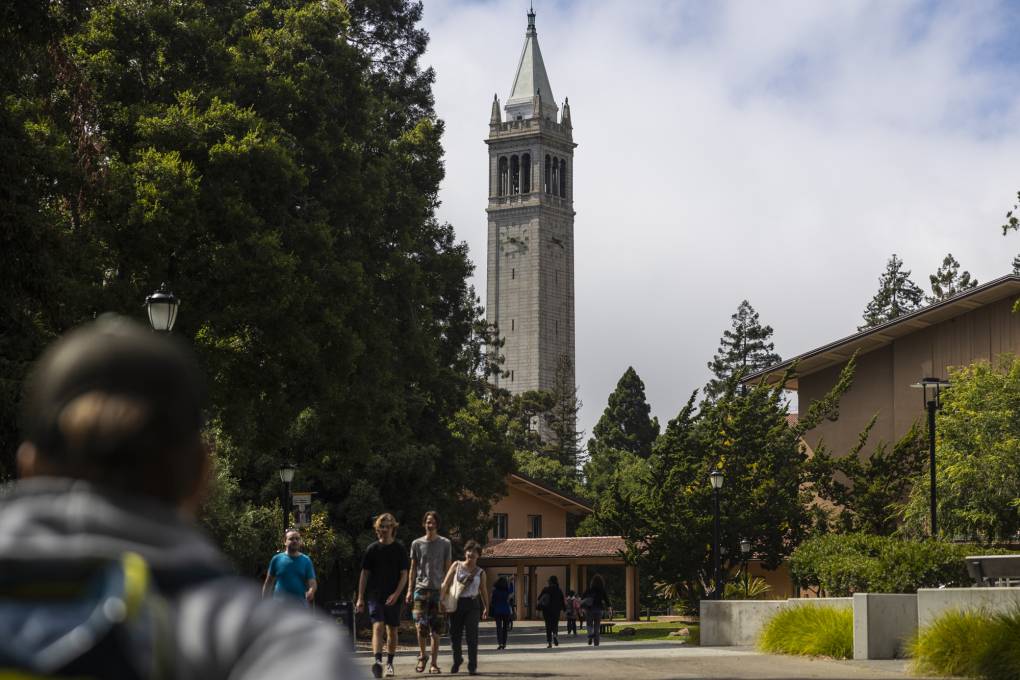
window.__IS_SSR__=true
window.__INITIAL_STATE__={
"attachmentsReducer": {
"audio_0": {
"type": "attachments",
"id": "audio_0",
"imgSizes": {
"kqedFullSize": {
"file": "https://ww2.kqed.org/news/wp-content/themes/KQED-unified/img/audio_bgs/background0.jpg"
}
}
},
"audio_1": {
"type": "attachments",
"id": "audio_1",
"imgSizes": {
"kqedFullSize": {
"file": "https://ww2.kqed.org/news/wp-content/themes/KQED-unified/img/audio_bgs/background1.jpg"
}
}
},
"audio_2": {
"type": "attachments",
"id": "audio_2",
"imgSizes": {
"kqedFullSize": {
"file": "https://ww2.kqed.org/news/wp-content/themes/KQED-unified/img/audio_bgs/background2.jpg"
}
}
},
"audio_3": {
"type": "attachments",
"id": "audio_3",
"imgSizes": {
"kqedFullSize": {
"file": "https://ww2.kqed.org/news/wp-content/themes/KQED-unified/img/audio_bgs/background3.jpg"
}
}
},
"audio_4": {
"type": "attachments",
"id": "audio_4",
"imgSizes": {
"kqedFullSize": {
"file": "https://ww2.kqed.org/news/wp-content/themes/KQED-unified/img/audio_bgs/background4.jpg"
}
}
},
"placeholder": {
"type": "attachments",
"id": "placeholder",
"imgSizes": {
"thumbnail": {
"file": "https://cdn.kqed.org/wp-content/uploads/2024/12/KQED-Default-Image-816638274-2000x1333-1-160x107.jpg",
"width": 160,
"height": 107,
"mimeType": "image/jpeg"
},
"medium": {
"file": "https://cdn.kqed.org/wp-content/uploads/2024/12/KQED-Default-Image-816638274-2000x1333-1-800x533.jpg",
"width": 800,
"height": 533,
"mimeType": "image/jpeg"
},
"medium_large": {
"file": "https://cdn.kqed.org/wp-content/uploads/2024/12/KQED-Default-Image-816638274-2000x1333-1-768x512.jpg",
"width": 768,
"height": 512,
"mimeType": "image/jpeg"
},
"large": {
"file": "https://cdn.kqed.org/wp-content/uploads/2024/12/KQED-Default-Image-816638274-2000x1333-1-1020x680.jpg",
"width": 1020,
"height": 680,
"mimeType": "image/jpeg"
},
"1536x1536": {
"file": "https://cdn.kqed.org/wp-content/uploads/2024/12/KQED-Default-Image-816638274-2000x1333-1-1536x1024.jpg",
"width": 1536,
"height": 1024,
"mimeType": "image/jpeg"
},
"fd-lrg": {
"file": "https://cdn.kqed.org/wp-content/uploads/2024/12/KQED-Default-Image-816638274-2000x1333-1-1536x1024.jpg",
"width": 1536,
"height": 1024,
"mimeType": "image/jpeg"
},
"fd-med": {
"file": "https://cdn.kqed.org/wp-content/uploads/2024/12/KQED-Default-Image-816638274-2000x1333-1-1020x680.jpg",
"width": 1020,
"height": 680,
"mimeType": "image/jpeg"
},
"fd-sm": {
"file": "https://cdn.kqed.org/wp-content/uploads/2024/12/KQED-Default-Image-816638274-2000x1333-1-800x533.jpg",
"width": 800,
"height": 533,
"mimeType": "image/jpeg"
},
"post-thumbnail": {
"file": "https://cdn.kqed.org/wp-content/uploads/2024/12/KQED-Default-Image-816638274-2000x1333-1-672x372.jpg",
"width": 672,
"height": 372,
"mimeType": "image/jpeg"
},
"twentyfourteen-full-width": {
"file": "https://cdn.kqed.org/wp-content/uploads/2024/12/KQED-Default-Image-816638274-2000x1333-1-1038x576.jpg",
"width": 1038,
"height": 576,
"mimeType": "image/jpeg"
},
"xxsmall": {
"file": "https://cdn.kqed.org/wp-content/uploads/2024/12/KQED-Default-Image-816638274-2000x1333-1-160x107.jpg",
"width": 160,
"height": 107,
"mimeType": "image/jpeg"
},
"xsmall": {
"file": "https://cdn.kqed.org/wp-content/uploads/2024/12/KQED-Default-Image-816638274-2000x1333-1-672x372.jpg",
"width": 672,
"height": 372,
"mimeType": "image/jpeg"
},
"small": {
"file": "https://cdn.kqed.org/wp-content/uploads/2024/12/KQED-Default-Image-816638274-2000x1333-1-672x372.jpg",
"width": 672,
"height": 372,
"mimeType": "image/jpeg"
},
"xlarge": {
"file": "https://cdn.kqed.org/wp-content/uploads/2024/12/KQED-Default-Image-816638274-2000x1333-1-1020x680.jpg",
"width": 1020,
"height": 680,
"mimeType": "image/jpeg"
},
"full-width": {
"file": "https://cdn.kqed.org/wp-content/uploads/2024/12/KQED-Default-Image-816638274-2000x1333-1-1920x1280.jpg",
"width": 1920,
"height": 1280,
"mimeType": "image/jpeg"
},
"guest-author-32": {
"file": "https://cdn.kqed.org/wp-content/uploads/2025/01/KQED-Default-Image-816638274-1333x1333-1-160x160.jpg",
"width": 32,
"height": 32,
"mimeType": "image/jpeg"
},
"guest-author-50": {
"file": "https://cdn.kqed.org/wp-content/uploads/2025/01/KQED-Default-Image-816638274-1333x1333-1-160x160.jpg",
"width": 50,
"height": 50,
"mimeType": "image/jpeg"
},
"guest-author-64": {
"file": "https://cdn.kqed.org/wp-content/uploads/2025/01/KQED-Default-Image-816638274-1333x1333-1-160x160.jpg",
"width": 64,
"height": 64,
"mimeType": "image/jpeg"
},
"guest-author-96": {
"file": "https://cdn.kqed.org/wp-content/uploads/2025/01/KQED-Default-Image-816638274-1333x1333-1-160x160.jpg",
"width": 96,
"height": 96,
"mimeType": "image/jpeg"
},
"guest-author-128": {
"file": "https://cdn.kqed.org/wp-content/uploads/2025/01/KQED-Default-Image-816638274-1333x1333-1-160x160.jpg",
"width": 128,
"height": 128,
"mimeType": "image/jpeg"
},
"detail": {
"file": "https://cdn.kqed.org/wp-content/uploads/2025/01/KQED-Default-Image-816638274-1333x1333-1-160x160.jpg",
"width": 160,
"height": 160,
"mimeType": "image/jpeg"
},
"kqedFullSize": {
"file": "https://cdn.kqed.org/wp-content/uploads/2024/12/KQED-Default-Image-816638274-2000x1333-1.jpg",
"width": 2000,
"height": 1333
}
}
},
"news_11963870": {
"type": "attachments",
"id": "news_11963870",
"meta": {
"index": "attachments_1716263798",
"site": "news",
"id": "11963870",
"found": true
},
"title": "The UC Berkeley Campus in Berkeley on Aug. 17, 2023.",
"publishDate": 1696875591,
"status": "inherit",
"parent": 12052533,
"modified": 1755379640,
"caption": "Students walk across the UC Berkeley campus on Aug. 17, 2023.",
"credit": "Martin do Nascimento/KQED",
"altTag": "Young people walk outdoors in front of a large ornate tower.",
"description": null,
"imgSizes": {
"medium": {
"file": "https://cdn.kqed.org/wp-content/uploads/sites/10/2023/10/230817-UC-BERKELEY-CAMPUS-MD-03-KQED-800x533.jpg",
"width": 800,
"height": 533,
"mimeType": "image/jpeg"
},
"large": {
"file": "https://cdn.kqed.org/wp-content/uploads/sites/10/2023/10/230817-UC-BERKELEY-CAMPUS-MD-03-KQED-1020x680.jpg",
"width": 1020,
"height": 680,
"mimeType": "image/jpeg"
},
"thumbnail": {
"file": "https://cdn.kqed.org/wp-content/uploads/sites/10/2023/10/230817-UC-BERKELEY-CAMPUS-MD-03-KQED-160x107.jpg",
"width": 160,
"height": 107,
"mimeType": "image/jpeg"
},
"1536x1536": {
"file": "https://cdn.kqed.org/wp-content/uploads/sites/10/2023/10/230817-UC-BERKELEY-CAMPUS-MD-03-KQED-1536x1024.jpg",
"width": 1536,
"height": 1024,
"mimeType": "image/jpeg"
},
"post-thumbnail": {
"file": "https://cdn.kqed.org/wp-content/uploads/sites/10/2023/10/230817-UC-BERKELEY-CAMPUS-MD-03-KQED-672x372.jpg",
"width": 672,
"height": 372,
"mimeType": "image/jpeg"
},
"twentyfourteen-full-width": {
"file": "https://cdn.kqed.org/wp-content/uploads/sites/10/2023/10/230817-UC-BERKELEY-CAMPUS-MD-03-KQED-1038x576.jpg",
"width": 1038,
"height": 576,
"mimeType": "image/jpeg"
},
"full-width": {
"file": "https://cdn.kqed.org/wp-content/uploads/sites/10/2023/10/230817-UC-BERKELEY-CAMPUS-MD-03-KQED-1920x1280.jpg",
"width": 1920,
"height": 1280,
"mimeType": "image/jpeg"
},
"kqedFullSize": {
"file": "https://cdn.kqed.org/wp-content/uploads/sites/10/2023/10/230817-UC-BERKELEY-CAMPUS-MD-03-KQED.jpg",
"width": 2000,
"height": 1333
}
},
"isLoading": false,
"fetchFailed": false
},
"news_11969273": {
"type": "attachments",
"id": "news_11969273",
"meta": {
"index": "attachments_1716263798",
"site": "news",
"id": "11969273",
"found": true
},
"parent": 11969236,
"imgSizes": {
"twentyfourteen-full-width": {
"file": "https://cdn.kqed.org/wp-content/uploads/sites/10/2023/12/11132022_apmreports_soldastory483-1-1038x576.jpg",
"width": 1038,
"mimeType": "image/jpeg",
"height": 576
},
"thumbnail": {
"file": "https://cdn.kqed.org/wp-content/uploads/sites/10/2023/12/11132022_apmreports_soldastory483-1-160x107.jpg",
"width": 160,
"mimeType": "image/jpeg",
"height": 107
},
"post-thumbnail": {
"file": "https://cdn.kqed.org/wp-content/uploads/sites/10/2023/12/11132022_apmreports_soldastory483-1-672x372.jpg",
"width": 672,
"mimeType": "image/jpeg",
"height": 372
},
"kqedFullSize": {
"file": "https://cdn.kqed.org/wp-content/uploads/sites/10/2023/12/11132022_apmreports_soldastory483-1-scaled-e1701975378165.jpg",
"width": 1920,
"height": 1282
},
"2048x2048": {
"file": "https://cdn.kqed.org/wp-content/uploads/sites/10/2023/12/11132022_apmreports_soldastory483-1-2048x1367.jpg",
"width": 2048,
"mimeType": "image/jpeg",
"height": 1367
},
"large": {
"file": "https://cdn.kqed.org/wp-content/uploads/sites/10/2023/12/11132022_apmreports_soldastory483-1-1020x681.jpg",
"width": 1020,
"mimeType": "image/jpeg",
"height": 681
},
"1536x1536": {
"file": "https://cdn.kqed.org/wp-content/uploads/sites/10/2023/12/11132022_apmreports_soldastory483-1-1536x1026.jpg",
"width": 1536,
"mimeType": "image/jpeg",
"height": 1026
},
"full-width": {
"file": "https://cdn.kqed.org/wp-content/uploads/sites/10/2023/12/11132022_apmreports_soldastory483-1-1920x1282.jpg",
"width": 1920,
"mimeType": "image/jpeg",
"height": 1282
},
"medium": {
"file": "https://cdn.kqed.org/wp-content/uploads/sites/10/2023/12/11132022_apmreports_soldastory483-1-800x534.jpg",
"width": 800,
"mimeType": "image/jpeg",
"height": 534
}
},
"publishDate": 1701975344,
"modified": 1702222954,
"caption": "San Francisco mom Havah Kelley has been trying for years to get help for son, who has dyslexia. The boy repeatedly did fine on the Benchmark Assessment System, even though other reading tests showed he lagged years behind his classmates.",
"description": null,
"title": "Sold A Story",
"credit": "Kori Suzuki for APM Reports",
"status": "inherit",
"altTag": "A woman wearing a scarf sits on a curb with her arms crossed.",
"isLoading": false,
"fetchFailed": false
},
"news_11969471": {
"type": "attachments",
"id": "news_11969471",
"meta": {
"index": "attachments_1716263798",
"site": "news",
"id": "11969471",
"found": true
},
"parent": 11969432,
"imgSizes": {
"twentyfourteen-full-width": {
"file": "https://cdn.kqed.org/wp-content/uploads/sites/10/2023/12/230817-UC-BERKELEY-CAMPUS-MD-03-KQED-1038x576.jpg",
"width": 1038,
"mimeType": "image/jpeg",
"height": 576
},
"thumbnail": {
"file": "https://cdn.kqed.org/wp-content/uploads/sites/10/2023/12/230817-UC-BERKELEY-CAMPUS-MD-03-KQED-160x107.jpg",
"width": 160,
"mimeType": "image/jpeg",
"height": 107
},
"post-thumbnail": {
"file": "https://cdn.kqed.org/wp-content/uploads/sites/10/2023/12/230817-UC-BERKELEY-CAMPUS-MD-03-KQED-672x372.jpg",
"width": 672,
"mimeType": "image/jpeg",
"height": 372
},
"kqedFullSize": {
"file": "https://cdn.kqed.org/wp-content/uploads/sites/10/2023/12/230817-UC-BERKELEY-CAMPUS-MD-03-KQED.jpg",
"width": 2000,
"height": 1333
},
"large": {
"file": "https://cdn.kqed.org/wp-content/uploads/sites/10/2023/12/230817-UC-BERKELEY-CAMPUS-MD-03-KQED-1020x680.jpg",
"width": 1020,
"mimeType": "image/jpeg",
"height": 680
},
"1536x1536": {
"file": "https://cdn.kqed.org/wp-content/uploads/sites/10/2023/12/230817-UC-BERKELEY-CAMPUS-MD-03-KQED-1536x1024.jpg",
"width": 1536,
"mimeType": "image/jpeg",
"height": 1024
},
"full-width": {
"file": "https://cdn.kqed.org/wp-content/uploads/sites/10/2023/12/230817-UC-BERKELEY-CAMPUS-MD-03-KQED-1920x1280.jpg",
"width": 1920,
"mimeType": "image/jpeg",
"height": 1280
},
"medium": {
"file": "https://cdn.kqed.org/wp-content/uploads/sites/10/2023/12/230817-UC-BERKELEY-CAMPUS-MD-03-KQED-800x533.jpg",
"width": 800,
"mimeType": "image/jpeg",
"height": 533
}
},
"publishDate": 1702079094,
"modified": 1702084982,
"caption": "The UC Berkeley Campus in Berkeley on Aug. 17, 2023.",
"description": null,
"title": "The UC Berkeley Campus in Berkeley on Aug. 17, 2023.",
"credit": "Martin do Nascimento/KQED",
"status": "inherit",
"altTag": "A bell and clock tower are set amid trees as students walk below.",
"isLoading": false,
"fetchFailed": false
},
"news_11969191": {
"type": "attachments",
"id": "news_11969191",
"meta": {
"index": "attachments_1716263798",
"site": "news",
"id": "11969191",
"found": true
},
"parent": 11969190,
"imgSizes": {
"twentyfourteen-full-width": {
"file": "https://cdn.kqed.org/wp-content/uploads/sites/10/2023/12/gettyimages-1653661278-8cbd56467973d5d040aa53775f8b56b63f8c7342-1-1038x576.jpg",
"width": 1038,
"mimeType": "image/jpeg",
"height": 576
},
"thumbnail": {
"file": "https://cdn.kqed.org/wp-content/uploads/sites/10/2023/12/gettyimages-1653661278-8cbd56467973d5d040aa53775f8b56b63f8c7342-1-160x120.jpg",
"width": 160,
"mimeType": "image/jpeg",
"height": 120
},
"post-thumbnail": {
"file": "https://cdn.kqed.org/wp-content/uploads/sites/10/2023/12/gettyimages-1653661278-8cbd56467973d5d040aa53775f8b56b63f8c7342-1-672x372.jpg",
"width": 672,
"mimeType": "image/jpeg",
"height": 372
},
"kqedFullSize": {
"file": "https://cdn.kqed.org/wp-content/uploads/sites/10/2023/12/gettyimages-1653661278-8cbd56467973d5d040aa53775f8b56b63f8c7342-1-scaled.jpg",
"width": 2560,
"height": 1920
},
"2048x2048": {
"file": "https://cdn.kqed.org/wp-content/uploads/sites/10/2023/12/gettyimages-1653661278-8cbd56467973d5d040aa53775f8b56b63f8c7342-1-2048x1536.jpg",
"width": 2048,
"mimeType": "image/jpeg",
"height": 1536
},
"large": {
"file": "https://cdn.kqed.org/wp-content/uploads/sites/10/2023/12/gettyimages-1653661278-8cbd56467973d5d040aa53775f8b56b63f8c7342-1-1020x765.jpg",
"width": 1020,
"mimeType": "image/jpeg",
"height": 765
},
"1536x1536": {
"file": "https://cdn.kqed.org/wp-content/uploads/sites/10/2023/12/gettyimages-1653661278-8cbd56467973d5d040aa53775f8b56b63f8c7342-1-1536x1152.jpg",
"width": 1536,
"mimeType": "image/jpeg",
"height": 1152
},
"full-width": {
"file": "https://cdn.kqed.org/wp-content/uploads/sites/10/2023/12/gettyimages-1653661278-8cbd56467973d5d040aa53775f8b56b63f8c7342-1-1920x1440.jpg",
"width": 1920,
"mimeType": "image/jpeg",
"height": 1440
},
"medium": {
"file": "https://cdn.kqed.org/wp-content/uploads/sites/10/2023/12/gettyimages-1653661278-8cbd56467973d5d040aa53775f8b56b63f8c7342-1-800x600.jpg",
"width": 800,
"mimeType": "image/jpeg",
"height": 600
}
},
"publishDate": 1701903565,
"modified": 1701903565,
"caption": null,
"description": "Miguel Cardona, US secretary of education, speaks during a bus tour kick off at the University of Kansas as part of the Department of Education's (DOE) \"Back to School Bus Tour 2023: Raise the Bar\" campaign in Lawrence, Kansas, US, on Tuesday, Sept. 5, 2023. The multi-state road trip is showcasing the ways schools, families, and communities are doubling down on accelerating student learning and raising the bar in education, according to the DOE. Photographer: Arin Yoon/Bloomberg via Getty Images",
"title": "Miguel Cardona, the U.S. Education Secretary, announced new efforts to help borrowers hurt by problems with its repayment programs.",
"credit": null,
"status": "inherit",
"altTag": null,
"isLoading": false,
"fetchFailed": false
},
"news_11969146": {
"type": "attachments",
"id": "news_11969146",
"meta": {
"index": "attachments_1716263798",
"site": "news",
"id": "11969146",
"found": true
},
"parent": 11969143,
"imgSizes": {
"twentyfourteen-full-width": {
"file": "https://cdn.kqed.org/wp-content/uploads/sites/10/2023/12/AP23340109647018-1038x576.jpg",
"width": 1038,
"mimeType": "image/jpeg",
"height": 576
},
"thumbnail": {
"file": "https://cdn.kqed.org/wp-content/uploads/sites/10/2023/12/AP23340109647018-160x120.jpg",
"width": 160,
"mimeType": "image/jpeg",
"height": 120
},
"post-thumbnail": {
"file": "https://cdn.kqed.org/wp-content/uploads/sites/10/2023/12/AP23340109647018-672x372.jpg",
"width": 672,
"mimeType": "image/jpeg",
"height": 372
},
"kqedFullSize": {
"file": "https://cdn.kqed.org/wp-content/uploads/sites/10/2023/12/AP23340109647018-scaled.jpg",
"width": 2560,
"height": 1920
},
"2048x2048": {
"file": "https://cdn.kqed.org/wp-content/uploads/sites/10/2023/12/AP23340109647018-2048x1536.jpg",
"width": 2048,
"mimeType": "image/jpeg",
"height": 1536
},
"large": {
"file": "https://cdn.kqed.org/wp-content/uploads/sites/10/2023/12/AP23340109647018-1020x765.jpg",
"width": 1020,
"mimeType": "image/jpeg",
"height": 765
},
"1536x1536": {
"file": "https://cdn.kqed.org/wp-content/uploads/sites/10/2023/12/AP23340109647018-1536x1152.jpg",
"width": 1536,
"mimeType": "image/jpeg",
"height": 1152
},
"full-width": {
"file": "https://cdn.kqed.org/wp-content/uploads/sites/10/2023/12/AP23340109647018-1920x1440.jpg",
"width": 1920,
"mimeType": "image/jpeg",
"height": 1440
},
"medium": {
"file": "https://cdn.kqed.org/wp-content/uploads/sites/10/2023/12/AP23340109647018-800x600.jpg",
"width": 800,
"mimeType": "image/jpeg",
"height": 600
}
},
"publishDate": 1701885540,
"modified": 1701897301,
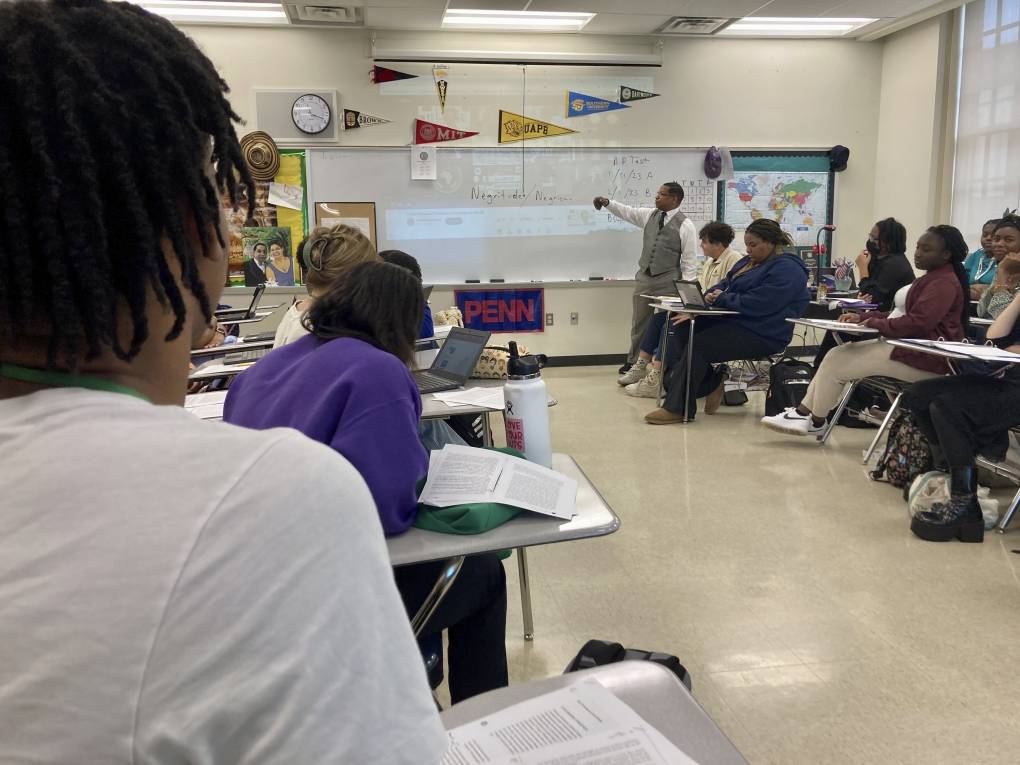
"caption": "Emmitt Glynn teaches a group of Baton Rouge Magnet High School students on Jan. 30, 2023, in Baton Rouge, Louisiana. On Dec. 6, 2023, the College Board released an updated framework for its new Advanced Placement African American Studies course, months after the nonprofit testing company came under intense scrutiny for engaging with conservative critics. ",
"description": null,
"title": "Education Black History College Board",
"credit": "Stephen Smith/The Associated Press",
"status": "inherit",
"altTag": "Students sit at desks in a classroom with an adult standing up and pointing at a whiteboard.",
"isLoading": false,
"fetchFailed": false
},
"news_11960388": {
"type": "attachments",
"id": "news_11960388",
"meta": {
"index": "attachments_1716263798",
"site": "news",
"id": "11960388",
"found": true
},
"parent": 0,
"imgSizes": {
"twentyfourteen-full-width": {
"file": "https://cdn.kqed.org/wp-content/uploads/sites/10/2023/09/RS68740_230601-MindShift-13-BL-KQED-1038x576.jpg",
"width": 1038,
"mimeType": "image/jpeg",
"height": 576
},
"thumbnail": {
"file": "https://cdn.kqed.org/wp-content/uploads/sites/10/2023/09/RS68740_230601-MindShift-13-BL-KQED-160x107.jpg",
"width": 160,
"mimeType": "image/jpeg",
"height": 107
},
"post-thumbnail": {
"file": "https://cdn.kqed.org/wp-content/uploads/sites/10/2023/09/RS68740_230601-MindShift-13-BL-KQED-672x372.jpg",
"width": 672,
"mimeType": "image/jpeg",
"height": 372
},
"kqedFullSize": {
"file": "https://cdn.kqed.org/wp-content/uploads/sites/10/2023/09/RS68740_230601-MindShift-13-BL-KQED.jpg",
"width": 2000,
"height": 1333
},
"large": {
"file": "https://cdn.kqed.org/wp-content/uploads/sites/10/2023/09/RS68740_230601-MindShift-13-BL-KQED-1020x680.jpg",
"width": 1020,
"mimeType": "image/jpeg",
"height": 680
},
"1536x1536": {
"file": "https://cdn.kqed.org/wp-content/uploads/sites/10/2023/09/RS68740_230601-MindShift-13-BL-KQED-1536x1024.jpg",
"width": 1536,
"mimeType": "image/jpeg",
"height": 1024
},
"full-width": {
"file": "https://cdn.kqed.org/wp-content/uploads/sites/10/2023/09/RS68740_230601-MindShift-13-BL-KQED-1920x1280.jpg",
"width": 1920,
"mimeType": "image/jpeg",
"height": 1280
},
"medium": {
"file": "https://cdn.kqed.org/wp-content/uploads/sites/10/2023/09/RS68740_230601-MindShift-13-BL-KQED-800x533.jpg",
"width": 800,
"mimeType": "image/jpeg",
"height": 533
}
},
"publishDate": 1694127746,
"modified": 1701823542,
"caption": "Students prepare for a temperature mapping activity in the schoolyard at Roosevelt Elementary School in San Leandro on June 1, 2023. Students used an infrared thermometer to record temperatures in locations around the playground and yard, including asphalt and green spaces, as an opportunity to learn about climate change, sustainability and other academic topics through hands-on experience.",
"description": null,
"title": "RS68740_230601-MindShift-13-BL-KQED",
"credit": "Beth LaBerge/KQED",
"status": "inherit",
"altTag": "A group of students sitting at tables in an indoor setting.",
"isLoading": false,
"fetchFailed": false
},
"news_11968999": {
"type": "attachments",
"id": "news_11968999",
"meta": {
"index": "attachments_1716263798",
"site": "news",
"id": "11968999",
"found": true
},
"parent": 11968983,
"imgSizes": {
"twentyfourteen-full-width": {
"file": "https://ww2.kqed.org/app/uploads/sites/10/2023/12/GettyImages-1519449429-2048x1365-1-1038x576.jpeg",
"width": 1038,
"mimeType": "image/jpeg",
"height": 576
},
"thumbnail": {
"file": "https://ww2.kqed.org/app/uploads/sites/10/2023/12/GettyImages-1519449429-2048x1365-1-160x107.jpeg",
"width": 160,
"mimeType": "image/jpeg",
"height": 107
},
"post-thumbnail": {
"file": "https://ww2.kqed.org/app/uploads/sites/10/2023/12/GettyImages-1519449429-2048x1365-1-672x372.jpeg",
"width": 672,
"mimeType": "image/jpeg",
"height": 372
},
"kqedFullSize": {
"file": "https://ww2.kqed.org/app/uploads/sites/10/2023/12/GettyImages-1519449429-2048x1365-1.jpeg",
"width": 2048,
"height": 1365
},
"large": {
"file": "https://ww2.kqed.org/app/uploads/sites/10/2023/12/GettyImages-1519449429-2048x1365-1-1020x680.jpeg",
"width": 1020,
"mimeType": "image/jpeg",
"height": 680
},
"1536x1536": {
"file": "https://ww2.kqed.org/app/uploads/sites/10/2023/12/GettyImages-1519449429-2048x1365-1-1536x1024.jpeg",
"width": 1536,
"mimeType": "image/jpeg",
"height": 1024
},
"full-width": {
"file": "https://ww2.kqed.org/app/uploads/sites/10/2023/12/GettyImages-1519449429-2048x1365-1-1920x1280.jpeg",
"width": 1920,
"mimeType": "image/jpeg",
"height": 1280
},
"medium": {
"file": "https://ww2.kqed.org/app/uploads/sites/10/2023/12/GettyImages-1519449429-2048x1365-1-800x533.jpeg",
"width": 800,
"mimeType": "image/jpeg",
"height": 533
}
},
"publishDate": 1701735479,
"modified": 1701735740,
"caption": "Temecula Valley Unified School District Superintendent Jodi McClay mouths 'Thank you' to the supporting crowd at Temecula Valley High School on June 13, 2023, the night she was fired by the district's conservative school board.",
"description": null,
"title": "Temecula school board fires Superintendent Jodi McClay",
"credit": "Anjali Sharif-Paul/MediaNews Group/The Sun via Getty Images",
"status": "inherit",
"altTag": "A woman standing on a stage waves at the off-camera audience.",
"isLoading": false,
"fetchFailed": false
},
"news_11968971": {
"type": "attachments",
"id": "news_11968971",
"meta": {
"index": "attachments_1716263798",
"site": "news",
"id": "11968971",
"found": true
},
"title": "20230822-SFSU-37-JY-qut",
"publishDate": 1701720325,
"status": "inherit",
"parent": 11968948,
"modified": 1741396518,
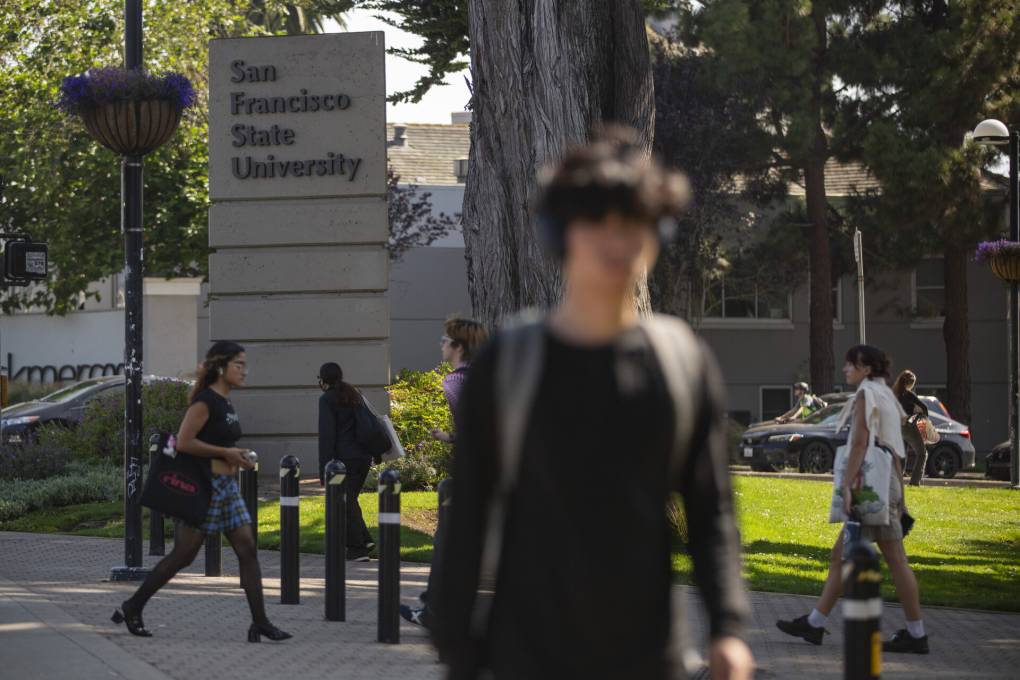
"caption": "Students walk across San Francisco State’s campus on Aug. 22, 2023. ",
"credit": "Juliana Yamada/KQED",
"altTag": "Many students, wearing backpacks, walk across a college campus. A large sign says, 'San Francisco State University.'",
"description": null,
"imgSizes": {
"medium": {
"file": "https://cdn.kqed.org/wp-content/uploads/sites/10/2023/12/20230822-SFSU-37-JY-qut-800x533.jpg",
"width": 800,
"height": 533,
"mimeType": "image/jpeg"
},
"large": {
"file": "https://cdn.kqed.org/wp-content/uploads/sites/10/2023/12/20230822-SFSU-37-JY-qut-1020x680.jpg",
"width": 1020,
"height": 680,
"mimeType": "image/jpeg"
},
"thumbnail": {
"file": "https://cdn.kqed.org/wp-content/uploads/sites/10/2023/12/20230822-SFSU-37-JY-qut-160x107.jpg",
"width": 160,
"height": 107,
"mimeType": "image/jpeg"
},
"1536x1536": {
"file": "https://cdn.kqed.org/wp-content/uploads/sites/10/2023/12/20230822-SFSU-37-JY-qut-1536x1024.jpg",
"width": 1536,
"height": 1024,
"mimeType": "image/jpeg"
},
"post-thumbnail": {
"file": "https://cdn.kqed.org/wp-content/uploads/sites/10/2023/12/20230822-SFSU-37-JY-qut-672x372.jpg",
"width": 672,
"height": 372,
"mimeType": "image/jpeg"
},
"twentyfourteen-full-width": {
"file": "https://cdn.kqed.org/wp-content/uploads/sites/10/2023/12/20230822-SFSU-37-JY-qut-1038x576.jpg",
"width": 1038,
"height": 576,
"mimeType": "image/jpeg"
},
"kqedFullSize": {
"file": "https://cdn.kqed.org/wp-content/uploads/sites/10/2023/12/20230822-SFSU-37-JY-qut.jpg",
"width": 1920,
"height": 1280
}
},
"isLoading": false,
"fetchFailed": false
},
"news_11963873": {
"type": "attachments",
"id": "news_11963873",
"meta": {
"index": "attachments_1716263798",
"site": "news",
"id": "11963873",
"found": true
},
"parent": 0,
"imgSizes": {
"twentyfourteen-full-width": {
"file": "https://ww2.kqed.org/app/uploads/sites/10/2023/10/20230822-SFSU-36-JY-KQED-1038x576.jpg",
"width": 1038,
"mimeType": "image/jpeg",
"height": 576
},
"thumbnail": {
"file": "https://ww2.kqed.org/app/uploads/sites/10/2023/10/20230822-SFSU-36-JY-KQED-160x107.jpg",
"width": 160,
"mimeType": "image/jpeg",
"height": 107
},
"post-thumbnail": {
"file": "https://ww2.kqed.org/app/uploads/sites/10/2023/10/20230822-SFSU-36-JY-KQED-672x372.jpg",
"width": 672,
"mimeType": "image/jpeg",
"height": 372
},
"kqedFullSize": {
"file": "https://ww2.kqed.org/app/uploads/sites/10/2023/10/20230822-SFSU-36-JY-KQED.jpg",
"width": 2000,
"height": 1333
},
"large": {
"file": "https://ww2.kqed.org/app/uploads/sites/10/2023/10/20230822-SFSU-36-JY-KQED-1020x680.jpg",
"width": 1020,
"mimeType": "image/jpeg",
"height": 680
},
"1536x1536": {
"file": "https://ww2.kqed.org/app/uploads/sites/10/2023/10/20230822-SFSU-36-JY-KQED-1536x1024.jpg",
"width": 1536,
"mimeType": "image/jpeg",
"height": 1024
},
"full-width": {
"file": "https://ww2.kqed.org/app/uploads/sites/10/2023/10/20230822-SFSU-36-JY-KQED-1920x1280.jpg",
"width": 1920,
"mimeType": "image/jpeg",
"height": 1280
},
"medium": {
"file": "https://ww2.kqed.org/app/uploads/sites/10/2023/10/20230822-SFSU-36-JY-KQED-800x533.jpg",
"width": 800,
"mimeType": "image/jpeg",
"height": 533
}
},
"publishDate": 1696876136,
"modified": 1701379630,
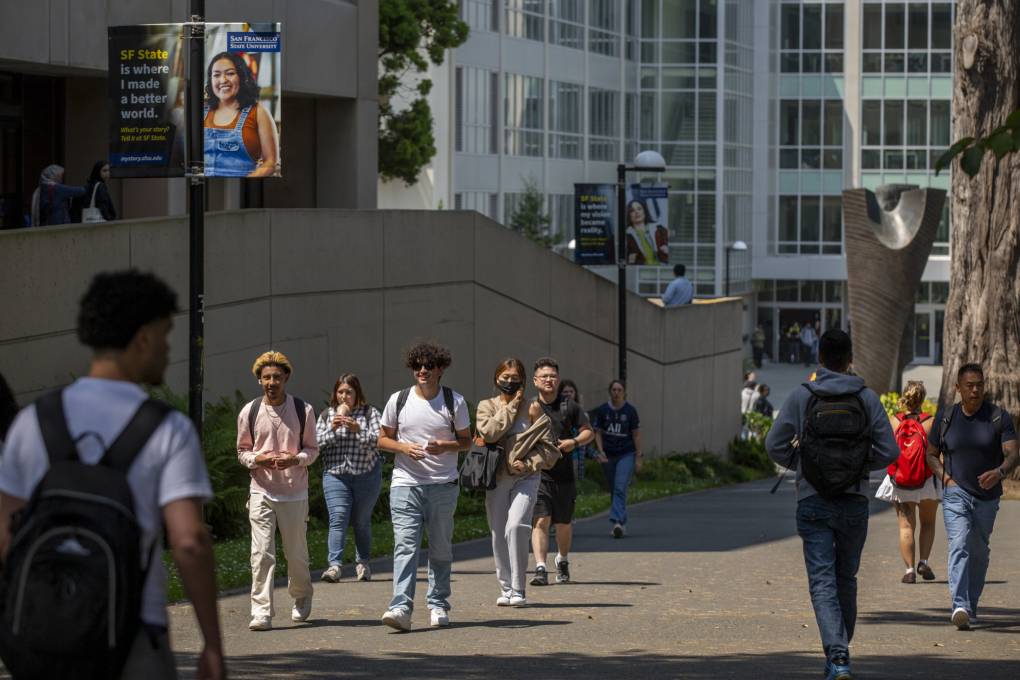
"caption": "Students walk up to the top of SF State’s campus in San Francisco on Tuesday, Aug. 22, 2023.",
"description": null,
"title": "20230822-SFSU-36-JY-KQED",
"credit": "Juliana Yamada/KQED",
"status": "inherit",
"altTag": "Young people walk outdoors on a college campus.",
"isLoading": false,
"fetchFailed": false
},
"news_11968344": {
"type": "attachments",
"id": "news_11968344",
"meta": {
"index": "attachments_1716263798",
"site": "news",
"id": "11968344",
"found": true
},
"parent": 0,
"imgSizes": {
"twentyfourteen-full-width": {
"file": "https://ww2.kqed.org/app/uploads/sites/10/2023/11/02172023_KSUZUKI_TKPROGRESS-273-KQED-1038x576.jpg",
"width": 1038,
"mimeType": "image/jpeg",
"height": 576
},
"thumbnail": {
"file": "https://ww2.kqed.org/app/uploads/sites/10/2023/11/02172023_KSUZUKI_TKPROGRESS-273-KQED-160x106.jpg",
"width": 160,
"mimeType": "image/jpeg",
"height": 106
},
"post-thumbnail": {
"file": "https://ww2.kqed.org/app/uploads/sites/10/2023/11/02172023_KSUZUKI_TKPROGRESS-273-KQED-672x372.jpg",
"width": 672,
"mimeType": "image/jpeg",
"height": 372
},
"kqedFullSize": {
"file": "https://ww2.kqed.org/app/uploads/sites/10/2023/11/02172023_KSUZUKI_TKPROGRESS-273-KQED.jpg",
"width": 2000,
"height": 1331
},
"large": {
"file": "https://ww2.kqed.org/app/uploads/sites/10/2023/11/02172023_KSUZUKI_TKPROGRESS-273-KQED-1020x679.jpg",
"width": 1020,
"mimeType": "image/jpeg",
"height": 679
},
"1536x1536": {
"file": "https://ww2.kqed.org/app/uploads/sites/10/2023/11/02172023_KSUZUKI_TKPROGRESS-273-KQED-1536x1022.jpg",
"width": 1536,
"mimeType": "image/jpeg",
"height": 1022
},
"full-width": {
"file": "https://ww2.kqed.org/app/uploads/sites/10/2023/11/02172023_KSUZUKI_TKPROGRESS-273-KQED-1920x1278.jpg",
"width": 1920,
"mimeType": "image/jpeg",
"height": 1278
},
"medium": {
"file": "https://ww2.kqed.org/app/uploads/sites/10/2023/11/02172023_KSUZUKI_TKPROGRESS-273-KQED-800x532.jpg",
"width": 800,
"mimeType": "image/jpeg",
"height": 532
}
},
"publishDate": 1701115751,
"modified": 1701124717,
"caption": "The 2023 math framework, passed by the State Board of Education in July, is a 1,000-page document detailing what many state and education officials accept as the best practices to teach mathematics.",
"description": null,
"title": "02172023_KSUZUKI_TKPROGRESS 273-KQED",
"credit": "Kori Suzuki/KQED",
"status": "inherit",
"altTag": "A young person wears a face mask while seated at a desk inside a classroom.",
"isLoading": false,
"fetchFailed": false
},
"news_11968329": {
"type": "attachments",
"id": "news_11968329",
"meta": {
"index": "attachments_1716263798",
"site": "news",
"id": "11968329",
"found": true
},
"parent": 11968326,
"imgSizes": {
"twentyfourteen-full-width": {
"file": "https://ww2.kqed.org/app/uploads/sites/10/2023/11/111523_Keyes-School_LV_03-1038x576.jpeg",
"width": 1038,
"mimeType": "image/jpeg",
"height": 576
},
"thumbnail": {
"file": "https://ww2.kqed.org/app/uploads/sites/10/2023/11/111523_Keyes-School_LV_03-160x107.jpeg",
"width": 160,
"mimeType": "image/jpeg",
"height": 107
},
"post-thumbnail": {
"file": "https://ww2.kqed.org/app/uploads/sites/10/2023/11/111523_Keyes-School_LV_03-672x372.jpeg",
"width": 672,
"mimeType": "image/jpeg",
"height": 372
},
"kqedFullSize": {
"file": "https://ww2.kqed.org/app/uploads/sites/10/2023/11/111523_Keyes-School_LV_03.jpeg",
"width": 2000,
"height": 1333
},
"large": {
"file": "https://ww2.kqed.org/app/uploads/sites/10/2023/11/111523_Keyes-School_LV_03-1020x680.jpeg",
"width": 1020,
"mimeType": "image/jpeg",
"height": 680
},
"1536x1536": {
"file": "https://ww2.kqed.org/app/uploads/sites/10/2023/11/111523_Keyes-School_LV_03-1536x1024.jpeg",
"width": 1536,
"mimeType": "image/jpeg",
"height": 1024
},
"full-width": {
"file": "https://ww2.kqed.org/app/uploads/sites/10/2023/11/111523_Keyes-School_LV_03-1920x1280.jpeg",
"width": 1920,
"mimeType": "image/jpeg",
"height": 1280
},
"medium": {
"file": "https://ww2.kqed.org/app/uploads/sites/10/2023/11/111523_Keyes-School_LV_03-800x533.jpeg",
"width": 800,
"mimeType": "image/jpeg",
"height": 533
}
},
"publishDate": 1701112783,
"modified": 1701121291,
"caption": "Students being taught a science lesson outside of the classroom at Keyes Elementary School in Keyes, California, on Nov. 15, 2023. ",
"description": null,
"title": "111523_Keyes-School_LV_03",
"credit": "Larry Valenzuela/CalMatters/CatchLight Local",
"status": "inherit",
"altTag": "A group of elementary school students standing around an outdoor table with a teacher.",
"isLoading": false,
"fetchFailed": false
},
"news_11967955": {
"type": "attachments",
"id": "news_11967955",
"meta": {
"index": "attachments_1716263798",
"site": "news",
"id": "11967955",
"found": true
},
"parent": 0,
"imgSizes": {
"twentyfourteen-full-width": {
"file": "https://ww2.kqed.org/app/uploads/sites/10/2023/11/EdSource01-1038x576.jpeg",
"width": 1038,
"mimeType": "image/jpeg",
"height": 576
},
"thumbnail": {
"file": "https://ww2.kqed.org/app/uploads/sites/10/2023/11/EdSource01-160x118.jpeg",
"width": 160,
"mimeType": "image/jpeg",
"height": 118
},
"post-thumbnail": {
"file": "https://ww2.kqed.org/app/uploads/sites/10/2023/11/EdSource01-672x372.jpeg",
"width": 672,
"mimeType": "image/jpeg",
"height": 372
},
"kqedFullSize": {
"file": "https://ww2.kqed.org/app/uploads/sites/10/2023/11/EdSource01.jpeg",
"width": 1284,
"height": 950
},
"large": {
"file": "https://ww2.kqed.org/app/uploads/sites/10/2023/11/EdSource01-1020x755.jpeg",
"width": 1020,
"mimeType": "image/jpeg",
"height": 755
},
"medium": {
"file": "https://ww2.kqed.org/app/uploads/sites/10/2023/11/EdSource01-800x592.jpeg",
"width": 800,
"mimeType": "image/jpeg",
"height": 592
}
},
"publishDate": 1700520491,
"modified": 1700602034,
"caption": "Guillermo Tejeda and the Neighborhood Orchestra performing at the Venice Beach Jazz Festival.",
"description": null,
"title": "EdSource01",
"credit": "Courtesy of Guillermo Tejeda",
"status": "inherit",
"altTag": "A group of musicians are onstage, posing for the camera.",
"isLoading": false,
"fetchFailed": false
}
},
"audioPlayerReducer": {
"postId": "stream_live",
"isPaused": true,
"isPlaying": false,
"pfsActive": false,
"pledgeModalIsOpen": true,
"playerDrawerIsOpen": false,
"liveAudioPlayStartedAt": 0,
"liveAudioPlayContext": ""
},
"authorsReducer": {
"byline_news_11969685": {
"type": "authors",
"id": "byline_news_11969685",
"meta": {
"override": true
},
"slug": "byline_news_11969685",
"name": "\u003ca href=\"https://edsource.org/author/zstavely\">Zaidee Stavely\u003c/a>",
"isLoading": false
},
"byline_news_11969236": {
"type": "authors",
"id": "byline_news_11969236",
"meta": {
"override": true
},
"slug": "byline_news_11969236",
"name": "Christopher Peak, APM Reports",
"isLoading": false
},
"byline_news_11969432": {
"type": "authors",
"id": "byline_news_11969432",
"meta": {
"override": true
},
"slug": "byline_news_11969432",
"name": "\u003ca href=\"https://edsource.org/author/jfensterwald\">John Fensterwald\u003c/a>",
"isLoading": false
},
"byline_news_11969190": {
"type": "authors",
"id": "byline_news_11969190",
"meta": {
"override": true
},
"slug": "byline_news_11969190",
"name": "\u003ca href=\"https://www.npr.org/people/349625027/cory-turner\">Cory Turner\u003c/a>\u003cbr> NPR News",
"isLoading": false
},
"byline_news_11969143": {
"type": "authors",
"id": "byline_news_11969143",
"meta": {
"override": true
},
"slug": "byline_news_11969143",
"name": "Cheyanne Mumphrey\u003cbr>The Associated Press\u003c/br>",
"isLoading": false
},
"byline_news_11969087": {
"type": "authors",
"id": "byline_news_11969087",
"meta": {
"override": true
},
"slug": "byline_news_11969087",
"name": "Cara Nixon and John Fensterwald",
"isLoading": false
},
"byline_news_11968983": {
"type": "authors",
"id": "byline_news_11968983",
"meta": {
"override": true
},
"slug": "byline_news_11968983",
"name": "\u003ca href=\"https://edsource.org/author/dlambert\">Diana Lambert\u003c/a>",
"isLoading": false
},
"byline_news_11968948": {
"type": "authors",
"id": "byline_news_11968948",
"meta": {
"override": true
},
"slug": "byline_news_11968948",
"name": "\u003ca href=\"https://twitter.com/sophieadanna\">Sophie Austin\u003c/a>\u003cbr>The Associated Press/Report for America",
"isLoading": false
},
"byline_news_11968703": {
"type": "authors",
"id": "byline_news_11968703",
"meta": {
"override": true
},
"slug": "byline_news_11968703",
"name": "Mikhail Zinshteyn",
"isLoading": false
},
"byline_news_11968324": {
"type": "authors",
"id": "byline_news_11968324",
"meta": {
"override": true
},
"slug": "byline_news_11968324",
"name": "\u003ca href=\"https://edsource.org/author/mvelez\">Monica Velez\u003c/a>\u003cbr> EdSource",
"isLoading": false
},
"byline_news_11968326": {
"type": "authors",
"id": "byline_news_11968326",
"meta": {
"override": true
},
"slug": "byline_news_11968326",
"name": "\u003ca href=\"https://calmatters.org/author/carolyn-jones/\">Carolyn Jones\u003c/a>",
"isLoading": false
},
"byline_news_11967943": {
"type": "authors",
"id": "byline_news_11967943",
"meta": {
"override": true
},
"slug": "byline_news_11967943",
"name": "\u003ca href=\"https://edsource.org/author/kdsouza\">Karen D'Souza\u003c/a>\u003cbr> EdSource",
"isLoading": false
}
},
"pagesReducer": {
"news_category_education": {
"type": "terms",
"id": "news_18540",
"meta": {
"index": "terms_1716263798",
"site": "news",
"id": "18540",
"score": 10.973221
},
"featImg": null,
"name": "Education",
"description": null,
"taxonomy": "category",
"headData": {
"twImgId": null,
"twTitle": null,
"ogTitle": null,
"ogImgId": null,
"twDescription": null,
"description": null,
"title": "Education Archives | KQED News",
"ogDescription": null
},
"ttid": 2595,
"slug": "education",
"isLoading": false,
"title": "Education",
"pageMeta": {
"site": "news",
"WpPageTemplate": "page-topic-editorial",
"currentPage": 56
},
"blocks": [
{
"blockName": "kqed/post-list",
"attrs": {
"layout": "cardArticle2",
"query": "posts/news?category=education",
"seeMore": false,
"paginated": true,
"page": 56
}
},
{
"blockName": "kqed/ad"
}
]
}
},
"pfsSessionReducer": {},
"postsReducer": {
"stream_live": {
"type": "live",
"id": "stream_live",
"audioUrl": "https://streams.kqed.org/kqedradio",
"title": "Live Stream",
"excerpt": "Live Stream information currently unavailable.",
"link": "/radio",
"featImg": "",
"label": {
"name": "KQED Live",
"link": "/"
}
},
"stream_kqedNewscast": {
"type": "posts",
"id": "stream_kqedNewscast",
"audioUrl": "https://www.kqed.org/.stream/anon/radio/RDnews/newscast.mp3?_=1",
"title": "KQED Newscast",
"featImg": "",
"label": {
"name": "88.5 FM",
"link": "/"
}
},
"news_11969685": {
"type": "posts",
"id": "news_11969685",
"meta": {
"index": "posts_1716263798",
"site": "news",
"id": "11969685",
"score": null,
"sort": [
1702468848000
]
},
"parent": 0,
"labelTerm": {},
"blocks": [],
"publishDate": 1702468848,
"format": "standard",
"title": "Many California College Employees With DACA Protections Lack Backup Plans If Program Ends",
"headTitle": "Many California College Employees With DACA Protections Lack Backup Plans If Program Ends | KQED",
"content": "\u003cp>Iveth Díaz has spent much of her career helping undocumented immigrant students navigate college. But when her own application to renew her work permit and temporary protection from deportation was delayed because of backlogs, she had to resign from her job for three months.\u003c/p>\n\u003cp>“It was extremely stressful. It was a time when I suffered from anxiety and depression, which is unfortunately very common within our community,” Díaz said.[pullquote align=\"right\" size=\"medium\" citation=\"Iveth Díaz, a student counselor at Cerritos College\"]‘Are we waiting until the program is canceled altogether, or are institutions being proactive in creating ways to retain their employees?[/pullquote]Díaz and other college and university employees with work permits and protection under the Deferred Action for Childhood Arrivals, or DACA, program are calling on universities to do more to help them prepare for alternative employment plans in case the program ends. Some proposals include helping employees become independent consultants, preparing a severance package or sponsoring work visas.\u003c/p>\n\u003cp>DACA offers temporary protection from deportation and work permits to about \u003ca class=\"external\" href=\"https://www.migrationpolicy.org/programs/data-hub/deferred-action-childhood-arrivals-daca-profiles\" target=\"_blank\" rel=\"noopener\">579,000\u003c/a> young people who were brought to the U.S. as children and graduated from high school, completed a GED or are veterans of the U.S. military. Every two years, recipients must apply for renewal. But the program could end at any time. It was \u003ca href=\"https://edsource.org/updates/advocates-urge-permanent-immigration-solution-after-another-daca-ruling\">found to be illegal\u003c/a> by a federal judge in Texas, and that case will likely end up in the U.S. Supreme Court.\u003c/p>\n\u003cp>The program, launched during the Obama administration, has long been associated with high school and college students, but most recipients are now working adults. The U.S. Citizenship and Immigration Services has not accepted new applications since 2017, making the youngest DACA recipients currently 21 years old and the oldest now 42.\u003c/p>\n\u003cp>“The DACA generation are not kids anymore,” said Madeleine Villanueva, higher education manager of Immigrants Rising, an organization based in San Francisco that helps undocumented people achieve career and educational goals, and published \u003ca class=\"external\" href=\"https://immigrantsrising.org/resource/building-effective-support-for-undocueducators-in-higher-education-action-plans/\" target=\"_blank\" rel=\"noopener\">a guide for colleges and universities\u003c/a> to support undocumented employees. “A lot of us are in our 30s and 40s. We’re doing this work so that the future generation of undocumented students doesn’t have such a hard time like we did when we were going to school.”\u003c/p>\n\u003cp>[ad fullwidth]\u003c/p>\n\u003cp>Hundreds of faculty and staff at California colleges and universities are DACA recipients, although the exact total is unclear. According to the Presidents’ Alliance on Higher Education and Immigration’s\u003ca class=\"external\" href=\"https://www.higheredimmigrationportal.org/state/california/\" target=\"_blank\" rel=\"noopener\"> Higher Ed Immigration Portal\u003c/a>, about 9,211 recipients work in education in California, from elementary school to college. The University of California estimates it has more than 400 employee recipients, some of them students. Spokespersons for the California State University and California Community Colleges said they did not have data on how many employees are temporarily protected from deportation.\u003c/p>\n\u003cp>Díaz worked for over eight years at CSU San Bernardino as an administrative support coordinator for graduate researchers and an admissions counselor. She now leads a program for Cerritos College students living in the country illegally. As a fellow at Immigrants Rising, she surveyed about 65 employees of California colleges and universities who, at one time, were living in the U.S. without permission, most of whom now have DACA protections. The employees included faculty, counselors, researchers and financial aid and admissions workers.\u003c/p>\n\u003cp>She said most respondents said their colleges and universities have not prepared them for what to do if the program ends.\u003c/p>\n\u003cp>“Are we waiting until the program is canceled altogether, or are institutions being proactive in creating ways to retain their employees?” Díaz said. “I found that 70% of respondents stated that their institutions have not even brought it up, have not even had a conversation to their knowledge about what a response plan would be, which is really worrisome.”\u003c/p>\n\u003cp>Laura Bohórquez García, the director of the AB 540 and Undocumented Student Center at UC Davis, decided to start her own business, Inner Work Collective Freedom, to employ herself if the program ends and she loses her work permit.\u003c/p>\n\u003cp>“I’m like, OK, how do I prepare? Because I don’t feel like the university would be ready to jump in,” Bohórquez García said.\u003c/p>\n\u003cp>In addition to plans in case DACA ends, concerned university employees and advocates recommended that universities offer more mental health benefits and that supervisors check in on their employees’ mental health.\u003c/p>\n\u003cp>Many recipients working in colleges and universities are employed in positions dedicated to supporting immigrant students on their campuses, helping them get legal services or mental health counseling. But many of these positions are part-time and don’t offer health benefits, which are crucial when living with the uncertainty of losing temporary protection from deportation, advocates said.\u003c/p>\n\u003cp>“So much of what they’re doing and the fires they’re turning off when it comes to students, it impacts them as well,” said Luz Bertadillo Rodríguez, director of campus engagement at the Presidents’ Alliance on Higher Education and Immigration, a group of college and university leaders dedicated to increasing public understanding of how immigration policies and practices impact students. “The constant word or feeling I hear when there’s a new DACA update is, ‘I’m exhausted.’ They’re just like, ‘I’m tired of living my life two years at a time and then even that not being certain.’”[aside label=\"more on DACA\" tag=\"daca\"]Whenever a new court decision comes out about the program, employees in the immigrant resource centers often find themselves holding workshops or trainings to help explain the decision to students. Yet, they are also processing the decision themselves.\u003c/p>\n\u003cp>“You have to check in with the students, but sometimes no one is checking in with you,” said Eric Yang, a recipient who has worked with immigrant students at two different California universities. “How can we help others if we can’t even advocate for ourselves?”\u003c/p>\n\u003cp>University of California officials are currently examining ways to support employees if the temporary deportation protections are terminated, according to UC Office of the President spokesperson Stett Holbrook. He added that the UC Immigrant Legal Services Center offered immigration consultation workshops for recipient employees last summer, “many of which identified eligibility for employment, family or humanitarian relief.”\u003c/p>\n\u003cp>“The University of California has a long record of support for DACA recipients, and we will continue to support our students, staff and faculty regardless of their immigration status,” Holbrook said.\u003c/p>\n\u003cp>The University of California is also currently \u003ca href=\"https://edsource.org/2023/uc-signals-support-for-hiring-of-undocumented-students-following-six-month-study/690855\">considering a proposal\u003c/a> to allow the university to hire students who do not have work permits under DACA. A coalition of immigrant students and allies, including legal scholars at UCLA and elsewhere, have argued that a federal law barring hiring immigrants living in the country without permission doesn’t apply to state entities.\u003c/p>\n\u003cp>California State University and California Community Colleges offer free legal services to employees with temporary work permits. However, advocates said many faculty and staff are unaware that these services are not just for students.\u003c/p>\n\u003cp>Melissa Villarin, spokesperson for the California Community Colleges Chancellor’s Office, said the community colleges have also recently included resources for staff and faculty during the annual Undocumented Student Action Week.\u003c/p>\n\u003cp>Díaz also recommended more training for university staff about DACA recipients. She said survey respondents said there was a lack of awareness or understanding among other staff and faculty about their colleagues living in the country illegally.\u003c/p>\n\u003cp>“There was just no knowledge by institutions of higher ed about even having undocumented staff and faculty on campus,” Díaz said.\u003c/p>\n\u003cp>She said lack of awareness can lead to insensitivity. At one point, for example, she said a human resources director asked her why she didn’t just fix her status or apply for a green card, not understanding that Díaz, like most immigrants who entered or stayed in the U.S. illegally, didn’t have a way to apply for a green card without leaving the country and possibly having to stay out for up to 10 years.\u003c/p>\n\u003cp>Yang said universities should do more to highlight the stories of staff covered by the Deferred Action for Childhood Arrivals program “so that people in the public know that there are professional staff who are also potentially without any protection or support.”\u003c/p>\n\u003cp>Despite the challenges these immigrants face, Rodríguez, from the Presidents’ Alliance on Higher Education and Immigration, said they should be commended for their work. “They’re very involved in the students’ lives because they’re able to create such strong bonds with the students,” she said. “They’re some of the most exceptional and brilliant practitioners that I’ve come across in higher education.”\u003c/p>\n\u003cp>[ad floatright]\u003c/p>\n\u003cp>\u003ca href=\"https://edsource.org/2023/faculty-staff-urge-california-colleges-to-make-backup-plans-in-case-daca-ends/702129\">This story was originally published by EdSource.\u003c/a>\u003c/p>\n\n",
"stats": {
"hasVideo": false,
"hasChartOrMap": false,
"hasAudio": false,
"hasPolis": false,
"wordCount": 1541,
"hasGoogleForm": false,
"hasGallery": false,
"hasHearkenModule": false,
"iframeSrcs": [],
"paragraphCount": 28
},
"modified": 1702495917,
"excerpt": "Some university employees who have work permits and protection under the Deferred Action for Childhood Arrivals, or DACA, program are calling on their institutions to do more to help them prepare for alternative employment plans in case the program ends.",
"headData": {
"twImgId": "",
"twTitle": "",
"ogTitle": "",
"ogImgId": "",
"twDescription": "",
"description": "Some university employees who have work permits and protection under the Deferred Action for Childhood Arrivals, or DACA, program are calling on their institutions to do more to help them prepare for alternative employment plans in case the program ends.",
"title": "Many California College Employees With DACA Protections Lack Backup Plans If Program Ends | KQED",
"ogDescription": "",
"schema": {
"@context": "https://schema.org",
"@type": "NewsArticle",
"headline": "Many California College Employees With DACA Protections Lack Backup Plans If Program Ends",
"datePublished": "2023-12-13T04:00:48-08:00",
"dateModified": "2023-12-13T11:31:57-08:00",
"image": "https://cdn.kqed.org/wp-content/uploads/2020/02/KQED-OG-Image@1x.png",
"isAccessibleForFree": "True",
"publisher": {
"@type": "NewsMediaOrganization",
"@id": "https://www.kqed.org/#organization",
"name": "KQED",
"logo": "https://cdn.kqed.org/wp-content/uploads/2020/02/KQED-OG-Image@1x.png",
"url": "https://www.kqed.org",
"sameAs": [
"https://www.facebook.com/KQED",
"https://twitter.com/KQED",
"https://www.instagram.com/kqed/",
"https://www.tiktok.com/@kqedofficial",
"https://www.linkedin.com/company/kqed",
"https://www.youtube.com/channel/UCeC0IOo7i1P_61zVUWbJ4nw"
]
}
}
},
"guestAuthors": [],
"slug": "faculty-urge-california-colleges-to-make-backup-plans-in-case-daca-ends",
"status": "publish",
"sourceUrl": "https://www.kqed.org/news/tag/edsource",
"nprByline": "\u003ca href=\"https://edsource.org/author/zstavely\">Zaidee Stavely\u003c/a>",
"excludeFromSiteSearch": "Include",
"sticky": false,
"source": "EdSource",
"showOnAuthorArchivePages": "No",
"articleAge": "0",
"path": "/news/11969685/faculty-urge-california-colleges-to-make-backup-plans-in-case-daca-ends",
"audioTrackLength": null,
"parsedContent": [
{
"type": "contentString",
"content": "\u003cdiv class=\"post-body\">\u003cp>\u003cp>Iveth Díaz has spent much of her career helping undocumented immigrant students navigate college. But when her own application to renew her work permit and temporary protection from deportation was delayed because of backlogs, she had to resign from her job for three months.\u003c/p>\n\u003cp>“It was extremely stressful. It was a time when I suffered from anxiety and depression, which is unfortunately very common within our community,” Díaz said.\u003c/p>\u003c/div>",
"attributes": {
"named": {},
"numeric": []
}
},
{
"type": "component",
"content": "‘Are we waiting until the program is canceled altogether, or are institutions being proactive in creating ways to retain their employees?",
"name": "pullquote",
"attributes": {
"named": {
"align": "right",
"size": "medium",
"citation": "Iveth Díaz, a student counselor at Cerritos College",
"label": ""
},
"numeric": []
}
},
{
"type": "contentString",
"content": "\u003cdiv class=\"post-body\">\u003cp>Díaz and other college and university employees with work permits and protection under the Deferred Action for Childhood Arrivals, or DACA, program are calling on universities to do more to help them prepare for alternative employment plans in case the program ends. Some proposals include helping employees become independent consultants, preparing a severance package or sponsoring work visas.\u003c/p>\n\u003cp>DACA offers temporary protection from deportation and work permits to about \u003ca class=\"external\" href=\"https://www.migrationpolicy.org/programs/data-hub/deferred-action-childhood-arrivals-daca-profiles\" target=\"_blank\" rel=\"noopener\">579,000\u003c/a> young people who were brought to the U.S. as children and graduated from high school, completed a GED or are veterans of the U.S. military. Every two years, recipients must apply for renewal. But the program could end at any time. It was \u003ca href=\"https://edsource.org/updates/advocates-urge-permanent-immigration-solution-after-another-daca-ruling\">found to be illegal\u003c/a> by a federal judge in Texas, and that case will likely end up in the U.S. Supreme Court.\u003c/p>\n\u003cp>The program, launched during the Obama administration, has long been associated with high school and college students, but most recipients are now working adults. The U.S. Citizenship and Immigration Services has not accepted new applications since 2017, making the youngest DACA recipients currently 21 years old and the oldest now 42.\u003c/p>\n\u003cp>“The DACA generation are not kids anymore,” said Madeleine Villanueva, higher education manager of Immigrants Rising, an organization based in San Francisco that helps undocumented people achieve career and educational goals, and published \u003ca class=\"external\" href=\"https://immigrantsrising.org/resource/building-effective-support-for-undocueducators-in-higher-education-action-plans/\" target=\"_blank\" rel=\"noopener\">a guide for colleges and universities\u003c/a> to support undocumented employees. “A lot of us are in our 30s and 40s. We’re doing this work so that the future generation of undocumented students doesn’t have such a hard time like we did when we were going to school.”\u003c/p>\n\u003cp>\u003c/p>\u003c/div>",
"attributes": {
"named": {},
"numeric": []
}
},
{
"type": "component",
"content": "",
"name": "ad",
"attributes": {
"named": {
"label": "fullwidth"
},
"numeric": [
"fullwidth"
]
}
},
{
"type": "contentString",
"content": "\u003cdiv class=\"post-body\">\u003cp>\u003c/p>\n\u003cp>Hundreds of faculty and staff at California colleges and universities are DACA recipients, although the exact total is unclear. According to the Presidents’ Alliance on Higher Education and Immigration’s\u003ca class=\"external\" href=\"https://www.higheredimmigrationportal.org/state/california/\" target=\"_blank\" rel=\"noopener\"> Higher Ed Immigration Portal\u003c/a>, about 9,211 recipients work in education in California, from elementary school to college. The University of California estimates it has more than 400 employee recipients, some of them students. Spokespersons for the California State University and California Community Colleges said they did not have data on how many employees are temporarily protected from deportation.\u003c/p>\n\u003cp>Díaz worked for over eight years at CSU San Bernardino as an administrative support coordinator for graduate researchers and an admissions counselor. She now leads a program for Cerritos College students living in the country illegally. As a fellow at Immigrants Rising, she surveyed about 65 employees of California colleges and universities who, at one time, were living in the U.S. without permission, most of whom now have DACA protections. The employees included faculty, counselors, researchers and financial aid and admissions workers.\u003c/p>\n\u003cp>She said most respondents said their colleges and universities have not prepared them for what to do if the program ends.\u003c/p>\n\u003cp>“Are we waiting until the program is canceled altogether, or are institutions being proactive in creating ways to retain their employees?” Díaz said. “I found that 70% of respondents stated that their institutions have not even brought it up, have not even had a conversation to their knowledge about what a response plan would be, which is really worrisome.”\u003c/p>\n\u003cp>Laura Bohórquez García, the director of the AB 540 and Undocumented Student Center at UC Davis, decided to start her own business, Inner Work Collective Freedom, to employ herself if the program ends and she loses her work permit.\u003c/p>\n\u003cp>“I’m like, OK, how do I prepare? Because I don’t feel like the university would be ready to jump in,” Bohórquez García said.\u003c/p>\n\u003cp>In addition to plans in case DACA ends, concerned university employees and advocates recommended that universities offer more mental health benefits and that supervisors check in on their employees’ mental health.\u003c/p>\n\u003cp>Many recipients working in colleges and universities are employed in positions dedicated to supporting immigrant students on their campuses, helping them get legal services or mental health counseling. But many of these positions are part-time and don’t offer health benefits, which are crucial when living with the uncertainty of losing temporary protection from deportation, advocates said.\u003c/p>\n\u003cp>“So much of what they’re doing and the fires they’re turning off when it comes to students, it impacts them as well,” said Luz Bertadillo Rodríguez, director of campus engagement at the Presidents’ Alliance on Higher Education and Immigration, a group of college and university leaders dedicated to increasing public understanding of how immigration policies and practices impact students. “The constant word or feeling I hear when there’s a new DACA update is, ‘I’m exhausted.’ They’re just like, ‘I’m tired of living my life two years at a time and then even that not being certain.’”\u003c/p>\u003c/div>",
"attributes": {
"named": {},
"numeric": []
}
},
{
"type": "component",
"content": "",
"name": "aside",
"attributes": {
"named": {
"label": "more on DACA ",
"tag": "daca"
},
"numeric": []
}
},
{
"type": "contentString",
"content": "\u003cdiv class=\"post-body\">\u003cp>Whenever a new court decision comes out about the program, employees in the immigrant resource centers often find themselves holding workshops or trainings to help explain the decision to students. Yet, they are also processing the decision themselves.\u003c/p>\n\u003cp>“You have to check in with the students, but sometimes no one is checking in with you,” said Eric Yang, a recipient who has worked with immigrant students at two different California universities. “How can we help others if we can’t even advocate for ourselves?”\u003c/p>\n\u003cp>University of California officials are currently examining ways to support employees if the temporary deportation protections are terminated, according to UC Office of the President spokesperson Stett Holbrook. He added that the UC Immigrant Legal Services Center offered immigration consultation workshops for recipient employees last summer, “many of which identified eligibility for employment, family or humanitarian relief.”\u003c/p>\n\u003cp>“The University of California has a long record of support for DACA recipients, and we will continue to support our students, staff and faculty regardless of their immigration status,” Holbrook said.\u003c/p>\n\u003cp>The University of California is also currently \u003ca href=\"https://edsource.org/2023/uc-signals-support-for-hiring-of-undocumented-students-following-six-month-study/690855\">considering a proposal\u003c/a> to allow the university to hire students who do not have work permits under DACA. A coalition of immigrant students and allies, including legal scholars at UCLA and elsewhere, have argued that a federal law barring hiring immigrants living in the country without permission doesn’t apply to state entities.\u003c/p>\n\u003cp>California State University and California Community Colleges offer free legal services to employees with temporary work permits. However, advocates said many faculty and staff are unaware that these services are not just for students.\u003c/p>\n\u003cp>Melissa Villarin, spokesperson for the California Community Colleges Chancellor’s Office, said the community colleges have also recently included resources for staff and faculty during the annual Undocumented Student Action Week.\u003c/p>\n\u003cp>Díaz also recommended more training for university staff about DACA recipients. She said survey respondents said there was a lack of awareness or understanding among other staff and faculty about their colleagues living in the country illegally.\u003c/p>\n\u003cp>“There was just no knowledge by institutions of higher ed about even having undocumented staff and faculty on campus,” Díaz said.\u003c/p>\n\u003cp>She said lack of awareness can lead to insensitivity. At one point, for example, she said a human resources director asked her why she didn’t just fix her status or apply for a green card, not understanding that Díaz, like most immigrants who entered or stayed in the U.S. illegally, didn’t have a way to apply for a green card without leaving the country and possibly having to stay out for up to 10 years.\u003c/p>\n\u003cp>Yang said universities should do more to highlight the stories of staff covered by the Deferred Action for Childhood Arrivals program “so that people in the public know that there are professional staff who are also potentially without any protection or support.”\u003c/p>\n\u003cp>Despite the challenges these immigrants face, Rodríguez, from the Presidents’ Alliance on Higher Education and Immigration, said they should be commended for their work. “They’re very involved in the students’ lives because they’re able to create such strong bonds with the students,” she said. “They’re some of the most exceptional and brilliant practitioners that I’ve come across in higher education.”\u003c/p>\n\u003cp>\u003c/p>\u003c/div>",
"attributes": {
"named": {},
"numeric": []
}
},
{
"type": "component",
"content": "",
"name": "ad",
"attributes": {
"named": {
"label": "floatright"
},
"numeric": [
"floatright"
]
}
},
{
"type": "contentString",
"content": "\u003cdiv class=\"post-body\">\u003cp>\u003c/p>\n\u003cp>\u003ca href=\"https://edsource.org/2023/faculty-staff-urge-california-colleges-to-make-backup-plans-in-case-daca-ends/702129\">This story was originally published by EdSource.\u003c/a>\u003c/p>\n\n\u003c/div>\u003c/p>",
"attributes": {
"named": {},
"numeric": []
}
}
],
"link": "/news/11969685/faculty-urge-california-colleges-to-make-backup-plans-in-case-daca-ends",
"authors": [
"byline_news_11969685"
],
"categories": [
"news_18540",
"news_8"
],
"tags": [
"news_33638",
"news_20226",
"news_20013",
"news_27626",
"news_20202"
],
"featImg": "news_11963870",
"label": "source_news_11969685"
},
"news_11969236": {
"type": "posts",
"id": "news_11969236",
"meta": {
"index": "posts_1716263798",
"site": "news",
"id": "11969236",
"score": null,
"sort": [
1702296016000
]
},
"parent": 0,
"labelTerm": {
"site": "news"
},
"blocks": [],
"publishDate": 1702296016,
"format": "audio",
"title": "Students’ Reading Struggles Tied to Flawed Assessment. So Why Do Schools Use It?",
"headTitle": "Students’ Reading Struggles Tied to Flawed Assessment. So Why Do Schools Use It? | KQED",
"content": "\u003cp>The first thing Havah Kelley noticed was her son’s trouble with the alphabet. The San Francisco mom reviewed letters with him for hours at a time, reciting their names and tracing their shapes. But Kelley’s son couldn’t write most of them on his own. He reversed them or scrawled incoherent shapes. Halfway through his kindergarten year, his teacher said he still couldn’t recognize some letters on sight.\u003c/p>\n\u003cp>But that teacher told Kelley not to fret. She said she’d given the boy San Francisco Unified School District’s go-to reading test: \u003ca href=\"https://www.fountasandpinnell.com/bas/\">the Benchmark Assessment System\u003c/a>. His reading level on the test had landed within \u003ca href=\"https://www.fountasandpinnell.com/Authenticated/ResourceDocuments/FP_GradeLevelExpectations_2016_REV_3-2-17.pdf\">the appropriate range\u003c/a> for his age. The teacher said he probably just needed time to catch on.\u003c/p>\n\u003cp>Kelley, a single parent living in Bayview, knew something wasn’t right. That year, in 2017, she asked the school to test her son for a learning disability. She said they gave her the runaround; their reading test, after all, showed her son was doing fine.\u003c/p>\n\u003cp>Near the end of first grade, the school finally agreed to do a more comprehensive evaluation. The results showed her son was so far behind his peers in reading and writing that he fit \u003ca href=\"https://dyslexiahelp.umich.edu/dyslexics/learn-about-dyslexia/what-is-dyslexia/clues-to-dyslexia\">the profile for dyslexia\u003c/a>. The Benchmark Assessment System had been — and would continue to be — wrong about how well he could read.\u003c/p>\n\u003cp>The Benchmark Assessment System (BAS) is one of the most \u003ca href=\"https://www.rand.org/pubs/research_reports/RRA134-19.html\">popular\u003c/a> measures of early reading ability in American elementary schools. Teachers should use it as a checkup to see how students progress throughout the year. But, researchers who’ve studied it said the BAS is too often wrong to be useful. It is also more expensive for the schools and more time-consuming for the teachers to administer, according to an analysis comparing it to other tests. One professor who analyzed the BAS said it was worse at identifying struggling readers than any assessment he had ever seen. That means struggling readers might be less likely to get the help they need before they fall \u003ca href=\"https://www.shankerinstitute.org/blog/early-reading-screening-diagnosis-and-prevention\">even further behind\u003c/a> their classmates.\u003c/p>\n\u003cp>[ad fullwidth]\u003c/p>\n\u003cp>“The more research I do, the more I realize it’s problematic,” Kelley said. “The assessment itself is faulty. And my son’s story is proof of that.”\u003c/p>\n\u003cp>(Kelley requested that her son not be identified so she could candidly discuss his academic performance and medical history while maintaining his privacy.)\u003c/p>\n\u003cp>For six years, Kelley has been fighting to get her son, now 13, a proper education in how to read. And she has tried to convince the district to drop the test that missed his reading difficulties.\u003c/p>\n\u003cp>This spring, after years of defending the BAS, San Francisco Unified finally conceded the test is too frequently inaccurate. It’s joining other schools around the country — including Fort Worth in Texas, Baltimore County in Maryland and Nashua in New Hampshire — in dropping the BAS as their district-wide assessment.\u003c/p>\n\u003cp>At a March school board meeting, San Francisco’s top administrators presented \u003ca href=\"https://go.boarddocs.com/ca/sfusd/Board.nsf/files/CPS5CY0FA7B1/%24file/SFUSD%20Monitoring%203_2023%20Board%20Workshop.pdf\">internal data\u003c/a> showing the test did a poor job predicting how kindergarteners and first graders eventually scored on the state’s standardized test. Superintendent Matt Wayne said he’s looking for a replacement — one that “ensures that children are literate.”\u003c/p>\n\u003cp>However, the studies showing the problems with the BAS had been available for the better part of a decade. And \u003ca href=\"https://www.apmreports.org/episode/2018/09/10/hard-words-why-american-kids-arent-being-taught-to-read\">a key tenet\u003c/a> of the theory of teaching reading that underpins part of the test had been undermined by \u003ca href=\"https://www.ncbi.nlm.nih.gov/pmc/articles/PMC8128160/\">scientific evidence\u003c/a> decades earlier.\u003c/p>\n\u003cp>Heinemann, the company that publishes the BAS, declined to answer questions for this article — or for “\u003ca href=\"https://features.apmreports.org/sold-a-story/\">Sold a Story\u003c/a>,” a podcast I co-reported that explored problems with a number of its educational products. A company spokesperson wrote in an email that “there is not confidence that when we provide information, it will be correctly and fairly represented.” An attorney representing Heinemann also sent APM Reports a letter questioning the validity of research that identified problems with the BAS.\u003c/p>\n\u003cp>[aside postID=mindshift_59364 hero='https://ww2.kqed.org/app/uploads/sites/23/2022/05/gettyimages-159231967_slide-2099eb9502fb0724929e5662e1c85ddc01db3591-1020x680.jpg']\u003c/p>\n\u003cp>Kelley said students like her son shouldn’t be going to middle school stumbling through text. Researchers have figured out how teachers can \u003ca href=\"https://pubmed.ncbi.nlm.nih.gov/16583795/\">overcome most children’s reading difficulties\u003c/a>, but they need good assessments to catch them early.\u003c/p>\n\u003cp>“How can you fix something if you don’t know how broken it is?” she asked.\u003c/p>\n\u003ch2>\u003cb>Test misses most struggling readers, studies show\u003c/b>\u003c/h2>\n\u003cp>The Benchmark Assessment System was created by two of America’s most influential authorities on teaching reading: Irene Fountas, a professor at Lesley University in Massachusetts, and Gay Su Pinnell, a retired professor at The Ohio State University. Their books are among the \u003ca href=\"https://epe.brightspotcdn.com/1b/80/706eba6246599174b0199ac1f3b5/ed-week-reading-instruction-survey-report-final-1.24.20.pdf\">most assigned\u003c/a> in teacher-prep programs, and school districts widely use their curricular materials.\u003c/p>\n\u003cp>In the 1990s, Fountas and Pinnell began creating a system to help teachers find “just right books” for each student. It was a Goldilocks-type search for a text that was not too easy and not too hard. They wrote that matching a student to the right book would allow the student to focus on the story’s meaning.\u003c/p>\n\u003cp>Fountas and Pinnell released the BAS with their publisher, Heinemann, in 2007. The test attempts to identify children’s reading abilities by judging how well they progress through a set of stories rated at increasingly difficult reading levels. Those “leveled books” are supposed to represent each point in developing skilled reading, from Level A to Level Z.\u003c/p>\n\u003cp>To administer the Benchmark Assessment System, a teacher has a child read a series of those books out loud. The process takes about 20 to 30 minutes for each student, and it can take even longer in the upper grades. Fountas and Pinnell recommend getting a substitute to fill in for one or two days, so the teacher has enough time to get through the entire class.\u003c/p>\n\u003cp>Fountas and Pinnell’s products have made Heinemann \u003ca href=\"https://www.apmreports.org/story/2022/11/10/heinemann-sales-by-school-district\">tens of millions of dollars in revenue\u003c/a> annually, a review of business filings shows. In 2012, Heinemann brought in around $123 million in sales, about half of which came from Fountas and Pinnell’s products, according to \u003ca href=\"https://www.annualreports.com/HostedData/AnnualReportArchive/h/NASDAQ_HMHC_2012.pdf\">a financial report\u003c/a> from its parent company. Heinemann broke sales records every year after that — until the pandemic snapped its growth streak in 2020.\u003c/p>\n\u003cp>[aside postID=mindshift_57026]\u003c/p>\n\u003cp>The assessment is used in about one in six American elementary schools, according to \u003ca href=\"https://www.rand.org/pubs/research_reports/RRA134-19.html\">recent surveys\u003c/a> of educators. San Francisco has used the BAS for nearly a decade. In 2020, it paid more than $175,000 for the newest edition of the assessment. And at least 60 other school districts in California, including Long Beach, Palo Alto and Santa Monica-Malibu, purchased the BAS in the past three years, according to GovSpend, a government contracting database.\u003c/p>\n\u003cp>Across the country, teachers organize reading groups around the BAS’s findings. Major publishers of children’s literature, including \u003ca href=\"https://www.penguinrandomhouse.com/series/SR6/step-into-reading/\">Penguin Random House\u003c/a>, \u003ca href=\"https://www.simonandschuster.net/c/reading-levels\">Simon & Schuster\u003c/a> and \u003ca href=\"https://www.candlewick.com/readinglevels/CWPReadingLevels.pdf\">Candlewick Press\u003c/a>, have all marketed books compatible with the BAS’s level system.\u003c/p>\n\u003cp>Fountas and Pinnell have released only \u003ca href=\"http://fp.pub/community/resourcelibrary/id/127\">one study\u003c/a> to support the Benchmark Assessment System’s accuracy. But even their own study casts doubt on the reliability of the test. The study showed that a student reading two books rated at the same level would often get different results on the assessment. Only 43% of students in kindergarten through second grade scored at the same level on both books.\u003c/p>\n\u003cp>Independent research comparing the BAS to other assessments has found even bigger problems.\u003c/p>\n\u003cp>Matthew Burns, a University of Florida special education professor who conducted \u003ca href=\"https://onlinelibrary.wiley.com/doi/abs/10.1002/pits.21839\">the first peer-reviewed study of the BAS\u003c/a>, said that until he decided to try, the test had never been independently validated to see how closely its results aligned with other early reading assessments.\u003c/p>\n\u003cp>One of his studies showed that the BAS could distinguish between proficient and struggling readers only about half the time; the odds were slightly better than chance.\u003c/p>\n\u003cp>“So I could buy this test, train all my teachers to give it, take about 30 minutes per kid,” Burns said. “Or really just have a teacher flip a coin for every kid, and they’ll get it right just as often.”\u003c/p>\n\u003cp>And when it came to identifying the readers who were furthest behind, Burns said, the BAS performed even worse. It missed most of the struggling readers, students like Kelley’s son who needed intensive help. It caught only 31% of those students. Burns called that level of accuracy “shocking,” saying it was “quite literally the lowest I’ve ever seen.”\u003c/p>\n\u003cp>In that case, Burns said, “flipping a coin would actually be better.”\u003c/p>\n\u003cp>(A \u003ca href=\"https://journals.sagepub.com/doi/abs/10.1177/07342829221139520\">subsequent study\u003c/a> by another team of researchers showed a higher 73% accuracy rate for third graders taking the BAS, but that study still found the test caught only 46% of struggling readers.)\u003c/p>\n\u003cdiv dir=\"ltr\">\n\u003cdiv dir=\"ltr\">\n\u003cdiv>Burns has found that other tests, which are available online for free and take as little as three minutes to administer, were more accurate than the BAS, which can cost close to $500 per classroom and is far more time-consuming.\u003c/div>\n\u003c/div>\n\u003c/div>\n\u003cp>[aside postID=mindshift_59602]\u003c/p>\n\u003cp>Another recent \u003ca href=\"https://journals.sagepub.com/doi/10.1177/07419325231190809\">study found\u003c/a> that the BAS had the least accurate results and by far the highest price tag among three commonly used assessments. The BAS took so long to administer that, accounting for staff time, it cost double or triple what the other tests did. The researchers recommended against using it to identify struggling readers.\u003c/p>\n\u003cp>The problem, Burns hypothesized, is that the leveled books themselves aren’t a good measure of students’ reading abilities.\u003c/p>\n\u003cp>In \u003ca href=\"https://pubmed.ncbi.nlm.nih.gov/26563597/\">another study\u003c/a>, Burns asked second and third-graders to read aloud from two books, both at their designated level. As the children read, he took a simple measure of the number of words they read correctly per minute. He said he expected the scores to match up closely. But just as Fountas and Pinnell noted in their own study almost a decade earlier, he found that students’ reading of the two books was, at best, only moderately correlated.\u003c/p>\n\u003cp>“There’s not a lot of consistency,” Burns explained. “They read those two books with a very different level of skill. That means there’s something else other than the supposed reading level contributing to how well they read these books.” He inferred that a child’s \u003ca href=\"https://journals.sagepub.com/doi/abs/10.1080/17470210802034603\">vocabulary\u003c/a> and \u003ca href=\"https://www.tandfonline.com/doi/full/10.1080/02702711.2021.1888348\">background knowledge\u003c/a> about a topic matter far more. For instance, a kid who’s obsessed with sharks might be able to read a story set in an aquarium well above their expected reading level.\u003c/p>\n\u003cp>Likewise, it can be difficult for a test to distinguish between a student struggling to read words and one struggling to understand an unfamiliar subject with all its new vocabulary. It would be like asking a literature professor to summarize a car repair manual; it probably wouldn’t indicate much about their overall reading ability.\u003c/p>\n\u003cp>Fountas and Pinnell each declined multiple interview requests.\u003c/p>\n\u003cp>John Cuti, a New York attorney representing their publisher, Heinemann, wrote in a letter that this article appears to “double down” on “misstatements and mischaracterizations.” Cuti also dismissed Burns’ research.\u003c/p>\n\u003cp>“That eight-year-old study is limited and flawed in several important ways and is not a reliable indicator of the effectiveness of BAS,” he wrote. He did not elaborate on the alleged flaws.\u003c/p>\n\u003cp>[aside postID=mindshift_52796 hero='https://ww2.kqed.org/app/uploads/sites/23/2019/01/tough-texts_slide-e89b3a6ace4acd4500190b416cb1f372890bcdb1-1180x787.jpg']\u003c/p>\n\u003cp>Burns released his research in 2015 — when Kelley’s son was still in preschool — and he believed it would prompt districts to take another look at their assessments. He says it was naïve now to think a study could be more persuasive than a publishing company’s sales team. “It’s almost unfair,” he said, “the level of marketing.”\u003c/p>\n\u003cp>At one major reading conference, educational publishers filled up an exhibition hall with booths of products for sale, Burns said. Under a huge “Fountas & Pinnell” banner that took up half the wall, Heinemann had posted teacher testimonials with “incredible anecdotes” of students succeeding with their products, he recalled.\u003c/p>\n\u003cp>“You can’t help but buy into the enthusiasm and the excitement. So, when one study comes out, three studies, four studies — whatever comes out — that says it doesn’t really work, it’s too late,” Burns continued. “You’re already bought in.”\u003c/p>\n\u003ch2>\u003cb>Dyslexia undetected\u003c/b>\u003c/h2>\n\u003cp>Kelley didn’t know anything about reading assessments when she first dropped her son off for kindergarten. She just wanted to find a good school for him — needed to, really. A car accident left Kelley, a social services coordinator, unable to work. She and her son have been surviving on her disability payments since then. Kelley often wished she could give more to her son, but she reassured herself that being at home would give her time to help with her son’s schooling.\u003c/p>\n\u003cp>“I kind of made this promise to him that I would love him double to compensate,” she said. “And I would make sure that I was actively involved in his education. So even though we don’t have a lot, he could have that opportunity to thrive.”\u003c/p>\n\u003cp>[aside postID=mindshift_54743 hero='https://ww2.kqed.org/app/uploads/sites/23/2019/11/Dyslexia-featured-image-1020x624.jpg']\u003c/p>\n\u003cp>Every two weeks, they went to the library together and picked out as many books as they could carry, she said. Kelley signed him up for his own library card to double their maximum checkout to 60 books. She bought books wherever she could find them — at garage sales and thrift stores — and filled bookcases in their apartment.\u003c/p>\n\u003cp>In kindergarten, Kelley asked the teacher what kind of books her son should be reading at home. She wanted something to match the BAS level she’d heard so much about. The kindergarten teacher said to let her son pick out the books.\u003c/p>\n\u003cp>The boy always seemed to gravitate to the books he’d had since he was 3 years old, which he’d practically memorized. When Kelley asked him to try the new library books, he’d look at the pictures to guess what the sentences said. Kelley tried to help him sound out the words, but he’d get upset. He was adamant that she was wrong: He wasn’t supposed to read that way, she recalled him saying.\u003c/p>\n\u003cp>Kelley said her son’s writing was the biggest giveaway. When she went in for first-grade parent-teacher conferences, she opened his writer’s notebook. “I flipped through his notebooks, and I saw a date and nothing: no writing, no input, zero. And I looked around the classroom and I saw other kids had, like, little paragraphs or little sentences. And he had nothing,” she said. “Blank.”\u003c/p>\n\u003cp>That was when Kelley convinced the school to give her son a full assessment. He was found to be dyslexic. But by the end of that school year, the BAS once again said he was close to where he should be. Kelley didn’t buy it. She kept thinking to herself: “I’m losing time, I’m losing time.”\u003c/p>\n\u003ch2>\u003cb>A debunked theory\u003c/b>\u003c/h2>\n\u003cp>It’s no surprise that Kelley’s son used pictures to figure out what the words on the page said. That’s one strategy Fountas and Pinnell encourage students to use. Other popular curricula teach similar strategies, even though \u003ca href=\"https://psycnet.apa.org/record/1992-10801-001\">research\u003c/a> dating \u003ca href=\"https://www.jstor.org/stable/747348\">back to the 1970s\u003c/a> has shown that the approach is ineffective and \u003ca href=\"https://psycnet.apa.org/record/2006-06910-002\">potentially harmful\u003c/a> to children’s progress in reading.\u003c/p>\n\u003cp>The books used to score the BAS often reward those problematic strategies. Especially at the lower levels, the books use \u003ca href=\"https://psycnet.apa.org/record/2014-22306-002\">repetitive sentence patterns\u003c/a> accompanied by illustrations that make guessing words easy so a student can “read” them even if they can’t sound out the words in the sentences.\u003c/p>\n\u003cp>As a child reads for the BAS, the teacher notes every word the child misses and decides which of three sources of information — sometimes called \u003ca href=\"https://www.nifdi.org/docman/dr-kerry-hempenstall-s-referenced-documents/303-miscue-analysis/file.html\">cues\u003c/a> — might have thrown them off: Did the incorrect word make sense in the story context? Did it fit grammatically? Did it match any letters? The results are meant to reveal a pattern, hinting at students’ strategies as they make their way through text.\u003c/p>\n\u003cp>https://www.youtube.com/watch?v=3RsitD6m0vU\u003c/p>\n\u003cp>At \u003ca href=\"https://youtu.be/3RsitD6m0vU?si=KZzu9-kk4zJclDxr\">a November 2021 forum\u003c/a>, Lisa Levin, an administrator at San Francisco Unified, told parents that teachers in the district used the BAS to understand “what readers are doing at the point of difficulty” — which cues they are using to decipher words, and which ones are throwing them off.\u003c/p>\n\u003cp>If a student is relying too heavily on the pictures, a teacher would want to draw their attention to the letters, she said. Conversely, if a student is relying too much on phonics, “like all they’re doing is sounding it out, so their fluency kind of is chunky and not fluid,” they might tell a very young reader to look at the picture, she said.\u003c/p>\n\u003cp>Levin gave the example of a 5-year-old who comes across the word “umbrella.” Rather than “having to pause and stop and trying to sound out those long words,” they should just look at the picture, she said.\u003c/p>\n\u003cp>However, decades of research by cognitive scientists have shown that encouraging students to use those clues to read can be detrimental to their progress in reading and, therefore, to their entire education.\u003c/p>\n\u003cp>“That’s not the way that we want kids to read words,” said Mark Seidenberg, a cognitive scientist at the University of Wisconsin who has conducted extensive research on how the brain processes language. “The idea that the child should be using all types of information all the time to read words is fundamentally wrong.”\u003c/p>\n\u003cp>Seidenberg said Fountas and Pinnell have it “backwards.” Their materials prompt students to use patterns, pictures and context. They give students “strategies for dealing with their failures,” rather than teaching them to read, he said. And the BAS measures how well they use all those flawed strategies.\u003c/p>\n\u003cp>Rebecca Fedorko, a special education teacher who worked with children like Kelley’s son in San Francisco schools, told administrators at the 2021 forum that Fountas and Pinnell’s materials only made her job harder. She said she had to undo the bad habits their system taught struggling readers to rely on.\u003c/p>\n\u003cdiv dir=\"ltr\">\n\u003cdiv>\n\u003cp>“It teaches them to guess about words, instead of focusing on sounding them out,” said Fedorko, who has since left to work in another school. “I spend roughly one to two months at the beginning of every year trying to get my students to stop doing this. It directly contradicts what we’re doing in special education.”\u003c/p>\n\u003c/div>\n\u003c/div>\n\u003cp>After \u003ca href=\"https://www.apmreports.org/story/2021/11/19/fountas-pinnell-disproven-childrens-reading-theory\">resisting that kind of criticism\u003c/a> for years, Fountas and Pinnell now appear to be working on revisions to the BAS and \u003ca href=\"https://fpblog.fountasandpinnell.com/question-do-we-really-need-better-phonics-instruction-answer-yes-and\">their curriculum\u003c/a>. Last year, their publisher offered teachers $25 Amazon gift cards to review a proposed test version that de-emphasizes the use of cues, according to an email one participant shared with APM Reports.\u003c/p>\n\u003cfigure id=\"attachment_11969382\" class=\"wp-caption alignnone\" style=\"max-width: 2560px\">\u003cimg loading=\"lazy\" decoding=\"async\" class=\"size-full wp-image-11969382\" src=\"https://cdn.kqed.org/wp-content/uploads/sites/10/2023/12/11132022_apmreports_soldastory312-scaled.jpg\" alt=\"\" width=\"2560\" height=\"1709\" srcset=\"https://cdn.kqed.org/wp-content/uploads/sites/10/2023/12/11132022_apmreports_soldastory312-scaled.jpg 2560w, https://cdn.kqed.org/wp-content/uploads/sites/10/2023/12/11132022_apmreports_soldastory312-800x534.jpg 800w, https://cdn.kqed.org/wp-content/uploads/sites/10/2023/12/11132022_apmreports_soldastory312-1020x681.jpg 1020w, https://cdn.kqed.org/wp-content/uploads/sites/10/2023/12/11132022_apmreports_soldastory312-160x107.jpg 160w, https://cdn.kqed.org/wp-content/uploads/sites/10/2023/12/11132022_apmreports_soldastory312-1536x1026.jpg 1536w, https://cdn.kqed.org/wp-content/uploads/sites/10/2023/12/11132022_apmreports_soldastory312-2048x1367.jpg 2048w, https://cdn.kqed.org/wp-content/uploads/sites/10/2023/12/11132022_apmreports_soldastory312-1920x1282.jpg 1920w\" sizes=\"(max-width: 2560px) 100vw, 2560px\">\u003cfigcaption class=\"wp-caption-text\">Havah Kelley (Kori Suzuki for APM Reports)\u003c/figcaption>\u003c/figure>\n\u003ch2>\u003cb>‘The damage has been done’\u003c/b>\u003c/h2>\n\u003cp>During the summer after her son was diagnosed with dyslexia, Kelley got him a scholarship to Lindamood-Bell, a tutoring company specializing in intensive reading instruction. And for the first time, she saw that there was another way to do it, one that seemed much more effective than the one his school had used.\u003c/p>\n\u003cp>The Lindamood-Bell tutors helped her son break spoken words into individual sounds and showed how those sounds matched up with letters. It was so different from what the teachers in San Francisco schools had done, she remembered thinking. Kelley said her son had “one lightning-bolt moment after another” with the lessons.\u003c/p>\n\u003cp>But when the school year began, teachers still pushed him to use pictures and context to figure out words — not to rely on sounding them out. Kelley could see the toll it was taking on her son. He knew he was behind, and he was frustrated. He’d complain of terrible headaches. When it was time to read, he’d sometimes go to the nurse with a stomachache. “There’s only so much he can take,” Kelley said.\u003c/p>\n\u003cp>As Kelley’s son progressed through second, third and fourth grades, he kept moving up the BAS’ levels. His scores were so high at one point that the principal suggested they discontinue special education services.\u003c/p>\n\u003cp>In fifth grade, when her son received a full reevaluation of his learning disability, as required under federal special education law, the results showed he’d made little progress on some reading measures compared to his peers. On others, he’d even slid backward. The evaluator said that, in some respects, Kelley’s son was still effectively reading at a first-grade level.\u003c/p>\n\u003cp>Kelley said getting such inaccurate information from the BAS has been disorienting. The school had told her all along that he was meeting his goals based on Fountas and Pinnell’s measures. But every outside assessment had given her different results, nearly “the complete opposite of what I’d been hearing,” she said. In early 2022, halfway through fifth grade, Kelley transferred her son to a specialized school for children with disabilities.\u003c/p>\n\u003cp>About half of San Francisco’s third graders aren’t where they should be in reading. On \u003ca href=\"https://caaspp.edsource.org/sbac/san-francisco-unified-38684780000000\">last year’s state test\u003c/a>, 49% scored below grade-level standards. And there are stark disparities by race and ethnicity. Only 23% of Black third graders and 24% of Hispanic third graders met the standard in reading.\u003c/p>\n\u003cp>A spokesperson for San Francisco Unified declined APM Reports’ repeated requests to make district officials available for an interview.\u003c/p>\n\u003cp>Officials at San Francisco Unified are only now acknowledging that the BAS distorted their view of students’ early reading abilities. They’ve read the research parent advocates sent them showing there are likely other children in the district, like Kelley’s son, that the test missed.\u003c/p>\n\u003cp>“Can a student succeed on [the Benchmark Assessment System] and not be literate?” Superintendent Wayne asked rhetorically at the March school board meeting. “That’s the thing: Yes.”\u003c/p>\n\u003cp>Wayne said he doesn’t want teachers to feel that they can’t sit with children and listen to them read aloud. However, he said the district needs an early reading test to accurately measure foundational skills such as sounding out words. “And that’s the piece that’s missing,” Wayne said.\u003c/p>\n\u003cp>Kelley is now collaborating with the district. She’s been meeting with administrators as they select a new \u003ca href=\"https://www.sfusd.edu/about-sfusd/sfusd-news/press-releases/2022-12-08-new-pk-5-language-arts-core-curriculum-horizon-sfusd\">language arts curriculum\u003c/a> and accompanying assessments. She says she’s advocating for San Francisco’s other struggling readers. But she says the changes are coming too late for her family.\u003c/p>\n\u003cp>Her son is now in seventh grade and still struggles with reading, “just throwing out words” when he’s stuck.\u003c/p>\n\u003cp>“The damage has been done, and it’s not an easy fix. It’s going to take a lot of time to get him just to that baseline,” Kelley said. “And I still don’t know if we’re going to be OK.”\u003c/p>\n\u003cp>\u003ci>Additional reporting by Emily Hanford and Will Callan.\u003cbr>\n\u003c/i>\u003cem>\u003cbr>\nThis story was co-published with \u003cspan id=\"0.6844325388612327\" class=\"highlight\">APM\u003c/span> Reports. Its podcast \u003ca href=\"https://features.apmreports.org/sold-a-story/\">Sold a Story\u003c/a> investigates how teaching kids to read went so wrong.\u003c/em>\u003ci>\u003cbr>\n\u003c/i>\u003c/p>\n\u003cp>[ad floatright]\u003c/p>\n\u003cp>\u003ci> \u003c/i>\u003c/p>\n\n",
"stats": {
"hasVideo": true,
"hasChartOrMap": false,
"hasAudio": false,
"hasPolis": false,
"wordCount": 4084,
"hasGoogleForm": false,
"hasGallery": false,
"hasHearkenModule": false,
"iframeSrcs": [],
"paragraphCount": 81
},
"modified": 1702501200,
"excerpt": "“Flipping a coin would actually be better” for identifying struggling readers, one researcher said of the test used in dozens of California school districts — including, until recently, San Francisco’s. ",
"headData": {
"twImgId": "",
"twTitle": "",
"ogTitle": "",
"ogImgId": "",
"twDescription": "",
"description": "“Flipping a coin would actually be better” for identifying struggling readers, one researcher said of the test used in dozens of California school districts — including, until recently, San Francisco’s. ",
"title": "Students’ Reading Struggles Tied to Flawed Assessment. So Why Do Schools Use It? | KQED",
"ogDescription": "",
"schema": {
"@context": "https://schema.org",
"@type": "NewsArticle",
"headline": "Students’ Reading Struggles Tied to Flawed Assessment. So Why Do Schools Use It?",
"datePublished": "2023-12-11T04:00:16-08:00",
"dateModified": "2023-12-13T13:00:00-08:00",
"image": "https://cdn.kqed.org/wp-content/uploads/2020/02/KQED-OG-Image@1x.png",
"isAccessibleForFree": "True",
"publisher": {
"@type": "NewsMediaOrganization",
"@id": "https://www.kqed.org/#organization",
"name": "KQED",
"logo": "https://cdn.kqed.org/wp-content/uploads/2020/02/KQED-OG-Image@1x.png",
"url": "https://www.kqed.org",
"sameAs": [
"https://www.facebook.com/KQED",
"https://twitter.com/KQED",
"https://www.instagram.com/kqed/",
"https://www.tiktok.com/@kqedofficial",
"https://www.linkedin.com/company/kqed",
"https://www.youtube.com/channel/UCeC0IOo7i1P_61zVUWbJ4nw"
]
}
}
},
"guestAuthors": [],
"slug": "apm-reports",
"status": "publish",
"audioUrl": "https://traffic.omny.fm/d/clips/0af137ef-751e-4b19-a055-aaef00d2d578/ffca7e9f-6831-4[…]f-aaef00f5a073/93fb812c-ca1a-48af-b9dc-b0d50116edd4/audio.mp3",
"nprByline": "Christopher Peak, APM Reports",
"excludeFromSiteSearch": "Include",
"sticky": false,
"showOnAuthorArchivePages": "No",
"articleAge": "0",
"path": "/news/11969236/apm-reports",
"audioTrackLength": null,
"parsedContent": [
{
"type": "contentString",
"content": "\u003cdiv class=\"post-body\">\u003cp>\u003cp>The first thing Havah Kelley noticed was her son’s trouble with the alphabet. The San Francisco mom reviewed letters with him for hours at a time, reciting their names and tracing their shapes. But Kelley’s son couldn’t write most of them on his own. He reversed them or scrawled incoherent shapes. Halfway through his kindergarten year, his teacher said he still couldn’t recognize some letters on sight.\u003c/p>\n\u003cp>But that teacher told Kelley not to fret. She said she’d given the boy San Francisco Unified School District’s go-to reading test: \u003ca href=\"https://www.fountasandpinnell.com/bas/\">the Benchmark Assessment System\u003c/a>. His reading level on the test had landed within \u003ca href=\"https://www.fountasandpinnell.com/Authenticated/ResourceDocuments/FP_GradeLevelExpectations_2016_REV_3-2-17.pdf\">the appropriate range\u003c/a> for his age. The teacher said he probably just needed time to catch on.\u003c/p>\n\u003cp>Kelley, a single parent living in Bayview, knew something wasn’t right. That year, in 2017, she asked the school to test her son for a learning disability. She said they gave her the runaround; their reading test, after all, showed her son was doing fine.\u003c/p>\n\u003cp>Near the end of first grade, the school finally agreed to do a more comprehensive evaluation. The results showed her son was so far behind his peers in reading and writing that he fit \u003ca href=\"https://dyslexiahelp.umich.edu/dyslexics/learn-about-dyslexia/what-is-dyslexia/clues-to-dyslexia\">the profile for dyslexia\u003c/a>. The Benchmark Assessment System had been — and would continue to be — wrong about how well he could read.\u003c/p>\n\u003cp>The Benchmark Assessment System (BAS) is one of the most \u003ca href=\"https://www.rand.org/pubs/research_reports/RRA134-19.html\">popular\u003c/a> measures of early reading ability in American elementary schools. Teachers should use it as a checkup to see how students progress throughout the year. But, researchers who’ve studied it said the BAS is too often wrong to be useful. It is also more expensive for the schools and more time-consuming for the teachers to administer, according to an analysis comparing it to other tests. One professor who analyzed the BAS said it was worse at identifying struggling readers than any assessment he had ever seen. That means struggling readers might be less likely to get the help they need before they fall \u003ca href=\"https://www.shankerinstitute.org/blog/early-reading-screening-diagnosis-and-prevention\">even further behind\u003c/a> their classmates.\u003c/p>\n\u003cp>\u003c/p>\u003c/div>",
"attributes": {
"named": {},
"numeric": []
}
},
{
"type": "component",
"content": "",
"name": "ad",
"attributes": {
"named": {
"label": "fullwidth"
},
"numeric": [
"fullwidth"
]
}
},
{
"type": "contentString",
"content": "\u003cdiv class=\"post-body\">\u003cp>\u003c/p>\n\u003cp>“The more research I do, the more I realize it’s problematic,” Kelley said. “The assessment itself is faulty. And my son’s story is proof of that.”\u003c/p>\n\u003cp>(Kelley requested that her son not be identified so she could candidly discuss his academic performance and medical history while maintaining his privacy.)\u003c/p>\n\u003cp>For six years, Kelley has been fighting to get her son, now 13, a proper education in how to read. And she has tried to convince the district to drop the test that missed his reading difficulties.\u003c/p>\n\u003cp>This spring, after years of defending the BAS, San Francisco Unified finally conceded the test is too frequently inaccurate. It’s joining other schools around the country — including Fort Worth in Texas, Baltimore County in Maryland and Nashua in New Hampshire — in dropping the BAS as their district-wide assessment.\u003c/p>\n\u003cp>At a March school board meeting, San Francisco’s top administrators presented \u003ca href=\"https://go.boarddocs.com/ca/sfusd/Board.nsf/files/CPS5CY0FA7B1/%24file/SFUSD%20Monitoring%203_2023%20Board%20Workshop.pdf\">internal data\u003c/a> showing the test did a poor job predicting how kindergarteners and first graders eventually scored on the state’s standardized test. Superintendent Matt Wayne said he’s looking for a replacement — one that “ensures that children are literate.”\u003c/p>\n\u003cp>However, the studies showing the problems with the BAS had been available for the better part of a decade. And \u003ca href=\"https://www.apmreports.org/episode/2018/09/10/hard-words-why-american-kids-arent-being-taught-to-read\">a key tenet\u003c/a> of the theory of teaching reading that underpins part of the test had been undermined by \u003ca href=\"https://www.ncbi.nlm.nih.gov/pmc/articles/PMC8128160/\">scientific evidence\u003c/a> decades earlier.\u003c/p>\n\u003cp>Heinemann, the company that publishes the BAS, declined to answer questions for this article — or for “\u003ca href=\"https://features.apmreports.org/sold-a-story/\">Sold a Story\u003c/a>,” a podcast I co-reported that explored problems with a number of its educational products. A company spokesperson wrote in an email that “there is not confidence that when we provide information, it will be correctly and fairly represented.” An attorney representing Heinemann also sent APM Reports a letter questioning the validity of research that identified problems with the BAS.\u003c/p>\n\u003cp>\u003c/p>\u003c/div>",
"attributes": {
"named": {},
"numeric": []
}
},
{
"type": "component",
"content": "",
"name": "aside",
"attributes": {
"named": {
"postid": "mindshift_59364",
"hero": "https://ww2.kqed.org/app/uploads/sites/23/2022/05/gettyimages-159231967_slide-2099eb9502fb0724929e5662e1c85ddc01db3591-1020x680.jpg",
"label": ""
},
"numeric": []
}
},
{
"type": "contentString",
"content": "\u003cdiv class=\"post-body\">\u003cp>\u003c/p>\n\u003cp>Kelley said students like her son shouldn’t be going to middle school stumbling through text. Researchers have figured out how teachers can \u003ca href=\"https://pubmed.ncbi.nlm.nih.gov/16583795/\">overcome most children’s reading difficulties\u003c/a>, but they need good assessments to catch them early.\u003c/p>\n\u003cp>“How can you fix something if you don’t know how broken it is?” she asked.\u003c/p>\n\u003ch2>\u003cb>Test misses most struggling readers, studies show\u003c/b>\u003c/h2>\n\u003cp>The Benchmark Assessment System was created by two of America’s most influential authorities on teaching reading: Irene Fountas, a professor at Lesley University in Massachusetts, and Gay Su Pinnell, a retired professor at The Ohio State University. Their books are among the \u003ca href=\"https://epe.brightspotcdn.com/1b/80/706eba6246599174b0199ac1f3b5/ed-week-reading-instruction-survey-report-final-1.24.20.pdf\">most assigned\u003c/a> in teacher-prep programs, and school districts widely use their curricular materials.\u003c/p>\n\u003cp>In the 1990s, Fountas and Pinnell began creating a system to help teachers find “just right books” for each student. It was a Goldilocks-type search for a text that was not too easy and not too hard. They wrote that matching a student to the right book would allow the student to focus on the story’s meaning.\u003c/p>\n\u003cp>Fountas and Pinnell released the BAS with their publisher, Heinemann, in 2007. The test attempts to identify children’s reading abilities by judging how well they progress through a set of stories rated at increasingly difficult reading levels. Those “leveled books” are supposed to represent each point in developing skilled reading, from Level A to Level Z.\u003c/p>\n\u003cp>To administer the Benchmark Assessment System, a teacher has a child read a series of those books out loud. The process takes about 20 to 30 minutes for each student, and it can take even longer in the upper grades. Fountas and Pinnell recommend getting a substitute to fill in for one or two days, so the teacher has enough time to get through the entire class.\u003c/p>\n\u003cp>Fountas and Pinnell’s products have made Heinemann \u003ca href=\"https://www.apmreports.org/story/2022/11/10/heinemann-sales-by-school-district\">tens of millions of dollars in revenue\u003c/a> annually, a review of business filings shows. In 2012, Heinemann brought in around $123 million in sales, about half of which came from Fountas and Pinnell’s products, according to \u003ca href=\"https://www.annualreports.com/HostedData/AnnualReportArchive/h/NASDAQ_HMHC_2012.pdf\">a financial report\u003c/a> from its parent company. Heinemann broke sales records every year after that — until the pandemic snapped its growth streak in 2020.\u003c/p>\n\u003cp>\u003c/p>\u003c/div>",
"attributes": {
"named": {},
"numeric": []
}
},
{
"type": "component",
"content": "",
"name": "aside",
"attributes": {
"named": {
"postid": "mindshift_57026",
"label": ""
},
"numeric": []
}
},
{
"type": "contentString",
"content": "\u003cdiv class=\"post-body\">\u003cp>\u003c/p>\n\u003cp>The assessment is used in about one in six American elementary schools, according to \u003ca href=\"https://www.rand.org/pubs/research_reports/RRA134-19.html\">recent surveys\u003c/a> of educators. San Francisco has used the BAS for nearly a decade. In 2020, it paid more than $175,000 for the newest edition of the assessment. And at least 60 other school districts in California, including Long Beach, Palo Alto and Santa Monica-Malibu, purchased the BAS in the past three years, according to GovSpend, a government contracting database.\u003c/p>\n\u003cp>Across the country, teachers organize reading groups around the BAS’s findings. Major publishers of children’s literature, including \u003ca href=\"https://www.penguinrandomhouse.com/series/SR6/step-into-reading/\">Penguin Random House\u003c/a>, \u003ca href=\"https://www.simonandschuster.net/c/reading-levels\">Simon & Schuster\u003c/a> and \u003ca href=\"https://www.candlewick.com/readinglevels/CWPReadingLevels.pdf\">Candlewick Press\u003c/a>, have all marketed books compatible with the BAS’s level system.\u003c/p>\n\u003cp>Fountas and Pinnell have released only \u003ca href=\"http://fp.pub/community/resourcelibrary/id/127\">one study\u003c/a> to support the Benchmark Assessment System’s accuracy. But even their own study casts doubt on the reliability of the test. The study showed that a student reading two books rated at the same level would often get different results on the assessment. Only 43% of students in kindergarten through second grade scored at the same level on both books.\u003c/p>\n\u003cp>Independent research comparing the BAS to other assessments has found even bigger problems.\u003c/p>\n\u003cp>Matthew Burns, a University of Florida special education professor who conducted \u003ca href=\"https://onlinelibrary.wiley.com/doi/abs/10.1002/pits.21839\">the first peer-reviewed study of the BAS\u003c/a>, said that until he decided to try, the test had never been independently validated to see how closely its results aligned with other early reading assessments.\u003c/p>\n\u003cp>One of his studies showed that the BAS could distinguish between proficient and struggling readers only about half the time; the odds were slightly better than chance.\u003c/p>\n\u003cp>“So I could buy this test, train all my teachers to give it, take about 30 minutes per kid,” Burns said. “Or really just have a teacher flip a coin for every kid, and they’ll get it right just as often.”\u003c/p>\n\u003cp>And when it came to identifying the readers who were furthest behind, Burns said, the BAS performed even worse. It missed most of the struggling readers, students like Kelley’s son who needed intensive help. It caught only 31% of those students. Burns called that level of accuracy “shocking,” saying it was “quite literally the lowest I’ve ever seen.”\u003c/p>\n\u003cp>In that case, Burns said, “flipping a coin would actually be better.”\u003c/p>\n\u003cp>(A \u003ca href=\"https://journals.sagepub.com/doi/abs/10.1177/07342829221139520\">subsequent study\u003c/a> by another team of researchers showed a higher 73% accuracy rate for third graders taking the BAS, but that study still found the test caught only 46% of struggling readers.)\u003c/p>\n\u003cdiv dir=\"ltr\">\n\u003cdiv dir=\"ltr\">\n\u003cdiv>Burns has found that other tests, which are available online for free and take as little as three minutes to administer, were more accurate than the BAS, which can cost close to $500 per classroom and is far more time-consuming.\u003c/div>\n\u003c/div>\n\u003c/div>\n\u003cp>\u003c/p>\u003c/div>",
"attributes": {
"named": {},
"numeric": []
}
},
{
"type": "component",
"content": "",
"name": "aside",
"attributes": {
"named": {
"postid": "mindshift_59602",
"label": ""
},
"numeric": []
}
},
{
"type": "contentString",
"content": "\u003cdiv class=\"post-body\">\u003cp>\u003c/p>\n\u003cp>Another recent \u003ca href=\"https://journals.sagepub.com/doi/10.1177/07419325231190809\">study found\u003c/a> that the BAS had the least accurate results and by far the highest price tag among three commonly used assessments. The BAS took so long to administer that, accounting for staff time, it cost double or triple what the other tests did. The researchers recommended against using it to identify struggling readers.\u003c/p>\n\u003cp>The problem, Burns hypothesized, is that the leveled books themselves aren’t a good measure of students’ reading abilities.\u003c/p>\n\u003cp>In \u003ca href=\"https://pubmed.ncbi.nlm.nih.gov/26563597/\">another study\u003c/a>, Burns asked second and third-graders to read aloud from two books, both at their designated level. As the children read, he took a simple measure of the number of words they read correctly per minute. He said he expected the scores to match up closely. But just as Fountas and Pinnell noted in their own study almost a decade earlier, he found that students’ reading of the two books was, at best, only moderately correlated.\u003c/p>\n\u003cp>“There’s not a lot of consistency,” Burns explained. “They read those two books with a very different level of skill. That means there’s something else other than the supposed reading level contributing to how well they read these books.” He inferred that a child’s \u003ca href=\"https://journals.sagepub.com/doi/abs/10.1080/17470210802034603\">vocabulary\u003c/a> and \u003ca href=\"https://www.tandfonline.com/doi/full/10.1080/02702711.2021.1888348\">background knowledge\u003c/a> about a topic matter far more. For instance, a kid who’s obsessed with sharks might be able to read a story set in an aquarium well above their expected reading level.\u003c/p>\n\u003cp>Likewise, it can be difficult for a test to distinguish between a student struggling to read words and one struggling to understand an unfamiliar subject with all its new vocabulary. It would be like asking a literature professor to summarize a car repair manual; it probably wouldn’t indicate much about their overall reading ability.\u003c/p>\n\u003cp>Fountas and Pinnell each declined multiple interview requests.\u003c/p>\n\u003cp>John Cuti, a New York attorney representing their publisher, Heinemann, wrote in a letter that this article appears to “double down” on “misstatements and mischaracterizations.” Cuti also dismissed Burns’ research.\u003c/p>\n\u003cp>“That eight-year-old study is limited and flawed in several important ways and is not a reliable indicator of the effectiveness of BAS,” he wrote. He did not elaborate on the alleged flaws.\u003c/p>\n\u003cp>\u003c/p>\u003c/div>",
"attributes": {
"named": {},
"numeric": []
}
},
{
"type": "component",
"content": "",
"name": "aside",
"attributes": {
"named": {
"postid": "mindshift_52796",
"hero": "https://ww2.kqed.org/app/uploads/sites/23/2019/01/tough-texts_slide-e89b3a6ace4acd4500190b416cb1f372890bcdb1-1180x787.jpg",
"label": ""
},
"numeric": []
}
},
{
"type": "contentString",
"content": "\u003cdiv class=\"post-body\">\u003cp>\u003c/p>\n\u003cp>Burns released his research in 2015 — when Kelley’s son was still in preschool — and he believed it would prompt districts to take another look at their assessments. He says it was naïve now to think a study could be more persuasive than a publishing company’s sales team. “It’s almost unfair,” he said, “the level of marketing.”\u003c/p>\n\u003cp>At one major reading conference, educational publishers filled up an exhibition hall with booths of products for sale, Burns said. Under a huge “Fountas & Pinnell” banner that took up half the wall, Heinemann had posted teacher testimonials with “incredible anecdotes” of students succeeding with their products, he recalled.\u003c/p>\n\u003cp>“You can’t help but buy into the enthusiasm and the excitement. So, when one study comes out, three studies, four studies — whatever comes out — that says it doesn’t really work, it’s too late,” Burns continued. “You’re already bought in.”\u003c/p>\n\u003ch2>\u003cb>Dyslexia undetected\u003c/b>\u003c/h2>\n\u003cp>Kelley didn’t know anything about reading assessments when she first dropped her son off for kindergarten. She just wanted to find a good school for him — needed to, really. A car accident left Kelley, a social services coordinator, unable to work. She and her son have been surviving on her disability payments since then. Kelley often wished she could give more to her son, but she reassured herself that being at home would give her time to help with her son’s schooling.\u003c/p>\n\u003cp>“I kind of made this promise to him that I would love him double to compensate,” she said. “And I would make sure that I was actively involved in his education. So even though we don’t have a lot, he could have that opportunity to thrive.”\u003c/p>\n\u003cp>\u003c/p>\u003c/div>",
"attributes": {
"named": {},
"numeric": []
}
},
{
"type": "component",
"content": "",
"name": "aside",
"attributes": {
"named": {
"postid": "mindshift_54743",
"hero": "https://ww2.kqed.org/app/uploads/sites/23/2019/11/Dyslexia-featured-image-1020x624.jpg",
"label": ""
},
"numeric": []
}
},
{
"type": "contentString",
"content": "\u003cdiv class=\"post-body\">\u003cp>\u003c/p>\n\u003cp>Every two weeks, they went to the library together and picked out as many books as they could carry, she said. Kelley signed him up for his own library card to double their maximum checkout to 60 books. She bought books wherever she could find them — at garage sales and thrift stores — and filled bookcases in their apartment.\u003c/p>\n\u003cp>In kindergarten, Kelley asked the teacher what kind of books her son should be reading at home. She wanted something to match the BAS level she’d heard so much about. The kindergarten teacher said to let her son pick out the books.\u003c/p>\n\u003cp>The boy always seemed to gravitate to the books he’d had since he was 3 years old, which he’d practically memorized. When Kelley asked him to try the new library books, he’d look at the pictures to guess what the sentences said. Kelley tried to help him sound out the words, but he’d get upset. He was adamant that she was wrong: He wasn’t supposed to read that way, she recalled him saying.\u003c/p>\n\u003cp>Kelley said her son’s writing was the biggest giveaway. When she went in for first-grade parent-teacher conferences, she opened his writer’s notebook. “I flipped through his notebooks, and I saw a date and nothing: no writing, no input, zero. And I looked around the classroom and I saw other kids had, like, little paragraphs or little sentences. And he had nothing,” she said. “Blank.”\u003c/p>\n\u003cp>That was when Kelley convinced the school to give her son a full assessment. He was found to be dyslexic. But by the end of that school year, the BAS once again said he was close to where he should be. Kelley didn’t buy it. She kept thinking to herself: “I’m losing time, I’m losing time.”\u003c/p>\n\u003ch2>\u003cb>A debunked theory\u003c/b>\u003c/h2>\n\u003cp>It’s no surprise that Kelley’s son used pictures to figure out what the words on the page said. That’s one strategy Fountas and Pinnell encourage students to use. Other popular curricula teach similar strategies, even though \u003ca href=\"https://psycnet.apa.org/record/1992-10801-001\">research\u003c/a> dating \u003ca href=\"https://www.jstor.org/stable/747348\">back to the 1970s\u003c/a> has shown that the approach is ineffective and \u003ca href=\"https://psycnet.apa.org/record/2006-06910-002\">potentially harmful\u003c/a> to children’s progress in reading.\u003c/p>\n\u003cp>The books used to score the BAS often reward those problematic strategies. Especially at the lower levels, the books use \u003ca href=\"https://psycnet.apa.org/record/2014-22306-002\">repetitive sentence patterns\u003c/a> accompanied by illustrations that make guessing words easy so a student can “read” them even if they can’t sound out the words in the sentences.\u003c/p>\n\u003cp>As a child reads for the BAS, the teacher notes every word the child misses and decides which of three sources of information — sometimes called \u003ca href=\"https://www.nifdi.org/docman/dr-kerry-hempenstall-s-referenced-documents/303-miscue-analysis/file.html\">cues\u003c/a> — might have thrown them off: Did the incorrect word make sense in the story context? Did it fit grammatically? Did it match any letters? The results are meant to reveal a pattern, hinting at students’ strategies as they make their way through text.\u003c/p>\u003c/p>\u003cp>\u003cspan class='utils-parseShortcode-shortcodes-__youtubeShortcode__embedYoutube'>\n \u003cspan class='utils-parseShortcode-shortcodes-__youtubeShortcode__embedYoutubeInside'>\n \u003ciframe\n loading='lazy'\n class='utils-parseShortcode-shortcodes-__youtubeShortcode__youtubePlayer'\n type='text/html'\n src='//www.youtube.com/embed/3RsitD6m0vU'\n title='//www.youtube.com/embed/3RsitD6m0vU'\n allowfullscreen='true'\n style='border:0;'>\u003c/iframe>\n \u003c/span>\n \u003c/span>\u003c/p>\u003cp>\u003cp>At \u003ca href=\"https://youtu.be/3RsitD6m0vU?si=KZzu9-kk4zJclDxr\">a November 2021 forum\u003c/a>, Lisa Levin, an administrator at San Francisco Unified, told parents that teachers in the district used the BAS to understand “what readers are doing at the point of difficulty” — which cues they are using to decipher words, and which ones are throwing them off.\u003c/p>\n\u003cp>If a student is relying too heavily on the pictures, a teacher would want to draw their attention to the letters, she said. Conversely, if a student is relying too much on phonics, “like all they’re doing is sounding it out, so their fluency kind of is chunky and not fluid,” they might tell a very young reader to look at the picture, she said.\u003c/p>\n\u003cp>Levin gave the example of a 5-year-old who comes across the word “umbrella.” Rather than “having to pause and stop and trying to sound out those long words,” they should just look at the picture, she said.\u003c/p>\n\u003cp>However, decades of research by cognitive scientists have shown that encouraging students to use those clues to read can be detrimental to their progress in reading and, therefore, to their entire education.\u003c/p>\n\u003cp>“That’s not the way that we want kids to read words,” said Mark Seidenberg, a cognitive scientist at the University of Wisconsin who has conducted extensive research on how the brain processes language. “The idea that the child should be using all types of information all the time to read words is fundamentally wrong.”\u003c/p>\n\u003cp>Seidenberg said Fountas and Pinnell have it “backwards.” Their materials prompt students to use patterns, pictures and context. They give students “strategies for dealing with their failures,” rather than teaching them to read, he said. And the BAS measures how well they use all those flawed strategies.\u003c/p>\n\u003cp>Rebecca Fedorko, a special education teacher who worked with children like Kelley’s son in San Francisco schools, told administrators at the 2021 forum that Fountas and Pinnell’s materials only made her job harder. She said she had to undo the bad habits their system taught struggling readers to rely on.\u003c/p>\n\u003cdiv dir=\"ltr\">\n\u003cdiv>\n\u003cp>“It teaches them to guess about words, instead of focusing on sounding them out,” said Fedorko, who has since left to work in another school. “I spend roughly one to two months at the beginning of every year trying to get my students to stop doing this. It directly contradicts what we’re doing in special education.”\u003c/p>\n\u003c/div>\n\u003c/div>\n\u003cp>After \u003ca href=\"https://www.apmreports.org/story/2021/11/19/fountas-pinnell-disproven-childrens-reading-theory\">resisting that kind of criticism\u003c/a> for years, Fountas and Pinnell now appear to be working on revisions to the BAS and \u003ca href=\"https://fpblog.fountasandpinnell.com/question-do-we-really-need-better-phonics-instruction-answer-yes-and\">their curriculum\u003c/a>. Last year, their publisher offered teachers $25 Amazon gift cards to review a proposed test version that de-emphasizes the use of cues, according to an email one participant shared with APM Reports.\u003c/p>\n\u003cfigure id=\"attachment_11969382\" class=\"wp-caption alignnone\" style=\"max-width: 2560px\">\u003cimg loading=\"lazy\" decoding=\"async\" class=\"size-full wp-image-11969382\" src=\"https://cdn.kqed.org/wp-content/uploads/sites/10/2023/12/11132022_apmreports_soldastory312-scaled.jpg\" alt=\"\" width=\"2560\" height=\"1709\" srcset=\"https://cdn.kqed.org/wp-content/uploads/sites/10/2023/12/11132022_apmreports_soldastory312-scaled.jpg 2560w, https://cdn.kqed.org/wp-content/uploads/sites/10/2023/12/11132022_apmreports_soldastory312-800x534.jpg 800w, https://cdn.kqed.org/wp-content/uploads/sites/10/2023/12/11132022_apmreports_soldastory312-1020x681.jpg 1020w, https://cdn.kqed.org/wp-content/uploads/sites/10/2023/12/11132022_apmreports_soldastory312-160x107.jpg 160w, https://cdn.kqed.org/wp-content/uploads/sites/10/2023/12/11132022_apmreports_soldastory312-1536x1026.jpg 1536w, https://cdn.kqed.org/wp-content/uploads/sites/10/2023/12/11132022_apmreports_soldastory312-2048x1367.jpg 2048w, https://cdn.kqed.org/wp-content/uploads/sites/10/2023/12/11132022_apmreports_soldastory312-1920x1282.jpg 1920w\" sizes=\"(max-width: 2560px) 100vw, 2560px\">\u003cfigcaption class=\"wp-caption-text\">Havah Kelley (Kori Suzuki for APM Reports)\u003c/figcaption>\u003c/figure>\n\u003ch2>\u003cb>‘The damage has been done’\u003c/b>\u003c/h2>\n\u003cp>During the summer after her son was diagnosed with dyslexia, Kelley got him a scholarship to Lindamood-Bell, a tutoring company specializing in intensive reading instruction. And for the first time, she saw that there was another way to do it, one that seemed much more effective than the one his school had used.\u003c/p>\n\u003cp>The Lindamood-Bell tutors helped her son break spoken words into individual sounds and showed how those sounds matched up with letters. It was so different from what the teachers in San Francisco schools had done, she remembered thinking. Kelley said her son had “one lightning-bolt moment after another” with the lessons.\u003c/p>\n\u003cp>But when the school year began, teachers still pushed him to use pictures and context to figure out words — not to rely on sounding them out. Kelley could see the toll it was taking on her son. He knew he was behind, and he was frustrated. He’d complain of terrible headaches. When it was time to read, he’d sometimes go to the nurse with a stomachache. “There’s only so much he can take,” Kelley said.\u003c/p>\n\u003cp>As Kelley’s son progressed through second, third and fourth grades, he kept moving up the BAS’ levels. His scores were so high at one point that the principal suggested they discontinue special education services.\u003c/p>\n\u003cp>In fifth grade, when her son received a full reevaluation of his learning disability, as required under federal special education law, the results showed he’d made little progress on some reading measures compared to his peers. On others, he’d even slid backward. The evaluator said that, in some respects, Kelley’s son was still effectively reading at a first-grade level.\u003c/p>\n\u003cp>Kelley said getting such inaccurate information from the BAS has been disorienting. The school had told her all along that he was meeting his goals based on Fountas and Pinnell’s measures. But every outside assessment had given her different results, nearly “the complete opposite of what I’d been hearing,” she said. In early 2022, halfway through fifth grade, Kelley transferred her son to a specialized school for children with disabilities.\u003c/p>\n\u003cp>About half of San Francisco’s third graders aren’t where they should be in reading. On \u003ca href=\"https://caaspp.edsource.org/sbac/san-francisco-unified-38684780000000\">last year’s state test\u003c/a>, 49% scored below grade-level standards. And there are stark disparities by race and ethnicity. Only 23% of Black third graders and 24% of Hispanic third graders met the standard in reading.\u003c/p>\n\u003cp>A spokesperson for San Francisco Unified declined APM Reports’ repeated requests to make district officials available for an interview.\u003c/p>\n\u003cp>Officials at San Francisco Unified are only now acknowledging that the BAS distorted their view of students’ early reading abilities. They’ve read the research parent advocates sent them showing there are likely other children in the district, like Kelley’s son, that the test missed.\u003c/p>\n\u003cp>“Can a student succeed on [the Benchmark Assessment System] and not be literate?” Superintendent Wayne asked rhetorically at the March school board meeting. “That’s the thing: Yes.”\u003c/p>\n\u003cp>Wayne said he doesn’t want teachers to feel that they can’t sit with children and listen to them read aloud. However, he said the district needs an early reading test to accurately measure foundational skills such as sounding out words. “And that’s the piece that’s missing,” Wayne said.\u003c/p>\n\u003cp>Kelley is now collaborating with the district. She’s been meeting with administrators as they select a new \u003ca href=\"https://www.sfusd.edu/about-sfusd/sfusd-news/press-releases/2022-12-08-new-pk-5-language-arts-core-curriculum-horizon-sfusd\">language arts curriculum\u003c/a> and accompanying assessments. She says she’s advocating for San Francisco’s other struggling readers. But she says the changes are coming too late for her family.\u003c/p>\n\u003cp>Her son is now in seventh grade and still struggles with reading, “just throwing out words” when he’s stuck.\u003c/p>\n\u003cp>“The damage has been done, and it’s not an easy fix. It’s going to take a lot of time to get him just to that baseline,” Kelley said. “And I still don’t know if we’re going to be OK.”\u003c/p>\n\u003cp>\u003ci>Additional reporting by Emily Hanford and Will Callan.\u003cbr>\n\u003c/i>\u003cem>\u003cbr>\nThis story was co-published with \u003cspan id=\"0.6844325388612327\" class=\"highlight\">APM\u003c/span> Reports. Its podcast \u003ca href=\"https://features.apmreports.org/sold-a-story/\">Sold a Story\u003c/a> investigates how teaching kids to read went so wrong.\u003c/em>\u003ci>\u003cbr>\n\u003c/i>\u003c/p>\n\u003cp>\u003c/p>\u003c/div>",
"attributes": {
"named": {},
"numeric": []
}
},
{
"type": "component",
"content": "",
"name": "ad",
"attributes": {
"named": {
"label": "floatright"
},
"numeric": [
"floatright"
]
}
},
{
"type": "contentString",
"content": "\u003cdiv class=\"post-body\">\u003cp>\u003c/p>\n\u003cp>\u003ci> \u003c/i>\u003c/p>\n\n\u003c/div>\u003c/p>",
"attributes": {
"named": {},
"numeric": []
}
}
],
"link": "/news/11969236/apm-reports",
"authors": [
"byline_news_11969236"
],
"categories": [
"news_18540",
"news_8"
],
"tags": [
"news_18500",
"news_33603"
],
"featImg": "news_11969273",
"label": "news"
},
"news_11969432": {
"type": "posts",
"id": "news_11969432",
"meta": {
"index": "posts_1716263798",
"site": "news",
"id": "11969432",
"score": null,
"sort": [
1702135855000
]
},
"guestAuthors": [],
"slug": "uc-reconsiders-high-school-math-requirements-for-data-science-students",
"title": "UC Reconsiders Requirements for Data Science Students Amid Ongoing High School Math Debate",
"publishDate": 1702135855,
"format": "standard",
"headTitle": "UC Reconsiders Requirements for Data Science Students Amid Ongoing High School Math Debate | KQED",
"labelTerm": {},
"content": "\u003cp>Next month, a panel of University of California professors in the sciences and math will give their recommendations on the contentious issue of how much math high school students should know before taking a college-qualifying course in data science. Its answer could influence future course offerings and admissions requirements in math for UC and CSU.\u003c/p>\n\u003cp>“There’s a tension between the interest in adhering to math standards and ensuring students learn math and also recognizing the changes that are happening in the uses of math in industry and the world in general,” said Pamela Burdman, executive director of Just Equations, a nonprofit that promotes policies that prepare students with quantitative skills to succeed in college.\u003c/p>\n\u003cp>“How UC resolves this issue will have a bearing on that, and the signals that UC sends to high schools about what is and isn’t approved will have a big impact on what this next generation of students learns.”\u003c/p>\n\u003cp>[pullquote align=\"right\" size=\"medium\" citation=\"Pamela Burdman, executive director, Just Equations\"]‘There’s a tension between the interest in adhering to math standards and ensuring students learn math and also recognizing the changes that are happening in the uses of math in industry and the world in general.’[/pullquote]The issue has embroiled California’s higher education decision-makers, and it mired proponents and opponents of California’s new TK–12 math framework in an acrimonious debate earlier this year.\u003c/p>\n\u003cp>Advocates have cited the appeal of introductory data science as a way to broaden math boundaries to students turned off by it. Traditionalists — including STEM professionals — countered that courses like introductory data science with little advanced math content create the illusion that students are prepared for college-level quantitative work while discouraging them from pursuing STEM majors.\u003c/p>\n\u003cp>Separate from this immediate question, a second group of UC, CSU and community college math professors is revisiting a more fundamental question: How much math knowledge is essential for any high school graduate with college aspirations and separately for those interested in pursuing STEM, the social sciences or majors needing few quantitative skills?\u003c/p>\n\u003cp>For the past two decades, the answer was cut-and-dried — and uniform. The CSU and UC defined foundational high school math as the topics and concepts covered by the three math courses — Algebra I, Geometry, and Advanced Algebra, which is Algebra II — that both systems require students to pass for admission.\u003c/p>\n\u003cp>With the state adopting the Common Core math standards for K–12 in 2010, the options expanded to include Integrated I, II and III, which cover the same Common Core topics in a different order. Both UC and CSU encourage students to take a fourth year of math, and most do.\u003c/p>\n\u003cp>[ad fullwidth]\u003c/p>\n\u003cp>The debate has centered on Algebra II. For future science, engineering and math majors, Algebra II is the gateway to the path from trigonometry and Pre-calculus to Calculus, which they must eventually take. But for most non-STEM-bound students, Algebra II can be a slog: difficult, abstract and irrelevant to the college plans.\u003c/p>\n\u003cp>Despite a general agreement that high school math should be more relatable and relevant, there is intense disagreement on the fix.\u003c/p>\n\u003cp>New course offerings in the burgeoning fields of data science and statistics “present new ways to engage students. At the same time, they can foster the quantitative literacy — or competency with numerical data — that math courses are intended to provide,” Burdman wrote in a commentary in EdSource. “They have the potential to improve equity and ensure that quantitative literacy is a right, not a privilege.”\u003c/p>\n\u003cp>But with 17% of Black children, 23% of Hispanic children and 23% of low-income children scoring proficient in the latest Smarter Balanced tests, the need for effective and engaging math instruction must begin long before high school. The new TK–12 math framework, approved in July after multiple revisions and four years of debate, forcefully calls for fundamental changes in math instruction.\u003c/p>\n\u003cp>[pullquote align=\"right\" size=\"medium\" citation=\"Ji Song and James Stigler, psychology professors, UCLA\"]‘Arguments about what content should be included in high school mathematics fail to acknowledge the elephant in the room: We haven’t yet figured out how to teach the concepts of algebra well to most students.’[/pullquote]“Arguments about what content should be included in high school mathematics fail to acknowledge the elephant in the room: We haven’t yet figured out how to teach the concepts of algebra well to most students,” wrote UCLA psychology professors Ji Song and James Stigler in an EdSource commentary\u003cem>.\u003c/em>\u003c/p>\n\u003cp>Committees of faculty senates of both UC and CSU have restated that Algebra II, along with geometry and Algebra I, provide the skills and quantitative reasoning needed for college work in whatever paths students eventually choose.\u003c/p>\n\u003cp>“College and career readiness expectations include completion of these sequences or their equivalent that cover all of the Common Core standards,” the CSU Math Council wrote in\u003ca href=\"https://www.calstate.edu/csu-system/faculty-staff/academic-senate/resolutions/2022-2023/3599.pdf\"> a January resolution\u003c/a>.\u003c/p>\n\u003cp>But in 2020, the influential UC academic senate, which is authorized to oversee course content for admissions, sent a critical mixed message. In a \u003ca href=\"https://senate.universityofcalifornia.edu/_files/committees/boars/documents/statement-on-mathematics-preparation-for-uc.pdf\">statement\u003c/a>, the Board of Admissions and Relations with Schools or BOARS invited proposals for a broader range of math courses for consideration\u003ca href=\"https://senate.universityofcalifornia.edu/_files/committees/boars/documents/statement-on-mathematics-preparation-for-uc.pdf\"> \u003c/a>that would enable students to “complete certain mathematics courses other than Algebra II or Mathematics III in their junior year of high school to fulfill the minimum admissions requirement.” BOARS said it saw the expanded options “as both a college preparation and equity issue.”\u003c/p>\n\u003cp>Proponents of data science seized the opportunity, launching an end-run around what they perceived to be the inflexibility of math professors to change.\u003c/p>\n\u003ch2>A tsunami of new courses\u003c/h2>\n\u003cp>BOARS oversees policy, but the High School Articulation Unit, a small office in the UC President’s Office, evaluates and vet the tens of thousands of courses that course developers and high school teachers submit annually for approval. The office began authorizing new data science courses as meeting or “validating” the content requirements of Algebra II and Integrated III. The validation exemption presumed that the new course would build upon concepts and standards that students had covered in previous courses — in this case, Algebra II — or would be covered in the new course.\u003c/p>\n\u003cp>Soon, a tsunami of classes was being submitted — hundreds of data science courses serving tens of thousands of students.\u003c/p>\n\u003cp>There had been a precedent. As early as 2014, the UC had questionably validated statistics courses as satisfying Algebra II because they covered statistics standards that many Algebra II teachers frequently don’t get to while not teaching other Algebra II content. However, extending validation to data science is more problematic since California has not established standards for the subject. As a result, there are no guidelines for what standards the courses should be teaching.\u003c/p>\n\u003ch2>A flaw in implementation or policy?\u003c/h2>\n\u003cp>\u003ca href=\"https://sites.google.com/view/mathregents/home\">In a detailed Nov. 12 letter \u003c/a>to UC regents, Jelani Nelson, a professor of electrical engineering and computer sciences at UC Berkeley and a leading critic of weakening math requirements through course substitution, put the blame not on policy changes but on the course-approval process. An Articulation Unit with a small staff, none of whom had a background in STEM, was overwhelmed, he wrote.\u003c/p>\n\u003cp>Others agree. Rick Ford, professor emeritus and former chair of the department of mathematics at CSU Chico, said that what once was a rigorous process for course approval had become a “horrendous” pro-forma exercise, “primarily reliant on the fidelity of submitters” to follow BOARS guidelines.\u003c/p>\n\u003cp>[aside label=\"Related Stories\" postID=\"news_11968324,mindshift_62724,forum_2010101894089\"]The oldest and most popular course, Introduction to Data Science, developed by UCLA statistics professor Robert Gould through funding from the National Science Foundation and used throughout Los Angeles Unified, covered only the statistics standards, not other content in Algebra II. The same was the case with another popular course validated for Algebra II, “\u003ca href=\"https://hsdatascience.youcubed.org/\">Explorations in Data Science\u003c/a>,” developed by the nonprofit YouCubed.\u003c/p>\n\u003cp>Most students who had taken Introduction to Data Science so far had taken Algebra II, so that was not a problem. But those who took it as juniors in lieu of Algebra II might find the course shut doors instead of opening them. Those who might later decide they want to major in biology, computer science, chemistry, neurology or statistics, all of which require passing Calculus, would find themselves struggling for lack of Algebra II; the CSU, meanwhile, no longer offers remediation courses in math.\u003c/p>\n\u003cp>“You’re asking a 14- or 15-year-old kid to make a lifelong decision in the spring of sophomore year,” said Ford, who chaired the influential\u003ca href=\"https://www.calstate.edu/csu-system/faculty-staff/academic-senate/Documents/reports/CDE_Letter_Mathematics_Framework.pdf.\"> Academic Preparation and Education Programs Committee \u003c/a>of the CSU academic senate. “Watering down content is creating a multitrack system instead of giving all students the greatest chance of success.”\u003c/p>\n\u003ch2>A backlash followed\u003c/h2>\n\u003cp>News that UC was approving the substitution of data science for third-year Common Core math frustrated the faculty of CSU, which has relied on BOARS and the UC faculty for policy decisions since the two systems agreed to common course requirements, known as A-G, in 2003. Approving coursework that does not meet Common Core standards “brought to light the complete lack of control that the CSU has over the A-G high school requirements that are used for admission to our system,” the CSU senate stated in a January resolution. It called for the academic senates of both systems “to explore establishing joint decision-making” over new courses and changes to the A-G standards.\u003c/p>\n\u003cp>In July, tensions came to a head during the lead-up to the anticipated approval of the final version of the updated California Math Framework by the State Board of Education. Thousands of STEM professionals and UC and CSU faculty had signed petitions sharply criticizing earlier drafts of the math guidelines. The proposed framework discouraged districts from offering Algebra I in eighth grade, compounding the challenge of taking Calculus before high school graduation while encouraging students to take data science over STEM professions described as less interesting and collaborative. One of the five authors of the drafts was Jo Boaler, a prominent professor of mathematics education at the Stanford Graduate School of Education and co-founder of YouCubed.\u003c/p>\n\u003cp>[pullquote align=\"right\" size=\"medium\" citation=\"Elizabeth Statton, math teacher, Lowell High in San Francisco\"]‘By encouraging students to abandon algebra before they’ve solidified their understanding, the (framework) makes it even more difficult for them to get back on that track — even more so now that our community colleges and CSUs have done away with remedial courses.’[/pullquote]\u003ca href=\"https://edsource.org/2023/next-maybe-last-big-test-for-californias-controversial-math-framework/693653\">In the framework it adopted\u003c/a> in July, the State Board of Education left it to districts to decide who should take Algebra in the eighth grade. The final version revised language conflating courses in data literacy, which all 21st-century students need, with math-intensive data science courses that, together with Calculus, would prepare students for a data science major in college. It also dropped a new third pathway for data science next to the traditional path leading to Calculus.\u003c/p>\n\u003cp>But the final framework hasn’t fully mollified critics, including Elizabeth Statton, a math teacher at Lowell High in San Francisco and former software executive.\u003c/p>\n\u003cp>“By encouraging students to abandon algebra before they’ve solidified their understanding, the (framework) makes it even more difficult for them to get back on that track — even more so now that our community colleges and CSUs have done away with remedial courses,” she wrote in an email.\u003c/p>\n\u003cp>“The only way we’re going to diversify STEM fields is to keep historically excluded young students \u003cem>on \u003c/em>the algebraic thinking pathway just a little bit longer. That will give them the mathematical competencies they will need to make their own decisions about whether or not they want to pursue rigorous quantitative majors and careers.”\u003c/p>\n\u003cp>Feeling the heat, BOARS hastily reversed positions on July 7 — days before the State Board meeting — \u003ca href=\"https://edsource.org/2023/uc-committee-changes-admission-standard-for-data-science-causing-confusion-over-math-framework/693892\">revoking validation for meeting Algebra II\u003c/a> requirements for all data science courses. And, \u003ca href=\"https://edsource.org/wp-content/uploads/2023/07/Math-Framework-Final-BOARS-let-070723.pdf\">in a letter to the State Board\u003c/a>, BOARS Chair Barbara Knowlton requested wording changes to the proposed framework, which the board did, including deleting a diagram that showed data science as an option to sub for Algebra II.\u003c/p>\n\u003cp>“The data science courses that have to date been approved by UCOP’s high school articulation team appear not to have been designed as third- or fourth-year mathematics courses,” wrote Knowlton, a professor of psychology at UCLA.\u003c/p>\n\u003cp>Ten days later, BOARS met again and clarified that there might be some exceptions for granting validation to those data science courses with “a prerequisite mastery of Algebra II content.” It also reiterated that the revocation of A-G credit would exempt students currently taking data science courses, with credit for Algebra II, or who had taken data science courses in past years.\u003c/p>\n\u003cp>[pullquote align=\"right\" size=\"medium\" citation=\"Pamela Burdman, executive directorJust Equations\"]‘It’s been unfortunate that UC’s process of determining the rules has caused far more confusion than was needed.’[/pullquote]“It’s been unfortunate that UC’s process of determining the rules has caused far more confusion than was needed,” said Burdman, the executive director of Just Equations.\u003c/p>\n\u003cp>The\u003ca href=\"https://senate.universityofcalifornia.edu/_files/committees/boars/boars-july-17-2023-minutes.pdf\"> minutes of the meeting\u003c/a> revealed that BOARS members professed they didn’t know how the articulation unit in the President’s Office determined if courses could be substituted. Nor could they determine how many data science courses were designated as advanced math. The President’s Office said about 400 data science courses were being taught in California high schools.\u003c/p>\n\u003cp>The minutes said that BOARS would appoint a working group, including computer science, neuroscience, statistics and math professors, to clarify how to enforce the July 7 revocation vote, incorporate Algebra II as a course prerequisite, and determine the criteria for course validation.\u003c/p>\n\u003cp>BOARS, whose meetings are not public, hasn’t disclosed who’s in the group, although it includes no CSU faculty. The group has been meeting ahead of a December deadline so that BOARS can review and take action in January; only then will its recommendations be made public, Knowlton said in an interview.\u003c/p>\n\u003cp>There’s pressure to complete work in time for the next course cycle for the fall of 2024, starting in February, so applicants know the new rules. “There is a concern among some people that if we don’t send this message quickly, there will be a proliferation of these courses,” she said.\u003c/p>\n\u003cp>Knowlton hopes the work group will identify algebra elements critical for student success and evaluate courses to see which ones don’t cover them.\u003c/p>\n\u003cp>[pullquote align=\"right\" size=\"medium\" citation=\"Barbara Knowlton, BOARS chair and psychology professor, UCLA\"]‘We want as much access as possible, yet it has to mean that students are prepared.’[/pullquote]“Some validated courses may leave out really very important foundational aspects of math, and we want to reiterate what those are,” she said. Course developers could choose to add concepts to qualify for validation for Algebra II; that’s what the developers of financial math have done. Or instead, they could offer courses like data science as advanced math in the fourth year of high school, with a prerequisite of Algebra II.\u003c/p>\n\u003cp>Knowlton said BOARS is committed to equity in college admissions. But the challenge is balancing access and preparation, she said. “We want as much access as possible, yet it has to mean that students are prepared.”\u003c/p>\n\u003cp>But Aly Martinez, the former math coordinator for San Diego Unified, worries that efforts to create innovative and rigorous data science and statistics courses will be swept aside if BOARS applies restrictions too broadly.\u003c/p>\n\u003cp>After surveying students about their math interests, the district worked with the creators of \u003ca href=\"https://coursekata.org/\">CourseKata\u003c/a> to turn its college statistics and data science course into two-year high school courses incorporating Algebra II standards and college and career pathway requirements. The courses can lead to Calculus for STEM majors; others can apply the knowledge to social science and other majors. The first-year course is popular and should be validated as satisfying Algebra II, she said.\u003c/p>\n\u003cp>“There is momentum and excitement about this work,” said Martinez, who is now the director of math for the nonprofit Student Achievement Partners. “Those who are innovative should not be the ones getting hurt.”\u003c/p>\n\u003ch2>A fresh look at standards\u003c/h2>\n\u003cp>The second committee commissioned by BOARS will take a broader and longer view of math content. Its members will include math professors from the CSU and community colleges, as well as UC, as a subcommittee of a joint faculty body,\u003ca href=\"https://icas-ca.org/\"> the Intersegmental Committee of Academic Senates\u003c/a>.\u003c/p>\n\u003cp>Kate Stevenson, a math professor at CSU Northridge and member of the new workgroup, said, “It’s not our goal to rewrite the standards, but to emphasize what parts of the standards are really critical to all students’ success and which are critical to life sciences as opposed to engineers, physicists and chemists.”\u003c/p>\n\u003cp>The committee will probably not recommend dropping math standards but could look at reorganizing or de-emphasizing them, she said.\u003c/p>\n\u003cp>Few Algebra II teachers find time for statistics standards, she said. “So what would a third year look like with a better balance between statistics and algebraic skills? Could we repeat less of Algebra I if we did the integrated pathway?” she asked. “Or what parts of the algebra curriculum could really belong in Pre-calculus rather than in Algebra II?”\u003c/p>\n\u003cp>Although it is not the committee’s role, Stevenson said she thinks the Common Core standards deserve revisiting. “It’s not that I don’t like the standards. But it’s very unlikely the mathematics that we agreed to in 2013 is the mathematics that we think students should have in 2030.”\u003c/p>\n\u003cp>\u003ca href=\"https://edsource.org/2023/advanced-algebra-data-science-and-more-uc-rethinks-contested-issues-of-high-school-math/701986\">\u003cem>This story originally appeared in EdSource.\u003c/em>\u003c/a>\u003c/p>\n\u003cp>[ad floatright]\u003c/p>\n",
"blocks": [],
"excerpt": "As UC rethinks how much math high school students should know before taking a college qualifying course in data science, the result could have a big impact on what the next generation of students learn.",
"status": "publish",
"parent": 0,
"modified": 1721150657,
"stats": {
"hasAudio": false,
"hasVideo": false,
"hasChartOrMap": false,
"iframeSrcs": [],
"hasGoogleForm": false,
"hasGallery": false,
"hasHearkenModule": false,
"hasPolis": false,
"paragraphCount": 53,
"wordCount": 3084
},
"headData": {
"title": "UC Reconsiders Requirements for Data Science Students Amid Ongoing High School Math Debate | KQED",
"description": "As UC rethinks how much math high school students should know before taking a college qualifying course in data science, the result could have a big impact on what the next generation of students learn.",
"ogTitle": "",
"ogDescription": "",
"ogImgId": "",
"twTitle": "",
"twDescription": "",
"twImgId": "",
"schema": {
"@context": "https://schema.org",
"@type": "NewsArticle",
"headline": "UC Reconsiders Requirements for Data Science Students Amid Ongoing High School Math Debate",
"datePublished": "2023-12-09T07:30:55-08:00",
"dateModified": "2024-07-16T10:24:17-07:00",
"image": "https://cdn.kqed.org/wp-content/uploads/2020/02/KQED-OG-Image@1x.png",
"isAccessibleForFree": "True",
"publisher": {
"@type": "NewsMediaOrganization",
"@id": "https://www.kqed.org/#organization",
"name": "KQED",
"logo": "https://cdn.kqed.org/wp-content/uploads/2020/02/KQED-OG-Image@1x.png",
"url": "https://www.kqed.org",
"sameAs": [
"https://www.facebook.com/KQED",
"https://twitter.com/KQED",
"https://www.instagram.com/kqed/",
"https://www.tiktok.com/@kqedofficial",
"https://www.linkedin.com/company/kqed",
"https://www.youtube.com/channel/UCeC0IOo7i1P_61zVUWbJ4nw"
]
}
}
},
"source": "edsource",
"sourceUrl": "https://edsource.org/",
"sticky": false,
"nprByline": "\u003ca href=\"https://edsource.org/author/jfensterwald\">John Fensterwald\u003c/a>",
"excludeFromSiteSearch": "Include",
"showOnAuthorArchivePages": "No",
"articleAge": "0",
"path": "/news/11969432/uc-reconsiders-high-school-math-requirements-for-data-science-students",
"audioTrackLength": null,
"parsedContent": [
{
"type": "contentString",
"content": "\u003cdiv class=\"post-body\">\u003cp>\u003cp>Next month, a panel of University of California professors in the sciences and math will give their recommendations on the contentious issue of how much math high school students should know before taking a college-qualifying course in data science. Its answer could influence future course offerings and admissions requirements in math for UC and CSU.\u003c/p>\n\u003cp>“There’s a tension between the interest in adhering to math standards and ensuring students learn math and also recognizing the changes that are happening in the uses of math in industry and the world in general,” said Pamela Burdman, executive director of Just Equations, a nonprofit that promotes policies that prepare students with quantitative skills to succeed in college.\u003c/p>\n\u003cp>“How UC resolves this issue will have a bearing on that, and the signals that UC sends to high schools about what is and isn’t approved will have a big impact on what this next generation of students learns.”\u003c/p>\n\u003cp>\u003c/p>\u003c/div>",
"attributes": {
"named": {},
"numeric": []
}
},
{
"type": "component",
"content": "‘There’s a tension between the interest in adhering to math standards and ensuring students learn math and also recognizing the changes that are happening in the uses of math in industry and the world in general.’",
"name": "pullquote",
"attributes": {
"named": {
"align": "right",
"size": "medium",
"citation": "Pamela Burdman, executive director, Just Equations",
"label": ""
},
"numeric": []
}
},
{
"type": "contentString",
"content": "\u003cdiv class=\"post-body\">\u003cp>The issue has embroiled California’s higher education decision-makers, and it mired proponents and opponents of California’s new TK–12 math framework in an acrimonious debate earlier this year.\u003c/p>\n\u003cp>Advocates have cited the appeal of introductory data science as a way to broaden math boundaries to students turned off by it. Traditionalists — including STEM professionals — countered that courses like introductory data science with little advanced math content create the illusion that students are prepared for college-level quantitative work while discouraging them from pursuing STEM majors.\u003c/p>\n\u003cp>Separate from this immediate question, a second group of UC, CSU and community college math professors is revisiting a more fundamental question: How much math knowledge is essential for any high school graduate with college aspirations and separately for those interested in pursuing STEM, the social sciences or majors needing few quantitative skills?\u003c/p>\n\u003cp>For the past two decades, the answer was cut-and-dried — and uniform. The CSU and UC defined foundational high school math as the topics and concepts covered by the three math courses — Algebra I, Geometry, and Advanced Algebra, which is Algebra II — that both systems require students to pass for admission.\u003c/p>\n\u003cp>With the state adopting the Common Core math standards for K–12 in 2010, the options expanded to include Integrated I, II and III, which cover the same Common Core topics in a different order. Both UC and CSU encourage students to take a fourth year of math, and most do.\u003c/p>\n\u003cp>\u003c/p>\u003c/div>",
"attributes": {
"named": {},
"numeric": []
}
},
{
"type": "component",
"content": "",
"name": "ad",
"attributes": {
"named": {
"label": "fullwidth"
},
"numeric": [
"fullwidth"
]
}
},
{
"type": "contentString",
"content": "\u003cdiv class=\"post-body\">\u003cp>\u003c/p>\n\u003cp>The debate has centered on Algebra II. For future science, engineering and math majors, Algebra II is the gateway to the path from trigonometry and Pre-calculus to Calculus, which they must eventually take. But for most non-STEM-bound students, Algebra II can be a slog: difficult, abstract and irrelevant to the college plans.\u003c/p>\n\u003cp>Despite a general agreement that high school math should be more relatable and relevant, there is intense disagreement on the fix.\u003c/p>\n\u003cp>New course offerings in the burgeoning fields of data science and statistics “present new ways to engage students. At the same time, they can foster the quantitative literacy — or competency with numerical data — that math courses are intended to provide,” Burdman wrote in a commentary in EdSource. “They have the potential to improve equity and ensure that quantitative literacy is a right, not a privilege.”\u003c/p>\n\u003cp>But with 17% of Black children, 23% of Hispanic children and 23% of low-income children scoring proficient in the latest Smarter Balanced tests, the need for effective and engaging math instruction must begin long before high school. The new TK–12 math framework, approved in July after multiple revisions and four years of debate, forcefully calls for fundamental changes in math instruction.\u003c/p>\n\u003cp>\u003c/p>\u003c/div>",
"attributes": {
"named": {},
"numeric": []
}
},
{
"type": "component",
"content": "‘Arguments about what content should be included in high school mathematics fail to acknowledge the elephant in the room: We haven’t yet figured out how to teach the concepts of algebra well to most students.’",
"name": "pullquote",
"attributes": {
"named": {
"align": "right",
"size": "medium",
"citation": "Ji Song and James Stigler, psychology professors, UCLA",
"label": ""
},
"numeric": []
}
},
{
"type": "contentString",
"content": "\u003cdiv class=\"post-body\">\u003cp>“Arguments about what content should be included in high school mathematics fail to acknowledge the elephant in the room: We haven’t yet figured out how to teach the concepts of algebra well to most students,” wrote UCLA psychology professors Ji Song and James Stigler in an EdSource commentary\u003cem>.\u003c/em>\u003c/p>\n\u003cp>Committees of faculty senates of both UC and CSU have restated that Algebra II, along with geometry and Algebra I, provide the skills and quantitative reasoning needed for college work in whatever paths students eventually choose.\u003c/p>\n\u003cp>“College and career readiness expectations include completion of these sequences or their equivalent that cover all of the Common Core standards,” the CSU Math Council wrote in\u003ca href=\"https://www.calstate.edu/csu-system/faculty-staff/academic-senate/resolutions/2022-2023/3599.pdf\"> a January resolution\u003c/a>.\u003c/p>\n\u003cp>But in 2020, the influential UC academic senate, which is authorized to oversee course content for admissions, sent a critical mixed message. In a \u003ca href=\"https://senate.universityofcalifornia.edu/_files/committees/boars/documents/statement-on-mathematics-preparation-for-uc.pdf\">statement\u003c/a>, the Board of Admissions and Relations with Schools or BOARS invited proposals for a broader range of math courses for consideration\u003ca href=\"https://senate.universityofcalifornia.edu/_files/committees/boars/documents/statement-on-mathematics-preparation-for-uc.pdf\"> \u003c/a>that would enable students to “complete certain mathematics courses other than Algebra II or Mathematics III in their junior year of high school to fulfill the minimum admissions requirement.” BOARS said it saw the expanded options “as both a college preparation and equity issue.”\u003c/p>\n\u003cp>Proponents of data science seized the opportunity, launching an end-run around what they perceived to be the inflexibility of math professors to change.\u003c/p>\n\u003ch2>A tsunami of new courses\u003c/h2>\n\u003cp>BOARS oversees policy, but the High School Articulation Unit, a small office in the UC President’s Office, evaluates and vet the tens of thousands of courses that course developers and high school teachers submit annually for approval. The office began authorizing new data science courses as meeting or “validating” the content requirements of Algebra II and Integrated III. The validation exemption presumed that the new course would build upon concepts and standards that students had covered in previous courses — in this case, Algebra II — or would be covered in the new course.\u003c/p>\n\u003cp>Soon, a tsunami of classes was being submitted — hundreds of data science courses serving tens of thousands of students.\u003c/p>\n\u003cp>There had been a precedent. As early as 2014, the UC had questionably validated statistics courses as satisfying Algebra II because they covered statistics standards that many Algebra II teachers frequently don’t get to while not teaching other Algebra II content. However, extending validation to data science is more problematic since California has not established standards for the subject. As a result, there are no guidelines for what standards the courses should be teaching.\u003c/p>\n\u003ch2>A flaw in implementation or policy?\u003c/h2>\n\u003cp>\u003ca href=\"https://sites.google.com/view/mathregents/home\">In a detailed Nov. 12 letter \u003c/a>to UC regents, Jelani Nelson, a professor of electrical engineering and computer sciences at UC Berkeley and a leading critic of weakening math requirements through course substitution, put the blame not on policy changes but on the course-approval process. An Articulation Unit with a small staff, none of whom had a background in STEM, was overwhelmed, he wrote.\u003c/p>\n\u003cp>Others agree. Rick Ford, professor emeritus and former chair of the department of mathematics at CSU Chico, said that what once was a rigorous process for course approval had become a “horrendous” pro-forma exercise, “primarily reliant on the fidelity of submitters” to follow BOARS guidelines.\u003c/p>\n\u003cp>\u003c/p>\u003c/div>",
"attributes": {
"named": {},
"numeric": []
}
},
{
"type": "component",
"content": "",
"name": "aside",
"attributes": {
"named": {
"label": "Related Stories ",
"postid": "news_11968324,mindshift_62724,forum_2010101894089"
},
"numeric": []
}
},
{
"type": "contentString",
"content": "\u003cdiv class=\"post-body\">\u003cp>The oldest and most popular course, Introduction to Data Science, developed by UCLA statistics professor Robert Gould through funding from the National Science Foundation and used throughout Los Angeles Unified, covered only the statistics standards, not other content in Algebra II. The same was the case with another popular course validated for Algebra II, “\u003ca href=\"https://hsdatascience.youcubed.org/\">Explorations in Data Science\u003c/a>,” developed by the nonprofit YouCubed.\u003c/p>\n\u003cp>Most students who had taken Introduction to Data Science so far had taken Algebra II, so that was not a problem. But those who took it as juniors in lieu of Algebra II might find the course shut doors instead of opening them. Those who might later decide they want to major in biology, computer science, chemistry, neurology or statistics, all of which require passing Calculus, would find themselves struggling for lack of Algebra II; the CSU, meanwhile, no longer offers remediation courses in math.\u003c/p>\n\u003cp>“You’re asking a 14- or 15-year-old kid to make a lifelong decision in the spring of sophomore year,” said Ford, who chaired the influential\u003ca href=\"https://www.calstate.edu/csu-system/faculty-staff/academic-senate/Documents/reports/CDE_Letter_Mathematics_Framework.pdf.\"> Academic Preparation and Education Programs Committee \u003c/a>of the CSU academic senate. “Watering down content is creating a multitrack system instead of giving all students the greatest chance of success.”\u003c/p>\n\u003ch2>A backlash followed\u003c/h2>\n\u003cp>News that UC was approving the substitution of data science for third-year Common Core math frustrated the faculty of CSU, which has relied on BOARS and the UC faculty for policy decisions since the two systems agreed to common course requirements, known as A-G, in 2003. Approving coursework that does not meet Common Core standards “brought to light the complete lack of control that the CSU has over the A-G high school requirements that are used for admission to our system,” the CSU senate stated in a January resolution. It called for the academic senates of both systems “to explore establishing joint decision-making” over new courses and changes to the A-G standards.\u003c/p>\n\u003cp>In July, tensions came to a head during the lead-up to the anticipated approval of the final version of the updated California Math Framework by the State Board of Education. Thousands of STEM professionals and UC and CSU faculty had signed petitions sharply criticizing earlier drafts of the math guidelines. The proposed framework discouraged districts from offering Algebra I in eighth grade, compounding the challenge of taking Calculus before high school graduation while encouraging students to take data science over STEM professions described as less interesting and collaborative. One of the five authors of the drafts was Jo Boaler, a prominent professor of mathematics education at the Stanford Graduate School of Education and co-founder of YouCubed.\u003c/p>\n\u003cp>\u003c/p>\u003c/div>",
"attributes": {
"named": {},
"numeric": []
}
},
{
"type": "component",
"content": "‘By encouraging students to abandon algebra before they’ve solidified their understanding, the (framework) makes it even more difficult for them to get back on that track — even more so now that our community colleges and CSUs have done away with remedial courses.’",
"name": "pullquote",
"attributes": {
"named": {
"align": "right",
"size": "medium",
"citation": "Elizabeth Statton, math teacher, Lowell High in San Francisco",
"label": ""
},
"numeric": []
}
},
{
"type": "contentString",
"content": "\u003cdiv class=\"post-body\">\u003cp>\u003ca href=\"https://edsource.org/2023/next-maybe-last-big-test-for-californias-controversial-math-framework/693653\">In the framework it adopted\u003c/a> in July, the State Board of Education left it to districts to decide who should take Algebra in the eighth grade. The final version revised language conflating courses in data literacy, which all 21st-century students need, with math-intensive data science courses that, together with Calculus, would prepare students for a data science major in college. It also dropped a new third pathway for data science next to the traditional path leading to Calculus.\u003c/p>\n\u003cp>But the final framework hasn’t fully mollified critics, including Elizabeth Statton, a math teacher at Lowell High in San Francisco and former software executive.\u003c/p>\n\u003cp>“By encouraging students to abandon algebra before they’ve solidified their understanding, the (framework) makes it even more difficult for them to get back on that track — even more so now that our community colleges and CSUs have done away with remedial courses,” she wrote in an email.\u003c/p>\n\u003cp>“The only way we’re going to diversify STEM fields is to keep historically excluded young students \u003cem>on \u003c/em>the algebraic thinking pathway just a little bit longer. That will give them the mathematical competencies they will need to make their own decisions about whether or not they want to pursue rigorous quantitative majors and careers.”\u003c/p>\n\u003cp>Feeling the heat, BOARS hastily reversed positions on July 7 — days before the State Board meeting — \u003ca href=\"https://edsource.org/2023/uc-committee-changes-admission-standard-for-data-science-causing-confusion-over-math-framework/693892\">revoking validation for meeting Algebra II\u003c/a> requirements for all data science courses. And, \u003ca href=\"https://edsource.org/wp-content/uploads/2023/07/Math-Framework-Final-BOARS-let-070723.pdf\">in a letter to the State Board\u003c/a>, BOARS Chair Barbara Knowlton requested wording changes to the proposed framework, which the board did, including deleting a diagram that showed data science as an option to sub for Algebra II.\u003c/p>\n\u003cp>“The data science courses that have to date been approved by UCOP’s high school articulation team appear not to have been designed as third- or fourth-year mathematics courses,” wrote Knowlton, a professor of psychology at UCLA.\u003c/p>\n\u003cp>Ten days later, BOARS met again and clarified that there might be some exceptions for granting validation to those data science courses with “a prerequisite mastery of Algebra II content.” It also reiterated that the revocation of A-G credit would exempt students currently taking data science courses, with credit for Algebra II, or who had taken data science courses in past years.\u003c/p>\n\u003cp>\u003c/p>\u003c/div>",
"attributes": {
"named": {},
"numeric": []
}
},
{
"type": "component",
"content": "‘It’s been unfortunate that UC’s process of determining the rules has caused far more confusion than was needed.’",
"name": "pullquote",
"attributes": {
"named": {
"align": "right",
"size": "medium",
"citation": "Pamela Burdman, executive directorJust Equations",
"label": ""
},
"numeric": []
}
},
{
"type": "contentString",
"content": "\u003cdiv class=\"post-body\">\u003cp>“It’s been unfortunate that UC’s process of determining the rules has caused far more confusion than was needed,” said Burdman, the executive director of Just Equations.\u003c/p>\n\u003cp>The\u003ca href=\"https://senate.universityofcalifornia.edu/_files/committees/boars/boars-july-17-2023-minutes.pdf\"> minutes of the meeting\u003c/a> revealed that BOARS members professed they didn’t know how the articulation unit in the President’s Office determined if courses could be substituted. Nor could they determine how many data science courses were designated as advanced math. The President’s Office said about 400 data science courses were being taught in California high schools.\u003c/p>\n\u003cp>The minutes said that BOARS would appoint a working group, including computer science, neuroscience, statistics and math professors, to clarify how to enforce the July 7 revocation vote, incorporate Algebra II as a course prerequisite, and determine the criteria for course validation.\u003c/p>\n\u003cp>BOARS, whose meetings are not public, hasn’t disclosed who’s in the group, although it includes no CSU faculty. The group has been meeting ahead of a December deadline so that BOARS can review and take action in January; only then will its recommendations be made public, Knowlton said in an interview.\u003c/p>\n\u003cp>There’s pressure to complete work in time for the next course cycle for the fall of 2024, starting in February, so applicants know the new rules. “There is a concern among some people that if we don’t send this message quickly, there will be a proliferation of these courses,” she said.\u003c/p>\n\u003cp>Knowlton hopes the work group will identify algebra elements critical for student success and evaluate courses to see which ones don’t cover them.\u003c/p>\n\u003cp>\u003c/p>\u003c/div>",
"attributes": {
"named": {},
"numeric": []
}
},
{
"type": "component",
"content": "‘We want as much access as possible, yet it has to mean that students are prepared.’",
"name": "pullquote",
"attributes": {
"named": {
"align": "right",
"size": "medium",
"citation": "Barbara Knowlton, BOARS chair and psychology professor, UCLA",
"label": ""
},
"numeric": []
}
},
{
"type": "contentString",
"content": "\u003cdiv class=\"post-body\">\u003cp>“Some validated courses may leave out really very important foundational aspects of math, and we want to reiterate what those are,” she said. Course developers could choose to add concepts to qualify for validation for Algebra II; that’s what the developers of financial math have done. Or instead, they could offer courses like data science as advanced math in the fourth year of high school, with a prerequisite of Algebra II.\u003c/p>\n\u003cp>Knowlton said BOARS is committed to equity in college admissions. But the challenge is balancing access and preparation, she said. “We want as much access as possible, yet it has to mean that students are prepared.”\u003c/p>\n\u003cp>But Aly Martinez, the former math coordinator for San Diego Unified, worries that efforts to create innovative and rigorous data science and statistics courses will be swept aside if BOARS applies restrictions too broadly.\u003c/p>\n\u003cp>After surveying students about their math interests, the district worked with the creators of \u003ca href=\"https://coursekata.org/\">CourseKata\u003c/a> to turn its college statistics and data science course into two-year high school courses incorporating Algebra II standards and college and career pathway requirements. The courses can lead to Calculus for STEM majors; others can apply the knowledge to social science and other majors. The first-year course is popular and should be validated as satisfying Algebra II, she said.\u003c/p>\n\u003cp>“There is momentum and excitement about this work,” said Martinez, who is now the director of math for the nonprofit Student Achievement Partners. “Those who are innovative should not be the ones getting hurt.”\u003c/p>\n\u003ch2>A fresh look at standards\u003c/h2>\n\u003cp>The second committee commissioned by BOARS will take a broader and longer view of math content. Its members will include math professors from the CSU and community colleges, as well as UC, as a subcommittee of a joint faculty body,\u003ca href=\"https://icas-ca.org/\"> the Intersegmental Committee of Academic Senates\u003c/a>.\u003c/p>\n\u003cp>Kate Stevenson, a math professor at CSU Northridge and member of the new workgroup, said, “It’s not our goal to rewrite the standards, but to emphasize what parts of the standards are really critical to all students’ success and which are critical to life sciences as opposed to engineers, physicists and chemists.”\u003c/p>\n\u003cp>The committee will probably not recommend dropping math standards but could look at reorganizing or de-emphasizing them, she said.\u003c/p>\n\u003cp>Few Algebra II teachers find time for statistics standards, she said. “So what would a third year look like with a better balance between statistics and algebraic skills? Could we repeat less of Algebra I if we did the integrated pathway?” she asked. “Or what parts of the algebra curriculum could really belong in Pre-calculus rather than in Algebra II?”\u003c/p>\n\u003cp>Although it is not the committee’s role, Stevenson said she thinks the Common Core standards deserve revisiting. “It’s not that I don’t like the standards. But it’s very unlikely the mathematics that we agreed to in 2013 is the mathematics that we think students should have in 2030.”\u003c/p>\n\u003cp>\u003ca href=\"https://edsource.org/2023/advanced-algebra-data-science-and-more-uc-rethinks-contested-issues-of-high-school-math/701986\">\u003cem>This story originally appeared in EdSource.\u003c/em>\u003c/a>\u003c/p>\n\u003cp>\u003c/p>\u003c/div>",
"attributes": {
"named": {},
"numeric": []
}
},
{
"type": "component",
"content": "",
"name": "ad",
"attributes": {
"named": {
"label": "floatright"
},
"numeric": [
"floatright"
]
}
},
{
"type": "contentString",
"content": "\u003cdiv class=\"post-body\">\u003cp>\u003c/p>\n\u003c/div>\u003c/p>",
"attributes": {
"named": {},
"numeric": []
}
}
],
"link": "/news/11969432/uc-reconsiders-high-school-math-requirements-for-data-science-students",
"authors": [
"byline_news_11969432"
],
"categories": [
"news_18540",
"news_8"
],
"tags": [
"news_18738",
"news_20013",
"news_6793",
"news_379"
],
"featImg": "news_11969471",
"label": "source_news_11969432"
},
"news_11969190": {
"type": "posts",
"id": "news_11969190",
"meta": {
"index": "posts_1716263798",
"site": "news",
"id": "11969190",
"score": null,
"sort": [
1701950431000
]
},
"guestAuthors": [],
"slug": "government-efforts-to-erase-student-loan-debt-reaches-3-6-million-borrowers",
"title": "Government Efforts to Erase Student Loan Debt Reaches 3.6 Million Borrowers",
"publishDate": 1701950431,
"format": "standard",
"headTitle": "Government Efforts to Erase Student Loan Debt Reaches 3.6 Million Borrowers | KQED",
"labelTerm": {
"term": 253,
"site": "news"
},
"content": "\u003cp>More than 900,000 borrowers have had roughly $44 billion in federal student loan debts approved to be erased in the last year because of a little-understood effort to address past mistakes with federal income-driven (IDR) repayment plans, the U.S. Department of Education announced today.\u003c/p>\n\u003cp>In addition, the Department said almost 750,000 borrowers have now received up to $53.5 billion in relief through changes to the once-troubled Public Service Loan Forgiveness plan. [pullquote size=\"medium\" align=\"right\" citation=\"U.S. Secretary of Education Miguel Cardona\"]‘The data released today once again make clear that the Biden-Harris Administration’s relentless efforts to fix the broken student loan system are paying off in a big way.’[/pullquote]Combined, the Biden administration said it had approved the cancellation of nearly $132 billion in federal student loan debts for more than 3.6 million Americans. \u003c/p>\n\u003cp>“The data released today once again make clear that the Biden-Harris Administration’s relentless efforts to fix the broken student loan system are paying off in a big way. … ” U.S. Secretary of Education Miguel Cardona said in a statement. “This level of debt relief is unparalleled, and we have no intention of slowing down.”\u003c/p>\n\u003cp>The announcement is the latest result of a complex, slow-moving “account adjustment” the Department promised in \u003ca href=\"https://www.npr.org/2022/04/19/1093310151/student-loans-income-based-repayment\">April 2022\u003c/a>. That effort came after advocates and an \u003ca href=\"https://www.npr.org/2022/04/01/1089750113/student-loan-debt-investigation\">NPR investigation\u003c/a> revealed mistakes and mismanagement of IDR plans, which promise affordable monthly payments based on a borrower’s income and loan forgiveness after 20 or 25 years.\u003c/p>\n\u003cp>[ad fullwidth]\u003c/p>\n\u003cp>Among the problems the Biden administration committed to address: Some loan servicers weren’t keeping track of borrowers’ progress toward forgiveness, low-income borrowers didn’t always receive credit toward forgiveness when they made their monthly payments, and \u003ca href=\"https://www.npr.org/2022/12/19/1144064881/millions-of-student-loan-borrowers-debt-unnecessarily-spent-years-in-forbearance\">millions of borrowers spent long periods in forbearance\u003c/a> because that was easier for servicers than helping borrowers enroll in an IDR plan.\u003c/p>\n\u003cp>As a result, the Department committed to reviewing the loan histories of millions of borrowers and giving them retroactive credit for these mistakes, bringing many of them much closer to loan forgiveness.\u003c/p>\n\u003cp>This account adjustment has taken considerable time as the Department has been reviewing borrowers’ records in tranches. It \u003ca href=\"https://www.npr.org/2023/07/14/1187660793/student-loan-forgiveness-income-driven-repayment\">announced the first and largest tranche of loan forgiveness in July\u003c/a>, with 804,000 borrowers receiving $39 billion in debt relief. In early October, \u003ca href=\"https://www.ed.gov/news/press-releases/biden-harris-administration-announces-additional-9-billion-student-debt-relief\">it announced a second tranche\u003c/a> of 51,000 borrowers receiving another $2.8 billion in relief.\u003c/p>\n\u003cp>Wednesday marks the Department’s latest tranche of borrowers – an additional 46,000 who will receive $2.2 billion in relief – under the IDR account adjustment.\u003c/p>\n\u003ch2>‘I immediately just burst into tears’\u003c/h2>\n\u003cp>At the same time, the Education Department has also been updating its tally of borrowers who have received debt relief following its efforts to make it easier to qualify for Public Service Loan Forgiveness, a\u003ca href=\"https://www.npr.org/2018/10/17/653853227/the-student-loan-whistleblower\"> long-troubled program\u003c/a> that promises debt relief for borrowers who stay current on their payments while working for a decade in public service.\u003c/p>\n\u003cp>Phoema Dubra is one of those borrowers. She earned her master’s degree from Ole Miss and, until earlier this year, had about $80,000 in student loans. She now works as a speech-language pathologist in the public schools in Dallas. [aside label='More Stories on Student Loans' tag='student-loans']More than once over the years, Dubra struggled to afford her monthly loan payment but didn’t know she could enroll in a more flexible, income-based repayment plan. Instead, when she called her loan servicer for help, she said her loans were put into forbearance, pausing payments but allowing interest to keep accruing.\u003c/p>\n\u003cp>She wasn’t alone. According to federal data, nearly 12 million borrowers spent at least 12 straight months in forbearance in the decade before \u003ca href=\"https://www.npr.org/2023/10/02/1202937029/pause-on-federal-student-loans-ends-millions-have-to-make-payments-again\">the pandemic payment pause\u003c/a>. Nearly 5.5 million borrowers, including Dubra, spent at least \u003cem>three years\u003c/em> in forbearance. Many, perhaps most, could have benefited from income-based repayment had they known about it.\u003c/p>\n\u003cp>In February, Dubra was told that, under changes to PSLF rules, her remaining loans had been canceled in return for her decade of service in schools and a stint in a public hospital.\u003c/p>\n\u003cp>“I immediately just burst into tears,” Dubra said. She had called her loan servicer, “and the [call center worker] was so nice, and she said, ‘This is the purpose of this.’ I’ll never forget her saying that. ‘This is why we do this, because you’ve worked so hard to help other people, and now is our time to help you.'”\u003c/p>\n\u003cp>\u003c/p>\n",
"blocks": [],
"excerpt": "The Education Department said that changes to a pair of previously troubled programs have recently led to $4.8 billion in loan relief for another 80,000 borrowers. ",
"status": "publish",
"parent": 0,
"modified": 1740612612,
"stats": {
"hasAudio": false,
"hasVideo": false,
"hasChartOrMap": false,
"iframeSrcs": [],
"hasGoogleForm": false,
"hasGallery": false,
"hasHearkenModule": false,
"hasPolis": false,
"paragraphCount": 15,
"wordCount": 791
},
"headData": {
"title": "Government Efforts to Erase Student Loan Debt Reaches 3.6 Million Borrowers | KQED",
"description": "The Education Department said that changes to a pair of previously troubled programs have recently led to $4.8 billion in loan relief for another 80,000 borrowers. ",
"ogTitle": "",
"ogDescription": "",
"ogImgId": "",
"twTitle": "",
"twDescription": "",
"twImgId": "",
"schema": {
"@context": "https://schema.org",
"@type": "NewsArticle",
"headline": "Government Efforts to Erase Student Loan Debt Reaches 3.6 Million Borrowers",
"datePublished": "2023-12-07T04:00:31-08:00",
"dateModified": "2025-02-26T15:30:12-08:00",
"image": "https://cdn.kqed.org/wp-content/uploads/2020/02/KQED-OG-Image@1x.png",
"isAccessibleForFree": "True",
"publisher": {
"@type": "NewsMediaOrganization",
"@id": "https://www.kqed.org/#organization",
"name": "KQED",
"logo": "https://cdn.kqed.org/wp-content/uploads/2020/02/KQED-OG-Image@1x.png",
"url": "https://www.kqed.org",
"sameAs": [
"https://www.facebook.com/KQED",
"https://twitter.com/KQED",
"https://www.instagram.com/kqed/",
"https://www.tiktok.com/@kqedofficial",
"https://www.linkedin.com/company/kqed",
"https://www.youtube.com/channel/UCeC0IOo7i1P_61zVUWbJ4nw"
]
}
}
},
"sticky": false,
"nprImageCredit": "Arin Yoon",
"nprByline": "\u003ca href=\"https://www.npr.org/people/349625027/cory-turner\">Cory Turner\u003c/a>\u003cbr> NPR News",
"nprImageAgency": "Bloomberg via Getty Images",
"nprStoryId": "1217552875",
"nprApiLink": "http://api.npr.org/query?id=1217552875&apiKey=MDAxOTAwOTE4MDEyMTkxMDAzNjczZDljZA004",
"nprHtmlLink": "https://www.npr.org/2023/12/06/1217552875/government-efforts-to-erase-student-loan-debt-have-now-reached-3-6-million-borro?ft=nprml&f=1217552875",
"nprRetrievedStory": "1",
"nprPubDate": "Wed, 06 Dec 2023 17:48:00 -0500",
"nprStoryDate": "Wed, 06 Dec 2023 15:19:54 -0500",
"nprLastModifiedDate": "Wed, 06 Dec 2023 15:29:11 -0500",
"nprAudio": "https://play.podtrac.com/npr-191676894/ondemand.npr.org/anon.npr-mp3/npr/atc/2023/12/20231206_atc_government_efforts_to_erase_student_loan_debt_have_now_reached_36_million_borrowers.mp3?orgId=1&topicId=1013&aggIds=1187230214&d=196&p=2&story=1217552875&ft=nprml&f=1217552875",
"nprAudioM3u": "http://api.npr.org/m3u/11217663405-950d8d.m3u?orgId=1&topicId=1013&aggIds=1187230214&d=196&p=2&story=1217552875&ft=nprml&f=1217552875",
"templateType": "standard",
"featuredImageType": "standard",
"excludeFromSiteSearch": "Include",
"showOnAuthorArchivePages": "No",
"articleAge": "0",
"path": "/news/11969190/government-efforts-to-erase-student-loan-debt-reaches-3-6-million-borrowers",
"audioUrl": "https://play.podtrac.com/npr-191676894/ondemand.npr.org/anon.npr-mp3/npr/atc/2023/12/20231206_atc_government_efforts_to_erase_student_loan_debt_have_now_reached_36_million_borrowers.mp3?orgId=1&topicId=1013&aggIds=1187230214&d=196&p=2&story=1217552875&ft=nprml&f=1217552875",
"audioTrackLength": null,
"parsedContent": [
{
"type": "contentString",
"content": "\u003cdiv class=\"post-body\">\u003cp>\u003cp>More than 900,000 borrowers have had roughly $44 billion in federal student loan debts approved to be erased in the last year because of a little-understood effort to address past mistakes with federal income-driven (IDR) repayment plans, the U.S. Department of Education announced today.\u003c/p>\n\u003cp>In addition, the Department said almost 750,000 borrowers have now received up to $53.5 billion in relief through changes to the once-troubled Public Service Loan Forgiveness plan. \u003c/p>\u003c/div>",
"attributes": {
"named": {},
"numeric": []
}
},
{
"type": "component",
"content": "‘The data released today once again make clear that the Biden-Harris Administration’s relentless efforts to fix the broken student loan system are paying off in a big way.’",
"name": "pullquote",
"attributes": {
"named": {
"size": "medium",
"align": "right",
"citation": "U.S. Secretary of Education Miguel Cardona",
"label": ""
},
"numeric": []
}
},
{
"type": "contentString",
"content": "\u003cdiv class=\"post-body\">\u003cp>Combined, the Biden administration said it had approved the cancellation of nearly $132 billion in federal student loan debts for more than 3.6 million Americans. \u003c/p>\n\u003cp>“The data released today once again make clear that the Biden-Harris Administration’s relentless efforts to fix the broken student loan system are paying off in a big way. … ” U.S. Secretary of Education Miguel Cardona said in a statement. “This level of debt relief is unparalleled, and we have no intention of slowing down.”\u003c/p>\n\u003cp>The announcement is the latest result of a complex, slow-moving “account adjustment” the Department promised in \u003ca href=\"https://www.npr.org/2022/04/19/1093310151/student-loans-income-based-repayment\">April 2022\u003c/a>. That effort came after advocates and an \u003ca href=\"https://www.npr.org/2022/04/01/1089750113/student-loan-debt-investigation\">NPR investigation\u003c/a> revealed mistakes and mismanagement of IDR plans, which promise affordable monthly payments based on a borrower’s income and loan forgiveness after 20 or 25 years.\u003c/p>\n\u003cp>\u003c/p>\u003c/div>",
"attributes": {
"named": {},
"numeric": []
}
},
{
"type": "component",
"content": "",
"name": "ad",
"attributes": {
"named": {
"label": "fullwidth"
},
"numeric": [
"fullwidth"
]
}
},
{
"type": "contentString",
"content": "\u003cdiv class=\"post-body\">\u003cp>\u003c/p>\n\u003cp>Among the problems the Biden administration committed to address: Some loan servicers weren’t keeping track of borrowers’ progress toward forgiveness, low-income borrowers didn’t always receive credit toward forgiveness when they made their monthly payments, and \u003ca href=\"https://www.npr.org/2022/12/19/1144064881/millions-of-student-loan-borrowers-debt-unnecessarily-spent-years-in-forbearance\">millions of borrowers spent long periods in forbearance\u003c/a> because that was easier for servicers than helping borrowers enroll in an IDR plan.\u003c/p>\n\u003cp>As a result, the Department committed to reviewing the loan histories of millions of borrowers and giving them retroactive credit for these mistakes, bringing many of them much closer to loan forgiveness.\u003c/p>\n\u003cp>This account adjustment has taken considerable time as the Department has been reviewing borrowers’ records in tranches. It \u003ca href=\"https://www.npr.org/2023/07/14/1187660793/student-loan-forgiveness-income-driven-repayment\">announced the first and largest tranche of loan forgiveness in July\u003c/a>, with 804,000 borrowers receiving $39 billion in debt relief. In early October, \u003ca href=\"https://www.ed.gov/news/press-releases/biden-harris-administration-announces-additional-9-billion-student-debt-relief\">it announced a second tranche\u003c/a> of 51,000 borrowers receiving another $2.8 billion in relief.\u003c/p>\n\u003cp>Wednesday marks the Department’s latest tranche of borrowers – an additional 46,000 who will receive $2.2 billion in relief – under the IDR account adjustment.\u003c/p>\n\u003ch2>‘I immediately just burst into tears’\u003c/h2>\n\u003cp>At the same time, the Education Department has also been updating its tally of borrowers who have received debt relief following its efforts to make it easier to qualify for Public Service Loan Forgiveness, a\u003ca href=\"https://www.npr.org/2018/10/17/653853227/the-student-loan-whistleblower\"> long-troubled program\u003c/a> that promises debt relief for borrowers who stay current on their payments while working for a decade in public service.\u003c/p>\n\u003cp>Phoema Dubra is one of those borrowers. She earned her master’s degree from Ole Miss and, until earlier this year, had about $80,000 in student loans. She now works as a speech-language pathologist in the public schools in Dallas. \u003c/p>\u003c/div>",
"attributes": {
"named": {},
"numeric": []
}
},
{
"type": "component",
"content": "",
"name": "aside",
"attributes": {
"named": {
"label": "More Stories on Student Loans ",
"tag": "student-loans"
},
"numeric": []
}
},
{
"type": "contentString",
"content": "\u003cdiv class=\"post-body\">\u003cp>More than once over the years, Dubra struggled to afford her monthly loan payment but didn’t know she could enroll in a more flexible, income-based repayment plan. Instead, when she called her loan servicer for help, she said her loans were put into forbearance, pausing payments but allowing interest to keep accruing.\u003c/p>\n\u003cp>She wasn’t alone. According to federal data, nearly 12 million borrowers spent at least 12 straight months in forbearance in the decade before \u003ca href=\"https://www.npr.org/2023/10/02/1202937029/pause-on-federal-student-loans-ends-millions-have-to-make-payments-again\">the pandemic payment pause\u003c/a>. Nearly 5.5 million borrowers, including Dubra, spent at least \u003cem>three years\u003c/em> in forbearance. Many, perhaps most, could have benefited from income-based repayment had they known about it.\u003c/p>\n\u003cp>In February, Dubra was told that, under changes to PSLF rules, her remaining loans had been canceled in return for her decade of service in schools and a stint in a public hospital.\u003c/p>\n\u003cp>“I immediately just burst into tears,” Dubra said. She had called her loan servicer, “and the [call center worker] was so nice, and she said, ‘This is the purpose of this.’ I’ll never forget her saying that. ‘This is why we do this, because you’ve worked so hard to help other people, and now is our time to help you.'”\u003c/p>\n\u003cp>\u003c/p>\n\u003c/div>\u003c/p>",
"attributes": {
"named": {},
"numeric": []
}
}
],
"link": "/news/11969190/government-efforts-to-erase-student-loan-debt-reaches-3-6-million-borrowers",
"authors": [
"byline_news_11969190"
],
"categories": [
"news_18540",
"news_8"
],
"tags": [
"news_29052",
"news_20013",
"news_27626",
"news_717",
"news_25523",
"news_21567"
],
"affiliates": [
"news_253"
],
"featImg": "news_11969191",
"label": "news_253"
},
"news_11969143": {
"type": "posts",
"id": "news_11969143",
"meta": {
"index": "posts_1716263798",
"site": "news",
"id": "11969143",
"score": null,
"sort": [
1701900038000
]
},
"parent": 0,
"labelTerm": {
"site": "news"
},
"blocks": [],
"publishDate": 1701900038,
"format": "standard",
"title": "College Board to Launch Revised AP Black History Class Amid Controversy",
"headTitle": "College Board to Launch Revised AP Black History Class Amid Controversy | KQED",
"content": "\u003cp>The College Board on Wednesday released an updated framework for its new Advanced Placement African American Studies course, months after the nonprofit testing company came under \u003ca href=\"https://apnews.com/article/black-history-ap-african-american-studies-class-722fb29dbaa13dd5c42d70c5129df48e\">intense scrutiny\u003c/a> for engaging with conservative critics.\u003c/p>\n\u003cp>The revision includes more material on topics including the Tulsa Race Massacre, Black culture’s influence on film and sports, and discriminatory practices related to housing, known as redlining. The new framework will be used when the course officially launches next academic year.\u003c/p>\n\u003cp>[pullquote size=\"medium\" align=\"right\" citation=\"Nelva Williamson, teacher, Young Women’s College Preparatory Academy\"]‘There is a lot of content to cover, and that is because students have not been exposed to this. So it feels overwhelming at times that there’s a lot that they don’t know.’[/pullquote]The course gained national attention early this year when Florida Gov. Ron DeSantis, now a Republican presidential candidate, said he would \u003ca href=\"https://apnews.com/article/ron-desantis-florida-education-6603c0aa4de0098423eb7b6c04846d0c\">ban it in his state\u003c/a> because it pushed a political agenda. The College Board later removed several topics from the exam, including Black Lives Matter, slavery reparations and queer life, and was \u003ca href=\"https://apnews.com/article/black-history-ap-african-american-studies-class-722fb29dbaa13dd5c42d70c5129df48e\">criticized for bowing to political pressure\u003c/a>.\u003c/p>\n\u003cp>The latest changes address some of that criticism.\u003c/p>\n\u003cp>The course outline includes written works about feminism and intersectionality, which is a framework for understanding the effects of overlapping systems of discrimination or disadvantage. A unit on “The Black Feminist Movement, Womanism and Intersectionality” includes the 1977 Combahee River Collective Statement by a group of Black feminist lesbians who fought against capitalism, imperialism and patriarchy.\u003c/p>\n\u003cp>[ad fullwidth]\u003c/p>\n\u003cp>The College Board, a nonprofit testing company, had faced criticism last winter for removing intersectionality from this unit.\u003c/p>\n\u003cp>The \u003ca href=\"https://newsroom.collegeboard.org/advanced-placement-program-releases-revised-african-american-studies-framework\">course framework\u003c/a> also adds “Legacy” by provocative poet and activist \u003ca href=\"https://apnews.com/general-news-arts-and-entertainment-d2e7b13b58af4ec8b9b464dd37b99298\">Amiri Baraka\u003c/a> as an optional resource in a section on Black arts after Baraka was among several prominent Black voices removed last winter. Black female writers, including bell hooks and Audre Lorde, were also spotted in the latest revisions.\u003c/p>\n\u003cp>[aside postID=\"mindshift_60971,mindshift_60879\" label=\"Related Stories\"]Several sources that were required course content in the framework released in February were listed as optional in the latest revision, including an interactive map of the 1919 \u003ca href=\"https://apnews.com/article/arkansas-ar-state-wire-chicago-red-summer-us-news-d7830d62a99f4cdd8f0a0d08cefb92c5\">Red Summer\u003c/a> riots by white supremacists, a speech by Frederick Douglass and writings between Malcolm X and Maya Angelou in Ghana.\u003c/p>\n\u003cp>In April, the College Board had said it would revise the course after the Florida controversy, promising an “ \u003ca href=\"https://apnews.com/article/education-black-history-advanced-placement-8c0492552e59db4de3ec3cc8e35100c2\">unflinching encounter with the facts\u003c/a>,” an announcement that some scholars interpreted as an admission that it had watered down the course. However, the nonprofit did not add back every topic downgraded in last winter’s update. The Black Lives Matter movement is still not included in the final AP exam, although it is mentioned along with other grassroots organizing examples and listed among sample topics schools could choose from for further discussion.\u003c/p>\n\u003cp>“There is a lot of content to cover, and that is because students have not been exposed to this. So it feels overwhelming at times that there’s a lot that they don’t know,” said Nelva Williamson, who is a member of the course’s development committee and who teaches one pilot class of AP African American Studies to 31 students at Young Women’s College Preparatory Academy in Houston.\u003c/p>\n\u003cp>Williamson said those who teach the course are asked each month what is going well and what needs work. “But then there’s also this piece: ‘What would you like to see?’” Williamson, who has been teaching for more than 40 years, said of piloting the AP course. “The updates are based on teacher recommendations, and changes coincide with the latest scholarship and resources used at the collegiate level.”\u003c/p>\n\u003cp>The College Board offers AP courses across the academic spectrum, including math, science, social studies, foreign languages and fine arts. The courses are optional and taught at a college level. Students who score high enough on the final exam usually can earn course credit at their university.\u003c/p>\n\u003cp>The AP African American Studies course was initially piloted in 60 schools in 2022 and was expanded this academic year to about 700 schools and about 13,000 students.\u003c/p>\n\u003cp>The revised framework “defines the course content, what students will see on the AP exam, and represents more than three years of rigorous development by nearly 300 African American Studies scholars, high school AP teachers and experts within the AP Program,” the College Board said in a statement.\u003c/p>\n\u003cp>Next year, the AP course will be available to all schools in the U.S. But it remains unclear how many will actually offer it.\u003c/p>\n\u003cp>\u003c/p>\n\u003cp>“We are encouraged by the groundswell of interest in the class,” said Holly Stepp, spokesperson for the College Board.\u003c/p>\n\n",
"stats": {
"hasVideo": false,
"hasChartOrMap": false,
"hasAudio": false,
"hasPolis": false,
"wordCount": 804,
"hasGoogleForm": false,
"hasGallery": false,
"hasHearkenModule": false,
"iframeSrcs": [],
"paragraphCount": 18
},
"modified": 1701897571,
"excerpt": "The course has gained national attention since Florida Gov. Ron DeSantis, now a Republican presidential candidate, said he would ban it in his state because it pushed a political agenda.",
"headData": {
"twImgId": "",
"twTitle": "",
"ogTitle": "",
"ogImgId": "",
"twDescription": "",
"description": "The course has gained national attention since Florida Gov. Ron DeSantis, now a Republican presidential candidate, said he would ban it in his state because it pushed a political agenda.",
"title": "College Board to Launch Revised AP Black History Class Amid Controversy | KQED",
"ogDescription": "",
"schema": {
"@context": "https://schema.org",
"@type": "NewsArticle",
"headline": "College Board to Launch Revised AP Black History Class Amid Controversy",
"datePublished": "2023-12-06T14:00:38-08:00",
"dateModified": "2023-12-06T13:19:31-08:00",
"image": "https://cdn.kqed.org/wp-content/uploads/2020/02/KQED-OG-Image@1x.png",
"isAccessibleForFree": "True",
"publisher": {
"@type": "NewsMediaOrganization",
"@id": "https://www.kqed.org/#organization",
"name": "KQED",
"logo": "https://cdn.kqed.org/wp-content/uploads/2020/02/KQED-OG-Image@1x.png",
"url": "https://www.kqed.org",
"sameAs": [
"https://www.facebook.com/KQED",
"https://twitter.com/KQED",
"https://www.instagram.com/kqed/",
"https://www.tiktok.com/@kqedofficial",
"https://www.linkedin.com/company/kqed",
"https://www.youtube.com/channel/UCeC0IOo7i1P_61zVUWbJ4nw"
]
}
}
},
"guestAuthors": [],
"slug": "college-board-revises-ap-black-history-class-set-to-launch-in-2024",
"status": "publish",
"nprByline": "Cheyanne Mumphrey\u003cbr>The Associated Press\u003c/br>",
"excludeFromSiteSearch": "Include",
"sticky": false,
"showOnAuthorArchivePages": "No",
"articleAge": "0",
"path": "/news/11969143/college-board-revises-ap-black-history-class-set-to-launch-in-2024",
"audioTrackLength": null,
"parsedContent": [
{
"type": "contentString",
"content": "\u003cdiv class=\"post-body\">\u003cp>\u003cp>The College Board on Wednesday released an updated framework for its new Advanced Placement African American Studies course, months after the nonprofit testing company came under \u003ca href=\"https://apnews.com/article/black-history-ap-african-american-studies-class-722fb29dbaa13dd5c42d70c5129df48e\">intense scrutiny\u003c/a> for engaging with conservative critics.\u003c/p>\n\u003cp>The revision includes more material on topics including the Tulsa Race Massacre, Black culture’s influence on film and sports, and discriminatory practices related to housing, known as redlining. The new framework will be used when the course officially launches next academic year.\u003c/p>\n\u003cp>\u003c/p>\u003c/div>",
"attributes": {
"named": {},
"numeric": []
}
},
{
"type": "component",
"content": "‘There is a lot of content to cover, and that is because students have not been exposed to this. So it feels overwhelming at times that there’s a lot that they don’t know.’",
"name": "pullquote",
"attributes": {
"named": {
"size": "medium",
"align": "right",
"citation": "Nelva Williamson, teacher, Young Women’s College Preparatory Academy",
"label": ""
},
"numeric": []
}
},
{
"type": "contentString",
"content": "\u003cdiv class=\"post-body\">\u003cp>The course gained national attention early this year when Florida Gov. Ron DeSantis, now a Republican presidential candidate, said he would \u003ca href=\"https://apnews.com/article/ron-desantis-florida-education-6603c0aa4de0098423eb7b6c04846d0c\">ban it in his state\u003c/a> because it pushed a political agenda. The College Board later removed several topics from the exam, including Black Lives Matter, slavery reparations and queer life, and was \u003ca href=\"https://apnews.com/article/black-history-ap-african-american-studies-class-722fb29dbaa13dd5c42d70c5129df48e\">criticized for bowing to political pressure\u003c/a>.\u003c/p>\n\u003cp>The latest changes address some of that criticism.\u003c/p>\n\u003cp>The course outline includes written works about feminism and intersectionality, which is a framework for understanding the effects of overlapping systems of discrimination or disadvantage. A unit on “The Black Feminist Movement, Womanism and Intersectionality” includes the 1977 Combahee River Collective Statement by a group of Black feminist lesbians who fought against capitalism, imperialism and patriarchy.\u003c/p>\n\u003cp>\u003c/p>\u003c/div>",
"attributes": {
"named": {},
"numeric": []
}
},
{
"type": "component",
"content": "",
"name": "ad",
"attributes": {
"named": {
"label": "fullwidth"
},
"numeric": [
"fullwidth"
]
}
},
{
"type": "contentString",
"content": "\u003cdiv class=\"post-body\">\u003cp>\u003c/p>\n\u003cp>The College Board, a nonprofit testing company, had faced criticism last winter for removing intersectionality from this unit.\u003c/p>\n\u003cp>The \u003ca href=\"https://newsroom.collegeboard.org/advanced-placement-program-releases-revised-african-american-studies-framework\">course framework\u003c/a> also adds “Legacy” by provocative poet and activist \u003ca href=\"https://apnews.com/general-news-arts-and-entertainment-d2e7b13b58af4ec8b9b464dd37b99298\">Amiri Baraka\u003c/a> as an optional resource in a section on Black arts after Baraka was among several prominent Black voices removed last winter. Black female writers, including bell hooks and Audre Lorde, were also spotted in the latest revisions.\u003c/p>\n\u003cp>\u003c/p>\u003c/div>",
"attributes": {
"named": {},
"numeric": []
}
},
{
"type": "component",
"content": "",
"name": "aside",
"attributes": {
"named": {
"postid": "mindshift_60971,mindshift_60879",
"label": "Related Stories "
},
"numeric": []
}
},
{
"type": "contentString",
"content": "\u003cdiv class=\"post-body\">\u003cp>Several sources that were required course content in the framework released in February were listed as optional in the latest revision, including an interactive map of the 1919 \u003ca href=\"https://apnews.com/article/arkansas-ar-state-wire-chicago-red-summer-us-news-d7830d62a99f4cdd8f0a0d08cefb92c5\">Red Summer\u003c/a> riots by white supremacists, a speech by Frederick Douglass and writings between Malcolm X and Maya Angelou in Ghana.\u003c/p>\n\u003cp>In April, the College Board had said it would revise the course after the Florida controversy, promising an “ \u003ca href=\"https://apnews.com/article/education-black-history-advanced-placement-8c0492552e59db4de3ec3cc8e35100c2\">unflinching encounter with the facts\u003c/a>,” an announcement that some scholars interpreted as an admission that it had watered down the course. However, the nonprofit did not add back every topic downgraded in last winter’s update. The Black Lives Matter movement is still not included in the final AP exam, although it is mentioned along with other grassroots organizing examples and listed among sample topics schools could choose from for further discussion.\u003c/p>\n\u003cp>“There is a lot of content to cover, and that is because students have not been exposed to this. So it feels overwhelming at times that there’s a lot that they don’t know,” said Nelva Williamson, who is a member of the course’s development committee and who teaches one pilot class of AP African American Studies to 31 students at Young Women’s College Preparatory Academy in Houston.\u003c/p>\n\u003cp>Williamson said those who teach the course are asked each month what is going well and what needs work. “But then there’s also this piece: ‘What would you like to see?’” Williamson, who has been teaching for more than 40 years, said of piloting the AP course. “The updates are based on teacher recommendations, and changes coincide with the latest scholarship and resources used at the collegiate level.”\u003c/p>\n\u003cp>The College Board offers AP courses across the academic spectrum, including math, science, social studies, foreign languages and fine arts. The courses are optional and taught at a college level. Students who score high enough on the final exam usually can earn course credit at their university.\u003c/p>\n\u003cp>The AP African American Studies course was initially piloted in 60 schools in 2022 and was expanded this academic year to about 700 schools and about 13,000 students.\u003c/p>\n\u003cp>The revised framework “defines the course content, what students will see on the AP exam, and represents more than three years of rigorous development by nearly 300 African American Studies scholars, high school AP teachers and experts within the AP Program,” the College Board said in a statement.\u003c/p>\n\u003cp>Next year, the AP course will be available to all schools in the U.S. But it remains unclear how many will actually offer it.\u003c/p>\n\u003cp>\u003c/p>\n\u003cp>“We are encouraged by the groundswell of interest in the class,” said Holly Stepp, spokesperson for the College Board.\u003c/p>\n\n\u003c/div>\u003c/p>",
"attributes": {
"named": {},
"numeric": []
}
}
],
"link": "/news/11969143/college-board-revises-ap-black-history-class-set-to-launch-in-2024",
"authors": [
"byline_news_11969143"
],
"categories": [
"news_18540",
"news_8"
],
"tags": [
"news_33608",
"news_33607",
"news_27626",
"news_33609"
],
"featImg": "news_11969146",
"label": "news"
},
"news_11969087": {
"type": "posts",
"id": "news_11969087",
"meta": {
"index": "posts_1716263798",
"site": "news",
"id": "11969087",
"score": null,
"sort": [
1701876636000
]
},
"parent": 0,
"labelTerm": {},
"blocks": [],
"publishDate": 1701876636,
"format": "standard",
"title": "California’s Lowest-Performing Schools See Reading Success with Funding Boost",
"headTitle": "California’s Lowest-Performing Schools See Reading Success with Funding Boost | KQED",
"content": "\u003cp>Research by Stanford University found that 75 of the lowest-performing California elementary schools that received funding from an out-of-court settlement made significant progress on third-grade state Smarter Balanced tests this year.\u003c/p>\n\u003cp>The results indicate that the $50 million the schools received for effective reading instruction in the primary grades carried over to third grade after two years of funding.\u003c/p>\n\u003cp>“The fact that we were able to budge third-grade comprehension assessments with a grant that was focused on TK, kindergarten, first grade, second grade, with a light touch on third grade, is amazing,” said Margaret Goldberg, literacy coach at Nystrom Elementary in West Contra Costa Unified, one of the schools that received the Early Literacy Support Block Grants, or \u003ca class=\"external\" href=\"https://www.cde.ca.gov/pd/ps/elsbgrant.asp\" target=\"_blank\" rel=\"noopener\">ELSBs\u003c/a>.\u003c/p>\n\u003cp>[pullquote size=\"medium\" align=\"right\" citation=\"Sarah Novicoff, a doctoral candidate in educational policy, Stanford University\"]‘This is a story about how schools that get money tend to do better — money does matter in schools, and this is another piece of evidence into that bucket.’[/pullquote]The 75 schools had the lowest scores in the state in 2019 on the third-grade Smarter Balanced test. They received the money, averaging $1,144 per year for the 15,541 K-three students, under the settlement in the lawsuit, \u003ca href=\"https://edsource.org/2020/lawsuit-settlement-results-in-50-million-for-reading-programs-in-california-schools/624049\">Ella T. v. the State of California\u003c/a>, brought by the public interest law firm Public Counsel. It argued that the state violated the students’ constitutional right to an education by failing to teach them how to read adequately.\u003c/p>\n\u003cp>Eligible schools were chosen from various districts, including Los Angeles Unified, San Francisco Unified, West Contra Costa Unified and others. The funding promoted the literacy instruction known as the “science of reading,” which includes explicit phonics instruction in kindergarten and first grade, along with the development of vocabulary, oral language, comprehension and writing.\u003c/p>\n\u003cp>[ad fullwidth]\u003c/p>\n\u003cp>Schools had the flexibility to choose to fund literacy coaches and bilingual reading specialists, new curriculum and instructional materials, expanded access to libraries and literacy training for parents. Schools were encouraged to participate in professional development in the science of reading and seek guidance on their literacy plans from the Sacramento County Office of Education, which oversaw the grants.\u003c/p>\n\u003cp>[aside postID=\"news_11965181,mindshift_62794,mindshift_61475\" label=\"Related Stories\"]Released Monday, the study concluded that the block grants “generated significant (and cost-effective) improvements in English language arts achievement in its first two years of implementation as well as smaller, spillover improvements in math achievement,” wrote researchers Thomas Dee, a professor at Stanford’s Graduate School of Education, and Sarah Novicoff, a Stanford doctoral candidate in educational policy.\u003c/p>\n\u003cp>Students in the funded schools were scoring at the bottom of the scale in 2019, and despite significant progress, few had achieved reading at grade level in 2023. Dee and Novicoff credited the early education grant for increasing third graders’ achievement by 0.14 standard deviation, the equivalent of a 25% increase in a year of learning, compared with demographically similar students who did not receive the funding. Researchers also found a similar gain by comparing the scores of third graders in the schools with the grants with third-grade scores of fifth graders from the same schools who had not benefited from the funding.\u003c/p>\n\u003cp>The Smarter Balanced reports results in four performance bands: standard not met, standard nearly met, standard met and standard exceeded. The schools with the grants succeeded in raising scores by 6 percentage points from the lowest category to standard nearly met, significantly reducing the number of students requiring intensive help. Still, after two years of funding, only 13.5% of students are proficient in reading, having met or exceeded standard. That’s 3 percentage points higher than in 2018 and 1 percentage point above pre-pandemic 2019. Schools with similar students who are not receiving the grants remain below where they were before COVID-19, according to the research.\u003c/p>\n\u003cp>Dee and Novicoff were unable to analyze why some schools performed better than others, which could be useful in shaping the state’s policy on early literacy. Unlike some states with comprehensive literacy plans, California does not collect any assessment data that school districts collect from TK to second grade. And, under the rules that the state negotiated in the settlement, participating schools were not required to submit their assessment data to the California Department of Education; most voluntarily did in the second year, but many did not in the first year. It’s also unclear how many schools adhered to their literacy plans or focused on less effective or ineffective strategies for improvement.\u003c/p>\n\u003cp>Researchers used the only complete set of state-level data to which they had access — third-grade reading comprehension assessments. Those scores may have understated the progress in reading that many schools made on district assessments in the first and second grades.\u003c/p>\n\u003cp>Public Counsel filed the \u003ca href=\"https://edsource.org/2020/lawsuit-settlement-results-in-50-million-for-reading-programs-in-california-schools/624049\">Ella T. v. the State of California\u003c/a> lawsuit in 2017, and the settlement went into effect during the height of the pandemic. Dee said the program’s early success during COVID-19, amid teacher shortages and extremely high chronic absences, made the results even more striking.\u003c/p>\n\u003cp>The third graders who took the Smarter Balanced test in 2023 “were the hardest hit by the pandemic. They were in kindergarten when it was interrupted by COVID,” Goldberg said. “They attended first grade remotely. In second grade, in schools like mine, which chose to adopt new curriculum, their teachers had never taught the curriculum before\u003cem>.” \u003c/em>\u003c/p>\n\u003cp>Dee noted the academic gains from the grant were relatively large compared with the cost, making the program quite cost-effective — an effect size that is 13 times higher than general, untargeted spending.\u003c/p>\n\u003cp>Goldberg said the grant was efficient “because early intervention is cheaper and it’s more effective than waiting until third grade or later grades to provide reading support.”\u003c/p>\n\u003cp>The grant funding ends in June 2024. Dee said whether schools can sustain improved scores without specific funding support is an open question. Novicoff mentioned that the grant schools may be able to continue receiving support for literacy coaches and reading specialists if they receive funding from the new \u003ca class=\"external\" href=\"https://www.cde.ca.gov/fg/aa/ca/literacycoaches.asp\" target=\"_blank\" rel=\"noopener\">Literacy Coach and Reading Specialist Grant program\u003c/a>.\u003c/p>\n\u003cp>Instead of being based on performance, the literacy coach grants are awarded to schools with high \u003ca class=\"external\" href=\"https://www.cde.ca.gov/ds/ad/calpadsfiles.asp\" target=\"_blank\" rel=\"noopener\">unduplicated pupil\u003c/a> percentages, or the number of students who are eligible for free or reduced meals, are English language learners or are foster youth. Schools eligible for an early literacy grant may also qualify for a literacy coach grant.\u003c/p>\n\u003cp>Dee said design and implementation are key if the state hopes to continue or scale this success. This means paying close attention to school-based literacy action plans, oversight and resources with some flexibility.\u003c/p>\n\u003cp>[ad floatright]\u003c/p>\n\u003cp>“This is a story about how schools that get money tend to do better — money does matter in schools, and this is another piece of evidence into that bucket,” Novicoff said, “but it also shows that what we can do with the money and how you structure that funding really does matter.”\u003c/p>\n\n",
"stats": {
"hasVideo": false,
"hasChartOrMap": false,
"hasAudio": false,
"hasPolis": false,
"wordCount": 1196,
"hasGoogleForm": false,
"hasGallery": false,
"hasHearkenModule": false,
"iframeSrcs": [],
"paragraphCount": 21
},
"modified": 1701886699,
"excerpt": "Grants from a lawsuit settlement promote the science of reading.",
"headData": {
"twImgId": "",
"twTitle": "",
"ogTitle": "",
"ogImgId": "",
"twDescription": "",
"description": "Grants from a lawsuit settlement promote the science of reading.",
"title": "California’s Lowest-Performing Schools See Reading Success with Funding Boost | KQED",
"ogDescription": "",
"schema": {
"@context": "https://schema.org",
"@type": "NewsArticle",
"headline": "California’s Lowest-Performing Schools See Reading Success with Funding Boost",
"datePublished": "2023-12-06T07:30:36-08:00",
"dateModified": "2023-12-06T10:18:19-08:00",
"image": "https://cdn.kqed.org/wp-content/uploads/2020/02/KQED-OG-Image@1x.png",
"isAccessibleForFree": "True",
"publisher": {
"@type": "NewsMediaOrganization",
"@id": "https://www.kqed.org/#organization",
"name": "KQED",
"logo": "https://cdn.kqed.org/wp-content/uploads/2020/02/KQED-OG-Image@1x.png",
"url": "https://www.kqed.org",
"sameAs": [
"https://www.facebook.com/KQED",
"https://twitter.com/KQED",
"https://www.instagram.com/kqed/",
"https://www.tiktok.com/@kqedofficial",
"https://www.linkedin.com/company/kqed",
"https://www.youtube.com/channel/UCeC0IOo7i1P_61zVUWbJ4nw"
]
}
}
},
"guestAuthors": [],
"slug": "early-literacy-funding-raises-reading-scores-of-californias-lowest-performing-schools",
"status": "publish",
"sourceUrl": "https://edsource.org/",
"nprByline": "Cara Nixon and John Fensterwald",
"excludeFromSiteSearch": "Include",
"sticky": false,
"source": "EdSource",
"showOnAuthorArchivePages": "No",
"articleAge": "0",
"path": "/news/11969087/early-literacy-funding-raises-reading-scores-of-californias-lowest-performing-schools",
"audioTrackLength": null,
"parsedContent": [
{
"type": "contentString",
"content": "\u003cdiv class=\"post-body\">\u003cp>\u003cp>Research by Stanford University found that 75 of the lowest-performing California elementary schools that received funding from an out-of-court settlement made significant progress on third-grade state Smarter Balanced tests this year.\u003c/p>\n\u003cp>The results indicate that the $50 million the schools received for effective reading instruction in the primary grades carried over to third grade after two years of funding.\u003c/p>\n\u003cp>“The fact that we were able to budge third-grade comprehension assessments with a grant that was focused on TK, kindergarten, first grade, second grade, with a light touch on third grade, is amazing,” said Margaret Goldberg, literacy coach at Nystrom Elementary in West Contra Costa Unified, one of the schools that received the Early Literacy Support Block Grants, or \u003ca class=\"external\" href=\"https://www.cde.ca.gov/pd/ps/elsbgrant.asp\" target=\"_blank\" rel=\"noopener\">ELSBs\u003c/a>.\u003c/p>\n\u003cp>\u003c/p>\u003c/div>",
"attributes": {
"named": {},
"numeric": []
}
},
{
"type": "component",
"content": "‘This is a story about how schools that get money tend to do better — money does matter in schools, and this is another piece of evidence into that bucket.’",
"name": "pullquote",
"attributes": {
"named": {
"size": "medium",
"align": "right",
"citation": "Sarah Novicoff, a doctoral candidate in educational policy, Stanford University",
"label": ""
},
"numeric": []
}
},
{
"type": "contentString",
"content": "\u003cdiv class=\"post-body\">\u003cp>The 75 schools had the lowest scores in the state in 2019 on the third-grade Smarter Balanced test. They received the money, averaging $1,144 per year for the 15,541 K-three students, under the settlement in the lawsuit, \u003ca href=\"https://edsource.org/2020/lawsuit-settlement-results-in-50-million-for-reading-programs-in-california-schools/624049\">Ella T. v. the State of California\u003c/a>, brought by the public interest law firm Public Counsel. It argued that the state violated the students’ constitutional right to an education by failing to teach them how to read adequately.\u003c/p>\n\u003cp>Eligible schools were chosen from various districts, including Los Angeles Unified, San Francisco Unified, West Contra Costa Unified and others. The funding promoted the literacy instruction known as the “science of reading,” which includes explicit phonics instruction in kindergarten and first grade, along with the development of vocabulary, oral language, comprehension and writing.\u003c/p>\n\u003cp>\u003c/p>\u003c/div>",
"attributes": {
"named": {},
"numeric": []
}
},
{
"type": "component",
"content": "",
"name": "ad",
"attributes": {
"named": {
"label": "fullwidth"
},
"numeric": [
"fullwidth"
]
}
},
{
"type": "contentString",
"content": "\u003cdiv class=\"post-body\">\u003cp>\u003c/p>\n\u003cp>Schools had the flexibility to choose to fund literacy coaches and bilingual reading specialists, new curriculum and instructional materials, expanded access to libraries and literacy training for parents. Schools were encouraged to participate in professional development in the science of reading and seek guidance on their literacy plans from the Sacramento County Office of Education, which oversaw the grants.\u003c/p>\n\u003cp>\u003c/p>\u003c/div>",
"attributes": {
"named": {},
"numeric": []
}
},
{
"type": "component",
"content": "",
"name": "aside",
"attributes": {
"named": {
"postid": "news_11965181,mindshift_62794,mindshift_61475",
"label": "Related Stories "
},
"numeric": []
}
},
{
"type": "contentString",
"content": "\u003cdiv class=\"post-body\">\u003cp>Released Monday, the study concluded that the block grants “generated significant (and cost-effective) improvements in English language arts achievement in its first two years of implementation as well as smaller, spillover improvements in math achievement,” wrote researchers Thomas Dee, a professor at Stanford’s Graduate School of Education, and Sarah Novicoff, a Stanford doctoral candidate in educational policy.\u003c/p>\n\u003cp>Students in the funded schools were scoring at the bottom of the scale in 2019, and despite significant progress, few had achieved reading at grade level in 2023. Dee and Novicoff credited the early education grant for increasing third graders’ achievement by 0.14 standard deviation, the equivalent of a 25% increase in a year of learning, compared with demographically similar students who did not receive the funding. Researchers also found a similar gain by comparing the scores of third graders in the schools with the grants with third-grade scores of fifth graders from the same schools who had not benefited from the funding.\u003c/p>\n\u003cp>The Smarter Balanced reports results in four performance bands: standard not met, standard nearly met, standard met and standard exceeded. The schools with the grants succeeded in raising scores by 6 percentage points from the lowest category to standard nearly met, significantly reducing the number of students requiring intensive help. Still, after two years of funding, only 13.5% of students are proficient in reading, having met or exceeded standard. That’s 3 percentage points higher than in 2018 and 1 percentage point above pre-pandemic 2019. Schools with similar students who are not receiving the grants remain below where they were before COVID-19, according to the research.\u003c/p>\n\u003cp>Dee and Novicoff were unable to analyze why some schools performed better than others, which could be useful in shaping the state’s policy on early literacy. Unlike some states with comprehensive literacy plans, California does not collect any assessment data that school districts collect from TK to second grade. And, under the rules that the state negotiated in the settlement, participating schools were not required to submit their assessment data to the California Department of Education; most voluntarily did in the second year, but many did not in the first year. It’s also unclear how many schools adhered to their literacy plans or focused on less effective or ineffective strategies for improvement.\u003c/p>\n\u003cp>Researchers used the only complete set of state-level data to which they had access — third-grade reading comprehension assessments. Those scores may have understated the progress in reading that many schools made on district assessments in the first and second grades.\u003c/p>\n\u003cp>Public Counsel filed the \u003ca href=\"https://edsource.org/2020/lawsuit-settlement-results-in-50-million-for-reading-programs-in-california-schools/624049\">Ella T. v. the State of California\u003c/a> lawsuit in 2017, and the settlement went into effect during the height of the pandemic. Dee said the program’s early success during COVID-19, amid teacher shortages and extremely high chronic absences, made the results even more striking.\u003c/p>\n\u003cp>The third graders who took the Smarter Balanced test in 2023 “were the hardest hit by the pandemic. They were in kindergarten when it was interrupted by COVID,” Goldberg said. “They attended first grade remotely. In second grade, in schools like mine, which chose to adopt new curriculum, their teachers had never taught the curriculum before\u003cem>.” \u003c/em>\u003c/p>\n\u003cp>Dee noted the academic gains from the grant were relatively large compared with the cost, making the program quite cost-effective — an effect size that is 13 times higher than general, untargeted spending.\u003c/p>\n\u003cp>Goldberg said the grant was efficient “because early intervention is cheaper and it’s more effective than waiting until third grade or later grades to provide reading support.”\u003c/p>\n\u003cp>The grant funding ends in June 2024. Dee said whether schools can sustain improved scores without specific funding support is an open question. Novicoff mentioned that the grant schools may be able to continue receiving support for literacy coaches and reading specialists if they receive funding from the new \u003ca class=\"external\" href=\"https://www.cde.ca.gov/fg/aa/ca/literacycoaches.asp\" target=\"_blank\" rel=\"noopener\">Literacy Coach and Reading Specialist Grant program\u003c/a>.\u003c/p>\n\u003cp>Instead of being based on performance, the literacy coach grants are awarded to schools with high \u003ca class=\"external\" href=\"https://www.cde.ca.gov/ds/ad/calpadsfiles.asp\" target=\"_blank\" rel=\"noopener\">unduplicated pupil\u003c/a> percentages, or the number of students who are eligible for free or reduced meals, are English language learners or are foster youth. Schools eligible for an early literacy grant may also qualify for a literacy coach grant.\u003c/p>\n\u003cp>Dee said design and implementation are key if the state hopes to continue or scale this success. This means paying close attention to school-based literacy action plans, oversight and resources with some flexibility.\u003c/p>\n\u003cp>\u003c/p>\u003c/div>",
"attributes": {
"named": {},
"numeric": []
}
},
{
"type": "component",
"content": "",
"name": "ad",
"attributes": {
"named": {
"label": "floatright"
},
"numeric": [
"floatright"
]
}
},
{
"type": "contentString",
"content": "\u003cdiv class=\"post-body\">\u003cp>\u003c/p>\n\u003cp>“This is a story about how schools that get money tend to do better — money does matter in schools, and this is another piece of evidence into that bucket,” Novicoff said, “but it also shows that what we can do with the money and how you structure that funding really does matter.”\u003c/p>\n\n\u003c/div>\u003c/p>",
"attributes": {
"named": {},
"numeric": []
}
}
],
"link": "/news/11969087/early-literacy-funding-raises-reading-scores-of-californias-lowest-performing-schools",
"authors": [
"byline_news_11969087"
],
"categories": [
"news_18540",
"news_8"
],
"tags": [
"news_31933",
"news_32584",
"news_30911",
"news_33603",
"news_33604",
"news_33605"
],
"featImg": "news_11960388",
"label": "source_news_11969087"
},
"news_11968983": {
"type": "posts",
"id": "news_11968983",
"meta": {
"index": "posts_1716263798",
"site": "news",
"id": "11968983",
"score": null,
"sort": [
1701790225000
]
},
"parent": 0,
"labelTerm": {},
"blocks": [],
"publishDate": 1701790225,
"format": "standard",
"title": "Threats, Stress and Politics Are Pushing More California School Superintendents Out the Door",
"headTitle": "Threats, Stress and Politics Are Pushing More California School Superintendents Out the Door | KQED",
"content": "\u003cp>The number of California school superintendents leaving their jobs is climbing, despite an overall increase in salaries and benefits.\u003c/p>\n\u003cp>Some have reached retirement age or are moving to less stressful jobs. Some are being pushed out by newly elected school board majorities.\u003c/p>\n\u003cp>Superintendent turnover in California grew from 11.7% after the 2019–20 school year, to 20.9% after the 2020–21 school year. Just over 18% left after the 2021–22 school year, said Rachel S. White, an assistant professor at the University of Tennessee, Knoxville, who runs a research lab that collects data about school superintendents.\u003c/p>\n\u003cp>Turnover is particularly high this year because many superintendents who stuck it out during pandemic school closures, and the tumultuous years since, have had enough, White said.\u003c/p>\n\u003cp>“This year, before the 2023 school year, I think people finally broke,” she said.\u003c/p>\n\u003ch2>‘Infinitely harder’ since pandemic\u003c/h2>\n\u003cp>Chris Evans, 52, decided to step down as superintendent of Natomas Unified in Sacramento at the end of last school year. He stayed on to help the new superintendent transition.\u003c/p>\n\u003cp>“The job was always hard to begin with, and it’s become infinitely harder,” said Evans, who led the district for 11 years.\u003c/p>\n\u003cp>“There are a number of folks in their 50s and 60s who are saying they are done,” he said.\u003c/p>\n\u003cp>Superintendents’ jobs changed dramatically after the pandemic closed schools in March 2020. Instead of focusing on academics, strategic planning, school finances and community relations, superintendents were charged with navigating pandemic mandates and negotiating these changes with district unions. Superintendents also were tasked with ensuring there were enough computers and connectivity for students and staff to support virtual learning, all while dealing with parents who were angry their \u003ca href=\"https://edsource.org/2021/california-parents-continue-to-disagree-on-return-to-school-as-covid-19-cases-decline/650181\">children were not in physical classrooms\u003c/a>.\u003c/p>\n\u003cp>The reopening of schools did little to turn down the heat at school board meetings, which were politicized over issues such as the teaching of\u003ca href=\"https://edsource.org/2023/national-wave-of-anti-crt-measures-trickle-into-california-schools/688862\"> critical race theory\u003c/a> and its tenets of systemic racism, and\u003ca href=\"https://edsource.org/2023/lgbtq-students-in-conservative-crosshairs/698052\"> LGBTQ+ topics\u003c/a>. School superintendents often found themselves the focus of community and parental ire — so much that some school districts paid for security for their superintendent.[pullquote align=\"right\" size=\"medium\" citation=\"Gregory Franklin, former superintendent, Tustin Unified School District\"]‘I can’t ever remember hearing of a superintendent that had gotten a death threat before. Now, I know personally four or five.’[/pullquote]Gregory Franklin, the former superintendent of Tustin Unified School District in Orange County, said he has never been threatened, but he knows other superintendents who have.\u003c/p>\n\u003cp>“I can’t ever remember hearing of a superintendent that had gotten a death threat before,” said Franklin, who left Tustin Unified at the end of 2021 for another job. “Now, I know personally four or five. It’s just kind of shocking. So, I think, all of that being said, that when other possibilities present themselves, people are taking them.”\u003c/p>\n\u003cp>The superintendent turnover problem is not unique to California, according to the \u003ca class=\"external\" href=\"https://www.ilogroup.com/wp-content/uploads/2022/12/The-Superintendent-Research-Project_Dec-2022-Update.pdf\" target=\"_blank\" rel=\"noopener\">Superintendent Research Project (PDF)\u003c/a>. Nearly half of the country’s 500 largest school districts have changed leadership or are undergoing leadership changes since the pandemic began in March 2020. The study found that superintendent turnover across the country increased by 46% in the first two years of the pandemic, as compared to the two years before it began.\u003c/p>\n\u003cp>“What we are seeing is that the challenges are greater than ever before and the political environment is creating great instability in the institution, which is resulting in shorter tenure for superintendents,” said Dennis Smith, managing search partner for Leadership Associates, a recruitment agency that does many of the superintendent searches in California.\u003c/p>\n\u003cp>[ad fullwidth]\u003c/p>\n\u003ch2>Demand is high\u003c/h2>\n\u003cp>The list of California school districts searching for new superintendents is strikingly long. It includes Sacramento City Unified, \u003ca class=\"external\" href=\"https://sites.google.com/eurekacityschools.org/superintendent-search/job_desc\" target=\"_blank\" rel=\"noopener\">Eureka City Schools\u003c/a>, Palm Springs Unified, Eastside Union, Pasadena Unified, Pajaro Valley Unified, Pacific Grove Unified, Culver City Unified, Newman-Crows Landing Unified, Solana Beach School District, Culver City Unified, \u003ca class=\"external\" href=\"https://www.dixonusd.org/superintendent-search/\" target=\"_blank\" rel=\"noopener\">Dixon Unified,\u003c/a> Millbrae Elementary, Woodlake Unified, Hillsborough City, Merced City, Black Oak Mine Unified, North Monterey Unified and Dos Palos-Oro Loma Joint Unified.\u003c/p>\n\u003cp>The California School Boards Association projected a superintendent shortage five years ago, as baby boomers started to retire in large numbers, said Susan Heredia, the group’s past president.\u003c/p>\n\u003cp>In the 15 months since Brett McFadden began work as a deputy superintendent at the Monterey County Office of Education, a quarter of the county’s 24 school districts have changed superintendents, he said. McFadden, himself, served as Nevada Joint Union High School District superintendent until last school year.[aside label=\"related coverage\" tag=\"education\"]“If you look at the last 100 superintendents that had to leave their positions or their districts, you would be very hard-pressed to find any one of them that left because of test scores or left because of educational issues,” McFadden said. “They leave because of local politics, board relations, labor relations, a facility bond matter or a budget thing.”\u003c/p>\n\u003cp>McFadden calls the pandemic the kindling that ignited the rise in single-issue adult-driven disputes, like those around masking and vaccinations, at school board meetings.\u003c/p>\n\u003cp>Demand is so high for superintendents that McFadden is already getting calls from search firms hoping to entice him to apply for jobs.\u003c/p>\n\u003cp>“You know the paint on the door isn’t even dry yet with my name on it,” he said. “These search firms are now just aggressively looking for candidates.”\u003c/p>\n\u003cp>Of the 30 candidates that apply for each candidate search, maybe eight to 10 meet the district’s qualifications, Evans, formerly of Natomas Unified, said. Of those, there are only maybe three or four that could potentially be hired for the job, he said.\u003c/p>\n\u003cp>The high demand is driving up salaries and benefits packages, with total compensation surpassing the $500,000 mark in some cases.\u003c/p>\n\u003ch2>Firings making applicants wary\u003c/h2>\n\u003cp>Another factor pushing some superintendents out the door is the election of new board members determined to make significant changes to leadership in their districts — a trend that has spurred the firing of an unprecedented number of superintendents since the pandemic began in 2020, Smith said.\u003c/p>\n\u003cp>School board meetings, broadcast live, have been watched throughout the state — especially by other superintendents.\u003c/p>\n\u003cp>McFadden remembers watching Pajaro Valley Unified school board meetings in 2021 when the board\u003ca href=\"https://edsource.org/updates/pajaro-valleys-popular-superintendent-fired-and-reinstated-in-a-chaotic-week\"> fired Superintendent Michelle Rodriguez\u003c/a> without notice and then reinstated her days later after a public uproar. Rodriguez left to lead the \u003ca href=\"https://edsource.org/updates/stockton-unified-hires-pajaro-valley-superintendent-for-top-post\">Stockton Unified School District \u003c/a>this year.\u003c/p>\n\u003cp>“You’d expect this in a Spanish novella or something, but you don’t expect it in your neighboring district,” McFadeen said.\u003c/p>\n\u003cp>Superintendents are watching these meetings and paying more attention than ever to whether they fit well with the community that the district is located in before they apply for a job, said White, of the University of Tennessee.\u003c/p>\n\u003cp>“I think it’s just a heightened awareness right now,” White said. “Especially if I’m going to pick up and move my entire family and start a position in a new place. I don’t want to be fired in two years.”\u003c/p>\n\u003cp>[pullquote align=\"right\" size=\"medium\" citation=\"Brett McFadden, deputy superintendent, Monterey County Office of Education\"]‘If you look at the last 100 superintendents that had to leave their positions or their districts, you would be very hard-pressed to find any one of them that left because of test scores or left because of educational issues. They leave because of local politics, board relations, labor relations, a facility bond matter or a budget thing.’[/pullquote]Temecula Valley Unified has been a hotbed of controversy since a trio of conservative trustees took control of the board a year ago. The board fired Superintendent Jodi McClay in June and banned the teaching of critical race theory, passed a parental policy requiring staff to notify parents if students are transgender, and removed social studies material because it included a section on San Francisco LGBTQ+ rights activist Harvey Milk.\u003c/p>\n\u003cp>Although the search for a candidate ended on Nov. 13 with the hiring of Gary Woods, a former Beverly Hills Unified superintendent, the search firm indicated to one board member that there were fewer candidates than in the past. Quite a few candidates did not meet the requirements outlined by the district, and some weren’t even from the education field, board member Allison Barclay told EdSource in early November.\u003c/p>\n\u003cp>“I would assume that if you’re looking for a position anywhere, any company, any school district, you’re really going to look at what the situation is you’re walking into financially, culture-wise, all of those things,” Barclay said. “And so, having a school district that is making national news is probably not appealing to as many people as might be attracted to it when it wasn’t making national news and was just simply known as an award-winning school district. So, I can’t imagine that that’s been helpful.”\u003c/p>\n\u003cp>State legislators responded to the spate of firings by \u003ca class=\"external\" href=\"https://leginfo.legislature.ca.gov/faces/billAnalysisClient.xhtml?bill_id=202320240SB494\" target=\"_blank\" rel=\"noopener\">passing a bill\u003c/a> that creates a cooling-off period and prohibits school boards from firing a superintendent or assistant superintendent within 30 days of new board members being seated or recalled.\u003c/p>\n\u003cp>The law, signed by the governor in October, also prevents school boards from firing school leaders at special or emergency board meetings, which require only 24 hours’ notice, instead of at a regular meeting, which requires at least 72 hours notice.\u003c/p>\n\u003ch2>Less experienced leaders hired\u003c/h2>\n\u003cp>In many cases, assistant or deputy superintendents in larger districts are moving into the lead role in smaller districts, or superintendents in smaller districts are taking the opportunity to move to more lucrative jobs in larger districts. Newer, younger superintendents are becoming more common, Smith, of Leadership Associates, said.\u003c/p>\n\u003cp>“I’m seeing different, perhaps less-seasoned individuals coming into the roles,” McFadden said. “That doesn’t mean they are less talented or more talented.”\u003c/p>\n\u003cp>To help new superintendents prepare for their new role, the Association of California School Administrators offers a \u003ca class=\"external\" href=\"https://acsa.org/Professional-Learning/Trainings/new-superintendents-seminar-series\" target=\"_blank\" rel=\"noopener\">new superintendents’ \u003c/a>seminar series, \u003ca class=\"external\" href=\"https://acsa.org/Professional-Learning/Academies\" target=\"_blank\" rel=\"noopener\">academy\u003c/a> and workshop before its annual symposium.\u003c/p>\n\u003cp>Superintendents report directly to the school board, something first-time superintendents have never done before, said James Finkelstein, professor emeritus of public policy at George Mason University in Virginia. The new superintendent now has multiple bosses, often with divergent interests. They also have to deal directly with parents and external interest groups.\u003c/p>\n\u003cp>“No amount of academic training or a certificate can prepare someone for this trial by fire,” Finkelstein said. “The bottom line is that there is no substitute for experience. But the Catch-22 is that the only way to get the experience is by doing the job. Every school district would like an experienced superintendent who has demonstrated success in their previous position. But finding those individuals is increasingly difficult, especially given the dramatic turnover since COVID.”\u003c/p>\n\u003cp>\u003ca href=\"https://edsource.org/2023/threats-stress-and-politics-pushing-school-superintendents-out-the-door/701596\">\u003cem>This story was originally published in EdSource\u003c/em>\u003c/a>.\u003c/p>\n\u003cp>[ad floatright]\u003c/p>\n",
"stats": {
"hasVideo": false,
"hasChartOrMap": false,
"hasAudio": false,
"hasPolis": false,
"wordCount": 1892,
"hasGoogleForm": false,
"hasGallery": false,
"hasHearkenModule": false,
"iframeSrcs": [],
"paragraphCount": 40
},
"modified": 1701741006,
"excerpt": "The turnover rate for California public school district superintendents has increased dramatically since the start of the pandemic, despite an overall increase in salaries and benefits.",
"headData": {
"twImgId": "",
"twTitle": "",
"ogTitle": "",
"ogImgId": "",
"twDescription": "",
"description": "The turnover rate for California public school district superintendents has increased dramatically since the start of the pandemic, despite an overall increase in salaries and benefits.",
"title": "Threats, Stress and Politics Are Pushing More California School Superintendents Out the Door | KQED",
"ogDescription": "",
"schema": {
"@context": "https://schema.org",
"@type": "NewsArticle",
"headline": "Threats, Stress and Politics Are Pushing More California School Superintendents Out the Door",
"datePublished": "2023-12-05T07:30:25-08:00",
"dateModified": "2023-12-04T17:50:06-08:00",
"image": "https://cdn.kqed.org/wp-content/uploads/2020/02/KQED-OG-Image@1x.png",
"isAccessibleForFree": "True",
"publisher": {
"@type": "NewsMediaOrganization",
"@id": "https://www.kqed.org/#organization",
"name": "KQED",
"logo": "https://cdn.kqed.org/wp-content/uploads/2020/02/KQED-OG-Image@1x.png",
"url": "https://www.kqed.org",
"sameAs": [
"https://www.facebook.com/KQED",
"https://twitter.com/KQED",
"https://www.instagram.com/kqed/",
"https://www.tiktok.com/@kqedofficial",
"https://www.linkedin.com/company/kqed",
"https://www.youtube.com/channel/UCeC0IOo7i1P_61zVUWbJ4nw"
]
}
}
},
"guestAuthors": [],
"slug": "threats-stress-and-politics-are-pushing-more-california-school-superintendents-out-the-door",
"status": "publish",
"sourceUrl": "https://www.kqed.org/news/tag/edsource",
"nprByline": "\u003ca href=\"https://edsource.org/author/dlambert\">Diana Lambert\u003c/a>",
"excludeFromSiteSearch": "Include",
"source": "EdSource",
"showOnAuthorArchivePages": "No",
"articleAge": "0",
"path": "/news/11968983/threats-stress-and-politics-are-pushing-more-california-school-superintendents-out-the-door",
"audioTrackLength": null,
"parsedContent": [
{
"type": "contentString",
"content": "\u003cdiv class=\"post-body\">\u003cp>\u003cp>The number of California school superintendents leaving their jobs is climbing, despite an overall increase in salaries and benefits.\u003c/p>\n\u003cp>Some have reached retirement age or are moving to less stressful jobs. Some are being pushed out by newly elected school board majorities.\u003c/p>\n\u003cp>Superintendent turnover in California grew from 11.7% after the 2019–20 school year, to 20.9% after the 2020–21 school year. Just over 18% left after the 2021–22 school year, said Rachel S. White, an assistant professor at the University of Tennessee, Knoxville, who runs a research lab that collects data about school superintendents.\u003c/p>\n\u003cp>Turnover is particularly high this year because many superintendents who stuck it out during pandemic school closures, and the tumultuous years since, have had enough, White said.\u003c/p>\n\u003cp>“This year, before the 2023 school year, I think people finally broke,” she said.\u003c/p>\n\u003ch2>‘Infinitely harder’ since pandemic\u003c/h2>\n\u003cp>Chris Evans, 52, decided to step down as superintendent of Natomas Unified in Sacramento at the end of last school year. He stayed on to help the new superintendent transition.\u003c/p>\n\u003cp>“The job was always hard to begin with, and it’s become infinitely harder,” said Evans, who led the district for 11 years.\u003c/p>\n\u003cp>“There are a number of folks in their 50s and 60s who are saying they are done,” he said.\u003c/p>\n\u003cp>Superintendents’ jobs changed dramatically after the pandemic closed schools in March 2020. Instead of focusing on academics, strategic planning, school finances and community relations, superintendents were charged with navigating pandemic mandates and negotiating these changes with district unions. Superintendents also were tasked with ensuring there were enough computers and connectivity for students and staff to support virtual learning, all while dealing with parents who were angry their \u003ca href=\"https://edsource.org/2021/california-parents-continue-to-disagree-on-return-to-school-as-covid-19-cases-decline/650181\">children were not in physical classrooms\u003c/a>.\u003c/p>\n\u003cp>The reopening of schools did little to turn down the heat at school board meetings, which were politicized over issues such as the teaching of\u003ca href=\"https://edsource.org/2023/national-wave-of-anti-crt-measures-trickle-into-california-schools/688862\"> critical race theory\u003c/a> and its tenets of systemic racism, and\u003ca href=\"https://edsource.org/2023/lgbtq-students-in-conservative-crosshairs/698052\"> LGBTQ+ topics\u003c/a>. School superintendents often found themselves the focus of community and parental ire — so much that some school districts paid for security for their superintendent.\u003c/p>\u003c/div>",
"attributes": {
"named": {},
"numeric": []
}
},
{
"type": "component",
"content": "‘I can’t ever remember hearing of a superintendent that had gotten a death threat before. Now, I know personally four or five.’",
"name": "pullquote",
"attributes": {
"named": {
"align": "right",
"size": "medium",
"citation": "Gregory Franklin, former superintendent, Tustin Unified School District",
"label": ""
},
"numeric": []
}
},
{
"type": "contentString",
"content": "\u003cdiv class=\"post-body\">\u003cp>Gregory Franklin, the former superintendent of Tustin Unified School District in Orange County, said he has never been threatened, but he knows other superintendents who have.\u003c/p>\n\u003cp>“I can’t ever remember hearing of a superintendent that had gotten a death threat before,” said Franklin, who left Tustin Unified at the end of 2021 for another job. “Now, I know personally four or five. It’s just kind of shocking. So, I think, all of that being said, that when other possibilities present themselves, people are taking them.”\u003c/p>\n\u003cp>The superintendent turnover problem is not unique to California, according to the \u003ca class=\"external\" href=\"https://www.ilogroup.com/wp-content/uploads/2022/12/The-Superintendent-Research-Project_Dec-2022-Update.pdf\" target=\"_blank\" rel=\"noopener\">Superintendent Research Project (PDF)\u003c/a>. Nearly half of the country’s 500 largest school districts have changed leadership or are undergoing leadership changes since the pandemic began in March 2020. The study found that superintendent turnover across the country increased by 46% in the first two years of the pandemic, as compared to the two years before it began.\u003c/p>\n\u003cp>“What we are seeing is that the challenges are greater than ever before and the political environment is creating great instability in the institution, which is resulting in shorter tenure for superintendents,” said Dennis Smith, managing search partner for Leadership Associates, a recruitment agency that does many of the superintendent searches in California.\u003c/p>\n\u003cp>\u003c/p>\u003c/div>",
"attributes": {
"named": {},
"numeric": []
}
},
{
"type": "component",
"content": "",
"name": "ad",
"attributes": {
"named": {
"label": "fullwidth"
},
"numeric": [
"fullwidth"
]
}
},
{
"type": "contentString",
"content": "\u003cdiv class=\"post-body\">\u003cp>\u003c/p>\n\u003ch2>Demand is high\u003c/h2>\n\u003cp>The list of California school districts searching for new superintendents is strikingly long. It includes Sacramento City Unified, \u003ca class=\"external\" href=\"https://sites.google.com/eurekacityschools.org/superintendent-search/job_desc\" target=\"_blank\" rel=\"noopener\">Eureka City Schools\u003c/a>, Palm Springs Unified, Eastside Union, Pasadena Unified, Pajaro Valley Unified, Pacific Grove Unified, Culver City Unified, Newman-Crows Landing Unified, Solana Beach School District, Culver City Unified, \u003ca class=\"external\" href=\"https://www.dixonusd.org/superintendent-search/\" target=\"_blank\" rel=\"noopener\">Dixon Unified,\u003c/a> Millbrae Elementary, Woodlake Unified, Hillsborough City, Merced City, Black Oak Mine Unified, North Monterey Unified and Dos Palos-Oro Loma Joint Unified.\u003c/p>\n\u003cp>The California School Boards Association projected a superintendent shortage five years ago, as baby boomers started to retire in large numbers, said Susan Heredia, the group’s past president.\u003c/p>\n\u003cp>In the 15 months since Brett McFadden began work as a deputy superintendent at the Monterey County Office of Education, a quarter of the county’s 24 school districts have changed superintendents, he said. McFadden, himself, served as Nevada Joint Union High School District superintendent until last school year.\u003c/p>\u003c/div>",
"attributes": {
"named": {},
"numeric": []
}
},
{
"type": "component",
"content": "",
"name": "aside",
"attributes": {
"named": {
"label": "related coverage ",
"tag": "education"
},
"numeric": []
}
},
{
"type": "contentString",
"content": "\u003cdiv class=\"post-body\">\u003cp>“If you look at the last 100 superintendents that had to leave their positions or their districts, you would be very hard-pressed to find any one of them that left because of test scores or left because of educational issues,” McFadden said. “They leave because of local politics, board relations, labor relations, a facility bond matter or a budget thing.”\u003c/p>\n\u003cp>McFadden calls the pandemic the kindling that ignited the rise in single-issue adult-driven disputes, like those around masking and vaccinations, at school board meetings.\u003c/p>\n\u003cp>Demand is so high for superintendents that McFadden is already getting calls from search firms hoping to entice him to apply for jobs.\u003c/p>\n\u003cp>“You know the paint on the door isn’t even dry yet with my name on it,” he said. “These search firms are now just aggressively looking for candidates.”\u003c/p>\n\u003cp>Of the 30 candidates that apply for each candidate search, maybe eight to 10 meet the district’s qualifications, Evans, formerly of Natomas Unified, said. Of those, there are only maybe three or four that could potentially be hired for the job, he said.\u003c/p>\n\u003cp>The high demand is driving up salaries and benefits packages, with total compensation surpassing the $500,000 mark in some cases.\u003c/p>\n\u003ch2>Firings making applicants wary\u003c/h2>\n\u003cp>Another factor pushing some superintendents out the door is the election of new board members determined to make significant changes to leadership in their districts — a trend that has spurred the firing of an unprecedented number of superintendents since the pandemic began in 2020, Smith said.\u003c/p>\n\u003cp>School board meetings, broadcast live, have been watched throughout the state — especially by other superintendents.\u003c/p>\n\u003cp>McFadden remembers watching Pajaro Valley Unified school board meetings in 2021 when the board\u003ca href=\"https://edsource.org/updates/pajaro-valleys-popular-superintendent-fired-and-reinstated-in-a-chaotic-week\"> fired Superintendent Michelle Rodriguez\u003c/a> without notice and then reinstated her days later after a public uproar. Rodriguez left to lead the \u003ca href=\"https://edsource.org/updates/stockton-unified-hires-pajaro-valley-superintendent-for-top-post\">Stockton Unified School District \u003c/a>this year.\u003c/p>\n\u003cp>“You’d expect this in a Spanish novella or something, but you don’t expect it in your neighboring district,” McFadeen said.\u003c/p>\n\u003cp>Superintendents are watching these meetings and paying more attention than ever to whether they fit well with the community that the district is located in before they apply for a job, said White, of the University of Tennessee.\u003c/p>\n\u003cp>“I think it’s just a heightened awareness right now,” White said. “Especially if I’m going to pick up and move my entire family and start a position in a new place. I don’t want to be fired in two years.”\u003c/p>\n\u003cp>\u003c/p>\u003c/div>",
"attributes": {
"named": {},
"numeric": []
}
},
{
"type": "component",
"content": "‘If you look at the last 100 superintendents that had to leave their positions or their districts, you would be very hard-pressed to find any one of them that left because of test scores or left because of educational issues. They leave because of local politics, board relations, labor relations, a facility bond matter or a budget thing.’",
"name": "pullquote",
"attributes": {
"named": {
"align": "right",
"size": "medium",
"citation": "Brett McFadden, deputy superintendent, Monterey County Office of Education",
"label": ""
},
"numeric": []
}
},
{
"type": "contentString",
"content": "\u003cdiv class=\"post-body\">\u003cp>Temecula Valley Unified has been a hotbed of controversy since a trio of conservative trustees took control of the board a year ago. The board fired Superintendent Jodi McClay in June and banned the teaching of critical race theory, passed a parental policy requiring staff to notify parents if students are transgender, and removed social studies material because it included a section on San Francisco LGBTQ+ rights activist Harvey Milk.\u003c/p>\n\u003cp>Although the search for a candidate ended on Nov. 13 with the hiring of Gary Woods, a former Beverly Hills Unified superintendent, the search firm indicated to one board member that there were fewer candidates than in the past. Quite a few candidates did not meet the requirements outlined by the district, and some weren’t even from the education field, board member Allison Barclay told EdSource in early November.\u003c/p>\n\u003cp>“I would assume that if you’re looking for a position anywhere, any company, any school district, you’re really going to look at what the situation is you’re walking into financially, culture-wise, all of those things,” Barclay said. “And so, having a school district that is making national news is probably not appealing to as many people as might be attracted to it when it wasn’t making national news and was just simply known as an award-winning school district. So, I can’t imagine that that’s been helpful.”\u003c/p>\n\u003cp>State legislators responded to the spate of firings by \u003ca class=\"external\" href=\"https://leginfo.legislature.ca.gov/faces/billAnalysisClient.xhtml?bill_id=202320240SB494\" target=\"_blank\" rel=\"noopener\">passing a bill\u003c/a> that creates a cooling-off period and prohibits school boards from firing a superintendent or assistant superintendent within 30 days of new board members being seated or recalled.\u003c/p>\n\u003cp>The law, signed by the governor in October, also prevents school boards from firing school leaders at special or emergency board meetings, which require only 24 hours’ notice, instead of at a regular meeting, which requires at least 72 hours notice.\u003c/p>\n\u003ch2>Less experienced leaders hired\u003c/h2>\n\u003cp>In many cases, assistant or deputy superintendents in larger districts are moving into the lead role in smaller districts, or superintendents in smaller districts are taking the opportunity to move to more lucrative jobs in larger districts. Newer, younger superintendents are becoming more common, Smith, of Leadership Associates, said.\u003c/p>\n\u003cp>“I’m seeing different, perhaps less-seasoned individuals coming into the roles,” McFadden said. “That doesn’t mean they are less talented or more talented.”\u003c/p>\n\u003cp>To help new superintendents prepare for their new role, the Association of California School Administrators offers a \u003ca class=\"external\" href=\"https://acsa.org/Professional-Learning/Trainings/new-superintendents-seminar-series\" target=\"_blank\" rel=\"noopener\">new superintendents’ \u003c/a>seminar series, \u003ca class=\"external\" href=\"https://acsa.org/Professional-Learning/Academies\" target=\"_blank\" rel=\"noopener\">academy\u003c/a> and workshop before its annual symposium.\u003c/p>\n\u003cp>Superintendents report directly to the school board, something first-time superintendents have never done before, said James Finkelstein, professor emeritus of public policy at George Mason University in Virginia. The new superintendent now has multiple bosses, often with divergent interests. They also have to deal directly with parents and external interest groups.\u003c/p>\n\u003cp>“No amount of academic training or a certificate can prepare someone for this trial by fire,” Finkelstein said. “The bottom line is that there is no substitute for experience. But the Catch-22 is that the only way to get the experience is by doing the job. Every school district would like an experienced superintendent who has demonstrated success in their previous position. But finding those individuals is increasingly difficult, especially given the dramatic turnover since COVID.”\u003c/p>\n\u003cp>\u003ca href=\"https://edsource.org/2023/threats-stress-and-politics-pushing-school-superintendents-out-the-door/701596\">\u003cem>This story was originally published in EdSource\u003c/em>\u003c/a>.\u003c/p>\n\u003cp>\u003c/p>\u003c/div>",
"attributes": {
"named": {},
"numeric": []
}
},
{
"type": "component",
"content": "",
"name": "ad",
"attributes": {
"named": {
"label": "floatright"
},
"numeric": [
"floatright"
]
}
},
{
"type": "contentString",
"content": "\u003cdiv class=\"post-body\">\u003cp>\u003c/p>\n\u003c/div>\u003c/p>",
"attributes": {
"named": {},
"numeric": []
}
}
],
"link": "/news/11968983/threats-stress-and-politics-are-pushing-more-california-school-superintendents-out-the-door",
"authors": [
"byline_news_11968983"
],
"categories": [
"news_18540",
"news_8"
],
"tags": [
"news_33597",
"news_27626",
"news_31827",
"news_33599",
"news_33598"
],
"featImg": "news_11968999",
"label": "source_news_11968983"
},
"news_11968948": {
"type": "posts",
"id": "news_11968948",
"meta": {
"index": "posts_1716263798",
"site": "news",
"id": "11968948",
"score": null,
"sort": [
1701720027000
]
},
"guestAuthors": [],
"slug": "thousands-of-cal-state-faculty-launch-rolling-1-day-walkouts-in-fight-for-higher-pay",
"title": "Thousands of Cal State Faculty Launch Rolling 1-Day Walkouts in Fight for Higher Pay",
"publishDate": 1701720027,
"format": "standard",
"headTitle": "Thousands of Cal State Faculty Launch Rolling 1-Day Walkouts in Fight for Higher Pay | KQED",
"labelTerm": {
"site": "news"
},
"content": "\u003cp>Thousands of faculty on four California State University campuses, are holding a series of one-day strikes this week, starting Monday, to demand higher pay and more parental leave for professors, librarians, counselors, coaches and other academic employees of the country’s largest public university system.\u003c/p>\n\u003cp>Cal Poly Pomona faculty are striking Monday, followed by faculty walkouts later this week at San Francisco State, Cal State Los Angeles and Sacramento State. The 1-day rolling work stoppages mark the latest push by the California Faculty Association to fight for better pay and benefits for the roughly 29,000 workers it represents.[aside label=\"more CSU coverage\" tag=\"csu\"]The union is seeking a 12% salary raise and an increase in parental leave from six weeks to a full semester. They also want more manageable workloads for faculty, better access to breastfeeding stations and more gender-inclusive restrooms.\u003c/p>\n\u003cp>“What we’re doing is in the spirit of maintaining the integrity of what the public education system should be for,” said Maria Gisela Sanchez, a counselor at Cal Poly Pomona, who picketed Monday. “Public education belongs to all of us.”\u003c/p>\n\u003cp>Anne Luna, president of the union’s Sacramento chapter, said CSU faculty need this boost to cover the rapidly rising cost of rent, groceries, child care and other necessities.\u003c/p>\n\u003cp>“They can afford to provide fair compensation and safe working conditions,” Luna said in a statement. “It’s time to stop funneling tuition and taxpayer money into a top-heavy administration.”\u003c/p>\n\u003cp>The CSU chancellor’s office says the pay increase the union is demanding would cost the system $380 million in new recurring spending — more than twice the amount the system will receive from the state in increased funding for the next school year.\u003c/p>\n\u003cp>Leora Freedman, the vice chancellor for human resources, said in a statement that while the university system can’t meet the union’s demands, it still aims to pay its workers fairly and provide competitive benefits.\u003c/p>\n\u003cp>“We recognize the need to increase compensation and are committed to doing so, but our financial commitments must be fiscally sustainable,” Freedman said.\u003c/p>\n\u003cp>She said the chancellor’s office respects workers’ right to strike and is preparing to minimize disruptions on campuses.\u003c/p>\n\u003cp>Cal Poly Pomona leadership said the campus would remain open on Monday and that some faculty would still hold classes. Instructors participating in the strike notified students about cancellations and gave them instructions to prepare for the next class.\u003c/p>\n\u003cp>Kate Ozment, an English assistant professor and assembly delegate for the union’s Cal Poly Pomona chapter, said the only reason she could afford to take her job at the university after earning $18,000 annually as a graduate student in Texas was because she is married.\u003c/p>\n\u003cp>“That’s what we’re seeing is that people who are two-income households or have generational wealth are the ones who can afford to take these jobs,” she said. “That’s not actually what the CSU is supposed to be about.”\u003c/p>\n\u003cp>The walkout comes as other non-faculty workers at CSU are also fighting for better pay and bargaining rights. In October, student workers across the university system’s 23 campuses became eligible to vote to form a union.\u003c/p>\n\u003cp>[ad fullwidth]\u003c/p>\n\u003cp>And last month, the Teamsters Local 2010 union, which represents some 1,100 plumbers, electricians and maintenance workers employed by the university system, held a one-day strike to demand better pay. The union said its members planned to strike this week, in solidarity with faculty at the four campuses.\u003c/p>\n\u003cp>Jason Rabinowitz, secretary-treasurer for Teamsters Local 2010, said skilled workers have been paid far less than workers in similar roles at University of California campuses.\u003c/p>\n\u003cp>“Teamsters will continue to stand together and to stand with our fellow Unions, until CSU treats our members, faculty, and all workers at CSU with the fairness we deserve,” Rabinowitz said in a statement.\u003c/p>\n\u003cp>The strike follows a big year for labor, one in which \u003ca href=\"https://apnews.com/article/kaiser-health-care-workers-strike-b8b40ce8c082c0b8c4f1c0fb7ec38741\">health care professionals\u003c/a>, \u003ca href=\"https://apnews.com/article/actors-strike-ends-hollywood-5769ab584bca99fe708c67d00d2ec241\">Hollywood actors and writers\u003c/a>, and \u003ca href=\"https://apnews.com/article/general-motors-ford-stellantis-uaw-strike-34f6f0d7ca32a671783594722b20fb24\">auto workers\u003c/a> successfully agitated for better pay and working conditions. And in California this year, legislators approved new state laws granting workers \u003ca href=\"https://apnews.com/article/california-paid-sick-days-manual-vote-counts-1fa0896084e3873efd365b447e87d140\">more paid sick leave\u003c/a>, as well as increased wages for \u003ca href=\"https://apnews.com/article/california-health-care-workers-minimum-wage-274c712eec29573731a479bc7ef9b452\">health care\u003c/a> and \u003ca href=\"https://apnews.com/article/california-minimum-wage-increase-fast-food-newsom-69c26b7f07f2647149c37677446cea30\">fast food workers\u003c/a>.\u003c/p>\n\u003cp>\u003c/p>\n",
"blocks": [],
"excerpt": "Cal Poly Pomona faculty — including professors, lecturers, librarians, counselors and coaches — are striking Monday, followed by faculty walkouts later this week at SF State, Cal State Los Angeles and Sacramento State.",
"status": "publish",
"parent": 0,
"modified": 1721125734,
"stats": {
"hasAudio": false,
"hasVideo": false,
"hasChartOrMap": false,
"iframeSrcs": [],
"hasGoogleForm": false,
"hasGallery": false,
"hasHearkenModule": false,
"hasPolis": false,
"paragraphCount": 19,
"wordCount": 740
},
"headData": {
"title": "Thousands of Cal State Faculty Launch Rolling 1-Day Walkouts in Fight for Higher Pay | KQED",
"description": "Cal Poly Pomona faculty — including professors, lecturers, librarians, counselors and coaches — are striking Monday, followed by faculty walkouts later this week at SF State, Cal State Los Angeles and Sacramento State.",
"ogTitle": "",
"ogDescription": "",
"ogImgId": "",
"twTitle": "",
"twDescription": "",
"twImgId": "",
"schema": {
"@context": "https://schema.org",
"@type": "NewsArticle",
"headline": "Thousands of Cal State Faculty Launch Rolling 1-Day Walkouts in Fight for Higher Pay",
"datePublished": "2023-12-04T12:00:27-08:00",
"dateModified": "2024-07-16T03:28:54-07:00",
"image": "https://cdn.kqed.org/wp-content/uploads/2020/02/KQED-OG-Image@1x.png",
"isAccessibleForFree": "True",
"publisher": {
"@type": "NewsMediaOrganization",
"@id": "https://www.kqed.org/#organization",
"name": "KQED",
"logo": "https://cdn.kqed.org/wp-content/uploads/2020/02/KQED-OG-Image@1x.png",
"url": "https://www.kqed.org",
"sameAs": [
"https://www.facebook.com/KQED",
"https://twitter.com/KQED",
"https://www.instagram.com/kqed/",
"https://www.tiktok.com/@kqedofficial",
"https://www.linkedin.com/company/kqed",
"https://www.youtube.com/channel/UCeC0IOo7i1P_61zVUWbJ4nw"
]
}
}
},
"sticky": false,
"nprByline": "\u003ca href=\"https://twitter.com/sophieadanna\">Sophie Austin\u003c/a>\u003cbr>The Associated Press/Report for America",
"excludeFromSiteSearch": "Include",
"showOnAuthorArchivePages": "No",
"articleAge": "0",
"path": "/news/11968948/thousands-of-cal-state-faculty-launch-rolling-1-day-walkouts-in-fight-for-higher-pay",
"audioTrackLength": null,
"parsedContent": [
{
"type": "contentString",
"content": "\u003cdiv class=\"post-body\">\u003cp>\u003cp>Thousands of faculty on four California State University campuses, are holding a series of one-day strikes this week, starting Monday, to demand higher pay and more parental leave for professors, librarians, counselors, coaches and other academic employees of the country’s largest public university system.\u003c/p>\n\u003cp>Cal Poly Pomona faculty are striking Monday, followed by faculty walkouts later this week at San Francisco State, Cal State Los Angeles and Sacramento State. The 1-day rolling work stoppages mark the latest push by the California Faculty Association to fight for better pay and benefits for the roughly 29,000 workers it represents.\u003c/p>\u003c/div>",
"attributes": {
"named": {},
"numeric": []
}
},
{
"type": "component",
"content": "",
"name": "aside",
"attributes": {
"named": {
"label": "more CSU coverage ",
"tag": "csu"
},
"numeric": []
}
},
{
"type": "contentString",
"content": "\u003cdiv class=\"post-body\">\u003cp>The union is seeking a 12% salary raise and an increase in parental leave from six weeks to a full semester. They also want more manageable workloads for faculty, better access to breastfeeding stations and more gender-inclusive restrooms.\u003c/p>\n\u003cp>“What we’re doing is in the spirit of maintaining the integrity of what the public education system should be for,” said Maria Gisela Sanchez, a counselor at Cal Poly Pomona, who picketed Monday. “Public education belongs to all of us.”\u003c/p>\n\u003cp>Anne Luna, president of the union’s Sacramento chapter, said CSU faculty need this boost to cover the rapidly rising cost of rent, groceries, child care and other necessities.\u003c/p>\n\u003cp>“They can afford to provide fair compensation and safe working conditions,” Luna said in a statement. “It’s time to stop funneling tuition and taxpayer money into a top-heavy administration.”\u003c/p>\n\u003cp>The CSU chancellor’s office says the pay increase the union is demanding would cost the system $380 million in new recurring spending — more than twice the amount the system will receive from the state in increased funding for the next school year.\u003c/p>\n\u003cp>Leora Freedman, the vice chancellor for human resources, said in a statement that while the university system can’t meet the union’s demands, it still aims to pay its workers fairly and provide competitive benefits.\u003c/p>\n\u003cp>“We recognize the need to increase compensation and are committed to doing so, but our financial commitments must be fiscally sustainable,” Freedman said.\u003c/p>\n\u003cp>She said the chancellor’s office respects workers’ right to strike and is preparing to minimize disruptions on campuses.\u003c/p>\n\u003cp>Cal Poly Pomona leadership said the campus would remain open on Monday and that some faculty would still hold classes. Instructors participating in the strike notified students about cancellations and gave them instructions to prepare for the next class.\u003c/p>\n\u003cp>Kate Ozment, an English assistant professor and assembly delegate for the union’s Cal Poly Pomona chapter, said the only reason she could afford to take her job at the university after earning $18,000 annually as a graduate student in Texas was because she is married.\u003c/p>\n\u003cp>“That’s what we’re seeing is that people who are two-income households or have generational wealth are the ones who can afford to take these jobs,” she said. “That’s not actually what the CSU is supposed to be about.”\u003c/p>\n\u003cp>The walkout comes as other non-faculty workers at CSU are also fighting for better pay and bargaining rights. In October, student workers across the university system’s 23 campuses became eligible to vote to form a union.\u003c/p>\n\u003cp>\u003c/p>\u003c/div>",
"attributes": {
"named": {},
"numeric": []
}
},
{
"type": "component",
"content": "",
"name": "ad",
"attributes": {
"named": {
"label": "fullwidth"
},
"numeric": [
"fullwidth"
]
}
},
{
"type": "contentString",
"content": "\u003cdiv class=\"post-body\">\u003cp>\u003c/p>\n\u003cp>And last month, the Teamsters Local 2010 union, which represents some 1,100 plumbers, electricians and maintenance workers employed by the university system, held a one-day strike to demand better pay. The union said its members planned to strike this week, in solidarity with faculty at the four campuses.\u003c/p>\n\u003cp>Jason Rabinowitz, secretary-treasurer for Teamsters Local 2010, said skilled workers have been paid far less than workers in similar roles at University of California campuses.\u003c/p>\n\u003cp>“Teamsters will continue to stand together and to stand with our fellow Unions, until CSU treats our members, faculty, and all workers at CSU with the fairness we deserve,” Rabinowitz said in a statement.\u003c/p>\n\u003cp>The strike follows a big year for labor, one in which \u003ca href=\"https://apnews.com/article/kaiser-health-care-workers-strike-b8b40ce8c082c0b8c4f1c0fb7ec38741\">health care professionals\u003c/a>, \u003ca href=\"https://apnews.com/article/actors-strike-ends-hollywood-5769ab584bca99fe708c67d00d2ec241\">Hollywood actors and writers\u003c/a>, and \u003ca href=\"https://apnews.com/article/general-motors-ford-stellantis-uaw-strike-34f6f0d7ca32a671783594722b20fb24\">auto workers\u003c/a> successfully agitated for better pay and working conditions. And in California this year, legislators approved new state laws granting workers \u003ca href=\"https://apnews.com/article/california-paid-sick-days-manual-vote-counts-1fa0896084e3873efd365b447e87d140\">more paid sick leave\u003c/a>, as well as increased wages for \u003ca href=\"https://apnews.com/article/california-health-care-workers-minimum-wage-274c712eec29573731a479bc7ef9b452\">health care\u003c/a> and \u003ca href=\"https://apnews.com/article/california-minimum-wage-increase-fast-food-newsom-69c26b7f07f2647149c37677446cea30\">fast food workers\u003c/a>.\u003c/p>\n\u003cp>\u003c/p>\n\u003c/div>\u003c/p>",
"attributes": {
"named": {},
"numeric": []
}
}
],
"link": "/news/11968948/thousands-of-cal-state-faculty-launch-rolling-1-day-walkouts-in-fight-for-higher-pay",
"authors": [
"byline_news_11968948"
],
"categories": [
"news_18540",
"news_8"
],
"tags": [
"news_2776",
"news_221",
"news_18738",
"news_20013",
"news_27626",
"news_32877",
"news_2200"
],
"featImg": "news_11968971",
"label": "news"
},
"news_11968703": {
"type": "posts",
"id": "news_11968703",
"meta": {
"index": "posts_1716263798",
"site": "news",
"id": "11968703",
"score": null,
"sort": [
1701444616000
]
},
"guestAuthors": [],
"slug": "cal-state-faculty-plans-to-strike-as-officials-reject-a-12-salary-increase",
"title": "Cal State Faculty Plans to Strike as Officials Reject a 12% Salary Increase",
"publishDate": 1701444616,
"format": "standard",
"headTitle": "Cal State Faculty Plans to Strike as Officials Reject a 12% Salary Increase | KQED",
"labelTerm": {
"term": 18481,
"site": "news"
},
"content": "\u003cp>Barring a breakthrough in negotiations, the California State University faculty will go on one-day strikes at \u003ca href=\"https://calmatters.org/newsletter/cal-state-strike/\">four campuses next week\u003c/a> as they fight for 12% wage hikes this academic year plus other key concessions — increases that the system of nearly 460,000 students says it cannot afford.\u003c/p>\n\u003cp>[pullquote size=\"medium\" align=\"right\" citation=\"Kevin Wehr, bargaining team chair and professor, California Faculty Association and Sacramento State\"]‘We’re going to demonstrate to them that we can shut down any campus we want with only a couple of weeks’ notice.’[/pullquote]The action would dash hopes of a labor peace between the union of 29,000 professors, lecturers, librarians, counselors, and coaches on one end and management of the nation’s largest public four-year university system on the other. And it would only be the beginning: If Cal State leadership doesn’t meet faculty demands, union leadership is promising more labor unrest in 2024.\u003c/p>\n\u003cp>“The decision was made to start on the smaller side…to allow us to give some space to escalate,” said Kevin Wehr, bargaining team chair for the California Faculty Association and a professor at Sacramento State. “We don’t feel the need necessarily to go from zero to 60.”\u003c/p>\n\u003cp data-reader-unique-id=\"20\">The planned dates and campuses are:\u003c/p>\n\u003cul data-reader-unique-id=\"24\">\n\u003cli data-reader-unique-id=\"25\">Dec. 4, Cal Poly Pomona\u003c/li>\n\u003cli data-reader-unique-id=\"26\">Dec. 5, San Francisco State\u003c/li>\n\u003cli data-reader-unique-id=\"27\">Dec. 6, CSU Los Angeles\u003c/li>\n\u003cli data-reader-unique-id=\"28\">Dec. 7, Sacramento State\u003c/li>\n\u003c/ul>\n\u003cp>The four schools are among the largest in the system and \u003ca href=\"https://tableau.calstate.edu/views/SelfEnrollmentDashboard/EnrollmentSummary?iframeSizedToWindow=true&%3Aembed=y&%3AshowAppBanner=false&%3Adisplay_count=no&%3AshowVizHome=no\">enroll around\u003c/a> 105,000 students combined. The labor walkouts are meant to signal to Cal State leadership that the union can quickly organize its members.\u003c/p>\n\u003cp>[ad fullwidth]\u003c/p>\n\u003cp>“We’re going to demonstrate to them that we can shut down any campus we want with only a couple of weeks’ notice,” Wehr said, who added the union doesn’t plan to stage any other work stoppages in December.\u003c/p>\n\u003cp>Cal State officials will hold a virtual press conference on Friday to discuss the state of play between the system and the California Faculty Association. Friday will also mark the end of a state labor mediation process that \u003ca href=\"https://www.calfac.org/wp-content/uploads/2023/04/FAQ-2023-web.pdf\">began in August\u003c/a>. By then, a \u003ca href=\"https://www.calfac.org/factfinding-begins-as-campus-activism-increases/\">fact-finding report \u003c/a>written by a third-party labor negotiator should become public, shedding more light on why the two sides are at loggerheads.\u003c/p>\n\u003cp>Last month, 95% of faculty members who voted approved a resolution granting union leaders the ability to call for a strike. The union refused to say what percentage of its membership participated in that vote. In response, a \u003ca href=\"https://calmatters.org/newsletter/cal-state-faculty-strike/\">Cal State spokesperson told CalMatters \u003c/a>that it “remains committed to the collective bargaining process and reaching a negotiated agreement with the (faculty union) as we have done with five of our other employee unions in recent weeks.”\u003c/p>\n\u003cp>[aside postID=\"news_11967471,news_11961149,news_11955960\" label=\"Related Stories\"]In the past month, Cal State has \u003ca href=\"https://www.calstate.edu/csu-system/faculty-staff/labor-and-employee-relations/Documents/multiple/communique_union-update_a-11-9-23.pdf\">come to agreements with five other unions\u003c/a> representing around 30,000 non-academic staff. The labor deals ensured that Cal State wouldn’t contend with all its unionized workers striking, which would have been calamitous for the system. A smaller union of about 1,100 trade workers \u003ca href=\"https://www.kpbs.org/news/local/2023/11/14/teamsters-strike-for-the-day-on-all-csu-campuses-over-stalled-contract-negotiations\">went on strike for one day this month\u003c/a>.\u003c/p>\n\u003ch2>Cal State lacks revenue\u003c/h2>\n\u003cp>Cal State has grappled with what it says are insufficient revenues to properly educate its students. In May, officials said the system \u003ca href=\"https://calmatters.org/education/higher-education/2023/05/cal-state-tuition/\">needs to generate at least $1.5 billion more \u003c/a>annually to provide students with the academic, cultural and supportive services they need.\u003c/p>\n\u003cp>That report triggered a multi-month discussion about upping revenue, culminating with the system’s board of trustees approving tuition hikes of \u003ca href=\"https://calmatters.org/education/higher-education/2023/09/cal-state-tuition-2/\">6% for each of the next five years\u003c/a>, starting next fall. But even those hikes aren’t enough to fully fund the system, \u003ca href=\"https://calmatters.org/education/higher-education/2023/09/cal-state-tuition-2/#:~:text=But%20even%20with,staff%2C%20it%20says.\">Cal State officials said\u003c/a>. The faculty union and student groups \u003ca href=\"https://calmatters.org/education/higher-education/2023/09/cal-state-tuition-2/#:~:text=The%20union%20reiterated%20its%20opposition\">bitterly opposed\u003c/a> those hikes. The union also \u003ca href=\"https://www.calfac.org/wp-content/uploads/2023/10/Bunsis-CFA-Assembly-presentation-October-2023.pdf\">released an accounting study last month\u003c/a> that argued Cal State can tap more of its reserves to cover academic expenses, such as faculty pay.\u003c/p>\n\u003cp>The impasse over finances and tuition played out in the same year Cal State’s new chancellor received a nearly $800,000 base salary — \u003ca href=\"https://www.sfchronicle.com/california/article/csu-university-tuition-increase-18348382.php#:~:text=66%25%20higher%20than%20Chancellor%20Timothy%20White%20earned%20when%20he%20retired%20in%202020\">66% more than what a predecessor earned in 2020\u003c/a>. Last year, several campus presidents \u003ca href=\"https://www.calfac.org/wp-content/uploads/2022/08/Exec-Comp-1.pdf#page=4\">received raises of as much as 29%\u003c/a> after a system report said \u003ca href=\"https://edsource.org/2022/cal-state-presidents-to-see-at-least-7-salary-increase/675482\">many were underpaid\u003c/a>.\u003c/p>\n\u003cp>In its most recent offer on Monday, Cal State leaders proposed 5% raises this year to the faculty union and two years of subsequent 5% raises between 2024-25 and 2025-26. On paper, that adds up to 15% across three years, above the 12% faculty seek in 2023-24.\u003c/p>\n\u003ch2>‘Lack of trust’\u003c/h2>\n\u003cp>But those future hikes are contingent on the system receiving funding that Gov. Gavin Newsom has promised Cal State for the next three years as part of his five-year compact of 5% annual increases. These are promised, but not guaranteed, jumps in state support in exchange for improvements in graduation rates and other academic advances. Newsom and the Legislature approved the 5% increases in state aid to Cal State — and the University of California — \u003ca href=\"https://ebudget.ca.gov/2023-24/pdf/Enacted/BudgetSummary/HigherEducation.pdf#page=3\">in each of the last two years\u003c/a>, despite facing a \u003ca href=\"https://calmatters.org/politics/2023/06/california-budget-deal-what-you-need-to-know/\">multi-billion deficit in June\u003c/a>.\u003c/p>\n\u003cp>Still, the union doesn’t want to take a deal that is at the mercy of a state budget negotiation process between the governor and lawmakers. Labor leaders feel spurned already; in 2022, \u003ca href=\"https://www.calstate.edu/csu-system/faculty-staff/labor-and-employee-relations/Documents/unit3-cfa/article31.pdf#page=3\">they expected\u003c/a> Cal State to receive enough state support for faculty \u003ca href=\"https://www.calfac.org/wp-content/uploads/2022/01/2022-Tentative-Agreement-FAQs-final-1.20.2022.pdf\">to get 4% raises\u003c/a>. Instead, the system lawmakers and the governor provided the system \u003ca href=\"https://www.calfac.org/governor-legislative-leaders-take-back-on-promises-to-faculty-cut-increases-in-11th-hour-budget-agreement/#:~:text=And%20because%20of%20this%20last%2Dminute%20political%20trade%2Daway%20from%20the%20Governor%20and%20legislative%20leaders%2C%20as%20of%20now%2C%20CSU%20faculty%20will%20receive%20three%20percent%20raises.\">enough to approve 3% salary bumps\u003c/a>.\u003c/p>\n\u003cp>“There’s a definite lack of trust with any budget contingency language now,” Wehr said.\u003c/p>\n\u003cp>The union is also hesitant to accept any multi-year deal now because of a technicality in its contract with Cal State. Right now, \u003ca href=\"https://www.cfabargaining.org/#:~:text=Throughout%202023%2C%20we%20are%20bargaining%20with%20CSU%20management%20on%20selected%20portions%20of%20our%20contract%20(Articles%2020%2C%2023%2C%2031%2C%20and%2037).\">the two sides are able to negotiate\u003c/a> on just the salary portion of the collective bargaining agreement and several benefits provisions. The full contract expires June 30, 2024, meaning that the union cannot negotiate on other details that will only become fair game to discuss next summer.\u003c/p>\n\u003cp>Agreeing to a multi-year contract now overrides that expiration date and locks into place any matter the two sides haven’t yet discussed. In effect, Wehr said the union would need to agree to a whole new contract now to approve a full multi-year deal.\u003c/p>\n\u003cp>“Management must think that faculty can’t do math,” a \u003ca href=\"https://calmatters.org/wp-content/uploads/2023/11/Message-to-Members-CFA-Members-Picket-Lines-Start-Next-Week-2.pdf\">faculty union letter to its members said\u003c/a>. “Management claims their latest salary offer as ‘15 percent over three years’ (even they acknowledge that is not guaranteed). We are demanding a 12-percent General Salary Increase for just 2023-24 to keep pace with rising costs of living. We will fight for more when the full contract opens next year. The three-year nature of management’s proposal would mean that we cannot bargain over other workplace issues for three years!”\u003c/p>\n\u003cp>Beyond the wage increases of 12% for all faculty, \u003ca href=\"https://www.cfabargaining.org/proposals#:~:text=The%20CFA%20Bargaining,other%20correspondence%20below.\">the union seeks\u003c/a> to lift pay for the lowest-paid instructors, expand parental leave, provide lactation rooms for new parents and more.\u003c/p>\n\u003cp>[ad floatright]\u003c/p>\n\u003cp>Cal State would need to give the faculty union a deal that matches, or comes close, to its demands to end the wave of strikes, Wehr said.” If they come at us with seven (percent), I don’t think faculty would accept that,” he said. “It would have to be 12% or very close to it.”\u003c/p>\n\n",
"blocks": [],
"excerpt": "Cal State officials offered a 5% increase for each of the next three years, although those raises are not guaranteed. The union plans to strike at four campuses.",
"status": "publish",
"parent": 0,
"modified": 1740699738,
"stats": {
"hasAudio": false,
"hasVideo": false,
"hasChartOrMap": false,
"iframeSrcs": [],
"hasGoogleForm": false,
"hasGallery": false,
"hasHearkenModule": false,
"hasPolis": false,
"paragraphCount": 22,
"wordCount": 1275
},
"headData": {
"title": "Cal State Faculty Plans to Strike as Officials Reject a 12% Salary Increase | KQED",
"description": "Cal State officials offered a 5% increase for each of the next three years, although those raises are not guaranteed. The union plans to strike at four campuses.",
"ogTitle": "",
"ogDescription": "",
"ogImgId": "",
"twTitle": "",
"twDescription": "",
"twImgId": "",
"schema": {
"@context": "https://schema.org",
"@type": "NewsArticle",
"headline": "Cal State Faculty Plans to Strike as Officials Reject a 12% Salary Increase",
"datePublished": "2023-12-01T07:30:16-08:00",
"dateModified": "2025-02-27T15:42:18-08:00",
"image": "https://cdn.kqed.org/wp-content/uploads/2020/02/KQED-OG-Image@1x.png",
"isAccessibleForFree": "True",
"publisher": {
"@type": "NewsMediaOrganization",
"@id": "https://www.kqed.org/#organization",
"name": "KQED",
"logo": "https://cdn.kqed.org/wp-content/uploads/2020/02/KQED-OG-Image@1x.png",
"url": "https://www.kqed.org",
"sameAs": [
"https://www.facebook.com/KQED",
"https://twitter.com/KQED",
"https://www.instagram.com/kqed/",
"https://www.tiktok.com/@kqedofficial",
"https://www.linkedin.com/company/kqed",
"https://www.youtube.com/channel/UCeC0IOo7i1P_61zVUWbJ4nw"
]
}
}
},
"sticky": false,
"nprByline": "Mikhail Zinshteyn",
"excludeFromSiteSearch": "Include",
"showOnAuthorArchivePages": "No",
"articleAge": "0",
"path": "/news/11968703/cal-state-faculty-plans-to-strike-as-officials-reject-a-12-salary-increase",
"audioTrackLength": null,
"parsedContent": [
{
"type": "contentString",
"content": "\u003cdiv class=\"post-body\">\u003cp>\u003cp>Barring a breakthrough in negotiations, the California State University faculty will go on one-day strikes at \u003ca href=\"https://calmatters.org/newsletter/cal-state-strike/\">four campuses next week\u003c/a> as they fight for 12% wage hikes this academic year plus other key concessions — increases that the system of nearly 460,000 students says it cannot afford.\u003c/p>\n\u003cp>\u003c/p>\u003c/div>",
"attributes": {
"named": {},
"numeric": []
}
},
{
"type": "component",
"content": "‘We’re going to demonstrate to them that we can shut down any campus we want with only a couple of weeks’ notice.’",
"name": "pullquote",
"attributes": {
"named": {
"size": "medium",
"align": "right",
"citation": "Kevin Wehr, bargaining team chair and professor, California Faculty Association and Sacramento State",
"label": ""
},
"numeric": []
}
},
{
"type": "contentString",
"content": "\u003cdiv class=\"post-body\">\u003cp>The action would dash hopes of a labor peace between the union of 29,000 professors, lecturers, librarians, counselors, and coaches on one end and management of the nation’s largest public four-year university system on the other. And it would only be the beginning: If Cal State leadership doesn’t meet faculty demands, union leadership is promising more labor unrest in 2024.\u003c/p>\n\u003cp>“The decision was made to start on the smaller side…to allow us to give some space to escalate,” said Kevin Wehr, bargaining team chair for the California Faculty Association and a professor at Sacramento State. “We don’t feel the need necessarily to go from zero to 60.”\u003c/p>\n\u003cp data-reader-unique-id=\"20\">The planned dates and campuses are:\u003c/p>\n\u003cul data-reader-unique-id=\"24\">\n\u003cli data-reader-unique-id=\"25\">Dec. 4, Cal Poly Pomona\u003c/li>\n\u003cli data-reader-unique-id=\"26\">Dec. 5, San Francisco State\u003c/li>\n\u003cli data-reader-unique-id=\"27\">Dec. 6, CSU Los Angeles\u003c/li>\n\u003cli data-reader-unique-id=\"28\">Dec. 7, Sacramento State\u003c/li>\n\u003c/ul>\n\u003cp>The four schools are among the largest in the system and \u003ca href=\"https://tableau.calstate.edu/views/SelfEnrollmentDashboard/EnrollmentSummary?iframeSizedToWindow=true&%3Aembed=y&%3AshowAppBanner=false&%3Adisplay_count=no&%3AshowVizHome=no\">enroll around\u003c/a> 105,000 students combined. The labor walkouts are meant to signal to Cal State leadership that the union can quickly organize its members.\u003c/p>\n\u003cp>\u003c/p>\u003c/div>",
"attributes": {
"named": {},
"numeric": []
}
},
{
"type": "component",
"content": "",
"name": "ad",
"attributes": {
"named": {
"label": "fullwidth"
},
"numeric": [
"fullwidth"
]
}
},
{
"type": "contentString",
"content": "\u003cdiv class=\"post-body\">\u003cp>\u003c/p>\n\u003cp>“We’re going to demonstrate to them that we can shut down any campus we want with only a couple of weeks’ notice,” Wehr said, who added the union doesn’t plan to stage any other work stoppages in December.\u003c/p>\n\u003cp>Cal State officials will hold a virtual press conference on Friday to discuss the state of play between the system and the California Faculty Association. Friday will also mark the end of a state labor mediation process that \u003ca href=\"https://www.calfac.org/wp-content/uploads/2023/04/FAQ-2023-web.pdf\">began in August\u003c/a>. By then, a \u003ca href=\"https://www.calfac.org/factfinding-begins-as-campus-activism-increases/\">fact-finding report \u003c/a>written by a third-party labor negotiator should become public, shedding more light on why the two sides are at loggerheads.\u003c/p>\n\u003cp>Last month, 95% of faculty members who voted approved a resolution granting union leaders the ability to call for a strike. The union refused to say what percentage of its membership participated in that vote. In response, a \u003ca href=\"https://calmatters.org/newsletter/cal-state-faculty-strike/\">Cal State spokesperson told CalMatters \u003c/a>that it “remains committed to the collective bargaining process and reaching a negotiated agreement with the (faculty union) as we have done with five of our other employee unions in recent weeks.”\u003c/p>\n\u003cp>\u003c/p>\u003c/div>",
"attributes": {
"named": {},
"numeric": []
}
},
{
"type": "component",
"content": "",
"name": "aside",
"attributes": {
"named": {
"postid": "news_11967471,news_11961149,news_11955960",
"label": "Related Stories "
},
"numeric": []
}
},
{
"type": "contentString",
"content": "\u003cdiv class=\"post-body\">\u003cp>In the past month, Cal State has \u003ca href=\"https://www.calstate.edu/csu-system/faculty-staff/labor-and-employee-relations/Documents/multiple/communique_union-update_a-11-9-23.pdf\">come to agreements with five other unions\u003c/a> representing around 30,000 non-academic staff. The labor deals ensured that Cal State wouldn’t contend with all its unionized workers striking, which would have been calamitous for the system. A smaller union of about 1,100 trade workers \u003ca href=\"https://www.kpbs.org/news/local/2023/11/14/teamsters-strike-for-the-day-on-all-csu-campuses-over-stalled-contract-negotiations\">went on strike for one day this month\u003c/a>.\u003c/p>\n\u003ch2>Cal State lacks revenue\u003c/h2>\n\u003cp>Cal State has grappled with what it says are insufficient revenues to properly educate its students. In May, officials said the system \u003ca href=\"https://calmatters.org/education/higher-education/2023/05/cal-state-tuition/\">needs to generate at least $1.5 billion more \u003c/a>annually to provide students with the academic, cultural and supportive services they need.\u003c/p>\n\u003cp>That report triggered a multi-month discussion about upping revenue, culminating with the system’s board of trustees approving tuition hikes of \u003ca href=\"https://calmatters.org/education/higher-education/2023/09/cal-state-tuition-2/\">6% for each of the next five years\u003c/a>, starting next fall. But even those hikes aren’t enough to fully fund the system, \u003ca href=\"https://calmatters.org/education/higher-education/2023/09/cal-state-tuition-2/#:~:text=But%20even%20with,staff%2C%20it%20says.\">Cal State officials said\u003c/a>. The faculty union and student groups \u003ca href=\"https://calmatters.org/education/higher-education/2023/09/cal-state-tuition-2/#:~:text=The%20union%20reiterated%20its%20opposition\">bitterly opposed\u003c/a> those hikes. The union also \u003ca href=\"https://www.calfac.org/wp-content/uploads/2023/10/Bunsis-CFA-Assembly-presentation-October-2023.pdf\">released an accounting study last month\u003c/a> that argued Cal State can tap more of its reserves to cover academic expenses, such as faculty pay.\u003c/p>\n\u003cp>The impasse over finances and tuition played out in the same year Cal State’s new chancellor received a nearly $800,000 base salary — \u003ca href=\"https://www.sfchronicle.com/california/article/csu-university-tuition-increase-18348382.php#:~:text=66%25%20higher%20than%20Chancellor%20Timothy%20White%20earned%20when%20he%20retired%20in%202020\">66% more than what a predecessor earned in 2020\u003c/a>. Last year, several campus presidents \u003ca href=\"https://www.calfac.org/wp-content/uploads/2022/08/Exec-Comp-1.pdf#page=4\">received raises of as much as 29%\u003c/a> after a system report said \u003ca href=\"https://edsource.org/2022/cal-state-presidents-to-see-at-least-7-salary-increase/675482\">many were underpaid\u003c/a>.\u003c/p>\n\u003cp>In its most recent offer on Monday, Cal State leaders proposed 5% raises this year to the faculty union and two years of subsequent 5% raises between 2024-25 and 2025-26. On paper, that adds up to 15% across three years, above the 12% faculty seek in 2023-24.\u003c/p>\n\u003ch2>‘Lack of trust’\u003c/h2>\n\u003cp>But those future hikes are contingent on the system receiving funding that Gov. Gavin Newsom has promised Cal State for the next three years as part of his five-year compact of 5% annual increases. These are promised, but not guaranteed, jumps in state support in exchange for improvements in graduation rates and other academic advances. Newsom and the Legislature approved the 5% increases in state aid to Cal State — and the University of California — \u003ca href=\"https://ebudget.ca.gov/2023-24/pdf/Enacted/BudgetSummary/HigherEducation.pdf#page=3\">in each of the last two years\u003c/a>, despite facing a \u003ca href=\"https://calmatters.org/politics/2023/06/california-budget-deal-what-you-need-to-know/\">multi-billion deficit in June\u003c/a>.\u003c/p>\n\u003cp>Still, the union doesn’t want to take a deal that is at the mercy of a state budget negotiation process between the governor and lawmakers. Labor leaders feel spurned already; in 2022, \u003ca href=\"https://www.calstate.edu/csu-system/faculty-staff/labor-and-employee-relations/Documents/unit3-cfa/article31.pdf#page=3\">they expected\u003c/a> Cal State to receive enough state support for faculty \u003ca href=\"https://www.calfac.org/wp-content/uploads/2022/01/2022-Tentative-Agreement-FAQs-final-1.20.2022.pdf\">to get 4% raises\u003c/a>. Instead, the system lawmakers and the governor provided the system \u003ca href=\"https://www.calfac.org/governor-legislative-leaders-take-back-on-promises-to-faculty-cut-increases-in-11th-hour-budget-agreement/#:~:text=And%20because%20of%20this%20last%2Dminute%20political%20trade%2Daway%20from%20the%20Governor%20and%20legislative%20leaders%2C%20as%20of%20now%2C%20CSU%20faculty%20will%20receive%20three%20percent%20raises.\">enough to approve 3% salary bumps\u003c/a>.\u003c/p>\n\u003cp>“There’s a definite lack of trust with any budget contingency language now,” Wehr said.\u003c/p>\n\u003cp>The union is also hesitant to accept any multi-year deal now because of a technicality in its contract with Cal State. Right now, \u003ca href=\"https://www.cfabargaining.org/#:~:text=Throughout%202023%2C%20we%20are%20bargaining%20with%20CSU%20management%20on%20selected%20portions%20of%20our%20contract%20(Articles%2020%2C%2023%2C%2031%2C%20and%2037).\">the two sides are able to negotiate\u003c/a> on just the salary portion of the collective bargaining agreement and several benefits provisions. The full contract expires June 30, 2024, meaning that the union cannot negotiate on other details that will only become fair game to discuss next summer.\u003c/p>\n\u003cp>Agreeing to a multi-year contract now overrides that expiration date and locks into place any matter the two sides haven’t yet discussed. In effect, Wehr said the union would need to agree to a whole new contract now to approve a full multi-year deal.\u003c/p>\n\u003cp>“Management must think that faculty can’t do math,” a \u003ca href=\"https://calmatters.org/wp-content/uploads/2023/11/Message-to-Members-CFA-Members-Picket-Lines-Start-Next-Week-2.pdf\">faculty union letter to its members said\u003c/a>. “Management claims their latest salary offer as ‘15 percent over three years’ (even they acknowledge that is not guaranteed). We are demanding a 12-percent General Salary Increase for just 2023-24 to keep pace with rising costs of living. We will fight for more when the full contract opens next year. The three-year nature of management’s proposal would mean that we cannot bargain over other workplace issues for three years!”\u003c/p>\n\u003cp>Beyond the wage increases of 12% for all faculty, \u003ca href=\"https://www.cfabargaining.org/proposals#:~:text=The%20CFA%20Bargaining,other%20correspondence%20below.\">the union seeks\u003c/a> to lift pay for the lowest-paid instructors, expand parental leave, provide lactation rooms for new parents and more.\u003c/p>\n\u003cp>\u003c/p>\u003c/div>",
"attributes": {
"named": {},
"numeric": []
}
},
{
"type": "component",
"content": "",
"name": "ad",
"attributes": {
"named": {
"label": "floatright"
},
"numeric": [
"floatright"
]
}
},
{
"type": "contentString",
"content": "\u003cdiv class=\"post-body\">\u003cp>\u003c/p>\n\u003cp>Cal State would need to give the faculty union a deal that matches, or comes close, to its demands to end the wave of strikes, Wehr said.” If they come at us with seven (percent), I don’t think faculty would accept that,” he said. “It would have to be 12% or very close to it.”\u003c/p>\n\n\u003c/div>\u003c/p>",
"attributes": {
"named": {},
"numeric": []
}
}
],
"link": "/news/11968703/cal-state-faculty-plans-to-strike-as-officials-reject-a-12-salary-increase",
"authors": [
"byline_news_11968703"
],
"categories": [
"news_18540",
"news_8"
],
"tags": [
"news_20013",
"news_27626",
"news_794"
],
"affiliates": [
"news_18481"
],
"featImg": "news_11963873",
"label": "news_18481"
},
"news_11968324": {
"type": "posts",
"id": "news_11968324",
"meta": {
"index": "posts_1716263798",
"site": "news",
"id": "11968324",
"score": null,
"sort": [
1701208855000
]
},
"guestAuthors": [],
"slug": "california-schools-grapple-with-implementing-new-math-curriculum",
"title": "California Schools Grapple with Implementing New Math Curriculum",
"publishDate": 1701208855,
"format": "standard",
"headTitle": "California Schools Grapple with Implementing New Math Curriculum | KQED",
"labelTerm": {
"site": "news"
},
"content": "\u003cp>After a contentious road to approve a new set of statewide guidelines on teaching students math, California officials must still figure out how to support school districts with implementation.\u003c/p>\n\u003cp>The 2023 math framework, which the State Board of Education passed\u003ca href=\"https://www.cde.ca.gov/nr/ne/yr23/yr23rel54.asp\"> in July\u003c/a>, is a 1,000-page document that details what many state and education officials accept as the best practices to teach mathematics. Although \u003ca href=\"https://edsource.org/2023/next-maybe-last-big-test-for-californias-controversial-math-framework/693653\">not everyone agreed and controversies arose\u003c/a> during the four years of work it took to reach approval, math experts and organizations across the state are beginning to discuss what a statewide rollout could look like. [pullquote size=\"medium\" align=\"right\" citation=\"Mike Torres, director of curriculum frameworks and instructional resources, California Department of Education\"]‘This situation with the mathematics framework is not different. There isn’t any specific funding where we can pay experts to help us participate in webinars … or put on events.’[/pullquote]The state hasn’t provided funding for implementation, which is typical, said Mike Torres, director of curriculum frameworks and instructional resources for the Department of Education.\u003c/p>\n\u003cp>Historically, framework rollouts have not been funded and are implemented with outside collaborators who are experts in the topic. For the most part, district officials must find ways to fund professional development independently.\u003c/p>\n\u003cp>“This situation with the mathematics framework is not different,” Torres said. “There isn’t any specific funding where we can pay experts to help us participate in webinars … or put on events.”\u003c/p>\n\u003cp>It’s unclear why California has historically not set aside money to help districts implement new guidelines, but that could change.\u003c/p>\n\u003cp>[ad fullwidth]\u003c/p>\n\u003cp>\u003ca href=\"https://www.cde.ca.gov/nr/ne/yr23/yr23rel82.asp\">During a news conference last month\u003c/a>, State Superintendent Tony Thurmond said he intends to introduce legislation to fund professional development for math and reading teachers. The funds could be up to $500 million, he said.\u003c/p>\n\u003cp>Torres said the California Department of Education would need to find other ways to offset costs if events are held. It’s too early to know what kind of rollout could or will happen. Torres and his team have had three meetings with groups they work with to talk about a framework rollout, he said.\u003c/p>\n\u003cp>Many organizations are collaborating with the California Department of Education on implementing the math framework, including the California Mathematics Project, California County Superintendents Curricular and Improvement Support Community, California Math Council, California Teachers Association and county offices of education. [pullquote size=\"medium\" align=\"right\" citation=\"Karajean Hyde, co-director, UC Irvine Math Project\"]‘One day of hearing these ideas doesn’t necessarily translate into having a balanced curriculum — at all. It doesn’t necessarily create change in the classroom.’[/pullquote]During other framework rollouts, districts have sent teams of teachers and administrators to training and then had them relay information to the rest of the staff, said Kyndall Brown, one of the framework authors and executive director of the California Mathematics Project — one of the state’s partners. It’s something that could be replicated during a math framework rollout.\u003c/p>\n\u003cp>Even if there are conferences teachers can attend, one professor said she isn’t a huge fan.\u003c/p>\n\u003cp>“One day of hearing these ideas doesn’t necessarily translate into having a balanced curriculum — at all,” said Karajean Hyde, co-director of the UC Irvine Math Project. “It doesn’t necessarily create change in the classroom.”\u003c/p>\n\u003cp>To create changes that will increase students’ proficiency in math, teachers need trainers who will work with them consistently in and outside of classrooms, Hyde said, which is work she does with her colleagues.\u003c/p>\n\u003cp>Brown said school districts do have pots of funding that could be used for professional development, such as special education funds or funds from the Local Control Funding Formula.\u003c/p>\n\u003cp>However, the governor allocated a $50 million math, science, and computer science professional learning grant in the 2022 budget to help fund professional development. Some allocations have been given to the county offices of education, Torres said, and the offices handle how the money is used.\u003c/p>\n\u003cp>The timing of the grant worked out perfectly with the beginning of a math framework rollout, said Ellen Barger, an associate superintendent of curriculum and instruction at the Santa Barbara County Office of Education. Other grant funds are being used to support rural school districts in particular, and the most recent grant will help to continue building coherence across all counties and to fill gaps.\u003c/p>\n\u003cp>“The framework is one of the tools that’s helping us achieve a vision of high-quality mathematics for every California student, and we are building structures to bring people together to build knowledge and skills to operationalize that vision in every county, district and community,” Barger said.\u003c/p>\n\u003ch2>Equity in implementation\u003c/h2>\n\u003cp>As of this school year, \u003ca href=\"https://www.cde.ca.gov/re/lr/do/schooldistrictlist.asp\">939 school districts in the state\u003c/a> will have to find resources to support educators in teaching under the new guidelines, which align with the \u003ca href=\"https://www.cde.ca.gov/be/st/ss/documents/ccssmathstandardaug2013.pdf\">California Common Core State Standards for Mathematics \u003c/a>passed a decade ago.\u003c/p>\n\u003cp>How to make that equitable will be a difficult task.\u003c/p>\n\u003cp>Each school district has different needs, unique populations, and different levels of resources. For example, a district with more than 50,000 students typically has more resources and staff to support professional development. A district with fewer than 50 kids might have just one staffer taking on multiple roles.\u003c/p>\n\u003cp>Brown said some school districts have yet to finish implementing the Common Core standards, which detail what students in each grade level need to master.\u003c/p>\n\u003cfigure id=\"attachment_11968349\" class=\"wp-caption aligncenter\" style=\"max-width: 1920px\">\u003cimg loading=\"lazy\" decoding=\"async\" class=\"wp-image-11968349 size-full\" src=\"https://ww2.kqed.org/app/uploads/sites/10/2023/11/IMG_0008-qut.jpg\" alt=\"Desks in a classroom.\" width=\"1920\" height=\"1440\" srcset=\"https://cdn.kqed.org/wp-content/uploads/sites/10/2023/11/IMG_0008-qut.jpg 1920w, https://cdn.kqed.org/wp-content/uploads/sites/10/2023/11/IMG_0008-qut-800x600.jpg 800w, https://cdn.kqed.org/wp-content/uploads/sites/10/2023/11/IMG_0008-qut-1020x765.jpg 1020w, https://cdn.kqed.org/wp-content/uploads/sites/10/2023/11/IMG_0008-qut-160x120.jpg 160w, https://cdn.kqed.org/wp-content/uploads/sites/10/2023/11/IMG_0008-qut-1536x1152.jpg 1536w\" sizes=\"(max-width: 1920px) 100vw, 1920px\">\u003cfigcaption class=\"wp-caption-text\">Only about 35% of California students met or exceeded math standards this year, only about 1 percentage point higher than the previous year. Smarter Balanced Assessment results were lower for Black and brown students. \u003ccite>(Daisy Nguyen/KQED)\u003c/cite>\u003c/figcaption>\u003c/figure>\n\u003cp>“There was no rollout of the 2013 framework [common core standards],” Brown said. “You had county offices and math project sites doing what we could, but we’re running into teachers who still don’t know about the elements of the common core standards.”\u003c/p>\n\u003cp>There are also always new teachers coming into schools who will need to be trained, Brown said. “We have years’ and years’ worth of content.”\u003c/p>\n\u003cp>But at least some colleges of education at California universities have had many aspects of the math framework already embedded in their curricula for the last decade. Professors at UC Davis, UC Irvine and UC Riverside all spoke about how ideas in the framework have been used in their classrooms and the long history of controversy over how to teach math.\u003c/p>\n\u003cp>Hyde, co-director of the UC Irvine Math Project, works with districts to train teachers and students in the credential program to teach math. For years, she said, the focus has been on student engagement, understanding motivation, including student identities in lessons, and building healthy classrooms — all included in the math framework.\u003c/p>\n\u003cp>Hyde said most teachers teach how they were taught, learning shortcuts to solving math problems. This results in current and future teachers not understanding the mathematics behind what they’re teaching.\u003c/p>\n\u003cp>During professional development training, Hyde and other Irvine professors make sure educators begin to understand the concepts behind what they are teaching, she said. They spend time co-planning lessons, observing lessons being taught and relating what they are teaching back to the common core standards.\u003c/p>\n\u003cp>“We need to make sure teachers understand the math and how to teach the math first, and then it’s easier to help them consider, ‘How do I make this more engaging? How do I connect this back to the kid’s prior experience?’” Hyde said.\u003c/p>\n\u003cp>If teachers don’t understand the content, Hyde said, “I fear they will just have a series of super fun, engaging lessons that kids feel super good about, but they’re not mastering mathematics. I feel, in turn, that that is going to increase the achievement gaps that we already have that are horrible in California.” [pullquote size=\"medium\" align=\"right\" citation=\"Karajean Hyde, co-director, UC Irvine Math Project\"]‘We need to make sure teachers understand the math and how to teach the math first, and then it’s easier to help them consider, ‘How do I make this more engaging?’[/pullquote]The professional development work UC Irvine is doing has helped the two dozen districts they work with, but many districts still don’t have this kind of support in place.\u003c/p>\n\u003cp>It will take years until every student in California is exposed to a way of learning math that follows the guidelines in the framework and Brown said, “Something needs to change.”\u003c/p>\n\u003cp>Only about 35\u003ca href=\"https://caaspp.edsource.org/\">% of California students\u003c/a> met or exceeded math standards this year, only about 1 percentage point higher than the previous year. Smarter Balanced Assessment results were \u003ca href=\"https://caaspp.edsource.org/sbac/california-00000000000000\">lower for Black and brown students\u003c/a>.\u003c/p>\n\u003cp>About 17% of African American students and nearly 23% of Hispanic students in the state met or exceeded math standards in 2023, which was only about a 1-point increase from the prior year. Brown called the results “horrendous.”\u003c/p>\n\u003cp>“It’s more than obvious the current system is failing too many people,” Brown said. “It’s long overdue — time to make some changes so we can see some different outcomes.”\u003c/p>\n\u003ch2>A long way to go\u003c/h2>\n\u003cp>The final version of the framework was posted last month on the California Department of Education website. Officials are still working on a professionally edited version of the framework, which can take about a year, Torres said. [aside label='More Stories on Education' tag='education']Although school districts have access to the final version of the framework, it will still take up to two more years to have math materials that are vetted and approved by the state board that align with the framework, Torres said. Some publishers have likely started to write new materials.\u003c/p>\n\u003cp>The earliest the State Board of Education will kick off the adoption of math instructional materials is January — when the board approves a schedule of hearings. Torres said districts aren’t required to use the materials approved by the state board, but it’s helpful for implementation.\u003c/p>\n\u003cp>School districts also don’t have deadlines for when the framework needs to be implemented, Brown said. Every district is on its own timeline.\u003c/p>\n\u003cp>Barger said a rollout isn’t an event but an ongoing continuous improvement process that could take six or seven years.\u003c/p>\n\u003cp>[ad floatright]\u003c/p>\n",
"blocks": [],
"excerpt": "California faces challenges implementing new math guidelines, needing support for school districts after a contentious approval process.",
"status": "publish",
"parent": 0,
"modified": 1721136059,
"stats": {
"hasAudio": false,
"hasVideo": false,
"hasChartOrMap": false,
"iframeSrcs": [],
"hasGoogleForm": false,
"hasGallery": false,
"hasHearkenModule": false,
"hasPolis": false,
"paragraphCount": 37,
"wordCount": 1784
},
"headData": {
"title": "California Schools Grapple with Implementing New Math Curriculum | KQED",
"description": "California faces challenges implementing new math guidelines, needing support for school districts after a contentious approval process.",
"ogTitle": "",
"ogDescription": "",
"ogImgId": "",
"twTitle": "",
"twDescription": "",
"twImgId": "",
"schema": {
"@context": "https://schema.org",
"@type": "NewsArticle",
"headline": "California Schools Grapple with Implementing New Math Curriculum",
"datePublished": "2023-11-28T14:00:55-08:00",
"dateModified": "2024-07-16T06:20:59-07:00",
"image": "https://cdn.kqed.org/wp-content/uploads/2020/02/KQED-OG-Image@1x.png",
"isAccessibleForFree": "True",
"publisher": {
"@type": "NewsMediaOrganization",
"@id": "https://www.kqed.org/#organization",
"name": "KQED",
"logo": "https://cdn.kqed.org/wp-content/uploads/2020/02/KQED-OG-Image@1x.png",
"url": "https://www.kqed.org",
"sameAs": [
"https://www.facebook.com/KQED",
"https://twitter.com/KQED",
"https://www.instagram.com/kqed/",
"https://www.tiktok.com/@kqedofficial",
"https://www.linkedin.com/company/kqed",
"https://www.youtube.com/channel/UCeC0IOo7i1P_61zVUWbJ4nw"
]
}
}
},
"sticky": false,
"nprByline": "\u003ca href=\"https://edsource.org/author/mvelez\">Monica Velez\u003c/a>\u003cbr> EdSource",
"excludeFromSiteSearch": "Include",
"showOnAuthorArchivePages": "No",
"articleAge": "0",
"path": "/news/11968324/california-schools-grapple-with-implementing-new-math-curriculum",
"audioTrackLength": null,
"parsedContent": [
{
"type": "contentString",
"content": "\u003cdiv class=\"post-body\">\u003cp>\u003cp>After a contentious road to approve a new set of statewide guidelines on teaching students math, California officials must still figure out how to support school districts with implementation.\u003c/p>\n\u003cp>The 2023 math framework, which the State Board of Education passed\u003ca href=\"https://www.cde.ca.gov/nr/ne/yr23/yr23rel54.asp\"> in July\u003c/a>, is a 1,000-page document that details what many state and education officials accept as the best practices to teach mathematics. Although \u003ca href=\"https://edsource.org/2023/next-maybe-last-big-test-for-californias-controversial-math-framework/693653\">not everyone agreed and controversies arose\u003c/a> during the four years of work it took to reach approval, math experts and organizations across the state are beginning to discuss what a statewide rollout could look like. \u003c/p>\u003c/div>",
"attributes": {
"named": {},
"numeric": []
}
},
{
"type": "component",
"content": "‘This situation with the mathematics framework is not different. There isn’t any specific funding where we can pay experts to help us participate in webinars … or put on events.’",
"name": "pullquote",
"attributes": {
"named": {
"size": "medium",
"align": "right",
"citation": "Mike Torres, director of curriculum frameworks and instructional resources, California Department of Education",
"label": ""
},
"numeric": []
}
},
{
"type": "contentString",
"content": "\u003cdiv class=\"post-body\">\u003cp>The state hasn’t provided funding for implementation, which is typical, said Mike Torres, director of curriculum frameworks and instructional resources for the Department of Education.\u003c/p>\n\u003cp>Historically, framework rollouts have not been funded and are implemented with outside collaborators who are experts in the topic. For the most part, district officials must find ways to fund professional development independently.\u003c/p>\n\u003cp>“This situation with the mathematics framework is not different,” Torres said. “There isn’t any specific funding where we can pay experts to help us participate in webinars … or put on events.”\u003c/p>\n\u003cp>It’s unclear why California has historically not set aside money to help districts implement new guidelines, but that could change.\u003c/p>\n\u003cp>\u003c/p>\u003c/div>",
"attributes": {
"named": {},
"numeric": []
}
},
{
"type": "component",
"content": "",
"name": "ad",
"attributes": {
"named": {
"label": "fullwidth"
},
"numeric": [
"fullwidth"
]
}
},
{
"type": "contentString",
"content": "\u003cdiv class=\"post-body\">\u003cp>\u003c/p>\n\u003cp>\u003ca href=\"https://www.cde.ca.gov/nr/ne/yr23/yr23rel82.asp\">During a news conference last month\u003c/a>, State Superintendent Tony Thurmond said he intends to introduce legislation to fund professional development for math and reading teachers. The funds could be up to $500 million, he said.\u003c/p>\n\u003cp>Torres said the California Department of Education would need to find other ways to offset costs if events are held. It’s too early to know what kind of rollout could or will happen. Torres and his team have had three meetings with groups they work with to talk about a framework rollout, he said.\u003c/p>\n\u003cp>Many organizations are collaborating with the California Department of Education on implementing the math framework, including the California Mathematics Project, California County Superintendents Curricular and Improvement Support Community, California Math Council, California Teachers Association and county offices of education. \u003c/p>\u003c/div>",
"attributes": {
"named": {},
"numeric": []
}
},
{
"type": "component",
"content": "‘One day of hearing these ideas doesn’t necessarily translate into having a balanced curriculum — at all. It doesn’t necessarily create change in the classroom.’",
"name": "pullquote",
"attributes": {
"named": {
"size": "medium",
"align": "right",
"citation": "Karajean Hyde, co-director, UC Irvine Math Project",
"label": ""
},
"numeric": []
}
},
{
"type": "contentString",
"content": "\u003cdiv class=\"post-body\">\u003cp>During other framework rollouts, districts have sent teams of teachers and administrators to training and then had them relay information to the rest of the staff, said Kyndall Brown, one of the framework authors and executive director of the California Mathematics Project — one of the state’s partners. It’s something that could be replicated during a math framework rollout.\u003c/p>\n\u003cp>Even if there are conferences teachers can attend, one professor said she isn’t a huge fan.\u003c/p>\n\u003cp>“One day of hearing these ideas doesn’t necessarily translate into having a balanced curriculum — at all,” said Karajean Hyde, co-director of the UC Irvine Math Project. “It doesn’t necessarily create change in the classroom.”\u003c/p>\n\u003cp>To create changes that will increase students’ proficiency in math, teachers need trainers who will work with them consistently in and outside of classrooms, Hyde said, which is work she does with her colleagues.\u003c/p>\n\u003cp>Brown said school districts do have pots of funding that could be used for professional development, such as special education funds or funds from the Local Control Funding Formula.\u003c/p>\n\u003cp>However, the governor allocated a $50 million math, science, and computer science professional learning grant in the 2022 budget to help fund professional development. Some allocations have been given to the county offices of education, Torres said, and the offices handle how the money is used.\u003c/p>\n\u003cp>The timing of the grant worked out perfectly with the beginning of a math framework rollout, said Ellen Barger, an associate superintendent of curriculum and instruction at the Santa Barbara County Office of Education. Other grant funds are being used to support rural school districts in particular, and the most recent grant will help to continue building coherence across all counties and to fill gaps.\u003c/p>\n\u003cp>“The framework is one of the tools that’s helping us achieve a vision of high-quality mathematics for every California student, and we are building structures to bring people together to build knowledge and skills to operationalize that vision in every county, district and community,” Barger said.\u003c/p>\n\u003ch2>Equity in implementation\u003c/h2>\n\u003cp>As of this school year, \u003ca href=\"https://www.cde.ca.gov/re/lr/do/schooldistrictlist.asp\">939 school districts in the state\u003c/a> will have to find resources to support educators in teaching under the new guidelines, which align with the \u003ca href=\"https://www.cde.ca.gov/be/st/ss/documents/ccssmathstandardaug2013.pdf\">California Common Core State Standards for Mathematics \u003c/a>passed a decade ago.\u003c/p>\n\u003cp>How to make that equitable will be a difficult task.\u003c/p>\n\u003cp>Each school district has different needs, unique populations, and different levels of resources. For example, a district with more than 50,000 students typically has more resources and staff to support professional development. A district with fewer than 50 kids might have just one staffer taking on multiple roles.\u003c/p>\n\u003cp>Brown said some school districts have yet to finish implementing the Common Core standards, which detail what students in each grade level need to master.\u003c/p>\n\u003cfigure id=\"attachment_11968349\" class=\"wp-caption aligncenter\" style=\"max-width: 1920px\">\u003cimg loading=\"lazy\" decoding=\"async\" class=\"wp-image-11968349 size-full\" src=\"https://ww2.kqed.org/app/uploads/sites/10/2023/11/IMG_0008-qut.jpg\" alt=\"Desks in a classroom.\" width=\"1920\" height=\"1440\" srcset=\"https://cdn.kqed.org/wp-content/uploads/sites/10/2023/11/IMG_0008-qut.jpg 1920w, https://cdn.kqed.org/wp-content/uploads/sites/10/2023/11/IMG_0008-qut-800x600.jpg 800w, https://cdn.kqed.org/wp-content/uploads/sites/10/2023/11/IMG_0008-qut-1020x765.jpg 1020w, https://cdn.kqed.org/wp-content/uploads/sites/10/2023/11/IMG_0008-qut-160x120.jpg 160w, https://cdn.kqed.org/wp-content/uploads/sites/10/2023/11/IMG_0008-qut-1536x1152.jpg 1536w\" sizes=\"(max-width: 1920px) 100vw, 1920px\">\u003cfigcaption class=\"wp-caption-text\">Only about 35% of California students met or exceeded math standards this year, only about 1 percentage point higher than the previous year. Smarter Balanced Assessment results were lower for Black and brown students. \u003ccite>(Daisy Nguyen/KQED)\u003c/cite>\u003c/figcaption>\u003c/figure>\n\u003cp>“There was no rollout of the 2013 framework [common core standards],” Brown said. “You had county offices and math project sites doing what we could, but we’re running into teachers who still don’t know about the elements of the common core standards.”\u003c/p>\n\u003cp>There are also always new teachers coming into schools who will need to be trained, Brown said. “We have years’ and years’ worth of content.”\u003c/p>\n\u003cp>But at least some colleges of education at California universities have had many aspects of the math framework already embedded in their curricula for the last decade. Professors at UC Davis, UC Irvine and UC Riverside all spoke about how ideas in the framework have been used in their classrooms and the long history of controversy over how to teach math.\u003c/p>\n\u003cp>Hyde, co-director of the UC Irvine Math Project, works with districts to train teachers and students in the credential program to teach math. For years, she said, the focus has been on student engagement, understanding motivation, including student identities in lessons, and building healthy classrooms — all included in the math framework.\u003c/p>\n\u003cp>Hyde said most teachers teach how they were taught, learning shortcuts to solving math problems. This results in current and future teachers not understanding the mathematics behind what they’re teaching.\u003c/p>\n\u003cp>During professional development training, Hyde and other Irvine professors make sure educators begin to understand the concepts behind what they are teaching, she said. They spend time co-planning lessons, observing lessons being taught and relating what they are teaching back to the common core standards.\u003c/p>\n\u003cp>“We need to make sure teachers understand the math and how to teach the math first, and then it’s easier to help them consider, ‘How do I make this more engaging? How do I connect this back to the kid’s prior experience?’” Hyde said.\u003c/p>\n\u003cp>If teachers don’t understand the content, Hyde said, “I fear they will just have a series of super fun, engaging lessons that kids feel super good about, but they’re not mastering mathematics. I feel, in turn, that that is going to increase the achievement gaps that we already have that are horrible in California.” \u003c/p>\u003c/div>",
"attributes": {
"named": {},
"numeric": []
}
},
{
"type": "component",
"content": "‘We need to make sure teachers understand the math and how to teach the math first, and then it’s easier to help them consider, ‘How do I make this more engaging?’",
"name": "pullquote",
"attributes": {
"named": {
"size": "medium",
"align": "right",
"citation": "Karajean Hyde, co-director, UC Irvine Math Project",
"label": ""
},
"numeric": []
}
},
{
"type": "contentString",
"content": "\u003cdiv class=\"post-body\">\u003cp>The professional development work UC Irvine is doing has helped the two dozen districts they work with, but many districts still don’t have this kind of support in place.\u003c/p>\n\u003cp>It will take years until every student in California is exposed to a way of learning math that follows the guidelines in the framework and Brown said, “Something needs to change.”\u003c/p>\n\u003cp>Only about 35\u003ca href=\"https://caaspp.edsource.org/\">% of California students\u003c/a> met or exceeded math standards this year, only about 1 percentage point higher than the previous year. Smarter Balanced Assessment results were \u003ca href=\"https://caaspp.edsource.org/sbac/california-00000000000000\">lower for Black and brown students\u003c/a>.\u003c/p>\n\u003cp>About 17% of African American students and nearly 23% of Hispanic students in the state met or exceeded math standards in 2023, which was only about a 1-point increase from the prior year. Brown called the results “horrendous.”\u003c/p>\n\u003cp>“It’s more than obvious the current system is failing too many people,” Brown said. “It’s long overdue — time to make some changes so we can see some different outcomes.”\u003c/p>\n\u003ch2>A long way to go\u003c/h2>\n\u003cp>The final version of the framework was posted last month on the California Department of Education website. Officials are still working on a professionally edited version of the framework, which can take about a year, Torres said. \u003c/p>\u003c/div>",
"attributes": {
"named": {},
"numeric": []
}
},
{
"type": "component",
"content": "",
"name": "aside",
"attributes": {
"named": {
"label": "More Stories on Education ",
"tag": "education"
},
"numeric": []
}
},
{
"type": "contentString",
"content": "\u003cdiv class=\"post-body\">\u003cp>Although school districts have access to the final version of the framework, it will still take up to two more years to have math materials that are vetted and approved by the state board that align with the framework, Torres said. Some publishers have likely started to write new materials.\u003c/p>\n\u003cp>The earliest the State Board of Education will kick off the adoption of math instructional materials is January — when the board approves a schedule of hearings. Torres said districts aren’t required to use the materials approved by the state board, but it’s helpful for implementation.\u003c/p>\n\u003cp>School districts also don’t have deadlines for when the framework needs to be implemented, Brown said. Every district is on its own timeline.\u003c/p>\n\u003cp>Barger said a rollout isn’t an event but an ongoing continuous improvement process that could take six or seven years.\u003c/p>\n\u003cp>\u003c/p>\u003c/div>",
"attributes": {
"named": {},
"numeric": []
}
},
{
"type": "component",
"content": "",
"name": "ad",
"attributes": {
"named": {
"label": "floatright"
},
"numeric": [
"floatright"
]
}
},
{
"type": "contentString",
"content": "\u003cdiv class=\"post-body\">\u003cp>\u003c/p>\n\u003c/div>\u003c/p>",
"attributes": {
"named": {},
"numeric": []
}
}
],
"link": "/news/11968324/california-schools-grapple-with-implementing-new-math-curriculum",
"authors": [
"byline_news_11968324"
],
"categories": [
"news_18540",
"news_8"
],
"tags": [
"news_23778",
"news_25612",
"news_4830",
"news_20013",
"news_27626",
"news_32903",
"news_23313"
],
"featImg": "news_11968344",
"label": "news"
},
"news_11968326": {
"type": "posts",
"id": "news_11968326",
"meta": {
"index": "posts_1716263798",
"site": "news",
"id": "11968326",
"score": null,
"sort": [
1701122408000
]
},
"parent": 0,
"labelTerm": {
"site": "news",
"term": 18481
},
"blocks": [],
"publishDate": 1701122408,
"format": "standard",
"title": "Is New State Construction Bond Measure Enough to Help Fix Scores of Dilapidated Schools in Rural California?",
"headTitle": "Is New State Construction Bond Measure Enough to Help Fix Scores of Dilapidated Schools in Rural California? | KQED",
"content": "\u003cp>\u003cem>Lea este artículo en \u003ca href=\"https://calmatters.org/calmatters-en-espanol/2023/11/muchas-comunidades-rurales-de-california-buscan-conseguir-dinero-para-construir-escuelas-podra-una-nueva-medida-de-bonos-ofrecer-suficiente-ayuda/\">español\u003c/a>.\u003c/em>\u003c/p>\n\u003cp>As California’s fund to fix crumbling schools dwindles to nothing, lawmakers are negotiating behind the scenes to craft a ballot measure that would be the state’s largest school construction bond in decades.\u003c/p>\n\u003cp>But some beleaguered school superintendents say the money will not be nearly enough to fix all the dry rot, leaky roofs and broken air conditioners in the state’s thousands of school buildings. And it won’t change a system that they say favors wealthier, urban, left-leaning areas that can easily pass local bond measures to make needed repairs.\u003c/p>\n\u003cp>[pullquote align=\"right\" size=\"medium\" citation=\"Helio Brasil, superintendent of Keyes Union School District\"]‘The big question is, why can’t our kids have school buildings that are safe and as nice as other kids’ schools just a few miles away?’[/pullquote]“The big question is, why can’t our kids have school buildings that are safe and as nice as other kids’ schools just a few miles away?” said Helio Brasil, superintendent of Keyes Union School District, a rural TK-8 district in a lower-income area south of Modesto. “This school is in such bad shape it can feel like a jail. … I’m speaking up about this because I feel the system needs to be fixed. I don’t want the next generation of students to have to experience this.”\u003c/p>\n\u003cp>Two bills are currently under consideration in the state Legislature, which would bring in billions to repair school facilities. \u003ca href=\"https://leginfo.legislature.ca.gov/faces/billNavClient.xhtml?bill_id=202320240AB247\">Assembly Bill 247\u003c/a> would raise $14 billion for K-12 schools and community colleges, while \u003ca href=\"https://leginfo.legislature.ca.gov/faces/billTextClient.xhtml?bill_id=202320240SB28\">Senate Bill 28\u003c/a>, at $15.5 billion, includes the University of California and California State University, as well.\u003c/p>\n\u003cp>[ad fullwidth]\u003c/p>\n\u003cp>Legislators will likely pick only one bill to send to Gov. Gavin Newsom for approval. AB 247 might have the advantage because it doesn’t include the state’s four-year university systems, both of which have the means to raise their own revenue. So far, it’s garnered little opposition, while SB 28 is opposed by two contractors’ associations because the bill prioritizes projects that use union labor.\u003c/p>\n\u003cp>The California Taxpayers Association is neutral on AB 247 but opposes SB 28 because it would increase the amount of money school districts could borrow, leading to higher property taxes. AB 247 doesn’t change the borrowing limit.\u003c/p>\n\u003cp>\u003c!-- iframe plugin v.4.3 wordpress.org/plugins/iframe/ -->\u003cbr>\n\u003ciframe loading=\"lazy\" src=\"https://datawrapper.dwcdn.net/SYlkv/3/\" width=\"1000\" height=\"400\" scrolling=\"yes\" class=\"iframe-class\" frameborder=\"0\">\u003c/iframe>\u003c/p>\n\u003cp>“It should also be remembered that the school districts get to write the ballot questions, and they always use wording that encourages a ‘Yes’ vote and buries the part about the tax increase,” said association spokesman David Kline.\u003c/p>\n\u003ch2 id=\"h-addressing-the-new-reality\" class=\"wp-block-heading\">Addressing ‘the new reality’\u003c/h2>\n\u003cp>Assemblymember Al Muratsuchi, chair of the Assembly education committee and co-author of AB 247, said he’s confident the governor will approve a school bond for the November 2024 ballot despite competition from \u003ca href=\"https://calmatters.org/housing/2023/08/california-housing-crisis-bonds/\">a handful of other pricey bond proposals\u003c/a> addressing housing, the fentanyl crisis and flood protection.\u003c/p>\n\u003cp>For Muratsuchi, a Democrat from Torrance, fixing broken schools should be California’s top priority, especially as wildfires and extreme weather intensify.\u003c/p>\n\u003cp>“Our classrooms are aging, but we also need to address our new reality,” he said. “Classrooms of the 21st century should not only address students’ technical needs, but the reality of climate change.”\u003c/p>\n\u003cfigure id=\"attachment_11968327\" class=\"wp-caption alignnone\" style=\"max-width: 1588px\">\u003ca href=\"https://ww2.kqed.org/app/uploads/sites/10/2023/11/Screen-Shot-2023-11-27-at-11.16.19-AM.png\">\u003cimg decoding=\"async\" loading=\"lazy\" class=\"size-full wp-image-11968327\" src=\"https://ww2.kqed.org/app/uploads/sites/10/2023/11/Screen-Shot-2023-11-27-at-11.16.19-AM.png\" alt=\"A collage of 4 photos showing water damage from two different schools.\" width=\"1588\" height=\"1070\" srcset=\"https://ww2.kqed.org/app/uploads/sites/10/2023/11/Screen-Shot-2023-11-27-at-11.16.19-AM.png 1588w, https://ww2.kqed.org/app/uploads/sites/10/2023/11/Screen-Shot-2023-11-27-at-11.16.19-AM-800x539.png 800w, https://ww2.kqed.org/app/uploads/sites/10/2023/11/Screen-Shot-2023-11-27-at-11.16.19-AM-1020x687.png 1020w, https://ww2.kqed.org/app/uploads/sites/10/2023/11/Screen-Shot-2023-11-27-at-11.16.19-AM-160x108.png 160w, https://ww2.kqed.org/app/uploads/sites/10/2023/11/Screen-Shot-2023-11-27-at-11.16.19-AM-1536x1035.png 1536w\" sizes=\"(max-width: 1588px) 100vw, 1588px\">\u003c/a>\u003cfigcaption class=\"wp-caption-text\">First: Water damage inside a classroom at Pacific Elementary School in Santa Cruz on Nov. 14, 2023. Second: A rusted roof at Pacific Elementary School in Santa Cruz on Nov. 14, 2023. Third: A building used as a storage facility boarded up and no longer in use at the Keyes Elementary School in Keyes on Nov. 15, 2023. Fourth: Construction sites in the hallways of Keyes Elementary School in Keyes on Nov. 15, 2023. Multiple projects continue at the campus due to a lack of funds. \u003ccite>(Clara Mokri/CalMatters and arry Valenzuela/CalMatters/CatchLight Local)\u003c/cite>\u003c/figcaption>\u003c/figure>\n\u003cp>Unlike most other states, California has no permanent funding stream for repairing school facilities. Money comes from state and local bonds, which generate finite amounts, usually through property taxes. Although California has lavished money on schools in the past few years, most of that money is earmarked for helping students recover from the pandemic. It can’t be spent on construction.\u003c/p>\n\u003cp>Typically, larger, urban and more affluent districts, which also tend to be more liberal, have an easier time raising funds. Not only are voters more likely to approve new taxes — the usual way that districts repay bonds — but property values are higher, thereby bringing in more money. In addition, districts can qualify for matching funds from the state, so “the more you have, the more you get,” said Julien Lafortune, a researcher at the Public Policy Institute of California.\u003c/p>\n\u003cp>In 2022, for example, the Mill Valley School District in Marin County raised $194 million through a \u003ca href=\"https://ballotpedia.org/Mill_Valley_School_District,_California,_Measure_G,_Bond_Issue_(June_2022)\">bond\u003c/a> that taxed local property owners just 2.6 cents per $100 of a property’s assessed value — in a city where the average home price hovers around $2 million.\u003c/p>\n\u003cp>Meanwhile, the same year, in rural San Lucas, south of King City in Monterey County, the \u003ca href=\"https://ballotpedia.org/San_Lucas_Union_School_District,_California,_Measure_C,_School_Facilities_Bond_Issue_(June_2022)\">school district tried passing a bond\u003c/a> that would have taxed property owners more than twice that rate, but because the average home price is below $300,000, the bond would have raised only $3.6 million. Regardless, voters rejected it.\u003c/p>\n\u003cp>“The system is inequitable. More (school facilities) money goes to higher-income students than lower-income students,” Lafortune said. “There’s an understanding in California that we shouldn’t have these big inequities when it comes to books, supplies, resources. There’s all these efforts to correct inequities. And yet that’s not something that exists for school facilities.”\u003c/p>\n\u003cp>The state has a hardship fund for school districts that can’t cover their share of the matching funds. But getting hardship money is complicated, time-consuming and it can be overly burdensome for rural superintendents who may also be teaching classes, driving the bus and serving lunch.\u003c/p>\n\u003cp>In \u003ca href=\"https://www.ppic.org/publication/equitable-state-funding-for-school-facilities/\">a recent report\u003c/a>, the Public Policy Institute of California recommends that California survey the condition of the state’s thousands of school buildings and adopt a system that ensures the neediest districts get more money.\u003c/p>\n\u003cp>\u003c!-- iframe plugin v.4.3 wordpress.org/plugins/iframe/ -->\u003cbr>\n\u003ciframe loading=\"lazy\" src=\"https://datawrapper.dwcdn.net/IldQ4/1/\" width=\"1000\" height=\"500\" scrolling=\"yes\" class=\"iframe-class\" frameborder=\"0\">\u003c/iframe>\u003c/p>\n\u003cp>Although both bills in the Legislature include tweaks to make funding more equitable, they don’t go far enough, said Jeff Vincent, co-founder of the Center for Cities and Schools at UC Berkeley. Nearly 40% of California’s school districts can’t raise enough through local bonds — those that manage to pass them — to cover necessary repair costs. Any statewide bond should include significant aid for rural, small and lower-income districts.\u003c/p>\n\u003cp>“Districts in areas with lower property values are really struggling,” Vincent said. “This means that children in more disadvantaged communities tend to have schools in a greater state of disrepair. … It’s not just a matter of aesthetics. It’s an issue of environmental health and safety.”\u003c/p>\n\u003ch2 id=\"h-better-facilities-higher-achievement\" class=\"wp-block-heading\">Better facilities, higher achievement\u003c/h2>\n\u003cp>The stakes are high: Students whose schools are in good condition perform 5% to 17% higher on standardized tests, are less likely to be suspended, and are more likely to attend school regularly, \u003ca href=\"https://www.cde.ca.gov/ls/fa/re/documents/learnercenter.pdf\">according to the California Department of Education\u003c/a>. The reason, according to researchers, is that students focus better and have more pride in their school when buildings are comfortable and safe, with good air ventilation and temperature control.\u003c/p>\n\u003cp>Eric Gross, superintendent at Pacific Elementary School District in Santa Cruz County, has noticed that firsthand. For at least two decades, the roof has leaked so badly that staff have had to put trash cans in classrooms and hallways to collect rainwater during storms. Two engineers have recommended that one classroom be condemned, but it took years before the state finally approved plans to rebuild it earlier this month.\u003c/p>\n\u003cfigure id=\"attachment_11968328\" class=\"wp-caption alignnone\" style=\"max-width: 1568px\">\u003ca href=\"https://ww2.kqed.org/app/uploads/sites/10/2023/11/111423_Pacific-Elementary_CM_CM_03.jpeg\">\u003cimg decoding=\"async\" loading=\"lazy\" class=\"size-full wp-image-11968328\" src=\"https://ww2.kqed.org/app/uploads/sites/10/2023/11/111423_Pacific-Elementary_CM_CM_03.jpeg\" alt=\"A view inside a classroom with a white bucket on the floor below a missing ceiling panel. \" width=\"1568\" height=\"1045\" srcset=\"https://ww2.kqed.org/app/uploads/sites/10/2023/11/111423_Pacific-Elementary_CM_CM_03.jpeg 1568w, https://ww2.kqed.org/app/uploads/sites/10/2023/11/111423_Pacific-Elementary_CM_CM_03-800x533.jpeg 800w, https://ww2.kqed.org/app/uploads/sites/10/2023/11/111423_Pacific-Elementary_CM_CM_03-1020x680.jpeg 1020w, https://ww2.kqed.org/app/uploads/sites/10/2023/11/111423_Pacific-Elementary_CM_CM_03-160x107.jpeg 160w, https://ww2.kqed.org/app/uploads/sites/10/2023/11/111423_Pacific-Elementary_CM_CM_03-1536x1024.jpeg 1536w\" sizes=\"(max-width: 1568px) 100vw, 1568px\">\u003c/a>\u003cfigcaption class=\"wp-caption-text\">A bucket catches water due to a leak in a sixth-grade classroom at Pacific Elementary School in Santa Cruz on Nov. 14, 2023. According to Superintendent Eric Gross, the ceiling leaks even on foggy mornings. \u003ccite>(Clara Mokri/CalMatters)\u003c/cite>\u003c/figcaption>\u003c/figure>\n\u003cp>“The other day, a teacher came to me and said, ‘The siding in my room is rotting.’ I said, ‘Yeah, I know.’ She said, ‘OK, just wanted to make sure you knew.’ … Our staff is great, but there’s a level of demoralization. It’s frustrating, but everyone just accepts it,” Gross said.\u003c/p>\n\u003cp>He’s come to rely on parent volunteers to perform basic maintenance at the 150-student school in the town of Davenport. Parents replace broken door handles, prune blackberry bushes, fix broken windows and build benches.\u003c/p>\n\u003cp>“On the first day of school, I tell the families there are no passengers on this ship. Everyone rows,” he said.\u003c/p>\n\u003cp>Small districts like his desperately need more assistance from the state, he said. This assistance should include not only more money but also help managing large projects. Gross is too busy running the school to hire consultants, negotiate with contractors, submit the reams of required paperwork, or oversee major projects.\u003c/p>\n\u003cp>“I can teach your kids to read, but I am not a construction manager,” he said. “The state needs to step in to help superintendents like me because we don’t have the time or expertise to do this on our own.”\u003c/p>\n\u003ch3 id=\"h-dry-rot-and-gophers\" class=\"wp-block-heading\">Dry rot and gophers\u003c/h3>\n\u003cp>Keyes Union School District, where Brasil has been superintendent for seven years, is a patchwork of deferred maintenance and jerry-rigging. Any money for repairs is long gone: The last time local voters passed a school construction bond was in 2005, and the state fund is depleted, as well. The elementary school gym, for example, doubles as a cafeteria, which means staff haul dozens of folding tables in and out daily. The middle school gym was never finished, so it lacks seating and locker rooms; students change in small, stuffy portables across the playground. Some of the roofs are 40 years old. A decade ago, an electrical malfunction sparked a pre-dawn fire in the Head Start building, engulfing it in flames.\u003c/p>\n\u003cp>But for the past two years, Keyes’ most pressing issue has been gophers. Lured by the adjacent almond orchards, gophers invaded the middle school soccer field — one of only two fields in the town and shared with the community. The field was so pocked with divots and holes that anyone running across it risked an ankle injury or worse. The only way to make it usable again was to dig it up, regrade it and install new sod.\u003c/p>\n\u003cp>Brasil didn’t have many financing options. The state rejected the district’s request for repair money, so it had to borrow $700,000 to complete the project.\u003c/p>\n\u003cp>“I wanted kids to have a nice, safe place to play, to run, to blow off steam after the pandemic. I would have rather spent that money on tutoring or after-school programs, but to me, this felt like the most important thing,” Brasil said.\u003c/p>\n\u003cfigure id=\"attachment_11968330\" class=\"wp-caption alignnone\" style=\"max-width: 1568px\">\u003ca href=\"https://ww2.kqed.org/app/uploads/sites/10/2023/11/111523_Keyes-School_LV_04.jpeg\">\u003cimg decoding=\"async\" loading=\"lazy\" class=\"size-full wp-image-11968330\" src=\"https://ww2.kqed.org/app/uploads/sites/10/2023/11/111523_Keyes-School_LV_04.jpeg\" alt=\"A middle-aged Latino man in a multicolored sweater stands next to caution tape in a school courtyard.\" width=\"1568\" height=\"1045\" srcset=\"https://ww2.kqed.org/app/uploads/sites/10/2023/11/111523_Keyes-School_LV_04.jpeg 1568w, https://ww2.kqed.org/app/uploads/sites/10/2023/11/111523_Keyes-School_LV_04-800x533.jpeg 800w, https://ww2.kqed.org/app/uploads/sites/10/2023/11/111523_Keyes-School_LV_04-1020x680.jpeg 1020w, https://ww2.kqed.org/app/uploads/sites/10/2023/11/111523_Keyes-School_LV_04-160x107.jpeg 160w, https://ww2.kqed.org/app/uploads/sites/10/2023/11/111523_Keyes-School_LV_04-1536x1024.jpeg 1536w\" sizes=\"(max-width: 1568px) 100vw, 1568px\">\u003c/a>\u003cfigcaption class=\"wp-caption-text\">Dr. Helio Brasil stands in the hallway next to construction tape where new classrooms are being built at Keyes Elementary School in Keyes on Nov. 15, 2023. \u003ccite>(Larry Valenzuela/CalMatters/CatchLight Local)\u003c/cite>\u003c/figcaption>\u003c/figure>\n\u003cp>Jeff Roberts, superintendent of Plumas Lake Elementary School District in Yuba County, has a different problem. His school buildings are in good shape, but the district is growing so fast he needs to build an entire new school — or risk cutting programs and increasing class sizes.\u003c/p>\n\u003cp>In the early 2000s, the district had only 100 students. But due to a housing boom in the region, he anticipates 2,200 students by 2030. The amount of money needed to build a new school is daunting: an estimated cost of $70 million to $100 million. The district can only raise $18 million through a local bond. Developers’ fees will bring in an additional $20 million, but that still leaves the district with only half the money it needs. Roberts is relying on the state to pass a new school construction bond so he can apply for the remainder of the funds.\u003c/p>\n\u003cp>[ad floatright]\u003c/p>\n\u003cp>“I went into education for teaching and learning. Now, what I spend most of my time on is worrying about housing students,” Roberts said. “If we can’t figure this out, we’re going to have to cut things like P.E., art, music to make room for students. It’s extremely frustrating because we know that’s not what’s best for students’ education.”\u003c/p>\n\n",
"stats": {
"hasVideo": false,
"hasChartOrMap": true,
"hasAudio": false,
"hasPolis": false,
"wordCount": 2159,
"hasGoogleForm": false,
"hasGallery": false,
"hasHearkenModule": false,
"iframeSrcs": [
"https://datawrapper.dwcdn.net/SYlkv/3/",
"https://datawrapper.dwcdn.net/IldQ4/1/"
],
"paragraphCount": 38
},
"modified": 1701124166,
"excerpt": "Small, rural districts often struggle to pass local bond measures to pay for school construction and repairs. In some cases, leaking roofs, dry rot, and broken air conditioners have gone unfixed for years.",
"headData": {
"twImgId": "",
"twTitle": "",
"ogTitle": "",
"ogImgId": "",
"twDescription": "",
"description": "Small, rural districts often struggle to pass local bond measures to pay for school construction and repairs. In some cases, leaking roofs, dry rot, and broken air conditioners have gone unfixed for years.",
"title": "Is New State Construction Bond Measure Enough to Help Fix Scores of Dilapidated Schools in Rural California? | KQED",
"ogDescription": "",
"schema": {
"@context": "https://schema.org",
"@type": "NewsArticle",
"headline": "Is New State Construction Bond Measure Enough to Help Fix Scores of Dilapidated Schools in Rural California?",
"datePublished": "2023-11-27T14:00:08-08:00",
"dateModified": "2023-11-27T14:29:26-08:00",
"image": "https://cdn.kqed.org/wp-content/uploads/2020/02/KQED-OG-Image@1x.png",
"isAccessibleForFree": "True",
"publisher": {
"@type": "NewsMediaOrganization",
"@id": "https://www.kqed.org/#organization",
"name": "KQED",
"logo": "https://cdn.kqed.org/wp-content/uploads/2020/02/KQED-OG-Image@1x.png",
"url": "https://www.kqed.org",
"sameAs": [
"https://www.facebook.com/KQED",
"https://twitter.com/KQED",
"https://www.instagram.com/kqed/",
"https://www.tiktok.com/@kqedofficial",
"https://www.linkedin.com/company/kqed",
"https://www.youtube.com/channel/UCeC0IOo7i1P_61zVUWbJ4nw"
]
}
}
},
"guestAuthors": [],
"slug": "will-new-school-construction-bond-measure-be-enough-to-fix-scores-of-dilapidated-schools-in-rural-california",
"status": "publish",
"nprByline": "\u003ca href=\"https://calmatters.org/author/carolyn-jones/\">Carolyn Jones\u003c/a>",
"excludeFromSiteSearch": "Include",
"showOnAuthorArchivePages": "No",
"articleAge": "0",
"path": "/news/11968326/will-new-school-construction-bond-measure-be-enough-to-fix-scores-of-dilapidated-schools-in-rural-california",
"audioTrackLength": null,
"parsedContent": [
{
"type": "contentString",
"content": "\u003cdiv class=\"post-body\">\u003cp>\u003cp>\u003cem>Lea este artículo en \u003ca href=\"https://calmatters.org/calmatters-en-espanol/2023/11/muchas-comunidades-rurales-de-california-buscan-conseguir-dinero-para-construir-escuelas-podra-una-nueva-medida-de-bonos-ofrecer-suficiente-ayuda/\">español\u003c/a>.\u003c/em>\u003c/p>\n\u003cp>As California’s fund to fix crumbling schools dwindles to nothing, lawmakers are negotiating behind the scenes to craft a ballot measure that would be the state’s largest school construction bond in decades.\u003c/p>\n\u003cp>But some beleaguered school superintendents say the money will not be nearly enough to fix all the dry rot, leaky roofs and broken air conditioners in the state’s thousands of school buildings. And it won’t change a system that they say favors wealthier, urban, left-leaning areas that can easily pass local bond measures to make needed repairs.\u003c/p>\n\u003cp>\u003c/p>\u003c/div>",
"attributes": {
"named": {},
"numeric": []
}
},
{
"type": "component",
"content": "‘The big question is, why can’t our kids have school buildings that are safe and as nice as other kids’ schools just a few miles away?’",
"name": "pullquote",
"attributes": {
"named": {
"align": "right",
"size": "medium",
"citation": "Helio Brasil, superintendent of Keyes Union School District",
"label": ""
},
"numeric": []
}
},
{
"type": "contentString",
"content": "\u003cdiv class=\"post-body\">\u003cp>“The big question is, why can’t our kids have school buildings that are safe and as nice as other kids’ schools just a few miles away?” said Helio Brasil, superintendent of Keyes Union School District, a rural TK-8 district in a lower-income area south of Modesto. “This school is in such bad shape it can feel like a jail. … I’m speaking up about this because I feel the system needs to be fixed. I don’t want the next generation of students to have to experience this.”\u003c/p>\n\u003cp>Two bills are currently under consideration in the state Legislature, which would bring in billions to repair school facilities. \u003ca href=\"https://leginfo.legislature.ca.gov/faces/billNavClient.xhtml?bill_id=202320240AB247\">Assembly Bill 247\u003c/a> would raise $14 billion for K-12 schools and community colleges, while \u003ca href=\"https://leginfo.legislature.ca.gov/faces/billTextClient.xhtml?bill_id=202320240SB28\">Senate Bill 28\u003c/a>, at $15.5 billion, includes the University of California and California State University, as well.\u003c/p>\n\u003cp>\u003c/p>\u003c/div>",
"attributes": {
"named": {},
"numeric": []
}
},
{
"type": "component",
"content": "",
"name": "ad",
"attributes": {
"named": {
"label": "fullwidth"
},
"numeric": [
"fullwidth"
]
}
},
{
"type": "contentString",
"content": "\u003cdiv class=\"post-body\">\u003cp>\u003c/p>\n\u003cp>Legislators will likely pick only one bill to send to Gov. Gavin Newsom for approval. AB 247 might have the advantage because it doesn’t include the state’s four-year university systems, both of which have the means to raise their own revenue. So far, it’s garnered little opposition, while SB 28 is opposed by two contractors’ associations because the bill prioritizes projects that use union labor.\u003c/p>\n\u003cp>The California Taxpayers Association is neutral on AB 247 but opposes SB 28 because it would increase the amount of money school districts could borrow, leading to higher property taxes. AB 247 doesn’t change the borrowing limit.\u003c/p>\n\u003cp>\u003c!-- iframe plugin v.4.3 wordpress.org/plugins/iframe/ -->\u003cbr>\n\u003ciframe loading=\"lazy\" src=\"https://datawrapper.dwcdn.net/SYlkv/3/\" width=\"1000\" height=\"400\" scrolling=\"yes\" class=\"iframe-class\" frameborder=\"0\">\u003c/iframe>\u003c/p>\n\u003cp>“It should also be remembered that the school districts get to write the ballot questions, and they always use wording that encourages a ‘Yes’ vote and buries the part about the tax increase,” said association spokesman David Kline.\u003c/p>\n\u003ch2 id=\"h-addressing-the-new-reality\" class=\"wp-block-heading\">Addressing ‘the new reality’\u003c/h2>\n\u003cp>Assemblymember Al Muratsuchi, chair of the Assembly education committee and co-author of AB 247, said he’s confident the governor will approve a school bond for the November 2024 ballot despite competition from \u003ca href=\"https://calmatters.org/housing/2023/08/california-housing-crisis-bonds/\">a handful of other pricey bond proposals\u003c/a> addressing housing, the fentanyl crisis and flood protection.\u003c/p>\n\u003cp>For Muratsuchi, a Democrat from Torrance, fixing broken schools should be California’s top priority, especially as wildfires and extreme weather intensify.\u003c/p>\n\u003cp>“Our classrooms are aging, but we also need to address our new reality,” he said. “Classrooms of the 21st century should not only address students’ technical needs, but the reality of climate change.”\u003c/p>\n\u003cfigure id=\"attachment_11968327\" class=\"wp-caption alignnone\" style=\"max-width: 1588px\">\u003ca href=\"https://ww2.kqed.org/app/uploads/sites/10/2023/11/Screen-Shot-2023-11-27-at-11.16.19-AM.png\">\u003cimg decoding=\"async\" loading=\"lazy\" class=\"size-full wp-image-11968327\" src=\"https://ww2.kqed.org/app/uploads/sites/10/2023/11/Screen-Shot-2023-11-27-at-11.16.19-AM.png\" alt=\"A collage of 4 photos showing water damage from two different schools.\" width=\"1588\" height=\"1070\" srcset=\"https://ww2.kqed.org/app/uploads/sites/10/2023/11/Screen-Shot-2023-11-27-at-11.16.19-AM.png 1588w, https://ww2.kqed.org/app/uploads/sites/10/2023/11/Screen-Shot-2023-11-27-at-11.16.19-AM-800x539.png 800w, https://ww2.kqed.org/app/uploads/sites/10/2023/11/Screen-Shot-2023-11-27-at-11.16.19-AM-1020x687.png 1020w, https://ww2.kqed.org/app/uploads/sites/10/2023/11/Screen-Shot-2023-11-27-at-11.16.19-AM-160x108.png 160w, https://ww2.kqed.org/app/uploads/sites/10/2023/11/Screen-Shot-2023-11-27-at-11.16.19-AM-1536x1035.png 1536w\" sizes=\"(max-width: 1588px) 100vw, 1588px\">\u003c/a>\u003cfigcaption class=\"wp-caption-text\">First: Water damage inside a classroom at Pacific Elementary School in Santa Cruz on Nov. 14, 2023. Second: A rusted roof at Pacific Elementary School in Santa Cruz on Nov. 14, 2023. Third: A building used as a storage facility boarded up and no longer in use at the Keyes Elementary School in Keyes on Nov. 15, 2023. Fourth: Construction sites in the hallways of Keyes Elementary School in Keyes on Nov. 15, 2023. Multiple projects continue at the campus due to a lack of funds. \u003ccite>(Clara Mokri/CalMatters and arry Valenzuela/CalMatters/CatchLight Local)\u003c/cite>\u003c/figcaption>\u003c/figure>\n\u003cp>Unlike most other states, California has no permanent funding stream for repairing school facilities. Money comes from state and local bonds, which generate finite amounts, usually through property taxes. Although California has lavished money on schools in the past few years, most of that money is earmarked for helping students recover from the pandemic. It can’t be spent on construction.\u003c/p>\n\u003cp>Typically, larger, urban and more affluent districts, which also tend to be more liberal, have an easier time raising funds. Not only are voters more likely to approve new taxes — the usual way that districts repay bonds — but property values are higher, thereby bringing in more money. In addition, districts can qualify for matching funds from the state, so “the more you have, the more you get,” said Julien Lafortune, a researcher at the Public Policy Institute of California.\u003c/p>\n\u003cp>In 2022, for example, the Mill Valley School District in Marin County raised $194 million through a \u003ca href=\"https://ballotpedia.org/Mill_Valley_School_District,_California,_Measure_G,_Bond_Issue_(June_2022)\">bond\u003c/a> that taxed local property owners just 2.6 cents per $100 of a property’s assessed value — in a city where the average home price hovers around $2 million.\u003c/p>\n\u003cp>Meanwhile, the same year, in rural San Lucas, south of King City in Monterey County, the \u003ca href=\"https://ballotpedia.org/San_Lucas_Union_School_District,_California,_Measure_C,_School_Facilities_Bond_Issue_(June_2022)\">school district tried passing a bond\u003c/a> that would have taxed property owners more than twice that rate, but because the average home price is below $300,000, the bond would have raised only $3.6 million. Regardless, voters rejected it.\u003c/p>\n\u003cp>“The system is inequitable. More (school facilities) money goes to higher-income students than lower-income students,” Lafortune said. “There’s an understanding in California that we shouldn’t have these big inequities when it comes to books, supplies, resources. There’s all these efforts to correct inequities. And yet that’s not something that exists for school facilities.”\u003c/p>\n\u003cp>The state has a hardship fund for school districts that can’t cover their share of the matching funds. But getting hardship money is complicated, time-consuming and it can be overly burdensome for rural superintendents who may also be teaching classes, driving the bus and serving lunch.\u003c/p>\n\u003cp>In \u003ca href=\"https://www.ppic.org/publication/equitable-state-funding-for-school-facilities/\">a recent report\u003c/a>, the Public Policy Institute of California recommends that California survey the condition of the state’s thousands of school buildings and adopt a system that ensures the neediest districts get more money.\u003c/p>\n\u003cp>\u003c!-- iframe plugin v.4.3 wordpress.org/plugins/iframe/ -->\u003cbr>\n\u003ciframe loading=\"lazy\" src=\"https://datawrapper.dwcdn.net/IldQ4/1/\" width=\"1000\" height=\"500\" scrolling=\"yes\" class=\"iframe-class\" frameborder=\"0\">\u003c/iframe>\u003c/p>\n\u003cp>Although both bills in the Legislature include tweaks to make funding more equitable, they don’t go far enough, said Jeff Vincent, co-founder of the Center for Cities and Schools at UC Berkeley. Nearly 40% of California’s school districts can’t raise enough through local bonds — those that manage to pass them — to cover necessary repair costs. Any statewide bond should include significant aid for rural, small and lower-income districts.\u003c/p>\n\u003cp>“Districts in areas with lower property values are really struggling,” Vincent said. “This means that children in more disadvantaged communities tend to have schools in a greater state of disrepair. … It’s not just a matter of aesthetics. It’s an issue of environmental health and safety.”\u003c/p>\n\u003ch2 id=\"h-better-facilities-higher-achievement\" class=\"wp-block-heading\">Better facilities, higher achievement\u003c/h2>\n\u003cp>The stakes are high: Students whose schools are in good condition perform 5% to 17% higher on standardized tests, are less likely to be suspended, and are more likely to attend school regularly, \u003ca href=\"https://www.cde.ca.gov/ls/fa/re/documents/learnercenter.pdf\">according to the California Department of Education\u003c/a>. The reason, according to researchers, is that students focus better and have more pride in their school when buildings are comfortable and safe, with good air ventilation and temperature control.\u003c/p>\n\u003cp>Eric Gross, superintendent at Pacific Elementary School District in Santa Cruz County, has noticed that firsthand. For at least two decades, the roof has leaked so badly that staff have had to put trash cans in classrooms and hallways to collect rainwater during storms. Two engineers have recommended that one classroom be condemned, but it took years before the state finally approved plans to rebuild it earlier this month.\u003c/p>\n\u003cfigure id=\"attachment_11968328\" class=\"wp-caption alignnone\" style=\"max-width: 1568px\">\u003ca href=\"https://ww2.kqed.org/app/uploads/sites/10/2023/11/111423_Pacific-Elementary_CM_CM_03.jpeg\">\u003cimg decoding=\"async\" loading=\"lazy\" class=\"size-full wp-image-11968328\" src=\"https://ww2.kqed.org/app/uploads/sites/10/2023/11/111423_Pacific-Elementary_CM_CM_03.jpeg\" alt=\"A view inside a classroom with a white bucket on the floor below a missing ceiling panel. \" width=\"1568\" height=\"1045\" srcset=\"https://ww2.kqed.org/app/uploads/sites/10/2023/11/111423_Pacific-Elementary_CM_CM_03.jpeg 1568w, https://ww2.kqed.org/app/uploads/sites/10/2023/11/111423_Pacific-Elementary_CM_CM_03-800x533.jpeg 800w, https://ww2.kqed.org/app/uploads/sites/10/2023/11/111423_Pacific-Elementary_CM_CM_03-1020x680.jpeg 1020w, https://ww2.kqed.org/app/uploads/sites/10/2023/11/111423_Pacific-Elementary_CM_CM_03-160x107.jpeg 160w, https://ww2.kqed.org/app/uploads/sites/10/2023/11/111423_Pacific-Elementary_CM_CM_03-1536x1024.jpeg 1536w\" sizes=\"(max-width: 1568px) 100vw, 1568px\">\u003c/a>\u003cfigcaption class=\"wp-caption-text\">A bucket catches water due to a leak in a sixth-grade classroom at Pacific Elementary School in Santa Cruz on Nov. 14, 2023. According to Superintendent Eric Gross, the ceiling leaks even on foggy mornings. \u003ccite>(Clara Mokri/CalMatters)\u003c/cite>\u003c/figcaption>\u003c/figure>\n\u003cp>“The other day, a teacher came to me and said, ‘The siding in my room is rotting.’ I said, ‘Yeah, I know.’ She said, ‘OK, just wanted to make sure you knew.’ … Our staff is great, but there’s a level of demoralization. It’s frustrating, but everyone just accepts it,” Gross said.\u003c/p>\n\u003cp>He’s come to rely on parent volunteers to perform basic maintenance at the 150-student school in the town of Davenport. Parents replace broken door handles, prune blackberry bushes, fix broken windows and build benches.\u003c/p>\n\u003cp>“On the first day of school, I tell the families there are no passengers on this ship. Everyone rows,” he said.\u003c/p>\n\u003cp>Small districts like his desperately need more assistance from the state, he said. This assistance should include not only more money but also help managing large projects. Gross is too busy running the school to hire consultants, negotiate with contractors, submit the reams of required paperwork, or oversee major projects.\u003c/p>\n\u003cp>“I can teach your kids to read, but I am not a construction manager,” he said. “The state needs to step in to help superintendents like me because we don’t have the time or expertise to do this on our own.”\u003c/p>\n\u003ch3 id=\"h-dry-rot-and-gophers\" class=\"wp-block-heading\">Dry rot and gophers\u003c/h3>\n\u003cp>Keyes Union School District, where Brasil has been superintendent for seven years, is a patchwork of deferred maintenance and jerry-rigging. Any money for repairs is long gone: The last time local voters passed a school construction bond was in 2005, and the state fund is depleted, as well. The elementary school gym, for example, doubles as a cafeteria, which means staff haul dozens of folding tables in and out daily. The middle school gym was never finished, so it lacks seating and locker rooms; students change in small, stuffy portables across the playground. Some of the roofs are 40 years old. A decade ago, an electrical malfunction sparked a pre-dawn fire in the Head Start building, engulfing it in flames.\u003c/p>\n\u003cp>But for the past two years, Keyes’ most pressing issue has been gophers. Lured by the adjacent almond orchards, gophers invaded the middle school soccer field — one of only two fields in the town and shared with the community. The field was so pocked with divots and holes that anyone running across it risked an ankle injury or worse. The only way to make it usable again was to dig it up, regrade it and install new sod.\u003c/p>\n\u003cp>Brasil didn’t have many financing options. The state rejected the district’s request for repair money, so it had to borrow $700,000 to complete the project.\u003c/p>\n\u003cp>“I wanted kids to have a nice, safe place to play, to run, to blow off steam after the pandemic. I would have rather spent that money on tutoring or after-school programs, but to me, this felt like the most important thing,” Brasil said.\u003c/p>\n\u003cfigure id=\"attachment_11968330\" class=\"wp-caption alignnone\" style=\"max-width: 1568px\">\u003ca href=\"https://ww2.kqed.org/app/uploads/sites/10/2023/11/111523_Keyes-School_LV_04.jpeg\">\u003cimg decoding=\"async\" loading=\"lazy\" class=\"size-full wp-image-11968330\" src=\"https://ww2.kqed.org/app/uploads/sites/10/2023/11/111523_Keyes-School_LV_04.jpeg\" alt=\"A middle-aged Latino man in a multicolored sweater stands next to caution tape in a school courtyard.\" width=\"1568\" height=\"1045\" srcset=\"https://ww2.kqed.org/app/uploads/sites/10/2023/11/111523_Keyes-School_LV_04.jpeg 1568w, https://ww2.kqed.org/app/uploads/sites/10/2023/11/111523_Keyes-School_LV_04-800x533.jpeg 800w, https://ww2.kqed.org/app/uploads/sites/10/2023/11/111523_Keyes-School_LV_04-1020x680.jpeg 1020w, https://ww2.kqed.org/app/uploads/sites/10/2023/11/111523_Keyes-School_LV_04-160x107.jpeg 160w, https://ww2.kqed.org/app/uploads/sites/10/2023/11/111523_Keyes-School_LV_04-1536x1024.jpeg 1536w\" sizes=\"(max-width: 1568px) 100vw, 1568px\">\u003c/a>\u003cfigcaption class=\"wp-caption-text\">Dr. Helio Brasil stands in the hallway next to construction tape where new classrooms are being built at Keyes Elementary School in Keyes on Nov. 15, 2023. \u003ccite>(Larry Valenzuela/CalMatters/CatchLight Local)\u003c/cite>\u003c/figcaption>\u003c/figure>\n\u003cp>Jeff Roberts, superintendent of Plumas Lake Elementary School District in Yuba County, has a different problem. His school buildings are in good shape, but the district is growing so fast he needs to build an entire new school — or risk cutting programs and increasing class sizes.\u003c/p>\n\u003cp>In the early 2000s, the district had only 100 students. But due to a housing boom in the region, he anticipates 2,200 students by 2030. The amount of money needed to build a new school is daunting: an estimated cost of $70 million to $100 million. The district can only raise $18 million through a local bond. Developers’ fees will bring in an additional $20 million, but that still leaves the district with only half the money it needs. Roberts is relying on the state to pass a new school construction bond so he can apply for the remainder of the funds.\u003c/p>\n\u003cp>\u003c/p>\u003c/div>",
"attributes": {
"named": {},
"numeric": []
}
},
{
"type": "component",
"content": "",
"name": "ad",
"attributes": {
"named": {
"label": "floatright"
},
"numeric": [
"floatright"
]
}
},
{
"type": "contentString",
"content": "\u003cdiv class=\"post-body\">\u003cp>\u003c/p>\n\u003cp>“I went into education for teaching and learning. Now, what I spend most of my time on is worrying about housing students,” Roberts said. “If we can’t figure this out, we’re going to have to cut things like P.E., art, music to make room for students. It’s extremely frustrating because we know that’s not what’s best for students’ education.”\u003c/p>\n\n\u003c/div>\u003c/p>",
"attributes": {
"named": {},
"numeric": []
}
}
],
"link": "/news/11968326/will-new-school-construction-bond-measure-be-enough-to-fix-scores-of-dilapidated-schools-in-rural-california",
"authors": [
"byline_news_11968326"
],
"categories": [
"news_18540",
"news_8"
],
"tags": [
"news_33552",
"news_30911",
"news_20013",
"news_27626"
],
"affiliates": [
"news_18481"
],
"featImg": "news_11968329",
"label": "news_18481"
},
"news_11967943": {
"type": "posts",
"id": "news_11967943",
"meta": {
"index": "posts_1716263798",
"site": "news",
"id": "11967943",
"score": null,
"sort": [
1700769659000
]
},
"guestAuthors": [],
"slug": "how-one-la-teacher-uses-jazz-to-explore-california-history-race-and-culture",
"title": "How One LA Teacher Uses Jazz to Explore California History, Race and Culture",
"publishDate": 1700769659,
"format": "standard",
"headTitle": "How One LA Teacher Uses Jazz to Explore California History, Race and Culture | KQED",
"labelTerm": {
"site": "news"
},
"content": "\u003cp>The first thing Guillermo Tejeda does when he visits a new school is hunt for the piano. At most schools, the teacher finds a dusty old instrument, out of tune, stashed away in a dark closet.\u003c/p>\n\u003cp>The cobwebs tell him all he needs to know about how little arts education those students have been getting. His go-to technique to get them more jazzed about learning is to tickle the ivories, make that piano come back to life. [pullquote size=\"medium\" align=\"right\" citation=\"Guillermo Tejeda, teacher, Wadsworth Elementary in South Central Los Angeles\"]‘I’m telling you, when I bring in song, when I bring music and performance into the classroom, the students light up in a way that really creates a meaningful experience for them.’[/pullquote]“I’ll bring it out, dust it off. I’ll bring students into the auditorium and I’ll do lessons there,” said Tejeda, a fourth-grade teacher at Wadsworth Elementary in hardscrabble South Central Los Angeles. “I’m telling you, when I bring in song, when I bring music and performance into the classroom, the students light up in a way that really creates a meaningful experience for them.”\u003c/p>\n\u003cp>A schoolteacher who is also a jazz musician and a member of the \u003ca href=\"https://youtu.be/EU6steOWfmU?si=FTzUo5SSz51PmlGr\">Neighborhood Orchestra Collective\u003c/a>, Tejeda uses music in general and the narrative of the LA jazz scene, particularly to teach about history, race and culture, and to spark joy in the classroom. A father of three currently on parental leave with his 11-month-old daughter Maya, Tejeda started playing the guitar at the age of 6. His grandfather, a migrant farm worker with a love of mariachi and a hand gnarled from picking in the fields, taught him how to play.\u003c/p>\n\u003cp>[ad fullwidth]\u003c/p>\n\u003cp>“I’m from East LA, and I became a teacher because I wanted to be the teacher that I never had,” he said. “We come from a marginalized community where it’s hard to be a teacher. A lot of the adults are stressed out. People are not feeling joy. How do we bring more joy? How do we bring more meaning into our lives? I think music is that vehicle.”\u003c/p>\n\u003cp>Tejeda takes an expansive view of education that integrates the arts into all the disciplines to bring learning to life for children. He said his teaching feeds his music and his music feeds his teaching. [pullquote size=\"medium\" align=\"right\" citation=\"Guillermo Tejeda, teacher, Wadsworth Elementary in South Central Los Angeles\"]‘I’m from East LA, and I became a teacher because I wanted to be the teacher that I never had.’[/pullquote]“I wish I had a teacher like Guillermo when I was in fourth grade,” said Elmo Lovano, the founder of Jammcard: The Music Professionals Network, who developed \u003ca href=\"https://schoolgig.us/\">School Gig\u003c/a>, an app that connects artists to schools. “He’s a passionate guy. He’s incredibly talented. It’s important for artists to know you can still be doing your art, but being a teacher could be an amazing opportunity for you to make a living, stay at home, support your family, give back to the kids, the next generation, and also still do you.”\u003c/p>\n\u003cp>Music is the prism through which his students become immersed in the history of their city, its politics and culture. He wants his students to be in tune with their heritage.\u003c/p>\n\u003cp>“I teach on 41st and Central, which is a historic jazz corridor,” he said. “And when I got to that school site, it surprised me that so few teachers talked about that. The first thing I did was write a lesson plan about it.”\u003c/p>\n\u003cp>Tejeda, whose students call him ‘Mister’ as a nickname, makes sure his class learns about the rich legacy of jazz in Los Angeles. For example, the historic Central Avenue jazz corridor was, for decades, a \u003ca href=\"https://www.latimes.com/california/gallery/looking-back-at-historic-central-avenue-in-los-angeles\">cultural mecca\u003c/a>, the heart of the African-American community in the city. At a time when most of the country was rigidly segregated, it was also something of an oasis, a place where people of all races and classes came together over music. There, a pantheon of jazz luminaries, including Charlie Parker, Miles Davis, Duke Ellington, Billie Holiday and Jelly Roll Morton, played to full houses.\u003c/p>\n\u003cp>“The giants of Central Avenue may have gone, but their footprints still remain on all of American culture,” as basketball great \u003ca href=\"https://www.latimes.com/california/story/2020-07-18/central-avenue-los-angeles-jazz\">Kareem Abdul-Jabbar once put it\u003c/a>. “The jazz musicians and record promoters also gave birth to rock ‘n’ roll, rhythm and blues, hip-hop and rap.”\u003c/p>\n\u003cfigure id=\"attachment_11967956\" class=\"wp-caption alignleft\" style=\"max-width: 1920px\">\u003cimg loading=\"lazy\" decoding=\"async\" class=\"size-full wp-image-11967956\" src=\"https://ww2.kqed.org/app/uploads/sites/10/2023/11/EdSource02.jpeg\" alt=\"A man poses in between two women. Everyone is smiling and having a nice time.\" width=\"1920\" height=\"2560\" srcset=\"https://cdn.kqed.org/wp-content/uploads/sites/10/2023/11/EdSource02.jpeg 1920w, https://cdn.kqed.org/wp-content/uploads/sites/10/2023/11/EdSource02-800x1067.jpeg 800w, https://cdn.kqed.org/wp-content/uploads/sites/10/2023/11/EdSource02-1020x1360.jpeg 1020w, https://cdn.kqed.org/wp-content/uploads/sites/10/2023/11/EdSource02-160x213.jpeg 160w, https://cdn.kqed.org/wp-content/uploads/sites/10/2023/11/EdSource02-1152x1536.jpeg 1152w, https://cdn.kqed.org/wp-content/uploads/sites/10/2023/11/EdSource02-1536x2048.jpeg 1536w\" sizes=\"(max-width: 1920px) 100vw, 1920px\">\u003cfigcaption class=\"wp-caption-text\">Guillermo Tejeda and members of the band Steam Down at the Venice Jazz Festival. \u003ccite>(Courtesy of Luis Hernandez)\u003c/cite>\u003c/figcaption>\u003c/figure>\n\u003cp>Steeping in the often overlooked history of their neighborhood, Tejeda said, can help children sharpen their sense of identity, belonging and pride.\u003c/p>\n\u003cp>“These kids have no idea how special and beautiful their neighborhoods are because all they see on the news is how messed up it is,” said Tejeda, long a champion of culturally relevant pedagogy. “I want them to know this is the place, right here in your hood, this is where a lot of jazz music was born.”\u003c/p>\n\u003cp>Music often resonates with children on a deeper level than other forms of instruction. Tejeda is moved to tears remembering one little boy who had trouble engaging at school because of trauma at home. He only opened up when they began to play the piano together at recess. The piano became his sanctuary.\u003c/p>\n\u003cp>“I’m shook when I come home because a lot of these kids are dealing with very hard stuff and they’re so resilient,” said Tejeda, his voice thick with emotion.\u003c/p>\n\u003cp>“Yes, math and science is important, but the whole child is important, that’s what drives me.”\u003c/p>\n\u003cp>Music also enhances both \u003ca href=\"https://files.eric.ed.gov/fulltext/EJ1163197.pdf\">math\u003c/a> and \u003ca href=\"https://brainvolts.northwestern.edu/reading/\">reading\u003c/a> performance, experts say, perhaps partly because it enhances the \u003ca href=\"https://brainvolts.northwestern.edu/wp-content/uploads/boxtrx/2020-108-4-Kraus-v2.pdf\">neuroplasticity of the brain\u003c/a>. Music amplifies learning across subject areas, experts say.\u003c/p>\n\u003cp>“Music and movement, in addition to the more common modalities of written and verbal instruction, is critical for including all kinds of learners in a well-rounded education,” said Jessica Mele, interim executive director of Create CA, an advocacy group. “It’s particularly beneficial for students whose first language is not English. Using art as a window into culture, race and history can engage students in complex conversations that they might not otherwise engage in.” [aside postID=news_11962024 hero='https://ww2.kqed.org/app/uploads/sites/10/2023/09/20230910_Symphony_25-KQED-1020x680.jpg']Music can also be healing, \u003ca href=\"https://www.health.harvard.edu/blog/healing-through-music-201511058556\">research suggests\u003c/a>. As a boy, Tejeda suffered from a stutter that only subsided when he sang.\u003c/p>\n\u003cp>“I keep it real with the kids because I see myself in them,” he said. “It’s crazy how impactful music has been for me.”\u003c/p>\n\u003cp>It’s also a uniquely social experience that invites children to collaborate with their peers on projects that require and reward focus and discipline, qualities experts say fuel academic success. Children practiced in the arts become accustomed to working collectively toward ambitious long-term goals.\u003c/p>\n\u003cp>Perhaps most importantly for Tejeda, children often find their voice through music and the arts. They can gain a sense of confidence, social-emotional well-being and a passion for lifelong learning.\u003c/p>\n\u003cp>“The end goals of music and education aren’t to memorize curriculums or key terms,” Tejeda said. “It’s really to find out who you are. It’s about self-determination and growing the full human being. I’m so excited to see this synergy of music and education because they are inextricable.” [pullquote size=\"medium\" align=\"right\" citation=\"Guillermo Tejeda, teacher, Wadsworth Elementary in South Central Los Angeles\"]I feel a deep calling to help effect change across California classrooms. I am never going to stop teaching because teaching and education is so essential to my soul.’[/pullquote]Tejeda’s ambition is to make school so stimulating that children want to go there every day because they are deeply engaged in their studies. At a time of chronic absenteeism and plummeting test scores, he has a transformative vision of arts education as reinvigorating the classroom.\u003c/p>\n\u003cp>“I feel a deep calling to help effect change across California classrooms,” he said. “I am never going to stop teaching because teaching and education is so essential to my soul. It is at the core of who I am,” but this “is a critical time for me to put my work into the next gear and figure out how I’m going to apply my passion and expertise to affect tangible change, more urgently, on a wider scale.”\u003c/p>\n\u003cp>Going forward, he hopes to pursue arts education advocacy on a broader level. He is also developing a new arts-driven curriculum to “unleash the symphony of learning” as Proposition 28, \u003ca href=\"https://edsource.org/2023/behind-the-scenes-californias-new-arts-education-plans/694383\">the state’s groundbreaking 2022 arts initiative\u003c/a>, ramps up.\u003c/p>\n\u003cp>“It’s like out of my dreams and into reality,” he said. “We’re going to create a new world for students. This is a revolutionary time.”\u003c/p>\n\u003cp>[ad floatright]\u003c/p>\n",
"blocks": [],
"excerpt": "A member of the Neighborhood Orchestra Collective in Los Angeles, musician and educator Guillermo Tejeda blends jazz and LA's story to educate his students.",
"status": "publish",
"parent": 0,
"modified": 1721134956,
"stats": {
"hasAudio": false,
"hasVideo": false,
"hasChartOrMap": false,
"iframeSrcs": [],
"hasGoogleForm": false,
"hasGallery": false,
"hasHearkenModule": false,
"hasPolis": false,
"paragraphCount": 25,
"wordCount": 1583
},
"headData": {
"title": "How One LA Teacher Uses Jazz to Explore California History, Race and Culture | KQED",
"description": "A member of the Neighborhood Orchestra Collective in Los Angeles, musician and educator Guillermo Tejeda blends jazz and LA's story to educate his students.",
"ogTitle": "",
"ogDescription": "",
"ogImgId": "",
"twTitle": "",
"twDescription": "",
"twImgId": "",
"schema": {
"@context": "https://schema.org",
"@type": "NewsArticle",
"headline": "How One LA Teacher Uses Jazz to Explore California History, Race and Culture",
"datePublished": "2023-11-23T12:00:59-08:00",
"dateModified": "2024-07-16T06:02:36-07:00",
"image": "https://cdn.kqed.org/wp-content/uploads/2020/02/KQED-OG-Image@1x.png",
"isAccessibleForFree": "True",
"publisher": {
"@type": "NewsMediaOrganization",
"@id": "https://www.kqed.org/#organization",
"name": "KQED",
"logo": "https://cdn.kqed.org/wp-content/uploads/2020/02/KQED-OG-Image@1x.png",
"url": "https://www.kqed.org",
"sameAs": [
"https://www.facebook.com/KQED",
"https://twitter.com/KQED",
"https://www.instagram.com/kqed/",
"https://www.tiktok.com/@kqedofficial",
"https://www.linkedin.com/company/kqed",
"https://www.youtube.com/channel/UCeC0IOo7i1P_61zVUWbJ4nw"
]
}
}
},
"sticky": false,
"nprByline": "\u003ca href=\"https://edsource.org/author/kdsouza\">Karen D'Souza\u003c/a>\u003cbr> EdSource",
"excludeFromSiteSearch": "Include",
"showOnAuthorArchivePages": "No",
"articleAge": "0",
"path": "/news/11967943/how-one-la-teacher-uses-jazz-to-explore-california-history-race-and-culture",
"audioTrackLength": null,
"parsedContent": [
{
"type": "contentString",
"content": "\u003cdiv class=\"post-body\">\u003cp>\u003cp>The first thing Guillermo Tejeda does when he visits a new school is hunt for the piano. At most schools, the teacher finds a dusty old instrument, out of tune, stashed away in a dark closet.\u003c/p>\n\u003cp>The cobwebs tell him all he needs to know about how little arts education those students have been getting. His go-to technique to get them more jazzed about learning is to tickle the ivories, make that piano come back to life. \u003c/p>\u003c/div>",
"attributes": {
"named": {},
"numeric": []
}
},
{
"type": "component",
"content": "‘I’m telling you, when I bring in song, when I bring music and performance into the classroom, the students light up in a way that really creates a meaningful experience for them.’",
"name": "pullquote",
"attributes": {
"named": {
"size": "medium",
"align": "right",
"citation": "Guillermo Tejeda, teacher, Wadsworth Elementary in South Central Los Angeles",
"label": ""
},
"numeric": []
}
},
{
"type": "contentString",
"content": "\u003cdiv class=\"post-body\">\u003cp>“I’ll bring it out, dust it off. I’ll bring students into the auditorium and I’ll do lessons there,” said Tejeda, a fourth-grade teacher at Wadsworth Elementary in hardscrabble South Central Los Angeles. “I’m telling you, when I bring in song, when I bring music and performance into the classroom, the students light up in a way that really creates a meaningful experience for them.”\u003c/p>\n\u003cp>A schoolteacher who is also a jazz musician and a member of the \u003ca href=\"https://youtu.be/EU6steOWfmU?si=FTzUo5SSz51PmlGr\">Neighborhood Orchestra Collective\u003c/a>, Tejeda uses music in general and the narrative of the LA jazz scene, particularly to teach about history, race and culture, and to spark joy in the classroom. A father of three currently on parental leave with his 11-month-old daughter Maya, Tejeda started playing the guitar at the age of 6. His grandfather, a migrant farm worker with a love of mariachi and a hand gnarled from picking in the fields, taught him how to play.\u003c/p>\n\u003cp>\u003c/p>\u003c/div>",
"attributes": {
"named": {},
"numeric": []
}
},
{
"type": "component",
"content": "",
"name": "ad",
"attributes": {
"named": {
"label": "fullwidth"
},
"numeric": [
"fullwidth"
]
}
},
{
"type": "contentString",
"content": "\u003cdiv class=\"post-body\">\u003cp>\u003c/p>\n\u003cp>“I’m from East LA, and I became a teacher because I wanted to be the teacher that I never had,” he said. “We come from a marginalized community where it’s hard to be a teacher. A lot of the adults are stressed out. People are not feeling joy. How do we bring more joy? How do we bring more meaning into our lives? I think music is that vehicle.”\u003c/p>\n\u003cp>Tejeda takes an expansive view of education that integrates the arts into all the disciplines to bring learning to life for children. He said his teaching feeds his music and his music feeds his teaching. \u003c/p>\u003c/div>",
"attributes": {
"named": {},
"numeric": []
}
},
{
"type": "component",
"content": "‘I’m from East LA, and I became a teacher because I wanted to be the teacher that I never had.’",
"name": "pullquote",
"attributes": {
"named": {
"size": "medium",
"align": "right",
"citation": "Guillermo Tejeda, teacher, Wadsworth Elementary in South Central Los Angeles",
"label": ""
},
"numeric": []
}
},
{
"type": "contentString",
"content": "\u003cdiv class=\"post-body\">\u003cp>“I wish I had a teacher like Guillermo when I was in fourth grade,” said Elmo Lovano, the founder of Jammcard: The Music Professionals Network, who developed \u003ca href=\"https://schoolgig.us/\">School Gig\u003c/a>, an app that connects artists to schools. “He’s a passionate guy. He’s incredibly talented. It’s important for artists to know you can still be doing your art, but being a teacher could be an amazing opportunity for you to make a living, stay at home, support your family, give back to the kids, the next generation, and also still do you.”\u003c/p>\n\u003cp>Music is the prism through which his students become immersed in the history of their city, its politics and culture. He wants his students to be in tune with their heritage.\u003c/p>\n\u003cp>“I teach on 41st and Central, which is a historic jazz corridor,” he said. “And when I got to that school site, it surprised me that so few teachers talked about that. The first thing I did was write a lesson plan about it.”\u003c/p>\n\u003cp>Tejeda, whose students call him ‘Mister’ as a nickname, makes sure his class learns about the rich legacy of jazz in Los Angeles. For example, the historic Central Avenue jazz corridor was, for decades, a \u003ca href=\"https://www.latimes.com/california/gallery/looking-back-at-historic-central-avenue-in-los-angeles\">cultural mecca\u003c/a>, the heart of the African-American community in the city. At a time when most of the country was rigidly segregated, it was also something of an oasis, a place where people of all races and classes came together over music. There, a pantheon of jazz luminaries, including Charlie Parker, Miles Davis, Duke Ellington, Billie Holiday and Jelly Roll Morton, played to full houses.\u003c/p>\n\u003cp>“The giants of Central Avenue may have gone, but their footprints still remain on all of American culture,” as basketball great \u003ca href=\"https://www.latimes.com/california/story/2020-07-18/central-avenue-los-angeles-jazz\">Kareem Abdul-Jabbar once put it\u003c/a>. “The jazz musicians and record promoters also gave birth to rock ‘n’ roll, rhythm and blues, hip-hop and rap.”\u003c/p>\n\u003cfigure id=\"attachment_11967956\" class=\"wp-caption alignleft\" style=\"max-width: 1920px\">\u003cimg loading=\"lazy\" decoding=\"async\" class=\"size-full wp-image-11967956\" src=\"https://ww2.kqed.org/app/uploads/sites/10/2023/11/EdSource02.jpeg\" alt=\"A man poses in between two women. Everyone is smiling and having a nice time.\" width=\"1920\" height=\"2560\" srcset=\"https://cdn.kqed.org/wp-content/uploads/sites/10/2023/11/EdSource02.jpeg 1920w, https://cdn.kqed.org/wp-content/uploads/sites/10/2023/11/EdSource02-800x1067.jpeg 800w, https://cdn.kqed.org/wp-content/uploads/sites/10/2023/11/EdSource02-1020x1360.jpeg 1020w, https://cdn.kqed.org/wp-content/uploads/sites/10/2023/11/EdSource02-160x213.jpeg 160w, https://cdn.kqed.org/wp-content/uploads/sites/10/2023/11/EdSource02-1152x1536.jpeg 1152w, https://cdn.kqed.org/wp-content/uploads/sites/10/2023/11/EdSource02-1536x2048.jpeg 1536w\" sizes=\"(max-width: 1920px) 100vw, 1920px\">\u003cfigcaption class=\"wp-caption-text\">Guillermo Tejeda and members of the band Steam Down at the Venice Jazz Festival. \u003ccite>(Courtesy of Luis Hernandez)\u003c/cite>\u003c/figcaption>\u003c/figure>\n\u003cp>Steeping in the often overlooked history of their neighborhood, Tejeda said, can help children sharpen their sense of identity, belonging and pride.\u003c/p>\n\u003cp>“These kids have no idea how special and beautiful their neighborhoods are because all they see on the news is how messed up it is,” said Tejeda, long a champion of culturally relevant pedagogy. “I want them to know this is the place, right here in your hood, this is where a lot of jazz music was born.”\u003c/p>\n\u003cp>Music often resonates with children on a deeper level than other forms of instruction. Tejeda is moved to tears remembering one little boy who had trouble engaging at school because of trauma at home. He only opened up when they began to play the piano together at recess. The piano became his sanctuary.\u003c/p>\n\u003cp>“I’m shook when I come home because a lot of these kids are dealing with very hard stuff and they’re so resilient,” said Tejeda, his voice thick with emotion.\u003c/p>\n\u003cp>“Yes, math and science is important, but the whole child is important, that’s what drives me.”\u003c/p>\n\u003cp>Music also enhances both \u003ca href=\"https://files.eric.ed.gov/fulltext/EJ1163197.pdf\">math\u003c/a> and \u003ca href=\"https://brainvolts.northwestern.edu/reading/\">reading\u003c/a> performance, experts say, perhaps partly because it enhances the \u003ca href=\"https://brainvolts.northwestern.edu/wp-content/uploads/boxtrx/2020-108-4-Kraus-v2.pdf\">neuroplasticity of the brain\u003c/a>. Music amplifies learning across subject areas, experts say.\u003c/p>\n\u003cp>“Music and movement, in addition to the more common modalities of written and verbal instruction, is critical for including all kinds of learners in a well-rounded education,” said Jessica Mele, interim executive director of Create CA, an advocacy group. “It’s particularly beneficial for students whose first language is not English. Using art as a window into culture, race and history can engage students in complex conversations that they might not otherwise engage in.” \u003c/p>\u003c/div>",
"attributes": {
"named": {},
"numeric": []
}
},
{
"type": "component",
"content": "",
"name": "aside",
"attributes": {
"named": {
"postid": "news_11962024",
"hero": "https://ww2.kqed.org/app/uploads/sites/10/2023/09/20230910_Symphony_25-KQED-1020x680.jpg",
"label": ""
},
"numeric": []
}
},
{
"type": "contentString",
"content": "\u003cdiv class=\"post-body\">\u003cp>Music can also be healing, \u003ca href=\"https://www.health.harvard.edu/blog/healing-through-music-201511058556\">research suggests\u003c/a>. As a boy, Tejeda suffered from a stutter that only subsided when he sang.\u003c/p>\n\u003cp>“I keep it real with the kids because I see myself in them,” he said. “It’s crazy how impactful music has been for me.”\u003c/p>\n\u003cp>It’s also a uniquely social experience that invites children to collaborate with their peers on projects that require and reward focus and discipline, qualities experts say fuel academic success. Children practiced in the arts become accustomed to working collectively toward ambitious long-term goals.\u003c/p>\n\u003cp>Perhaps most importantly for Tejeda, children often find their voice through music and the arts. They can gain a sense of confidence, social-emotional well-being and a passion for lifelong learning.\u003c/p>\n\u003cp>“The end goals of music and education aren’t to memorize curriculums or key terms,” Tejeda said. “It’s really to find out who you are. It’s about self-determination and growing the full human being. I’m so excited to see this synergy of music and education because they are inextricable.” \u003c/p>\u003c/div>",
"attributes": {
"named": {},
"numeric": []
}
},
{
"type": "component",
"content": "I feel a deep calling to help effect change across California classrooms. I am never going to stop teaching because teaching and education is so essential to my soul.’",
"name": "pullquote",
"attributes": {
"named": {
"size": "medium",
"align": "right",
"citation": "Guillermo Tejeda, teacher, Wadsworth Elementary in South Central Los Angeles",
"label": ""
},
"numeric": []
}
},
{
"type": "contentString",
"content": "\u003cdiv class=\"post-body\">\u003cp>Tejeda’s ambition is to make school so stimulating that children want to go there every day because they are deeply engaged in their studies. At a time of chronic absenteeism and plummeting test scores, he has a transformative vision of arts education as reinvigorating the classroom.\u003c/p>\n\u003cp>“I feel a deep calling to help effect change across California classrooms,” he said. “I am never going to stop teaching because teaching and education is so essential to my soul. It is at the core of who I am,” but this “is a critical time for me to put my work into the next gear and figure out how I’m going to apply my passion and expertise to affect tangible change, more urgently, on a wider scale.”\u003c/p>\n\u003cp>Going forward, he hopes to pursue arts education advocacy on a broader level. He is also developing a new arts-driven curriculum to “unleash the symphony of learning” as Proposition 28, \u003ca href=\"https://edsource.org/2023/behind-the-scenes-californias-new-arts-education-plans/694383\">the state’s groundbreaking 2022 arts initiative\u003c/a>, ramps up.\u003c/p>\n\u003cp>“It’s like out of my dreams and into reality,” he said. “We’re going to create a new world for students. This is a revolutionary time.”\u003c/p>\n\u003cp>\u003c/p>\u003c/div>",
"attributes": {
"named": {},
"numeric": []
}
},
{
"type": "component",
"content": "",
"name": "ad",
"attributes": {
"named": {
"label": "floatright"
},
"numeric": [
"floatright"
]
}
},
{
"type": "contentString",
"content": "\u003cdiv class=\"post-body\">\u003cp>\u003c/p>\n\u003c/div>\u003c/p>",
"attributes": {
"named": {},
"numeric": []
}
}
],
"link": "/news/11967943/how-one-la-teacher-uses-jazz-to-explore-california-history-race-and-culture",
"authors": [
"byline_news_11967943"
],
"categories": [
"news_29992",
"news_18540",
"news_8"
],
"tags": [
"news_19133",
"news_20013",
"news_27626",
"news_3771",
"news_4",
"news_1425",
"news_32948"
],
"featImg": "news_11967955",
"label": "news"
}
},
"podcastsReducer": {
"isFetching": false,
"fetchFailed": false,
"hasFetched": false,
"podcasts": {}
},
"radioProgramsReducer": {
"isFetching": false,
"fetchFailed": false,
"hasFetched": false,
"radioPrograms": {}
},
"radioSearchSegmentsReducer": {},
"programsReducer": {
"all-things-considered": {
"id": "all-things-considered",
"title": "All Things Considered",
"info": "Every weekday, \u003cem>All Things Considered\u003c/em> hosts Robert Siegel, Audie Cornish, Ari Shapiro, and Kelly McEvers present the program's trademark mix of news, interviews, commentaries, reviews, and offbeat features. Michel Martin hosts on the weekends.",
"airtime": "MON-FRI 1pm-2pm, 4:30pm-6:30pm\u003cbr />SAT-SUN 5pm-6pm",
"imageSrc": "https://cdn.kqed.org/wp-content/uploads/2024/04/All-Things-Considered-Podcast-Tile-360x360-1.jpg",
"officialWebsiteLink": "https://www.npr.org/programs/all-things-considered/",
"meta": {
"site": "news",
"source": "npr"
},
"link": "/radio/program/all-things-considered"
},
"american-suburb-podcast": {
"id": "american-suburb-podcast",
"title": "American Suburb: The Podcast",
"tagline": "The flip side of gentrification, told through one town",
"info": "Gentrification is changing cities across America, forcing people from neighborhoods they have long called home. Call them the displaced. Now those priced out of the Bay Area are looking for a better life in an unlikely place. American Suburb follows this migration to one California town along the Delta, 45 miles from San Francisco. But is this once sleepy suburb ready for them?",
"imageSrc": "https://cdn.kqed.org/wp-content/uploads/2024/04/American-Suburb-Podcast-Tile-703x703-1.jpg",
"officialWebsiteLink": "/news/series/american-suburb-podcast",
"meta": {
"site": "news",
"source": "kqed",
"order": 19
},
"link": "/news/series/american-suburb-podcast/",
"subscribe": {
"npr": "https://rpb3r.app.goo.gl/RBrW",
"apple": "https://itunes.apple.com/WebObjects/MZStore.woa/wa/viewPodcast?mt=2&id=1287748328",
"tuneIn": "https://tunein.com/radio/American-Suburb-p1086805/",
"rss": "https://ww2.kqed.org/news/series/american-suburb-podcast/feed/podcast",
"google": "https://podcasts.google.com/feed/aHR0cHM6Ly9mZWVkcy5tZWdhcGhvbmUuZm0vS1FJTkMzMDExODgxNjA5"
}
},
"baycurious": {
"id": "baycurious",
"title": "Bay Curious",
"tagline": "Exploring the Bay Area, one question at a time",
"info": "KQED’s new podcast, Bay Curious, gets to the bottom of the mysteries — both profound and peculiar — that give the Bay Area its unique identity. And we’ll do it with your help! You ask the questions. You decide what Bay Curious investigates. And you join us on the journey to find the answers.",
"imageSrc": "https://cdn.kqed.org/wp-content/uploads/2024/04/Bay-Curious-Podcast-Tile-703x703-1.jpg",
"imageAlt": "KQED Bay Curious",
"officialWebsiteLink": "/news/series/baycurious",
"meta": {
"site": "news",
"source": "kqed",
"order": 3
},
"link": "/podcasts/baycurious",
"subscribe": {
"apple": "https://podcasts.apple.com/us/podcast/bay-curious/id1172473406",
"npr": "https://www.npr.org/podcasts/500557090/bay-curious",
"rss": "https://ww2.kqed.org/news/category/bay-curious-podcast/feed/podcast",
"amazon": "https://music.amazon.com/podcasts/9a90d476-aa04-455d-9a4c-0871ed6216d4/bay-curious",
"stitcher": "https://www.stitcher.com/podcast/kqed/bay-curious",
"spotify": "https://open.spotify.com/show/6O76IdmhixfijmhTZLIJ8k"
}
},
"bbc-world-service": {
"id": "bbc-world-service",
"title": "BBC World Service",
"info": "The day's top stories from BBC News compiled twice daily in the week, once at weekends.",
"airtime": "MON-FRI 9pm-10pm, TUE-FRI 1am-2am",
"imageSrc": "https://cdn.kqed.org/wp-content/uploads/2024/04/BBC-World-Service-Podcast-Tile-360x360-1.jpg",
"officialWebsiteLink": "https://www.bbc.co.uk/sounds/play/live:bbc_world_service",
"meta": {
"site": "news",
"source": "BBC World Service"
},
"link": "/radio/program/bbc-world-service",
"subscribe": {
"apple": "https://itunes.apple.com/us/podcast/global-news-podcast/id135067274?mt=2",
"tuneIn": "https://tunein.com/radio/BBC-World-Service-p455581/",
"rss": "https://podcasts.files.bbci.co.uk/p02nq0gn.rss"
}
},
"californiareport": {
"id": "californiareport",
"title": "The California Report",
"tagline": "California, day by day",
"info": "KQED’s statewide radio news program providing daily coverage of issues, trends and public policy decisions.",
"imageSrc": "https://cdn.kqed.org/wp-content/uploads/2024/04/The-California-Report-Podcast-Tile-703x703-1.jpg",
"imageAlt": "KQED The California Report",
"officialWebsiteLink": "/californiareport",
"meta": {
"site": "news",
"source": "kqed",
"order": 8
},
"link": "/californiareport",
"subscribe": {
"apple": "https://podcasts.apple.com/us/podcast/kqeds-the-california-report/id79681292",
"amazon": "https://music.amazon.com/podcasts/26099305-72af-4542-9dde-ac1807fe36d5/kqed-s-the-california-report",
"npr": "https://www.npr.org/podcasts/432285393/the-california-report",
"stitcher": "https://www.stitcher.com/podcast/kqedfm-kqeds-the-california-report-podcast-8838",
"rss": "https://ww2.kqed.org/news/tag/tcram/feed/podcast"
}
},
"californiareportmagazine": {
"id": "californiareportmagazine",
"title": "The California Report Magazine",
"tagline": "Your state, your stories",
"info": "Every week, The California Report Magazine takes you on a road trip for the ears: to visit the places and meet the people who make California unique. The in-depth storytelling podcast from the California Report.",
"airtime": "FRI 4:30pm-5pm, 6:30pm-7pm, 11pm-11:30pm",
"imageSrc": "https://cdn.kqed.org/wp-content/uploads/2024/04/The-California-Report-Magazine-Podcast-Tile-703x703-1.jpg",
"imageAlt": "KQED The California Report Magazine",
"officialWebsiteLink": "/californiareportmagazine",
"meta": {
"site": "news",
"source": "kqed",
"order": 10
},
"link": "/californiareportmagazine",
"subscribe": {
"apple": "https://podcasts.apple.com/us/podcast/the-california-report-magazine/id1314750545",
"google": "https://podcasts.google.com/feed/aHR0cHM6Ly9mZWVkcy5tZWdhcGhvbmUuZm0vS1FJTkM3NjkwNjk1OTAz",
"npr": "https://www.npr.org/podcasts/564733126/the-california-report-magazine",
"stitcher": "https://www.stitcher.com/podcast/kqed/the-california-report-magazine",
"rss": "https://ww2.kqed.org/news/tag/tcrmag/feed/podcast"
}
},
"city-arts": {
"id": "city-arts",
"title": "City Arts & Lectures",
"info": "A one-hour radio program to hear celebrated writers, artists and thinkers address contemporary ideas and values, often discussing the creative process. Please note: tapes or transcripts are not available",
"imageSrc": "https://ww2.kqed.org/radio/wp-content/uploads/sites/50/2018/05/cityartsandlecture-300x300.jpg",
"officialWebsiteLink": "https://www.cityarts.net/",
"airtime": "SUN 1pm-2pm, TUE 10pm, WED 1am",
"meta": {
"site": "news",
"source": "City Arts & Lectures"
},
"link": "https://www.cityarts.net",
"subscribe": {
"tuneIn": "https://tunein.com/radio/City-Arts-and-Lectures-p692/",
"rss": "https://www.cityarts.net/feed/"
}
},
"closealltabs": {
"id": "closealltabs",
"title": "Close All Tabs",
"tagline": "Your irreverent guide to the trends redefining our world",
"info": "Close All Tabs breaks down how digital culture shapes our world through thoughtful insights and irreverent humor.",
"imageSrc": "https://cdn.kqed.org/wp-content/uploads/2025/02/CAT_2_Tile-scaled.jpg",
"imageAlt": "KQED Close All Tabs",
"officialWebsiteLink": "/podcasts/closealltabs",
"meta": {
"site": "news",
"source": "kqed",
"order": 1
},
"link": "/podcasts/closealltabs",
"subscribe": {
"apple": "https://podcasts.apple.com/us/podcast/close-all-tabs/id214663465",
"rss": "https://feeds.megaphone.fm/KQINC6993880386",
"amazon": "https://music.amazon.com/podcasts/92d9d4ac-67a3-4eed-b10a-fb45d45b1ef2/close-all-tabs",
"spotify": "https://open.spotify.com/show/6LAJFHnGK1pYXYzv6SIol6?si=deb0cae19813417c"
}
},
"code-switch-life-kit": {
"id": "code-switch-life-kit",
"title": "Code Switch / Life Kit",
"info": "\u003cem>Code Switch\u003c/em>, which listeners will hear in the first part of the hour, has fearless and much-needed conversations about race. Hosted by journalists of color, the show tackles the subject of race head-on, exploring how it impacts every part of society — from politics and pop culture to history, sports and more.\u003cbr />\u003cbr />\u003cem>Life Kit\u003c/em>, which will be in the second part of the hour, guides you through spaces and feelings no one prepares you for — from finances to mental health, from workplace microaggressions to imposter syndrome, from relationships to parenting. The show features experts with real world experience and shares their knowledge. Because everyone needs a little help being human.\u003cbr />\u003cbr />\u003ca href=\"https://www.npr.org/podcasts/510312/codeswitch\">\u003cem>Code Switch\u003c/em> offical site and podcast\u003c/a>\u003cbr />\u003ca href=\"https://www.npr.org/lifekit\">\u003cem>Life Kit\u003c/em> offical site and podcast\u003c/a>\u003cbr />",
"airtime": "SUN 9pm-10pm",
"imageSrc": "https://cdn.kqed.org/wp-content/uploads/2024/04/Code-Switch-Life-Kit-Podcast-Tile-360x360-1.jpg",
"meta": {
"site": "radio",
"source": "npr"
},
"link": "/radio/program/code-switch-life-kit",
"subscribe": {
"apple": "https://podcasts.apple.com/podcast/1112190608?mt=2&at=11l79Y&ct=nprdirectory",
"google": "https://podcasts.google.com/feed/aHR0cHM6Ly93d3cubnByLm9yZy9yc3MvcG9kY2FzdC5waHA_aWQ9NTEwMzEy",
"spotify": "https://open.spotify.com/show/3bExJ9JQpkwNhoHvaIIuyV",
"rss": "https://feeds.npr.org/510312/podcast.xml"
}
},
"commonwealth-club": {
"id": "commonwealth-club",
"title": "Commonwealth Club of California Podcast",
"info": "The Commonwealth Club of California is the nation's oldest and largest public affairs forum. As a non-partisan forum, The Club brings to the public airwaves diverse viewpoints on important topics. The Club's weekly radio broadcast - the oldest in the U.S., dating back to 1924 - is carried across the nation on public radio stations and is now podcasting. Our website archive features audio of our recent programs, as well as selected speeches from our long and distinguished history. This podcast feed is usually updated twice a week and is always un-edited.",
"airtime": "THU 10pm, FRI 1am",
"imageSrc": "https://cdn.kqed.org/wp-content/uploads/2024/04/Commonwealth-Club-Podcast-Tile-360x360-1.jpg",
"officialWebsiteLink": "https://www.commonwealthclub.org/podcasts",
"meta": {
"site": "news",
"source": "Commonwealth Club of California"
},
"link": "/radio/program/commonwealth-club",
"subscribe": {
"apple": "https://itunes.apple.com/us/podcast/commonwealth-club-of-california-podcast/id976334034?mt=2",
"google": "https://podcasts.google.com/feed/aHR0cDovL3d3dy5jb21tb253ZWFsdGhjbHViLm9yZy9hdWRpby9wb2RjYXN0L3dlZWtseS54bWw",
"tuneIn": "https://tunein.com/radio/Commonwealth-Club-of-California-p1060/"
}
},
"forum": {
"id": "forum",
"title": "Forum",
"tagline": "The conversation starts here",
"info": "KQED’s live call-in program discussing local, state, national and international issues, as well as in-depth interviews.",
"airtime": "MON-FRI 9am-11am, 10pm-11pm",
"imageSrc": "https://cdn.kqed.org/wp-content/uploads/2024/04/Forum-Podcast-Tile-703x703-1.jpg",
"imageAlt": "KQED Forum with Mina Kim and Alexis Madrigal",
"officialWebsiteLink": "/forum",
"meta": {
"site": "news",
"source": "kqed",
"order": 9
},
"link": "/forum",
"subscribe": {
"apple": "https://podcasts.apple.com/us/podcast/kqeds-forum/id73329719",
"google": "https://podcasts.google.com/feed/aHR0cHM6Ly9mZWVkcy5tZWdhcGhvbmUuZm0vS1FJTkM5NTU3MzgxNjMz",
"npr": "https://www.npr.org/podcasts/432307980/forum",
"stitcher": "https://www.stitcher.com/podcast/kqedfm-kqeds-forum-podcast",
"rss": "https://feeds.megaphone.fm/KQINC9557381633"
}
},
"freakonomics-radio": {
"id": "freakonomics-radio",
"title": "Freakonomics Radio",
"info": "Freakonomics Radio is a one-hour award-winning podcast and public-radio project hosted by Stephen Dubner, with co-author Steve Levitt as a regular guest. It is produced in partnership with WNYC.",
"imageSrc": "https://ww2.kqed.org/news/wp-content/uploads/sites/10/2018/05/freakonomicsRadio.png",
"officialWebsiteLink": "http://freakonomics.com/",
"airtime": "SUN 1am-2am, SAT 3pm-4pm",
"meta": {
"site": "radio",
"source": "WNYC"
},
"link": "/radio/program/freakonomics-radio",
"subscribe": {
"npr": "https://rpb3r.app.goo.gl/4s8b",
"apple": "https://itunes.apple.com/us/podcast/freakonomics-radio/id354668519",
"tuneIn": "https://tunein.com/podcasts/WNYC-Podcasts/Freakonomics-Radio-p272293/",
"rss": "https://feeds.feedburner.com/freakonomicsradio"
}
},
"fresh-air": {
"id": "fresh-air",
"title": "Fresh Air",
"info": "Hosted by Terry Gross, \u003cem>Fresh Air from WHYY\u003c/em> is the Peabody Award-winning weekday magazine of contemporary arts and issues. One of public radio's most popular programs, Fresh Air features intimate conversations with today's biggest luminaries.",
"airtime": "MON-FRI 7pm-8pm",
"imageSrc": "https://cdn.kqed.org/wp-content/uploads/2024/04/Fresh-Air-Podcast-Tile-360x360-1.jpg",
"officialWebsiteLink": "https://www.npr.org/programs/fresh-air/",
"meta": {
"site": "radio",
"source": "npr"
},
"link": "/radio/program/fresh-air",
"subscribe": {
"npr": "https://rpb3r.app.goo.gl/4s8b",
"apple": "https://itunes.apple.com/WebObjects/MZStore.woa/wa/viewPodcast?s=143441&mt=2&id=214089682&at=11l79Y&ct=nprdirectory",
"tuneIn": "https://tunein.com/radio/Fresh-Air-p17/",
"rss": "https://feeds.npr.org/381444908/podcast.xml"
}
},
"here-and-now": {
"id": "here-and-now",
"title": "Here & Now",
"info": "A live production of NPR and WBUR Boston, in collaboration with stations across the country, Here & Now reflects the fluid world of news as it's happening in the middle of the day, with timely, in-depth news, interviews and conversation. Hosted by Robin Young, Jeremy Hobson and Tonya Mosley.",
"airtime": "MON-THU 11am-12pm",
"imageSrc": "https://cdn.kqed.org/wp-content/uploads/2024/04/Here-And-Now-Podcast-Tile-360x360-1.jpg",
"officialWebsiteLink": "http://www.wbur.org/hereandnow",
"meta": {
"site": "news",
"source": "npr"
},
"link": "/radio/program/here-and-now",
"subsdcribe": {
"apple": "https://itunes.apple.com/WebObjects/MZStore.woa/wa/viewPodcast?mt=2&id=426698661",
"tuneIn": "https://tunein.com/radio/Here--Now-p211/",
"rss": "https://feeds.npr.org/510051/podcast.xml"
}
},
"hidden-brain": {
"id": "hidden-brain",
"title": "Hidden Brain",
"info": "Shankar Vedantam uses science and storytelling to reveal the unconscious patterns that drive human behavior, shape our choices and direct our relationships.",
"imageSrc": "https://ww2.kqed.org/radio/wp-content/uploads/sites/50/2018/05/hiddenbrain.jpg",
"officialWebsiteLink": "https://www.npr.org/series/423302056/hidden-brain",
"airtime": "SUN 7pm-8pm",
"meta": {
"site": "news",
"source": "NPR"
},
"link": "/radio/program/hidden-brain",
"subscribe": {
"apple": "https://itunes.apple.com/us/podcast/hidden-brain/id1028908750?mt=2",
"tuneIn": "https://tunein.com/podcasts/Science-Podcasts/Hidden-Brain-p787503/",
"rss": "https://feeds.npr.org/510308/podcast.xml"
}
},
"how-i-built-this": {
"id": "how-i-built-this",
"title": "How I Built This with Guy Raz",
"info": "Guy Raz dives into the stories behind some of the world's best known companies. How I Built This weaves a narrative journey about innovators, entrepreneurs and idealists—and the movements they built.",
"imageSrc": "https://ww2.kqed.org/news/wp-content/uploads/sites/10/2018/05/howIBuiltThis.png",
"officialWebsiteLink": "https://www.npr.org/podcasts/510313/how-i-built-this",
"airtime": "SUN 7:30pm-8pm",
"meta": {
"site": "news",
"source": "npr"
},
"link": "/radio/program/how-i-built-this",
"subscribe": {
"npr": "https://rpb3r.app.goo.gl/3zxy",
"apple": "https://itunes.apple.com/us/podcast/how-i-built-this-with-guy-raz/id1150510297?mt=2",
"tuneIn": "https://tunein.com/podcasts/Arts--Culture-Podcasts/How-I-Built-This-p910896/",
"rss": "https://feeds.npr.org/510313/podcast.xml"
}
},
"hyphenacion": {
"id": "hyphenacion",
"title": "Hyphenación",
"tagline": "Where conversation and cultura meet",
"info": "What kind of no sabo word is Hyphenación? For us, it’s about living within a hyphenation. Like being a third-gen Mexican-American from the Texas border now living that Bay Area Chicano life. Like Xorje! Each week we bring together a couple of hyphenated Latinos to talk all about personal life choices: family, careers, relationships, belonging … everything is on the table. ",
"imageSrc": "https://cdn.kqed.org/wp-content/uploads/2025/03/Hyphenacion_FinalAssets_PodcastTile.png",
"imageAlt": "KQED Hyphenación",
"officialWebsiteLink": "/podcasts/hyphenacion",
"meta": {
"site": "news",
"source": "kqed",
"order": 15
},
"link": "/podcasts/hyphenacion",
"subscribe": {
"apple": "https://podcasts.apple.com/us/podcast/hyphenaci%C3%B3n/id1191591838",
"spotify": "https://open.spotify.com/show/2p3Fifq96nw9BPcmFdIq0o?si=39209f7b25774f38",
"youtube": "https://www.youtube.com/c/kqedarts",
"amazon": "https://music.amazon.com/podcasts/6c3dd23c-93fb-4aab-97ba-1725fa6315f1/hyphenaci%C3%B3n",
"rss": "https://feeds.megaphone.fm/KQINC2275451163"
}
},
"jerrybrown": {
"id": "jerrybrown",
"title": "The Political Mind of Jerry Brown",
"tagline": "Lessons from a lifetime in politics",
"info": "The Political Mind of Jerry Brown brings listeners the wisdom of the former Governor, Mayor, and presidential candidate. Scott Shafer interviewed Brown for more than 40 hours, covering the former governor's life and half-century in the political game – and Brown has some lessons he'd like to share. ",
"imageSrc": "https://cdn.kqed.org/wp-content/uploads/2024/04/The-Political-Mind-of-Jerry-Brown-Podcast-Tile-703x703-1.jpg",
"imageAlt": "KQED The Political Mind of Jerry Brown",
"officialWebsiteLink": "/podcasts/jerrybrown",
"meta": {
"site": "news",
"source": "kqed",
"order": 18
},
"link": "/podcasts/jerrybrown",
"subscribe": {
"npr": "https://www.npr.org/podcasts/790253322/the-political-mind-of-jerry-brown",
"apple": "https://itunes.apple.com/us/podcast/id1492194549",
"rss": "https://ww2.kqed.org/news/series/jerrybrown/feed/podcast/",
"tuneIn": "http://tun.in/pjGcK",
"stitcher": "https://www.stitcher.com/podcast/kqed/the-political-mind-of-jerry-brown",
"spotify": "https://open.spotify.com/show/54C1dmuyFyKMFttY6X2j6r?si=K8SgRCoISNK6ZbjpXrX5-w",
"amazon": "https://music.amazon.com/podcasts/44420f75-3b0e-4301-ab3b-16da6b09e543/the-political-mind-of-jerry-brown"
}
},
"latino-usa": {
"id": "latino-usa",
"title": "Latino USA",
"airtime": "MON 1am-2am, SUN 6pm-7pm",
"info": "Latino USA, the radio journal of news and culture, is the only national, English-language radio program produced from a Latino perspective.",
"imageSrc": "https://ww2.kqed.org/radio/wp-content/uploads/sites/50/2018/04/latinoUsa.jpg",
"officialWebsiteLink": "http://latinousa.org/",
"meta": {
"site": "news",
"source": "npr"
},
"link": "/radio/program/latino-usa",
"subscribe": {
"npr": "https://rpb3r.app.goo.gl/xtTd",
"apple": "https://itunes.apple.com/WebObjects/MZStore.woa/wa/viewPodcast?s=143441&mt=2&id=79681317&at=11l79Y&ct=nprdirectory",
"tuneIn": "https://tunein.com/radio/Latino-USA-p621/",
"rss": "https://feeds.npr.org/510016/podcast.xml"
}
},
"marketplace": {
"id": "marketplace",
"title": "Marketplace",
"info": "Our flagship program, helmed by Kai Ryssdal, examines what the day in money delivered, through stories, conversations, newsworthy numbers and more. Updated Monday through Friday at about 3:30 p.m. PT.",
"airtime": "MON-FRI 4pm-4:30pm, MON-WED 6:30pm-7pm",
"imageSrc": "https://cdn.kqed.org/wp-content/uploads/2024/04/Marketplace-Podcast-Tile-360x360-1.jpg",
"officialWebsiteLink": "https://www.marketplace.org/",
"meta": {
"site": "news",
"source": "American Public Media"
},
"link": "/radio/program/marketplace",
"subscribe": {
"apple": "https://itunes.apple.com/WebObjects/MZStore.woa/wa/viewPodcast?s=143441&mt=2&id=201853034&at=11l79Y&ct=nprdirectory",
"tuneIn": "https://tunein.com/radio/APM-Marketplace-p88/",
"rss": "https://feeds.publicradio.org/public_feeds/marketplace-pm/rss/rss"
}
},
"masters-of-scale": {
"id": "masters-of-scale",
"title": "Masters of Scale",
"info": "Masters of Scale is an original podcast in which LinkedIn co-founder and Greylock Partner Reid Hoffman sets out to describe and prove theories that explain how great entrepreneurs take their companies from zero to a gazillion in ingenious fashion.",
"airtime": "Every other Wednesday June 12 through October 16 at 8pm (repeats Thursdays at 2am)",
"imageSrc": "https://cdn.kqed.org/wp-content/uploads/2024/04/Masters-of-Scale-Podcast-Tile-360x360-1.jpg",
"officialWebsiteLink": "https://mastersofscale.com/",
"meta": {
"site": "radio",
"source": "WaitWhat"
},
"link": "/radio/program/masters-of-scale",
"subscribe": {
"apple": "http://mastersofscale.app.link/",
"rss": "https://rss.art19.com/masters-of-scale"
}
},
"mindshift": {
"id": "mindshift",
"title": "MindShift",
"tagline": "A podcast about the future of learning and how we raise our kids",
"info": "The MindShift podcast explores the innovations in education that are shaping how kids learn. Hosts Ki Sung and Katrina Schwartz introduce listeners to educators, researchers, parents and students who are developing effective ways to improve how kids learn. We cover topics like how fed-up administrators are developing surprising tactics to deal with classroom disruptions; how listening to podcasts are helping kids develop reading skills; the consequences of overparenting; and why interdisciplinary learning can engage students on all ends of the traditional achievement spectrum. This podcast is part of the MindShift education site, a division of KQED News. KQED is an NPR/PBS member station based in San Francisco. You can also visit the MindShift website for episodes and supplemental blog posts or tweet us \u003ca href=\"https://twitter.com/MindShiftKQED\">@MindShiftKQED\u003c/a> or visit us at \u003ca href=\"/mindshift\">MindShift.KQED.org\u003c/a>",
"imageSrc": "https://cdn.kqed.org/wp-content/uploads/2024/04/Mindshift-Podcast-Tile-703x703-1.jpg",
"imageAlt": "KQED MindShift: How We Will Learn",
"officialWebsiteLink": "/mindshift/",
"meta": {
"site": "news",
"source": "kqed",
"order": 12
},
"link": "/podcasts/mindshift",
"subscribe": {
"apple": "https://podcasts.apple.com/us/podcast/mindshift-podcast/id1078765985",
"google": "https://podcasts.google.com/feed/aHR0cHM6Ly9mZWVkcy5tZWdhcGhvbmUuZm0vS1FJTkM1NzY0NjAwNDI5",
"npr": "https://www.npr.org/podcasts/464615685/mind-shift-podcast",
"stitcher": "https://www.stitcher.com/podcast/kqed/stories-teachers-share",
"spotify": "https://open.spotify.com/show/0MxSpNYZKNprFLCl7eEtyx"
}
},
"morning-edition": {
"id": "morning-edition",
"title": "Morning Edition",
"info": "\u003cem>Morning Edition\u003c/em> takes listeners around the country and the world with multi-faceted stories and commentaries every weekday. Hosts Steve Inskeep, David Greene and Rachel Martin bring you the latest breaking news and features to prepare you for the day.",
"airtime": "MON-FRI 3am-9am",
"imageSrc": "https://cdn.kqed.org/wp-content/uploads/2024/04/Morning-Edition-Podcast-Tile-360x360-1.jpg",
"officialWebsiteLink": "https://www.npr.org/programs/morning-edition/",
"meta": {
"site": "news",
"source": "npr"
},
"link": "/radio/program/morning-edition"
},
"onourwatch": {
"id": "onourwatch",
"title": "On Our Watch",
"tagline": "Deeply-reported investigative journalism",
"info": "For decades, the process for how police police themselves has been inconsistent – if not opaque. In some states, like California, these proceedings were completely hidden. After a new police transparency law unsealed scores of internal affairs files, our reporters set out to examine these cases and the shadow world of police discipline. On Our Watch brings listeners into the rooms where officers are questioned and witnesses are interrogated to find out who this system is really protecting. Is it the officers, or the public they've sworn to serve?",
"imageSrc": "https://cdn.kqed.org/wp-content/uploads/2024/04/On-Our-Watch-Podcast-Tile-703x703-1.jpg",
"imageAlt": "On Our Watch from NPR and KQED",
"officialWebsiteLink": "/podcasts/onourwatch",
"meta": {
"site": "news",
"source": "kqed",
"order": 11
},
"link": "/podcasts/onourwatch",
"subscribe": {
"apple": "https://podcasts.apple.com/podcast/id1567098962",
"google": "https://podcasts.google.com/feed/aHR0cHM6Ly9mZWVkcy5ucHIub3JnLzUxMDM2MC9wb2RjYXN0LnhtbD9zYz1nb29nbGVwb2RjYXN0cw",
"npr": "https://rpb3r.app.goo.gl/onourwatch",
"spotify": "https://open.spotify.com/show/0OLWoyizopu6tY1XiuX70x",
"tuneIn": "https://tunein.com/radio/On-Our-Watch-p1436229/",
"stitcher": "https://www.stitcher.com/show/on-our-watch",
"rss": "https://feeds.npr.org/510360/podcast.xml"
}
},
"on-the-media": {
"id": "on-the-media",
"title": "On The Media",
"info": "Our weekly podcast explores how the media 'sausage' is made, casts an incisive eye on fluctuations in the marketplace of ideas, and examines threats to the freedom of information and expression in America and abroad. For one hour a week, the show tries to lift the veil from the process of \"making media,\" especially news media, because it's through that lens that we see the world and the world sees us",
"airtime": "SUN 2pm-3pm, MON 12am-1am",
"imageSrc": "https://ww2.kqed.org/radio/wp-content/uploads/sites/50/2018/04/onTheMedia.png",
"officialWebsiteLink": "https://www.wnycstudios.org/shows/otm",
"meta": {
"site": "news",
"source": "wnyc"
},
"link": "/radio/program/on-the-media",
"subscribe": {
"apple": "https://itunes.apple.com/us/podcast/on-the-media/id73330715?mt=2",
"tuneIn": "https://tunein.com/radio/On-the-Media-p69/",
"rss": "http://feeds.wnyc.org/onthemedia"
}
},
"pbs-newshour": {
"id": "pbs-newshour",
"title": "PBS NewsHour",
"info": "Analysis, background reports and updates from the PBS NewsHour putting today's news in context.",
"airtime": "MON-FRI 3pm-4pm",
"imageSrc": "https://cdn.kqed.org/wp-content/uploads/2024/04/PBS-News-Hour-Podcast-Tile-360x360-1.jpg",
"officialWebsiteLink": "https://www.pbs.org/newshour/",
"meta": {
"site": "news",
"source": "pbs"
},
"link": "/radio/program/pbs-newshour",
"subscribe": {
"apple": "https://itunes.apple.com/us/podcast/pbs-newshour-full-show/id394432287?mt=2",
"tuneIn": "https://tunein.com/radio/PBS-NewsHour---Full-Show-p425698/",
"rss": "https://www.pbs.org/newshour/feeds/rss/podcasts/show"
}
},
"perspectives": {
"id": "perspectives",
"title": "Perspectives",
"tagline": "KQED's series of daily listener commentaries since 1991",
"info": "KQED's series of daily listener commentaries since 1991.",
"imageSrc": "https://cdn.kqed.org/wp-content/uploads/2025/01/Perspectives_Tile_Final.jpg",
"imageAlt": "KQED Perspectives",
"officialWebsiteLink": "/perspectives/",
"meta": {
"site": "radio",
"source": "kqed",
"order": 14
},
"link": "/perspectives",
"subscribe": {
"apple": "https://podcasts.apple.com/us/podcast/id73801135",
"npr": "https://www.npr.org/podcasts/432309616/perspectives",
"rss": "https://ww2.kqed.org/perspectives/category/perspectives/feed/",
"google": "https://podcasts.google.com/feed/aHR0cHM6Ly93dzIua3FlZC5vcmcvcGVyc3BlY3RpdmVzL2NhdGVnb3J5L3BlcnNwZWN0aXZlcy9mZWVkLw"
}
},
"planet-money": {
"id": "planet-money",
"title": "Planet Money",
"info": "The economy explained. Imagine you could call up a friend and say, Meet me at the bar and tell me what's going on with the economy. Now imagine that's actually a fun evening.",
"airtime": "SUN 3pm-4pm",
"imageSrc": "https://ww2.kqed.org/radio/wp-content/uploads/sites/50/2018/04/planetmoney.jpg",
"officialWebsiteLink": "https://www.npr.org/sections/money/",
"meta": {
"site": "news",
"source": "npr"
},
"link": "/radio/program/planet-money",
"subscribe": {
"npr": "https://rpb3r.app.goo.gl/M4f5",
"apple": "https://itunes.apple.com/us/podcast/planet-money/id290783428?mt=2",
"tuneIn": "https://tunein.com/podcasts/Business--Economics-Podcasts/Planet-Money-p164680/",
"rss": "https://feeds.npr.org/510289/podcast.xml"
}
},
"politicalbreakdown": {
"id": "politicalbreakdown",
"title": "Political Breakdown",
"tagline": "Politics from a personal perspective",
"info": "Political Breakdown is a new series that explores the political intersection of California and the nation. Each week hosts Scott Shafer and Marisa Lagos are joined with a new special guest to unpack politics -- with personality — and offer an insider’s glimpse at how politics happens.",
"airtime": "THU 6:30pm-7pm",
"imageSrc": "https://cdn.kqed.org/wp-content/uploads/2024/04/Political-Breakdown-2024-Podcast-Tile-703x703-1.jpg",
"imageAlt": "KQED Political Breakdown",
"officialWebsiteLink": "/podcasts/politicalbreakdown",
"meta": {
"site": "radio",
"source": "kqed",
"order": 5
},
"link": "/podcasts/politicalbreakdown",
"subscribe": {
"apple": "https://podcasts.apple.com/us/podcast/political-breakdown/id1327641087",
"amazon": "https://music.amazon.com/podcasts/e0c2d153-ad36-4c8d-901d-f1da6a724824/political-breakdown",
"npr": "https://www.npr.org/podcasts/572155894/political-breakdown",
"stitcher": "https://www.stitcher.com/podcast/kqed/political-breakdown",
"spotify": "https://open.spotify.com/show/07RVyIjIdk2WDuVehvBMoN",
"rss": "https://ww2.kqed.org/news/tag/political-breakdown/feed/podcast"
}
},
"possible": {
"id": "possible",
"title": "Possible",
"info": "Possible is hosted by entrepreneur Reid Hoffman and writer Aria Finger. Together in Possible, Hoffman and Finger lead enlightening discussions about building a brighter collective future. The show features interviews with visionary guests like Trevor Noah, Sam Altman and Janette Sadik-Khan. Possible paints an optimistic portrait of the world we can create through science, policy, business, art and our shared humanity. It asks: What if everything goes right for once? How can we get there? Each episode also includes a short fiction story generated by advanced AI GPT-4, serving as a thought-provoking springboard to speculate how humanity could leverage technology for good.",
"airtime": "SUN 2pm",
"imageSrc": "https://cdn.kqed.org/wp-content/uploads/2024/04/Possible-Podcast-Tile-360x360-1.jpg",
"officialWebsiteLink": "https://www.possible.fm/",
"meta": {
"site": "news",
"source": "Possible"
},
"link": "/radio/program/possible",
"subscribe": {
"apple": "https://podcasts.apple.com/us/podcast/possible/id1677184070",
"spotify": "https://open.spotify.com/show/730YpdUSNlMyPQwNnyjp4k"
}
},
"pri-the-world": {
"id": "pri-the-world",
"title": "PRI's The World: Latest Edition",
"info": "Each weekday, host Marco Werman and his team of producers bring you the world's most interesting stories in an hour of radio that reminds us just how small our planet really is.",
"airtime": "MON-FRI 2pm-3pm",
"imageSrc": "https://cdn.kqed.org/wp-content/uploads/2024/04/The-World-Podcast-Tile-360x360-1.jpg",
"officialWebsiteLink": "https://www.pri.org/programs/the-world",
"meta": {
"site": "news",
"source": "PRI"
},
"link": "/radio/program/pri-the-world",
"subscribe": {
"apple": "https://itunes.apple.com/us/podcast/pris-the-world-latest-edition/id278196007?mt=2",
"tuneIn": "https://tunein.com/podcasts/News--Politics-Podcasts/PRIs-The-World-p24/",
"rss": "http://feeds.feedburner.com/pri/theworld"
}
},
"radiolab": {
"id": "radiolab",
"title": "Radiolab",
"info": "A two-time Peabody Award-winner, Radiolab is an investigation told through sounds and stories, and centered around one big idea. In the Radiolab world, information sounds like music and science and culture collide. Hosted by Jad Abumrad and Robert Krulwich, the show is designed for listeners who demand skepticism, but appreciate wonder. WNYC Studios is the producer of other leading podcasts including Freakonomics Radio, Death, Sex & Money, On the Media and many more.",
"airtime": "SUN 12am-1am, SAT 2pm-3pm",
"imageSrc": "https://ww2.kqed.org/radio/wp-content/uploads/sites/50/2018/04/radiolab1400.png",
"officialWebsiteLink": "https://www.wnycstudios.org/shows/radiolab/",
"meta": {
"site": "science",
"source": "WNYC"
},
"link": "/radio/program/radiolab",
"subscribe": {
"apple": "https://itunes.apple.com/us/podcast/radiolab/id152249110?mt=2",
"tuneIn": "https://tunein.com/radio/RadioLab-p68032/",
"rss": "https://feeds.wnyc.org/radiolab"
}
},
"reveal": {
"id": "reveal",
"title": "Reveal",
"info": "Created by The Center for Investigative Reporting and PRX, Reveal is public radios first one-hour weekly radio show and podcast dedicated to investigative reporting. Credible, fact based and without a partisan agenda, Reveal combines the power and artistry of driveway moment storytelling with data-rich reporting on critically important issues. The result is stories that inform and inspire, arming our listeners with information to right injustices, hold the powerful accountable and improve lives.Reveal is hosted by Al Letson and showcases the award-winning work of CIR and newsrooms large and small across the nation. In a radio and podcast market crowded with choices, Reveal focuses on important and often surprising stories that illuminate the world for our listeners.",
"airtime": "SAT 4pm-5pm",
"imageSrc": "https://ww2.kqed.org/radio/wp-content/uploads/sites/50/2018/04/reveal300px.png",
"officialWebsiteLink": "https://www.revealnews.org/episodes/",
"meta": {
"site": "news",
"source": "npr"
},
"link": "/radio/program/reveal",
"subscribe": {
"apple": "https://itunes.apple.com/us/podcast/reveal/id886009669",
"tuneIn": "https://tunein.com/radio/Reveal-p679597/",
"rss": "http://feeds.revealradio.org/revealpodcast"
}
},
"rightnowish": {
"id": "rightnowish",
"title": "Rightnowish",
"tagline": "Art is where you find it",
"info": "Rightnowish digs into life in the Bay Area right now… ish. Journalist Pendarvis Harshaw takes us to galleries painted on the sides of liquor stores in West Oakland. We'll dance in warehouses in the Bayview, make smoothies with kids in South Berkeley, and listen to classical music in a 1984 Cutlass Supreme in Richmond. Every week, Pen talks to movers and shakers about how the Bay Area shapes what they create, and how they shape the place we call home.",
"imageSrc": "https://cdn.kqed.org/wp-content/uploads/2024/04/Rightnowish-Podcast-Tile-500x500-1.jpg",
"imageAlt": "KQED Rightnowish with Pendarvis Harshaw",
"officialWebsiteLink": "/podcasts/rightnowish",
"meta": {
"site": "arts",
"source": "kqed",
"order": 16
},
"link": "/podcasts/rightnowish",
"subscribe": {
"npr": "https://www.npr.org/podcasts/721590300/rightnowish",
"rss": "https://ww2.kqed.org/arts/programs/rightnowish/feed/podcast",
"apple": "https://podcasts.apple.com/us/podcast/rightnowish/id1482187648",
"stitcher": "https://www.stitcher.com/podcast/kqed/rightnowish",
"google": "https://podcasts.google.com/feed/aHR0cHM6Ly9mZWVkcy5tZWdhcGhvbmUuZm0vS1FJTkMxMjU5MTY3NDc4",
"spotify": "https://open.spotify.com/show/7kEJuafTzTVan7B78ttz1I"
}
},
"science-friday": {
"id": "science-friday",
"title": "Science Friday",
"info": "Science Friday is a weekly science talk show, broadcast live over public radio stations nationwide. Each week, the show focuses on science topics that are in the news and tries to bring an educated, balanced discussion to bear on the scientific issues at hand. Panels of expert guests join host Ira Flatow, a veteran science journalist, to discuss science and to take questions from listeners during the call-in portion of the program.",
"airtime": "FRI 11am-1pm",
"imageSrc": "https://cdn.kqed.org/wp-content/uploads/2024/04/Science-Friday-Podcast-Tile-360x360-1.jpg",
"officialWebsiteLink": "https://www.wnycstudios.org/shows/science-friday",
"meta": {
"site": "news",
"source": "npr"
},
"link": "/radio/program/science-friday",
"subscribe": {
"apple": "https://itunes.apple.com/WebObjects/MZStore.woa/wa/viewPodcast?s=143441&mt=2&id=73329284&at=11l79Y&ct=nprdirectory",
"tuneIn": "https://tunein.com/radio/Science-Friday-p394/",
"rss": "http://feeds.wnyc.org/science-friday"
}
},
"snap-judgment": {
"id": "snap-judgment",
"title": "Snap Judgment",
"tagline": "Real stories with killer beats",
"info": "The Snap Judgment radio show and podcast mixes real stories with killer beats to produce cinematic, dramatic radio. Snap's musical brand of storytelling dares listeners to see the world through the eyes of another. This is storytelling... with a BEAT!! Snap first aired on public radio stations nationwide in July 2010. Today, Snap Judgment airs on over 450 public radio stations and is brought to the airwaves by KQED & PRX.",
"airtime": "SAT 1pm-2pm, 9pm-10pm",
"imageSrc": "https://cdn.kqed.org/wp-content/uploads/2024/05/Snap-Judgment-Podcast-Tile-703x703-1.jpg",
"imageAlt": "KQED Snap Judgment",
"officialWebsiteLink": "https://snapjudgment.org",
"meta": {
"site": "arts",
"source": "kqed",
"order": 4
},
"link": "https://snapjudgment.org",
"subscribe": {
"apple": "https://podcasts.apple.com/us/podcast/snap-judgment/id283657561",
"npr": "https://www.npr.org/podcasts/449018144/snap-judgment",
"stitcher": "https://www.pandora.com/podcast/snap-judgment/PC:241?source=stitcher-sunset",
"spotify": "https://open.spotify.com/show/3Cct7ZWmxHNAtLgBTqjC5v",
"rss": "https://snap.feed.snapjudgment.org/"
}
},
"soldout": {
"id": "soldout",
"title": "SOLD OUT: Rethinking Housing in America",
"tagline": "A new future for housing",
"info": "Sold Out: Rethinking Housing in America",
"imageSrc": "https://cdn.kqed.org/wp-content/uploads/2024/04/Sold-Out-Podcast-Tile-703x703-1.jpg",
"imageAlt": "KQED Sold Out: Rethinking Housing in America",
"officialWebsiteLink": "/podcasts/soldout",
"meta": {
"site": "news",
"source": "kqed",
"order": 13
},
"link": "/podcasts/soldout",
"subscribe": {
"npr": "https://www.npr.org/podcasts/911586047/s-o-l-d-o-u-t-a-new-future-for-housing",
"apple": "https://podcasts.apple.com/us/podcast/introducing-sold-out-rethinking-housing-in-america/id1531354937",
"rss": "https://feeds.megaphone.fm/soldout",
"spotify": "https://open.spotify.com/show/38dTBSk2ISFoPiyYNoKn1X",
"stitcher": "https://www.stitcher.com/podcast/kqed/sold-out-rethinking-housing-in-america",
"tunein": "https://tunein.com/radio/SOLD-OUT-Rethinking-Housing-in-America-p1365871/"
}
},
"spooked": {
"id": "spooked",
"title": "Spooked",
"tagline": "True-life supernatural stories",
"info": "",
"imageSrc": "https://cdn.kqed.org/wp-content/uploads/2024/10/Spooked-Podcast-Tile-703x703-1.jpg",
"imageAlt": "KQED Spooked",
"officialWebsiteLink": "https://spookedpodcast.org/",
"meta": {
"site": "news",
"source": "kqed",
"order": 7
},
"link": "https://spookedpodcast.org/",
"subscribe": {
"apple": "https://podcasts.apple.com/us/podcast/spooked/id1279361017",
"npr": "https://www.npr.org/podcasts/549547848/snap-judgment-presents-spooked",
"spotify": "https://open.spotify.com/show/76571Rfl3m7PLJQZKQIGCT",
"rss": "https://feeds.simplecast.com/TBotaapn"
}
},
"tech-nation": {
"id": "tech-nation",
"title": "Tech Nation Radio Podcast",
"info": "Tech Nation is a weekly public radio program, hosted by Dr. Moira Gunn. Founded in 1993, it has grown from a simple interview show to a multi-faceted production, featuring conversations with noted technology and science leaders, and a weekly science and technology-related commentary.",
"airtime": "FRI 10pm",
"imageSrc": "https://cdn.kqed.org/wp-content/uploads/2024/04/Tech-Nation-Radio-Podcast-Tile-360x360-1.jpg",
"officialWebsiteLink": "http://technation.podomatic.com/",
"meta": {
"site": "science",
"source": "Tech Nation Media"
},
"link": "/radio/program/tech-nation",
"subscribe": {
"rss": "https://technation.podomatic.com/rss2.xml"
}
},
"ted-radio-hour": {
"id": "ted-radio-hour",
"title": "TED Radio Hour",
"info": "The TED Radio Hour is a journey through fascinating ideas, astonishing inventions, fresh approaches to old problems, and new ways to think and create.",
"airtime": "SUN 3pm-4pm, SAT 10pm-11pm",
"imageSrc": "https://ww2.kqed.org/radio/wp-content/uploads/sites/50/2018/04/tedRadioHour.jpg",
"officialWebsiteLink": "https://www.npr.org/programs/ted-radio-hour/?showDate=2018-06-22",
"meta": {
"site": "news",
"source": "npr"
},
"link": "/radio/program/ted-radio-hour",
"subscribe": {
"npr": "https://rpb3r.app.goo.gl/8vsS",
"apple": "https://itunes.apple.com/WebObjects/MZStore.woa/wa/viewPodcast?s=143441&mt=2&id=523121474&at=11l79Y&ct=nprdirectory",
"tuneIn": "https://tunein.com/radio/TED-Radio-Hour-p418021/",
"rss": "https://feeds.npr.org/510298/podcast.xml"
}
},
"thebay": {
"id": "thebay",
"title": "The Bay",
"tagline": "Local news to keep you rooted",
"info": "Host Devin Katayama walks you through the biggest story of the day with reporters and newsmakers.",
"imageSrc": "https://cdn.kqed.org/wp-content/uploads/2024/04/The-Bay-Podcast-Tile-703x703-1.jpg",
"imageAlt": "KQED The Bay",
"officialWebsiteLink": "/podcasts/thebay",
"meta": {
"site": "radio",
"source": "kqed",
"order": 2
},
"link": "/podcasts/thebay",
"subscribe": {
"apple": "https://podcasts.apple.com/us/podcast/the-bay/id1350043452",
"amazon": "https://music.amazon.com/podcasts/d800ea4c-7a2c-42f2-b861-edaf78a5db0b/the-bay",
"npr": "https://www.npr.org/podcasts/586725995/the-bay",
"stitcher": "https://www.stitcher.com/podcast/kqed/the-bay",
"spotify": "https://open.spotify.com/show/4BIKBKIujizLHlIlBNaAqQ",
"rss": "https://feeds.megaphone.fm/KQINC8259786327"
}
},
"thelatest": {
"id": "thelatest",
"title": "The Latest",
"tagline": "Trusted local news in real time",
"info": "",
"imageSrc": "https://cdn.kqed.org/wp-content/uploads/2025/05/The-Latest-2025-Podcast-Tile-703x703-1.jpg",
"imageAlt": "KQED The Latest",
"officialWebsiteLink": "/thelatest",
"meta": {
"site": "news",
"source": "kqed",
"order": 6
},
"link": "/thelatest",
"subscribe": {
"apple": "https://podcasts.apple.com/us/podcast/the-latest-from-kqed/id1197721799",
"npr": "https://www.npr.org/podcasts/1257949365/the-latest-from-k-q-e-d",
"spotify": "https://open.spotify.com/show/5KIIXMgM9GTi5AepwOYvIZ?si=bd3053fec7244dba",
"rss": "https://feeds.megaphone.fm/KQINC9137121918"
}
},
"theleap": {
"id": "theleap",
"title": "The Leap",
"tagline": "What if you closed your eyes, and jumped?",
"info": "Stories about people making dramatic, risky changes, told by award-winning public radio reporter Judy Campbell.",
"imageSrc": "https://cdn.kqed.org/wp-content/uploads/2024/04/The-Leap-Podcast-Tile-703x703-1.jpg",
"imageAlt": "KQED The Leap",
"officialWebsiteLink": "/podcasts/theleap",
"meta": {
"site": "news",
"source": "kqed",
"order": 17
},
"link": "/podcasts/theleap",
"subscribe": {
"apple": "https://podcasts.apple.com/us/podcast/the-leap/id1046668171",
"npr": "https://www.npr.org/podcasts/447248267/the-leap",
"stitcher": "https://www.stitcher.com/podcast/kqed/the-leap",
"spotify": "https://open.spotify.com/show/3sSlVHHzU0ytLwuGs1SD1U",
"rss": "https://ww2.kqed.org/news/programs/the-leap/feed/podcast"
}
},
"the-moth-radio-hour": {
"id": "the-moth-radio-hour",
"title": "The Moth Radio Hour",
"info": "Since its launch in 1997, The Moth has presented thousands of true stories, told live and without notes, to standing-room-only crowds worldwide. Moth storytellers stand alone, under a spotlight, with only a microphone and a roomful of strangers. The storyteller and the audience embark on a high-wire act of shared experience which is both terrifying and exhilarating. Since 2008, The Moth podcast has featured many of our favorite stories told live on Moth stages around the country. For information on all of our programs and live events, visit themoth.org.",
"airtime": "SAT 8pm-9pm and SUN 11am-12pm",
"imageSrc": "https://ww2.kqed.org/radio/wp-content/uploads/sites/50/2018/04/theMoth.jpg",
"officialWebsiteLink": "https://themoth.org/",
"meta": {
"site": "arts",
"source": "prx"
},
"link": "/radio/program/the-moth-radio-hour",
"subscribe": {
"apple": "https://itunes.apple.com/us/podcast/the-moth-podcast/id275699983?mt=2",
"tuneIn": "https://tunein.com/radio/The-Moth-p273888/",
"rss": "http://feeds.themoth.org/themothpodcast"
}
},
"the-new-yorker-radio-hour": {
"id": "the-new-yorker-radio-hour",
"title": "The New Yorker Radio Hour",
"info": "The New Yorker Radio Hour is a weekly program presented by the magazine's editor, David Remnick, and produced by WNYC Studios and The New Yorker. Each episode features a diverse mix of interviews, profiles, storytelling, and an occasional burst of humor inspired by the magazine, and shaped by its writers, artists, and editors. This isn't a radio version of a magazine, but something all its own, reflecting the rich possibilities of audio storytelling and conversation. Theme music for the show was composed and performed by Merrill Garbus of tUnE-YArDs.",
"airtime": "SAT 10am-11am",
"imageSrc": "https://cdn.kqed.org/wp-content/uploads/2024/04/The-New-Yorker-Podcast-Tile-360x360-1.jpg",
"officialWebsiteLink": "https://www.wnycstudios.org/shows/tnyradiohour",
"meta": {
"site": "arts",
"source": "WNYC"
},
"link": "/radio/program/the-new-yorker-radio-hour",
"subscribe": {
"apple": "https://itunes.apple.com/us/podcast/id1050430296",
"tuneIn": "https://tunein.com/podcasts/WNYC-Podcasts/New-Yorker-Radio-Hour-p803804/",
"rss": "https://feeds.feedburner.com/newyorkerradiohour"
}
},
"the-sam-sanders-show": {
"id": "the-sam-sanders-show",
"title": "The Sam Sanders Show",
"info": "One of public radio's most dynamic voices, Sam Sanders helped launch The NPR Politics Podcast and hosted NPR's hit show It's Been A Minute. Now, the award-winning host returns with something brand new, The Sam Sanders Show. Every week, Sam Sanders and friends dig into the culture that shapes our lives: what's driving the biggest trends, how artists really think, and even the memes you can't stop scrolling past. Sam is beloved for his way of unpacking the world and bringing you up close to fresh currents and engaging conversations. The Sam Sanders Show is smart, funny and always a good time.",
"airtime": "FRI 12-1pm AND SAT 11am-12pm",
"imageSrc": "https://cdn.kqed.org/wp-content/uploads/2025/11/The-Sam-Sanders-Show-Podcast-Tile-400x400-1.jpg",
"officialWebsiteLink": "https://www.kcrw.com/shows/the-sam-sanders-show/latest",
"meta": {
"site": "arts",
"source": "KCRW"
},
"link": "https://www.kcrw.com/shows/the-sam-sanders-show/latest",
"subscribe": {
"rss": "https://feed.cdnstream1.com/zjb/feed/download/ac/28/59/ac28594c-e1d0-4231-8728-61865cdc80e8.xml"
}
},
"the-splendid-table": {
"id": "the-splendid-table",
"title": "The Splendid Table",
"info": "\u003cem>The Splendid Table\u003c/em> hosts our nation's conversations about cooking, sustainability and food culture.",
"imageSrc": "https://cdn.kqed.org/wp-content/uploads/2024/04/The-Splendid-Table-Podcast-Tile-360x360-1.jpg",
"officialWebsiteLink": "https://www.splendidtable.org/",
"airtime": "SUN 10-11 pm",
"meta": {
"site": "radio",
"source": "npr"
},
"link": "/radio/program/the-splendid-table"
},
"this-american-life": {
"id": "this-american-life",
"title": "This American Life",
"info": "This American Life is a weekly public radio show, heard by 2.2 million people on more than 500 stations. Another 2.5 million people download the weekly podcast. It is hosted by Ira Glass, produced in collaboration with Chicago Public Media, delivered to stations by PRX The Public Radio Exchange, and has won all of the major broadcasting awards.",
"airtime": "SAT 12pm-1pm, 7pm-8pm",
"imageSrc": "https://ww2.kqed.org/radio/wp-content/uploads/sites/50/2018/04/thisAmericanLife.png",
"officialWebsiteLink": "https://www.thisamericanlife.org/",
"meta": {
"site": "news",
"source": "wbez"
},
"link": "/radio/program/this-american-life",
"subscribe": {
"apple": "https://itunes.apple.com/WebObjects/MZStore.woa/wa/viewPodcast?s=143441&mt=2&id=201671138&at=11l79Y&ct=nprdirectory",
"rss": "https://www.thisamericanlife.org/podcast/rss.xml"
}
},
"tinydeskradio": {
"id": "tinydeskradio",
"title": "Tiny Desk Radio",
"info": "We're bringing the best of Tiny Desk to the airwaves, only on public radio.",
"airtime": "SUN 8pm and SAT 9pm",
"imageSrc": "https://cdn.kqed.org/wp-content/uploads/2025/04/300x300-For-Member-Station-Logo-Tiny-Desk-Radio-@2x.png",
"officialWebsiteLink": "https://www.npr.org/series/g-s1-52030/tiny-desk-radio",
"meta": {
"site": "news",
"source": "npr"
},
"link": "/radio/program/tinydeskradio",
"subscribe": {
"rss": "https://feeds.npr.org/g-s1-52030/rss.xml"
}
},
"wait-wait-dont-tell-me": {
"id": "wait-wait-dont-tell-me",
"title": "Wait Wait... Don't Tell Me!",
"info": "Peter Sagal and Bill Kurtis host the weekly NPR News quiz show alongside some of the best and brightest news and entertainment personalities.",
"airtime": "SUN 10am-11am, SAT 11am-12pm, SAT 6pm-7pm",
"imageSrc": "https://cdn.kqed.org/wp-content/uploads/2024/04/Wait-Wait-Podcast-Tile-300x300-1.jpg",
"officialWebsiteLink": "https://www.npr.org/programs/wait-wait-dont-tell-me/",
"meta": {
"site": "news",
"source": "npr"
},
"link": "/radio/program/wait-wait-dont-tell-me",
"subscribe": {
"npr": "https://rpb3r.app.goo.gl/Xogv",
"apple": "https://itunes.apple.com/WebObjects/MZStore.woa/wa/viewPodcast?s=143441&mt=2&id=121493804&at=11l79Y&ct=nprdirectory",
"tuneIn": "https://tunein.com/radio/Wait-Wait-Dont-Tell-Me-p46/",
"rss": "https://feeds.npr.org/344098539/podcast.xml"
}
},
"weekend-edition-saturday": {
"id": "weekend-edition-saturday",
"title": "Weekend Edition Saturday",
"info": "Weekend Edition Saturday wraps up the week's news and offers a mix of analysis and features on a wide range of topics, including arts, sports, entertainment, and human interest stories. The two-hour program is hosted by NPR's Peabody Award-winning Scott Simon.",
"airtime": "SAT 5am-10am",
"imageSrc": "https://cdn.kqed.org/wp-content/uploads/2024/04/Weekend-Edition-Podcast-Tile-360x360-1.jpg",
"officialWebsiteLink": "https://www.npr.org/programs/weekend-edition-saturday/",
"meta": {
"site": "news",
"source": "npr"
},
"link": "/radio/program/weekend-edition-saturday"
},
"weekend-edition-sunday": {
"id": "weekend-edition-sunday",
"title": "Weekend Edition Sunday",
"info": "Weekend Edition Sunday features interviews with newsmakers, artists, scientists, politicians, musicians, writers, theologians and historians. The program has covered news events from Nelson Mandela's 1990 release from a South African prison to the capture of Saddam Hussein.",
"airtime": "SUN 5am-10am",
"imageSrc": "https://cdn.kqed.org/wp-content/uploads/2024/04/Weekend-Edition-Podcast-Tile-360x360-1.jpg",
"officialWebsiteLink": "https://www.npr.org/programs/weekend-edition-sunday/",
"meta": {
"site": "news",
"source": "npr"
},
"link": "/radio/program/weekend-edition-sunday"
}
},
"racesReducer": {},
"racesGenElectionReducer": {},
"racesGenElection2026Reducer": {},
"racesGenElection2026PresidentialReducer": {},
"radioSchedulesReducer": {},
"listsReducer": {
"posts/news?category=education": {
"isFetching": false,
"latestQuery": {
"from": 660,
"size": 12
},
"vitalsOnly": false,
"totalRequested": 12,
"isLoading": false,
"isLoadingMore": true,
"total": {
"value": 2621,
"relation": "eq"
},
"items": [
"news_11969685",
"news_11969236",
"news_11969432",
"news_11969190",
"news_11969143",
"news_11969087",
"news_11968983",
"news_11968948",
"news_11968703",
"news_11968324",
"news_11968326",
"news_11967943"
],
"complete": true
}
},
"recallGuideReducer": {
"intros": {},
"policy": {},
"candidates": {}
},
"savedArticleReducer": {
"articles": [],
"status": {}
},
"newslettersReducer": {
"isFetching": false,
"fetchFailed": false,
"hasFetched": false,
"newsletters": {},
"isSubscribing": false,
"isUnsubscribing": false,
"subscribedNewsletters": {}
},
"termsReducer": {
"about": {
"name": "About",
"type": "terms",
"id": "about",
"slug": "about",
"link": "/about",
"taxonomy": "site"
},
"arts": {
"name": "Arts & Culture",
"grouping": [
"arts",
"pop",
"trulyca"
],
"description": "KQED Arts provides daily in-depth coverage of the Bay Area's music, art, film, performing arts, literature and arts news, as well as cultural commentary and criticism.",
"type": "terms",
"id": "arts",
"slug": "arts",
"link": "/arts",
"taxonomy": "site"
},
"artschool": {
"name": "Art School",
"parent": "arts",
"type": "terms",
"id": "artschool",
"slug": "artschool",
"link": "/artschool",
"taxonomy": "site"
},
"bayareabites": {
"name": "KQED food",
"grouping": [
"food",
"bayareabites",
"checkplease"
],
"parent": "food",
"type": "terms",
"id": "bayareabites",
"slug": "bayareabites",
"link": "/food",
"taxonomy": "site"
},
"bayareahiphop": {
"name": "Bay Area Hiphop",
"type": "terms",
"id": "bayareahiphop",
"slug": "bayareahiphop",
"link": "/bayareahiphop",
"taxonomy": "site"
},
"campaign21": {
"name": "Campaign 21",
"type": "terms",
"id": "campaign21",
"slug": "campaign21",
"link": "/campaign21",
"taxonomy": "site"
},
"careers": {
"name": "Careers",
"type": "terms",
"id": "careers",
"slug": "careers",
"link": "/careers",
"taxonomy": "site"
},
"checkplease": {
"name": "KQED food",
"grouping": [
"food",
"bayareabites",
"checkplease"
],
"parent": "food",
"type": "terms",
"id": "checkplease",
"slug": "checkplease",
"link": "/food",
"taxonomy": "site"
},
"education": {
"name": "Education",
"grouping": [
"education"
],
"type": "terms",
"id": "education",
"slug": "education",
"link": "/education",
"taxonomy": "site"
},
"elections": {
"name": "Elections",
"type": "terms",
"id": "elections",
"slug": "elections",
"link": "/elections",
"taxonomy": "site"
},
"events": {
"name": "Events",
"type": "terms",
"id": "events",
"slug": "events",
"link": "/events",
"taxonomy": "site"
},
"event": {
"name": "Event",
"alias": "events",
"type": "terms",
"id": "event",
"slug": "event",
"link": "/event",
"taxonomy": "site"
},
"filmschoolshorts": {
"name": "Film School Shorts",
"type": "terms",
"id": "filmschoolshorts",
"slug": "filmschoolshorts",
"link": "/filmschoolshorts",
"taxonomy": "site"
},
"food": {
"name": "KQED food",
"grouping": [
"food",
"bayareabites",
"checkplease"
],
"type": "terms",
"id": "food",
"slug": "food",
"link": "/food",
"taxonomy": "site"
},
"forum": {
"name": "Forum",
"relatedContentQuery": "posts/forum?",
"parent": "news",
"type": "terms",
"id": "forum",
"slug": "forum",
"link": "/forum",
"taxonomy": "site"
},
"futureofyou": {
"name": "Future of You",
"grouping": [
"science",
"futureofyou"
],
"parent": "science",
"type": "terms",
"id": "futureofyou",
"slug": "futureofyou",
"link": "/futureofyou",
"taxonomy": "site"
},
"jpepinheart": {
"name": "KQED food",
"relatedContentQuery": "posts/food,bayareabites,checkplease",
"parent": "food",
"type": "terms",
"id": "jpepinheart",
"slug": "jpepinheart",
"link": "/food",
"taxonomy": "site"
},
"liveblog": {
"name": "Live Blog",
"type": "terms",
"id": "liveblog",
"slug": "liveblog",
"link": "/liveblog",
"taxonomy": "site"
},
"livetv": {
"name": "Live TV",
"parent": "tv",
"type": "terms",
"id": "livetv",
"slug": "livetv",
"link": "/livetv",
"taxonomy": "site"
},
"lowdown": {
"name": "The Lowdown",
"relatedContentQuery": "posts/lowdown?",
"parent": "news",
"type": "terms",
"id": "lowdown",
"slug": "lowdown",
"link": "/lowdown",
"taxonomy": "site"
},
"mindshift": {
"name": "Mindshift",
"parent": "news",
"description": "MindShift explores the future of education by highlighting the innovative – and sometimes counterintuitive – ways educators and parents are helping all children succeed.",
"type": "terms",
"id": "mindshift",
"slug": "mindshift",
"link": "/mindshift",
"taxonomy": "site"
},
"news": {
"name": "News",
"grouping": [
"news",
"forum"
],
"type": "terms",
"id": "news",
"slug": "news",
"link": "/news",
"taxonomy": "site"
},
"newsletters": {
"name": "newsletters",
"type": "terms",
"id": "newsletters",
"slug": "newsletters",
"link": "/newsletters",
"taxonomy": "site"
},
"perspectives": {
"name": "Perspectives",
"parent": "radio",
"type": "terms",
"id": "perspectives",
"slug": "perspectives",
"link": "/perspectives",
"taxonomy": "site"
},
"podcasts": {
"name": "Podcasts",
"type": "terms",
"id": "podcasts",
"slug": "podcasts",
"link": "/podcasts",
"taxonomy": "site"
},
"pop": {
"name": "Pop",
"parent": "arts",
"type": "terms",
"id": "pop",
"slug": "pop",
"link": "/pop",
"taxonomy": "site"
},
"pressroom": {
"name": "Pressroom",
"type": "terms",
"id": "pressroom",
"slug": "pressroom",
"link": "/pressroom",
"taxonomy": "site"
},
"quest": {
"name": "Quest",
"parent": "science",
"type": "terms",
"id": "quest",
"slug": "quest",
"link": "/quest",
"taxonomy": "site"
},
"radio": {
"name": "Radio",
"grouping": [
"forum",
"perspectives"
],
"description": "Listen to KQED Public Radio – home of Forum and The California Report – on 88.5 FM in San Francisco, 89.3 FM in Sacramento, 88.3 FM in Santa Rosa and 88.1 FM in Martinez.",
"type": "terms",
"id": "radio",
"slug": "radio",
"link": "/radio",
"taxonomy": "site"
},
"root": {
"name": "KQED",
"image": "https://ww2.kqed.org/app/uploads/2020/02/KQED-OG-Image@1x.png",
"imageWidth": 1200,
"imageHeight": 630,
"headData": {
"title": "KQED | News, Radio, Podcasts, TV | Public Media for Northern California",
"description": "KQED provides public radio, television, and independent reporting on issues that matter to the Bay Area. We’re the NPR and PBS member station for Northern California."
},
"type": "terms",
"id": "root",
"slug": "root",
"link": "/root",
"taxonomy": "site"
},
"science": {
"name": "Science",
"grouping": [
"science",
"futureofyou"
],
"description": "KQED Science brings you award-winning science and environment coverage from the Bay Area and beyond.",
"type": "terms",
"id": "science",
"slug": "science",
"link": "/science",
"taxonomy": "site"
},
"stateofhealth": {
"name": "State of Health",
"parent": "science",
"type": "terms",
"id": "stateofhealth",
"slug": "stateofhealth",
"link": "/stateofhealth",
"taxonomy": "site"
},
"support": {
"name": "Support",
"type": "terms",
"id": "support",
"slug": "support",
"link": "/support",
"taxonomy": "site"
},
"thedolist": {
"name": "The Do List",
"parent": "arts",
"type": "terms",
"id": "thedolist",
"slug": "thedolist",
"link": "/thedolist",
"taxonomy": "site"
},
"trulyca": {
"name": "Truly CA",
"grouping": [
"arts",
"pop",
"trulyca"
],
"parent": "arts",
"type": "terms",
"id": "trulyca",
"slug": "trulyca",
"link": "/trulyca",
"taxonomy": "site"
},
"tv": {
"name": "TV",
"type": "terms",
"id": "tv",
"slug": "tv",
"link": "/tv",
"taxonomy": "site"
},
"voterguide": {
"name": "Voter Guide",
"parent": "elections",
"alias": "elections",
"type": "terms",
"id": "voterguide",
"slug": "voterguide",
"link": "/voterguide",
"taxonomy": "site"
},
"guiaelectoral": {
"name": "Guia Electoral",
"parent": "elections",
"alias": "elections",
"type": "terms",
"id": "guiaelectoral",
"slug": "guiaelectoral",
"link": "/guiaelectoral",
"taxonomy": "site"
},
"news_category_education": {
"isLoading": true
},
"news_18540": {
"type": "terms",
"id": "news_18540",
"meta": {
"index": "terms_1716263798",
"site": "news",
"id": "18540",
"found": true
},
"relationships": {},
"featImg": null,
"name": "Education",
"description": null,
"taxonomy": "category",
"headData": {
"twImgId": null,
"twTitle": null,
"ogTitle": null,
"ogImgId": null,
"twDescription": null,
"description": null,
"title": "Education Archives | KQED News",
"ogDescription": null
},
"ttid": 2595,
"slug": "education",
"isLoading": false,
"link": "/news/category/education"
},
"source_news_11969685": {
"type": "terms",
"id": "source_news_11969685",
"meta": {
"override": true
},
"name": "EdSource",
"link": "https://www.kqed.org/news/tag/edsource",
"isLoading": false
},
"source_news_11969432": {
"type": "terms",
"id": "source_news_11969432",
"meta": {
"override": true
},
"name": "edsource",
"link": "https://edsource.org/",
"isLoading": false
},
"source_news_11969087": {
"type": "terms",
"id": "source_news_11969087",
"meta": {
"override": true
},
"name": "EdSource",
"link": "https://edsource.org/",
"isLoading": false
},
"source_news_11968983": {
"type": "terms",
"id": "source_news_11968983",
"meta": {
"override": true
},
"name": "EdSource",
"link": "https://www.kqed.org/news/tag/edsource",
"isLoading": false
},
"news_8": {
"type": "terms",
"id": "news_8",
"meta": {
"index": "terms_1716263798",
"site": "news",
"id": "8",
"found": true
},
"relationships": {},
"featImg": null,
"name": "News",
"description": null,
"taxonomy": "category",
"headData": {
"twImgId": null,
"twTitle": null,
"ogTitle": null,
"ogImgId": null,
"twDescription": null,
"description": null,
"title": "News Archives | KQED News",
"ogDescription": null
},
"ttid": 8,
"slug": "news",
"isLoading": false,
"link": "/news/category/news"
},
"news_33638": {
"type": "terms",
"id": "news_33638",
"meta": {
"index": "terms_1716263798",
"site": "news",
"id": "33638",
"found": true
},
"relationships": {},
"featImg": null,
"name": "california colleges",
"description": null,
"taxonomy": "tag",
"headData": {
"twImgId": null,
"twTitle": null,
"ogTitle": null,
"ogImgId": null,
"twDescription": null,
"description": null,
"title": "california colleges Archives | KQED News",
"ogDescription": null
},
"ttid": 33655,
"slug": "california-colleges",
"isLoading": false,
"link": "/news/tag/california-colleges"
},
"news_20226": {
"type": "terms",
"id": "news_20226",
"meta": {
"index": "terms_1716263798",
"site": "news",
"id": "20226",
"found": true
},
"relationships": {},
"featImg": null,
"name": "DACA",
"description": null,
"taxonomy": "tag",
"headData": {
"twImgId": null,
"twTitle": null,
"ogTitle": null,
"ogImgId": null,
"twDescription": null,
"description": null,
"title": "DACA Archives | KQED News",
"ogDescription": null
},
"ttid": 20243,
"slug": "daca",
"isLoading": false,
"link": "/news/tag/daca"
},
"news_20013": {
"type": "terms",
"id": "news_20013",
"meta": {
"index": "terms_1716263798",
"site": "news",
"id": "20013",
"found": true
},
"relationships": {},
"featImg": null,
"name": "education",
"description": null,
"taxonomy": "tag",
"headData": {
"twImgId": null,
"twTitle": null,
"ogTitle": null,
"ogImgId": null,
"twDescription": null,
"description": null,
"title": "education Archives | KQED News",
"ogDescription": null
},
"ttid": 20030,
"slug": "education",
"isLoading": false,
"link": "/news/tag/education"
},
"news_27626": {
"type": "terms",
"id": "news_27626",
"meta": {
"index": "terms_1716263798",
"site": "news",
"id": "27626",
"found": true
},
"relationships": {},
"featImg": null,
"name": "featured-news",
"description": null,
"taxonomy": "tag",
"headData": {
"twImgId": null,
"twTitle": null,
"ogTitle": null,
"ogImgId": null,
"twDescription": null,
"description": null,
"title": "featured-news Archives | KQED News",
"ogDescription": null
},
"ttid": 27643,
"slug": "featured-news",
"isLoading": false,
"link": "/news/tag/featured-news"
},
"news_20202": {
"type": "terms",
"id": "news_20202",
"meta": {
"index": "terms_1716263798",
"site": "news",
"id": "20202",
"found": true
},
"relationships": {},
"featImg": null,
"name": "immigration",
"description": null,
"taxonomy": "tag",
"headData": {
"twImgId": null,
"twTitle": null,
"ogTitle": null,
"ogImgId": null,
"twDescription": null,
"description": null,
"title": "immigration Archives | KQED News",
"ogDescription": null
},
"ttid": 20219,
"slug": "immigration",
"isLoading": false,
"link": "/news/tag/immigration"
},
"news_18500": {
"type": "terms",
"id": "news_18500",
"meta": {
"index": "terms_1716263798",
"site": "news",
"id": "18500",
"found": true
},
"relationships": {},
"featImg": null,
"name": "reading",
"description": null,
"taxonomy": "tag",
"headData": {
"twImgId": null,
"twTitle": null,
"ogTitle": null,
"ogImgId": null,
"twDescription": null,
"description": null,
"title": "reading Archives | KQED News",
"ogDescription": null
},
"ttid": 18534,
"slug": "reading",
"isLoading": false,
"link": "/news/tag/reading"
},
"news_33603": {
"type": "terms",
"id": "news_33603",
"meta": {
"index": "terms_1716263798",
"site": "news",
"id": "33603",
"found": true
},
"relationships": {},
"featImg": null,
"name": "reading comprehension",
"description": null,
"taxonomy": "tag",
"headData": {
"twImgId": null,
"twTitle": null,
"ogTitle": null,
"ogImgId": null,
"twDescription": null,
"description": null,
"title": "reading comprehension Archives | KQED News",
"ogDescription": null
},
"ttid": 33620,
"slug": "reading-comprehension",
"isLoading": false,
"link": "/news/tag/reading-comprehension"
},
"news_18738": {
"type": "terms",
"id": "news_18738",
"meta": {
"index": "terms_1716263798",
"site": "news",
"id": "18738",
"found": true
},
"relationships": {},
"featImg": null,
"name": "CSU",
"description": null,
"taxonomy": "tag",
"headData": {
"twImgId": null,
"twTitle": null,
"ogTitle": null,
"ogImgId": null,
"twDescription": null,
"description": null,
"title": "CSU Archives | KQED News",
"ogDescription": null
},
"ttid": 18755,
"slug": "csu",
"isLoading": false,
"link": "/news/tag/csu"
},
"news_6793": {
"type": "terms",
"id": "news_6793",
"meta": {
"index": "terms_1716263798",
"site": "news",
"id": "6793",
"found": true
},
"relationships": {},
"featImg": null,
"name": "STEM",
"description": null,
"taxonomy": "tag",
"headData": {
"twImgId": null,
"twTitle": null,
"ogTitle": null,
"ogImgId": null,
"twDescription": null,
"description": null,
"title": "STEM Archives | KQED News",
"ogDescription": null
},
"ttid": 6817,
"slug": "stem",
"isLoading": false,
"link": "/news/tag/stem"
},
"news_379": {
"type": "terms",
"id": "news_379",
"meta": {
"index": "terms_1716263798",
"site": "news",
"id": "379",
"found": true
},
"relationships": {},
"featImg": null,
"name": "UC",
"description": null,
"taxonomy": "tag",
"headData": {
"twImgId": null,
"twTitle": null,
"ogTitle": null,
"ogImgId": null,
"twDescription": null,
"description": null,
"title": "UC Archives | KQED News",
"ogDescription": null
},
"ttid": 387,
"slug": "uc",
"isLoading": false,
"link": "/news/tag/uc"
},
"news_29052": {
"type": "terms",
"id": "news_29052",
"meta": {
"index": "terms_1716263798",
"site": "news",
"id": "29052",
"found": true
},
"relationships": {},
"featImg": null,
"name": "biden administration",
"description": null,
"taxonomy": "tag",
"headData": {
"twImgId": null,
"twTitle": null,
"ogTitle": null,
"ogImgId": null,
"twDescription": null,
"description": null,
"title": "biden administration Archives | KQED News",
"ogDescription": null
},
"ttid": 29069,
"slug": "biden-administration",
"isLoading": false,
"link": "/news/tag/biden-administration"
},
"news_717": {
"type": "terms",
"id": "news_717",
"meta": {
"index": "terms_1716263798",
"site": "news",
"id": "717",
"found": true
},
"relationships": {},
"featImg": null,
"name": "Joe Biden",
"description": null,
"taxonomy": "tag",
"headData": {
"twImgId": null,
"twTitle": null,
"ogTitle": null,
"ogImgId": null,
"twDescription": null,
"description": null,
"title": "Joe Biden Archives | KQED News",
"ogDescription": null
},
"ttid": 726,
"slug": "joe-biden",
"isLoading": false,
"link": "/news/tag/joe-biden"
},
"news_25523": {
"type": "terms",
"id": "news_25523",
"meta": {
"index": "terms_1716263798",
"site": "news",
"id": "25523",
"found": true
},
"relationships": {},
"featImg": null,
"name": "student loans",
"description": null,
"taxonomy": "tag",
"headData": {
"twImgId": null,
"twTitle": null,
"ogTitle": null,
"ogImgId": null,
"twDescription": null,
"description": null,
"title": "student loans Archives | KQED News",
"ogDescription": null
},
"ttid": 25540,
"slug": "student-loans",
"isLoading": false,
"link": "/news/tag/student-loans"
},
"news_21567": {
"type": "terms",
"id": "news_21567",
"meta": {
"index": "terms_1716263798",
"site": "news",
"id": "21567",
"found": true
},
"relationships": {},
"featImg": null,
"name": "U.S. Department of Education",
"description": null,
"taxonomy": "tag",
"headData": {
"twImgId": null,
"twTitle": null,
"ogTitle": null,
"ogImgId": null,
"twDescription": null,
"description": null,
"title": "U.S. Department of Education Archives | KQED News",
"ogDescription": null
},
"ttid": 21584,
"slug": "u-s-department-of-education",
"isLoading": false,
"link": "/news/tag/u-s-department-of-education"
},
"news_253": {
"type": "terms",
"id": "news_253",
"meta": {
"index": "terms_1716263798",
"site": "news",
"id": "253",
"found": true
},
"relationships": {},
"featImg": null,
"name": "NPR",
"description": null,
"taxonomy": "affiliate",
"headData": {
"twImgId": null,
"twTitle": null,
"ogTitle": null,
"ogImgId": null,
"twDescription": null,
"description": "KQED is the NPR station for the Bay Area, providing award-winning news, programming, and community engagement.",
"title": "NPR Archives - Get the Latest News and Reports from California | KQED",
"ogDescription": null
},
"ttid": 7083,
"slug": "npr",
"isLoading": false,
"link": "/news/affiliate/npr"
},
"news_31933": {
"type": "terms",
"id": "news_31933",
"meta": {
"index": "terms_1716263798",
"site": "news",
"id": "31933",
"found": true
},
"relationships": {},
"featImg": null,
"name": "California education",
"description": null,
"taxonomy": "tag",
"headData": {
"twImgId": null,
"twTitle": null,
"ogTitle": null,
"ogImgId": null,
"twDescription": null,
"description": null,
"title": "California education Archives | KQED News",
"ogDescription": null
},
"ttid": 31950,
"slug": "california-education",
"isLoading": false,
"link": "/news/tag/california-education"
},
"news_32584": {
"type": "terms",
"id": "news_32584",
"meta": {
"index": "terms_1716263798",
"site": "news",
"id": "32584",
"found": true
},
"relationships": {},
"featImg": null,
"name": "California literacy",
"description": null,
"taxonomy": "tag",
"headData": {
"twImgId": null,
"twTitle": null,
"ogTitle": null,
"ogImgId": null,
"twDescription": null,
"description": null,
"title": "California literacy Archives | KQED News",
"ogDescription": null
},
"ttid": 32601,
"slug": "california-literacy",
"isLoading": false,
"link": "/news/tag/california-literacy"
},
"news_30911": {
"type": "terms",
"id": "news_30911",
"meta": {
"index": "terms_1716263798",
"site": "news",
"id": "30911",
"found": true
},
"relationships": {},
"featImg": null,
"name": "california schools",
"description": null,
"taxonomy": "tag",
"headData": {
"twImgId": null,
"twTitle": null,
"ogTitle": null,
"ogImgId": null,
"twDescription": null,
"description": null,
"title": "california schools Archives | KQED News",
"ogDescription": null
},
"ttid": 30928,
"slug": "california-schools",
"isLoading": false,
"link": "/news/tag/california-schools"
},
"news_33597": {
"type": "terms",
"id": "news_33597",
"meta": {
"index": "terms_1716263798",
"site": "news",
"id": "33597",
"found": true
},
"relationships": {},
"name": "california school district",
"slug": "california-school-district",
"taxonomy": "tag",
"description": null,
"featImg": null,
"headData": {
"title": "california school district | KQED News",
"description": null,
"ogTitle": null,
"ogDescription": null,
"ogImgId": null,
"twTitle": null,
"twDescription": null,
"twImgId": null,
"metaRobotsNoIndex": "noindex"
},
"ttid": 33614,
"isLoading": false,
"link": "/news/tag/california-school-district"
},
"news_31827": {
"type": "terms",
"id": "news_31827",
"meta": {
"index": "terms_1716263798",
"site": "news",
"id": "31827",
"found": true
},
"relationships": {},
"name": "school district",
"slug": "school-district",
"taxonomy": "tag",
"description": null,
"featImg": null,
"headData": {
"title": "school district | KQED News",
"description": null,
"ogTitle": null,
"ogDescription": null,
"ogImgId": null,
"twTitle": null,
"twDescription": null,
"twImgId": null,
"metaRobotsNoIndex": "noindex"
},
"ttid": 31844,
"isLoading": false,
"link": "/news/tag/school-district"
},
"news_2776": {
"type": "terms",
"id": "news_2776",
"meta": {
"index": "terms_1716263798",
"site": "news",
"id": "2776",
"found": true
},
"relationships": {},
"featImg": null,
"name": "Cal State",
"description": null,
"taxonomy": "tag",
"headData": {
"twImgId": null,
"twTitle": null,
"ogTitle": null,
"ogImgId": null,
"twDescription": null,
"description": null,
"title": "Cal State Archives | KQED News",
"ogDescription": null
},
"ttid": 2794,
"slug": "cal-state",
"isLoading": false,
"link": "/news/tag/cal-state"
},
"news_221": {
"type": "terms",
"id": "news_221",
"meta": {
"index": "terms_1716263798",
"site": "news",
"id": "221",
"found": true
},
"relationships": {},
"featImg": null,
"name": "California State University",
"description": null,
"taxonomy": "tag",
"headData": {
"twImgId": null,
"twTitle": null,
"ogTitle": null,
"ogImgId": null,
"twDescription": null,
"description": null,
"title": "California State University Archives | KQED News",
"ogDescription": null
},
"ttid": 229,
"slug": "california-state-university",
"isLoading": false,
"link": "/news/tag/california-state-university"
},
"news_32877": {
"type": "terms",
"id": "news_32877",
"meta": {
"index": "terms_1716263798",
"site": "news",
"id": "32877",
"found": true
},
"relationships": {},
"name": "sacramento state university",
"slug": "sacramento-state-university",
"taxonomy": "tag",
"description": null,
"featImg": null,
"headData": {
"title": "sacramento state university | KQED News",
"description": null,
"ogTitle": null,
"ogDescription": null,
"ogImgId": null,
"twTitle": null,
"twDescription": null,
"twImgId": null,
"metaRobotsNoIndex": "noindex"
},
"ttid": 32894,
"isLoading": false,
"link": "/news/tag/sacramento-state-university"
},
"news_2200": {
"type": "terms",
"id": "news_2200",
"meta": {
"index": "terms_1716263798",
"site": "news",
"id": "2200",
"found": true
},
"relationships": {},
"featImg": null,
"name": "San Francisco State University",
"description": null,
"taxonomy": "tag",
"headData": {
"twImgId": null,
"twTitle": null,
"ogTitle": null,
"ogImgId": null,
"twDescription": null,
"description": null,
"title": "San Francisco State University Archives | KQED News",
"ogDescription": null
},
"ttid": 2215,
"slug": "san-francisco-state-university",
"isLoading": false,
"link": "/news/tag/san-francisco-state-university"
},
"news_794": {
"type": "terms",
"id": "news_794",
"meta": {
"index": "terms_1716263798",
"site": "news",
"id": "794",
"found": true
},
"relationships": {},
"name": "Unions",
"slug": "unions",
"taxonomy": "tag",
"description": null,
"featImg": null,
"headData": {
"title": "Unions | KQED News",
"description": null,
"ogTitle": null,
"ogDescription": null,
"ogImgId": null,
"twTitle": null,
"twDescription": null,
"twImgId": null
},
"ttid": 804,
"isLoading": false,
"link": "/news/tag/unions"
},
"news_18481": {
"type": "terms",
"id": "news_18481",
"meta": {
"index": "terms_1716263798",
"site": "news",
"id": "18481",
"found": true
},
"relationships": {},
"featImg": null,
"name": "CALmatters",
"description": null,
"taxonomy": "affiliate",
"headData": {
"twImgId": null,
"twTitle": null,
"ogTitle": null,
"ogImgId": null,
"twDescription": null,
"description": null,
"title": "CALmatters Archives | KQED Arts",
"ogDescription": null
},
"ttid": 18515,
"slug": "calmatters",
"isLoading": false,
"link": "/news/affiliate/calmatters"
},
"news_23778": {
"type": "terms",
"id": "news_23778",
"meta": {
"index": "terms_1716263798",
"site": "news",
"id": "23778",
"found": true
},
"relationships": {},
"featImg": null,
"name": "California Board of Education",
"description": null,
"taxonomy": "tag",
"headData": {
"twImgId": null,
"twTitle": null,
"ogTitle": null,
"ogImgId": null,
"twDescription": null,
"description": null,
"title": "California Board of Education Archives | KQED News",
"ogDescription": null
},
"ttid": 23795,
"slug": "california-board-of-education",
"isLoading": false,
"link": "/news/tag/california-board-of-education"
},
"news_25612": {
"type": "terms",
"id": "news_25612",
"meta": {
"index": "terms_1716263798",
"site": "news",
"id": "25612",
"found": true
},
"relationships": {},
"featImg": null,
"name": "California Department of Education",
"description": null,
"taxonomy": "tag",
"headData": {
"twImgId": null,
"twTitle": null,
"ogTitle": null,
"ogImgId": null,
"twDescription": null,
"description": null,
"title": "California Department of Education Archives | KQED News",
"ogDescription": null
},
"ttid": 25629,
"slug": "california-department-of-education",
"isLoading": false,
"link": "/news/tag/california-department-of-education"
},
"news_4830": {
"type": "terms",
"id": "news_4830",
"meta": {
"index": "terms_1716263798",
"site": "news",
"id": "4830",
"found": true
},
"relationships": {},
"featImg": null,
"name": "common core",
"description": null,
"taxonomy": "tag",
"headData": {
"twImgId": null,
"twTitle": null,
"ogTitle": null,
"ogImgId": null,
"twDescription": null,
"description": null,
"title": "common core Archives | KQED News",
"ogDescription": null
},
"ttid": 4849,
"slug": "common-core",
"isLoading": false,
"link": "/news/tag/common-core"
},
"news_32903": {
"type": "terms",
"id": "news_32903",
"meta": {
"index": "terms_1716263798",
"site": "news",
"id": "32903",
"found": true
},
"relationships": {},
"featImg": null,
"name": "mathematics",
"description": null,
"taxonomy": "tag",
"headData": {
"twImgId": null,
"twTitle": null,
"ogTitle": null,
"ogImgId": null,
"twDescription": null,
"description": null,
"title": "mathematics Archives | KQED News",
"ogDescription": null
},
"ttid": 32920,
"slug": "mathematics",
"isLoading": false,
"link": "/news/tag/mathematics"
},
"news_23313": {
"type": "terms",
"id": "news_23313",
"meta": {
"index": "terms_1716263798",
"site": "news",
"id": "23313",
"found": true
},
"relationships": {},
"featImg": null,
"name": "Tony Thurmond",
"description": null,
"taxonomy": "tag",
"headData": {
"twImgId": null,
"twTitle": null,
"ogTitle": null,
"ogImgId": null,
"twDescription": null,
"description": null,
"title": "Tony Thurmond Archives | KQED News",
"ogDescription": null
},
"ttid": 23330,
"slug": "tony-thurmond",
"isLoading": false,
"link": "/news/tag/tony-thurmond"
},
"news_33552": {
"type": "terms",
"id": "news_33552",
"meta": {
"index": "terms_1716263798",
"site": "news",
"id": "33552",
"found": true
},
"relationships": {},
"featImg": null,
"name": "california school funding",
"description": null,
"taxonomy": "tag",
"headData": {
"twImgId": null,
"twTitle": null,
"ogTitle": null,
"ogImgId": null,
"twDescription": null,
"description": null,
"title": "california school funding Archives | KQED News",
"ogDescription": null
},
"ttid": 33569,
"slug": "california-school-funding",
"isLoading": false,
"link": "/news/tag/california-school-funding"
},
"news_29992": {
"type": "terms",
"id": "news_29992",
"meta": {
"index": "terms_1716263798",
"site": "news",
"id": "29992",
"found": true
},
"relationships": {},
"featImg": null,
"name": "Arts",
"description": null,
"taxonomy": "category",
"headData": {
"twImgId": null,
"twTitle": null,
"ogTitle": null,
"ogImgId": null,
"twDescription": null,
"description": null,
"title": "Arts Archives | KQED News",
"ogDescription": null
},
"ttid": 30009,
"slug": "arts",
"isLoading": false,
"link": "/news/category/arts"
},
"news_19133": {
"type": "terms",
"id": "news_19133",
"meta": {
"index": "terms_1716263798",
"site": "news",
"id": "19133",
"found": true
},
"relationships": {},
"featImg": null,
"name": "Arts",
"description": null,
"taxonomy": "tag",
"headData": {
"twImgId": null,
"twTitle": null,
"ogTitle": null,
"ogImgId": null,
"twDescription": null,
"description": null,
"title": "Arts Archives | KQED News",
"ogDescription": null
},
"ttid": 19150,
"slug": "arts",
"isLoading": false,
"link": "/news/tag/arts"
},
"news_3771": {
"type": "terms",
"id": "news_3771",
"meta": {
"index": "terms_1716263798",
"site": "news",
"id": "3771",
"found": true
},
"relationships": {},
"featImg": null,
"name": "jazz",
"description": null,
"taxonomy": "tag",
"headData": {
"twImgId": null,
"twTitle": null,
"ogTitle": null,
"ogImgId": null,
"twDescription": null,
"description": null,
"title": "jazz Archives | KQED News",
"ogDescription": null
},
"ttid": 3789,
"slug": "jazz",
"isLoading": false,
"link": "/news/tag/jazz"
},
"news_4": {
"type": "terms",
"id": "news_4",
"meta": {
"index": "terms_1716263798",
"site": "news",
"id": "4",
"found": true
},
"relationships": {},
"featImg": null,
"name": "los angeles",
"description": null,
"taxonomy": "tag",
"headData": {
"twImgId": null,
"twTitle": null,
"ogTitle": null,
"ogImgId": null,
"twDescription": null,
"description": null,
"title": "los angeles Archives | KQED News",
"ogDescription": null
},
"ttid": 4,
"slug": "los-angeles",
"isLoading": false,
"link": "/news/tag/los-angeles"
},
"news_1425": {
"type": "terms",
"id": "news_1425",
"meta": {
"index": "terms_1716263798",
"site": "news",
"id": "1425",
"found": true
},
"relationships": {},
"featImg": null,
"name": "music",
"description": null,
"taxonomy": "tag",
"headData": {
"twImgId": null,
"twTitle": null,
"ogTitle": null,
"ogImgId": null,
"twDescription": null,
"description": null,
"title": "music Archives | KQED News",
"ogDescription": null
},
"ttid": 1437,
"slug": "music",
"isLoading": false,
"link": "/news/tag/music"
},
"news_32948": {
"type": "terms",
"id": "news_32948",
"meta": {
"index": "terms_1716263798",
"site": "news",
"id": "32948",
"found": true
},
"relationships": {},
"name": "music programs",
"slug": "music-programs",
"taxonomy": "tag",
"description": null,
"featImg": null,
"headData": {
"title": "music programs | KQED News",
"description": null,
"ogTitle": null,
"ogDescription": null,
"ogImgId": null,
"twTitle": null,
"twDescription": null,
"twImgId": null,
"metaRobotsNoIndex": "noindex"
},
"ttid": 32965,
"isLoading": false,
"link": "/news/tag/music-programs"
}
},
"userPermissionsReducer": {
"wpLoggedIn": false
},
"eventsReducer": {},
"fssReducer": {},
"tvDailyScheduleReducer": {},
"tvWeeklyScheduleReducer": {},
"tvPrimetimeScheduleReducer": {},
"tvMonthlyScheduleReducer": {},
"userAccountReducer": {
"user": {
"email": null,
"emailStatus": "EMAIL_UNVALIDATED",
"loggedStatus": "LOGGED_OUT",
"loggingChecked": false,
"articles": [],
"firstName": null,
"lastName": null,
"phoneNumber": null,
"fetchingMembership": false,
"membershipError": false,
"memberships": [
{
"id": null,
"startDate": null,
"firstName": null,
"lastName": null,
"familyNumber": null,
"memberNumber": null,
"memberSince": null,
"expirationDate": null,
"pfsEligible": false,
"isSustaining": false,
"membershipLevel": "Prospect",
"membershipStatus": "Non Member",
"lastGiftDate": null,
"renewalDate": null,
"lastDonationAmount": null
}
]
},
"authModal": {
"isOpen": false,
"view": "LANDING_VIEW"
},
"error": null
},
"youthMediaReducer": {},
"checkPleaseReducer": {
"filterData": {
"region": {
"key": "Restaurant Region",
"filters": [
"Any Region"
]
},
"cuisine": {
"key": "Restaurant Cuisine",
"filters": [
"Any Cuisine"
]
}
},
"restaurantDataById": {},
"restaurantIdsSorted": [],
"error": null
},
"userAgentReducer": {
"userAgent": "Mozilla/5.0 AppleWebKit/537.36 (KHTML, like Gecko; compatible; ClaudeBot/1.0; +claudebot@anthropic.com)",
"isBot": true
},
"requestOutcomesReducer": {
"notFound": []
}
}