window.__IS_SSR__=true
window.__INITIAL_STATE__={
"attachmentsReducer": {
"audio_0": {
"type": "attachments",
"id": "audio_0",
"imgSizes": {
"kqedFullSize": {
"file": "https://ww2.kqed.org/news/wp-content/themes/KQED-unified/img/audio_bgs/background0.jpg"
}
}
},
"audio_1": {
"type": "attachments",
"id": "audio_1",
"imgSizes": {
"kqedFullSize": {
"file": "https://ww2.kqed.org/news/wp-content/themes/KQED-unified/img/audio_bgs/background1.jpg"
}
}
},
"audio_2": {
"type": "attachments",
"id": "audio_2",
"imgSizes": {
"kqedFullSize": {
"file": "https://ww2.kqed.org/news/wp-content/themes/KQED-unified/img/audio_bgs/background2.jpg"
}
}
},
"audio_3": {
"type": "attachments",
"id": "audio_3",
"imgSizes": {
"kqedFullSize": {
"file": "https://ww2.kqed.org/news/wp-content/themes/KQED-unified/img/audio_bgs/background3.jpg"
}
}
},
"audio_4": {
"type": "attachments",
"id": "audio_4",
"imgSizes": {
"kqedFullSize": {
"file": "https://ww2.kqed.org/news/wp-content/themes/KQED-unified/img/audio_bgs/background4.jpg"
}
}
},
"placeholder": {
"type": "attachments",
"id": "placeholder",
"imgSizes": {
"thumbnail": {
"file": "https://cdn.kqed.org/wp-content/uploads/2024/12/KQED-Default-Image-816638274-2000x1333-1-160x107.jpg",
"width": 160,
"height": 107,
"mimeType": "image/jpeg"
},
"medium": {
"file": "https://cdn.kqed.org/wp-content/uploads/2024/12/KQED-Default-Image-816638274-2000x1333-1-800x533.jpg",
"width": 800,
"height": 533,
"mimeType": "image/jpeg"
},
"medium_large": {
"file": "https://cdn.kqed.org/wp-content/uploads/2024/12/KQED-Default-Image-816638274-2000x1333-1-768x512.jpg",
"width": 768,
"height": 512,
"mimeType": "image/jpeg"
},
"large": {
"file": "https://cdn.kqed.org/wp-content/uploads/2024/12/KQED-Default-Image-816638274-2000x1333-1-1020x680.jpg",
"width": 1020,
"height": 680,
"mimeType": "image/jpeg"
},
"1536x1536": {
"file": "https://cdn.kqed.org/wp-content/uploads/2024/12/KQED-Default-Image-816638274-2000x1333-1-1536x1024.jpg",
"width": 1536,
"height": 1024,
"mimeType": "image/jpeg"
},
"fd-lrg": {
"file": "https://cdn.kqed.org/wp-content/uploads/2024/12/KQED-Default-Image-816638274-2000x1333-1-1536x1024.jpg",
"width": 1536,
"height": 1024,
"mimeType": "image/jpeg"
},
"fd-med": {
"file": "https://cdn.kqed.org/wp-content/uploads/2024/12/KQED-Default-Image-816638274-2000x1333-1-1020x680.jpg",
"width": 1020,
"height": 680,
"mimeType": "image/jpeg"
},
"fd-sm": {
"file": "https://cdn.kqed.org/wp-content/uploads/2024/12/KQED-Default-Image-816638274-2000x1333-1-800x533.jpg",
"width": 800,
"height": 533,
"mimeType": "image/jpeg"
},
"post-thumbnail": {
"file": "https://cdn.kqed.org/wp-content/uploads/2024/12/KQED-Default-Image-816638274-2000x1333-1-672x372.jpg",
"width": 672,
"height": 372,
"mimeType": "image/jpeg"
},
"twentyfourteen-full-width": {
"file": "https://cdn.kqed.org/wp-content/uploads/2024/12/KQED-Default-Image-816638274-2000x1333-1-1038x576.jpg",
"width": 1038,
"height": 576,
"mimeType": "image/jpeg"
},
"xxsmall": {
"file": "https://cdn.kqed.org/wp-content/uploads/2024/12/KQED-Default-Image-816638274-2000x1333-1-160x107.jpg",
"width": 160,
"height": 107,
"mimeType": "image/jpeg"
},
"xsmall": {
"file": "https://cdn.kqed.org/wp-content/uploads/2024/12/KQED-Default-Image-816638274-2000x1333-1-672x372.jpg",
"width": 672,
"height": 372,
"mimeType": "image/jpeg"
},
"small": {
"file": "https://cdn.kqed.org/wp-content/uploads/2024/12/KQED-Default-Image-816638274-2000x1333-1-672x372.jpg",
"width": 672,
"height": 372,
"mimeType": "image/jpeg"
},
"xlarge": {
"file": "https://cdn.kqed.org/wp-content/uploads/2024/12/KQED-Default-Image-816638274-2000x1333-1-1020x680.jpg",
"width": 1020,
"height": 680,
"mimeType": "image/jpeg"
},
"full-width": {
"file": "https://cdn.kqed.org/wp-content/uploads/2024/12/KQED-Default-Image-816638274-2000x1333-1-1920x1280.jpg",
"width": 1920,
"height": 1280,
"mimeType": "image/jpeg"
},
"guest-author-32": {
"file": "https://cdn.kqed.org/wp-content/uploads/2025/01/KQED-Default-Image-816638274-1333x1333-1-160x160.jpg",
"width": 32,
"height": 32,
"mimeType": "image/jpeg"
},
"guest-author-50": {
"file": "https://cdn.kqed.org/wp-content/uploads/2025/01/KQED-Default-Image-816638274-1333x1333-1-160x160.jpg",
"width": 50,
"height": 50,
"mimeType": "image/jpeg"
},
"guest-author-64": {
"file": "https://cdn.kqed.org/wp-content/uploads/2025/01/KQED-Default-Image-816638274-1333x1333-1-160x160.jpg",
"width": 64,
"height": 64,
"mimeType": "image/jpeg"
},
"guest-author-96": {
"file": "https://cdn.kqed.org/wp-content/uploads/2025/01/KQED-Default-Image-816638274-1333x1333-1-160x160.jpg",
"width": 96,
"height": 96,
"mimeType": "image/jpeg"
},
"guest-author-128": {
"file": "https://cdn.kqed.org/wp-content/uploads/2025/01/KQED-Default-Image-816638274-1333x1333-1-160x160.jpg",
"width": 128,
"height": 128,
"mimeType": "image/jpeg"
},
"detail": {
"file": "https://cdn.kqed.org/wp-content/uploads/2025/01/KQED-Default-Image-816638274-1333x1333-1-160x160.jpg",
"width": 160,
"height": 160,
"mimeType": "image/jpeg"
},
"kqedFullSize": {
"file": "https://cdn.kqed.org/wp-content/uploads/2024/12/KQED-Default-Image-816638274-2000x1333-1.jpg",
"width": 2000,
"height": 1333
}
}
},
"news_12034706": {
"type": "attachments",
"id": "news_12034706",
"meta": {
"index": "attachments_1716263798",
"site": "news",
"id": "12034706",
"found": true
},
"title": "250319-UCBerkeleyProtest-14-BL_qed",
"publishDate": 1744042874,
"status": "inherit",
"parent": 12034703,
"modified": 1744042951,
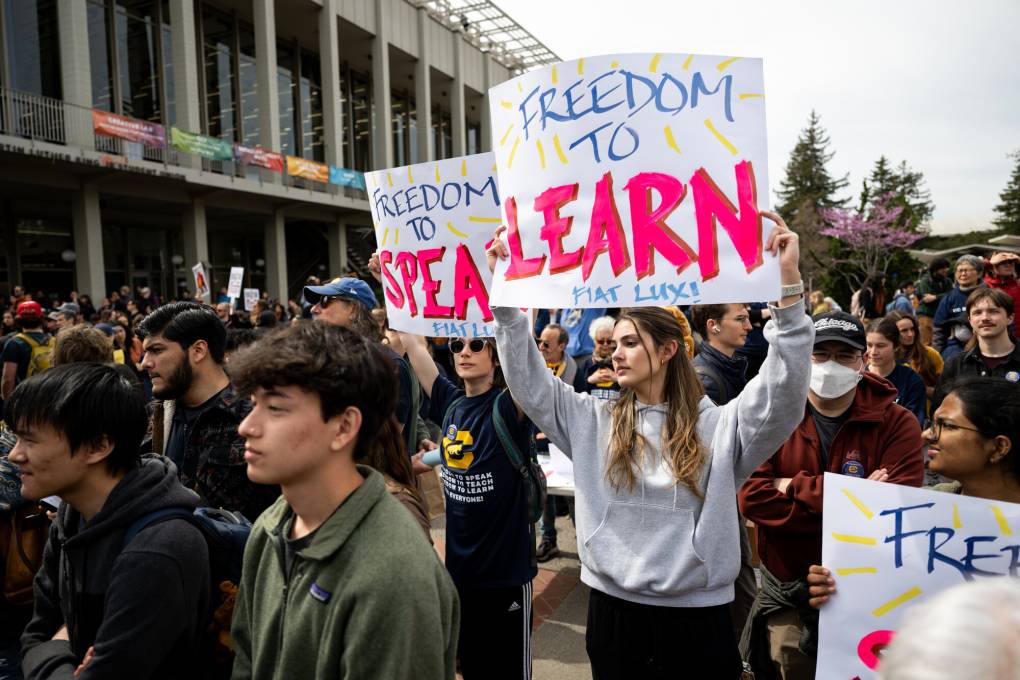
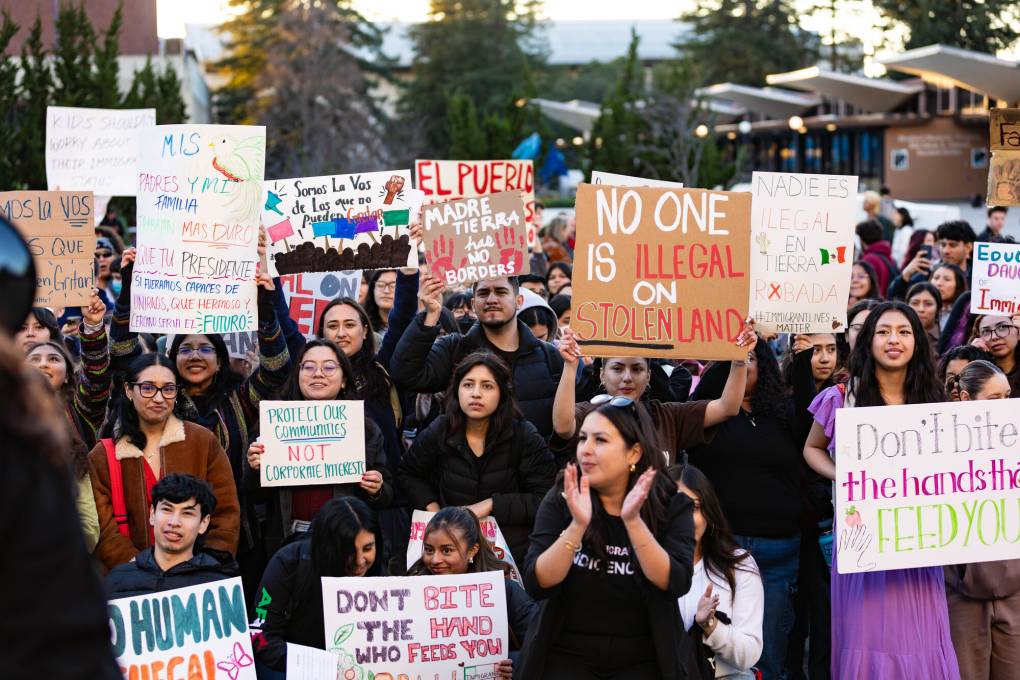
"caption": "Students attend a rally in Sproul Plaza at UC Berkeley on March 19, 2025, to protest the Trump administration's scrutiny of campus protests and curriculum nationwide. The demonstration comes amid broader concerns over federal funding cuts and actions perceived as threats to academic freedom.",
"credit": "Beth LaBerge/KQED",
"altTag": null,
"description": null,
"imgSizes": {
"medium": {
"file": "https://cdn.kqed.org/wp-content/uploads/sites/10/2025/04/250319-UCBerkeleyProtest-14-BL_qed-800x533.jpg",
"width": 800,
"height": 533,
"mimeType": "image/jpeg"
},
"large": {
"file": "https://cdn.kqed.org/wp-content/uploads/sites/10/2025/04/250319-UCBerkeleyProtest-14-BL_qed-1020x680.jpg",
"width": 1020,
"height": 680,
"mimeType": "image/jpeg"
},
"thumbnail": {
"file": "https://cdn.kqed.org/wp-content/uploads/sites/10/2025/04/250319-UCBerkeleyProtest-14-BL_qed-160x107.jpg",
"width": 160,
"height": 107,
"mimeType": "image/jpeg"
},
"1536x1536": {
"file": "https://cdn.kqed.org/wp-content/uploads/sites/10/2025/04/250319-UCBerkeleyProtest-14-BL_qed-1536x1024.jpg",
"width": 1536,
"height": 1024,
"mimeType": "image/jpeg"
},
"post-thumbnail": {
"file": "https://cdn.kqed.org/wp-content/uploads/sites/10/2025/04/250319-UCBerkeleyProtest-14-BL_qed-672x372.jpg",
"width": 672,
"height": 372,
"mimeType": "image/jpeg"
},
"twentyfourteen-full-width": {
"file": "https://cdn.kqed.org/wp-content/uploads/sites/10/2025/04/250319-UCBerkeleyProtest-14-BL_qed-1038x576.jpg",
"width": 1038,
"height": 576,
"mimeType": "image/jpeg"
},
"full-width": {
"file": "https://cdn.kqed.org/wp-content/uploads/sites/10/2025/04/250319-UCBerkeleyProtest-14-BL_qed-1920x1280.jpg",
"width": 1920,
"height": 1280,
"mimeType": "image/jpeg"
},
"kqedFullSize": {
"file": "https://cdn.kqed.org/wp-content/uploads/sites/10/2025/04/250319-UCBerkeleyProtest-14-BL_qed.jpg",
"width": 2000,
"height": 1333
}
},
"isLoading": false,
"fetchFailed": false
},
"news_12033001": {
"type": "attachments",
"id": "news_12033001",
"meta": {
"index": "attachments_1716263798",
"site": "news",
"id": "12033001",
"found": true
},
"title": "20250325_TEACHERS-FOR-TK_DMB_00048-KQED",
"publishDate": 1742939381,
"status": "inherit",
"parent": 0,
"modified": 1744242147,
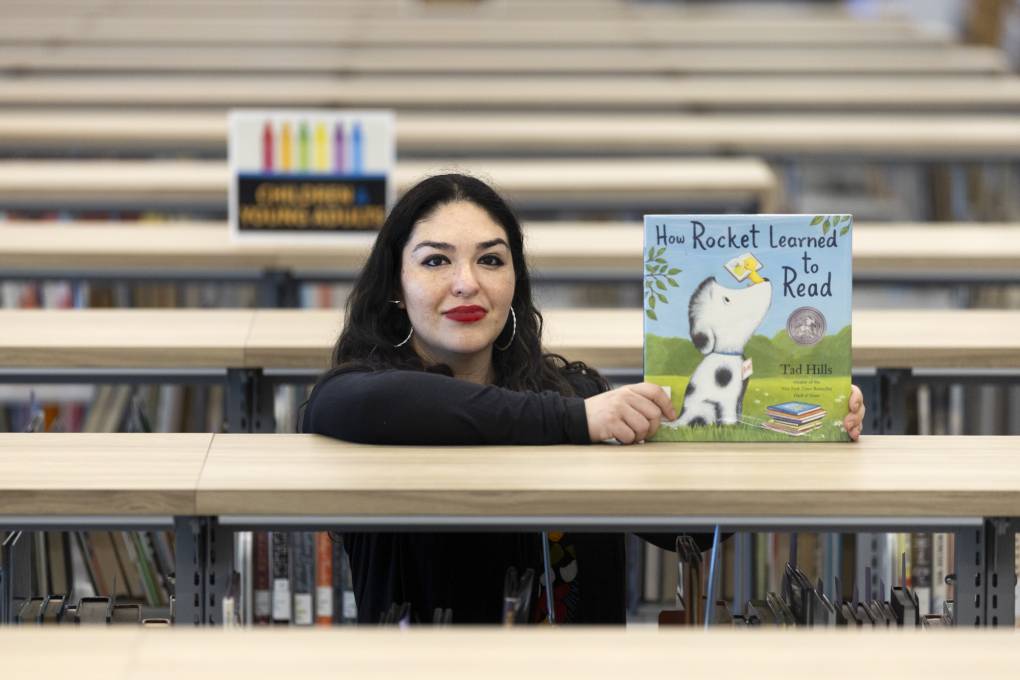
"caption": "Angelica Cardenas, of Hayward, poses for a portrait with one of her favorite children's books in the library on the Cal State University East Bay campus in Hayward on March 25, 2025. Cardenas received her Master's degree in Early Childhood Education from Cal State East Bay.",
"credit": "David M. Barreda/KQED",
"altTag": null,
"description": null,
"imgSizes": {
"medium": {
"file": "https://cdn.kqed.org/wp-content/uploads/sites/10/2025/03/20250325_TEACHERS-FOR-TK_DMB_00048-KQED-800x533.jpg",
"width": 800,
"height": 533,
"mimeType": "image/jpeg"
},
"large": {
"file": "https://cdn.kqed.org/wp-content/uploads/sites/10/2025/03/20250325_TEACHERS-FOR-TK_DMB_00048-KQED-1020x680.jpg",
"width": 1020,
"height": 680,
"mimeType": "image/jpeg"
},
"thumbnail": {
"file": "https://cdn.kqed.org/wp-content/uploads/sites/10/2025/03/20250325_TEACHERS-FOR-TK_DMB_00048-KQED-160x107.jpg",
"width": 160,
"height": 107,
"mimeType": "image/jpeg"
},
"1536x1536": {
"file": "https://cdn.kqed.org/wp-content/uploads/sites/10/2025/03/20250325_TEACHERS-FOR-TK_DMB_00048-KQED-1536x1024.jpg",
"width": 1536,
"height": 1024,
"mimeType": "image/jpeg"
},
"post-thumbnail": {
"file": "https://cdn.kqed.org/wp-content/uploads/sites/10/2025/03/20250325_TEACHERS-FOR-TK_DMB_00048-KQED-672x372.jpg",
"width": 672,
"height": 372,
"mimeType": "image/jpeg"
},
"twentyfourteen-full-width": {
"file": "https://cdn.kqed.org/wp-content/uploads/sites/10/2025/03/20250325_TEACHERS-FOR-TK_DMB_00048-KQED-1038x576.jpg",
"width": 1038,
"height": 576,
"mimeType": "image/jpeg"
},
"full-width": {
"file": "https://cdn.kqed.org/wp-content/uploads/sites/10/2025/03/20250325_TEACHERS-FOR-TK_DMB_00048-KQED-1920x1280.jpg",
"width": 1920,
"height": 1280,
"mimeType": "image/jpeg"
},
"kqedFullSize": {
"file": "https://cdn.kqed.org/wp-content/uploads/sites/10/2025/03/20250325_TEACHERS-FOR-TK_DMB_00048-KQED.jpg",
"width": 2000,
"height": 1333
}
},
"isLoading": false,
"fetchFailed": false
},
"news_11635686": {
"type": "attachments",
"id": "news_11635686",
"meta": {
"index": "attachments_1716263798",
"site": "news",
"id": "11635686",
"found": true
},
"title": "RS26222_IMG_2896-qut",
"publishDate": 1512690025,
"status": "inherit",
"parent": 11635537,
"modified": 1744151791,
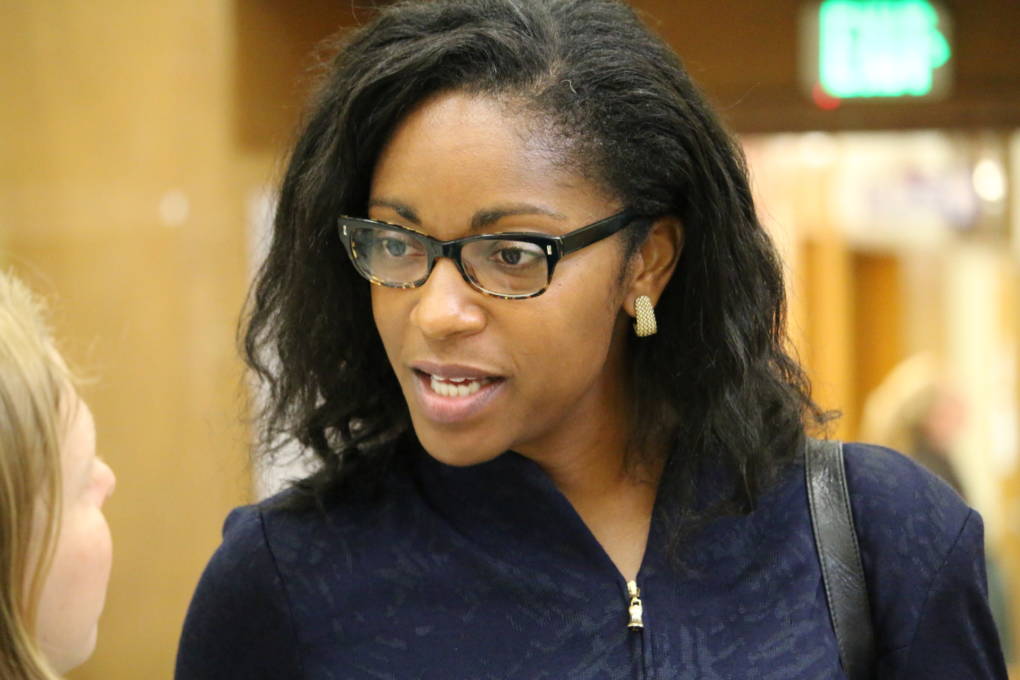
"caption": "OUSD Superintendent Kyla Johnson-Trammell attends a leadership event at La Escuelita Elementary School before the start of the 2017–2018 school year. She says millions of dollars in budget cuts are necessary for the district's fiscal solvency. ",
"credit": "Devin Katayama/KQED",
"altTag": null,
"description": null,
"imgSizes": {
"thumbnail": {
"file": "https://cdn.kqed.org/wp-content/uploads/sites/10/2017/12/RS26222_IMG_2896-qut-160x107.jpg",
"width": 160,
"height": 107,
"mimeType": "image/jpeg"
},
"medium": {
"file": "https://cdn.kqed.org/wp-content/uploads/sites/10/2017/12/RS26222_IMG_2896-qut-800x533.jpg",
"width": 800,
"height": 533,
"mimeType": "image/jpeg"
},
"large": {
"file": "https://cdn.kqed.org/wp-content/uploads/sites/10/2017/12/RS26222_IMG_2896-qut-1020x680.jpg",
"width": 1020,
"height": 680,
"mimeType": "image/jpeg"
},
"fd-lrg": {
"file": "https://cdn.kqed.org/wp-content/uploads/sites/10/2017/12/RS26222_IMG_2896-qut-1920x1280.jpg",
"width": 1920,
"height": 1280,
"mimeType": "image/jpeg"
},
"fd-med": {
"file": "https://cdn.kqed.org/wp-content/uploads/sites/10/2017/12/RS26222_IMG_2896-qut-1180x787.jpg",
"width": 1180,
"height": 787,
"mimeType": "image/jpeg"
},
"fd-sm": {
"file": "https://cdn.kqed.org/wp-content/uploads/sites/10/2017/12/RS26222_IMG_2896-qut-960x640.jpg",
"width": 960,
"height": 640,
"mimeType": "image/jpeg"
},
"post-thumbnail": {
"file": "https://cdn.kqed.org/wp-content/uploads/sites/10/2017/12/RS26222_IMG_2896-qut-672x372.jpg",
"width": 672,
"height": 372,
"mimeType": "image/jpeg"
},
"twentyfourteen-full-width": {
"file": "https://cdn.kqed.org/wp-content/uploads/sites/10/2017/12/RS26222_IMG_2896-qut-1038x576.jpg",
"width": 1038,
"height": 576,
"mimeType": "image/jpeg"
},
"xxsmall": {
"file": "https://cdn.kqed.org/wp-content/uploads/sites/10/2017/12/RS26222_IMG_2896-qut-240x160.jpg",
"width": 240,
"height": 160,
"mimeType": "image/jpeg"
},
"xsmall": {
"file": "https://cdn.kqed.org/wp-content/uploads/sites/10/2017/12/RS26222_IMG_2896-qut-375x250.jpg",
"width": 375,
"height": 250,
"mimeType": "image/jpeg"
},
"small": {
"file": "https://cdn.kqed.org/wp-content/uploads/sites/10/2017/12/RS26222_IMG_2896-qut-520x347.jpg",
"width": 520,
"height": 347,
"mimeType": "image/jpeg"
},
"xlarge": {
"file": "https://cdn.kqed.org/wp-content/uploads/sites/10/2017/12/RS26222_IMG_2896-qut-1180x787.jpg",
"width": 1180,
"height": 787,
"mimeType": "image/jpeg"
},
"full-width": {
"file": "https://cdn.kqed.org/wp-content/uploads/sites/10/2017/12/RS26222_IMG_2896-qut-1920x1280.jpg",
"width": 1920,
"height": 1280,
"mimeType": "image/jpeg"
},
"guest-author-32": {
"file": "https://cdn.kqed.org/wp-content/uploads/sites/10/2017/12/RS26222_IMG_2896-qut-32x32.jpg",
"width": 32,
"height": 32,
"mimeType": "image/jpeg"
},
"guest-author-50": {
"file": "https://cdn.kqed.org/wp-content/uploads/sites/10/2017/12/RS26222_IMG_2896-qut-50x50.jpg",
"width": 50,
"height": 50,
"mimeType": "image/jpeg"
},
"guest-author-64": {
"file": "https://cdn.kqed.org/wp-content/uploads/sites/10/2017/12/RS26222_IMG_2896-qut-64x64.jpg",
"width": 64,
"height": 64,
"mimeType": "image/jpeg"
},
"guest-author-96": {
"file": "https://cdn.kqed.org/wp-content/uploads/sites/10/2017/12/RS26222_IMG_2896-qut-96x96.jpg",
"width": 96,
"height": 96,
"mimeType": "image/jpeg"
},
"guest-author-128": {
"file": "https://cdn.kqed.org/wp-content/uploads/sites/10/2017/12/RS26222_IMG_2896-qut-128x128.jpg",
"width": 128,
"height": 128,
"mimeType": "image/jpeg"
},
"detail": {
"file": "https://cdn.kqed.org/wp-content/uploads/sites/10/2017/12/RS26222_IMG_2896-qut-150x150.jpg",
"width": 150,
"height": 150,
"mimeType": "image/jpeg"
},
"kqedFullSize": {
"file": "https://cdn.kqed.org/wp-content/uploads/sites/10/2017/12/RS26222_IMG_2896-qut.jpg",
"width": 1920,
"height": 1280
}
},
"isLoading": false,
"fetchFailed": false
},
"news_12024990": {
"type": "attachments",
"id": "news_12024990",
"meta": {
"index": "attachments_1716263798",
"site": "news",
"id": "12024990",
"found": true
},
"title": "20250130_SSUTownHall_GC-12",
"publishDate": 1738284655,
"status": "inherit",
"parent": 0,
"modified": 1744225932,
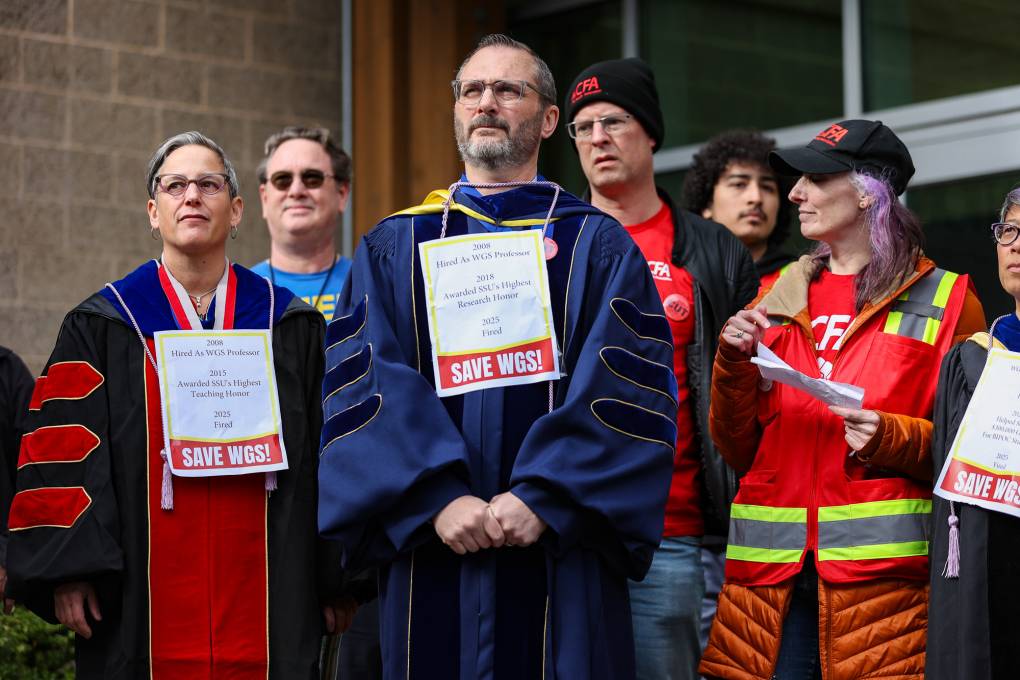
"caption": "Women and Gender Studies faculty, Lena McQuade, left, and Don Romesburg, center, attend a rally and virtual town hall wearing signs protesting the school’s budget cuts, at Sonoma State’s Seawolf Plaza in Rohnert Park, California, on Jan 30, 2025.",
"credit": "Gina Castro/KQED",
"altTag": null,
"description": null,
"imgSizes": {
"medium": {
"file": "https://cdn.kqed.org/wp-content/uploads/sites/10/2025/01/20250130_SSUTownHall_GC-12-800x533.jpg",
"width": 800,
"height": 533,
"mimeType": "image/jpeg"
},
"large": {
"file": "https://cdn.kqed.org/wp-content/uploads/sites/10/2025/01/20250130_SSUTownHall_GC-12-1020x680.jpg",
"width": 1020,
"height": 680,
"mimeType": "image/jpeg"
},
"thumbnail": {
"file": "https://cdn.kqed.org/wp-content/uploads/sites/10/2025/01/20250130_SSUTownHall_GC-12-160x107.jpg",
"width": 160,
"height": 107,
"mimeType": "image/jpeg"
},
"1536x1536": {
"file": "https://cdn.kqed.org/wp-content/uploads/sites/10/2025/01/20250130_SSUTownHall_GC-12-1536x1024.jpg",
"width": 1536,
"height": 1024,
"mimeType": "image/jpeg"
},
"post-thumbnail": {
"file": "https://cdn.kqed.org/wp-content/uploads/sites/10/2025/01/20250130_SSUTownHall_GC-12-672x372.jpg",
"width": 672,
"height": 372,
"mimeType": "image/jpeg"
},
"twentyfourteen-full-width": {
"file": "https://cdn.kqed.org/wp-content/uploads/sites/10/2025/01/20250130_SSUTownHall_GC-12-1038x576.jpg",
"width": 1038,
"height": 576,
"mimeType": "image/jpeg"
},
"full-width": {
"file": "https://cdn.kqed.org/wp-content/uploads/sites/10/2025/01/20250130_SSUTownHall_GC-12-1920x1280.jpg",
"width": 1920,
"height": 1280,
"mimeType": "image/jpeg"
},
"kqedFullSize": {
"file": "https://cdn.kqed.org/wp-content/uploads/sites/10/2025/01/20250130_SSUTownHall_GC-12.jpg",
"width": 2000,
"height": 1333
}
},
"isLoading": false,
"fetchFailed": false
},
"news_12034753": {
"type": "attachments",
"id": "news_12034753",
"meta": {
"index": "attachments_1716263798",
"site": "news",
"id": "12034753",
"found": true
},
"title": "20250129_UCBerkeleyRally_GC-72_qed",
"publishDate": 1744048834,
"status": "inherit",
"parent": 12034742,
"modified": 1744048856,
"caption": "Hundreds of students and supporters rally, in solidarity with their undocumented classmates as the Trump administration begins to carry out mass deportations, at Sproul Plaza at UC Berkeley on Jan. 29, 2025.",
"credit": "Gina Castro/KQED",
"altTag": null,
"description": null,
"imgSizes": {
"medium": {
"file": "https://cdn.kqed.org/wp-content/uploads/sites/10/2025/04/20250129_UCBerkeleyRally_GC-72_qed-800x533.jpg",
"width": 800,
"height": 533,
"mimeType": "image/jpeg"
},
"large": {
"file": "https://cdn.kqed.org/wp-content/uploads/sites/10/2025/04/20250129_UCBerkeleyRally_GC-72_qed-1020x680.jpg",
"width": 1020,
"height": 680,
"mimeType": "image/jpeg"
},
"thumbnail": {
"file": "https://cdn.kqed.org/wp-content/uploads/sites/10/2025/04/20250129_UCBerkeleyRally_GC-72_qed-160x107.jpg",
"width": 160,
"height": 107,
"mimeType": "image/jpeg"
},
"1536x1536": {
"file": "https://cdn.kqed.org/wp-content/uploads/sites/10/2025/04/20250129_UCBerkeleyRally_GC-72_qed-1536x1024.jpg",
"width": 1536,
"height": 1024,
"mimeType": "image/jpeg"
},
"post-thumbnail": {
"file": "https://cdn.kqed.org/wp-content/uploads/sites/10/2025/04/20250129_UCBerkeleyRally_GC-72_qed-672x372.jpg",
"width": 672,
"height": 372,
"mimeType": "image/jpeg"
},
"twentyfourteen-full-width": {
"file": "https://cdn.kqed.org/wp-content/uploads/sites/10/2025/04/20250129_UCBerkeleyRally_GC-72_qed-1038x576.jpg",
"width": 1038,
"height": 576,
"mimeType": "image/jpeg"
},
"full-width": {
"file": "https://cdn.kqed.org/wp-content/uploads/sites/10/2025/04/20250129_UCBerkeleyRally_GC-72_qed-1920x1280.jpg",
"width": 1920,
"height": 1280,
"mimeType": "image/jpeg"
},
"kqedFullSize": {
"file": "https://cdn.kqed.org/wp-content/uploads/sites/10/2025/04/20250129_UCBerkeleyRally_GC-72_qed.jpg",
"width": 2000,
"height": 1333
}
},
"isLoading": false,
"fetchFailed": false
},
"news_12034685": {
"type": "attachments",
"id": "news_12034685",
"meta": {
"index": "attachments_1716263798",
"site": "news",
"id": "12034685",
"found": true
},
"title": "OaklandInternationalHighSchool",
"publishDate": 1743968869,
"status": "inherit",
"parent": 12034679,
"modified": 1743968940,
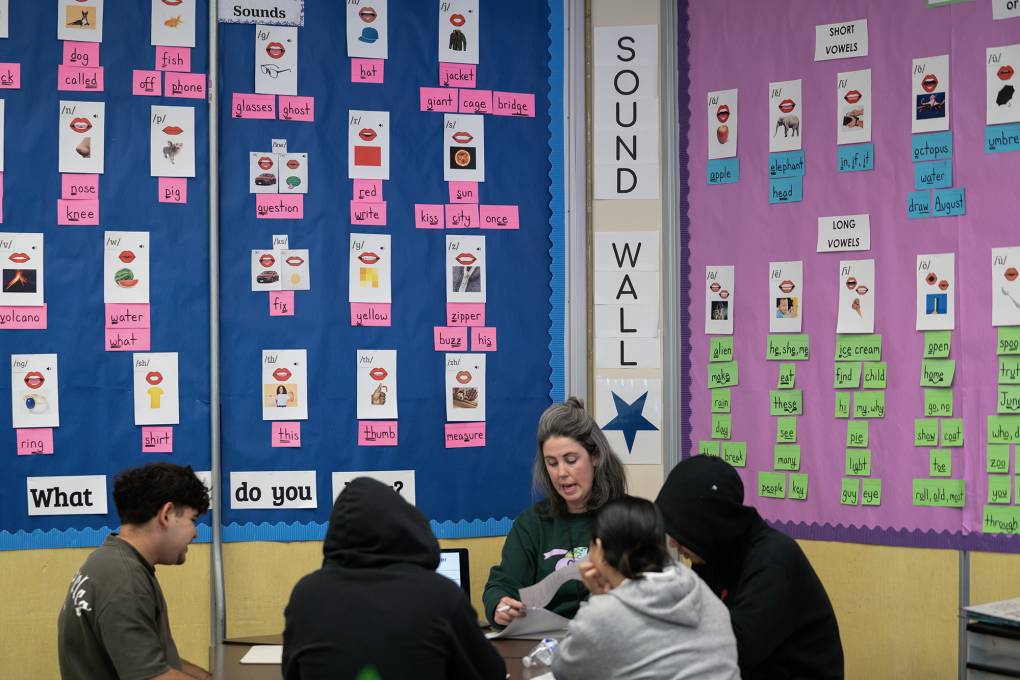
"caption": "Teacher Katy Reese, center, works with students in a literacy class at Oakland International High School in Oakland on March 7, 2025. ",
"credit": "Florence Middleton/CalMatters",
"altTag": "A white woman wearing a green sweater sits down at a desk surrounded by four students in a classroom.",
"description": null,
"imgSizes": {
"medium": {
"file": "https://cdn.kqed.org/wp-content/uploads/sites/10/2025/04/030725_Literacy_FM_CM_11-800x534.jpg",
"width": 800,
"height": 534,
"mimeType": "image/jpeg"
},
"large": {
"file": "https://cdn.kqed.org/wp-content/uploads/sites/10/2025/04/030725_Literacy_FM_CM_11-1020x680.jpg",
"width": 1020,
"height": 680,
"mimeType": "image/jpeg"
},
"thumbnail": {
"file": "https://cdn.kqed.org/wp-content/uploads/sites/10/2025/04/030725_Literacy_FM_CM_11-160x107.jpg",
"width": 160,
"height": 107,
"mimeType": "image/jpeg"
},
"1536x1536": {
"file": "https://cdn.kqed.org/wp-content/uploads/sites/10/2025/04/030725_Literacy_FM_CM_11-1536x1025.jpg",
"width": 1536,
"height": 1025,
"mimeType": "image/jpeg"
},
"post-thumbnail": {
"file": "https://cdn.kqed.org/wp-content/uploads/sites/10/2025/04/030725_Literacy_FM_CM_11-672x372.jpg",
"width": 672,
"height": 372,
"mimeType": "image/jpeg"
},
"twentyfourteen-full-width": {
"file": "https://cdn.kqed.org/wp-content/uploads/sites/10/2025/04/030725_Literacy_FM_CM_11-1038x576.jpg",
"width": 1038,
"height": 576,
"mimeType": "image/jpeg"
},
"full-width": {
"file": "https://cdn.kqed.org/wp-content/uploads/sites/10/2025/04/030725_Literacy_FM_CM_11-1920x1281.jpg",
"width": 1920,
"height": 1281,
"mimeType": "image/jpeg"
},
"kqedFullSize": {
"file": "https://cdn.kqed.org/wp-content/uploads/sites/10/2025/04/030725_Literacy_FM_CM_11.jpg",
"width": 2000,
"height": 1334
}
},
"isLoading": false,
"fetchFailed": false
},
"news_12034360": {
"type": "attachments",
"id": "news_12034360",
"meta": {
"index": "attachments_1716263798",
"site": "news",
"id": "12034360",
"found": true
},
"title": "10072022_College-Corps_RL_CM_13 copy",
"publishDate": 1743633747,
"status": "inherit",
"parent": 12034359,
"modified": 1743633775,
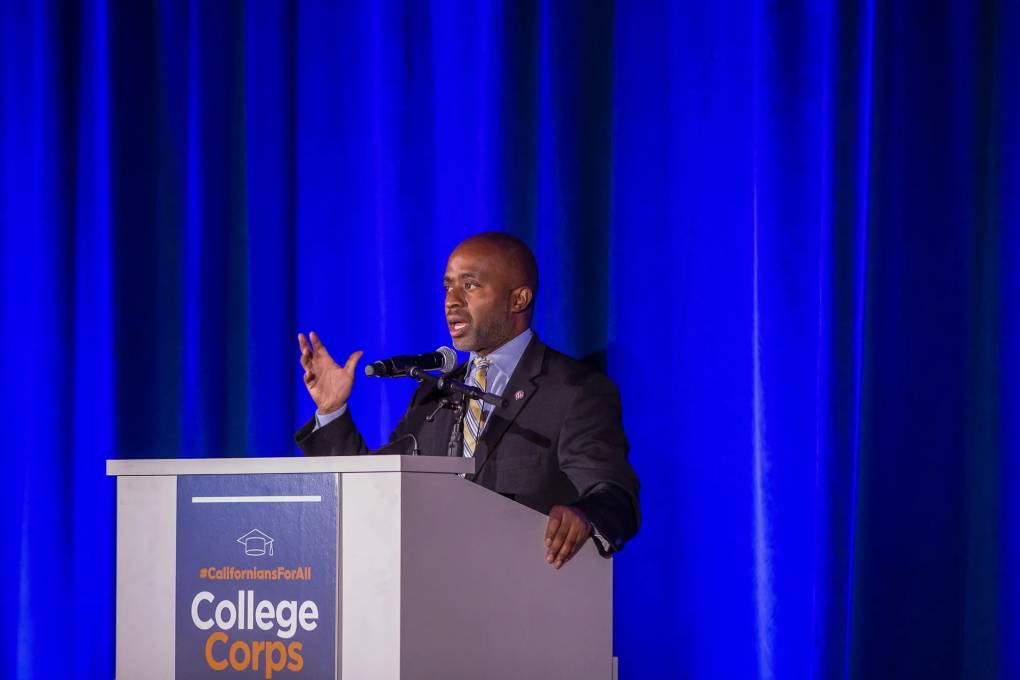
"caption": "State Superintendent of Public Instruction Tony Thurmond speaks at the College Corps fellows swearing-in event in Sacramento on Oct. 7, 2022. ",
"credit": "Rahul Lal/CalMatters",
"altTag": null,
"description": null,
"imgSizes": {
"medium": {
"file": "https://cdn.kqed.org/wp-content/uploads/sites/10/2025/04/10072022_College-Corps_RL_CM_13-copy-800x533.jpg",
"width": 800,
"height": 533,
"mimeType": "image/jpeg"
},
"large": {
"file": "https://cdn.kqed.org/wp-content/uploads/sites/10/2025/04/10072022_College-Corps_RL_CM_13-copy-1020x680.jpg",
"width": 1020,
"height": 680,
"mimeType": "image/jpeg"
},
"thumbnail": {
"file": "https://cdn.kqed.org/wp-content/uploads/sites/10/2025/04/10072022_College-Corps_RL_CM_13-copy-160x107.jpg",
"width": 160,
"height": 107,
"mimeType": "image/jpeg"
},
"1536x1536": {
"file": "https://cdn.kqed.org/wp-content/uploads/sites/10/2025/04/10072022_College-Corps_RL_CM_13-copy-1536x1024.jpg",
"width": 1536,
"height": 1024,
"mimeType": "image/jpeg"
},
"post-thumbnail": {
"file": "https://cdn.kqed.org/wp-content/uploads/sites/10/2025/04/10072022_College-Corps_RL_CM_13-copy-672x372.jpg",
"width": 672,
"height": 372,
"mimeType": "image/jpeg"
},
"twentyfourteen-full-width": {
"file": "https://cdn.kqed.org/wp-content/uploads/sites/10/2025/04/10072022_College-Corps_RL_CM_13-copy-1038x576.jpg",
"width": 1038,
"height": 576,
"mimeType": "image/jpeg"
},
"full-width": {
"file": "https://cdn.kqed.org/wp-content/uploads/sites/10/2025/04/10072022_College-Corps_RL_CM_13-copy-1920x1280.jpg",
"width": 1920,
"height": 1280,
"mimeType": "image/jpeg"
},
"kqedFullSize": {
"file": "https://cdn.kqed.org/wp-content/uploads/sites/10/2025/04/10072022_College-Corps_RL_CM_13-copy.jpg",
"width": 2000,
"height": 1333
}
},
"isLoading": false,
"fetchFailed": false
},
"news_11995875": {
"type": "attachments",
"id": "news_11995875",
"meta": {
"index": "attachments_1716263798",
"site": "news",
"id": "11995875",
"found": true
},
"title": "Chino Valley School Board Votes On Student Transgender Policy",
"publishDate": 1721159949,
"status": "inherit",
"parent": 11995853,
"modified": 1721162762,
"caption": "A person holds a sign in opposition to a policy that the Chino Valley school board is meeting to vote on, which would require school staff to 'out' students to their parents if they ask to be identified by a gender that is not listed on their birth certificate on July 20, 2023, in Chino, San Bernardino County. ",
"credit": "David McNew/Getty Images",
"altTag": null,
"description": null,
"imgSizes": {
"medium": {
"file": "https://cdn.kqed.org/wp-content/uploads/sites/10/2024/07/GettyImages-1545719242-800x534.jpg",
"width": 800,
"height": 534,
"mimeType": "image/jpeg"
},
"large": {
"file": "https://cdn.kqed.org/wp-content/uploads/sites/10/2024/07/GettyImages-1545719242-1020x680.jpg",
"width": 1020,
"height": 680,
"mimeType": "image/jpeg"
},
"thumbnail": {
"file": "https://cdn.kqed.org/wp-content/uploads/sites/10/2024/07/GettyImages-1545719242-160x107.jpg",
"width": 160,
"height": 107,
"mimeType": "image/jpeg"
},
"post-thumbnail": {
"file": "https://cdn.kqed.org/wp-content/uploads/sites/10/2024/07/GettyImages-1545719242-672x372.jpg",
"width": 672,
"height": 372,
"mimeType": "image/jpeg"
},
"twentyfourteen-full-width": {
"file": "https://cdn.kqed.org/wp-content/uploads/sites/10/2024/07/GettyImages-1545719242-1024x576.jpg",
"width": 1024,
"height": 576,
"mimeType": "image/jpeg"
},
"kqedFullSize": {
"file": "https://cdn.kqed.org/wp-content/uploads/sites/10/2024/07/GettyImages-1545719242.jpg",
"width": 1024,
"height": 683
}
},
"isLoading": false,
"fetchFailed": false
},
"news_12033775": {
"type": "attachments",
"id": "news_12033775",
"meta": {
"index": "attachments_1716263798",
"site": "news",
"id": "12033775",
"found": true
},
"title": "021220_WestClimateEmergency_09",
"publishDate": 1743377922,
"status": "inherit",
"parent": 12033771,
"modified": 1743377974,
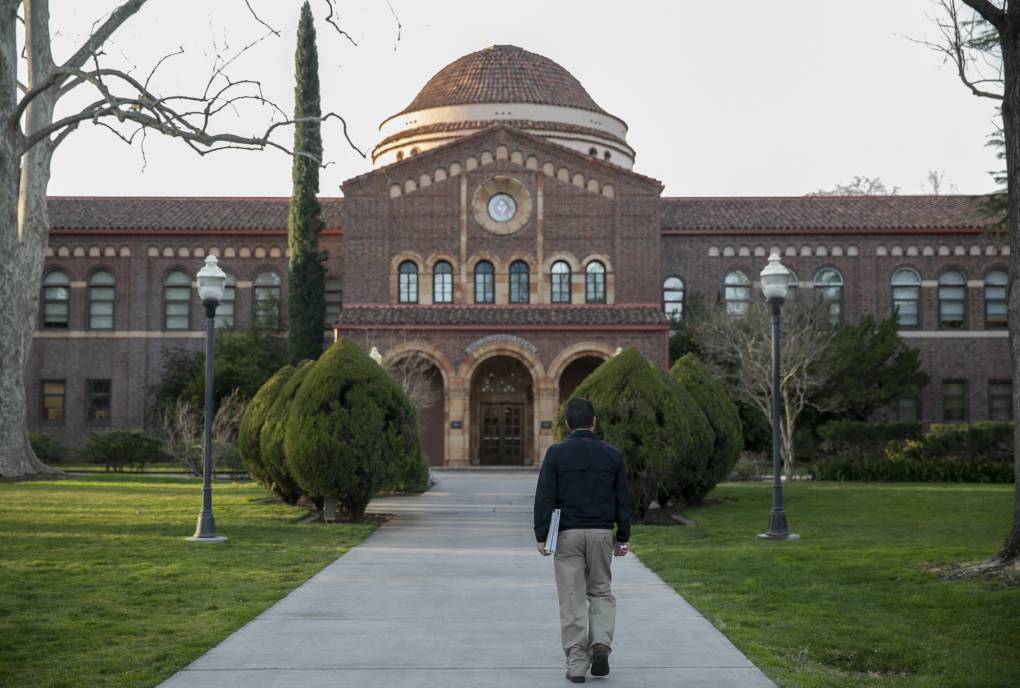
"caption": "A student walks across campus at Chico State University on February 12, 2020. ",
"credit": "Anne Wernikoff/CalMatters",
"altTag": "A person wearing a dark shirt and grey pants walks toward a building on a campus.",
"description": null,
"imgSizes": {
"medium": {
"file": "https://cdn.kqed.org/wp-content/uploads/sites/10/2025/03/021220_WestClimateEmergency_09-800x540.jpg",
"width": 800,
"height": 540,
"mimeType": "image/jpeg"
},
"large": {
"file": "https://cdn.kqed.org/wp-content/uploads/sites/10/2025/03/021220_WestClimateEmergency_09-1020x688.jpg",
"width": 1020,
"height": 688,
"mimeType": "image/jpeg"
},
"thumbnail": {
"file": "https://cdn.kqed.org/wp-content/uploads/sites/10/2025/03/021220_WestClimateEmergency_09-160x108.jpg",
"width": 160,
"height": 108,
"mimeType": "image/jpeg"
},
"1536x1536": {
"file": "https://cdn.kqed.org/wp-content/uploads/sites/10/2025/03/021220_WestClimateEmergency_09-1536x1036.jpg",
"width": 1536,
"height": 1036,
"mimeType": "image/jpeg"
},
"post-thumbnail": {
"file": "https://cdn.kqed.org/wp-content/uploads/sites/10/2025/03/021220_WestClimateEmergency_09-672x372.jpg",
"width": 672,
"height": 372,
"mimeType": "image/jpeg"
},
"twentyfourteen-full-width": {
"file": "https://cdn.kqed.org/wp-content/uploads/sites/10/2025/03/021220_WestClimateEmergency_09-1038x576.jpg",
"width": 1038,
"height": 576,
"mimeType": "image/jpeg"
},
"full-width": {
"file": "https://cdn.kqed.org/wp-content/uploads/sites/10/2025/03/021220_WestClimateEmergency_09-1920x1295.jpg",
"width": 1920,
"height": 1295,
"mimeType": "image/jpeg"
},
"kqedFullSize": {
"file": "https://cdn.kqed.org/wp-content/uploads/sites/10/2025/03/021220_WestClimateEmergency_09.jpg",
"width": 2000,
"height": 1349
}
},
"isLoading": false,
"fetchFailed": false
},
"news_12033428": {
"type": "attachments",
"id": "news_12033428",
"meta": {
"index": "attachments_1716263798",
"site": "news",
"id": "12033428",
"found": true
},
"title": "alisonyin.com",
"publishDate": 1743111983,
"status": "inherit",
"parent": 12033427,
"modified": 1743112130,
"caption": "Third graders participate in the STEAM (Science, Technology, Engineering, Art and Math) workshop at Redwood Heights Elementary School in Oakland, Wednesday, May 17, 2017. ",
"credit": "Alison Yin/EdSource",
"altTag": "Students in a classroom on computers or writing in notebooks. Sunlight streams in through the windows, the children look happy.",
"description": null,
"imgSizes": {
"medium": {
"file": "https://cdn.kqed.org/wp-content/uploads/sites/10/2025/03/Redwood_Elem_170-scaled-1-800x533.jpg",
"width": 800,
"height": 533,
"mimeType": "image/jpeg"
},
"large": {
"file": "https://cdn.kqed.org/wp-content/uploads/sites/10/2025/03/Redwood_Elem_170-scaled-1-1020x680.jpg",
"width": 1020,
"height": 680,
"mimeType": "image/jpeg"
},
"thumbnail": {
"file": "https://cdn.kqed.org/wp-content/uploads/sites/10/2025/03/Redwood_Elem_170-scaled-1-160x107.jpg",
"width": 160,
"height": 107,
"mimeType": "image/jpeg"
},
"1536x1536": {
"file": "https://cdn.kqed.org/wp-content/uploads/sites/10/2025/03/Redwood_Elem_170-scaled-1-1536x1024.jpg",
"width": 1536,
"height": 1024,
"mimeType": "image/jpeg"
},
"2048x2048": {
"file": "https://cdn.kqed.org/wp-content/uploads/sites/10/2025/03/Redwood_Elem_170-scaled-1-2048x1365.jpg",
"width": 2048,
"height": 1365,
"mimeType": "image/jpeg"
},
"post-thumbnail": {
"file": "https://cdn.kqed.org/wp-content/uploads/sites/10/2025/03/Redwood_Elem_170-scaled-1-672x372.jpg",
"width": 672,
"height": 372,
"mimeType": "image/jpeg"
},
"twentyfourteen-full-width": {
"file": "https://cdn.kqed.org/wp-content/uploads/sites/10/2025/03/Redwood_Elem_170-scaled-1-1038x576.jpg",
"width": 1038,
"height": 576,
"mimeType": "image/jpeg"
},
"full-width": {
"file": "https://cdn.kqed.org/wp-content/uploads/sites/10/2025/03/Redwood_Elem_170-scaled-1-1920x1280.jpg",
"width": 1920,
"height": 1280,
"mimeType": "image/jpeg"
},
"kqedFullSize": {
"file": "https://cdn.kqed.org/wp-content/uploads/sites/10/2025/03/Redwood_Elem_170-scaled-1.jpg",
"width": 2560,
"height": 1706
}
},
"isLoading": false,
"fetchFailed": false
},
"news_12018752": {
"type": "attachments",
"id": "news_12018752",
"meta": {
"index": "attachments_1716263798",
"site": "news",
"id": "12018752",
"found": true
},
"title": "U.S. Deputy Secretary of Education Cindy Marten, free workshop FAFSA",
"publishDate": 1734485398,
"status": "inherit",
"parent": 12018723,
"modified": 1743200682,
"caption": "Betty Wonde, 18, of Silver Spring, Maryland, is pictured at the event. The DC College Success Foundation held a free workshop to help students with their FAFSA form on March 16, 2024, in Anacostia. U.S. Deputy Secretary of Education Cindy Marten was in attendance at the event, which was held at Capital One cafe. (Photo by Sarah L. Voisin/The Washington Post via Getty Images)",
"credit": "Sarah L. Voisin/The Washington Post via Getty Images",
"altTag": null,
"description": null,
"imgSizes": {
"medium": {
"file": "https://cdn.kqed.org/wp-content/uploads/sites/10/2024/12/GettyImages-2102856667-800x533.jpg",
"width": 800,
"height": 533,
"mimeType": "image/jpeg"
},
"large": {
"file": "https://cdn.kqed.org/wp-content/uploads/sites/10/2024/12/GettyImages-2102856667-1020x680.jpg",
"width": 1020,
"height": 680,
"mimeType": "image/jpeg"
},
"thumbnail": {
"file": "https://cdn.kqed.org/wp-content/uploads/sites/10/2024/12/GettyImages-2102856667-160x107.jpg",
"width": 160,
"height": 107,
"mimeType": "image/jpeg"
},
"1536x1536": {
"file": "https://cdn.kqed.org/wp-content/uploads/sites/10/2024/12/GettyImages-2102856667-1536x1024.jpg",
"width": 1536,
"height": 1024,
"mimeType": "image/jpeg"
},
"2048x2048": {
"file": "https://cdn.kqed.org/wp-content/uploads/sites/10/2024/12/GettyImages-2102856667-2048x1365.jpg",
"width": 2048,
"height": 1365,
"mimeType": "image/jpeg"
},
"post-thumbnail": {
"file": "https://cdn.kqed.org/wp-content/uploads/sites/10/2024/12/GettyImages-2102856667-672x372.jpg",
"width": 672,
"height": 372,
"mimeType": "image/jpeg"
},
"twentyfourteen-full-width": {
"file": "https://cdn.kqed.org/wp-content/uploads/sites/10/2024/12/GettyImages-2102856667-1038x576.jpg",
"width": 1038,
"height": 576,
"mimeType": "image/jpeg"
},
"full-width": {
"file": "https://cdn.kqed.org/wp-content/uploads/sites/10/2024/12/GettyImages-2102856667-1920x1280.jpg",
"width": 1920,
"height": 1280,
"mimeType": "image/jpeg"
},
"kqedFullSize": {
"file": "https://cdn.kqed.org/wp-content/uploads/sites/10/2024/12/GettyImages-2102856667-scaled.jpg",
"width": 2560,
"height": 1707
}
},
"isLoading": false,
"fetchFailed": false
},
"news_12033556": {
"type": "attachments",
"id": "news_12033556",
"meta": {
"index": "attachments_1716263798",
"site": "news",
"id": "12033556",
"found": true
},
"title": "npr.brightspotcdn-1 copy",
"publishDate": 1743189137,
"status": "inherit",
"parent": 12033555,
"modified": 1743189179,
"caption": "Secretary of State Marco Rubio speaks during his visit to the Yad Vashem Holocaust Memorial museum in Jerusalem on Feb. 16, 2025.",
"credit": "Evelyn Hockstein/AFP via Getty Images",
"altTag": null,
"description": null,
"imgSizes": {
"medium": {
"file": "https://cdn.kqed.org/wp-content/uploads/sites/10/2025/03/npr.brightspotcdn-1-copy-2-800x534.jpg",
"width": 800,
"height": 534,
"mimeType": "image/jpeg"
},
"large": {
"file": "https://cdn.kqed.org/wp-content/uploads/sites/10/2025/03/npr.brightspotcdn-1-copy-2-1020x680.jpg",
"width": 1020,
"height": 680,
"mimeType": "image/jpeg"
},
"thumbnail": {
"file": "https://cdn.kqed.org/wp-content/uploads/sites/10/2025/03/npr.brightspotcdn-1-copy-2-160x107.jpg",
"width": 160,
"height": 107,
"mimeType": "image/jpeg"
},
"1536x1536": {
"file": "https://cdn.kqed.org/wp-content/uploads/sites/10/2025/03/npr.brightspotcdn-1-copy-2-1536x1024.jpg",
"width": 1536,
"height": 1024,
"mimeType": "image/jpeg"
},
"post-thumbnail": {
"file": "https://cdn.kqed.org/wp-content/uploads/sites/10/2025/03/npr.brightspotcdn-1-copy-2-672x372.jpg",
"width": 672,
"height": 372,
"mimeType": "image/jpeg"
},
"twentyfourteen-full-width": {
"file": "https://cdn.kqed.org/wp-content/uploads/sites/10/2025/03/npr.brightspotcdn-1-copy-2-1038x576.jpg",
"width": 1038,
"height": 576,
"mimeType": "image/jpeg"
},
"kqedFullSize": {
"file": "https://cdn.kqed.org/wp-content/uploads/sites/10/2025/03/npr.brightspotcdn-1-copy-2.jpg",
"width": 1600,
"height": 1067
}
},
"isLoading": false,
"fetchFailed": false
}
},
"audioPlayerReducer": {
"postId": "stream_live",
"isPaused": true,
"isPlaying": false,
"pfsActive": false,
"pledgeModalIsOpen": true,
"playerDrawerIsOpen": false,
"liveAudioPlayStartedAt": 0,
"liveAudioPlayContext": ""
},
"authorsReducer": {
"byline_news_12033209": {
"type": "authors",
"id": "byline_news_12033209",
"meta": {
"override": true
},
"slug": "byline_news_12033209",
"name": "\u003ca href=\"https://www.kqed.org/author/daisynguyen\" target=\"_blank\" rel=\"noopener noreferrer\">Daisy Nguyen\u003c/a> and \u003ca href=\"https://www.kqed.org/author/ellyyu\" target=\"_blank\" rel=\"noopener noreferrer\">Elly Yu\u003c/a>",
"isLoading": false
},
"byline_news_12034679": {
"type": "authors",
"id": "byline_news_12034679",
"meta": {
"override": true
},
"slug": "byline_news_12034679",
"name": "\u003ca href=\"https://calmatters.org/author/carolyn-jones/\">Carolyn Jones, \u003c/a>CalMatters",
"isLoading": false
},
"byline_news_12034359": {
"type": "authors",
"id": "byline_news_12034359",
"meta": {
"override": true
},
"slug": "byline_news_12034359",
"name": "\u003ca href=\"https://calmatters.org/author/alexei-koseff/\">Alexei Koseff\u003c/a>, CalMatters",
"isLoading": false
},
"byline_news_12033563": {
"type": "authors",
"id": "byline_news_12033563",
"meta": {
"override": true
},
"slug": "byline_news_12033563",
"name": "Sophie Austin, Associated Press",
"isLoading": false
},
"byline_news_12033771": {
"type": "authors",
"id": "byline_news_12033771",
"meta": {
"override": true
},
"slug": "byline_news_12033771",
"name": "\u003ca href=\"https://calmatters.org/author/mikhailzinshteyn\">Mikhail Zinshteyn, \u003c/a>CalMatters",
"isLoading": false
},
"byline_news_12033427": {
"type": "authors",
"id": "byline_news_12033427",
"meta": {
"override": true
},
"slug": "byline_news_12033427",
"name": "\u003ca href=\"https://edsource.org/author/dlambert\">Diana Lambert\u003c/a>, EdSource",
"isLoading": false
},
"byline_news_12033555": {
"type": "authors",
"id": "byline_news_12033555",
"meta": {
"override": true
},
"slug": "byline_news_12033555",
"name": "\u003ca href=\"https://www.npr.org/people/831107342/alana-wise\">Alana Wise\u003c/a>, NPR",
"isLoading": false
},
"tychehendricks": {
"type": "authors",
"id": "259",
"meta": {
"index": "authors_1716337520",
"id": "259",
"found": true
},
"name": "Tyche Hendricks",
"firstName": "Tyche",
"lastName": "Hendricks",
"slug": "tychehendricks",
"email": "thendricks@kqed.org",
"display_author_email": true,
"staff_mastheads": [
"news"
],
"title": "KQED Senior Editor, Immigration",
"bio": "\u003cspan style=\"font-weight: 400;\">Tyche Hendricks is KQED’s senior editor for immigration, leading coverage of the policy and politics that affect California’s immigrant communities. Her work for KQED’s radio and online audiences is also carried on NPR and other national outlets. She has been recognized with awards from the Radio and Television News Directors Association, the Society for Professional Journalists; the Education Writers Association; the Best of the West and the National Federation of Community Broadcasters. Before joining KQED in 2010, Tyche spent more than a dozen years as a newspaper reporter, notably at the \u003c/span>\u003ci>\u003cspan style=\"font-weight: 400;\">San Francisco Chronicle\u003c/span>\u003c/i>\u003cspan style=\"font-weight: 400;\">. At different times she has covered criminal justice, government and politics and urban planning. Tyche has taught in the MFA Creative Writing program at the University of San Francisco and at UC Berkeley’s Graduate School of Journalism, where she was co-director of a national immigration symposium for professional journalists. She is the author of \u003c/span>\u003ci>\u003cspan style=\"font-weight: 400;\">The Wind Doesn't Need a Passport: Stories from the U.S.-Mexico Borderlands\u003c/span>\u003c/i>\u003cspan style=\"font-weight: 400;\"> (University of California Press). \u003c/span>",
"avatar": "https://secure.gravatar.com/avatar/b8ee458e2731c2d43df86882ce17267e?s=600&d=blank&r=g",
"twitter": "tychehendricks",
"facebook": null,
"instagram": null,
"linkedin": null,
"sites": [
{
"site": "news",
"roles": [
"editor"
]
},
{
"site": "stateofhealth",
"roles": [
"editor"
]
}
],
"headData": {
"title": "Tyche Hendricks | KQED",
"description": "KQED Senior Editor, Immigration",
"ogImgSrc": "https://secure.gravatar.com/avatar/b8ee458e2731c2d43df86882ce17267e?s=600&d=blank&r=g",
"twImgSrc": "https://secure.gravatar.com/avatar/b8ee458e2731c2d43df86882ce17267e?s=600&d=blank&r=g"
},
"isLoading": false,
"link": "/author/tychehendricks"
},
"nkhan": {
"type": "authors",
"id": "11867",
"meta": {
"index": "authors_1716337520",
"id": "11867",
"found": true
},
"name": "Nisa Khan",
"firstName": "Nisa",
"lastName": "Khan",
"slug": "nkhan",
"email": "nkhan@kqed.org",
"display_author_email": false,
"staff_mastheads": [],
"title": "KQED Contributor",
"bio": "Nisa Khan is a reporter for KQED's Audience News Desk. She was formerly a data reporter at Michigan Radio. She earned a Bachelor of Science in Information from the University of Michigan and a Master of Arts in Communication from Stanford University.",
"avatar": "https://secure.gravatar.com/avatar/8720459eef081ff64582b3506b124d58523e80e120704a0cbd9892533c914991?s=600&d=blank&r=g",
"twitter": "mnisakhan",
"bluesky": null,
"facebook": null,
"instagram": null,
"linkedin": null,
"sites": [
{
"site": "arts",
"roles": [
"editor"
]
},
{
"site": "news",
"roles": [
"editor"
]
},
{
"site": "science",
"roles": [
"editor",
"author"
]
},
{
"site": "forum",
"roles": [
"editor"
]
},
{
"site": "liveblog",
"roles": [
"contributor"
]
}
],
"headData": {
"title": "Nisa Khan | KQED",
"description": "KQED Contributor",
"ogImgSrc": "https://secure.gravatar.com/avatar/8720459eef081ff64582b3506b124d58523e80e120704a0cbd9892533c914991?s=600&d=blank&r=g",
"twImgSrc": "https://secure.gravatar.com/avatar/8720459eef081ff64582b3506b124d58523e80e120704a0cbd9892533c914991?s=600&d=blank&r=g"
},
"isLoading": false,
"link": "/author/nkhan"
},
"kdebenedetti": {
"type": "authors",
"id": "11913",
"meta": {
"index": "authors_1716337520",
"id": "11913",
"found": true
},
"name": "Katie DeBenedetti",
"firstName": "Katie",
"lastName": "DeBenedetti",
"slug": "kdebenedetti",
"email": "kdebenedetti@kqed.org",
"display_author_email": false,
"staff_mastheads": [
"news",
"science"
],
"title": "KQED Contributor",
"bio": "Katie DeBenedetti is a digital reporter covering daily news for the Express Desk. Prior to joining KQED as a culture reporting intern in January 2024, she covered education and city government for the Napa Valley Register.",
"avatar": "https://secure.gravatar.com/avatar/6e31073cb8f7e4214ab03f42771d0f45?s=600&d=blank&r=g",
"twitter": null,
"facebook": null,
"instagram": null,
"linkedin": null,
"sites": [
{
"site": "news",
"roles": [
"author"
]
},
{
"site": "science",
"roles": [
"author"
]
},
{
"site": "liveblog",
"roles": [
"author"
]
}
],
"headData": {
"title": "Katie DeBenedetti | KQED",
"description": "KQED Contributor",
"ogImgSrc": "https://secure.gravatar.com/avatar/6e31073cb8f7e4214ab03f42771d0f45?s=600&d=blank&r=g",
"twImgSrc": "https://secure.gravatar.com/avatar/6e31073cb8f7e4214ab03f42771d0f45?s=600&d=blank&r=g"
},
"isLoading": false,
"link": "/author/kdebenedetti"
}
},
"pagesReducer": {
"news_category_education": {
"type": "terms",
"id": "news_18540",
"meta": {
"index": "terms_1716263798",
"site": "news",
"id": "18540",
"score": 10.972926
},
"featImg": null,
"name": "Education",
"description": null,
"taxonomy": "category",
"headData": {
"twImgId": null,
"twTitle": null,
"ogTitle": null,
"ogImgId": null,
"twDescription": null,
"description": null,
"title": "Education Archives | KQED News",
"ogDescription": null
},
"ttid": 2595,
"slug": "education",
"isLoading": false,
"title": "Education",
"pageMeta": {
"site": "news",
"WpPageTemplate": "page-topic-editorial",
"currentPage": 28
},
"blocks": [
{
"blockName": "kqed/post-list",
"attrs": {
"layout": "cardArticle2",
"query": "posts/news?category=education",
"seeMore": false,
"paginated": true,
"page": 28
}
},
{
"blockName": "kqed/ad"
}
]
}
},
"pfsSessionReducer": {},
"postsReducer": {
"stream_live": {
"type": "live",
"id": "stream_live",
"audioUrl": "https://streams.kqed.org/kqedradio",
"title": "Live Stream",
"excerpt": "Live Stream information currently unavailable.",
"link": "/radio",
"featImg": "",
"label": {
"name": "KQED Live",
"link": "/"
}
},
"stream_kqedNewscast": {
"type": "posts",
"id": "stream_kqedNewscast",
"audioUrl": "https://www.kqed.org/.stream/anon/radio/RDnews/newscast.mp3?_=1",
"title": "KQED Newscast",
"featImg": "",
"label": {
"name": "88.5 FM",
"link": "/"
}
},
"news_12034703": {
"type": "posts",
"id": "news_12034703",
"meta": {
"index": "posts_1716263798",
"site": "news",
"id": "12034703",
"score": null,
"sort": [
1744311637000
]
},
"guestAuthors": [],
"slug": "what-should-international-students-on-visas-and-green-cards-know-right-now",
"title": "What Should International Students on Visas and Green Cards Know Right Now?",
"publishDate": 1744311637,
"format": "standard",
"headTitle": "What Should International Students on Visas and Green Cards Know Right Now? | KQED",
"labelTerm": {
"site": "news"
},
"content": "\u003cp>\u003cem>Updated, 3 p.m. Thursday\u003c/em>\u003c/p>\n\u003cp>Advocates and attorneys are scrambling to provide guidance for international students at universities across California after the Trump administration \u003ca href=\"https://www.kqed.org/news/12034742/california-students-visa-cancellations-sue-trump-administration\">revoked at least 96 student visas\u003c/a> last week, following several high-profile detentions of \u003ca href=\"https://www.cnn.com/2025/03/31/us/what-we-know-college-activists-immigration-hnk/index.html\">college students and staff\u003c/a> by immigration authorities.\u003c/p>\n\u003cp>International students are being advised to get familiar with their legal rights, consider canceling any travel outside of the United States and pause their social media activity.\u003c/p>\n\u003cp>\u003ca href=\"https://www.kqed.org/news/12034703/what-should-international-students-on-visas-and-green-cards-know-right-now\">The federal government’s revocation of visas for students\u003c/a> at schools including Stanford, UC Davis, UC Berkeley, UCLA, UC San Diego and UC Irvine caught universities and students off guard. Some students have \u003ca href=\"https://www.kqed.org/news/12034742/california-students-visa-cancellations-sue-trump-administration\">responded by suing the federal government\u003c/a>.\u003c/p>\n\u003cp>[ad fullwidth]\u003c/p>\n\u003cp>“These actions create an uncertain and challenging environment for our campus community,” UC Berkeley Chancellor Richard Lyons said \u003ca href=\"https://news.berkeley.edu/2025/04/07/a-message-about-recent-federal-visa-program-updates/\">in a statement on Monday\u003c/a>. “Your university supports, without reservation, the right and ability of immigrant and international students, staff, and faculty to participate fully in the campus experience.”\u003c/p>\n\u003cp>The Trump administration said last month that since January, officials had revoked \u003ca href=\"https://www.nytimes.com/2025/03/28/us/politics/rubio-immigration-students-ozturk-chung-khalil.html\">around 300 visas\u003c/a>, including those of students, because of their foreign policy views or criminal history. The administration has taken major steps \u003ca href=\"https://www.cnn.com/2025/03/29/us/rumeysa-ozturk-tufts-university-arrest-saturday/index.html\">targeting international students who had engaged in pro-Palestinian protests\u003c/a> and advocacy during the wave of demonstrations that has \u003ca href=\"https://www.kqed.org/news/12007970/1-year-later-the-impact-of-oct-7-siege-of-gaza-on-life-in-the-bay-area\">swept college campuses since October 2023\u003c/a>.\u003c/p>\n\u003cp>Several international students \u003ca href=\"https://www.cnn.com/2025/03/31/us/what-we-know-college-activists-immigration-hnk/index.html\">have been detained\u003c/a> recently, with \u003ca href=\"https://www.kqed.org/news/12031867/israels-renewed-assault-gaza-draws-hundreds-streets-san-francisco\">Mahmoud Khalil\u003c/a>’s detention being one of the most high-profile cases. Khalil, a green card holder and pro-Palestinian organizer at Columbia University, was arrested by federal authorities and moved to an immigration detention center in Louisiana.\u003c/p>\n\u003cp>In some cases, the federal government claimed that the international students were taking part in “activities that are counter to our national interest, to our foreign policy.”\u003c/p>\n\u003cp>“We gave you a visa to come and study and get a degree, not to become a social activist that tears up our university campuses,” Secretary of State Marco Rubio \u003ca href=\"https://www.cbsnews.com/news/student-protesters-visas-green-cards-trump-ice-detentions-free-speech/\">said at a news conference in Guyana\u003c/a>, CBS reported. “And if we’ve given you a visa, and then you decide to do that, we’re going to take it away.”\u003c/p>\n\u003ch2>\u003cstrong>A chilling effect\u003c/strong>\u003c/h2>\n\u003cp>As legal teams have moved \u003ca href=\"https://www.aclu.org/news/free-speech/a-letter-from-palestinian-activist-mahmoud-khalil\">to support students\u003c/a>, pro-Palestinian advocacy groups say that the administration was “chilling speech” and curbing protest against the United States’ support of Israel \u003ca href=\"https://www.jewishvoiceforpeace.org/resource/zionism/\">by conflating criticism of Israel with antisemitism\u003c/a>.\u003c/p>\n\u003cp>[aside postID=news_12024332 hero='https://cdn.kqed.org/wp-content/uploads/sites/10/2025/01/GettyImages-2192874110-1020x680.png']\u003c/p>\n\u003cp>“It’s becoming a very insecure and strange time for this republic,” said Ramsey Judah, a lawyer with the Council on American-Islamic Relations (CAIR) in Los Angeles, who said that the chilling effect on speech was not confined to students or green card and visa holders.\u003c/p>\n\u003cp>“We’re seeing it across the board because people now are scared to speak up, not just on Palestine,” he said.\u003c/p>\n\u003cp>In \u003ca href=\"https://jcrc.org/blog/jcrc-statement-on-detentions-of-campus-protesters/\">a statement\u003c/a>, the Jewish Community Relations Council in the Bay Area said that despite disagreeing with the rhetoric of the campus protests, the group believes that it’s “incumbent upon law enforcement agencies to provide these protesters with transparency around their alleged violations and proper notice before commencing deportation proceedings.”\u003c/p>\n\u003cp>So, if you’re an international student on a green card or a visa, what should you know about this moment?\u003c/p>\n\u003cp>KQED spoke to Judah and other experts with advocacy groups about the guidance they provide to students, staff and faculty — particularly to students who have been active during pro-Palestinian protests over the past year and a half. Please bear in mind that this is not legal advice and advocates emphasize that students should consult with an immigration attorney about their individual situation. \u003cstrong>\u003ca href=\"#A\">(Jump straight to: Where can international students find legal advice?)\u003c/a>\u003c/strong>\u003c/p>\n\u003ch2>\u003cstrong>Should international students be traveling right now? \u003c/strong>\u003c/h2>\n\u003cp>Many schools are advising students, faculty and staff on \u003ca href=\"https://www.usatoday.com/story/travel/news/2025/03/19/international-students-travel-trump/82527462007/\">visas or green cards\u003c/a> to reconsider international travel amid the looming uncertainty of an \u003ca href=\"https://www.usatoday.com/story/news/world/2025/03/31/trump-travel-ban-visa-restrictions-delayed/82744274007/\">anticipated travel ban\u003c/a> that could target visitors from countries like Venezuela, Haiti and Pakistan.\u003c/p>\n\u003cp>UC Berkeley’s International Office \u003ca href=\"https://internationaloffice.berkeley.edu/home\">issued an advisory\u003c/a> stating that it “does not currently recommend” that international students “engage [in] international travel for personal or professional reasons” and that “current U.S. immigration policy is unpredictable and subject to rapid change.”\u003c/p>\n\u003cp>While acknowledging that “there have been no specific updates with respect to travel,” \u003ca href=\"https://internationaloffice.berkeley.edu/immigration/immigration-policy-changes-faq\">UC Berkeley told international students\u003c/a> that it was “possible that international travel could include additional risks including delays in visa appointments and processing times, increased likelihood of visa denials, and heightened screening upon reentry to the U.S.”[aside postID=news_12026817 hero='https://cdn.kqed.org/wp-content/uploads/sites/10/2025/02/GettyImages-2197914000-1020x680.jpg']“We actually are telling everybody not to travel, especially if you are a student, because they’ve been denying people’s entry,” Judah said. He specifically referenced \u003ca href=\"https://www.theguardian.com/us-news/2025/mar/19/canadian-detained-us-immigration-jasmine-mooney\">the case of a Canadian woman\u003c/a> who was detained for two weeks after attempting to process a U.S. work visa at the San Diego border.\u003c/p>\n\u003cp>And while American citizens cannot be \u003ca href=\"https://www.aclunc.org/our-work/know-your-rights/know-your-rights-us-airports-and-ports-entry\">denied reentry\u003c/a> into the U.S., Judah said that even they may need to reconsider visiting a country that appeared on \u003ca href=\"https://www.nytimes.com/2025/03/14/us/politics/trump-travel-ban.html\">the draft travel ban list\u003c/a> since it could “open you up to interrogations when you get back.”\u003c/p>\n\u003cp>Judah said CAIR has been preparing visa and green card holders on what they can potentially expect when they reenter the country, including having their laptops and cellphones unlocked and searched.\u003c/p>\n\u003cp>At the border or an airport, an officer needs “some sort of reasonable suspicion to look through your phone,” said Judah, but “reasonable suspicion is completely subjective. It really comes down to who the officer is.”\u003c/p>\n\u003cp>UC Berkeley is \u003ca href=\"https://internationaloffice.berkeley.edu/immigration/immigration-policy-changes-faq\">asking international students\u003c/a> to consider “leaving personal laptops and phones behind” if they do travel outside of the country, and if traveling with them, to “set all apps and social media accounts to private.”\u003c/p>\n\u003cp>NPR has \u003ca href=\"https://www.kqed.org/news/12033720/what-green-card-and-visa-holders-should-know-before-traveling-abroad\">an article diving deeper\u003c/a> on what visa and green card holders should know before traveling abroad. According to NPR, some immigration attorneys have been \u003ca href=\"https://www.kqed.org/news/12033720/what-green-card-and-visa-holders-should-know-before-traveling-abroad\">warning some green card holders to avoid leaving the country if they have a criminal record\u003c/a>, no matter how minor.\u003c/p>\n\u003cp>San Francisco-based attorney Ghassan Shamieh said that as of Wednesday, he was not aware of any reports of domestic flights being impacted by this new climate, but warned that “things can change at a moment’s notice.”\u003c/p>\n\u003cp>Shamieh, who has been consulting with students affected by the recent visa revocations, said students should be “monitoring trustworthy news sources,” and that “staying in touch with a trusted immigration attorney is going to be key for any student regardless of where they want to travel, how they want to travel or what they want to do.”\u003c/p>\n\u003cfigure id=\"attachment_12035376\" class=\"wp-caption aligncenter\" style=\"max-width: 2000px\">\u003cimg loading=\"lazy\" decoding=\"async\" class=\"size-full wp-image-12035376\" src=\"https://cdn.kqed.org/wp-content/uploads/sites/10/2025/04/2845795_qed.jpg\" alt=\"\" width=\"2000\" height=\"969\" srcset=\"https://cdn.kqed.org/wp-content/uploads/sites/10/2025/04/2845795_qed.jpg 2000w, https://cdn.kqed.org/wp-content/uploads/sites/10/2025/04/2845795_qed-800x388.jpg 800w, https://cdn.kqed.org/wp-content/uploads/sites/10/2025/04/2845795_qed-1020x494.jpg 1020w, https://cdn.kqed.org/wp-content/uploads/sites/10/2025/04/2845795_qed-160x78.jpg 160w, https://cdn.kqed.org/wp-content/uploads/sites/10/2025/04/2845795_qed-1536x744.jpg 1536w, https://cdn.kqed.org/wp-content/uploads/sites/10/2025/04/2845795_qed-1920x930.jpg 1920w\" sizes=\"auto, (max-width: 2000px) 100vw, 2000px\">\u003cfigcaption class=\"wp-caption-text\">A U.S. Customs and Border Protection agent stands watch as a crowd of overseas visitors to the U.S. wait in line to pass through Customs on Jan. 5, 2004, at JFK airport in New York City. \u003ccite>(Stephen Chernin/Getty Images)\u003c/cite>\u003c/figcaption>\u003c/figure>\n\u003ch2>\u003cstrong>Do California colleges work with immigration authorities? \u003c/strong>\u003c/h2>\n\u003cp>The Trump administration has made broad moves to pressure universities to follow \u003ca href=\"https://apnews.com/article/harvard-investigation-antisemitism-trump-2ee1a2a9df6d09d155dac7a4e39b186c\">federal demands\u003c/a>, including \u003ca href=\"https://www.cnn.com/2025/04/09/us/cornell-northwestern-federal-funding-freeze/index.html\">changes to diversity, equity and inclusion programs\u003c/a>.\u003c/p>\n\u003cp>Earlier this year, the U.S. Department of Justice stated its intent to investigate the University of California over \u003ca href=\"https://www.kqed.org/news/12029887/trump-doj-investigate-university-california-over-antisemitism-allegations\">antisemitism allegations\u003c/a>. The UC said \u003ca href=\"https://www.kqed.org/news/12029887/trump-doj-investigate-university-california-over-antisemitism-allegations\">in an early March statement\u003c/a> that it “is unwavering in its commitment to combating antisemitism and protecting everyone’s civil rights.”\u003c/p>\n\u003cp>While \u003ca href=\"https://calmatters.org/justice/2025/02/california-deportations-hit-people-with-deep-roots/\">U.S. Immigration and Customs Enforcement can still operate in California\u003c/a>, state law \u003ca href=\"https://www.aclusocal.org/en/know-your-rights/california-values-act-sb-54\">bars the use of state or local resources\u003c/a> to assist in federal immigration enforcement — except when the person being sought has been “\u003ca href=\"https://www.ilrc.org/sites/default/files/resources/sb54_advisory-gr-20180208.pdf\">convicted of a serious or violent state prison felony\u003c/a>.”[aside postID=news_12025647 hero='https://cdn.kqed.org/wp-content/uploads/sites/10/2025/01/GettyImages-1243312873-1020x680.jpg']This law also means that public schools, including public colleges and universities, cannot assist immigration officers and provide information about a student.\u003c/p>\n\u003cp>California universities have been encouraged by state Attorney General Rob Bonta to \u003ca href=\"https://oag.ca.gov/sites/all/files/agweb/pdfs/immigration/higher-education-guidance.pdf\">develop policies\u003c/a> that make campus areas private from search without a warrant, although this does not bar ICE from entering campus. Most schools are also \u003ca href=\"https://oag.ca.gov/sites/all/files/agweb/pdfs/immigration/higher-education-guidance.pdf\">required to let students know\u003c/a> that \u003ca href=\"https://www.kqed.org/news/12026817/ice-schools-and-children-what-families-should-know\">immigration authorities are on campus\u003c/a>.\u003c/p>\n\u003cp>In \u003ca href=\"https://oag.ca.gov/news/press-releases/response-increased-threats-california-immigrant-communities-attorney-general\">December\u003c/a>, Bonta rolled out \u003ca href=\"https://oag.ca.gov/sites/all/files/agweb/pdfs/immigration/higher-education-guidance.pdf\">guidance for schools and colleges to adopt\u003c/a> “in responding to immigration issues” and encouraged California residents \u003ca href=\"https://oag.ca.gov/contact/consumer-complaint-against-business-or-company\">to report any suspicions\u003c/a> that a school or its staff are assisting ICE to his office.\u003c/p>\n\u003cp>Despite California law, \u003ca href=\"https://www.cbsnews.com/boston/news/tufts-student-rumeysa-ozturk-arrested-ice-massachusetts/\">international students are still fearful\u003c/a> that \u003ca href=\"https://uk.news.yahoo.com/trump-asks-supreme-court-let-192827441.html\">immigration agents are ignoring due process. \u003c/a>\u003c/p>\n\u003cp>While a \u003ca href=\"https://www.aljazeera.com/news/2025/3/28/what-evidence-does-the-us-government-need-to-deport-green-card-holders\">green card can be revoked after certain serious criminal convictions\u003c/a>, international student and permanent resident Mahmoud Khalil was first detained \u003ca href=\"https://www.npr.org/2025/03/19/1239428600/columbia-mahmoud-khalil-law-arrest-international-students\">without a criminal charge\u003c/a>. The Trump administration said its decision to revoke Khalil’s green card was based on a provision of \u003ca href=\"https://www.aila.org/library/policy-brief-explaining-the-foreign-policy-ground-of-removability\">the Immigration and Nationality Act\u003c/a> related to foreign policy — a justification the American Immigration Lawyers Association called “\u003ca href=\"https://www.aila.org/library/policy-brief-explaining-the-foreign-policy-ground-of-removability\">obscure and constitutionally suspect\u003c/a>.”\u003c/p>\n\u003cp>“[To] see it happen based on free speech with no charges, no crime, no anything — that’s kind of a shock to everybody who works in immigration and even people inside of the government, because this is something that’s really unheard of,” Judah said.\u003c/p>\n\u003ch2>\u003cstrong>What documentation is important for international students right now? \u003c/strong>\u003c/h2>\n\u003cp>Attorney Shamieh said international students should immediately get in touch with their college campus’ international students office and make sure that team is checking their immigration status in the \u003ca href=\"https://www.ice.gov/sevis\">Student and Exchange Visitor Information System\u003c/a> (SEVIS) records regularly. Shamieh said some records have been \u003ca href=\"https://www.kqed.org/news/12034742/california-students-visa-cancellations-sue-trump-administration\">terminated without warning\u003c/a>.\u003c/p>\n\u003cp>Shamieh also advised that international students should check with an attorney before making any updates to immigration documents, like a visa renewal.\u003c/p>\n\u003cp>“It’s really risky to travel right now. So if there are opportunities to renew documents while staying here in the United States, I definitely recommend doing that,” Shamieh said. “Always with the caveat of consulting with an immigration attorney, because they’ll best be able to analyze your specific situation and guide you accordingly.”\u003c/p>\n\u003cp>Elif Koc, a student disciplinary legal fellow with CAIR-LA, said now would be a good time for students to “get your documents in order.”\u003c/p>\n\u003cp>Koc said students can make copies of passports or visas and make sure trusted people in their life have them on hand.\u003c/p>\n\u003cp>“Because if, God forbid, something like [detention] does happen, I think it’s helpful for your attorneys and whoever is assisting to have all of that information organized and ready to go,” she said.\u003c/p>\n\u003cp>Koc recommended that some students also consider asking for \u003ca href=\"https://manifestlaw.com/blog/immigration-letter-of-support-for-a-family-member/\">an immigration letter of support\u003c/a> from a professor they are close to or from an organization they are a part of. In case of a situation like \u003ca href=\"https://michiganimmigrant.org/sites/default/files/Writing%20letters%20for%20immigration%20purposes.pdf\">a possible deportation\u003c/a>, the letter — often addressed to an immigration judge — can detail the student’s role in the country, what they are studying and provide more perspective about them.\u003c/p>\n\u003cp>When it comes to accessing support, students, staff and faculty should connect with legal organizations as a way of “arming yourself with knowledge and preparing yourself,” Koc said. “There are lots of people who are extremely concerned with protecting free speech rights and your rights as a student.” \u003cstrong>\u003ca href=\"#A\">Jump straight to where international students can find legal support.\u003c/a>\u003c/strong>\u003c/p>\n\u003cp>Shamieh also advised that students have \u003ca href=\"https://www.kqed.org/news/12024332/ice-raids-in-california-how-to-sort-fact-from-rumor-online\">the numbers of Rapid Response Networks\u003c/a> and trusted attorneys readily available for themselves and their friends and family in case they need help navigating encounters with ICE.\u003c/p>\n\u003ch2>\u003cstrong>What should international students know about using social media right now?\u003c/strong>\u003c/h2>\n\u003cp>This week, \u003ca href=\"https://www.uscis.gov/newsroom/news-releases/dhs-to-begin-screening-aliens-social-media-activity-for-antisemitism\">the Department of Homeland Security announced\u003c/a> that it would immediately begin screening immigrants’ social media for “antisemitic activity” as “grounds for denying immigration benefit requests.” In early March, \u003ca href=\"https://www.axios.com/2025/03/06/state-department-ai-revoke-foreign-student-visas-hamas\">Axios reported\u003c/a> that the State Department would launch an AI program to review the social media of student visa holders and cancel visas of those who the federal government deems as “pro-Hamas.”\u003c/p>\n\u003cp>Despite the Consitution’s protection of free speech under \u003ca href=\"https://constitution.congress.gov/constitution/amendment-1/\">the First Amendment\u003c/a>, Koc said students who have taken part in any pro-Palestinian protests should consider limiting their posts on social media and setting their accounts to private if it is currently public.\u003c/p>\n\u003cp>Koc suggests that students consider what in their social media history “would make you an appealing target for the current administration.”\u003c/p>\n\u003cp>“Just being really cautious about what you’re saying and how it could be construed or how it could be manipulated is a really good practice,” she advised.\u003c/p>\n\u003cp>UC Berkeley also \u003ca href=\"https://internationaloffice.berkeley.edu/immigration/immigration-policy-changes-faq\">advises international students\u003c/a> to remove any content from their social media “related to political protests or statements that could be considered as somehow promoting unlawful, antisemitic, or terrorist support.”\u003c/p>\n\u003ch2>\u003cstrong>What about students who continue to protest right now? \u003c/strong>\u003c/h2>\n\u003cp>For future protests, Koc said it was vital for students to be aware of their campus’ code of conduct and student disciplinary process — and how these might change under the new administration.\u003c/p>\n\u003cp>Schools have been the subject of the federal government’s attention, especially after Columbia responded to President Donald Trump’s threat to withhold \u003ca href=\"https://www.nytimes.com/2025/03/21/nyregion/columbia-response-trump-demands.html\">$400 million of federal funding\u003c/a> by agreeing to overhaul policies, including banning \u003ca href=\"https://www.theguardian.com/us-news/2025/mar/21/columbia-university-funding-trump-demands\">face masks on campus\u003c/a>. The White House is also attempting to access the information of \u003ca href=\"https://ca.cair.com/press-release/cair-sfba-condemns-trump-administrations-demand-for-uc-berkeley-faculty-info-as-attack-on-academic-freedom-free-speech/\">UC Berkeley faculty who signed open letters\u003c/a> related to Gaza in 2023 and 2024.\u003c/p>\n\u003cfigure id=\"attachment_12035377\" class=\"wp-caption aligncenter\" style=\"max-width: 1999px\">\u003cimg loading=\"lazy\" decoding=\"async\" class=\"size-full wp-image-12035377\" src=\"https://cdn.kqed.org/wp-content/uploads/sites/10/2025/04/250307-BERKELEY-SCIENCE-PROTEST-MD-08_qed.jpg\" alt=\"\" width=\"1999\" height=\"1333\" srcset=\"https://cdn.kqed.org/wp-content/uploads/sites/10/2025/04/250307-BERKELEY-SCIENCE-PROTEST-MD-08_qed.jpg 1999w, https://cdn.kqed.org/wp-content/uploads/sites/10/2025/04/250307-BERKELEY-SCIENCE-PROTEST-MD-08_qed-800x533.jpg 800w, https://cdn.kqed.org/wp-content/uploads/sites/10/2025/04/250307-BERKELEY-SCIENCE-PROTEST-MD-08_qed-1020x680.jpg 1020w, https://cdn.kqed.org/wp-content/uploads/sites/10/2025/04/250307-BERKELEY-SCIENCE-PROTEST-MD-08_qed-160x107.jpg 160w, https://cdn.kqed.org/wp-content/uploads/sites/10/2025/04/250307-BERKELEY-SCIENCE-PROTEST-MD-08_qed-1536x1024.jpg 1536w, https://cdn.kqed.org/wp-content/uploads/sites/10/2025/04/250307-BERKELEY-SCIENCE-PROTEST-MD-08_qed-1920x1280.jpg 1920w\" sizes=\"auto, (max-width: 1999px) 100vw, 1999px\">\u003cfigcaption class=\"wp-caption-text\">A march through the UC Berkeley campus in association with the national Stand Up for Science day of action in Berkeley on March 7, 2025. \u003ccite>(Martin do Nascimento/KQED)\u003c/cite>\u003c/figcaption>\u003c/figure>\n\u003cp>Koc recommended that students, staff and faculty familiarize themselves with their school’s “\u003ca href=\"https://firstamendment.mtsu.edu/article/time-place-and-manner-restrictions/\">time, place and manner” restrictions,\u003c/a> which govern protesting. The restrictions are “\u003ca href=\"https://www.calstate.edu/csu-system/transparency-accountability/Pages/tpm-faqs.aspx\">content-neutral\u003c/a>,” meaning that the policies apply across all protests or demonstrations, regardless of the speaker’s message.\u003c/p>\n\u003cp>“When it comes to campus protests, individual public campuses, they can restrict where and when and how you speak,” Koc explained. “When it comes to amplified noise, maybe they’ll say you can’t stand outside a classroom and protest.”\u003c/p>\n\u003cp>KQED has guides on \u003ca href=\"https://www.kqed.org/news/11871364/recording-the-police-what-to-know-and-how-to-stay-safe-doing-it\">how to safely document interactions with police\u003c/a> and what to know when \u003ca href=\"https://www.kqed.org/news/11821950/how-to-safely-attend-a-protest-in-the-bay-area\">attending a rally in the Bay Area\u003c/a>.\u003c/p>\n\u003cp>Koc said she sees aspects of the federal government’s tactics against international students as an attempt to quell protesting and that U.S. citizens should not feel they should stop protesting. Nonetheless, international students on visas and green cards should consider “being really careful at this point” with their “level of participation” in protests right now, she advised. Visa holders, for example, could be forced to leave the United States if they are temporarily suspended from school.\u003c/p>\n\u003cp>For the time being, international students who wish to keep engaging in civil disobedience should “perhaps consider taking more of a removed role, even if no one is doing anything wrong,” Koc said. “Even as they’re following all their campuses’ rules and protesting in a completely legitimate way.”\u003c/p>\n\u003ch2>\u003cstrong>\u003ca id=\"A\">\u003c/a>Where can you find support from immigration experts and advocates?\u003c/strong>\u003c/h2>\n\u003cp>Shamieh said international students who are engaged with political activism or have a criminal history — even a minor one — should preemptively reach out to an attorney “to devise a plan.”\u003c/p>\n\u003cp>You can check with your university’s international students’ office on what support or guidance they are providing. If you are part of a union, your lawyer may also be able to provide assistance.\u003c/p>\n\u003cp>Other resources for immigration advice and advocacy include:\u003c/p>\n\u003cul>\n\u003cli>\u003ca href=\"https://www.aclunc.org/home\">American Civil Liberties Union, Northern California\u003c/a>\u003c/li>\n\u003cli>\u003ca href=\"https://law.stanford.edu/immigrants-rights-clinic/community-resources/\">Stanford’s Immigrants’ Rights Clinic\u003c/a>\u003c/li>\n\u003cli>\u003ca href=\"https://www.nilc.org/\">National Immigration Law Center\u003c/a>\u003c/li>\n\u003cli>\u003ca href=\"https://www.immigrationadvocates.org/nonprofit/legaldirectory/search?state=CA\">National Immigration Legal Services Directory\u003c/a>\u003c/li>\n\u003cli>\u003ca href=\"https://ccrjustice.org/\">Center for Constitutional Rights\u003c/a>\u003c/li>\n\u003cli>\u003ca href=\"https://palestinelegal.org/\">Palestine Legal\u003c/a>\u003c/li>\n\u003cli>\u003ca href=\"https://mlfa.org/apply-for-help/\">Muslim Legal Fund of America\u003c/a>\u003c/li>\n\u003cli>\u003ca href=\"https://www.law.berkeley.edu/experiential/pro-bono-program/slps/current-slps-projects/palestine-advocacy-legal-assistance-project/\">Palestine Advocacy Legal Assistance Project\u003c/a> from UC Berkeley\u003c/li>\n\u003cli>\u003ca href=\"https://www.araborganizing.org/page/immigration/\">Arab Resources and Organizing Center\u003c/a>\u003c/li>\n\u003cli>\u003ca href=\"https://www.thefire.org/defending-your-rights/legal-support/fire-legal-network\">Foundation for Individual Rights and Expression\u003c/a>\u003c/li>\n\u003cli>\u003ca href=\"https://www.asianlawcaucus.org/\">Asian Law Caucus\u003c/a>\u003c/li>\n\u003c/ul>\n\u003cp>You can also use the asylumadvocacy.org’s \u003ca href=\"https://help.asylumadvocacy.org/private-attorneys/\">database to look up a private immigration attorney\u003c/a>.\u003c/p>\n\u003cp>[ad floatright]\u003c/p>\n",
"blocks": [],
"excerpt": "Advocates and attorneys are advising international students to get familiar with their legal rights, consider canceling any travel outside of the United States and pause their social media activity.",
"status": "publish",
"parent": 0,
"modified": 1744324494,
"stats": {
"hasAudio": false,
"hasVideo": false,
"hasChartOrMap": false,
"iframeSrcs": [],
"hasGoogleForm": false,
"hasGallery": false,
"hasHearkenModule": false,
"hasPolis": false,
"paragraphCount": 61,
"wordCount": 2773
},
"headData": {
"title": "What Should International Students on Visas and Green Cards Know Right Now? | KQED",
"description": "Advocates and attorneys are advising international students to get familiar with their legal rights, consider canceling any travel outside of the United States and pause their social media activity.",
"ogTitle": "",
"ogDescription": "",
"ogImgId": "",
"twTitle": "",
"twDescription": "",
"twImgId": "",
"schema": {
"@context": "https://schema.org",
"@type": "NewsArticle",
"headline": "What Should International Students on Visas and Green Cards Know Right Now?",
"datePublished": "2025-04-10T12:00:37-07:00",
"dateModified": "2025-04-10T15:34:54-07:00",
"image": "https://cdn.kqed.org/wp-content/uploads/2020/02/KQED-OG-Image@1x.png",
"isAccessibleForFree": "True",
"publisher": {
"@type": "NewsMediaOrganization",
"@id": "https://www.kqed.org/#organization",
"name": "KQED",
"logo": "https://cdn.kqed.org/wp-content/uploads/2020/02/KQED-OG-Image@1x.png",
"url": "https://www.kqed.org",
"sameAs": [
"https://www.facebook.com/KQED",
"https://twitter.com/KQED",
"https://www.instagram.com/kqed/",
"https://www.tiktok.com/@kqedofficial",
"https://www.linkedin.com/company/kqed",
"https://www.youtube.com/channel/UCeC0IOo7i1P_61zVUWbJ4nw"
]
}
}
},
"sticky": false,
"nprStoryId": "kqed-12034703",
"templateType": "standard",
"featuredImageType": "standard",
"excludeFromSiteSearch": "Include",
"articleAge": "0",
"path": "/news/12034703/what-should-international-students-on-visas-and-green-cards-know-right-now",
"audioTrackLength": null,
"parsedContent": [
{
"type": "contentString",
"content": "\u003cdiv class=\"post-body\">\u003cp>\u003cp>\u003cem>Updated, 3 p.m. Thursday\u003c/em>\u003c/p>\n\u003cp>Advocates and attorneys are scrambling to provide guidance for international students at universities across California after the Trump administration \u003ca href=\"https://www.kqed.org/news/12034742/california-students-visa-cancellations-sue-trump-administration\">revoked at least 96 student visas\u003c/a> last week, following several high-profile detentions of \u003ca href=\"https://www.cnn.com/2025/03/31/us/what-we-know-college-activists-immigration-hnk/index.html\">college students and staff\u003c/a> by immigration authorities.\u003c/p>\n\u003cp>International students are being advised to get familiar with their legal rights, consider canceling any travel outside of the United States and pause their social media activity.\u003c/p>\n\u003cp>\u003ca href=\"https://www.kqed.org/news/12034703/what-should-international-students-on-visas-and-green-cards-know-right-now\">The federal government’s revocation of visas for students\u003c/a> at schools including Stanford, UC Davis, UC Berkeley, UCLA, UC San Diego and UC Irvine caught universities and students off guard. Some students have \u003ca href=\"https://www.kqed.org/news/12034742/california-students-visa-cancellations-sue-trump-administration\">responded by suing the federal government\u003c/a>.\u003c/p>\n\u003cp>\u003c/p>\u003c/div>",
"attributes": {
"named": {},
"numeric": []
}
},
{
"type": "component",
"content": "",
"name": "ad",
"attributes": {
"named": {
"label": "fullwidth"
},
"numeric": [
"fullwidth"
]
}
},
{
"type": "contentString",
"content": "\u003cdiv class=\"post-body\">\u003cp>\u003c/p>\n\u003cp>“These actions create an uncertain and challenging environment for our campus community,” UC Berkeley Chancellor Richard Lyons said \u003ca href=\"https://news.berkeley.edu/2025/04/07/a-message-about-recent-federal-visa-program-updates/\">in a statement on Monday\u003c/a>. “Your university supports, without reservation, the right and ability of immigrant and international students, staff, and faculty to participate fully in the campus experience.”\u003c/p>\n\u003cp>The Trump administration said last month that since January, officials had revoked \u003ca href=\"https://www.nytimes.com/2025/03/28/us/politics/rubio-immigration-students-ozturk-chung-khalil.html\">around 300 visas\u003c/a>, including those of students, because of their foreign policy views or criminal history. The administration has taken major steps \u003ca href=\"https://www.cnn.com/2025/03/29/us/rumeysa-ozturk-tufts-university-arrest-saturday/index.html\">targeting international students who had engaged in pro-Palestinian protests\u003c/a> and advocacy during the wave of demonstrations that has \u003ca href=\"https://www.kqed.org/news/12007970/1-year-later-the-impact-of-oct-7-siege-of-gaza-on-life-in-the-bay-area\">swept college campuses since October 2023\u003c/a>.\u003c/p>\n\u003cp>Several international students \u003ca href=\"https://www.cnn.com/2025/03/31/us/what-we-know-college-activists-immigration-hnk/index.html\">have been detained\u003c/a> recently, with \u003ca href=\"https://www.kqed.org/news/12031867/israels-renewed-assault-gaza-draws-hundreds-streets-san-francisco\">Mahmoud Khalil\u003c/a>’s detention being one of the most high-profile cases. Khalil, a green card holder and pro-Palestinian organizer at Columbia University, was arrested by federal authorities and moved to an immigration detention center in Louisiana.\u003c/p>\n\u003cp>In some cases, the federal government claimed that the international students were taking part in “activities that are counter to our national interest, to our foreign policy.”\u003c/p>\n\u003cp>“We gave you a visa to come and study and get a degree, not to become a social activist that tears up our university campuses,” Secretary of State Marco Rubio \u003ca href=\"https://www.cbsnews.com/news/student-protesters-visas-green-cards-trump-ice-detentions-free-speech/\">said at a news conference in Guyana\u003c/a>, CBS reported. “And if we’ve given you a visa, and then you decide to do that, we’re going to take it away.”\u003c/p>\n\u003ch2>\u003cstrong>A chilling effect\u003c/strong>\u003c/h2>\n\u003cp>As legal teams have moved \u003ca href=\"https://www.aclu.org/news/free-speech/a-letter-from-palestinian-activist-mahmoud-khalil\">to support students\u003c/a>, pro-Palestinian advocacy groups say that the administration was “chilling speech” and curbing protest against the United States’ support of Israel \u003ca href=\"https://www.jewishvoiceforpeace.org/resource/zionism/\">by conflating criticism of Israel with antisemitism\u003c/a>.\u003c/p>\n\u003cp>\u003c/p>\u003c/div>",
"attributes": {
"named": {},
"numeric": []
}
},
{
"type": "component",
"content": "",
"name": "aside",
"attributes": {
"named": {
"postid": "news_12024332",
"hero": "https://cdn.kqed.org/wp-content/uploads/sites/10/2025/01/GettyImages-2192874110-1020x680.png",
"label": ""
},
"numeric": []
}
},
{
"type": "contentString",
"content": "\u003cdiv class=\"post-body\">\u003cp>\u003c/p>\n\u003cp>“It’s becoming a very insecure and strange time for this republic,” said Ramsey Judah, a lawyer with the Council on American-Islamic Relations (CAIR) in Los Angeles, who said that the chilling effect on speech was not confined to students or green card and visa holders.\u003c/p>\n\u003cp>“We’re seeing it across the board because people now are scared to speak up, not just on Palestine,” he said.\u003c/p>\n\u003cp>In \u003ca href=\"https://jcrc.org/blog/jcrc-statement-on-detentions-of-campus-protesters/\">a statement\u003c/a>, the Jewish Community Relations Council in the Bay Area said that despite disagreeing with the rhetoric of the campus protests, the group believes that it’s “incumbent upon law enforcement agencies to provide these protesters with transparency around their alleged violations and proper notice before commencing deportation proceedings.”\u003c/p>\n\u003cp>So, if you’re an international student on a green card or a visa, what should you know about this moment?\u003c/p>\n\u003cp>KQED spoke to Judah and other experts with advocacy groups about the guidance they provide to students, staff and faculty — particularly to students who have been active during pro-Palestinian protests over the past year and a half. Please bear in mind that this is not legal advice and advocates emphasize that students should consult with an immigration attorney about their individual situation. \u003cstrong>\u003ca href=\"#A\">(Jump straight to: Where can international students find legal advice?)\u003c/a>\u003c/strong>\u003c/p>\n\u003ch2>\u003cstrong>Should international students be traveling right now? \u003c/strong>\u003c/h2>\n\u003cp>Many schools are advising students, faculty and staff on \u003ca href=\"https://www.usatoday.com/story/travel/news/2025/03/19/international-students-travel-trump/82527462007/\">visas or green cards\u003c/a> to reconsider international travel amid the looming uncertainty of an \u003ca href=\"https://www.usatoday.com/story/news/world/2025/03/31/trump-travel-ban-visa-restrictions-delayed/82744274007/\">anticipated travel ban\u003c/a> that could target visitors from countries like Venezuela, Haiti and Pakistan.\u003c/p>\n\u003cp>UC Berkeley’s International Office \u003ca href=\"https://internationaloffice.berkeley.edu/home\">issued an advisory\u003c/a> stating that it “does not currently recommend” that international students “engage [in] international travel for personal or professional reasons” and that “current U.S. immigration policy is unpredictable and subject to rapid change.”\u003c/p>\n\u003cp>While acknowledging that “there have been no specific updates with respect to travel,” \u003ca href=\"https://internationaloffice.berkeley.edu/immigration/immigration-policy-changes-faq\">UC Berkeley told international students\u003c/a> that it was “possible that international travel could include additional risks including delays in visa appointments and processing times, increased likelihood of visa denials, and heightened screening upon reentry to the U.S.”\u003c/p>\u003c/div>",
"attributes": {
"named": {},
"numeric": []
}
},
{
"type": "component",
"content": "",
"name": "aside",
"attributes": {
"named": {
"postid": "news_12026817",
"hero": "https://cdn.kqed.org/wp-content/uploads/sites/10/2025/02/GettyImages-2197914000-1020x680.jpg",
"label": ""
},
"numeric": []
}
},
{
"type": "contentString",
"content": "\u003cdiv class=\"post-body\">\u003cp>“We actually are telling everybody not to travel, especially if you are a student, because they’ve been denying people’s entry,” Judah said. He specifically referenced \u003ca href=\"https://www.theguardian.com/us-news/2025/mar/19/canadian-detained-us-immigration-jasmine-mooney\">the case of a Canadian woman\u003c/a> who was detained for two weeks after attempting to process a U.S. work visa at the San Diego border.\u003c/p>\n\u003cp>And while American citizens cannot be \u003ca href=\"https://www.aclunc.org/our-work/know-your-rights/know-your-rights-us-airports-and-ports-entry\">denied reentry\u003c/a> into the U.S., Judah said that even they may need to reconsider visiting a country that appeared on \u003ca href=\"https://www.nytimes.com/2025/03/14/us/politics/trump-travel-ban.html\">the draft travel ban list\u003c/a> since it could “open you up to interrogations when you get back.”\u003c/p>\n\u003cp>Judah said CAIR has been preparing visa and green card holders on what they can potentially expect when they reenter the country, including having their laptops and cellphones unlocked and searched.\u003c/p>\n\u003cp>At the border or an airport, an officer needs “some sort of reasonable suspicion to look through your phone,” said Judah, but “reasonable suspicion is completely subjective. It really comes down to who the officer is.”\u003c/p>\n\u003cp>UC Berkeley is \u003ca href=\"https://internationaloffice.berkeley.edu/immigration/immigration-policy-changes-faq\">asking international students\u003c/a> to consider “leaving personal laptops and phones behind” if they do travel outside of the country, and if traveling with them, to “set all apps and social media accounts to private.”\u003c/p>\n\u003cp>NPR has \u003ca href=\"https://www.kqed.org/news/12033720/what-green-card-and-visa-holders-should-know-before-traveling-abroad\">an article diving deeper\u003c/a> on what visa and green card holders should know before traveling abroad. According to NPR, some immigration attorneys have been \u003ca href=\"https://www.kqed.org/news/12033720/what-green-card-and-visa-holders-should-know-before-traveling-abroad\">warning some green card holders to avoid leaving the country if they have a criminal record\u003c/a>, no matter how minor.\u003c/p>\n\u003cp>San Francisco-based attorney Ghassan Shamieh said that as of Wednesday, he was not aware of any reports of domestic flights being impacted by this new climate, but warned that “things can change at a moment’s notice.”\u003c/p>\n\u003cp>Shamieh, who has been consulting with students affected by the recent visa revocations, said students should be “monitoring trustworthy news sources,” and that “staying in touch with a trusted immigration attorney is going to be key for any student regardless of where they want to travel, how they want to travel or what they want to do.”\u003c/p>\n\u003cfigure id=\"attachment_12035376\" class=\"wp-caption aligncenter\" style=\"max-width: 2000px\">\u003cimg loading=\"lazy\" decoding=\"async\" class=\"size-full wp-image-12035376\" src=\"https://cdn.kqed.org/wp-content/uploads/sites/10/2025/04/2845795_qed.jpg\" alt=\"\" width=\"2000\" height=\"969\" srcset=\"https://cdn.kqed.org/wp-content/uploads/sites/10/2025/04/2845795_qed.jpg 2000w, https://cdn.kqed.org/wp-content/uploads/sites/10/2025/04/2845795_qed-800x388.jpg 800w, https://cdn.kqed.org/wp-content/uploads/sites/10/2025/04/2845795_qed-1020x494.jpg 1020w, https://cdn.kqed.org/wp-content/uploads/sites/10/2025/04/2845795_qed-160x78.jpg 160w, https://cdn.kqed.org/wp-content/uploads/sites/10/2025/04/2845795_qed-1536x744.jpg 1536w, https://cdn.kqed.org/wp-content/uploads/sites/10/2025/04/2845795_qed-1920x930.jpg 1920w\" sizes=\"auto, (max-width: 2000px) 100vw, 2000px\">\u003cfigcaption class=\"wp-caption-text\">A U.S. Customs and Border Protection agent stands watch as a crowd of overseas visitors to the U.S. wait in line to pass through Customs on Jan. 5, 2004, at JFK airport in New York City. \u003ccite>(Stephen Chernin/Getty Images)\u003c/cite>\u003c/figcaption>\u003c/figure>\n\u003ch2>\u003cstrong>Do California colleges work with immigration authorities? \u003c/strong>\u003c/h2>\n\u003cp>The Trump administration has made broad moves to pressure universities to follow \u003ca href=\"https://apnews.com/article/harvard-investigation-antisemitism-trump-2ee1a2a9df6d09d155dac7a4e39b186c\">federal demands\u003c/a>, including \u003ca href=\"https://www.cnn.com/2025/04/09/us/cornell-northwestern-federal-funding-freeze/index.html\">changes to diversity, equity and inclusion programs\u003c/a>.\u003c/p>\n\u003cp>Earlier this year, the U.S. Department of Justice stated its intent to investigate the University of California over \u003ca href=\"https://www.kqed.org/news/12029887/trump-doj-investigate-university-california-over-antisemitism-allegations\">antisemitism allegations\u003c/a>. The UC said \u003ca href=\"https://www.kqed.org/news/12029887/trump-doj-investigate-university-california-over-antisemitism-allegations\">in an early March statement\u003c/a> that it “is unwavering in its commitment to combating antisemitism and protecting everyone’s civil rights.”\u003c/p>\n\u003cp>While \u003ca href=\"https://calmatters.org/justice/2025/02/california-deportations-hit-people-with-deep-roots/\">U.S. Immigration and Customs Enforcement can still operate in California\u003c/a>, state law \u003ca href=\"https://www.aclusocal.org/en/know-your-rights/california-values-act-sb-54\">bars the use of state or local resources\u003c/a> to assist in federal immigration enforcement — except when the person being sought has been “\u003ca href=\"https://www.ilrc.org/sites/default/files/resources/sb54_advisory-gr-20180208.pdf\">convicted of a serious or violent state prison felony\u003c/a>.”\u003c/p>\u003c/div>",
"attributes": {
"named": {},
"numeric": []
}
},
{
"type": "component",
"content": "",
"name": "aside",
"attributes": {
"named": {
"postid": "news_12025647",
"hero": "https://cdn.kqed.org/wp-content/uploads/sites/10/2025/01/GettyImages-1243312873-1020x680.jpg",
"label": ""
},
"numeric": []
}
},
{
"type": "contentString",
"content": "\u003cdiv class=\"post-body\">\u003cp>This law also means that public schools, including public colleges and universities, cannot assist immigration officers and provide information about a student.\u003c/p>\n\u003cp>California universities have been encouraged by state Attorney General Rob Bonta to \u003ca href=\"https://oag.ca.gov/sites/all/files/agweb/pdfs/immigration/higher-education-guidance.pdf\">develop policies\u003c/a> that make campus areas private from search without a warrant, although this does not bar ICE from entering campus. Most schools are also \u003ca href=\"https://oag.ca.gov/sites/all/files/agweb/pdfs/immigration/higher-education-guidance.pdf\">required to let students know\u003c/a> that \u003ca href=\"https://www.kqed.org/news/12026817/ice-schools-and-children-what-families-should-know\">immigration authorities are on campus\u003c/a>.\u003c/p>\n\u003cp>In \u003ca href=\"https://oag.ca.gov/news/press-releases/response-increased-threats-california-immigrant-communities-attorney-general\">December\u003c/a>, Bonta rolled out \u003ca href=\"https://oag.ca.gov/sites/all/files/agweb/pdfs/immigration/higher-education-guidance.pdf\">guidance for schools and colleges to adopt\u003c/a> “in responding to immigration issues” and encouraged California residents \u003ca href=\"https://oag.ca.gov/contact/consumer-complaint-against-business-or-company\">to report any suspicions\u003c/a> that a school or its staff are assisting ICE to his office.\u003c/p>\n\u003cp>Despite California law, \u003ca href=\"https://www.cbsnews.com/boston/news/tufts-student-rumeysa-ozturk-arrested-ice-massachusetts/\">international students are still fearful\u003c/a> that \u003ca href=\"https://uk.news.yahoo.com/trump-asks-supreme-court-let-192827441.html\">immigration agents are ignoring due process. \u003c/a>\u003c/p>\n\u003cp>While a \u003ca href=\"https://www.aljazeera.com/news/2025/3/28/what-evidence-does-the-us-government-need-to-deport-green-card-holders\">green card can be revoked after certain serious criminal convictions\u003c/a>, international student and permanent resident Mahmoud Khalil was first detained \u003ca href=\"https://www.npr.org/2025/03/19/1239428600/columbia-mahmoud-khalil-law-arrest-international-students\">without a criminal charge\u003c/a>. The Trump administration said its decision to revoke Khalil’s green card was based on a provision of \u003ca href=\"https://www.aila.org/library/policy-brief-explaining-the-foreign-policy-ground-of-removability\">the Immigration and Nationality Act\u003c/a> related to foreign policy — a justification the American Immigration Lawyers Association called “\u003ca href=\"https://www.aila.org/library/policy-brief-explaining-the-foreign-policy-ground-of-removability\">obscure and constitutionally suspect\u003c/a>.”\u003c/p>\n\u003cp>“[To] see it happen based on free speech with no charges, no crime, no anything — that’s kind of a shock to everybody who works in immigration and even people inside of the government, because this is something that’s really unheard of,” Judah said.\u003c/p>\n\u003ch2>\u003cstrong>What documentation is important for international students right now? \u003c/strong>\u003c/h2>\n\u003cp>Attorney Shamieh said international students should immediately get in touch with their college campus’ international students office and make sure that team is checking their immigration status in the \u003ca href=\"https://www.ice.gov/sevis\">Student and Exchange Visitor Information System\u003c/a> (SEVIS) records regularly. Shamieh said some records have been \u003ca href=\"https://www.kqed.org/news/12034742/california-students-visa-cancellations-sue-trump-administration\">terminated without warning\u003c/a>.\u003c/p>\n\u003cp>Shamieh also advised that international students should check with an attorney before making any updates to immigration documents, like a visa renewal.\u003c/p>\n\u003cp>“It’s really risky to travel right now. So if there are opportunities to renew documents while staying here in the United States, I definitely recommend doing that,” Shamieh said. “Always with the caveat of consulting with an immigration attorney, because they’ll best be able to analyze your specific situation and guide you accordingly.”\u003c/p>\n\u003cp>Elif Koc, a student disciplinary legal fellow with CAIR-LA, said now would be a good time for students to “get your documents in order.”\u003c/p>\n\u003cp>Koc said students can make copies of passports or visas and make sure trusted people in their life have them on hand.\u003c/p>\n\u003cp>“Because if, God forbid, something like [detention] does happen, I think it’s helpful for your attorneys and whoever is assisting to have all of that information organized and ready to go,” she said.\u003c/p>\n\u003cp>Koc recommended that some students also consider asking for \u003ca href=\"https://manifestlaw.com/blog/immigration-letter-of-support-for-a-family-member/\">an immigration letter of support\u003c/a> from a professor they are close to or from an organization they are a part of. In case of a situation like \u003ca href=\"https://michiganimmigrant.org/sites/default/files/Writing%20letters%20for%20immigration%20purposes.pdf\">a possible deportation\u003c/a>, the letter — often addressed to an immigration judge — can detail the student’s role in the country, what they are studying and provide more perspective about them.\u003c/p>\n\u003cp>When it comes to accessing support, students, staff and faculty should connect with legal organizations as a way of “arming yourself with knowledge and preparing yourself,” Koc said. “There are lots of people who are extremely concerned with protecting free speech rights and your rights as a student.” \u003cstrong>\u003ca href=\"#A\">Jump straight to where international students can find legal support.\u003c/a>\u003c/strong>\u003c/p>\n\u003cp>Shamieh also advised that students have \u003ca href=\"https://www.kqed.org/news/12024332/ice-raids-in-california-how-to-sort-fact-from-rumor-online\">the numbers of Rapid Response Networks\u003c/a> and trusted attorneys readily available for themselves and their friends and family in case they need help navigating encounters with ICE.\u003c/p>\n\u003ch2>\u003cstrong>What should international students know about using social media right now?\u003c/strong>\u003c/h2>\n\u003cp>This week, \u003ca href=\"https://www.uscis.gov/newsroom/news-releases/dhs-to-begin-screening-aliens-social-media-activity-for-antisemitism\">the Department of Homeland Security announced\u003c/a> that it would immediately begin screening immigrants’ social media for “antisemitic activity” as “grounds for denying immigration benefit requests.” In early March, \u003ca href=\"https://www.axios.com/2025/03/06/state-department-ai-revoke-foreign-student-visas-hamas\">Axios reported\u003c/a> that the State Department would launch an AI program to review the social media of student visa holders and cancel visas of those who the federal government deems as “pro-Hamas.”\u003c/p>\n\u003cp>Despite the Consitution’s protection of free speech under \u003ca href=\"https://constitution.congress.gov/constitution/amendment-1/\">the First Amendment\u003c/a>, Koc said students who have taken part in any pro-Palestinian protests should consider limiting their posts on social media and setting their accounts to private if it is currently public.\u003c/p>\n\u003cp>Koc suggests that students consider what in their social media history “would make you an appealing target for the current administration.”\u003c/p>\n\u003cp>“Just being really cautious about what you’re saying and how it could be construed or how it could be manipulated is a really good practice,” she advised.\u003c/p>\n\u003cp>UC Berkeley also \u003ca href=\"https://internationaloffice.berkeley.edu/immigration/immigration-policy-changes-faq\">advises international students\u003c/a> to remove any content from their social media “related to political protests or statements that could be considered as somehow promoting unlawful, antisemitic, or terrorist support.”\u003c/p>\n\u003ch2>\u003cstrong>What about students who continue to protest right now? \u003c/strong>\u003c/h2>\n\u003cp>For future protests, Koc said it was vital for students to be aware of their campus’ code of conduct and student disciplinary process — and how these might change under the new administration.\u003c/p>\n\u003cp>Schools have been the subject of the federal government’s attention, especially after Columbia responded to President Donald Trump’s threat to withhold \u003ca href=\"https://www.nytimes.com/2025/03/21/nyregion/columbia-response-trump-demands.html\">$400 million of federal funding\u003c/a> by agreeing to overhaul policies, including banning \u003ca href=\"https://www.theguardian.com/us-news/2025/mar/21/columbia-university-funding-trump-demands\">face masks on campus\u003c/a>. The White House is also attempting to access the information of \u003ca href=\"https://ca.cair.com/press-release/cair-sfba-condemns-trump-administrations-demand-for-uc-berkeley-faculty-info-as-attack-on-academic-freedom-free-speech/\">UC Berkeley faculty who signed open letters\u003c/a> related to Gaza in 2023 and 2024.\u003c/p>\n\u003cfigure id=\"attachment_12035377\" class=\"wp-caption aligncenter\" style=\"max-width: 1999px\">\u003cimg loading=\"lazy\" decoding=\"async\" class=\"size-full wp-image-12035377\" src=\"https://cdn.kqed.org/wp-content/uploads/sites/10/2025/04/250307-BERKELEY-SCIENCE-PROTEST-MD-08_qed.jpg\" alt=\"\" width=\"1999\" height=\"1333\" srcset=\"https://cdn.kqed.org/wp-content/uploads/sites/10/2025/04/250307-BERKELEY-SCIENCE-PROTEST-MD-08_qed.jpg 1999w, https://cdn.kqed.org/wp-content/uploads/sites/10/2025/04/250307-BERKELEY-SCIENCE-PROTEST-MD-08_qed-800x533.jpg 800w, https://cdn.kqed.org/wp-content/uploads/sites/10/2025/04/250307-BERKELEY-SCIENCE-PROTEST-MD-08_qed-1020x680.jpg 1020w, https://cdn.kqed.org/wp-content/uploads/sites/10/2025/04/250307-BERKELEY-SCIENCE-PROTEST-MD-08_qed-160x107.jpg 160w, https://cdn.kqed.org/wp-content/uploads/sites/10/2025/04/250307-BERKELEY-SCIENCE-PROTEST-MD-08_qed-1536x1024.jpg 1536w, https://cdn.kqed.org/wp-content/uploads/sites/10/2025/04/250307-BERKELEY-SCIENCE-PROTEST-MD-08_qed-1920x1280.jpg 1920w\" sizes=\"auto, (max-width: 1999px) 100vw, 1999px\">\u003cfigcaption class=\"wp-caption-text\">A march through the UC Berkeley campus in association with the national Stand Up for Science day of action in Berkeley on March 7, 2025. \u003ccite>(Martin do Nascimento/KQED)\u003c/cite>\u003c/figcaption>\u003c/figure>\n\u003cp>Koc recommended that students, staff and faculty familiarize themselves with their school’s “\u003ca href=\"https://firstamendment.mtsu.edu/article/time-place-and-manner-restrictions/\">time, place and manner” restrictions,\u003c/a> which govern protesting. The restrictions are “\u003ca href=\"https://www.calstate.edu/csu-system/transparency-accountability/Pages/tpm-faqs.aspx\">content-neutral\u003c/a>,” meaning that the policies apply across all protests or demonstrations, regardless of the speaker’s message.\u003c/p>\n\u003cp>“When it comes to campus protests, individual public campuses, they can restrict where and when and how you speak,” Koc explained. “When it comes to amplified noise, maybe they’ll say you can’t stand outside a classroom and protest.”\u003c/p>\n\u003cp>KQED has guides on \u003ca href=\"https://www.kqed.org/news/11871364/recording-the-police-what-to-know-and-how-to-stay-safe-doing-it\">how to safely document interactions with police\u003c/a> and what to know when \u003ca href=\"https://www.kqed.org/news/11821950/how-to-safely-attend-a-protest-in-the-bay-area\">attending a rally in the Bay Area\u003c/a>.\u003c/p>\n\u003cp>Koc said she sees aspects of the federal government’s tactics against international students as an attempt to quell protesting and that U.S. citizens should not feel they should stop protesting. Nonetheless, international students on visas and green cards should consider “being really careful at this point” with their “level of participation” in protests right now, she advised. Visa holders, for example, could be forced to leave the United States if they are temporarily suspended from school.\u003c/p>\n\u003cp>For the time being, international students who wish to keep engaging in civil disobedience should “perhaps consider taking more of a removed role, even if no one is doing anything wrong,” Koc said. “Even as they’re following all their campuses’ rules and protesting in a completely legitimate way.”\u003c/p>\n\u003ch2>\u003cstrong>\u003ca id=\"A\">\u003c/a>Where can you find support from immigration experts and advocates?\u003c/strong>\u003c/h2>\n\u003cp>Shamieh said international students who are engaged with political activism or have a criminal history — even a minor one — should preemptively reach out to an attorney “to devise a plan.”\u003c/p>\n\u003cp>You can check with your university’s international students’ office on what support or guidance they are providing. If you are part of a union, your lawyer may also be able to provide assistance.\u003c/p>\n\u003cp>Other resources for immigration advice and advocacy include:\u003c/p>\n\u003cul>\n\u003cli>\u003ca href=\"https://www.aclunc.org/home\">American Civil Liberties Union, Northern California\u003c/a>\u003c/li>\n\u003cli>\u003ca href=\"https://law.stanford.edu/immigrants-rights-clinic/community-resources/\">Stanford’s Immigrants’ Rights Clinic\u003c/a>\u003c/li>\n\u003cli>\u003ca href=\"https://www.nilc.org/\">National Immigration Law Center\u003c/a>\u003c/li>\n\u003cli>\u003ca href=\"https://www.immigrationadvocates.org/nonprofit/legaldirectory/search?state=CA\">National Immigration Legal Services Directory\u003c/a>\u003c/li>\n\u003cli>\u003ca href=\"https://ccrjustice.org/\">Center for Constitutional Rights\u003c/a>\u003c/li>\n\u003cli>\u003ca href=\"https://palestinelegal.org/\">Palestine Legal\u003c/a>\u003c/li>\n\u003cli>\u003ca href=\"https://mlfa.org/apply-for-help/\">Muslim Legal Fund of America\u003c/a>\u003c/li>\n\u003cli>\u003ca href=\"https://www.law.berkeley.edu/experiential/pro-bono-program/slps/current-slps-projects/palestine-advocacy-legal-assistance-project/\">Palestine Advocacy Legal Assistance Project\u003c/a> from UC Berkeley\u003c/li>\n\u003cli>\u003ca href=\"https://www.araborganizing.org/page/immigration/\">Arab Resources and Organizing Center\u003c/a>\u003c/li>\n\u003cli>\u003ca href=\"https://www.thefire.org/defending-your-rights/legal-support/fire-legal-network\">Foundation for Individual Rights and Expression\u003c/a>\u003c/li>\n\u003cli>\u003ca href=\"https://www.asianlawcaucus.org/\">Asian Law Caucus\u003c/a>\u003c/li>\n\u003c/ul>\n\u003cp>You can also use the asylumadvocacy.org’s \u003ca href=\"https://help.asylumadvocacy.org/private-attorneys/\">database to look up a private immigration attorney\u003c/a>.\u003c/p>\n\u003cp>\u003c/p>\u003c/div>",
"attributes": {
"named": {},
"numeric": []
}
},
{
"type": "component",
"content": "",
"name": "ad",
"attributes": {
"named": {
"label": "floatright"
},
"numeric": [
"floatright"
]
}
},
{
"type": "contentString",
"content": "\u003cdiv class=\"post-body\">\u003cp>\u003c/p>\n\u003c/div>\u003c/p>",
"attributes": {
"named": {},
"numeric": []
}
}
],
"link": "/news/12034703/what-should-international-students-on-visas-and-green-cards-know-right-now",
"authors": [
"11867"
],
"categories": [
"news_31795",
"news_18540",
"news_1169",
"news_8",
"news_13"
],
"tags": [
"news_32707",
"news_18538",
"news_1323",
"news_34377",
"news_20829",
"news_27924",
"news_20202",
"news_17968"
],
"featImg": "news_12034706",
"label": "news"
},
"news_12033209": {
"type": "posts",
"id": "news_12033209",
"meta": {
"index": "posts_1716263798",
"site": "news",
"id": "12033209",
"score": null,
"sort": [
1744293651000
]
},
"guestAuthors": [],
"slug": "california-needs-transitional-kindergarten-teachers-preschool-teachers-want-in",
"title": "California Needs Transitional Kindergarten Teachers. Preschool Teachers Want in",
"publishDate": 1744293651,
"format": "standard",
"headTitle": "California Needs Transitional Kindergarten Teachers. Preschool Teachers Want in | KQED",
"labelTerm": {
"site": "news"
},
"content": "\u003cp>When Humberto Estratalán’s daughter started transitional kindergarten last fall in the Coachella Valley city of La Quinta, he was surprised to hear she’d be in a combination class with kindergartners — with only one teacher.\u003c/p>\n\u003cp>He said the classroom held about 30 kids but had no dedicated aide to help the teacher manage them. His daughter would come home, deflated.\u003c/p>\n\u003cp>“She was struggling emotionally. We could tell she was just a little, not herself, not as happy to be at school,” Estratalán said. “She said, ‘Who do I go to when [the teacher] is busy?’”\u003c/p>\n\u003cp>[ad fullwidth]\u003c/p>\n\u003cp>The most upsetting moment was when he picked her up from school one day and noticed her sweatpants were inside out. He said when he asked the school about it, he was told his daughter had an accident and had been sent to an office to change by herself.\u003c/p>\n\u003cp>“Here we have a 4-year-old in the office restroom, sitting on the floor, naked, changing herself,” he said. “That was the last straw.”\u003c/p>\n\u003cp>Estratalán, who is an education policy advocate for the nonprofit UNITE-LA, said he knew that state rules require an adult for every 12 transitional kindergarten students. He complained to the Desert Sands Unified School District, and within two months, the school reassigned teachers from other grades and hired more staff to open up a new transitional kindergarten class with a teacher and aide, where he said his daughter is thriving.\u003c/p>\n\u003cfigure id=\"attachment_12035275\" class=\"wp-caption aligncenter\" style=\"max-width: 1999px\">\u003cimg loading=\"lazy\" decoding=\"async\" class=\"wp-image-12035275 size-full\" src=\"https://cdn.kqed.org/wp-content/uploads/sites/10/2025/04/240517-TKBilingualLearners-125-BL_qed.jpg\" alt=\"\" width=\"1999\" height=\"1333\" srcset=\"https://cdn.kqed.org/wp-content/uploads/sites/10/2025/04/240517-TKBilingualLearners-125-BL_qed.jpg 1999w, https://cdn.kqed.org/wp-content/uploads/sites/10/2025/04/240517-TKBilingualLearners-125-BL_qed-800x533.jpg 800w, https://cdn.kqed.org/wp-content/uploads/sites/10/2025/04/240517-TKBilingualLearners-125-BL_qed-1020x680.jpg 1020w, https://cdn.kqed.org/wp-content/uploads/sites/10/2025/04/240517-TKBilingualLearners-125-BL_qed-160x107.jpg 160w, https://cdn.kqed.org/wp-content/uploads/sites/10/2025/04/240517-TKBilingualLearners-125-BL_qed-1536x1024.jpg 1536w, https://cdn.kqed.org/wp-content/uploads/sites/10/2025/04/240517-TKBilingualLearners-125-BL_qed-1920x1280.jpg 1920w\" sizes=\"auto, (max-width: 1999px) 100vw, 1999px\">\u003cfigcaption class=\"wp-caption-text\">Bilingual exercises hang on a wall in a transitional kindergarten classroom in Oakland, California, on May 17, 2024. Beginning this fall, all California children who turn 4 by Sept. 1 will be eligible for transitional kindergarten, marking the final phase of the state’s four-year rollout of the expanded grade level. \u003ccite>(Beth LaBerge/KQED)\u003c/cite>\u003c/figcaption>\u003c/figure>\n\u003cp>The rough start of the year, however, highlights the staffing challenges some school districts face as they try to keep up with California’s rapid expansion of transitional kindergarten. The state needs a lot more teachers and aides to fill TK classrooms, but advocates say early childhood educators who have the experience and desire to step into those jobs are being deterred by the state’s credentialing system.\u003c/p>\n\u003cp>Starting this fall, any child who turns 4 by Sept. 1 can enroll in TK, marking the final phase of California’s four-year rollout of the new grade. A lot is riding on the success of universal TK: supporters hope that a year of learning through play will \u003ca href=\"https://www.gov.ca.gov/2021/10/05/governor-newsom-signs-early-childhood-legislation-highlights-transformative-investments-in-early-learning/#:~:text=%E2%80%9CEvery%20child%20deserves%20access%20to,Rivas%2C%20author%20of%20AB%201363.\">help give a boost to young kids who may not otherwise have access to preschool.\u003c/a> Districts facing declining enrollment hope that a surge of new students will improve their financial outlook.\u003c/p>\n\u003cp>Gov. Gavin Newsom, who made universal TK a focus of his education policy, is proposing to spend \u003ca href=\"https://ebudget.ca.gov/2025-26/pdf/BudgetSummary/TK-12Education.pdf\">$3.9 billion in the 2025–26 budget \u003c/a>to fully implement the program. Part of that money would go toward lowering the student to teacher staffing ratio from 12-to-1 to 10-to-1. School districts that don’t comply could face a fine or risk losing funding.[aside postID=news_12031802 hero='https://cdn.kqed.org/wp-content/uploads/sites/10/2025/03/TKSF-1020x765.jpg']\u003ca href=\"https://learningpolicyinstitute.org/media/3724/download?inline&file=California_Transitional_Kindergarten_Workforce_REPORT.pdf\">Researchers estimate\u003c/a> that California schools will need 11,900 teachers and at least 16,000 aides to keep TK expansion on track. But amid a shortage of teachers at all levels of public education, some school districts struggle to hire or retain those who have the skills to support the physical, social-emotional, and cognitive development of 4-year-olds, said Naj Alikhan, a spokesman for the Association of California School Administrators.\u003c/p>\n\u003cp>Rural or smaller school districts have a hard time finding a qualified teacher from their local pool of candidates.\u003c/p>\n\u003cp>Desert Sands Unified, where Estratalán’s daughter is enrolled, has hosted job fairs and offered financial incentives to entice teachers.\u003c/p>\n\u003cp>“We don’t have, you know, five universities like the Bay Area right around all these school districts, and it’s difficult,” said Dennis Zink, senior director of certificated personnel at the district.\u003c/p>\n\u003cp>To grow the workforce, the state introduced a new credential for teachers who want to specialize in TK through third grade.\u003c/p>\n\u003cp>But Alikhan said he’s heard anecdotally that not enough people are pursuing the PK–3 credential, and one reason may be the credential’s \u003ca href=\"https://drive.google.com/file/d/17_-_qQGLGSU60cOR_RcZPPQrvEOc2Tk5/view\">stringent requirements\u003c/a>.\u003c/p>\n\u003cfigure id=\"attachment_12035266\" class=\"wp-caption aligncenter\" style=\"max-width: 2000px\">\u003cimg loading=\"lazy\" decoding=\"async\" class=\"size-full wp-image-12035266\" src=\"https://cdn.kqed.org/wp-content/uploads/sites/10/2025/04/ECED-CREDENTIALS-10.jpg\" alt=\"\" width=\"2000\" height=\"1333\" srcset=\"https://cdn.kqed.org/wp-content/uploads/sites/10/2025/04/ECED-CREDENTIALS-10.jpg 2000w, https://cdn.kqed.org/wp-content/uploads/sites/10/2025/04/ECED-CREDENTIALS-10-800x533.jpg 800w, https://cdn.kqed.org/wp-content/uploads/sites/10/2025/04/ECED-CREDENTIALS-10-1020x680.jpg 1020w, https://cdn.kqed.org/wp-content/uploads/sites/10/2025/04/ECED-CREDENTIALS-10-160x107.jpg 160w, https://cdn.kqed.org/wp-content/uploads/sites/10/2025/04/ECED-CREDENTIALS-10-1536x1024.jpg 1536w, https://cdn.kqed.org/wp-content/uploads/sites/10/2025/04/ECED-CREDENTIALS-10-1920x1280.jpg 1920w\" sizes=\"auto, (max-width: 2000px) 100vw, 2000px\">\u003cfigcaption class=\"wp-caption-text\">Students in the early education credential program make mini-lesson plans during their lecture at Cal State Dominguez Hills on April 8, 2025. \u003ccite>(Julie Leopo/LAist)\u003c/cite>\u003c/figcaption>\u003c/figure>\n\u003cp>\u003cstrong>“\u003c/strong>Teachers may want to do it, but it’s the investment of time and investment of money that’s preventing some from moving forward with it,” he said.\u003cstrong> \u003c/strong>\u003c/p>\n\u003cp>Candidates must hold a bachelor’s degree, complete coursework in child development or early childhood education, pass the state’s teacher performance assessment and undergo up to 600 hours of training in classrooms — typically without pay.\u003c/p>\n\u003cp>Critics say those are tough barriers for at least \u003ca href=\"https://cscce.berkeley.edu/publications/data-snapshot/double-or-nothing-potential-tk-wages-for-californias-early-educators/\">17,000 early educators who already teach young kids and have a bachelor’s degree \u003c/a>but aren’t part of the state’s K–12 school system.\u003c/p>\n\u003cp>Angelica Cardenas, who has a master’s degree in early childhood education and 13 years of experience teaching 2- to 5-year-olds in Head Start and state preschool programs in the Bay Area, would still need a credential to teach TK.\u003c/p>\n\u003cfigure id=\"attachment_12033002\" class=\"wp-caption aligncenter\" style=\"max-width: 2000px\">\u003cimg loading=\"lazy\" decoding=\"async\" class=\"wp-image-12033002 size-full\" src=\"https://cdn.kqed.org/wp-content/uploads/sites/10/2025/03/20250325_TEACHERS-FOR-TK_DMB_00058-KQED.jpg\" alt=\"\" width=\"2000\" height=\"1333\" srcset=\"https://cdn.kqed.org/wp-content/uploads/sites/10/2025/03/20250325_TEACHERS-FOR-TK_DMB_00058-KQED.jpg 2000w, https://cdn.kqed.org/wp-content/uploads/sites/10/2025/03/20250325_TEACHERS-FOR-TK_DMB_00058-KQED-800x533.jpg 800w, https://cdn.kqed.org/wp-content/uploads/sites/10/2025/03/20250325_TEACHERS-FOR-TK_DMB_00058-KQED-1020x680.jpg 1020w, https://cdn.kqed.org/wp-content/uploads/sites/10/2025/03/20250325_TEACHERS-FOR-TK_DMB_00058-KQED-160x107.jpg 160w, https://cdn.kqed.org/wp-content/uploads/sites/10/2025/03/20250325_TEACHERS-FOR-TK_DMB_00058-KQED-1536x1024.jpg 1536w, https://cdn.kqed.org/wp-content/uploads/sites/10/2025/03/20250325_TEACHERS-FOR-TK_DMB_00058-KQED-1920x1280.jpg 1920w\" sizes=\"auto, (max-width: 2000px) 100vw, 2000px\">\u003cfigcaption class=\"wp-caption-text\">Angelica Cardenas of Hayward poses for a portrait on the Cal State University East Bay campus in Hayward, March 25, 2025. \u003ccite>(David M. Barreda/KQED)\u003c/cite>\u003c/figcaption>\u003c/figure>\n\u003cp>“People tell me ‘I think you’d be a really good TK teacher,’ and I would love to, but right now, I don’t know if I have the energy to go back to school,” Cardenas said.\u003c/p>\n\u003cp>The state’s credentialing program would also require her to jump through more hoops than a K–12 teacher at a private or public school with no experience teaching 4-year-olds.\u003c/p>\n\u003cp>For example, a preschool teacher with a bachelor’s degree and five years of work experience would still have to undergo classroom training to earn the credential. Those 600 hours amount to at least $10,000 in lost wages, according to researchers at the Center for the Study of Child Care Employment (CSCCE) at UC Berkeley and the California Budget and Policy Center.\u003c/p>\n\u003cp>By comparison, \u003ca href=\"https://www.ctc.ca.gov/credentials/leaflets/Single-Multiple-Subject-Credentials-(CL-834)\">private school\u003c/a> teachers, who are not required to hold a state-issued credential, can shift to TK without additional training or any experience teaching 4-year-olds. State law only requires them and K–12 public school teachers to complete six to eight classes of early childhood education or development.\u003c/p>\n\u003cp>Lea Austin, executive director of the CSCCE, argues that the separate pathways are inequitable for early educators, the majority of whom are women of color. A preschool teacher earns on average $17.66 per hour, which is less than half the salary of an elementary school teacher, according to an analysis of the most recent labor data for California workers.\u003c/p>\n\u003cp>“You can’t use your existing experience and education as evidence that you are a qualified teacher in the same way that anybody teaching kindergarten or older has the opportunity to do that,” Austin said.\u003c/p>\n\u003cfigure id=\"attachment_12035265\" class=\"wp-caption aligncenter\" style=\"max-width: 2000px\">\u003cimg loading=\"lazy\" decoding=\"async\" class=\"size-full wp-image-12035265\" src=\"https://cdn.kqed.org/wp-content/uploads/sites/10/2025/04/ECED-CREDENTIALS-1.jpg\" alt=\"\" width=\"2000\" height=\"1333\" srcset=\"https://cdn.kqed.org/wp-content/uploads/sites/10/2025/04/ECED-CREDENTIALS-1.jpg 2000w, https://cdn.kqed.org/wp-content/uploads/sites/10/2025/04/ECED-CREDENTIALS-1-800x533.jpg 800w, https://cdn.kqed.org/wp-content/uploads/sites/10/2025/04/ECED-CREDENTIALS-1-1020x680.jpg 1020w, https://cdn.kqed.org/wp-content/uploads/sites/10/2025/04/ECED-CREDENTIALS-1-160x107.jpg 160w, https://cdn.kqed.org/wp-content/uploads/sites/10/2025/04/ECED-CREDENTIALS-1-1536x1024.jpg 1536w, https://cdn.kqed.org/wp-content/uploads/sites/10/2025/04/ECED-CREDENTIALS-1-1920x1280.jpg 1920w\" sizes=\"auto, (max-width: 2000px) 100vw, 2000px\">\u003cfigcaption class=\"wp-caption-text\">Assistant professor Yoonjin Esther Nam-Huh teaches early literacy and language trainings at Cal State Dominguez Hills on April 8, 2025. \u003ccite>(Julie Leopo/LAist)\u003c/cite>\u003c/figcaption>\u003c/figure>\n\u003cp>Austin and other advocates have called on the state’s Commission on Teacher Credentialing to offer early educators the same pathway to teaching TK as private school teachers. She said if the state doesn’t improve access, it risks losing a valuable workforce.\u003c/p>\n\u003cp>“It just feels sad and wrong to be losing such experienced educators when there’s a clear need for them and when there should be opportunities for them,” Austin said.\u003c/p>\n\u003cp>Mary Vixie Sandy, director of the Commission, said that policy for private school teachers existed long before the PK–3 credential came along. She urged patience as teacher preparation programs train the first cohorts of PK–3 credential candidates to figure out what worked and what didn’t and consider changes in the future.\u003c/p>\n\u003cp>“We’re not trying to keep a workforce out, not at all. We most certainly want the workforce in,” she said.[aside postID=news_12027906 hero='https://cdn.kqed.org/wp-content/uploads/sites/10/2025/02/250213-HEADSTARTFUNDINGINTERRUPTION-03-BL-KQED-1020x680.jpg']The CTC allows teacher training programs to waive up to 400 hours of training depending on a person’s preschool classroom experience, but requires 200 hours to prepare candidates to teach up to third grade.\u003c/p>\n\u003cp>“The knowledge of someone whose complete experience has been with 3- and 4-year-olds may not be sufficient to be assigned to a third-grade classroom,” she said. “And if they have a credential that authorizes them to serve in those places, we have a fundamental obligation to the public to make sure the people we credential are prepared to do so.”\u003c/p>\n\u003cp>Cardenas, 38, considers herself a lifelong learner and said she would be willing to undergo more professional training, but she can’t afford to take time off work to pursue a credential, at least not without a scholarship or grant.\u003c/p>\n\u003cp>It takes one to two years to complete a teacher preparation program, and the CTC is giving these programs some leeway to waive prior coursework in child development or early childhood education.\u003c/p>\n\u003cp>The state has awarded \u003ca href=\"https://www.lao.ca.gov/Publications/Report/5012#:~:text=Many%20Teacher%20Recruitment%20Grants%20Are%20Targeted%20to,are%20EL/LI%20is%2055%20percent%20or%20greater.\">millions of dollars in grants\u003c/a> to support aspiring TK teachers willing to work in classrooms as they earn their credential. California State University, Dominguez Hills, is \u003ca href=\"https://news.csudh.edu/ballmer-group-gift/\">offering up to $15,000 grants to students pursuing the credential\u003c/a> as part of an effort to increase the early childhood education workforce. It’s also trying to make returning to school easier for preschool teachers who have an associate’s degree by giving them three years to complete their bachelor’s degree and PK–3 credential if they attend full-time.\u003c/p>\n\u003cfigure id=\"attachment_12007557\" class=\"wp-caption aligncenter\" style=\"max-width: 2000px\">\u003cimg loading=\"lazy\" decoding=\"async\" class=\"size-full wp-image-12007557\" src=\"https://cdn.kqed.org/wp-content/uploads/sites/10/2024/10/SanJoseStateUniversityGetty1.jpg\" alt=\"\" width=\"2000\" height=\"1124\" srcset=\"https://cdn.kqed.org/wp-content/uploads/sites/10/2024/10/SanJoseStateUniversityGetty1.jpg 2000w, https://cdn.kqed.org/wp-content/uploads/sites/10/2024/10/SanJoseStateUniversityGetty1-800x450.jpg 800w, https://cdn.kqed.org/wp-content/uploads/sites/10/2024/10/SanJoseStateUniversityGetty1-1020x573.jpg 1020w, https://cdn.kqed.org/wp-content/uploads/sites/10/2024/10/SanJoseStateUniversityGetty1-160x90.jpg 160w, https://cdn.kqed.org/wp-content/uploads/sites/10/2024/10/SanJoseStateUniversityGetty1-1536x863.jpg 1536w, https://cdn.kqed.org/wp-content/uploads/sites/10/2024/10/SanJoseStateUniversityGetty1-1920x1079.jpg 1920w\" sizes=\"auto, (max-width: 2000px) 100vw, 2000px\">\u003cfigcaption class=\"wp-caption-text\">San José State University’s Washington Square Hall located in downtown San José. \u003ccite>(Sundry Photography via Getty Images)\u003c/cite>\u003c/figcaption>\u003c/figure>\n\u003cp>San Jose State University offered to cover the full cost of tuition for up to 28 early educators who enrolled in its PK-3 credentialing program by April 1st, according to Maria Fusaro, a child and adolescent development professor at the university.\u003c/p>\n\u003cp>Fusaro said going through the program takes “a big commitment,” but it’s up to early educators to decide whether the effort is worth the reward of working in a K–12 setting.\u003c/p>\n\u003cp>A single mom of two boys, Cardenas said she’s attracted to the good salary, benefits and summer breaks that come with teaching in public schools. She said she was excited by the prospect of teaching TK when the state began expanding the grade.\u003c/p>\n\u003cp>She knows she has what it takes to teach 4-year-olds — the patience to see them through the potty training and other foundational skills so they’re ready for the next stage of learning.\u003c/p>\n\u003cp>“It saddens me that after all the years of education that I have, all the years of experience, I wouldn’t be able to teach TK even though that’s my jam,” she said.\u003c/p>\n\u003cp>[ad floatright]\u003c/p>\n",
"blocks": [],
"excerpt": "California needs a lot more teachers and aides to fill transitional kindergarten classrooms, but advocates say early childhood educators who have the experience and desire to step into those jobs are deterred by the state’s credentialing system. ",
"status": "publish",
"parent": 0,
"modified": 1744911689,
"stats": {
"hasAudio": false,
"hasVideo": false,
"hasChartOrMap": false,
"iframeSrcs": [],
"hasGoogleForm": false,
"hasGallery": false,
"hasHearkenModule": false,
"hasPolis": false,
"paragraphCount": 39,
"wordCount": 1954
},
"headData": {
"title": "California Needs Transitional Kindergarten Teachers. Preschool Teachers Want in | KQED",
"description": "California needs a lot more teachers and aides to fill transitional kindergarten classrooms, but advocates say early childhood educators who have the experience and desire to step into those jobs are deterred by the state’s credentialing system. ",
"ogTitle": "",
"ogDescription": "",
"ogImgId": "",
"twTitle": "",
"twDescription": "",
"twImgId": "",
"schema": {
"@context": "https://schema.org",
"@type": "NewsArticle",
"headline": "California Needs Transitional Kindergarten Teachers. Preschool Teachers Want in",
"datePublished": "2025-04-10T07:00:51-07:00",
"dateModified": "2025-04-17T10:41:29-07:00",
"image": "https://cdn.kqed.org/wp-content/uploads/2020/02/KQED-OG-Image@1x.png",
"isAccessibleForFree": "True",
"publisher": {
"@type": "NewsMediaOrganization",
"@id": "https://www.kqed.org/#organization",
"name": "KQED",
"logo": "https://cdn.kqed.org/wp-content/uploads/2020/02/KQED-OG-Image@1x.png",
"url": "https://www.kqed.org",
"sameAs": [
"https://www.facebook.com/KQED",
"https://twitter.com/KQED",
"https://www.instagram.com/kqed/",
"https://www.tiktok.com/@kqedofficial",
"https://www.linkedin.com/company/kqed",
"https://www.youtube.com/channel/UCeC0IOo7i1P_61zVUWbJ4nw"
]
}
}
},
"sticky": false,
"nprByline": "\u003ca href=\"https://www.kqed.org/author/daisynguyen\" target=\"_blank\" rel=\"noopener noreferrer\">Daisy Nguyen\u003c/a> and \u003ca href=\"https://www.kqed.org/author/ellyyu\" target=\"_blank\" rel=\"noopener noreferrer\">Elly Yu\u003c/a>",
"nprStoryId": "kqed-12033209",
"templateType": "standard",
"featuredImageType": "standard",
"excludeFromSiteSearch": "Include",
"showOnAuthorArchivePages": "No",
"articleAge": "0",
"path": "/news/12033209/california-needs-transitional-kindergarten-teachers-preschool-teachers-want-in",
"audioTrackLength": null,
"parsedContent": [
{
"type": "contentString",
"content": "\u003cdiv class=\"post-body\">\u003cp>\u003cp>When Humberto Estratalán’s daughter started transitional kindergarten last fall in the Coachella Valley city of La Quinta, he was surprised to hear she’d be in a combination class with kindergartners — with only one teacher.\u003c/p>\n\u003cp>He said the classroom held about 30 kids but had no dedicated aide to help the teacher manage them. His daughter would come home, deflated.\u003c/p>\n\u003cp>“She was struggling emotionally. We could tell she was just a little, not herself, not as happy to be at school,” Estratalán said. “She said, ‘Who do I go to when [the teacher] is busy?’”\u003c/p>\n\u003cp>\u003c/p>\u003c/div>",
"attributes": {
"named": {},
"numeric": []
}
},
{
"type": "component",
"content": "",
"name": "ad",
"attributes": {
"named": {
"label": "fullwidth"
},
"numeric": [
"fullwidth"
]
}
},
{
"type": "contentString",
"content": "\u003cdiv class=\"post-body\">\u003cp>\u003c/p>\n\u003cp>The most upsetting moment was when he picked her up from school one day and noticed her sweatpants were inside out. He said when he asked the school about it, he was told his daughter had an accident and had been sent to an office to change by herself.\u003c/p>\n\u003cp>“Here we have a 4-year-old in the office restroom, sitting on the floor, naked, changing herself,” he said. “That was the last straw.”\u003c/p>\n\u003cp>Estratalán, who is an education policy advocate for the nonprofit UNITE-LA, said he knew that state rules require an adult for every 12 transitional kindergarten students. He complained to the Desert Sands Unified School District, and within two months, the school reassigned teachers from other grades and hired more staff to open up a new transitional kindergarten class with a teacher and aide, where he said his daughter is thriving.\u003c/p>\n\u003cfigure id=\"attachment_12035275\" class=\"wp-caption aligncenter\" style=\"max-width: 1999px\">\u003cimg loading=\"lazy\" decoding=\"async\" class=\"wp-image-12035275 size-full\" src=\"https://cdn.kqed.org/wp-content/uploads/sites/10/2025/04/240517-TKBilingualLearners-125-BL_qed.jpg\" alt=\"\" width=\"1999\" height=\"1333\" srcset=\"https://cdn.kqed.org/wp-content/uploads/sites/10/2025/04/240517-TKBilingualLearners-125-BL_qed.jpg 1999w, https://cdn.kqed.org/wp-content/uploads/sites/10/2025/04/240517-TKBilingualLearners-125-BL_qed-800x533.jpg 800w, https://cdn.kqed.org/wp-content/uploads/sites/10/2025/04/240517-TKBilingualLearners-125-BL_qed-1020x680.jpg 1020w, https://cdn.kqed.org/wp-content/uploads/sites/10/2025/04/240517-TKBilingualLearners-125-BL_qed-160x107.jpg 160w, https://cdn.kqed.org/wp-content/uploads/sites/10/2025/04/240517-TKBilingualLearners-125-BL_qed-1536x1024.jpg 1536w, https://cdn.kqed.org/wp-content/uploads/sites/10/2025/04/240517-TKBilingualLearners-125-BL_qed-1920x1280.jpg 1920w\" sizes=\"auto, (max-width: 1999px) 100vw, 1999px\">\u003cfigcaption class=\"wp-caption-text\">Bilingual exercises hang on a wall in a transitional kindergarten classroom in Oakland, California, on May 17, 2024. Beginning this fall, all California children who turn 4 by Sept. 1 will be eligible for transitional kindergarten, marking the final phase of the state’s four-year rollout of the expanded grade level. \u003ccite>(Beth LaBerge/KQED)\u003c/cite>\u003c/figcaption>\u003c/figure>\n\u003cp>The rough start of the year, however, highlights the staffing challenges some school districts face as they try to keep up with California’s rapid expansion of transitional kindergarten. The state needs a lot more teachers and aides to fill TK classrooms, but advocates say early childhood educators who have the experience and desire to step into those jobs are being deterred by the state’s credentialing system.\u003c/p>\n\u003cp>Starting this fall, any child who turns 4 by Sept. 1 can enroll in TK, marking the final phase of California’s four-year rollout of the new grade. A lot is riding on the success of universal TK: supporters hope that a year of learning through play will \u003ca href=\"https://www.gov.ca.gov/2021/10/05/governor-newsom-signs-early-childhood-legislation-highlights-transformative-investments-in-early-learning/#:~:text=%E2%80%9CEvery%20child%20deserves%20access%20to,Rivas%2C%20author%20of%20AB%201363.\">help give a boost to young kids who may not otherwise have access to preschool.\u003c/a> Districts facing declining enrollment hope that a surge of new students will improve their financial outlook.\u003c/p>\n\u003cp>Gov. Gavin Newsom, who made universal TK a focus of his education policy, is proposing to spend \u003ca href=\"https://ebudget.ca.gov/2025-26/pdf/BudgetSummary/TK-12Education.pdf\">$3.9 billion in the 2025–26 budget \u003c/a>to fully implement the program. Part of that money would go toward lowering the student to teacher staffing ratio from 12-to-1 to 10-to-1. School districts that don’t comply could face a fine or risk losing funding.\u003c/p>\u003c/div>",
"attributes": {
"named": {},
"numeric": []
}
},
{
"type": "component",
"content": "",
"name": "aside",
"attributes": {
"named": {
"postid": "news_12031802",
"hero": "https://cdn.kqed.org/wp-content/uploads/sites/10/2025/03/TKSF-1020x765.jpg",
"label": ""
},
"numeric": []
}
},
{
"type": "contentString",
"content": "\u003cdiv class=\"post-body\">\u003cp>\u003ca href=\"https://learningpolicyinstitute.org/media/3724/download?inline&file=California_Transitional_Kindergarten_Workforce_REPORT.pdf\">Researchers estimate\u003c/a> that California schools will need 11,900 teachers and at least 16,000 aides to keep TK expansion on track. But amid a shortage of teachers at all levels of public education, some school districts struggle to hire or retain those who have the skills to support the physical, social-emotional, and cognitive development of 4-year-olds, said Naj Alikhan, a spokesman for the Association of California School Administrators.\u003c/p>\n\u003cp>Rural or smaller school districts have a hard time finding a qualified teacher from their local pool of candidates.\u003c/p>\n\u003cp>Desert Sands Unified, where Estratalán’s daughter is enrolled, has hosted job fairs and offered financial incentives to entice teachers.\u003c/p>\n\u003cp>“We don’t have, you know, five universities like the Bay Area right around all these school districts, and it’s difficult,” said Dennis Zink, senior director of certificated personnel at the district.\u003c/p>\n\u003cp>To grow the workforce, the state introduced a new credential for teachers who want to specialize in TK through third grade.\u003c/p>\n\u003cp>But Alikhan said he’s heard anecdotally that not enough people are pursuing the PK–3 credential, and one reason may be the credential’s \u003ca href=\"https://drive.google.com/file/d/17_-_qQGLGSU60cOR_RcZPPQrvEOc2Tk5/view\">stringent requirements\u003c/a>.\u003c/p>\n\u003cfigure id=\"attachment_12035266\" class=\"wp-caption aligncenter\" style=\"max-width: 2000px\">\u003cimg loading=\"lazy\" decoding=\"async\" class=\"size-full wp-image-12035266\" src=\"https://cdn.kqed.org/wp-content/uploads/sites/10/2025/04/ECED-CREDENTIALS-10.jpg\" alt=\"\" width=\"2000\" height=\"1333\" srcset=\"https://cdn.kqed.org/wp-content/uploads/sites/10/2025/04/ECED-CREDENTIALS-10.jpg 2000w, https://cdn.kqed.org/wp-content/uploads/sites/10/2025/04/ECED-CREDENTIALS-10-800x533.jpg 800w, https://cdn.kqed.org/wp-content/uploads/sites/10/2025/04/ECED-CREDENTIALS-10-1020x680.jpg 1020w, https://cdn.kqed.org/wp-content/uploads/sites/10/2025/04/ECED-CREDENTIALS-10-160x107.jpg 160w, https://cdn.kqed.org/wp-content/uploads/sites/10/2025/04/ECED-CREDENTIALS-10-1536x1024.jpg 1536w, https://cdn.kqed.org/wp-content/uploads/sites/10/2025/04/ECED-CREDENTIALS-10-1920x1280.jpg 1920w\" sizes=\"auto, (max-width: 2000px) 100vw, 2000px\">\u003cfigcaption class=\"wp-caption-text\">Students in the early education credential program make mini-lesson plans during their lecture at Cal State Dominguez Hills on April 8, 2025. \u003ccite>(Julie Leopo/LAist)\u003c/cite>\u003c/figcaption>\u003c/figure>\n\u003cp>\u003cstrong>“\u003c/strong>Teachers may want to do it, but it’s the investment of time and investment of money that’s preventing some from moving forward with it,” he said.\u003cstrong> \u003c/strong>\u003c/p>\n\u003cp>Candidates must hold a bachelor’s degree, complete coursework in child development or early childhood education, pass the state’s teacher performance assessment and undergo up to 600 hours of training in classrooms — typically without pay.\u003c/p>\n\u003cp>Critics say those are tough barriers for at least \u003ca href=\"https://cscce.berkeley.edu/publications/data-snapshot/double-or-nothing-potential-tk-wages-for-californias-early-educators/\">17,000 early educators who already teach young kids and have a bachelor’s degree \u003c/a>but aren’t part of the state’s K–12 school system.\u003c/p>\n\u003cp>Angelica Cardenas, who has a master’s degree in early childhood education and 13 years of experience teaching 2- to 5-year-olds in Head Start and state preschool programs in the Bay Area, would still need a credential to teach TK.\u003c/p>\n\u003cfigure id=\"attachment_12033002\" class=\"wp-caption aligncenter\" style=\"max-width: 2000px\">\u003cimg loading=\"lazy\" decoding=\"async\" class=\"wp-image-12033002 size-full\" src=\"https://cdn.kqed.org/wp-content/uploads/sites/10/2025/03/20250325_TEACHERS-FOR-TK_DMB_00058-KQED.jpg\" alt=\"\" width=\"2000\" height=\"1333\" srcset=\"https://cdn.kqed.org/wp-content/uploads/sites/10/2025/03/20250325_TEACHERS-FOR-TK_DMB_00058-KQED.jpg 2000w, https://cdn.kqed.org/wp-content/uploads/sites/10/2025/03/20250325_TEACHERS-FOR-TK_DMB_00058-KQED-800x533.jpg 800w, https://cdn.kqed.org/wp-content/uploads/sites/10/2025/03/20250325_TEACHERS-FOR-TK_DMB_00058-KQED-1020x680.jpg 1020w, https://cdn.kqed.org/wp-content/uploads/sites/10/2025/03/20250325_TEACHERS-FOR-TK_DMB_00058-KQED-160x107.jpg 160w, https://cdn.kqed.org/wp-content/uploads/sites/10/2025/03/20250325_TEACHERS-FOR-TK_DMB_00058-KQED-1536x1024.jpg 1536w, https://cdn.kqed.org/wp-content/uploads/sites/10/2025/03/20250325_TEACHERS-FOR-TK_DMB_00058-KQED-1920x1280.jpg 1920w\" sizes=\"auto, (max-width: 2000px) 100vw, 2000px\">\u003cfigcaption class=\"wp-caption-text\">Angelica Cardenas of Hayward poses for a portrait on the Cal State University East Bay campus in Hayward, March 25, 2025. \u003ccite>(David M. Barreda/KQED)\u003c/cite>\u003c/figcaption>\u003c/figure>\n\u003cp>“People tell me ‘I think you’d be a really good TK teacher,’ and I would love to, but right now, I don’t know if I have the energy to go back to school,” Cardenas said.\u003c/p>\n\u003cp>The state’s credentialing program would also require her to jump through more hoops than a K–12 teacher at a private or public school with no experience teaching 4-year-olds.\u003c/p>\n\u003cp>For example, a preschool teacher with a bachelor’s degree and five years of work experience would still have to undergo classroom training to earn the credential. Those 600 hours amount to at least $10,000 in lost wages, according to researchers at the Center for the Study of Child Care Employment (CSCCE) at UC Berkeley and the California Budget and Policy Center.\u003c/p>\n\u003cp>By comparison, \u003ca href=\"https://www.ctc.ca.gov/credentials/leaflets/Single-Multiple-Subject-Credentials-(CL-834)\">private school\u003c/a> teachers, who are not required to hold a state-issued credential, can shift to TK without additional training or any experience teaching 4-year-olds. State law only requires them and K–12 public school teachers to complete six to eight classes of early childhood education or development.\u003c/p>\n\u003cp>Lea Austin, executive director of the CSCCE, argues that the separate pathways are inequitable for early educators, the majority of whom are women of color. A preschool teacher earns on average $17.66 per hour, which is less than half the salary of an elementary school teacher, according to an analysis of the most recent labor data for California workers.\u003c/p>\n\u003cp>“You can’t use your existing experience and education as evidence that you are a qualified teacher in the same way that anybody teaching kindergarten or older has the opportunity to do that,” Austin said.\u003c/p>\n\u003cfigure id=\"attachment_12035265\" class=\"wp-caption aligncenter\" style=\"max-width: 2000px\">\u003cimg loading=\"lazy\" decoding=\"async\" class=\"size-full wp-image-12035265\" src=\"https://cdn.kqed.org/wp-content/uploads/sites/10/2025/04/ECED-CREDENTIALS-1.jpg\" alt=\"\" width=\"2000\" height=\"1333\" srcset=\"https://cdn.kqed.org/wp-content/uploads/sites/10/2025/04/ECED-CREDENTIALS-1.jpg 2000w, https://cdn.kqed.org/wp-content/uploads/sites/10/2025/04/ECED-CREDENTIALS-1-800x533.jpg 800w, https://cdn.kqed.org/wp-content/uploads/sites/10/2025/04/ECED-CREDENTIALS-1-1020x680.jpg 1020w, https://cdn.kqed.org/wp-content/uploads/sites/10/2025/04/ECED-CREDENTIALS-1-160x107.jpg 160w, https://cdn.kqed.org/wp-content/uploads/sites/10/2025/04/ECED-CREDENTIALS-1-1536x1024.jpg 1536w, https://cdn.kqed.org/wp-content/uploads/sites/10/2025/04/ECED-CREDENTIALS-1-1920x1280.jpg 1920w\" sizes=\"auto, (max-width: 2000px) 100vw, 2000px\">\u003cfigcaption class=\"wp-caption-text\">Assistant professor Yoonjin Esther Nam-Huh teaches early literacy and language trainings at Cal State Dominguez Hills on April 8, 2025. \u003ccite>(Julie Leopo/LAist)\u003c/cite>\u003c/figcaption>\u003c/figure>\n\u003cp>Austin and other advocates have called on the state’s Commission on Teacher Credentialing to offer early educators the same pathway to teaching TK as private school teachers. She said if the state doesn’t improve access, it risks losing a valuable workforce.\u003c/p>\n\u003cp>“It just feels sad and wrong to be losing such experienced educators when there’s a clear need for them and when there should be opportunities for them,” Austin said.\u003c/p>\n\u003cp>Mary Vixie Sandy, director of the Commission, said that policy for private school teachers existed long before the PK–3 credential came along. She urged patience as teacher preparation programs train the first cohorts of PK–3 credential candidates to figure out what worked and what didn’t and consider changes in the future.\u003c/p>\n\u003cp>“We’re not trying to keep a workforce out, not at all. We most certainly want the workforce in,” she said.\u003c/p>\u003c/div>",
"attributes": {
"named": {},
"numeric": []
}
},
{
"type": "component",
"content": "",
"name": "aside",
"attributes": {
"named": {
"postid": "news_12027906",
"hero": "https://cdn.kqed.org/wp-content/uploads/sites/10/2025/02/250213-HEADSTARTFUNDINGINTERRUPTION-03-BL-KQED-1020x680.jpg",
"label": ""
},
"numeric": []
}
},
{
"type": "contentString",
"content": "\u003cdiv class=\"post-body\">\u003cp>The CTC allows teacher training programs to waive up to 400 hours of training depending on a person’s preschool classroom experience, but requires 200 hours to prepare candidates to teach up to third grade.\u003c/p>\n\u003cp>“The knowledge of someone whose complete experience has been with 3- and 4-year-olds may not be sufficient to be assigned to a third-grade classroom,” she said. “And if they have a credential that authorizes them to serve in those places, we have a fundamental obligation to the public to make sure the people we credential are prepared to do so.”\u003c/p>\n\u003cp>Cardenas, 38, considers herself a lifelong learner and said she would be willing to undergo more professional training, but she can’t afford to take time off work to pursue a credential, at least not without a scholarship or grant.\u003c/p>\n\u003cp>It takes one to two years to complete a teacher preparation program, and the CTC is giving these programs some leeway to waive prior coursework in child development or early childhood education.\u003c/p>\n\u003cp>The state has awarded \u003ca href=\"https://www.lao.ca.gov/Publications/Report/5012#:~:text=Many%20Teacher%20Recruitment%20Grants%20Are%20Targeted%20to,are%20EL/LI%20is%2055%20percent%20or%20greater.\">millions of dollars in grants\u003c/a> to support aspiring TK teachers willing to work in classrooms as they earn their credential. California State University, Dominguez Hills, is \u003ca href=\"https://news.csudh.edu/ballmer-group-gift/\">offering up to $15,000 grants to students pursuing the credential\u003c/a> as part of an effort to increase the early childhood education workforce. It’s also trying to make returning to school easier for preschool teachers who have an associate’s degree by giving them three years to complete their bachelor’s degree and PK–3 credential if they attend full-time.\u003c/p>\n\u003cfigure id=\"attachment_12007557\" class=\"wp-caption aligncenter\" style=\"max-width: 2000px\">\u003cimg loading=\"lazy\" decoding=\"async\" class=\"size-full wp-image-12007557\" src=\"https://cdn.kqed.org/wp-content/uploads/sites/10/2024/10/SanJoseStateUniversityGetty1.jpg\" alt=\"\" width=\"2000\" height=\"1124\" srcset=\"https://cdn.kqed.org/wp-content/uploads/sites/10/2024/10/SanJoseStateUniversityGetty1.jpg 2000w, https://cdn.kqed.org/wp-content/uploads/sites/10/2024/10/SanJoseStateUniversityGetty1-800x450.jpg 800w, https://cdn.kqed.org/wp-content/uploads/sites/10/2024/10/SanJoseStateUniversityGetty1-1020x573.jpg 1020w, https://cdn.kqed.org/wp-content/uploads/sites/10/2024/10/SanJoseStateUniversityGetty1-160x90.jpg 160w, https://cdn.kqed.org/wp-content/uploads/sites/10/2024/10/SanJoseStateUniversityGetty1-1536x863.jpg 1536w, https://cdn.kqed.org/wp-content/uploads/sites/10/2024/10/SanJoseStateUniversityGetty1-1920x1079.jpg 1920w\" sizes=\"auto, (max-width: 2000px) 100vw, 2000px\">\u003cfigcaption class=\"wp-caption-text\">San José State University’s Washington Square Hall located in downtown San José. \u003ccite>(Sundry Photography via Getty Images)\u003c/cite>\u003c/figcaption>\u003c/figure>\n\u003cp>San Jose State University offered to cover the full cost of tuition for up to 28 early educators who enrolled in its PK-3 credentialing program by April 1st, according to Maria Fusaro, a child and adolescent development professor at the university.\u003c/p>\n\u003cp>Fusaro said going through the program takes “a big commitment,” but it’s up to early educators to decide whether the effort is worth the reward of working in a K–12 setting.\u003c/p>\n\u003cp>A single mom of two boys, Cardenas said she’s attracted to the good salary, benefits and summer breaks that come with teaching in public schools. She said she was excited by the prospect of teaching TK when the state began expanding the grade.\u003c/p>\n\u003cp>She knows she has what it takes to teach 4-year-olds — the patience to see them through the potty training and other foundational skills so they’re ready for the next stage of learning.\u003c/p>\n\u003cp>“It saddens me that after all the years of education that I have, all the years of experience, I wouldn’t be able to teach TK even though that’s my jam,” she said.\u003c/p>\n\u003cp>\u003c/p>\u003c/div>",
"attributes": {
"named": {},
"numeric": []
}
},
{
"type": "component",
"content": "",
"name": "ad",
"attributes": {
"named": {
"label": "floatright"
},
"numeric": [
"floatright"
]
}
},
{
"type": "contentString",
"content": "\u003cdiv class=\"post-body\">\u003cp>\u003c/p>\n\u003c/div>\u003c/p>",
"attributes": {
"named": {},
"numeric": []
}
}
],
"link": "/news/12033209/california-needs-transitional-kindergarten-teachers-preschool-teachers-want-in",
"authors": [
"byline_news_12033209"
],
"categories": [
"news_31795",
"news_18540",
"news_8"
],
"tags": [
"news_18538",
"news_32102",
"news_32928",
"news_29460",
"news_20013",
"news_27626",
"news_16",
"news_19904",
"news_2044",
"news_2252"
],
"featImg": "news_12033001",
"label": "news"
},
"news_12035005": {
"type": "posts",
"id": "news_12035005",
"meta": {
"index": "posts_1716263798",
"site": "news",
"id": "12035005",
"score": null,
"sort": [
1744226346000
]
},
"guestAuthors": [],
"slug": "oakland-school-board-may-replace-superintendent-despite-contract-extension",
"title": "Oakland School Board Could Be Set to Push Longtime Superintendent Out Early",
"publishDate": 1744226346,
"format": "standard",
"headTitle": "Oakland School Board Could Be Set to Push Longtime Superintendent Out Early | KQED",
"labelTerm": {
"site": "news"
},
"content": "\u003cp>\u003ca href=\"https://www.kqed.org/news/tag/oakland-unified-school-district\">Oakland’s school board\u003c/a> could be considering a plan to hire a new interim superintendent at the end of the current school year, despite extending current Superintendent Kyla Johnson-Trammell’s contract through 2027 last August.\u003c/p>\n\u003cp>The move could push out Johnson-Trammell, according to board member Mike Hutchinson, who told KQED that during the board’s meeting Wednesday night, members plan to discuss changing the multi-year transition plan to make way for Johnson-Trammell’s successor.\u003c/p>\n\u003cp>“What the board now is trying to do is say, ‘Forget that plan, we want to try to bring in an outside interim superintendent starting on July 1,’” Hutchinson said.\u003c/p>\n\u003cp>[ad fullwidth]\u003c/p>\n\u003cp>Last August, OUSD gave Johnson-Trammell, whose tenure at the district is the longest in more than 50 years, a final three-year contract extension. It included one more year leading the district’s day-to-day operations, followed by two years during which she would begin transferring those duties to OUSD’s senior staff “to prepare for a transition to her successor.”\u003c/p>\n\u003cp>“The members of the district’s senior leadership team — a stable, strong group of leaders who know Oakland well — are expected to each take on additional responsibilities,” the contract reads.\u003c/p>\n\u003cfigure id=\"attachment_12029603\" class=\"wp-caption aligncenter\" style=\"max-width: 2000px\">\u003cimg loading=\"lazy\" decoding=\"async\" class=\"size-full wp-image-12029603\" src=\"https://cdn.kqed.org/wp-content/uploads/sites/10/2025/03/DSC06407_qed.jpg\" alt=\"\" width=\"2000\" height=\"1333\" srcset=\"https://cdn.kqed.org/wp-content/uploads/sites/10/2025/03/DSC06407_qed.jpg 2000w, https://cdn.kqed.org/wp-content/uploads/sites/10/2025/03/DSC06407_qed-800x533.jpg 800w, https://cdn.kqed.org/wp-content/uploads/sites/10/2025/03/DSC06407_qed-1020x680.jpg 1020w, https://cdn.kqed.org/wp-content/uploads/sites/10/2025/03/DSC06407_qed-160x107.jpg 160w, https://cdn.kqed.org/wp-content/uploads/sites/10/2025/03/DSC06407_qed-1536x1024.jpg 1536w, https://cdn.kqed.org/wp-content/uploads/sites/10/2025/03/DSC06407_qed-1920x1280.jpg 1920w\" sizes=\"auto, (max-width: 2000px) 100vw, 2000px\">\u003cfigcaption class=\"wp-caption-text\">Former Oakland School Board President Mike Hutchinson delivers a speech to the media with OUSD’s response to an ongoing teacher’s strike on May 4, 2023. \u003ccite>(Aryk Copley/KQED)\u003c/cite>\u003c/figcaption>\u003c/figure>\n\u003cp>Johnson-Trammell is expected to provide the board with an interim operations plan by August, outlining which members of her senior leadership team will take on specific tasks.\u003c/p>\n\u003cp>Hutchinson believes that hiring an interim superintendent would violate Johnson-Trammell’s contract and therefore allow her to leave the district while still being paid out. He called the move “disrespectful” and said it could have big financial and personnel costs.\u003c/p>\n\u003cp>“If our superintendent leaves, then also our chief business officer will leave and probably other senior staff,” he told KQED. “It would leave us in a situation with no leadership in place and probably no ability to bring in new leadership any time soon.”[aside postID=news_12034895 hero='https://cdn.kqed.org/wp-content/uploads/sites/10/2025/04/GettyImages-1321784533.jpg']The board’s closed session agenda for Wednesday’s meeting said it will be discussing a “public employment discipline/dismissal/release.”\u003c/p>\n\u003cp>Board President Jennifer Brouhard said she could not comment on what discussions were slated for closed session. Board member Rachel Latta declined to comment on specifics but said that the board would be “discussing the superintendent transition plan.” Other board members did not respond to requests for comment.\u003c/p>\n\u003cp>Johnson-Trammell could not be reached.\u003c/p>\n\u003cp>The Oakland NAACP released a statement Tuesday in advance of the meeting, saying it was “profoundly concerned and compelled to speak out” about the “potential premature removal of the current superintendent.”\u003c/p>\n\u003cp>The organization urged residents to contact Brouhard to voice support for Johnson-Trammell, saying any attempt to remove her would be “disruptive, unjust, and potentially politically motivated.”\u003c/p>\n\u003cp>The board and district leadership have been at odds over OUSD’s tenuous budget situation for much of the academic year. In December, Johnson-Trammell and Chief Business Officer Lisa Grant-Dawson warned that the board’s hesitance to make big cuts \u003ca href=\"https://www.kqed.org/news/12017719/oaklands-school-merger-plan-stalled-districts-huge-deficit-remains\">could be devastating financially\u003c/a>.\u003c/p>\n\u003cp>“We are a billion-dollar organization, which is why you have got to make billion-dollar organization decisions,” Grant-Dawson said at the board’s Dec. 11 meeting.\u003c/p>\n\u003cp>Still, the move to oust Johnson-Trammell appears to have come out of the blue. If the board does decide to take any action regarding her employment status at Wednesday’s meeting, it will be reported following a closed-door discussion.\u003c/p>\n\u003cp>\u003c/p>\n",
"blocks": [],
"excerpt": "Board member Mike Hutchinson told KQED that during the board’s meeting Wednesday night, members plan to discuss altering the transition plan for Superintendent Kyla Johnson-Trammell.",
"status": "publish",
"parent": 0,
"modified": 1744226384,
"stats": {
"hasAudio": false,
"hasVideo": false,
"hasChartOrMap": false,
"iframeSrcs": [],
"hasGoogleForm": false,
"hasGallery": false,
"hasHearkenModule": false,
"hasPolis": false,
"paragraphCount": 17,
"wordCount": 656
},
"headData": {
"title": "Oakland School Board Could Be Set to Push Longtime Superintendent Out Early | KQED",
"description": "Board member Mike Hutchinson told KQED that during the board’s meeting Wednesday night, members plan to discuss altering the transition plan for Superintendent Kyla Johnson-Trammell.",
"ogTitle": "",
"ogDescription": "",
"ogImgId": "",
"twTitle": "",
"twDescription": "",
"twImgId": "",
"schema": {
"@context": "https://schema.org",
"@type": "NewsArticle",
"headline": "Oakland School Board Could Be Set to Push Longtime Superintendent Out Early",
"datePublished": "2025-04-09T12:19:06-07:00",
"dateModified": "2025-04-09T12:19:44-07:00",
"image": "https://cdn.kqed.org/wp-content/uploads/2020/02/KQED-OG-Image@1x.png",
"isAccessibleForFree": "True",
"publisher": {
"@type": "NewsMediaOrganization",
"@id": "https://www.kqed.org/#organization",
"name": "KQED",
"logo": "https://cdn.kqed.org/wp-content/uploads/2020/02/KQED-OG-Image@1x.png",
"url": "https://www.kqed.org",
"sameAs": [
"https://www.facebook.com/KQED",
"https://twitter.com/KQED",
"https://www.instagram.com/kqed/",
"https://www.tiktok.com/@kqedofficial",
"https://www.linkedin.com/company/kqed",
"https://www.youtube.com/channel/UCeC0IOo7i1P_61zVUWbJ4nw"
]
}
}
},
"sticky": false,
"nprStoryId": "kqed-12035005",
"templateType": "standard",
"featuredImageType": "standard",
"excludeFromSiteSearch": "Include",
"articleAge": "0",
"path": "/news/12035005/oakland-school-board-may-replace-superintendent-despite-contract-extension",
"audioTrackLength": null,
"parsedContent": [
{
"type": "contentString",
"content": "\u003cdiv class=\"post-body\">\u003cp>\u003cp>\u003ca href=\"https://www.kqed.org/news/tag/oakland-unified-school-district\">Oakland’s school board\u003c/a> could be considering a plan to hire a new interim superintendent at the end of the current school year, despite extending current Superintendent Kyla Johnson-Trammell’s contract through 2027 last August.\u003c/p>\n\u003cp>The move could push out Johnson-Trammell, according to board member Mike Hutchinson, who told KQED that during the board’s meeting Wednesday night, members plan to discuss changing the multi-year transition plan to make way for Johnson-Trammell’s successor.\u003c/p>\n\u003cp>“What the board now is trying to do is say, ‘Forget that plan, we want to try to bring in an outside interim superintendent starting on July 1,’” Hutchinson said.\u003c/p>\n\u003cp>\u003c/p>\u003c/div>",
"attributes": {
"named": {},
"numeric": []
}
},
{
"type": "component",
"content": "",
"name": "ad",
"attributes": {
"named": {
"label": "fullwidth"
},
"numeric": [
"fullwidth"
]
}
},
{
"type": "contentString",
"content": "\u003cdiv class=\"post-body\">\u003cp>\u003c/p>\n\u003cp>Last August, OUSD gave Johnson-Trammell, whose tenure at the district is the longest in more than 50 years, a final three-year contract extension. It included one more year leading the district’s day-to-day operations, followed by two years during which she would begin transferring those duties to OUSD’s senior staff “to prepare for a transition to her successor.”\u003c/p>\n\u003cp>“The members of the district’s senior leadership team — a stable, strong group of leaders who know Oakland well — are expected to each take on additional responsibilities,” the contract reads.\u003c/p>\n\u003cfigure id=\"attachment_12029603\" class=\"wp-caption aligncenter\" style=\"max-width: 2000px\">\u003cimg loading=\"lazy\" decoding=\"async\" class=\"size-full wp-image-12029603\" src=\"https://cdn.kqed.org/wp-content/uploads/sites/10/2025/03/DSC06407_qed.jpg\" alt=\"\" width=\"2000\" height=\"1333\" srcset=\"https://cdn.kqed.org/wp-content/uploads/sites/10/2025/03/DSC06407_qed.jpg 2000w, https://cdn.kqed.org/wp-content/uploads/sites/10/2025/03/DSC06407_qed-800x533.jpg 800w, https://cdn.kqed.org/wp-content/uploads/sites/10/2025/03/DSC06407_qed-1020x680.jpg 1020w, https://cdn.kqed.org/wp-content/uploads/sites/10/2025/03/DSC06407_qed-160x107.jpg 160w, https://cdn.kqed.org/wp-content/uploads/sites/10/2025/03/DSC06407_qed-1536x1024.jpg 1536w, https://cdn.kqed.org/wp-content/uploads/sites/10/2025/03/DSC06407_qed-1920x1280.jpg 1920w\" sizes=\"auto, (max-width: 2000px) 100vw, 2000px\">\u003cfigcaption class=\"wp-caption-text\">Former Oakland School Board President Mike Hutchinson delivers a speech to the media with OUSD’s response to an ongoing teacher’s strike on May 4, 2023. \u003ccite>(Aryk Copley/KQED)\u003c/cite>\u003c/figcaption>\u003c/figure>\n\u003cp>Johnson-Trammell is expected to provide the board with an interim operations plan by August, outlining which members of her senior leadership team will take on specific tasks.\u003c/p>\n\u003cp>Hutchinson believes that hiring an interim superintendent would violate Johnson-Trammell’s contract and therefore allow her to leave the district while still being paid out. He called the move “disrespectful” and said it could have big financial and personnel costs.\u003c/p>\n\u003cp>“If our superintendent leaves, then also our chief business officer will leave and probably other senior staff,” he told KQED. “It would leave us in a situation with no leadership in place and probably no ability to bring in new leadership any time soon.”\u003c/p>\u003c/div>",
"attributes": {
"named": {},
"numeric": []
}
},
{
"type": "component",
"content": "",
"name": "aside",
"attributes": {
"named": {
"postid": "news_12034895",
"hero": "https://cdn.kqed.org/wp-content/uploads/sites/10/2025/04/GettyImages-1321784533.jpg",
"label": ""
},
"numeric": []
}
},
{
"type": "contentString",
"content": "\u003cdiv class=\"post-body\">\u003cp>The board’s closed session agenda for Wednesday’s meeting said it will be discussing a “public employment discipline/dismissal/release.”\u003c/p>\n\u003cp>Board President Jennifer Brouhard said she could not comment on what discussions were slated for closed session. Board member Rachel Latta declined to comment on specifics but said that the board would be “discussing the superintendent transition plan.” Other board members did not respond to requests for comment.\u003c/p>\n\u003cp>Johnson-Trammell could not be reached.\u003c/p>\n\u003cp>The Oakland NAACP released a statement Tuesday in advance of the meeting, saying it was “profoundly concerned and compelled to speak out” about the “potential premature removal of the current superintendent.”\u003c/p>\n\u003cp>The organization urged residents to contact Brouhard to voice support for Johnson-Trammell, saying any attempt to remove her would be “disruptive, unjust, and potentially politically motivated.”\u003c/p>\n\u003cp>The board and district leadership have been at odds over OUSD’s tenuous budget situation for much of the academic year. In December, Johnson-Trammell and Chief Business Officer Lisa Grant-Dawson warned that the board’s hesitance to make big cuts \u003ca href=\"https://www.kqed.org/news/12017719/oaklands-school-merger-plan-stalled-districts-huge-deficit-remains\">could be devastating financially\u003c/a>.\u003c/p>\n\u003cp>“We are a billion-dollar organization, which is why you have got to make billion-dollar organization decisions,” Grant-Dawson said at the board’s Dec. 11 meeting.\u003c/p>\n\u003cp>Still, the move to oust Johnson-Trammell appears to have come out of the blue. If the board does decide to take any action regarding her employment status at Wednesday’s meeting, it will be reported following a closed-door discussion.\u003c/p>\n\u003cp>\u003c/p>\n\u003c/div>\u003c/p>",
"attributes": {
"named": {},
"numeric": []
}
}
],
"link": "/news/12035005/oakland-school-board-may-replace-superintendent-despite-contract-extension",
"authors": [
"11913"
],
"categories": [
"news_31795",
"news_18540",
"news_8"
],
"tags": [
"news_1386",
"news_18538",
"news_18352",
"news_20013",
"news_27626",
"news_34054",
"news_3202",
"news_1826",
"news_3366"
],
"featImg": "news_11635686",
"label": "news"
},
"news_12034888": {
"type": "posts",
"id": "news_12034888",
"meta": {
"index": "posts_1716263798",
"site": "news",
"id": "12034888",
"score": null,
"sort": [
1744222264000
]
},
"guestAuthors": [],
"slug": "sonoma-state-charts-path-forward-after-huge-cuts-some-staff-are-skeptical",
"title": "Sonoma State Charts Its Path Forward After Huge Cuts. Some Staff Are Skeptical",
"publishDate": 1744222264,
"format": "standard",
"headTitle": "Sonoma State Charts Its Path Forward After Huge Cuts. Some Staff Are Skeptical | KQED",
"labelTerm": {
"site": "news"
},
"content": "\u003cp>Months after slashing dozens of academic and athletic programs, \u003ca href=\"https://www.kqed.org/news/tag/sonoma-state\">Sonoma State University\u003c/a> officials are planning to increase enrollment by shifting focus to what they call career-oriented degree tracks and emphasizing community engagement, but some staff say the proposal is at odds with the cuts the school made.\u003c/p>\n\u003cp>Sonoma State announced in January that it would cut all NCAA Division II athletics, more than 20 degree programs and six academic departments in the face of a $24 million budget deficit, prompting \u003ca href=\"https://www.kqed.org/news/12024772/angry-sonoma-state-university-community-protests-wide-cuts\">outrage from students and faculty\u003c/a>.\u003c/p>\n\u003cp>Interim President Emily Cutrer said at the time that the cuts, which will predominantly impact liberal arts departments, were necessary to offset declining enrollment and rising costs \u003ca href=\"https://www.kqed.org/news/12025961/sonoma-state-1st-csu-slash-programs-likely-wont-be-last\">across the CSU system\u003c/a>, which a reduction in state funding has exacerbated. Sonoma State’s enrollment has decreased by 38% since its peak in 2015, according to Cutrer.\u003c/p>\n\u003cp>[ad fullwidth]\u003c/p>\n\u003cp>“Our recent budget decisions now need to become investment decisions,” the school said in a statement outlining the new plan. “Those investments are going to help recruit students, retain them, prepare them for careers, connect them to on-campus and regional employment and business opportunities, and keep them in the North Bay.”\u003c/p>\n\u003cp>The new plan, dubbed “Bridge to the Future,” aims to increase enrollment by 20% in as few as five years, introduce four new career-oriented degree programs in the next three years and make huge gains in campus participation among students and surrounding neighborhoods.\u003c/p>\n\u003cfigure id=\"attachment_12034893\" class=\"wp-caption aligncenter\" style=\"max-width: 2000px\">\u003cimg loading=\"lazy\" decoding=\"async\" class=\"size-full wp-image-12034893\" src=\"https://cdn.kqed.org/wp-content/uploads/sites/10/2025/04/20250130_SSUTownHall_GC-38_qed.jpg\" alt=\"\" width=\"2000\" height=\"1333\" srcset=\"https://cdn.kqed.org/wp-content/uploads/sites/10/2025/04/20250130_SSUTownHall_GC-38_qed.jpg 2000w, https://cdn.kqed.org/wp-content/uploads/sites/10/2025/04/20250130_SSUTownHall_GC-38_qed-800x533.jpg 800w, https://cdn.kqed.org/wp-content/uploads/sites/10/2025/04/20250130_SSUTownHall_GC-38_qed-1020x680.jpg 1020w, https://cdn.kqed.org/wp-content/uploads/sites/10/2025/04/20250130_SSUTownHall_GC-38_qed-160x107.jpg 160w, https://cdn.kqed.org/wp-content/uploads/sites/10/2025/04/20250130_SSUTownHall_GC-38_qed-1536x1024.jpg 1536w, https://cdn.kqed.org/wp-content/uploads/sites/10/2025/04/20250130_SSUTownHall_GC-38_qed-1920x1280.jpg 1920w\" sizes=\"auto, (max-width: 2000px) 100vw, 2000px\">\u003cfigcaption class=\"wp-caption-text\">Hundreds of students, alumni and faculty gather for a rally and virtual town hall, protesting against the school’s budget cuts, at Sonoma State’s Seawolf Plaza, in Rohnert Park on Jan. 30, 2025. \u003ccite>(Gina Castro/KQED)\u003c/cite>\u003c/figcaption>\u003c/figure>\n\u003cp>The school said it plans to forge new dual and concurrent enrollment partnerships with high school districts and community colleges, create guaranteed and direct admissions pathways and increase marketing across the state.\u003c/p>\n\u003cp>It is also turning attention to the degree tracks that it offers, aiming to add at least four new “career-oriented” degree programs in the fields of health, clinical lab science, data science, computer engineering, business or social work.\u003c/p>\n\u003cp>Don Romesburg, the chair of the women and gender studies department, which is set to be cut, said that increasing trades-based degrees and cutting liberal arts ones doesn’t help \u003ca href=\"https://www.kqed.org/news/12025606/county-officials-urge-sonoma-state-to-rethink-huge-cuts-and-plan-for-universitys-future\">Sonoma State differentiate itself\u003c/a> with “unique” programs, as the plan states.[aside postID=news_12025961 hero='https://cdn.kqed.org/wp-content/uploads/sites/10/2025/01/20250130_SSUTownHall_GC-41-1020x680.jpg']“You could have basically picked these categories out of a hat of the buzzwords of careers today,” he said. “It’s very generic, this vision, and I don’t think it speaks to Sonoma State’s strengths, and I don’t think that it shows any particular innovative vision.”\u003c/p>\n\u003cp>He said that since finding out the women and gender studies department would be eliminated, alumni and professors have made a point to prove to the university that it is a career-focused program — especially for people who pursue social work in the region.\u003c/p>\n\u003cp>He believes this contributed to the university adding social work as a degree focus area, but is disappointed that women and gender studies courses won’t be a part of that program.\u003c/p>\n\u003cp>The campus plan is also focused on increasing school spirit and community “through a comprehensive array of clubs and organizations, campus events, club sports and recreational activities, artistic endeavors, and community service initiatives.”\u003c/p>\n\u003cp>Sonoma State said it will increase campus participation by 20% with an expanded weekly events calendar, revitalization work on its central outdoor plaza and development of a new outdoor park for working out and relaxing.\u003c/p>\n\u003cfigure id=\"attachment_12024031\" class=\"wp-caption aligncenter\" style=\"max-width: 2000px\">\u003cimg loading=\"lazy\" decoding=\"async\" class=\"size-full wp-image-12024031\" src=\"https://cdn.kqed.org/wp-content/uploads/sites/10/2025/01/20250123_SonomaStateFile_GC-42.jpg\" alt=\"\" width=\"2000\" height=\"1333\" srcset=\"https://cdn.kqed.org/wp-content/uploads/sites/10/2025/01/20250123_SonomaStateFile_GC-42.jpg 2000w, https://cdn.kqed.org/wp-content/uploads/sites/10/2025/01/20250123_SonomaStateFile_GC-42-800x533.jpg 800w, https://cdn.kqed.org/wp-content/uploads/sites/10/2025/01/20250123_SonomaStateFile_GC-42-1020x680.jpg 1020w, https://cdn.kqed.org/wp-content/uploads/sites/10/2025/01/20250123_SonomaStateFile_GC-42-160x107.jpg 160w, https://cdn.kqed.org/wp-content/uploads/sites/10/2025/01/20250123_SonomaStateFile_GC-42-1536x1024.jpg 1536w, https://cdn.kqed.org/wp-content/uploads/sites/10/2025/01/20250123_SonomaStateFile_GC-42-1920x1280.jpg 1920w\" sizes=\"auto, (max-width: 2000px) 100vw, 2000px\">\u003cfigcaption class=\"wp-caption-text\">The basketball courts, aka the Wolves Den, inside of Sonoma State’s gymnasium in Rohnert Park on Jan. 23, 2025. \u003ccite>(Gina Castro/KQED)\u003c/cite>\u003c/figcaption>\u003c/figure>\n\u003cp>Benjamin Ziemer, who heads “Save Seawolves Athletics,” a group launched in January to \u003ca href=\"https://www.kqed.org/news/12024572/sonoma-state-coaches-call-federal-investigation-elimination-athletics\">fight against the elimination of the school’s entire athletics department\u003c/a>, said the move will hurt efforts to improve community engagement.\u003c/p>\n\u003cp>“They’re going to cut [athletics], and then at the same time, they’re proposing a future plan that will build a campus environment, a college feel,” Ziemer told KQED. “It just doesn’t add up, and for us, it’s short-sighted. It’s reactive.”\u003c/p>\n\u003cp>The plan also hopes to increase revenue by renting out sporting fields and bringing back summer camps the school used to run for local kids. Ziemer said a lot of the student-athletes at the school worked those camps, and his brother Marcus, who is losing his job as the men’s head soccer coach, coordinated major tournaments.\u003c/p>\n\u003cfigure id=\"attachment_12024033\" class=\"wp-caption aligncenter\" style=\"max-width: 2000px\">\u003cimg loading=\"lazy\" decoding=\"async\" class=\"wp-image-12024033 size-full\" src=\"https://cdn.kqed.org/wp-content/uploads/sites/10/2025/01/20250123_SonomaStateFile_GC-44.jpg\" alt=\"\" width=\"2000\" height=\"1333\" srcset=\"https://cdn.kqed.org/wp-content/uploads/sites/10/2025/01/20250123_SonomaStateFile_GC-44.jpg 2000w, https://cdn.kqed.org/wp-content/uploads/sites/10/2025/01/20250123_SonomaStateFile_GC-44-800x533.jpg 800w, https://cdn.kqed.org/wp-content/uploads/sites/10/2025/01/20250123_SonomaStateFile_GC-44-1020x680.jpg 1020w, https://cdn.kqed.org/wp-content/uploads/sites/10/2025/01/20250123_SonomaStateFile_GC-44-160x107.jpg 160w, https://cdn.kqed.org/wp-content/uploads/sites/10/2025/01/20250123_SonomaStateFile_GC-44-1536x1024.jpg 1536w, https://cdn.kqed.org/wp-content/uploads/sites/10/2025/01/20250123_SonomaStateFile_GC-44-1920x1280.jpg 1920w\" sizes=\"auto, (max-width: 2000px) 100vw, 2000px\">\u003cfigcaption class=\"wp-caption-text\">Abbey Healy, left, and Carson Warfield, right, practice soccer at the soccer fields at Sonoma State University in Rohnert Park on Jan. 23, 2025. \u003ccite>(Gina Castro/KQED)\u003c/cite>\u003c/figcaption>\u003c/figure>\n\u003cp>“We had at one time one of the largest soccer tournaments, a six-a-side tournament, in the country,” Ziemer told KQED. “If you look at the camps and clinics, the number of players that come into the region to go to school and then stick around and get involved in coaching and mentoring and teaching — absolutely there’s a connection between the sporting community and athletics at Sonoma State.”\u003c/p>\n\u003cp>The “Bridge to the Future” plan also consolidates some administrative operations between Sonoma State, \u003ca href=\"https://www.kqed.org/news/12033333/as-cal-state-east-bay-slashes-budget-theater-students-push-to-save-their-program\">Cal State East Bay\u003c/a> and \u003ca href=\"https://www.kqed.org/news/12030322/sf-state-joins-wave-of-csu-campuses-making-deep-spending-cuts\">San Francisco State\u003c/a> to cut costs and reduce the cost per student on campus. But it comes with its own significant price tag: $10 million.\u003c/p>\n\u003cp>The school said some of that will be one-time money, but that “costs linked to the hiring of faculty and staff require recurring funding.”\u003c/p>\n\u003cp>“It’s hard to see this administration take an ax to so many programs that have worked incredibly well at Sonoma State, only to come around and say that now they need $10 million for these new ideas,” Romesburg said. “It seems like this administration has an agenda to remake the curriculum through its own priorities and not necessarily in consultation or consideration of what the faculty think.”\u003c/p>\n\u003cp>\u003c/p>\n",
"blocks": [],
"excerpt": "Sonoma State University officials hope to boost enrollment by focusing on “career-oriented” degree tracks and community engagement, but the proposal has drawn criticism.",
"status": "publish",
"parent": 0,
"modified": 1744226517,
"stats": {
"hasAudio": false,
"hasVideo": false,
"hasChartOrMap": false,
"iframeSrcs": [],
"hasGoogleForm": false,
"hasGallery": false,
"hasHearkenModule": false,
"hasPolis": false,
"paragraphCount": 21,
"wordCount": 1051
},
"headData": {
"title": "Sonoma State Charts Its Path Forward After Huge Cuts. Some Staff Are Skeptical | KQED",
"description": "Sonoma State University officials hope to boost enrollment by focusing on “career-oriented” degree tracks and community engagement, but the proposal has drawn criticism.",
"ogTitle": "",
"ogDescription": "",
"ogImgId": "",
"twTitle": "",
"twDescription": "",
"twImgId": "",
"schema": {
"@context": "https://schema.org",
"@type": "NewsArticle",
"headline": "Sonoma State Charts Its Path Forward After Huge Cuts. Some Staff Are Skeptical",
"datePublished": "2025-04-09T11:11:04-07:00",
"dateModified": "2025-04-09T12:21:57-07:00",
"image": "https://cdn.kqed.org/wp-content/uploads/2020/02/KQED-OG-Image@1x.png",
"isAccessibleForFree": "True",
"publisher": {
"@type": "NewsMediaOrganization",
"@id": "https://www.kqed.org/#organization",
"name": "KQED",
"logo": "https://cdn.kqed.org/wp-content/uploads/2020/02/KQED-OG-Image@1x.png",
"url": "https://www.kqed.org",
"sameAs": [
"https://www.facebook.com/KQED",
"https://twitter.com/KQED",
"https://www.instagram.com/kqed/",
"https://www.tiktok.com/@kqedofficial",
"https://www.linkedin.com/company/kqed",
"https://www.youtube.com/channel/UCeC0IOo7i1P_61zVUWbJ4nw"
]
}
}
},
"sticky": false,
"nprStoryId": "kqed-12034888",
"templateType": "standard",
"featuredImageType": "standard",
"excludeFromSiteSearch": "Include",
"articleAge": "0",
"path": "/news/12034888/sonoma-state-charts-path-forward-after-huge-cuts-some-staff-are-skeptical",
"audioTrackLength": null,
"parsedContent": [
{
"type": "contentString",
"content": "\u003cdiv class=\"post-body\">\u003cp>\u003cp>Months after slashing dozens of academic and athletic programs, \u003ca href=\"https://www.kqed.org/news/tag/sonoma-state\">Sonoma State University\u003c/a> officials are planning to increase enrollment by shifting focus to what they call career-oriented degree tracks and emphasizing community engagement, but some staff say the proposal is at odds with the cuts the school made.\u003c/p>\n\u003cp>Sonoma State announced in January that it would cut all NCAA Division II athletics, more than 20 degree programs and six academic departments in the face of a $24 million budget deficit, prompting \u003ca href=\"https://www.kqed.org/news/12024772/angry-sonoma-state-university-community-protests-wide-cuts\">outrage from students and faculty\u003c/a>.\u003c/p>\n\u003cp>Interim President Emily Cutrer said at the time that the cuts, which will predominantly impact liberal arts departments, were necessary to offset declining enrollment and rising costs \u003ca href=\"https://www.kqed.org/news/12025961/sonoma-state-1st-csu-slash-programs-likely-wont-be-last\">across the CSU system\u003c/a>, which a reduction in state funding has exacerbated. Sonoma State’s enrollment has decreased by 38% since its peak in 2015, according to Cutrer.\u003c/p>\n\u003cp>\u003c/p>\u003c/div>",
"attributes": {
"named": {},
"numeric": []
}
},
{
"type": "component",
"content": "",
"name": "ad",
"attributes": {
"named": {
"label": "fullwidth"
},
"numeric": [
"fullwidth"
]
}
},
{
"type": "contentString",
"content": "\u003cdiv class=\"post-body\">\u003cp>\u003c/p>\n\u003cp>“Our recent budget decisions now need to become investment decisions,” the school said in a statement outlining the new plan. “Those investments are going to help recruit students, retain them, prepare them for careers, connect them to on-campus and regional employment and business opportunities, and keep them in the North Bay.”\u003c/p>\n\u003cp>The new plan, dubbed “Bridge to the Future,” aims to increase enrollment by 20% in as few as five years, introduce four new career-oriented degree programs in the next three years and make huge gains in campus participation among students and surrounding neighborhoods.\u003c/p>\n\u003cfigure id=\"attachment_12034893\" class=\"wp-caption aligncenter\" style=\"max-width: 2000px\">\u003cimg loading=\"lazy\" decoding=\"async\" class=\"size-full wp-image-12034893\" src=\"https://cdn.kqed.org/wp-content/uploads/sites/10/2025/04/20250130_SSUTownHall_GC-38_qed.jpg\" alt=\"\" width=\"2000\" height=\"1333\" srcset=\"https://cdn.kqed.org/wp-content/uploads/sites/10/2025/04/20250130_SSUTownHall_GC-38_qed.jpg 2000w, https://cdn.kqed.org/wp-content/uploads/sites/10/2025/04/20250130_SSUTownHall_GC-38_qed-800x533.jpg 800w, https://cdn.kqed.org/wp-content/uploads/sites/10/2025/04/20250130_SSUTownHall_GC-38_qed-1020x680.jpg 1020w, https://cdn.kqed.org/wp-content/uploads/sites/10/2025/04/20250130_SSUTownHall_GC-38_qed-160x107.jpg 160w, https://cdn.kqed.org/wp-content/uploads/sites/10/2025/04/20250130_SSUTownHall_GC-38_qed-1536x1024.jpg 1536w, https://cdn.kqed.org/wp-content/uploads/sites/10/2025/04/20250130_SSUTownHall_GC-38_qed-1920x1280.jpg 1920w\" sizes=\"auto, (max-width: 2000px) 100vw, 2000px\">\u003cfigcaption class=\"wp-caption-text\">Hundreds of students, alumni and faculty gather for a rally and virtual town hall, protesting against the school’s budget cuts, at Sonoma State’s Seawolf Plaza, in Rohnert Park on Jan. 30, 2025. \u003ccite>(Gina Castro/KQED)\u003c/cite>\u003c/figcaption>\u003c/figure>\n\u003cp>The school said it plans to forge new dual and concurrent enrollment partnerships with high school districts and community colleges, create guaranteed and direct admissions pathways and increase marketing across the state.\u003c/p>\n\u003cp>It is also turning attention to the degree tracks that it offers, aiming to add at least four new “career-oriented” degree programs in the fields of health, clinical lab science, data science, computer engineering, business or social work.\u003c/p>\n\u003cp>Don Romesburg, the chair of the women and gender studies department, which is set to be cut, said that increasing trades-based degrees and cutting liberal arts ones doesn’t help \u003ca href=\"https://www.kqed.org/news/12025606/county-officials-urge-sonoma-state-to-rethink-huge-cuts-and-plan-for-universitys-future\">Sonoma State differentiate itself\u003c/a> with “unique” programs, as the plan states.\u003c/p>\u003c/div>",
"attributes": {
"named": {},
"numeric": []
}
},
{
"type": "component",
"content": "",
"name": "aside",
"attributes": {
"named": {
"postid": "news_12025961",
"hero": "https://cdn.kqed.org/wp-content/uploads/sites/10/2025/01/20250130_SSUTownHall_GC-41-1020x680.jpg",
"label": ""
},
"numeric": []
}
},
{
"type": "contentString",
"content": "\u003cdiv class=\"post-body\">\u003cp>“You could have basically picked these categories out of a hat of the buzzwords of careers today,” he said. “It’s very generic, this vision, and I don’t think it speaks to Sonoma State’s strengths, and I don’t think that it shows any particular innovative vision.”\u003c/p>\n\u003cp>He said that since finding out the women and gender studies department would be eliminated, alumni and professors have made a point to prove to the university that it is a career-focused program — especially for people who pursue social work in the region.\u003c/p>\n\u003cp>He believes this contributed to the university adding social work as a degree focus area, but is disappointed that women and gender studies courses won’t be a part of that program.\u003c/p>\n\u003cp>The campus plan is also focused on increasing school spirit and community “through a comprehensive array of clubs and organizations, campus events, club sports and recreational activities, artistic endeavors, and community service initiatives.”\u003c/p>\n\u003cp>Sonoma State said it will increase campus participation by 20% with an expanded weekly events calendar, revitalization work on its central outdoor plaza and development of a new outdoor park for working out and relaxing.\u003c/p>\n\u003cfigure id=\"attachment_12024031\" class=\"wp-caption aligncenter\" style=\"max-width: 2000px\">\u003cimg loading=\"lazy\" decoding=\"async\" class=\"size-full wp-image-12024031\" src=\"https://cdn.kqed.org/wp-content/uploads/sites/10/2025/01/20250123_SonomaStateFile_GC-42.jpg\" alt=\"\" width=\"2000\" height=\"1333\" srcset=\"https://cdn.kqed.org/wp-content/uploads/sites/10/2025/01/20250123_SonomaStateFile_GC-42.jpg 2000w, https://cdn.kqed.org/wp-content/uploads/sites/10/2025/01/20250123_SonomaStateFile_GC-42-800x533.jpg 800w, https://cdn.kqed.org/wp-content/uploads/sites/10/2025/01/20250123_SonomaStateFile_GC-42-1020x680.jpg 1020w, https://cdn.kqed.org/wp-content/uploads/sites/10/2025/01/20250123_SonomaStateFile_GC-42-160x107.jpg 160w, https://cdn.kqed.org/wp-content/uploads/sites/10/2025/01/20250123_SonomaStateFile_GC-42-1536x1024.jpg 1536w, https://cdn.kqed.org/wp-content/uploads/sites/10/2025/01/20250123_SonomaStateFile_GC-42-1920x1280.jpg 1920w\" sizes=\"auto, (max-width: 2000px) 100vw, 2000px\">\u003cfigcaption class=\"wp-caption-text\">The basketball courts, aka the Wolves Den, inside of Sonoma State’s gymnasium in Rohnert Park on Jan. 23, 2025. \u003ccite>(Gina Castro/KQED)\u003c/cite>\u003c/figcaption>\u003c/figure>\n\u003cp>Benjamin Ziemer, who heads “Save Seawolves Athletics,” a group launched in January to \u003ca href=\"https://www.kqed.org/news/12024572/sonoma-state-coaches-call-federal-investigation-elimination-athletics\">fight against the elimination of the school’s entire athletics department\u003c/a>, said the move will hurt efforts to improve community engagement.\u003c/p>\n\u003cp>“They’re going to cut [athletics], and then at the same time, they’re proposing a future plan that will build a campus environment, a college feel,” Ziemer told KQED. “It just doesn’t add up, and for us, it’s short-sighted. It’s reactive.”\u003c/p>\n\u003cp>The plan also hopes to increase revenue by renting out sporting fields and bringing back summer camps the school used to run for local kids. Ziemer said a lot of the student-athletes at the school worked those camps, and his brother Marcus, who is losing his job as the men’s head soccer coach, coordinated major tournaments.\u003c/p>\n\u003cfigure id=\"attachment_12024033\" class=\"wp-caption aligncenter\" style=\"max-width: 2000px\">\u003cimg loading=\"lazy\" decoding=\"async\" class=\"wp-image-12024033 size-full\" src=\"https://cdn.kqed.org/wp-content/uploads/sites/10/2025/01/20250123_SonomaStateFile_GC-44.jpg\" alt=\"\" width=\"2000\" height=\"1333\" srcset=\"https://cdn.kqed.org/wp-content/uploads/sites/10/2025/01/20250123_SonomaStateFile_GC-44.jpg 2000w, https://cdn.kqed.org/wp-content/uploads/sites/10/2025/01/20250123_SonomaStateFile_GC-44-800x533.jpg 800w, https://cdn.kqed.org/wp-content/uploads/sites/10/2025/01/20250123_SonomaStateFile_GC-44-1020x680.jpg 1020w, https://cdn.kqed.org/wp-content/uploads/sites/10/2025/01/20250123_SonomaStateFile_GC-44-160x107.jpg 160w, https://cdn.kqed.org/wp-content/uploads/sites/10/2025/01/20250123_SonomaStateFile_GC-44-1536x1024.jpg 1536w, https://cdn.kqed.org/wp-content/uploads/sites/10/2025/01/20250123_SonomaStateFile_GC-44-1920x1280.jpg 1920w\" sizes=\"auto, (max-width: 2000px) 100vw, 2000px\">\u003cfigcaption class=\"wp-caption-text\">Abbey Healy, left, and Carson Warfield, right, practice soccer at the soccer fields at Sonoma State University in Rohnert Park on Jan. 23, 2025. \u003ccite>(Gina Castro/KQED)\u003c/cite>\u003c/figcaption>\u003c/figure>\n\u003cp>“We had at one time one of the largest soccer tournaments, a six-a-side tournament, in the country,” Ziemer told KQED. “If you look at the camps and clinics, the number of players that come into the region to go to school and then stick around and get involved in coaching and mentoring and teaching — absolutely there’s a connection between the sporting community and athletics at Sonoma State.”\u003c/p>\n\u003cp>The “Bridge to the Future” plan also consolidates some administrative operations between Sonoma State, \u003ca href=\"https://www.kqed.org/news/12033333/as-cal-state-east-bay-slashes-budget-theater-students-push-to-save-their-program\">Cal State East Bay\u003c/a> and \u003ca href=\"https://www.kqed.org/news/12030322/sf-state-joins-wave-of-csu-campuses-making-deep-spending-cuts\">San Francisco State\u003c/a> to cut costs and reduce the cost per student on campus. But it comes with its own significant price tag: $10 million.\u003c/p>\n\u003cp>The school said some of that will be one-time money, but that “costs linked to the hiring of faculty and staff require recurring funding.”\u003c/p>\n\u003cp>“It’s hard to see this administration take an ax to so many programs that have worked incredibly well at Sonoma State, only to come around and say that now they need $10 million for these new ideas,” Romesburg said. “It seems like this administration has an agenda to remake the curriculum through its own priorities and not necessarily in consultation or consideration of what the faculty think.”\u003c/p>\n\u003cp>\u003c/p>\n\u003c/div>\u003c/p>",
"attributes": {
"named": {},
"numeric": []
}
}
],
"link": "/news/12034888/sonoma-state-charts-path-forward-after-huge-cuts-some-staff-are-skeptical",
"authors": [
"11913"
],
"categories": [
"news_18540",
"news_34551",
"news_8"
],
"tags": [
"news_1386",
"news_34186",
"news_18538",
"news_20013",
"news_6615",
"news_21766",
"news_4981",
"news_34058",
"news_34078",
"news_33765"
],
"featImg": "news_12024990",
"label": "news"
},
"news_12034742": {
"type": "posts",
"id": "news_12034742",
"meta": {
"index": "posts_1716263798",
"site": "news",
"id": "12034742",
"score": null,
"sort": [
1744139518000
]
},
"guestAuthors": [],
"slug": "california-students-visa-cancellations-sue-trump-administration",
"title": "California Students, Blindsided by Visa Cancellations, Sue Trump Administration",
"publishDate": 1744139518,
"format": "standard",
"headTitle": "California Students, Blindsided by Visa Cancellations, Sue Trump Administration | KQED",
"labelTerm": {
"site": "news"
},
"content": "\u003cp>Two international students at California colleges are suing the federal government after they were among dozens in the state whose \u003ca href=\"https://www.kqed.org/news/12033555/trump-administration-advances-immigration-crackdown-on-foreign-student-protesters\">student visas were revoked\u003c/a> and whose records in a key federal database were terminated, effectively stripping them of the ability to continue studying in the United States.\u003c/p>\n\u003cp>The plaintiffs in both cases have been in the U.S. on student visas for more than five years, according to court filings. One is a student at \u003ca href=\"https://cdn.kqed.org/wp-content/uploads/sites/10/2025/04/Student-Doe-2-v.-Noem_Complaint-4-6-25-2.pdf\" target=\"_blank\" rel=\"noopener\">a college in Orange County\u003c/a>, the other at \u003ca href=\"https://cdn.kqed.org/wp-content/uploads/sites/10/2025/04/SEVIS-Student-Doe-1-4-5-25-Complaint-2.pdf\" target=\"_blank\" rel=\"noopener\">a college in the Inland Empire\u003c/a>. Both were listed in the lawsuits as “Student Doe” to protect their identities. A lawyer representing the students would not divulge where they were enrolled, citing the risk that they could be located and deported by U.S. Immigration and Customs Enforcement.\u003c/p>\n\u003cp>The lawsuits come as the Trump administration has revoked the visas of hundreds of international students (as well as recent graduates engaged in \u003ca href=\"https://www.uscis.gov/working-in-the-united-states/students-and-exchange-visitors/optional-practical-training-extension-for-stem-students-stem-opt\">a program that allows them to get professional training\u003c/a>), in many cases citing their \u003ca href=\"https://www.kqed.org/news/12030938/uc-berkeley-students-faculty-rally-against-trumps-push-to-deport-protesters\">involvement in pro-Palestinian activism\u003c/a> that administration officials have labeled pro-Hamas or antisemitic.\u003c/p>\n\u003cp>[ad fullwidth]\u003c/p>\n\u003cp>At least 96 student visa holders in California have been affected in recent days: six at Stanford; 32 in the California State University system and at least 58 across multiple University of California campuses, including UC Davis, UC Berkeley, UCLA, UC San Diego, UC Irvine, UC Riverside and UC Santa Cruz, according to university officials.\u003c/p>\n\u003cp>“These actions create an uncertain and challenging environment for our campus community,” UC Berkeley Chancellor Richard Lyons said in \u003ca href=\"https://news.berkeley.edu/2025/04/07/a-message-about-recent-federal-visa-program-updates/\">a statement\u003c/a> Monday. “Your university supports, without reservation, the right and ability of immigrant and international students, staff, and faculty to participate fully in the campus experience.”\u003c/p>\n\u003cfigure id=\"attachment_12032122\" class=\"wp-caption aligncenter\" style=\"max-width: 2000px\">\u003cimg loading=\"lazy\" decoding=\"async\" class=\"size-full wp-image-12032122\" src=\"https://cdn.kqed.org/wp-content/uploads/sites/10/2025/03/250319-UCBerkeleyProtest-03-BL.jpg\" alt=\"\" width=\"2000\" height=\"1333\" srcset=\"https://cdn.kqed.org/wp-content/uploads/sites/10/2025/03/250319-UCBerkeleyProtest-03-BL.jpg 2000w, https://cdn.kqed.org/wp-content/uploads/sites/10/2025/03/250319-UCBerkeleyProtest-03-BL-800x533.jpg 800w, https://cdn.kqed.org/wp-content/uploads/sites/10/2025/03/250319-UCBerkeleyProtest-03-BL-1020x680.jpg 1020w, https://cdn.kqed.org/wp-content/uploads/sites/10/2025/03/250319-UCBerkeleyProtest-03-BL-160x107.jpg 160w, https://cdn.kqed.org/wp-content/uploads/sites/10/2025/03/250319-UCBerkeleyProtest-03-BL-1536x1024.jpg 1536w, https://cdn.kqed.org/wp-content/uploads/sites/10/2025/03/250319-UCBerkeleyProtest-03-BL-1920x1280.jpg 1920w\" sizes=\"auto, (max-width: 2000px) 100vw, 2000px\">\u003cfigcaption class=\"wp-caption-text\">Faculty, students, and supporters gather in Sproul Plaza at UC Berkeley on March 19, 2025, to protest the Trump administration’s scrutiny of campus protests and curriculum nationwide. \u003ccite>(Beth LaBerge/KQED)\u003c/cite>\u003c/figcaption>\u003c/figure>\n\u003cp>Khaled Alrabe, a Berkeley-based attorney with the National Immigration Project, is representing the two Southern California students suing the federal government.\u003c/p>\n\u003cp>He said universities and students themselves have been blindsided by a “mass and abrupt cancellation of student statuses” that gained steam last week. The NLG estimates the number of revoked visas could exceed 1,000 nationally.\u003c/p>\n\u003cp>“It’s all across the country, not just in California. It’s just been nonstop,” Alrabe said. “We believe that these cancellations are unlawful, and we’re still trying to figure out a pattern. But people should be very concerned because it seems to be extremely broad and affecting all types of students.”\u003c/p>\n\u003cp>There were more than \u003ca href=\"https://opendoorsdata.org/data/international-students/\">1.1 million international students in the U.S.\u003c/a> last year, including 140,858 in California, according to federal data compiled by the Institute of International Education.\u003c/p>\n\u003cp>Alrabe said many, but not all, students targeted were from Arab or Asian countries. Students who had been involved in political activism or had minor criminal offenses seemed to be a focus, he added.\u003c/p>\n\u003cp>Each of the two California students who sued had a misdemeanor conviction — one for reckless driving, the other for driving under the influence of alcohol. But that’s not enough to justify terminating their student status, according to Alrabe. Rather, the threshold under immigration law is \u003ca href=\"https://www.ecfr.gov/current/title-8/chapter-I/subchapter-B/part-214/subpart-A/section-214.1\">a conviction for “a crime of violence”\u003c/a> with a potential sentence of more than a year.\u003c/p>\n\u003cp>Neither student has a history of activism, Alrabe said, but both are from predominantly Muslim countries. In each case, the government cited a \u003ca href=\"https://codes.findlaw.com/us/title-8-aliens-and-nationality/8-usc-sect-1227/\">seldom-used provision of immigration law\u003c/a> that says a non-citizen is deportable if their “presence or activities in the United States the Secretary of State has reasonable ground to believe would have potentially serious adverse foreign policy consequences.”\u003c/p>\n\u003ch2>‘We believe these terminations are unlawful’\u003c/h2>\n\u003cp>The two lawsuits challenge ICE for terminating their records in the agency’s \u003ca href=\"https://www.ice.gov/sevis\">Student and Exchange Visitor Information Systems (SEVIS) database\u003c/a> rather than taking on the State Department for canceling their F-1 student visas. The SEVIS termination effectively ends their legal basis for remaining in the country and puts them at risk of deportation.\u003c/p>\n\u003cp>The students argue that ICE lacks legal grounds for terminating them because they met all the requirements for student status.\u003c/p>\n\u003cfigure id=\"attachment_12024749\" class=\"wp-caption aligncenter\" style=\"max-width: 2000px\">\u003cimg loading=\"lazy\" decoding=\"async\" class=\"size-full wp-image-12024749\" src=\"https://cdn.kqed.org/wp-content/uploads/sites/10/2025/01/20250129_UCBerkeleyRally_GC-26.jpg\" alt=\"\" width=\"2000\" height=\"1333\" srcset=\"https://cdn.kqed.org/wp-content/uploads/sites/10/2025/01/20250129_UCBerkeleyRally_GC-26.jpg 2000w, https://cdn.kqed.org/wp-content/uploads/sites/10/2025/01/20250129_UCBerkeleyRally_GC-26-800x533.jpg 800w, https://cdn.kqed.org/wp-content/uploads/sites/10/2025/01/20250129_UCBerkeleyRally_GC-26-1020x680.jpg 1020w, https://cdn.kqed.org/wp-content/uploads/sites/10/2025/01/20250129_UCBerkeleyRally_GC-26-160x107.jpg 160w, https://cdn.kqed.org/wp-content/uploads/sites/10/2025/01/20250129_UCBerkeleyRally_GC-26-1536x1024.jpg 1536w, https://cdn.kqed.org/wp-content/uploads/sites/10/2025/01/20250129_UCBerkeleyRally_GC-26-1920x1280.jpg 1920w\" sizes=\"auto, (max-width: 2000px) 100vw, 2000px\">\u003cfigcaption class=\"wp-caption-text\">Students and supporters rally in response to the mass deportations ordered by the Trump administration at Sproul Plaza on the University of California, Berkeley campus on Wednesday, Jan. 29, 2025. \u003ccite>(Gina Castro/KQED)\u003c/cite>\u003c/figcaption>\u003c/figure>\n\u003cp>“We believe these terminations are unlawful,” Alrabe said. “The fact that the students have maintained lawful status, have been in compliance with all the requirements of their student status, and yet still are being punished, is very concerning.”\u003c/p>\n\u003cp>ICE did not respond to KQED’s request for comment by press time. In a statement Monday, the U.S. State Department said it has “zero tolerance for non-citizens who violate U.S. laws.”\u003c/p>\n\u003cp>“Those who break the law, including students, may face visa refusal, visa revocation, and/or deportation,” the statement read in part. “The Department revokes visas every day in order to secure America’s borders and keep our communities safe — and will continue to do so.”\u003c/p>\n\u003ch2>Activists targeted nationwide\u003c/h2>\n\u003cp>Last month, several students critical of Israel’s bombardment of Gaza were \u003ca href=\"https://www.npr.org/2025/03/28/nx-s1-5342680/rubio-says-300-visas-have-been-revoked-as-trump-cracks-down-on-student-activism\">arrested by ICE\u003c/a>, including Columbia University graduate Mahmoud Khalil, a lawful permanent resident, and Tufts University international student Rumeysa Ozturk. Both are being held in an immigration detention in Louisiana.\u003c/p>\n\u003cp>In those cases, Secretary of State Marco Rubio cited foreign policy grounds as a reason to revoke Ozturk’s visa and even Khalil’s green card (a move that would require an immigration judge’s approval).[aside postID=news_12033446 hero='https://cdn.kqed.org/wp-content/uploads/sites/10/2025/03/DonaldTrump100DaysGetty-1020x680.jpg']“We gave you a visa to come and study and get a degree, not to become a social activist that tears up our university campuses,” Rubio said at a \u003ca href=\"https://www.state.gov/secretary-of-state-marco-rubio-and-guyanese-president-irfaan-ali-at-a-joint-press-availability/\">March 27 news conference\u003c/a>. “Every time I find one of these lunatics, I take away their visa.”\u003c/p>\n\u003cp>Now, the visa revocations in California have put students here in a “tailspin,” said Zahra Billoo, executive director of the Bay Area chapter of the Council on American-Islamic Relations.\u003c/p>\n\u003cp>“We have been receiving inquiries from other visa holders, as well as, by the way, from U.S. citizens who are asking, could they be next?” she said. “This administration has been very troubling in its open and flagrant disregard of due process.”\u003c/p>\n\u003cp>Billoo is counseling concerned students to seek legal advice and not allow law enforcement into their homes without a judicial warrant. She added that CAIR believes students with immigration concerns may be safer if they remain in the public eye rather than trying to stay below the radar.\u003c/p>\n\u003ch2>Higher education under pressure\u003c/h2>\n\u003cp>So far, none of the California universities have indicated that students have been arrested by ICE or deported, except for one UC San Diego student who university officials said was “detained at the border, denied entry and deported to their home country.”\u003c/p>\n\u003cp>None of the university officials contacted by KQED was willing to be interviewed about the visa revocations. And their statements ranged from terse to more expansive.\u003c/p>\n\u003cfigure id=\"attachment_11338392\" class=\"wp-caption aligncenter\" style=\"max-width: 1920px\">\u003cimg loading=\"lazy\" decoding=\"async\" class=\"wp-image-11338392 size-full\" src=\"https://cdn.kqed.org/wp-content/uploads/sites/10/2017/02/uc-davis-1920-1.jpg\" alt=\"UC Davis campus police are investigating anti-Semitic flyers posted on and near the campus on Monday.\" width=\"1920\" height=\"1280\" srcset=\"https://cdn.kqed.org/wp-content/uploads/sites/10/2017/02/uc-davis-1920-1.jpg 1920w, https://cdn.kqed.org/wp-content/uploads/sites/10/2017/02/uc-davis-1920-1-160x107.jpg 160w, https://cdn.kqed.org/wp-content/uploads/sites/10/2017/02/uc-davis-1920-1-800x533.jpg 800w, https://cdn.kqed.org/wp-content/uploads/sites/10/2017/02/uc-davis-1920-1-1020x680.jpg 1020w, https://cdn.kqed.org/wp-content/uploads/sites/10/2017/02/uc-davis-1920-1-1180x787.jpg 1180w, https://cdn.kqed.org/wp-content/uploads/sites/10/2017/02/uc-davis-1920-1-960x640.jpg 960w, https://cdn.kqed.org/wp-content/uploads/sites/10/2017/02/uc-davis-1920-1-240x160.jpg 240w, https://cdn.kqed.org/wp-content/uploads/sites/10/2017/02/uc-davis-1920-1-375x250.jpg 375w, https://cdn.kqed.org/wp-content/uploads/sites/10/2017/02/uc-davis-1920-1-520x347.jpg 520w\" sizes=\"auto, (max-width: 1920px) 100vw, 1920px\">\u003cfigcaption class=\"wp-caption-text\">The UC Davis campus on Feb. 28, 2017. UC Davis Chancellor Gary May addressed the Davis community this week after the termination of F-1 visas for seven students and five recent graduates, stating the university is offering support resources to those impacted. \u003ccite>(Christian Ostrosky/Flickr)\u003c/cite>\u003c/figcaption>\u003c/figure>\n\u003cp>The University of California Office of the President issued \u003ca href=\"https://www.universityofcalifornia.edu/press-room/university-california-statement-international-students-visa-status-terminations\">a one-paragraph statement \u003c/a>that read in part: “We are committed to doing what we can to support all members of our community as they exercise their rights under the law. In doing that, the University will continue to follow all applicable state and federal laws.”\u003c/p>\n\u003cp>At UC Davis, where seven students and five recent graduates had their F-1 visas terminated, \u003ca href=\"https://www.ucdavis.edu/news/statement-chancellor-gary-s-may-federal-immigration-enforcement-actions\">Chancellor Gary May released a statement Saturday\u003c/a> saying he recognized the distress students might be feeling and adding that the university was providing resources for those who have been affected.\u003c/p>\n\u003cp>“We reiterate our strong support for our international students and want all of our students, staff and faculty to know we support your ability to work, learn, teach and thrive here,” May said. “We are committed to upholding the law, and we expect local, state and federal agencies to do the same. At the same time, we will continue to advocate at every level of government for the rights and safety of all our community members.”[aside postID=news_12024593 hero='https://cdn.kqed.org/wp-content/uploads/sites/10/2025/01/20250129_UcBerkeleyRally_GC-1-1020x680.jpg']May said the federal government has not explained the reasons behind the terminations. He added that federal agents had not entered the campus or taken any member of the community into custody.\u003c/p>\n\u003cp>Stanford University officials emphasized that they keep student and personnel records private and will not share information with immigration agencies unless legally compelled to do so.\u003c/p>\n\u003cp>\u003ca href=\"https://immigration.stanford.edu\">A statement on the Stanford website\u003c/a> added: “Consistent with the approach of law enforcement agencies in Santa Clara County, [campus public safety] does not inquire about immigration status in the normal course of its duties and will not participate with other agencies in immigration enforcement activities unless legally required to do so.”\u003c/p>\n\u003cp>The visa terminations come at a time when scores of U.S. universities are facing pressure as the Trump administration threatens to withhold \u003ca href=\"https://www.kqed.org/news/12030313/uc-berkeley-scientists-protest-trump-administrations-cuts-to-research-funding\">billions of dollars in research funding\u003c/a> and has launched investigations into campus diversity initiatives and \u003ca href=\"https://www.kqed.org/news/12034221/trump-administration-subpoenas-uc-faculty-information-antisemitism-investigation\">alleged tolerance of antisemitism\u003c/a>. Late last month, Pomona College said it’s \u003ca href=\"https://www.pomona.edu/administration/president/statements/posts/update-congressional-inquiry\">cooperating with a congressional committee’s request for information\u003c/a> related to campus protests but would protect the privacy of student information.\u003c/p>\n\u003cp>“This should be viewed in the context of the larger environment we’re in, where there is targeting of not just students for ideological reasons, but also universities,” Alrabe said. “This is a broader issue. And this is just the beginning of a pattern that is quite concerning.”\u003c/p>\n\u003cp>[ad floatright]\u003c/p>\n",
"blocks": [],
"excerpt": "Lawsuits filed by two international students at California colleges come as hundreds across the country are effectively stripped of the ability to keep studying in the U.S. ",
"status": "publish",
"parent": 0,
"modified": 1744155606,
"stats": {
"hasAudio": false,
"hasVideo": false,
"hasChartOrMap": false,
"iframeSrcs": [],
"hasGoogleForm": false,
"hasGallery": false,
"hasHearkenModule": false,
"hasPolis": false,
"paragraphCount": 33,
"wordCount": 1729
},
"headData": {
"title": "California Students, Blindsided by Visa Cancellations, Sue Trump Administration | KQED",
"description": "Lawsuits filed by two international students at California colleges come as hundreds across the country are effectively stripped of the ability to keep studying in the U.S. ",
"ogTitle": "",
"ogDescription": "",
"ogImgId": "",
"twTitle": "",
"twDescription": "",
"twImgId": "",
"schema": {
"@context": "https://schema.org",
"@type": "NewsArticle",
"headline": "California Students, Blindsided by Visa Cancellations, Sue Trump Administration",
"datePublished": "2025-04-08T12:11:58-07:00",
"dateModified": "2025-04-08T16:40:06-07:00",
"image": "https://cdn.kqed.org/wp-content/uploads/2020/02/KQED-OG-Image@1x.png",
"isAccessibleForFree": "True",
"publisher": {
"@type": "NewsMediaOrganization",
"@id": "https://www.kqed.org/#organization",
"name": "KQED",
"logo": "https://cdn.kqed.org/wp-content/uploads/2020/02/KQED-OG-Image@1x.png",
"url": "https://www.kqed.org",
"sameAs": [
"https://www.facebook.com/KQED",
"https://twitter.com/KQED",
"https://www.instagram.com/kqed/",
"https://www.tiktok.com/@kqedofficial",
"https://www.linkedin.com/company/kqed",
"https://www.youtube.com/channel/UCeC0IOo7i1P_61zVUWbJ4nw"
]
}
}
},
"audioUrl": "https://traffic.omny.fm/d/clips/0af137ef-751e-4b19-a055-aaef00d2d578/ffca7e9f-6831-41c5-bcaf-aaef00f5a073/e1e73e58-c306-4c92-9160-b2b901048d78/audio.mp3",
"sticky": false,
"nprStoryId": "kqed-12034742",
"templateType": "standard",
"featuredImageType": "standard",
"excludeFromSiteSearch": "Include",
"articleAge": "0",
"path": "/news/12034742/california-students-visa-cancellations-sue-trump-administration",
"audioTrackLength": null,
"parsedContent": [
{
"type": "contentString",
"content": "\u003cdiv class=\"post-body\">\u003cp>\u003cp>Two international students at California colleges are suing the federal government after they were among dozens in the state whose \u003ca href=\"https://www.kqed.org/news/12033555/trump-administration-advances-immigration-crackdown-on-foreign-student-protesters\">student visas were revoked\u003c/a> and whose records in a key federal database were terminated, effectively stripping them of the ability to continue studying in the United States.\u003c/p>\n\u003cp>The plaintiffs in both cases have been in the U.S. on student visas for more than five years, according to court filings. One is a student at \u003ca href=\"https://cdn.kqed.org/wp-content/uploads/sites/10/2025/04/Student-Doe-2-v.-Noem_Complaint-4-6-25-2.pdf\" target=\"_blank\" rel=\"noopener\">a college in Orange County\u003c/a>, the other at \u003ca href=\"https://cdn.kqed.org/wp-content/uploads/sites/10/2025/04/SEVIS-Student-Doe-1-4-5-25-Complaint-2.pdf\" target=\"_blank\" rel=\"noopener\">a college in the Inland Empire\u003c/a>. Both were listed in the lawsuits as “Student Doe” to protect their identities. A lawyer representing the students would not divulge where they were enrolled, citing the risk that they could be located and deported by U.S. Immigration and Customs Enforcement.\u003c/p>\n\u003cp>The lawsuits come as the Trump administration has revoked the visas of hundreds of international students (as well as recent graduates engaged in \u003ca href=\"https://www.uscis.gov/working-in-the-united-states/students-and-exchange-visitors/optional-practical-training-extension-for-stem-students-stem-opt\">a program that allows them to get professional training\u003c/a>), in many cases citing their \u003ca href=\"https://www.kqed.org/news/12030938/uc-berkeley-students-faculty-rally-against-trumps-push-to-deport-protesters\">involvement in pro-Palestinian activism\u003c/a> that administration officials have labeled pro-Hamas or antisemitic.\u003c/p>\n\u003cp>\u003c/p>\u003c/div>",
"attributes": {
"named": {},
"numeric": []
}
},
{
"type": "component",
"content": "",
"name": "ad",
"attributes": {
"named": {
"label": "fullwidth"
},
"numeric": [
"fullwidth"
]
}
},
{
"type": "contentString",
"content": "\u003cdiv class=\"post-body\">\u003cp>\u003c/p>\n\u003cp>At least 96 student visa holders in California have been affected in recent days: six at Stanford; 32 in the California State University system and at least 58 across multiple University of California campuses, including UC Davis, UC Berkeley, UCLA, UC San Diego, UC Irvine, UC Riverside and UC Santa Cruz, according to university officials.\u003c/p>\n\u003cp>“These actions create an uncertain and challenging environment for our campus community,” UC Berkeley Chancellor Richard Lyons said in \u003ca href=\"https://news.berkeley.edu/2025/04/07/a-message-about-recent-federal-visa-program-updates/\">a statement\u003c/a> Monday. “Your university supports, without reservation, the right and ability of immigrant and international students, staff, and faculty to participate fully in the campus experience.”\u003c/p>\n\u003cfigure id=\"attachment_12032122\" class=\"wp-caption aligncenter\" style=\"max-width: 2000px\">\u003cimg loading=\"lazy\" decoding=\"async\" class=\"size-full wp-image-12032122\" src=\"https://cdn.kqed.org/wp-content/uploads/sites/10/2025/03/250319-UCBerkeleyProtest-03-BL.jpg\" alt=\"\" width=\"2000\" height=\"1333\" srcset=\"https://cdn.kqed.org/wp-content/uploads/sites/10/2025/03/250319-UCBerkeleyProtest-03-BL.jpg 2000w, https://cdn.kqed.org/wp-content/uploads/sites/10/2025/03/250319-UCBerkeleyProtest-03-BL-800x533.jpg 800w, https://cdn.kqed.org/wp-content/uploads/sites/10/2025/03/250319-UCBerkeleyProtest-03-BL-1020x680.jpg 1020w, https://cdn.kqed.org/wp-content/uploads/sites/10/2025/03/250319-UCBerkeleyProtest-03-BL-160x107.jpg 160w, https://cdn.kqed.org/wp-content/uploads/sites/10/2025/03/250319-UCBerkeleyProtest-03-BL-1536x1024.jpg 1536w, https://cdn.kqed.org/wp-content/uploads/sites/10/2025/03/250319-UCBerkeleyProtest-03-BL-1920x1280.jpg 1920w\" sizes=\"auto, (max-width: 2000px) 100vw, 2000px\">\u003cfigcaption class=\"wp-caption-text\">Faculty, students, and supporters gather in Sproul Plaza at UC Berkeley on March 19, 2025, to protest the Trump administration’s scrutiny of campus protests and curriculum nationwide. \u003ccite>(Beth LaBerge/KQED)\u003c/cite>\u003c/figcaption>\u003c/figure>\n\u003cp>Khaled Alrabe, a Berkeley-based attorney with the National Immigration Project, is representing the two Southern California students suing the federal government.\u003c/p>\n\u003cp>He said universities and students themselves have been blindsided by a “mass and abrupt cancellation of student statuses” that gained steam last week. The NLG estimates the number of revoked visas could exceed 1,000 nationally.\u003c/p>\n\u003cp>“It’s all across the country, not just in California. It’s just been nonstop,” Alrabe said. “We believe that these cancellations are unlawful, and we’re still trying to figure out a pattern. But people should be very concerned because it seems to be extremely broad and affecting all types of students.”\u003c/p>\n\u003cp>There were more than \u003ca href=\"https://opendoorsdata.org/data/international-students/\">1.1 million international students in the U.S.\u003c/a> last year, including 140,858 in California, according to federal data compiled by the Institute of International Education.\u003c/p>\n\u003cp>Alrabe said many, but not all, students targeted were from Arab or Asian countries. Students who had been involved in political activism or had minor criminal offenses seemed to be a focus, he added.\u003c/p>\n\u003cp>Each of the two California students who sued had a misdemeanor conviction — one for reckless driving, the other for driving under the influence of alcohol. But that’s not enough to justify terminating their student status, according to Alrabe. Rather, the threshold under immigration law is \u003ca href=\"https://www.ecfr.gov/current/title-8/chapter-I/subchapter-B/part-214/subpart-A/section-214.1\">a conviction for “a crime of violence”\u003c/a> with a potential sentence of more than a year.\u003c/p>\n\u003cp>Neither student has a history of activism, Alrabe said, but both are from predominantly Muslim countries. In each case, the government cited a \u003ca href=\"https://codes.findlaw.com/us/title-8-aliens-and-nationality/8-usc-sect-1227/\">seldom-used provision of immigration law\u003c/a> that says a non-citizen is deportable if their “presence or activities in the United States the Secretary of State has reasonable ground to believe would have potentially serious adverse foreign policy consequences.”\u003c/p>\n\u003ch2>‘We believe these terminations are unlawful’\u003c/h2>\n\u003cp>The two lawsuits challenge ICE for terminating their records in the agency’s \u003ca href=\"https://www.ice.gov/sevis\">Student and Exchange Visitor Information Systems (SEVIS) database\u003c/a> rather than taking on the State Department for canceling their F-1 student visas. The SEVIS termination effectively ends their legal basis for remaining in the country and puts them at risk of deportation.\u003c/p>\n\u003cp>The students argue that ICE lacks legal grounds for terminating them because they met all the requirements for student status.\u003c/p>\n\u003cfigure id=\"attachment_12024749\" class=\"wp-caption aligncenter\" style=\"max-width: 2000px\">\u003cimg loading=\"lazy\" decoding=\"async\" class=\"size-full wp-image-12024749\" src=\"https://cdn.kqed.org/wp-content/uploads/sites/10/2025/01/20250129_UCBerkeleyRally_GC-26.jpg\" alt=\"\" width=\"2000\" height=\"1333\" srcset=\"https://cdn.kqed.org/wp-content/uploads/sites/10/2025/01/20250129_UCBerkeleyRally_GC-26.jpg 2000w, https://cdn.kqed.org/wp-content/uploads/sites/10/2025/01/20250129_UCBerkeleyRally_GC-26-800x533.jpg 800w, https://cdn.kqed.org/wp-content/uploads/sites/10/2025/01/20250129_UCBerkeleyRally_GC-26-1020x680.jpg 1020w, https://cdn.kqed.org/wp-content/uploads/sites/10/2025/01/20250129_UCBerkeleyRally_GC-26-160x107.jpg 160w, https://cdn.kqed.org/wp-content/uploads/sites/10/2025/01/20250129_UCBerkeleyRally_GC-26-1536x1024.jpg 1536w, https://cdn.kqed.org/wp-content/uploads/sites/10/2025/01/20250129_UCBerkeleyRally_GC-26-1920x1280.jpg 1920w\" sizes=\"auto, (max-width: 2000px) 100vw, 2000px\">\u003cfigcaption class=\"wp-caption-text\">Students and supporters rally in response to the mass deportations ordered by the Trump administration at Sproul Plaza on the University of California, Berkeley campus on Wednesday, Jan. 29, 2025. \u003ccite>(Gina Castro/KQED)\u003c/cite>\u003c/figcaption>\u003c/figure>\n\u003cp>“We believe these terminations are unlawful,” Alrabe said. “The fact that the students have maintained lawful status, have been in compliance with all the requirements of their student status, and yet still are being punished, is very concerning.”\u003c/p>\n\u003cp>ICE did not respond to KQED’s request for comment by press time. In a statement Monday, the U.S. State Department said it has “zero tolerance for non-citizens who violate U.S. laws.”\u003c/p>\n\u003cp>“Those who break the law, including students, may face visa refusal, visa revocation, and/or deportation,” the statement read in part. “The Department revokes visas every day in order to secure America’s borders and keep our communities safe — and will continue to do so.”\u003c/p>\n\u003ch2>Activists targeted nationwide\u003c/h2>\n\u003cp>Last month, several students critical of Israel’s bombardment of Gaza were \u003ca href=\"https://www.npr.org/2025/03/28/nx-s1-5342680/rubio-says-300-visas-have-been-revoked-as-trump-cracks-down-on-student-activism\">arrested by ICE\u003c/a>, including Columbia University graduate Mahmoud Khalil, a lawful permanent resident, and Tufts University international student Rumeysa Ozturk. Both are being held in an immigration detention in Louisiana.\u003c/p>\n\u003cp>In those cases, Secretary of State Marco Rubio cited foreign policy grounds as a reason to revoke Ozturk’s visa and even Khalil’s green card (a move that would require an immigration judge’s approval).\u003c/p>\u003c/div>",
"attributes": {
"named": {},
"numeric": []
}
},
{
"type": "component",
"content": "",
"name": "aside",
"attributes": {
"named": {
"postid": "news_12033446",
"hero": "https://cdn.kqed.org/wp-content/uploads/sites/10/2025/03/DonaldTrump100DaysGetty-1020x680.jpg",
"label": ""
},
"numeric": []
}
},
{
"type": "contentString",
"content": "\u003cdiv class=\"post-body\">\u003cp>“We gave you a visa to come and study and get a degree, not to become a social activist that tears up our university campuses,” Rubio said at a \u003ca href=\"https://www.state.gov/secretary-of-state-marco-rubio-and-guyanese-president-irfaan-ali-at-a-joint-press-availability/\">March 27 news conference\u003c/a>. “Every time I find one of these lunatics, I take away their visa.”\u003c/p>\n\u003cp>Now, the visa revocations in California have put students here in a “tailspin,” said Zahra Billoo, executive director of the Bay Area chapter of the Council on American-Islamic Relations.\u003c/p>\n\u003cp>“We have been receiving inquiries from other visa holders, as well as, by the way, from U.S. citizens who are asking, could they be next?” she said. “This administration has been very troubling in its open and flagrant disregard of due process.”\u003c/p>\n\u003cp>Billoo is counseling concerned students to seek legal advice and not allow law enforcement into their homes without a judicial warrant. She added that CAIR believes students with immigration concerns may be safer if they remain in the public eye rather than trying to stay below the radar.\u003c/p>\n\u003ch2>Higher education under pressure\u003c/h2>\n\u003cp>So far, none of the California universities have indicated that students have been arrested by ICE or deported, except for one UC San Diego student who university officials said was “detained at the border, denied entry and deported to their home country.”\u003c/p>\n\u003cp>None of the university officials contacted by KQED was willing to be interviewed about the visa revocations. And their statements ranged from terse to more expansive.\u003c/p>\n\u003cfigure id=\"attachment_11338392\" class=\"wp-caption aligncenter\" style=\"max-width: 1920px\">\u003cimg loading=\"lazy\" decoding=\"async\" class=\"wp-image-11338392 size-full\" src=\"https://cdn.kqed.org/wp-content/uploads/sites/10/2017/02/uc-davis-1920-1.jpg\" alt=\"UC Davis campus police are investigating anti-Semitic flyers posted on and near the campus on Monday.\" width=\"1920\" height=\"1280\" srcset=\"https://cdn.kqed.org/wp-content/uploads/sites/10/2017/02/uc-davis-1920-1.jpg 1920w, https://cdn.kqed.org/wp-content/uploads/sites/10/2017/02/uc-davis-1920-1-160x107.jpg 160w, https://cdn.kqed.org/wp-content/uploads/sites/10/2017/02/uc-davis-1920-1-800x533.jpg 800w, https://cdn.kqed.org/wp-content/uploads/sites/10/2017/02/uc-davis-1920-1-1020x680.jpg 1020w, https://cdn.kqed.org/wp-content/uploads/sites/10/2017/02/uc-davis-1920-1-1180x787.jpg 1180w, https://cdn.kqed.org/wp-content/uploads/sites/10/2017/02/uc-davis-1920-1-960x640.jpg 960w, https://cdn.kqed.org/wp-content/uploads/sites/10/2017/02/uc-davis-1920-1-240x160.jpg 240w, https://cdn.kqed.org/wp-content/uploads/sites/10/2017/02/uc-davis-1920-1-375x250.jpg 375w, https://cdn.kqed.org/wp-content/uploads/sites/10/2017/02/uc-davis-1920-1-520x347.jpg 520w\" sizes=\"auto, (max-width: 1920px) 100vw, 1920px\">\u003cfigcaption class=\"wp-caption-text\">The UC Davis campus on Feb. 28, 2017. UC Davis Chancellor Gary May addressed the Davis community this week after the termination of F-1 visas for seven students and five recent graduates, stating the university is offering support resources to those impacted. \u003ccite>(Christian Ostrosky/Flickr)\u003c/cite>\u003c/figcaption>\u003c/figure>\n\u003cp>The University of California Office of the President issued \u003ca href=\"https://www.universityofcalifornia.edu/press-room/university-california-statement-international-students-visa-status-terminations\">a one-paragraph statement \u003c/a>that read in part: “We are committed to doing what we can to support all members of our community as they exercise their rights under the law. In doing that, the University will continue to follow all applicable state and federal laws.”\u003c/p>\n\u003cp>At UC Davis, where seven students and five recent graduates had their F-1 visas terminated, \u003ca href=\"https://www.ucdavis.edu/news/statement-chancellor-gary-s-may-federal-immigration-enforcement-actions\">Chancellor Gary May released a statement Saturday\u003c/a> saying he recognized the distress students might be feeling and adding that the university was providing resources for those who have been affected.\u003c/p>\n\u003cp>“We reiterate our strong support for our international students and want all of our students, staff and faculty to know we support your ability to work, learn, teach and thrive here,” May said. “We are committed to upholding the law, and we expect local, state and federal agencies to do the same. At the same time, we will continue to advocate at every level of government for the rights and safety of all our community members.”\u003c/p>\u003c/div>",
"attributes": {
"named": {},
"numeric": []
}
},
{
"type": "component",
"content": "",
"name": "aside",
"attributes": {
"named": {
"postid": "news_12024593",
"hero": "https://cdn.kqed.org/wp-content/uploads/sites/10/2025/01/20250129_UcBerkeleyRally_GC-1-1020x680.jpg",
"label": ""
},
"numeric": []
}
},
{
"type": "contentString",
"content": "\u003cdiv class=\"post-body\">\u003cp>May said the federal government has not explained the reasons behind the terminations. He added that federal agents had not entered the campus or taken any member of the community into custody.\u003c/p>\n\u003cp>Stanford University officials emphasized that they keep student and personnel records private and will not share information with immigration agencies unless legally compelled to do so.\u003c/p>\n\u003cp>\u003ca href=\"https://immigration.stanford.edu\">A statement on the Stanford website\u003c/a> added: “Consistent with the approach of law enforcement agencies in Santa Clara County, [campus public safety] does not inquire about immigration status in the normal course of its duties and will not participate with other agencies in immigration enforcement activities unless legally required to do so.”\u003c/p>\n\u003cp>The visa terminations come at a time when scores of U.S. universities are facing pressure as the Trump administration threatens to withhold \u003ca href=\"https://www.kqed.org/news/12030313/uc-berkeley-scientists-protest-trump-administrations-cuts-to-research-funding\">billions of dollars in research funding\u003c/a> and has launched investigations into campus diversity initiatives and \u003ca href=\"https://www.kqed.org/news/12034221/trump-administration-subpoenas-uc-faculty-information-antisemitism-investigation\">alleged tolerance of antisemitism\u003c/a>. Late last month, Pomona College said it’s \u003ca href=\"https://www.pomona.edu/administration/president/statements/posts/update-congressional-inquiry\">cooperating with a congressional committee’s request for information\u003c/a> related to campus protests but would protect the privacy of student information.\u003c/p>\n\u003cp>“This should be viewed in the context of the larger environment we’re in, where there is targeting of not just students for ideological reasons, but also universities,” Alrabe said. “This is a broader issue. And this is just the beginning of a pattern that is quite concerning.”\u003c/p>\n\u003cp>\u003c/p>\u003c/div>",
"attributes": {
"named": {},
"numeric": []
}
},
{
"type": "component",
"content": "",
"name": "ad",
"attributes": {
"named": {
"label": "floatright"
},
"numeric": [
"floatright"
]
}
},
{
"type": "contentString",
"content": "\u003cdiv class=\"post-body\">\u003cp>\u003c/p>\n\u003c/div>\u003c/p>",
"attributes": {
"named": {},
"numeric": []
}
}
],
"link": "/news/12034742/california-students-visa-cancellations-sue-trump-administration",
"authors": [
"259"
],
"categories": [
"news_18540",
"news_1169",
"news_8",
"news_13"
],
"tags": [
"news_18538",
"news_1323",
"news_20013",
"news_20466",
"news_27626",
"news_34377",
"news_27924",
"news_20202",
"news_17968",
"news_178",
"news_1928",
"news_17597",
"news_33765"
],
"featImg": "news_12034753",
"label": "news"
},
"news_12034679": {
"type": "posts",
"id": "news_12034679",
"meta": {
"index": "posts_1716263798",
"site": "news",
"id": "12034679",
"score": null,
"sort": [
1743973211000
]
},
"guestAuthors": [],
"slug": "californias-proposed-education-bill-aims-to-boost-reading-skills-for-students",
"title": "California Legislators Propose Phonics-Based Approach to Improve Third-Grade Reading",
"publishDate": 1743973211,
"format": "standard",
"headTitle": "California Legislators Propose Phonics-Based Approach to Improve Third-Grade Reading | KQED",
"labelTerm": {
"term": 18481,
"site": "news"
},
"content": "\u003cp>Can you spell \u003cem>deja vu?\u003c/em>\u003c/p>\n\u003cp>The battle over the best way to teach children how to read has re-erupted in the California Legislature, as dueling factions haggle over a bill that would mandate a phonics-based style of reading curriculum.\u003c/p>\n\u003cp>The new bill, \u003ca href=\"https://calmatters.digitaldemocracy.org/bills/ca_202520260ab1121\">AB 1121\u003c/a>, would require all schools to use a method based on the so-called “science of reading,” which emphasizes phonics. Last year, an \u003ca href=\"https://calmatters.digitaldemocracy.org/bills/ca_202320240ab2222\">almost identical bill\u003c/a> died in the Assembly after pushback from the teachers union and English learner advocates, who argued that curriculum isn’t effective with students who aren’t fluent in English, and therefore shouldn’t be required.\u003c/p>\n\u003cp>The stakes are high, as California’s \u003ca href=\"https://calmatters.org/education/k-12-education/2024/10/test-scores/\">reading scores have stagnated\u003c/a> since the pandemic. Nearly 60% of third graders weren’t reading at grade level last year, with some student groups faring even worse. More than 70% of Black and low-income students, for example, failed to meet the state’s reading standard.\u003c/p>\n\u003cp>The bill would build on \u003ca href=\"https://leginfo.legislature.ca.gov/faces/billTextClient.xhtml?bill_id=202120220SB488\">existing legislation\u003c/a> that requires credential programs to teach phonics instruction to teachers-in-training. The proposed legislation would require existing teachers to undergo training in the topic.\u003c/p>\n\u003cp>[ad fullwidth]\u003c/p>\n\u003cp>Assemblywoman Blanca Rubio, a Democrat from West Covina, who sponsored both bills, hopes this year’s version will fare better than its predecessor, even though it only contains minor tweaks from its earlier version.\u003c/p>\n\u003cp>“At this point, it’s personal for me. I’m termed out in four years and I want to get this done,” Rubio said. “Reading is such a foundational skill. We need to create the best opportunities for all kids to read, not just for those who can afford after-school tutors.”\u003c/p>\n\u003ch2>Phonics vs. whole-language\u003c/h2>\n\u003cp>The science of reading refers to \u003ca href=\"https://pmc.ncbi.nlm.nih.gov/articles/PMC8128160/\">research\u003c/a> that shows reading isn’t a natural skill, like learning to speak. It must be explicitly taught, and the best method, primarily, is sounding words out rather than memorizing whole words by sight or trying to guess a word based on its context — an approach known as whole-language or balanced literacy instruction.\u003c/p>\n\u003cp>California schools use about half a dozen reading curricula, and some are more phonics-based than others. Typically, schools use a combination of programs and give teachers some leeway. Proponents of Rubio’s bill say that system makes it hard to track which reading curriculum works and can make it tough for students who switch schools, if the new school is using a different approach to literacy. That’s why the state needs a uniform reading curriculum, they said.\u003c/p>\n\u003cp>The California Reading Coalition, an advocacy group, surveyed 300 districts statewide in 2022 and found that \u003ca href=\"https://www.careads.org/curric-report\">80% were using older curriculum\u003c/a> that didn’t focus sufficiently on phonics. The report highlighted 10 districts that have large numbers of high-needs students but also had high reading scores — including Bonita Unified in Los Angeles County, Clovis Elementary near Fresno and Etiwanda Elementary in San Bernardino County. The districts use a variety of reading programs, but most have an emphasis on phonics.\u003c/p>\n\u003cp>Nearly 40 other states require phonics-based reading instruction.\u003c/p>\n\u003cp>“In other states, we’ve often seen governors and state education heads take the lead in driving these policies,” said Todd Collins, an organizer of the California Reading Coalition and former Palo Alto Unified school board member. “That would make a big difference for California — leadership from the top is crucial for getting good results. … We have a state-level reading crisis. State-level problems call for state-level action.”\u003c/p>\n\u003ch2>Opposition from teachers, English learner advocates\u003c/h2>\n\u003cp>The California Teachers Association, the union that represents 310,000 of the state’s K-12 educators, fought the previous literacy bill, arguing that teachers need flexibility in the classroom. So far the union has not taken a position on the new bill.\u003c/p>\n\u003cp>English learner advocates have fought both bills particularly hard. The California Association of Bilingual Education said the latest bill “fails to address the needs of English learners” and would cost too much money because it requires teachers to undergo training.\u003c/p>\n\u003cfigure id=\"attachment_12034684\" class=\"wp-caption aligncenter\" style=\"max-width: 2000px\">\u003ca href=\"https://cdn.kqed.org/wp-content/uploads/sites/10/2025/04/030725_Literacy_FM_CM_06.jpg\">\u003cimg loading=\"lazy\" decoding=\"async\" src=\"https://cdn.kqed.org/wp-content/uploads/sites/10/2025/04/030725_Literacy_FM_CM_06.jpg\" alt=\"Hands of teenagers place pink and orange sticky notes on a desk.\" width=\"2000\" height=\"1333\" class=\"size-full wp-image-12034684\" srcset=\"https://cdn.kqed.org/wp-content/uploads/sites/10/2025/04/030725_Literacy_FM_CM_06.jpg 2000w, https://cdn.kqed.org/wp-content/uploads/sites/10/2025/04/030725_Literacy_FM_CM_06-800x533.jpg 800w, https://cdn.kqed.org/wp-content/uploads/sites/10/2025/04/030725_Literacy_FM_CM_06-1020x680.jpg 1020w, https://cdn.kqed.org/wp-content/uploads/sites/10/2025/04/030725_Literacy_FM_CM_06-160x107.jpg 160w, https://cdn.kqed.org/wp-content/uploads/sites/10/2025/04/030725_Literacy_FM_CM_06-1536x1024.jpg 1536w, https://cdn.kqed.org/wp-content/uploads/sites/10/2025/04/030725_Literacy_FM_CM_06-1920x1280.jpg 1920w\" sizes=\"auto, (max-width: 2000px) 100vw, 2000px\">\u003c/a>\u003cfigcaption class=\"wp-caption-text\">Students in a literacy class at Oakland International High School in Oakland on March 7, 2025. The school primarily serves students who are newly arrived immigrants and offers foundational literacy and English language development for its multilingual learners. \u003ccite>(Florence Middleton/CalMatters)\u003c/cite>\u003c/figcaption>\u003c/figure>\n\u003cp>They also said that California already has a literacy framework and the state should do a better job of promoting that rather than introducing a new program altogether.\u003c/p>\n\u003cp>Students who aren’t native English speakers need a more flexible approach to reading, the group said. Reading programs that are heavily focused on phonics are too narrow and confusing for students who struggle with English, especially if they can’t understand what they’re reading, they said.\u003c/p>\n\u003cfigure id=\"attachment_12034682\" class=\"wp-caption aligncenter\" style=\"max-width: 2000px\">\u003ca href=\"https://cdn.kqed.org/wp-content/uploads/sites/10/2025/04/030725_Literacy_FM_CM_09.jpg\">\u003cimg loading=\"lazy\" decoding=\"async\" src=\"https://cdn.kqed.org/wp-content/uploads/sites/10/2025/04/030725_Literacy_FM_CM_09.jpg\" alt=\"Several students sit around desks in a classroom looking at a woman wearing glasses.\" width=\"2000\" height=\"1334\" class=\"size-full wp-image-12034682\" srcset=\"https://cdn.kqed.org/wp-content/uploads/sites/10/2025/04/030725_Literacy_FM_CM_09.jpg 2000w, https://cdn.kqed.org/wp-content/uploads/sites/10/2025/04/030725_Literacy_FM_CM_09-800x534.jpg 800w, https://cdn.kqed.org/wp-content/uploads/sites/10/2025/04/030725_Literacy_FM_CM_09-1020x680.jpg 1020w, https://cdn.kqed.org/wp-content/uploads/sites/10/2025/04/030725_Literacy_FM_CM_09-160x107.jpg 160w, https://cdn.kqed.org/wp-content/uploads/sites/10/2025/04/030725_Literacy_FM_CM_09-1536x1025.jpg 1536w, https://cdn.kqed.org/wp-content/uploads/sites/10/2025/04/030725_Literacy_FM_CM_09-1920x1281.jpg 1920w\" sizes=\"auto, (max-width: 2000px) 100vw, 2000px\">\u003c/a>\u003cfigcaption class=\"wp-caption-text\">Marcela Smith, center, an instructional assistant, works with students in a literacy class at Oakland International High School in Oakland on March 7, 2025. \u003ccite>(Florence Middleton/CalMatters)\u003c/cite>\u003c/figcaption>\u003c/figure>\n\u003cp>Martha Hernandez, executive director of the English learner advocacy group Californians Together, said the new bill is a “non-starter” unless it can include a broader approach to reading instruction, not one that focuses primarily on phonics.\u003c/p>\n\u003cfigure id=\"attachment_12034683\" class=\"wp-caption aligncenter\" style=\"max-width: 2000px\">\u003ca href=\"https://cdn.kqed.org/wp-content/uploads/sites/10/2025/04/030725_Literacy_FM_CM_18.jpg\">\u003cimg loading=\"lazy\" decoding=\"async\" src=\"https://cdn.kqed.org/wp-content/uploads/sites/10/2025/04/030725_Literacy_FM_CM_18.jpg\" alt='A classroom board with signs that read \"Present\" and \"Past.\"' width=\"2000\" height=\"1333\" class=\"size-full wp-image-12034683\" srcset=\"https://cdn.kqed.org/wp-content/uploads/sites/10/2025/04/030725_Literacy_FM_CM_18.jpg 2000w, https://cdn.kqed.org/wp-content/uploads/sites/10/2025/04/030725_Literacy_FM_CM_18-800x533.jpg 800w, https://cdn.kqed.org/wp-content/uploads/sites/10/2025/04/030725_Literacy_FM_CM_18-1020x680.jpg 1020w, https://cdn.kqed.org/wp-content/uploads/sites/10/2025/04/030725_Literacy_FM_CM_18-160x107.jpg 160w, https://cdn.kqed.org/wp-content/uploads/sites/10/2025/04/030725_Literacy_FM_CM_18-1536x1024.jpg 1536w, https://cdn.kqed.org/wp-content/uploads/sites/10/2025/04/030725_Literacy_FM_CM_18-1920x1280.jpg 1920w\" sizes=\"auto, (max-width: 2000px) 100vw, 2000px\">\u003c/a>\u003cfigcaption class=\"wp-caption-text\">A literacy classroom at Oakland International High School in Oakland on March 7, 2025. The school primarily serves students who are newly arrived immigrants and offers foundational literacy and English language development for its multilingual learners. \u003ccite>(Florence Middleton/CalMatters)\u003c/cite>\u003c/figcaption>\u003c/figure>\n\u003cp>English learners, she said, need schools to teach phonics hand-in-hand with oral language development and reading comprehension in a way that’s specifically suited to second-language acquisition. Prioritizing phonics gives short shrift to those other skills, she said.\u003c/p>\n\u003cp>“Literacy is multi-dimensional,” Hernandez said. “English learners need a more comprehensive approach.”\u003c/p>\n\u003cp>The bill has not yet been scheduled for a hearing, as both sides continue to work on a compromise.\u003c/p>\n\u003ch2 id=\"h-evidence-of-english-learner-success\" class=\"wp-block-heading\">Evidence of English learner success\u003c/h2>\n\u003cp>Some districts that use phonics-based programs have seen good results with English learners and low-income Latino students generally.\u003c/p>\n\u003cp>At Kings Canyon Joint Unified, for example, English learners scored almost twice as high on reading tests last year as their counterparts statewide, according to the \u003ca href=\"https://caaspp-elpac.ets.org/caaspp/DashViewReportSB?ps=true&lstTestYear=2024&lstTestType=B&lstGroup=4&lstSubGroup=160&lstGrade=13&lstSchoolType=A&lstCounty=00&lstDistrict=00000&lstSchool=0000000&lstFocus=a\">Smarter Balanced assessments\u003c/a>. Almost half of low-income Latino students met the state reading standard, compared to 33% statewide. Kings Canyon, located in Fresno County, uses a curriculum called Wit & Wisdom, which is phonics-based.\u003c/p>\n\u003cp>Last year at Bonita Unified, near Pomona in Los Angeles County, which uses a phonics-based program called Benchmark, English learners scored nearly three times higher than their peers statewide. Almost 60% of low-income Latino students met the state reading standard, nearly double the percentage of their peers statewide.\u003c/p>\n\u003cp>Rubio was an English learner in California schools, and feels strongly that phonics is the most effective way to teach students who aren’t fluent in English. It can help them learn English vocabulary at the same time they’re learning how to decode words, a useful skill in any language.\u003c/p>\n\u003cp>Yolie Flores, president of Families in Schools, an advocacy group that’s cosponsoring Rubio’s bill, was also an English learner in California schools. Literacy was a priority in her family, she said, in part because her father never learned to read. A laborer from Mexico who never attended school past third grade, he “worked his whole life, but couldn’t read a rental application, he couldn’t read basic instructions, he couldn’t read letters from our school,” Flores said. “He always told us, you must learn to read. It was very important to him — he knew that our ability to read would open our world.” [aside postID=\"news_11982920,mindshift_65279,mindshift_65184\" label=\"Related Stories\"]\u003c/p>\n\u003cp>Flores is frustrated by the state’s persistently dismal reading scores for English learners — a situation that she believes could be improved with a phonics-based program.\u003c/p>\n\u003cp>“It is mind-boggling and disappointing and frankly, I find it harmful that (the California Association of Bilingual Education) would oppose something that could help all kids, including bilingual students, succeed in school and life,” said Flores, a former Los Angeles Unified school board member. “There is a vast body of research from the most respected reading scientists in the world telling us one unequivocal truth: there is a specific, evidence-based approach to teaching children to read. I struggle to understand why they are fighting it.”\u003c/p>\n\u003cp>Gov. Gavin Newsom hasn’t taken a position on the bill, but has been a strong supporter of literacy generally. He championed a screening test for dyslexia, which will be given to all kindergarten-through-second-graders starting this fall; approved funding for 2,000 literacy coaches to work in high-needs schools; and fought for transitional kindergarten for all 4-year-olds, which is intended to boost students’ reading skills.\u003c/p>\n\u003cp>Over the past few years, the warring factions of the literacy battle have found common ground, publishing a \u003ca href=\"https://www.thereadingleague.org/wp-content/uploads/2024/04/Joint-Statement-on-the-Science-of-Reading-and-English-Learners_Emergent-Bilinguals-24.pdf\">pair\u003c/a> of \u003ca href=\"https://unbounded.org/resources/narrowing-down-to-find-common-ground/\">papers\u003c/a> that essentially call for a truce. In the papers, both sides agreed that English learners have unique needs when learning how to read, and any formal policy or curriculum should address those needs. They also agreed that both sides should dispense with labels and over-simplifying the various approaches to reading instruction, and look at the issue with more nuance.\u003c/p>\n\u003cp>The truce doesn’t seem to have reached the Legislature, though. So far, English learner groups remain opposed.\u003c/p>\n\u003ch2>‘Unlocking something’\u003c/h2>\n\u003cp>At Oakland International High School, a public school for recent immigrants, nearly all students are English learners and a majority read at a kindergarten level when they enroll. That’s because they’ve had little formal education in their home countries or their schooling has been disrupted, in some cases for years.\u003c/p>\n\u003cfigure id=\"attachment_12034681\" class=\"wp-caption aligncenter\" style=\"max-width: 1333px\">\u003ca href=\"https://cdn.kqed.org/wp-content/uploads/sites/10/2025/04/030725_Literacy_FM_CM_03.jpg\">\u003cimg loading=\"lazy\" decoding=\"async\" src=\"https://cdn.kqed.org/wp-content/uploads/sites/10/2025/04/030725_Literacy_FM_CM_03.jpg\" alt=\"International flags of multiple colors hang in a large room with the reflection of a courtyard in the window.\" width=\"1333\" height=\"2000\" class=\"size-full wp-image-12034681\" srcset=\"https://cdn.kqed.org/wp-content/uploads/sites/10/2025/04/030725_Literacy_FM_CM_03.jpg 1333w, https://cdn.kqed.org/wp-content/uploads/sites/10/2025/04/030725_Literacy_FM_CM_03-800x1200.jpg 800w, https://cdn.kqed.org/wp-content/uploads/sites/10/2025/04/030725_Literacy_FM_CM_03-1020x1530.jpg 1020w, https://cdn.kqed.org/wp-content/uploads/sites/10/2025/04/030725_Literacy_FM_CM_03-160x240.jpg 160w, https://cdn.kqed.org/wp-content/uploads/sites/10/2025/04/030725_Literacy_FM_CM_03-1024x1536.jpg 1024w\" sizes=\"auto, (max-width: 1333px) 100vw, 1333px\">\u003c/a>\u003cfigcaption class=\"wp-caption-text\">International flags hang in the cafeteria as the courtyard is reflected on a window at Oakland International High School in Oakland on March 7, 2025. The school primarily serves students who are newly arrived immigrants and offers foundational literacy and English language development for its multilingual learners. \u003ccite>(Florence Middleton/CalMatters)\u003c/cite>\u003c/figcaption>\u003c/figure>\n\u003cp>But teachers there use a phonics-based approach that’s tailored to English learners, with good results. A student will learn to sound out the word “hop,” for example, while seeing a picture of a person hopping, then spell “hop” and read “hop” in a passage. They learn to connect the sound of a word with its meaning.\u003c/p>\n\u003cp>“When they start to see the patterns and rules, it starts to make sense and they get excited,” said Aly Kronick, a literacy teacher at Oakland International High for the past 10 years. “It’s like they’re unlocking something. They feel successful.”\u003c/p>\n\u003cp>She said the process can be slow, but within two years students go from minimal literacy skills to reading whole passages with high levels of comprehension. Some students have even gone on to four-year colleges. One student went on to become a bilingual teacher. Others have returned to the school after they graduated to lead phonics instruction in the classroom.\u003c/p>\n\u003cp>Rachel Hunt, a parent in Los Angeles Unified who’s a former teacher and school principal, has been a proponent of phonics-based reading instruction. She noticed firsthand the importance of a good reading program when her family moved from Massachusetts to California about eight years ago. Her child, who uses they/them pronouns, was in second grade when the family enrolled them at an elementary school in Los Angeles County that was using a phonics-based curriculum. Although her child was reading at grade level, they struggled with the ability to identify sounds, which affected their spelling skills.\u003c/p>\n\u003cp>“They were so behind in that regard,” Hunt said. “They felt so self-conscious. Other kids would call them ‘stupid.’ They developed a lack of self-esteem which was really damaging.”\u003c/p>\n\u003cp>Her child eventually caught up and is now a sophomore at Eagle Rock High School near Glendale, where they’re an avid reader and doing well.\u003c/p>\n\u003cp>[ad floatright]\u003c/p>\n\u003cp>“If you see that a majority of kids aren’t reading at grade level, and we know that explicit (phonics) instruction works, it seems obvious that this is something we should be mandating,” Hunt said.\u003c/p>\n\n",
"blocks": [],
"excerpt": "Nearly 60% of third graders aren’t reading at grade level. A new bill would require schools to use a phonics-based approach to teach students.",
"status": "publish",
"parent": 0,
"modified": 1743970935,
"stats": {
"hasAudio": false,
"hasVideo": false,
"hasChartOrMap": false,
"iframeSrcs": [],
"hasGoogleForm": false,
"hasGallery": false,
"hasHearkenModule": false,
"hasPolis": false,
"paragraphCount": 40,
"wordCount": 2099
},
"headData": {
"title": "California Legislators Propose Phonics-Based Approach to Improve Third-Grade Reading | KQED",
"description": "Nearly 60% of third graders aren’t reading at grade level. A new bill would require schools to use a phonics-based approach to teach students.",
"ogTitle": "",
"ogDescription": "",
"ogImgId": "",
"twTitle": "",
"twDescription": "",
"twImgId": "",
"schema": {
"@context": "https://schema.org",
"@type": "NewsArticle",
"headline": "California Legislators Propose Phonics-Based Approach to Improve Third-Grade Reading",
"datePublished": "2025-04-06T14:00:11-07:00",
"dateModified": "2025-04-06T13:22:15-07:00",
"image": "https://cdn.kqed.org/wp-content/uploads/2020/02/KQED-OG-Image@1x.png",
"isAccessibleForFree": "True",
"publisher": {
"@type": "NewsMediaOrganization",
"@id": "https://www.kqed.org/#organization",
"name": "KQED",
"logo": "https://cdn.kqed.org/wp-content/uploads/2020/02/KQED-OG-Image@1x.png",
"url": "https://www.kqed.org",
"sameAs": [
"https://www.facebook.com/KQED",
"https://twitter.com/KQED",
"https://www.instagram.com/kqed/",
"https://www.tiktok.com/@kqedofficial",
"https://www.linkedin.com/company/kqed",
"https://www.youtube.com/channel/UCeC0IOo7i1P_61zVUWbJ4nw"
]
}
}
},
"sticky": false,
"nprByline": "\u003ca href=\"https://calmatters.org/author/carolyn-jones/\">Carolyn Jones, \u003c/a>CalMatters",
"templateType": "standard",
"featuredImageType": "standard",
"excludeFromSiteSearch": "Include",
"showOnAuthorArchivePages": "No",
"articleAge": "0",
"path": "/news/12034679/californias-proposed-education-bill-aims-to-boost-reading-skills-for-students",
"audioTrackLength": null,
"parsedContent": [
{
"type": "contentString",
"content": "\u003cdiv class=\"post-body\">\u003cp>\u003cp>Can you spell \u003cem>deja vu?\u003c/em>\u003c/p>\n\u003cp>The battle over the best way to teach children how to read has re-erupted in the California Legislature, as dueling factions haggle over a bill that would mandate a phonics-based style of reading curriculum.\u003c/p>\n\u003cp>The new bill, \u003ca href=\"https://calmatters.digitaldemocracy.org/bills/ca_202520260ab1121\">AB 1121\u003c/a>, would require all schools to use a method based on the so-called “science of reading,” which emphasizes phonics. Last year, an \u003ca href=\"https://calmatters.digitaldemocracy.org/bills/ca_202320240ab2222\">almost identical bill\u003c/a> died in the Assembly after pushback from the teachers union and English learner advocates, who argued that curriculum isn’t effective with students who aren’t fluent in English, and therefore shouldn’t be required.\u003c/p>\n\u003cp>The stakes are high, as California’s \u003ca href=\"https://calmatters.org/education/k-12-education/2024/10/test-scores/\">reading scores have stagnated\u003c/a> since the pandemic. Nearly 60% of third graders weren’t reading at grade level last year, with some student groups faring even worse. More than 70% of Black and low-income students, for example, failed to meet the state’s reading standard.\u003c/p>\n\u003cp>The bill would build on \u003ca href=\"https://leginfo.legislature.ca.gov/faces/billTextClient.xhtml?bill_id=202120220SB488\">existing legislation\u003c/a> that requires credential programs to teach phonics instruction to teachers-in-training. The proposed legislation would require existing teachers to undergo training in the topic.\u003c/p>\n\u003cp>\u003c/p>\u003c/div>",
"attributes": {
"named": {},
"numeric": []
}
},
{
"type": "component",
"content": "",
"name": "ad",
"attributes": {
"named": {
"label": "fullwidth"
},
"numeric": [
"fullwidth"
]
}
},
{
"type": "contentString",
"content": "\u003cdiv class=\"post-body\">\u003cp>\u003c/p>\n\u003cp>Assemblywoman Blanca Rubio, a Democrat from West Covina, who sponsored both bills, hopes this year’s version will fare better than its predecessor, even though it only contains minor tweaks from its earlier version.\u003c/p>\n\u003cp>“At this point, it’s personal for me. I’m termed out in four years and I want to get this done,” Rubio said. “Reading is such a foundational skill. We need to create the best opportunities for all kids to read, not just for those who can afford after-school tutors.”\u003c/p>\n\u003ch2>Phonics vs. whole-language\u003c/h2>\n\u003cp>The science of reading refers to \u003ca href=\"https://pmc.ncbi.nlm.nih.gov/articles/PMC8128160/\">research\u003c/a> that shows reading isn’t a natural skill, like learning to speak. It must be explicitly taught, and the best method, primarily, is sounding words out rather than memorizing whole words by sight or trying to guess a word based on its context — an approach known as whole-language or balanced literacy instruction.\u003c/p>\n\u003cp>California schools use about half a dozen reading curricula, and some are more phonics-based than others. Typically, schools use a combination of programs and give teachers some leeway. Proponents of Rubio’s bill say that system makes it hard to track which reading curriculum works and can make it tough for students who switch schools, if the new school is using a different approach to literacy. That’s why the state needs a uniform reading curriculum, they said.\u003c/p>\n\u003cp>The California Reading Coalition, an advocacy group, surveyed 300 districts statewide in 2022 and found that \u003ca href=\"https://www.careads.org/curric-report\">80% were using older curriculum\u003c/a> that didn’t focus sufficiently on phonics. The report highlighted 10 districts that have large numbers of high-needs students but also had high reading scores — including Bonita Unified in Los Angeles County, Clovis Elementary near Fresno and Etiwanda Elementary in San Bernardino County. The districts use a variety of reading programs, but most have an emphasis on phonics.\u003c/p>\n\u003cp>Nearly 40 other states require phonics-based reading instruction.\u003c/p>\n\u003cp>“In other states, we’ve often seen governors and state education heads take the lead in driving these policies,” said Todd Collins, an organizer of the California Reading Coalition and former Palo Alto Unified school board member. “That would make a big difference for California — leadership from the top is crucial for getting good results. … We have a state-level reading crisis. State-level problems call for state-level action.”\u003c/p>\n\u003ch2>Opposition from teachers, English learner advocates\u003c/h2>\n\u003cp>The California Teachers Association, the union that represents 310,000 of the state’s K-12 educators, fought the previous literacy bill, arguing that teachers need flexibility in the classroom. So far the union has not taken a position on the new bill.\u003c/p>\n\u003cp>English learner advocates have fought both bills particularly hard. The California Association of Bilingual Education said the latest bill “fails to address the needs of English learners” and would cost too much money because it requires teachers to undergo training.\u003c/p>\n\u003cfigure id=\"attachment_12034684\" class=\"wp-caption aligncenter\" style=\"max-width: 2000px\">\u003ca href=\"https://cdn.kqed.org/wp-content/uploads/sites/10/2025/04/030725_Literacy_FM_CM_06.jpg\">\u003cimg loading=\"lazy\" decoding=\"async\" src=\"https://cdn.kqed.org/wp-content/uploads/sites/10/2025/04/030725_Literacy_FM_CM_06.jpg\" alt=\"Hands of teenagers place pink and orange sticky notes on a desk.\" width=\"2000\" height=\"1333\" class=\"size-full wp-image-12034684\" srcset=\"https://cdn.kqed.org/wp-content/uploads/sites/10/2025/04/030725_Literacy_FM_CM_06.jpg 2000w, https://cdn.kqed.org/wp-content/uploads/sites/10/2025/04/030725_Literacy_FM_CM_06-800x533.jpg 800w, https://cdn.kqed.org/wp-content/uploads/sites/10/2025/04/030725_Literacy_FM_CM_06-1020x680.jpg 1020w, https://cdn.kqed.org/wp-content/uploads/sites/10/2025/04/030725_Literacy_FM_CM_06-160x107.jpg 160w, https://cdn.kqed.org/wp-content/uploads/sites/10/2025/04/030725_Literacy_FM_CM_06-1536x1024.jpg 1536w, https://cdn.kqed.org/wp-content/uploads/sites/10/2025/04/030725_Literacy_FM_CM_06-1920x1280.jpg 1920w\" sizes=\"auto, (max-width: 2000px) 100vw, 2000px\">\u003c/a>\u003cfigcaption class=\"wp-caption-text\">Students in a literacy class at Oakland International High School in Oakland on March 7, 2025. The school primarily serves students who are newly arrived immigrants and offers foundational literacy and English language development for its multilingual learners. \u003ccite>(Florence Middleton/CalMatters)\u003c/cite>\u003c/figcaption>\u003c/figure>\n\u003cp>They also said that California already has a literacy framework and the state should do a better job of promoting that rather than introducing a new program altogether.\u003c/p>\n\u003cp>Students who aren’t native English speakers need a more flexible approach to reading, the group said. Reading programs that are heavily focused on phonics are too narrow and confusing for students who struggle with English, especially if they can’t understand what they’re reading, they said.\u003c/p>\n\u003cfigure id=\"attachment_12034682\" class=\"wp-caption aligncenter\" style=\"max-width: 2000px\">\u003ca href=\"https://cdn.kqed.org/wp-content/uploads/sites/10/2025/04/030725_Literacy_FM_CM_09.jpg\">\u003cimg loading=\"lazy\" decoding=\"async\" src=\"https://cdn.kqed.org/wp-content/uploads/sites/10/2025/04/030725_Literacy_FM_CM_09.jpg\" alt=\"Several students sit around desks in a classroom looking at a woman wearing glasses.\" width=\"2000\" height=\"1334\" class=\"size-full wp-image-12034682\" srcset=\"https://cdn.kqed.org/wp-content/uploads/sites/10/2025/04/030725_Literacy_FM_CM_09.jpg 2000w, https://cdn.kqed.org/wp-content/uploads/sites/10/2025/04/030725_Literacy_FM_CM_09-800x534.jpg 800w, https://cdn.kqed.org/wp-content/uploads/sites/10/2025/04/030725_Literacy_FM_CM_09-1020x680.jpg 1020w, https://cdn.kqed.org/wp-content/uploads/sites/10/2025/04/030725_Literacy_FM_CM_09-160x107.jpg 160w, https://cdn.kqed.org/wp-content/uploads/sites/10/2025/04/030725_Literacy_FM_CM_09-1536x1025.jpg 1536w, https://cdn.kqed.org/wp-content/uploads/sites/10/2025/04/030725_Literacy_FM_CM_09-1920x1281.jpg 1920w\" sizes=\"auto, (max-width: 2000px) 100vw, 2000px\">\u003c/a>\u003cfigcaption class=\"wp-caption-text\">Marcela Smith, center, an instructional assistant, works with students in a literacy class at Oakland International High School in Oakland on March 7, 2025. \u003ccite>(Florence Middleton/CalMatters)\u003c/cite>\u003c/figcaption>\u003c/figure>\n\u003cp>Martha Hernandez, executive director of the English learner advocacy group Californians Together, said the new bill is a “non-starter” unless it can include a broader approach to reading instruction, not one that focuses primarily on phonics.\u003c/p>\n\u003cfigure id=\"attachment_12034683\" class=\"wp-caption aligncenter\" style=\"max-width: 2000px\">\u003ca href=\"https://cdn.kqed.org/wp-content/uploads/sites/10/2025/04/030725_Literacy_FM_CM_18.jpg\">\u003cimg loading=\"lazy\" decoding=\"async\" src=\"https://cdn.kqed.org/wp-content/uploads/sites/10/2025/04/030725_Literacy_FM_CM_18.jpg\" alt='A classroom board with signs that read \"Present\" and \"Past.\"' width=\"2000\" height=\"1333\" class=\"size-full wp-image-12034683\" srcset=\"https://cdn.kqed.org/wp-content/uploads/sites/10/2025/04/030725_Literacy_FM_CM_18.jpg 2000w, https://cdn.kqed.org/wp-content/uploads/sites/10/2025/04/030725_Literacy_FM_CM_18-800x533.jpg 800w, https://cdn.kqed.org/wp-content/uploads/sites/10/2025/04/030725_Literacy_FM_CM_18-1020x680.jpg 1020w, https://cdn.kqed.org/wp-content/uploads/sites/10/2025/04/030725_Literacy_FM_CM_18-160x107.jpg 160w, https://cdn.kqed.org/wp-content/uploads/sites/10/2025/04/030725_Literacy_FM_CM_18-1536x1024.jpg 1536w, https://cdn.kqed.org/wp-content/uploads/sites/10/2025/04/030725_Literacy_FM_CM_18-1920x1280.jpg 1920w\" sizes=\"auto, (max-width: 2000px) 100vw, 2000px\">\u003c/a>\u003cfigcaption class=\"wp-caption-text\">A literacy classroom at Oakland International High School in Oakland on March 7, 2025. The school primarily serves students who are newly arrived immigrants and offers foundational literacy and English language development for its multilingual learners. \u003ccite>(Florence Middleton/CalMatters)\u003c/cite>\u003c/figcaption>\u003c/figure>\n\u003cp>English learners, she said, need schools to teach phonics hand-in-hand with oral language development and reading comprehension in a way that’s specifically suited to second-language acquisition. Prioritizing phonics gives short shrift to those other skills, she said.\u003c/p>\n\u003cp>“Literacy is multi-dimensional,” Hernandez said. “English learners need a more comprehensive approach.”\u003c/p>\n\u003cp>The bill has not yet been scheduled for a hearing, as both sides continue to work on a compromise.\u003c/p>\n\u003ch2 id=\"h-evidence-of-english-learner-success\" class=\"wp-block-heading\">Evidence of English learner success\u003c/h2>\n\u003cp>Some districts that use phonics-based programs have seen good results with English learners and low-income Latino students generally.\u003c/p>\n\u003cp>At Kings Canyon Joint Unified, for example, English learners scored almost twice as high on reading tests last year as their counterparts statewide, according to the \u003ca href=\"https://caaspp-elpac.ets.org/caaspp/DashViewReportSB?ps=true&lstTestYear=2024&lstTestType=B&lstGroup=4&lstSubGroup=160&lstGrade=13&lstSchoolType=A&lstCounty=00&lstDistrict=00000&lstSchool=0000000&lstFocus=a\">Smarter Balanced assessments\u003c/a>. Almost half of low-income Latino students met the state reading standard, compared to 33% statewide. Kings Canyon, located in Fresno County, uses a curriculum called Wit & Wisdom, which is phonics-based.\u003c/p>\n\u003cp>Last year at Bonita Unified, near Pomona in Los Angeles County, which uses a phonics-based program called Benchmark, English learners scored nearly three times higher than their peers statewide. Almost 60% of low-income Latino students met the state reading standard, nearly double the percentage of their peers statewide.\u003c/p>\n\u003cp>Rubio was an English learner in California schools, and feels strongly that phonics is the most effective way to teach students who aren’t fluent in English. It can help them learn English vocabulary at the same time they’re learning how to decode words, a useful skill in any language.\u003c/p>\n\u003cp>Yolie Flores, president of Families in Schools, an advocacy group that’s cosponsoring Rubio’s bill, was also an English learner in California schools. Literacy was a priority in her family, she said, in part because her father never learned to read. A laborer from Mexico who never attended school past third grade, he “worked his whole life, but couldn’t read a rental application, he couldn’t read basic instructions, he couldn’t read letters from our school,” Flores said. “He always told us, you must learn to read. It was very important to him — he knew that our ability to read would open our world.” \u003c/p>\u003c/div>",
"attributes": {
"named": {},
"numeric": []
}
},
{
"type": "component",
"content": "",
"name": "aside",
"attributes": {
"named": {
"postid": "news_11982920,mindshift_65279,mindshift_65184",
"label": "Related Stories "
},
"numeric": []
}
},
{
"type": "contentString",
"content": "\u003cdiv class=\"post-body\">\u003cp>\u003c/p>\n\u003cp>Flores is frustrated by the state’s persistently dismal reading scores for English learners — a situation that she believes could be improved with a phonics-based program.\u003c/p>\n\u003cp>“It is mind-boggling and disappointing and frankly, I find it harmful that (the California Association of Bilingual Education) would oppose something that could help all kids, including bilingual students, succeed in school and life,” said Flores, a former Los Angeles Unified school board member. “There is a vast body of research from the most respected reading scientists in the world telling us one unequivocal truth: there is a specific, evidence-based approach to teaching children to read. I struggle to understand why they are fighting it.”\u003c/p>\n\u003cp>Gov. Gavin Newsom hasn’t taken a position on the bill, but has been a strong supporter of literacy generally. He championed a screening test for dyslexia, which will be given to all kindergarten-through-second-graders starting this fall; approved funding for 2,000 literacy coaches to work in high-needs schools; and fought for transitional kindergarten for all 4-year-olds, which is intended to boost students’ reading skills.\u003c/p>\n\u003cp>Over the past few years, the warring factions of the literacy battle have found common ground, publishing a \u003ca href=\"https://www.thereadingleague.org/wp-content/uploads/2024/04/Joint-Statement-on-the-Science-of-Reading-and-English-Learners_Emergent-Bilinguals-24.pdf\">pair\u003c/a> of \u003ca href=\"https://unbounded.org/resources/narrowing-down-to-find-common-ground/\">papers\u003c/a> that essentially call for a truce. In the papers, both sides agreed that English learners have unique needs when learning how to read, and any formal policy or curriculum should address those needs. They also agreed that both sides should dispense with labels and over-simplifying the various approaches to reading instruction, and look at the issue with more nuance.\u003c/p>\n\u003cp>The truce doesn’t seem to have reached the Legislature, though. So far, English learner groups remain opposed.\u003c/p>\n\u003ch2>‘Unlocking something’\u003c/h2>\n\u003cp>At Oakland International High School, a public school for recent immigrants, nearly all students are English learners and a majority read at a kindergarten level when they enroll. That’s because they’ve had little formal education in their home countries or their schooling has been disrupted, in some cases for years.\u003c/p>\n\u003cfigure id=\"attachment_12034681\" class=\"wp-caption aligncenter\" style=\"max-width: 1333px\">\u003ca href=\"https://cdn.kqed.org/wp-content/uploads/sites/10/2025/04/030725_Literacy_FM_CM_03.jpg\">\u003cimg loading=\"lazy\" decoding=\"async\" src=\"https://cdn.kqed.org/wp-content/uploads/sites/10/2025/04/030725_Literacy_FM_CM_03.jpg\" alt=\"International flags of multiple colors hang in a large room with the reflection of a courtyard in the window.\" width=\"1333\" height=\"2000\" class=\"size-full wp-image-12034681\" srcset=\"https://cdn.kqed.org/wp-content/uploads/sites/10/2025/04/030725_Literacy_FM_CM_03.jpg 1333w, https://cdn.kqed.org/wp-content/uploads/sites/10/2025/04/030725_Literacy_FM_CM_03-800x1200.jpg 800w, https://cdn.kqed.org/wp-content/uploads/sites/10/2025/04/030725_Literacy_FM_CM_03-1020x1530.jpg 1020w, https://cdn.kqed.org/wp-content/uploads/sites/10/2025/04/030725_Literacy_FM_CM_03-160x240.jpg 160w, https://cdn.kqed.org/wp-content/uploads/sites/10/2025/04/030725_Literacy_FM_CM_03-1024x1536.jpg 1024w\" sizes=\"auto, (max-width: 1333px) 100vw, 1333px\">\u003c/a>\u003cfigcaption class=\"wp-caption-text\">International flags hang in the cafeteria as the courtyard is reflected on a window at Oakland International High School in Oakland on March 7, 2025. The school primarily serves students who are newly arrived immigrants and offers foundational literacy and English language development for its multilingual learners. \u003ccite>(Florence Middleton/CalMatters)\u003c/cite>\u003c/figcaption>\u003c/figure>\n\u003cp>But teachers there use a phonics-based approach that’s tailored to English learners, with good results. A student will learn to sound out the word “hop,” for example, while seeing a picture of a person hopping, then spell “hop” and read “hop” in a passage. They learn to connect the sound of a word with its meaning.\u003c/p>\n\u003cp>“When they start to see the patterns and rules, it starts to make sense and they get excited,” said Aly Kronick, a literacy teacher at Oakland International High for the past 10 years. “It’s like they’re unlocking something. They feel successful.”\u003c/p>\n\u003cp>She said the process can be slow, but within two years students go from minimal literacy skills to reading whole passages with high levels of comprehension. Some students have even gone on to four-year colleges. One student went on to become a bilingual teacher. Others have returned to the school after they graduated to lead phonics instruction in the classroom.\u003c/p>\n\u003cp>Rachel Hunt, a parent in Los Angeles Unified who’s a former teacher and school principal, has been a proponent of phonics-based reading instruction. She noticed firsthand the importance of a good reading program when her family moved from Massachusetts to California about eight years ago. Her child, who uses they/them pronouns, was in second grade when the family enrolled them at an elementary school in Los Angeles County that was using a phonics-based curriculum. Although her child was reading at grade level, they struggled with the ability to identify sounds, which affected their spelling skills.\u003c/p>\n\u003cp>“They were so behind in that regard,” Hunt said. “They felt so self-conscious. Other kids would call them ‘stupid.’ They developed a lack of self-esteem which was really damaging.”\u003c/p>\n\u003cp>Her child eventually caught up and is now a sophomore at Eagle Rock High School near Glendale, where they’re an avid reader and doing well.\u003c/p>\n\u003cp>\u003c/p>\u003c/div>",
"attributes": {
"named": {},
"numeric": []
}
},
{
"type": "component",
"content": "",
"name": "ad",
"attributes": {
"named": {
"label": "floatright"
},
"numeric": [
"floatright"
]
}
},
{
"type": "contentString",
"content": "\u003cdiv class=\"post-body\">\u003cp>\u003c/p>\n\u003cp>“If you see that a majority of kids aren’t reading at grade level, and we know that explicit (phonics) instruction works, it seems obvious that this is something we should be mandating,” Hunt said.\u003c/p>\n\n\u003c/div>\u003c/p>",
"attributes": {
"named": {},
"numeric": []
}
}
],
"link": "/news/12034679/californias-proposed-education-bill-aims-to-boost-reading-skills-for-students",
"authors": [
"byline_news_12034679"
],
"categories": [
"news_18540",
"news_8"
],
"tags": [
"news_30911",
"news_17766",
"news_33603",
"news_3457"
],
"affiliates": [
"news_18481"
],
"featImg": "news_12034685",
"label": "news_18481"
},
"news_12034359": {
"type": "posts",
"id": "news_12034359",
"meta": {
"index": "posts_1716263798",
"site": "news",
"id": "12034359",
"score": null,
"sort": [
1743694225000
]
},
"guestAuthors": [],
"slug": "california-schools-chief-tony-thurmond-has-a-200000-salary-and-a-side-gig",
"title": "California Schools Chief Tony Thurmond Has a $200,000 Salary — and a Side Gig",
"publishDate": 1743694225,
"format": "standard",
"headTitle": "California Schools Chief Tony Thurmond Has a $200,000 Salary — and a Side Gig | KQED",
"labelTerm": {
"term": 18481,
"site": "news"
},
"content": "\u003cp>\u003c!-- Creative Commons Attribution-NonCommercial-NoDerivatives https://creativecommons.org/licenses/by-nc-nd/4.0/ -->\u003c/p>\n\u003cp>\u003cem>This story was originally published by \u003ca href=\"https://calmatters.org/\">CalMatters\u003c/a>. \u003ca href=\"https://calmatters.org/subscribe-to-calmatters/\">Sign up\u003c/a> for their newsletters.\u003c/em>\u003c/p>\n\u003cp>State Superintendent of Public Instruction Tony Thurmond has regularly taken side jobs running Bay Area nonprofits during his tenure as California’s elected schools chief, earning tens of thousands of dollars to supplement his income, financial disclosures show.\u003c/p>\n\u003cp>Thurmond has reported working part-time for four different nonprofits since he was elected superintendent of public instruction in 2018 — most recently as director of the Berkeley Food Pantry, for which he earned between $10,001 and $100,000 last year, according to his statement of economic interests.\u003c/p>\n\u003cp>The arrangement is not illegal under California law, but it is highly unusual for someone holding statewide elected office. Ten other people have served as statewide constitutional officers during Thurmond’s six years as superintendent of public instruction. None of them reported compensation from an outside job that they worked during their time in office, though several had considerable investments or other secondary income streams.\u003c/p>\n\u003cp>[ad fullwidth]\u003c/p>\n\u003cp>And on at least two occasions, Thurmond solicited a major contribution for a nonprofit that was paying him from a person or company with business before the state — including once last year using a connection that he made through the superintendent of public instruction’s office.\u003c/p>\n\u003cp>Thurmond, who is \u003ca href=\"https://www.kqed.org/news/11962489/california-education-chief-tony-thurmond-announces-run-for-governor-in-2026-race\">running for governor in 2026\u003c/a>, told CalMatters in an interview that he needed the additional income to support his children and several other family members with illnesses whom he is caring for. He said the \u003ca href=\"https://www.calhr.ca.gov/cccc/pages/cccc-salaries.aspx\">annual salary\u003c/a> for the superintendent of public instruction — which was $203,343 last year and increased to $210,460 in December — is lower than that in some other states and local school districts.\u003c/p>\n\u003cp>“I have needs that are beyond what the salary is able to provide,” he said. “Even as an elected official with a good job, I have needs. I have two children I’m responsible for, including paying for their education and housing costs.”\u003c/p>\n\u003cp>Thurmond said the side jobs had no impact on his work as superintendent of public instruction, a nonpartisan office that oversees the California Department of Education and leads the State Board of Education. He said none of the money he raised for the nonprofits paid for his own salary.\u003c/p>\n\u003cp>“There’s no conflict there. I’m not getting any personal benefit or political benefit,” he said. “I fail to see what conflict of interest there could be.”\u003c/p>\n\u003ch2>‘Isn’t being an elected official a full-time job?’\u003c/h2>\n\u003cp>Thurmond began his career in social services and nonprofit management, and he continued to serve as the \u003ca href=\"https://www.lincolnfamilies.org/spblogs/2014/10/30/tony-thurmond-building-community-relationships\">senior director of community and government relations\u003c/a> for the Oakland-based anti-poverty organization Lincoln Families after he was elected to the state Assembly in 2014. State legislators received a $97,197 salary and a $168 daily allowance while in session at that time.\u003c/p>\n\u003cp>Since entering the superintendent of public instruction’s office in 2019, he has cumulatively reported earning between $33,506 and $331,000 from outside work on financial disclosure forms, which only provide a range for income. In addition to his work with the Berkeley Food Pantry, this includes stints as interim part-time managing director of homeless services for the socially conscious San Francisco performing arts company Anne Bluethenthal and Dancers; as interim executive director of Worksafe, an Oakland-based organization that advocates for worker health and safety; and as development manager for the San Francisco Study Center, which provides technical assistance to nonprofits.\u003c/p>\n\u003cp>[aside postID=news_11959851 hero='https://ww2.kqed.org/app/uploads/sites/10/2023/08/RS51575_020_ElSobrante_BettyReidSoskinMiddleSchool_09222021-qut-1020x679.jpg']\u003c/p>\n\u003cp>Nothing in \u003ca href=\"https://www.fppc.ca.gov/learn/public-officials-and-employees-rules-/conflict-of-interest/holding-two-positions.html\">state law\u003c/a> prevents public officials from also holding private employment, though they are prohibited from making governmental decisions that would affect their own financial interests.\u003c/p>\n\u003cp>But Sean McMorris of California Common Cause, a nonprofit that advocates for governance in the public interest, said it’s so rare among statewide elected officials because it raises other ethical questions about how politicians are splitting their time and whether they merely have been hired for access to their political contacts.\u003c/p>\n\u003cp>“When are you doing it on the side? Isn’t being an elected official a full-time job? So how do you parse that out?” said McMorris, who is transparency, ethics, and accountability program manager for California Common Cause. “That’s why they get paid a salary.”\u003c/p>\n\u003cp>Thurmond said his outside work was no different than when he was a part-time local elected official — he served on the Richmond City Council and the West Contra Costa Unified School District board before he ran for the Assembly — and had to work a full-time job to support himself. He said he had chosen to take outside work in the nonprofit sector, rather than at a private company, “because I want to still feel like I’m making a difference.”\u003c/p>\n\u003cp>“Maybe one day the voters will choose to remunerate elected officials at a higher level,” he said, adding, “I’m not complaining. People are working two or three jobs to make ends meet.”\u003c/p>\n\u003cp>His job with the Berkeley Food Pantry began in November 2023 and ran through June 2024, Thurmond said. He said he earned $40 per hour working between 10 and 15 hours per week, totaling about $25,000.\u003c/p>\n\u003cp>“It’s almost always something that I did on weekends and evenings,” he said. “I’ve given the superintendent job full-time and more, every week and every day.”\u003c/p>\n\u003cp>Thurmond said he had not taken any additional outside jobs since he stopped working for the Berkeley Food Pantry last June.\u003c/p>\n\u003cp>“At the end of the day, I think they wanted somebody who was able to help them in a full-time way,” he said. “It’s hard to find the balance of something that can be supplemental and part-time and on the side.”\u003c/p>\n\u003cp>The Berkeley Food Pantry did not respond to messages asking to discuss Thurmond’s employment with the organization.\u003c/p>\n\u003cp>Only one other statewide elected official has reported a side job on their statement of economic interests in the past six years, according to a CalMatters review.\u003c/p>\n\u003cp>Attorney General Rob Bonta earned between $1,001 and $10,000 working as an adjunct professor at Oakland’s Mills College in 2021. Spokesperson Bethany Lesser said Bonta taught a class before he was \u003ca href=\"https://calmatters.org/politics/2021/03/newsom-picks-rob-bonta-as-californias-new-attorney-general/\">appointed attorney general in March 2021\u003c/a>, when he was still a member of the Assembly.\u003c/p>\n\u003cp>Nevertheless, some of California’s constitutional officers do earn substantial supplemental incomes.\u003c/p>\n\u003cfigure id=\"attachment_12034364\" class=\"wp-caption aligncenter\" style=\"max-width: 2000px\">\u003cimg loading=\"lazy\" decoding=\"async\" class=\"size-full wp-image-12034364\" src=\"https://cdn.kqed.org/wp-content/uploads/sites/10/2025/04/092924_Governor-Forum_NUHW_CM_01-copy.jpg\" alt=\"\" width=\"2000\" height=\"1333\" srcset=\"https://cdn.kqed.org/wp-content/uploads/sites/10/2025/04/092924_Governor-Forum_NUHW_CM_01-copy.jpg 2000w, https://cdn.kqed.org/wp-content/uploads/sites/10/2025/04/092924_Governor-Forum_NUHW_CM_01-copy-800x533.jpg 800w, https://cdn.kqed.org/wp-content/uploads/sites/10/2025/04/092924_Governor-Forum_NUHW_CM_01-copy-1020x680.jpg 1020w, https://cdn.kqed.org/wp-content/uploads/sites/10/2025/04/092924_Governor-Forum_NUHW_CM_01-copy-160x107.jpg 160w, https://cdn.kqed.org/wp-content/uploads/sites/10/2025/04/092924_Governor-Forum_NUHW_CM_01-copy-1536x1024.jpg 1536w, https://cdn.kqed.org/wp-content/uploads/sites/10/2025/04/092924_Governor-Forum_NUHW_CM_01-copy-1920x1280.jpg 1920w\" sizes=\"auto, (max-width: 2000px) 100vw, 2000px\">\u003cfigcaption class=\"wp-caption-text\">Left to right, former state Controller Betty Yee, state Superintendent of Public Instruction Tony Thurmond, Lt. Gov. Eleni Kounalakis and state Sen. Toni Atkins during a governor candidate forum hosted by the National Union of Healthcare Workers and the Los Angeles Times in San Francisco on Sept. 29, 2024. \u003ccite>(Courtesy of Karna Roa/NUHW)\u003c/cite>\u003c/figcaption>\u003c/figure>\n\u003cp>Lt. Gov. Eleni Kounalakis, the daughter of Sacramento real estate developer Angelo Tsakolopous, makes hundreds of thousands of dollars or more annually from her ownership stakes in grazing lands, orchards, solar fields and office buildings, many of which are rented out to interest groups that lobby the state. She is also running for governor.\u003c/p>\n\u003cp>Gov. Gavin Newsom has a wine and entertainment empire that he \u003ca href=\"https://www.sfchronicle.com/politics/article/Gavin-Newsom-putting-businesses-in-blind-trust-13482344.php\">placed in a blind trust\u003c/a> before taking office in 2019. He has also reported receiving four book advances of between $10,001 and $100,000 in the past five years. Since last summer, he has launched two podcasts with the iHeartMedia network, for which he is reportedly not being paid but which have nevertheless generated criticisms over \u003ca href=\"https://www.sfchronicle.com/opinion/emilyhoeven/article/gavin-newsom-podcast-deal-iheart-20226894.php\">potential conflicts of interest\u003c/a> and \u003ca href=\"https://calmatters.org/politics/2025/03/gavin-newsom-podcast-politics/\">distractions from his day job\u003c/a>.\u003c/p>\n\u003ch2>T\u003cstrong>hurmond directed donations to his employers\u003c/strong>\u003c/h2>\n\u003cp>Over the past three years, Thurmond has also sought at least two donations to nonprofits where he was working at the time.\u003c/p>\n\u003cp>Officials in California can \u003ca href=\"https://www.fppc.ca.gov/content/dam/fppc/NS-Documents/LegalDiv/Regulations/Index/Chapter4/18424.Behested-Payment-Reporting.Additional-Information.pdf\">legally ask for contributions\u003c/a> to nonprofits that employ them, their family or their staff members, as long as they disclose that connection when reporting the payment.\u003c/p>\n\u003cp>The state refers to these contributions as behested payments, meaning a donation made at the request of a public official. They must be reported to the state within 30 days when a source provides more than $5,000 in a single year.\u003c/p>\n\u003cp>McMorris of California Common Cause said that has created a loophole for politicians and special interest groups to potentially engage in influence peddling and purchasing.\u003c/p>\n\u003cp>“The problem with behested payments is that they are basically unregulated, except for disclosure,” he said. “It’s certainly a gray area that’s become more and more exploited.”\u003c/p>\n\u003cp>Last March, Thurmond solicited a $10,000 contribution to the Berkeley Food Pantry from Tim Ranzetta, the Silicon Valley entrepreneur behind a 2024 ballot measure to \u003ca href=\"https://calmatters.org/education/k-12-education/2024/05/personal-finance-class/\">add a financial literacy graduation requirement in California\u003c/a>.\u003c/p>\n\u003cp>Ranzetta runs a nonprofit, \u003ca href=\"https://www.ngpf.org\">Next Gen Personal Finance\u003c/a>, that provides free curriculum and teacher training for personal finance courses. He has successfully lobbied dozens of states to add financial literacy requirements for high school students, from which he says he does not earn any money.\u003c/p>\n\u003cp>According to behested payment records, the donation was made the same day that Thurmond hosted a panel discussion featuring Ranzetta, where Thurmond \u003ca href=\"https://www.cde.ca.gov/nr/ne/yr24/yr24rel15.asp\">announced his support\u003c/a> for Assembly Bill 2927, a legislative measure to require personal finance classes for California high schoolers by 2031. The bill quickly became law, allowing Ranzetta to pull his initiative from the November ballot. His organization remains engaged with the State Board of Education as it creates the curriculum guidelines.\u003c/p>\n\u003cp>Thurmond said he asked for the money from Ranzetta in his role as a nonprofit executive, not as superintendent of public instruction, but was still required to report it as a behested payment. The form cites “food delivery to community in need” as the purpose of the donation, but does not mention Thurmond’s employment with the food pantry.\u003c/p>\n\u003cp>He said the timing was purely coincidental and, as with all of the money that he has raised for the nonprofits he worked for, it did not go to his salary.\u003c/p>\n\u003cp>“None of those contributions came back to me directly,” Thurmond said. “In each of those positions, my salary was fully funded.”\u003c/p>\n\u003cfigure id=\"attachment_12034365\" class=\"wp-caption aligncenter\" style=\"max-width: 2000px\">\u003cimg loading=\"lazy\" decoding=\"async\" class=\"size-full wp-image-12034365\" src=\"https://cdn.kqed.org/wp-content/uploads/sites/10/2025/04/103119_NewsomSchoolVisit_AW_sized_09-copy.jpg\" alt=\"\" width=\"2000\" height=\"1359\" srcset=\"https://cdn.kqed.org/wp-content/uploads/sites/10/2025/04/103119_NewsomSchoolVisit_AW_sized_09-copy.jpg 2000w, https://cdn.kqed.org/wp-content/uploads/sites/10/2025/04/103119_NewsomSchoolVisit_AW_sized_09-copy-800x544.jpg 800w, https://cdn.kqed.org/wp-content/uploads/sites/10/2025/04/103119_NewsomSchoolVisit_AW_sized_09-copy-1020x693.jpg 1020w, https://cdn.kqed.org/wp-content/uploads/sites/10/2025/04/103119_NewsomSchoolVisit_AW_sized_09-copy-160x109.jpg 160w, https://cdn.kqed.org/wp-content/uploads/sites/10/2025/04/103119_NewsomSchoolVisit_AW_sized_09-copy-1536x1044.jpg 1536w, https://cdn.kqed.org/wp-content/uploads/sites/10/2025/04/103119_NewsomSchoolVisit_AW_sized_09-copy-1920x1305.jpg 1920w\" sizes=\"auto, (max-width: 2000px) 100vw, 2000px\">\u003cfigcaption class=\"wp-caption-text\">State Superintendent of Public Instruction Tony Thurmond exits a press conference at Blue Oak Elementary School in Shingle Springs on Oct. 31, 2019. Teachers and administrators ensured that the school would remain open for instruction despite a public safety outage. \u003ccite>(Anne Wernikoff for CalMatters)\u003c/cite>\u003c/figcaption>\u003c/figure>\n\u003cp>Ranzetta said he developed a relationship with Thurmond starting in August 2022, as his nonprofit began providing grants to California school districts to increase access to personal finance courses. That continued through both legislative and initiative efforts to make it a statewide requirement.\u003c/p>\n\u003cp>When Thurmond contacted him in March 2024 “about a nonprofit with which he was involved called the Berkeley Food Pantry,” Ranzetta wrote in an email, he was happy to donate to what seemed like a good cause, “consistent with my experience with other individuals I respect contacting me about charities which they think have merit.”\u003c/p>\n\u003cp>He said it did not come up in their conversation whether Thurmond was asking for the money as superintendent of public instruction or an employee of the Berkeley Food Pantry. Ranzetta was not aware that Thurmond was then working as the director of the food pantry and received a salary.\u003c/p>\n\u003cp>“To me, it was like anyone else I knew who called about a charity she or he supported,” Ranzetta wrote.\u003c/p>\n\u003cp>Four months later, Thurmond \u003ca href=\"https://www.fppc.ca.gov/content/dam/fppc/documents/enf_letter/2024/july-2024/Tony-Thurmond-WL-202400714_Remediated.pdf\">received a warning (PDF)\u003c/a> from the Fair Political Practices Commission for failing to report on time a November 2022 behested payment from Pacific Gas and Electric Company.\u003c/p>\n\u003cp>According to the records, PG&E gave $10,000 at Thurmond’s request to Josie’s Place, a grief support program run by the San Francisco Study Center, where he was then working as the development manager. Thurmond finally reported the donation in February 2024, stating that, “No portion of funds will be used to compensate SPI Thurmond or any other employee of Josie’s Place per the grant restrictions.”\u003c/p>\n\u003cp>Thurmond told CalMatters that he did not approach PG&E as superintendent of public instruction, but rather filled out an application for one of its grant programs, which he said did not have his name on it.\u003c/p>\n\u003cp>Lynsey Paulo, a spokesperson for PG&E, refused to confirm that account or whether PG&E knew that Thurmond was being paid by the San Francisco Study Center at the time.\u003c/p>\n\u003cp>“We followed our charitable contribution process. We reviewed the request and we reported the payment in 2022,” Paulo said in a statement.\u003c/p>\n\u003cp>Thurmond said he has reported all of the money he raised for the nonprofits that he worked for during his tenure as superintendent of public instruction and there are no additional behested payments, even if they did not meet the $5,000 threshold. He said, “I go out of my way to make sure there are no conflicts” with his outside work.\u003c/p>\n\u003cp>“I’m honored that I get to be in a position to support our state and support important charities,” he said. “I’ve enjoyed being a public servant for 17 years, and everything I’ve done is above board.”\u003c/p>\n\u003cp>\u003cem>This article was \u003ca href=\"https://calmatters.org/politics/2025/04/schools-superintendent-side-jobs/\">originally published on CalMatters\u003c/a> and was republished under the \u003ca href=\"https://creativecommons.org/licenses/by-nc-nd/4.0/\">Creative Commons Attribution-NonCommercial-NoDerivatives\u003c/a> license.\u003c/em>\u003c/p>\n\u003cp>[ad floatright]\u003c/p>\n",
"blocks": [],
"excerpt": "Superintendent of Public Instruction Tony Thurmond has regularly worked side jobs at Bay Area nonprofits to earn extra income because he says the state pay is insufficient.",
"status": "publish",
"parent": 0,
"modified": 1743635075,
"stats": {
"hasAudio": false,
"hasVideo": false,
"hasChartOrMap": false,
"iframeSrcs": [],
"hasGoogleForm": false,
"hasGallery": false,
"hasHearkenModule": false,
"hasPolis": false,
"paragraphCount": 53,
"wordCount": 2293
},
"headData": {
"title": "California Schools Chief Tony Thurmond Has a $200,000 Salary — and a Side Gig | KQED",
"description": "Superintendent of Public Instruction Tony Thurmond has regularly worked side jobs at Bay Area nonprofits to earn extra income because he says the state pay is insufficient.",
"ogTitle": "",
"ogDescription": "",
"ogImgId": "",
"twTitle": "",
"twDescription": "",
"twImgId": "",
"schema": {
"@context": "https://schema.org",
"@type": "NewsArticle",
"headline": "California Schools Chief Tony Thurmond Has a $200,000 Salary — and a Side Gig",
"datePublished": "2025-04-03T08:30:25-07:00",
"dateModified": "2025-04-02T16:04:35-07:00",
"image": "https://cdn.kqed.org/wp-content/uploads/2020/02/KQED-OG-Image@1x.png",
"isAccessibleForFree": "True",
"publisher": {
"@type": "NewsMediaOrganization",
"@id": "https://www.kqed.org/#organization",
"name": "KQED",
"logo": "https://cdn.kqed.org/wp-content/uploads/2020/02/KQED-OG-Image@1x.png",
"url": "https://www.kqed.org",
"sameAs": [
"https://www.facebook.com/KQED",
"https://twitter.com/KQED",
"https://www.instagram.com/kqed/",
"https://www.tiktok.com/@kqedofficial",
"https://www.linkedin.com/company/kqed",
"https://www.youtube.com/channel/UCeC0IOo7i1P_61zVUWbJ4nw"
]
}
}
},
"sticky": false,
"nprByline": "\u003ca href=\"https://calmatters.org/author/alexei-koseff/\">Alexei Koseff\u003c/a>, CalMatters",
"templateType": "standard",
"featuredImageType": "standard",
"excludeFromSiteSearch": "Include",
"showOnAuthorArchivePages": "No",
"articleAge": "0",
"path": "/news/12034359/california-schools-chief-tony-thurmond-has-a-200000-salary-and-a-side-gig",
"audioTrackLength": null,
"parsedContent": [
{
"type": "contentString",
"content": "\u003cdiv class=\"post-body\">\u003cp>\u003cp>\u003c!-- Creative Commons Attribution-NonCommercial-NoDerivatives https://creativecommons.org/licenses/by-nc-nd/4.0/ -->\u003c/p>\n\u003cp>\u003cem>This story was originally published by \u003ca href=\"https://calmatters.org/\">CalMatters\u003c/a>. \u003ca href=\"https://calmatters.org/subscribe-to-calmatters/\">Sign up\u003c/a> for their newsletters.\u003c/em>\u003c/p>\n\u003cp>State Superintendent of Public Instruction Tony Thurmond has regularly taken side jobs running Bay Area nonprofits during his tenure as California’s elected schools chief, earning tens of thousands of dollars to supplement his income, financial disclosures show.\u003c/p>\n\u003cp>Thurmond has reported working part-time for four different nonprofits since he was elected superintendent of public instruction in 2018 — most recently as director of the Berkeley Food Pantry, for which he earned between $10,001 and $100,000 last year, according to his statement of economic interests.\u003c/p>\n\u003cp>The arrangement is not illegal under California law, but it is highly unusual for someone holding statewide elected office. Ten other people have served as statewide constitutional officers during Thurmond’s six years as superintendent of public instruction. None of them reported compensation from an outside job that they worked during their time in office, though several had considerable investments or other secondary income streams.\u003c/p>\n\u003cp>\u003c/p>\u003c/div>",
"attributes": {
"named": {},
"numeric": []
}
},
{
"type": "component",
"content": "",
"name": "ad",
"attributes": {
"named": {
"label": "fullwidth"
},
"numeric": [
"fullwidth"
]
}
},
{
"type": "contentString",
"content": "\u003cdiv class=\"post-body\">\u003cp>\u003c/p>\n\u003cp>And on at least two occasions, Thurmond solicited a major contribution for a nonprofit that was paying him from a person or company with business before the state — including once last year using a connection that he made through the superintendent of public instruction’s office.\u003c/p>\n\u003cp>Thurmond, who is \u003ca href=\"https://www.kqed.org/news/11962489/california-education-chief-tony-thurmond-announces-run-for-governor-in-2026-race\">running for governor in 2026\u003c/a>, told CalMatters in an interview that he needed the additional income to support his children and several other family members with illnesses whom he is caring for. He said the \u003ca href=\"https://www.calhr.ca.gov/cccc/pages/cccc-salaries.aspx\">annual salary\u003c/a> for the superintendent of public instruction — which was $203,343 last year and increased to $210,460 in December — is lower than that in some other states and local school districts.\u003c/p>\n\u003cp>“I have needs that are beyond what the salary is able to provide,” he said. “Even as an elected official with a good job, I have needs. I have two children I’m responsible for, including paying for their education and housing costs.”\u003c/p>\n\u003cp>Thurmond said the side jobs had no impact on his work as superintendent of public instruction, a nonpartisan office that oversees the California Department of Education and leads the State Board of Education. He said none of the money he raised for the nonprofits paid for his own salary.\u003c/p>\n\u003cp>“There’s no conflict there. I’m not getting any personal benefit or political benefit,” he said. “I fail to see what conflict of interest there could be.”\u003c/p>\n\u003ch2>‘Isn’t being an elected official a full-time job?’\u003c/h2>\n\u003cp>Thurmond began his career in social services and nonprofit management, and he continued to serve as the \u003ca href=\"https://www.lincolnfamilies.org/spblogs/2014/10/30/tony-thurmond-building-community-relationships\">senior director of community and government relations\u003c/a> for the Oakland-based anti-poverty organization Lincoln Families after he was elected to the state Assembly in 2014. State legislators received a $97,197 salary and a $168 daily allowance while in session at that time.\u003c/p>\n\u003cp>Since entering the superintendent of public instruction’s office in 2019, he has cumulatively reported earning between $33,506 and $331,000 from outside work on financial disclosure forms, which only provide a range for income. In addition to his work with the Berkeley Food Pantry, this includes stints as interim part-time managing director of homeless services for the socially conscious San Francisco performing arts company Anne Bluethenthal and Dancers; as interim executive director of Worksafe, an Oakland-based organization that advocates for worker health and safety; and as development manager for the San Francisco Study Center, which provides technical assistance to nonprofits.\u003c/p>\n\u003cp>\u003c/p>\u003c/div>",
"attributes": {
"named": {},
"numeric": []
}
},
{
"type": "component",
"content": "",
"name": "aside",
"attributes": {
"named": {
"postid": "news_11959851",
"hero": "https://ww2.kqed.org/app/uploads/sites/10/2023/08/RS51575_020_ElSobrante_BettyReidSoskinMiddleSchool_09222021-qut-1020x679.jpg",
"label": ""
},
"numeric": []
}
},
{
"type": "contentString",
"content": "\u003cdiv class=\"post-body\">\u003cp>\u003c/p>\n\u003cp>Nothing in \u003ca href=\"https://www.fppc.ca.gov/learn/public-officials-and-employees-rules-/conflict-of-interest/holding-two-positions.html\">state law\u003c/a> prevents public officials from also holding private employment, though they are prohibited from making governmental decisions that would affect their own financial interests.\u003c/p>\n\u003cp>But Sean McMorris of California Common Cause, a nonprofit that advocates for governance in the public interest, said it’s so rare among statewide elected officials because it raises other ethical questions about how politicians are splitting their time and whether they merely have been hired for access to their political contacts.\u003c/p>\n\u003cp>“When are you doing it on the side? Isn’t being an elected official a full-time job? So how do you parse that out?” said McMorris, who is transparency, ethics, and accountability program manager for California Common Cause. “That’s why they get paid a salary.”\u003c/p>\n\u003cp>Thurmond said his outside work was no different than when he was a part-time local elected official — he served on the Richmond City Council and the West Contra Costa Unified School District board before he ran for the Assembly — and had to work a full-time job to support himself. He said he had chosen to take outside work in the nonprofit sector, rather than at a private company, “because I want to still feel like I’m making a difference.”\u003c/p>\n\u003cp>“Maybe one day the voters will choose to remunerate elected officials at a higher level,” he said, adding, “I’m not complaining. People are working two or three jobs to make ends meet.”\u003c/p>\n\u003cp>His job with the Berkeley Food Pantry began in November 2023 and ran through June 2024, Thurmond said. He said he earned $40 per hour working between 10 and 15 hours per week, totaling about $25,000.\u003c/p>\n\u003cp>“It’s almost always something that I did on weekends and evenings,” he said. “I’ve given the superintendent job full-time and more, every week and every day.”\u003c/p>\n\u003cp>Thurmond said he had not taken any additional outside jobs since he stopped working for the Berkeley Food Pantry last June.\u003c/p>\n\u003cp>“At the end of the day, I think they wanted somebody who was able to help them in a full-time way,” he said. “It’s hard to find the balance of something that can be supplemental and part-time and on the side.”\u003c/p>\n\u003cp>The Berkeley Food Pantry did not respond to messages asking to discuss Thurmond’s employment with the organization.\u003c/p>\n\u003cp>Only one other statewide elected official has reported a side job on their statement of economic interests in the past six years, according to a CalMatters review.\u003c/p>\n\u003cp>Attorney General Rob Bonta earned between $1,001 and $10,000 working as an adjunct professor at Oakland’s Mills College in 2021. Spokesperson Bethany Lesser said Bonta taught a class before he was \u003ca href=\"https://calmatters.org/politics/2021/03/newsom-picks-rob-bonta-as-californias-new-attorney-general/\">appointed attorney general in March 2021\u003c/a>, when he was still a member of the Assembly.\u003c/p>\n\u003cp>Nevertheless, some of California’s constitutional officers do earn substantial supplemental incomes.\u003c/p>\n\u003cfigure id=\"attachment_12034364\" class=\"wp-caption aligncenter\" style=\"max-width: 2000px\">\u003cimg loading=\"lazy\" decoding=\"async\" class=\"size-full wp-image-12034364\" src=\"https://cdn.kqed.org/wp-content/uploads/sites/10/2025/04/092924_Governor-Forum_NUHW_CM_01-copy.jpg\" alt=\"\" width=\"2000\" height=\"1333\" srcset=\"https://cdn.kqed.org/wp-content/uploads/sites/10/2025/04/092924_Governor-Forum_NUHW_CM_01-copy.jpg 2000w, https://cdn.kqed.org/wp-content/uploads/sites/10/2025/04/092924_Governor-Forum_NUHW_CM_01-copy-800x533.jpg 800w, https://cdn.kqed.org/wp-content/uploads/sites/10/2025/04/092924_Governor-Forum_NUHW_CM_01-copy-1020x680.jpg 1020w, https://cdn.kqed.org/wp-content/uploads/sites/10/2025/04/092924_Governor-Forum_NUHW_CM_01-copy-160x107.jpg 160w, https://cdn.kqed.org/wp-content/uploads/sites/10/2025/04/092924_Governor-Forum_NUHW_CM_01-copy-1536x1024.jpg 1536w, https://cdn.kqed.org/wp-content/uploads/sites/10/2025/04/092924_Governor-Forum_NUHW_CM_01-copy-1920x1280.jpg 1920w\" sizes=\"auto, (max-width: 2000px) 100vw, 2000px\">\u003cfigcaption class=\"wp-caption-text\">Left to right, former state Controller Betty Yee, state Superintendent of Public Instruction Tony Thurmond, Lt. Gov. Eleni Kounalakis and state Sen. Toni Atkins during a governor candidate forum hosted by the National Union of Healthcare Workers and the Los Angeles Times in San Francisco on Sept. 29, 2024. \u003ccite>(Courtesy of Karna Roa/NUHW)\u003c/cite>\u003c/figcaption>\u003c/figure>\n\u003cp>Lt. Gov. Eleni Kounalakis, the daughter of Sacramento real estate developer Angelo Tsakolopous, makes hundreds of thousands of dollars or more annually from her ownership stakes in grazing lands, orchards, solar fields and office buildings, many of which are rented out to interest groups that lobby the state. She is also running for governor.\u003c/p>\n\u003cp>Gov. Gavin Newsom has a wine and entertainment empire that he \u003ca href=\"https://www.sfchronicle.com/politics/article/Gavin-Newsom-putting-businesses-in-blind-trust-13482344.php\">placed in a blind trust\u003c/a> before taking office in 2019. He has also reported receiving four book advances of between $10,001 and $100,000 in the past five years. Since last summer, he has launched two podcasts with the iHeartMedia network, for which he is reportedly not being paid but which have nevertheless generated criticisms over \u003ca href=\"https://www.sfchronicle.com/opinion/emilyhoeven/article/gavin-newsom-podcast-deal-iheart-20226894.php\">potential conflicts of interest\u003c/a> and \u003ca href=\"https://calmatters.org/politics/2025/03/gavin-newsom-podcast-politics/\">distractions from his day job\u003c/a>.\u003c/p>\n\u003ch2>T\u003cstrong>hurmond directed donations to his employers\u003c/strong>\u003c/h2>\n\u003cp>Over the past three years, Thurmond has also sought at least two donations to nonprofits where he was working at the time.\u003c/p>\n\u003cp>Officials in California can \u003ca href=\"https://www.fppc.ca.gov/content/dam/fppc/NS-Documents/LegalDiv/Regulations/Index/Chapter4/18424.Behested-Payment-Reporting.Additional-Information.pdf\">legally ask for contributions\u003c/a> to nonprofits that employ them, their family or their staff members, as long as they disclose that connection when reporting the payment.\u003c/p>\n\u003cp>The state refers to these contributions as behested payments, meaning a donation made at the request of a public official. They must be reported to the state within 30 days when a source provides more than $5,000 in a single year.\u003c/p>\n\u003cp>McMorris of California Common Cause said that has created a loophole for politicians and special interest groups to potentially engage in influence peddling and purchasing.\u003c/p>\n\u003cp>“The problem with behested payments is that they are basically unregulated, except for disclosure,” he said. “It’s certainly a gray area that’s become more and more exploited.”\u003c/p>\n\u003cp>Last March, Thurmond solicited a $10,000 contribution to the Berkeley Food Pantry from Tim Ranzetta, the Silicon Valley entrepreneur behind a 2024 ballot measure to \u003ca href=\"https://calmatters.org/education/k-12-education/2024/05/personal-finance-class/\">add a financial literacy graduation requirement in California\u003c/a>.\u003c/p>\n\u003cp>Ranzetta runs a nonprofit, \u003ca href=\"https://www.ngpf.org\">Next Gen Personal Finance\u003c/a>, that provides free curriculum and teacher training for personal finance courses. He has successfully lobbied dozens of states to add financial literacy requirements for high school students, from which he says he does not earn any money.\u003c/p>\n\u003cp>According to behested payment records, the donation was made the same day that Thurmond hosted a panel discussion featuring Ranzetta, where Thurmond \u003ca href=\"https://www.cde.ca.gov/nr/ne/yr24/yr24rel15.asp\">announced his support\u003c/a> for Assembly Bill 2927, a legislative measure to require personal finance classes for California high schoolers by 2031. The bill quickly became law, allowing Ranzetta to pull his initiative from the November ballot. His organization remains engaged with the State Board of Education as it creates the curriculum guidelines.\u003c/p>\n\u003cp>Thurmond said he asked for the money from Ranzetta in his role as a nonprofit executive, not as superintendent of public instruction, but was still required to report it as a behested payment. The form cites “food delivery to community in need” as the purpose of the donation, but does not mention Thurmond’s employment with the food pantry.\u003c/p>\n\u003cp>He said the timing was purely coincidental and, as with all of the money that he has raised for the nonprofits he worked for, it did not go to his salary.\u003c/p>\n\u003cp>“None of those contributions came back to me directly,” Thurmond said. “In each of those positions, my salary was fully funded.”\u003c/p>\n\u003cfigure id=\"attachment_12034365\" class=\"wp-caption aligncenter\" style=\"max-width: 2000px\">\u003cimg loading=\"lazy\" decoding=\"async\" class=\"size-full wp-image-12034365\" src=\"https://cdn.kqed.org/wp-content/uploads/sites/10/2025/04/103119_NewsomSchoolVisit_AW_sized_09-copy.jpg\" alt=\"\" width=\"2000\" height=\"1359\" srcset=\"https://cdn.kqed.org/wp-content/uploads/sites/10/2025/04/103119_NewsomSchoolVisit_AW_sized_09-copy.jpg 2000w, https://cdn.kqed.org/wp-content/uploads/sites/10/2025/04/103119_NewsomSchoolVisit_AW_sized_09-copy-800x544.jpg 800w, https://cdn.kqed.org/wp-content/uploads/sites/10/2025/04/103119_NewsomSchoolVisit_AW_sized_09-copy-1020x693.jpg 1020w, https://cdn.kqed.org/wp-content/uploads/sites/10/2025/04/103119_NewsomSchoolVisit_AW_sized_09-copy-160x109.jpg 160w, https://cdn.kqed.org/wp-content/uploads/sites/10/2025/04/103119_NewsomSchoolVisit_AW_sized_09-copy-1536x1044.jpg 1536w, https://cdn.kqed.org/wp-content/uploads/sites/10/2025/04/103119_NewsomSchoolVisit_AW_sized_09-copy-1920x1305.jpg 1920w\" sizes=\"auto, (max-width: 2000px) 100vw, 2000px\">\u003cfigcaption class=\"wp-caption-text\">State Superintendent of Public Instruction Tony Thurmond exits a press conference at Blue Oak Elementary School in Shingle Springs on Oct. 31, 2019. Teachers and administrators ensured that the school would remain open for instruction despite a public safety outage. \u003ccite>(Anne Wernikoff for CalMatters)\u003c/cite>\u003c/figcaption>\u003c/figure>\n\u003cp>Ranzetta said he developed a relationship with Thurmond starting in August 2022, as his nonprofit began providing grants to California school districts to increase access to personal finance courses. That continued through both legislative and initiative efforts to make it a statewide requirement.\u003c/p>\n\u003cp>When Thurmond contacted him in March 2024 “about a nonprofit with which he was involved called the Berkeley Food Pantry,” Ranzetta wrote in an email, he was happy to donate to what seemed like a good cause, “consistent with my experience with other individuals I respect contacting me about charities which they think have merit.”\u003c/p>\n\u003cp>He said it did not come up in their conversation whether Thurmond was asking for the money as superintendent of public instruction or an employee of the Berkeley Food Pantry. Ranzetta was not aware that Thurmond was then working as the director of the food pantry and received a salary.\u003c/p>\n\u003cp>“To me, it was like anyone else I knew who called about a charity she or he supported,” Ranzetta wrote.\u003c/p>\n\u003cp>Four months later, Thurmond \u003ca href=\"https://www.fppc.ca.gov/content/dam/fppc/documents/enf_letter/2024/july-2024/Tony-Thurmond-WL-202400714_Remediated.pdf\">received a warning (PDF)\u003c/a> from the Fair Political Practices Commission for failing to report on time a November 2022 behested payment from Pacific Gas and Electric Company.\u003c/p>\n\u003cp>According to the records, PG&E gave $10,000 at Thurmond’s request to Josie’s Place, a grief support program run by the San Francisco Study Center, where he was then working as the development manager. Thurmond finally reported the donation in February 2024, stating that, “No portion of funds will be used to compensate SPI Thurmond or any other employee of Josie’s Place per the grant restrictions.”\u003c/p>\n\u003cp>Thurmond told CalMatters that he did not approach PG&E as superintendent of public instruction, but rather filled out an application for one of its grant programs, which he said did not have his name on it.\u003c/p>\n\u003cp>Lynsey Paulo, a spokesperson for PG&E, refused to confirm that account or whether PG&E knew that Thurmond was being paid by the San Francisco Study Center at the time.\u003c/p>\n\u003cp>“We followed our charitable contribution process. We reviewed the request and we reported the payment in 2022,” Paulo said in a statement.\u003c/p>\n\u003cp>Thurmond said he has reported all of the money he raised for the nonprofits that he worked for during his tenure as superintendent of public instruction and there are no additional behested payments, even if they did not meet the $5,000 threshold. He said, “I go out of my way to make sure there are no conflicts” with his outside work.\u003c/p>\n\u003cp>“I’m honored that I get to be in a position to support our state and support important charities,” he said. “I’ve enjoyed being a public servant for 17 years, and everything I’ve done is above board.”\u003c/p>\n\u003cp>\u003cem>This article was \u003ca href=\"https://calmatters.org/politics/2025/04/schools-superintendent-side-jobs/\">originally published on CalMatters\u003c/a> and was republished under the \u003ca href=\"https://creativecommons.org/licenses/by-nc-nd/4.0/\">Creative Commons Attribution-NonCommercial-NoDerivatives\u003c/a> license.\u003c/em>\u003c/p>\n\u003cp>\u003c/p>\u003c/div>",
"attributes": {
"named": {},
"numeric": []
}
},
{
"type": "component",
"content": "",
"name": "ad",
"attributes": {
"named": {
"label": "floatright"
},
"numeric": [
"floatright"
]
}
},
{
"type": "contentString",
"content": "\u003cdiv class=\"post-body\">\u003cp>\u003c/p>\n\u003c/div>\u003c/p>",
"attributes": {
"named": {},
"numeric": []
}
}
],
"link": "/news/12034359/california-schools-chief-tony-thurmond-has-a-200000-salary-and-a-side-gig",
"authors": [
"byline_news_12034359"
],
"categories": [
"news_18540",
"news_8"
],
"tags": [
"news_31933",
"news_30911",
"news_23313"
],
"affiliates": [
"news_18481"
],
"featImg": "news_12034360",
"label": "news_18481"
},
"news_12033563": {
"type": "posts",
"id": "news_12033563",
"meta": {
"index": "posts_1716263798",
"site": "news",
"id": "12033563",
"score": null,
"sort": [
1743436840000
]
},
"guestAuthors": [],
"slug": "things-to-know-about-the-federal-investigation-into-californias-law-on-students-and-gender",
"title": "Things to Know About the Federal Investigation Into California's Law on Students and Gender",
"publishDate": 1743436840,
"format": "standard",
"headTitle": "Things to Know About the Federal Investigation Into California’s Law on Students and Gender | KQED",
"labelTerm": {
"site": "news"
},
"content": "\u003cp>The Trump administration launched an investigation Thursday into the California Department of Education over a law that says districts can’t force teachers and staff to notify parents if a student changes their gender identity at school.\u003c/p>\n\u003cp>The U.S. Department of Education said the policy may violate the Family Educational Rights and Privacy Act, a law allowing parents to access their child’s records.\u003c/p>\n\u003cp>“It is not only immoral but also potentially in contradiction with federal law for California schools to hide crucial information about a student’s wellbeing from parents and guardians,” Education Secretary Linda McMahon said in a statement.\u003c/p>\n\u003cp>[ad fullwidth]\u003c/p>\n\u003cp>Democratic Gov. Gavin Newsom’s office defended the law, saying parents still have the right to access their child’s education records.\u003c/p>\n\u003cp>“If the U.S. Department of Education still had staff, this would be a quick investigation — all they would need to do is read the law the Governor signed,” Newsom spokesperson Elana Ross said in a statement, referencing Trump’s \u003ca href=\"https://apnews.com/article/trump-education-department-shutdown-b1d25a2e1bdcd24cfde8ad8b655b9843\">plans to dismantle the agency\u003c/a>.\u003c/p>\n\u003cp>Now, the Education Department says it could take away funding if it determines California’s school gender-identity law violates federal rules.\u003c/p>\n\u003ch2 class=\"mb-0 pb-2 ap-font-bold\">What does the law do?\u003c/h2>\n\u003cp>It bans school districts from adopting or enforcing rules that require staff to disclose information about a student’s sexual orientation, gender identity, or gender expression to any other person without the child’s consent, unless otherwise required by law. That means if a student wants to use different pronouns, the school can’t force teachers to tell the students’ parents. It does not prohibit teachers and school staff from choosing to share that information with parents.\u003c/p>\n\u003cp>Newsom signed the law last year, making California the \u003ca href=\"https://apnews.com/article/gender-identity-schools-california-law-af387bef5c25c14f51d1cf05a7e422eb\">first state to enact such a policy\u003c/a>. It took effect Jan. 1.\u003c/p>\n\u003cp>The law also requires the state education department to develop resources to support LGBTQ+ students and their families.\u003c/p>\n\u003ch2 class=\"mb-0 pb-2 ap-font-bold\">Why was it passed?\u003c/h2>\n\u003cp>A nationwide battle is underway over transgender rights, with some states \u003ca href=\"https://apnews.com/article/politics-health-texas-state-government-tennessee-minnesota-878a9217fa434f3ecd83738a71e40572\">imposing bans on gender-affirming care\u003c/a>, \u003ca href=\"https://apnews.com/article/congress-transgender-women-sports-ban-athletes-1c58c20cac2b191e323e4376d7949a2d\">barring trans athletes\u003c/a> from girls and women’s sports, and requiring schools to share students’ gender identity with parents without the students’ consent.\u003c/p>\n\u003cp>[aside postID=news_12021521 hero='https://cdn.kqed.org/wp-content/uploads/sites/10/2025/01/GettyImages-1158696624-1020x681.jpg']\u003c/p>\n\u003cp>Republican Assemblymember Bill Essayli introduced a bill in 2023 that would have required schools to notify parents within three days of a school employee becoming aware of a child’s pronoun change.\u003c/p>\n\u003cp>Lawmakers in the Democratic-dominated Legislature blocked the bill from receiving a hearing, so school boards started to take up the issue and pass so-called parental notification policies of their own. The state \u003ca href=\"https://apnews.com/article/california-sues-chino-valley-parental-notification-transgender-students-03fd6e74c62054d9bb4ba85ee92e850d\">started a legal battle\u003c/a> with Chino Valley Unified School District, one of the first districts to enact such a rule, arguing the policy violated the rights of students and put the well-being of transgender children at risk.\u003c/p>\n\u003cp>The district later \u003ca href=\"https://apnews.com/article/california-chino-gender-pronouns-school-board-a8d3f17ec89b2ec8a2e946da37284e5c\">updated its rule\u003c/a> to remove any mention of gender identification and require staff broadly to notify parents of any request their child makes for a change to their records.\u003c/p>\n\u003cp>Democratic Assemblymember Chris Ward, chair of the legislative LGBTQ+ caucus, introduced the bill largely in response to the school district policies. It passed on party lines.\u003c/p>\n\u003ch2 class=\"mb-0 pb-2 ap-font-bold\">What do supporters say?\u003c/h2>\n\u003cp>The goal is to protect the privacy of students, some of whom may live in unaccepting households and are not ready to tell their parents, backers say. Teachers should not be required to get involved in family discussions about a student’s gender identity, they argue.[aside postID=forum_2010101908942 hero='https://cdn.kqed.org/wp-content/uploads/sites/43/2025/02/transrights-1020x574.jpg']“Requiring governmental school officials to expose them without their consent runs afoul of the US Constitution,” Ward said in a statement, calling such policies “immorally invasive.”\u003c/p>\n\u003cp>David Goldberg, president of the California Teachers Association, said the law helps ensure students have a safe and supportive learning environment.\u003c/p>\n\u003ch2 class=\"mb-0 pb-2 ap-font-bold\">What do opponents say?\u003c/h2>\n\u003cp>Critics of the law say parents should be able to know if their child changes their gender identification at school. Chino Valley Unified \u003ca href=\"https://apnews.com/article/california-gender-identity-pronouns-schools-parents-teachers-4b4079dbd5a121f25fa05ff38785505f\">sued the state\u003c/a> over the policy, arguing it violated parents’ rights under the U.S. Constitution.\u003c/p>\n\u003cp>“I would like to get very clear guidance to school districts that they absolutely should not have policies keeping secrets from parents,” said Jonathan Zachreson, a Roseville City School District board member.\u003c/p>\n\u003cp>The Trump administration said children are at risk of falling victim to “radical transgender ideology” and medical interventions.\u003c/p>\n\u003ch2 class=\"mb-0 pb-2 ap-font-bold\">Are other California policies at risk?\u003c/h2>\n\u003cp>Trump \u003ca href=\"https://apnews.com/article/trump-transgender-order-passports-prisons-military-3c14ecbdd10f61618384e81624d090fb\">set the tone\u003c/a> on his administration’s stance on issues affecting transgender and nonbinary people during his first days back in office. He signed executive orders to restrict gender-affirming care for minors and transgender athletes’ participation in girls sports.\u003c/p>\n\u003cp>Newsom has also been in the spotlight for his position on trans rights after he \u003ca href=\"https://apnews.com/article/gavin-newsom-transgender-athletes-e28abfe4d507086633e5f83b94b095e6\">said on his podcast\u003c/a> that transgender athletes’ participation in girls sports was unfair. California has a state law, signed in 2013 by then-Gov. Jerry Brown, allowing students to participate on a sex-segregated sports team that aligns with their gender identity, regardless of the gender listed on the student’s records. A Republican bill seeks to reverse it; Newsom hasn’t taken a position.\u003c/p>\n\u003cp>The Trump administration also sent a letter Thursday requesting the state to submit curricula and materials from a sexual health education program that receives federal funding. The U.S. Department of Health and Human Services will review whether the materials are “medically accurate” and “age-appropriate,” the letter said.\u003c/p>\n\u003cp>\u003cem>Austin is a corps member for The Associated Press/Report for America Statehouse News Initiative. \u003c/em>\u003c/p>\n\u003cp>\u003c/p>\n",
"blocks": [],
"excerpt": "The Trump administration is investigating California's education department over a law that bans school districts from requiring staff to notify parents of their child's pronoun change. ",
"status": "publish",
"parent": 0,
"modified": 1743190671,
"stats": {
"hasAudio": false,
"hasVideo": false,
"hasChartOrMap": false,
"iframeSrcs": [],
"hasGoogleForm": false,
"hasGallery": false,
"hasHearkenModule": false,
"hasPolis": false,
"paragraphCount": 26,
"wordCount": 993
},
"headData": {
"title": "Things to Know About the Federal Investigation Into California's Law on Students and Gender | KQED",
"description": "The Trump administration is investigating California's education department over a law that bans school districts from requiring staff to notify parents of their child's pronoun change. ",
"ogTitle": "",
"ogDescription": "",
"ogImgId": "",
"twTitle": "",
"twDescription": "",
"twImgId": "",
"schema": {
"@context": "https://schema.org",
"@type": "NewsArticle",
"headline": "Things to Know About the Federal Investigation Into California's Law on Students and Gender",
"datePublished": "2025-03-31T09:00:40-07:00",
"dateModified": "2025-03-28T12:37:51-07:00",
"image": "https://cdn.kqed.org/wp-content/uploads/2020/02/KQED-OG-Image@1x.png",
"isAccessibleForFree": "True",
"publisher": {
"@type": "NewsMediaOrganization",
"@id": "https://www.kqed.org/#organization",
"name": "KQED",
"logo": "https://cdn.kqed.org/wp-content/uploads/2020/02/KQED-OG-Image@1x.png",
"url": "https://www.kqed.org",
"sameAs": [
"https://www.facebook.com/KQED",
"https://twitter.com/KQED",
"https://www.instagram.com/kqed/",
"https://www.tiktok.com/@kqedofficial",
"https://www.linkedin.com/company/kqed",
"https://www.youtube.com/channel/UCeC0IOo7i1P_61zVUWbJ4nw"
]
}
}
},
"sticky": false,
"nprByline": "Sophie Austin, Associated Press",
"templateType": "standard",
"featuredImageType": "standard",
"excludeFromSiteSearch": "Include",
"showOnAuthorArchivePages": "No",
"articleAge": "0",
"path": "/news/12033563/things-to-know-about-the-federal-investigation-into-californias-law-on-students-and-gender",
"audioTrackLength": null,
"parsedContent": [
{
"type": "contentString",
"content": "\u003cdiv class=\"post-body\">\u003cp>\u003cp>The Trump administration launched an investigation Thursday into the California Department of Education over a law that says districts can’t force teachers and staff to notify parents if a student changes their gender identity at school.\u003c/p>\n\u003cp>The U.S. Department of Education said the policy may violate the Family Educational Rights and Privacy Act, a law allowing parents to access their child’s records.\u003c/p>\n\u003cp>“It is not only immoral but also potentially in contradiction with federal law for California schools to hide crucial information about a student’s wellbeing from parents and guardians,” Education Secretary Linda McMahon said in a statement.\u003c/p>\n\u003cp>\u003c/p>\u003c/div>",
"attributes": {
"named": {},
"numeric": []
}
},
{
"type": "component",
"content": "",
"name": "ad",
"attributes": {
"named": {
"label": "fullwidth"
},
"numeric": [
"fullwidth"
]
}
},
{
"type": "contentString",
"content": "\u003cdiv class=\"post-body\">\u003cp>\u003c/p>\n\u003cp>Democratic Gov. Gavin Newsom’s office defended the law, saying parents still have the right to access their child’s education records.\u003c/p>\n\u003cp>“If the U.S. Department of Education still had staff, this would be a quick investigation — all they would need to do is read the law the Governor signed,” Newsom spokesperson Elana Ross said in a statement, referencing Trump’s \u003ca href=\"https://apnews.com/article/trump-education-department-shutdown-b1d25a2e1bdcd24cfde8ad8b655b9843\">plans to dismantle the agency\u003c/a>.\u003c/p>\n\u003cp>Now, the Education Department says it could take away funding if it determines California’s school gender-identity law violates federal rules.\u003c/p>\n\u003ch2 class=\"mb-0 pb-2 ap-font-bold\">What does the law do?\u003c/h2>\n\u003cp>It bans school districts from adopting or enforcing rules that require staff to disclose information about a student’s sexual orientation, gender identity, or gender expression to any other person without the child’s consent, unless otherwise required by law. That means if a student wants to use different pronouns, the school can’t force teachers to tell the students’ parents. It does not prohibit teachers and school staff from choosing to share that information with parents.\u003c/p>\n\u003cp>Newsom signed the law last year, making California the \u003ca href=\"https://apnews.com/article/gender-identity-schools-california-law-af387bef5c25c14f51d1cf05a7e422eb\">first state to enact such a policy\u003c/a>. It took effect Jan. 1.\u003c/p>\n\u003cp>The law also requires the state education department to develop resources to support LGBTQ+ students and their families.\u003c/p>\n\u003ch2 class=\"mb-0 pb-2 ap-font-bold\">Why was it passed?\u003c/h2>\n\u003cp>A nationwide battle is underway over transgender rights, with some states \u003ca href=\"https://apnews.com/article/politics-health-texas-state-government-tennessee-minnesota-878a9217fa434f3ecd83738a71e40572\">imposing bans on gender-affirming care\u003c/a>, \u003ca href=\"https://apnews.com/article/congress-transgender-women-sports-ban-athletes-1c58c20cac2b191e323e4376d7949a2d\">barring trans athletes\u003c/a> from girls and women’s sports, and requiring schools to share students’ gender identity with parents without the students’ consent.\u003c/p>\n\u003cp>\u003c/p>\u003c/div>",
"attributes": {
"named": {},
"numeric": []
}
},
{
"type": "component",
"content": "",
"name": "aside",
"attributes": {
"named": {
"postid": "news_12021521",
"hero": "https://cdn.kqed.org/wp-content/uploads/sites/10/2025/01/GettyImages-1158696624-1020x681.jpg",
"label": ""
},
"numeric": []
}
},
{
"type": "contentString",
"content": "\u003cdiv class=\"post-body\">\u003cp>\u003c/p>\n\u003cp>Republican Assemblymember Bill Essayli introduced a bill in 2023 that would have required schools to notify parents within three days of a school employee becoming aware of a child’s pronoun change.\u003c/p>\n\u003cp>Lawmakers in the Democratic-dominated Legislature blocked the bill from receiving a hearing, so school boards started to take up the issue and pass so-called parental notification policies of their own. The state \u003ca href=\"https://apnews.com/article/california-sues-chino-valley-parental-notification-transgender-students-03fd6e74c62054d9bb4ba85ee92e850d\">started a legal battle\u003c/a> with Chino Valley Unified School District, one of the first districts to enact such a rule, arguing the policy violated the rights of students and put the well-being of transgender children at risk.\u003c/p>\n\u003cp>The district later \u003ca href=\"https://apnews.com/article/california-chino-gender-pronouns-school-board-a8d3f17ec89b2ec8a2e946da37284e5c\">updated its rule\u003c/a> to remove any mention of gender identification and require staff broadly to notify parents of any request their child makes for a change to their records.\u003c/p>\n\u003cp>Democratic Assemblymember Chris Ward, chair of the legislative LGBTQ+ caucus, introduced the bill largely in response to the school district policies. It passed on party lines.\u003c/p>\n\u003ch2 class=\"mb-0 pb-2 ap-font-bold\">What do supporters say?\u003c/h2>\n\u003cp>The goal is to protect the privacy of students, some of whom may live in unaccepting households and are not ready to tell their parents, backers say. Teachers should not be required to get involved in family discussions about a student’s gender identity, they argue.\u003c/p>\u003c/div>",
"attributes": {
"named": {},
"numeric": []
}
},
{
"type": "component",
"content": "",
"name": "aside",
"attributes": {
"named": {
"postid": "forum_2010101908942",
"hero": "https://cdn.kqed.org/wp-content/uploads/sites/43/2025/02/transrights-1020x574.jpg",
"label": ""
},
"numeric": []
}
},
{
"type": "contentString",
"content": "\u003cdiv class=\"post-body\">\u003cp>“Requiring governmental school officials to expose them without their consent runs afoul of the US Constitution,” Ward said in a statement, calling such policies “immorally invasive.”\u003c/p>\n\u003cp>David Goldberg, president of the California Teachers Association, said the law helps ensure students have a safe and supportive learning environment.\u003c/p>\n\u003ch2 class=\"mb-0 pb-2 ap-font-bold\">What do opponents say?\u003c/h2>\n\u003cp>Critics of the law say parents should be able to know if their child changes their gender identification at school. Chino Valley Unified \u003ca href=\"https://apnews.com/article/california-gender-identity-pronouns-schools-parents-teachers-4b4079dbd5a121f25fa05ff38785505f\">sued the state\u003c/a> over the policy, arguing it violated parents’ rights under the U.S. Constitution.\u003c/p>\n\u003cp>“I would like to get very clear guidance to school districts that they absolutely should not have policies keeping secrets from parents,” said Jonathan Zachreson, a Roseville City School District board member.\u003c/p>\n\u003cp>The Trump administration said children are at risk of falling victim to “radical transgender ideology” and medical interventions.\u003c/p>\n\u003ch2 class=\"mb-0 pb-2 ap-font-bold\">Are other California policies at risk?\u003c/h2>\n\u003cp>Trump \u003ca href=\"https://apnews.com/article/trump-transgender-order-passports-prisons-military-3c14ecbdd10f61618384e81624d090fb\">set the tone\u003c/a> on his administration’s stance on issues affecting transgender and nonbinary people during his first days back in office. He signed executive orders to restrict gender-affirming care for minors and transgender athletes’ participation in girls sports.\u003c/p>\n\u003cp>Newsom has also been in the spotlight for his position on trans rights after he \u003ca href=\"https://apnews.com/article/gavin-newsom-transgender-athletes-e28abfe4d507086633e5f83b94b095e6\">said on his podcast\u003c/a> that transgender athletes’ participation in girls sports was unfair. California has a state law, signed in 2013 by then-Gov. Jerry Brown, allowing students to participate on a sex-segregated sports team that aligns with their gender identity, regardless of the gender listed on the student’s records. A Republican bill seeks to reverse it; Newsom hasn’t taken a position.\u003c/p>\n\u003cp>The Trump administration also sent a letter Thursday requesting the state to submit curricula and materials from a sexual health education program that receives federal funding. The U.S. Department of Health and Human Services will review whether the materials are “medically accurate” and “age-appropriate,” the letter said.\u003c/p>\n\u003cp>\u003cem>Austin is a corps member for The Associated Press/Report for America Statehouse News Initiative. \u003c/em>\u003c/p>\n\u003cp>\u003c/p>\n\u003c/div>\u003c/p>",
"attributes": {
"named": {},
"numeric": []
}
}
],
"link": "/news/12033563/things-to-know-about-the-federal-investigation-into-californias-law-on-students-and-gender",
"authors": [
"byline_news_12033563"
],
"categories": [
"news_31795",
"news_18540",
"news_6188",
"news_8"
],
"tags": [
"news_4750",
"news_20013",
"news_34948",
"news_34905",
"news_4691",
"news_19345",
"news_3457",
"news_34934",
"news_2486"
],
"featImg": "news_11995875",
"label": "news"
},
"news_12033771": {
"type": "posts",
"id": "news_12033771",
"meta": {
"index": "posts_1716263798",
"site": "news",
"id": "12033771",
"score": null,
"sort": [
1743379221000
]
},
"guestAuthors": [],
"slug": "no-need-to-apply-cal-state-is-automatically-admitting-high-school-students-with-good-grades",
"title": "No Need to Apply: Cal State Is Automatically Admitting High School Students With Good Grades",
"publishDate": 1743379221,
"format": "standard",
"headTitle": "No Need to Apply: Cal State Is Automatically Admitting High School Students With Good Grades | KQED",
"labelTerm": {
"term": 18481,
"site": "news"
},
"content": "\u003cp>More than 17,400 high school seniors last fall got the sweetest news any anxious student can get: Congratulations, because of your high school GPA, you’re automatically admitted to one of 10 California State University campuses of your choice — and they’re all relatively affordable.\u003c/p>\n\u003cp>Even with less than a week to go before the campuses wrap their final decisions about whom to admit, \u003ca href=\"https://www.calstate.edu/impact-of-the-csu/community/Pages/riverside-county-office-of-education-partnership.aspx\">a pilot program focusing on Riverside County\u003c/a> is already showing that more students have been admitted from the county than last year, about 10,600 so far in 2025 compared to last year’s roughly 9,800.\u003c/p>\n\u003cp>The pilot builds on Cal State’s efforts to enroll more students and works like this: High school seniors receive a notice in the mail that they’re automatically admitted as long as they maintain their grades, finish the 15 mandatory courses necessary for admission to a Cal State, and complete an admissions form to claim their spot at a campus. Cal State was able to mail the notices because it signed an agreement with the Riverside County Office of Education that gave the university eligible students’ addresses.\u003c/p>\n\u003cp>Now in the program’s first year, Cal State joins other public universities across the country in a growing national movement to \u003ca href=\"https://www.washingtonpost.com/education/2025/03/06/state-colleges-direct-admissions-programs-high-school-students/\">automatically admit eligible students\u003c/a>. From November through January, Cal State informed students they were accepted to the 10 campuses. To claim a spot, students needed to go online and pick at least one campus.\u003c/p>\n\u003cp>If past admissions and enrollment trends hold, Cal State as a system will educate hundreds of more students, all from Riverside, than they would have without the pilot. That’d be a boon for a system that prides itself on its affordability and motto that it’s the people’s university; Cal State admits a far higher percentage of students than the University of California. It also could serve as a much-needed budget boost from the extra tuition revenue those students bring, especially at campuses with sinking enrollment.\u003c/p>\n\u003cp>[ad fullwidth]\u003c/p>\n\u003cp>Eight campuses — Channel Islands, Chico, East Bay, Humboldt, Maritime Academy, Monterey Bay, San Francisco, and Sonoma — are so under-enrolled that Cal State is pulling some of their state revenues to send \u003ca href=\"https://calmatters.org/wp-content/uploads/2025/03/B_2024-02_Final_Budget_Allocations_Attachments.pdf#page=2\">to campuses that are still growing (PDF)\u003c/a>. Cal Maritime is soon merging with another campus \u003ca href=\"https://calmatters.org/education/2024/11/cal-maritime-cal-poly-merger/\">because of its perilous finances\u003c/a>. The pilot also includes the two closest campuses to the county, San Bernardino and San Marcos.\u003c/p>\n\u003cp>The system chose Riverside County because all of its public high school students were already loaded onto a state data platform that \u003ca href=\"https://vimeo.com/902085427\">can directly transmit student grades to Cal State\u003c/a> — a key step in creating automatic admissions. Riverside is also “ethnically and economically representative of the diversity of California — many of the students the CSU is so proud to serve,” a spokesperson for the system, Amy Bentley Smith, wrote in an email.\u003c/p>\n\u003cp>At Heritage High School, a public school in Riverside County, the pilot encouraged students who previously didn’t even consider attending a public four-year university to submit the automatic admission forms to a Cal State.\u003c/p>\n\u003cp>Silvia Morales, a 17-year-old senior at Heritage, got an automatic admissions letter. “I was pretty set on going to community college and then transferring, because I felt like I wasn’t ready for the four-year commitment to a college,” she said.\u003c/p>\n\u003cp>Even with a 3.0 GPA, higher than \u003ca href=\"https://www.calstate.edu/apply/freshman/getting_into_the_csu/pages/admission-requirements.aspx\">the 2.5 GPA Cal State requires for admission\u003c/a>, she nearly didn’t submit the forms to secure her admission until early January. That’s well past the standard Nov. 30 admissions deadline.\u003c/p>\n\u003cp>It wasn’t until her counselor, Chris Tinajero, pulled her into a meeting that she decided to opt into the pilot. “I went through the sales pitch like, ‘Hey, you get this guaranteed admission, you’re an amazing student,’” he recounted. [aside postID=\"news_12012688,news_12033192,news_12033333\" label=\"Related Stories\"]\u003c/p>\n\u003cp>The pitch worked. Though Cal State sent a physical pamphlet and her high school also emailed her about the pilot, “I wasn’t really paying attention,” Morales said. She needed an adult she trusted at the school to persuade her that the applications were worth the effort, she said.\u003c/p>\n\u003cp>Morales applied to three Cal State campuses in the pilot plus two outside the program that were still accepting late applications — Chico, Humboldt, Los Angeles, Northridge and San Bernardino. She got into each one, she said.\u003c/p>\n\u003cp>Her parents are “proud of me because I want to go to college,” Morales said. Neither went to college, she added.\u003c/p>\n\u003cp>Final enrollment figures won’t be tallied until August, including how many of the students admitted through the pilot attended one of the 10 campuses. But the system’s chancellor’s office is already planning to replicate the pilot program in a Northern California county, which will be named sometime in April, Cal State officials said.\u003c/p>\n\u003cp>A \u003ca href=\"https://calmatters.digitaldemocracy.org/bills/ca_202520260sb640\">bill\u003c/a> by Christopher Cabaldon, a state senator and Democrat from Napa, would make automatic enrollment to Cal State for eligible students a state law. The bill hasn’t been heard in a committee yet.\u003c/p>\n\u003ch2>A boost in application numbers\u003c/h2>\n\u003cp>Of the 17,000 students who received an invitation to secure their automatic admissions, about 13,200 submitted the necessary forms. That’s about 3,000 more students who applied from the county than last year.\u003c/p>\n\u003cp>Those who otherwise wouldn’t have applied to a Cal State include students who were eyeing private colleges, said Melina Gonzalez, a counselor at Heritage who typically advises students who are already college-bound.\u003c/p>\n\u003cp>Nearby private colleges offer all students application fee waivers; at Cal State, typically only students with low income receive fee waivers. But the pilot provided each Cal State student one fee waiver worth $70, which was a draw to students and their parents who don’t qualify for the fee waiver but might struggle to pay.\u003c/p>\n\u003cp>Last year, 10 of the 100 senior students Gonzalez counseled didn’t apply to a Cal State. This application season, all her students submitted at least one Cal State application, she said.\u003c/p>\n\u003cp>“It was big, it was really cool, their eyes, they were so excited,” she said of the automatically admitted students. “They would come in and show me their letters.”\u003c/p>\n\u003cp>Parents called her asking if the pamphlet from Cal State was authentic. With guaranteed admission, some parents ultimately decided to pay for additional applications to campuses in the pilot, knowing it wasn’t in vain.\u003c/p>\n\u003cp>At Heritage, high school counselors reviewed Cal State’s provisional list of students eligible for the pilot to add more seniors, such as those who hadn’t yet completed the mandatory courses but were on track to do so.\u003c/p>\n\u003cp>Tinajero was also able to persuade some students who hadn’t completed all the required courses for Cal State entry to take those, including online classes. Still, others with qualifying grades didn’t apply because they weren’t persuaded that a four-year university was for them. Tinajero sees program growth in the coming years, assuming Cal State continues with the pilot. Younger high school students who witnessed the fanfare of automatic admissions may take more seriously the need to pass the 15 required courses to be eligible for a Cal State or University of California campus, he said.\u003c/p>\n\u003cp>That’s part of Cal State’s vision for this pilot, said April Grommo, the system’s assistant vice chancellor of strategic enrollment management: Begin encouraging students to take the required courses in ninth grade so that by 11th and 12th grade they’re more receptive to applying to Cal State.\u003c/p>\n\u003ch2>Pilot leads to more applications\u003c/h2>\n\u003cp>The automatic admissions pilot is likely what explains the jump in overall applicants, said Grommo. “If you look at the historical numbers of Riverside County students that have applied to the CSU, it’s very consistent at 10,000, so there’s no other accelerator or explanation for the significant increase in the applications,” she said.\u003c/p>\n\u003cp>Some campuses in the pilot are probably going to see more students from Riverside County than others. The eight under-enrolled Cal State campuses each enrolled fewer than than 100 Riverside students as freshmen, a CalMatters review of 2024 admissions data show. Two enrolled fewer than 10 Riverside students as freshmen.\u003c/p>\n\u003cp>Cal State isn’t solely relying on past trends to enroll more students. Grommo cited research that suggests direct admissions programs are associated with increases in student enrollment, but not among low-income students, who are less familiar with the college-going process or have additional economic and family demands, like work and child care.\u003c/p>\n\u003cfigure id=\"attachment_12033774\" class=\"wp-caption aligncenter\" style=\"max-width: 2000px\">\u003ca href=\"https://cdn.kqed.org/wp-content/uploads/sites/10/2025/03/070723_San-Francisco-State_SN_CM_02.jpg\">\u003cimg loading=\"lazy\" decoding=\"async\" class=\"size-full wp-image-12033774\" src=\"https://cdn.kqed.org/wp-content/uploads/sites/10/2025/03/070723_San-Francisco-State_SN_CM_02.jpg\" alt=\"People walking around a campus with buildings and trees.\" width=\"2000\" height=\"1333\" srcset=\"https://cdn.kqed.org/wp-content/uploads/sites/10/2025/03/070723_San-Francisco-State_SN_CM_02.jpg 2000w, https://cdn.kqed.org/wp-content/uploads/sites/10/2025/03/070723_San-Francisco-State_SN_CM_02-800x533.jpg 800w, https://cdn.kqed.org/wp-content/uploads/sites/10/2025/03/070723_San-Francisco-State_SN_CM_02-1020x680.jpg 1020w, https://cdn.kqed.org/wp-content/uploads/sites/10/2025/03/070723_San-Francisco-State_SN_CM_02-160x107.jpg 160w, https://cdn.kqed.org/wp-content/uploads/sites/10/2025/03/070723_San-Francisco-State_SN_CM_02-1536x1024.jpg 1536w, https://cdn.kqed.org/wp-content/uploads/sites/10/2025/03/070723_San-Francisco-State_SN_CM_02-1920x1280.jpg 1920w\" sizes=\"auto, (max-width: 2000px) 100vw, 2000px\">\u003c/a>\u003cfigcaption class=\"wp-caption-text\">The quad at San Francisco State University in San Francisco on July 7, 2023. \u003ccite>(Semantha Norris/Calmatters)\u003c/cite>\u003c/figcaption>\u003c/figure>\n\u003cp>Even after students are admitted, some don’t complete key steps in the enrollment process, such as maintaining their grades in the second semester, completing registration forms to enroll, and paying deposits. Others, especially low-income students, have a change of heart over summer about attending college, \u003ca href=\"https://educationnorthwest.org/resources/what-research-says-about-summer-melt\">which scholars call “summer melt\u003c/a>.” Then there are the students who got into typically more selective campuses, such as at elite private schools and the University of California, and choose instead to go to those.\u003c/p>\n\u003cp>To prompt more students to actually enroll, Cal State officials in early March hosted \u003ca href=\"https://app.smartsheet.com/b/form/ab897910675041c2aa0783b4687c3177\">two college fairs\u003c/a> in Riverside County for students admitted through the pilot. About 2,600 students signed up to be bussed from their high schools to large venues, including the Riverside Convention Center, where they met with staff, alumni and current students from all 10 Cal State campuses participating in the program. Those were followed by receptions with students and parents.\u003c/p>\n\u003cp>Grommo said they maxed out capacity at both venues for the student events. While it’s common for individual campuses to host events for admitted students, it was a first for Cal State’s central office.\u003c/p>\n\u003cp>The event costs, physical mailers to students about their admissions guarantee, invitation to the college fairs and another flyer about the relative affordability of a Cal State cost the system’s central office around $300,000, Grommo estimates. But if the event moves the needle on students agreeing to attend a Cal State, the tuition revenue at the largely under-enrolled campuses alone would be a huge return on investment.\u003c/p>\n\u003cp>The effort is a far more targeted approach than another admissions outreach effort Cal State rolled out last fall to inform students who started but didn’t finish their college applications that they’re provisionally accepted, as long as they complete and send their forms. The notification went to 106,000 students and was the result of a \u003ca href=\"https://www.calstate.edu/csu-system/news/Pages/CSU-Named-as-Winner-of-The-Great-Admissions-Redesign-Challenge.aspx\">$750,000 grant Cal State won from the Lumina Foundation\u003c/a>, a major higher education philanthropy. The system will know by fall if this notification resulted in more students attending a Cal State.\u003c/p>\n\u003cp>But that was aimed at students who already applied. The Riverside pilot brings in students, like Morales, who wouldn’t have applied without the mailers and entreaties from counselors. She’s leaning toward picking Cal State San Bernardino for next fall. It’s close to home and an older cousin recently graduated who had a good experience there, she said.\u003c/p>\n\u003cp>Her next task? Working with her parents to complete the federal application for financial aid by April 2, the deadline for guaranteed tuition waivers for low- and middle-income students.\u003c/p>\n\u003cp>[ad floatright]\u003c/p>\n\u003cp>It’s possible that Cal State may take the direct admissions pilot statewide. All counties are required by state law to join the state-funded data system that Riverside is already a part of to electronically transmit students’ high school grades to Cal States and UCs. Doing so removes the need for schools to send campuses paper transcripts. The deadline for all counties to join the state data system is summer of 2026.\u003c/p>\n\n",
"blocks": [],
"excerpt": "Riverside County high school students who meet requirements are guaranteed admission to one of 10 Cal State campuses.",
"status": "publish",
"parent": 0,
"modified": 1743527070,
"stats": {
"hasAudio": false,
"hasVideo": false,
"hasChartOrMap": false,
"iframeSrcs": [],
"hasGoogleForm": false,
"hasGallery": false,
"hasHearkenModule": false,
"hasPolis": false,
"paragraphCount": 38,
"wordCount": 2040
},
"headData": {
"title": "No Need to Apply: Cal State Is Automatically Admitting High School Students With Good Grades | KQED",
"description": "Riverside County high school students who meet requirements are guaranteed admission to one of 10 Cal State campuses.",
"ogTitle": "",
"ogDescription": "",
"ogImgId": "",
"twTitle": "",
"twDescription": "",
"twImgId": "",
"schema": {
"@context": "https://schema.org",
"@type": "NewsArticle",
"headline": "No Need to Apply: Cal State Is Automatically Admitting High School Students With Good Grades",
"datePublished": "2025-03-30T17:00:21-07:00",
"dateModified": "2025-04-01T10:04:30-07:00",
"image": "https://cdn.kqed.org/wp-content/uploads/2020/02/KQED-OG-Image@1x.png",
"isAccessibleForFree": "True",
"publisher": {
"@type": "NewsMediaOrganization",
"@id": "https://www.kqed.org/#organization",
"name": "KQED",
"logo": "https://cdn.kqed.org/wp-content/uploads/2020/02/KQED-OG-Image@1x.png",
"url": "https://www.kqed.org",
"sameAs": [
"https://www.facebook.com/KQED",
"https://twitter.com/KQED",
"https://www.instagram.com/kqed/",
"https://www.tiktok.com/@kqedofficial",
"https://www.linkedin.com/company/kqed",
"https://www.youtube.com/channel/UCeC0IOo7i1P_61zVUWbJ4nw"
]
}
}
},
"sticky": false,
"nprByline": "\u003ca href=\"https://calmatters.org/author/mikhailzinshteyn\">Mikhail Zinshteyn, \u003c/a>CalMatters",
"nprStoryId": "kqed-12033771",
"templateType": "standard",
"featuredImageType": "standard",
"excludeFromSiteSearch": "Include",
"showOnAuthorArchivePages": "No",
"articleAge": "0",
"path": "/news/12033771/no-need-to-apply-cal-state-is-automatically-admitting-high-school-students-with-good-grades",
"audioTrackLength": null,
"parsedContent": [
{
"type": "contentString",
"content": "\u003cdiv class=\"post-body\">\u003cp>\u003cp>More than 17,400 high school seniors last fall got the sweetest news any anxious student can get: Congratulations, because of your high school GPA, you’re automatically admitted to one of 10 California State University campuses of your choice — and they’re all relatively affordable.\u003c/p>\n\u003cp>Even with less than a week to go before the campuses wrap their final decisions about whom to admit, \u003ca href=\"https://www.calstate.edu/impact-of-the-csu/community/Pages/riverside-county-office-of-education-partnership.aspx\">a pilot program focusing on Riverside County\u003c/a> is already showing that more students have been admitted from the county than last year, about 10,600 so far in 2025 compared to last year’s roughly 9,800.\u003c/p>\n\u003cp>The pilot builds on Cal State’s efforts to enroll more students and works like this: High school seniors receive a notice in the mail that they’re automatically admitted as long as they maintain their grades, finish the 15 mandatory courses necessary for admission to a Cal State, and complete an admissions form to claim their spot at a campus. Cal State was able to mail the notices because it signed an agreement with the Riverside County Office of Education that gave the university eligible students’ addresses.\u003c/p>\n\u003cp>Now in the program’s first year, Cal State joins other public universities across the country in a growing national movement to \u003ca href=\"https://www.washingtonpost.com/education/2025/03/06/state-colleges-direct-admissions-programs-high-school-students/\">automatically admit eligible students\u003c/a>. From November through January, Cal State informed students they were accepted to the 10 campuses. To claim a spot, students needed to go online and pick at least one campus.\u003c/p>\n\u003cp>If past admissions and enrollment trends hold, Cal State as a system will educate hundreds of more students, all from Riverside, than they would have without the pilot. That’d be a boon for a system that prides itself on its affordability and motto that it’s the people’s university; Cal State admits a far higher percentage of students than the University of California. It also could serve as a much-needed budget boost from the extra tuition revenue those students bring, especially at campuses with sinking enrollment.\u003c/p>\n\u003cp>\u003c/p>\u003c/div>",
"attributes": {
"named": {},
"numeric": []
}
},
{
"type": "component",
"content": "",
"name": "ad",
"attributes": {
"named": {
"label": "fullwidth"
},
"numeric": [
"fullwidth"
]
}
},
{
"type": "contentString",
"content": "\u003cdiv class=\"post-body\">\u003cp>\u003c/p>\n\u003cp>Eight campuses — Channel Islands, Chico, East Bay, Humboldt, Maritime Academy, Monterey Bay, San Francisco, and Sonoma — are so under-enrolled that Cal State is pulling some of their state revenues to send \u003ca href=\"https://calmatters.org/wp-content/uploads/2025/03/B_2024-02_Final_Budget_Allocations_Attachments.pdf#page=2\">to campuses that are still growing (PDF)\u003c/a>. Cal Maritime is soon merging with another campus \u003ca href=\"https://calmatters.org/education/2024/11/cal-maritime-cal-poly-merger/\">because of its perilous finances\u003c/a>. The pilot also includes the two closest campuses to the county, San Bernardino and San Marcos.\u003c/p>\n\u003cp>The system chose Riverside County because all of its public high school students were already loaded onto a state data platform that \u003ca href=\"https://vimeo.com/902085427\">can directly transmit student grades to Cal State\u003c/a> — a key step in creating automatic admissions. Riverside is also “ethnically and economically representative of the diversity of California — many of the students the CSU is so proud to serve,” a spokesperson for the system, Amy Bentley Smith, wrote in an email.\u003c/p>\n\u003cp>At Heritage High School, a public school in Riverside County, the pilot encouraged students who previously didn’t even consider attending a public four-year university to submit the automatic admission forms to a Cal State.\u003c/p>\n\u003cp>Silvia Morales, a 17-year-old senior at Heritage, got an automatic admissions letter. “I was pretty set on going to community college and then transferring, because I felt like I wasn’t ready for the four-year commitment to a college,” she said.\u003c/p>\n\u003cp>Even with a 3.0 GPA, higher than \u003ca href=\"https://www.calstate.edu/apply/freshman/getting_into_the_csu/pages/admission-requirements.aspx\">the 2.5 GPA Cal State requires for admission\u003c/a>, she nearly didn’t submit the forms to secure her admission until early January. That’s well past the standard Nov. 30 admissions deadline.\u003c/p>\n\u003cp>It wasn’t until her counselor, Chris Tinajero, pulled her into a meeting that she decided to opt into the pilot. “I went through the sales pitch like, ‘Hey, you get this guaranteed admission, you’re an amazing student,’” he recounted. \u003c/p>\u003c/div>",
"attributes": {
"named": {},
"numeric": []
}
},
{
"type": "component",
"content": "",
"name": "aside",
"attributes": {
"named": {
"postid": "news_12012688,news_12033192,news_12033333",
"label": "Related Stories "
},
"numeric": []
}
},
{
"type": "contentString",
"content": "\u003cdiv class=\"post-body\">\u003cp>\u003c/p>\n\u003cp>The pitch worked. Though Cal State sent a physical pamphlet and her high school also emailed her about the pilot, “I wasn’t really paying attention,” Morales said. She needed an adult she trusted at the school to persuade her that the applications were worth the effort, she said.\u003c/p>\n\u003cp>Morales applied to three Cal State campuses in the pilot plus two outside the program that were still accepting late applications — Chico, Humboldt, Los Angeles, Northridge and San Bernardino. She got into each one, she said.\u003c/p>\n\u003cp>Her parents are “proud of me because I want to go to college,” Morales said. Neither went to college, she added.\u003c/p>\n\u003cp>Final enrollment figures won’t be tallied until August, including how many of the students admitted through the pilot attended one of the 10 campuses. But the system’s chancellor’s office is already planning to replicate the pilot program in a Northern California county, which will be named sometime in April, Cal State officials said.\u003c/p>\n\u003cp>A \u003ca href=\"https://calmatters.digitaldemocracy.org/bills/ca_202520260sb640\">bill\u003c/a> by Christopher Cabaldon, a state senator and Democrat from Napa, would make automatic enrollment to Cal State for eligible students a state law. The bill hasn’t been heard in a committee yet.\u003c/p>\n\u003ch2>A boost in application numbers\u003c/h2>\n\u003cp>Of the 17,000 students who received an invitation to secure their automatic admissions, about 13,200 submitted the necessary forms. That’s about 3,000 more students who applied from the county than last year.\u003c/p>\n\u003cp>Those who otherwise wouldn’t have applied to a Cal State include students who were eyeing private colleges, said Melina Gonzalez, a counselor at Heritage who typically advises students who are already college-bound.\u003c/p>\n\u003cp>Nearby private colleges offer all students application fee waivers; at Cal State, typically only students with low income receive fee waivers. But the pilot provided each Cal State student one fee waiver worth $70, which was a draw to students and their parents who don’t qualify for the fee waiver but might struggle to pay.\u003c/p>\n\u003cp>Last year, 10 of the 100 senior students Gonzalez counseled didn’t apply to a Cal State. This application season, all her students submitted at least one Cal State application, she said.\u003c/p>\n\u003cp>“It was big, it was really cool, their eyes, they were so excited,” she said of the automatically admitted students. “They would come in and show me their letters.”\u003c/p>\n\u003cp>Parents called her asking if the pamphlet from Cal State was authentic. With guaranteed admission, some parents ultimately decided to pay for additional applications to campuses in the pilot, knowing it wasn’t in vain.\u003c/p>\n\u003cp>At Heritage, high school counselors reviewed Cal State’s provisional list of students eligible for the pilot to add more seniors, such as those who hadn’t yet completed the mandatory courses but were on track to do so.\u003c/p>\n\u003cp>Tinajero was also able to persuade some students who hadn’t completed all the required courses for Cal State entry to take those, including online classes. Still, others with qualifying grades didn’t apply because they weren’t persuaded that a four-year university was for them. Tinajero sees program growth in the coming years, assuming Cal State continues with the pilot. Younger high school students who witnessed the fanfare of automatic admissions may take more seriously the need to pass the 15 required courses to be eligible for a Cal State or University of California campus, he said.\u003c/p>\n\u003cp>That’s part of Cal State’s vision for this pilot, said April Grommo, the system’s assistant vice chancellor of strategic enrollment management: Begin encouraging students to take the required courses in ninth grade so that by 11th and 12th grade they’re more receptive to applying to Cal State.\u003c/p>\n\u003ch2>Pilot leads to more applications\u003c/h2>\n\u003cp>The automatic admissions pilot is likely what explains the jump in overall applicants, said Grommo. “If you look at the historical numbers of Riverside County students that have applied to the CSU, it’s very consistent at 10,000, so there’s no other accelerator or explanation for the significant increase in the applications,” she said.\u003c/p>\n\u003cp>Some campuses in the pilot are probably going to see more students from Riverside County than others. The eight under-enrolled Cal State campuses each enrolled fewer than than 100 Riverside students as freshmen, a CalMatters review of 2024 admissions data show. Two enrolled fewer than 10 Riverside students as freshmen.\u003c/p>\n\u003cp>Cal State isn’t solely relying on past trends to enroll more students. Grommo cited research that suggests direct admissions programs are associated with increases in student enrollment, but not among low-income students, who are less familiar with the college-going process or have additional economic and family demands, like work and child care.\u003c/p>\n\u003cfigure id=\"attachment_12033774\" class=\"wp-caption aligncenter\" style=\"max-width: 2000px\">\u003ca href=\"https://cdn.kqed.org/wp-content/uploads/sites/10/2025/03/070723_San-Francisco-State_SN_CM_02.jpg\">\u003cimg loading=\"lazy\" decoding=\"async\" class=\"size-full wp-image-12033774\" src=\"https://cdn.kqed.org/wp-content/uploads/sites/10/2025/03/070723_San-Francisco-State_SN_CM_02.jpg\" alt=\"People walking around a campus with buildings and trees.\" width=\"2000\" height=\"1333\" srcset=\"https://cdn.kqed.org/wp-content/uploads/sites/10/2025/03/070723_San-Francisco-State_SN_CM_02.jpg 2000w, https://cdn.kqed.org/wp-content/uploads/sites/10/2025/03/070723_San-Francisco-State_SN_CM_02-800x533.jpg 800w, https://cdn.kqed.org/wp-content/uploads/sites/10/2025/03/070723_San-Francisco-State_SN_CM_02-1020x680.jpg 1020w, https://cdn.kqed.org/wp-content/uploads/sites/10/2025/03/070723_San-Francisco-State_SN_CM_02-160x107.jpg 160w, https://cdn.kqed.org/wp-content/uploads/sites/10/2025/03/070723_San-Francisco-State_SN_CM_02-1536x1024.jpg 1536w, https://cdn.kqed.org/wp-content/uploads/sites/10/2025/03/070723_San-Francisco-State_SN_CM_02-1920x1280.jpg 1920w\" sizes=\"auto, (max-width: 2000px) 100vw, 2000px\">\u003c/a>\u003cfigcaption class=\"wp-caption-text\">The quad at San Francisco State University in San Francisco on July 7, 2023. \u003ccite>(Semantha Norris/Calmatters)\u003c/cite>\u003c/figcaption>\u003c/figure>\n\u003cp>Even after students are admitted, some don’t complete key steps in the enrollment process, such as maintaining their grades in the second semester, completing registration forms to enroll, and paying deposits. Others, especially low-income students, have a change of heart over summer about attending college, \u003ca href=\"https://educationnorthwest.org/resources/what-research-says-about-summer-melt\">which scholars call “summer melt\u003c/a>.” Then there are the students who got into typically more selective campuses, such as at elite private schools and the University of California, and choose instead to go to those.\u003c/p>\n\u003cp>To prompt more students to actually enroll, Cal State officials in early March hosted \u003ca href=\"https://app.smartsheet.com/b/form/ab897910675041c2aa0783b4687c3177\">two college fairs\u003c/a> in Riverside County for students admitted through the pilot. About 2,600 students signed up to be bussed from their high schools to large venues, including the Riverside Convention Center, where they met with staff, alumni and current students from all 10 Cal State campuses participating in the program. Those were followed by receptions with students and parents.\u003c/p>\n\u003cp>Grommo said they maxed out capacity at both venues for the student events. While it’s common for individual campuses to host events for admitted students, it was a first for Cal State’s central office.\u003c/p>\n\u003cp>The event costs, physical mailers to students about their admissions guarantee, invitation to the college fairs and another flyer about the relative affordability of a Cal State cost the system’s central office around $300,000, Grommo estimates. But if the event moves the needle on students agreeing to attend a Cal State, the tuition revenue at the largely under-enrolled campuses alone would be a huge return on investment.\u003c/p>\n\u003cp>The effort is a far more targeted approach than another admissions outreach effort Cal State rolled out last fall to inform students who started but didn’t finish their college applications that they’re provisionally accepted, as long as they complete and send their forms. The notification went to 106,000 students and was the result of a \u003ca href=\"https://www.calstate.edu/csu-system/news/Pages/CSU-Named-as-Winner-of-The-Great-Admissions-Redesign-Challenge.aspx\">$750,000 grant Cal State won from the Lumina Foundation\u003c/a>, a major higher education philanthropy. The system will know by fall if this notification resulted in more students attending a Cal State.\u003c/p>\n\u003cp>But that was aimed at students who already applied. The Riverside pilot brings in students, like Morales, who wouldn’t have applied without the mailers and entreaties from counselors. She’s leaning toward picking Cal State San Bernardino for next fall. It’s close to home and an older cousin recently graduated who had a good experience there, she said.\u003c/p>\n\u003cp>Her next task? Working with her parents to complete the federal application for financial aid by April 2, the deadline for guaranteed tuition waivers for low- and middle-income students.\u003c/p>\n\u003cp>\u003c/p>\u003c/div>",
"attributes": {
"named": {},
"numeric": []
}
},
{
"type": "component",
"content": "",
"name": "ad",
"attributes": {
"named": {
"label": "floatright"
},
"numeric": [
"floatright"
]
}
},
{
"type": "contentString",
"content": "\u003cdiv class=\"post-body\">\u003cp>\u003c/p>\n\u003cp>It’s possible that Cal State may take the direct admissions pilot statewide. All counties are required by state law to join the state-funded data system that Riverside is already a part of to electronically transmit students’ high school grades to Cal States and UCs. Doing so removes the need for schools to send campuses paper transcripts. The deadline for all counties to join the state data system is summer of 2026.\u003c/p>\n\n\u003c/div>\u003c/p>",
"attributes": {
"named": {},
"numeric": []
}
}
],
"link": "/news/12033771/no-need-to-apply-cal-state-is-automatically-admitting-high-school-students-with-good-grades",
"authors": [
"byline_news_12033771"
],
"categories": [
"news_18540",
"news_8"
],
"tags": [
"news_2776",
"news_22809",
"news_20859",
"news_3457"
],
"affiliates": [
"news_18481"
],
"featImg": "news_12033775",
"label": "news_18481"
},
"news_12033427": {
"type": "posts",
"id": "news_12033427",
"meta": {
"index": "posts_1716263798",
"site": "news",
"id": "12033427",
"score": null,
"sort": [
1743354028000
]
},
"guestAuthors": [],
"slug": "how-covid-changed-teaching-in-california-fewer-pencils-more-technology",
"title": "How COVID Changed Teaching in California: Fewer Pencils, More Technology",
"publishDate": 1743354028,
"format": "standard",
"headTitle": "How COVID Changed Teaching in California: Fewer Pencils, More Technology | KQED",
"labelTerm": {
"term": 33681,
"site": "news"
},
"content": "\u003cp>The COVID-19 pandemic has significantly changed how students and teachers spend their time in the classroom. Now, instead of writing with paper and pencil, students use computers for most assignments.\u003c/p>\n\u003cp>Teachers lecture less and spend more time on individualized instruction, social-emotional learning and relationship building.\u003c/p>\n\u003cp>\u003ca href=\"https://edsource.org/2025/covids-long-shadow-in-california-chronic-absences-student-depression-and-the-limits-of-money/728640\">The last five years\u003c/a> have not been easy. Students returned to campuses in the spring of 2021, after spending more than a year learning alone from home on computers. They had knowledge gaps, and many felt isolated and unsure, often resulting in chronic absenteeism and bad behavior.\u003c/p>\n\u003cp>[ad fullwidth]\u003c/p>\n\u003cp>\u003ca href=\"https://edsource.org/2022/covid-challenges-bad-student-behavior-push-teachers-to-the-limit-and-out-the-door/673124\">Thousands of California teachers\u003c/a>, discouraged by disciplinary problems, quit the profession.\u003c/p>\n\u003cp>But others doubled down on individualized instruction and social-emotional support, spending a good portion of class time reacquainting their students with how to behave in the classroom and encouraging them to socialize with their peers.\u003c/p>\n\u003cp>Now, five years after COVID closed schools, student scores on the state’s standardized \u003ca href=\"https://edsource.org/2024/state-test-scores-inch-up-but-still-lag-pre-covid-numbers/720392\">Smarter Balanced\u003c/a> tests have improved slightly, although achievement is still not back to pre-COVID levels.\u003c/p>\n\u003cp>California teachers interviewed by EdSource are optimistic, reporting that interventions are working and that student discipline is improving.\u003c/p>\n\u003cp>“They don’t miss their houses,” said Erika Cedeno, who teaches Spanish at Golden Valley High School in Santa Clarita. “They don’t miss anything related to COVID. They want to be at school, and they are enjoying sports. They are playing tennis and swimming. It’s very different. I think we are probably getting to the point that we were before COVID.”\u003c/p>\n\u003ch2 class=\"wp-block-heading\">More personalized learning\u003c/h2>\n\u003cp>Teachers report placing a greater emphasis on small-group instruction and personalized learning to accommodate students who returned from school closures with diverse learning needs, according to “\u003ca class=\"external\" href=\"https://www.brookings.edu/articles/rewiring-the-classroom-how-the-covid-19-pandemic-transformed-k-12-education/\" target=\"_blank\" rel=\"noopener\">Rewiring the classroom\u003c/a>: How the COVID-19 pandemic transformed K–12 education,” released in August by the Brookings Institution.\u003c/p>\n\u003cp>[aside postID=news_12028948 hero='https://cdn.kqed.org/wp-content/uploads/sites/10/2025/02/20250206_OUSDChromebooks_GC-33-1020x680.jpg']\u003c/p>\n\u003cp>The spring 2023 survey of 1,000 K–12 teachers and administrators across the country revealed that students now spend less time in lectures and more time working on educational software tailored to their needs. The increased use of technology by students, teachers and parents is the biggest change in the classroom since COVID-19 closures, said Brian Jacob, who co-authored the Brookings report.\u003c/p>\n\u003cp>After months of working on educational software during pandemic school closures, teachers are now more likely to incorporate it into their classrooms, according to the report. In early 2023, 70% of all students and 80% of all middle and high school students in the United States had a personal computing device.\u003c/p>\n\u003cp>“I use technology more freely in the classroom now, and it’s an expected part of the day,” Todd Shadbourne, a sixth grade teacher at Foulks Ranch Elementary School in Elk Grove, told EdSource.\u003c/p>\n\u003cp>“We used to do a research project and everybody had to go to the library and get a book, and hope they could get a book,” Shadbourne said. “And we couldn’t study biographies when my neighboring class was doing biographies because there’s only so many books. … Now you have other resources because you have a computer in front of you.”\u003c/p>\n\u003ch3 class=\"wp-block-heading\">Too much technology isn’t good\u003c/h3>\n\u003cp>There are some drawbacks to the increased use of technology in schools, however. \u003ca class=\"external\" href=\"https://journals.sagepub.com/stoken/default+domain/ZWGEZIZQHS3RHNPCJDVD/full\" target=\"_blank\" rel=\"noopener\">Research shows\u003c/a> that reading comprehension is better when students read printed texts instead of online materials, Jacob said. Students also struggle with writing and spelling because all their school work is done on computers equipped with programs that correct spelling and grammar, he said.\u003c/p>\n\u003cp>“School officials and researchers really need to look at that carefully and determine how much time students are spending on devices, and how is that going?” Jacob said.\u003c/p>\n\u003cp>Some California teachers try to limit their students’ screen time and require them to spend more time reading text, writing with pencil and paper and collaborating with their classmates.\u003c/p>\n\u003cp>San Diego special education teacher Carly Bresee says the use of technology by students outside the classroom has also increased, prompting her to use less technology in class than before the pandemic.\u003c/p>\n\u003cp>“I know that general ed teachers are kind of facing that question,” Bresee said. “How much computer use is healthy and positive for the students? They are having difficulty with that balance, knowing what the best formula is for learning.”\u003c/p>\n\u003ch2 class=\"wp-block-heading\">Back to classroom carts at some schools\u003c/h2>\n\u003cp>School officials at James Lick Middle School have decided to go back to classroom computer carts because the school, in financially strapped San Francisco Unified, could no longer afford to maintain and replace student computers that are broken, lost or outdated.\u003c/p>\n\u003cp>“Kids have broken them on purpose,” said Keith Carames, who teaches theater arts and English at the school. “Kids have lost them. Kids have dropped them.”\u003c/p>\n\u003cp>That move away from technology is a big disappointment to Carames, who became a convert after spending three months learning how to use Zoom, Google Classroom and other online education programs.\u003c/p>\n\u003cp>“I saw the light,” Carames said. “I can edit stuff online with them (the students). I can post videos. I have resources that are accessible. If they are absent, they can get work. There are letters that you can send to the family and newsletters and interactive things. It changed my practice as an educator. ”\u003c/p>\n\u003cp>Carames calls the transition back to paper and pen “a nightmare.”\u003c/p>\n\u003cp>“There are some kids who don’t even know how to spell their own first name,” he said.\u003c/p>\n\u003ch2 class=\"wp-block-heading\">Changing views on school attendance\u003c/h2>\n\u003cp>The biggest change for Elk Grove’s Shadbourne since COVID is the perception among some students and parents that attending school is optional. Students go on vacation during the school year or decide to work from home on a given day because they think they can get assignments on Google Classroom and email them to the teacher.\u003c/p>\n\u003cp>“And the social benefits of school, and the problem-solving that we do as a group, and the common culture we hope to create, it’s hard to do that when people are gone,” Shadbourne said.\u003c/p>\n\u003cp>The impact of absences is amplified in special education, where a student might make progress one day, miss a day of school, and lose that progress, Bresee said.\u003c/p>\n\u003ch2 class=\"wp-block-heading\">Students need social-emotional support\u003c/h2>\n\u003cp>Since schools reopened in 2020, California teachers have been spending more time greeting their students at the door, sending them notes and planning activities that encourage communication and help build relationships. Making these connections helps students develop social-emotional skills and encourages them to come to school.\u003c/p>\n\u003cp>“In special education, we saw a huge increase in maladaptive behaviors, and that was really difficult both for the students, the support staff and for teachers,” said Bresee, a TK–1 special education teacher at Perkins K-8 School. “… It was hard to maintain a regular routine because it felt like we were more frequently in crisis mode.”\u003c/p>\n\u003cp>Students, especially younger ones, had to learn how to play and communicate effectively with others. That meant more time was set aside for adult-facilitated playtime than before the pandemic, Bresee said.\u003c/p>\n\u003cp>“It became, in my eyes, an even more important part of the day, right up there with our literacy and math lessons,” Breese said.\u003c/p>\n\u003cp>The effort seems to be paying off. This year, student behavior has improved, and the class routine is back on track, according to Bresee.\u003c/p>\n\u003cp>Social-emotional support and building connections between students and their teachers and classmates are equally important for older students.\u003c/p>\n\u003cp>Cedeno greets her Spanish students at the door every day and then spends roughly seven minutes at the beginning of each class asking questions to draw students into conversations meant to help them connect with her and their classmates.\u003c/p>\n\u003cp>“Cuál es tu color favorito (What is your favorite color)?” she asks one day. “Cuál es tu dulce favorito (What is your favorite candy)?” she asks on another day.\u003c/p>\n\u003cp>Cedeno also invites students to have lunch in her classroom if they need a safe space to relax and a microwave to heat their food.\u003c/p>\n\u003cp>“We are trying to rebuild this step by step,” Cedeno said. “We are not there yet. But I think we are going to get there if we put in a lot of effort, a lot of compassion and empathy, because these kids, they need this.”\u003c/p>\n\u003cp>\u003ca href=\"https://edsource.org/2025/how-covid-changed-teaching-fewer-pencils-more-technology/729158\">\u003cem>This story originally appeared in EdSource.\u003c/em>\u003c/a>\u003c/p>\n\u003cp>[ad floatright]\u003c/p>\n",
"blocks": [],
"excerpt": "Social-emotional supports improving student behavior",
"status": "publish",
"parent": 0,
"modified": 1743116372,
"stats": {
"hasAudio": false,
"hasVideo": false,
"hasChartOrMap": false,
"iframeSrcs": [],
"hasGoogleForm": false,
"hasGallery": false,
"hasHearkenModule": false,
"hasPolis": false,
"paragraphCount": 41,
"wordCount": 1467
},
"headData": {
"title": "How COVID Changed Teaching in California: Fewer Pencils, More Technology | KQED",
"description": "Social-emotional supports improving student behavior",
"ogTitle": "",
"ogDescription": "",
"ogImgId": "",
"twTitle": "",
"twDescription": "",
"twImgId": "",
"schema": {
"@context": "https://schema.org",
"@type": "NewsArticle",
"headline": "How COVID Changed Teaching in California: Fewer Pencils, More Technology",
"datePublished": "2025-03-30T10:00:28-07:00",
"dateModified": "2025-03-27T15:59:32-07:00",
"image": "https://cdn.kqed.org/wp-content/uploads/2020/02/KQED-OG-Image@1x.png",
"isAccessibleForFree": "True",
"publisher": {
"@type": "NewsMediaOrganization",
"@id": "https://www.kqed.org/#organization",
"name": "KQED",
"logo": "https://cdn.kqed.org/wp-content/uploads/2020/02/KQED-OG-Image@1x.png",
"url": "https://www.kqed.org",
"sameAs": [
"https://www.facebook.com/KQED",
"https://twitter.com/KQED",
"https://www.instagram.com/kqed/",
"https://www.tiktok.com/@kqedofficial",
"https://www.linkedin.com/company/kqed",
"https://www.youtube.com/channel/UCeC0IOo7i1P_61zVUWbJ4nw"
]
}
}
},
"sticky": false,
"nprByline": "\u003ca href=\"https://edsource.org/author/dlambert\">Diana Lambert\u003c/a>, EdSource",
"templateType": "standard",
"featuredImageType": "standard",
"excludeFromSiteSearch": "Include",
"showOnAuthorArchivePages": "No",
"articleAge": "0",
"path": "/news/12033427/how-covid-changed-teaching-in-california-fewer-pencils-more-technology",
"audioTrackLength": null,
"parsedContent": [
{
"type": "contentString",
"content": "\u003cdiv class=\"post-body\">\u003cp>\u003cp>The COVID-19 pandemic has significantly changed how students and teachers spend their time in the classroom. Now, instead of writing with paper and pencil, students use computers for most assignments.\u003c/p>\n\u003cp>Teachers lecture less and spend more time on individualized instruction, social-emotional learning and relationship building.\u003c/p>\n\u003cp>\u003ca href=\"https://edsource.org/2025/covids-long-shadow-in-california-chronic-absences-student-depression-and-the-limits-of-money/728640\">The last five years\u003c/a> have not been easy. Students returned to campuses in the spring of 2021, after spending more than a year learning alone from home on computers. They had knowledge gaps, and many felt isolated and unsure, often resulting in chronic absenteeism and bad behavior.\u003c/p>\n\u003cp>\u003c/p>\u003c/div>",
"attributes": {
"named": {},
"numeric": []
}
},
{
"type": "component",
"content": "",
"name": "ad",
"attributes": {
"named": {
"label": "fullwidth"
},
"numeric": [
"fullwidth"
]
}
},
{
"type": "contentString",
"content": "\u003cdiv class=\"post-body\">\u003cp>\u003c/p>\n\u003cp>\u003ca href=\"https://edsource.org/2022/covid-challenges-bad-student-behavior-push-teachers-to-the-limit-and-out-the-door/673124\">Thousands of California teachers\u003c/a>, discouraged by disciplinary problems, quit the profession.\u003c/p>\n\u003cp>But others doubled down on individualized instruction and social-emotional support, spending a good portion of class time reacquainting their students with how to behave in the classroom and encouraging them to socialize with their peers.\u003c/p>\n\u003cp>Now, five years after COVID closed schools, student scores on the state’s standardized \u003ca href=\"https://edsource.org/2024/state-test-scores-inch-up-but-still-lag-pre-covid-numbers/720392\">Smarter Balanced\u003c/a> tests have improved slightly, although achievement is still not back to pre-COVID levels.\u003c/p>\n\u003cp>California teachers interviewed by EdSource are optimistic, reporting that interventions are working and that student discipline is improving.\u003c/p>\n\u003cp>“They don’t miss their houses,” said Erika Cedeno, who teaches Spanish at Golden Valley High School in Santa Clarita. “They don’t miss anything related to COVID. They want to be at school, and they are enjoying sports. They are playing tennis and swimming. It’s very different. I think we are probably getting to the point that we were before COVID.”\u003c/p>\n\u003ch2 class=\"wp-block-heading\">More personalized learning\u003c/h2>\n\u003cp>Teachers report placing a greater emphasis on small-group instruction and personalized learning to accommodate students who returned from school closures with diverse learning needs, according to “\u003ca class=\"external\" href=\"https://www.brookings.edu/articles/rewiring-the-classroom-how-the-covid-19-pandemic-transformed-k-12-education/\" target=\"_blank\" rel=\"noopener\">Rewiring the classroom\u003c/a>: How the COVID-19 pandemic transformed K–12 education,” released in August by the Brookings Institution.\u003c/p>\n\u003cp>\u003c/p>\u003c/div>",
"attributes": {
"named": {},
"numeric": []
}
},
{
"type": "component",
"content": "",
"name": "aside",
"attributes": {
"named": {
"postid": "news_12028948",
"hero": "https://cdn.kqed.org/wp-content/uploads/sites/10/2025/02/20250206_OUSDChromebooks_GC-33-1020x680.jpg",
"label": ""
},
"numeric": []
}
},
{
"type": "contentString",
"content": "\u003cdiv class=\"post-body\">\u003cp>\u003c/p>\n\u003cp>The spring 2023 survey of 1,000 K–12 teachers and administrators across the country revealed that students now spend less time in lectures and more time working on educational software tailored to their needs. The increased use of technology by students, teachers and parents is the biggest change in the classroom since COVID-19 closures, said Brian Jacob, who co-authored the Brookings report.\u003c/p>\n\u003cp>After months of working on educational software during pandemic school closures, teachers are now more likely to incorporate it into their classrooms, according to the report. In early 2023, 70% of all students and 80% of all middle and high school students in the United States had a personal computing device.\u003c/p>\n\u003cp>“I use technology more freely in the classroom now, and it’s an expected part of the day,” Todd Shadbourne, a sixth grade teacher at Foulks Ranch Elementary School in Elk Grove, told EdSource.\u003c/p>\n\u003cp>“We used to do a research project and everybody had to go to the library and get a book, and hope they could get a book,” Shadbourne said. “And we couldn’t study biographies when my neighboring class was doing biographies because there’s only so many books. … Now you have other resources because you have a computer in front of you.”\u003c/p>\n\u003ch3 class=\"wp-block-heading\">Too much technology isn’t good\u003c/h3>\n\u003cp>There are some drawbacks to the increased use of technology in schools, however. \u003ca class=\"external\" href=\"https://journals.sagepub.com/stoken/default+domain/ZWGEZIZQHS3RHNPCJDVD/full\" target=\"_blank\" rel=\"noopener\">Research shows\u003c/a> that reading comprehension is better when students read printed texts instead of online materials, Jacob said. Students also struggle with writing and spelling because all their school work is done on computers equipped with programs that correct spelling and grammar, he said.\u003c/p>\n\u003cp>“School officials and researchers really need to look at that carefully and determine how much time students are spending on devices, and how is that going?” Jacob said.\u003c/p>\n\u003cp>Some California teachers try to limit their students’ screen time and require them to spend more time reading text, writing with pencil and paper and collaborating with their classmates.\u003c/p>\n\u003cp>San Diego special education teacher Carly Bresee says the use of technology by students outside the classroom has also increased, prompting her to use less technology in class than before the pandemic.\u003c/p>\n\u003cp>“I know that general ed teachers are kind of facing that question,” Bresee said. “How much computer use is healthy and positive for the students? They are having difficulty with that balance, knowing what the best formula is for learning.”\u003c/p>\n\u003ch2 class=\"wp-block-heading\">Back to classroom carts at some schools\u003c/h2>\n\u003cp>School officials at James Lick Middle School have decided to go back to classroom computer carts because the school, in financially strapped San Francisco Unified, could no longer afford to maintain and replace student computers that are broken, lost or outdated.\u003c/p>\n\u003cp>“Kids have broken them on purpose,” said Keith Carames, who teaches theater arts and English at the school. “Kids have lost them. Kids have dropped them.”\u003c/p>\n\u003cp>That move away from technology is a big disappointment to Carames, who became a convert after spending three months learning how to use Zoom, Google Classroom and other online education programs.\u003c/p>\n\u003cp>“I saw the light,” Carames said. “I can edit stuff online with them (the students). I can post videos. I have resources that are accessible. If they are absent, they can get work. There are letters that you can send to the family and newsletters and interactive things. It changed my practice as an educator. ”\u003c/p>\n\u003cp>Carames calls the transition back to paper and pen “a nightmare.”\u003c/p>\n\u003cp>“There are some kids who don’t even know how to spell their own first name,” he said.\u003c/p>\n\u003ch2 class=\"wp-block-heading\">Changing views on school attendance\u003c/h2>\n\u003cp>The biggest change for Elk Grove’s Shadbourne since COVID is the perception among some students and parents that attending school is optional. Students go on vacation during the school year or decide to work from home on a given day because they think they can get assignments on Google Classroom and email them to the teacher.\u003c/p>\n\u003cp>“And the social benefits of school, and the problem-solving that we do as a group, and the common culture we hope to create, it’s hard to do that when people are gone,” Shadbourne said.\u003c/p>\n\u003cp>The impact of absences is amplified in special education, where a student might make progress one day, miss a day of school, and lose that progress, Bresee said.\u003c/p>\n\u003ch2 class=\"wp-block-heading\">Students need social-emotional support\u003c/h2>\n\u003cp>Since schools reopened in 2020, California teachers have been spending more time greeting their students at the door, sending them notes and planning activities that encourage communication and help build relationships. Making these connections helps students develop social-emotional skills and encourages them to come to school.\u003c/p>\n\u003cp>“In special education, we saw a huge increase in maladaptive behaviors, and that was really difficult both for the students, the support staff and for teachers,” said Bresee, a TK–1 special education teacher at Perkins K-8 School. “… It was hard to maintain a regular routine because it felt like we were more frequently in crisis mode.”\u003c/p>\n\u003cp>Students, especially younger ones, had to learn how to play and communicate effectively with others. That meant more time was set aside for adult-facilitated playtime than before the pandemic, Bresee said.\u003c/p>\n\u003cp>“It became, in my eyes, an even more important part of the day, right up there with our literacy and math lessons,” Breese said.\u003c/p>\n\u003cp>The effort seems to be paying off. This year, student behavior has improved, and the class routine is back on track, according to Bresee.\u003c/p>\n\u003cp>Social-emotional support and building connections between students and their teachers and classmates are equally important for older students.\u003c/p>\n\u003cp>Cedeno greets her Spanish students at the door every day and then spends roughly seven minutes at the beginning of each class asking questions to draw students into conversations meant to help them connect with her and their classmates.\u003c/p>\n\u003cp>“Cuál es tu color favorito (What is your favorite color)?” she asks one day. “Cuál es tu dulce favorito (What is your favorite candy)?” she asks on another day.\u003c/p>\n\u003cp>Cedeno also invites students to have lunch in her classroom if they need a safe space to relax and a microwave to heat their food.\u003c/p>\n\u003cp>“We are trying to rebuild this step by step,” Cedeno said. “We are not there yet. But I think we are going to get there if we put in a lot of effort, a lot of compassion and empathy, because these kids, they need this.”\u003c/p>\n\u003cp>\u003ca href=\"https://edsource.org/2025/how-covid-changed-teaching-fewer-pencils-more-technology/729158\">\u003cem>This story originally appeared in EdSource.\u003c/em>\u003c/a>\u003c/p>\n\u003cp>\u003c/p>\u003c/div>",
"attributes": {
"named": {},
"numeric": []
}
},
{
"type": "component",
"content": "",
"name": "ad",
"attributes": {
"named": {
"label": "floatright"
},
"numeric": [
"floatright"
]
}
},
{
"type": "contentString",
"content": "\u003cdiv class=\"post-body\">\u003cp>\u003c/p>\n\u003c/div>\u003c/p>",
"attributes": {
"named": {},
"numeric": []
}
}
],
"link": "/news/12033427/how-covid-changed-teaching-in-california-fewer-pencils-more-technology",
"authors": [
"byline_news_12033427"
],
"categories": [
"news_18540",
"news_8",
"news_248"
],
"tags": [
"news_31933",
"news_30911",
"news_1631"
],
"affiliates": [
"news_33681"
],
"featImg": "news_12033428",
"label": "news_33681"
},
"news_12033573": {
"type": "posts",
"id": "news_12033573",
"meta": {
"index": "posts_1716263798",
"site": "news",
"id": "12033573",
"score": null,
"sort": [
1743292835000
]
},
"guestAuthors": [],
"slug": "fafsa-2025-california-priority-deadline-student-aid-department-of-education",
"title": "The 2025 FAFSA State Priority Deadline Is April 2. Here's What to Know",
"publishDate": 1743292835,
"format": "standard",
"headTitle": "The 2025 FAFSA State Priority Deadline Is April 2. Here’s What to Know | KQED",
"labelTerm": {
"site": "news"
},
"content": "\u003cp>\u003ca href=\"https://edsource.org/2025/california-extends-state-financial-aid-deadline-until-april-2/727398\">Wednesday, April 2 is the state priority deadline\u003c/a> for the Free Application for Student Aid, a.k.a FAFSA — the deadline California students should meet for the best chances of receiving the biggest aid package.\u003c/p>\n\u003cp>And even as \u003ca href=\"https://www.kqed.org/mindshift/65308/the-education-department-is-being-cut-in-half-heres-whats-being-lost\">the federal government continues to slash\u003c/a> away at the U.S. Department of Education, which administers FAFSA and \u003ca href=\"https://www.kqed.org/news/12032864/californians-with-student-loan-debt-face-uncertain-future\">student loans\u003c/a>, the California agency that handles financial aid for colleges and universities is still encouraging students to apply for aid before that April 2 deadline hits.\u003c/p>\n\u003cp>“Regardless of what is happening at the federal level, that does not impact your ability to apply for aid. Especially here in California, there are multiple options,” California State Aid Commission spokesperson Shelveen Ratnam said. “If you are able to access and \u003ca href=\"https://studentaid.gov/h/apply-for-aid/fafsa\">complete the FAFSA\u003c/a>, we encourage you to do so.”\u003c/p>\n\u003cp>[ad fullwidth]\u003c/p>\n\u003cp>In a \u003ca href=\"https://www.csac.ca.gov/sites/default/files/2025-03/CaliforniaLeadersUrgetheImportanceofFinancialAidDeadline_03.27.25_0.pdf\">March 27 statement\u003c/a>, several California lawmakers condemned “misinformation regarding the availability of the FAFSA and state financial Aid” that President Donald Trump’s actions against the Department of Education had already caused, creating “additional anxiety and worry for families.” State Sen. Sasha Renée Pérez, the chair of the Senate Education Committee, said that the efforts to “dissolve the U.S. Department of Education” have already negatively impacted students and families, and that “here in California, we must protect our students and ensure we remain resilient in light of these regressive actions.”\u003c/p>\n\u003cp>“I urge all California students to not give up hope, to continue to fight for their dreams, and persist through their educational journey — which starts by applying for aid,” Pérez said.\u003c/p>\n\u003cp>Keep reading for what options are available for California students planning to \u003ca href=\"https://studentaid.gov/h/apply-for-aid/fafsa\">apply for FAFSA by the April 2 state priority deadline\u003c/a>.\u003c/p>\n\u003ch2>\u003cstrong>What could happen with FAFSA — and student loans — at the federal level?\u003c/strong>\u003c/h2>\n\u003cp>Since the January inauguration, the second Trump administration has made major moves to weaken the Department of Education — an agency that’s been \u003ca href=\"https://www.kqed.org/forum/2010101909180/what-trumps-threatened-education-cuts-mean-for-students-schools\">the focus of Republican ire for years\u003c/a>.\u003c/p>\n\u003cp>On March 20, President Trump signed an executive order calling on the U.S. Education Secretary, Linda McMahon, \u003ca href=\"https://www.kqed.org/news/12032228/trump-signs-executive-order-to-begin-dismantling-the-department-of-education\">to dismantle the DOE entirely.\u003c/a> Constitutionally, the executive branch alone\u003ca href=\"https://www.nytimes.com/2025/03/20/us/can-trump-dismantle-education-department.html\"> does not have the power\u003c/a> to eliminate an agency like the DOE and would require approval from Congress.\u003c/p>\n\u003cp>[aside postID=news_12018723 hero='https://cdn.kqed.org/wp-content/uploads/sites/10/2024/12/GettyImages-564011653-1020x726.jpg']\u003c/p>\n\u003cp>Earlier this month, the Trump administration laid off over \u003ca href=\"https://www.npr.org/2025/03/12/nx-s1-5325854/trump-education-department-layoffs-civil-rights-student-loans\">1,300 DOE employees\u003c/a>, reducing the agency’s workforce by nearly 50%, when added to the 600 staffers who opted to leave by resigning or retiring. The layoffs \u003ca href=\"https://www.insidehighered.com/news/government/student-aid-policy/2025/03/13/how-education-department-layoffs-could-affect-higher\">eliminated workers\u003c/a> who assisted students and families with their questions about FAFSA. Other laid-off staff handled disputes between borrowers and loan services, leaving many borrowers languishing in uncertainty about the \u003ca href=\"https://www.kqed.org/news/12031831/i-have-student-loans-what-should-i-do-during-these-department-of-education-cuts\">future of their repayments\u003c/a>.\u003c/p>\n\u003cp>The California State Aid Commission’s Ratnam said many students reached out to CSAC through\u003ca href=\"https://www.reddit.com/r/FAFSA/comments/1jfzvip/should_i_drop_out_of_college_until_trump_either/\"> social media\u003c/a> with their worries about FAFSA \u003ca href=\"https://www.reddit.com/r/FAFSA/comments/1jfbt1d/scared/\">itself being eliminated\u003c/a> after Trump’s executive order. But, “just because there’s going to be changes at the federal level to the U.S. Department of Education doesn’t mean the FAFSA is going away,” he said, adding that the recent changes from the federal government “does not impact the state aid yet.”\u003c/p>\n\u003cp>Students may also be concerned about where student loan portfolios may end up in the future if the DOE is indeed shuttered. Student loan experts like Betsy Mayotte, the founder of the nonprofit \u003ca href=\"https://freestudentloanadvice.org/\">Institute of Student Loan Advisors\u003c/a>, said to KQED earlier this month that even if a person’s student loan portfolio was moved out of the Department of Education and into another office like the Treasury, as \u003ca href=\"https://time.com/7265794/what-will-happen-to-student-loans-if-department-of-education-closes/\">Trump has proposed\u003c/a>, “it would just mean that a different agency was performing the oversight. … Terms and conditions of the loans aren’t going to change, the servicers aren’t going to change.”\u003c/p>\n\u003cp>KQED has an explainer on what \u003ca href=\"https://www.kqed.org/news/12031831/i-have-student-loans-what-should-i-do-during-these-department-of-education-cuts\">borrowers focusing on repayment\u003c/a> should know about their student loans.\u003c/p>\n\u003ch2>\u003cstrong>What mixed-status families should know about FAFSA this year\u003c/strong>\u003c/h2>\n\u003cp>During the 2023–24 FAFSA cycle, the federal government \u003ca href=\"https://www.kqed.org/news/11957693/applying-for-fafsa-in-2023-will-be-different-what-to-know-including-deadlines\">launched a new version\u003c/a> of the financial aid application in hopes of making the traditionally lengthy process more streamlined, but it resulted instead in a \u003ca href=\"https://www.kqed.org/news/11987754/californias-class-of-2024-lags-in-student-aid-applications-data-shows\">glitchy, delayed rollout\u003c/a>. The errors especially impacted \u003ca href=\"https://www.kqed.org/news/11979367/fafsa-2024-the-big-error-affecting-mixed-status-families-and-what-to-do-if-youre-an-affected-student\">mixed-status families\u003c/a>, where a student has a Social Security number but one parent does not due to their immigration status. These students were \u003ca href=\"https://www.kqed.org/news/11979367/fafsa-2024-the-big-error-affecting-mixed-status-families-and-what-to-do-if-youre-an-affected-student\">blocked entirely\u003c/a> from completing the application because they could not enter a parent’s Social Security number.\u003c/p>\n\u003cp>This was an especially pertinent problem in California where, according to 2021 numbers by the \u003ca href=\"https://immigrantdataca.org/indicators/mixed-status-families?breakdown=by-age-group\">California Immigrant Data Portal\u003c/a>, 20% of all individuals under 18 live with a mixed-status family.\u003c/p>\n\u003cp>The federal government has taken steps\u003ca href=\"https://www.ncan.org/news/688741/FSA-Announces-Updates-to-Support-Individuals-Without-Social-Security-Numbers.htm\"> to make the FAFSA easier\u003c/a> this year for people without Social Security numbers. For example, the FAFSA expanded the list of acceptable ID documents parents needed to have to make an account. However, the California State Aid Commission’s Ratnam said that, unfortunately, many students this year are facing similar “technical difficulties in completing the FAFSA” as last year.[aside postID=news_12031831 hero='https://cdn.kqed.org/wp-content/uploads/sites/10/2025/03/GettyImages-2204718967-1020x680.jpg']As a result, Ratnam said that concerned students from mixed-status families should know that “another viable option” is to apply for aid through \u003ca href=\"https://dream.csac.ca.gov/landing\">the California Dream Act right now instead of FAFSA\u003c/a>.\u003c/p>\n\u003cp>The\u003ca href=\"https://www.csac.ca.gov/apply\"> California Dream Act Application is\u003c/a> the state-specific financial aid process for students without a permanent immigration status, with funds limited to schools within California. Using this application will allow students “to apply for — and be eligible for — state-based aid and institutional aid,” Ratnam said. “They will always have the option to go back and complete a FAFSA at a later date, maybe when those technical issues have been resolved.”\u003c/p>\n\u003cp>While students from mixed-status families \u003cem>can \u003c/em>apply for state aid through the California Dream Act without applying to FAFSA at all, this would mean they wouldn’t have access to federal aid for their studies.\u003c/p>\n\u003cp>Mixed-status students have\u003ca href=\"https://laist.com/news/education/mixed-status-fafsa-cadaa-financial-aid-undocumented-trump-administration\"> also expressed their concerns\u003c/a> that applying for federal student aid could reveal their parents’ immigration status to a hostile presidential administration that has promised “\u003ca href=\"https://www.kqed.org/news/12023560/bay-area-officials-vow-uphold-sanctuary-immigrants-despite-threats-from-trump\">mass deportations\u003c/a>,” most recently transferring hundreds of \u003ca href=\"https://www.npr.org/2025/03/26/g-s1-56392/appeals-circuit-alien-enemies-act\">Venezuelan immigrants\u003c/a> to El Salvador by invoking the Alien Enemies Act.\u003c/p>\n\u003cp>There have also been reports that immigration authorities are close to \u003ca href=\"https://www.cnn.com/2025/03/23/politics/irs-ice-data-undocumented-immigrants/index.html\">obtaining access to Internal Revenue Service data\u003c/a> concerning immigrants who have filed their taxes — and tax information is needed to complete the FAFSA.\u003c/p>\n\u003cp>In November, the National College Attainment Network\u003ca href=\"https://www.ncan.org/news/687899/NCAN-Shares-FAFSA-Guidance-for-Mixed-Status-Families.htm\"> acknowledged the fear\u003c/a> many families were feeling, admitting that “at this time NCAN cannot assure mixed-status students and families that data submitted to the U.S. Department of Education, as part of the FAFSA process, will continue to be protected.”\u003c/p>\n\u003cp>“We believe mixed-status families should make a considered decision about whether to submit identifying information to the federal government in an FSA ID or FAFSA,” NCAN’s \u003ca href=\"https://www.ncan.org/news/687899/NCAN-Shares-FAFSA-Guidance-for-Mixed-Status-Families.htm\">November guidance read\u003c/a> — even though\u003ca href=\"https://studentaid.gov/notices/privacy\"> the 1965 Higher Education Act\u003c/a> explicitly prohibits the use of this type of student data for any purpose other than determining federal financial assistance.\u003c/p>\n\u003cp>In \u003ca href=\"https://www.ncan.org/news/687899/NCAN-Shares-FAFSA-Guidance-for-Mixed-Status-Families.htm\">January\u003c/a>, NCAN cautioned students and families that “to the extent that you or a contributor has already provided [DOE] with information when creating a StudentAid.gov account or previously filling out the FAFSA, [DOE] likely still has that information.”\u003c/p>\n\u003cp>According to NCAN, a new application would just update this existing information — and according to studentaid.gov, borrowers cannot delete\u003ca href=\"https://studentaid.gov/help/how-delete-fafsa-form\"> a submitted or processed\u003c/a> form.\u003c/p>\n\u003cp>Echoing the California State Aid Commission’s Ratnam, “if you are concerned about how your data will be used by the federal government, you can still apply via the California Dream Act Application, California’s own financial aid application,” Daisy Gonzales, executive director of the California Student Aid Commission, said in \u003ca href=\"https://www.csac.ca.gov/sites/default/files/2025-03/CaliforniaLeadersUrgetheImportanceofFinancialAidDeadline_03.27.25_0.pdf\">a statement\u003c/a>. “It supports your access to state aid and institutional aid, and your data will only be used for the purposes of determining and awarding financial aid.”\u003c/p>\n\u003cp>“We urge you to complete your financial application and believe in your dreams,” Gonzalez said.\u003c/p>\n\u003cp>In December, Gonzales told KQED that “the California Student Aid Commission never shares their data with the federal government.”\u003c/p>\n\u003cp>[ad floatright]\u003c/p>\n",
"blocks": [],
"excerpt": "The FAFSA deadline to apply for state aid is around the corner on Wednesday, April 2. Here's what prospective applicants should know.",
"status": "publish",
"parent": 0,
"modified": 1743296143,
"stats": {
"hasAudio": false,
"hasVideo": false,
"hasChartOrMap": false,
"iframeSrcs": [],
"hasGoogleForm": false,
"hasGallery": false,
"hasHearkenModule": false,
"hasPolis": false,
"paragraphCount": 29,
"wordCount": 1447
},
"headData": {
"title": "The 2025 FAFSA State Priority Deadline Is April 2. Here's What to Know | KQED",
"description": "The FAFSA deadline to apply for state aid is around the corner on Wednesday, April 2. Here's what prospective applicants should know.",
"ogTitle": "",
"ogDescription": "",
"ogImgId": "",
"twTitle": "",
"twDescription": "",
"twImgId": "",
"schema": {
"@context": "https://schema.org",
"@type": "NewsArticle",
"headline": "The 2025 FAFSA State Priority Deadline Is April 2. Here's What to Know",
"datePublished": "2025-03-29T17:00:35-07:00",
"dateModified": "2025-03-29T17:55:43-07:00",
"image": "https://cdn.kqed.org/wp-content/uploads/2020/02/KQED-OG-Image@1x.png",
"isAccessibleForFree": "True",
"publisher": {
"@type": "NewsMediaOrganization",
"@id": "https://www.kqed.org/#organization",
"name": "KQED",
"logo": "https://cdn.kqed.org/wp-content/uploads/2020/02/KQED-OG-Image@1x.png",
"url": "https://www.kqed.org",
"sameAs": [
"https://www.facebook.com/KQED",
"https://twitter.com/KQED",
"https://www.instagram.com/kqed/",
"https://www.tiktok.com/@kqedofficial",
"https://www.linkedin.com/company/kqed",
"https://www.youtube.com/channel/UCeC0IOo7i1P_61zVUWbJ4nw"
]
}
}
},
"sticky": false,
"nprStoryId": "kqed-12033573",
"templateType": "standard",
"featuredImageType": "standard",
"excludeFromSiteSearch": "Include",
"articleAge": "0",
"path": "/news/12033573/fafsa-2025-california-priority-deadline-student-aid-department-of-education",
"audioTrackLength": null,
"parsedContent": [
{
"type": "contentString",
"content": "\u003cdiv class=\"post-body\">\u003cp>\u003cp>\u003ca href=\"https://edsource.org/2025/california-extends-state-financial-aid-deadline-until-april-2/727398\">Wednesday, April 2 is the state priority deadline\u003c/a> for the Free Application for Student Aid, a.k.a FAFSA — the deadline California students should meet for the best chances of receiving the biggest aid package.\u003c/p>\n\u003cp>And even as \u003ca href=\"https://www.kqed.org/mindshift/65308/the-education-department-is-being-cut-in-half-heres-whats-being-lost\">the federal government continues to slash\u003c/a> away at the U.S. Department of Education, which administers FAFSA and \u003ca href=\"https://www.kqed.org/news/12032864/californians-with-student-loan-debt-face-uncertain-future\">student loans\u003c/a>, the California agency that handles financial aid for colleges and universities is still encouraging students to apply for aid before that April 2 deadline hits.\u003c/p>\n\u003cp>“Regardless of what is happening at the federal level, that does not impact your ability to apply for aid. Especially here in California, there are multiple options,” California State Aid Commission spokesperson Shelveen Ratnam said. “If you are able to access and \u003ca href=\"https://studentaid.gov/h/apply-for-aid/fafsa\">complete the FAFSA\u003c/a>, we encourage you to do so.”\u003c/p>\n\u003cp>\u003c/p>\u003c/div>",
"attributes": {
"named": {},
"numeric": []
}
},
{
"type": "component",
"content": "",
"name": "ad",
"attributes": {
"named": {
"label": "fullwidth"
},
"numeric": [
"fullwidth"
]
}
},
{
"type": "contentString",
"content": "\u003cdiv class=\"post-body\">\u003cp>\u003c/p>\n\u003cp>In a \u003ca href=\"https://www.csac.ca.gov/sites/default/files/2025-03/CaliforniaLeadersUrgetheImportanceofFinancialAidDeadline_03.27.25_0.pdf\">March 27 statement\u003c/a>, several California lawmakers condemned “misinformation regarding the availability of the FAFSA and state financial Aid” that President Donald Trump’s actions against the Department of Education had already caused, creating “additional anxiety and worry for families.” State Sen. Sasha Renée Pérez, the chair of the Senate Education Committee, said that the efforts to “dissolve the U.S. Department of Education” have already negatively impacted students and families, and that “here in California, we must protect our students and ensure we remain resilient in light of these regressive actions.”\u003c/p>\n\u003cp>“I urge all California students to not give up hope, to continue to fight for their dreams, and persist through their educational journey — which starts by applying for aid,” Pérez said.\u003c/p>\n\u003cp>Keep reading for what options are available for California students planning to \u003ca href=\"https://studentaid.gov/h/apply-for-aid/fafsa\">apply for FAFSA by the April 2 state priority deadline\u003c/a>.\u003c/p>\n\u003ch2>\u003cstrong>What could happen with FAFSA — and student loans — at the federal level?\u003c/strong>\u003c/h2>\n\u003cp>Since the January inauguration, the second Trump administration has made major moves to weaken the Department of Education — an agency that’s been \u003ca href=\"https://www.kqed.org/forum/2010101909180/what-trumps-threatened-education-cuts-mean-for-students-schools\">the focus of Republican ire for years\u003c/a>.\u003c/p>\n\u003cp>On March 20, President Trump signed an executive order calling on the U.S. Education Secretary, Linda McMahon, \u003ca href=\"https://www.kqed.org/news/12032228/trump-signs-executive-order-to-begin-dismantling-the-department-of-education\">to dismantle the DOE entirely.\u003c/a> Constitutionally, the executive branch alone\u003ca href=\"https://www.nytimes.com/2025/03/20/us/can-trump-dismantle-education-department.html\"> does not have the power\u003c/a> to eliminate an agency like the DOE and would require approval from Congress.\u003c/p>\n\u003cp>\u003c/p>\u003c/div>",
"attributes": {
"named": {},
"numeric": []
}
},
{
"type": "component",
"content": "",
"name": "aside",
"attributes": {
"named": {
"postid": "news_12018723",
"hero": "https://cdn.kqed.org/wp-content/uploads/sites/10/2024/12/GettyImages-564011653-1020x726.jpg",
"label": ""
},
"numeric": []
}
},
{
"type": "contentString",
"content": "\u003cdiv class=\"post-body\">\u003cp>\u003c/p>\n\u003cp>Earlier this month, the Trump administration laid off over \u003ca href=\"https://www.npr.org/2025/03/12/nx-s1-5325854/trump-education-department-layoffs-civil-rights-student-loans\">1,300 DOE employees\u003c/a>, reducing the agency’s workforce by nearly 50%, when added to the 600 staffers who opted to leave by resigning or retiring. The layoffs \u003ca href=\"https://www.insidehighered.com/news/government/student-aid-policy/2025/03/13/how-education-department-layoffs-could-affect-higher\">eliminated workers\u003c/a> who assisted students and families with their questions about FAFSA. Other laid-off staff handled disputes between borrowers and loan services, leaving many borrowers languishing in uncertainty about the \u003ca href=\"https://www.kqed.org/news/12031831/i-have-student-loans-what-should-i-do-during-these-department-of-education-cuts\">future of their repayments\u003c/a>.\u003c/p>\n\u003cp>The California State Aid Commission’s Ratnam said many students reached out to CSAC through\u003ca href=\"https://www.reddit.com/r/FAFSA/comments/1jfzvip/should_i_drop_out_of_college_until_trump_either/\"> social media\u003c/a> with their worries about FAFSA \u003ca href=\"https://www.reddit.com/r/FAFSA/comments/1jfbt1d/scared/\">itself being eliminated\u003c/a> after Trump’s executive order. But, “just because there’s going to be changes at the federal level to the U.S. Department of Education doesn’t mean the FAFSA is going away,” he said, adding that the recent changes from the federal government “does not impact the state aid yet.”\u003c/p>\n\u003cp>Students may also be concerned about where student loan portfolios may end up in the future if the DOE is indeed shuttered. Student loan experts like Betsy Mayotte, the founder of the nonprofit \u003ca href=\"https://freestudentloanadvice.org/\">Institute of Student Loan Advisors\u003c/a>, said to KQED earlier this month that even if a person’s student loan portfolio was moved out of the Department of Education and into another office like the Treasury, as \u003ca href=\"https://time.com/7265794/what-will-happen-to-student-loans-if-department-of-education-closes/\">Trump has proposed\u003c/a>, “it would just mean that a different agency was performing the oversight. … Terms and conditions of the loans aren’t going to change, the servicers aren’t going to change.”\u003c/p>\n\u003cp>KQED has an explainer on what \u003ca href=\"https://www.kqed.org/news/12031831/i-have-student-loans-what-should-i-do-during-these-department-of-education-cuts\">borrowers focusing on repayment\u003c/a> should know about their student loans.\u003c/p>\n\u003ch2>\u003cstrong>What mixed-status families should know about FAFSA this year\u003c/strong>\u003c/h2>\n\u003cp>During the 2023–24 FAFSA cycle, the federal government \u003ca href=\"https://www.kqed.org/news/11957693/applying-for-fafsa-in-2023-will-be-different-what-to-know-including-deadlines\">launched a new version\u003c/a> of the financial aid application in hopes of making the traditionally lengthy process more streamlined, but it resulted instead in a \u003ca href=\"https://www.kqed.org/news/11987754/californias-class-of-2024-lags-in-student-aid-applications-data-shows\">glitchy, delayed rollout\u003c/a>. The errors especially impacted \u003ca href=\"https://www.kqed.org/news/11979367/fafsa-2024-the-big-error-affecting-mixed-status-families-and-what-to-do-if-youre-an-affected-student\">mixed-status families\u003c/a>, where a student has a Social Security number but one parent does not due to their immigration status. These students were \u003ca href=\"https://www.kqed.org/news/11979367/fafsa-2024-the-big-error-affecting-mixed-status-families-and-what-to-do-if-youre-an-affected-student\">blocked entirely\u003c/a> from completing the application because they could not enter a parent’s Social Security number.\u003c/p>\n\u003cp>This was an especially pertinent problem in California where, according to 2021 numbers by the \u003ca href=\"https://immigrantdataca.org/indicators/mixed-status-families?breakdown=by-age-group\">California Immigrant Data Portal\u003c/a>, 20% of all individuals under 18 live with a mixed-status family.\u003c/p>\n\u003cp>The federal government has taken steps\u003ca href=\"https://www.ncan.org/news/688741/FSA-Announces-Updates-to-Support-Individuals-Without-Social-Security-Numbers.htm\"> to make the FAFSA easier\u003c/a> this year for people without Social Security numbers. For example, the FAFSA expanded the list of acceptable ID documents parents needed to have to make an account. However, the California State Aid Commission’s Ratnam said that, unfortunately, many students this year are facing similar “technical difficulties in completing the FAFSA” as last year.\u003c/p>\u003c/div>",
"attributes": {
"named": {},
"numeric": []
}
},
{
"type": "component",
"content": "",
"name": "aside",
"attributes": {
"named": {
"postid": "news_12031831",
"hero": "https://cdn.kqed.org/wp-content/uploads/sites/10/2025/03/GettyImages-2204718967-1020x680.jpg",
"label": ""
},
"numeric": []
}
},
{
"type": "contentString",
"content": "\u003cdiv class=\"post-body\">\u003cp>As a result, Ratnam said that concerned students from mixed-status families should know that “another viable option” is to apply for aid through \u003ca href=\"https://dream.csac.ca.gov/landing\">the California Dream Act right now instead of FAFSA\u003c/a>.\u003c/p>\n\u003cp>The\u003ca href=\"https://www.csac.ca.gov/apply\"> California Dream Act Application is\u003c/a> the state-specific financial aid process for students without a permanent immigration status, with funds limited to schools within California. Using this application will allow students “to apply for — and be eligible for — state-based aid and institutional aid,” Ratnam said. “They will always have the option to go back and complete a FAFSA at a later date, maybe when those technical issues have been resolved.”\u003c/p>\n\u003cp>While students from mixed-status families \u003cem>can \u003c/em>apply for state aid through the California Dream Act without applying to FAFSA at all, this would mean they wouldn’t have access to federal aid for their studies.\u003c/p>\n\u003cp>Mixed-status students have\u003ca href=\"https://laist.com/news/education/mixed-status-fafsa-cadaa-financial-aid-undocumented-trump-administration\"> also expressed their concerns\u003c/a> that applying for federal student aid could reveal their parents’ immigration status to a hostile presidential administration that has promised “\u003ca href=\"https://www.kqed.org/news/12023560/bay-area-officials-vow-uphold-sanctuary-immigrants-despite-threats-from-trump\">mass deportations\u003c/a>,” most recently transferring hundreds of \u003ca href=\"https://www.npr.org/2025/03/26/g-s1-56392/appeals-circuit-alien-enemies-act\">Venezuelan immigrants\u003c/a> to El Salvador by invoking the Alien Enemies Act.\u003c/p>\n\u003cp>There have also been reports that immigration authorities are close to \u003ca href=\"https://www.cnn.com/2025/03/23/politics/irs-ice-data-undocumented-immigrants/index.html\">obtaining access to Internal Revenue Service data\u003c/a> concerning immigrants who have filed their taxes — and tax information is needed to complete the FAFSA.\u003c/p>\n\u003cp>In November, the National College Attainment Network\u003ca href=\"https://www.ncan.org/news/687899/NCAN-Shares-FAFSA-Guidance-for-Mixed-Status-Families.htm\"> acknowledged the fear\u003c/a> many families were feeling, admitting that “at this time NCAN cannot assure mixed-status students and families that data submitted to the U.S. Department of Education, as part of the FAFSA process, will continue to be protected.”\u003c/p>\n\u003cp>“We believe mixed-status families should make a considered decision about whether to submit identifying information to the federal government in an FSA ID or FAFSA,” NCAN’s \u003ca href=\"https://www.ncan.org/news/687899/NCAN-Shares-FAFSA-Guidance-for-Mixed-Status-Families.htm\">November guidance read\u003c/a> — even though\u003ca href=\"https://studentaid.gov/notices/privacy\"> the 1965 Higher Education Act\u003c/a> explicitly prohibits the use of this type of student data for any purpose other than determining federal financial assistance.\u003c/p>\n\u003cp>In \u003ca href=\"https://www.ncan.org/news/687899/NCAN-Shares-FAFSA-Guidance-for-Mixed-Status-Families.htm\">January\u003c/a>, NCAN cautioned students and families that “to the extent that you or a contributor has already provided [DOE] with information when creating a StudentAid.gov account or previously filling out the FAFSA, [DOE] likely still has that information.”\u003c/p>\n\u003cp>According to NCAN, a new application would just update this existing information — and according to studentaid.gov, borrowers cannot delete\u003ca href=\"https://studentaid.gov/help/how-delete-fafsa-form\"> a submitted or processed\u003c/a> form.\u003c/p>\n\u003cp>Echoing the California State Aid Commission’s Ratnam, “if you are concerned about how your data will be used by the federal government, you can still apply via the California Dream Act Application, California’s own financial aid application,” Daisy Gonzales, executive director of the California Student Aid Commission, said in \u003ca href=\"https://www.csac.ca.gov/sites/default/files/2025-03/CaliforniaLeadersUrgetheImportanceofFinancialAidDeadline_03.27.25_0.pdf\">a statement\u003c/a>. “It supports your access to state aid and institutional aid, and your data will only be used for the purposes of determining and awarding financial aid.”\u003c/p>\n\u003cp>“We urge you to complete your financial application and believe in your dreams,” Gonzalez said.\u003c/p>\n\u003cp>In December, Gonzales told KQED that “the California Student Aid Commission never shares their data with the federal government.”\u003c/p>\n\u003cp>\u003c/p>\u003c/div>",
"attributes": {
"named": {},
"numeric": []
}
},
{
"type": "component",
"content": "",
"name": "ad",
"attributes": {
"named": {
"label": "floatright"
},
"numeric": [
"floatright"
]
}
},
{
"type": "contentString",
"content": "\u003cdiv class=\"post-body\">\u003cp>\u003c/p>\n\u003c/div>\u003c/p>",
"attributes": {
"named": {},
"numeric": []
}
}
],
"link": "/news/12033573/fafsa-2025-california-priority-deadline-student-aid-department-of-education",
"authors": [
"11867"
],
"categories": [
"news_18540",
"news_8"
],
"tags": [
"news_32707",
"news_31933",
"news_1323",
"news_31715",
"news_27626",
"news_35063",
"news_25523",
"news_21567"
],
"featImg": "news_12018752",
"label": "news"
},
"news_12033555": {
"type": "posts",
"id": "news_12033555",
"meta": {
"index": "posts_1716263798",
"site": "news",
"id": "12033555",
"score": null,
"sort": [
1743199223000
]
},
"guestAuthors": [],
"slug": "trump-administration-advances-immigration-crackdown-on-foreign-student-protesters",
"title": "Trump Administration Advances Immigration Crackdown on Foreign Student Protesters",
"publishDate": 1743199223,
"format": "standard",
"headTitle": "Trump Administration Advances Immigration Crackdown on Foreign Student Protesters | KQED",
"labelTerm": {
"term": 253,
"site": "news"
},
"content": "\u003cp>The Trump administration is ramping up penalties against students who engaged in protests against the war in Gaza, revoking the visas of hundreds of alleged demonstrators.\u003c/p>\n\u003cp>“We gave you a visa to come and study and get a degree, not to become a social activist that tears up our university campuses,” Secretary of State Marco Rubio said in a Thursday press conference, estimating that more than 300 student visas have been revoked so far.\u003c/p>\n\u003cp>“If we’ve given you a visa and then you decide to do that, we’re going to take it away.”\u003c/p>\n\u003cp>Rubio’s comments come as several headlines have emerged regarding the detainment of foreign students in the United States due to their participation in pro-Palestine demonstrations.\u003c/p>\n\u003cp>[ad fullwidth]\u003c/p>\n\u003cp>This week, \u003ca href=\"https://www.youtube.com/watch?v=em2UbzC_hgI\" target=\"_blank\" rel=\"noopener\">surveillance video\u003c/a> emerged showing \u003ca href=\"https://apnews.com/article/tufts-student-detained-massachusetts-immigration-6c3978da98a8d0f39ab311e092ffd892\" target=\"_blank\" rel=\"noopener\">Tufts University graduate student Rumeysa Öztürk\u003c/a> being arrested near her off-campus apartment in Somerville, Mass., by federal agents.\u003c/p>\n\u003cp>Öztürk, who was heading to meet friends for an Iftar dinner to break her Ramadan fast, was quickly surrounded by masked, plainclothes officers and taken into custody.\u003c/p>\n\u003cp>The \u003ca href=\"https://x.com/tori_bedford/status/1904939116191441157?s=46&t=8ScBfxIpbdey-DgeSfKJDg\" target=\"_blank\" rel=\"noopener\">visibly frightened Turkish-born PhD student \u003c/a>raised her hands and let out a scream as the agents closed in on her and took her phone.\u003c/p>\n\u003cp>“I know this seems scary,” one agent said. “We’re the police.”\u003c/p>\n\u003cp>A bystander replied, “Well, you don’t look like it. Why are you hiding your faces?”\u003c/p>\n\u003cp>Öztürk, 30, is currently being held in a federal facility in Louisiana.\u003c/p>\n\u003cp>Last year, Öztürk \u003ca href=\"https://www.tuftsdaily.com/article/2024/03/4ftk27sm6jkj\" target=\"_blank\" rel=\"noopener\">\u003cu>co-authored an op-ed\u003c/u>\u003c/a> for the school’s newspaper criticizing the university’s response to the war in Gaza and demanding that the institution take steps to “hold Israel accountable for clear violations of international law.”\u003c/p>\n\u003cp>[aside postID=news_12030938 hero='https://cdn.kqed.org/wp-content/uploads/sites/10/2025/03/GettyImages-2149730456-1020x693.jpg']\u003c/p>\n\u003cp>Attorney Masha Khanbabai did not return an NPR request for comment.\u003c/p>\n\u003cp>In \u003ca href=\"https://www.tufts.edu/president/speeches-and-messages/03252025-Message-about-a-Tufts-student-taken-into-custody\" target=\"_blank\" rel=\"noopener\">\u003cu>a letter\u003c/u>\u003c/a> to the Tufts community on Tuesday, university President Sunil Kumar said the school had no warning that Öztürk would be targeted for detainment and had not provided authorities with any information about her before her arrest.\u003c/p>\n\u003cp>“We recognize how frightening and distressing this situation is for her, her loved ones, and the larger community here at Tufts, especially our international students, staff, and faculty who may be feeling vulnerable or unsettled by these events,” Kumar wrote in a \u003ca href=\"https://www.tufts.edu/president/speeches-and-messages/03262025-an-update-on-tufts-student-taken-into-custody\" target=\"_blank\" rel=\"noopener\">\u003cu>statement\u003c/u>\u003c/a>, describing the footage of Öztürk’s arrest as “disturbing.”\u003c/p>\n\u003cp>Hundreds of \u003ca href=\"https://www.wbur.org/news/2025/03/26/protesters-demand-tufts-students-release-following-arrest-by-immigration-officials\" target=\"_blank\" rel=\"noopener\">protesters demonstrated\u003c/a> in Somerville on Wednesday demanding Öztürk’s release and an end to what detractors have likened to state-sanctioned kidnapping.\u003c/p>\n\u003cp>Rubio pledged that more of these arrests would follow, saying student activists pose a threat to U.S. national security and, without providing evidence, accusing them of causing damage to university property.\u003c/p>\n\u003cp>“Every time I find one of these lunatics, I take away their visa,” he said on Thursday.\u003c/p>\n\u003cp>“We’re looking every day for these lunatics that are tearing things up.”\u003c/p>\n\u003cp>\u003c/p>\n",
"blocks": [],
"excerpt": "The Trump administration is penalizing students involved in protests against the war in Gaza, revoking the visas of hundreds of alleged demonstrators.",
"status": "publish",
"parent": 0,
"modified": 1743189574,
"stats": {
"hasAudio": false,
"hasVideo": false,
"hasChartOrMap": false,
"iframeSrcs": [],
"hasGoogleForm": false,
"hasGallery": false,
"hasHearkenModule": false,
"hasPolis": false,
"paragraphCount": 21,
"wordCount": 553
},
"headData": {
"title": "Trump Administration Advances Immigration Crackdown on Foreign Student Protesters | KQED",
"description": "The Trump administration is penalizing students involved in protests against the war in Gaza, revoking the visas of hundreds of alleged demonstrators.",
"ogTitle": "",
"ogDescription": "",
"ogImgId": "",
"twTitle": "",
"twDescription": "",
"twImgId": "",
"schema": {
"@context": "https://schema.org",
"@type": "NewsArticle",
"headline": "Trump Administration Advances Immigration Crackdown on Foreign Student Protesters",
"datePublished": "2025-03-28T15:00:23-07:00",
"dateModified": "2025-03-28T12:19:34-07:00",
"image": "https://cdn.kqed.org/wp-content/uploads/2020/02/KQED-OG-Image@1x.png",
"isAccessibleForFree": "True",
"publisher": {
"@type": "NewsMediaOrganization",
"@id": "https://www.kqed.org/#organization",
"name": "KQED",
"logo": "https://cdn.kqed.org/wp-content/uploads/2020/02/KQED-OG-Image@1x.png",
"url": "https://www.kqed.org",
"sameAs": [
"https://www.facebook.com/KQED",
"https://twitter.com/KQED",
"https://www.instagram.com/kqed/",
"https://www.tiktok.com/@kqedofficial",
"https://www.linkedin.com/company/kqed",
"https://www.youtube.com/channel/UCeC0IOo7i1P_61zVUWbJ4nw"
]
}
}
},
"sticky": false,
"nprByline": "\u003ca href=\"https://www.npr.org/people/831107342/alana-wise\">Alana Wise\u003c/a>, NPR",
"templateType": "standard",
"featuredImageType": "standard",
"excludeFromSiteSearch": "Include",
"showOnAuthorArchivePages": "No",
"articleAge": "0",
"path": "/news/12033555/trump-administration-advances-immigration-crackdown-on-foreign-student-protesters",
"audioTrackLength": null,
"parsedContent": [
{
"type": "contentString",
"content": "\u003cdiv class=\"post-body\">\u003cp>\u003cp>The Trump administration is ramping up penalties against students who engaged in protests against the war in Gaza, revoking the visas of hundreds of alleged demonstrators.\u003c/p>\n\u003cp>“We gave you a visa to come and study and get a degree, not to become a social activist that tears up our university campuses,” Secretary of State Marco Rubio said in a Thursday press conference, estimating that more than 300 student visas have been revoked so far.\u003c/p>\n\u003cp>“If we’ve given you a visa and then you decide to do that, we’re going to take it away.”\u003c/p>\n\u003cp>Rubio’s comments come as several headlines have emerged regarding the detainment of foreign students in the United States due to their participation in pro-Palestine demonstrations.\u003c/p>\n\u003cp>\u003c/p>\u003c/div>",
"attributes": {
"named": {},
"numeric": []
}
},
{
"type": "component",
"content": "",
"name": "ad",
"attributes": {
"named": {
"label": "fullwidth"
},
"numeric": [
"fullwidth"
]
}
},
{
"type": "contentString",
"content": "\u003cdiv class=\"post-body\">\u003cp>\u003c/p>\n\u003cp>This week, \u003ca href=\"https://www.youtube.com/watch?v=em2UbzC_hgI\" target=\"_blank\" rel=\"noopener\">surveillance video\u003c/a> emerged showing \u003ca href=\"https://apnews.com/article/tufts-student-detained-massachusetts-immigration-6c3978da98a8d0f39ab311e092ffd892\" target=\"_blank\" rel=\"noopener\">Tufts University graduate student Rumeysa Öztürk\u003c/a> being arrested near her off-campus apartment in Somerville, Mass., by federal agents.\u003c/p>\n\u003cp>Öztürk, who was heading to meet friends for an Iftar dinner to break her Ramadan fast, was quickly surrounded by masked, plainclothes officers and taken into custody.\u003c/p>\n\u003cp>The \u003ca href=\"https://x.com/tori_bedford/status/1904939116191441157?s=46&t=8ScBfxIpbdey-DgeSfKJDg\" target=\"_blank\" rel=\"noopener\">visibly frightened Turkish-born PhD student \u003c/a>raised her hands and let out a scream as the agents closed in on her and took her phone.\u003c/p>\n\u003cp>“I know this seems scary,” one agent said. “We’re the police.”\u003c/p>\n\u003cp>A bystander replied, “Well, you don’t look like it. Why are you hiding your faces?”\u003c/p>\n\u003cp>Öztürk, 30, is currently being held in a federal facility in Louisiana.\u003c/p>\n\u003cp>Last year, Öztürk \u003ca href=\"https://www.tuftsdaily.com/article/2024/03/4ftk27sm6jkj\" target=\"_blank\" rel=\"noopener\">\u003cu>co-authored an op-ed\u003c/u>\u003c/a> for the school’s newspaper criticizing the university’s response to the war in Gaza and demanding that the institution take steps to “hold Israel accountable for clear violations of international law.”\u003c/p>\n\u003cp>\u003c/p>\u003c/div>",
"attributes": {
"named": {},
"numeric": []
}
},
{
"type": "component",
"content": "",
"name": "aside",
"attributes": {
"named": {
"postid": "news_12030938",
"hero": "https://cdn.kqed.org/wp-content/uploads/sites/10/2025/03/GettyImages-2149730456-1020x693.jpg",
"label": ""
},
"numeric": []
}
},
{
"type": "contentString",
"content": "\u003cdiv class=\"post-body\">\u003cp>\u003c/p>\n\u003cp>Attorney Masha Khanbabai did not return an NPR request for comment.\u003c/p>\n\u003cp>In \u003ca href=\"https://www.tufts.edu/president/speeches-and-messages/03252025-Message-about-a-Tufts-student-taken-into-custody\" target=\"_blank\" rel=\"noopener\">\u003cu>a letter\u003c/u>\u003c/a> to the Tufts community on Tuesday, university President Sunil Kumar said the school had no warning that Öztürk would be targeted for detainment and had not provided authorities with any information about her before her arrest.\u003c/p>\n\u003cp>“We recognize how frightening and distressing this situation is for her, her loved ones, and the larger community here at Tufts, especially our international students, staff, and faculty who may be feeling vulnerable or unsettled by these events,” Kumar wrote in a \u003ca href=\"https://www.tufts.edu/president/speeches-and-messages/03262025-an-update-on-tufts-student-taken-into-custody\" target=\"_blank\" rel=\"noopener\">\u003cu>statement\u003c/u>\u003c/a>, describing the footage of Öztürk’s arrest as “disturbing.”\u003c/p>\n\u003cp>Hundreds of \u003ca href=\"https://www.wbur.org/news/2025/03/26/protesters-demand-tufts-students-release-following-arrest-by-immigration-officials\" target=\"_blank\" rel=\"noopener\">protesters demonstrated\u003c/a> in Somerville on Wednesday demanding Öztürk’s release and an end to what detractors have likened to state-sanctioned kidnapping.\u003c/p>\n\u003cp>Rubio pledged that more of these arrests would follow, saying student activists pose a threat to U.S. national security and, without providing evidence, accusing them of causing damage to university property.\u003c/p>\n\u003cp>“Every time I find one of these lunatics, I take away their visa,” he said on Thursday.\u003c/p>\n\u003cp>“We’re looking every day for these lunatics that are tearing things up.”\u003c/p>\n\u003cp>\u003c/p>\n\u003c/div>\u003c/p>",
"attributes": {
"named": {},
"numeric": []
}
}
],
"link": "/news/12033555/trump-administration-advances-immigration-crackdown-on-foreign-student-protesters",
"authors": [
"byline_news_12033555"
],
"categories": [
"news_18540",
"news_1169",
"news_8",
"news_13"
],
"tags": [
"news_34017",
"news_1323",
"news_20013",
"news_34007",
"news_27924",
"news_3457"
],
"affiliates": [
"news_253"
],
"featImg": "news_12033556",
"label": "news_253"
}
},
"podcastsReducer": {
"isFetching": false,
"fetchFailed": false,
"hasFetched": false,
"podcasts": {}
},
"radioProgramsReducer": {
"isFetching": false,
"fetchFailed": false,
"hasFetched": false,
"radioPrograms": {}
},
"radioSearchSegmentsReducer": {},
"programsReducer": {
"all-things-considered": {
"id": "all-things-considered",
"title": "All Things Considered",
"info": "Every weekday, \u003cem>All Things Considered\u003c/em> hosts Robert Siegel, Audie Cornish, Ari Shapiro, and Kelly McEvers present the program's trademark mix of news, interviews, commentaries, reviews, and offbeat features. Michel Martin hosts on the weekends.",
"airtime": "MON-FRI 1pm-2pm, 4:30pm-6:30pm\u003cbr />SAT-SUN 5pm-6pm",
"imageSrc": "https://cdn.kqed.org/wp-content/uploads/2024/04/All-Things-Considered-Podcast-Tile-360x360-1.jpg",
"officialWebsiteLink": "https://www.npr.org/programs/all-things-considered/",
"meta": {
"site": "news",
"source": "npr"
},
"link": "/radio/program/all-things-considered"
},
"american-suburb-podcast": {
"id": "american-suburb-podcast",
"title": "American Suburb: The Podcast",
"tagline": "The flip side of gentrification, told through one town",
"info": "Gentrification is changing cities across America, forcing people from neighborhoods they have long called home. Call them the displaced. Now those priced out of the Bay Area are looking for a better life in an unlikely place. American Suburb follows this migration to one California town along the Delta, 45 miles from San Francisco. But is this once sleepy suburb ready for them?",
"imageSrc": "https://cdn.kqed.org/wp-content/uploads/2024/04/American-Suburb-Podcast-Tile-703x703-1.jpg",
"officialWebsiteLink": "/news/series/american-suburb-podcast",
"meta": {
"site": "news",
"source": "kqed",
"order": 19
},
"link": "/news/series/american-suburb-podcast/",
"subscribe": {
"npr": "https://rpb3r.app.goo.gl/RBrW",
"apple": "https://itunes.apple.com/WebObjects/MZStore.woa/wa/viewPodcast?mt=2&id=1287748328",
"tuneIn": "https://tunein.com/radio/American-Suburb-p1086805/",
"rss": "https://ww2.kqed.org/news/series/american-suburb-podcast/feed/podcast",
"google": "https://podcasts.google.com/feed/aHR0cHM6Ly9mZWVkcy5tZWdhcGhvbmUuZm0vS1FJTkMzMDExODgxNjA5"
}
},
"baycurious": {
"id": "baycurious",
"title": "Bay Curious",
"tagline": "Exploring the Bay Area, one question at a time",
"info": "KQED’s new podcast, Bay Curious, gets to the bottom of the mysteries — both profound and peculiar — that give the Bay Area its unique identity. And we’ll do it with your help! You ask the questions. You decide what Bay Curious investigates. And you join us on the journey to find the answers.",
"imageSrc": "https://cdn.kqed.org/wp-content/uploads/2024/04/Bay-Curious-Podcast-Tile-703x703-1.jpg",
"imageAlt": "KQED Bay Curious",
"officialWebsiteLink": "/news/series/baycurious",
"meta": {
"site": "news",
"source": "kqed",
"order": 3
},
"link": "/podcasts/baycurious",
"subscribe": {
"apple": "https://podcasts.apple.com/us/podcast/bay-curious/id1172473406",
"npr": "https://www.npr.org/podcasts/500557090/bay-curious",
"rss": "https://ww2.kqed.org/news/category/bay-curious-podcast/feed/podcast",
"amazon": "https://music.amazon.com/podcasts/9a90d476-aa04-455d-9a4c-0871ed6216d4/bay-curious",
"stitcher": "https://www.stitcher.com/podcast/kqed/bay-curious",
"spotify": "https://open.spotify.com/show/6O76IdmhixfijmhTZLIJ8k"
}
},
"bbc-world-service": {
"id": "bbc-world-service",
"title": "BBC World Service",
"info": "The day's top stories from BBC News compiled twice daily in the week, once at weekends.",
"airtime": "MON-FRI 9pm-10pm, TUE-FRI 1am-2am",
"imageSrc": "https://cdn.kqed.org/wp-content/uploads/2024/04/BBC-World-Service-Podcast-Tile-360x360-1.jpg",
"officialWebsiteLink": "https://www.bbc.co.uk/sounds/play/live:bbc_world_service",
"meta": {
"site": "news",
"source": "BBC World Service"
},
"link": "/radio/program/bbc-world-service",
"subscribe": {
"apple": "https://itunes.apple.com/us/podcast/global-news-podcast/id135067274?mt=2",
"tuneIn": "https://tunein.com/radio/BBC-World-Service-p455581/",
"rss": "https://podcasts.files.bbci.co.uk/p02nq0gn.rss"
}
},
"californiareport": {
"id": "californiareport",
"title": "The California Report",
"tagline": "California, day by day",
"info": "KQED’s statewide radio news program providing daily coverage of issues, trends and public policy decisions.",
"imageSrc": "https://cdn.kqed.org/wp-content/uploads/2024/04/The-California-Report-Podcast-Tile-703x703-1.jpg",
"imageAlt": "KQED The California Report",
"officialWebsiteLink": "/californiareport",
"meta": {
"site": "news",
"source": "kqed",
"order": 8
},
"link": "/californiareport",
"subscribe": {
"apple": "https://podcasts.apple.com/us/podcast/kqeds-the-california-report/id79681292",
"amazon": "https://music.amazon.com/podcasts/26099305-72af-4542-9dde-ac1807fe36d5/kqed-s-the-california-report",
"npr": "https://www.npr.org/podcasts/432285393/the-california-report",
"stitcher": "https://www.stitcher.com/podcast/kqedfm-kqeds-the-california-report-podcast-8838",
"rss": "https://ww2.kqed.org/news/tag/tcram/feed/podcast"
}
},
"californiareportmagazine": {
"id": "californiareportmagazine",
"title": "The California Report Magazine",
"tagline": "Your state, your stories",
"info": "Every week, The California Report Magazine takes you on a road trip for the ears: to visit the places and meet the people who make California unique. The in-depth storytelling podcast from the California Report.",
"airtime": "FRI 4:30pm-5pm, 6:30pm-7pm, 11pm-11:30pm",
"imageSrc": "https://cdn.kqed.org/wp-content/uploads/2024/04/The-California-Report-Magazine-Podcast-Tile-703x703-1.jpg",
"imageAlt": "KQED The California Report Magazine",
"officialWebsiteLink": "/californiareportmagazine",
"meta": {
"site": "news",
"source": "kqed",
"order": 10
},
"link": "/californiareportmagazine",
"subscribe": {
"apple": "https://podcasts.apple.com/us/podcast/the-california-report-magazine/id1314750545",
"google": "https://podcasts.google.com/feed/aHR0cHM6Ly9mZWVkcy5tZWdhcGhvbmUuZm0vS1FJTkM3NjkwNjk1OTAz",
"npr": "https://www.npr.org/podcasts/564733126/the-california-report-magazine",
"stitcher": "https://www.stitcher.com/podcast/kqed/the-california-report-magazine",
"rss": "https://ww2.kqed.org/news/tag/tcrmag/feed/podcast"
}
},
"city-arts": {
"id": "city-arts",
"title": "City Arts & Lectures",
"info": "A one-hour radio program to hear celebrated writers, artists and thinkers address contemporary ideas and values, often discussing the creative process. Please note: tapes or transcripts are not available",
"imageSrc": "https://ww2.kqed.org/radio/wp-content/uploads/sites/50/2018/05/cityartsandlecture-300x300.jpg",
"officialWebsiteLink": "https://www.cityarts.net/",
"airtime": "SUN 1pm-2pm, TUE 10pm, WED 1am",
"meta": {
"site": "news",
"source": "City Arts & Lectures"
},
"link": "https://www.cityarts.net",
"subscribe": {
"tuneIn": "https://tunein.com/radio/City-Arts-and-Lectures-p692/",
"rss": "https://www.cityarts.net/feed/"
}
},
"closealltabs": {
"id": "closealltabs",
"title": "Close All Tabs",
"tagline": "Your irreverent guide to the trends redefining our world",
"info": "Close All Tabs breaks down how digital culture shapes our world through thoughtful insights and irreverent humor.",
"imageSrc": "https://cdn.kqed.org/wp-content/uploads/2025/02/CAT_2_Tile-scaled.jpg",
"imageAlt": "KQED Close All Tabs",
"officialWebsiteLink": "/podcasts/closealltabs",
"meta": {
"site": "news",
"source": "kqed",
"order": 1
},
"link": "/podcasts/closealltabs",
"subscribe": {
"apple": "https://podcasts.apple.com/us/podcast/close-all-tabs/id214663465",
"rss": "https://feeds.megaphone.fm/KQINC6993880386",
"amazon": "https://music.amazon.com/podcasts/92d9d4ac-67a3-4eed-b10a-fb45d45b1ef2/close-all-tabs",
"spotify": "https://open.spotify.com/show/6LAJFHnGK1pYXYzv6SIol6?si=deb0cae19813417c"
}
},
"code-switch-life-kit": {
"id": "code-switch-life-kit",
"title": "Code Switch / Life Kit",
"info": "\u003cem>Code Switch\u003c/em>, which listeners will hear in the first part of the hour, has fearless and much-needed conversations about race. Hosted by journalists of color, the show tackles the subject of race head-on, exploring how it impacts every part of society — from politics and pop culture to history, sports and more.\u003cbr />\u003cbr />\u003cem>Life Kit\u003c/em>, which will be in the second part of the hour, guides you through spaces and feelings no one prepares you for — from finances to mental health, from workplace microaggressions to imposter syndrome, from relationships to parenting. The show features experts with real world experience and shares their knowledge. Because everyone needs a little help being human.\u003cbr />\u003cbr />\u003ca href=\"https://www.npr.org/podcasts/510312/codeswitch\">\u003cem>Code Switch\u003c/em> offical site and podcast\u003c/a>\u003cbr />\u003ca href=\"https://www.npr.org/lifekit\">\u003cem>Life Kit\u003c/em> offical site and podcast\u003c/a>\u003cbr />",
"airtime": "SUN 9pm-10pm",
"imageSrc": "https://cdn.kqed.org/wp-content/uploads/2024/04/Code-Switch-Life-Kit-Podcast-Tile-360x360-1.jpg",
"meta": {
"site": "radio",
"source": "npr"
},
"link": "/radio/program/code-switch-life-kit",
"subscribe": {
"apple": "https://podcasts.apple.com/podcast/1112190608?mt=2&at=11l79Y&ct=nprdirectory",
"google": "https://podcasts.google.com/feed/aHR0cHM6Ly93d3cubnByLm9yZy9yc3MvcG9kY2FzdC5waHA_aWQ9NTEwMzEy",
"spotify": "https://open.spotify.com/show/3bExJ9JQpkwNhoHvaIIuyV",
"rss": "https://feeds.npr.org/510312/podcast.xml"
}
},
"commonwealth-club": {
"id": "commonwealth-club",
"title": "Commonwealth Club of California Podcast",
"info": "The Commonwealth Club of California is the nation's oldest and largest public affairs forum. As a non-partisan forum, The Club brings to the public airwaves diverse viewpoints on important topics. The Club's weekly radio broadcast - the oldest in the U.S., dating back to 1924 - is carried across the nation on public radio stations and is now podcasting. Our website archive features audio of our recent programs, as well as selected speeches from our long and distinguished history. This podcast feed is usually updated twice a week and is always un-edited.",
"airtime": "THU 10pm, FRI 1am",
"imageSrc": "https://cdn.kqed.org/wp-content/uploads/2024/04/Commonwealth-Club-Podcast-Tile-360x360-1.jpg",
"officialWebsiteLink": "https://www.commonwealthclub.org/podcasts",
"meta": {
"site": "news",
"source": "Commonwealth Club of California"
},
"link": "/radio/program/commonwealth-club",
"subscribe": {
"apple": "https://itunes.apple.com/us/podcast/commonwealth-club-of-california-podcast/id976334034?mt=2",
"google": "https://podcasts.google.com/feed/aHR0cDovL3d3dy5jb21tb253ZWFsdGhjbHViLm9yZy9hdWRpby9wb2RjYXN0L3dlZWtseS54bWw",
"tuneIn": "https://tunein.com/radio/Commonwealth-Club-of-California-p1060/"
}
},
"forum": {
"id": "forum",
"title": "Forum",
"tagline": "The conversation starts here",
"info": "KQED’s live call-in program discussing local, state, national and international issues, as well as in-depth interviews.",
"airtime": "MON-FRI 9am-11am, 10pm-11pm",
"imageSrc": "https://cdn.kqed.org/wp-content/uploads/2024/04/Forum-Podcast-Tile-703x703-1.jpg",
"imageAlt": "KQED Forum with Mina Kim and Alexis Madrigal",
"officialWebsiteLink": "/forum",
"meta": {
"site": "news",
"source": "kqed",
"order": 9
},
"link": "/forum",
"subscribe": {
"apple": "https://podcasts.apple.com/us/podcast/kqeds-forum/id73329719",
"google": "https://podcasts.google.com/feed/aHR0cHM6Ly9mZWVkcy5tZWdhcGhvbmUuZm0vS1FJTkM5NTU3MzgxNjMz",
"npr": "https://www.npr.org/podcasts/432307980/forum",
"stitcher": "https://www.stitcher.com/podcast/kqedfm-kqeds-forum-podcast",
"rss": "https://feeds.megaphone.fm/KQINC9557381633"
}
},
"freakonomics-radio": {
"id": "freakonomics-radio",
"title": "Freakonomics Radio",
"info": "Freakonomics Radio is a one-hour award-winning podcast and public-radio project hosted by Stephen Dubner, with co-author Steve Levitt as a regular guest. It is produced in partnership with WNYC.",
"imageSrc": "https://ww2.kqed.org/news/wp-content/uploads/sites/10/2018/05/freakonomicsRadio.png",
"officialWebsiteLink": "http://freakonomics.com/",
"airtime": "SUN 1am-2am, SAT 3pm-4pm",
"meta": {
"site": "radio",
"source": "WNYC"
},
"link": "/radio/program/freakonomics-radio",
"subscribe": {
"npr": "https://rpb3r.app.goo.gl/4s8b",
"apple": "https://itunes.apple.com/us/podcast/freakonomics-radio/id354668519",
"tuneIn": "https://tunein.com/podcasts/WNYC-Podcasts/Freakonomics-Radio-p272293/",
"rss": "https://feeds.feedburner.com/freakonomicsradio"
}
},
"fresh-air": {
"id": "fresh-air",
"title": "Fresh Air",
"info": "Hosted by Terry Gross, \u003cem>Fresh Air from WHYY\u003c/em> is the Peabody Award-winning weekday magazine of contemporary arts and issues. One of public radio's most popular programs, Fresh Air features intimate conversations with today's biggest luminaries.",
"airtime": "MON-FRI 7pm-8pm",
"imageSrc": "https://cdn.kqed.org/wp-content/uploads/2024/04/Fresh-Air-Podcast-Tile-360x360-1.jpg",
"officialWebsiteLink": "https://www.npr.org/programs/fresh-air/",
"meta": {
"site": "radio",
"source": "npr"
},
"link": "/radio/program/fresh-air",
"subscribe": {
"npr": "https://rpb3r.app.goo.gl/4s8b",
"apple": "https://itunes.apple.com/WebObjects/MZStore.woa/wa/viewPodcast?s=143441&mt=2&id=214089682&at=11l79Y&ct=nprdirectory",
"tuneIn": "https://tunein.com/radio/Fresh-Air-p17/",
"rss": "https://feeds.npr.org/381444908/podcast.xml"
}
},
"here-and-now": {
"id": "here-and-now",
"title": "Here & Now",
"info": "A live production of NPR and WBUR Boston, in collaboration with stations across the country, Here & Now reflects the fluid world of news as it's happening in the middle of the day, with timely, in-depth news, interviews and conversation. Hosted by Robin Young, Jeremy Hobson and Tonya Mosley.",
"airtime": "MON-THU 11am-12pm",
"imageSrc": "https://cdn.kqed.org/wp-content/uploads/2024/04/Here-And-Now-Podcast-Tile-360x360-1.jpg",
"officialWebsiteLink": "http://www.wbur.org/hereandnow",
"meta": {
"site": "news",
"source": "npr"
},
"link": "/radio/program/here-and-now",
"subsdcribe": {
"apple": "https://itunes.apple.com/WebObjects/MZStore.woa/wa/viewPodcast?mt=2&id=426698661",
"tuneIn": "https://tunein.com/radio/Here--Now-p211/",
"rss": "https://feeds.npr.org/510051/podcast.xml"
}
},
"hidden-brain": {
"id": "hidden-brain",
"title": "Hidden Brain",
"info": "Shankar Vedantam uses science and storytelling to reveal the unconscious patterns that drive human behavior, shape our choices and direct our relationships.",
"imageSrc": "https://ww2.kqed.org/radio/wp-content/uploads/sites/50/2018/05/hiddenbrain.jpg",
"officialWebsiteLink": "https://www.npr.org/series/423302056/hidden-brain",
"airtime": "SUN 7pm-8pm",
"meta": {
"site": "news",
"source": "NPR"
},
"link": "/radio/program/hidden-brain",
"subscribe": {
"apple": "https://itunes.apple.com/us/podcast/hidden-brain/id1028908750?mt=2",
"tuneIn": "https://tunein.com/podcasts/Science-Podcasts/Hidden-Brain-p787503/",
"rss": "https://feeds.npr.org/510308/podcast.xml"
}
},
"how-i-built-this": {
"id": "how-i-built-this",
"title": "How I Built This with Guy Raz",
"info": "Guy Raz dives into the stories behind some of the world's best known companies. How I Built This weaves a narrative journey about innovators, entrepreneurs and idealists—and the movements they built.",
"imageSrc": "https://ww2.kqed.org/news/wp-content/uploads/sites/10/2018/05/howIBuiltThis.png",
"officialWebsiteLink": "https://www.npr.org/podcasts/510313/how-i-built-this",
"airtime": "SUN 7:30pm-8pm",
"meta": {
"site": "news",
"source": "npr"
},
"link": "/radio/program/how-i-built-this",
"subscribe": {
"npr": "https://rpb3r.app.goo.gl/3zxy",
"apple": "https://itunes.apple.com/us/podcast/how-i-built-this-with-guy-raz/id1150510297?mt=2",
"tuneIn": "https://tunein.com/podcasts/Arts--Culture-Podcasts/How-I-Built-This-p910896/",
"rss": "https://feeds.npr.org/510313/podcast.xml"
}
},
"hyphenacion": {
"id": "hyphenacion",
"title": "Hyphenación",
"tagline": "Where conversation and cultura meet",
"info": "What kind of no sabo word is Hyphenación? For us, it’s about living within a hyphenation. Like being a third-gen Mexican-American from the Texas border now living that Bay Area Chicano life. Like Xorje! Each week we bring together a couple of hyphenated Latinos to talk all about personal life choices: family, careers, relationships, belonging … everything is on the table. ",
"imageSrc": "https://cdn.kqed.org/wp-content/uploads/2025/03/Hyphenacion_FinalAssets_PodcastTile.png",
"imageAlt": "KQED Hyphenación",
"officialWebsiteLink": "/podcasts/hyphenacion",
"meta": {
"site": "news",
"source": "kqed",
"order": 15
},
"link": "/podcasts/hyphenacion",
"subscribe": {
"apple": "https://podcasts.apple.com/us/podcast/hyphenaci%C3%B3n/id1191591838",
"spotify": "https://open.spotify.com/show/2p3Fifq96nw9BPcmFdIq0o?si=39209f7b25774f38",
"youtube": "https://www.youtube.com/c/kqedarts",
"amazon": "https://music.amazon.com/podcasts/6c3dd23c-93fb-4aab-97ba-1725fa6315f1/hyphenaci%C3%B3n",
"rss": "https://feeds.megaphone.fm/KQINC2275451163"
}
},
"jerrybrown": {
"id": "jerrybrown",
"title": "The Political Mind of Jerry Brown",
"tagline": "Lessons from a lifetime in politics",
"info": "The Political Mind of Jerry Brown brings listeners the wisdom of the former Governor, Mayor, and presidential candidate. Scott Shafer interviewed Brown for more than 40 hours, covering the former governor's life and half-century in the political game – and Brown has some lessons he'd like to share. ",
"imageSrc": "https://cdn.kqed.org/wp-content/uploads/2024/04/The-Political-Mind-of-Jerry-Brown-Podcast-Tile-703x703-1.jpg",
"imageAlt": "KQED The Political Mind of Jerry Brown",
"officialWebsiteLink": "/podcasts/jerrybrown",
"meta": {
"site": "news",
"source": "kqed",
"order": 18
},
"link": "/podcasts/jerrybrown",
"subscribe": {
"npr": "https://www.npr.org/podcasts/790253322/the-political-mind-of-jerry-brown",
"apple": "https://itunes.apple.com/us/podcast/id1492194549",
"rss": "https://ww2.kqed.org/news/series/jerrybrown/feed/podcast/",
"tuneIn": "http://tun.in/pjGcK",
"stitcher": "https://www.stitcher.com/podcast/kqed/the-political-mind-of-jerry-brown",
"spotify": "https://open.spotify.com/show/54C1dmuyFyKMFttY6X2j6r?si=K8SgRCoISNK6ZbjpXrX5-w",
"amazon": "https://music.amazon.com/podcasts/44420f75-3b0e-4301-ab3b-16da6b09e543/the-political-mind-of-jerry-brown"
}
},
"latino-usa": {
"id": "latino-usa",
"title": "Latino USA",
"airtime": "MON 1am-2am, SUN 6pm-7pm",
"info": "Latino USA, the radio journal of news and culture, is the only national, English-language radio program produced from a Latino perspective.",
"imageSrc": "https://ww2.kqed.org/radio/wp-content/uploads/sites/50/2018/04/latinoUsa.jpg",
"officialWebsiteLink": "http://latinousa.org/",
"meta": {
"site": "news",
"source": "npr"
},
"link": "/radio/program/latino-usa",
"subscribe": {
"npr": "https://rpb3r.app.goo.gl/xtTd",
"apple": "https://itunes.apple.com/WebObjects/MZStore.woa/wa/viewPodcast?s=143441&mt=2&id=79681317&at=11l79Y&ct=nprdirectory",
"tuneIn": "https://tunein.com/radio/Latino-USA-p621/",
"rss": "https://feeds.npr.org/510016/podcast.xml"
}
},
"marketplace": {
"id": "marketplace",
"title": "Marketplace",
"info": "Our flagship program, helmed by Kai Ryssdal, examines what the day in money delivered, through stories, conversations, newsworthy numbers and more. Updated Monday through Friday at about 3:30 p.m. PT.",
"airtime": "MON-FRI 4pm-4:30pm, MON-WED 6:30pm-7pm",
"imageSrc": "https://cdn.kqed.org/wp-content/uploads/2024/04/Marketplace-Podcast-Tile-360x360-1.jpg",
"officialWebsiteLink": "https://www.marketplace.org/",
"meta": {
"site": "news",
"source": "American Public Media"
},
"link": "/radio/program/marketplace",
"subscribe": {
"apple": "https://itunes.apple.com/WebObjects/MZStore.woa/wa/viewPodcast?s=143441&mt=2&id=201853034&at=11l79Y&ct=nprdirectory",
"tuneIn": "https://tunein.com/radio/APM-Marketplace-p88/",
"rss": "https://feeds.publicradio.org/public_feeds/marketplace-pm/rss/rss"
}
},
"masters-of-scale": {
"id": "masters-of-scale",
"title": "Masters of Scale",
"info": "Masters of Scale is an original podcast in which LinkedIn co-founder and Greylock Partner Reid Hoffman sets out to describe and prove theories that explain how great entrepreneurs take their companies from zero to a gazillion in ingenious fashion.",
"airtime": "Every other Wednesday June 12 through October 16 at 8pm (repeats Thursdays at 2am)",
"imageSrc": "https://cdn.kqed.org/wp-content/uploads/2024/04/Masters-of-Scale-Podcast-Tile-360x360-1.jpg",
"officialWebsiteLink": "https://mastersofscale.com/",
"meta": {
"site": "radio",
"source": "WaitWhat"
},
"link": "/radio/program/masters-of-scale",
"subscribe": {
"apple": "http://mastersofscale.app.link/",
"rss": "https://rss.art19.com/masters-of-scale"
}
},
"mindshift": {
"id": "mindshift",
"title": "MindShift",
"tagline": "A podcast about the future of learning and how we raise our kids",
"info": "The MindShift podcast explores the innovations in education that are shaping how kids learn. Hosts Ki Sung and Katrina Schwartz introduce listeners to educators, researchers, parents and students who are developing effective ways to improve how kids learn. We cover topics like how fed-up administrators are developing surprising tactics to deal with classroom disruptions; how listening to podcasts are helping kids develop reading skills; the consequences of overparenting; and why interdisciplinary learning can engage students on all ends of the traditional achievement spectrum. This podcast is part of the MindShift education site, a division of KQED News. KQED is an NPR/PBS member station based in San Francisco. You can also visit the MindShift website for episodes and supplemental blog posts or tweet us \u003ca href=\"https://twitter.com/MindShiftKQED\">@MindShiftKQED\u003c/a> or visit us at \u003ca href=\"/mindshift\">MindShift.KQED.org\u003c/a>",
"imageSrc": "https://cdn.kqed.org/wp-content/uploads/2024/04/Mindshift-Podcast-Tile-703x703-1.jpg",
"imageAlt": "KQED MindShift: How We Will Learn",
"officialWebsiteLink": "/mindshift/",
"meta": {
"site": "news",
"source": "kqed",
"order": 12
},
"link": "/podcasts/mindshift",
"subscribe": {
"apple": "https://podcasts.apple.com/us/podcast/mindshift-podcast/id1078765985",
"google": "https://podcasts.google.com/feed/aHR0cHM6Ly9mZWVkcy5tZWdhcGhvbmUuZm0vS1FJTkM1NzY0NjAwNDI5",
"npr": "https://www.npr.org/podcasts/464615685/mind-shift-podcast",
"stitcher": "https://www.stitcher.com/podcast/kqed/stories-teachers-share",
"spotify": "https://open.spotify.com/show/0MxSpNYZKNprFLCl7eEtyx"
}
},
"morning-edition": {
"id": "morning-edition",
"title": "Morning Edition",
"info": "\u003cem>Morning Edition\u003c/em> takes listeners around the country and the world with multi-faceted stories and commentaries every weekday. Hosts Steve Inskeep, David Greene and Rachel Martin bring you the latest breaking news and features to prepare you for the day.",
"airtime": "MON-FRI 3am-9am",
"imageSrc": "https://cdn.kqed.org/wp-content/uploads/2024/04/Morning-Edition-Podcast-Tile-360x360-1.jpg",
"officialWebsiteLink": "https://www.npr.org/programs/morning-edition/",
"meta": {
"site": "news",
"source": "npr"
},
"link": "/radio/program/morning-edition"
},
"onourwatch": {
"id": "onourwatch",
"title": "On Our Watch",
"tagline": "Deeply-reported investigative journalism",
"info": "For decades, the process for how police police themselves has been inconsistent – if not opaque. In some states, like California, these proceedings were completely hidden. After a new police transparency law unsealed scores of internal affairs files, our reporters set out to examine these cases and the shadow world of police discipline. On Our Watch brings listeners into the rooms where officers are questioned and witnesses are interrogated to find out who this system is really protecting. Is it the officers, or the public they've sworn to serve?",
"imageSrc": "https://cdn.kqed.org/wp-content/uploads/2024/04/On-Our-Watch-Podcast-Tile-703x703-1.jpg",
"imageAlt": "On Our Watch from NPR and KQED",
"officialWebsiteLink": "/podcasts/onourwatch",
"meta": {
"site": "news",
"source": "kqed",
"order": 11
},
"link": "/podcasts/onourwatch",
"subscribe": {
"apple": "https://podcasts.apple.com/podcast/id1567098962",
"google": "https://podcasts.google.com/feed/aHR0cHM6Ly9mZWVkcy5ucHIub3JnLzUxMDM2MC9wb2RjYXN0LnhtbD9zYz1nb29nbGVwb2RjYXN0cw",
"npr": "https://rpb3r.app.goo.gl/onourwatch",
"spotify": "https://open.spotify.com/show/0OLWoyizopu6tY1XiuX70x",
"tuneIn": "https://tunein.com/radio/On-Our-Watch-p1436229/",
"stitcher": "https://www.stitcher.com/show/on-our-watch",
"rss": "https://feeds.npr.org/510360/podcast.xml"
}
},
"on-the-media": {
"id": "on-the-media",
"title": "On The Media",
"info": "Our weekly podcast explores how the media 'sausage' is made, casts an incisive eye on fluctuations in the marketplace of ideas, and examines threats to the freedom of information and expression in America and abroad. For one hour a week, the show tries to lift the veil from the process of \"making media,\" especially news media, because it's through that lens that we see the world and the world sees us",
"airtime": "SUN 2pm-3pm, MON 12am-1am",
"imageSrc": "https://ww2.kqed.org/radio/wp-content/uploads/sites/50/2018/04/onTheMedia.png",
"officialWebsiteLink": "https://www.wnycstudios.org/shows/otm",
"meta": {
"site": "news",
"source": "wnyc"
},
"link": "/radio/program/on-the-media",
"subscribe": {
"apple": "https://itunes.apple.com/us/podcast/on-the-media/id73330715?mt=2",
"tuneIn": "https://tunein.com/radio/On-the-Media-p69/",
"rss": "http://feeds.wnyc.org/onthemedia"
}
},
"pbs-newshour": {
"id": "pbs-newshour",
"title": "PBS NewsHour",
"info": "Analysis, background reports and updates from the PBS NewsHour putting today's news in context.",
"airtime": "MON-FRI 3pm-4pm",
"imageSrc": "https://cdn.kqed.org/wp-content/uploads/2024/04/PBS-News-Hour-Podcast-Tile-360x360-1.jpg",
"officialWebsiteLink": "https://www.pbs.org/newshour/",
"meta": {
"site": "news",
"source": "pbs"
},
"link": "/radio/program/pbs-newshour",
"subscribe": {
"apple": "https://itunes.apple.com/us/podcast/pbs-newshour-full-show/id394432287?mt=2",
"tuneIn": "https://tunein.com/radio/PBS-NewsHour---Full-Show-p425698/",
"rss": "https://www.pbs.org/newshour/feeds/rss/podcasts/show"
}
},
"perspectives": {
"id": "perspectives",
"title": "Perspectives",
"tagline": "KQED's series of daily listener commentaries since 1991",
"info": "KQED's series of daily listener commentaries since 1991.",
"imageSrc": "https://cdn.kqed.org/wp-content/uploads/2025/01/Perspectives_Tile_Final.jpg",
"imageAlt": "KQED Perspectives",
"officialWebsiteLink": "/perspectives/",
"meta": {
"site": "radio",
"source": "kqed",
"order": 14
},
"link": "/perspectives",
"subscribe": {
"apple": "https://podcasts.apple.com/us/podcast/id73801135",
"npr": "https://www.npr.org/podcasts/432309616/perspectives",
"rss": "https://ww2.kqed.org/perspectives/category/perspectives/feed/",
"google": "https://podcasts.google.com/feed/aHR0cHM6Ly93dzIua3FlZC5vcmcvcGVyc3BlY3RpdmVzL2NhdGVnb3J5L3BlcnNwZWN0aXZlcy9mZWVkLw"
}
},
"planet-money": {
"id": "planet-money",
"title": "Planet Money",
"info": "The economy explained. Imagine you could call up a friend and say, Meet me at the bar and tell me what's going on with the economy. Now imagine that's actually a fun evening.",
"airtime": "SUN 3pm-4pm",
"imageSrc": "https://ww2.kqed.org/radio/wp-content/uploads/sites/50/2018/04/planetmoney.jpg",
"officialWebsiteLink": "https://www.npr.org/sections/money/",
"meta": {
"site": "news",
"source": "npr"
},
"link": "/radio/program/planet-money",
"subscribe": {
"npr": "https://rpb3r.app.goo.gl/M4f5",
"apple": "https://itunes.apple.com/us/podcast/planet-money/id290783428?mt=2",
"tuneIn": "https://tunein.com/podcasts/Business--Economics-Podcasts/Planet-Money-p164680/",
"rss": "https://feeds.npr.org/510289/podcast.xml"
}
},
"politicalbreakdown": {
"id": "politicalbreakdown",
"title": "Political Breakdown",
"tagline": "Politics from a personal perspective",
"info": "Political Breakdown is a new series that explores the political intersection of California and the nation. Each week hosts Scott Shafer and Marisa Lagos are joined with a new special guest to unpack politics -- with personality — and offer an insider’s glimpse at how politics happens.",
"airtime": "THU 6:30pm-7pm",
"imageSrc": "https://cdn.kqed.org/wp-content/uploads/2024/04/Political-Breakdown-2024-Podcast-Tile-703x703-1.jpg",
"imageAlt": "KQED Political Breakdown",
"officialWebsiteLink": "/podcasts/politicalbreakdown",
"meta": {
"site": "radio",
"source": "kqed",
"order": 5
},
"link": "/podcasts/politicalbreakdown",
"subscribe": {
"apple": "https://podcasts.apple.com/us/podcast/political-breakdown/id1327641087",
"amazon": "https://music.amazon.com/podcasts/e0c2d153-ad36-4c8d-901d-f1da6a724824/political-breakdown",
"npr": "https://www.npr.org/podcasts/572155894/political-breakdown",
"stitcher": "https://www.stitcher.com/podcast/kqed/political-breakdown",
"spotify": "https://open.spotify.com/show/07RVyIjIdk2WDuVehvBMoN",
"rss": "https://ww2.kqed.org/news/tag/political-breakdown/feed/podcast"
}
},
"possible": {
"id": "possible",
"title": "Possible",
"info": "Possible is hosted by entrepreneur Reid Hoffman and writer Aria Finger. Together in Possible, Hoffman and Finger lead enlightening discussions about building a brighter collective future. The show features interviews with visionary guests like Trevor Noah, Sam Altman and Janette Sadik-Khan. Possible paints an optimistic portrait of the world we can create through science, policy, business, art and our shared humanity. It asks: What if everything goes right for once? How can we get there? Each episode also includes a short fiction story generated by advanced AI GPT-4, serving as a thought-provoking springboard to speculate how humanity could leverage technology for good.",
"airtime": "SUN 2pm",
"imageSrc": "https://cdn.kqed.org/wp-content/uploads/2024/04/Possible-Podcast-Tile-360x360-1.jpg",
"officialWebsiteLink": "https://www.possible.fm/",
"meta": {
"site": "news",
"source": "Possible"
},
"link": "/radio/program/possible",
"subscribe": {
"apple": "https://podcasts.apple.com/us/podcast/possible/id1677184070",
"spotify": "https://open.spotify.com/show/730YpdUSNlMyPQwNnyjp4k"
}
},
"pri-the-world": {
"id": "pri-the-world",
"title": "PRI's The World: Latest Edition",
"info": "Each weekday, host Marco Werman and his team of producers bring you the world's most interesting stories in an hour of radio that reminds us just how small our planet really is.",
"airtime": "MON-FRI 2pm-3pm",
"imageSrc": "https://cdn.kqed.org/wp-content/uploads/2024/04/The-World-Podcast-Tile-360x360-1.jpg",
"officialWebsiteLink": "https://www.pri.org/programs/the-world",
"meta": {
"site": "news",
"source": "PRI"
},
"link": "/radio/program/pri-the-world",
"subscribe": {
"apple": "https://itunes.apple.com/us/podcast/pris-the-world-latest-edition/id278196007?mt=2",
"tuneIn": "https://tunein.com/podcasts/News--Politics-Podcasts/PRIs-The-World-p24/",
"rss": "http://feeds.feedburner.com/pri/theworld"
}
},
"radiolab": {
"id": "radiolab",
"title": "Radiolab",
"info": "A two-time Peabody Award-winner, Radiolab is an investigation told through sounds and stories, and centered around one big idea. In the Radiolab world, information sounds like music and science and culture collide. Hosted by Jad Abumrad and Robert Krulwich, the show is designed for listeners who demand skepticism, but appreciate wonder. WNYC Studios is the producer of other leading podcasts including Freakonomics Radio, Death, Sex & Money, On the Media and many more.",
"airtime": "SUN 12am-1am, SAT 2pm-3pm",
"imageSrc": "https://ww2.kqed.org/radio/wp-content/uploads/sites/50/2018/04/radiolab1400.png",
"officialWebsiteLink": "https://www.wnycstudios.org/shows/radiolab/",
"meta": {
"site": "science",
"source": "WNYC"
},
"link": "/radio/program/radiolab",
"subscribe": {
"apple": "https://itunes.apple.com/us/podcast/radiolab/id152249110?mt=2",
"tuneIn": "https://tunein.com/radio/RadioLab-p68032/",
"rss": "https://feeds.wnyc.org/radiolab"
}
},
"reveal": {
"id": "reveal",
"title": "Reveal",
"info": "Created by The Center for Investigative Reporting and PRX, Reveal is public radios first one-hour weekly radio show and podcast dedicated to investigative reporting. Credible, fact based and without a partisan agenda, Reveal combines the power and artistry of driveway moment storytelling with data-rich reporting on critically important issues. The result is stories that inform and inspire, arming our listeners with information to right injustices, hold the powerful accountable and improve lives.Reveal is hosted by Al Letson and showcases the award-winning work of CIR and newsrooms large and small across the nation. In a radio and podcast market crowded with choices, Reveal focuses on important and often surprising stories that illuminate the world for our listeners.",
"airtime": "SAT 4pm-5pm",
"imageSrc": "https://ww2.kqed.org/radio/wp-content/uploads/sites/50/2018/04/reveal300px.png",
"officialWebsiteLink": "https://www.revealnews.org/episodes/",
"meta": {
"site": "news",
"source": "npr"
},
"link": "/radio/program/reveal",
"subscribe": {
"apple": "https://itunes.apple.com/us/podcast/reveal/id886009669",
"tuneIn": "https://tunein.com/radio/Reveal-p679597/",
"rss": "http://feeds.revealradio.org/revealpodcast"
}
},
"rightnowish": {
"id": "rightnowish",
"title": "Rightnowish",
"tagline": "Art is where you find it",
"info": "Rightnowish digs into life in the Bay Area right now… ish. Journalist Pendarvis Harshaw takes us to galleries painted on the sides of liquor stores in West Oakland. We'll dance in warehouses in the Bayview, make smoothies with kids in South Berkeley, and listen to classical music in a 1984 Cutlass Supreme in Richmond. Every week, Pen talks to movers and shakers about how the Bay Area shapes what they create, and how they shape the place we call home.",
"imageSrc": "https://cdn.kqed.org/wp-content/uploads/2024/04/Rightnowish-Podcast-Tile-500x500-1.jpg",
"imageAlt": "KQED Rightnowish with Pendarvis Harshaw",
"officialWebsiteLink": "/podcasts/rightnowish",
"meta": {
"site": "arts",
"source": "kqed",
"order": 16
},
"link": "/podcasts/rightnowish",
"subscribe": {
"npr": "https://www.npr.org/podcasts/721590300/rightnowish",
"rss": "https://ww2.kqed.org/arts/programs/rightnowish/feed/podcast",
"apple": "https://podcasts.apple.com/us/podcast/rightnowish/id1482187648",
"stitcher": "https://www.stitcher.com/podcast/kqed/rightnowish",
"google": "https://podcasts.google.com/feed/aHR0cHM6Ly9mZWVkcy5tZWdhcGhvbmUuZm0vS1FJTkMxMjU5MTY3NDc4",
"spotify": "https://open.spotify.com/show/7kEJuafTzTVan7B78ttz1I"
}
},
"science-friday": {
"id": "science-friday",
"title": "Science Friday",
"info": "Science Friday is a weekly science talk show, broadcast live over public radio stations nationwide. Each week, the show focuses on science topics that are in the news and tries to bring an educated, balanced discussion to bear on the scientific issues at hand. Panels of expert guests join host Ira Flatow, a veteran science journalist, to discuss science and to take questions from listeners during the call-in portion of the program.",
"airtime": "FRI 11am-1pm",
"imageSrc": "https://cdn.kqed.org/wp-content/uploads/2024/04/Science-Friday-Podcast-Tile-360x360-1.jpg",
"officialWebsiteLink": "https://www.wnycstudios.org/shows/science-friday",
"meta": {
"site": "news",
"source": "npr"
},
"link": "/radio/program/science-friday",
"subscribe": {
"apple": "https://itunes.apple.com/WebObjects/MZStore.woa/wa/viewPodcast?s=143441&mt=2&id=73329284&at=11l79Y&ct=nprdirectory",
"tuneIn": "https://tunein.com/radio/Science-Friday-p394/",
"rss": "http://feeds.wnyc.org/science-friday"
}
},
"snap-judgment": {
"id": "snap-judgment",
"title": "Snap Judgment",
"tagline": "Real stories with killer beats",
"info": "The Snap Judgment radio show and podcast mixes real stories with killer beats to produce cinematic, dramatic radio. Snap's musical brand of storytelling dares listeners to see the world through the eyes of another. This is storytelling... with a BEAT!! Snap first aired on public radio stations nationwide in July 2010. Today, Snap Judgment airs on over 450 public radio stations and is brought to the airwaves by KQED & PRX.",
"airtime": "SAT 1pm-2pm, 9pm-10pm",
"imageSrc": "https://cdn.kqed.org/wp-content/uploads/2024/05/Snap-Judgment-Podcast-Tile-703x703-1.jpg",
"imageAlt": "KQED Snap Judgment",
"officialWebsiteLink": "https://snapjudgment.org",
"meta": {
"site": "arts",
"source": "kqed",
"order": 4
},
"link": "https://snapjudgment.org",
"subscribe": {
"apple": "https://podcasts.apple.com/us/podcast/snap-judgment/id283657561",
"npr": "https://www.npr.org/podcasts/449018144/snap-judgment",
"stitcher": "https://www.pandora.com/podcast/snap-judgment/PC:241?source=stitcher-sunset",
"spotify": "https://open.spotify.com/show/3Cct7ZWmxHNAtLgBTqjC5v",
"rss": "https://snap.feed.snapjudgment.org/"
}
},
"soldout": {
"id": "soldout",
"title": "SOLD OUT: Rethinking Housing in America",
"tagline": "A new future for housing",
"info": "Sold Out: Rethinking Housing in America",
"imageSrc": "https://cdn.kqed.org/wp-content/uploads/2024/04/Sold-Out-Podcast-Tile-703x703-1.jpg",
"imageAlt": "KQED Sold Out: Rethinking Housing in America",
"officialWebsiteLink": "/podcasts/soldout",
"meta": {
"site": "news",
"source": "kqed",
"order": 13
},
"link": "/podcasts/soldout",
"subscribe": {
"npr": "https://www.npr.org/podcasts/911586047/s-o-l-d-o-u-t-a-new-future-for-housing",
"apple": "https://podcasts.apple.com/us/podcast/introducing-sold-out-rethinking-housing-in-america/id1531354937",
"rss": "https://feeds.megaphone.fm/soldout",
"spotify": "https://open.spotify.com/show/38dTBSk2ISFoPiyYNoKn1X",
"stitcher": "https://www.stitcher.com/podcast/kqed/sold-out-rethinking-housing-in-america",
"tunein": "https://tunein.com/radio/SOLD-OUT-Rethinking-Housing-in-America-p1365871/"
}
},
"spooked": {
"id": "spooked",
"title": "Spooked",
"tagline": "True-life supernatural stories",
"info": "",
"imageSrc": "https://cdn.kqed.org/wp-content/uploads/2024/10/Spooked-Podcast-Tile-703x703-1.jpg",
"imageAlt": "KQED Spooked",
"officialWebsiteLink": "https://spookedpodcast.org/",
"meta": {
"site": "news",
"source": "kqed",
"order": 7
},
"link": "https://spookedpodcast.org/",
"subscribe": {
"apple": "https://podcasts.apple.com/us/podcast/spooked/id1279361017",
"npr": "https://www.npr.org/podcasts/549547848/snap-judgment-presents-spooked",
"spotify": "https://open.spotify.com/show/76571Rfl3m7PLJQZKQIGCT",
"rss": "https://feeds.simplecast.com/TBotaapn"
}
},
"tech-nation": {
"id": "tech-nation",
"title": "Tech Nation Radio Podcast",
"info": "Tech Nation is a weekly public radio program, hosted by Dr. Moira Gunn. Founded in 1993, it has grown from a simple interview show to a multi-faceted production, featuring conversations with noted technology and science leaders, and a weekly science and technology-related commentary.",
"airtime": "FRI 10pm",
"imageSrc": "https://cdn.kqed.org/wp-content/uploads/2024/04/Tech-Nation-Radio-Podcast-Tile-360x360-1.jpg",
"officialWebsiteLink": "http://technation.podomatic.com/",
"meta": {
"site": "science",
"source": "Tech Nation Media"
},
"link": "/radio/program/tech-nation",
"subscribe": {
"rss": "https://technation.podomatic.com/rss2.xml"
}
},
"ted-radio-hour": {
"id": "ted-radio-hour",
"title": "TED Radio Hour",
"info": "The TED Radio Hour is a journey through fascinating ideas, astonishing inventions, fresh approaches to old problems, and new ways to think and create.",
"airtime": "SUN 3pm-4pm, SAT 10pm-11pm",
"imageSrc": "https://ww2.kqed.org/radio/wp-content/uploads/sites/50/2018/04/tedRadioHour.jpg",
"officialWebsiteLink": "https://www.npr.org/programs/ted-radio-hour/?showDate=2018-06-22",
"meta": {
"site": "news",
"source": "npr"
},
"link": "/radio/program/ted-radio-hour",
"subscribe": {
"npr": "https://rpb3r.app.goo.gl/8vsS",
"apple": "https://itunes.apple.com/WebObjects/MZStore.woa/wa/viewPodcast?s=143441&mt=2&id=523121474&at=11l79Y&ct=nprdirectory",
"tuneIn": "https://tunein.com/radio/TED-Radio-Hour-p418021/",
"rss": "https://feeds.npr.org/510298/podcast.xml"
}
},
"thebay": {
"id": "thebay",
"title": "The Bay",
"tagline": "Local news to keep you rooted",
"info": "Host Devin Katayama walks you through the biggest story of the day with reporters and newsmakers.",
"imageSrc": "https://cdn.kqed.org/wp-content/uploads/2024/04/The-Bay-Podcast-Tile-703x703-1.jpg",
"imageAlt": "KQED The Bay",
"officialWebsiteLink": "/podcasts/thebay",
"meta": {
"site": "radio",
"source": "kqed",
"order": 2
},
"link": "/podcasts/thebay",
"subscribe": {
"apple": "https://podcasts.apple.com/us/podcast/the-bay/id1350043452",
"amazon": "https://music.amazon.com/podcasts/d800ea4c-7a2c-42f2-b861-edaf78a5db0b/the-bay",
"npr": "https://www.npr.org/podcasts/586725995/the-bay",
"stitcher": "https://www.stitcher.com/podcast/kqed/the-bay",
"spotify": "https://open.spotify.com/show/4BIKBKIujizLHlIlBNaAqQ",
"rss": "https://feeds.megaphone.fm/KQINC8259786327"
}
},
"thelatest": {
"id": "thelatest",
"title": "The Latest",
"tagline": "Trusted local news in real time",
"info": "",
"imageSrc": "https://cdn.kqed.org/wp-content/uploads/2025/05/The-Latest-2025-Podcast-Tile-703x703-1.jpg",
"imageAlt": "KQED The Latest",
"officialWebsiteLink": "/thelatest",
"meta": {
"site": "news",
"source": "kqed",
"order": 6
},
"link": "/thelatest",
"subscribe": {
"apple": "https://podcasts.apple.com/us/podcast/the-latest-from-kqed/id1197721799",
"npr": "https://www.npr.org/podcasts/1257949365/the-latest-from-k-q-e-d",
"spotify": "https://open.spotify.com/show/5KIIXMgM9GTi5AepwOYvIZ?si=bd3053fec7244dba",
"rss": "https://feeds.megaphone.fm/KQINC9137121918"
}
},
"theleap": {
"id": "theleap",
"title": "The Leap",
"tagline": "What if you closed your eyes, and jumped?",
"info": "Stories about people making dramatic, risky changes, told by award-winning public radio reporter Judy Campbell.",
"imageSrc": "https://cdn.kqed.org/wp-content/uploads/2024/04/The-Leap-Podcast-Tile-703x703-1.jpg",
"imageAlt": "KQED The Leap",
"officialWebsiteLink": "/podcasts/theleap",
"meta": {
"site": "news",
"source": "kqed",
"order": 17
},
"link": "/podcasts/theleap",
"subscribe": {
"apple": "https://podcasts.apple.com/us/podcast/the-leap/id1046668171",
"npr": "https://www.npr.org/podcasts/447248267/the-leap",
"stitcher": "https://www.stitcher.com/podcast/kqed/the-leap",
"spotify": "https://open.spotify.com/show/3sSlVHHzU0ytLwuGs1SD1U",
"rss": "https://ww2.kqed.org/news/programs/the-leap/feed/podcast"
}
},
"the-moth-radio-hour": {
"id": "the-moth-radio-hour",
"title": "The Moth Radio Hour",
"info": "Since its launch in 1997, The Moth has presented thousands of true stories, told live and without notes, to standing-room-only crowds worldwide. Moth storytellers stand alone, under a spotlight, with only a microphone and a roomful of strangers. The storyteller and the audience embark on a high-wire act of shared experience which is both terrifying and exhilarating. Since 2008, The Moth podcast has featured many of our favorite stories told live on Moth stages around the country. For information on all of our programs and live events, visit themoth.org.",
"airtime": "SAT 8pm-9pm and SUN 11am-12pm",
"imageSrc": "https://ww2.kqed.org/radio/wp-content/uploads/sites/50/2018/04/theMoth.jpg",
"officialWebsiteLink": "https://themoth.org/",
"meta": {
"site": "arts",
"source": "prx"
},
"link": "/radio/program/the-moth-radio-hour",
"subscribe": {
"apple": "https://itunes.apple.com/us/podcast/the-moth-podcast/id275699983?mt=2",
"tuneIn": "https://tunein.com/radio/The-Moth-p273888/",
"rss": "http://feeds.themoth.org/themothpodcast"
}
},
"the-new-yorker-radio-hour": {
"id": "the-new-yorker-radio-hour",
"title": "The New Yorker Radio Hour",
"info": "The New Yorker Radio Hour is a weekly program presented by the magazine's editor, David Remnick, and produced by WNYC Studios and The New Yorker. Each episode features a diverse mix of interviews, profiles, storytelling, and an occasional burst of humor inspired by the magazine, and shaped by its writers, artists, and editors. This isn't a radio version of a magazine, but something all its own, reflecting the rich possibilities of audio storytelling and conversation. Theme music for the show was composed and performed by Merrill Garbus of tUnE-YArDs.",
"airtime": "SAT 10am-11am",
"imageSrc": "https://cdn.kqed.org/wp-content/uploads/2024/04/The-New-Yorker-Podcast-Tile-360x360-1.jpg",
"officialWebsiteLink": "https://www.wnycstudios.org/shows/tnyradiohour",
"meta": {
"site": "arts",
"source": "WNYC"
},
"link": "/radio/program/the-new-yorker-radio-hour",
"subscribe": {
"apple": "https://itunes.apple.com/us/podcast/id1050430296",
"tuneIn": "https://tunein.com/podcasts/WNYC-Podcasts/New-Yorker-Radio-Hour-p803804/",
"rss": "https://feeds.feedburner.com/newyorkerradiohour"
}
},
"the-sam-sanders-show": {
"id": "the-sam-sanders-show",
"title": "The Sam Sanders Show",
"info": "One of public radio's most dynamic voices, Sam Sanders helped launch The NPR Politics Podcast and hosted NPR's hit show It's Been A Minute. Now, the award-winning host returns with something brand new, The Sam Sanders Show. Every week, Sam Sanders and friends dig into the culture that shapes our lives: what's driving the biggest trends, how artists really think, and even the memes you can't stop scrolling past. Sam is beloved for his way of unpacking the world and bringing you up close to fresh currents and engaging conversations. The Sam Sanders Show is smart, funny and always a good time.",
"airtime": "FRI 12-1pm AND SAT 11am-12pm",
"imageSrc": "https://cdn.kqed.org/wp-content/uploads/2025/11/The-Sam-Sanders-Show-Podcast-Tile-400x400-1.jpg",
"officialWebsiteLink": "https://www.kcrw.com/shows/the-sam-sanders-show/latest",
"meta": {
"site": "arts",
"source": "KCRW"
},
"link": "https://www.kcrw.com/shows/the-sam-sanders-show/latest",
"subscribe": {
"rss": "https://feed.cdnstream1.com/zjb/feed/download/ac/28/59/ac28594c-e1d0-4231-8728-61865cdc80e8.xml"
}
},
"the-splendid-table": {
"id": "the-splendid-table",
"title": "The Splendid Table",
"info": "\u003cem>The Splendid Table\u003c/em> hosts our nation's conversations about cooking, sustainability and food culture.",
"imageSrc": "https://cdn.kqed.org/wp-content/uploads/2024/04/The-Splendid-Table-Podcast-Tile-360x360-1.jpg",
"officialWebsiteLink": "https://www.splendidtable.org/",
"airtime": "SUN 10-11 pm",
"meta": {
"site": "radio",
"source": "npr"
},
"link": "/radio/program/the-splendid-table"
},
"this-american-life": {
"id": "this-american-life",
"title": "This American Life",
"info": "This American Life is a weekly public radio show, heard by 2.2 million people on more than 500 stations. Another 2.5 million people download the weekly podcast. It is hosted by Ira Glass, produced in collaboration with Chicago Public Media, delivered to stations by PRX The Public Radio Exchange, and has won all of the major broadcasting awards.",
"airtime": "SAT 12pm-1pm, 7pm-8pm",
"imageSrc": "https://ww2.kqed.org/radio/wp-content/uploads/sites/50/2018/04/thisAmericanLife.png",
"officialWebsiteLink": "https://www.thisamericanlife.org/",
"meta": {
"site": "news",
"source": "wbez"
},
"link": "/radio/program/this-american-life",
"subscribe": {
"apple": "https://itunes.apple.com/WebObjects/MZStore.woa/wa/viewPodcast?s=143441&mt=2&id=201671138&at=11l79Y&ct=nprdirectory",
"rss": "https://www.thisamericanlife.org/podcast/rss.xml"
}
},
"tinydeskradio": {
"id": "tinydeskradio",
"title": "Tiny Desk Radio",
"info": "We're bringing the best of Tiny Desk to the airwaves, only on public radio.",
"airtime": "SUN 8pm and SAT 9pm",
"imageSrc": "https://cdn.kqed.org/wp-content/uploads/2025/04/300x300-For-Member-Station-Logo-Tiny-Desk-Radio-@2x.png",
"officialWebsiteLink": "https://www.npr.org/series/g-s1-52030/tiny-desk-radio",
"meta": {
"site": "news",
"source": "npr"
},
"link": "/radio/program/tinydeskradio",
"subscribe": {
"rss": "https://feeds.npr.org/g-s1-52030/rss.xml"
}
},
"wait-wait-dont-tell-me": {
"id": "wait-wait-dont-tell-me",
"title": "Wait Wait... Don't Tell Me!",
"info": "Peter Sagal and Bill Kurtis host the weekly NPR News quiz show alongside some of the best and brightest news and entertainment personalities.",
"airtime": "SUN 10am-11am, SAT 11am-12pm, SAT 6pm-7pm",
"imageSrc": "https://cdn.kqed.org/wp-content/uploads/2024/04/Wait-Wait-Podcast-Tile-300x300-1.jpg",
"officialWebsiteLink": "https://www.npr.org/programs/wait-wait-dont-tell-me/",
"meta": {
"site": "news",
"source": "npr"
},
"link": "/radio/program/wait-wait-dont-tell-me",
"subscribe": {
"npr": "https://rpb3r.app.goo.gl/Xogv",
"apple": "https://itunes.apple.com/WebObjects/MZStore.woa/wa/viewPodcast?s=143441&mt=2&id=121493804&at=11l79Y&ct=nprdirectory",
"tuneIn": "https://tunein.com/radio/Wait-Wait-Dont-Tell-Me-p46/",
"rss": "https://feeds.npr.org/344098539/podcast.xml"
}
},
"weekend-edition-saturday": {
"id": "weekend-edition-saturday",
"title": "Weekend Edition Saturday",
"info": "Weekend Edition Saturday wraps up the week's news and offers a mix of analysis and features on a wide range of topics, including arts, sports, entertainment, and human interest stories. The two-hour program is hosted by NPR's Peabody Award-winning Scott Simon.",
"airtime": "SAT 5am-10am",
"imageSrc": "https://cdn.kqed.org/wp-content/uploads/2024/04/Weekend-Edition-Podcast-Tile-360x360-1.jpg",
"officialWebsiteLink": "https://www.npr.org/programs/weekend-edition-saturday/",
"meta": {
"site": "news",
"source": "npr"
},
"link": "/radio/program/weekend-edition-saturday"
},
"weekend-edition-sunday": {
"id": "weekend-edition-sunday",
"title": "Weekend Edition Sunday",
"info": "Weekend Edition Sunday features interviews with newsmakers, artists, scientists, politicians, musicians, writers, theologians and historians. The program has covered news events from Nelson Mandela's 1990 release from a South African prison to the capture of Saddam Hussein.",
"airtime": "SUN 5am-10am",
"imageSrc": "https://cdn.kqed.org/wp-content/uploads/2024/04/Weekend-Edition-Podcast-Tile-360x360-1.jpg",
"officialWebsiteLink": "https://www.npr.org/programs/weekend-edition-sunday/",
"meta": {
"site": "news",
"source": "npr"
},
"link": "/radio/program/weekend-edition-sunday"
}
},
"racesReducer": {},
"racesGenElectionReducer": {},
"racesGenElection2026Reducer": {},
"racesGenElection2026PresidentialReducer": {},
"radioSchedulesReducer": {},
"listsReducer": {
"posts/news?category=education": {
"isFetching": false,
"latestQuery": {
"from": 324,
"size": 12
},
"vitalsOnly": false,
"totalRequested": 12,
"isLoading": false,
"isLoadingMore": true,
"total": {
"value": 2621,
"relation": "eq"
},
"items": [
"news_12034703",
"news_12033209",
"news_12035005",
"news_12034888",
"news_12034742",
"news_12034679",
"news_12034359",
"news_12033563",
"news_12033771",
"news_12033427",
"news_12033573",
"news_12033555"
],
"complete": true
}
},
"recallGuideReducer": {
"intros": {},
"policy": {},
"candidates": {}
},
"savedArticleReducer": {
"articles": [],
"status": {}
},
"newslettersReducer": {
"isFetching": false,
"fetchFailed": false,
"hasFetched": false,
"newsletters": {},
"isSubscribing": false,
"isUnsubscribing": false,
"subscribedNewsletters": {}
},
"termsReducer": {
"about": {
"name": "About",
"type": "terms",
"id": "about",
"slug": "about",
"link": "/about",
"taxonomy": "site"
},
"arts": {
"name": "Arts & Culture",
"grouping": [
"arts",
"pop",
"trulyca"
],
"description": "KQED Arts provides daily in-depth coverage of the Bay Area's music, art, film, performing arts, literature and arts news, as well as cultural commentary and criticism.",
"type": "terms",
"id": "arts",
"slug": "arts",
"link": "/arts",
"taxonomy": "site"
},
"artschool": {
"name": "Art School",
"parent": "arts",
"type": "terms",
"id": "artschool",
"slug": "artschool",
"link": "/artschool",
"taxonomy": "site"
},
"bayareabites": {
"name": "KQED food",
"grouping": [
"food",
"bayareabites",
"checkplease"
],
"parent": "food",
"type": "terms",
"id": "bayareabites",
"slug": "bayareabites",
"link": "/food",
"taxonomy": "site"
},
"bayareahiphop": {
"name": "Bay Area Hiphop",
"type": "terms",
"id": "bayareahiphop",
"slug": "bayareahiphop",
"link": "/bayareahiphop",
"taxonomy": "site"
},
"campaign21": {
"name": "Campaign 21",
"type": "terms",
"id": "campaign21",
"slug": "campaign21",
"link": "/campaign21",
"taxonomy": "site"
},
"careers": {
"name": "Careers",
"type": "terms",
"id": "careers",
"slug": "careers",
"link": "/careers",
"taxonomy": "site"
},
"checkplease": {
"name": "KQED food",
"grouping": [
"food",
"bayareabites",
"checkplease"
],
"parent": "food",
"type": "terms",
"id": "checkplease",
"slug": "checkplease",
"link": "/food",
"taxonomy": "site"
},
"education": {
"name": "Education",
"grouping": [
"education"
],
"type": "terms",
"id": "education",
"slug": "education",
"link": "/education",
"taxonomy": "site"
},
"elections": {
"name": "Elections",
"type": "terms",
"id": "elections",
"slug": "elections",
"link": "/elections",
"taxonomy": "site"
},
"events": {
"name": "Events",
"type": "terms",
"id": "events",
"slug": "events",
"link": "/events",
"taxonomy": "site"
},
"event": {
"name": "Event",
"alias": "events",
"type": "terms",
"id": "event",
"slug": "event",
"link": "/event",
"taxonomy": "site"
},
"filmschoolshorts": {
"name": "Film School Shorts",
"type": "terms",
"id": "filmschoolshorts",
"slug": "filmschoolshorts",
"link": "/filmschoolshorts",
"taxonomy": "site"
},
"food": {
"name": "KQED food",
"grouping": [
"food",
"bayareabites",
"checkplease"
],
"type": "terms",
"id": "food",
"slug": "food",
"link": "/food",
"taxonomy": "site"
},
"forum": {
"name": "Forum",
"relatedContentQuery": "posts/forum?",
"parent": "news",
"type": "terms",
"id": "forum",
"slug": "forum",
"link": "/forum",
"taxonomy": "site"
},
"futureofyou": {
"name": "Future of You",
"grouping": [
"science",
"futureofyou"
],
"parent": "science",
"type": "terms",
"id": "futureofyou",
"slug": "futureofyou",
"link": "/futureofyou",
"taxonomy": "site"
},
"jpepinheart": {
"name": "KQED food",
"relatedContentQuery": "posts/food,bayareabites,checkplease",
"parent": "food",
"type": "terms",
"id": "jpepinheart",
"slug": "jpepinheart",
"link": "/food",
"taxonomy": "site"
},
"liveblog": {
"name": "Live Blog",
"type": "terms",
"id": "liveblog",
"slug": "liveblog",
"link": "/liveblog",
"taxonomy": "site"
},
"livetv": {
"name": "Live TV",
"parent": "tv",
"type": "terms",
"id": "livetv",
"slug": "livetv",
"link": "/livetv",
"taxonomy": "site"
},
"lowdown": {
"name": "The Lowdown",
"relatedContentQuery": "posts/lowdown?",
"parent": "news",
"type": "terms",
"id": "lowdown",
"slug": "lowdown",
"link": "/lowdown",
"taxonomy": "site"
},
"mindshift": {
"name": "Mindshift",
"parent": "news",
"description": "MindShift explores the future of education by highlighting the innovative – and sometimes counterintuitive – ways educators and parents are helping all children succeed.",
"type": "terms",
"id": "mindshift",
"slug": "mindshift",
"link": "/mindshift",
"taxonomy": "site"
},
"news": {
"name": "News",
"grouping": [
"news",
"forum"
],
"type": "terms",
"id": "news",
"slug": "news",
"link": "/news",
"taxonomy": "site"
},
"newsletters": {
"name": "newsletters",
"type": "terms",
"id": "newsletters",
"slug": "newsletters",
"link": "/newsletters",
"taxonomy": "site"
},
"perspectives": {
"name": "Perspectives",
"parent": "radio",
"type": "terms",
"id": "perspectives",
"slug": "perspectives",
"link": "/perspectives",
"taxonomy": "site"
},
"podcasts": {
"name": "Podcasts",
"type": "terms",
"id": "podcasts",
"slug": "podcasts",
"link": "/podcasts",
"taxonomy": "site"
},
"pop": {
"name": "Pop",
"parent": "arts",
"type": "terms",
"id": "pop",
"slug": "pop",
"link": "/pop",
"taxonomy": "site"
},
"pressroom": {
"name": "Pressroom",
"type": "terms",
"id": "pressroom",
"slug": "pressroom",
"link": "/pressroom",
"taxonomy": "site"
},
"quest": {
"name": "Quest",
"parent": "science",
"type": "terms",
"id": "quest",
"slug": "quest",
"link": "/quest",
"taxonomy": "site"
},
"radio": {
"name": "Radio",
"grouping": [
"forum",
"perspectives"
],
"description": "Listen to KQED Public Radio – home of Forum and The California Report – on 88.5 FM in San Francisco, 89.3 FM in Sacramento, 88.3 FM in Santa Rosa and 88.1 FM in Martinez.",
"type": "terms",
"id": "radio",
"slug": "radio",
"link": "/radio",
"taxonomy": "site"
},
"root": {
"name": "KQED",
"image": "https://ww2.kqed.org/app/uploads/2020/02/KQED-OG-Image@1x.png",
"imageWidth": 1200,
"imageHeight": 630,
"headData": {
"title": "KQED | News, Radio, Podcasts, TV | Public Media for Northern California",
"description": "KQED provides public radio, television, and independent reporting on issues that matter to the Bay Area. We’re the NPR and PBS member station for Northern California."
},
"type": "terms",
"id": "root",
"slug": "root",
"link": "/root",
"taxonomy": "site"
},
"science": {
"name": "Science",
"grouping": [
"science",
"futureofyou"
],
"description": "KQED Science brings you award-winning science and environment coverage from the Bay Area and beyond.",
"type": "terms",
"id": "science",
"slug": "science",
"link": "/science",
"taxonomy": "site"
},
"stateofhealth": {
"name": "State of Health",
"parent": "science",
"type": "terms",
"id": "stateofhealth",
"slug": "stateofhealth",
"link": "/stateofhealth",
"taxonomy": "site"
},
"support": {
"name": "Support",
"type": "terms",
"id": "support",
"slug": "support",
"link": "/support",
"taxonomy": "site"
},
"thedolist": {
"name": "The Do List",
"parent": "arts",
"type": "terms",
"id": "thedolist",
"slug": "thedolist",
"link": "/thedolist",
"taxonomy": "site"
},
"trulyca": {
"name": "Truly CA",
"grouping": [
"arts",
"pop",
"trulyca"
],
"parent": "arts",
"type": "terms",
"id": "trulyca",
"slug": "trulyca",
"link": "/trulyca",
"taxonomy": "site"
},
"tv": {
"name": "TV",
"type": "terms",
"id": "tv",
"slug": "tv",
"link": "/tv",
"taxonomy": "site"
},
"voterguide": {
"name": "Voter Guide",
"parent": "elections",
"alias": "elections",
"type": "terms",
"id": "voterguide",
"slug": "voterguide",
"link": "/voterguide",
"taxonomy": "site"
},
"guiaelectoral": {
"name": "Guia Electoral",
"parent": "elections",
"alias": "elections",
"type": "terms",
"id": "guiaelectoral",
"slug": "guiaelectoral",
"link": "/guiaelectoral",
"taxonomy": "site"
},
"news_category_education": {
"isLoading": true
},
"news_18540": {
"type": "terms",
"id": "news_18540",
"meta": {
"index": "terms_1716263798",
"site": "news",
"id": "18540",
"found": true
},
"relationships": {},
"featImg": null,
"name": "Education",
"description": null,
"taxonomy": "category",
"headData": {
"twImgId": null,
"twTitle": null,
"ogTitle": null,
"ogImgId": null,
"twDescription": null,
"description": null,
"title": "Education Archives | KQED News",
"ogDescription": null
},
"ttid": 2595,
"slug": "education",
"isLoading": false,
"link": "/news/category/education"
},
"news_31795": {
"type": "terms",
"id": "news_31795",
"meta": {
"index": "terms_1716263798",
"site": "news",
"id": "31795",
"found": true
},
"relationships": {},
"featImg": null,
"name": "California",
"description": null,
"taxonomy": "category",
"headData": {
"twImgId": null,
"twTitle": null,
"ogTitle": null,
"ogImgId": null,
"twDescription": null,
"description": null,
"title": "California Archives | KQED News",
"ogDescription": null
},
"ttid": 31812,
"slug": "california",
"isLoading": false,
"link": "/news/category/california"
},
"news_1169": {
"type": "terms",
"id": "news_1169",
"meta": {
"index": "terms_1716263798",
"site": "news",
"id": "1169",
"found": true
},
"relationships": {},
"featImg": null,
"name": "Immigration",
"description": null,
"taxonomy": "category",
"headData": {
"twImgId": null,
"twTitle": null,
"ogTitle": null,
"ogImgId": null,
"twDescription": null,
"description": null,
"title": "Immigration Archives | KQED News",
"ogDescription": null
},
"ttid": 1180,
"slug": "immigration",
"isLoading": false,
"link": "/news/category/immigration"
},
"news_8": {
"type": "terms",
"id": "news_8",
"meta": {
"index": "terms_1716263798",
"site": "news",
"id": "8",
"found": true
},
"relationships": {},
"featImg": null,
"name": "News",
"description": null,
"taxonomy": "category",
"headData": {
"twImgId": null,
"twTitle": null,
"ogTitle": null,
"ogImgId": null,
"twDescription": null,
"description": null,
"title": "News Archives | KQED News",
"ogDescription": null
},
"ttid": 8,
"slug": "news",
"isLoading": false,
"link": "/news/category/news"
},
"news_13": {
"type": "terms",
"id": "news_13",
"meta": {
"index": "terms_1716263798",
"site": "news",
"id": "13",
"found": true
},
"relationships": {},
"name": "Politics",
"slug": "politics",
"taxonomy": "category",
"description": null,
"featImg": null,
"headData": {
"title": "Politics | KQED News",
"description": null,
"ogTitle": null,
"ogDescription": null,
"ogImgId": null,
"twTitle": null,
"twDescription": null,
"twImgId": null
},
"ttid": 13,
"isLoading": false,
"link": "/news/category/politics"
},
"news_32707": {
"type": "terms",
"id": "news_32707",
"meta": {
"index": "terms_1716263798",
"site": "news",
"id": "32707",
"found": true
},
"relationships": {},
"featImg": null,
"name": "audience-news",
"description": null,
"taxonomy": "tag",
"headData": {
"twImgId": null,
"twTitle": null,
"ogTitle": null,
"ogImgId": null,
"twDescription": null,
"description": null,
"title": "audience-news Archives | KQED News",
"ogDescription": null
},
"ttid": 32724,
"slug": "audience-news",
"isLoading": false,
"link": "/news/tag/audience-news"
},
"news_18538": {
"type": "terms",
"id": "news_18538",
"meta": {
"index": "terms_1716263798",
"site": "news",
"id": "18538",
"found": true
},
"relationships": {},
"featImg": null,
"name": "California",
"description": null,
"taxonomy": "tag",
"headData": {
"twImgId": null,
"twTitle": null,
"ogTitle": null,
"ogImgId": null,
"twDescription": null,
"description": null,
"title": "California Archives | KQED News",
"ogDescription": null
},
"ttid": 31,
"slug": "california",
"isLoading": false,
"link": "/news/tag/california"
},
"news_1323": {
"type": "terms",
"id": "news_1323",
"meta": {
"index": "terms_1716263798",
"site": "news",
"id": "1323",
"found": true
},
"relationships": {},
"featImg": null,
"name": "Donald Trump",
"description": null,
"taxonomy": "tag",
"headData": {
"twImgId": null,
"twTitle": null,
"ogTitle": null,
"ogImgId": null,
"twDescription": null,
"description": null,
"title": "Donald Trump Archives | KQED News",
"ogDescription": null
},
"ttid": 1335,
"slug": "donald-trump",
"isLoading": false,
"link": "/news/tag/donald-trump"
},
"news_34377": {
"type": "terms",
"id": "news_34377",
"meta": {
"index": "terms_1716263798",
"site": "news",
"id": "34377",
"found": true
},
"relationships": {},
"name": "featured-politics",
"slug": "featured-politics",
"taxonomy": "tag",
"description": null,
"featImg": null,
"headData": {
"title": "featured-politics Archives | KQED News",
"description": null,
"ogTitle": null,
"ogDescription": null,
"ogImgId": null,
"twTitle": null,
"twDescription": null,
"twImgId": null
},
"ttid": 34394,
"isLoading": false,
"link": "/news/tag/featured-politics"
},
"news_20829": {
"type": "terms",
"id": "news_20829",
"meta": {
"index": "terms_1716263798",
"site": "news",
"id": "20829",
"found": true
},
"relationships": {},
"featImg": null,
"name": "green card",
"description": null,
"taxonomy": "tag",
"headData": {
"twImgId": null,
"twTitle": null,
"ogTitle": null,
"ogImgId": null,
"twDescription": null,
"description": null,
"title": "green card Archives | KQED News",
"ogDescription": null
},
"ttid": 20846,
"slug": "green-card",
"isLoading": false,
"link": "/news/tag/green-card"
},
"news_27924": {
"type": "terms",
"id": "news_27924",
"meta": {
"index": "terms_1716263798",
"site": "news",
"id": "27924",
"found": true
},
"relationships": {},
"featImg": null,
"name": "immigrant students",
"description": null,
"taxonomy": "tag",
"headData": {
"twImgId": null,
"twTitle": null,
"ogTitle": null,
"ogImgId": null,
"twDescription": null,
"description": null,
"title": "immigrant students Archives | KQED News",
"ogDescription": null
},
"ttid": 27941,
"slug": "immigrant-students",
"isLoading": false,
"link": "/news/tag/immigrant-students"
},
"news_20202": {
"type": "terms",
"id": "news_20202",
"meta": {
"index": "terms_1716263798",
"site": "news",
"id": "20202",
"found": true
},
"relationships": {},
"featImg": null,
"name": "immigration",
"description": null,
"taxonomy": "tag",
"headData": {
"twImgId": null,
"twTitle": null,
"ogTitle": null,
"ogImgId": null,
"twDescription": null,
"description": null,
"title": "immigration Archives | KQED News",
"ogDescription": null
},
"ttid": 20219,
"slug": "immigration",
"isLoading": false,
"link": "/news/tag/immigration"
},
"news_17968": {
"type": "terms",
"id": "news_17968",
"meta": {
"index": "terms_1716263798",
"site": "news",
"id": "17968",
"found": true
},
"relationships": {},
"name": "Politics",
"slug": "politics",
"taxonomy": "tag",
"description": null,
"featImg": null,
"headData": {
"title": "Politics | KQED News",
"description": null,
"ogTitle": null,
"ogDescription": null,
"ogImgId": null,
"twTitle": null,
"twDescription": null,
"twImgId": null
},
"ttid": 18002,
"isLoading": false,
"link": "/news/tag/politics"
},
"news_33746": {
"type": "terms",
"id": "news_33746",
"meta": {
"index": "terms_1716263798",
"site": "news",
"id": "33746",
"found": true
},
"relationships": {},
"featImg": null,
"name": "Education",
"description": null,
"taxonomy": "interest",
"headData": {
"twImgId": null,
"twTitle": null,
"ogTitle": null,
"ogImgId": null,
"twDescription": null,
"description": null,
"title": "Education Archives | KQED News",
"ogDescription": null
},
"ttid": 33763,
"slug": "education",
"isLoading": false,
"link": "/news/interest/education"
},
"news_33748": {
"type": "terms",
"id": "news_33748",
"meta": {
"index": "terms_1716263798",
"site": "news",
"id": "33748",
"found": true
},
"relationships": {},
"featImg": null,
"name": "Immigration",
"description": null,
"taxonomy": "interest",
"headData": {
"twImgId": null,
"twTitle": null,
"ogTitle": null,
"ogImgId": null,
"twDescription": null,
"description": null,
"title": "Immigration Archives | KQED News",
"ogDescription": null
},
"ttid": 33765,
"slug": "immigration",
"isLoading": false,
"link": "/news/interest/immigration"
},
"news_33734": {
"type": "terms",
"id": "news_33734",
"meta": {
"index": "terms_1716263798",
"site": "news",
"id": "33734",
"found": true
},
"relationships": {},
"featImg": null,
"name": "Local Politics",
"description": null,
"taxonomy": "interest",
"headData": {
"twImgId": null,
"twTitle": null,
"ogTitle": null,
"ogImgId": null,
"twDescription": null,
"description": null,
"title": "Local Politics Archives | KQED News",
"ogDescription": null
},
"ttid": 33751,
"slug": "local-politics",
"isLoading": false,
"link": "/news/interest/local-politics"
},
"news_33733": {
"type": "terms",
"id": "news_33733",
"meta": {
"index": "terms_1716263798",
"site": "news",
"id": "33733",
"found": true
},
"relationships": {},
"featImg": null,
"name": "News",
"description": null,
"taxonomy": "interest",
"headData": {
"twImgId": null,
"twTitle": null,
"ogTitle": null,
"ogImgId": null,
"twDescription": null,
"description": null,
"title": "News Archives | KQED News",
"ogDescription": null
},
"ttid": 33750,
"slug": "news",
"isLoading": false,
"link": "/news/interest/news"
},
"news_32102": {
"type": "terms",
"id": "news_32102",
"meta": {
"index": "terms_1716263798",
"site": "news",
"id": "32102",
"found": true
},
"relationships": {},
"featImg": null,
"name": "early childhood education and care",
"description": null,
"taxonomy": "tag",
"headData": {
"twImgId": null,
"twTitle": null,
"ogTitle": null,
"ogImgId": null,
"twDescription": null,
"description": null,
"title": "early childhood education and care Archives | KQED News",
"ogDescription": null
},
"ttid": 32119,
"slug": "early-childhood-education-and-care",
"isLoading": false,
"link": "/news/tag/early-childhood-education-and-care"
},
"news_32928": {
"type": "terms",
"id": "news_32928",
"meta": {
"index": "terms_1716263798",
"site": "news",
"id": "32928",
"found": true
},
"relationships": {},
"featImg": null,
"name": "early childhood services",
"description": null,
"taxonomy": "tag",
"headData": {
"twImgId": null,
"twTitle": null,
"ogTitle": null,
"ogImgId": null,
"twDescription": null,
"description": null,
"title": "early childhood services Archives | KQED News",
"ogDescription": null
},
"ttid": 32945,
"slug": "early-childhood-services",
"isLoading": false,
"link": "/news/tag/early-childhood-services"
},
"news_29460": {
"type": "terms",
"id": "news_29460",
"meta": {
"index": "terms_1716263798",
"site": "news",
"id": "29460",
"found": true
},
"relationships": {},
"featImg": null,
"name": "early education",
"description": null,
"taxonomy": "tag",
"headData": {
"twImgId": null,
"twTitle": null,
"ogTitle": null,
"ogImgId": null,
"twDescription": null,
"description": null,
"title": "early education Archives | KQED News",
"ogDescription": null
},
"ttid": 29477,
"slug": "early-education",
"isLoading": false,
"link": "/news/tag/early-education"
},
"news_20013": {
"type": "terms",
"id": "news_20013",
"meta": {
"index": "terms_1716263798",
"site": "news",
"id": "20013",
"found": true
},
"relationships": {},
"featImg": null,
"name": "education",
"description": null,
"taxonomy": "tag",
"headData": {
"twImgId": null,
"twTitle": null,
"ogTitle": null,
"ogImgId": null,
"twDescription": null,
"description": null,
"title": "education Archives | KQED News",
"ogDescription": null
},
"ttid": 20030,
"slug": "education",
"isLoading": false,
"link": "/news/tag/education"
},
"news_27626": {
"type": "terms",
"id": "news_27626",
"meta": {
"index": "terms_1716263798",
"site": "news",
"id": "27626",
"found": true
},
"relationships": {},
"featImg": null,
"name": "featured-news",
"description": null,
"taxonomy": "tag",
"headData": {
"twImgId": null,
"twTitle": null,
"ogTitle": null,
"ogImgId": null,
"twDescription": null,
"description": null,
"title": "featured-news Archives | KQED News",
"ogDescription": null
},
"ttid": 27643,
"slug": "featured-news",
"isLoading": false,
"link": "/news/tag/featured-news"
},
"news_16": {
"type": "terms",
"id": "news_16",
"meta": {
"index": "terms_1716263798",
"site": "news",
"id": "16",
"found": true
},
"relationships": {},
"featImg": null,
"name": "Gavin Newsom",
"description": null,
"taxonomy": "tag",
"headData": {
"twImgId": null,
"twTitle": null,
"ogTitle": null,
"ogImgId": null,
"twDescription": null,
"description": null,
"title": "Gavin Newsom Archives | KQED News",
"ogDescription": null
},
"ttid": 16,
"slug": "gavin-newsom",
"isLoading": false,
"link": "/news/tag/gavin-newsom"
},
"news_19904": {
"type": "terms",
"id": "news_19904",
"meta": {
"index": "terms_1716263798",
"site": "news",
"id": "19904",
"found": true
},
"relationships": {},
"name": "Labor",
"slug": "labor",
"taxonomy": "tag",
"description": null,
"featImg": null,
"headData": {
"title": "Labor | KQED News",
"description": null,
"ogTitle": null,
"ogDescription": null,
"ogImgId": null,
"twTitle": null,
"twDescription": null,
"twImgId": null
},
"ttid": 19921,
"isLoading": false,
"link": "/news/tag/labor"
},
"news_2044": {
"type": "terms",
"id": "news_2044",
"meta": {
"index": "terms_1716263798",
"site": "news",
"id": "2044",
"found": true
},
"relationships": {},
"featImg": null,
"name": "teachers",
"description": null,
"taxonomy": "tag",
"headData": {
"twImgId": null,
"twTitle": null,
"ogTitle": null,
"ogImgId": null,
"twDescription": null,
"description": null,
"title": "teachers Archives | KQED News",
"ogDescription": null
},
"ttid": 2059,
"slug": "teachers",
"isLoading": false,
"link": "/news/tag/teachers"
},
"news_2252": {
"type": "terms",
"id": "news_2252",
"meta": {
"index": "terms_1716263798",
"site": "news",
"id": "2252",
"found": true
},
"relationships": {},
"featImg": null,
"name": "transitional kindergarten",
"description": null,
"taxonomy": "tag",
"headData": {
"twImgId": null,
"twTitle": null,
"ogTitle": null,
"ogImgId": null,
"twDescription": null,
"description": null,
"title": "transitional kindergarten Archives | KQED News",
"ogDescription": null
},
"ttid": 2267,
"slug": "transitional-kindergarten",
"isLoading": false,
"link": "/news/tag/transitional-kindergarten"
},
"news_33738": {
"type": "terms",
"id": "news_33738",
"meta": {
"index": "terms_1716263798",
"site": "news",
"id": "33738",
"found": true
},
"relationships": {},
"featImg": null,
"name": "California",
"description": null,
"taxonomy": "interest",
"headData": {
"twImgId": null,
"twTitle": null,
"ogTitle": null,
"ogImgId": null,
"twDescription": null,
"description": null,
"title": "California Archives | KQED News",
"ogDescription": null
},
"ttid": 33755,
"slug": "california",
"isLoading": false,
"link": "/news/interest/california"
},
"news_1386": {
"type": "terms",
"id": "news_1386",
"meta": {
"index": "terms_1716263798",
"site": "news",
"id": "1386",
"found": true
},
"relationships": {},
"featImg": null,
"name": "Bay Area",
"description": null,
"taxonomy": "tag",
"headData": {
"twImgId": null,
"twTitle": null,
"ogTitle": null,
"ogImgId": null,
"twDescription": null,
"description": null,
"title": "Bay Area Archives | KQED News",
"ogDescription": null
},
"ttid": 1398,
"slug": "bay-area",
"isLoading": false,
"link": "/news/tag/bay-area"
},
"news_18352": {
"type": "terms",
"id": "news_18352",
"meta": {
"index": "terms_1716263798",
"site": "news",
"id": "18352",
"found": true
},
"relationships": {},
"featImg": null,
"name": "East Bay",
"description": null,
"taxonomy": "tag",
"headData": {
"twImgId": null,
"twTitle": null,
"ogTitle": null,
"ogImgId": null,
"twDescription": null,
"description": null,
"title": "East Bay Archives | KQED News",
"ogDescription": null
},
"ttid": 18386,
"slug": "east-bay",
"isLoading": false,
"link": "/news/tag/east-bay"
},
"news_34054": {
"type": "terms",
"id": "news_34054",
"meta": {
"index": "terms_1716263798",
"site": "news",
"id": "34054",
"found": true
},
"relationships": {},
"featImg": null,
"name": "oakland",
"description": null,
"taxonomy": "tag",
"headData": {
"twImgId": null,
"twTitle": null,
"ogTitle": null,
"ogImgId": null,
"twDescription": null,
"description": null,
"title": "oakland Archives | KQED News",
"ogDescription": null
},
"ttid": 34071,
"slug": "oakland",
"isLoading": false,
"link": "/news/tag/oakland"
},
"news_3202": {
"type": "terms",
"id": "news_3202",
"meta": {
"index": "terms_1716263798",
"site": "news",
"id": "3202",
"found": true
},
"relationships": {},
"featImg": null,
"name": "Oakland schools",
"description": null,
"taxonomy": "tag",
"headData": {
"twImgId": null,
"twTitle": null,
"ogTitle": null,
"ogImgId": null,
"twDescription": null,
"description": null,
"title": "Oakland schools Archives | KQED News",
"ogDescription": null
},
"ttid": 3220,
"slug": "oakland-schools",
"isLoading": false,
"link": "/news/tag/oakland-schools"
},
"news_1826": {
"type": "terms",
"id": "news_1826",
"meta": {
"index": "terms_1716263798",
"site": "news",
"id": "1826",
"found": true
},
"relationships": {},
"featImg": null,
"name": "Oakland Unified School District",
"description": null,
"taxonomy": "tag",
"headData": {
"twImgId": null,
"twTitle": null,
"ogTitle": null,
"ogImgId": null,
"twDescription": null,
"description": null,
"title": "Oakland Unified School District Archives | KQED News",
"ogDescription": null
},
"ttid": 1841,
"slug": "oakland-unified-school-district",
"isLoading": false,
"link": "/news/tag/oakland-unified-school-district"
},
"news_3366": {
"type": "terms",
"id": "news_3366",
"meta": {
"index": "terms_1716263798",
"site": "news",
"id": "3366",
"found": true
},
"relationships": {},
"featImg": null,
"name": "OUSD",
"description": null,
"taxonomy": "tag",
"headData": {
"twImgId": null,
"twTitle": null,
"ogTitle": null,
"ogImgId": null,
"twDescription": null,
"description": null,
"title": "OUSD Archives | KQED News",
"ogDescription": null
},
"ttid": 3384,
"slug": "ousd",
"isLoading": false,
"link": "/news/tag/ousd"
},
"news_33730": {
"type": "terms",
"id": "news_33730",
"meta": {
"index": "terms_1716263798",
"site": "news",
"id": "33730",
"found": true
},
"relationships": {},
"featImg": null,
"name": "Oakland",
"description": null,
"taxonomy": "interest",
"headData": {
"twImgId": null,
"twTitle": null,
"ogTitle": null,
"ogImgId": null,
"twDescription": null,
"description": null,
"title": "Oakland Archives | KQED News",
"ogDescription": null
},
"ttid": 33747,
"slug": "oakland",
"isLoading": false,
"link": "/news/interest/oakland"
},
"news_34551": {
"type": "terms",
"id": "news_34551",
"meta": {
"index": "terms_1716263798",
"site": "news",
"id": "34551",
"found": true
},
"relationships": {},
"name": "Labor",
"slug": "labor",
"taxonomy": "category",
"description": "We examine worker safety, workplace regulation, employment trends and union organizing.",
"featImg": null,
"headData": {
"title": "Labor | KQED News",
"description": "We examine worker safety, workplace regulation, employment trends and union organizing.",
"ogTitle": null,
"ogDescription": null,
"ogImgId": null,
"twTitle": null,
"twDescription": null,
"twImgId": null
},
"ttid": 34568,
"isLoading": false,
"link": "/news/category/labor"
},
"news_34186": {
"type": "terms",
"id": "news_34186",
"meta": {
"index": "terms_1716263798",
"site": "news",
"id": "34186",
"found": true
},
"relationships": {},
"name": "budget deficit",
"slug": "budget-deficit",
"taxonomy": "tag",
"description": null,
"featImg": null,
"headData": {
"title": "budget deficit Archives | KQED News",
"description": null,
"ogTitle": null,
"ogDescription": null,
"ogImgId": null,
"twTitle": null,
"twDescription": null,
"twImgId": null
},
"ttid": 34203,
"isLoading": false,
"link": "/news/tag/budget-deficit"
},
"news_6615": {
"type": "terms",
"id": "news_6615",
"meta": {
"index": "terms_1716263798",
"site": "news",
"id": "6615",
"found": true
},
"relationships": {},
"featImg": null,
"name": "North Bay",
"description": null,
"taxonomy": "tag",
"headData": {
"twImgId": null,
"twTitle": null,
"ogTitle": null,
"ogImgId": null,
"twDescription": null,
"description": null,
"title": "North Bay Archives | KQED News",
"ogDescription": null
},
"ttid": 6639,
"slug": "north-bay",
"isLoading": false,
"link": "/news/tag/north-bay"
},
"news_21766": {
"type": "terms",
"id": "news_21766",
"meta": {
"index": "terms_1716263798",
"site": "news",
"id": "21766",
"found": true
},
"relationships": {},
"featImg": null,
"name": "Sonoma",
"description": null,
"taxonomy": "tag",
"headData": {
"twImgId": null,
"twTitle": null,
"ogTitle": null,
"ogImgId": null,
"twDescription": null,
"description": null,
"title": "Sonoma Archives | KQED News",
"ogDescription": null
},
"ttid": 21783,
"slug": "sonoma",
"isLoading": false,
"link": "/news/tag/sonoma"
},
"news_4981": {
"type": "terms",
"id": "news_4981",
"meta": {
"index": "terms_1716263798",
"site": "news",
"id": "4981",
"found": true
},
"relationships": {},
"featImg": null,
"name": "Sonoma County",
"description": null,
"taxonomy": "tag",
"headData": {
"twImgId": null,
"twTitle": null,
"ogTitle": null,
"ogImgId": null,
"twDescription": null,
"description": null,
"title": "Sonoma County Archives | KQED News",
"ogDescription": null
},
"ttid": 5000,
"slug": "sonoma-county",
"isLoading": false,
"link": "/news/tag/sonoma-county"
},
"news_34058": {
"type": "terms",
"id": "news_34058",
"meta": {
"index": "terms_1716263798",
"site": "news",
"id": "34058",
"found": true
},
"relationships": {},
"featImg": null,
"name": "Sonoma State",
"description": null,
"taxonomy": "tag",
"headData": {
"twImgId": null,
"twTitle": null,
"ogTitle": null,
"ogImgId": null,
"twDescription": null,
"description": null,
"title": "Sonoma State Archives | KQED News",
"ogDescription": null
},
"ttid": 34075,
"slug": "sonoma-state",
"isLoading": false,
"link": "/news/tag/sonoma-state"
},
"news_34078": {
"type": "terms",
"id": "news_34078",
"meta": {
"index": "terms_1716263798",
"site": "news",
"id": "34078",
"found": true
},
"relationships": {},
"featImg": null,
"name": "sports",
"description": null,
"taxonomy": "tag",
"headData": {
"twImgId": null,
"twTitle": null,
"ogTitle": null,
"ogImgId": null,
"twDescription": null,
"description": null,
"title": "sports Archives | KQED News",
"ogDescription": null
},
"ttid": 34095,
"slug": "sports",
"isLoading": false,
"link": "/news/tag/sports"
},
"news_33765": {
"type": "terms",
"id": "news_33765",
"meta": {
"index": "terms_1716263798",
"site": "news",
"id": "33765",
"found": true
},
"relationships": {},
"featImg": null,
"name": "universities",
"description": null,
"taxonomy": "tag",
"headData": {
"twImgId": null,
"twTitle": null,
"ogTitle": null,
"ogImgId": null,
"twDescription": null,
"description": null,
"title": "universities Archives | KQED News",
"ogDescription": null
},
"ttid": 33782,
"slug": "universities",
"isLoading": false,
"link": "/news/tag/universities"
},
"news_33743": {
"type": "terms",
"id": "news_33743",
"meta": {
"index": "terms_1716263798",
"site": "news",
"id": "33743",
"found": true
},
"relationships": {},
"featImg": null,
"name": "North Bay",
"description": null,
"taxonomy": "interest",
"headData": {
"twImgId": null,
"twTitle": null,
"ogTitle": null,
"ogImgId": null,
"twDescription": null,
"description": null,
"title": "North Bay Archives | KQED News",
"ogDescription": null
},
"ttid": 33760,
"slug": "north-bay",
"isLoading": false,
"link": "/news/interest/north-bay"
},
"news_20466": {
"type": "terms",
"id": "news_20466",
"meta": {
"index": "terms_1716263798",
"site": "news",
"id": "20466",
"found": true
},
"relationships": {},
"featImg": null,
"name": "Executive Order",
"description": null,
"taxonomy": "tag",
"headData": {
"twImgId": null,
"twTitle": null,
"ogTitle": null,
"ogImgId": null,
"twDescription": null,
"description": null,
"title": "Executive Order Archives | KQED News",
"ogDescription": null
},
"ttid": 20483,
"slug": "executive-order",
"isLoading": false,
"link": "/news/tag/executive-order"
},
"news_178": {
"type": "terms",
"id": "news_178",
"meta": {
"index": "terms_1716263798",
"site": "news",
"id": "178",
"found": true
},
"relationships": {},
"featImg": null,
"name": "Stanford",
"description": null,
"taxonomy": "tag",
"headData": {
"twImgId": null,
"twTitle": null,
"ogTitle": null,
"ogImgId": null,
"twDescription": null,
"description": null,
"title": "Stanford Archives | KQED News",
"ogDescription": null
},
"ttid": 185,
"slug": "stanford",
"isLoading": false,
"link": "/news/tag/stanford"
},
"news_1928": {
"type": "terms",
"id": "news_1928",
"meta": {
"index": "terms_1716263798",
"site": "news",
"id": "1928",
"found": true
},
"relationships": {},
"featImg": null,
"name": "Stanford University",
"description": null,
"taxonomy": "tag",
"headData": {
"twImgId": null,
"twTitle": null,
"ogTitle": null,
"ogImgId": null,
"twDescription": null,
"description": null,
"title": "Stanford University Archives | KQED News",
"ogDescription": null
},
"ttid": 1943,
"slug": "stanford-university",
"isLoading": false,
"link": "/news/tag/stanford-university"
},
"news_17597": {
"type": "terms",
"id": "news_17597",
"meta": {
"index": "terms_1716263798",
"site": "news",
"id": "17597",
"found": true
},
"relationships": {},
"featImg": null,
"name": "UC Berkeley",
"description": null,
"taxonomy": "tag",
"headData": {
"twImgId": null,
"twTitle": null,
"ogTitle": null,
"ogImgId": null,
"twDescription": null,
"description": null,
"title": "UC Berkeley Archives | KQED News",
"ogDescription": null
},
"ttid": 17631,
"slug": "uc-berkeley",
"isLoading": false,
"link": "/news/tag/uc-berkeley"
},
"news_30911": {
"type": "terms",
"id": "news_30911",
"meta": {
"index": "terms_1716263798",
"site": "news",
"id": "30911",
"found": true
},
"relationships": {},
"featImg": null,
"name": "california schools",
"description": null,
"taxonomy": "tag",
"headData": {
"twImgId": null,
"twTitle": null,
"ogTitle": null,
"ogImgId": null,
"twDescription": null,
"description": null,
"title": "california schools Archives | KQED News",
"ogDescription": null
},
"ttid": 30928,
"slug": "california-schools",
"isLoading": false,
"link": "/news/tag/california-schools"
},
"news_17766": {
"type": "terms",
"id": "news_17766",
"meta": {
"index": "terms_1716263798",
"site": "news",
"id": "17766",
"found": true
},
"relationships": {},
"featImg": null,
"name": "English learners",
"description": null,
"taxonomy": "tag",
"headData": {
"twImgId": null,
"twTitle": null,
"ogTitle": null,
"ogImgId": null,
"twDescription": null,
"description": null,
"title": "English learners Archives | KQED News",
"ogDescription": null
},
"ttid": 17800,
"slug": "english-learners",
"isLoading": false,
"link": "/news/tag/english-learners"
},
"news_33603": {
"type": "terms",
"id": "news_33603",
"meta": {
"index": "terms_1716263798",
"site": "news",
"id": "33603",
"found": true
},
"relationships": {},
"featImg": null,
"name": "reading comprehension",
"description": null,
"taxonomy": "tag",
"headData": {
"twImgId": null,
"twTitle": null,
"ogTitle": null,
"ogImgId": null,
"twDescription": null,
"description": null,
"title": "reading comprehension Archives | KQED News",
"ogDescription": null
},
"ttid": 33620,
"slug": "reading-comprehension",
"isLoading": false,
"link": "/news/tag/reading-comprehension"
},
"news_3457": {
"type": "terms",
"id": "news_3457",
"meta": {
"index": "terms_1716263798",
"site": "news",
"id": "3457",
"found": true
},
"relationships": {},
"name": "Students",
"slug": "students",
"taxonomy": "tag",
"description": null,
"featImg": null,
"headData": {
"title": "Students | KQED News",
"description": null,
"ogTitle": null,
"ogDescription": null,
"ogImgId": null,
"twTitle": null,
"twDescription": null,
"twImgId": null
},
"ttid": 3475,
"isLoading": false,
"link": "/news/tag/students"
},
"news_18481": {
"type": "terms",
"id": "news_18481",
"meta": {
"index": "terms_1716263798",
"site": "news",
"id": "18481",
"found": true
},
"relationships": {},
"featImg": null,
"name": "CALmatters",
"description": null,
"taxonomy": "affiliate",
"headData": {
"twImgId": null,
"twTitle": null,
"ogTitle": null,
"ogImgId": null,
"twDescription": null,
"description": null,
"title": "CALmatters Archives | KQED Arts",
"ogDescription": null
},
"ttid": 18515,
"slug": "calmatters",
"isLoading": false,
"link": "/news/affiliate/calmatters"
},
"news_31933": {
"type": "terms",
"id": "news_31933",
"meta": {
"index": "terms_1716263798",
"site": "news",
"id": "31933",
"found": true
},
"relationships": {},
"featImg": null,
"name": "California education",
"description": null,
"taxonomy": "tag",
"headData": {
"twImgId": null,
"twTitle": null,
"ogTitle": null,
"ogImgId": null,
"twDescription": null,
"description": null,
"title": "California education Archives | KQED News",
"ogDescription": null
},
"ttid": 31950,
"slug": "california-education",
"isLoading": false,
"link": "/news/tag/california-education"
},
"news_23313": {
"type": "terms",
"id": "news_23313",
"meta": {
"index": "terms_1716263798",
"site": "news",
"id": "23313",
"found": true
},
"relationships": {},
"featImg": null,
"name": "Tony Thurmond",
"description": null,
"taxonomy": "tag",
"headData": {
"twImgId": null,
"twTitle": null,
"ogTitle": null,
"ogImgId": null,
"twDescription": null,
"description": null,
"title": "Tony Thurmond Archives | KQED News",
"ogDescription": null
},
"ttid": 23330,
"slug": "tony-thurmond",
"isLoading": false,
"link": "/news/tag/tony-thurmond"
},
"news_6188": {
"type": "terms",
"id": "news_6188",
"meta": {
"index": "terms_1716263798",
"site": "news",
"id": "6188",
"found": true
},
"relationships": {},
"featImg": null,
"name": "Law and Justice",
"description": null,
"taxonomy": "category",
"headData": {
"twImgId": null,
"twTitle": null,
"ogTitle": null,
"ogImgId": null,
"twDescription": null,
"description": null,
"title": "Law and Justice Archives | KQED News",
"ogDescription": null
},
"ttid": 6212,
"slug": "law-and-justice",
"isLoading": false,
"link": "/news/category/law-and-justice"
},
"news_4750": {
"type": "terms",
"id": "news_4750",
"meta": {
"index": "terms_1716263798",
"site": "news",
"id": "4750",
"found": true
},
"relationships": {},
"featImg": null,
"name": "civil rights",
"description": null,
"taxonomy": "tag",
"headData": {
"twImgId": null,
"twTitle": null,
"ogTitle": null,
"ogImgId": null,
"twDescription": null,
"description": null,
"title": "civil rights Archives | KQED News",
"ogDescription": null
},
"ttid": 4769,
"slug": "civil-rights",
"isLoading": false,
"link": "/news/tag/civil-rights"
},
"news_34948": {
"type": "terms",
"id": "news_34948",
"meta": {
"index": "terms_1716263798",
"site": "news",
"id": "34948",
"found": true
},
"relationships": {},
"name": "gender",
"slug": "gender",
"taxonomy": "tag",
"description": null,
"featImg": null,
"headData": {
"title": "gender | KQED News",
"description": null,
"ogTitle": null,
"ogDescription": null,
"ogImgId": null,
"twTitle": null,
"twDescription": null,
"twImgId": null
},
"ttid": 34965,
"isLoading": false,
"link": "/news/tag/gender"
},
"news_34905": {
"type": "terms",
"id": "news_34905",
"meta": {
"index": "terms_1716263798",
"site": "news",
"id": "34905",
"found": true
},
"relationships": {},
"name": "gender identity",
"slug": "gender-identity",
"taxonomy": "tag",
"description": null,
"featImg": null,
"headData": {
"title": "gender identity | KQED News",
"description": null,
"ogTitle": null,
"ogDescription": null,
"ogImgId": null,
"twTitle": null,
"twDescription": null,
"twImgId": null
},
"ttid": 34922,
"isLoading": false,
"link": "/news/tag/gender-identity"
},
"news_4691": {
"type": "terms",
"id": "news_4691",
"meta": {
"index": "terms_1716263798",
"site": "news",
"id": "4691",
"found": true
},
"relationships": {},
"featImg": null,
"name": "human rights",
"description": null,
"taxonomy": "tag",
"headData": {
"twImgId": null,
"twTitle": null,
"ogTitle": null,
"ogImgId": null,
"twDescription": null,
"description": null,
"title": "human rights Archives | KQED News",
"ogDescription": null
},
"ttid": 4710,
"slug": "human-rights-2",
"isLoading": false,
"link": "/news/tag/human-rights-2"
},
"news_19345": {
"type": "terms",
"id": "news_19345",
"meta": {
"index": "terms_1716263798",
"site": "news",
"id": "19345",
"found": true
},
"relationships": {},
"featImg": null,
"name": "LGBTQ rights",
"description": null,
"taxonomy": "tag",
"headData": {
"twImgId": null,
"twTitle": null,
"ogTitle": null,
"ogImgId": null,
"twDescription": null,
"description": null,
"title": "LGBTQ rights Archives | KQED News",
"ogDescription": null
},
"ttid": 19362,
"slug": "lgbtq-rights",
"isLoading": false,
"link": "/news/tag/lgbtq-rights"
},
"news_34934": {
"type": "terms",
"id": "news_34934",
"meta": {
"index": "terms_1716263798",
"site": "news",
"id": "34934",
"found": true
},
"relationships": {},
"name": "trans rights",
"slug": "trans-rights",
"taxonomy": "tag",
"description": null,
"featImg": null,
"headData": {
"title": "trans rights | KQED News",
"description": null,
"ogTitle": null,
"ogDescription": null,
"ogImgId": null,
"twTitle": null,
"twDescription": null,
"twImgId": null
},
"ttid": 34951,
"isLoading": false,
"link": "/news/tag/trans-rights"
},
"news_2486": {
"type": "terms",
"id": "news_2486",
"meta": {
"index": "terms_1716263798",
"site": "news",
"id": "2486",
"found": true
},
"relationships": {},
"featImg": null,
"name": "transgender",
"description": null,
"taxonomy": "tag",
"headData": {
"twImgId": null,
"twTitle": null,
"ogTitle": null,
"ogImgId": null,
"twDescription": null,
"description": null,
"title": "transgender Archives | KQED News",
"ogDescription": null
},
"ttid": 2501,
"slug": "transgender",
"isLoading": false,
"link": "/news/tag/transgender"
},
"news_2776": {
"type": "terms",
"id": "news_2776",
"meta": {
"index": "terms_1716263798",
"site": "news",
"id": "2776",
"found": true
},
"relationships": {},
"featImg": null,
"name": "Cal State",
"description": null,
"taxonomy": "tag",
"headData": {
"twImgId": null,
"twTitle": null,
"ogTitle": null,
"ogImgId": null,
"twDescription": null,
"description": null,
"title": "Cal State Archives | KQED News",
"ogDescription": null
},
"ttid": 2794,
"slug": "cal-state",
"isLoading": false,
"link": "/news/tag/cal-state"
},
"news_22809": {
"type": "terms",
"id": "news_22809",
"meta": {
"index": "terms_1716263798",
"site": "news",
"id": "22809",
"found": true
},
"relationships": {},
"featImg": null,
"name": "college admissions",
"description": null,
"taxonomy": "tag",
"headData": {
"twImgId": null,
"twTitle": null,
"ogTitle": null,
"ogImgId": null,
"twDescription": null,
"description": null,
"title": "college admissions Archives | KQED News",
"ogDescription": null
},
"ttid": 22826,
"slug": "college-admissions",
"isLoading": false,
"link": "/news/tag/college-admissions"
},
"news_20859": {
"type": "terms",
"id": "news_20859",
"meta": {
"index": "terms_1716263798",
"site": "news",
"id": "20859",
"found": true
},
"relationships": {},
"featImg": null,
"name": "Riverside County",
"description": null,
"taxonomy": "tag",
"headData": {
"twImgId": null,
"twTitle": null,
"ogTitle": null,
"ogImgId": null,
"twDescription": null,
"description": null,
"title": "Riverside County Archives | KQED News",
"ogDescription": null
},
"ttid": 20876,
"slug": "riverside-county",
"isLoading": false,
"link": "/news/tag/riverside-county"
},
"news_248": {
"type": "terms",
"id": "news_248",
"meta": {
"index": "terms_1716263798",
"site": "news",
"id": "248",
"found": true
},
"relationships": {},
"featImg": null,
"name": "Technology",
"description": null,
"taxonomy": "category",
"headData": {
"twImgId": null,
"twTitle": null,
"ogTitle": null,
"ogImgId": null,
"twDescription": null,
"description": null,
"title": "Technology Archives | KQED News",
"ogDescription": null
},
"ttid": 256,
"slug": "technology",
"isLoading": false,
"link": "/news/category/technology"
},
"news_1631": {
"type": "terms",
"id": "news_1631",
"meta": {
"index": "terms_1716263798",
"site": "news",
"id": "1631",
"found": true
},
"relationships": {},
"name": "Technology",
"slug": "technology",
"taxonomy": "tag",
"description": null,
"featImg": null,
"headData": {
"title": "Technology | KQED News",
"description": null,
"ogTitle": null,
"ogDescription": null,
"ogImgId": null,
"twTitle": null,
"twDescription": null,
"twImgId": null
},
"ttid": 1643,
"isLoading": false,
"link": "/news/tag/technology"
},
"news_33681": {
"type": "terms",
"id": "news_33681",
"meta": {
"index": "terms_1716263798",
"site": "news",
"id": "33681",
"found": true
},
"relationships": {},
"featImg": null,
"name": "EdSource",
"description": null,
"taxonomy": "affiliate",
"headData": {
"twImgId": null,
"twTitle": null,
"ogTitle": null,
"ogImgId": null,
"twDescription": null,
"description": null,
"title": "EdSource Archives | KQED News",
"ogDescription": null
},
"ttid": 33698,
"slug": "edsource",
"isLoading": false,
"link": "/news/affiliate/edsource"
},
"news_33732": {
"type": "terms",
"id": "news_33732",
"meta": {
"index": "terms_1716263798",
"site": "news",
"id": "33732",
"found": true
},
"relationships": {},
"featImg": null,
"name": "Technology",
"description": null,
"taxonomy": "interest",
"headData": {
"twImgId": null,
"twTitle": null,
"ogTitle": null,
"ogImgId": null,
"twDescription": null,
"description": null,
"title": "Technology Archives | KQED News",
"ogDescription": null
},
"ttid": 33749,
"slug": "technology",
"isLoading": false,
"link": "/news/interest/technology"
},
"news_31715": {
"type": "terms",
"id": "news_31715",
"meta": {
"index": "terms_1716263798",
"site": "news",
"id": "31715",
"found": true
},
"relationships": {},
"featImg": null,
"name": "FAFSA",
"description": null,
"taxonomy": "tag",
"headData": {
"twImgId": null,
"twTitle": null,
"ogTitle": null,
"ogImgId": null,
"twDescription": null,
"description": null,
"title": "FAFSA Archives | KQED News",
"ogDescription": null
},
"ttid": 31732,
"slug": "fafsa",
"isLoading": false,
"link": "/news/tag/fafsa"
},
"news_35063": {
"type": "terms",
"id": "news_35063",
"meta": {
"index": "terms_1716263798",
"site": "news",
"id": "35063",
"found": true
},
"relationships": {},
"name": "federal funding",
"slug": "federal-funding",
"taxonomy": "tag",
"description": null,
"featImg": null,
"headData": {
"title": "federal funding | KQED News",
"description": null,
"ogTitle": null,
"ogDescription": null,
"ogImgId": null,
"twTitle": null,
"twDescription": null,
"twImgId": null
},
"ttid": 35080,
"isLoading": false,
"link": "/news/tag/federal-funding"
},
"news_25523": {
"type": "terms",
"id": "news_25523",
"meta": {
"index": "terms_1716263798",
"site": "news",
"id": "25523",
"found": true
},
"relationships": {},
"featImg": null,
"name": "student loans",
"description": null,
"taxonomy": "tag",
"headData": {
"twImgId": null,
"twTitle": null,
"ogTitle": null,
"ogImgId": null,
"twDescription": null,
"description": null,
"title": "student loans Archives | KQED News",
"ogDescription": null
},
"ttid": 25540,
"slug": "student-loans",
"isLoading": false,
"link": "/news/tag/student-loans"
},
"news_21567": {
"type": "terms",
"id": "news_21567",
"meta": {
"index": "terms_1716263798",
"site": "news",
"id": "21567",
"found": true
},
"relationships": {},
"featImg": null,
"name": "U.S. Department of Education",
"description": null,
"taxonomy": "tag",
"headData": {
"twImgId": null,
"twTitle": null,
"ogTitle": null,
"ogImgId": null,
"twDescription": null,
"description": null,
"title": "U.S. Department of Education Archives | KQED News",
"ogDescription": null
},
"ttid": 21584,
"slug": "u-s-department-of-education",
"isLoading": false,
"link": "/news/tag/u-s-department-of-education"
},
"news_34017": {
"type": "terms",
"id": "news_34017",
"meta": {
"index": "terms_1716263798",
"site": "news",
"id": "34017",
"found": true
},
"relationships": {},
"featImg": null,
"name": "college protests",
"description": null,
"taxonomy": "tag",
"headData": {
"twImgId": null,
"twTitle": null,
"ogTitle": null,
"ogImgId": null,
"twDescription": null,
"description": null,
"title": "college protests Archives | KQED News",
"ogDescription": null
},
"ttid": 34034,
"slug": "college-protests",
"isLoading": false,
"link": "/news/tag/college-protests"
},
"news_34007": {
"type": "terms",
"id": "news_34007",
"meta": {
"index": "terms_1716263798",
"site": "news",
"id": "34007",
"found": true
},
"relationships": {},
"featImg": null,
"name": "Hamas-Israel war",
"description": null,
"taxonomy": "tag",
"headData": {
"twImgId": null,
"twTitle": null,
"ogTitle": null,
"ogImgId": null,
"twDescription": null,
"description": null,
"title": "Hamas-Israel war Archives | KQED News",
"ogDescription": null
},
"ttid": 34024,
"slug": "hamas-israel-war",
"isLoading": false,
"link": "/news/tag/hamas-israel-war"
},
"news_253": {
"type": "terms",
"id": "news_253",
"meta": {
"index": "terms_1716263798",
"site": "news",
"id": "253",
"found": true
},
"relationships": {},
"featImg": null,
"name": "NPR",
"description": null,
"taxonomy": "affiliate",
"headData": {
"twImgId": null,
"twTitle": null,
"ogTitle": null,
"ogImgId": null,
"twDescription": null,
"description": "KQED is the NPR station for the Bay Area, providing award-winning news, programming, and community engagement.",
"title": "NPR Archives - Get the Latest News and Reports from California | KQED",
"ogDescription": null
},
"ttid": 7083,
"slug": "npr",
"isLoading": false,
"link": "/news/affiliate/npr"
}
},
"userPermissionsReducer": {
"wpLoggedIn": false
},
"eventsReducer": {},
"fssReducer": {},
"tvDailyScheduleReducer": {},
"tvWeeklyScheduleReducer": {},
"tvPrimetimeScheduleReducer": {},
"tvMonthlyScheduleReducer": {},
"userAccountReducer": {
"user": {
"email": null,
"emailStatus": "EMAIL_UNVALIDATED",
"loggedStatus": "LOGGED_OUT",
"loggingChecked": false,
"articles": [],
"firstName": null,
"lastName": null,
"phoneNumber": null,
"fetchingMembership": false,
"membershipError": false,
"memberships": [
{
"id": null,
"startDate": null,
"firstName": null,
"lastName": null,
"familyNumber": null,
"memberNumber": null,
"memberSince": null,
"expirationDate": null,
"pfsEligible": false,
"isSustaining": false,
"membershipLevel": "Prospect",
"membershipStatus": "Non Member",
"lastGiftDate": null,
"renewalDate": null,
"lastDonationAmount": null
}
]
},
"authModal": {
"isOpen": false,
"view": "LANDING_VIEW"
},
"error": null
},
"youthMediaReducer": {},
"checkPleaseReducer": {
"filterData": {
"region": {
"key": "Restaurant Region",
"filters": [
"Any Region"
]
},
"cuisine": {
"key": "Restaurant Cuisine",
"filters": [
"Any Cuisine"
]
}
},
"restaurantDataById": {},
"restaurantIdsSorted": [],
"error": null
},
"userAgentReducer": {
"userAgent": "Mozilla/5.0 AppleWebKit/537.36 (KHTML, like Gecko; compatible; ClaudeBot/1.0; +claudebot@anthropic.com)",
"isBot": true
},
"requestOutcomesReducer": {
"notFound": []
}
}