window.__IS_SSR__=true
window.__INITIAL_STATE__={
"attachmentsReducer": {
"audio_0": {
"type": "attachments",
"id": "audio_0",
"imgSizes": {
"kqedFullSize": {
"file": "https://ww2.kqed.org/news/wp-content/themes/KQED-unified/img/audio_bgs/background0.jpg"
}
}
},
"audio_1": {
"type": "attachments",
"id": "audio_1",
"imgSizes": {
"kqedFullSize": {
"file": "https://ww2.kqed.org/news/wp-content/themes/KQED-unified/img/audio_bgs/background1.jpg"
}
}
},
"audio_2": {
"type": "attachments",
"id": "audio_2",
"imgSizes": {
"kqedFullSize": {
"file": "https://ww2.kqed.org/news/wp-content/themes/KQED-unified/img/audio_bgs/background2.jpg"
}
}
},
"audio_3": {
"type": "attachments",
"id": "audio_3",
"imgSizes": {
"kqedFullSize": {
"file": "https://ww2.kqed.org/news/wp-content/themes/KQED-unified/img/audio_bgs/background3.jpg"
}
}
},
"audio_4": {
"type": "attachments",
"id": "audio_4",
"imgSizes": {
"kqedFullSize": {
"file": "https://ww2.kqed.org/news/wp-content/themes/KQED-unified/img/audio_bgs/background4.jpg"
}
}
},
"placeholder": {
"type": "attachments",
"id": "placeholder",
"imgSizes": {
"thumbnail": {
"file": "https://cdn.kqed.org/wp-content/uploads/2024/12/KQED-Default-Image-816638274-2000x1333-1-160x107.jpg",
"width": 160,
"height": 107,
"mimeType": "image/jpeg"
},
"medium": {
"file": "https://cdn.kqed.org/wp-content/uploads/2024/12/KQED-Default-Image-816638274-2000x1333-1-800x533.jpg",
"width": 800,
"height": 533,
"mimeType": "image/jpeg"
},
"medium_large": {
"file": "https://cdn.kqed.org/wp-content/uploads/2024/12/KQED-Default-Image-816638274-2000x1333-1-768x512.jpg",
"width": 768,
"height": 512,
"mimeType": "image/jpeg"
},
"large": {
"file": "https://cdn.kqed.org/wp-content/uploads/2024/12/KQED-Default-Image-816638274-2000x1333-1-1020x680.jpg",
"width": 1020,
"height": 680,
"mimeType": "image/jpeg"
},
"1536x1536": {
"file": "https://cdn.kqed.org/wp-content/uploads/2024/12/KQED-Default-Image-816638274-2000x1333-1-1536x1024.jpg",
"width": 1536,
"height": 1024,
"mimeType": "image/jpeg"
},
"fd-lrg": {
"file": "https://cdn.kqed.org/wp-content/uploads/2024/12/KQED-Default-Image-816638274-2000x1333-1-1536x1024.jpg",
"width": 1536,
"height": 1024,
"mimeType": "image/jpeg"
},
"fd-med": {
"file": "https://cdn.kqed.org/wp-content/uploads/2024/12/KQED-Default-Image-816638274-2000x1333-1-1020x680.jpg",
"width": 1020,
"height": 680,
"mimeType": "image/jpeg"
},
"fd-sm": {
"file": "https://cdn.kqed.org/wp-content/uploads/2024/12/KQED-Default-Image-816638274-2000x1333-1-800x533.jpg",
"width": 800,
"height": 533,
"mimeType": "image/jpeg"
},
"post-thumbnail": {
"file": "https://cdn.kqed.org/wp-content/uploads/2024/12/KQED-Default-Image-816638274-2000x1333-1-672x372.jpg",
"width": 672,
"height": 372,
"mimeType": "image/jpeg"
},
"twentyfourteen-full-width": {
"file": "https://cdn.kqed.org/wp-content/uploads/2024/12/KQED-Default-Image-816638274-2000x1333-1-1038x576.jpg",
"width": 1038,
"height": 576,
"mimeType": "image/jpeg"
},
"xxsmall": {
"file": "https://cdn.kqed.org/wp-content/uploads/2024/12/KQED-Default-Image-816638274-2000x1333-1-160x107.jpg",
"width": 160,
"height": 107,
"mimeType": "image/jpeg"
},
"xsmall": {
"file": "https://cdn.kqed.org/wp-content/uploads/2024/12/KQED-Default-Image-816638274-2000x1333-1-672x372.jpg",
"width": 672,
"height": 372,
"mimeType": "image/jpeg"
},
"small": {
"file": "https://cdn.kqed.org/wp-content/uploads/2024/12/KQED-Default-Image-816638274-2000x1333-1-672x372.jpg",
"width": 672,
"height": 372,
"mimeType": "image/jpeg"
},
"xlarge": {
"file": "https://cdn.kqed.org/wp-content/uploads/2024/12/KQED-Default-Image-816638274-2000x1333-1-1020x680.jpg",
"width": 1020,
"height": 680,
"mimeType": "image/jpeg"
},
"full-width": {
"file": "https://cdn.kqed.org/wp-content/uploads/2024/12/KQED-Default-Image-816638274-2000x1333-1-1920x1280.jpg",
"width": 1920,
"height": 1280,
"mimeType": "image/jpeg"
},
"guest-author-32": {
"file": "https://cdn.kqed.org/wp-content/uploads/2025/01/KQED-Default-Image-816638274-1333x1333-1-160x160.jpg",
"width": 32,
"height": 32,
"mimeType": "image/jpeg"
},
"guest-author-50": {
"file": "https://cdn.kqed.org/wp-content/uploads/2025/01/KQED-Default-Image-816638274-1333x1333-1-160x160.jpg",
"width": 50,
"height": 50,
"mimeType": "image/jpeg"
},
"guest-author-64": {
"file": "https://cdn.kqed.org/wp-content/uploads/2025/01/KQED-Default-Image-816638274-1333x1333-1-160x160.jpg",
"width": 64,
"height": 64,
"mimeType": "image/jpeg"
},
"guest-author-96": {
"file": "https://cdn.kqed.org/wp-content/uploads/2025/01/KQED-Default-Image-816638274-1333x1333-1-160x160.jpg",
"width": 96,
"height": 96,
"mimeType": "image/jpeg"
},
"guest-author-128": {
"file": "https://cdn.kqed.org/wp-content/uploads/2025/01/KQED-Default-Image-816638274-1333x1333-1-160x160.jpg",
"width": 128,
"height": 128,
"mimeType": "image/jpeg"
},
"detail": {
"file": "https://cdn.kqed.org/wp-content/uploads/2025/01/KQED-Default-Image-816638274-1333x1333-1-160x160.jpg",
"width": 160,
"height": 160,
"mimeType": "image/jpeg"
},
"kqedFullSize": {
"file": "https://cdn.kqed.org/wp-content/uploads/2024/12/KQED-Default-Image-816638274-2000x1333-1.jpg",
"width": 2000,
"height": 1333
}
}
},
"news_10610292": {
"type": "attachments",
"id": "news_10610292",
"meta": {
"index": "attachments_1716263798",
"site": "news",
"id": "10610292",
"found": true
},
"parent": 10610214,
"imgSizes": {
"twentyfourteen-full-width": {
"file": "https://ww2.kqed.org/app/uploads/sites/10/2015/07/RS16109_2302027163_6f6a67333b_o-qut-1038x576.jpg",
"width": 1038,
"mimeType": "image/jpeg",
"height": 576
},
"thumbnail": {
"file": "https://ww2.kqed.org/app/uploads/sites/10/2015/07/RS16109_2302027163_6f6a67333b_o-qut-400x266.jpg",
"width": 400,
"mimeType": "image/jpeg",
"height": 266
},
"fd-sm": {
"file": "https://ww2.kqed.org/app/uploads/sites/10/2015/07/RS16109_2302027163_6f6a67333b_o-qut-960x639.jpg",
"width": 960,
"mimeType": "image/jpeg",
"height": 639
},
"post-thumbnail": {
"file": "https://ww2.kqed.org/app/uploads/sites/10/2015/07/RS16109_2302027163_6f6a67333b_o-qut-672x372.jpg",
"width": 672,
"mimeType": "image/jpeg",
"height": 372
},
"kqedFullSize": {
"file": "https://ww2.kqed.org/app/uploads/sites/10/2015/07/RS16109_2302027163_6f6a67333b_o-qut.jpg",
"width": 1920,
"height": 1277
},
"large": {
"file": "https://ww2.kqed.org/app/uploads/sites/10/2015/07/RS16109_2302027163_6f6a67333b_o-qut-1440x958.jpg",
"width": 1440,
"mimeType": "image/jpeg",
"height": 958
},
"guest-author-96": {
"file": "https://ww2.kqed.org/app/uploads/sites/10/2015/07/RS16109_2302027163_6f6a67333b_o-qut-96x96.jpg",
"width": 96,
"mimeType": "image/jpeg",
"height": 96
},
"medium": {
"file": "https://ww2.kqed.org/app/uploads/sites/10/2015/07/RS16109_2302027163_6f6a67333b_o-qut-800x532.jpg",
"width": 800,
"mimeType": "image/jpeg",
"height": 532
},
"guest-author-64": {
"file": "https://ww2.kqed.org/app/uploads/sites/10/2015/07/RS16109_2302027163_6f6a67333b_o-qut-64x64.jpg",
"width": 64,
"mimeType": "image/jpeg",
"height": 64
},
"guest-author-32": {
"file": "https://ww2.kqed.org/app/uploads/sites/10/2015/07/RS16109_2302027163_6f6a67333b_o-qut-32x32.jpg",
"width": 32,
"mimeType": "image/jpeg",
"height": 32
},
"jmtc-small-thumb": {
"file": "https://ww2.kqed.org/app/uploads/sites/10/2015/07/RS16109_2302027163_6f6a67333b_o-qut-280x150.jpg",
"width": 280,
"mimeType": "image/jpeg",
"height": 150
},
"fd-lrg": {
"file": "https://ww2.kqed.org/app/uploads/sites/10/2015/07/RS16109_2302027163_6f6a67333b_o-qut-1400x931.jpg",
"width": 1400,
"mimeType": "image/jpeg",
"height": 931
},
"fd-med": {
"file": "https://ww2.kqed.org/app/uploads/sites/10/2015/07/RS16109_2302027163_6f6a67333b_o-qut-1180x785.jpg",
"width": 1180,
"mimeType": "image/jpeg",
"height": 785
},
"detail": {
"file": "https://ww2.kqed.org/app/uploads/sites/10/2015/07/RS16109_2302027163_6f6a67333b_o-qut-75x75.jpg",
"width": 75,
"mimeType": "image/jpeg",
"height": 75
},
"guest-author-128": {
"file": "https://ww2.kqed.org/app/uploads/sites/10/2015/07/RS16109_2302027163_6f6a67333b_o-qut-128x128.jpg",
"width": 128,
"mimeType": "image/jpeg",
"height": 128
}
},
"publishDate": 1437524111,
"modified": 1437524440,
"caption": "Two girls spend time at a library studying math and doing homework. ",
"description": "Two girls spend time at a library studying math and doing homework. ",
"title": "RS16109_2302027163_6f6a67333b_o-qut",
"credit": "MC Quinn ",
"status": "inherit",
"isLoading": false,
"fetchFailed": false
},
"news_10416557": {
"type": "attachments",
"id": "news_10416557",
"meta": {
"index": "attachments_1716263798",
"site": "news",
"id": "10416557",
"found": true
},
"parent": 10416421,
"imgSizes": {
"twentyfourteen-full-width": {
"file": "https://ww2.kqed.org/app/uploads/sites/10/2015/01/napolitano-1038x576.jpg",
"width": 1038,
"mimeType": "image/jpeg",
"height": 576
},
"thumbnail": {
"file": "https://ww2.kqed.org/app/uploads/sites/10/2015/01/napolitano-400x267.jpg",
"width": 400,
"mimeType": "image/jpeg",
"height": 267
},
"post-thumbnail": {
"file": "https://ww2.kqed.org/app/uploads/sites/10/2015/01/napolitano-672x372.jpg",
"width": 672,
"mimeType": "image/jpeg",
"height": 372
},
"kqedFullSize": {
"file": "https://ww2.kqed.org/app/uploads/sites/10/2015/01/napolitano-e1422316539897.jpg",
"width": 1440,
"height": 960
},
"large": {
"file": "https://ww2.kqed.org/app/uploads/sites/10/2015/01/napolitano-1440x960.jpg",
"width": 1440,
"mimeType": "image/jpeg",
"height": 960
},
"guest-author-96": {
"file": "https://ww2.kqed.org/app/uploads/sites/10/2015/01/napolitano-96x96.jpg",
"width": 96,
"mimeType": "image/jpeg",
"height": 96
},
"medium": {
"file": "https://ww2.kqed.org/app/uploads/sites/10/2015/01/napolitano-800x533.jpg",
"width": 800,
"mimeType": "image/jpeg",
"height": 533
},
"guest-author-64": {
"file": "https://ww2.kqed.org/app/uploads/sites/10/2015/01/napolitano-64x64.jpg",
"width": 64,
"mimeType": "image/jpeg",
"height": 64
},
"detail": {
"file": "https://ww2.kqed.org/app/uploads/sites/10/2015/01/napolitano-75x75.jpg",
"width": 75,
"mimeType": "image/jpeg",
"height": 75
},
"guest-author-32": {
"file": "https://ww2.kqed.org/app/uploads/sites/10/2015/01/napolitano-32x32.jpg",
"width": 32,
"mimeType": "image/jpeg",
"height": 32
},
"guest-author-128": {
"file": "https://ww2.kqed.org/app/uploads/sites/10/2015/01/napolitano-128x128.jpg",
"width": 128,
"mimeType": "image/jpeg",
"height": 128
}
},
"publishDate": 1422316474,
"modified": 1426803391,
"caption": "University of California President Janet Napolitano in 2013. ",
"description": "University of California President Janet Napolitano in 2013. ",
"title": "Janet Napolitano-University of California",
"credit": "Deborah Svoboda/KQED",
"status": "inherit",
"isLoading": false,
"fetchFailed": false
},
"news_10605078": {
"type": "attachments",
"id": "news_10605078",
"meta": {
"index": "attachments_1716263798",
"site": "news",
"id": "10605078",
"found": true
},
"parent": 10603541,
"imgSizes": {
"twentyfourteen-full-width": {
"file": "https://ww2.kqed.org/app/uploads/sites/10/2015/07/ADS2-1038x576.jpg",
"width": 1038,
"mimeType": "image/jpeg",
"height": 576
},
"thumbnail": {
"file": "https://ww2.kqed.org/app/uploads/sites/10/2015/07/ADS2-400x382.jpg",
"width": 400,
"mimeType": "image/jpeg",
"height": 382
},
"fd-sm": {
"file": "https://ww2.kqed.org/app/uploads/sites/10/2015/07/ADS2-960x917.jpg",
"width": 960,
"mimeType": "image/jpeg",
"height": 917
},
"post-thumbnail": {
"file": "https://ww2.kqed.org/app/uploads/sites/10/2015/07/ADS2-672x372.jpg",
"width": 672,
"mimeType": "image/jpeg",
"height": 372
},
"kqedFullSize": {
"file": "https://ww2.kqed.org/app/uploads/sites/10/2015/07/ADS2.jpg",
"width": 1920,
"height": 1833
},
"large": {
"file": "https://ww2.kqed.org/app/uploads/sites/10/2015/07/ADS2-1440x1375.jpg",
"width": 1440,
"mimeType": "image/jpeg",
"height": 1375
},
"guest-author-96": {
"file": "https://ww2.kqed.org/app/uploads/sites/10/2015/07/ADS2-96x96.jpg",
"width": 96,
"mimeType": "image/jpeg",
"height": 96
},
"medium": {
"file": "https://ww2.kqed.org/app/uploads/sites/10/2015/07/ADS2-800x764.jpg",
"width": 800,
"mimeType": "image/jpeg",
"height": 764
},
"guest-author-64": {
"file": "https://ww2.kqed.org/app/uploads/sites/10/2015/07/ADS2-64x64.jpg",
"width": 64,
"mimeType": "image/jpeg",
"height": 64
},
"guest-author-32": {
"file": "https://ww2.kqed.org/app/uploads/sites/10/2015/07/ADS2-32x32.jpg",
"width": 32,
"mimeType": "image/jpeg",
"height": 32
},
"jmtc-small-thumb": {
"file": "https://ww2.kqed.org/app/uploads/sites/10/2015/07/ADS2-280x150.jpg",
"width": 280,
"mimeType": "image/jpeg",
"height": 150
},
"fd-lrg": {
"file": "https://ww2.kqed.org/app/uploads/sites/10/2015/07/ADS2-1400x1337.jpg",
"width": 1400,
"mimeType": "image/jpeg",
"height": 1337
},
"fd-med": {
"file": "https://ww2.kqed.org/app/uploads/sites/10/2015/07/ADS2-1180x1127.jpg",
"width": 1180,
"mimeType": "image/jpeg",
"height": 1127
},
"detail": {
"file": "https://ww2.kqed.org/app/uploads/sites/10/2015/07/ADS2-75x75.jpg",
"width": 75,
"mimeType": "image/jpeg",
"height": 75
},
"guest-author-128": {
"file": "https://ww2.kqed.org/app/uploads/sites/10/2015/07/ADS2-128x128.jpg",
"width": 128,
"mimeType": "image/jpeg",
"height": 128
}
},
"publishDate": 1437182106,
"modified": 1437182127,
"caption": "Anna Deavere Smith portrays India Sledge, a student from West Baltimore, in \"Notes from the Field: Doing Time in Education, The California Chapter.\"",
"description": "Anna Deavere Smith portrays India Sledge, a student from West Baltimore, in \"Notes from the Field: Doing Time in Education, The California Chapter.\"",
"title": "ADS2",
"credit": "Kevin Berne/Berkeley Rep",
"status": "inherit",
"isLoading": false,
"fetchFailed": false
},
"news_10595993": {
"type": "attachments",
"id": "news_10595993",
"meta": {
"index": "attachments_1716263798",
"site": "news",
"id": "10595993",
"found": true
},
"parent": 10595990,
"imgSizes": {
"twentyfourteen-full-width": {
"file": "https://ww2.kqed.org/app/uploads/sites/10/2015/07/TravisandChris2-1038x576.jpg",
"width": 1038,
"mimeType": "image/jpeg",
"height": 576
},
"thumbnail": {
"file": "https://ww2.kqed.org/app/uploads/sites/10/2015/07/TravisandChris2-400x300.jpg",
"width": 400,
"mimeType": "image/jpeg",
"height": 300
},
"fd-sm": {
"file": "https://ww2.kqed.org/app/uploads/sites/10/2015/07/TravisandChris2-960x720.jpg",
"width": 960,
"mimeType": "image/jpeg",
"height": 720
},
"post-thumbnail": {
"file": "https://ww2.kqed.org/app/uploads/sites/10/2015/07/TravisandChris2-672x372.jpg",
"width": 672,
"mimeType": "image/jpeg",
"height": 372
},
"kqedFullSize": {
"file": "https://ww2.kqed.org/app/uploads/sites/10/2015/07/TravisandChris2.jpg",
"width": 3264,
"height": 2448
},
"large": {
"file": "https://ww2.kqed.org/app/uploads/sites/10/2015/07/TravisandChris2-1440x1080.jpg",
"width": 1440,
"mimeType": "image/jpeg",
"height": 1080
},
"guest-author-96": {
"file": "https://ww2.kqed.org/app/uploads/sites/10/2015/07/TravisandChris2-96x96.jpg",
"width": 96,
"mimeType": "image/jpeg",
"height": 96
},
"medium": {
"file": "https://ww2.kqed.org/app/uploads/sites/10/2015/07/TravisandChris2-800x600.jpg",
"width": 800,
"mimeType": "image/jpeg",
"height": 600
},
"guest-author-64": {
"file": "https://ww2.kqed.org/app/uploads/sites/10/2015/07/TravisandChris2-64x64.jpg",
"width": 64,
"mimeType": "image/jpeg",
"height": 64
},
"guest-author-32": {
"file": "https://ww2.kqed.org/app/uploads/sites/10/2015/07/TravisandChris2-32x32.jpg",
"width": 32,
"mimeType": "image/jpeg",
"height": 32
},
"jmtc-small-thumb": {
"file": "https://ww2.kqed.org/app/uploads/sites/10/2015/07/TravisandChris2-280x150.jpg",
"width": 280,
"mimeType": "image/jpeg",
"height": 150
},
"fd-med": {
"file": "https://ww2.kqed.org/app/uploads/sites/10/2015/07/TravisandChris2-1180x885.jpg",
"width": 1180,
"mimeType": "image/jpeg",
"height": 885
},
"detail": {
"file": "https://ww2.kqed.org/app/uploads/sites/10/2015/07/TravisandChris2-75x75.jpg",
"width": 75,
"mimeType": "image/jpeg",
"height": 75
},
"guest-author-128": {
"file": "https://ww2.kqed.org/app/uploads/sites/10/2015/07/TravisandChris2-128x128.jpg",
"width": 128,
"mimeType": "image/jpeg",
"height": 128
}
},
"publishDate": 1436565209,
"modified": 1436571303,
"caption": "Travis McGee (left) says Brighter Beginnings fatherhood Involvement coach Chris Gibson (right) is now a good friend. ",
"description": null,
"title": "TravisandChris2",
"credit": "Sukey Lewis/KQED",
"status": "inherit",
"isLoading": false,
"fetchFailed": false
},
"news_10592141": {
"type": "attachments",
"id": "news_10592141",
"meta": {
"index": "attachments_1716263798",
"site": "news",
"id": "10592141",
"found": true
},
"parent": 10591837,
"imgSizes": {
"twentyfourteen-full-width": {
"file": "https://ww2.kqed.org/app/uploads/sites/10/2015/07/105780-full-mattel-1024x576.jpg",
"width": 1024,
"mimeType": "image/jpeg",
"height": 576
},
"jmtc-small-thumb": {
"file": "https://ww2.kqed.org/app/uploads/sites/10/2015/07/105780-full-mattel-280x150.jpg",
"width": 280,
"mimeType": "image/jpeg",
"height": 150
},
"thumbnail": {
"file": "https://ww2.kqed.org/app/uploads/sites/10/2015/07/105780-full-mattel-400x267.jpg",
"width": 400,
"mimeType": "image/jpeg",
"height": 267
},
"fd-sm": {
"file": "https://ww2.kqed.org/app/uploads/sites/10/2015/07/105780-full-mattel-960x640.jpg",
"width": 960,
"mimeType": "image/jpeg",
"height": 640
},
"post-thumbnail": {
"file": "https://ww2.kqed.org/app/uploads/sites/10/2015/07/105780-full-mattel-672x372.jpg",
"width": 672,
"mimeType": "image/jpeg",
"height": 372
},
"kqedFullSize": {
"file": "https://ww2.kqed.org/app/uploads/sites/10/2015/07/105780-full-mattel.jpg",
"width": 1024,
"height": 683
},
"guest-author-96": {
"file": "https://ww2.kqed.org/app/uploads/sites/10/2015/07/105780-full-mattel-96x96.jpg",
"width": 96,
"mimeType": "image/jpeg",
"height": 96
},
"medium": {
"file": "https://ww2.kqed.org/app/uploads/sites/10/2015/07/105780-full-mattel-800x534.jpg",
"width": 800,
"mimeType": "image/jpeg",
"height": 534
},
"guest-author-64": {
"file": "https://ww2.kqed.org/app/uploads/sites/10/2015/07/105780-full-mattel-64x64.jpg",
"width": 64,
"mimeType": "image/jpeg",
"height": 64
},
"detail": {
"file": "https://ww2.kqed.org/app/uploads/sites/10/2015/07/105780-full-mattel-75x75.jpg",
"width": 75,
"mimeType": "image/jpeg",
"height": 75
},
"guest-author-32": {
"file": "https://ww2.kqed.org/app/uploads/sites/10/2015/07/105780-full-mattel-32x32.jpg",
"width": 32,
"mimeType": "image/jpeg",
"height": 32
},
"guest-author-128": {
"file": "https://ww2.kqed.org/app/uploads/sites/10/2015/07/105780-full-mattel-128x128.jpg",
"width": 128,
"mimeType": "image/jpeg",
"height": 128
}
},
"publishDate": 1436308638,
"modified": 1436308678,
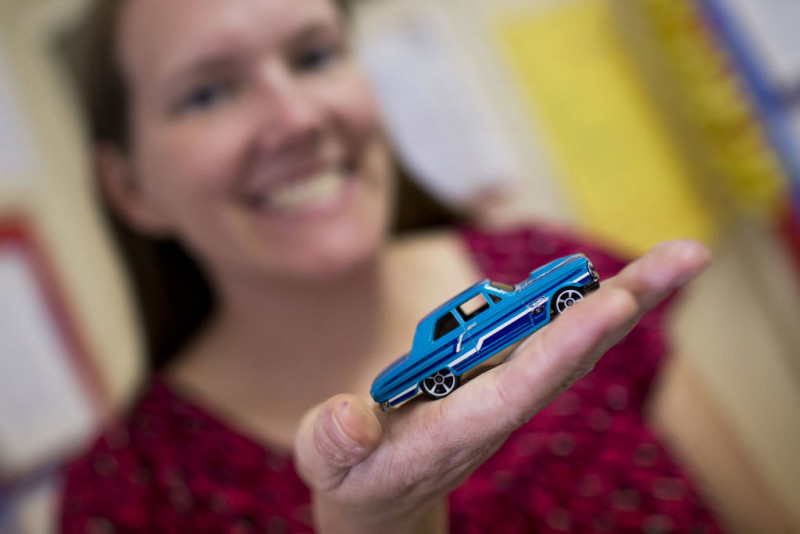
"caption": "Jaime Porres is a fourth-grade teacher at Brentwood Science Magnet Elementary School. Porres has been using Hot Wheels to teach her students kinetic and potential energy.",
"description": "Jaime Porres is a fourth-grade teacher at Brentwood Science Magnet Elementary School. Porres has been using Hot Wheels to teach her students kinetic and potential energy.",
"title": "105780-full-mattel",
"credit": "Maya Sugarman/KPCC",
"status": "inherit",
"isLoading": false,
"fetchFailed": false
},
"news_10565720": {
"type": "attachments",
"id": "news_10565720",
"meta": {
"index": "attachments_1716263798",
"site": "news",
"id": "10565720",
"found": true
},
"parent": 10565719,
"imgSizes": {
"twentyfourteen-full-width": {
"file": "https://ww2.kqed.org/app/uploads/sites/10/2015/06/IMG_3370-e1434492384174-1038x576.jpg",
"width": 1038,
"mimeType": "image/jpeg",
"height": 576
},
"thumbnail": {
"file": "https://ww2.kqed.org/app/uploads/sites/10/2015/06/IMG_3370-e1434492384174-400x287.jpg",
"width": 400,
"mimeType": "image/jpeg",
"height": 287
},
"fd-sm": {
"file": "https://ww2.kqed.org/app/uploads/sites/10/2015/06/IMG_3370-e1434492384174-960x689.jpg",
"width": 960,
"mimeType": "image/jpeg",
"height": 689
},
"post-thumbnail": {
"file": "https://ww2.kqed.org/app/uploads/sites/10/2015/06/IMG_3370-e1434492384174-672x372.jpg",
"width": 672,
"mimeType": "image/jpeg",
"height": 372
},
"kqedFullSize": {
"file": "https://ww2.kqed.org/app/uploads/sites/10/2015/06/IMG_3370-e1434492393611.jpg",
"width": 1920,
"height": 1378
},
"large": {
"file": "https://ww2.kqed.org/app/uploads/sites/10/2015/06/IMG_3370-e1434492384174-1440x1034.jpg",
"width": 1440,
"mimeType": "image/jpeg",
"height": 1034
},
"guest-author-96": {
"file": "https://ww2.kqed.org/app/uploads/sites/10/2015/06/IMG_3370-e1434492384174-96x96.jpg",
"width": 96,
"mimeType": "image/jpeg",
"height": 96
},
"medium": {
"file": "https://ww2.kqed.org/app/uploads/sites/10/2015/06/IMG_3370-e1434492384174-800x574.jpg",
"width": 800,
"mimeType": "image/jpeg",
"height": 574
},
"guest-author-64": {
"file": "https://ww2.kqed.org/app/uploads/sites/10/2015/06/IMG_3370-e1434492384174-64x64.jpg",
"width": 64,
"mimeType": "image/jpeg",
"height": 64
},
"guest-author-32": {
"file": "https://ww2.kqed.org/app/uploads/sites/10/2015/06/IMG_3370-e1434492384174-32x32.jpg",
"width": 32,
"mimeType": "image/jpeg",
"height": 32
},
"jmtc-small-thumb": {
"file": "https://ww2.kqed.org/app/uploads/sites/10/2015/06/IMG_3370-e1434492384174-280x150.jpg",
"width": 280,
"mimeType": "image/jpeg",
"height": 150
},
"fd-med": {
"file": "https://ww2.kqed.org/app/uploads/sites/10/2015/06/IMG_3370-e1434492384174-1180x847.jpg",
"width": 1180,
"mimeType": "image/jpeg",
"height": 847
},
"detail": {
"file": "https://ww2.kqed.org/app/uploads/sites/10/2015/06/IMG_3370-e1434492384174-75x75.jpg",
"width": 75,
"mimeType": "image/jpeg",
"height": 75
},
"guest-author-128": {
"file": "https://ww2.kqed.org/app/uploads/sites/10/2015/06/IMG_3370-e1434492384174-128x128.jpg",
"width": 128,
"mimeType": "image/jpeg",
"height": 128
}
},
"publishDate": 1434492336,
"modified": 1434492468,
"caption": "Gov. Jerry Brown announces a budget deal alongside Assembly Speaker Toni Atkins, D-San Diego, and Senate President pro Tem Kevin de León, D-Los Angeles, on June 16 in Sacramento.",
"description": null,
"title": "IMG_3370",
"credit": "John Myers/KQED",
"status": "inherit",
"isLoading": false,
"fetchFailed": false
},
"news_10561082": {
"type": "attachments",
"id": "news_10561082",
"meta": {
"index": "attachments_1716263798",
"site": "news",
"id": "10561082",
"found": true
},
"parent": 10560966,
"imgSizes": {
"jmtc-small-thumb": {
"file": "https://ww2.kqed.org/app/uploads/sites/10/2015/06/RS15466_David_Silver-qut-280x150.jpg",
"width": 280,
"mimeType": "image/jpeg",
"height": 150
},
"thumbnail": {
"file": "https://ww2.kqed.org/app/uploads/sites/10/2015/06/RS15466_David_Silver-qut-400x260.jpg",
"width": 400,
"mimeType": "image/jpeg",
"height": 260
},
"post-thumbnail": {
"file": "https://ww2.kqed.org/app/uploads/sites/10/2015/06/RS15466_David_Silver-qut-672x372.jpg",
"width": 672,
"mimeType": "image/jpeg",
"height": 372
},
"kqedFullSize": {
"file": "https://ww2.kqed.org/app/uploads/sites/10/2015/06/RS15466_David_Silver-qut.jpg",
"width": 768,
"height": 500
},
"guest-author-96": {
"file": "https://ww2.kqed.org/app/uploads/sites/10/2015/06/RS15466_David_Silver-qut-96x96.jpg",
"width": 96,
"mimeType": "image/jpeg",
"height": 96
},
"guest-author-64": {
"file": "https://ww2.kqed.org/app/uploads/sites/10/2015/06/RS15466_David_Silver-qut-64x64.jpg",
"width": 64,
"mimeType": "image/jpeg",
"height": 64
},
"detail": {
"file": "https://ww2.kqed.org/app/uploads/sites/10/2015/06/RS15466_David_Silver-qut-75x75.jpg",
"width": 75,
"mimeType": "image/jpeg",
"height": 75
},
"guest-author-32": {
"file": "https://ww2.kqed.org/app/uploads/sites/10/2015/06/RS15466_David_Silver-qut-32x32.jpg",
"width": 32,
"mimeType": "image/jpeg",
"height": 32
},
"guest-author-128": {
"file": "https://ww2.kqed.org/app/uploads/sites/10/2015/06/RS15466_David_Silver-qut-128x128.jpg",
"width": 128,
"mimeType": "image/jpeg",
"height": 128
}
},
"publishDate": 1434158335,
"modified": 1434348182,
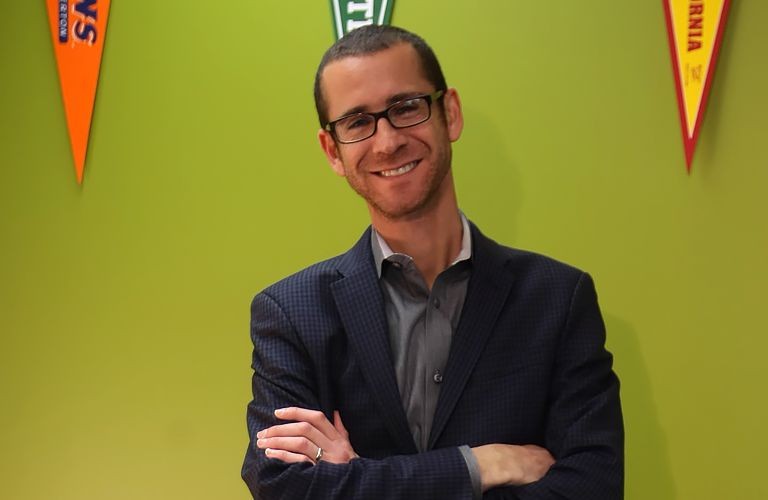
"caption": "David Silver has been hired as Oakland's new director of education.",
"description": "David Silver has been hired as Oakland's new Director of Education.",
"title": "RS15466_David_Silver-qut",
"credit": "Courtesy of College Track",
"status": "inherit",
"isLoading": false,
"fetchFailed": false
},
"news_10558164": {
"type": "attachments",
"id": "news_10558164",
"meta": {
"index": "attachments_1716263798",
"site": "news",
"id": "10558164",
"found": true
},
"parent": 10558095,
"imgSizes": {
"twentyfourteen-full-width": {
"file": "https://ww2.kqed.org/app/uploads/sites/10/2015/06/Mongeau-advising_2-900x576.jpeg",
"width": 900,
"mimeType": "image/jpeg",
"height": 576
},
"thumbnail": {
"file": "https://ww2.kqed.org/app/uploads/sites/10/2015/06/Mongeau-advising_2-400x268.jpeg",
"width": 400,
"mimeType": "image/jpeg",
"height": 268
},
"post-thumbnail": {
"file": "https://ww2.kqed.org/app/uploads/sites/10/2015/06/Mongeau-advising_2-672x372.jpeg",
"width": 672,
"mimeType": "image/jpeg",
"height": 372
},
"kqedFullSize": {
"file": "https://ww2.kqed.org/app/uploads/sites/10/2015/06/Mongeau-advising_2.jpeg",
"width": 900,
"height": 602
},
"guest-author-96": {
"file": "https://ww2.kqed.org/app/uploads/sites/10/2015/06/Mongeau-advising_2-96x96.jpeg",
"width": 96,
"mimeType": "image/jpeg",
"height": 96
},
"medium": {
"file": "https://ww2.kqed.org/app/uploads/sites/10/2015/06/Mongeau-advising_2-800x535.jpeg",
"width": 800,
"mimeType": "image/jpeg",
"height": 535
},
"guest-author-64": {
"file": "https://ww2.kqed.org/app/uploads/sites/10/2015/06/Mongeau-advising_2-64x64.jpeg",
"width": 64,
"mimeType": "image/jpeg",
"height": 64
},
"detail": {
"file": "https://ww2.kqed.org/app/uploads/sites/10/2015/06/Mongeau-advising_2-75x75.jpeg",
"width": 75,
"mimeType": "image/jpeg",
"height": 75
},
"guest-author-32": {
"file": "https://ww2.kqed.org/app/uploads/sites/10/2015/06/Mongeau-advising_2-32x32.jpeg",
"width": 32,
"mimeType": "image/jpeg",
"height": 32
},
"guest-author-128": {
"file": "https://ww2.kqed.org/app/uploads/sites/10/2015/06/Mongeau-advising_2-128x128.jpeg",
"width": 128,
"mimeType": "image/jpeg",
"height": 128
}
},
"publishDate": 1433973344,
"modified": 1433973504,
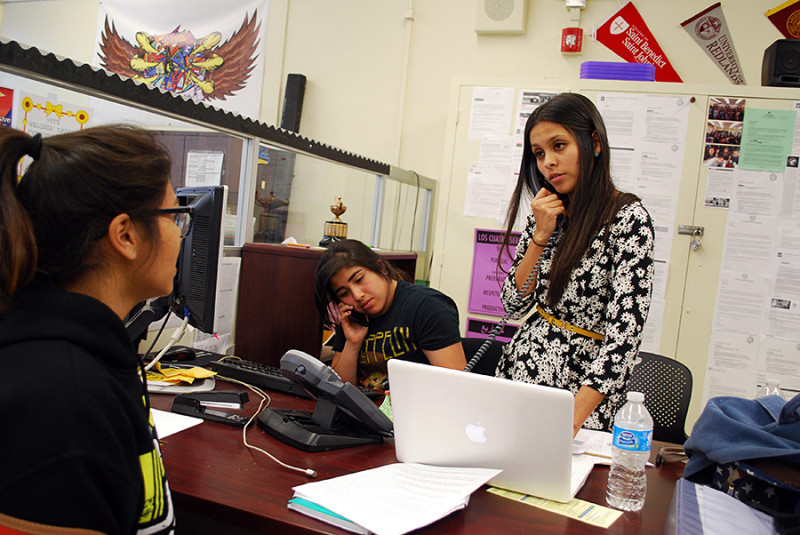
"caption": "College Advising Corps adviser Carmen Macias, right, explains yet another form to Torres High School students in East Los Angeles.",
"description": null,
"title": "College Advising",
"credit": "Lilian Mongeau/The Hechinger Report",
"status": "inherit",
"isLoading": false,
"fetchFailed": false
},
"news_10556605": {
"type": "attachments",
"id": "news_10556605",
"meta": {
"index": "attachments_1716263798",
"site": "news",
"id": "10556605",
"found": true
},
"parent": 10556498,
"imgSizes": {
"twentyfourteen-full-width": {
"file": "https://ww2.kqed.org/app/uploads/sites/10/2015/06/RS15426_IMG_0054.JPG-qut-1038x576.jpg",
"width": 1038,
"mimeType": "image/jpeg",
"height": 576
},
"thumbnail": {
"file": "https://ww2.kqed.org/app/uploads/sites/10/2015/06/RS15426_IMG_0054.JPG-qut-400x300.jpg",
"width": 400,
"mimeType": "image/jpeg",
"height": 300
},
"fd-sm": {
"file": "https://ww2.kqed.org/app/uploads/sites/10/2015/06/RS15426_IMG_0054.JPG-qut-960x720.jpg",
"width": 960,
"mimeType": "image/jpeg",
"height": 720
},
"post-thumbnail": {
"file": "https://ww2.kqed.org/app/uploads/sites/10/2015/06/RS15426_IMG_0054.JPG-qut-672x372.jpg",
"width": 672,
"mimeType": "image/jpeg",
"height": 372
},
"kqedFullSize": {
"file": "https://ww2.kqed.org/app/uploads/sites/10/2015/06/RS15426_IMG_0054.JPG-qut.jpg",
"width": 1920,
"height": 1440
},
"large": {
"file": "https://ww2.kqed.org/app/uploads/sites/10/2015/06/RS15426_IMG_0054.JPG-qut-1440x1080.jpg",
"width": 1440,
"mimeType": "image/jpeg",
"height": 1080
},
"guest-author-96": {
"file": "https://ww2.kqed.org/app/uploads/sites/10/2015/06/RS15426_IMG_0054.JPG-qut-96x96.jpg",
"width": 96,
"mimeType": "image/jpeg",
"height": 96
},
"medium": {
"file": "https://ww2.kqed.org/app/uploads/sites/10/2015/06/RS15426_IMG_0054.JPG-qut-800x600.jpg",
"width": 800,
"mimeType": "image/jpeg",
"height": 600
},
"guest-author-64": {
"file": "https://ww2.kqed.org/app/uploads/sites/10/2015/06/RS15426_IMG_0054.JPG-qut-64x64.jpg",
"width": 64,
"mimeType": "image/jpeg",
"height": 64
},
"guest-author-32": {
"file": "https://ww2.kqed.org/app/uploads/sites/10/2015/06/RS15426_IMG_0054.JPG-qut-32x32.jpg",
"width": 32,
"mimeType": "image/jpeg",
"height": 32
},
"fd-med": {
"file": "https://ww2.kqed.org/app/uploads/sites/10/2015/06/RS15426_IMG_0054.JPG-qut-1180x885.jpg",
"width": 1180,
"mimeType": "image/jpeg",
"height": 885
},
"detail": {
"file": "https://ww2.kqed.org/app/uploads/sites/10/2015/06/RS15426_IMG_0054.JPG-qut-75x75.jpg",
"width": 75,
"mimeType": "image/jpeg",
"height": 75
},
"guest-author-128": {
"file": "https://ww2.kqed.org/app/uploads/sites/10/2015/06/RS15426_IMG_0054.JPG-qut-128x128.jpg",
"width": 128,
"mimeType": "image/jpeg",
"height": 128
}
},
"publishDate": 1433874178,
"modified": 1433874227,
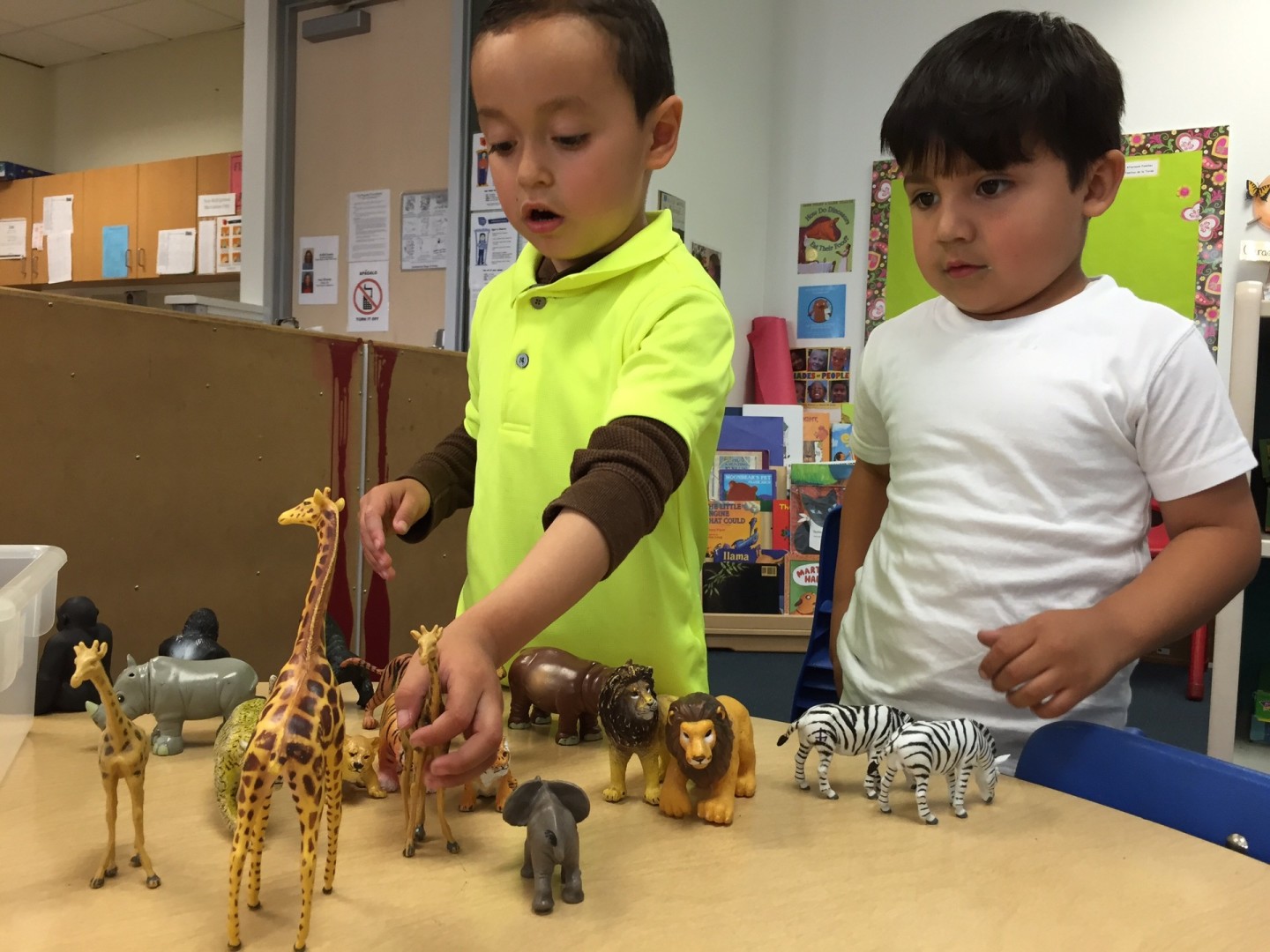
"caption": "Isaac and Santiago say they prefer to speak to each other in English at school. But most of the students at De Colores speak in Spanish.",
"description": "Isaac and Santiago say they prefer to speak to each other in English at school. But most of the students at De Colores speak in Spanish.",
"title": "Isaac and Santiago",
"credit": "Devin Katayama/KQED",
"status": "inherit",
"isLoading": false,
"fetchFailed": false
},
"news_10548766": {
"type": "attachments",
"id": "news_10548766",
"meta": {
"index": "attachments_1716263798",
"site": "news",
"id": "10548766",
"found": true
},
"parent": 10548763,
"imgSizes": {
"twentyfourteen-full-width": {
"file": "https://ww2.kqed.org/app/uploads/sites/10/2015/06/RS15359_photo-qut-1038x576.jpg",
"width": 1038,
"mimeType": "image/jpeg",
"height": 576
},
"thumbnail": {
"file": "https://ww2.kqed.org/app/uploads/sites/10/2015/06/RS15359_photo-qut-400x300.jpg",
"width": 400,
"mimeType": "image/jpeg",
"height": 300
},
"fd-sm": {
"file": "https://ww2.kqed.org/app/uploads/sites/10/2015/06/RS15359_photo-qut-960x720.jpg",
"width": 960,
"mimeType": "image/jpeg",
"height": 720
},
"post-thumbnail": {
"file": "https://ww2.kqed.org/app/uploads/sites/10/2015/06/RS15359_photo-qut-672x372.jpg",
"width": 672,
"mimeType": "image/jpeg",
"height": 372
},
"kqedFullSize": {
"file": "https://ww2.kqed.org/app/uploads/sites/10/2015/06/RS15359_photo-qut.jpg",
"width": 1920,
"height": 1440
},
"large": {
"file": "https://ww2.kqed.org/app/uploads/sites/10/2015/06/RS15359_photo-qut-1440x1080.jpg",
"width": 1440,
"mimeType": "image/jpeg",
"height": 1080
},
"guest-author-96": {
"file": "https://ww2.kqed.org/app/uploads/sites/10/2015/06/RS15359_photo-qut-96x96.jpg",
"width": 96,
"mimeType": "image/jpeg",
"height": 96
},
"medium": {
"file": "https://ww2.kqed.org/app/uploads/sites/10/2015/06/RS15359_photo-qut-800x600.jpg",
"width": 800,
"mimeType": "image/jpeg",
"height": 600
},
"guest-author-64": {
"file": "https://ww2.kqed.org/app/uploads/sites/10/2015/06/RS15359_photo-qut-64x64.jpg",
"width": 64,
"mimeType": "image/jpeg",
"height": 64
},
"guest-author-32": {
"file": "https://ww2.kqed.org/app/uploads/sites/10/2015/06/RS15359_photo-qut-32x32.jpg",
"width": 32,
"mimeType": "image/jpeg",
"height": 32
},
"fd-med": {
"file": "https://ww2.kqed.org/app/uploads/sites/10/2015/06/RS15359_photo-qut-1180x885.jpg",
"width": 1180,
"mimeType": "image/jpeg",
"height": 885
},
"detail": {
"file": "https://ww2.kqed.org/app/uploads/sites/10/2015/06/RS15359_photo-qut-75x75.jpg",
"width": 75,
"mimeType": "image/jpeg",
"height": 75
},
"guest-author-128": {
"file": "https://ww2.kqed.org/app/uploads/sites/10/2015/06/RS15359_photo-qut-128x128.jpg",
"width": 128,
"mimeType": "image/jpeg",
"height": 128
}
},
"publishDate": 1433289051,
"modified": 1433289095,
"caption": "Daisy Del Rio helps pass out Seal of Biliteracy medals at Dinuba High School.",
"description": null,
"title": "RS15359_photo-qut",
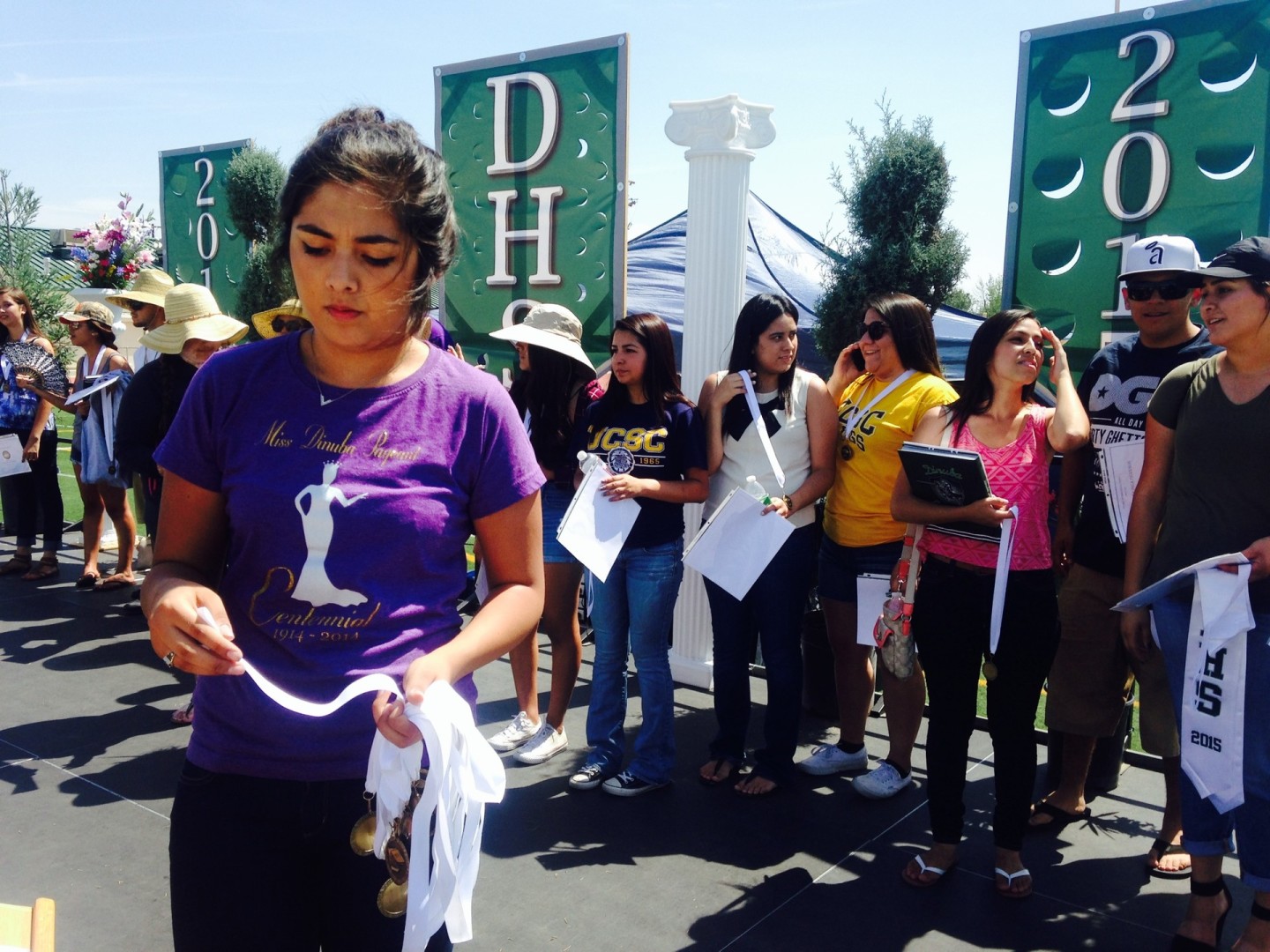
"credit": "Alice Daniel/KQED",
"status": "inherit",
"isLoading": false,
"fetchFailed": false
},
"news_10555449": {
"type": "attachments",
"id": "news_10555449",
"meta": {
"index": "attachments_1716263798",
"site": "news",
"id": "10555449",
"found": true
},
"parent": 10555203,
"imgSizes": {
"twentyfourteen-full-width": {
"file": "https://ww2.kqed.org/app/uploads/sites/10/2015/06/Angel2-1038x576.jpg",
"width": 1038,
"mimeType": "image/jpeg",
"height": 576
},
"thumbnail": {
"file": "https://ww2.kqed.org/app/uploads/sites/10/2015/06/Angel2-400x267.jpg",
"width": 400,
"mimeType": "image/jpeg",
"height": 267
},
"fd-sm": {
"file": "https://ww2.kqed.org/app/uploads/sites/10/2015/06/Angel2-960x640.jpg",
"width": 960,
"mimeType": "image/jpeg",
"height": 640
},
"post-thumbnail": {
"file": "https://ww2.kqed.org/app/uploads/sites/10/2015/06/Angel2-672x372.jpg",
"width": 672,
"mimeType": "image/jpeg",
"height": 372
},
"kqedFullSize": {
"file": "https://ww2.kqed.org/app/uploads/sites/10/2015/06/Angel2.jpg",
"width": 1920,
"height": 1280
},
"large": {
"file": "https://ww2.kqed.org/app/uploads/sites/10/2015/06/Angel2-1440x960.jpg",
"width": 1440,
"mimeType": "image/jpeg",
"height": 960
},
"guest-author-96": {
"file": "https://ww2.kqed.org/app/uploads/sites/10/2015/06/Angel2-96x96.jpg",
"width": 96,
"mimeType": "image/jpeg",
"height": 96
},
"medium": {
"file": "https://ww2.kqed.org/app/uploads/sites/10/2015/06/Angel2-800x533.jpg",
"width": 800,
"mimeType": "image/jpeg",
"height": 533
},
"guest-author-64": {
"file": "https://ww2.kqed.org/app/uploads/sites/10/2015/06/Angel2-64x64.jpg",
"width": 64,
"mimeType": "image/jpeg",
"height": 64
},
"guest-author-32": {
"file": "https://ww2.kqed.org/app/uploads/sites/10/2015/06/Angel2-32x32.jpg",
"width": 32,
"mimeType": "image/jpeg",
"height": 32
},
"fd-med": {
"file": "https://ww2.kqed.org/app/uploads/sites/10/2015/06/Angel2-1180x787.jpg",
"width": 1180,
"mimeType": "image/jpeg",
"height": 787
},
"detail": {
"file": "https://ww2.kqed.org/app/uploads/sites/10/2015/06/Angel2-75x75.jpg",
"width": 75,
"mimeType": "image/jpeg",
"height": 75
},
"guest-author-128": {
"file": "https://ww2.kqed.org/app/uploads/sites/10/2015/06/Angel2-128x128.jpg",
"width": 128,
"mimeType": "image/jpeg",
"height": 128
}
},
"publishDate": 1433794605,
"modified": 1433971420,
"caption": "English-language learner Angel Luque is at an age where the right teaching could make a big difference.",
"description": "Angel Luque is now in fifth grade.",
"title": "Angel2",
"credit": "Jeremy Raff/KQED",
"status": "inherit",
"isLoading": false,
"fetchFailed": false
},
"news_10555497": {
"type": "attachments",
"id": "news_10555497",
"meta": {
"index": "attachments_1716263798",
"site": "news",
"id": "10555497",
"found": true
},
"parent": 10555201,
"imgSizes": {
"twentyfourteen-full-width": {
"file": "https://ww2.kqed.org/app/uploads/sites/10/2015/06/RS15402_JV0A5211-qut-1038x576.jpg",
"width": 1038,
"mimeType": "image/jpeg",
"height": 576
},
"thumbnail": {
"file": "https://ww2.kqed.org/app/uploads/sites/10/2015/06/RS15402_JV0A5211-qut-400x267.jpg",
"width": 400,
"mimeType": "image/jpeg",
"height": 267
},
"fd-sm": {
"file": "https://ww2.kqed.org/app/uploads/sites/10/2015/06/RS15402_JV0A5211-qut-960x640.jpg",
"width": 960,
"mimeType": "image/jpeg",
"height": 640
},
"post-thumbnail": {
"file": "https://ww2.kqed.org/app/uploads/sites/10/2015/06/RS15402_JV0A5211-qut-672x372.jpg",
"width": 672,
"mimeType": "image/jpeg",
"height": 372
},
"kqedFullSize": {
"file": "https://ww2.kqed.org/app/uploads/sites/10/2015/06/RS15402_JV0A5211-qut.jpg",
"width": 1920,
"height": 1280
},
"large": {
"file": "https://ww2.kqed.org/app/uploads/sites/10/2015/06/RS15402_JV0A5211-qut-1440x960.jpg",
"width": 1440,
"mimeType": "image/jpeg",
"height": 960
},
"guest-author-96": {
"file": "https://ww2.kqed.org/app/uploads/sites/10/2015/06/RS15402_JV0A5211-qut-96x96.jpg",
"width": 96,
"mimeType": "image/jpeg",
"height": 96
},
"medium": {
"file": "https://ww2.kqed.org/app/uploads/sites/10/2015/06/RS15402_JV0A5211-qut-800x533.jpg",
"width": 800,
"mimeType": "image/jpeg",
"height": 533
},
"guest-author-64": {
"file": "https://ww2.kqed.org/app/uploads/sites/10/2015/06/RS15402_JV0A5211-qut-64x64.jpg",
"width": 64,
"mimeType": "image/jpeg",
"height": 64
},
"guest-author-32": {
"file": "https://ww2.kqed.org/app/uploads/sites/10/2015/06/RS15402_JV0A5211-qut-32x32.jpg",
"width": 32,
"mimeType": "image/jpeg",
"height": 32
},
"fd-med": {
"file": "https://ww2.kqed.org/app/uploads/sites/10/2015/06/RS15402_JV0A5211-qut-1180x787.jpg",
"width": 1180,
"mimeType": "image/jpeg",
"height": 787
},
"detail": {
"file": "https://ww2.kqed.org/app/uploads/sites/10/2015/06/RS15402_JV0A5211-qut-75x75.jpg",
"width": 75,
"mimeType": "image/jpeg",
"height": 75
},
"guest-author-128": {
"file": "https://ww2.kqed.org/app/uploads/sites/10/2015/06/RS15402_JV0A5211-qut-128x128.jpg",
"width": 128,
"mimeType": "image/jpeg",
"height": 128
}
},
"publishDate": 1433794743,
"modified": 1433794781,
"caption": "From left to right, Valentin, Lidia, Bryan, Angel, and Jose Daniel Luque.",
"description": null,
"title": "RS15402_JV0A5211-qut",
"credit": "Jeremy Raff/KQED",
"status": "inherit",
"isLoading": false,
"fetchFailed": false
}
},
"audioPlayerReducer": {
"postId": "stream_live",
"isPaused": true,
"isPlaying": false,
"pfsActive": false,
"pledgeModalIsOpen": true,
"playerDrawerIsOpen": false,
"liveAudioPlayStartedAt": 0,
"liveAudioPlayContext": ""
},
"authorsReducer": {
"byline_news_10611281": {
"type": "authors",
"id": "byline_news_10611281",
"meta": {
"override": true
},
"slug": "byline_news_10611281",
"name": "\u003cstrong>\u003ca href=\"https://twitter.com/scoopscout\" target=\"_blank\">Lisa Leff\u003cbr />Associated Press\u003c/strong>",
"isLoading": false
},
"byline_news_10595990": {
"type": "authors",
"id": "byline_news_10595990",
"meta": {
"override": true
},
"slug": "byline_news_10595990",
"name": "\u003cstong>Sukey Lewis\u003c/strong>",
"isLoading": false
},
"byline_news_10591837": {
"type": "authors",
"id": "byline_news_10591837",
"meta": {
"override": true
},
"slug": "byline_news_10591837",
"name": "\u003ca href=\"http://www.scpr.org/about/people/staff/adolfo-guzman-lopez\" target=\"_blank\">Adolfo Guzman-Lopez\u003c/a>, \u003cbr />KPCC",
"isLoading": false
},
"byline_news_10558095": {
"type": "authors",
"id": "byline_news_10558095",
"meta": {
"override": true
},
"slug": "byline_news_10558095",
"name": "\u003cstrong>Lillian Mongeau\u003cbr/>\u003ca href=\"http://www.hechingerreport.org\">The Hechinger Report\u003c/a>\u003c/strong>",
"isLoading": false
},
"cmusiker": {
"type": "authors",
"id": "32",
"meta": {
"index": "authors_1716337520",
"id": "32",
"found": true
},
"name": "Cy Musiker",
"firstName": "Cy",
"lastName": "Musiker",
"slug": "cmusiker",
"email": "cmusiker@kqed.org",
"display_author_email": false,
"staff_mastheads": [],
"title": "KQED Contributor",
"bio": "Cy Musiker is a former co-host of The Do List and a former reporter covering the arts for KQED News and The California Report. He loves live performance, especially great theater, jazz, roots music, anything by Mahler. Cy has an MJ from UC Berkeley's School of Journalism, and got his BA from Hampshire College. His work has been recognized by the Society for Professional Journalists with their Sigma Delta Chi Award for Public Service in Journalism. When he can, Cy likes to swim in Tomales Bay, run with his dog in the East Bay Hills, and hike the Sierra.",
"avatar": "https://secure.gravatar.com/avatar/05eaba5c5696ce8f062e4ea2df428a43?s=600&d=blank&r=g",
"twitter": null,
"facebook": null,
"instagram": null,
"linkedin": null,
"sites": [
{
"site": "arts",
"roles": [
"Contributor",
"subscriber"
]
},
{
"site": "news",
"roles": [
"author"
]
},
{
"site": "bayareabites",
"roles": [
"contributor"
]
}
],
"headData": {
"title": "Cy Musiker | KQED",
"description": "KQED Contributor",
"ogImgSrc": "https://secure.gravatar.com/avatar/05eaba5c5696ce8f062e4ea2df428a43?s=600&d=blank&r=g",
"twImgSrc": "https://secure.gravatar.com/avatar/05eaba5c5696ce8f062e4ea2df428a43?s=600&d=blank&r=g"
},
"isLoading": false,
"link": "/author/cmusiker"
},
"aliceldaniel": {
"type": "authors",
"id": "208",
"meta": {
"index": "authors_1716337520",
"id": "208",
"found": true
},
"name": "Alice Daniel",
"firstName": "Alice",
"lastName": "Daniel",
"slug": "aliceldaniel",
"email": "adaniel@kqed.org",
"display_author_email": false,
"staff_mastheads": [],
"title": null,
"bio": "Alice Daniel loves the listening aspect of reporting because she gets to briefly walk in other people’s shoes. She has rappelled down into caves and gone up in helicopters for KQED’s The California Report but her favorite place to pursue a story is the High Sierra or any family-run bakery, of course. Alice has a masters in journalism from Columbia University and teaches at Fresno State. She is a California Healthline Regional Correspondent and a frequent contributor to Success magazine. In her free time, she skis and hikes, throws pottery, practices piano and looks out the window.",
"avatar": "https://secure.gravatar.com/avatar/e611aa06593b114a67f9f123a8e875ad?s=600&d=blank&r=g",
"twitter": null,
"facebook": null,
"instagram": null,
"linkedin": null,
"sites": [
{
"site": "news",
"roles": [
"author"
]
},
{
"site": "stateofhealth",
"roles": [
"author"
]
}
],
"headData": {
"title": "Alice Daniel | KQED",
"description": null,
"ogImgSrc": "https://secure.gravatar.com/avatar/e611aa06593b114a67f9f123a8e875ad?s=600&d=blank&r=g",
"twImgSrc": "https://secure.gravatar.com/avatar/e611aa06593b114a67f9f123a8e875ad?s=600&d=blank&r=g"
},
"isLoading": false,
"link": "/author/aliceldaniel"
},
"anatintocalis": {
"type": "authors",
"id": "211",
"meta": {
"index": "authors_1716337520",
"id": "211",
"found": true
},
"name": "Ana Tintocalis",
"firstName": "Ana",
"lastName": "Tintocalis",
"slug": "anatintocalis",
"email": "atintocalis@kqed.org",
"display_author_email": false,
"staff_mastheads": [],
"title": null,
"bio": null,
"avatar": "https://secure.gravatar.com/avatar/722c50f51f04eff38fa0e5a3f1d29450?s=600&d=blank&r=g",
"twitter": null,
"facebook": null,
"instagram": null,
"linkedin": null,
"sites": [
{
"site": "news",
"roles": [
"subscriber"
]
},
{
"site": "stateofhealth",
"roles": [
"subscriber"
]
}
],
"headData": {
"title": "Ana Tintocalis | KQED",
"description": null,
"ogImgSrc": "https://secure.gravatar.com/avatar/722c50f51f04eff38fa0e5a3f1d29450?s=600&d=blank&r=g",
"twImgSrc": "https://secure.gravatar.com/avatar/722c50f51f04eff38fa0e5a3f1d29450?s=600&d=blank&r=g"
},
"isLoading": false,
"link": "/author/anatintocalis"
},
"charlabear": {
"type": "authors",
"id": "218",
"meta": {
"index": "authors_1716337520",
"id": "218",
"found": true
},
"name": "Charla Bear",
"firstName": "Charla",
"lastName": "Bear",
"slug": "charlabear",
"email": "cbear@kqed.org",
"display_author_email": false,
"staff_mastheads": [],
"title": null,
"bio": null,
"avatar": "https://secure.gravatar.com/avatar/1c0f304ac2fbc2593f452eb65bbb562c?s=600&d=blank&r=g",
"twitter": null,
"facebook": null,
"instagram": null,
"linkedin": null,
"sites": [
{
"site": "news",
"roles": [
"subscriber"
]
},
{
"site": "stateofhealth",
"roles": [
"author"
]
}
],
"headData": {
"title": "Charla Bear | KQED",
"description": null,
"ogImgSrc": "https://secure.gravatar.com/avatar/1c0f304ac2fbc2593f452eb65bbb562c?s=600&d=blank&r=g",
"twImgSrc": "https://secure.gravatar.com/avatar/1c0f304ac2fbc2593f452eb65bbb562c?s=600&d=blank&r=g"
},
"isLoading": false,
"link": "/author/charlabear"
},
"jmcevoy": {
"type": "authors",
"id": "231",
"meta": {
"index": "authors_1716337520",
"id": "231",
"found": true
},
"name": "Julia McEvoy",
"firstName": "Julia",
"lastName": "McEvoy",
"slug": "jmcevoy",
"email": "jmcevoy@KQED.org",
"display_author_email": true,
"staff_mastheads": [
"news"
],
"title": "KQED Senior Editor",
"bio": "Julia McEvoy is KQED's Senior Editor, Education Equity.\r\n\r\nJulia heads KQED’s education coverage examining inequities students face in Bay Area and California schools, and reports on what it will take to educate the next generation.\r\n\r\nJulia's editorial work has received a Peabody Award, a Casey Medal for Coverage of Children and Families, several Edward R. Murrow awards, as well as awards from the Public Radio News Directors Inc. and the Society for Professional Journalists.",
"avatar": "https://secure.gravatar.com/avatar/aec3ce21abe02b302fd33638abd56a22?s=600&d=blank&r=g",
"twitter": "juliamcevoy1",
"facebook": null,
"instagram": null,
"linkedin": null,
"sites": [
{
"site": "news",
"roles": []
},
{
"site": "stateofhealth",
"roles": [
"author"
]
}
],
"headData": {
"title": "Julia McEvoy | KQED",
"description": "KQED Senior Editor",
"ogImgSrc": "https://secure.gravatar.com/avatar/aec3ce21abe02b302fd33638abd56a22?s=600&d=blank&r=g",
"twImgSrc": "https://secure.gravatar.com/avatar/aec3ce21abe02b302fd33638abd56a22?s=600&d=blank&r=g"
},
"isLoading": false,
"link": "/author/jmcevoy"
},
"jmyers": {
"type": "authors",
"id": "232",
"meta": {
"index": "authors_1716337520",
"id": "232",
"found": true
},
"name": "John Myers",
"firstName": "John",
"lastName": "Myers",
"slug": "jmyers",
"email": "jmyers@kqed.org",
"display_author_email": false,
"staff_mastheads": [],
"title": null,
"bio": "John Myers is Senior Editor of KQED's new California Politics and Government Desk. A veteran of almost two decades of political coverage, he was KQED's longest serving statehouse bureau chief and recently was political editor for Sacramento's ABC affiliate, News10 (KXTV). John was moderator of the only 2014 gubernatorial debate, and was named by \u003cem>The Washington Post\u003c/em> to two \"Best Of\" lists: the 2015 list of top state politics reporters and 2014's list of America's most influential statehouse reporters.",
"avatar": "https://secure.gravatar.com/avatar/c0ac98482caf0b8229a792662b38722a?s=600&d=blank&r=g",
"twitter": "johnmyers",
"facebook": null,
"instagram": null,
"linkedin": null,
"sites": [
{
"site": "news",
"roles": [
"subscriber"
]
}
],
"headData": {
"title": "John Myers | KQED",
"description": null,
"ogImgSrc": "https://secure.gravatar.com/avatar/c0ac98482caf0b8229a792662b38722a?s=600&d=blank&r=g",
"twImgSrc": "https://secure.gravatar.com/avatar/c0ac98482caf0b8229a792662b38722a?s=600&d=blank&r=g"
},
"isLoading": false,
"link": "/author/jmyers"
},
"dkatayama": {
"type": "authors",
"id": "7240",
"meta": {
"index": "authors_1716337520",
"id": "7240",
"found": true
},
"name": "Devin Katayama",
"firstName": "Devin",
"lastName": "Katayama",
"slug": "dkatayama",
"email": "dkatayama@kqed.org",
"display_author_email": true,
"staff_mastheads": [
"news"
],
"title": "Editor of Talent and Development",
"bio": "Devin Katayama is former Editor of Talent and Development for KQED. He supported our internship program and on-call staff by looking for equitable opportunities to improve the newsroom.\r\n\r\nHe previously hosted The Bay and American Suburb podcasts from KQED News. Prior to returning to the Bay Area in 2015, Devin was the education reporter for WFPL in Louisville and worked as a producer with radio stations in Chicago and Portland, OR. His work has appeared on NPR’s \u003cem>Morning Edition, All Things Considered, The Takeaway\u003c/em> and \u003cem>Here and Now.\u003c/em>\r\n\r\nDevin earned his MA in Journalism from Columbia College Chicago, where he was a Follett Fellow and the recipient of the 2011 Studs Terkel Community Media Workshop Scholarship for his story on Chicago's homeless youth. He won WBUR's 2014 Daniel Schorr award and a regional RTNDA Edward R. Murrow Award for his documentary \"At Risk\" that looked at issues facing some of Louisville's students. Devin has also received numerous local awards from the Associated Press and the Society of Professional Journalists.",
"avatar": "https://secure.gravatar.com/avatar/d0d2978a31002fb2de107921a8e18405?s=600&d=blank&r=g",
"twitter": "RadioDevin",
"facebook": null,
"instagram": null,
"linkedin": null,
"sites": [
{
"site": "arts",
"roles": []
},
{
"site": "news",
"roles": [
"author"
]
},
{
"site": "stateofhealth",
"roles": [
"author"
]
},
{
"site": "forum",
"roles": [
"editor"
]
},
{
"site": "perspectives",
"roles": [
"editor"
]
}
],
"headData": {
"title": "Devin Katayama | KQED",
"description": "Editor of Talent and Development",
"ogImgSrc": "https://secure.gravatar.com/avatar/d0d2978a31002fb2de107921a8e18405?s=600&d=blank&r=g",
"twImgSrc": "https://secure.gravatar.com/avatar/d0d2978a31002fb2de107921a8e18405?s=600&d=blank&r=g"
},
"isLoading": false,
"link": "/author/dkatayama"
}
},
"pagesReducer": {
"news_category_education": {
"type": "terms",
"id": "news_18540",
"meta": {
"index": "terms_1716263798",
"site": "news",
"id": "18540",
"score": 10.973221
},
"featImg": null,
"name": "Education",
"description": null,
"taxonomy": "category",
"headData": {
"twImgId": null,
"twTitle": null,
"ogTitle": null,
"ogImgId": null,
"twDescription": null,
"description": null,
"title": "Education Archives | KQED News",
"ogDescription": null
},
"ttid": 2595,
"slug": "education",
"isLoading": false,
"title": "Education",
"pageMeta": {
"site": "news",
"WpPageTemplate": "page-topic-editorial",
"currentPage": 166
},
"blocks": [
{
"blockName": "kqed/post-list",
"attrs": {
"layout": "cardArticle2",
"query": "posts/news?category=education",
"seeMore": false,
"paginated": true,
"page": 166
}
},
{
"blockName": "kqed/ad"
}
]
}
},
"pfsSessionReducer": {},
"postsReducer": {
"stream_live": {
"type": "live",
"id": "stream_live",
"audioUrl": "https://streams.kqed.org/kqedradio",
"title": "Live Stream",
"excerpt": "Live Stream information currently unavailable.",
"link": "/radio",
"featImg": "",
"label": {
"name": "KQED Live",
"link": "/"
}
},
"stream_kqedNewscast": {
"type": "posts",
"id": "stream_kqedNewscast",
"audioUrl": "https://www.kqed.org/.stream/anon/radio/RDnews/newscast.mp3?_=1",
"title": "KQED Newscast",
"featImg": "",
"label": {
"name": "88.5 FM",
"link": "/"
}
},
"news_10610214": {
"type": "posts",
"id": "news_10610214",
"meta": {
"index": "posts_1716263798",
"site": "news",
"id": "10610214",
"score": null,
"sort": [
1437605364000
]
},
"guestAuthors": [],
"slug": "san-francisco-middle-schools-no-longer-teaching-algebra-1",
"title": "San Francisco Middle Schools No Longer Teaching 'Algebra 1'",
"publishDate": 1437605364,
"format": "standard",
"headTitle": "San Francisco Middle Schools No Longer Teaching ‘Algebra 1’ | KQED",
"labelTerm": {
"term": 72,
"site": "news"
},
"content": "\u003cp>Justin Van Zandt is a busy dad.\u003c/p>\n\u003cp>He has five kids, all under 18 years old, and holds down a demanding full-time job. But that doesn’t stop him from spending all his free time teaching and tutoring his kids.\u003c/p>\n\u003cp>“I want my kids to do as well as possible,” says Van Zandt. “I want them all to graduate college and have good jobs. If I work hard as a parent, that’s going to give them an edge.”\u003c/p>\n\u003cp>[soundcloud url=”https://api.soundcloud.com/tracks/215134361″ params=”color=ff5500&auto_play=false&hide_related=false&show_comments=true&show_user=true&show_reposts=false” width=”100%” height=”166″ iframe=”true” /]\u003c/p>\n\u003cp>Lately, Van Zandt has been focusing his time on his 11-year-old daughter, Valentina.\u003c/p>\n\u003cp>[ad fullwidth]\u003c/p>\n\u003cp>She’s a straight “A” student, plays four instruments and is fluent in Spanish.\u003c/p>\n\u003cp>She’ll be in seventh grade this fall, and her dad is determined to get her into \u003ca href=\"https://lhs-sfusd-ca.schoolloop.com/\">Lowell High School\u003c/a>, San Francisco’s highest-performing public high school.\u003c/p>\n\u003cp>So this summer, Valentina has been working hard to hone her math skills.\u003c/p>\n\u003cfigure id=\"attachment_10610347\" class=\"wp-caption alignleft\" style=\"max-width: 800px\">\u003ca href=\"http://ww2.kqed.org/news/wp-content/uploads/sites/10/2015/07/RS16111_5484003804_34b3805bcd_o-qut.jpg\">\u003cimg loading=\"lazy\" decoding=\"async\" class=\"size-medium wp-image-10610347\" src=\"http://ww2.kqed.org/news/wp-content/uploads/sites/10/2015/07/RS16111_5484003804_34b3805bcd_o-qut-800x531.jpg\" alt=\"An algebraic equation is displayed on whiteboard.\" width=\"800\" height=\"531\" srcset=\"https://cdn.kqed.org/wp-content/uploads/sites/10/2015/07/RS16111_5484003804_34b3805bcd_o-qut-800x531.jpg 800w, https://cdn.kqed.org/wp-content/uploads/sites/10/2015/07/RS16111_5484003804_34b3805bcd_o-qut-400x266.jpg 400w, https://cdn.kqed.org/wp-content/uploads/sites/10/2015/07/RS16111_5484003804_34b3805bcd_o-qut-1440x956.jpg 1440w, https://cdn.kqed.org/wp-content/uploads/sites/10/2015/07/RS16111_5484003804_34b3805bcd_o-qut-1400x930.jpg 1400w, https://cdn.kqed.org/wp-content/uploads/sites/10/2015/07/RS16111_5484003804_34b3805bcd_o-qut-1180x784.jpg 1180w, https://cdn.kqed.org/wp-content/uploads/sites/10/2015/07/RS16111_5484003804_34b3805bcd_o-qut-960x638.jpg 960w, https://cdn.kqed.org/wp-content/uploads/sites/10/2015/07/RS16111_5484003804_34b3805bcd_o-qut.jpg 1920w\" sizes=\"(max-width: 800px) 100vw, 800px\">\u003c/a>\u003cfigcaption class=\"wp-caption-text\">An algebraic equation is displayed on whiteboard. \u003ccite>(James Lee)\u003c/cite>\u003c/figcaption>\u003c/figure>\n\u003cp>“[Math] used to come fairly easy to me, but now it’s getting a little bit challenging,” says Valentina. “[My dad] teaches a lot, but he doesn’t always have a whole lot of patience.”\u003c/p>\n\u003cp>Van Zandt admits he has high expectations for his children. He also has high expectations for \u003ca href=\"http://www.sfusd.edu/\">San Francisco Unified\u003c/a>, which is why he and many parents like him were outraged when they learned\u003ca href=\"http://www.sfusdmath.org/middle-school-faq.html\"> Algebra 1 will no longer be taught in middle school\u003c/a> under \u003ca href=\"http://www.cde.ca.gov/re/cc/\">Common Core\u003c/a>, the state’s new academic standards.\u003c/p>\n\u003cp>Instead, all students will have to wait until their freshman year in high school to take the class.\u003c/p>\n\u003cp>Valentina says delaying Algebra 1 is going to hurt gifted students because some classes are “too easy” or “aren’t very challenging” for high-achieving students.\u003c/p>\n\u003cp>The shift to now require Algebra 1 in high school may seem like a subtle change, but it hits on a deep-rooted debate over when advanced math should be introduced, and to which students.\u003c/p>\n\u003cp>Some say Algebra 1 at a young age causes students to flounder.\u003c/p>\n\u003cp>Others say students will be unprepared for tough college-prep courses in high school if they don’t take Algebra 1 early.\u003c/p>\n\u003cp>Districts like\u003ca href=\"http://achieve.lausd.net/cms/lib08/CA01000043/Centricity/domain/219/ccss%20docs/CCSS%20for%20MATH.pdf\"> Los Angeles\u003c/a> and \u003ca href=\"http://www.ousd.org/cms/lib07/CA01001176/Centricity/Domain/2993/ParentGuide_Math_8.pdf\">Oakland\u003c/a> are going to allow some high-achieving kids to go ahead and take algebra in middle school.\u003c/p>\n\u003cp>But not \u003ca href=\"http://www.sfusd.edu/en/assets/sfusd-staff/Math%20Resources/ccss-math-faq.pdf\">San Francisco Unified\u003c/a>.\u003c/p>\n\u003cp>For years, all eighth-graders had to take Algebra 1. The vast majority, however, either failed or did poorly in the subject.\u003c/p>\n\u003cp>“Those students are now in a cycle of failure,” says \u003ca href=\"http://www.sfusdmath.org/our-team.html\">Lizzy Hull Barnes\u003c/a>, mathematics program administrator for the district.\u003c/p>\n\u003cfigure id=\"attachment_10611633\" class=\"wp-caption alignright\" style=\"max-width: 800px\">\u003cimg loading=\"lazy\" decoding=\"async\" src=\"http://ww2.kqed.org/news/wp-content/uploads/sites/10/2015/07/AlgebraGirls-800x549.jpg\" alt=\"Eighth grade algebra students study at Presidio Middle School, a San Francisco Unified School District school, in 2011.\" width=\"800\" height=\"549\" class=\"size-medium wp-image-10611633\" srcset=\"https://cdn.kqed.org/wp-content/uploads/sites/10/2015/07/AlgebraGirls-800x549.jpg 800w, https://cdn.kqed.org/wp-content/uploads/sites/10/2015/07/AlgebraGirls-400x275.jpg 400w, https://cdn.kqed.org/wp-content/uploads/sites/10/2015/07/AlgebraGirls-1440x989.jpg 1440w, https://cdn.kqed.org/wp-content/uploads/sites/10/2015/07/AlgebraGirls-1400x961.jpg 1400w, https://cdn.kqed.org/wp-content/uploads/sites/10/2015/07/AlgebraGirls-1180x810.jpg 1180w, https://cdn.kqed.org/wp-content/uploads/sites/10/2015/07/AlgebraGirls-960x659.jpg 960w, https://cdn.kqed.org/wp-content/uploads/sites/10/2015/07/AlgebraGirls.jpg 1920w\" sizes=\"(max-width: 800px) 100vw, 800px\">\u003cfigcaption class=\"wp-caption-text\">Eighth grade algebra students study at Presidio Middle School, a San Francisco Unified School District school, in 2011. \u003ccite>(Lenny Gonzalez/MindShift)\u003c/cite>\u003c/figcaption>\u003c/figure>\n\u003cp>Under the new standards, the district is no longer taking a “drill and kill” approach to math. Instead, algebraic concepts will be woven into all math courses, beginning in kindergarten.\u003c/p>\n\u003cp>The goal is to get students fully prepared for \u003ca href=\"http://www.sfusd.edu/assets/sfusd-staff/curriculum-and-standards/files/ccss-math-faq.pdf\">Math 8\u003c/a>, a hybrid pre-algebra class in eighth grade focusing on how linear functions and equations all fit together.\u003c/p>\n\u003cp>Students will then take a deep dive into Algebra 1 as high school freshman, which will also include transformational geometry and angle relationships.\u003c/p>\n\u003cp>Hull Barnes says exposing all students to high-quality math instruction is a social justice issue for SFUSD.\u003c/p>\n\u003cp>District officials say the controversial practice of tracking students — or separating them based on talent and ability — is simply wrong.\u003c/p>\n\u003cp>Math is now supposed to be more rigorous and engaging at all levels, regardless of the students’ ability.\u003c/p>\n\u003cp>“What it means to be good in math is no longer about answer-getting and speed,” Hull Barnes says. “To be truly deeply proficient in math, you have to defend your reasoning and understand how a mathematical situation would apply in the real world. That’s a very significant shift.”\u003c/p>\n\u003cp>This summer, San Francisco math teachers have been working hard to figure out how to implement Algebra 1 under the new standards because now teachers will have to engage students at all levels.\u003c/p>\n\u003cp>Before, most students didn’t talk in their Algebra 1 class unless a teacher called on them for an answer.\u003c/p>\n\u003cp>The course was also “packed” with content, says eighth-grade teacher Vriana Kempster, forcing educators to “move pretty quickly” and “skip the parts about when you would use those skills.”\u003c/p>\n\u003cp>Now students will be asked to tackle a math assignment in small groups so they can discuss, interact and problem-solve together in a more methodical manner.\u003c/p>\n\u003cp>But is this the best thing for the super-smart kids?\u003c/p>\n\u003cp>A growing group of San Francisco parents don’t believe so.\u003c/p>\n\u003cp>They say that not allowing their children to take Algebra 1 in middle school is going to significantly slow down their progress, and they’ll wind up helping other students in class.\u003c/p>\n\u003cp>They’re now pressuring the district to create more options so they don’t have to choose between private school or paying extra for advanced math classes.\u003c/p>\n\u003cp>“It’s very disappointing to me that our education system is really starting to be this cookie-cutter approach,” says Melody Hernandez, whose 13-year-old son will be in eighth grade this year. “It’s not feasible. … I really don’t want [my son] to lose his engagement in school because it’s not moving at a fast enough pace for him.”\u003c/p>\n\u003cp>\u003c/p>\n\u003cp>\u003cem>The California Report’s education reporter, Ana Tintocalis, will be taking a closer look at how Common Core Academic Standards are transforming education across the state as students gear up for the 2015-2016 school year . \u003c/em>\u003c/p>\n\n",
"blocks": [],
"excerpt": "Parents of high-achieving students say delaying the course until high school will slow children's progress. ",
"status": "publish",
"parent": 0,
"modified": 1721150684,
"stats": {
"hasAudio": false,
"hasVideo": false,
"hasChartOrMap": false,
"iframeSrcs": [],
"hasGoogleForm": false,
"hasGallery": false,
"hasHearkenModule": false,
"hasPolis": false,
"paragraphCount": 38,
"wordCount": 1030
},
"headData": {
"title": "San Francisco Middle Schools No Longer Teaching 'Algebra 1' | KQED",
"description": "Parents of high-achieving students say delaying the course until high school will slow children's progress. ",
"ogTitle": "",
"ogDescription": "",
"ogImgId": "",
"twTitle": "",
"twDescription": "",
"twImgId": "",
"schema": {
"@context": "https://schema.org",
"@type": "NewsArticle",
"headline": "San Francisco Middle Schools No Longer Teaching 'Algebra 1'",
"datePublished": "2015-07-22T15:49:24-07:00",
"dateModified": "2024-07-16T10:24:44-07:00",
"image": "https://cdn.kqed.org/wp-content/uploads/2020/02/KQED-OG-Image@1x.png",
"isAccessibleForFree": "True",
"publisher": {
"@type": "NewsMediaOrganization",
"@id": "https://www.kqed.org/#organization",
"name": "KQED",
"logo": "https://cdn.kqed.org/wp-content/uploads/2020/02/KQED-OG-Image@1x.png",
"url": "https://www.kqed.org",
"sameAs": [
"https://www.facebook.com/KQED",
"https://twitter.com/KQED",
"https://www.instagram.com/kqed/",
"https://www.tiktok.com/@kqedofficial",
"https://www.linkedin.com/company/kqed",
"https://www.youtube.com/channel/UCeC0IOo7i1P_61zVUWbJ4nw"
]
}
}
},
"sticky": false,
"path": "/news/10610214/san-francisco-middle-schools-no-longer-teaching-algebra-1",
"audioTrackLength": null,
"parsedContent": [
{
"type": "contentString",
"content": "\u003cdiv class=\"post-body\">\u003cp>\u003cp>Justin Van Zandt is a busy dad.\u003c/p>\n\u003cp>He has five kids, all under 18 years old, and holds down a demanding full-time job. But that doesn’t stop him from spending all his free time teaching and tutoring his kids.\u003c/p>\n\u003cp>“I want my kids to do as well as possible,” says Van Zandt. “I want them all to graduate college and have good jobs. If I work hard as a parent, that’s going to give them an edge.”\u003c/p>\n\u003cp>\u003c/p>\u003cp>\u003cdiv class='utils-parseShortcode-shortcodes-__shortcodes__shortcodeWrapper'>\n \u003ciframe width='”100%”' height='”166″'\n scrolling='no' frameborder='no'\n src='https://w.soundcloud.com/player/?url=”https://api.soundcloud.com/tracks/215134361″&visual=true&”color=ff5500&auto_play=false&hide_related=false&show_comments=true&show_user=true&show_reposts=false”'\n title='”https://api.soundcloud.com/tracks/215134361″'>\n \u003c/iframe>\n \u003c/div>\u003c/p>\u003cp>\u003c/p>\n\u003cp>Lately, Van Zandt has been focusing his time on his 11-year-old daughter, Valentina.\u003c/p>\n\u003cp>\u003c/p>\u003c/div>",
"attributes": {
"named": {},
"numeric": []
}
},
{
"type": "component",
"content": "",
"name": "ad",
"attributes": {
"named": {
"label": "fullwidth"
},
"numeric": [
"fullwidth"
]
}
},
{
"type": "contentString",
"content": "\u003cdiv class=\"post-body\">\u003cp>\u003c/p>\n\u003cp>She’s a straight “A” student, plays four instruments and is fluent in Spanish.\u003c/p>\n\u003cp>She’ll be in seventh grade this fall, and her dad is determined to get her into \u003ca href=\"https://lhs-sfusd-ca.schoolloop.com/\">Lowell High School\u003c/a>, San Francisco’s highest-performing public high school.\u003c/p>\n\u003cp>So this summer, Valentina has been working hard to hone her math skills.\u003c/p>\n\u003cfigure id=\"attachment_10610347\" class=\"wp-caption alignleft\" style=\"max-width: 800px\">\u003ca href=\"http://ww2.kqed.org/news/wp-content/uploads/sites/10/2015/07/RS16111_5484003804_34b3805bcd_o-qut.jpg\">\u003cimg loading=\"lazy\" decoding=\"async\" class=\"size-medium wp-image-10610347\" src=\"http://ww2.kqed.org/news/wp-content/uploads/sites/10/2015/07/RS16111_5484003804_34b3805bcd_o-qut-800x531.jpg\" alt=\"An algebraic equation is displayed on whiteboard.\" width=\"800\" height=\"531\" srcset=\"https://cdn.kqed.org/wp-content/uploads/sites/10/2015/07/RS16111_5484003804_34b3805bcd_o-qut-800x531.jpg 800w, https://cdn.kqed.org/wp-content/uploads/sites/10/2015/07/RS16111_5484003804_34b3805bcd_o-qut-400x266.jpg 400w, https://cdn.kqed.org/wp-content/uploads/sites/10/2015/07/RS16111_5484003804_34b3805bcd_o-qut-1440x956.jpg 1440w, https://cdn.kqed.org/wp-content/uploads/sites/10/2015/07/RS16111_5484003804_34b3805bcd_o-qut-1400x930.jpg 1400w, https://cdn.kqed.org/wp-content/uploads/sites/10/2015/07/RS16111_5484003804_34b3805bcd_o-qut-1180x784.jpg 1180w, https://cdn.kqed.org/wp-content/uploads/sites/10/2015/07/RS16111_5484003804_34b3805bcd_o-qut-960x638.jpg 960w, https://cdn.kqed.org/wp-content/uploads/sites/10/2015/07/RS16111_5484003804_34b3805bcd_o-qut.jpg 1920w\" sizes=\"(max-width: 800px) 100vw, 800px\">\u003c/a>\u003cfigcaption class=\"wp-caption-text\">An algebraic equation is displayed on whiteboard. \u003ccite>(James Lee)\u003c/cite>\u003c/figcaption>\u003c/figure>\n\u003cp>“[Math] used to come fairly easy to me, but now it’s getting a little bit challenging,” says Valentina. “[My dad] teaches a lot, but he doesn’t always have a whole lot of patience.”\u003c/p>\n\u003cp>Van Zandt admits he has high expectations for his children. He also has high expectations for \u003ca href=\"http://www.sfusd.edu/\">San Francisco Unified\u003c/a>, which is why he and many parents like him were outraged when they learned\u003ca href=\"http://www.sfusdmath.org/middle-school-faq.html\"> Algebra 1 will no longer be taught in middle school\u003c/a> under \u003ca href=\"http://www.cde.ca.gov/re/cc/\">Common Core\u003c/a>, the state’s new academic standards.\u003c/p>\n\u003cp>Instead, all students will have to wait until their freshman year in high school to take the class.\u003c/p>\n\u003cp>Valentina says delaying Algebra 1 is going to hurt gifted students because some classes are “too easy” or “aren’t very challenging” for high-achieving students.\u003c/p>\n\u003cp>The shift to now require Algebra 1 in high school may seem like a subtle change, but it hits on a deep-rooted debate over when advanced math should be introduced, and to which students.\u003c/p>\n\u003cp>Some say Algebra 1 at a young age causes students to flounder.\u003c/p>\n\u003cp>Others say students will be unprepared for tough college-prep courses in high school if they don’t take Algebra 1 early.\u003c/p>\n\u003cp>Districts like\u003ca href=\"http://achieve.lausd.net/cms/lib08/CA01000043/Centricity/domain/219/ccss%20docs/CCSS%20for%20MATH.pdf\"> Los Angeles\u003c/a> and \u003ca href=\"http://www.ousd.org/cms/lib07/CA01001176/Centricity/Domain/2993/ParentGuide_Math_8.pdf\">Oakland\u003c/a> are going to allow some high-achieving kids to go ahead and take algebra in middle school.\u003c/p>\n\u003cp>But not \u003ca href=\"http://www.sfusd.edu/en/assets/sfusd-staff/Math%20Resources/ccss-math-faq.pdf\">San Francisco Unified\u003c/a>.\u003c/p>\n\u003cp>For years, all eighth-graders had to take Algebra 1. The vast majority, however, either failed or did poorly in the subject.\u003c/p>\n\u003cp>“Those students are now in a cycle of failure,” says \u003ca href=\"http://www.sfusdmath.org/our-team.html\">Lizzy Hull Barnes\u003c/a>, mathematics program administrator for the district.\u003c/p>\n\u003cfigure id=\"attachment_10611633\" class=\"wp-caption alignright\" style=\"max-width: 800px\">\u003cimg loading=\"lazy\" decoding=\"async\" src=\"http://ww2.kqed.org/news/wp-content/uploads/sites/10/2015/07/AlgebraGirls-800x549.jpg\" alt=\"Eighth grade algebra students study at Presidio Middle School, a San Francisco Unified School District school, in 2011.\" width=\"800\" height=\"549\" class=\"size-medium wp-image-10611633\" srcset=\"https://cdn.kqed.org/wp-content/uploads/sites/10/2015/07/AlgebraGirls-800x549.jpg 800w, https://cdn.kqed.org/wp-content/uploads/sites/10/2015/07/AlgebraGirls-400x275.jpg 400w, https://cdn.kqed.org/wp-content/uploads/sites/10/2015/07/AlgebraGirls-1440x989.jpg 1440w, https://cdn.kqed.org/wp-content/uploads/sites/10/2015/07/AlgebraGirls-1400x961.jpg 1400w, https://cdn.kqed.org/wp-content/uploads/sites/10/2015/07/AlgebraGirls-1180x810.jpg 1180w, https://cdn.kqed.org/wp-content/uploads/sites/10/2015/07/AlgebraGirls-960x659.jpg 960w, https://cdn.kqed.org/wp-content/uploads/sites/10/2015/07/AlgebraGirls.jpg 1920w\" sizes=\"(max-width: 800px) 100vw, 800px\">\u003cfigcaption class=\"wp-caption-text\">Eighth grade algebra students study at Presidio Middle School, a San Francisco Unified School District school, in 2011. \u003ccite>(Lenny Gonzalez/MindShift)\u003c/cite>\u003c/figcaption>\u003c/figure>\n\u003cp>Under the new standards, the district is no longer taking a “drill and kill” approach to math. Instead, algebraic concepts will be woven into all math courses, beginning in kindergarten.\u003c/p>\n\u003cp>The goal is to get students fully prepared for \u003ca href=\"http://www.sfusd.edu/assets/sfusd-staff/curriculum-and-standards/files/ccss-math-faq.pdf\">Math 8\u003c/a>, a hybrid pre-algebra class in eighth grade focusing on how linear functions and equations all fit together.\u003c/p>\n\u003cp>Students will then take a deep dive into Algebra 1 as high school freshman, which will also include transformational geometry and angle relationships.\u003c/p>\n\u003cp>Hull Barnes says exposing all students to high-quality math instruction is a social justice issue for SFUSD.\u003c/p>\n\u003cp>District officials say the controversial practice of tracking students — or separating them based on talent and ability — is simply wrong.\u003c/p>\n\u003cp>Math is now supposed to be more rigorous and engaging at all levels, regardless of the students’ ability.\u003c/p>\n\u003cp>“What it means to be good in math is no longer about answer-getting and speed,” Hull Barnes says. “To be truly deeply proficient in math, you have to defend your reasoning and understand how a mathematical situation would apply in the real world. That’s a very significant shift.”\u003c/p>\n\u003cp>This summer, San Francisco math teachers have been working hard to figure out how to implement Algebra 1 under the new standards because now teachers will have to engage students at all levels.\u003c/p>\n\u003cp>Before, most students didn’t talk in their Algebra 1 class unless a teacher called on them for an answer.\u003c/p>\n\u003cp>The course was also “packed” with content, says eighth-grade teacher Vriana Kempster, forcing educators to “move pretty quickly” and “skip the parts about when you would use those skills.”\u003c/p>\n\u003cp>Now students will be asked to tackle a math assignment in small groups so they can discuss, interact and problem-solve together in a more methodical manner.\u003c/p>\n\u003cp>But is this the best thing for the super-smart kids?\u003c/p>\n\u003cp>A growing group of San Francisco parents don’t believe so.\u003c/p>\n\u003cp>They say that not allowing their children to take Algebra 1 in middle school is going to significantly slow down their progress, and they’ll wind up helping other students in class.\u003c/p>\n\u003cp>They’re now pressuring the district to create more options so they don’t have to choose between private school or paying extra for advanced math classes.\u003c/p>\n\u003cp>“It’s very disappointing to me that our education system is really starting to be this cookie-cutter approach,” says Melody Hernandez, whose 13-year-old son will be in eighth grade this year. “It’s not feasible. … I really don’t want [my son] to lose his engagement in school because it’s not moving at a fast enough pace for him.”\u003c/p>\n\u003cp>\u003c/p>\n\u003cp>\u003cem>The California Report’s education reporter, Ana Tintocalis, will be taking a closer look at how Common Core Academic Standards are transforming education across the state as students gear up for the 2015-2016 school year . \u003c/em>\u003c/p>\n\n\u003c/div>\u003c/p>",
"attributes": {
"named": {},
"numeric": []
}
}
],
"link": "/news/10610214/san-francisco-middle-schools-no-longer-teaching-algebra-1",
"authors": [
"211"
],
"programs": [
"news_6944",
"news_72"
],
"categories": [
"news_18540",
"news_8"
],
"tags": [
"news_4830",
"news_17286"
],
"featImg": "news_10610292",
"label": "news_72"
},
"news_10611281": {
"type": "posts",
"id": "news_10611281",
"meta": {
"index": "posts_1716263798",
"site": "news",
"id": "10611281",
"score": null,
"sort": [
1437586752000
]
},
"parent": 0,
"labelTerm": {
"site": "news",
"term": 72
},
"blocks": [],
"publishDate": 1437586752,
"format": "standard",
"disqusTitle": "UC Raising Its Minimum Wage to $15 an Hour",
"title": "UC Raising Its Minimum Wage to $15 an Hour",
"headTitle": "The California Report | KQED News",
"content": "\u003cp>Declaring \"it's the right thing to do\" for workers and their families, University of California President Janet Napolitano announced Wednesday that the state's third-largest employer will increase base pay for its staff and contract workers to $15 an hour over the next three years.\u003c/p>\n\u003cp>The move follows similar steps by local governments and employers to give employees what activists call a \"living wage.\" Los Angeles, Seattle and San Francisco have all approved phased-in increases that eventually will take their minimum wage to $15 an hour, or about $31,200 for a full-time job.\u003c/p>\n\u003cp>Napolitano said Wednesday that UC should be taking the lead in ensuring its lowest-paid workers make decent wages. UC has 10 campuses, including UCLA and UC Berkeley, nearly 240,000 students and a staff of 195,000.\u003c/p>\n\u003cp>\"Our community does not exist in a vacuum. How we support our workers and their families impacts Californians who might never set foot on one of our campuses,\" she said. \"It's the right thing to do.\"\u003c/p>\n\u003cp>The university's hourly wage earners -- a group that includes students and full-time employees working in dining halls, dorms and bookstores or as gardeners, housekeepers and custodians at campuses and hospitals -- currently make the state minimum of $9 an hour.\u003c/p>\n\u003cp>[ad fullwidth]\u003c/p>\n\u003cp>Napolitano said she will boost that to $13 in October for employees who work at least 20 hours a week and by $1 an hour in each of the next two years.\u003c/p>\n\u003cp>About 4,200 UC employees and a much larger but undetermined number of workers hired by university contractors will receive the higher wage, UC spokeswoman Dianne Klein said.\u003c/p>\n\u003cp>\"I just thought it was important for a public university to plant the flag here for low-wage workers and a more livable wage,\" Napolitano, who was President Barack Obama's homeland security secretary before she assumed leadership of the University of California nearly two years ago, said in an interview.\u003c/p>\n\u003cp>The higher minimum-wage argument has gained traction amid concerns over the shrinking middle class and rising income inequality.\u003c/p>\n\u003cp>Supporters argue a higher wage floor will help lift the working poor into the middle class. Opponents warn that businesses will have to raise prices, shed jobs or cut employees' hours. At least 15 states have passed laws barring local governments from setting their own minimum wage.\u003c/p>\n\u003cp>Democrats, including presidential front-runner Hillary Rodham Clinton, have said they support a higher federal minimum wage, which is currently $7.25 per hour.\u003c/p>\n\u003cp>Vice President Joe Biden was scheduled to promote a higher minimum wage during a stop Wednesday at a washroom equipment manufacturer in Los Angeles.\u003c/p>\n\u003cp>On Tuesday, Los Angeles County, the nation's most populous county, voted to craft a law to raise the minimum wage to $15 over the next five years.\u003c/p>\n\u003cp>On the other side of the country, a New York state board Wednesday was poised to recommend a minimum wage increase for fast-food workers. The state's minimum wage is now $8.75 an hour and is set to rise to $9 an hour at year's end. Many fast-food workers say their industry should pay a minimum of $15 so that they can afford the high cost of living in New York City and elsewhere.\u003c/p>\n\u003cp>Wal-Mart, the nation's largest private employer, announced in February that it was raising its wages for a half-million employees to at least $10 an hour by next February.\u003c/p>\n\u003cp>The $15 minimum has become the rallying cry of labor groups nationwide who argue the base wage hasn't kept up with inflation.\u003c/p>\n\u003cp>University of California officials estimated that the raises for workers directly employed by UC will cost $14 million a year, a fraction of the system's $12.6 billion annual payroll. Klein said UC also predicts contractors will pass some of the cost of higher wages onto the university.\u003c/p>\n\u003cp>In recent months, workers and UC union leaders have complained about the university's increased reliance on contractors who, they allege, treat employees unfairly.\u003c/p>\n\u003cp>Napolitano said she is setting up a hotline and online reporting system so complaints about contractors' labor practices go directly to her office. The university also plans to audit its contractors to make sure they are paying their workers the higher base wage, she said.\u003c/p>\n\u003cp>\u003c/p>\n\u003cp>Napolitano's minimum-wage plan does not need approval from the governing Board of Regents, who on Wednesday were scheduled to consider a 3 percent cost-of-living increase for campus chancellors, medical center directors and other top executives.\u003c/p>\n\n",
"disqusIdentifier": "10611281 http://ww2.kqed.org/news/?p=10611281",
"disqusUrl": "https://ww2.kqed.org/news/2015/07/22/uc-raising-its-minimum-wage-to-15-an-hour/",
"stats": {
"hasVideo": false,
"hasChartOrMap": false,
"hasAudio": false,
"hasPolis": false,
"wordCount": 758,
"hasGoogleForm": false,
"hasGallery": false,
"hasHearkenModule": false,
"iframeSrcs": [],
"paragraphCount": 22
},
"modified": 1437603622,
"excerpt": "University president says UC should lead in ensuring lowest-paid workers make decent wages.",
"headData": {
"twImgId": "",
"twTitle": "",
"ogTitle": "",
"ogImgId": "",
"twDescription": "",
"description": "University president says UC should lead in ensuring lowest-paid workers make decent wages.",
"title": "UC Raising Its Minimum Wage to $15 an Hour | KQED",
"ogDescription": "",
"schema": {
"@context": "https://schema.org",
"@type": "NewsArticle",
"headline": "UC Raising Its Minimum Wage to $15 an Hour",
"datePublished": "2015-07-22T10:39:12-07:00",
"dateModified": "2015-07-22T15:20:22-07:00",
"image": "https://cdn.kqed.org/wp-content/uploads/2020/02/KQED-OG-Image@1x.png",
"isAccessibleForFree": "True",
"publisher": {
"@type": "NewsMediaOrganization",
"@id": "https://www.kqed.org/#organization",
"name": "KQED",
"logo": "https://cdn.kqed.org/wp-content/uploads/2020/02/KQED-OG-Image@1x.png",
"url": "https://www.kqed.org",
"sameAs": [
"https://www.facebook.com/KQED",
"https://twitter.com/KQED",
"https://www.instagram.com/kqed/",
"https://www.tiktok.com/@kqedofficial",
"https://www.linkedin.com/company/kqed",
"https://www.youtube.com/channel/UCeC0IOo7i1P_61zVUWbJ4nw"
]
}
}
},
"guestAuthors": [],
"slug": "uc-raising-its-minimum-wage-to-15-an-hour",
"status": "publish",
"nprByline": "\u003cstrong>\u003ca href=\"https://twitter.com/scoopscout\" target=\"_blank\">Lisa Leff\u003cbr />Associated Press\u003c/strong>",
"path": "/news/10611281/uc-raising-its-minimum-wage-to-15-an-hour",
"audioTrackLength": null,
"parsedContent": [
{
"type": "contentString",
"content": "\u003cdiv class=\"post-body\">\u003cp>\u003cp>Declaring \"it's the right thing to do\" for workers and their families, University of California President Janet Napolitano announced Wednesday that the state's third-largest employer will increase base pay for its staff and contract workers to $15 an hour over the next three years.\u003c/p>\n\u003cp>The move follows similar steps by local governments and employers to give employees what activists call a \"living wage.\" Los Angeles, Seattle and San Francisco have all approved phased-in increases that eventually will take their minimum wage to $15 an hour, or about $31,200 for a full-time job.\u003c/p>\n\u003cp>Napolitano said Wednesday that UC should be taking the lead in ensuring its lowest-paid workers make decent wages. UC has 10 campuses, including UCLA and UC Berkeley, nearly 240,000 students and a staff of 195,000.\u003c/p>\n\u003cp>\"Our community does not exist in a vacuum. How we support our workers and their families impacts Californians who might never set foot on one of our campuses,\" she said. \"It's the right thing to do.\"\u003c/p>\n\u003cp>The university's hourly wage earners -- a group that includes students and full-time employees working in dining halls, dorms and bookstores or as gardeners, housekeepers and custodians at campuses and hospitals -- currently make the state minimum of $9 an hour.\u003c/p>\n\u003cp>\u003c/p>\u003c/div>",
"attributes": {
"named": {},
"numeric": []
}
},
{
"type": "component",
"content": "",
"name": "ad",
"attributes": {
"named": {
"label": "fullwidth"
},
"numeric": [
"fullwidth"
]
}
},
{
"type": "contentString",
"content": "\u003cdiv class=\"post-body\">\u003cp>\u003c/p>\n\u003cp>Napolitano said she will boost that to $13 in October for employees who work at least 20 hours a week and by $1 an hour in each of the next two years.\u003c/p>\n\u003cp>About 4,200 UC employees and a much larger but undetermined number of workers hired by university contractors will receive the higher wage, UC spokeswoman Dianne Klein said.\u003c/p>\n\u003cp>\"I just thought it was important for a public university to plant the flag here for low-wage workers and a more livable wage,\" Napolitano, who was President Barack Obama's homeland security secretary before she assumed leadership of the University of California nearly two years ago, said in an interview.\u003c/p>\n\u003cp>The higher minimum-wage argument has gained traction amid concerns over the shrinking middle class and rising income inequality.\u003c/p>\n\u003cp>Supporters argue a higher wage floor will help lift the working poor into the middle class. Opponents warn that businesses will have to raise prices, shed jobs or cut employees' hours. At least 15 states have passed laws barring local governments from setting their own minimum wage.\u003c/p>\n\u003cp>Democrats, including presidential front-runner Hillary Rodham Clinton, have said they support a higher federal minimum wage, which is currently $7.25 per hour.\u003c/p>\n\u003cp>Vice President Joe Biden was scheduled to promote a higher minimum wage during a stop Wednesday at a washroom equipment manufacturer in Los Angeles.\u003c/p>\n\u003cp>On Tuesday, Los Angeles County, the nation's most populous county, voted to craft a law to raise the minimum wage to $15 over the next five years.\u003c/p>\n\u003cp>On the other side of the country, a New York state board Wednesday was poised to recommend a minimum wage increase for fast-food workers. The state's minimum wage is now $8.75 an hour and is set to rise to $9 an hour at year's end. Many fast-food workers say their industry should pay a minimum of $15 so that they can afford the high cost of living in New York City and elsewhere.\u003c/p>\n\u003cp>Wal-Mart, the nation's largest private employer, announced in February that it was raising its wages for a half-million employees to at least $10 an hour by next February.\u003c/p>\n\u003cp>The $15 minimum has become the rallying cry of labor groups nationwide who argue the base wage hasn't kept up with inflation.\u003c/p>\n\u003cp>University of California officials estimated that the raises for workers directly employed by UC will cost $14 million a year, a fraction of the system's $12.6 billion annual payroll. Klein said UC also predicts contractors will pass some of the cost of higher wages onto the university.\u003c/p>\n\u003cp>In recent months, workers and UC union leaders have complained about the university's increased reliance on contractors who, they allege, treat employees unfairly.\u003c/p>\n\u003cp>Napolitano said she is setting up a hotline and online reporting system so complaints about contractors' labor practices go directly to her office. The university also plans to audit its contractors to make sure they are paying their workers the higher base wage, she said.\u003c/p>\n\u003cp>\u003c/p>\n\u003cp>Napolitano's minimum-wage plan does not need approval from the governing Board of Regents, who on Wednesday were scheduled to consider a 3 percent cost-of-living increase for campus chancellors, medical center directors and other top executives.\u003c/p>\n\n\u003c/div>\u003c/p>",
"attributes": {
"named": {},
"numeric": []
}
}
],
"link": "/news/10611281/uc-raising-its-minimum-wage-to-15-an-hour",
"authors": [
"byline_news_10611281"
],
"programs": [
"news_6944",
"news_72"
],
"categories": [
"news_1758",
"news_18540",
"news_6188",
"news_13"
],
"tags": [
"news_2141",
"news_17286",
"news_206"
],
"featImg": "news_10416557",
"label": "news_72"
},
"news_10603541": {
"type": "posts",
"id": "news_10603541",
"meta": {
"index": "posts_1716263798",
"site": "news",
"id": "10603541",
"score": null,
"sort": [
1437310806000
]
},
"parent": 0,
"labelTerm": {
"site": "news",
"term": 72
},
"blocks": [],
"publishDate": 1437310806,
"format": "standard",
"disqusTitle": "Anna Deavere Smith Fights School-to-Prison Pipeline With New Play",
"title": "Anna Deavere Smith Fights School-to-Prison Pipeline With New Play",
"headTitle": "The California Report | KQED News",
"content": "\u003cp>\u003ca href=\"http://annadeaveresmithprojects.net/\" target=\"_blank\">Anna Deavere Smith\u003c/a> is best known for her TV work on \u003ca href=\"http://www.sho.com/sho/nurse-jackie/home\" target=\"_blank\">\"Nurse Jackie\"\u003c/a> and \"The West Wing,\" but she’s been making documentary theater for decades, about race and class.\u003c/p>\n\u003cp>Her latest play, \u003ca href=\"http://www.berkeleyrep.org/season/1415/9293.asp\" target=\"_blank\">“Notes from the Field: Doing Time in Education, The California Chapter”\u003c/a> at Berkeley Repertory Theatre, tackles what social justice groups have dubbed the\u003ca href=\"http://www.pbs.org/wnet/tavissmiley/tsr/education-under-arrest/school-to-prison-pipeline-fact-sheet/\" target=\"_blank\"> school-to-prison pipeline\u003c/a>. That's what happens when black, brown and Native American children are suspended, expelled and even arrested way out of proportion to their numbers in the student population, putting them on a path to juvenile hall or prison.\u003c/p>\n\u003cp>[soundcloud url=\"https://api.soundcloud.com/tracks/215213165\" params=\"color=ff5500&auto_play=false&hide_related=false&show_comments=true&show_user=true&show_reposts=false\" width=\"100%\" height=\"166\" iframe=\"true\" /]\u003c/p>\n\u003cp>Smith creates her shows by interviewing people who know the issues firsthand, nearly 150 for \"Notes,\" and then embodying a dozen or more on stage, using quick changes in costume and voice.\u003c/p>\n\u003cp>For instance, \u003ca href=\"http://www.stocktongov.com/government/council/district6.html\" target=\"_blank\">Michael Tubbs\u003c/a>, an African-American city councilman from Stockton, makes an appearance near the beginning of the play.\u003c/p>\n\u003cp>[ad fullwidth]\u003c/p>\n\u003cp>\"Whenever I talk to young people in Stockton,\" says Smith as Tubbs, \"I always quote the \u003ca href=\"http://allpoetry.com/The-Rose-That-Grew-From-Concrete\" target=\"_blank\">Tupac (Shakur) poem about the rose that grew from concrete\u003c/a>, where he talks about, 'Long live the rose that grew from concrete when no one else cares.' \"\u003c/p>\n\u003cp>A note of hope, tempered by another observation from Smith in her role as Tubbs.\u003c/p>\n\u003cp>\"For a lot of men of color in Stockton, there’s almost this prevailing sense of nihilism. You have an undercaste of young people who just feel forgotten, neglected and just angry, and don’t know what to be angry at.\"\u003c/p>\n\u003cp>Among the other characters: Abby Abinanti, chief judge of the Yurok Tribal Court, and Taos Proctor, a Yurok fisherman, who Abinanti helped rescue from the school-to-prison system.\u003c/p>\n\u003cp>The monologues, so vivid in Smith's impersonations, are underscored with musical backing from bassist, bandleader and composer Marcus Shelby.\u003c/p>\n\u003cfigure id=\"attachment_10603544\" class=\"wp-caption alignright\" style=\"max-width: 373px\">\u003ca href=\"http://ww2.kqed.org/news/wp-content/uploads/sites/10/2015/07/NF6_lr.jpg\">\u003cimg class=\"wp-image-10603544 size-full\" src=\"http://ww2.kqed.org/news/wp-content/uploads/sites/10/2015/07/NF6_lr.jpg\" alt='Bassist Marcus Shelby composes music for and performs in Anna Deavere Smith’s \"Notes from the Field: Doing Time in Education, The California Chapter\"' width=\"373\" height=\"560\">\u003c/a>\u003cfigcaption class=\"wp-caption-text\">Bassist Marcus Shelby composes music for and performs in Anna Deavere Smith’s \"Notes from the Field: Doing Time in Education, The California Chapter\" \u003ccite>(Kevin Berne/Berkeley Rep)\u003c/cite>\u003c/figcaption>\u003c/figure>\n\u003cp>In one transition between scenes, Shelby improvises on \"\u003ca href=\"https://www.youtube.com/watch?v=OGd6CdtOqEE\" target=\"_blank\">Spanish Harlem,\u003c/a>\" a old song that restates the theme of the Tupac poem:\u003c/p>\n\u003cp>\"There is a rose in Spanish Harlem...\u003c/p>\n\u003cp>It's growing in the street\u003cbr>\nRight up through the concrete.\"\u003c/p>\n\u003cp>Shelby plays that song and a lot of blues throughout the play because, he says, the blues capture the pain of the human condition.\u003c/p>\n\u003cp>\"It’s the dichotomy between tragedy and triumph,\" Shelby said. \"All the ways we feel life: anger happiness, love, tension, release.\u003c/p>\n\u003cp>The play is highly personal for Smith, whose mother was a teacher at a school in a poor Baltimore neighborhood.\u003c/p>\n\u003cp>\"So in my house,\" Smith said, \"my mother would bring home these great big boys because she believed there was no such thing as a non-reader. So if someone was in her sixth-grade class, they weren’t leaving sixth grade until they learned to read.\"\u003c/p>\n\u003cp>Smith argues, during an interview in a break from rehearsal recently, and in her characters on stage, that these days teachers are taking an unfair share of the blame for funneling troubled students into the school-to-prison pipeline.\u003c/p>\n\u003cp>\"Because it is a broader problem that is linked to poverty,\" Smith said, \"and the question is how do we help people become productive citizens to their families, to their country and to their communities.\"\u003c/p>\n\u003cp>The play has a surprise built into its second act, even for audiences familiar with Smith’s discursive storytelling.\u003c/p>\n\u003cp>At intermission during a recent preview, 20 facilitators, some from the writing corps \u003ca href=\"http://youthspeaks.org/\" target=\"_blank\">Youth Speaks\u003c/a>, broke the audience up into groups of 30 or so for a brisk whiteboard exercise.\u003c/p>\n\u003cfigure id=\"attachment_10603673\" class=\"wp-caption alignright\" style=\"max-width: 640px\">\u003ca href=\"http://ww2.kqed.org/news/wp-content/uploads/sites/10/2015/07/IMG_458627864.jpg\">\u003cimg class=\"wp-image-10603673 size-large\" src=\"http://ww2.kqed.org/news/wp-content/uploads/sites/10/2015/07/IMG_458627864-1440x1080.jpg\" alt=\"Poet Dahlak Brathwaite at the whiteboard during Anna Deveare Smith's "Notes from the Field: Doing Time in Education, The California Chapter.”\" width=\"640\" height=\"480\" srcset=\"https://ww2.kqed.org/app/uploads/sites/10/2015/07/IMG_458627864-1440x1080.jpg 1440w, https://ww2.kqed.org/app/uploads/sites/10/2015/07/IMG_458627864-400x300.jpg 400w, https://ww2.kqed.org/app/uploads/sites/10/2015/07/IMG_458627864-800x600.jpg 800w, https://ww2.kqed.org/app/uploads/sites/10/2015/07/IMG_458627864-1400x1050.jpg 1400w, https://ww2.kqed.org/app/uploads/sites/10/2015/07/IMG_458627864-1180x885.jpg 1180w, https://ww2.kqed.org/app/uploads/sites/10/2015/07/IMG_458627864-960x720.jpg 960w\" sizes=\"(max-width: 640px) 100vw, 640px\">\u003c/a>\u003cfigcaption class=\"wp-caption-text\">Poet Dahlak Brathwaite at the whiteboard during Anna Deveare Smith's \"Notes from the Field: Doing Time in Education, The California Chapter.” \u003ccite>(Cy Musiker/KQED)\u003c/cite>\u003c/figcaption>\u003c/figure>\n\u003cp>As audience members munched packets of cookies, the kind you might find in a schoolkid's lunchbox, poet Dahlak Brathwaite asked the audience to accept the challenge implicit in Smith's play, \"to be part of the effort to change (the school-to-prison pipeline).\"\u003c/p>\n\u003cp>In the play, Smith portrays a conversation with Sherrilyn Ifill, president of the NAACP Legal Defense and Education Fund, in which Ifill calls for the U.S. to invest in education in the same way it invested in the U.S. highway system and the suburbs.\u003c/p>\n\u003cp>But audience members in our group were less ambitious. One man said, \"To create the society I want to live in, I would be willing to pay higher taxes.\"\u003c/p>\n\u003cp>Another said, \"I will vote.\"\u003c/p>\n\u003cp>Asked what she thought of the exercise, Sybil Cobbs of Oakland, part of another group, said, \"I actually loved it. We’re changing our minds, and therefore everything will follow in terms of our actions.\"\u003c/p>\n\u003cp>But she added, \"One young man in our group said, ‘What change can we make in three years?’ And it was heart-wrenching, that our young people feel so hopeless.\"\u003c/p>\n\u003cp>The Act Two discussions raise the question of whether theater, or any art form, can change society. One scholar notes that plays agitating for change are as old the anti-war plays of Aristophanes, and as American as the Federal Theater Project of the Great Depression.\u003c/p>\n\u003cp>Smith herself bristled a bit when I asked the question.\u003c/p>\n\u003cp>\"It’s so obvious,\" she said, \"that art is a form of expression that gets beyond the official language. That complicates things. It has the opportunity to really draw more people in, and particularly in a place in their heart, where they might just make an adjustment about how they think about things.”\u003c/p>\n\u003cp>\u003c/p>\n\u003cp>Smith will be trying to motivate people to change the school-to-prison pipeline through Aug. 2 at Berkeley Rep. Then she and Berkeley Rep are working on plans to take the show to Yurok country in Northern California, and to three cities on the East Coast.\u003c/p>\n\n",
"disqusIdentifier": "10603541 http://ww2.kqed.org/news/?p=10603541",
"disqusUrl": "https://ww2.kqed.org/news/2015/07/19/anna-deaveare-smith-fights-the-school-to-prison-pipeline-with-theater/",
"stats": {
"hasVideo": false,
"hasChartOrMap": false,
"hasAudio": false,
"hasPolis": false,
"wordCount": 1041,
"hasGoogleForm": false,
"hasGallery": false,
"hasHearkenModule": false,
"iframeSrcs": [],
"paragraphCount": 33
},
"modified": 1437183491,
"excerpt": "'Notes from the Field' at Berkeley Rep takes a look at education in the United States.",
"headData": {
"twImgId": "",
"twTitle": "",
"ogTitle": "",
"ogImgId": "",
"twDescription": "",
"description": "'Notes from the Field' at Berkeley Rep takes a look at education in the United States.",
"title": "Anna Deavere Smith Fights School-to-Prison Pipeline With New Play | KQED",
"ogDescription": "",
"schema": {
"@context": "https://schema.org",
"@type": "NewsArticle",
"headline": "Anna Deavere Smith Fights School-to-Prison Pipeline With New Play",
"datePublished": "2015-07-19T06:00:06-07:00",
"dateModified": "2015-07-17T18:38:11-07:00",
"image": "https://cdn.kqed.org/wp-content/uploads/2020/02/KQED-OG-Image@1x.png",
"isAccessibleForFree": "True",
"publisher": {
"@type": "NewsMediaOrganization",
"@id": "https://www.kqed.org/#organization",
"name": "KQED",
"logo": "https://cdn.kqed.org/wp-content/uploads/2020/02/KQED-OG-Image@1x.png",
"url": "https://www.kqed.org",
"sameAs": [
"https://www.facebook.com/KQED",
"https://twitter.com/KQED",
"https://www.instagram.com/kqed/",
"https://www.tiktok.com/@kqedofficial",
"https://www.linkedin.com/company/kqed",
"https://www.youtube.com/channel/UCeC0IOo7i1P_61zVUWbJ4nw"
]
}
}
},
"guestAuthors": [],
"slug": "anna-deaveare-smith-fights-the-school-to-prison-pipeline-with-theater",
"status": "publish",
"path": "/news/10603541/anna-deaveare-smith-fights-the-school-to-prison-pipeline-with-theater",
"audioTrackLength": null,
"parsedContent": [
{
"type": "contentString",
"content": "\u003cdiv class=\"post-body\">\u003cp>\u003cp>\u003ca href=\"http://annadeaveresmithprojects.net/\" target=\"_blank\">Anna Deavere Smith\u003c/a> is best known for her TV work on \u003ca href=\"http://www.sho.com/sho/nurse-jackie/home\" target=\"_blank\">\"Nurse Jackie\"\u003c/a> and \"The West Wing,\" but she’s been making documentary theater for decades, about race and class.\u003c/p>\n\u003cp>Her latest play, \u003ca href=\"http://www.berkeleyrep.org/season/1415/9293.asp\" target=\"_blank\">“Notes from the Field: Doing Time in Education, The California Chapter”\u003c/a> at Berkeley Repertory Theatre, tackles what social justice groups have dubbed the\u003ca href=\"http://www.pbs.org/wnet/tavissmiley/tsr/education-under-arrest/school-to-prison-pipeline-fact-sheet/\" target=\"_blank\"> school-to-prison pipeline\u003c/a>. That's what happens when black, brown and Native American children are suspended, expelled and even arrested way out of proportion to their numbers in the student population, putting them on a path to juvenile hall or prison.\u003c/p>\n\u003cp>\u003c/p>\u003cp>\u003cdiv class='utils-parseShortcode-shortcodes-__shortcodes__shortcodeWrapper'>\n \u003ciframe width='100%' height='166'\n scrolling='no' frameborder='no'\n src='https://w.soundcloud.com/player/?url=https://api.soundcloud.com/tracks/215213165&visual=true&color=ff5500&auto_play=false&hide_related=false&show_comments=true&show_user=true&show_reposts=false'\n title='https://api.soundcloud.com/tracks/215213165'>\n \u003c/iframe>\n \u003c/div>\u003c/p>\u003cp>\u003c/p>\n\u003cp>Smith creates her shows by interviewing people who know the issues firsthand, nearly 150 for \"Notes,\" and then embodying a dozen or more on stage, using quick changes in costume and voice.\u003c/p>\n\u003cp>For instance, \u003ca href=\"http://www.stocktongov.com/government/council/district6.html\" target=\"_blank\">Michael Tubbs\u003c/a>, an African-American city councilman from Stockton, makes an appearance near the beginning of the play.\u003c/p>\n\u003cp>\u003c/p>\u003c/div>",
"attributes": {
"named": {},
"numeric": []
}
},
{
"type": "component",
"content": "",
"name": "ad",
"attributes": {
"named": {
"label": "fullwidth"
},
"numeric": [
"fullwidth"
]
}
},
{
"type": "contentString",
"content": "\u003cdiv class=\"post-body\">\u003cp>\u003c/p>\n\u003cp>\"Whenever I talk to young people in Stockton,\" says Smith as Tubbs, \"I always quote the \u003ca href=\"http://allpoetry.com/The-Rose-That-Grew-From-Concrete\" target=\"_blank\">Tupac (Shakur) poem about the rose that grew from concrete\u003c/a>, where he talks about, 'Long live the rose that grew from concrete when no one else cares.' \"\u003c/p>\n\u003cp>A note of hope, tempered by another observation from Smith in her role as Tubbs.\u003c/p>\n\u003cp>\"For a lot of men of color in Stockton, there’s almost this prevailing sense of nihilism. You have an undercaste of young people who just feel forgotten, neglected and just angry, and don’t know what to be angry at.\"\u003c/p>\n\u003cp>Among the other characters: Abby Abinanti, chief judge of the Yurok Tribal Court, and Taos Proctor, a Yurok fisherman, who Abinanti helped rescue from the school-to-prison system.\u003c/p>\n\u003cp>The monologues, so vivid in Smith's impersonations, are underscored with musical backing from bassist, bandleader and composer Marcus Shelby.\u003c/p>\n\u003cfigure id=\"attachment_10603544\" class=\"wp-caption alignright\" style=\"max-width: 373px\">\u003ca href=\"http://ww2.kqed.org/news/wp-content/uploads/sites/10/2015/07/NF6_lr.jpg\">\u003cimg class=\"wp-image-10603544 size-full\" src=\"http://ww2.kqed.org/news/wp-content/uploads/sites/10/2015/07/NF6_lr.jpg\" alt='Bassist Marcus Shelby composes music for and performs in Anna Deavere Smith’s \"Notes from the Field: Doing Time in Education, The California Chapter\"' width=\"373\" height=\"560\">\u003c/a>\u003cfigcaption class=\"wp-caption-text\">Bassist Marcus Shelby composes music for and performs in Anna Deavere Smith’s \"Notes from the Field: Doing Time in Education, The California Chapter\" \u003ccite>(Kevin Berne/Berkeley Rep)\u003c/cite>\u003c/figcaption>\u003c/figure>\n\u003cp>In one transition between scenes, Shelby improvises on \"\u003ca href=\"https://www.youtube.com/watch?v=OGd6CdtOqEE\" target=\"_blank\">Spanish Harlem,\u003c/a>\" a old song that restates the theme of the Tupac poem:\u003c/p>\n\u003cp>\"There is a rose in Spanish Harlem...\u003c/p>\n\u003cp>It's growing in the street\u003cbr>\nRight up through the concrete.\"\u003c/p>\n\u003cp>Shelby plays that song and a lot of blues throughout the play because, he says, the blues capture the pain of the human condition.\u003c/p>\n\u003cp>\"It’s the dichotomy between tragedy and triumph,\" Shelby said. \"All the ways we feel life: anger happiness, love, tension, release.\u003c/p>\n\u003cp>The play is highly personal for Smith, whose mother was a teacher at a school in a poor Baltimore neighborhood.\u003c/p>\n\u003cp>\"So in my house,\" Smith said, \"my mother would bring home these great big boys because she believed there was no such thing as a non-reader. So if someone was in her sixth-grade class, they weren’t leaving sixth grade until they learned to read.\"\u003c/p>\n\u003cp>Smith argues, during an interview in a break from rehearsal recently, and in her characters on stage, that these days teachers are taking an unfair share of the blame for funneling troubled students into the school-to-prison pipeline.\u003c/p>\n\u003cp>\"Because it is a broader problem that is linked to poverty,\" Smith said, \"and the question is how do we help people become productive citizens to their families, to their country and to their communities.\"\u003c/p>\n\u003cp>The play has a surprise built into its second act, even for audiences familiar with Smith’s discursive storytelling.\u003c/p>\n\u003cp>At intermission during a recent preview, 20 facilitators, some from the writing corps \u003ca href=\"http://youthspeaks.org/\" target=\"_blank\">Youth Speaks\u003c/a>, broke the audience up into groups of 30 or so for a brisk whiteboard exercise.\u003c/p>\n\u003cfigure id=\"attachment_10603673\" class=\"wp-caption alignright\" style=\"max-width: 640px\">\u003ca href=\"http://ww2.kqed.org/news/wp-content/uploads/sites/10/2015/07/IMG_458627864.jpg\">\u003cimg class=\"wp-image-10603673 size-large\" src=\"http://ww2.kqed.org/news/wp-content/uploads/sites/10/2015/07/IMG_458627864-1440x1080.jpg\" alt=\"Poet Dahlak Brathwaite at the whiteboard during Anna Deveare Smith's "Notes from the Field: Doing Time in Education, The California Chapter.”\" width=\"640\" height=\"480\" srcset=\"https://ww2.kqed.org/app/uploads/sites/10/2015/07/IMG_458627864-1440x1080.jpg 1440w, https://ww2.kqed.org/app/uploads/sites/10/2015/07/IMG_458627864-400x300.jpg 400w, https://ww2.kqed.org/app/uploads/sites/10/2015/07/IMG_458627864-800x600.jpg 800w, https://ww2.kqed.org/app/uploads/sites/10/2015/07/IMG_458627864-1400x1050.jpg 1400w, https://ww2.kqed.org/app/uploads/sites/10/2015/07/IMG_458627864-1180x885.jpg 1180w, https://ww2.kqed.org/app/uploads/sites/10/2015/07/IMG_458627864-960x720.jpg 960w\" sizes=\"(max-width: 640px) 100vw, 640px\">\u003c/a>\u003cfigcaption class=\"wp-caption-text\">Poet Dahlak Brathwaite at the whiteboard during Anna Deveare Smith's \"Notes from the Field: Doing Time in Education, The California Chapter.” \u003ccite>(Cy Musiker/KQED)\u003c/cite>\u003c/figcaption>\u003c/figure>\n\u003cp>As audience members munched packets of cookies, the kind you might find in a schoolkid's lunchbox, poet Dahlak Brathwaite asked the audience to accept the challenge implicit in Smith's play, \"to be part of the effort to change (the school-to-prison pipeline).\"\u003c/p>\n\u003cp>In the play, Smith portrays a conversation with Sherrilyn Ifill, president of the NAACP Legal Defense and Education Fund, in which Ifill calls for the U.S. to invest in education in the same way it invested in the U.S. highway system and the suburbs.\u003c/p>\n\u003cp>But audience members in our group were less ambitious. One man said, \"To create the society I want to live in, I would be willing to pay higher taxes.\"\u003c/p>\n\u003cp>Another said, \"I will vote.\"\u003c/p>\n\u003cp>Asked what she thought of the exercise, Sybil Cobbs of Oakland, part of another group, said, \"I actually loved it. We’re changing our minds, and therefore everything will follow in terms of our actions.\"\u003c/p>\n\u003cp>But she added, \"One young man in our group said, ‘What change can we make in three years?’ And it was heart-wrenching, that our young people feel so hopeless.\"\u003c/p>\n\u003cp>The Act Two discussions raise the question of whether theater, or any art form, can change society. One scholar notes that plays agitating for change are as old the anti-war plays of Aristophanes, and as American as the Federal Theater Project of the Great Depression.\u003c/p>\n\u003cp>Smith herself bristled a bit when I asked the question.\u003c/p>\n\u003cp>\"It’s so obvious,\" she said, \"that art is a form of expression that gets beyond the official language. That complicates things. It has the opportunity to really draw more people in, and particularly in a place in their heart, where they might just make an adjustment about how they think about things.”\u003c/p>\n\u003cp>\u003c/p>\n\u003cp>Smith will be trying to motivate people to change the school-to-prison pipeline through Aug. 2 at Berkeley Rep. Then she and Berkeley Rep are working on plans to take the show to Yurok country in Northern California, and to three cities on the East Coast.\u003c/p>\n\n\u003c/div>\u003c/p>",
"attributes": {
"named": {},
"numeric": []
}
}
],
"link": "/news/10603541/anna-deaveare-smith-fights-the-school-to-prison-pipeline-with-theater",
"authors": [
"32"
],
"programs": [
"news_72"
],
"categories": [
"news_223",
"news_18540",
"news_6188",
"news_8",
"news_13"
],
"tags": [
"news_17286"
],
"featImg": "news_10605078",
"label": "news_72"
},
"news_10595990": {
"type": "posts",
"id": "news_10595990",
"meta": {
"index": "posts_1716263798",
"site": "news",
"id": "10595990",
"score": null,
"sort": [
1436567438000
]
},
"parent": 0,
"labelTerm": {
"site": "news",
"term": 6944
},
"blocks": [],
"publishDate": 1436567438,
"format": "standard",
"disqusTitle": "New Program for Stay-at-Home Dads Takes Root in Richmond",
"title": "New Program for Stay-at-Home Dads Takes Root in Richmond",
"headTitle": "News Fix | KQED News",
"content": "\u003cp>Outside his small apartment in Richmond, Travis McGee’s 9-month-old daughter, Honesty, clutches his chest as he shoos his two other little ones back inside a living room littered with toys and laundry. Like all new parents, McGee has been exhausted, freaked out and in love — for the past six years.\u003c/p>\n\u003cp>“Sleep?” he says, laughing lightly, “I don’t even know what sleep is anymore.”\u003c/p>\n\u003cp>Since he lost his job last fall, McGee has been staying home with the kids while their mom works.\u003c/p>\n\u003cp>“As much as I would like to be working right now,” McGee says, “[I] can’t beat the experience I’m getting being here with them every day.”\u003c/p>\n\u003cp>McGee isn’t alone. More dads are staying home to take care of their kids than ever before, according to a 2014 study from Pew Research Center. And as McGee points out, along with the joy of watching your kids grow up comes a lot of work.\u003c/p>\n\u003cp>[ad fullwidth]\u003c/p>\n\u003cp>In low-income neighborhoods in Contra Costa County, men like McGee have been showing up at family resource centers with their kids in tow asking for help. In response, \u003ca href=\"http://www.firstfivecc.org/\">First 5 Contra Costa\u003c/a> and the nonprofit \u003ca href=\"http://www.brighter-beginnings.org/\">Brighter Beginnings\u003c/a> have launched a new home-visiting program just for dads.\u003c/p>\n\u003cp>Since January, McGee’s been getting some much-needed help from Chris Gibson, a fatherhood involvement coach for the new program.\u003c/p>\n\u003cp>“When Travis first got into the program he was standoffish, wouldn’t open up,” Gisbon says. “It was cool, but it wasn’t cool. One day we had a sit-down and a talk, and things just opened up drastically.”\u003c/p>\n\u003cp>For McGee, dealing with unemployment and three kids under the age of 5 has been stressful. But he says being able to open up to Gibson helped relieve some of that stress.\u003c/p>\n\u003cp>“If I need somebody to talk to about what I’m going through, ain’t nobody listening, he listens,” McGee says. “ ’Cause you just build up, keep building up that pent-up emotion, it’s just going to explode one way or another. So I mean, Chris, I can’t even explain how helpful he’s been.”\u003c/p>\n\u003cp>It would be very difficult for McGee to get this help if Gibson didn’t come to his house once every couple of weeks. With three kids in tow, McGee says making it across town on a bus to the office would be nearly impossible.\u003c/p>\n\u003cp>Many of the dads that Gibson visits have limitations of one kind or another -- they might be unemployed, on parole or have health problems -- but they all want to be better dads. He gives them practical advice on child care and coaches them to trust their own instincts.\u003c/p>\n\u003cp>“You’re the expert on your child,” Gibson tells the fathers he works with. “You know your child, you spend most of your time with this child. You know what certain cries mean. Little baby Travis, sometimes it’s hard to understand him, but Travis -- I know what you want, this that and the other.”\u003c/p>\n\u003cfigure id=\"attachment_10595995\" class=\"wp-caption alignleft\" style=\"max-width: 400px\">\u003ca href=\"http://ww2.kqed.org/news/wp-content/uploads/sites/10/2015/07/Travisandbabytravis.jpg\">\u003cimg class=\"size-thumbnail wp-image-10595995\" src=\"http://ww2.kqed.org/news/wp-content/uploads/sites/10/2015/07/Travisandbabytravis-400x300.jpg\" alt=\"Stay-at-home dad Travis McGee says wrangling his three little ones is challenging, but rewarding. (Photo by: Sukey Lewis)\" width=\"400\" height=\"300\" srcset=\"https://ww2.kqed.org/app/uploads/sites/10/2015/07/Travisandbabytravis-400x300.jpg 400w, https://ww2.kqed.org/app/uploads/sites/10/2015/07/Travisandbabytravis-800x600.jpg 800w, https://ww2.kqed.org/app/uploads/sites/10/2015/07/Travisandbabytravis-1440x1080.jpg 1440w, https://ww2.kqed.org/app/uploads/sites/10/2015/07/Travisandbabytravis-1180x885.jpg 1180w, https://ww2.kqed.org/app/uploads/sites/10/2015/07/Travisandbabytravis-960x720.jpg 960w\" sizes=\"(max-width: 400px) 100vw, 400px\">\u003c/a>\u003cfigcaption class=\"wp-caption-text\">Stay-at-home dad Travis McGee says wrangling his three little ones is challenging, but rewarding. (Photo by: Sukey Lewis) \u003ccite>(Sukey Lewis/KQED)\u003c/cite>\u003c/figcaption>\u003c/figure>\n\u003cp>There aren’t a lot of resources for dads like McGee. But noticing a growing demand, First 5 launched the home-visiting program last fall.\u003c/p>\n\u003cp>“We saw a real shift during the recession, and a lot more fathers were staying home with the kids because at that point women could go out and get a job,” says early childhood development program officer Lisa Morrell. “And so all of the sudden they were the ones that were in charge of taking care of the kids. And we have family resource centers in these communities, and all of the sudden they were showing up with their kids saying, 'What do I do? My wife said to come here.' ”\u003c/p>\n\u003cp>First 5 has been supporting home visits for moms for 10 years. Research shows they can make families more resilient.\u003c/p>\n\u003cp>“They can reduce child abuse. They can, if you’re in the home with the families, you can catch things as they arise,” Morrell says.\u003c/p>\n\u003cp>Although it’s just a pilot program right now, she says that if all goes well, they plan to expand it to reach more low-income dads and their families over the next few years.\u003c/p>\n\u003cp>Here in Richmond, where unemployment, poverty and crime can all be major barriers to health and development, dads need all the help they can get.\u003c/p>\n\u003cp>“I don’t want my son to have to grow up and see stuff I’ve had to see,” McGee says. “Go through stuff I had to go through. I mean I’ve been shot at several times, just walking. And I don’t want one of my kids to be a statistic.”\u003c/p>\n\u003cp>Gibson also grew up in Richmond. As he helps McGee look for a job and fill out child-care applications, he sees himself changing his hometown.\u003c/p>\n\u003cp>“As long as we can change the community by changing individual families, it’s huge,” Gibson says. “It’s huge. And it’s just one family at a time.”\u003c/p>\n\u003cp>\u003c/p>\n\u003cp>Still, Chris Gibson says he’s just one guy working for one program part time -- and there are a lot of new dads being born every day.\u003cbr>\n[soundcloud url=\"https://api.soundcloud.com/tracks/214182619\" params=\"auto_play=false&hide_related=false&show_comments=true&show_user=true&show_reposts=false&visual=true\" width=\"100%\" height=\"450\" iframe=\"true\" /]\u003c/p>\n\n",
"disqusIdentifier": "10595990 http://ww2.kqed.org/news/?p=10595990",
"disqusUrl": "https://ww2.kqed.org/news/2015/07/10/new-program-for-stay-at-home-dads-takes-root-in-richmond/",
"stats": {
"hasVideo": false,
"hasChartOrMap": false,
"hasAudio": false,
"hasPolis": false,
"wordCount": 983,
"hasGoogleForm": false,
"hasGallery": false,
"hasHearkenModule": false,
"iframeSrcs": [],
"paragraphCount": 25
},
"modified": 1436573403,
"excerpt": "More dads are staying at home to take care of their kids than ever before, according to a recent study.",
"headData": {
"twImgId": "",
"twTitle": "",
"ogTitle": "",
"ogImgId": "",
"twDescription": "",
"description": "More dads are staying at home to take care of their kids than ever before, according to a recent study.",
"title": "New Program for Stay-at-Home Dads Takes Root in Richmond | KQED",
"ogDescription": "",
"schema": {
"@context": "https://schema.org",
"@type": "NewsArticle",
"headline": "New Program for Stay-at-Home Dads Takes Root in Richmond",
"datePublished": "2015-07-10T15:30:38-07:00",
"dateModified": "2015-07-10T17:10:03-07:00",
"image": "https://cdn.kqed.org/wp-content/uploads/2020/02/KQED-OG-Image@1x.png",
"isAccessibleForFree": "True",
"publisher": {
"@type": "NewsMediaOrganization",
"@id": "https://www.kqed.org/#organization",
"name": "KQED",
"logo": "https://cdn.kqed.org/wp-content/uploads/2020/02/KQED-OG-Image@1x.png",
"url": "https://www.kqed.org",
"sameAs": [
"https://www.facebook.com/KQED",
"https://twitter.com/KQED",
"https://www.instagram.com/kqed/",
"https://www.tiktok.com/@kqedofficial",
"https://www.linkedin.com/company/kqed",
"https://www.youtube.com/channel/UCeC0IOo7i1P_61zVUWbJ4nw"
]
}
}
},
"guestAuthors": [],
"slug": "new-program-for-stay-at-home-dads-takes-root-in-richmond",
"status": "publish",
"nprByline": "\u003cstong>Sukey Lewis\u003c/strong>",
"path": "/news/10595990/new-program-for-stay-at-home-dads-takes-root-in-richmond",
"audioTrackLength": null,
"parsedContent": [
{
"type": "contentString",
"content": "\u003cdiv class=\"post-body\">\u003cp>\u003cp>Outside his small apartment in Richmond, Travis McGee’s 9-month-old daughter, Honesty, clutches his chest as he shoos his two other little ones back inside a living room littered with toys and laundry. Like all new parents, McGee has been exhausted, freaked out and in love — for the past six years.\u003c/p>\n\u003cp>“Sleep?” he says, laughing lightly, “I don’t even know what sleep is anymore.”\u003c/p>\n\u003cp>Since he lost his job last fall, McGee has been staying home with the kids while their mom works.\u003c/p>\n\u003cp>“As much as I would like to be working right now,” McGee says, “[I] can’t beat the experience I’m getting being here with them every day.”\u003c/p>\n\u003cp>McGee isn’t alone. More dads are staying home to take care of their kids than ever before, according to a 2014 study from Pew Research Center. And as McGee points out, along with the joy of watching your kids grow up comes a lot of work.\u003c/p>\n\u003cp>\u003c/p>\u003c/div>",
"attributes": {
"named": {},
"numeric": []
}
},
{
"type": "component",
"content": "",
"name": "ad",
"attributes": {
"named": {
"label": "fullwidth"
},
"numeric": [
"fullwidth"
]
}
},
{
"type": "contentString",
"content": "\u003cdiv class=\"post-body\">\u003cp>\u003c/p>\n\u003cp>In low-income neighborhoods in Contra Costa County, men like McGee have been showing up at family resource centers with their kids in tow asking for help. In response, \u003ca href=\"http://www.firstfivecc.org/\">First 5 Contra Costa\u003c/a> and the nonprofit \u003ca href=\"http://www.brighter-beginnings.org/\">Brighter Beginnings\u003c/a> have launched a new home-visiting program just for dads.\u003c/p>\n\u003cp>Since January, McGee’s been getting some much-needed help from Chris Gibson, a fatherhood involvement coach for the new program.\u003c/p>\n\u003cp>“When Travis first got into the program he was standoffish, wouldn’t open up,” Gisbon says. “It was cool, but it wasn’t cool. One day we had a sit-down and a talk, and things just opened up drastically.”\u003c/p>\n\u003cp>For McGee, dealing with unemployment and three kids under the age of 5 has been stressful. But he says being able to open up to Gibson helped relieve some of that stress.\u003c/p>\n\u003cp>“If I need somebody to talk to about what I’m going through, ain’t nobody listening, he listens,” McGee says. “ ’Cause you just build up, keep building up that pent-up emotion, it’s just going to explode one way or another. So I mean, Chris, I can’t even explain how helpful he’s been.”\u003c/p>\n\u003cp>It would be very difficult for McGee to get this help if Gibson didn’t come to his house once every couple of weeks. With three kids in tow, McGee says making it across town on a bus to the office would be nearly impossible.\u003c/p>\n\u003cp>Many of the dads that Gibson visits have limitations of one kind or another -- they might be unemployed, on parole or have health problems -- but they all want to be better dads. He gives them practical advice on child care and coaches them to trust their own instincts.\u003c/p>\n\u003cp>“You’re the expert on your child,” Gibson tells the fathers he works with. “You know your child, you spend most of your time with this child. You know what certain cries mean. Little baby Travis, sometimes it’s hard to understand him, but Travis -- I know what you want, this that and the other.”\u003c/p>\n\u003cfigure id=\"attachment_10595995\" class=\"wp-caption alignleft\" style=\"max-width: 400px\">\u003ca href=\"http://ww2.kqed.org/news/wp-content/uploads/sites/10/2015/07/Travisandbabytravis.jpg\">\u003cimg class=\"size-thumbnail wp-image-10595995\" src=\"http://ww2.kqed.org/news/wp-content/uploads/sites/10/2015/07/Travisandbabytravis-400x300.jpg\" alt=\"Stay-at-home dad Travis McGee says wrangling his three little ones is challenging, but rewarding. (Photo by: Sukey Lewis)\" width=\"400\" height=\"300\" srcset=\"https://ww2.kqed.org/app/uploads/sites/10/2015/07/Travisandbabytravis-400x300.jpg 400w, https://ww2.kqed.org/app/uploads/sites/10/2015/07/Travisandbabytravis-800x600.jpg 800w, https://ww2.kqed.org/app/uploads/sites/10/2015/07/Travisandbabytravis-1440x1080.jpg 1440w, https://ww2.kqed.org/app/uploads/sites/10/2015/07/Travisandbabytravis-1180x885.jpg 1180w, https://ww2.kqed.org/app/uploads/sites/10/2015/07/Travisandbabytravis-960x720.jpg 960w\" sizes=\"(max-width: 400px) 100vw, 400px\">\u003c/a>\u003cfigcaption class=\"wp-caption-text\">Stay-at-home dad Travis McGee says wrangling his three little ones is challenging, but rewarding. (Photo by: Sukey Lewis) \u003ccite>(Sukey Lewis/KQED)\u003c/cite>\u003c/figcaption>\u003c/figure>\n\u003cp>There aren’t a lot of resources for dads like McGee. But noticing a growing demand, First 5 launched the home-visiting program last fall.\u003c/p>\n\u003cp>“We saw a real shift during the recession, and a lot more fathers were staying home with the kids because at that point women could go out and get a job,” says early childhood development program officer Lisa Morrell. “And so all of the sudden they were the ones that were in charge of taking care of the kids. And we have family resource centers in these communities, and all of the sudden they were showing up with their kids saying, 'What do I do? My wife said to come here.' ”\u003c/p>\n\u003cp>First 5 has been supporting home visits for moms for 10 years. Research shows they can make families more resilient.\u003c/p>\n\u003cp>“They can reduce child abuse. They can, if you’re in the home with the families, you can catch things as they arise,” Morrell says.\u003c/p>\n\u003cp>Although it’s just a pilot program right now, she says that if all goes well, they plan to expand it to reach more low-income dads and their families over the next few years.\u003c/p>\n\u003cp>Here in Richmond, where unemployment, poverty and crime can all be major barriers to health and development, dads need all the help they can get.\u003c/p>\n\u003cp>“I don’t want my son to have to grow up and see stuff I’ve had to see,” McGee says. “Go through stuff I had to go through. I mean I’ve been shot at several times, just walking. And I don’t want one of my kids to be a statistic.”\u003c/p>\n\u003cp>Gibson also grew up in Richmond. As he helps McGee look for a job and fill out child-care applications, he sees himself changing his hometown.\u003c/p>\n\u003cp>“As long as we can change the community by changing individual families, it’s huge,” Gibson says. “It’s huge. And it’s just one family at a time.”\u003c/p>\n\u003cp>\u003c/p>\n\u003cp>Still, Chris Gibson says he’s just one guy working for one program part time -- and there are a lot of new dads being born every day.\u003cbr>\n\u003c/p>\u003cp>\u003cdiv class='utils-parseShortcode-shortcodes-__shortcodes__shortcodeWrapper'>\n \u003ciframe width='100%' height='450'\n scrolling='no' frameborder='no'\n src='https://w.soundcloud.com/player/?url=https://api.soundcloud.com/tracks/214182619&visual=true&auto_play=false&hide_related=false&show_comments=true&show_user=true&show_reposts=false&visual=true'\n title='https://api.soundcloud.com/tracks/214182619'>\n \u003c/iframe>\n \u003c/div>\u003c/p>\u003cp>\u003c/p>\n\n\u003c/div>\u003c/p>",
"attributes": {
"named": {},
"numeric": []
}
}
],
"link": "/news/10595990/new-program-for-stay-at-home-dads-takes-root-in-richmond",
"authors": [
"byline_news_10595990"
],
"programs": [
"news_6944"
],
"categories": [
"news_18540",
"news_457"
],
"tags": [
"news_689"
],
"featImg": "news_10595993",
"label": "news_6944"
},
"news_10591837": {
"type": "posts",
"id": "news_10591837",
"meta": {
"index": "posts_1716263798",
"site": "news",
"id": "10591837",
"score": null,
"sort": [
1436309006000
]
},
"parent": 0,
"labelTerm": {
"site": "news",
"term": 7055
},
"blocks": [],
"publishDate": 1436309006,
"format": "standard",
"disqusTitle": "Mattel Funds Classroom Lessons That Teachers Love, Critics Want to Limit",
"title": "Mattel Funds Classroom Lessons That Teachers Love, Critics Want to Limit",
"headTitle": "KPCC | KQED News",
"content": "\u003cp>A multi-national toy company is breaking ground by teaming up with university researchers to create classroom curriculum using one of its popular toy lines, but the effort is drawing criticism.\u003c/p>\n\u003cp>Called \u003ca href=\"http://www.hotwheels.com/en-us/speedometry.html\" target=\"_blank\">Speedometry\u003c/a>, the project comes with dozens of Hot Wheels cars and tracks and an 85-page curriculum packet that guides fourth-grade teachers on how to teach math and science lessons using the toys.\u003c/p>\n\u003cp>[soundcloud url=\"https://api.soundcloud.com/tracks/213647750\" params=\"color=ff5500&auto_play=false&hide_related=false&show_comments=true&show_user=true&show_reposts=false\" width=\"100%\" height=\"166\" iframe=\"true\" /]\u003c/p>\n\u003cp>“We’re trying to find out what helps a kid learn science and math content and what gets a kid engaged in science and math so that they want to continue to do it later on,” said USC Professor Morgan Polikoff, among the researchers studying Speedometry's impact on learning.\u003c/p>\n\u003cp>\u003ca href=\"http://rossieronline.usc.edu/hot-wheels-speedometry-project/\" target=\"_blank\">Polikoff along with six other professors\u003c/a> and staffers from the USC Rossier School of Education received just over $1 million in grant funds over the last two years from El Segundo-based Mattel’s nonprofit foundation. In the first year, they studied how fourth-graders in 16 classrooms learned math and science with the toy cars. Last year, they expanded their research to 65 classrooms.\u003c/p>\n\u003cp>[ad fullwidth]\u003c/p>\n\u003cp>\u003c/p>\n\u003cp>\u003ca href=\"http://www.scpr.org/news/2015/05/28/51980/mattel-funds-classroom-lessons-that-teachers-love/?slide=1\" target=\"_blank\">Read the full story from KPCC\u003c/a>. \u003c/p>\n\n",
"disqusIdentifier": "10591837 http://ww2.kqed.org/news/?p=10591837",
"disqusUrl": "https://ww2.kqed.org/news/2015/07/07/mattel-funds-classroom-lessons-that-teachers-love-critics-want-to-limit/",
"stats": {
"hasVideo": false,
"hasChartOrMap": false,
"hasAudio": false,
"hasPolis": false,
"wordCount": 225,
"hasGoogleForm": false,
"hasGallery": false,
"hasHearkenModule": false,
"iframeSrcs": [],
"paragraphCount": 8
},
"modified": 1436399405,
"excerpt": "Called Speedometry, the project comes with dozens of Hot Wheels cars and tracks and an 85-page curriculum packet that guides fourth-grade teachers on how to teach math and science lessons using the toys.",
"headData": {
"twImgId": "",
"twTitle": "",
"ogTitle": "",
"ogImgId": "",
"twDescription": "",
"description": "Called Speedometry, the project comes with dozens of Hot Wheels cars and tracks and an 85-page curriculum packet that guides fourth-grade teachers on how to teach math and science lessons using the toys.",
"title": "Mattel Funds Classroom Lessons That Teachers Love, Critics Want to Limit | KQED",
"ogDescription": "",
"schema": {
"@context": "https://schema.org",
"@type": "NewsArticle",
"headline": "Mattel Funds Classroom Lessons That Teachers Love, Critics Want to Limit",
"datePublished": "2015-07-07T15:43:26-07:00",
"dateModified": "2015-07-08T16:50:05-07:00",
"image": "https://cdn.kqed.org/wp-content/uploads/2020/02/KQED-OG-Image@1x.png",
"isAccessibleForFree": "True",
"publisher": {
"@type": "NewsMediaOrganization",
"@id": "https://www.kqed.org/#organization",
"name": "KQED",
"logo": "https://cdn.kqed.org/wp-content/uploads/2020/02/KQED-OG-Image@1x.png",
"url": "https://www.kqed.org",
"sameAs": [
"https://www.facebook.com/KQED",
"https://twitter.com/KQED",
"https://www.instagram.com/kqed/",
"https://www.tiktok.com/@kqedofficial",
"https://www.linkedin.com/company/kqed",
"https://www.youtube.com/channel/UCeC0IOo7i1P_61zVUWbJ4nw"
]
}
}
},
"guestAuthors": [],
"slug": "mattel-funds-classroom-lessons-that-teachers-love-critics-want-to-limit",
"status": "publish",
"nprByline": "\u003ca href=\"http://www.scpr.org/about/people/staff/adolfo-guzman-lopez\" target=\"_blank\">Adolfo Guzman-Lopez\u003c/a>, \u003cbr />KPCC",
"path": "/news/10591837/mattel-funds-classroom-lessons-that-teachers-love-critics-want-to-limit",
"audioTrackLength": null,
"parsedContent": [
{
"type": "contentString",
"content": "\u003cdiv class=\"post-body\">\u003cp>\u003cp>A multi-national toy company is breaking ground by teaming up with university researchers to create classroom curriculum using one of its popular toy lines, but the effort is drawing criticism.\u003c/p>\n\u003cp>Called \u003ca href=\"http://www.hotwheels.com/en-us/speedometry.html\" target=\"_blank\">Speedometry\u003c/a>, the project comes with dozens of Hot Wheels cars and tracks and an 85-page curriculum packet that guides fourth-grade teachers on how to teach math and science lessons using the toys.\u003c/p>\n\u003cp>\u003c/p>\u003cp>\u003cdiv class='utils-parseShortcode-shortcodes-__shortcodes__shortcodeWrapper'>\n \u003ciframe width='100%' height='166'\n scrolling='no' frameborder='no'\n src='https://w.soundcloud.com/player/?url=https://api.soundcloud.com/tracks/213647750&visual=true&color=ff5500&auto_play=false&hide_related=false&show_comments=true&show_user=true&show_reposts=false'\n title='https://api.soundcloud.com/tracks/213647750'>\n \u003c/iframe>\n \u003c/div>\u003c/p>\u003cp>\u003c/p>\n\u003cp>“We’re trying to find out what helps a kid learn science and math content and what gets a kid engaged in science and math so that they want to continue to do it later on,” said USC Professor Morgan Polikoff, among the researchers studying Speedometry's impact on learning.\u003c/p>\n\u003cp>\u003ca href=\"http://rossieronline.usc.edu/hot-wheels-speedometry-project/\" target=\"_blank\">Polikoff along with six other professors\u003c/a> and staffers from the USC Rossier School of Education received just over $1 million in grant funds over the last two years from El Segundo-based Mattel’s nonprofit foundation. In the first year, they studied how fourth-graders in 16 classrooms learned math and science with the toy cars. Last year, they expanded their research to 65 classrooms.\u003c/p>\n\u003cp>\u003c/p>\u003c/div>",
"attributes": {
"named": {},
"numeric": []
}
},
{
"type": "component",
"content": "",
"name": "ad",
"attributes": {
"named": {
"label": "fullwidth"
},
"numeric": [
"fullwidth"
]
}
},
{
"type": "contentString",
"content": "\u003cdiv class=\"post-body\">\u003cp>\u003c/p>\n\u003cp>\u003c/p>\n\u003cp>\u003ca href=\"http://www.scpr.org/news/2015/05/28/51980/mattel-funds-classroom-lessons-that-teachers-love/?slide=1\" target=\"_blank\">Read the full story from KPCC\u003c/a>. \u003c/p>\n\n\u003c/div>\u003c/p>",
"attributes": {
"named": {},
"numeric": []
}
}
],
"link": "/news/10591837/mattel-funds-classroom-lessons-that-teachers-love-critics-want-to-limit",
"authors": [
"byline_news_10591837"
],
"categories": [
"news_18540",
"news_8"
],
"tags": [
"news_17286",
"news_17041"
],
"affiliates": [
"news_7055"
],
"featImg": "news_10592141",
"label": "news_7055"
},
"news_10565719": {
"type": "posts",
"id": "news_10565719",
"meta": {
"index": "posts_1716263798",
"site": "news",
"id": "10565719",
"score": null,
"sort": [
1434499914000
]
},
"parent": 0,
"labelTerm": {
"site": "news",
"term": 7051
},
"blocks": [],
"publishDate": 1434499914,
"format": "standard",
"disqusTitle": "State Budget Deal Struck, Governor Brown Concedes Little",
"title": "State Budget Deal Struck, Governor Brown Concedes Little",
"headTitle": "FaultLines | KQED News",
"content": "\u003cp>Calling the negotiations \"difficult but productive,\" Gov. Jerry Brown and Democratic legislative leaders have unveiled a $167.6 billion state budget, a plan that includes some adjustments demanded by legislators but is awfully close to a slam dunk for the governor's own fiscal priorities.\u003c/p>\n\u003cp>The \u003ca href=\"http://gov.ca.gov/news.php?id=19005\" target=\"_blank\">deal announced Monday afternoon at the state Capitol\u003c/a> paves the way for an enacted budget in plenty of time for the July 1 beginning of the state’s new fiscal year, a rarity for most of the past two decades, but now a common occurrence since voters made legislative passage of a budget simpler by approving \u003ca href=\"http://www.voterguide.sos.ca.gov/past/2010/general/propositions/25/\" target=\"_blank\">Proposition 25 in 2010\u003c/a>. Legislative staffers said they expect final votes sometime on Friday.\u003c/p>\n\u003cp>[soundcloud url=\"https://api.soundcloud.com/tracks/210775919\" params=\"color=ff5500&auto_play=false&hide_related=false&show_comments=true&show_user=true&show_reposts=false\" width=\"100%\" height=\"166\" iframe=\"true\" /]\u003c/p>\n\u003cp>Those votes will be on a budget that largely hews to the governor's demands, demonstrably different than the spending plan lawmakers endorsed only a day earlier.\u003c/p>\n\u003cp>\u003cstrong>Preschool In, Developmental Services Funding Out\u003c/strong>\u003c/p>\n\u003cp>[ad fullwidth]\u003c/p>\n\u003cp>Under the brokered deal, the state will expand access to preschool and child care services by 13,800 slots. That’s more than Brown had endorsed in his \u003ca href=\"http://www.ebudget.ca.gov/2015-16/Revised/BudgetSummary/BSS/BSS.html\" target=\"_blank\">revised budget in May\u003c/a> (and financed from a number of pots of money, including some out of the K-14 education funding guarantee); but it’s smaller than the 27,000 slots legislative Democrats had demanded in their own spending plan.\u003c/p>\n\u003cp>And it offers $40 million for a high-profile effort to allow all children, regardless of their immigration status, health care coverage under the Medi-Cal plan. Legislative Democrats had wanted the coverage to kick in early in 2016; the compromise allows undocumented children into the system on May 1 of next year.\u003c/p>\n\u003cp>The deal also expands funding for the California State University and University of California systems beyond the governor's May budget -- $59 million more for CSU, $25 million more for UC -- but that money comes with strings attached, especially for UC officials who would have to add 5,000 in-state students by the summer of 2017 to get the cash.\u003c/p>\n\u003cp>Other highlights of the deal between the governor and legislative leaders include:\u003c/p>\n\u003cul>\n\u003cli>$226 million to restore a cut made several years ago to In-Home Supportive Services funding, but only for the 2016-17 budget year\u003c/li>\n\u003cli>A $500 million block grant to focus on teacher effectiveness, paid for out of the state's K-14 education funding guarantee\u003c/li>\n\u003cli>A new state earned income tax credit to help the working poor, at a cost of $380 million\u003c/li>\n\u003c/ul>\n\u003cp>But there was much more, it seemed, that the governor was unwilling to give legislative Democrats and to advocacy groups who wanted expanded social services. Perhaps most notable was a boost in funding for the developmental disability programs and a boost in monthly cash stipends for the aged, blind and disabled.\u003c/p>\n\u003cp>Also missing: \u003ca href=\"http://ww2.kqed.org/news/2015/06/04/lawmakers-push-for-welfare-money\" target=\"_blank\">additional money for families in the welfare assistance program, CalWORKs\u003c/a> -- including a legislative proposal to end the maximum family grant cap for families that have more children while receiving assistance.\u003c/p>\n\u003cp>\"We have more work to do,\" said Assembly Speaker Toni Atkins (D-San Diego) in her remarks at the news conference with the governor and Senate President pro Tem Kevin de León (D-Los Angeles). \"We didn't get everything we wanted accomplished in this budget, and so we'll redouble our efforts.\"\u003c/p>\n\u003cp>\u003cstrong>Special Legislative Sessions On Roads, Health Care\u003c/strong>\u003c/p>\n\u003cp>Those efforts will now turn to special legislative sessions being called by the governor to address state infrastructure needs and to craft long-term funding for health care services. Moving those items to a special session -- and out of the budget -- not only buys more time for negotiations, but also could put some political pressure on legislative Republicans. A number of GOP legislators expressed support for both policy needs during the budget debates this year, but would now be asked to approve new revenues to fund them.\u003c/p>\n\u003cp>\u003cstrong>Governor Wins Tax Estimate Fight ... Again\u003c/strong>\u003c/p>\n\u003cp>For Brown, the deal marks another milestone in his quest for state budget stability -- stability brought on by a fascinating combination of an improving economy, new budget crafting rules approved by voters over the past few years, and the governor’s unique ability to control the master political narrative in Sacramento.\u003c/p>\n\u003cp>It was, after all, Brown who vetoed the budget in his first go round on returning to the governor’s office in 2011. Since then, he has won pretty much every budget fight, none more important than the debate over tax revenue projections.\u003c/p>\n\u003cp>The new budget agreement again relies on the estimates crafted by the governor’s fiscal advisers, an estimate that’s approximately $2.2 billion smaller in size than the one favored by the Legislature. As such, the negotiated deal is less ambitious than the spending plan approved less than 24 hours earlier.\u003c/p>\n\u003cp>\"If we start fiddling\" with the system of predicting revenues, said Brown in the budget deal news conference, \"we get subjective, political, and I'm not prepared to do that.\"\u003c/p>\n\u003cp>Brown’s \u003ca href=\"http://ww2.kqed.org/news/2015/05/27/california-state-budget-fight-now-about-predictions-more-than-programs\" target=\"_blank\">continued success in shrinking revenue expectations\u003c/a> has meant fewer resources for social services and other non-mandated expenses. It’s also allowed the governor to limit the use of “surplus” dollars each time that his predictions have been surpassed. Had Brown agreed, both this time and in previous years, to cementing the higher revenue estimates in the annual budget act, more of the money would have been funneled into ongoing commitments.\u003c/p>\n\u003cp>\u003c/p>\n\u003cp>\"Given the yo-yo quality of our finances,\" said the governor, \"I think the steady consistency [of the Brown administration's economists] is a good idea.\"\u003c/p>\n\n",
"disqusIdentifier": "10565719 http://ww2.kqed.org/news/?p=10565719",
"disqusUrl": "https://ww2.kqed.org/news/2015/06/16/state-budget-deal-struck-governor-brown-concedes-little/",
"stats": {
"hasVideo": false,
"hasChartOrMap": false,
"hasAudio": false,
"hasPolis": false,
"wordCount": 967,
"hasGoogleForm": false,
"hasGallery": false,
"hasHearkenModule": false,
"iframeSrcs": [],
"paragraphCount": 23
},
"modified": 1434564257,
"excerpt": "Brown wins the fight over tax revenue predictions; state budget likely to be signed into law within days.",
"headData": {
"twImgId": "",
"twTitle": "",
"ogTitle": "",
"ogImgId": "",
"twDescription": "",
"description": "Brown wins the fight over tax revenue predictions; state budget likely to be signed into law within days.",
"title": "State Budget Deal Struck, Governor Brown Concedes Little | KQED",
"ogDescription": "",
"schema": {
"@context": "https://schema.org",
"@type": "NewsArticle",
"headline": "State Budget Deal Struck, Governor Brown Concedes Little",
"datePublished": "2015-06-16T17:11:54-07:00",
"dateModified": "2015-06-17T11:04:17-07:00",
"image": "https://cdn.kqed.org/wp-content/uploads/2020/02/KQED-OG-Image@1x.png",
"isAccessibleForFree": "True",
"publisher": {
"@type": "NewsMediaOrganization",
"@id": "https://www.kqed.org/#organization",
"name": "KQED",
"logo": "https://cdn.kqed.org/wp-content/uploads/2020/02/KQED-OG-Image@1x.png",
"url": "https://www.kqed.org",
"sameAs": [
"https://www.facebook.com/KQED",
"https://twitter.com/KQED",
"https://www.instagram.com/kqed/",
"https://www.tiktok.com/@kqedofficial",
"https://www.linkedin.com/company/kqed",
"https://www.youtube.com/channel/UCeC0IOo7i1P_61zVUWbJ4nw"
]
}
}
},
"guestAuthors": [],
"slug": "state-budget-deal-struck-governor-brown-concedes-little",
"status": "publish",
"customPermalink": "2015/06/16/california-budget-deal-struck-governor-jerry-brown-concedes-little/",
"path": "/news/10565719/state-budget-deal-struck-governor-brown-concedes-little",
"audioTrackLength": null,
"parsedContent": [
{
"type": "contentString",
"content": "\u003cdiv class=\"post-body\">\u003cp>\u003cp>Calling the negotiations \"difficult but productive,\" Gov. Jerry Brown and Democratic legislative leaders have unveiled a $167.6 billion state budget, a plan that includes some adjustments demanded by legislators but is awfully close to a slam dunk for the governor's own fiscal priorities.\u003c/p>\n\u003cp>The \u003ca href=\"http://gov.ca.gov/news.php?id=19005\" target=\"_blank\">deal announced Monday afternoon at the state Capitol\u003c/a> paves the way for an enacted budget in plenty of time for the July 1 beginning of the state’s new fiscal year, a rarity for most of the past two decades, but now a common occurrence since voters made legislative passage of a budget simpler by approving \u003ca href=\"http://www.voterguide.sos.ca.gov/past/2010/general/propositions/25/\" target=\"_blank\">Proposition 25 in 2010\u003c/a>. Legislative staffers said they expect final votes sometime on Friday.\u003c/p>\n\u003cp>\u003c/p>\u003cp>\u003cdiv class='utils-parseShortcode-shortcodes-__shortcodes__shortcodeWrapper'>\n \u003ciframe width='100%' height='166'\n scrolling='no' frameborder='no'\n src='https://w.soundcloud.com/player/?url=https://api.soundcloud.com/tracks/210775919&visual=true&color=ff5500&auto_play=false&hide_related=false&show_comments=true&show_user=true&show_reposts=false'\n title='https://api.soundcloud.com/tracks/210775919'>\n \u003c/iframe>\n \u003c/div>\u003c/p>\u003cp>\u003c/p>\n\u003cp>Those votes will be on a budget that largely hews to the governor's demands, demonstrably different than the spending plan lawmakers endorsed only a day earlier.\u003c/p>\n\u003cp>\u003cstrong>Preschool In, Developmental Services Funding Out\u003c/strong>\u003c/p>\n\u003cp>\u003c/p>\u003c/div>",
"attributes": {
"named": {},
"numeric": []
}
},
{
"type": "component",
"content": "",
"name": "ad",
"attributes": {
"named": {
"label": "fullwidth"
},
"numeric": [
"fullwidth"
]
}
},
{
"type": "contentString",
"content": "\u003cdiv class=\"post-body\">\u003cp>\u003c/p>\n\u003cp>Under the brokered deal, the state will expand access to preschool and child care services by 13,800 slots. That’s more than Brown had endorsed in his \u003ca href=\"http://www.ebudget.ca.gov/2015-16/Revised/BudgetSummary/BSS/BSS.html\" target=\"_blank\">revised budget in May\u003c/a> (and financed from a number of pots of money, including some out of the K-14 education funding guarantee); but it’s smaller than the 27,000 slots legislative Democrats had demanded in their own spending plan.\u003c/p>\n\u003cp>And it offers $40 million for a high-profile effort to allow all children, regardless of their immigration status, health care coverage under the Medi-Cal plan. Legislative Democrats had wanted the coverage to kick in early in 2016; the compromise allows undocumented children into the system on May 1 of next year.\u003c/p>\n\u003cp>The deal also expands funding for the California State University and University of California systems beyond the governor's May budget -- $59 million more for CSU, $25 million more for UC -- but that money comes with strings attached, especially for UC officials who would have to add 5,000 in-state students by the summer of 2017 to get the cash.\u003c/p>\n\u003cp>Other highlights of the deal between the governor and legislative leaders include:\u003c/p>\n\u003cul>\n\u003cli>$226 million to restore a cut made several years ago to In-Home Supportive Services funding, but only for the 2016-17 budget year\u003c/li>\n\u003cli>A $500 million block grant to focus on teacher effectiveness, paid for out of the state's K-14 education funding guarantee\u003c/li>\n\u003cli>A new state earned income tax credit to help the working poor, at a cost of $380 million\u003c/li>\n\u003c/ul>\n\u003cp>But there was much more, it seemed, that the governor was unwilling to give legislative Democrats and to advocacy groups who wanted expanded social services. Perhaps most notable was a boost in funding for the developmental disability programs and a boost in monthly cash stipends for the aged, blind and disabled.\u003c/p>\n\u003cp>Also missing: \u003ca href=\"http://ww2.kqed.org/news/2015/06/04/lawmakers-push-for-welfare-money\" target=\"_blank\">additional money for families in the welfare assistance program, CalWORKs\u003c/a> -- including a legislative proposal to end the maximum family grant cap for families that have more children while receiving assistance.\u003c/p>\n\u003cp>\"We have more work to do,\" said Assembly Speaker Toni Atkins (D-San Diego) in her remarks at the news conference with the governor and Senate President pro Tem Kevin de León (D-Los Angeles). \"We didn't get everything we wanted accomplished in this budget, and so we'll redouble our efforts.\"\u003c/p>\n\u003cp>\u003cstrong>Special Legislative Sessions On Roads, Health Care\u003c/strong>\u003c/p>\n\u003cp>Those efforts will now turn to special legislative sessions being called by the governor to address state infrastructure needs and to craft long-term funding for health care services. Moving those items to a special session -- and out of the budget -- not only buys more time for negotiations, but also could put some political pressure on legislative Republicans. A number of GOP legislators expressed support for both policy needs during the budget debates this year, but would now be asked to approve new revenues to fund them.\u003c/p>\n\u003cp>\u003cstrong>Governor Wins Tax Estimate Fight ... Again\u003c/strong>\u003c/p>\n\u003cp>For Brown, the deal marks another milestone in his quest for state budget stability -- stability brought on by a fascinating combination of an improving economy, new budget crafting rules approved by voters over the past few years, and the governor’s unique ability to control the master political narrative in Sacramento.\u003c/p>\n\u003cp>It was, after all, Brown who vetoed the budget in his first go round on returning to the governor’s office in 2011. Since then, he has won pretty much every budget fight, none more important than the debate over tax revenue projections.\u003c/p>\n\u003cp>The new budget agreement again relies on the estimates crafted by the governor’s fiscal advisers, an estimate that’s approximately $2.2 billion smaller in size than the one favored by the Legislature. As such, the negotiated deal is less ambitious than the spending plan approved less than 24 hours earlier.\u003c/p>\n\u003cp>\"If we start fiddling\" with the system of predicting revenues, said Brown in the budget deal news conference, \"we get subjective, political, and I'm not prepared to do that.\"\u003c/p>\n\u003cp>Brown’s \u003ca href=\"http://ww2.kqed.org/news/2015/05/27/california-state-budget-fight-now-about-predictions-more-than-programs\" target=\"_blank\">continued success in shrinking revenue expectations\u003c/a> has meant fewer resources for social services and other non-mandated expenses. It’s also allowed the governor to limit the use of “surplus” dollars each time that his predictions have been surpassed. Had Brown agreed, both this time and in previous years, to cementing the higher revenue estimates in the annual budget act, more of the money would have been funneled into ongoing commitments.\u003c/p>\n\u003cp>\u003c/p>\n\u003cp>\"Given the yo-yo quality of our finances,\" said the governor, \"I think the steady consistency [of the Brown administration's economists] is a good idea.\"\u003c/p>\n\n\u003c/div>\u003c/p>",
"attributes": {
"named": {},
"numeric": []
}
}
],
"link": "/news/10565719/state-budget-deal-struck-governor-brown-concedes-little",
"authors": [
"232"
],
"programs": [
"news_7051"
],
"categories": [
"news_1758",
"news_18540",
"news_457",
"news_8",
"news_13"
],
"tags": [
"news_2704",
"news_17599",
"news_30",
"news_70"
],
"featImg": "news_10565720",
"label": "news_7051"
},
"news_10560966": {
"type": "posts",
"id": "news_10560966",
"meta": {
"index": "posts_1716263798",
"site": "news",
"id": "10560966",
"score": null,
"sort": [
1434376801000
]
},
"parent": 0,
"labelTerm": {
"site": "news",
"term": 6944
},
"blocks": [],
"publishDate": 1434376801,
"format": "standard",
"disqusTitle": "Meet David Silver, Oakland's New Education Director",
"title": "Meet David Silver, Oakland's New Education Director",
"headTitle": "News Fix | KQED News",
"content": "\u003cp>David Silver sees himself as a \"cheerleader\" for Oakland education and says the city needs to show a more united front in how it serves students.\u003c/p>\n\u003cp>\"We cannot be fractured in our efforts to support our kids,\" he said.\u003c/p>\n\u003cp>Mayor Libby Schaaf has hired the former Oakland principal as the city's new director of education. Silver was most recently the CEO of College Track, a national organization that helps underserved students graduate from college.\u003c/p>\n\u003cp>In his new role, he'll be responsible for creating partnerships with families, communities and the school district itself. In an interview Friday, Silver told KQED that by the fall, he and the mayor's office hope to have a strong plan for how the city will be supporting Oakland's public schools.\u003c/p>\n\u003cp>[soundcloud url=\"https://api.soundcloud.com/tracks/210089150\" params=\"auto_play=false&hide_related=false&show_comments=true&show_user=true&show_reposts=false&visual=true\" width=\"100%\" height=\"300\" iframe=\"true\" /]\u003c/p>\n\u003cp>The following Q-and-A has been edited for length.\u003c/p>\n\u003cp>[ad fullwidth]\u003c/p>\n\u003cp>\u003cstrong>Devin Katayama:\u003c/strong> It sounds like a huge task for one person. What role should the city play in Oakland's public school system?\u003c/p>\n\u003cp>\u003cstrong>David Silver:\u003c/strong> At the end of the day what we believe that Oakland needs is for everybody to be rowing in the same direction. I have been in Oakland for 18 years in education and I have never seen the alignment of a superintendent, a mayor, a city council, a school board and other community partners like we have today.\u003c/p>\n\u003cp>I think what's missing sometimes is relationships. And as a former teacher, as a former principal, as a former nonprofit leader, I want to utilize whatever relationships I have been able to use as well as the mayor has to be able to bring us together as a common vision and I think that common vision is around cradle-to-career.\u003c/p>\n\u003cp>It's very clear to me that there is widespread alignment on the idea that we need to take our most vulnerable population starting when they're born and provide more and better aligned resources for them.\u003c/p>\n\u003cp>\u003cstrong>Katayama:\u003c/strong> Is part of your job to bring in new money?\u003c/p>\n\u003cp>\u003cstrong>Silver:\u003c/strong> My philosophy is if you have the right ideas and if you have the right relationships, the resources will come. I think the mayor has done a great job in her first six months at building those relationships, and I think I will try to leverage those as well as the relationships of other people within the city to bring in more resources.\u003c/p>\n\u003cp>At the end of the day, yes, we need more resources in this city and we need to make sure that happens so I will be a partner in that. When people ask, \"So does this job have jurisdiction over X, Y or Z?\" What this job has is an opportunity to inspire. What this has is an opportunity to bring together a coalition towards a big vision.\u003c/p>\n\u003cp>\u003cstrong>Katayama:\u003c/strong> Are there any immediate or long-term initiatives that you have planned?\u003c/p>\n\u003cp>\u003cstrong>Silver:\u003c/strong> The biggest initiative that the mayor and I want to do is literally put together a cradle-to-career plan with specific ideas and benchmarks where we're going to have tangible impacts for kids.\u003c/p>\n\u003cp>\u003c/p>\n\u003cp>I think what makes it unique is if we were to launch something like an \"Oakland College Promise\" that is something that is not just at one level or another. We're talking about a three-legged stool where you're talking about 0-5, you're talking about K to 12 and you're talking about college into career.\u003c/p>\n\n",
"disqusIdentifier": "10560966 http://ww2.kqed.org/news/?p=10560966",
"disqusUrl": "https://ww2.kqed.org/news/2015/06/15/meet-david-silver-oaklands-new-education-director/",
"stats": {
"hasVideo": false,
"hasChartOrMap": false,
"hasAudio": false,
"hasPolis": false,
"wordCount": 614,
"hasGoogleForm": false,
"hasGallery": false,
"hasHearkenModule": false,
"iframeSrcs": [],
"paragraphCount": 18
},
"modified": 1434397332,
"excerpt": "Oakland Mayor Libby Schaaf names official to help craft 'cradle-to-career' strategy for city's kids.",
"headData": {
"twImgId": "",
"twTitle": "",
"ogTitle": "",
"ogImgId": "",
"twDescription": "",
"description": "Oakland Mayor Libby Schaaf names official to help craft 'cradle-to-career' strategy for city's kids.",
"title": "Meet David Silver, Oakland's New Education Director | KQED",
"ogDescription": "",
"schema": {
"@context": "https://schema.org",
"@type": "NewsArticle",
"headline": "Meet David Silver, Oakland's New Education Director",
"datePublished": "2015-06-15T07:00:01-07:00",
"dateModified": "2015-06-15T12:42:12-07:00",
"image": "https://cdn.kqed.org/wp-content/uploads/2020/02/KQED-OG-Image@1x.png",
"isAccessibleForFree": "True",
"publisher": {
"@type": "NewsMediaOrganization",
"@id": "https://www.kqed.org/#organization",
"name": "KQED",
"logo": "https://cdn.kqed.org/wp-content/uploads/2020/02/KQED-OG-Image@1x.png",
"url": "https://www.kqed.org",
"sameAs": [
"https://www.facebook.com/KQED",
"https://twitter.com/KQED",
"https://www.instagram.com/kqed/",
"https://www.tiktok.com/@kqedofficial",
"https://www.linkedin.com/company/kqed",
"https://www.youtube.com/channel/UCeC0IOo7i1P_61zVUWbJ4nw"
]
}
}
},
"guestAuthors": [],
"slug": "meet-david-silver-oaklands-new-education-director",
"status": "publish",
"path": "/news/10560966/meet-david-silver-oaklands-new-education-director",
"audioTrackLength": null,
"parsedContent": [
{
"type": "contentString",
"content": "\u003cdiv class=\"post-body\">\u003cp>\u003cp>David Silver sees himself as a \"cheerleader\" for Oakland education and says the city needs to show a more united front in how it serves students.\u003c/p>\n\u003cp>\"We cannot be fractured in our efforts to support our kids,\" he said.\u003c/p>\n\u003cp>Mayor Libby Schaaf has hired the former Oakland principal as the city's new director of education. Silver was most recently the CEO of College Track, a national organization that helps underserved students graduate from college.\u003c/p>\n\u003cp>In his new role, he'll be responsible for creating partnerships with families, communities and the school district itself. In an interview Friday, Silver told KQED that by the fall, he and the mayor's office hope to have a strong plan for how the city will be supporting Oakland's public schools.\u003c/p>\n\u003cp>\u003c/p>\u003cp>\u003cdiv class='utils-parseShortcode-shortcodes-__shortcodes__shortcodeWrapper'>\n \u003ciframe width='100%' height='300'\n scrolling='no' frameborder='no'\n src='https://w.soundcloud.com/player/?url=https://api.soundcloud.com/tracks/210089150&visual=true&auto_play=false&hide_related=false&show_comments=true&show_user=true&show_reposts=false&visual=true'\n title='https://api.soundcloud.com/tracks/210089150'>\n \u003c/iframe>\n \u003c/div>\u003c/p>\u003cp>\u003c/p>\n\u003cp>The following Q-and-A has been edited for length.\u003c/p>\n\u003cp>\u003c/p>\u003c/div>",
"attributes": {
"named": {},
"numeric": []
}
},
{
"type": "component",
"content": "",
"name": "ad",
"attributes": {
"named": {
"label": "fullwidth"
},
"numeric": [
"fullwidth"
]
}
},
{
"type": "contentString",
"content": "\u003cdiv class=\"post-body\">\u003cp>\u003c/p>\n\u003cp>\u003cstrong>Devin Katayama:\u003c/strong> It sounds like a huge task for one person. What role should the city play in Oakland's public school system?\u003c/p>\n\u003cp>\u003cstrong>David Silver:\u003c/strong> At the end of the day what we believe that Oakland needs is for everybody to be rowing in the same direction. I have been in Oakland for 18 years in education and I have never seen the alignment of a superintendent, a mayor, a city council, a school board and other community partners like we have today.\u003c/p>\n\u003cp>I think what's missing sometimes is relationships. And as a former teacher, as a former principal, as a former nonprofit leader, I want to utilize whatever relationships I have been able to use as well as the mayor has to be able to bring us together as a common vision and I think that common vision is around cradle-to-career.\u003c/p>\n\u003cp>It's very clear to me that there is widespread alignment on the idea that we need to take our most vulnerable population starting when they're born and provide more and better aligned resources for them.\u003c/p>\n\u003cp>\u003cstrong>Katayama:\u003c/strong> Is part of your job to bring in new money?\u003c/p>\n\u003cp>\u003cstrong>Silver:\u003c/strong> My philosophy is if you have the right ideas and if you have the right relationships, the resources will come. I think the mayor has done a great job in her first six months at building those relationships, and I think I will try to leverage those as well as the relationships of other people within the city to bring in more resources.\u003c/p>\n\u003cp>At the end of the day, yes, we need more resources in this city and we need to make sure that happens so I will be a partner in that. When people ask, \"So does this job have jurisdiction over X, Y or Z?\" What this job has is an opportunity to inspire. What this has is an opportunity to bring together a coalition towards a big vision.\u003c/p>\n\u003cp>\u003cstrong>Katayama:\u003c/strong> Are there any immediate or long-term initiatives that you have planned?\u003c/p>\n\u003cp>\u003cstrong>Silver:\u003c/strong> The biggest initiative that the mayor and I want to do is literally put together a cradle-to-career plan with specific ideas and benchmarks where we're going to have tangible impacts for kids.\u003c/p>\n\u003cp>\u003c/p>\n\u003cp>I think what makes it unique is if we were to launch something like an \"Oakland College Promise\" that is something that is not just at one level or another. We're talking about a three-legged stool where you're talking about 0-5, you're talking about K to 12 and you're talking about college into career.\u003c/p>\n\n\u003c/div>\u003c/p>",
"attributes": {
"named": {},
"numeric": []
}
}
],
"link": "/news/10560966/meet-david-silver-oaklands-new-education-director",
"authors": [
"7240"
],
"programs": [
"news_6944"
],
"categories": [
"news_18540",
"news_8"
],
"tags": [
"news_6905",
"news_18",
"news_1826"
],
"featImg": "news_10561082",
"label": "news_6944"
},
"news_10558095": {
"type": "posts",
"id": "news_10558095",
"meta": {
"index": "posts_1716263798",
"site": "news",
"id": "10558095",
"score": null,
"sort": [
1434195032000
]
},
"parent": 0,
"labelTerm": {
"site": "news",
"term": 72
},
"blocks": [],
"publishDate": 1434195032,
"format": "standard",
"disqusTitle": "Organizations Try to Close the College Adviser Gap in California",
"title": "Organizations Try to Close the College Adviser Gap in California",
"headTitle": "The California Report | KQED News",
"content": "\u003cp>\u003cem>This story was written by \u003ca href=\"http://hechingerreport.org/\" target=\"_blank\">The Hechinger Report\u003c/a>, a nonprofit, independent news organization focused on inequality and innovation in education. Read more about \u003ca href=\"http://hechingerreport.org/special-reports/california/\" target=\"_blank\">California schools.\u003c/a>\u003c/em>\u003c/p>\n\u003cp>Applying to college is an overwhelming process that most teenagers only complete with an abundance of one key adult resource: nagging.\u003c/p>\n\u003cp>“The battle is that students need help with every step of the process,” said college counselor Frank Marquez of Bell High School near Los Angeles.\u003c/p>\n\u003cp>[soundcloud url=\"https://api.soundcloud.com/tracks/209854210\" params=\"color=ff5500&auto_play=false&hide_related=false&show_comments=true&show_user=true&show_reposts=false\" width=\"100%\" height=\"166\" iframe=\"true\" /]\u003c/p>\n\u003cp>With few exceptions, 17 and 18-year-olds tend to be terrible at meeting deadlines, finishing tasks without reminders or putting themselves out there to ask questions that might make them look dumb. All of these skills are needed to successfully register for and take college entrance exams, write personal statements, research schools, complete applications, pay fees, fill out financial aid applications, apply for scholarships, and any number of other tasks needed for kids to get into and enroll in college.\u003c/p>\n\u003cp>[ad fullwidth]\u003c/p>\n\u003cp>And yes, applying is just one step toward a college degree. After that, students need to enroll, register for classes, show up during office hours… the list goes on. The process is hard enough for middle-class students who can draw on their parents' experience; it can be completely overwhelming for kids who are the first in their families to try it. And many just give college a pass. A University of Chicago study of Chicago Public School seniors found that only \u003ca href=\"http://ccsr.uchicago.edu/downloads/1835ccsr_potholes_summary.pdf\" target=\"_blank\">59 percent\u003c/a> of students who aspired to a four-year college degree even applied.\u003c/p>\n\u003cp>But it turns out just getting students to apply could be one of the simplest solutions to getting more kids from low-income families to go to college. Another Chicago-based study, this one by the American Institutes for Research and Northwestern University, found that students with an active college coach were 17-20 percent more likely to apply to college than those without.\u003c/p>\n\u003cp>\u003cstrong>\u003ca href=\"http://hechingerreport.org/rich-school-poor-school/\" target=\"_blank\">Related: Rich School, Poor School\u003c/a>\u003c/strong>\u003c/p>\n\u003cp>So counselors like Marquez can be the make-or-break adult in the life of students who are the first in their families to try to make the leap from high school to college.\u003c/p>\n\u003cp>Shari Sevier of the American School Counselor Association concurs.\u003c/p>\n\u003cp>“For our students who are first-generation, low-income, I think it’s critical that we spend one-on-one time with them and walk them through the process,” Sevier said.\u003c/p>\n\u003cp>In short, they need to be nagged, just like middle-class teenagers, whose college-educated parents are more likely to have the tools and the time to stay on top of their kids’ college applications.\u003c/p>\n\u003cp>But Marquez is one of just two district-hired college counselors at Bell, a \u003ca href=\"http://data1.cde.ca.gov/dataquest/Enrollment/GradeEnr.aspx?cType=ALL&cGender=B&cYear=2014-15&Level=School&cSelect=Bell+Senior+High--Los+Angeles+Uni--1964733-1930866&cChoice=SchEnrGr\" target=\"_blank\">3,200-student school\u003c/a>. And even two dedicated college counselors at a Los Angeles Unified District school is a luxury, he said. The district average is 412 students to every one counselor, according to a \u003ca href=\"http://www.dailynews.com/social-affairs/20150126/lausd-hires-social-workers-counselors-to-help-students-in-foster-care\">recent story in the Los Angeles Daily News\u003c/a>. And many of those counselors are responsible not only for their student’s college planning, but also for their mental health and class schedules. (Bell has mental health and academic counselors too.)\u003c/p>\n\u003cp>\u003cstrong>\u003ca href=\"http://hechingerreport.org/transfer-schools-california-might-graduate/\" target=\"_blank\">Related: Plenty of Credits, No Diploma\u003c/a>\u003c/strong>\u003c/p>\n\u003cp>The average in the state of California is even worse: \u003ca href=\"http://www.schoolcounselor.org/asca/media/asca/home/Ratios2012-2013.pdf\" target=\"_blank\">826 students\u003c/a> to every one counselor as of 2012-13, the most recent school year for which data is available. The state ranks second to last after Arizona. Only three states -- Vermont, Wyoming and New Hampshire -- meet the School Counselors Association guideline of 250 students to one counselor. The national average is 482 students to every one counselor.\u003c/p>\n\u003cp>Yet, a college degree is still the most reliable path out of poverty. Of kids who grow up in poverty, those who earn a college degree are \u003ca href=\"http://www.pewtrusts.org/~/media/Assets/2013/11/01/MovingOnUppdf.pdf\" target=\"_blank\">five times \u003c/a>more likely to leave the bottom 20 percent of earners than their peers who don’t, according to a 2013 report by Pew Charitable Trusts, a think tank. College graduates who grew up in poverty are also 2.5 times more likely to make it to the middle 20 percent of earners than their non-graduate peers.\u003c/p>\n\u003cp>Those figures have recently caught the attention of a growing number of advocates who are sending private advisers into public high schools to help students apply to college.\u003c/p>\n\u003cp>Bell is one of those high schools.\u003c/p>\n\u003cp>Reyna Valenzuela is Bell’s new college adviser. She’s not a certified counselor. She’s a recent college graduate and a member of the \u003ca href=\"http://advisingcorps.org/\" target=\"_blank\">Southern California College Advising Corps.\u003c/a> And she acts a whole lot like a college counselor: Valenzuela spends her days in the college counseling office at Bell supervising student applications, interpreting financial aid forms and tracking down answers to student questions about everything from immigration status to residential housing fees.\u003c/p>\n\u003cfigure id=\"attachment_10558165\" class=\"wp-caption alignleft\" style=\"max-width: 800px\">\u003cimg class=\"size-medium wp-image-10558165\" src=\"http://ww2.kqed.org/news/wp-content/uploads/sites/10/2015/06/Mongeau-advising_1-800x450.jpeg\" alt=\"Reyna Valenzuela, standing, waits on hold for one Bell High School student while answering a question for another. Valenzuela is a member of the Southern California College Advising Corps based in Los Angeles.\" width=\"800\" height=\"450\" srcset=\"https://ww2.kqed.org/app/uploads/sites/10/2015/06/Mongeau-advising_1-800x450.jpeg 800w, https://ww2.kqed.org/app/uploads/sites/10/2015/06/Mongeau-advising_1-400x225.jpeg 400w, https://ww2.kqed.org/app/uploads/sites/10/2015/06/Mongeau-advising_1-1440x810.jpeg 1440w, https://ww2.kqed.org/app/uploads/sites/10/2015/06/Mongeau-advising_1-1180x664.jpeg 1180w, https://ww2.kqed.org/app/uploads/sites/10/2015/06/Mongeau-advising_1-960x540.jpeg 960w, https://ww2.kqed.org/app/uploads/sites/10/2015/06/Mongeau-advising_1.jpeg 1920w\" sizes=\"(max-width: 800px) 100vw, 800px\">\u003cfigcaption class=\"wp-caption-text\">Reyna Valenzuela, standing, waits on hold for one Bell High School student while answering a question for another. Valenzuela is a member of the Southern California College Advising Corps based in Los Angeles. \u003ccite>(Lilian Mongeau, The Hechinger Report)\u003c/cite>\u003c/figcaption>\u003c/figure>\n\u003cp>“She’s well-trained,” Marquez said of Valenzuela. “She knows how to help them with SAT, ACT, college applications, FAFSA, Dream Act, college financial aid forms. So it’s another full-time person to assist students directly, which is what we need.”\u003c/p>\n\u003cp>And her age and high energy mean students gravitate towards her, Marquez said.\u003c/p>\n\u003cp>“I like Miss Reyna's method,” said senior Andrea Ramirez, 17. “Now that she knows me well she expects me to do things on my own, which is great, but not great, because I'm not ready for that.”\u003c/p>\n\u003cp>Ramirez is headed to Humboldt State in Northern California next fall. She’s nervous about going so far away, but says her parents support her even if her mom is pretty nervous too. She’ll be the first in her family to attend college.\u003c/p>\n\u003cp>“I regret not applying somewhere close,” Ramirez said, “but then I thought about it and I thought: I should try this on my own.”\u003c/p>\n\u003cp>Completing the college application process on her own would not have been realistic though, Ramirez said. She’s grateful to Marquez, Valenzuela and her advisers from another college access program, AVID, for helping her get through it.\u003c/p>\n\u003cp>The College Advising Corps, which boasts 450 advisers in 500 high schools in 14 states across the country, does not have a corner on sending outside advisers into public schools. Federal programs like Upward Bound have been doing similar work for decades and newer programs like \u003ca href=\"http://www.10000degrees.org/\" target=\"_blank\">10,000 Degrees\u003c/a> in the California Bay Area and \u003ca href=\"https://www.uaspire.org/\" target=\"_blank\">uAspire\u003c/a> are all taking slightly different approaches to providing more help to students hoping to be the first in their families to earn a college degree.\u003c/p>\n\u003cp>“It’s not necessarily new work, but it is certainly expanding work,” said Kim Cook, executive director of the National College Access Network, an organization that helps coordinate the efforts of groups focused on increasing college access. “The attention to the demand for degrees and the great need of students out there has definitely multiplied the associations and the organizations doing this work.”\u003c/p>\n\u003cp>\u003cstrong>\u003ca href=\"http://hechingerreport.org/new-program-steers-bright-poor-kids-top-universities-colleges/\" target=\"_blank\">Related: New program steers bright poor kids to top universities and colleges\u003c/a>\u003c/strong>\u003c/p>\n\u003cp>Not everyone thinks bringing outside college advisers into schools is a good idea. Sevier of the School Counselor Association worries that placing recent college graduates in counseling offices with just a summer’s worth of training could lead to trouble.\u003c/p>\n\u003cp>Counselors, she said, have advanced degrees in counseling and are legally responsible for the advice they give. A four-year degree in any given subject does not qualify someone to walk into a school counseling office and give advice, Sevier said, and a better plan would be to hire fully certified counselors with smaller caseloads.\u003c/p>\n\u003cp>That would be a heavy lift in California. To get to the recommended student-to-counselor ratio here, districts would have to collectively hire more than 17,000 new counselors.\u003c/p>\n\u003cp>And there might be something to the idea of having outside advisers working in schools, said Ara Arzumanian, program manager for the Southern California College Advising Corps.\u003c/p>\n\u003cp>“You’d be hard pressed to find someone on a high school campus who just has one job,” Arzumanian said. “Because we’re an outside partner, we are able to be very defensive of that adviser’s time and say, ‘They are only going to be doing college access to the exclusion of everything else.’”\u003c/p>\n\u003cp>Valenzuela says she is a good match for the students she’s helping. Though she said the neighborhood in East L.A. where she grew up was very different from Bell, both are areas in which lots of young people aspire to be the first in their families to attend college. That was Valenzuela’s dream too -- one she achieved -- so she knows what it takes.\u003c/p>\n\u003cp>[ad floatright]\u003c/p>\n\u003cp>“Sometimes it can be really overwhelming and I understand if you don’t have that support at home, getting in and meeting deadlines can be really complicated,” Valenzuela said. “Just being able to help fill that gap for students is something I enjoy doing.”\u003c/p>\n\n",
"disqusIdentifier": "10558095 http://ww2.kqed.org/news/?p=10558095",
"disqusUrl": "https://ww2.kqed.org/news/2015/06/13/organizations-try-to-close-the-college-adviser-gap-in-california/",
"stats": {
"hasVideo": false,
"hasChartOrMap": false,
"hasAudio": false,
"hasPolis": false,
"wordCount": 1582,
"hasGoogleForm": false,
"hasGallery": false,
"hasHearkenModule": false,
"iframeSrcs": [],
"paragraphCount": 37
},
"modified": 1434150629,
"excerpt": "Private advisers in public schools could help more students from low-income families apply to college.",
"headData": {
"twImgId": "",
"twTitle": "",
"ogTitle": "",
"ogImgId": "",
"twDescription": "",
"description": "Private advisers in public schools could help more students from low-income families apply to college.",
"title": "Organizations Try to Close the College Adviser Gap in California | KQED",
"ogDescription": "",
"schema": {
"@context": "https://schema.org",
"@type": "NewsArticle",
"headline": "Organizations Try to Close the College Adviser Gap in California",
"datePublished": "2015-06-13T04:30:32-07:00",
"dateModified": "2015-06-12T16:10:29-07:00",
"image": "https://cdn.kqed.org/wp-content/uploads/2020/02/KQED-OG-Image@1x.png",
"isAccessibleForFree": "True",
"publisher": {
"@type": "NewsMediaOrganization",
"@id": "https://www.kqed.org/#organization",
"name": "KQED",
"logo": "https://cdn.kqed.org/wp-content/uploads/2020/02/KQED-OG-Image@1x.png",
"url": "https://www.kqed.org",
"sameAs": [
"https://www.facebook.com/KQED",
"https://twitter.com/KQED",
"https://www.instagram.com/kqed/",
"https://www.tiktok.com/@kqedofficial",
"https://www.linkedin.com/company/kqed",
"https://www.youtube.com/channel/UCeC0IOo7i1P_61zVUWbJ4nw"
]
}
}
},
"guestAuthors": [],
"slug": "organizations-try-to-close-the-college-adviser-gap-in-california",
"status": "publish",
"nprByline": "\u003cstrong>Lillian Mongeau\u003cbr/>\u003ca href=\"http://www.hechingerreport.org\">The Hechinger Report\u003c/a>\u003c/strong>",
"path": "/news/10558095/organizations-try-to-close-the-college-adviser-gap-in-california",
"audioTrackLength": null,
"parsedContent": [
{
"type": "contentString",
"content": "\u003cdiv class=\"post-body\">\u003cp>\u003cp>\u003cem>This story was written by \u003ca href=\"http://hechingerreport.org/\" target=\"_blank\">The Hechinger Report\u003c/a>, a nonprofit, independent news organization focused on inequality and innovation in education. Read more about \u003ca href=\"http://hechingerreport.org/special-reports/california/\" target=\"_blank\">California schools.\u003c/a>\u003c/em>\u003c/p>\n\u003cp>Applying to college is an overwhelming process that most teenagers only complete with an abundance of one key adult resource: nagging.\u003c/p>\n\u003cp>“The battle is that students need help with every step of the process,” said college counselor Frank Marquez of Bell High School near Los Angeles.\u003c/p>\n\u003cp>\u003c/p>\u003cp>\u003cdiv class='utils-parseShortcode-shortcodes-__shortcodes__shortcodeWrapper'>\n \u003ciframe width='100%' height='166'\n scrolling='no' frameborder='no'\n src='https://w.soundcloud.com/player/?url=https://api.soundcloud.com/tracks/209854210&visual=true&color=ff5500&auto_play=false&hide_related=false&show_comments=true&show_user=true&show_reposts=false'\n title='https://api.soundcloud.com/tracks/209854210'>\n \u003c/iframe>\n \u003c/div>\u003c/p>\u003cp>\u003c/p>\n\u003cp>With few exceptions, 17 and 18-year-olds tend to be terrible at meeting deadlines, finishing tasks without reminders or putting themselves out there to ask questions that might make them look dumb. All of these skills are needed to successfully register for and take college entrance exams, write personal statements, research schools, complete applications, pay fees, fill out financial aid applications, apply for scholarships, and any number of other tasks needed for kids to get into and enroll in college.\u003c/p>\n\u003cp>\u003c/p>\u003c/div>",
"attributes": {
"named": {},
"numeric": []
}
},
{
"type": "component",
"content": "",
"name": "ad",
"attributes": {
"named": {
"label": "fullwidth"
},
"numeric": [
"fullwidth"
]
}
},
{
"type": "contentString",
"content": "\u003cdiv class=\"post-body\">\u003cp>\u003c/p>\n\u003cp>And yes, applying is just one step toward a college degree. After that, students need to enroll, register for classes, show up during office hours… the list goes on. The process is hard enough for middle-class students who can draw on their parents' experience; it can be completely overwhelming for kids who are the first in their families to try it. And many just give college a pass. A University of Chicago study of Chicago Public School seniors found that only \u003ca href=\"http://ccsr.uchicago.edu/downloads/1835ccsr_potholes_summary.pdf\" target=\"_blank\">59 percent\u003c/a> of students who aspired to a four-year college degree even applied.\u003c/p>\n\u003cp>But it turns out just getting students to apply could be one of the simplest solutions to getting more kids from low-income families to go to college. Another Chicago-based study, this one by the American Institutes for Research and Northwestern University, found that students with an active college coach were 17-20 percent more likely to apply to college than those without.\u003c/p>\n\u003cp>\u003cstrong>\u003ca href=\"http://hechingerreport.org/rich-school-poor-school/\" target=\"_blank\">Related: Rich School, Poor School\u003c/a>\u003c/strong>\u003c/p>\n\u003cp>So counselors like Marquez can be the make-or-break adult in the life of students who are the first in their families to try to make the leap from high school to college.\u003c/p>\n\u003cp>Shari Sevier of the American School Counselor Association concurs.\u003c/p>\n\u003cp>“For our students who are first-generation, low-income, I think it’s critical that we spend one-on-one time with them and walk them through the process,” Sevier said.\u003c/p>\n\u003cp>In short, they need to be nagged, just like middle-class teenagers, whose college-educated parents are more likely to have the tools and the time to stay on top of their kids’ college applications.\u003c/p>\n\u003cp>But Marquez is one of just two district-hired college counselors at Bell, a \u003ca href=\"http://data1.cde.ca.gov/dataquest/Enrollment/GradeEnr.aspx?cType=ALL&cGender=B&cYear=2014-15&Level=School&cSelect=Bell+Senior+High--Los+Angeles+Uni--1964733-1930866&cChoice=SchEnrGr\" target=\"_blank\">3,200-student school\u003c/a>. And even two dedicated college counselors at a Los Angeles Unified District school is a luxury, he said. The district average is 412 students to every one counselor, according to a \u003ca href=\"http://www.dailynews.com/social-affairs/20150126/lausd-hires-social-workers-counselors-to-help-students-in-foster-care\">recent story in the Los Angeles Daily News\u003c/a>. And many of those counselors are responsible not only for their student’s college planning, but also for their mental health and class schedules. (Bell has mental health and academic counselors too.)\u003c/p>\n\u003cp>\u003cstrong>\u003ca href=\"http://hechingerreport.org/transfer-schools-california-might-graduate/\" target=\"_blank\">Related: Plenty of Credits, No Diploma\u003c/a>\u003c/strong>\u003c/p>\n\u003cp>The average in the state of California is even worse: \u003ca href=\"http://www.schoolcounselor.org/asca/media/asca/home/Ratios2012-2013.pdf\" target=\"_blank\">826 students\u003c/a> to every one counselor as of 2012-13, the most recent school year for which data is available. The state ranks second to last after Arizona. Only three states -- Vermont, Wyoming and New Hampshire -- meet the School Counselors Association guideline of 250 students to one counselor. The national average is 482 students to every one counselor.\u003c/p>\n\u003cp>Yet, a college degree is still the most reliable path out of poverty. Of kids who grow up in poverty, those who earn a college degree are \u003ca href=\"http://www.pewtrusts.org/~/media/Assets/2013/11/01/MovingOnUppdf.pdf\" target=\"_blank\">five times \u003c/a>more likely to leave the bottom 20 percent of earners than their peers who don’t, according to a 2013 report by Pew Charitable Trusts, a think tank. College graduates who grew up in poverty are also 2.5 times more likely to make it to the middle 20 percent of earners than their non-graduate peers.\u003c/p>\n\u003cp>Those figures have recently caught the attention of a growing number of advocates who are sending private advisers into public high schools to help students apply to college.\u003c/p>\n\u003cp>Bell is one of those high schools.\u003c/p>\n\u003cp>Reyna Valenzuela is Bell’s new college adviser. She’s not a certified counselor. She’s a recent college graduate and a member of the \u003ca href=\"http://advisingcorps.org/\" target=\"_blank\">Southern California College Advising Corps.\u003c/a> And she acts a whole lot like a college counselor: Valenzuela spends her days in the college counseling office at Bell supervising student applications, interpreting financial aid forms and tracking down answers to student questions about everything from immigration status to residential housing fees.\u003c/p>\n\u003cfigure id=\"attachment_10558165\" class=\"wp-caption alignleft\" style=\"max-width: 800px\">\u003cimg class=\"size-medium wp-image-10558165\" src=\"http://ww2.kqed.org/news/wp-content/uploads/sites/10/2015/06/Mongeau-advising_1-800x450.jpeg\" alt=\"Reyna Valenzuela, standing, waits on hold for one Bell High School student while answering a question for another. Valenzuela is a member of the Southern California College Advising Corps based in Los Angeles.\" width=\"800\" height=\"450\" srcset=\"https://ww2.kqed.org/app/uploads/sites/10/2015/06/Mongeau-advising_1-800x450.jpeg 800w, https://ww2.kqed.org/app/uploads/sites/10/2015/06/Mongeau-advising_1-400x225.jpeg 400w, https://ww2.kqed.org/app/uploads/sites/10/2015/06/Mongeau-advising_1-1440x810.jpeg 1440w, https://ww2.kqed.org/app/uploads/sites/10/2015/06/Mongeau-advising_1-1180x664.jpeg 1180w, https://ww2.kqed.org/app/uploads/sites/10/2015/06/Mongeau-advising_1-960x540.jpeg 960w, https://ww2.kqed.org/app/uploads/sites/10/2015/06/Mongeau-advising_1.jpeg 1920w\" sizes=\"(max-width: 800px) 100vw, 800px\">\u003cfigcaption class=\"wp-caption-text\">Reyna Valenzuela, standing, waits on hold for one Bell High School student while answering a question for another. Valenzuela is a member of the Southern California College Advising Corps based in Los Angeles. \u003ccite>(Lilian Mongeau, The Hechinger Report)\u003c/cite>\u003c/figcaption>\u003c/figure>\n\u003cp>“She’s well-trained,” Marquez said of Valenzuela. “She knows how to help them with SAT, ACT, college applications, FAFSA, Dream Act, college financial aid forms. So it’s another full-time person to assist students directly, which is what we need.”\u003c/p>\n\u003cp>And her age and high energy mean students gravitate towards her, Marquez said.\u003c/p>\n\u003cp>“I like Miss Reyna's method,” said senior Andrea Ramirez, 17. “Now that she knows me well she expects me to do things on my own, which is great, but not great, because I'm not ready for that.”\u003c/p>\n\u003cp>Ramirez is headed to Humboldt State in Northern California next fall. She’s nervous about going so far away, but says her parents support her even if her mom is pretty nervous too. She’ll be the first in her family to attend college.\u003c/p>\n\u003cp>“I regret not applying somewhere close,” Ramirez said, “but then I thought about it and I thought: I should try this on my own.”\u003c/p>\n\u003cp>Completing the college application process on her own would not have been realistic though, Ramirez said. She’s grateful to Marquez, Valenzuela and her advisers from another college access program, AVID, for helping her get through it.\u003c/p>\n\u003cp>The College Advising Corps, which boasts 450 advisers in 500 high schools in 14 states across the country, does not have a corner on sending outside advisers into public schools. Federal programs like Upward Bound have been doing similar work for decades and newer programs like \u003ca href=\"http://www.10000degrees.org/\" target=\"_blank\">10,000 Degrees\u003c/a> in the California Bay Area and \u003ca href=\"https://www.uaspire.org/\" target=\"_blank\">uAspire\u003c/a> are all taking slightly different approaches to providing more help to students hoping to be the first in their families to earn a college degree.\u003c/p>\n\u003cp>“It’s not necessarily new work, but it is certainly expanding work,” said Kim Cook, executive director of the National College Access Network, an organization that helps coordinate the efforts of groups focused on increasing college access. “The attention to the demand for degrees and the great need of students out there has definitely multiplied the associations and the organizations doing this work.”\u003c/p>\n\u003cp>\u003cstrong>\u003ca href=\"http://hechingerreport.org/new-program-steers-bright-poor-kids-top-universities-colleges/\" target=\"_blank\">Related: New program steers bright poor kids to top universities and colleges\u003c/a>\u003c/strong>\u003c/p>\n\u003cp>Not everyone thinks bringing outside college advisers into schools is a good idea. Sevier of the School Counselor Association worries that placing recent college graduates in counseling offices with just a summer’s worth of training could lead to trouble.\u003c/p>\n\u003cp>Counselors, she said, have advanced degrees in counseling and are legally responsible for the advice they give. A four-year degree in any given subject does not qualify someone to walk into a school counseling office and give advice, Sevier said, and a better plan would be to hire fully certified counselors with smaller caseloads.\u003c/p>\n\u003cp>That would be a heavy lift in California. To get to the recommended student-to-counselor ratio here, districts would have to collectively hire more than 17,000 new counselors.\u003c/p>\n\u003cp>And there might be something to the idea of having outside advisers working in schools, said Ara Arzumanian, program manager for the Southern California College Advising Corps.\u003c/p>\n\u003cp>“You’d be hard pressed to find someone on a high school campus who just has one job,” Arzumanian said. “Because we’re an outside partner, we are able to be very defensive of that adviser’s time and say, ‘They are only going to be doing college access to the exclusion of everything else.’”\u003c/p>\n\u003cp>Valenzuela says she is a good match for the students she’s helping. Though she said the neighborhood in East L.A. where she grew up was very different from Bell, both are areas in which lots of young people aspire to be the first in their families to attend college. That was Valenzuela’s dream too -- one she achieved -- so she knows what it takes.\u003c/p>\n\u003cp>\u003c/p>\u003c/div>",
"attributes": {
"named": {},
"numeric": []
}
},
{
"type": "component",
"content": "",
"name": "ad",
"attributes": {
"named": {
"label": "floatright"
},
"numeric": [
"floatright"
]
}
},
{
"type": "contentString",
"content": "\u003cdiv class=\"post-body\">\u003cp>\u003c/p>\n\u003cp>“Sometimes it can be really overwhelming and I understand if you don’t have that support at home, getting in and meeting deadlines can be really complicated,” Valenzuela said. “Just being able to help fill that gap for students is something I enjoy doing.”\u003c/p>\n\n\u003c/div>\u003c/p>",
"attributes": {
"named": {},
"numeric": []
}
}
],
"link": "/news/10558095/organizations-try-to-close-the-college-adviser-gap-in-california",
"authors": [
"byline_news_10558095"
],
"programs": [
"news_72"
],
"categories": [
"news_18540",
"news_8"
],
"featImg": "news_10558164",
"label": "news_72"
},
"news_10556498": {
"type": "posts",
"id": "news_10556498",
"meta": {
"index": "posts_1716263798",
"site": "news",
"id": "10556498",
"score": null,
"sort": [
1434069717000
]
},
"parent": 0,
"labelTerm": {
"site": "news",
"term": 72
},
"blocks": [],
"publishDate": 1434069717,
"format": "standard",
"disqusTitle": "Some California Preschools Serve Young English Learners Well, But It's Tough",
"title": "Some California Preschools Serve Young English Learners Well, But It's Tough",
"headTitle": "The California Report | KQED News",
"content": "\u003cp>The 3- and 4-year-olds in Amapola Beenn’s class in East Oakland looked out the window this spring and saw butterflies. They were curious. So Beenn went shopping, bought some monarch eggs and hatched them at school.\u003c/p>\n\u003cp>“We wanted to create the whole experience in the classroom,” she said.\u003c/p>\n\u003cp>For her students, Beenn said, it’s important to have this visual, hands-on and, most importantly, \u003cem>bilingual\u003c/em> experience, because her preschool, De Colores, is located in the part of Oakland with the highest concentration of English learners.\u003c/p>\n\u003cp>“This area especially is a melting pot,” she said.\u003c/p>\n\u003cp>California is a melting pot, itself. \u003ca href=\"http://www.cde.ca.gov/sp/cd/ce/documents/dllresearchpapers.pdf\">Half of preschool-aged children\u003c/a> live in families where English is not the first language. Most are Spanish speaking, though scores of other languages are spoken as well.\u003c/p>\n\u003cp>[ad fullwidth]\u003c/p>\n\u003cp>In the state's public school system, English-language learners make up more than 20 percent of kindergarten-through-high school students. And, \u003ca href=\"http://ww2.kqed.org/news/2015/05/22/struggling-with-english-from-kindergarten-to-high-school-graduation\">as KQED reported\u003c/a>, many of these students will likely end up in the category of \"long-term English learners.\"\u003c/p>\n\u003cp>The California Department of Education now gives extra money to public school districts with more English learners, but that hasn’t been the case for preschool programs -- not even those with state subsidies.\u003c/p>\n\u003cp>One thing the Department of Education \u003cem>is\u003c/em> doing: This summer, for the first time, it's adding a chapter to its preschool guidelines describing how to best support youngsters simultaneously learning English and their home language. But there’s no guarantee these guidelines will be used, and there is not a lot of extra money to help preschools implement them.\u003c/p>\n\u003cp>“We had at least a billion dollars more in early childhood [funding] prior to the recession,” said Cecilia Fisher-Dahms, who works in the California Department of Education and has focused on young, dual-language learners.\u003c/p>\n\u003cp>The state has restored some of its early-childhood education funding, but it could be a while before it gets back to where it used to be, said Fisher-Dahms. Even then, child advocates say, it's not enough.\u003c/p>\n\u003cp>Meanwhile, English learners in California \u003ca href=\"http://dq.cde.ca.gov/dataquest/cohortrates/CRByProgram.aspx?cds=00000000000000&TheYear=2013-14&Agg=T&Topic=Graduates&RC=State&SubGroup=Ethnic/Racial\">drop out at a higher rate\u003c/a> than almost any other group of students. That's why Fisher-Dahms is working on giving them a better start. She points to research by Nobel laureate and \u003ca href=\"http://heckmanequation.org/content/resource/invest-early-childhood-development-reduce-deficits-strengthen-economy\">University of Chicago professor James Heckman\u003c/a>, which suggests good early-childhood programs can improve social and economic outcomes for low-income students.\u003c/p>\n\u003cp>“It’s really going to pay off in terms of state dividends,” said Fisher-Dahms.\u003c/p>\n\u003cp>But for dual-language learners, good preschool programs are still being figured out, said Soodie Ansari with the San Mateo County Office of Education.\u003c/p>\n\u003cp>“Often times [in education] we have principles, we have philosophies,” she said. “And then the next step is, what does it look like on the ground? What does it actually look like in the classroom?”\u003c/p>\n\u003cp>The state’s new guidelines are another step in the right direction, but there's still more to be done, said Ansari. Preschools need to offer better pay to attract more qualified teachers, she said. And those teachers need paid time to assess how well the children are developing their skills, something afforded to K-12 teachers.\u003c/p>\n\u003cp>“We don’t really have the time to sit together as a team and think about, 'OK, these are the results in the classroom. This is the profile of the children in our classroom. How are we going to address their needs?'\"\u003c/p>\n\u003cp>Right now, it will fall to individual preschools to decide whether or how to use the state guidelines for dual-language learners, she said.\u003c/p>\n\u003cp>There’s no funded mandate despite having strong research that supports programs like De Colores, where Amapola Beenn works.\u003c/p>\n\u003cfigure id=\"attachment_10559604\" class=\"wp-caption alignnone\" style=\"max-width: 800px\">\u003ca href=\"http://ww2.kqed.org/news/wp-content/uploads/sites/10/2015/06/RS15421_IMG_0091.JPG-qut.jpg\">\u003cimg class=\"size-medium wp-image-10559604\" src=\"http://ww2.kqed.org/news/wp-content/uploads/sites/10/2015/06/RS15421_IMG_0091.JPG-qut-800x600.jpg\" alt=\"Amapola Beenn reads to her students in Spanish. Later another teacher will read to the group in English.\" width=\"800\" height=\"600\" srcset=\"https://ww2.kqed.org/app/uploads/sites/10/2015/06/RS15421_IMG_0091.JPG-qut-800x600.jpg 800w, https://ww2.kqed.org/app/uploads/sites/10/2015/06/RS15421_IMG_0091.JPG-qut-400x300.jpg 400w, https://ww2.kqed.org/app/uploads/sites/10/2015/06/RS15421_IMG_0091.JPG-qut-1440x1080.jpg 1440w, https://ww2.kqed.org/app/uploads/sites/10/2015/06/RS15421_IMG_0091.JPG-qut-1180x885.jpg 1180w, https://ww2.kqed.org/app/uploads/sites/10/2015/06/RS15421_IMG_0091.JPG-qut-960x720.jpg 960w, https://ww2.kqed.org/app/uploads/sites/10/2015/06/RS15421_IMG_0091.JPG-qut.jpg 1920w\" sizes=\"(max-width: 800px) 100vw, 800px\">\u003c/a>\u003cfigcaption class=\"wp-caption-text\">Amapola Beenn reads to her students in Spanish. Later another teacher will read to the group in English. \u003ccite>(Devin Katayama/KQED)\u003c/cite>\u003c/figcaption>\u003c/figure>\n\u003cp>It's a Head Start program run through The Unity Council, and it receives most of its funding from the federal government, but state dollars -- as well as foundation grants -- also chip in to help serve low-income children.\u003c/p>\n\u003cp>Beenn said she is lucky to get paid time to plan lessons, and she receives certain professional development that’s not granted to most state-subsidized preschool educators. But her largest supporter has been the Unity Council itself, which gave her time to go back to graduate school, she said.\u003c/p>\n\u003cp>“The first thing I did when I came here was go back to school to get a masters [degree] in early childhood, which I didn’t have.”\u003c/p>\n\u003cp>Now she leads a dual-language program, where children hear Spanish and English throughout the day from two different teachers. The kids sit in a circle and sing songs and listen to stories in both languages.\u003c/p>\n\u003cp>The families of the children are also served here. Adults can hone their English skills and get parenting advice, and the school has even offered classes for those with alcohol dependency, said Beenn.\u003c/p>\n\u003cp>When the state releases its new guidelines this summer, they will be backed by current research, which says this type of bilingual program is on the right track. The program supports families and supports the home language, while a child also learns English. This builds the foundation for how language and concepts work, said Beenn.\u003c/p>\n\u003cp>“There are windows in your brain that open up,\" she said. \"The more you speak, the more you acquire information for anything. Not just language.\"\u003c/p>\n\u003cp>And it’s not just Spanish. There are many other languages her students speak, like Farsi and Mam, and in order to succeed in a global society, it’s important that her students don’t lose their languages, she said.\u003c/p>\n\u003cp>“When you lose \u003cem>la raiz\u003c/em>, the root of who you are, the core of who we are, we lose our identity,\" she said.\u003c/p>\n\u003cp>\u003c/p>\n\u003cp>Bilingual preschool helps establish that identity, to serve kids as they grow, said Beenn.\u003c/p>\n\n",
"disqusIdentifier": "10556498 http://ww2.kqed.org/news/?p=10556498",
"disqusUrl": "https://ww2.kqed.org/news/2015/06/11/some-california-preschools-serve-young-english-learners-well-but-its-tough/",
"stats": {
"hasVideo": false,
"hasChartOrMap": false,
"hasAudio": false,
"hasPolis": false,
"wordCount": 1028,
"hasGoogleForm": false,
"hasGallery": false,
"hasHearkenModule": false,
"iframeSrcs": [],
"paragraphCount": 30
},
"modified": 1434126586,
"excerpt": "In California, half of preschool-aged children live in families where English is not the first language.",
"headData": {
"twImgId": "",
"twTitle": "",
"ogTitle": "",
"ogImgId": "",
"twDescription": "",
"description": "In California, half of preschool-aged children live in families where English is not the first language.",
"title": "Some California Preschools Serve Young English Learners Well, But It's Tough | KQED",
"ogDescription": "",
"schema": {
"@context": "https://schema.org",
"@type": "NewsArticle",
"headline": "Some California Preschools Serve Young English Learners Well, But It's Tough",
"datePublished": "2015-06-11T17:41:57-07:00",
"dateModified": "2015-06-12T09:29:46-07:00",
"image": "https://cdn.kqed.org/wp-content/uploads/2020/02/KQED-OG-Image@1x.png",
"isAccessibleForFree": "True",
"publisher": {
"@type": "NewsMediaOrganization",
"@id": "https://www.kqed.org/#organization",
"name": "KQED",
"logo": "https://cdn.kqed.org/wp-content/uploads/2020/02/KQED-OG-Image@1x.png",
"url": "https://www.kqed.org",
"sameAs": [
"https://www.facebook.com/KQED",
"https://twitter.com/KQED",
"https://www.instagram.com/kqed/",
"https://www.tiktok.com/@kqedofficial",
"https://www.linkedin.com/company/kqed",
"https://www.youtube.com/channel/UCeC0IOo7i1P_61zVUWbJ4nw"
]
}
}
},
"guestAuthors": [],
"slug": "some-california-preschools-serve-young-english-learners-well-but-its-tough",
"status": "publish",
"path": "/news/10556498/some-california-preschools-serve-young-english-learners-well-but-its-tough",
"audioTrackLength": null,
"parsedContent": [
{
"type": "contentString",
"content": "\u003cdiv class=\"post-body\">\u003cp>\u003cp>The 3- and 4-year-olds in Amapola Beenn’s class in East Oakland looked out the window this spring and saw butterflies. They were curious. So Beenn went shopping, bought some monarch eggs and hatched them at school.\u003c/p>\n\u003cp>“We wanted to create the whole experience in the classroom,” she said.\u003c/p>\n\u003cp>For her students, Beenn said, it’s important to have this visual, hands-on and, most importantly, \u003cem>bilingual\u003c/em> experience, because her preschool, De Colores, is located in the part of Oakland with the highest concentration of English learners.\u003c/p>\n\u003cp>“This area especially is a melting pot,” she said.\u003c/p>\n\u003cp>California is a melting pot, itself. \u003ca href=\"http://www.cde.ca.gov/sp/cd/ce/documents/dllresearchpapers.pdf\">Half of preschool-aged children\u003c/a> live in families where English is not the first language. Most are Spanish speaking, though scores of other languages are spoken as well.\u003c/p>\n\u003cp>\u003c/p>\u003c/div>",
"attributes": {
"named": {},
"numeric": []
}
},
{
"type": "component",
"content": "",
"name": "ad",
"attributes": {
"named": {
"label": "fullwidth"
},
"numeric": [
"fullwidth"
]
}
},
{
"type": "contentString",
"content": "\u003cdiv class=\"post-body\">\u003cp>\u003c/p>\n\u003cp>In the state's public school system, English-language learners make up more than 20 percent of kindergarten-through-high school students. And, \u003ca href=\"http://ww2.kqed.org/news/2015/05/22/struggling-with-english-from-kindergarten-to-high-school-graduation\">as KQED reported\u003c/a>, many of these students will likely end up in the category of \"long-term English learners.\"\u003c/p>\n\u003cp>The California Department of Education now gives extra money to public school districts with more English learners, but that hasn’t been the case for preschool programs -- not even those with state subsidies.\u003c/p>\n\u003cp>One thing the Department of Education \u003cem>is\u003c/em> doing: This summer, for the first time, it's adding a chapter to its preschool guidelines describing how to best support youngsters simultaneously learning English and their home language. But there’s no guarantee these guidelines will be used, and there is not a lot of extra money to help preschools implement them.\u003c/p>\n\u003cp>“We had at least a billion dollars more in early childhood [funding] prior to the recession,” said Cecilia Fisher-Dahms, who works in the California Department of Education and has focused on young, dual-language learners.\u003c/p>\n\u003cp>The state has restored some of its early-childhood education funding, but it could be a while before it gets back to where it used to be, said Fisher-Dahms. Even then, child advocates say, it's not enough.\u003c/p>\n\u003cp>Meanwhile, English learners in California \u003ca href=\"http://dq.cde.ca.gov/dataquest/cohortrates/CRByProgram.aspx?cds=00000000000000&TheYear=2013-14&Agg=T&Topic=Graduates&RC=State&SubGroup=Ethnic/Racial\">drop out at a higher rate\u003c/a> than almost any other group of students. That's why Fisher-Dahms is working on giving them a better start. She points to research by Nobel laureate and \u003ca href=\"http://heckmanequation.org/content/resource/invest-early-childhood-development-reduce-deficits-strengthen-economy\">University of Chicago professor James Heckman\u003c/a>, which suggests good early-childhood programs can improve social and economic outcomes for low-income students.\u003c/p>\n\u003cp>“It’s really going to pay off in terms of state dividends,” said Fisher-Dahms.\u003c/p>\n\u003cp>But for dual-language learners, good preschool programs are still being figured out, said Soodie Ansari with the San Mateo County Office of Education.\u003c/p>\n\u003cp>“Often times [in education] we have principles, we have philosophies,” she said. “And then the next step is, what does it look like on the ground? What does it actually look like in the classroom?”\u003c/p>\n\u003cp>The state’s new guidelines are another step in the right direction, but there's still more to be done, said Ansari. Preschools need to offer better pay to attract more qualified teachers, she said. And those teachers need paid time to assess how well the children are developing their skills, something afforded to K-12 teachers.\u003c/p>\n\u003cp>“We don’t really have the time to sit together as a team and think about, 'OK, these are the results in the classroom. This is the profile of the children in our classroom. How are we going to address their needs?'\"\u003c/p>\n\u003cp>Right now, it will fall to individual preschools to decide whether or how to use the state guidelines for dual-language learners, she said.\u003c/p>\n\u003cp>There’s no funded mandate despite having strong research that supports programs like De Colores, where Amapola Beenn works.\u003c/p>\n\u003cfigure id=\"attachment_10559604\" class=\"wp-caption alignnone\" style=\"max-width: 800px\">\u003ca href=\"http://ww2.kqed.org/news/wp-content/uploads/sites/10/2015/06/RS15421_IMG_0091.JPG-qut.jpg\">\u003cimg class=\"size-medium wp-image-10559604\" src=\"http://ww2.kqed.org/news/wp-content/uploads/sites/10/2015/06/RS15421_IMG_0091.JPG-qut-800x600.jpg\" alt=\"Amapola Beenn reads to her students in Spanish. Later another teacher will read to the group in English.\" width=\"800\" height=\"600\" srcset=\"https://ww2.kqed.org/app/uploads/sites/10/2015/06/RS15421_IMG_0091.JPG-qut-800x600.jpg 800w, https://ww2.kqed.org/app/uploads/sites/10/2015/06/RS15421_IMG_0091.JPG-qut-400x300.jpg 400w, https://ww2.kqed.org/app/uploads/sites/10/2015/06/RS15421_IMG_0091.JPG-qut-1440x1080.jpg 1440w, https://ww2.kqed.org/app/uploads/sites/10/2015/06/RS15421_IMG_0091.JPG-qut-1180x885.jpg 1180w, https://ww2.kqed.org/app/uploads/sites/10/2015/06/RS15421_IMG_0091.JPG-qut-960x720.jpg 960w, https://ww2.kqed.org/app/uploads/sites/10/2015/06/RS15421_IMG_0091.JPG-qut.jpg 1920w\" sizes=\"(max-width: 800px) 100vw, 800px\">\u003c/a>\u003cfigcaption class=\"wp-caption-text\">Amapola Beenn reads to her students in Spanish. Later another teacher will read to the group in English. \u003ccite>(Devin Katayama/KQED)\u003c/cite>\u003c/figcaption>\u003c/figure>\n\u003cp>It's a Head Start program run through The Unity Council, and it receives most of its funding from the federal government, but state dollars -- as well as foundation grants -- also chip in to help serve low-income children.\u003c/p>\n\u003cp>Beenn said she is lucky to get paid time to plan lessons, and she receives certain professional development that’s not granted to most state-subsidized preschool educators. But her largest supporter has been the Unity Council itself, which gave her time to go back to graduate school, she said.\u003c/p>\n\u003cp>“The first thing I did when I came here was go back to school to get a masters [degree] in early childhood, which I didn’t have.”\u003c/p>\n\u003cp>Now she leads a dual-language program, where children hear Spanish and English throughout the day from two different teachers. The kids sit in a circle and sing songs and listen to stories in both languages.\u003c/p>\n\u003cp>The families of the children are also served here. Adults can hone their English skills and get parenting advice, and the school has even offered classes for those with alcohol dependency, said Beenn.\u003c/p>\n\u003cp>When the state releases its new guidelines this summer, they will be backed by current research, which says this type of bilingual program is on the right track. The program supports families and supports the home language, while a child also learns English. This builds the foundation for how language and concepts work, said Beenn.\u003c/p>\n\u003cp>“There are windows in your brain that open up,\" she said. \"The more you speak, the more you acquire information for anything. Not just language.\"\u003c/p>\n\u003cp>And it’s not just Spanish. There are many other languages her students speak, like Farsi and Mam, and in order to succeed in a global society, it’s important that her students don’t lose their languages, she said.\u003c/p>\n\u003cp>“When you lose \u003cem>la raiz\u003c/em>, the root of who you are, the core of who we are, we lose our identity,\" she said.\u003c/p>\n\u003cp>\u003c/p>\n\u003cp>Bilingual preschool helps establish that identity, to serve kids as they grow, said Beenn.\u003c/p>\n\n\u003c/div>\u003c/p>",
"attributes": {
"named": {},
"numeric": []
}
}
],
"link": "/news/10556498/some-california-preschools-serve-young-english-learners-well-but-its-tough",
"authors": [
"7240"
],
"programs": [
"news_72"
],
"categories": [
"news_18540",
"news_1169",
"news_8"
],
"tags": [
"news_18177",
"news_17763"
],
"featImg": "news_10556605",
"label": "news_72"
},
"news_10548763": {
"type": "posts",
"id": "news_10548763",
"meta": {
"index": "posts_1716263798",
"site": "news",
"id": "10548763",
"score": null,
"sort": [
1434060751000
]
},
"parent": 0,
"labelTerm": {
"site": "news",
"term": 72
},
"blocks": [],
"publishDate": 1434060751,
"format": "standard",
"disqusTitle": "Speak, Write, Read: Bilinguals Seal the Deal",
"title": "Speak, Write, Read: Bilinguals Seal the Deal",
"headTitle": "The California Report | KQED News",
"content": "\u003cp>Guidance counselor Agustina Sanchez yells out the names of 27 seniors at Dinuba High School.\u003c/p>\n\u003cp>\"Elizabeth!\" she calls, as she goes down the list. \"Daisy!\"\u003c/p>\n\u003cp>They get in line to pick up their biliteracy medals. It's just one more task in the hubbub of today’s graduation rehearsal.\u003c/p>\n\u003cp>\"Can we wear these tonight?\" one student asks.\u003c/p>\n\u003cp>\"You can wear 'em,\" says Sanchez.\u003c/p>\n\u003cp>[ad fullwidth]\u003c/p>\n\u003cp>[soundcloud url=\"https://api.soundcloud.com/tracks/210029562\" params=\"color=ff5500&auto_play=false&hide_related=false&show_comments=true&show_user=true&show_reposts=false\" width=\"100%\" height=\"166\" iframe=\"true\" /]\u003c/p>\n\u003cp>Tonight is the real graduation for this small town high school about 35 miles southeast of Fresno. These students will wear the medals around their necks when they pick up their diplomas, which also have the special \u003ca href=\"http://www.cde.ca.gov/sp/el/er/sealofbiliteracy.asp\" target=\"_blank\">seal of biliteracy\u003c/a>.\u003c/p>\n\u003cp>To receive the award, students have to meet certain criteria. These include passing English classes and the state English language test, and getting either a 3.0 on an Advanced Placement foreign language exam or a 3.0 or higher in foreign language classes.\u003c/p>\n\u003cp>It's a recent effort by the state of California to formally recognize students who are proficient in more than one language.\u003c/p>\n\u003cp>Daisy Del Rio speaks Spanish and English. When she learned there was an award for bilingualism at Dinuba High School, she says she became dead set on getting it.\u003c/p>\n\u003cp>\"I was in the office daily asking, 'Hey am I going to get it? Am I going to get it?' I got it. Oh, it's such an accomplishment to me. I'm first generation Mexican-American. I felt this was something I needed to pursue and something I needed to achieve.\"\u003c/p>\n\u003cp>Del Rio says she wanted the seal because she's seen her immigrant parents toil to make her life better. Her mom works in a packing house; her dad is a truck driver.\u003c/p>\n\u003cp>\"Just seeing them work hard every day, come home, taking off their boots, that alone inspires me,\" she says.\u003c/p>\n\u003cp>Del Rio, who is the youngest of three children, has also worked hard. This summer she's heading to American University in Washington, D.C. to study political science. \"It's up to me to be the first one to go to college in my family,\" she says.\u003c/p>\n\u003cfigure id=\"attachment_10548768\" class=\"wp-caption alignright\" style=\"max-width: 400px\">\u003ca href=\"http://ww2.kqed.org/news/wp-content/uploads/sites/10/2015/06/RS15357_photo-qut.jpg\">\u003cimg class=\"wp-image-10548768 size-thumbnail\" src=\"http://ww2.kqed.org/news/wp-content/uploads/sites/10/2015/06/RS15357_photo-qut-400x300.jpg\" alt=\"RS15357_photo-qut\" width=\"400\" height=\"300\" srcset=\"https://ww2.kqed.org/app/uploads/sites/10/2015/06/RS15357_photo-qut-400x300.jpg 400w, https://ww2.kqed.org/app/uploads/sites/10/2015/06/RS15357_photo-qut-800x600.jpg 800w, https://ww2.kqed.org/app/uploads/sites/10/2015/06/RS15357_photo-qut-1440x1080.jpg 1440w, https://ww2.kqed.org/app/uploads/sites/10/2015/06/RS15357_photo-qut-1180x885.jpg 1180w, https://ww2.kqed.org/app/uploads/sites/10/2015/06/RS15357_photo-qut-960x720.jpg 960w, https://ww2.kqed.org/app/uploads/sites/10/2015/06/RS15357_photo-qut.jpg 1920w\" sizes=\"(max-width: 400px) 100vw, 400px\">\u003c/a>\u003cfigcaption class=\"wp-caption-text\">Counselor Agustina Sanchez watches her Seal of Biliteracy students take a selfie. \u003ccite>(Alice Daniel/KQED)\u003c/cite>\u003c/figcaption>\u003c/figure>\n\u003cp>She’s proud of her dual heritage and says the seal signifies the value of California's diversity.\u003c/p>\n\u003cp>\"It exemplifies who you are, what your culture is,\" she says.\u003c/p>\n\u003cp>Laurie Olsen, an expert on English-learner education, agrees. \"It suddenly gives [students] a sense of not being stigmatized for having those other languages and that this is being recognized now,\" she says.\u003c/p>\n\u003cp>Olsen is on the board of \u003ca href=\"http://www.californianstogether.org/\" target=\"_blank\">Californians Together\u003c/a>, the organization that convinced California to become the first state to adopt the seal of biliteracy. That was in 2011; since then, nine other states have joined the ranks and 11 more are in the process.\u003c/p>\n\u003cp>\"This idea has taken off with great energy,\" Olsen says. \"It’s amazing that it came from California, which was the state that gave birth to the English-only movement.\"\u003c/p>\n\u003cp>She’s referring to \u003ca href=\"http://primary98.sos.ca.gov/VoterGuide/Propositions/227.htm\" target=\"_blank\">Proposition 227\u003c/a>, which was passed in 1998 and all but ended bilingual education. The focus then was on English immersion. But the tide may be changing. A measure to repeal most of that proposition is on the \u003ca href=\"http://ballotpedia.org/California_Multilingual_Education_Act_(2016)\" target=\"_blank\">2016 ballot\u003c/a>.\u003c/p>\n\u003cp>Meanwhile, at least 198 K-12 school districts statewide have adopted the seal of biliteracy. And many schools are trying to figure out how to help more kids earn it.\u003c/p>\n\u003cp>\"It’s opening up the question of where are the programs that are going to lead to bilingual proficiency,\" says Olsen.\u003c/p>\n\u003cp>Dinuba High School guidance counselor Agustina Sanchez says schools also see the practicality in the award.\u003c/p>\n\u003cp>\"When you walk into any job interview in college you're able to put it into a binder and say: 'Well would you like to see proof?'\"\u003c/p>\n\u003cp>She says \u003ca href=\"https://velazquezpress.com/velazquez-press-seal-biliteracy-recognition\" target=\"_blank\">Velázquez Press \u003c/a>sponsored the medals for her students. Each year, the company donates 5,000 medals free of charge. \"A lot of districts want to do it but just don't have the budget,\" says Velázquez Press CEO Arthur Chou. \"Our rule is we want to make this happen.\"\u003c/p>\n\u003cp>About 50,000 students in California have earned the seal, says Olsen. But that's not taking into account this year's students, some of whom haven't yet graduated.\u003c/p>\n\u003cp>\u003c/p>\n\u003cp>\"The most wonderful thing is going to the award ceremonies where the seals are being given out,\" Olsen says. \"And seeing the way in which families, whole communities turn out and the tremendous pride they feel at just having it be said and recognized that there is enormous skill to language proficiency.\"\u003c/p>\n\n",
"disqusIdentifier": "10548763 http://ww2.kqed.org/news/?p=10548763",
"disqusUrl": "https://ww2.kqed.org/news/2015/06/11/speak-write-read-bilinguals-seal-the-deal/",
"stats": {
"hasVideo": false,
"hasChartOrMap": false,
"hasAudio": false,
"hasPolis": false,
"wordCount": 816,
"hasGoogleForm": false,
"hasGallery": false,
"hasHearkenModule": false,
"iframeSrcs": [],
"paragraphCount": 29
},
"modified": 1434130696,
"excerpt": "Students fluent in two languages are being acknowledged with an award: the seal of biliteracy. ",
"headData": {
"twImgId": "",
"twTitle": "",
"ogTitle": "",
"ogImgId": "",
"twDescription": "",
"description": "Students fluent in two languages are being acknowledged with an award: the seal of biliteracy. ",
"title": "Speak, Write, Read: Bilinguals Seal the Deal | KQED",
"ogDescription": "",
"schema": {
"@context": "https://schema.org",
"@type": "NewsArticle",
"headline": "Speak, Write, Read: Bilinguals Seal the Deal",
"datePublished": "2015-06-11T15:12:31-07:00",
"dateModified": "2015-06-12T10:38:16-07:00",
"image": "https://cdn.kqed.org/wp-content/uploads/2020/02/KQED-OG-Image@1x.png",
"isAccessibleForFree": "True",
"publisher": {
"@type": "NewsMediaOrganization",
"@id": "https://www.kqed.org/#organization",
"name": "KQED",
"logo": "https://cdn.kqed.org/wp-content/uploads/2020/02/KQED-OG-Image@1x.png",
"url": "https://www.kqed.org",
"sameAs": [
"https://www.facebook.com/KQED",
"https://twitter.com/KQED",
"https://www.instagram.com/kqed/",
"https://www.tiktok.com/@kqedofficial",
"https://www.linkedin.com/company/kqed",
"https://www.youtube.com/channel/UCeC0IOo7i1P_61zVUWbJ4nw"
]
}
}
},
"guestAuthors": [],
"slug": "speak-write-read-bilinguals-seal-the-deal",
"status": "publish",
"path": "/news/10548763/speak-write-read-bilinguals-seal-the-deal",
"audioTrackLength": null,
"parsedContent": [
{
"type": "contentString",
"content": "\u003cdiv class=\"post-body\">\u003cp>\u003cp>Guidance counselor Agustina Sanchez yells out the names of 27 seniors at Dinuba High School.\u003c/p>\n\u003cp>\"Elizabeth!\" she calls, as she goes down the list. \"Daisy!\"\u003c/p>\n\u003cp>They get in line to pick up their biliteracy medals. It's just one more task in the hubbub of today’s graduation rehearsal.\u003c/p>\n\u003cp>\"Can we wear these tonight?\" one student asks.\u003c/p>\n\u003cp>\"You can wear 'em,\" says Sanchez.\u003c/p>\n\u003cp>\u003c/p>\u003c/div>",
"attributes": {
"named": {},
"numeric": []
}
},
{
"type": "component",
"content": "",
"name": "ad",
"attributes": {
"named": {
"label": "fullwidth"
},
"numeric": [
"fullwidth"
]
}
},
{
"type": "contentString",
"content": "\u003cdiv class=\"post-body\">\u003cp>\u003c/p>\n\u003cp>\u003c/p>\u003cp>\u003cdiv class='utils-parseShortcode-shortcodes-__shortcodes__shortcodeWrapper'>\n \u003ciframe width='100%' height='166'\n scrolling='no' frameborder='no'\n src='https://w.soundcloud.com/player/?url=https://api.soundcloud.com/tracks/210029562&visual=true&color=ff5500&auto_play=false&hide_related=false&show_comments=true&show_user=true&show_reposts=false'\n title='https://api.soundcloud.com/tracks/210029562'>\n \u003c/iframe>\n \u003c/div>\u003c/p>\u003cp>\u003c/p>\n\u003cp>Tonight is the real graduation for this small town high school about 35 miles southeast of Fresno. These students will wear the medals around their necks when they pick up their diplomas, which also have the special \u003ca href=\"http://www.cde.ca.gov/sp/el/er/sealofbiliteracy.asp\" target=\"_blank\">seal of biliteracy\u003c/a>.\u003c/p>\n\u003cp>To receive the award, students have to meet certain criteria. These include passing English classes and the state English language test, and getting either a 3.0 on an Advanced Placement foreign language exam or a 3.0 or higher in foreign language classes.\u003c/p>\n\u003cp>It's a recent effort by the state of California to formally recognize students who are proficient in more than one language.\u003c/p>\n\u003cp>Daisy Del Rio speaks Spanish and English. When she learned there was an award for bilingualism at Dinuba High School, she says she became dead set on getting it.\u003c/p>\n\u003cp>\"I was in the office daily asking, 'Hey am I going to get it? Am I going to get it?' I got it. Oh, it's such an accomplishment to me. I'm first generation Mexican-American. I felt this was something I needed to pursue and something I needed to achieve.\"\u003c/p>\n\u003cp>Del Rio says she wanted the seal because she's seen her immigrant parents toil to make her life better. Her mom works in a packing house; her dad is a truck driver.\u003c/p>\n\u003cp>\"Just seeing them work hard every day, come home, taking off their boots, that alone inspires me,\" she says.\u003c/p>\n\u003cp>Del Rio, who is the youngest of three children, has also worked hard. This summer she's heading to American University in Washington, D.C. to study political science. \"It's up to me to be the first one to go to college in my family,\" she says.\u003c/p>\n\u003cfigure id=\"attachment_10548768\" class=\"wp-caption alignright\" style=\"max-width: 400px\">\u003ca href=\"http://ww2.kqed.org/news/wp-content/uploads/sites/10/2015/06/RS15357_photo-qut.jpg\">\u003cimg class=\"wp-image-10548768 size-thumbnail\" src=\"http://ww2.kqed.org/news/wp-content/uploads/sites/10/2015/06/RS15357_photo-qut-400x300.jpg\" alt=\"RS15357_photo-qut\" width=\"400\" height=\"300\" srcset=\"https://ww2.kqed.org/app/uploads/sites/10/2015/06/RS15357_photo-qut-400x300.jpg 400w, https://ww2.kqed.org/app/uploads/sites/10/2015/06/RS15357_photo-qut-800x600.jpg 800w, https://ww2.kqed.org/app/uploads/sites/10/2015/06/RS15357_photo-qut-1440x1080.jpg 1440w, https://ww2.kqed.org/app/uploads/sites/10/2015/06/RS15357_photo-qut-1180x885.jpg 1180w, https://ww2.kqed.org/app/uploads/sites/10/2015/06/RS15357_photo-qut-960x720.jpg 960w, https://ww2.kqed.org/app/uploads/sites/10/2015/06/RS15357_photo-qut.jpg 1920w\" sizes=\"(max-width: 400px) 100vw, 400px\">\u003c/a>\u003cfigcaption class=\"wp-caption-text\">Counselor Agustina Sanchez watches her Seal of Biliteracy students take a selfie. \u003ccite>(Alice Daniel/KQED)\u003c/cite>\u003c/figcaption>\u003c/figure>\n\u003cp>She’s proud of her dual heritage and says the seal signifies the value of California's diversity.\u003c/p>\n\u003cp>\"It exemplifies who you are, what your culture is,\" she says.\u003c/p>\n\u003cp>Laurie Olsen, an expert on English-learner education, agrees. \"It suddenly gives [students] a sense of not being stigmatized for having those other languages and that this is being recognized now,\" she says.\u003c/p>\n\u003cp>Olsen is on the board of \u003ca href=\"http://www.californianstogether.org/\" target=\"_blank\">Californians Together\u003c/a>, the organization that convinced California to become the first state to adopt the seal of biliteracy. That was in 2011; since then, nine other states have joined the ranks and 11 more are in the process.\u003c/p>\n\u003cp>\"This idea has taken off with great energy,\" Olsen says. \"It’s amazing that it came from California, which was the state that gave birth to the English-only movement.\"\u003c/p>\n\u003cp>She’s referring to \u003ca href=\"http://primary98.sos.ca.gov/VoterGuide/Propositions/227.htm\" target=\"_blank\">Proposition 227\u003c/a>, which was passed in 1998 and all but ended bilingual education. The focus then was on English immersion. But the tide may be changing. A measure to repeal most of that proposition is on the \u003ca href=\"http://ballotpedia.org/California_Multilingual_Education_Act_(2016)\" target=\"_blank\">2016 ballot\u003c/a>.\u003c/p>\n\u003cp>Meanwhile, at least 198 K-12 school districts statewide have adopted the seal of biliteracy. And many schools are trying to figure out how to help more kids earn it.\u003c/p>\n\u003cp>\"It’s opening up the question of where are the programs that are going to lead to bilingual proficiency,\" says Olsen.\u003c/p>\n\u003cp>Dinuba High School guidance counselor Agustina Sanchez says schools also see the practicality in the award.\u003c/p>\n\u003cp>\"When you walk into any job interview in college you're able to put it into a binder and say: 'Well would you like to see proof?'\"\u003c/p>\n\u003cp>She says \u003ca href=\"https://velazquezpress.com/velazquez-press-seal-biliteracy-recognition\" target=\"_blank\">Velázquez Press \u003c/a>sponsored the medals for her students. Each year, the company donates 5,000 medals free of charge. \"A lot of districts want to do it but just don't have the budget,\" says Velázquez Press CEO Arthur Chou. \"Our rule is we want to make this happen.\"\u003c/p>\n\u003cp>About 50,000 students in California have earned the seal, says Olsen. But that's not taking into account this year's students, some of whom haven't yet graduated.\u003c/p>\n\u003cp>\u003c/p>\n\u003cp>\"The most wonderful thing is going to the award ceremonies where the seals are being given out,\" Olsen says. \"And seeing the way in which families, whole communities turn out and the tremendous pride they feel at just having it be said and recognized that there is enormous skill to language proficiency.\"\u003c/p>\n\n\u003c/div>\u003c/p>",
"attributes": {
"named": {},
"numeric": []
}
}
],
"link": "/news/10548763/speak-write-read-bilinguals-seal-the-deal",
"authors": [
"208"
],
"programs": [
"news_72"
],
"categories": [
"news_18540",
"news_1169",
"news_8"
],
"tags": [
"news_18177",
"news_17041"
],
"featImg": "news_10548766",
"label": "news_72"
},
"news_10555203": {
"type": "posts",
"id": "news_10555203",
"meta": {
"index": "posts_1716263798",
"site": "news",
"id": "10555203",
"score": null,
"sort": [
1434027636000
]
},
"guestAuthors": [],
"slug": "rich-language-lessons-early-on-are-vital-for-kids-learning-english",
"title": "Rich Language Lessons Early On Are Vital for Kids Learning English",
"publishDate": 1434027636,
"format": "standard",
"headTitle": "Rich Language Lessons Early On Are Vital for Kids Learning English | KQED",
"labelTerm": {
"term": 6944,
"site": "news"
},
"content": "\u003cp>Veronica Luque is taking time to sit down at the kitchen table with her son, Angel. He’s a real cutie-pie, this round-faced, 10-year-old. His mom wants to know what every parent wants to know after school: How’d it go?\u003c/p>\n\u003cfigure id=\"attachment_10555253\" class=\"wp-caption alignright\" style=\"max-width: 800px\">\u003ca href=\"http://ww2.kqed.org/news/wp-content/uploads/sites/10/2015/06/Veronica-Luque.jpg\">\u003cimg loading=\"lazy\" decoding=\"async\" class=\"size-medium wp-image-10555253\" src=\"http://ww2.kqed.org/news/wp-content/uploads/sites/10/2015/06/Veronica-Luque-800x533.jpg\" alt=\"Veronica Luque works hard to stay involved in her children's education.\" width=\"800\" height=\"533\" srcset=\"https://cdn.kqed.org/wp-content/uploads/sites/10/2015/06/Veronica-Luque-800x533.jpg 800w, https://cdn.kqed.org/wp-content/uploads/sites/10/2015/06/Veronica-Luque-400x267.jpg 400w, https://cdn.kqed.org/wp-content/uploads/sites/10/2015/06/Veronica-Luque-1440x960.jpg 1440w, https://cdn.kqed.org/wp-content/uploads/sites/10/2015/06/Veronica-Luque-1180x787.jpg 1180w, https://cdn.kqed.org/wp-content/uploads/sites/10/2015/06/Veronica-Luque-960x640.jpg 960w, https://cdn.kqed.org/wp-content/uploads/sites/10/2015/06/Veronica-Luque.jpg 1920w\" sizes=\"(max-width: 800px) 100vw, 800px\">\u003c/a>\u003cfigcaption class=\"wp-caption-text\">Veronica Luque works hard to stay involved in her children’s education. \u003ccite>(Jeremy Raff/KQED)\u003c/cite>\u003c/figcaption>\u003c/figure>\n\u003cp>“¿Qué pasó hoy en tu paseo de la escuela?” she asks in Spanish. What happened on your field trip?\u003c/p>\n\u003cp>Angel looks up at her eagerly, trying to respond. But he keeps slipping into English, which his mom doesn’t understand very well. And she corrects his Spanish grammar along the way. He slumps, frustrated.\u003c/p>\n\u003cp>“Matemáticas y como … I can’t say it,” says Angel. “Um, it’s, um, how… how do you say multiplication? It’s hard to say it.”\u003c/p>\n\u003cfigure id=\"attachment_10555443\" class=\"wp-caption alignright\" style=\"max-width: 800px\">\u003ca href=\"http://ww2.kqed.org/news/wp-content/uploads/sites/10/2015/06/Angel.jpg\">\u003cimg loading=\"lazy\" decoding=\"async\" class=\"size-medium wp-image-10555443\" src=\"http://ww2.kqed.org/news/wp-content/uploads/sites/10/2015/06/Angel-800x533.jpg\" alt=\"Angel Luque does homework after school.\" width=\"800\" height=\"533\" srcset=\"https://cdn.kqed.org/wp-content/uploads/sites/10/2015/06/Angel-800x533.jpg 800w, https://cdn.kqed.org/wp-content/uploads/sites/10/2015/06/Angel-400x267.jpg 400w, https://cdn.kqed.org/wp-content/uploads/sites/10/2015/06/Angel-1440x960.jpg 1440w, https://cdn.kqed.org/wp-content/uploads/sites/10/2015/06/Angel-1180x787.jpg 1180w, https://cdn.kqed.org/wp-content/uploads/sites/10/2015/06/Angel-960x640.jpg 960w, https://cdn.kqed.org/wp-content/uploads/sites/10/2015/06/Angel.jpg 1920w\" sizes=\"(max-width: 800px) 100vw, 800px\">\u003c/a>\u003cfigcaption class=\"wp-caption-text\">Angel Luque does homework after school. \u003ccite>(Jeremy Raff/KQED)\u003c/cite>\u003c/figcaption>\u003c/figure>\n\u003cp>If Angel were literate in Spanish, he’d probably be more proficient in English by now. But he’s not proficient in either language, so he’s heading into fifth grade on the verge of becoming a \u003ca href=\"http://laurieolsen.com/wp-content/uploads/2013/07/ReparableHarm2ndedition-1.pdf\"> Long-Term English Learner\u003c/a>, a term used for kids who have been in U.S. schools for more than six years and still aren’t fluent in English.\u003c/p>\n\u003cp>[ad fullwidth]\u003c/p>\n\u003cp>His older sister, Lidia, is in high school. She knows what he’s going through. When she started school, she had to learn English, too.\u003c/p>\n\u003cp>“It was difficult because I would always try to get other people to understand what I was saying,” says Lidia. “But then they would try to get me to understand and I would get really confused. So I would just go be by myself or with someone else who spoke Spanish.”\u003c/p>\n\u003cp>Lidia at least had her Spanish to fall back on. She’s the oldest child, having moved to the U.S. with her parents when she was a baby. But her four younger brothers were all born in San Jose. Jose is in eighth grade, Angel in fifth, Bryan in first and Valentin in kindergarten.\u003c/p>\n\u003cp>The boys have only had English in school. Even so, Angel is still struggling to prove he’s academically proficient in it.\u003c/p>\n\u003cp>“Sometimes I get bad on the tests,” says Angel. “And sometimes I forgot to turn in my homework.”\u003c/p>\n\u003cp>[soundcloud url=”https://api.soundcloud.com/tracks/209857857″ params=”color=ff5500&auto_play=false&hide_related=false&show_comments=true&show_user=true&show_reposts=false” width=”100%” height=”166″ iframe=”true” /]\u003c/p>\n\u003cp>One in four california students are still learning English. Almost all of them go to classes where it’s the only language their teachers know. By law these students are supposed to get the same educational opportunities as everyone else. For thousands of kids, however, that’s not the case.\u003c/p>\n\u003cp>From kindergarten to third grade, Angel’s scores on the state’s English proficiency test barely budged. In fact, he was stuck at the same level for three years.\u003c/p>\n\u003cp>He’s at an age now where the right teaching could make a big difference.\u003c/p>\n\u003cp>In his fourth grade classroom at \u003ca href=\"http://www.lbsd.k12.ca.us/\">Luther Burbank School \u003c/a>in San Jose, Angel looks up at an interactive whiteboard. His teacher, Janet Plant, uses the screen to go online and add photos and videos to her lessons. Plant says it’s crucial to make words visual.\u003c/p>\n\u003cp>“It’s the same kind of idea of a visually rich classroom for preschoolers and kindergarteners,” she says. “Because they’re learning in all these different modes.”\u003c/p>\n\u003cp>The essentials of strong teaching — project-based learning, getting kids to participate and discuss what they are doing, kids showing that they understand — is even more critical for English language learners, who must practice speaking and interact with their teacher in class in order to learn English.\u003c/p>\n\u003cp>“So we’re going to have a writing assignment today about Sophie,” Plant says to the class. “So what could we write about, a Sophie adventure story?”\u003c/p>\n\u003cp>Angel answers, “Her and her dog friends on a quest.”\u003c/p>\n\u003cp>Plant says she often sees her fourth-graders talking in English with friends and answering questions fairly clearly.\u003c/p>\n\u003cp>“And yet when it comes to the academic language … that’s where they’re totally lost. Test taking, also, words like “evaluate” and “solve” being the same thing. If they have to answer the question, ‘Could you please tell us why this happened in the story and give us some clues?’ Instead of telling us why, they’ll tell us what happened.”\u003c/p>\n\u003cp>Veteran teachers at the school like Plant have gotten frustrated as programs have come and gone over the past 30 years. There was bilingual education until California banned it in 1998. Now it’s English-only.\u003c/p>\n\u003cfigure id=\"attachment_10555445\" class=\"wp-caption alignright\" style=\"max-width: 800px\">\u003ca href=\"http://ww2.kqed.org/news/wp-content/uploads/sites/10/2015/06/RS15412_JV0A5554-qut.jpg\">\u003cimg loading=\"lazy\" decoding=\"async\" class=\"size-medium wp-image-10555445\" src=\"http://ww2.kqed.org/news/wp-content/uploads/sites/10/2015/06/RS15412_JV0A5554-qut-800x533.jpg\" alt=\"Angel and sister Lidia outside their apartment.\" width=\"800\" height=\"533\" srcset=\"https://cdn.kqed.org/wp-content/uploads/sites/10/2015/06/RS15412_JV0A5554-qut-800x533.jpg 800w, https://cdn.kqed.org/wp-content/uploads/sites/10/2015/06/RS15412_JV0A5554-qut-400x267.jpg 400w, https://cdn.kqed.org/wp-content/uploads/sites/10/2015/06/RS15412_JV0A5554-qut-1440x960.jpg 1440w, https://cdn.kqed.org/wp-content/uploads/sites/10/2015/06/RS15412_JV0A5554-qut-1180x787.jpg 1180w, https://cdn.kqed.org/wp-content/uploads/sites/10/2015/06/RS15412_JV0A5554-qut-960x640.jpg 960w, https://cdn.kqed.org/wp-content/uploads/sites/10/2015/06/RS15412_JV0A5554-qut.jpg 1920w\" sizes=\"(max-width: 800px) 100vw, 800px\">\u003c/a>\u003cfigcaption class=\"wp-caption-text\">Angel and sister Lidia outside their apartment. \u003ccite>(Jeremy Raff/KQED)\u003c/cite>\u003c/figcaption>\u003c/figure>\n\u003cp>Some schools get waivers to do dual immersion or bilingual programs. But not Luther Burbank — it does what is mandated, pulling Angel and other English language learners out of class to get 30 minutes a day of English language development.\u003c/p>\n\u003cp>“Which usually works out to 25 minutes once they get seated and get their workbooks,” says Plant. “So I have this very quick lesson, which is academic vocabulary and experiential situations. It’s not enough.”\u003c/p>\n\u003cp>Research shows a lot of teachers just don’t understand how to teach English language learners.\u003c/p>\n\u003cp>“Teachers mostly don’t know how to teach language,” says English-learner researcher Laurie Olsen. “They teach subjects or curriculum, but they don’t know how to listen to what’s happening with language, they don’t know how to model language. That has been a huge problem.”\u003c/p>\n\u003cp>\u003cstrong>Piloting a New Model\u003c/strong>\u003c/p>\n\u003cp>Yet we do know \u003ca href=\"http://west.edtrust.org/resource/the-language-of-reform-english-learners-in-californias-shifting-education-landscape/\">what works.\u003c/a>\u003c/p>\n\u003cp>Miner Elementary in South San Jose’s Oak Grove School District is one of more than a dozen Bay Area schools piloting a model called \u003ca href=\"http://www.sobrato.com/sobrato-philanthropies/sobrato-family-foundation/seal/program-model/\">Sobrato Early Academic Language\u003c/a>, or SEAL. It was developed by Olsen. The first thing you notice here are visual strategies — colorful posters, words and diagrams — in every classroom.\u003c/p>\n\u003cp>Teachers have ditched the workbooks. They want students to lead discussions and talk — a lot. Every lesson puts language first. The bigger the words, the better.\u003c/p>\n\u003cp>Teacher Julie Federman coaxes a shy kindergartener named Alfred to show off his new marine biology knowledge.\u003c/p>\n\u003cp>“Could you tell me about the food chain? And we’ll start with the kelp at the bottom. What happens?”\u003c/p>\n\u003cp>“Well, the kelp is eaten by the crab,” says Alfred. “Then the octopus eats the crab. Then the octopus is eaten by the whale.”\u003c/p>\n\u003cp>Alfred came to school speaking hardly any English. Now, he’s using big words like “octopus” and speaking in complete sentences. Federman says she doubts he would have made this much progress with the school’s old, more traditional methods.\u003c/p>\n\u003cp>“I can see so much growth and mostly engagement, student engagement. Everybody’s excited about learning,” says Federman.\u003c/p>\n\u003cp>The goal of the SEAL model is to make kids fall in love with language. And not just English. In this approach, parents are also encouraged to keep building their kids’ first language, reading to them at home to help them become truly bilingual.\u003c/p>\n\u003cp>But perhaps the most important — and challenging — piece of the new model is retraining teachers.\u003c/p>\n\u003cp>“It’s over a two-and-a-half-year period,”says Paula Cornia, the English learner administrator for the Oak Grove district. “And it’s very intense, but it’s very successful. I’ve never seen a program this successful.”\u003c/p>\n\u003cp>Just last year, California adopted \u003ca href=\"http://www.cde.ca.gov/ci/rl/cf/elaeldfrmwrksbeadopted.asp\">a new framework for English learners\u003c/a>. It calls for all teachers to chip in to a “whole school” effort, like the one at Miner Elementary. This could give English learners a lot more practice in using academic language.\u003c/p>\n\u003cp>“To have English language development within the content itself, as core in your content classes and demonstrate to teachers that they really need to attend to language as they communicate their content, that’s a nuance that had not been so prevalent, so noticeable, so blatant,” says Elena Fajardo, administrator for the state Department of Education’s Language Policy and Leadership Office. “The extent to which it is necessary has become very clear.”\u003c/p>\n\u003cp>Counties and districts across the state are retraining teachers on how to deliver language instruction while teaching other subject matter.\u003c/p>\n\u003cfigure id=\"attachment_10555448\" class=\"wp-caption alignright\" style=\"max-width: 800px\">\u003ca href=\"http://ww2.kqed.org/news/wp-content/uploads/sites/10/2015/06/RS15404_JV0A5260-qut-1.jpg\">\u003cimg loading=\"lazy\" decoding=\"async\" class=\"size-medium wp-image-10555448\" src=\"http://ww2.kqed.org/news/wp-content/uploads/sites/10/2015/06/RS15404_JV0A5260-qut-1-800x533.jpg\" alt=\"The Luque siblings walk home from school. From left, Valentin, Jose Daniel, Angel, and Lidia.\" width=\"800\" height=\"533\" srcset=\"https://cdn.kqed.org/wp-content/uploads/sites/10/2015/06/RS15404_JV0A5260-qut-1-800x533.jpg 800w, https://cdn.kqed.org/wp-content/uploads/sites/10/2015/06/RS15404_JV0A5260-qut-1-400x267.jpg 400w, https://cdn.kqed.org/wp-content/uploads/sites/10/2015/06/RS15404_JV0A5260-qut-1-1440x960.jpg 1440w, https://cdn.kqed.org/wp-content/uploads/sites/10/2015/06/RS15404_JV0A5260-qut-1-1180x787.jpg 1180w, https://cdn.kqed.org/wp-content/uploads/sites/10/2015/06/RS15404_JV0A5260-qut-1-960x640.jpg 960w, https://cdn.kqed.org/wp-content/uploads/sites/10/2015/06/RS15404_JV0A5260-qut-1.jpg 1920w\" sizes=\"(max-width: 800px) 100vw, 800px\">\u003c/a>\u003cfigcaption class=\"wp-caption-text\">The Luque siblings walk home from school. From left, Valentin, Jose Daniel, Angel, and Lidia. \u003ccite>(Jeremy Raff/KQED)\u003c/cite>\u003c/figcaption>\u003c/figure>\n\u003cp>That could be good news for younger kids like Angel. His mom, Veronica Luque, is counting on her children’s schools to help secure the family’s future.\u003c/p>\n\u003cp>“The best legacy that we can give them is helping them in their education, so they can go to college and have a good job and not struggle in the hot sun like their dad does, just to pay the rent and buy food,” says Mrs. Luque in Spanish. “I want them to have an office job or the option to work from home if they want to and earn money without struggling.”\u003c/p>\n\u003cp>This year, the Luques’ youngest son, Valentin, started kindergarten. He’s one of thousands of new English learners entering the system: another chance for the state to get it right with this next generation of Californians.\u003c/p>\n\u003cp>\u003cem>This the third story in a three-part series about what it will take for California to succeed with the nearly one-and-a-half million students in public schools who are learning English as a second language.\u003c/em>\u003c/p>\n\u003cp>\u003cem>To read about Angel’s oldest sister Lidia and her success in school, \u003ca href=\"http://ww2.kqed.org/news/2015/06/09/in-california-schools-thousands-of-english-language-learners-getting-stuck\" target=\"_blank\" rel=\"noopener\">go here\u003c/a>.\u003c/em>\u003c/p>\n\u003cp>\u003cem>To read about Angel’s eighth-grade brother, Jose Daniel, and his struggle to be considered proficient in English, \u003ca href=\"http://ww2.kqed.org/news/2015/06/10/avoiding-the-dead-end-of-never-learning-english\" target=\"_blank\" rel=\"noopener\">go here\u003c/a>.\u003c/em>\u003c/p>\n\u003cp>\u003cem>This story was reported in collaboration with \u003ca href=\"http://renjournalism.org/equity-reporting-project-restoring-promise-education/\">Renaissance Journalism’s Equity Reporting Project\u003c/a>: Restoring the Promise of Education, with funding from the Ford Foundation\u003c/em>.\u003c/p>\n\u003cp>[ad floatright]\u003c/p>\n\u003cp>\u003cem>Zaidee Stavely contributed to this story.\u003c/em>\u003c/p>\n\n",
"blocks": [],
"excerpt": "By law, students learning English have to get the same educational opportunities as everyone else.",
"status": "publish",
"parent": 0,
"modified": 1721108183,
"stats": {
"hasAudio": false,
"hasVideo": false,
"hasChartOrMap": false,
"iframeSrcs": [],
"hasGoogleForm": false,
"hasGallery": false,
"hasHearkenModule": false,
"hasPolis": false,
"paragraphCount": 51,
"wordCount": 1793
},
"headData": {
"title": "Rich Language Lessons Early On Are Vital for Kids Learning English | KQED",
"description": "By law, students learning English have to get the same educational opportunities as everyone else.",
"ogTitle": "",
"ogDescription": "",
"ogImgId": "",
"twTitle": "",
"twDescription": "",
"twImgId": "",
"schema": {
"@context": "https://schema.org",
"@type": "NewsArticle",
"headline": "Rich Language Lessons Early On Are Vital for Kids Learning English",
"datePublished": "2015-06-11T06:00:36-07:00",
"dateModified": "2024-07-15T22:36:23-07:00",
"image": "https://cdn.kqed.org/wp-content/uploads/2020/02/KQED-OG-Image@1x.png",
"isAccessibleForFree": "True",
"publisher": {
"@type": "NewsMediaOrganization",
"@id": "https://www.kqed.org/#organization",
"name": "KQED",
"logo": "https://cdn.kqed.org/wp-content/uploads/2020/02/KQED-OG-Image@1x.png",
"url": "https://www.kqed.org",
"sameAs": [
"https://www.facebook.com/KQED",
"https://twitter.com/KQED",
"https://www.instagram.com/kqed/",
"https://www.tiktok.com/@kqedofficial",
"https://www.linkedin.com/company/kqed",
"https://www.youtube.com/channel/UCeC0IOo7i1P_61zVUWbJ4nw"
]
}
}
},
"sticky": false,
"path": "/news/10555203/rich-language-lessons-early-on-are-vital-for-kids-learning-english",
"audioTrackLength": null,
"parsedContent": [
{
"type": "contentString",
"content": "\u003cdiv class=\"post-body\">\u003cp>\u003cp>Veronica Luque is taking time to sit down at the kitchen table with her son, Angel. He’s a real cutie-pie, this round-faced, 10-year-old. His mom wants to know what every parent wants to know after school: How’d it go?\u003c/p>\n\u003cfigure id=\"attachment_10555253\" class=\"wp-caption alignright\" style=\"max-width: 800px\">\u003ca href=\"http://ww2.kqed.org/news/wp-content/uploads/sites/10/2015/06/Veronica-Luque.jpg\">\u003cimg loading=\"lazy\" decoding=\"async\" class=\"size-medium wp-image-10555253\" src=\"http://ww2.kqed.org/news/wp-content/uploads/sites/10/2015/06/Veronica-Luque-800x533.jpg\" alt=\"Veronica Luque works hard to stay involved in her children's education.\" width=\"800\" height=\"533\" srcset=\"https://cdn.kqed.org/wp-content/uploads/sites/10/2015/06/Veronica-Luque-800x533.jpg 800w, https://cdn.kqed.org/wp-content/uploads/sites/10/2015/06/Veronica-Luque-400x267.jpg 400w, https://cdn.kqed.org/wp-content/uploads/sites/10/2015/06/Veronica-Luque-1440x960.jpg 1440w, https://cdn.kqed.org/wp-content/uploads/sites/10/2015/06/Veronica-Luque-1180x787.jpg 1180w, https://cdn.kqed.org/wp-content/uploads/sites/10/2015/06/Veronica-Luque-960x640.jpg 960w, https://cdn.kqed.org/wp-content/uploads/sites/10/2015/06/Veronica-Luque.jpg 1920w\" sizes=\"(max-width: 800px) 100vw, 800px\">\u003c/a>\u003cfigcaption class=\"wp-caption-text\">Veronica Luque works hard to stay involved in her children’s education. \u003ccite>(Jeremy Raff/KQED)\u003c/cite>\u003c/figcaption>\u003c/figure>\n\u003cp>“¿Qué pasó hoy en tu paseo de la escuela?” she asks in Spanish. What happened on your field trip?\u003c/p>\n\u003cp>Angel looks up at her eagerly, trying to respond. But he keeps slipping into English, which his mom doesn’t understand very well. And she corrects his Spanish grammar along the way. He slumps, frustrated.\u003c/p>\n\u003cp>“Matemáticas y como … I can’t say it,” says Angel. “Um, it’s, um, how… how do you say multiplication? It’s hard to say it.”\u003c/p>\n\u003cfigure id=\"attachment_10555443\" class=\"wp-caption alignright\" style=\"max-width: 800px\">\u003ca href=\"http://ww2.kqed.org/news/wp-content/uploads/sites/10/2015/06/Angel.jpg\">\u003cimg loading=\"lazy\" decoding=\"async\" class=\"size-medium wp-image-10555443\" src=\"http://ww2.kqed.org/news/wp-content/uploads/sites/10/2015/06/Angel-800x533.jpg\" alt=\"Angel Luque does homework after school.\" width=\"800\" height=\"533\" srcset=\"https://cdn.kqed.org/wp-content/uploads/sites/10/2015/06/Angel-800x533.jpg 800w, https://cdn.kqed.org/wp-content/uploads/sites/10/2015/06/Angel-400x267.jpg 400w, https://cdn.kqed.org/wp-content/uploads/sites/10/2015/06/Angel-1440x960.jpg 1440w, https://cdn.kqed.org/wp-content/uploads/sites/10/2015/06/Angel-1180x787.jpg 1180w, https://cdn.kqed.org/wp-content/uploads/sites/10/2015/06/Angel-960x640.jpg 960w, https://cdn.kqed.org/wp-content/uploads/sites/10/2015/06/Angel.jpg 1920w\" sizes=\"(max-width: 800px) 100vw, 800px\">\u003c/a>\u003cfigcaption class=\"wp-caption-text\">Angel Luque does homework after school. \u003ccite>(Jeremy Raff/KQED)\u003c/cite>\u003c/figcaption>\u003c/figure>\n\u003cp>If Angel were literate in Spanish, he’d probably be more proficient in English by now. But he’s not proficient in either language, so he’s heading into fifth grade on the verge of becoming a \u003ca href=\"http://laurieolsen.com/wp-content/uploads/2013/07/ReparableHarm2ndedition-1.pdf\"> Long-Term English Learner\u003c/a>, a term used for kids who have been in U.S. schools for more than six years and still aren’t fluent in English.\u003c/p>\n\u003cp>\u003c/p>\u003c/div>",
"attributes": {
"named": {},
"numeric": []
}
},
{
"type": "component",
"content": "",
"name": "ad",
"attributes": {
"named": {
"label": "fullwidth"
},
"numeric": [
"fullwidth"
]
}
},
{
"type": "contentString",
"content": "\u003cdiv class=\"post-body\">\u003cp>\u003c/p>\n\u003cp>His older sister, Lidia, is in high school. She knows what he’s going through. When she started school, she had to learn English, too.\u003c/p>\n\u003cp>“It was difficult because I would always try to get other people to understand what I was saying,” says Lidia. “But then they would try to get me to understand and I would get really confused. So I would just go be by myself or with someone else who spoke Spanish.”\u003c/p>\n\u003cp>Lidia at least had her Spanish to fall back on. She’s the oldest child, having moved to the U.S. with her parents when she was a baby. But her four younger brothers were all born in San Jose. Jose is in eighth grade, Angel in fifth, Bryan in first and Valentin in kindergarten.\u003c/p>\n\u003cp>The boys have only had English in school. Even so, Angel is still struggling to prove he’s academically proficient in it.\u003c/p>\n\u003cp>“Sometimes I get bad on the tests,” says Angel. “And sometimes I forgot to turn in my homework.”\u003c/p>\n\u003cp>\u003c/p>\u003cp>\u003cdiv class='utils-parseShortcode-shortcodes-__shortcodes__shortcodeWrapper'>\n \u003ciframe width='”100%”' height='”166″'\n scrolling='no' frameborder='no'\n src='https://w.soundcloud.com/player/?url=”https://api.soundcloud.com/tracks/209857857″&visual=true&”color=ff5500&auto_play=false&hide_related=false&show_comments=true&show_user=true&show_reposts=false”'\n title='”https://api.soundcloud.com/tracks/209857857″'>\n \u003c/iframe>\n \u003c/div>\u003c/p>\u003cp>\u003c/p>\n\u003cp>One in four california students are still learning English. Almost all of them go to classes where it’s the only language their teachers know. By law these students are supposed to get the same educational opportunities as everyone else. For thousands of kids, however, that’s not the case.\u003c/p>\n\u003cp>From kindergarten to third grade, Angel’s scores on the state’s English proficiency test barely budged. In fact, he was stuck at the same level for three years.\u003c/p>\n\u003cp>He’s at an age now where the right teaching could make a big difference.\u003c/p>\n\u003cp>In his fourth grade classroom at \u003ca href=\"http://www.lbsd.k12.ca.us/\">Luther Burbank School \u003c/a>in San Jose, Angel looks up at an interactive whiteboard. His teacher, Janet Plant, uses the screen to go online and add photos and videos to her lessons. Plant says it’s crucial to make words visual.\u003c/p>\n\u003cp>“It’s the same kind of idea of a visually rich classroom for preschoolers and kindergarteners,” she says. “Because they’re learning in all these different modes.”\u003c/p>\n\u003cp>The essentials of strong teaching — project-based learning, getting kids to participate and discuss what they are doing, kids showing that they understand — is even more critical for English language learners, who must practice speaking and interact with their teacher in class in order to learn English.\u003c/p>\n\u003cp>“So we’re going to have a writing assignment today about Sophie,” Plant says to the class. “So what could we write about, a Sophie adventure story?”\u003c/p>\n\u003cp>Angel answers, “Her and her dog friends on a quest.”\u003c/p>\n\u003cp>Plant says she often sees her fourth-graders talking in English with friends and answering questions fairly clearly.\u003c/p>\n\u003cp>“And yet when it comes to the academic language … that’s where they’re totally lost. Test taking, also, words like “evaluate” and “solve” being the same thing. If they have to answer the question, ‘Could you please tell us why this happened in the story and give us some clues?’ Instead of telling us why, they’ll tell us what happened.”\u003c/p>\n\u003cp>Veteran teachers at the school like Plant have gotten frustrated as programs have come and gone over the past 30 years. There was bilingual education until California banned it in 1998. Now it’s English-only.\u003c/p>\n\u003cfigure id=\"attachment_10555445\" class=\"wp-caption alignright\" style=\"max-width: 800px\">\u003ca href=\"http://ww2.kqed.org/news/wp-content/uploads/sites/10/2015/06/RS15412_JV0A5554-qut.jpg\">\u003cimg loading=\"lazy\" decoding=\"async\" class=\"size-medium wp-image-10555445\" src=\"http://ww2.kqed.org/news/wp-content/uploads/sites/10/2015/06/RS15412_JV0A5554-qut-800x533.jpg\" alt=\"Angel and sister Lidia outside their apartment.\" width=\"800\" height=\"533\" srcset=\"https://cdn.kqed.org/wp-content/uploads/sites/10/2015/06/RS15412_JV0A5554-qut-800x533.jpg 800w, https://cdn.kqed.org/wp-content/uploads/sites/10/2015/06/RS15412_JV0A5554-qut-400x267.jpg 400w, https://cdn.kqed.org/wp-content/uploads/sites/10/2015/06/RS15412_JV0A5554-qut-1440x960.jpg 1440w, https://cdn.kqed.org/wp-content/uploads/sites/10/2015/06/RS15412_JV0A5554-qut-1180x787.jpg 1180w, https://cdn.kqed.org/wp-content/uploads/sites/10/2015/06/RS15412_JV0A5554-qut-960x640.jpg 960w, https://cdn.kqed.org/wp-content/uploads/sites/10/2015/06/RS15412_JV0A5554-qut.jpg 1920w\" sizes=\"(max-width: 800px) 100vw, 800px\">\u003c/a>\u003cfigcaption class=\"wp-caption-text\">Angel and sister Lidia outside their apartment. \u003ccite>(Jeremy Raff/KQED)\u003c/cite>\u003c/figcaption>\u003c/figure>\n\u003cp>Some schools get waivers to do dual immersion or bilingual programs. But not Luther Burbank — it does what is mandated, pulling Angel and other English language learners out of class to get 30 minutes a day of English language development.\u003c/p>\n\u003cp>“Which usually works out to 25 minutes once they get seated and get their workbooks,” says Plant. “So I have this very quick lesson, which is academic vocabulary and experiential situations. It’s not enough.”\u003c/p>\n\u003cp>Research shows a lot of teachers just don’t understand how to teach English language learners.\u003c/p>\n\u003cp>“Teachers mostly don’t know how to teach language,” says English-learner researcher Laurie Olsen. “They teach subjects or curriculum, but they don’t know how to listen to what’s happening with language, they don’t know how to model language. That has been a huge problem.”\u003c/p>\n\u003cp>\u003cstrong>Piloting a New Model\u003c/strong>\u003c/p>\n\u003cp>Yet we do know \u003ca href=\"http://west.edtrust.org/resource/the-language-of-reform-english-learners-in-californias-shifting-education-landscape/\">what works.\u003c/a>\u003c/p>\n\u003cp>Miner Elementary in South San Jose’s Oak Grove School District is one of more than a dozen Bay Area schools piloting a model called \u003ca href=\"http://www.sobrato.com/sobrato-philanthropies/sobrato-family-foundation/seal/program-model/\">Sobrato Early Academic Language\u003c/a>, or SEAL. It was developed by Olsen. The first thing you notice here are visual strategies — colorful posters, words and diagrams — in every classroom.\u003c/p>\n\u003cp>Teachers have ditched the workbooks. They want students to lead discussions and talk — a lot. Every lesson puts language first. The bigger the words, the better.\u003c/p>\n\u003cp>Teacher Julie Federman coaxes a shy kindergartener named Alfred to show off his new marine biology knowledge.\u003c/p>\n\u003cp>“Could you tell me about the food chain? And we’ll start with the kelp at the bottom. What happens?”\u003c/p>\n\u003cp>“Well, the kelp is eaten by the crab,” says Alfred. “Then the octopus eats the crab. Then the octopus is eaten by the whale.”\u003c/p>\n\u003cp>Alfred came to school speaking hardly any English. Now, he’s using big words like “octopus” and speaking in complete sentences. Federman says she doubts he would have made this much progress with the school’s old, more traditional methods.\u003c/p>\n\u003cp>“I can see so much growth and mostly engagement, student engagement. Everybody’s excited about learning,” says Federman.\u003c/p>\n\u003cp>The goal of the SEAL model is to make kids fall in love with language. And not just English. In this approach, parents are also encouraged to keep building their kids’ first language, reading to them at home to help them become truly bilingual.\u003c/p>\n\u003cp>But perhaps the most important — and challenging — piece of the new model is retraining teachers.\u003c/p>\n\u003cp>“It’s over a two-and-a-half-year period,”says Paula Cornia, the English learner administrator for the Oak Grove district. “And it’s very intense, but it’s very successful. I’ve never seen a program this successful.”\u003c/p>\n\u003cp>Just last year, California adopted \u003ca href=\"http://www.cde.ca.gov/ci/rl/cf/elaeldfrmwrksbeadopted.asp\">a new framework for English learners\u003c/a>. It calls for all teachers to chip in to a “whole school” effort, like the one at Miner Elementary. This could give English learners a lot more practice in using academic language.\u003c/p>\n\u003cp>“To have English language development within the content itself, as core in your content classes and demonstrate to teachers that they really need to attend to language as they communicate their content, that’s a nuance that had not been so prevalent, so noticeable, so blatant,” says Elena Fajardo, administrator for the state Department of Education’s Language Policy and Leadership Office. “The extent to which it is necessary has become very clear.”\u003c/p>\n\u003cp>Counties and districts across the state are retraining teachers on how to deliver language instruction while teaching other subject matter.\u003c/p>\n\u003cfigure id=\"attachment_10555448\" class=\"wp-caption alignright\" style=\"max-width: 800px\">\u003ca href=\"http://ww2.kqed.org/news/wp-content/uploads/sites/10/2015/06/RS15404_JV0A5260-qut-1.jpg\">\u003cimg loading=\"lazy\" decoding=\"async\" class=\"size-medium wp-image-10555448\" src=\"http://ww2.kqed.org/news/wp-content/uploads/sites/10/2015/06/RS15404_JV0A5260-qut-1-800x533.jpg\" alt=\"The Luque siblings walk home from school. From left, Valentin, Jose Daniel, Angel, and Lidia.\" width=\"800\" height=\"533\" srcset=\"https://cdn.kqed.org/wp-content/uploads/sites/10/2015/06/RS15404_JV0A5260-qut-1-800x533.jpg 800w, https://cdn.kqed.org/wp-content/uploads/sites/10/2015/06/RS15404_JV0A5260-qut-1-400x267.jpg 400w, https://cdn.kqed.org/wp-content/uploads/sites/10/2015/06/RS15404_JV0A5260-qut-1-1440x960.jpg 1440w, https://cdn.kqed.org/wp-content/uploads/sites/10/2015/06/RS15404_JV0A5260-qut-1-1180x787.jpg 1180w, https://cdn.kqed.org/wp-content/uploads/sites/10/2015/06/RS15404_JV0A5260-qut-1-960x640.jpg 960w, https://cdn.kqed.org/wp-content/uploads/sites/10/2015/06/RS15404_JV0A5260-qut-1.jpg 1920w\" sizes=\"(max-width: 800px) 100vw, 800px\">\u003c/a>\u003cfigcaption class=\"wp-caption-text\">The Luque siblings walk home from school. From left, Valentin, Jose Daniel, Angel, and Lidia. \u003ccite>(Jeremy Raff/KQED)\u003c/cite>\u003c/figcaption>\u003c/figure>\n\u003cp>That could be good news for younger kids like Angel. His mom, Veronica Luque, is counting on her children’s schools to help secure the family’s future.\u003c/p>\n\u003cp>“The best legacy that we can give them is helping them in their education, so they can go to college and have a good job and not struggle in the hot sun like their dad does, just to pay the rent and buy food,” says Mrs. Luque in Spanish. “I want them to have an office job or the option to work from home if they want to and earn money without struggling.”\u003c/p>\n\u003cp>This year, the Luques’ youngest son, Valentin, started kindergarten. He’s one of thousands of new English learners entering the system: another chance for the state to get it right with this next generation of Californians.\u003c/p>\n\u003cp>\u003cem>This the third story in a three-part series about what it will take for California to succeed with the nearly one-and-a-half million students in public schools who are learning English as a second language.\u003c/em>\u003c/p>\n\u003cp>\u003cem>To read about Angel’s oldest sister Lidia and her success in school, \u003ca href=\"http://ww2.kqed.org/news/2015/06/09/in-california-schools-thousands-of-english-language-learners-getting-stuck\" target=\"_blank\" rel=\"noopener\">go here\u003c/a>.\u003c/em>\u003c/p>\n\u003cp>\u003cem>To read about Angel’s eighth-grade brother, Jose Daniel, and his struggle to be considered proficient in English, \u003ca href=\"http://ww2.kqed.org/news/2015/06/10/avoiding-the-dead-end-of-never-learning-english\" target=\"_blank\" rel=\"noopener\">go here\u003c/a>.\u003c/em>\u003c/p>\n\u003cp>\u003cem>This story was reported in collaboration with \u003ca href=\"http://renjournalism.org/equity-reporting-project-restoring-promise-education/\">Renaissance Journalism’s Equity Reporting Project\u003c/a>: Restoring the Promise of Education, with funding from the Ford Foundation\u003c/em>.\u003c/p>\n\u003cp>\u003c/p>\u003c/div>",
"attributes": {
"named": {},
"numeric": []
}
},
{
"type": "component",
"content": "",
"name": "ad",
"attributes": {
"named": {
"label": "floatright"
},
"numeric": [
"floatright"
]
}
},
{
"type": "contentString",
"content": "\u003cdiv class=\"post-body\">\u003cp>\u003c/p>\n\u003cp>\u003cem>Zaidee Stavely contributed to this story.\u003c/em>\u003c/p>\n\n\u003c/div>\u003c/p>",
"attributes": {
"named": {},
"numeric": []
}
}
],
"link": "/news/10555203/rich-language-lessons-early-on-are-vital-for-kids-learning-english",
"authors": [
"218",
"231"
],
"programs": [
"news_6944"
],
"categories": [
"news_18540",
"news_8"
],
"tags": [
"news_20013",
"news_17766"
],
"featImg": "news_10555449",
"label": "news_6944"
},
"news_10555201": {
"type": "posts",
"id": "news_10555201",
"meta": {
"index": "posts_1716263798",
"site": "news",
"id": "10555201",
"score": null,
"sort": [
1433941248000
]
},
"guestAuthors": [],
"slug": "avoiding-the-dead-end-of-never-learning-english",
"title": "Avoiding the Dead End of Never Learning English",
"publishDate": 1433941248,
"format": "standard",
"headTitle": "Avoiding the Dead End of Never Learning English | KQED",
"labelTerm": {
"term": 6944,
"site": "news"
},
"content": "\u003cp class=\"x_MsoNormal\">Jose Daniel Luque likes to play the wise guy in his family.\u003c/p>\n\u003cp class=\"x_MsoNormal\">“I’m the cool one in this house,” says the eighth-grader. “I’m like my sister, we follow the trends. But I’m not a hippie. And my little brothers are very annoying.”\u003c/p>\n\u003cp class=\"x_MsoNormal\">Jose Daniel was born in San Jose. He learned Spanish from his parents, who are Mexican immigrants. He says he speaks the best English in the house.\u003c/p>\n\u003cp class=\"x_MsoNormal\">“Because English is where my homeland is!” he says. “If I speak Spanish right now, I speak in a totally different tone. Watch, I’ll demonstrate. Hola, hello. See?”\u003c/p>\n\u003cp class=\"x_MsoNormal\">So how did his English get so good?\u003c/p>\n\u003cp>[ad fullwidth]\u003c/p>\n\u003cp class=\"x_MsoNormal\">“Like any kid learns how to speak English — TV! … I would sit like some monk and like watch for an hour-and-a-half while my parents did all their stuff.”\u003c/p>\n\u003cfigure id=\"attachment_10555498\" class=\"wp-caption alignright\" style=\"max-width: 800px\">\u003ca href=\"http://ww2.kqed.org/news/wp-content/uploads/sites/10/2015/06/Jose-Daniel.jpg\">\u003cimg loading=\"lazy\" decoding=\"async\" class=\"size-medium wp-image-10555498\" src=\"http://ww2.kqed.org/news/wp-content/uploads/sites/10/2015/06/Jose-Daniel-800x533.jpg\" alt=\"Jose Daniel Luque plays video games after school.\" width=\"800\" height=\"533\" srcset=\"https://cdn.kqed.org/wp-content/uploads/sites/10/2015/06/Jose-Daniel-800x533.jpg 800w, https://cdn.kqed.org/wp-content/uploads/sites/10/2015/06/Jose-Daniel-400x267.jpg 400w, https://cdn.kqed.org/wp-content/uploads/sites/10/2015/06/Jose-Daniel-1440x960.jpg 1440w, https://cdn.kqed.org/wp-content/uploads/sites/10/2015/06/Jose-Daniel-1180x787.jpg 1180w, https://cdn.kqed.org/wp-content/uploads/sites/10/2015/06/Jose-Daniel-960x640.jpg 960w, https://cdn.kqed.org/wp-content/uploads/sites/10/2015/06/Jose-Daniel.jpg 1920w\" sizes=\"(max-width: 800px) 100vw, 800px\">\u003c/a>\u003cfigcaption class=\"wp-caption-text\">Jose Daniel Luque plays video games after school. \u003ccite>(Jeremy Raff/KQED)\u003c/cite>\u003c/figcaption>\u003c/figure>\n\u003cp class=\"x_MsoNormal\">As anyone can tell, Jose Daniel speaks a lot of English. But at the end of seventh grade, his K-8 school, Luther Burbank in San Jose, still considered him an English learner.\u003c/p>\n\u003cp class=\"x_MsoNormal\">It’s been more than four decades since the U.S. Supreme Court, in a \u003ca href=\"http://www.languagepolicy.net/archives/lau.htm\" target=\"_blank\" rel=\"noopener\">landmark case\u003c/a> involving San Francisco Unified School District, ruled that students whose first language is not English must receive extra help to learn it, otherwise their education would be meaningless. Yet today, California schools are still under scrutiny by the federal government for failing to \u003ca href=\"http://www2.ed.gov/about/offices/list/ocr/ellresources.html\" target=\"_blank\" rel=\"noopener\">educate English learners.\u003c/a>\u003c/p>\n\u003cp class=\"x_MsoNormal\">[soundcloud url=”https://api.soundcloud.com/tracks/209710996″ params=”color=ff5500&auto_play=false&hide_related=false&show_comments=true&show_user=true&show_reposts=false” width=”100%” height=”166″ iframe=”true” /]\u003c/p>\n\u003cp class=\"x_MsoNormal\">Experts say Jose Daniel should have been able to ditch that learner label by now, after spending his whole life in U.S. schools. But more than 339,000 kids in the state’s middle and high schools still haven’t acquired the English skills to fully participate in class, even after years of being taught only in English.\u003c/p>\n\u003cp class=\"x_MsoNormal\">The consequences are dire. More than 20 percent of those who are still English learners in high school drop out. That’s a higher rate than African-Americans, Latinos and special education students.\u003c/p>\n\u003cp class=\"x_MsoNormal\">That’s not what Jose sees happening to him.\u003c/p>\n\u003cp class=\"x_MsoNormal\">“I want to go to college, Santa Clara University. Marine biology. That’s my favorite thing in the whole world,” he says.\u003c/p>\n\u003cfigure id=\"attachment_10555499\" class=\"wp-caption alignright\" style=\"max-width: 800px\">\u003ca href=\"http://ww2.kqed.org/news/wp-content/uploads/sites/10/2015/06/RS15401_JV0A5201-qut.jpg\">\u003cimg loading=\"lazy\" decoding=\"async\" class=\"size-medium wp-image-10555499\" src=\"http://ww2.kqed.org/news/wp-content/uploads/sites/10/2015/06/RS15401_JV0A5201-qut-800x533.jpg\" alt=\"Jose Daniel hugs his little brother Valentin as sister Lidia looks on.\" width=\"800\" height=\"533\" srcset=\"https://cdn.kqed.org/wp-content/uploads/sites/10/2015/06/RS15401_JV0A5201-qut-800x533.jpg 800w, https://cdn.kqed.org/wp-content/uploads/sites/10/2015/06/RS15401_JV0A5201-qut-400x267.jpg 400w, https://cdn.kqed.org/wp-content/uploads/sites/10/2015/06/RS15401_JV0A5201-qut-1440x960.jpg 1440w, https://cdn.kqed.org/wp-content/uploads/sites/10/2015/06/RS15401_JV0A5201-qut-1180x787.jpg 1180w, https://cdn.kqed.org/wp-content/uploads/sites/10/2015/06/RS15401_JV0A5201-qut-960x640.jpg 960w, https://cdn.kqed.org/wp-content/uploads/sites/10/2015/06/RS15401_JV0A5201-qut.jpg 1920w\" sizes=\"(max-width: 800px) 100vw, 800px\">\u003c/a>\u003cfigcaption class=\"wp-caption-text\">Jose Daniel hugs his little brother Valentin as sister Lidia looks on. \u003ccite>(Jeremy Raff/KQED)\u003c/cite>\u003c/figcaption>\u003c/figure>\n\u003cp class=\"x_MsoNormal\">But Jose has struggled to pass the English proficiency exam and English-Language Arts test each year since kindergarten. He must pass both to show he can read, write and speak English with enough sophistication to prove he knows the language thoroughly.\u003c/p>\n\u003cp class=\"x_MsoNormal\">There is \u003ca href=\"http://www.cde.ca.gov/ta/tg/el/documents/celdtrtqs9-2012.pdf\" target=\"_blank\" rel=\"noopener\">one proficiency test for kids in each group of grades\u003c/a>. In other words, kids take the same test from third to fifth, sixth to eighth, and ninth to 12th grades. One of Jose’s eighth-grade teachers, Mike Sbarbaro, says he understands why the proficiency test is necessary but thinks it determines who has English skills “in a very undermining and insulting way.”\u003c/p>\n\u003cp class=\"x_MsoNormal\">“And these eighth-graders, they realize this,” he says. “I can tell in their faces. When I ask them, ‘What is this?’ and I point to a picture of a carrot, they look at me as if I’m an idiot. ‘Are you serious?’ And I think, wait, is this the best approach? Don’t we want these kids to feel confident? If they’re already struggling, why would we treat them as if they’re incompetent?”\u003c/p>\n\u003cp>Though the test’s listening and speaking sections are often easy for many students, the writing and reading sections can frequently pose challenges, especially in the higher grades.\u003c/p>\n\u003cp>Jose Daniel doesn’t really know why he has to take the test. After all, he thinks he’s a wiz at English. Many kids think they are fluent because they get along socially. But academically, they struggle.\u003c/p>\n\u003cp class=\"x_MsoNormal\">“The fact that there are so many students who’ve been in our schools for six, seven, eight, nine, 10 years and are stuck at this level without getting to the English proficiency they need is an indication that something’s really wrong with the way we’re going about educating English learners,” says \u003ca href=\"http://laurieolsen.com/\" target=\"_blank\" rel=\"noopener\">Laurie Olsen\u003c/a>.\u003c/p>\n\u003cp class=\"x_MsoNormal\">\u003cb>\u003c/b>Olsen is a researcher who’s spent most of her career trying to help English learners. She’s pushed the state to start tracking kids who have gotten stuck; California began doing that last year. Now, one question that’s started to attract attention is \u003ca href=\"http://www.ppic.org/content/pubs/report/R_114LHR.pdf\" target=\"_blank\" rel=\"noopener\">exactly how long it should take to make students English proficient\u003c/a>.\u003c/p>\n\u003cp class=\"x_MsoNormal\">\u003cstrong>Getting Reclassified\u003c/strong>\u003c/p>\n\u003cp>The moment Jose can prove he is academically proficient in English, he will be reclassified and move out of the English learners category into that of a mainstream student.\u003c/p>\n\u003cp>Exactly when kids should be reclassified is something of a controversial topic. The state has a minimum standard, but each school district has its own criteria for deciding when a student is fluent.\u003c/p>\n\u003cp>“Why a student does or does not progress is very individual to the local education agency,” says Elena Fajardo, administrator of the California Department of Education’s Language, Policy and Leadership Office. Local education agency, or LEA, is a term used for school district.\u003c/p>\n\u003cp>“How many of their teachers are authorized to teach? How many have the expertise? How many ELs do they have? The expectation has always been, you will provide language development to your students. What that is differs from LEA to LEA.”\u003c/p>\n\u003cp class=\"x_MsoNormal\">Jose’s K-8 school, Luther Burbank, is the only one in its district. The school has set the bar higher than in most other districts and higher than the state standard — kids at Luther Burbank have to receive an advanced score on the English proficiency test to move up and out. They also have to get proficient scores on other standardized tests. Students often spend nine years learning English before getting reclassified. It’s supposed to take five to seven years.\u003c/p>\n\u003cp>“We are a K-8 school and we really want to make sure that before students are reclassified that they really are proficient, especially before they move on to high school,” says Principal Marvelyn Maldonado.\u003c/p>\n\u003cp>Luther Burbank may be right to be this strict: There is some evidence to show students who prove they are advanced at all levels of comprehension go on to do really well in high school — better than many regular students, in fact.\u003c/p>\n\u003cp>But the\u003ca href=\"http://www.ppic.org/content/pubs/report/R_114LHR.pdf\" target=\"_blank\" rel=\"noopener\"> flip side of this argument is that schools are hanging onto kids too long.\u003c/a> The cynical view is that schools do this because they receive more money from the state for each English learner they have. But some say it’s because the schools aren’t doing a good enough job of teaching English from the very beginning.\u003c/p>\n\u003cp>“It’s not about when you get reclassified,” says researcher Laurie Olsen. “It’s about when we get kids to the level they need.”\u003c/p>\n\u003cp>Olsen says that now that schools know how many of these students are in their classrooms, schools can do something simple to make a difference.\u003c/p>\n\u003cp class=\"x_MsoNormal\">“Sitting down with them and saying, ‘Look, you want to go to college, this is what you need. Because your English is here and here’s where your gap is, it’s going to keep you from doing this. This is what you need to do now. That goal-setting unlocks tremendous energy in Long-Term English Learners. Someone has shown them a pathway.”\u003c/p>\n\u003cfigure id=\"attachment_10555500\" class=\"wp-caption alignright\" style=\"max-width: 800px\">\u003ca href=\"http://ww2.kqed.org/news/wp-content/uploads/sites/10/2015/06/Walking-home.jpg\">\u003cimg loading=\"lazy\" decoding=\"async\" class=\"size-medium wp-image-10555500\" src=\"http://ww2.kqed.org/news/wp-content/uploads/sites/10/2015/06/Walking-home-800x533.jpg\" alt=\"Jose Daniel walks home from school with brothers Valentin and Bryan and sister Lidia.\" width=\"800\" height=\"533\" srcset=\"https://cdn.kqed.org/wp-content/uploads/sites/10/2015/06/Walking-home-800x533.jpg 800w, https://cdn.kqed.org/wp-content/uploads/sites/10/2015/06/Walking-home-400x267.jpg 400w, https://cdn.kqed.org/wp-content/uploads/sites/10/2015/06/Walking-home-1440x960.jpg 1440w, https://cdn.kqed.org/wp-content/uploads/sites/10/2015/06/Walking-home-1180x787.jpg 1180w, https://cdn.kqed.org/wp-content/uploads/sites/10/2015/06/Walking-home-960x640.jpg 960w, https://cdn.kqed.org/wp-content/uploads/sites/10/2015/06/Walking-home.jpg 1920w\" sizes=\"(max-width: 800px) 100vw, 800px\">\u003c/a>\u003cfigcaption class=\"wp-caption-text\">Jose Daniel walks home from school with brothers Valentin and Bryan and sister Lidia. \u003ccite>(Jeremy Raff/KQED)\u003c/cite>\u003c/figcaption>\u003c/figure>\n\u003cp class=\"x_MsoNormal\">Jose is now about to enter high school. This is where kids can falter, even those who speak English. When schools take this long to teach kids the language, students are losing out on core content material — the math, science, and language arts — that they need to make it in high school.\u003c/p>\n\u003cp class=\"x_MsoNormal\">Right now, Jose can’t wait to follow his older sister to high school. He thinks he’ll do just fine.\u003c/p>\n\u003cp class=\"x_MsoNormal\">At the Luques’ dinner table, the kids speak English to each other, even as their dad talks to them in Spanish. There’s a terribly irony here: Jose’s parents have asked him and his older sister to speak to the younger kids in English. They were convinced this would help them do better in school.\u003c/p>\n\u003cp class=\"x_MsoNormal\">Now, the parents are realizing, the little boys have lost their Spanish. Their dad, Daniel, knows it distances him from his children.\u003c/p>\n\u003cp class=\"x_MsoNormal\">“I even feel mad, because I can’t understand them,” says Mr. Luque, in Spanish. “Since they learned more English in school and with cartoons, they sometimes want to speak in English all day with each other. But I say to them that they should try to speak a little more Spanish at home with us so we can understand them when we all sit down to eat dinner.”\u003c/p>\n\u003cp class=\"x_MsoNormal\">There are entire generations of California students now like the Luque kids, who are not fluent in their native language and are still not proficient enough in English to make it through high school.\u003c/p>\n\u003cp class=\"x_MsoNormal\">And this is the real loss, says researcher Laurie Olsen: Our schools are depriving kids of a chance to be truly bilingual, which is a skill that’s in demand.\u003c/p>\n\u003cp class=\"x_MsoNormal\">\u003cem>This is the second in a series \u003cem>about what it will take for California to succeed with the nearly one and a half million students in public schools who are learning English as a second language.\u003c/em>\u003c/em>\u003c/p>\n\u003cp class=\"x_MsoNormal\">\u003cem>To read about the Luque family and Jose’s older sister Lidia who came to California as a baby and is now considered proficient, \u003ca href=\"http://ww2.kqed.org/news/2015/06/09/in-california-schools-thousands-of-english-language-learners-getting-stuck\" target=\"_blank\" rel=\"noopener\">go here\u003c/a>.\u003c/em>\u003c/p>\n\u003cp class=\"x_MsoNormal\">\u003cem>Tomorrow, we’ll meet Jose’s fifth grade brother Angel to find out more about what teachers can do to help kids get ahead.\u003c/em>\u003c/p>\n\u003cp>\u003cem>This story was reported in collaboration with \u003ca href=\"http://renjournalism.org/equity-reporting-project-restoring-promise-education/\">Renaissance Journalism’s Equity Reporting Project\u003c/a>: Restoring the Promise of Education, with funding from the Ford Foundation\u003c/em>.\u003c/p>\n\u003cp>[ad floatright]\u003c/p>\n\u003cp class=\"x_MsoNormal\">\u003cem>Zaidee Stavely contributed to this story.\u003c/em>\u003c/p>\n\n",
"blocks": [],
"excerpt": "Over 339,000 California kids in middle and high school have been learning English for more than six years.",
"status": "publish",
"parent": 0,
"modified": 1721108188,
"stats": {
"hasAudio": false,
"hasVideo": false,
"hasChartOrMap": false,
"iframeSrcs": [],
"hasGoogleForm": false,
"hasGallery": false,
"hasHearkenModule": false,
"hasPolis": false,
"paragraphCount": 14,
"wordCount": 1828
},
"headData": {
"title": "Avoiding the Dead End of Never Learning English | KQED",
"description": "Over 339,000 California kids in middle and high school have been learning English for more than six years.",
"ogTitle": "",
"ogDescription": "",
"ogImgId": "",
"twTitle": "",
"twDescription": "",
"twImgId": "",
"schema": {
"@context": "https://schema.org",
"@type": "NewsArticle",
"headline": "Avoiding the Dead End of Never Learning English",
"datePublished": "2015-06-10T06:00:48-07:00",
"dateModified": "2024-07-15T22:36:28-07:00",
"image": "https://cdn.kqed.org/wp-content/uploads/2020/02/KQED-OG-Image@1x.png",
"isAccessibleForFree": "True",
"publisher": {
"@type": "NewsMediaOrganization",
"@id": "https://www.kqed.org/#organization",
"name": "KQED",
"logo": "https://cdn.kqed.org/wp-content/uploads/2020/02/KQED-OG-Image@1x.png",
"url": "https://www.kqed.org",
"sameAs": [
"https://www.facebook.com/KQED",
"https://twitter.com/KQED",
"https://www.instagram.com/kqed/",
"https://www.tiktok.com/@kqedofficial",
"https://www.linkedin.com/company/kqed",
"https://www.youtube.com/channel/UCeC0IOo7i1P_61zVUWbJ4nw"
]
}
}
},
"sticky": false,
"path": "/news/10555201/avoiding-the-dead-end-of-never-learning-english",
"audioTrackLength": null,
"parsedContent": [
{
"type": "contentString",
"content": "\u003cdiv class=\"post-body\">\u003cp>\u003cp class=\"x_MsoNormal\">Jose Daniel Luque likes to play the wise guy in his family.\u003c/p>\n\u003cp class=\"x_MsoNormal\">“I’m the cool one in this house,” says the eighth-grader. “I’m like my sister, we follow the trends. But I’m not a hippie. And my little brothers are very annoying.”\u003c/p>\n\u003cp class=\"x_MsoNormal\">Jose Daniel was born in San Jose. He learned Spanish from his parents, who are Mexican immigrants. He says he speaks the best English in the house.\u003c/p>\n\u003cp class=\"x_MsoNormal\">“Because English is where my homeland is!” he says. “If I speak Spanish right now, I speak in a totally different tone. Watch, I’ll demonstrate. Hola, hello. See?”\u003c/p>\n\u003cp class=\"x_MsoNormal\">So how did his English get so good?\u003c/p>\n\u003cp>\u003c/p>\u003c/div>",
"attributes": {
"named": {},
"numeric": []
}
},
{
"type": "component",
"content": "",
"name": "ad",
"attributes": {
"named": {
"label": "fullwidth"
},
"numeric": [
"fullwidth"
]
}
},
{
"type": "contentString",
"content": "\u003cdiv class=\"post-body\">\u003cp>\u003c/p>\n\u003cp class=\"x_MsoNormal\">“Like any kid learns how to speak English — TV! … I would sit like some monk and like watch for an hour-and-a-half while my parents did all their stuff.”\u003c/p>\n\u003cfigure id=\"attachment_10555498\" class=\"wp-caption alignright\" style=\"max-width: 800px\">\u003ca href=\"http://ww2.kqed.org/news/wp-content/uploads/sites/10/2015/06/Jose-Daniel.jpg\">\u003cimg loading=\"lazy\" decoding=\"async\" class=\"size-medium wp-image-10555498\" src=\"http://ww2.kqed.org/news/wp-content/uploads/sites/10/2015/06/Jose-Daniel-800x533.jpg\" alt=\"Jose Daniel Luque plays video games after school.\" width=\"800\" height=\"533\" srcset=\"https://cdn.kqed.org/wp-content/uploads/sites/10/2015/06/Jose-Daniel-800x533.jpg 800w, https://cdn.kqed.org/wp-content/uploads/sites/10/2015/06/Jose-Daniel-400x267.jpg 400w, https://cdn.kqed.org/wp-content/uploads/sites/10/2015/06/Jose-Daniel-1440x960.jpg 1440w, https://cdn.kqed.org/wp-content/uploads/sites/10/2015/06/Jose-Daniel-1180x787.jpg 1180w, https://cdn.kqed.org/wp-content/uploads/sites/10/2015/06/Jose-Daniel-960x640.jpg 960w, https://cdn.kqed.org/wp-content/uploads/sites/10/2015/06/Jose-Daniel.jpg 1920w\" sizes=\"(max-width: 800px) 100vw, 800px\">\u003c/a>\u003cfigcaption class=\"wp-caption-text\">Jose Daniel Luque plays video games after school. \u003ccite>(Jeremy Raff/KQED)\u003c/cite>\u003c/figcaption>\u003c/figure>\n\u003cp class=\"x_MsoNormal\">As anyone can tell, Jose Daniel speaks a lot of English. But at the end of seventh grade, his K-8 school, Luther Burbank in San Jose, still considered him an English learner.\u003c/p>\n\u003cp class=\"x_MsoNormal\">It’s been more than four decades since the U.S. Supreme Court, in a \u003ca href=\"http://www.languagepolicy.net/archives/lau.htm\" target=\"_blank\" rel=\"noopener\">landmark case\u003c/a> involving San Francisco Unified School District, ruled that students whose first language is not English must receive extra help to learn it, otherwise their education would be meaningless. Yet today, California schools are still under scrutiny by the federal government for failing to \u003ca href=\"http://www2.ed.gov/about/offices/list/ocr/ellresources.html\" target=\"_blank\" rel=\"noopener\">educate English learners.\u003c/a>\u003c/p>\n\u003cp class=\"x_MsoNormal\">\u003c/p>\u003cp>\u003cdiv class='utils-parseShortcode-shortcodes-__shortcodes__shortcodeWrapper'>\n \u003ciframe width='”100%”' height='”166″'\n scrolling='no' frameborder='no'\n src='https://w.soundcloud.com/player/?url=”https://api.soundcloud.com/tracks/209710996″&visual=true&”color=ff5500&auto_play=false&hide_related=false&show_comments=true&show_user=true&show_reposts=false”'\n title='”https://api.soundcloud.com/tracks/209710996″'>\n \u003c/iframe>\n \u003c/div>\u003c/p>\u003cp>\u003c/p>\n\u003cp class=\"x_MsoNormal\">Experts say Jose Daniel should have been able to ditch that learner label by now, after spending his whole life in U.S. schools. But more than 339,000 kids in the state’s middle and high schools still haven’t acquired the English skills to fully participate in class, even after years of being taught only in English.\u003c/p>\n\u003cp class=\"x_MsoNormal\">The consequences are dire. More than 20 percent of those who are still English learners in high school drop out. That’s a higher rate than African-Americans, Latinos and special education students.\u003c/p>\n\u003cp class=\"x_MsoNormal\">That’s not what Jose sees happening to him.\u003c/p>\n\u003cp class=\"x_MsoNormal\">“I want to go to college, Santa Clara University. Marine biology. That’s my favorite thing in the whole world,” he says.\u003c/p>\n\u003cfigure id=\"attachment_10555499\" class=\"wp-caption alignright\" style=\"max-width: 800px\">\u003ca href=\"http://ww2.kqed.org/news/wp-content/uploads/sites/10/2015/06/RS15401_JV0A5201-qut.jpg\">\u003cimg loading=\"lazy\" decoding=\"async\" class=\"size-medium wp-image-10555499\" src=\"http://ww2.kqed.org/news/wp-content/uploads/sites/10/2015/06/RS15401_JV0A5201-qut-800x533.jpg\" alt=\"Jose Daniel hugs his little brother Valentin as sister Lidia looks on.\" width=\"800\" height=\"533\" srcset=\"https://cdn.kqed.org/wp-content/uploads/sites/10/2015/06/RS15401_JV0A5201-qut-800x533.jpg 800w, https://cdn.kqed.org/wp-content/uploads/sites/10/2015/06/RS15401_JV0A5201-qut-400x267.jpg 400w, https://cdn.kqed.org/wp-content/uploads/sites/10/2015/06/RS15401_JV0A5201-qut-1440x960.jpg 1440w, https://cdn.kqed.org/wp-content/uploads/sites/10/2015/06/RS15401_JV0A5201-qut-1180x787.jpg 1180w, https://cdn.kqed.org/wp-content/uploads/sites/10/2015/06/RS15401_JV0A5201-qut-960x640.jpg 960w, https://cdn.kqed.org/wp-content/uploads/sites/10/2015/06/RS15401_JV0A5201-qut.jpg 1920w\" sizes=\"(max-width: 800px) 100vw, 800px\">\u003c/a>\u003cfigcaption class=\"wp-caption-text\">Jose Daniel hugs his little brother Valentin as sister Lidia looks on. \u003ccite>(Jeremy Raff/KQED)\u003c/cite>\u003c/figcaption>\u003c/figure>\n\u003cp class=\"x_MsoNormal\">But Jose has struggled to pass the English proficiency exam and English-Language Arts test each year since kindergarten. He must pass both to show he can read, write and speak English with enough sophistication to prove he knows the language thoroughly.\u003c/p>\n\u003cp class=\"x_MsoNormal\">There is \u003ca href=\"http://www.cde.ca.gov/ta/tg/el/documents/celdtrtqs9-2012.pdf\" target=\"_blank\" rel=\"noopener\">one proficiency test for kids in each group of grades\u003c/a>. In other words, kids take the same test from third to fifth, sixth to eighth, and ninth to 12th grades. One of Jose’s eighth-grade teachers, Mike Sbarbaro, says he understands why the proficiency test is necessary but thinks it determines who has English skills “in a very undermining and insulting way.”\u003c/p>\n\u003cp class=\"x_MsoNormal\">“And these eighth-graders, they realize this,” he says. “I can tell in their faces. When I ask them, ‘What is this?’ and I point to a picture of a carrot, they look at me as if I’m an idiot. ‘Are you serious?’ And I think, wait, is this the best approach? Don’t we want these kids to feel confident? If they’re already struggling, why would we treat them as if they’re incompetent?”\u003c/p>\n\u003cp>Though the test’s listening and speaking sections are often easy for many students, the writing and reading sections can frequently pose challenges, especially in the higher grades.\u003c/p>\n\u003cp>Jose Daniel doesn’t really know why he has to take the test. After all, he thinks he’s a wiz at English. Many kids think they are fluent because they get along socially. But academically, they struggle.\u003c/p>\n\u003cp class=\"x_MsoNormal\">“The fact that there are so many students who’ve been in our schools for six, seven, eight, nine, 10 years and are stuck at this level without getting to the English proficiency they need is an indication that something’s really wrong with the way we’re going about educating English learners,” says \u003ca href=\"http://laurieolsen.com/\" target=\"_blank\" rel=\"noopener\">Laurie Olsen\u003c/a>.\u003c/p>\n\u003cp class=\"x_MsoNormal\">\u003cb>\u003c/b>Olsen is a researcher who’s spent most of her career trying to help English learners. She’s pushed the state to start tracking kids who have gotten stuck; California began doing that last year. Now, one question that’s started to attract attention is \u003ca href=\"http://www.ppic.org/content/pubs/report/R_114LHR.pdf\" target=\"_blank\" rel=\"noopener\">exactly how long it should take to make students English proficient\u003c/a>.\u003c/p>\n\u003cp class=\"x_MsoNormal\">\u003cstrong>Getting Reclassified\u003c/strong>\u003c/p>\n\u003cp>The moment Jose can prove he is academically proficient in English, he will be reclassified and move out of the English learners category into that of a mainstream student.\u003c/p>\n\u003cp>Exactly when kids should be reclassified is something of a controversial topic. The state has a minimum standard, but each school district has its own criteria for deciding when a student is fluent.\u003c/p>\n\u003cp>“Why a student does or does not progress is very individual to the local education agency,” says Elena Fajardo, administrator of the California Department of Education’s Language, Policy and Leadership Office. Local education agency, or LEA, is a term used for school district.\u003c/p>\n\u003cp>“How many of their teachers are authorized to teach? How many have the expertise? How many ELs do they have? The expectation has always been, you will provide language development to your students. What that is differs from LEA to LEA.”\u003c/p>\n\u003cp class=\"x_MsoNormal\">Jose’s K-8 school, Luther Burbank, is the only one in its district. The school has set the bar higher than in most other districts and higher than the state standard — kids at Luther Burbank have to receive an advanced score on the English proficiency test to move up and out. They also have to get proficient scores on other standardized tests. Students often spend nine years learning English before getting reclassified. It’s supposed to take five to seven years.\u003c/p>\n\u003cp>“We are a K-8 school and we really want to make sure that before students are reclassified that they really are proficient, especially before they move on to high school,” says Principal Marvelyn Maldonado.\u003c/p>\n\u003cp>Luther Burbank may be right to be this strict: There is some evidence to show students who prove they are advanced at all levels of comprehension go on to do really well in high school — better than many regular students, in fact.\u003c/p>\n\u003cp>But the\u003ca href=\"http://www.ppic.org/content/pubs/report/R_114LHR.pdf\" target=\"_blank\" rel=\"noopener\"> flip side of this argument is that schools are hanging onto kids too long.\u003c/a> The cynical view is that schools do this because they receive more money from the state for each English learner they have. But some say it’s because the schools aren’t doing a good enough job of teaching English from the very beginning.\u003c/p>\n\u003cp>“It’s not about when you get reclassified,” says researcher Laurie Olsen. “It’s about when we get kids to the level they need.”\u003c/p>\n\u003cp>Olsen says that now that schools know how many of these students are in their classrooms, schools can do something simple to make a difference.\u003c/p>\n\u003cp class=\"x_MsoNormal\">“Sitting down with them and saying, ‘Look, you want to go to college, this is what you need. Because your English is here and here’s where your gap is, it’s going to keep you from doing this. This is what you need to do now. That goal-setting unlocks tremendous energy in Long-Term English Learners. Someone has shown them a pathway.”\u003c/p>\n\u003cfigure id=\"attachment_10555500\" class=\"wp-caption alignright\" style=\"max-width: 800px\">\u003ca href=\"http://ww2.kqed.org/news/wp-content/uploads/sites/10/2015/06/Walking-home.jpg\">\u003cimg loading=\"lazy\" decoding=\"async\" class=\"size-medium wp-image-10555500\" src=\"http://ww2.kqed.org/news/wp-content/uploads/sites/10/2015/06/Walking-home-800x533.jpg\" alt=\"Jose Daniel walks home from school with brothers Valentin and Bryan and sister Lidia.\" width=\"800\" height=\"533\" srcset=\"https://cdn.kqed.org/wp-content/uploads/sites/10/2015/06/Walking-home-800x533.jpg 800w, https://cdn.kqed.org/wp-content/uploads/sites/10/2015/06/Walking-home-400x267.jpg 400w, https://cdn.kqed.org/wp-content/uploads/sites/10/2015/06/Walking-home-1440x960.jpg 1440w, https://cdn.kqed.org/wp-content/uploads/sites/10/2015/06/Walking-home-1180x787.jpg 1180w, https://cdn.kqed.org/wp-content/uploads/sites/10/2015/06/Walking-home-960x640.jpg 960w, https://cdn.kqed.org/wp-content/uploads/sites/10/2015/06/Walking-home.jpg 1920w\" sizes=\"(max-width: 800px) 100vw, 800px\">\u003c/a>\u003cfigcaption class=\"wp-caption-text\">Jose Daniel walks home from school with brothers Valentin and Bryan and sister Lidia. \u003ccite>(Jeremy Raff/KQED)\u003c/cite>\u003c/figcaption>\u003c/figure>\n\u003cp class=\"x_MsoNormal\">Jose is now about to enter high school. This is where kids can falter, even those who speak English. When schools take this long to teach kids the language, students are losing out on core content material — the math, science, and language arts — that they need to make it in high school.\u003c/p>\n\u003cp class=\"x_MsoNormal\">Right now, Jose can’t wait to follow his older sister to high school. He thinks he’ll do just fine.\u003c/p>\n\u003cp class=\"x_MsoNormal\">At the Luques’ dinner table, the kids speak English to each other, even as their dad talks to them in Spanish. There’s a terribly irony here: Jose’s parents have asked him and his older sister to speak to the younger kids in English. They were convinced this would help them do better in school.\u003c/p>\n\u003cp class=\"x_MsoNormal\">Now, the parents are realizing, the little boys have lost their Spanish. Their dad, Daniel, knows it distances him from his children.\u003c/p>\n\u003cp class=\"x_MsoNormal\">“I even feel mad, because I can’t understand them,” says Mr. Luque, in Spanish. “Since they learned more English in school and with cartoons, they sometimes want to speak in English all day with each other. But I say to them that they should try to speak a little more Spanish at home with us so we can understand them when we all sit down to eat dinner.”\u003c/p>\n\u003cp class=\"x_MsoNormal\">There are entire generations of California students now like the Luque kids, who are not fluent in their native language and are still not proficient enough in English to make it through high school.\u003c/p>\n\u003cp class=\"x_MsoNormal\">And this is the real loss, says researcher Laurie Olsen: Our schools are depriving kids of a chance to be truly bilingual, which is a skill that’s in demand.\u003c/p>\n\u003cp class=\"x_MsoNormal\">\u003cem>This is the second in a series \u003cem>about what it will take for California to succeed with the nearly one and a half million students in public schools who are learning English as a second language.\u003c/em>\u003c/em>\u003c/p>\n\u003cp class=\"x_MsoNormal\">\u003cem>To read about the Luque family and Jose’s older sister Lidia who came to California as a baby and is now considered proficient, \u003ca href=\"http://ww2.kqed.org/news/2015/06/09/in-california-schools-thousands-of-english-language-learners-getting-stuck\" target=\"_blank\" rel=\"noopener\">go here\u003c/a>.\u003c/em>\u003c/p>\n\u003cp class=\"x_MsoNormal\">\u003cem>Tomorrow, we’ll meet Jose’s fifth grade brother Angel to find out more about what teachers can do to help kids get ahead.\u003c/em>\u003c/p>\n\u003cp>\u003cem>This story was reported in collaboration with \u003ca href=\"http://renjournalism.org/equity-reporting-project-restoring-promise-education/\">Renaissance Journalism’s Equity Reporting Project\u003c/a>: Restoring the Promise of Education, with funding from the Ford Foundation\u003c/em>.\u003c/p>\n\u003cp>\u003c/p>\u003c/div>",
"attributes": {
"named": {},
"numeric": []
}
},
{
"type": "component",
"content": "",
"name": "ad",
"attributes": {
"named": {
"label": "floatright"
},
"numeric": [
"floatright"
]
}
},
{
"type": "contentString",
"content": "\u003cdiv class=\"post-body\">\u003cp>\u003c/p>\n\u003cp class=\"x_MsoNormal\">\u003cem>Zaidee Stavely contributed to this story.\u003c/em>\u003c/p>\n\n\u003c/div>\u003c/p>",
"attributes": {
"named": {},
"numeric": []
}
}
],
"link": "/news/10555201/avoiding-the-dead-end-of-never-learning-english",
"authors": [
"218",
"231"
],
"programs": [
"news_6944"
],
"categories": [
"news_18540",
"news_8"
],
"tags": [
"news_20013",
"news_17766"
],
"featImg": "news_10555497",
"label": "news_6944"
}
},
"podcastsReducer": {
"isFetching": false,
"fetchFailed": false,
"hasFetched": false,
"podcasts": {}
},
"radioProgramsReducer": {
"isFetching": false,
"fetchFailed": false,
"hasFetched": false,
"radioPrograms": {}
},
"radioSearchSegmentsReducer": {},
"programsReducer": {
"all-things-considered": {
"id": "all-things-considered",
"title": "All Things Considered",
"info": "Every weekday, \u003cem>All Things Considered\u003c/em> hosts Robert Siegel, Audie Cornish, Ari Shapiro, and Kelly McEvers present the program's trademark mix of news, interviews, commentaries, reviews, and offbeat features. Michel Martin hosts on the weekends.",
"airtime": "MON-FRI 1pm-2pm, 4:30pm-6:30pm\u003cbr />SAT-SUN 5pm-6pm",
"imageSrc": "https://cdn.kqed.org/wp-content/uploads/2024/04/All-Things-Considered-Podcast-Tile-360x360-1.jpg",
"officialWebsiteLink": "https://www.npr.org/programs/all-things-considered/",
"meta": {
"site": "news",
"source": "npr"
},
"link": "/radio/program/all-things-considered"
},
"american-suburb-podcast": {
"id": "american-suburb-podcast",
"title": "American Suburb: The Podcast",
"tagline": "The flip side of gentrification, told through one town",
"info": "Gentrification is changing cities across America, forcing people from neighborhoods they have long called home. Call them the displaced. Now those priced out of the Bay Area are looking for a better life in an unlikely place. American Suburb follows this migration to one California town along the Delta, 45 miles from San Francisco. But is this once sleepy suburb ready for them?",
"imageSrc": "https://cdn.kqed.org/wp-content/uploads/2024/04/American-Suburb-Podcast-Tile-703x703-1.jpg",
"officialWebsiteLink": "/news/series/american-suburb-podcast",
"meta": {
"site": "news",
"source": "kqed",
"order": 19
},
"link": "/news/series/american-suburb-podcast/",
"subscribe": {
"npr": "https://rpb3r.app.goo.gl/RBrW",
"apple": "https://itunes.apple.com/WebObjects/MZStore.woa/wa/viewPodcast?mt=2&id=1287748328",
"tuneIn": "https://tunein.com/radio/American-Suburb-p1086805/",
"rss": "https://ww2.kqed.org/news/series/american-suburb-podcast/feed/podcast",
"google": "https://podcasts.google.com/feed/aHR0cHM6Ly9mZWVkcy5tZWdhcGhvbmUuZm0vS1FJTkMzMDExODgxNjA5"
}
},
"baycurious": {
"id": "baycurious",
"title": "Bay Curious",
"tagline": "Exploring the Bay Area, one question at a time",
"info": "KQED’s new podcast, Bay Curious, gets to the bottom of the mysteries — both profound and peculiar — that give the Bay Area its unique identity. And we’ll do it with your help! You ask the questions. You decide what Bay Curious investigates. And you join us on the journey to find the answers.",
"imageSrc": "https://cdn.kqed.org/wp-content/uploads/2024/04/Bay-Curious-Podcast-Tile-703x703-1.jpg",
"imageAlt": "KQED Bay Curious",
"officialWebsiteLink": "/news/series/baycurious",
"meta": {
"site": "news",
"source": "kqed",
"order": 3
},
"link": "/podcasts/baycurious",
"subscribe": {
"apple": "https://podcasts.apple.com/us/podcast/bay-curious/id1172473406",
"npr": "https://www.npr.org/podcasts/500557090/bay-curious",
"rss": "https://ww2.kqed.org/news/category/bay-curious-podcast/feed/podcast",
"amazon": "https://music.amazon.com/podcasts/9a90d476-aa04-455d-9a4c-0871ed6216d4/bay-curious",
"stitcher": "https://www.stitcher.com/podcast/kqed/bay-curious",
"spotify": "https://open.spotify.com/show/6O76IdmhixfijmhTZLIJ8k"
}
},
"bbc-world-service": {
"id": "bbc-world-service",
"title": "BBC World Service",
"info": "The day's top stories from BBC News compiled twice daily in the week, once at weekends.",
"airtime": "MON-FRI 9pm-10pm, TUE-FRI 1am-2am",
"imageSrc": "https://cdn.kqed.org/wp-content/uploads/2024/04/BBC-World-Service-Podcast-Tile-360x360-1.jpg",
"officialWebsiteLink": "https://www.bbc.co.uk/sounds/play/live:bbc_world_service",
"meta": {
"site": "news",
"source": "BBC World Service"
},
"link": "/radio/program/bbc-world-service",
"subscribe": {
"apple": "https://itunes.apple.com/us/podcast/global-news-podcast/id135067274?mt=2",
"tuneIn": "https://tunein.com/radio/BBC-World-Service-p455581/",
"rss": "https://podcasts.files.bbci.co.uk/p02nq0gn.rss"
}
},
"californiareport": {
"id": "californiareport",
"title": "The California Report",
"tagline": "California, day by day",
"info": "KQED’s statewide radio news program providing daily coverage of issues, trends and public policy decisions.",
"imageSrc": "https://cdn.kqed.org/wp-content/uploads/2024/04/The-California-Report-Podcast-Tile-703x703-1.jpg",
"imageAlt": "KQED The California Report",
"officialWebsiteLink": "/californiareport",
"meta": {
"site": "news",
"source": "kqed",
"order": 8
},
"link": "/californiareport",
"subscribe": {
"apple": "https://podcasts.apple.com/us/podcast/kqeds-the-california-report/id79681292",
"amazon": "https://music.amazon.com/podcasts/26099305-72af-4542-9dde-ac1807fe36d5/kqed-s-the-california-report",
"npr": "https://www.npr.org/podcasts/432285393/the-california-report",
"stitcher": "https://www.stitcher.com/podcast/kqedfm-kqeds-the-california-report-podcast-8838",
"rss": "https://ww2.kqed.org/news/tag/tcram/feed/podcast"
}
},
"californiareportmagazine": {
"id": "californiareportmagazine",
"title": "The California Report Magazine",
"tagline": "Your state, your stories",
"info": "Every week, The California Report Magazine takes you on a road trip for the ears: to visit the places and meet the people who make California unique. The in-depth storytelling podcast from the California Report.",
"airtime": "FRI 4:30pm-5pm, 6:30pm-7pm, 11pm-11:30pm",
"imageSrc": "https://cdn.kqed.org/wp-content/uploads/2024/04/The-California-Report-Magazine-Podcast-Tile-703x703-1.jpg",
"imageAlt": "KQED The California Report Magazine",
"officialWebsiteLink": "/californiareportmagazine",
"meta": {
"site": "news",
"source": "kqed",
"order": 10
},
"link": "/californiareportmagazine",
"subscribe": {
"apple": "https://podcasts.apple.com/us/podcast/the-california-report-magazine/id1314750545",
"google": "https://podcasts.google.com/feed/aHR0cHM6Ly9mZWVkcy5tZWdhcGhvbmUuZm0vS1FJTkM3NjkwNjk1OTAz",
"npr": "https://www.npr.org/podcasts/564733126/the-california-report-magazine",
"stitcher": "https://www.stitcher.com/podcast/kqed/the-california-report-magazine",
"rss": "https://ww2.kqed.org/news/tag/tcrmag/feed/podcast"
}
},
"city-arts": {
"id": "city-arts",
"title": "City Arts & Lectures",
"info": "A one-hour radio program to hear celebrated writers, artists and thinkers address contemporary ideas and values, often discussing the creative process. Please note: tapes or transcripts are not available",
"imageSrc": "https://ww2.kqed.org/radio/wp-content/uploads/sites/50/2018/05/cityartsandlecture-300x300.jpg",
"officialWebsiteLink": "https://www.cityarts.net/",
"airtime": "SUN 1pm-2pm, TUE 10pm, WED 1am",
"meta": {
"site": "news",
"source": "City Arts & Lectures"
},
"link": "https://www.cityarts.net",
"subscribe": {
"tuneIn": "https://tunein.com/radio/City-Arts-and-Lectures-p692/",
"rss": "https://www.cityarts.net/feed/"
}
},
"closealltabs": {
"id": "closealltabs",
"title": "Close All Tabs",
"tagline": "Your irreverent guide to the trends redefining our world",
"info": "Close All Tabs breaks down how digital culture shapes our world through thoughtful insights and irreverent humor.",
"imageSrc": "https://cdn.kqed.org/wp-content/uploads/2025/02/CAT_2_Tile-scaled.jpg",
"imageAlt": "KQED Close All Tabs",
"officialWebsiteLink": "/podcasts/closealltabs",
"meta": {
"site": "news",
"source": "kqed",
"order": 1
},
"link": "/podcasts/closealltabs",
"subscribe": {
"apple": "https://podcasts.apple.com/us/podcast/close-all-tabs/id214663465",
"rss": "https://feeds.megaphone.fm/KQINC6993880386",
"amazon": "https://music.amazon.com/podcasts/92d9d4ac-67a3-4eed-b10a-fb45d45b1ef2/close-all-tabs",
"spotify": "https://open.spotify.com/show/6LAJFHnGK1pYXYzv6SIol6?si=deb0cae19813417c"
}
},
"code-switch-life-kit": {
"id": "code-switch-life-kit",
"title": "Code Switch / Life Kit",
"info": "\u003cem>Code Switch\u003c/em>, which listeners will hear in the first part of the hour, has fearless and much-needed conversations about race. Hosted by journalists of color, the show tackles the subject of race head-on, exploring how it impacts every part of society — from politics and pop culture to history, sports and more.\u003cbr />\u003cbr />\u003cem>Life Kit\u003c/em>, which will be in the second part of the hour, guides you through spaces and feelings no one prepares you for — from finances to mental health, from workplace microaggressions to imposter syndrome, from relationships to parenting. The show features experts with real world experience and shares their knowledge. Because everyone needs a little help being human.\u003cbr />\u003cbr />\u003ca href=\"https://www.npr.org/podcasts/510312/codeswitch\">\u003cem>Code Switch\u003c/em> offical site and podcast\u003c/a>\u003cbr />\u003ca href=\"https://www.npr.org/lifekit\">\u003cem>Life Kit\u003c/em> offical site and podcast\u003c/a>\u003cbr />",
"airtime": "SUN 9pm-10pm",
"imageSrc": "https://cdn.kqed.org/wp-content/uploads/2024/04/Code-Switch-Life-Kit-Podcast-Tile-360x360-1.jpg",
"meta": {
"site": "radio",
"source": "npr"
},
"link": "/radio/program/code-switch-life-kit",
"subscribe": {
"apple": "https://podcasts.apple.com/podcast/1112190608?mt=2&at=11l79Y&ct=nprdirectory",
"google": "https://podcasts.google.com/feed/aHR0cHM6Ly93d3cubnByLm9yZy9yc3MvcG9kY2FzdC5waHA_aWQ9NTEwMzEy",
"spotify": "https://open.spotify.com/show/3bExJ9JQpkwNhoHvaIIuyV",
"rss": "https://feeds.npr.org/510312/podcast.xml"
}
},
"commonwealth-club": {
"id": "commonwealth-club",
"title": "Commonwealth Club of California Podcast",
"info": "The Commonwealth Club of California is the nation's oldest and largest public affairs forum. As a non-partisan forum, The Club brings to the public airwaves diverse viewpoints on important topics. The Club's weekly radio broadcast - the oldest in the U.S., dating back to 1924 - is carried across the nation on public radio stations and is now podcasting. Our website archive features audio of our recent programs, as well as selected speeches from our long and distinguished history. This podcast feed is usually updated twice a week and is always un-edited.",
"airtime": "THU 10pm, FRI 1am",
"imageSrc": "https://cdn.kqed.org/wp-content/uploads/2024/04/Commonwealth-Club-Podcast-Tile-360x360-1.jpg",
"officialWebsiteLink": "https://www.commonwealthclub.org/podcasts",
"meta": {
"site": "news",
"source": "Commonwealth Club of California"
},
"link": "/radio/program/commonwealth-club",
"subscribe": {
"apple": "https://itunes.apple.com/us/podcast/commonwealth-club-of-california-podcast/id976334034?mt=2",
"google": "https://podcasts.google.com/feed/aHR0cDovL3d3dy5jb21tb253ZWFsdGhjbHViLm9yZy9hdWRpby9wb2RjYXN0L3dlZWtseS54bWw",
"tuneIn": "https://tunein.com/radio/Commonwealth-Club-of-California-p1060/"
}
},
"forum": {
"id": "forum",
"title": "Forum",
"tagline": "The conversation starts here",
"info": "KQED’s live call-in program discussing local, state, national and international issues, as well as in-depth interviews.",
"airtime": "MON-FRI 9am-11am, 10pm-11pm",
"imageSrc": "https://cdn.kqed.org/wp-content/uploads/2024/04/Forum-Podcast-Tile-703x703-1.jpg",
"imageAlt": "KQED Forum with Mina Kim and Alexis Madrigal",
"officialWebsiteLink": "/forum",
"meta": {
"site": "news",
"source": "kqed",
"order": 9
},
"link": "/forum",
"subscribe": {
"apple": "https://podcasts.apple.com/us/podcast/kqeds-forum/id73329719",
"google": "https://podcasts.google.com/feed/aHR0cHM6Ly9mZWVkcy5tZWdhcGhvbmUuZm0vS1FJTkM5NTU3MzgxNjMz",
"npr": "https://www.npr.org/podcasts/432307980/forum",
"stitcher": "https://www.stitcher.com/podcast/kqedfm-kqeds-forum-podcast",
"rss": "https://feeds.megaphone.fm/KQINC9557381633"
}
},
"freakonomics-radio": {
"id": "freakonomics-radio",
"title": "Freakonomics Radio",
"info": "Freakonomics Radio is a one-hour award-winning podcast and public-radio project hosted by Stephen Dubner, with co-author Steve Levitt as a regular guest. It is produced in partnership with WNYC.",
"imageSrc": "https://ww2.kqed.org/news/wp-content/uploads/sites/10/2018/05/freakonomicsRadio.png",
"officialWebsiteLink": "http://freakonomics.com/",
"airtime": "SUN 1am-2am, SAT 3pm-4pm",
"meta": {
"site": "radio",
"source": "WNYC"
},
"link": "/radio/program/freakonomics-radio",
"subscribe": {
"npr": "https://rpb3r.app.goo.gl/4s8b",
"apple": "https://itunes.apple.com/us/podcast/freakonomics-radio/id354668519",
"tuneIn": "https://tunein.com/podcasts/WNYC-Podcasts/Freakonomics-Radio-p272293/",
"rss": "https://feeds.feedburner.com/freakonomicsradio"
}
},
"fresh-air": {
"id": "fresh-air",
"title": "Fresh Air",
"info": "Hosted by Terry Gross, \u003cem>Fresh Air from WHYY\u003c/em> is the Peabody Award-winning weekday magazine of contemporary arts and issues. One of public radio's most popular programs, Fresh Air features intimate conversations with today's biggest luminaries.",
"airtime": "MON-FRI 7pm-8pm",
"imageSrc": "https://cdn.kqed.org/wp-content/uploads/2024/04/Fresh-Air-Podcast-Tile-360x360-1.jpg",
"officialWebsiteLink": "https://www.npr.org/programs/fresh-air/",
"meta": {
"site": "radio",
"source": "npr"
},
"link": "/radio/program/fresh-air",
"subscribe": {
"npr": "https://rpb3r.app.goo.gl/4s8b",
"apple": "https://itunes.apple.com/WebObjects/MZStore.woa/wa/viewPodcast?s=143441&mt=2&id=214089682&at=11l79Y&ct=nprdirectory",
"tuneIn": "https://tunein.com/radio/Fresh-Air-p17/",
"rss": "https://feeds.npr.org/381444908/podcast.xml"
}
},
"here-and-now": {
"id": "here-and-now",
"title": "Here & Now",
"info": "A live production of NPR and WBUR Boston, in collaboration with stations across the country, Here & Now reflects the fluid world of news as it's happening in the middle of the day, with timely, in-depth news, interviews and conversation. Hosted by Robin Young, Jeremy Hobson and Tonya Mosley.",
"airtime": "MON-THU 11am-12pm",
"imageSrc": "https://cdn.kqed.org/wp-content/uploads/2024/04/Here-And-Now-Podcast-Tile-360x360-1.jpg",
"officialWebsiteLink": "http://www.wbur.org/hereandnow",
"meta": {
"site": "news",
"source": "npr"
},
"link": "/radio/program/here-and-now",
"subsdcribe": {
"apple": "https://itunes.apple.com/WebObjects/MZStore.woa/wa/viewPodcast?mt=2&id=426698661",
"tuneIn": "https://tunein.com/radio/Here--Now-p211/",
"rss": "https://feeds.npr.org/510051/podcast.xml"
}
},
"hidden-brain": {
"id": "hidden-brain",
"title": "Hidden Brain",
"info": "Shankar Vedantam uses science and storytelling to reveal the unconscious patterns that drive human behavior, shape our choices and direct our relationships.",
"imageSrc": "https://ww2.kqed.org/radio/wp-content/uploads/sites/50/2018/05/hiddenbrain.jpg",
"officialWebsiteLink": "https://www.npr.org/series/423302056/hidden-brain",
"airtime": "SUN 7pm-8pm",
"meta": {
"site": "news",
"source": "NPR"
},
"link": "/radio/program/hidden-brain",
"subscribe": {
"apple": "https://itunes.apple.com/us/podcast/hidden-brain/id1028908750?mt=2",
"tuneIn": "https://tunein.com/podcasts/Science-Podcasts/Hidden-Brain-p787503/",
"rss": "https://feeds.npr.org/510308/podcast.xml"
}
},
"how-i-built-this": {
"id": "how-i-built-this",
"title": "How I Built This with Guy Raz",
"info": "Guy Raz dives into the stories behind some of the world's best known companies. How I Built This weaves a narrative journey about innovators, entrepreneurs and idealists—and the movements they built.",
"imageSrc": "https://ww2.kqed.org/news/wp-content/uploads/sites/10/2018/05/howIBuiltThis.png",
"officialWebsiteLink": "https://www.npr.org/podcasts/510313/how-i-built-this",
"airtime": "SUN 7:30pm-8pm",
"meta": {
"site": "news",
"source": "npr"
},
"link": "/radio/program/how-i-built-this",
"subscribe": {
"npr": "https://rpb3r.app.goo.gl/3zxy",
"apple": "https://itunes.apple.com/us/podcast/how-i-built-this-with-guy-raz/id1150510297?mt=2",
"tuneIn": "https://tunein.com/podcasts/Arts--Culture-Podcasts/How-I-Built-This-p910896/",
"rss": "https://feeds.npr.org/510313/podcast.xml"
}
},
"hyphenacion": {
"id": "hyphenacion",
"title": "Hyphenación",
"tagline": "Where conversation and cultura meet",
"info": "What kind of no sabo word is Hyphenación? For us, it’s about living within a hyphenation. Like being a third-gen Mexican-American from the Texas border now living that Bay Area Chicano life. Like Xorje! Each week we bring together a couple of hyphenated Latinos to talk all about personal life choices: family, careers, relationships, belonging … everything is on the table. ",
"imageSrc": "https://cdn.kqed.org/wp-content/uploads/2025/03/Hyphenacion_FinalAssets_PodcastTile.png",
"imageAlt": "KQED Hyphenación",
"officialWebsiteLink": "/podcasts/hyphenacion",
"meta": {
"site": "news",
"source": "kqed",
"order": 15
},
"link": "/podcasts/hyphenacion",
"subscribe": {
"apple": "https://podcasts.apple.com/us/podcast/hyphenaci%C3%B3n/id1191591838",
"spotify": "https://open.spotify.com/show/2p3Fifq96nw9BPcmFdIq0o?si=39209f7b25774f38",
"youtube": "https://www.youtube.com/c/kqedarts",
"amazon": "https://music.amazon.com/podcasts/6c3dd23c-93fb-4aab-97ba-1725fa6315f1/hyphenaci%C3%B3n",
"rss": "https://feeds.megaphone.fm/KQINC2275451163"
}
},
"jerrybrown": {
"id": "jerrybrown",
"title": "The Political Mind of Jerry Brown",
"tagline": "Lessons from a lifetime in politics",
"info": "The Political Mind of Jerry Brown brings listeners the wisdom of the former Governor, Mayor, and presidential candidate. Scott Shafer interviewed Brown for more than 40 hours, covering the former governor's life and half-century in the political game – and Brown has some lessons he'd like to share. ",
"imageSrc": "https://cdn.kqed.org/wp-content/uploads/2024/04/The-Political-Mind-of-Jerry-Brown-Podcast-Tile-703x703-1.jpg",
"imageAlt": "KQED The Political Mind of Jerry Brown",
"officialWebsiteLink": "/podcasts/jerrybrown",
"meta": {
"site": "news",
"source": "kqed",
"order": 18
},
"link": "/podcasts/jerrybrown",
"subscribe": {
"npr": "https://www.npr.org/podcasts/790253322/the-political-mind-of-jerry-brown",
"apple": "https://itunes.apple.com/us/podcast/id1492194549",
"rss": "https://ww2.kqed.org/news/series/jerrybrown/feed/podcast/",
"tuneIn": "http://tun.in/pjGcK",
"stitcher": "https://www.stitcher.com/podcast/kqed/the-political-mind-of-jerry-brown",
"spotify": "https://open.spotify.com/show/54C1dmuyFyKMFttY6X2j6r?si=K8SgRCoISNK6ZbjpXrX5-w",
"amazon": "https://music.amazon.com/podcasts/44420f75-3b0e-4301-ab3b-16da6b09e543/the-political-mind-of-jerry-brown"
}
},
"latino-usa": {
"id": "latino-usa",
"title": "Latino USA",
"airtime": "MON 1am-2am, SUN 6pm-7pm",
"info": "Latino USA, the radio journal of news and culture, is the only national, English-language radio program produced from a Latino perspective.",
"imageSrc": "https://ww2.kqed.org/radio/wp-content/uploads/sites/50/2018/04/latinoUsa.jpg",
"officialWebsiteLink": "http://latinousa.org/",
"meta": {
"site": "news",
"source": "npr"
},
"link": "/radio/program/latino-usa",
"subscribe": {
"npr": "https://rpb3r.app.goo.gl/xtTd",
"apple": "https://itunes.apple.com/WebObjects/MZStore.woa/wa/viewPodcast?s=143441&mt=2&id=79681317&at=11l79Y&ct=nprdirectory",
"tuneIn": "https://tunein.com/radio/Latino-USA-p621/",
"rss": "https://feeds.npr.org/510016/podcast.xml"
}
},
"marketplace": {
"id": "marketplace",
"title": "Marketplace",
"info": "Our flagship program, helmed by Kai Ryssdal, examines what the day in money delivered, through stories, conversations, newsworthy numbers and more. Updated Monday through Friday at about 3:30 p.m. PT.",
"airtime": "MON-FRI 4pm-4:30pm, MON-WED 6:30pm-7pm",
"imageSrc": "https://cdn.kqed.org/wp-content/uploads/2024/04/Marketplace-Podcast-Tile-360x360-1.jpg",
"officialWebsiteLink": "https://www.marketplace.org/",
"meta": {
"site": "news",
"source": "American Public Media"
},
"link": "/radio/program/marketplace",
"subscribe": {
"apple": "https://itunes.apple.com/WebObjects/MZStore.woa/wa/viewPodcast?s=143441&mt=2&id=201853034&at=11l79Y&ct=nprdirectory",
"tuneIn": "https://tunein.com/radio/APM-Marketplace-p88/",
"rss": "https://feeds.publicradio.org/public_feeds/marketplace-pm/rss/rss"
}
},
"masters-of-scale": {
"id": "masters-of-scale",
"title": "Masters of Scale",
"info": "Masters of Scale is an original podcast in which LinkedIn co-founder and Greylock Partner Reid Hoffman sets out to describe and prove theories that explain how great entrepreneurs take their companies from zero to a gazillion in ingenious fashion.",
"airtime": "Every other Wednesday June 12 through October 16 at 8pm (repeats Thursdays at 2am)",
"imageSrc": "https://cdn.kqed.org/wp-content/uploads/2024/04/Masters-of-Scale-Podcast-Tile-360x360-1.jpg",
"officialWebsiteLink": "https://mastersofscale.com/",
"meta": {
"site": "radio",
"source": "WaitWhat"
},
"link": "/radio/program/masters-of-scale",
"subscribe": {
"apple": "http://mastersofscale.app.link/",
"rss": "https://rss.art19.com/masters-of-scale"
}
},
"mindshift": {
"id": "mindshift",
"title": "MindShift",
"tagline": "A podcast about the future of learning and how we raise our kids",
"info": "The MindShift podcast explores the innovations in education that are shaping how kids learn. Hosts Ki Sung and Katrina Schwartz introduce listeners to educators, researchers, parents and students who are developing effective ways to improve how kids learn. We cover topics like how fed-up administrators are developing surprising tactics to deal with classroom disruptions; how listening to podcasts are helping kids develop reading skills; the consequences of overparenting; and why interdisciplinary learning can engage students on all ends of the traditional achievement spectrum. This podcast is part of the MindShift education site, a division of KQED News. KQED is an NPR/PBS member station based in San Francisco. You can also visit the MindShift website for episodes and supplemental blog posts or tweet us \u003ca href=\"https://twitter.com/MindShiftKQED\">@MindShiftKQED\u003c/a> or visit us at \u003ca href=\"/mindshift\">MindShift.KQED.org\u003c/a>",
"imageSrc": "https://cdn.kqed.org/wp-content/uploads/2024/04/Mindshift-Podcast-Tile-703x703-1.jpg",
"imageAlt": "KQED MindShift: How We Will Learn",
"officialWebsiteLink": "/mindshift/",
"meta": {
"site": "news",
"source": "kqed",
"order": 12
},
"link": "/podcasts/mindshift",
"subscribe": {
"apple": "https://podcasts.apple.com/us/podcast/mindshift-podcast/id1078765985",
"google": "https://podcasts.google.com/feed/aHR0cHM6Ly9mZWVkcy5tZWdhcGhvbmUuZm0vS1FJTkM1NzY0NjAwNDI5",
"npr": "https://www.npr.org/podcasts/464615685/mind-shift-podcast",
"stitcher": "https://www.stitcher.com/podcast/kqed/stories-teachers-share",
"spotify": "https://open.spotify.com/show/0MxSpNYZKNprFLCl7eEtyx"
}
},
"morning-edition": {
"id": "morning-edition",
"title": "Morning Edition",
"info": "\u003cem>Morning Edition\u003c/em> takes listeners around the country and the world with multi-faceted stories and commentaries every weekday. Hosts Steve Inskeep, David Greene and Rachel Martin bring you the latest breaking news and features to prepare you for the day.",
"airtime": "MON-FRI 3am-9am",
"imageSrc": "https://cdn.kqed.org/wp-content/uploads/2024/04/Morning-Edition-Podcast-Tile-360x360-1.jpg",
"officialWebsiteLink": "https://www.npr.org/programs/morning-edition/",
"meta": {
"site": "news",
"source": "npr"
},
"link": "/radio/program/morning-edition"
},
"onourwatch": {
"id": "onourwatch",
"title": "On Our Watch",
"tagline": "Deeply-reported investigative journalism",
"info": "For decades, the process for how police police themselves has been inconsistent – if not opaque. In some states, like California, these proceedings were completely hidden. After a new police transparency law unsealed scores of internal affairs files, our reporters set out to examine these cases and the shadow world of police discipline. On Our Watch brings listeners into the rooms where officers are questioned and witnesses are interrogated to find out who this system is really protecting. Is it the officers, or the public they've sworn to serve?",
"imageSrc": "https://cdn.kqed.org/wp-content/uploads/2024/04/On-Our-Watch-Podcast-Tile-703x703-1.jpg",
"imageAlt": "On Our Watch from NPR and KQED",
"officialWebsiteLink": "/podcasts/onourwatch",
"meta": {
"site": "news",
"source": "kqed",
"order": 11
},
"link": "/podcasts/onourwatch",
"subscribe": {
"apple": "https://podcasts.apple.com/podcast/id1567098962",
"google": "https://podcasts.google.com/feed/aHR0cHM6Ly9mZWVkcy5ucHIub3JnLzUxMDM2MC9wb2RjYXN0LnhtbD9zYz1nb29nbGVwb2RjYXN0cw",
"npr": "https://rpb3r.app.goo.gl/onourwatch",
"spotify": "https://open.spotify.com/show/0OLWoyizopu6tY1XiuX70x",
"tuneIn": "https://tunein.com/radio/On-Our-Watch-p1436229/",
"stitcher": "https://www.stitcher.com/show/on-our-watch",
"rss": "https://feeds.npr.org/510360/podcast.xml"
}
},
"on-the-media": {
"id": "on-the-media",
"title": "On The Media",
"info": "Our weekly podcast explores how the media 'sausage' is made, casts an incisive eye on fluctuations in the marketplace of ideas, and examines threats to the freedom of information and expression in America and abroad. For one hour a week, the show tries to lift the veil from the process of \"making media,\" especially news media, because it's through that lens that we see the world and the world sees us",
"airtime": "SUN 2pm-3pm, MON 12am-1am",
"imageSrc": "https://ww2.kqed.org/radio/wp-content/uploads/sites/50/2018/04/onTheMedia.png",
"officialWebsiteLink": "https://www.wnycstudios.org/shows/otm",
"meta": {
"site": "news",
"source": "wnyc"
},
"link": "/radio/program/on-the-media",
"subscribe": {
"apple": "https://itunes.apple.com/us/podcast/on-the-media/id73330715?mt=2",
"tuneIn": "https://tunein.com/radio/On-the-Media-p69/",
"rss": "http://feeds.wnyc.org/onthemedia"
}
},
"pbs-newshour": {
"id": "pbs-newshour",
"title": "PBS NewsHour",
"info": "Analysis, background reports and updates from the PBS NewsHour putting today's news in context.",
"airtime": "MON-FRI 3pm-4pm",
"imageSrc": "https://cdn.kqed.org/wp-content/uploads/2024/04/PBS-News-Hour-Podcast-Tile-360x360-1.jpg",
"officialWebsiteLink": "https://www.pbs.org/newshour/",
"meta": {
"site": "news",
"source": "pbs"
},
"link": "/radio/program/pbs-newshour",
"subscribe": {
"apple": "https://itunes.apple.com/us/podcast/pbs-newshour-full-show/id394432287?mt=2",
"tuneIn": "https://tunein.com/radio/PBS-NewsHour---Full-Show-p425698/",
"rss": "https://www.pbs.org/newshour/feeds/rss/podcasts/show"
}
},
"perspectives": {
"id": "perspectives",
"title": "Perspectives",
"tagline": "KQED's series of daily listener commentaries since 1991",
"info": "KQED's series of daily listener commentaries since 1991.",
"imageSrc": "https://cdn.kqed.org/wp-content/uploads/2025/01/Perspectives_Tile_Final.jpg",
"imageAlt": "KQED Perspectives",
"officialWebsiteLink": "/perspectives/",
"meta": {
"site": "radio",
"source": "kqed",
"order": 14
},
"link": "/perspectives",
"subscribe": {
"apple": "https://podcasts.apple.com/us/podcast/id73801135",
"npr": "https://www.npr.org/podcasts/432309616/perspectives",
"rss": "https://ww2.kqed.org/perspectives/category/perspectives/feed/",
"google": "https://podcasts.google.com/feed/aHR0cHM6Ly93dzIua3FlZC5vcmcvcGVyc3BlY3RpdmVzL2NhdGVnb3J5L3BlcnNwZWN0aXZlcy9mZWVkLw"
}
},
"planet-money": {
"id": "planet-money",
"title": "Planet Money",
"info": "The economy explained. Imagine you could call up a friend and say, Meet me at the bar and tell me what's going on with the economy. Now imagine that's actually a fun evening.",
"airtime": "SUN 3pm-4pm",
"imageSrc": "https://ww2.kqed.org/radio/wp-content/uploads/sites/50/2018/04/planetmoney.jpg",
"officialWebsiteLink": "https://www.npr.org/sections/money/",
"meta": {
"site": "news",
"source": "npr"
},
"link": "/radio/program/planet-money",
"subscribe": {
"npr": "https://rpb3r.app.goo.gl/M4f5",
"apple": "https://itunes.apple.com/us/podcast/planet-money/id290783428?mt=2",
"tuneIn": "https://tunein.com/podcasts/Business--Economics-Podcasts/Planet-Money-p164680/",
"rss": "https://feeds.npr.org/510289/podcast.xml"
}
},
"politicalbreakdown": {
"id": "politicalbreakdown",
"title": "Political Breakdown",
"tagline": "Politics from a personal perspective",
"info": "Political Breakdown is a new series that explores the political intersection of California and the nation. Each week hosts Scott Shafer and Marisa Lagos are joined with a new special guest to unpack politics -- with personality — and offer an insider’s glimpse at how politics happens.",
"airtime": "THU 6:30pm-7pm",
"imageSrc": "https://cdn.kqed.org/wp-content/uploads/2024/04/Political-Breakdown-2024-Podcast-Tile-703x703-1.jpg",
"imageAlt": "KQED Political Breakdown",
"officialWebsiteLink": "/podcasts/politicalbreakdown",
"meta": {
"site": "radio",
"source": "kqed",
"order": 5
},
"link": "/podcasts/politicalbreakdown",
"subscribe": {
"apple": "https://podcasts.apple.com/us/podcast/political-breakdown/id1327641087",
"amazon": "https://music.amazon.com/podcasts/e0c2d153-ad36-4c8d-901d-f1da6a724824/political-breakdown",
"npr": "https://www.npr.org/podcasts/572155894/political-breakdown",
"stitcher": "https://www.stitcher.com/podcast/kqed/political-breakdown",
"spotify": "https://open.spotify.com/show/07RVyIjIdk2WDuVehvBMoN",
"rss": "https://ww2.kqed.org/news/tag/political-breakdown/feed/podcast"
}
},
"possible": {
"id": "possible",
"title": "Possible",
"info": "Possible is hosted by entrepreneur Reid Hoffman and writer Aria Finger. Together in Possible, Hoffman and Finger lead enlightening discussions about building a brighter collective future. The show features interviews with visionary guests like Trevor Noah, Sam Altman and Janette Sadik-Khan. Possible paints an optimistic portrait of the world we can create through science, policy, business, art and our shared humanity. It asks: What if everything goes right for once? How can we get there? Each episode also includes a short fiction story generated by advanced AI GPT-4, serving as a thought-provoking springboard to speculate how humanity could leverage technology for good.",
"airtime": "SUN 2pm",
"imageSrc": "https://cdn.kqed.org/wp-content/uploads/2024/04/Possible-Podcast-Tile-360x360-1.jpg",
"officialWebsiteLink": "https://www.possible.fm/",
"meta": {
"site": "news",
"source": "Possible"
},
"link": "/radio/program/possible",
"subscribe": {
"apple": "https://podcasts.apple.com/us/podcast/possible/id1677184070",
"spotify": "https://open.spotify.com/show/730YpdUSNlMyPQwNnyjp4k"
}
},
"pri-the-world": {
"id": "pri-the-world",
"title": "PRI's The World: Latest Edition",
"info": "Each weekday, host Marco Werman and his team of producers bring you the world's most interesting stories in an hour of radio that reminds us just how small our planet really is.",
"airtime": "MON-FRI 2pm-3pm",
"imageSrc": "https://cdn.kqed.org/wp-content/uploads/2024/04/The-World-Podcast-Tile-360x360-1.jpg",
"officialWebsiteLink": "https://www.pri.org/programs/the-world",
"meta": {
"site": "news",
"source": "PRI"
},
"link": "/radio/program/pri-the-world",
"subscribe": {
"apple": "https://itunes.apple.com/us/podcast/pris-the-world-latest-edition/id278196007?mt=2",
"tuneIn": "https://tunein.com/podcasts/News--Politics-Podcasts/PRIs-The-World-p24/",
"rss": "http://feeds.feedburner.com/pri/theworld"
}
},
"radiolab": {
"id": "radiolab",
"title": "Radiolab",
"info": "A two-time Peabody Award-winner, Radiolab is an investigation told through sounds and stories, and centered around one big idea. In the Radiolab world, information sounds like music and science and culture collide. Hosted by Jad Abumrad and Robert Krulwich, the show is designed for listeners who demand skepticism, but appreciate wonder. WNYC Studios is the producer of other leading podcasts including Freakonomics Radio, Death, Sex & Money, On the Media and many more.",
"airtime": "SUN 12am-1am, SAT 2pm-3pm",
"imageSrc": "https://ww2.kqed.org/radio/wp-content/uploads/sites/50/2018/04/radiolab1400.png",
"officialWebsiteLink": "https://www.wnycstudios.org/shows/radiolab/",
"meta": {
"site": "science",
"source": "WNYC"
},
"link": "/radio/program/radiolab",
"subscribe": {
"apple": "https://itunes.apple.com/us/podcast/radiolab/id152249110?mt=2",
"tuneIn": "https://tunein.com/radio/RadioLab-p68032/",
"rss": "https://feeds.wnyc.org/radiolab"
}
},
"reveal": {
"id": "reveal",
"title": "Reveal",
"info": "Created by The Center for Investigative Reporting and PRX, Reveal is public radios first one-hour weekly radio show and podcast dedicated to investigative reporting. Credible, fact based and without a partisan agenda, Reveal combines the power and artistry of driveway moment storytelling with data-rich reporting on critically important issues. The result is stories that inform and inspire, arming our listeners with information to right injustices, hold the powerful accountable and improve lives.Reveal is hosted by Al Letson and showcases the award-winning work of CIR and newsrooms large and small across the nation. In a radio and podcast market crowded with choices, Reveal focuses on important and often surprising stories that illuminate the world for our listeners.",
"airtime": "SAT 4pm-5pm",
"imageSrc": "https://ww2.kqed.org/radio/wp-content/uploads/sites/50/2018/04/reveal300px.png",
"officialWebsiteLink": "https://www.revealnews.org/episodes/",
"meta": {
"site": "news",
"source": "npr"
},
"link": "/radio/program/reveal",
"subscribe": {
"apple": "https://itunes.apple.com/us/podcast/reveal/id886009669",
"tuneIn": "https://tunein.com/radio/Reveal-p679597/",
"rss": "http://feeds.revealradio.org/revealpodcast"
}
},
"rightnowish": {
"id": "rightnowish",
"title": "Rightnowish",
"tagline": "Art is where you find it",
"info": "Rightnowish digs into life in the Bay Area right now… ish. Journalist Pendarvis Harshaw takes us to galleries painted on the sides of liquor stores in West Oakland. We'll dance in warehouses in the Bayview, make smoothies with kids in South Berkeley, and listen to classical music in a 1984 Cutlass Supreme in Richmond. Every week, Pen talks to movers and shakers about how the Bay Area shapes what they create, and how they shape the place we call home.",
"imageSrc": "https://cdn.kqed.org/wp-content/uploads/2024/04/Rightnowish-Podcast-Tile-500x500-1.jpg",
"imageAlt": "KQED Rightnowish with Pendarvis Harshaw",
"officialWebsiteLink": "/podcasts/rightnowish",
"meta": {
"site": "arts",
"source": "kqed",
"order": 16
},
"link": "/podcasts/rightnowish",
"subscribe": {
"npr": "https://www.npr.org/podcasts/721590300/rightnowish",
"rss": "https://ww2.kqed.org/arts/programs/rightnowish/feed/podcast",
"apple": "https://podcasts.apple.com/us/podcast/rightnowish/id1482187648",
"stitcher": "https://www.stitcher.com/podcast/kqed/rightnowish",
"google": "https://podcasts.google.com/feed/aHR0cHM6Ly9mZWVkcy5tZWdhcGhvbmUuZm0vS1FJTkMxMjU5MTY3NDc4",
"spotify": "https://open.spotify.com/show/7kEJuafTzTVan7B78ttz1I"
}
},
"science-friday": {
"id": "science-friday",
"title": "Science Friday",
"info": "Science Friday is a weekly science talk show, broadcast live over public radio stations nationwide. Each week, the show focuses on science topics that are in the news and tries to bring an educated, balanced discussion to bear on the scientific issues at hand. Panels of expert guests join host Ira Flatow, a veteran science journalist, to discuss science and to take questions from listeners during the call-in portion of the program.",
"airtime": "FRI 11am-1pm",
"imageSrc": "https://cdn.kqed.org/wp-content/uploads/2024/04/Science-Friday-Podcast-Tile-360x360-1.jpg",
"officialWebsiteLink": "https://www.wnycstudios.org/shows/science-friday",
"meta": {
"site": "news",
"source": "npr"
},
"link": "/radio/program/science-friday",
"subscribe": {
"apple": "https://itunes.apple.com/WebObjects/MZStore.woa/wa/viewPodcast?s=143441&mt=2&id=73329284&at=11l79Y&ct=nprdirectory",
"tuneIn": "https://tunein.com/radio/Science-Friday-p394/",
"rss": "http://feeds.wnyc.org/science-friday"
}
},
"snap-judgment": {
"id": "snap-judgment",
"title": "Snap Judgment",
"tagline": "Real stories with killer beats",
"info": "The Snap Judgment radio show and podcast mixes real stories with killer beats to produce cinematic, dramatic radio. Snap's musical brand of storytelling dares listeners to see the world through the eyes of another. This is storytelling... with a BEAT!! Snap first aired on public radio stations nationwide in July 2010. Today, Snap Judgment airs on over 450 public radio stations and is brought to the airwaves by KQED & PRX.",
"airtime": "SAT 1pm-2pm, 9pm-10pm",
"imageSrc": "https://cdn.kqed.org/wp-content/uploads/2024/05/Snap-Judgment-Podcast-Tile-703x703-1.jpg",
"imageAlt": "KQED Snap Judgment",
"officialWebsiteLink": "https://snapjudgment.org",
"meta": {
"site": "arts",
"source": "kqed",
"order": 4
},
"link": "https://snapjudgment.org",
"subscribe": {
"apple": "https://podcasts.apple.com/us/podcast/snap-judgment/id283657561",
"npr": "https://www.npr.org/podcasts/449018144/snap-judgment",
"stitcher": "https://www.pandora.com/podcast/snap-judgment/PC:241?source=stitcher-sunset",
"spotify": "https://open.spotify.com/show/3Cct7ZWmxHNAtLgBTqjC5v",
"rss": "https://snap.feed.snapjudgment.org/"
}
},
"soldout": {
"id": "soldout",
"title": "SOLD OUT: Rethinking Housing in America",
"tagline": "A new future for housing",
"info": "Sold Out: Rethinking Housing in America",
"imageSrc": "https://cdn.kqed.org/wp-content/uploads/2024/04/Sold-Out-Podcast-Tile-703x703-1.jpg",
"imageAlt": "KQED Sold Out: Rethinking Housing in America",
"officialWebsiteLink": "/podcasts/soldout",
"meta": {
"site": "news",
"source": "kqed",
"order": 13
},
"link": "/podcasts/soldout",
"subscribe": {
"npr": "https://www.npr.org/podcasts/911586047/s-o-l-d-o-u-t-a-new-future-for-housing",
"apple": "https://podcasts.apple.com/us/podcast/introducing-sold-out-rethinking-housing-in-america/id1531354937",
"rss": "https://feeds.megaphone.fm/soldout",
"spotify": "https://open.spotify.com/show/38dTBSk2ISFoPiyYNoKn1X",
"stitcher": "https://www.stitcher.com/podcast/kqed/sold-out-rethinking-housing-in-america",
"tunein": "https://tunein.com/radio/SOLD-OUT-Rethinking-Housing-in-America-p1365871/"
}
},
"spooked": {
"id": "spooked",
"title": "Spooked",
"tagline": "True-life supernatural stories",
"info": "",
"imageSrc": "https://cdn.kqed.org/wp-content/uploads/2024/10/Spooked-Podcast-Tile-703x703-1.jpg",
"imageAlt": "KQED Spooked",
"officialWebsiteLink": "https://spookedpodcast.org/",
"meta": {
"site": "news",
"source": "kqed",
"order": 7
},
"link": "https://spookedpodcast.org/",
"subscribe": {
"apple": "https://podcasts.apple.com/us/podcast/spooked/id1279361017",
"npr": "https://www.npr.org/podcasts/549547848/snap-judgment-presents-spooked",
"spotify": "https://open.spotify.com/show/76571Rfl3m7PLJQZKQIGCT",
"rss": "https://feeds.simplecast.com/TBotaapn"
}
},
"tech-nation": {
"id": "tech-nation",
"title": "Tech Nation Radio Podcast",
"info": "Tech Nation is a weekly public radio program, hosted by Dr. Moira Gunn. Founded in 1993, it has grown from a simple interview show to a multi-faceted production, featuring conversations with noted technology and science leaders, and a weekly science and technology-related commentary.",
"airtime": "FRI 10pm",
"imageSrc": "https://cdn.kqed.org/wp-content/uploads/2024/04/Tech-Nation-Radio-Podcast-Tile-360x360-1.jpg",
"officialWebsiteLink": "http://technation.podomatic.com/",
"meta": {
"site": "science",
"source": "Tech Nation Media"
},
"link": "/radio/program/tech-nation",
"subscribe": {
"rss": "https://technation.podomatic.com/rss2.xml"
}
},
"ted-radio-hour": {
"id": "ted-radio-hour",
"title": "TED Radio Hour",
"info": "The TED Radio Hour is a journey through fascinating ideas, astonishing inventions, fresh approaches to old problems, and new ways to think and create.",
"airtime": "SUN 3pm-4pm, SAT 10pm-11pm",
"imageSrc": "https://ww2.kqed.org/radio/wp-content/uploads/sites/50/2018/04/tedRadioHour.jpg",
"officialWebsiteLink": "https://www.npr.org/programs/ted-radio-hour/?showDate=2018-06-22",
"meta": {
"site": "news",
"source": "npr"
},
"link": "/radio/program/ted-radio-hour",
"subscribe": {
"npr": "https://rpb3r.app.goo.gl/8vsS",
"apple": "https://itunes.apple.com/WebObjects/MZStore.woa/wa/viewPodcast?s=143441&mt=2&id=523121474&at=11l79Y&ct=nprdirectory",
"tuneIn": "https://tunein.com/radio/TED-Radio-Hour-p418021/",
"rss": "https://feeds.npr.org/510298/podcast.xml"
}
},
"thebay": {
"id": "thebay",
"title": "The Bay",
"tagline": "Local news to keep you rooted",
"info": "Host Devin Katayama walks you through the biggest story of the day with reporters and newsmakers.",
"imageSrc": "https://cdn.kqed.org/wp-content/uploads/2024/04/The-Bay-Podcast-Tile-703x703-1.jpg",
"imageAlt": "KQED The Bay",
"officialWebsiteLink": "/podcasts/thebay",
"meta": {
"site": "radio",
"source": "kqed",
"order": 2
},
"link": "/podcasts/thebay",
"subscribe": {
"apple": "https://podcasts.apple.com/us/podcast/the-bay/id1350043452",
"amazon": "https://music.amazon.com/podcasts/d800ea4c-7a2c-42f2-b861-edaf78a5db0b/the-bay",
"npr": "https://www.npr.org/podcasts/586725995/the-bay",
"stitcher": "https://www.stitcher.com/podcast/kqed/the-bay",
"spotify": "https://open.spotify.com/show/4BIKBKIujizLHlIlBNaAqQ",
"rss": "https://feeds.megaphone.fm/KQINC8259786327"
}
},
"thelatest": {
"id": "thelatest",
"title": "The Latest",
"tagline": "Trusted local news in real time",
"info": "",
"imageSrc": "https://cdn.kqed.org/wp-content/uploads/2025/05/The-Latest-2025-Podcast-Tile-703x703-1.jpg",
"imageAlt": "KQED The Latest",
"officialWebsiteLink": "/thelatest",
"meta": {
"site": "news",
"source": "kqed",
"order": 6
},
"link": "/thelatest",
"subscribe": {
"apple": "https://podcasts.apple.com/us/podcast/the-latest-from-kqed/id1197721799",
"npr": "https://www.npr.org/podcasts/1257949365/the-latest-from-k-q-e-d",
"spotify": "https://open.spotify.com/show/5KIIXMgM9GTi5AepwOYvIZ?si=bd3053fec7244dba",
"rss": "https://feeds.megaphone.fm/KQINC9137121918"
}
},
"theleap": {
"id": "theleap",
"title": "The Leap",
"tagline": "What if you closed your eyes, and jumped?",
"info": "Stories about people making dramatic, risky changes, told by award-winning public radio reporter Judy Campbell.",
"imageSrc": "https://cdn.kqed.org/wp-content/uploads/2024/04/The-Leap-Podcast-Tile-703x703-1.jpg",
"imageAlt": "KQED The Leap",
"officialWebsiteLink": "/podcasts/theleap",
"meta": {
"site": "news",
"source": "kqed",
"order": 17
},
"link": "/podcasts/theleap",
"subscribe": {
"apple": "https://podcasts.apple.com/us/podcast/the-leap/id1046668171",
"npr": "https://www.npr.org/podcasts/447248267/the-leap",
"stitcher": "https://www.stitcher.com/podcast/kqed/the-leap",
"spotify": "https://open.spotify.com/show/3sSlVHHzU0ytLwuGs1SD1U",
"rss": "https://ww2.kqed.org/news/programs/the-leap/feed/podcast"
}
},
"the-moth-radio-hour": {
"id": "the-moth-radio-hour",
"title": "The Moth Radio Hour",
"info": "Since its launch in 1997, The Moth has presented thousands of true stories, told live and without notes, to standing-room-only crowds worldwide. Moth storytellers stand alone, under a spotlight, with only a microphone and a roomful of strangers. The storyteller and the audience embark on a high-wire act of shared experience which is both terrifying and exhilarating. Since 2008, The Moth podcast has featured many of our favorite stories told live on Moth stages around the country. For information on all of our programs and live events, visit themoth.org.",
"airtime": "SAT 8pm-9pm and SUN 11am-12pm",
"imageSrc": "https://ww2.kqed.org/radio/wp-content/uploads/sites/50/2018/04/theMoth.jpg",
"officialWebsiteLink": "https://themoth.org/",
"meta": {
"site": "arts",
"source": "prx"
},
"link": "/radio/program/the-moth-radio-hour",
"subscribe": {
"apple": "https://itunes.apple.com/us/podcast/the-moth-podcast/id275699983?mt=2",
"tuneIn": "https://tunein.com/radio/The-Moth-p273888/",
"rss": "http://feeds.themoth.org/themothpodcast"
}
},
"the-new-yorker-radio-hour": {
"id": "the-new-yorker-radio-hour",
"title": "The New Yorker Radio Hour",
"info": "The New Yorker Radio Hour is a weekly program presented by the magazine's editor, David Remnick, and produced by WNYC Studios and The New Yorker. Each episode features a diverse mix of interviews, profiles, storytelling, and an occasional burst of humor inspired by the magazine, and shaped by its writers, artists, and editors. This isn't a radio version of a magazine, but something all its own, reflecting the rich possibilities of audio storytelling and conversation. Theme music for the show was composed and performed by Merrill Garbus of tUnE-YArDs.",
"airtime": "SAT 10am-11am",
"imageSrc": "https://cdn.kqed.org/wp-content/uploads/2024/04/The-New-Yorker-Podcast-Tile-360x360-1.jpg",
"officialWebsiteLink": "https://www.wnycstudios.org/shows/tnyradiohour",
"meta": {
"site": "arts",
"source": "WNYC"
},
"link": "/radio/program/the-new-yorker-radio-hour",
"subscribe": {
"apple": "https://itunes.apple.com/us/podcast/id1050430296",
"tuneIn": "https://tunein.com/podcasts/WNYC-Podcasts/New-Yorker-Radio-Hour-p803804/",
"rss": "https://feeds.feedburner.com/newyorkerradiohour"
}
},
"the-sam-sanders-show": {
"id": "the-sam-sanders-show",
"title": "The Sam Sanders Show",
"info": "One of public radio's most dynamic voices, Sam Sanders helped launch The NPR Politics Podcast and hosted NPR's hit show It's Been A Minute. Now, the award-winning host returns with something brand new, The Sam Sanders Show. Every week, Sam Sanders and friends dig into the culture that shapes our lives: what's driving the biggest trends, how artists really think, and even the memes you can't stop scrolling past. Sam is beloved for his way of unpacking the world and bringing you up close to fresh currents and engaging conversations. The Sam Sanders Show is smart, funny and always a good time.",
"airtime": "FRI 12-1pm AND SAT 11am-12pm",
"imageSrc": "https://cdn.kqed.org/wp-content/uploads/2025/11/The-Sam-Sanders-Show-Podcast-Tile-400x400-1.jpg",
"officialWebsiteLink": "https://www.kcrw.com/shows/the-sam-sanders-show/latest",
"meta": {
"site": "arts",
"source": "KCRW"
},
"link": "https://www.kcrw.com/shows/the-sam-sanders-show/latest",
"subscribe": {
"rss": "https://feed.cdnstream1.com/zjb/feed/download/ac/28/59/ac28594c-e1d0-4231-8728-61865cdc80e8.xml"
}
},
"the-splendid-table": {
"id": "the-splendid-table",
"title": "The Splendid Table",
"info": "\u003cem>The Splendid Table\u003c/em> hosts our nation's conversations about cooking, sustainability and food culture.",
"imageSrc": "https://cdn.kqed.org/wp-content/uploads/2024/04/The-Splendid-Table-Podcast-Tile-360x360-1.jpg",
"officialWebsiteLink": "https://www.splendidtable.org/",
"airtime": "SUN 10-11 pm",
"meta": {
"site": "radio",
"source": "npr"
},
"link": "/radio/program/the-splendid-table"
},
"this-american-life": {
"id": "this-american-life",
"title": "This American Life",
"info": "This American Life is a weekly public radio show, heard by 2.2 million people on more than 500 stations. Another 2.5 million people download the weekly podcast. It is hosted by Ira Glass, produced in collaboration with Chicago Public Media, delivered to stations by PRX The Public Radio Exchange, and has won all of the major broadcasting awards.",
"airtime": "SAT 12pm-1pm, 7pm-8pm",
"imageSrc": "https://ww2.kqed.org/radio/wp-content/uploads/sites/50/2018/04/thisAmericanLife.png",
"officialWebsiteLink": "https://www.thisamericanlife.org/",
"meta": {
"site": "news",
"source": "wbez"
},
"link": "/radio/program/this-american-life",
"subscribe": {
"apple": "https://itunes.apple.com/WebObjects/MZStore.woa/wa/viewPodcast?s=143441&mt=2&id=201671138&at=11l79Y&ct=nprdirectory",
"rss": "https://www.thisamericanlife.org/podcast/rss.xml"
}
},
"tinydeskradio": {
"id": "tinydeskradio",
"title": "Tiny Desk Radio",
"info": "We're bringing the best of Tiny Desk to the airwaves, only on public radio.",
"airtime": "SUN 8pm and SAT 9pm",
"imageSrc": "https://cdn.kqed.org/wp-content/uploads/2025/04/300x300-For-Member-Station-Logo-Tiny-Desk-Radio-@2x.png",
"officialWebsiteLink": "https://www.npr.org/series/g-s1-52030/tiny-desk-radio",
"meta": {
"site": "news",
"source": "npr"
},
"link": "/radio/program/tinydeskradio",
"subscribe": {
"rss": "https://feeds.npr.org/g-s1-52030/rss.xml"
}
},
"wait-wait-dont-tell-me": {
"id": "wait-wait-dont-tell-me",
"title": "Wait Wait... Don't Tell Me!",
"info": "Peter Sagal and Bill Kurtis host the weekly NPR News quiz show alongside some of the best and brightest news and entertainment personalities.",
"airtime": "SUN 10am-11am, SAT 11am-12pm, SAT 6pm-7pm",
"imageSrc": "https://cdn.kqed.org/wp-content/uploads/2024/04/Wait-Wait-Podcast-Tile-300x300-1.jpg",
"officialWebsiteLink": "https://www.npr.org/programs/wait-wait-dont-tell-me/",
"meta": {
"site": "news",
"source": "npr"
},
"link": "/radio/program/wait-wait-dont-tell-me",
"subscribe": {
"npr": "https://rpb3r.app.goo.gl/Xogv",
"apple": "https://itunes.apple.com/WebObjects/MZStore.woa/wa/viewPodcast?s=143441&mt=2&id=121493804&at=11l79Y&ct=nprdirectory",
"tuneIn": "https://tunein.com/radio/Wait-Wait-Dont-Tell-Me-p46/",
"rss": "https://feeds.npr.org/344098539/podcast.xml"
}
},
"weekend-edition-saturday": {
"id": "weekend-edition-saturday",
"title": "Weekend Edition Saturday",
"info": "Weekend Edition Saturday wraps up the week's news and offers a mix of analysis and features on a wide range of topics, including arts, sports, entertainment, and human interest stories. The two-hour program is hosted by NPR's Peabody Award-winning Scott Simon.",
"airtime": "SAT 5am-10am",
"imageSrc": "https://cdn.kqed.org/wp-content/uploads/2024/04/Weekend-Edition-Podcast-Tile-360x360-1.jpg",
"officialWebsiteLink": "https://www.npr.org/programs/weekend-edition-saturday/",
"meta": {
"site": "news",
"source": "npr"
},
"link": "/radio/program/weekend-edition-saturday"
},
"weekend-edition-sunday": {
"id": "weekend-edition-sunday",
"title": "Weekend Edition Sunday",
"info": "Weekend Edition Sunday features interviews with newsmakers, artists, scientists, politicians, musicians, writers, theologians and historians. The program has covered news events from Nelson Mandela's 1990 release from a South African prison to the capture of Saddam Hussein.",
"airtime": "SUN 5am-10am",
"imageSrc": "https://cdn.kqed.org/wp-content/uploads/2024/04/Weekend-Edition-Podcast-Tile-360x360-1.jpg",
"officialWebsiteLink": "https://www.npr.org/programs/weekend-edition-sunday/",
"meta": {
"site": "news",
"source": "npr"
},
"link": "/radio/program/weekend-edition-sunday"
}
},
"racesReducer": {},
"racesGenElectionReducer": {},
"racesGenElection2026Reducer": {},
"racesGenElection2026PresidentialReducer": {},
"radioSchedulesReducer": {},
"listsReducer": {
"posts/news?category=education": {
"isFetching": false,
"latestQuery": {
"from": 1980,
"size": 12
},
"vitalsOnly": false,
"totalRequested": 12,
"isLoading": false,
"isLoadingMore": true,
"total": {
"value": 2621,
"relation": "eq"
},
"items": [
"news_10610214",
"news_10611281",
"news_10603541",
"news_10595990",
"news_10591837",
"news_10565719",
"news_10560966",
"news_10558095",
"news_10556498",
"news_10548763",
"news_10555203",
"news_10555201"
],
"complete": true
}
},
"recallGuideReducer": {
"intros": {},
"policy": {},
"candidates": {}
},
"savedArticleReducer": {
"articles": [],
"status": {}
},
"newslettersReducer": {
"isFetching": false,
"fetchFailed": false,
"hasFetched": false,
"newsletters": {},
"isSubscribing": false,
"isUnsubscribing": false,
"subscribedNewsletters": {}
},
"termsReducer": {
"about": {
"name": "About",
"type": "terms",
"id": "about",
"slug": "about",
"link": "/about",
"taxonomy": "site"
},
"arts": {
"name": "Arts & Culture",
"grouping": [
"arts",
"pop",
"trulyca"
],
"description": "KQED Arts provides daily in-depth coverage of the Bay Area's music, art, film, performing arts, literature and arts news, as well as cultural commentary and criticism.",
"type": "terms",
"id": "arts",
"slug": "arts",
"link": "/arts",
"taxonomy": "site"
},
"artschool": {
"name": "Art School",
"parent": "arts",
"type": "terms",
"id": "artschool",
"slug": "artschool",
"link": "/artschool",
"taxonomy": "site"
},
"bayareabites": {
"name": "KQED food",
"grouping": [
"food",
"bayareabites",
"checkplease"
],
"parent": "food",
"type": "terms",
"id": "bayareabites",
"slug": "bayareabites",
"link": "/food",
"taxonomy": "site"
},
"bayareahiphop": {
"name": "Bay Area Hiphop",
"type": "terms",
"id": "bayareahiphop",
"slug": "bayareahiphop",
"link": "/bayareahiphop",
"taxonomy": "site"
},
"campaign21": {
"name": "Campaign 21",
"type": "terms",
"id": "campaign21",
"slug": "campaign21",
"link": "/campaign21",
"taxonomy": "site"
},
"careers": {
"name": "Careers",
"type": "terms",
"id": "careers",
"slug": "careers",
"link": "/careers",
"taxonomy": "site"
},
"checkplease": {
"name": "KQED food",
"grouping": [
"food",
"bayareabites",
"checkplease"
],
"parent": "food",
"type": "terms",
"id": "checkplease",
"slug": "checkplease",
"link": "/food",
"taxonomy": "site"
},
"education": {
"name": "Education",
"grouping": [
"education"
],
"type": "terms",
"id": "education",
"slug": "education",
"link": "/education",
"taxonomy": "site"
},
"elections": {
"name": "Elections",
"type": "terms",
"id": "elections",
"slug": "elections",
"link": "/elections",
"taxonomy": "site"
},
"events": {
"name": "Events",
"type": "terms",
"id": "events",
"slug": "events",
"link": "/events",
"taxonomy": "site"
},
"event": {
"name": "Event",
"alias": "events",
"type": "terms",
"id": "event",
"slug": "event",
"link": "/event",
"taxonomy": "site"
},
"filmschoolshorts": {
"name": "Film School Shorts",
"type": "terms",
"id": "filmschoolshorts",
"slug": "filmschoolshorts",
"link": "/filmschoolshorts",
"taxonomy": "site"
},
"food": {
"name": "KQED food",
"grouping": [
"food",
"bayareabites",
"checkplease"
],
"type": "terms",
"id": "food",
"slug": "food",
"link": "/food",
"taxonomy": "site"
},
"forum": {
"name": "Forum",
"relatedContentQuery": "posts/forum?",
"parent": "news",
"type": "terms",
"id": "forum",
"slug": "forum",
"link": "/forum",
"taxonomy": "site"
},
"futureofyou": {
"name": "Future of You",
"grouping": [
"science",
"futureofyou"
],
"parent": "science",
"type": "terms",
"id": "futureofyou",
"slug": "futureofyou",
"link": "/futureofyou",
"taxonomy": "site"
},
"jpepinheart": {
"name": "KQED food",
"relatedContentQuery": "posts/food,bayareabites,checkplease",
"parent": "food",
"type": "terms",
"id": "jpepinheart",
"slug": "jpepinheart",
"link": "/food",
"taxonomy": "site"
},
"liveblog": {
"name": "Live Blog",
"type": "terms",
"id": "liveblog",
"slug": "liveblog",
"link": "/liveblog",
"taxonomy": "site"
},
"livetv": {
"name": "Live TV",
"parent": "tv",
"type": "terms",
"id": "livetv",
"slug": "livetv",
"link": "/livetv",
"taxonomy": "site"
},
"lowdown": {
"name": "The Lowdown",
"relatedContentQuery": "posts/lowdown?",
"parent": "news",
"type": "terms",
"id": "lowdown",
"slug": "lowdown",
"link": "/lowdown",
"taxonomy": "site"
},
"mindshift": {
"name": "Mindshift",
"parent": "news",
"description": "MindShift explores the future of education by highlighting the innovative – and sometimes counterintuitive – ways educators and parents are helping all children succeed.",
"type": "terms",
"id": "mindshift",
"slug": "mindshift",
"link": "/mindshift",
"taxonomy": "site"
},
"news": {
"name": "News",
"grouping": [
"news",
"forum"
],
"type": "terms",
"id": "news",
"slug": "news",
"link": "/news",
"taxonomy": "site"
},
"newsletters": {
"name": "newsletters",
"type": "terms",
"id": "newsletters",
"slug": "newsletters",
"link": "/newsletters",
"taxonomy": "site"
},
"perspectives": {
"name": "Perspectives",
"parent": "radio",
"type": "terms",
"id": "perspectives",
"slug": "perspectives",
"link": "/perspectives",
"taxonomy": "site"
},
"podcasts": {
"name": "Podcasts",
"type": "terms",
"id": "podcasts",
"slug": "podcasts",
"link": "/podcasts",
"taxonomy": "site"
},
"pop": {
"name": "Pop",
"parent": "arts",
"type": "terms",
"id": "pop",
"slug": "pop",
"link": "/pop",
"taxonomy": "site"
},
"pressroom": {
"name": "Pressroom",
"type": "terms",
"id": "pressroom",
"slug": "pressroom",
"link": "/pressroom",
"taxonomy": "site"
},
"quest": {
"name": "Quest",
"parent": "science",
"type": "terms",
"id": "quest",
"slug": "quest",
"link": "/quest",
"taxonomy": "site"
},
"radio": {
"name": "Radio",
"grouping": [
"forum",
"perspectives"
],
"description": "Listen to KQED Public Radio – home of Forum and The California Report – on 88.5 FM in San Francisco, 89.3 FM in Sacramento, 88.3 FM in Santa Rosa and 88.1 FM in Martinez.",
"type": "terms",
"id": "radio",
"slug": "radio",
"link": "/radio",
"taxonomy": "site"
},
"root": {
"name": "KQED",
"image": "https://ww2.kqed.org/app/uploads/2020/02/KQED-OG-Image@1x.png",
"imageWidth": 1200,
"imageHeight": 630,
"headData": {
"title": "KQED | News, Radio, Podcasts, TV | Public Media for Northern California",
"description": "KQED provides public radio, television, and independent reporting on issues that matter to the Bay Area. We’re the NPR and PBS member station for Northern California."
},
"type": "terms",
"id": "root",
"slug": "root",
"link": "/root",
"taxonomy": "site"
},
"science": {
"name": "Science",
"grouping": [
"science",
"futureofyou"
],
"description": "KQED Science brings you award-winning science and environment coverage from the Bay Area and beyond.",
"type": "terms",
"id": "science",
"slug": "science",
"link": "/science",
"taxonomy": "site"
},
"stateofhealth": {
"name": "State of Health",
"parent": "science",
"type": "terms",
"id": "stateofhealth",
"slug": "stateofhealth",
"link": "/stateofhealth",
"taxonomy": "site"
},
"support": {
"name": "Support",
"type": "terms",
"id": "support",
"slug": "support",
"link": "/support",
"taxonomy": "site"
},
"thedolist": {
"name": "The Do List",
"parent": "arts",
"type": "terms",
"id": "thedolist",
"slug": "thedolist",
"link": "/thedolist",
"taxonomy": "site"
},
"trulyca": {
"name": "Truly CA",
"grouping": [
"arts",
"pop",
"trulyca"
],
"parent": "arts",
"type": "terms",
"id": "trulyca",
"slug": "trulyca",
"link": "/trulyca",
"taxonomy": "site"
},
"tv": {
"name": "TV",
"type": "terms",
"id": "tv",
"slug": "tv",
"link": "/tv",
"taxonomy": "site"
},
"voterguide": {
"name": "Voter Guide",
"parent": "elections",
"alias": "elections",
"type": "terms",
"id": "voterguide",
"slug": "voterguide",
"link": "/voterguide",
"taxonomy": "site"
},
"guiaelectoral": {
"name": "Guia Electoral",
"parent": "elections",
"alias": "elections",
"type": "terms",
"id": "guiaelectoral",
"slug": "guiaelectoral",
"link": "/guiaelectoral",
"taxonomy": "site"
},
"news_category_education": {
"isLoading": true
},
"news_18540": {
"type": "terms",
"id": "news_18540",
"meta": {
"index": "terms_1716263798",
"site": "news",
"id": "18540",
"found": true
},
"relationships": {},
"featImg": null,
"name": "Education",
"description": null,
"taxonomy": "category",
"headData": {
"twImgId": null,
"twTitle": null,
"ogTitle": null,
"ogImgId": null,
"twDescription": null,
"description": null,
"title": "Education Archives | KQED News",
"ogDescription": null
},
"ttid": 2595,
"slug": "education",
"isLoading": false,
"link": "/news/category/education"
},
"news_6944": {
"type": "terms",
"id": "news_6944",
"meta": {
"index": "terms_1716263798",
"site": "news",
"id": "6944",
"found": true
},
"relationships": {},
"featImg": "https://ww2.kqed.org/app/uploads/sites/10/2014/10/News-Fix-Logo-Web-Banners-04.png",
"name": "News Fix",
"description": null,
"taxonomy": "program",
"headData": {
"twImgId": null,
"twTitle": null,
"ogTitle": null,
"ogImgId": null,
"twDescription": null,
"description": "The News Fix is a daily news podcast from KQED that breaks down the latest headlines and provides in-depth analysis of the stories that matter to the Bay Area.",
"title": "News Fix - Daily Dose of Bay Area News | KQED",
"ogDescription": null
},
"ttid": 6968,
"slug": "news-fix",
"isLoading": false,
"link": "/news/program/news-fix"
},
"news_72": {
"type": "terms",
"id": "news_72",
"meta": {
"index": "terms_1716263798",
"site": "news",
"id": "72",
"found": true
},
"relationships": {},
"featImg": "https://ww2.kqed.org/app/uploads/sites/10/2014/10/TCR-2-Logo-Web-Banners-03.png",
"name": "The California Report",
"description": null,
"taxonomy": "program",
"headData": {
"twImgId": null,
"twTitle": null,
"ogTitle": null,
"ogImgId": null,
"twDescription": null,
"description": null,
"title": "The California Report Archives | KQED News",
"ogDescription": null
},
"ttid": 6969,
"slug": "the-california-report",
"isLoading": false,
"link": "/news/program/the-california-report"
},
"news_8": {
"type": "terms",
"id": "news_8",
"meta": {
"index": "terms_1716263798",
"site": "news",
"id": "8",
"found": true
},
"relationships": {},
"featImg": null,
"name": "News",
"description": null,
"taxonomy": "category",
"headData": {
"twImgId": null,
"twTitle": null,
"ogTitle": null,
"ogImgId": null,
"twDescription": null,
"description": null,
"title": "News Archives | KQED News",
"ogDescription": null
},
"ttid": 8,
"slug": "news",
"isLoading": false,
"link": "/news/category/news"
},
"news_4830": {
"type": "terms",
"id": "news_4830",
"meta": {
"index": "terms_1716263798",
"site": "news",
"id": "4830",
"found": true
},
"relationships": {},
"featImg": null,
"name": "common core",
"description": null,
"taxonomy": "tag",
"headData": {
"twImgId": null,
"twTitle": null,
"ogTitle": null,
"ogImgId": null,
"twDescription": null,
"description": null,
"title": "common core Archives | KQED News",
"ogDescription": null
},
"ttid": 4849,
"slug": "common-core",
"isLoading": false,
"link": "/news/tag/common-core"
},
"news_17286": {
"type": "terms",
"id": "news_17286",
"meta": {
"index": "terms_1716263798",
"site": "news",
"id": "17286",
"found": true
},
"relationships": {},
"featImg": null,
"name": "tcr",
"description": null,
"taxonomy": "tag",
"headData": {
"twImgId": null,
"twTitle": null,
"ogTitle": null,
"ogImgId": null,
"twDescription": null,
"description": null,
"title": "tcr Archives | KQED News",
"ogDescription": null
},
"ttid": 17318,
"slug": "tcr",
"isLoading": false,
"link": "/news/tag/tcr"
},
"news_1758": {
"type": "terms",
"id": "news_1758",
"meta": {
"index": "terms_1716263798",
"site": "news",
"id": "1758",
"found": true
},
"relationships": {},
"featImg": null,
"name": "Economy",
"description": null,
"taxonomy": "category",
"headData": {
"twImgId": null,
"twTitle": null,
"ogTitle": null,
"ogImgId": null,
"twDescription": null,
"description": "Full coverage of the economy",
"title": "Economy Archives | KQED News",
"ogDescription": null
},
"ttid": 2648,
"slug": "economy",
"isLoading": false,
"link": "/news/category/economy"
},
"news_6188": {
"type": "terms",
"id": "news_6188",
"meta": {
"index": "terms_1716263798",
"site": "news",
"id": "6188",
"found": true
},
"relationships": {},
"featImg": null,
"name": "Law and Justice",
"description": null,
"taxonomy": "category",
"headData": {
"twImgId": null,
"twTitle": null,
"ogTitle": null,
"ogImgId": null,
"twDescription": null,
"description": null,
"title": "Law and Justice Archives | KQED News",
"ogDescription": null
},
"ttid": 6212,
"slug": "law-and-justice",
"isLoading": false,
"link": "/news/category/law-and-justice"
},
"news_13": {
"type": "terms",
"id": "news_13",
"meta": {
"index": "terms_1716263798",
"site": "news",
"id": "13",
"found": true
},
"relationships": {},
"name": "Politics",
"slug": "politics",
"taxonomy": "category",
"description": null,
"featImg": null,
"headData": {
"title": "Politics | KQED News",
"description": null,
"ogTitle": null,
"ogDescription": null,
"ogImgId": null,
"twTitle": null,
"twDescription": null,
"twImgId": null
},
"ttid": 13,
"isLoading": false,
"link": "/news/category/politics"
},
"news_2141": {
"type": "terms",
"id": "news_2141",
"meta": {
"index": "terms_1716263798",
"site": "news",
"id": "2141",
"found": true
},
"relationships": {},
"featImg": null,
"name": "minimum wage",
"description": null,
"taxonomy": "tag",
"headData": {
"twImgId": null,
"twTitle": null,
"ogTitle": null,
"ogImgId": null,
"twDescription": null,
"description": null,
"title": "minimum wage Archives | KQED News",
"ogDescription": null
},
"ttid": 2156,
"slug": "minimum-wage",
"isLoading": false,
"link": "/news/tag/minimum-wage"
},
"news_206": {
"type": "terms",
"id": "news_206",
"meta": {
"index": "terms_1716263798",
"site": "news",
"id": "206",
"found": true
},
"relationships": {},
"featImg": null,
"name": "University of California",
"description": null,
"taxonomy": "tag",
"headData": {
"twImgId": null,
"twTitle": null,
"ogTitle": null,
"ogImgId": null,
"twDescription": null,
"description": null,
"title": "University of California Archives | KQED News",
"ogDescription": null
},
"ttid": 214,
"slug": "university-of-california",
"isLoading": false,
"link": "/news/tag/university-of-california"
},
"news_223": {
"type": "terms",
"id": "news_223",
"meta": {
"index": "terms_1716263798",
"site": "news",
"id": "223",
"found": true
},
"relationships": {},
"featImg": null,
"name": "Arts and Culture",
"description": null,
"taxonomy": "category",
"headData": {
"twImgId": null,
"twTitle": null,
"ogTitle": null,
"ogImgId": null,
"twDescription": null,
"description": null,
"title": "Arts and Culture Archives | KQED News",
"ogDescription": null
},
"ttid": 231,
"slug": "arts-and-culture",
"isLoading": false,
"link": "/news/category/arts-and-culture"
},
"news_457": {
"type": "terms",
"id": "news_457",
"meta": {
"index": "terms_1716263798",
"site": "news",
"id": "457",
"found": true
},
"relationships": {},
"featImg": null,
"name": "Health",
"description": null,
"taxonomy": "category",
"headData": {
"twImgId": null,
"twTitle": null,
"ogTitle": null,
"ogImgId": null,
"twDescription": null,
"description": null,
"title": "Health Archives | KQED News",
"ogDescription": null
},
"ttid": 16998,
"slug": "health",
"isLoading": false,
"link": "/news/category/health"
},
"news_689": {
"type": "terms",
"id": "news_689",
"meta": {
"index": "terms_1716263798",
"site": "news",
"id": "689",
"found": true
},
"relationships": {},
"featImg": null,
"name": "Parenting",
"description": null,
"taxonomy": "tag",
"headData": {
"twImgId": null,
"twTitle": null,
"ogTitle": null,
"ogImgId": null,
"twDescription": null,
"description": null,
"title": "Parenting Archives | KQED News",
"ogDescription": null
},
"ttid": 698,
"slug": "parenting",
"isLoading": false,
"link": "/news/tag/parenting"
},
"news_17041": {
"type": "terms",
"id": "news_17041",
"meta": {
"index": "terms_1716263798",
"site": "news",
"id": "17041",
"found": true
},
"relationships": {},
"featImg": null,
"name": "the-california-report-featured",
"description": null,
"taxonomy": "tag",
"headData": {
"twImgId": null,
"twTitle": null,
"ogTitle": null,
"ogImgId": null,
"twDescription": null,
"description": null,
"title": "the-california-report-featured Archives | KQED News",
"ogDescription": null
},
"ttid": 17067,
"slug": "the-california-report-featured",
"isLoading": false,
"link": "/news/tag/the-california-report-featured"
},
"news_7055": {
"type": "terms",
"id": "news_7055",
"meta": {
"index": "terms_1716263798",
"site": "news",
"id": "7055",
"found": true
},
"relationships": {},
"featImg": null,
"name": "KPCC",
"description": null,
"taxonomy": "affiliate",
"headData": {
"twImgId": null,
"twTitle": null,
"ogTitle": null,
"ogImgId": null,
"twDescription": null,
"description": null,
"title": "KPCC Archives | KQED Arts",
"ogDescription": null
},
"ttid": 7082,
"slug": "kpcc",
"isLoading": false,
"link": "/news/affiliate/kpcc"
},
"news_7051": {
"type": "terms",
"id": "news_7051",
"meta": {
"index": "terms_1716263798",
"site": "news",
"id": "7051",
"found": true
},
"relationships": {},
"featImg": "https://ww2.kqed.org/app/uploads/sites/10/2014/10/Faultlines-2.png",
"name": "FaultLines",
"description": null,
"taxonomy": "program",
"headData": {
"twImgId": null,
"twTitle": null,
"ogTitle": null,
"ogImgId": null,
"twDescription": null,
"description": null,
"title": "FaultLines Archives | KQED News",
"ogDescription": null
},
"ttid": 7077,
"slug": "faultlines",
"isLoading": false,
"link": "/news/program/faultlines"
},
"news_2704": {
"type": "terms",
"id": "news_2704",
"meta": {
"index": "terms_1716263798",
"site": "news",
"id": "2704",
"found": true
},
"relationships": {},
"featImg": null,
"name": "California Legislature",
"description": null,
"taxonomy": "tag",
"headData": {
"twImgId": null,
"twTitle": null,
"ogTitle": null,
"ogImgId": null,
"twDescription": null,
"description": null,
"title": "California Legislature Archives | KQED News",
"ogDescription": null
},
"ttid": 2722,
"slug": "california-legislature",
"isLoading": false,
"link": "/news/tag/california-legislature"
},
"news_17599": {
"type": "terms",
"id": "news_17599",
"meta": {
"index": "terms_1716263798",
"site": "news",
"id": "17599",
"found": true
},
"relationships": {},
"featImg": null,
"name": "faultlines-featured",
"description": null,
"taxonomy": "tag",
"headData": {
"twImgId": null,
"twTitle": null,
"ogTitle": null,
"ogImgId": null,
"twDescription": null,
"description": null,
"title": "faultlines-featured Archives | KQED News",
"ogDescription": null
},
"ttid": 17633,
"slug": "faultlines-featured",
"isLoading": false,
"link": "/news/tag/faultlines-featured"
},
"news_30": {
"type": "terms",
"id": "news_30",
"meta": {
"index": "terms_1716263798",
"site": "news",
"id": "30",
"found": true
},
"relationships": {},
"featImg": null,
"name": "Jerry Brown",
"description": null,
"taxonomy": "tag",
"headData": {
"twImgId": null,
"twTitle": null,
"ogTitle": null,
"ogImgId": null,
"twDescription": null,
"description": null,
"title": "Jerry Brown Archives | KQED News",
"ogDescription": null
},
"ttid": 30,
"slug": "jerry-brown",
"isLoading": false,
"link": "/news/tag/jerry-brown"
},
"news_70": {
"type": "terms",
"id": "news_70",
"meta": {
"index": "terms_1716263798",
"site": "news",
"id": "70",
"found": true
},
"relationships": {},
"featImg": null,
"name": "state budget",
"description": null,
"taxonomy": "tag",
"headData": {
"twImgId": null,
"twTitle": null,
"ogTitle": null,
"ogImgId": null,
"twDescription": null,
"description": null,
"title": "state budget Archives | KQED News",
"ogDescription": null
},
"ttid": 71,
"slug": "state-budget",
"isLoading": false,
"link": "/news/tag/state-budget"
},
"news_6905": {
"type": "terms",
"id": "news_6905",
"meta": {
"index": "terms_1716263798",
"site": "news",
"id": "6905",
"found": true
},
"relationships": {},
"featImg": null,
"name": "Libby Schaaf",
"description": null,
"taxonomy": "tag",
"headData": {
"twImgId": null,
"twTitle": null,
"ogTitle": null,
"ogImgId": null,
"twDescription": null,
"description": null,
"title": "Libby Schaaf Archives | KQED News",
"ogDescription": null
},
"ttid": 6929,
"slug": "libby-schaaf",
"isLoading": false,
"link": "/news/tag/libby-schaaf"
},
"news_1826": {
"type": "terms",
"id": "news_1826",
"meta": {
"index": "terms_1716263798",
"site": "news",
"id": "1826",
"found": true
},
"relationships": {},
"featImg": null,
"name": "Oakland Unified School District",
"description": null,
"taxonomy": "tag",
"headData": {
"twImgId": null,
"twTitle": null,
"ogTitle": null,
"ogImgId": null,
"twDescription": null,
"description": null,
"title": "Oakland Unified School District Archives | KQED News",
"ogDescription": null
},
"ttid": 1841,
"slug": "oakland-unified-school-district",
"isLoading": false,
"link": "/news/tag/oakland-unified-school-district"
},
"news_1169": {
"type": "terms",
"id": "news_1169",
"meta": {
"index": "terms_1716263798",
"site": "news",
"id": "1169",
"found": true
},
"relationships": {},
"featImg": null,
"name": "Immigration",
"description": null,
"taxonomy": "category",
"headData": {
"twImgId": null,
"twTitle": null,
"ogTitle": null,
"ogImgId": null,
"twDescription": null,
"description": null,
"title": "Immigration Archives | KQED News",
"ogDescription": null
},
"ttid": 1180,
"slug": "immigration",
"isLoading": false,
"link": "/news/category/immigration"
},
"news_18177": {
"type": "terms",
"id": "news_18177",
"meta": {
"index": "terms_1716263798",
"site": "news",
"id": "18177",
"found": true
},
"relationships": {},
"featImg": null,
"name": "bilingual",
"description": null,
"taxonomy": "tag",
"headData": {
"twImgId": null,
"twTitle": null,
"ogTitle": null,
"ogImgId": null,
"twDescription": null,
"description": null,
"title": "bilingual Archives | KQED News",
"ogDescription": null
},
"ttid": 18211,
"slug": "bilingual",
"isLoading": false,
"link": "/news/tag/bilingual"
},
"news_17763": {
"type": "terms",
"id": "news_17763",
"meta": {
"index": "terms_1716263798",
"site": "news",
"id": "17763",
"found": true
},
"relationships": {},
"featImg": null,
"name": "preschool",
"description": null,
"taxonomy": "tag",
"headData": {
"twImgId": null,
"twTitle": null,
"ogTitle": null,
"ogImgId": null,
"twDescription": null,
"description": null,
"title": "preschool Archives | KQED News",
"ogDescription": null
},
"ttid": 17797,
"slug": "preschool",
"isLoading": false,
"link": "/news/tag/preschool"
},
"news_20013": {
"type": "terms",
"id": "news_20013",
"meta": {
"index": "terms_1716263798",
"site": "news",
"id": "20013",
"found": true
},
"relationships": {},
"featImg": null,
"name": "education",
"description": null,
"taxonomy": "tag",
"headData": {
"twImgId": null,
"twTitle": null,
"ogTitle": null,
"ogImgId": null,
"twDescription": null,
"description": null,
"title": "education Archives | KQED News",
"ogDescription": null
},
"ttid": 20030,
"slug": "education",
"isLoading": false,
"link": "/news/tag/education"
},
"news_17766": {
"type": "terms",
"id": "news_17766",
"meta": {
"index": "terms_1716263798",
"site": "news",
"id": "17766",
"found": true
},
"relationships": {},
"featImg": null,
"name": "English learners",
"description": null,
"taxonomy": "tag",
"headData": {
"twImgId": null,
"twTitle": null,
"ogTitle": null,
"ogImgId": null,
"twDescription": null,
"description": null,
"title": "English learners Archives | KQED News",
"ogDescription": null
},
"ttid": 17800,
"slug": "english-learners",
"isLoading": false,
"link": "/news/tag/english-learners"
}
},
"userPermissionsReducer": {
"wpLoggedIn": false
},
"eventsReducer": {},
"fssReducer": {},
"tvDailyScheduleReducer": {},
"tvWeeklyScheduleReducer": {},
"tvPrimetimeScheduleReducer": {},
"tvMonthlyScheduleReducer": {},
"userAccountReducer": {
"user": {
"email": null,
"emailStatus": "EMAIL_UNVALIDATED",
"loggedStatus": "LOGGED_OUT",
"loggingChecked": false,
"articles": [],
"firstName": null,
"lastName": null,
"phoneNumber": null,
"fetchingMembership": false,
"membershipError": false,
"memberships": [
{
"id": null,
"startDate": null,
"firstName": null,
"lastName": null,
"familyNumber": null,
"memberNumber": null,
"memberSince": null,
"expirationDate": null,
"pfsEligible": false,
"isSustaining": false,
"membershipLevel": "Prospect",
"membershipStatus": "Non Member",
"lastGiftDate": null,
"renewalDate": null,
"lastDonationAmount": null
}
]
},
"authModal": {
"isOpen": false,
"view": "LANDING_VIEW"
},
"error": null
},
"youthMediaReducer": {},
"checkPleaseReducer": {
"filterData": {
"region": {
"key": "Restaurant Region",
"filters": [
"Any Region"
]
},
"cuisine": {
"key": "Restaurant Cuisine",
"filters": [
"Any Cuisine"
]
}
},
"restaurantDataById": {},
"restaurantIdsSorted": [],
"error": null
},
"userAgentReducer": {
"userAgent": "Mozilla/5.0 AppleWebKit/537.36 (KHTML, like Gecko; compatible; ClaudeBot/1.0; +claudebot@anthropic.com)",
"isBot": true
},
"requestOutcomesReducer": {
"notFound": []
}
}