window.__IS_SSR__=true
window.__INITIAL_STATE__={
"attachmentsReducer": {
"audio_0": {
"type": "attachments",
"id": "audio_0",
"imgSizes": {
"kqedFullSize": {
"file": "https://ww2.kqed.org/news/wp-content/themes/KQED-unified/img/audio_bgs/background0.jpg"
}
}
},
"audio_1": {
"type": "attachments",
"id": "audio_1",
"imgSizes": {
"kqedFullSize": {
"file": "https://ww2.kqed.org/news/wp-content/themes/KQED-unified/img/audio_bgs/background1.jpg"
}
}
},
"audio_2": {
"type": "attachments",
"id": "audio_2",
"imgSizes": {
"kqedFullSize": {
"file": "https://ww2.kqed.org/news/wp-content/themes/KQED-unified/img/audio_bgs/background2.jpg"
}
}
},
"audio_3": {
"type": "attachments",
"id": "audio_3",
"imgSizes": {
"kqedFullSize": {
"file": "https://ww2.kqed.org/news/wp-content/themes/KQED-unified/img/audio_bgs/background3.jpg"
}
}
},
"audio_4": {
"type": "attachments",
"id": "audio_4",
"imgSizes": {
"kqedFullSize": {
"file": "https://ww2.kqed.org/news/wp-content/themes/KQED-unified/img/audio_bgs/background4.jpg"
}
}
},
"placeholder": {
"type": "attachments",
"id": "placeholder",
"imgSizes": {
"thumbnail": {
"file": "https://cdn.kqed.org/wp-content/uploads/2024/12/KQED-Default-Image-816638274-2000x1333-1-160x107.jpg",
"width": 160,
"height": 107,
"mimeType": "image/jpeg"
},
"medium": {
"file": "https://cdn.kqed.org/wp-content/uploads/2024/12/KQED-Default-Image-816638274-2000x1333-1-800x533.jpg",
"width": 800,
"height": 533,
"mimeType": "image/jpeg"
},
"medium_large": {
"file": "https://cdn.kqed.org/wp-content/uploads/2024/12/KQED-Default-Image-816638274-2000x1333-1-768x512.jpg",
"width": 768,
"height": 512,
"mimeType": "image/jpeg"
},
"large": {
"file": "https://cdn.kqed.org/wp-content/uploads/2024/12/KQED-Default-Image-816638274-2000x1333-1-1020x680.jpg",
"width": 1020,
"height": 680,
"mimeType": "image/jpeg"
},
"1536x1536": {
"file": "https://cdn.kqed.org/wp-content/uploads/2024/12/KQED-Default-Image-816638274-2000x1333-1-1536x1024.jpg",
"width": 1536,
"height": 1024,
"mimeType": "image/jpeg"
},
"fd-lrg": {
"file": "https://cdn.kqed.org/wp-content/uploads/2024/12/KQED-Default-Image-816638274-2000x1333-1-1536x1024.jpg",
"width": 1536,
"height": 1024,
"mimeType": "image/jpeg"
},
"fd-med": {
"file": "https://cdn.kqed.org/wp-content/uploads/2024/12/KQED-Default-Image-816638274-2000x1333-1-1020x680.jpg",
"width": 1020,
"height": 680,
"mimeType": "image/jpeg"
},
"fd-sm": {
"file": "https://cdn.kqed.org/wp-content/uploads/2024/12/KQED-Default-Image-816638274-2000x1333-1-800x533.jpg",
"width": 800,
"height": 533,
"mimeType": "image/jpeg"
},
"post-thumbnail": {
"file": "https://cdn.kqed.org/wp-content/uploads/2024/12/KQED-Default-Image-816638274-2000x1333-1-672x372.jpg",
"width": 672,
"height": 372,
"mimeType": "image/jpeg"
},
"twentyfourteen-full-width": {
"file": "https://cdn.kqed.org/wp-content/uploads/2024/12/KQED-Default-Image-816638274-2000x1333-1-1038x576.jpg",
"width": 1038,
"height": 576,
"mimeType": "image/jpeg"
},
"xxsmall": {
"file": "https://cdn.kqed.org/wp-content/uploads/2024/12/KQED-Default-Image-816638274-2000x1333-1-160x107.jpg",
"width": 160,
"height": 107,
"mimeType": "image/jpeg"
},
"xsmall": {
"file": "https://cdn.kqed.org/wp-content/uploads/2024/12/KQED-Default-Image-816638274-2000x1333-1-672x372.jpg",
"width": 672,
"height": 372,
"mimeType": "image/jpeg"
},
"small": {
"file": "https://cdn.kqed.org/wp-content/uploads/2024/12/KQED-Default-Image-816638274-2000x1333-1-672x372.jpg",
"width": 672,
"height": 372,
"mimeType": "image/jpeg"
},
"xlarge": {
"file": "https://cdn.kqed.org/wp-content/uploads/2024/12/KQED-Default-Image-816638274-2000x1333-1-1020x680.jpg",
"width": 1020,
"height": 680,
"mimeType": "image/jpeg"
},
"full-width": {
"file": "https://cdn.kqed.org/wp-content/uploads/2024/12/KQED-Default-Image-816638274-2000x1333-1-1920x1280.jpg",
"width": 1920,
"height": 1280,
"mimeType": "image/jpeg"
},
"guest-author-32": {
"file": "https://cdn.kqed.org/wp-content/uploads/2025/01/KQED-Default-Image-816638274-1333x1333-1-160x160.jpg",
"width": 32,
"height": 32,
"mimeType": "image/jpeg"
},
"guest-author-50": {
"file": "https://cdn.kqed.org/wp-content/uploads/2025/01/KQED-Default-Image-816638274-1333x1333-1-160x160.jpg",
"width": 50,
"height": 50,
"mimeType": "image/jpeg"
},
"guest-author-64": {
"file": "https://cdn.kqed.org/wp-content/uploads/2025/01/KQED-Default-Image-816638274-1333x1333-1-160x160.jpg",
"width": 64,
"height": 64,
"mimeType": "image/jpeg"
},
"guest-author-96": {
"file": "https://cdn.kqed.org/wp-content/uploads/2025/01/KQED-Default-Image-816638274-1333x1333-1-160x160.jpg",
"width": 96,
"height": 96,
"mimeType": "image/jpeg"
},
"guest-author-128": {
"file": "https://cdn.kqed.org/wp-content/uploads/2025/01/KQED-Default-Image-816638274-1333x1333-1-160x160.jpg",
"width": 128,
"height": 128,
"mimeType": "image/jpeg"
},
"detail": {
"file": "https://cdn.kqed.org/wp-content/uploads/2025/01/KQED-Default-Image-816638274-1333x1333-1-160x160.jpg",
"width": 160,
"height": 160,
"mimeType": "image/jpeg"
},
"kqedFullSize": {
"file": "https://cdn.kqed.org/wp-content/uploads/2024/12/KQED-Default-Image-816638274-2000x1333-1.jpg",
"width": 2000,
"height": 1333
}
}
},
"news_12059581": {
"type": "attachments",
"id": "news_12059581",
"meta": {
"index": "attachments_1716263798",
"site": "news",
"id": "12059581",
"found": true
},
"title": "20240827_SFUSDProtest_GC-5_qed",
"publishDate": 1760136595,
"status": "inherit",
"parent": 12059537,
"modified": 1760136618,
"caption": "Individuals cheer during an emergency rally and press conference, held by the United Educators of San Francisco, demanding fully staffed schools, outside of the San Francisco Unified School District offices, on Aug. 27, 2024. After months of tense negotiations with San Francisco’s public school district, teachers took a major step toward a strike on Wednesday. \r\n",
"credit": "Gina Castro/KQED",
"altTag": null,
"description": null,
"imgSizes": {
"thumbnail": {
"file": "https://cdn.kqed.org/wp-content/uploads/sites/10/2025/10/20240827_SFUSDProtest_GC-5_qed-160x109.jpg",
"width": 160,
"height": 109,
"mimeType": "image/jpeg"
},
"1536x1536": {
"file": "https://cdn.kqed.org/wp-content/uploads/sites/10/2025/10/20240827_SFUSDProtest_GC-5_qed-1536x1048.jpg",
"width": 1536,
"height": 1048,
"mimeType": "image/jpeg"
},
"post-thumbnail": {
"file": "https://cdn.kqed.org/wp-content/uploads/sites/10/2025/10/20240827_SFUSDProtest_GC-5_qed-672x372.jpg",
"width": 672,
"height": 372,
"mimeType": "image/jpeg"
},
"twentyfourteen-full-width": {
"file": "https://cdn.kqed.org/wp-content/uploads/sites/10/2025/10/20240827_SFUSDProtest_GC-5_qed-1038x576.jpg",
"width": 1038,
"height": 576,
"mimeType": "image/jpeg"
},
"kqedFullSize": {
"file": "https://cdn.kqed.org/wp-content/uploads/sites/10/2025/10/20240827_SFUSDProtest_GC-5_qed.jpg",
"width": 1953,
"height": 1333
}
},
"isLoading": false,
"fetchFailed": false
},
"news_12049416": {
"type": "attachments",
"id": "news_12049416",
"meta": {
"index": "attachments_1716263798",
"site": "news",
"id": "12049416",
"found": true
},
"title": "The West Contra Costa School District Offices in Richmond on July 23, 2025.",
"publishDate": 1753306865,
"status": "inherit",
"parent": 12049389,
"modified": 1753375841,
"caption": "The West Contra Costa School District Offices in Richmond on July 23, 2025.",
"credit": "Martin do Nascimento/KQED",
"altTag": null,
"description": null,
"imgSizes": {
"thumbnail": {
"file": "https://cdn.kqed.org/wp-content/uploads/sites/10/2025/07/250723-WEST-CO-CO-ICE-MD-04-KQED-160x107.jpg",
"width": 160,
"height": 107,
"mimeType": "image/jpeg"
},
"1536x1536": {
"file": "https://cdn.kqed.org/wp-content/uploads/sites/10/2025/07/250723-WEST-CO-CO-ICE-MD-04-KQED-1536x1025.jpg",
"width": 1536,
"height": 1025,
"mimeType": "image/jpeg"
},
"post-thumbnail": {
"file": "https://cdn.kqed.org/wp-content/uploads/sites/10/2025/07/250723-WEST-CO-CO-ICE-MD-04-KQED-672x372.jpg",
"width": 672,
"height": 372,
"mimeType": "image/jpeg"
},
"twentyfourteen-full-width": {
"file": "https://cdn.kqed.org/wp-content/uploads/sites/10/2025/07/250723-WEST-CO-CO-ICE-MD-04-KQED-1038x576.jpg",
"width": 1038,
"height": 576,
"mimeType": "image/jpeg"
},
"kqedFullSize": {
"file": "https://cdn.kqed.org/wp-content/uploads/sites/10/2025/07/250723-WEST-CO-CO-ICE-MD-04-KQED.jpg",
"width": 2000,
"height": 1334
}
},
"isLoading": false,
"fetchFailed": false
},
"news_12041396": {
"type": "attachments",
"id": "news_12041396",
"meta": {
"index": "attachments_1716263798",
"site": "news",
"id": "12041396",
"found": true
},
"title": "250128-SFImmigration-25-BL_qed",
"publishDate": 1747954329,
"status": "inherit",
"parent": 12041112,
"modified": 1764713928,
"caption": "San Francisco Supervisor Jackie Fielder speaks during a press conference with elected and public safety officials and labor leaders in front of City Hall in San Francisco on Jan. 28, 2025.",
"credit": "Beth LaBerge/KQED",
"altTag": null,
"description": null,
"imgSizes": {
"medium": {
"file": "https://cdn.kqed.org/wp-content/uploads/sites/10/2025/05/250128-SFImmigration-25-BL_qed-800x533.jpg",
"width": 800,
"height": 533,
"mimeType": "image/jpeg"
},
"large": {
"file": "https://cdn.kqed.org/wp-content/uploads/sites/10/2025/05/250128-SFImmigration-25-BL_qed-1020x680.jpg",
"width": 1020,
"height": 680,
"mimeType": "image/jpeg"
},
"thumbnail": {
"file": "https://cdn.kqed.org/wp-content/uploads/sites/10/2025/05/250128-SFImmigration-25-BL_qed-160x107.jpg",
"width": 160,
"height": 107,
"mimeType": "image/jpeg"
},
"1536x1536": {
"file": "https://cdn.kqed.org/wp-content/uploads/sites/10/2025/05/250128-SFImmigration-25-BL_qed-1536x1024.jpg",
"width": 1536,
"height": 1024,
"mimeType": "image/jpeg"
},
"post-thumbnail": {
"file": "https://cdn.kqed.org/wp-content/uploads/sites/10/2025/05/250128-SFImmigration-25-BL_qed-672x372.jpg",
"width": 672,
"height": 372,
"mimeType": "image/jpeg"
},
"twentyfourteen-full-width": {
"file": "https://cdn.kqed.org/wp-content/uploads/sites/10/2025/05/250128-SFImmigration-25-BL_qed-1038x576.jpg",
"width": 1038,
"height": 576,
"mimeType": "image/jpeg"
},
"full-width": {
"file": "https://cdn.kqed.org/wp-content/uploads/sites/10/2025/05/250128-SFImmigration-25-BL_qed-1920x1280.jpg",
"width": 1920,
"height": 1280,
"mimeType": "image/jpeg"
},
"kqedFullSize": {
"file": "https://cdn.kqed.org/wp-content/uploads/sites/10/2025/05/250128-SFImmigration-25-BL_qed.jpg",
"width": 2000,
"height": 1333
}
},
"isLoading": false,
"fetchFailed": false
},
"news_12065185": {
"type": "attachments",
"id": "news_12065185",
"meta": {
"index": "attachments_1716263798",
"site": "news",
"id": "12065185",
"found": true
},
"title": "251120-FAMILIESFINANCIALINSECURITY-23-BL-KQED",
"publishDate": 1764000850,
"status": "inherit",
"parent": 0,
"modified": 1764000904,
"caption": "Zar Blue Paw (left) and Ah Po leave a food distribution event hosted by Trybe at San Antonio Park in Oakland on Nov. 20, 2025. Trybe is a local nonprofit offering food assistance and family support services.",
"credit": "Beth LaBerge/KQED",
"altTag": null,
"description": null,
"imgSizes": {
"thumbnail": {
"file": "https://cdn.kqed.org/wp-content/uploads/sites/10/2025/11/251120-FAMILIESFINANCIALINSECURITY-23-BL-KQED-160x107.jpg",
"width": 160,
"height": 107,
"mimeType": "image/jpeg"
},
"1536x1536": {
"file": "https://cdn.kqed.org/wp-content/uploads/sites/10/2025/11/251120-FAMILIESFINANCIALINSECURITY-23-BL-KQED-1536x1024.jpg",
"width": 1536,
"height": 1024,
"mimeType": "image/jpeg"
},
"post-thumbnail": {
"file": "https://cdn.kqed.org/wp-content/uploads/sites/10/2025/11/251120-FAMILIESFINANCIALINSECURITY-23-BL-KQED-672x372.jpg",
"width": 672,
"height": 372,
"mimeType": "image/jpeg"
},
"twentyfourteen-full-width": {
"file": "https://cdn.kqed.org/wp-content/uploads/sites/10/2025/11/251120-FAMILIESFINANCIALINSECURITY-23-BL-KQED-1038x576.jpg",
"width": 1038,
"height": 576,
"mimeType": "image/jpeg"
},
"npr-cds-wide": {
"file": "https://cdn.kqed.org/wp-content/uploads/sites/10/2025/11/251120-FAMILIESFINANCIALINSECURITY-23-BL-KQED-1200x675.jpg",
"width": 1200,
"height": 675,
"mimeType": "image/jpeg"
},
"kqedFullSize": {
"file": "https://cdn.kqed.org/wp-content/uploads/sites/10/2025/11/251120-FAMILIESFINANCIALINSECURITY-23-BL-KQED.jpg",
"width": 2000,
"height": 1333
}
},
"isLoading": false,
"fetchFailed": false
},
"news_12025666": {
"type": "attachments",
"id": "news_12025666",
"meta": {
"index": "attachments_1716263798",
"site": "news",
"id": "12025666",
"found": true
},
"title": "250204-WeCantWait-13-BL",
"publishDate": 1738707457,
"status": "inherit",
"parent": 12025440,
"modified": 1764877024,
"caption": "Cassondra Curiel, president of United Educators of San Francisco, speaks during a press conference at Buena Vista Horace Mann K-8 Community School in San Francisco’s Mission District on Feb. 4, 2025.",
"credit": "Beth LaBerge/KQED",
"altTag": null,
"description": null,
"imgSizes": {
"medium": {
"file": "https://cdn.kqed.org/wp-content/uploads/sites/10/2025/02/250204-WeCantWait-13-BL-800x533.jpg",
"width": 800,
"height": 533,
"mimeType": "image/jpeg"
},
"large": {
"file": "https://cdn.kqed.org/wp-content/uploads/sites/10/2025/02/250204-WeCantWait-13-BL-1020x680.jpg",
"width": 1020,
"height": 680,
"mimeType": "image/jpeg"
},
"thumbnail": {
"file": "https://cdn.kqed.org/wp-content/uploads/sites/10/2025/02/250204-WeCantWait-13-BL-160x107.jpg",
"width": 160,
"height": 107,
"mimeType": "image/jpeg"
},
"1536x1536": {
"file": "https://cdn.kqed.org/wp-content/uploads/sites/10/2025/02/250204-WeCantWait-13-BL-1536x1024.jpg",
"width": 1536,
"height": 1024,
"mimeType": "image/jpeg"
},
"post-thumbnail": {
"file": "https://cdn.kqed.org/wp-content/uploads/sites/10/2025/02/250204-WeCantWait-13-BL-672x372.jpg",
"width": 672,
"height": 372,
"mimeType": "image/jpeg"
},
"twentyfourteen-full-width": {
"file": "https://cdn.kqed.org/wp-content/uploads/sites/10/2025/02/250204-WeCantWait-13-BL-1038x576.jpg",
"width": 1038,
"height": 576,
"mimeType": "image/jpeg"
},
"full-width": {
"file": "https://cdn.kqed.org/wp-content/uploads/sites/10/2025/02/250204-WeCantWait-13-BL-1920x1280.jpg",
"width": 1920,
"height": 1280,
"mimeType": "image/jpeg"
},
"kqedFullSize": {
"file": "https://cdn.kqed.org/wp-content/uploads/sites/10/2025/02/250204-WeCantWait-13-BL.jpg",
"width": 2000,
"height": 1333
}
},
"isLoading": false,
"fetchFailed": false
},
"news_12065491": {
"type": "attachments",
"id": "news_12065491",
"meta": {
"index": "attachments_1716263798",
"site": "news",
"id": "12065491",
"found": true
},
"title": "112823_DACA-Students_AE_CM_20",
"publishDate": 1764188381,
"status": "inherit",
"parent": 12065490,
"modified": 1764188402,
"caption": "Stickers and flyers on a table in the Undocumented Community Center at the College of San Mateo in San Mateo, on Nov. 28, 2023. At this center, students without legal status can access financial and legal aid as well as guidance in navigating grant applications.",
"credit": "Photo by Amaya Edwards for CalMatters",
"altTag": null,
"description": null,
"imgSizes": {
"thumbnail": {
"file": "https://cdn.kqed.org/wp-content/uploads/sites/10/2025/11/112823_DACA-Students_AE_CM_20-160x107.jpeg",
"width": 160,
"height": 107,
"mimeType": "image/jpeg"
},
"1536x1536": {
"file": "https://cdn.kqed.org/wp-content/uploads/sites/10/2025/11/112823_DACA-Students_AE_CM_20-1536x1024.jpeg",
"width": 1536,
"height": 1024,
"mimeType": "image/jpeg"
},
"post-thumbnail": {
"file": "https://cdn.kqed.org/wp-content/uploads/sites/10/2025/11/112823_DACA-Students_AE_CM_20-672x372.jpeg",
"width": 672,
"height": 372,
"mimeType": "image/jpeg"
},
"twentyfourteen-full-width": {
"file": "https://cdn.kqed.org/wp-content/uploads/sites/10/2025/11/112823_DACA-Students_AE_CM_20-1038x576.jpeg",
"width": 1038,
"height": 576,
"mimeType": "image/jpeg"
},
"npr-cds-wide": {
"file": "https://cdn.kqed.org/wp-content/uploads/sites/10/2025/11/112823_DACA-Students_AE_CM_20-1200x675.jpeg",
"width": 1200,
"height": 675,
"mimeType": "image/jpeg"
},
"kqedFullSize": {
"file": "https://cdn.kqed.org/wp-content/uploads/sites/10/2025/11/112823_DACA-Students_AE_CM_20.jpeg",
"width": 2000,
"height": 1333
}
},
"isLoading": false,
"fetchFailed": false
},
"news_12049404": {
"type": "attachments",
"id": "news_12049404",
"meta": {
"index": "attachments_1716263798",
"site": "news",
"id": "12049404",
"found": true
},
"title": "240312-RICHMOND WALKOUT-MD-02_qed",
"publishDate": 1753305254,
"status": "inherit",
"parent": 0,
"modified": 1753305289,
"caption": "Students from Richmond's John F. Kennedy High School stage a walkout and marched to the West Contra Costa Unified School District Offices to protest impending layoffs as part of cuts to the district's budget in Richmond on March 12, 2025.",
"credit": "Martin do Nascimento/KQED",
"altTag": null,
"description": null,
"imgSizes": {
"thumbnail": {
"file": "https://cdn.kqed.org/wp-content/uploads/sites/10/2025/07/240312-RICHMOND-WALKOUT-MD-02_qed-160x107.jpg",
"width": 160,
"height": 107,
"mimeType": "image/jpeg"
},
"1536x1536": {
"file": "https://cdn.kqed.org/wp-content/uploads/sites/10/2025/07/240312-RICHMOND-WALKOUT-MD-02_qed-1536x1024.jpg",
"width": 1536,
"height": 1024,
"mimeType": "image/jpeg"
},
"post-thumbnail": {
"file": "https://cdn.kqed.org/wp-content/uploads/sites/10/2025/07/240312-RICHMOND-WALKOUT-MD-02_qed-672x372.jpg",
"width": 672,
"height": 372,
"mimeType": "image/jpeg"
},
"twentyfourteen-full-width": {
"file": "https://cdn.kqed.org/wp-content/uploads/sites/10/2025/07/240312-RICHMOND-WALKOUT-MD-02_qed-1038x576.jpg",
"width": 1038,
"height": 576,
"mimeType": "image/jpeg"
},
"kqedFullSize": {
"file": "https://cdn.kqed.org/wp-content/uploads/sites/10/2025/07/240312-RICHMOND-WALKOUT-MD-02_qed.jpg",
"width": 2000,
"height": 1333
}
},
"isLoading": false,
"fetchFailed": false
},
"news_12065345": {
"type": "attachments",
"id": "news_12065345",
"meta": {
"index": "attachments_1716263798",
"site": "news",
"id": "12065345",
"found": true
},
"title": "111023_Angelica-Vasquez_MO_CM_13",
"publishDate": 1764101772,
"status": "inherit",
"parent": 12065344,
"modified": 1778260202,
"caption": "A PG&E bill, on Nov. 10, 2023.",
"credit": "Photo by Manuel Orbegozo for CalMatters",
"altTag": null,
"description": null,
"imgSizes": {
"thumbnail": {
"file": "https://cdn.kqed.org/wp-content/uploads/sites/10/2025/11/111023_Angelica-Vasquez_MO_CM_13-160x107.jpeg",
"width": 160,
"height": 107,
"mimeType": "image/jpeg"
},
"1536x1536": {
"file": "https://cdn.kqed.org/wp-content/uploads/sites/10/2025/11/111023_Angelica-Vasquez_MO_CM_13-1536x1024.jpeg",
"width": 1536,
"height": 1024,
"mimeType": "image/jpeg"
},
"post-thumbnail": {
"file": "https://cdn.kqed.org/wp-content/uploads/sites/10/2025/11/111023_Angelica-Vasquez_MO_CM_13-672x372.jpeg",
"width": 672,
"height": 372,
"mimeType": "image/jpeg"
},
"twentyfourteen-full-width": {
"file": "https://cdn.kqed.org/wp-content/uploads/sites/10/2025/11/111023_Angelica-Vasquez_MO_CM_13-1038x576.jpeg",
"width": 1038,
"height": 576,
"mimeType": "image/jpeg"
},
"npr-cds-wide": {
"file": "https://cdn.kqed.org/wp-content/uploads/sites/10/2025/11/111023_Angelica-Vasquez_MO_CM_13-1200x675.jpeg",
"width": 1200,
"height": 675,
"mimeType": "image/jpeg"
},
"kqedFullSize": {
"file": "https://cdn.kqed.org/wp-content/uploads/sites/10/2025/11/111023_Angelica-Vasquez_MO_CM_13.jpeg",
"width": 2000,
"height": 1333
}
},
"isLoading": false,
"fetchFailed": false
},
"news_12065384": {
"type": "attachments",
"id": "news_12065384",
"meta": {
"index": "attachments_1716263798",
"site": "news",
"id": "12065384",
"found": true
},
"title": "Berkeley High School in Berkeley on May 8, 2024.",
"publishDate": 1764110252,
"status": "inherit",
"parent": 12065732,
"modified": 1764802322,
"caption": "Berkeley High School in Berkeley on May 8, 2024.",
"credit": "Martin do Nascimento/KQED",
"altTag": null,
"description": null,
"imgSizes": {
"thumbnail": {
"file": "https://cdn.kqed.org/wp-content/uploads/sites/10/2025/11/240508-Berkeley-High-File-MD-03_qed-160x107.jpg",
"width": 160,
"height": 107,
"mimeType": "image/jpeg"
},
"1536x1536": {
"file": "https://cdn.kqed.org/wp-content/uploads/sites/10/2025/11/240508-Berkeley-High-File-MD-03_qed-1536x1024.jpg",
"width": 1536,
"height": 1024,
"mimeType": "image/jpeg"
},
"post-thumbnail": {
"file": "https://cdn.kqed.org/wp-content/uploads/sites/10/2025/11/240508-Berkeley-High-File-MD-03_qed-672x372.jpg",
"width": 672,
"height": 372,
"mimeType": "image/jpeg"
},
"twentyfourteen-full-width": {
"file": "https://cdn.kqed.org/wp-content/uploads/sites/10/2025/11/240508-Berkeley-High-File-MD-03_qed-1038x576.jpg",
"width": 1038,
"height": 576,
"mimeType": "image/jpeg"
},
"npr-cds-wide": {
"file": "https://cdn.kqed.org/wp-content/uploads/sites/10/2025/11/240508-Berkeley-High-File-MD-03_qed-1200x675.jpg",
"width": 1200,
"height": 675,
"mimeType": "image/jpeg"
},
"kqedFullSize": {
"file": "https://cdn.kqed.org/wp-content/uploads/sites/10/2025/11/240508-Berkeley-High-File-MD-03_qed.jpg",
"width": 2000,
"height": 1333
}
},
"isLoading": false,
"fetchFailed": false
},
"news_12064105": {
"type": "attachments",
"id": "news_12064105",
"meta": {
"index": "attachments_1716263798",
"site": "news",
"id": "12064105",
"found": true
},
"title": "Daisy1",
"publishDate": 1763141260,
"status": "inherit",
"parent": 12063796,
"modified": 1763141300,
"caption": "A shuttered Head Start center.",
"credit": "Daisy Nguyen/KQED",
"altTag": null,
"description": null,
"imgSizes": {
"thumbnail": {
"file": "https://cdn.kqed.org/wp-content/uploads/sites/10/2025/11/Daisy1-160x120.jpg",
"width": 160,
"height": 120,
"mimeType": "image/jpeg"
},
"1536x1536": {
"file": "https://cdn.kqed.org/wp-content/uploads/sites/10/2025/11/Daisy1-1536x1152.jpg",
"width": 1536,
"height": 1152,
"mimeType": "image/jpeg"
},
"post-thumbnail": {
"file": "https://cdn.kqed.org/wp-content/uploads/sites/10/2025/11/Daisy1-672x372.jpg",
"width": 672,
"height": 372,
"mimeType": "image/jpeg"
},
"twentyfourteen-full-width": {
"file": "https://cdn.kqed.org/wp-content/uploads/sites/10/2025/11/Daisy1-1038x576.jpg",
"width": 1038,
"height": 576,
"mimeType": "image/jpeg"
},
"npr-cds-wide": {
"file": "https://cdn.kqed.org/wp-content/uploads/sites/10/2025/11/Daisy1-1200x675.jpg",
"width": 1200,
"height": 675,
"mimeType": "image/jpeg"
},
"kqedFullSize": {
"file": "https://cdn.kqed.org/wp-content/uploads/sites/10/2025/11/Daisy1.jpg",
"width": 2000,
"height": 1500
}
},
"isLoading": false,
"fetchFailed": false
},
"news_12064757": {
"type": "attachments",
"id": "news_12064757",
"meta": {
"index": "attachments_1716263798",
"site": "news",
"id": "12064757",
"found": true
},
"title": "241009-SFUSDClosuresMarch-30-BL_qed",
"publishDate": 1763584784,
"status": "inherit",
"parent": 12064746,
"modified": 1763584794,
"caption": "Teachers, K-5 students, and their families at Harvey Milk Civil Rights Academy rally at Harvey Milk Plaza in the Castro neighborhood of San Francisco on Oct. 9, 2024, to protest against the potential closure of the school. The school is on the list of 11 San Francisco campuses that could close after this academic year as the district grapples with declining enrollment and a budget deficit.",
"credit": "Beth LaBerge/KQED",
"altTag": null,
"description": null,
"imgSizes": {
"thumbnail": {
"file": "https://cdn.kqed.org/wp-content/uploads/sites/10/2025/11/241009-SFUSDClosuresMarch-30-BL_qed-160x107.jpg",
"width": 160,
"height": 107,
"mimeType": "image/jpeg"
},
"1536x1536": {
"file": "https://cdn.kqed.org/wp-content/uploads/sites/10/2025/11/241009-SFUSDClosuresMarch-30-BL_qed-1536x1024.jpg",
"width": 1536,
"height": 1024,
"mimeType": "image/jpeg"
},
"post-thumbnail": {
"file": "https://cdn.kqed.org/wp-content/uploads/sites/10/2025/11/241009-SFUSDClosuresMarch-30-BL_qed-672x372.jpg",
"width": 672,
"height": 372,
"mimeType": "image/jpeg"
},
"twentyfourteen-full-width": {
"file": "https://cdn.kqed.org/wp-content/uploads/sites/10/2025/11/241009-SFUSDClosuresMarch-30-BL_qed-1038x576.jpg",
"width": 1038,
"height": 576,
"mimeType": "image/jpeg"
},
"npr-cds-wide": {
"file": "https://cdn.kqed.org/wp-content/uploads/sites/10/2025/11/241009-SFUSDClosuresMarch-30-BL_qed-1200x675.jpg",
"width": 1200,
"height": 675,
"mimeType": "image/jpeg"
},
"kqedFullSize": {
"file": "https://cdn.kqed.org/wp-content/uploads/sites/10/2025/11/241009-SFUSDClosuresMarch-30-BL_qed.jpg",
"width": 2000,
"height": 1333
}
},
"isLoading": false,
"fetchFailed": false
},
"news_12064836": {
"type": "attachments",
"id": "news_12064836",
"meta": {
"index": "attachments_1716263798",
"site": "news",
"id": "12064836",
"found": true
},
"title": "111925-UC-Students-Tuition-Hike-March-MZ-CM-01",
"publishDate": 1763599061,
"status": "inherit",
"parent": 12064807,
"modified": 1763599085,
"caption": "Dozens of UC students march outside a meeting of the University of California Board of Regents in Los Angeles to protest the system’s plan to continue annual tuition increases on Nov. 19, 2025. \n",
"credit": "Photo by Mikhail Zinshteyn, CalMatters",
"altTag": null,
"description": null,
"imgSizes": {
"thumbnail": {
"file": "https://cdn.kqed.org/wp-content/uploads/sites/10/2025/11/111925-UC-Students-Tuition-Hike-March-MZ-CM-01-160x107.jpg",
"width": 160,
"height": 107,
"mimeType": "image/jpeg"
},
"1536x1536": {
"file": "https://cdn.kqed.org/wp-content/uploads/sites/10/2025/11/111925-UC-Students-Tuition-Hike-March-MZ-CM-01-1536x1024.jpg",
"width": 1536,
"height": 1024,
"mimeType": "image/jpeg"
},
"post-thumbnail": {
"file": "https://cdn.kqed.org/wp-content/uploads/sites/10/2025/11/111925-UC-Students-Tuition-Hike-March-MZ-CM-01-672x372.jpg",
"width": 672,
"height": 372,
"mimeType": "image/jpeg"
},
"twentyfourteen-full-width": {
"file": "https://cdn.kqed.org/wp-content/uploads/sites/10/2025/11/111925-UC-Students-Tuition-Hike-March-MZ-CM-01-1038x576.jpg",
"width": 1038,
"height": 576,
"mimeType": "image/jpeg"
},
"npr-cds-wide": {
"file": "https://cdn.kqed.org/wp-content/uploads/sites/10/2025/11/111925-UC-Students-Tuition-Hike-March-MZ-CM-01-1200x675.jpg",
"width": 1200,
"height": 675,
"mimeType": "image/jpeg"
},
"kqedFullSize": {
"file": "https://cdn.kqed.org/wp-content/uploads/sites/10/2025/11/111925-UC-Students-Tuition-Hike-March-MZ-CM-01.jpg",
"width": 2000,
"height": 1333
}
},
"isLoading": false,
"fetchFailed": false
}
},
"audioPlayerReducer": {
"postId": "stream_live",
"isPaused": true,
"isPlaying": false,
"pfsActive": false,
"pledgeModalIsOpen": true,
"playerDrawerIsOpen": false,
"liveAudioPlayStartedAt": 0,
"liveAudioPlayContext": ""
},
"authorsReducer": {
"byline_news_12065490": {
"type": "authors",
"id": "byline_news_12065490",
"meta": {
"override": true
},
"slug": "byline_news_12065490",
"name": "Adam Echelman and Mikhail Zinshteyn, CalMatters",
"isLoading": false
},
"byline_news_12065344": {
"type": "authors",
"id": "byline_news_12065344",
"meta": {
"override": true
},
"slug": "byline_news_12065344",
"name": "Malena Carollo, CalMatters",
"isLoading": false
},
"byline_news_12064807": {
"type": "authors",
"id": "byline_news_12064807",
"meta": {
"override": true
},
"slug": "byline_news_12064807",
"name": "Mikhail Zinshteyn, CalMatters",
"isLoading": false
},
"shossaini": {
"type": "authors",
"id": "3214",
"meta": {
"index": "authors_1716337520",
"id": "3214",
"found": true
},
"name": "Sara Hossaini",
"firstName": "Sara",
"lastName": "Hossaini",
"slug": "shossaini",
"email": "shossaini@kqed.org",
"display_author_email": true,
"staff_mastheads": [
"news"
],
"title": "KQED Reporter",
"bio": "Sara Hossaini came to general assignment reporting at KQED in 2013 after two winters reporting at Wyoming Public Radio. She holds a bachelor's degree in broadcast journalism from the University of Nebraska-Lincoln. Her radio romance began after a bitter breakup with documentary film (Ok, maybe it's still complicated). Her first simultaneous jobs in San Francisco were as Associate Producer on a PBS film series through the Center for Asian American Media and as a butler. She likes to trot, plot and make things with her hands.",
"avatar": "https://secure.gravatar.com/avatar/060e9f56b9554e17942e89f413242774?s=600&d=blank&r=g",
"twitter": "mshossaini",
"facebook": null,
"instagram": null,
"linkedin": null,
"sites": [
{
"site": "news",
"roles": [
"author"
]
},
{
"site": "stateofhealth",
"roles": [
"author"
]
}
],
"headData": {
"title": "Sara Hossaini | KQED",
"description": "KQED Reporter",
"ogImgSrc": "https://secure.gravatar.com/avatar/060e9f56b9554e17942e89f413242774?s=600&d=blank&r=g",
"twImgSrc": "https://secure.gravatar.com/avatar/060e9f56b9554e17942e89f413242774?s=600&d=blank&r=g"
},
"isLoading": false,
"link": "/author/shossaini"
},
"daisynguyen": {
"type": "authors",
"id": "11829",
"meta": {
"index": "authors_1716337520",
"id": "11829",
"found": true
},
"name": "Daisy Nguyen",
"firstName": "Daisy",
"lastName": "Nguyen",
"slug": "daisynguyen",
"email": "daisynguyen@kqed.org",
"display_author_email": true,
"staff_mastheads": [
"news"
],
"title": "KQED Contributor",
"bio": "I have covered early childhood education and child care for KQED since 2022. I focus on policies aimed at increasing access to early care and education and how they shape individual lives. I've been a journalist for more than two decades, with most of that time devoted to covering breaking news throughout California for The Associated Press. I grew up in San Francisco and studied at UC Davis and Columbia University's Graduate School of Journalism. I live in Oakland with my husband and two kids.",
"avatar": "https://secure.gravatar.com/avatar/2da2127c27f7143b53ebd419800fd55f?s=600&d=blank&r=g",
"twitter": null,
"facebook": null,
"instagram": null,
"linkedin": "https://www.linkedin.com/in/daisynguyen/",
"sites": [
{
"site": "news",
"roles": [
"author"
]
},
{
"site": "liveblog",
"roles": [
"author"
]
}
],
"headData": {
"title": "Daisy Nguyen | KQED",
"description": "KQED Contributor",
"ogImgSrc": "https://secure.gravatar.com/avatar/2da2127c27f7143b53ebd419800fd55f?s=600&d=blank&r=g",
"twImgSrc": "https://secure.gravatar.com/avatar/2da2127c27f7143b53ebd419800fd55f?s=600&d=blank&r=g"
},
"isLoading": false,
"link": "/author/daisynguyen"
},
"kdebenedetti": {
"type": "authors",
"id": "11913",
"meta": {
"index": "authors_1716337520",
"id": "11913",
"found": true
},
"name": "Katie DeBenedetti",
"firstName": "Katie",
"lastName": "DeBenedetti",
"slug": "kdebenedetti",
"email": "kdebenedetti@kqed.org",
"display_author_email": false,
"staff_mastheads": [
"news",
"science"
],
"title": "KQED Contributor",
"bio": "Katie DeBenedetti is a digital reporter covering daily news for the Express Desk. Prior to joining KQED as a culture reporting intern in January 2024, she covered education and city government for the Napa Valley Register.",
"avatar": "https://secure.gravatar.com/avatar/6e31073cb8f7e4214ab03f42771d0f45?s=600&d=blank&r=g",
"twitter": null,
"facebook": null,
"instagram": null,
"linkedin": null,
"sites": [
{
"site": "news",
"roles": [
"author"
]
},
{
"site": "science",
"roles": [
"author"
]
},
{
"site": "liveblog",
"roles": [
"author"
]
}
],
"headData": {
"title": "Katie DeBenedetti | KQED",
"description": "KQED Contributor",
"ogImgSrc": "https://secure.gravatar.com/avatar/6e31073cb8f7e4214ab03f42771d0f45?s=600&d=blank&r=g",
"twImgSrc": "https://secure.gravatar.com/avatar/6e31073cb8f7e4214ab03f42771d0f45?s=600&d=blank&r=g"
},
"isLoading": false,
"link": "/author/kdebenedetti"
},
"skennedy": {
"type": "authors",
"id": "11935",
"meta": {
"index": "authors_1716337520",
"id": "11935",
"found": true
},
"name": "Samantha Kennedy",
"firstName": "Samantha",
"lastName": "Kennedy",
"slug": "skennedy",
"email": "SKennedy@kqed.org",
"display_author_email": false,
"staff_mastheads": [],
"title": "KQED Contributor",
"bio": null,
"avatar": "https://secure.gravatar.com/avatar/adc7b14bf1e801793202a156ecc864d4ad505b0fd63162a2f3da0e5ba57222d0?s=600&d=blank&r=g",
"twitter": null,
"bluesky": null,
"facebook": null,
"instagram": null,
"linkedin": null,
"sites": [
{
"site": "arts",
"roles": [
"author"
]
},
{
"site": "news",
"roles": [
"editor"
]
},
{
"site": "science",
"roles": [
"editor"
]
}
],
"headData": {
"title": "Samantha Kennedy | KQED",
"description": "KQED Contributor",
"ogImgSrc": "https://secure.gravatar.com/avatar/adc7b14bf1e801793202a156ecc864d4ad505b0fd63162a2f3da0e5ba57222d0?s=600&d=blank&r=g",
"twImgSrc": "https://secure.gravatar.com/avatar/adc7b14bf1e801793202a156ecc864d4ad505b0fd63162a2f3da0e5ba57222d0?s=600&d=blank&r=g"
},
"isLoading": false,
"link": "/author/skennedy"
}
},
"pagesReducer": {
"news_category_education": {
"type": "terms",
"id": "news_18540",
"meta": {
"index": "terms_1716263798",
"site": "news",
"id": "18540",
"score": 10.972968
},
"featImg": null,
"name": "Education",
"description": null,
"taxonomy": "category",
"headData": {
"twImgId": null,
"twTitle": null,
"ogTitle": null,
"ogImgId": null,
"twDescription": null,
"description": null,
"title": "Education Archives | KQED News",
"ogDescription": null
},
"ttid": 2595,
"slug": "education",
"isLoading": false,
"title": "Education",
"pageMeta": {
"site": "news",
"WpPageTemplate": "page-topic-editorial",
"currentPage": 15
},
"blocks": [
{
"blockName": "kqed/post-list",
"attrs": {
"layout": "cardArticle2",
"query": "posts/news?category=education",
"seeMore": false,
"paginated": true,
"page": 15
}
},
{
"blockName": "kqed/ad"
}
]
}
},
"pfsSessionReducer": {},
"postsReducer": {
"stream_live": {
"type": "live",
"id": "stream_live",
"audioUrl": "https://streams.kqed.org/kqedradio",
"title": "Live Stream",
"excerpt": "Live Stream information currently unavailable.",
"link": "/radio",
"featImg": "",
"label": {
"name": "KQED Live",
"link": "/"
}
},
"stream_kqedNewscast": {
"type": "posts",
"id": "stream_kqedNewscast",
"audioUrl": "https://www.kqed.org/.stream/anon/radio/RDnews/newscast.mp3?_=1",
"title": "KQED Newscast",
"featImg": "",
"label": {
"name": "88.5 FM",
"link": "/"
}
},
"news_12066097": {
"type": "posts",
"id": "news_12066097",
"meta": {
"index": "posts_1716263798",
"site": "news",
"id": "12066097",
"score": null,
"sort": [
1764877337000
]
},
"guestAuthors": [],
"slug": "sfusd-teachers-overwhelmingly-vote-to-authorize-the-first-strike-in-49-years",
"title": "SFUSD Teachers Overwhelmingly Pass Strike Authorization Vote",
"publishDate": 1764877337,
"format": "standard",
"headTitle": "SFUSD Teachers Overwhelmingly Pass Strike Authorization Vote | KQED",
"labelTerm": {
"site": "news"
},
"content": "\u003cp>After months of unresolved contract negotiations, San Francisco educators overwhelmingly passed a \u003ca href=\"https://www.kqed.org/news/12065524/san-francisco-teachers-take-key-step-toward-strike\">strike authorization vote Wednesday\u003c/a>, the first of two needed to approve a work stoppage across the city’s public schools.\u003c/p>\n\u003cp>During a five-hour vote at Balboa High School on Wednesday, 99.3% of United Educators of San Francisco members who cast their ballots chose to give the union’s bargaining team permission to call a strike vote at any time as they continue to work with the San Francisco Unified School District and third-party mediators to reach a contract deal for this year and next.\u003c/p>\n\u003cp>If the union does call and pass a strike vote, the district’s more than 6,000 educators could launch their first teacher strike in nearly 50 years.\u003c/p>\n\u003cp>[ad fullwidth]\u003c/p>\n\u003cp>“When our members come out for this vote … it gives us direction where we should be headed next. And it should be a very clear sign that our members are on the same page,” UESF President Cassondra Curiel said, ahead of Wednesday’s vote. “As a union, we have to do what our members say, and that’s what’s happening. They’re saying continue to push, and so we have to move forward with this escalation.”\u003c/p>\n\u003cp>Educators are currently working under a contract that expired in June.\u003c/p>\n\u003cp>UESF has asked for a 9% raise for teachers and 14% raise for non-certificated staff over two years. They also asked for up to 100% health care benefit coverage and a new special education staffing model, among other demands.\u003c/p>\n\u003cfigure id=\"attachment_12025666\" class=\"wp-caption aligncenter\" style=\"max-width: 2000px\">\u003cimg loading=\"lazy\" decoding=\"async\" class=\"wp-image-12025666 size-full\" src=\"https://cdn.kqed.org/wp-content/uploads/sites/10/2025/02/250204-WeCantWait-13-BL.jpg\" alt=\"\" width=\"2000\" height=\"1333\" srcset=\"https://cdn.kqed.org/wp-content/uploads/sites/10/2025/02/250204-WeCantWait-13-BL.jpg 2000w, https://cdn.kqed.org/wp-content/uploads/sites/10/2025/02/250204-WeCantWait-13-BL-800x533.jpg 800w, https://cdn.kqed.org/wp-content/uploads/sites/10/2025/02/250204-WeCantWait-13-BL-1020x680.jpg 1020w, https://cdn.kqed.org/wp-content/uploads/sites/10/2025/02/250204-WeCantWait-13-BL-160x107.jpg 160w, https://cdn.kqed.org/wp-content/uploads/sites/10/2025/02/250204-WeCantWait-13-BL-1536x1024.jpg 1536w, https://cdn.kqed.org/wp-content/uploads/sites/10/2025/02/250204-WeCantWait-13-BL-1920x1280.jpg 1920w\" sizes=\"auto, (max-width: 2000px) 100vw, 2000px\">\u003cfigcaption class=\"wp-caption-text\">Cassondra Curiel, president of United Educators of San Francisco, speaks during a press conference at Buena Vista Horace Mann K-8 Community School in San Francisco’s Mission District on Feb. 4, 2025. \u003ccite>(Beth LaBerge/KQED)\u003c/cite>\u003c/figcaption>\u003c/figure>\n\u003cp>“Our members feel very, very strongly … and are willing to move toward collective action if necessary,” Nathalie Hrizi, who is coordinating UESF’s bargaining, said of Wednesday’s results. “There is willingness to strike over these issues if we have to.”\u003c/p>\n\u003cp>Union leaders say months of bargaining that began in March have been fruitless: In October, UESF and SFUSD declared an impasse and entered a mediation process after the union rejected a proposal from the district that offered educators a 2% wage hike if they agreed to concede on many of their other demands — including the increased health care benefit contributions and special education staffing model.\u003c/p>\n\u003cp>Union leaders said the pay increase would have meant discontinuing other previous contract stipulations, like a sabbatical program for veteran teachers and extra preparation periods for advanced placement teachers.\u003c/p>\n\u003cp>Curiel said that the union moved to end mediation after getting the impression that the district didn’t plan to make any additional offers in the weeks after their mediation session. Now, they’ll move to the final bargaining step before a strike, an independent fact-finding process conducted by a third-party panel. After a hearing later this month, the group will issue non-binding recommendations for a compromise deal.[aside postID=news_12065732 hero='https://cdn.kqed.org/wp-content/uploads/sites/10/2025/07/250723-WEST-CO-CO-ICE-MD-04-KQED.jpg']SFUSD has said it remains committed to reaching an agreement with the union, but is currently under stringent fiscal oversight by the state and in the second year of a two-year budget stabilization plan requiring hundreds of millions in ongoing expense reductions.\u003c/p>\n\u003cp>Last year, the district made major personnel and service reductions to cut $114 million from its budget, and according to early recommendations \u003ca href=\"https://missionlocal.org/2025/12/sfusd-schools-budget-cuts/\">obtained by \u003cem>Mission Local\u003c/em>\u003c/a>, the district could present plans later this month to cut another $113 million next year.\u003c/p>\n\u003cp>Spokesperson Laura Dudnick noted that in 2023, SFUSD awarded historic $9,000 raises to all UESF members.\u003c/p>\n\u003cp>“Right now, the state of California holds the authority to override any decision by the San Francisco Board of Education if it believes that decision could compromise the district’s financial stability,” Dudnick said in a statement. “We are facing another round of major budget cuts for the 2026-27 school year, and difficult decisions are ahead. Balancing the budget is a core step toward exiting state oversight.”\u003c/p>\n\u003cp>The tension echoes labor \u003ca href=\"https://www.kqed.org/news/12065732/west-contra-costa-teachers-are-set-to-strike-across-the-bay-area-more-could-follow\">negotiations in districts across the Bay Area\u003c/a>, where educators say their wages have fallen behind the cost of living and school districts have passed rising health care costs along to them, cutting deeper into their earnings.\u003c/p>\n\u003cfigure id=\"attachment_12065383\" class=\"wp-caption aligncenter\" style=\"max-width: 2000px\">\u003cimg loading=\"lazy\" decoding=\"async\" class=\"size-full wp-image-12065383\" src=\"https://cdn.kqed.org/wp-content/uploads/sites/10/2025/11/240508-Berkeley-High-File-MD-02_qed.jpg\" alt=\"\" width=\"2000\" height=\"1333\" srcset=\"https://cdn.kqed.org/wp-content/uploads/sites/10/2025/11/240508-Berkeley-High-File-MD-02_qed.jpg 2000w, https://cdn.kqed.org/wp-content/uploads/sites/10/2025/11/240508-Berkeley-High-File-MD-02_qed-160x107.jpg 160w, https://cdn.kqed.org/wp-content/uploads/sites/10/2025/11/240508-Berkeley-High-File-MD-02_qed-1536x1024.jpg 1536w\" sizes=\"auto, (max-width: 2000px) 100vw, 2000px\">\u003cfigcaption class=\"wp-caption-text\">Berkeley High School in Berkeley on May 8, 2024. \u003ccite>(Martin do Nascimento/KQED)\u003c/cite>\u003c/figcaption>\u003c/figure>\n\u003cp>\u003ca href=\"https://www.kqed.org/news/12065732/west-contra-costa-teachers-are-set-to-strike-across-the-bay-area-more-could-follow\">West Contra Costa County Unified School District’s teachers\u003c/a> launched their first-ever labor strike Thursday, and Berkeley Unified School District’s union declared an impasse in negotiations with their district last month.\u003c/p>\n\u003cp>Curiel said come January, San Francisco teachers with more than one dependent could have to put $1,550 per pay cycle toward health insurance.\u003c/p>\n\u003cp>Wednesday’s result authorizes the union bargaining team to call for a strike vote at any time, though they can’t legally go on strike until the fact-finding panel issues its report in the coming weeks.\u003c/p>\n\u003cp>After the district and union receive the panel’s recommendations, the district will be able to make a final contract offer.\u003c/p>\n\u003cp>“Right now, we hope district management is really looking at where they’re at in negotiations and preparing to bring us things that could be a potential agreement,” Hrizi said. “No one wants to strike, but we are willing to [in order] to win the necessary things we’re fighting for.”\u003c/p>\n\u003cp>\u003c/p>\n",
"blocks": [],
"excerpt": "After months of tense negotiations with San Francisco’s public school district, teachers took a major step toward a strike Wednesday. ",
"status": "publish",
"parent": 0,
"modified": 1764891788,
"stats": {
"hasAudio": false,
"hasVideo": false,
"hasChartOrMap": false,
"iframeSrcs": [],
"hasGoogleForm": false,
"hasGallery": false,
"hasHearkenModule": false,
"hasPolis": false,
"paragraphCount": 21,
"wordCount": 950
},
"headData": {
"title": "SFUSD Teachers Overwhelmingly Pass Strike Authorization Vote | KQED",
"description": "After months of tense negotiations with San Francisco’s public school district, teachers took a major step toward a strike Wednesday. ",
"ogTitle": "",
"ogDescription": "",
"ogImgId": "",
"twTitle": "",
"twDescription": "",
"twImgId": "",
"schema": {
"@context": "https://schema.org",
"@type": "NewsArticle",
"headline": "SFUSD Teachers Overwhelmingly Pass Strike Authorization Vote",
"datePublished": "2025-12-04T11:42:17-08:00",
"dateModified": "2025-12-04T15:43:08-08:00",
"image": "https://cdn.kqed.org/wp-content/uploads/2020/02/KQED-OG-Image@1x.png",
"isAccessibleForFree": "True",
"publisher": {
"@type": "NewsMediaOrganization",
"@id": "https://www.kqed.org/#organization",
"name": "KQED",
"logo": "https://cdn.kqed.org/wp-content/uploads/2020/02/KQED-OG-Image@1x.png",
"url": "https://www.kqed.org",
"sameAs": [
"https://www.facebook.com/KQED",
"https://twitter.com/KQED",
"https://www.instagram.com/kqed/",
"https://www.tiktok.com/@kqedofficial",
"https://www.linkedin.com/company/kqed",
"https://www.youtube.com/channel/UCeC0IOo7i1P_61zVUWbJ4nw"
]
}
}
},
"primaryCategory": {
"termId": 34551,
"slug": "labor",
"name": "Labor"
},
"sticky": false,
"nprStoryId": "kqed-12066097",
"templateType": "standard",
"featuredImageType": "standard",
"excludeFromSiteSearch": "Include",
"articleAge": "0",
"path": "/news/12066097/sfusd-teachers-overwhelmingly-vote-to-authorize-the-first-strike-in-49-years",
"audioTrackLength": null,
"parsedContent": [
{
"type": "contentString",
"content": "\u003cdiv class=\"post-body\">\u003cp>\u003cp>After months of unresolved contract negotiations, San Francisco educators overwhelmingly passed a \u003ca href=\"https://www.kqed.org/news/12065524/san-francisco-teachers-take-key-step-toward-strike\">strike authorization vote Wednesday\u003c/a>, the first of two needed to approve a work stoppage across the city’s public schools.\u003c/p>\n\u003cp>During a five-hour vote at Balboa High School on Wednesday, 99.3% of United Educators of San Francisco members who cast their ballots chose to give the union’s bargaining team permission to call a strike vote at any time as they continue to work with the San Francisco Unified School District and third-party mediators to reach a contract deal for this year and next.\u003c/p>\n\u003cp>If the union does call and pass a strike vote, the district’s more than 6,000 educators could launch their first teacher strike in nearly 50 years.\u003c/p>\n\u003cp>\u003c/p>\u003c/div>",
"attributes": {
"named": {},
"numeric": []
}
},
{
"type": "component",
"content": "",
"name": "ad",
"attributes": {
"named": {
"label": "fullwidth"
},
"numeric": [
"fullwidth"
]
}
},
{
"type": "contentString",
"content": "\u003cdiv class=\"post-body\">\u003cp>\u003c/p>\n\u003cp>“When our members come out for this vote … it gives us direction where we should be headed next. And it should be a very clear sign that our members are on the same page,” UESF President Cassondra Curiel said, ahead of Wednesday’s vote. “As a union, we have to do what our members say, and that’s what’s happening. They’re saying continue to push, and so we have to move forward with this escalation.”\u003c/p>\n\u003cp>Educators are currently working under a contract that expired in June.\u003c/p>\n\u003cp>UESF has asked for a 9% raise for teachers and 14% raise for non-certificated staff over two years. They also asked for up to 100% health care benefit coverage and a new special education staffing model, among other demands.\u003c/p>\n\u003cfigure id=\"attachment_12025666\" class=\"wp-caption aligncenter\" style=\"max-width: 2000px\">\u003cimg loading=\"lazy\" decoding=\"async\" class=\"wp-image-12025666 size-full\" src=\"https://cdn.kqed.org/wp-content/uploads/sites/10/2025/02/250204-WeCantWait-13-BL.jpg\" alt=\"\" width=\"2000\" height=\"1333\" srcset=\"https://cdn.kqed.org/wp-content/uploads/sites/10/2025/02/250204-WeCantWait-13-BL.jpg 2000w, https://cdn.kqed.org/wp-content/uploads/sites/10/2025/02/250204-WeCantWait-13-BL-800x533.jpg 800w, https://cdn.kqed.org/wp-content/uploads/sites/10/2025/02/250204-WeCantWait-13-BL-1020x680.jpg 1020w, https://cdn.kqed.org/wp-content/uploads/sites/10/2025/02/250204-WeCantWait-13-BL-160x107.jpg 160w, https://cdn.kqed.org/wp-content/uploads/sites/10/2025/02/250204-WeCantWait-13-BL-1536x1024.jpg 1536w, https://cdn.kqed.org/wp-content/uploads/sites/10/2025/02/250204-WeCantWait-13-BL-1920x1280.jpg 1920w\" sizes=\"auto, (max-width: 2000px) 100vw, 2000px\">\u003cfigcaption class=\"wp-caption-text\">Cassondra Curiel, president of United Educators of San Francisco, speaks during a press conference at Buena Vista Horace Mann K-8 Community School in San Francisco’s Mission District on Feb. 4, 2025. \u003ccite>(Beth LaBerge/KQED)\u003c/cite>\u003c/figcaption>\u003c/figure>\n\u003cp>“Our members feel very, very strongly … and are willing to move toward collective action if necessary,” Nathalie Hrizi, who is coordinating UESF’s bargaining, said of Wednesday’s results. “There is willingness to strike over these issues if we have to.”\u003c/p>\n\u003cp>Union leaders say months of bargaining that began in March have been fruitless: In October, UESF and SFUSD declared an impasse and entered a mediation process after the union rejected a proposal from the district that offered educators a 2% wage hike if they agreed to concede on many of their other demands — including the increased health care benefit contributions and special education staffing model.\u003c/p>\n\u003cp>Union leaders said the pay increase would have meant discontinuing other previous contract stipulations, like a sabbatical program for veteran teachers and extra preparation periods for advanced placement teachers.\u003c/p>\n\u003cp>Curiel said that the union moved to end mediation after getting the impression that the district didn’t plan to make any additional offers in the weeks after their mediation session. Now, they’ll move to the final bargaining step before a strike, an independent fact-finding process conducted by a third-party panel. After a hearing later this month, the group will issue non-binding recommendations for a compromise deal.\u003c/p>\u003c/div>",
"attributes": {
"named": {},
"numeric": []
}
},
{
"type": "component",
"content": "",
"name": "aside",
"attributes": {
"named": {
"postid": "news_12065732",
"hero": "https://cdn.kqed.org/wp-content/uploads/sites/10/2025/07/250723-WEST-CO-CO-ICE-MD-04-KQED.jpg",
"label": ""
},
"numeric": []
}
},
{
"type": "contentString",
"content": "\u003cdiv class=\"post-body\">\u003cp>SFUSD has said it remains committed to reaching an agreement with the union, but is currently under stringent fiscal oversight by the state and in the second year of a two-year budget stabilization plan requiring hundreds of millions in ongoing expense reductions.\u003c/p>\n\u003cp>Last year, the district made major personnel and service reductions to cut $114 million from its budget, and according to early recommendations \u003ca href=\"https://missionlocal.org/2025/12/sfusd-schools-budget-cuts/\">obtained by \u003cem>Mission Local\u003c/em>\u003c/a>, the district could present plans later this month to cut another $113 million next year.\u003c/p>\n\u003cp>Spokesperson Laura Dudnick noted that in 2023, SFUSD awarded historic $9,000 raises to all UESF members.\u003c/p>\n\u003cp>“Right now, the state of California holds the authority to override any decision by the San Francisco Board of Education if it believes that decision could compromise the district’s financial stability,” Dudnick said in a statement. “We are facing another round of major budget cuts for the 2026-27 school year, and difficult decisions are ahead. Balancing the budget is a core step toward exiting state oversight.”\u003c/p>\n\u003cp>The tension echoes labor \u003ca href=\"https://www.kqed.org/news/12065732/west-contra-costa-teachers-are-set-to-strike-across-the-bay-area-more-could-follow\">negotiations in districts across the Bay Area\u003c/a>, where educators say their wages have fallen behind the cost of living and school districts have passed rising health care costs along to them, cutting deeper into their earnings.\u003c/p>\n\u003cfigure id=\"attachment_12065383\" class=\"wp-caption aligncenter\" style=\"max-width: 2000px\">\u003cimg loading=\"lazy\" decoding=\"async\" class=\"size-full wp-image-12065383\" src=\"https://cdn.kqed.org/wp-content/uploads/sites/10/2025/11/240508-Berkeley-High-File-MD-02_qed.jpg\" alt=\"\" width=\"2000\" height=\"1333\" srcset=\"https://cdn.kqed.org/wp-content/uploads/sites/10/2025/11/240508-Berkeley-High-File-MD-02_qed.jpg 2000w, https://cdn.kqed.org/wp-content/uploads/sites/10/2025/11/240508-Berkeley-High-File-MD-02_qed-160x107.jpg 160w, https://cdn.kqed.org/wp-content/uploads/sites/10/2025/11/240508-Berkeley-High-File-MD-02_qed-1536x1024.jpg 1536w\" sizes=\"auto, (max-width: 2000px) 100vw, 2000px\">\u003cfigcaption class=\"wp-caption-text\">Berkeley High School in Berkeley on May 8, 2024. \u003ccite>(Martin do Nascimento/KQED)\u003c/cite>\u003c/figcaption>\u003c/figure>\n\u003cp>\u003ca href=\"https://www.kqed.org/news/12065732/west-contra-costa-teachers-are-set-to-strike-across-the-bay-area-more-could-follow\">West Contra Costa County Unified School District’s teachers\u003c/a> launched their first-ever labor strike Thursday, and Berkeley Unified School District’s union declared an impasse in negotiations with their district last month.\u003c/p>\n\u003cp>Curiel said come January, San Francisco teachers with more than one dependent could have to put $1,550 per pay cycle toward health insurance.\u003c/p>\n\u003cp>Wednesday’s result authorizes the union bargaining team to call for a strike vote at any time, though they can’t legally go on strike until the fact-finding panel issues its report in the coming weeks.\u003c/p>\n\u003cp>After the district and union receive the panel’s recommendations, the district will be able to make a final contract offer.\u003c/p>\n\u003cp>“Right now, we hope district management is really looking at where they’re at in negotiations and preparing to bring us things that could be a potential agreement,” Hrizi said. “No one wants to strike, but we are willing to [in order] to win the necessary things we’re fighting for.”\u003c/p>\n\u003cp>\u003c/p>\n\u003c/div>\u003c/p>",
"attributes": {
"named": {},
"numeric": []
}
}
],
"link": "/news/12066097/sfusd-teachers-overwhelmingly-vote-to-authorize-the-first-strike-in-49-years",
"authors": [
"11913"
],
"categories": [
"news_18540",
"news_34551",
"news_28250",
"news_8"
],
"tags": [
"news_1386",
"news_20013",
"news_27626",
"news_19904",
"news_24590",
"news_38",
"news_33375",
"news_3946",
"news_1290",
"news_24807",
"news_30789"
],
"featImg": "news_12059581",
"label": "news"
},
"news_12065732": {
"type": "posts",
"id": "news_12065732",
"meta": {
"index": "posts_1716263798",
"site": "news",
"id": "12065732",
"score": null,
"sort": [
1764802370000
]
},
"guestAuthors": [],
"slug": "west-contra-costa-teachers-are-set-to-strike-across-the-bay-area-more-could-follow",
"title": "West Contra Costa Teachers Are Set to Strike. Across the Bay Area, More Could Follow",
"publishDate": 1764802370,
"format": "standard",
"headTitle": "West Contra Costa Teachers Are Set to Strike. Across the Bay Area, More Could Follow | KQED",
"labelTerm": {
"site": "news"
},
"content": "\u003cp>Teachers in the West Contra Costa Unified School District \u003ca href=\"https://www.kqed.org/news/12065486/west-contra-costa-teachers-are-near-a-pivotal-moment-in-their-potential-strike\">plan to strike beginning Thursday\u003c/a> as long-simmering labor disputes come to a head in major districts across the Bay Area.\u003c/p>\n\u003cp>Union leaders say their educators need higher wages and better benefit coverage — and they aren’t alone. In San Francisco, the union representing public school teachers is holding a strike authorization vote on Wednesday, and in Berkeley, the union is entering mediation with the district after declaring an impasse.\u003c/p>\n\u003cp>Across California, meanwhile, school districts have \u003ca href=\"https://www.kqed.org/news/12027158/how-oakland-and-sf-ended-up-among-7-ca-school-districts-who-cant-pay-their-bills\">struggled to balance their budgets\u003c/a> as they face declining enrollment and shrinking state funding.\u003c/p>\n\u003cp>[ad fullwidth]\u003c/p>\n\u003cp>“This is an education justice issue,” said Francisco Ortiz, the president of United Teachers of Richmond, which represents 1,400 West Contra Costa teachers. “The district’s piecemeal solutions are not serving our students. We need to see action that stabilizes our district now, which means providing competitive wages and health care, smaller class sizes, and a commitment to our educators that supports their ability to stay.”\u003c/p>\n\u003cp>Educators at the district’s 50 campuses began negotiating a new two-year contract with school officials eight months ago. After the union declared an impasse in August, two negotiations mediated by a third party failed to yield an agreement.\u003c/p>\n\u003cp>As part of that process, a neutral fact-finding committee made its recommendations for a compromise between West Contra Costa Unified and the teachers’ union last week. The district’s offer, however, proposed a lower wage hike than the report recommended, prompting United Teachers of Richmond to call the indefinite strike, Ortiz said.\u003c/p>\n\u003cfigure id=\"attachment_12031022\" class=\"wp-caption aligncenter\" style=\"max-width: 2000px\">\u003cimg loading=\"lazy\" decoding=\"async\" class=\"size-full wp-image-12031022\" src=\"https://cdn.kqed.org/wp-content/uploads/sites/10/2025/03/240312-RICHMOND-WALKOUT-MD-01-KQED.jpg\" alt=\"\" width=\"2000\" height=\"1333\" srcset=\"https://cdn.kqed.org/wp-content/uploads/sites/10/2025/03/240312-RICHMOND-WALKOUT-MD-01-KQED.jpg 2000w, https://cdn.kqed.org/wp-content/uploads/sites/10/2025/03/240312-RICHMOND-WALKOUT-MD-01-KQED-800x533.jpg 800w, https://cdn.kqed.org/wp-content/uploads/sites/10/2025/03/240312-RICHMOND-WALKOUT-MD-01-KQED-1020x680.jpg 1020w, https://cdn.kqed.org/wp-content/uploads/sites/10/2025/03/240312-RICHMOND-WALKOUT-MD-01-KQED-160x107.jpg 160w, https://cdn.kqed.org/wp-content/uploads/sites/10/2025/03/240312-RICHMOND-WALKOUT-MD-01-KQED-1536x1024.jpg 1536w, https://cdn.kqed.org/wp-content/uploads/sites/10/2025/03/240312-RICHMOND-WALKOUT-MD-01-KQED-1920x1280.jpg 1920w\" sizes=\"auto, (max-width: 2000px) 100vw, 2000px\">\u003cfigcaption class=\"wp-caption-text\">Valerie Aquino (center) and other students from Richmond’s John F. Kennedy High School stage a walkout and march to the West Contra Costa Unified School District Offices to protest impending layoffs as part of cuts to the district’s budget in Richmond on March 12, 2025. \u003ccite>(Martin do Nascimento/KQED)\u003c/cite>\u003c/figcaption>\u003c/figure>\n\u003cp>He said the offer was “not what’s going to help keep our educators here.”\u003c/p>\n\u003cp>“Our educators have been sounding the alarm for years about the staffing crisis and instability that our students face,” he told KQED. “Our students deserve educators who can feel safe and secure working here and can stay here. They deserve teachers whose work and commitment with our students is respected and reciprocated by the district. That’s the crux here.”\u003c/p>\n\u003cp>Teachers in districts throughout the Bay Area have echoed his sentiment as they escalate their own threats to strike in the coming months without better contracts. United Educators of San Francisco members will take the \u003ca href=\"https://www.kqed.org/news/12065524/san-francisco-teachers-take-key-step-toward-strike\">first of two votes necessary to authorize a strike on Wednesday\u003c/a> afternoon after their first third-party mediation process failed. The Berkeley Federation of Teachers and Berkeley Unified School District declared an impasse on Nov. 20, moving them into mediation.\u003c/p>\n\u003cp>“This has been a long time coming,” said Danielle Mahones, the director of leadership development programs at the UC Berkeley Labor Center. “Educators and parents and students have been feeling that schools … across California have been underfunded, that classrooms are too crowded, that the teacher pay is not keeping up with the cost of living in many cities. For some time, educators have diligently tried to get these issues resolved at the district level, but they’re seeing that there’s common themes.”\u003c/p>\n\u003ch2>‘They can’t do it anymore’\u003c/h2>\n\u003cp>Across the districts, wages and health benefits have been the biggest sticking points for unions negotiating contracts for 2025 to 2027.\u003c/p>\n\u003cp>Compared with similarly educated workers in the state, teachers’ compensation has always been low, Mahones said, but it’s become less tenable in recent years — both because the cost of living has risen and because workers are growing more fatigued.\u003c/p>\n\u003cp>“A lot of them are sort of surviving paycheck to paycheck and yet still buying food for their own students who are in need, buying school supplies for their classrooms,” she told KQED. “I think it’s just reached a point where folks feel like they can’t do it anymore. And they’re really concerned seeing a lot of their colleagues leave the profession.”\u003c/p>\n\u003cfigure id=\"attachment_12031025\" class=\"wp-caption aligncenter\" style=\"max-width: 2000px\">\u003cimg loading=\"lazy\" decoding=\"async\" class=\"size-full wp-image-12031025\" src=\"https://cdn.kqed.org/wp-content/uploads/sites/10/2025/03/240312-RICHMOND-WALKOUT-MD-08-KQED.jpg\" alt=\"\" width=\"2000\" height=\"1333\" srcset=\"https://cdn.kqed.org/wp-content/uploads/sites/10/2025/03/240312-RICHMOND-WALKOUT-MD-08-KQED.jpg 2000w, https://cdn.kqed.org/wp-content/uploads/sites/10/2025/03/240312-RICHMOND-WALKOUT-MD-08-KQED-800x533.jpg 800w, https://cdn.kqed.org/wp-content/uploads/sites/10/2025/03/240312-RICHMOND-WALKOUT-MD-08-KQED-1020x680.jpg 1020w, https://cdn.kqed.org/wp-content/uploads/sites/10/2025/03/240312-RICHMOND-WALKOUT-MD-08-KQED-160x107.jpg 160w, https://cdn.kqed.org/wp-content/uploads/sites/10/2025/03/240312-RICHMOND-WALKOUT-MD-08-KQED-1536x1024.jpg 1536w, https://cdn.kqed.org/wp-content/uploads/sites/10/2025/03/240312-RICHMOND-WALKOUT-MD-08-KQED-1920x1280.jpg 1920w\" sizes=\"auto, (max-width: 2000px) 100vw, 2000px\">\u003cfigcaption class=\"wp-caption-text\">Julissa Blandon and other students from Richmond’s John F. Kennedy High School stage a walkout and rally in front of to the West Contra Costa Unified School District Offices to protest impending layoffs as part of cuts to the district’s budget in Richmond on March 12, 2025. \u003ccite>(Martin do Nascimento/KQED)\u003c/cite>\u003c/figcaption>\u003c/figure>\n\u003cp>United Teachers of Richmond asked the district for a 5% raise in each of the next two years when it began negotiations in February.\u003c/p>\n\u003cp>“Currently, we’re at the bottom of both pay and health care contributions in the entire county of Contra Costa,” Ortiz said, adding that union members did not receive any pay increase last year. “That’s why we’ve lost over 1,500 educators in the last five years. We’ve lost more teachers than we represent in the last five years.”\u003c/p>\n\u003cp>The fact-finding team’s recommendation on Friday was equivalent to a 6% raise over the next two-year contract period: a 2.5% hike retroactive to July, when their former contract expired, plus additional raises of 0.5% in 2026 and 3% in 2027.\u003c/p>\n\u003cp>The district’s offer, which led to the strike declaration, was half of that, according to Ortiz: a 2% increase retroactive to July and 1% more in January, with no raise in 2027. It did increase the district’s contribution to health care benefits over the next two years, according to Superintendent Cheryl Cotton.[aside postID=news_12065524 hero='https://cdn.kqed.org/wp-content/uploads/sites/10/2025/02/250204-WeCantWait-13-BL-1020x680.jpg']“We made this offer even though our district is already spending millions more each year than we receive in revenue,” Cotton wrote in an email to families on Monday. The district has had to slash \u003ca href=\"https://www.kqed.org/news/12065486/west-contra-costa-teachers-are-near-a-pivotal-moment-in-their-potential-strike\">tens of millions of dollars from its budget\u003c/a> over the last two years, and more cuts will be needed to stave off an ongoing deficit.\u003c/p>\n\u003cp>But Ortiz argued that the district can afford the union’s ask.\u003c/p>\n\u003cp>“We have identified ways in which the district can afford our proposals and stabilize our school district. And their current offer will not do that,” he said.\u003c/p>\n\u003cp>The San Francisco Unified School District has offered teachers a 2% wage hike in exchange for cutting other contractual obligations, including a sabbatical program for veteran educators and additional prep periods for advanced placement teachers.\u003c/p>\n\u003cp>Two years ago, the district gave teachers historic $9,000 raises. Now it’s facing a major budget crisis, spurring a commitment \u003ca href=\"https://www.kqed.org/news/12044768/sf-school-district-unveils-balanced-budget-after-cutting-over-110-million-in-spending\">to cutting more than $150 million\u003c/a> in ongoing costs over two years.\u003c/p>\n\u003cp>The Berkeley Federation of Teachers, meanwhile, asked for consecutive 5% raises for two years and has gotten no wage increase offer from BUSD after 17 bargaining sessions, according to union President Matt Meyer.\u003c/p>\n\u003cfigure id=\"attachment_12065384\" class=\"wp-caption aligncenter\" style=\"max-width: 2000px\">\u003cimg loading=\"lazy\" decoding=\"async\" class=\"size-full wp-image-12065384\" src=\"https://cdn.kqed.org/wp-content/uploads/sites/10/2025/11/240508-Berkeley-High-File-MD-03_qed.jpg\" alt=\"\" width=\"2000\" height=\"1333\" srcset=\"https://cdn.kqed.org/wp-content/uploads/sites/10/2025/11/240508-Berkeley-High-File-MD-03_qed.jpg 2000w, https://cdn.kqed.org/wp-content/uploads/sites/10/2025/11/240508-Berkeley-High-File-MD-03_qed-160x107.jpg 160w, https://cdn.kqed.org/wp-content/uploads/sites/10/2025/11/240508-Berkeley-High-File-MD-03_qed-1536x1024.jpg 1536w\" sizes=\"auto, (max-width: 2000px) 100vw, 2000px\">\u003cfigcaption class=\"wp-caption-text\">Berkeley High School in Berkeley on May 8, 2024. \u003ccite>(Martin do Nascimento/KQED)\u003c/cite>\u003c/figcaption>\u003c/figure>\n\u003cp>As wages fall behind the cost of living, Mahones said, more of educators’ paychecks are also going to health care coverage because districts are passing the cost of higher premiums along to teachers.\u003c/p>\n\u003cp>United Educators of San Francisco President Cassondra Curiel told KQED last week that without a new agreement, teachers with two children would have to put about $1500 of each paycheck toward health care come January.\u003c/p>\n\u003cp>Meyer said Berkeley Unified covers about 55% of employees’ benefit costs, but he added that in the last five years, the percentage of their paychecks that has gone to health coverage has increased significantly.\u003c/p>\n\u003cp>“Our disposable income has gone down quite a bit just because of what the employee has to pay for medical benefits,” he told KQED. Berkeley’s union has asked the district to cover 100% of health care costs, but it has not gotten an offer from the district.\u003c/p>\n\u003cp>In a statement on Monday, Berkeley’s Superintendent Enikia Ford Morthel said the district was “committed to good-faith discussions that honor their contributions while also ensuring the long-term financial health of our district.” It also faces a budget deficit of \u003ca href=\"https://www.berkeleyside.org/2025/06/24/berkeley-unified-approves-budget-cuts-family-engagement\">$7.6 million\u003c/a> for this school year.\u003c/p>\n\u003ch2>Unions build statewide unity\u003c/h2>\n\u003cp>As more local unions feel emboldened to push toward strikes, Mahones said increased coordination and common ground are likely playing a large part. She said they’ve found that the problems they’re facing aren’t isolated and are in part a result of state funding shortfalls.\u003c/p>\n\u003cp>“It is one thing if one single district in our state goes out on strike. It is something else when we were just seeing district after district reach impasse,” she said.\u003c/p>\n\u003cfigure id=\"attachment_12049415\" class=\"wp-caption aligncenter\" style=\"max-width: 2000px\">\u003cimg loading=\"lazy\" decoding=\"async\" class=\"size-full wp-image-12049415\" src=\"https://cdn.kqed.org/wp-content/uploads/sites/10/2025/07/250723-WEST-CO-CO-ICE-MD-03-KQED.jpg\" alt=\"\" width=\"2000\" height=\"1334\" srcset=\"https://cdn.kqed.org/wp-content/uploads/sites/10/2025/07/250723-WEST-CO-CO-ICE-MD-03-KQED.jpg 2000w, https://cdn.kqed.org/wp-content/uploads/sites/10/2025/07/250723-WEST-CO-CO-ICE-MD-03-KQED-160x107.jpg 160w, https://cdn.kqed.org/wp-content/uploads/sites/10/2025/07/250723-WEST-CO-CO-ICE-MD-03-KQED-1536x1025.jpg 1536w\" sizes=\"auto, (max-width: 2000px) 100vw, 2000px\">\u003cfigcaption class=\"wp-caption-text\">The West Contra Costa School District Offices in Richmond on July 23, 2025. \u003ccite>(Martin do Nascimento/KQED)\u003c/cite>\u003c/figcaption>\u003c/figure>\n\u003cp>Currently, California ranks \u003ca href=\"https://www.ppic.org/publication/financing-californias-public-schools/\">16th in the country in terms of per-pupil education funding\u003c/a>, but that drops to 31st when accounting for the cost of living.\u003c/p>\n\u003cp>“I think it’s a shame that we’re all stuck negotiating with our local districts for what the state gives,” Meyer said. “But we do know that our district can spend its money more wisely and can prioritize and make an investment in educators.”\u003c/p>\n\u003cp>In the spring, 32 unions, including West Contra Costa, San Francisco and Berkeley, \u003ca href=\"https://www.kqed.org/news/12025440/schools-face-cuts-california-teachers-unions-band-together-demands\">joined a coordinated campaign\u003c/a> by the California Teachers Association, dubbed “We Can’t Wait,” with the goals of increasing districts’ spending on school sites and ultimately increasing state funding.[aside postID=news_12065486 hero='https://cdn.kqed.org/wp-content/uploads/sites/10/2025/07/240312-RICHMOND-WALKOUT-MD-02_qed.jpg']Mahones said that one of their hopes is that coordinated union pressure could encourage district leaders to push legislators to allocate more money for public education in the state’s budget.\u003c/p>\n\u003cp>“I think that educators are also looking to the state of California, as the fifth-biggest economy in the world, to say, ‘We need to be doing better for our students,’” Mahones told KQED. “‘What would it look like for California to actually make a commitment to all students in our state being able to receive a high-quality education with fair teacher-to-student ratios … counselors and school nurses and access to mental health?”\u003c/p>\n\u003cp>California Teachers Association President David Goldberg said that California’s education system has weathered decades of disinvestment since Proposition 13 passed, restricting the amount of state funding schools get from property taxes. Now, they rely much more heavily on income tax, resulting in major swings in school districts’ budgets based on economic fluctuations.\u003c/p>\n\u003cp>But he cautioned against writing off the current union tensions as just a result of state shortages. Unions across the Bay Area say their districts spend too much money on large administrative arms, contracting outside special education services and teachers, and building up high reserve funds.\u003c/p>\n\u003cp>“Because state funding is so scarce, they have to be that much better. There’s no room for error,” he said. “Districts have to get it right.”\u003c/p>\n\u003cp>\u003cem>KQED’s \u003c/em>\u003ca href=\"https://www.kqed.org/author/shossaini\">\u003cem>Sara Hossaini\u003c/em>\u003c/a>\u003cem> contributed to this report.\u003c/em>\u003c/p>\n\u003cp>[ad floatright]\u003c/p>\n",
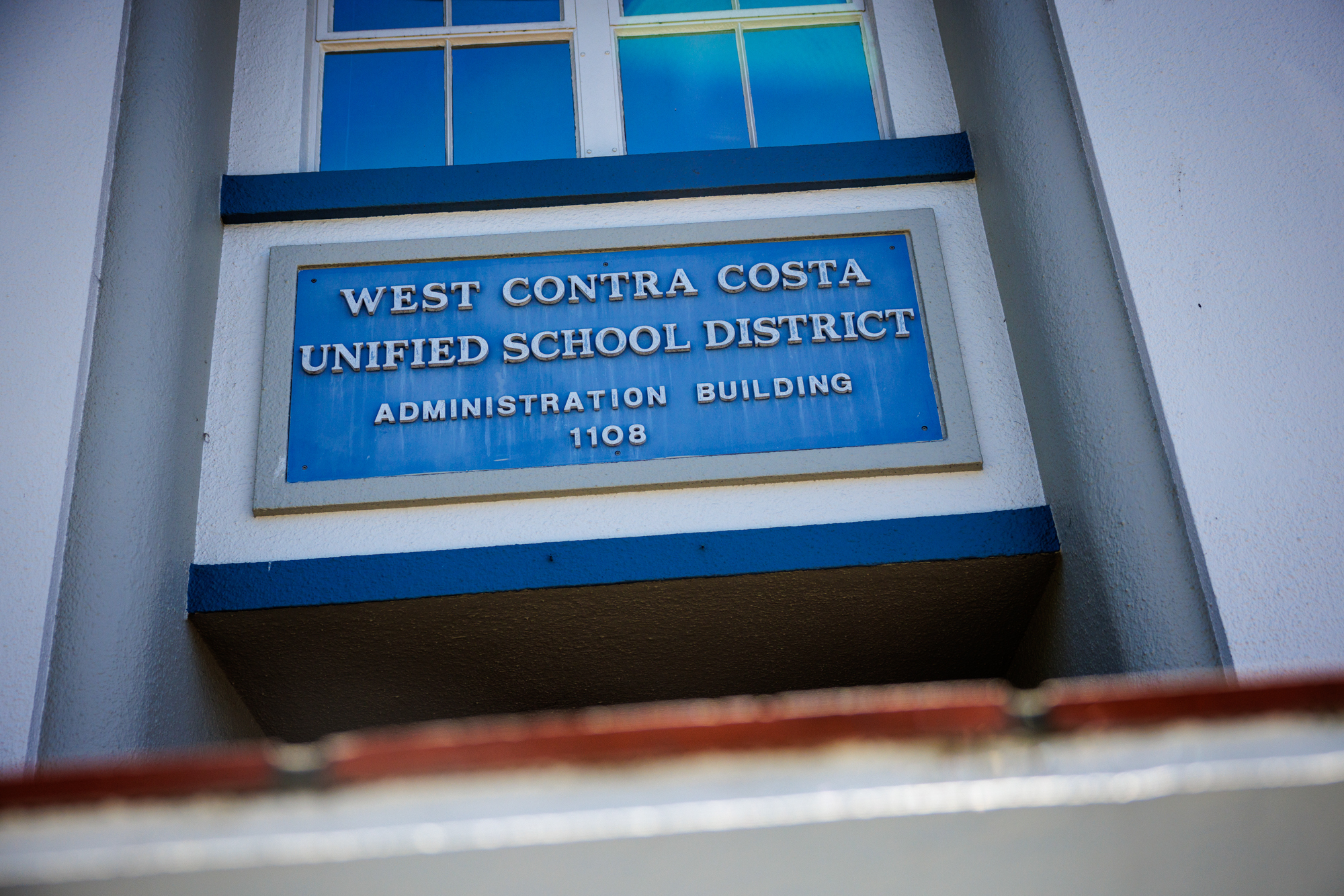
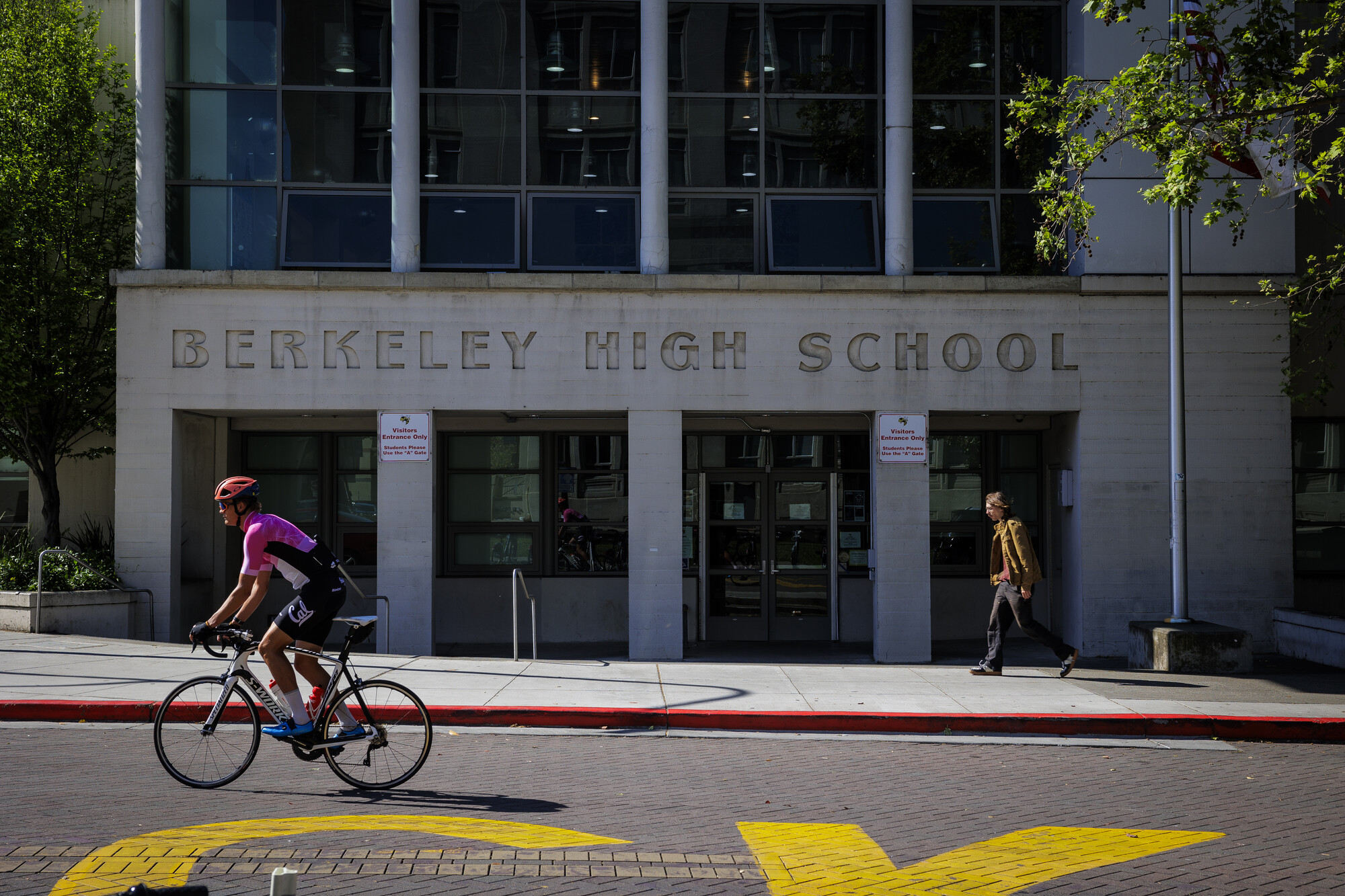
"blocks": [],
"excerpt": "Teachers in the East Bay school district plan to walk off the job beginning Thursday. Their concerns over wages and benefits are echoed in districts throughout California.",
"status": "publish",
"parent": 0,
"modified": 1764809638,
"stats": {
"hasAudio": false,
"hasVideo": false,
"hasChartOrMap": false,
"iframeSrcs": [],
"hasGoogleForm": false,
"hasGallery": false,
"hasHearkenModule": false,
"hasPolis": false,
"paragraphCount": 39,
"wordCount": 1922
},
"headData": {
"title": "West Contra Costa Teachers Are Set to Strike. Across the Bay Area, More Could Follow | KQED",
"description": "Teachers in the East Bay school district plan to walk off the job beginning Thursday. Their concerns over wages and benefits are echoed in districts throughout California.",
"ogTitle": "",
"ogDescription": "",
"ogImgId": "",
"twTitle": "",
"twDescription": "",
"twImgId": "",
"schema": {
"@context": "https://schema.org",
"@type": "NewsArticle",
"headline": "West Contra Costa Teachers Are Set to Strike. Across the Bay Area, More Could Follow",
"datePublished": "2025-12-03T14:52:50-08:00",
"dateModified": "2025-12-03T16:53:58-08:00",
"image": "https://cdn.kqed.org/wp-content/uploads/2020/02/KQED-OG-Image@1x.png",
"isAccessibleForFree": "True",
"publisher": {
"@type": "NewsMediaOrganization",
"@id": "https://www.kqed.org/#organization",
"name": "KQED",
"logo": "https://cdn.kqed.org/wp-content/uploads/2020/02/KQED-OG-Image@1x.png",
"url": "https://www.kqed.org",
"sameAs": [
"https://www.facebook.com/KQED",
"https://twitter.com/KQED",
"https://www.instagram.com/kqed/",
"https://www.tiktok.com/@kqedofficial",
"https://www.linkedin.com/company/kqed",
"https://www.youtube.com/channel/UCeC0IOo7i1P_61zVUWbJ4nw"
]
}
}
},
"primaryCategory": {
"termId": 34551,
"slug": "labor",
"name": "Labor"
},
"sticky": false,
"nprStoryId": "kqed-12065732",
"templateType": "standard",
"featuredImageType": "standard",
"excludeFromSiteSearch": "Include",
"articleAge": "0",
"path": "/news/12065732/west-contra-costa-teachers-are-set-to-strike-across-the-bay-area-more-could-follow",
"audioTrackLength": null,
"parsedContent": [
{
"type": "contentString",
"content": "\u003cdiv class=\"post-body\">\u003cp>\u003cp>Teachers in the West Contra Costa Unified School District \u003ca href=\"https://www.kqed.org/news/12065486/west-contra-costa-teachers-are-near-a-pivotal-moment-in-their-potential-strike\">plan to strike beginning Thursday\u003c/a> as long-simmering labor disputes come to a head in major districts across the Bay Area.\u003c/p>\n\u003cp>Union leaders say their educators need higher wages and better benefit coverage — and they aren’t alone. In San Francisco, the union representing public school teachers is holding a strike authorization vote on Wednesday, and in Berkeley, the union is entering mediation with the district after declaring an impasse.\u003c/p>\n\u003cp>Across California, meanwhile, school districts have \u003ca href=\"https://www.kqed.org/news/12027158/how-oakland-and-sf-ended-up-among-7-ca-school-districts-who-cant-pay-their-bills\">struggled to balance their budgets\u003c/a> as they face declining enrollment and shrinking state funding.\u003c/p>\n\u003cp>\u003c/p>\u003c/div>",
"attributes": {
"named": {},
"numeric": []
}
},
{
"type": "component",
"content": "",
"name": "ad",
"attributes": {
"named": {
"label": "fullwidth"
},
"numeric": [
"fullwidth"
]
}
},
{
"type": "contentString",
"content": "\u003cdiv class=\"post-body\">\u003cp>\u003c/p>\n\u003cp>“This is an education justice issue,” said Francisco Ortiz, the president of United Teachers of Richmond, which represents 1,400 West Contra Costa teachers. “The district’s piecemeal solutions are not serving our students. We need to see action that stabilizes our district now, which means providing competitive wages and health care, smaller class sizes, and a commitment to our educators that supports their ability to stay.”\u003c/p>\n\u003cp>Educators at the district’s 50 campuses began negotiating a new two-year contract with school officials eight months ago. After the union declared an impasse in August, two negotiations mediated by a third party failed to yield an agreement.\u003c/p>\n\u003cp>As part of that process, a neutral fact-finding committee made its recommendations for a compromise between West Contra Costa Unified and the teachers’ union last week. The district’s offer, however, proposed a lower wage hike than the report recommended, prompting United Teachers of Richmond to call the indefinite strike, Ortiz said.\u003c/p>\n\u003cfigure id=\"attachment_12031022\" class=\"wp-caption aligncenter\" style=\"max-width: 2000px\">\u003cimg loading=\"lazy\" decoding=\"async\" class=\"size-full wp-image-12031022\" src=\"https://cdn.kqed.org/wp-content/uploads/sites/10/2025/03/240312-RICHMOND-WALKOUT-MD-01-KQED.jpg\" alt=\"\" width=\"2000\" height=\"1333\" srcset=\"https://cdn.kqed.org/wp-content/uploads/sites/10/2025/03/240312-RICHMOND-WALKOUT-MD-01-KQED.jpg 2000w, https://cdn.kqed.org/wp-content/uploads/sites/10/2025/03/240312-RICHMOND-WALKOUT-MD-01-KQED-800x533.jpg 800w, https://cdn.kqed.org/wp-content/uploads/sites/10/2025/03/240312-RICHMOND-WALKOUT-MD-01-KQED-1020x680.jpg 1020w, https://cdn.kqed.org/wp-content/uploads/sites/10/2025/03/240312-RICHMOND-WALKOUT-MD-01-KQED-160x107.jpg 160w, https://cdn.kqed.org/wp-content/uploads/sites/10/2025/03/240312-RICHMOND-WALKOUT-MD-01-KQED-1536x1024.jpg 1536w, https://cdn.kqed.org/wp-content/uploads/sites/10/2025/03/240312-RICHMOND-WALKOUT-MD-01-KQED-1920x1280.jpg 1920w\" sizes=\"auto, (max-width: 2000px) 100vw, 2000px\">\u003cfigcaption class=\"wp-caption-text\">Valerie Aquino (center) and other students from Richmond’s John F. Kennedy High School stage a walkout and march to the West Contra Costa Unified School District Offices to protest impending layoffs as part of cuts to the district’s budget in Richmond on March 12, 2025. \u003ccite>(Martin do Nascimento/KQED)\u003c/cite>\u003c/figcaption>\u003c/figure>\n\u003cp>He said the offer was “not what’s going to help keep our educators here.”\u003c/p>\n\u003cp>“Our educators have been sounding the alarm for years about the staffing crisis and instability that our students face,” he told KQED. “Our students deserve educators who can feel safe and secure working here and can stay here. They deserve teachers whose work and commitment with our students is respected and reciprocated by the district. That’s the crux here.”\u003c/p>\n\u003cp>Teachers in districts throughout the Bay Area have echoed his sentiment as they escalate their own threats to strike in the coming months without better contracts. United Educators of San Francisco members will take the \u003ca href=\"https://www.kqed.org/news/12065524/san-francisco-teachers-take-key-step-toward-strike\">first of two votes necessary to authorize a strike on Wednesday\u003c/a> afternoon after their first third-party mediation process failed. The Berkeley Federation of Teachers and Berkeley Unified School District declared an impasse on Nov. 20, moving them into mediation.\u003c/p>\n\u003cp>“This has been a long time coming,” said Danielle Mahones, the director of leadership development programs at the UC Berkeley Labor Center. “Educators and parents and students have been feeling that schools … across California have been underfunded, that classrooms are too crowded, that the teacher pay is not keeping up with the cost of living in many cities. For some time, educators have diligently tried to get these issues resolved at the district level, but they’re seeing that there’s common themes.”\u003c/p>\n\u003ch2>‘They can’t do it anymore’\u003c/h2>\n\u003cp>Across the districts, wages and health benefits have been the biggest sticking points for unions negotiating contracts for 2025 to 2027.\u003c/p>\n\u003cp>Compared with similarly educated workers in the state, teachers’ compensation has always been low, Mahones said, but it’s become less tenable in recent years — both because the cost of living has risen and because workers are growing more fatigued.\u003c/p>\n\u003cp>“A lot of them are sort of surviving paycheck to paycheck and yet still buying food for their own students who are in need, buying school supplies for their classrooms,” she told KQED. “I think it’s just reached a point where folks feel like they can’t do it anymore. And they’re really concerned seeing a lot of their colleagues leave the profession.”\u003c/p>\n\u003cfigure id=\"attachment_12031025\" class=\"wp-caption aligncenter\" style=\"max-width: 2000px\">\u003cimg loading=\"lazy\" decoding=\"async\" class=\"size-full wp-image-12031025\" src=\"https://cdn.kqed.org/wp-content/uploads/sites/10/2025/03/240312-RICHMOND-WALKOUT-MD-08-KQED.jpg\" alt=\"\" width=\"2000\" height=\"1333\" srcset=\"https://cdn.kqed.org/wp-content/uploads/sites/10/2025/03/240312-RICHMOND-WALKOUT-MD-08-KQED.jpg 2000w, https://cdn.kqed.org/wp-content/uploads/sites/10/2025/03/240312-RICHMOND-WALKOUT-MD-08-KQED-800x533.jpg 800w, https://cdn.kqed.org/wp-content/uploads/sites/10/2025/03/240312-RICHMOND-WALKOUT-MD-08-KQED-1020x680.jpg 1020w, https://cdn.kqed.org/wp-content/uploads/sites/10/2025/03/240312-RICHMOND-WALKOUT-MD-08-KQED-160x107.jpg 160w, https://cdn.kqed.org/wp-content/uploads/sites/10/2025/03/240312-RICHMOND-WALKOUT-MD-08-KQED-1536x1024.jpg 1536w, https://cdn.kqed.org/wp-content/uploads/sites/10/2025/03/240312-RICHMOND-WALKOUT-MD-08-KQED-1920x1280.jpg 1920w\" sizes=\"auto, (max-width: 2000px) 100vw, 2000px\">\u003cfigcaption class=\"wp-caption-text\">Julissa Blandon and other students from Richmond’s John F. Kennedy High School stage a walkout and rally in front of to the West Contra Costa Unified School District Offices to protest impending layoffs as part of cuts to the district’s budget in Richmond on March 12, 2025. \u003ccite>(Martin do Nascimento/KQED)\u003c/cite>\u003c/figcaption>\u003c/figure>\n\u003cp>United Teachers of Richmond asked the district for a 5% raise in each of the next two years when it began negotiations in February.\u003c/p>\n\u003cp>“Currently, we’re at the bottom of both pay and health care contributions in the entire county of Contra Costa,” Ortiz said, adding that union members did not receive any pay increase last year. “That’s why we’ve lost over 1,500 educators in the last five years. We’ve lost more teachers than we represent in the last five years.”\u003c/p>\n\u003cp>The fact-finding team’s recommendation on Friday was equivalent to a 6% raise over the next two-year contract period: a 2.5% hike retroactive to July, when their former contract expired, plus additional raises of 0.5% in 2026 and 3% in 2027.\u003c/p>\n\u003cp>The district’s offer, which led to the strike declaration, was half of that, according to Ortiz: a 2% increase retroactive to July and 1% more in January, with no raise in 2027. It did increase the district’s contribution to health care benefits over the next two years, according to Superintendent Cheryl Cotton.\u003c/p>\u003c/div>",
"attributes": {
"named": {},
"numeric": []
}
},
{
"type": "component",
"content": "",
"name": "aside",
"attributes": {
"named": {
"postid": "news_12065524",
"hero": "https://cdn.kqed.org/wp-content/uploads/sites/10/2025/02/250204-WeCantWait-13-BL-1020x680.jpg",
"label": ""
},
"numeric": []
}
},
{
"type": "contentString",
"content": "\u003cdiv class=\"post-body\">\u003cp>“We made this offer even though our district is already spending millions more each year than we receive in revenue,” Cotton wrote in an email to families on Monday. The district has had to slash \u003ca href=\"https://www.kqed.org/news/12065486/west-contra-costa-teachers-are-near-a-pivotal-moment-in-their-potential-strike\">tens of millions of dollars from its budget\u003c/a> over the last two years, and more cuts will be needed to stave off an ongoing deficit.\u003c/p>\n\u003cp>But Ortiz argued that the district can afford the union’s ask.\u003c/p>\n\u003cp>“We have identified ways in which the district can afford our proposals and stabilize our school district. And their current offer will not do that,” he said.\u003c/p>\n\u003cp>The San Francisco Unified School District has offered teachers a 2% wage hike in exchange for cutting other contractual obligations, including a sabbatical program for veteran educators and additional prep periods for advanced placement teachers.\u003c/p>\n\u003cp>Two years ago, the district gave teachers historic $9,000 raises. Now it’s facing a major budget crisis, spurring a commitment \u003ca href=\"https://www.kqed.org/news/12044768/sf-school-district-unveils-balanced-budget-after-cutting-over-110-million-in-spending\">to cutting more than $150 million\u003c/a> in ongoing costs over two years.\u003c/p>\n\u003cp>The Berkeley Federation of Teachers, meanwhile, asked for consecutive 5% raises for two years and has gotten no wage increase offer from BUSD after 17 bargaining sessions, according to union President Matt Meyer.\u003c/p>\n\u003cfigure id=\"attachment_12065384\" class=\"wp-caption aligncenter\" style=\"max-width: 2000px\">\u003cimg loading=\"lazy\" decoding=\"async\" class=\"size-full wp-image-12065384\" src=\"https://cdn.kqed.org/wp-content/uploads/sites/10/2025/11/240508-Berkeley-High-File-MD-03_qed.jpg\" alt=\"\" width=\"2000\" height=\"1333\" srcset=\"https://cdn.kqed.org/wp-content/uploads/sites/10/2025/11/240508-Berkeley-High-File-MD-03_qed.jpg 2000w, https://cdn.kqed.org/wp-content/uploads/sites/10/2025/11/240508-Berkeley-High-File-MD-03_qed-160x107.jpg 160w, https://cdn.kqed.org/wp-content/uploads/sites/10/2025/11/240508-Berkeley-High-File-MD-03_qed-1536x1024.jpg 1536w\" sizes=\"auto, (max-width: 2000px) 100vw, 2000px\">\u003cfigcaption class=\"wp-caption-text\">Berkeley High School in Berkeley on May 8, 2024. \u003ccite>(Martin do Nascimento/KQED)\u003c/cite>\u003c/figcaption>\u003c/figure>\n\u003cp>As wages fall behind the cost of living, Mahones said, more of educators’ paychecks are also going to health care coverage because districts are passing the cost of higher premiums along to teachers.\u003c/p>\n\u003cp>United Educators of San Francisco President Cassondra Curiel told KQED last week that without a new agreement, teachers with two children would have to put about $1500 of each paycheck toward health care come January.\u003c/p>\n\u003cp>Meyer said Berkeley Unified covers about 55% of employees’ benefit costs, but he added that in the last five years, the percentage of their paychecks that has gone to health coverage has increased significantly.\u003c/p>\n\u003cp>“Our disposable income has gone down quite a bit just because of what the employee has to pay for medical benefits,” he told KQED. Berkeley’s union has asked the district to cover 100% of health care costs, but it has not gotten an offer from the district.\u003c/p>\n\u003cp>In a statement on Monday, Berkeley’s Superintendent Enikia Ford Morthel said the district was “committed to good-faith discussions that honor their contributions while also ensuring the long-term financial health of our district.” It also faces a budget deficit of \u003ca href=\"https://www.berkeleyside.org/2025/06/24/berkeley-unified-approves-budget-cuts-family-engagement\">$7.6 million\u003c/a> for this school year.\u003c/p>\n\u003ch2>Unions build statewide unity\u003c/h2>\n\u003cp>As more local unions feel emboldened to push toward strikes, Mahones said increased coordination and common ground are likely playing a large part. She said they’ve found that the problems they’re facing aren’t isolated and are in part a result of state funding shortfalls.\u003c/p>\n\u003cp>“It is one thing if one single district in our state goes out on strike. It is something else when we were just seeing district after district reach impasse,” she said.\u003c/p>\n\u003cfigure id=\"attachment_12049415\" class=\"wp-caption aligncenter\" style=\"max-width: 2000px\">\u003cimg loading=\"lazy\" decoding=\"async\" class=\"size-full wp-image-12049415\" src=\"https://cdn.kqed.org/wp-content/uploads/sites/10/2025/07/250723-WEST-CO-CO-ICE-MD-03-KQED.jpg\" alt=\"\" width=\"2000\" height=\"1334\" srcset=\"https://cdn.kqed.org/wp-content/uploads/sites/10/2025/07/250723-WEST-CO-CO-ICE-MD-03-KQED.jpg 2000w, https://cdn.kqed.org/wp-content/uploads/sites/10/2025/07/250723-WEST-CO-CO-ICE-MD-03-KQED-160x107.jpg 160w, https://cdn.kqed.org/wp-content/uploads/sites/10/2025/07/250723-WEST-CO-CO-ICE-MD-03-KQED-1536x1025.jpg 1536w\" sizes=\"auto, (max-width: 2000px) 100vw, 2000px\">\u003cfigcaption class=\"wp-caption-text\">The West Contra Costa School District Offices in Richmond on July 23, 2025. \u003ccite>(Martin do Nascimento/KQED)\u003c/cite>\u003c/figcaption>\u003c/figure>\n\u003cp>Currently, California ranks \u003ca href=\"https://www.ppic.org/publication/financing-californias-public-schools/\">16th in the country in terms of per-pupil education funding\u003c/a>, but that drops to 31st when accounting for the cost of living.\u003c/p>\n\u003cp>“I think it’s a shame that we’re all stuck negotiating with our local districts for what the state gives,” Meyer said. “But we do know that our district can spend its money more wisely and can prioritize and make an investment in educators.”\u003c/p>\n\u003cp>In the spring, 32 unions, including West Contra Costa, San Francisco and Berkeley, \u003ca href=\"https://www.kqed.org/news/12025440/schools-face-cuts-california-teachers-unions-band-together-demands\">joined a coordinated campaign\u003c/a> by the California Teachers Association, dubbed “We Can’t Wait,” with the goals of increasing districts’ spending on school sites and ultimately increasing state funding.\u003c/p>\u003c/div>",
"attributes": {
"named": {},
"numeric": []
}
},
{
"type": "component",
"content": "",
"name": "aside",
"attributes": {
"named": {
"postid": "news_12065486",
"hero": "https://cdn.kqed.org/wp-content/uploads/sites/10/2025/07/240312-RICHMOND-WALKOUT-MD-02_qed.jpg",
"label": ""
},
"numeric": []
}
},
{
"type": "contentString",
"content": "\u003cdiv class=\"post-body\">\u003cp>Mahones said that one of their hopes is that coordinated union pressure could encourage district leaders to push legislators to allocate more money for public education in the state’s budget.\u003c/p>\n\u003cp>“I think that educators are also looking to the state of California, as the fifth-biggest economy in the world, to say, ‘We need to be doing better for our students,’” Mahones told KQED. “‘What would it look like for California to actually make a commitment to all students in our state being able to receive a high-quality education with fair teacher-to-student ratios … counselors and school nurses and access to mental health?”\u003c/p>\n\u003cp>California Teachers Association President David Goldberg said that California’s education system has weathered decades of disinvestment since Proposition 13 passed, restricting the amount of state funding schools get from property taxes. Now, they rely much more heavily on income tax, resulting in major swings in school districts’ budgets based on economic fluctuations.\u003c/p>\n\u003cp>But he cautioned against writing off the current union tensions as just a result of state shortages. Unions across the Bay Area say their districts spend too much money on large administrative arms, contracting outside special education services and teachers, and building up high reserve funds.\u003c/p>\n\u003cp>“Because state funding is so scarce, they have to be that much better. There’s no room for error,” he said. “Districts have to get it right.”\u003c/p>\n\u003cp>\u003cem>KQED’s \u003c/em>\u003ca href=\"https://www.kqed.org/author/shossaini\">\u003cem>Sara Hossaini\u003c/em>\u003c/a>\u003cem> contributed to this report.\u003c/em>\u003c/p>\n\u003cp>\u003c/p>\u003c/div>",
"attributes": {
"named": {},
"numeric": []
}
},
{
"type": "component",
"content": "",
"name": "ad",
"attributes": {
"named": {
"label": "floatright"
},
"numeric": [
"floatright"
]
}
},
{
"type": "contentString",
"content": "\u003cdiv class=\"post-body\">\u003cp>\u003c/p>\n\u003c/div>\u003c/p>",
"attributes": {
"named": {},
"numeric": []
}
}
],
"link": "/news/12065732/west-contra-costa-teachers-are-set-to-strike-across-the-bay-area-more-could-follow",
"authors": [
"11913"
],
"categories": [
"news_18540",
"news_34551",
"news_28250",
"news_8"
],
"tags": [
"news_1386",
"news_31080",
"news_18352",
"news_20013",
"news_27626",
"news_32885",
"news_19904",
"news_24590",
"news_2044",
"news_24807",
"news_31988",
"news_3733",
"news_27458"
],
"featImg": "news_12049416",
"label": "news"
},
"news_12065755": {
"type": "posts",
"id": "news_12065755",
"meta": {
"index": "posts_1716263798",
"site": "news",
"id": "12065755",
"score": null,
"sort": [
1764712739000
]
},
"guestAuthors": [],
"slug": "san-francisco-high-school-student-shot-and-wounded-on-campus-supervisor-says",
"title": "San Francisco High School Student Shot and Wounded on Campus",
"publishDate": 1764712739,
"format": "standard",
"headTitle": "San Francisco High School Student Shot and Wounded on Campus | KQED",
"labelTerm": {
"site": "news"
},
"content": "\u003cp>A student was shot and wounded at Burton High School in southeastern \u003ca href=\"https://www.kqed.org/news/tag/san-francisco\">San Francisco\u003c/a> on Tuesday, according to the San Francisco Police Department. \u003c/p>\n\u003cp>The student was shot in the leg at the campus in Portola and is stable, Supervisor Jackie Fielder said in a statement.\u003c/p>\n\u003cp>Shortly after 12:10 p.m., SFPD officers responded to the campus in Portola and rendered aid to the victim. \u003c/p>\n\u003cp>[ad fullwidth]\u003c/p>\n\u003cp>According to Bayview Station Captain Bernadette Robinson, the suspect fled the school and was later apprehended about a mile east in the Bayview. Officers recovered a firearm during the arrest. \u003c/p>\n\u003cp>It’s unclear whether the suspect is also a student. Robinson said it appears to have been an isolated incident and not a random attack. \u003c/p>\n\u003cp>SFUSD Superintendent Maria Su said that police and school officials responded immediately to secure the campus and prevented students from entering and exiting. She said classes continued throughout the afternoon.\u003c/p>\n\u003cp>“I understand how things like this can be really scary for our community, for our families, and for our students,” Su said. “Here at Burton High School, as well as throughout the entire school district, we do have safety measures in place. We followed those protocols today.”\u003c/p>\n\u003cp>Su said that the school would have additional wellness support on campus for students and staff throughout the week.\u003c/p>\n\u003cp>The shooting comes two weeks after a \u003ca href=\"https://www.kqed.org/news/12063886/at-least-1-person-shot-at-oaklands-skyline-high-school\">student in Oakland was shot\u003c/a> during the school day, prompting outrage and \u003ca href=\"https://www.kqed.org/news/12064511/after-back-to-back-school-shootings-in-oakland-skyline-high-students-walk-out-of-class\">pleas for better violence prevention\u003c/a> in the city’s public high schools.\u003c/p>\n\u003cp>SFPD said it could not provide additional details about the incident pending investigation. \u003c/p>\n\u003cp>\u003c/p>\n",
"blocks": [],
"excerpt": "A student was shot in the leg on Tuesday at Burton High School in Portola, according to San Francisco police, who said a suspect was in custody.",
"status": "publish",
"parent": 0,
"modified": 1764721238,
"stats": {
"hasAudio": false,
"hasVideo": false,
"hasChartOrMap": false,
"iframeSrcs": [],
"hasGoogleForm": false,
"hasGallery": false,
"hasHearkenModule": false,
"hasPolis": false,
"paragraphCount": 12,
"wordCount": 268
},
"headData": {
"title": "San Francisco High School Student Shot and Wounded on Campus | KQED",
"description": "A student was shot in the leg on Tuesday at Burton High School in Portola, according to San Francisco police, who said a suspect was in custody.",
"ogTitle": "",
"ogDescription": "",
"ogImgId": "",
"twTitle": "",
"twDescription": "",
"twImgId": "",
"schema": {
"@context": "https://schema.org",
"@type": "NewsArticle",
"headline": "San Francisco High School Student Shot and Wounded on Campus",
"datePublished": "2025-12-02T13:58:59-08:00",
"dateModified": "2025-12-02T16:20:38-08:00",
"image": "https://cdn.kqed.org/wp-content/uploads/2020/02/KQED-OG-Image@1x.png",
"isAccessibleForFree": "True",
"publisher": {
"@type": "NewsMediaOrganization",
"@id": "https://www.kqed.org/#organization",
"name": "KQED",
"logo": "https://cdn.kqed.org/wp-content/uploads/2020/02/KQED-OG-Image@1x.png",
"url": "https://www.kqed.org",
"sameAs": [
"https://www.facebook.com/KQED",
"https://twitter.com/KQED",
"https://www.instagram.com/kqed/",
"https://www.tiktok.com/@kqedofficial",
"https://www.linkedin.com/company/kqed",
"https://www.youtube.com/channel/UCeC0IOo7i1P_61zVUWbJ4nw"
]
}
}
},
"primaryCategory": {
"termId": 8,
"slug": "news",
"name": "News"
},
"sticky": false,
"nprStoryId": "kqed-12065755",
"templateType": "standard",
"featuredImageType": "standard",
"excludeFromSiteSearch": "Include",
"articleAge": "0",
"path": "/news/12065755/san-francisco-high-school-student-shot-and-wounded-on-campus-supervisor-says",
"audioTrackLength": null,
"parsedContent": [
{
"type": "contentString",
"content": "\u003cdiv class=\"post-body\">\u003cp>\u003cp>A student was shot and wounded at Burton High School in southeastern \u003ca href=\"https://www.kqed.org/news/tag/san-francisco\">San Francisco\u003c/a> on Tuesday, according to the San Francisco Police Department. \u003c/p>\n\u003cp>The student was shot in the leg at the campus in Portola and is stable, Supervisor Jackie Fielder said in a statement.\u003c/p>\n\u003cp>Shortly after 12:10 p.m., SFPD officers responded to the campus in Portola and rendered aid to the victim. \u003c/p>\n\u003cp>\u003c/p>\u003c/div>",
"attributes": {
"named": {},
"numeric": []
}
},
{
"type": "component",
"content": "",
"name": "ad",
"attributes": {
"named": {
"label": "fullwidth"
},
"numeric": [
"fullwidth"
]
}
},
{
"type": "contentString",
"content": "\u003cdiv class=\"post-body\">\u003cp>\u003c/p>\n\u003cp>According to Bayview Station Captain Bernadette Robinson, the suspect fled the school and was later apprehended about a mile east in the Bayview. Officers recovered a firearm during the arrest. \u003c/p>\n\u003cp>It’s unclear whether the suspect is also a student. Robinson said it appears to have been an isolated incident and not a random attack. \u003c/p>\n\u003cp>SFUSD Superintendent Maria Su said that police and school officials responded immediately to secure the campus and prevented students from entering and exiting. She said classes continued throughout the afternoon.\u003c/p>\n\u003cp>“I understand how things like this can be really scary for our community, for our families, and for our students,” Su said. “Here at Burton High School, as well as throughout the entire school district, we do have safety measures in place. We followed those protocols today.”\u003c/p>\n\u003cp>Su said that the school would have additional wellness support on campus for students and staff throughout the week.\u003c/p>\n\u003cp>The shooting comes two weeks after a \u003ca href=\"https://www.kqed.org/news/12063886/at-least-1-person-shot-at-oaklands-skyline-high-school\">student in Oakland was shot\u003c/a> during the school day, prompting outrage and \u003ca href=\"https://www.kqed.org/news/12064511/after-back-to-back-school-shootings-in-oakland-skyline-high-students-walk-out-of-class\">pleas for better violence prevention\u003c/a> in the city’s public high schools.\u003c/p>\n\u003cp>SFPD said it could not provide additional details about the incident pending investigation. \u003c/p>\n\u003cp>\u003c/p>\n\u003c/div>\u003c/p>",
"attributes": {
"named": {},
"numeric": []
}
}
],
"link": "/news/12065755/san-francisco-high-school-student-shot-and-wounded-on-campus-supervisor-says",
"authors": [
"11913"
],
"categories": [
"news_34167",
"news_18540",
"news_28250",
"news_8"
],
"tags": [
"news_5706",
"news_17725",
"news_27626",
"news_35784",
"news_38"
],
"featImg": "news_12041396",
"label": "news"
},
"news_12065196": {
"type": "posts",
"id": "news_12065196",
"meta": {
"index": "posts_1716263798",
"site": "news",
"id": "12065196",
"score": null,
"sort": [
1764608420000
]
},
"guestAuthors": [],
"slug": "3-out-of-4-california-families-with-young-kids-cant-afford-at-least-one-basic-need",
"title": "3 Out of 4 California Families With Young Kids Can’t Afford At Least 1 Basic Need",
"publishDate": 1764608420,
"format": "standard",
"headTitle": "3 Out of 4 California Families With Young Kids Can’t Afford At Least 1 Basic Need | KQED",
"labelTerm": {
"site": "news"
},
"content": "\u003cp>Veronica Martinez woke up early one recent morning to make a fresh batch of cookies. She packed them in a box and headed to a community center in \u003ca href=\"https://www.kqed.org/news/tag/east-oakland\">East Oakland\u003c/a>, where a \u003ca href=\"https://www.oaklandtrybe.org/\">nonprofit called Trybe\u003c/a> invites families to get the things they need — produce, milk, eggs and even diapers.\u003c/p>\n\u003cp>Most of the families set up appointments first, but Martinez didn’t have one, so she shared the box of homemade cookies with staff in exchange for access to the pantry.\u003c/p>\n\u003cp>“They do a lot of hard work, you know, and I appreciate the community for helping us out,” Martinez said.\u003c/p>\n\u003cp>[ad fullwidth]\u003c/p>\n\u003cp>The longest-ever federal government shutdown \u003ca href=\"https://www.kqed.org/news/12060770/snap-calfresh-food-stamps-government-shutdown-november-payments-ebt\">delayed Martinez’s monthly food benefits\u003c/a>, and she needed help to feed herself and her teenage son and daughter.\u003c/p>\n\u003cp>“When [the shutdown] happened, wow, it was a shock because I only get paid once a month, and that money goes right away to bills, rent and whatnot, and then the rest I had to save for groceries,” Martinez said. “This month I didn’t even pay my rent on time.”\u003c/p>\n\u003cfigure id=\"attachment_12065189\" class=\"wp-caption aligncenter\" style=\"max-width: 2000px\">\u003ca href=\"https://cdn.kqed.org/wp-content/uploads/sites/10/2025/11/251120-FAMILIESFINANCIALINSECURITY-21-BL-KQED.jpg\">\u003cimg loading=\"lazy\" decoding=\"async\" class=\"size-full wp-image-12065189\" src=\"https://cdn.kqed.org/wp-content/uploads/sites/10/2025/11/251120-FAMILIESFINANCIALINSECURITY-21-BL-KQED.jpg\" alt=\"\" width=\"2000\" height=\"1333\" srcset=\"https://cdn.kqed.org/wp-content/uploads/sites/10/2025/11/251120-FAMILIESFINANCIALINSECURITY-21-BL-KQED.jpg 2000w, https://cdn.kqed.org/wp-content/uploads/sites/10/2025/11/251120-FAMILIESFINANCIALINSECURITY-21-BL-KQED-160x107.jpg 160w, https://cdn.kqed.org/wp-content/uploads/sites/10/2025/11/251120-FAMILIESFINANCIALINSECURITY-21-BL-KQED-1536x1024.jpg 1536w\" sizes=\"auto, (max-width: 2000px) 100vw, 2000px\">\u003c/a>\u003cfigcaption class=\"wp-caption-text\">A child holds a carton of eggs during a food distribution event hosted by Trybe at San Antonio Park in Oakland on Nov. 20, 2025. \u003ccite>(Beth LaBerge/KQED)\u003c/cite>\u003c/figcaption>\u003c/figure>\n\u003cp>Martinez makes a living caring for the young sons of her sister-in-law, Berenis Miranda, while she goes to work as a security guard. Miranda receives a $2,000 monthly state child care subsidy to pay Martinez for her work, but Martinez said that isn’t enough to get by in a region where the cost of living is outpacing wages.\u003c/p>\n\u003cp>“It’s hard to afford stuff nowadays,” Martinez said. “You go to the grocery store, you spend $100, and you come back out with nothing, actually. And you’re like, where did my $100 go?”\u003c/p>\n\u003cp>Miranda said she wishes she could pay Martinez more, but she’s struggling too.\u003c/p>\n\u003cp>“The Bay Area is not cheap,” she said. “Sometimes I have to rely on the food bank as well.”[aside postID=news_12061440 hero='https://cdn.kqed.org/wp-content/uploads/sites/10/2025/06/013_KQED_SanFranciscoMarinFoodBank_03182020_9229_qed.jpg']Both women’s situations underscore the precarity of raising young children in an expensive state. The Stanford Center on Early Childhood recently \u003ca href=\"https://rapidsurveyproject.com/article/three-years-of-california-parent-voices-show-families-struggle-to-meet-basic-needs-and-experience-emotional-distress-as-a-result/\">reported\u003c/a> that three in four California families with young children can’t cover at least one basic need, such as food, housing, utilities, child care or health care — the highest level of families experiencing material hardship since the center began its RAPID survey in 2022.\u003c/p>\n\u003cp>The findings come on the heels of a report from Tipping Point Community that the \u003ca href=\"https://www.kqed.org/news/12064764/how-a-surge-in-bay-area-poverty-wiped-out-a-decade-of-progress\">Bay Area’s poverty rate climbed \u003c/a>over 4 percentage points after a decade of steady decline.\u003c/p>\n\u003cp>And it’s not just low-income families who are feeling the pinch. In July, 86% of middle-income families reported having difficulty meeting a basic need, according to the RAPID survey. A higher percentage of parents in rural areas faced material hardship (93%) than parents in urban and suburban areas (72%).\u003c/p>\n\u003cp>A separate RAPID survey found that an increasing number of \u003ca href=\"https://rapidsurveyproject.com/article/hunger-is-increasing-among-those-who-provide-care-to-young-children/\">child care providers nationwide are experiencing hunger.\u003c/a> Nearly 45% of child care providers reported experiencing hunger between June 2021 and May of this year. The figure jumped to 58% in June — the highest level in four years of the survey.\u003c/p>\n\u003cp>Parents of young kids are often first to experience economic strain because they’re in the most expensive phase of life, said Abigail Stewart-Kahn, managing director of the Stanford Center on Early Childhood.\u003c/p>\n\u003cfigure id=\"attachment_12065182\" class=\"wp-caption aligncenter\" style=\"max-width: 2000px\">\u003ca href=\"https://cdn.kqed.org/wp-content/uploads/sites/10/2025/11/251120-FAMILIESFINANCIALINSECURITY-07-BL-KQED.jpg\">\u003cimg loading=\"lazy\" decoding=\"async\" class=\"size-full wp-image-12065182\" src=\"https://cdn.kqed.org/wp-content/uploads/sites/10/2025/11/251120-FAMILIESFINANCIALINSECURITY-07-BL-KQED.jpg\" alt=\"\" width=\"2000\" height=\"1333\" srcset=\"https://cdn.kqed.org/wp-content/uploads/sites/10/2025/11/251120-FAMILIESFINANCIALINSECURITY-07-BL-KQED.jpg 2000w, https://cdn.kqed.org/wp-content/uploads/sites/10/2025/11/251120-FAMILIESFINANCIALINSECURITY-07-BL-KQED-160x107.jpg 160w, https://cdn.kqed.org/wp-content/uploads/sites/10/2025/11/251120-FAMILIESFINANCIALINSECURITY-07-BL-KQED-1536x1024.jpg 1536w\" sizes=\"auto, (max-width: 2000px) 100vw, 2000px\">\u003c/a>\u003cfigcaption class=\"wp-caption-text\">Yolanda Monroe picks up items at a food distribution event hosted by Trybe at San Antonio Park in Oakland on Nov. 20, 2025. \u003ccite>(Beth LaBerge/KQED)\u003c/cite>\u003c/figcaption>\u003c/figure>\n\u003cp>“They’re usually earlier in their career — perhaps earning less as a result — their costs are higher because they have to pay for child care or stay home to provide it themselves,” she said. “There’s no public school system to take care of their children yet.\u003c/p>\n\u003cp>A majority of the parents surveyed said they experienced elevated levels of anxiety, depression and stress. Stewart-Kahn said that’s a concern, because their emotional distress can negatively affect \u003ca href=\"https://www.kqed.org/news/12051850/as-californias-electricity-rates-rise-parents-struggle-to-pay-their-bills\">their kids’ development\u003c/a>.\u003c/p>\n\u003cp>Miranda said she’s aware of the potential ripple effects on her sons’ development, but as a single-income earner in her household, she’s focused on making ends meet.\u003c/p>\n\u003cp>“I can’t be depressed, I can’t be sad, because I have to do what I have to do for my kids,” she said. “The only thing I can do is stay strong and just stay on survival mode.”\u003c/p>\n\u003cp>\u003c/p>\n",
"blocks": [],
"excerpt": "Parents of young children are often the first to feel the affordability crisis, experts say, because they’re in the most expensive phase of life.\r\n",
"status": "publish",
"parent": 0,
"modified": 1764202659,
"stats": {
"hasAudio": false,
"hasVideo": false,
"hasChartOrMap": false,
"iframeSrcs": [],
"hasGoogleForm": false,
"hasGallery": false,
"hasHearkenModule": false,
"hasPolis": false,
"paragraphCount": 19,
"wordCount": 810
},
"headData": {
"title": "3 Out of 4 California Families With Young Kids Can’t Afford At Least 1 Basic Need | KQED",
"description": "Parents of young children are often the first to feel the affordability crisis, experts say, because they’re in the most expensive phase of life.\r\n",
"ogTitle": "",
"ogDescription": "",
"ogImgId": "",
"twTitle": "",
"twDescription": "",
"twImgId": "",
"schema": {
"@context": "https://schema.org",
"@type": "NewsArticle",
"headline": "3 Out of 4 California Families With Young Kids Can’t Afford At Least 1 Basic Need",
"datePublished": "2025-12-01T09:00:20-08:00",
"dateModified": "2025-11-26T16:17:39-08:00",
"image": "https://cdn.kqed.org/wp-content/uploads/2020/02/KQED-OG-Image@1x.png",
"isAccessibleForFree": "True",
"publisher": {
"@type": "NewsMediaOrganization",
"@id": "https://www.kqed.org/#organization",
"name": "KQED",
"logo": "https://cdn.kqed.org/wp-content/uploads/2020/02/KQED-OG-Image@1x.png",
"url": "https://www.kqed.org",
"sameAs": [
"https://www.facebook.com/KQED",
"https://twitter.com/KQED",
"https://www.instagram.com/kqed/",
"https://www.tiktok.com/@kqedofficial",
"https://www.linkedin.com/company/kqed",
"https://www.youtube.com/channel/UCeC0IOo7i1P_61zVUWbJ4nw"
]
}
}
},
"primaryCategory": {
"termId": 8,
"slug": "news",
"name": "News"
},
"audioUrl": "https://traffic.omny.fm/d/clips/0af137ef-751e-4b19-a055-aaef00d2d578/ffca7e9f-6831-4[…]f-aaef00f5a073/50796f4a-38a5-4d23-a6bc-b3a1011bc040/audio.mp3",
"sticky": false,
"templateType": "standard",
"featuredImageType": "standard",
"excludeFromSiteSearch": "Include",
"articleAge": "0",
"path": "/news/12065196/3-out-of-4-california-families-with-young-kids-cant-afford-at-least-one-basic-need",
"audioTrackLength": null,
"parsedContent": [
{
"type": "contentString",
"content": "\u003cdiv class=\"post-body\">\u003cp>\u003cp>Veronica Martinez woke up early one recent morning to make a fresh batch of cookies. She packed them in a box and headed to a community center in \u003ca href=\"https://www.kqed.org/news/tag/east-oakland\">East Oakland\u003c/a>, where a \u003ca href=\"https://www.oaklandtrybe.org/\">nonprofit called Trybe\u003c/a> invites families to get the things they need — produce, milk, eggs and even diapers.\u003c/p>\n\u003cp>Most of the families set up appointments first, but Martinez didn’t have one, so she shared the box of homemade cookies with staff in exchange for access to the pantry.\u003c/p>\n\u003cp>“They do a lot of hard work, you know, and I appreciate the community for helping us out,” Martinez said.\u003c/p>\n\u003cp>\u003c/p>\u003c/div>",
"attributes": {
"named": {},
"numeric": []
}
},
{
"type": "component",
"content": "",
"name": "ad",
"attributes": {
"named": {
"label": "fullwidth"
},
"numeric": [
"fullwidth"
]
}
},
{
"type": "contentString",
"content": "\u003cdiv class=\"post-body\">\u003cp>\u003c/p>\n\u003cp>The longest-ever federal government shutdown \u003ca href=\"https://www.kqed.org/news/12060770/snap-calfresh-food-stamps-government-shutdown-november-payments-ebt\">delayed Martinez’s monthly food benefits\u003c/a>, and she needed help to feed herself and her teenage son and daughter.\u003c/p>\n\u003cp>“When [the shutdown] happened, wow, it was a shock because I only get paid once a month, and that money goes right away to bills, rent and whatnot, and then the rest I had to save for groceries,” Martinez said. “This month I didn’t even pay my rent on time.”\u003c/p>\n\u003cfigure id=\"attachment_12065189\" class=\"wp-caption aligncenter\" style=\"max-width: 2000px\">\u003ca href=\"https://cdn.kqed.org/wp-content/uploads/sites/10/2025/11/251120-FAMILIESFINANCIALINSECURITY-21-BL-KQED.jpg\">\u003cimg loading=\"lazy\" decoding=\"async\" class=\"size-full wp-image-12065189\" src=\"https://cdn.kqed.org/wp-content/uploads/sites/10/2025/11/251120-FAMILIESFINANCIALINSECURITY-21-BL-KQED.jpg\" alt=\"\" width=\"2000\" height=\"1333\" srcset=\"https://cdn.kqed.org/wp-content/uploads/sites/10/2025/11/251120-FAMILIESFINANCIALINSECURITY-21-BL-KQED.jpg 2000w, https://cdn.kqed.org/wp-content/uploads/sites/10/2025/11/251120-FAMILIESFINANCIALINSECURITY-21-BL-KQED-160x107.jpg 160w, https://cdn.kqed.org/wp-content/uploads/sites/10/2025/11/251120-FAMILIESFINANCIALINSECURITY-21-BL-KQED-1536x1024.jpg 1536w\" sizes=\"auto, (max-width: 2000px) 100vw, 2000px\">\u003c/a>\u003cfigcaption class=\"wp-caption-text\">A child holds a carton of eggs during a food distribution event hosted by Trybe at San Antonio Park in Oakland on Nov. 20, 2025. \u003ccite>(Beth LaBerge/KQED)\u003c/cite>\u003c/figcaption>\u003c/figure>\n\u003cp>Martinez makes a living caring for the young sons of her sister-in-law, Berenis Miranda, while she goes to work as a security guard. Miranda receives a $2,000 monthly state child care subsidy to pay Martinez for her work, but Martinez said that isn’t enough to get by in a region where the cost of living is outpacing wages.\u003c/p>\n\u003cp>“It’s hard to afford stuff nowadays,” Martinez said. “You go to the grocery store, you spend $100, and you come back out with nothing, actually. And you’re like, where did my $100 go?”\u003c/p>\n\u003cp>Miranda said she wishes she could pay Martinez more, but she’s struggling too.\u003c/p>\n\u003cp>“The Bay Area is not cheap,” she said. “Sometimes I have to rely on the food bank as well.”\u003c/p>\u003c/div>",
"attributes": {
"named": {},
"numeric": []
}
},
{
"type": "component",
"content": "",
"name": "aside",
"attributes": {
"named": {
"postid": "news_12061440",
"hero": "https://cdn.kqed.org/wp-content/uploads/sites/10/2025/06/013_KQED_SanFranciscoMarinFoodBank_03182020_9229_qed.jpg",
"label": ""
},
"numeric": []
}
},
{
"type": "contentString",
"content": "\u003cdiv class=\"post-body\">\u003cp>Both women’s situations underscore the precarity of raising young children in an expensive state. The Stanford Center on Early Childhood recently \u003ca href=\"https://rapidsurveyproject.com/article/three-years-of-california-parent-voices-show-families-struggle-to-meet-basic-needs-and-experience-emotional-distress-as-a-result/\">reported\u003c/a> that three in four California families with young children can’t cover at least one basic need, such as food, housing, utilities, child care or health care — the highest level of families experiencing material hardship since the center began its RAPID survey in 2022.\u003c/p>\n\u003cp>The findings come on the heels of a report from Tipping Point Community that the \u003ca href=\"https://www.kqed.org/news/12064764/how-a-surge-in-bay-area-poverty-wiped-out-a-decade-of-progress\">Bay Area’s poverty rate climbed \u003c/a>over 4 percentage points after a decade of steady decline.\u003c/p>\n\u003cp>And it’s not just low-income families who are feeling the pinch. In July, 86% of middle-income families reported having difficulty meeting a basic need, according to the RAPID survey. A higher percentage of parents in rural areas faced material hardship (93%) than parents in urban and suburban areas (72%).\u003c/p>\n\u003cp>A separate RAPID survey found that an increasing number of \u003ca href=\"https://rapidsurveyproject.com/article/hunger-is-increasing-among-those-who-provide-care-to-young-children/\">child care providers nationwide are experiencing hunger.\u003c/a> Nearly 45% of child care providers reported experiencing hunger between June 2021 and May of this year. The figure jumped to 58% in June — the highest level in four years of the survey.\u003c/p>\n\u003cp>Parents of young kids are often first to experience economic strain because they’re in the most expensive phase of life, said Abigail Stewart-Kahn, managing director of the Stanford Center on Early Childhood.\u003c/p>\n\u003cfigure id=\"attachment_12065182\" class=\"wp-caption aligncenter\" style=\"max-width: 2000px\">\u003ca href=\"https://cdn.kqed.org/wp-content/uploads/sites/10/2025/11/251120-FAMILIESFINANCIALINSECURITY-07-BL-KQED.jpg\">\u003cimg loading=\"lazy\" decoding=\"async\" class=\"size-full wp-image-12065182\" src=\"https://cdn.kqed.org/wp-content/uploads/sites/10/2025/11/251120-FAMILIESFINANCIALINSECURITY-07-BL-KQED.jpg\" alt=\"\" width=\"2000\" height=\"1333\" srcset=\"https://cdn.kqed.org/wp-content/uploads/sites/10/2025/11/251120-FAMILIESFINANCIALINSECURITY-07-BL-KQED.jpg 2000w, https://cdn.kqed.org/wp-content/uploads/sites/10/2025/11/251120-FAMILIESFINANCIALINSECURITY-07-BL-KQED-160x107.jpg 160w, https://cdn.kqed.org/wp-content/uploads/sites/10/2025/11/251120-FAMILIESFINANCIALINSECURITY-07-BL-KQED-1536x1024.jpg 1536w\" sizes=\"auto, (max-width: 2000px) 100vw, 2000px\">\u003c/a>\u003cfigcaption class=\"wp-caption-text\">Yolanda Monroe picks up items at a food distribution event hosted by Trybe at San Antonio Park in Oakland on Nov. 20, 2025. \u003ccite>(Beth LaBerge/KQED)\u003c/cite>\u003c/figcaption>\u003c/figure>\n\u003cp>“They’re usually earlier in their career — perhaps earning less as a result — their costs are higher because they have to pay for child care or stay home to provide it themselves,” she said. “There’s no public school system to take care of their children yet.\u003c/p>\n\u003cp>A majority of the parents surveyed said they experienced elevated levels of anxiety, depression and stress. Stewart-Kahn said that’s a concern, because their emotional distress can negatively affect \u003ca href=\"https://www.kqed.org/news/12051850/as-californias-electricity-rates-rise-parents-struggle-to-pay-their-bills\">their kids’ development\u003c/a>.\u003c/p>\n\u003cp>Miranda said she’s aware of the potential ripple effects on her sons’ development, but as a single-income earner in her household, she’s focused on making ends meet.\u003c/p>\n\u003cp>“I can’t be depressed, I can’t be sad, because I have to do what I have to do for my kids,” she said. “The only thing I can do is stay strong and just stay on survival mode.”\u003c/p>\n\u003cp>\u003c/p>\n\u003c/div>\u003c/p>",
"attributes": {
"named": {},
"numeric": []
}
}
],
"link": "/news/12065196/3-out-of-4-california-families-with-young-kids-cant-afford-at-least-one-basic-need",
"authors": [
"11829"
],
"categories": [
"news_31795",
"news_18540",
"news_457",
"news_28250",
"news_8"
],
"tags": [
"news_1386",
"news_20013",
"news_23333",
"news_27626",
"news_23122",
"news_20337",
"news_21602",
"news_178"
],
"featImg": "news_12065185",
"label": "news"
},
"news_12065524": {
"type": "posts",
"id": "news_12065524",
"meta": {
"index": "posts_1716263798",
"site": "news",
"id": "12065524",
"score": null,
"sort": [
1764428425000
]
},
"guestAuthors": [],
"slug": "san-francisco-teachers-take-key-step-toward-strike",
"title": "San Francisco Teachers Take Key Step Toward Strike",
"publishDate": 1764428425,
"format": "standard",
"headTitle": "San Francisco Teachers Take Key Step Toward Strike | KQED",
"labelTerm": {
"site": "news"
},
"content": "\u003cp>San Francisco’s teachers union plans to take a \u003ca href=\"https://www.kqed.org/news/12059537/as-deficit-looms-sf-public-school-teachers-threaten-strike-over-fair-contracts\">significant step toward a strike\u003c/a> next week, after eight months of bargaining with the San Francisco Unified School District have failed to yield a contract agreement.\u003c/p>\n\u003cp>United Educators of San Francisco will hold a strike authorization vote — the first of two the union’s rules require to officially call a work stoppage — on Dec. 3.\u003c/p>\n\u003cp>Union president Cassondra Curiel said that since UESF and SFUSD declared an \u003ca href=\"https://www.kqed.org/news/12059537/as-deficit-looms-sf-public-school-teachers-threaten-strike-over-fair-contracts\">impasse and entered third-party mediation\u003c/a> in October, the district has not made concessions on proposed raises and expanded health care coverage, among other issues, prompting the union to take a step toward striking.\u003c/p>\n\u003cp>[ad fullwidth]\u003c/p>\n\u003cp>“We did not get a signal from the district that they were going to change routes at all,” she said. The union and district’s bargaining teams attended a full day of mediation earlier this month, which Curiel said yielded no progress. “That really made it clear to our bargaining team that the district has every intention to maintain a status quo in our contract,” she continued.\u003c/p>\n\u003cp>SFUSD said in a statement on Wednesday that it was continuing to bargain in good faith “to achieve a fair agreement that avoids disruption to student services.”\u003c/p>\n\u003cfigure id=\"attachment_12008537\" class=\"wp-caption aligncenter\" style=\"max-width: 2000px\">\u003ca href=\"https://cdn.kqed.org/wp-content/uploads/sites/10/2024/10/240916-UnionSFSchoolClosures-38-BL_qed.jpg\">\u003cimg loading=\"lazy\" decoding=\"async\" class=\"size-full wp-image-12008537\" src=\"https://cdn.kqed.org/wp-content/uploads/sites/10/2024/10/240916-UnionSFSchoolClosures-38-BL_qed.jpg\" alt=\"\" width=\"2000\" height=\"1333\" srcset=\"https://cdn.kqed.org/wp-content/uploads/sites/10/2024/10/240916-UnionSFSchoolClosures-38-BL_qed.jpg 2000w, https://cdn.kqed.org/wp-content/uploads/sites/10/2024/10/240916-UnionSFSchoolClosures-38-BL_qed-800x533.jpg 800w, https://cdn.kqed.org/wp-content/uploads/sites/10/2024/10/240916-UnionSFSchoolClosures-38-BL_qed-1020x680.jpg 1020w, https://cdn.kqed.org/wp-content/uploads/sites/10/2024/10/240916-UnionSFSchoolClosures-38-BL_qed-160x107.jpg 160w, https://cdn.kqed.org/wp-content/uploads/sites/10/2024/10/240916-UnionSFSchoolClosures-38-BL_qed-1536x1024.jpg 1536w, https://cdn.kqed.org/wp-content/uploads/sites/10/2024/10/240916-UnionSFSchoolClosures-38-BL_qed-1920x1280.jpg 1920w\" sizes=\"auto, (max-width: 2000px) 100vw, 2000px\">\u003c/a>\u003cfigcaption class=\"wp-caption-text\">Teanna Tillery (center), a Para Educator, listens to Cassondra Curiel, President of United Educators of San Francisco, during a press conference outside San Francisco Unified School District offices on Sept. 16, 2025. \u003ccite>(Beth LaBerge/KQED)\u003c/cite>\u003c/figcaption>\u003c/figure>\n\u003cp>UESF and SFUSD \u003ca href=\"https://www.kqed.org/news/12025440/schools-face-cuts-california-teachers-unions-band-together-demands\">began bargaining\u003c/a> over a new two-year contract for educators in March. Their current contract expired in June, but mostly remains in place until a new deal is reached.\u003c/p>\n\u003cp>In October, UESF rejected SFUSD’s contract offer, which would have given educators a 2% raise, saying it would have required more concessions than gains from its members.\u003c/p>\n\u003cp>The deal would have undone existing agreements that give high school teachers who take on extra work — as department heads or teachers of Advanced Placement courses that enroll a certain number of students — an additional “prep” period, and cut stipends awarded to schools based on the number of AP exams their students take.\u003c/p>\n\u003cp>It would also have ended a program that allows educators to apply for semester-to-year-long sabbaticals after serving in the district for a minimum number of years and increased class sizes on some campuses.\u003c/p>\n\u003cp>UESF’s initial proposal for the pay increase in March was 14% for classified employees and 9% for certificated employees over two years. In the months since, there’s been no back-and-forth negotiations bringing that percentage down, Curiel told KQED in October. She said the 2% offer was the first from SFUSD that included a raise.[aside postID=news_12064746 hero='https://cdn.kqed.org/wp-content/uploads/sites/10/2025/11/241009-SFUSDClosuresMarch-30-BL_qed.jpg']The wage hike is important, especially for paraeducator positions, which are some of the district’s lowest-paid and hardest-to-staff roles, according to the union.\u003c/p>\n\u003cp>But the district has indicated that its budget to increase compensation is tight.\u003c/p>\n\u003cp>SFUSD is currently in the second of a two-year budgeting process to curb a massive ongoing deficit. Last year, it \u003ca href=\"https://www.kqed.org/news/12044768/sf-school-district-unveils-balanced-budget-after-cutting-over-110-million-in-spending\">slashed $114 million\u003c/a> in annual expenses through hundreds of \u003ca href=\"https://www.kqed.org/news/12017631/embattled-sf-school-district-offer-hundreds-buyouts-potential-layoffs\">early retirement buyouts\u003c/a>, the implementation of a strict staffing model in schools and \u003ca href=\"https://www.kqed.org/news/12044768/sf-school-district-unveils-balanced-budget-after-cutting-over-110-million-in-spending\">administrative position reductions\u003c/a>. This year, it will need to make another $48 million in cuts, which Superintendent Maria Su has indicated could be even more challenging.\u003c/p>\n\u003cp>In October, the district said it was committed to a budget process that benefits students while ensuring long-term financial stability.\u003c/p>\n\u003cp>“Right now, the state of California holds the authority to override any decision by the San Francisco Board of Education if it believes that decision could compromise the district’s financial stability,” the district said in a statement.\u003c/p>\n\u003cp>In October, SFUSD said that “any proposal for raises must be approved by the CDE and must be financially sustainable.”\u003c/p>\n\u003cp>The request for a wage hike comes just two years after SFUSD gave \u003ca href=\"https://www.sfusd.edu/about-sfusd/sfusd-news/press-releases/2023-10-20-sfusd-uesf-announce-9000-salary-raise-teachers-2023-24\">historic $9,000 raises\u003c/a> to educators, along with a 5% salary increase the following year. Under that deal, classified educators also received a significant bump to a minimum wage of $30 an hour.\u003c/p>\n\u003cp>Curiel said that higher pay matters to members, but the two primary focuses of negotiations have not been about compensation. UESF is requesting an agreement that the district will cover health care for educators’ dependents and development of a workload model aimed at improving working conditions for special education teachers.\u003c/p>\n\u003cp>“We are 36 days away from a massive increase to our health care for the second or third year in a row for our dependents,” Curiel said Tuesday. She said that educators pay about $650 per pay cycle for coverage for one child. In January, coverage for two will be more than $1500, she said.[aside postID=news_12064366 hero='https://cdn.kqed.org/wp-content/uploads/sites/10/2025/08/250818-SFUSDFIRSTDAY-04-KQED.jpg']While any health care or workload model deal would likely incur costs, the union’s final two major demands are “low-to-no-cost.” They’re asking to add language to the educators contract that echoes the district’s sanctuary status and commits to using district resources to provide shelter for the most vulnerable students.\u003c/p>\n\u003cp>The district already has that language and employs it in school policy, but Curiel said members feel it’s necessary to add it to their contracts because it makes it much more difficult to reverse.\u003c/p>\n\u003cp>“We see what happened to our nation during the last election cycle … when folks changed an administration that then changed policy entirely,” Curiel said. “If it’s in our contract, they absolutely cannot do that without the entire union agreeing to it.\u003c/p>\n\u003cp>“The 6,000 members of UESF hold these values very deeply and want to maintain them. The district insists it doesn’t want to put it in the contract, and we know they can and they absolutely should,” she continued.\u003c/p>\n\u003cp>The district did not respond to a request for comment regarding the language demands.\u003c/p>\n\u003cp>UESF has requested to be released from mediation. If that request is granted, the district and union would enter a final third-party-led “fact-finding” period to try to reach an agreement.\u003c/p>\n\u003cp>The strike authorization vote will happen in parallel. If it passes, it gives the union’s bargaining team permission to call a vote to officially authorize a strike in the future.\u003c/p>\n\u003cp>[ad floatright]\u003c/p>\n",
"blocks": [],
"excerpt": "The district and teachers union disagree over pay, health care benefits and more.",
"status": "publish",
"parent": 0,
"modified": 1764196127,
"stats": {
"hasAudio": false,
"hasVideo": false,
"hasChartOrMap": false,
"iframeSrcs": [],
"hasGoogleForm": false,
"hasGallery": false,
"hasHearkenModule": false,
"hasPolis": false,
"paragraphCount": 26,
"wordCount": 1123
},
"headData": {
"title": "San Francisco Teachers Take Key Step Toward Strike | KQED",
"description": "The district and teachers union disagree over pay, health care benefits and more.",
"ogTitle": "",
"ogDescription": "",
"ogImgId": "",
"twTitle": "",
"twDescription": "",
"twImgId": "",
"schema": {
"@context": "https://schema.org",
"@type": "NewsArticle",
"headline": "San Francisco Teachers Take Key Step Toward Strike",
"datePublished": "2025-11-29T07:00:25-08:00",
"dateModified": "2025-11-26T14:28:47-08:00",
"image": "https://cdn.kqed.org/wp-content/uploads/2020/02/KQED-OG-Image@1x.png",
"isAccessibleForFree": "True",
"publisher": {
"@type": "NewsMediaOrganization",
"@id": "https://www.kqed.org/#organization",
"name": "KQED",
"logo": "https://cdn.kqed.org/wp-content/uploads/2020/02/KQED-OG-Image@1x.png",
"url": "https://www.kqed.org",
"sameAs": [
"https://www.facebook.com/KQED",
"https://twitter.com/KQED",
"https://www.instagram.com/kqed/",
"https://www.tiktok.com/@kqedofficial",
"https://www.linkedin.com/company/kqed",
"https://www.youtube.com/channel/UCeC0IOo7i1P_61zVUWbJ4nw"
]
}
}
},
"primaryCategory": {
"termId": 18540,
"slug": "education",
"name": "Education"
},
"sticky": false,
"nprStoryId": "kqed-12064746",
"templateType": "standard",
"featuredImageType": "standard",
"excludeFromSiteSearch": "Include",
"articleAge": "0",
"path": "/news/12065524/san-francisco-teachers-take-key-step-toward-strike",
"audioTrackLength": null,
"parsedContent": [
{
"type": "contentString",
"content": "\u003cdiv class=\"post-body\">\u003cp>\u003cp>San Francisco’s teachers union plans to take a \u003ca href=\"https://www.kqed.org/news/12059537/as-deficit-looms-sf-public-school-teachers-threaten-strike-over-fair-contracts\">significant step toward a strike\u003c/a> next week, after eight months of bargaining with the San Francisco Unified School District have failed to yield a contract agreement.\u003c/p>\n\u003cp>United Educators of San Francisco will hold a strike authorization vote — the first of two the union’s rules require to officially call a work stoppage — on Dec. 3.\u003c/p>\n\u003cp>Union president Cassondra Curiel said that since UESF and SFUSD declared an \u003ca href=\"https://www.kqed.org/news/12059537/as-deficit-looms-sf-public-school-teachers-threaten-strike-over-fair-contracts\">impasse and entered third-party mediation\u003c/a> in October, the district has not made concessions on proposed raises and expanded health care coverage, among other issues, prompting the union to take a step toward striking.\u003c/p>\n\u003cp>\u003c/p>\u003c/div>",
"attributes": {
"named": {},
"numeric": []
}
},
{
"type": "component",
"content": "",
"name": "ad",
"attributes": {
"named": {
"label": "fullwidth"
},
"numeric": [
"fullwidth"
]
}
},
{
"type": "contentString",
"content": "\u003cdiv class=\"post-body\">\u003cp>\u003c/p>\n\u003cp>“We did not get a signal from the district that they were going to change routes at all,” she said. The union and district’s bargaining teams attended a full day of mediation earlier this month, which Curiel said yielded no progress. “That really made it clear to our bargaining team that the district has every intention to maintain a status quo in our contract,” she continued.\u003c/p>\n\u003cp>SFUSD said in a statement on Wednesday that it was continuing to bargain in good faith “to achieve a fair agreement that avoids disruption to student services.”\u003c/p>\n\u003cfigure id=\"attachment_12008537\" class=\"wp-caption aligncenter\" style=\"max-width: 2000px\">\u003ca href=\"https://cdn.kqed.org/wp-content/uploads/sites/10/2024/10/240916-UnionSFSchoolClosures-38-BL_qed.jpg\">\u003cimg loading=\"lazy\" decoding=\"async\" class=\"size-full wp-image-12008537\" src=\"https://cdn.kqed.org/wp-content/uploads/sites/10/2024/10/240916-UnionSFSchoolClosures-38-BL_qed.jpg\" alt=\"\" width=\"2000\" height=\"1333\" srcset=\"https://cdn.kqed.org/wp-content/uploads/sites/10/2024/10/240916-UnionSFSchoolClosures-38-BL_qed.jpg 2000w, https://cdn.kqed.org/wp-content/uploads/sites/10/2024/10/240916-UnionSFSchoolClosures-38-BL_qed-800x533.jpg 800w, https://cdn.kqed.org/wp-content/uploads/sites/10/2024/10/240916-UnionSFSchoolClosures-38-BL_qed-1020x680.jpg 1020w, https://cdn.kqed.org/wp-content/uploads/sites/10/2024/10/240916-UnionSFSchoolClosures-38-BL_qed-160x107.jpg 160w, https://cdn.kqed.org/wp-content/uploads/sites/10/2024/10/240916-UnionSFSchoolClosures-38-BL_qed-1536x1024.jpg 1536w, https://cdn.kqed.org/wp-content/uploads/sites/10/2024/10/240916-UnionSFSchoolClosures-38-BL_qed-1920x1280.jpg 1920w\" sizes=\"auto, (max-width: 2000px) 100vw, 2000px\">\u003c/a>\u003cfigcaption class=\"wp-caption-text\">Teanna Tillery (center), a Para Educator, listens to Cassondra Curiel, President of United Educators of San Francisco, during a press conference outside San Francisco Unified School District offices on Sept. 16, 2025. \u003ccite>(Beth LaBerge/KQED)\u003c/cite>\u003c/figcaption>\u003c/figure>\n\u003cp>UESF and SFUSD \u003ca href=\"https://www.kqed.org/news/12025440/schools-face-cuts-california-teachers-unions-band-together-demands\">began bargaining\u003c/a> over a new two-year contract for educators in March. Their current contract expired in June, but mostly remains in place until a new deal is reached.\u003c/p>\n\u003cp>In October, UESF rejected SFUSD’s contract offer, which would have given educators a 2% raise, saying it would have required more concessions than gains from its members.\u003c/p>\n\u003cp>The deal would have undone existing agreements that give high school teachers who take on extra work — as department heads or teachers of Advanced Placement courses that enroll a certain number of students — an additional “prep” period, and cut stipends awarded to schools based on the number of AP exams their students take.\u003c/p>\n\u003cp>It would also have ended a program that allows educators to apply for semester-to-year-long sabbaticals after serving in the district for a minimum number of years and increased class sizes on some campuses.\u003c/p>\n\u003cp>UESF’s initial proposal for the pay increase in March was 14% for classified employees and 9% for certificated employees over two years. In the months since, there’s been no back-and-forth negotiations bringing that percentage down, Curiel told KQED in October. She said the 2% offer was the first from SFUSD that included a raise.\u003c/p>\u003c/div>",
"attributes": {
"named": {},
"numeric": []
}
},
{
"type": "component",
"content": "",
"name": "aside",
"attributes": {
"named": {
"postid": "news_12064746",
"hero": "https://cdn.kqed.org/wp-content/uploads/sites/10/2025/11/241009-SFUSDClosuresMarch-30-BL_qed.jpg",
"label": ""
},
"numeric": []
}
},
{
"type": "contentString",
"content": "\u003cdiv class=\"post-body\">\u003cp>The wage hike is important, especially for paraeducator positions, which are some of the district’s lowest-paid and hardest-to-staff roles, according to the union.\u003c/p>\n\u003cp>But the district has indicated that its budget to increase compensation is tight.\u003c/p>\n\u003cp>SFUSD is currently in the second of a two-year budgeting process to curb a massive ongoing deficit. Last year, it \u003ca href=\"https://www.kqed.org/news/12044768/sf-school-district-unveils-balanced-budget-after-cutting-over-110-million-in-spending\">slashed $114 million\u003c/a> in annual expenses through hundreds of \u003ca href=\"https://www.kqed.org/news/12017631/embattled-sf-school-district-offer-hundreds-buyouts-potential-layoffs\">early retirement buyouts\u003c/a>, the implementation of a strict staffing model in schools and \u003ca href=\"https://www.kqed.org/news/12044768/sf-school-district-unveils-balanced-budget-after-cutting-over-110-million-in-spending\">administrative position reductions\u003c/a>. This year, it will need to make another $48 million in cuts, which Superintendent Maria Su has indicated could be even more challenging.\u003c/p>\n\u003cp>In October, the district said it was committed to a budget process that benefits students while ensuring long-term financial stability.\u003c/p>\n\u003cp>“Right now, the state of California holds the authority to override any decision by the San Francisco Board of Education if it believes that decision could compromise the district’s financial stability,” the district said in a statement.\u003c/p>\n\u003cp>In October, SFUSD said that “any proposal for raises must be approved by the CDE and must be financially sustainable.”\u003c/p>\n\u003cp>The request for a wage hike comes just two years after SFUSD gave \u003ca href=\"https://www.sfusd.edu/about-sfusd/sfusd-news/press-releases/2023-10-20-sfusd-uesf-announce-9000-salary-raise-teachers-2023-24\">historic $9,000 raises\u003c/a> to educators, along with a 5% salary increase the following year. Under that deal, classified educators also received a significant bump to a minimum wage of $30 an hour.\u003c/p>\n\u003cp>Curiel said that higher pay matters to members, but the two primary focuses of negotiations have not been about compensation. UESF is requesting an agreement that the district will cover health care for educators’ dependents and development of a workload model aimed at improving working conditions for special education teachers.\u003c/p>\n\u003cp>“We are 36 days away from a massive increase to our health care for the second or third year in a row for our dependents,” Curiel said Tuesday. She said that educators pay about $650 per pay cycle for coverage for one child. In January, coverage for two will be more than $1500, she said.\u003c/p>\u003c/div>",
"attributes": {
"named": {},
"numeric": []
}
},
{
"type": "component",
"content": "",
"name": "aside",
"attributes": {
"named": {
"postid": "news_12064366",
"hero": "https://cdn.kqed.org/wp-content/uploads/sites/10/2025/08/250818-SFUSDFIRSTDAY-04-KQED.jpg",
"label": ""
},
"numeric": []
}
},
{
"type": "contentString",
"content": "\u003cdiv class=\"post-body\">\u003cp>While any health care or workload model deal would likely incur costs, the union’s final two major demands are “low-to-no-cost.” They’re asking to add language to the educators contract that echoes the district’s sanctuary status and commits to using district resources to provide shelter for the most vulnerable students.\u003c/p>\n\u003cp>The district already has that language and employs it in school policy, but Curiel said members feel it’s necessary to add it to their contracts because it makes it much more difficult to reverse.\u003c/p>\n\u003cp>“We see what happened to our nation during the last election cycle … when folks changed an administration that then changed policy entirely,” Curiel said. “If it’s in our contract, they absolutely cannot do that without the entire union agreeing to it.\u003c/p>\n\u003cp>“The 6,000 members of UESF hold these values very deeply and want to maintain them. The district insists it doesn’t want to put it in the contract, and we know they can and they absolutely should,” she continued.\u003c/p>\n\u003cp>The district did not respond to a request for comment regarding the language demands.\u003c/p>\n\u003cp>UESF has requested to be released from mediation. If that request is granted, the district and union would enter a final third-party-led “fact-finding” period to try to reach an agreement.\u003c/p>\n\u003cp>The strike authorization vote will happen in parallel. If it passes, it gives the union’s bargaining team permission to call a vote to officially authorize a strike in the future.\u003c/p>\n\u003cp>\u003c/p>\u003c/div>",
"attributes": {
"named": {},
"numeric": []
}
},
{
"type": "component",
"content": "",
"name": "ad",
"attributes": {
"named": {
"label": "floatright"
},
"numeric": [
"floatright"
]
}
},
{
"type": "contentString",
"content": "\u003cdiv class=\"post-body\">\u003cp>\u003c/p>\n\u003c/div>\u003c/p>",
"attributes": {
"named": {},
"numeric": []
}
}
],
"link": "/news/12065524/san-francisco-teachers-take-key-step-toward-strike",
"authors": [
"11913"
],
"categories": [
"news_18540",
"news_28250",
"news_8"
],
"tags": [
"news_3854",
"news_20013",
"news_27626",
"news_19904",
"news_30812",
"news_3946",
"news_1290"
],
"featImg": "news_12025666",
"label": "news"
},
"news_12065490": {
"type": "posts",
"id": "news_12065490",
"meta": {
"index": "posts_1716263798",
"site": "news",
"id": "12065490",
"score": null,
"sort": [
1764255627000
]
},
"guestAuthors": [],
"slug": "misinformation-spreads-as-trump-moves-to-cut-aid-for-some-california-students",
"title": "Misinformation Spreads as Trump Moves to Cut Aid for Some California Students",
"publishDate": 1764255627,
"format": "standard",
"headTitle": "Misinformation Spreads as Trump Moves to Cut Aid for Some California Students | KQED",
"labelTerm": {},
"content": "\u003cp>\u003cem>This story was originally published by \u003ca href=\"https://calmatters.org/\">CalMatters\u003c/a>. \u003ca href=\"https://calmatters.org/subscribe-to-calmatters/\">Sign up\u003c/a> for their newsletters.\u003c/em>\u003c/p>\n\u003cp>Hours after the \u003ca href=\"https://www.kqed.org/news/tag/donald-trump\">Trump administration\u003c/a> sued \u003ca href=\"https://www.kqed.org/news/tag/california\">California\u003c/a> last week, threatening to end key benefits for students without legal status, Michelle was scrolling social media when she saw a video that made her panic.\u003c/p>\n\u003cp>The Trump administration \u003ca href=\"https://storage.courtlistener.com/recap/gov.uscourts.caed.475466/gov.uscourts.caed.475466.1.0.pdf\">is challenging\u003c/a> California’s policy of providing in-state tuition, scholarships and subsidized loans to immigrants without legal status — including Michelle, an immigrant who is a community college student in \u003ca href=\"https://www.kqed.org/news/tag/san-mateo-county\">San Mateo County\u003c/a>. CalMatters has agreed to withhold her full name because she fears drawing attention to her legal status.\u003c/p>\n\u003cp>On TikTok, rumors swirled. Michelle saw a video of a young man, around her age, asking if the Free Application for Federal Student Aid, or FAFSA, \u003ca href=\"https://www.tiktok.com/@king.squidwardd/video/7574821777012985118?q=is%20fafsa%20getting%20taken%20away%20king.squidwardd&t=1764088724748\">is gone\u003c/a>.\u003c/p>\n\u003cp>[ad fullwidth]\u003c/p>\n\u003cp>In reality, FAFSA is still around, and while the new lawsuit could affect some students’ financial aid, some top legal experts say the Trump administration is unlikely to win. Regardless, the court process may take weeks or much longer to resolve the government’s claims against California.\u003c/p>\n\u003cp>In the lawsuit, the U.S. Department of Justice alleges that California’s policy of granting in-state tuition and financial aid for some students without legal status is unconstitutional. Federal lawyers also argue that California’s policies violate a 1996 federal law, which bars states from providing benefits to residents without legal status that aren’t also available to U.S. citizens who live anywhere in the U.S. The Justice Department is arguing that California either needs to drop the policy or let all U.S. citizens, including those who are out-of-state, pay the same rate.[aside postID=news_12063723 hero='https://cdn.kqed.org/wp-content/uploads/sites/10/2025/11/251110-COLLEGE-STUDENTS-CALFRESH-MD-01-KQED.jpg']In California, over \u003ca href=\"https://www.higheredimmigrationportal.org/state/california/\">100,000 college students\u003c/a> lack legal status, according to one estimate by an alliance of university leaders who advocate for immigrants. Federal assistance, such as Pell grants and federal student loans, are off-limits to anyone who isn’t a U.S. citizen or does not have permanent legal status. California has its own money for college financial aid, which it distributes according to state law.\u003c/p>\n\u003cp>As long as individuals meet certain requirements, such as attending three years of high school in California, they’re eligible for in-state tuition, saving as much as $39,000 of dollars each year \u003ca href=\"https://admission.universityofcalifornia.edu/tuition-financial-aid/tuition-cost-of-attendance/\">compared\u003c/a> to their out-of-state peers. Once they meet those requirements, students without legal status can also qualify for the state’s cornerstone financial aid program, known as Cal Grant, though \u003ca href=\"https://www.csac.ca.gov/undocumented-student-affordability-report\">only a small fraction\u003c/a> of these students actually apply for and receive it.\u003c/p>\n\u003cp>To Kevin Johnson, a law professor at UC Davis, Trump’s actions may be more about political wins than legal ones. “The Trump administration is engaged in a full-court press on undocumented immigrants and so-called sanctuary jurisdictions, and California and Governor Newsom in particular,” Johnson said. That the U.S. Department of Justice named the suit “United States of America v. Newsom” is another indication that this is political, he added.\u003c/p>\n\u003cp>Others noted that states have\u003ca href=\"https://calmatters.org/education/k-12-education/2025/08/immigrants-california/\"> already invested\u003c/a> in students without legal status and denying them an affordable path toward a college education is a waste of resources. Economists have pointed out that immigrants without status also are \u003ca href=\"https://calmatters.org/economy/2025/11/immigration-california-farms/\">integral\u003c/a> to the U.S. workforce and aren’t \u003ca href=\"https://calmatters.org/politics/2025/06/trumps-first-immigration-crackdown-shrank-californias-population-it-could-happen-again/\">easily replaceable\u003c/a>.\u003c/p>\n\u003ch2>‘We didn’t expect them to go this low’\u003c/h2>\n\u003cp>Even weak lawsuits or outright misinformation can make students nervous during November, when college and financial aid application season is in full swing.\u003c/p>\n\u003cp>On TikTok, videos of students \u003ca href=\"https://www.tiktok.com/@biancadanae_/video/7351047038030597422?q=fafsa%20glitches&t=1764088866073\">panicking\u003c/a> about the financial aid system surfaced last winter, after the Biden administration delayed and botched the rollout of the new FAFSA. Among its many \u003ca href=\"https://calmatters.org/education/higher-education/2024/02/federal-financial-aid/\">glitches\u003c/a>, the new form prevented students whose parents lacked a Social Security number from submitting their information.[aside postID=news_12065240 hero='https://cdn.kqed.org/wp-content/uploads/sites/10/2022/01/IMG_4486-1020x765.jpeg']After Trump was elected last November, fears about the \u003ca href=\"https://www.tiktok.com/@brisprivatediary/video/7434187434746711327?q=is%20fafsa%20getting%20taken%20away&t=1764076992930\">total demise\u003c/a> of federal financial aid swirled again on TikTok. Over the course of this year, as his administration targets universities and continues to dismantle the U.S. Department of Education, those fears have \u003ca href=\"https://www.tiktok.com/@christian_jwalker/video/7484092163530280235?q=is%20fafsa%20getting%20taken%20away&t=1764076992930\">persisted\u003c/a>.\u003c/p>\n\u003cp>In California, Trump seeks to impose a $1 billion penalty on UCLA for alleged civil rights abuses, though a federal judge recently \u003ca href=\"https://calmatters.org/education/higher-education/2025/11/uc/\">handed the White House a temporary loss \u003c/a>on that front. His administration is also suing California colleges and universities for alleged antisemitism violations and has sought to freeze or curtail billions of dollars in federal research funding.\u003c/p>\n\u003cp>Much of those freezes have been blocked or reversed \u003ca href=\"https://calmatters.org/education/2025/09/ucla-research-grants/\">by federal judges\u003c/a>, but hundreds of millions of dollars still remain \u003ca href=\"https://calmatters.org/education/higher-education/2025/11/uc-tuition/#:~:text=Nearly%20800%20employees,totalling%20%24230%20million\">cut off to campuses\u003c/a>. Much, if not all, of those friction points between California and Trump could be resolved through settlements and negotiations, which are political in nature, said UCLA law professor Hiroshi Motomura in an interview.\u003c/p>\n\u003cp>Before Trump was elected, state leaders, including Assemblymember \u003ca href=\"https://calmatters.digitaldemocracy.org/legislators/david-alvarez-112993\">David Alvarez\u003c/a>, a Chula Vista Democrat, pushed for California to offer additional benefits to students without legal status, such as the opportunity to work \u003ca href=\"https://calmatters.org/education/higher-education/2024/05/undocumented-students-work/\">campus jobs\u003c/a>.\u003c/p>\n\u003cp>Now, with access to financial aid programs at risk for these students, Alvarez said the focus is shifting. “We didn’t expect it would go this low as to go after students that the president had previously said should be welcomed here.” In 2024, Trump told a podcast host that students should \u003ca href=\"https://x.com/theallinpod/status/1803932968794108081?lang=en\">“automatically”\u003c/a> receive “a Green Card,” otherwise known as permanent residency, when they get their college diploma.\u003c/p>\n\u003ch2>Legal scholars doubt Trump’s lawsuit will win\u003c/h2>\n\u003cp>The lawsuit against California is the Trump administration’s sixth against states with policies allowing in-state tuition for students without legal status. The White House went after \u003ca href=\"https://www.texastribune.org/2025/06/04/texas-justice-department-lawsuit-undocumented-in-state-tuition/\">Texas first\u003c/a>, in June. Underscoring how much of a bipartisan issue in-state tuition is, Texan lawmakers were the first in the U.S. to enshrine the policy in 2001. In all, \u003ca href=\"https://www.higheredimmigrationportal.org/states/\">more than\u003c/a> 20 states passed some in-state tuition policy benefiting some residents without legal status.\u003c/p>\n\u003cp>Trump’s legal attacks on the policy this year prompted leaders in \u003ca href=\"https://www.courtlistener.com/docket/70562424/united-states-v-beshear/\">Kentucky\u003c/a>, \u003ca href=\"https://www.insidehighered.com/news/quick-takes/2025/08/06/after-doj-sues-okla-ends-state-tuition-noncitizens\">Oklahoma\u003c/a> and \u003ca href=\"https://www.texastribune.org/2025/06/04/texas-justice-department-lawsuit-undocumented-in-state-tuition/\">Texas\u003c/a> to side with the White House to terminate the benefit in those respective states. Some \u003ca href=\"https://www.insidehighered.com/news/quick-takes/2025/11/20/judge-lets-group-defend-kys-undocumented-state-tuition\">legal groups\u003c/a> that want to continue in-state tuition for students lacking legal status are challenging those states’ moves.[aside postID=news_12065375 hero='https://cdn.kqed.org/wp-content/uploads/sites/10/2025/11/240508-Berkeley-High-File-MD-03_qed.jpg']Trump has also sued Minnesota and Illinois, states with Democrats as governors and attorneys general who are \u003ca href=\"https://storage.courtlistener.com/recap/gov.uscourts.mnd.226137/gov.uscourts.mnd.226137.9.0.pdf\">challenging\u003c/a> Trump’s \u003ca href=\"https://storage.courtlistener.com/recap/gov.uscourts.ilsd.106533/gov.uscourts.ilsd.106533.18.0.pdf\">lawsuits\u003c/a>.\u003c/p>\n\u003cp>The U.S. Department of Justice \u003ca href=\"https://storage.courtlistener.com/recap/gov.uscourts.caed.475466/gov.uscourts.caed.475466.1.0.pdf#page=12\">says that\u003c/a> the federal law in question bars students without legal status from receiving in-state tuition and financial aid benefits based on their living in the state. This, the federal lawyers argue, violates federal law since public campuses in California require U.S. citizens from other states to pay higher tuition rates.\u003c/p>\n\u003cp>However, California’s law, \u003ca href=\"https://leginfo.legislature.ca.gov/faces/billTextClient.xhtml?bill_id=200120020AB540\">Assembly Bill 540\u003c/a>, doesn’t extend in-state tuition based on where students live, scholars and a previous court ruling say. Instead, students generally need to prove that they \u003ca href=\"https://www.csac.ca.gov/post/california-nonresident-tuition-exemption\">attended three years of high school\u003c/a> or community college in California; they also need to earn in California a high school diploma or obtain enough community college credits to be eligible for transfer into a public university.\u003c/p>\n\u003cp>The Department of Justice says those three-year high school or community college requirements are tantamount to an in-state residency criteria and therefore violate the 1996 federal law.\u003c/p>\n\u003cp>But the California Supreme Court in 2010 already \u003ca href=\"https://cases.justia.com/california/supreme-court/S167791.PDF?ts=1462305163\">struck down that interpretation\u003c/a>. The high court observed that some students living in areas bordering California are permitted to study at California high schools. High school students from out of state enrolled in private boarding schools also satisfy the requirement; they don’t count as residents of California either. And students who were residents of California during high school but moved to a different state could still enroll in California colleges or universities paying in-state tuition.\u003c/p>\n\u003cp>All of these scenarios require a student to complete the same AB 540 application as students who lack legal status. The only difference is that students without status must also complete an affidavit that they’ll pursue legal residency as soon as they can.\u003c/p>\n\u003cp>In fact, the University of California enrolled more students under AB 540 who were legal U.S. residents than those who weren’t, the state high court said then.\u003c/p>\n\u003cp>“If Congress had intended to prohibit states entirely from making unlawful aliens eligible for in-state tuition, it could easily have done so,” the state Supreme Court wrote in 2010. But Congress didn’t do that, the court noted.\u003c/p>\n\u003cp>Lawmakers in California who passed AB 540 in 2001 knew what the federal law restricted, said Motomura, and they crafted a state law that wouldn’t contravene what Congress intended. “It was drafted to avoid the residency test, and it was drafted to avoid the exclusion of U.S. citizens,” he said.\u003c/p>\n\u003ch2>What’s likely next\u003c/h2>\n\u003cp>California has already signaled that it will fight the lawsuit. “The Trump Administration has once again missed the mark with its latest attack on California, and we look forward to proving it in court,” wrote Nina Sheridan, a spokesperson for the California Department of Justice.\u003c/p>\n\u003cp>Both the UC and the community college system said their tuition and financial aid policies have always been legally compliant. The Cal State University system did not respond to a request for comment.[aside postID=news_12063793 hero='https://cdn.kqed.org/wp-content/uploads/sites/10/2025/10/20251028_IMMIGRANT-MASS-_HERNANDEZ-17-KQED.jpg']The Trump administration may also seek a preliminary injunction to halt California’s in-state tuition law for nonresidents, which would again expose Californians to a seesaw of temporary court orders, sometimes contradictory in nature, while the full legal merits of the case play out slowly in court.\u003c/p>\n\u003cp>Thomas A. Saenz, president and general counsel for the Mexican American Legal Defense and Educational Fund, or MALDEF, thinks the U.S. Supreme Court will likely side with California despite its conservative orientation if the case goes that far.\u003c/p>\n\u003cp>A major legal question underscoring the case against California is when and how federal rules preempt or supersede state laws. The Trump White House is arguing California’s in-state policies are preempted by federal law. But the legal concept of preemption is a pillar in jurisprudence. Liberal and conservative interests benefit similarly from a consistent application of preemption as a legal concept, Saenz said. For example, businesses rely on preemption rules in situations where a state law is more progressive or consumer-friendly than a federal rule and want courts to defend them from following the more demanding state rules.\u003c/p>\n\u003cp>The U.S. Supreme Court is “going to be very wary of making bad law in the realm of preemption, because it could then come back to bite the right wing in protecting businesses,” Saenz said.\u003c/p>\n\u003cp>For Michelle and other students without legal status navigating their own financial aid applications — and the misinformation online — a series of temporary court orders could create more panic. Financial aid is top of mind, said Michelle, but she doesn’t have time to track the legal back-and-forth of her eligibility.\u003c/p>\n\u003cp>In addition to being a full-time student, Michelle works four days a week at a restaurant, saving up money not only to support herself but also her family. She’s the oldest of four kids and said she sends $500 to her parents each month.\u003c/p>\n\u003cp>College is “an opportunity for me to be someone in life, to make my parents proud,” she said. Asked about the lawsuit at the cafeteria of her college, Michelle made a choking gesture with her hand, as though the threat of losing financial aid next year could kill her. “Trump is taking that opportunity away because he doesn’t like immigrants.”\u003c/p>\n\u003cp>The deadline to submit financial aid applications for community college is Sept. 2, but Michelle is already working on her application, just in case.\u003c/p>\n\u003cp>\u003cem>This article was \u003ca href=\"https://calmatters.org/economy/2025/11/electric-bills-will-not-reflect-historically-low-profit-margins/\">originally published on CalMatters\u003c/a> and was republished under the \u003ca href=\"https://creativecommons.org/licenses/by-nc-nd/4.0/\">Creative Commons Attribution-NonCommercial-NoDerivatives\u003c/a> license.\u003c/em>\u003c/p>\n\u003cp>[ad floatright]\u003c/p>\n",
"blocks": [],
"excerpt": "The Trump administration is suing California, asking the state to end its policies allowing students without legal status to access in-state tuition and financial aid. But the administration’s legal argument is weak, according to top legal experts.\r\n\r\n\r\n",
"status": "publish",
"parent": 0,
"modified": 1764191367,
"stats": {
"hasAudio": false,
"hasVideo": false,
"hasChartOrMap": false,
"iframeSrcs": [],
"hasGoogleForm": false,
"hasGallery": false,
"hasHearkenModule": false,
"hasPolis": false,
"paragraphCount": 37,
"wordCount": 2098
},
"headData": {
"title": "Misinformation Spreads as Trump Moves to Cut Aid for Some California Students | KQED",
"description": "The Trump administration is suing California, asking the state to end its policies allowing students without legal status to access in-state tuition and financial aid. But the administration’s legal argument is weak, according to top legal experts.\r\n\r\n\r\n",
"ogTitle": "",
"ogDescription": "",
"ogImgId": "",
"twTitle": "",
"twDescription": "",
"twImgId": "",
"schema": {
"@context": "https://schema.org",
"@type": "NewsArticle",
"headline": "Misinformation Spreads as Trump Moves to Cut Aid for Some California Students",
"datePublished": "2025-11-27T07:00:27-08:00",
"dateModified": "2025-11-26T13:09:27-08:00",
"image": "https://cdn.kqed.org/wp-content/uploads/2020/02/KQED-OG-Image@1x.png",
"isAccessibleForFree": "True",
"publisher": {
"@type": "NewsMediaOrganization",
"@id": "https://www.kqed.org/#organization",
"name": "KQED",
"logo": "https://cdn.kqed.org/wp-content/uploads/2020/02/KQED-OG-Image@1x.png",
"url": "https://www.kqed.org",
"sameAs": [
"https://www.facebook.com/KQED",
"https://twitter.com/KQED",
"https://www.instagram.com/kqed/",
"https://www.tiktok.com/@kqedofficial",
"https://www.linkedin.com/company/kqed",
"https://www.youtube.com/channel/UCeC0IOo7i1P_61zVUWbJ4nw"
]
}
}
},
"primaryCategory": {
"termId": 18540,
"slug": "education",
"name": "Education"
},
"source": "CalMatters",
"sourceUrl": "https://calmatters.org/",
"sticky": false,
"nprByline": "Adam Echelman and Mikhail Zinshteyn, CalMatters",
"nprStoryId": "kqed-12064807",
"templateType": "standard",
"featuredImageType": "standard",
"excludeFromSiteSearch": "Include",
"showOnAuthorArchivePages": "No",
"articleAge": "0",
"path": "/news/12065490/misinformation-spreads-as-trump-moves-to-cut-aid-for-some-california-students",
"audioTrackLength": null,
"parsedContent": [
{
"type": "contentString",
"content": "\u003cdiv class=\"post-body\">\u003cp>\u003cp>\u003cem>This story was originally published by \u003ca href=\"https://calmatters.org/\">CalMatters\u003c/a>. \u003ca href=\"https://calmatters.org/subscribe-to-calmatters/\">Sign up\u003c/a> for their newsletters.\u003c/em>\u003c/p>\n\u003cp>Hours after the \u003ca href=\"https://www.kqed.org/news/tag/donald-trump\">Trump administration\u003c/a> sued \u003ca href=\"https://www.kqed.org/news/tag/california\">California\u003c/a> last week, threatening to end key benefits for students without legal status, Michelle was scrolling social media when she saw a video that made her panic.\u003c/p>\n\u003cp>The Trump administration \u003ca href=\"https://storage.courtlistener.com/recap/gov.uscourts.caed.475466/gov.uscourts.caed.475466.1.0.pdf\">is challenging\u003c/a> California’s policy of providing in-state tuition, scholarships and subsidized loans to immigrants without legal status — including Michelle, an immigrant who is a community college student in \u003ca href=\"https://www.kqed.org/news/tag/san-mateo-county\">San Mateo County\u003c/a>. CalMatters has agreed to withhold her full name because she fears drawing attention to her legal status.\u003c/p>\n\u003cp>On TikTok, rumors swirled. Michelle saw a video of a young man, around her age, asking if the Free Application for Federal Student Aid, or FAFSA, \u003ca href=\"https://www.tiktok.com/@king.squidwardd/video/7574821777012985118?q=is%20fafsa%20getting%20taken%20away%20king.squidwardd&t=1764088724748\">is gone\u003c/a>.\u003c/p>\n\u003cp>\u003c/p>\u003c/div>",
"attributes": {
"named": {},
"numeric": []
}
},
{
"type": "component",
"content": "",
"name": "ad",
"attributes": {
"named": {
"label": "fullwidth"
},
"numeric": [
"fullwidth"
]
}
},
{
"type": "contentString",
"content": "\u003cdiv class=\"post-body\">\u003cp>\u003c/p>\n\u003cp>In reality, FAFSA is still around, and while the new lawsuit could affect some students’ financial aid, some top legal experts say the Trump administration is unlikely to win. Regardless, the court process may take weeks or much longer to resolve the government’s claims against California.\u003c/p>\n\u003cp>In the lawsuit, the U.S. Department of Justice alleges that California’s policy of granting in-state tuition and financial aid for some students without legal status is unconstitutional. Federal lawyers also argue that California’s policies violate a 1996 federal law, which bars states from providing benefits to residents without legal status that aren’t also available to U.S. citizens who live anywhere in the U.S. The Justice Department is arguing that California either needs to drop the policy or let all U.S. citizens, including those who are out-of-state, pay the same rate.\u003c/p>\u003c/div>",
"attributes": {
"named": {},
"numeric": []
}
},
{
"type": "component",
"content": "",
"name": "aside",
"attributes": {
"named": {
"postid": "news_12063723",
"hero": "https://cdn.kqed.org/wp-content/uploads/sites/10/2025/11/251110-COLLEGE-STUDENTS-CALFRESH-MD-01-KQED.jpg",
"label": ""
},
"numeric": []
}
},
{
"type": "contentString",
"content": "\u003cdiv class=\"post-body\">\u003cp>In California, over \u003ca href=\"https://www.higheredimmigrationportal.org/state/california/\">100,000 college students\u003c/a> lack legal status, according to one estimate by an alliance of university leaders who advocate for immigrants. Federal assistance, such as Pell grants and federal student loans, are off-limits to anyone who isn’t a U.S. citizen or does not have permanent legal status. California has its own money for college financial aid, which it distributes according to state law.\u003c/p>\n\u003cp>As long as individuals meet certain requirements, such as attending three years of high school in California, they’re eligible for in-state tuition, saving as much as $39,000 of dollars each year \u003ca href=\"https://admission.universityofcalifornia.edu/tuition-financial-aid/tuition-cost-of-attendance/\">compared\u003c/a> to their out-of-state peers. Once they meet those requirements, students without legal status can also qualify for the state’s cornerstone financial aid program, known as Cal Grant, though \u003ca href=\"https://www.csac.ca.gov/undocumented-student-affordability-report\">only a small fraction\u003c/a> of these students actually apply for and receive it.\u003c/p>\n\u003cp>To Kevin Johnson, a law professor at UC Davis, Trump’s actions may be more about political wins than legal ones. “The Trump administration is engaged in a full-court press on undocumented immigrants and so-called sanctuary jurisdictions, and California and Governor Newsom in particular,” Johnson said. That the U.S. Department of Justice named the suit “United States of America v. Newsom” is another indication that this is political, he added.\u003c/p>\n\u003cp>Others noted that states have\u003ca href=\"https://calmatters.org/education/k-12-education/2025/08/immigrants-california/\"> already invested\u003c/a> in students without legal status and denying them an affordable path toward a college education is a waste of resources. Economists have pointed out that immigrants without status also are \u003ca href=\"https://calmatters.org/economy/2025/11/immigration-california-farms/\">integral\u003c/a> to the U.S. workforce and aren’t \u003ca href=\"https://calmatters.org/politics/2025/06/trumps-first-immigration-crackdown-shrank-californias-population-it-could-happen-again/\">easily replaceable\u003c/a>.\u003c/p>\n\u003ch2>‘We didn’t expect them to go this low’\u003c/h2>\n\u003cp>Even weak lawsuits or outright misinformation can make students nervous during November, when college and financial aid application season is in full swing.\u003c/p>\n\u003cp>On TikTok, videos of students \u003ca href=\"https://www.tiktok.com/@biancadanae_/video/7351047038030597422?q=fafsa%20glitches&t=1764088866073\">panicking\u003c/a> about the financial aid system surfaced last winter, after the Biden administration delayed and botched the rollout of the new FAFSA. Among its many \u003ca href=\"https://calmatters.org/education/higher-education/2024/02/federal-financial-aid/\">glitches\u003c/a>, the new form prevented students whose parents lacked a Social Security number from submitting their information.\u003c/p>\u003c/div>",
"attributes": {
"named": {},
"numeric": []
}
},
{
"type": "component",
"content": "",
"name": "aside",
"attributes": {
"named": {
"postid": "news_12065240",
"hero": "https://cdn.kqed.org/wp-content/uploads/sites/10/2022/01/IMG_4486-1020x765.jpeg",
"label": ""
},
"numeric": []
}
},
{
"type": "contentString",
"content": "\u003cdiv class=\"post-body\">\u003cp>After Trump was elected last November, fears about the \u003ca href=\"https://www.tiktok.com/@brisprivatediary/video/7434187434746711327?q=is%20fafsa%20getting%20taken%20away&t=1764076992930\">total demise\u003c/a> of federal financial aid swirled again on TikTok. Over the course of this year, as his administration targets universities and continues to dismantle the U.S. Department of Education, those fears have \u003ca href=\"https://www.tiktok.com/@christian_jwalker/video/7484092163530280235?q=is%20fafsa%20getting%20taken%20away&t=1764076992930\">persisted\u003c/a>.\u003c/p>\n\u003cp>In California, Trump seeks to impose a $1 billion penalty on UCLA for alleged civil rights abuses, though a federal judge recently \u003ca href=\"https://calmatters.org/education/higher-education/2025/11/uc/\">handed the White House a temporary loss \u003c/a>on that front. His administration is also suing California colleges and universities for alleged antisemitism violations and has sought to freeze or curtail billions of dollars in federal research funding.\u003c/p>\n\u003cp>Much of those freezes have been blocked or reversed \u003ca href=\"https://calmatters.org/education/2025/09/ucla-research-grants/\">by federal judges\u003c/a>, but hundreds of millions of dollars still remain \u003ca href=\"https://calmatters.org/education/higher-education/2025/11/uc-tuition/#:~:text=Nearly%20800%20employees,totalling%20%24230%20million\">cut off to campuses\u003c/a>. Much, if not all, of those friction points between California and Trump could be resolved through settlements and negotiations, which are political in nature, said UCLA law professor Hiroshi Motomura in an interview.\u003c/p>\n\u003cp>Before Trump was elected, state leaders, including Assemblymember \u003ca href=\"https://calmatters.digitaldemocracy.org/legislators/david-alvarez-112993\">David Alvarez\u003c/a>, a Chula Vista Democrat, pushed for California to offer additional benefits to students without legal status, such as the opportunity to work \u003ca href=\"https://calmatters.org/education/higher-education/2024/05/undocumented-students-work/\">campus jobs\u003c/a>.\u003c/p>\n\u003cp>Now, with access to financial aid programs at risk for these students, Alvarez said the focus is shifting. “We didn’t expect it would go this low as to go after students that the president had previously said should be welcomed here.” In 2024, Trump told a podcast host that students should \u003ca href=\"https://x.com/theallinpod/status/1803932968794108081?lang=en\">“automatically”\u003c/a> receive “a Green Card,” otherwise known as permanent residency, when they get their college diploma.\u003c/p>\n\u003ch2>Legal scholars doubt Trump’s lawsuit will win\u003c/h2>\n\u003cp>The lawsuit against California is the Trump administration’s sixth against states with policies allowing in-state tuition for students without legal status. The White House went after \u003ca href=\"https://www.texastribune.org/2025/06/04/texas-justice-department-lawsuit-undocumented-in-state-tuition/\">Texas first\u003c/a>, in June. Underscoring how much of a bipartisan issue in-state tuition is, Texan lawmakers were the first in the U.S. to enshrine the policy in 2001. In all, \u003ca href=\"https://www.higheredimmigrationportal.org/states/\">more than\u003c/a> 20 states passed some in-state tuition policy benefiting some residents without legal status.\u003c/p>\n\u003cp>Trump’s legal attacks on the policy this year prompted leaders in \u003ca href=\"https://www.courtlistener.com/docket/70562424/united-states-v-beshear/\">Kentucky\u003c/a>, \u003ca href=\"https://www.insidehighered.com/news/quick-takes/2025/08/06/after-doj-sues-okla-ends-state-tuition-noncitizens\">Oklahoma\u003c/a> and \u003ca href=\"https://www.texastribune.org/2025/06/04/texas-justice-department-lawsuit-undocumented-in-state-tuition/\">Texas\u003c/a> to side with the White House to terminate the benefit in those respective states. Some \u003ca href=\"https://www.insidehighered.com/news/quick-takes/2025/11/20/judge-lets-group-defend-kys-undocumented-state-tuition\">legal groups\u003c/a> that want to continue in-state tuition for students lacking legal status are challenging those states’ moves.\u003c/p>\u003c/div>",
"attributes": {
"named": {},
"numeric": []
}
},
{
"type": "component",
"content": "",
"name": "aside",
"attributes": {
"named": {
"postid": "news_12065375",
"hero": "https://cdn.kqed.org/wp-content/uploads/sites/10/2025/11/240508-Berkeley-High-File-MD-03_qed.jpg",
"label": ""
},
"numeric": []
}
},
{
"type": "contentString",
"content": "\u003cdiv class=\"post-body\">\u003cp>Trump has also sued Minnesota and Illinois, states with Democrats as governors and attorneys general who are \u003ca href=\"https://storage.courtlistener.com/recap/gov.uscourts.mnd.226137/gov.uscourts.mnd.226137.9.0.pdf\">challenging\u003c/a> Trump’s \u003ca href=\"https://storage.courtlistener.com/recap/gov.uscourts.ilsd.106533/gov.uscourts.ilsd.106533.18.0.pdf\">lawsuits\u003c/a>.\u003c/p>\n\u003cp>The U.S. Department of Justice \u003ca href=\"https://storage.courtlistener.com/recap/gov.uscourts.caed.475466/gov.uscourts.caed.475466.1.0.pdf#page=12\">says that\u003c/a> the federal law in question bars students without legal status from receiving in-state tuition and financial aid benefits based on their living in the state. This, the federal lawyers argue, violates federal law since public campuses in California require U.S. citizens from other states to pay higher tuition rates.\u003c/p>\n\u003cp>However, California’s law, \u003ca href=\"https://leginfo.legislature.ca.gov/faces/billTextClient.xhtml?bill_id=200120020AB540\">Assembly Bill 540\u003c/a>, doesn’t extend in-state tuition based on where students live, scholars and a previous court ruling say. Instead, students generally need to prove that they \u003ca href=\"https://www.csac.ca.gov/post/california-nonresident-tuition-exemption\">attended three years of high school\u003c/a> or community college in California; they also need to earn in California a high school diploma or obtain enough community college credits to be eligible for transfer into a public university.\u003c/p>\n\u003cp>The Department of Justice says those three-year high school or community college requirements are tantamount to an in-state residency criteria and therefore violate the 1996 federal law.\u003c/p>\n\u003cp>But the California Supreme Court in 2010 already \u003ca href=\"https://cases.justia.com/california/supreme-court/S167791.PDF?ts=1462305163\">struck down that interpretation\u003c/a>. The high court observed that some students living in areas bordering California are permitted to study at California high schools. High school students from out of state enrolled in private boarding schools also satisfy the requirement; they don’t count as residents of California either. And students who were residents of California during high school but moved to a different state could still enroll in California colleges or universities paying in-state tuition.\u003c/p>\n\u003cp>All of these scenarios require a student to complete the same AB 540 application as students who lack legal status. The only difference is that students without status must also complete an affidavit that they’ll pursue legal residency as soon as they can.\u003c/p>\n\u003cp>In fact, the University of California enrolled more students under AB 540 who were legal U.S. residents than those who weren’t, the state high court said then.\u003c/p>\n\u003cp>“If Congress had intended to prohibit states entirely from making unlawful aliens eligible for in-state tuition, it could easily have done so,” the state Supreme Court wrote in 2010. But Congress didn’t do that, the court noted.\u003c/p>\n\u003cp>Lawmakers in California who passed AB 540 in 2001 knew what the federal law restricted, said Motomura, and they crafted a state law that wouldn’t contravene what Congress intended. “It was drafted to avoid the residency test, and it was drafted to avoid the exclusion of U.S. citizens,” he said.\u003c/p>\n\u003ch2>What’s likely next\u003c/h2>\n\u003cp>California has already signaled that it will fight the lawsuit. “The Trump Administration has once again missed the mark with its latest attack on California, and we look forward to proving it in court,” wrote Nina Sheridan, a spokesperson for the California Department of Justice.\u003c/p>\n\u003cp>Both the UC and the community college system said their tuition and financial aid policies have always been legally compliant. The Cal State University system did not respond to a request for comment.\u003c/p>\u003c/div>",
"attributes": {
"named": {},
"numeric": []
}
},
{
"type": "component",
"content": "",
"name": "aside",
"attributes": {
"named": {
"postid": "news_12063793",
"hero": "https://cdn.kqed.org/wp-content/uploads/sites/10/2025/10/20251028_IMMIGRANT-MASS-_HERNANDEZ-17-KQED.jpg",
"label": ""
},
"numeric": []
}
},
{
"type": "contentString",
"content": "\u003cdiv class=\"post-body\">\u003cp>The Trump administration may also seek a preliminary injunction to halt California’s in-state tuition law for nonresidents, which would again expose Californians to a seesaw of temporary court orders, sometimes contradictory in nature, while the full legal merits of the case play out slowly in court.\u003c/p>\n\u003cp>Thomas A. Saenz, president and general counsel for the Mexican American Legal Defense and Educational Fund, or MALDEF, thinks the U.S. Supreme Court will likely side with California despite its conservative orientation if the case goes that far.\u003c/p>\n\u003cp>A major legal question underscoring the case against California is when and how federal rules preempt or supersede state laws. The Trump White House is arguing California’s in-state policies are preempted by federal law. But the legal concept of preemption is a pillar in jurisprudence. Liberal and conservative interests benefit similarly from a consistent application of preemption as a legal concept, Saenz said. For example, businesses rely on preemption rules in situations where a state law is more progressive or consumer-friendly than a federal rule and want courts to defend them from following the more demanding state rules.\u003c/p>\n\u003cp>The U.S. Supreme Court is “going to be very wary of making bad law in the realm of preemption, because it could then come back to bite the right wing in protecting businesses,” Saenz said.\u003c/p>\n\u003cp>For Michelle and other students without legal status navigating their own financial aid applications — and the misinformation online — a series of temporary court orders could create more panic. Financial aid is top of mind, said Michelle, but she doesn’t have time to track the legal back-and-forth of her eligibility.\u003c/p>\n\u003cp>In addition to being a full-time student, Michelle works four days a week at a restaurant, saving up money not only to support herself but also her family. She’s the oldest of four kids and said she sends $500 to her parents each month.\u003c/p>\n\u003cp>College is “an opportunity for me to be someone in life, to make my parents proud,” she said. Asked about the lawsuit at the cafeteria of her college, Michelle made a choking gesture with her hand, as though the threat of losing financial aid next year could kill her. “Trump is taking that opportunity away because he doesn’t like immigrants.”\u003c/p>\n\u003cp>The deadline to submit financial aid applications for community college is Sept. 2, but Michelle is already working on her application, just in case.\u003c/p>\n\u003cp>\u003cem>This article was \u003ca href=\"https://calmatters.org/economy/2025/11/electric-bills-will-not-reflect-historically-low-profit-margins/\">originally published on CalMatters\u003c/a> and was republished under the \u003ca href=\"https://creativecommons.org/licenses/by-nc-nd/4.0/\">Creative Commons Attribution-NonCommercial-NoDerivatives\u003c/a> license.\u003c/em>\u003c/p>\n\u003cp>\u003c/p>\u003c/div>",
"attributes": {
"named": {},
"numeric": []
}
},
{
"type": "component",
"content": "",
"name": "ad",
"attributes": {
"named": {
"label": "floatright"
},
"numeric": [
"floatright"
]
}
},
{
"type": "contentString",
"content": "\u003cdiv class=\"post-body\">\u003cp>\u003c/p>\n\u003c/div>\u003c/p>",
"attributes": {
"named": {},
"numeric": []
}
}
],
"link": "/news/12065490/misinformation-spreads-as-trump-moves-to-cut-aid-for-some-california-students",
"authors": [
"byline_news_12065490"
],
"categories": [
"news_31795",
"news_18540",
"news_1169",
"news_8"
],
"tags": [
"news_18538",
"news_22772",
"news_1323",
"news_20013",
"news_20202"
],
"affiliates": [
"news_18481"
],
"featImg": "news_12065491",
"label": "source_news_12065490"
},
"news_12065486": {
"type": "posts",
"id": "news_12065486",
"meta": {
"index": "posts_1716263798",
"site": "news",
"id": "12065486",
"score": null,
"sort": [
1764195793000
]
},
"guestAuthors": [],
"slug": "west-contra-costa-teachers-are-near-a-pivotal-moment-in-their-potential-strike",
"title": "West Contra Costa Teachers Are Near a Pivotal Moment in Their Potential Strike",
"publishDate": 1764195793,
"format": "standard",
"headTitle": "West Contra Costa Teachers Are Near a Pivotal Moment in Their Potential Strike | KQED",
"labelTerm": {
"site": "news"
},
"content": "\u003cp>\u003ca href=\"https://www.kqed.org/news/tag/west-contra-costa-unified-school-district\">West Contra Costa Unified School District\u003c/a> educators are days away from receiving a report that could put to rest the threat of a strike — or make it official.\u003c/p>\n\u003cp>A mediator appointed by the California Public Employment Relations Board is expected to issue recommendations to the district and its teachers union by Friday in an effort to resolve the months-long contract negotiations that could push more than 1,500 educators to strike.\u003c/p>\n\u003cp>If the two sides can’t come to an agreement after the recommendations are issued, United Teachers of Richmond can then go on strike after a 48-hour notice.\u003c/p>\n\u003cp>[ad fullwidth]\u003c/p>\n\u003cp>Negotiations between the district and the union have been stalled for months over pay, health coverage, class sizes and services for students with disabilities. That led the union to declare an impasse in August, which kicked off a required process through PERB before the union could legally begin a work stoppage.\u003c/p>\n\u003cp>“We’re fighting because we love our students, because we refuse to let another generation of our kiddos experience a system that’s crumbling all around them,” union president Francisco Ortiz told KQED.\u003c/p>\n\u003cfigure id=\"attachment_12022073\" class=\"wp-caption aligncenter\" style=\"max-width: 1280px\">\u003ca href=\"https://cdn.kqed.org/wp-content/uploads/sites/10/2025/01/Stege-Elementary34-1280x765-1.jpg\">\u003cimg loading=\"lazy\" decoding=\"async\" class=\"size-full wp-image-12022073\" src=\"https://cdn.kqed.org/wp-content/uploads/sites/10/2025/01/Stege-Elementary34-1280x765-1.jpg\" alt=\"\" width=\"1280\" height=\"765\" srcset=\"https://cdn.kqed.org/wp-content/uploads/sites/10/2025/01/Stege-Elementary34-1280x765-1.jpg 1280w, https://cdn.kqed.org/wp-content/uploads/sites/10/2025/01/Stege-Elementary34-1280x765-1-800x478.jpg 800w, https://cdn.kqed.org/wp-content/uploads/sites/10/2025/01/Stege-Elementary34-1280x765-1-1020x610.jpg 1020w, https://cdn.kqed.org/wp-content/uploads/sites/10/2025/01/Stege-Elementary34-1280x765-1-160x96.jpg 160w\" sizes=\"auto, (max-width: 1280px) 100vw, 1280px\">\u003c/a>\u003cfigcaption class=\"wp-caption-text\">West Contra Costa Unified’s Stege Elementary School in Richmond. \u003ccite>(Andrew Reed/EdSource)\u003c/cite>\u003c/figcaption>\u003c/figure>\n\u003cp>UTR has proposed a 10% pay raise over the next two years and full health coverage. The district’s most recent counterproposal included a 2% pay raise for the 2025-26 school year.\u003c/p>\n\u003cp>The union argues that an increase in compensation will attract and maintain quality educators to help the district address its staffing shortage. For this year alone in special education services, Ortiz said more than 255 students have gone without a speech-language pathologist assigned to them for five weeks.\u003c/p>\n\u003cp>But the district has said that it can only afford to do so much. District officials \u003ca href=\"https://www.kqed.org/news/12030935/our-education-matters-richmond-high-schoolers-rally-against-teacher-layoffs\">cut millions of dollars\u003c/a> from their budget to stay solvent this year, and they still face additional cuts.\u003c/p>\n\u003cp>The district did not respond to a request for comment from KQED, but in a Monday night letter to community members, it said that its representatives on the state fact-finding panel have been meeting with the chairperson since the last hearings on Nov. 17 and Nov. 18.\u003c/p>\n\u003cp>“We are committed to continuing these discussions into next week and through the break — whatever it takes — to try to reach a fair resolution and avert a strike that would only hurt our students,” wrote Raechelle Forrest, director of district communications.[aside postID=news_12030935 hero='https://cdn.kqed.org/wp-content/uploads/sites/10/2025/03/240312-RICHMOND-WALKOUT-MD-01-KQED-1-1020x680.jpg']Officials have also begun preparing for a potential strike, saying that the district is “committed to keeping our schools open.” WCCUSD’s school board \u003ca href=\"https://ccpulse.org/2025/10/16/wccusd-prepares-for-potential-strikes-by-upping-temporary-educators-pay/\">voted to increase pay\u003c/a> for substitute teachers last month, bumping the usual daily pay from $280 to up to $550 if the union goes on strike.\u003c/p>\n\u003cp>In addition to UTR’s members, more than a thousand other district staff members were set to strike soon after the teachers union.\u003c/p>\n\u003cp>If UTR does go on strike, it could trigger a sympathy strike by IFPTE Local 21, which represents school supervisors.\u003c/p>\n\u003cp>Teamsters Local 856, which includes paraprofessionals and clerical staff, came to a tentative agreement with the district on Wednesday after \u003ca href=\"https://teamster.org/2025/10/teamsters-at-west-contra-costa-unified-school-district-authorize-strike/\">authorizing a strike\u003c/a> only days after UTR’s authorization. Local 856 also cited staffing and pay concerns as reasons for a potential strike.\u003c/p>\n\u003cp>“The gains achieved by UTR and Teamsters Local 856 directly affect the compensation of our unit through our ‘me too’ clause. When they secure a higher wage increase, we will also benefit if the increase they secure is more than what we secured,” IFPTE \u003ca href=\"https://ifpte21.org/wp-content/uploads/2025/10/Sympathy-Strike-FAQ-WCCUSD-102725.pdf\">said \u003c/a>when recommending the strike.\u003c/p>\n\u003cp>The mediator’s report this week isn’t binding, so the district isn’t required to offer the union a new proposal after its release.\u003c/p>\n\u003cp>“If the district is unwilling to [accept those recommendations], then we’re also ready to take that next step,” Ortiz said. “We’re ready to do our part, and the district needs to do theirs.”\u003c/p>\n\u003cp>\u003c/p>\n",
"blocks": [],
"excerpt": "A state-appointed mediator is expected to weigh in by Friday in an impasse between West Contra Costa Unified and its teachers union. If they can’t agree, a strike could be next.",
"status": "publish",
"parent": 0,
"modified": 1764630508,
"stats": {
"hasAudio": false,
"hasVideo": false,
"hasChartOrMap": false,
"iframeSrcs": [],
"hasGoogleForm": false,
"hasGallery": false,
"hasHearkenModule": false,
"hasPolis": false,
"paragraphCount": 18,
"wordCount": 704
},
"headData": {
"title": "West Contra Costa Teachers Are Near a Pivotal Moment in Their Potential Strike | KQED",
"description": "A state-appointed mediator is expected to weigh in by Friday in an impasse between West Contra Costa Unified and its teachers union. If they can’t agree, a strike could be next.",
"ogTitle": "",
"ogDescription": "",
"ogImgId": "",
"twTitle": "",
"twDescription": "",
"twImgId": "",
"schema": {
"@context": "https://schema.org",
"@type": "NewsArticle",
"headline": "West Contra Costa Teachers Are Near a Pivotal Moment in Their Potential Strike",
"datePublished": "2025-11-26T14:23:13-08:00",
"dateModified": "2025-12-01T15:08:28-08:00",
"image": "https://cdn.kqed.org/wp-content/uploads/2020/02/KQED-OG-Image@1x.png",
"isAccessibleForFree": "True",
"publisher": {
"@type": "NewsMediaOrganization",
"@id": "https://www.kqed.org/#organization",
"name": "KQED",
"logo": "https://cdn.kqed.org/wp-content/uploads/2020/02/KQED-OG-Image@1x.png",
"url": "https://www.kqed.org",
"sameAs": [
"https://www.facebook.com/KQED",
"https://twitter.com/KQED",
"https://www.instagram.com/kqed/",
"https://www.tiktok.com/@kqedofficial",
"https://www.linkedin.com/company/kqed",
"https://www.youtube.com/channel/UCeC0IOo7i1P_61zVUWbJ4nw"
]
}
}
},
"primaryCategory": {
"termId": 18540,
"slug": "education",
"name": "Education"
},
"sticky": false,
"nprStoryId": "kqed-12065486",
"templateType": "standard",
"featuredImageType": "standard",
"excludeFromSiteSearch": "Include",
"articleAge": "0",
"path": "/news/12065486/west-contra-costa-teachers-are-near-a-pivotal-moment-in-their-potential-strike",
"audioTrackLength": null,
"parsedContent": [
{
"type": "contentString",
"content": "\u003cdiv class=\"post-body\">\u003cp>\u003cp>\u003ca href=\"https://www.kqed.org/news/tag/west-contra-costa-unified-school-district\">West Contra Costa Unified School District\u003c/a> educators are days away from receiving a report that could put to rest the threat of a strike — or make it official.\u003c/p>\n\u003cp>A mediator appointed by the California Public Employment Relations Board is expected to issue recommendations to the district and its teachers union by Friday in an effort to resolve the months-long contract negotiations that could push more than 1,500 educators to strike.\u003c/p>\n\u003cp>If the two sides can’t come to an agreement after the recommendations are issued, United Teachers of Richmond can then go on strike after a 48-hour notice.\u003c/p>\n\u003cp>\u003c/p>\u003c/div>",
"attributes": {
"named": {},
"numeric": []
}
},
{
"type": "component",
"content": "",
"name": "ad",
"attributes": {
"named": {
"label": "fullwidth"
},
"numeric": [
"fullwidth"
]
}
},
{
"type": "contentString",
"content": "\u003cdiv class=\"post-body\">\u003cp>\u003c/p>\n\u003cp>Negotiations between the district and the union have been stalled for months over pay, health coverage, class sizes and services for students with disabilities. That led the union to declare an impasse in August, which kicked off a required process through PERB before the union could legally begin a work stoppage.\u003c/p>\n\u003cp>“We’re fighting because we love our students, because we refuse to let another generation of our kiddos experience a system that’s crumbling all around them,” union president Francisco Ortiz told KQED.\u003c/p>\n\u003cfigure id=\"attachment_12022073\" class=\"wp-caption aligncenter\" style=\"max-width: 1280px\">\u003ca href=\"https://cdn.kqed.org/wp-content/uploads/sites/10/2025/01/Stege-Elementary34-1280x765-1.jpg\">\u003cimg loading=\"lazy\" decoding=\"async\" class=\"size-full wp-image-12022073\" src=\"https://cdn.kqed.org/wp-content/uploads/sites/10/2025/01/Stege-Elementary34-1280x765-1.jpg\" alt=\"\" width=\"1280\" height=\"765\" srcset=\"https://cdn.kqed.org/wp-content/uploads/sites/10/2025/01/Stege-Elementary34-1280x765-1.jpg 1280w, https://cdn.kqed.org/wp-content/uploads/sites/10/2025/01/Stege-Elementary34-1280x765-1-800x478.jpg 800w, https://cdn.kqed.org/wp-content/uploads/sites/10/2025/01/Stege-Elementary34-1280x765-1-1020x610.jpg 1020w, https://cdn.kqed.org/wp-content/uploads/sites/10/2025/01/Stege-Elementary34-1280x765-1-160x96.jpg 160w\" sizes=\"auto, (max-width: 1280px) 100vw, 1280px\">\u003c/a>\u003cfigcaption class=\"wp-caption-text\">West Contra Costa Unified’s Stege Elementary School in Richmond. \u003ccite>(Andrew Reed/EdSource)\u003c/cite>\u003c/figcaption>\u003c/figure>\n\u003cp>UTR has proposed a 10% pay raise over the next two years and full health coverage. The district’s most recent counterproposal included a 2% pay raise for the 2025-26 school year.\u003c/p>\n\u003cp>The union argues that an increase in compensation will attract and maintain quality educators to help the district address its staffing shortage. For this year alone in special education services, Ortiz said more than 255 students have gone without a speech-language pathologist assigned to them for five weeks.\u003c/p>\n\u003cp>But the district has said that it can only afford to do so much. District officials \u003ca href=\"https://www.kqed.org/news/12030935/our-education-matters-richmond-high-schoolers-rally-against-teacher-layoffs\">cut millions of dollars\u003c/a> from their budget to stay solvent this year, and they still face additional cuts.\u003c/p>\n\u003cp>The district did not respond to a request for comment from KQED, but in a Monday night letter to community members, it said that its representatives on the state fact-finding panel have been meeting with the chairperson since the last hearings on Nov. 17 and Nov. 18.\u003c/p>\n\u003cp>“We are committed to continuing these discussions into next week and through the break — whatever it takes — to try to reach a fair resolution and avert a strike that would only hurt our students,” wrote Raechelle Forrest, director of district communications.\u003c/p>\u003c/div>",
"attributes": {
"named": {},
"numeric": []
}
},
{
"type": "component",
"content": "",
"name": "aside",
"attributes": {
"named": {
"postid": "news_12030935",
"hero": "https://cdn.kqed.org/wp-content/uploads/sites/10/2025/03/240312-RICHMOND-WALKOUT-MD-01-KQED-1-1020x680.jpg",
"label": ""
},
"numeric": []
}
},
{
"type": "contentString",
"content": "\u003cdiv class=\"post-body\">\u003cp>Officials have also begun preparing for a potential strike, saying that the district is “committed to keeping our schools open.” WCCUSD’s school board \u003ca href=\"https://ccpulse.org/2025/10/16/wccusd-prepares-for-potential-strikes-by-upping-temporary-educators-pay/\">voted to increase pay\u003c/a> for substitute teachers last month, bumping the usual daily pay from $280 to up to $550 if the union goes on strike.\u003c/p>\n\u003cp>In addition to UTR’s members, more than a thousand other district staff members were set to strike soon after the teachers union.\u003c/p>\n\u003cp>If UTR does go on strike, it could trigger a sympathy strike by IFPTE Local 21, which represents school supervisors.\u003c/p>\n\u003cp>Teamsters Local 856, which includes paraprofessionals and clerical staff, came to a tentative agreement with the district on Wednesday after \u003ca href=\"https://teamster.org/2025/10/teamsters-at-west-contra-costa-unified-school-district-authorize-strike/\">authorizing a strike\u003c/a> only days after UTR’s authorization. Local 856 also cited staffing and pay concerns as reasons for a potential strike.\u003c/p>\n\u003cp>“The gains achieved by UTR and Teamsters Local 856 directly affect the compensation of our unit through our ‘me too’ clause. When they secure a higher wage increase, we will also benefit if the increase they secure is more than what we secured,” IFPTE \u003ca href=\"https://ifpte21.org/wp-content/uploads/2025/10/Sympathy-Strike-FAQ-WCCUSD-102725.pdf\">said \u003c/a>when recommending the strike.\u003c/p>\n\u003cp>The mediator’s report this week isn’t binding, so the district isn’t required to offer the union a new proposal after its release.\u003c/p>\n\u003cp>“If the district is unwilling to [accept those recommendations], then we’re also ready to take that next step,” Ortiz said. “We’re ready to do our part, and the district needs to do theirs.”\u003c/p>\n\u003cp>\u003c/p>\n\u003c/div>\u003c/p>",
"attributes": {
"named": {},
"numeric": []
}
}
],
"link": "/news/12065486/west-contra-costa-teachers-are-near-a-pivotal-moment-in-their-potential-strike",
"authors": [
"11935"
],
"categories": [
"news_31795",
"news_18540",
"news_8"
],
"tags": [
"news_3854",
"news_1467",
"news_20013",
"news_19904",
"news_745",
"news_579",
"news_2044",
"news_27458"
],
"featImg": "news_12049404",
"label": "news"
},
"news_12065344": {
"type": "posts",
"id": "news_12065344",
"meta": {
"index": "posts_1716263798",
"site": "news",
"id": "12065344",
"score": null,
"sort": [
1764187259000
]
},
"guestAuthors": [],
"slug": "california-is-about-to-cut-power-company-profits-to-historic-lows-your-bill-will-barely-drop",
"title": "California Is About to Cut Power Company Profits to Historic Lows. Your Bill Will Barely Drop",
"publishDate": 1764187259,
"format": "standard",
"headTitle": "California Is About to Cut Power Company Profits to Historic Lows. Your Bill Will Barely Drop | KQED",
"labelTerm": {},
"content": "\u003cp>\u003cem>This story was originally published by \u003ca href=\"https://calmatters.org/\">CalMatters\u003c/a>. \u003ca href=\"https://calmatters.org/subscribe-to-calmatters/\">Sign up\u003c/a> for their newsletters.\u003c/em>\u003c/p>\n\u003cp>With California electric rates stuck at nearly the highest in the nation, the state’s utility regulator is poised to lower the payout shareholders can receive from California’s three large investor-owned power companies.\u003c/p>\n\u003cp>\u003ca href=\"https://docs.cpuc.ca.gov/PublishedDocs/Efile/G000/M587/K323/587323962.PDF\">In a proposed decision\u003c/a>, the California Public Utilities Commission recommended dropping the “return on equity” by 0.35% each for Pacific Gas & Electric, Southern California Edison and San Diego Gas & Electric. If approved, shareholders of all three companies would see a potential return next year of just under 10%. Such returns for PG&E and Edison haven’t dipped below double digits in at least 20 years.\u003c/p>\n\u003cp>Utilities said the decline would affect their ability to bring in needed investment for their work. Critics of the decision said that the decline is too small to meaningfully impact ratepayers’ bills, even if it’s a step in the right direction.\u003c/p>\n\u003cp>[ad fullwidth]\u003c/p>\n\u003cp>“California and other [public utility commissions] authorize rates of return that are far in excess of the statutory requirement,” said Mark Ellis, former chief economist at Sempra, which owns San Diego Gas & Electric.\u003c/p>\n\u003cp>The California Public Utility Commission is expected to vote on the decision in December.[aside postID=science_1998536 hero='https://cdn.kqed.org/wp-content/uploads/sites/35/2025/07/GavinNewsomGetty.jpg']Californians pay \u003ca href=\"https://www.eia.gov/electricity/monthly/epm_table_grapher.php?t=epmt_5_6_a\">the second-highest electric rates\u003c/a> in the U.S. after Hawaii, according to the most recent figures from the U.S. Energy Information Administration. A number of factors go into those rates, including \u003ca href=\"https://calmatters.org/environment/2024/12/pge-utilities-wildfire-prevention-customer-bills-california/\">wildfire mitigation costs\u003c/a>. PG&E in particular has attracted the ire of California customers for its \u003ca href=\"https://www.sfchronicle.com/climate/article/pge-rate-hikes-2025-19993571.php\">frequent rate hikes\u003c/a> within the last year. \u003c/p>\n\u003cp>Baked into those bills is the return on equity, \u003ca href=\"https://calmatters.org/economy/2025/01/electricity-bills-include-bonuses-for-utility-companies/\">money meant to compensate shareholders\u003c/a> for the risk of doing business. These shareholder return rates are set by each state’s utility regulators and hover nationally around 10%. If approved, PG&E’s rate would be 9.93% (down from 10.28%), Edison would be 9.98% (down from 10.33%), and San Diego Gas & Electric would be 9.88% (down from 10.23%). These rates are not automatically guaranteed – utilities can fall short of this return if they don’t keep down costs, such as project overruns or unexpected lawsuit fees. \u003c/p>\n\u003cp>A small change in this rate can be a difference of millions of dollars for ratepayers. The return is a percentage of the rate base, the total value of a utility’s assets it can earn a return on; this includes projects such as building a new power plant, for example. The rate bases for California’s three large investor-owned utilities have steadily grown each year as they add new customers and projects, increasing the amount that shareholders can receive. \u003c/p>\n\u003cp>PG&E, for example, had a 10% shareholder return in 2023, a possible return of about $125 million. Had it been 1% lower, the potential return would have been $12.5 million less.\u003c/p>\n\u003cp>“The proposed cost of capital decision needs refinement to better reflect California’s unique risks and market realities,” said Edison spokesperson Jeff Monford. “Making those refinements in the final decision will enhance SCE’s ability to finance essential infrastructure projects for a more reliable, resilient and ready electric grid.”\u003c/p>\n\u003cp>PG&E spokesperson Jennifer Robison echoed this sentiment, saying the decision “fails to acknowledge current elevated risks to help attract the needed investment for California’s energy systems.”[aside postID=news_12060292 hero='https://cdn.kqed.org/wp-content/uploads/sites/10/2025/10/ClimateBill_lede.jpg']Anthony Wagner, spokesperson at San Diego Gas & Electric, said, “A decision that accurately reflects these realities is essential to enabling investments that reduce wildfire risk, strengthen reliability, replace aging infrastructure and advance California’s clean energy transition for the benefit of the communities we serve.”\u003c/p>\n\u003cp>Utilities routinely request these rates be pushed higher because they are a key part of what goes into utilities’ credit rating, affecting the interest they pay on loans for infrastructure investments. But in recent years, experts and consumer advocates point to a mismatch – the utility industry is typically considered low-risk, but critics say the shareholder return rates don’t reflect that. Rates for U.S. 10-year treasury bonds, which are considered the benchmark for a risk-free investment, are about half of the national average for approved utility shareholder return rates. And it’s costing utility ratepayers across the country \u003ca href=\"https://haas.berkeley.edu/wp-content/uploads/WP329.pdf\">as much as $7 billion annually\u003c/a>, according to academics.\u003c/p>\n\u003cp>Ellis, the former Sempra economist, said there is a way to lower shareholder returns while keeping customer bills in check and maintaining credit ratings that the commission has not yet explored – changing the balance of debt and equity each utility has. \u003c/p>\n\u003cp>“You really need to understand credit,” he said. “This is where they’re going to get you.”\u003c/p>\n\u003cp>The commission is allowed to set the debt-equity balance when it determines shareholder returns, but it left this unchanged for all three utilities in its proposed decision for 2026. Keeping shareholder return rates high as the main means for keeping credit ratings up, Ellis said, unnecessarily burdens ratepayers.\u003c/p>\n\u003cp>\u003cem>This article was \u003ca href=\"https://calmatters.org/economy/2025/11/electric-bills-will-not-reflect-historically-low-profit-margins/\">originally published on CalMatters\u003c/a> and was republished under the \u003ca href=\"https://creativecommons.org/licenses/by-nc-nd/4.0/\">Creative Commons Attribution-NonCommercial-NoDerivatives\u003c/a> license.\u003c/em>\u003c/p>\n\u003cp>\u003c/p>\n",
"blocks": [],
"excerpt": "California utilities regulators are bringing down “return on equity” payments to power company shareholders. It’s the lowest profit margin in 20 years for PG&E and Southern California Edison, but will be hard to notice in your payments.\r\n\r\n\r\n\r\n",
"status": "publish",
"parent": 0,
"modified": 1764102411,
"stats": {
"hasAudio": false,
"hasVideo": false,
"hasChartOrMap": false,
"iframeSrcs": [],
"hasGoogleForm": false,
"hasGallery": false,
"hasHearkenModule": false,
"hasPolis": false,
"paragraphCount": 18,
"wordCount": 922
},
"headData": {
"title": "California Is About to Cut Power Company Profits to Historic Lows. Your Bill Will Barely Drop | KQED",
"description": "California utilities regulators are bringing down “return on equity” payments to power company shareholders. It’s the lowest profit margin in 20 years for PG&E and Southern California Edison, but will be hard to notice in your payments.\r\n\r\n\r\n\r\n",
"ogTitle": "",
"ogDescription": "",
"ogImgId": "",
"twTitle": "",
"twDescription": "",
"twImgId": "",
"schema": {
"@context": "https://schema.org",
"@type": "NewsArticle",
"headline": "California Is About to Cut Power Company Profits to Historic Lows. Your Bill Will Barely Drop",
"datePublished": "2025-11-26T12:00:59-08:00",
"dateModified": "2025-11-25T12:26:51-08:00",
"image": "https://cdn.kqed.org/wp-content/uploads/2020/02/KQED-OG-Image@1x.png",
"isAccessibleForFree": "True",
"publisher": {
"@type": "NewsMediaOrganization",
"@id": "https://www.kqed.org/#organization",
"name": "KQED",
"logo": "https://cdn.kqed.org/wp-content/uploads/2020/02/KQED-OG-Image@1x.png",
"url": "https://www.kqed.org",
"sameAs": [
"https://www.facebook.com/KQED",
"https://twitter.com/KQED",
"https://www.instagram.com/kqed/",
"https://www.tiktok.com/@kqedofficial",
"https://www.linkedin.com/company/kqed",
"https://www.youtube.com/channel/UCeC0IOo7i1P_61zVUWbJ4nw"
]
}
}
},
"primaryCategory": {
"termId": 18540,
"slug": "education",
"name": "Education"
},
"source": "CalMatters",
"sourceUrl": "https://calmatters.org/",
"sticky": false,
"nprByline": "Malena Carollo, CalMatters",
"nprStoryId": "kqed-12064807",
"templateType": "standard",
"featuredImageType": "standard",
"excludeFromSiteSearch": "Include",
"showOnAuthorArchivePages": "No",
"articleAge": "0",
"path": "/news/12065344/california-is-about-to-cut-power-company-profits-to-historic-lows-your-bill-will-barely-drop",
"audioTrackLength": null,
"parsedContent": [
{
"type": "contentString",
"content": "\u003cdiv class=\"post-body\">\u003cp>\u003cp>\u003cem>This story was originally published by \u003ca href=\"https://calmatters.org/\">CalMatters\u003c/a>. \u003ca href=\"https://calmatters.org/subscribe-to-calmatters/\">Sign up\u003c/a> for their newsletters.\u003c/em>\u003c/p>\n\u003cp>With California electric rates stuck at nearly the highest in the nation, the state’s utility regulator is poised to lower the payout shareholders can receive from California’s three large investor-owned power companies.\u003c/p>\n\u003cp>\u003ca href=\"https://docs.cpuc.ca.gov/PublishedDocs/Efile/G000/M587/K323/587323962.PDF\">In a proposed decision\u003c/a>, the California Public Utilities Commission recommended dropping the “return on equity” by 0.35% each for Pacific Gas & Electric, Southern California Edison and San Diego Gas & Electric. If approved, shareholders of all three companies would see a potential return next year of just under 10%. Such returns for PG&E and Edison haven’t dipped below double digits in at least 20 years.\u003c/p>\n\u003cp>Utilities said the decline would affect their ability to bring in needed investment for their work. Critics of the decision said that the decline is too small to meaningfully impact ratepayers’ bills, even if it’s a step in the right direction.\u003c/p>\n\u003cp>\u003c/p>\u003c/div>",
"attributes": {
"named": {},
"numeric": []
}
},
{
"type": "component",
"content": "",
"name": "ad",
"attributes": {
"named": {
"label": "fullwidth"
},
"numeric": [
"fullwidth"
]
}
},
{
"type": "contentString",
"content": "\u003cdiv class=\"post-body\">\u003cp>\u003c/p>\n\u003cp>“California and other [public utility commissions] authorize rates of return that are far in excess of the statutory requirement,” said Mark Ellis, former chief economist at Sempra, which owns San Diego Gas & Electric.\u003c/p>\n\u003cp>The California Public Utility Commission is expected to vote on the decision in December.\u003c/p>\u003c/div>",
"attributes": {
"named": {},
"numeric": []
}
},
{
"type": "component",
"content": "",
"name": "aside",
"attributes": {
"named": {
"postid": "science_1998536",
"hero": "https://cdn.kqed.org/wp-content/uploads/sites/35/2025/07/GavinNewsomGetty.jpg",
"label": ""
},
"numeric": []
}
},
{
"type": "contentString",
"content": "\u003cdiv class=\"post-body\">\u003cp>Californians pay \u003ca href=\"https://www.eia.gov/electricity/monthly/epm_table_grapher.php?t=epmt_5_6_a\">the second-highest electric rates\u003c/a> in the U.S. after Hawaii, according to the most recent figures from the U.S. Energy Information Administration. A number of factors go into those rates, including \u003ca href=\"https://calmatters.org/environment/2024/12/pge-utilities-wildfire-prevention-customer-bills-california/\">wildfire mitigation costs\u003c/a>. PG&E in particular has attracted the ire of California customers for its \u003ca href=\"https://www.sfchronicle.com/climate/article/pge-rate-hikes-2025-19993571.php\">frequent rate hikes\u003c/a> within the last year. \u003c/p>\n\u003cp>Baked into those bills is the return on equity, \u003ca href=\"https://calmatters.org/economy/2025/01/electricity-bills-include-bonuses-for-utility-companies/\">money meant to compensate shareholders\u003c/a> for the risk of doing business. These shareholder return rates are set by each state’s utility regulators and hover nationally around 10%. If approved, PG&E’s rate would be 9.93% (down from 10.28%), Edison would be 9.98% (down from 10.33%), and San Diego Gas & Electric would be 9.88% (down from 10.23%). These rates are not automatically guaranteed – utilities can fall short of this return if they don’t keep down costs, such as project overruns or unexpected lawsuit fees. \u003c/p>\n\u003cp>A small change in this rate can be a difference of millions of dollars for ratepayers. The return is a percentage of the rate base, the total value of a utility’s assets it can earn a return on; this includes projects such as building a new power plant, for example. The rate bases for California’s three large investor-owned utilities have steadily grown each year as they add new customers and projects, increasing the amount that shareholders can receive. \u003c/p>\n\u003cp>PG&E, for example, had a 10% shareholder return in 2023, a possible return of about $125 million. Had it been 1% lower, the potential return would have been $12.5 million less.\u003c/p>\n\u003cp>“The proposed cost of capital decision needs refinement to better reflect California’s unique risks and market realities,” said Edison spokesperson Jeff Monford. “Making those refinements in the final decision will enhance SCE’s ability to finance essential infrastructure projects for a more reliable, resilient and ready electric grid.”\u003c/p>\n\u003cp>PG&E spokesperson Jennifer Robison echoed this sentiment, saying the decision “fails to acknowledge current elevated risks to help attract the needed investment for California’s energy systems.”\u003c/p>\u003c/div>",
"attributes": {
"named": {},
"numeric": []
}
},
{
"type": "component",
"content": "",
"name": "aside",
"attributes": {
"named": {
"postid": "news_12060292",
"hero": "https://cdn.kqed.org/wp-content/uploads/sites/10/2025/10/ClimateBill_lede.jpg",
"label": ""
},
"numeric": []
}
},
{
"type": "contentString",
"content": "\u003cdiv class=\"post-body\">\u003cp>Anthony Wagner, spokesperson at San Diego Gas & Electric, said, “A decision that accurately reflects these realities is essential to enabling investments that reduce wildfire risk, strengthen reliability, replace aging infrastructure and advance California’s clean energy transition for the benefit of the communities we serve.”\u003c/p>\n\u003cp>Utilities routinely request these rates be pushed higher because they are a key part of what goes into utilities’ credit rating, affecting the interest they pay on loans for infrastructure investments. But in recent years, experts and consumer advocates point to a mismatch – the utility industry is typically considered low-risk, but critics say the shareholder return rates don’t reflect that. Rates for U.S. 10-year treasury bonds, which are considered the benchmark for a risk-free investment, are about half of the national average for approved utility shareholder return rates. And it’s costing utility ratepayers across the country \u003ca href=\"https://haas.berkeley.edu/wp-content/uploads/WP329.pdf\">as much as $7 billion annually\u003c/a>, according to academics.\u003c/p>\n\u003cp>Ellis, the former Sempra economist, said there is a way to lower shareholder returns while keeping customer bills in check and maintaining credit ratings that the commission has not yet explored – changing the balance of debt and equity each utility has. \u003c/p>\n\u003cp>“You really need to understand credit,” he said. “This is where they’re going to get you.”\u003c/p>\n\u003cp>The commission is allowed to set the debt-equity balance when it determines shareholder returns, but it left this unchanged for all three utilities in its proposed decision for 2026. Keeping shareholder return rates high as the main means for keeping credit ratings up, Ellis said, unnecessarily burdens ratepayers.\u003c/p>\n\u003cp>\u003cem>This article was \u003ca href=\"https://calmatters.org/economy/2025/11/electric-bills-will-not-reflect-historically-low-profit-margins/\">originally published on CalMatters\u003c/a> and was republished under the \u003ca href=\"https://creativecommons.org/licenses/by-nc-nd/4.0/\">Creative Commons Attribution-NonCommercial-NoDerivatives\u003c/a> license.\u003c/em>\u003c/p>\n\u003cp>\u003c/p>\n\u003c/div>\u003c/p>",
"attributes": {
"named": {},
"numeric": []
}
}
],
"link": "/news/12065344/california-is-about-to-cut-power-company-profits-to-historic-lows-your-bill-will-barely-drop",
"authors": [
"byline_news_12065344"
],
"categories": [
"news_31795",
"news_18540",
"news_8"
],
"tags": [
"news_18538",
"news_22772"
],
"affiliates": [
"news_18481"
],
"featImg": "news_12065345",
"label": "source_news_12065344"
},
"news_12065375": {
"type": "posts",
"id": "news_12065375",
"meta": {
"index": "posts_1716263798",
"site": "news",
"id": "12065375",
"score": null,
"sort": [
1764117516000
]
},
"guestAuthors": [],
"slug": "congress-launches-new-antisemitism-investigation-into-berkeley-schools",
"title": "Congress Launches New Antisemitism Investigation Into Berkeley Schools",
"publishDate": 1764117516,
"format": "standard",
"headTitle": "Congress Launches New Antisemitism Investigation Into Berkeley Schools | KQED",
"labelTerm": {
"site": "news"
},
"content": "\u003cp>A congressional committee on Monday launched a new investigation into reports of antisemitism into \u003ca href=\"https://www.kqed.org/news/tag/berkeley-unified-school-district\">Berkeley’s school district\u003c/a>, raising concerns that the schools failed to protect Jewish students’ civil rights.\u003c/p>\n\u003cp>The House of Representatives’ Education and Workforce Committee outlined the allegations in a letter sent to three school districts nationwide: Berkeley Unified School District, Fairfax County Public Schools in Virginia and the School District of Philadelphia.\u003c/p>\n\u003cp>“Jewish and Israeli students have allegedly been regularly bullied and harassed,” since Hamas attacked Israel on Oct. 7, 2023, according to the letter from Education and Workforce Committee Chair Tim Walberg (R–Michigan) and Early Childhood, Elementary, and Secondary Education Subcommittee Chair Kevin Kiley (R–California).\u003c/p>\n\u003cp>[ad fullwidth]\u003c/p>\n\u003cp>The committee said that Jewish students in Berkeley schools were “subjected to open antisemitism in their classrooms and hallways.”\u003c/p>\n\u003cp>“Some teachers and administrators across BUSD allegedly facilitate and encourage this hostility, while others fail to act in response to it,” the letter from Walberg and Kiley continued.\u003c/p>\n\u003cp>Berkeley’s school district has been at the center of federal antisemitism investigations in K-12 schools since February 2024, when the Louis D. Brandeis Center for Human Rights Under Law and the Anti-Defamation League filed a formal complaint with the Department of Education’s Office for Civil Rights, alleging that Jewish students had been subject to “severe and persistent” discrimination in Berkeley schools.\u003c/p>\n\u003cfigure id=\"attachment_12065383\" class=\"wp-caption aligncenter\" style=\"max-width: 2000px\">\u003cimg loading=\"lazy\" decoding=\"async\" class=\"size-full wp-image-12065383\" src=\"https://cdn.kqed.org/wp-content/uploads/sites/10/2025/11/240508-Berkeley-High-File-MD-02_qed.jpg\" alt=\"\" width=\"2000\" height=\"1333\" srcset=\"https://cdn.kqed.org/wp-content/uploads/sites/10/2025/11/240508-Berkeley-High-File-MD-02_qed.jpg 2000w, https://cdn.kqed.org/wp-content/uploads/sites/10/2025/11/240508-Berkeley-High-File-MD-02_qed-160x107.jpg 160w, https://cdn.kqed.org/wp-content/uploads/sites/10/2025/11/240508-Berkeley-High-File-MD-02_qed-1536x1024.jpg 1536w\" sizes=\"auto, (max-width: 2000px) 100vw, 2000px\">\u003cfigcaption class=\"wp-caption-text\">Berkeley High School in Berkeley on May 8, 2024. \u003ccite>(Martin do Nascimento/KQED)\u003c/cite>\u003c/figcaption>\u003c/figure>\n\u003cp>That May, \u003ca href=\"https://www.kqed.org/news/11985599/berkeley-antisemitism-hearing\">BUSD’s Superintendent, Enikia Ford Morthel, testified\u003c/a> before Congress in proceedings led by Republican lawmakers — similar to those held months earlier with leaders of prominent colleges and universities. She said that antisemitism is not pervasive in Berkeley schools.\u003c/p>\n\u003cp>But Berkeley parents and advocates who believe the district has continuously failed to investigate alleged antisemitism praised the new investigation.\u003c/p>\n\u003cp>“I think it’s necessary and … good because the complaints against Berkeley Unified have not yet been resolved,” said Marci Miller, the Director of Legal Investigations with the Brandeis Center, which is run by a former education department official from Trump’s first administration.\u003c/p>\n\u003cp>“And, because when the Superintendent was called before Congress last time, there seemed to be a lack of accountability or even acknowledging that there was an issue in the first place,” she continued.[aside postID=news_11985599 hero='https://cdn.kqed.org/wp-content/uploads/sites/10/2024/05/GettyImages-2152066925-1020x680.jpg']The committee letter cited specific incidents of antisemitism at BUSD schools in recent years, including an allegation that during a pro-Palestinian walkout at Berkeley High School in 2023, students yelled “\u003ca href=\"https://brandeiscenter.com/wp-content/uploads/2024/02/Brandeis-Center-ADL-Complaint.pdf\">Kill the Jews\u003c/a>,” and that a teacher at the school displayed a photo of a fist destroying the Star of David, describing it as “\u003ca href=\"https://defendinged.org/incidents/berkeley-high-school-teacher-displays-image-to-class-of-a-fist-destroying-the-star-of-david-over-israel/\">standing up for social justice\u003c/a>.”\u003c/p>\n\u003cp>Parent Ilana Pearlman, who pulled one of her children out of BUSD over antisemitism concerns, said she’s filed multiple complaints with the district that have gone unaddressed for years.\u003c/p>\n\u003cp>“There’s that sense of, ‘I told my parents something, I told my teacher something that happened, and nobody did anything,’” she told KQED. “That’s kind of how I feel in the district in general. I, as an adult, said, ‘These things have happened,’ and nobody’s done anything.”\u003c/p>\n\u003cp>Miller said there have been more than 100 such complaints lodged with BUSD since January 2024.\u003c/p>\n\u003cp>“What matters is the takeaway and the impact that that still has on my children of this noticing … that it might be unsafe to be Jewish,” Pearlman said.\u003c/p>\n\u003cp>The district said in an email on Tuesday that it would respond “appropriately” to the Committee’s letter, which demands a plethora of documents related to curriculum, school activities, partnerships and contracts that refer or relate to Jews, Judaism, Israel, Palestine, Zionism or antisemitism, as well as a chart of all complaints of antisemitism the district has received since Oct. 7, 2023.\u003c/p>\n\u003cfigure id=\"attachment_11973563\" class=\"wp-caption aligncenter\" style=\"max-width: 2000px\">\u003cimg loading=\"lazy\" decoding=\"async\" class=\"wp-image-11973563 size-full\" src=\"https://cdn.kqed.org/wp-content/uploads/sites/10/2024/01/1st-Day-of-Middle-School-10-1-scaled-1-e1764117061286.jpg\" alt=\"A Black woman stands with her hands raised next to a white woman in a classroom.\" width=\"2000\" height=\"1334\">\u003cfigcaption class=\"wp-caption-text\">Enikia Ford Morthel, Berkeley schools superintendent, right, speaks to a classroom on the first day of middle school on Aug. 16, 2003. \u003ccite>(Kelly Sullivan/Berkeleyside)\u003c/cite>\u003c/figcaption>\u003c/figure>\n\u003cp>A BUSD spokesperson added that Ford Morthel addressed the specific claims of the letter at the May 2024 hearing.\u003c/p>\n\u003cp>“Our babies sometimes say hurtful things. We are mindful that all kids make mistakes,” Ford Morthel told lawmakers at the time. “We know that our staff are not immune to missteps either, and we don’t ignore them when they occur.”\u003c/p>\n\u003cp>She also said that when students and staff district addressed alleged incidents of antisemitism through education, restorative justice and discipline.[aside postID=news_12064351 hero='https://cdn.kqed.org/wp-content/uploads/sites/10/2025/11/251117-STANFORDTRIAL-JG-7_qed.jpg']“We do not publish our actions because student information is private and legally protected under federal and state law,” she told lawmakers at the time. “As a result, some believe we do nothing. This is not true.”\u003c/p>\n\u003cp>Berkeley substitute teacher Christina Harb, who is Palestinian American, said that some of the allegations had been disproven.\u003c/p>\n\u003cp>“There’s only one parent that makes the claim that she heard [‘Kill the Jews’],” during the walkout mentioned in the letter, Harb told KQED. She said another incident lawmakers cited, that a teacher allegedly put a drawing by students that said ‘Stop Bombing Babies’ outside the one Jewish teacher at the school’s classroom, was taken out of context.\u003c/p>\n\u003cp>“It was not placed outside of her classroom because it’s her classroom. It was placed on an anti-hate wall that’s been in place since 2017,” she said.\u003c/p>\n\u003cp>Harb believes that BUSD teachers and administrators have done their due diligence to address antisemitism concerns. She said she’s worried that the current investigation will instead be used to silence Muslim and Palestinian kids in Berkeley schools — a number of whom have reported incidents of discrimination to the district, and even filed their own ongoing federal civil rights complaint with the U.S. Department of Education’s Office for Civil Rights.\u003c/p>\n\u003cp>“It’s just really clear that BUSD is just being used really as a chess piece in a much, much broader agenda — a pro-Israel agenda,” she told KQED.\u003c/p>\n\u003cp>\u003c/p>\n",
"blocks": [],
"excerpt": "The investigation comes more than a year after Berkeley Unified’s superintendent testified before U.S. lawmakers about antisemitism complaints in schools. ",
"status": "publish",
"parent": 0,
"modified": 1764120906,
"stats": {
"hasAudio": false,
"hasVideo": false,
"hasChartOrMap": false,
"iframeSrcs": [],
"hasGoogleForm": false,
"hasGallery": false,
"hasHearkenModule": false,
"hasPolis": false,
"paragraphCount": 25,
"wordCount": 1086
},
"headData": {
"title": "Congress Launches New Antisemitism Investigation Into Berkeley Schools | KQED",
"description": "The investigation comes more than a year after Berkeley Unified’s superintendent testified before U.S. lawmakers about antisemitism complaints in schools. ",
"ogTitle": "",
"ogDescription": "",
"ogImgId": "",
"twTitle": "",
"twDescription": "",
"twImgId": "",
"schema": {
"@context": "https://schema.org",
"@type": "NewsArticle",
"headline": "Congress Launches New Antisemitism Investigation Into Berkeley Schools",
"datePublished": "2025-11-25T16:38:36-08:00",
"dateModified": "2025-11-25T17:35:06-08:00",
"image": "https://cdn.kqed.org/wp-content/uploads/2020/02/KQED-OG-Image@1x.png",
"isAccessibleForFree": "True",
"publisher": {
"@type": "NewsMediaOrganization",
"@id": "https://www.kqed.org/#organization",
"name": "KQED",
"logo": "https://cdn.kqed.org/wp-content/uploads/2020/02/KQED-OG-Image@1x.png",
"url": "https://www.kqed.org",
"sameAs": [
"https://www.facebook.com/KQED",
"https://twitter.com/KQED",
"https://www.instagram.com/kqed/",
"https://www.tiktok.com/@kqedofficial",
"https://www.linkedin.com/company/kqed",
"https://www.youtube.com/channel/UCeC0IOo7i1P_61zVUWbJ4nw"
]
}
}
},
"primaryCategory": {
"termId": 18540,
"slug": "education",
"name": "Education"
},
"sticky": false,
"nprStoryId": "kqed-12065375",
"templateType": "standard",
"featuredImageType": "standard",
"excludeFromSiteSearch": "Include",
"articleAge": "0",
"path": "/news/12065375/congress-launches-new-antisemitism-investigation-into-berkeley-schools",
"audioTrackLength": null,
"parsedContent": [
{
"type": "contentString",
"content": "\u003cdiv class=\"post-body\">\u003cp>\u003cp>A congressional committee on Monday launched a new investigation into reports of antisemitism into \u003ca href=\"https://www.kqed.org/news/tag/berkeley-unified-school-district\">Berkeley’s school district\u003c/a>, raising concerns that the schools failed to protect Jewish students’ civil rights.\u003c/p>\n\u003cp>The House of Representatives’ Education and Workforce Committee outlined the allegations in a letter sent to three school districts nationwide: Berkeley Unified School District, Fairfax County Public Schools in Virginia and the School District of Philadelphia.\u003c/p>\n\u003cp>“Jewish and Israeli students have allegedly been regularly bullied and harassed,” since Hamas attacked Israel on Oct. 7, 2023, according to the letter from Education and Workforce Committee Chair Tim Walberg (R–Michigan) and Early Childhood, Elementary, and Secondary Education Subcommittee Chair Kevin Kiley (R–California).\u003c/p>\n\u003cp>\u003c/p>\u003c/div>",
"attributes": {
"named": {},
"numeric": []
}
},
{
"type": "component",
"content": "",
"name": "ad",
"attributes": {
"named": {
"label": "fullwidth"
},
"numeric": [
"fullwidth"
]
}
},
{
"type": "contentString",
"content": "\u003cdiv class=\"post-body\">\u003cp>\u003c/p>\n\u003cp>The committee said that Jewish students in Berkeley schools were “subjected to open antisemitism in their classrooms and hallways.”\u003c/p>\n\u003cp>“Some teachers and administrators across BUSD allegedly facilitate and encourage this hostility, while others fail to act in response to it,” the letter from Walberg and Kiley continued.\u003c/p>\n\u003cp>Berkeley’s school district has been at the center of federal antisemitism investigations in K-12 schools since February 2024, when the Louis D. Brandeis Center for Human Rights Under Law and the Anti-Defamation League filed a formal complaint with the Department of Education’s Office for Civil Rights, alleging that Jewish students had been subject to “severe and persistent” discrimination in Berkeley schools.\u003c/p>\n\u003cfigure id=\"attachment_12065383\" class=\"wp-caption aligncenter\" style=\"max-width: 2000px\">\u003cimg loading=\"lazy\" decoding=\"async\" class=\"size-full wp-image-12065383\" src=\"https://cdn.kqed.org/wp-content/uploads/sites/10/2025/11/240508-Berkeley-High-File-MD-02_qed.jpg\" alt=\"\" width=\"2000\" height=\"1333\" srcset=\"https://cdn.kqed.org/wp-content/uploads/sites/10/2025/11/240508-Berkeley-High-File-MD-02_qed.jpg 2000w, https://cdn.kqed.org/wp-content/uploads/sites/10/2025/11/240508-Berkeley-High-File-MD-02_qed-160x107.jpg 160w, https://cdn.kqed.org/wp-content/uploads/sites/10/2025/11/240508-Berkeley-High-File-MD-02_qed-1536x1024.jpg 1536w\" sizes=\"auto, (max-width: 2000px) 100vw, 2000px\">\u003cfigcaption class=\"wp-caption-text\">Berkeley High School in Berkeley on May 8, 2024. \u003ccite>(Martin do Nascimento/KQED)\u003c/cite>\u003c/figcaption>\u003c/figure>\n\u003cp>That May, \u003ca href=\"https://www.kqed.org/news/11985599/berkeley-antisemitism-hearing\">BUSD’s Superintendent, Enikia Ford Morthel, testified\u003c/a> before Congress in proceedings led by Republican lawmakers — similar to those held months earlier with leaders of prominent colleges and universities. She said that antisemitism is not pervasive in Berkeley schools.\u003c/p>\n\u003cp>But Berkeley parents and advocates who believe the district has continuously failed to investigate alleged antisemitism praised the new investigation.\u003c/p>\n\u003cp>“I think it’s necessary and … good because the complaints against Berkeley Unified have not yet been resolved,” said Marci Miller, the Director of Legal Investigations with the Brandeis Center, which is run by a former education department official from Trump’s first administration.\u003c/p>\n\u003cp>“And, because when the Superintendent was called before Congress last time, there seemed to be a lack of accountability or even acknowledging that there was an issue in the first place,” she continued.\u003c/p>\u003c/div>",
"attributes": {
"named": {},
"numeric": []
}
},
{
"type": "component",
"content": "",
"name": "aside",
"attributes": {
"named": {
"postid": "news_11985599",
"hero": "https://cdn.kqed.org/wp-content/uploads/sites/10/2024/05/GettyImages-2152066925-1020x680.jpg",
"label": ""
},
"numeric": []
}
},
{
"type": "contentString",
"content": "\u003cdiv class=\"post-body\">\u003cp>The committee letter cited specific incidents of antisemitism at BUSD schools in recent years, including an allegation that during a pro-Palestinian walkout at Berkeley High School in 2023, students yelled “\u003ca href=\"https://brandeiscenter.com/wp-content/uploads/2024/02/Brandeis-Center-ADL-Complaint.pdf\">Kill the Jews\u003c/a>,” and that a teacher at the school displayed a photo of a fist destroying the Star of David, describing it as “\u003ca href=\"https://defendinged.org/incidents/berkeley-high-school-teacher-displays-image-to-class-of-a-fist-destroying-the-star-of-david-over-israel/\">standing up for social justice\u003c/a>.”\u003c/p>\n\u003cp>Parent Ilana Pearlman, who pulled one of her children out of BUSD over antisemitism concerns, said she’s filed multiple complaints with the district that have gone unaddressed for years.\u003c/p>\n\u003cp>“There’s that sense of, ‘I told my parents something, I told my teacher something that happened, and nobody did anything,’” she told KQED. “That’s kind of how I feel in the district in general. I, as an adult, said, ‘These things have happened,’ and nobody’s done anything.”\u003c/p>\n\u003cp>Miller said there have been more than 100 such complaints lodged with BUSD since January 2024.\u003c/p>\n\u003cp>“What matters is the takeaway and the impact that that still has on my children of this noticing … that it might be unsafe to be Jewish,” Pearlman said.\u003c/p>\n\u003cp>The district said in an email on Tuesday that it would respond “appropriately” to the Committee’s letter, which demands a plethora of documents related to curriculum, school activities, partnerships and contracts that refer or relate to Jews, Judaism, Israel, Palestine, Zionism or antisemitism, as well as a chart of all complaints of antisemitism the district has received since Oct. 7, 2023.\u003c/p>\n\u003cfigure id=\"attachment_11973563\" class=\"wp-caption aligncenter\" style=\"max-width: 2000px\">\u003cimg loading=\"lazy\" decoding=\"async\" class=\"wp-image-11973563 size-full\" src=\"https://cdn.kqed.org/wp-content/uploads/sites/10/2024/01/1st-Day-of-Middle-School-10-1-scaled-1-e1764117061286.jpg\" alt=\"A Black woman stands with her hands raised next to a white woman in a classroom.\" width=\"2000\" height=\"1334\">\u003cfigcaption class=\"wp-caption-text\">Enikia Ford Morthel, Berkeley schools superintendent, right, speaks to a classroom on the first day of middle school on Aug. 16, 2003. \u003ccite>(Kelly Sullivan/Berkeleyside)\u003c/cite>\u003c/figcaption>\u003c/figure>\n\u003cp>A BUSD spokesperson added that Ford Morthel addressed the specific claims of the letter at the May 2024 hearing.\u003c/p>\n\u003cp>“Our babies sometimes say hurtful things. We are mindful that all kids make mistakes,” Ford Morthel told lawmakers at the time. “We know that our staff are not immune to missteps either, and we don’t ignore them when they occur.”\u003c/p>\n\u003cp>She also said that when students and staff district addressed alleged incidents of antisemitism through education, restorative justice and discipline.\u003c/p>\u003c/div>",
"attributes": {
"named": {},
"numeric": []
}
},
{
"type": "component",
"content": "",
"name": "aside",
"attributes": {
"named": {
"postid": "news_12064351",
"hero": "https://cdn.kqed.org/wp-content/uploads/sites/10/2025/11/251117-STANFORDTRIAL-JG-7_qed.jpg",
"label": ""
},
"numeric": []
}
},
{
"type": "contentString",
"content": "\u003cdiv class=\"post-body\">\u003cp>“We do not publish our actions because student information is private and legally protected under federal and state law,” she told lawmakers at the time. “As a result, some believe we do nothing. This is not true.”\u003c/p>\n\u003cp>Berkeley substitute teacher Christina Harb, who is Palestinian American, said that some of the allegations had been disproven.\u003c/p>\n\u003cp>“There’s only one parent that makes the claim that she heard [‘Kill the Jews’],” during the walkout mentioned in the letter, Harb told KQED. She said another incident lawmakers cited, that a teacher allegedly put a drawing by students that said ‘Stop Bombing Babies’ outside the one Jewish teacher at the school’s classroom, was taken out of context.\u003c/p>\n\u003cp>“It was not placed outside of her classroom because it’s her classroom. It was placed on an anti-hate wall that’s been in place since 2017,” she said.\u003c/p>\n\u003cp>Harb believes that BUSD teachers and administrators have done their due diligence to address antisemitism concerns. She said she’s worried that the current investigation will instead be used to silence Muslim and Palestinian kids in Berkeley schools — a number of whom have reported incidents of discrimination to the district, and even filed their own ongoing federal civil rights complaint with the U.S. Department of Education’s Office for Civil Rights.\u003c/p>\n\u003cp>“It’s just really clear that BUSD is just being used really as a chess piece in a much, much broader agenda — a pro-Israel agenda,” she told KQED.\u003c/p>\n\u003cp>\u003c/p>\n\u003c/div>\u003c/p>",
"attributes": {
"named": {},
"numeric": []
}
}
],
"link": "/news/12065375/congress-launches-new-antisemitism-investigation-into-berkeley-schools",
"authors": [
"11913",
"3214"
],
"categories": [
"news_18540",
"news_28250",
"news_8",
"news_13"
],
"tags": [
"news_24276",
"news_129",
"news_26942",
"news_20013",
"news_6631",
"news_33333",
"news_17968",
"news_33647"
],
"featImg": "news_12065384",
"label": "news"
},
"news_12065306": {
"type": "posts",
"id": "news_12065306",
"meta": {
"index": "posts_1716263798",
"site": "news",
"id": "12065306",
"score": null,
"sort": [
1764114479000
]
},
"guestAuthors": [],
"slug": "santa-cruz-county-head-start-to-be-run-by-new-agency-following-shutdown-crisis",
"title": "Santa Cruz County Head Start to be Run by New Agency, Following Shutdown Crisis",
"publishDate": 1764114479,
"format": "standard",
"headTitle": "Santa Cruz County Head Start to be Run by New Agency, Following Shutdown Crisis | KQED",
"labelTerm": {
"site": "news"
},
"content": "\u003cp>The agency that operates the only \u003ca href=\"https://www.kqed.org/news/tag/head-start\">Head Start\u003c/a> program in \u003ca href=\"https://www.kqed.org/news/tag/santa-cruz\">Santa Cruz\u003c/a> County is stepping away, paving the way for a federal contractor to take over and reopen classrooms for more than 200 families who have been without child care for a month.\u003c/p>\n\u003cp>Encompass Community Services \u003ca href=\"https://www.kqed.org/news/12063796/government-reopens-but-santa-cruz-head-start-families-still-face-child-care-crisis\">shuttered classrooms and laid off 95 teachers and staffers\u003c/a> on Oct. 31 after running low on cash. The agency was due to receive a fresh batch of funds on Nov. 1, but the 43-day federal government shutdown delayed the payments.\u003c/p>\n\u003cp>“In response to the extended federal shutdown, the delayed funding decisions, and the urgent need for stability for the families we serve, we concluded that stepping away from this grant now is the most responsible way to ensure that Head Start services resume as quickly as possible,” the agency’s interim CEO, Kim Morrison, wrote in a letter to parents on Monday.\u003c/p>\n\u003cp>[ad fullwidth]\u003c/p>\n\u003cp>She said when the government reopened, the federal Office of Head Start gave Encompass 72 hours to meet “a set of unrealistic requirements” in order to receive payments. They include a new operational plan and budget to provide care for more than 400 children. Morrison said Encompass was serving under 250 children before the shutdown and didn’t have enough staff to safely meet that demand.\u003c/p>\n\u003cp>Encompass was initially awarded $10 million to serve about 420 children, but since the pandemic, it and other Head Start programs have seen a decline in enrollment and struggled with staff turnover.\u003c/p>\n\u003cfigure id=\"attachment_12044135\" class=\"wp-caption aligncenter\" style=\"max-width: 2000px\">\u003cimg loading=\"lazy\" decoding=\"async\" class=\"size-full wp-image-12044135\" src=\"https://cdn.kqed.org/wp-content/uploads/sites/10/2025/06/250610-HEADSTARTPROGRAMS-01-BL-KQED.jpg\" alt=\"\" width=\"2000\" height=\"1333\" srcset=\"https://cdn.kqed.org/wp-content/uploads/sites/10/2025/06/250610-HEADSTARTPROGRAMS-01-BL-KQED.jpg 2000w, https://cdn.kqed.org/wp-content/uploads/sites/10/2025/06/250610-HEADSTARTPROGRAMS-01-BL-KQED-160x107.jpg 160w, https://cdn.kqed.org/wp-content/uploads/sites/10/2025/06/250610-HEADSTARTPROGRAMS-01-BL-KQED-1536x1024.jpg 1536w\" sizes=\"auto, (max-width: 2000px) 100vw, 2000px\">\u003cfigcaption class=\"wp-caption-text\">Students play on the playground outside a Head Start in Hollister, California, on June 10, 2025. \u003ccite>(Beth LaBerge/KQED)\u003c/cite>\u003c/figcaption>\u003c/figure>\n\u003cp>“This is not the outcome we wanted; however, this decision is a painful but necessary step to ensure that early education services continue in our community,” she wrote.\u003c/p>\n\u003cp>The Office of Head Start appointed the nonprofit Community Development Institute to temporarily run Head Start services in Santa Cruz County until it conducts a bidding process for a new grant. The contractor plans to announce a timeline for reopening next week, Morrison said.\u003c/p>\n\u003cp>Email messages to the institute and the Office of Head Start were not immediately returned on Tuesday.[aside postID=news_12063796 hero='https://cdn.kqed.org/wp-content/uploads/sites/10/2025/11/20251112_HEADSTART_SANTACRUZ_GH-1-KQED.jpg']The union representing the laid-off staff said they haven’t heard from them either, but they’ll work closely with the Office of Head Start to ensure a smooth transition.\u003c/p>\n\u003cp>“Our focus is restoring high-quality early childhood education as quickly as possible and ensuring SEIU 521 members can return to the work they love,” the union said in a statement.\u003c/p>\n\u003cp>Local nonprofits, community action agencies or school districts typically operate Head Start programs. The Office of Head Start administers grant funding and provides oversight to the local operators.\u003c/p>\n\u003cp>Morrison said that by walking away, Encompass can compete for a new grant to operate Head Start programs in the county again.\u003c/p>\n\u003cp>The Santa Cruz County Office of Education, which gave some money to help keep the Head Start program operating through the month of October, is looking into bidding for the grant, Faris Sabbah, the county Superintendent of Schools, said.\u003c/p>\n\u003cp>“It’s important for us to know that the programs are gonna be in the right hands,” he said. “I do have to say, though, that this is part of a pattern of our federal government to strip away our safety net systems by making it more difficult for us to provide services to our most vulnerable communities.”\u003c/p>\n\u003cp>\u003c/p>\n",
"blocks": [],
"excerpt": "The move paves the way for a federal contractor to reopen classrooms for more than 200 families who have been without child care for a month, but a reopening date remains unknown.",
"status": "publish",
"parent": 0,
"modified": 1764117565,
"stats": {
"hasAudio": false,
"hasVideo": false,
"hasChartOrMap": false,
"iframeSrcs": [],
"hasGoogleForm": false,
"hasGallery": false,
"hasHearkenModule": false,
"hasPolis": false,
"paragraphCount": 15,
"wordCount": 603
},
"headData": {
"title": "Santa Cruz County Head Start to be Run by New Agency, Following Shutdown Crisis | KQED",
"description": "The move paves the way for a federal contractor to reopen classrooms for more than 200 families who have been without child care for a month, but a reopening date remains unknown.",
"ogTitle": "",
"ogDescription": "",
"ogImgId": "",
"twTitle": "",
"twDescription": "",
"twImgId": "",
"schema": {
"@context": "https://schema.org",
"@type": "NewsArticle",
"headline": "Santa Cruz County Head Start to be Run by New Agency, Following Shutdown Crisis",
"datePublished": "2025-11-25T15:47:59-08:00",
"dateModified": "2025-11-25T16:39:25-08:00",
"image": "https://cdn.kqed.org/wp-content/uploads/2020/02/KQED-OG-Image@1x.png",
"isAccessibleForFree": "True",
"publisher": {
"@type": "NewsMediaOrganization",
"@id": "https://www.kqed.org/#organization",
"name": "KQED",
"logo": "https://cdn.kqed.org/wp-content/uploads/2020/02/KQED-OG-Image@1x.png",
"url": "https://www.kqed.org",
"sameAs": [
"https://www.facebook.com/KQED",
"https://twitter.com/KQED",
"https://www.instagram.com/kqed/",
"https://www.tiktok.com/@kqedofficial",
"https://www.linkedin.com/company/kqed",
"https://www.youtube.com/channel/UCeC0IOo7i1P_61zVUWbJ4nw"
]
}
}
},
"primaryCategory": {
"termId": 8,
"slug": "news",
"name": "News"
},
"sticky": false,
"nprStoryId": "kqed-12065306",
"templateType": "standard",
"featuredImageType": "standard",
"excludeFromSiteSearch": "Include",
"articleAge": "0",
"path": "/news/12065306/santa-cruz-county-head-start-to-be-run-by-new-agency-following-shutdown-crisis",
"audioTrackLength": null,
"parsedContent": [
{
"type": "contentString",
"content": "\u003cdiv class=\"post-body\">\u003cp>\u003cp>The agency that operates the only \u003ca href=\"https://www.kqed.org/news/tag/head-start\">Head Start\u003c/a> program in \u003ca href=\"https://www.kqed.org/news/tag/santa-cruz\">Santa Cruz\u003c/a> County is stepping away, paving the way for a federal contractor to take over and reopen classrooms for more than 200 families who have been without child care for a month.\u003c/p>\n\u003cp>Encompass Community Services \u003ca href=\"https://www.kqed.org/news/12063796/government-reopens-but-santa-cruz-head-start-families-still-face-child-care-crisis\">shuttered classrooms and laid off 95 teachers and staffers\u003c/a> on Oct. 31 after running low on cash. The agency was due to receive a fresh batch of funds on Nov. 1, but the 43-day federal government shutdown delayed the payments.\u003c/p>\n\u003cp>“In response to the extended federal shutdown, the delayed funding decisions, and the urgent need for stability for the families we serve, we concluded that stepping away from this grant now is the most responsible way to ensure that Head Start services resume as quickly as possible,” the agency’s interim CEO, Kim Morrison, wrote in a letter to parents on Monday.\u003c/p>\n\u003cp>\u003c/p>\u003c/div>",
"attributes": {
"named": {},
"numeric": []
}
},
{
"type": "component",
"content": "",
"name": "ad",
"attributes": {
"named": {
"label": "fullwidth"
},
"numeric": [
"fullwidth"
]
}
},
{
"type": "contentString",
"content": "\u003cdiv class=\"post-body\">\u003cp>\u003c/p>\n\u003cp>She said when the government reopened, the federal Office of Head Start gave Encompass 72 hours to meet “a set of unrealistic requirements” in order to receive payments. They include a new operational plan and budget to provide care for more than 400 children. Morrison said Encompass was serving under 250 children before the shutdown and didn’t have enough staff to safely meet that demand.\u003c/p>\n\u003cp>Encompass was initially awarded $10 million to serve about 420 children, but since the pandemic, it and other Head Start programs have seen a decline in enrollment and struggled with staff turnover.\u003c/p>\n\u003cfigure id=\"attachment_12044135\" class=\"wp-caption aligncenter\" style=\"max-width: 2000px\">\u003cimg loading=\"lazy\" decoding=\"async\" class=\"size-full wp-image-12044135\" src=\"https://cdn.kqed.org/wp-content/uploads/sites/10/2025/06/250610-HEADSTARTPROGRAMS-01-BL-KQED.jpg\" alt=\"\" width=\"2000\" height=\"1333\" srcset=\"https://cdn.kqed.org/wp-content/uploads/sites/10/2025/06/250610-HEADSTARTPROGRAMS-01-BL-KQED.jpg 2000w, https://cdn.kqed.org/wp-content/uploads/sites/10/2025/06/250610-HEADSTARTPROGRAMS-01-BL-KQED-160x107.jpg 160w, https://cdn.kqed.org/wp-content/uploads/sites/10/2025/06/250610-HEADSTARTPROGRAMS-01-BL-KQED-1536x1024.jpg 1536w\" sizes=\"auto, (max-width: 2000px) 100vw, 2000px\">\u003cfigcaption class=\"wp-caption-text\">Students play on the playground outside a Head Start in Hollister, California, on June 10, 2025. \u003ccite>(Beth LaBerge/KQED)\u003c/cite>\u003c/figcaption>\u003c/figure>\n\u003cp>“This is not the outcome we wanted; however, this decision is a painful but necessary step to ensure that early education services continue in our community,” she wrote.\u003c/p>\n\u003cp>The Office of Head Start appointed the nonprofit Community Development Institute to temporarily run Head Start services in Santa Cruz County until it conducts a bidding process for a new grant. The contractor plans to announce a timeline for reopening next week, Morrison said.\u003c/p>\n\u003cp>Email messages to the institute and the Office of Head Start were not immediately returned on Tuesday.\u003c/p>\u003c/div>",
"attributes": {
"named": {},
"numeric": []
}
},
{
"type": "component",
"content": "",
"name": "aside",
"attributes": {
"named": {
"postid": "news_12063796",
"hero": "https://cdn.kqed.org/wp-content/uploads/sites/10/2025/11/20251112_HEADSTART_SANTACRUZ_GH-1-KQED.jpg",
"label": ""
},
"numeric": []
}
},
{
"type": "contentString",
"content": "\u003cdiv class=\"post-body\">\u003cp>The union representing the laid-off staff said they haven’t heard from them either, but they’ll work closely with the Office of Head Start to ensure a smooth transition.\u003c/p>\n\u003cp>“Our focus is restoring high-quality early childhood education as quickly as possible and ensuring SEIU 521 members can return to the work they love,” the union said in a statement.\u003c/p>\n\u003cp>Local nonprofits, community action agencies or school districts typically operate Head Start programs. The Office of Head Start administers grant funding and provides oversight to the local operators.\u003c/p>\n\u003cp>Morrison said that by walking away, Encompass can compete for a new grant to operate Head Start programs in the county again.\u003c/p>\n\u003cp>The Santa Cruz County Office of Education, which gave some money to help keep the Head Start program operating through the month of October, is looking into bidding for the grant, Faris Sabbah, the county Superintendent of Schools, said.\u003c/p>\n\u003cp>“It’s important for us to know that the programs are gonna be in the right hands,” he said. “I do have to say, though, that this is part of a pattern of our federal government to strip away our safety net systems by making it more difficult for us to provide services to our most vulnerable communities.”\u003c/p>\n\u003cp>\u003c/p>\n\u003c/div>\u003c/p>",
"attributes": {
"named": {},
"numeric": []
}
}
],
"link": "/news/12065306/santa-cruz-county-head-start-to-be-run-by-new-agency-following-shutdown-crisis",
"authors": [
"11829"
],
"categories": [
"news_18540",
"news_28250",
"news_8",
"news_13"
],
"tags": [
"news_25647",
"news_20754",
"news_32768",
"news_25966",
"news_1323",
"news_32102",
"news_32928",
"news_35063",
"news_1204",
"news_33388",
"news_17968",
"news_721",
"news_20527"
],
"featImg": "news_12064105",
"label": "news"
},
"news_12064746": {
"type": "posts",
"id": "news_12064746",
"meta": {
"index": "posts_1716263798",
"site": "news",
"id": "12064746",
"score": null,
"sort": [
1763677751000
]
},
"guestAuthors": [],
"slug": "sf-school-board-could-put-school-closures-back-on-the-table",
"title": "SF School Board Could Put School Closures Back on the Table",
"publishDate": 1763677751,
"format": "standard",
"headTitle": "SF School Board Could Put School Closures Back on the Table | KQED",
"labelTerm": {
"site": "news"
},
"content": "\u003cp>\u003ca href=\"https://www.kqed.org/news/tag/san-francisco\">San Francisco\u003c/a>’s school board could set a timeline on a plan to close schools, a year after a botched push to shutter up to 11 campuses left staff and district families reeling.\u003c/p>\n\u003cp>At a meeting earlier this week, members discussed a new resolution that would require Superintendent Maria Su to put forward proposals to reorganize schools and implement a new geography-based school assignment system, as soon as August 2026, and by the next fall’s enrollment fair at the latest. If passed, these changes would go into effect ahead of the 2027-2028 school year.\u003c/p>\n\u003cp>While still in early stages, the conversation foreshadows an uphill battle to get either the school reorganization or the assignment system to the finish line.\u003c/p>\n\u003cp>[ad fullwidth]\u003c/p>\n\u003cp>When Su was appointed superintendent by then-Mayor London Breed last October, she shelved a plan \u003ca href=\"https://www.kqed.org/news/12010008/sf-schools-crisis-is-spiraling-with-top-official-to-resign-heres-all-thats-happened\">to close up to three schools and merge up to 16\u003c/a>, which had been plagued with delays, data issues and equity and transparency concerns.\u003c/p>\n\u003cp>She turned to addressing SFUSD’s massive budget crisis, and is now in the second of a two-year plan to eliminate a structural deficit by slashing more than $150 million in district spending.\u003c/p>\n\u003cp>The “Strong Schools Resolution,” introduced Tuesday, appears to outline her next directives from the board.\u003c/p>\n\u003cfigure id=\"attachment_12010831\" class=\"wp-caption aligncenter\" style=\"max-width: 2000px\">\u003cimg loading=\"lazy\" decoding=\"async\" class=\"wp-image-12010831 size-full\" src=\"https://cdn.kqed.org/wp-content/uploads/sites/10/2024/10/241023-SFUSDSUPERINTENDENT-49-BL-KQED.jpg\" alt=\"\" width=\"2000\" height=\"1333\" srcset=\"https://cdn.kqed.org/wp-content/uploads/sites/10/2024/10/241023-SFUSDSUPERINTENDENT-49-BL-KQED.jpg 2000w, https://cdn.kqed.org/wp-content/uploads/sites/10/2024/10/241023-SFUSDSUPERINTENDENT-49-BL-KQED-800x533.jpg 800w, https://cdn.kqed.org/wp-content/uploads/sites/10/2024/10/241023-SFUSDSUPERINTENDENT-49-BL-KQED-1020x680.jpg 1020w, https://cdn.kqed.org/wp-content/uploads/sites/10/2024/10/241023-SFUSDSUPERINTENDENT-49-BL-KQED-160x107.jpg 160w, https://cdn.kqed.org/wp-content/uploads/sites/10/2024/10/241023-SFUSDSUPERINTENDENT-49-BL-KQED-1536x1024.jpg 1536w, https://cdn.kqed.org/wp-content/uploads/sites/10/2024/10/241023-SFUSDSUPERINTENDENT-49-BL-KQED-1920x1280.jpg 1920w\" sizes=\"auto, (max-width: 2000px) 100vw, 2000px\">\u003cfigcaption class=\"wp-caption-text\">Then-Mayor London Breed and Superintendent Maria Su speak with students at Yick Wo Alternative Elementary School in San Francisco on Oct. 23, 2024. \u003ccite>(Beth LaBerge/KQED)\u003c/cite>\u003c/figcaption>\u003c/figure>\n\u003cp>It details the district’s continuing enrollment decline and unequal demand for classroom seats across San Francisco neighborhoods and programs. While some schools, especially those with language immersion tracks, have long waitlists, others are half-empty and stand to lose more students in the coming years.\u003c/p>\n\u003cp>“Expanding some schools and consolidating others will ultimately allow all of our schools to be stronger by reinvesting in teachers, programs, and facilities and making the best use of our real estate portfolio, so that we can continue to improve academics while maintaining our financial stability long term to better serve students,” the draft resolution reads.\u003c/p>\n\u003cp>It echoes the district’s reasoning for pursuing closures last year, which failed to garner community support and ultimately led to Superintendent Matt Wayne’s resignation under fire.[aside postID=news_12064366 hero='https://cdn.kqed.org/wp-content/uploads/sites/10/2025/08/250818-SFUSDFIRSTDAY-04-KQED.jpg']Families, the teachers’ union and some board members accused the district of not communicating effectively why closures were necessary, using the budget crisis as an excuse despite determining that the closures themselves wouldn’t yield significant savings. SFUSD was also criticized for not engaging schools in the process, a lack of transparency in determining which should shutter and trying to push the plan through on a tight timeline.\u003c/p>\n\u003cp>The timing also put board members up for reelection in a tough position: discussing the potential closure of voters’ schools weeks before election day. Tuesday’s resolution would set up a similar timeline, putting a vote on any closure plan Su brings forward next fall, around November’s general election.\u003c/p>\n\u003cp>Overhauling the district’s enrollment strategy is likely to be more popular, since there’s broad alignment that the current system is dysfunctional, stressful and bad for stabilizing enrollment. But there doesn’t appear to be consensus that a zone-based system approved in 2020 is the right solution.\u003c/p>\n\u003cp>That December, SFUSD passed legislation that would transition from a school assignment lottery, which allows families to request any campus across the city, to a system that assigns students to one of a few schools closest to their homes. It was meant to go into effect for students entering elementary schools in the fall of 2023, but has been put off for years due to the pandemic, possible school closures and the ongoing budget crisis — and because the district has found it nearly impossible to implement equitably.\u003c/p>\n\u003cfigure id=\"attachment_11931650\" class=\"wp-caption aligncenter\" style=\"max-width: 1620px\">\u003cimg loading=\"lazy\" decoding=\"async\" class=\"size-full wp-image-11931650\" src=\"https://cdn.kqed.org/wp-content/uploads/sites/10/2022/11/1AFBACD6-E56E-4A4A-8624-783F1286C3AF.jpg\" alt=\"A white woman with a grey suit over a blue sweater speaks into a microphone at an event\" width=\"1620\" height=\"1080\" srcset=\"https://cdn.kqed.org/wp-content/uploads/sites/10/2022/11/1AFBACD6-E56E-4A4A-8624-783F1286C3AF.jpg 1620w, https://cdn.kqed.org/wp-content/uploads/sites/10/2022/11/1AFBACD6-E56E-4A4A-8624-783F1286C3AF-800x533.jpg 800w, https://cdn.kqed.org/wp-content/uploads/sites/10/2022/11/1AFBACD6-E56E-4A4A-8624-783F1286C3AF-1020x680.jpg 1020w, https://cdn.kqed.org/wp-content/uploads/sites/10/2022/11/1AFBACD6-E56E-4A4A-8624-783F1286C3AF-160x107.jpg 160w, https://cdn.kqed.org/wp-content/uploads/sites/10/2022/11/1AFBACD6-E56E-4A4A-8624-783F1286C3AF-1536x1024.jpg 1536w\" sizes=\"auto, (max-width: 1620px) 100vw, 1620px\">\u003cfigcaption class=\"wp-caption-text\">Then-San Francisco Unified School District board candidate, Alida Fisher, speaks at an election night event at El Rio in San Francisco on Nov. 8, 2022. \u003ccite>(Beth LaBerge/KQED)\u003c/cite>\u003c/figcaption>\u003c/figure>\n\u003cp>Board member Alida Fisher said Tuesday that the plan was opposed by community advisory committees, which warned at the time that the assignments would disadvantage children in the Southeast part of the city, where schools faced years of underinvestment, ailing facilities and less robust staffing.\u003c/p>\n\u003cp>The district also ran into issues creating maps that ensured access to language immersion and special education programs, and balancing three key factors laid out in the legislation — predictability, proximity and diversity.\u003c/p>\n\u003cp>Board member Matt Alexander said he wanted to see more concrete steps from the superintendent, like asking the board to pick two of those three factors to prioritize. He questioned why the resolution was necessary and why the superintendent didn’t just bring forward a proposal for a vote.\u003c/p>\n\u003cp>The late-night discussion yielded little concrete progress toward either goal and more questions than answers.\u003c/p>\n\u003cp>Fisher posed chief among them: “What is going to be different this time?”\u003c/p>\n\u003cp>“Insanity is doing the same thing over and over again and expecting different results,” she said.\u003c/p>\n\u003cp>\u003c/p>\n",
"blocks": [],
"excerpt": "Considering school closures and implementing a new school assignment system appear to be Superintendent Maria Su’s next directives from the San Francisco School Board.",
"status": "publish",
"parent": 0,
"modified": 1763679215,
"stats": {
"hasAudio": false,
"hasVideo": false,
"hasChartOrMap": false,
"iframeSrcs": [],
"hasGoogleForm": false,
"hasGallery": false,
"hasHearkenModule": false,
"hasPolis": false,
"paragraphCount": 20,
"wordCount": 869
},
"headData": {
"title": "SF School Board Could Put School Closures Back on the Table | KQED",
"description": "Considering school closures and implementing a new school assignment system appear to be Superintendent Maria Su’s next directives from the San Francisco School Board.",
"ogTitle": "",
"ogDescription": "",
"ogImgId": "",
"twTitle": "",
"twDescription": "",
"twImgId": "",
"schema": {
"@context": "https://schema.org",
"@type": "NewsArticle",
"headline": "SF School Board Could Put School Closures Back on the Table",
"datePublished": "2025-11-20T14:29:11-08:00",
"dateModified": "2025-11-20T14:53:35-08:00",
"image": "https://cdn.kqed.org/wp-content/uploads/2020/02/KQED-OG-Image@1x.png",
"isAccessibleForFree": "True",
"publisher": {
"@type": "NewsMediaOrganization",
"@id": "https://www.kqed.org/#organization",
"name": "KQED",
"logo": "https://cdn.kqed.org/wp-content/uploads/2020/02/KQED-OG-Image@1x.png",
"url": "https://www.kqed.org",
"sameAs": [
"https://www.facebook.com/KQED",
"https://twitter.com/KQED",
"https://www.instagram.com/kqed/",
"https://www.tiktok.com/@kqedofficial",
"https://www.linkedin.com/company/kqed",
"https://www.youtube.com/channel/UCeC0IOo7i1P_61zVUWbJ4nw"
]
}
}
},
"primaryCategory": {
"termId": 18540,
"slug": "education",
"name": "Education"
},
"sticky": false,
"nprStoryId": "kqed-12064746",
"templateType": "standard",
"featuredImageType": "standard",
"excludeFromSiteSearch": "Include",
"articleAge": "0",
"path": "/news/12064746/sf-school-board-could-put-school-closures-back-on-the-table",
"audioTrackLength": null,
"parsedContent": [
{
"type": "contentString",
"content": "\u003cdiv class=\"post-body\">\u003cp>\u003cp>\u003ca href=\"https://www.kqed.org/news/tag/san-francisco\">San Francisco\u003c/a>’s school board could set a timeline on a plan to close schools, a year after a botched push to shutter up to 11 campuses left staff and district families reeling.\u003c/p>\n\u003cp>At a meeting earlier this week, members discussed a new resolution that would require Superintendent Maria Su to put forward proposals to reorganize schools and implement a new geography-based school assignment system, as soon as August 2026, and by the next fall’s enrollment fair at the latest. If passed, these changes would go into effect ahead of the 2027-2028 school year.\u003c/p>\n\u003cp>While still in early stages, the conversation foreshadows an uphill battle to get either the school reorganization or the assignment system to the finish line.\u003c/p>\n\u003cp>\u003c/p>\u003c/div>",
"attributes": {
"named": {},
"numeric": []
}
},
{
"type": "component",
"content": "",
"name": "ad",
"attributes": {
"named": {
"label": "fullwidth"
},
"numeric": [
"fullwidth"
]
}
},
{
"type": "contentString",
"content": "\u003cdiv class=\"post-body\">\u003cp>\u003c/p>\n\u003cp>When Su was appointed superintendent by then-Mayor London Breed last October, she shelved a plan \u003ca href=\"https://www.kqed.org/news/12010008/sf-schools-crisis-is-spiraling-with-top-official-to-resign-heres-all-thats-happened\">to close up to three schools and merge up to 16\u003c/a>, which had been plagued with delays, data issues and equity and transparency concerns.\u003c/p>\n\u003cp>She turned to addressing SFUSD’s massive budget crisis, and is now in the second of a two-year plan to eliminate a structural deficit by slashing more than $150 million in district spending.\u003c/p>\n\u003cp>The “Strong Schools Resolution,” introduced Tuesday, appears to outline her next directives from the board.\u003c/p>\n\u003cfigure id=\"attachment_12010831\" class=\"wp-caption aligncenter\" style=\"max-width: 2000px\">\u003cimg loading=\"lazy\" decoding=\"async\" class=\"wp-image-12010831 size-full\" src=\"https://cdn.kqed.org/wp-content/uploads/sites/10/2024/10/241023-SFUSDSUPERINTENDENT-49-BL-KQED.jpg\" alt=\"\" width=\"2000\" height=\"1333\" srcset=\"https://cdn.kqed.org/wp-content/uploads/sites/10/2024/10/241023-SFUSDSUPERINTENDENT-49-BL-KQED.jpg 2000w, https://cdn.kqed.org/wp-content/uploads/sites/10/2024/10/241023-SFUSDSUPERINTENDENT-49-BL-KQED-800x533.jpg 800w, https://cdn.kqed.org/wp-content/uploads/sites/10/2024/10/241023-SFUSDSUPERINTENDENT-49-BL-KQED-1020x680.jpg 1020w, https://cdn.kqed.org/wp-content/uploads/sites/10/2024/10/241023-SFUSDSUPERINTENDENT-49-BL-KQED-160x107.jpg 160w, https://cdn.kqed.org/wp-content/uploads/sites/10/2024/10/241023-SFUSDSUPERINTENDENT-49-BL-KQED-1536x1024.jpg 1536w, https://cdn.kqed.org/wp-content/uploads/sites/10/2024/10/241023-SFUSDSUPERINTENDENT-49-BL-KQED-1920x1280.jpg 1920w\" sizes=\"auto, (max-width: 2000px) 100vw, 2000px\">\u003cfigcaption class=\"wp-caption-text\">Then-Mayor London Breed and Superintendent Maria Su speak with students at Yick Wo Alternative Elementary School in San Francisco on Oct. 23, 2024. \u003ccite>(Beth LaBerge/KQED)\u003c/cite>\u003c/figcaption>\u003c/figure>\n\u003cp>It details the district’s continuing enrollment decline and unequal demand for classroom seats across San Francisco neighborhoods and programs. While some schools, especially those with language immersion tracks, have long waitlists, others are half-empty and stand to lose more students in the coming years.\u003c/p>\n\u003cp>“Expanding some schools and consolidating others will ultimately allow all of our schools to be stronger by reinvesting in teachers, programs, and facilities and making the best use of our real estate portfolio, so that we can continue to improve academics while maintaining our financial stability long term to better serve students,” the draft resolution reads.\u003c/p>\n\u003cp>It echoes the district’s reasoning for pursuing closures last year, which failed to garner community support and ultimately led to Superintendent Matt Wayne’s resignation under fire.\u003c/p>\u003c/div>",
"attributes": {
"named": {},
"numeric": []
}
},
{
"type": "component",
"content": "",
"name": "aside",
"attributes": {
"named": {
"postid": "news_12064366",
"hero": "https://cdn.kqed.org/wp-content/uploads/sites/10/2025/08/250818-SFUSDFIRSTDAY-04-KQED.jpg",
"label": ""
},
"numeric": []
}
},
{
"type": "contentString",
"content": "\u003cdiv class=\"post-body\">\u003cp>Families, the teachers’ union and some board members accused the district of not communicating effectively why closures were necessary, using the budget crisis as an excuse despite determining that the closures themselves wouldn’t yield significant savings. SFUSD was also criticized for not engaging schools in the process, a lack of transparency in determining which should shutter and trying to push the plan through on a tight timeline.\u003c/p>\n\u003cp>The timing also put board members up for reelection in a tough position: discussing the potential closure of voters’ schools weeks before election day. Tuesday’s resolution would set up a similar timeline, putting a vote on any closure plan Su brings forward next fall, around November’s general election.\u003c/p>\n\u003cp>Overhauling the district’s enrollment strategy is likely to be more popular, since there’s broad alignment that the current system is dysfunctional, stressful and bad for stabilizing enrollment. But there doesn’t appear to be consensus that a zone-based system approved in 2020 is the right solution.\u003c/p>\n\u003cp>That December, SFUSD passed legislation that would transition from a school assignment lottery, which allows families to request any campus across the city, to a system that assigns students to one of a few schools closest to their homes. It was meant to go into effect for students entering elementary schools in the fall of 2023, but has been put off for years due to the pandemic, possible school closures and the ongoing budget crisis — and because the district has found it nearly impossible to implement equitably.\u003c/p>\n\u003cfigure id=\"attachment_11931650\" class=\"wp-caption aligncenter\" style=\"max-width: 1620px\">\u003cimg loading=\"lazy\" decoding=\"async\" class=\"size-full wp-image-11931650\" src=\"https://cdn.kqed.org/wp-content/uploads/sites/10/2022/11/1AFBACD6-E56E-4A4A-8624-783F1286C3AF.jpg\" alt=\"A white woman with a grey suit over a blue sweater speaks into a microphone at an event\" width=\"1620\" height=\"1080\" srcset=\"https://cdn.kqed.org/wp-content/uploads/sites/10/2022/11/1AFBACD6-E56E-4A4A-8624-783F1286C3AF.jpg 1620w, https://cdn.kqed.org/wp-content/uploads/sites/10/2022/11/1AFBACD6-E56E-4A4A-8624-783F1286C3AF-800x533.jpg 800w, https://cdn.kqed.org/wp-content/uploads/sites/10/2022/11/1AFBACD6-E56E-4A4A-8624-783F1286C3AF-1020x680.jpg 1020w, https://cdn.kqed.org/wp-content/uploads/sites/10/2022/11/1AFBACD6-E56E-4A4A-8624-783F1286C3AF-160x107.jpg 160w, https://cdn.kqed.org/wp-content/uploads/sites/10/2022/11/1AFBACD6-E56E-4A4A-8624-783F1286C3AF-1536x1024.jpg 1536w\" sizes=\"auto, (max-width: 1620px) 100vw, 1620px\">\u003cfigcaption class=\"wp-caption-text\">Then-San Francisco Unified School District board candidate, Alida Fisher, speaks at an election night event at El Rio in San Francisco on Nov. 8, 2022. \u003ccite>(Beth LaBerge/KQED)\u003c/cite>\u003c/figcaption>\u003c/figure>\n\u003cp>Board member Alida Fisher said Tuesday that the plan was opposed by community advisory committees, which warned at the time that the assignments would disadvantage children in the Southeast part of the city, where schools faced years of underinvestment, ailing facilities and less robust staffing.\u003c/p>\n\u003cp>The district also ran into issues creating maps that ensured access to language immersion and special education programs, and balancing three key factors laid out in the legislation — predictability, proximity and diversity.\u003c/p>\n\u003cp>Board member Matt Alexander said he wanted to see more concrete steps from the superintendent, like asking the board to pick two of those three factors to prioritize. He questioned why the resolution was necessary and why the superintendent didn’t just bring forward a proposal for a vote.\u003c/p>\n\u003cp>The late-night discussion yielded little concrete progress toward either goal and more questions than answers.\u003c/p>\n\u003cp>Fisher posed chief among them: “What is going to be different this time?”\u003c/p>\n\u003cp>“Insanity is doing the same thing over and over again and expecting different results,” she said.\u003c/p>\n\u003cp>\u003c/p>\n\u003c/div>\u003c/p>",
"attributes": {
"named": {},
"numeric": []
}
}
],
"link": "/news/12064746/sf-school-board-could-put-school-closures-back-on-the-table",
"authors": [
"11913"
],
"categories": [
"news_18540",
"news_28250",
"news_8"
],
"tags": [
"news_3854",
"news_20013",
"news_30812",
"news_3946",
"news_24524",
"news_1290"
],
"featImg": "news_12064757",
"label": "news"
},
"news_12064807": {
"type": "posts",
"id": "news_12064807",
"meta": {
"index": "posts_1716263798",
"site": "news",
"id": "12064807",
"score": null,
"sort": [
1763599880000
]
},
"guestAuthors": [],
"slug": "uc-continues-annual-tuition-hikes-despite-student-appeals-heres-how-much-it-will-increase",
"title": "UC Continues Annual Tuition Hikes Despite Student Appeals. Here’s How Much It Will Increase",
"publishDate": 1763599880,
"format": "standard",
"headTitle": "UC Continues Annual Tuition Hikes Despite Student Appeals. Here’s How Much It Will Increase | KQED",
"labelTerm": {},
"content": "\u003cp>\u003cem>\u003c/em>\u003c/p>\n\u003cp>This story was originally published by \u003ca href=\"https://calmatters.org/\">CalMatters\u003c/a>. \u003ca href=\"https://calmatters.org/subscribe-to-calmatters/\">Sign up\u003c/a> for their newsletters.\u003c/p>\n\u003cp>\u003c/p>\n\u003cp>The \u003ca href=\"https://www.kqed.org/news/tag/university-of-california\">University of California\u003c/a> has renewed its policy of annual tuition hikes today after the UC Board of Regents voted 13 to 3 to approve the measure, despite fierce opposition from undergraduates.\u003c/p>\n\u003cp>Broadly, what undergraduates will expect to pay for tuition doesn’t change once they enroll. The model regents approved still allows the system to increase undergraduate tuition and systemwide fees by as much as 5% annually, depending on inflation, and locks in that rate for students enrolling that year for up to six years.\u003c/p>\n\u003cp>Each cohort of incoming students pays the same tuition, but what they pay is more than the previous year’s cohort, and less than what the next cohort will pay. This means that current undergraduate students would see no change to their tuition. Graduate students, however, would continue to see annual increases because they’re not on the cohort model.\u003c/p>\n\u003cp>[ad fullwidth]\u003c/p>\n\u003cp>The revised plan begins in 2026-27.\u003c/p>\n\u003cp>This “stability” plan is a way to ensure UC can collect more revenue to finance the ever-increasing costs of educating students that signals consistency and predictability to students and their families, UC officials contend. The approach is a departure from a boom-and-bust cycle at UC in which tuition stays flat for several years until recessions and state cutbacks prompt double-digit tuition spikes in consecutive years. That happened during the 2007 Great Recession. After six years, tuition \u003ca href=\"https://calmatters.org/explainers/cost-of-college-california/#:~:text=Here%E2%80%99s%20a%20primer%20on%20how%20costs%20have%20changed%20%E2%80%94%20and%20how%20and%20where%20higher%20education%20can%20be%20affordable.\">had doubled\u003c/a>.\u003c/p>\n\u003cp>The regents first adopted this cohort tuition model in 2021 and it took effect in 2022. Since 2021, tuition for entering undergraduates has risen from \u003ca href=\"https://www.ucop.edu/operating-budget/_files/fees/202223/2022-23.pdf\">$12,570\u003c/a> to \u003ca href=\"https://www.ucop.edu/operating-budget/_files/fees/202526/2025-26.pdf\">$14,934\u003c/a> this year. UC first began charging tuition in 1970 — the enrollment fees were $450.[aside postID=news_12064357 hero='https://cdn.kqed.org/wp-content/uploads/sites/10/2025/11/251117-UCStrike-08-BL.jpg']Students were livid in 2021 and remained so today.\u003c/p>\n\u003cp>“Students should not be fighting for our lives,” said Diego Emilio Bollo, president of the undergraduate student association at UCLA. He spoke at a rally today with dozens of students opposing the tuition plan and said the UC should look elsewhere for money. “The UC should be fighting in Sacramento and in Washington, DC. And the students are not the UC’s backup budget plan.”\u003c/p>\n\u003cp>UC says 98% of California students with household incomes below $60,000 and who applied for financial aid don’t pay tuition, though student advocates say some undergraduates still fall through the cracks.\u003c/p>\n\u003cp>Regent Michael Cohen, who helped to secure more financial aid for UC students when the board voted to launch the cohort plan in 2021, said he supported the model today because tuition stays flat for individual students for up to six years after they see a tuition hike once. To him, that means students get an increasing discount, as tuition stays flat while inflation rises.\u003c/p>\n\u003cp>Cohen added that the revenue from the tuition increases allowed the UC to enroll 15,000 more new California undergraduates. “That’s remarkable,” he said. State aid alone couldn’t have given more Californians access to the UC, he noted. \u003c/p>\n\u003cp>But Lt. Gov. Eleni Kounalakis vehemently opposed the continuation of the tuition increases. She said these decisions should be reviewed at least annually, not left alone for years at a time. “Our students sleep in their cars. Our students go to food banks in order to be able to eat,” she said. “I think that any time we raise tuition, we should be going back and understanding whether or not we’ve done every other possible thing to avoid raising tuition.”\u003c/p>\n\u003cp>The original plan proposed today would have led to endless ongoing tuition increases. But students and some regents were critical of the cohort model continuing without end, so the board voted to revisit the model in seven years.\u003c/p>\n\u003cp>Guided by UC Office of the President officials, the board also lowered from 45% to 40% the share of new tuition revenue that flows to undergraduate financial aid. When regents installed this tuition hike plan, the return-to-aid figure was 33%.[aside postID=news_12062080 hero='https://cdn.kqed.org/wp-content/uploads/sites/10/2025/09/20250929_UCBERKELEY_GC-5-KQED.jpg']Counterintuitively, this means that low- and moderate-income students \u003ca href=\"https://regents.universityofcalifornia.edu/regmeet/july25/b2.pdf#page=5\">got thousands more in financial aid\u003c/a> to cover tuition and additional living costs under these tuition increases than they would have had the UC not increased tuition. On the other hand, higher-income students, those from families with incomes above $120,000, generally paid hundreds of dollars more for their cost of attendance because they get less financial aid, median data from UC show. UC projections show that those \u003ca href=\"https://regents.universityofcalifornia.edu/regmeet/nov25/b3.pdf#page=8\">trends will continue\u003c/a> through the end of the decade.\u003c/p>\n\u003cp>Still, some higher-income students receive UC grants from return-to-aid. For example, a quarter of students whose families make between $147,000 and $184,000 \u003ca href=\"https://www.ucop.edu/enrollment-services/data-and-reporting/reports-to-the-regents-on-student-financial-support/2025-guea-student-financial-support-report-nf-final.pdf#page=7\">received a UC grant in 2023-24\u003c/a>. Students receive financial aid based on a federal formula that takes into account household income, money in certain financial accounts and \u003ca href=\"https://www.kiplinger.com/taxes/types-of-nontaxable-income\">untaxed income\u003c/a>, such as life insurance payouts and inheritances.\u003c/p>\n\u003cp>About half of in-state undergraduate students at UC live in households with incomes below $120,000, \u003ca href=\"https://accountability.universityofcalifornia.edu/2025/chapters/chapter-2.html#:~:text=31%20percent%20of%20in%2Dstate%20students%2C%20come%20from%20low%2Dincome%C2%A0families.\">UC data show\u003c/a>.\u003c/p>\n\u003cp>Funneling a portion of tuition increases to financial aid has resulted in an extra roughly $1 billion in financial aid for students, a UC finance official said today. Overall, 35% of UC undergraduates from California take out loans to attend the system and the average debt has been constant at about $17,000, said Shawn Brick, who heads financial aid, at the regents meeting. \u003c/p>\n\u003cp>\u003c/p>\u003ch2>UC budget struggles\u003c/h2>\n\n\u003cp>The drop in return-to-aid is a way to route more funding to campuses that have been rocked by federal cutbacks tied up in legal battles and state support that is less than Gov. Gavin Newsom and the state Legislature had indicated the UC \u003ca href=\"https://regents.universityofcalifornia.edu/regmeet/sept25/f2.pdf#page=3\">would receive in past years\u003c/a>.[aside postID=news_12056908 hero='https://cdn.kqed.org/wp-content/uploads/sites/10/2024/07/230817-UC-BERKELEY-CAMPUS-MD-03-1020x680.jpg']Already, the UC is enrolling about 4,000 more California students than the state is giving them money for. Because of this, UC reported that it brings in less money per student to educate them than the system collected four years ago — down to $28,000 from $30,000.\u003c/p>\n\u003cp>Nearly 800 employees have been laid off across the UC system this year, UC President James B. Milliken said. “These layoffs reflect the seriousness of the financial pressures we are navigating,” he said this morning.\u003c/p>\n\u003cp>UC has also fought to recover 1,600 federal research grants that the Trump administration suspended or terminated. While many have been restored through court orders, 400 are still defunded, totalling $230 million, Milliken said. Meanwhile the UC \u003ca href=\"https://calmatters.org/education/2025/03/university-of-california/#:~:text=is%20antisemitism.-,UC%20lawsuits,-In%20protecting%20its\">has sued to halt\u003c/a> Trump from changing a formula for how much campuses receive in grant funds to maintain labs. At stake is \u003ca href=\"https://www.chronicle.com/article/trump-wants-to-cut-billions-in-research-spending-heres-how-much-it-might-cost-your-university\">another half-billion dollars\u003c/a>. That money supports jobs and regional economies; the UC is the state’s \u003ca href=\"https://accountability.universityofcalifornia.edu/2025/exec-sum.html\">second-largest employer\u003c/a>.\u003c/p>\n\u003cp>UC officials persuaded the regents to make other technical changes that increase the odds that tuition for the next cohort would rise more than it has so far, but tuition increases would still be capped at 5%.\u003c/p>\n\u003cp>One allows UC to defer the financial impact if inflation exceeds 5%. In that case, the percent that is above 5% would be applied to a future year when the inflation rate is lower. \u003c/p>\n\u003cp>Had this plan been in place since 2022, tuition would have risen by 1.5% \u003ca href=\"https://regents.universityofcalifornia.edu/regmeet/nov25/b3.pdf#page=4\">more than it did this year\u003c/a>, UC finance staff said.\u003c/p>\n\u003cp>The UC Regents also agreed to include another one-percentage-point increase in cohort tuition that would be dedicated to building maintenance or another campus need. Still, tuition increases wouldn’t exceed 5%. The system regularly asks for hundreds of millions in money but often gets much less. The system is able to issue bonds for new construction, but the amount is limited. \u003c/p>\n\u003cp>In the original plan today, the additional revenue from this 1% bump would have been limited to structures that service students. Now, the extra 1% can be used by campus chancellors for other spending priorities. The system has a deferred maintenance backlog of $9 billion, UC officials said today.\u003c/p>\n\u003cp>The UC student association said capital projects shouldn’t be paid for with tuition dollars. “We urge the Board to reject the proposed 1% step increase, or commit to dedicating a portion of the revenue to go to vital student supports, such as basic needs, retention programs and health services,” \u003ca href=\"https://docs.google.com/document/d/1MVEZ3qRSLbGP-WwUXrRL6zn_V2oULqa8qEgVCnUMazo/edit?tab=t.0\">the group wrote in a public letter\u003c/a>. \u003c/p>\n\u003cp>\u003c/p>\u003ch2>Some students fall through the cracks\u003c/h2>\n\n\u003cp>Even with generous financial aid, some California students at UC still incur hardship and a bureaucratic runaround. \u003c/p>\n\u003cp>Joshua Mata entered UC Berkeley in 2019 intent on taking on no debt. He arranged to pay a friend $300 to use the parking spot in her apartment building to park a used van he bought to sleep in. The friend provided him with a key to her apartment so he could bathe.\u003c/p>\n\u003cp>He was no stranger to residing in cars — housing stability was sporadic after he moved to California to attend community college. A year into his studies, he received in-state tuition status. His story is unusual: He lived with his father in China, who taught English, until Mata graduated from high school and moved back to the U.S. to live with his grandmother for a year in Texas before driving to California. \u003c/p>\n\u003cp>After three years at community college, he transferred to California’s top public university, thinking he’d retain his in-state residency status and the much lower tuition bill, with financial aid to both cover his enrollment fees and some extra money for living costs. A half-semester later, he dropped out: The campus rejected his in-state claim and froze his financial aid, leaving him with a roughly $40,000 bill, he recalled.\u003c/p>\n\u003cp>He wishes the campus gave him more of a heads up during the summer so he could have cleared the issue before school started. “Maybe I’d have a degree by now,” he said.\u003c/p>\n\u003cp>Though he re-enrolled in 2023, students with unique financial issues such as Mata must also be looked out for, said Alexis Zaragoza during public comments today. Zaragoza was a UC student regent when the UC board approved the cohort tuition model. While she opposed it, she led board members in increasing how much new tuition revenue flows to financial aid.\u003c/p>\n\u003cp>“Dozens of those students go through residency and income appeals, but those processes take months– sometimes up to 6 or 7 months, to be resolved. For low-income and even homeless students– those months are crucial. Many students drop out to avoid $30,000-plus charges, but are still charged them,” she said.\u003c/p>\n\u003cp>Asked whether the additional revenue from tuition would flow toward more student services positions such as financial aid staff or those that deal with residency disputes, UC spokesperson Omar Rodriguez wrote in an email that “any new funding generated for operating support will be used at the discretion of each location to meet their local needs.”\u003c/p>\n\u003cp>A few dozen students briefly shut down the meeting on the vote today after they shouted prewritten slogans at regents condemning the ongoing tuition increases. The regents asked UC police to declare an unlawful assembly and a row of police clutching batons and wearing helmets with facial shields assembled as the students left the meeting chamber. There was no confrontation between police and protesters. \u003c/p>\n\u003cp>\u003cem>\u003c/em>\u003c/p>\n\u003cp>This article was \u003ca href=\"https://calmatters.org/education/higher-education/2025/11/uc-tuition/\">originally published on CalMatters\u003c/a> and was republished under the \u003ca href=\"https://creativecommons.org/licenses/by-nc-nd/4.0/\">Creative Commons Attribution-NonCommercial-NoDerivatives\u003c/a> license.\u003c/p>\n\u003cp>\u003c/p>\n\u003cp>[ad floatright]\u003c/p>\n",
"blocks": [],
"excerpt": "The University of California’s Board of Regents on Wednesday is slated to vote on a proposal that could hike tuition rates for incoming students beginning in fall 2027.\r\n\r\n\r\n",
"status": "publish",
"parent": 0,
"modified": 1763600076,
"stats": {
"hasAudio": false,
"hasVideo": false,
"hasChartOrMap": false,
"iframeSrcs": [],
"hasGoogleForm": false,
"hasGallery": false,
"hasHearkenModule": false,
"hasPolis": false,
"paragraphCount": 44,
"wordCount": 2008
},
"headData": {
"title": "UC Continues Annual Tuition Hikes Despite Student Appeals. Here’s How Much It Will Increase | KQED",
"description": "The University of California’s Board of Regents on Wednesday is slated to vote on a proposal that could hike tuition rates for incoming students beginning in fall 2027.\r\n\r\n\r\n",
"ogTitle": "",
"ogDescription": "",
"ogImgId": "",
"twTitle": "",
"twDescription": "",
"twImgId": "",
"schema": {
"@context": "https://schema.org",
"@type": "NewsArticle",
"headline": "UC Continues Annual Tuition Hikes Despite Student Appeals. Here’s How Much It Will Increase",
"datePublished": "2025-11-19T16:51:20-08:00",
"dateModified": "2025-11-19T16:54:36-08:00",
"image": "https://cdn.kqed.org/wp-content/uploads/2020/02/KQED-OG-Image@1x.png",
"isAccessibleForFree": "True",
"publisher": {
"@type": "NewsMediaOrganization",
"@id": "https://www.kqed.org/#organization",
"name": "KQED",
"logo": "https://cdn.kqed.org/wp-content/uploads/2020/02/KQED-OG-Image@1x.png",
"url": "https://www.kqed.org",
"sameAs": [
"https://www.facebook.com/KQED",
"https://twitter.com/KQED",
"https://www.instagram.com/kqed/",
"https://www.tiktok.com/@kqedofficial",
"https://www.linkedin.com/company/kqed",
"https://www.youtube.com/channel/UCeC0IOo7i1P_61zVUWbJ4nw"
]
}
}
},
"primaryCategory": {
"termId": 18540,
"slug": "education",
"name": "Education"
},
"source": "CalMatters",
"sourceUrl": "https://calmatters.org/",
"sticky": false,
"nprByline": "Mikhail Zinshteyn, CalMatters",
"nprStoryId": "kqed-12064807",
"templateType": "standard",
"featuredImageType": "standard",
"excludeFromSiteSearch": "Include",
"showOnAuthorArchivePages": "No",
"articleAge": "0",
"path": "/news/12064807/uc-continues-annual-tuition-hikes-despite-student-appeals-heres-how-much-it-will-increase",
"audioTrackLength": null,
"parsedContent": [
{
"type": "contentString",
"content": "\u003cdiv class=\"post-body\">\u003cp>\u003cp>\u003cem>\u003c/em>\u003c/p>\n\u003cp>This story was originally published by \u003ca href=\"https://calmatters.org/\">CalMatters\u003c/a>. \u003ca href=\"https://calmatters.org/subscribe-to-calmatters/\">Sign up\u003c/a> for their newsletters.\u003c/p>\n\u003cp>\u003c/p>\n\u003cp>The \u003ca href=\"https://www.kqed.org/news/tag/university-of-california\">University of California\u003c/a> has renewed its policy of annual tuition hikes today after the UC Board of Regents voted 13 to 3 to approve the measure, despite fierce opposition from undergraduates.\u003c/p>\n\u003cp>Broadly, what undergraduates will expect to pay for tuition doesn’t change once they enroll. The model regents approved still allows the system to increase undergraduate tuition and systemwide fees by as much as 5% annually, depending on inflation, and locks in that rate for students enrolling that year for up to six years.\u003c/p>\n\u003cp>Each cohort of incoming students pays the same tuition, but what they pay is more than the previous year’s cohort, and less than what the next cohort will pay. This means that current undergraduate students would see no change to their tuition. Graduate students, however, would continue to see annual increases because they’re not on the cohort model.\u003c/p>\n\u003cp>\u003c/p>\u003c/div>",
"attributes": {
"named": {},
"numeric": []
}
},
{
"type": "component",
"content": "",
"name": "ad",
"attributes": {
"named": {
"label": "fullwidth"
},
"numeric": [
"fullwidth"
]
}
},
{
"type": "contentString",
"content": "\u003cdiv class=\"post-body\">\u003cp>\u003c/p>\n\u003cp>The revised plan begins in 2026-27.\u003c/p>\n\u003cp>This “stability” plan is a way to ensure UC can collect more revenue to finance the ever-increasing costs of educating students that signals consistency and predictability to students and their families, UC officials contend. The approach is a departure from a boom-and-bust cycle at UC in which tuition stays flat for several years until recessions and state cutbacks prompt double-digit tuition spikes in consecutive years. That happened during the 2007 Great Recession. After six years, tuition \u003ca href=\"https://calmatters.org/explainers/cost-of-college-california/#:~:text=Here%E2%80%99s%20a%20primer%20on%20how%20costs%20have%20changed%20%E2%80%94%20and%20how%20and%20where%20higher%20education%20can%20be%20affordable.\">had doubled\u003c/a>.\u003c/p>\n\u003cp>The regents first adopted this cohort tuition model in 2021 and it took effect in 2022. Since 2021, tuition for entering undergraduates has risen from \u003ca href=\"https://www.ucop.edu/operating-budget/_files/fees/202223/2022-23.pdf\">$12,570\u003c/a> to \u003ca href=\"https://www.ucop.edu/operating-budget/_files/fees/202526/2025-26.pdf\">$14,934\u003c/a> this year. UC first began charging tuition in 1970 — the enrollment fees were $450.\u003c/p>\u003c/div>",
"attributes": {
"named": {},
"numeric": []
}
},
{
"type": "component",
"content": "",
"name": "aside",
"attributes": {
"named": {
"postid": "news_12064357",
"hero": "https://cdn.kqed.org/wp-content/uploads/sites/10/2025/11/251117-UCStrike-08-BL.jpg",
"label": ""
},
"numeric": []
}
},
{
"type": "contentString",
"content": "\u003cdiv class=\"post-body\">\u003cp>Students were livid in 2021 and remained so today.\u003c/p>\n\u003cp>“Students should not be fighting for our lives,” said Diego Emilio Bollo, president of the undergraduate student association at UCLA. He spoke at a rally today with dozens of students opposing the tuition plan and said the UC should look elsewhere for money. “The UC should be fighting in Sacramento and in Washington, DC. And the students are not the UC’s backup budget plan.”\u003c/p>\n\u003cp>UC says 98% of California students with household incomes below $60,000 and who applied for financial aid don’t pay tuition, though student advocates say some undergraduates still fall through the cracks.\u003c/p>\n\u003cp>Regent Michael Cohen, who helped to secure more financial aid for UC students when the board voted to launch the cohort plan in 2021, said he supported the model today because tuition stays flat for individual students for up to six years after they see a tuition hike once. To him, that means students get an increasing discount, as tuition stays flat while inflation rises.\u003c/p>\n\u003cp>Cohen added that the revenue from the tuition increases allowed the UC to enroll 15,000 more new California undergraduates. “That’s remarkable,” he said. State aid alone couldn’t have given more Californians access to the UC, he noted. \u003c/p>\n\u003cp>But Lt. Gov. Eleni Kounalakis vehemently opposed the continuation of the tuition increases. She said these decisions should be reviewed at least annually, not left alone for years at a time. “Our students sleep in their cars. Our students go to food banks in order to be able to eat,” she said. “I think that any time we raise tuition, we should be going back and understanding whether or not we’ve done every other possible thing to avoid raising tuition.”\u003c/p>\n\u003cp>The original plan proposed today would have led to endless ongoing tuition increases. But students and some regents were critical of the cohort model continuing without end, so the board voted to revisit the model in seven years.\u003c/p>\n\u003cp>Guided by UC Office of the President officials, the board also lowered from 45% to 40% the share of new tuition revenue that flows to undergraduate financial aid. When regents installed this tuition hike plan, the return-to-aid figure was 33%.\u003c/p>\u003c/div>",
"attributes": {
"named": {},
"numeric": []
}
},
{
"type": "component",
"content": "",
"name": "aside",
"attributes": {
"named": {
"postid": "news_12062080",
"hero": "https://cdn.kqed.org/wp-content/uploads/sites/10/2025/09/20250929_UCBERKELEY_GC-5-KQED.jpg",
"label": ""
},
"numeric": []
}
},
{
"type": "contentString",
"content": "\u003cdiv class=\"post-body\">\u003cp>Counterintuitively, this means that low- and moderate-income students \u003ca href=\"https://regents.universityofcalifornia.edu/regmeet/july25/b2.pdf#page=5\">got thousands more in financial aid\u003c/a> to cover tuition and additional living costs under these tuition increases than they would have had the UC not increased tuition. On the other hand, higher-income students, those from families with incomes above $120,000, generally paid hundreds of dollars more for their cost of attendance because they get less financial aid, median data from UC show. UC projections show that those \u003ca href=\"https://regents.universityofcalifornia.edu/regmeet/nov25/b3.pdf#page=8\">trends will continue\u003c/a> through the end of the decade.\u003c/p>\n\u003cp>Still, some higher-income students receive UC grants from return-to-aid. For example, a quarter of students whose families make between $147,000 and $184,000 \u003ca href=\"https://www.ucop.edu/enrollment-services/data-and-reporting/reports-to-the-regents-on-student-financial-support/2025-guea-student-financial-support-report-nf-final.pdf#page=7\">received a UC grant in 2023-24\u003c/a>. Students receive financial aid based on a federal formula that takes into account household income, money in certain financial accounts and \u003ca href=\"https://www.kiplinger.com/taxes/types-of-nontaxable-income\">untaxed income\u003c/a>, such as life insurance payouts and inheritances.\u003c/p>\n\u003cp>About half of in-state undergraduate students at UC live in households with incomes below $120,000, \u003ca href=\"https://accountability.universityofcalifornia.edu/2025/chapters/chapter-2.html#:~:text=31%20percent%20of%20in%2Dstate%20students%2C%20come%20from%20low%2Dincome%C2%A0families.\">UC data show\u003c/a>.\u003c/p>\n\u003cp>Funneling a portion of tuition increases to financial aid has resulted in an extra roughly $1 billion in financial aid for students, a UC finance official said today. Overall, 35% of UC undergraduates from California take out loans to attend the system and the average debt has been constant at about $17,000, said Shawn Brick, who heads financial aid, at the regents meeting. \u003c/p>\n\u003cp>\u003c/p>\u003ch2>UC budget struggles\u003c/h2>\n\n\u003cp>The drop in return-to-aid is a way to route more funding to campuses that have been rocked by federal cutbacks tied up in legal battles and state support that is less than Gov. Gavin Newsom and the state Legislature had indicated the UC \u003ca href=\"https://regents.universityofcalifornia.edu/regmeet/sept25/f2.pdf#page=3\">would receive in past years\u003c/a>.\u003c/p>\u003c/div>",
"attributes": {
"named": {},
"numeric": []
}
},
{
"type": "component",
"content": "",
"name": "aside",
"attributes": {
"named": {
"postid": "news_12056908",
"hero": "https://cdn.kqed.org/wp-content/uploads/sites/10/2024/07/230817-UC-BERKELEY-CAMPUS-MD-03-1020x680.jpg",
"label": ""
},
"numeric": []
}
},
{
"type": "contentString",
"content": "\u003cdiv class=\"post-body\">\u003cp>Already, the UC is enrolling about 4,000 more California students than the state is giving them money for. Because of this, UC reported that it brings in less money per student to educate them than the system collected four years ago — down to $28,000 from $30,000.\u003c/p>\n\u003cp>Nearly 800 employees have been laid off across the UC system this year, UC President James B. Milliken said. “These layoffs reflect the seriousness of the financial pressures we are navigating,” he said this morning.\u003c/p>\n\u003cp>UC has also fought to recover 1,600 federal research grants that the Trump administration suspended or terminated. While many have been restored through court orders, 400 are still defunded, totalling $230 million, Milliken said. Meanwhile the UC \u003ca href=\"https://calmatters.org/education/2025/03/university-of-california/#:~:text=is%20antisemitism.-,UC%20lawsuits,-In%20protecting%20its\">has sued to halt\u003c/a> Trump from changing a formula for how much campuses receive in grant funds to maintain labs. At stake is \u003ca href=\"https://www.chronicle.com/article/trump-wants-to-cut-billions-in-research-spending-heres-how-much-it-might-cost-your-university\">another half-billion dollars\u003c/a>. That money supports jobs and regional economies; the UC is the state’s \u003ca href=\"https://accountability.universityofcalifornia.edu/2025/exec-sum.html\">second-largest employer\u003c/a>.\u003c/p>\n\u003cp>UC officials persuaded the regents to make other technical changes that increase the odds that tuition for the next cohort would rise more than it has so far, but tuition increases would still be capped at 5%.\u003c/p>\n\u003cp>One allows UC to defer the financial impact if inflation exceeds 5%. In that case, the percent that is above 5% would be applied to a future year when the inflation rate is lower. \u003c/p>\n\u003cp>Had this plan been in place since 2022, tuition would have risen by 1.5% \u003ca href=\"https://regents.universityofcalifornia.edu/regmeet/nov25/b3.pdf#page=4\">more than it did this year\u003c/a>, UC finance staff said.\u003c/p>\n\u003cp>The UC Regents also agreed to include another one-percentage-point increase in cohort tuition that would be dedicated to building maintenance or another campus need. Still, tuition increases wouldn’t exceed 5%. The system regularly asks for hundreds of millions in money but often gets much less. The system is able to issue bonds for new construction, but the amount is limited. \u003c/p>\n\u003cp>In the original plan today, the additional revenue from this 1% bump would have been limited to structures that service students. Now, the extra 1% can be used by campus chancellors for other spending priorities. The system has a deferred maintenance backlog of $9 billion, UC officials said today.\u003c/p>\n\u003cp>The UC student association said capital projects shouldn’t be paid for with tuition dollars. “We urge the Board to reject the proposed 1% step increase, or commit to dedicating a portion of the revenue to go to vital student supports, such as basic needs, retention programs and health services,” \u003ca href=\"https://docs.google.com/document/d/1MVEZ3qRSLbGP-WwUXrRL6zn_V2oULqa8qEgVCnUMazo/edit?tab=t.0\">the group wrote in a public letter\u003c/a>. \u003c/p>\n\u003cp>\u003c/p>\u003ch2>Some students fall through the cracks\u003c/h2>\n\n\u003cp>Even with generous financial aid, some California students at UC still incur hardship and a bureaucratic runaround. \u003c/p>\n\u003cp>Joshua Mata entered UC Berkeley in 2019 intent on taking on no debt. He arranged to pay a friend $300 to use the parking spot in her apartment building to park a used van he bought to sleep in. The friend provided him with a key to her apartment so he could bathe.\u003c/p>\n\u003cp>He was no stranger to residing in cars — housing stability was sporadic after he moved to California to attend community college. A year into his studies, he received in-state tuition status. His story is unusual: He lived with his father in China, who taught English, until Mata graduated from high school and moved back to the U.S. to live with his grandmother for a year in Texas before driving to California. \u003c/p>\n\u003cp>After three years at community college, he transferred to California’s top public university, thinking he’d retain his in-state residency status and the much lower tuition bill, with financial aid to both cover his enrollment fees and some extra money for living costs. A half-semester later, he dropped out: The campus rejected his in-state claim and froze his financial aid, leaving him with a roughly $40,000 bill, he recalled.\u003c/p>\n\u003cp>He wishes the campus gave him more of a heads up during the summer so he could have cleared the issue before school started. “Maybe I’d have a degree by now,” he said.\u003c/p>\n\u003cp>Though he re-enrolled in 2023, students with unique financial issues such as Mata must also be looked out for, said Alexis Zaragoza during public comments today. Zaragoza was a UC student regent when the UC board approved the cohort tuition model. While she opposed it, she led board members in increasing how much new tuition revenue flows to financial aid.\u003c/p>\n\u003cp>“Dozens of those students go through residency and income appeals, but those processes take months– sometimes up to 6 or 7 months, to be resolved. For low-income and even homeless students– those months are crucial. Many students drop out to avoid $30,000-plus charges, but are still charged them,” she said.\u003c/p>\n\u003cp>Asked whether the additional revenue from tuition would flow toward more student services positions such as financial aid staff or those that deal with residency disputes, UC spokesperson Omar Rodriguez wrote in an email that “any new funding generated for operating support will be used at the discretion of each location to meet their local needs.”\u003c/p>\n\u003cp>A few dozen students briefly shut down the meeting on the vote today after they shouted prewritten slogans at regents condemning the ongoing tuition increases. The regents asked UC police to declare an unlawful assembly and a row of police clutching batons and wearing helmets with facial shields assembled as the students left the meeting chamber. There was no confrontation between police and protesters. \u003c/p>\n\u003cp>\u003cem>\u003c/em>\u003c/p>\n\u003cp>This article was \u003ca href=\"https://calmatters.org/education/higher-education/2025/11/uc-tuition/\">originally published on CalMatters\u003c/a> and was republished under the \u003ca href=\"https://creativecommons.org/licenses/by-nc-nd/4.0/\">Creative Commons Attribution-NonCommercial-NoDerivatives\u003c/a> license.\u003c/p>\n\u003cp>\u003c/p>\n\u003cp>\u003c/p>\u003c/div>",
"attributes": {
"named": {},
"numeric": []
}
},
{
"type": "component",
"content": "",
"name": "ad",
"attributes": {
"named": {
"label": "floatright"
},
"numeric": [
"floatright"
]
}
},
{
"type": "contentString",
"content": "\u003cdiv class=\"post-body\">\u003cp>\u003c/p>\n\u003c/div>\u003c/p>",
"attributes": {
"named": {},
"numeric": []
}
}
],
"link": "/news/12064807/uc-continues-annual-tuition-hikes-despite-student-appeals-heres-how-much-it-will-increase",
"authors": [
"byline_news_12064807"
],
"categories": [
"news_31795",
"news_18540",
"news_8"
],
"tags": [
"news_18538",
"news_22772",
"news_16",
"news_2100",
"news_206"
],
"affiliates": [
"news_18481"
],
"featImg": "news_12064836",
"label": "source_news_12064807"
}
},
"podcastsReducer": {
"isFetching": false,
"fetchFailed": false,
"hasFetched": false,
"podcasts": {}
},
"radioProgramsReducer": {
"isFetching": false,
"fetchFailed": false,
"hasFetched": false,
"radioPrograms": {}
},
"radioSearchSegmentsReducer": {},
"programsReducer": {
"all-things-considered": {
"id": "all-things-considered",
"title": "All Things Considered",
"info": "Every weekday, \u003cem>All Things Considered\u003c/em> hosts Robert Siegel, Audie Cornish, Ari Shapiro, and Kelly McEvers present the program's trademark mix of news, interviews, commentaries, reviews, and offbeat features. Michel Martin hosts on the weekends.",
"airtime": "MON-FRI 1pm-2pm, 4:30pm-6:30pm\u003cbr />SAT-SUN 5pm-6pm",
"imageSrc": "https://cdn.kqed.org/wp-content/uploads/2024/04/All-Things-Considered-Podcast-Tile-360x360-1.jpg",
"officialWebsiteLink": "https://www.npr.org/programs/all-things-considered/",
"meta": {
"site": "news",
"source": "npr"
},
"link": "/radio/program/all-things-considered"
},
"american-suburb-podcast": {
"id": "american-suburb-podcast",
"title": "American Suburb: The Podcast",
"tagline": "The flip side of gentrification, told through one town",
"info": "Gentrification is changing cities across America, forcing people from neighborhoods they have long called home. Call them the displaced. Now those priced out of the Bay Area are looking for a better life in an unlikely place. American Suburb follows this migration to one California town along the Delta, 45 miles from San Francisco. But is this once sleepy suburb ready for them?",
"imageSrc": "https://cdn.kqed.org/wp-content/uploads/2024/04/American-Suburb-Podcast-Tile-703x703-1.jpg",
"officialWebsiteLink": "/news/series/american-suburb-podcast",
"meta": {
"site": "news",
"source": "kqed",
"order": 19
},
"link": "/news/series/american-suburb-podcast/",
"subscribe": {
"npr": "https://rpb3r.app.goo.gl/RBrW",
"apple": "https://itunes.apple.com/WebObjects/MZStore.woa/wa/viewPodcast?mt=2&id=1287748328",
"tuneIn": "https://tunein.com/radio/American-Suburb-p1086805/",
"rss": "https://ww2.kqed.org/news/series/american-suburb-podcast/feed/podcast",
"google": "https://podcasts.google.com/feed/aHR0cHM6Ly9mZWVkcy5tZWdhcGhvbmUuZm0vS1FJTkMzMDExODgxNjA5"
}
},
"baycurious": {
"id": "baycurious",
"title": "Bay Curious",
"tagline": "Exploring the Bay Area, one question at a time",
"info": "KQED’s new podcast, Bay Curious, gets to the bottom of the mysteries — both profound and peculiar — that give the Bay Area its unique identity. And we’ll do it with your help! You ask the questions. You decide what Bay Curious investigates. And you join us on the journey to find the answers.",
"imageSrc": "https://cdn.kqed.org/wp-content/uploads/2024/04/Bay-Curious-Podcast-Tile-703x703-1.jpg",
"imageAlt": "KQED Bay Curious",
"officialWebsiteLink": "/news/series/baycurious",
"meta": {
"site": "news",
"source": "kqed",
"order": 3
},
"link": "/podcasts/baycurious",
"subscribe": {
"apple": "https://podcasts.apple.com/us/podcast/bay-curious/id1172473406",
"npr": "https://www.npr.org/podcasts/500557090/bay-curious",
"rss": "https://ww2.kqed.org/news/category/bay-curious-podcast/feed/podcast",
"amazon": "https://music.amazon.com/podcasts/9a90d476-aa04-455d-9a4c-0871ed6216d4/bay-curious",
"stitcher": "https://www.stitcher.com/podcast/kqed/bay-curious",
"spotify": "https://open.spotify.com/show/6O76IdmhixfijmhTZLIJ8k"
}
},
"bbc-world-service": {
"id": "bbc-world-service",
"title": "BBC World Service",
"info": "The day's top stories from BBC News compiled twice daily in the week, once at weekends.",
"airtime": "MON-FRI 9pm-10pm, TUE-FRI 1am-2am",
"imageSrc": "https://cdn.kqed.org/wp-content/uploads/2024/04/BBC-World-Service-Podcast-Tile-360x360-1.jpg",
"officialWebsiteLink": "https://www.bbc.co.uk/sounds/play/live:bbc_world_service",
"meta": {
"site": "news",
"source": "BBC World Service"
},
"link": "/radio/program/bbc-world-service",
"subscribe": {
"apple": "https://itunes.apple.com/us/podcast/global-news-podcast/id135067274?mt=2",
"tuneIn": "https://tunein.com/radio/BBC-World-Service-p455581/",
"rss": "https://podcasts.files.bbci.co.uk/p02nq0gn.rss"
}
},
"californiareport": {
"id": "californiareport",
"title": "The California Report",
"tagline": "California, day by day",
"info": "KQED’s statewide radio news program providing daily coverage of issues, trends and public policy decisions.",
"imageSrc": "https://cdn.kqed.org/wp-content/uploads/2024/04/The-California-Report-Podcast-Tile-703x703-1.jpg",
"imageAlt": "KQED The California Report",
"officialWebsiteLink": "/californiareport",
"meta": {
"site": "news",
"source": "kqed",
"order": 8
},
"link": "/californiareport",
"subscribe": {
"apple": "https://podcasts.apple.com/us/podcast/kqeds-the-california-report/id79681292",
"amazon": "https://music.amazon.com/podcasts/26099305-72af-4542-9dde-ac1807fe36d5/kqed-s-the-california-report",
"npr": "https://www.npr.org/podcasts/432285393/the-california-report",
"stitcher": "https://www.stitcher.com/podcast/kqedfm-kqeds-the-california-report-podcast-8838",
"rss": "https://ww2.kqed.org/news/tag/tcram/feed/podcast"
}
},
"californiareportmagazine": {
"id": "californiareportmagazine",
"title": "The California Report Magazine",
"tagline": "Your state, your stories",
"info": "Every week, The California Report Magazine takes you on a road trip for the ears: to visit the places and meet the people who make California unique. The in-depth storytelling podcast from the California Report.",
"airtime": "FRI 4:30pm-5pm, 6:30pm-7pm, 11pm-11:30pm",
"imageSrc": "https://cdn.kqed.org/wp-content/uploads/2024/04/The-California-Report-Magazine-Podcast-Tile-703x703-1.jpg",
"imageAlt": "KQED The California Report Magazine",
"officialWebsiteLink": "/californiareportmagazine",
"meta": {
"site": "news",
"source": "kqed",
"order": 10
},
"link": "/californiareportmagazine",
"subscribe": {
"apple": "https://podcasts.apple.com/us/podcast/the-california-report-magazine/id1314750545",
"google": "https://podcasts.google.com/feed/aHR0cHM6Ly9mZWVkcy5tZWdhcGhvbmUuZm0vS1FJTkM3NjkwNjk1OTAz",
"npr": "https://www.npr.org/podcasts/564733126/the-california-report-magazine",
"stitcher": "https://www.stitcher.com/podcast/kqed/the-california-report-magazine",
"rss": "https://ww2.kqed.org/news/tag/tcrmag/feed/podcast"
}
},
"city-arts": {
"id": "city-arts",
"title": "City Arts & Lectures",
"info": "A one-hour radio program to hear celebrated writers, artists and thinkers address contemporary ideas and values, often discussing the creative process. Please note: tapes or transcripts are not available",
"imageSrc": "https://ww2.kqed.org/radio/wp-content/uploads/sites/50/2018/05/cityartsandlecture-300x300.jpg",
"officialWebsiteLink": "https://www.cityarts.net/",
"airtime": "SUN 1pm-2pm, TUE 10pm, WED 1am",
"meta": {
"site": "news",
"source": "City Arts & Lectures"
},
"link": "https://www.cityarts.net",
"subscribe": {
"tuneIn": "https://tunein.com/radio/City-Arts-and-Lectures-p692/",
"rss": "https://www.cityarts.net/feed/"
}
},
"closealltabs": {
"id": "closealltabs",
"title": "Close All Tabs",
"tagline": "Your irreverent guide to the trends redefining our world",
"info": "Close All Tabs breaks down how digital culture shapes our world through thoughtful insights and irreverent humor.",
"imageSrc": "https://cdn.kqed.org/wp-content/uploads/2025/02/CAT_2_Tile-scaled.jpg",
"imageAlt": "KQED Close All Tabs",
"officialWebsiteLink": "/podcasts/closealltabs",
"meta": {
"site": "news",
"source": "kqed",
"order": 1
},
"link": "/podcasts/closealltabs",
"subscribe": {
"apple": "https://podcasts.apple.com/us/podcast/close-all-tabs/id214663465",
"rss": "https://feeds.megaphone.fm/KQINC6993880386",
"amazon": "https://music.amazon.com/podcasts/92d9d4ac-67a3-4eed-b10a-fb45d45b1ef2/close-all-tabs",
"spotify": "https://open.spotify.com/show/6LAJFHnGK1pYXYzv6SIol6?si=deb0cae19813417c"
}
},
"code-switch-life-kit": {
"id": "code-switch-life-kit",
"title": "Code Switch / Life Kit",
"info": "\u003cem>Code Switch\u003c/em>, which listeners will hear in the first part of the hour, has fearless and much-needed conversations about race. Hosted by journalists of color, the show tackles the subject of race head-on, exploring how it impacts every part of society — from politics and pop culture to history, sports and more.\u003cbr />\u003cbr />\u003cem>Life Kit\u003c/em>, which will be in the second part of the hour, guides you through spaces and feelings no one prepares you for — from finances to mental health, from workplace microaggressions to imposter syndrome, from relationships to parenting. The show features experts with real world experience and shares their knowledge. Because everyone needs a little help being human.\u003cbr />\u003cbr />\u003ca href=\"https://www.npr.org/podcasts/510312/codeswitch\">\u003cem>Code Switch\u003c/em> offical site and podcast\u003c/a>\u003cbr />\u003ca href=\"https://www.npr.org/lifekit\">\u003cem>Life Kit\u003c/em> offical site and podcast\u003c/a>\u003cbr />",
"airtime": "SUN 9pm-10pm",
"imageSrc": "https://cdn.kqed.org/wp-content/uploads/2024/04/Code-Switch-Life-Kit-Podcast-Tile-360x360-1.jpg",
"meta": {
"site": "radio",
"source": "npr"
},
"link": "/radio/program/code-switch-life-kit",
"subscribe": {
"apple": "https://podcasts.apple.com/podcast/1112190608?mt=2&at=11l79Y&ct=nprdirectory",
"google": "https://podcasts.google.com/feed/aHR0cHM6Ly93d3cubnByLm9yZy9yc3MvcG9kY2FzdC5waHA_aWQ9NTEwMzEy",
"spotify": "https://open.spotify.com/show/3bExJ9JQpkwNhoHvaIIuyV",
"rss": "https://feeds.npr.org/510312/podcast.xml"
}
},
"commonwealth-club": {
"id": "commonwealth-club",
"title": "Commonwealth Club of California Podcast",
"info": "The Commonwealth Club of California is the nation's oldest and largest public affairs forum. As a non-partisan forum, The Club brings to the public airwaves diverse viewpoints on important topics. The Club's weekly radio broadcast - the oldest in the U.S., dating back to 1924 - is carried across the nation on public radio stations and is now podcasting. Our website archive features audio of our recent programs, as well as selected speeches from our long and distinguished history. This podcast feed is usually updated twice a week and is always un-edited.",
"airtime": "THU 10pm, FRI 1am",
"imageSrc": "https://cdn.kqed.org/wp-content/uploads/2024/04/Commonwealth-Club-Podcast-Tile-360x360-1.jpg",
"officialWebsiteLink": "https://www.commonwealthclub.org/podcasts",
"meta": {
"site": "news",
"source": "Commonwealth Club of California"
},
"link": "/radio/program/commonwealth-club",
"subscribe": {
"apple": "https://itunes.apple.com/us/podcast/commonwealth-club-of-california-podcast/id976334034?mt=2",
"google": "https://podcasts.google.com/feed/aHR0cDovL3d3dy5jb21tb253ZWFsdGhjbHViLm9yZy9hdWRpby9wb2RjYXN0L3dlZWtseS54bWw",
"tuneIn": "https://tunein.com/radio/Commonwealth-Club-of-California-p1060/"
}
},
"forum": {
"id": "forum",
"title": "Forum",
"tagline": "The conversation starts here",
"info": "KQED’s live call-in program discussing local, state, national and international issues, as well as in-depth interviews.",
"airtime": "MON-FRI 9am-11am, 10pm-11pm",
"imageSrc": "https://cdn.kqed.org/wp-content/uploads/2024/04/Forum-Podcast-Tile-703x703-1.jpg",
"imageAlt": "KQED Forum with Mina Kim and Alexis Madrigal",
"officialWebsiteLink": "/forum",
"meta": {
"site": "news",
"source": "kqed",
"order": 9
},
"link": "/forum",
"subscribe": {
"apple": "https://podcasts.apple.com/us/podcast/kqeds-forum/id73329719",
"google": "https://podcasts.google.com/feed/aHR0cHM6Ly9mZWVkcy5tZWdhcGhvbmUuZm0vS1FJTkM5NTU3MzgxNjMz",
"npr": "https://www.npr.org/podcasts/432307980/forum",
"stitcher": "https://www.stitcher.com/podcast/kqedfm-kqeds-forum-podcast",
"rss": "https://feeds.megaphone.fm/KQINC9557381633"
}
},
"freakonomics-radio": {
"id": "freakonomics-radio",
"title": "Freakonomics Radio",
"info": "Freakonomics Radio is a one-hour award-winning podcast and public-radio project hosted by Stephen Dubner, with co-author Steve Levitt as a regular guest. It is produced in partnership with WNYC.",
"imageSrc": "https://ww2.kqed.org/news/wp-content/uploads/sites/10/2018/05/freakonomicsRadio.png",
"officialWebsiteLink": "http://freakonomics.com/",
"airtime": "SUN 1am-2am, SAT 3pm-4pm",
"meta": {
"site": "radio",
"source": "WNYC"
},
"link": "/radio/program/freakonomics-radio",
"subscribe": {
"npr": "https://rpb3r.app.goo.gl/4s8b",
"apple": "https://itunes.apple.com/us/podcast/freakonomics-radio/id354668519",
"tuneIn": "https://tunein.com/podcasts/WNYC-Podcasts/Freakonomics-Radio-p272293/",
"rss": "https://feeds.feedburner.com/freakonomicsradio"
}
},
"fresh-air": {
"id": "fresh-air",
"title": "Fresh Air",
"info": "Hosted by Terry Gross, \u003cem>Fresh Air from WHYY\u003c/em> is the Peabody Award-winning weekday magazine of contemporary arts and issues. One of public radio's most popular programs, Fresh Air features intimate conversations with today's biggest luminaries.",
"airtime": "MON-FRI 7pm-8pm",
"imageSrc": "https://cdn.kqed.org/wp-content/uploads/2024/04/Fresh-Air-Podcast-Tile-360x360-1.jpg",
"officialWebsiteLink": "https://www.npr.org/programs/fresh-air/",
"meta": {
"site": "radio",
"source": "npr"
},
"link": "/radio/program/fresh-air",
"subscribe": {
"npr": "https://rpb3r.app.goo.gl/4s8b",
"apple": "https://itunes.apple.com/WebObjects/MZStore.woa/wa/viewPodcast?s=143441&mt=2&id=214089682&at=11l79Y&ct=nprdirectory",
"tuneIn": "https://tunein.com/radio/Fresh-Air-p17/",
"rss": "https://feeds.npr.org/381444908/podcast.xml"
}
},
"here-and-now": {
"id": "here-and-now",
"title": "Here & Now",
"info": "A live production of NPR and WBUR Boston, in collaboration with stations across the country, Here & Now reflects the fluid world of news as it's happening in the middle of the day, with timely, in-depth news, interviews and conversation. Hosted by Robin Young, Jeremy Hobson and Tonya Mosley.",
"airtime": "MON-THU 11am-12pm",
"imageSrc": "https://cdn.kqed.org/wp-content/uploads/2024/04/Here-And-Now-Podcast-Tile-360x360-1.jpg",
"officialWebsiteLink": "http://www.wbur.org/hereandnow",
"meta": {
"site": "news",
"source": "npr"
},
"link": "/radio/program/here-and-now",
"subsdcribe": {
"apple": "https://itunes.apple.com/WebObjects/MZStore.woa/wa/viewPodcast?mt=2&id=426698661",
"tuneIn": "https://tunein.com/radio/Here--Now-p211/",
"rss": "https://feeds.npr.org/510051/podcast.xml"
}
},
"hidden-brain": {
"id": "hidden-brain",
"title": "Hidden Brain",
"info": "Shankar Vedantam uses science and storytelling to reveal the unconscious patterns that drive human behavior, shape our choices and direct our relationships.",
"imageSrc": "https://ww2.kqed.org/radio/wp-content/uploads/sites/50/2018/05/hiddenbrain.jpg",
"officialWebsiteLink": "https://www.npr.org/series/423302056/hidden-brain",
"airtime": "SUN 7pm-8pm",
"meta": {
"site": "news",
"source": "NPR"
},
"link": "/radio/program/hidden-brain",
"subscribe": {
"apple": "https://itunes.apple.com/us/podcast/hidden-brain/id1028908750?mt=2",
"tuneIn": "https://tunein.com/podcasts/Science-Podcasts/Hidden-Brain-p787503/",
"rss": "https://feeds.npr.org/510308/podcast.xml"
}
},
"how-i-built-this": {
"id": "how-i-built-this",
"title": "How I Built This with Guy Raz",
"info": "Guy Raz dives into the stories behind some of the world's best known companies. How I Built This weaves a narrative journey about innovators, entrepreneurs and idealists—and the movements they built.",
"imageSrc": "https://ww2.kqed.org/news/wp-content/uploads/sites/10/2018/05/howIBuiltThis.png",
"officialWebsiteLink": "https://www.npr.org/podcasts/510313/how-i-built-this",
"airtime": "SUN 7:30pm-8pm",
"meta": {
"site": "news",
"source": "npr"
},
"link": "/radio/program/how-i-built-this",
"subscribe": {
"npr": "https://rpb3r.app.goo.gl/3zxy",
"apple": "https://itunes.apple.com/us/podcast/how-i-built-this-with-guy-raz/id1150510297?mt=2",
"tuneIn": "https://tunein.com/podcasts/Arts--Culture-Podcasts/How-I-Built-This-p910896/",
"rss": "https://feeds.npr.org/510313/podcast.xml"
}
},
"hyphenacion": {
"id": "hyphenacion",
"title": "Hyphenación",
"tagline": "Where conversation and cultura meet",
"info": "What kind of no sabo word is Hyphenación? For us, it’s about living within a hyphenation. Like being a third-gen Mexican-American from the Texas border now living that Bay Area Chicano life. Like Xorje! Each week we bring together a couple of hyphenated Latinos to talk all about personal life choices: family, careers, relationships, belonging … everything is on the table. ",
"imageSrc": "https://cdn.kqed.org/wp-content/uploads/2025/03/Hyphenacion_FinalAssets_PodcastTile.png",
"imageAlt": "KQED Hyphenación",
"officialWebsiteLink": "/podcasts/hyphenacion",
"meta": {
"site": "news",
"source": "kqed",
"order": 15
},
"link": "/podcasts/hyphenacion",
"subscribe": {
"apple": "https://podcasts.apple.com/us/podcast/hyphenaci%C3%B3n/id1191591838",
"spotify": "https://open.spotify.com/show/2p3Fifq96nw9BPcmFdIq0o?si=39209f7b25774f38",
"youtube": "https://www.youtube.com/c/kqedarts",
"amazon": "https://music.amazon.com/podcasts/6c3dd23c-93fb-4aab-97ba-1725fa6315f1/hyphenaci%C3%B3n",
"rss": "https://feeds.megaphone.fm/KQINC2275451163"
}
},
"jerrybrown": {
"id": "jerrybrown",
"title": "The Political Mind of Jerry Brown",
"tagline": "Lessons from a lifetime in politics",
"info": "The Political Mind of Jerry Brown brings listeners the wisdom of the former Governor, Mayor, and presidential candidate. Scott Shafer interviewed Brown for more than 40 hours, covering the former governor's life and half-century in the political game – and Brown has some lessons he'd like to share. ",
"imageSrc": "https://cdn.kqed.org/wp-content/uploads/2024/04/The-Political-Mind-of-Jerry-Brown-Podcast-Tile-703x703-1.jpg",
"imageAlt": "KQED The Political Mind of Jerry Brown",
"officialWebsiteLink": "/podcasts/jerrybrown",
"meta": {
"site": "news",
"source": "kqed",
"order": 18
},
"link": "/podcasts/jerrybrown",
"subscribe": {
"npr": "https://www.npr.org/podcasts/790253322/the-political-mind-of-jerry-brown",
"apple": "https://itunes.apple.com/us/podcast/id1492194549",
"rss": "https://ww2.kqed.org/news/series/jerrybrown/feed/podcast/",
"tuneIn": "http://tun.in/pjGcK",
"stitcher": "https://www.stitcher.com/podcast/kqed/the-political-mind-of-jerry-brown",
"spotify": "https://open.spotify.com/show/54C1dmuyFyKMFttY6X2j6r?si=K8SgRCoISNK6ZbjpXrX5-w",
"amazon": "https://music.amazon.com/podcasts/44420f75-3b0e-4301-ab3b-16da6b09e543/the-political-mind-of-jerry-brown"
}
},
"latino-usa": {
"id": "latino-usa",
"title": "Latino USA",
"airtime": "MON 1am-2am, SUN 6pm-7pm",
"info": "Latino USA, the radio journal of news and culture, is the only national, English-language radio program produced from a Latino perspective.",
"imageSrc": "https://ww2.kqed.org/radio/wp-content/uploads/sites/50/2018/04/latinoUsa.jpg",
"officialWebsiteLink": "http://latinousa.org/",
"meta": {
"site": "news",
"source": "npr"
},
"link": "/radio/program/latino-usa",
"subscribe": {
"npr": "https://rpb3r.app.goo.gl/xtTd",
"apple": "https://itunes.apple.com/WebObjects/MZStore.woa/wa/viewPodcast?s=143441&mt=2&id=79681317&at=11l79Y&ct=nprdirectory",
"tuneIn": "https://tunein.com/radio/Latino-USA-p621/",
"rss": "https://feeds.npr.org/510016/podcast.xml"
}
},
"marketplace": {
"id": "marketplace",
"title": "Marketplace",
"info": "Our flagship program, helmed by Kai Ryssdal, examines what the day in money delivered, through stories, conversations, newsworthy numbers and more. Updated Monday through Friday at about 3:30 p.m. PT.",
"airtime": "MON-FRI 4pm-4:30pm, MON-WED 6:30pm-7pm",
"imageSrc": "https://cdn.kqed.org/wp-content/uploads/2024/04/Marketplace-Podcast-Tile-360x360-1.jpg",
"officialWebsiteLink": "https://www.marketplace.org/",
"meta": {
"site": "news",
"source": "American Public Media"
},
"link": "/radio/program/marketplace",
"subscribe": {
"apple": "https://itunes.apple.com/WebObjects/MZStore.woa/wa/viewPodcast?s=143441&mt=2&id=201853034&at=11l79Y&ct=nprdirectory",
"tuneIn": "https://tunein.com/radio/APM-Marketplace-p88/",
"rss": "https://feeds.publicradio.org/public_feeds/marketplace-pm/rss/rss"
}
},
"masters-of-scale": {
"id": "masters-of-scale",
"title": "Masters of Scale",
"info": "Masters of Scale is an original podcast in which LinkedIn co-founder and Greylock Partner Reid Hoffman sets out to describe and prove theories that explain how great entrepreneurs take their companies from zero to a gazillion in ingenious fashion.",
"airtime": "Every other Wednesday June 12 through October 16 at 8pm (repeats Thursdays at 2am)",
"imageSrc": "https://cdn.kqed.org/wp-content/uploads/2024/04/Masters-of-Scale-Podcast-Tile-360x360-1.jpg",
"officialWebsiteLink": "https://mastersofscale.com/",
"meta": {
"site": "radio",
"source": "WaitWhat"
},
"link": "/radio/program/masters-of-scale",
"subscribe": {
"apple": "http://mastersofscale.app.link/",
"rss": "https://rss.art19.com/masters-of-scale"
}
},
"mindshift": {
"id": "mindshift",
"title": "MindShift",
"tagline": "A podcast about the future of learning and how we raise our kids",
"info": "The MindShift podcast explores the innovations in education that are shaping how kids learn. Hosts Ki Sung and Katrina Schwartz introduce listeners to educators, researchers, parents and students who are developing effective ways to improve how kids learn. We cover topics like how fed-up administrators are developing surprising tactics to deal with classroom disruptions; how listening to podcasts are helping kids develop reading skills; the consequences of overparenting; and why interdisciplinary learning can engage students on all ends of the traditional achievement spectrum. This podcast is part of the MindShift education site, a division of KQED News. KQED is an NPR/PBS member station based in San Francisco. You can also visit the MindShift website for episodes and supplemental blog posts or tweet us \u003ca href=\"https://twitter.com/MindShiftKQED\">@MindShiftKQED\u003c/a> or visit us at \u003ca href=\"/mindshift\">MindShift.KQED.org\u003c/a>",
"imageSrc": "https://cdn.kqed.org/wp-content/uploads/2024/04/Mindshift-Podcast-Tile-703x703-1.jpg",
"imageAlt": "KQED MindShift: How We Will Learn",
"officialWebsiteLink": "/mindshift/",
"meta": {
"site": "news",
"source": "kqed",
"order": 12
},
"link": "/podcasts/mindshift",
"subscribe": {
"apple": "https://podcasts.apple.com/us/podcast/mindshift-podcast/id1078765985",
"google": "https://podcasts.google.com/feed/aHR0cHM6Ly9mZWVkcy5tZWdhcGhvbmUuZm0vS1FJTkM1NzY0NjAwNDI5",
"npr": "https://www.npr.org/podcasts/464615685/mind-shift-podcast",
"stitcher": "https://www.stitcher.com/podcast/kqed/stories-teachers-share",
"spotify": "https://open.spotify.com/show/0MxSpNYZKNprFLCl7eEtyx"
}
},
"morning-edition": {
"id": "morning-edition",
"title": "Morning Edition",
"info": "\u003cem>Morning Edition\u003c/em> takes listeners around the country and the world with multi-faceted stories and commentaries every weekday. Hosts Steve Inskeep, David Greene and Rachel Martin bring you the latest breaking news and features to prepare you for the day.",
"airtime": "MON-FRI 3am-9am",
"imageSrc": "https://cdn.kqed.org/wp-content/uploads/2024/04/Morning-Edition-Podcast-Tile-360x360-1.jpg",
"officialWebsiteLink": "https://www.npr.org/programs/morning-edition/",
"meta": {
"site": "news",
"source": "npr"
},
"link": "/radio/program/morning-edition"
},
"onourwatch": {
"id": "onourwatch",
"title": "On Our Watch",
"tagline": "Deeply-reported investigative journalism",
"info": "For decades, the process for how police police themselves has been inconsistent – if not opaque. In some states, like California, these proceedings were completely hidden. After a new police transparency law unsealed scores of internal affairs files, our reporters set out to examine these cases and the shadow world of police discipline. On Our Watch brings listeners into the rooms where officers are questioned and witnesses are interrogated to find out who this system is really protecting. Is it the officers, or the public they've sworn to serve?",
"imageSrc": "https://cdn.kqed.org/wp-content/uploads/2024/04/On-Our-Watch-Podcast-Tile-703x703-1.jpg",
"imageAlt": "On Our Watch from NPR and KQED",
"officialWebsiteLink": "/podcasts/onourwatch",
"meta": {
"site": "news",
"source": "kqed",
"order": 11
},
"link": "/podcasts/onourwatch",
"subscribe": {
"apple": "https://podcasts.apple.com/podcast/id1567098962",
"google": "https://podcasts.google.com/feed/aHR0cHM6Ly9mZWVkcy5ucHIub3JnLzUxMDM2MC9wb2RjYXN0LnhtbD9zYz1nb29nbGVwb2RjYXN0cw",
"npr": "https://rpb3r.app.goo.gl/onourwatch",
"spotify": "https://open.spotify.com/show/0OLWoyizopu6tY1XiuX70x",
"tuneIn": "https://tunein.com/radio/On-Our-Watch-p1436229/",
"stitcher": "https://www.stitcher.com/show/on-our-watch",
"rss": "https://feeds.npr.org/510360/podcast.xml"
}
},
"on-the-media": {
"id": "on-the-media",
"title": "On The Media",
"info": "Our weekly podcast explores how the media 'sausage' is made, casts an incisive eye on fluctuations in the marketplace of ideas, and examines threats to the freedom of information and expression in America and abroad. For one hour a week, the show tries to lift the veil from the process of \"making media,\" especially news media, because it's through that lens that we see the world and the world sees us",
"airtime": "SUN 2pm-3pm, MON 12am-1am",
"imageSrc": "https://ww2.kqed.org/radio/wp-content/uploads/sites/50/2018/04/onTheMedia.png",
"officialWebsiteLink": "https://www.wnycstudios.org/shows/otm",
"meta": {
"site": "news",
"source": "wnyc"
},
"link": "/radio/program/on-the-media",
"subscribe": {
"apple": "https://itunes.apple.com/us/podcast/on-the-media/id73330715?mt=2",
"tuneIn": "https://tunein.com/radio/On-the-Media-p69/",
"rss": "http://feeds.wnyc.org/onthemedia"
}
},
"pbs-newshour": {
"id": "pbs-newshour",
"title": "PBS NewsHour",
"info": "Analysis, background reports and updates from the PBS NewsHour putting today's news in context.",
"airtime": "MON-FRI 3pm-4pm",
"imageSrc": "https://cdn.kqed.org/wp-content/uploads/2024/04/PBS-News-Hour-Podcast-Tile-360x360-1.jpg",
"officialWebsiteLink": "https://www.pbs.org/newshour/",
"meta": {
"site": "news",
"source": "pbs"
},
"link": "/radio/program/pbs-newshour",
"subscribe": {
"apple": "https://itunes.apple.com/us/podcast/pbs-newshour-full-show/id394432287?mt=2",
"tuneIn": "https://tunein.com/radio/PBS-NewsHour---Full-Show-p425698/",
"rss": "https://www.pbs.org/newshour/feeds/rss/podcasts/show"
}
},
"perspectives": {
"id": "perspectives",
"title": "Perspectives",
"tagline": "KQED's series of daily listener commentaries since 1991",
"info": "KQED's series of daily listener commentaries since 1991.",
"imageSrc": "https://cdn.kqed.org/wp-content/uploads/2025/01/Perspectives_Tile_Final.jpg",
"imageAlt": "KQED Perspectives",
"officialWebsiteLink": "/perspectives/",
"meta": {
"site": "radio",
"source": "kqed",
"order": 14
},
"link": "/perspectives",
"subscribe": {
"apple": "https://podcasts.apple.com/us/podcast/id73801135",
"npr": "https://www.npr.org/podcasts/432309616/perspectives",
"rss": "https://ww2.kqed.org/perspectives/category/perspectives/feed/",
"google": "https://podcasts.google.com/feed/aHR0cHM6Ly93dzIua3FlZC5vcmcvcGVyc3BlY3RpdmVzL2NhdGVnb3J5L3BlcnNwZWN0aXZlcy9mZWVkLw"
}
},
"planet-money": {
"id": "planet-money",
"title": "Planet Money",
"info": "The economy explained. Imagine you could call up a friend and say, Meet me at the bar and tell me what's going on with the economy. Now imagine that's actually a fun evening.",
"airtime": "SUN 3pm-4pm",
"imageSrc": "https://ww2.kqed.org/radio/wp-content/uploads/sites/50/2018/04/planetmoney.jpg",
"officialWebsiteLink": "https://www.npr.org/sections/money/",
"meta": {
"site": "news",
"source": "npr"
},
"link": "/radio/program/planet-money",
"subscribe": {
"npr": "https://rpb3r.app.goo.gl/M4f5",
"apple": "https://itunes.apple.com/us/podcast/planet-money/id290783428?mt=2",
"tuneIn": "https://tunein.com/podcasts/Business--Economics-Podcasts/Planet-Money-p164680/",
"rss": "https://feeds.npr.org/510289/podcast.xml"
}
},
"politicalbreakdown": {
"id": "politicalbreakdown",
"title": "Political Breakdown",
"tagline": "Politics from a personal perspective",
"info": "Political Breakdown is a new series that explores the political intersection of California and the nation. Each week hosts Scott Shafer and Marisa Lagos are joined with a new special guest to unpack politics -- with personality — and offer an insider’s glimpse at how politics happens.",
"airtime": "THU 6:30pm-7pm",
"imageSrc": "https://cdn.kqed.org/wp-content/uploads/2024/04/Political-Breakdown-2024-Podcast-Tile-703x703-1.jpg",
"imageAlt": "KQED Political Breakdown",
"officialWebsiteLink": "/podcasts/politicalbreakdown",
"meta": {
"site": "radio",
"source": "kqed",
"order": 5
},
"link": "/podcasts/politicalbreakdown",
"subscribe": {
"apple": "https://podcasts.apple.com/us/podcast/political-breakdown/id1327641087",
"amazon": "https://music.amazon.com/podcasts/e0c2d153-ad36-4c8d-901d-f1da6a724824/political-breakdown",
"npr": "https://www.npr.org/podcasts/572155894/political-breakdown",
"stitcher": "https://www.stitcher.com/podcast/kqed/political-breakdown",
"spotify": "https://open.spotify.com/show/07RVyIjIdk2WDuVehvBMoN",
"rss": "https://ww2.kqed.org/news/tag/political-breakdown/feed/podcast"
}
},
"possible": {
"id": "possible",
"title": "Possible",
"info": "Possible is hosted by entrepreneur Reid Hoffman and writer Aria Finger. Together in Possible, Hoffman and Finger lead enlightening discussions about building a brighter collective future. The show features interviews with visionary guests like Trevor Noah, Sam Altman and Janette Sadik-Khan. Possible paints an optimistic portrait of the world we can create through science, policy, business, art and our shared humanity. It asks: What if everything goes right for once? How can we get there? Each episode also includes a short fiction story generated by advanced AI GPT-4, serving as a thought-provoking springboard to speculate how humanity could leverage technology for good.",
"airtime": "SUN 2pm",
"imageSrc": "https://cdn.kqed.org/wp-content/uploads/2024/04/Possible-Podcast-Tile-360x360-1.jpg",
"officialWebsiteLink": "https://www.possible.fm/",
"meta": {
"site": "news",
"source": "Possible"
},
"link": "/radio/program/possible",
"subscribe": {
"apple": "https://podcasts.apple.com/us/podcast/possible/id1677184070",
"spotify": "https://open.spotify.com/show/730YpdUSNlMyPQwNnyjp4k"
}
},
"pri-the-world": {
"id": "pri-the-world",
"title": "PRI's The World: Latest Edition",
"info": "Each weekday, host Marco Werman and his team of producers bring you the world's most interesting stories in an hour of radio that reminds us just how small our planet really is.",
"airtime": "MON-FRI 2pm-3pm",
"imageSrc": "https://cdn.kqed.org/wp-content/uploads/2024/04/The-World-Podcast-Tile-360x360-1.jpg",
"officialWebsiteLink": "https://www.pri.org/programs/the-world",
"meta": {
"site": "news",
"source": "PRI"
},
"link": "/radio/program/pri-the-world",
"subscribe": {
"apple": "https://itunes.apple.com/us/podcast/pris-the-world-latest-edition/id278196007?mt=2",
"tuneIn": "https://tunein.com/podcasts/News--Politics-Podcasts/PRIs-The-World-p24/",
"rss": "http://feeds.feedburner.com/pri/theworld"
}
},
"radiolab": {
"id": "radiolab",
"title": "Radiolab",
"info": "A two-time Peabody Award-winner, Radiolab is an investigation told through sounds and stories, and centered around one big idea. In the Radiolab world, information sounds like music and science and culture collide. Hosted by Jad Abumrad and Robert Krulwich, the show is designed for listeners who demand skepticism, but appreciate wonder. WNYC Studios is the producer of other leading podcasts including Freakonomics Radio, Death, Sex & Money, On the Media and many more.",
"airtime": "SUN 12am-1am, SAT 2pm-3pm",
"imageSrc": "https://ww2.kqed.org/radio/wp-content/uploads/sites/50/2018/04/radiolab1400.png",
"officialWebsiteLink": "https://www.wnycstudios.org/shows/radiolab/",
"meta": {
"site": "science",
"source": "WNYC"
},
"link": "/radio/program/radiolab",
"subscribe": {
"apple": "https://itunes.apple.com/us/podcast/radiolab/id152249110?mt=2",
"tuneIn": "https://tunein.com/radio/RadioLab-p68032/",
"rss": "https://feeds.wnyc.org/radiolab"
}
},
"reveal": {
"id": "reveal",
"title": "Reveal",
"info": "Created by The Center for Investigative Reporting and PRX, Reveal is public radios first one-hour weekly radio show and podcast dedicated to investigative reporting. Credible, fact based and without a partisan agenda, Reveal combines the power and artistry of driveway moment storytelling with data-rich reporting on critically important issues. The result is stories that inform and inspire, arming our listeners with information to right injustices, hold the powerful accountable and improve lives.Reveal is hosted by Al Letson and showcases the award-winning work of CIR and newsrooms large and small across the nation. In a radio and podcast market crowded with choices, Reveal focuses on important and often surprising stories that illuminate the world for our listeners.",
"airtime": "SAT 4pm-5pm",
"imageSrc": "https://ww2.kqed.org/radio/wp-content/uploads/sites/50/2018/04/reveal300px.png",
"officialWebsiteLink": "https://www.revealnews.org/episodes/",
"meta": {
"site": "news",
"source": "npr"
},
"link": "/radio/program/reveal",
"subscribe": {
"apple": "https://itunes.apple.com/us/podcast/reveal/id886009669",
"tuneIn": "https://tunein.com/radio/Reveal-p679597/",
"rss": "http://feeds.revealradio.org/revealpodcast"
}
},
"rightnowish": {
"id": "rightnowish",
"title": "Rightnowish",
"tagline": "Art is where you find it",
"info": "Rightnowish digs into life in the Bay Area right now… ish. Journalist Pendarvis Harshaw takes us to galleries painted on the sides of liquor stores in West Oakland. We'll dance in warehouses in the Bayview, make smoothies with kids in South Berkeley, and listen to classical music in a 1984 Cutlass Supreme in Richmond. Every week, Pen talks to movers and shakers about how the Bay Area shapes what they create, and how they shape the place we call home.",
"imageSrc": "https://cdn.kqed.org/wp-content/uploads/2024/04/Rightnowish-Podcast-Tile-500x500-1.jpg",
"imageAlt": "KQED Rightnowish with Pendarvis Harshaw",
"officialWebsiteLink": "/podcasts/rightnowish",
"meta": {
"site": "arts",
"source": "kqed",
"order": 16
},
"link": "/podcasts/rightnowish",
"subscribe": {
"npr": "https://www.npr.org/podcasts/721590300/rightnowish",
"rss": "https://ww2.kqed.org/arts/programs/rightnowish/feed/podcast",
"apple": "https://podcasts.apple.com/us/podcast/rightnowish/id1482187648",
"stitcher": "https://www.stitcher.com/podcast/kqed/rightnowish",
"google": "https://podcasts.google.com/feed/aHR0cHM6Ly9mZWVkcy5tZWdhcGhvbmUuZm0vS1FJTkMxMjU5MTY3NDc4",
"spotify": "https://open.spotify.com/show/7kEJuafTzTVan7B78ttz1I"
}
},
"science-friday": {
"id": "science-friday",
"title": "Science Friday",
"info": "Science Friday is a weekly science talk show, broadcast live over public radio stations nationwide. Each week, the show focuses on science topics that are in the news and tries to bring an educated, balanced discussion to bear on the scientific issues at hand. Panels of expert guests join host Ira Flatow, a veteran science journalist, to discuss science and to take questions from listeners during the call-in portion of the program.",
"airtime": "FRI 11am-1pm",
"imageSrc": "https://cdn.kqed.org/wp-content/uploads/2024/04/Science-Friday-Podcast-Tile-360x360-1.jpg",
"officialWebsiteLink": "https://www.wnycstudios.org/shows/science-friday",
"meta": {
"site": "news",
"source": "npr"
},
"link": "/radio/program/science-friday",
"subscribe": {
"apple": "https://itunes.apple.com/WebObjects/MZStore.woa/wa/viewPodcast?s=143441&mt=2&id=73329284&at=11l79Y&ct=nprdirectory",
"tuneIn": "https://tunein.com/radio/Science-Friday-p394/",
"rss": "http://feeds.wnyc.org/science-friday"
}
},
"snap-judgment": {
"id": "snap-judgment",
"title": "Snap Judgment",
"tagline": "Real stories with killer beats",
"info": "The Snap Judgment radio show and podcast mixes real stories with killer beats to produce cinematic, dramatic radio. Snap's musical brand of storytelling dares listeners to see the world through the eyes of another. This is storytelling... with a BEAT!! Snap first aired on public radio stations nationwide in July 2010. Today, Snap Judgment airs on over 450 public radio stations and is brought to the airwaves by KQED & PRX.",
"airtime": "SAT 1pm-2pm, 9pm-10pm",
"imageSrc": "https://cdn.kqed.org/wp-content/uploads/2024/05/Snap-Judgment-Podcast-Tile-703x703-1.jpg",
"imageAlt": "KQED Snap Judgment",
"officialWebsiteLink": "https://snapjudgment.org",
"meta": {
"site": "arts",
"source": "kqed",
"order": 4
},
"link": "https://snapjudgment.org",
"subscribe": {
"apple": "https://podcasts.apple.com/us/podcast/snap-judgment/id283657561",
"npr": "https://www.npr.org/podcasts/449018144/snap-judgment",
"stitcher": "https://www.pandora.com/podcast/snap-judgment/PC:241?source=stitcher-sunset",
"spotify": "https://open.spotify.com/show/3Cct7ZWmxHNAtLgBTqjC5v",
"rss": "https://snap.feed.snapjudgment.org/"
}
},
"soldout": {
"id": "soldout",
"title": "SOLD OUT: Rethinking Housing in America",
"tagline": "A new future for housing",
"info": "Sold Out: Rethinking Housing in America",
"imageSrc": "https://cdn.kqed.org/wp-content/uploads/2024/04/Sold-Out-Podcast-Tile-703x703-1.jpg",
"imageAlt": "KQED Sold Out: Rethinking Housing in America",
"officialWebsiteLink": "/podcasts/soldout",
"meta": {
"site": "news",
"source": "kqed",
"order": 13
},
"link": "/podcasts/soldout",
"subscribe": {
"npr": "https://www.npr.org/podcasts/911586047/s-o-l-d-o-u-t-a-new-future-for-housing",
"apple": "https://podcasts.apple.com/us/podcast/introducing-sold-out-rethinking-housing-in-america/id1531354937",
"rss": "https://feeds.megaphone.fm/soldout",
"spotify": "https://open.spotify.com/show/38dTBSk2ISFoPiyYNoKn1X",
"stitcher": "https://www.stitcher.com/podcast/kqed/sold-out-rethinking-housing-in-america",
"tunein": "https://tunein.com/radio/SOLD-OUT-Rethinking-Housing-in-America-p1365871/"
}
},
"spooked": {
"id": "spooked",
"title": "Spooked",
"tagline": "True-life supernatural stories",
"info": "",
"imageSrc": "https://cdn.kqed.org/wp-content/uploads/2024/10/Spooked-Podcast-Tile-703x703-1.jpg",
"imageAlt": "KQED Spooked",
"officialWebsiteLink": "https://spookedpodcast.org/",
"meta": {
"site": "news",
"source": "kqed",
"order": 7
},
"link": "https://spookedpodcast.org/",
"subscribe": {
"apple": "https://podcasts.apple.com/us/podcast/spooked/id1279361017",
"npr": "https://www.npr.org/podcasts/549547848/snap-judgment-presents-spooked",
"spotify": "https://open.spotify.com/show/76571Rfl3m7PLJQZKQIGCT",
"rss": "https://feeds.simplecast.com/TBotaapn"
}
},
"tech-nation": {
"id": "tech-nation",
"title": "Tech Nation Radio Podcast",
"info": "Tech Nation is a weekly public radio program, hosted by Dr. Moira Gunn. Founded in 1993, it has grown from a simple interview show to a multi-faceted production, featuring conversations with noted technology and science leaders, and a weekly science and technology-related commentary.",
"airtime": "FRI 10pm",
"imageSrc": "https://cdn.kqed.org/wp-content/uploads/2024/04/Tech-Nation-Radio-Podcast-Tile-360x360-1.jpg",
"officialWebsiteLink": "http://technation.podomatic.com/",
"meta": {
"site": "science",
"source": "Tech Nation Media"
},
"link": "/radio/program/tech-nation",
"subscribe": {
"rss": "https://technation.podomatic.com/rss2.xml"
}
},
"ted-radio-hour": {
"id": "ted-radio-hour",
"title": "TED Radio Hour",
"info": "The TED Radio Hour is a journey through fascinating ideas, astonishing inventions, fresh approaches to old problems, and new ways to think and create.",
"airtime": "SUN 3pm-4pm, SAT 10pm-11pm",
"imageSrc": "https://ww2.kqed.org/radio/wp-content/uploads/sites/50/2018/04/tedRadioHour.jpg",
"officialWebsiteLink": "https://www.npr.org/programs/ted-radio-hour/?showDate=2018-06-22",
"meta": {
"site": "news",
"source": "npr"
},
"link": "/radio/program/ted-radio-hour",
"subscribe": {
"npr": "https://rpb3r.app.goo.gl/8vsS",
"apple": "https://itunes.apple.com/WebObjects/MZStore.woa/wa/viewPodcast?s=143441&mt=2&id=523121474&at=11l79Y&ct=nprdirectory",
"tuneIn": "https://tunein.com/radio/TED-Radio-Hour-p418021/",
"rss": "https://feeds.npr.org/510298/podcast.xml"
}
},
"thebay": {
"id": "thebay",
"title": "The Bay",
"tagline": "Local news to keep you rooted",
"info": "Host Devin Katayama walks you through the biggest story of the day with reporters and newsmakers.",
"imageSrc": "https://cdn.kqed.org/wp-content/uploads/2024/04/The-Bay-Podcast-Tile-703x703-1.jpg",
"imageAlt": "KQED The Bay",
"officialWebsiteLink": "/podcasts/thebay",
"meta": {
"site": "radio",
"source": "kqed",
"order": 2
},
"link": "/podcasts/thebay",
"subscribe": {
"apple": "https://podcasts.apple.com/us/podcast/the-bay/id1350043452",
"amazon": "https://music.amazon.com/podcasts/d800ea4c-7a2c-42f2-b861-edaf78a5db0b/the-bay",
"npr": "https://www.npr.org/podcasts/586725995/the-bay",
"stitcher": "https://www.stitcher.com/podcast/kqed/the-bay",
"spotify": "https://open.spotify.com/show/4BIKBKIujizLHlIlBNaAqQ",
"rss": "https://feeds.megaphone.fm/KQINC8259786327"
}
},
"thelatest": {
"id": "thelatest",
"title": "The Latest",
"tagline": "Trusted local news in real time",
"info": "",
"imageSrc": "https://cdn.kqed.org/wp-content/uploads/2025/05/The-Latest-2025-Podcast-Tile-703x703-1.jpg",
"imageAlt": "KQED The Latest",
"officialWebsiteLink": "/thelatest",
"meta": {
"site": "news",
"source": "kqed",
"order": 6
},
"link": "/thelatest",
"subscribe": {
"apple": "https://podcasts.apple.com/us/podcast/the-latest-from-kqed/id1197721799",
"npr": "https://www.npr.org/podcasts/1257949365/the-latest-from-k-q-e-d",
"spotify": "https://open.spotify.com/show/5KIIXMgM9GTi5AepwOYvIZ?si=bd3053fec7244dba",
"rss": "https://feeds.megaphone.fm/KQINC9137121918"
}
},
"theleap": {
"id": "theleap",
"title": "The Leap",
"tagline": "What if you closed your eyes, and jumped?",
"info": "Stories about people making dramatic, risky changes, told by award-winning public radio reporter Judy Campbell.",
"imageSrc": "https://cdn.kqed.org/wp-content/uploads/2024/04/The-Leap-Podcast-Tile-703x703-1.jpg",
"imageAlt": "KQED The Leap",
"officialWebsiteLink": "/podcasts/theleap",
"meta": {
"site": "news",
"source": "kqed",
"order": 17
},
"link": "/podcasts/theleap",
"subscribe": {
"apple": "https://podcasts.apple.com/us/podcast/the-leap/id1046668171",
"npr": "https://www.npr.org/podcasts/447248267/the-leap",
"stitcher": "https://www.stitcher.com/podcast/kqed/the-leap",
"spotify": "https://open.spotify.com/show/3sSlVHHzU0ytLwuGs1SD1U",
"rss": "https://ww2.kqed.org/news/programs/the-leap/feed/podcast"
}
},
"the-moth-radio-hour": {
"id": "the-moth-radio-hour",
"title": "The Moth Radio Hour",
"info": "Since its launch in 1997, The Moth has presented thousands of true stories, told live and without notes, to standing-room-only crowds worldwide. Moth storytellers stand alone, under a spotlight, with only a microphone and a roomful of strangers. The storyteller and the audience embark on a high-wire act of shared experience which is both terrifying and exhilarating. Since 2008, The Moth podcast has featured many of our favorite stories told live on Moth stages around the country. For information on all of our programs and live events, visit themoth.org.",
"airtime": "SAT 8pm-9pm and SUN 11am-12pm",
"imageSrc": "https://ww2.kqed.org/radio/wp-content/uploads/sites/50/2018/04/theMoth.jpg",
"officialWebsiteLink": "https://themoth.org/",
"meta": {
"site": "arts",
"source": "prx"
},
"link": "/radio/program/the-moth-radio-hour",
"subscribe": {
"apple": "https://itunes.apple.com/us/podcast/the-moth-podcast/id275699983?mt=2",
"tuneIn": "https://tunein.com/radio/The-Moth-p273888/",
"rss": "http://feeds.themoth.org/themothpodcast"
}
},
"the-new-yorker-radio-hour": {
"id": "the-new-yorker-radio-hour",
"title": "The New Yorker Radio Hour",
"info": "The New Yorker Radio Hour is a weekly program presented by the magazine's editor, David Remnick, and produced by WNYC Studios and The New Yorker. Each episode features a diverse mix of interviews, profiles, storytelling, and an occasional burst of humor inspired by the magazine, and shaped by its writers, artists, and editors. This isn't a radio version of a magazine, but something all its own, reflecting the rich possibilities of audio storytelling and conversation. Theme music for the show was composed and performed by Merrill Garbus of tUnE-YArDs.",
"airtime": "SAT 10am-11am",
"imageSrc": "https://cdn.kqed.org/wp-content/uploads/2024/04/The-New-Yorker-Podcast-Tile-360x360-1.jpg",
"officialWebsiteLink": "https://www.wnycstudios.org/shows/tnyradiohour",
"meta": {
"site": "arts",
"source": "WNYC"
},
"link": "/radio/program/the-new-yorker-radio-hour",
"subscribe": {
"apple": "https://itunes.apple.com/us/podcast/id1050430296",
"tuneIn": "https://tunein.com/podcasts/WNYC-Podcasts/New-Yorker-Radio-Hour-p803804/",
"rss": "https://feeds.feedburner.com/newyorkerradiohour"
}
},
"the-sam-sanders-show": {
"id": "the-sam-sanders-show",
"title": "The Sam Sanders Show",
"info": "One of public radio's most dynamic voices, Sam Sanders helped launch The NPR Politics Podcast and hosted NPR's hit show It's Been A Minute. Now, the award-winning host returns with something brand new, The Sam Sanders Show. Every week, Sam Sanders and friends dig into the culture that shapes our lives: what's driving the biggest trends, how artists really think, and even the memes you can't stop scrolling past. Sam is beloved for his way of unpacking the world and bringing you up close to fresh currents and engaging conversations. The Sam Sanders Show is smart, funny and always a good time.",
"airtime": "FRI 12-1pm AND SAT 11am-12pm",
"imageSrc": "https://cdn.kqed.org/wp-content/uploads/2025/11/The-Sam-Sanders-Show-Podcast-Tile-400x400-1.jpg",
"officialWebsiteLink": "https://www.kcrw.com/shows/the-sam-sanders-show/latest",
"meta": {
"site": "arts",
"source": "KCRW"
},
"link": "https://www.kcrw.com/shows/the-sam-sanders-show/latest",
"subscribe": {
"rss": "https://feed.cdnstream1.com/zjb/feed/download/ac/28/59/ac28594c-e1d0-4231-8728-61865cdc80e8.xml"
}
},
"the-splendid-table": {
"id": "the-splendid-table",
"title": "The Splendid Table",
"info": "\u003cem>The Splendid Table\u003c/em> hosts our nation's conversations about cooking, sustainability and food culture.",
"imageSrc": "https://cdn.kqed.org/wp-content/uploads/2024/04/The-Splendid-Table-Podcast-Tile-360x360-1.jpg",
"officialWebsiteLink": "https://www.splendidtable.org/",
"airtime": "SUN 10-11 pm",
"meta": {
"site": "radio",
"source": "npr"
},
"link": "/radio/program/the-splendid-table"
},
"this-american-life": {
"id": "this-american-life",
"title": "This American Life",
"info": "This American Life is a weekly public radio show, heard by 2.2 million people on more than 500 stations. Another 2.5 million people download the weekly podcast. It is hosted by Ira Glass, produced in collaboration with Chicago Public Media, delivered to stations by PRX The Public Radio Exchange, and has won all of the major broadcasting awards.",
"airtime": "SAT 12pm-1pm, 7pm-8pm",
"imageSrc": "https://ww2.kqed.org/radio/wp-content/uploads/sites/50/2018/04/thisAmericanLife.png",
"officialWebsiteLink": "https://www.thisamericanlife.org/",
"meta": {
"site": "news",
"source": "wbez"
},
"link": "/radio/program/this-american-life",
"subscribe": {
"apple": "https://itunes.apple.com/WebObjects/MZStore.woa/wa/viewPodcast?s=143441&mt=2&id=201671138&at=11l79Y&ct=nprdirectory",
"rss": "https://www.thisamericanlife.org/podcast/rss.xml"
}
},
"tinydeskradio": {
"id": "tinydeskradio",
"title": "Tiny Desk Radio",
"info": "We're bringing the best of Tiny Desk to the airwaves, only on public radio.",
"airtime": "SUN 8pm and SAT 9pm",
"imageSrc": "https://cdn.kqed.org/wp-content/uploads/2025/04/300x300-For-Member-Station-Logo-Tiny-Desk-Radio-@2x.png",
"officialWebsiteLink": "https://www.npr.org/series/g-s1-52030/tiny-desk-radio",
"meta": {
"site": "news",
"source": "npr"
},
"link": "/radio/program/tinydeskradio",
"subscribe": {
"rss": "https://feeds.npr.org/g-s1-52030/rss.xml"
}
},
"wait-wait-dont-tell-me": {
"id": "wait-wait-dont-tell-me",
"title": "Wait Wait... Don't Tell Me!",
"info": "Peter Sagal and Bill Kurtis host the weekly NPR News quiz show alongside some of the best and brightest news and entertainment personalities.",
"airtime": "SUN 10am-11am, SAT 11am-12pm, SAT 6pm-7pm",
"imageSrc": "https://cdn.kqed.org/wp-content/uploads/2024/04/Wait-Wait-Podcast-Tile-300x300-1.jpg",
"officialWebsiteLink": "https://www.npr.org/programs/wait-wait-dont-tell-me/",
"meta": {
"site": "news",
"source": "npr"
},
"link": "/radio/program/wait-wait-dont-tell-me",
"subscribe": {
"npr": "https://rpb3r.app.goo.gl/Xogv",
"apple": "https://itunes.apple.com/WebObjects/MZStore.woa/wa/viewPodcast?s=143441&mt=2&id=121493804&at=11l79Y&ct=nprdirectory",
"tuneIn": "https://tunein.com/radio/Wait-Wait-Dont-Tell-Me-p46/",
"rss": "https://feeds.npr.org/344098539/podcast.xml"
}
},
"weekend-edition-saturday": {
"id": "weekend-edition-saturday",
"title": "Weekend Edition Saturday",
"info": "Weekend Edition Saturday wraps up the week's news and offers a mix of analysis and features on a wide range of topics, including arts, sports, entertainment, and human interest stories. The two-hour program is hosted by NPR's Peabody Award-winning Scott Simon.",
"airtime": "SAT 5am-10am",
"imageSrc": "https://cdn.kqed.org/wp-content/uploads/2024/04/Weekend-Edition-Podcast-Tile-360x360-1.jpg",
"officialWebsiteLink": "https://www.npr.org/programs/weekend-edition-saturday/",
"meta": {
"site": "news",
"source": "npr"
},
"link": "/radio/program/weekend-edition-saturday"
},
"weekend-edition-sunday": {
"id": "weekend-edition-sunday",
"title": "Weekend Edition Sunday",
"info": "Weekend Edition Sunday features interviews with newsmakers, artists, scientists, politicians, musicians, writers, theologians and historians. The program has covered news events from Nelson Mandela's 1990 release from a South African prison to the capture of Saddam Hussein.",
"airtime": "SUN 5am-10am",
"imageSrc": "https://cdn.kqed.org/wp-content/uploads/2024/04/Weekend-Edition-Podcast-Tile-360x360-1.jpg",
"officialWebsiteLink": "https://www.npr.org/programs/weekend-edition-sunday/",
"meta": {
"site": "news",
"source": "npr"
},
"link": "/radio/program/weekend-edition-sunday"
}
},
"racesReducer": {},
"racesGenElectionReducer": {},
"racesGenElection2026Reducer": {},
"racesGenElection2026PresidentialReducer": {},
"radioSchedulesReducer": {},
"listsReducer": {
"posts/news?category=education": {
"isFetching": false,
"latestQuery": {
"from": 168,
"size": 12
},
"vitalsOnly": false,
"totalRequested": 12,
"isLoading": false,
"isLoadingMore": true,
"total": {
"value": 2621,
"relation": "eq"
},
"items": [
"news_12066097",
"news_12065732",
"news_12065755",
"news_12065196",
"news_12065524",
"news_12065490",
"news_12065486",
"news_12065344",
"news_12065375",
"news_12065306",
"news_12064746",
"news_12064807"
],
"complete": true
}
},
"recallGuideReducer": {
"intros": {},
"policy": {},
"candidates": {}
},
"savedArticleReducer": {
"articles": [],
"status": {}
},
"newslettersReducer": {
"isFetching": false,
"fetchFailed": false,
"hasFetched": false,
"newsletters": {},
"isSubscribing": false,
"isUnsubscribing": false,
"subscribedNewsletters": {}
},
"termsReducer": {
"about": {
"name": "About",
"type": "terms",
"id": "about",
"slug": "about",
"link": "/about",
"taxonomy": "site"
},
"arts": {
"name": "Arts & Culture",
"grouping": [
"arts",
"pop",
"trulyca"
],
"description": "KQED Arts provides daily in-depth coverage of the Bay Area's music, art, film, performing arts, literature and arts news, as well as cultural commentary and criticism.",
"type": "terms",
"id": "arts",
"slug": "arts",
"link": "/arts",
"taxonomy": "site"
},
"artschool": {
"name": "Art School",
"parent": "arts",
"type": "terms",
"id": "artschool",
"slug": "artschool",
"link": "/artschool",
"taxonomy": "site"
},
"bayareabites": {
"name": "KQED food",
"grouping": [
"food",
"bayareabites",
"checkplease"
],
"parent": "food",
"type": "terms",
"id": "bayareabites",
"slug": "bayareabites",
"link": "/food",
"taxonomy": "site"
},
"bayareahiphop": {
"name": "Bay Area Hiphop",
"type": "terms",
"id": "bayareahiphop",
"slug": "bayareahiphop",
"link": "/bayareahiphop",
"taxonomy": "site"
},
"campaign21": {
"name": "Campaign 21",
"type": "terms",
"id": "campaign21",
"slug": "campaign21",
"link": "/campaign21",
"taxonomy": "site"
},
"careers": {
"name": "Careers",
"type": "terms",
"id": "careers",
"slug": "careers",
"link": "/careers",
"taxonomy": "site"
},
"checkplease": {
"name": "KQED food",
"grouping": [
"food",
"bayareabites",
"checkplease"
],
"parent": "food",
"type": "terms",
"id": "checkplease",
"slug": "checkplease",
"link": "/food",
"taxonomy": "site"
},
"education": {
"name": "Education",
"grouping": [
"education"
],
"type": "terms",
"id": "education",
"slug": "education",
"link": "/education",
"taxonomy": "site"
},
"elections": {
"name": "Elections",
"type": "terms",
"id": "elections",
"slug": "elections",
"link": "/elections",
"taxonomy": "site"
},
"events": {
"name": "Events",
"type": "terms",
"id": "events",
"slug": "events",
"link": "/events",
"taxonomy": "site"
},
"event": {
"name": "Event",
"alias": "events",
"type": "terms",
"id": "event",
"slug": "event",
"link": "/event",
"taxonomy": "site"
},
"filmschoolshorts": {
"name": "Film School Shorts",
"type": "terms",
"id": "filmschoolshorts",
"slug": "filmschoolshorts",
"link": "/filmschoolshorts",
"taxonomy": "site"
},
"food": {
"name": "KQED food",
"grouping": [
"food",
"bayareabites",
"checkplease"
],
"type": "terms",
"id": "food",
"slug": "food",
"link": "/food",
"taxonomy": "site"
},
"forum": {
"name": "Forum",
"relatedContentQuery": "posts/forum?",
"parent": "news",
"type": "terms",
"id": "forum",
"slug": "forum",
"link": "/forum",
"taxonomy": "site"
},
"futureofyou": {
"name": "Future of You",
"grouping": [
"science",
"futureofyou"
],
"parent": "science",
"type": "terms",
"id": "futureofyou",
"slug": "futureofyou",
"link": "/futureofyou",
"taxonomy": "site"
},
"jpepinheart": {
"name": "KQED food",
"relatedContentQuery": "posts/food,bayareabites,checkplease",
"parent": "food",
"type": "terms",
"id": "jpepinheart",
"slug": "jpepinheart",
"link": "/food",
"taxonomy": "site"
},
"liveblog": {
"name": "Live Blog",
"type": "terms",
"id": "liveblog",
"slug": "liveblog",
"link": "/liveblog",
"taxonomy": "site"
},
"livetv": {
"name": "Live TV",
"parent": "tv",
"type": "terms",
"id": "livetv",
"slug": "livetv",
"link": "/livetv",
"taxonomy": "site"
},
"lowdown": {
"name": "The Lowdown",
"relatedContentQuery": "posts/lowdown?",
"parent": "news",
"type": "terms",
"id": "lowdown",
"slug": "lowdown",
"link": "/lowdown",
"taxonomy": "site"
},
"mindshift": {
"name": "Mindshift",
"parent": "news",
"description": "MindShift explores the future of education by highlighting the innovative – and sometimes counterintuitive – ways educators and parents are helping all children succeed.",
"type": "terms",
"id": "mindshift",
"slug": "mindshift",
"link": "/mindshift",
"taxonomy": "site"
},
"news": {
"name": "News",
"grouping": [
"news",
"forum"
],
"type": "terms",
"id": "news",
"slug": "news",
"link": "/news",
"taxonomy": "site"
},
"newsletters": {
"name": "newsletters",
"type": "terms",
"id": "newsletters",
"slug": "newsletters",
"link": "/newsletters",
"taxonomy": "site"
},
"perspectives": {
"name": "Perspectives",
"parent": "radio",
"type": "terms",
"id": "perspectives",
"slug": "perspectives",
"link": "/perspectives",
"taxonomy": "site"
},
"podcasts": {
"name": "Podcasts",
"type": "terms",
"id": "podcasts",
"slug": "podcasts",
"link": "/podcasts",
"taxonomy": "site"
},
"pop": {
"name": "Pop",
"parent": "arts",
"type": "terms",
"id": "pop",
"slug": "pop",
"link": "/pop",
"taxonomy": "site"
},
"pressroom": {
"name": "Pressroom",
"type": "terms",
"id": "pressroom",
"slug": "pressroom",
"link": "/pressroom",
"taxonomy": "site"
},
"quest": {
"name": "Quest",
"parent": "science",
"type": "terms",
"id": "quest",
"slug": "quest",
"link": "/quest",
"taxonomy": "site"
},
"radio": {
"name": "Radio",
"grouping": [
"forum",
"perspectives"
],
"description": "Listen to KQED Public Radio – home of Forum and The California Report – on 88.5 FM in San Francisco, 89.3 FM in Sacramento, 88.3 FM in Santa Rosa and 88.1 FM in Martinez.",
"type": "terms",
"id": "radio",
"slug": "radio",
"link": "/radio",
"taxonomy": "site"
},
"root": {
"name": "KQED",
"image": "https://ww2.kqed.org/app/uploads/2020/02/KQED-OG-Image@1x.png",
"imageWidth": 1200,
"imageHeight": 630,
"headData": {
"title": "KQED | News, Radio, Podcasts, TV | Public Media for Northern California",
"description": "KQED provides public radio, television, and independent reporting on issues that matter to the Bay Area. We’re the NPR and PBS member station for Northern California."
},
"type": "terms",
"id": "root",
"slug": "root",
"link": "/root",
"taxonomy": "site"
},
"science": {
"name": "Science",
"grouping": [
"science",
"futureofyou"
],
"description": "KQED Science brings you award-winning science and environment coverage from the Bay Area and beyond.",
"type": "terms",
"id": "science",
"slug": "science",
"link": "/science",
"taxonomy": "site"
},
"stateofhealth": {
"name": "State of Health",
"parent": "science",
"type": "terms",
"id": "stateofhealth",
"slug": "stateofhealth",
"link": "/stateofhealth",
"taxonomy": "site"
},
"support": {
"name": "Support",
"type": "terms",
"id": "support",
"slug": "support",
"link": "/support",
"taxonomy": "site"
},
"thedolist": {
"name": "The Do List",
"parent": "arts",
"type": "terms",
"id": "thedolist",
"slug": "thedolist",
"link": "/thedolist",
"taxonomy": "site"
},
"trulyca": {
"name": "Truly CA",
"grouping": [
"arts",
"pop",
"trulyca"
],
"parent": "arts",
"type": "terms",
"id": "trulyca",
"slug": "trulyca",
"link": "/trulyca",
"taxonomy": "site"
},
"tv": {
"name": "TV",
"type": "terms",
"id": "tv",
"slug": "tv",
"link": "/tv",
"taxonomy": "site"
},
"voterguide": {
"name": "Voter Guide",
"parent": "elections",
"alias": "elections",
"type": "terms",
"id": "voterguide",
"slug": "voterguide",
"link": "/voterguide",
"taxonomy": "site"
},
"guiaelectoral": {
"name": "Guia Electoral",
"parent": "elections",
"alias": "elections",
"type": "terms",
"id": "guiaelectoral",
"slug": "guiaelectoral",
"link": "/guiaelectoral",
"taxonomy": "site"
},
"news_category_education": {
"isLoading": true
},
"news_18540": {
"type": "terms",
"id": "news_18540",
"meta": {
"index": "terms_1716263798",
"site": "news",
"id": "18540",
"found": true
},
"relationships": {},
"featImg": null,
"name": "Education",
"description": null,
"taxonomy": "category",
"headData": {
"twImgId": null,
"twTitle": null,
"ogTitle": null,
"ogImgId": null,
"twDescription": null,
"description": null,
"title": "Education Archives | KQED News",
"ogDescription": null
},
"ttid": 2595,
"slug": "education",
"isLoading": false,
"link": "/news/category/education"
},
"source_news_12065490": {
"type": "terms",
"id": "source_news_12065490",
"meta": {
"override": true
},
"name": "CalMatters",
"link": "https://calmatters.org/",
"isLoading": false
},
"source_news_12065344": {
"type": "terms",
"id": "source_news_12065344",
"meta": {
"override": true
},
"name": "CalMatters",
"link": "https://calmatters.org/",
"isLoading": false
},
"source_news_12064807": {
"type": "terms",
"id": "source_news_12064807",
"meta": {
"override": true
},
"name": "CalMatters",
"link": "https://calmatters.org/",
"isLoading": false
},
"news_34551": {
"type": "terms",
"id": "news_34551",
"meta": {
"index": "terms_1716263798",
"site": "news",
"id": "34551",
"found": true
},
"relationships": {},
"name": "Labor",
"slug": "labor",
"taxonomy": "category",
"description": "We examine worker safety, workplace regulation, employment trends and union organizing.",
"featImg": null,
"headData": {
"title": "Labor | KQED News",
"description": "We examine worker safety, workplace regulation, employment trends and union organizing.",
"ogTitle": null,
"ogDescription": null,
"ogImgId": null,
"twTitle": null,
"twDescription": null,
"twImgId": null
},
"ttid": 34568,
"isLoading": false,
"link": "/news/category/labor"
},
"news_28250": {
"type": "terms",
"id": "news_28250",
"meta": {
"index": "terms_1716263798",
"site": "news",
"id": "28250",
"found": true
},
"relationships": {},
"featImg": null,
"name": "Local",
"description": null,
"taxonomy": "category",
"headData": {
"twImgId": null,
"twTitle": null,
"ogTitle": null,
"ogImgId": null,
"twDescription": null,
"description": null,
"title": "Local Archives | KQED News",
"ogDescription": null
},
"ttid": 28267,
"slug": "local",
"isLoading": false,
"link": "/news/category/local"
},
"news_8": {
"type": "terms",
"id": "news_8",
"meta": {
"index": "terms_1716263798",
"site": "news",
"id": "8",
"found": true
},
"relationships": {},
"featImg": null,
"name": "News",
"description": null,
"taxonomy": "category",
"headData": {
"twImgId": null,
"twTitle": null,
"ogTitle": null,
"ogImgId": null,
"twDescription": null,
"description": null,
"title": "News Archives | KQED News",
"ogDescription": null
},
"ttid": 8,
"slug": "news",
"isLoading": false,
"link": "/news/category/news"
},
"news_1386": {
"type": "terms",
"id": "news_1386",
"meta": {
"index": "terms_1716263798",
"site": "news",
"id": "1386",
"found": true
},
"relationships": {},
"featImg": null,
"name": "Bay Area",
"description": null,
"taxonomy": "tag",
"headData": {
"twImgId": null,
"twTitle": null,
"ogTitle": null,
"ogImgId": null,
"twDescription": null,
"description": null,
"title": "Bay Area Archives | KQED News",
"ogDescription": null
},
"ttid": 1398,
"slug": "bay-area",
"isLoading": false,
"link": "/news/tag/bay-area"
},
"news_20013": {
"type": "terms",
"id": "news_20013",
"meta": {
"index": "terms_1716263798",
"site": "news",
"id": "20013",
"found": true
},
"relationships": {},
"featImg": null,
"name": "education",
"description": null,
"taxonomy": "tag",
"headData": {
"twImgId": null,
"twTitle": null,
"ogTitle": null,
"ogImgId": null,
"twDescription": null,
"description": null,
"title": "education Archives | KQED News",
"ogDescription": null
},
"ttid": 20030,
"slug": "education",
"isLoading": false,
"link": "/news/tag/education"
},
"news_27626": {
"type": "terms",
"id": "news_27626",
"meta": {
"index": "terms_1716263798",
"site": "news",
"id": "27626",
"found": true
},
"relationships": {},
"featImg": null,
"name": "featured-news",
"description": null,
"taxonomy": "tag",
"headData": {
"twImgId": null,
"twTitle": null,
"ogTitle": null,
"ogImgId": null,
"twDescription": null,
"description": null,
"title": "featured-news Archives | KQED News",
"ogDescription": null
},
"ttid": 27643,
"slug": "featured-news",
"isLoading": false,
"link": "/news/tag/featured-news"
},
"news_19904": {
"type": "terms",
"id": "news_19904",
"meta": {
"index": "terms_1716263798",
"site": "news",
"id": "19904",
"found": true
},
"relationships": {},
"name": "Labor",
"slug": "labor",
"taxonomy": "tag",
"description": null,
"featImg": null,
"headData": {
"title": "Labor | KQED News",
"description": null,
"ogTitle": null,
"ogDescription": null,
"ogImgId": null,
"twTitle": null,
"twDescription": null,
"twImgId": null
},
"ttid": 19921,
"isLoading": false,
"link": "/news/tag/labor"
},
"news_24590": {
"type": "terms",
"id": "news_24590",
"meta": {
"index": "terms_1716263798",
"site": "news",
"id": "24590",
"found": true
},
"relationships": {},
"featImg": null,
"name": "labor strikes",
"description": null,
"taxonomy": "tag",
"headData": {
"twImgId": null,
"twTitle": null,
"ogTitle": null,
"ogImgId": null,
"twDescription": null,
"description": null,
"title": "labor strikes Archives | KQED News",
"ogDescription": null
},
"ttid": 24607,
"slug": "labor-strikes",
"isLoading": false,
"link": "/news/tag/labor-strikes"
},
"news_38": {
"type": "terms",
"id": "news_38",
"meta": {
"index": "terms_1716263798",
"site": "news",
"id": "38",
"found": true
},
"relationships": {},
"featImg": null,
"name": "San Francisco",
"description": null,
"taxonomy": "tag",
"headData": {
"twImgId": null,
"twTitle": null,
"ogTitle": null,
"ogImgId": null,
"twDescription": null,
"description": null,
"title": "San Francisco Archives | KQED News",
"ogDescription": null
},
"ttid": 58,
"slug": "san-francisco",
"isLoading": false,
"link": "/news/tag/san-francisco"
},
"news_33375": {
"type": "terms",
"id": "news_33375",
"meta": {
"index": "terms_1716263798",
"site": "news",
"id": "33375",
"found": true
},
"relationships": {},
"featImg": null,
"name": "san francisco teachers' union",
"description": null,
"taxonomy": "tag",
"headData": {
"twImgId": null,
"twTitle": null,
"ogTitle": null,
"ogImgId": null,
"twDescription": null,
"description": null,
"title": "san francisco teachers' union Archives | KQED News",
"ogDescription": null
},
"ttid": 33392,
"slug": "san-francisco-teachers-union",
"isLoading": false,
"link": "/news/tag/san-francisco-teachers-union"
},
"news_3946": {
"type": "terms",
"id": "news_3946",
"meta": {
"index": "terms_1716263798",
"site": "news",
"id": "3946",
"found": true
},
"relationships": {},
"featImg": null,
"name": "San Francisco Unified School District",
"description": null,
"taxonomy": "tag",
"headData": {
"twImgId": null,
"twTitle": null,
"ogTitle": null,
"ogImgId": null,
"twDescription": null,
"description": null,
"title": "San Francisco Unified School District Archives | KQED News",
"ogDescription": null
},
"ttid": 3965,
"slug": "san-francisco-unified-school-district",
"isLoading": false,
"link": "/news/tag/san-francisco-unified-school-district"
},
"news_1290": {
"type": "terms",
"id": "news_1290",
"meta": {
"index": "terms_1716263798",
"site": "news",
"id": "1290",
"found": true
},
"relationships": {},
"featImg": null,
"name": "SFUSD",
"description": null,
"taxonomy": "tag",
"headData": {
"twImgId": null,
"twTitle": null,
"ogTitle": null,
"ogImgId": null,
"twDescription": null,
"description": null,
"title": "SFUSD Archives | KQED News",
"ogDescription": null
},
"ttid": 1302,
"slug": "sfusd",
"isLoading": false,
"link": "/news/tag/sfusd"
},
"news_24807": {
"type": "terms",
"id": "news_24807",
"meta": {
"index": "terms_1716263798",
"site": "news",
"id": "24807",
"found": true
},
"relationships": {},
"featImg": null,
"name": "teachers strike",
"description": null,
"taxonomy": "tag",
"headData": {
"twImgId": null,
"twTitle": null,
"ogTitle": null,
"ogImgId": null,
"twDescription": null,
"description": null,
"title": "teachers strike Archives | KQED News",
"ogDescription": null
},
"ttid": 24824,
"slug": "teachers-strike",
"isLoading": false,
"link": "/news/tag/teachers-strike"
},
"news_30789": {
"type": "terms",
"id": "news_30789",
"meta": {
"index": "terms_1716263798",
"site": "news",
"id": "30789",
"found": true
},
"relationships": {},
"featImg": null,
"name": "United Educators of San Francisco",
"description": null,
"taxonomy": "tag",
"headData": {
"twImgId": null,
"twTitle": null,
"ogTitle": null,
"ogImgId": null,
"twDescription": null,
"description": null,
"title": "United Educators of San Francisco Archives | KQED News",
"ogDescription": null
},
"ttid": 30806,
"slug": "united-educators-of-san-francisco",
"isLoading": false,
"link": "/news/tag/united-educators-of-san-francisco"
},
"news_33746": {
"type": "terms",
"id": "news_33746",
"meta": {
"index": "terms_1716263798",
"site": "news",
"id": "33746",
"found": true
},
"relationships": {},
"featImg": null,
"name": "Education",
"description": null,
"taxonomy": "interest",
"headData": {
"twImgId": null,
"twTitle": null,
"ogTitle": null,
"ogImgId": null,
"twDescription": null,
"description": null,
"title": "Education Archives | KQED News",
"ogDescription": null
},
"ttid": 33763,
"slug": "education",
"isLoading": false,
"link": "/news/interest/education"
},
"news_33733": {
"type": "terms",
"id": "news_33733",
"meta": {
"index": "terms_1716263798",
"site": "news",
"id": "33733",
"found": true
},
"relationships": {},
"featImg": null,
"name": "News",
"description": null,
"taxonomy": "interest",
"headData": {
"twImgId": null,
"twTitle": null,
"ogTitle": null,
"ogImgId": null,
"twDescription": null,
"description": null,
"title": "News Archives | KQED News",
"ogDescription": null
},
"ttid": 33750,
"slug": "news",
"isLoading": false,
"link": "/news/interest/news"
},
"news_33729": {
"type": "terms",
"id": "news_33729",
"meta": {
"index": "terms_1716263798",
"site": "news",
"id": "33729",
"found": true
},
"relationships": {},
"featImg": null,
"name": "San Francisco",
"description": null,
"taxonomy": "interest",
"headData": {
"twImgId": null,
"twTitle": null,
"ogTitle": null,
"ogImgId": null,
"twDescription": null,
"description": null,
"title": "San Francisco Archives | KQED News",
"ogDescription": null
},
"ttid": 33746,
"slug": "san-francisco",
"isLoading": false,
"link": "/news/interest/san-francisco"
},
"news_31080": {
"type": "terms",
"id": "news_31080",
"meta": {
"index": "terms_1716263798",
"site": "news",
"id": "31080",
"found": true
},
"relationships": {},
"featImg": null,
"name": "benefits",
"description": null,
"taxonomy": "tag",
"headData": {
"twImgId": null,
"twTitle": null,
"ogTitle": null,
"ogImgId": null,
"twDescription": null,
"description": null,
"title": "benefits Archives | KQED News",
"ogDescription": null
},
"ttid": 31097,
"slug": "benefits",
"isLoading": false,
"link": "/news/tag/benefits"
},
"news_18352": {
"type": "terms",
"id": "news_18352",
"meta": {
"index": "terms_1716263798",
"site": "news",
"id": "18352",
"found": true
},
"relationships": {},
"featImg": null,
"name": "East Bay",
"description": null,
"taxonomy": "tag",
"headData": {
"twImgId": null,
"twTitle": null,
"ogTitle": null,
"ogImgId": null,
"twDescription": null,
"description": null,
"title": "East Bay Archives | KQED News",
"ogDescription": null
},
"ttid": 18386,
"slug": "east-bay",
"isLoading": false,
"link": "/news/tag/east-bay"
},
"news_32885": {
"type": "terms",
"id": "news_32885",
"meta": {
"index": "terms_1716263798",
"site": "news",
"id": "32885",
"found": true
},
"relationships": {},
"featImg": null,
"name": "higher wages",
"description": null,
"taxonomy": "tag",
"headData": {
"twImgId": null,
"twTitle": null,
"ogTitle": null,
"ogImgId": null,
"twDescription": null,
"description": null,
"title": "higher wages Archives | KQED News",
"ogDescription": null
},
"ttid": 32902,
"slug": "higher-wages",
"isLoading": false,
"link": "/news/tag/higher-wages"
},
"news_2044": {
"type": "terms",
"id": "news_2044",
"meta": {
"index": "terms_1716263798",
"site": "news",
"id": "2044",
"found": true
},
"relationships": {},
"featImg": null,
"name": "teachers",
"description": null,
"taxonomy": "tag",
"headData": {
"twImgId": null,
"twTitle": null,
"ogTitle": null,
"ogImgId": null,
"twDescription": null,
"description": null,
"title": "teachers Archives | KQED News",
"ogDescription": null
},
"ttid": 2059,
"slug": "teachers",
"isLoading": false,
"link": "/news/tag/teachers"
},
"news_31988": {
"type": "terms",
"id": "news_31988",
"meta": {
"index": "terms_1716263798",
"site": "news",
"id": "31988",
"found": true
},
"relationships": {},
"featImg": null,
"name": "teachers union",
"description": null,
"taxonomy": "tag",
"headData": {
"twImgId": null,
"twTitle": null,
"ogTitle": null,
"ogImgId": null,
"twDescription": null,
"description": null,
"title": "teachers union Archives | KQED News",
"ogDescription": null
},
"ttid": 32005,
"slug": "teachers-union",
"isLoading": false,
"link": "/news/tag/teachers-union"
},
"news_3733": {
"type": "terms",
"id": "news_3733",
"meta": {
"index": "terms_1716263798",
"site": "news",
"id": "3733",
"found": true
},
"relationships": {},
"featImg": null,
"name": "wages",
"description": null,
"taxonomy": "tag",
"headData": {
"twImgId": null,
"twTitle": null,
"ogTitle": null,
"ogImgId": null,
"twDescription": null,
"description": null,
"title": "wages Archives | KQED News",
"ogDescription": null
},
"ttid": 3751,
"slug": "wages",
"isLoading": false,
"link": "/news/tag/wages"
},
"news_27458": {
"type": "terms",
"id": "news_27458",
"meta": {
"index": "terms_1716263798",
"site": "news",
"id": "27458",
"found": true
},
"relationships": {},
"featImg": null,
"name": "West Contra Costa Unified School District",
"description": null,
"taxonomy": "tag",
"headData": {
"twImgId": null,
"twTitle": null,
"ogTitle": null,
"ogImgId": null,
"twDescription": null,
"description": null,
"title": "West Contra Costa Unified School District Archives | KQED News",
"ogDescription": null
},
"ttid": 27475,
"slug": "west-contra-costa-unified-school-district",
"isLoading": false,
"link": "/news/tag/west-contra-costa-unified-school-district"
},
"news_33741": {
"type": "terms",
"id": "news_33741",
"meta": {
"index": "terms_1716263798",
"site": "news",
"id": "33741",
"found": true
},
"relationships": {},
"featImg": null,
"name": "East Bay",
"description": null,
"taxonomy": "interest",
"headData": {
"twImgId": null,
"twTitle": null,
"ogTitle": null,
"ogImgId": null,
"twDescription": null,
"description": null,
"title": "East Bay Archives | KQED News",
"ogDescription": null
},
"ttid": 33758,
"slug": "east-bay",
"isLoading": false,
"link": "/news/interest/east-bay"
},
"news_34167": {
"type": "terms",
"id": "news_34167",
"meta": {
"index": "terms_1716263798",
"site": "news",
"id": "34167",
"found": true
},
"relationships": {},
"name": "Criminal Justice",
"slug": "criminal-justice",
"taxonomy": "category",
"description": null,
"featImg": null,
"headData": {
"title": "Criminal Justice Archives | KQED News",
"description": null,
"ogTitle": null,
"ogDescription": null,
"ogImgId": null,
"twTitle": null,
"twDescription": null,
"twImgId": null
},
"ttid": 34184,
"isLoading": false,
"link": "/news/category/criminal-justice"
},
"news_5706": {
"type": "terms",
"id": "news_5706",
"meta": {
"index": "terms_1716263798",
"site": "news",
"id": "5706",
"found": true
},
"relationships": {},
"featImg": null,
"name": "Bayview",
"description": null,
"taxonomy": "tag",
"headData": {
"twImgId": null,
"twTitle": null,
"ogTitle": null,
"ogImgId": null,
"twDescription": null,
"description": null,
"title": "Bayview Archives | KQED News",
"ogDescription": null
},
"ttid": 5730,
"slug": "bayview",
"isLoading": false,
"link": "/news/tag/bayview"
},
"news_17725": {
"type": "terms",
"id": "news_17725",
"meta": {
"index": "terms_1716263798",
"site": "news",
"id": "17725",
"found": true
},
"relationships": {},
"featImg": null,
"name": "criminal justice",
"description": null,
"taxonomy": "tag",
"headData": {
"twImgId": null,
"twTitle": null,
"ogTitle": null,
"ogImgId": null,
"twDescription": null,
"description": null,
"title": "criminal justice Archives | KQED News",
"ogDescription": null
},
"ttid": 17759,
"slug": "criminal-justice",
"isLoading": false,
"link": "/news/tag/criminal-justice"
},
"news_35784": {
"type": "terms",
"id": "news_35784",
"meta": {
"index": "terms_1716263798",
"site": "news",
"id": "35784",
"found": true
},
"relationships": {},
"name": "gun violence",
"slug": "gun-violence",
"taxonomy": "tag",
"description": null,
"featImg": null,
"headData": {
"title": "gun violence | KQED News",
"description": null,
"ogTitle": null,
"ogDescription": null,
"ogImgId": null,
"twTitle": null,
"twDescription": null,
"twImgId": null
},
"ttid": 35801,
"isLoading": false,
"link": "/news/tag/gun-violence"
},
"news_33745": {
"type": "terms",
"id": "news_33745",
"meta": {
"index": "terms_1716263798",
"site": "news",
"id": "33745",
"found": true
},
"relationships": {},
"featImg": null,
"name": "Criminal Justice",
"description": null,
"taxonomy": "interest",
"headData": {
"twImgId": null,
"twTitle": null,
"ogTitle": null,
"ogImgId": null,
"twDescription": null,
"description": null,
"title": "Criminal Justice Archives | KQED News",
"ogDescription": null
},
"ttid": 33762,
"slug": "criminal-justice",
"isLoading": false,
"link": "/news/interest/criminal-justice"
},
"news_31795": {
"type": "terms",
"id": "news_31795",
"meta": {
"index": "terms_1716263798",
"site": "news",
"id": "31795",
"found": true
},
"relationships": {},
"featImg": null,
"name": "California",
"description": null,
"taxonomy": "category",
"headData": {
"twImgId": null,
"twTitle": null,
"ogTitle": null,
"ogImgId": null,
"twDescription": null,
"description": null,
"title": "California Archives | KQED News",
"ogDescription": null
},
"ttid": 31812,
"slug": "california",
"isLoading": false,
"link": "/news/category/california"
},
"news_457": {
"type": "terms",
"id": "news_457",
"meta": {
"index": "terms_1716263798",
"site": "news",
"id": "457",
"found": true
},
"relationships": {},
"featImg": null,
"name": "Health",
"description": null,
"taxonomy": "category",
"headData": {
"twImgId": null,
"twTitle": null,
"ogTitle": null,
"ogImgId": null,
"twDescription": null,
"description": null,
"title": "Health Archives | KQED News",
"ogDescription": null
},
"ttid": 16998,
"slug": "health",
"isLoading": false,
"link": "/news/category/health"
},
"news_23333": {
"type": "terms",
"id": "news_23333",
"meta": {
"index": "terms_1716263798",
"site": "news",
"id": "23333",
"found": true
},
"relationships": {},
"featImg": null,
"name": "families",
"description": null,
"taxonomy": "tag",
"headData": {
"twImgId": null,
"twTitle": null,
"ogTitle": null,
"ogImgId": null,
"twDescription": null,
"description": null,
"title": "families Archives | KQED News",
"ogDescription": null
},
"ttid": 23350,
"slug": "families",
"isLoading": false,
"link": "/news/tag/families"
},
"news_23122": {
"type": "terms",
"id": "news_23122",
"meta": {
"index": "terms_1716263798",
"site": "news",
"id": "23122",
"found": true
},
"relationships": {},
"featImg": null,
"name": "food assistance",
"description": null,
"taxonomy": "tag",
"headData": {
"twImgId": null,
"twTitle": null,
"ogTitle": null,
"ogImgId": null,
"twDescription": null,
"description": null,
"title": "food assistance Archives | KQED News",
"ogDescription": null
},
"ttid": 23139,
"slug": "food-assistance",
"isLoading": false,
"link": "/news/tag/food-assistance"
},
"news_20337": {
"type": "terms",
"id": "news_20337",
"meta": {
"index": "terms_1716263798",
"site": "news",
"id": "20337",
"found": true
},
"relationships": {},
"featImg": null,
"name": "food banks",
"description": null,
"taxonomy": "tag",
"headData": {
"twImgId": null,
"twTitle": null,
"ogTitle": null,
"ogImgId": null,
"twDescription": null,
"description": null,
"title": "food banks Archives | KQED News",
"ogDescription": null
},
"ttid": 20354,
"slug": "food-banks",
"isLoading": false,
"link": "/news/tag/food-banks"
},
"news_21602": {
"type": "terms",
"id": "news_21602",
"meta": {
"index": "terms_1716263798",
"site": "news",
"id": "21602",
"found": true
},
"relationships": {},
"featImg": null,
"name": "food insecurity",
"description": null,
"taxonomy": "tag",
"headData": {
"twImgId": null,
"twTitle": null,
"ogTitle": null,
"ogImgId": null,
"twDescription": null,
"description": null,
"title": "food insecurity Archives | KQED News",
"ogDescription": null
},
"ttid": 21619,
"slug": "food-insecurity",
"isLoading": false,
"link": "/news/tag/food-insecurity"
},
"news_178": {
"type": "terms",
"id": "news_178",
"meta": {
"index": "terms_1716263798",
"site": "news",
"id": "178",
"found": true
},
"relationships": {},
"featImg": null,
"name": "Stanford",
"description": null,
"taxonomy": "tag",
"headData": {
"twImgId": null,
"twTitle": null,
"ogTitle": null,
"ogImgId": null,
"twDescription": null,
"description": null,
"title": "Stanford Archives | KQED News",
"ogDescription": null
},
"ttid": 185,
"slug": "stanford",
"isLoading": false,
"link": "/news/tag/stanford"
},
"news_33747": {
"type": "terms",
"id": "news_33747",
"meta": {
"index": "terms_1716263798",
"site": "news",
"id": "33747",
"found": true
},
"relationships": {},
"featImg": null,
"name": "Health",
"description": null,
"taxonomy": "interest",
"headData": {
"twImgId": null,
"twTitle": null,
"ogTitle": null,
"ogImgId": null,
"twDescription": null,
"description": null,
"title": "Health Archives | KQED News",
"ogDescription": null
},
"ttid": 33764,
"slug": "health",
"isLoading": false,
"link": "/news/interest/health"
},
"news_3854": {
"type": "terms",
"id": "news_3854",
"meta": {
"index": "terms_1716263798",
"site": "news",
"id": "3854",
"found": true
},
"relationships": {},
"featImg": null,
"name": "budget cuts",
"description": null,
"taxonomy": "tag",
"headData": {
"twImgId": null,
"twTitle": null,
"ogTitle": null,
"ogImgId": null,
"twDescription": null,
"description": null,
"title": "budget cuts Archives | KQED News",
"ogDescription": null
},
"ttid": 3873,
"slug": "budget-cuts",
"isLoading": false,
"link": "/news/tag/budget-cuts"
},
"news_30812": {
"type": "terms",
"id": "news_30812",
"meta": {
"index": "terms_1716263798",
"site": "news",
"id": "30812",
"found": true
},
"relationships": {},
"featImg": null,
"name": "san francisco teachers",
"description": null,
"taxonomy": "tag",
"headData": {
"twImgId": null,
"twTitle": null,
"ogTitle": null,
"ogImgId": null,
"twDescription": null,
"description": null,
"title": "san francisco teachers Archives | KQED News",
"ogDescription": null
},
"ttid": 30829,
"slug": "san-francisco-teachers",
"isLoading": false,
"link": "/news/tag/san-francisco-teachers"
},
"news_1169": {
"type": "terms",
"id": "news_1169",
"meta": {
"index": "terms_1716263798",
"site": "news",
"id": "1169",
"found": true
},
"relationships": {},
"featImg": null,
"name": "Immigration",
"description": null,
"taxonomy": "category",
"headData": {
"twImgId": null,
"twTitle": null,
"ogTitle": null,
"ogImgId": null,
"twDescription": null,
"description": null,
"title": "Immigration Archives | KQED News",
"ogDescription": null
},
"ttid": 1180,
"slug": "immigration",
"isLoading": false,
"link": "/news/category/immigration"
},
"news_18538": {
"type": "terms",
"id": "news_18538",
"meta": {
"index": "terms_1716263798",
"site": "news",
"id": "18538",
"found": true
},
"relationships": {},
"featImg": null,
"name": "California",
"description": null,
"taxonomy": "tag",
"headData": {
"twImgId": null,
"twTitle": null,
"ogTitle": null,
"ogImgId": null,
"twDescription": null,
"description": null,
"title": "California Archives | KQED News",
"ogDescription": null
},
"ttid": 31,
"slug": "california",
"isLoading": false,
"link": "/news/tag/california"
},
"news_22772": {
"type": "terms",
"id": "news_22772",
"meta": {
"index": "terms_1716263798",
"site": "news",
"id": "22772",
"found": true
},
"relationships": {},
"featImg": null,
"name": "CALmatters",
"description": null,
"taxonomy": "tag",
"headData": {
"twImgId": null,
"twTitle": null,
"ogTitle": null,
"ogImgId": null,
"twDescription": null,
"description": null,
"title": "CALmatters Archives | KQED News",
"ogDescription": null
},
"ttid": 22789,
"slug": "calmatters",
"isLoading": false,
"link": "/news/tag/calmatters"
},
"news_1323": {
"type": "terms",
"id": "news_1323",
"meta": {
"index": "terms_1716263798",
"site": "news",
"id": "1323",
"found": true
},
"relationships": {},
"featImg": null,
"name": "Donald Trump",
"description": null,
"taxonomy": "tag",
"headData": {
"twImgId": null,
"twTitle": null,
"ogTitle": null,
"ogImgId": null,
"twDescription": null,
"description": null,
"title": "Donald Trump Archives | KQED News",
"ogDescription": null
},
"ttid": 1335,
"slug": "donald-trump",
"isLoading": false,
"link": "/news/tag/donald-trump"
},
"news_20202": {
"type": "terms",
"id": "news_20202",
"meta": {
"index": "terms_1716263798",
"site": "news",
"id": "20202",
"found": true
},
"relationships": {},
"featImg": null,
"name": "immigration",
"description": null,
"taxonomy": "tag",
"headData": {
"twImgId": null,
"twTitle": null,
"ogTitle": null,
"ogImgId": null,
"twDescription": null,
"description": null,
"title": "immigration Archives | KQED News",
"ogDescription": null
},
"ttid": 20219,
"slug": "immigration",
"isLoading": false,
"link": "/news/tag/immigration"
},
"news_18481": {
"type": "terms",
"id": "news_18481",
"meta": {
"index": "terms_1716263798",
"site": "news",
"id": "18481",
"found": true
},
"relationships": {},
"featImg": null,
"name": "CALmatters",
"description": null,
"taxonomy": "affiliate",
"headData": {
"twImgId": null,
"twTitle": null,
"ogTitle": null,
"ogImgId": null,
"twDescription": null,
"description": null,
"title": "CALmatters Archives | KQED Arts",
"ogDescription": null
},
"ttid": 18515,
"slug": "calmatters",
"isLoading": false,
"link": "/news/affiliate/calmatters"
},
"news_33738": {
"type": "terms",
"id": "news_33738",
"meta": {
"index": "terms_1716263798",
"site": "news",
"id": "33738",
"found": true
},
"relationships": {},
"featImg": null,
"name": "California",
"description": null,
"taxonomy": "interest",
"headData": {
"twImgId": null,
"twTitle": null,
"ogTitle": null,
"ogImgId": null,
"twDescription": null,
"description": null,
"title": "California Archives | KQED News",
"ogDescription": null
},
"ttid": 33755,
"slug": "california",
"isLoading": false,
"link": "/news/interest/california"
},
"news_1467": {
"type": "terms",
"id": "news_1467",
"meta": {
"index": "terms_1716263798",
"site": "news",
"id": "1467",
"found": true
},
"relationships": {},
"featImg": null,
"name": "Contra Costa County",
"description": null,
"taxonomy": "tag",
"headData": {
"twImgId": null,
"twTitle": null,
"ogTitle": null,
"ogImgId": null,
"twDescription": null,
"description": null,
"title": "Contra Costa County Archives | KQED News",
"ogDescription": null
},
"ttid": 1479,
"slug": "contra-costa-county",
"isLoading": false,
"link": "/news/tag/contra-costa-county"
},
"news_745": {
"type": "terms",
"id": "news_745",
"meta": {
"index": "terms_1716263798",
"site": "news",
"id": "745",
"found": true
},
"relationships": {},
"featImg": null,
"name": "protests",
"description": null,
"taxonomy": "tag",
"headData": {
"twImgId": null,
"twTitle": null,
"ogTitle": null,
"ogImgId": null,
"twDescription": null,
"description": null,
"title": "protests Archives | KQED News",
"ogDescription": null
},
"ttid": 754,
"slug": "protests",
"isLoading": false,
"link": "/news/tag/protests"
},
"news_579": {
"type": "terms",
"id": "news_579",
"meta": {
"index": "terms_1716263798",
"site": "news",
"id": "579",
"found": true
},
"relationships": {},
"featImg": null,
"name": "Richmond",
"description": null,
"taxonomy": "tag",
"headData": {
"twImgId": null,
"twTitle": null,
"ogTitle": null,
"ogImgId": null,
"twDescription": null,
"description": null,
"title": "Richmond Archives | KQED News",
"ogDescription": null
},
"ttid": 2717,
"slug": "richmond",
"isLoading": false,
"link": "/news/tag/richmond"
},
"news_13": {
"type": "terms",
"id": "news_13",
"meta": {
"index": "terms_1716263798",
"site": "news",
"id": "13",
"found": true
},
"relationships": {},
"name": "Politics",
"slug": "politics",
"taxonomy": "category",
"description": null,
"featImg": null,
"headData": {
"title": "Politics | KQED News",
"description": null,
"ogTitle": null,
"ogDescription": null,
"ogImgId": null,
"twTitle": null,
"twDescription": null,
"twImgId": null
},
"ttid": 13,
"isLoading": false,
"link": "/news/category/politics"
},
"news_24276": {
"type": "terms",
"id": "news_24276",
"meta": {
"index": "terms_1716263798",
"site": "news",
"id": "24276",
"found": true
},
"relationships": {},
"featImg": null,
"name": "Anti-Semitism",
"description": null,
"taxonomy": "tag",
"headData": {
"twImgId": null,
"twTitle": null,
"ogTitle": null,
"ogImgId": null,
"twDescription": null,
"description": null,
"title": "Anti-Semitism Archives | KQED News",
"ogDescription": null
},
"ttid": 24293,
"slug": "anti-semitism",
"isLoading": false,
"link": "/news/tag/anti-semitism"
},
"news_129": {
"type": "terms",
"id": "news_129",
"meta": {
"index": "terms_1716263798",
"site": "news",
"id": "129",
"found": true
},
"relationships": {},
"featImg": null,
"name": "Berkeley",
"description": null,
"taxonomy": "tag",
"headData": {
"twImgId": null,
"twTitle": null,
"ogTitle": null,
"ogImgId": null,
"twDescription": null,
"description": null,
"title": "Berkeley Archives | KQED News",
"ogDescription": null
},
"ttid": 133,
"slug": "berkeley",
"isLoading": false,
"link": "/news/tag/berkeley"
},
"news_26942": {
"type": "terms",
"id": "news_26942",
"meta": {
"index": "terms_1716263798",
"site": "news",
"id": "26942",
"found": true
},
"relationships": {},
"featImg": null,
"name": "Berkeley Unified School District",
"description": null,
"taxonomy": "tag",
"headData": {
"twImgId": null,
"twTitle": null,
"ogTitle": null,
"ogImgId": null,
"twDescription": null,
"description": null,
"title": "Berkeley Unified School District Archives | KQED News",
"ogDescription": null
},
"ttid": 26959,
"slug": "berkeley-unified-school-district",
"isLoading": false,
"link": "/news/tag/berkeley-unified-school-district"
},
"news_6631": {
"type": "terms",
"id": "news_6631",
"meta": {
"index": "terms_1716263798",
"site": "news",
"id": "6631",
"found": true
},
"relationships": {},
"featImg": null,
"name": "Gaza",
"description": null,
"taxonomy": "tag",
"headData": {
"twImgId": null,
"twTitle": null,
"ogTitle": null,
"ogImgId": null,
"twDescription": null,
"description": null,
"title": "Gaza Archives | KQED News",
"ogDescription": null
},
"ttid": 6655,
"slug": "gaza",
"isLoading": false,
"link": "/news/tag/gaza"
},
"news_33333": {
"type": "terms",
"id": "news_33333",
"meta": {
"index": "terms_1716263798",
"site": "news",
"id": "33333",
"found": true
},
"relationships": {},
"featImg": null,
"name": "Israel-Hamas War",
"description": null,
"taxonomy": "tag",
"headData": {
"twImgId": null,
"twTitle": null,
"ogTitle": null,
"ogImgId": null,
"twDescription": null,
"description": null,
"title": "Israel-Hamas War Archives | KQED News",
"ogDescription": null
},
"ttid": 33350,
"slug": "israel-hamas-war",
"isLoading": false,
"link": "/news/tag/israel-hamas-war"
},
"news_17968": {
"type": "terms",
"id": "news_17968",
"meta": {
"index": "terms_1716263798",
"site": "news",
"id": "17968",
"found": true
},
"relationships": {},
"name": "Politics",
"slug": "politics",
"taxonomy": "tag",
"description": null,
"featImg": null,
"headData": {
"title": "Politics | KQED News",
"description": null,
"ogTitle": null,
"ogDescription": null,
"ogImgId": null,
"twTitle": null,
"twDescription": null,
"twImgId": null
},
"ttid": 18002,
"isLoading": false,
"link": "/news/tag/politics"
},
"news_33647": {
"type": "terms",
"id": "news_33647",
"meta": {
"index": "terms_1716263798",
"site": "news",
"id": "33647",
"found": true
},
"relationships": {},
"featImg": null,
"name": "pro-palestinian protest",
"description": null,
"taxonomy": "tag",
"headData": {
"twImgId": null,
"twTitle": null,
"ogTitle": null,
"ogImgId": null,
"twDescription": null,
"description": null,
"title": "pro-palestinian protest Archives | KQED News",
"ogDescription": null
},
"ttid": 33664,
"slug": "pro-palestinian-protest",
"isLoading": false,
"link": "/news/tag/pro-palestinian-protest"
},
"news_33742": {
"type": "terms",
"id": "news_33742",
"meta": {
"index": "terms_1716263798",
"site": "news",
"id": "33742",
"found": true
},
"relationships": {},
"featImg": null,
"name": "Berkeley",
"description": null,
"taxonomy": "interest",
"headData": {
"twImgId": null,
"twTitle": null,
"ogTitle": null,
"ogImgId": null,
"twDescription": null,
"description": null,
"title": "Berkeley Archives | KQED News",
"ogDescription": null
},
"ttid": 33759,
"slug": "berkeley",
"isLoading": false,
"link": "/news/interest/berkeley"
},
"news_25647": {
"type": "terms",
"id": "news_25647",
"meta": {
"index": "terms_1716263798",
"site": "news",
"id": "25647",
"found": true
},
"relationships": {},
"name": "affordable child care",
"slug": "affordable-child-care",
"taxonomy": "tag",
"description": null,
"featImg": null,
"headData": {
"title": "affordable child care | KQED News",
"description": null,
"ogTitle": null,
"ogDescription": null,
"ogImgId": null,
"twTitle": null,
"twDescription": null,
"twImgId": null,
"metaRobotsNoIndex": "noindex"
},
"ttid": 25664,
"isLoading": false,
"link": "/news/tag/affordable-child-care"
},
"news_20754": {
"type": "terms",
"id": "news_20754",
"meta": {
"index": "terms_1716263798",
"site": "news",
"id": "20754",
"found": true
},
"relationships": {},
"featImg": null,
"name": "child care",
"description": null,
"taxonomy": "tag",
"headData": {
"twImgId": null,
"twTitle": null,
"ogTitle": null,
"ogImgId": null,
"twDescription": null,
"description": null,
"title": "child care Archives | KQED News",
"ogDescription": null
},
"ttid": 20771,
"slug": "child-care",
"isLoading": false,
"link": "/news/tag/child-care"
},
"news_32768": {
"type": "terms",
"id": "news_32768",
"meta": {
"index": "terms_1716263798",
"site": "news",
"id": "32768",
"found": true
},
"relationships": {},
"featImg": null,
"name": "child care centers",
"description": null,
"taxonomy": "tag",
"headData": {
"twImgId": null,
"twTitle": null,
"ogTitle": null,
"ogImgId": null,
"twDescription": null,
"description": null,
"title": "child care centers Archives | KQED News",
"ogDescription": null
},
"ttid": 32785,
"slug": "child-care-centers",
"isLoading": false,
"link": "/news/tag/child-care-centers"
},
"news_25966": {
"type": "terms",
"id": "news_25966",
"meta": {
"index": "terms_1716263798",
"site": "news",
"id": "25966",
"found": true
},
"relationships": {},
"featImg": null,
"name": "child care providers",
"description": null,
"taxonomy": "tag",
"headData": {
"twImgId": null,
"twTitle": null,
"ogTitle": null,
"ogImgId": null,
"twDescription": null,
"description": null,
"title": "child care providers Archives | KQED News",
"ogDescription": null
},
"ttid": 25983,
"slug": "child-care-providers",
"isLoading": false,
"link": "/news/tag/child-care-providers"
},
"news_32102": {
"type": "terms",
"id": "news_32102",
"meta": {
"index": "terms_1716263798",
"site": "news",
"id": "32102",
"found": true
},
"relationships": {},
"featImg": null,
"name": "early childhood education and care",
"description": null,
"taxonomy": "tag",
"headData": {
"twImgId": null,
"twTitle": null,
"ogTitle": null,
"ogImgId": null,
"twDescription": null,
"description": null,
"title": "early childhood education and care Archives | KQED News",
"ogDescription": null
},
"ttid": 32119,
"slug": "early-childhood-education-and-care",
"isLoading": false,
"link": "/news/tag/early-childhood-education-and-care"
},
"news_32928": {
"type": "terms",
"id": "news_32928",
"meta": {
"index": "terms_1716263798",
"site": "news",
"id": "32928",
"found": true
},
"relationships": {},
"featImg": null,
"name": "early childhood services",
"description": null,
"taxonomy": "tag",
"headData": {
"twImgId": null,
"twTitle": null,
"ogTitle": null,
"ogImgId": null,
"twDescription": null,
"description": null,
"title": "early childhood services Archives | KQED News",
"ogDescription": null
},
"ttid": 32945,
"slug": "early-childhood-services",
"isLoading": false,
"link": "/news/tag/early-childhood-services"
},
"news_35063": {
"type": "terms",
"id": "news_35063",
"meta": {
"index": "terms_1716263798",
"site": "news",
"id": "35063",
"found": true
},
"relationships": {},
"name": "federal funding",
"slug": "federal-funding",
"taxonomy": "tag",
"description": null,
"featImg": null,
"headData": {
"title": "federal funding | KQED News",
"description": null,
"ogTitle": null,
"ogDescription": null,
"ogImgId": null,
"twTitle": null,
"twDescription": null,
"twImgId": null
},
"ttid": 35080,
"isLoading": false,
"link": "/news/tag/federal-funding"
},
"news_1204": {
"type": "terms",
"id": "news_1204",
"meta": {
"index": "terms_1716263798",
"site": "news",
"id": "1204",
"found": true
},
"relationships": {},
"featImg": null,
"name": "government shutdown",
"description": null,
"taxonomy": "tag",
"headData": {
"twImgId": null,
"twTitle": null,
"ogTitle": null,
"ogImgId": null,
"twDescription": null,
"description": null,
"title": "government shutdown Archives | KQED News",
"ogDescription": null
},
"ttid": 1216,
"slug": "government-shutdown",
"isLoading": false,
"link": "/news/tag/government-shutdown"
},
"news_33388": {
"type": "terms",
"id": "news_33388",
"meta": {
"index": "terms_1716263798",
"site": "news",
"id": "33388",
"found": true
},
"relationships": {},
"featImg": null,
"name": "Head Start",
"description": null,
"taxonomy": "tag",
"headData": {
"twImgId": null,
"twTitle": null,
"ogTitle": null,
"ogImgId": null,
"twDescription": null,
"description": null,
"title": "Head Start Archives | KQED News",
"ogDescription": null
},
"ttid": 33405,
"slug": "head-start",
"isLoading": false,
"link": "/news/tag/head-start"
},
"news_721": {
"type": "terms",
"id": "news_721",
"meta": {
"index": "terms_1716263798",
"site": "news",
"id": "721",
"found": true
},
"relationships": {},
"featImg": null,
"name": "Santa Cruz",
"description": null,
"taxonomy": "tag",
"headData": {
"twImgId": null,
"twTitle": null,
"ogTitle": null,
"ogImgId": null,
"twDescription": null,
"description": null,
"title": "Santa Cruz Archives | KQED News",
"ogDescription": null
},
"ttid": 730,
"slug": "santa-cruz",
"isLoading": false,
"link": "/news/tag/santa-cruz"
},
"news_20527": {
"type": "terms",
"id": "news_20527",
"meta": {
"index": "terms_1716263798",
"site": "news",
"id": "20527",
"found": true
},
"relationships": {},
"featImg": null,
"name": "Santa Cruz County",
"description": null,
"taxonomy": "tag",
"headData": {
"twImgId": null,
"twTitle": null,
"ogTitle": null,
"ogImgId": null,
"twDescription": null,
"description": null,
"title": "Santa Cruz County Archives | KQED News",
"ogDescription": null
},
"ttid": 20544,
"slug": "santa-cruz-county",
"isLoading": false,
"link": "/news/tag/santa-cruz-county"
},
"news_24524": {
"type": "terms",
"id": "news_24524",
"meta": {
"index": "terms_1716263798",
"site": "news",
"id": "24524",
"found": true
},
"relationships": {},
"featImg": null,
"name": "school closures",
"description": null,
"taxonomy": "tag",
"headData": {
"twImgId": null,
"twTitle": null,
"ogTitle": null,
"ogImgId": null,
"twDescription": null,
"description": null,
"title": "school closures Archives | KQED News",
"ogDescription": null
},
"ttid": 24541,
"slug": "school-closures",
"isLoading": false,
"link": "/news/tag/school-closures"
},
"news_16": {
"type": "terms",
"id": "news_16",
"meta": {
"index": "terms_1716263798",
"site": "news",
"id": "16",
"found": true
},
"relationships": {},
"featImg": null,
"name": "Gavin Newsom",
"description": null,
"taxonomy": "tag",
"headData": {
"twImgId": null,
"twTitle": null,
"ogTitle": null,
"ogImgId": null,
"twDescription": null,
"description": null,
"title": "Gavin Newsom Archives | KQED News",
"ogDescription": null
},
"ttid": 16,
"slug": "gavin-newsom",
"isLoading": false,
"link": "/news/tag/gavin-newsom"
},
"news_2100": {
"type": "terms",
"id": "news_2100",
"meta": {
"index": "terms_1716263798",
"site": "news",
"id": "2100",
"found": true
},
"relationships": {},
"featImg": null,
"name": "UC regents",
"description": null,
"taxonomy": "tag",
"headData": {
"twImgId": null,
"twTitle": null,
"ogTitle": null,
"ogImgId": null,
"twDescription": null,
"description": null,
"title": "UC regents Archives | KQED News",
"ogDescription": null
},
"ttid": 2115,
"slug": "uc-regents",
"isLoading": false,
"link": "/news/tag/uc-regents"
},
"news_206": {
"type": "terms",
"id": "news_206",
"meta": {
"index": "terms_1716263798",
"site": "news",
"id": "206",
"found": true
},
"relationships": {},
"featImg": null,
"name": "University of California",
"description": null,
"taxonomy": "tag",
"headData": {
"twImgId": null,
"twTitle": null,
"ogTitle": null,
"ogImgId": null,
"twDescription": null,
"description": null,
"title": "University of California Archives | KQED News",
"ogDescription": null
},
"ttid": 214,
"slug": "university-of-california",
"isLoading": false,
"link": "/news/tag/university-of-california"
}
},
"userPermissionsReducer": {
"wpLoggedIn": false
},
"eventsReducer": {},
"fssReducer": {},
"tvDailyScheduleReducer": {},
"tvWeeklyScheduleReducer": {},
"tvPrimetimeScheduleReducer": {},
"tvMonthlyScheduleReducer": {},
"userAccountReducer": {
"user": {
"email": null,
"emailStatus": "EMAIL_UNVALIDATED",
"loggedStatus": "LOGGED_OUT",
"loggingChecked": false,
"articles": [],
"firstName": null,
"lastName": null,
"phoneNumber": null,
"fetchingMembership": false,
"membershipError": false,
"memberships": [
{
"id": null,
"startDate": null,
"firstName": null,
"lastName": null,
"familyNumber": null,
"memberNumber": null,
"memberSince": null,
"expirationDate": null,
"pfsEligible": false,
"isSustaining": false,
"membershipLevel": "Prospect",
"membershipStatus": "Non Member",
"lastGiftDate": null,
"renewalDate": null,
"lastDonationAmount": null
}
]
},
"authModal": {
"isOpen": false,
"view": "LANDING_VIEW"
},
"error": null
},
"youthMediaReducer": {},
"checkPleaseReducer": {
"filterData": {
"region": {
"key": "Restaurant Region",
"filters": [
"Any Region"
]
},
"cuisine": {
"key": "Restaurant Cuisine",
"filters": [
"Any Cuisine"
]
}
},
"restaurantDataById": {},
"restaurantIdsSorted": [],
"error": null
},
"userAgentReducer": {
"userAgent": "Mozilla/5.0 AppleWebKit/537.36 (KHTML, like Gecko; compatible; ClaudeBot/1.0; +claudebot@anthropic.com)",
"isBot": true
},
"requestOutcomesReducer": {
"notFound": []
}
}