window.__IS_SSR__=true
window.__INITIAL_STATE__={
"attachmentsReducer": {
"audio_0": {
"type": "attachments",
"id": "audio_0",
"imgSizes": {
"kqedFullSize": {
"file": "https://ww2.kqed.org/news/wp-content/themes/KQED-unified/img/audio_bgs/background0.jpg"
}
}
},
"audio_1": {
"type": "attachments",
"id": "audio_1",
"imgSizes": {
"kqedFullSize": {
"file": "https://ww2.kqed.org/news/wp-content/themes/KQED-unified/img/audio_bgs/background1.jpg"
}
}
},
"audio_2": {
"type": "attachments",
"id": "audio_2",
"imgSizes": {
"kqedFullSize": {
"file": "https://ww2.kqed.org/news/wp-content/themes/KQED-unified/img/audio_bgs/background2.jpg"
}
}
},
"audio_3": {
"type": "attachments",
"id": "audio_3",
"imgSizes": {
"kqedFullSize": {
"file": "https://ww2.kqed.org/news/wp-content/themes/KQED-unified/img/audio_bgs/background3.jpg"
}
}
},
"audio_4": {
"type": "attachments",
"id": "audio_4",
"imgSizes": {
"kqedFullSize": {
"file": "https://ww2.kqed.org/news/wp-content/themes/KQED-unified/img/audio_bgs/background4.jpg"
}
}
},
"placeholder": {
"type": "attachments",
"id": "placeholder",
"imgSizes": {
"thumbnail": {
"file": "https://cdn.kqed.org/wp-content/uploads/2024/12/KQED-Default-Image-816638274-2000x1333-1-160x107.jpg",
"width": 160,
"height": 107,
"mimeType": "image/jpeg"
},
"medium": {
"file": "https://cdn.kqed.org/wp-content/uploads/2024/12/KQED-Default-Image-816638274-2000x1333-1-800x533.jpg",
"width": 800,
"height": 533,
"mimeType": "image/jpeg"
},
"medium_large": {
"file": "https://cdn.kqed.org/wp-content/uploads/2024/12/KQED-Default-Image-816638274-2000x1333-1-768x512.jpg",
"width": 768,
"height": 512,
"mimeType": "image/jpeg"
},
"large": {
"file": "https://cdn.kqed.org/wp-content/uploads/2024/12/KQED-Default-Image-816638274-2000x1333-1-1020x680.jpg",
"width": 1020,
"height": 680,
"mimeType": "image/jpeg"
},
"1536x1536": {
"file": "https://cdn.kqed.org/wp-content/uploads/2024/12/KQED-Default-Image-816638274-2000x1333-1-1536x1024.jpg",
"width": 1536,
"height": 1024,
"mimeType": "image/jpeg"
},
"fd-lrg": {
"file": "https://cdn.kqed.org/wp-content/uploads/2024/12/KQED-Default-Image-816638274-2000x1333-1-1536x1024.jpg",
"width": 1536,
"height": 1024,
"mimeType": "image/jpeg"
},
"fd-med": {
"file": "https://cdn.kqed.org/wp-content/uploads/2024/12/KQED-Default-Image-816638274-2000x1333-1-1020x680.jpg",
"width": 1020,
"height": 680,
"mimeType": "image/jpeg"
},
"fd-sm": {
"file": "https://cdn.kqed.org/wp-content/uploads/2024/12/KQED-Default-Image-816638274-2000x1333-1-800x533.jpg",
"width": 800,
"height": 533,
"mimeType": "image/jpeg"
},
"post-thumbnail": {
"file": "https://cdn.kqed.org/wp-content/uploads/2024/12/KQED-Default-Image-816638274-2000x1333-1-672x372.jpg",
"width": 672,
"height": 372,
"mimeType": "image/jpeg"
},
"twentyfourteen-full-width": {
"file": "https://cdn.kqed.org/wp-content/uploads/2024/12/KQED-Default-Image-816638274-2000x1333-1-1038x576.jpg",
"width": 1038,
"height": 576,
"mimeType": "image/jpeg"
},
"xxsmall": {
"file": "https://cdn.kqed.org/wp-content/uploads/2024/12/KQED-Default-Image-816638274-2000x1333-1-160x107.jpg",
"width": 160,
"height": 107,
"mimeType": "image/jpeg"
},
"xsmall": {
"file": "https://cdn.kqed.org/wp-content/uploads/2024/12/KQED-Default-Image-816638274-2000x1333-1-672x372.jpg",
"width": 672,
"height": 372,
"mimeType": "image/jpeg"
},
"small": {
"file": "https://cdn.kqed.org/wp-content/uploads/2024/12/KQED-Default-Image-816638274-2000x1333-1-672x372.jpg",
"width": 672,
"height": 372,
"mimeType": "image/jpeg"
},
"xlarge": {
"file": "https://cdn.kqed.org/wp-content/uploads/2024/12/KQED-Default-Image-816638274-2000x1333-1-1020x680.jpg",
"width": 1020,
"height": 680,
"mimeType": "image/jpeg"
},
"full-width": {
"file": "https://cdn.kqed.org/wp-content/uploads/2024/12/KQED-Default-Image-816638274-2000x1333-1-1920x1280.jpg",
"width": 1920,
"height": 1280,
"mimeType": "image/jpeg"
},
"guest-author-32": {
"file": "https://cdn.kqed.org/wp-content/uploads/2025/01/KQED-Default-Image-816638274-1333x1333-1-160x160.jpg",
"width": 32,
"height": 32,
"mimeType": "image/jpeg"
},
"guest-author-50": {
"file": "https://cdn.kqed.org/wp-content/uploads/2025/01/KQED-Default-Image-816638274-1333x1333-1-160x160.jpg",
"width": 50,
"height": 50,
"mimeType": "image/jpeg"
},
"guest-author-64": {
"file": "https://cdn.kqed.org/wp-content/uploads/2025/01/KQED-Default-Image-816638274-1333x1333-1-160x160.jpg",
"width": 64,
"height": 64,
"mimeType": "image/jpeg"
},
"guest-author-96": {
"file": "https://cdn.kqed.org/wp-content/uploads/2025/01/KQED-Default-Image-816638274-1333x1333-1-160x160.jpg",
"width": 96,
"height": 96,
"mimeType": "image/jpeg"
},
"guest-author-128": {
"file": "https://cdn.kqed.org/wp-content/uploads/2025/01/KQED-Default-Image-816638274-1333x1333-1-160x160.jpg",
"width": 128,
"height": 128,
"mimeType": "image/jpeg"
},
"detail": {
"file": "https://cdn.kqed.org/wp-content/uploads/2025/01/KQED-Default-Image-816638274-1333x1333-1-160x160.jpg",
"width": 160,
"height": 160,
"mimeType": "image/jpeg"
},
"kqedFullSize": {
"file": "https://cdn.kqed.org/wp-content/uploads/2024/12/KQED-Default-Image-816638274-2000x1333-1.jpg",
"width": 2000,
"height": 1333
}
}
},
"news_12000057": {
"type": "attachments",
"id": "news_12000057",
"meta": {
"index": "attachments_1716263798",
"site": "news",
"id": "12000057",
"found": true
},
"title": "240813-TYREECASE-JG-3",
"publishDate": 1723589080,
"status": "inherit",
"parent": 12078955,
"modified": 1775599084,
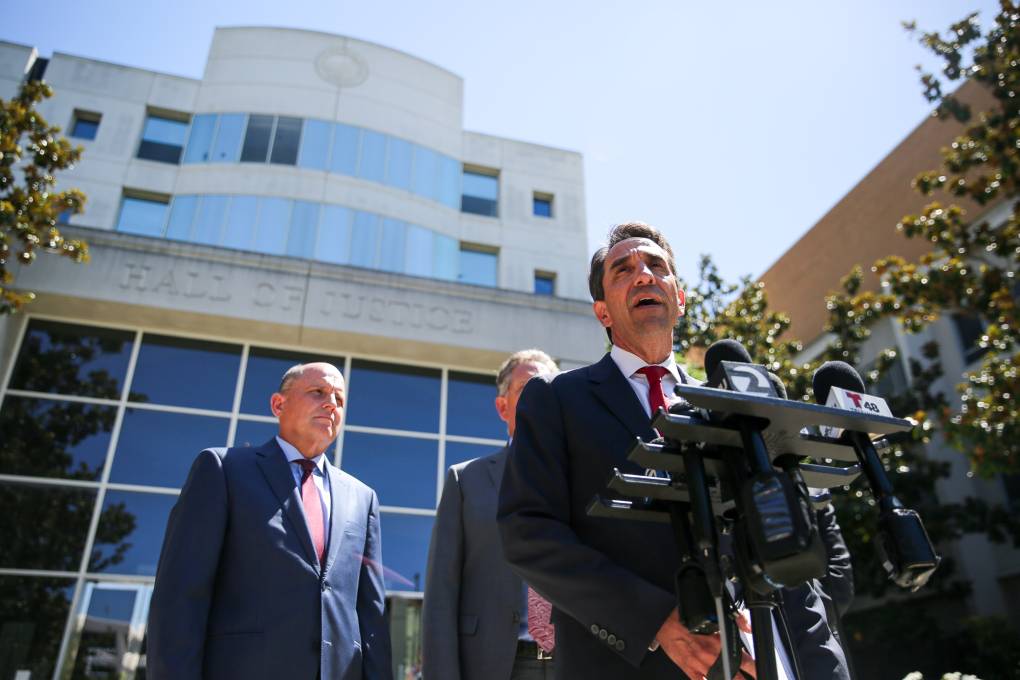
"caption": "Santa Clara County District Attorney Jeff Rosen speaks to the press outside the Hall of Justice in San José on Aug. 13, 2024. On Tuesday, after the three former correctional officers took a plea deal in the 2015 death of Michael Tyree, a judge decided their sentences — including time served — have been satisfied. ",
"credit": "Joseph Geha/KQED",
"altTag": null,
"description": null,
"imgSizes": {
"medium": {
"file": "https://cdn.kqed.org/wp-content/uploads/sites/10/2024/08/240813-TYREECASE-JG-3-800x533.jpg",
"width": 800,
"height": 533,
"mimeType": "image/jpeg"
},
"large": {
"file": "https://cdn.kqed.org/wp-content/uploads/sites/10/2024/08/240813-TYREECASE-JG-3-1020x680.jpg",
"width": 1020,
"height": 680,
"mimeType": "image/jpeg"
},
"thumbnail": {
"file": "https://cdn.kqed.org/wp-content/uploads/sites/10/2024/08/240813-TYREECASE-JG-3-160x107.jpg",
"width": 160,
"height": 107,
"mimeType": "image/jpeg"
},
"1536x1536": {
"file": "https://cdn.kqed.org/wp-content/uploads/sites/10/2024/08/240813-TYREECASE-JG-3-1536x1024.jpg",
"width": 1536,
"height": 1024,
"mimeType": "image/jpeg"
},
"post-thumbnail": {
"file": "https://cdn.kqed.org/wp-content/uploads/sites/10/2024/08/240813-TYREECASE-JG-3-672x372.jpg",
"width": 672,
"height": 372,
"mimeType": "image/jpeg"
},
"twentyfourteen-full-width": {
"file": "https://cdn.kqed.org/wp-content/uploads/sites/10/2024/08/240813-TYREECASE-JG-3-1038x576.jpg",
"width": 1038,
"height": 576,
"mimeType": "image/jpeg"
},
"full-width": {
"file": "https://cdn.kqed.org/wp-content/uploads/sites/10/2024/08/240813-TYREECASE-JG-3-1920x1280.jpg",
"width": 1920,
"height": 1280,
"mimeType": "image/jpeg"
},
"kqedFullSize": {
"file": "https://cdn.kqed.org/wp-content/uploads/sites/10/2024/08/240813-TYREECASE-JG-3.jpg",
"width": 2000,
"height": 1333
}
},
"isLoading": false,
"fetchFailed": false
},
"news_12010481": {
"type": "attachments",
"id": "news_12010481",
"meta": {
"index": "attachments_1716263798",
"site": "news",
"id": "12010481",
"found": true
},
"title": "20240608_PriceRecallKickoff_GC-11_qed",
"publishDate": 1729551877,
"status": "inherit",
"parent": 12009700,
"modified": 1729552018,
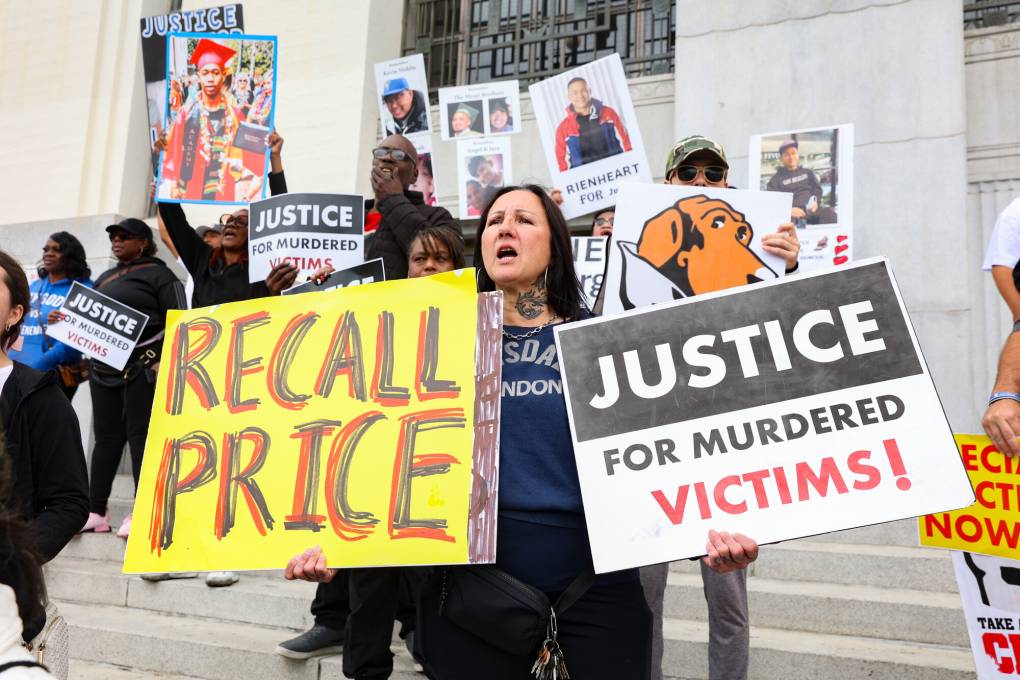
"caption": "Elizabeth Kenny participates in a Pamela Price recall campaign kickoff rally in Oakland on June 8, 2024. Price faces a recall election in November.",
"credit": "Gina Castro/KQED",
"altTag": "A woman at a rally in front of a courthouse holds two signs that say 'Recall Price' and 'Justice for Murder Victims.' Behind her are other people holding signs, some with photos of people on them.",
"description": null,
"imgSizes": {
"medium": {
"file": "https://cdn.kqed.org/wp-content/uploads/sites/10/2024/10/20240608_PriceRecallKickoff_GC-11_qed-800x533.jpg",
"width": 800,
"height": 533,
"mimeType": "image/jpeg"
},
"large": {
"file": "https://cdn.kqed.org/wp-content/uploads/sites/10/2024/10/20240608_PriceRecallKickoff_GC-11_qed-1020x680.jpg",
"width": 1020,
"height": 680,
"mimeType": "image/jpeg"
},
"thumbnail": {
"file": "https://cdn.kqed.org/wp-content/uploads/sites/10/2024/10/20240608_PriceRecallKickoff_GC-11_qed-160x107.jpg",
"width": 160,
"height": 107,
"mimeType": "image/jpeg"
},
"1536x1536": {
"file": "https://cdn.kqed.org/wp-content/uploads/sites/10/2024/10/20240608_PriceRecallKickoff_GC-11_qed-1536x1024.jpg",
"width": 1536,
"height": 1024,
"mimeType": "image/jpeg"
},
"post-thumbnail": {
"file": "https://cdn.kqed.org/wp-content/uploads/sites/10/2024/10/20240608_PriceRecallKickoff_GC-11_qed-672x372.jpg",
"width": 672,
"height": 372,
"mimeType": "image/jpeg"
},
"twentyfourteen-full-width": {
"file": "https://cdn.kqed.org/wp-content/uploads/sites/10/2024/10/20240608_PriceRecallKickoff_GC-11_qed-1038x576.jpg",
"width": 1038,
"height": 576,
"mimeType": "image/jpeg"
},
"full-width": {
"file": "https://cdn.kqed.org/wp-content/uploads/sites/10/2024/10/20240608_PriceRecallKickoff_GC-11_qed-1920x1280.jpg",
"width": 1920,
"height": 1280,
"mimeType": "image/jpeg"
},
"kqedFullSize": {
"file": "https://cdn.kqed.org/wp-content/uploads/sites/10/2024/10/20240608_PriceRecallKickoff_GC-11_qed.jpg",
"width": 2000,
"height": 1333
}
},
"isLoading": false,
"fetchFailed": false
},
"news_12010461": {
"type": "attachments",
"id": "news_12010461",
"meta": {
"index": "attachments_1716263798",
"site": "news",
"id": "12010461",
"found": true
},
"title": "241021-OaklandPDDrunkDriving-33-BL_qed",
"publishDate": 1729543557,
"status": "inherit",
"parent": 0,
"modified": 1729718422,
"caption": "Alameda County District Attorney Pamela Price speaks at a press conference in Oakland on Oct. 21, 2024.",
"credit": "Beth LaBerge/KQED",
"altTag": null,
"description": null,
"imgSizes": {
"medium": {
"file": "https://cdn.kqed.org/wp-content/uploads/sites/10/2024/10/241021-OaklandPDDrunkDriving-33-BL_qed-800x533.jpg",
"width": 800,
"height": 533,
"mimeType": "image/jpeg"
},
"large": {
"file": "https://cdn.kqed.org/wp-content/uploads/sites/10/2024/10/241021-OaklandPDDrunkDriving-33-BL_qed-1020x680.jpg",
"width": 1020,
"height": 680,
"mimeType": "image/jpeg"
},
"thumbnail": {
"file": "https://cdn.kqed.org/wp-content/uploads/sites/10/2024/10/241021-OaklandPDDrunkDriving-33-BL_qed-160x107.jpg",
"width": 160,
"height": 107,
"mimeType": "image/jpeg"
},
"1536x1536": {
"file": "https://cdn.kqed.org/wp-content/uploads/sites/10/2024/10/241021-OaklandPDDrunkDriving-33-BL_qed-1536x1024.jpg",
"width": 1536,
"height": 1024,
"mimeType": "image/jpeg"
},
"post-thumbnail": {
"file": "https://cdn.kqed.org/wp-content/uploads/sites/10/2024/10/241021-OaklandPDDrunkDriving-33-BL_qed-672x372.jpg",
"width": 672,
"height": 372,
"mimeType": "image/jpeg"
},
"twentyfourteen-full-width": {
"file": "https://cdn.kqed.org/wp-content/uploads/sites/10/2024/10/241021-OaklandPDDrunkDriving-33-BL_qed-1038x576.jpg",
"width": 1038,
"height": 576,
"mimeType": "image/jpeg"
},
"full-width": {
"file": "https://cdn.kqed.org/wp-content/uploads/sites/10/2024/10/241021-OaklandPDDrunkDriving-33-BL_qed-1920x1280.jpg",
"width": 1920,
"height": 1280,
"mimeType": "image/jpeg"
},
"kqedFullSize": {
"file": "https://cdn.kqed.org/wp-content/uploads/sites/10/2024/10/241021-OaklandPDDrunkDriving-33-BL_qed.jpg",
"width": 2000,
"height": 1333
}
},
"isLoading": false,
"fetchFailed": false
},
"news_12010072": {
"type": "attachments",
"id": "news_12010072",
"meta": {
"index": "attachments_1716263798",
"site": "news",
"id": "12010072",
"found": true
},
"title": "OLY M Parallel GS X",
"publishDate": 1729278968,
"status": "inherit",
"parent": 12010071,
"modified": 1729278968,
"caption": null,
"credit": null,
"altTag": null,
"description": "14 Feb 2002: Ryan Wedding of Canada competes in the qualifying round of the men's parallel giant slalom snowboarding event during the Salt Lake City Winter Olympic Games at the Park City Mountain Resort in Park City, Utah. DIGITAL IMAGE. Mandatory Credit: Adam Pretty/Getty Images",
"imgSizes": {
"medium": {
"file": "https://cdn.kqed.org/wp-content/uploads/sites/10/2024/10/gettyimages-1614978-1-800x535.jpeg",
"width": 800,
"height": 535,
"mimeType": "image/jpeg"
},
"large": {
"file": "https://cdn.kqed.org/wp-content/uploads/sites/10/2024/10/gettyimages-1614978-1-1020x682.jpeg",
"width": 1020,
"height": 682,
"mimeType": "image/jpeg"
},
"thumbnail": {
"file": "https://cdn.kqed.org/wp-content/uploads/sites/10/2024/10/gettyimages-1614978-1-160x107.jpeg",
"width": 160,
"height": 107,
"mimeType": "image/jpeg"
},
"1536x1536": {
"file": "https://cdn.kqed.org/wp-content/uploads/sites/10/2024/10/gettyimages-1614978-1-1536x1027.jpeg",
"width": 1536,
"height": 1027,
"mimeType": "image/jpeg"
},
"2048x2048": {
"file": "https://cdn.kqed.org/wp-content/uploads/sites/10/2024/10/gettyimages-1614978-1-2048x1370.jpeg",
"width": 2048,
"height": 1370,
"mimeType": "image/jpeg"
},
"post-thumbnail": {
"file": "https://cdn.kqed.org/wp-content/uploads/sites/10/2024/10/gettyimages-1614978-1-672x372.jpeg",
"width": 672,
"height": 372,
"mimeType": "image/jpeg"
},
"twentyfourteen-full-width": {
"file": "https://cdn.kqed.org/wp-content/uploads/sites/10/2024/10/gettyimages-1614978-1-1038x576.jpeg",
"width": 1038,
"height": 576,
"mimeType": "image/jpeg"
},
"full-width": {
"file": "https://cdn.kqed.org/wp-content/uploads/sites/10/2024/10/gettyimages-1614978-1-1920x1284.jpeg",
"width": 1920,
"height": 1284,
"mimeType": "image/jpeg"
},
"kqedFullSize": {
"file": "https://cdn.kqed.org/wp-content/uploads/sites/10/2024/10/gettyimages-1614978-1.jpeg",
"width": 2464,
"height": 1648
}
},
"isLoading": false,
"fetchFailed": false
},
"news_12010134": {
"type": "attachments",
"id": "news_12010134",
"meta": {
"index": "attachments_1716263798",
"site": "news",
"id": "12010134",
"found": true
},
"title": "241017-LIBBY SCHAAF-MD-01-KQED-3",
"publishDate": 1729284948,
"status": "inherit",
"parent": 0,
"modified": 1729285018,
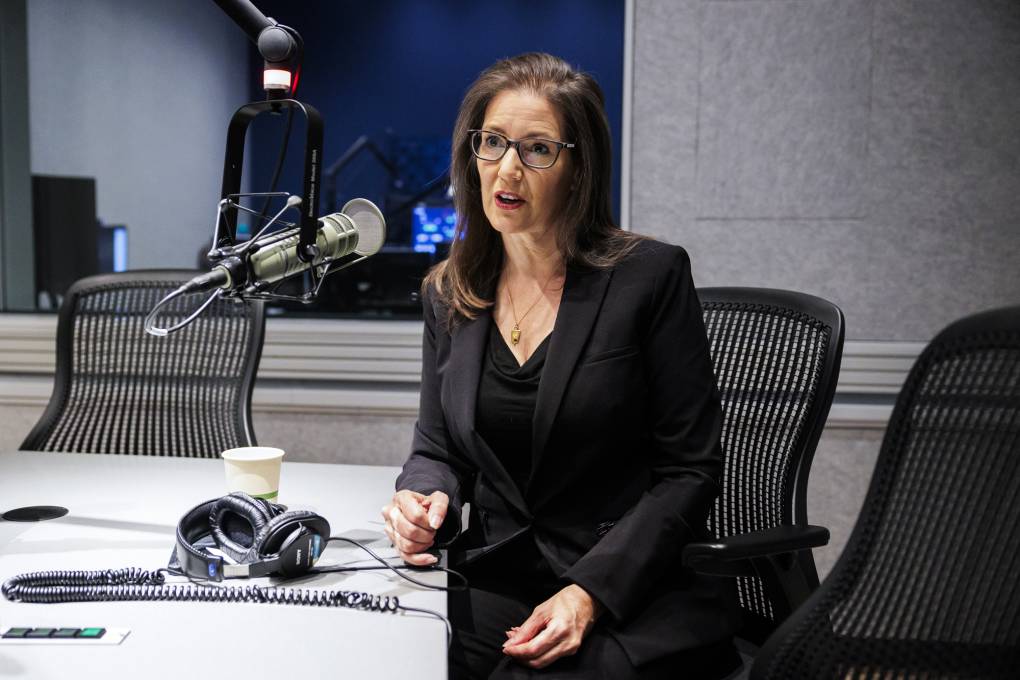
"caption": "Former Oakland Mayor Libby Schaaf speaks with KQED's Scott Shafer at KQED headquarters in San Francisco on Oct. 18, 2024.",
"credit": "Martin do Nascimento/KQED",
"altTag": null,
"description": null,
"imgSizes": {
"medium": {
"file": "https://cdn.kqed.org/wp-content/uploads/sites/10/2024/10/241017-LIBBY-SCHAAF-MD-01-KQED-3-800x533.jpg",
"width": 800,
"height": 533,
"mimeType": "image/jpeg"
},
"large": {
"file": "https://cdn.kqed.org/wp-content/uploads/sites/10/2024/10/241017-LIBBY-SCHAAF-MD-01-KQED-3-1020x680.jpg",
"width": 1020,
"height": 680,
"mimeType": "image/jpeg"
},
"thumbnail": {
"file": "https://cdn.kqed.org/wp-content/uploads/sites/10/2024/10/241017-LIBBY-SCHAAF-MD-01-KQED-3-160x107.jpg",
"width": 160,
"height": 107,
"mimeType": "image/jpeg"
},
"1536x1536": {
"file": "https://cdn.kqed.org/wp-content/uploads/sites/10/2024/10/241017-LIBBY-SCHAAF-MD-01-KQED-3-1536x1024.jpg",
"width": 1536,
"height": 1024,
"mimeType": "image/jpeg"
},
"post-thumbnail": {
"file": "https://cdn.kqed.org/wp-content/uploads/sites/10/2024/10/241017-LIBBY-SCHAAF-MD-01-KQED-3-672x372.jpg",
"width": 672,
"height": 372,
"mimeType": "image/jpeg"
},
"twentyfourteen-full-width": {
"file": "https://cdn.kqed.org/wp-content/uploads/sites/10/2024/10/241017-LIBBY-SCHAAF-MD-01-KQED-3-1038x576.jpg",
"width": 1038,
"height": 576,
"mimeType": "image/jpeg"
},
"full-width": {
"file": "https://cdn.kqed.org/wp-content/uploads/sites/10/2024/10/241017-LIBBY-SCHAAF-MD-01-KQED-3-1920x1280.jpg",
"width": 1920,
"height": 1280,
"mimeType": "image/jpeg"
},
"kqedFullSize": {
"file": "https://cdn.kqed.org/wp-content/uploads/sites/10/2024/10/241017-LIBBY-SCHAAF-MD-01-KQED-3.jpg",
"width": 2000,
"height": 1333
}
},
"isLoading": false,
"fetchFailed": false
},
"news_12009887": {
"type": "attachments",
"id": "news_12009887",
"meta": {
"index": "attachments_1716263798",
"site": "news",
"id": "12009887",
"found": true
},
"title": "241017-VALLEJOPOST-65-BL-KQED-1",
"publishDate": 1729203864,
"status": "inherit",
"parent": 0,
"modified": 1729203891,
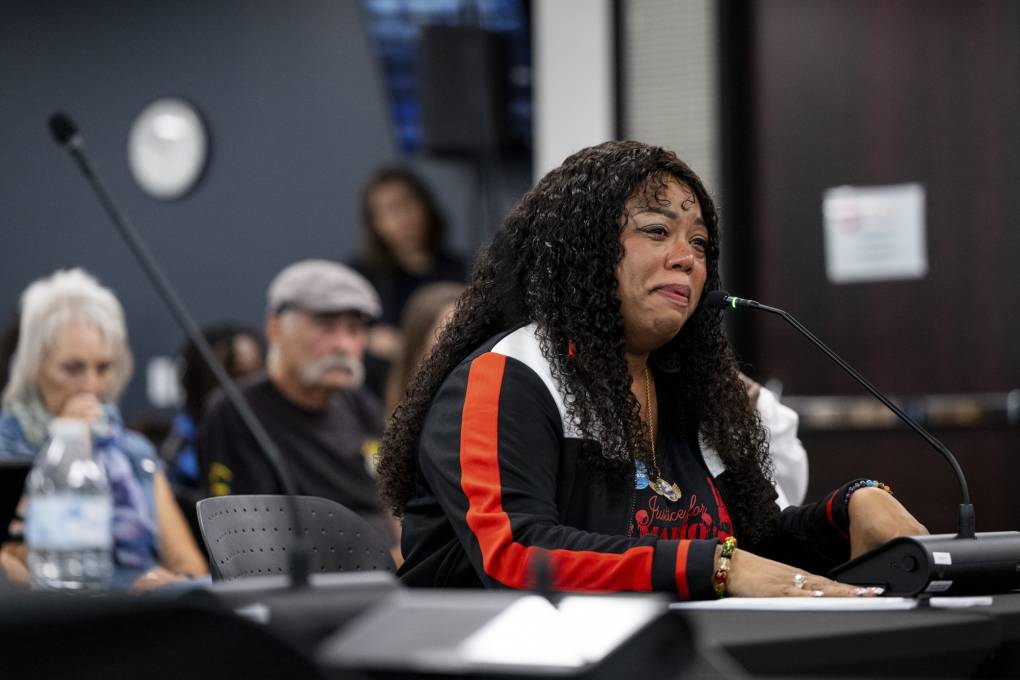
"caption": "Kris Kelly, the sister of Mario Romero, who was shot and killed by Vallejo police officers in 2012, gives personal testimony during public comment at a California Commission on Peace Officer Standards and Training (POST) meeting at the Peace Officer Standards offices in West Sacramento on Oct. 17, 2024.",
"credit": "Beth LaBerge/KQED",
"altTag": null,
"description": null,
"imgSizes": {
"medium": {
"file": "https://cdn.kqed.org/wp-content/uploads/sites/10/2024/10/241017-VALLEJOPOST-65-BL-KQED-1-800x533.jpg",
"width": 800,
"height": 533,
"mimeType": "image/jpeg"
},
"large": {
"file": "https://cdn.kqed.org/wp-content/uploads/sites/10/2024/10/241017-VALLEJOPOST-65-BL-KQED-1-1020x680.jpg",
"width": 1020,
"height": 680,
"mimeType": "image/jpeg"
},
"thumbnail": {
"file": "https://cdn.kqed.org/wp-content/uploads/sites/10/2024/10/241017-VALLEJOPOST-65-BL-KQED-1-160x107.jpg",
"width": 160,
"height": 107,
"mimeType": "image/jpeg"
},
"1536x1536": {
"file": "https://cdn.kqed.org/wp-content/uploads/sites/10/2024/10/241017-VALLEJOPOST-65-BL-KQED-1-1536x1024.jpg",
"width": 1536,
"height": 1024,
"mimeType": "image/jpeg"
},
"post-thumbnail": {
"file": "https://cdn.kqed.org/wp-content/uploads/sites/10/2024/10/241017-VALLEJOPOST-65-BL-KQED-1-672x372.jpg",
"width": 672,
"height": 372,
"mimeType": "image/jpeg"
},
"twentyfourteen-full-width": {
"file": "https://cdn.kqed.org/wp-content/uploads/sites/10/2024/10/241017-VALLEJOPOST-65-BL-KQED-1-1038x576.jpg",
"width": 1038,
"height": 576,
"mimeType": "image/jpeg"
},
"full-width": {
"file": "https://cdn.kqed.org/wp-content/uploads/sites/10/2024/10/241017-VALLEJOPOST-65-BL-KQED-1-1920x1280.jpg",
"width": 1920,
"height": 1280,
"mimeType": "image/jpeg"
},
"kqedFullSize": {
"file": "https://cdn.kqed.org/wp-content/uploads/sites/10/2024/10/241017-VALLEJOPOST-65-BL-KQED-1.jpg",
"width": 2000,
"height": 1333
}
},
"isLoading": false,
"fetchFailed": false
},
"news_11989256": {
"type": "attachments",
"id": "news_11989256",
"meta": {
"index": "attachments_1716263798",
"site": "news",
"id": "11989256",
"found": true
},
"title": "240424-SJPD-MD-01-KQED",
"publishDate": 1717696223,
"status": "inherit",
"parent": 12064587,
"modified": 1763511370,
"caption": "A San José Police Department squad car in San José on April 18, 2024.",
"credit": "Martin do Nascimento/KQED",
"altTag": null,
"description": null,
"imgSizes": {
"medium": {
"file": "https://cdn.kqed.org/wp-content/uploads/sites/10/2024/06/240424-SJPD-MD-01-KQED-800x533.jpg",
"width": 800,
"height": 533,
"mimeType": "image/jpeg"
},
"large": {
"file": "https://cdn.kqed.org/wp-content/uploads/sites/10/2024/06/240424-SJPD-MD-01-KQED-1020x680.jpg",
"width": 1020,
"height": 680,
"mimeType": "image/jpeg"
},
"thumbnail": {
"file": "https://cdn.kqed.org/wp-content/uploads/sites/10/2024/06/240424-SJPD-MD-01-KQED-160x107.jpg",
"width": 160,
"height": 107,
"mimeType": "image/jpeg"
},
"1536x1536": {
"file": "https://cdn.kqed.org/wp-content/uploads/sites/10/2024/06/240424-SJPD-MD-01-KQED-1536x1024.jpg",
"width": 1536,
"height": 1024,
"mimeType": "image/jpeg"
},
"post-thumbnail": {
"file": "https://cdn.kqed.org/wp-content/uploads/sites/10/2024/06/240424-SJPD-MD-01-KQED-672x372.jpg",
"width": 672,
"height": 372,
"mimeType": "image/jpeg"
},
"twentyfourteen-full-width": {
"file": "https://cdn.kqed.org/wp-content/uploads/sites/10/2024/06/240424-SJPD-MD-01-KQED-1038x576.jpg",
"width": 1038,
"height": 576,
"mimeType": "image/jpeg"
},
"full-width": {
"file": "https://cdn.kqed.org/wp-content/uploads/sites/10/2024/06/240424-SJPD-MD-01-KQED-1920x1280.jpg",
"width": 1920,
"height": 1280,
"mimeType": "image/jpeg"
},
"kqedFullSize": {
"file": "https://cdn.kqed.org/wp-content/uploads/sites/10/2024/06/240424-SJPD-MD-01-KQED.jpg",
"width": 2000,
"height": 1333
}
},
"isLoading": false,
"fetchFailed": false
},
"news_12009716": {
"type": "attachments",
"id": "news_12009716",
"meta": {
"index": "attachments_1716263798",
"site": "news",
"id": "12009716",
"found": true
},
"title": "BOSS2",
"publishDate": 1729118936,
"status": "inherit",
"parent": 12009603,
"modified": 1729119369,
"caption": "Donald Frazier, the founder of Building Opportunities for Self-Sufficiency (BOSS), speaks at a press conference held at the trauma recovery center in Oakland on Wednesday, Oct. 16. 2024. ",
"credit": "Gilare Zada/KQED",
"altTag": null,
"description": null,
"imgSizes": {
"medium": {
"file": "https://cdn.kqed.org/wp-content/uploads/sites/10/2024/10/BOSS2-800x600.jpg",
"width": 800,
"height": 600,
"mimeType": "image/jpeg"
},
"large": {
"file": "https://cdn.kqed.org/wp-content/uploads/sites/10/2024/10/BOSS2-1020x765.jpg",
"width": 1020,
"height": 765,
"mimeType": "image/jpeg"
},
"thumbnail": {
"file": "https://cdn.kqed.org/wp-content/uploads/sites/10/2024/10/BOSS2-160x120.jpg",
"width": 160,
"height": 120,
"mimeType": "image/jpeg"
},
"1536x1536": {
"file": "https://cdn.kqed.org/wp-content/uploads/sites/10/2024/10/BOSS2-1536x1152.jpg",
"width": 1536,
"height": 1152,
"mimeType": "image/jpeg"
},
"post-thumbnail": {
"file": "https://cdn.kqed.org/wp-content/uploads/sites/10/2024/10/BOSS2-672x372.jpg",
"width": 672,
"height": 372,
"mimeType": "image/jpeg"
},
"twentyfourteen-full-width": {
"file": "https://cdn.kqed.org/wp-content/uploads/sites/10/2024/10/BOSS2-1038x576.jpg",
"width": 1038,
"height": 576,
"mimeType": "image/jpeg"
},
"full-width": {
"file": "https://cdn.kqed.org/wp-content/uploads/sites/10/2024/10/BOSS2-1920x1440.jpg",
"width": 1920,
"height": 1440,
"mimeType": "image/jpeg"
},
"kqedFullSize": {
"file": "https://cdn.kqed.org/wp-content/uploads/sites/10/2024/10/BOSS2.jpg",
"width": 2000,
"height": 1500
}
},
"isLoading": false,
"fetchFailed": false
},
"news_12007882": {
"type": "attachments",
"id": "news_12007882",
"meta": {
"index": "attachments_1716263798",
"site": "news",
"id": "12007882",
"found": true
},
"title": "Supreme Court To Rule On California's Overcrowded Prisons",
"publishDate": 1728000644,
"status": "inherit",
"parent": 12007880,
"modified": 1788443887,
"caption": "California Department of Corrections officer looks on as inmates at Chino State Prison exercise in the yard Dec. 10, 2010, in Chino, California. ",
"credit": "Kevork Djansezian/Getty Images",
"altTag": "Imprisoned people wearing orange outfits hang out in an outdoor area of the prison, while a guard watches from a tower overhead.",
"description": null,
"imgSizes": {
"medium": {
"file": "https://cdn.kqed.org/wp-content/uploads/sites/10/2024/10/107520204_qed-800x540.jpg",
"width": 800,
"height": 540,
"mimeType": "image/jpeg"
},
"large": {
"file": "https://cdn.kqed.org/wp-content/uploads/sites/10/2024/10/107520204_qed-1020x689.jpg",
"width": 1020,
"height": 689,
"mimeType": "image/jpeg"
},
"thumbnail": {
"file": "https://cdn.kqed.org/wp-content/uploads/sites/10/2024/10/107520204_qed-160x108.jpg",
"width": 160,
"height": 108,
"mimeType": "image/jpeg"
},
"1536x1536": {
"file": "https://cdn.kqed.org/wp-content/uploads/sites/10/2024/10/107520204_qed-1536x1038.jpg",
"width": 1536,
"height": 1038,
"mimeType": "image/jpeg"
},
"post-thumbnail": {
"file": "https://cdn.kqed.org/wp-content/uploads/sites/10/2024/10/107520204_qed-672x372.jpg",
"width": 672,
"height": 372,
"mimeType": "image/jpeg"
},
"twentyfourteen-full-width": {
"file": "https://cdn.kqed.org/wp-content/uploads/sites/10/2024/10/107520204_qed-1038x576.jpg",
"width": 1038,
"height": 576,
"mimeType": "image/jpeg"
},
"full-width": {
"file": "https://cdn.kqed.org/wp-content/uploads/sites/10/2024/10/107520204_qed-1920x1297.jpg",
"width": 1920,
"height": 1297,
"mimeType": "image/jpeg"
},
"kqedFullSize": {
"file": "https://cdn.kqed.org/wp-content/uploads/sites/10/2024/10/107520204_qed.jpg",
"width": 1973,
"height": 1333
}
},
"isLoading": false,
"fetchFailed": false
},
"news_12008879": {
"type": "attachments",
"id": "news_12008879",
"meta": {
"index": "attachments_1716263798",
"site": "news",
"id": "12008879",
"found": true
},
"title": "240111-TransitFile-19-BL_qed",
"publishDate": 1728583167,
"status": "inherit",
"parent": 12008877,
"modified": 1728583182,
"caption": "BART fare gates at the 24th Street Mission station in San Francisco on Jan. 11, 2024.",
"credit": "Beth LaBerge/KQED",
"altTag": null,
"description": null,
"imgSizes": {
"medium": {
"file": "https://cdn.kqed.org/wp-content/uploads/sites/10/2024/10/240111-TransitFile-19-BL_qed-800x533.jpg",
"width": 800,
"height": 533,
"mimeType": "image/jpeg"
},
"large": {
"file": "https://cdn.kqed.org/wp-content/uploads/sites/10/2024/10/240111-TransitFile-19-BL_qed-1020x680.jpg",
"width": 1020,
"height": 680,
"mimeType": "image/jpeg"
},
"thumbnail": {
"file": "https://cdn.kqed.org/wp-content/uploads/sites/10/2024/10/240111-TransitFile-19-BL_qed-160x107.jpg",
"width": 160,
"height": 107,
"mimeType": "image/jpeg"
},
"1536x1536": {
"file": "https://cdn.kqed.org/wp-content/uploads/sites/10/2024/10/240111-TransitFile-19-BL_qed-1536x1024.jpg",
"width": 1536,
"height": 1024,
"mimeType": "image/jpeg"
},
"post-thumbnail": {
"file": "https://cdn.kqed.org/wp-content/uploads/sites/10/2024/10/240111-TransitFile-19-BL_qed-672x372.jpg",
"width": 672,
"height": 372,
"mimeType": "image/jpeg"
},
"twentyfourteen-full-width": {
"file": "https://cdn.kqed.org/wp-content/uploads/sites/10/2024/10/240111-TransitFile-19-BL_qed-1038x576.jpg",
"width": 1038,
"height": 576,
"mimeType": "image/jpeg"
},
"full-width": {
"file": "https://cdn.kqed.org/wp-content/uploads/sites/10/2024/10/240111-TransitFile-19-BL_qed-1920x1280.jpg",
"width": 1920,
"height": 1280,
"mimeType": "image/jpeg"
},
"kqedFullSize": {
"file": "https://cdn.kqed.org/wp-content/uploads/sites/10/2024/10/240111-TransitFile-19-BL_qed.jpg",
"width": 2000,
"height": 1333
}
},
"isLoading": false,
"fetchFailed": false
},
"news_12009080": {
"type": "attachments",
"id": "news_12009080",
"meta": {
"index": "attachments_1716263798",
"site": "news",
"id": "12009080",
"found": true
},
"title": "012_Alameda_MarioGonzalezPressConf_04272021_qed",
"publishDate": 1728667209,
"status": "inherit",
"parent": 12009076,
"modified": 1728667258,
"caption": "Friends, family and supporters of Mario Gonzalez gather outside of the Alameda Police Department on April 27, 2021.",
"credit": "Beth LaBerge/KQED",
"altTag": null,
"description": null,
"imgSizes": {
"medium": {
"file": "https://cdn.kqed.org/wp-content/uploads/sites/10/2024/10/012_Alameda_MarioGonzalezPressConf_04272021_qed-800x533.jpg",
"width": 800,
"height": 533,
"mimeType": "image/jpeg"
},
"large": {
"file": "https://cdn.kqed.org/wp-content/uploads/sites/10/2024/10/012_Alameda_MarioGonzalezPressConf_04272021_qed-1020x680.jpg",
"width": 1020,
"height": 680,
"mimeType": "image/jpeg"
},
"thumbnail": {
"file": "https://cdn.kqed.org/wp-content/uploads/sites/10/2024/10/012_Alameda_MarioGonzalezPressConf_04272021_qed-160x107.jpg",
"width": 160,
"height": 107,
"mimeType": "image/jpeg"
},
"1536x1536": {
"file": "https://cdn.kqed.org/wp-content/uploads/sites/10/2024/10/012_Alameda_MarioGonzalezPressConf_04272021_qed-1536x1024.jpg",
"width": 1536,
"height": 1024,
"mimeType": "image/jpeg"
},
"post-thumbnail": {
"file": "https://cdn.kqed.org/wp-content/uploads/sites/10/2024/10/012_Alameda_MarioGonzalezPressConf_04272021_qed-672x372.jpg",
"width": 672,
"height": 372,
"mimeType": "image/jpeg"
},
"twentyfourteen-full-width": {
"file": "https://cdn.kqed.org/wp-content/uploads/sites/10/2024/10/012_Alameda_MarioGonzalezPressConf_04272021_qed-1038x576.jpg",
"width": 1038,
"height": 576,
"mimeType": "image/jpeg"
},
"full-width": {
"file": "https://cdn.kqed.org/wp-content/uploads/sites/10/2024/10/012_Alameda_MarioGonzalezPressConf_04272021_qed-1920x1280.jpg",
"width": 1920,
"height": 1280,
"mimeType": "image/jpeg"
},
"kqedFullSize": {
"file": "https://cdn.kqed.org/wp-content/uploads/sites/10/2024/10/012_Alameda_MarioGonzalezPressConf_04272021_qed.jpg",
"width": 2000,
"height": 1333
}
},
"isLoading": false,
"fetchFailed": false
},
"news_11871443": {
"type": "attachments",
"id": "news_11871443",
"meta": {
"index": "attachments_1716263798",
"site": "news",
"id": "11871443",
"found": true
},
"parent": 11871345,
"imgSizes": {
"twentyfourteen-full-width": {
"file": "https://ww2.kqed.org/app/uploads/sites/10/2021/04/RS48839_022_Alameda_MarioGonzalezPressConf_04272021-qut-1038x576.jpg",
"width": 1038,
"mimeType": "image/jpeg",
"height": 576
},
"thumbnail": {
"file": "https://ww2.kqed.org/app/uploads/sites/10/2021/04/RS48839_022_Alameda_MarioGonzalezPressConf_04272021-qut-160x107.jpg",
"width": 160,
"mimeType": "image/jpeg",
"height": 107
},
"post-thumbnail": {
"file": "https://ww2.kqed.org/app/uploads/sites/10/2021/04/RS48839_022_Alameda_MarioGonzalezPressConf_04272021-qut-672x372.jpg",
"width": 672,
"mimeType": "image/jpeg",
"height": 372
},
"kqedFullSize": {
"file": "https://ww2.kqed.org/app/uploads/sites/10/2021/04/RS48839_022_Alameda_MarioGonzalezPressConf_04272021-qut.jpg",
"width": 1920,
"height": 1278
},
"large": {
"file": "https://ww2.kqed.org/app/uploads/sites/10/2021/04/RS48839_022_Alameda_MarioGonzalezPressConf_04272021-qut-1020x679.jpg",
"width": 1020,
"mimeType": "image/jpeg",
"height": 679
},
"1536x1536": {
"file": "https://ww2.kqed.org/app/uploads/sites/10/2021/04/RS48839_022_Alameda_MarioGonzalezPressConf_04272021-qut-1536x1022.jpg",
"width": 1536,
"mimeType": "image/jpeg",
"height": 1022
},
"medium": {
"file": "https://ww2.kqed.org/app/uploads/sites/10/2021/04/RS48839_022_Alameda_MarioGonzalezPressConf_04272021-qut-800x533.jpg",
"width": 800,
"mimeType": "image/jpeg",
"height": 533
}
},
"publishDate": 1619584471,
"modified": 1619584596,
"caption": "A demonstrator holds a \"Justice 4 Mario\" sign in front of the Alameda Police Department on April 27, 2021.",
"description": null,
"title": "RS48839_022_Alameda_MarioGonzalezPressConf_04272021-qut",
"credit": "Beth LaBerge/KQED",
"status": "inherit",
"altTag": null,
"isLoading": false,
"fetchFailed": false
}
},
"audioPlayerReducer": {
"postId": "stream_live",
"isPaused": true,
"isPlaying": false,
"pfsActive": false,
"pledgeModalIsOpen": true,
"playerDrawerIsOpen": false,
"liveAudioPlayStartedAt": 0,
"liveAudioPlayContext": ""
},
"authorsReducer": {
"byline_news_12010071": {
"type": "authors",
"id": "byline_news_12010071",
"meta": {
"override": true
},
"slug": "byline_news_12010071",
"name": "Bill Chappell, NPR",
"isLoading": false
},
"ohubertallen": {
"type": "authors",
"id": "102",
"meta": {
"index": "authors_1716337520",
"id": "102",
"found": true
},
"name": "Olivia Allen-Price",
"firstName": "Olivia",
"lastName": "Allen-Price",
"slug": "ohubertallen",
"email": "oallenprice@kqed.org",
"display_author_email": false,
"staff_mastheads": [
"news"
],
"title": "Senior Editor",
"bio": "Olivia Allen-Price is senior editor and host of the award-winning Bay Curious podcast. Prior to joining KQED in 2013, Olivia worked at The Baltimore Sun and The Virginian-Pilot in Norfolk, Va. She holds degrees in journalism and political science from Elon University. Her work has earned awards from the Society of Professional Journalists, the Hearst Foundation and Hearken. She loves to talk about running and curly hair.\r\n\r\nFollow: \u003ca href=\"https://twitter.com/oallenprice\">@oallenprice\u003c/a>\r\nEmail: \u003ca href=\"mailto:oallenprice@kqed.org\">oallenprice@kqed.org\u003c/a>",
"avatar": "https://secure.gravatar.com/avatar/07f7803c1f6be56f3be58ef276dfa64dce898502e0554408ef4858451a8294f7?s=600&d=blank&r=g",
"twitter": "oallenprice",
"bluesky": null,
"facebook": null,
"instagram": null,
"linkedin": null,
"sites": [
{
"site": "",
"roles": [
"editor"
]
},
{
"site": "arts",
"roles": [
"subscriber"
]
},
{
"site": "news",
"roles": [
"administrator"
]
},
{
"site": "pop",
"roles": [
"administrator"
]
},
{
"site": "bayareabites",
"roles": [
"contributor"
]
},
{
"site": "stateofhealth",
"roles": [
"administrator"
]
},
{
"site": "science",
"roles": [
"editor"
]
}
],
"headData": {
"title": "Olivia Allen-Price | KQED",
"description": "Senior Editor",
"ogImgSrc": "https://secure.gravatar.com/avatar/07f7803c1f6be56f3be58ef276dfa64dce898502e0554408ef4858451a8294f7?s=600&d=blank&r=g",
"twImgSrc": "https://secure.gravatar.com/avatar/07f7803c1f6be56f3be58ef276dfa64dce898502e0554408ef4858451a8294f7?s=600&d=blank&r=g"
},
"isLoading": false,
"link": "/author/ohubertallen"
},
"scottshafer": {
"type": "authors",
"id": "255",
"meta": {
"index": "authors_1716337520",
"id": "255",
"found": true
},
"name": "Scott Shafer",
"firstName": "Scott",
"lastName": "Shafer",
"slug": "scottshafer",
"email": "sshafer@kqed.org",
"display_author_email": false,
"staff_mastheads": [
"news"
],
"title": "KQED Contributor",
"bio": "Scott Shafer is a senior editor with the KQED Politics and Government desk. He is co-host of Political Breakdown, the award-winning radio show and podcast with a personal take on the world of politics. Scott came to KQED in 1998 to host the statewide\u003cem> California Report\u003c/em>. Prior to that he had extended stints in politics and government\u003cem>.\u003c/em> He uses that inside experience at KQED in his, reporting, hosting and analysis for the politics desk. Scott collaborated \u003cem>Political Breakdown a\u003c/em>nd on \u003cem>The Political Mind of Jerry Brown, \u003c/em>an eight-part series about the life and extraordinary political career of the former governor. For fun, he plays water polo with the San Francisco Tsunami.",
"avatar": "https://secure.gravatar.com/avatar/a62ebae45b79d7aed1a39a0e3bf68104?s=600&d=blank&r=g",
"twitter": "scottshafer",
"bluesky": null,
"facebook": null,
"instagram": null,
"linkedin": null,
"sites": [
{
"site": "news",
"roles": [
"editor"
]
},
{
"site": "stateofhealth",
"roles": [
"author"
]
},
{
"site": "science",
"roles": [
"author"
]
},
{
"site": "forum",
"roles": [
"subscriber"
]
},
{
"site": "liveblog",
"roles": [
"author"
]
}
],
"headData": {
"title": "Scott Shafer | KQED",
"description": "KQED Contributor",
"ogImgSrc": "https://secure.gravatar.com/avatar/a62ebae45b79d7aed1a39a0e3bf68104?s=600&d=blank&r=g",
"twImgSrc": "https://secure.gravatar.com/avatar/a62ebae45b79d7aed1a39a0e3bf68104?s=600&d=blank&r=g"
},
"isLoading": false,
"link": "/author/scottshafer"
},
"matthewgreen": {
"type": "authors",
"id": "1263",
"meta": {
"index": "authors_1716337520",
"id": "1263",
"found": true
},
"name": "Matthew Green",
"firstName": "Matthew",
"lastName": "Green",
"slug": "matthewgreen",
"email": "mgreen@kqed.org",
"display_author_email": false,
"staff_mastheads": [],
"title": "KQED Editor/Reporter",
"bio": "Matthew Green is a digital media producer for KQED News. He previously produced \u003ca href=\"http://www.kqed.org/lowdown\">The Lowdown\u003c/a>, KQED’s multimedia news education blog. Matthew's written for numerous Bay Area publications, including the Oakland Tribune and San Francisco Chronicle. He also taught journalism classes at Fremont High School in East Oakland.\r\n\r\nEmail: mgreen@kqed.org; Twitter: @MGreenKQED",
"avatar": "https://secure.gravatar.com/avatar/3bf498d1267ca02c8494f33d8cfc575e?s=600&d=blank&r=g",
"twitter": "MGreenKQED",
"facebook": null,
"instagram": null,
"linkedin": null,
"sites": [
{
"site": "news",
"roles": []
},
{
"site": "lowdown",
"roles": []
},
{
"site": "science",
"roles": []
},
{
"site": "education",
"roles": []
},
{
"site": "quest",
"roles": []
},
{
"site": "liveblog",
"roles": []
}
],
"headData": {
"title": "Matthew Green | KQED",
"description": "KQED Editor/Reporter",
"ogImgSrc": "https://secure.gravatar.com/avatar/3bf498d1267ca02c8494f33d8cfc575e?s=600&d=blank&r=g",
"twImgSrc": "https://secure.gravatar.com/avatar/3bf498d1267ca02c8494f33d8cfc575e?s=600&d=blank&r=g"
},
"isLoading": false,
"link": "/author/matthewgreen"
},
"shossaini": {
"type": "authors",
"id": "3214",
"meta": {
"index": "authors_1716337520",
"id": "3214",
"found": true
},
"name": "Sara Hossaini",
"firstName": "Sara",
"lastName": "Hossaini",
"slug": "shossaini",
"email": "shossaini@kqed.org",
"display_author_email": true,
"staff_mastheads": [
"news"
],
"title": "KQED Reporter",
"bio": "Sara Hossaini came to general assignment reporting at KQED in 2013 after two winters reporting at Wyoming Public Radio. She holds a bachelor's degree in broadcast journalism from the University of Nebraska-Lincoln. Her radio romance began after a bitter breakup with documentary film (Ok, maybe it's still complicated). Her first simultaneous jobs in San Francisco were as Associate Producer on a PBS film series through the Center for Asian American Media and as a butler. She likes to trot, plot and make things with her hands.",
"avatar": "https://secure.gravatar.com/avatar/060e9f56b9554e17942e89f413242774?s=600&d=blank&r=g",
"twitter": "mshossaini",
"facebook": null,
"instagram": null,
"linkedin": null,
"sites": [
{
"site": "news",
"roles": [
"author"
]
},
{
"site": "stateofhealth",
"roles": [
"author"
]
}
],
"headData": {
"title": "Sara Hossaini | KQED",
"description": "KQED Reporter",
"ogImgSrc": "https://secure.gravatar.com/avatar/060e9f56b9554e17942e89f413242774?s=600&d=blank&r=g",
"twImgSrc": "https://secure.gravatar.com/avatar/060e9f56b9554e17942e89f413242774?s=600&d=blank&r=g"
},
"isLoading": false,
"link": "/author/shossaini"
},
"mlagos": {
"type": "authors",
"id": "3239",
"meta": {
"index": "authors_1716337520",
"id": "3239",
"found": true
},
"name": "Marisa Lagos",
"firstName": "Marisa",
"lastName": "Lagos",
"slug": "mlagos",
"email": "mlagos@kqed.org",
"display_author_email": false,
"staff_mastheads": [
"news"
],
"title": "KQED Contributor",
"bio": "Marisa Lagos is a correspondent for KQED’s California Politics and Government Desk and co-hosts the award-winning show and podcast, Political Breakdown. At KQED, Lagos also conducts reporting, analysis and investigations into state, local and national politics for radio, TV, online and onstage. In 2022, she and co-host, Scott Shafer, moderated the only gubernatorial debate in California. In 2020, the \u003ci>Washington Post\u003c/i> named her one of the top political journalists in California; she was nominated for a Peabody and won several other awards for her work investigating the 2017 California wildfires. She has worked at the \u003ci>San Francisco Chronicle\u003c/i>, \u003ci>San Francisco Examiner\u003c/i> and \u003ci>Los Angeles Times\u003c/i>. A UC Santa Barbara graduate, she lives in San Francisco with her two sons and husband.",
"avatar": "https://secure.gravatar.com/avatar/a261a0d3696fc066871ef96b85b5e7d2?s=600&d=blank&r=g",
"twitter": "@mlagos",
"facebook": null,
"instagram": null,
"linkedin": null,
"sites": [
{
"site": "arts",
"roles": [
"author"
]
},
{
"site": "news",
"roles": [
"editor"
]
},
{
"site": "science",
"roles": [
"editor"
]
},
{
"site": "forum",
"roles": [
"author"
]
},
{
"site": "liveblog",
"roles": [
"author"
]
}
],
"headData": {
"title": "Marisa Lagos | KQED",
"description": "KQED Contributor",
"ogImgSrc": "https://secure.gravatar.com/avatar/a261a0d3696fc066871ef96b85b5e7d2?s=600&d=blank&r=g",
"twImgSrc": "https://secure.gravatar.com/avatar/a261a0d3696fc066871ef96b85b5e7d2?s=600&d=blank&r=g"
},
"isLoading": false,
"link": "/author/mlagos"
},
"afinney": {
"type": "authors",
"id": "11772",
"meta": {
"index": "authors_1716337520",
"id": "11772",
"found": true
},
"name": "Annelise Finney",
"firstName": "Annelise",
"lastName": "Finney",
"slug": "afinney",
"email": "afinney@kqed.org",
"display_author_email": true,
"staff_mastheads": [
"news"
],
"title": "Reporter",
"bio": "Annelise reports on reparations in California and East Bay politics. She co-produced the Sunday Music Drop, a limited-term radio series featuring Bay Area musicians that aired between Sept 2022 and Oct 2024. She joined KQED in 2021 as a general assignment reporter and is an alumna of KALW's Audio Academy. She was born and raised in the East Bay. She is currently away from KQED completing a year-long reporting project in Berlin, Germany as a Alexander Von Humboldt German Chancellor Fellow.",
"avatar": "https://secure.gravatar.com/avatar/5fded66cae47704cdfc5021cde0f3aa4?s=600&d=blank&r=g",
"twitter": null,
"facebook": null,
"instagram": null,
"linkedin": null,
"sites": [
{
"site": "news",
"roles": [
"editor"
]
},
{
"site": "liveblog",
"roles": [
"author"
]
}
],
"headData": {
"title": "Annelise Finney | KQED",
"description": "Reporter",
"ogImgSrc": "https://secure.gravatar.com/avatar/5fded66cae47704cdfc5021cde0f3aa4?s=600&d=blank&r=g",
"twImgSrc": "https://secure.gravatar.com/avatar/5fded66cae47704cdfc5021cde0f3aa4?s=600&d=blank&r=g"
},
"isLoading": false,
"link": "/author/afinney"
},
"jgeha": {
"type": "authors",
"id": "11906",
"meta": {
"index": "authors_1716337520",
"id": "11906",
"found": true
},
"name": "Joseph Geha",
"firstName": "Joseph",
"lastName": "Geha",
"slug": "jgeha",
"email": "jgeha@kqed.org",
"display_author_email": false,
"staff_mastheads": [
"news",
"science"
],
"title": "KQED Contributor",
"bio": null,
"avatar": "https://secure.gravatar.com/avatar/ea84d2b6dd93d6369d453edf19dd583f117cd1759d2d9c9c92f9de77017354fe?s=600&d=blank&r=g",
"twitter": null,
"bluesky": null,
"facebook": null,
"instagram": null,
"linkedin": null,
"sites": [
{
"site": "news",
"roles": [
"editor"
]
},
{
"site": "liveblog",
"roles": [
"author"
]
}
],
"headData": {
"title": "Joseph Geha | KQED",
"description": "KQED Contributor",
"ogImgSrc": "https://secure.gravatar.com/avatar/ea84d2b6dd93d6369d453edf19dd583f117cd1759d2d9c9c92f9de77017354fe?s=600&d=blank&r=g",
"twImgSrc": "https://secure.gravatar.com/avatar/ea84d2b6dd93d6369d453edf19dd583f117cd1759d2d9c9c92f9de77017354fe?s=600&d=blank&r=g"
},
"isLoading": false,
"link": "/author/jgeha"
},
"kdebenedetti": {
"type": "authors",
"id": "11913",
"meta": {
"index": "authors_1716337520",
"id": "11913",
"found": true
},
"name": "Katie DeBenedetti",
"firstName": "Katie",
"lastName": "DeBenedetti",
"slug": "kdebenedetti",
"email": "kdebenedetti@kqed.org",
"display_author_email": false,
"staff_mastheads": [
"news",
"science"
],
"title": "KQED Contributor",
"bio": "Katie DeBenedetti is a digital reporter covering daily news for the Express Desk. Prior to joining KQED as a culture reporting intern in January 2024, she covered education and city government for the Napa Valley Register.",
"avatar": "https://secure.gravatar.com/avatar/6e31073cb8f7e4214ab03f42771d0f45?s=600&d=blank&r=g",
"twitter": null,
"facebook": null,
"instagram": null,
"linkedin": null,
"sites": [
{
"site": "news",
"roles": [
"author"
]
},
{
"site": "science",
"roles": [
"author"
]
},
{
"site": "liveblog",
"roles": [
"author"
]
}
],
"headData": {
"title": "Katie DeBenedetti | KQED",
"description": "KQED Contributor",
"ogImgSrc": "https://secure.gravatar.com/avatar/6e31073cb8f7e4214ab03f42771d0f45?s=600&d=blank&r=g",
"twImgSrc": "https://secure.gravatar.com/avatar/6e31073cb8f7e4214ab03f42771d0f45?s=600&d=blank&r=g"
},
"isLoading": false,
"link": "/author/kdebenedetti"
},
"slim": {
"type": "authors",
"id": "11920",
"meta": {
"index": "authors_1716337520",
"id": "11920",
"found": true
},
"name": "Samantha Lim",
"firstName": "Samantha",
"lastName": "Lim",
"slug": "slim",
"email": "slim@KQED.org",
"display_author_email": false,
"staff_mastheads": [],
"title": "KQED Contributor",
"bio": null,
"avatar": "https://secure.gravatar.com/avatar/82e592e6c15fe1a04d385e8ad0fb0b4e?s=600&d=blank&r=g",
"twitter": null,
"facebook": null,
"instagram": null,
"linkedin": null,
"sites": [
{
"site": "news",
"roles": []
}
],
"headData": {
"title": "Samantha Lim | KQED",
"description": "KQED Contributor",
"ogImgSrc": "https://secure.gravatar.com/avatar/82e592e6c15fe1a04d385e8ad0fb0b4e?s=600&d=blank&r=g",
"twImgSrc": "https://secure.gravatar.com/avatar/82e592e6c15fe1a04d385e8ad0fb0b4e?s=600&d=blank&r=g"
},
"isLoading": false,
"link": "/author/slim"
},
"bkrans": {
"type": "authors",
"id": "11923",
"meta": {
"index": "authors_1716337520",
"id": "11923",
"found": true
},
"name": "Brian Krans",
"firstName": "Brian",
"lastName": "Krans",
"slug": "bkrans",
"email": "bkrans@kqed.org",
"display_author_email": false,
"staff_mastheads": [
"news"
],
"title": "KQED Contributing Reporter",
"bio": "Brian Krans is an award-winning local news and investigative reporter who has been proudly working as a general assignment reporter for KQED since August 2023. He lives in Richmond, where he also reports on air pollution for Richmondside. He is also a founding member of the Vallejo Sun.",
"avatar": "https://secure.gravatar.com/avatar/71fa91f931774612559f7640390b53d9c2840ff72b20f195a25239aab2d9fbb9?s=600&d=blank&r=g",
"twitter": "citizenkrans",
"bluesky": null,
"facebook": null,
"instagram": null,
"linkedin": null,
"sites": [
{
"site": "news",
"roles": [
"editor"
]
}
],
"headData": {
"title": "Brian Krans | KQED",
"description": "KQED Contributing Reporter",
"ogImgSrc": "https://secure.gravatar.com/avatar/71fa91f931774612559f7640390b53d9c2840ff72b20f195a25239aab2d9fbb9?s=600&d=blank&r=g",
"twImgSrc": "https://secure.gravatar.com/avatar/71fa91f931774612559f7640390b53d9c2840ff72b20f195a25239aab2d9fbb9?s=600&d=blank&r=g"
},
"isLoading": false,
"link": "/author/bkrans"
},
"emanoukian": {
"type": "authors",
"id": "11925",
"meta": {
"index": "authors_1716337520",
"id": "11925",
"found": true
},
"name": "Elize Manoukian",
"firstName": "Elize",
"lastName": "Manoukian",
"slug": "emanoukian",
"email": "emanoukian@KQED.org",
"display_author_email": false,
"staff_mastheads": [
"news"
],
"title": "Digital News Editor",
"bio": "Elize Manoukian is an award-winning audio producer and Senior Editor on the Express Desk, KQED's digital news platform. Her work has appeared on KPFA, Interlochen Public Radio, Oregon Public Broadcast, the New York Daily News, LA Times and the San Diego Union-Tribune.",
"avatar": "https://secure.gravatar.com/avatar/4525f1a8e46ccb30933b32653d9772064cfefe3fa655eb45b3b3a80341f6bdad?s=600&d=blank&r=g",
"twitter": null,
"bluesky": null,
"facebook": null,
"instagram": null,
"linkedin": null,
"sites": [
{
"site": "arts",
"roles": [
"editor"
]
},
{
"site": "news",
"roles": [
"editor"
]
},
{
"site": "science",
"roles": [
"editor"
]
}
],
"headData": {
"title": "Elize Manoukian | KQED",
"description": "Digital News Editor",
"ogImgSrc": "https://secure.gravatar.com/avatar/4525f1a8e46ccb30933b32653d9772064cfefe3fa655eb45b3b3a80341f6bdad?s=600&d=blank&r=g",
"twImgSrc": "https://secure.gravatar.com/avatar/4525f1a8e46ccb30933b32653d9772064cfefe3fa655eb45b3b3a80341f6bdad?s=600&d=blank&r=g"
},
"isLoading": false,
"link": "/author/emanoukian"
},
"gzada": {
"type": "authors",
"id": "11929",
"meta": {
"index": "authors_1716337520",
"id": "11929",
"found": true
},
"name": "Gilare Zada",
"firstName": "Gilare",
"lastName": "Zada",
"slug": "gzada",
"email": "gzada@kqed.org",
"display_author_email": true,
"staff_mastheads": [
"news"
],
"title": null,
"bio": "Gilare Zada is a Kurdish-American from San Diego, CA. Storytelling, fitness, and binge reading are some of her passions outside of news reporting. Her work has appeared in Mission Local, the Peninsula Press, the San Francisco Press Club, and more. She also writes as a class correspondent for the Stanford Magazine - go Card!",
"avatar": "https://secure.gravatar.com/avatar/33a75f2b947669a488a805edec3fbf3838c1cedaedda710e983770633b4d6a75?s=600&d=blank&r=g",
"twitter": null,
"bluesky": null,
"facebook": null,
"instagram": null,
"linkedin": null,
"sites": [
{
"site": "",
"roles": [
"editor"
]
},
{
"site": "arts",
"roles": [
"editor"
]
},
{
"site": "news",
"roles": [
"administrator"
]
},
{
"site": "science",
"roles": [
"editor"
]
}
],
"headData": {
"title": "Gilare Zada | KQED",
"description": null,
"ogImgSrc": "https://secure.gravatar.com/avatar/33a75f2b947669a488a805edec3fbf3838c1cedaedda710e983770633b4d6a75?s=600&d=blank&r=g",
"twImgSrc": "https://secure.gravatar.com/avatar/33a75f2b947669a488a805edec3fbf3838c1cedaedda710e983770633b4d6a75?s=600&d=blank&r=g"
},
"isLoading": false,
"link": "/author/gzada"
}
},
"pagesReducer": {
"news_category_criminal-justice": {
"type": "terms",
"id": "news_34167",
"meta": {
"index": "terms_1716263798",
"site": "news",
"id": "34167",
"score": 11.188038
},
"name": "Criminal Justice",
"slug": "criminal-justice",
"taxonomy": "category",
"description": null,
"featImg": null,
"headData": {
"title": "Criminal Justice Archives | KQED News",
"description": null,
"ogTitle": null,
"ogDescription": null,
"ogImgId": null,
"twTitle": null,
"twDescription": null,
"twImgId": null
},
"ttid": 34184,
"isLoading": false,
"title": "Criminal Justice",
"pageMeta": {
"site": "news",
"WpPageTemplate": "page-topic-editorial",
"currentPage": 35
},
"blocks": [
{
"blockName": "kqed/post-list",
"attrs": {
"layout": "cardArticle2",
"query": "posts/news?category=criminal-justice",
"seeMore": false,
"paginated": true,
"page": 35
}
},
{
"blockName": "kqed/ad"
}
]
}
},
"pfsSessionReducer": {},
"postsReducer": {
"stream_live": {
"type": "live",
"id": "stream_live",
"audioUrl": "https://streams.kqed.org/kqedradio",
"title": "Live Stream",
"excerpt": "Live Stream information currently unavailable.",
"link": "/radio",
"featImg": "",
"label": {
"name": "KQED Live",
"link": "/"
}
},
"stream_kqedNewscast": {
"type": "posts",
"id": "stream_kqedNewscast",
"audioUrl": "https://www.kqed.org/.stream/anon/radio/RDnews/newscast.mp3?_=1",
"title": "KQED Newscast",
"featImg": "",
"label": {
"name": "88.5 FM",
"link": "/"
}
},
"news_12010532": {
"type": "posts",
"id": "news_12010532",
"meta": {
"index": "posts_1716263798",
"site": "news",
"id": "12010532",
"score": null,
"sort": [
1729636767000
]
},
"guestAuthors": [],
"slug": "santa-clara-jail-deputies-who-admitted-to-fatal-beating-will-be-freed",
"title": "Santa Clara Jail Deputies Who Admitted to Fatal Beating Will Be Freed",
"publishDate": 1729636767,
"format": "standard",
"headTitle": "Santa Clara Jail Deputies Who Admitted to Fatal Beating Will Be Freed | KQED",
"labelTerm": {
"site": "news"
},
"content": "\u003cp>The three former \u003ca href=\"https://www.kqed.org/news/tag/santa-clara-county\">Santa Clara County\u003c/a> sheriff’s deputies who admitted to beating a mentally ill man to death in his jail cell nearly a decade ago will walk free Tuesday under \u003ca href=\"https://www.kqed.org/news/12000028/3-santa-clara-jail-deputies-convicted-in-fatal-beating-take-plea-deal-for-lighter-sentence\">a recently negotiated plea deal\u003c/a>, closing one of the final chapters of a case that led to reforms and stricter oversight of the local jail system.\u003c/p>\n\u003cp>At a sentencing hearing in Santa Clara County Superior Court in San José, Jereh Lubrin, Matthew Farris and Rafael Rodriguez heard from Judge Benjamin Williams that their time served in jail and prison, as well as credits for things such as good behavior, satisfied their current sentences of 11 years.\u003c/p>\n\u003cp>All three former corrections officers were \u003ca href=\"https://www.kqed.org/news/11489517/three-santa-clara-sheriffs-deputies-found-guilty-of-killing-mentally-ill-inmate\">convicted of second-degree murder in 2017\u003c/a> for the killing of \u003ca href=\"https://www.kqed.org/news/tag/michael-tyree\">Michael Tyree\u003c/a>, but those convictions were overturned on appeal in 2022 after a change in state law.\u003c/p>\n\u003cp>The men have been on home detention since the summer. Following their court hearing on Tuesday, they could turn in their ankle monitors and begin a two-year period of parole.\u003c/p>\n\u003cp>[ad fullwidth]\u003c/p>\n\u003cp>Tyree, who was in custody on a minor drug charge and awaiting the availability of a psychiatric treatment bed, was found dead in his cell by jail staff on Aug. 27, 2015, with his body bruised and covered with vomit and feces. He died of massive blunt-force trauma that caused his liver and spleen to rupture.\u003c/p>\n\u003cp>Matthew Braker, the supervising deputy district attorney for the office’s homicide unit, said Tyree’s sister, Shannon Tyree, couldn’t be in court for sentencing because she finds reminders of her brother’s death too traumatic.\u003c/p>\n\u003cp>“She told me that she still, to this day, on occasion … awakens to the nightmare of her brother screaming for help inside of that jail cell,” Braker said.\u003c/p>\n\u003cp>[aside postID=news_12010518 hero='https://cdn.kqed.org/wp-content/uploads/sites/10/2024/05/240520-SJPD-SHOOTING-JG-05_qut-1020x680.jpg']\u003c/p>\n\u003cp>He said much of the media coverage of this case has focused on what happens to Lubrin, Farris and Rodriguez, and not much is said about Tyree. Braker gave an emotional statement in court on behalf of Tyree’s family.\u003c/p>\n\u003cp>“Michael Tyree was 32 years old when he was savagely and violently beaten to death inside that jail cell. He had a sister, Shannon. He had a girlfriend. He had a small child, and he had many friends,” Braker said.\u003c/p>\n\u003cp>He was also mentally ill, Braker said, noting that illness had “wreaked havoc” on Tyree’s life in the last year and a half, leading to him ending up in a jail cell awaiting treatment.\u003c/p>\n\u003cp>“And these three defendants were entrusted by our community with protecting him and ensuring that he arrived in court and justice was done for his case,” Braker said. “And they violated that trust in the most brutal and savage way.”\u003c/p>\n\u003cp>The former deputies, given an opportunity by Williams to make comments in court on Tuesday on their own behalf, all declined.\u003c/p>\n\u003cp>Lubrin, Farris and Rodriguez were each initially sentenced in 2017 to 15 years to life in prison for his death. After their convictions were overturned, the Santa Clara County district attorney’s office tried to appeal to the California Supreme Court but was rejected. Authorities were weighing whether to take the case to a new trial, but they ultimately came to a plea agreement proposed by attorneys for the deputies.\u003c/p>\n\u003cfigure id=\"attachment_11779149\" class=\"wp-caption aligncenter\" style=\"max-width: 1920px\">\u003cimg loading=\"lazy\" decoding=\"async\" class=\"size-full wp-image-11779149\" src=\"https://cdn.kqed.org/wp-content/uploads/sites/10/2019/10/RS18881_main-jail-sc-qut.jpg\" alt=\"The Santa Clara County Sheriff's Office is set to get long-awaited civilian oversight, one of many reforms spurred by the beating death of Michael Tyree, an inmate in the county's Main Jail.\" width=\"1920\" height=\"1280\" srcset=\"https://cdn.kqed.org/wp-content/uploads/sites/10/2019/10/RS18881_main-jail-sc-qut.jpg 1920w, https://cdn.kqed.org/wp-content/uploads/sites/10/2019/10/RS18881_main-jail-sc-qut-160x107.jpg 160w, https://cdn.kqed.org/wp-content/uploads/sites/10/2019/10/RS18881_main-jail-sc-qut-800x533.jpg 800w, https://cdn.kqed.org/wp-content/uploads/sites/10/2019/10/RS18881_main-jail-sc-qut-1020x680.jpg 1020w, https://cdn.kqed.org/wp-content/uploads/sites/10/2019/10/RS18881_main-jail-sc-qut-1200x800.jpg 1200w\" sizes=\"(max-width: 1920px) 100vw, 1920px\">\u003cfigcaption class=\"wp-caption-text\">The Santa Clara County Sheriff’s Office is set to get long-awaited civilian oversight, one of many reforms spurred by the beating death of Michael Tyree, an inmate in the county’s Main Jail. \u003ccite>(Lisa Pickoff-White/KQED)\u003c/cite>\u003c/figcaption>\u003c/figure>\n\u003cp>Each man pleaded guilty to a charge of voluntary manslaughter in August, admitting in open court that they personally assaulted or aided and abetted the assault of Tyree, causing his death, and that they did so with “conscious disregard for human life.”\u003c/p>\n\u003cp>As part of the plea deal, each man would be sentenced to the maximum term for the crime: 11 years in prison, followed by two years of parole, including time they already served.\u003c/p>\n\u003cp>District Attorney Jeff Rosen’s office claimed in August that although the deal offered the men a lesser felony conviction, it would not result in “substantially less time in prison” because the men were already set to have parole hearings in November — and had performed well in prison and completed self-improvement and educational classes.\u003c/p>\n\u003cp>Even if denied freedom in November, Rosen’s office said the men would have another parole hearing in 18 months and would be “virtually guaranteed a grant of parole at that time.”\u003c/p>\n\u003cp>[aside postID=news_12010529 hero='https://cdn.kqed.org/wp-content/uploads/sites/10/2024/10/241016-OMAR-TORRES-GH-1-KQED-1020x680.jpg']\u003c/p>\n\u003cp>The sentencing comes after roughly nine years of legal proceedings connected to Tyree’s killing, which ultimately led to the formation of \u003ca href=\"https://www.kqed.org/news/11779144/santa-clara-sheriff-to-get-long-awaited-civilian-oversight\">civilian oversight for the Santa Clara County Sheriff’s Office\u003c/a> and raised broader questions about the treatment of people with mental illnesses in the county’s jail system.\u003c/p>\n\u003cp>Lubrin, Farris and Rodriguez were initially convicted in part under the “natural and probable consequences” standard of California law that allows a person to be found guilty of murder if they participated in a dangerous crime during which an accomplice committed murder.\u003c/p>\n\u003cp>The standard required that the killing be a predictable outcome of the original crime, such as a violent robbery or, in this case, the alleged deadly beating of a prisoner. Under the prior law, juries could convict someone of murder even if the defendant had not directly killed the victim, so long as that person’s murder was the natural or probable result of the defendant’s actions or inactions.\u003c/p>\n\u003cp>In 2018, state Senate Bill 1437 invalidated the “natural and probable consequences” standard, leading to the eventual reversal of the three deputies’ convictions in an appeals court.\u003c/p>\n\u003cp>Rosen’s office said it would have been a challenge to secure murder convictions against each deputy in a new trial because Tyree was killed “inside a small jail cell with no cameras and no witnesses.”\u003c/p>\n\u003cp>Braker said Tuesday that the court, through the sentencing and resolution of the case, has shown the deputies more mercy than the men ever showed Tyree.\u003c/p>\n\u003cp>He said it’s the hope of Tyree’s family that Lubrin, Farris and Rodriguez never forget Tyree.\u003c/p>\n\u003cp>“That they remember every day what they did to him, and how they ended his life, and that they commit their future each and every day to making amends, to trying to do some good in the world and affecting some lives in a positive way,” Braker said. “Because that is the only way … that there is some glimmer of a chance that there can be some closure and something positive out of this terrible tragedy.”\u003c/p>\n\u003cp>\u003cem>KQED’s \u003ca href=\"https://www.kqed.org/author/jsmall\">Julie Small\u003c/a> and \u003ca href=\"https://www.kqed.org/author/kdebenedetti\">Katie DeBenedetti\u003c/a> contributed to this report.\u003c/em>\u003c/p>\n\u003cp>[ad floatright]\u003c/p>\n",
"blocks": [],
"excerpt": "After the three former correctional officers took a plea deal in the 2015 death of Michael Tyree, a judge decided their sentences — including time served — have been satisfied.",
"status": "publish",
"parent": 0,
"modified": 1729705171,
"stats": {
"hasAudio": false,
"hasVideo": false,
"hasChartOrMap": false,
"iframeSrcs": [],
"hasGoogleForm": false,
"hasGallery": false,
"hasHearkenModule": false,
"hasPolis": false,
"paragraphCount": 30,
"wordCount": 1199
},
"headData": {
"title": "Santa Clara Jail Deputies Who Admitted to Fatal Beating Will Be Freed | KQED",
"description": "After the three former correctional officers took a plea deal in the 2015 death of Michael Tyree, a judge decided their sentences — including time served — have been satisfied.",
"ogTitle": "",
"ogDescription": "",
"ogImgId": "",
"twTitle": "",
"twDescription": "",
"twImgId": "",
"schema": {
"@context": "https://schema.org",
"@type": "NewsArticle",
"headline": "Santa Clara Jail Deputies Who Admitted to Fatal Beating Will Be Freed",
"datePublished": "2024-10-22T15:39:27-07:00",
"dateModified": "2024-10-23T10:39:31-07:00",
"image": "https://cdn.kqed.org/wp-content/uploads/2020/02/KQED-OG-Image@1x.png",
"isAccessibleForFree": "True",
"publisher": {
"@type": "NewsMediaOrganization",
"@id": "https://www.kqed.org/#organization",
"name": "KQED",
"logo": "https://cdn.kqed.org/wp-content/uploads/2020/02/KQED-OG-Image@1x.png",
"url": "https://www.kqed.org",
"sameAs": [
"https://www.facebook.com/KQED",
"https://twitter.com/KQED",
"https://www.instagram.com/kqed/",
"https://www.tiktok.com/@kqedofficial",
"https://www.linkedin.com/company/kqed",
"https://www.youtube.com/channel/UCeC0IOo7i1P_61zVUWbJ4nw"
]
}
}
},
"sticky": false,
"nprStoryId": "kqed-12010532",
"excludeFromSiteSearch": "Include",
"articleAge": "0",
"path": "/news/12010532/santa-clara-jail-deputies-who-admitted-to-fatal-beating-will-be-freed",
"audioTrackLength": null,
"parsedContent": [
{
"type": "contentString",
"content": "\u003cdiv class=\"post-body\">\u003cp>\u003cp>The three former \u003ca href=\"https://www.kqed.org/news/tag/santa-clara-county\">Santa Clara County\u003c/a> sheriff’s deputies who admitted to beating a mentally ill man to death in his jail cell nearly a decade ago will walk free Tuesday under \u003ca href=\"https://www.kqed.org/news/12000028/3-santa-clara-jail-deputies-convicted-in-fatal-beating-take-plea-deal-for-lighter-sentence\">a recently negotiated plea deal\u003c/a>, closing one of the final chapters of a case that led to reforms and stricter oversight of the local jail system.\u003c/p>\n\u003cp>At a sentencing hearing in Santa Clara County Superior Court in San José, Jereh Lubrin, Matthew Farris and Rafael Rodriguez heard from Judge Benjamin Williams that their time served in jail and prison, as well as credits for things such as good behavior, satisfied their current sentences of 11 years.\u003c/p>\n\u003cp>All three former corrections officers were \u003ca href=\"https://www.kqed.org/news/11489517/three-santa-clara-sheriffs-deputies-found-guilty-of-killing-mentally-ill-inmate\">convicted of second-degree murder in 2017\u003c/a> for the killing of \u003ca href=\"https://www.kqed.org/news/tag/michael-tyree\">Michael Tyree\u003c/a>, but those convictions were overturned on appeal in 2022 after a change in state law.\u003c/p>\n\u003cp>The men have been on home detention since the summer. Following their court hearing on Tuesday, they could turn in their ankle monitors and begin a two-year period of parole.\u003c/p>\n\u003cp>\u003c/p>\u003c/div>",
"attributes": {
"named": {},
"numeric": []
}
},
{
"type": "component",
"content": "",
"name": "ad",
"attributes": {
"named": {
"label": "fullwidth"
},
"numeric": [
"fullwidth"
]
}
},
{
"type": "contentString",
"content": "\u003cdiv class=\"post-body\">\u003cp>\u003c/p>\n\u003cp>Tyree, who was in custody on a minor drug charge and awaiting the availability of a psychiatric treatment bed, was found dead in his cell by jail staff on Aug. 27, 2015, with his body bruised and covered with vomit and feces. He died of massive blunt-force trauma that caused his liver and spleen to rupture.\u003c/p>\n\u003cp>Matthew Braker, the supervising deputy district attorney for the office’s homicide unit, said Tyree’s sister, Shannon Tyree, couldn’t be in court for sentencing because she finds reminders of her brother’s death too traumatic.\u003c/p>\n\u003cp>“She told me that she still, to this day, on occasion … awakens to the nightmare of her brother screaming for help inside of that jail cell,” Braker said.\u003c/p>\n\u003cp>\u003c/p>\u003c/div>",
"attributes": {
"named": {},
"numeric": []
}
},
{
"type": "component",
"content": "",
"name": "aside",
"attributes": {
"named": {
"postid": "news_12010518",
"hero": "https://cdn.kqed.org/wp-content/uploads/sites/10/2024/05/240520-SJPD-SHOOTING-JG-05_qut-1020x680.jpg",
"label": ""
},
"numeric": []
}
},
{
"type": "contentString",
"content": "\u003cdiv class=\"post-body\">\u003cp>\u003c/p>\n\u003cp>He said much of the media coverage of this case has focused on what happens to Lubrin, Farris and Rodriguez, and not much is said about Tyree. Braker gave an emotional statement in court on behalf of Tyree’s family.\u003c/p>\n\u003cp>“Michael Tyree was 32 years old when he was savagely and violently beaten to death inside that jail cell. He had a sister, Shannon. He had a girlfriend. He had a small child, and he had many friends,” Braker said.\u003c/p>\n\u003cp>He was also mentally ill, Braker said, noting that illness had “wreaked havoc” on Tyree’s life in the last year and a half, leading to him ending up in a jail cell awaiting treatment.\u003c/p>\n\u003cp>“And these three defendants were entrusted by our community with protecting him and ensuring that he arrived in court and justice was done for his case,” Braker said. “And they violated that trust in the most brutal and savage way.”\u003c/p>\n\u003cp>The former deputies, given an opportunity by Williams to make comments in court on Tuesday on their own behalf, all declined.\u003c/p>\n\u003cp>Lubrin, Farris and Rodriguez were each initially sentenced in 2017 to 15 years to life in prison for his death. After their convictions were overturned, the Santa Clara County district attorney’s office tried to appeal to the California Supreme Court but was rejected. Authorities were weighing whether to take the case to a new trial, but they ultimately came to a plea agreement proposed by attorneys for the deputies.\u003c/p>\n\u003cfigure id=\"attachment_11779149\" class=\"wp-caption aligncenter\" style=\"max-width: 1920px\">\u003cimg loading=\"lazy\" decoding=\"async\" class=\"size-full wp-image-11779149\" src=\"https://cdn.kqed.org/wp-content/uploads/sites/10/2019/10/RS18881_main-jail-sc-qut.jpg\" alt=\"The Santa Clara County Sheriff's Office is set to get long-awaited civilian oversight, one of many reforms spurred by the beating death of Michael Tyree, an inmate in the county's Main Jail.\" width=\"1920\" height=\"1280\" srcset=\"https://cdn.kqed.org/wp-content/uploads/sites/10/2019/10/RS18881_main-jail-sc-qut.jpg 1920w, https://cdn.kqed.org/wp-content/uploads/sites/10/2019/10/RS18881_main-jail-sc-qut-160x107.jpg 160w, https://cdn.kqed.org/wp-content/uploads/sites/10/2019/10/RS18881_main-jail-sc-qut-800x533.jpg 800w, https://cdn.kqed.org/wp-content/uploads/sites/10/2019/10/RS18881_main-jail-sc-qut-1020x680.jpg 1020w, https://cdn.kqed.org/wp-content/uploads/sites/10/2019/10/RS18881_main-jail-sc-qut-1200x800.jpg 1200w\" sizes=\"(max-width: 1920px) 100vw, 1920px\">\u003cfigcaption class=\"wp-caption-text\">The Santa Clara County Sheriff’s Office is set to get long-awaited civilian oversight, one of many reforms spurred by the beating death of Michael Tyree, an inmate in the county’s Main Jail. \u003ccite>(Lisa Pickoff-White/KQED)\u003c/cite>\u003c/figcaption>\u003c/figure>\n\u003cp>Each man pleaded guilty to a charge of voluntary manslaughter in August, admitting in open court that they personally assaulted or aided and abetted the assault of Tyree, causing his death, and that they did so with “conscious disregard for human life.”\u003c/p>\n\u003cp>As part of the plea deal, each man would be sentenced to the maximum term for the crime: 11 years in prison, followed by two years of parole, including time they already served.\u003c/p>\n\u003cp>District Attorney Jeff Rosen’s office claimed in August that although the deal offered the men a lesser felony conviction, it would not result in “substantially less time in prison” because the men were already set to have parole hearings in November — and had performed well in prison and completed self-improvement and educational classes.\u003c/p>\n\u003cp>Even if denied freedom in November, Rosen’s office said the men would have another parole hearing in 18 months and would be “virtually guaranteed a grant of parole at that time.”\u003c/p>\n\u003cp>\u003c/p>\u003c/div>",
"attributes": {
"named": {},
"numeric": []
}
},
{
"type": "component",
"content": "",
"name": "aside",
"attributes": {
"named": {
"postid": "news_12010529",
"hero": "https://cdn.kqed.org/wp-content/uploads/sites/10/2024/10/241016-OMAR-TORRES-GH-1-KQED-1020x680.jpg",
"label": ""
},
"numeric": []
}
},
{
"type": "contentString",
"content": "\u003cdiv class=\"post-body\">\u003cp>\u003c/p>\n\u003cp>The sentencing comes after roughly nine years of legal proceedings connected to Tyree’s killing, which ultimately led to the formation of \u003ca href=\"https://www.kqed.org/news/11779144/santa-clara-sheriff-to-get-long-awaited-civilian-oversight\">civilian oversight for the Santa Clara County Sheriff’s Office\u003c/a> and raised broader questions about the treatment of people with mental illnesses in the county’s jail system.\u003c/p>\n\u003cp>Lubrin, Farris and Rodriguez were initially convicted in part under the “natural and probable consequences” standard of California law that allows a person to be found guilty of murder if they participated in a dangerous crime during which an accomplice committed murder.\u003c/p>\n\u003cp>The standard required that the killing be a predictable outcome of the original crime, such as a violent robbery or, in this case, the alleged deadly beating of a prisoner. Under the prior law, juries could convict someone of murder even if the defendant had not directly killed the victim, so long as that person’s murder was the natural or probable result of the defendant’s actions or inactions.\u003c/p>\n\u003cp>In 2018, state Senate Bill 1437 invalidated the “natural and probable consequences” standard, leading to the eventual reversal of the three deputies’ convictions in an appeals court.\u003c/p>\n\u003cp>Rosen’s office said it would have been a challenge to secure murder convictions against each deputy in a new trial because Tyree was killed “inside a small jail cell with no cameras and no witnesses.”\u003c/p>\n\u003cp>Braker said Tuesday that the court, through the sentencing and resolution of the case, has shown the deputies more mercy than the men ever showed Tyree.\u003c/p>\n\u003cp>He said it’s the hope of Tyree’s family that Lubrin, Farris and Rodriguez never forget Tyree.\u003c/p>\n\u003cp>“That they remember every day what they did to him, and how they ended his life, and that they commit their future each and every day to making amends, to trying to do some good in the world and affecting some lives in a positive way,” Braker said. “Because that is the only way … that there is some glimmer of a chance that there can be some closure and something positive out of this terrible tragedy.”\u003c/p>\n\u003cp>\u003cem>KQED’s \u003ca href=\"https://www.kqed.org/author/jsmall\">Julie Small\u003c/a> and \u003ca href=\"https://www.kqed.org/author/kdebenedetti\">Katie DeBenedetti\u003c/a> contributed to this report.\u003c/em>\u003c/p>\n\u003cp>\u003c/p>\u003c/div>",
"attributes": {
"named": {},
"numeric": []
}
},
{
"type": "component",
"content": "",
"name": "ad",
"attributes": {
"named": {
"label": "floatright"
},
"numeric": [
"floatright"
]
}
},
{
"type": "contentString",
"content": "\u003cdiv class=\"post-body\">\u003cp>\u003c/p>\n\u003c/div>\u003c/p>",
"attributes": {
"named": {},
"numeric": []
}
}
],
"link": "/news/12010532/santa-clara-jail-deputies-who-admitted-to-fatal-beating-will-be-freed",
"authors": [
"11906"
],
"categories": [
"news_31795",
"news_34167",
"news_8"
],
"tags": [
"news_17626",
"news_27626"
],
"featImg": "news_12000057",
"label": "news"
},
"news_12009700": {
"type": "posts",
"id": "news_12009700",
"meta": {
"index": "posts_1716263798",
"site": "news",
"id": "12009700",
"score": null,
"sort": [
1729594815000
]
},
"guestAuthors": [],
"slug": "whos-paying-for-the-recall-of-alameda-county-da-pamela-price-these-charts-break-it-down",
"title": "Who's Paying for the Campaign to Recall Alameda County DA Pamela Price? These Charts Break It Down",
"publishDate": 1729594815,
"format": "standard",
"headTitle": "Who’s Paying for the Campaign to Recall Alameda County DA Pamela Price? These Charts Break It Down | KQED",
"labelTerm": {
"site": "news"
},
"content": "\u003cp>Over the last year and a half, money poured into a series of fundraising committees supporting the effort to recall Alameda County District Attorney Pamela Price, and it’s still coming in.\u003c/p>\n\u003cp>That money paid political consultants and signature gatherers, and in the final weeks before the election, is increasingly going towards political advertising. Money impacts how and what people hear about the recall, and it can shape the decisions voters make as they fill out their ballots.\u003c/p>\n\u003cp>The challenge to Price, \u003ca href=\"https://www.kqed.org/news/11983091/recall-of-alameda-county-district-attorney-pamela-price-qualifies-for-a-vote\">which qualified for the ballot in April, \u003c/a>marks the second effort in just two years to recall a progressive district attorney in the Bay Area following the \u003ca href=\"https://www.kqed.org/news/11916212/chesa-boudin-recall-sf-voters-on-track-to-oust-district-attorney\">2022 ouster of San Francisco DA Chesa Boudin\u003c/a>.\u003c/p>\n\u003cp>If successful, the current recall push would be another blow to criminal justice reform, a platform embraced by both Price and Boudin. A rejection of the effort, however, would be a powerful signal that voters are doubling down on Price’s vision for progressive reform, one that a majority embraced in 2022 when they elected her to serve a 6-year term – becoming Alameda County’s first Black district attorney.\u003c/p>\n\u003cp>[aside label=\"2024 Bay Area Voter Guide\" link1='https://www.kqed.org/voterguide/bayarea,Learn about every single race and measure across the nine Bay Area counties' hero=https://cdn.kqed.org/wp-content/uploads/sites/80/2024/02/Aside-Bay-Area-Voter-Guide-2024-Primary-Election-1200x1200-1.png]\u003c/p>\n\u003cp>To better understand the money behind the push both for and against the Price recall, we culled \u003ca href=\"https://www.netfile.com/agency/coa/\">campaign finance reports\u003c/a> filed with the Alameda County Registrar of Voters. Using that data, we dug into where funding is coming from and who the biggest spenders are to create the following charts. These numbers do not include independent expenditures.\u003c/p>\n\u003ch2>Who is the money coming from?\u003c/h2>\n\u003cp>The campaign to recall Price, called Save Alameda for Everyone, or SAFE, filed its official paperwork with the county in July 2023. The campaign is publicly headed by two county residents: Brenda Grisham, a victim advocate and small business owner, and Carl Chan, a realtor and the board chair of Oakland Chinatown’s Asian Health Services. They’ve lately been joined on the campaign trail by SAFE campaign manager Chris Moore, a realtor and former county supervisor candidate.\u003c/p>\n\u003cp>Behind them, there is a network of campaign consultants and deep-pocketed donors who run a coordinated secondary fundraising committee called Supporters of Recall Pamela Price.\u003c/p>\n\u003cp>“SAFE works in close collaboration with the Supporters of Recall Pamela Price,” Moore said at a press conference earlier this month. “Typically, the larger check donations go to [Supporters of Recall Pamela Price], and those checks go right into the larger expenditures of the campaign.”\u003c/p>\n\u003cp>The California Fair Political Practices Commission \u003ca href=\"https://www.fppc.ca.gov/enforcement/EnfDivCaseResults/stipulated-agreements/2024-sdo/august-sdo/supporters-of-recall-pamela-price.html\">fined Supporters of Recall Pamela Price $3,700\u003c/a> in August for failing to meet campaign finance filing deadlines, among other violations of state campaign finance rules.\u003c/p>\n\u003cp>Over the summer, a third fundraising group, Revitalize East Bay Committee, was started by Oakland resident Isaac Abid. Initially, the committee gave exclusively to Supporters of Recall Pamela Price. This month, the committee also donated to efforts supporting Oakland City Council candidates Warren Logan and Leronne Armstrong — the city’s former police chief — and paid for advertisements supporting John Bauters, an Emeryville council member running for a seat on the county Board of Supervisors.\u003c/p>\n\u003cp>[ad fullwidth]\u003c/p>\n\u003cp>While the county registrar’s website has fillings showing where a portion of Revitalize East Bay’s funding is coming from, some records are missing and a significant portion of its funding remains unaccounted for. The committee did not respond to requests for comment.\u003c/p>\n\u003cp>Abid is the founder of Lakeside Group, a real estate investment and management firm with more than a dozen properties in Alameda County. He works closely with Oakland’s Uptown Downtown Community Benefits Districts and is on the board of the Oakland School for the Arts.\u003c/p>\n\u003cp>Together, SAFE and Supporters of Recall Pamela Price have raised more than $2.6 million from more than 875 individuals, companies and fundraising committees as of Oct. 15. The top 10 funders work in real estate investment, finance and technology.\u003c/p>\n\u003cp>\u003c!-- iframe plugin v.4.3 wordpress.org/plugins/iframe/ -->\u003cbr>\n\u003ciframe loading=\"lazy\" class=\"flourish-embed-iframe\" style=\"width: 100%; height: 900px;\" title=\"Interactive or visual content\" src=\"https://flo.uri.sh/visualisation/19856260/embed\" frameborder=\"0\" scrolling=\"no\" sandbox=\"allow-same-origin allow-forms allow-scripts allow-downloads allow-popups allow-popups-to-escape-sandbox allow-top-navigation-by-user-activation\" width=\"100%\" height=\"500\">\u003c/iframe>\u003c/p>\n\u003cp>Meanwhile, Price’s campaign against the recall — Protect the Win For Public Safety, Oppose the Recall of DA Price — formed in September 2023 and has cycled through a few campaign managers, spending its money mostly on rallies, lawyers and advertising.\u003c/p>\n\u003cp>As of Oct. 15, Protect the Win had received nearly $340,000 from more than 440 individuals, fundraising committees and businesses. The top 10 donors include personal injury lawyers and police reform advocates, mostly from outside California.\u003c/p>\n\u003cp>\u003c!-- iframe plugin v.4.3 wordpress.org/plugins/iframe/ -->\u003cbr>\n\u003ciframe loading=\"lazy\" class=\"flourish-embed-iframe\" style=\"width: 100%; height: 900px;\" title=\"Interactive or visual content\" src=\"https://flo.uri.sh/visualisation/19839626/embed\" frameborder=\"0\" scrolling=\"no\" sandbox=\"allow-same-origin allow-forms allow-scripts allow-downloads allow-popups allow-popups-to-escape-sandbox allow-top-navigation-by-user-activation\" width=\"100%\" height=\"500\">\u003c/iframe>\u003c/p>\n\u003cp>In addition to Protect the Win, four additional groups have cropped up in support of Price, although none are fundraising for the campaign, according to their filings with the county.\u003c/p>\n\u003cp>The ACLU of Northern California Committee to Oppose the Recall of District Attorney Price was formed in December 2023 and has paid for email outreach supporting Price’s anti-recall efforts.\u003c/p>\n\u003cp>Another committee formed last month is organized by the Center for Empowered Politics, which helps develop grassroots organizations and funds Oakland Rising, a social justice and political advocacy group. It has paid for polling.\u003c/p>\n\u003cp>[aside label=\"more on DA Pamela Price\" tag=\"pamela-price\"]\u003c/p>\n\u003cp>A coalition of organizations called \u003ca href=\"https://www.kqed.org/news/12001150/anti-recall-movement-picks-up-steam-in-alameda-county\">Respect Our Vote, No Recalls\u003c/a> formed in August. The coalition includes the Oakland-based Latino Task Force, the Wellstone Democratic Club, Asian Americans for a Progressive Alameda (AAPA) and Bay Area Christian Connection, among other groups that have hosted rallies and handed out posters and yard signs. Coalition organizer Walter Riley, a civil rights attorney, said the group isn’t accepting donations, and the Oakland Rising and AAPA cover its printing costs.\u003c/p>\n\u003cp>Finally, Fxk Yo Recalls, Oppose the Recalls of Thao and Price, formed earlier this month. So far, the committee hasn’t reported any fundraising. Its principal officers are Jennifer Findlay and Nathan Peterson. Both list Oakland addresses in filings.\u003c/p>\n\u003ch2>Where is the money from?\u003c/h2>\n\u003cp>There are few state or county limits on campaign spending for recall elections, largely because they are considered ballot measures, not candidate races. Unlike most candidate races, money can come from anywhere and in any amount.\u003c/p>\n\u003cp>Opponents of the recall have claimed supporters are largely “outsiders” trying to overrule the will of local voters. And indeed, the recall effort has generated significant amounts of money from outside the county: Nearly 40% of its funding, or about $963,000, has come from outside of Alameda County.\u003c/p>\n\u003cp>\u003c!-- iframe plugin v.4.3 wordpress.org/plugins/iframe/ -->\u003cbr>\n\u003ciframe loading=\"lazy\" id=\"datawrapper-chart-nu5Ml\" style=\"border: none;\" title=\"Contributions to Price recall campaign, by region\" src=\"https://datawrapper.dwcdn.net/nu5Ml/17/\" width=\"1000\" height=\"600\" frameborder=\"0\" scrolling=\"no\" aria-label=\"Donut Chart\" data-external=\"1\" class=\"iframe-class\">\u003c/iframe>\u003c/p>\n\u003cp>Interestingly, more than 60% of funding for the campaign against the recall also comes from outside the county. However, with just over $200,000, it is a fraction of the outside funding supporting the recall.\u003c/p>\n\u003cp>\u003c!-- iframe plugin v.4.3 wordpress.org/plugins/iframe/ -->\u003cbr>\n\u003ciframe loading=\"lazy\" id=\"datawrapper-chart-2Cnkk\" style=\"border: none;\" title=\"Contributions to campaign opposing recall of Pamela Price, by region\" src=\"https://datawrapper.dwcdn.net/2Cnkk/1/\" width=\"1000\" height=\"625\" frameborder=\"0\" scrolling=\"no\" aria-label=\"Donut Chart\" data-external=\"1\" class=\"iframe-class\">\u003c/iframe>\u003c/p>\n\u003cp>Ann Ravel, a UC Berkeley Law professor and former chair of the California Fair Political Practices Commission and the Federal Election Commission, said it’s not uncommon for political candidates and ballot measure committees to receive funding from outside the jurisdiction the election takes place in.\u003c/p>\n\u003cp>“A candidate may have personal and professional connections out of state,” Ravel said. “Supporters may have businesses locally or family members, even though they live somewhere else.”\u003c/p>\n\u003cp>“When there’s localities or cities, or in this case counties, that are particularly influential nationwide, it’s not uncommon for outside money to be flowing into those,” said David Shor, money in politics program manager for Common Cause California, an advocacy group pushing for more transparent democracy in the state.\u003c/p>\n\u003cp>“When money is flooding in from outside the district or outside of localities, oftentimes that ends up leading to those candidates not being accountable to the people who they should be,” Shor added.\u003c/p>\n\u003cp>Within Alameda County, the bulk of pro-recall donations comes from just a few neighborhoods in the north end of the county — primarily from one ZIP code in Piedmont and two in Oakland, covering the residential neighborhoods in the hills east of Lake Merritt and downtown Oakland. Nearly a million dollars came from the Piedmont ZIP code, while around $200,000 came from the two Oakland ZIP codes, including residential neighborhoods in the hills east of Lake Merritt and Oakland’s downtown.\u003c/p>\n\u003cp>\u003c!-- iframe plugin v.4.3 wordpress.org/plugins/iframe/ -->\u003cbr>\n\u003ciframe loading=\"lazy\" id=\"datawrapper-chart-9AgdZ\" style=\"border: none;\" title=\"Contributions in Alameda County to Price recall campaign, by ZIP code\" src=\"https://datawrapper.dwcdn.net/9AgdZ/21/\" width=\"1000\" height=\"700\" frameborder=\"0\" scrolling=\"no\" aria-label=\"Map\" data-external=\"1\" class=\"iframe-class\">\u003c/iframe>\u003c/p>\n\u003cp>According to U.S. Census data, wealth is concentrated in the southeastern end of the county, with the exception of Piedmont— which has the highest median household income in the county— and certain ZIP codes in the Oakland and Berkeley hills. Overall, Oakland has the lowest median household income in the county.\u003c/p>\n\u003cp>Donations opposing the recall are less concentrated. A ZIP code in Pleasanton contributed the most – $11,000. Pleasanton residents have the third-highest household median income in the county, according to census data.\u003c/p>\n\u003cp>\u003ciframe loading=\"lazy\" id=\"datawrapper-chart-g9wTx\" style=\"border: none;\" title=\"Contributions in Alameda County to campaign against Price recall, by ZIP code\" src=\"https://datawrapper.dwcdn.net/g9wTx/13/\" width=\"1000\" height=\"700\" frameborder=\"0\" scrolling=\"no\" aria-label=\"Map\" data-external=\"1\">\u003c/iframe>\u003c/p>\n\u003cp>[ad floatright]\u003c/p>\n",
"blocks": [],
"excerpt": "The effort to recall Alameda County District Attorney Pamela Price has drawn in millions of dollars, while recall opponents have pulled in a much smaller sum. Where is this money coming from and who are the donors?\r\n",
"status": "publish",
"parent": 0,
"modified": 1729625653,
"stats": {
"hasAudio": false,
"hasVideo": false,
"hasChartOrMap": true,
"iframeSrcs": [
"https://flo.uri.sh/visualisation/19856260/embed",
"https://flo.uri.sh/visualisation/19839626/embed",
"https://datawrapper.dwcdn.net/nu5Ml/17/",
"https://datawrapper.dwcdn.net/2Cnkk/1/",
"https://datawrapper.dwcdn.net/9AgdZ/21/",
"https://datawrapper.dwcdn.net/g9wTx/13/"
],
"hasGoogleForm": false,
"hasGallery": false,
"hasHearkenModule": false,
"hasPolis": false,
"paragraphCount": 40,
"wordCount": 1476
},
"headData": {
"title": "Who's Paying for the Campaign to Recall Alameda County DA Pamela Price? These Charts Break It Down | KQED",
"description": "The effort to recall Alameda County District Attorney Pamela Price has drawn in millions of dollars, while recall opponents have pulled in a much smaller sum. Where is this money coming from and who are the donors?\r\n",
"ogTitle": "",
"ogDescription": "",
"ogImgId": "",
"twTitle": "",
"twDescription": "",
"twImgId": "",
"schema": {
"@context": "https://schema.org",
"@type": "NewsArticle",
"headline": "Who's Paying for the Campaign to Recall Alameda County DA Pamela Price? These Charts Break It Down",
"datePublished": "2024-10-22T04:00:15-07:00",
"dateModified": "2024-10-22T12:34:13-07:00",
"image": "https://cdn.kqed.org/wp-content/uploads/2020/02/KQED-OG-Image@1x.png",
"isAccessibleForFree": "True",
"publisher": {
"@type": "NewsMediaOrganization",
"@id": "https://www.kqed.org/#organization",
"name": "KQED",
"logo": "https://cdn.kqed.org/wp-content/uploads/2020/02/KQED-OG-Image@1x.png",
"url": "https://www.kqed.org",
"sameAs": [
"https://www.facebook.com/KQED",
"https://twitter.com/KQED",
"https://www.instagram.com/kqed/",
"https://www.tiktok.com/@kqedofficial",
"https://www.linkedin.com/company/kqed",
"https://www.youtube.com/channel/UCeC0IOo7i1P_61zVUWbJ4nw"
]
}
}
},
"sticky": false,
"nprStoryId": "kqed-12009700",
"excludeFromSiteSearch": "Include",
"articleAge": "0",
"path": "/news/12009700/whos-paying-for-the-recall-of-alameda-county-da-pamela-price-these-charts-break-it-down",
"audioTrackLength": null,
"parsedContent": [
{
"type": "contentString",
"content": "\u003cdiv class=\"post-body\">\u003cp>\u003cp>Over the last year and a half, money poured into a series of fundraising committees supporting the effort to recall Alameda County District Attorney Pamela Price, and it’s still coming in.\u003c/p>\n\u003cp>That money paid political consultants and signature gatherers, and in the final weeks before the election, is increasingly going towards political advertising. Money impacts how and what people hear about the recall, and it can shape the decisions voters make as they fill out their ballots.\u003c/p>\n\u003cp>The challenge to Price, \u003ca href=\"https://www.kqed.org/news/11983091/recall-of-alameda-county-district-attorney-pamela-price-qualifies-for-a-vote\">which qualified for the ballot in April, \u003c/a>marks the second effort in just two years to recall a progressive district attorney in the Bay Area following the \u003ca href=\"https://www.kqed.org/news/11916212/chesa-boudin-recall-sf-voters-on-track-to-oust-district-attorney\">2022 ouster of San Francisco DA Chesa Boudin\u003c/a>.\u003c/p>\n\u003cp>If successful, the current recall push would be another blow to criminal justice reform, a platform embraced by both Price and Boudin. A rejection of the effort, however, would be a powerful signal that voters are doubling down on Price’s vision for progressive reform, one that a majority embraced in 2022 when they elected her to serve a 6-year term – becoming Alameda County’s first Black district attorney.\u003c/p>\n\u003cp>\u003c/p>\u003c/div>",
"attributes": {
"named": {},
"numeric": []
}
},
{
"type": "component",
"content": "",
"name": "aside",
"attributes": {
"named": {
"label": "2024 Bay Area Voter Guide ",
"link1": "https://www.kqed.org/voterguide/bayarea,Learn about every single race and measure across the nine Bay Area counties",
"hero": "https://cdn.kqed.org/wp-content/uploads/sites/80/2024/02/Aside-Bay-Area-Voter-Guide-2024-Primary-Election-1200x1200-1.png"
},
"numeric": []
}
},
{
"type": "contentString",
"content": "\u003cdiv class=\"post-body\">\u003cp>\u003c/p>\n\u003cp>To better understand the money behind the push both for and against the Price recall, we culled \u003ca href=\"https://www.netfile.com/agency/coa/\">campaign finance reports\u003c/a> filed with the Alameda County Registrar of Voters. Using that data, we dug into where funding is coming from and who the biggest spenders are to create the following charts. These numbers do not include independent expenditures.\u003c/p>\n\u003ch2>Who is the money coming from?\u003c/h2>\n\u003cp>The campaign to recall Price, called Save Alameda for Everyone, or SAFE, filed its official paperwork with the county in July 2023. The campaign is publicly headed by two county residents: Brenda Grisham, a victim advocate and small business owner, and Carl Chan, a realtor and the board chair of Oakland Chinatown’s Asian Health Services. They’ve lately been joined on the campaign trail by SAFE campaign manager Chris Moore, a realtor and former county supervisor candidate.\u003c/p>\n\u003cp>Behind them, there is a network of campaign consultants and deep-pocketed donors who run a coordinated secondary fundraising committee called Supporters of Recall Pamela Price.\u003c/p>\n\u003cp>“SAFE works in close collaboration with the Supporters of Recall Pamela Price,” Moore said at a press conference earlier this month. “Typically, the larger check donations go to [Supporters of Recall Pamela Price], and those checks go right into the larger expenditures of the campaign.”\u003c/p>\n\u003cp>The California Fair Political Practices Commission \u003ca href=\"https://www.fppc.ca.gov/enforcement/EnfDivCaseResults/stipulated-agreements/2024-sdo/august-sdo/supporters-of-recall-pamela-price.html\">fined Supporters of Recall Pamela Price $3,700\u003c/a> in August for failing to meet campaign finance filing deadlines, among other violations of state campaign finance rules.\u003c/p>\n\u003cp>Over the summer, a third fundraising group, Revitalize East Bay Committee, was started by Oakland resident Isaac Abid. Initially, the committee gave exclusively to Supporters of Recall Pamela Price. This month, the committee also donated to efforts supporting Oakland City Council candidates Warren Logan and Leronne Armstrong — the city’s former police chief — and paid for advertisements supporting John Bauters, an Emeryville council member running for a seat on the county Board of Supervisors.\u003c/p>\n\u003cp>\u003c/p>\u003c/div>",
"attributes": {
"named": {},
"numeric": []
}
},
{
"type": "component",
"content": "",
"name": "ad",
"attributes": {
"named": {
"label": "fullwidth"
},
"numeric": [
"fullwidth"
]
}
},
{
"type": "contentString",
"content": "\u003cdiv class=\"post-body\">\u003cp>\u003c/p>\n\u003cp>While the county registrar’s website has fillings showing where a portion of Revitalize East Bay’s funding is coming from, some records are missing and a significant portion of its funding remains unaccounted for. The committee did not respond to requests for comment.\u003c/p>\n\u003cp>Abid is the founder of Lakeside Group, a real estate investment and management firm with more than a dozen properties in Alameda County. He works closely with Oakland’s Uptown Downtown Community Benefits Districts and is on the board of the Oakland School for the Arts.\u003c/p>\n\u003cp>Together, SAFE and Supporters of Recall Pamela Price have raised more than $2.6 million from more than 875 individuals, companies and fundraising committees as of Oct. 15. The top 10 funders work in real estate investment, finance and technology.\u003c/p>\n\u003cp>\u003c!-- iframe plugin v.4.3 wordpress.org/plugins/iframe/ -->\u003cbr>\n\u003ciframe loading=\"lazy\" class=\"flourish-embed-iframe\" style=\"width: 100%; height: 900px;\" title=\"Interactive or visual content\" src=\"https://flo.uri.sh/visualisation/19856260/embed\" frameborder=\"0\" scrolling=\"no\" sandbox=\"allow-same-origin allow-forms allow-scripts allow-downloads allow-popups allow-popups-to-escape-sandbox allow-top-navigation-by-user-activation\" width=\"100%\" height=\"500\">\u003c/iframe>\u003c/p>\n\u003cp>Meanwhile, Price’s campaign against the recall — Protect the Win For Public Safety, Oppose the Recall of DA Price — formed in September 2023 and has cycled through a few campaign managers, spending its money mostly on rallies, lawyers and advertising.\u003c/p>\n\u003cp>As of Oct. 15, Protect the Win had received nearly $340,000 from more than 440 individuals, fundraising committees and businesses. The top 10 donors include personal injury lawyers and police reform advocates, mostly from outside California.\u003c/p>\n\u003cp>\u003c!-- iframe plugin v.4.3 wordpress.org/plugins/iframe/ -->\u003cbr>\n\u003ciframe loading=\"lazy\" class=\"flourish-embed-iframe\" style=\"width: 100%; height: 900px;\" title=\"Interactive or visual content\" src=\"https://flo.uri.sh/visualisation/19839626/embed\" frameborder=\"0\" scrolling=\"no\" sandbox=\"allow-same-origin allow-forms allow-scripts allow-downloads allow-popups allow-popups-to-escape-sandbox allow-top-navigation-by-user-activation\" width=\"100%\" height=\"500\">\u003c/iframe>\u003c/p>\n\u003cp>In addition to Protect the Win, four additional groups have cropped up in support of Price, although none are fundraising for the campaign, according to their filings with the county.\u003c/p>\n\u003cp>The ACLU of Northern California Committee to Oppose the Recall of District Attorney Price was formed in December 2023 and has paid for email outreach supporting Price’s anti-recall efforts.\u003c/p>\n\u003cp>Another committee formed last month is organized by the Center for Empowered Politics, which helps develop grassroots organizations and funds Oakland Rising, a social justice and political advocacy group. It has paid for polling.\u003c/p>\n\u003cp>\u003c/p>\u003c/div>",
"attributes": {
"named": {},
"numeric": []
}
},
{
"type": "component",
"content": "",
"name": "aside",
"attributes": {
"named": {
"label": "more on DA Pamela Price ",
"tag": "pamela-price"
},
"numeric": []
}
},
{
"type": "contentString",
"content": "\u003cdiv class=\"post-body\">\u003cp>\u003c/p>\n\u003cp>A coalition of organizations called \u003ca href=\"https://www.kqed.org/news/12001150/anti-recall-movement-picks-up-steam-in-alameda-county\">Respect Our Vote, No Recalls\u003c/a> formed in August. The coalition includes the Oakland-based Latino Task Force, the Wellstone Democratic Club, Asian Americans for a Progressive Alameda (AAPA) and Bay Area Christian Connection, among other groups that have hosted rallies and handed out posters and yard signs. Coalition organizer Walter Riley, a civil rights attorney, said the group isn’t accepting donations, and the Oakland Rising and AAPA cover its printing costs.\u003c/p>\n\u003cp>Finally, Fxk Yo Recalls, Oppose the Recalls of Thao and Price, formed earlier this month. So far, the committee hasn’t reported any fundraising. Its principal officers are Jennifer Findlay and Nathan Peterson. Both list Oakland addresses in filings.\u003c/p>\n\u003ch2>Where is the money from?\u003c/h2>\n\u003cp>There are few state or county limits on campaign spending for recall elections, largely because they are considered ballot measures, not candidate races. Unlike most candidate races, money can come from anywhere and in any amount.\u003c/p>\n\u003cp>Opponents of the recall have claimed supporters are largely “outsiders” trying to overrule the will of local voters. And indeed, the recall effort has generated significant amounts of money from outside the county: Nearly 40% of its funding, or about $963,000, has come from outside of Alameda County.\u003c/p>\n\u003cp>\u003c!-- iframe plugin v.4.3 wordpress.org/plugins/iframe/ -->\u003cbr>\n\u003ciframe loading=\"lazy\" id=\"datawrapper-chart-nu5Ml\" style=\"border: none;\" title=\"Contributions to Price recall campaign, by region\" src=\"https://datawrapper.dwcdn.net/nu5Ml/17/\" width=\"1000\" height=\"600\" frameborder=\"0\" scrolling=\"no\" aria-label=\"Donut Chart\" data-external=\"1\" class=\"iframe-class\">\u003c/iframe>\u003c/p>\n\u003cp>Interestingly, more than 60% of funding for the campaign against the recall also comes from outside the county. However, with just over $200,000, it is a fraction of the outside funding supporting the recall.\u003c/p>\n\u003cp>\u003c!-- iframe plugin v.4.3 wordpress.org/plugins/iframe/ -->\u003cbr>\n\u003ciframe loading=\"lazy\" id=\"datawrapper-chart-2Cnkk\" style=\"border: none;\" title=\"Contributions to campaign opposing recall of Pamela Price, by region\" src=\"https://datawrapper.dwcdn.net/2Cnkk/1/\" width=\"1000\" height=\"625\" frameborder=\"0\" scrolling=\"no\" aria-label=\"Donut Chart\" data-external=\"1\" class=\"iframe-class\">\u003c/iframe>\u003c/p>\n\u003cp>Ann Ravel, a UC Berkeley Law professor and former chair of the California Fair Political Practices Commission and the Federal Election Commission, said it’s not uncommon for political candidates and ballot measure committees to receive funding from outside the jurisdiction the election takes place in.\u003c/p>\n\u003cp>“A candidate may have personal and professional connections out of state,” Ravel said. “Supporters may have businesses locally or family members, even though they live somewhere else.”\u003c/p>\n\u003cp>“When there’s localities or cities, or in this case counties, that are particularly influential nationwide, it’s not uncommon for outside money to be flowing into those,” said David Shor, money in politics program manager for Common Cause California, an advocacy group pushing for more transparent democracy in the state.\u003c/p>\n\u003cp>“When money is flooding in from outside the district or outside of localities, oftentimes that ends up leading to those candidates not being accountable to the people who they should be,” Shor added.\u003c/p>\n\u003cp>Within Alameda County, the bulk of pro-recall donations comes from just a few neighborhoods in the north end of the county — primarily from one ZIP code in Piedmont and two in Oakland, covering the residential neighborhoods in the hills east of Lake Merritt and downtown Oakland. Nearly a million dollars came from the Piedmont ZIP code, while around $200,000 came from the two Oakland ZIP codes, including residential neighborhoods in the hills east of Lake Merritt and Oakland’s downtown.\u003c/p>\n\u003cp>\u003c!-- iframe plugin v.4.3 wordpress.org/plugins/iframe/ -->\u003cbr>\n\u003ciframe loading=\"lazy\" id=\"datawrapper-chart-9AgdZ\" style=\"border: none;\" title=\"Contributions in Alameda County to Price recall campaign, by ZIP code\" src=\"https://datawrapper.dwcdn.net/9AgdZ/21/\" width=\"1000\" height=\"700\" frameborder=\"0\" scrolling=\"no\" aria-label=\"Map\" data-external=\"1\" class=\"iframe-class\">\u003c/iframe>\u003c/p>\n\u003cp>According to U.S. Census data, wealth is concentrated in the southeastern end of the county, with the exception of Piedmont— which has the highest median household income in the county— and certain ZIP codes in the Oakland and Berkeley hills. Overall, Oakland has the lowest median household income in the county.\u003c/p>\n\u003cp>Donations opposing the recall are less concentrated. A ZIP code in Pleasanton contributed the most – $11,000. Pleasanton residents have the third-highest household median income in the county, according to census data.\u003c/p>\n\u003cp>\u003ciframe loading=\"lazy\" id=\"datawrapper-chart-g9wTx\" style=\"border: none;\" title=\"Contributions in Alameda County to campaign against Price recall, by ZIP code\" src=\"https://datawrapper.dwcdn.net/g9wTx/13/\" width=\"1000\" height=\"700\" frameborder=\"0\" scrolling=\"no\" aria-label=\"Map\" data-external=\"1\">\u003c/iframe>\u003c/p>\n\u003cp>\u003c/p>\u003c/div>",
"attributes": {
"named": {},
"numeric": []
}
},
{
"type": "component",
"content": "",
"name": "ad",
"attributes": {
"named": {
"label": "floatright"
},
"numeric": [
"floatright"
]
}
},
{
"type": "contentString",
"content": "\u003cdiv class=\"post-body\">\u003cp>\u003c/p>\n\u003c/div>\u003c/p>",
"attributes": {
"named": {},
"numeric": []
}
}
],
"link": "/news/12009700/whos-paying-for-the-recall-of-alameda-county-da-pamela-price-these-charts-break-it-down",
"authors": [
"11772",
"1263"
],
"categories": [
"news_34167",
"news_8",
"news_13"
],
"tags": [
"news_260",
"news_23318",
"news_17725",
"news_32839",
"news_24461",
"news_17968",
"news_21509"
],
"featImg": "news_12010481",
"label": "news"
},
"news_12010377": {
"type": "posts",
"id": "news_12010377",
"meta": {
"index": "posts_1716263798",
"site": "news",
"id": "12010377",
"score": null,
"sort": [
1729548878000
]
},
"guestAuthors": [],
"slug": "2-oakland-police-officers-face-on-duty-dui-charges-drawing-concerns-from-da",
"title": "2 Oakland Police Officers Face On-Duty DUI Charges, Drawing Concerns From DA",
"publishDate": 1729548878,
"format": "standard",
"headTitle": "2 Oakland Police Officers Face On-Duty DUI Charges, Drawing Concerns From DA | KQED",
"labelTerm": {
"site": "news"
},
"content": "\u003cp>\u003cem>Updated 4:40 p.m. Monday\u003c/em>\u003c/p>\n\u003cp>After filing DUI charges against two Oakland police officers, \u003ca href=\"https://www.kqed.org/news/tag/pamela-price\">Alameda County District Attorney Pamela Price\u003c/a> is asking the city’s new police chief to step up to address what she describes as a spike in officers driving drunk on the job.\u003c/p>\n\u003cp>At a press conference on Monday, Price confirmed the charges against the officers, whose cases are pending, and read from a new letter in which she urged department leaders to address officer behavior, saying the on-duty arrests are a “substantial and sudden increase and represent an alarming trend within the Oakland Police Department.” Her focus on police misconduct is intensifying alongside \u003ca href=\"https://www.kqed.org/news/12008868/east-bay-politicians-speak-out-against-recall-of-alameda-county-da-pamela-price\">discord\u003c/a> with the county’s police unions, all 14 of which have come out in support of her recall this November.\u003c/p>\n\u003cp>Price spoke generally and declined to share specifics about the incidents, which came to light in news \u003ca href=\"https://oaklandside.org/2024/10/18/2-oakland-police-officers-were-arrested-for-on-duty-duis-last-year/\">reports\u003c/a> last week describing the arrests of Officers Nathaniel Walker and Trevor Harley.\u003c/p>\n\u003cp>In the most recent complaint, filed Sept. 19, the district attorney’s office accuses Harley of driving with an open container and a blood-alcohol level of 0.08% or more in October 2023.\u003c/p>\n\u003cp>[ad fullwidth]\u003c/p>\n\u003cp>Prosecutors accuse Walker of two incidents; the first in March 2023, in which California Highway Patrol officers allegedly stopped him after observing him driving more than 95 mph without tail lights on. Walker allegedly told them he was an OPD officer driving home after getting off from work. During field sobriety tests, law enforcement observed “red and watery eyes, slow and slurred speech, and a noticeable odor of alcohol emanating from his breath and person,” according to court documents. His blood alcohol was recorded at 0.28%.\u003c/p>\n\u003cp>The following month, he was stopped again — this time while driving a patrol vehicle — and again failed field and blood-alcohol level tests, according to Price’s office.\u003c/p>\n\u003cp>[aside label='Related Coverage' tag='pamela-price']\u003c/p>\n\u003cp>In her letter to Chief Floyd Mitchell, who was \u003ca href=\"https://www.kqed.org/news/11980455/oakland-mayor-sheng-thao-appoints-floyd-mitchell-as-new-police-chief\">hired\u003c/a> in the spring after more than a yearlong search, and Acting Chief James Beere, who is temporarily leading the department while Mitchell completes state-mandated training, Price said she wants them to develop and implement clear policies related to on- and off-duty intoxication, citing OPD’s “documented history of mishandling disciplinary matters.”\u003c/p>\n\u003cp>“As you know, my office cannot act to hold officers appropriately accountable if the responsible agency does not conduct a prompt and thorough investigation of the officers’ behavior,” Price said. “Having police officers intoxicated while on or off-duty represents a clear and present danger to the officer and the public.”\u003c/p>\n\u003cp>Last month, in the latest chapter of OPD’s more than 20-year struggle to emerge from federal oversight following a police misconduct settlement in the \u003ca href=\"https://www.kqed.org/news/11910447/from-scandal-to-scrutiny-how-vigilant-citizen-oversight-helped-reshape-oaklands-police-force\">Riders case\u003c/a>, a court ordered the chief of police to personally oversee the department’s investigations into OPD officers. In the order, U.S. District Judge William Orrick said he could “no longer tolerate the lack of integrity, consistency, and transparency with which Internal Affairs has operated.”\u003c/p>\n\u003cp>The police chief is now required to discuss how the department is policing itself with city leaders every two weeks, alongside regular updates to the court. OPD still has yet to complete the last two of 55 court-ordered reforms related to the internal affairs investigations of officers suspected of on-the-job misconduct and ensuring that officers are disciplined consistently regardless of their race.\u003c/p>\n\u003cp>Price has said tension with the county’s police unions stems from her bringing \u003ca href=\"https://www.kqed.org/news/12009076/mario-gonzalez-supporters-call-das-error-a-shame-as-2-officers-avoid-charges\">criminal charges against law enforcement officers\u003c/a> who killed civilians in the line of duty, something Price’s predecessor Nancy O’Malley did once during her nearly 14 years in office. Police unions have accused her of failing to hold criminals accountable for their actions.\u003c/p>\n\u003cp>In a statement, an OPD spokesperson said neither Chief Mitchell nor Assistant Chief Beere had received the letter from the Alameda County District Attorney’s Office. The department said it’s aware of the allegations made against its members and is cooperating with our outside law enforcement agencies on each case.\u003c/p>\n\u003cp>“The employees in question were placed on administrative leave in June of 2023 and October of 2023, and the matters are under investigation,” the statement read.\u003c/p>\n\u003cp>The Oakland Police Officers Association did not immediately respond to a request for comment.\u003c/p>\n\u003cp>\u003c/p>\n\u003cp>Court records show Harley is due in court on Oct. 31 for arraignment. Walker next appears on Nov. 8 for a pretrial hearing related to his two DUIs, which have been consolidated into one case.\u003c/p>\n\n",
"blocks": [],
"excerpt": "Alameda County District Attorney Pamela Price urged Oakland police leaders to address officer behavior, saying the arrests “represent an alarming trend” within the department. ",
"status": "publish",
"parent": 0,
"modified": 1729555249,
"stats": {
"hasAudio": false,
"hasVideo": false,
"hasChartOrMap": false,
"iframeSrcs": [],
"hasGoogleForm": false,
"hasGallery": false,
"hasHearkenModule": false,
"hasPolis": false,
"paragraphCount": 19,
"wordCount": 781
},
"headData": {
"title": "2 Oakland Police Officers Face On-Duty DUI Charges, Drawing Concerns From DA | KQED",
"description": "Alameda County District Attorney Pamela Price urged Oakland police leaders to address officer behavior, saying the arrests “represent an alarming trend” within the department. ",
"ogTitle": "",
"ogDescription": "",
"ogImgId": "",
"twTitle": "",
"twDescription": "",
"twImgId": "",
"schema": {
"@context": "https://schema.org",
"@type": "NewsArticle",
"headline": "2 Oakland Police Officers Face On-Duty DUI Charges, Drawing Concerns From DA",
"datePublished": "2024-10-21T15:14:38-07:00",
"dateModified": "2024-10-21T17:00:49-07:00",
"image": "https://cdn.kqed.org/wp-content/uploads/2020/02/KQED-OG-Image@1x.png",
"isAccessibleForFree": "True",
"publisher": {
"@type": "NewsMediaOrganization",
"@id": "https://www.kqed.org/#organization",
"name": "KQED",
"logo": "https://cdn.kqed.org/wp-content/uploads/2020/02/KQED-OG-Image@1x.png",
"url": "https://www.kqed.org",
"sameAs": [
"https://www.facebook.com/KQED",
"https://twitter.com/KQED",
"https://www.instagram.com/kqed/",
"https://www.tiktok.com/@kqedofficial",
"https://www.linkedin.com/company/kqed",
"https://www.youtube.com/channel/UCeC0IOo7i1P_61zVUWbJ4nw"
]
}
}
},
"sticky": false,
"nprStoryId": "kqed-12010377",
"excludeFromSiteSearch": "Include",
"articleAge": "0",
"path": "/news/12010377/2-oakland-police-officers-face-on-duty-dui-charges-drawing-concerns-from-da",
"audioTrackLength": null,
"parsedContent": [
{
"type": "contentString",
"content": "\u003cdiv class=\"post-body\">\u003cp>\u003cp>\u003cem>Updated 4:40 p.m. Monday\u003c/em>\u003c/p>\n\u003cp>After filing DUI charges against two Oakland police officers, \u003ca href=\"https://www.kqed.org/news/tag/pamela-price\">Alameda County District Attorney Pamela Price\u003c/a> is asking the city’s new police chief to step up to address what she describes as a spike in officers driving drunk on the job.\u003c/p>\n\u003cp>At a press conference on Monday, Price confirmed the charges against the officers, whose cases are pending, and read from a new letter in which she urged department leaders to address officer behavior, saying the on-duty arrests are a “substantial and sudden increase and represent an alarming trend within the Oakland Police Department.” Her focus on police misconduct is intensifying alongside \u003ca href=\"https://www.kqed.org/news/12008868/east-bay-politicians-speak-out-against-recall-of-alameda-county-da-pamela-price\">discord\u003c/a> with the county’s police unions, all 14 of which have come out in support of her recall this November.\u003c/p>\n\u003cp>Price spoke generally and declined to share specifics about the incidents, which came to light in news \u003ca href=\"https://oaklandside.org/2024/10/18/2-oakland-police-officers-were-arrested-for-on-duty-duis-last-year/\">reports\u003c/a> last week describing the arrests of Officers Nathaniel Walker and Trevor Harley.\u003c/p>\n\u003cp>In the most recent complaint, filed Sept. 19, the district attorney’s office accuses Harley of driving with an open container and a blood-alcohol level of 0.08% or more in October 2023.\u003c/p>\n\u003cp>\u003c/p>\u003c/div>",
"attributes": {
"named": {},
"numeric": []
}
},
{
"type": "component",
"content": "",
"name": "ad",
"attributes": {
"named": {
"label": "fullwidth"
},
"numeric": [
"fullwidth"
]
}
},
{
"type": "contentString",
"content": "\u003cdiv class=\"post-body\">\u003cp>\u003c/p>\n\u003cp>Prosecutors accuse Walker of two incidents; the first in March 2023, in which California Highway Patrol officers allegedly stopped him after observing him driving more than 95 mph without tail lights on. Walker allegedly told them he was an OPD officer driving home after getting off from work. During field sobriety tests, law enforcement observed “red and watery eyes, slow and slurred speech, and a noticeable odor of alcohol emanating from his breath and person,” according to court documents. His blood alcohol was recorded at 0.28%.\u003c/p>\n\u003cp>The following month, he was stopped again — this time while driving a patrol vehicle — and again failed field and blood-alcohol level tests, according to Price’s office.\u003c/p>\n\u003cp>\u003c/p>\u003c/div>",
"attributes": {
"named": {},
"numeric": []
}
},
{
"type": "component",
"content": "",
"name": "aside",
"attributes": {
"named": {
"label": "Related Coverage ",
"tag": "pamela-price"
},
"numeric": []
}
},
{
"type": "contentString",
"content": "\u003cdiv class=\"post-body\">\u003cp>\u003c/p>\n\u003cp>In her letter to Chief Floyd Mitchell, who was \u003ca href=\"https://www.kqed.org/news/11980455/oakland-mayor-sheng-thao-appoints-floyd-mitchell-as-new-police-chief\">hired\u003c/a> in the spring after more than a yearlong search, and Acting Chief James Beere, who is temporarily leading the department while Mitchell completes state-mandated training, Price said she wants them to develop and implement clear policies related to on- and off-duty intoxication, citing OPD’s “documented history of mishandling disciplinary matters.”\u003c/p>\n\u003cp>“As you know, my office cannot act to hold officers appropriately accountable if the responsible agency does not conduct a prompt and thorough investigation of the officers’ behavior,” Price said. “Having police officers intoxicated while on or off-duty represents a clear and present danger to the officer and the public.”\u003c/p>\n\u003cp>Last month, in the latest chapter of OPD’s more than 20-year struggle to emerge from federal oversight following a police misconduct settlement in the \u003ca href=\"https://www.kqed.org/news/11910447/from-scandal-to-scrutiny-how-vigilant-citizen-oversight-helped-reshape-oaklands-police-force\">Riders case\u003c/a>, a court ordered the chief of police to personally oversee the department’s investigations into OPD officers. In the order, U.S. District Judge William Orrick said he could “no longer tolerate the lack of integrity, consistency, and transparency with which Internal Affairs has operated.”\u003c/p>\n\u003cp>The police chief is now required to discuss how the department is policing itself with city leaders every two weeks, alongside regular updates to the court. OPD still has yet to complete the last two of 55 court-ordered reforms related to the internal affairs investigations of officers suspected of on-the-job misconduct and ensuring that officers are disciplined consistently regardless of their race.\u003c/p>\n\u003cp>Price has said tension with the county’s police unions stems from her bringing \u003ca href=\"https://www.kqed.org/news/12009076/mario-gonzalez-supporters-call-das-error-a-shame-as-2-officers-avoid-charges\">criminal charges against law enforcement officers\u003c/a> who killed civilians in the line of duty, something Price’s predecessor Nancy O’Malley did once during her nearly 14 years in office. Police unions have accused her of failing to hold criminals accountable for their actions.\u003c/p>\n\u003cp>In a statement, an OPD spokesperson said neither Chief Mitchell nor Assistant Chief Beere had received the letter from the Alameda County District Attorney’s Office. The department said it’s aware of the allegations made against its members and is cooperating with our outside law enforcement agencies on each case.\u003c/p>\n\u003cp>“The employees in question were placed on administrative leave in June of 2023 and October of 2023, and the matters are under investigation,” the statement read.\u003c/p>\n\u003cp>The Oakland Police Officers Association did not immediately respond to a request for comment.\u003c/p>\n\u003cp>\u003c/p>\n\u003cp>Court records show Harley is due in court on Oct. 31 for arraignment. Walker next appears on Nov. 8 for a pretrial hearing related to his two DUIs, which have been consolidated into one case.\u003c/p>\n\n\u003c/div>\u003c/p>",
"attributes": {
"named": {},
"numeric": []
}
}
],
"link": "/news/12010377/2-oakland-police-officers-face-on-duty-dui-charges-drawing-concerns-from-da",
"authors": [
"3214"
],
"categories": [
"news_34167",
"news_28250",
"news_8"
],
"tags": [
"news_1386",
"news_18538",
"news_17626",
"news_27626",
"news_34054",
"news_412",
"news_416"
],
"featImg": "news_12010461",
"label": "news"
},
"news_12010071": {
"type": "posts",
"id": "news_12010071",
"meta": {
"index": "posts_1716263798",
"site": "news",
"id": "12010071",
"score": null,
"sort": [
1729290651000
]
},
"guestAuthors": [],
"slug": "former-olympian-accused-of-orchestrating-drug-ring-partially-operated-in-california",
"title": "Former Olympian Accused of Orchestrating Drug Ring Partially Operated in California",
"publishDate": 1729290651,
"format": "standard",
"headTitle": "Former Olympian Accused of Orchestrating Drug Ring Partially Operated in California | KQED",
"labelTerm": {},
"content": "\u003cp>Ryan Wedding, who represented Canada in snowboarding at the Salt Lake City Olympics in 2002, is now a fugitive from the U.S. justice system, accused of leading a violent international drug trafficking ring. Wedding allegedly orchestrated the shipment of tons of cocaine from Colombia to Mexico, the U.S. and Canada — and he’s accused of ordering multiple killings.\u003c/p>\n\u003cp>The \u003ca href=\"https://www.fbi.gov/wanted/cei/ryan-james-wedding\">FBI says Wedding\u003c/a>, 43, is a fugitive and may be in Mexico. A federal arrest warrant was issued for him one month ago in the U.S. Central District Court in Los Angeles. He’s been working with the notorious Sinaloa Cartel, the U.S. Attorney’s Office tells NPR.\u003c/p>\n\u003cp>A grand jury indictment was first filed in June, charging Wedding with numerous felonies. He is the lead defendant in a superseding indictment that was unsealed this week, naming 16 people in all.\u003c/p>\n\u003cp>“They have triggered an avalanche of violent crimes, including brutal murders,” Matthew Allen, special agent in charge of the Drug Enforcement Administration’s Los Angeles division, \u003ca href=\"https://www.justice.gov/usao-cdca/pr/16-defendants-charged-superseding-indictment-alleging-bulk-shipments-cocaine-canada\">said in a statement\u003c/a>. “Wedding, the Olympian snowboarder, went from navigating slopes to contouring a life of incessant crimes.”\u003c/p>\n\u003cfigure class=\"wp-block-image size-large\">\u003cimg decoding=\"async\" src=\"https://npr.brightspotcdn.com/dims3/default/strip/false/crop/1630x1082+0+0/resize/1200/quality/75/format/jpeg/?url=http%3A%2F%2Fnpr-brightspot.s3.amazonaws.com%2Fe7%2Fd5%2F71c8f3374c038c933a2127ba90be%2Fscreenshot-2024-10-18-at-9-18-50-am.png\" alt=\"Ryan Wedding appears on an FBI wanted poster. The U.S. says Wedding, 43, is a fugitive and may be in Mexico.\">\u003cfigcaption>Ryan Wedding appears on an FBI wanted poster. The U.S. says Wedding, 43, is a fugitive and may be in Mexico. \u003ccite> (FBI)\u003c/cite>\u003c/figcaption>\u003c/figure>\n\u003cp>Authorities allege that the drug conspiracy operated on a large scale, listing locations from Colombia and Mexico to three California counties — Los Angeles, Riverside and San Bernardino — and Miami-Dade County, Fla.\u003c/p>\n\u003cp>[ad fullwidth]\u003c/p>\n\u003cp>Agents were able to monitor the group’s actions earlier this year thanks to a mole who relayed coded messages about alleged drug shipments sent on the encrypted messaging application Threema, according to the indictment.\u003c/p>\n\u003cp>The indictment describes an elaborate system in which transportation dispatchers based in Canada allegedly used dollar-bill serial numbers as “tokens” to verify co-conspirators’ identities as they arranged for semi-trucks to carry tons of cocaine from Southern California into Canada. The alleged leaders of the enterprise’s transportation arm agreed to a flat fee of $220,000 Canadian for each load, according to court documents.\u003c/p>\n\u003cp>As part of the federal investigation — dubbed Operation Giant Slalom, echoing an Olympic event Wedding once competed in — law enforcement agents caught defendants with a total of some 1,800 kilograms (1.8 metric tons) of cocaine, according to the Justice Department. They also seized guns, $255,400 in cash, and more than $3.2 million in cryptocurrency.\u003c/p>\n\u003cp>This week, Operation Giant Slalom’s reach extended to an elite enclave in Aventura, Florida. The FBI raided \u003ca href=\"https://www.zillow.com/homedetails/3914-Island-Estates-Dr-Aventura-FL-33160/44060368_zpid/\">a mansion\u003c/a> worth millions of dollars that a defendant, Miami Beach music executive and restaurateur Nahim Jorge Bonilla, \u003ca href=\"https://www.miamiherald.com/news/local/community/miami-dade/aventura/article294122259.html\">had reportedly bought\u003c/a> from music star DJ Khaled.\u003c/p>\n\u003cp>Wedding had sent Bonilla 12 kilograms of cocaine, according to the indictment — 7 that were paid for and 5 on consignment. In June, Wedding threatened to kill Bonilla’s mother if the remaining debt wasn’t settled within three days, court papers say. Within a week, Bonilla allegedly paid Wedding for 2 kilograms of cocaine and sent 20 kilograms of methamphetamine to Montreal, Canada, to settle the rest of the debt.\u003c/p>\n\u003cfigure class=\"wp-block-image size-large\">\u003cimg decoding=\"async\" src=\"https://npr.brightspotcdn.com/dims3/default/strip/false/crop/2028x1178+0+0/resize/1200/quality/75/format/jpeg/?url=http%3A%2F%2Fnpr-brightspot.s3.amazonaws.com%2F04%2Ffa%2F5ca0d8634c44a77aa45a4a683aef%2Fscreenshot-2024-10-18-at-9-40-42-am.png\" alt=\"Stacks of cocaine are seen in a Justice Department image from Aug. 1, when some 201 kgs of cocaine were seized in Riverside County, Calif., as part of an investigation into an international trafficking ring.\">\u003cfigcaption>Stacks of cocaine are seen in a Justice Department image from Aug. 1, when some 201 kgs of cocaine were seized in Riverside County, California, as part of an investigation into an international trafficking ring. \u003ccite> (U.S. Attorney’s Office, Central District of California)\u003c/cite>\u003c/figcaption>\u003c/figure>\n\u003cp>In other cases, murders were allegedly carried out.\u003c/p>\n\u003cp>“Wedding and Clark allegedly directed the Nov. 20, 2023, murders of two members of a family in Ontario, Canada, in retaliation for a stolen drug shipment,” the U.S. Attorney’s Office says. The agency says another person was killed in May over an unpaid debt, allegedly on Wedding and Clark’s orders.\u003c/p>\n\u003cp>Twelve of the 16 defendants have been arrested. They include four Canadians arrested in Ontario this week and three Canadians arrested in the U.S., according to the \u003ca href=\"https://www.rcmp-grc.gc.ca/en/news/2024/significant-transnational-organized-crime-group-disrupted-rcmp-fbi-and-police-canada-and\">Royal Canadian Mounted Police.\u003c/a> But Wedding and several others remain at large.\u003c/p>\n\u003cp>If convicted, Wedding and several co-defendants “would face a mandatory minimum penalty of life in federal prison on the murder and attempted murder charges,” according to the Justice Department. Other charges in the case also carry similarly stiff penalties.\u003c/p>\n\u003cp>It’s the second time U.S. authorities have leveled serious drug charges against Wedding: In 2009, he was convicted of conspiracy to distribute cocaine and served more than a year in prison. Canadian authorities had also previously investigated him as part of drug inquests.\u003c/p>\n\u003cp>\u003c/p>\n\u003cp>At the Salt Lake City Games in 2002, Wedding placed 24th in the parallel giant slalom, according to his \u003ca href=\"https://olympics.com/en/athletes/ryan-wedding\">Olympic bio page\u003c/a>.\u003c/p>\n\n",
"blocks": [],
"excerpt": "Ryan Wedding was once an Olympic snowboarder. But now he faces federal charges of operating a sprawling cocaine trafficking ring — and ordering several murders.",
"status": "publish",
"parent": 0,
"modified": 1729286210,
"stats": {
"hasAudio": false,
"hasVideo": false,
"hasChartOrMap": false,
"iframeSrcs": [],
"hasGoogleForm": false,
"hasGallery": false,
"hasHearkenModule": false,
"hasPolis": false,
"paragraphCount": 18,
"wordCount": 803
},
"headData": {
"title": "Former Olympian Accused of Orchestrating Drug Ring Partially Operated in California | KQED",
"description": "Ryan Wedding was once an Olympic snowboarder. But now he faces federal charges of operating a sprawling cocaine trafficking ring — and ordering several murders.",
"ogTitle": "",
"ogDescription": "",
"ogImgId": "",
"twTitle": "",
"twDescription": "",
"twImgId": "",
"schema": {
"@context": "https://schema.org",
"@type": "NewsArticle",
"headline": "Former Olympian Accused of Orchestrating Drug Ring Partially Operated in California",
"datePublished": "2024-10-18T15:30:51-07:00",
"dateModified": "2024-10-18T14:16:50-07:00",
"image": "https://cdn.kqed.org/wp-content/uploads/2020/02/KQED-OG-Image@1x.png",
"isAccessibleForFree": "True",
"publisher": {
"@type": "NewsMediaOrganization",
"@id": "https://www.kqed.org/#organization",
"name": "KQED",
"logo": "https://cdn.kqed.org/wp-content/uploads/2020/02/KQED-OG-Image@1x.png",
"url": "https://www.kqed.org",
"sameAs": [
"https://www.facebook.com/KQED",
"https://twitter.com/KQED",
"https://www.instagram.com/kqed/",
"https://www.tiktok.com/@kqedofficial",
"https://www.linkedin.com/company/kqed",
"https://www.youtube.com/channel/UCeC0IOo7i1P_61zVUWbJ4nw"
]
}
}
},
"source": "NPR",
"sourceUrl": "https://www.npr.org/",
"sticky": false,
"nprByline": "Bill Chappell, NPR",
"nprStoryId": "g-s1-28859",
"nprHtmlLink": "https://www.npr.org/2024/10/18/g-s1-28859/canadian-olympic-snowboarder-wanted-drug-trafficking",
"nprRetrievedStory": "1",
"nprPubDate": "2024-10-18T05:21:12.55-04:00",
"nprStoryDate": "2024-10-18T05:21:12.55-04:00",
"nprLastModifiedDate": "2024-10-18T14:12:24.397-04:00",
"excludeFromSiteSearch": "Include",
"showOnAuthorArchivePages": "No",
"articleAge": "0",
"path": "/news/12010071/former-olympian-accused-of-orchestrating-drug-ring-partially-operated-in-california",
"audioTrackLength": null,
"parsedContent": [
{
"type": "contentString",
"content": "\u003cdiv class=\"post-body\">\u003cp>\u003cp>Ryan Wedding, who represented Canada in snowboarding at the Salt Lake City Olympics in 2002, is now a fugitive from the U.S. justice system, accused of leading a violent international drug trafficking ring. Wedding allegedly orchestrated the shipment of tons of cocaine from Colombia to Mexico, the U.S. and Canada — and he’s accused of ordering multiple killings.\u003c/p>\n\u003cp>The \u003ca href=\"https://www.fbi.gov/wanted/cei/ryan-james-wedding\">FBI says Wedding\u003c/a>, 43, is a fugitive and may be in Mexico. A federal arrest warrant was issued for him one month ago in the U.S. Central District Court in Los Angeles. He’s been working with the notorious Sinaloa Cartel, the U.S. Attorney’s Office tells NPR.\u003c/p>\n\u003cp>A grand jury indictment was first filed in June, charging Wedding with numerous felonies. He is the lead defendant in a superseding indictment that was unsealed this week, naming 16 people in all.\u003c/p>\n\u003cp>“They have triggered an avalanche of violent crimes, including brutal murders,” Matthew Allen, special agent in charge of the Drug Enforcement Administration’s Los Angeles division, \u003ca href=\"https://www.justice.gov/usao-cdca/pr/16-defendants-charged-superseding-indictment-alleging-bulk-shipments-cocaine-canada\">said in a statement\u003c/a>. “Wedding, the Olympian snowboarder, went from navigating slopes to contouring a life of incessant crimes.”\u003c/p>\n\u003cfigure class=\"wp-block-image size-large\">\u003cimg decoding=\"async\" src=\"https://npr.brightspotcdn.com/dims3/default/strip/false/crop/1630x1082+0+0/resize/1200/quality/75/format/jpeg/?url=http%3A%2F%2Fnpr-brightspot.s3.amazonaws.com%2Fe7%2Fd5%2F71c8f3374c038c933a2127ba90be%2Fscreenshot-2024-10-18-at-9-18-50-am.png\" alt=\"Ryan Wedding appears on an FBI wanted poster. The U.S. says Wedding, 43, is a fugitive and may be in Mexico.\">\u003cfigcaption>Ryan Wedding appears on an FBI wanted poster. The U.S. says Wedding, 43, is a fugitive and may be in Mexico. \u003ccite> (FBI)\u003c/cite>\u003c/figcaption>\u003c/figure>\n\u003cp>Authorities allege that the drug conspiracy operated on a large scale, listing locations from Colombia and Mexico to three California counties — Los Angeles, Riverside and San Bernardino — and Miami-Dade County, Fla.\u003c/p>\n\u003cp>\u003c/p>\u003c/div>",
"attributes": {
"named": {},
"numeric": []
}
},
{
"type": "component",
"content": "",
"name": "ad",
"attributes": {
"named": {
"label": "fullwidth"
},
"numeric": [
"fullwidth"
]
}
},
{
"type": "contentString",
"content": "\u003cdiv class=\"post-body\">\u003cp>\u003c/p>\n\u003cp>Agents were able to monitor the group’s actions earlier this year thanks to a mole who relayed coded messages about alleged drug shipments sent on the encrypted messaging application Threema, according to the indictment.\u003c/p>\n\u003cp>The indictment describes an elaborate system in which transportation dispatchers based in Canada allegedly used dollar-bill serial numbers as “tokens” to verify co-conspirators’ identities as they arranged for semi-trucks to carry tons of cocaine from Southern California into Canada. The alleged leaders of the enterprise’s transportation arm agreed to a flat fee of $220,000 Canadian for each load, according to court documents.\u003c/p>\n\u003cp>As part of the federal investigation — dubbed Operation Giant Slalom, echoing an Olympic event Wedding once competed in — law enforcement agents caught defendants with a total of some 1,800 kilograms (1.8 metric tons) of cocaine, according to the Justice Department. They also seized guns, $255,400 in cash, and more than $3.2 million in cryptocurrency.\u003c/p>\n\u003cp>This week, Operation Giant Slalom’s reach extended to an elite enclave in Aventura, Florida. The FBI raided \u003ca href=\"https://www.zillow.com/homedetails/3914-Island-Estates-Dr-Aventura-FL-33160/44060368_zpid/\">a mansion\u003c/a> worth millions of dollars that a defendant, Miami Beach music executive and restaurateur Nahim Jorge Bonilla, \u003ca href=\"https://www.miamiherald.com/news/local/community/miami-dade/aventura/article294122259.html\">had reportedly bought\u003c/a> from music star DJ Khaled.\u003c/p>\n\u003cp>Wedding had sent Bonilla 12 kilograms of cocaine, according to the indictment — 7 that were paid for and 5 on consignment. In June, Wedding threatened to kill Bonilla’s mother if the remaining debt wasn’t settled within three days, court papers say. Within a week, Bonilla allegedly paid Wedding for 2 kilograms of cocaine and sent 20 kilograms of methamphetamine to Montreal, Canada, to settle the rest of the debt.\u003c/p>\n\u003cfigure class=\"wp-block-image size-large\">\u003cimg decoding=\"async\" src=\"https://npr.brightspotcdn.com/dims3/default/strip/false/crop/2028x1178+0+0/resize/1200/quality/75/format/jpeg/?url=http%3A%2F%2Fnpr-brightspot.s3.amazonaws.com%2F04%2Ffa%2F5ca0d8634c44a77aa45a4a683aef%2Fscreenshot-2024-10-18-at-9-40-42-am.png\" alt=\"Stacks of cocaine are seen in a Justice Department image from Aug. 1, when some 201 kgs of cocaine were seized in Riverside County, Calif., as part of an investigation into an international trafficking ring.\">\u003cfigcaption>Stacks of cocaine are seen in a Justice Department image from Aug. 1, when some 201 kgs of cocaine were seized in Riverside County, California, as part of an investigation into an international trafficking ring. \u003ccite> (U.S. Attorney’s Office, Central District of California)\u003c/cite>\u003c/figcaption>\u003c/figure>\n\u003cp>In other cases, murders were allegedly carried out.\u003c/p>\n\u003cp>“Wedding and Clark allegedly directed the Nov. 20, 2023, murders of two members of a family in Ontario, Canada, in retaliation for a stolen drug shipment,” the U.S. Attorney’s Office says. The agency says another person was killed in May over an unpaid debt, allegedly on Wedding and Clark’s orders.\u003c/p>\n\u003cp>Twelve of the 16 defendants have been arrested. They include four Canadians arrested in Ontario this week and three Canadians arrested in the U.S., according to the \u003ca href=\"https://www.rcmp-grc.gc.ca/en/news/2024/significant-transnational-organized-crime-group-disrupted-rcmp-fbi-and-police-canada-and\">Royal Canadian Mounted Police.\u003c/a> But Wedding and several others remain at large.\u003c/p>\n\u003cp>If convicted, Wedding and several co-defendants “would face a mandatory minimum penalty of life in federal prison on the murder and attempted murder charges,” according to the Justice Department. Other charges in the case also carry similarly stiff penalties.\u003c/p>\n\u003cp>It’s the second time U.S. authorities have leveled serious drug charges against Wedding: In 2009, he was convicted of conspiracy to distribute cocaine and served more than a year in prison. Canadian authorities had also previously investigated him as part of drug inquests.\u003c/p>\n\u003cp>\u003c/p>\n\u003cp>At the Salt Lake City Games in 2002, Wedding placed 24th in the parallel giant slalom, according to his \u003ca href=\"https://olympics.com/en/athletes/ryan-wedding\">Olympic bio page\u003c/a>.\u003c/p>\n\n\u003c/div>\u003c/p>",
"attributes": {
"named": {},
"numeric": []
}
}
],
"link": "/news/12010071/former-olympian-accused-of-orchestrating-drug-ring-partially-operated-in-california",
"authors": [
"byline_news_12010071"
],
"categories": [
"news_34167",
"news_6188",
"news_8",
"news_10"
],
"tags": [
"news_20189",
"news_34258",
"news_34679",
"news_21238",
"news_2403",
"news_2808",
"news_34680"
],
"featImg": "news_12010072",
"label": "source_news_12010071"
},
"news_12010065": {
"type": "posts",
"id": "news_12010065",
"meta": {
"index": "posts_1716263798",
"site": "news",
"id": "12010065",
"score": null,
"sort": [
1729280514000
]
},
"guestAuthors": [],
"slug": "exclusive-oakland-mayor-sheng-thao-should-be-recalled-libby-schaaf-says",
"title": "Exclusive: Oakland Mayor Sheng Thao Should Be Recalled, Libby Schaaf Says",
"publishDate": 1729280514,
"format": "standard",
"headTitle": "Exclusive: Oakland Mayor Sheng Thao Should Be Recalled, Libby Schaaf Says | KQED",
"labelTerm": {
"site": "news"
},
"content": "\u003cp>\u003cem>Updated 2:45 p.m. Friday\u003c/em>\u003c/p>\n\u003cp>Former \u003ca href=\"https://www.kqed.org/news/tag/oakland\">Oakland\u003c/a> Mayor Libby Schaaf told KQED in an exclusive interview on Friday that she is now supporting the campaign to recall \u003ca href=\"https://www.kqed.org/news/tag/sheng-thao\">Sheng Thao\u003c/a>, the mayor who followed her into office.\u003c/p>\n\u003cp>Schaaf said that although she had wanted to give her successor time to settle into the job before making a final judgment on her leadership, she now fears the city cannot weather another two years without irreparable damage.\u003c/p>\n\u003cp>“I have come to believe, just based on this last year, that she is not capable of growing into the job,” Schaaf said. “I am voting to recall Mayor Thao because Oakland can’t afford another two years of continued damage to our fiscal solvency and our public safety.”\u003c/p>\n\u003cp>Asked what the tipping point was, Schaaf said, “It was death by a thousand cuts.”\u003c/p>\n\u003cp>[ad fullwidth]\u003c/p>\n\u003cp>Thao has said she inherited many of the problems Oakland is now facing from her predecessor. Schaaf said she should be focused on the future, not the past.\u003c/p>\n\u003cp>“Look, every mayor inherits both good things and bad things that their predecessor did and their predecessors before their predecessors,” Schaaf said. “These are all things that have happened in the past, but no one is interested in who’s to blame. They’re only interested in moving forward.”\u003c/p>\n\u003cp>The anti-recall campaign criticized Schaaf’s endorsement of the effort to remove Thao from office.\u003c/p>\n\u003cp dir=\"ltr\">“Since taking office, Mayor Sheng Thao has been cleaning up the mess Schaaf left behind,” William Fitzgerald, spokesman for Oaklanders Defending Democracy, said in a statement. “For the first time since 2019, Oakland is on track to have fewer than 100 homicides this year. Yet, by endorsing a Yes vote on the upcoming measure, Schaaf is asking Oakland voters to embrace chaos: five mayors in three years. Oakland cannot afford such instability.”\u003c/p>\n\u003cp>Earlier this week, on KQED’s \u003ca href=\"https://www.kqed.org/news/12009615/oakland-mayor-sheng-thao-makes-her-case-against-a-recall\">Political Breakdown\u003c/a>, Thao harshly criticized the recall effort and its main financial backer, \u003ca href=\"https://www.kqed.org/news/11998651/a-hedge-fund-manager-is-funding-bid-to-oust-oaklands-mayor-and-its-not-his-first-recall\">Philip Dreyfuss\u003c/a>.\u003c/p>\n\u003cp>“I want to be very clear that this recall was majority funded by one hedge fund exec that doesn’t even live in the city of Oakland. He lives in Piedmont,” Thao said.\u003c/p>\n\u003cp>Thao, who was narrowly elected in 2022, said her administration is doing its best to deal with a wide range of problems that plague Oakland, including crime, homelessness and illegal dumping.\u003c/p>\n\u003cp>“These things didn’t happen overnight. Issues didn’t show up overnight. So the answer and the response and solution isn’t going to be able to be seen or felt overnight,” Thao said.\u003c/p>\n\u003cp>Her tenure has been controversial from the start. The chorus of criticism has been amplified by the \u003ca href=\"https://www.kqed.org/liveblog/lastoaklandasgame\">loss of the Oakland A’s\u003c/a>; the \u003ca href=\"https://www.kqed.org/news/12009486/oaklands-finances-significant-risk-report-warns-coliseum-sale-raises-questions\">controversial sale of the city’s portion of the Coliseum\u003c/a>; the firing of former Oakland Police Chief \u003ca href=\"https://www.kqed.org/news/11974985/former-oakland-police-chief-leronne-armstrong-sues-city-for-wrongful-termination\">LeRonne Armstrong\u003c/a>; and the city’s \u003ca href=\"https://www.kqed.org/news/11992752/oakland-budget-talks-drag-on-as-council-faces-huge-deficit-last-minute-changes\">looming fiscal crisis\u003c/a>. In June, \u003ca href=\"https://www.kqed.org/news/11991242/fbi-agents-raid-home-of-oakland-mayor-sheng-thao\">FBI agents raided Thao’s home\u003c/a>, throwing her into further turmoil.\u003c/p>\n\u003cp>Schaaf, who served the maximum of two terms, dealt with several Oakland police scandals, including \u003ca href=\"https://www.kqed.org/news/11757557/oakland-releases-heavily-redacted-records-that-shed-light-raise-questions-on-sex-abuse-case\">sexual misconduct allegations involving a teenager\u003c/a>. In 2022, she and other Bay Area mayors endorsed former Oakland City Councilmember Loren Taylor, who lost to Thao by fewer than 700 votes in the ninth round of \u003ca href=\"https://www.alamedacountyca.gov/rovresults/rcv/248/rcvresults.htm?race=Oakland%2F001-Mayor\">ranked choice voting tabulation\u003c/a>.\u003c/p>\n\u003cp>Since the election, Taylor has engaged in a kind of “shadow mayorship,” sending out regular emails commenting on city issues and questioning Thao’s leadership. He is a leader of Empower Oakland, a group focused on Oakland’s future. It released a voter guide and supports Thao’s recall.\u003c/p>\n\u003cp>Schaaf dismissed that characterization of Taylor, saying he “has been exhibiting leadership. He’s been building a coalition.” If a special election were held to replace Thao, she said she would endorse Taylor again.\u003c/p>\n\u003cp>Schaaf’s communications adviser has also unleashed a regular stream of criticism and questioning of Thao’s leadership on social media and elsewhere, partly in response to Thao implying that she inherited many of the city’s problems from Schaaf.\u003c/p>\n\u003cp>As \u003ca href=\"https://www.kqed.org/news/12005081/heres-why-a-recall-of-oaklands-mayor-is-on-the-ballot-and-what-happens-if-its-successful\">reported by KQED\u003c/a>, the process of replacing Thao if she is recalled would be complicated with uncertainty about who would become Oakland’s mayor — and for how long.\u003c/p>\n\u003cp>“It’ll create instability. It’ll create chaos. It’ll create [an] inability to make tough decisions,” Thao said of the situation if the recall were to succeed.\u003c/p>\n\u003cp>The FBI removed boxes of undisclosed materials from her home. The raid coincided with searches at three other properties around the city — all of them linked to one \u003ca href=\"https://www.kqed.org/news/11991426/oakland-fbi-raids-also-targeted-this-powerful-family-heres-what-we-know\">powerful, politically connected family\u003c/a>.\u003c/p>\n\u003cp>“I don’t worry about the investigation because I didn’t do anything wrong. I’m innocent,” Thao said, adding that the FBI has refused to even respond to her demand for information.\u003c/p>\n\u003cp>\u003c/p>\n",
"blocks": [],
"excerpt": "Former Mayor Libby Schaaf said Oakland “can’t afford another two years” of Sheng Thao, who told KQED’s Political Breakdown this week that she inherited many of the city’s problems. \r\n",
"status": "publish",
"parent": 0,
"modified": 1729288193,
"stats": {
"hasAudio": false,
"hasVideo": false,
"hasChartOrMap": false,
"iframeSrcs": [],
"hasGoogleForm": false,
"hasGallery": false,
"hasHearkenModule": false,
"hasPolis": false,
"paragraphCount": 23,
"wordCount": 842
},
"headData": {
"title": "Exclusive: Oakland Mayor Sheng Thao Should Be Recalled, Libby Schaaf Says | KQED",
"description": "Former Mayor Libby Schaaf said Oakland “can’t afford another two years” of Sheng Thao, who told KQED’s Political Breakdown this week that she inherited many of the city’s problems. \r\n",
"ogTitle": "",
"ogDescription": "",
"ogImgId": "",
"twTitle": "",
"twDescription": "",
"twImgId": "",
"schema": {
"@context": "https://schema.org",
"@type": "NewsArticle",
"headline": "Exclusive: Oakland Mayor Sheng Thao Should Be Recalled, Libby Schaaf Says",
"datePublished": "2024-10-18T12:41:54-07:00",
"dateModified": "2024-10-18T14:49:53-07:00",
"image": "https://cdn.kqed.org/wp-content/uploads/2020/02/KQED-OG-Image@1x.png",
"isAccessibleForFree": "True",
"publisher": {
"@type": "NewsMediaOrganization",
"@id": "https://www.kqed.org/#organization",
"name": "KQED",
"logo": "https://cdn.kqed.org/wp-content/uploads/2020/02/KQED-OG-Image@1x.png",
"url": "https://www.kqed.org",
"sameAs": [
"https://www.facebook.com/KQED",
"https://twitter.com/KQED",
"https://www.instagram.com/kqed/",
"https://www.tiktok.com/@kqedofficial",
"https://www.linkedin.com/company/kqed",
"https://www.youtube.com/channel/UCeC0IOo7i1P_61zVUWbJ4nw"
]
}
}
},
"sticky": false,
"nprStoryId": "kqed-12010065",
"excludeFromSiteSearch": "Include",
"articleAge": "0",
"path": "/news/12010065/exclusive-oakland-mayor-sheng-thao-should-be-recalled-libby-schaaf-says",
"audioTrackLength": null,
"parsedContent": [
{
"type": "contentString",
"content": "\u003cdiv class=\"post-body\">\u003cp>\u003cp>\u003cem>Updated 2:45 p.m. Friday\u003c/em>\u003c/p>\n\u003cp>Former \u003ca href=\"https://www.kqed.org/news/tag/oakland\">Oakland\u003c/a> Mayor Libby Schaaf told KQED in an exclusive interview on Friday that she is now supporting the campaign to recall \u003ca href=\"https://www.kqed.org/news/tag/sheng-thao\">Sheng Thao\u003c/a>, the mayor who followed her into office.\u003c/p>\n\u003cp>Schaaf said that although she had wanted to give her successor time to settle into the job before making a final judgment on her leadership, she now fears the city cannot weather another two years without irreparable damage.\u003c/p>\n\u003cp>“I have come to believe, just based on this last year, that she is not capable of growing into the job,” Schaaf said. “I am voting to recall Mayor Thao because Oakland can’t afford another two years of continued damage to our fiscal solvency and our public safety.”\u003c/p>\n\u003cp>Asked what the tipping point was, Schaaf said, “It was death by a thousand cuts.”\u003c/p>\n\u003cp>\u003c/p>\u003c/div>",
"attributes": {
"named": {},
"numeric": []
}
},
{
"type": "component",
"content": "",
"name": "ad",
"attributes": {
"named": {
"label": "fullwidth"
},
"numeric": [
"fullwidth"
]
}
},
{
"type": "contentString",
"content": "\u003cdiv class=\"post-body\">\u003cp>\u003c/p>\n\u003cp>Thao has said she inherited many of the problems Oakland is now facing from her predecessor. Schaaf said she should be focused on the future, not the past.\u003c/p>\n\u003cp>“Look, every mayor inherits both good things and bad things that their predecessor did and their predecessors before their predecessors,” Schaaf said. “These are all things that have happened in the past, but no one is interested in who’s to blame. They’re only interested in moving forward.”\u003c/p>\n\u003cp>The anti-recall campaign criticized Schaaf’s endorsement of the effort to remove Thao from office.\u003c/p>\n\u003cp dir=\"ltr\">“Since taking office, Mayor Sheng Thao has been cleaning up the mess Schaaf left behind,” William Fitzgerald, spokesman for Oaklanders Defending Democracy, said in a statement. “For the first time since 2019, Oakland is on track to have fewer than 100 homicides this year. Yet, by endorsing a Yes vote on the upcoming measure, Schaaf is asking Oakland voters to embrace chaos: five mayors in three years. Oakland cannot afford such instability.”\u003c/p>\n\u003cp>Earlier this week, on KQED’s \u003ca href=\"https://www.kqed.org/news/12009615/oakland-mayor-sheng-thao-makes-her-case-against-a-recall\">Political Breakdown\u003c/a>, Thao harshly criticized the recall effort and its main financial backer, \u003ca href=\"https://www.kqed.org/news/11998651/a-hedge-fund-manager-is-funding-bid-to-oust-oaklands-mayor-and-its-not-his-first-recall\">Philip Dreyfuss\u003c/a>.\u003c/p>\n\u003cp>“I want to be very clear that this recall was majority funded by one hedge fund exec that doesn’t even live in the city of Oakland. He lives in Piedmont,” Thao said.\u003c/p>\n\u003cp>Thao, who was narrowly elected in 2022, said her administration is doing its best to deal with a wide range of problems that plague Oakland, including crime, homelessness and illegal dumping.\u003c/p>\n\u003cp>“These things didn’t happen overnight. Issues didn’t show up overnight. So the answer and the response and solution isn’t going to be able to be seen or felt overnight,” Thao said.\u003c/p>\n\u003cp>Her tenure has been controversial from the start. The chorus of criticism has been amplified by the \u003ca href=\"https://www.kqed.org/liveblog/lastoaklandasgame\">loss of the Oakland A’s\u003c/a>; the \u003ca href=\"https://www.kqed.org/news/12009486/oaklands-finances-significant-risk-report-warns-coliseum-sale-raises-questions\">controversial sale of the city’s portion of the Coliseum\u003c/a>; the firing of former Oakland Police Chief \u003ca href=\"https://www.kqed.org/news/11974985/former-oakland-police-chief-leronne-armstrong-sues-city-for-wrongful-termination\">LeRonne Armstrong\u003c/a>; and the city’s \u003ca href=\"https://www.kqed.org/news/11992752/oakland-budget-talks-drag-on-as-council-faces-huge-deficit-last-minute-changes\">looming fiscal crisis\u003c/a>. In June, \u003ca href=\"https://www.kqed.org/news/11991242/fbi-agents-raid-home-of-oakland-mayor-sheng-thao\">FBI agents raided Thao’s home\u003c/a>, throwing her into further turmoil.\u003c/p>\n\u003cp>Schaaf, who served the maximum of two terms, dealt with several Oakland police scandals, including \u003ca href=\"https://www.kqed.org/news/11757557/oakland-releases-heavily-redacted-records-that-shed-light-raise-questions-on-sex-abuse-case\">sexual misconduct allegations involving a teenager\u003c/a>. In 2022, she and other Bay Area mayors endorsed former Oakland City Councilmember Loren Taylor, who lost to Thao by fewer than 700 votes in the ninth round of \u003ca href=\"https://www.alamedacountyca.gov/rovresults/rcv/248/rcvresults.htm?race=Oakland%2F001-Mayor\">ranked choice voting tabulation\u003c/a>.\u003c/p>\n\u003cp>Since the election, Taylor has engaged in a kind of “shadow mayorship,” sending out regular emails commenting on city issues and questioning Thao’s leadership. He is a leader of Empower Oakland, a group focused on Oakland’s future. It released a voter guide and supports Thao’s recall.\u003c/p>\n\u003cp>Schaaf dismissed that characterization of Taylor, saying he “has been exhibiting leadership. He’s been building a coalition.” If a special election were held to replace Thao, she said she would endorse Taylor again.\u003c/p>\n\u003cp>Schaaf’s communications adviser has also unleashed a regular stream of criticism and questioning of Thao’s leadership on social media and elsewhere, partly in response to Thao implying that she inherited many of the city’s problems from Schaaf.\u003c/p>\n\u003cp>As \u003ca href=\"https://www.kqed.org/news/12005081/heres-why-a-recall-of-oaklands-mayor-is-on-the-ballot-and-what-happens-if-its-successful\">reported by KQED\u003c/a>, the process of replacing Thao if she is recalled would be complicated with uncertainty about who would become Oakland’s mayor — and for how long.\u003c/p>\n\u003cp>“It’ll create instability. It’ll create chaos. It’ll create [an] inability to make tough decisions,” Thao said of the situation if the recall were to succeed.\u003c/p>\n\u003cp>The FBI removed boxes of undisclosed materials from her home. The raid coincided with searches at three other properties around the city — all of them linked to one \u003ca href=\"https://www.kqed.org/news/11991426/oakland-fbi-raids-also-targeted-this-powerful-family-heres-what-we-know\">powerful, politically connected family\u003c/a>.\u003c/p>\n\u003cp>“I don’t worry about the investigation because I didn’t do anything wrong. I’m innocent,” Thao said, adding that the FBI has refused to even respond to her demand for information.\u003c/p>\n\u003cp>\u003c/p>\n\u003c/div>\u003c/p>",
"attributes": {
"named": {},
"numeric": []
}
}
],
"link": "/news/12010065/exclusive-oakland-mayor-sheng-thao-should-be-recalled-libby-schaaf-says",
"authors": [
"255"
],
"categories": [
"news_34167",
"news_28250",
"news_8"
],
"tags": [
"news_27626",
"news_34054"
],
"featImg": "news_12010134",
"label": "news"
},
"news_12009802": {
"type": "posts",
"id": "news_12009802",
"meta": {
"index": "posts_1716263798",
"site": "news",
"id": "12009802",
"score": null,
"sort": [
1729207867000
]
},
"guestAuthors": [],
"slug": "state-commission-investigate-complaints-vallejo-police-shootings",
"title": "State Commission to Investigate Complaints About Vallejo Police Shootings",
"publishDate": 1729207867,
"format": "standard",
"headTitle": "State Commission to Investigate Complaints About Vallejo Police Shootings | KQED",
"labelTerm": {
"site": "news"
},
"content": "\u003cp>The state commission with the power to remove law enforcement certification will investigate complaints against nine \u003ca href=\"https://www.kqed.org/news/tag/vallejo\">Vallejo\u003c/a> police officers who fatally shot people in cases going back more than a decade after family members of those killed asked for help at a public meeting on Thursday.\u003c/p>\n\u003cp>The American Civil Liberties Union of Northern California filed a \u003ca href=\"https://www.aclunc.org/sites/default/files/Vallejo%20POST%20Complaint.10.11.24.pdf\">49-page complaint\u003c/a> to the California Commission on Peace Officer Standards and Training (POST) earlier this week, detailing seven police killings dating from 2012 to 2020.\u003c/p>\n\u003cp>The ACLU and family members want POST to decertify five current Vallejo police officers – Colin Eaton, Jordon Patzer, Bryan Glick, Mark Thompson, and Jarrett Tonn – and four former Vallejo officers: Anthony Romero-Cano, Ryan McMahon, Sean Kenney and Dustin Joseph.\u003c/p>\n\u003cp>[ad fullwidth]\u003c/p>\n\u003cp>“We understand that the politics in place provide protections for these officers as far as truly giving accountability for their actions,” said Kori McCoy, older brother of Willie McCoy Jr., who six Vallejo police officers shot and killed in 2019. “But what you all can do is protect people in the future from not allowing these officers to relocate and appear in another community when their true agenda is to hurt people. ”\u003c/p>\n\u003cp>The Vallejo Police Department was an outlier for police violence and misconduct for several years. Some officers \u003ca href=\"https://www.vallejosun.com/how-badge-bending-became-a-ritual-among-vallejo-police/\">admitted in court testimony\u003c/a> to bending the tips of their star-shaped badges to commemorate shooting someone. Despite public outcry, few have faced discipline. The State Department of Justice \u003ca href=\"https://www.nbcnews.com/news/us-news/california-ag-will-review-vallejo-police-department-after-history-fatal-n1226196\">launched a review\u003c/a> of the department just days after the department’s last fatal shooting in June 2020. Attorney General Rob Bonta ended the \u003ca href=\"https://www.vallejosun.com/state-doj-ends-court-oversight-of-vallejo-police-after-conflict-with-judge/\">DOJ’s oversight of the department\u003c/a> earlier this year, \u003ca href=\"https://oag.ca.gov/news/press-releases/attorney-general-bonta-secures-settlement-agreement-vallejo-police-department\">entering into an agreement\u003c/a> with the department over a series of reforms and steps toward accountability.\u003c/p>\n\u003cfigure id=\"attachment_12009878\" class=\"wp-caption aligncenter\" style=\"max-width: 2000px\">\u003cimg loading=\"lazy\" decoding=\"async\" class=\"size-full wp-image-12009878\" src=\"https://cdn.kqed.org/wp-content/uploads/sites/10/2024/10/241017-VALLEJOPOST-01-BL-KQED-1.jpg\" alt=\"\" width=\"2000\" height=\"1333\" srcset=\"https://cdn.kqed.org/wp-content/uploads/sites/10/2024/10/241017-VALLEJOPOST-01-BL-KQED-1.jpg 2000w, https://cdn.kqed.org/wp-content/uploads/sites/10/2024/10/241017-VALLEJOPOST-01-BL-KQED-1-800x533.jpg 800w, https://cdn.kqed.org/wp-content/uploads/sites/10/2024/10/241017-VALLEJOPOST-01-BL-KQED-1-1020x680.jpg 1020w, https://cdn.kqed.org/wp-content/uploads/sites/10/2024/10/241017-VALLEJOPOST-01-BL-KQED-1-160x107.jpg 160w, https://cdn.kqed.org/wp-content/uploads/sites/10/2024/10/241017-VALLEJOPOST-01-BL-KQED-1-1536x1024.jpg 1536w, https://cdn.kqed.org/wp-content/uploads/sites/10/2024/10/241017-VALLEJOPOST-01-BL-KQED-1-1920x1280.jpg 1920w\" sizes=\"(max-width: 2000px) 100vw, 2000px\">\u003cfigcaption class=\"wp-caption-text\">Board chair Joyce Dudley speaks before opening public comment at a California Commission on Peace Officer Standards and Training (POST) meeting at the Peace Officer Standards offices in West Sacramento on Oct. 17, 2024. \u003ccite>(Beth LaBerge/KQED)\u003c/cite>\u003c/figcaption>\u003c/figure>\n\u003cp>“Everything that’s in this 49-page document that we were handed by the ACLU is or will be investigated,” Joyce Dudley, the commission’s chair, told those in attendance Thursday.\u003c/p>\n\u003cp>Under SB 2, passed in 2021, POST can start an investigatory process and ultimately suspend or revoke an officer’s certification for \u003ca href=\"https://post.ca.gov/Decertification\">serious misconduct\u003c/a>, preventing them from working in law enforcement anywhere in the state. To date, no officer whose last agency of employment was in Vallejo has been brought up for POST discipline, \u003ca href=\"https://post.ca.gov/Peace-Officer-Certification-Actions\">according to POST’s website\u003c/a>.\u003c/p>\n\u003cp>For more than an hour, family members of those killed by police used the public comment portion of the public meeting to tell commissioners how the loss of their family members has impacted their lives. And they raised ongoing concerns about these officers continuing to patrol the streets of Vallejo and other California cities.\u003c/p>\n\u003cfigure id=\"attachment_12009882\" class=\"wp-caption aligncenter\" style=\"max-width: 2000px\">\u003cimg loading=\"lazy\" decoding=\"async\" class=\"size-full wp-image-12009882\" src=\"https://cdn.kqed.org/wp-content/uploads/sites/10/2024/10/241017-VALLEJOPOST-44-BL-KQED-1.jpg\" alt=\"\" width=\"2000\" height=\"1333\" srcset=\"https://cdn.kqed.org/wp-content/uploads/sites/10/2024/10/241017-VALLEJOPOST-44-BL-KQED-1.jpg 2000w, https://cdn.kqed.org/wp-content/uploads/sites/10/2024/10/241017-VALLEJOPOST-44-BL-KQED-1-800x533.jpg 800w, https://cdn.kqed.org/wp-content/uploads/sites/10/2024/10/241017-VALLEJOPOST-44-BL-KQED-1-1020x680.jpg 1020w, https://cdn.kqed.org/wp-content/uploads/sites/10/2024/10/241017-VALLEJOPOST-44-BL-KQED-1-160x107.jpg 160w, https://cdn.kqed.org/wp-content/uploads/sites/10/2024/10/241017-VALLEJOPOST-44-BL-KQED-1-1536x1024.jpg 1536w, https://cdn.kqed.org/wp-content/uploads/sites/10/2024/10/241017-VALLEJOPOST-44-BL-KQED-1-1920x1280.jpg 1920w\" sizes=\"(max-width: 2000px) 100vw, 2000px\">\u003cfigcaption class=\"wp-caption-text\">Ashley (left) and Michelle Monterrosa, sisters of Sean Monterrosa, who was shot and killed by a Vallejo police officer in 2020, give personal testimony during public comment at a California Commission on Peace Officer Standards and Training (POST) meeting at the Peace Officer Standards offices in West Sacramento on Oct. 17, 2024. \u003ccite>(Beth LaBerge/KQED)\u003c/cite>\u003c/figcaption>\u003c/figure>\n\u003cp>Some of the families have been on a sustained campaign for accountability, from large-scale protests in Vallejo and on the steps of the capitol in Sacramento, including Sean Monterrosa’s sisters getting arrested while protesting outside the governor’s home. Several elected officials assured them that their concerns would be investigated, but no such investigation has yielded sufficient results for them.\u003c/p>\n\u003cp>Vallejo’s internal investigations found officers’ use of deadly force was within policy in all of the cases raised in the ACLU complaint. Reviews by the prosecutors concluded in all cases that officers should not be criminally charged.\u003c/p>\n\u003cp>Marshal Arnwine Jr., a legal policy advocate with the ACLU speaking with the family members, said POST is an administrative body that can determine whether an officer should lose their law enforcement certification in California.\u003c/p>\n\u003cp>“Just because someone may have not been criminally liable or not civilly liable, that’s totally separate,” he told KQED. “POST focuses solely on, does this officer’s conduct rise to a level that we could take their badge?”\u003c/p>\n\u003cfigure id=\"attachment_12009881\" class=\"wp-caption aligncenter\" style=\"max-width: 2000px\">\u003cimg loading=\"lazy\" decoding=\"async\" class=\"size-full wp-image-12009881\" src=\"https://cdn.kqed.org/wp-content/uploads/sites/10/2024/10/241017-VALLEJOPOST-32-BL-KQED-1.jpg\" alt=\"\" width=\"2000\" height=\"1333\" srcset=\"https://cdn.kqed.org/wp-content/uploads/sites/10/2024/10/241017-VALLEJOPOST-32-BL-KQED-1.jpg 2000w, https://cdn.kqed.org/wp-content/uploads/sites/10/2024/10/241017-VALLEJOPOST-32-BL-KQED-1-800x533.jpg 800w, https://cdn.kqed.org/wp-content/uploads/sites/10/2024/10/241017-VALLEJOPOST-32-BL-KQED-1-1020x680.jpg 1020w, https://cdn.kqed.org/wp-content/uploads/sites/10/2024/10/241017-VALLEJOPOST-32-BL-KQED-1-160x107.jpg 160w, https://cdn.kqed.org/wp-content/uploads/sites/10/2024/10/241017-VALLEJOPOST-32-BL-KQED-1-1536x1024.jpg 1536w, https://cdn.kqed.org/wp-content/uploads/sites/10/2024/10/241017-VALLEJOPOST-32-BL-KQED-1-1920x1280.jpg 1920w\" sizes=\"(max-width: 2000px) 100vw, 2000px\">\u003cfigcaption class=\"wp-caption-text\">Kori McCoy gives Angela Sullivan, the aunt of Ronell Foster, who was shot and killed by a Vallejo police officer in 2018, a hug after giving personal testimony during public comment at a California Commission on Peace Officer Standards and Training (POST) meeting at the Peace Officer Standards offices in West Sacramento on Oct. 17, 2024. \u003ccite>(Beth LaBerge/KQED)\u003c/cite>\u003c/figcaption>\u003c/figure>\n\u003cp>Lawsuits in response to those officer’s actions have cost the city of Vallejo more than $13 million since 2011.\u003c/p>\n\u003cp>Many of the families have exhausted any other options to demand accountability for officers, including the family of Jeremiah Moore, one of three people shot and killed over five months by then-Vallejo Police Officer Sean Kenney.\u003c/p>\n\u003cp>Eugene and Lisa Moore, Jeremiah Moore’s parents, said they don’t believe their son pointed a weapon at police.\u003c/p>\n\u003cp>Holding a picture of Jeremiah before the commission, the Moores said their son had autism, and they want better training for police for people who are neurodivergent.\u003c/p>\n\u003cfigure id=\"attachment_12009879\" class=\"wp-caption aligncenter\" style=\"max-width: 2000px\">\u003cimg loading=\"lazy\" decoding=\"async\" class=\"size-full wp-image-12009879\" src=\"https://cdn.kqed.org/wp-content/uploads/sites/10/2024/10/241017-VALLEJOPOST-09-BL-KQED-1.jpg\" alt=\"\" width=\"2000\" height=\"1333\" srcset=\"https://cdn.kqed.org/wp-content/uploads/sites/10/2024/10/241017-VALLEJOPOST-09-BL-KQED-1.jpg 2000w, https://cdn.kqed.org/wp-content/uploads/sites/10/2024/10/241017-VALLEJOPOST-09-BL-KQED-1-800x533.jpg 800w, https://cdn.kqed.org/wp-content/uploads/sites/10/2024/10/241017-VALLEJOPOST-09-BL-KQED-1-1020x680.jpg 1020w, https://cdn.kqed.org/wp-content/uploads/sites/10/2024/10/241017-VALLEJOPOST-09-BL-KQED-1-160x107.jpg 160w, https://cdn.kqed.org/wp-content/uploads/sites/10/2024/10/241017-VALLEJOPOST-09-BL-KQED-1-1536x1024.jpg 1536w, https://cdn.kqed.org/wp-content/uploads/sites/10/2024/10/241017-VALLEJOPOST-09-BL-KQED-1-1920x1280.jpg 1920w\" sizes=\"(max-width: 2000px) 100vw, 2000px\">\u003cfigcaption class=\"wp-caption-text\">Lisa and Eugene Moore, the parents of Jeremiah Moore, who was shot and killed by a Vallejo police officer in 2012, give personal testimony during public comment at a California Commission on Peace Officer Standards and Training (POST) meeting at the Peace Officer Standards offices in West Sacramento on Oct. 17, 2024. \u003ccite>(Beth LaBerge/KQED)\u003c/cite>\u003c/figcaption>\u003c/figure>\n\u003cp>“There is a steady pattern of disregard for human life at the hands of the VPD. All of these officers deserve to be in prison for murder,” Lisa Moore said. “However, we appreciate your thoughtful consideration of this complaint. Our family and those families of other murdered children are hopeful that their pain will be mitigated somewhat by your action.”\u003c/p>\n\u003cp>Kenney also shot and killed Anton Barrett Sr. and Mario Romero in 2012, a year when the Vallejo Police Department’s deadly use of force was \u003ca href=\"https://www.kqed.org/news/135682/amid-a-series-of-vallejo-police-shootings-one-officers-name-stands-out\">dozens of times higher\u003c/a> than the national average. Anton Barrett Sr. was holding a wallet when Kenney shot him. Mario Romero was killed in his parked car in front of his family’s home. Then-Vallejo police officer Dustin Joseph was also involved in that shooting.\u003c/p>\n\u003cp>“I sit here today and all these families and people behind me who have lost so much in the city of Vallejo. They sit on my shoulders. They sit on my heart,” Romero’s sister Kris Kelly told the commission in an emotional testimony.\u003c/p>\n\u003cfigure id=\"attachment_12009884\" class=\"wp-caption aligncenter\" style=\"max-width: 2000px\">\u003cimg loading=\"lazy\" decoding=\"async\" class=\"size-full wp-image-12009884\" src=\"https://cdn.kqed.org/wp-content/uploads/sites/10/2024/10/241017-VALLEJOPOST-57-BL-KQED-1.jpg\" alt=\"\" width=\"2000\" height=\"1333\" srcset=\"https://cdn.kqed.org/wp-content/uploads/sites/10/2024/10/241017-VALLEJOPOST-57-BL-KQED-1.jpg 2000w, https://cdn.kqed.org/wp-content/uploads/sites/10/2024/10/241017-VALLEJOPOST-57-BL-KQED-1-800x533.jpg 800w, https://cdn.kqed.org/wp-content/uploads/sites/10/2024/10/241017-VALLEJOPOST-57-BL-KQED-1-1020x680.jpg 1020w, https://cdn.kqed.org/wp-content/uploads/sites/10/2024/10/241017-VALLEJOPOST-57-BL-KQED-1-160x107.jpg 160w, https://cdn.kqed.org/wp-content/uploads/sites/10/2024/10/241017-VALLEJOPOST-57-BL-KQED-1-1536x1024.jpg 1536w, https://cdn.kqed.org/wp-content/uploads/sites/10/2024/10/241017-VALLEJOPOST-57-BL-KQED-1-1920x1280.jpg 1920w\" sizes=\"(max-width: 2000px) 100vw, 2000px\">\u003cfigcaption class=\"wp-caption-text\">Nanearl Touson, the daughter of Kris Kelly, holds a photo of Mario Romero, who was shot and killed by Vallejo police officers in 2012, while Kelly gives personal testimony during public comment at a California Commission on Peace Officer Standards and Training (POST) meeting at the Peace Officer Standards offices in West Sacramento on Oct. 17, 2024. \u003ccite>(Beth LaBerge/KQED)\u003c/cite>\u003c/figcaption>\u003c/figure>\n\u003cp>In 2017, Vallejo hired Ryan McMahon, a Sausalito police officer who was on a ride-along with Kenney the night he killed Jeremiah Moore.\u003c/p>\n\u003cp>The following February, McMahon shot and killed Ronell Foster during a traffic stop that started because Foster was riding a bike at night without a light. Foster fled, McMahon caught up to him, and in the ensuing struggle, McMahon beat Foster with a flashlight, Tased him and shot him seven times, once in the back of the head.\u003c/p>\n\u003cp>“Decertification is just the start, but Ryan McMahon would be the first one, and the best one for you to start with,” Angela Sullivan, Foster’s aunt, told the commission. “It’d be the easiest case. Murder is murder.”\u003c/p>\n\u003cfigure id=\"attachment_12009880\" class=\"wp-caption aligncenter\" style=\"max-width: 2000px\">\u003cimg loading=\"lazy\" decoding=\"async\" class=\"size-full wp-image-12009880\" src=\"https://cdn.kqed.org/wp-content/uploads/sites/10/2024/10/241017-VALLEJOPOST-23-BL-KQED-1.jpg\" alt=\"\" width=\"2000\" height=\"1333\" srcset=\"https://cdn.kqed.org/wp-content/uploads/sites/10/2024/10/241017-VALLEJOPOST-23-BL-KQED-1.jpg 2000w, https://cdn.kqed.org/wp-content/uploads/sites/10/2024/10/241017-VALLEJOPOST-23-BL-KQED-1-800x533.jpg 800w, https://cdn.kqed.org/wp-content/uploads/sites/10/2024/10/241017-VALLEJOPOST-23-BL-KQED-1-1020x680.jpg 1020w, https://cdn.kqed.org/wp-content/uploads/sites/10/2024/10/241017-VALLEJOPOST-23-BL-KQED-1-160x107.jpg 160w, https://cdn.kqed.org/wp-content/uploads/sites/10/2024/10/241017-VALLEJOPOST-23-BL-KQED-1-1536x1024.jpg 1536w, https://cdn.kqed.org/wp-content/uploads/sites/10/2024/10/241017-VALLEJOPOST-23-BL-KQED-1-1920x1280.jpg 1920w\" sizes=\"(max-width: 2000px) 100vw, 2000px\">\u003cfigcaption class=\"wp-caption-text\">David Harrison and Kori McCoy, family members of Willie McCoy, who was killed by Vallejo police in 2019, listen as people give personal testimony during public comment at a California Commission on Peace Officer Standards and Training (POST) meeting at the Peace Officer Standards offices in West Sacramento on Oct. 17, 2024. \u003ccite>(Beth LaBerge/KQED)\u003c/cite>\u003c/figcaption>\u003c/figure>\n\u003cp>Not more than a year later, McMahon, along with five other officers, would fire a total of 55 times at Willie McCoy Jr., who was unresponsive behind the wheel of a car in a Taco Bell drive-thru with a handgun in his lap. McMahon was the only officer disciplined in that shooting, eventually being fired for endangering another officer.\u003c/p>\n\u003cp>[aside postID=news_11964674 hero='https://ww2.kqed.org/app/uploads/sites/10/2023/10/231016-RobBontaVallejoPolice-005-BL-KQED-1020x680.jpg']\u003c/p>\n\u003cp>That firing was \u003ca href=\"https://www.vallejosun.com/arbitrator-upholds-termination-of-former-vallejo-officer-for-willie-mccoy-shooting/\">eventually sustained in mandatory arbitration\u003c/a>, making it the only successful termination of an officer in Vallejo in recent years. During that time, McMahon was hired by the Broadmoor Police Department in San Mateo County. He later left that job following \u003ca href=\"https://www.vallejosun.com/vallejo-officer-fired-after-two-fatal-shootings-had-history-of-subpar-police-work-records-show/\">reporting\u003c/a> on the extent of his poor job performance in Vallejo.\u003c/p>\n\u003cp>Vallejo attempted to fire Det. Jarrett Tonn, who shot and killed Sean Monterrosa amid protests and looting after the police murder of George Flyod in Minnesota days earlier. Tonn was fired a year after the shooting, but that decision was reversed in arbitration.\u003c/p>\n\u003cp>Since their brother’s killing in 2020, Ashley and Michelle Monterrosa have become advocates for police reform and advocated for SB 2, which created the commission they spoke to Thursday.\u003c/p>\n\u003cp>“None of us want the officers who harmed our loved ones to continue to harm our communities and our families,” Michelle Monterrosa said.\u003c/p>\n\u003cp>After each family member spoke, Dudley thanked them, offering words of support. In between testimony, she reached out to Lisa Moore, placing her hand on her arm as a gesture of empathy.\u003c/p>\n\u003cp>“I did feel listened to,” Lisa Moore said. “I believe that they’re taking their mission seriously. This is something that definitely needed to happen.”\u003c/p>\n\u003cp>[ad floatright]\u003c/p>\n",
"blocks": [],
"excerpt": "The chair of the California Commission on Peace Officer Standards and Training says the office is investigating complaints about controversial police killings in Vallejo stretching back over a decade.",
"status": "publish",
"parent": 0,
"modified": 1729277664,
"stats": {
"hasAudio": false,
"hasVideo": false,
"hasChartOrMap": false,
"iframeSrcs": [],
"hasGoogleForm": false,
"hasGallery": false,
"hasHearkenModule": false,
"hasPolis": false,
"paragraphCount": 32,
"wordCount": 1671
},
"headData": {
"title": "State Commission to Investigate Complaints About Vallejo Police Shootings | KQED",
"description": "The chair of the California Commission on Peace Officer Standards and Training says the office is investigating complaints about controversial police killings in Vallejo stretching back over a decade.",
"ogTitle": "",
"ogDescription": "",
"ogImgId": "",
"twTitle": "",
"twDescription": "",
"twImgId": "",
"schema": {
"@context": "https://schema.org",
"@type": "NewsArticle",
"headline": "State Commission to Investigate Complaints About Vallejo Police Shootings",
"datePublished": "2024-10-17T16:31:07-07:00",
"dateModified": "2024-10-18T11:54:24-07:00",
"image": "https://cdn.kqed.org/wp-content/uploads/2020/02/KQED-OG-Image@1x.png",
"isAccessibleForFree": "True",
"publisher": {
"@type": "NewsMediaOrganization",
"@id": "https://www.kqed.org/#organization",
"name": "KQED",
"logo": "https://cdn.kqed.org/wp-content/uploads/2020/02/KQED-OG-Image@1x.png",
"url": "https://www.kqed.org",
"sameAs": [
"https://www.facebook.com/KQED",
"https://twitter.com/KQED",
"https://www.instagram.com/kqed/",
"https://www.tiktok.com/@kqedofficial",
"https://www.linkedin.com/company/kqed",
"https://www.youtube.com/channel/UCeC0IOo7i1P_61zVUWbJ4nw"
]
}
}
},
"sticky": false,
"nprStoryId": "kqed-12009802",
"excludeFromSiteSearch": "Include",
"articleAge": "0",
"path": "/news/12009802/state-commission-investigate-complaints-vallejo-police-shootings",
"audioTrackLength": null,
"parsedContent": [
{
"type": "contentString",
"content": "\u003cdiv class=\"post-body\">\u003cp>\u003cp>The state commission with the power to remove law enforcement certification will investigate complaints against nine \u003ca href=\"https://www.kqed.org/news/tag/vallejo\">Vallejo\u003c/a> police officers who fatally shot people in cases going back more than a decade after family members of those killed asked for help at a public meeting on Thursday.\u003c/p>\n\u003cp>The American Civil Liberties Union of Northern California filed a \u003ca href=\"https://www.aclunc.org/sites/default/files/Vallejo%20POST%20Complaint.10.11.24.pdf\">49-page complaint\u003c/a> to the California Commission on Peace Officer Standards and Training (POST) earlier this week, detailing seven police killings dating from 2012 to 2020.\u003c/p>\n\u003cp>The ACLU and family members want POST to decertify five current Vallejo police officers – Colin Eaton, Jordon Patzer, Bryan Glick, Mark Thompson, and Jarrett Tonn – and four former Vallejo officers: Anthony Romero-Cano, Ryan McMahon, Sean Kenney and Dustin Joseph.\u003c/p>\n\u003cp>\u003c/p>\u003c/div>",
"attributes": {
"named": {},
"numeric": []
}
},
{
"type": "component",
"content": "",
"name": "ad",
"attributes": {
"named": {
"label": "fullwidth"
},
"numeric": [
"fullwidth"
]
}
},
{
"type": "contentString",
"content": "\u003cdiv class=\"post-body\">\u003cp>\u003c/p>\n\u003cp>“We understand that the politics in place provide protections for these officers as far as truly giving accountability for their actions,” said Kori McCoy, older brother of Willie McCoy Jr., who six Vallejo police officers shot and killed in 2019. “But what you all can do is protect people in the future from not allowing these officers to relocate and appear in another community when their true agenda is to hurt people. ”\u003c/p>\n\u003cp>The Vallejo Police Department was an outlier for police violence and misconduct for several years. Some officers \u003ca href=\"https://www.vallejosun.com/how-badge-bending-became-a-ritual-among-vallejo-police/\">admitted in court testimony\u003c/a> to bending the tips of their star-shaped badges to commemorate shooting someone. Despite public outcry, few have faced discipline. The State Department of Justice \u003ca href=\"https://www.nbcnews.com/news/us-news/california-ag-will-review-vallejo-police-department-after-history-fatal-n1226196\">launched a review\u003c/a> of the department just days after the department’s last fatal shooting in June 2020. Attorney General Rob Bonta ended the \u003ca href=\"https://www.vallejosun.com/state-doj-ends-court-oversight-of-vallejo-police-after-conflict-with-judge/\">DOJ’s oversight of the department\u003c/a> earlier this year, \u003ca href=\"https://oag.ca.gov/news/press-releases/attorney-general-bonta-secures-settlement-agreement-vallejo-police-department\">entering into an agreement\u003c/a> with the department over a series of reforms and steps toward accountability.\u003c/p>\n\u003cfigure id=\"attachment_12009878\" class=\"wp-caption aligncenter\" style=\"max-width: 2000px\">\u003cimg loading=\"lazy\" decoding=\"async\" class=\"size-full wp-image-12009878\" src=\"https://cdn.kqed.org/wp-content/uploads/sites/10/2024/10/241017-VALLEJOPOST-01-BL-KQED-1.jpg\" alt=\"\" width=\"2000\" height=\"1333\" srcset=\"https://cdn.kqed.org/wp-content/uploads/sites/10/2024/10/241017-VALLEJOPOST-01-BL-KQED-1.jpg 2000w, https://cdn.kqed.org/wp-content/uploads/sites/10/2024/10/241017-VALLEJOPOST-01-BL-KQED-1-800x533.jpg 800w, https://cdn.kqed.org/wp-content/uploads/sites/10/2024/10/241017-VALLEJOPOST-01-BL-KQED-1-1020x680.jpg 1020w, https://cdn.kqed.org/wp-content/uploads/sites/10/2024/10/241017-VALLEJOPOST-01-BL-KQED-1-160x107.jpg 160w, https://cdn.kqed.org/wp-content/uploads/sites/10/2024/10/241017-VALLEJOPOST-01-BL-KQED-1-1536x1024.jpg 1536w, https://cdn.kqed.org/wp-content/uploads/sites/10/2024/10/241017-VALLEJOPOST-01-BL-KQED-1-1920x1280.jpg 1920w\" sizes=\"(max-width: 2000px) 100vw, 2000px\">\u003cfigcaption class=\"wp-caption-text\">Board chair Joyce Dudley speaks before opening public comment at a California Commission on Peace Officer Standards and Training (POST) meeting at the Peace Officer Standards offices in West Sacramento on Oct. 17, 2024. \u003ccite>(Beth LaBerge/KQED)\u003c/cite>\u003c/figcaption>\u003c/figure>\n\u003cp>“Everything that’s in this 49-page document that we were handed by the ACLU is or will be investigated,” Joyce Dudley, the commission’s chair, told those in attendance Thursday.\u003c/p>\n\u003cp>Under SB 2, passed in 2021, POST can start an investigatory process and ultimately suspend or revoke an officer’s certification for \u003ca href=\"https://post.ca.gov/Decertification\">serious misconduct\u003c/a>, preventing them from working in law enforcement anywhere in the state. To date, no officer whose last agency of employment was in Vallejo has been brought up for POST discipline, \u003ca href=\"https://post.ca.gov/Peace-Officer-Certification-Actions\">according to POST’s website\u003c/a>.\u003c/p>\n\u003cp>For more than an hour, family members of those killed by police used the public comment portion of the public meeting to tell commissioners how the loss of their family members has impacted their lives. And they raised ongoing concerns about these officers continuing to patrol the streets of Vallejo and other California cities.\u003c/p>\n\u003cfigure id=\"attachment_12009882\" class=\"wp-caption aligncenter\" style=\"max-width: 2000px\">\u003cimg loading=\"lazy\" decoding=\"async\" class=\"size-full wp-image-12009882\" src=\"https://cdn.kqed.org/wp-content/uploads/sites/10/2024/10/241017-VALLEJOPOST-44-BL-KQED-1.jpg\" alt=\"\" width=\"2000\" height=\"1333\" srcset=\"https://cdn.kqed.org/wp-content/uploads/sites/10/2024/10/241017-VALLEJOPOST-44-BL-KQED-1.jpg 2000w, https://cdn.kqed.org/wp-content/uploads/sites/10/2024/10/241017-VALLEJOPOST-44-BL-KQED-1-800x533.jpg 800w, https://cdn.kqed.org/wp-content/uploads/sites/10/2024/10/241017-VALLEJOPOST-44-BL-KQED-1-1020x680.jpg 1020w, https://cdn.kqed.org/wp-content/uploads/sites/10/2024/10/241017-VALLEJOPOST-44-BL-KQED-1-160x107.jpg 160w, https://cdn.kqed.org/wp-content/uploads/sites/10/2024/10/241017-VALLEJOPOST-44-BL-KQED-1-1536x1024.jpg 1536w, https://cdn.kqed.org/wp-content/uploads/sites/10/2024/10/241017-VALLEJOPOST-44-BL-KQED-1-1920x1280.jpg 1920w\" sizes=\"(max-width: 2000px) 100vw, 2000px\">\u003cfigcaption class=\"wp-caption-text\">Ashley (left) and Michelle Monterrosa, sisters of Sean Monterrosa, who was shot and killed by a Vallejo police officer in 2020, give personal testimony during public comment at a California Commission on Peace Officer Standards and Training (POST) meeting at the Peace Officer Standards offices in West Sacramento on Oct. 17, 2024. \u003ccite>(Beth LaBerge/KQED)\u003c/cite>\u003c/figcaption>\u003c/figure>\n\u003cp>Some of the families have been on a sustained campaign for accountability, from large-scale protests in Vallejo and on the steps of the capitol in Sacramento, including Sean Monterrosa’s sisters getting arrested while protesting outside the governor’s home. Several elected officials assured them that their concerns would be investigated, but no such investigation has yielded sufficient results for them.\u003c/p>\n\u003cp>Vallejo’s internal investigations found officers’ use of deadly force was within policy in all of the cases raised in the ACLU complaint. Reviews by the prosecutors concluded in all cases that officers should not be criminally charged.\u003c/p>\n\u003cp>Marshal Arnwine Jr., a legal policy advocate with the ACLU speaking with the family members, said POST is an administrative body that can determine whether an officer should lose their law enforcement certification in California.\u003c/p>\n\u003cp>“Just because someone may have not been criminally liable or not civilly liable, that’s totally separate,” he told KQED. “POST focuses solely on, does this officer’s conduct rise to a level that we could take their badge?”\u003c/p>\n\u003cfigure id=\"attachment_12009881\" class=\"wp-caption aligncenter\" style=\"max-width: 2000px\">\u003cimg loading=\"lazy\" decoding=\"async\" class=\"size-full wp-image-12009881\" src=\"https://cdn.kqed.org/wp-content/uploads/sites/10/2024/10/241017-VALLEJOPOST-32-BL-KQED-1.jpg\" alt=\"\" width=\"2000\" height=\"1333\" srcset=\"https://cdn.kqed.org/wp-content/uploads/sites/10/2024/10/241017-VALLEJOPOST-32-BL-KQED-1.jpg 2000w, https://cdn.kqed.org/wp-content/uploads/sites/10/2024/10/241017-VALLEJOPOST-32-BL-KQED-1-800x533.jpg 800w, https://cdn.kqed.org/wp-content/uploads/sites/10/2024/10/241017-VALLEJOPOST-32-BL-KQED-1-1020x680.jpg 1020w, https://cdn.kqed.org/wp-content/uploads/sites/10/2024/10/241017-VALLEJOPOST-32-BL-KQED-1-160x107.jpg 160w, https://cdn.kqed.org/wp-content/uploads/sites/10/2024/10/241017-VALLEJOPOST-32-BL-KQED-1-1536x1024.jpg 1536w, https://cdn.kqed.org/wp-content/uploads/sites/10/2024/10/241017-VALLEJOPOST-32-BL-KQED-1-1920x1280.jpg 1920w\" sizes=\"(max-width: 2000px) 100vw, 2000px\">\u003cfigcaption class=\"wp-caption-text\">Kori McCoy gives Angela Sullivan, the aunt of Ronell Foster, who was shot and killed by a Vallejo police officer in 2018, a hug after giving personal testimony during public comment at a California Commission on Peace Officer Standards and Training (POST) meeting at the Peace Officer Standards offices in West Sacramento on Oct. 17, 2024. \u003ccite>(Beth LaBerge/KQED)\u003c/cite>\u003c/figcaption>\u003c/figure>\n\u003cp>Lawsuits in response to those officer’s actions have cost the city of Vallejo more than $13 million since 2011.\u003c/p>\n\u003cp>Many of the families have exhausted any other options to demand accountability for officers, including the family of Jeremiah Moore, one of three people shot and killed over five months by then-Vallejo Police Officer Sean Kenney.\u003c/p>\n\u003cp>Eugene and Lisa Moore, Jeremiah Moore’s parents, said they don’t believe their son pointed a weapon at police.\u003c/p>\n\u003cp>Holding a picture of Jeremiah before the commission, the Moores said their son had autism, and they want better training for police for people who are neurodivergent.\u003c/p>\n\u003cfigure id=\"attachment_12009879\" class=\"wp-caption aligncenter\" style=\"max-width: 2000px\">\u003cimg loading=\"lazy\" decoding=\"async\" class=\"size-full wp-image-12009879\" src=\"https://cdn.kqed.org/wp-content/uploads/sites/10/2024/10/241017-VALLEJOPOST-09-BL-KQED-1.jpg\" alt=\"\" width=\"2000\" height=\"1333\" srcset=\"https://cdn.kqed.org/wp-content/uploads/sites/10/2024/10/241017-VALLEJOPOST-09-BL-KQED-1.jpg 2000w, https://cdn.kqed.org/wp-content/uploads/sites/10/2024/10/241017-VALLEJOPOST-09-BL-KQED-1-800x533.jpg 800w, https://cdn.kqed.org/wp-content/uploads/sites/10/2024/10/241017-VALLEJOPOST-09-BL-KQED-1-1020x680.jpg 1020w, https://cdn.kqed.org/wp-content/uploads/sites/10/2024/10/241017-VALLEJOPOST-09-BL-KQED-1-160x107.jpg 160w, https://cdn.kqed.org/wp-content/uploads/sites/10/2024/10/241017-VALLEJOPOST-09-BL-KQED-1-1536x1024.jpg 1536w, https://cdn.kqed.org/wp-content/uploads/sites/10/2024/10/241017-VALLEJOPOST-09-BL-KQED-1-1920x1280.jpg 1920w\" sizes=\"(max-width: 2000px) 100vw, 2000px\">\u003cfigcaption class=\"wp-caption-text\">Lisa and Eugene Moore, the parents of Jeremiah Moore, who was shot and killed by a Vallejo police officer in 2012, give personal testimony during public comment at a California Commission on Peace Officer Standards and Training (POST) meeting at the Peace Officer Standards offices in West Sacramento on Oct. 17, 2024. \u003ccite>(Beth LaBerge/KQED)\u003c/cite>\u003c/figcaption>\u003c/figure>\n\u003cp>“There is a steady pattern of disregard for human life at the hands of the VPD. All of these officers deserve to be in prison for murder,” Lisa Moore said. “However, we appreciate your thoughtful consideration of this complaint. Our family and those families of other murdered children are hopeful that their pain will be mitigated somewhat by your action.”\u003c/p>\n\u003cp>Kenney also shot and killed Anton Barrett Sr. and Mario Romero in 2012, a year when the Vallejo Police Department’s deadly use of force was \u003ca href=\"https://www.kqed.org/news/135682/amid-a-series-of-vallejo-police-shootings-one-officers-name-stands-out\">dozens of times higher\u003c/a> than the national average. Anton Barrett Sr. was holding a wallet when Kenney shot him. Mario Romero was killed in his parked car in front of his family’s home. Then-Vallejo police officer Dustin Joseph was also involved in that shooting.\u003c/p>\n\u003cp>“I sit here today and all these families and people behind me who have lost so much in the city of Vallejo. They sit on my shoulders. They sit on my heart,” Romero’s sister Kris Kelly told the commission in an emotional testimony.\u003c/p>\n\u003cfigure id=\"attachment_12009884\" class=\"wp-caption aligncenter\" style=\"max-width: 2000px\">\u003cimg loading=\"lazy\" decoding=\"async\" class=\"size-full wp-image-12009884\" src=\"https://cdn.kqed.org/wp-content/uploads/sites/10/2024/10/241017-VALLEJOPOST-57-BL-KQED-1.jpg\" alt=\"\" width=\"2000\" height=\"1333\" srcset=\"https://cdn.kqed.org/wp-content/uploads/sites/10/2024/10/241017-VALLEJOPOST-57-BL-KQED-1.jpg 2000w, https://cdn.kqed.org/wp-content/uploads/sites/10/2024/10/241017-VALLEJOPOST-57-BL-KQED-1-800x533.jpg 800w, https://cdn.kqed.org/wp-content/uploads/sites/10/2024/10/241017-VALLEJOPOST-57-BL-KQED-1-1020x680.jpg 1020w, https://cdn.kqed.org/wp-content/uploads/sites/10/2024/10/241017-VALLEJOPOST-57-BL-KQED-1-160x107.jpg 160w, https://cdn.kqed.org/wp-content/uploads/sites/10/2024/10/241017-VALLEJOPOST-57-BL-KQED-1-1536x1024.jpg 1536w, https://cdn.kqed.org/wp-content/uploads/sites/10/2024/10/241017-VALLEJOPOST-57-BL-KQED-1-1920x1280.jpg 1920w\" sizes=\"(max-width: 2000px) 100vw, 2000px\">\u003cfigcaption class=\"wp-caption-text\">Nanearl Touson, the daughter of Kris Kelly, holds a photo of Mario Romero, who was shot and killed by Vallejo police officers in 2012, while Kelly gives personal testimony during public comment at a California Commission on Peace Officer Standards and Training (POST) meeting at the Peace Officer Standards offices in West Sacramento on Oct. 17, 2024. \u003ccite>(Beth LaBerge/KQED)\u003c/cite>\u003c/figcaption>\u003c/figure>\n\u003cp>In 2017, Vallejo hired Ryan McMahon, a Sausalito police officer who was on a ride-along with Kenney the night he killed Jeremiah Moore.\u003c/p>\n\u003cp>The following February, McMahon shot and killed Ronell Foster during a traffic stop that started because Foster was riding a bike at night without a light. Foster fled, McMahon caught up to him, and in the ensuing struggle, McMahon beat Foster with a flashlight, Tased him and shot him seven times, once in the back of the head.\u003c/p>\n\u003cp>“Decertification is just the start, but Ryan McMahon would be the first one, and the best one for you to start with,” Angela Sullivan, Foster’s aunt, told the commission. “It’d be the easiest case. Murder is murder.”\u003c/p>\n\u003cfigure id=\"attachment_12009880\" class=\"wp-caption aligncenter\" style=\"max-width: 2000px\">\u003cimg loading=\"lazy\" decoding=\"async\" class=\"size-full wp-image-12009880\" src=\"https://cdn.kqed.org/wp-content/uploads/sites/10/2024/10/241017-VALLEJOPOST-23-BL-KQED-1.jpg\" alt=\"\" width=\"2000\" height=\"1333\" srcset=\"https://cdn.kqed.org/wp-content/uploads/sites/10/2024/10/241017-VALLEJOPOST-23-BL-KQED-1.jpg 2000w, https://cdn.kqed.org/wp-content/uploads/sites/10/2024/10/241017-VALLEJOPOST-23-BL-KQED-1-800x533.jpg 800w, https://cdn.kqed.org/wp-content/uploads/sites/10/2024/10/241017-VALLEJOPOST-23-BL-KQED-1-1020x680.jpg 1020w, https://cdn.kqed.org/wp-content/uploads/sites/10/2024/10/241017-VALLEJOPOST-23-BL-KQED-1-160x107.jpg 160w, https://cdn.kqed.org/wp-content/uploads/sites/10/2024/10/241017-VALLEJOPOST-23-BL-KQED-1-1536x1024.jpg 1536w, https://cdn.kqed.org/wp-content/uploads/sites/10/2024/10/241017-VALLEJOPOST-23-BL-KQED-1-1920x1280.jpg 1920w\" sizes=\"(max-width: 2000px) 100vw, 2000px\">\u003cfigcaption class=\"wp-caption-text\">David Harrison and Kori McCoy, family members of Willie McCoy, who was killed by Vallejo police in 2019, listen as people give personal testimony during public comment at a California Commission on Peace Officer Standards and Training (POST) meeting at the Peace Officer Standards offices in West Sacramento on Oct. 17, 2024. \u003ccite>(Beth LaBerge/KQED)\u003c/cite>\u003c/figcaption>\u003c/figure>\n\u003cp>Not more than a year later, McMahon, along with five other officers, would fire a total of 55 times at Willie McCoy Jr., who was unresponsive behind the wheel of a car in a Taco Bell drive-thru with a handgun in his lap. McMahon was the only officer disciplined in that shooting, eventually being fired for endangering another officer.\u003c/p>\n\u003cp>\u003c/p>\u003c/div>",
"attributes": {
"named": {},
"numeric": []
}
},
{
"type": "component",
"content": "",
"name": "aside",
"attributes": {
"named": {
"postid": "news_11964674",
"hero": "https://ww2.kqed.org/app/uploads/sites/10/2023/10/231016-RobBontaVallejoPolice-005-BL-KQED-1020x680.jpg",
"label": ""
},
"numeric": []
}
},
{
"type": "contentString",
"content": "\u003cdiv class=\"post-body\">\u003cp>\u003c/p>\n\u003cp>That firing was \u003ca href=\"https://www.vallejosun.com/arbitrator-upholds-termination-of-former-vallejo-officer-for-willie-mccoy-shooting/\">eventually sustained in mandatory arbitration\u003c/a>, making it the only successful termination of an officer in Vallejo in recent years. During that time, McMahon was hired by the Broadmoor Police Department in San Mateo County. He later left that job following \u003ca href=\"https://www.vallejosun.com/vallejo-officer-fired-after-two-fatal-shootings-had-history-of-subpar-police-work-records-show/\">reporting\u003c/a> on the extent of his poor job performance in Vallejo.\u003c/p>\n\u003cp>Vallejo attempted to fire Det. Jarrett Tonn, who shot and killed Sean Monterrosa amid protests and looting after the police murder of George Flyod in Minnesota days earlier. Tonn was fired a year after the shooting, but that decision was reversed in arbitration.\u003c/p>\n\u003cp>Since their brother’s killing in 2020, Ashley and Michelle Monterrosa have become advocates for police reform and advocated for SB 2, which created the commission they spoke to Thursday.\u003c/p>\n\u003cp>“None of us want the officers who harmed our loved ones to continue to harm our communities and our families,” Michelle Monterrosa said.\u003c/p>\n\u003cp>After each family member spoke, Dudley thanked them, offering words of support. In between testimony, she reached out to Lisa Moore, placing her hand on her arm as a gesture of empathy.\u003c/p>\n\u003cp>“I did feel listened to,” Lisa Moore said. “I believe that they’re taking their mission seriously. This is something that definitely needed to happen.”\u003c/p>\n\u003cp>\u003c/p>\u003c/div>",
"attributes": {
"named": {},
"numeric": []
}
},
{
"type": "component",
"content": "",
"name": "ad",
"attributes": {
"named": {
"label": "floatright"
},
"numeric": [
"floatright"
]
}
},
{
"type": "contentString",
"content": "\u003cdiv class=\"post-body\">\u003cp>\u003c/p>\n\u003c/div>\u003c/p>",
"attributes": {
"named": {},
"numeric": []
}
}
],
"link": "/news/12009802/state-commission-investigate-complaints-vallejo-police-shootings",
"authors": [
"11923"
],
"categories": [
"news_31795",
"news_34167",
"news_8"
],
"tags": [
"news_1386",
"news_18538",
"news_17626",
"news_17725",
"news_27626",
"news_18563",
"news_273",
"news_25344",
"news_26464"
],
"featImg": "news_12009887",
"label": "news"
},
"news_12009800": {
"type": "posts",
"id": "news_12009800",
"meta": {
"index": "posts_1716263798",
"site": "news",
"id": "12009800",
"score": null,
"sort": [
1729206469000
]
},
"guestAuthors": [],
"slug": "murder-south-bay-transgender-woman-justice-guilty-verdict",
"title": "After Murder of South Bay Transgender Woman, a ‘Bit of Justice’ in Guilty Verdict",
"publishDate": 1729206469,
"format": "standard",
"headTitle": "After Murder of South Bay Transgender Woman, a ‘Bit of Justice’ in Guilty Verdict | KQED",
"labelTerm": {
"site": "news"
},
"content": "\u003cp>\u003cem>Updated 1:35 p.m. Oct. 24\u003c/em>\u003c/p>\n\u003cp>A man convicted of fatally stabbing \u003ca href=\"https://www.kqed.org/news/tag/south-bay\">South Bay\u003c/a> drag artist and transgender woman Natalia Smüt in 2021 could face up to 16 years in prison after a guilty verdict that prosecutors and community members hope will provide a sense of justice and closure.\u003c/p>\n\u003cp>Elijah Cruz Segura, 25, was found guilty of second-degree murder by a Santa Clara County jury on Wednesday, more than three years after police officers found Smüt bleeding to death inside a Milpitas home.\u003c/p>\n\u003cp>Segura’s conviction is believed to be the county’s first in a case of a domestic violence homicide involving a transgender victim, according to the district attorney’s office.\u003c/p>\n\u003cp>[ad fullwidth]\u003c/p>\n\u003cp>“Natalia was a shining light in her community. It was evident immediately after she was murdered how much of an effect this had on the transgender community and the LGBTQ community,” Deputy District Attorney Rebekah Wise said. “It was a senseless act of violence.”\u003c/p>\n\u003cp>On the morning of April 23, 2021, Milpitas police officers responded to an emergency call from Hillview Court, where Segura told officers on the phone that someone had been cut in the throat. They found Segura with blood on his hands and Smüt, who was Segura’s girlfriend at the time, on the ground with four stab wounds — one in the abdomen and three in the throat. She later died at a hospital, and Segura confessed to committing the crime and was arrested.\u003c/p>\n\u003cfigure id=\"attachment_12009863\" class=\"wp-caption alignleft\" style=\"max-width: 800px\">\u003cimg loading=\"lazy\" decoding=\"async\" class=\"size-full wp-image-12009863\" src=\"https://cdn.kqed.org/wp-content/uploads/sites/10/2024/10/241017-NATALIA-SMUT-KQED.jpg\" alt=\"\" width=\"800\" height=\"800\" srcset=\"https://cdn.kqed.org/wp-content/uploads/sites/10/2024/10/241017-NATALIA-SMUT-KQED.jpg 800w, https://cdn.kqed.org/wp-content/uploads/sites/10/2024/10/241017-NATALIA-SMUT-KQED-160x160.jpg 160w\" sizes=\"auto, (max-width: 800px) 100vw, 800px\">\u003cfigcaption class=\"wp-caption-text\">Natalia Smüt. \u003ccite>(Courtesy Rebekah Wise)\u003c/cite>\u003c/figcaption>\u003c/figure>\n\u003cp>Investigators declared Smüt’s death a domestic violence killing.\u003c/p>\n\u003cp>Segura “would call Natalia derogatory names related to her being a transgender woman,” Wise said. “Him and Natalia were in a relationship, and there was prior abuse in that relationship. For us, that kind of highlighted the different ways in which transgender individuals are subjected to forms of abuse that other, cisgender people are not.”\u003c/p>\n\u003cp>According to Deputy Public Defender Daniel Portman, however, Segura was not motivated by anti-trans sentiment, a stipulation agreed upon by both prosecutors and defense attorneys prior to the trial. \u003c/p>\n\u003cp>Portman said Segura had always been open about his relationship with Smüt and her transgender identity.\u003c/p>\n\u003cp>“In this case, the People allege that Mr. Segura was in a dating relationship with the victim, Natalia Smüt, who was a transgendered female,” reads the statement given to the prospective jurors prior to jury selection. “This is not alleged to be a hate crime. There is no allegation that Ms. Smüt’s identity as a transgender woman was a motive for the crime.”\u003c/p>\n\u003cp>Beloved by San Jose’s LGBTQ+ community, 24-year-old Smüt was known for her “motivating and creative spirit, captivating performances and her love for advocacy within the community,” according to a statement by the nonprofit Project MORE.\u003c/p>\n\u003cp>A day after Smüt died, Sera Fernando, former chief diversity officer of Silicon Valley Pride, worked with community advocates to organize a vigil in her memory at San Jose City Hall. According to Fernando, it was Smüt’s artistry and unapologetic fearlessness that drew people in.\u003c/p>\n\u003cp>“She would step into a room like a firework. Everywhere she went, she brought energy, fierce looks, and a personality that shined bright like a diamond,” reads the caption for a GoFundMe page started by Smüt’s close friend Kiara Ohlde. “Her beautiful soul is no longer here on earth with us anymore, but she is forever in our hearts.”\u003c/p>\n\u003cp>According to a release by the Human Rights Campaign, Smüt was the 17th reported transgender or gender non-conforming person to suffer a violent death in 2021.\u003c/p>\n\u003cp>Transgender women of color, in particular, have been the victims of high rates of violence in the United States. Smüt was Black and Puerto Rican.\u003c/p>\n\u003cp>“Natalia is loved and cherished by this community. I’m not just saying the transgender community or the drag community. She was a cherished part of the entire South Bay community, especially the LGBTQ+ community,” Fernando said. “I hope this conviction brings just a little bit of justice as we continue to heal.”\u003c/p>\n\u003cp>\u003c/p>\n",
"blocks": [],
"excerpt": "A man convicted of fatally stabbing Natalia Smüt in 2021 could face up to 16 years in prison. Prosecutors and community members said they hope for a sense of justice and closure.",
"status": "publish",
"parent": 0,
"modified": 1738777430,
"stats": {
"hasAudio": false,
"hasVideo": false,
"hasChartOrMap": false,
"iframeSrcs": [],
"hasGoogleForm": false,
"hasGallery": false,
"hasHearkenModule": false,
"hasPolis": false,
"paragraphCount": 19,
"wordCount": 733
},
"headData": {
"title": "After Murder of South Bay Transgender Woman, a ‘Bit of Justice’ in Guilty Verdict | KQED",
"description": "A man convicted of fatally stabbing Natalia Smüt in 2021 could face up to 16 years in prison. Prosecutors and community members said they hope for a sense of justice and closure.",
"ogTitle": "",
"ogDescription": "",
"ogImgId": "",
"twTitle": "",
"twDescription": "",
"twImgId": "",
"schema": {
"@context": "https://schema.org",
"@type": "NewsArticle",
"headline": "After Murder of South Bay Transgender Woman, a ‘Bit of Justice’ in Guilty Verdict",
"datePublished": "2024-10-17T16:07:49-07:00",
"dateModified": "2025-02-05T09:43:50-08:00",
"image": "https://cdn.kqed.org/wp-content/uploads/2020/02/KQED-OG-Image@1x.png",
"isAccessibleForFree": "True",
"publisher": {
"@type": "NewsMediaOrganization",
"@id": "https://www.kqed.org/#organization",
"name": "KQED",
"logo": "https://cdn.kqed.org/wp-content/uploads/2020/02/KQED-OG-Image@1x.png",
"url": "https://www.kqed.org",
"sameAs": [
"https://www.facebook.com/KQED",
"https://twitter.com/KQED",
"https://www.instagram.com/kqed/",
"https://www.tiktok.com/@kqedofficial",
"https://www.linkedin.com/company/kqed",
"https://www.youtube.com/channel/UCeC0IOo7i1P_61zVUWbJ4nw"
]
}
}
},
"sticky": false,
"nprStoryId": "kqed-12009800",
"excludeFromSiteSearch": "Include",
"showOnAuthorArchivePages": "No",
"articleAge": "0",
"path": "/news/12009800/murder-south-bay-transgender-woman-justice-guilty-verdict",
"audioTrackLength": null,
"parsedContent": [
{
"type": "contentString",
"content": "\u003cdiv class=\"post-body\">\u003cp>\u003cp>\u003cem>Updated 1:35 p.m. Oct. 24\u003c/em>\u003c/p>\n\u003cp>A man convicted of fatally stabbing \u003ca href=\"https://www.kqed.org/news/tag/south-bay\">South Bay\u003c/a> drag artist and transgender woman Natalia Smüt in 2021 could face up to 16 years in prison after a guilty verdict that prosecutors and community members hope will provide a sense of justice and closure.\u003c/p>\n\u003cp>Elijah Cruz Segura, 25, was found guilty of second-degree murder by a Santa Clara County jury on Wednesday, more than three years after police officers found Smüt bleeding to death inside a Milpitas home.\u003c/p>\n\u003cp>Segura’s conviction is believed to be the county’s first in a case of a domestic violence homicide involving a transgender victim, according to the district attorney’s office.\u003c/p>\n\u003cp>\u003c/p>\u003c/div>",
"attributes": {
"named": {},
"numeric": []
}
},
{
"type": "component",
"content": "",
"name": "ad",
"attributes": {
"named": {
"label": "fullwidth"
},
"numeric": [
"fullwidth"
]
}
},
{
"type": "contentString",
"content": "\u003cdiv class=\"post-body\">\u003cp>\u003c/p>\n\u003cp>“Natalia was a shining light in her community. It was evident immediately after she was murdered how much of an effect this had on the transgender community and the LGBTQ community,” Deputy District Attorney Rebekah Wise said. “It was a senseless act of violence.”\u003c/p>\n\u003cp>On the morning of April 23, 2021, Milpitas police officers responded to an emergency call from Hillview Court, where Segura told officers on the phone that someone had been cut in the throat. They found Segura with blood on his hands and Smüt, who was Segura’s girlfriend at the time, on the ground with four stab wounds — one in the abdomen and three in the throat. She later died at a hospital, and Segura confessed to committing the crime and was arrested.\u003c/p>\n\u003cfigure id=\"attachment_12009863\" class=\"wp-caption alignleft\" style=\"max-width: 800px\">\u003cimg loading=\"lazy\" decoding=\"async\" class=\"size-full wp-image-12009863\" src=\"https://cdn.kqed.org/wp-content/uploads/sites/10/2024/10/241017-NATALIA-SMUT-KQED.jpg\" alt=\"\" width=\"800\" height=\"800\" srcset=\"https://cdn.kqed.org/wp-content/uploads/sites/10/2024/10/241017-NATALIA-SMUT-KQED.jpg 800w, https://cdn.kqed.org/wp-content/uploads/sites/10/2024/10/241017-NATALIA-SMUT-KQED-160x160.jpg 160w\" sizes=\"auto, (max-width: 800px) 100vw, 800px\">\u003cfigcaption class=\"wp-caption-text\">Natalia Smüt. \u003ccite>(Courtesy Rebekah Wise)\u003c/cite>\u003c/figcaption>\u003c/figure>\n\u003cp>Investigators declared Smüt’s death a domestic violence killing.\u003c/p>\n\u003cp>Segura “would call Natalia derogatory names related to her being a transgender woman,” Wise said. “Him and Natalia were in a relationship, and there was prior abuse in that relationship. For us, that kind of highlighted the different ways in which transgender individuals are subjected to forms of abuse that other, cisgender people are not.”\u003c/p>\n\u003cp>According to Deputy Public Defender Daniel Portman, however, Segura was not motivated by anti-trans sentiment, a stipulation agreed upon by both prosecutors and defense attorneys prior to the trial. \u003c/p>\n\u003cp>Portman said Segura had always been open about his relationship with Smüt and her transgender identity.\u003c/p>\n\u003cp>“In this case, the People allege that Mr. Segura was in a dating relationship with the victim, Natalia Smüt, who was a transgendered female,” reads the statement given to the prospective jurors prior to jury selection. “This is not alleged to be a hate crime. There is no allegation that Ms. Smüt’s identity as a transgender woman was a motive for the crime.”\u003c/p>\n\u003cp>Beloved by San Jose’s LGBTQ+ community, 24-year-old Smüt was known for her “motivating and creative spirit, captivating performances and her love for advocacy within the community,” according to a statement by the nonprofit Project MORE.\u003c/p>\n\u003cp>A day after Smüt died, Sera Fernando, former chief diversity officer of Silicon Valley Pride, worked with community advocates to organize a vigil in her memory at San Jose City Hall. According to Fernando, it was Smüt’s artistry and unapologetic fearlessness that drew people in.\u003c/p>\n\u003cp>“She would step into a room like a firework. Everywhere she went, she brought energy, fierce looks, and a personality that shined bright like a diamond,” reads the caption for a GoFundMe page started by Smüt’s close friend Kiara Ohlde. “Her beautiful soul is no longer here on earth with us anymore, but she is forever in our hearts.”\u003c/p>\n\u003cp>According to a release by the Human Rights Campaign, Smüt was the 17th reported transgender or gender non-conforming person to suffer a violent death in 2021.\u003c/p>\n\u003cp>Transgender women of color, in particular, have been the victims of high rates of violence in the United States. Smüt was Black and Puerto Rican.\u003c/p>\n\u003cp>“Natalia is loved and cherished by this community. I’m not just saying the transgender community or the drag community. She was a cherished part of the entire South Bay community, especially the LGBTQ+ community,” Fernando said. “I hope this conviction brings just a little bit of justice as we continue to heal.”\u003c/p>\n\u003cp>\u003c/p>\n\u003c/div>\u003c/p>",
"attributes": {
"named": {},
"numeric": []
}
}
],
"link": "/news/12009800/murder-south-bay-transgender-woman-justice-guilty-verdict",
"authors": [
"11920"
],
"categories": [
"news_31795",
"news_34167",
"news_8"
],
"tags": [
"news_1386",
"news_17626",
"news_22434",
"news_18283",
"news_17759",
"news_20003",
"news_21285",
"news_2486"
],
"featImg": "news_11989256",
"label": "news"
},
"news_12009603": {
"type": "posts",
"id": "news_12009603",
"meta": {
"index": "posts_1716263798",
"site": "news",
"id": "12009603",
"score": null,
"sort": [
1729121354000
]
},
"guestAuthors": [],
"slug": "oakland-nonprofit-urges-no-vote-on-prop-36-to-protect-rehabilitation-funding",
"title": "Oakland Nonprofit Urges No Vote on Proposition 36 to Protect Rehabilitation Funding",
"publishDate": 1729121354,
"format": "standard",
"headTitle": "Oakland Nonprofit Urges No Vote on Proposition 36 to Protect Rehabilitation Funding | KQED",
"labelTerm": {
"site": "news"
},
"content": "\u003cp>Oakland’s first trauma recovery center is urging the public to vote no on Proposition 36, a \u003ca href=\"https://lao.ca.gov/ballot/2024/prop36-110524.pdf\">ballot measure\u003c/a> that would slash millions in funding for rehabilitation centers and other treatment programs.\u003c/p>\n\u003cp>Proposition 36 would also toughen penalties and lengthen prison sentences for some low-level theft and drug possession crimes — reclassifying these misdemeanors as felonies if the measure is passed.\u003c/p>\n\u003cp>Building Opportunities for Self-Sufficiency (BOSS), a nonprofit funded by Proposition 47 grants, provides vital community services such as clinical psychology treatment and connections to employment and housing opportunities. That funding would be largely wiped out if voters approved Proposition 36.\u003c/p>\n\u003cp>“If Prop. 36 passes, it will impact all of the Prop. 47 funded programs that are in place to help individuals get their lives back,” said Donald Frazier, the founder and CEO of BOSS.\u003c/p>\n\u003cp>[ad fullwidth]\u003c/p>\n\u003cp>Proposition 47 allowed for the reclassification of felonies like theft and drug possession to misdemeanors and required that state funds be allocated to public agencies specializing in mental health, substance abuse, and other treatment programs – virtually reversive to the tenets of Proposition 36.\u003c/p>\n\u003cp>Frazier said that stripping programs like BOSS of its funding and instead reallocating those funds to incarceration centers would only perpetuate cycles of violent crime.\u003c/p>\n\u003cfigure id=\"attachment_12009715\" class=\"wp-caption aligncenter\" style=\"max-width: 2000px\">\u003cimg loading=\"lazy\" decoding=\"async\" class=\"size-full wp-image-12009715\" src=\"https://cdn.kqed.org/wp-content/uploads/sites/10/2024/10/BOSS1.jpg\" alt=\"\" width=\"2000\" height=\"1500\" srcset=\"https://cdn.kqed.org/wp-content/uploads/sites/10/2024/10/BOSS1.jpg 2000w, https://cdn.kqed.org/wp-content/uploads/sites/10/2024/10/BOSS1-800x600.jpg 800w, https://cdn.kqed.org/wp-content/uploads/sites/10/2024/10/BOSS1-1020x765.jpg 1020w, https://cdn.kqed.org/wp-content/uploads/sites/10/2024/10/BOSS1-160x120.jpg 160w, https://cdn.kqed.org/wp-content/uploads/sites/10/2024/10/BOSS1-1536x1152.jpg 1536w, https://cdn.kqed.org/wp-content/uploads/sites/10/2024/10/BOSS1-1920x1440.jpg 1920w\" sizes=\"(max-width: 2000px) 100vw, 2000px\">\u003cfigcaption class=\"wp-caption-text\">At BOSS’s ribbon-cutting ceremony on Wednesday, Oct. 16, 2024, several staffers, ACLU representatives and victim advocates stressed the importance of funding for centers that focus on rehabilitation and healing. \u003ccite>(Gilare Zada/KQED)\u003c/cite>\u003c/figcaption>\u003c/figure>\n\u003cp>He stressed that rehabilitation services benefit more than just victims — many of the nonprofit’s patients are also formerly incarcerated individuals.\u003c/p>\n\u003cp>“The taxpayers have to make a decision,” he said. “Do we want to continue funding incarceration and not funding services for people with the understanding that people will be released and be back in the community?”\u003c/p>\n\u003cp>Through grants from the California Victims Compensation Board and Proposition 47, BOSS provides a range of services, including licensed clinicians and psychiatrists, housing and employment opportunities and other support to help victims recover.\u003c/p>\n\u003cp>At its ribbon-cutting ceremony, several staffers, ACLU representatives and victim advocates stressed the importance of funding for centers like BOSS.\u003c/p>\n\u003cp>Latosha Spruell, a coordinator for Crime Survivors for Safety and Justice, spoke at the BOSS ceremony on Wednesday. She lost several family members and friends to violence and drug-related crimes.\u003c/p>\n\u003cp>[aside label=\"From the 2024 Voter Guide\" link1='https://www.kqed.org/voterguide/california,Learn about the California Propositions' hero=https://cdn.kqed.org/wp-content/uploads/sites/80/2024/09/Aside-California-Propositions-2024-General-Election-1200x1200-1.png]\u003c/p>\n\u003cp>“Prop. 36 undermines the core principles of restorative justice. It perpetuates a system that focuses solely on punishment rather than rehabilitation and healing for both victims and offenders,” Spruell said.\u003c/p>\n\u003cp>“I believe in a justice system that does more than punish — it should heal entire communities. Accountability must be paired with restoration and support,” she continued.\u003c/p>\n\u003cp>Philippe Kelly, a formerly incarcerated organizer for human rights, said that centers like BOSS are more effective in addressing the effects of violent crime than the criminal justice system is.\u003c/p>\n\u003cp>“We know the solutions that keep our people safe. Prop. 36 will not do that. Having recovery centers like this is what’s going to help our people,” Kelly said. “These are the folks who know what it means to overcome, but they also know what it means to keep us safe.”\u003c/p>\n\u003cp>If passed, Proposition 36 would direct millions of taxpayer dollars into prison costs over the next decade — a cycle BOSS staffers described as “the revolving door of locking people up and releasing them without rehabilitation.”\u003c/p>\n\u003cp>Tinisch Hollins, executive director of Californians for Safety and Justice, said that the measure would create “the worst outcomes” yet for East Oakland and other communities deeply impacted by violent crime.\u003c/p>\n\u003cp>“We have issues in our community that require a different response. You cannot use a screwdriver when you need a hammer,” Hollins said. “So while we have a bunch of hammers driving around our communities, there are some screws that need to be put in place\u003cem>.\u003c/em>”\u003c/p>\n\u003cp>\u003c/p>\n",
"blocks": [],
"excerpt": "Oakland nonprofit BOSS warns that Proposition 36, backed by law enforcement and major retailers like Home Depot and Target, could divert $26 billion in taxpayer funds to prisons, harming rehab services.",
"status": "publish",
"parent": 0,
"modified": 1729709559,
"stats": {
"hasAudio": false,
"hasVideo": false,
"hasChartOrMap": false,
"iframeSrcs": [],
"hasGoogleForm": false,
"hasGallery": false,
"hasHearkenModule": false,
"hasPolis": false,
"paragraphCount": 21,
"wordCount": 703
},
"headData": {
"title": "Oakland Nonprofit Urges No Vote on Proposition 36 to Protect Rehabilitation Funding | KQED",
"description": "Oakland nonprofit BOSS warns that Proposition 36, backed by law enforcement and major retailers like Home Depot and Target, could divert $26 billion in taxpayer funds to prisons, harming rehab services.",
"ogTitle": "",
"ogDescription": "",
"ogImgId": "",
"twTitle": "",
"twDescription": "",
"twImgId": "",
"schema": {
"@context": "https://schema.org",
"@type": "NewsArticle",
"headline": "Oakland Nonprofit Urges No Vote on Proposition 36 to Protect Rehabilitation Funding",
"datePublished": "2024-10-16T16:29:14-07:00",
"dateModified": "2024-10-23T11:52:39-07:00",
"image": "https://cdn.kqed.org/wp-content/uploads/2020/02/KQED-OG-Image@1x.png",
"isAccessibleForFree": "True",
"publisher": {
"@type": "NewsMediaOrganization",
"@id": "https://www.kqed.org/#organization",
"name": "KQED",
"logo": "https://cdn.kqed.org/wp-content/uploads/2020/02/KQED-OG-Image@1x.png",
"url": "https://www.kqed.org",
"sameAs": [
"https://www.facebook.com/KQED",
"https://twitter.com/KQED",
"https://www.instagram.com/kqed/",
"https://www.tiktok.com/@kqedofficial",
"https://www.linkedin.com/company/kqed",
"https://www.youtube.com/channel/UCeC0IOo7i1P_61zVUWbJ4nw"
]
}
}
},
"sticky": false,
"nprStoryId": "kqed-12009603",
"excludeFromSiteSearch": "Include",
"showOnAuthorArchivePages": "No",
"articleAge": "0",
"path": "/news/12009603/oakland-nonprofit-urges-no-vote-on-prop-36-to-protect-rehabilitation-funding",
"audioTrackLength": null,
"parsedContent": [
{
"type": "contentString",
"content": "\u003cdiv class=\"post-body\">\u003cp>\u003cp>Oakland’s first trauma recovery center is urging the public to vote no on Proposition 36, a \u003ca href=\"https://lao.ca.gov/ballot/2024/prop36-110524.pdf\">ballot measure\u003c/a> that would slash millions in funding for rehabilitation centers and other treatment programs.\u003c/p>\n\u003cp>Proposition 36 would also toughen penalties and lengthen prison sentences for some low-level theft and drug possession crimes — reclassifying these misdemeanors as felonies if the measure is passed.\u003c/p>\n\u003cp>Building Opportunities for Self-Sufficiency (BOSS), a nonprofit funded by Proposition 47 grants, provides vital community services such as clinical psychology treatment and connections to employment and housing opportunities. That funding would be largely wiped out if voters approved Proposition 36.\u003c/p>\n\u003cp>“If Prop. 36 passes, it will impact all of the Prop. 47 funded programs that are in place to help individuals get their lives back,” said Donald Frazier, the founder and CEO of BOSS.\u003c/p>\n\u003cp>\u003c/p>\u003c/div>",
"attributes": {
"named": {},
"numeric": []
}
},
{
"type": "component",
"content": "",
"name": "ad",
"attributes": {
"named": {
"label": "fullwidth"
},
"numeric": [
"fullwidth"
]
}
},
{
"type": "contentString",
"content": "\u003cdiv class=\"post-body\">\u003cp>\u003c/p>\n\u003cp>Proposition 47 allowed for the reclassification of felonies like theft and drug possession to misdemeanors and required that state funds be allocated to public agencies specializing in mental health, substance abuse, and other treatment programs – virtually reversive to the tenets of Proposition 36.\u003c/p>\n\u003cp>Frazier said that stripping programs like BOSS of its funding and instead reallocating those funds to incarceration centers would only perpetuate cycles of violent crime.\u003c/p>\n\u003cfigure id=\"attachment_12009715\" class=\"wp-caption aligncenter\" style=\"max-width: 2000px\">\u003cimg loading=\"lazy\" decoding=\"async\" class=\"size-full wp-image-12009715\" src=\"https://cdn.kqed.org/wp-content/uploads/sites/10/2024/10/BOSS1.jpg\" alt=\"\" width=\"2000\" height=\"1500\" srcset=\"https://cdn.kqed.org/wp-content/uploads/sites/10/2024/10/BOSS1.jpg 2000w, https://cdn.kqed.org/wp-content/uploads/sites/10/2024/10/BOSS1-800x600.jpg 800w, https://cdn.kqed.org/wp-content/uploads/sites/10/2024/10/BOSS1-1020x765.jpg 1020w, https://cdn.kqed.org/wp-content/uploads/sites/10/2024/10/BOSS1-160x120.jpg 160w, https://cdn.kqed.org/wp-content/uploads/sites/10/2024/10/BOSS1-1536x1152.jpg 1536w, https://cdn.kqed.org/wp-content/uploads/sites/10/2024/10/BOSS1-1920x1440.jpg 1920w\" sizes=\"(max-width: 2000px) 100vw, 2000px\">\u003cfigcaption class=\"wp-caption-text\">At BOSS’s ribbon-cutting ceremony on Wednesday, Oct. 16, 2024, several staffers, ACLU representatives and victim advocates stressed the importance of funding for centers that focus on rehabilitation and healing. \u003ccite>(Gilare Zada/KQED)\u003c/cite>\u003c/figcaption>\u003c/figure>\n\u003cp>He stressed that rehabilitation services benefit more than just victims — many of the nonprofit’s patients are also formerly incarcerated individuals.\u003c/p>\n\u003cp>“The taxpayers have to make a decision,” he said. “Do we want to continue funding incarceration and not funding services for people with the understanding that people will be released and be back in the community?”\u003c/p>\n\u003cp>Through grants from the California Victims Compensation Board and Proposition 47, BOSS provides a range of services, including licensed clinicians and psychiatrists, housing and employment opportunities and other support to help victims recover.\u003c/p>\n\u003cp>At its ribbon-cutting ceremony, several staffers, ACLU representatives and victim advocates stressed the importance of funding for centers like BOSS.\u003c/p>\n\u003cp>Latosha Spruell, a coordinator for Crime Survivors for Safety and Justice, spoke at the BOSS ceremony on Wednesday. She lost several family members and friends to violence and drug-related crimes.\u003c/p>\n\u003cp>\u003c/p>\u003c/div>",
"attributes": {
"named": {},
"numeric": []
}
},
{
"type": "component",
"content": "",
"name": "aside",
"attributes": {
"named": {
"label": "From the 2024 Voter Guide ",
"link1": "https://www.kqed.org/voterguide/california,Learn about the California Propositions",
"hero": "https://cdn.kqed.org/wp-content/uploads/sites/80/2024/09/Aside-California-Propositions-2024-General-Election-1200x1200-1.png"
},
"numeric": []
}
},
{
"type": "contentString",
"content": "\u003cdiv class=\"post-body\">\u003cp>\u003c/p>\n\u003cp>“Prop. 36 undermines the core principles of restorative justice. It perpetuates a system that focuses solely on punishment rather than rehabilitation and healing for both victims and offenders,” Spruell said.\u003c/p>\n\u003cp>“I believe in a justice system that does more than punish — it should heal entire communities. Accountability must be paired with restoration and support,” she continued.\u003c/p>\n\u003cp>Philippe Kelly, a formerly incarcerated organizer for human rights, said that centers like BOSS are more effective in addressing the effects of violent crime than the criminal justice system is.\u003c/p>\n\u003cp>“We know the solutions that keep our people safe. Prop. 36 will not do that. Having recovery centers like this is what’s going to help our people,” Kelly said. “These are the folks who know what it means to overcome, but they also know what it means to keep us safe.”\u003c/p>\n\u003cp>If passed, Proposition 36 would direct millions of taxpayer dollars into prison costs over the next decade — a cycle BOSS staffers described as “the revolving door of locking people up and releasing them without rehabilitation.”\u003c/p>\n\u003cp>Tinisch Hollins, executive director of Californians for Safety and Justice, said that the measure would create “the worst outcomes” yet for East Oakland and other communities deeply impacted by violent crime.\u003c/p>\n\u003cp>“We have issues in our community that require a different response. You cannot use a screwdriver when you need a hammer,” Hollins said. “So while we have a bunch of hammers driving around our communities, there are some screws that need to be put in place\u003cem>.\u003c/em>”\u003c/p>\n\u003cp>\u003c/p>\n\u003c/div>\u003c/p>",
"attributes": {
"named": {},
"numeric": []
}
}
],
"link": "/news/12009603/oakland-nonprofit-urges-no-vote-on-prop-36-to-protect-rehabilitation-funding",
"authors": [
"11929"
],
"categories": [
"news_34167",
"news_6188",
"news_8"
],
"tags": [
"news_1386",
"news_18538",
"news_17626",
"news_17725",
"news_25703",
"news_25968",
"news_2587",
"news_32839",
"news_34377",
"news_34054",
"news_17968",
"news_3611",
"news_18502",
"news_34195",
"news_4500"
],
"featImg": "news_12009716",
"label": "news"
},
"news_12009048": {
"type": "posts",
"id": "news_12009048",
"meta": {
"index": "posts_1716263798",
"site": "news",
"id": "12009048",
"score": null,
"sort": [
1728691209000
]
},
"guestAuthors": [],
"slug": "prop-36-a-return-to-failed-crime-policies-or-a-necessary-tweak",
"title": "Prop. 36: A Return to Failed Crime Policies or a Necessary Tweak?",
"publishDate": 1728691209,
"format": "audio",
"headTitle": "Prop. 36: A Return to Failed Crime Policies or a Necessary Tweak? | KQED",
"labelTerm": {},
"content": "\u003cp>\u003cspan style=\"font-weight: 400;\">Proposition 36 on the statewide ballot would roll back some of the criminal justice reforms voters passed a decade ago and make it easier to increase penalties for some drug and retail theft crimes.\u003c/span>\u003c/p>\n\u003cp>Marisa talks with Bay Curious host Olivia Allen-Price about the measure as part of \u003ca href=\"https://www.kqed.org/propfest\">Prop Fest\u003c/a>, a collaboration from Bay Curious and The Bay podcasts, where they break down each of the 1\u003cspan style=\"font-weight: 400;\">0 statewide propositions that will be on your November ballot. \u003c/span>Check out \u003ca href=\"https://www.kqed.org/voterguide\">KQED’s Voter Guide\u003c/a> for more information on state and local races.\u003c/p>\n\u003cp>[ad fullwidth]\u003c/p>\u003cp>\u003c/p>\n",
"blocks": [],
"excerpt": null,
"status": "publish",
"parent": 0,
"modified": 1729133598,
"stats": {
"hasAudio": false,
"hasVideo": false,
"hasChartOrMap": false,
"iframeSrcs": [],
"hasGoogleForm": false,
"hasGallery": false,
"hasHearkenModule": false,
"hasPolis": false,
"paragraphCount": 4,
"wordCount": 97
},
"headData": {
"title": "Prop. 36: A Return to Failed Crime Policies or a Necessary Tweak? | KQED",
"description": "Proposition 36 on the statewide ballot would roll back some of the criminal justice reforms voters passed a decade ago and make it easier to increase penalties for some drug and retail theft crimes. Marisa talks with Bay Curious host Olivia Allen-Price about the measure as part of Prop Fest, a collaboration from Bay Curious and The Bay podcasts, where they break down each of the 10 statewide propositions that will be on your November ballot. Check out KQED’s Voter Guide for more information on state and local races.",
"ogTitle": "",
"ogDescription": "",
"ogImgId": "",
"twTitle": "",
"twDescription": "",
"twImgId": "",
"schema": {
"@context": "https://schema.org",
"@type": "NewsArticle",
"headline": "Prop. 36: A Return to Failed Crime Policies or a Necessary Tweak?",
"datePublished": "2024-10-11T17:00:09-07:00",
"dateModified": "2024-10-16T19:53:18-07:00",
"image": "https://cdn.kqed.org/wp-content/uploads/2020/02/KQED-OG-Image@1x.png",
"isAccessibleForFree": "True",
"publisher": {
"@type": "NewsMediaOrganization",
"@id": "https://www.kqed.org/#organization",
"name": "KQED",
"logo": "https://cdn.kqed.org/wp-content/uploads/2020/02/KQED-OG-Image@1x.png",
"url": "https://www.kqed.org",
"sameAs": [
"https://www.facebook.com/KQED",
"https://twitter.com/KQED",
"https://www.instagram.com/kqed/",
"https://www.tiktok.com/@kqedofficial",
"https://www.linkedin.com/company/kqed",
"https://www.youtube.com/channel/UCeC0IOo7i1P_61zVUWbJ4nw"
]
}
}
},
"source": "Political Breakdown",
"audioUrl": "https://www.podtrac.com/pts/redirect.mp3/chrt.fm/track/G6C7C3/traffic.megaphone.fm/KQINC4034085659.mp3?updated=1728669923",
"sticky": false,
"nprStoryId": "kqed-12009048",
"excludeFromSiteSearch": "Include",
"articleAge": "0",
"path": "/news/12009048/prop-36-a-return-to-failed-crime-policies-or-a-necessary-tweak",
"audioTrackLength": null,
"parsedContent": [
{
"type": "contentString",
"content": "\u003cdiv class=\"post-body\">\u003cp>\u003cp>\u003cspan style=\"font-weight: 400;\">Proposition 36 on the statewide ballot would roll back some of the criminal justice reforms voters passed a decade ago and make it easier to increase penalties for some drug and retail theft crimes.\u003c/span>\u003c/p>\n\u003cp>Marisa talks with Bay Curious host Olivia Allen-Price about the measure as part of \u003ca href=\"https://www.kqed.org/propfest\">Prop Fest\u003c/a>, a collaboration from Bay Curious and The Bay podcasts, where they break down each of the 1\u003cspan style=\"font-weight: 400;\">0 statewide propositions that will be on your November ballot. \u003c/span>Check out \u003ca href=\"https://www.kqed.org/voterguide\">KQED’s Voter Guide\u003c/a> for more information on state and local races.\u003c/p>\n\u003cp>\u003c/p>\u003c/div>",
"attributes": {
"named": {},
"numeric": []
}
},
{
"type": "component",
"content": "",
"name": "ad",
"attributes": {
"named": {
"label": "fullwidth"
},
"numeric": [
"fullwidth"
]
}
},
{
"type": "contentString",
"content": "\u003cdiv class=\"post-body\">\u003cp>\u003c/p>\u003cp>\u003c/p>\n\u003c/div>\u003c/p>",
"attributes": {
"named": {},
"numeric": []
}
}
],
"link": "/news/12009048/prop-36-a-return-to-failed-crime-policies-or-a-necessary-tweak",
"authors": [
"255",
"3239",
"102"
],
"programs": [
"news_33544"
],
"categories": [
"news_34167",
"news_8",
"news_33520"
],
"tags": [
"news_17725",
"news_32839",
"news_22235",
"news_17968",
"news_34624",
"news_34648"
],
"featImg": "news_12007882",
"label": "source_news_12009048"
},
"news_12009096": {
"type": "posts",
"id": "news_12009096",
"meta": {
"index": "posts_1716263798",
"site": "news",
"id": "12009096",
"score": null,
"sort": [
1728685635000
]
},
"guestAuthors": [],
"slug": "lawsuit-over-angelo-quintos-death-being-ruled-an-accident-could-be-tossed-by-judge",
"title": "Lawsuit Over Angelo Quinto’s Death Being Ruled an Accident Could Be Tossed by Judge",
"publishDate": 1728685635,
"format": "standard",
"headTitle": "Lawsuit Over Angelo Quinto’s Death Being Ruled an Accident Could Be Tossed by Judge | KQED",
"labelTerm": {
"site": "news"
},
"content": "\u003cp>A \u003ca href=\"https://www.kqed.org/news/tag/contra-costa-county\">Contra Costa County\u003c/a> judge is poised to consider dismissing a lawsuit filed by the family of \u003ca href=\"https://www.kqed.org/news/tag/angelo-quinto\">Angelo Quinto\u003c/a>, who died after being forcibly restrained by Antioch police in 2020, that sought to reverse the coroner’s ruling of his death as an accident.\u003c/p>\n\u003cp>The family’s lawsuit argues the cause of death should be asphyxiation and seeks a court order compelling the county to vacate the ruling of Quinto’s death as accidental and “amend the record to accurately designate Mr. Quinto’s death by presenting all the relevant evidence and medical findings.”\u003c/p>\n\u003cp>“Really, it’s about it’s a fight to make sure that the cover-up is not successful and that the truth is able to be unearthed in this situation,” Quinto’s father, Robert Collins, told KQED on Friday after a hearing at Superior Court in Martinez.\u003c/p>\n\u003cp>[ad fullwidth]\u003c/p>\n\u003cp>Quinto, a 30-year-old Navy veteran, was having a mental health emergency in his home on Dec. 23, 2020, when his family called police after he began to act paranoid and agitated, according to a separate civil rights lawsuit filed by his family.\u003c/p>\n\u003cp>Two officers arrived to find Quinto held in his mother’s arms and pulled him from her grasp, flipping him onto his stomach, according to the family’s claim. As they did, Quinto called out, “Please don’t kill me,” at least twice, the claim said.\u003c/p>\n\u003cfigure id=\"attachment_12009101\" class=\"wp-caption aligncenter\" style=\"max-width: 2000px\">\u003cimg loading=\"lazy\" decoding=\"async\" class=\"size-full wp-image-12009101\" src=\"https://cdn.kqed.org/wp-content/uploads/sites/10/2024/10/023_Antioch_AngeloQuintoMemorial_03102021_qed.jpg\" alt=\"\" width=\"2000\" height=\"1331\" srcset=\"https://cdn.kqed.org/wp-content/uploads/sites/10/2024/10/023_Antioch_AngeloQuintoMemorial_03102021_qed.jpg 2000w, https://cdn.kqed.org/wp-content/uploads/sites/10/2024/10/023_Antioch_AngeloQuintoMemorial_03102021_qed-800x532.jpg 800w, https://cdn.kqed.org/wp-content/uploads/sites/10/2024/10/023_Antioch_AngeloQuintoMemorial_03102021_qed-1020x679.jpg 1020w, https://cdn.kqed.org/wp-content/uploads/sites/10/2024/10/023_Antioch_AngeloQuintoMemorial_03102021_qed-160x106.jpg 160w, https://cdn.kqed.org/wp-content/uploads/sites/10/2024/10/023_Antioch_AngeloQuintoMemorial_03102021_qed-1536x1022.jpg 1536w, https://cdn.kqed.org/wp-content/uploads/sites/10/2024/10/023_Antioch_AngeloQuintoMemorial_03102021_qed-1920x1278.jpg 1920w\" sizes=\"(max-width: 2000px) 100vw, 2000px\">\u003cfigcaption class=\"wp-caption-text\">A sign reads, “Justice for Angelo Quinto,” during a candlelight vigil in remembrance of Quinto at Antioch City Park on March 10, 2021. \u003ccite>(Beth LaBerge/KQED)\u003c/cite>\u003c/figcaption>\u003c/figure>\n\u003cp>The officers crossed Quinto’s legs behind him and took turns kneeling on his neck, according to the claim, which said he started bleeding from his mouth after being restrained for nearly five minutes.\u003c/p>\n\u003cp>[aside postID=news_11986351 hero='https://cdn.kqed.org/wp-content/uploads/sites/10/2024/05/024_Antioch_AngeloQuintoMemorial_03102021_qut-1020x679.jpg']\u003c/p>\n\u003cp>Since then, Quinto’s family has successfully advocated for a statewide ban on a term initially listed by the coroner as the cause of death: “Excited delirium.” They are also pushing Contra Costa County to fully separate the county coroner’s office from the sheriff’s office to ensure objectivity in the determination of cause and manner of death.\u003c/p>\n\u003cp>At Friday’s hearing, the county argued the lawsuit over the classification of Quinto’s death as an accident should be dismissed because the family lacks legal standing, a position Judge Gina Dashman favored in a\u003ca href=\"https://www.cc-courts.org/civil/TR/Department%2018%20-%20Judge%20Douglas%20(Judge%20Dashman%20Eff.%20July%2015th)/18_101124.pdf\"> tentative ruling\u003c/a>.\u003c/p>\n\u003cp>The county also contends the family has access to other legal remedies, likely referencing their $7.5 million civil \u003ca href=\"https://www.kqed.org/news/11986351/family-of-man-suffocated-by-antioch-police-restraint-to-get-7-5-million-settlement\">settlement\u003c/a> agreement with the city of Antioch in May.\u003c/p>\n\u003cp>A final ruling is expected in the coming weeks.\u003c/p>\n\u003cp>\u003cem>KQED’s \u003ca href=\"https://www.kqed.org/author/kdebenedetti\">Katie DeBenedetti\u003c/a> contributed to this report.\u003c/em>\u003c/p>\n\u003cp>\u003c/p>\n",
"blocks": [],
"excerpt": "A Contra Costa County judge is poised to consider dismissing a lawsuit filed by the family of Angelo Quinto, who died after being forcibly restrained by Antioch police.",
"status": "publish",
"parent": 0,
"modified": 1728687192,
"stats": {
"hasAudio": false,
"hasVideo": false,
"hasChartOrMap": false,
"iframeSrcs": [],
"hasGoogleForm": false,
"hasGallery": false,
"hasHearkenModule": false,
"hasPolis": false,
"paragraphCount": 14,
"wordCount": 480
},
"headData": {
"title": "Lawsuit Over Angelo Quinto’s Death Being Ruled an Accident Could Be Tossed by Judge | KQED",
"description": "A Contra Costa County judge is poised to consider dismissing a lawsuit filed by the family of Angelo Quinto, who died after being forcibly restrained by Antioch police.",
"ogTitle": "",
"ogDescription": "",
"ogImgId": "",
"twTitle": "",
"twDescription": "",
"twImgId": "",
"schema": {
"@context": "https://schema.org",
"@type": "NewsArticle",
"headline": "Lawsuit Over Angelo Quinto’s Death Being Ruled an Accident Could Be Tossed by Judge",
"datePublished": "2024-10-11T15:27:15-07:00",
"dateModified": "2024-10-11T15:53:12-07:00",
"image": "https://cdn.kqed.org/wp-content/uploads/2020/02/KQED-OG-Image@1x.png",
"isAccessibleForFree": "True",
"publisher": {
"@type": "NewsMediaOrganization",
"@id": "https://www.kqed.org/#organization",
"name": "KQED",
"logo": "https://cdn.kqed.org/wp-content/uploads/2020/02/KQED-OG-Image@1x.png",
"url": "https://www.kqed.org",
"sameAs": [
"https://www.facebook.com/KQED",
"https://twitter.com/KQED",
"https://www.instagram.com/kqed/",
"https://www.tiktok.com/@kqedofficial",
"https://www.linkedin.com/company/kqed",
"https://www.youtube.com/channel/UCeC0IOo7i1P_61zVUWbJ4nw"
]
}
}
},
"sticky": false,
"nprStoryId": "kqed-12009096",
"excludeFromSiteSearch": "Include",
"articleAge": "0",
"path": "/news/12009096/lawsuit-over-angelo-quintos-death-being-ruled-an-accident-could-be-tossed-by-judge",
"audioTrackLength": null,
"parsedContent": [
{
"type": "contentString",
"content": "\u003cdiv class=\"post-body\">\u003cp>\u003cp>A \u003ca href=\"https://www.kqed.org/news/tag/contra-costa-county\">Contra Costa County\u003c/a> judge is poised to consider dismissing a lawsuit filed by the family of \u003ca href=\"https://www.kqed.org/news/tag/angelo-quinto\">Angelo Quinto\u003c/a>, who died after being forcibly restrained by Antioch police in 2020, that sought to reverse the coroner’s ruling of his death as an accident.\u003c/p>\n\u003cp>The family’s lawsuit argues the cause of death should be asphyxiation and seeks a court order compelling the county to vacate the ruling of Quinto’s death as accidental and “amend the record to accurately designate Mr. Quinto’s death by presenting all the relevant evidence and medical findings.”\u003c/p>\n\u003cp>“Really, it’s about it’s a fight to make sure that the cover-up is not successful and that the truth is able to be unearthed in this situation,” Quinto’s father, Robert Collins, told KQED on Friday after a hearing at Superior Court in Martinez.\u003c/p>\n\u003cp>\u003c/p>\u003c/div>",
"attributes": {
"named": {},
"numeric": []
}
},
{
"type": "component",
"content": "",
"name": "ad",
"attributes": {
"named": {
"label": "fullwidth"
},
"numeric": [
"fullwidth"
]
}
},
{
"type": "contentString",
"content": "\u003cdiv class=\"post-body\">\u003cp>\u003c/p>\n\u003cp>Quinto, a 30-year-old Navy veteran, was having a mental health emergency in his home on Dec. 23, 2020, when his family called police after he began to act paranoid and agitated, according to a separate civil rights lawsuit filed by his family.\u003c/p>\n\u003cp>Two officers arrived to find Quinto held in his mother’s arms and pulled him from her grasp, flipping him onto his stomach, according to the family’s claim. As they did, Quinto called out, “Please don’t kill me,” at least twice, the claim said.\u003c/p>\n\u003cfigure id=\"attachment_12009101\" class=\"wp-caption aligncenter\" style=\"max-width: 2000px\">\u003cimg loading=\"lazy\" decoding=\"async\" class=\"size-full wp-image-12009101\" src=\"https://cdn.kqed.org/wp-content/uploads/sites/10/2024/10/023_Antioch_AngeloQuintoMemorial_03102021_qed.jpg\" alt=\"\" width=\"2000\" height=\"1331\" srcset=\"https://cdn.kqed.org/wp-content/uploads/sites/10/2024/10/023_Antioch_AngeloQuintoMemorial_03102021_qed.jpg 2000w, https://cdn.kqed.org/wp-content/uploads/sites/10/2024/10/023_Antioch_AngeloQuintoMemorial_03102021_qed-800x532.jpg 800w, https://cdn.kqed.org/wp-content/uploads/sites/10/2024/10/023_Antioch_AngeloQuintoMemorial_03102021_qed-1020x679.jpg 1020w, https://cdn.kqed.org/wp-content/uploads/sites/10/2024/10/023_Antioch_AngeloQuintoMemorial_03102021_qed-160x106.jpg 160w, https://cdn.kqed.org/wp-content/uploads/sites/10/2024/10/023_Antioch_AngeloQuintoMemorial_03102021_qed-1536x1022.jpg 1536w, https://cdn.kqed.org/wp-content/uploads/sites/10/2024/10/023_Antioch_AngeloQuintoMemorial_03102021_qed-1920x1278.jpg 1920w\" sizes=\"(max-width: 2000px) 100vw, 2000px\">\u003cfigcaption class=\"wp-caption-text\">A sign reads, “Justice for Angelo Quinto,” during a candlelight vigil in remembrance of Quinto at Antioch City Park on March 10, 2021. \u003ccite>(Beth LaBerge/KQED)\u003c/cite>\u003c/figcaption>\u003c/figure>\n\u003cp>The officers crossed Quinto’s legs behind him and took turns kneeling on his neck, according to the claim, which said he started bleeding from his mouth after being restrained for nearly five minutes.\u003c/p>\n\u003cp>\u003c/p>\u003c/div>",
"attributes": {
"named": {},
"numeric": []
}
},
{
"type": "component",
"content": "",
"name": "aside",
"attributes": {
"named": {
"postid": "news_11986351",
"hero": "https://cdn.kqed.org/wp-content/uploads/sites/10/2024/05/024_Antioch_AngeloQuintoMemorial_03102021_qut-1020x679.jpg",
"label": ""
},
"numeric": []
}
},
{
"type": "contentString",
"content": "\u003cdiv class=\"post-body\">\u003cp>\u003c/p>\n\u003cp>Since then, Quinto’s family has successfully advocated for a statewide ban on a term initially listed by the coroner as the cause of death: “Excited delirium.” They are also pushing Contra Costa County to fully separate the county coroner’s office from the sheriff’s office to ensure objectivity in the determination of cause and manner of death.\u003c/p>\n\u003cp>At Friday’s hearing, the county argued the lawsuit over the classification of Quinto’s death as an accident should be dismissed because the family lacks legal standing, a position Judge Gina Dashman favored in a\u003ca href=\"https://www.cc-courts.org/civil/TR/Department%2018%20-%20Judge%20Douglas%20(Judge%20Dashman%20Eff.%20July%2015th)/18_101124.pdf\"> tentative ruling\u003c/a>.\u003c/p>\n\u003cp>The county also contends the family has access to other legal remedies, likely referencing their $7.5 million civil \u003ca href=\"https://www.kqed.org/news/11986351/family-of-man-suffocated-by-antioch-police-restraint-to-get-7-5-million-settlement\">settlement\u003c/a> agreement with the city of Antioch in May.\u003c/p>\n\u003cp>A final ruling is expected in the coming weeks.\u003c/p>\n\u003cp>\u003cem>KQED’s \u003ca href=\"https://www.kqed.org/author/kdebenedetti\">Katie DeBenedetti\u003c/a> contributed to this report.\u003c/em>\u003c/p>\n\u003cp>\u003c/p>\n\u003c/div>\u003c/p>",
"attributes": {
"named": {},
"numeric": []
}
}
],
"link": "/news/12009096/lawsuit-over-angelo-quintos-death-being-ruled-an-accident-could-be-tossed-by-judge",
"authors": [
"3214"
],
"categories": [
"news_31795",
"news_34167",
"news_8"
],
"tags": [
"news_29221",
"news_19122",
"news_32621",
"news_18538",
"news_1467",
"news_17626",
"news_17725",
"news_18352",
"news_18563",
"news_31168"
],
"featImg": "news_12008879",
"label": "news"
},
"news_12009076": {
"type": "posts",
"id": "news_12009076",
"meta": {
"index": "posts_1716263798",
"site": "news",
"id": "12009076",
"score": null,
"sort": [
1728676041000
]
},
"guestAuthors": [],
"slug": "mario-gonzalez-supporters-call-das-error-a-shame-as-2-officers-avoid-charges",
"title": "Mario Gonzalez Supporters Call DA’s Error a ‘Shame’ as 2 Officers Avoid Charges",
"publishDate": 1728676041,
"format": "standard",
"headTitle": "Mario Gonzalez Supporters Call DA’s Error a ‘Shame’ as 2 Officers Avoid Charges | KQED",
"labelTerm": {
"site": "news"
},
"content": "\u003cp>Supporters of \u003ca href=\"https://www.kqed.org/news/tag/mario-gonzalez\">Mario Gonzalez\u003c/a> rallied Friday outside an Alameda County courthouse where the only police officer who still faces charges in his 2021 death appeared before a judge.\u003c/p>\n\u003cp>It was the first hearing since a judge \u003ca href=\"https://www.kqed.org/news/12008407/2-of-3-alameda-officers-charged-in-mario-gonzalez-death-have-their-case-dismissed\">dismissed the cases\u003c/a> against the other two officers charged with involuntary manslaughter, ruling this week that the district attorney’s office failed to file arrest warrants that would have commenced felony prosecution \u003ca href=\"https://www.kqed.org/news/12005470/attorneys-for-alameda-cops-charged-in-mario-gonzalez-death-try-to-dismiss-case-over-filing-deadlines\">within the three-year statute of limitations\u003c/a>. Gonzalez, 26, died after police pinned him to the ground in an Alameda park on April 19, 2021.\u003c/p>\n\u003cp>“Two officers are going to be able to walk off today on a technicality of some paperwork from the DA’s office being served late. Shame on them,” Amanda Majail-Blanco, an organizer for Communities United for Restorative Youth Justice, said to about 20 supporters outside the Wiley W. Manuel Courthouse in Oakland. “There were three officers that should be held accountable for Mario’s death.”\u003c/p>\n\u003cp>[ad fullwidth]\u003c/p>\n\u003cp>Gonzalez’s mother, Edith Arenales, was not at the rally because she has suffered from health issues since this week’s dismissal of charges. His family was “heartbroken” after hearing the judge’s decision, advocate Barni Qaasim, who organizes with the Justice for Mario Gonzalez community group, told KQED on Tuesday.\u003c/p>\n\u003cp>Judge Scott Patton’s Monday ruling dismissed the charges against Alameda officers James Fisher and Cameron Leahy. The district attorney’s case against the third officer, Eric McKinley, was not thrown out because the clock on his statute of limitations was paused during a recent five-month trip abroad.\u003c/p>\n\u003cfigure id=\"attachment_12009119\" class=\"wp-caption aligncenter\" style=\"max-width: 2000px\">\u003cimg loading=\"lazy\" decoding=\"async\" class=\"size-full wp-image-12009119\" src=\"https://cdn.kqed.org/wp-content/uploads/sites/10/2024/10/241011-MARIO-GONZALEZ-01-SL-KQED.jpg\" alt=\"\" width=\"2000\" height=\"1333\" srcset=\"https://cdn.kqed.org/wp-content/uploads/sites/10/2024/10/241011-MARIO-GONZALEZ-01-SL-KQED.jpg 2000w, https://cdn.kqed.org/wp-content/uploads/sites/10/2024/10/241011-MARIO-GONZALEZ-01-SL-KQED-800x533.jpg 800w, https://cdn.kqed.org/wp-content/uploads/sites/10/2024/10/241011-MARIO-GONZALEZ-01-SL-KQED-1020x680.jpg 1020w, https://cdn.kqed.org/wp-content/uploads/sites/10/2024/10/241011-MARIO-GONZALEZ-01-SL-KQED-160x107.jpg 160w, https://cdn.kqed.org/wp-content/uploads/sites/10/2024/10/241011-MARIO-GONZALEZ-01-SL-KQED-1536x1024.jpg 1536w, https://cdn.kqed.org/wp-content/uploads/sites/10/2024/10/241011-MARIO-GONZALEZ-01-SL-KQED-1920x1280.jpg 1920w\" sizes=\"(max-width: 2000px) 100vw, 2000px\">\u003cfigcaption class=\"wp-caption-text\">A justice rally for the family of Mario Gonzalez, a man who died after an altercation with Alameda police in 2021, in front of the Wiley W. Manuel Court House in Oakland on Oct. 11, 2024. \u003ccite>(Samantha Lim/KQED)\u003c/cite>\u003c/figcaption>\u003c/figure>\n\u003cp>Although Alameda County District Attorney Pamela Price \u003ca href=\"https://www.kqed.org/news/11983439/alameda-county-da-files-manslaughter-charges-against-police-officers-in-mario-gonzalezs-death\">announced charges against the officers\u003c/a> on April 18, one day before the three-year statute of limitations expired, Patton said prosecutors would have had to file an arrest warrant or take several other steps for a felony prosecution to “commence,” which they didn’t do.\u003c/p>\n\u003cp>“It’s really just out of sheer luck that anyone is able to be charged at all after the egregious error that the district attorney’s office made,” James Burch, the deputy director of the Anti-Police Terror Project, said after the rally.\u003c/p>\n\u003cp>McKinley’s arraignment in August marked the start of timely prosecution because the statute of limitations had been paused, the judge ruled. McKinley has also asked the court to dismiss charges against him, alleging that Price “fraudulently induced him to appear” at the arraignment, but Patton rejected that motion on Tuesday.\u003c/p>\n\u003cp>[aside postID=news_12008407 hero='https://ww2.kqed.org/app/uploads/sites/10/2021/04/RS48839_022_Alameda_MarioGonzalezPressConf_04272021-qut-1020x679.jpg']\u003c/p>\n\u003cp>In an emailed statement, Price’s office said it was “unfortunate that all three defendants will not be held accountable,” adding that the court’s decision was not based on any lack of merit in the case.\u003c/p>\n\u003cp>The case has drawn comparisons to the Minneapolis police killing of George Floyd in 2020. Gonzalez was unarmed when officers responded to a 911 call of a man behaving strangely in an Alameda park, and\u003ca href=\"https://www.kqed.org/news/11871345/city-of-alameda-releases-police-body-cam-footage-of-mario-gonzalez-death\"> body camera footage released by the city\u003c/a> shows the officers pin down Gonzalez, who is mumbling and appears not to be fully lucid after he resists being handcuffed.\u003c/p>\n\u003cp>At least one officer pressed an elbow and knee into Gonzalez’s back and shoulder.\u003c/p>\n\u003cp>After about five minutes, officers rolled Gonzalez onto his side, saying he was becoming unresponsive. The officers administered CPR and at least two doses of Narcan before Gonzalez was taken to a hospital, where he was later declared dead.\u003c/p>\n\u003cp>Gonzalez’s family accused the officers of murder after viewing the video and called it a clear case of police brutality. An initial autopsy by the Alameda County coroner classified Gonzalez’s death as a homicide but noted contributing factors to his cardiac arrest were the “toxic effects of methamphetamine,” stress related to altercation and restraint, obesity and alcoholism. A second autopsy, independently requested by Gonzalez’s family, showed that his death had been “a result of restraint asphyxiation.”\u003c/p>\n\u003cp>Then-District Attorney Nancy O’Malley \u003ca href=\"https://www.kqed.org/news/11910601/no-criminal-charges-against-alameda-officers-in-death-of-mario-gonzalez\">cleared the officers of criminal liability\u003c/a> in 2022, but Price reopened the case shortly after she took office in 2023 as part of her new Public Accountability Unit.\u003c/p>\n\u003cp>Price announced the charges this year just three days after the \u003ca href=\"https://www.kqed.org/news/11983091/recall-of-alameda-county-district-attorney-pamela-price-qualifies-for-a-vote\">recall campaign against her qualified for this November’s ballot\u003c/a>, spurring questions about a possible political motivation behind the prosecution.\u003c/p>\n\u003cp>Majail-Blanco, the community organizer, said before Friday’s court hearing that the filing error by the district attorney’s office “is a shame.”\u003c/p>\n\u003cp>“I had been working with Edith on this journey for three years, and it’s been difficult to see her go through this,” Majail-Blanco said. “And it’s almost a slap in the face of disrespect to put this case out in the media and to just let these officers walk.”\u003c/p>\n\u003cp>McKinley will return to court on Oct. 25, when he is scheduled to enter a plea. He will need to be booked prior to the court appearance.\u003c/p>\n\u003cp>\u003cem>KQED’s \u003ca href=\"https://www.kqed.org/author/slim\">Samantha Lim\u003c/a> contributed to this report.\u003c/em>\u003c/p>\n\u003cp>\u003c/p>\n",
"blocks": [],
"excerpt": "Charges were dismissed against two Alameda police officers due to prosecutors’ failure to meet the statute of limitations. Only one officer still faces prosecution.",
"status": "publish",
"parent": 0,
"modified": 1728677534,
"stats": {
"hasAudio": false,
"hasVideo": false,
"hasChartOrMap": false,
"iframeSrcs": [],
"hasGoogleForm": false,
"hasGallery": false,
"hasHearkenModule": false,
"hasPolis": false,
"paragraphCount": 22,
"wordCount": 922
},
"headData": {
"title": "Mario Gonzalez Supporters Call DA’s Error a ‘Shame’ as 2 Officers Avoid Charges | KQED",
"description": "Charges were dismissed against two Alameda police officers due to prosecutors’ failure to meet the statute of limitations. Only one officer still faces prosecution.",
"ogTitle": "",
"ogDescription": "",
"ogImgId": "",
"twTitle": "",
"twDescription": "",
"twImgId": "",
"schema": {
"@context": "https://schema.org",
"@type": "NewsArticle",
"headline": "Mario Gonzalez Supporters Call DA’s Error a ‘Shame’ as 2 Officers Avoid Charges",
"datePublished": "2024-10-11T12:47:21-07:00",
"dateModified": "2024-10-11T13:12:14-07:00",
"image": "https://cdn.kqed.org/wp-content/uploads/2020/02/KQED-OG-Image@1x.png",
"isAccessibleForFree": "True",
"publisher": {
"@type": "NewsMediaOrganization",
"@id": "https://www.kqed.org/#organization",
"name": "KQED",
"logo": "https://cdn.kqed.org/wp-content/uploads/2020/02/KQED-OG-Image@1x.png",
"url": "https://www.kqed.org",
"sameAs": [
"https://www.facebook.com/KQED",
"https://twitter.com/KQED",
"https://www.instagram.com/kqed/",
"https://www.tiktok.com/@kqedofficial",
"https://www.linkedin.com/company/kqed",
"https://www.youtube.com/channel/UCeC0IOo7i1P_61zVUWbJ4nw"
]
}
}
},
"sticky": false,
"nprStoryId": "kqed-12009076",
"excludeFromSiteSearch": "Include",
"articleAge": "0",
"path": "/news/12009076/mario-gonzalez-supporters-call-das-error-a-shame-as-2-officers-avoid-charges",
"audioTrackLength": null,
"parsedContent": [
{
"type": "contentString",
"content": "\u003cdiv class=\"post-body\">\u003cp>\u003cp>Supporters of \u003ca href=\"https://www.kqed.org/news/tag/mario-gonzalez\">Mario Gonzalez\u003c/a> rallied Friday outside an Alameda County courthouse where the only police officer who still faces charges in his 2021 death appeared before a judge.\u003c/p>\n\u003cp>It was the first hearing since a judge \u003ca href=\"https://www.kqed.org/news/12008407/2-of-3-alameda-officers-charged-in-mario-gonzalez-death-have-their-case-dismissed\">dismissed the cases\u003c/a> against the other two officers charged with involuntary manslaughter, ruling this week that the district attorney’s office failed to file arrest warrants that would have commenced felony prosecution \u003ca href=\"https://www.kqed.org/news/12005470/attorneys-for-alameda-cops-charged-in-mario-gonzalez-death-try-to-dismiss-case-over-filing-deadlines\">within the three-year statute of limitations\u003c/a>. Gonzalez, 26, died after police pinned him to the ground in an Alameda park on April 19, 2021.\u003c/p>\n\u003cp>“Two officers are going to be able to walk off today on a technicality of some paperwork from the DA’s office being served late. Shame on them,” Amanda Majail-Blanco, an organizer for Communities United for Restorative Youth Justice, said to about 20 supporters outside the Wiley W. Manuel Courthouse in Oakland. “There were three officers that should be held accountable for Mario’s death.”\u003c/p>\n\u003cp>\u003c/p>\u003c/div>",
"attributes": {
"named": {},
"numeric": []
}
},
{
"type": "component",
"content": "",
"name": "ad",
"attributes": {
"named": {
"label": "fullwidth"
},
"numeric": [
"fullwidth"
]
}
},
{
"type": "contentString",
"content": "\u003cdiv class=\"post-body\">\u003cp>\u003c/p>\n\u003cp>Gonzalez’s mother, Edith Arenales, was not at the rally because she has suffered from health issues since this week’s dismissal of charges. His family was “heartbroken” after hearing the judge’s decision, advocate Barni Qaasim, who organizes with the Justice for Mario Gonzalez community group, told KQED on Tuesday.\u003c/p>\n\u003cp>Judge Scott Patton’s Monday ruling dismissed the charges against Alameda officers James Fisher and Cameron Leahy. The district attorney’s case against the third officer, Eric McKinley, was not thrown out because the clock on his statute of limitations was paused during a recent five-month trip abroad.\u003c/p>\n\u003cfigure id=\"attachment_12009119\" class=\"wp-caption aligncenter\" style=\"max-width: 2000px\">\u003cimg loading=\"lazy\" decoding=\"async\" class=\"size-full wp-image-12009119\" src=\"https://cdn.kqed.org/wp-content/uploads/sites/10/2024/10/241011-MARIO-GONZALEZ-01-SL-KQED.jpg\" alt=\"\" width=\"2000\" height=\"1333\" srcset=\"https://cdn.kqed.org/wp-content/uploads/sites/10/2024/10/241011-MARIO-GONZALEZ-01-SL-KQED.jpg 2000w, https://cdn.kqed.org/wp-content/uploads/sites/10/2024/10/241011-MARIO-GONZALEZ-01-SL-KQED-800x533.jpg 800w, https://cdn.kqed.org/wp-content/uploads/sites/10/2024/10/241011-MARIO-GONZALEZ-01-SL-KQED-1020x680.jpg 1020w, https://cdn.kqed.org/wp-content/uploads/sites/10/2024/10/241011-MARIO-GONZALEZ-01-SL-KQED-160x107.jpg 160w, https://cdn.kqed.org/wp-content/uploads/sites/10/2024/10/241011-MARIO-GONZALEZ-01-SL-KQED-1536x1024.jpg 1536w, https://cdn.kqed.org/wp-content/uploads/sites/10/2024/10/241011-MARIO-GONZALEZ-01-SL-KQED-1920x1280.jpg 1920w\" sizes=\"(max-width: 2000px) 100vw, 2000px\">\u003cfigcaption class=\"wp-caption-text\">A justice rally for the family of Mario Gonzalez, a man who died after an altercation with Alameda police in 2021, in front of the Wiley W. Manuel Court House in Oakland on Oct. 11, 2024. \u003ccite>(Samantha Lim/KQED)\u003c/cite>\u003c/figcaption>\u003c/figure>\n\u003cp>Although Alameda County District Attorney Pamela Price \u003ca href=\"https://www.kqed.org/news/11983439/alameda-county-da-files-manslaughter-charges-against-police-officers-in-mario-gonzalezs-death\">announced charges against the officers\u003c/a> on April 18, one day before the three-year statute of limitations expired, Patton said prosecutors would have had to file an arrest warrant or take several other steps for a felony prosecution to “commence,” which they didn’t do.\u003c/p>\n\u003cp>“It’s really just out of sheer luck that anyone is able to be charged at all after the egregious error that the district attorney’s office made,” James Burch, the deputy director of the Anti-Police Terror Project, said after the rally.\u003c/p>\n\u003cp>McKinley’s arraignment in August marked the start of timely prosecution because the statute of limitations had been paused, the judge ruled. McKinley has also asked the court to dismiss charges against him, alleging that Price “fraudulently induced him to appear” at the arraignment, but Patton rejected that motion on Tuesday.\u003c/p>\n\u003cp>\u003c/p>\u003c/div>",
"attributes": {
"named": {},
"numeric": []
}
},
{
"type": "component",
"content": "",
"name": "aside",
"attributes": {
"named": {
"postid": "news_12008407",
"hero": "https://ww2.kqed.org/app/uploads/sites/10/2021/04/RS48839_022_Alameda_MarioGonzalezPressConf_04272021-qut-1020x679.jpg",
"label": ""
},
"numeric": []
}
},
{
"type": "contentString",
"content": "\u003cdiv class=\"post-body\">\u003cp>\u003c/p>\n\u003cp>In an emailed statement, Price’s office said it was “unfortunate that all three defendants will not be held accountable,” adding that the court’s decision was not based on any lack of merit in the case.\u003c/p>\n\u003cp>The case has drawn comparisons to the Minneapolis police killing of George Floyd in 2020. Gonzalez was unarmed when officers responded to a 911 call of a man behaving strangely in an Alameda park, and\u003ca href=\"https://www.kqed.org/news/11871345/city-of-alameda-releases-police-body-cam-footage-of-mario-gonzalez-death\"> body camera footage released by the city\u003c/a> shows the officers pin down Gonzalez, who is mumbling and appears not to be fully lucid after he resists being handcuffed.\u003c/p>\n\u003cp>At least one officer pressed an elbow and knee into Gonzalez’s back and shoulder.\u003c/p>\n\u003cp>After about five minutes, officers rolled Gonzalez onto his side, saying he was becoming unresponsive. The officers administered CPR and at least two doses of Narcan before Gonzalez was taken to a hospital, where he was later declared dead.\u003c/p>\n\u003cp>Gonzalez’s family accused the officers of murder after viewing the video and called it a clear case of police brutality. An initial autopsy by the Alameda County coroner classified Gonzalez’s death as a homicide but noted contributing factors to his cardiac arrest were the “toxic effects of methamphetamine,” stress related to altercation and restraint, obesity and alcoholism. A second autopsy, independently requested by Gonzalez’s family, showed that his death had been “a result of restraint asphyxiation.”\u003c/p>\n\u003cp>Then-District Attorney Nancy O’Malley \u003ca href=\"https://www.kqed.org/news/11910601/no-criminal-charges-against-alameda-officers-in-death-of-mario-gonzalez\">cleared the officers of criminal liability\u003c/a> in 2022, but Price reopened the case shortly after she took office in 2023 as part of her new Public Accountability Unit.\u003c/p>\n\u003cp>Price announced the charges this year just three days after the \u003ca href=\"https://www.kqed.org/news/11983091/recall-of-alameda-county-district-attorney-pamela-price-qualifies-for-a-vote\">recall campaign against her qualified for this November’s ballot\u003c/a>, spurring questions about a possible political motivation behind the prosecution.\u003c/p>\n\u003cp>Majail-Blanco, the community organizer, said before Friday’s court hearing that the filing error by the district attorney’s office “is a shame.”\u003c/p>\n\u003cp>“I had been working with Edith on this journey for three years, and it’s been difficult to see her go through this,” Majail-Blanco said. “And it’s almost a slap in the face of disrespect to put this case out in the media and to just let these officers walk.”\u003c/p>\n\u003cp>McKinley will return to court on Oct. 25, when he is scheduled to enter a plea. He will need to be booked prior to the court appearance.\u003c/p>\n\u003cp>\u003cem>KQED’s \u003ca href=\"https://www.kqed.org/author/slim\">Samantha Lim\u003c/a> contributed to this report.\u003c/em>\u003c/p>\n\u003cp>\u003c/p>\n\u003c/div>\u003c/p>",
"attributes": {
"named": {},
"numeric": []
}
}
],
"link": "/news/12009076/mario-gonzalez-supporters-call-das-error-a-shame-as-2-officers-avoid-charges",
"authors": [
"11913"
],
"categories": [
"news_31795",
"news_34167",
"news_8"
],
"tags": [
"news_260",
"news_18906",
"news_17626",
"news_17725",
"news_18563",
"news_29381"
],
"featImg": "news_12009080",
"label": "news"
},
"news_12008407": {
"type": "posts",
"id": "news_12008407",
"meta": {
"index": "posts_1716263798",
"site": "news",
"id": "12008407",
"score": null,
"sort": [
1728426566000
]
},
"guestAuthors": [],
"slug": "2-of-3-alameda-officers-charged-in-mario-gonzalez-death-have-their-case-dismissed",
"title": "2 of 3 Alameda Officers Charged in Mario Gonzalez Death Have Their Case Dismissed",
"publishDate": 1728426566,
"format": "standard",
"headTitle": "2 of 3 Alameda Officers Charged in Mario Gonzalez Death Have Their Case Dismissed | KQED",
"labelTerm": {
"site": "news"
},
"content": "\u003cp>\u003ca href=\"#anchor\">\u003cem>This report contains a correction.\u003c/em>\u003c/a>\u003c/p>\n\u003cp>An \u003ca href=\"https://www.kqed.org/news/tag/alameda-county\">Alameda County\u003c/a> judge dismissed charges against two of the three officers who faced criminal prosecution for their role in the 2021 death of \u003ca href=\"https://www.kqed.org/news/tag/mario-gonzalez\">Mario Gonzalez\u003c/a>, a 26-year-old man who stopped breathing after being pinned to the ground during an arrest.\u003c/p>\n\u003cp>Judge Scott Patton ruled that Alameda County prosecutors failed to file the necessary paperwork to bring charges against Alameda officers James Fisher and Cameron Leahy within the three-year statute of limitations for involuntary manslaughter. Defense attorneys had \u003ca href=\"https://www.kqed.org/news/12005470/attorneys-for-alameda-cops-charged-in-mario-gonzalez-death-try-to-dismiss-case-over-filing-deadlines\">sought to dismiss the charges\u003c/a>, citing a lack of arrest warrants that would have officially started the prosecution.\u003c/p>\n\u003cp>The case against the third officer, Eric McKinley, can proceed because his clock was paused by a trip abroad, the judge ruled.\u003c/p>\n\u003cp>In a 13-page order published Monday, Patton — who worked in the Alameda County district attorney’s office for two decades — called the statute of limitations the “bedrock” of civil and criminal law.\u003c/p>\n\u003cp>[ad fullwidth]\u003c/p>\n\u003cp>“A defendant bringing a challenge because of a violation of the statute of limitations is asserting a substantive due process right, not a technical or procedural violation,” Patton said in his decision.\u003c/p>\n\u003cp>Because the encounter between the officers and Gonzalez took place on April 19, 2021, the judge determined that the statute of limitations expired on that date this year. Although Alameda County District Attorney Pamela Price announced the charges on April 18, prosecutors would have had to file an arrest warrant or take several other steps for a felony prosecution to “commence,” Patton said. That never happened.\u003c/p>\n\u003cfigure id=\"attachment_12005496\" class=\"wp-caption aligncenter\" style=\"max-width: 2000px\">\u003cimg loading=\"lazy\" decoding=\"async\" class=\"size-full wp-image-12005496\" src=\"https://cdn.kqed.org/wp-content/uploads/sites/10/2024/09/042_Alameda_MarioGonzalezPressConf_04272021_qed.jpg\" alt=\"\" width=\"2000\" height=\"1331\" srcset=\"https://cdn.kqed.org/wp-content/uploads/sites/10/2024/09/042_Alameda_MarioGonzalezPressConf_04272021_qed.jpg 2000w, https://cdn.kqed.org/wp-content/uploads/sites/10/2024/09/042_Alameda_MarioGonzalezPressConf_04272021_qed-800x532.jpg 800w, https://cdn.kqed.org/wp-content/uploads/sites/10/2024/09/042_Alameda_MarioGonzalezPressConf_04272021_qed-1020x679.jpg 1020w, https://cdn.kqed.org/wp-content/uploads/sites/10/2024/09/042_Alameda_MarioGonzalezPressConf_04272021_qed-160x106.jpg 160w, https://cdn.kqed.org/wp-content/uploads/sites/10/2024/09/042_Alameda_MarioGonzalezPressConf_04272021_qed-1536x1022.jpg 1536w, https://cdn.kqed.org/wp-content/uploads/sites/10/2024/09/042_Alameda_MarioGonzalezPressConf_04272021_qed-1920x1278.jpg 1920w\" sizes=\"(max-width: 2000px) 100vw, 2000px\">\u003cfigcaption class=\"wp-caption-text\">Friends, family and supporters of Mario Gonzalez gather outside of the Alameda Police Department on April 27, 2021. \u003ccite>(Beth LaBerge/KQED)\u003c/cite>\u003c/figcaption>\u003c/figure>\n\u003cp>However, Patton rejected the motion to dismiss charges against McKinley, who claimed that Price “fraudulently induced him to appear” at an arraignment, which marked the start of his prosecution.\u003c/p>\n\u003cp>The judge refuted any “outrageous fraudulent conduct” on Price’s part. According to the decision, the district attorney’s office decided to forgo a bench warrant in favor of a “notice to appear” as a “courtesy to officers.”\u003c/p>\n\u003cp>In his decision, Patton still slammed prosecutors for a “mischaracterization that a summons had been issued,” which he cited as “further evidence of the rushed and careless work by the District Attorney’s office.”\u003c/p>\n\u003cp>The statute of limitations ruling did not apply to McKinley, who left last December on a five-month mission trip to South Africa. Prosecutors had more time to file charges against McKinley, the judge said, because his time out of the country paused the clock.\u003c/p>\n\u003cp>McKinley’s attorney, James Shore, did not respond to a request for comment.\u003c/p>\n\u003cp>Gonzalez’s family was “heartbroken” after hearing the judge’s decision, said advocate Barni Qaasim, who organizes with the Justice for Mario Gonzalez community group.\u003c/p>\n\u003cp>“It’s so disappointing that charges were dropped not because of a lack of evidence but because the judge prioritizes procedural technicality over the pursuit of justice,” Qaasim said.\u003c/p>\n\u003cp>The district attorney’s office said it is “unfortunate that all three defendants will not be held accountable” in an email to KQED on Tuesday, noting that the court’s decision was not based on any lack of merit in the case.\u003c/p>\n\u003cp>[aside postID=news_12005470 hero='https://cdn.kqed.org/wp-content/uploads/sites/10/2024/09/033_Alameda_MarioGonzalezPressConf_04272021_qed-1020x679.jpg']\u003c/p>\n\u003cp>“Our prosecutors will proceed to file an amended complaint against Officer McKinley,” the office said.\u003c/p>\n\u003cp>The judge’s decision is another twist in a high-profile case that has drawn comparisons to the death of George Floyd, whose murder by a Minneapolis police officer in 2020 became a flashpoint in the national conversation over racial justice. It’s another blow to Price, the embattled district attorney \u003ca href=\"https://www.kqed.org/news/12007542/recall-targeting-alameda-county-da-is-endorsed-by-east-bay-congressman\">facing a recall election\u003c/a> this November over criticism of her progressive policies.\u003c/p>\n\u003cp>Price, who was elected in 2023 on a platform of police reform, reopened Gonzalez’s case through her administration’s new Public Accountability Unit. She \u003ca href=\"https://www.kqed.org/news/11983439/alameda-county-da-files-manslaughter-charges-against-police-officers-in-mario-gonzalezs-death\">announced charges against the officers\u003c/a> three days after the recall campaign against her qualified for the ballot, drawing criticism from an attorney for one of the officers that the case might have been rushed in “a political effort.”\u003c/p>\n\u003cp>The charges reversed a decision by Price’s predecessor, Nancy O’Malley, who in 2022 \u003ca href=\"https://www.kqed.org/news/11910601/no-criminal-charges-against-alameda-officers-in-death-of-mario-gonzalez\">declined to charge the officers\u003c/a> after concluding there was no evidence of wrongdoing.\u003c/p>\n\u003cp>Gonzalez was unarmed when 911 dispatchers received a call of a man behaving strangely in an Alameda park.\u003c/p>\n\u003cp>“He seems like he’s tweaking. But he’s not doing anything wrong. He’s just scaring my wife,” a 911 caller said in dispatch audio recordings. \u003ca href=\"https://www.kqed.org/news/11871345/city-of-alameda-releases-police-body-cam-footage-of-mario-gonzalez-death\">Body cam footage\u003c/a> showed a dazed and confused Gonzalez, who appeared to not understand he was being arrested. About \u003ca href=\"https://www.kalw.org/news/2021-04-29/breaking-down-the-police-video-of-mario-gonzalez-death\">eight minutes\u003c/a> after officers began arresting Gonzalez, he stopped breathing.\u003c/p>\n\u003cp>An initial autopsy by the Alameda County coroner noted contributing factors to his cardiac arrest, including the “toxic effects of methamphetamine,” stress related to altercation, obesity and alcoholism. A second independent autopsy requested by attorneys representing Gonzalez’s family found that his death was “a result of restraint asphyxiation.”\u003c/p>\n\u003cp>“What happened to Mario could happen to anyone,” Qaasim said.\u003c/p>\n\u003cp>The advocate also added that Gonzalez’s family would “continue to escalate” and hoped that prosecutors would appeal the judge’s ruling.\u003c/p>\n\u003cp>The next hearing is scheduled for Friday at the Wiley W. Manuel Courthouse in Oakland.\u003c/p>\n\u003cp>\u003ca id=\"anchor\">\u003c/a>\u003cbr>\n\u003cem>Oct. 10: The original version of this report said Alameda County prosecutors failed to file necessary paperwork within the three-year statue of limitations for voluntary manslaughter. The three Alameda officers were charged with involuntary manslaughter.\u003c/em>\u003c/p>\n\u003cp>\u003c/p>\n",
"blocks": [],
"excerpt": "An Alameda County judge ruled that the high-profile police brutality prosecution failed to meet the statute of limitations for voluntary manslaughter. ",
"status": "publish",
"parent": 0,
"modified": 1728577741,
"stats": {
"hasAudio": false,
"hasVideo": false,
"hasChartOrMap": false,
"iframeSrcs": [],
"hasGoogleForm": false,
"hasGallery": false,
"hasHearkenModule": false,
"hasPolis": false,
"paragraphCount": 29,
"wordCount": 990
},
"headData": {
"title": "2 of 3 Alameda Officers Charged in Mario Gonzalez Death Have Their Case Dismissed | KQED",
"description": "An Alameda County judge ruled that the high-profile police brutality prosecution failed to meet the statute of limitations for voluntary manslaughter. ",
"ogTitle": "",
"ogDescription": "",
"ogImgId": "",
"twTitle": "",
"twDescription": "",
"twImgId": "",
"schema": {
"@context": "https://schema.org",
"@type": "NewsArticle",
"headline": "2 of 3 Alameda Officers Charged in Mario Gonzalez Death Have Their Case Dismissed",
"datePublished": "2024-10-08T15:29:26-07:00",
"dateModified": "2024-10-10T09:29:01-07:00",
"image": "https://cdn.kqed.org/wp-content/uploads/2020/02/KQED-OG-Image@1x.png",
"isAccessibleForFree": "True",
"publisher": {
"@type": "NewsMediaOrganization",
"@id": "https://www.kqed.org/#organization",
"name": "KQED",
"logo": "https://cdn.kqed.org/wp-content/uploads/2020/02/KQED-OG-Image@1x.png",
"url": "https://www.kqed.org",
"sameAs": [
"https://www.facebook.com/KQED",
"https://twitter.com/KQED",
"https://www.instagram.com/kqed/",
"https://www.tiktok.com/@kqedofficial",
"https://www.linkedin.com/company/kqed",
"https://www.youtube.com/channel/UCeC0IOo7i1P_61zVUWbJ4nw"
]
}
}
},
"sticky": false,
"nprStoryId": "kqed-12008407",
"excludeFromSiteSearch": "Include",
"articleAge": "0",
"path": "/news/12008407/2-of-3-alameda-officers-charged-in-mario-gonzalez-death-have-their-case-dismissed",
"audioTrackLength": null,
"parsedContent": [
{
"type": "contentString",
"content": "\u003cdiv class=\"post-body\">\u003cp>\u003cp>\u003ca href=\"#anchor\">\u003cem>This report contains a correction.\u003c/em>\u003c/a>\u003c/p>\n\u003cp>An \u003ca href=\"https://www.kqed.org/news/tag/alameda-county\">Alameda County\u003c/a> judge dismissed charges against two of the three officers who faced criminal prosecution for their role in the 2021 death of \u003ca href=\"https://www.kqed.org/news/tag/mario-gonzalez\">Mario Gonzalez\u003c/a>, a 26-year-old man who stopped breathing after being pinned to the ground during an arrest.\u003c/p>\n\u003cp>Judge Scott Patton ruled that Alameda County prosecutors failed to file the necessary paperwork to bring charges against Alameda officers James Fisher and Cameron Leahy within the three-year statute of limitations for involuntary manslaughter. Defense attorneys had \u003ca href=\"https://www.kqed.org/news/12005470/attorneys-for-alameda-cops-charged-in-mario-gonzalez-death-try-to-dismiss-case-over-filing-deadlines\">sought to dismiss the charges\u003c/a>, citing a lack of arrest warrants that would have officially started the prosecution.\u003c/p>\n\u003cp>The case against the third officer, Eric McKinley, can proceed because his clock was paused by a trip abroad, the judge ruled.\u003c/p>\n\u003cp>In a 13-page order published Monday, Patton — who worked in the Alameda County district attorney’s office for two decades — called the statute of limitations the “bedrock” of civil and criminal law.\u003c/p>\n\u003cp>\u003c/p>\u003c/div>",
"attributes": {
"named": {},
"numeric": []
}
},
{
"type": "component",
"content": "",
"name": "ad",
"attributes": {
"named": {
"label": "fullwidth"
},
"numeric": [
"fullwidth"
]
}
},
{
"type": "contentString",
"content": "\u003cdiv class=\"post-body\">\u003cp>\u003c/p>\n\u003cp>“A defendant bringing a challenge because of a violation of the statute of limitations is asserting a substantive due process right, not a technical or procedural violation,” Patton said in his decision.\u003c/p>\n\u003cp>Because the encounter between the officers and Gonzalez took place on April 19, 2021, the judge determined that the statute of limitations expired on that date this year. Although Alameda County District Attorney Pamela Price announced the charges on April 18, prosecutors would have had to file an arrest warrant or take several other steps for a felony prosecution to “commence,” Patton said. That never happened.\u003c/p>\n\u003cfigure id=\"attachment_12005496\" class=\"wp-caption aligncenter\" style=\"max-width: 2000px\">\u003cimg loading=\"lazy\" decoding=\"async\" class=\"size-full wp-image-12005496\" src=\"https://cdn.kqed.org/wp-content/uploads/sites/10/2024/09/042_Alameda_MarioGonzalezPressConf_04272021_qed.jpg\" alt=\"\" width=\"2000\" height=\"1331\" srcset=\"https://cdn.kqed.org/wp-content/uploads/sites/10/2024/09/042_Alameda_MarioGonzalezPressConf_04272021_qed.jpg 2000w, https://cdn.kqed.org/wp-content/uploads/sites/10/2024/09/042_Alameda_MarioGonzalezPressConf_04272021_qed-800x532.jpg 800w, https://cdn.kqed.org/wp-content/uploads/sites/10/2024/09/042_Alameda_MarioGonzalezPressConf_04272021_qed-1020x679.jpg 1020w, https://cdn.kqed.org/wp-content/uploads/sites/10/2024/09/042_Alameda_MarioGonzalezPressConf_04272021_qed-160x106.jpg 160w, https://cdn.kqed.org/wp-content/uploads/sites/10/2024/09/042_Alameda_MarioGonzalezPressConf_04272021_qed-1536x1022.jpg 1536w, https://cdn.kqed.org/wp-content/uploads/sites/10/2024/09/042_Alameda_MarioGonzalezPressConf_04272021_qed-1920x1278.jpg 1920w\" sizes=\"(max-width: 2000px) 100vw, 2000px\">\u003cfigcaption class=\"wp-caption-text\">Friends, family and supporters of Mario Gonzalez gather outside of the Alameda Police Department on April 27, 2021. \u003ccite>(Beth LaBerge/KQED)\u003c/cite>\u003c/figcaption>\u003c/figure>\n\u003cp>However, Patton rejected the motion to dismiss charges against McKinley, who claimed that Price “fraudulently induced him to appear” at an arraignment, which marked the start of his prosecution.\u003c/p>\n\u003cp>The judge refuted any “outrageous fraudulent conduct” on Price’s part. According to the decision, the district attorney’s office decided to forgo a bench warrant in favor of a “notice to appear” as a “courtesy to officers.”\u003c/p>\n\u003cp>In his decision, Patton still slammed prosecutors for a “mischaracterization that a summons had been issued,” which he cited as “further evidence of the rushed and careless work by the District Attorney’s office.”\u003c/p>\n\u003cp>The statute of limitations ruling did not apply to McKinley, who left last December on a five-month mission trip to South Africa. Prosecutors had more time to file charges against McKinley, the judge said, because his time out of the country paused the clock.\u003c/p>\n\u003cp>McKinley’s attorney, James Shore, did not respond to a request for comment.\u003c/p>\n\u003cp>Gonzalez’s family was “heartbroken” after hearing the judge’s decision, said advocate Barni Qaasim, who organizes with the Justice for Mario Gonzalez community group.\u003c/p>\n\u003cp>“It’s so disappointing that charges were dropped not because of a lack of evidence but because the judge prioritizes procedural technicality over the pursuit of justice,” Qaasim said.\u003c/p>\n\u003cp>The district attorney’s office said it is “unfortunate that all three defendants will not be held accountable” in an email to KQED on Tuesday, noting that the court’s decision was not based on any lack of merit in the case.\u003c/p>\n\u003cp>\u003c/p>\u003c/div>",
"attributes": {
"named": {},
"numeric": []
}
},
{
"type": "component",
"content": "",
"name": "aside",
"attributes": {
"named": {
"postid": "news_12005470",
"hero": "https://cdn.kqed.org/wp-content/uploads/sites/10/2024/09/033_Alameda_MarioGonzalezPressConf_04272021_qed-1020x679.jpg",
"label": ""
},
"numeric": []
}
},
{
"type": "contentString",
"content": "\u003cdiv class=\"post-body\">\u003cp>\u003c/p>\n\u003cp>“Our prosecutors will proceed to file an amended complaint against Officer McKinley,” the office said.\u003c/p>\n\u003cp>The judge’s decision is another twist in a high-profile case that has drawn comparisons to the death of George Floyd, whose murder by a Minneapolis police officer in 2020 became a flashpoint in the national conversation over racial justice. It’s another blow to Price, the embattled district attorney \u003ca href=\"https://www.kqed.org/news/12007542/recall-targeting-alameda-county-da-is-endorsed-by-east-bay-congressman\">facing a recall election\u003c/a> this November over criticism of her progressive policies.\u003c/p>\n\u003cp>Price, who was elected in 2023 on a platform of police reform, reopened Gonzalez’s case through her administration’s new Public Accountability Unit. She \u003ca href=\"https://www.kqed.org/news/11983439/alameda-county-da-files-manslaughter-charges-against-police-officers-in-mario-gonzalezs-death\">announced charges against the officers\u003c/a> three days after the recall campaign against her qualified for the ballot, drawing criticism from an attorney for one of the officers that the case might have been rushed in “a political effort.”\u003c/p>\n\u003cp>The charges reversed a decision by Price’s predecessor, Nancy O’Malley, who in 2022 \u003ca href=\"https://www.kqed.org/news/11910601/no-criminal-charges-against-alameda-officers-in-death-of-mario-gonzalez\">declined to charge the officers\u003c/a> after concluding there was no evidence of wrongdoing.\u003c/p>\n\u003cp>Gonzalez was unarmed when 911 dispatchers received a call of a man behaving strangely in an Alameda park.\u003c/p>\n\u003cp>“He seems like he’s tweaking. But he’s not doing anything wrong. He’s just scaring my wife,” a 911 caller said in dispatch audio recordings. \u003ca href=\"https://www.kqed.org/news/11871345/city-of-alameda-releases-police-body-cam-footage-of-mario-gonzalez-death\">Body cam footage\u003c/a> showed a dazed and confused Gonzalez, who appeared to not understand he was being arrested. About \u003ca href=\"https://www.kalw.org/news/2021-04-29/breaking-down-the-police-video-of-mario-gonzalez-death\">eight minutes\u003c/a> after officers began arresting Gonzalez, he stopped breathing.\u003c/p>\n\u003cp>An initial autopsy by the Alameda County coroner noted contributing factors to his cardiac arrest, including the “toxic effects of methamphetamine,” stress related to altercation, obesity and alcoholism. A second independent autopsy requested by attorneys representing Gonzalez’s family found that his death was “a result of restraint asphyxiation.”\u003c/p>\n\u003cp>“What happened to Mario could happen to anyone,” Qaasim said.\u003c/p>\n\u003cp>The advocate also added that Gonzalez’s family would “continue to escalate” and hoped that prosecutors would appeal the judge’s ruling.\u003c/p>\n\u003cp>The next hearing is scheduled for Friday at the Wiley W. Manuel Courthouse in Oakland.\u003c/p>\n\u003cp>\u003ca id=\"anchor\">\u003c/a>\u003cbr>\n\u003cem>Oct. 10: The original version of this report said Alameda County prosecutors failed to file necessary paperwork within the three-year statue of limitations for voluntary manslaughter. The three Alameda officers were charged with involuntary manslaughter.\u003c/em>\u003c/p>\n\u003cp>\u003c/p>\n\u003c/div>\u003c/p>",
"attributes": {
"named": {},
"numeric": []
}
}
],
"link": "/news/12008407/2-of-3-alameda-officers-charged-in-mario-gonzalez-death-have-their-case-dismissed",
"authors": [
"11925"
],
"categories": [
"news_34167",
"news_6188",
"news_8"
],
"tags": [
"news_260",
"news_23318",
"news_18906",
"news_18563",
"news_29381",
"news_24461"
],
"featImg": "news_11871443",
"label": "news"
}
},
"podcastsReducer": {
"isFetching": false,
"fetchFailed": false,
"hasFetched": false,
"podcasts": {}
},
"radioProgramsReducer": {
"isFetching": false,
"fetchFailed": false,
"hasFetched": false,
"radioPrograms": {}
},
"radioSearchSegmentsReducer": {},
"programsReducer": {
"all-things-considered": {
"id": "all-things-considered",
"title": "All Things Considered",
"info": "Every weekday, \u003cem>All Things Considered\u003c/em> hosts Robert Siegel, Audie Cornish, Ari Shapiro, and Kelly McEvers present the program's trademark mix of news, interviews, commentaries, reviews, and offbeat features. Michel Martin hosts on the weekends.",
"airtime": "MON-FRI 1pm-2pm, 4:30pm-6:30pm\u003cbr />SAT-SUN 5pm-6pm",
"imageSrc": "https://cdn.kqed.org/wp-content/uploads/2024/04/All-Things-Considered-Podcast-Tile-360x360-1.jpg",
"officialWebsiteLink": "https://www.npr.org/programs/all-things-considered/",
"meta": {
"site": "news",
"source": "npr"
},
"link": "/radio/program/all-things-considered"
},
"american-suburb-podcast": {
"id": "american-suburb-podcast",
"title": "American Suburb: The Podcast",
"tagline": "The flip side of gentrification, told through one town",
"info": "Gentrification is changing cities across America, forcing people from neighborhoods they have long called home. Call them the displaced. Now those priced out of the Bay Area are looking for a better life in an unlikely place. American Suburb follows this migration to one California town along the Delta, 45 miles from San Francisco. But is this once sleepy suburb ready for them?",
"imageSrc": "https://cdn.kqed.org/wp-content/uploads/2024/04/American-Suburb-Podcast-Tile-703x703-1.jpg",
"officialWebsiteLink": "/news/series/american-suburb-podcast",
"meta": {
"site": "news",
"source": "kqed",
"order": 19
},
"link": "/news/series/american-suburb-podcast/",
"subscribe": {
"npr": "https://rpb3r.app.goo.gl/RBrW",
"apple": "https://itunes.apple.com/WebObjects/MZStore.woa/wa/viewPodcast?mt=2&id=1287748328",
"tuneIn": "https://tunein.com/radio/American-Suburb-p1086805/",
"rss": "https://ww2.kqed.org/news/series/american-suburb-podcast/feed/podcast",
"google": "https://podcasts.google.com/feed/aHR0cHM6Ly9mZWVkcy5tZWdhcGhvbmUuZm0vS1FJTkMzMDExODgxNjA5"
}
},
"baycurious": {
"id": "baycurious",
"title": "Bay Curious",
"tagline": "Exploring the Bay Area, one question at a time",
"info": "KQED’s new podcast, Bay Curious, gets to the bottom of the mysteries — both profound and peculiar — that give the Bay Area its unique identity. And we’ll do it with your help! You ask the questions. You decide what Bay Curious investigates. And you join us on the journey to find the answers.",
"imageSrc": "https://cdn.kqed.org/wp-content/uploads/2024/04/Bay-Curious-Podcast-Tile-703x703-1.jpg",
"imageAlt": "KQED Bay Curious",
"officialWebsiteLink": "/news/series/baycurious",
"meta": {
"site": "news",
"source": "kqed",
"order": 3
},
"link": "/podcasts/baycurious",
"subscribe": {
"apple": "https://podcasts.apple.com/us/podcast/bay-curious/id1172473406",
"npr": "https://www.npr.org/podcasts/500557090/bay-curious",
"rss": "https://ww2.kqed.org/news/category/bay-curious-podcast/feed/podcast",
"amazon": "https://music.amazon.com/podcasts/9a90d476-aa04-455d-9a4c-0871ed6216d4/bay-curious",
"stitcher": "https://www.stitcher.com/podcast/kqed/bay-curious",
"spotify": "https://open.spotify.com/show/6O76IdmhixfijmhTZLIJ8k"
}
},
"bbc-world-service": {
"id": "bbc-world-service",
"title": "BBC World Service",
"info": "The day's top stories from BBC News compiled twice daily in the week, once at weekends.",
"airtime": "MON-FRI 9pm-10pm, TUE-FRI 1am-2am",
"imageSrc": "https://cdn.kqed.org/wp-content/uploads/2024/04/BBC-World-Service-Podcast-Tile-360x360-1.jpg",
"officialWebsiteLink": "https://www.bbc.co.uk/sounds/play/live:bbc_world_service",
"meta": {
"site": "news",
"source": "BBC World Service"
},
"link": "/radio/program/bbc-world-service",
"subscribe": {
"apple": "https://itunes.apple.com/us/podcast/global-news-podcast/id135067274?mt=2",
"tuneIn": "https://tunein.com/radio/BBC-World-Service-p455581/",
"rss": "https://podcasts.files.bbci.co.uk/p02nq0gn.rss"
}
},
"californiareport": {
"id": "californiareport",
"title": "The California Report",
"tagline": "California, day by day",
"info": "KQED’s statewide radio news program providing daily coverage of issues, trends and public policy decisions.",
"imageSrc": "https://cdn.kqed.org/wp-content/uploads/2024/04/The-California-Report-Podcast-Tile-703x703-1.jpg",
"imageAlt": "KQED The California Report",
"officialWebsiteLink": "/californiareport",
"meta": {
"site": "news",
"source": "kqed",
"order": 8
},
"link": "/californiareport",
"subscribe": {
"apple": "https://podcasts.apple.com/us/podcast/kqeds-the-california-report/id79681292",
"amazon": "https://music.amazon.com/podcasts/26099305-72af-4542-9dde-ac1807fe36d5/kqed-s-the-california-report",
"npr": "https://www.npr.org/podcasts/432285393/the-california-report",
"stitcher": "https://www.stitcher.com/podcast/kqedfm-kqeds-the-california-report-podcast-8838",
"rss": "https://ww2.kqed.org/news/tag/tcram/feed/podcast"
}
},
"californiareportmagazine": {
"id": "californiareportmagazine",
"title": "The California Report Magazine",
"tagline": "Your state, your stories",
"info": "Every week, The California Report Magazine takes you on a road trip for the ears: to visit the places and meet the people who make California unique. The in-depth storytelling podcast from the California Report.",
"airtime": "FRI 4:30pm-5pm, 6:30pm-7pm, 11pm-11:30pm",
"imageSrc": "https://cdn.kqed.org/wp-content/uploads/2024/04/The-California-Report-Magazine-Podcast-Tile-703x703-1.jpg",
"imageAlt": "KQED The California Report Magazine",
"officialWebsiteLink": "/californiareportmagazine",
"meta": {
"site": "news",
"source": "kqed",
"order": 10
},
"link": "/californiareportmagazine",
"subscribe": {
"apple": "https://podcasts.apple.com/us/podcast/the-california-report-magazine/id1314750545",
"google": "https://podcasts.google.com/feed/aHR0cHM6Ly9mZWVkcy5tZWdhcGhvbmUuZm0vS1FJTkM3NjkwNjk1OTAz",
"npr": "https://www.npr.org/podcasts/564733126/the-california-report-magazine",
"stitcher": "https://www.stitcher.com/podcast/kqed/the-california-report-magazine",
"rss": "https://ww2.kqed.org/news/tag/tcrmag/feed/podcast"
}
},
"city-arts": {
"id": "city-arts",
"title": "City Arts & Lectures",
"info": "A one-hour radio program to hear celebrated writers, artists and thinkers address contemporary ideas and values, often discussing the creative process. Please note: tapes or transcripts are not available",
"imageSrc": "https://ww2.kqed.org/radio/wp-content/uploads/sites/50/2018/05/cityartsandlecture-300x300.jpg",
"officialWebsiteLink": "https://www.cityarts.net/",
"airtime": "SUN 1pm-2pm, TUE 10pm, WED 1am",
"meta": {
"site": "news",
"source": "City Arts & Lectures"
},
"link": "https://www.cityarts.net",
"subscribe": {
"tuneIn": "https://tunein.com/radio/City-Arts-and-Lectures-p692/",
"rss": "https://www.cityarts.net/feed/"
}
},
"closealltabs": {
"id": "closealltabs",
"title": "Close All Tabs",
"tagline": "Your irreverent guide to the trends redefining our world",
"info": "Close All Tabs breaks down how digital culture shapes our world through thoughtful insights and irreverent humor.",
"imageSrc": "https://cdn.kqed.org/wp-content/uploads/2025/02/CAT_2_Tile-scaled.jpg",
"imageAlt": "KQED Close All Tabs",
"officialWebsiteLink": "/podcasts/closealltabs",
"meta": {
"site": "news",
"source": "kqed",
"order": 1
},
"link": "/podcasts/closealltabs",
"subscribe": {
"apple": "https://podcasts.apple.com/us/podcast/close-all-tabs/id214663465",
"rss": "https://feeds.megaphone.fm/KQINC6993880386",
"amazon": "https://music.amazon.com/podcasts/92d9d4ac-67a3-4eed-b10a-fb45d45b1ef2/close-all-tabs",
"spotify": "https://open.spotify.com/show/6LAJFHnGK1pYXYzv6SIol6?si=deb0cae19813417c"
}
},
"code-switch-life-kit": {
"id": "code-switch-life-kit",
"title": "Code Switch / Life Kit",
"info": "\u003cem>Code Switch\u003c/em>, which listeners will hear in the first part of the hour, has fearless and much-needed conversations about race. Hosted by journalists of color, the show tackles the subject of race head-on, exploring how it impacts every part of society — from politics and pop culture to history, sports and more.\u003cbr />\u003cbr />\u003cem>Life Kit\u003c/em>, which will be in the second part of the hour, guides you through spaces and feelings no one prepares you for — from finances to mental health, from workplace microaggressions to imposter syndrome, from relationships to parenting. The show features experts with real world experience and shares their knowledge. Because everyone needs a little help being human.\u003cbr />\u003cbr />\u003ca href=\"https://www.npr.org/podcasts/510312/codeswitch\">\u003cem>Code Switch\u003c/em> offical site and podcast\u003c/a>\u003cbr />\u003ca href=\"https://www.npr.org/lifekit\">\u003cem>Life Kit\u003c/em> offical site and podcast\u003c/a>\u003cbr />",
"airtime": "SUN 9pm-10pm",
"imageSrc": "https://cdn.kqed.org/wp-content/uploads/2024/04/Code-Switch-Life-Kit-Podcast-Tile-360x360-1.jpg",
"meta": {
"site": "radio",
"source": "npr"
},
"link": "/radio/program/code-switch-life-kit",
"subscribe": {
"apple": "https://podcasts.apple.com/podcast/1112190608?mt=2&at=11l79Y&ct=nprdirectory",
"google": "https://podcasts.google.com/feed/aHR0cHM6Ly93d3cubnByLm9yZy9yc3MvcG9kY2FzdC5waHA_aWQ9NTEwMzEy",
"spotify": "https://open.spotify.com/show/3bExJ9JQpkwNhoHvaIIuyV",
"rss": "https://feeds.npr.org/510312/podcast.xml"
}
},
"commonwealth-club": {
"id": "commonwealth-club",
"title": "Commonwealth Club of California Podcast",
"info": "The Commonwealth Club of California is the nation's oldest and largest public affairs forum. As a non-partisan forum, The Club brings to the public airwaves diverse viewpoints on important topics. The Club's weekly radio broadcast - the oldest in the U.S., dating back to 1924 - is carried across the nation on public radio stations and is now podcasting. Our website archive features audio of our recent programs, as well as selected speeches from our long and distinguished history. This podcast feed is usually updated twice a week and is always un-edited.",
"airtime": "THU 10pm, FRI 1am",
"imageSrc": "https://cdn.kqed.org/wp-content/uploads/2024/04/Commonwealth-Club-Podcast-Tile-360x360-1.jpg",
"officialWebsiteLink": "https://www.commonwealthclub.org/podcasts",
"meta": {
"site": "news",
"source": "Commonwealth Club of California"
},
"link": "/radio/program/commonwealth-club",
"subscribe": {
"apple": "https://itunes.apple.com/us/podcast/commonwealth-club-of-california-podcast/id976334034?mt=2",
"google": "https://podcasts.google.com/feed/aHR0cDovL3d3dy5jb21tb253ZWFsdGhjbHViLm9yZy9hdWRpby9wb2RjYXN0L3dlZWtseS54bWw",
"tuneIn": "https://tunein.com/radio/Commonwealth-Club-of-California-p1060/"
}
},
"forum": {
"id": "forum",
"title": "Forum",
"tagline": "The conversation starts here",
"info": "KQED’s live call-in program discussing local, state, national and international issues, as well as in-depth interviews.",
"airtime": "MON-FRI 9am-11am, 10pm-11pm",
"imageSrc": "https://cdn.kqed.org/wp-content/uploads/2024/04/Forum-Podcast-Tile-703x703-1.jpg",
"imageAlt": "KQED Forum with Mina Kim and Alexis Madrigal",
"officialWebsiteLink": "/forum",
"meta": {
"site": "news",
"source": "kqed",
"order": 9
},
"link": "/forum",
"subscribe": {
"apple": "https://podcasts.apple.com/us/podcast/kqeds-forum/id73329719",
"google": "https://podcasts.google.com/feed/aHR0cHM6Ly9mZWVkcy5tZWdhcGhvbmUuZm0vS1FJTkM5NTU3MzgxNjMz",
"npr": "https://www.npr.org/podcasts/432307980/forum",
"stitcher": "https://www.stitcher.com/podcast/kqedfm-kqeds-forum-podcast",
"rss": "https://feeds.megaphone.fm/KQINC9557381633"
}
},
"freakonomics-radio": {
"id": "freakonomics-radio",
"title": "Freakonomics Radio",
"info": "Freakonomics Radio is a one-hour award-winning podcast and public-radio project hosted by Stephen Dubner, with co-author Steve Levitt as a regular guest. It is produced in partnership with WNYC.",
"imageSrc": "https://ww2.kqed.org/news/wp-content/uploads/sites/10/2018/05/freakonomicsRadio.png",
"officialWebsiteLink": "http://freakonomics.com/",
"airtime": "SUN 1am-2am, SAT 3pm-4pm",
"meta": {
"site": "radio",
"source": "WNYC"
},
"link": "/radio/program/freakonomics-radio",
"subscribe": {
"npr": "https://rpb3r.app.goo.gl/4s8b",
"apple": "https://itunes.apple.com/us/podcast/freakonomics-radio/id354668519",
"tuneIn": "https://tunein.com/podcasts/WNYC-Podcasts/Freakonomics-Radio-p272293/",
"rss": "https://feeds.feedburner.com/freakonomicsradio"
}
},
"fresh-air": {
"id": "fresh-air",
"title": "Fresh Air",
"info": "Hosted by Terry Gross, \u003cem>Fresh Air from WHYY\u003c/em> is the Peabody Award-winning weekday magazine of contemporary arts and issues. One of public radio's most popular programs, Fresh Air features intimate conversations with today's biggest luminaries.",
"airtime": "MON-FRI 7pm-8pm",
"imageSrc": "https://cdn.kqed.org/wp-content/uploads/2024/04/Fresh-Air-Podcast-Tile-360x360-1.jpg",
"officialWebsiteLink": "https://www.npr.org/programs/fresh-air/",
"meta": {
"site": "radio",
"source": "npr"
},
"link": "/radio/program/fresh-air",
"subscribe": {
"npr": "https://rpb3r.app.goo.gl/4s8b",
"apple": "https://itunes.apple.com/WebObjects/MZStore.woa/wa/viewPodcast?s=143441&mt=2&id=214089682&at=11l79Y&ct=nprdirectory",
"tuneIn": "https://tunein.com/radio/Fresh-Air-p17/",
"rss": "https://feeds.npr.org/381444908/podcast.xml"
}
},
"here-and-now": {
"id": "here-and-now",
"title": "Here & Now",
"info": "A live production of NPR and WBUR Boston, in collaboration with stations across the country, Here & Now reflects the fluid world of news as it's happening in the middle of the day, with timely, in-depth news, interviews and conversation. Hosted by Robin Young, Jeremy Hobson and Tonya Mosley.",
"airtime": "MON-THU 11am-12pm",
"imageSrc": "https://cdn.kqed.org/wp-content/uploads/2024/04/Here-And-Now-Podcast-Tile-360x360-1.jpg",
"officialWebsiteLink": "http://www.wbur.org/hereandnow",
"meta": {
"site": "news",
"source": "npr"
},
"link": "/radio/program/here-and-now",
"subsdcribe": {
"apple": "https://itunes.apple.com/WebObjects/MZStore.woa/wa/viewPodcast?mt=2&id=426698661",
"tuneIn": "https://tunein.com/radio/Here--Now-p211/",
"rss": "https://feeds.npr.org/510051/podcast.xml"
}
},
"hidden-brain": {
"id": "hidden-brain",
"title": "Hidden Brain",
"info": "Shankar Vedantam uses science and storytelling to reveal the unconscious patterns that drive human behavior, shape our choices and direct our relationships.",
"imageSrc": "https://ww2.kqed.org/radio/wp-content/uploads/sites/50/2018/05/hiddenbrain.jpg",
"officialWebsiteLink": "https://www.npr.org/series/423302056/hidden-brain",
"airtime": "SUN 7pm-8pm",
"meta": {
"site": "news",
"source": "NPR"
},
"link": "/radio/program/hidden-brain",
"subscribe": {
"apple": "https://itunes.apple.com/us/podcast/hidden-brain/id1028908750?mt=2",
"tuneIn": "https://tunein.com/podcasts/Science-Podcasts/Hidden-Brain-p787503/",
"rss": "https://feeds.npr.org/510308/podcast.xml"
}
},
"how-i-built-this": {
"id": "how-i-built-this",
"title": "How I Built This with Guy Raz",
"info": "Guy Raz dives into the stories behind some of the world's best known companies. How I Built This weaves a narrative journey about innovators, entrepreneurs and idealists—and the movements they built.",
"imageSrc": "https://ww2.kqed.org/news/wp-content/uploads/sites/10/2018/05/howIBuiltThis.png",
"officialWebsiteLink": "https://www.npr.org/podcasts/510313/how-i-built-this",
"airtime": "SUN 7:30pm-8pm",
"meta": {
"site": "news",
"source": "npr"
},
"link": "/radio/program/how-i-built-this",
"subscribe": {
"npr": "https://rpb3r.app.goo.gl/3zxy",
"apple": "https://itunes.apple.com/us/podcast/how-i-built-this-with-guy-raz/id1150510297?mt=2",
"tuneIn": "https://tunein.com/podcasts/Arts--Culture-Podcasts/How-I-Built-This-p910896/",
"rss": "https://feeds.npr.org/510313/podcast.xml"
}
},
"hyphenacion": {
"id": "hyphenacion",
"title": "Hyphenación",
"tagline": "Where conversation and cultura meet",
"info": "What kind of no sabo word is Hyphenación? For us, it’s about living within a hyphenation. Like being a third-gen Mexican-American from the Texas border now living that Bay Area Chicano life. Like Xorje! Each week we bring together a couple of hyphenated Latinos to talk all about personal life choices: family, careers, relationships, belonging … everything is on the table. ",
"imageSrc": "https://cdn.kqed.org/wp-content/uploads/2025/03/Hyphenacion_FinalAssets_PodcastTile.png",
"imageAlt": "KQED Hyphenación",
"officialWebsiteLink": "/podcasts/hyphenacion",
"meta": {
"site": "news",
"source": "kqed",
"order": 15
},
"link": "/podcasts/hyphenacion",
"subscribe": {
"apple": "https://podcasts.apple.com/us/podcast/hyphenaci%C3%B3n/id1191591838",
"spotify": "https://open.spotify.com/show/2p3Fifq96nw9BPcmFdIq0o?si=39209f7b25774f38",
"youtube": "https://www.youtube.com/c/kqedarts",
"amazon": "https://music.amazon.com/podcasts/6c3dd23c-93fb-4aab-97ba-1725fa6315f1/hyphenaci%C3%B3n",
"rss": "https://feeds.megaphone.fm/KQINC2275451163"
}
},
"jerrybrown": {
"id": "jerrybrown",
"title": "The Political Mind of Jerry Brown",
"tagline": "Lessons from a lifetime in politics",
"info": "The Political Mind of Jerry Brown brings listeners the wisdom of the former Governor, Mayor, and presidential candidate. Scott Shafer interviewed Brown for more than 40 hours, covering the former governor's life and half-century in the political game – and Brown has some lessons he'd like to share. ",
"imageSrc": "https://cdn.kqed.org/wp-content/uploads/2024/04/The-Political-Mind-of-Jerry-Brown-Podcast-Tile-703x703-1.jpg",
"imageAlt": "KQED The Political Mind of Jerry Brown",
"officialWebsiteLink": "/podcasts/jerrybrown",
"meta": {
"site": "news",
"source": "kqed",
"order": 18
},
"link": "/podcasts/jerrybrown",
"subscribe": {
"npr": "https://www.npr.org/podcasts/790253322/the-political-mind-of-jerry-brown",
"apple": "https://itunes.apple.com/us/podcast/id1492194549",
"rss": "https://ww2.kqed.org/news/series/jerrybrown/feed/podcast/",
"tuneIn": "http://tun.in/pjGcK",
"stitcher": "https://www.stitcher.com/podcast/kqed/the-political-mind-of-jerry-brown",
"spotify": "https://open.spotify.com/show/54C1dmuyFyKMFttY6X2j6r?si=K8SgRCoISNK6ZbjpXrX5-w",
"amazon": "https://music.amazon.com/podcasts/44420f75-3b0e-4301-ab3b-16da6b09e543/the-political-mind-of-jerry-brown"
}
},
"latino-usa": {
"id": "latino-usa",
"title": "Latino USA",
"airtime": "MON 1am-2am, SUN 6pm-7pm",
"info": "Latino USA, the radio journal of news and culture, is the only national, English-language radio program produced from a Latino perspective.",
"imageSrc": "https://ww2.kqed.org/radio/wp-content/uploads/sites/50/2018/04/latinoUsa.jpg",
"officialWebsiteLink": "http://latinousa.org/",
"meta": {
"site": "news",
"source": "npr"
},
"link": "/radio/program/latino-usa",
"subscribe": {
"npr": "https://rpb3r.app.goo.gl/xtTd",
"apple": "https://itunes.apple.com/WebObjects/MZStore.woa/wa/viewPodcast?s=143441&mt=2&id=79681317&at=11l79Y&ct=nprdirectory",
"tuneIn": "https://tunein.com/radio/Latino-USA-p621/",
"rss": "https://feeds.npr.org/510016/podcast.xml"
}
},
"marketplace": {
"id": "marketplace",
"title": "Marketplace",
"info": "Our flagship program, helmed by Kai Ryssdal, examines what the day in money delivered, through stories, conversations, newsworthy numbers and more. Updated Monday through Friday at about 3:30 p.m. PT.",
"airtime": "MON-FRI 4pm-4:30pm, MON-WED 6:30pm-7pm",
"imageSrc": "https://cdn.kqed.org/wp-content/uploads/2024/04/Marketplace-Podcast-Tile-360x360-1.jpg",
"officialWebsiteLink": "https://www.marketplace.org/",
"meta": {
"site": "news",
"source": "American Public Media"
},
"link": "/radio/program/marketplace",
"subscribe": {
"apple": "https://itunes.apple.com/WebObjects/MZStore.woa/wa/viewPodcast?s=143441&mt=2&id=201853034&at=11l79Y&ct=nprdirectory",
"tuneIn": "https://tunein.com/radio/APM-Marketplace-p88/",
"rss": "https://feeds.publicradio.org/public_feeds/marketplace-pm/rss/rss"
}
},
"masters-of-scale": {
"id": "masters-of-scale",
"title": "Masters of Scale",
"info": "Masters of Scale is an original podcast in which LinkedIn co-founder and Greylock Partner Reid Hoffman sets out to describe and prove theories that explain how great entrepreneurs take their companies from zero to a gazillion in ingenious fashion.",
"airtime": "Every other Wednesday June 12 through October 16 at 8pm (repeats Thursdays at 2am)",
"imageSrc": "https://cdn.kqed.org/wp-content/uploads/2024/04/Masters-of-Scale-Podcast-Tile-360x360-1.jpg",
"officialWebsiteLink": "https://mastersofscale.com/",
"meta": {
"site": "radio",
"source": "WaitWhat"
},
"link": "/radio/program/masters-of-scale",
"subscribe": {
"apple": "http://mastersofscale.app.link/",
"rss": "https://rss.art19.com/masters-of-scale"
}
},
"mindshift": {
"id": "mindshift",
"title": "MindShift",
"tagline": "A podcast about the future of learning and how we raise our kids",
"info": "The MindShift podcast explores the innovations in education that are shaping how kids learn. Hosts Ki Sung and Katrina Schwartz introduce listeners to educators, researchers, parents and students who are developing effective ways to improve how kids learn. We cover topics like how fed-up administrators are developing surprising tactics to deal with classroom disruptions; how listening to podcasts are helping kids develop reading skills; the consequences of overparenting; and why interdisciplinary learning can engage students on all ends of the traditional achievement spectrum. This podcast is part of the MindShift education site, a division of KQED News. KQED is an NPR/PBS member station based in San Francisco. You can also visit the MindShift website for episodes and supplemental blog posts or tweet us \u003ca href=\"https://twitter.com/MindShiftKQED\">@MindShiftKQED\u003c/a> or visit us at \u003ca href=\"/mindshift\">MindShift.KQED.org\u003c/a>",
"imageSrc": "https://cdn.kqed.org/wp-content/uploads/2024/04/Mindshift-Podcast-Tile-703x703-1.jpg",
"imageAlt": "KQED MindShift: How We Will Learn",
"officialWebsiteLink": "/mindshift/",
"meta": {
"site": "news",
"source": "kqed",
"order": 12
},
"link": "/podcasts/mindshift",
"subscribe": {
"apple": "https://podcasts.apple.com/us/podcast/mindshift-podcast/id1078765985",
"google": "https://podcasts.google.com/feed/aHR0cHM6Ly9mZWVkcy5tZWdhcGhvbmUuZm0vS1FJTkM1NzY0NjAwNDI5",
"npr": "https://www.npr.org/podcasts/464615685/mind-shift-podcast",
"stitcher": "https://www.stitcher.com/podcast/kqed/stories-teachers-share",
"spotify": "https://open.spotify.com/show/0MxSpNYZKNprFLCl7eEtyx"
}
},
"morning-edition": {
"id": "morning-edition",
"title": "Morning Edition",
"info": "\u003cem>Morning Edition\u003c/em> takes listeners around the country and the world with multi-faceted stories and commentaries every weekday. Hosts Steve Inskeep, David Greene and Rachel Martin bring you the latest breaking news and features to prepare you for the day.",
"airtime": "MON-FRI 3am-9am",
"imageSrc": "https://cdn.kqed.org/wp-content/uploads/2024/04/Morning-Edition-Podcast-Tile-360x360-1.jpg",
"officialWebsiteLink": "https://www.npr.org/programs/morning-edition/",
"meta": {
"site": "news",
"source": "npr"
},
"link": "/radio/program/morning-edition"
},
"onourwatch": {
"id": "onourwatch",
"title": "On Our Watch",
"tagline": "Deeply-reported investigative journalism",
"info": "For decades, the process for how police police themselves has been inconsistent – if not opaque. In some states, like California, these proceedings were completely hidden. After a new police transparency law unsealed scores of internal affairs files, our reporters set out to examine these cases and the shadow world of police discipline. On Our Watch brings listeners into the rooms where officers are questioned and witnesses are interrogated to find out who this system is really protecting. Is it the officers, or the public they've sworn to serve?",
"imageSrc": "https://cdn.kqed.org/wp-content/uploads/2024/04/On-Our-Watch-Podcast-Tile-703x703-1.jpg",
"imageAlt": "On Our Watch from NPR and KQED",
"officialWebsiteLink": "/podcasts/onourwatch",
"meta": {
"site": "news",
"source": "kqed",
"order": 11
},
"link": "/podcasts/onourwatch",
"subscribe": {
"apple": "https://podcasts.apple.com/podcast/id1567098962",
"google": "https://podcasts.google.com/feed/aHR0cHM6Ly9mZWVkcy5ucHIub3JnLzUxMDM2MC9wb2RjYXN0LnhtbD9zYz1nb29nbGVwb2RjYXN0cw",
"npr": "https://rpb3r.app.goo.gl/onourwatch",
"spotify": "https://open.spotify.com/show/0OLWoyizopu6tY1XiuX70x",
"tuneIn": "https://tunein.com/radio/On-Our-Watch-p1436229/",
"stitcher": "https://www.stitcher.com/show/on-our-watch",
"rss": "https://feeds.npr.org/510360/podcast.xml"
}
},
"on-the-media": {
"id": "on-the-media",
"title": "On The Media",
"info": "Our weekly podcast explores how the media 'sausage' is made, casts an incisive eye on fluctuations in the marketplace of ideas, and examines threats to the freedom of information and expression in America and abroad. For one hour a week, the show tries to lift the veil from the process of \"making media,\" especially news media, because it's through that lens that we see the world and the world sees us",
"airtime": "SUN 2pm-3pm, MON 12am-1am",
"imageSrc": "https://ww2.kqed.org/radio/wp-content/uploads/sites/50/2018/04/onTheMedia.png",
"officialWebsiteLink": "https://www.wnycstudios.org/shows/otm",
"meta": {
"site": "news",
"source": "wnyc"
},
"link": "/radio/program/on-the-media",
"subscribe": {
"apple": "https://itunes.apple.com/us/podcast/on-the-media/id73330715?mt=2",
"tuneIn": "https://tunein.com/radio/On-the-Media-p69/",
"rss": "http://feeds.wnyc.org/onthemedia"
}
},
"pbs-newshour": {
"id": "pbs-newshour",
"title": "PBS NewsHour",
"info": "Analysis, background reports and updates from the PBS NewsHour putting today's news in context.",
"airtime": "MON-FRI 3pm-4pm",
"imageSrc": "https://cdn.kqed.org/wp-content/uploads/2024/04/PBS-News-Hour-Podcast-Tile-360x360-1.jpg",
"officialWebsiteLink": "https://www.pbs.org/newshour/",
"meta": {
"site": "news",
"source": "pbs"
},
"link": "/radio/program/pbs-newshour",
"subscribe": {
"apple": "https://itunes.apple.com/us/podcast/pbs-newshour-full-show/id394432287?mt=2",
"tuneIn": "https://tunein.com/radio/PBS-NewsHour---Full-Show-p425698/",
"rss": "https://www.pbs.org/newshour/feeds/rss/podcasts/show"
}
},
"perspectives": {
"id": "perspectives",
"title": "Perspectives",
"tagline": "KQED's series of daily listener commentaries since 1991",
"info": "KQED's series of daily listener commentaries since 1991.",
"imageSrc": "https://cdn.kqed.org/wp-content/uploads/2025/01/Perspectives_Tile_Final.jpg",
"imageAlt": "KQED Perspectives",
"officialWebsiteLink": "/perspectives/",
"meta": {
"site": "radio",
"source": "kqed",
"order": 14
},
"link": "/perspectives",
"subscribe": {
"apple": "https://podcasts.apple.com/us/podcast/id73801135",
"npr": "https://www.npr.org/podcasts/432309616/perspectives",
"rss": "https://ww2.kqed.org/perspectives/category/perspectives/feed/",
"google": "https://podcasts.google.com/feed/aHR0cHM6Ly93dzIua3FlZC5vcmcvcGVyc3BlY3RpdmVzL2NhdGVnb3J5L3BlcnNwZWN0aXZlcy9mZWVkLw"
}
},
"planet-money": {
"id": "planet-money",
"title": "Planet Money",
"info": "The economy explained. Imagine you could call up a friend and say, Meet me at the bar and tell me what's going on with the economy. Now imagine that's actually a fun evening.",
"airtime": "SUN 3pm-4pm",
"imageSrc": "https://ww2.kqed.org/radio/wp-content/uploads/sites/50/2018/04/planetmoney.jpg",
"officialWebsiteLink": "https://www.npr.org/sections/money/",
"meta": {
"site": "news",
"source": "npr"
},
"link": "/radio/program/planet-money",
"subscribe": {
"npr": "https://rpb3r.app.goo.gl/M4f5",
"apple": "https://itunes.apple.com/us/podcast/planet-money/id290783428?mt=2",
"tuneIn": "https://tunein.com/podcasts/Business--Economics-Podcasts/Planet-Money-p164680/",
"rss": "https://feeds.npr.org/510289/podcast.xml"
}
},
"politicalbreakdown": {
"id": "politicalbreakdown",
"title": "Political Breakdown",
"tagline": "Politics from a personal perspective",
"info": "Political Breakdown is a new series that explores the political intersection of California and the nation. Each week hosts Scott Shafer and Marisa Lagos are joined with a new special guest to unpack politics -- with personality — and offer an insider’s glimpse at how politics happens.",
"airtime": "THU 6:30pm-7pm",
"imageSrc": "https://cdn.kqed.org/wp-content/uploads/2024/04/Political-Breakdown-2024-Podcast-Tile-703x703-1.jpg",
"imageAlt": "KQED Political Breakdown",
"officialWebsiteLink": "/podcasts/politicalbreakdown",
"meta": {
"site": "radio",
"source": "kqed",
"order": 5
},
"link": "/podcasts/politicalbreakdown",
"subscribe": {
"apple": "https://podcasts.apple.com/us/podcast/political-breakdown/id1327641087",
"amazon": "https://music.amazon.com/podcasts/e0c2d153-ad36-4c8d-901d-f1da6a724824/political-breakdown",
"npr": "https://www.npr.org/podcasts/572155894/political-breakdown",
"stitcher": "https://www.stitcher.com/podcast/kqed/political-breakdown",
"spotify": "https://open.spotify.com/show/07RVyIjIdk2WDuVehvBMoN",
"rss": "https://ww2.kqed.org/news/tag/political-breakdown/feed/podcast"
}
},
"possible": {
"id": "possible",
"title": "Possible",
"info": "Possible is hosted by entrepreneur Reid Hoffman and writer Aria Finger. Together in Possible, Hoffman and Finger lead enlightening discussions about building a brighter collective future. The show features interviews with visionary guests like Trevor Noah, Sam Altman and Janette Sadik-Khan. Possible paints an optimistic portrait of the world we can create through science, policy, business, art and our shared humanity. It asks: What if everything goes right for once? How can we get there? Each episode also includes a short fiction story generated by advanced AI GPT-4, serving as a thought-provoking springboard to speculate how humanity could leverage technology for good.",
"airtime": "SUN 2pm",
"imageSrc": "https://cdn.kqed.org/wp-content/uploads/2024/04/Possible-Podcast-Tile-360x360-1.jpg",
"officialWebsiteLink": "https://www.possible.fm/",
"meta": {
"site": "news",
"source": "Possible"
},
"link": "/radio/program/possible",
"subscribe": {
"apple": "https://podcasts.apple.com/us/podcast/possible/id1677184070",
"spotify": "https://open.spotify.com/show/730YpdUSNlMyPQwNnyjp4k"
}
},
"pri-the-world": {
"id": "pri-the-world",
"title": "PRI's The World: Latest Edition",
"info": "Each weekday, host Marco Werman and his team of producers bring you the world's most interesting stories in an hour of radio that reminds us just how small our planet really is.",
"airtime": "MON-FRI 2pm-3pm",
"imageSrc": "https://cdn.kqed.org/wp-content/uploads/2024/04/The-World-Podcast-Tile-360x360-1.jpg",
"officialWebsiteLink": "https://www.pri.org/programs/the-world",
"meta": {
"site": "news",
"source": "PRI"
},
"link": "/radio/program/pri-the-world",
"subscribe": {
"apple": "https://itunes.apple.com/us/podcast/pris-the-world-latest-edition/id278196007?mt=2",
"tuneIn": "https://tunein.com/podcasts/News--Politics-Podcasts/PRIs-The-World-p24/",
"rss": "http://feeds.feedburner.com/pri/theworld"
}
},
"radiolab": {
"id": "radiolab",
"title": "Radiolab",
"info": "A two-time Peabody Award-winner, Radiolab is an investigation told through sounds and stories, and centered around one big idea. In the Radiolab world, information sounds like music and science and culture collide. Hosted by Jad Abumrad and Robert Krulwich, the show is designed for listeners who demand skepticism, but appreciate wonder. WNYC Studios is the producer of other leading podcasts including Freakonomics Radio, Death, Sex & Money, On the Media and many more.",
"airtime": "SUN 12am-1am, SAT 2pm-3pm",
"imageSrc": "https://ww2.kqed.org/radio/wp-content/uploads/sites/50/2018/04/radiolab1400.png",
"officialWebsiteLink": "https://www.wnycstudios.org/shows/radiolab/",
"meta": {
"site": "science",
"source": "WNYC"
},
"link": "/radio/program/radiolab",
"subscribe": {
"apple": "https://itunes.apple.com/us/podcast/radiolab/id152249110?mt=2",
"tuneIn": "https://tunein.com/radio/RadioLab-p68032/",
"rss": "https://feeds.wnyc.org/radiolab"
}
},
"reveal": {
"id": "reveal",
"title": "Reveal",
"info": "Created by The Center for Investigative Reporting and PRX, Reveal is public radios first one-hour weekly radio show and podcast dedicated to investigative reporting. Credible, fact based and without a partisan agenda, Reveal combines the power and artistry of driveway moment storytelling with data-rich reporting on critically important issues. The result is stories that inform and inspire, arming our listeners with information to right injustices, hold the powerful accountable and improve lives.Reveal is hosted by Al Letson and showcases the award-winning work of CIR and newsrooms large and small across the nation. In a radio and podcast market crowded with choices, Reveal focuses on important and often surprising stories that illuminate the world for our listeners.",
"airtime": "SAT 4pm-5pm",
"imageSrc": "https://ww2.kqed.org/radio/wp-content/uploads/sites/50/2018/04/reveal300px.png",
"officialWebsiteLink": "https://www.revealnews.org/episodes/",
"meta": {
"site": "news",
"source": "npr"
},
"link": "/radio/program/reveal",
"subscribe": {
"apple": "https://itunes.apple.com/us/podcast/reveal/id886009669",
"tuneIn": "https://tunein.com/radio/Reveal-p679597/",
"rss": "http://feeds.revealradio.org/revealpodcast"
}
},
"rightnowish": {
"id": "rightnowish",
"title": "Rightnowish",
"tagline": "Art is where you find it",
"info": "Rightnowish digs into life in the Bay Area right now… ish. Journalist Pendarvis Harshaw takes us to galleries painted on the sides of liquor stores in West Oakland. We'll dance in warehouses in the Bayview, make smoothies with kids in South Berkeley, and listen to classical music in a 1984 Cutlass Supreme in Richmond. Every week, Pen talks to movers and shakers about how the Bay Area shapes what they create, and how they shape the place we call home.",
"imageSrc": "https://cdn.kqed.org/wp-content/uploads/2024/04/Rightnowish-Podcast-Tile-500x500-1.jpg",
"imageAlt": "KQED Rightnowish with Pendarvis Harshaw",
"officialWebsiteLink": "/podcasts/rightnowish",
"meta": {
"site": "arts",
"source": "kqed",
"order": 16
},
"link": "/podcasts/rightnowish",
"subscribe": {
"npr": "https://www.npr.org/podcasts/721590300/rightnowish",
"rss": "https://ww2.kqed.org/arts/programs/rightnowish/feed/podcast",
"apple": "https://podcasts.apple.com/us/podcast/rightnowish/id1482187648",
"stitcher": "https://www.stitcher.com/podcast/kqed/rightnowish",
"google": "https://podcasts.google.com/feed/aHR0cHM6Ly9mZWVkcy5tZWdhcGhvbmUuZm0vS1FJTkMxMjU5MTY3NDc4",
"spotify": "https://open.spotify.com/show/7kEJuafTzTVan7B78ttz1I"
}
},
"science-friday": {
"id": "science-friday",
"title": "Science Friday",
"info": "Science Friday is a weekly science talk show, broadcast live over public radio stations nationwide. Each week, the show focuses on science topics that are in the news and tries to bring an educated, balanced discussion to bear on the scientific issues at hand. Panels of expert guests join host Ira Flatow, a veteran science journalist, to discuss science and to take questions from listeners during the call-in portion of the program.",
"airtime": "FRI 11am-1pm",
"imageSrc": "https://cdn.kqed.org/wp-content/uploads/2024/04/Science-Friday-Podcast-Tile-360x360-1.jpg",
"officialWebsiteLink": "https://www.wnycstudios.org/shows/science-friday",
"meta": {
"site": "news",
"source": "npr"
},
"link": "/radio/program/science-friday",
"subscribe": {
"apple": "https://itunes.apple.com/WebObjects/MZStore.woa/wa/viewPodcast?s=143441&mt=2&id=73329284&at=11l79Y&ct=nprdirectory",
"tuneIn": "https://tunein.com/radio/Science-Friday-p394/",
"rss": "http://feeds.wnyc.org/science-friday"
}
},
"snap-judgment": {
"id": "snap-judgment",
"title": "Snap Judgment",
"tagline": "Real stories with killer beats",
"info": "The Snap Judgment radio show and podcast mixes real stories with killer beats to produce cinematic, dramatic radio. Snap's musical brand of storytelling dares listeners to see the world through the eyes of another. This is storytelling... with a BEAT!! Snap first aired on public radio stations nationwide in July 2010. Today, Snap Judgment airs on over 450 public radio stations and is brought to the airwaves by KQED & PRX.",
"airtime": "SAT 1pm-2pm, 9pm-10pm",
"imageSrc": "https://cdn.kqed.org/wp-content/uploads/2024/05/Snap-Judgment-Podcast-Tile-703x703-1.jpg",
"imageAlt": "KQED Snap Judgment",
"officialWebsiteLink": "https://snapjudgment.org",
"meta": {
"site": "arts",
"source": "kqed",
"order": 4
},
"link": "https://snapjudgment.org",
"subscribe": {
"apple": "https://podcasts.apple.com/us/podcast/snap-judgment/id283657561",
"npr": "https://www.npr.org/podcasts/449018144/snap-judgment",
"stitcher": "https://www.pandora.com/podcast/snap-judgment/PC:241?source=stitcher-sunset",
"spotify": "https://open.spotify.com/show/3Cct7ZWmxHNAtLgBTqjC5v",
"rss": "https://snap.feed.snapjudgment.org/"
}
},
"soldout": {
"id": "soldout",
"title": "SOLD OUT: Rethinking Housing in America",
"tagline": "A new future for housing",
"info": "Sold Out: Rethinking Housing in America",
"imageSrc": "https://cdn.kqed.org/wp-content/uploads/2024/04/Sold-Out-Podcast-Tile-703x703-1.jpg",
"imageAlt": "KQED Sold Out: Rethinking Housing in America",
"officialWebsiteLink": "/podcasts/soldout",
"meta": {
"site": "news",
"source": "kqed",
"order": 13
},
"link": "/podcasts/soldout",
"subscribe": {
"npr": "https://www.npr.org/podcasts/911586047/s-o-l-d-o-u-t-a-new-future-for-housing",
"apple": "https://podcasts.apple.com/us/podcast/introducing-sold-out-rethinking-housing-in-america/id1531354937",
"rss": "https://feeds.megaphone.fm/soldout",
"spotify": "https://open.spotify.com/show/38dTBSk2ISFoPiyYNoKn1X",
"stitcher": "https://www.stitcher.com/podcast/kqed/sold-out-rethinking-housing-in-america",
"tunein": "https://tunein.com/radio/SOLD-OUT-Rethinking-Housing-in-America-p1365871/"
}
},
"spooked": {
"id": "spooked",
"title": "Spooked",
"tagline": "True-life supernatural stories",
"info": "",
"imageSrc": "https://cdn.kqed.org/wp-content/uploads/2024/10/Spooked-Podcast-Tile-703x703-1.jpg",
"imageAlt": "KQED Spooked",
"officialWebsiteLink": "https://spookedpodcast.org/",
"meta": {
"site": "news",
"source": "kqed",
"order": 7
},
"link": "https://spookedpodcast.org/",
"subscribe": {
"apple": "https://podcasts.apple.com/us/podcast/spooked/id1279361017",
"npr": "https://www.npr.org/podcasts/549547848/snap-judgment-presents-spooked",
"spotify": "https://open.spotify.com/show/76571Rfl3m7PLJQZKQIGCT",
"rss": "https://feeds.simplecast.com/TBotaapn"
}
},
"tech-nation": {
"id": "tech-nation",
"title": "Tech Nation Radio Podcast",
"info": "Tech Nation is a weekly public radio program, hosted by Dr. Moira Gunn. Founded in 1993, it has grown from a simple interview show to a multi-faceted production, featuring conversations with noted technology and science leaders, and a weekly science and technology-related commentary.",
"airtime": "FRI 10pm",
"imageSrc": "https://cdn.kqed.org/wp-content/uploads/2024/04/Tech-Nation-Radio-Podcast-Tile-360x360-1.jpg",
"officialWebsiteLink": "http://technation.podomatic.com/",
"meta": {
"site": "science",
"source": "Tech Nation Media"
},
"link": "/radio/program/tech-nation",
"subscribe": {
"rss": "https://technation.podomatic.com/rss2.xml"
}
},
"ted-radio-hour": {
"id": "ted-radio-hour",
"title": "TED Radio Hour",
"info": "The TED Radio Hour is a journey through fascinating ideas, astonishing inventions, fresh approaches to old problems, and new ways to think and create.",
"airtime": "SUN 3pm-4pm, SAT 10pm-11pm",
"imageSrc": "https://ww2.kqed.org/radio/wp-content/uploads/sites/50/2018/04/tedRadioHour.jpg",
"officialWebsiteLink": "https://www.npr.org/programs/ted-radio-hour/?showDate=2018-06-22",
"meta": {
"site": "news",
"source": "npr"
},
"link": "/radio/program/ted-radio-hour",
"subscribe": {
"npr": "https://rpb3r.app.goo.gl/8vsS",
"apple": "https://itunes.apple.com/WebObjects/MZStore.woa/wa/viewPodcast?s=143441&mt=2&id=523121474&at=11l79Y&ct=nprdirectory",
"tuneIn": "https://tunein.com/radio/TED-Radio-Hour-p418021/",
"rss": "https://feeds.npr.org/510298/podcast.xml"
}
},
"thebay": {
"id": "thebay",
"title": "The Bay",
"tagline": "Local news to keep you rooted",
"info": "Host Devin Katayama walks you through the biggest story of the day with reporters and newsmakers.",
"imageSrc": "https://cdn.kqed.org/wp-content/uploads/2024/04/The-Bay-Podcast-Tile-703x703-1.jpg",
"imageAlt": "KQED The Bay",
"officialWebsiteLink": "/podcasts/thebay",
"meta": {
"site": "radio",
"source": "kqed",
"order": 2
},
"link": "/podcasts/thebay",
"subscribe": {
"apple": "https://podcasts.apple.com/us/podcast/the-bay/id1350043452",
"amazon": "https://music.amazon.com/podcasts/d800ea4c-7a2c-42f2-b861-edaf78a5db0b/the-bay",
"npr": "https://www.npr.org/podcasts/586725995/the-bay",
"stitcher": "https://www.stitcher.com/podcast/kqed/the-bay",
"spotify": "https://open.spotify.com/show/4BIKBKIujizLHlIlBNaAqQ",
"rss": "https://feeds.megaphone.fm/KQINC8259786327"
}
},
"thelatest": {
"id": "thelatest",
"title": "The Latest",
"tagline": "Trusted local news in real time",
"info": "",
"imageSrc": "https://cdn.kqed.org/wp-content/uploads/2025/05/The-Latest-2025-Podcast-Tile-703x703-1.jpg",
"imageAlt": "KQED The Latest",
"officialWebsiteLink": "/thelatest",
"meta": {
"site": "news",
"source": "kqed",
"order": 6
},
"link": "/thelatest",
"subscribe": {
"apple": "https://podcasts.apple.com/us/podcast/the-latest-from-kqed/id1197721799",
"npr": "https://www.npr.org/podcasts/1257949365/the-latest-from-k-q-e-d",
"spotify": "https://open.spotify.com/show/5KIIXMgM9GTi5AepwOYvIZ?si=bd3053fec7244dba",
"rss": "https://feeds.megaphone.fm/KQINC9137121918"
}
},
"theleap": {
"id": "theleap",
"title": "The Leap",
"tagline": "What if you closed your eyes, and jumped?",
"info": "Stories about people making dramatic, risky changes, told by award-winning public radio reporter Judy Campbell.",
"imageSrc": "https://cdn.kqed.org/wp-content/uploads/2024/04/The-Leap-Podcast-Tile-703x703-1.jpg",
"imageAlt": "KQED The Leap",
"officialWebsiteLink": "/podcasts/theleap",
"meta": {
"site": "news",
"source": "kqed",
"order": 17
},
"link": "/podcasts/theleap",
"subscribe": {
"apple": "https://podcasts.apple.com/us/podcast/the-leap/id1046668171",
"npr": "https://www.npr.org/podcasts/447248267/the-leap",
"stitcher": "https://www.stitcher.com/podcast/kqed/the-leap",
"spotify": "https://open.spotify.com/show/3sSlVHHzU0ytLwuGs1SD1U",
"rss": "https://ww2.kqed.org/news/programs/the-leap/feed/podcast"
}
},
"the-moth-radio-hour": {
"id": "the-moth-radio-hour",
"title": "The Moth Radio Hour",
"info": "Since its launch in 1997, The Moth has presented thousands of true stories, told live and without notes, to standing-room-only crowds worldwide. Moth storytellers stand alone, under a spotlight, with only a microphone and a roomful of strangers. The storyteller and the audience embark on a high-wire act of shared experience which is both terrifying and exhilarating. Since 2008, The Moth podcast has featured many of our favorite stories told live on Moth stages around the country. For information on all of our programs and live events, visit themoth.org.",
"airtime": "SAT 8pm-9pm and SUN 11am-12pm",
"imageSrc": "https://ww2.kqed.org/radio/wp-content/uploads/sites/50/2018/04/theMoth.jpg",
"officialWebsiteLink": "https://themoth.org/",
"meta": {
"site": "arts",
"source": "prx"
},
"link": "/radio/program/the-moth-radio-hour",
"subscribe": {
"apple": "https://itunes.apple.com/us/podcast/the-moth-podcast/id275699983?mt=2",
"tuneIn": "https://tunein.com/radio/The-Moth-p273888/",
"rss": "http://feeds.themoth.org/themothpodcast"
}
},
"the-new-yorker-radio-hour": {
"id": "the-new-yorker-radio-hour",
"title": "The New Yorker Radio Hour",
"info": "The New Yorker Radio Hour is a weekly program presented by the magazine's editor, David Remnick, and produced by WNYC Studios and The New Yorker. Each episode features a diverse mix of interviews, profiles, storytelling, and an occasional burst of humor inspired by the magazine, and shaped by its writers, artists, and editors. This isn't a radio version of a magazine, but something all its own, reflecting the rich possibilities of audio storytelling and conversation. Theme music for the show was composed and performed by Merrill Garbus of tUnE-YArDs.",
"airtime": "SAT 10am-11am",
"imageSrc": "https://cdn.kqed.org/wp-content/uploads/2024/04/The-New-Yorker-Podcast-Tile-360x360-1.jpg",
"officialWebsiteLink": "https://www.wnycstudios.org/shows/tnyradiohour",
"meta": {
"site": "arts",
"source": "WNYC"
},
"link": "/radio/program/the-new-yorker-radio-hour",
"subscribe": {
"apple": "https://itunes.apple.com/us/podcast/id1050430296",
"tuneIn": "https://tunein.com/podcasts/WNYC-Podcasts/New-Yorker-Radio-Hour-p803804/",
"rss": "https://feeds.feedburner.com/newyorkerradiohour"
}
},
"the-sam-sanders-show": {
"id": "the-sam-sanders-show",
"title": "The Sam Sanders Show",
"info": "One of public radio's most dynamic voices, Sam Sanders helped launch The NPR Politics Podcast and hosted NPR's hit show It's Been A Minute. Now, the award-winning host returns with something brand new, The Sam Sanders Show. Every week, Sam Sanders and friends dig into the culture that shapes our lives: what's driving the biggest trends, how artists really think, and even the memes you can't stop scrolling past. Sam is beloved for his way of unpacking the world and bringing you up close to fresh currents and engaging conversations. The Sam Sanders Show is smart, funny and always a good time.",
"airtime": "FRI 12-1pm AND SAT 11am-12pm",
"imageSrc": "https://cdn.kqed.org/wp-content/uploads/2025/11/The-Sam-Sanders-Show-Podcast-Tile-400x400-1.jpg",
"officialWebsiteLink": "https://www.kcrw.com/shows/the-sam-sanders-show/latest",
"meta": {
"site": "arts",
"source": "KCRW"
},
"link": "https://www.kcrw.com/shows/the-sam-sanders-show/latest",
"subscribe": {
"rss": "https://feed.cdnstream1.com/zjb/feed/download/ac/28/59/ac28594c-e1d0-4231-8728-61865cdc80e8.xml"
}
},
"the-splendid-table": {
"id": "the-splendid-table",
"title": "The Splendid Table",
"info": "\u003cem>The Splendid Table\u003c/em> hosts our nation's conversations about cooking, sustainability and food culture.",
"imageSrc": "https://cdn.kqed.org/wp-content/uploads/2024/04/The-Splendid-Table-Podcast-Tile-360x360-1.jpg",
"officialWebsiteLink": "https://www.splendidtable.org/",
"airtime": "SUN 10-11 pm",
"meta": {
"site": "radio",
"source": "npr"
},
"link": "/radio/program/the-splendid-table"
},
"this-american-life": {
"id": "this-american-life",
"title": "This American Life",
"info": "This American Life is a weekly public radio show, heard by 2.2 million people on more than 500 stations. Another 2.5 million people download the weekly podcast. It is hosted by Ira Glass, produced in collaboration with Chicago Public Media, delivered to stations by PRX The Public Radio Exchange, and has won all of the major broadcasting awards.",
"airtime": "SAT 12pm-1pm, 7pm-8pm",
"imageSrc": "https://ww2.kqed.org/radio/wp-content/uploads/sites/50/2018/04/thisAmericanLife.png",
"officialWebsiteLink": "https://www.thisamericanlife.org/",
"meta": {
"site": "news",
"source": "wbez"
},
"link": "/radio/program/this-american-life",
"subscribe": {
"apple": "https://itunes.apple.com/WebObjects/MZStore.woa/wa/viewPodcast?s=143441&mt=2&id=201671138&at=11l79Y&ct=nprdirectory",
"rss": "https://www.thisamericanlife.org/podcast/rss.xml"
}
},
"tinydeskradio": {
"id": "tinydeskradio",
"title": "Tiny Desk Radio",
"info": "We're bringing the best of Tiny Desk to the airwaves, only on public radio.",
"airtime": "SUN 8pm and SAT 9pm",
"imageSrc": "https://cdn.kqed.org/wp-content/uploads/2025/04/300x300-For-Member-Station-Logo-Tiny-Desk-Radio-@2x.png",
"officialWebsiteLink": "https://www.npr.org/series/g-s1-52030/tiny-desk-radio",
"meta": {
"site": "news",
"source": "npr"
},
"link": "/radio/program/tinydeskradio",
"subscribe": {
"rss": "https://feeds.npr.org/g-s1-52030/rss.xml"
}
},
"wait-wait-dont-tell-me": {
"id": "wait-wait-dont-tell-me",
"title": "Wait Wait... Don't Tell Me!",
"info": "Peter Sagal and Bill Kurtis host the weekly NPR News quiz show alongside some of the best and brightest news and entertainment personalities.",
"airtime": "SUN 10am-11am, SAT 11am-12pm, SAT 6pm-7pm",
"imageSrc": "https://cdn.kqed.org/wp-content/uploads/2024/04/Wait-Wait-Podcast-Tile-300x300-1.jpg",
"officialWebsiteLink": "https://www.npr.org/programs/wait-wait-dont-tell-me/",
"meta": {
"site": "news",
"source": "npr"
},
"link": "/radio/program/wait-wait-dont-tell-me",
"subscribe": {
"npr": "https://rpb3r.app.goo.gl/Xogv",
"apple": "https://itunes.apple.com/WebObjects/MZStore.woa/wa/viewPodcast?s=143441&mt=2&id=121493804&at=11l79Y&ct=nprdirectory",
"tuneIn": "https://tunein.com/radio/Wait-Wait-Dont-Tell-Me-p46/",
"rss": "https://feeds.npr.org/344098539/podcast.xml"
}
},
"weekend-edition-saturday": {
"id": "weekend-edition-saturday",
"title": "Weekend Edition Saturday",
"info": "Weekend Edition Saturday wraps up the week's news and offers a mix of analysis and features on a wide range of topics, including arts, sports, entertainment, and human interest stories. The two-hour program is hosted by NPR's Peabody Award-winning Scott Simon.",
"airtime": "SAT 5am-10am",
"imageSrc": "https://cdn.kqed.org/wp-content/uploads/2024/04/Weekend-Edition-Podcast-Tile-360x360-1.jpg",
"officialWebsiteLink": "https://www.npr.org/programs/weekend-edition-saturday/",
"meta": {
"site": "news",
"source": "npr"
},
"link": "/radio/program/weekend-edition-saturday"
},
"weekend-edition-sunday": {
"id": "weekend-edition-sunday",
"title": "Weekend Edition Sunday",
"info": "Weekend Edition Sunday features interviews with newsmakers, artists, scientists, politicians, musicians, writers, theologians and historians. The program has covered news events from Nelson Mandela's 1990 release from a South African prison to the capture of Saddam Hussein.",
"airtime": "SUN 5am-10am",
"imageSrc": "https://cdn.kqed.org/wp-content/uploads/2024/04/Weekend-Edition-Podcast-Tile-360x360-1.jpg",
"officialWebsiteLink": "https://www.npr.org/programs/weekend-edition-sunday/",
"meta": {
"site": "news",
"source": "npr"
},
"link": "/radio/program/weekend-edition-sunday"
}
},
"racesReducer": {},
"racesGenElectionReducer": {},
"racesGenElection2026Reducer": {},
"racesGenElection2026PresidentialReducer": {},
"radioSchedulesReducer": {},
"listsReducer": {
"posts/news?category=criminal-justice": {
"isFetching": false,
"latestQuery": {
"from": 408,
"size": 12
},
"vitalsOnly": false,
"totalRequested": 12,
"isLoading": false,
"isLoadingMore": true,
"total": {
"value": 577,
"relation": "eq"
},
"items": [
"news_12010532",
"news_12009700",
"news_12010377",
"news_12010071",
"news_12010065",
"news_12009802",
"news_12009800",
"news_12009603",
"news_12009048",
"news_12009096",
"news_12009076",
"news_12008407"
],
"complete": true
}
},
"recallGuideReducer": {
"intros": {},
"policy": {},
"candidates": {}
},
"savedArticleReducer": {
"articles": [],
"status": {}
},
"newslettersReducer": {
"isFetching": false,
"fetchFailed": false,
"hasFetched": false,
"newsletters": {},
"isSubscribing": false,
"isUnsubscribing": false,
"subscribedNewsletters": {}
},
"termsReducer": {
"about": {
"name": "About",
"type": "terms",
"id": "about",
"slug": "about",
"link": "/about",
"taxonomy": "site"
},
"arts": {
"name": "Arts & Culture",
"grouping": [
"arts",
"pop",
"trulyca"
],
"description": "KQED Arts provides daily in-depth coverage of the Bay Area's music, art, film, performing arts, literature and arts news, as well as cultural commentary and criticism.",
"type": "terms",
"id": "arts",
"slug": "arts",
"link": "/arts",
"taxonomy": "site"
},
"artschool": {
"name": "Art School",
"parent": "arts",
"type": "terms",
"id": "artschool",
"slug": "artschool",
"link": "/artschool",
"taxonomy": "site"
},
"bayareabites": {
"name": "KQED food",
"grouping": [
"food",
"bayareabites",
"checkplease"
],
"parent": "food",
"type": "terms",
"id": "bayareabites",
"slug": "bayareabites",
"link": "/food",
"taxonomy": "site"
},
"bayareahiphop": {
"name": "Bay Area Hiphop",
"type": "terms",
"id": "bayareahiphop",
"slug": "bayareahiphop",
"link": "/bayareahiphop",
"taxonomy": "site"
},
"campaign21": {
"name": "Campaign 21",
"type": "terms",
"id": "campaign21",
"slug": "campaign21",
"link": "/campaign21",
"taxonomy": "site"
},
"careers": {
"name": "Careers",
"type": "terms",
"id": "careers",
"slug": "careers",
"link": "/careers",
"taxonomy": "site"
},
"checkplease": {
"name": "KQED food",
"grouping": [
"food",
"bayareabites",
"checkplease"
],
"parent": "food",
"type": "terms",
"id": "checkplease",
"slug": "checkplease",
"link": "/food",
"taxonomy": "site"
},
"education": {
"name": "Education",
"grouping": [
"education"
],
"type": "terms",
"id": "education",
"slug": "education",
"link": "/education",
"taxonomy": "site"
},
"elections": {
"name": "Elections",
"type": "terms",
"id": "elections",
"slug": "elections",
"link": "/elections",
"taxonomy": "site"
},
"events": {
"name": "Events",
"type": "terms",
"id": "events",
"slug": "events",
"link": "/events",
"taxonomy": "site"
},
"event": {
"name": "Event",
"alias": "events",
"type": "terms",
"id": "event",
"slug": "event",
"link": "/event",
"taxonomy": "site"
},
"filmschoolshorts": {
"name": "Film School Shorts",
"type": "terms",
"id": "filmschoolshorts",
"slug": "filmschoolshorts",
"link": "/filmschoolshorts",
"taxonomy": "site"
},
"food": {
"name": "KQED food",
"grouping": [
"food",
"bayareabites",
"checkplease"
],
"type": "terms",
"id": "food",
"slug": "food",
"link": "/food",
"taxonomy": "site"
},
"forum": {
"name": "Forum",
"relatedContentQuery": "posts/forum?",
"parent": "news",
"type": "terms",
"id": "forum",
"slug": "forum",
"link": "/forum",
"taxonomy": "site"
},
"futureofyou": {
"name": "Future of You",
"grouping": [
"science",
"futureofyou"
],
"parent": "science",
"type": "terms",
"id": "futureofyou",
"slug": "futureofyou",
"link": "/futureofyou",
"taxonomy": "site"
},
"jpepinheart": {
"name": "KQED food",
"relatedContentQuery": "posts/food,bayareabites,checkplease",
"parent": "food",
"type": "terms",
"id": "jpepinheart",
"slug": "jpepinheart",
"link": "/food",
"taxonomy": "site"
},
"liveblog": {
"name": "Live Blog",
"type": "terms",
"id": "liveblog",
"slug": "liveblog",
"link": "/liveblog",
"taxonomy": "site"
},
"livetv": {
"name": "Live TV",
"parent": "tv",
"type": "terms",
"id": "livetv",
"slug": "livetv",
"link": "/livetv",
"taxonomy": "site"
},
"lowdown": {
"name": "The Lowdown",
"relatedContentQuery": "posts/lowdown?",
"parent": "news",
"type": "terms",
"id": "lowdown",
"slug": "lowdown",
"link": "/lowdown",
"taxonomy": "site"
},
"mindshift": {
"name": "Mindshift",
"parent": "news",
"description": "MindShift explores the future of education by highlighting the innovative – and sometimes counterintuitive – ways educators and parents are helping all children succeed.",
"type": "terms",
"id": "mindshift",
"slug": "mindshift",
"link": "/mindshift",
"taxonomy": "site"
},
"news": {
"name": "News",
"grouping": [
"news",
"forum"
],
"type": "terms",
"id": "news",
"slug": "news",
"link": "/news",
"taxonomy": "site"
},
"newsletters": {
"name": "newsletters",
"type": "terms",
"id": "newsletters",
"slug": "newsletters",
"link": "/newsletters",
"taxonomy": "site"
},
"perspectives": {
"name": "Perspectives",
"parent": "radio",
"type": "terms",
"id": "perspectives",
"slug": "perspectives",
"link": "/perspectives",
"taxonomy": "site"
},
"podcasts": {
"name": "Podcasts",
"type": "terms",
"id": "podcasts",
"slug": "podcasts",
"link": "/podcasts",
"taxonomy": "site"
},
"pop": {
"name": "Pop",
"parent": "arts",
"type": "terms",
"id": "pop",
"slug": "pop",
"link": "/pop",
"taxonomy": "site"
},
"pressroom": {
"name": "Pressroom",
"type": "terms",
"id": "pressroom",
"slug": "pressroom",
"link": "/pressroom",
"taxonomy": "site"
},
"quest": {
"name": "Quest",
"parent": "science",
"type": "terms",
"id": "quest",
"slug": "quest",
"link": "/quest",
"taxonomy": "site"
},
"radio": {
"name": "Radio",
"grouping": [
"forum",
"perspectives"
],
"description": "Listen to KQED Public Radio – home of Forum and The California Report – on 88.5 FM in San Francisco, 89.3 FM in Sacramento, 88.3 FM in Santa Rosa and 88.1 FM in Martinez.",
"type": "terms",
"id": "radio",
"slug": "radio",
"link": "/radio",
"taxonomy": "site"
},
"root": {
"name": "KQED",
"image": "https://ww2.kqed.org/app/uploads/2020/02/KQED-OG-Image@1x.png",
"imageWidth": 1200,
"imageHeight": 630,
"headData": {
"title": "KQED | News, Radio, Podcasts, TV | Public Media for Northern California",
"description": "KQED provides public radio, television, and independent reporting on issues that matter to the Bay Area. We’re the NPR and PBS member station for Northern California."
},
"type": "terms",
"id": "root",
"slug": "root",
"link": "/root",
"taxonomy": "site"
},
"science": {
"name": "Science",
"grouping": [
"science",
"futureofyou"
],
"description": "KQED Science brings you award-winning science and environment coverage from the Bay Area and beyond.",
"type": "terms",
"id": "science",
"slug": "science",
"link": "/science",
"taxonomy": "site"
},
"stateofhealth": {
"name": "State of Health",
"parent": "science",
"type": "terms",
"id": "stateofhealth",
"slug": "stateofhealth",
"link": "/stateofhealth",
"taxonomy": "site"
},
"support": {
"name": "Support",
"type": "terms",
"id": "support",
"slug": "support",
"link": "/support",
"taxonomy": "site"
},
"thedolist": {
"name": "The Do List",
"parent": "arts",
"type": "terms",
"id": "thedolist",
"slug": "thedolist",
"link": "/thedolist",
"taxonomy": "site"
},
"trulyca": {
"name": "Truly CA",
"grouping": [
"arts",
"pop",
"trulyca"
],
"parent": "arts",
"type": "terms",
"id": "trulyca",
"slug": "trulyca",
"link": "/trulyca",
"taxonomy": "site"
},
"tv": {
"name": "TV",
"type": "terms",
"id": "tv",
"slug": "tv",
"link": "/tv",
"taxonomy": "site"
},
"voterguide": {
"name": "Voter Guide",
"parent": "elections",
"alias": "elections",
"type": "terms",
"id": "voterguide",
"slug": "voterguide",
"link": "/voterguide",
"taxonomy": "site"
},
"guiaelectoral": {
"name": "Guia Electoral",
"parent": "elections",
"alias": "elections",
"type": "terms",
"id": "guiaelectoral",
"slug": "guiaelectoral",
"link": "/guiaelectoral",
"taxonomy": "site"
},
"news_category_criminal-justice": {
"isLoading": true
},
"news_34167": {
"type": "terms",
"id": "news_34167",
"meta": {
"index": "terms_1716263798",
"site": "news",
"id": "34167",
"found": true
},
"relationships": {},
"name": "Criminal Justice",
"slug": "criminal-justice",
"taxonomy": "category",
"description": null,
"featImg": null,
"headData": {
"title": "Criminal Justice Archives | KQED News",
"description": null,
"ogTitle": null,
"ogDescription": null,
"ogImgId": null,
"twTitle": null,
"twDescription": null,
"twImgId": null
},
"ttid": 34184,
"isLoading": false,
"link": "/news/category/criminal-justice"
},
"source_news_12010071": {
"type": "terms",
"id": "source_news_12010071",
"meta": {
"override": true
},
"name": "NPR",
"link": "https://www.npr.org/",
"isLoading": false
},
"source_news_12009048": {
"type": "terms",
"id": "source_news_12009048",
"meta": {
"override": true
},
"name": "Political Breakdown",
"isLoading": false
},
"news_31795": {
"type": "terms",
"id": "news_31795",
"meta": {
"index": "terms_1716263798",
"site": "news",
"id": "31795",
"found": true
},
"relationships": {},
"featImg": null,
"name": "California",
"description": null,
"taxonomy": "category",
"headData": {
"twImgId": null,
"twTitle": null,
"ogTitle": null,
"ogImgId": null,
"twDescription": null,
"description": null,
"title": "California Archives | KQED News",
"ogDescription": null
},
"ttid": 31812,
"slug": "california",
"isLoading": false,
"link": "/news/category/california"
},
"news_8": {
"type": "terms",
"id": "news_8",
"meta": {
"index": "terms_1716263798",
"site": "news",
"id": "8",
"found": true
},
"relationships": {},
"featImg": null,
"name": "News",
"description": null,
"taxonomy": "category",
"headData": {
"twImgId": null,
"twTitle": null,
"ogTitle": null,
"ogImgId": null,
"twDescription": null,
"description": null,
"title": "News Archives | KQED News",
"ogDescription": null
},
"ttid": 8,
"slug": "news",
"isLoading": false,
"link": "/news/category/news"
},
"news_17626": {
"type": "terms",
"id": "news_17626",
"meta": {
"index": "terms_1716263798",
"site": "news",
"id": "17626",
"found": true
},
"relationships": {},
"featImg": null,
"name": "crime",
"description": null,
"taxonomy": "tag",
"headData": {
"twImgId": null,
"twTitle": null,
"ogTitle": null,
"ogImgId": null,
"twDescription": null,
"description": null,
"title": "crime Archives | KQED News",
"ogDescription": null
},
"ttid": 17660,
"slug": "crime",
"isLoading": false,
"link": "/news/tag/crime"
},
"news_27626": {
"type": "terms",
"id": "news_27626",
"meta": {
"index": "terms_1716263798",
"site": "news",
"id": "27626",
"found": true
},
"relationships": {},
"featImg": null,
"name": "featured-news",
"description": null,
"taxonomy": "tag",
"headData": {
"twImgId": null,
"twTitle": null,
"ogTitle": null,
"ogImgId": null,
"twDescription": null,
"description": null,
"title": "featured-news Archives | KQED News",
"ogDescription": null
},
"ttid": 27643,
"slug": "featured-news",
"isLoading": false,
"link": "/news/tag/featured-news"
},
"news_33745": {
"type": "terms",
"id": "news_33745",
"meta": {
"index": "terms_1716263798",
"site": "news",
"id": "33745",
"found": true
},
"relationships": {},
"featImg": null,
"name": "Criminal Justice",
"description": null,
"taxonomy": "interest",
"headData": {
"twImgId": null,
"twTitle": null,
"ogTitle": null,
"ogImgId": null,
"twDescription": null,
"description": null,
"title": "Criminal Justice Archives | KQED News",
"ogDescription": null
},
"ttid": 33762,
"slug": "criminal-justice",
"isLoading": false,
"link": "/news/interest/criminal-justice"
},
"news_33733": {
"type": "terms",
"id": "news_33733",
"meta": {
"index": "terms_1716263798",
"site": "news",
"id": "33733",
"found": true
},
"relationships": {},
"featImg": null,
"name": "News",
"description": null,
"taxonomy": "interest",
"headData": {
"twImgId": null,
"twTitle": null,
"ogTitle": null,
"ogImgId": null,
"twDescription": null,
"description": null,
"title": "News Archives | KQED News",
"ogDescription": null
},
"ttid": 33750,
"slug": "news",
"isLoading": false,
"link": "/news/interest/news"
},
"news_33731": {
"type": "terms",
"id": "news_33731",
"meta": {
"index": "terms_1716263798",
"site": "news",
"id": "33731",
"found": true
},
"relationships": {},
"featImg": null,
"name": "South Bay",
"description": null,
"taxonomy": "interest",
"headData": {
"twImgId": null,
"twTitle": null,
"ogTitle": null,
"ogImgId": null,
"twDescription": null,
"description": null,
"title": "South Bay Archives | KQED News",
"ogDescription": null
},
"ttid": 33748,
"slug": "south-bay",
"isLoading": false,
"link": "/news/interest/south-bay"
},
"news_13": {
"type": "terms",
"id": "news_13",
"meta": {
"index": "terms_1716263798",
"site": "news",
"id": "13",
"found": true
},
"relationships": {},
"name": "Politics",
"slug": "politics",
"taxonomy": "category",
"description": null,
"featImg": null,
"headData": {
"title": "Politics | KQED News",
"description": null,
"ogTitle": null,
"ogDescription": null,
"ogImgId": null,
"twTitle": null,
"twDescription": null,
"twImgId": null
},
"ttid": 13,
"isLoading": false,
"link": "/news/category/politics"
},
"news_260": {
"type": "terms",
"id": "news_260",
"meta": {
"index": "terms_1716263798",
"site": "news",
"id": "260",
"found": true
},
"relationships": {},
"featImg": null,
"name": "Alameda County",
"description": null,
"taxonomy": "tag",
"headData": {
"twImgId": null,
"twTitle": null,
"ogTitle": null,
"ogImgId": null,
"twDescription": null,
"description": null,
"title": "Alameda County Archives | KQED News",
"ogDescription": null
},
"ttid": 268,
"slug": "alameda-county",
"isLoading": false,
"link": "/news/tag/alameda-county"
},
"news_23318": {
"type": "terms",
"id": "news_23318",
"meta": {
"index": "terms_1716263798",
"site": "news",
"id": "23318",
"found": true
},
"relationships": {},
"featImg": null,
"name": "Alameda County District Attorney's Office",
"description": null,
"taxonomy": "tag",
"headData": {
"twImgId": null,
"twTitle": null,
"ogTitle": null,
"ogImgId": null,
"twDescription": null,
"description": null,
"title": "Alameda County District Attorney's Office Archives | KQED News",
"ogDescription": null
},
"ttid": 23335,
"slug": "alameda-county-district-attorneys-office",
"isLoading": false,
"link": "/news/tag/alameda-county-district-attorneys-office"
},
"news_17725": {
"type": "terms",
"id": "news_17725",
"meta": {
"index": "terms_1716263798",
"site": "news",
"id": "17725",
"found": true
},
"relationships": {},
"featImg": null,
"name": "criminal justice",
"description": null,
"taxonomy": "tag",
"headData": {
"twImgId": null,
"twTitle": null,
"ogTitle": null,
"ogImgId": null,
"twDescription": null,
"description": null,
"title": "criminal justice Archives | KQED News",
"ogDescription": null
},
"ttid": 17759,
"slug": "criminal-justice",
"isLoading": false,
"link": "/news/tag/criminal-justice"
},
"news_32839": {
"type": "terms",
"id": "news_32839",
"meta": {
"index": "terms_1716263798",
"site": "news",
"id": "32839",
"found": true
},
"relationships": {},
"featImg": null,
"name": "Election 2024",
"description": null,
"taxonomy": "tag",
"headData": {
"twImgId": null,
"twTitle": null,
"ogTitle": null,
"ogImgId": null,
"twDescription": null,
"description": null,
"title": "Election 2024 Archives | KQED News",
"ogDescription": null
},
"ttid": 32856,
"slug": "election-2024",
"isLoading": false,
"link": "/news/tag/election-2024"
},
"news_24461": {
"type": "terms",
"id": "news_24461",
"meta": {
"index": "terms_1716263798",
"site": "news",
"id": "24461",
"found": true
},
"relationships": {},
"name": "Pamela Price",
"slug": "pamela-price",
"taxonomy": "tag",
"description": null,
"featImg": null,
"headData": {
"title": "Pamela Price | KQED News",
"description": null,
"ogTitle": null,
"ogDescription": null,
"ogImgId": null,
"twTitle": null,
"twDescription": null,
"twImgId": null
},
"ttid": 24478,
"isLoading": false,
"link": "/news/tag/pamela-price"
},
"news_17968": {
"type": "terms",
"id": "news_17968",
"meta": {
"index": "terms_1716263798",
"site": "news",
"id": "17968",
"found": true
},
"relationships": {},
"name": "Politics",
"slug": "politics",
"taxonomy": "tag",
"description": null,
"featImg": null,
"headData": {
"title": "Politics | KQED News",
"description": null,
"ogTitle": null,
"ogDescription": null,
"ogImgId": null,
"twTitle": null,
"twDescription": null,
"twImgId": null
},
"ttid": 18002,
"isLoading": false,
"link": "/news/tag/politics"
},
"news_21509": {
"type": "terms",
"id": "news_21509",
"meta": {
"index": "terms_1716263798",
"site": "news",
"id": "21509",
"found": true
},
"relationships": {},
"featImg": null,
"name": "recall",
"description": null,
"taxonomy": "tag",
"headData": {
"twImgId": null,
"twTitle": null,
"ogTitle": null,
"ogImgId": null,
"twDescription": null,
"description": null,
"title": "recall Archives | KQED News",
"ogDescription": null
},
"ttid": 21526,
"slug": "recall",
"isLoading": false,
"link": "/news/tag/recall"
},
"news_33741": {
"type": "terms",
"id": "news_33741",
"meta": {
"index": "terms_1716263798",
"site": "news",
"id": "33741",
"found": true
},
"relationships": {},
"featImg": null,
"name": "East Bay",
"description": null,
"taxonomy": "interest",
"headData": {
"twImgId": null,
"twTitle": null,
"ogTitle": null,
"ogImgId": null,
"twDescription": null,
"description": null,
"title": "East Bay Archives | KQED News",
"ogDescription": null
},
"ttid": 33758,
"slug": "east-bay",
"isLoading": false,
"link": "/news/interest/east-bay"
},
"news_33734": {
"type": "terms",
"id": "news_33734",
"meta": {
"index": "terms_1716263798",
"site": "news",
"id": "33734",
"found": true
},
"relationships": {},
"featImg": null,
"name": "Local Politics",
"description": null,
"taxonomy": "interest",
"headData": {
"twImgId": null,
"twTitle": null,
"ogTitle": null,
"ogImgId": null,
"twDescription": null,
"description": null,
"title": "Local Politics Archives | KQED News",
"ogDescription": null
},
"ttid": 33751,
"slug": "local-politics",
"isLoading": false,
"link": "/news/interest/local-politics"
},
"news_33730": {
"type": "terms",
"id": "news_33730",
"meta": {
"index": "terms_1716263798",
"site": "news",
"id": "33730",
"found": true
},
"relationships": {},
"featImg": null,
"name": "Oakland",
"description": null,
"taxonomy": "interest",
"headData": {
"twImgId": null,
"twTitle": null,
"ogTitle": null,
"ogImgId": null,
"twDescription": null,
"description": null,
"title": "Oakland Archives | KQED News",
"ogDescription": null
},
"ttid": 33747,
"slug": "oakland",
"isLoading": false,
"link": "/news/interest/oakland"
},
"news_28250": {
"type": "terms",
"id": "news_28250",
"meta": {
"index": "terms_1716263798",
"site": "news",
"id": "28250",
"found": true
},
"relationships": {},
"featImg": null,
"name": "Local",
"description": null,
"taxonomy": "category",
"headData": {
"twImgId": null,
"twTitle": null,
"ogTitle": null,
"ogImgId": null,
"twDescription": null,
"description": null,
"title": "Local Archives | KQED News",
"ogDescription": null
},
"ttid": 28267,
"slug": "local",
"isLoading": false,
"link": "/news/category/local"
},
"news_1386": {
"type": "terms",
"id": "news_1386",
"meta": {
"index": "terms_1716263798",
"site": "news",
"id": "1386",
"found": true
},
"relationships": {},
"featImg": null,
"name": "Bay Area",
"description": null,
"taxonomy": "tag",
"headData": {
"twImgId": null,
"twTitle": null,
"ogTitle": null,
"ogImgId": null,
"twDescription": null,
"description": null,
"title": "Bay Area Archives | KQED News",
"ogDescription": null
},
"ttid": 1398,
"slug": "bay-area",
"isLoading": false,
"link": "/news/tag/bay-area"
},
"news_18538": {
"type": "terms",
"id": "news_18538",
"meta": {
"index": "terms_1716263798",
"site": "news",
"id": "18538",
"found": true
},
"relationships": {},
"featImg": null,
"name": "California",
"description": null,
"taxonomy": "tag",
"headData": {
"twImgId": null,
"twTitle": null,
"ogTitle": null,
"ogImgId": null,
"twDescription": null,
"description": null,
"title": "California Archives | KQED News",
"ogDescription": null
},
"ttid": 31,
"slug": "california",
"isLoading": false,
"link": "/news/tag/california"
},
"news_34054": {
"type": "terms",
"id": "news_34054",
"meta": {
"index": "terms_1716263798",
"site": "news",
"id": "34054",
"found": true
},
"relationships": {},
"featImg": null,
"name": "oakland",
"description": null,
"taxonomy": "tag",
"headData": {
"twImgId": null,
"twTitle": null,
"ogTitle": null,
"ogImgId": null,
"twDescription": null,
"description": null,
"title": "oakland Archives | KQED News",
"ogDescription": null
},
"ttid": 34071,
"slug": "oakland",
"isLoading": false,
"link": "/news/tag/oakland"
},
"news_412": {
"type": "terms",
"id": "news_412",
"meta": {
"index": "terms_1716263798",
"site": "news",
"id": "412",
"found": true
},
"relationships": {},
"featImg": null,
"name": "Oakland police",
"description": null,
"taxonomy": "tag",
"headData": {
"twImgId": null,
"twTitle": null,
"ogTitle": null,
"ogImgId": null,
"twDescription": null,
"description": null,
"title": "Oakland police Archives | KQED News",
"ogDescription": null
},
"ttid": 421,
"slug": "oakland-police",
"isLoading": false,
"link": "/news/tag/oakland-police"
},
"news_416": {
"type": "terms",
"id": "news_416",
"meta": {
"index": "terms_1716263798",
"site": "news",
"id": "416",
"found": true
},
"relationships": {},
"featImg": null,
"name": "Oakland Police Department",
"description": null,
"taxonomy": "tag",
"headData": {
"twImgId": null,
"twTitle": null,
"ogTitle": null,
"ogImgId": null,
"twDescription": null,
"description": null,
"title": "Oakland Police Department Archives | KQED News",
"ogDescription": null
},
"ttid": 425,
"slug": "oakland-police-department",
"isLoading": false,
"link": "/news/tag/oakland-police-department"
},
"news_6188": {
"type": "terms",
"id": "news_6188",
"meta": {
"index": "terms_1716263798",
"site": "news",
"id": "6188",
"found": true
},
"relationships": {},
"featImg": null,
"name": "Law and Justice",
"description": null,
"taxonomy": "category",
"headData": {
"twImgId": null,
"twTitle": null,
"ogTitle": null,
"ogImgId": null,
"twDescription": null,
"description": null,
"title": "Law and Justice Archives | KQED News",
"ogDescription": null
},
"ttid": 6212,
"slug": "law-and-justice",
"isLoading": false,
"link": "/news/category/law-and-justice"
},
"news_10": {
"type": "terms",
"id": "news_10",
"meta": {
"index": "terms_1716263798",
"site": "news",
"id": "10",
"found": true
},
"relationships": {},
"featImg": null,
"name": "Sports",
"description": null,
"taxonomy": "category",
"headData": {
"twImgId": null,
"twTitle": null,
"ogTitle": null,
"ogImgId": null,
"twDescription": null,
"description": null,
"title": "Sports Archives | KQED News",
"ogDescription": null
},
"ttid": 10,
"slug": "sports",
"isLoading": false,
"link": "/news/category/sports"
},
"news_20189": {
"type": "terms",
"id": "news_20189",
"meta": {
"index": "terms_1716263798",
"site": "news",
"id": "20189",
"found": true
},
"relationships": {},
"featImg": null,
"name": "canada",
"description": null,
"taxonomy": "tag",
"headData": {
"twImgId": null,
"twTitle": null,
"ogTitle": null,
"ogImgId": null,
"twDescription": null,
"description": null,
"title": "canada Archives | KQED News",
"ogDescription": null
},
"ttid": 20206,
"slug": "canada",
"isLoading": false,
"link": "/news/tag/canada"
},
"news_34258": {
"type": "terms",
"id": "news_34258",
"meta": {
"index": "terms_1716263798",
"site": "news",
"id": "34258",
"found": true
},
"relationships": {},
"name": "Colombia",
"slug": "colombia",
"taxonomy": "tag",
"description": null,
"featImg": null,
"headData": {
"title": "Colombia | KQED News",
"description": null,
"ogTitle": null,
"ogDescription": null,
"ogImgId": null,
"twTitle": null,
"twDescription": null,
"twImgId": null,
"metaRobotsNoIndex": "noindex"
},
"ttid": 34275,
"isLoading": false,
"link": "/news/tag/colombia"
},
"news_34679": {
"type": "terms",
"id": "news_34679",
"meta": {
"index": "terms_1716263798",
"site": "news",
"id": "34679",
"found": true
},
"relationships": {},
"name": "drug trafficking",
"slug": "drug-trafficking",
"taxonomy": "tag",
"description": null,
"featImg": null,
"headData": {
"title": "drug trafficking | KQED News",
"description": null,
"ogTitle": null,
"ogDescription": null,
"ogImgId": null,
"twTitle": null,
"twDescription": null,
"twImgId": null
},
"ttid": 34696,
"isLoading": false,
"link": "/news/tag/drug-trafficking"
},
"news_21238": {
"type": "terms",
"id": "news_21238",
"meta": {
"index": "terms_1716263798",
"site": "news",
"id": "21238",
"found": true
},
"relationships": {},
"featImg": null,
"name": "Los Angeles County",
"description": null,
"taxonomy": "tag",
"headData": {
"twImgId": null,
"twTitle": null,
"ogTitle": null,
"ogImgId": null,
"twDescription": null,
"description": null,
"title": "Los Angeles County Archives | KQED News",
"ogDescription": null
},
"ttid": 21255,
"slug": "los-angeles-county",
"isLoading": false,
"link": "/news/tag/los-angeles-county"
},
"news_2403": {
"type": "terms",
"id": "news_2403",
"meta": {
"index": "terms_1716263798",
"site": "news",
"id": "2403",
"found": true
},
"relationships": {},
"featImg": null,
"name": "Mexico",
"description": null,
"taxonomy": "tag",
"headData": {
"twImgId": null,
"twTitle": null,
"ogTitle": null,
"ogImgId": null,
"twDescription": null,
"description": null,
"title": "Mexico Archives | KQED News",
"ogDescription": null
},
"ttid": 2418,
"slug": "mexico",
"isLoading": false,
"link": "/news/tag/mexico"
},
"news_2808": {
"type": "terms",
"id": "news_2808",
"meta": {
"index": "terms_1716263798",
"site": "news",
"id": "2808",
"found": true
},
"relationships": {},
"featImg": null,
"name": "Olympics",
"description": null,
"taxonomy": "tag",
"headData": {
"twImgId": null,
"twTitle": null,
"ogTitle": null,
"ogImgId": null,
"twDescription": null,
"description": null,
"title": "Olympics Archives | KQED News",
"ogDescription": null
},
"ttid": 2826,
"slug": "olympics",
"isLoading": false,
"link": "/news/tag/olympics"
},
"news_34680": {
"type": "terms",
"id": "news_34680",
"meta": {
"index": "terms_1716263798",
"site": "news",
"id": "34680",
"found": true
},
"relationships": {},
"name": "United States",
"slug": "united-states",
"taxonomy": "tag",
"description": null,
"featImg": null,
"headData": {
"title": "United States | KQED News",
"description": null,
"ogTitle": null,
"ogDescription": null,
"ogImgId": null,
"twTitle": null,
"twDescription": null,
"twImgId": null
},
"ttid": 34697,
"isLoading": false,
"link": "/news/tag/united-states"
},
"news_33738": {
"type": "terms",
"id": "news_33738",
"meta": {
"index": "terms_1716263798",
"site": "news",
"id": "33738",
"found": true
},
"relationships": {},
"featImg": null,
"name": "California",
"description": null,
"taxonomy": "interest",
"headData": {
"twImgId": null,
"twTitle": null,
"ogTitle": null,
"ogImgId": null,
"twDescription": null,
"description": null,
"title": "California Archives | KQED News",
"ogDescription": null
},
"ttid": 33755,
"slug": "california",
"isLoading": false,
"link": "/news/interest/california"
},
"news_18563": {
"type": "terms",
"id": "news_18563",
"meta": {
"index": "terms_1716263798",
"site": "news",
"id": "18563",
"found": true
},
"relationships": {},
"featImg": null,
"name": "in-custody death",
"description": null,
"taxonomy": "tag",
"headData": {
"twImgId": null,
"twTitle": null,
"ogTitle": null,
"ogImgId": null,
"twDescription": null,
"description": null,
"title": "in-custody death Archives | KQED News",
"ogDescription": null
},
"ttid": 18580,
"slug": "in-custody-death",
"isLoading": false,
"link": "/news/tag/in-custody-death"
},
"news_273": {
"type": "terms",
"id": "news_273",
"meta": {
"index": "terms_1716263798",
"site": "news",
"id": "273",
"found": true
},
"relationships": {},
"featImg": null,
"name": "Vallejo",
"description": null,
"taxonomy": "tag",
"headData": {
"twImgId": null,
"twTitle": null,
"ogTitle": null,
"ogImgId": null,
"twDescription": null,
"description": null,
"title": "Vallejo Archives | KQED News",
"ogDescription": null
},
"ttid": 281,
"slug": "vallejo",
"isLoading": false,
"link": "/news/tag/vallejo"
},
"news_25344": {
"type": "terms",
"id": "news_25344",
"meta": {
"index": "terms_1716263798",
"site": "news",
"id": "25344",
"found": true
},
"relationships": {},
"featImg": null,
"name": "Vallejo Police Department",
"description": null,
"taxonomy": "tag",
"headData": {
"twImgId": null,
"twTitle": null,
"ogTitle": null,
"ogImgId": null,
"twDescription": null,
"description": null,
"title": "Vallejo Police Department Archives | KQED News",
"ogDescription": null
},
"ttid": 25361,
"slug": "vallejo-police-department",
"isLoading": false,
"link": "/news/tag/vallejo-police-department"
},
"news_26464": {
"type": "terms",
"id": "news_26464",
"meta": {
"index": "terms_1716263798",
"site": "news",
"id": "26464",
"found": true
},
"relationships": {},
"featImg": null,
"name": "Vallejo Police Shootings",
"description": null,
"taxonomy": "tag",
"headData": {
"twImgId": null,
"twTitle": null,
"ogTitle": null,
"ogImgId": null,
"twDescription": null,
"description": null,
"title": "Vallejo Police Shootings Archives | KQED News",
"ogDescription": null
},
"ttid": 26481,
"slug": "vallejo-police-shootings",
"isLoading": false,
"link": "/news/tag/vallejo-police-shootings"
},
"news_22434": {
"type": "terms",
"id": "news_22434",
"meta": {
"index": "terms_1716263798",
"site": "news",
"id": "22434",
"found": true
},
"relationships": {},
"featImg": null,
"name": "death",
"description": null,
"taxonomy": "tag",
"headData": {
"twImgId": null,
"twTitle": null,
"ogTitle": null,
"ogImgId": null,
"twDescription": null,
"description": null,
"title": "death Archives | KQED News",
"ogDescription": null
},
"ttid": 22451,
"slug": "death",
"isLoading": false,
"link": "/news/tag/death"
},
"news_18283": {
"type": "terms",
"id": "news_18283",
"meta": {
"index": "terms_1716263798",
"site": "news",
"id": "18283",
"found": true
},
"relationships": {},
"featImg": null,
"name": "domestic abuse",
"description": null,
"taxonomy": "tag",
"headData": {
"twImgId": null,
"twTitle": null,
"ogTitle": null,
"ogImgId": null,
"twDescription": null,
"description": null,
"title": "domestic abuse Archives | KQED News",
"ogDescription": null
},
"ttid": 18317,
"slug": "domestic-abuse",
"isLoading": false,
"link": "/news/tag/domestic-abuse"
},
"news_17759": {
"type": "terms",
"id": "news_17759",
"meta": {
"index": "terms_1716263798",
"site": "news",
"id": "17759",
"found": true
},
"relationships": {},
"featImg": null,
"name": "domestic violence",
"description": null,
"taxonomy": "tag",
"headData": {
"twImgId": null,
"twTitle": null,
"ogTitle": null,
"ogImgId": null,
"twDescription": null,
"description": null,
"title": "domestic violence Archives | KQED News",
"ogDescription": null
},
"ttid": 17793,
"slug": "domestic-violence",
"isLoading": false,
"link": "/news/tag/domestic-violence"
},
"news_20003": {
"type": "terms",
"id": "news_20003",
"meta": {
"index": "terms_1716263798",
"site": "news",
"id": "20003",
"found": true
},
"relationships": {},
"featImg": null,
"name": "LGBTQ community",
"description": null,
"taxonomy": "tag",
"headData": {
"twImgId": null,
"twTitle": null,
"ogTitle": null,
"ogImgId": null,
"twDescription": null,
"description": null,
"title": "LGBTQ community Archives | KQED News",
"ogDescription": null
},
"ttid": 20020,
"slug": "lgbtq-community",
"isLoading": false,
"link": "/news/tag/lgbtq-community"
},
"news_21285": {
"type": "terms",
"id": "news_21285",
"meta": {
"index": "terms_1716263798",
"site": "news",
"id": "21285",
"found": true
},
"relationships": {},
"featImg": null,
"name": "South Bay",
"description": null,
"taxonomy": "tag",
"headData": {
"twImgId": null,
"twTitle": null,
"ogTitle": null,
"ogImgId": null,
"twDescription": null,
"description": null,
"title": "South Bay Archives | KQED News",
"ogDescription": null
},
"ttid": 21302,
"slug": "south-bay",
"isLoading": false,
"link": "/news/tag/south-bay"
},
"news_2486": {
"type": "terms",
"id": "news_2486",
"meta": {
"index": "terms_1716263798",
"site": "news",
"id": "2486",
"found": true
},
"relationships": {},
"featImg": null,
"name": "transgender",
"description": null,
"taxonomy": "tag",
"headData": {
"twImgId": null,
"twTitle": null,
"ogTitle": null,
"ogImgId": null,
"twDescription": null,
"description": null,
"title": "transgender Archives | KQED News",
"ogDescription": null
},
"ttid": 2501,
"slug": "transgender",
"isLoading": false,
"link": "/news/tag/transgender"
},
"news_25703": {
"type": "terms",
"id": "news_25703",
"meta": {
"index": "terms_1716263798",
"site": "news",
"id": "25703",
"found": true
},
"relationships": {},
"featImg": null,
"name": "drug abuse",
"description": null,
"taxonomy": "tag",
"headData": {
"twImgId": null,
"twTitle": null,
"ogTitle": null,
"ogImgId": null,
"twDescription": null,
"description": null,
"title": "drug abuse Archives | KQED News",
"ogDescription": null
},
"ttid": 25720,
"slug": "drug-abuse",
"isLoading": false,
"link": "/news/tag/drug-abuse"
},
"news_25968": {
"type": "terms",
"id": "news_25968",
"meta": {
"index": "terms_1716263798",
"site": "news",
"id": "25968",
"found": true
},
"relationships": {},
"featImg": null,
"name": "drug addiction",
"description": null,
"taxonomy": "tag",
"headData": {
"twImgId": null,
"twTitle": null,
"ogTitle": null,
"ogImgId": null,
"twDescription": null,
"description": null,
"title": "drug addiction Archives | KQED News",
"ogDescription": null
},
"ttid": 25985,
"slug": "drug-addiction",
"isLoading": false,
"link": "/news/tag/drug-addiction"
},
"news_2587": {
"type": "terms",
"id": "news_2587",
"meta": {
"index": "terms_1716263798",
"site": "news",
"id": "2587",
"found": true
},
"relationships": {},
"featImg": null,
"name": "drugs",
"description": null,
"taxonomy": "tag",
"headData": {
"twImgId": null,
"twTitle": null,
"ogTitle": null,
"ogImgId": null,
"twDescription": null,
"description": null,
"title": "drugs Archives | KQED News",
"ogDescription": null
},
"ttid": 2603,
"slug": "drugs",
"isLoading": false,
"link": "/news/tag/drugs"
},
"news_34377": {
"type": "terms",
"id": "news_34377",
"meta": {
"index": "terms_1716263798",
"site": "news",
"id": "34377",
"found": true
},
"relationships": {},
"name": "featured-politics",
"slug": "featured-politics",
"taxonomy": "tag",
"description": null,
"featImg": null,
"headData": {
"title": "featured-politics Archives | KQED News",
"description": null,
"ogTitle": null,
"ogDescription": null,
"ogImgId": null,
"twTitle": null,
"twDescription": null,
"twImgId": null
},
"ttid": 34394,
"isLoading": false,
"link": "/news/tag/featured-politics"
},
"news_3611": {
"type": "terms",
"id": "news_3611",
"meta": {
"index": "terms_1716263798",
"site": "news",
"id": "3611",
"found": true
},
"relationships": {},
"featImg": null,
"name": "Proposition 36",
"description": null,
"taxonomy": "tag",
"headData": {
"twImgId": null,
"twTitle": null,
"ogTitle": null,
"ogImgId": null,
"twDescription": null,
"description": null,
"title": "Proposition 36 Archives | KQED News",
"ogDescription": null
},
"ttid": 3629,
"slug": "proposition-36",
"isLoading": false,
"link": "/news/tag/proposition-36"
},
"news_18502": {
"type": "terms",
"id": "news_18502",
"meta": {
"index": "terms_1716263798",
"site": "news",
"id": "18502",
"found": true
},
"relationships": {},
"featImg": null,
"name": "Proposition 47",
"description": null,
"taxonomy": "tag",
"headData": {
"twImgId": null,
"twTitle": null,
"ogTitle": null,
"ogImgId": null,
"twDescription": null,
"description": null,
"title": "Proposition 47 Archives | KQED News",
"ogDescription": null
},
"ttid": 18536,
"slug": "proposition-47",
"isLoading": false,
"link": "/news/tag/proposition-47"
},
"news_34195": {
"type": "terms",
"id": "news_34195",
"meta": {
"index": "terms_1716263798",
"site": "news",
"id": "34195",
"found": true
},
"relationships": {},
"name": "retail theft",
"slug": "retail-theft",
"taxonomy": "tag",
"description": null,
"featImg": null,
"headData": {
"title": "retail theft Archives | KQED News",
"description": null,
"ogTitle": null,
"ogDescription": null,
"ogImgId": null,
"twTitle": null,
"twDescription": null,
"twImgId": null
},
"ttid": 34212,
"isLoading": false,
"link": "/news/tag/retail-theft"
},
"news_4500": {
"type": "terms",
"id": "news_4500",
"meta": {
"index": "terms_1716263798",
"site": "news",
"id": "4500",
"found": true
},
"relationships": {},
"featImg": null,
"name": "theft",
"description": null,
"taxonomy": "tag",
"headData": {
"twImgId": null,
"twTitle": null,
"ogTitle": null,
"ogImgId": null,
"twDescription": null,
"description": null,
"title": "theft Archives | KQED News",
"ogDescription": null
},
"ttid": 4519,
"slug": "theft",
"isLoading": false,
"link": "/news/tag/theft"
},
"news_33544": {
"type": "terms",
"id": "news_33544",
"meta": {
"index": "terms_1716263798",
"site": "news",
"id": "33544",
"found": true
},
"relationships": {},
"featImg": null,
"name": "Political Breakdown",
"description": null,
"taxonomy": "program",
"headData": {
"twImgId": null,
"twTitle": null,
"ogTitle": null,
"ogImgId": null,
"twDescription": null,
"description": null,
"title": "Political Breakdown Archives | KQED News",
"ogDescription": null
},
"ttid": 33561,
"slug": "political-breakdown",
"isLoading": false,
"link": "/news/program/political-breakdown"
},
"news_33520": {
"type": "terms",
"id": "news_33520",
"meta": {
"index": "terms_1716263798",
"site": "news",
"id": "33520",
"found": true
},
"relationships": {},
"featImg": null,
"name": "Podcast",
"description": null,
"taxonomy": "category",
"headData": {
"twImgId": null,
"twTitle": null,
"ogTitle": null,
"ogImgId": null,
"twDescription": null,
"description": null,
"title": "Podcast Archives | KQED News",
"ogDescription": null
},
"ttid": 33537,
"slug": "podcast",
"isLoading": false,
"link": "/news/category/podcast"
},
"news_22235": {
"type": "terms",
"id": "news_22235",
"meta": {
"index": "terms_1716263798",
"site": "news",
"id": "22235",
"found": true
},
"relationships": {},
"featImg": null,
"name": "Political Breakdown",
"description": "\u003cimg class=\"alignnone size-medium wp-image-11638190\" src=\"https://ww2.kqed.org/news/wp-content/uploads/sites/10/2018/01/PB-for-FB-links.png\" alt=\"\" />\r\n\r\nJoin hosts\u003cstrong> Scott Shafer\u003c/strong> and \u003cstrong>Marisa Lagos\u003c/strong> as they unpack the week in politics with a California perspective. Featuring interviews with reporters and other insiders involved in the craft of politics—including elected officials, candidates, pollsters, campaign managers, fundraisers, and other political players—\u003ci>Political Breakdown \u003c/i>pulls back the curtain to offer an insider’s glimpse at how politics works today.\r\n\r\n\u003ca href=\"https://itunes.apple.com/us/podcast/political-breakdown/id1327641087?mt=2\">\u003cimg src=\"https://ww2.kqed.org/news/wp-content/uploads/sites/10/2018/01/Listen_on_Apple_Podcasts_sRGB_US-e1515635079510.png\" />\u003c/a>",
"taxonomy": "tag",
"headData": {
"twImgId": null,
"twTitle": null,
"ogTitle": null,
"ogImgId": null,
"twDescription": null,
"description": "Join hosts Scott Shafer and Marisa Lagos as they unpack the week in politics with a California perspective. Featuring interviews with reporters and other insiders involved in the craft of politics—including elected officials, candidates, pollsters, campaign managers, fundraisers, and other political players—Political Breakdown pulls back the curtain to offer an insider’s glimpse at how politics works today.",
"title": "Political Breakdown Archives | KQED News",
"ogDescription": null
},
"ttid": 22252,
"slug": "political-breakdown",
"isLoading": false,
"link": "/news/tag/political-breakdown"
},
"news_34624": {
"type": "terms",
"id": "news_34624",
"meta": {
"index": "terms_1716263798",
"site": "news",
"id": "34624",
"found": true
},
"relationships": {},
"name": "politics featured",
"slug": "politics-featured",
"taxonomy": "tag",
"description": null,
"featImg": null,
"headData": {
"title": "politics featured | KQED News",
"description": null,
"ogTitle": null,
"ogDescription": null,
"ogImgId": null,
"twTitle": null,
"twDescription": null,
"twImgId": null
},
"ttid": 34641,
"isLoading": false,
"link": "/news/tag/politics-featured"
},
"news_34648": {
"type": "terms",
"id": "news_34648",
"meta": {
"index": "terms_1716263798",
"site": "news",
"id": "34648",
"found": true
},
"relationships": {},
"name": "prop 36",
"slug": "prop-36",
"taxonomy": "tag",
"description": null,
"featImg": null,
"headData": {
"title": "prop 36 | KQED News",
"description": null,
"ogTitle": null,
"ogDescription": null,
"ogImgId": null,
"twTitle": null,
"twDescription": null,
"twImgId": null
},
"ttid": 34665,
"isLoading": false,
"link": "/news/tag/prop-36"
},
"news_29221": {
"type": "terms",
"id": "news_29221",
"meta": {
"index": "terms_1716263798",
"site": "news",
"id": "29221",
"found": true
},
"relationships": {},
"featImg": null,
"name": "Angelo Quinto",
"description": null,
"taxonomy": "tag",
"headData": {
"twImgId": null,
"twTitle": null,
"ogTitle": null,
"ogImgId": null,
"twDescription": null,
"description": null,
"title": "Angelo Quinto Archives | KQED News",
"ogDescription": null
},
"ttid": 29238,
"slug": "angelo-quinto",
"isLoading": false,
"link": "/news/tag/angelo-quinto"
},
"news_19122": {
"type": "terms",
"id": "news_19122",
"meta": {
"index": "terms_1716263798",
"site": "news",
"id": "19122",
"found": true
},
"relationships": {},
"featImg": null,
"name": "Antioch",
"description": null,
"taxonomy": "tag",
"headData": {
"twImgId": null,
"twTitle": null,
"ogTitle": null,
"ogImgId": null,
"twDescription": null,
"description": null,
"title": "Antioch Archives | KQED News",
"ogDescription": null
},
"ttid": 19139,
"slug": "antioch",
"isLoading": false,
"link": "/news/tag/antioch"
},
"news_32621": {
"type": "terms",
"id": "news_32621",
"meta": {
"index": "terms_1716263798",
"site": "news",
"id": "32621",
"found": true
},
"relationships": {},
"featImg": null,
"name": "Antioch Police Department",
"description": null,
"taxonomy": "tag",
"headData": {
"twImgId": null,
"twTitle": null,
"ogTitle": null,
"ogImgId": null,
"twDescription": null,
"description": null,
"title": "Antioch Police Department Archives | KQED News",
"ogDescription": null
},
"ttid": 32638,
"slug": "antioch-police-department",
"isLoading": false,
"link": "/news/tag/antioch-police-department"
},
"news_1467": {
"type": "terms",
"id": "news_1467",
"meta": {
"index": "terms_1716263798",
"site": "news",
"id": "1467",
"found": true
},
"relationships": {},
"featImg": null,
"name": "Contra Costa County",
"description": null,
"taxonomy": "tag",
"headData": {
"twImgId": null,
"twTitle": null,
"ogTitle": null,
"ogImgId": null,
"twDescription": null,
"description": null,
"title": "Contra Costa County Archives | KQED News",
"ogDescription": null
},
"ttid": 1479,
"slug": "contra-costa-county",
"isLoading": false,
"link": "/news/tag/contra-costa-county"
},
"news_18352": {
"type": "terms",
"id": "news_18352",
"meta": {
"index": "terms_1716263798",
"site": "news",
"id": "18352",
"found": true
},
"relationships": {},
"featImg": null,
"name": "East Bay",
"description": null,
"taxonomy": "tag",
"headData": {
"twImgId": null,
"twTitle": null,
"ogTitle": null,
"ogImgId": null,
"twDescription": null,
"description": null,
"title": "East Bay Archives | KQED News",
"ogDescription": null
},
"ttid": 18386,
"slug": "east-bay",
"isLoading": false,
"link": "/news/tag/east-bay"
},
"news_31168": {
"type": "terms",
"id": "news_31168",
"meta": {
"index": "terms_1716263798",
"site": "news",
"id": "31168",
"found": true
},
"relationships": {},
"name": "Stop Asian Hate",
"slug": "stop-asian-hate",
"taxonomy": "tag",
"description": null,
"featImg": null,
"headData": {
"title": "Stop Asian Hate | KQED News",
"description": null,
"ogTitle": null,
"ogDescription": null,
"ogImgId": null,
"twTitle": null,
"twDescription": null,
"twImgId": null,
"metaRobotsNoIndex": "noindex"
},
"ttid": 31185,
"isLoading": false,
"link": "/news/tag/stop-asian-hate"
},
"news_18906": {
"type": "terms",
"id": "news_18906",
"meta": {
"index": "terms_1716263798",
"site": "news",
"id": "18906",
"found": true
},
"relationships": {},
"featImg": null,
"name": "Alameda County Sheriff's Office",
"description": null,
"taxonomy": "tag",
"headData": {
"twImgId": null,
"twTitle": null,
"ogTitle": null,
"ogImgId": null,
"twDescription": null,
"description": null,
"title": "Alameda County Sheriff's Office Archives | KQED News",
"ogDescription": null
},
"ttid": 18923,
"slug": "alameda-county-sheriffs-office",
"isLoading": false,
"link": "/news/tag/alameda-county-sheriffs-office"
},
"news_29381": {
"type": "terms",
"id": "news_29381",
"meta": {
"index": "terms_1716263798",
"site": "news",
"id": "29381",
"found": true
},
"relationships": {},
"featImg": null,
"name": "Mario Gonzalez",
"description": null,
"taxonomy": "tag",
"headData": {
"twImgId": null,
"twTitle": null,
"ogTitle": null,
"ogImgId": null,
"twDescription": null,
"description": null,
"title": "Mario Gonzalez Archives | KQED News",
"ogDescription": null
},
"ttid": 29398,
"slug": "mario-gonzalez",
"isLoading": false,
"link": "/news/tag/mario-gonzalez"
}
},
"userPermissionsReducer": {
"wpLoggedIn": false
},
"eventsReducer": {},
"fssReducer": {},
"tvDailyScheduleReducer": {},
"tvWeeklyScheduleReducer": {},
"tvPrimetimeScheduleReducer": {},
"tvMonthlyScheduleReducer": {},
"userAccountReducer": {
"user": {
"email": null,
"emailStatus": "EMAIL_UNVALIDATED",
"loggedStatus": "LOGGED_OUT",
"loggingChecked": false,
"articles": [],
"firstName": null,
"lastName": null,
"phoneNumber": null,
"fetchingMembership": false,
"membershipError": false,
"memberships": [
{
"id": null,
"startDate": null,
"firstName": null,
"lastName": null,
"familyNumber": null,
"memberNumber": null,
"memberSince": null,
"expirationDate": null,
"pfsEligible": false,
"isSustaining": false,
"membershipLevel": "Prospect",
"membershipStatus": "Non Member",
"lastGiftDate": null,
"renewalDate": null,
"lastDonationAmount": null
}
]
},
"authModal": {
"isOpen": false,
"view": "LANDING_VIEW"
},
"error": null
},
"youthMediaReducer": {},
"checkPleaseReducer": {
"filterData": {
"region": {
"key": "Restaurant Region",
"filters": [
"Any Region"
]
},
"cuisine": {
"key": "Restaurant Cuisine",
"filters": [
"Any Cuisine"
]
}
},
"restaurantDataById": {},
"restaurantIdsSorted": [],
"error": null
},
"userAgentReducer": {
"userAgent": "Mozilla/5.0 AppleWebKit/537.36 (KHTML, like Gecko; compatible; ClaudeBot/1.0; +claudebot@anthropic.com)",
"isBot": true
},
"requestOutcomesReducer": {
"notFound": []
}
}