window.__IS_SSR__=true
window.__INITIAL_STATE__={
"attachmentsReducer": {
"audio_0": {
"type": "attachments",
"id": "audio_0",
"imgSizes": {
"kqedFullSize": {
"file": "https://ww2.kqed.org/news/wp-content/themes/KQED-unified/img/audio_bgs/background0.jpg"
}
}
},
"audio_1": {
"type": "attachments",
"id": "audio_1",
"imgSizes": {
"kqedFullSize": {
"file": "https://ww2.kqed.org/news/wp-content/themes/KQED-unified/img/audio_bgs/background1.jpg"
}
}
},
"audio_2": {
"type": "attachments",
"id": "audio_2",
"imgSizes": {
"kqedFullSize": {
"file": "https://ww2.kqed.org/news/wp-content/themes/KQED-unified/img/audio_bgs/background2.jpg"
}
}
},
"audio_3": {
"type": "attachments",
"id": "audio_3",
"imgSizes": {
"kqedFullSize": {
"file": "https://ww2.kqed.org/news/wp-content/themes/KQED-unified/img/audio_bgs/background3.jpg"
}
}
},
"audio_4": {
"type": "attachments",
"id": "audio_4",
"imgSizes": {
"kqedFullSize": {
"file": "https://ww2.kqed.org/news/wp-content/themes/KQED-unified/img/audio_bgs/background4.jpg"
}
}
},
"placeholder": {
"type": "attachments",
"id": "placeholder",
"imgSizes": {
"thumbnail": {
"file": "https://cdn.kqed.org/wp-content/uploads/2024/12/KQED-Default-Image-816638274-2000x1333-1-160x107.jpg",
"width": 160,
"height": 107,
"mimeType": "image/jpeg"
},
"medium": {
"file": "https://cdn.kqed.org/wp-content/uploads/2024/12/KQED-Default-Image-816638274-2000x1333-1-800x533.jpg",
"width": 800,
"height": 533,
"mimeType": "image/jpeg"
},
"medium_large": {
"file": "https://cdn.kqed.org/wp-content/uploads/2024/12/KQED-Default-Image-816638274-2000x1333-1-768x512.jpg",
"width": 768,
"height": 512,
"mimeType": "image/jpeg"
},
"large": {
"file": "https://cdn.kqed.org/wp-content/uploads/2024/12/KQED-Default-Image-816638274-2000x1333-1-1020x680.jpg",
"width": 1020,
"height": 680,
"mimeType": "image/jpeg"
},
"1536x1536": {
"file": "https://cdn.kqed.org/wp-content/uploads/2024/12/KQED-Default-Image-816638274-2000x1333-1-1536x1024.jpg",
"width": 1536,
"height": 1024,
"mimeType": "image/jpeg"
},
"fd-lrg": {
"file": "https://cdn.kqed.org/wp-content/uploads/2024/12/KQED-Default-Image-816638274-2000x1333-1-1536x1024.jpg",
"width": 1536,
"height": 1024,
"mimeType": "image/jpeg"
},
"fd-med": {
"file": "https://cdn.kqed.org/wp-content/uploads/2024/12/KQED-Default-Image-816638274-2000x1333-1-1020x680.jpg",
"width": 1020,
"height": 680,
"mimeType": "image/jpeg"
},
"fd-sm": {
"file": "https://cdn.kqed.org/wp-content/uploads/2024/12/KQED-Default-Image-816638274-2000x1333-1-800x533.jpg",
"width": 800,
"height": 533,
"mimeType": "image/jpeg"
},
"post-thumbnail": {
"file": "https://cdn.kqed.org/wp-content/uploads/2024/12/KQED-Default-Image-816638274-2000x1333-1-672x372.jpg",
"width": 672,
"height": 372,
"mimeType": "image/jpeg"
},
"twentyfourteen-full-width": {
"file": "https://cdn.kqed.org/wp-content/uploads/2024/12/KQED-Default-Image-816638274-2000x1333-1-1038x576.jpg",
"width": 1038,
"height": 576,
"mimeType": "image/jpeg"
},
"xxsmall": {
"file": "https://cdn.kqed.org/wp-content/uploads/2024/12/KQED-Default-Image-816638274-2000x1333-1-160x107.jpg",
"width": 160,
"height": 107,
"mimeType": "image/jpeg"
},
"xsmall": {
"file": "https://cdn.kqed.org/wp-content/uploads/2024/12/KQED-Default-Image-816638274-2000x1333-1-672x372.jpg",
"width": 672,
"height": 372,
"mimeType": "image/jpeg"
},
"small": {
"file": "https://cdn.kqed.org/wp-content/uploads/2024/12/KQED-Default-Image-816638274-2000x1333-1-672x372.jpg",
"width": 672,
"height": 372,
"mimeType": "image/jpeg"
},
"xlarge": {
"file": "https://cdn.kqed.org/wp-content/uploads/2024/12/KQED-Default-Image-816638274-2000x1333-1-1020x680.jpg",
"width": 1020,
"height": 680,
"mimeType": "image/jpeg"
},
"full-width": {
"file": "https://cdn.kqed.org/wp-content/uploads/2024/12/KQED-Default-Image-816638274-2000x1333-1-1920x1280.jpg",
"width": 1920,
"height": 1280,
"mimeType": "image/jpeg"
},
"guest-author-32": {
"file": "https://cdn.kqed.org/wp-content/uploads/2025/01/KQED-Default-Image-816638274-1333x1333-1-160x160.jpg",
"width": 32,
"height": 32,
"mimeType": "image/jpeg"
},
"guest-author-50": {
"file": "https://cdn.kqed.org/wp-content/uploads/2025/01/KQED-Default-Image-816638274-1333x1333-1-160x160.jpg",
"width": 50,
"height": 50,
"mimeType": "image/jpeg"
},
"guest-author-64": {
"file": "https://cdn.kqed.org/wp-content/uploads/2025/01/KQED-Default-Image-816638274-1333x1333-1-160x160.jpg",
"width": 64,
"height": 64,
"mimeType": "image/jpeg"
},
"guest-author-96": {
"file": "https://cdn.kqed.org/wp-content/uploads/2025/01/KQED-Default-Image-816638274-1333x1333-1-160x160.jpg",
"width": 96,
"height": 96,
"mimeType": "image/jpeg"
},
"guest-author-128": {
"file": "https://cdn.kqed.org/wp-content/uploads/2025/01/KQED-Default-Image-816638274-1333x1333-1-160x160.jpg",
"width": 128,
"height": 128,
"mimeType": "image/jpeg"
},
"detail": {
"file": "https://cdn.kqed.org/wp-content/uploads/2025/01/KQED-Default-Image-816638274-1333x1333-1-160x160.jpg",
"width": 160,
"height": 160,
"mimeType": "image/jpeg"
},
"kqedFullSize": {
"file": "https://cdn.kqed.org/wp-content/uploads/2024/12/KQED-Default-Image-816638274-2000x1333-1.jpg",
"width": 2000,
"height": 1333
}
}
},
"news_12012987": {
"type": "attachments",
"id": "news_12012987",
"meta": {
"index": "attachments_1716263798",
"site": "news",
"id": "12012987",
"found": true
},
"title": "241105-ELECTION NIGHT LURIE WATCH PARTY-AC-01-KQED",
"publishDate": 1730874975,
"status": "inherit",
"parent": 0,
"modified": 1730878980,
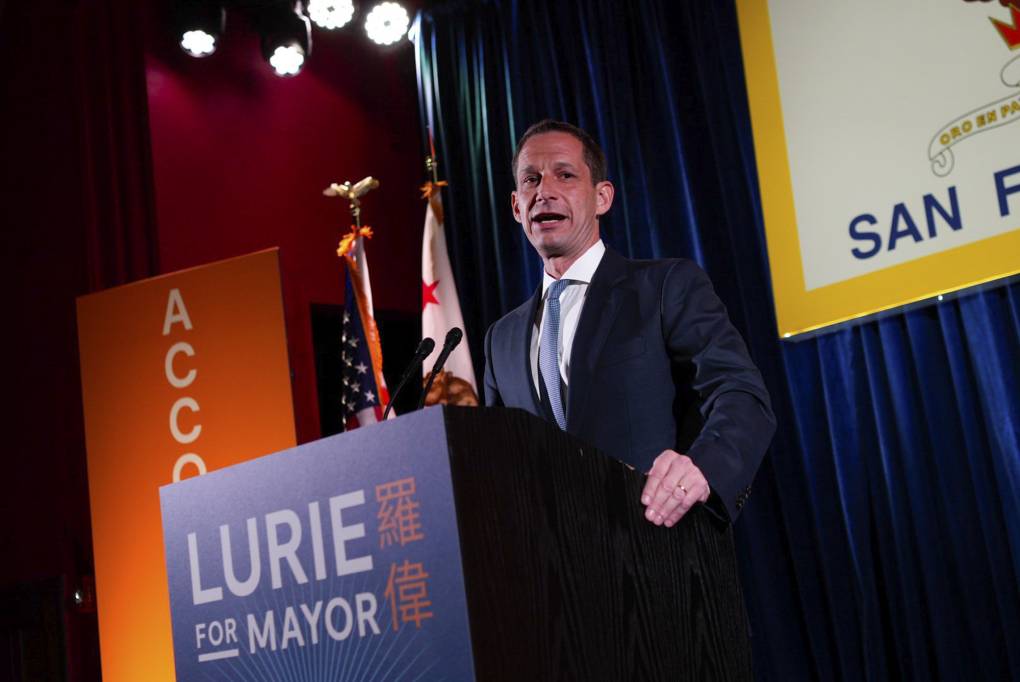
"caption": "Mayoral candidate Daniel Lurie addresses supporters at his election night party at the Chapel in San Francisco on Nov. 5, 2024. ",
"credit": "Aryk Copley for KQED",
"altTag": null,
"description": null,
"imgSizes": {
"medium": {
"file": "https://cdn.kqed.org/wp-content/uploads/sites/10/2024/11/241105-ELECTION-NIGHT-LURIE-WATCH-PARTY-AC-01-KQED-1-800x535.jpg",
"width": 800,
"height": 535,
"mimeType": "image/jpeg"
},
"large": {
"file": "https://cdn.kqed.org/wp-content/uploads/sites/10/2024/11/241105-ELECTION-NIGHT-LURIE-WATCH-PARTY-AC-01-KQED-1-1020x682.jpg",
"width": 1020,
"height": 682,
"mimeType": "image/jpeg"
},
"thumbnail": {
"file": "https://cdn.kqed.org/wp-content/uploads/sites/10/2024/11/241105-ELECTION-NIGHT-LURIE-WATCH-PARTY-AC-01-KQED-1-160x107.jpg",
"width": 160,
"height": 107,
"mimeType": "image/jpeg"
},
"1536x1536": {
"file": "https://cdn.kqed.org/wp-content/uploads/sites/10/2024/11/241105-ELECTION-NIGHT-LURIE-WATCH-PARTY-AC-01-KQED-1-1536x1027.jpg",
"width": 1536,
"height": 1027,
"mimeType": "image/jpeg"
},
"post-thumbnail": {
"file": "https://cdn.kqed.org/wp-content/uploads/sites/10/2024/11/241105-ELECTION-NIGHT-LURIE-WATCH-PARTY-AC-01-KQED-1-672x372.jpg",
"width": 672,
"height": 372,
"mimeType": "image/jpeg"
},
"twentyfourteen-full-width": {
"file": "https://cdn.kqed.org/wp-content/uploads/sites/10/2024/11/241105-ELECTION-NIGHT-LURIE-WATCH-PARTY-AC-01-KQED-1-1038x576.jpg",
"width": 1038,
"height": 576,
"mimeType": "image/jpeg"
},
"full-width": {
"file": "https://cdn.kqed.org/wp-content/uploads/sites/10/2024/11/241105-ELECTION-NIGHT-LURIE-WATCH-PARTY-AC-01-KQED-1-1920x1284.jpg",
"width": 1920,
"height": 1284,
"mimeType": "image/jpeg"
},
"kqedFullSize": {
"file": "https://cdn.kqed.org/wp-content/uploads/sites/10/2024/11/241105-ELECTION-NIGHT-LURIE-WATCH-PARTY-AC-01-KQED-1.jpg",
"width": 2000,
"height": 1337
}
},
"isLoading": false,
"fetchFailed": false
},
"news_11992341": {
"type": "attachments",
"id": "news_11992341",
"meta": {
"index": "attachments_1716263798",
"site": "news",
"id": "11992341",
"found": true
},
"title": "006_KQED_NEWFOLSOMPRISONSACRAMENTO_04132023-KQED",
"publishDate": 1719530043,
"status": "inherit",
"parent": 12088386,
"modified": 1782161688,
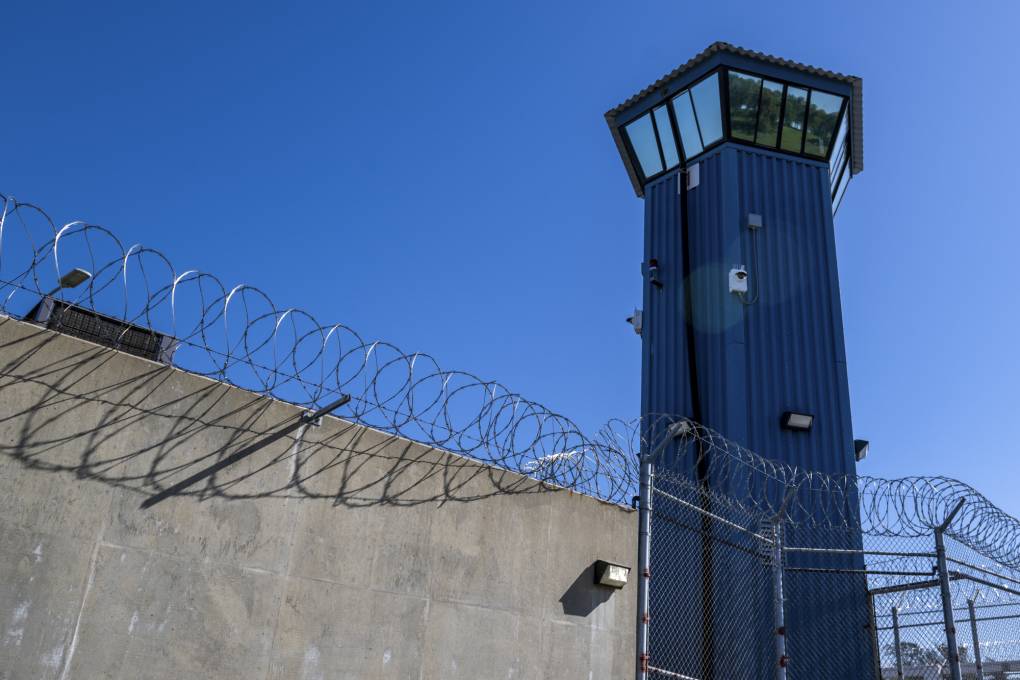
"caption": "A watch tower at California State Prison, Sacramento, on April 13, 2023.",
"credit": "Beth LaBerge/KQED",
"altTag": "A watchtower at a prison, with prison walls and barbed wire in the foreground.",
"description": null,
"imgSizes": {
"medium": {
"file": "https://cdn.kqed.org/wp-content/uploads/sites/10/2024/06/006_KQED_NEWFOLSOMPRISONSACRAMENTO_04132023-KQED-800x533.jpg",
"width": 800,
"height": 533,
"mimeType": "image/jpeg"
},
"large": {
"file": "https://cdn.kqed.org/wp-content/uploads/sites/10/2024/06/006_KQED_NEWFOLSOMPRISONSACRAMENTO_04132023-KQED-1020x680.jpg",
"width": 1020,
"height": 680,
"mimeType": "image/jpeg"
},
"thumbnail": {
"file": "https://cdn.kqed.org/wp-content/uploads/sites/10/2024/06/006_KQED_NEWFOLSOMPRISONSACRAMENTO_04132023-KQED-160x107.jpg",
"width": 160,
"height": 107,
"mimeType": "image/jpeg"
},
"1536x1536": {
"file": "https://cdn.kqed.org/wp-content/uploads/sites/10/2024/06/006_KQED_NEWFOLSOMPRISONSACRAMENTO_04132023-KQED-1536x1024.jpg",
"width": 1536,
"height": 1024,
"mimeType": "image/jpeg"
},
"post-thumbnail": {
"file": "https://cdn.kqed.org/wp-content/uploads/sites/10/2024/06/006_KQED_NEWFOLSOMPRISONSACRAMENTO_04132023-KQED-672x372.jpg",
"width": 672,
"height": 372,
"mimeType": "image/jpeg"
},
"twentyfourteen-full-width": {
"file": "https://cdn.kqed.org/wp-content/uploads/sites/10/2024/06/006_KQED_NEWFOLSOMPRISONSACRAMENTO_04132023-KQED-1038x576.jpg",
"width": 1038,
"height": 576,
"mimeType": "image/jpeg"
},
"full-width": {
"file": "https://cdn.kqed.org/wp-content/uploads/sites/10/2024/06/006_KQED_NEWFOLSOMPRISONSACRAMENTO_04132023-KQED-1920x1280.jpg",
"width": 1920,
"height": 1280,
"mimeType": "image/jpeg"
},
"kqedFullSize": {
"file": "https://cdn.kqed.org/wp-content/uploads/sites/10/2024/06/006_KQED_NEWFOLSOMPRISONSACRAMENTO_04132023-KQED.jpg",
"width": 2000,
"height": 1333
}
},
"isLoading": false,
"fetchFailed": false
},
"news_11981098": {
"type": "attachments",
"id": "news_11981098",
"meta": {
"index": "attachments_1716263798",
"site": "news",
"id": "11981098",
"found": true
},
"title": "The Richmond Standard is a local news site funded by Chevron, which runs the large refinery in town.",
"publishDate": 1711644554,
"status": "inherit",
"parent": 11981095,
"modified": 1730745276,
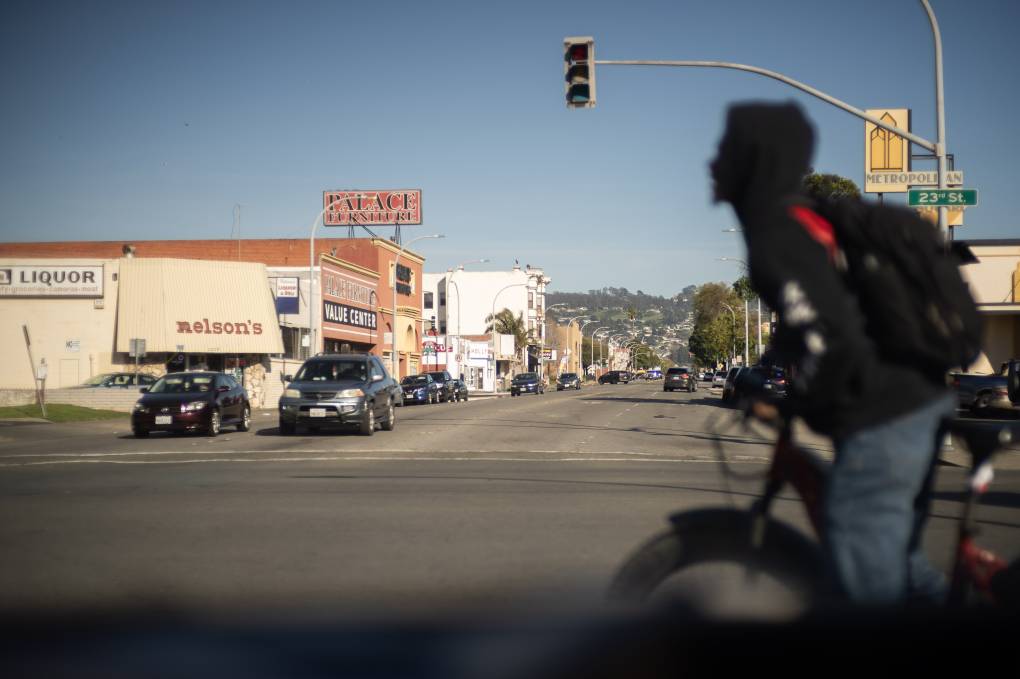
"caption": "Richmond, renowned for its success in reducing gun deaths, is California’s first city to join an effort to tailor violence prevention efforts to neighborhood-level needs.",
"credit": "Brian L. Frank/NPR",
"altTag": "A person rides a bike through an intersection with cars waiting at a stoplight.",
"description": "The Richmond Standard, which is a local news site funded by Chevron, who runs the large refinery in town. Disinformation and lack of coverage on Chevron are affecting Richmond, which doesn’t have many local news options.\n\nDowntown Richmond, CA",
"imgSizes": {
"medium": {
"file": "https://cdn.kqed.org/wp-content/uploads/sites/10/2024/03/z62_5591_custom-714680c19940b1fb0af95746d3b95944f8dcc85b-800x532.jpg",
"width": 800,
"height": 532,
"mimeType": "image/jpeg"
},
"large": {
"file": "https://cdn.kqed.org/wp-content/uploads/sites/10/2024/03/z62_5591_custom-714680c19940b1fb0af95746d3b95944f8dcc85b-1020x679.jpg",
"width": 1020,
"height": 679,
"mimeType": "image/jpeg"
},
"thumbnail": {
"file": "https://cdn.kqed.org/wp-content/uploads/sites/10/2024/03/z62_5591_custom-714680c19940b1fb0af95746d3b95944f8dcc85b-160x106.jpg",
"width": 160,
"height": 106,
"mimeType": "image/jpeg"
},
"1536x1536": {
"file": "https://cdn.kqed.org/wp-content/uploads/sites/10/2024/03/z62_5591_custom-714680c19940b1fb0af95746d3b95944f8dcc85b-1536x1022.jpg",
"width": 1536,
"height": 1022,
"mimeType": "image/jpeg"
},
"2048x2048": {
"file": "https://cdn.kqed.org/wp-content/uploads/sites/10/2024/03/z62_5591_custom-714680c19940b1fb0af95746d3b95944f8dcc85b-2048x1362.jpg",
"width": 2048,
"height": 1362,
"mimeType": "image/jpeg"
},
"post-thumbnail": {
"file": "https://cdn.kqed.org/wp-content/uploads/sites/10/2024/03/z62_5591_custom-714680c19940b1fb0af95746d3b95944f8dcc85b-672x372.jpg",
"width": 672,
"height": 372,
"mimeType": "image/jpeg"
},
"twentyfourteen-full-width": {
"file": "https://cdn.kqed.org/wp-content/uploads/sites/10/2024/03/z62_5591_custom-714680c19940b1fb0af95746d3b95944f8dcc85b-1038x576.jpg",
"width": 1038,
"height": 576,
"mimeType": "image/jpeg"
},
"full-width": {
"file": "https://cdn.kqed.org/wp-content/uploads/sites/10/2024/03/z62_5591_custom-714680c19940b1fb0af95746d3b95944f8dcc85b-1920x1277.jpg",
"width": 1920,
"height": 1277,
"mimeType": "image/jpeg"
},
"kqedFullSize": {
"file": "https://cdn.kqed.org/wp-content/uploads/sites/10/2024/03/z62_5591_custom-714680c19940b1fb0af95746d3b95944f8dcc85b-scaled.jpg",
"width": 2560,
"height": 1703
}
},
"isLoading": false,
"fetchFailed": false
},
"news_12012030": {
"type": "attachments",
"id": "news_12012030",
"meta": {
"index": "attachments_1716263798",
"site": "news",
"id": "12012030",
"found": true
},
"title": "241022-Prop36-01-BL_qed",
"publishDate": 1730416468,
"status": "inherit",
"parent": 12012013,
"modified": 1730416534,
"caption": "A group holds signs during a rally against Proposition 36 at the Upper Haight bookstore, Booksmith, in San Francisco on Oct. 22, 2024.",
"credit": "Beth LaBerge/KQED",
"altTag": null,
"description": null,
"imgSizes": {
"medium": {
"file": "https://cdn.kqed.org/wp-content/uploads/sites/10/2024/11/241022-Prop36-01-BL_qed-800x533.jpg",
"width": 800,
"height": 533,
"mimeType": "image/jpeg"
},
"large": {
"file": "https://cdn.kqed.org/wp-content/uploads/sites/10/2024/11/241022-Prop36-01-BL_qed-1020x680.jpg",
"width": 1020,
"height": 680,
"mimeType": "image/jpeg"
},
"thumbnail": {
"file": "https://cdn.kqed.org/wp-content/uploads/sites/10/2024/11/241022-Prop36-01-BL_qed-160x107.jpg",
"width": 160,
"height": 107,
"mimeType": "image/jpeg"
},
"1536x1536": {
"file": "https://cdn.kqed.org/wp-content/uploads/sites/10/2024/11/241022-Prop36-01-BL_qed-1536x1024.jpg",
"width": 1536,
"height": 1024,
"mimeType": "image/jpeg"
},
"post-thumbnail": {
"file": "https://cdn.kqed.org/wp-content/uploads/sites/10/2024/11/241022-Prop36-01-BL_qed-672x372.jpg",
"width": 672,
"height": 372,
"mimeType": "image/jpeg"
},
"twentyfourteen-full-width": {
"file": "https://cdn.kqed.org/wp-content/uploads/sites/10/2024/11/241022-Prop36-01-BL_qed-1038x576.jpg",
"width": 1038,
"height": 576,
"mimeType": "image/jpeg"
},
"full-width": {
"file": "https://cdn.kqed.org/wp-content/uploads/sites/10/2024/11/241022-Prop36-01-BL_qed-1920x1280.jpg",
"width": 1920,
"height": 1280,
"mimeType": "image/jpeg"
},
"kqedFullSize": {
"file": "https://cdn.kqed.org/wp-content/uploads/sites/10/2024/11/241022-Prop36-01-BL_qed.jpg",
"width": 2000,
"height": 1333
}
},
"isLoading": false,
"fetchFailed": false
},
"news_12011861": {
"type": "attachments",
"id": "news_12011861",
"meta": {
"index": "attachments_1716263798",
"site": "news",
"id": "12011861",
"found": true
},
"title": "SC Judge",
"publishDate": 1730349920,
"status": "inherit",
"parent": 12011710,
"modified": 1730350495,
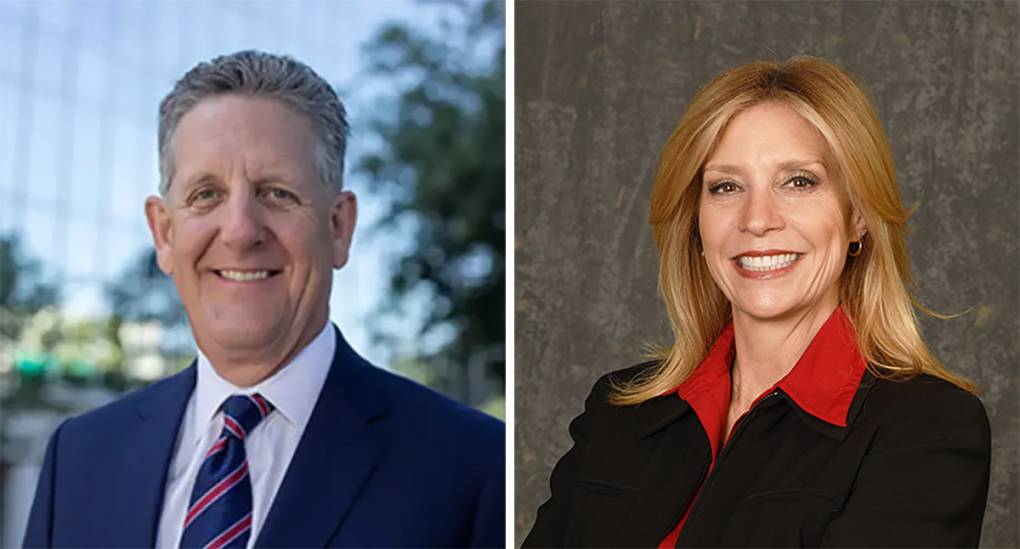
"caption": "Jay Boyarsky (left) and Johnene Stebbins, both veteran prosecutors in the Santa Clara County District Attorney's Office, are facing off in a heated race to be a judge on the county's Superior Court.",
"credit": "Photos courtesy of both candidates",
"altTag": "A side-by-side headshots of a middle-aged man and woman, both wearing suits.",
"description": null,
"imgSizes": {
"medium": {
"file": "https://cdn.kqed.org/wp-content/uploads/sites/10/2024/10/SC-Judge-800x431.jpg",
"width": 800,
"height": 431,
"mimeType": "image/jpeg"
},
"large": {
"file": "https://cdn.kqed.org/wp-content/uploads/sites/10/2024/10/SC-Judge-1020x549.jpg",
"width": 1020,
"height": 549,
"mimeType": "image/jpeg"
},
"thumbnail": {
"file": "https://cdn.kqed.org/wp-content/uploads/sites/10/2024/10/SC-Judge-160x86.jpg",
"width": 160,
"height": 86,
"mimeType": "image/jpeg"
},
"post-thumbnail": {
"file": "https://cdn.kqed.org/wp-content/uploads/sites/10/2024/10/SC-Judge-672x372.jpg",
"width": 672,
"height": 372,
"mimeType": "image/jpeg"
},
"twentyfourteen-full-width": {
"file": "https://cdn.kqed.org/wp-content/uploads/sites/10/2024/10/SC-Judge-1038x576.jpg",
"width": 1038,
"height": 576,
"mimeType": "image/jpeg"
},
"kqedFullSize": {
"file": "https://cdn.kqed.org/wp-content/uploads/sites/10/2024/10/SC-Judge.jpg",
"width": 1200,
"height": 646
}
},
"isLoading": false,
"fetchFailed": false
},
"news_12008946": {
"type": "attachments",
"id": "news_12008946",
"meta": {
"index": "attachments_1716263798",
"site": "news",
"id": "12008946",
"found": true
},
"title": "PamelaPriceAntiRecall1",
"publishDate": 1728595078,
"status": "inherit",
"parent": 12008868,
"modified": 1730346315,
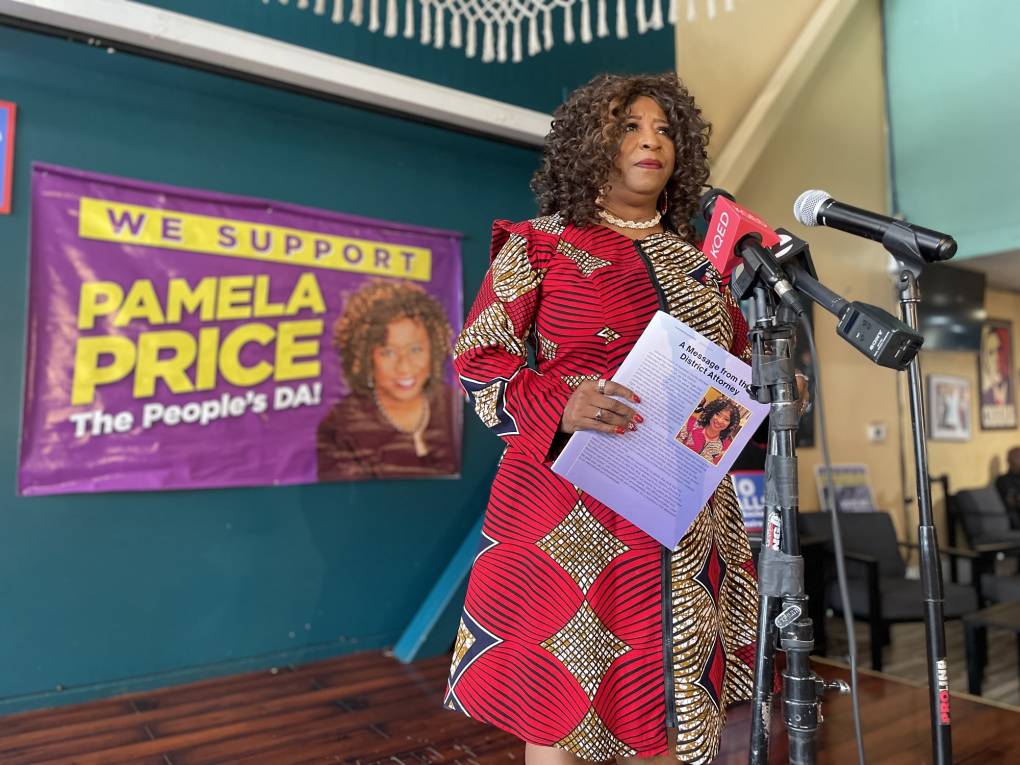
"caption": "Alameda County District Attorney Pamela Price speaks at a press conference on Oct. 10, 2024, at Everett & Jones Barbeque in Oakland's Jack London Square. The event, hosted by Protect the Win, was part of Price's anti-recall campaign.",
"credit": "Annelise Finney/KQED",
"altTag": null,
"description": null,
"imgSizes": {
"medium": {
"file": "https://cdn.kqed.org/wp-content/uploads/sites/10/2024/10/PamelaPriceAntiRecall1-800x600.jpg",
"width": 800,
"height": 600,
"mimeType": "image/jpeg"
},
"large": {
"file": "https://cdn.kqed.org/wp-content/uploads/sites/10/2024/10/PamelaPriceAntiRecall1-1020x765.jpg",
"width": 1020,
"height": 765,
"mimeType": "image/jpeg"
},
"thumbnail": {
"file": "https://cdn.kqed.org/wp-content/uploads/sites/10/2024/10/PamelaPriceAntiRecall1-160x120.jpg",
"width": 160,
"height": 120,
"mimeType": "image/jpeg"
},
"1536x1536": {
"file": "https://cdn.kqed.org/wp-content/uploads/sites/10/2024/10/PamelaPriceAntiRecall1-1536x1152.jpg",
"width": 1536,
"height": 1152,
"mimeType": "image/jpeg"
},
"post-thumbnail": {
"file": "https://cdn.kqed.org/wp-content/uploads/sites/10/2024/10/PamelaPriceAntiRecall1-672x372.jpg",
"width": 672,
"height": 372,
"mimeType": "image/jpeg"
},
"twentyfourteen-full-width": {
"file": "https://cdn.kqed.org/wp-content/uploads/sites/10/2024/10/PamelaPriceAntiRecall1-1038x576.jpg",
"width": 1038,
"height": 576,
"mimeType": "image/jpeg"
},
"full-width": {
"file": "https://cdn.kqed.org/wp-content/uploads/sites/10/2024/10/PamelaPriceAntiRecall1-1920x1440.jpg",
"width": 1920,
"height": 1440,
"mimeType": "image/jpeg"
},
"kqedFullSize": {
"file": "https://cdn.kqed.org/wp-content/uploads/sites/10/2024/10/PamelaPriceAntiRecall1.jpg",
"width": 2000,
"height": 1500
}
},
"isLoading": false,
"fetchFailed": false
},
"news_11966840": {
"type": "attachments",
"id": "news_11966840",
"meta": {
"index": "attachments_1716263798",
"site": "news",
"id": "11966840",
"found": true
},
"parent": 0,
"imgSizes": {
"twentyfourteen-full-width": {
"file": "https://ww2.kqed.org/app/uploads/sites/10/2023/11/231108-DEPAPE-PELOSI-BODY-CAMERA-KQED-1038x576.jpg",
"width": 1038,
"mimeType": "image/jpeg",
"height": 576
},
"thumbnail": {
"file": "https://ww2.kqed.org/app/uploads/sites/10/2023/11/231108-DEPAPE-PELOSI-BODY-CAMERA-KQED-160x107.jpg",
"width": 160,
"mimeType": "image/jpeg",
"height": 107
},
"post-thumbnail": {
"file": "https://ww2.kqed.org/app/uploads/sites/10/2023/11/231108-DEPAPE-PELOSI-BODY-CAMERA-KQED-672x372.jpg",
"width": 672,
"mimeType": "image/jpeg",
"height": 372
},
"kqedFullSize": {
"file": "https://ww2.kqed.org/app/uploads/sites/10/2023/11/231108-DEPAPE-PELOSI-BODY-CAMERA-KQED.jpg",
"width": 2000,
"height": 1334
},
"large": {
"file": "https://ww2.kqed.org/app/uploads/sites/10/2023/11/231108-DEPAPE-PELOSI-BODY-CAMERA-KQED-1020x680.jpg",
"width": 1020,
"mimeType": "image/jpeg",
"height": 680
},
"1536x1536": {
"file": "https://ww2.kqed.org/app/uploads/sites/10/2023/11/231108-DEPAPE-PELOSI-BODY-CAMERA-KQED-1536x1025.jpg",
"width": 1536,
"mimeType": "image/jpeg",
"height": 1025
},
"full-width": {
"file": "https://ww2.kqed.org/app/uploads/sites/10/2023/11/231108-DEPAPE-PELOSI-BODY-CAMERA-KQED-1920x1281.jpg",
"width": 1920,
"mimeType": "image/jpeg",
"height": 1281
},
"medium": {
"file": "https://ww2.kqed.org/app/uploads/sites/10/2023/11/231108-DEPAPE-PELOSI-BODY-CAMERA-KQED-800x534.jpg",
"width": 800,
"mimeType": "image/jpeg",
"height": 534
}
},
"publishDate": 1699489012,
"modified": 1699490331,
"caption": "A screen capture from SFPD Body Camera Footage of the attack on Paul Pelosi on Oct. 28, 2022.",
"description": null,
"title": "231108-DEPAPE PELOSI BODY CAMERA-KQED",
"credit": "Courtesy of SFPD",
"status": "inherit",
"altTag": "Two people stand beside each other inside the entryway of a home.",
"isLoading": false,
"fetchFailed": false
},
"news_12011419": {
"type": "attachments",
"id": "news_12011419",
"meta": {
"index": "attachments_1716263798",
"site": "news",
"id": "12011419",
"found": true
},
"title": "CongressionalDebateNBC_Cohen-29_qed",
"publishDate": 1730153207,
"status": "inherit",
"parent": 12011368,
"modified": 1730153424,
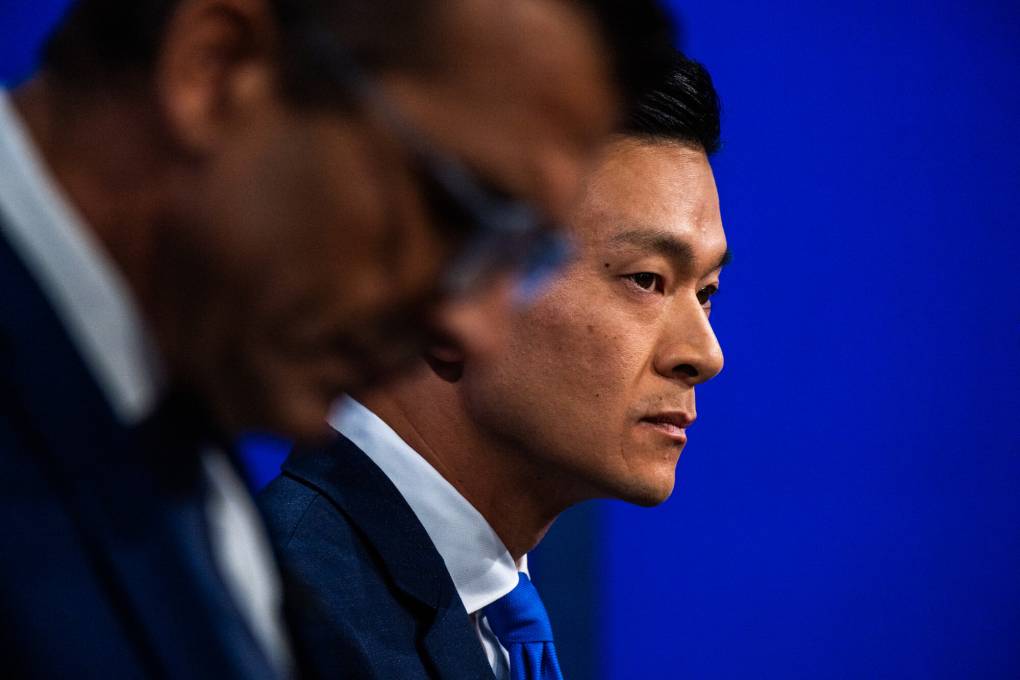
"caption": "Proposition 36, which would increase criminal penalties, is dividing Democrats and resulting in pointed attacks in several South Bay races that pit members of the same party against one another, including the congressional contest between Sam Liccardo (left) and Evan Low, pictured during a debate on Oct. 11.",
"credit": "Camille Cohen",
"altTag": null,
"description": null,
"imgSizes": {
"medium": {
"file": "https://cdn.kqed.org/wp-content/uploads/sites/10/2024/10/CongressionalDebateNBC_Cohen-29_qed-800x533.jpg",
"width": 800,
"height": 533,
"mimeType": "image/jpeg"
},
"large": {
"file": "https://cdn.kqed.org/wp-content/uploads/sites/10/2024/10/CongressionalDebateNBC_Cohen-29_qed-1020x680.jpg",
"width": 1020,
"height": 680,
"mimeType": "image/jpeg"
},
"thumbnail": {
"file": "https://cdn.kqed.org/wp-content/uploads/sites/10/2024/10/CongressionalDebateNBC_Cohen-29_qed-160x107.jpg",
"width": 160,
"height": 107,
"mimeType": "image/jpeg"
},
"1536x1536": {
"file": "https://cdn.kqed.org/wp-content/uploads/sites/10/2024/10/CongressionalDebateNBC_Cohen-29_qed-1536x1024.jpg",
"width": 1536,
"height": 1024,
"mimeType": "image/jpeg"
},
"post-thumbnail": {
"file": "https://cdn.kqed.org/wp-content/uploads/sites/10/2024/10/CongressionalDebateNBC_Cohen-29_qed-672x372.jpg",
"width": 672,
"height": 372,
"mimeType": "image/jpeg"
},
"twentyfourteen-full-width": {
"file": "https://cdn.kqed.org/wp-content/uploads/sites/10/2024/10/CongressionalDebateNBC_Cohen-29_qed-1038x576.jpg",
"width": 1038,
"height": 576,
"mimeType": "image/jpeg"
},
"full-width": {
"file": "https://cdn.kqed.org/wp-content/uploads/sites/10/2024/10/CongressionalDebateNBC_Cohen-29_qed-1920x1280.jpg",
"width": 1920,
"height": 1280,
"mimeType": "image/jpeg"
},
"kqedFullSize": {
"file": "https://cdn.kqed.org/wp-content/uploads/sites/10/2024/10/CongressionalDebateNBC_Cohen-29_qed.jpg",
"width": 1999,
"height": 1333
}
},
"isLoading": false,
"fetchFailed": false
},
"news_11870697": {
"type": "attachments",
"id": "news_11870697",
"meta": {
"index": "attachments_1716263798",
"site": "news",
"id": "11870697",
"found": true
},
"parent": 11870691,
"imgSizes": {
"twentyfourteen-full-width": {
"file": "https://ww2.kqed.org/app/uploads/sites/10/2021/04/RS48718_037_Alameda_MarioGonzalezVigil_04212021-qut-1038x576.jpg",
"width": 1038,
"mimeType": "image/jpeg",
"height": 576
},
"thumbnail": {
"file": "https://ww2.kqed.org/app/uploads/sites/10/2021/04/RS48718_037_Alameda_MarioGonzalezVigil_04212021-qut-160x107.jpg",
"width": 160,
"mimeType": "image/jpeg",
"height": 107
},
"post-thumbnail": {
"file": "https://ww2.kqed.org/app/uploads/sites/10/2021/04/RS48718_037_Alameda_MarioGonzalezVigil_04212021-qut-672x372.jpg",
"width": 672,
"mimeType": "image/jpeg",
"height": 372
},
"kqedFullSize": {
"file": "https://ww2.kqed.org/app/uploads/sites/10/2021/04/RS48718_037_Alameda_MarioGonzalezVigil_04212021-qut.jpg",
"width": 1920,
"height": 1280
},
"large": {
"file": "https://ww2.kqed.org/app/uploads/sites/10/2021/04/RS48718_037_Alameda_MarioGonzalezVigil_04212021-qut-1020x680.jpg",
"width": 1020,
"mimeType": "image/jpeg",
"height": 680
},
"1536x1536": {
"file": "https://ww2.kqed.org/app/uploads/sites/10/2021/04/RS48718_037_Alameda_MarioGonzalezVigil_04212021-qut-1536x1024.jpg",
"width": 1536,
"mimeType": "image/jpeg",
"height": 1024
},
"medium": {
"file": "https://ww2.kqed.org/app/uploads/sites/10/2021/04/RS48718_037_Alameda_MarioGonzalezVigil_04212021-qut-800x533.jpg",
"width": 800,
"mimeType": "image/jpeg",
"height": 533
}
},
"publishDate": 1619115148,
"modified": 1619128499,
"caption": "A memorial for Mario Gonzalez during a vigil in his honor in Alameda on April 21, 2021.",
"description": null,
"title": "RS48718_037_Alameda_MarioGonzalezVigil_04212021-qut",
"credit": "Beth LaBerge/KQED",
"status": "inherit",
"altTag": null,
"isLoading": false,
"fetchFailed": false
},
"news_12010985": {
"type": "attachments",
"id": "news_12010985",
"meta": {
"index": "attachments_1716263798",
"site": "news",
"id": "12010985",
"found": true
},
"title": "241024-SFCOURTCLERKSSTRIKE-07-BL-KQED",
"publishDate": 1729806684,
"status": "inherit",
"parent": 0,
"modified": 1729809187,
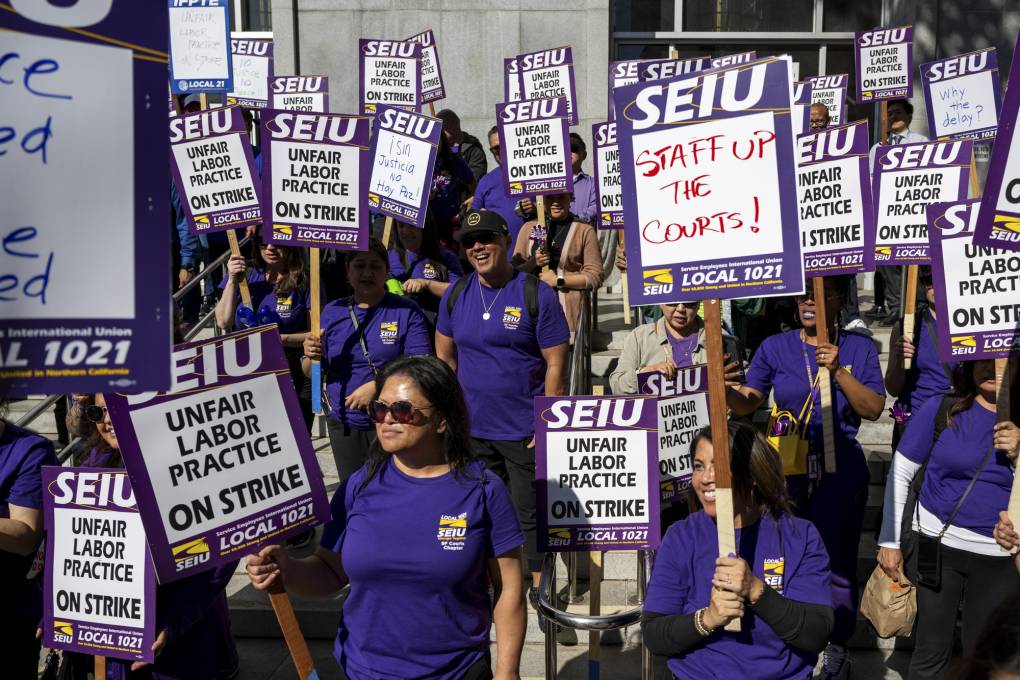
"caption": "San Francisco Superior Court clerks, supported by their union SEIU Local 1021, strike in front of the 850 Bryant St. Courthouse in San Francisco on Oct. 24, 2024, nearly a month after their contract expired. They raised issues of inadequate staffing and training that they say have already caused over 70 misdemeanor cases to be dismissed and caused unnecessary delays and errors.",
"credit": "Beth LaBerge/KQED",
"altTag": null,
"description": null,
"imgSizes": {
"medium": {
"file": "https://cdn.kqed.org/wp-content/uploads/sites/10/2024/10/241024-SFCOURTCLERKSSTRIKE-07-BL-KQED-800x533.jpg",
"width": 800,
"height": 533,
"mimeType": "image/jpeg"
},
"large": {
"file": "https://cdn.kqed.org/wp-content/uploads/sites/10/2024/10/241024-SFCOURTCLERKSSTRIKE-07-BL-KQED-1020x680.jpg",
"width": 1020,
"height": 680,
"mimeType": "image/jpeg"
},
"thumbnail": {
"file": "https://cdn.kqed.org/wp-content/uploads/sites/10/2024/10/241024-SFCOURTCLERKSSTRIKE-07-BL-KQED-160x107.jpg",
"width": 160,
"height": 107,
"mimeType": "image/jpeg"
},
"1536x1536": {
"file": "https://cdn.kqed.org/wp-content/uploads/sites/10/2024/10/241024-SFCOURTCLERKSSTRIKE-07-BL-KQED-1536x1024.jpg",
"width": 1536,
"height": 1024,
"mimeType": "image/jpeg"
},
"post-thumbnail": {
"file": "https://cdn.kqed.org/wp-content/uploads/sites/10/2024/10/241024-SFCOURTCLERKSSTRIKE-07-BL-KQED-672x372.jpg",
"width": 672,
"height": 372,
"mimeType": "image/jpeg"
},
"twentyfourteen-full-width": {
"file": "https://cdn.kqed.org/wp-content/uploads/sites/10/2024/10/241024-SFCOURTCLERKSSTRIKE-07-BL-KQED-1038x576.jpg",
"width": 1038,
"height": 576,
"mimeType": "image/jpeg"
},
"full-width": {
"file": "https://cdn.kqed.org/wp-content/uploads/sites/10/2024/10/241024-SFCOURTCLERKSSTRIKE-07-BL-KQED-1920x1280.jpg",
"width": 1920,
"height": 1280,
"mimeType": "image/jpeg"
},
"kqedFullSize": {
"file": "https://cdn.kqed.org/wp-content/uploads/sites/10/2024/10/241024-SFCOURTCLERKSSTRIKE-07-BL-KQED.jpg",
"width": 2000,
"height": 1333
}
},
"isLoading": false,
"fetchFailed": false
},
"news_12010374": {
"type": "attachments",
"id": "news_12010374",
"meta": {
"index": "attachments_1716263798",
"site": "news",
"id": "12010374",
"found": true
},
"title": "US-PALESTINIANS-ISRAEL-CONFLICT",
"publishDate": 1729529558,
"status": "inherit",
"parent": 12010363,
"modified": 1777579705,
"caption": "Pro-Palestinian demonstrators blocked San Francisco's Golden Gate Bridge on April 15, 2024, completely halting traffic for hours as part of a coordinated day of action against Israel's war in Gaza.",
"credit": "Paul Kuroda/AFP via Getty Images",
"altTag": null,
"description": null,
"imgSizes": {
"medium": {
"file": "https://cdn.kqed.org/wp-content/uploads/sites/10/2024/10/GGBridgeProtestAprilGetty-800x549.jpg",
"width": 800,
"height": 549,
"mimeType": "image/jpeg"
},
"large": {
"file": "https://cdn.kqed.org/wp-content/uploads/sites/10/2024/10/GGBridgeProtestAprilGetty-1020x700.jpg",
"width": 1020,
"height": 700,
"mimeType": "image/jpeg"
},
"thumbnail": {
"file": "https://cdn.kqed.org/wp-content/uploads/sites/10/2024/10/GGBridgeProtestAprilGetty-160x110.jpg",
"width": 160,
"height": 110,
"mimeType": "image/jpeg"
},
"1536x1536": {
"file": "https://cdn.kqed.org/wp-content/uploads/sites/10/2024/10/GGBridgeProtestAprilGetty-1536x1054.jpg",
"width": 1536,
"height": 1054,
"mimeType": "image/jpeg"
},
"post-thumbnail": {
"file": "https://cdn.kqed.org/wp-content/uploads/sites/10/2024/10/GGBridgeProtestAprilGetty-672x372.jpg",
"width": 672,
"height": 372,
"mimeType": "image/jpeg"
},
"twentyfourteen-full-width": {
"file": "https://cdn.kqed.org/wp-content/uploads/sites/10/2024/10/GGBridgeProtestAprilGetty-1038x576.jpg",
"width": 1038,
"height": 576,
"mimeType": "image/jpeg"
},
"full-width": {
"file": "https://cdn.kqed.org/wp-content/uploads/sites/10/2024/10/GGBridgeProtestAprilGetty-1920x1317.jpg",
"width": 1920,
"height": 1317,
"mimeType": "image/jpeg"
},
"kqedFullSize": {
"file": "https://cdn.kqed.org/wp-content/uploads/sites/10/2024/10/GGBridgeProtestAprilGetty.jpg",
"width": 2000,
"height": 1372
}
},
"isLoading": false,
"fetchFailed": false
},
"news_12009735": {
"type": "attachments",
"id": "news_12009735",
"meta": {
"index": "attachments_1716263798",
"site": "news",
"id": "12009735",
"found": true
},
"title": "241016-OMAR TORRES-GH-1-KQED",
"publishDate": 1729121458,
"status": "inherit",
"parent": 12009671,
"modified": 1729121486,
"caption": "First-term San José Councilmember Omar Torres is facing increasing pressure to resign following a police investigation into text messages he sent referencing sexually explicit acts with a minor.",
"credit": "Joseph Geha/KQED",
"altTag": null,
"description": null,
"imgSizes": {
"medium": {
"file": "https://cdn.kqed.org/wp-content/uploads/sites/10/2024/10/241016-OMAR-TORRES-GH-1-KQED-800x533.jpg",
"width": 800,
"height": 533,
"mimeType": "image/jpeg"
},
"large": {
"file": "https://cdn.kqed.org/wp-content/uploads/sites/10/2024/10/241016-OMAR-TORRES-GH-1-KQED-1020x680.jpg",
"width": 1020,
"height": 680,
"mimeType": "image/jpeg"
},
"thumbnail": {
"file": "https://cdn.kqed.org/wp-content/uploads/sites/10/2024/10/241016-OMAR-TORRES-GH-1-KQED-160x107.jpg",
"width": 160,
"height": 107,
"mimeType": "image/jpeg"
},
"1536x1536": {
"file": "https://cdn.kqed.org/wp-content/uploads/sites/10/2024/10/241016-OMAR-TORRES-GH-1-KQED-1536x1024.jpg",
"width": 1536,
"height": 1024,
"mimeType": "image/jpeg"
},
"post-thumbnail": {
"file": "https://cdn.kqed.org/wp-content/uploads/sites/10/2024/10/241016-OMAR-TORRES-GH-1-KQED-672x372.jpg",
"width": 672,
"height": 372,
"mimeType": "image/jpeg"
},
"twentyfourteen-full-width": {
"file": "https://cdn.kqed.org/wp-content/uploads/sites/10/2024/10/241016-OMAR-TORRES-GH-1-KQED-1038x576.jpg",
"width": 1038,
"height": 576,
"mimeType": "image/jpeg"
},
"full-width": {
"file": "https://cdn.kqed.org/wp-content/uploads/sites/10/2024/10/241016-OMAR-TORRES-GH-1-KQED-1920x1280.jpg",
"width": 1920,
"height": 1280,
"mimeType": "image/jpeg"
},
"kqedFullSize": {
"file": "https://cdn.kqed.org/wp-content/uploads/sites/10/2024/10/241016-OMAR-TORRES-GH-1-KQED.jpg",
"width": 2000,
"height": 1333
}
},
"isLoading": false,
"fetchFailed": false
}
},
"audioPlayerReducer": {
"postId": "stream_live",
"isPaused": true,
"isPlaying": false,
"pfsActive": false,
"pledgeModalIsOpen": true,
"playerDrawerIsOpen": false,
"liveAudioPlayStartedAt": 0,
"liveAudioPlayContext": ""
},
"authorsReducer": {
"gmarzorati": {
"type": "authors",
"id": "227",
"meta": {
"index": "authors_1716337520",
"id": "227",
"found": true
},
"name": "Guy Marzorati",
"firstName": "Guy",
"lastName": "Marzorati",
"slug": "gmarzorati",
"email": "gmarzorati@KQED.org",
"display_author_email": true,
"staff_mastheads": [
"news"
],
"title": "Correspondent",
"bio": "Guy Marzorati is a correspondent on KQED's California Politics and Government Desk, based in San Jose. A graduate of Santa Clara University, Guy joined KQED in 2013. He reports on state and local politics and produces KQED's digital voter guide.",
"avatar": "https://secure.gravatar.com/avatar/e7038b8dbfd55b104369b76b1cd0b9de?s=600&d=blank&r=g",
"twitter": "guymarzorati",
"facebook": null,
"instagram": null,
"linkedin": null,
"sites": [
{
"site": "",
"roles": [
"editor"
]
},
{
"site": "news",
"roles": [
"editor"
]
},
{
"site": "science",
"roles": [
"editor"
]
},
{
"site": "forum",
"roles": [
"editor"
]
},
{
"site": "elections",
"roles": [
"editor"
]
},
{
"site": "liveblog",
"roles": [
"editor"
]
}
],
"headData": {
"title": "Guy Marzorati | KQED",
"description": "Correspondent",
"ogImgSrc": "https://secure.gravatar.com/avatar/e7038b8dbfd55b104369b76b1cd0b9de?s=600&d=blank&r=g",
"twImgSrc": "https://secure.gravatar.com/avatar/e7038b8dbfd55b104369b76b1cd0b9de?s=600&d=blank&r=g"
},
"isLoading": false,
"link": "/author/gmarzorati"
},
"shossaini": {
"type": "authors",
"id": "3214",
"meta": {
"index": "authors_1716337520",
"id": "3214",
"found": true
},
"name": "Sara Hossaini",
"firstName": "Sara",
"lastName": "Hossaini",
"slug": "shossaini",
"email": "shossaini@kqed.org",
"display_author_email": true,
"staff_mastheads": [
"news"
],
"title": "KQED Reporter",
"bio": "Sara Hossaini came to general assignment reporting at KQED in 2013 after two winters reporting at Wyoming Public Radio. She holds a bachelor's degree in broadcast journalism from the University of Nebraska-Lincoln. Her radio romance began after a bitter breakup with documentary film (Ok, maybe it's still complicated). Her first simultaneous jobs in San Francisco were as Associate Producer on a PBS film series through the Center for Asian American Media and as a butler. She likes to trot, plot and make things with her hands.",
"avatar": "https://secure.gravatar.com/avatar/060e9f56b9554e17942e89f413242774?s=600&d=blank&r=g",
"twitter": "mshossaini",
"facebook": null,
"instagram": null,
"linkedin": null,
"sites": [
{
"site": "news",
"roles": [
"author"
]
},
{
"site": "stateofhealth",
"roles": [
"author"
]
}
],
"headData": {
"title": "Sara Hossaini | KQED",
"description": "KQED Reporter",
"ogImgSrc": "https://secure.gravatar.com/avatar/060e9f56b9554e17942e89f413242774?s=600&d=blank&r=g",
"twImgSrc": "https://secure.gravatar.com/avatar/060e9f56b9554e17942e89f413242774?s=600&d=blank&r=g"
},
"isLoading": false,
"link": "/author/shossaini"
},
"mlagos": {
"type": "authors",
"id": "3239",
"meta": {
"index": "authors_1716337520",
"id": "3239",
"found": true
},
"name": "Marisa Lagos",
"firstName": "Marisa",
"lastName": "Lagos",
"slug": "mlagos",
"email": "mlagos@kqed.org",
"display_author_email": false,
"staff_mastheads": [
"news"
],
"title": "KQED Contributor",
"bio": "Marisa Lagos is a correspondent for KQED’s California Politics and Government Desk and co-hosts the award-winning show and podcast, Political Breakdown. At KQED, Lagos also conducts reporting, analysis and investigations into state, local and national politics for radio, TV, online and onstage. In 2022, she and co-host, Scott Shafer, moderated the only gubernatorial debate in California. In 2020, the \u003ci>Washington Post\u003c/i> named her one of the top political journalists in California; she was nominated for a Peabody and won several other awards for her work investigating the 2017 California wildfires. She has worked at the \u003ci>San Francisco Chronicle\u003c/i>, \u003ci>San Francisco Examiner\u003c/i> and \u003ci>Los Angeles Times\u003c/i>. A UC Santa Barbara graduate, she lives in San Francisco with her two sons and husband.",
"avatar": "https://secure.gravatar.com/avatar/a261a0d3696fc066871ef96b85b5e7d2?s=600&d=blank&r=g",
"twitter": "@mlagos",
"facebook": null,
"instagram": null,
"linkedin": null,
"sites": [
{
"site": "arts",
"roles": [
"author"
]
},
{
"site": "news",
"roles": [
"editor"
]
},
{
"site": "science",
"roles": [
"editor"
]
},
{
"site": "forum",
"roles": [
"author"
]
},
{
"site": "liveblog",
"roles": [
"author"
]
}
],
"headData": {
"title": "Marisa Lagos | KQED",
"description": "KQED Contributor",
"ogImgSrc": "https://secure.gravatar.com/avatar/a261a0d3696fc066871ef96b85b5e7d2?s=600&d=blank&r=g",
"twImgSrc": "https://secure.gravatar.com/avatar/a261a0d3696fc066871ef96b85b5e7d2?s=600&d=blank&r=g"
},
"isLoading": false,
"link": "/author/mlagos"
},
"jsmall": {
"type": "authors",
"id": "6625",
"meta": {
"index": "authors_1716337520",
"id": "6625",
"found": true
},
"name": "Julie Small",
"firstName": "Julie",
"lastName": "Small",
"slug": "jsmall",
"email": "jsmall@kqed.org",
"display_author_email": true,
"staff_mastheads": [
"news"
],
"title": "KQED Contributor",
"bio": "Julie Small reports on criminal justice and immigration.\r\n\r\nShe was part of a team at KQED awarded a regional 2019 Edward R. Murrow award for continuing coverage of the Trump Administration's family separation policy.\r\n\r\nThe Society for Professional Journalists recognized Julie's 2018 \u003ca href=\"https://www.kqed.org/news/11636262/the-officer-tased-him-31-times-the-sheriff-called-his-death-an-accident\">reporting\u003c/a> on the San Joaquin County Sheriff's \u003ca href=\"https://www.kqed.org/news/11634689/autopsy-doctors-sheriff-overrode-death-findings-to-protect-law-enforcement\">interference\u003c/a> in death investigations with an Excellence in Journalism Award for Ongoing Coverage.\r\n\r\nJulie's\u003ca href=\"https://www.kqed.org/news/11039666/two-mentally-ill-inmates-died-one-month-in-santa-clara\"> reporting\u003c/a> with Lisa Pickoff-White on the treatment of mentally ill offenders in California jails earned a 2017 regional Edward R. Murrow Award for news reporting and an investigative reporting award from the SPJ of Northern California.\r\n\r\nBefore joining KQED, Julie covered government and politics in Sacramento for Southern California Public Radio (SCPR). Her 2010 \u003ca href=\"https://www.scpr.org/specials/prisonmedical/\">series\u003c/a> on lapses in California’s prison medical care also won a regional Edward R. Murrow Award for investigative reporting and a Golden Mic Award from the RTNDA of Southern California.\r\n\r\nJulie began her career in journalism in 2000 as the deputy foreign editor for public radio's \u003cem>Marketplace, \u003c/em>while earning her master's degree in journalism from USC’s Annenberg School of Communication.",
"avatar": "https://secure.gravatar.com/avatar/4baedf201468df97be97c2a9dd7585d0?s=600&d=blank&r=g",
"twitter": "@SmallRadio2",
"facebook": null,
"instagram": null,
"linkedin": null,
"sites": [
{
"site": "news",
"roles": [
"editor"
]
},
{
"site": "stateofhealth",
"roles": [
"author"
]
},
{
"site": "science",
"roles": [
"author"
]
}
],
"headData": {
"title": "Julie Small | KQED",
"description": "KQED Contributor",
"ogImgSrc": "https://secure.gravatar.com/avatar/4baedf201468df97be97c2a9dd7585d0?s=600&d=blank&r=g",
"twImgSrc": "https://secure.gravatar.com/avatar/4baedf201468df97be97c2a9dd7585d0?s=600&d=blank&r=g"
},
"isLoading": false,
"link": "/author/jsmall"
},
"jlara": {
"type": "authors",
"id": "11761",
"meta": {
"index": "authors_1716337520",
"id": "11761",
"found": true
},
"name": "Juan Carlos Lara",
"firstName": "Juan Carlos",
"lastName": "Lara",
"slug": "jlara",
"email": "jlara@kqed.org",
"display_author_email": false,
"staff_mastheads": [],
"title": "KQED Contributor",
"bio": null,
"avatar": "https://secure.gravatar.com/avatar/19e2052b9b05657c5ff2af2121846e9c?s=600&d=blank&r=g",
"twitter": null,
"facebook": null,
"instagram": null,
"linkedin": null,
"sites": [
{
"site": "arts",
"roles": [
"editor"
]
},
{
"site": "news",
"roles": [
"editor"
]
},
{
"site": "forum",
"roles": [
"editor"
]
},
{
"site": "liveblog",
"roles": [
"contributor"
]
}
],
"headData": {
"title": "Juan Carlos Lara | KQED",
"description": "KQED Contributor",
"ogImgSrc": "https://secure.gravatar.com/avatar/19e2052b9b05657c5ff2af2121846e9c?s=600&d=blank&r=g",
"twImgSrc": "https://secure.gravatar.com/avatar/19e2052b9b05657c5ff2af2121846e9c?s=600&d=blank&r=g"
},
"isLoading": false,
"link": "/author/jlara"
},
"afinney": {
"type": "authors",
"id": "11772",
"meta": {
"index": "authors_1716337520",
"id": "11772",
"found": true
},
"name": "Annelise Finney",
"firstName": "Annelise",
"lastName": "Finney",
"slug": "afinney",
"email": "afinney@kqed.org",
"display_author_email": true,
"staff_mastheads": [
"news"
],
"title": "Reporter",
"bio": "Annelise reports on reparations in California and East Bay politics. She co-produced the Sunday Music Drop, a limited-term radio series featuring Bay Area musicians that aired between Sept 2022 and Oct 2024. She joined KQED in 2021 as a general assignment reporter and is an alumna of KALW's Audio Academy. She was born and raised in the East Bay. She is currently away from KQED completing a year-long reporting project in Berlin, Germany as a Alexander Von Humboldt German Chancellor Fellow.",
"avatar": "https://secure.gravatar.com/avatar/5fded66cae47704cdfc5021cde0f3aa4?s=600&d=blank&r=g",
"twitter": null,
"facebook": null,
"instagram": null,
"linkedin": null,
"sites": [
{
"site": "news",
"roles": [
"editor"
]
},
{
"site": "liveblog",
"roles": [
"author"
]
}
],
"headData": {
"title": "Annelise Finney | KQED",
"description": "Reporter",
"ogImgSrc": "https://secure.gravatar.com/avatar/5fded66cae47704cdfc5021cde0f3aa4?s=600&d=blank&r=g",
"twImgSrc": "https://secure.gravatar.com/avatar/5fded66cae47704cdfc5021cde0f3aa4?s=600&d=blank&r=g"
},
"isLoading": false,
"link": "/author/afinney"
},
"sjohnson": {
"type": "authors",
"id": "11840",
"meta": {
"index": "authors_1716337520",
"id": "11840",
"found": true
},
"name": "Sydney Johnson",
"firstName": "Sydney",
"lastName": "Johnson",
"slug": "sjohnson",
"email": "sjohnson@kqed.org",
"display_author_email": false,
"staff_mastheads": [
"news"
],
"title": "KQED Reporter",
"bio": "Sydney Johnson is a general assignment reporter at KQED. She previously reported on public health and city government at the San Francisco Examiner, and before that, she covered statewide education policy for EdSource. Her reporting has won multiple local, state and national awards. Sydney is a graduate of the University of California, Berkeley and lives in San Francisco.",
"avatar": "https://secure.gravatar.com/avatar/97855f2719b72ad6190b7c535fe642c8?s=600&d=blank&r=g",
"twitter": "sydneyfjohnson",
"facebook": null,
"instagram": null,
"linkedin": null,
"sites": [
{
"site": "news",
"roles": [
"editor"
]
}
],
"headData": {
"title": "Sydney Johnson | KQED",
"description": "KQED Reporter",
"ogImgSrc": "https://secure.gravatar.com/avatar/97855f2719b72ad6190b7c535fe642c8?s=600&d=blank&r=g",
"twImgSrc": "https://secure.gravatar.com/avatar/97855f2719b72ad6190b7c535fe642c8?s=600&d=blank&r=g"
},
"isLoading": false,
"link": "/author/sjohnson"
},
"jgeha": {
"type": "authors",
"id": "11906",
"meta": {
"index": "authors_1716337520",
"id": "11906",
"found": true
},
"name": "Joseph Geha",
"firstName": "Joseph",
"lastName": "Geha",
"slug": "jgeha",
"email": "jgeha@kqed.org",
"display_author_email": false,
"staff_mastheads": [
"news",
"science"
],
"title": "KQED Contributor",
"bio": null,
"avatar": "https://secure.gravatar.com/avatar/ea84d2b6dd93d6369d453edf19dd583f117cd1759d2d9c9c92f9de77017354fe?s=600&d=blank&r=g",
"twitter": null,
"bluesky": null,
"facebook": null,
"instagram": null,
"linkedin": null,
"sites": [
{
"site": "news",
"roles": [
"editor"
]
},
{
"site": "liveblog",
"roles": [
"author"
]
}
],
"headData": {
"title": "Joseph Geha | KQED",
"description": "KQED Contributor",
"ogImgSrc": "https://secure.gravatar.com/avatar/ea84d2b6dd93d6369d453edf19dd583f117cd1759d2d9c9c92f9de77017354fe?s=600&d=blank&r=g",
"twImgSrc": "https://secure.gravatar.com/avatar/ea84d2b6dd93d6369d453edf19dd583f117cd1759d2d9c9c92f9de77017354fe?s=600&d=blank&r=g"
},
"isLoading": false,
"link": "/author/jgeha"
},
"slim": {
"type": "authors",
"id": "11920",
"meta": {
"index": "authors_1716337520",
"id": "11920",
"found": true
},
"name": "Samantha Lim",
"firstName": "Samantha",
"lastName": "Lim",
"slug": "slim",
"email": "slim@KQED.org",
"display_author_email": false,
"staff_mastheads": [],
"title": "KQED Contributor",
"bio": null,
"avatar": "https://secure.gravatar.com/avatar/82e592e6c15fe1a04d385e8ad0fb0b4e?s=600&d=blank&r=g",
"twitter": null,
"facebook": null,
"instagram": null,
"linkedin": null,
"sites": [
{
"site": "news",
"roles": []
}
],
"headData": {
"title": "Samantha Lim | KQED",
"description": "KQED Contributor",
"ogImgSrc": "https://secure.gravatar.com/avatar/82e592e6c15fe1a04d385e8ad0fb0b4e?s=600&d=blank&r=g",
"twImgSrc": "https://secure.gravatar.com/avatar/82e592e6c15fe1a04d385e8ad0fb0b4e?s=600&d=blank&r=g"
},
"isLoading": false,
"link": "/author/slim"
},
"bkrans": {
"type": "authors",
"id": "11923",
"meta": {
"index": "authors_1716337520",
"id": "11923",
"found": true
},
"name": "Brian Krans",
"firstName": "Brian",
"lastName": "Krans",
"slug": "bkrans",
"email": "bkrans@kqed.org",
"display_author_email": false,
"staff_mastheads": [
"news"
],
"title": "KQED Contributing Reporter",
"bio": "Brian Krans is an award-winning local news and investigative reporter who has been proudly working as a general assignment reporter for KQED since August 2023. He lives in Richmond, where he also reports on air pollution for Richmondside. He is also a founding member of the Vallejo Sun.",
"avatar": "https://secure.gravatar.com/avatar/71fa91f931774612559f7640390b53d9c2840ff72b20f195a25239aab2d9fbb9?s=600&d=blank&r=g",
"twitter": "citizenkrans",
"bluesky": null,
"facebook": null,
"instagram": null,
"linkedin": null,
"sites": [
{
"site": "news",
"roles": [
"editor"
]
}
],
"headData": {
"title": "Brian Krans | KQED",
"description": "KQED Contributing Reporter",
"ogImgSrc": "https://secure.gravatar.com/avatar/71fa91f931774612559f7640390b53d9c2840ff72b20f195a25239aab2d9fbb9?s=600&d=blank&r=g",
"twImgSrc": "https://secure.gravatar.com/avatar/71fa91f931774612559f7640390b53d9c2840ff72b20f195a25239aab2d9fbb9?s=600&d=blank&r=g"
},
"isLoading": false,
"link": "/author/bkrans"
},
"emanoukian": {
"type": "authors",
"id": "11925",
"meta": {
"index": "authors_1716337520",
"id": "11925",
"found": true
},
"name": "Elize Manoukian",
"firstName": "Elize",
"lastName": "Manoukian",
"slug": "emanoukian",
"email": "emanoukian@KQED.org",
"display_author_email": false,
"staff_mastheads": [
"news"
],
"title": "Digital News Editor",
"bio": "Elize Manoukian is an award-winning audio producer and Senior Editor on the Express Desk, KQED's digital news platform. Her work has appeared on KPFA, Interlochen Public Radio, Oregon Public Broadcast, the New York Daily News, LA Times and the San Diego Union-Tribune.",
"avatar": "https://secure.gravatar.com/avatar/4525f1a8e46ccb30933b32653d9772064cfefe3fa655eb45b3b3a80341f6bdad?s=600&d=blank&r=g",
"twitter": null,
"bluesky": null,
"facebook": null,
"instagram": null,
"linkedin": null,
"sites": [
{
"site": "arts",
"roles": [
"editor"
]
},
{
"site": "news",
"roles": [
"editor"
]
},
{
"site": "science",
"roles": [
"editor"
]
}
],
"headData": {
"title": "Elize Manoukian | KQED",
"description": "Digital News Editor",
"ogImgSrc": "https://secure.gravatar.com/avatar/4525f1a8e46ccb30933b32653d9772064cfefe3fa655eb45b3b3a80341f6bdad?s=600&d=blank&r=g",
"twImgSrc": "https://secure.gravatar.com/avatar/4525f1a8e46ccb30933b32653d9772064cfefe3fa655eb45b3b3a80341f6bdad?s=600&d=blank&r=g"
},
"isLoading": false,
"link": "/author/emanoukian"
}
},
"pagesReducer": {
"news_category_criminal-justice": {
"type": "terms",
"id": "news_34167",
"meta": {
"index": "terms_1716263798",
"site": "news",
"id": "34167",
"score": 11.188038
},
"name": "Criminal Justice",
"slug": "criminal-justice",
"taxonomy": "category",
"description": null,
"featImg": null,
"headData": {
"title": "Criminal Justice Archives | KQED News",
"description": null,
"ogTitle": null,
"ogDescription": null,
"ogImgId": null,
"twTitle": null,
"twDescription": null,
"twImgId": null
},
"ttid": 34184,
"isLoading": false,
"title": "Criminal Justice",
"pageMeta": {
"site": "news",
"WpPageTemplate": "page-topic-editorial",
"currentPage": 34
},
"blocks": [
{
"blockName": "kqed/post-list",
"attrs": {
"layout": "cardArticle2",
"query": "posts/news?category=criminal-justice",
"seeMore": false,
"paginated": true,
"page": 34
}
},
{
"blockName": "kqed/ad"
}
]
}
},
"pfsSessionReducer": {},
"postsReducer": {
"stream_live": {
"type": "live",
"id": "stream_live",
"audioUrl": "https://streams.kqed.org/kqedradio",
"title": "Live Stream",
"excerpt": "Live Stream information currently unavailable.",
"link": "/radio",
"featImg": "",
"label": {
"name": "KQED Live",
"link": "/"
}
},
"stream_kqedNewscast": {
"type": "posts",
"id": "stream_kqedNewscast",
"audioUrl": "https://www.kqed.org/.stream/anon/radio/RDnews/newscast.mp3?_=1",
"title": "KQED Newscast",
"featImg": "",
"label": {
"name": "88.5 FM",
"link": "/"
}
},
"news_12012353": {
"type": "posts",
"id": "news_12012353",
"meta": {
"index": "posts_1716263798",
"site": "news",
"id": "12012353",
"score": null,
"sort": [
1730907023000
]
},
"guestAuthors": [],
"slug": "daniel-lurie-leads-as-early-results-for-san-franciscos-mayors-race-come-in",
"title": "Daniel Lurie Leads as Early Results for San Francisco's Mayoral Race Come In",
"publishDate": 1730907023,
"format": "standard",
"headTitle": "Daniel Lurie Leads as Early Results for San Francisco’s Mayoral Race Come In | KQED",
"labelTerm": {
"site": "news"
},
"content": "\u003cp>\u003cem>\u003ca href=\"https://www.kqed.org/liveblog/election-2024\">Follow KQED’s live blog for the latest election updates\u003c/a>\u003c/em>\u003c/p>\n\u003cp>Initial voting results on election night show that philanthropist and political outsider Daniel Lurie is leading the race to become \u003ca href=\"https://www.kqed.org/news/tag/san-francisco-mayor-election\">San Francisco’s next mayor\u003c/a>.\u003c/p>\n\u003cp>A victory for Lurie, an heir to the Levi Strauss fortune, would symbolize voters’ desire to shake up City Hall, a central promise of Lurie’s campaign platform. If elected, he would oversee the city’s 800,000 people and its nearly $15 billion budget at a time when tech and business leaders are pouring millions of dollars into local elections and efforts to influence public safety, housing development and accountability in City Hall.\u003c/p>\n\u003cp>“It’s going to be a long night nationally and locally. The first returns here in San Francisco are making us feel optimistic. But we do not need to know the final results to know what this city means to us,” Lurie told supporters from an election watch party on Tuesday night at the Chapel, a music venue in the Mission District. “We launched this campaign 13 months ago because we believe, strongly, it is time for accountable leadership in City Hall.”\u003c/p>\n\u003cp>[ad fullwidth]\u003c/p>\n\u003cp>Official race outcomes have not yet been finalized. However, results released late Tuesday night had Lurie in first place with 28% of first-choice votes, followed by incumbent Mayor London Breed with 24.4% of votes. Board of Supervisors President Aaron Peskin had 21.5% of first-choice votes, and former interim Mayor and Supervisor Mark Farrell had 18.4% of votes.\u003c/p>\n\u003cp>San Francisco uses ranked choice voting, where voters can list up to 10 candidates on their ballot. After accounting for ranked choice votes, Lurie and Breed led with 56.3% and 43.7% of votes, respectively.\u003c/p>\n\u003cp>Lurie campaigned as an alternative to City Hall insiders. But without a track record in governing, it’s unclear exactly what his approach to leadership of a major city will actually look like.\u003c/p>\n\u003cp>Founder of the anti-poverty nonprofit Tipping Point, Lurie has never held an elected office or a position in government before. The native San Franciscan \u003ca href=\"https://www.kqed.org/news/11990068/daniel-lurie-runs-against-city-hall-in-quest-for-mayors-office\">leaned into that background\u003c/a> throughout his run for mayor, casting problems like \u003ca href=\"https://www.kqed.org/news/11999069/what-can-the-sf-mayor-actually-do-about-homelessness\">homelessness\u003c/a>, corruption and crime as a product of dysfunctional City Hall insiders.\u003c/p>\n\u003cfigure id=\"attachment_12012998\" class=\"wp-caption aligncenter\" style=\"max-width: 2000px\">\u003cimg loading=\"lazy\" decoding=\"async\" class=\"size-full wp-image-12012998\" src=\"https://cdn.kqed.org/wp-content/uploads/sites/10/2024/11/241105-ELECTIONNIGHT-18-BL-KQED.jpg\" alt=\"\" width=\"2000\" height=\"1333\" srcset=\"https://cdn.kqed.org/wp-content/uploads/sites/10/2024/11/241105-ELECTIONNIGHT-18-BL-KQED.jpg 2000w, https://cdn.kqed.org/wp-content/uploads/sites/10/2024/11/241105-ELECTIONNIGHT-18-BL-KQED-800x533.jpg 800w, https://cdn.kqed.org/wp-content/uploads/sites/10/2024/11/241105-ELECTIONNIGHT-18-BL-KQED-1020x680.jpg 1020w, https://cdn.kqed.org/wp-content/uploads/sites/10/2024/11/241105-ELECTIONNIGHT-18-BL-KQED-160x107.jpg 160w, https://cdn.kqed.org/wp-content/uploads/sites/10/2024/11/241105-ELECTIONNIGHT-18-BL-KQED-1536x1024.jpg 1536w, https://cdn.kqed.org/wp-content/uploads/sites/10/2024/11/241105-ELECTIONNIGHT-18-BL-KQED-1920x1280.jpg 1920w\" sizes=\"(max-width: 2000px) 100vw, 2000px\">\u003cfigcaption class=\"wp-caption-text\">Mayor London Breed speaks at an election night party at Little Skillet in San Francisco on Nov. 5, 2024. \u003ccite>(Beth LaBerge/KQED)\u003c/cite>\u003c/figcaption>\u003c/figure>\n\u003cp>He’s been fighting to unseat \u003ca href=\"https://www.kqed.org/news/12008296/mayor-london-breed-says-shes-just-getting-started\">incumbent Mayor London Breed\u003c/a>, a fellow moderate Democrat who has held the seat since 2018. Breed steered the city through the COVID-19 pandemic, but her opponents have attacked her for not doing enough to resolve issues around homelessness, public safety and drug use.\u003c/p>\n\u003cp>“We knew this would not be easy,” Lurie said. “We see it every day on our streets. We cannot solve today’s problems with yesterday’s solutions.”[aside label=\"Live 2024 Election Results\" link1='https://www.kqed.org/elections/results/sanfrancisco,San Francisco: Stay informed with the latest results for elected leaders and measures passed' hero=https://cdn.kqed.org/wp-content/uploads/sites/80/2024/10/Aside-Results-Local-Elections-San-Francisco-1200x1200-1.png]\u003c/p>\n\u003cp>This year’s mayoral race is one of \u003ca href=\"https://www.kqed.org/news/12010904/whos-pouring-millions-into-san-franciscos-expensive-mayors-race\">the most expensive since the city adopted ranked choice voting in 2004\u003c/a>, largely due to Lurie, who has raised more than any other mayoral candidate before him. A pro-Lurie PAC totaling nearly $10 million includes $8.7 million from his own fortune.\u003c/p>\n\u003cp>At her election party on Tuesday night, Breed criticized Lurie’s wealth advantage.\u003c/p>\n\u003cp>“San Francisco is not for sale,” she said, referring to Lurie’s record-breaking campaign fundraising. “It’s really unfortunate and pretty disgusting.”\u003c/p>\n\u003cp>The incumbent did not appear too swayed by Tuesday night’s early results. In 2018, Breed was similarly behind the leading candidate on the night of the election, she told supporters, “And you see me standing here right now as the mayor of San Francisco.”\u003c/p>\n\u003cp>Breed faced — and at times leaned into — “doom loop” narratives casting the city as stuck in perpetual economic and social crises during her tenure. But on the campaign trail, she became the cheerleader candidate, telling voters \u003ca href=\"https://www.kqed.org/news/11999634/are-the-political-fortunes-of-mayor-london-breed-improving\">the city was finally on the upswing\u003c/a>.\u003c/p>\n\u003cp>“We’re still hopeful,” Breed said Tuesday. “It’s going to take time to count all of these votes. There are a lot of votes in the mail. There are a lot of provisional ballots.”\u003c/p>\n\u003cfigure id=\"attachment_12013002\" class=\"wp-caption aligncenter\" style=\"max-width: 2000px\">\u003cimg loading=\"lazy\" decoding=\"async\" class=\"size-full wp-image-12013002\" src=\"https://cdn.kqed.org/wp-content/uploads/sites/10/2024/11/241105-ELECTIONNIGHT-29-BL-KQED.jpg\" alt=\"\" width=\"2000\" height=\"1333\" srcset=\"https://cdn.kqed.org/wp-content/uploads/sites/10/2024/11/241105-ELECTIONNIGHT-29-BL-KQED.jpg 2000w, https://cdn.kqed.org/wp-content/uploads/sites/10/2024/11/241105-ELECTIONNIGHT-29-BL-KQED-800x533.jpg 800w, https://cdn.kqed.org/wp-content/uploads/sites/10/2024/11/241105-ELECTIONNIGHT-29-BL-KQED-1020x680.jpg 1020w, https://cdn.kqed.org/wp-content/uploads/sites/10/2024/11/241105-ELECTIONNIGHT-29-BL-KQED-160x107.jpg 160w, https://cdn.kqed.org/wp-content/uploads/sites/10/2024/11/241105-ELECTIONNIGHT-29-BL-KQED-1536x1024.jpg 1536w, https://cdn.kqed.org/wp-content/uploads/sites/10/2024/11/241105-ELECTIONNIGHT-29-BL-KQED-1920x1280.jpg 1920w\" sizes=\"(max-width: 2000px) 100vw, 2000px\">\u003cfigcaption class=\"wp-caption-text\">Supervisor Aaron Peskin speaks during an election night party at Bimbo’s in San Francisco on Nov. 5, 2024. \u003ccite>(Beth LaBerge/KQED)\u003c/cite>\u003c/figcaption>\u003c/figure>\n\u003cp>This year’s mayoral race is one of \u003ca href=\"https://www.kqed.org/news/12010904/whos-pouring-millions-into-san-franciscos-expensive-mayors-race\">the most expensive since the city adopted ranked choice voting in 2004\u003c/a>, largely due to Lurie, who has raised more than any other mayoral candidate before him. A pro-Lurie PAC totaling nearly $10 million includes $8.7 million from his own fortune. Breed’s campaign has raised $3.1 million, including $1.45 million from former New York City Mayor Michael Bloomberg and $850,000 from Chris Larsen, a cryptocurrency investor.\u003c/p>\n\u003cp>\u003ca href=\"https://www.kqed.org/news/12012016/aaron-peskin-sees-boost-in-final-stretch-for-sf-mayor-can-he-keep-momentum-up\">Peskin’s campaign\u003c/a> meanwhile surged in polling in the last leg of the race, but he trailed Breed and Lurie on Tuesday night. His campaign has fundraised a modest amount compared to both opponents, nabbing big donations from labor unions and a broad base of small, individual contributions totaling around $2.5 million.\u003c/p>\n\u003cp>Farrell has received nearly $1 million from conservative donor William Oberndorf and $500,000 from real estate investor Thomas Coates. Meanwhile, billionaire venture capitalist Michael Moritz, who penned an op-ed in the \u003cem>New York Times\u003c/em> attacking Peskin in October, has contributed nearly $3.1 million to Proposition D, a measure that would \u003ca href=\"https://www.kqed.org/news/12004606/commission-reform-clash-heres-how-mayoral-candidates-want-to-rewrite-san-franciscos-charter\">cut the number of city commissions in half\u003c/a>.\u003c/p>\n\u003cp>Farrell conceded the race at a watch party with supporters and his family.\u003c/p>\n\u003cp>“Obviously, early results are not what we want them to be in this mayoral race,” Farrell told supporters at Campus, a swanky Marina District bar. “Let’s make sure that as San Franciscans, whoever the next mayor is, we get behind him or her. It’s the right thing to do.”\u003c/p>\n\u003cp>\u003c/p>\n",
"blocks": [],
"excerpt": "Lurie, a philanthropist and Levi Strauss heir, was ahead of incumbent Mayor London Breed as initial votes in the ranked choice mayoral race came Tuesday night. ",
"status": "publish",
"parent": 0,
"modified": 1730917847,
"stats": {
"hasAudio": false,
"hasVideo": false,
"hasChartOrMap": false,
"iframeSrcs": [],
"hasGoogleForm": false,
"hasGallery": false,
"hasHearkenModule": false,
"hasPolis": false,
"paragraphCount": 23,
"wordCount": 1060
},
"headData": {
"title": "Daniel Lurie Leads as Early Results for San Francisco's Mayoral Race Come In | KQED",
"description": "Lurie, a philanthropist and Levi Strauss heir, was ahead of incumbent Mayor London Breed as initial votes in the ranked choice mayoral race came Tuesday night. ",
"ogTitle": "",
"ogDescription": "",
"ogImgId": "",
"twTitle": "",
"twDescription": "",
"twImgId": "",
"schema": {
"@context": "https://schema.org",
"@type": "NewsArticle",
"headline": "Daniel Lurie Leads as Early Results for San Francisco's Mayoral Race Come In",
"datePublished": "2024-11-06T07:30:23-08:00",
"dateModified": "2024-11-06T10:30:47-08:00",
"image": "https://cdn.kqed.org/wp-content/uploads/2020/02/KQED-OG-Image@1x.png",
"isAccessibleForFree": "True",
"publisher": {
"@type": "NewsMediaOrganization",
"@id": "https://www.kqed.org/#organization",
"name": "KQED",
"logo": "https://cdn.kqed.org/wp-content/uploads/2020/02/KQED-OG-Image@1x.png",
"url": "https://www.kqed.org",
"sameAs": [
"https://www.facebook.com/KQED",
"https://twitter.com/KQED",
"https://www.instagram.com/kqed/",
"https://www.tiktok.com/@kqedofficial",
"https://www.linkedin.com/company/kqed",
"https://www.youtube.com/channel/UCeC0IOo7i1P_61zVUWbJ4nw"
]
}
}
},
"audioUrl": "https://traffic.omny.fm/d/clips/0af137ef-751e-4b19-a055-aaef00d2d578/ffca7e9f-6831-41c5-bcaf-aaef00f5a073/1d61f208-1154-471b-89bc-b2200101383e/audio.mp3",
"sticky": false,
"nprStoryId": "kqed-12012353",
"excludeFromSiteSearch": "Include",
"articleAge": "0",
"path": "/news/12012353/daniel-lurie-leads-as-early-results-for-san-franciscos-mayors-race-come-in",
"audioTrackLength": null,
"parsedContent": [
{
"type": "contentString",
"content": "\u003cdiv class=\"post-body\">\u003cp>\u003cp>\u003cem>\u003ca href=\"https://www.kqed.org/liveblog/election-2024\">Follow KQED’s live blog for the latest election updates\u003c/a>\u003c/em>\u003c/p>\n\u003cp>Initial voting results on election night show that philanthropist and political outsider Daniel Lurie is leading the race to become \u003ca href=\"https://www.kqed.org/news/tag/san-francisco-mayor-election\">San Francisco’s next mayor\u003c/a>.\u003c/p>\n\u003cp>A victory for Lurie, an heir to the Levi Strauss fortune, would symbolize voters’ desire to shake up City Hall, a central promise of Lurie’s campaign platform. If elected, he would oversee the city’s 800,000 people and its nearly $15 billion budget at a time when tech and business leaders are pouring millions of dollars into local elections and efforts to influence public safety, housing development and accountability in City Hall.\u003c/p>\n\u003cp>“It’s going to be a long night nationally and locally. The first returns here in San Francisco are making us feel optimistic. But we do not need to know the final results to know what this city means to us,” Lurie told supporters from an election watch party on Tuesday night at the Chapel, a music venue in the Mission District. “We launched this campaign 13 months ago because we believe, strongly, it is time for accountable leadership in City Hall.”\u003c/p>\n\u003cp>\u003c/p>\u003c/div>",
"attributes": {
"named": {},
"numeric": []
}
},
{
"type": "component",
"content": "",
"name": "ad",
"attributes": {
"named": {
"label": "fullwidth"
},
"numeric": [
"fullwidth"
]
}
},
{
"type": "contentString",
"content": "\u003cdiv class=\"post-body\">\u003cp>\u003c/p>\n\u003cp>Official race outcomes have not yet been finalized. However, results released late Tuesday night had Lurie in first place with 28% of first-choice votes, followed by incumbent Mayor London Breed with 24.4% of votes. Board of Supervisors President Aaron Peskin had 21.5% of first-choice votes, and former interim Mayor and Supervisor Mark Farrell had 18.4% of votes.\u003c/p>\n\u003cp>San Francisco uses ranked choice voting, where voters can list up to 10 candidates on their ballot. After accounting for ranked choice votes, Lurie and Breed led with 56.3% and 43.7% of votes, respectively.\u003c/p>\n\u003cp>Lurie campaigned as an alternative to City Hall insiders. But without a track record in governing, it’s unclear exactly what his approach to leadership of a major city will actually look like.\u003c/p>\n\u003cp>Founder of the anti-poverty nonprofit Tipping Point, Lurie has never held an elected office or a position in government before. The native San Franciscan \u003ca href=\"https://www.kqed.org/news/11990068/daniel-lurie-runs-against-city-hall-in-quest-for-mayors-office\">leaned into that background\u003c/a> throughout his run for mayor, casting problems like \u003ca href=\"https://www.kqed.org/news/11999069/what-can-the-sf-mayor-actually-do-about-homelessness\">homelessness\u003c/a>, corruption and crime as a product of dysfunctional City Hall insiders.\u003c/p>\n\u003cfigure id=\"attachment_12012998\" class=\"wp-caption aligncenter\" style=\"max-width: 2000px\">\u003cimg loading=\"lazy\" decoding=\"async\" class=\"size-full wp-image-12012998\" src=\"https://cdn.kqed.org/wp-content/uploads/sites/10/2024/11/241105-ELECTIONNIGHT-18-BL-KQED.jpg\" alt=\"\" width=\"2000\" height=\"1333\" srcset=\"https://cdn.kqed.org/wp-content/uploads/sites/10/2024/11/241105-ELECTIONNIGHT-18-BL-KQED.jpg 2000w, https://cdn.kqed.org/wp-content/uploads/sites/10/2024/11/241105-ELECTIONNIGHT-18-BL-KQED-800x533.jpg 800w, https://cdn.kqed.org/wp-content/uploads/sites/10/2024/11/241105-ELECTIONNIGHT-18-BL-KQED-1020x680.jpg 1020w, https://cdn.kqed.org/wp-content/uploads/sites/10/2024/11/241105-ELECTIONNIGHT-18-BL-KQED-160x107.jpg 160w, https://cdn.kqed.org/wp-content/uploads/sites/10/2024/11/241105-ELECTIONNIGHT-18-BL-KQED-1536x1024.jpg 1536w, https://cdn.kqed.org/wp-content/uploads/sites/10/2024/11/241105-ELECTIONNIGHT-18-BL-KQED-1920x1280.jpg 1920w\" sizes=\"(max-width: 2000px) 100vw, 2000px\">\u003cfigcaption class=\"wp-caption-text\">Mayor London Breed speaks at an election night party at Little Skillet in San Francisco on Nov. 5, 2024. \u003ccite>(Beth LaBerge/KQED)\u003c/cite>\u003c/figcaption>\u003c/figure>\n\u003cp>He’s been fighting to unseat \u003ca href=\"https://www.kqed.org/news/12008296/mayor-london-breed-says-shes-just-getting-started\">incumbent Mayor London Breed\u003c/a>, a fellow moderate Democrat who has held the seat since 2018. Breed steered the city through the COVID-19 pandemic, but her opponents have attacked her for not doing enough to resolve issues around homelessness, public safety and drug use.\u003c/p>\n\u003cp>“We knew this would not be easy,” Lurie said. “We see it every day on our streets. We cannot solve today’s problems with yesterday’s solutions.”\u003c/p>\u003c/div>",
"attributes": {
"named": {},
"numeric": []
}
},
{
"type": "component",
"content": "",
"name": "aside",
"attributes": {
"named": {
"label": "Live 2024 Election Results ",
"link1": "https://www.kqed.org/elections/results/sanfrancisco,San Francisco: Stay informed with the latest results for elected leaders and measures passed",
"hero": "https://cdn.kqed.org/wp-content/uploads/sites/80/2024/10/Aside-Results-Local-Elections-San-Francisco-1200x1200-1.png"
},
"numeric": []
}
},
{
"type": "contentString",
"content": "\u003cdiv class=\"post-body\">\u003cp>\u003c/p>\n\u003cp>This year’s mayoral race is one of \u003ca href=\"https://www.kqed.org/news/12010904/whos-pouring-millions-into-san-franciscos-expensive-mayors-race\">the most expensive since the city adopted ranked choice voting in 2004\u003c/a>, largely due to Lurie, who has raised more than any other mayoral candidate before him. A pro-Lurie PAC totaling nearly $10 million includes $8.7 million from his own fortune.\u003c/p>\n\u003cp>At her election party on Tuesday night, Breed criticized Lurie’s wealth advantage.\u003c/p>\n\u003cp>“San Francisco is not for sale,” she said, referring to Lurie’s record-breaking campaign fundraising. “It’s really unfortunate and pretty disgusting.”\u003c/p>\n\u003cp>The incumbent did not appear too swayed by Tuesday night’s early results. In 2018, Breed was similarly behind the leading candidate on the night of the election, she told supporters, “And you see me standing here right now as the mayor of San Francisco.”\u003c/p>\n\u003cp>Breed faced — and at times leaned into — “doom loop” narratives casting the city as stuck in perpetual economic and social crises during her tenure. But on the campaign trail, she became the cheerleader candidate, telling voters \u003ca href=\"https://www.kqed.org/news/11999634/are-the-political-fortunes-of-mayor-london-breed-improving\">the city was finally on the upswing\u003c/a>.\u003c/p>\n\u003cp>“We’re still hopeful,” Breed said Tuesday. “It’s going to take time to count all of these votes. There are a lot of votes in the mail. There are a lot of provisional ballots.”\u003c/p>\n\u003cfigure id=\"attachment_12013002\" class=\"wp-caption aligncenter\" style=\"max-width: 2000px\">\u003cimg loading=\"lazy\" decoding=\"async\" class=\"size-full wp-image-12013002\" src=\"https://cdn.kqed.org/wp-content/uploads/sites/10/2024/11/241105-ELECTIONNIGHT-29-BL-KQED.jpg\" alt=\"\" width=\"2000\" height=\"1333\" srcset=\"https://cdn.kqed.org/wp-content/uploads/sites/10/2024/11/241105-ELECTIONNIGHT-29-BL-KQED.jpg 2000w, https://cdn.kqed.org/wp-content/uploads/sites/10/2024/11/241105-ELECTIONNIGHT-29-BL-KQED-800x533.jpg 800w, https://cdn.kqed.org/wp-content/uploads/sites/10/2024/11/241105-ELECTIONNIGHT-29-BL-KQED-1020x680.jpg 1020w, https://cdn.kqed.org/wp-content/uploads/sites/10/2024/11/241105-ELECTIONNIGHT-29-BL-KQED-160x107.jpg 160w, https://cdn.kqed.org/wp-content/uploads/sites/10/2024/11/241105-ELECTIONNIGHT-29-BL-KQED-1536x1024.jpg 1536w, https://cdn.kqed.org/wp-content/uploads/sites/10/2024/11/241105-ELECTIONNIGHT-29-BL-KQED-1920x1280.jpg 1920w\" sizes=\"(max-width: 2000px) 100vw, 2000px\">\u003cfigcaption class=\"wp-caption-text\">Supervisor Aaron Peskin speaks during an election night party at Bimbo’s in San Francisco on Nov. 5, 2024. \u003ccite>(Beth LaBerge/KQED)\u003c/cite>\u003c/figcaption>\u003c/figure>\n\u003cp>This year’s mayoral race is one of \u003ca href=\"https://www.kqed.org/news/12010904/whos-pouring-millions-into-san-franciscos-expensive-mayors-race\">the most expensive since the city adopted ranked choice voting in 2004\u003c/a>, largely due to Lurie, who has raised more than any other mayoral candidate before him. A pro-Lurie PAC totaling nearly $10 million includes $8.7 million from his own fortune. Breed’s campaign has raised $3.1 million, including $1.45 million from former New York City Mayor Michael Bloomberg and $850,000 from Chris Larsen, a cryptocurrency investor.\u003c/p>\n\u003cp>\u003ca href=\"https://www.kqed.org/news/12012016/aaron-peskin-sees-boost-in-final-stretch-for-sf-mayor-can-he-keep-momentum-up\">Peskin’s campaign\u003c/a> meanwhile surged in polling in the last leg of the race, but he trailed Breed and Lurie on Tuesday night. His campaign has fundraised a modest amount compared to both opponents, nabbing big donations from labor unions and a broad base of small, individual contributions totaling around $2.5 million.\u003c/p>\n\u003cp>Farrell has received nearly $1 million from conservative donor William Oberndorf and $500,000 from real estate investor Thomas Coates. Meanwhile, billionaire venture capitalist Michael Moritz, who penned an op-ed in the \u003cem>New York Times\u003c/em> attacking Peskin in October, has contributed nearly $3.1 million to Proposition D, a measure that would \u003ca href=\"https://www.kqed.org/news/12004606/commission-reform-clash-heres-how-mayoral-candidates-want-to-rewrite-san-franciscos-charter\">cut the number of city commissions in half\u003c/a>.\u003c/p>\n\u003cp>Farrell conceded the race at a watch party with supporters and his family.\u003c/p>\n\u003cp>“Obviously, early results are not what we want them to be in this mayoral race,” Farrell told supporters at Campus, a swanky Marina District bar. “Let’s make sure that as San Franciscans, whoever the next mayor is, we get behind him or her. It’s the right thing to do.”\u003c/p>\n\u003cp>\u003c/p>\n\u003c/div>\u003c/p>",
"attributes": {
"named": {},
"numeric": []
}
}
],
"link": "/news/12012353/daniel-lurie-leads-as-early-results-for-san-franciscos-mayors-race-come-in",
"authors": [
"11840"
],
"categories": [
"news_31795",
"news_34167",
"news_1758",
"news_18540",
"news_19906",
"news_457",
"news_8",
"news_13"
],
"tags": [
"news_32839",
"news_27626",
"news_6931",
"news_38",
"news_34371"
],
"featImg": "news_12012987",
"label": "news"
},
"news_12012656": {
"type": "posts",
"id": "news_12012656",
"meta": {
"index": "posts_1716263798",
"site": "news",
"id": "12012656",
"score": null,
"sort": [
1730868607000
]
},
"guestAuthors": [],
"slug": "proposition-36-californias-newest-tough-on-crime-measure-appears-headed-for-victory",
"title": "Voters Overwhelmingly Approve Prop. 36, Ramping up Penalties for Theft and Drug Crimes",
"publishDate": 1730868607,
"format": "standard",
"headTitle": "Voters Overwhelmingly Approve Prop. 36, Ramping up Penalties for Theft and Drug Crimes | KQED",
"labelTerm": {
"site": "news"
},
"content": "\u003cp>\u003cb>\u003ci>\u003ca href=\"https://www.kqed.org/liveblog/election-2024\">Follow KQED’s live blog for the latest election updates\u003c/a>\u003c/i>\u003c/b>\u003c/p>\n\u003cp>California voters on Tuesday approved a tough-on-crime ballot measure that would allow prosecutors to pursue felony charges against repeat offenders for shoplifting or drug possession.\u003c/p>\n\u003cp>The Associated Press called the race just before 9 p.m., with an early tally of votes \u003ca href=\"https://www.kqed.org/elections/results/california/proposition-36\">showing more than 70% support\u003c/a> for the measure.\u003c/p>\n\u003cp>Proposition 36, which was written by district attorneys and had the backing of most California law enforcement groups, would allow district attorneys to charge suspects with a felony — instead of a misdemeanor — if they have two prior low-level theft convictions. It would also let prosecutors charge suspects who have multiple drug convictions with a felony or offer them drug treatment as an alternative.\u003c/p>\n\u003cp>Backers of the measure cheered the results, saying it would help California tackle the state’s visible retail theft problem as well as its fentanyl crisis.\u003c/p>\n\u003cp>[ad fullwidth]\u003c/p>\n\u003cp>“It’s a clear indication that Californians are ready for safer communities and to get back to some balance here,” said Anne Marie Schubert, the former Sacramento DA and co-chair of the Yes on 36 campaign.\u003c/p>\n\u003cp>Proposition 36 will roll back key provisions of Proposition 47, \u003ca href=\"https://www.latimes.com/local/political/la-me-ff-prop-47-drug-possession-20141103-story.html\">which voters overwhelmingly approved\u003c/a> a decade ago. That measure, which lowered penalties for most drug possession and low-level theft convictions from a felony to a misdemeanor, has resulted in thousands of fewer people sentenced to jail or prison for nonviolent crimes. The measure also mandated that the money saved from incarcerating fewer people be spent on treatment and reentry programs, as well as victims’ services. To date, \u003ca href=\"https://www.gov.ca.gov/2024/10/04/california-awards-167-million-in-prop-47-savings-to-communities-for-treatment-and-services/\">more than $800 million have been redirected to those programs\u003c/a>, including $95 million this year alone, according to the governor’s office.\u003c/p>\n\u003cp>[aside label=\"Live 2024 Election Results\" link1='https://www.kqed.org/elections/results/california,Learn about the results of the California Propositions' hero=https://cdn.kqed.org/wp-content/uploads/sites/80/2024/09/Aside-California-Propositions-2024-General-Election-1200x1200-1.png]\u003c/p>\n\u003cp>Despite opposition from most of the state’s prosecutors and law enforcement groups, Proposition 47 sailed to victory in 2014. It came as the state was undergoing a transformation of its criminal justice system, spurred in part by a \u003ca href=\"https://www.npr.org/2011/05/23/136579580/california-is-ordered-to-cut-its-prison-population\">U.S. Supreme Court order to reduce its prison population\u003c/a> and a backlash against the state’s tough-on-crime push in the 1990s and early 2000s that left thousands of people languishing in prison for relatively minor offenses.\u003c/p>\n\u003cp>California has been dealing with the aftereffect of Proposition 47 for a decade, Schubert said.\u003c/p>\n\u003cp>“We’ve seen this increase in theft. This humanitarian crisis of drug addiction,” she said. “Now we also see this epidemic of fentanyl in our communities.”\u003c/p>\n\u003cp>Backers of Proposition 36 have argued the measure will restore accountability to California’s criminal justice system and ensure that prolific thieves are held accountable. They also say that by mandating drug treatment for repeat users, the measure will help tackle the opioid crisis and even reduce homelessness in California.\u003c/p>\n\u003cp>“The goal of this initiative, particularly with the drug addiction piece, is to get people back into treatment, to incentivize that treatment, to get them back on track and ultimately actually to keep them out of jail so that they can get rehabilitated,” Schubert said.\u003c/p>\n\u003cp>But opponents, including many civil rights and criminal justice reform groups, staunchly refute those arguments, insisting the measure will instead result in more people going to jail or prison for being impoverished or struggling with drug addiction — calling it a return to the draconian policies that led to the state’s overcrowded jails and prisons.\u003c/p>\n\u003cp>Opponents also note that the measure does not include any funding for additional drug treatment, law enforcement or housing and say that rather than increase treatment options, it would actually strip money from drug and mental health services and other programs that help former offenders turn their lives around.\u003c/p>\n\u003cp>“It really is a bait and switch,” Tinisch Hollins, executive director of Californians for Safety and Justice, told KQED. “I think people are really looking for solutions to issues like the fentanyl crisis and homelessness and retail theft, but Prop. 36 doesn’t offer anything. In fact, it’s the exact opposite. It’s going to defund the programs that people who are going to be mandated to treatment or offered mandated treatment are going to be relying on.”\u003c/p>\n\u003cp>The measure, Hollins added, “masqueraded as a reform, and it’s the exact opposite.”\u003c/p>\n\u003cp>“It’s actually an old play,” she said. “It’s tough on crime. It’s the war on drugs 3.0. It’s the reiteration of things like the Three Strikes initiative where we’re holding stiff penalties over people’s heads.”\u003c/p>\n\u003cp>\u003c/p>\n",
"blocks": [],
"excerpt": "The tough-on-crime measure would allow prosecutors to charge repeat offenders with felonies instead of misdemeanors for low-level crimes like theft or drug use and, in some cases, offer drug treatment as an alternative to incarceration.",
"status": "publish",
"parent": 0,
"modified": 1730886669,
"stats": {
"hasAudio": false,
"hasVideo": false,
"hasChartOrMap": false,
"iframeSrcs": [],
"hasGoogleForm": false,
"hasGallery": false,
"hasHearkenModule": false,
"hasPolis": false,
"paragraphCount": 20,
"wordCount": 827
},
"headData": {
"title": "Voters Overwhelmingly Approve Prop. 36, Ramping up Penalties for Theft and Drug Crimes | KQED",
"description": "The tough-on-crime measure would allow prosecutors to charge repeat offenders with felonies instead of misdemeanors for low-level crimes like theft or drug use and, in some cases, offer drug treatment as an alternative to incarceration.",
"ogTitle": "",
"ogDescription": "",
"ogImgId": "",
"twTitle": "",
"twDescription": "",
"twImgId": "",
"schema": {
"@context": "https://schema.org",
"@type": "NewsArticle",
"headline": "Voters Overwhelmingly Approve Prop. 36, Ramping up Penalties for Theft and Drug Crimes",
"datePublished": "2024-11-05T20:50:07-08:00",
"dateModified": "2024-11-06T01:51:09-08:00",
"image": "https://cdn.kqed.org/wp-content/uploads/2020/02/KQED-OG-Image@1x.png",
"isAccessibleForFree": "True",
"publisher": {
"@type": "NewsMediaOrganization",
"@id": "https://www.kqed.org/#organization",
"name": "KQED",
"logo": "https://cdn.kqed.org/wp-content/uploads/2020/02/KQED-OG-Image@1x.png",
"url": "https://www.kqed.org",
"sameAs": [
"https://www.facebook.com/KQED",
"https://twitter.com/KQED",
"https://www.instagram.com/kqed/",
"https://www.tiktok.com/@kqedofficial",
"https://www.linkedin.com/company/kqed",
"https://www.youtube.com/channel/UCeC0IOo7i1P_61zVUWbJ4nw"
]
}
}
},
"sticky": false,
"nprStoryId": "kqed-12012656",
"excludeFromSiteSearch": "Include",
"articleAge": "0",
"path": "/news/12012656/proposition-36-californias-newest-tough-on-crime-measure-appears-headed-for-victory",
"audioTrackLength": null,
"parsedContent": [
{
"type": "contentString",
"content": "\u003cdiv class=\"post-body\">\u003cp>\u003cp>\u003cb>\u003ci>\u003ca href=\"https://www.kqed.org/liveblog/election-2024\">Follow KQED’s live blog for the latest election updates\u003c/a>\u003c/i>\u003c/b>\u003c/p>\n\u003cp>California voters on Tuesday approved a tough-on-crime ballot measure that would allow prosecutors to pursue felony charges against repeat offenders for shoplifting or drug possession.\u003c/p>\n\u003cp>The Associated Press called the race just before 9 p.m., with an early tally of votes \u003ca href=\"https://www.kqed.org/elections/results/california/proposition-36\">showing more than 70% support\u003c/a> for the measure.\u003c/p>\n\u003cp>Proposition 36, which was written by district attorneys and had the backing of most California law enforcement groups, would allow district attorneys to charge suspects with a felony — instead of a misdemeanor — if they have two prior low-level theft convictions. It would also let prosecutors charge suspects who have multiple drug convictions with a felony or offer them drug treatment as an alternative.\u003c/p>\n\u003cp>Backers of the measure cheered the results, saying it would help California tackle the state’s visible retail theft problem as well as its fentanyl crisis.\u003c/p>\n\u003cp>\u003c/p>\u003c/div>",
"attributes": {
"named": {},
"numeric": []
}
},
{
"type": "component",
"content": "",
"name": "ad",
"attributes": {
"named": {
"label": "fullwidth"
},
"numeric": [
"fullwidth"
]
}
},
{
"type": "contentString",
"content": "\u003cdiv class=\"post-body\">\u003cp>\u003c/p>\n\u003cp>“It’s a clear indication that Californians are ready for safer communities and to get back to some balance here,” said Anne Marie Schubert, the former Sacramento DA and co-chair of the Yes on 36 campaign.\u003c/p>\n\u003cp>Proposition 36 will roll back key provisions of Proposition 47, \u003ca href=\"https://www.latimes.com/local/political/la-me-ff-prop-47-drug-possession-20141103-story.html\">which voters overwhelmingly approved\u003c/a> a decade ago. That measure, which lowered penalties for most drug possession and low-level theft convictions from a felony to a misdemeanor, has resulted in thousands of fewer people sentenced to jail or prison for nonviolent crimes. The measure also mandated that the money saved from incarcerating fewer people be spent on treatment and reentry programs, as well as victims’ services. To date, \u003ca href=\"https://www.gov.ca.gov/2024/10/04/california-awards-167-million-in-prop-47-savings-to-communities-for-treatment-and-services/\">more than $800 million have been redirected to those programs\u003c/a>, including $95 million this year alone, according to the governor’s office.\u003c/p>\n\u003cp>\u003c/p>\u003c/div>",
"attributes": {
"named": {},
"numeric": []
}
},
{
"type": "component",
"content": "",
"name": "aside",
"attributes": {
"named": {
"label": "Live 2024 Election Results ",
"link1": "https://www.kqed.org/elections/results/california,Learn about the results of the California Propositions",
"hero": "https://cdn.kqed.org/wp-content/uploads/sites/80/2024/09/Aside-California-Propositions-2024-General-Election-1200x1200-1.png"
},
"numeric": []
}
},
{
"type": "contentString",
"content": "\u003cdiv class=\"post-body\">\u003cp>\u003c/p>\n\u003cp>Despite opposition from most of the state’s prosecutors and law enforcement groups, Proposition 47 sailed to victory in 2014. It came as the state was undergoing a transformation of its criminal justice system, spurred in part by a \u003ca href=\"https://www.npr.org/2011/05/23/136579580/california-is-ordered-to-cut-its-prison-population\">U.S. Supreme Court order to reduce its prison population\u003c/a> and a backlash against the state’s tough-on-crime push in the 1990s and early 2000s that left thousands of people languishing in prison for relatively minor offenses.\u003c/p>\n\u003cp>California has been dealing with the aftereffect of Proposition 47 for a decade, Schubert said.\u003c/p>\n\u003cp>“We’ve seen this increase in theft. This humanitarian crisis of drug addiction,” she said. “Now we also see this epidemic of fentanyl in our communities.”\u003c/p>\n\u003cp>Backers of Proposition 36 have argued the measure will restore accountability to California’s criminal justice system and ensure that prolific thieves are held accountable. They also say that by mandating drug treatment for repeat users, the measure will help tackle the opioid crisis and even reduce homelessness in California.\u003c/p>\n\u003cp>“The goal of this initiative, particularly with the drug addiction piece, is to get people back into treatment, to incentivize that treatment, to get them back on track and ultimately actually to keep them out of jail so that they can get rehabilitated,” Schubert said.\u003c/p>\n\u003cp>But opponents, including many civil rights and criminal justice reform groups, staunchly refute those arguments, insisting the measure will instead result in more people going to jail or prison for being impoverished or struggling with drug addiction — calling it a return to the draconian policies that led to the state’s overcrowded jails and prisons.\u003c/p>\n\u003cp>Opponents also note that the measure does not include any funding for additional drug treatment, law enforcement or housing and say that rather than increase treatment options, it would actually strip money from drug and mental health services and other programs that help former offenders turn their lives around.\u003c/p>\n\u003cp>“It really is a bait and switch,” Tinisch Hollins, executive director of Californians for Safety and Justice, told KQED. “I think people are really looking for solutions to issues like the fentanyl crisis and homelessness and retail theft, but Prop. 36 doesn’t offer anything. In fact, it’s the exact opposite. It’s going to defund the programs that people who are going to be mandated to treatment or offered mandated treatment are going to be relying on.”\u003c/p>\n\u003cp>The measure, Hollins added, “masqueraded as a reform, and it’s the exact opposite.”\u003c/p>\n\u003cp>“It’s actually an old play,” she said. “It’s tough on crime. It’s the war on drugs 3.0. It’s the reiteration of things like the Three Strikes initiative where we’re holding stiff penalties over people’s heads.”\u003c/p>\n\u003cp>\u003c/p>\n\u003c/div>\u003c/p>",
"attributes": {
"named": {},
"numeric": []
}
}
],
"link": "/news/12012656/proposition-36-californias-newest-tough-on-crime-measure-appears-headed-for-victory",
"authors": [
"3239",
"6625"
],
"categories": [
"news_31795",
"news_34167",
"news_8"
],
"tags": [
"news_32839",
"news_27626",
"news_3611",
"news_18502"
],
"featImg": "news_11992341",
"label": "news"
},
"news_12011533": {
"type": "posts",
"id": "news_12011533",
"meta": {
"index": "posts_1716263798",
"site": "news",
"id": "12011533",
"score": null,
"sort": [
1730647855000
]
},
"guestAuthors": [],
"slug": "this-bay-area-city-takes-the-lead-on-gun-violence-prevention-it-starts-with-neighbors",
"title": "This Bay Area City Takes the Lead on Gun Violence Prevention. It Starts With Neighbors",
"publishDate": 1730647855,
"format": "standard",
"headTitle": "This Bay Area City Takes the Lead on Gun Violence Prevention. It Starts With Neighbors | KQED",
"labelTerm": {
"site": "news"
},
"content": "\u003cp>Despite a shoestring budget and a small staff, Kira Lee has faith that within six months, her organization’s unique approach to gun violence prevention will make the streets even safer in \u003ca href=\"https://www.kqed.org/news/tag/richmond\">Richmond\u003c/a>, a progressive city \u003ca href=\"https://www.sfchronicle.com/bayarea/justinphillips/article/richmond-crime-homicides-progressive-reform-18626585.php\">renowned\u003c/a> for its success in reducing gun deaths.\u003c/p>\n\u003cp>Richmond is California’s first city to \u003ca href=\"https://www.silencetheviolencenow.org/\">partner with Silence the Violence\u003c/a>, a nonprofit that seeks to create safer and more equitable communities. The national effort invites residents to tailor violence prevention efforts to the needs of the blocks, streets, and roads in their neighborhoods. The local collaboration is known as the Richmond Safety Stakeholder Association.\u003c/p>\n\u003cp>“Think HOA with a safety component,” Lee, the executive director of Silence the Violence, told KQED.\u003c/p>\n\u003cp>[ad fullwidth]\u003c/p>\n\u003cp>According to Lee, the program is designed to help make safety accessible to all neighborhoods, regardless of affluence, by tapping community members intent on improving the lives of their neighbors.\u003c/p>\n\u003cp>She said Silence the Violence has had no trouble finding people in Richmond to participate because those closest to a problem are usually the most motivated to find solutions. According to Lee, 41 organizations have signed up, as well as hundreds of residents.\u003c/p>\n\u003cp>“Violence changes people, and it drives them in a way that they will work for free. It changes the way you speak up for yourself. It will drive you in a way that a job or a career can’t,” she said. “When you need a change, when you need to know that when you wake up in the morning, something will be different by the time you go to bed, it’s different.”\u003c/p>\n\u003cp>Silence the Violence was given $50,000 by the city. The organization asks residents, referred to as safety stakeholders, to describe their skills — and their troubles. This could be a sister experiencing abuse or a parent worried a child is being recruited by gangs that commit violence, in addition to stressors such as struggles with mental health and the lack of employment options.\u003c/p>\n\u003cp>The next step is making the right resources accessible, such as an emergency mobile safety directory, funds for youth activities or crossing guards, and social programs like the Nosy Neighbor, where retired residents sit outside for safety and visibility.\u003c/p>\n\u003cp>Every Wednesday at 6 p.m., there’s a training session for safety stakeholders. From May 30 to June 1, 2025, the first Silence the Violence summit in Richmond will be held. It will focus, Lee said, on teaching residents the “full life cycle of safety at household, neighborhood and city levels.” Attendees will also discuss gun violence, domestic violence, poverty and education gaps.\u003c/p>\n\u003cp>“Essentially, what we do is connect the dots,” Lee said.\u003c/p>\n\u003cfigure id=\"attachment_12012279\" class=\"wp-caption aligncenter\" style=\"max-width: 2000px\">\u003cimg loading=\"lazy\" decoding=\"async\" class=\"size-full wp-image-12012279\" src=\"https://cdn.kqed.org/wp-content/uploads/sites/10/2025/11/GettyImages-1302525833_qed.jpg\" alt=\"\" width=\"2000\" height=\"1332\" srcset=\"https://cdn.kqed.org/wp-content/uploads/sites/10/2025/11/GettyImages-1302525833_qed.jpg 2000w, https://cdn.kqed.org/wp-content/uploads/sites/10/2025/11/GettyImages-1302525833_qed-800x533.jpg 800w, https://cdn.kqed.org/wp-content/uploads/sites/10/2025/11/GettyImages-1302525833_qed-1020x679.jpg 1020w, https://cdn.kqed.org/wp-content/uploads/sites/10/2025/11/GettyImages-1302525833_qed-160x107.jpg 160w, https://cdn.kqed.org/wp-content/uploads/sites/10/2025/11/GettyImages-1302525833_qed-1536x1023.jpg 1536w, https://cdn.kqed.org/wp-content/uploads/sites/10/2025/11/GettyImages-1302525833_qed-1920x1279.jpg 1920w\" sizes=\"(max-width: 2000px) 100vw, 2000px\">\u003cfigcaption class=\"wp-caption-text\">A drone view of Point Richmond is seen in Richmond. (Jane Tyska/Digital First Media/East Bay Times via Getty Images)\u003c/figcaption>\u003c/figure>\n\u003cp>Richmond is no stranger to innovation when it comes to gun violence. In the early 2000s, a group of incarcerated men at San Quentin Rehabilitation Center began what \u003ca href=\"https://www.kqed.org/news/10889015/other-cities-emulate-richmonds-innovative-approach-to-ending-gun-violence\">evolved into the city’s Office of Neighborhood Safety\u003c/a>.\u003c/p>\n\u003cp>Sam Vaughn was one of those men.\u003c/p>\n\u003cp>“We had elected officials come in. We had the pastors and church members and organization leaders. And we were just giving them the best we had — best advice, the best direction,” he said.\u003c/p>\n\u003cp>Vaughn now helps run the office, which has provided job training, substance abuse treatment, mentorship and up to $1,000 a month for those who put down firearms. The process has become so successful at reducing homicides, UC Berkeley created a \u003ca href=\"https://publichealth.berkeley.edu/news-media/school-news/professor-sheds-light-on-gun-violence\">class\u003c/a> to study its model. But Vaughn said there’s still more to do.\u003c/p>\n\u003cp>“We look at it like we’re a trauma center. We’re trying to just stop the death,” he said. “But where’s the aftercare? Where’s the family practitioners? Where’s the health centers to keep you from getting diabetes in the first place? So everybody has a role to play.”[aside postID=news_12011454 hero='https://cdn.kqed.org/wp-content/uploads/sites/10/2024/10/IMG_9984.JPG_qed.jpg']\u003c/p>\n\u003cp>That includes longtime community organizers like Elana Bolds. She’s \u003ca href=\"https://www.sfchronicle.com/bayarea/otisrtaylorjr/article/The-Funeral-Singer-15834463.php\">organized Put Down the Guns block parties\u003c/a> for 16 years and said her doors are always open for neighborhood kids.\u003c/p>\n\u003cp>“They know that Miss Elana is always getting ready for the next event that will benefit them and spotlight them like they’re little stars because that’s how I treat them,” Bolds said. “I don’t want them to feel like they’re throwaways and they don’t matter.”\u003c/p>\n\u003cp>She remembers the peak of gun violence in Richmond when there were many more funerals. She sang at many of them. Last year, there were eight homicides \u003ca href=\"https://www.ci.richmond.ca.us/4010/Crime-Stat-Reports\">recorded\u003c/a> in Richmond, an 83% drop since there were 47 in \u003ca href=\"https://www.ci.richmond.ca.us/ArchiveCenter/ViewFile/Item/1457\">2007\u003c/a> when gun violence in Richmond spiked. This year, there have been 10 homicides.\u003c/p>\n\u003cp>“My overall wish is that it’s more,” Bolds said, referring to gun violence prevention in Richmond. “If I got me and them, and you and you and those over there — more help, more love, more solutions, more hands, more volunteers, more to where the community benefits. The kids can be kids again. That’s it. It’s all worth it.”\u003c/p>\n\u003cp>\u003c/p>\n",
"blocks": [],
"excerpt": "Richmond, renowned for its success in reducing gun deaths, is California’s first city to join an effort to tailor violence prevention efforts to neighborhood-level needs.",
"status": "publish",
"parent": 0,
"modified": 1730745345,
"stats": {
"hasAudio": false,
"hasVideo": false,
"hasChartOrMap": false,
"iframeSrcs": [],
"hasGoogleForm": false,
"hasGallery": false,
"hasHearkenModule": false,
"hasPolis": false,
"paragraphCount": 21,
"wordCount": 906
},
"headData": {
"title": "This Bay Area City Takes the Lead on Gun Violence Prevention. It Starts With Neighbors | KQED",
"description": "Richmond, renowned for its success in reducing gun deaths, is California’s first city to join an effort to tailor violence prevention efforts to neighborhood-level needs.",
"ogTitle": "",
"ogDescription": "",
"ogImgId": "",
"twTitle": "",
"twDescription": "",
"twImgId": "",
"schema": {
"@context": "https://schema.org",
"@type": "NewsArticle",
"headline": "This Bay Area City Takes the Lead on Gun Violence Prevention. It Starts With Neighbors",
"datePublished": "2024-11-03T07:30:55-08:00",
"dateModified": "2024-11-04T10:35:45-08:00",
"image": "https://cdn.kqed.org/wp-content/uploads/2020/02/KQED-OG-Image@1x.png",
"isAccessibleForFree": "True",
"publisher": {
"@type": "NewsMediaOrganization",
"@id": "https://www.kqed.org/#organization",
"name": "KQED",
"logo": "https://cdn.kqed.org/wp-content/uploads/2020/02/KQED-OG-Image@1x.png",
"url": "https://www.kqed.org",
"sameAs": [
"https://www.facebook.com/KQED",
"https://twitter.com/KQED",
"https://www.instagram.com/kqed/",
"https://www.tiktok.com/@kqedofficial",
"https://www.linkedin.com/company/kqed",
"https://www.youtube.com/channel/UCeC0IOo7i1P_61zVUWbJ4nw"
]
}
}
},
"audioUrl": "https://traffic.omny.fm/d/clips/0af137ef-751e-4b19-a055-aaef00d2d578/ffca7e9f-6831-41c5-bcaf-aaef00f5a073/cb9ff9c6-a8d8-451e-99c8-b219010b6f0f/audio.mp3",
"sticky": false,
"nprStoryId": "kqed-12011533",
"excludeFromSiteSearch": "Include",
"articleAge": "0",
"path": "/news/12011533/this-bay-area-city-takes-the-lead-on-gun-violence-prevention-it-starts-with-neighbors",
"audioTrackLength": null,
"parsedContent": [
{
"type": "contentString",
"content": "\u003cdiv class=\"post-body\">\u003cp>\u003cp>Despite a shoestring budget and a small staff, Kira Lee has faith that within six months, her organization’s unique approach to gun violence prevention will make the streets even safer in \u003ca href=\"https://www.kqed.org/news/tag/richmond\">Richmond\u003c/a>, a progressive city \u003ca href=\"https://www.sfchronicle.com/bayarea/justinphillips/article/richmond-crime-homicides-progressive-reform-18626585.php\">renowned\u003c/a> for its success in reducing gun deaths.\u003c/p>\n\u003cp>Richmond is California’s first city to \u003ca href=\"https://www.silencetheviolencenow.org/\">partner with Silence the Violence\u003c/a>, a nonprofit that seeks to create safer and more equitable communities. The national effort invites residents to tailor violence prevention efforts to the needs of the blocks, streets, and roads in their neighborhoods. The local collaboration is known as the Richmond Safety Stakeholder Association.\u003c/p>\n\u003cp>“Think HOA with a safety component,” Lee, the executive director of Silence the Violence, told KQED.\u003c/p>\n\u003cp>\u003c/p>\u003c/div>",
"attributes": {
"named": {},
"numeric": []
}
},
{
"type": "component",
"content": "",
"name": "ad",
"attributes": {
"named": {
"label": "fullwidth"
},
"numeric": [
"fullwidth"
]
}
},
{
"type": "contentString",
"content": "\u003cdiv class=\"post-body\">\u003cp>\u003c/p>\n\u003cp>According to Lee, the program is designed to help make safety accessible to all neighborhoods, regardless of affluence, by tapping community members intent on improving the lives of their neighbors.\u003c/p>\n\u003cp>She said Silence the Violence has had no trouble finding people in Richmond to participate because those closest to a problem are usually the most motivated to find solutions. According to Lee, 41 organizations have signed up, as well as hundreds of residents.\u003c/p>\n\u003cp>“Violence changes people, and it drives them in a way that they will work for free. It changes the way you speak up for yourself. It will drive you in a way that a job or a career can’t,” she said. “When you need a change, when you need to know that when you wake up in the morning, something will be different by the time you go to bed, it’s different.”\u003c/p>\n\u003cp>Silence the Violence was given $50,000 by the city. The organization asks residents, referred to as safety stakeholders, to describe their skills — and their troubles. This could be a sister experiencing abuse or a parent worried a child is being recruited by gangs that commit violence, in addition to stressors such as struggles with mental health and the lack of employment options.\u003c/p>\n\u003cp>The next step is making the right resources accessible, such as an emergency mobile safety directory, funds for youth activities or crossing guards, and social programs like the Nosy Neighbor, where retired residents sit outside for safety and visibility.\u003c/p>\n\u003cp>Every Wednesday at 6 p.m., there’s a training session for safety stakeholders. From May 30 to June 1, 2025, the first Silence the Violence summit in Richmond will be held. It will focus, Lee said, on teaching residents the “full life cycle of safety at household, neighborhood and city levels.” Attendees will also discuss gun violence, domestic violence, poverty and education gaps.\u003c/p>\n\u003cp>“Essentially, what we do is connect the dots,” Lee said.\u003c/p>\n\u003cfigure id=\"attachment_12012279\" class=\"wp-caption aligncenter\" style=\"max-width: 2000px\">\u003cimg loading=\"lazy\" decoding=\"async\" class=\"size-full wp-image-12012279\" src=\"https://cdn.kqed.org/wp-content/uploads/sites/10/2025/11/GettyImages-1302525833_qed.jpg\" alt=\"\" width=\"2000\" height=\"1332\" srcset=\"https://cdn.kqed.org/wp-content/uploads/sites/10/2025/11/GettyImages-1302525833_qed.jpg 2000w, https://cdn.kqed.org/wp-content/uploads/sites/10/2025/11/GettyImages-1302525833_qed-800x533.jpg 800w, https://cdn.kqed.org/wp-content/uploads/sites/10/2025/11/GettyImages-1302525833_qed-1020x679.jpg 1020w, https://cdn.kqed.org/wp-content/uploads/sites/10/2025/11/GettyImages-1302525833_qed-160x107.jpg 160w, https://cdn.kqed.org/wp-content/uploads/sites/10/2025/11/GettyImages-1302525833_qed-1536x1023.jpg 1536w, https://cdn.kqed.org/wp-content/uploads/sites/10/2025/11/GettyImages-1302525833_qed-1920x1279.jpg 1920w\" sizes=\"(max-width: 2000px) 100vw, 2000px\">\u003cfigcaption class=\"wp-caption-text\">A drone view of Point Richmond is seen in Richmond. (Jane Tyska/Digital First Media/East Bay Times via Getty Images)\u003c/figcaption>\u003c/figure>\n\u003cp>Richmond is no stranger to innovation when it comes to gun violence. In the early 2000s, a group of incarcerated men at San Quentin Rehabilitation Center began what \u003ca href=\"https://www.kqed.org/news/10889015/other-cities-emulate-richmonds-innovative-approach-to-ending-gun-violence\">evolved into the city’s Office of Neighborhood Safety\u003c/a>.\u003c/p>\n\u003cp>Sam Vaughn was one of those men.\u003c/p>\n\u003cp>“We had elected officials come in. We had the pastors and church members and organization leaders. And we were just giving them the best we had — best advice, the best direction,” he said.\u003c/p>\n\u003cp>Vaughn now helps run the office, which has provided job training, substance abuse treatment, mentorship and up to $1,000 a month for those who put down firearms. The process has become so successful at reducing homicides, UC Berkeley created a \u003ca href=\"https://publichealth.berkeley.edu/news-media/school-news/professor-sheds-light-on-gun-violence\">class\u003c/a> to study its model. But Vaughn said there’s still more to do.\u003c/p>\n\u003cp>“We look at it like we’re a trauma center. We’re trying to just stop the death,” he said. “But where’s the aftercare? Where’s the family practitioners? Where’s the health centers to keep you from getting diabetes in the first place? So everybody has a role to play.”\u003c/p>\u003c/div>",
"attributes": {
"named": {},
"numeric": []
}
},
{
"type": "component",
"content": "",
"name": "aside",
"attributes": {
"named": {
"postid": "news_12011454",
"hero": "https://cdn.kqed.org/wp-content/uploads/sites/10/2024/10/IMG_9984.JPG_qed.jpg",
"label": ""
},
"numeric": []
}
},
{
"type": "contentString",
"content": "\u003cdiv class=\"post-body\">\u003cp>\u003c/p>\n\u003cp>That includes longtime community organizers like Elana Bolds. She’s \u003ca href=\"https://www.sfchronicle.com/bayarea/otisrtaylorjr/article/The-Funeral-Singer-15834463.php\">organized Put Down the Guns block parties\u003c/a> for 16 years and said her doors are always open for neighborhood kids.\u003c/p>\n\u003cp>“They know that Miss Elana is always getting ready for the next event that will benefit them and spotlight them like they’re little stars because that’s how I treat them,” Bolds said. “I don’t want them to feel like they’re throwaways and they don’t matter.”\u003c/p>\n\u003cp>She remembers the peak of gun violence in Richmond when there were many more funerals. She sang at many of them. Last year, there were eight homicides \u003ca href=\"https://www.ci.richmond.ca.us/4010/Crime-Stat-Reports\">recorded\u003c/a> in Richmond, an 83% drop since there were 47 in \u003ca href=\"https://www.ci.richmond.ca.us/ArchiveCenter/ViewFile/Item/1457\">2007\u003c/a> when gun violence in Richmond spiked. This year, there have been 10 homicides.\u003c/p>\n\u003cp>“My overall wish is that it’s more,” Bolds said, referring to gun violence prevention in Richmond. “If I got me and them, and you and you and those over there — more help, more love, more solutions, more hands, more volunteers, more to where the community benefits. The kids can be kids again. That’s it. It’s all worth it.”\u003c/p>\n\u003cp>\u003c/p>\n\u003c/div>\u003c/p>",
"attributes": {
"named": {},
"numeric": []
}
}
],
"link": "/news/12011533/this-bay-area-city-takes-the-lead-on-gun-violence-prevention-it-starts-with-neighbors",
"authors": [
"3214"
],
"categories": [
"news_34167",
"news_457",
"news_28250",
"news_8"
],
"tags": [
"news_18352",
"news_27626",
"news_2795",
"news_24228",
"news_579"
],
"featImg": "news_11981098",
"label": "news"
},
"news_12012013": {
"type": "posts",
"id": "news_12012013",
"meta": {
"index": "posts_1716263798",
"site": "news",
"id": "12012013",
"score": null,
"sort": [
1730469624000
]
},
"guestAuthors": [],
"slug": "can-tough-on-crime-prop-36-solve-theft-drug-use-and-homelessness-despite-no-new-funding",
"title": "Can Tough-on-Crime Proposition 36 Solve Theft, Drug Use and Homelessness, Despite No New Funding?",
"publishDate": 1730469624,
"format": "standard",
"headTitle": "Can Tough-on-Crime Proposition 36 Solve Theft, Drug Use and Homelessness, Despite No New Funding? | KQED",
"labelTerm": {
"site": "news"
},
"content": "\u003cp>Backers of Proposition 36, appearing before voters on next week’s ballot, promise their tough-on-crime measure will create “real accountability” for retail theft, fentanyl use and homelessness. But with no funding for drug treatment, police hiring or housing, experts say the measure could instead reduce money for existing rehabilitation programs if it passes as is widely expected.\u003c/p>\n\u003cp>Proposition 36 would make it easier for prosecutors to send repeat shoplifters and drug users to jail or prison — and aims to use those felony charges to pressure drug addicts into treatment.\u003c/p>\n\u003cp>It would do that by rolling back provisions of a ballot initiative passed by state voters in 2014, known as Proposition 47. Proposition 47 downgraded low-level thefts and drug possession to misdemeanors, and it diverted state savings from incarcerating fewer people into programs, including mental health and drug treatment, school truancy and dropout prevention and victim services.\u003c/p>\n\u003cp>[ad fullwidth]\u003c/p>\n\u003cp>Since Proposition 47’s passage, the state has rerouted approximately $800 million to those programs through grants — funding that could diminish significantly if Proposition 36 passes.\u003c/p>\n\u003cp>“It’s unfunded and unfortunately, it may impact some existing drug treatment and mental health services,” Gov. Gavin Newsom said at a news conference on Oct. 28 when asked about his opposition to Proposition 36.\u003c/p>\n\u003cp>While critics, including the governor, frame the measure as a return to the tough-on-crime policies of the 1980s and 1990s, which led to overcrowded prisons, backers, including Napa County District Attorney Allison Haley, argue the ballot measure is “reasoned and thoughtful, designed to narrowly address issues that are reducing the quality of life of Californians.”[aside postID='elections_1915' label='2024 Voter Guide: California Propositions' hero='https://cdn.kqed.org/wp-content/uploads/sites/80/2024/09/Aside-California-Propositions-2024-General-Election-1200x1200-1.png' herolink='https://www.kqed.org/voterguide/california']At a Sept. 10 hearing in the state Capitol, Haley identified those issues as rising homelessness and retail theft and “a startling proliferation of opioid-related deaths.”\u003c/p>\n\u003cp>“Prop. 36 incentivizes drug treatment for addicts by giving them choices, by giving them determinative agency in their own lives. … It allows prosecutors to treat an offender with a single theft differently than someone who is a serial offender,” she said. “And it allows prosecutors to treat fentanyl-like the scourge that it is.”\u003c/p>\n\u003cp>But experts say those promises may be difficult to keep without a huge influx of resources, given the state’s limited drug treatment capacity, its shortage of police officers and the ongoing housing crisis. Meanwhile, the ballot measure is likely to drive up jail and prison spending, \u003ca href=\"https://lao.ca.gov/BallotAnalysis/Proposition?number=36&year=2024\">according to the nonpartisan Legislative Analyst Office. \u003c/a>\u003c/p>\n\u003cp>The LAO estimates Proposition 36 would cost taxpayers hundreds of millions of dollars a year, partly by increasing the state prison population “by around a few thousand people,” roughly the capacity of one state prison. It would also increase the number of people in local jails and on probation supervision and decrease the money from Proposition 47 for treatment programs by tens of millions of dollars each year.\u003c/p>\n\u003cp>All this comes as the state, as well as many local governments, are facing \u003ca href=\"https://www.kqed.org/news/11985932/newsoms-solution-to-a-45-billion-budget-deficit\">budget shortfalls\u003c/a>. San Diego County supervisors recently declined to endorse Proposition 36 after conducting an analysis that concluded the ballot measure would cost the county $58 million a year, could push its jail population beyond its system capacity and would reduce funding for Proposition 47 programs.\u003c/p>\n\u003ch2>\u003cstrong>Law enforcement staffing \u003c/strong>\u003c/h2>\n\u003cp>Supporters of Proposition 36 argue that by making shoplifting and other low-level thefts misdemeanors, it has undercut police officers’ ability to hold people accountable for those crimes. But there’s nothing preventing police from arresting misdemeanor offenders now — except, according to many in law enforcement, their own resources.\u003c/p>\n\u003cp>Sacramento County Sheriff Jim Cooper, a former lawmaker and longtime critic of criminal justice reforms, told lawmakers at the September hearing that his department doesn’t “have the resources to go after every misdemeanor offender” — and that when faced with a decision between responding to a violent offense or a property crime, they will choose the more serious incident.\u003c/p>\n\u003cp>“We don’t have the resources for the misdemeanor stuff, the day in and day out stuff because of Prop. 47,” he said. “We only have so much capacity.”\u003c/p>\n\u003cp>Cooper blamed Proposition 47 for limiting police response to minor crimes. However, that measure didn’t directly impact police staffing, \u003ca href=\"https://porac.org/wp-content/uploads/PORAC-Police-Staffing-Brief-2023-Updates.pdf\">which hit a 30-year low in California\u003c/a>, with 3,600 officers lost between 2020–2022, according to the Police Officers Research Association of California.\u003c/p>\n\u003cp>Proposition 36 wouldn’t change that staffing crisis said Tom Hoffman, who headed the state’s parole department from 2006–2009 and spent over 30 years as a police officer. The measure does not include any new money for police agencies — and in most cases, police officers will have no way of knowing when a shoplifting call comes in whether it will qualify as a felony.\u003c/p>\n\u003cp>“These cases are the lowest priority,” he said, adding that they should be. “There are 35,000 (misdemeanor) warrants for people in Sacramento County alone for violations of these crimes. And the sheriff freely admits he’s not going to go find them, he’s not going to arrest them, and he won’t accept them being booked into his jail. And [Proposition] 36 isn’t going to change that.”\u003c/p>\n\u003cp>San Joaquin Probation Chief Steve Jackson supports Proposition 36, saying it would “return balance” to the criminal justice system by allowing more severe penalties for repeat offenders. But he acknowledged that some of its promises may not be easy to achieve.\u003c/p>\n\u003cp>“There’s no money written into it to fund any of this,” he said.\u003c/p>\n\u003ch2>\u003cstrong>A solution to fentanyl and homelessness?\u003c/strong>\u003c/h2>\n\u003cp>Proposition 36 backers are leaning heavily on the ballot measure’s provisions related to drug possession and use — and what they frame as a connection to homelessness.\u003c/p>\n\u003cp>They note that since Proposition 47 passed, there’s been a sharp decline in participation in drug courts and other diversion programs, which offer someone facing a criminal charge the option of participating in treatment and having those charges dropped. They connect that decline to the rise in homelessness.\u003c/p>\n\u003cp>“We’ve had a massive explosion in drug addiction, particularly fentanyl, in the last ten years in California since Prop. 47 passed. And that’s associated also with a massive increase in homelessness,” Yolo County District Attorney Jeff Reisig, who helped craft Proposition 36, said at an Oct. 23 news conference.[aside label=\"Related Stories\" postID=\"news_12005230,forum_2010101907188,news_12009603\"]“There are lots of reasons for people being homeless, but one of the reasons we know very well is serious addiction,” he added. “And because of Prop. 47, they can use fentanyl and heroin every single day, multiple times a day. And it’s a ticket. There’s literally no incentive for them to get help.”\u003c/p>\n\u003cp>Proposition 36 would let prosecutors charge someone with a felony if they’re caught possessing “hard drugs” like fentanyl more than twice — and offer them court-mandated drug treatment to avoid that felony. Reisig said this would fix what he sees as one of Proposition 47’s major shortcomings: that because drug possession was lowered to a misdemeanor, people have no reason to agree to treatment when they’re arrested.\u003c/p>\n\u003cp>\u003ca href=\"https://www.kqed.org/news/11975692/prop-47s-impact-on-californias-criminal-justice-system#courts\">A KQED analysis\u003c/a> of more than a dozen counties shows he’s right that drug court participation is down sharply since Proposition 47’s passage — but drug treatment programs are still widely utilized, said Gary McCoy, vice president of policy at HealthRIGHT 360, which provides substance use disorder treatment, mental health services and other health care to over 49,000 Californians annually.\u003c/p>\n\u003cp>He said that in San Francisco, which has some of the most robust treatment networks in the state, \u003ca href=\"https://www.findtreatment-sf.org/\">fewer than 40 residential treatment beds are available\u003c/a> out of the city’s 575 total. And in some rural counties, the options are even slimmer, he said.\u003c/p>\n\u003cp>“There’s no money to expand treatment in the proposition,” he said, noting that if someone can’t get into treatment and is facing a felony charge, they will likely be kept in jail. “It’s promising to incarcerate people again.”\u003c/p>\n\u003cp>Reisig rejects this argument, saying that Proposition 36 isn’t “reinventing the wheel” but simply bringing back programs that existed prior to 2014. Jackson, the probation chief, said some counties may struggle to find treatment space, but he believes many, including San Joaquin County, do have space available.\u003c/p>\n\u003cp>Critics argue the measure’s only impact on homelessness would come through increased incarceration, noting it contains no provisions or funding for housing or shelter beds.\u003c/p>\n\u003cp>Proponents point to recent state laws and initiatives to expand mental health and drug treatment options, including Proposition 1 in March, which Newsom wrote. Proposition 1 was a $6.4 billion bond to increase mental health and substance abuse services and build supportive housing.\u003c/p>\n\u003cp>Newsom said that the ballot measure was carefully crafted to help people with chronic mental illness get off the streets — and that Proposition 36 will increase demand for treatment beds and staff that wasn’t anticipated as part of the multiyear process that led to Proposition 1.\u003c/p>\n\u003cp>“So I guess what they’re trying to say is, well, we’ll just attach Prop. 1 dollars,” Newsom said. “It’s a very lazy response to a very serious issue and a complicated issue.”\u003c/p>\n\u003cp>Hoffman, the former parole chief, called it “absurd to suggest that there is a solution to any one of those super complicated social, economic, political and criminal problems” in one ballot measure.\u003c/p>\n\u003cp>“Homelessness is going to be impacted, fixed by Prop. 36. Really?” he asked. “For me, it just seems beyond logical.”\u003c/p>\n\u003cp>[ad floatright]\u003c/p>\n",
"blocks": [],
"excerpt": "Proposition 36 promises to address California’s crime and fentanyl challenges. However, with no new funding, experts warn it could actually reduce money for existing programs while increasing prison populations.",
"status": "publish",
"parent": 0,
"modified": 1730492124,
"stats": {
"hasAudio": false,
"hasVideo": false,
"hasChartOrMap": false,
"iframeSrcs": [],
"hasGoogleForm": false,
"hasGallery": false,
"hasHearkenModule": false,
"hasPolis": false,
"paragraphCount": 34,
"wordCount": 1717
},
"headData": {
"title": "Can Tough-on-Crime Proposition 36 Solve Theft, Drug Use and Homelessness, Despite No New Funding? | KQED",
"description": "Proposition 36 promises to address California’s crime and fentanyl challenges. However, with no new funding, experts warn it could actually reduce money for existing programs while increasing prison populations.",
"ogTitle": "",
"ogDescription": "",
"ogImgId": "",
"twTitle": "",
"twDescription": "",
"twImgId": "",
"schema": {
"@context": "https://schema.org",
"@type": "NewsArticle",
"headline": "Can Tough-on-Crime Proposition 36 Solve Theft, Drug Use and Homelessness, Despite No New Funding?",
"datePublished": "2024-11-01T07:00:24-07:00",
"dateModified": "2024-11-01T13:15:24-07:00",
"image": "https://cdn.kqed.org/wp-content/uploads/2020/02/KQED-OG-Image@1x.png",
"isAccessibleForFree": "True",
"publisher": {
"@type": "NewsMediaOrganization",
"@id": "https://www.kqed.org/#organization",
"name": "KQED",
"logo": "https://cdn.kqed.org/wp-content/uploads/2020/02/KQED-OG-Image@1x.png",
"url": "https://www.kqed.org",
"sameAs": [
"https://www.facebook.com/KQED",
"https://twitter.com/KQED",
"https://www.instagram.com/kqed/",
"https://www.tiktok.com/@kqedofficial",
"https://www.linkedin.com/company/kqed",
"https://www.youtube.com/channel/UCeC0IOo7i1P_61zVUWbJ4nw"
]
}
}
},
"sticky": false,
"nprStoryId": "kqed-12012013",
"excludeFromSiteSearch": "Include",
"articleAge": "0",
"path": "/news/12012013/can-tough-on-crime-prop-36-solve-theft-drug-use-and-homelessness-despite-no-new-funding",
"audioTrackLength": null,
"parsedContent": [
{
"type": "contentString",
"content": "\u003cdiv class=\"post-body\">\u003cp>\u003cp>Backers of Proposition 36, appearing before voters on next week’s ballot, promise their tough-on-crime measure will create “real accountability” for retail theft, fentanyl use and homelessness. But with no funding for drug treatment, police hiring or housing, experts say the measure could instead reduce money for existing rehabilitation programs if it passes as is widely expected.\u003c/p>\n\u003cp>Proposition 36 would make it easier for prosecutors to send repeat shoplifters and drug users to jail or prison — and aims to use those felony charges to pressure drug addicts into treatment.\u003c/p>\n\u003cp>It would do that by rolling back provisions of a ballot initiative passed by state voters in 2014, known as Proposition 47. Proposition 47 downgraded low-level thefts and drug possession to misdemeanors, and it diverted state savings from incarcerating fewer people into programs, including mental health and drug treatment, school truancy and dropout prevention and victim services.\u003c/p>\n\u003cp>\u003c/p>\u003c/div>",
"attributes": {
"named": {},
"numeric": []
}
},
{
"type": "component",
"content": "",
"name": "ad",
"attributes": {
"named": {
"label": "fullwidth"
},
"numeric": [
"fullwidth"
]
}
},
{
"type": "contentString",
"content": "\u003cdiv class=\"post-body\">\u003cp>\u003c/p>\n\u003cp>Since Proposition 47’s passage, the state has rerouted approximately $800 million to those programs through grants — funding that could diminish significantly if Proposition 36 passes.\u003c/p>\n\u003cp>“It’s unfunded and unfortunately, it may impact some existing drug treatment and mental health services,” Gov. Gavin Newsom said at a news conference on Oct. 28 when asked about his opposition to Proposition 36.\u003c/p>\n\u003cp>While critics, including the governor, frame the measure as a return to the tough-on-crime policies of the 1980s and 1990s, which led to overcrowded prisons, backers, including Napa County District Attorney Allison Haley, argue the ballot measure is “reasoned and thoughtful, designed to narrowly address issues that are reducing the quality of life of Californians.”\u003c/p>\u003c/div>",
"attributes": {
"named": {},
"numeric": []
}
},
{
"type": "component",
"content": "",
"name": "aside",
"attributes": {
"named": {
"postid": "elections_1915",
"label": "2024 Voter Guide: California Propositions ",
"hero": "https://cdn.kqed.org/wp-content/uploads/sites/80/2024/09/Aside-California-Propositions-2024-General-Election-1200x1200-1.png",
"herolink": "https://www.kqed.org/voterguide/california"
},
"numeric": []
}
},
{
"type": "contentString",
"content": "\u003cdiv class=\"post-body\">\u003cp>At a Sept. 10 hearing in the state Capitol, Haley identified those issues as rising homelessness and retail theft and “a startling proliferation of opioid-related deaths.”\u003c/p>\n\u003cp>“Prop. 36 incentivizes drug treatment for addicts by giving them choices, by giving them determinative agency in their own lives. … It allows prosecutors to treat an offender with a single theft differently than someone who is a serial offender,” she said. “And it allows prosecutors to treat fentanyl-like the scourge that it is.”\u003c/p>\n\u003cp>But experts say those promises may be difficult to keep without a huge influx of resources, given the state’s limited drug treatment capacity, its shortage of police officers and the ongoing housing crisis. Meanwhile, the ballot measure is likely to drive up jail and prison spending, \u003ca href=\"https://lao.ca.gov/BallotAnalysis/Proposition?number=36&year=2024\">according to the nonpartisan Legislative Analyst Office. \u003c/a>\u003c/p>\n\u003cp>The LAO estimates Proposition 36 would cost taxpayers hundreds of millions of dollars a year, partly by increasing the state prison population “by around a few thousand people,” roughly the capacity of one state prison. It would also increase the number of people in local jails and on probation supervision and decrease the money from Proposition 47 for treatment programs by tens of millions of dollars each year.\u003c/p>\n\u003cp>All this comes as the state, as well as many local governments, are facing \u003ca href=\"https://www.kqed.org/news/11985932/newsoms-solution-to-a-45-billion-budget-deficit\">budget shortfalls\u003c/a>. San Diego County supervisors recently declined to endorse Proposition 36 after conducting an analysis that concluded the ballot measure would cost the county $58 million a year, could push its jail population beyond its system capacity and would reduce funding for Proposition 47 programs.\u003c/p>\n\u003ch2>\u003cstrong>Law enforcement staffing \u003c/strong>\u003c/h2>\n\u003cp>Supporters of Proposition 36 argue that by making shoplifting and other low-level thefts misdemeanors, it has undercut police officers’ ability to hold people accountable for those crimes. But there’s nothing preventing police from arresting misdemeanor offenders now — except, according to many in law enforcement, their own resources.\u003c/p>\n\u003cp>Sacramento County Sheriff Jim Cooper, a former lawmaker and longtime critic of criminal justice reforms, told lawmakers at the September hearing that his department doesn’t “have the resources to go after every misdemeanor offender” — and that when faced with a decision between responding to a violent offense or a property crime, they will choose the more serious incident.\u003c/p>\n\u003cp>“We don’t have the resources for the misdemeanor stuff, the day in and day out stuff because of Prop. 47,” he said. “We only have so much capacity.”\u003c/p>\n\u003cp>Cooper blamed Proposition 47 for limiting police response to minor crimes. However, that measure didn’t directly impact police staffing, \u003ca href=\"https://porac.org/wp-content/uploads/PORAC-Police-Staffing-Brief-2023-Updates.pdf\">which hit a 30-year low in California\u003c/a>, with 3,600 officers lost between 2020–2022, according to the Police Officers Research Association of California.\u003c/p>\n\u003cp>Proposition 36 wouldn’t change that staffing crisis said Tom Hoffman, who headed the state’s parole department from 2006–2009 and spent over 30 years as a police officer. The measure does not include any new money for police agencies — and in most cases, police officers will have no way of knowing when a shoplifting call comes in whether it will qualify as a felony.\u003c/p>\n\u003cp>“These cases are the lowest priority,” he said, adding that they should be. “There are 35,000 (misdemeanor) warrants for people in Sacramento County alone for violations of these crimes. And the sheriff freely admits he’s not going to go find them, he’s not going to arrest them, and he won’t accept them being booked into his jail. And [Proposition] 36 isn’t going to change that.”\u003c/p>\n\u003cp>San Joaquin Probation Chief Steve Jackson supports Proposition 36, saying it would “return balance” to the criminal justice system by allowing more severe penalties for repeat offenders. But he acknowledged that some of its promises may not be easy to achieve.\u003c/p>\n\u003cp>“There’s no money written into it to fund any of this,” he said.\u003c/p>\n\u003ch2>\u003cstrong>A solution to fentanyl and homelessness?\u003c/strong>\u003c/h2>\n\u003cp>Proposition 36 backers are leaning heavily on the ballot measure’s provisions related to drug possession and use — and what they frame as a connection to homelessness.\u003c/p>\n\u003cp>They note that since Proposition 47 passed, there’s been a sharp decline in participation in drug courts and other diversion programs, which offer someone facing a criminal charge the option of participating in treatment and having those charges dropped. They connect that decline to the rise in homelessness.\u003c/p>\n\u003cp>“We’ve had a massive explosion in drug addiction, particularly fentanyl, in the last ten years in California since Prop. 47 passed. And that’s associated also with a massive increase in homelessness,” Yolo County District Attorney Jeff Reisig, who helped craft Proposition 36, said at an Oct. 23 news conference.\u003c/p>\u003c/div>",
"attributes": {
"named": {},
"numeric": []
}
},
{
"type": "component",
"content": "",
"name": "aside",
"attributes": {
"named": {
"label": "Related Stories ",
"postid": "news_12005230,forum_2010101907188,news_12009603"
},
"numeric": []
}
},
{
"type": "contentString",
"content": "\u003cdiv class=\"post-body\">\u003cp>“There are lots of reasons for people being homeless, but one of the reasons we know very well is serious addiction,” he added. “And because of Prop. 47, they can use fentanyl and heroin every single day, multiple times a day. And it’s a ticket. There’s literally no incentive for them to get help.”\u003c/p>\n\u003cp>Proposition 36 would let prosecutors charge someone with a felony if they’re caught possessing “hard drugs” like fentanyl more than twice — and offer them court-mandated drug treatment to avoid that felony. Reisig said this would fix what he sees as one of Proposition 47’s major shortcomings: that because drug possession was lowered to a misdemeanor, people have no reason to agree to treatment when they’re arrested.\u003c/p>\n\u003cp>\u003ca href=\"https://www.kqed.org/news/11975692/prop-47s-impact-on-californias-criminal-justice-system#courts\">A KQED analysis\u003c/a> of more than a dozen counties shows he’s right that drug court participation is down sharply since Proposition 47’s passage — but drug treatment programs are still widely utilized, said Gary McCoy, vice president of policy at HealthRIGHT 360, which provides substance use disorder treatment, mental health services and other health care to over 49,000 Californians annually.\u003c/p>\n\u003cp>He said that in San Francisco, which has some of the most robust treatment networks in the state, \u003ca href=\"https://www.findtreatment-sf.org/\">fewer than 40 residential treatment beds are available\u003c/a> out of the city’s 575 total. And in some rural counties, the options are even slimmer, he said.\u003c/p>\n\u003cp>“There’s no money to expand treatment in the proposition,” he said, noting that if someone can’t get into treatment and is facing a felony charge, they will likely be kept in jail. “It’s promising to incarcerate people again.”\u003c/p>\n\u003cp>Reisig rejects this argument, saying that Proposition 36 isn’t “reinventing the wheel” but simply bringing back programs that existed prior to 2014. Jackson, the probation chief, said some counties may struggle to find treatment space, but he believes many, including San Joaquin County, do have space available.\u003c/p>\n\u003cp>Critics argue the measure’s only impact on homelessness would come through increased incarceration, noting it contains no provisions or funding for housing or shelter beds.\u003c/p>\n\u003cp>Proponents point to recent state laws and initiatives to expand mental health and drug treatment options, including Proposition 1 in March, which Newsom wrote. Proposition 1 was a $6.4 billion bond to increase mental health and substance abuse services and build supportive housing.\u003c/p>\n\u003cp>Newsom said that the ballot measure was carefully crafted to help people with chronic mental illness get off the streets — and that Proposition 36 will increase demand for treatment beds and staff that wasn’t anticipated as part of the multiyear process that led to Proposition 1.\u003c/p>\n\u003cp>“So I guess what they’re trying to say is, well, we’ll just attach Prop. 1 dollars,” Newsom said. “It’s a very lazy response to a very serious issue and a complicated issue.”\u003c/p>\n\u003cp>Hoffman, the former parole chief, called it “absurd to suggest that there is a solution to any one of those super complicated social, economic, political and criminal problems” in one ballot measure.\u003c/p>\n\u003cp>“Homelessness is going to be impacted, fixed by Prop. 36. Really?” he asked. “For me, it just seems beyond logical.”\u003c/p>\n\u003cp>\u003c/p>\u003c/div>",
"attributes": {
"named": {},
"numeric": []
}
},
{
"type": "component",
"content": "",
"name": "ad",
"attributes": {
"named": {
"label": "floatright"
},
"numeric": [
"floatright"
]
}
},
{
"type": "contentString",
"content": "\u003cdiv class=\"post-body\">\u003cp>\u003c/p>\n\u003c/div>\u003c/p>",
"attributes": {
"named": {},
"numeric": []
}
}
],
"link": "/news/12012013/can-tough-on-crime-prop-36-solve-theft-drug-use-and-homelessness-despite-no-new-funding",
"authors": [
"3239"
],
"categories": [
"news_31795",
"news_34167",
"news_8",
"news_13"
],
"tags": [
"news_17626",
"news_17725",
"news_2587",
"news_32839",
"news_27626",
"news_17968",
"news_3611"
],
"featImg": "news_12012030",
"label": "news"
},
"news_12011710": {
"type": "posts",
"id": "news_12011710",
"meta": {
"index": "posts_1716263798",
"site": "news",
"id": "12011710",
"score": null,
"sort": [
1730394059000
]
},
"guestAuthors": [],
"slug": "south-bay-voters-get-rare-chance-to-elect-new-superior-court-judge",
"title": "South Bay Voters Get Rare Chance to Elect New Superior Court Judge",
"publishDate": 1730394059,
"format": "standard",
"headTitle": "South Bay Voters Get Rare Chance to Elect New Superior Court Judge | KQED",
"labelTerm": {
"site": "news"
},
"content": "\u003cp>Voters across vast Santa Clara County will have a rare chance this upcoming election to choose a new Superior Court judge in a heated contest between two veteran county prosecutors.\u003c/p>\n\u003cp>Jay Boyarsky and Johnene Stebbins, who have served for decades together in the county District Attorney’s Office, are facing off for a seat on the bench — one of 77 in the county — left vacant earlier this year with the retirement of Judge Vincent Chiarello.\u003c/p>\n\u003cp>Voters seldom have the opportunity to select county judges, as incumbent judges don’t often face challengers when they seek another term and, absent any opponents, are essentially reelected automatically \u003ca href=\"https://newsroom.courts.ca.gov/branch-facts/judicial-selection-how-california-chooses-its-judges-and-justices\">without even appearing on the ballot\u003c/a>. Meanwhile, if judges vacate their seats in the middle of their six-year terms, the governor typically appoints their replacement.\u003c/p>\n\u003cp>Judges in the Superior Court system often rotate through different assignments and oversee various civil and criminal cases.\u003c/p>\n\u003cp>The candidates in this race both work for the Santa Clara County District Attorney’s Office: Boyarsky, 59, is the chief assistant district attorney and has worked in the office for 30 years, and Stebbins, 55, is a deputy district attorney who has 26 years of experience in the office.\u003c/p>\n\u003cp>[ad fullwidth]\u003c/p>\n\u003cp>Stebbins, 55, told KQED she wants to become a judge because she’s done all she can do in her current role as a deputy district attorney. In her 26 years in the office, Stebbins said, she prosecuted a vast range of criminal cases — from domestic violence and murder to environmental and consumer protection.\u003c/p>\n\u003cp>“I can’t really think of any crimes left that I haven’t prosecuted,” said Stebbins, who also teaches law enforcement agencies how to investigate sexual assault, child molestation and internet crimes cases. “But I’m not done with public service. I’m not done with the law. I specifically became a D.A. because I wanted to be in the courtroom.”[aside label=\"From the 2024 Voter Guide\" link1='https://www.kqed.org/voterguide/santaclara,Santa Clara County: Your Voter Guide to Navigate the Candidates and Issues on Your Ballot' hero=https://cdn.kqed.org/wp-content/uploads/sites/80/2024/02/Aside-Voter-Guide-Local-Elections-Santa-Clara-County-1200x1200-1.png]“I feel like my breadth of knowledge, the things that I teach, the things that I do, my experience in the courtroom, make moving on to judge a natural progression,” she added “And I think I could be an asset to the bench.”\u003c/p>\n\u003cp>Boyarsky, the chief assistant district attorney, began working in the DA’s office in 1994 and told KQED he quickly became interested in prosecuting hate crimes.\u003c/p>\n\u003cp>“That’s actually the one main reason I wanted to become a prosecutor, is I wanted to stand up for people who were victimized simply because of who they were,” said Boyarsky, adding that he later also developed a knack for prosecuting sexual offenders, child molesters and rapists.\u003c/p>\n\u003cp>Boyarsky also ran Jeff Rosen’s successful campaign for DA in 2011 and was subsequently promoted by Rosen — who he calls his “best friend” — to his current position.\u003c/p>\n\u003cp>“It all ended up working out way better than I ever could have thought because I got to help transform and improve the District Attorney’s Office,” he said.\u003c/p>\n\u003cp>Boyarsky said becoming a judge feels like an excellent way to continue his work in public service.\u003c/p>\n\u003cp>“I want to try to make the community and the world better. And I owe that in light of the sacrifice that my father and his generation made for freedom, for democracy, for the rule of law, and to serve this country,” said Boyarsky, whose father fought in World War II and helped liberate Jewish people from Nazi concentration camps.\u003c/p>\n\u003cp>Boyarsky, who first ran unsuccessfully for judgeship in 2008, also applied for a governor’s appointment to the bench in 2007 and 2023 but was not selected either time. He said the latest application is still pending.\u003c/p>\n\u003cp>Each candidate has received a hefty tranche of endorsements: Both have gotten the support of roughly 30 current and former judges. Rosen and George Kennedy have also endorsed Boyarsky — the DA before him — along with several other current and former district attorneys throughout the state and a broad array of politicians and civil rights groups.\u003c/p>\n\u003cp>Stebbins, meanwhile, is endorsed by Chiarello — the judge vacating the bench — along with Dolores Carr, a former county DA. And although the unions representing officers of the county’s two largest law enforcement agencies — San José Police and the Santa Clara County Sheriff’s Office — endorsed both candidates, Stebbins underscores that she collected the sole endorsement of all other police unions in the county, along with the county union that represents both deputy district attorneys and public defenders.\u003c/p>\n\u003cp>“I think it speaks volumes as to how law enforcement thinks (the DA’s office is) doing that they do not support the second in command to the top law enforcement official in the county,” she said.\u003c/p>\n\u003cp>[aside label='More Election Coverage' tag='election-2024']Stebbins said judges need to listen to both sides carefully and be willing to work fairly with each party without getting “run over” by either side, a skill she said she has consistently demonstrated throughout her career.\u003c/p>\n\u003cp>Stebbins argues she has the on-the-ground experience to become an effective judge, noting that she still practices law daily and works in courtrooms with judges, public defenders, defendants and victims.\u003c/p>\n\u003cp>“I’m in the courtroom every day, and a lot has changed in the law in the last decade,” she said. “So I’m actually seeing how that all plays out and what changes have been made and how that’s affecting all of the stakeholders in the system.”\u003c/p>\n\u003cp>That experience is also the basis for her biggest criticism of Boyarsky, who she said is too far removed from the current day-to-day realities of the court.\u003c/p>\n\u003cp>He’s “supervising the supervisors that supervise,” she said. “I’m the surgeon doing the surgeries every day. … “He’s in the medical office blocks away, hiring the doctors.”\u003c/p>\n\u003cp>She also argues that Boyarsky’s rise to chief assistant “was not a rise based on merit” but rather on “a friendship.”\u003c/p>\n\u003cp>For his part, Boyarsky points to his extensive administrative and management experience overseeing 190 attorneys as a major strength that will contribute to his efficacy on the bench.\u003c/p>\n\u003cp>“What I do is I make a lot of decisions every day, and I communicate them,” he said. “And they’re about people’s lives. They’re about people’s careers. They’re about accountability. They’re about the media, they’re about policy, they’re about the criminal justice system.”\u003c/p>\n\u003cp>He said judges do much more than just oversee trials.\u003c/p>\n\u003cp>“It’s primarily making decisions and weighing facts and evidence and taking competing interests into account,” he said. “That’s what someone who’s running a very large organization has to do every day.”\u003c/p>\n\u003cp>[ad floatright]\u003c/p>\n\u003cp>Read more about Boyarsky’s positions and endorsements \u003ca href=\"https://www.jayboyarsky.com/\">here\u003c/a>, and Stebbins’ \u003ca href=\"https://www.johnenelindastebbinsforjudge.org/\">here\u003c/a>.\u003c/p>\n\n",
"blocks": [],
"excerpt": "Two veteran prosecutors in the district attorney's office are squaring off in a heated race for the seat. They talked to KQED about their priorities.\r\n",
"status": "publish",
"parent": 0,
"modified": 1730408986,
"stats": {
"hasAudio": false,
"hasVideo": false,
"hasChartOrMap": false,
"iframeSrcs": [],
"hasGoogleForm": false,
"hasGallery": false,
"hasHearkenModule": false,
"hasPolis": false,
"paragraphCount": 30,
"wordCount": 1260
},
"headData": {
"title": "South Bay Voters Get Rare Chance to Elect New Superior Court Judge | KQED",
"description": "Two veteran prosecutors in the district attorney's office are squaring off in a heated race for the seat. They talked to KQED about their priorities.\r\n",
"ogTitle": "",
"ogDescription": "",
"ogImgId": "",
"twTitle": "",
"twDescription": "",
"twImgId": "",
"schema": {
"@context": "https://schema.org",
"@type": "NewsArticle",
"headline": "South Bay Voters Get Rare Chance to Elect New Superior Court Judge",
"datePublished": "2024-10-31T10:00:59-07:00",
"dateModified": "2024-10-31T14:09:46-07:00",
"image": "https://cdn.kqed.org/wp-content/uploads/2020/02/KQED-OG-Image@1x.png",
"isAccessibleForFree": "True",
"publisher": {
"@type": "NewsMediaOrganization",
"@id": "https://www.kqed.org/#organization",
"name": "KQED",
"logo": "https://cdn.kqed.org/wp-content/uploads/2020/02/KQED-OG-Image@1x.png",
"url": "https://www.kqed.org",
"sameAs": [
"https://www.facebook.com/KQED",
"https://twitter.com/KQED",
"https://www.instagram.com/kqed/",
"https://www.tiktok.com/@kqedofficial",
"https://www.linkedin.com/company/kqed",
"https://www.youtube.com/channel/UCeC0IOo7i1P_61zVUWbJ4nw"
]
}
}
},
"sticky": false,
"nprStoryId": "kqed-12011710",
"excludeFromSiteSearch": "Include",
"articleAge": "0",
"path": "/news/12011710/south-bay-voters-get-rare-chance-to-elect-new-superior-court-judge",
"audioTrackLength": null,
"parsedContent": [
{
"type": "contentString",
"content": "\u003cdiv class=\"post-body\">\u003cp>\u003cp>Voters across vast Santa Clara County will have a rare chance this upcoming election to choose a new Superior Court judge in a heated contest between two veteran county prosecutors.\u003c/p>\n\u003cp>Jay Boyarsky and Johnene Stebbins, who have served for decades together in the county District Attorney’s Office, are facing off for a seat on the bench — one of 77 in the county — left vacant earlier this year with the retirement of Judge Vincent Chiarello.\u003c/p>\n\u003cp>Voters seldom have the opportunity to select county judges, as incumbent judges don’t often face challengers when they seek another term and, absent any opponents, are essentially reelected automatically \u003ca href=\"https://newsroom.courts.ca.gov/branch-facts/judicial-selection-how-california-chooses-its-judges-and-justices\">without even appearing on the ballot\u003c/a>. Meanwhile, if judges vacate their seats in the middle of their six-year terms, the governor typically appoints their replacement.\u003c/p>\n\u003cp>Judges in the Superior Court system often rotate through different assignments and oversee various civil and criminal cases.\u003c/p>\n\u003cp>The candidates in this race both work for the Santa Clara County District Attorney’s Office: Boyarsky, 59, is the chief assistant district attorney and has worked in the office for 30 years, and Stebbins, 55, is a deputy district attorney who has 26 years of experience in the office.\u003c/p>\n\u003cp>\u003c/p>\u003c/div>",
"attributes": {
"named": {},
"numeric": []
}
},
{
"type": "component",
"content": "",
"name": "ad",
"attributes": {
"named": {
"label": "fullwidth"
},
"numeric": [
"fullwidth"
]
}
},
{
"type": "contentString",
"content": "\u003cdiv class=\"post-body\">\u003cp>\u003c/p>\n\u003cp>Stebbins, 55, told KQED she wants to become a judge because she’s done all she can do in her current role as a deputy district attorney. In her 26 years in the office, Stebbins said, she prosecuted a vast range of criminal cases — from domestic violence and murder to environmental and consumer protection.\u003c/p>\n\u003cp>“I can’t really think of any crimes left that I haven’t prosecuted,” said Stebbins, who also teaches law enforcement agencies how to investigate sexual assault, child molestation and internet crimes cases. “But I’m not done with public service. I’m not done with the law. I specifically became a D.A. because I wanted to be in the courtroom.”\u003c/p>\u003c/div>",
"attributes": {
"named": {},
"numeric": []
}
},
{
"type": "component",
"content": "",
"name": "aside",
"attributes": {
"named": {
"label": "From the 2024 Voter Guide ",
"link1": "https://www.kqed.org/voterguide/santaclara,Santa Clara County: Your Voter Guide to Navigate the Candidates and Issues on Your Ballot",
"hero": "https://cdn.kqed.org/wp-content/uploads/sites/80/2024/02/Aside-Voter-Guide-Local-Elections-Santa-Clara-County-1200x1200-1.png"
},
"numeric": []
}
},
{
"type": "contentString",
"content": "\u003cdiv class=\"post-body\">\u003cp>“I feel like my breadth of knowledge, the things that I teach, the things that I do, my experience in the courtroom, make moving on to judge a natural progression,” she added “And I think I could be an asset to the bench.”\u003c/p>\n\u003cp>Boyarsky, the chief assistant district attorney, began working in the DA’s office in 1994 and told KQED he quickly became interested in prosecuting hate crimes.\u003c/p>\n\u003cp>“That’s actually the one main reason I wanted to become a prosecutor, is I wanted to stand up for people who were victimized simply because of who they were,” said Boyarsky, adding that he later also developed a knack for prosecuting sexual offenders, child molesters and rapists.\u003c/p>\n\u003cp>Boyarsky also ran Jeff Rosen’s successful campaign for DA in 2011 and was subsequently promoted by Rosen — who he calls his “best friend” — to his current position.\u003c/p>\n\u003cp>“It all ended up working out way better than I ever could have thought because I got to help transform and improve the District Attorney’s Office,” he said.\u003c/p>\n\u003cp>Boyarsky said becoming a judge feels like an excellent way to continue his work in public service.\u003c/p>\n\u003cp>“I want to try to make the community and the world better. And I owe that in light of the sacrifice that my father and his generation made for freedom, for democracy, for the rule of law, and to serve this country,” said Boyarsky, whose father fought in World War II and helped liberate Jewish people from Nazi concentration camps.\u003c/p>\n\u003cp>Boyarsky, who first ran unsuccessfully for judgeship in 2008, also applied for a governor’s appointment to the bench in 2007 and 2023 but was not selected either time. He said the latest application is still pending.\u003c/p>\n\u003cp>Each candidate has received a hefty tranche of endorsements: Both have gotten the support of roughly 30 current and former judges. Rosen and George Kennedy have also endorsed Boyarsky — the DA before him — along with several other current and former district attorneys throughout the state and a broad array of politicians and civil rights groups.\u003c/p>\n\u003cp>Stebbins, meanwhile, is endorsed by Chiarello — the judge vacating the bench — along with Dolores Carr, a former county DA. And although the unions representing officers of the county’s two largest law enforcement agencies — San José Police and the Santa Clara County Sheriff’s Office — endorsed both candidates, Stebbins underscores that she collected the sole endorsement of all other police unions in the county, along with the county union that represents both deputy district attorneys and public defenders.\u003c/p>\n\u003cp>“I think it speaks volumes as to how law enforcement thinks (the DA’s office is) doing that they do not support the second in command to the top law enforcement official in the county,” she said.\u003c/p>\n\u003cp>\u003c/p>\u003c/div>",
"attributes": {
"named": {},
"numeric": []
}
},
{
"type": "component",
"content": "",
"name": "aside",
"attributes": {
"named": {
"label": "More Election Coverage ",
"tag": "election-2024"
},
"numeric": []
}
},
{
"type": "contentString",
"content": "\u003cdiv class=\"post-body\">\u003cp>Stebbins said judges need to listen to both sides carefully and be willing to work fairly with each party without getting “run over” by either side, a skill she said she has consistently demonstrated throughout her career.\u003c/p>\n\u003cp>Stebbins argues she has the on-the-ground experience to become an effective judge, noting that she still practices law daily and works in courtrooms with judges, public defenders, defendants and victims.\u003c/p>\n\u003cp>“I’m in the courtroom every day, and a lot has changed in the law in the last decade,” she said. “So I’m actually seeing how that all plays out and what changes have been made and how that’s affecting all of the stakeholders in the system.”\u003c/p>\n\u003cp>That experience is also the basis for her biggest criticism of Boyarsky, who she said is too far removed from the current day-to-day realities of the court.\u003c/p>\n\u003cp>He’s “supervising the supervisors that supervise,” she said. “I’m the surgeon doing the surgeries every day. … “He’s in the medical office blocks away, hiring the doctors.”\u003c/p>\n\u003cp>She also argues that Boyarsky’s rise to chief assistant “was not a rise based on merit” but rather on “a friendship.”\u003c/p>\n\u003cp>For his part, Boyarsky points to his extensive administrative and management experience overseeing 190 attorneys as a major strength that will contribute to his efficacy on the bench.\u003c/p>\n\u003cp>“What I do is I make a lot of decisions every day, and I communicate them,” he said. “And they’re about people’s lives. They’re about people’s careers. They’re about accountability. They’re about the media, they’re about policy, they’re about the criminal justice system.”\u003c/p>\n\u003cp>He said judges do much more than just oversee trials.\u003c/p>\n\u003cp>“It’s primarily making decisions and weighing facts and evidence and taking competing interests into account,” he said. “That’s what someone who’s running a very large organization has to do every day.”\u003c/p>\n\u003cp>\u003c/p>\u003c/div>",
"attributes": {
"named": {},
"numeric": []
}
},
{
"type": "component",
"content": "",
"name": "ad",
"attributes": {
"named": {
"label": "floatright"
},
"numeric": [
"floatright"
]
}
},
{
"type": "contentString",
"content": "\u003cdiv class=\"post-body\">\u003cp>\u003c/p>\n\u003cp>Read more about Boyarsky’s positions and endorsements \u003ca href=\"https://www.jayboyarsky.com/\">here\u003c/a>, and Stebbins’ \u003ca href=\"https://www.johnenelindastebbinsforjudge.org/\">here\u003c/a>.\u003c/p>\n\n\u003c/div>\u003c/p>",
"attributes": {
"named": {},
"numeric": []
}
}
],
"link": "/news/12011710/south-bay-voters-get-rare-chance-to-elect-new-superior-court-judge",
"authors": [
"11906"
],
"categories": [
"news_34167",
"news_8",
"news_13"
],
"tags": [
"news_32839",
"news_27626",
"news_47",
"news_17968",
"news_18188",
"news_21285"
],
"featImg": "news_12011861",
"label": "news"
},
"news_12011550": {
"type": "posts",
"id": "news_12011550",
"meta": {
"index": "posts_1716263798",
"site": "news",
"id": "12011550",
"score": null,
"sort": [
1730372724000
]
},
"guestAuthors": [],
"slug": "as-recall-vote-nears-alameda-county-da-says-shes-faced-resistance-her-entire-term",
"title": "As Recall Vote Nears, Alameda County DA Says She’s Faced Resistance Her Entire Term",
"publishDate": 1730372724,
"format": "standard",
"headTitle": "As Recall Vote Nears, Alameda County DA Says She’s Faced Resistance Her Entire Term | KQED",
"labelTerm": {
"site": "news"
},
"content": "\u003cp>It’s been a tough few weeks for Alameda County District Attorney Price, who \u003ca href=\"https://www.kqed.org/voterguide/alameda/races#district-attorney-recall\">faces a recall election\u003c/a> Tuesday.\u003c/p>\n\u003cp>The recall has been endorsed by her longtime political opponent, former Alameda County District Attorney \u003ca href=\"https://www.kqed.org/news/12010683/former-alameda-county-da-nancy-omalley-endorses-recall-pamela-price\">Nancy O’Malley\u003c/a>, the \u003ca href=\"https://www.sfchronicle.com/opinion/editorials/article/endorsement-pamela-price-recall-alameda-da-19831707.php\">\u003cem>San Francisco Chronicle\u003c/em>\u003c/a> and the \u003ca href=\"https://www.mercurynews.com/2024/10/25/alameda-county-district-attorney-recall-pamela-price-editorial/\">\u003cem>East Bay Times\u003c/em>\u003c/a>. Rep. Eric Swalwell (D-Dublin), who represents southeastern Alameda County, \u003ca href=\"https://www.kqed.org/news/12007542/recall-targeting-alameda-county-da-is-endorsed-by-east-bay-congressman\">supports the recall\u003c/a> and is \u003ca href=\"https://www.dropbox.com/scl/fi/g5dfnv45ya1mpn74zxf8l/SWALWELL-Price-Ltr-FINAL.pdf?rlkey=ytiyanej1fmu9o486crarpuww&e=1&st=mcxu8m10&dl=0\">threatening to sue\u003c/a> Price for defamation after her anti-recall campaign suggested in a \u003ca href=\"https://www.facebook.com/photo/?fbid=845953397720684&set=a.159982962984401\">Facebook post\u003c/a> that Swalwell engaged in misconduct during his time as a deputy district attorney under O’Malley.\u003c/p>\n\u003cp>According to a poll released last week by the Oakland Chamber of Commerce, 56% of Oakland voters support the recall. Oakland is the county’s largest city and was home to much of her \u003ca href=\"https://www.berkeleyside.org/2022/12/23/berkeley-vote-california-alameda-county-election-2022-maps\">base\u003c/a> in 2022.\u003c/p>\n\u003cp>So far, about 16% of Alameda County voters have returned their ballots, according to Political Data, Inc. That could mean the vast majority of voters are still making up their minds.\u003c/p>\n\u003cp>Before Price’s inauguration in January 2023, KQED spoke to her about her \u003ca href=\"https://www.kqed.org/news/11935709/change-is-hard-alameda-da-elect-pamela-price-talks-about-the-road-ahead\">vision for the office\u003c/a>. In an Oct. 24 conversation with KQED, Price described the challenges of leading the office through a transition, responded to criticism and outlined what she will do if she defeats the recall.\u003c/p>\n\u003cp>\u003cem>The interview has been edited for brevity and clarity\u003c/em>.\u003c/p>\n\u003cp>[ad fullwidth]\u003c/p>\n\u003cp>\u003cstrong>Making big transitions in any office is hard, especially when some of the people who are in office don’t want that change. What have you prioritized?\u003c/strong>\u003c/p>\n\u003cp>My first priority was to stabilize the workforce. We had to calm everybody down and make sure that we were addressing what people’s fears were, what their needs were and that they had a decent place to work. There’s a lot of trauma in the office, and it may be that it’s secondary trauma from the work that we do. So, we amplified the mental health resources. We did a lot of improvements to the physical plant and started majorly working on the technology because the office was, as my IT person says, literally in the Stone Age in terms of how they use the technology. A lot of training needed to happen and still needs to happen to get people to use the technology, and then also to be able to work more efficiently.\u003c/p>\n\u003cp>[aside postID=news_12009700 hero='https://cdn.kqed.org/wp-content/uploads/sites/10/2024/10/20240608_PriceRecallKickoff_GC-11_qed.jpg']\u003c/p>\n\u003cp>\u003cstrong>What are some things that you had to let go of?\u003c/strong>\u003c/p>\n\u003cp>There are practices in this office that I think I know are not serving this community, but it’s how we’ve always done it. This issue around arrest warrants in this county — we mail out notifications to people that they have a court date. And if they don’t come to a court date, a bench warrant may be issued, but we don’t communicate that very well. Bail is another problem in this community. We had to say, “OK, what is the long-term impact of changing money bail, and how does that interact with our other partners in the criminal justice system?” It’s been a longer discussion around how we fix money bail out in Alameda County. It’s also been a longer discussion about how we address some of the in-custody deaths at Santa Rosa County Jail. Very serious issues, but we just kind of scratched the surface. My sense is that we’ve done amazing things, but we would have been able to move faster if we did not have so much resistance both within and without.\u003c/p>\n\u003cp>\u003cstrong>How do you think the last two years would have been different if you hadn’t had to focus on responding to a recall effort?\u003c/strong>\u003c/p>\n\u003cp>I think the anxiety that people in office are feeling now would not have ever risen to this level, and it would have allowed them to be more open about the challenges that they were facing. I think that once the people who no longer wanted to be here found an opportunity and got support for having a recall, it undermined the stability of the people who were here. That they were under pressure. We have 422 employees. These folks come to work every day committed to do their job the best that they can do. And on the outside, all that they are hearing over and over again — that they’re doing a terrible job. That the DA is creating a hostile work environment. It demoralizes my team. I think that we would have been able to heal and reduce some of the anxiety that people felt about change and the transition if we had not had a lot of fomenting from the outside and people trying to destabilize the office. There’s a lot to do, and we’ve stayed focused, and we have done a lot. I don’t know that we would have done more, but I think it just would have been a lot easier for us.\u003c/p>\n\u003cfigure id=\"attachment_11955803\" class=\"wp-caption aligncenter\" style=\"max-width: 2000px\">\u003cimg loading=\"lazy\" decoding=\"async\" class=\"size-full wp-image-11955803\" src=\"https://cdn.kqed.org/wp-content/uploads/sites/10/2023/07/230715-PAMELA-PRICE-JY-016-KQED.jpg\" alt=\"A Black woman wearing a dark, sleeveless floral-printed dress, stands with her hands together in an office filled with books.\" width=\"2000\" height=\"1333\" srcset=\"https://cdn.kqed.org/wp-content/uploads/sites/10/2023/07/230715-PAMELA-PRICE-JY-016-KQED.jpg 2000w, https://cdn.kqed.org/wp-content/uploads/sites/10/2023/07/230715-PAMELA-PRICE-JY-016-KQED-800x533.jpg 800w, https://cdn.kqed.org/wp-content/uploads/sites/10/2023/07/230715-PAMELA-PRICE-JY-016-KQED-1020x680.jpg 1020w, https://cdn.kqed.org/wp-content/uploads/sites/10/2023/07/230715-PAMELA-PRICE-JY-016-KQED-160x107.jpg 160w, https://cdn.kqed.org/wp-content/uploads/sites/10/2023/07/230715-PAMELA-PRICE-JY-016-KQED-1536x1024.jpg 1536w, https://cdn.kqed.org/wp-content/uploads/sites/10/2023/07/230715-PAMELA-PRICE-JY-016-KQED-1920x1280.jpg 1920w\" sizes=\"(max-width: 2000px) 100vw, 2000px\">\u003cfigcaption class=\"wp-caption-text\">Alameda County District Attorney Pamela Price at her office in Oakland on July 16, 2023. \u003ccite>(Juliana Yamada/KQED)\u003c/cite>\u003c/figcaption>\u003c/figure>\n\u003cp>\u003cstrong>Your administration has had some caustic exchanges, sometimes on social media, with the county sheriff’s office, the governor, the California Highway Patrol, and the former district attorney you replaced, Nancy O’Malley. Why do you think there have been so many disagreements between high-level officials and your administration?\u003c/strong>\u003c/p>\n\u003cp>Law enforcement has for decades controlled the decision-making and the conversation about what justice looks like in district attorney’s offices. In November of 2022, the voters said we want to have a different conversation. It was driven by our efforts in 2018 to show people that the district attorney’s office is an elected office, and that it belongs to this community, and that we should have a voice in determining what kind of justice we’re going to be receiving from our district attorney’s office. The conversation became more intense nationally in the George Floyd period. For the most part, law enforcement and police unions weren’t really part of that conversation. Not in Alameda County. So it was only after we won that suddenly they woke up and said, “Wait a minute, somebody else who we don’t control is now leading that conversation.” I think that that’s part of the backlash and what people have to anticipate when you have a change as dramatic as the one that we’ve had in Alameda County.\u003c/p>\n\u003cp>\u003cem>[\u003cstrong>Editor’s note:\u003c/strong> Price unsuccessfully ran against O’Malley in 2018.]\u003c/em>\u003c/p>\n\u003cp>[aside postID=news_12001150 hero='https://cdn.kqed.org/wp-content/uploads/sites/10/2024/08/240821-ANTIRECALL-AF-05-KQED.jpg']\u003c/p>\n\u003cp>\u003cstrong>Critics have accused you of nepotism, in part because of the hiring of Antwon Cloird, with whom you have a personal relationship. They’ve also accused you of hiring unqualified employees. In response, you’ve pointed out that O’Malley hired her sister and said you are being held to a double standard. Do you think it’s unfair for the public to want those practices to stop?\u003c/strong>\u003c/p>\n\u003cp>I don’t know that the public is requesting that it not happen anymore. I think that the critics are political operatives and have made this a political issue. My predecessor hired far more family members than just her sister. Her predecessor hired the family members of judges in this county. That was a way of creating the kind of familial relationships between this office and the Alameda County bench that continue to exist. I have 11 employees whose parents were either judges or they worked in this office. This was a legacy office for many, many decades. The branch head of our East County Hall of Justice is Jim Meehan. His father hired him 38 years ago. So it’s not something that just recently happened. The county has never had an anti-nepotism policy. So, I think that to the extent that some people have expressed concerns about my hiring practices, I just find it interesting that no one was concerned about the hiring practices until the Black woman became the district attorney.\u003c/p>\n\u003cp>\u003cem>[\u003cstrong>Editor’s note:\u003c/strong> John J. Meehan, the father of Jim Meehan, served as Alameda County District Attorney between 1981-1994. KQED could not confirm that an additional 10 employees in the office are related to judges or have family members who are current or former employees.]\u003c/em>\u003c/p>\n\u003cfigure id=\"attachment_11989848\" class=\"wp-caption aligncenter\" style=\"max-width: 1920px\">\u003cimg loading=\"lazy\" decoding=\"async\" class=\"size-full wp-image-11989848\" src=\"https://cdn.kqed.org/wp-content/uploads/sites/10/2024/06/20240608_PriceRecallKickoff_GC-35_qut.jpg\" alt=\"\" width=\"1920\" height=\"1280\" srcset=\"https://cdn.kqed.org/wp-content/uploads/sites/10/2024/06/20240608_PriceRecallKickoff_GC-35_qut.jpg 1920w, https://cdn.kqed.org/wp-content/uploads/sites/10/2024/06/20240608_PriceRecallKickoff_GC-35_qut-800x533.jpg 800w, https://cdn.kqed.org/wp-content/uploads/sites/10/2024/06/20240608_PriceRecallKickoff_GC-35_qut-1020x680.jpg 1020w, https://cdn.kqed.org/wp-content/uploads/sites/10/2024/06/20240608_PriceRecallKickoff_GC-35_qut-160x107.jpg 160w, https://cdn.kqed.org/wp-content/uploads/sites/10/2024/06/20240608_PriceRecallKickoff_GC-35_qut-1536x1024.jpg 1536w\" sizes=\"(max-width: 1920px) 100vw, 1920px\">\u003cfigcaption class=\"wp-caption-text\">Brenda Grisham and Carl Chan, leaders of the campaign to recall Alameda County District Attorney Pamela Price, join demonstrators as they yell chants during a kickoff rally outside the René C. Davidson Courthouse in Oakland on June 8, 2024. \u003ccite>(Gina Castro/KQED)\u003c/cite>\u003c/figcaption>\u003c/figure>\n\u003cp>\u003cstrong>The San Francisco Chronicle reported that more than 1,000 misdemeanor crimes will go unevaluated and uncharged after your office allows the statute of limitations on them to expire. You’ve acknowledged there is a backlog and an unknown number of police reports have now passed the statute of limitations. Why should Alameda County residents who may become the victims of crime trust your office will evaluate their case?\u003c/strong>\u003c/p>\n\u003cp>Because that is what we do every day. We receive over 12,000 police reports from 22 different police agencies. The problem that was identified and highlighted at the Wiley W. Manuel Courthouse apparently has existed for decades, and it was only revealed to us when we began asking questions about certain cases. We started digging into it, and what I found is that a backlog of unreviewed reports had become normalized because of the workload. It was normalized for people to be overwhelmed in the work that they were doing. And they didn’t have the kind of systems in place to support them in their work. What the public should know is that now we understand what the problem is, and we’ve done a deep dive. The team that I said I would put on to this problem on Monday, Oct. 21, actually has started. We now have four and five lawyers who are going to address the backlog. My IT team successfully modified the computer system Wednesday, Oct. 23. We’ve determined it’s not a thousand cases [that passed the statute of limitations], but it appears to be under 600. We will clean this up by Dec. 31, if not sooner. We fix the problem as we find problems, as we have been doing for the past two years.\u003c/p>\n\u003cp>\u003cem>[\u003cstrong>Editor’s note:\u003c/strong> In August, the California Highway Patrol said in a statement to KQED that 72% of cases referred to the Alameda County DA since February 2024 hadn’t been acted on. Price told KQED that the CHP complaint is what tipped her off to the problem in her office’s law enforcement report review process at Wiley W. Manuel. At a press conference on Oct. 16, Price told reporters she was expanding the number of attorneys working to address the backlog and updating the office’s case management software to better track how long attorneys have to charge a case before the statute of limitations kicks in.]\u003c/em>\u003c/p>\n\u003cp>[aside label=\"From the 2024 Voter Guide\" link1='https://www.kqed.org/voterguide/alameda,Alameda County: Your Voter Guide to Navigate the Candidates and Issues on Your Ballot' hero=https://cdn.kqed.org/wp-content/uploads/sites/80/2024/02/Aside-Voter-Guide-Local-Elections-Alameda-County-1200x1200-1.png]\u003c/p>\n\u003cp>\u003cstrong>Looking forward, what do you think a well-functioning criminal justice system in Alameda County would look like?\u003c/strong>\u003c/p>\n\u003cp>A well-running criminal justice system in Alameda County, number one, would respect the people who we impact, both victims and defendants. Victims are not well treated in this system. My office will do more to make sure we bring an online text messaging system so that people don’t show up at court and there’s no court, or they show up at court and the court date gets continued. We want to expand the number of victim-witness advocates. My goal is to have 50. We only have 33 who are hands-on, trauma-informed right now. The other 11 are claims people. So, for me, a fully functional, well-running criminal justice system would have at least 100 advocates, right?\u003c/p>\n\u003cp>It would have a full, robust, collaborative court program that has a full menu of options for young people ages 18 to 26. Right now, we have two, maybe 1 1/2 courts that actually address the needs or really respond to criminal activity by transitional-aged youth. We need far more than that.\u003c/p>\n\u003cp>The other thing that I think will reflect a fully functioning, appropriate criminal justice system for this community will be a fully functioning restorative justice process that is embedded in the DA’s office. A restorative justice process is about healing for victims. It’s not about the defendant. The defendant ultimately is going to be held accountable, whatever that looks like. But it really is an opportunity for the victims to not just be tools and witnesses and people who come to court and see something — then they have got to go out and fix their own lives. They actually get to participate in the process. And at some point, if the process is successful, they get to ask the person, “Why did you kill my loved one?” And it’s starting to happen. We’ve got one case I can’t really talk about, but it’s happening. In five years, we hope we will have a fully functioning restorative justice practice inside the DA’s office. And 10 years from now, people will look back and say, “How come they didn’t have restorative justice back then?” It will be normalized.\u003c/p>\n\u003cp>[ad floatright]\u003c/p>\n",
"blocks": [],
"excerpt": "An Oakland Chamber of Commerce poll found that more than half of Oakland voters support recalling Alameda County District Attorney Pamela Price.",
"status": "publish",
"parent": 0,
"modified": 1730397880,
"stats": {
"hasAudio": false,
"hasVideo": false,
"hasChartOrMap": false,
"iframeSrcs": [],
"hasGoogleForm": false,
"hasGallery": false,
"hasHearkenModule": false,
"hasPolis": false,
"paragraphCount": 30,
"wordCount": 2363
},
"headData": {
"title": "As Recall Vote Nears, Alameda County DA Says She’s Faced Resistance Her Entire Term | KQED",
"description": "An Oakland Chamber of Commerce poll found that more than half of Oakland voters support recalling Alameda County District Attorney Pamela Price.",
"ogTitle": "",
"ogDescription": "",
"ogImgId": "",
"twTitle": "",
"twDescription": "",
"twImgId": "",
"schema": {
"@context": "https://schema.org",
"@type": "NewsArticle",
"headline": "As Recall Vote Nears, Alameda County DA Says She’s Faced Resistance Her Entire Term",
"datePublished": "2024-10-31T04:05:24-07:00",
"dateModified": "2024-10-31T11:04:40-07:00",
"image": "https://cdn.kqed.org/wp-content/uploads/2020/02/KQED-OG-Image@1x.png",
"isAccessibleForFree": "True",
"publisher": {
"@type": "NewsMediaOrganization",
"@id": "https://www.kqed.org/#organization",
"name": "KQED",
"logo": "https://cdn.kqed.org/wp-content/uploads/2020/02/KQED-OG-Image@1x.png",
"url": "https://www.kqed.org",
"sameAs": [
"https://www.facebook.com/KQED",
"https://twitter.com/KQED",
"https://www.instagram.com/kqed/",
"https://www.tiktok.com/@kqedofficial",
"https://www.linkedin.com/company/kqed",
"https://www.youtube.com/channel/UCeC0IOo7i1P_61zVUWbJ4nw"
]
}
}
},
"sticky": false,
"nprStoryId": "kqed-12011550",
"excludeFromSiteSearch": "Include",
"articleAge": "0",
"path": "/news/12011550/as-recall-vote-nears-alameda-county-da-says-shes-faced-resistance-her-entire-term",
"audioTrackLength": null,
"parsedContent": [
{
"type": "contentString",
"content": "\u003cdiv class=\"post-body\">\u003cp>\u003cp>It’s been a tough few weeks for Alameda County District Attorney Price, who \u003ca href=\"https://www.kqed.org/voterguide/alameda/races#district-attorney-recall\">faces a recall election\u003c/a> Tuesday.\u003c/p>\n\u003cp>The recall has been endorsed by her longtime political opponent, former Alameda County District Attorney \u003ca href=\"https://www.kqed.org/news/12010683/former-alameda-county-da-nancy-omalley-endorses-recall-pamela-price\">Nancy O’Malley\u003c/a>, the \u003ca href=\"https://www.sfchronicle.com/opinion/editorials/article/endorsement-pamela-price-recall-alameda-da-19831707.php\">\u003cem>San Francisco Chronicle\u003c/em>\u003c/a> and the \u003ca href=\"https://www.mercurynews.com/2024/10/25/alameda-county-district-attorney-recall-pamela-price-editorial/\">\u003cem>East Bay Times\u003c/em>\u003c/a>. Rep. Eric Swalwell (D-Dublin), who represents southeastern Alameda County, \u003ca href=\"https://www.kqed.org/news/12007542/recall-targeting-alameda-county-da-is-endorsed-by-east-bay-congressman\">supports the recall\u003c/a> and is \u003ca href=\"https://www.dropbox.com/scl/fi/g5dfnv45ya1mpn74zxf8l/SWALWELL-Price-Ltr-FINAL.pdf?rlkey=ytiyanej1fmu9o486crarpuww&e=1&st=mcxu8m10&dl=0\">threatening to sue\u003c/a> Price for defamation after her anti-recall campaign suggested in a \u003ca href=\"https://www.facebook.com/photo/?fbid=845953397720684&set=a.159982962984401\">Facebook post\u003c/a> that Swalwell engaged in misconduct during his time as a deputy district attorney under O’Malley.\u003c/p>\n\u003cp>According to a poll released last week by the Oakland Chamber of Commerce, 56% of Oakland voters support the recall. Oakland is the county’s largest city and was home to much of her \u003ca href=\"https://www.berkeleyside.org/2022/12/23/berkeley-vote-california-alameda-county-election-2022-maps\">base\u003c/a> in 2022.\u003c/p>\n\u003cp>So far, about 16% of Alameda County voters have returned their ballots, according to Political Data, Inc. That could mean the vast majority of voters are still making up their minds.\u003c/p>\n\u003cp>Before Price’s inauguration in January 2023, KQED spoke to her about her \u003ca href=\"https://www.kqed.org/news/11935709/change-is-hard-alameda-da-elect-pamela-price-talks-about-the-road-ahead\">vision for the office\u003c/a>. In an Oct. 24 conversation with KQED, Price described the challenges of leading the office through a transition, responded to criticism and outlined what she will do if she defeats the recall.\u003c/p>\n\u003cp>\u003cem>The interview has been edited for brevity and clarity\u003c/em>.\u003c/p>\n\u003cp>\u003c/p>\u003c/div>",
"attributes": {
"named": {},
"numeric": []
}
},
{
"type": "component",
"content": "",
"name": "ad",
"attributes": {
"named": {
"label": "fullwidth"
},
"numeric": [
"fullwidth"
]
}
},
{
"type": "contentString",
"content": "\u003cdiv class=\"post-body\">\u003cp>\u003c/p>\n\u003cp>\u003cstrong>Making big transitions in any office is hard, especially when some of the people who are in office don’t want that change. What have you prioritized?\u003c/strong>\u003c/p>\n\u003cp>My first priority was to stabilize the workforce. We had to calm everybody down and make sure that we were addressing what people’s fears were, what their needs were and that they had a decent place to work. There’s a lot of trauma in the office, and it may be that it’s secondary trauma from the work that we do. So, we amplified the mental health resources. We did a lot of improvements to the physical plant and started majorly working on the technology because the office was, as my IT person says, literally in the Stone Age in terms of how they use the technology. A lot of training needed to happen and still needs to happen to get people to use the technology, and then also to be able to work more efficiently.\u003c/p>\n\u003cp>\u003c/p>\u003c/div>",
"attributes": {
"named": {},
"numeric": []
}
},
{
"type": "component",
"content": "",
"name": "aside",
"attributes": {
"named": {
"postid": "news_12009700",
"hero": "https://cdn.kqed.org/wp-content/uploads/sites/10/2024/10/20240608_PriceRecallKickoff_GC-11_qed.jpg",
"label": ""
},
"numeric": []
}
},
{
"type": "contentString",
"content": "\u003cdiv class=\"post-body\">\u003cp>\u003c/p>\n\u003cp>\u003cstrong>What are some things that you had to let go of?\u003c/strong>\u003c/p>\n\u003cp>There are practices in this office that I think I know are not serving this community, but it’s how we’ve always done it. This issue around arrest warrants in this county — we mail out notifications to people that they have a court date. And if they don’t come to a court date, a bench warrant may be issued, but we don’t communicate that very well. Bail is another problem in this community. We had to say, “OK, what is the long-term impact of changing money bail, and how does that interact with our other partners in the criminal justice system?” It’s been a longer discussion around how we fix money bail out in Alameda County. It’s also been a longer discussion about how we address some of the in-custody deaths at Santa Rosa County Jail. Very serious issues, but we just kind of scratched the surface. My sense is that we’ve done amazing things, but we would have been able to move faster if we did not have so much resistance both within and without.\u003c/p>\n\u003cp>\u003cstrong>How do you think the last two years would have been different if you hadn’t had to focus on responding to a recall effort?\u003c/strong>\u003c/p>\n\u003cp>I think the anxiety that people in office are feeling now would not have ever risen to this level, and it would have allowed them to be more open about the challenges that they were facing. I think that once the people who no longer wanted to be here found an opportunity and got support for having a recall, it undermined the stability of the people who were here. That they were under pressure. We have 422 employees. These folks come to work every day committed to do their job the best that they can do. And on the outside, all that they are hearing over and over again — that they’re doing a terrible job. That the DA is creating a hostile work environment. It demoralizes my team. I think that we would have been able to heal and reduce some of the anxiety that people felt about change and the transition if we had not had a lot of fomenting from the outside and people trying to destabilize the office. There’s a lot to do, and we’ve stayed focused, and we have done a lot. I don’t know that we would have done more, but I think it just would have been a lot easier for us.\u003c/p>\n\u003cfigure id=\"attachment_11955803\" class=\"wp-caption aligncenter\" style=\"max-width: 2000px\">\u003cimg loading=\"lazy\" decoding=\"async\" class=\"size-full wp-image-11955803\" src=\"https://cdn.kqed.org/wp-content/uploads/sites/10/2023/07/230715-PAMELA-PRICE-JY-016-KQED.jpg\" alt=\"A Black woman wearing a dark, sleeveless floral-printed dress, stands with her hands together in an office filled with books.\" width=\"2000\" height=\"1333\" srcset=\"https://cdn.kqed.org/wp-content/uploads/sites/10/2023/07/230715-PAMELA-PRICE-JY-016-KQED.jpg 2000w, https://cdn.kqed.org/wp-content/uploads/sites/10/2023/07/230715-PAMELA-PRICE-JY-016-KQED-800x533.jpg 800w, https://cdn.kqed.org/wp-content/uploads/sites/10/2023/07/230715-PAMELA-PRICE-JY-016-KQED-1020x680.jpg 1020w, https://cdn.kqed.org/wp-content/uploads/sites/10/2023/07/230715-PAMELA-PRICE-JY-016-KQED-160x107.jpg 160w, https://cdn.kqed.org/wp-content/uploads/sites/10/2023/07/230715-PAMELA-PRICE-JY-016-KQED-1536x1024.jpg 1536w, https://cdn.kqed.org/wp-content/uploads/sites/10/2023/07/230715-PAMELA-PRICE-JY-016-KQED-1920x1280.jpg 1920w\" sizes=\"(max-width: 2000px) 100vw, 2000px\">\u003cfigcaption class=\"wp-caption-text\">Alameda County District Attorney Pamela Price at her office in Oakland on July 16, 2023. \u003ccite>(Juliana Yamada/KQED)\u003c/cite>\u003c/figcaption>\u003c/figure>\n\u003cp>\u003cstrong>Your administration has had some caustic exchanges, sometimes on social media, with the county sheriff’s office, the governor, the California Highway Patrol, and the former district attorney you replaced, Nancy O’Malley. Why do you think there have been so many disagreements between high-level officials and your administration?\u003c/strong>\u003c/p>\n\u003cp>Law enforcement has for decades controlled the decision-making and the conversation about what justice looks like in district attorney’s offices. In November of 2022, the voters said we want to have a different conversation. It was driven by our efforts in 2018 to show people that the district attorney’s office is an elected office, and that it belongs to this community, and that we should have a voice in determining what kind of justice we’re going to be receiving from our district attorney’s office. The conversation became more intense nationally in the George Floyd period. For the most part, law enforcement and police unions weren’t really part of that conversation. Not in Alameda County. So it was only after we won that suddenly they woke up and said, “Wait a minute, somebody else who we don’t control is now leading that conversation.” I think that that’s part of the backlash and what people have to anticipate when you have a change as dramatic as the one that we’ve had in Alameda County.\u003c/p>\n\u003cp>\u003cem>[\u003cstrong>Editor’s note:\u003c/strong> Price unsuccessfully ran against O’Malley in 2018.]\u003c/em>\u003c/p>\n\u003cp>\u003c/p>\u003c/div>",
"attributes": {
"named": {},
"numeric": []
}
},
{
"type": "component",
"content": "",
"name": "aside",
"attributes": {
"named": {
"postid": "news_12001150",
"hero": "https://cdn.kqed.org/wp-content/uploads/sites/10/2024/08/240821-ANTIRECALL-AF-05-KQED.jpg",
"label": ""
},
"numeric": []
}
},
{
"type": "contentString",
"content": "\u003cdiv class=\"post-body\">\u003cp>\u003c/p>\n\u003cp>\u003cstrong>Critics have accused you of nepotism, in part because of the hiring of Antwon Cloird, with whom you have a personal relationship. They’ve also accused you of hiring unqualified employees. In response, you’ve pointed out that O’Malley hired her sister and said you are being held to a double standard. Do you think it’s unfair for the public to want those practices to stop?\u003c/strong>\u003c/p>\n\u003cp>I don’t know that the public is requesting that it not happen anymore. I think that the critics are political operatives and have made this a political issue. My predecessor hired far more family members than just her sister. Her predecessor hired the family members of judges in this county. That was a way of creating the kind of familial relationships between this office and the Alameda County bench that continue to exist. I have 11 employees whose parents were either judges or they worked in this office. This was a legacy office for many, many decades. The branch head of our East County Hall of Justice is Jim Meehan. His father hired him 38 years ago. So it’s not something that just recently happened. The county has never had an anti-nepotism policy. So, I think that to the extent that some people have expressed concerns about my hiring practices, I just find it interesting that no one was concerned about the hiring practices until the Black woman became the district attorney.\u003c/p>\n\u003cp>\u003cem>[\u003cstrong>Editor’s note:\u003c/strong> John J. Meehan, the father of Jim Meehan, served as Alameda County District Attorney between 1981-1994. KQED could not confirm that an additional 10 employees in the office are related to judges or have family members who are current or former employees.]\u003c/em>\u003c/p>\n\u003cfigure id=\"attachment_11989848\" class=\"wp-caption aligncenter\" style=\"max-width: 1920px\">\u003cimg loading=\"lazy\" decoding=\"async\" class=\"size-full wp-image-11989848\" src=\"https://cdn.kqed.org/wp-content/uploads/sites/10/2024/06/20240608_PriceRecallKickoff_GC-35_qut.jpg\" alt=\"\" width=\"1920\" height=\"1280\" srcset=\"https://cdn.kqed.org/wp-content/uploads/sites/10/2024/06/20240608_PriceRecallKickoff_GC-35_qut.jpg 1920w, https://cdn.kqed.org/wp-content/uploads/sites/10/2024/06/20240608_PriceRecallKickoff_GC-35_qut-800x533.jpg 800w, https://cdn.kqed.org/wp-content/uploads/sites/10/2024/06/20240608_PriceRecallKickoff_GC-35_qut-1020x680.jpg 1020w, https://cdn.kqed.org/wp-content/uploads/sites/10/2024/06/20240608_PriceRecallKickoff_GC-35_qut-160x107.jpg 160w, https://cdn.kqed.org/wp-content/uploads/sites/10/2024/06/20240608_PriceRecallKickoff_GC-35_qut-1536x1024.jpg 1536w\" sizes=\"(max-width: 1920px) 100vw, 1920px\">\u003cfigcaption class=\"wp-caption-text\">Brenda Grisham and Carl Chan, leaders of the campaign to recall Alameda County District Attorney Pamela Price, join demonstrators as they yell chants during a kickoff rally outside the René C. Davidson Courthouse in Oakland on June 8, 2024. \u003ccite>(Gina Castro/KQED)\u003c/cite>\u003c/figcaption>\u003c/figure>\n\u003cp>\u003cstrong>The San Francisco Chronicle reported that more than 1,000 misdemeanor crimes will go unevaluated and uncharged after your office allows the statute of limitations on them to expire. You’ve acknowledged there is a backlog and an unknown number of police reports have now passed the statute of limitations. Why should Alameda County residents who may become the victims of crime trust your office will evaluate their case?\u003c/strong>\u003c/p>\n\u003cp>Because that is what we do every day. We receive over 12,000 police reports from 22 different police agencies. The problem that was identified and highlighted at the Wiley W. Manuel Courthouse apparently has existed for decades, and it was only revealed to us when we began asking questions about certain cases. We started digging into it, and what I found is that a backlog of unreviewed reports had become normalized because of the workload. It was normalized for people to be overwhelmed in the work that they were doing. And they didn’t have the kind of systems in place to support them in their work. What the public should know is that now we understand what the problem is, and we’ve done a deep dive. The team that I said I would put on to this problem on Monday, Oct. 21, actually has started. We now have four and five lawyers who are going to address the backlog. My IT team successfully modified the computer system Wednesday, Oct. 23. We’ve determined it’s not a thousand cases [that passed the statute of limitations], but it appears to be under 600. We will clean this up by Dec. 31, if not sooner. We fix the problem as we find problems, as we have been doing for the past two years.\u003c/p>\n\u003cp>\u003cem>[\u003cstrong>Editor’s note:\u003c/strong> In August, the California Highway Patrol said in a statement to KQED that 72% of cases referred to the Alameda County DA since February 2024 hadn’t been acted on. Price told KQED that the CHP complaint is what tipped her off to the problem in her office’s law enforcement report review process at Wiley W. Manuel. At a press conference on Oct. 16, Price told reporters she was expanding the number of attorneys working to address the backlog and updating the office’s case management software to better track how long attorneys have to charge a case before the statute of limitations kicks in.]\u003c/em>\u003c/p>\n\u003cp>\u003c/p>\u003c/div>",
"attributes": {
"named": {},
"numeric": []
}
},
{
"type": "component",
"content": "",
"name": "aside",
"attributes": {
"named": {
"label": "From the 2024 Voter Guide ",
"link1": "https://www.kqed.org/voterguide/alameda,Alameda County: Your Voter Guide to Navigate the Candidates and Issues on Your Ballot",
"hero": "https://cdn.kqed.org/wp-content/uploads/sites/80/2024/02/Aside-Voter-Guide-Local-Elections-Alameda-County-1200x1200-1.png"
},
"numeric": []
}
},
{
"type": "contentString",
"content": "\u003cdiv class=\"post-body\">\u003cp>\u003c/p>\n\u003cp>\u003cstrong>Looking forward, what do you think a well-functioning criminal justice system in Alameda County would look like?\u003c/strong>\u003c/p>\n\u003cp>A well-running criminal justice system in Alameda County, number one, would respect the people who we impact, both victims and defendants. Victims are not well treated in this system. My office will do more to make sure we bring an online text messaging system so that people don’t show up at court and there’s no court, or they show up at court and the court date gets continued. We want to expand the number of victim-witness advocates. My goal is to have 50. We only have 33 who are hands-on, trauma-informed right now. The other 11 are claims people. So, for me, a fully functional, well-running criminal justice system would have at least 100 advocates, right?\u003c/p>\n\u003cp>It would have a full, robust, collaborative court program that has a full menu of options for young people ages 18 to 26. Right now, we have two, maybe 1 1/2 courts that actually address the needs or really respond to criminal activity by transitional-aged youth. We need far more than that.\u003c/p>\n\u003cp>The other thing that I think will reflect a fully functioning, appropriate criminal justice system for this community will be a fully functioning restorative justice process that is embedded in the DA’s office. A restorative justice process is about healing for victims. It’s not about the defendant. The defendant ultimately is going to be held accountable, whatever that looks like. But it really is an opportunity for the victims to not just be tools and witnesses and people who come to court and see something — then they have got to go out and fix their own lives. They actually get to participate in the process. And at some point, if the process is successful, they get to ask the person, “Why did you kill my loved one?” And it’s starting to happen. We’ve got one case I can’t really talk about, but it’s happening. In five years, we hope we will have a fully functioning restorative justice practice inside the DA’s office. And 10 years from now, people will look back and say, “How come they didn’t have restorative justice back then?” It will be normalized.\u003c/p>\n\u003cp>\u003c/p>\u003c/div>",
"attributes": {
"named": {},
"numeric": []
}
},
{
"type": "component",
"content": "",
"name": "ad",
"attributes": {
"named": {
"label": "floatright"
},
"numeric": [
"floatright"
]
}
},
{
"type": "contentString",
"content": "\u003cdiv class=\"post-body\">\u003cp>\u003c/p>\n\u003c/div>\u003c/p>",
"attributes": {
"named": {},
"numeric": []
}
}
],
"link": "/news/12011550/as-recall-vote-nears-alameda-county-da-says-shes-faced-resistance-her-entire-term",
"authors": [
"11772"
],
"categories": [
"news_31795",
"news_34167",
"news_28250",
"news_8",
"news_13"
],
"tags": [
"news_23318",
"news_32839",
"news_27626",
"news_34377",
"news_24461",
"news_17968",
"news_21509"
],
"featImg": "news_12008946",
"label": "news"
},
"news_12011527": {
"type": "posts",
"id": "news_12011527",
"meta": {
"index": "posts_1716263798",
"site": "news",
"id": "12011527",
"score": null,
"sort": [
1730242719000
]
},
"guestAuthors": [],
"slug": "pelosi-attacker-sentenced-to-life-in-prison-spouts-conspiracy-theories-in-court",
"title": "Pelosi Attacker Sentenced to Life in Prison, Spouts Conspiracy Theories in Court",
"publishDate": 1730242719,
"format": "standard",
"headTitle": "Pelosi Attacker Sentenced to Life in Prison, Spouts Conspiracy Theories in Court | KQED",
"labelTerm": {
"site": "news"
},
"content": "\u003cp>A San Francisco judge sentenced \u003ca href=\"https://www.kqed.org/news/tag/david-depape\">David Wayne DePape\u003c/a> to life in prison without the possibility of parole Tuesday morning for kidnapping and other felony charges related to the attack on then-House Speaker Nancy Pelosi’s San Francisco home two years ago.\u003c/p>\n\u003cp>\u003ca href=\"https://www.kqed.org/news/12002363/callousness-of-paul-pelosi-attack-justifies-potential-life-sentence-judge-says\">Judge Harry Dorfman\u003c/a> ordered that DePape, 44, serve his sentence concurrently with the 30-year sentence a federal judge \u003ca href=\"https://www.kqed.org/news/11987892/paul-pelosis-attacker-apologizes-at-resentencing-but-prison-term-is-unchanged\">handed him in May\u003c/a>.\u003c/p>\n\u003cp>“He went in to attack a leader of our federal government. I can’t ignore that fact,” Dorfman said.\u003c/p>\n\u003cp>In court, Christine Pelosi read a statement from her father, Paul, whom DePape attacked with a hammer. She read that Oct. 28, 2022, was the last peaceful night sleep he had before being awoken in the early morning to DePape standing over him, yelling, “Where’s Nancy?” a phrase he said still echoes in his head.\u003c/p>\n\u003cp>DePape, who has embraced conspiracy theories about “Russiagate” and others, told Paul Pelosi he was on “a political mission” because of the House speaker’s treatment of Donald Trump. He wanted to film a video of her confessing to crimes, but she wasn’t home. Instead, he hit Paul in the head with a hammer as Capitol police responded to the home.\u003c/p>\n\u003cp>“I can’t remove the stain in the front entryway where I bled,” Paul Pelosi wrote.\u003c/p>\n\u003cp>[ad fullwidth]\u003c/p>\n\u003cp>He described still dealing with dizziness, vertigo and a sense of fear shared with spouses of other elected officials since the unprecedented attack. The Pelosis don’t answer their door or phone, and Nancy Pelosi remains under 24-hour security.\u003c/p>\n\u003cp>The whole Pelosi family wanted the fullest punishment possible, Christine Pelosi said.\u003c/p>\n\u003cp>At his \u003ca href=\"https://www.kqed.org/news/11987892/paul-pelosis-attacker-apologizes-at-resentencing-but-prison-term-is-unchanged\">federal sentencing\u003c/a>, DePape apologized to Paul Pelosi, who wasn’t in the courtroom then or at Tuesday’s hearing in state court.\u003c/p>\n\u003cp>DePape took a much more conspiratorial route on Tuesday, starting with a single sentence: “9/11 was an inside job.”\u003c/p>\n\u003cp>Over the next hour, DePape meandered through conspiracy theories involving 9/11, COVID-19 and the 2020 election, even calling those convicted and charged with crimes following Jan. 6 “political prisoners.” He claimed to have psychic abilities and said his ex-wife — fellow “9/11 truther” \u003ca href=\"https://www.kqed.org/news/11990966/state-case-against-man-who-attacked-nancy-pelosis-husband-is-in-jurys-hands\">Gypsy Taub\u003c/a> — had been replaced by a body double.\u003c/p>\n\u003cp>Dorfman repeatedly asked DePape if he wanted to address issues related to his charges, trial or sentence, but DePape kept returning to unsubstantiated conspiracy theories.\u003c/p>\n\u003cp>“I did not hear any expression of remorse,” Dorfman said when DePape finished his statement. “If you tried to persuade me in your remarks, Mr. DePape, you did not persuade me.”\u003c/p>\n\u003cp>[aside postID=news_11996329 hero='https://cdn.kqed.org/wp-content/uploads/sites/10/2030/05/GettyImages-685195553.jpg']\u003c/p>\n\u003cp>Deputy Public Defender Adam Lipson said DePape suffered from schizotypal personality disorder, which affects his ability to maintain personal relationships and makes him distrustful of others. He received that diagnosis after the attack on the Pelosi home.\u003c/p>\n\u003cp>“This is a man who lived a very solitary life and got involved in a lot of online conspiracy theory and engagement farming, and given his mental health condition, it led him to sort of these intractable beliefs which he’s expressed and fully believes in,” Lipson told reporters after the hearing. “His condition, combined with the sort of just kind of the terrible stuff that’s out there, just seeking engagement with people, led him down this horrible path, and this is where we wound up.”\u003c/p>\n\u003cp>Prior to the sentencing, Lipson again argued for a new trial, saying the ransom enhancement of the kidnapping charge that carried the mandatory life sentence was brought as part of a “vindictive prosecution” after he asked a judge to dismiss three charges, including attempted murder, which carried a mandatory sentence of life with the possibility of parole.\u003c/p>\n\u003cp>The defense successfully argued that DePape was \u003ca href=\"https://www.kqed.org/news/11987752/depape-faces-new-state-charges-defense-argues-double-jeopardy\">facing double jeopardy\u003c/a> — or being tried twice for the same crimes — in state court after being convicted in federal court of similar crimes.\u003c/p>\n\u003cp>Lipson argued that the timing of the kidnapping charge after the trial had already begun showed prosecutors’ vindictiveness. The defense filed its motion to have three charges dismissed on a Friday, and prosecutors filed the kidnapping charge with the harsher mandatory sentence the following Monday.\u003c/p>\n\u003cp>But Dorfman ruled against that argument, saying California law was “liberal” on when prosecutors can file additional charges, which includes up to when a jury begins deliberations.\u003c/p>\n\u003cfigure id=\"attachment_11966768\" class=\"wp-caption aligncenter\" style=\"max-width: 2000px\">\u003cimg loading=\"lazy\" decoding=\"async\" class=\"size-full wp-image-11966768\" src=\"https://cdn.kqed.org/wp-content/uploads/sites/10/2023/11/231108-DEPAPE-TRIAL-PELOSI-ATTACK-GETTY-JS-KQED.jpg\" alt=\"A brick house on a hill is seen from behind police caution tape.\" width=\"2000\" height=\"1333\" srcset=\"https://cdn.kqed.org/wp-content/uploads/sites/10/2023/11/231108-DEPAPE-TRIAL-PELOSI-ATTACK-GETTY-JS-KQED.jpg 2000w, https://cdn.kqed.org/wp-content/uploads/sites/10/2023/11/231108-DEPAPE-TRIAL-PELOSI-ATTACK-GETTY-JS-KQED-800x533.jpg 800w, https://cdn.kqed.org/wp-content/uploads/sites/10/2023/11/231108-DEPAPE-TRIAL-PELOSI-ATTACK-GETTY-JS-KQED-1020x680.jpg 1020w, https://cdn.kqed.org/wp-content/uploads/sites/10/2023/11/231108-DEPAPE-TRIAL-PELOSI-ATTACK-GETTY-JS-KQED-160x107.jpg 160w, https://cdn.kqed.org/wp-content/uploads/sites/10/2023/11/231108-DEPAPE-TRIAL-PELOSI-ATTACK-GETTY-JS-KQED-1536x1024.jpg 1536w, https://cdn.kqed.org/wp-content/uploads/sites/10/2023/11/231108-DEPAPE-TRIAL-PELOSI-ATTACK-GETTY-JS-KQED-1920x1280.jpg 1920w\" sizes=\"(max-width: 2000px) 100vw, 2000px\">\u003cfigcaption class=\"wp-caption-text\">Police tape is seen in front of the home of Rep. Nancy Pelosi on Oct. 28, 2022, in San Francisco. Her husband, Paul Pelosi, was violently beaten by an intruder. Pelosi was not at home at the time of the attack. \u003ccite>(Justin Sullivan/Getty Images)\u003c/cite>\u003c/figcaption>\u003c/figure>\n\u003cp>DePape’s defense in both the federal and local prosecution hinged on why he targeted Nancy Pelosi. His attorneys argued unsuccessfully that he was motivated not by her position as a public official but by her activities as a politician. Judges and juries in both cases rejected that distinction.\u003c/p>\n\u003cp>The defense also argued against the ransom-related enhancement in the kidnapping charge. Lipson argued what DePape ultimately wanted — a video of the House speaker confessing to alleged crimes — had no value, while prosecutors said it did.\u003c/p>\n\u003cp>“People would pay good money to see a video of a prominent political figure confessing to crimes,” Assistant District Attorney Phoebe Maffei said.\u003c/p>\n\u003cp>Dorfman denied the defense’s request for a new trial.\u003c/p>\n\u003cp>“This was a kidnapping conviction in an unprecedented fashion, as he was convicted of essentially a ransom kidnapping charge where there were no ransom demands or anything of the sort,” Lipson told reporters. “So, it’s used in a very different way. It was brought at the last minute in retaliation for his asserting his federal due process rights.”\u003c/p>\n\u003cp>Lipson said those and other issues with the case will be brought up on appeal.\u003c/p>\n\u003cp>Should those appeals be successful, Dorfman said he wants the appellate court to have DePape resentenced in his courtroom.\u003c/p>\n\u003cp>At the end of the hearing, Dorfman said he had no control over DePape’s federal sentence, which he will complete before serving his life sentence on state charges, and no control over what a future president might do, implying a second Trump administration could involve a pardon for DePape.\u003c/p>\n\u003cp>“I have no authority over what the president of the country can do,” Dorfman said. “I can’t predict the future.”\u003c/p>\n\u003cp>[ad floatright]\u003c/p>\n",
"blocks": [],
"excerpt": "A San Francisco judge sentenced David DePape to life in prison without parole for kidnapping and other felonies related to the 2022 attack on then-House Speaker Nancy Pelosi’s home.",
"status": "publish",
"parent": 0,
"modified": 1730244579,
"stats": {
"hasAudio": false,
"hasVideo": false,
"hasChartOrMap": false,
"iframeSrcs": [],
"hasGoogleForm": false,
"hasGallery": false,
"hasHearkenModule": false,
"hasPolis": false,
"paragraphCount": 31,
"wordCount": 1119
},
"headData": {
"title": "Pelosi Attacker Sentenced to Life in Prison, Spouts Conspiracy Theories in Court | KQED",
"description": "A San Francisco judge sentenced David DePape to life in prison without parole for kidnapping and other felonies related to the 2022 attack on then-House Speaker Nancy Pelosi’s home.",
"ogTitle": "",
"ogDescription": "",
"ogImgId": "",
"twTitle": "",
"twDescription": "",
"twImgId": "",
"schema": {
"@context": "https://schema.org",
"@type": "NewsArticle",
"headline": "Pelosi Attacker Sentenced to Life in Prison, Spouts Conspiracy Theories in Court",
"datePublished": "2024-10-29T15:58:39-07:00",
"dateModified": "2024-10-29T16:29:39-07:00",
"image": "https://cdn.kqed.org/wp-content/uploads/2020/02/KQED-OG-Image@1x.png",
"isAccessibleForFree": "True",
"publisher": {
"@type": "NewsMediaOrganization",
"@id": "https://www.kqed.org/#organization",
"name": "KQED",
"logo": "https://cdn.kqed.org/wp-content/uploads/2020/02/KQED-OG-Image@1x.png",
"url": "https://www.kqed.org",
"sameAs": [
"https://www.facebook.com/KQED",
"https://twitter.com/KQED",
"https://www.instagram.com/kqed/",
"https://www.tiktok.com/@kqedofficial",
"https://www.linkedin.com/company/kqed",
"https://www.youtube.com/channel/UCeC0IOo7i1P_61zVUWbJ4nw"
]
}
}
},
"sticky": false,
"nprStoryId": "kqed-12011527",
"excludeFromSiteSearch": "Include",
"articleAge": "0",
"path": "/news/12011527/pelosi-attacker-sentenced-to-life-in-prison-spouts-conspiracy-theories-in-court",
"audioTrackLength": null,
"parsedContent": [
{
"type": "contentString",
"content": "\u003cdiv class=\"post-body\">\u003cp>\u003cp>A San Francisco judge sentenced \u003ca href=\"https://www.kqed.org/news/tag/david-depape\">David Wayne DePape\u003c/a> to life in prison without the possibility of parole Tuesday morning for kidnapping and other felony charges related to the attack on then-House Speaker Nancy Pelosi’s San Francisco home two years ago.\u003c/p>\n\u003cp>\u003ca href=\"https://www.kqed.org/news/12002363/callousness-of-paul-pelosi-attack-justifies-potential-life-sentence-judge-says\">Judge Harry Dorfman\u003c/a> ordered that DePape, 44, serve his sentence concurrently with the 30-year sentence a federal judge \u003ca href=\"https://www.kqed.org/news/11987892/paul-pelosis-attacker-apologizes-at-resentencing-but-prison-term-is-unchanged\">handed him in May\u003c/a>.\u003c/p>\n\u003cp>“He went in to attack a leader of our federal government. I can’t ignore that fact,” Dorfman said.\u003c/p>\n\u003cp>In court, Christine Pelosi read a statement from her father, Paul, whom DePape attacked with a hammer. She read that Oct. 28, 2022, was the last peaceful night sleep he had before being awoken in the early morning to DePape standing over him, yelling, “Where’s Nancy?” a phrase he said still echoes in his head.\u003c/p>\n\u003cp>DePape, who has embraced conspiracy theories about “Russiagate” and others, told Paul Pelosi he was on “a political mission” because of the House speaker’s treatment of Donald Trump. He wanted to film a video of her confessing to crimes, but she wasn’t home. Instead, he hit Paul in the head with a hammer as Capitol police responded to the home.\u003c/p>\n\u003cp>“I can’t remove the stain in the front entryway where I bled,” Paul Pelosi wrote.\u003c/p>\n\u003cp>\u003c/p>\u003c/div>",
"attributes": {
"named": {},
"numeric": []
}
},
{
"type": "component",
"content": "",
"name": "ad",
"attributes": {
"named": {
"label": "fullwidth"
},
"numeric": [
"fullwidth"
]
}
},
{
"type": "contentString",
"content": "\u003cdiv class=\"post-body\">\u003cp>\u003c/p>\n\u003cp>He described still dealing with dizziness, vertigo and a sense of fear shared with spouses of other elected officials since the unprecedented attack. The Pelosis don’t answer their door or phone, and Nancy Pelosi remains under 24-hour security.\u003c/p>\n\u003cp>The whole Pelosi family wanted the fullest punishment possible, Christine Pelosi said.\u003c/p>\n\u003cp>At his \u003ca href=\"https://www.kqed.org/news/11987892/paul-pelosis-attacker-apologizes-at-resentencing-but-prison-term-is-unchanged\">federal sentencing\u003c/a>, DePape apologized to Paul Pelosi, who wasn’t in the courtroom then or at Tuesday’s hearing in state court.\u003c/p>\n\u003cp>DePape took a much more conspiratorial route on Tuesday, starting with a single sentence: “9/11 was an inside job.”\u003c/p>\n\u003cp>Over the next hour, DePape meandered through conspiracy theories involving 9/11, COVID-19 and the 2020 election, even calling those convicted and charged with crimes following Jan. 6 “political prisoners.” He claimed to have psychic abilities and said his ex-wife — fellow “9/11 truther” \u003ca href=\"https://www.kqed.org/news/11990966/state-case-against-man-who-attacked-nancy-pelosis-husband-is-in-jurys-hands\">Gypsy Taub\u003c/a> — had been replaced by a body double.\u003c/p>\n\u003cp>Dorfman repeatedly asked DePape if he wanted to address issues related to his charges, trial or sentence, but DePape kept returning to unsubstantiated conspiracy theories.\u003c/p>\n\u003cp>“I did not hear any expression of remorse,” Dorfman said when DePape finished his statement. “If you tried to persuade me in your remarks, Mr. DePape, you did not persuade me.”\u003c/p>\n\u003cp>\u003c/p>\u003c/div>",
"attributes": {
"named": {},
"numeric": []
}
},
{
"type": "component",
"content": "",
"name": "aside",
"attributes": {
"named": {
"postid": "news_11996329",
"hero": "https://cdn.kqed.org/wp-content/uploads/sites/10/2030/05/GettyImages-685195553.jpg",
"label": ""
},
"numeric": []
}
},
{
"type": "contentString",
"content": "\u003cdiv class=\"post-body\">\u003cp>\u003c/p>\n\u003cp>Deputy Public Defender Adam Lipson said DePape suffered from schizotypal personality disorder, which affects his ability to maintain personal relationships and makes him distrustful of others. He received that diagnosis after the attack on the Pelosi home.\u003c/p>\n\u003cp>“This is a man who lived a very solitary life and got involved in a lot of online conspiracy theory and engagement farming, and given his mental health condition, it led him to sort of these intractable beliefs which he’s expressed and fully believes in,” Lipson told reporters after the hearing. “His condition, combined with the sort of just kind of the terrible stuff that’s out there, just seeking engagement with people, led him down this horrible path, and this is where we wound up.”\u003c/p>\n\u003cp>Prior to the sentencing, Lipson again argued for a new trial, saying the ransom enhancement of the kidnapping charge that carried the mandatory life sentence was brought as part of a “vindictive prosecution” after he asked a judge to dismiss three charges, including attempted murder, which carried a mandatory sentence of life with the possibility of parole.\u003c/p>\n\u003cp>The defense successfully argued that DePape was \u003ca href=\"https://www.kqed.org/news/11987752/depape-faces-new-state-charges-defense-argues-double-jeopardy\">facing double jeopardy\u003c/a> — or being tried twice for the same crimes — in state court after being convicted in federal court of similar crimes.\u003c/p>\n\u003cp>Lipson argued that the timing of the kidnapping charge after the trial had already begun showed prosecutors’ vindictiveness. The defense filed its motion to have three charges dismissed on a Friday, and prosecutors filed the kidnapping charge with the harsher mandatory sentence the following Monday.\u003c/p>\n\u003cp>But Dorfman ruled against that argument, saying California law was “liberal” on when prosecutors can file additional charges, which includes up to when a jury begins deliberations.\u003c/p>\n\u003cfigure id=\"attachment_11966768\" class=\"wp-caption aligncenter\" style=\"max-width: 2000px\">\u003cimg loading=\"lazy\" decoding=\"async\" class=\"size-full wp-image-11966768\" src=\"https://cdn.kqed.org/wp-content/uploads/sites/10/2023/11/231108-DEPAPE-TRIAL-PELOSI-ATTACK-GETTY-JS-KQED.jpg\" alt=\"A brick house on a hill is seen from behind police caution tape.\" width=\"2000\" height=\"1333\" srcset=\"https://cdn.kqed.org/wp-content/uploads/sites/10/2023/11/231108-DEPAPE-TRIAL-PELOSI-ATTACK-GETTY-JS-KQED.jpg 2000w, https://cdn.kqed.org/wp-content/uploads/sites/10/2023/11/231108-DEPAPE-TRIAL-PELOSI-ATTACK-GETTY-JS-KQED-800x533.jpg 800w, https://cdn.kqed.org/wp-content/uploads/sites/10/2023/11/231108-DEPAPE-TRIAL-PELOSI-ATTACK-GETTY-JS-KQED-1020x680.jpg 1020w, https://cdn.kqed.org/wp-content/uploads/sites/10/2023/11/231108-DEPAPE-TRIAL-PELOSI-ATTACK-GETTY-JS-KQED-160x107.jpg 160w, https://cdn.kqed.org/wp-content/uploads/sites/10/2023/11/231108-DEPAPE-TRIAL-PELOSI-ATTACK-GETTY-JS-KQED-1536x1024.jpg 1536w, https://cdn.kqed.org/wp-content/uploads/sites/10/2023/11/231108-DEPAPE-TRIAL-PELOSI-ATTACK-GETTY-JS-KQED-1920x1280.jpg 1920w\" sizes=\"(max-width: 2000px) 100vw, 2000px\">\u003cfigcaption class=\"wp-caption-text\">Police tape is seen in front of the home of Rep. Nancy Pelosi on Oct. 28, 2022, in San Francisco. Her husband, Paul Pelosi, was violently beaten by an intruder. Pelosi was not at home at the time of the attack. \u003ccite>(Justin Sullivan/Getty Images)\u003c/cite>\u003c/figcaption>\u003c/figure>\n\u003cp>DePape’s defense in both the federal and local prosecution hinged on why he targeted Nancy Pelosi. His attorneys argued unsuccessfully that he was motivated not by her position as a public official but by her activities as a politician. Judges and juries in both cases rejected that distinction.\u003c/p>\n\u003cp>The defense also argued against the ransom-related enhancement in the kidnapping charge. Lipson argued what DePape ultimately wanted — a video of the House speaker confessing to alleged crimes — had no value, while prosecutors said it did.\u003c/p>\n\u003cp>“People would pay good money to see a video of a prominent political figure confessing to crimes,” Assistant District Attorney Phoebe Maffei said.\u003c/p>\n\u003cp>Dorfman denied the defense’s request for a new trial.\u003c/p>\n\u003cp>“This was a kidnapping conviction in an unprecedented fashion, as he was convicted of essentially a ransom kidnapping charge where there were no ransom demands or anything of the sort,” Lipson told reporters. “So, it’s used in a very different way. It was brought at the last minute in retaliation for his asserting his federal due process rights.”\u003c/p>\n\u003cp>Lipson said those and other issues with the case will be brought up on appeal.\u003c/p>\n\u003cp>Should those appeals be successful, Dorfman said he wants the appellate court to have DePape resentenced in his courtroom.\u003c/p>\n\u003cp>At the end of the hearing, Dorfman said he had no control over DePape’s federal sentence, which he will complete before serving his life sentence on state charges, and no control over what a future president might do, implying a second Trump administration could involve a pardon for DePape.\u003c/p>\n\u003cp>“I have no authority over what the president of the country can do,” Dorfman said. “I can’t predict the future.”\u003c/p>\n\u003cp>\u003c/p>\u003c/div>",
"attributes": {
"named": {},
"numeric": []
}
},
{
"type": "component",
"content": "",
"name": "ad",
"attributes": {
"named": {
"label": "floatright"
},
"numeric": [
"floatright"
]
}
},
{
"type": "contentString",
"content": "\u003cdiv class=\"post-body\">\u003cp>\u003c/p>\n\u003c/div>\u003c/p>",
"attributes": {
"named": {},
"numeric": []
}
}
],
"link": "/news/12011527/pelosi-attacker-sentenced-to-life-in-prison-spouts-conspiracy-theories-in-court",
"authors": [
"11923"
],
"categories": [
"news_31795",
"news_34167",
"news_6188",
"news_28250",
"news_8",
"news_13"
],
"tags": [
"news_31923",
"news_27626",
"news_34377",
"news_177",
"news_31916",
"news_38"
],
"featImg": "news_11966840",
"label": "news"
},
"news_12011368": {
"type": "posts",
"id": "news_12011368",
"meta": {
"index": "posts_1716263798",
"site": "news",
"id": "12011368",
"score": null,
"sort": [
1730212249000
]
},
"guestAuthors": [],
"slug": "tough-on-crime-initiative-divides-south-bay-democratic-candidates",
"title": "Tough on Crime Initiative Divides South Bay Democratic Candidates",
"publishDate": 1730212249,
"format": "standard",
"headTitle": "Tough on Crime Initiative Divides South Bay Democratic Candidates | KQED",
"labelTerm": {
"site": "news"
},
"content": "\u003cp>[dropcap]A[/dropcap] \u003ca href=\"https://www.kqed.org/news/12011083/can-californias-prop-36-crime-measure-fulfill-its-promises\">tough-on-crime ballot measure\u003c/a> has emerged as a potentially potent wedge issue in the three South Bay races that each pit two Democrats against each other in the November election.\u003c/p>\n\u003cp>In a closely-watched race for Congress and two campaigns for state Assembly in Santa Clara County, candidates have come under attack for opposing \u003ca href=\"https://www.kqed.org/voterguide/california/proposition-36\">Proposition 36\u003c/a> — even in one election where neither candidate plans to vote for the measure.\u003c/p>\n\u003cp>Proposition 36 would make it easier for prosecutors to charge a felony for some drug possession and theft crimes in California by rolling back some of the reforms \u003ca href=\"https://www.kqed.org/news/11975692/prop-47s-impact-on-californias-criminal-justice-system\">passed by voters in a 2014 ballot measure, Proposition 47\u003c/a>. Poll after poll has shown Proposition 36 receiving wide backing from voters, even in the liberal Bay Area — putting Democrats who oppose the measure or have concerns about its language in an awkward position while creating an opening for campaigns and outside groups to draw a clear contrast between candidates from the same political party.\u003c/p>\n\u003cp>The South Bay divide is hardly unique this election cycle: Well-known Democrats are on both sides of the Proposition 36 campaign, with state leaders largely opposing the measure, many local officials throwing their support behind it — and other Democrats refusing to take a position.\u003c/p>\n\u003cp>[ad fullwidth]\u003c/p>\n\u003cp>Supporters, including the Democratic mayor of the region’s largest city, San José’s Matt Mahan, contend that tougher sentences are needed to discourage rising shoplifting and serve as a stick to compel drug users to accept treatment. Opponents, chiefly the state’s Democratic Gov. Gavin Newsom, argue there is no connection between previous reforms and theft and that longer sentences will invariably lead to expensive incarceration, not treatment.\u003c/p>\n\u003cp>“It’s an indication of when politics is local and not really about partisanship, but it’s about people’s feelings and perceptions,” said Mark Baldassare, survey director at the Public Policy Institute of California. “It might not actually have to do with the numbers of crimes, but it’s their fears of vulnerability and their interest in trying to do something about those fears.”\u003c/p>\n\u003cp>A poll released by the PPIC last week found that 73% of likely voters plan to vote yes on Proposition 36 — with an equal share of Bay Area voters in support. A late September survey from the Berkeley Institute of Governmental Studies was less bullish but still found a comfortable 60% of likely voters in support. Faced with that signal from the electorate, many high-profile California Democrats, from Sen. Laphonza Butler to Vice President Kamala Harris, \u003ca href=\"https://www.kqed.org/news/12011083/can-californias-prop-36-crime-measure-fulfill-its-promises\">have refused to make their position on the measure public\u003c/a>.\u003c/p>\n\u003cp>“This is one of the reasons that candidates at all levels are not necessarily eager to go out and take a stand on this because it could be a wedge issue,” Baldassare said. “And the candidates and campaigns are not quite sure how voters are going to respond.”\u003c/p>\n\u003cp>In the South Bay’s marquee race for Congress, in the 16th District, Democrats Sam Liccardo and Evan Low had said little about Proposition 36 — \u003ca href=\"https://www.youtube.com/watch?v=QRbxdAxjZ_M&t=2507s\">until they found themselves on opposite sides of the measure in a debate\u003c/a> earlier this month.\u003c/p>\n\u003cp>[aside label=\"From the 2024 Voter Guide\" link1='https://www.kqed.org/voterguide/california/congress-16th-district,Learn about the U.S. House of Representatives, District 16 Election' hero=https://cdn.kqed.org/wp-content/uploads/sites/80/2024/02/Aside-Bay-Area-Voter-Guide-2024-Primary-Election-1200x1200-1.png]\u003c/p>\n\u003cp>Liccardo, the former mayor of San José, called the measure “an imperfect proposition” but said it would restore participation in drug courts, programs that offer a chance at reduced punishment if participants complete treatment. With new felony sentences, Liccardo said, judges can present a clear choice for defendants between treatment and time behind bars.\u003c/p>\n\u003cp>“Right now that choice is never presented, as a result our drug courts are completely empty,” Liccardo said. “This is the one mechanism we have to actually break the connection between substance abuse and crime.”\u003c/p>\n\u003cp>Low countered by declaring his opposition: “I refuse to go back to the era of mass incarceration,” he said.\u003c/p>\n\u003cp>Touting his work as a state assemblymember, Low said his votes for bills this year aim to combat retail theft in a different way: by making it easier for police to arrest suspects and aggregate charges rather than by increasing sentences.\u003c/p>\n\u003cp>“The fundamental role of government is keeping our communities safe, but we must do so in a surgical way,” said Low.\u003c/p>\n\u003cp>Within days, an independent group supporting Liccardo, largely funded by former New York Mayor Michael Bloomberg, jumped at the divide.\u003c/p>\n\u003cp>The group Neighbors for Results sent a mailer across the district contrasting the candidates’ positions on Proposition 36 and accusing Low of opposing “the common-sense plan to address retail thefts and save consumers billions.”\u003c/p>\n\u003cfigure id=\"attachment_12011436\" class=\"wp-caption aligncenter\" style=\"max-width: 2000px\">\u003cimg loading=\"lazy\" decoding=\"async\" class=\"size-full wp-image-12011436\" src=\"https://cdn.kqed.org/wp-content/uploads/sites/10/2024/10/241028-Prop36Mailer-07-BL_qed.jpg\" alt=\"\" width=\"2000\" height=\"1333\" srcset=\"https://cdn.kqed.org/wp-content/uploads/sites/10/2024/10/241028-Prop36Mailer-07-BL_qed.jpg 2000w, https://cdn.kqed.org/wp-content/uploads/sites/10/2024/10/241028-Prop36Mailer-07-BL_qed-800x533.jpg 800w, https://cdn.kqed.org/wp-content/uploads/sites/10/2024/10/241028-Prop36Mailer-07-BL_qed-1020x680.jpg 1020w, https://cdn.kqed.org/wp-content/uploads/sites/10/2024/10/241028-Prop36Mailer-07-BL_qed-160x107.jpg 160w, https://cdn.kqed.org/wp-content/uploads/sites/10/2024/10/241028-Prop36Mailer-07-BL_qed-1536x1024.jpg 1536w, https://cdn.kqed.org/wp-content/uploads/sites/10/2024/10/241028-Prop36Mailer-07-BL_qed-1920x1280.jpg 1920w\" sizes=\"(max-width: 2000px) 100vw, 2000px\">\u003cfigcaption class=\"wp-caption-text\">A Proposition 36 mailer paid for by Neighbors for Results. \u003ccite>(Beth LaBerge/KQED)\u003c/cite>\u003c/figcaption>\u003c/figure>\n\u003cp>A similar mailer has landed in mailboxes from Cupertino to Sunnyvale, where \u003ca href=\"https://www.kqed.org/voterguide/california/state-assembly-26th-district\">two Democrats are running for the 26th Assembly District seat\u003c/a> currently held by Low.\u003c/p>\n\u003cp>Patrick Ahrens, a Foothill-DeAnza Community College District trustee and Low’s district director, is running against fellow Democrat Tara Sreekrishnan, a Santa Clara County Board of Education member and legislative advisor to state Sen. Dave Cortese.\u003c/p>\n\u003cp>“Who Can You Trust to Keep Us Safe?” asked the mailer from a pro-Ahrens super-PAC funded by real estate and landlord lobbies, which added: “Tara opposes Prop 36 to hold criminals accountable and toughen penalties for retail theft and drug crimes.”\u003c/p>\n\u003cp>What the mailer failed to mention: Ahrens does not support Proposition 36 either.\u003c/p>\n\u003cp>He said he remains neutral on the initiative and won’t vote either yes or no. At a recent forum sponsored by the League of Women Voters, Ahrens and Sreekrishnan sounded similar concerns about legislating crime and punishment at the ballot.\u003c/p>\n\u003cp>“I think we need to focus on enforcing [existing] laws rather than another ballot measure,” Sreekrishnan said, while Ahrens added (without revealing he would leave the question blank on his ballot): “We cannot be continuing to govern by tying the hands of the legislature continually.”\u003c/p>\n\u003cp>Both the mailers attacking Low and Sreekrishnan were funded by outside groups, operating independently from the Liccardo and Ahrens campaigns. Political strategist Marva Diaz said these groups are searching for any compelling contrast, even if their interests aren’t directly tied to public safety, because it’s harder for voters to differentiate among two candidates from the same party.\u003c/p>\n\u003cp>“In some of the Dem vs. Dem races, what’s really happening is it becomes the issue to define who is the progressive member and who is the more moderate member,” said Diaz, who serves as the publisher of the California Target Book, a nonpartisan election analysis service.\u003c/p>\n\u003cfigure id=\"attachment_12011384\" class=\"wp-caption aligncenter\" style=\"max-width: 2000px\">\u003cimg loading=\"lazy\" decoding=\"async\" class=\"size-full wp-image-12011384\" src=\"https://cdn.kqed.org/wp-content/uploads/sites/10/2024/10/241022-Prop36-07-BL_qed.jpg\" alt=\"\" width=\"2000\" height=\"1333\" srcset=\"https://cdn.kqed.org/wp-content/uploads/sites/10/2024/10/241022-Prop36-07-BL_qed.jpg 2000w, https://cdn.kqed.org/wp-content/uploads/sites/10/2024/10/241022-Prop36-07-BL_qed-800x533.jpg 800w, https://cdn.kqed.org/wp-content/uploads/sites/10/2024/10/241022-Prop36-07-BL_qed-1020x680.jpg 1020w, https://cdn.kqed.org/wp-content/uploads/sites/10/2024/10/241022-Prop36-07-BL_qed-160x107.jpg 160w, https://cdn.kqed.org/wp-content/uploads/sites/10/2024/10/241022-Prop36-07-BL_qed-1536x1024.jpg 1536w, https://cdn.kqed.org/wp-content/uploads/sites/10/2024/10/241022-Prop36-07-BL_qed-1920x1280.jpg 1920w\" sizes=\"(max-width: 2000px) 100vw, 2000px\">\u003cfigcaption class=\"wp-caption-text\">Opponents of Proposition 36 hold signs at a rally in a San Francisco bookstore on Oct. 22. \u003ccite>(Beth LaBerge/KQED)\u003c/cite>\u003c/figcaption>\u003c/figure>\n\u003cp>In a third South Bay race, the fight over Proposition 36 is playing out in the open. Democrat Lydia Kou, a Palo Alto city councilmember, has made no secret of her support for the measure as she \u003ca href=\"https://www.kqed.org/voterguide/california/state-assembly-23rd-district\">campaigns to unseat Democratic Assemblymember Marc Berman in the 23rd District\u003c/a>.\u003c/p>\n\u003cp>Kou writes on her website that Proposition 36 is a “good example” of when “State officials too often drift apart from their communities and focus on big donors, special interests and ideological pressure groups.”\u003c/p>\n\u003cp>“Prop 36 also divides our Assembly District 23: I myself support Prop 36 and recommend a “Yes” vote, and if elected I’ll support related measures where sensible; My opponent, Marc Berman, has been a leading opponent of Prop 36,” Kou wrote.\u003c/p>\n\u003cp>Unlike many Democrats, Berman has not been shy with his opposition to the measure.\u003c/p>\n\u003cp>“One thing to emphasize about [Proposition] 36 is the millions of dollars that it will cost the state, that it will cost our counties if it passes, and how it will take money away from diversion programs,” Berman told KQED. “Instead, it will lock people up for stealing remarkably low-cost items. That third theft, even if it’s a burrito, even if it’s diapers for your kids, could all of a sudden be a felony.”\u003c/p>\n\u003cp>[aside label=\"From the 2024 Voter Guide\" link1='https://www.kqed.org/voterguide/california,Learn about the California Propositions' hero=https://cdn.kqed.org/wp-content/uploads/sites/80/2024/09/Aside-California-Propositions-2024-General-Election-1200x1200-1.png]\u003c/p>\n\u003cp>Diaz said there is still some risk for campaigns looking to capitalize on the strong polling in favor of Proposition 36. Support for propositions typically narrows closer to the election, and if the measure’s margins slip in the Bay Area, the pro-36 messaging could rub some voters the wrong way, she said.\u003c/p>\n\u003cp>“You don’t know who you are losing, especially with a mailer — it could be going to a household that is split on that issue, and you don’t know how to segment that out,” Diaz said. “It raises a lot of flags, and it becomes risky.”\u003c/p>\n\u003cp>One thing seems certain: Proposition 36 is catching the attention of voters. 28% of likely voters told the PPIC they were more interested in Proposition 36 than any other state measure on the ballot, comfortably ahead of the 17% who said they were most interested in Proposition 33, which would allow the expansion of rent control.\u003c/p>\n\u003cp>[ad floatright]\u003c/p>\n",
"blocks": [],
"excerpt": "Proposition 36, which would increase criminal penalties, is dividing Democrats and resulting in pointed attacks in several South Bay races that pit members of the same party against one another.",
"status": "publish",
"parent": 0,
"modified": 1730225864,
"stats": {
"hasAudio": false,
"hasVideo": false,
"hasChartOrMap": false,
"iframeSrcs": [],
"hasGoogleForm": false,
"hasGallery": false,
"hasHearkenModule": false,
"hasPolis": false,
"paragraphCount": 36,
"wordCount": 1634
},
"headData": {
"title": "Tough on Crime Initiative Divides South Bay Democratic Candidates | KQED",
"description": "Proposition 36, which would increase criminal penalties, is dividing Democrats and resulting in pointed attacks in several South Bay races that pit members of the same party against one another.",
"ogTitle": "",
"ogDescription": "",
"ogImgId": "",
"twTitle": "",
"twDescription": "",
"twImgId": "",
"schema": {
"@context": "https://schema.org",
"@type": "NewsArticle",
"headline": "Tough on Crime Initiative Divides South Bay Democratic Candidates",
"datePublished": "2024-10-29T07:30:49-07:00",
"dateModified": "2024-10-29T11:17:44-07:00",
"image": "https://cdn.kqed.org/wp-content/uploads/2020/02/KQED-OG-Image@1x.png",
"isAccessibleForFree": "True",
"publisher": {
"@type": "NewsMediaOrganization",
"@id": "https://www.kqed.org/#organization",
"name": "KQED",
"logo": "https://cdn.kqed.org/wp-content/uploads/2020/02/KQED-OG-Image@1x.png",
"url": "https://www.kqed.org",
"sameAs": [
"https://www.facebook.com/KQED",
"https://twitter.com/KQED",
"https://www.instagram.com/kqed/",
"https://www.tiktok.com/@kqedofficial",
"https://www.linkedin.com/company/kqed",
"https://www.youtube.com/channel/UCeC0IOo7i1P_61zVUWbJ4nw"
]
}
}
},
"sticky": false,
"nprStoryId": "kqed-12011368",
"excludeFromSiteSearch": "Include",
"articleAge": "0",
"path": "/news/12011368/tough-on-crime-initiative-divides-south-bay-democratic-candidates",
"audioTrackLength": null,
"parsedContent": [
{
"type": "contentString",
"content": "\u003cdiv class=\"post-body\">\u003cp>\u003cp>\u003c/p>\u003cp>\u003cspan class=\"utils-parseShortcode-shortcodes-__dropcapShortcode__dropcap\">A\u003c/span>\u003c/p>\u003cp> \u003ca href=\"https://www.kqed.org/news/12011083/can-californias-prop-36-crime-measure-fulfill-its-promises\">tough-on-crime ballot measure\u003c/a> has emerged as a potentially potent wedge issue in the three South Bay races that each pit two Democrats against each other in the November election.\u003c/p>\n\u003cp>In a closely-watched race for Congress and two campaigns for state Assembly in Santa Clara County, candidates have come under attack for opposing \u003ca href=\"https://www.kqed.org/voterguide/california/proposition-36\">Proposition 36\u003c/a> — even in one election where neither candidate plans to vote for the measure.\u003c/p>\n\u003cp>Proposition 36 would make it easier for prosecutors to charge a felony for some drug possession and theft crimes in California by rolling back some of the reforms \u003ca href=\"https://www.kqed.org/news/11975692/prop-47s-impact-on-californias-criminal-justice-system\">passed by voters in a 2014 ballot measure, Proposition 47\u003c/a>. Poll after poll has shown Proposition 36 receiving wide backing from voters, even in the liberal Bay Area — putting Democrats who oppose the measure or have concerns about its language in an awkward position while creating an opening for campaigns and outside groups to draw a clear contrast between candidates from the same political party.\u003c/p>\n\u003cp>The South Bay divide is hardly unique this election cycle: Well-known Democrats are on both sides of the Proposition 36 campaign, with state leaders largely opposing the measure, many local officials throwing their support behind it — and other Democrats refusing to take a position.\u003c/p>\n\u003cp>\u003c/p>\u003c/div>",
"attributes": {
"named": {},
"numeric": []
}
},
{
"type": "component",
"content": "",
"name": "ad",
"attributes": {
"named": {
"label": "fullwidth"
},
"numeric": [
"fullwidth"
]
}
},
{
"type": "contentString",
"content": "\u003cdiv class=\"post-body\">\u003cp>\u003c/p>\n\u003cp>Supporters, including the Democratic mayor of the region’s largest city, San José’s Matt Mahan, contend that tougher sentences are needed to discourage rising shoplifting and serve as a stick to compel drug users to accept treatment. Opponents, chiefly the state’s Democratic Gov. Gavin Newsom, argue there is no connection between previous reforms and theft and that longer sentences will invariably lead to expensive incarceration, not treatment.\u003c/p>\n\u003cp>“It’s an indication of when politics is local and not really about partisanship, but it’s about people’s feelings and perceptions,” said Mark Baldassare, survey director at the Public Policy Institute of California. “It might not actually have to do with the numbers of crimes, but it’s their fears of vulnerability and their interest in trying to do something about those fears.”\u003c/p>\n\u003cp>A poll released by the PPIC last week found that 73% of likely voters plan to vote yes on Proposition 36 — with an equal share of Bay Area voters in support. A late September survey from the Berkeley Institute of Governmental Studies was less bullish but still found a comfortable 60% of likely voters in support. Faced with that signal from the electorate, many high-profile California Democrats, from Sen. Laphonza Butler to Vice President Kamala Harris, \u003ca href=\"https://www.kqed.org/news/12011083/can-californias-prop-36-crime-measure-fulfill-its-promises\">have refused to make their position on the measure public\u003c/a>.\u003c/p>\n\u003cp>“This is one of the reasons that candidates at all levels are not necessarily eager to go out and take a stand on this because it could be a wedge issue,” Baldassare said. “And the candidates and campaigns are not quite sure how voters are going to respond.”\u003c/p>\n\u003cp>In the South Bay’s marquee race for Congress, in the 16th District, Democrats Sam Liccardo and Evan Low had said little about Proposition 36 — \u003ca href=\"https://www.youtube.com/watch?v=QRbxdAxjZ_M&t=2507s\">until they found themselves on opposite sides of the measure in a debate\u003c/a> earlier this month.\u003c/p>\n\u003cp>\u003c/p>\u003c/div>",
"attributes": {
"named": {},
"numeric": []
}
},
{
"type": "component",
"content": "",
"name": "aside",
"attributes": {
"named": {
"label": "From the 2024 Voter Guide ",
"link1": "https://www.kqed.org/voterguide/california/congress-16th-district,Learn about the U.S. House of Representatives, District 16 Election",
"hero": "https://cdn.kqed.org/wp-content/uploads/sites/80/2024/02/Aside-Bay-Area-Voter-Guide-2024-Primary-Election-1200x1200-1.png"
},
"numeric": []
}
},
{
"type": "contentString",
"content": "\u003cdiv class=\"post-body\">\u003cp>\u003c/p>\n\u003cp>Liccardo, the former mayor of San José, called the measure “an imperfect proposition” but said it would restore participation in drug courts, programs that offer a chance at reduced punishment if participants complete treatment. With new felony sentences, Liccardo said, judges can present a clear choice for defendants between treatment and time behind bars.\u003c/p>\n\u003cp>“Right now that choice is never presented, as a result our drug courts are completely empty,” Liccardo said. “This is the one mechanism we have to actually break the connection between substance abuse and crime.”\u003c/p>\n\u003cp>Low countered by declaring his opposition: “I refuse to go back to the era of mass incarceration,” he said.\u003c/p>\n\u003cp>Touting his work as a state assemblymember, Low said his votes for bills this year aim to combat retail theft in a different way: by making it easier for police to arrest suspects and aggregate charges rather than by increasing sentences.\u003c/p>\n\u003cp>“The fundamental role of government is keeping our communities safe, but we must do so in a surgical way,” said Low.\u003c/p>\n\u003cp>Within days, an independent group supporting Liccardo, largely funded by former New York Mayor Michael Bloomberg, jumped at the divide.\u003c/p>\n\u003cp>The group Neighbors for Results sent a mailer across the district contrasting the candidates’ positions on Proposition 36 and accusing Low of opposing “the common-sense plan to address retail thefts and save consumers billions.”\u003c/p>\n\u003cfigure id=\"attachment_12011436\" class=\"wp-caption aligncenter\" style=\"max-width: 2000px\">\u003cimg loading=\"lazy\" decoding=\"async\" class=\"size-full wp-image-12011436\" src=\"https://cdn.kqed.org/wp-content/uploads/sites/10/2024/10/241028-Prop36Mailer-07-BL_qed.jpg\" alt=\"\" width=\"2000\" height=\"1333\" srcset=\"https://cdn.kqed.org/wp-content/uploads/sites/10/2024/10/241028-Prop36Mailer-07-BL_qed.jpg 2000w, https://cdn.kqed.org/wp-content/uploads/sites/10/2024/10/241028-Prop36Mailer-07-BL_qed-800x533.jpg 800w, https://cdn.kqed.org/wp-content/uploads/sites/10/2024/10/241028-Prop36Mailer-07-BL_qed-1020x680.jpg 1020w, https://cdn.kqed.org/wp-content/uploads/sites/10/2024/10/241028-Prop36Mailer-07-BL_qed-160x107.jpg 160w, https://cdn.kqed.org/wp-content/uploads/sites/10/2024/10/241028-Prop36Mailer-07-BL_qed-1536x1024.jpg 1536w, https://cdn.kqed.org/wp-content/uploads/sites/10/2024/10/241028-Prop36Mailer-07-BL_qed-1920x1280.jpg 1920w\" sizes=\"(max-width: 2000px) 100vw, 2000px\">\u003cfigcaption class=\"wp-caption-text\">A Proposition 36 mailer paid for by Neighbors for Results. \u003ccite>(Beth LaBerge/KQED)\u003c/cite>\u003c/figcaption>\u003c/figure>\n\u003cp>A similar mailer has landed in mailboxes from Cupertino to Sunnyvale, where \u003ca href=\"https://www.kqed.org/voterguide/california/state-assembly-26th-district\">two Democrats are running for the 26th Assembly District seat\u003c/a> currently held by Low.\u003c/p>\n\u003cp>Patrick Ahrens, a Foothill-DeAnza Community College District trustee and Low’s district director, is running against fellow Democrat Tara Sreekrishnan, a Santa Clara County Board of Education member and legislative advisor to state Sen. Dave Cortese.\u003c/p>\n\u003cp>“Who Can You Trust to Keep Us Safe?” asked the mailer from a pro-Ahrens super-PAC funded by real estate and landlord lobbies, which added: “Tara opposes Prop 36 to hold criminals accountable and toughen penalties for retail theft and drug crimes.”\u003c/p>\n\u003cp>What the mailer failed to mention: Ahrens does not support Proposition 36 either.\u003c/p>\n\u003cp>He said he remains neutral on the initiative and won’t vote either yes or no. At a recent forum sponsored by the League of Women Voters, Ahrens and Sreekrishnan sounded similar concerns about legislating crime and punishment at the ballot.\u003c/p>\n\u003cp>“I think we need to focus on enforcing [existing] laws rather than another ballot measure,” Sreekrishnan said, while Ahrens added (without revealing he would leave the question blank on his ballot): “We cannot be continuing to govern by tying the hands of the legislature continually.”\u003c/p>\n\u003cp>Both the mailers attacking Low and Sreekrishnan were funded by outside groups, operating independently from the Liccardo and Ahrens campaigns. Political strategist Marva Diaz said these groups are searching for any compelling contrast, even if their interests aren’t directly tied to public safety, because it’s harder for voters to differentiate among two candidates from the same party.\u003c/p>\n\u003cp>“In some of the Dem vs. Dem races, what’s really happening is it becomes the issue to define who is the progressive member and who is the more moderate member,” said Diaz, who serves as the publisher of the California Target Book, a nonpartisan election analysis service.\u003c/p>\n\u003cfigure id=\"attachment_12011384\" class=\"wp-caption aligncenter\" style=\"max-width: 2000px\">\u003cimg loading=\"lazy\" decoding=\"async\" class=\"size-full wp-image-12011384\" src=\"https://cdn.kqed.org/wp-content/uploads/sites/10/2024/10/241022-Prop36-07-BL_qed.jpg\" alt=\"\" width=\"2000\" height=\"1333\" srcset=\"https://cdn.kqed.org/wp-content/uploads/sites/10/2024/10/241022-Prop36-07-BL_qed.jpg 2000w, https://cdn.kqed.org/wp-content/uploads/sites/10/2024/10/241022-Prop36-07-BL_qed-800x533.jpg 800w, https://cdn.kqed.org/wp-content/uploads/sites/10/2024/10/241022-Prop36-07-BL_qed-1020x680.jpg 1020w, https://cdn.kqed.org/wp-content/uploads/sites/10/2024/10/241022-Prop36-07-BL_qed-160x107.jpg 160w, https://cdn.kqed.org/wp-content/uploads/sites/10/2024/10/241022-Prop36-07-BL_qed-1536x1024.jpg 1536w, https://cdn.kqed.org/wp-content/uploads/sites/10/2024/10/241022-Prop36-07-BL_qed-1920x1280.jpg 1920w\" sizes=\"(max-width: 2000px) 100vw, 2000px\">\u003cfigcaption class=\"wp-caption-text\">Opponents of Proposition 36 hold signs at a rally in a San Francisco bookstore on Oct. 22. \u003ccite>(Beth LaBerge/KQED)\u003c/cite>\u003c/figcaption>\u003c/figure>\n\u003cp>In a third South Bay race, the fight over Proposition 36 is playing out in the open. Democrat Lydia Kou, a Palo Alto city councilmember, has made no secret of her support for the measure as she \u003ca href=\"https://www.kqed.org/voterguide/california/state-assembly-23rd-district\">campaigns to unseat Democratic Assemblymember Marc Berman in the 23rd District\u003c/a>.\u003c/p>\n\u003cp>Kou writes on her website that Proposition 36 is a “good example” of when “State officials too often drift apart from their communities and focus on big donors, special interests and ideological pressure groups.”\u003c/p>\n\u003cp>“Prop 36 also divides our Assembly District 23: I myself support Prop 36 and recommend a “Yes” vote, and if elected I’ll support related measures where sensible; My opponent, Marc Berman, has been a leading opponent of Prop 36,” Kou wrote.\u003c/p>\n\u003cp>Unlike many Democrats, Berman has not been shy with his opposition to the measure.\u003c/p>\n\u003cp>“One thing to emphasize about [Proposition] 36 is the millions of dollars that it will cost the state, that it will cost our counties if it passes, and how it will take money away from diversion programs,” Berman told KQED. “Instead, it will lock people up for stealing remarkably low-cost items. That third theft, even if it’s a burrito, even if it’s diapers for your kids, could all of a sudden be a felony.”\u003c/p>\n\u003cp>\u003c/p>\u003c/div>",
"attributes": {
"named": {},
"numeric": []
}
},
{
"type": "component",
"content": "",
"name": "aside",
"attributes": {
"named": {
"label": "From the 2024 Voter Guide ",
"link1": "https://www.kqed.org/voterguide/california,Learn about the California Propositions",
"hero": "https://cdn.kqed.org/wp-content/uploads/sites/80/2024/09/Aside-California-Propositions-2024-General-Election-1200x1200-1.png"
},
"numeric": []
}
},
{
"type": "contentString",
"content": "\u003cdiv class=\"post-body\">\u003cp>\u003c/p>\n\u003cp>Diaz said there is still some risk for campaigns looking to capitalize on the strong polling in favor of Proposition 36. Support for propositions typically narrows closer to the election, and if the measure’s margins slip in the Bay Area, the pro-36 messaging could rub some voters the wrong way, she said.\u003c/p>\n\u003cp>“You don’t know who you are losing, especially with a mailer — it could be going to a household that is split on that issue, and you don’t know how to segment that out,” Diaz said. “It raises a lot of flags, and it becomes risky.”\u003c/p>\n\u003cp>One thing seems certain: Proposition 36 is catching the attention of voters. 28% of likely voters told the PPIC they were more interested in Proposition 36 than any other state measure on the ballot, comfortably ahead of the 17% who said they were most interested in Proposition 33, which would allow the expansion of rent control.\u003c/p>\n\u003cp>\u003c/p>\u003c/div>",
"attributes": {
"named": {},
"numeric": []
}
},
{
"type": "component",
"content": "",
"name": "ad",
"attributes": {
"named": {
"label": "floatright"
},
"numeric": [
"floatright"
]
}
},
{
"type": "contentString",
"content": "\u003cdiv class=\"post-body\">\u003cp>\u003c/p>\n\u003c/div>\u003c/p>",
"attributes": {
"named": {},
"numeric": []
}
}
],
"link": "/news/12011368/tough-on-crime-initiative-divides-south-bay-democratic-candidates",
"authors": [
"227"
],
"categories": [
"news_34167",
"news_8",
"news_13"
],
"tags": [
"news_17725",
"news_32839",
"news_34584",
"news_27626",
"news_34377",
"news_28137",
"news_17968",
"news_1471",
"news_3611",
"news_6413",
"news_21285"
],
"featImg": "news_12011419",
"label": "news"
},
"news_12011106": {
"type": "posts",
"id": "news_12011106",
"meta": {
"index": "posts_1716263798",
"site": "news",
"id": "12011106",
"score": null,
"sort": [
1729881938000
]
},
"guestAuthors": [],
"slug": "alameda-officer-facing-charges-mario-gonzalez-death-pleads-not-guilty",
"title": "Lone Alameda Officer Still Facing Charges in Mario Gonzalez Death Pleads Not Guilty",
"publishDate": 1729881938,
"format": "standard",
"headTitle": "Lone Alameda Officer Still Facing Charges in Mario Gonzalez Death Pleads Not Guilty | KQED",
"labelTerm": {
"site": "news"
},
"content": "\u003cp>The only one of three Alameda police officers still facing prosecution in the 2021 death of \u003ca href=\"https://www.kqed.org/news/tag/mario-gonzalez\">Mario Gonzalez\u003c/a> pleaded not guilty Friday morning at the Wiley W. Manuel Courthouse in Oakland.\u003c/p>\n\u003cp>Officer Eric McKinley is charged with felony involuntary manslaughter. Charges against the other two officers were \u003ca href=\"https://www.kqed.org/news/12008407/2-of-3-alameda-officers-charged-in-mario-gonzalez-death-have-their-case-dismissed\">dismissed this month\u003c/a> after a judge ruled that the \u003ca href=\"https://www.kqed.org/news/tag/alameda-county\">Alameda County\u003c/a> district attorney’s office failed to file necessary paperwork within the three-year statute of limitations.\u003c/p>\n\u003cp>Family and supporters of Gonzalez rallied Friday outside the courthouse, demanding justice for Gonzalez’s death.\u003c/p>\n\u003cp>[ad fullwidth]\u003c/p>\n\u003cp>“This type of oppression to our own communities and the excuse after excuse of letting these cops free is no longer going to be the ordinary. This is not normal, this is not humane, this is not recognizing our humanity,” Ericson Amaya, a family supporter and organizer with Oakland youth activism group 67 Sueños, said during the rally after the plea hearing.\u003c/p>\n\u003cp>Advocates had earlier \u003ca href=\"https://www.kqed.org/news/12009076/mario-gonzalez-supporters-call-das-error-a-shame-as-2-officers-avoid-charges\">criticized the district attorney’s office\u003c/a> for its filing error, saying it allowed officers who should have been held accountable to walk free.\u003c/p>\n\u003cfigure id=\"attachment_12011131\" class=\"wp-caption aligncenter\" style=\"max-width: 2000px\">\u003cimg loading=\"lazy\" decoding=\"async\" class=\"size-full wp-image-12011131\" src=\"https://cdn.kqed.org/wp-content/uploads/sites/10/2024/10/MarioGonzalez1.jpg\" alt=\"\" width=\"2000\" height=\"1500\" srcset=\"https://cdn.kqed.org/wp-content/uploads/sites/10/2024/10/MarioGonzalez1.jpg 2000w, https://cdn.kqed.org/wp-content/uploads/sites/10/2024/10/MarioGonzalez1-800x600.jpg 800w, https://cdn.kqed.org/wp-content/uploads/sites/10/2024/10/MarioGonzalez1-1020x765.jpg 1020w, https://cdn.kqed.org/wp-content/uploads/sites/10/2024/10/MarioGonzalez1-160x120.jpg 160w, https://cdn.kqed.org/wp-content/uploads/sites/10/2024/10/MarioGonzalez1-1536x1152.jpg 1536w, https://cdn.kqed.org/wp-content/uploads/sites/10/2024/10/MarioGonzalez1-1920x1440.jpg 1920w\" sizes=\"(max-width: 2000px) 100vw, 2000px\">\u003cfigcaption class=\"wp-caption-text\">Edith Arenales, the mother of Mario Gonzalez, speaks on Friday, Oct. 25, 2024, outside the Wiley W. Manuel Courthouse in Oakland with a group of community organizers and supporters calling for justice for Gonzalez’s death.\u003c/figcaption>\u003c/figure>\n\u003cp>Gonzalez, 26, died after police pinned him to the ground in an Alameda park on April 19, 2021. He was unarmed when officers responded to a 911 call of a man behaving strangely.\u003c/p>\n\u003cp>“He seems like he’s tweaking. But he’s not doing anything wrong. He’s just scaring my wife,” a 911 caller said in dispatch audio recordings.\u003c/p>\n\u003cp>Body camera footage \u003ca href=\"https://www.kqed.org/news/11871345/city-of-alameda-releases-police-body-cam-footage-of-mario-gonzalez-death\">released by the city\u003c/a> shows the officers pin down Gonzalez, who is mumbling and appears not to be fully lucid after he resists being handcuffed.\u003c/p>\n\u003cp>[aside postID=news_12009076 hero='https://cdn.kqed.org/wp-content/uploads/sites/10/2024/10/012_Alameda_MarioGonzalezPressConf_04272021_qed-1020x680.jpg']\u003c/p>\n\u003cp>At least one officer pressed an elbow and knee into Gonzalez’s back and shoulder.\u003c/p>\n\u003cp>After about five minutes, the officers rolled Gonzalez onto his side, saying he was becoming unresponsive. About eight minutes after they began to arrest Gonzalez, he stopped breathing. The officers administered CPR and at least two doses of Narcan before Gonzalez was taken to a hospital, where he was later declared dead.\u003c/p>\n\u003cp>Gonzalez’s family called his death a clear case of police brutality. An initial autopsy by the Alameda County coroner classified Gonzalez’s death as a homicide but noted contributing factors to his cardiac arrest were the “toxic effects of methamphetamine,” stress related to altercation and restraint, obesity and alcoholism. A second, independent autopsy, requested by attorneys representing Gonzalez’s family, found that his death had been “a result of restraint asphyxiation.”\u003c/p>\n\u003cp>McKinley is next scheduled to appear in court for a preliminary hearing on Nov. 7.\u003c/p>\n\u003cp>\u003cem>KQED’s \u003c/em>\u003ca href=\"https://www.kqed.org/author/slim\">\u003cem>Samantha Lim\u003c/em>\u003c/a>\u003cem>, \u003c/em>\u003ca href=\"https://www.kqed.org/author/kdebenedetti\">\u003cem>Katie DeBenedetti\u003c/em>\u003c/a>\u003cem> and \u003c/em>\u003ca href=\"https://www.kqed.org/author/emanoukian\">\u003cem>Elize Manoukian\u003c/em>\u003c/a>\u003cem> contributed to this report.\u003c/em>\u003c/p>\n\u003cp>\u003c/p>\n",
"blocks": [],
"excerpt": "Supporters of Mario Gonzalez, who died in 2021, called for justice after manslaughter charges against the two other Alameda police officers were dropped this month.",
"status": "publish",
"parent": 0,
"modified": 1729883266,
"stats": {
"hasAudio": false,
"hasVideo": false,
"hasChartOrMap": false,
"iframeSrcs": [],
"hasGoogleForm": false,
"hasGallery": false,
"hasHearkenModule": false,
"hasPolis": false,
"paragraphCount": 16,
"wordCount": 511
},
"headData": {
"title": "Lone Alameda Officer Still Facing Charges in Mario Gonzalez Death Pleads Not Guilty | KQED",
"description": "Supporters of Mario Gonzalez, who died in 2021, called for justice after manslaughter charges against the two other Alameda police officers were dropped this month.",
"ogTitle": "",
"ogDescription": "",
"ogImgId": "",
"twTitle": "",
"twDescription": "",
"twImgId": "",
"schema": {
"@context": "https://schema.org",
"@type": "NewsArticle",
"headline": "Lone Alameda Officer Still Facing Charges in Mario Gonzalez Death Pleads Not Guilty",
"datePublished": "2024-10-25T11:45:38-07:00",
"dateModified": "2024-10-25T12:07:46-07:00",
"image": "https://cdn.kqed.org/wp-content/uploads/2020/02/KQED-OG-Image@1x.png",
"isAccessibleForFree": "True",
"publisher": {
"@type": "NewsMediaOrganization",
"@id": "https://www.kqed.org/#organization",
"name": "KQED",
"logo": "https://cdn.kqed.org/wp-content/uploads/2020/02/KQED-OG-Image@1x.png",
"url": "https://www.kqed.org",
"sameAs": [
"https://www.facebook.com/KQED",
"https://twitter.com/KQED",
"https://www.instagram.com/kqed/",
"https://www.tiktok.com/@kqedofficial",
"https://www.linkedin.com/company/kqed",
"https://www.youtube.com/channel/UCeC0IOo7i1P_61zVUWbJ4nw"
]
}
}
},
"sticky": false,
"nprStoryId": "kqed-12011106",
"excludeFromSiteSearch": "Include",
"articleAge": "0",
"path": "/news/12011106/alameda-officer-facing-charges-mario-gonzalez-death-pleads-not-guilty",
"audioTrackLength": null,
"parsedContent": [
{
"type": "contentString",
"content": "\u003cdiv class=\"post-body\">\u003cp>\u003cp>The only one of three Alameda police officers still facing prosecution in the 2021 death of \u003ca href=\"https://www.kqed.org/news/tag/mario-gonzalez\">Mario Gonzalez\u003c/a> pleaded not guilty Friday morning at the Wiley W. Manuel Courthouse in Oakland.\u003c/p>\n\u003cp>Officer Eric McKinley is charged with felony involuntary manslaughter. Charges against the other two officers were \u003ca href=\"https://www.kqed.org/news/12008407/2-of-3-alameda-officers-charged-in-mario-gonzalez-death-have-their-case-dismissed\">dismissed this month\u003c/a> after a judge ruled that the \u003ca href=\"https://www.kqed.org/news/tag/alameda-county\">Alameda County\u003c/a> district attorney’s office failed to file necessary paperwork within the three-year statute of limitations.\u003c/p>\n\u003cp>Family and supporters of Gonzalez rallied Friday outside the courthouse, demanding justice for Gonzalez’s death.\u003c/p>\n\u003cp>\u003c/p>\u003c/div>",
"attributes": {
"named": {},
"numeric": []
}
},
{
"type": "component",
"content": "",
"name": "ad",
"attributes": {
"named": {
"label": "fullwidth"
},
"numeric": [
"fullwidth"
]
}
},
{
"type": "contentString",
"content": "\u003cdiv class=\"post-body\">\u003cp>\u003c/p>\n\u003cp>“This type of oppression to our own communities and the excuse after excuse of letting these cops free is no longer going to be the ordinary. This is not normal, this is not humane, this is not recognizing our humanity,” Ericson Amaya, a family supporter and organizer with Oakland youth activism group 67 Sueños, said during the rally after the plea hearing.\u003c/p>\n\u003cp>Advocates had earlier \u003ca href=\"https://www.kqed.org/news/12009076/mario-gonzalez-supporters-call-das-error-a-shame-as-2-officers-avoid-charges\">criticized the district attorney’s office\u003c/a> for its filing error, saying it allowed officers who should have been held accountable to walk free.\u003c/p>\n\u003cfigure id=\"attachment_12011131\" class=\"wp-caption aligncenter\" style=\"max-width: 2000px\">\u003cimg loading=\"lazy\" decoding=\"async\" class=\"size-full wp-image-12011131\" src=\"https://cdn.kqed.org/wp-content/uploads/sites/10/2024/10/MarioGonzalez1.jpg\" alt=\"\" width=\"2000\" height=\"1500\" srcset=\"https://cdn.kqed.org/wp-content/uploads/sites/10/2024/10/MarioGonzalez1.jpg 2000w, https://cdn.kqed.org/wp-content/uploads/sites/10/2024/10/MarioGonzalez1-800x600.jpg 800w, https://cdn.kqed.org/wp-content/uploads/sites/10/2024/10/MarioGonzalez1-1020x765.jpg 1020w, https://cdn.kqed.org/wp-content/uploads/sites/10/2024/10/MarioGonzalez1-160x120.jpg 160w, https://cdn.kqed.org/wp-content/uploads/sites/10/2024/10/MarioGonzalez1-1536x1152.jpg 1536w, https://cdn.kqed.org/wp-content/uploads/sites/10/2024/10/MarioGonzalez1-1920x1440.jpg 1920w\" sizes=\"(max-width: 2000px) 100vw, 2000px\">\u003cfigcaption class=\"wp-caption-text\">Edith Arenales, the mother of Mario Gonzalez, speaks on Friday, Oct. 25, 2024, outside the Wiley W. Manuel Courthouse in Oakland with a group of community organizers and supporters calling for justice for Gonzalez’s death.\u003c/figcaption>\u003c/figure>\n\u003cp>Gonzalez, 26, died after police pinned him to the ground in an Alameda park on April 19, 2021. He was unarmed when officers responded to a 911 call of a man behaving strangely.\u003c/p>\n\u003cp>“He seems like he’s tweaking. But he’s not doing anything wrong. He’s just scaring my wife,” a 911 caller said in dispatch audio recordings.\u003c/p>\n\u003cp>Body camera footage \u003ca href=\"https://www.kqed.org/news/11871345/city-of-alameda-releases-police-body-cam-footage-of-mario-gonzalez-death\">released by the city\u003c/a> shows the officers pin down Gonzalez, who is mumbling and appears not to be fully lucid after he resists being handcuffed.\u003c/p>\n\u003cp>\u003c/p>\u003c/div>",
"attributes": {
"named": {},
"numeric": []
}
},
{
"type": "component",
"content": "",
"name": "aside",
"attributes": {
"named": {
"postid": "news_12009076",
"hero": "https://cdn.kqed.org/wp-content/uploads/sites/10/2024/10/012_Alameda_MarioGonzalezPressConf_04272021_qed-1020x680.jpg",
"label": ""
},
"numeric": []
}
},
{
"type": "contentString",
"content": "\u003cdiv class=\"post-body\">\u003cp>\u003c/p>\n\u003cp>At least one officer pressed an elbow and knee into Gonzalez’s back and shoulder.\u003c/p>\n\u003cp>After about five minutes, the officers rolled Gonzalez onto his side, saying he was becoming unresponsive. About eight minutes after they began to arrest Gonzalez, he stopped breathing. The officers administered CPR and at least two doses of Narcan before Gonzalez was taken to a hospital, where he was later declared dead.\u003c/p>\n\u003cp>Gonzalez’s family called his death a clear case of police brutality. An initial autopsy by the Alameda County coroner classified Gonzalez’s death as a homicide but noted contributing factors to his cardiac arrest were the “toxic effects of methamphetamine,” stress related to altercation and restraint, obesity and alcoholism. A second, independent autopsy, requested by attorneys representing Gonzalez’s family, found that his death had been “a result of restraint asphyxiation.”\u003c/p>\n\u003cp>McKinley is next scheduled to appear in court for a preliminary hearing on Nov. 7.\u003c/p>\n\u003cp>\u003cem>KQED’s \u003c/em>\u003ca href=\"https://www.kqed.org/author/slim\">\u003cem>Samantha Lim\u003c/em>\u003c/a>\u003cem>, \u003c/em>\u003ca href=\"https://www.kqed.org/author/kdebenedetti\">\u003cem>Katie DeBenedetti\u003c/em>\u003c/a>\u003cem> and \u003c/em>\u003ca href=\"https://www.kqed.org/author/emanoukian\">\u003cem>Elize Manoukian\u003c/em>\u003c/a>\u003cem> contributed to this report.\u003c/em>\u003c/p>\n\u003cp>\u003c/p>\n\u003c/div>\u003c/p>",
"attributes": {
"named": {},
"numeric": []
}
}
],
"link": "/news/12011106/alameda-officer-facing-charges-mario-gonzalez-death-pleads-not-guilty",
"authors": [
"11920"
],
"categories": [
"news_31795",
"news_34167",
"news_8"
],
"tags": [
"news_18848",
"news_260",
"news_1386",
"news_18538",
"news_17725",
"news_22434",
"news_18563",
"news_19954",
"news_29381"
],
"featImg": "news_11870697",
"label": "news"
},
"news_12010910": {
"type": "posts",
"id": "news_12010910",
"meta": {
"index": "posts_1716263798",
"site": "news",
"id": "12010910",
"score": null,
"sort": [
1729813262000
]
},
"guestAuthors": [],
"slug": "san-francisco-courthouse-clerks-strike-shutting-down-high-profile-cases",
"title": "San Francisco Courthouse Clerks Strike, Shutting Down High-Profile Cases",
"publishDate": 1729813262,
"format": "standard",
"headTitle": "San Francisco Courthouse Clerks Strike, Shutting Down High-Profile Cases | KQED",
"labelTerm": {
"site": "news"
},
"content": "\u003cp>\u003cem>Updated at 9:10 p.m. \u003c/em>\u003c/p>\n\u003cp>Around 200 \u003ca href=\"https://www.kqed.org/news/tag/san-francisco-superior-court\">San Francisco Superior Court\u003c/a> clerks held a one-day strike on Thursday, shutting down high-profile civil and criminal trials and hearings in the city’s justice system.\u003c/p>\n\u003cp>Dressed in purple, dozens of clerks represented by the Service Employees International Union Local 1021 rallied on the steps of the Hall of Justice to demand fair contracts, more staffing and an end to delays they say are caused by chronic mismanagement.\u003c/p>\n\u003cp>Ben Thompson, a deputy clerk in the court’s criminal division, told KQED that management has refused to negotiate with the clerks’ union. The court has made it impossible for clerks to fulfill their “fundamental obligation to the public, which is to ensure equal and fair access to those seeking redress under the law,” Thompson said.\u003c/p>\n\u003cp>[ad fullwidth]\u003c/p>\n\u003cp>One of the clerks’ key demands is improved training. Due to staffing shortages, clerks are often shuffled between courtrooms and into departments that require unique specialization, Thompson said, which can translate into clerical errors with real consequences for people interacting with the criminal justice system.\u003c/p>\n\u003cp>“Our jobs are important. These are people’s lives and futures we’re talking about,” Thompson said. “The court refuses, for whatever reason, to train us correctly, which, in my opinion, is criminally irresponsible.”\u003c/p>\n\u003cfigure id=\"attachment_12010986\" class=\"wp-caption aligncenter\" style=\"max-width: 2000px\">\u003cimg loading=\"lazy\" decoding=\"async\" class=\"wp-image-12010986 size-full\" src=\"https://cdn.kqed.org/wp-content/uploads/sites/10/2024/10/241024-SFCOURTCLERKSSTRIKE-16-BL-KQED.jpg\" alt=\"\" width=\"2000\" height=\"1333\" srcset=\"https://cdn.kqed.org/wp-content/uploads/sites/10/2024/10/241024-SFCOURTCLERKSSTRIKE-16-BL-KQED.jpg 2000w, https://cdn.kqed.org/wp-content/uploads/sites/10/2024/10/241024-SFCOURTCLERKSSTRIKE-16-BL-KQED-800x533.jpg 800w, https://cdn.kqed.org/wp-content/uploads/sites/10/2024/10/241024-SFCOURTCLERKSSTRIKE-16-BL-KQED-1020x680.jpg 1020w, https://cdn.kqed.org/wp-content/uploads/sites/10/2024/10/241024-SFCOURTCLERKSSTRIKE-16-BL-KQED-160x107.jpg 160w, https://cdn.kqed.org/wp-content/uploads/sites/10/2024/10/241024-SFCOURTCLERKSSTRIKE-16-BL-KQED-1536x1024.jpg 1536w, https://cdn.kqed.org/wp-content/uploads/sites/10/2024/10/241024-SFCOURTCLERKSSTRIKE-16-BL-KQED-1920x1280.jpg 1920w\" sizes=\"(max-width: 2000px) 100vw, 2000px\">\u003cfigcaption class=\"wp-caption-text\">District Attorney Brooke Jenkins listens to speakers during a strike by San Francisco Superior Court clerks in front of the 850 Bryant St. Courthouse in San Francisco on Oct. 24, 2024. \u003ccite>(Beth LaBerge/KQED)\u003c/cite>\u003c/figcaption>\u003c/figure>\n\u003cp>The court remained open Thursday for essential services, but all proceedings — including divorce settlements, jury selection and traffic court — were put on hold.\u003c/p>\n\u003cp>The strike has called attention to an enormous backlog of cases caused by short staffing, faulty technology and a lack of courtrooms. This gridlock is said to have \u003ca href=\"https://www.kqed.org/news/11996165/sf-may-dismiss-over-100-cases-after-court-rules-covid-19-delays-unlawful\">stemmed from the pandemic\u003c/a> and has continued to slow down or derail criminal and civil cases. In August, over 70 criminal cases were dismissed due to delays that the California appeals court called \u003ca href=\"https://www.kqed.org/news/11996165/sf-may-dismiss-over-100-cases-after-court-rules-covid-19-delays-unlawful\">a violation of defendants’ rights\u003c/a> to speedy trials.\u003c/p>\n\u003cp>Court Executive Officer Brandon E. Riley said the court would shift resources to “prioritize those cases with statutory deadlines,” such as domestic violence cases and custody arraignments.\u003c/p>\n\u003cp>In a statement, Riley called the clerks’ decision to disrupt services “unfortunate” and cited the challenges of reaching a fair contract in light of the state’s reduction in funding for the Judicial Branch, “which has resulted in a $2.5 million ongoing cut to the court’s budget.”\u003c/p>\n\u003cfigure id=\"attachment_12010984\" class=\"wp-caption aligncenter\" style=\"max-width: 2000px\">\u003cimg loading=\"lazy\" decoding=\"async\" class=\"size-full wp-image-12010984\" src=\"https://cdn.kqed.org/wp-content/uploads/sites/10/2024/10/241024-SFCOURTCLERKSSTRIKE-05-BL-KQED.jpg\" alt=\"\" width=\"2000\" height=\"1333\" srcset=\"https://cdn.kqed.org/wp-content/uploads/sites/10/2024/10/241024-SFCOURTCLERKSSTRIKE-05-BL-KQED.jpg 2000w, https://cdn.kqed.org/wp-content/uploads/sites/10/2024/10/241024-SFCOURTCLERKSSTRIKE-05-BL-KQED-800x533.jpg 800w, https://cdn.kqed.org/wp-content/uploads/sites/10/2024/10/241024-SFCOURTCLERKSSTRIKE-05-BL-KQED-1020x680.jpg 1020w, https://cdn.kqed.org/wp-content/uploads/sites/10/2024/10/241024-SFCOURTCLERKSSTRIKE-05-BL-KQED-160x107.jpg 160w, https://cdn.kqed.org/wp-content/uploads/sites/10/2024/10/241024-SFCOURTCLERKSSTRIKE-05-BL-KQED-1536x1024.jpg 1536w, https://cdn.kqed.org/wp-content/uploads/sites/10/2024/10/241024-SFCOURTCLERKSSTRIKE-05-BL-KQED-1920x1280.jpg 1920w\" sizes=\"(max-width: 2000px) 100vw, 2000px\">\u003cfigcaption class=\"wp-caption-text\">San Francisco Superior Court clerks, supported by their union SEIU Local 1021, strike in front of the 850 Bryant St. Courthouse in San Francisco on Oct. 24, 2024. \u003ccite>(Beth LaBerge/KQED)\u003c/cite>\u003c/figcaption>\u003c/figure>\n\u003cp>High-profile proceedings that were halted Thursday included the trial of Nima Momeni, a former tech consultant accused of murdering Cash App founder Bob Lee in a case that drew national attention. The strike also paused the already-delayed preliminary hearings for the eight \u003ca href=\"https://www.kqed.org/news/12010363/golden-gate-bridge-protesters-await-judicial-ruling-on-felony-charges\">antiwar activists charged with felonies\u003c/a> in connection with shutting down the Golden Gate Bridge on Tax Day to protest U.S. support for Israel’s war in Gaza.\u003c/p>\n\u003cp>The hearing, which will determine whether or not San Francisco District Attorney Brooke Jenkins has enough evidence to bring felony charges against the protesters, was already behind schedule after the court was unable to assign the case a courtroom on Monday, citing the backlog and higher-priority criminal trials.\u003c/p>\n\u003cp>When asked how the defendants in the Golden Gate Bridge case felt about the delays, attorney Jeff Wozniak said his clients and the legal team “stand with the SEIU.”\u003c/p>\n\u003cfigure id=\"attachment_12010987\" class=\"wp-caption aligncenter\" style=\"max-width: 2000px\">\u003cimg loading=\"lazy\" decoding=\"async\" class=\"size-full wp-image-12010987\" src=\"https://cdn.kqed.org/wp-content/uploads/sites/10/2024/10/241024-SFCOURTCLERKSSTRIKE-23-BL-KQED.jpg\" alt=\"\" width=\"2000\" height=\"1333\" srcset=\"https://cdn.kqed.org/wp-content/uploads/sites/10/2024/10/241024-SFCOURTCLERKSSTRIKE-23-BL-KQED.jpg 2000w, https://cdn.kqed.org/wp-content/uploads/sites/10/2024/10/241024-SFCOURTCLERKSSTRIKE-23-BL-KQED-800x533.jpg 800w, https://cdn.kqed.org/wp-content/uploads/sites/10/2024/10/241024-SFCOURTCLERKSSTRIKE-23-BL-KQED-1020x680.jpg 1020w, https://cdn.kqed.org/wp-content/uploads/sites/10/2024/10/241024-SFCOURTCLERKSSTRIKE-23-BL-KQED-160x107.jpg 160w, https://cdn.kqed.org/wp-content/uploads/sites/10/2024/10/241024-SFCOURTCLERKSSTRIKE-23-BL-KQED-1536x1024.jpg 1536w, https://cdn.kqed.org/wp-content/uploads/sites/10/2024/10/241024-SFCOURTCLERKSSTRIKE-23-BL-KQED-1920x1280.jpg 1920w\" sizes=\"(max-width: 2000px) 100vw, 2000px\">\u003cfigcaption class=\"wp-caption-text\">Supervisor Myrna Melgar speaks during a strike by San Francisco Superior Court clerks in front of the 850 Bryant St. Courthouse in San Francisco on Oct. 24, 2024. \u003ccite>(Beth LaBerge/KQED)\u003c/cite>\u003c/figcaption>\u003c/figure>\n\u003cp>A small group of the protesters’ supporters filled the echoing hallway outside of the courtroom, chanting for Jenkins to drop the charges. They also rallied in support of the 18 protesters charged with \u003ca href=\"https://www.kqed.org/news/12004860/golden-gate-bridge-protesters-plead-not-guilty-to-felony-and-misdemeanor-charges\">misdemeanors\u003c/a>, whose initial start day was set for Thursday but was pushed to Dec. 12.\u003c/p>\n\u003cp>Outside, the rallying clerks were joined by their court reporter and court interpreter colleagues dressed in blue. The court reporter from the Momeni trial was seen standing at the picket line, according to reports on social media, and one of Momeni’s attorneys reportedly bought hundreds of dollars worth of sandwiches for the clerks from a nearby cafe.\u003c/p>\n\u003cp>[aside postID=news_12009797 hero='https://cdn.kqed.org/wp-content/uploads/sites/10/2024/10/241016-HEALTHCAREMINWAGERAISE-21-BL-KQED-1020x680.jpg']\u003c/p>\n\u003cp>While Jenkins did not win endorsement from the clerks union in the upcoming election, she joined the clerks’ ranks at the courthouse, saying that her appearance “wasn’t about politics.” In the past, Jenkins has \u003ca href=\"https://sfstandard.com/2024/08/14/san-francisco-drops-criminal-cases-court-backlog/\">accused \u003c/a>the court’s backlog of robbing victims and defendants of their rights.\u003c/p>\n\u003cp>“I’ve been in the trenches with them as a courtroom prosecutor,” Jenkins said. “I know what it means for them to be overworked, for them to be short-staffed, for them to be under pressure, to record each and everything that’s going on during a court hearing. And if they aren’t equipped to be able to do that, it’s unfair to them.”\u003c/p>\n\u003cp>Jenkins’ progressive opponent — and former employee — Ryan Khojasteh, also appeared on the court steps to criticize what he called the district attorney’s “severe mismanagement of the system.” Khojasteh said Jenkins has contributed to the case backlog by making “unreasonable plea deals” instead of deferring to diversion programs and drug treatment.\u003c/p>\n\u003cp>Khojasteh was initially hired by former District Attorney Chesa Boudin and was fired during the early days of Jenkins’ administration after Boudin was recalled. While lesser known than the incumbent, Khojasteh’s emphasis on early interventions is one of the ways he’s setting himself apart from Jenkins, and he garnered the clerks union’s support in November.\u003c/p>\n\u003cp>\u003cem>KQED’s \u003ca href=\"https://www.kqed.org/author/jlara\">Juan Carlos Lara\u003c/a> contributed to this report. \u003c/em>\u003c/p>\n\u003cp>\u003cem>\u003cstrong>Correction:\u003c/strong> A previous version of this article incorrectly stated a deadline to complete the preliminary hearing for eight antiwar activists charged with felonies in connection with shutting down the Golden Gate Bridge. The story has been updated.\u003c/em>\u003c/p>\n\u003cp>\u003c/p>\n",
"blocks": [],
"excerpt": "A one-day strike called attention to staffing shortages and a case backlog. It delayed the nationally watched Bob Lee murder trial and prosecution of Golden Gate Bridge protesters.",
"status": "publish",
"parent": 0,
"modified": 1729916178,
"stats": {
"hasAudio": false,
"hasVideo": false,
"hasChartOrMap": false,
"iframeSrcs": [],
"hasGoogleForm": false,
"hasGallery": false,
"hasHearkenModule": false,
"hasPolis": false,
"paragraphCount": 24,
"wordCount": 1082
},
"headData": {
"title": "San Francisco Courthouse Clerks Strike, Shutting Down High-Profile Cases | KQED",
"description": "A one-day strike called attention to staffing shortages and a case backlog. It delayed the nationally watched Bob Lee murder trial and prosecution of Golden Gate Bridge protesters.",
"ogTitle": "",
"ogDescription": "",
"ogImgId": "",
"twTitle": "",
"twDescription": "",
"twImgId": "",
"schema": {
"@context": "https://schema.org",
"@type": "NewsArticle",
"headline": "San Francisco Courthouse Clerks Strike, Shutting Down High-Profile Cases",
"datePublished": "2024-10-24T16:41:02-07:00",
"dateModified": "2024-10-25T21:16:18-07:00",
"image": "https://cdn.kqed.org/wp-content/uploads/2020/02/KQED-OG-Image@1x.png",
"isAccessibleForFree": "True",
"publisher": {
"@type": "NewsMediaOrganization",
"@id": "https://www.kqed.org/#organization",
"name": "KQED",
"logo": "https://cdn.kqed.org/wp-content/uploads/2020/02/KQED-OG-Image@1x.png",
"url": "https://www.kqed.org",
"sameAs": [
"https://www.facebook.com/KQED",
"https://twitter.com/KQED",
"https://www.instagram.com/kqed/",
"https://www.tiktok.com/@kqedofficial",
"https://www.linkedin.com/company/kqed",
"https://www.youtube.com/channel/UCeC0IOo7i1P_61zVUWbJ4nw"
]
}
}
},
"sticky": false,
"nprStoryId": "kqed-12010910",
"excludeFromSiteSearch": "Include",
"articleAge": "0",
"path": "/news/12010910/san-francisco-courthouse-clerks-strike-shutting-down-high-profile-cases",
"audioTrackLength": null,
"parsedContent": [
{
"type": "contentString",
"content": "\u003cdiv class=\"post-body\">\u003cp>\u003cp>\u003cem>Updated at 9:10 p.m. \u003c/em>\u003c/p>\n\u003cp>Around 200 \u003ca href=\"https://www.kqed.org/news/tag/san-francisco-superior-court\">San Francisco Superior Court\u003c/a> clerks held a one-day strike on Thursday, shutting down high-profile civil and criminal trials and hearings in the city’s justice system.\u003c/p>\n\u003cp>Dressed in purple, dozens of clerks represented by the Service Employees International Union Local 1021 rallied on the steps of the Hall of Justice to demand fair contracts, more staffing and an end to delays they say are caused by chronic mismanagement.\u003c/p>\n\u003cp>Ben Thompson, a deputy clerk in the court’s criminal division, told KQED that management has refused to negotiate with the clerks’ union. The court has made it impossible for clerks to fulfill their “fundamental obligation to the public, which is to ensure equal and fair access to those seeking redress under the law,” Thompson said.\u003c/p>\n\u003cp>\u003c/p>\u003c/div>",
"attributes": {
"named": {},
"numeric": []
}
},
{
"type": "component",
"content": "",
"name": "ad",
"attributes": {
"named": {
"label": "fullwidth"
},
"numeric": [
"fullwidth"
]
}
},
{
"type": "contentString",
"content": "\u003cdiv class=\"post-body\">\u003cp>\u003c/p>\n\u003cp>One of the clerks’ key demands is improved training. Due to staffing shortages, clerks are often shuffled between courtrooms and into departments that require unique specialization, Thompson said, which can translate into clerical errors with real consequences for people interacting with the criminal justice system.\u003c/p>\n\u003cp>“Our jobs are important. These are people’s lives and futures we’re talking about,” Thompson said. “The court refuses, for whatever reason, to train us correctly, which, in my opinion, is criminally irresponsible.”\u003c/p>\n\u003cfigure id=\"attachment_12010986\" class=\"wp-caption aligncenter\" style=\"max-width: 2000px\">\u003cimg loading=\"lazy\" decoding=\"async\" class=\"wp-image-12010986 size-full\" src=\"https://cdn.kqed.org/wp-content/uploads/sites/10/2024/10/241024-SFCOURTCLERKSSTRIKE-16-BL-KQED.jpg\" alt=\"\" width=\"2000\" height=\"1333\" srcset=\"https://cdn.kqed.org/wp-content/uploads/sites/10/2024/10/241024-SFCOURTCLERKSSTRIKE-16-BL-KQED.jpg 2000w, https://cdn.kqed.org/wp-content/uploads/sites/10/2024/10/241024-SFCOURTCLERKSSTRIKE-16-BL-KQED-800x533.jpg 800w, https://cdn.kqed.org/wp-content/uploads/sites/10/2024/10/241024-SFCOURTCLERKSSTRIKE-16-BL-KQED-1020x680.jpg 1020w, https://cdn.kqed.org/wp-content/uploads/sites/10/2024/10/241024-SFCOURTCLERKSSTRIKE-16-BL-KQED-160x107.jpg 160w, https://cdn.kqed.org/wp-content/uploads/sites/10/2024/10/241024-SFCOURTCLERKSSTRIKE-16-BL-KQED-1536x1024.jpg 1536w, https://cdn.kqed.org/wp-content/uploads/sites/10/2024/10/241024-SFCOURTCLERKSSTRIKE-16-BL-KQED-1920x1280.jpg 1920w\" sizes=\"(max-width: 2000px) 100vw, 2000px\">\u003cfigcaption class=\"wp-caption-text\">District Attorney Brooke Jenkins listens to speakers during a strike by San Francisco Superior Court clerks in front of the 850 Bryant St. Courthouse in San Francisco on Oct. 24, 2024. \u003ccite>(Beth LaBerge/KQED)\u003c/cite>\u003c/figcaption>\u003c/figure>\n\u003cp>The court remained open Thursday for essential services, but all proceedings — including divorce settlements, jury selection and traffic court — were put on hold.\u003c/p>\n\u003cp>The strike has called attention to an enormous backlog of cases caused by short staffing, faulty technology and a lack of courtrooms. This gridlock is said to have \u003ca href=\"https://www.kqed.org/news/11996165/sf-may-dismiss-over-100-cases-after-court-rules-covid-19-delays-unlawful\">stemmed from the pandemic\u003c/a> and has continued to slow down or derail criminal and civil cases. In August, over 70 criminal cases were dismissed due to delays that the California appeals court called \u003ca href=\"https://www.kqed.org/news/11996165/sf-may-dismiss-over-100-cases-after-court-rules-covid-19-delays-unlawful\">a violation of defendants’ rights\u003c/a> to speedy trials.\u003c/p>\n\u003cp>Court Executive Officer Brandon E. Riley said the court would shift resources to “prioritize those cases with statutory deadlines,” such as domestic violence cases and custody arraignments.\u003c/p>\n\u003cp>In a statement, Riley called the clerks’ decision to disrupt services “unfortunate” and cited the challenges of reaching a fair contract in light of the state’s reduction in funding for the Judicial Branch, “which has resulted in a $2.5 million ongoing cut to the court’s budget.”\u003c/p>\n\u003cfigure id=\"attachment_12010984\" class=\"wp-caption aligncenter\" style=\"max-width: 2000px\">\u003cimg loading=\"lazy\" decoding=\"async\" class=\"size-full wp-image-12010984\" src=\"https://cdn.kqed.org/wp-content/uploads/sites/10/2024/10/241024-SFCOURTCLERKSSTRIKE-05-BL-KQED.jpg\" alt=\"\" width=\"2000\" height=\"1333\" srcset=\"https://cdn.kqed.org/wp-content/uploads/sites/10/2024/10/241024-SFCOURTCLERKSSTRIKE-05-BL-KQED.jpg 2000w, https://cdn.kqed.org/wp-content/uploads/sites/10/2024/10/241024-SFCOURTCLERKSSTRIKE-05-BL-KQED-800x533.jpg 800w, https://cdn.kqed.org/wp-content/uploads/sites/10/2024/10/241024-SFCOURTCLERKSSTRIKE-05-BL-KQED-1020x680.jpg 1020w, https://cdn.kqed.org/wp-content/uploads/sites/10/2024/10/241024-SFCOURTCLERKSSTRIKE-05-BL-KQED-160x107.jpg 160w, https://cdn.kqed.org/wp-content/uploads/sites/10/2024/10/241024-SFCOURTCLERKSSTRIKE-05-BL-KQED-1536x1024.jpg 1536w, https://cdn.kqed.org/wp-content/uploads/sites/10/2024/10/241024-SFCOURTCLERKSSTRIKE-05-BL-KQED-1920x1280.jpg 1920w\" sizes=\"(max-width: 2000px) 100vw, 2000px\">\u003cfigcaption class=\"wp-caption-text\">San Francisco Superior Court clerks, supported by their union SEIU Local 1021, strike in front of the 850 Bryant St. Courthouse in San Francisco on Oct. 24, 2024. \u003ccite>(Beth LaBerge/KQED)\u003c/cite>\u003c/figcaption>\u003c/figure>\n\u003cp>High-profile proceedings that were halted Thursday included the trial of Nima Momeni, a former tech consultant accused of murdering Cash App founder Bob Lee in a case that drew national attention. The strike also paused the already-delayed preliminary hearings for the eight \u003ca href=\"https://www.kqed.org/news/12010363/golden-gate-bridge-protesters-await-judicial-ruling-on-felony-charges\">antiwar activists charged with felonies\u003c/a> in connection with shutting down the Golden Gate Bridge on Tax Day to protest U.S. support for Israel’s war in Gaza.\u003c/p>\n\u003cp>The hearing, which will determine whether or not San Francisco District Attorney Brooke Jenkins has enough evidence to bring felony charges against the protesters, was already behind schedule after the court was unable to assign the case a courtroom on Monday, citing the backlog and higher-priority criminal trials.\u003c/p>\n\u003cp>When asked how the defendants in the Golden Gate Bridge case felt about the delays, attorney Jeff Wozniak said his clients and the legal team “stand with the SEIU.”\u003c/p>\n\u003cfigure id=\"attachment_12010987\" class=\"wp-caption aligncenter\" style=\"max-width: 2000px\">\u003cimg loading=\"lazy\" decoding=\"async\" class=\"size-full wp-image-12010987\" src=\"https://cdn.kqed.org/wp-content/uploads/sites/10/2024/10/241024-SFCOURTCLERKSSTRIKE-23-BL-KQED.jpg\" alt=\"\" width=\"2000\" height=\"1333\" srcset=\"https://cdn.kqed.org/wp-content/uploads/sites/10/2024/10/241024-SFCOURTCLERKSSTRIKE-23-BL-KQED.jpg 2000w, https://cdn.kqed.org/wp-content/uploads/sites/10/2024/10/241024-SFCOURTCLERKSSTRIKE-23-BL-KQED-800x533.jpg 800w, https://cdn.kqed.org/wp-content/uploads/sites/10/2024/10/241024-SFCOURTCLERKSSTRIKE-23-BL-KQED-1020x680.jpg 1020w, https://cdn.kqed.org/wp-content/uploads/sites/10/2024/10/241024-SFCOURTCLERKSSTRIKE-23-BL-KQED-160x107.jpg 160w, https://cdn.kqed.org/wp-content/uploads/sites/10/2024/10/241024-SFCOURTCLERKSSTRIKE-23-BL-KQED-1536x1024.jpg 1536w, https://cdn.kqed.org/wp-content/uploads/sites/10/2024/10/241024-SFCOURTCLERKSSTRIKE-23-BL-KQED-1920x1280.jpg 1920w\" sizes=\"(max-width: 2000px) 100vw, 2000px\">\u003cfigcaption class=\"wp-caption-text\">Supervisor Myrna Melgar speaks during a strike by San Francisco Superior Court clerks in front of the 850 Bryant St. Courthouse in San Francisco on Oct. 24, 2024. \u003ccite>(Beth LaBerge/KQED)\u003c/cite>\u003c/figcaption>\u003c/figure>\n\u003cp>A small group of the protesters’ supporters filled the echoing hallway outside of the courtroom, chanting for Jenkins to drop the charges. They also rallied in support of the 18 protesters charged with \u003ca href=\"https://www.kqed.org/news/12004860/golden-gate-bridge-protesters-plead-not-guilty-to-felony-and-misdemeanor-charges\">misdemeanors\u003c/a>, whose initial start day was set for Thursday but was pushed to Dec. 12.\u003c/p>\n\u003cp>Outside, the rallying clerks were joined by their court reporter and court interpreter colleagues dressed in blue. The court reporter from the Momeni trial was seen standing at the picket line, according to reports on social media, and one of Momeni’s attorneys reportedly bought hundreds of dollars worth of sandwiches for the clerks from a nearby cafe.\u003c/p>\n\u003cp>\u003c/p>\u003c/div>",
"attributes": {
"named": {},
"numeric": []
}
},
{
"type": "component",
"content": "",
"name": "aside",
"attributes": {
"named": {
"postid": "news_12009797",
"hero": "https://cdn.kqed.org/wp-content/uploads/sites/10/2024/10/241016-HEALTHCAREMINWAGERAISE-21-BL-KQED-1020x680.jpg",
"label": ""
},
"numeric": []
}
},
{
"type": "contentString",
"content": "\u003cdiv class=\"post-body\">\u003cp>\u003c/p>\n\u003cp>While Jenkins did not win endorsement from the clerks union in the upcoming election, she joined the clerks’ ranks at the courthouse, saying that her appearance “wasn’t about politics.” In the past, Jenkins has \u003ca href=\"https://sfstandard.com/2024/08/14/san-francisco-drops-criminal-cases-court-backlog/\">accused \u003c/a>the court’s backlog of robbing victims and defendants of their rights.\u003c/p>\n\u003cp>“I’ve been in the trenches with them as a courtroom prosecutor,” Jenkins said. “I know what it means for them to be overworked, for them to be short-staffed, for them to be under pressure, to record each and everything that’s going on during a court hearing. And if they aren’t equipped to be able to do that, it’s unfair to them.”\u003c/p>\n\u003cp>Jenkins’ progressive opponent — and former employee — Ryan Khojasteh, also appeared on the court steps to criticize what he called the district attorney’s “severe mismanagement of the system.” Khojasteh said Jenkins has contributed to the case backlog by making “unreasonable plea deals” instead of deferring to diversion programs and drug treatment.\u003c/p>\n\u003cp>Khojasteh was initially hired by former District Attorney Chesa Boudin and was fired during the early days of Jenkins’ administration after Boudin was recalled. While lesser known than the incumbent, Khojasteh’s emphasis on early interventions is one of the ways he’s setting himself apart from Jenkins, and he garnered the clerks union’s support in November.\u003c/p>\n\u003cp>\u003cem>KQED’s \u003ca href=\"https://www.kqed.org/author/jlara\">Juan Carlos Lara\u003c/a> contributed to this report. \u003c/em>\u003c/p>\n\u003cp>\u003cem>\u003cstrong>Correction:\u003c/strong> A previous version of this article incorrectly stated a deadline to complete the preliminary hearing for eight antiwar activists charged with felonies in connection with shutting down the Golden Gate Bridge. The story has been updated.\u003c/em>\u003c/p>\n\u003cp>\u003c/p>\n\u003c/div>\u003c/p>",
"attributes": {
"named": {},
"numeric": []
}
}
],
"link": "/news/12010910/san-francisco-courthouse-clerks-strike-shutting-down-high-profile-cases",
"authors": [
"11925"
],
"categories": [
"news_31795",
"news_34167",
"news_34551",
"news_8"
],
"tags": [
"news_17725",
"news_27626",
"news_19904",
"news_24590",
"news_38",
"news_30759",
"news_3733"
],
"featImg": "news_12010985",
"label": "news"
},
"news_12010363": {
"type": "posts",
"id": "news_12010363",
"meta": {
"index": "posts_1716263798",
"site": "news",
"id": "12010363",
"score": null,
"sort": [
1729688450000
]
},
"guestAuthors": [],
"slug": "golden-gate-bridge-protesters-await-judicial-ruling-on-felony-charges",
"title": "Golden Gate Bridge Protesters Await Judicial Ruling on Felony Charges",
"publishDate": 1729688450,
"format": "standard",
"headTitle": "Golden Gate Bridge Protesters Await Judicial Ruling on Felony Charges | KQED",
"labelTerm": {
"site": "news"
},
"content": "\u003cp>A Superior Court judge will decide whether \u003ca href=\"https://www.kqed.org/news/tag/brooke-jenkins\">San Francisco District Attorney Brooke Jenkins\u003c/a> has enough evidence to try felony cases against eight antiwar protesters who allegedly \u003ca href=\"https://www.kqed.org/news/11982940/protesters-shut-down-880-freeway-in-oakland-as-part-of-economic-blockade-for-gaza\">shut down the Golden Gate Bridge\u003c/a> on Tax Day.\u003c/p>\n\u003cp>In a preliminary hearing on Tuesday at the Hall of Justice, Assistant District Attorney Angela Roze presented evidence and witness testimony the prosecution plans to use to paint a picture of trespassing, felony conspiracy and false imprisonment of early morning commuters.\u003c/p>\n\u003cp>The eight activists \u003ca href=\"https://www.kqed.org/news/11999854/golden-gate-bridge-protesters-surrender-to-face-controversial-false-imprisonment-charges\">face the most significant charges of the 26 people arrested\u003c/a> for allegedly shutting down the bridge as part of a worldwide economic blockade. Around 7:30 a.m. on April 15, protesters shut down traffic across the Golden Gate Bridge, chaining themselves to stopped vehicles. Organizers said they were demanding that the U.S. stop funding Israel in the war in Gaza, which it launched after Hamas’ attack on Israel on Oct. 7, 2023.\u003c/p>\n\u003cp>Judge Brendan P. Conroy is expected to decide later this week whether the felony cases can proceed.\u003c/p>\n\u003cp>Criminal defense attorneys and legal experts have \u003ca href=\"https://www.kqed.org/news/11983413/could-protesters-who-shut-down-golden-gate-bridge-be-charged-with-false-imprisonment\">questioned prosecuting the protesters\u003c/a>, especially the controversial false imprisonment charges, which defined delayed motorists as victims. In past mass prosecutions, protesters have typically faced misdemeanor charges for blocking a roadway and for disobeying the orders of law enforcement.\u003c/p>\n\u003cp>“We think that there are lots of issues with their evidence from a legal standpoint and that a vast majority of the charges will be dismissed,” Jeff Wozniak, an attorney representing the defendants, told KQED after Tuesday’s hearing.\u003c/p>\n\u003cp>[ad fullwidth]\u003c/p>\n\u003cp>Supporters and friends of the protesters in the courtroom donned keffiyehs, the patterned scarves that have become symbolic of solidarity with Palestinians.\u003c/p>\n\u003cp>The prosecution’s first witness was Officer Roger Elarua, the bridge’s captain and the first responder on the scene. Elarua described sitting in his office at the toll plaza and talking on the phone with local agencies about potential protests happening that day in the Bay Area.\u003c/p>\n\u003cp>That’s when he looked up at the camera feed and saw traffic stopped in the southbound lanes heading toward San Francisco. The demonstration shut down traffic across the bridge in both directions for about four hours. Protesters also shut down traffic on I-880 in Oakland.\u003c/p>\n\u003cfigure id=\"attachment_12000887\" class=\"wp-caption aligncenter\" style=\"max-width: 2000px\">\u003cimg loading=\"lazy\" decoding=\"async\" class=\"size-full wp-image-12000887\" src=\"https://cdn.kqed.org/wp-content/uploads/sites/10/2024/08/240415-880GazaProtest-020-BL_qed.jpg\" alt=\"\" width=\"2000\" height=\"1333\" srcset=\"https://cdn.kqed.org/wp-content/uploads/sites/10/2024/08/240415-880GazaProtest-020-BL_qed.jpg 2000w, https://cdn.kqed.org/wp-content/uploads/sites/10/2024/08/240415-880GazaProtest-020-BL_qed-800x533.jpg 800w, https://cdn.kqed.org/wp-content/uploads/sites/10/2024/08/240415-880GazaProtest-020-BL_qed-1020x680.jpg 1020w, https://cdn.kqed.org/wp-content/uploads/sites/10/2024/08/240415-880GazaProtest-020-BL_qed-160x107.jpg 160w, https://cdn.kqed.org/wp-content/uploads/sites/10/2024/08/240415-880GazaProtest-020-BL_qed-1536x1024.jpg 1536w, https://cdn.kqed.org/wp-content/uploads/sites/10/2024/08/240415-880GazaProtest-020-BL_qed-1920x1280.jpg 1920w\" sizes=\"(max-width: 2000px) 100vw, 2000px\">\u003cfigcaption class=\"wp-caption-text\">Demonstrators shut down the southbound lanes of I-880 on the morning of April 15, 2024, in West Oakland. The protesters, engaging in an economic blockade in solidarity with Palestine, marched from the West Oakland BART Station to the freeway. \u003ccite>(Beth LaBerge/KQED)\u003c/cite>\u003c/figcaption>\u003c/figure>\n\u003cp>Elarua, who is not a sworn law enforcement officer, can’t make arrests. He handles administrative duties, like issuing bridge permits for “expressive actions.” He noted that there was no permit request for that day.\u003c/p>\n\u003cp>Elarua’s jurisdiction includes the Golden Gate Bridge Highway and Transportation District, which has control over the \u003ca href=\"https://www.goldengate.org/bridge/bridge-operations/moveable-median-barrier/\">moveable barrier\u003c/a> that separates north and southbound traffic. During cross-examination, the defense repeatedly questioned why Elarua and California Highway Patrol Officer Erik Egide, who was not present, decided not to open another lane of traffic to help break the gridlock.\u003c/p>\n\u003cp>“If there was a fourth lane, the cars could have gone around the protest,” Elizabeth Camacho, the felony manager for the San Francisco Public Defender’s office, said to Elarua during questioning.\u003c/p>\n\u003cp>“In theory, yes,” he responded.\u003c/p>\n\u003cp>“What’s becoming clear through the testimony of these officers is that they made a lot of decisions that led to the traffic jam; that there were options that they had; and that they could have taken other approaches that wouldn’t have resulted in such a long delay,” Wozniak told KQED after the hearing.\u003c/p>\n\u003cp>[aside postID=news_11983413 hero='https://cdn.kqed.org/wp-content/uploads/sites/10/2024/04/DSC_0201.jpg']\u003c/p>\n\u003cp>In his testimony, Elarua said he called for support from other agencies. Capt. Taylor Carlton of the CHP testified that he had to fight intense traffic on the north side of the bridge.\u003c/p>\n\u003cp>After informing the group that they were part of an unlawful assembly, Carlton said he spoke to a protester who was wearing a neon pink safety vest labeled “Police Liaison.” According to Carlton, protesters had formed a human chain and some had locked their hands inside metal tubes, a tactic known as the “sleeping dragon.”\u003c/p>\n\u003cp>The police liaison allegedly told Carlton that the fire department would need to cut the demonstrators free and that none of them would speak to law enforcement apart from her. Carlton arrested her and the other protesters.\u003c/p>\n\u003cp>“I was concerned about the health and safety of everyone being impeded [on the bridge],” Carlton said.\u003c/p>\n\u003cp>In addition to the eight who face felony charges, 18 people were charged with misdemeanors. The protesters, known as the Golden Gate 26, \u003ca href=\"https://www.kqed.org/news/12004860/golden-gate-bridge-protesters-plead-not-guilty-to-felony-and-misdemeanor-charges\">pleaded not guilty in September\u003c/a>.\u003c/p>\n\u003cp>Jenkins has previously said that the protest compromised public safety and caused “extreme threats” to those trapped on the bridge during the morning commute.\u003c/p>\n\u003cp>The preliminary hearing is expected to continue until Thursday. If found guilty at trial, the protesters could face years in prison.\u003c/p>\n\u003cp>\u003c/p>\n",
"blocks": [],
"excerpt": "Eight activists charged with a felony for allegedly shutting down the Golden Gate Bridge to protest the Israel-Hamas war will learn this week if the San Francisco district attorney’s case will proceed. \r\n",
"status": "publish",
"parent": 0,
"modified": 1729873785,
"stats": {
"hasAudio": false,
"hasVideo": false,
"hasChartOrMap": false,
"iframeSrcs": [],
"hasGoogleForm": false,
"hasGallery": false,
"hasHearkenModule": false,
"hasPolis": false,
"paragraphCount": 24,
"wordCount": 861
},
"headData": {
"title": "Golden Gate Bridge Protesters Await Judicial Ruling on Felony Charges | KQED",
"description": "Eight activists charged with a felony for allegedly shutting down the Golden Gate Bridge to protest the Israel-Hamas war will learn this week if the San Francisco district attorney’s case will proceed. \r\n",
"ogTitle": "",
"ogDescription": "",
"ogImgId": "",
"twTitle": "",
"twDescription": "",
"twImgId": "",
"schema": {
"@context": "https://schema.org",
"@type": "NewsArticle",
"headline": "Golden Gate Bridge Protesters Await Judicial Ruling on Felony Charges",
"datePublished": "2024-10-23T06:00:50-07:00",
"dateModified": "2024-10-25T09:29:45-07:00",
"image": "https://cdn.kqed.org/wp-content/uploads/2020/02/KQED-OG-Image@1x.png",
"isAccessibleForFree": "True",
"publisher": {
"@type": "NewsMediaOrganization",
"@id": "https://www.kqed.org/#organization",
"name": "KQED",
"logo": "https://cdn.kqed.org/wp-content/uploads/2020/02/KQED-OG-Image@1x.png",
"url": "https://www.kqed.org",
"sameAs": [
"https://www.facebook.com/KQED",
"https://twitter.com/KQED",
"https://www.instagram.com/kqed/",
"https://www.tiktok.com/@kqedofficial",
"https://www.linkedin.com/company/kqed",
"https://www.youtube.com/channel/UCeC0IOo7i1P_61zVUWbJ4nw"
]
}
}
},
"sticky": false,
"nprStoryId": "kqed-12010363",
"excludeFromSiteSearch": "Include",
"articleAge": "0",
"path": "/news/12010363/golden-gate-bridge-protesters-await-judicial-ruling-on-felony-charges",
"audioTrackLength": null,
"parsedContent": [
{
"type": "contentString",
"content": "\u003cdiv class=\"post-body\">\u003cp>\u003cp>A Superior Court judge will decide whether \u003ca href=\"https://www.kqed.org/news/tag/brooke-jenkins\">San Francisco District Attorney Brooke Jenkins\u003c/a> has enough evidence to try felony cases against eight antiwar protesters who allegedly \u003ca href=\"https://www.kqed.org/news/11982940/protesters-shut-down-880-freeway-in-oakland-as-part-of-economic-blockade-for-gaza\">shut down the Golden Gate Bridge\u003c/a> on Tax Day.\u003c/p>\n\u003cp>In a preliminary hearing on Tuesday at the Hall of Justice, Assistant District Attorney Angela Roze presented evidence and witness testimony the prosecution plans to use to paint a picture of trespassing, felony conspiracy and false imprisonment of early morning commuters.\u003c/p>\n\u003cp>The eight activists \u003ca href=\"https://www.kqed.org/news/11999854/golden-gate-bridge-protesters-surrender-to-face-controversial-false-imprisonment-charges\">face the most significant charges of the 26 people arrested\u003c/a> for allegedly shutting down the bridge as part of a worldwide economic blockade. Around 7:30 a.m. on April 15, protesters shut down traffic across the Golden Gate Bridge, chaining themselves to stopped vehicles. Organizers said they were demanding that the U.S. stop funding Israel in the war in Gaza, which it launched after Hamas’ attack on Israel on Oct. 7, 2023.\u003c/p>\n\u003cp>Judge Brendan P. Conroy is expected to decide later this week whether the felony cases can proceed.\u003c/p>\n\u003cp>Criminal defense attorneys and legal experts have \u003ca href=\"https://www.kqed.org/news/11983413/could-protesters-who-shut-down-golden-gate-bridge-be-charged-with-false-imprisonment\">questioned prosecuting the protesters\u003c/a>, especially the controversial false imprisonment charges, which defined delayed motorists as victims. In past mass prosecutions, protesters have typically faced misdemeanor charges for blocking a roadway and for disobeying the orders of law enforcement.\u003c/p>\n\u003cp>“We think that there are lots of issues with their evidence from a legal standpoint and that a vast majority of the charges will be dismissed,” Jeff Wozniak, an attorney representing the defendants, told KQED after Tuesday’s hearing.\u003c/p>\n\u003cp>\u003c/p>\u003c/div>",
"attributes": {
"named": {},
"numeric": []
}
},
{
"type": "component",
"content": "",
"name": "ad",
"attributes": {
"named": {
"label": "fullwidth"
},
"numeric": [
"fullwidth"
]
}
},
{
"type": "contentString",
"content": "\u003cdiv class=\"post-body\">\u003cp>\u003c/p>\n\u003cp>Supporters and friends of the protesters in the courtroom donned keffiyehs, the patterned scarves that have become symbolic of solidarity with Palestinians.\u003c/p>\n\u003cp>The prosecution’s first witness was Officer Roger Elarua, the bridge’s captain and the first responder on the scene. Elarua described sitting in his office at the toll plaza and talking on the phone with local agencies about potential protests happening that day in the Bay Area.\u003c/p>\n\u003cp>That’s when he looked up at the camera feed and saw traffic stopped in the southbound lanes heading toward San Francisco. The demonstration shut down traffic across the bridge in both directions for about four hours. Protesters also shut down traffic on I-880 in Oakland.\u003c/p>\n\u003cfigure id=\"attachment_12000887\" class=\"wp-caption aligncenter\" style=\"max-width: 2000px\">\u003cimg loading=\"lazy\" decoding=\"async\" class=\"size-full wp-image-12000887\" src=\"https://cdn.kqed.org/wp-content/uploads/sites/10/2024/08/240415-880GazaProtest-020-BL_qed.jpg\" alt=\"\" width=\"2000\" height=\"1333\" srcset=\"https://cdn.kqed.org/wp-content/uploads/sites/10/2024/08/240415-880GazaProtest-020-BL_qed.jpg 2000w, https://cdn.kqed.org/wp-content/uploads/sites/10/2024/08/240415-880GazaProtest-020-BL_qed-800x533.jpg 800w, https://cdn.kqed.org/wp-content/uploads/sites/10/2024/08/240415-880GazaProtest-020-BL_qed-1020x680.jpg 1020w, https://cdn.kqed.org/wp-content/uploads/sites/10/2024/08/240415-880GazaProtest-020-BL_qed-160x107.jpg 160w, https://cdn.kqed.org/wp-content/uploads/sites/10/2024/08/240415-880GazaProtest-020-BL_qed-1536x1024.jpg 1536w, https://cdn.kqed.org/wp-content/uploads/sites/10/2024/08/240415-880GazaProtest-020-BL_qed-1920x1280.jpg 1920w\" sizes=\"(max-width: 2000px) 100vw, 2000px\">\u003cfigcaption class=\"wp-caption-text\">Demonstrators shut down the southbound lanes of I-880 on the morning of April 15, 2024, in West Oakland. The protesters, engaging in an economic blockade in solidarity with Palestine, marched from the West Oakland BART Station to the freeway. \u003ccite>(Beth LaBerge/KQED)\u003c/cite>\u003c/figcaption>\u003c/figure>\n\u003cp>Elarua, who is not a sworn law enforcement officer, can’t make arrests. He handles administrative duties, like issuing bridge permits for “expressive actions.” He noted that there was no permit request for that day.\u003c/p>\n\u003cp>Elarua’s jurisdiction includes the Golden Gate Bridge Highway and Transportation District, which has control over the \u003ca href=\"https://www.goldengate.org/bridge/bridge-operations/moveable-median-barrier/\">moveable barrier\u003c/a> that separates north and southbound traffic. During cross-examination, the defense repeatedly questioned why Elarua and California Highway Patrol Officer Erik Egide, who was not present, decided not to open another lane of traffic to help break the gridlock.\u003c/p>\n\u003cp>“If there was a fourth lane, the cars could have gone around the protest,” Elizabeth Camacho, the felony manager for the San Francisco Public Defender’s office, said to Elarua during questioning.\u003c/p>\n\u003cp>“In theory, yes,” he responded.\u003c/p>\n\u003cp>“What’s becoming clear through the testimony of these officers is that they made a lot of decisions that led to the traffic jam; that there were options that they had; and that they could have taken other approaches that wouldn’t have resulted in such a long delay,” Wozniak told KQED after the hearing.\u003c/p>\n\u003cp>\u003c/p>\u003c/div>",
"attributes": {
"named": {},
"numeric": []
}
},
{
"type": "component",
"content": "",
"name": "aside",
"attributes": {
"named": {
"postid": "news_11983413",
"hero": "https://cdn.kqed.org/wp-content/uploads/sites/10/2024/04/DSC_0201.jpg",
"label": ""
},
"numeric": []
}
},
{
"type": "contentString",
"content": "\u003cdiv class=\"post-body\">\u003cp>\u003c/p>\n\u003cp>In his testimony, Elarua said he called for support from other agencies. Capt. Taylor Carlton of the CHP testified that he had to fight intense traffic on the north side of the bridge.\u003c/p>\n\u003cp>After informing the group that they were part of an unlawful assembly, Carlton said he spoke to a protester who was wearing a neon pink safety vest labeled “Police Liaison.” According to Carlton, protesters had formed a human chain and some had locked their hands inside metal tubes, a tactic known as the “sleeping dragon.”\u003c/p>\n\u003cp>The police liaison allegedly told Carlton that the fire department would need to cut the demonstrators free and that none of them would speak to law enforcement apart from her. Carlton arrested her and the other protesters.\u003c/p>\n\u003cp>“I was concerned about the health and safety of everyone being impeded [on the bridge],” Carlton said.\u003c/p>\n\u003cp>In addition to the eight who face felony charges, 18 people were charged with misdemeanors. The protesters, known as the Golden Gate 26, \u003ca href=\"https://www.kqed.org/news/12004860/golden-gate-bridge-protesters-plead-not-guilty-to-felony-and-misdemeanor-charges\">pleaded not guilty in September\u003c/a>.\u003c/p>\n\u003cp>Jenkins has previously said that the protest compromised public safety and caused “extreme threats” to those trapped on the bridge during the morning commute.\u003c/p>\n\u003cp>The preliminary hearing is expected to continue until Thursday. If found guilty at trial, the protesters could face years in prison.\u003c/p>\n\u003cp>\u003c/p>\n\u003c/div>\u003c/p>",
"attributes": {
"named": {},
"numeric": []
}
}
],
"link": "/news/12010363/golden-gate-bridge-protesters-await-judicial-ruling-on-felony-charges",
"authors": [
"11925"
],
"categories": [
"news_31795",
"news_34167",
"news_8",
"news_13"
],
"tags": [
"news_18538",
"news_17626",
"news_17725",
"news_27626",
"news_6631",
"news_17968",
"news_33647"
],
"featImg": "news_12010374",
"label": "news"
},
"news_12010529": {
"type": "posts",
"id": "news_12010529",
"meta": {
"index": "posts_1716263798",
"site": "news",
"id": "12010529",
"score": null,
"sort": [
1729638844000
]
},
"guestAuthors": [],
"slug": "san-jose-council-could-limit-omar-torres-power-amid-sexual-misconduct-investigation",
"title": "San José Council Limits Omar Torres’ Power Amid Sexual Misconduct Investigation",
"publishDate": 1729638844,
"format": "standard",
"headTitle": "San José Council Limits Omar Torres’ Power Amid Sexual Misconduct Investigation | KQED",
"labelTerm": {
"site": "news"
},
"content": "\u003cp>\u003cem>Updated 4:15 p.m. Tuesday\u003c/em>\u003c/p>\n\u003cp>San José’s City Council voted unanimously Tuesday to remove Councilmember Omar Torres from all of his committee assignments amid a police investigation into \u003ca href=\"https://www.kqed.org/news/12009671/san-jose-mayor-and-council-call-on-councilmember-omar-torres-to-resign-amid-sexual-misconduct-allegations\">allegations of sexual misconduct\u003c/a> involving a minor.\u003c/p>\n\u003cp>“Councilmember Torres has recently been absent from all committee, commission and board meetings that I am aware of over the last two weeks,” said Mayor Matt Mahan, who recommended the move. “I think that the public deserves to have other council colleagues fill in in those roles.”\u003c/p>\n\u003cp>Those positions — three committee assignments and nearly a dozen positions on other boards or commissions, including the Santa Clara Valley Transportation Authority Board and the San José Youth Empowerment Alliance — \u003ca href=\"https://sanjose.legistar.com/View.ashx?M=F&ID=13387333&GUID=3A6EC2BC-7F0F-4D70-AE6D-1D37A618AE7C\">will now be distributed\u003c/a> among most of the remaining council members and will remain in effect until early next year, when the mayor makes his annual recommendations for committee assignments.\u003c/p>\n\u003cp>Mahan and the rest of the council are also calling for Torres’ resignation after a recently publicized police affidavit revealed Torres is being investigated on suspicion of “oral copulation of a minor.”\u003c/p>\n\u003cp>[ad fullwidth]\u003c/p>\n\u003cp>Torres began retreating from public view after police \u003ca href=\"https://www.kqed.org/news/12007943/san-jose-councilmember-is-reportedly-target-of-child-sexual-misconduct-investigation\">served him with a search warrant\u003c/a> earlier this month. Details of the criminal investigation into him and his reported sexual interest in minors quickly followed. No criminal charges have been filed, and Torres has denied any wrongdoing.\u003c/p>\n\u003cp>Torres has missed several public meetings in recent weeks, including a City Council meeting on Oct. 8, which he said was due to illness.\u003c/p>\n\u003cp>The council on Tuesday approved Torres’ request to be excused for that absence, though nobody seemed eager to be the one to initiate that action. After a prolonged moment of silence, Mahan eventually spoke up.\u003c/p>\n\u003cfigure id=\"attachment_11984099\" class=\"wp-caption aligncenter\" style=\"max-width: 2000px\">\u003cimg loading=\"lazy\" decoding=\"async\" class=\"size-full wp-image-11984099\" src=\"https://cdn.kqed.org/wp-content/uploads/sites/10/2024/04/San-Jose-License-Plate-Readers-08.jpg\" alt=\"A white middle aged man speaks into microphones wearing a blue suit and a white collared shirt with no tie.\" width=\"2000\" height=\"1333\" srcset=\"https://cdn.kqed.org/wp-content/uploads/sites/10/2024/04/San-Jose-License-Plate-Readers-08.jpg 2000w, https://cdn.kqed.org/wp-content/uploads/sites/10/2024/04/San-Jose-License-Plate-Readers-08-800x533.jpg 800w, https://cdn.kqed.org/wp-content/uploads/sites/10/2024/04/San-Jose-License-Plate-Readers-08-1020x680.jpg 1020w, https://cdn.kqed.org/wp-content/uploads/sites/10/2024/04/San-Jose-License-Plate-Readers-08-160x107.jpg 160w, https://cdn.kqed.org/wp-content/uploads/sites/10/2024/04/San-Jose-License-Plate-Readers-08-1536x1024.jpg 1536w, https://cdn.kqed.org/wp-content/uploads/sites/10/2024/04/San-Jose-License-Plate-Readers-08-1920x1280.jpg 1920w\" sizes=\"(max-width: 2000px) 100vw, 2000px\">\u003cfigcaption class=\"wp-caption-text\">San José Mayor Matt Mahan at the press conference on April 25, 2024. \u003ccite>(Joseph Geha/KQED)\u003c/cite>\u003c/figcaption>\u003c/figure>\n\u003cp>“I believe Councilmember Torres is holding his seat hostage and denying representation to the 100,000 residents of District 3. We’ve all called on him to resign. He should resign,” Mahan said.\u003c/p>\n\u003cp>“At the same time, after getting some insight from the city attorney, I personally am not interested in litigating whether or not he was sick two weeks ago. So, I will be supporting the motion. And moving forward, should he continue to request excused absences, I personally will want to hear a better explanation for what the illness is.”\u003c/p>\n\u003cp>Only District 7 Councilmember Bien Doan voted against excusing the absence.\u003c/p>\n\u003cp>[aside postID=news_12009590 hero='https://cdn.kqed.org/wp-content/uploads/sites/10/2024/10/SchoolLockers-1020x638.jpg']\u003c/p>\n\u003cp>San José’s city charter states that a council member can be removed after five consecutive unexcused absences.\u003c/p>\n\u003cp>Torres was not present for Tuesday’s meeting. His attorney, Nelson McElmurry, said in a text to KQED that Torres would not comment publicly until the investigation into him is complete.\u003c/p>\n\u003cp>The investigation began when Torres reported to police that he was being blackmailed by a Chicago man with whom he’d had a sexual relationship and shared illicit pictures. Torres reportedly told police that he had already sent the man $22,000.\u003c/p>\n\u003cp>The recently released affidavit included texts from 2022 between Torres and the man in which Torres sent a picture of a boy he identified as his autistic 11-year-old son and shared inappropriate details about the boy’s genitalia, though the council member is not known to have any children.\u003c/p>\n\u003cp>In the texts, Torres also reportedly talked about having oral sex with a 17-year-old while working at a college and, while talking about a future sexual encounter, asked if the man had “any homies under 18.”\u003c/p>\n\u003cp>In previous statements to the media, McElmurry has called the text messages “outrageous fantasy and roleplay.”\u003c/p>\n\u003cp>\u003c/p>\n",
"blocks": [],
"excerpt": "San José Councilmember Omar Torres will be stripped of his committee assignments amid a police investigation into alleged sexual misconduct involving a minor.",
"status": "publish",
"parent": 0,
"modified": 1729884106,
"stats": {
"hasAudio": false,
"hasVideo": false,
"hasChartOrMap": false,
"iframeSrcs": [],
"hasGoogleForm": false,
"hasGallery": false,
"hasHearkenModule": false,
"hasPolis": false,
"paragraphCount": 20,
"wordCount": 643
},
"headData": {
"title": "San José Council Limits Omar Torres’ Power Amid Sexual Misconduct Investigation | KQED",
"description": "San José Councilmember Omar Torres will be stripped of his committee assignments amid a police investigation into alleged sexual misconduct involving a minor.",
"ogTitle": "",
"ogDescription": "",
"ogImgId": "",
"twTitle": "",
"twDescription": "",
"twImgId": "",
"schema": {
"@context": "https://schema.org",
"@type": "NewsArticle",
"headline": "San José Council Limits Omar Torres’ Power Amid Sexual Misconduct Investigation",
"datePublished": "2024-10-22T16:14:04-07:00",
"dateModified": "2024-10-25T12:21:46-07:00",
"image": "https://cdn.kqed.org/wp-content/uploads/2020/02/KQED-OG-Image@1x.png",
"isAccessibleForFree": "True",
"publisher": {
"@type": "NewsMediaOrganization",
"@id": "https://www.kqed.org/#organization",
"name": "KQED",
"logo": "https://cdn.kqed.org/wp-content/uploads/2020/02/KQED-OG-Image@1x.png",
"url": "https://www.kqed.org",
"sameAs": [
"https://www.facebook.com/KQED",
"https://twitter.com/KQED",
"https://www.instagram.com/kqed/",
"https://www.tiktok.com/@kqedofficial",
"https://www.linkedin.com/company/kqed",
"https://www.youtube.com/channel/UCeC0IOo7i1P_61zVUWbJ4nw"
]
}
}
},
"sticky": false,
"nprStoryId": "kqed-12010529",
"excludeFromSiteSearch": "Include",
"articleAge": "0",
"path": "/news/12010529/san-jose-council-could-limit-omar-torres-power-amid-sexual-misconduct-investigation",
"audioTrackLength": null,
"parsedContent": [
{
"type": "contentString",
"content": "\u003cdiv class=\"post-body\">\u003cp>\u003cp>\u003cem>Updated 4:15 p.m. Tuesday\u003c/em>\u003c/p>\n\u003cp>San José’s City Council voted unanimously Tuesday to remove Councilmember Omar Torres from all of his committee assignments amid a police investigation into \u003ca href=\"https://www.kqed.org/news/12009671/san-jose-mayor-and-council-call-on-councilmember-omar-torres-to-resign-amid-sexual-misconduct-allegations\">allegations of sexual misconduct\u003c/a> involving a minor.\u003c/p>\n\u003cp>“Councilmember Torres has recently been absent from all committee, commission and board meetings that I am aware of over the last two weeks,” said Mayor Matt Mahan, who recommended the move. “I think that the public deserves to have other council colleagues fill in in those roles.”\u003c/p>\n\u003cp>Those positions — three committee assignments and nearly a dozen positions on other boards or commissions, including the Santa Clara Valley Transportation Authority Board and the San José Youth Empowerment Alliance — \u003ca href=\"https://sanjose.legistar.com/View.ashx?M=F&ID=13387333&GUID=3A6EC2BC-7F0F-4D70-AE6D-1D37A618AE7C\">will now be distributed\u003c/a> among most of the remaining council members and will remain in effect until early next year, when the mayor makes his annual recommendations for committee assignments.\u003c/p>\n\u003cp>Mahan and the rest of the council are also calling for Torres’ resignation after a recently publicized police affidavit revealed Torres is being investigated on suspicion of “oral copulation of a minor.”\u003c/p>\n\u003cp>\u003c/p>\u003c/div>",
"attributes": {
"named": {},
"numeric": []
}
},
{
"type": "component",
"content": "",
"name": "ad",
"attributes": {
"named": {
"label": "fullwidth"
},
"numeric": [
"fullwidth"
]
}
},
{
"type": "contentString",
"content": "\u003cdiv class=\"post-body\">\u003cp>\u003c/p>\n\u003cp>Torres began retreating from public view after police \u003ca href=\"https://www.kqed.org/news/12007943/san-jose-councilmember-is-reportedly-target-of-child-sexual-misconduct-investigation\">served him with a search warrant\u003c/a> earlier this month. Details of the criminal investigation into him and his reported sexual interest in minors quickly followed. No criminal charges have been filed, and Torres has denied any wrongdoing.\u003c/p>\n\u003cp>Torres has missed several public meetings in recent weeks, including a City Council meeting on Oct. 8, which he said was due to illness.\u003c/p>\n\u003cp>The council on Tuesday approved Torres’ request to be excused for that absence, though nobody seemed eager to be the one to initiate that action. After a prolonged moment of silence, Mahan eventually spoke up.\u003c/p>\n\u003cfigure id=\"attachment_11984099\" class=\"wp-caption aligncenter\" style=\"max-width: 2000px\">\u003cimg loading=\"lazy\" decoding=\"async\" class=\"size-full wp-image-11984099\" src=\"https://cdn.kqed.org/wp-content/uploads/sites/10/2024/04/San-Jose-License-Plate-Readers-08.jpg\" alt=\"A white middle aged man speaks into microphones wearing a blue suit and a white collared shirt with no tie.\" width=\"2000\" height=\"1333\" srcset=\"https://cdn.kqed.org/wp-content/uploads/sites/10/2024/04/San-Jose-License-Plate-Readers-08.jpg 2000w, https://cdn.kqed.org/wp-content/uploads/sites/10/2024/04/San-Jose-License-Plate-Readers-08-800x533.jpg 800w, https://cdn.kqed.org/wp-content/uploads/sites/10/2024/04/San-Jose-License-Plate-Readers-08-1020x680.jpg 1020w, https://cdn.kqed.org/wp-content/uploads/sites/10/2024/04/San-Jose-License-Plate-Readers-08-160x107.jpg 160w, https://cdn.kqed.org/wp-content/uploads/sites/10/2024/04/San-Jose-License-Plate-Readers-08-1536x1024.jpg 1536w, https://cdn.kqed.org/wp-content/uploads/sites/10/2024/04/San-Jose-License-Plate-Readers-08-1920x1280.jpg 1920w\" sizes=\"(max-width: 2000px) 100vw, 2000px\">\u003cfigcaption class=\"wp-caption-text\">San José Mayor Matt Mahan at the press conference on April 25, 2024. \u003ccite>(Joseph Geha/KQED)\u003c/cite>\u003c/figcaption>\u003c/figure>\n\u003cp>“I believe Councilmember Torres is holding his seat hostage and denying representation to the 100,000 residents of District 3. We’ve all called on him to resign. He should resign,” Mahan said.\u003c/p>\n\u003cp>“At the same time, after getting some insight from the city attorney, I personally am not interested in litigating whether or not he was sick two weeks ago. So, I will be supporting the motion. And moving forward, should he continue to request excused absences, I personally will want to hear a better explanation for what the illness is.”\u003c/p>\n\u003cp>Only District 7 Councilmember Bien Doan voted against excusing the absence.\u003c/p>\n\u003cp>\u003c/p>\u003c/div>",
"attributes": {
"named": {},
"numeric": []
}
},
{
"type": "component",
"content": "",
"name": "aside",
"attributes": {
"named": {
"postid": "news_12009590",
"hero": "https://cdn.kqed.org/wp-content/uploads/sites/10/2024/10/SchoolLockers-1020x638.jpg",
"label": ""
},
"numeric": []
}
},
{
"type": "contentString",
"content": "\u003cdiv class=\"post-body\">\u003cp>\u003c/p>\n\u003cp>San José’s city charter states that a council member can be removed after five consecutive unexcused absences.\u003c/p>\n\u003cp>Torres was not present for Tuesday’s meeting. His attorney, Nelson McElmurry, said in a text to KQED that Torres would not comment publicly until the investigation into him is complete.\u003c/p>\n\u003cp>The investigation began when Torres reported to police that he was being blackmailed by a Chicago man with whom he’d had a sexual relationship and shared illicit pictures. Torres reportedly told police that he had already sent the man $22,000.\u003c/p>\n\u003cp>The recently released affidavit included texts from 2022 between Torres and the man in which Torres sent a picture of a boy he identified as his autistic 11-year-old son and shared inappropriate details about the boy’s genitalia, though the council member is not known to have any children.\u003c/p>\n\u003cp>In the texts, Torres also reportedly talked about having oral sex with a 17-year-old while working at a college and, while talking about a future sexual encounter, asked if the man had “any homies under 18.”\u003c/p>\n\u003cp>In previous statements to the media, McElmurry has called the text messages “outrageous fantasy and roleplay.”\u003c/p>\n\u003cp>\u003c/p>\n\u003c/div>\u003c/p>",
"attributes": {
"named": {},
"numeric": []
}
}
],
"link": "/news/12010529/san-jose-council-could-limit-omar-torres-power-amid-sexual-misconduct-investigation",
"authors": [
"11761"
],
"categories": [
"news_34167",
"news_28250",
"news_8",
"news_13"
],
"tags": [
"news_17626",
"news_17725",
"news_34377",
"news_17968",
"news_18541",
"news_20618",
"news_21285"
],
"featImg": "news_12009735",
"label": "news"
}
},
"podcastsReducer": {
"isFetching": false,
"fetchFailed": false,
"hasFetched": false,
"podcasts": {}
},
"radioProgramsReducer": {
"isFetching": false,
"fetchFailed": false,
"hasFetched": false,
"radioPrograms": {}
},
"radioSearchSegmentsReducer": {},
"programsReducer": {
"all-things-considered": {
"id": "all-things-considered",
"title": "All Things Considered",
"info": "Every weekday, \u003cem>All Things Considered\u003c/em> hosts Robert Siegel, Audie Cornish, Ari Shapiro, and Kelly McEvers present the program's trademark mix of news, interviews, commentaries, reviews, and offbeat features. Michel Martin hosts on the weekends.",
"airtime": "MON-FRI 1pm-2pm, 4:30pm-6:30pm\u003cbr />SAT-SUN 5pm-6pm",
"imageSrc": "https://cdn.kqed.org/wp-content/uploads/2024/04/All-Things-Considered-Podcast-Tile-360x360-1.jpg",
"officialWebsiteLink": "https://www.npr.org/programs/all-things-considered/",
"meta": {
"site": "news",
"source": "npr"
},
"link": "/radio/program/all-things-considered"
},
"american-suburb-podcast": {
"id": "american-suburb-podcast",
"title": "American Suburb: The Podcast",
"tagline": "The flip side of gentrification, told through one town",
"info": "Gentrification is changing cities across America, forcing people from neighborhoods they have long called home. Call them the displaced. Now those priced out of the Bay Area are looking for a better life in an unlikely place. American Suburb follows this migration to one California town along the Delta, 45 miles from San Francisco. But is this once sleepy suburb ready for them?",
"imageSrc": "https://cdn.kqed.org/wp-content/uploads/2024/04/American-Suburb-Podcast-Tile-703x703-1.jpg",
"officialWebsiteLink": "/news/series/american-suburb-podcast",
"meta": {
"site": "news",
"source": "kqed",
"order": 19
},
"link": "/news/series/american-suburb-podcast/",
"subscribe": {
"npr": "https://rpb3r.app.goo.gl/RBrW",
"apple": "https://itunes.apple.com/WebObjects/MZStore.woa/wa/viewPodcast?mt=2&id=1287748328",
"tuneIn": "https://tunein.com/radio/American-Suburb-p1086805/",
"rss": "https://ww2.kqed.org/news/series/american-suburb-podcast/feed/podcast",
"google": "https://podcasts.google.com/feed/aHR0cHM6Ly9mZWVkcy5tZWdhcGhvbmUuZm0vS1FJTkMzMDExODgxNjA5"
}
},
"baycurious": {
"id": "baycurious",
"title": "Bay Curious",
"tagline": "Exploring the Bay Area, one question at a time",
"info": "KQED’s new podcast, Bay Curious, gets to the bottom of the mysteries — both profound and peculiar — that give the Bay Area its unique identity. And we’ll do it with your help! You ask the questions. You decide what Bay Curious investigates. And you join us on the journey to find the answers.",
"imageSrc": "https://cdn.kqed.org/wp-content/uploads/2024/04/Bay-Curious-Podcast-Tile-703x703-1.jpg",
"imageAlt": "KQED Bay Curious",
"officialWebsiteLink": "/news/series/baycurious",
"meta": {
"site": "news",
"source": "kqed",
"order": 3
},
"link": "/podcasts/baycurious",
"subscribe": {
"apple": "https://podcasts.apple.com/us/podcast/bay-curious/id1172473406",
"npr": "https://www.npr.org/podcasts/500557090/bay-curious",
"rss": "https://ww2.kqed.org/news/category/bay-curious-podcast/feed/podcast",
"amazon": "https://music.amazon.com/podcasts/9a90d476-aa04-455d-9a4c-0871ed6216d4/bay-curious",
"stitcher": "https://www.stitcher.com/podcast/kqed/bay-curious",
"spotify": "https://open.spotify.com/show/6O76IdmhixfijmhTZLIJ8k"
}
},
"bbc-world-service": {
"id": "bbc-world-service",
"title": "BBC World Service",
"info": "The day's top stories from BBC News compiled twice daily in the week, once at weekends.",
"airtime": "MON-FRI 9pm-10pm, TUE-FRI 1am-2am",
"imageSrc": "https://cdn.kqed.org/wp-content/uploads/2024/04/BBC-World-Service-Podcast-Tile-360x360-1.jpg",
"officialWebsiteLink": "https://www.bbc.co.uk/sounds/play/live:bbc_world_service",
"meta": {
"site": "news",
"source": "BBC World Service"
},
"link": "/radio/program/bbc-world-service",
"subscribe": {
"apple": "https://itunes.apple.com/us/podcast/global-news-podcast/id135067274?mt=2",
"tuneIn": "https://tunein.com/radio/BBC-World-Service-p455581/",
"rss": "https://podcasts.files.bbci.co.uk/p02nq0gn.rss"
}
},
"californiareport": {
"id": "californiareport",
"title": "The California Report",
"tagline": "California, day by day",
"info": "KQED’s statewide radio news program providing daily coverage of issues, trends and public policy decisions.",
"imageSrc": "https://cdn.kqed.org/wp-content/uploads/2024/04/The-California-Report-Podcast-Tile-703x703-1.jpg",
"imageAlt": "KQED The California Report",
"officialWebsiteLink": "/californiareport",
"meta": {
"site": "news",
"source": "kqed",
"order": 8
},
"link": "/californiareport",
"subscribe": {
"apple": "https://podcasts.apple.com/us/podcast/kqeds-the-california-report/id79681292",
"amazon": "https://music.amazon.com/podcasts/26099305-72af-4542-9dde-ac1807fe36d5/kqed-s-the-california-report",
"npr": "https://www.npr.org/podcasts/432285393/the-california-report",
"stitcher": "https://www.stitcher.com/podcast/kqedfm-kqeds-the-california-report-podcast-8838",
"rss": "https://ww2.kqed.org/news/tag/tcram/feed/podcast"
}
},
"californiareportmagazine": {
"id": "californiareportmagazine",
"title": "The California Report Magazine",
"tagline": "Your state, your stories",
"info": "Every week, The California Report Magazine takes you on a road trip for the ears: to visit the places and meet the people who make California unique. The in-depth storytelling podcast from the California Report.",
"airtime": "FRI 4:30pm-5pm, 6:30pm-7pm, 11pm-11:30pm",
"imageSrc": "https://cdn.kqed.org/wp-content/uploads/2024/04/The-California-Report-Magazine-Podcast-Tile-703x703-1.jpg",
"imageAlt": "KQED The California Report Magazine",
"officialWebsiteLink": "/californiareportmagazine",
"meta": {
"site": "news",
"source": "kqed",
"order": 10
},
"link": "/californiareportmagazine",
"subscribe": {
"apple": "https://podcasts.apple.com/us/podcast/the-california-report-magazine/id1314750545",
"google": "https://podcasts.google.com/feed/aHR0cHM6Ly9mZWVkcy5tZWdhcGhvbmUuZm0vS1FJTkM3NjkwNjk1OTAz",
"npr": "https://www.npr.org/podcasts/564733126/the-california-report-magazine",
"stitcher": "https://www.stitcher.com/podcast/kqed/the-california-report-magazine",
"rss": "https://ww2.kqed.org/news/tag/tcrmag/feed/podcast"
}
},
"city-arts": {
"id": "city-arts",
"title": "City Arts & Lectures",
"info": "A one-hour radio program to hear celebrated writers, artists and thinkers address contemporary ideas and values, often discussing the creative process. Please note: tapes or transcripts are not available",
"imageSrc": "https://ww2.kqed.org/radio/wp-content/uploads/sites/50/2018/05/cityartsandlecture-300x300.jpg",
"officialWebsiteLink": "https://www.cityarts.net/",
"airtime": "SUN 1pm-2pm, TUE 10pm, WED 1am",
"meta": {
"site": "news",
"source": "City Arts & Lectures"
},
"link": "https://www.cityarts.net",
"subscribe": {
"tuneIn": "https://tunein.com/radio/City-Arts-and-Lectures-p692/",
"rss": "https://www.cityarts.net/feed/"
}
},
"closealltabs": {
"id": "closealltabs",
"title": "Close All Tabs",
"tagline": "Your irreverent guide to the trends redefining our world",
"info": "Close All Tabs breaks down how digital culture shapes our world through thoughtful insights and irreverent humor.",
"imageSrc": "https://cdn.kqed.org/wp-content/uploads/2025/02/CAT_2_Tile-scaled.jpg",
"imageAlt": "KQED Close All Tabs",
"officialWebsiteLink": "/podcasts/closealltabs",
"meta": {
"site": "news",
"source": "kqed",
"order": 1
},
"link": "/podcasts/closealltabs",
"subscribe": {
"apple": "https://podcasts.apple.com/us/podcast/close-all-tabs/id214663465",
"rss": "https://feeds.megaphone.fm/KQINC6993880386",
"amazon": "https://music.amazon.com/podcasts/92d9d4ac-67a3-4eed-b10a-fb45d45b1ef2/close-all-tabs",
"spotify": "https://open.spotify.com/show/6LAJFHnGK1pYXYzv6SIol6?si=deb0cae19813417c"
}
},
"code-switch-life-kit": {
"id": "code-switch-life-kit",
"title": "Code Switch / Life Kit",
"info": "\u003cem>Code Switch\u003c/em>, which listeners will hear in the first part of the hour, has fearless and much-needed conversations about race. Hosted by journalists of color, the show tackles the subject of race head-on, exploring how it impacts every part of society — from politics and pop culture to history, sports and more.\u003cbr />\u003cbr />\u003cem>Life Kit\u003c/em>, which will be in the second part of the hour, guides you through spaces and feelings no one prepares you for — from finances to mental health, from workplace microaggressions to imposter syndrome, from relationships to parenting. The show features experts with real world experience and shares their knowledge. Because everyone needs a little help being human.\u003cbr />\u003cbr />\u003ca href=\"https://www.npr.org/podcasts/510312/codeswitch\">\u003cem>Code Switch\u003c/em> offical site and podcast\u003c/a>\u003cbr />\u003ca href=\"https://www.npr.org/lifekit\">\u003cem>Life Kit\u003c/em> offical site and podcast\u003c/a>\u003cbr />",
"airtime": "SUN 9pm-10pm",
"imageSrc": "https://cdn.kqed.org/wp-content/uploads/2024/04/Code-Switch-Life-Kit-Podcast-Tile-360x360-1.jpg",
"meta": {
"site": "radio",
"source": "npr"
},
"link": "/radio/program/code-switch-life-kit",
"subscribe": {
"apple": "https://podcasts.apple.com/podcast/1112190608?mt=2&at=11l79Y&ct=nprdirectory",
"google": "https://podcasts.google.com/feed/aHR0cHM6Ly93d3cubnByLm9yZy9yc3MvcG9kY2FzdC5waHA_aWQ9NTEwMzEy",
"spotify": "https://open.spotify.com/show/3bExJ9JQpkwNhoHvaIIuyV",
"rss": "https://feeds.npr.org/510312/podcast.xml"
}
},
"commonwealth-club": {
"id": "commonwealth-club",
"title": "Commonwealth Club of California Podcast",
"info": "The Commonwealth Club of California is the nation's oldest and largest public affairs forum. As a non-partisan forum, The Club brings to the public airwaves diverse viewpoints on important topics. The Club's weekly radio broadcast - the oldest in the U.S., dating back to 1924 - is carried across the nation on public radio stations and is now podcasting. Our website archive features audio of our recent programs, as well as selected speeches from our long and distinguished history. This podcast feed is usually updated twice a week and is always un-edited.",
"airtime": "THU 10pm, FRI 1am",
"imageSrc": "https://cdn.kqed.org/wp-content/uploads/2024/04/Commonwealth-Club-Podcast-Tile-360x360-1.jpg",
"officialWebsiteLink": "https://www.commonwealthclub.org/podcasts",
"meta": {
"site": "news",
"source": "Commonwealth Club of California"
},
"link": "/radio/program/commonwealth-club",
"subscribe": {
"apple": "https://itunes.apple.com/us/podcast/commonwealth-club-of-california-podcast/id976334034?mt=2",
"google": "https://podcasts.google.com/feed/aHR0cDovL3d3dy5jb21tb253ZWFsdGhjbHViLm9yZy9hdWRpby9wb2RjYXN0L3dlZWtseS54bWw",
"tuneIn": "https://tunein.com/radio/Commonwealth-Club-of-California-p1060/"
}
},
"forum": {
"id": "forum",
"title": "Forum",
"tagline": "The conversation starts here",
"info": "KQED’s live call-in program discussing local, state, national and international issues, as well as in-depth interviews.",
"airtime": "MON-FRI 9am-11am, 10pm-11pm",
"imageSrc": "https://cdn.kqed.org/wp-content/uploads/2024/04/Forum-Podcast-Tile-703x703-1.jpg",
"imageAlt": "KQED Forum with Mina Kim and Alexis Madrigal",
"officialWebsiteLink": "/forum",
"meta": {
"site": "news",
"source": "kqed",
"order": 9
},
"link": "/forum",
"subscribe": {
"apple": "https://podcasts.apple.com/us/podcast/kqeds-forum/id73329719",
"google": "https://podcasts.google.com/feed/aHR0cHM6Ly9mZWVkcy5tZWdhcGhvbmUuZm0vS1FJTkM5NTU3MzgxNjMz",
"npr": "https://www.npr.org/podcasts/432307980/forum",
"stitcher": "https://www.stitcher.com/podcast/kqedfm-kqeds-forum-podcast",
"rss": "https://feeds.megaphone.fm/KQINC9557381633"
}
},
"freakonomics-radio": {
"id": "freakonomics-radio",
"title": "Freakonomics Radio",
"info": "Freakonomics Radio is a one-hour award-winning podcast and public-radio project hosted by Stephen Dubner, with co-author Steve Levitt as a regular guest. It is produced in partnership with WNYC.",
"imageSrc": "https://ww2.kqed.org/news/wp-content/uploads/sites/10/2018/05/freakonomicsRadio.png",
"officialWebsiteLink": "http://freakonomics.com/",
"airtime": "SUN 1am-2am, SAT 3pm-4pm",
"meta": {
"site": "radio",
"source": "WNYC"
},
"link": "/radio/program/freakonomics-radio",
"subscribe": {
"npr": "https://rpb3r.app.goo.gl/4s8b",
"apple": "https://itunes.apple.com/us/podcast/freakonomics-radio/id354668519",
"tuneIn": "https://tunein.com/podcasts/WNYC-Podcasts/Freakonomics-Radio-p272293/",
"rss": "https://feeds.feedburner.com/freakonomicsradio"
}
},
"fresh-air": {
"id": "fresh-air",
"title": "Fresh Air",
"info": "Hosted by Terry Gross, \u003cem>Fresh Air from WHYY\u003c/em> is the Peabody Award-winning weekday magazine of contemporary arts and issues. One of public radio's most popular programs, Fresh Air features intimate conversations with today's biggest luminaries.",
"airtime": "MON-FRI 7pm-8pm",
"imageSrc": "https://cdn.kqed.org/wp-content/uploads/2024/04/Fresh-Air-Podcast-Tile-360x360-1.jpg",
"officialWebsiteLink": "https://www.npr.org/programs/fresh-air/",
"meta": {
"site": "radio",
"source": "npr"
},
"link": "/radio/program/fresh-air",
"subscribe": {
"npr": "https://rpb3r.app.goo.gl/4s8b",
"apple": "https://itunes.apple.com/WebObjects/MZStore.woa/wa/viewPodcast?s=143441&mt=2&id=214089682&at=11l79Y&ct=nprdirectory",
"tuneIn": "https://tunein.com/radio/Fresh-Air-p17/",
"rss": "https://feeds.npr.org/381444908/podcast.xml"
}
},
"here-and-now": {
"id": "here-and-now",
"title": "Here & Now",
"info": "A live production of NPR and WBUR Boston, in collaboration with stations across the country, Here & Now reflects the fluid world of news as it's happening in the middle of the day, with timely, in-depth news, interviews and conversation. Hosted by Robin Young, Jeremy Hobson and Tonya Mosley.",
"airtime": "MON-THU 11am-12pm",
"imageSrc": "https://cdn.kqed.org/wp-content/uploads/2024/04/Here-And-Now-Podcast-Tile-360x360-1.jpg",
"officialWebsiteLink": "http://www.wbur.org/hereandnow",
"meta": {
"site": "news",
"source": "npr"
},
"link": "/radio/program/here-and-now",
"subsdcribe": {
"apple": "https://itunes.apple.com/WebObjects/MZStore.woa/wa/viewPodcast?mt=2&id=426698661",
"tuneIn": "https://tunein.com/radio/Here--Now-p211/",
"rss": "https://feeds.npr.org/510051/podcast.xml"
}
},
"hidden-brain": {
"id": "hidden-brain",
"title": "Hidden Brain",
"info": "Shankar Vedantam uses science and storytelling to reveal the unconscious patterns that drive human behavior, shape our choices and direct our relationships.",
"imageSrc": "https://ww2.kqed.org/radio/wp-content/uploads/sites/50/2018/05/hiddenbrain.jpg",
"officialWebsiteLink": "https://www.npr.org/series/423302056/hidden-brain",
"airtime": "SUN 7pm-8pm",
"meta": {
"site": "news",
"source": "NPR"
},
"link": "/radio/program/hidden-brain",
"subscribe": {
"apple": "https://itunes.apple.com/us/podcast/hidden-brain/id1028908750?mt=2",
"tuneIn": "https://tunein.com/podcasts/Science-Podcasts/Hidden-Brain-p787503/",
"rss": "https://feeds.npr.org/510308/podcast.xml"
}
},
"how-i-built-this": {
"id": "how-i-built-this",
"title": "How I Built This with Guy Raz",
"info": "Guy Raz dives into the stories behind some of the world's best known companies. How I Built This weaves a narrative journey about innovators, entrepreneurs and idealists—and the movements they built.",
"imageSrc": "https://ww2.kqed.org/news/wp-content/uploads/sites/10/2018/05/howIBuiltThis.png",
"officialWebsiteLink": "https://www.npr.org/podcasts/510313/how-i-built-this",
"airtime": "SUN 7:30pm-8pm",
"meta": {
"site": "news",
"source": "npr"
},
"link": "/radio/program/how-i-built-this",
"subscribe": {
"npr": "https://rpb3r.app.goo.gl/3zxy",
"apple": "https://itunes.apple.com/us/podcast/how-i-built-this-with-guy-raz/id1150510297?mt=2",
"tuneIn": "https://tunein.com/podcasts/Arts--Culture-Podcasts/How-I-Built-This-p910896/",
"rss": "https://feeds.npr.org/510313/podcast.xml"
}
},
"hyphenacion": {
"id": "hyphenacion",
"title": "Hyphenación",
"tagline": "Where conversation and cultura meet",
"info": "What kind of no sabo word is Hyphenación? For us, it’s about living within a hyphenation. Like being a third-gen Mexican-American from the Texas border now living that Bay Area Chicano life. Like Xorje! Each week we bring together a couple of hyphenated Latinos to talk all about personal life choices: family, careers, relationships, belonging … everything is on the table. ",
"imageSrc": "https://cdn.kqed.org/wp-content/uploads/2025/03/Hyphenacion_FinalAssets_PodcastTile.png",
"imageAlt": "KQED Hyphenación",
"officialWebsiteLink": "/podcasts/hyphenacion",
"meta": {
"site": "news",
"source": "kqed",
"order": 15
},
"link": "/podcasts/hyphenacion",
"subscribe": {
"apple": "https://podcasts.apple.com/us/podcast/hyphenaci%C3%B3n/id1191591838",
"spotify": "https://open.spotify.com/show/2p3Fifq96nw9BPcmFdIq0o?si=39209f7b25774f38",
"youtube": "https://www.youtube.com/c/kqedarts",
"amazon": "https://music.amazon.com/podcasts/6c3dd23c-93fb-4aab-97ba-1725fa6315f1/hyphenaci%C3%B3n",
"rss": "https://feeds.megaphone.fm/KQINC2275451163"
}
},
"jerrybrown": {
"id": "jerrybrown",
"title": "The Political Mind of Jerry Brown",
"tagline": "Lessons from a lifetime in politics",
"info": "The Political Mind of Jerry Brown brings listeners the wisdom of the former Governor, Mayor, and presidential candidate. Scott Shafer interviewed Brown for more than 40 hours, covering the former governor's life and half-century in the political game – and Brown has some lessons he'd like to share. ",
"imageSrc": "https://cdn.kqed.org/wp-content/uploads/2024/04/The-Political-Mind-of-Jerry-Brown-Podcast-Tile-703x703-1.jpg",
"imageAlt": "KQED The Political Mind of Jerry Brown",
"officialWebsiteLink": "/podcasts/jerrybrown",
"meta": {
"site": "news",
"source": "kqed",
"order": 18
},
"link": "/podcasts/jerrybrown",
"subscribe": {
"npr": "https://www.npr.org/podcasts/790253322/the-political-mind-of-jerry-brown",
"apple": "https://itunes.apple.com/us/podcast/id1492194549",
"rss": "https://ww2.kqed.org/news/series/jerrybrown/feed/podcast/",
"tuneIn": "http://tun.in/pjGcK",
"stitcher": "https://www.stitcher.com/podcast/kqed/the-political-mind-of-jerry-brown",
"spotify": "https://open.spotify.com/show/54C1dmuyFyKMFttY6X2j6r?si=K8SgRCoISNK6ZbjpXrX5-w",
"amazon": "https://music.amazon.com/podcasts/44420f75-3b0e-4301-ab3b-16da6b09e543/the-political-mind-of-jerry-brown"
}
},
"latino-usa": {
"id": "latino-usa",
"title": "Latino USA",
"airtime": "MON 1am-2am, SUN 6pm-7pm",
"info": "Latino USA, the radio journal of news and culture, is the only national, English-language radio program produced from a Latino perspective.",
"imageSrc": "https://ww2.kqed.org/radio/wp-content/uploads/sites/50/2018/04/latinoUsa.jpg",
"officialWebsiteLink": "http://latinousa.org/",
"meta": {
"site": "news",
"source": "npr"
},
"link": "/radio/program/latino-usa",
"subscribe": {
"npr": "https://rpb3r.app.goo.gl/xtTd",
"apple": "https://itunes.apple.com/WebObjects/MZStore.woa/wa/viewPodcast?s=143441&mt=2&id=79681317&at=11l79Y&ct=nprdirectory",
"tuneIn": "https://tunein.com/radio/Latino-USA-p621/",
"rss": "https://feeds.npr.org/510016/podcast.xml"
}
},
"marketplace": {
"id": "marketplace",
"title": "Marketplace",
"info": "Our flagship program, helmed by Kai Ryssdal, examines what the day in money delivered, through stories, conversations, newsworthy numbers and more. Updated Monday through Friday at about 3:30 p.m. PT.",
"airtime": "MON-FRI 4pm-4:30pm, MON-WED 6:30pm-7pm",
"imageSrc": "https://cdn.kqed.org/wp-content/uploads/2024/04/Marketplace-Podcast-Tile-360x360-1.jpg",
"officialWebsiteLink": "https://www.marketplace.org/",
"meta": {
"site": "news",
"source": "American Public Media"
},
"link": "/radio/program/marketplace",
"subscribe": {
"apple": "https://itunes.apple.com/WebObjects/MZStore.woa/wa/viewPodcast?s=143441&mt=2&id=201853034&at=11l79Y&ct=nprdirectory",
"tuneIn": "https://tunein.com/radio/APM-Marketplace-p88/",
"rss": "https://feeds.publicradio.org/public_feeds/marketplace-pm/rss/rss"
}
},
"masters-of-scale": {
"id": "masters-of-scale",
"title": "Masters of Scale",
"info": "Masters of Scale is an original podcast in which LinkedIn co-founder and Greylock Partner Reid Hoffman sets out to describe and prove theories that explain how great entrepreneurs take their companies from zero to a gazillion in ingenious fashion.",
"airtime": "Every other Wednesday June 12 through October 16 at 8pm (repeats Thursdays at 2am)",
"imageSrc": "https://cdn.kqed.org/wp-content/uploads/2024/04/Masters-of-Scale-Podcast-Tile-360x360-1.jpg",
"officialWebsiteLink": "https://mastersofscale.com/",
"meta": {
"site": "radio",
"source": "WaitWhat"
},
"link": "/radio/program/masters-of-scale",
"subscribe": {
"apple": "http://mastersofscale.app.link/",
"rss": "https://rss.art19.com/masters-of-scale"
}
},
"mindshift": {
"id": "mindshift",
"title": "MindShift",
"tagline": "A podcast about the future of learning and how we raise our kids",
"info": "The MindShift podcast explores the innovations in education that are shaping how kids learn. Hosts Ki Sung and Katrina Schwartz introduce listeners to educators, researchers, parents and students who are developing effective ways to improve how kids learn. We cover topics like how fed-up administrators are developing surprising tactics to deal with classroom disruptions; how listening to podcasts are helping kids develop reading skills; the consequences of overparenting; and why interdisciplinary learning can engage students on all ends of the traditional achievement spectrum. This podcast is part of the MindShift education site, a division of KQED News. KQED is an NPR/PBS member station based in San Francisco. You can also visit the MindShift website for episodes and supplemental blog posts or tweet us \u003ca href=\"https://twitter.com/MindShiftKQED\">@MindShiftKQED\u003c/a> or visit us at \u003ca href=\"/mindshift\">MindShift.KQED.org\u003c/a>",
"imageSrc": "https://cdn.kqed.org/wp-content/uploads/2024/04/Mindshift-Podcast-Tile-703x703-1.jpg",
"imageAlt": "KQED MindShift: How We Will Learn",
"officialWebsiteLink": "/mindshift/",
"meta": {
"site": "news",
"source": "kqed",
"order": 12
},
"link": "/podcasts/mindshift",
"subscribe": {
"apple": "https://podcasts.apple.com/us/podcast/mindshift-podcast/id1078765985",
"google": "https://podcasts.google.com/feed/aHR0cHM6Ly9mZWVkcy5tZWdhcGhvbmUuZm0vS1FJTkM1NzY0NjAwNDI5",
"npr": "https://www.npr.org/podcasts/464615685/mind-shift-podcast",
"stitcher": "https://www.stitcher.com/podcast/kqed/stories-teachers-share",
"spotify": "https://open.spotify.com/show/0MxSpNYZKNprFLCl7eEtyx"
}
},
"morning-edition": {
"id": "morning-edition",
"title": "Morning Edition",
"info": "\u003cem>Morning Edition\u003c/em> takes listeners around the country and the world with multi-faceted stories and commentaries every weekday. Hosts Steve Inskeep, David Greene and Rachel Martin bring you the latest breaking news and features to prepare you for the day.",
"airtime": "MON-FRI 3am-9am",
"imageSrc": "https://cdn.kqed.org/wp-content/uploads/2024/04/Morning-Edition-Podcast-Tile-360x360-1.jpg",
"officialWebsiteLink": "https://www.npr.org/programs/morning-edition/",
"meta": {
"site": "news",
"source": "npr"
},
"link": "/radio/program/morning-edition"
},
"onourwatch": {
"id": "onourwatch",
"title": "On Our Watch",
"tagline": "Deeply-reported investigative journalism",
"info": "For decades, the process for how police police themselves has been inconsistent – if not opaque. In some states, like California, these proceedings were completely hidden. After a new police transparency law unsealed scores of internal affairs files, our reporters set out to examine these cases and the shadow world of police discipline. On Our Watch brings listeners into the rooms where officers are questioned and witnesses are interrogated to find out who this system is really protecting. Is it the officers, or the public they've sworn to serve?",
"imageSrc": "https://cdn.kqed.org/wp-content/uploads/2024/04/On-Our-Watch-Podcast-Tile-703x703-1.jpg",
"imageAlt": "On Our Watch from NPR and KQED",
"officialWebsiteLink": "/podcasts/onourwatch",
"meta": {
"site": "news",
"source": "kqed",
"order": 11
},
"link": "/podcasts/onourwatch",
"subscribe": {
"apple": "https://podcasts.apple.com/podcast/id1567098962",
"google": "https://podcasts.google.com/feed/aHR0cHM6Ly9mZWVkcy5ucHIub3JnLzUxMDM2MC9wb2RjYXN0LnhtbD9zYz1nb29nbGVwb2RjYXN0cw",
"npr": "https://rpb3r.app.goo.gl/onourwatch",
"spotify": "https://open.spotify.com/show/0OLWoyizopu6tY1XiuX70x",
"tuneIn": "https://tunein.com/radio/On-Our-Watch-p1436229/",
"stitcher": "https://www.stitcher.com/show/on-our-watch",
"rss": "https://feeds.npr.org/510360/podcast.xml"
}
},
"on-the-media": {
"id": "on-the-media",
"title": "On The Media",
"info": "Our weekly podcast explores how the media 'sausage' is made, casts an incisive eye on fluctuations in the marketplace of ideas, and examines threats to the freedom of information and expression in America and abroad. For one hour a week, the show tries to lift the veil from the process of \"making media,\" especially news media, because it's through that lens that we see the world and the world sees us",
"airtime": "SUN 2pm-3pm, MON 12am-1am",
"imageSrc": "https://ww2.kqed.org/radio/wp-content/uploads/sites/50/2018/04/onTheMedia.png",
"officialWebsiteLink": "https://www.wnycstudios.org/shows/otm",
"meta": {
"site": "news",
"source": "wnyc"
},
"link": "/radio/program/on-the-media",
"subscribe": {
"apple": "https://itunes.apple.com/us/podcast/on-the-media/id73330715?mt=2",
"tuneIn": "https://tunein.com/radio/On-the-Media-p69/",
"rss": "http://feeds.wnyc.org/onthemedia"
}
},
"pbs-newshour": {
"id": "pbs-newshour",
"title": "PBS NewsHour",
"info": "Analysis, background reports and updates from the PBS NewsHour putting today's news in context.",
"airtime": "MON-FRI 3pm-4pm",
"imageSrc": "https://cdn.kqed.org/wp-content/uploads/2024/04/PBS-News-Hour-Podcast-Tile-360x360-1.jpg",
"officialWebsiteLink": "https://www.pbs.org/newshour/",
"meta": {
"site": "news",
"source": "pbs"
},
"link": "/radio/program/pbs-newshour",
"subscribe": {
"apple": "https://itunes.apple.com/us/podcast/pbs-newshour-full-show/id394432287?mt=2",
"tuneIn": "https://tunein.com/radio/PBS-NewsHour---Full-Show-p425698/",
"rss": "https://www.pbs.org/newshour/feeds/rss/podcasts/show"
}
},
"perspectives": {
"id": "perspectives",
"title": "Perspectives",
"tagline": "KQED's series of daily listener commentaries since 1991",
"info": "KQED's series of daily listener commentaries since 1991.",
"imageSrc": "https://cdn.kqed.org/wp-content/uploads/2025/01/Perspectives_Tile_Final.jpg",
"imageAlt": "KQED Perspectives",
"officialWebsiteLink": "/perspectives/",
"meta": {
"site": "radio",
"source": "kqed",
"order": 14
},
"link": "/perspectives",
"subscribe": {
"apple": "https://podcasts.apple.com/us/podcast/id73801135",
"npr": "https://www.npr.org/podcasts/432309616/perspectives",
"rss": "https://ww2.kqed.org/perspectives/category/perspectives/feed/",
"google": "https://podcasts.google.com/feed/aHR0cHM6Ly93dzIua3FlZC5vcmcvcGVyc3BlY3RpdmVzL2NhdGVnb3J5L3BlcnNwZWN0aXZlcy9mZWVkLw"
}
},
"planet-money": {
"id": "planet-money",
"title": "Planet Money",
"info": "The economy explained. Imagine you could call up a friend and say, Meet me at the bar and tell me what's going on with the economy. Now imagine that's actually a fun evening.",
"airtime": "SUN 3pm-4pm",
"imageSrc": "https://ww2.kqed.org/radio/wp-content/uploads/sites/50/2018/04/planetmoney.jpg",
"officialWebsiteLink": "https://www.npr.org/sections/money/",
"meta": {
"site": "news",
"source": "npr"
},
"link": "/radio/program/planet-money",
"subscribe": {
"npr": "https://rpb3r.app.goo.gl/M4f5",
"apple": "https://itunes.apple.com/us/podcast/planet-money/id290783428?mt=2",
"tuneIn": "https://tunein.com/podcasts/Business--Economics-Podcasts/Planet-Money-p164680/",
"rss": "https://feeds.npr.org/510289/podcast.xml"
}
},
"politicalbreakdown": {
"id": "politicalbreakdown",
"title": "Political Breakdown",
"tagline": "Politics from a personal perspective",
"info": "Political Breakdown is a new series that explores the political intersection of California and the nation. Each week hosts Scott Shafer and Marisa Lagos are joined with a new special guest to unpack politics -- with personality — and offer an insider’s glimpse at how politics happens.",
"airtime": "THU 6:30pm-7pm",
"imageSrc": "https://cdn.kqed.org/wp-content/uploads/2024/04/Political-Breakdown-2024-Podcast-Tile-703x703-1.jpg",
"imageAlt": "KQED Political Breakdown",
"officialWebsiteLink": "/podcasts/politicalbreakdown",
"meta": {
"site": "radio",
"source": "kqed",
"order": 5
},
"link": "/podcasts/politicalbreakdown",
"subscribe": {
"apple": "https://podcasts.apple.com/us/podcast/political-breakdown/id1327641087",
"amazon": "https://music.amazon.com/podcasts/e0c2d153-ad36-4c8d-901d-f1da6a724824/political-breakdown",
"npr": "https://www.npr.org/podcasts/572155894/political-breakdown",
"stitcher": "https://www.stitcher.com/podcast/kqed/political-breakdown",
"spotify": "https://open.spotify.com/show/07RVyIjIdk2WDuVehvBMoN",
"rss": "https://ww2.kqed.org/news/tag/political-breakdown/feed/podcast"
}
},
"possible": {
"id": "possible",
"title": "Possible",
"info": "Possible is hosted by entrepreneur Reid Hoffman and writer Aria Finger. Together in Possible, Hoffman and Finger lead enlightening discussions about building a brighter collective future. The show features interviews with visionary guests like Trevor Noah, Sam Altman and Janette Sadik-Khan. Possible paints an optimistic portrait of the world we can create through science, policy, business, art and our shared humanity. It asks: What if everything goes right for once? How can we get there? Each episode also includes a short fiction story generated by advanced AI GPT-4, serving as a thought-provoking springboard to speculate how humanity could leverage technology for good.",
"airtime": "SUN 2pm",
"imageSrc": "https://cdn.kqed.org/wp-content/uploads/2024/04/Possible-Podcast-Tile-360x360-1.jpg",
"officialWebsiteLink": "https://www.possible.fm/",
"meta": {
"site": "news",
"source": "Possible"
},
"link": "/radio/program/possible",
"subscribe": {
"apple": "https://podcasts.apple.com/us/podcast/possible/id1677184070",
"spotify": "https://open.spotify.com/show/730YpdUSNlMyPQwNnyjp4k"
}
},
"pri-the-world": {
"id": "pri-the-world",
"title": "PRI's The World: Latest Edition",
"info": "Each weekday, host Marco Werman and his team of producers bring you the world's most interesting stories in an hour of radio that reminds us just how small our planet really is.",
"airtime": "MON-FRI 2pm-3pm",
"imageSrc": "https://cdn.kqed.org/wp-content/uploads/2024/04/The-World-Podcast-Tile-360x360-1.jpg",
"officialWebsiteLink": "https://www.pri.org/programs/the-world",
"meta": {
"site": "news",
"source": "PRI"
},
"link": "/radio/program/pri-the-world",
"subscribe": {
"apple": "https://itunes.apple.com/us/podcast/pris-the-world-latest-edition/id278196007?mt=2",
"tuneIn": "https://tunein.com/podcasts/News--Politics-Podcasts/PRIs-The-World-p24/",
"rss": "http://feeds.feedburner.com/pri/theworld"
}
},
"radiolab": {
"id": "radiolab",
"title": "Radiolab",
"info": "A two-time Peabody Award-winner, Radiolab is an investigation told through sounds and stories, and centered around one big idea. In the Radiolab world, information sounds like music and science and culture collide. Hosted by Jad Abumrad and Robert Krulwich, the show is designed for listeners who demand skepticism, but appreciate wonder. WNYC Studios is the producer of other leading podcasts including Freakonomics Radio, Death, Sex & Money, On the Media and many more.",
"airtime": "SUN 12am-1am, SAT 2pm-3pm",
"imageSrc": "https://ww2.kqed.org/radio/wp-content/uploads/sites/50/2018/04/radiolab1400.png",
"officialWebsiteLink": "https://www.wnycstudios.org/shows/radiolab/",
"meta": {
"site": "science",
"source": "WNYC"
},
"link": "/radio/program/radiolab",
"subscribe": {
"apple": "https://itunes.apple.com/us/podcast/radiolab/id152249110?mt=2",
"tuneIn": "https://tunein.com/radio/RadioLab-p68032/",
"rss": "https://feeds.wnyc.org/radiolab"
}
},
"reveal": {
"id": "reveal",
"title": "Reveal",
"info": "Created by The Center for Investigative Reporting and PRX, Reveal is public radios first one-hour weekly radio show and podcast dedicated to investigative reporting. Credible, fact based and without a partisan agenda, Reveal combines the power and artistry of driveway moment storytelling with data-rich reporting on critically important issues. The result is stories that inform and inspire, arming our listeners with information to right injustices, hold the powerful accountable and improve lives.Reveal is hosted by Al Letson and showcases the award-winning work of CIR and newsrooms large and small across the nation. In a radio and podcast market crowded with choices, Reveal focuses on important and often surprising stories that illuminate the world for our listeners.",
"airtime": "SAT 4pm-5pm",
"imageSrc": "https://ww2.kqed.org/radio/wp-content/uploads/sites/50/2018/04/reveal300px.png",
"officialWebsiteLink": "https://www.revealnews.org/episodes/",
"meta": {
"site": "news",
"source": "npr"
},
"link": "/radio/program/reveal",
"subscribe": {
"apple": "https://itunes.apple.com/us/podcast/reveal/id886009669",
"tuneIn": "https://tunein.com/radio/Reveal-p679597/",
"rss": "http://feeds.revealradio.org/revealpodcast"
}
},
"rightnowish": {
"id": "rightnowish",
"title": "Rightnowish",
"tagline": "Art is where you find it",
"info": "Rightnowish digs into life in the Bay Area right now… ish. Journalist Pendarvis Harshaw takes us to galleries painted on the sides of liquor stores in West Oakland. We'll dance in warehouses in the Bayview, make smoothies with kids in South Berkeley, and listen to classical music in a 1984 Cutlass Supreme in Richmond. Every week, Pen talks to movers and shakers about how the Bay Area shapes what they create, and how they shape the place we call home.",
"imageSrc": "https://cdn.kqed.org/wp-content/uploads/2024/04/Rightnowish-Podcast-Tile-500x500-1.jpg",
"imageAlt": "KQED Rightnowish with Pendarvis Harshaw",
"officialWebsiteLink": "/podcasts/rightnowish",
"meta": {
"site": "arts",
"source": "kqed",
"order": 16
},
"link": "/podcasts/rightnowish",
"subscribe": {
"npr": "https://www.npr.org/podcasts/721590300/rightnowish",
"rss": "https://ww2.kqed.org/arts/programs/rightnowish/feed/podcast",
"apple": "https://podcasts.apple.com/us/podcast/rightnowish/id1482187648",
"stitcher": "https://www.stitcher.com/podcast/kqed/rightnowish",
"google": "https://podcasts.google.com/feed/aHR0cHM6Ly9mZWVkcy5tZWdhcGhvbmUuZm0vS1FJTkMxMjU5MTY3NDc4",
"spotify": "https://open.spotify.com/show/7kEJuafTzTVan7B78ttz1I"
}
},
"science-friday": {
"id": "science-friday",
"title": "Science Friday",
"info": "Science Friday is a weekly science talk show, broadcast live over public radio stations nationwide. Each week, the show focuses on science topics that are in the news and tries to bring an educated, balanced discussion to bear on the scientific issues at hand. Panels of expert guests join host Ira Flatow, a veteran science journalist, to discuss science and to take questions from listeners during the call-in portion of the program.",
"airtime": "FRI 11am-1pm",
"imageSrc": "https://cdn.kqed.org/wp-content/uploads/2024/04/Science-Friday-Podcast-Tile-360x360-1.jpg",
"officialWebsiteLink": "https://www.wnycstudios.org/shows/science-friday",
"meta": {
"site": "news",
"source": "npr"
},
"link": "/radio/program/science-friday",
"subscribe": {
"apple": "https://itunes.apple.com/WebObjects/MZStore.woa/wa/viewPodcast?s=143441&mt=2&id=73329284&at=11l79Y&ct=nprdirectory",
"tuneIn": "https://tunein.com/radio/Science-Friday-p394/",
"rss": "http://feeds.wnyc.org/science-friday"
}
},
"snap-judgment": {
"id": "snap-judgment",
"title": "Snap Judgment",
"tagline": "Real stories with killer beats",
"info": "The Snap Judgment radio show and podcast mixes real stories with killer beats to produce cinematic, dramatic radio. Snap's musical brand of storytelling dares listeners to see the world through the eyes of another. This is storytelling... with a BEAT!! Snap first aired on public radio stations nationwide in July 2010. Today, Snap Judgment airs on over 450 public radio stations and is brought to the airwaves by KQED & PRX.",
"airtime": "SAT 1pm-2pm, 9pm-10pm",
"imageSrc": "https://cdn.kqed.org/wp-content/uploads/2024/05/Snap-Judgment-Podcast-Tile-703x703-1.jpg",
"imageAlt": "KQED Snap Judgment",
"officialWebsiteLink": "https://snapjudgment.org",
"meta": {
"site": "arts",
"source": "kqed",
"order": 4
},
"link": "https://snapjudgment.org",
"subscribe": {
"apple": "https://podcasts.apple.com/us/podcast/snap-judgment/id283657561",
"npr": "https://www.npr.org/podcasts/449018144/snap-judgment",
"stitcher": "https://www.pandora.com/podcast/snap-judgment/PC:241?source=stitcher-sunset",
"spotify": "https://open.spotify.com/show/3Cct7ZWmxHNAtLgBTqjC5v",
"rss": "https://snap.feed.snapjudgment.org/"
}
},
"soldout": {
"id": "soldout",
"title": "SOLD OUT: Rethinking Housing in America",
"tagline": "A new future for housing",
"info": "Sold Out: Rethinking Housing in America",
"imageSrc": "https://cdn.kqed.org/wp-content/uploads/2024/04/Sold-Out-Podcast-Tile-703x703-1.jpg",
"imageAlt": "KQED Sold Out: Rethinking Housing in America",
"officialWebsiteLink": "/podcasts/soldout",
"meta": {
"site": "news",
"source": "kqed",
"order": 13
},
"link": "/podcasts/soldout",
"subscribe": {
"npr": "https://www.npr.org/podcasts/911586047/s-o-l-d-o-u-t-a-new-future-for-housing",
"apple": "https://podcasts.apple.com/us/podcast/introducing-sold-out-rethinking-housing-in-america/id1531354937",
"rss": "https://feeds.megaphone.fm/soldout",
"spotify": "https://open.spotify.com/show/38dTBSk2ISFoPiyYNoKn1X",
"stitcher": "https://www.stitcher.com/podcast/kqed/sold-out-rethinking-housing-in-america",
"tunein": "https://tunein.com/radio/SOLD-OUT-Rethinking-Housing-in-America-p1365871/"
}
},
"spooked": {
"id": "spooked",
"title": "Spooked",
"tagline": "True-life supernatural stories",
"info": "",
"imageSrc": "https://cdn.kqed.org/wp-content/uploads/2024/10/Spooked-Podcast-Tile-703x703-1.jpg",
"imageAlt": "KQED Spooked",
"officialWebsiteLink": "https://spookedpodcast.org/",
"meta": {
"site": "news",
"source": "kqed",
"order": 7
},
"link": "https://spookedpodcast.org/",
"subscribe": {
"apple": "https://podcasts.apple.com/us/podcast/spooked/id1279361017",
"npr": "https://www.npr.org/podcasts/549547848/snap-judgment-presents-spooked",
"spotify": "https://open.spotify.com/show/76571Rfl3m7PLJQZKQIGCT",
"rss": "https://feeds.simplecast.com/TBotaapn"
}
},
"tech-nation": {
"id": "tech-nation",
"title": "Tech Nation Radio Podcast",
"info": "Tech Nation is a weekly public radio program, hosted by Dr. Moira Gunn. Founded in 1993, it has grown from a simple interview show to a multi-faceted production, featuring conversations with noted technology and science leaders, and a weekly science and technology-related commentary.",
"airtime": "FRI 10pm",
"imageSrc": "https://cdn.kqed.org/wp-content/uploads/2024/04/Tech-Nation-Radio-Podcast-Tile-360x360-1.jpg",
"officialWebsiteLink": "http://technation.podomatic.com/",
"meta": {
"site": "science",
"source": "Tech Nation Media"
},
"link": "/radio/program/tech-nation",
"subscribe": {
"rss": "https://technation.podomatic.com/rss2.xml"
}
},
"ted-radio-hour": {
"id": "ted-radio-hour",
"title": "TED Radio Hour",
"info": "The TED Radio Hour is a journey through fascinating ideas, astonishing inventions, fresh approaches to old problems, and new ways to think and create.",
"airtime": "SUN 3pm-4pm, SAT 10pm-11pm",
"imageSrc": "https://ww2.kqed.org/radio/wp-content/uploads/sites/50/2018/04/tedRadioHour.jpg",
"officialWebsiteLink": "https://www.npr.org/programs/ted-radio-hour/?showDate=2018-06-22",
"meta": {
"site": "news",
"source": "npr"
},
"link": "/radio/program/ted-radio-hour",
"subscribe": {
"npr": "https://rpb3r.app.goo.gl/8vsS",
"apple": "https://itunes.apple.com/WebObjects/MZStore.woa/wa/viewPodcast?s=143441&mt=2&id=523121474&at=11l79Y&ct=nprdirectory",
"tuneIn": "https://tunein.com/radio/TED-Radio-Hour-p418021/",
"rss": "https://feeds.npr.org/510298/podcast.xml"
}
},
"thebay": {
"id": "thebay",
"title": "The Bay",
"tagline": "Local news to keep you rooted",
"info": "Host Devin Katayama walks you through the biggest story of the day with reporters and newsmakers.",
"imageSrc": "https://cdn.kqed.org/wp-content/uploads/2024/04/The-Bay-Podcast-Tile-703x703-1.jpg",
"imageAlt": "KQED The Bay",
"officialWebsiteLink": "/podcasts/thebay",
"meta": {
"site": "radio",
"source": "kqed",
"order": 2
},
"link": "/podcasts/thebay",
"subscribe": {
"apple": "https://podcasts.apple.com/us/podcast/the-bay/id1350043452",
"amazon": "https://music.amazon.com/podcasts/d800ea4c-7a2c-42f2-b861-edaf78a5db0b/the-bay",
"npr": "https://www.npr.org/podcasts/586725995/the-bay",
"stitcher": "https://www.stitcher.com/podcast/kqed/the-bay",
"spotify": "https://open.spotify.com/show/4BIKBKIujizLHlIlBNaAqQ",
"rss": "https://feeds.megaphone.fm/KQINC8259786327"
}
},
"thelatest": {
"id": "thelatest",
"title": "The Latest",
"tagline": "Trusted local news in real time",
"info": "",
"imageSrc": "https://cdn.kqed.org/wp-content/uploads/2025/05/The-Latest-2025-Podcast-Tile-703x703-1.jpg",
"imageAlt": "KQED The Latest",
"officialWebsiteLink": "/thelatest",
"meta": {
"site": "news",
"source": "kqed",
"order": 6
},
"link": "/thelatest",
"subscribe": {
"apple": "https://podcasts.apple.com/us/podcast/the-latest-from-kqed/id1197721799",
"npr": "https://www.npr.org/podcasts/1257949365/the-latest-from-k-q-e-d",
"spotify": "https://open.spotify.com/show/5KIIXMgM9GTi5AepwOYvIZ?si=bd3053fec7244dba",
"rss": "https://feeds.megaphone.fm/KQINC9137121918"
}
},
"theleap": {
"id": "theleap",
"title": "The Leap",
"tagline": "What if you closed your eyes, and jumped?",
"info": "Stories about people making dramatic, risky changes, told by award-winning public radio reporter Judy Campbell.",
"imageSrc": "https://cdn.kqed.org/wp-content/uploads/2024/04/The-Leap-Podcast-Tile-703x703-1.jpg",
"imageAlt": "KQED The Leap",
"officialWebsiteLink": "/podcasts/theleap",
"meta": {
"site": "news",
"source": "kqed",
"order": 17
},
"link": "/podcasts/theleap",
"subscribe": {
"apple": "https://podcasts.apple.com/us/podcast/the-leap/id1046668171",
"npr": "https://www.npr.org/podcasts/447248267/the-leap",
"stitcher": "https://www.stitcher.com/podcast/kqed/the-leap",
"spotify": "https://open.spotify.com/show/3sSlVHHzU0ytLwuGs1SD1U",
"rss": "https://ww2.kqed.org/news/programs/the-leap/feed/podcast"
}
},
"the-moth-radio-hour": {
"id": "the-moth-radio-hour",
"title": "The Moth Radio Hour",
"info": "Since its launch in 1997, The Moth has presented thousands of true stories, told live and without notes, to standing-room-only crowds worldwide. Moth storytellers stand alone, under a spotlight, with only a microphone and a roomful of strangers. The storyteller and the audience embark on a high-wire act of shared experience which is both terrifying and exhilarating. Since 2008, The Moth podcast has featured many of our favorite stories told live on Moth stages around the country. For information on all of our programs and live events, visit themoth.org.",
"airtime": "SAT 8pm-9pm and SUN 11am-12pm",
"imageSrc": "https://ww2.kqed.org/radio/wp-content/uploads/sites/50/2018/04/theMoth.jpg",
"officialWebsiteLink": "https://themoth.org/",
"meta": {
"site": "arts",
"source": "prx"
},
"link": "/radio/program/the-moth-radio-hour",
"subscribe": {
"apple": "https://itunes.apple.com/us/podcast/the-moth-podcast/id275699983?mt=2",
"tuneIn": "https://tunein.com/radio/The-Moth-p273888/",
"rss": "http://feeds.themoth.org/themothpodcast"
}
},
"the-new-yorker-radio-hour": {
"id": "the-new-yorker-radio-hour",
"title": "The New Yorker Radio Hour",
"info": "The New Yorker Radio Hour is a weekly program presented by the magazine's editor, David Remnick, and produced by WNYC Studios and The New Yorker. Each episode features a diverse mix of interviews, profiles, storytelling, and an occasional burst of humor inspired by the magazine, and shaped by its writers, artists, and editors. This isn't a radio version of a magazine, but something all its own, reflecting the rich possibilities of audio storytelling and conversation. Theme music for the show was composed and performed by Merrill Garbus of tUnE-YArDs.",
"airtime": "SAT 10am-11am",
"imageSrc": "https://cdn.kqed.org/wp-content/uploads/2024/04/The-New-Yorker-Podcast-Tile-360x360-1.jpg",
"officialWebsiteLink": "https://www.wnycstudios.org/shows/tnyradiohour",
"meta": {
"site": "arts",
"source": "WNYC"
},
"link": "/radio/program/the-new-yorker-radio-hour",
"subscribe": {
"apple": "https://itunes.apple.com/us/podcast/id1050430296",
"tuneIn": "https://tunein.com/podcasts/WNYC-Podcasts/New-Yorker-Radio-Hour-p803804/",
"rss": "https://feeds.feedburner.com/newyorkerradiohour"
}
},
"the-sam-sanders-show": {
"id": "the-sam-sanders-show",
"title": "The Sam Sanders Show",
"info": "One of public radio's most dynamic voices, Sam Sanders helped launch The NPR Politics Podcast and hosted NPR's hit show It's Been A Minute. Now, the award-winning host returns with something brand new, The Sam Sanders Show. Every week, Sam Sanders and friends dig into the culture that shapes our lives: what's driving the biggest trends, how artists really think, and even the memes you can't stop scrolling past. Sam is beloved for his way of unpacking the world and bringing you up close to fresh currents and engaging conversations. The Sam Sanders Show is smart, funny and always a good time.",
"airtime": "FRI 12-1pm AND SAT 11am-12pm",
"imageSrc": "https://cdn.kqed.org/wp-content/uploads/2025/11/The-Sam-Sanders-Show-Podcast-Tile-400x400-1.jpg",
"officialWebsiteLink": "https://www.kcrw.com/shows/the-sam-sanders-show/latest",
"meta": {
"site": "arts",
"source": "KCRW"
},
"link": "https://www.kcrw.com/shows/the-sam-sanders-show/latest",
"subscribe": {
"rss": "https://feed.cdnstream1.com/zjb/feed/download/ac/28/59/ac28594c-e1d0-4231-8728-61865cdc80e8.xml"
}
},
"the-splendid-table": {
"id": "the-splendid-table",
"title": "The Splendid Table",
"info": "\u003cem>The Splendid Table\u003c/em> hosts our nation's conversations about cooking, sustainability and food culture.",
"imageSrc": "https://cdn.kqed.org/wp-content/uploads/2024/04/The-Splendid-Table-Podcast-Tile-360x360-1.jpg",
"officialWebsiteLink": "https://www.splendidtable.org/",
"airtime": "SUN 10-11 pm",
"meta": {
"site": "radio",
"source": "npr"
},
"link": "/radio/program/the-splendid-table"
},
"this-american-life": {
"id": "this-american-life",
"title": "This American Life",
"info": "This American Life is a weekly public radio show, heard by 2.2 million people on more than 500 stations. Another 2.5 million people download the weekly podcast. It is hosted by Ira Glass, produced in collaboration with Chicago Public Media, delivered to stations by PRX The Public Radio Exchange, and has won all of the major broadcasting awards.",
"airtime": "SAT 12pm-1pm, 7pm-8pm",
"imageSrc": "https://ww2.kqed.org/radio/wp-content/uploads/sites/50/2018/04/thisAmericanLife.png",
"officialWebsiteLink": "https://www.thisamericanlife.org/",
"meta": {
"site": "news",
"source": "wbez"
},
"link": "/radio/program/this-american-life",
"subscribe": {
"apple": "https://itunes.apple.com/WebObjects/MZStore.woa/wa/viewPodcast?s=143441&mt=2&id=201671138&at=11l79Y&ct=nprdirectory",
"rss": "https://www.thisamericanlife.org/podcast/rss.xml"
}
},
"tinydeskradio": {
"id": "tinydeskradio",
"title": "Tiny Desk Radio",
"info": "We're bringing the best of Tiny Desk to the airwaves, only on public radio.",
"airtime": "SUN 8pm and SAT 9pm",
"imageSrc": "https://cdn.kqed.org/wp-content/uploads/2025/04/300x300-For-Member-Station-Logo-Tiny-Desk-Radio-@2x.png",
"officialWebsiteLink": "https://www.npr.org/series/g-s1-52030/tiny-desk-radio",
"meta": {
"site": "news",
"source": "npr"
},
"link": "/radio/program/tinydeskradio",
"subscribe": {
"rss": "https://feeds.npr.org/g-s1-52030/rss.xml"
}
},
"wait-wait-dont-tell-me": {
"id": "wait-wait-dont-tell-me",
"title": "Wait Wait... Don't Tell Me!",
"info": "Peter Sagal and Bill Kurtis host the weekly NPR News quiz show alongside some of the best and brightest news and entertainment personalities.",
"airtime": "SUN 10am-11am, SAT 11am-12pm, SAT 6pm-7pm",
"imageSrc": "https://cdn.kqed.org/wp-content/uploads/2024/04/Wait-Wait-Podcast-Tile-300x300-1.jpg",
"officialWebsiteLink": "https://www.npr.org/programs/wait-wait-dont-tell-me/",
"meta": {
"site": "news",
"source": "npr"
},
"link": "/radio/program/wait-wait-dont-tell-me",
"subscribe": {
"npr": "https://rpb3r.app.goo.gl/Xogv",
"apple": "https://itunes.apple.com/WebObjects/MZStore.woa/wa/viewPodcast?s=143441&mt=2&id=121493804&at=11l79Y&ct=nprdirectory",
"tuneIn": "https://tunein.com/radio/Wait-Wait-Dont-Tell-Me-p46/",
"rss": "https://feeds.npr.org/344098539/podcast.xml"
}
},
"weekend-edition-saturday": {
"id": "weekend-edition-saturday",
"title": "Weekend Edition Saturday",
"info": "Weekend Edition Saturday wraps up the week's news and offers a mix of analysis and features on a wide range of topics, including arts, sports, entertainment, and human interest stories. The two-hour program is hosted by NPR's Peabody Award-winning Scott Simon.",
"airtime": "SAT 5am-10am",
"imageSrc": "https://cdn.kqed.org/wp-content/uploads/2024/04/Weekend-Edition-Podcast-Tile-360x360-1.jpg",
"officialWebsiteLink": "https://www.npr.org/programs/weekend-edition-saturday/",
"meta": {
"site": "news",
"source": "npr"
},
"link": "/radio/program/weekend-edition-saturday"
},
"weekend-edition-sunday": {
"id": "weekend-edition-sunday",
"title": "Weekend Edition Sunday",
"info": "Weekend Edition Sunday features interviews with newsmakers, artists, scientists, politicians, musicians, writers, theologians and historians. The program has covered news events from Nelson Mandela's 1990 release from a South African prison to the capture of Saddam Hussein.",
"airtime": "SUN 5am-10am",
"imageSrc": "https://cdn.kqed.org/wp-content/uploads/2024/04/Weekend-Edition-Podcast-Tile-360x360-1.jpg",
"officialWebsiteLink": "https://www.npr.org/programs/weekend-edition-sunday/",
"meta": {
"site": "news",
"source": "npr"
},
"link": "/radio/program/weekend-edition-sunday"
}
},
"racesReducer": {},
"racesGenElectionReducer": {},
"racesGenElection2026Reducer": {},
"racesGenElection2026PresidentialReducer": {},
"radioSchedulesReducer": {},
"listsReducer": {
"posts/news?category=criminal-justice": {
"isFetching": false,
"latestQuery": {
"from": 396,
"size": 12
},
"vitalsOnly": false,
"totalRequested": 12,
"isLoading": false,
"isLoadingMore": true,
"total": {
"value": 577,
"relation": "eq"
},
"items": [
"news_12012353",
"news_12012656",
"news_12011533",
"news_12012013",
"news_12011710",
"news_12011550",
"news_12011527",
"news_12011368",
"news_12011106",
"news_12010910",
"news_12010363",
"news_12010529"
],
"complete": true
}
},
"recallGuideReducer": {
"intros": {},
"policy": {},
"candidates": {}
},
"savedArticleReducer": {
"articles": [],
"status": {}
},
"newslettersReducer": {
"isFetching": false,
"fetchFailed": false,
"hasFetched": false,
"newsletters": {},
"isSubscribing": false,
"isUnsubscribing": false,
"subscribedNewsletters": {}
},
"termsReducer": {
"about": {
"name": "About",
"type": "terms",
"id": "about",
"slug": "about",
"link": "/about",
"taxonomy": "site"
},
"arts": {
"name": "Arts & Culture",
"grouping": [
"arts",
"pop",
"trulyca"
],
"description": "KQED Arts provides daily in-depth coverage of the Bay Area's music, art, film, performing arts, literature and arts news, as well as cultural commentary and criticism.",
"type": "terms",
"id": "arts",
"slug": "arts",
"link": "/arts",
"taxonomy": "site"
},
"artschool": {
"name": "Art School",
"parent": "arts",
"type": "terms",
"id": "artschool",
"slug": "artschool",
"link": "/artschool",
"taxonomy": "site"
},
"bayareabites": {
"name": "KQED food",
"grouping": [
"food",
"bayareabites",
"checkplease"
],
"parent": "food",
"type": "terms",
"id": "bayareabites",
"slug": "bayareabites",
"link": "/food",
"taxonomy": "site"
},
"bayareahiphop": {
"name": "Bay Area Hiphop",
"type": "terms",
"id": "bayareahiphop",
"slug": "bayareahiphop",
"link": "/bayareahiphop",
"taxonomy": "site"
},
"campaign21": {
"name": "Campaign 21",
"type": "terms",
"id": "campaign21",
"slug": "campaign21",
"link": "/campaign21",
"taxonomy": "site"
},
"careers": {
"name": "Careers",
"type": "terms",
"id": "careers",
"slug": "careers",
"link": "/careers",
"taxonomy": "site"
},
"checkplease": {
"name": "KQED food",
"grouping": [
"food",
"bayareabites",
"checkplease"
],
"parent": "food",
"type": "terms",
"id": "checkplease",
"slug": "checkplease",
"link": "/food",
"taxonomy": "site"
},
"education": {
"name": "Education",
"grouping": [
"education"
],
"type": "terms",
"id": "education",
"slug": "education",
"link": "/education",
"taxonomy": "site"
},
"elections": {
"name": "Elections",
"type": "terms",
"id": "elections",
"slug": "elections",
"link": "/elections",
"taxonomy": "site"
},
"events": {
"name": "Events",
"type": "terms",
"id": "events",
"slug": "events",
"link": "/events",
"taxonomy": "site"
},
"event": {
"name": "Event",
"alias": "events",
"type": "terms",
"id": "event",
"slug": "event",
"link": "/event",
"taxonomy": "site"
},
"filmschoolshorts": {
"name": "Film School Shorts",
"type": "terms",
"id": "filmschoolshorts",
"slug": "filmschoolshorts",
"link": "/filmschoolshorts",
"taxonomy": "site"
},
"food": {
"name": "KQED food",
"grouping": [
"food",
"bayareabites",
"checkplease"
],
"type": "terms",
"id": "food",
"slug": "food",
"link": "/food",
"taxonomy": "site"
},
"forum": {
"name": "Forum",
"relatedContentQuery": "posts/forum?",
"parent": "news",
"type": "terms",
"id": "forum",
"slug": "forum",
"link": "/forum",
"taxonomy": "site"
},
"futureofyou": {
"name": "Future of You",
"grouping": [
"science",
"futureofyou"
],
"parent": "science",
"type": "terms",
"id": "futureofyou",
"slug": "futureofyou",
"link": "/futureofyou",
"taxonomy": "site"
},
"jpepinheart": {
"name": "KQED food",
"relatedContentQuery": "posts/food,bayareabites,checkplease",
"parent": "food",
"type": "terms",
"id": "jpepinheart",
"slug": "jpepinheart",
"link": "/food",
"taxonomy": "site"
},
"liveblog": {
"name": "Live Blog",
"type": "terms",
"id": "liveblog",
"slug": "liveblog",
"link": "/liveblog",
"taxonomy": "site"
},
"livetv": {
"name": "Live TV",
"parent": "tv",
"type": "terms",
"id": "livetv",
"slug": "livetv",
"link": "/livetv",
"taxonomy": "site"
},
"lowdown": {
"name": "The Lowdown",
"relatedContentQuery": "posts/lowdown?",
"parent": "news",
"type": "terms",
"id": "lowdown",
"slug": "lowdown",
"link": "/lowdown",
"taxonomy": "site"
},
"mindshift": {
"name": "Mindshift",
"parent": "news",
"description": "MindShift explores the future of education by highlighting the innovative – and sometimes counterintuitive – ways educators and parents are helping all children succeed.",
"type": "terms",
"id": "mindshift",
"slug": "mindshift",
"link": "/mindshift",
"taxonomy": "site"
},
"news": {
"name": "News",
"grouping": [
"news",
"forum"
],
"type": "terms",
"id": "news",
"slug": "news",
"link": "/news",
"taxonomy": "site"
},
"newsletters": {
"name": "newsletters",
"type": "terms",
"id": "newsletters",
"slug": "newsletters",
"link": "/newsletters",
"taxonomy": "site"
},
"perspectives": {
"name": "Perspectives",
"parent": "radio",
"type": "terms",
"id": "perspectives",
"slug": "perspectives",
"link": "/perspectives",
"taxonomy": "site"
},
"podcasts": {
"name": "Podcasts",
"type": "terms",
"id": "podcasts",
"slug": "podcasts",
"link": "/podcasts",
"taxonomy": "site"
},
"pop": {
"name": "Pop",
"parent": "arts",
"type": "terms",
"id": "pop",
"slug": "pop",
"link": "/pop",
"taxonomy": "site"
},
"pressroom": {
"name": "Pressroom",
"type": "terms",
"id": "pressroom",
"slug": "pressroom",
"link": "/pressroom",
"taxonomy": "site"
},
"quest": {
"name": "Quest",
"parent": "science",
"type": "terms",
"id": "quest",
"slug": "quest",
"link": "/quest",
"taxonomy": "site"
},
"radio": {
"name": "Radio",
"grouping": [
"forum",
"perspectives"
],
"description": "Listen to KQED Public Radio – home of Forum and The California Report – on 88.5 FM in San Francisco, 89.3 FM in Sacramento, 88.3 FM in Santa Rosa and 88.1 FM in Martinez.",
"type": "terms",
"id": "radio",
"slug": "radio",
"link": "/radio",
"taxonomy": "site"
},
"root": {
"name": "KQED",
"image": "https://ww2.kqed.org/app/uploads/2020/02/KQED-OG-Image@1x.png",
"imageWidth": 1200,
"imageHeight": 630,
"headData": {
"title": "KQED | News, Radio, Podcasts, TV | Public Media for Northern California",
"description": "KQED provides public radio, television, and independent reporting on issues that matter to the Bay Area. We’re the NPR and PBS member station for Northern California."
},
"type": "terms",
"id": "root",
"slug": "root",
"link": "/root",
"taxonomy": "site"
},
"science": {
"name": "Science",
"grouping": [
"science",
"futureofyou"
],
"description": "KQED Science brings you award-winning science and environment coverage from the Bay Area and beyond.",
"type": "terms",
"id": "science",
"slug": "science",
"link": "/science",
"taxonomy": "site"
},
"stateofhealth": {
"name": "State of Health",
"parent": "science",
"type": "terms",
"id": "stateofhealth",
"slug": "stateofhealth",
"link": "/stateofhealth",
"taxonomy": "site"
},
"support": {
"name": "Support",
"type": "terms",
"id": "support",
"slug": "support",
"link": "/support",
"taxonomy": "site"
},
"thedolist": {
"name": "The Do List",
"parent": "arts",
"type": "terms",
"id": "thedolist",
"slug": "thedolist",
"link": "/thedolist",
"taxonomy": "site"
},
"trulyca": {
"name": "Truly CA",
"grouping": [
"arts",
"pop",
"trulyca"
],
"parent": "arts",
"type": "terms",
"id": "trulyca",
"slug": "trulyca",
"link": "/trulyca",
"taxonomy": "site"
},
"tv": {
"name": "TV",
"type": "terms",
"id": "tv",
"slug": "tv",
"link": "/tv",
"taxonomy": "site"
},
"voterguide": {
"name": "Voter Guide",
"parent": "elections",
"alias": "elections",
"type": "terms",
"id": "voterguide",
"slug": "voterguide",
"link": "/voterguide",
"taxonomy": "site"
},
"guiaelectoral": {
"name": "Guia Electoral",
"parent": "elections",
"alias": "elections",
"type": "terms",
"id": "guiaelectoral",
"slug": "guiaelectoral",
"link": "/guiaelectoral",
"taxonomy": "site"
},
"news_category_criminal-justice": {
"isLoading": true
},
"news_34167": {
"type": "terms",
"id": "news_34167",
"meta": {
"index": "terms_1716263798",
"site": "news",
"id": "34167",
"found": true
},
"relationships": {},
"name": "Criminal Justice",
"slug": "criminal-justice",
"taxonomy": "category",
"description": null,
"featImg": null,
"headData": {
"title": "Criminal Justice Archives | KQED News",
"description": null,
"ogTitle": null,
"ogDescription": null,
"ogImgId": null,
"twTitle": null,
"twDescription": null,
"twImgId": null
},
"ttid": 34184,
"isLoading": false,
"link": "/news/category/criminal-justice"
},
"news_31795": {
"type": "terms",
"id": "news_31795",
"meta": {
"index": "terms_1716263798",
"site": "news",
"id": "31795",
"found": true
},
"relationships": {},
"featImg": null,
"name": "California",
"description": null,
"taxonomy": "category",
"headData": {
"twImgId": null,
"twTitle": null,
"ogTitle": null,
"ogImgId": null,
"twDescription": null,
"description": null,
"title": "California Archives | KQED News",
"ogDescription": null
},
"ttid": 31812,
"slug": "california",
"isLoading": false,
"link": "/news/category/california"
},
"news_1758": {
"type": "terms",
"id": "news_1758",
"meta": {
"index": "terms_1716263798",
"site": "news",
"id": "1758",
"found": true
},
"relationships": {},
"featImg": null,
"name": "Economy",
"description": null,
"taxonomy": "category",
"headData": {
"twImgId": null,
"twTitle": null,
"ogTitle": null,
"ogImgId": null,
"twDescription": null,
"description": "Full coverage of the economy",
"title": "Economy Archives | KQED News",
"ogDescription": null
},
"ttid": 2648,
"slug": "economy",
"isLoading": false,
"link": "/news/category/economy"
},
"news_18540": {
"type": "terms",
"id": "news_18540",
"meta": {
"index": "terms_1716263798",
"site": "news",
"id": "18540",
"found": true
},
"relationships": {},
"featImg": null,
"name": "Education",
"description": null,
"taxonomy": "category",
"headData": {
"twImgId": null,
"twTitle": null,
"ogTitle": null,
"ogImgId": null,
"twDescription": null,
"description": null,
"title": "Education Archives | KQED News",
"ogDescription": null
},
"ttid": 2595,
"slug": "education",
"isLoading": false,
"link": "/news/category/education"
},
"news_19906": {
"type": "terms",
"id": "news_19906",
"meta": {
"index": "terms_1716263798",
"site": "news",
"id": "19906",
"found": true
},
"relationships": {},
"featImg": null,
"name": "Environment",
"description": null,
"taxonomy": "category",
"headData": {
"twImgId": null,
"twTitle": null,
"ogTitle": null,
"ogImgId": null,
"twDescription": null,
"description": null,
"title": "Environment Archives | KQED News",
"ogDescription": null
},
"ttid": 19923,
"slug": "environment",
"isLoading": false,
"link": "/news/category/environment"
},
"news_457": {
"type": "terms",
"id": "news_457",
"meta": {
"index": "terms_1716263798",
"site": "news",
"id": "457",
"found": true
},
"relationships": {},
"featImg": null,
"name": "Health",
"description": null,
"taxonomy": "category",
"headData": {
"twImgId": null,
"twTitle": null,
"ogTitle": null,
"ogImgId": null,
"twDescription": null,
"description": null,
"title": "Health Archives | KQED News",
"ogDescription": null
},
"ttid": 16998,
"slug": "health",
"isLoading": false,
"link": "/news/category/health"
},
"news_8": {
"type": "terms",
"id": "news_8",
"meta": {
"index": "terms_1716263798",
"site": "news",
"id": "8",
"found": true
},
"relationships": {},
"featImg": null,
"name": "News",
"description": null,
"taxonomy": "category",
"headData": {
"twImgId": null,
"twTitle": null,
"ogTitle": null,
"ogImgId": null,
"twDescription": null,
"description": null,
"title": "News Archives | KQED News",
"ogDescription": null
},
"ttid": 8,
"slug": "news",
"isLoading": false,
"link": "/news/category/news"
},
"news_13": {
"type": "terms",
"id": "news_13",
"meta": {
"index": "terms_1716263798",
"site": "news",
"id": "13",
"found": true
},
"relationships": {},
"name": "Politics",
"slug": "politics",
"taxonomy": "category",
"description": null,
"featImg": null,
"headData": {
"title": "Politics | KQED News",
"description": null,
"ogTitle": null,
"ogDescription": null,
"ogImgId": null,
"twTitle": null,
"twDescription": null,
"twImgId": null
},
"ttid": 13,
"isLoading": false,
"link": "/news/category/politics"
},
"news_32839": {
"type": "terms",
"id": "news_32839",
"meta": {
"index": "terms_1716263798",
"site": "news",
"id": "32839",
"found": true
},
"relationships": {},
"featImg": null,
"name": "Election 2024",
"description": null,
"taxonomy": "tag",
"headData": {
"twImgId": null,
"twTitle": null,
"ogTitle": null,
"ogImgId": null,
"twDescription": null,
"description": null,
"title": "Election 2024 Archives | KQED News",
"ogDescription": null
},
"ttid": 32856,
"slug": "election-2024",
"isLoading": false,
"link": "/news/tag/election-2024"
},
"news_27626": {
"type": "terms",
"id": "news_27626",
"meta": {
"index": "terms_1716263798",
"site": "news",
"id": "27626",
"found": true
},
"relationships": {},
"featImg": null,
"name": "featured-news",
"description": null,
"taxonomy": "tag",
"headData": {
"twImgId": null,
"twTitle": null,
"ogTitle": null,
"ogImgId": null,
"twDescription": null,
"description": null,
"title": "featured-news Archives | KQED News",
"ogDescription": null
},
"ttid": 27643,
"slug": "featured-news",
"isLoading": false,
"link": "/news/tag/featured-news"
},
"news_6931": {
"type": "terms",
"id": "news_6931",
"meta": {
"index": "terms_1716263798",
"site": "news",
"id": "6931",
"found": true
},
"relationships": {},
"featImg": null,
"name": "London Breed",
"description": null,
"taxonomy": "tag",
"headData": {
"twImgId": null,
"twTitle": null,
"ogTitle": null,
"ogImgId": null,
"twDescription": null,
"description": null,
"title": "London Breed Archives | KQED News",
"ogDescription": null
},
"ttid": 6955,
"slug": "london-breed",
"isLoading": false,
"link": "/news/tag/london-breed"
},
"news_38": {
"type": "terms",
"id": "news_38",
"meta": {
"index": "terms_1716263798",
"site": "news",
"id": "38",
"found": true
},
"relationships": {},
"featImg": null,
"name": "San Francisco",
"description": null,
"taxonomy": "tag",
"headData": {
"twImgId": null,
"twTitle": null,
"ogTitle": null,
"ogImgId": null,
"twDescription": null,
"description": null,
"title": "San Francisco Archives | KQED News",
"ogDescription": null
},
"ttid": 58,
"slug": "san-francisco",
"isLoading": false,
"link": "/news/tag/san-francisco"
},
"news_34371": {
"type": "terms",
"id": "news_34371",
"meta": {
"index": "terms_1716263798",
"site": "news",
"id": "34371",
"found": true
},
"relationships": {},
"name": "San Francisco Mayor Election",
"slug": "san-francisco-mayor-election",
"taxonomy": "tag",
"description": null,
"featImg": null,
"headData": {
"title": "San Francisco Mayor Election Archives | KQED News",
"description": null,
"ogTitle": null,
"ogDescription": null,
"ogImgId": null,
"twTitle": null,
"twDescription": null,
"twImgId": null
},
"ttid": 34388,
"isLoading": false,
"link": "/news/tag/san-francisco-mayor-election"
},
"news_33738": {
"type": "terms",
"id": "news_33738",
"meta": {
"index": "terms_1716263798",
"site": "news",
"id": "33738",
"found": true
},
"relationships": {},
"featImg": null,
"name": "California",
"description": null,
"taxonomy": "interest",
"headData": {
"twImgId": null,
"twTitle": null,
"ogTitle": null,
"ogImgId": null,
"twDescription": null,
"description": null,
"title": "California Archives | KQED News",
"ogDescription": null
},
"ttid": 33755,
"slug": "california",
"isLoading": false,
"link": "/news/interest/california"
},
"news_33734": {
"type": "terms",
"id": "news_33734",
"meta": {
"index": "terms_1716263798",
"site": "news",
"id": "33734",
"found": true
},
"relationships": {},
"featImg": null,
"name": "Local Politics",
"description": null,
"taxonomy": "interest",
"headData": {
"twImgId": null,
"twTitle": null,
"ogTitle": null,
"ogImgId": null,
"twDescription": null,
"description": null,
"title": "Local Politics Archives | KQED News",
"ogDescription": null
},
"ttid": 33751,
"slug": "local-politics",
"isLoading": false,
"link": "/news/interest/local-politics"
},
"news_33733": {
"type": "terms",
"id": "news_33733",
"meta": {
"index": "terms_1716263798",
"site": "news",
"id": "33733",
"found": true
},
"relationships": {},
"featImg": null,
"name": "News",
"description": null,
"taxonomy": "interest",
"headData": {
"twImgId": null,
"twTitle": null,
"ogTitle": null,
"ogImgId": null,
"twDescription": null,
"description": null,
"title": "News Archives | KQED News",
"ogDescription": null
},
"ttid": 33750,
"slug": "news",
"isLoading": false,
"link": "/news/interest/news"
},
"news_33729": {
"type": "terms",
"id": "news_33729",
"meta": {
"index": "terms_1716263798",
"site": "news",
"id": "33729",
"found": true
},
"relationships": {},
"featImg": null,
"name": "San Francisco",
"description": null,
"taxonomy": "interest",
"headData": {
"twImgId": null,
"twTitle": null,
"ogTitle": null,
"ogImgId": null,
"twDescription": null,
"description": null,
"title": "San Francisco Archives | KQED News",
"ogDescription": null
},
"ttid": 33746,
"slug": "san-francisco",
"isLoading": false,
"link": "/news/interest/san-francisco"
},
"news_3611": {
"type": "terms",
"id": "news_3611",
"meta": {
"index": "terms_1716263798",
"site": "news",
"id": "3611",
"found": true
},
"relationships": {},
"featImg": null,
"name": "Proposition 36",
"description": null,
"taxonomy": "tag",
"headData": {
"twImgId": null,
"twTitle": null,
"ogTitle": null,
"ogImgId": null,
"twDescription": null,
"description": null,
"title": "Proposition 36 Archives | KQED News",
"ogDescription": null
},
"ttid": 3629,
"slug": "proposition-36",
"isLoading": false,
"link": "/news/tag/proposition-36"
},
"news_18502": {
"type": "terms",
"id": "news_18502",
"meta": {
"index": "terms_1716263798",
"site": "news",
"id": "18502",
"found": true
},
"relationships": {},
"featImg": null,
"name": "Proposition 47",
"description": null,
"taxonomy": "tag",
"headData": {
"twImgId": null,
"twTitle": null,
"ogTitle": null,
"ogImgId": null,
"twDescription": null,
"description": null,
"title": "Proposition 47 Archives | KQED News",
"ogDescription": null
},
"ttid": 18536,
"slug": "proposition-47",
"isLoading": false,
"link": "/news/tag/proposition-47"
},
"news_33745": {
"type": "terms",
"id": "news_33745",
"meta": {
"index": "terms_1716263798",
"site": "news",
"id": "33745",
"found": true
},
"relationships": {},
"featImg": null,
"name": "Criminal Justice",
"description": null,
"taxonomy": "interest",
"headData": {
"twImgId": null,
"twTitle": null,
"ogTitle": null,
"ogImgId": null,
"twDescription": null,
"description": null,
"title": "Criminal Justice Archives | KQED News",
"ogDescription": null
},
"ttid": 33762,
"slug": "criminal-justice",
"isLoading": false,
"link": "/news/interest/criminal-justice"
},
"news_28250": {
"type": "terms",
"id": "news_28250",
"meta": {
"index": "terms_1716263798",
"site": "news",
"id": "28250",
"found": true
},
"relationships": {},
"featImg": null,
"name": "Local",
"description": null,
"taxonomy": "category",
"headData": {
"twImgId": null,
"twTitle": null,
"ogTitle": null,
"ogImgId": null,
"twDescription": null,
"description": null,
"title": "Local Archives | KQED News",
"ogDescription": null
},
"ttid": 28267,
"slug": "local",
"isLoading": false,
"link": "/news/category/local"
},
"news_18352": {
"type": "terms",
"id": "news_18352",
"meta": {
"index": "terms_1716263798",
"site": "news",
"id": "18352",
"found": true
},
"relationships": {},
"featImg": null,
"name": "East Bay",
"description": null,
"taxonomy": "tag",
"headData": {
"twImgId": null,
"twTitle": null,
"ogTitle": null,
"ogImgId": null,
"twDescription": null,
"description": null,
"title": "East Bay Archives | KQED News",
"ogDescription": null
},
"ttid": 18386,
"slug": "east-bay",
"isLoading": false,
"link": "/news/tag/east-bay"
},
"news_2795": {
"type": "terms",
"id": "news_2795",
"meta": {
"index": "terms_1716263798",
"site": "news",
"id": "2795",
"found": true
},
"relationships": {},
"featImg": null,
"name": "gun control",
"description": null,
"taxonomy": "tag",
"headData": {
"twImgId": null,
"twTitle": null,
"ogTitle": null,
"ogImgId": null,
"twDescription": null,
"description": null,
"title": "gun control Archives | KQED News",
"ogDescription": null
},
"ttid": 2813,
"slug": "gun-control",
"isLoading": false,
"link": "/news/tag/gun-control"
},
"news_24228": {
"type": "terms",
"id": "news_24228",
"meta": {
"index": "terms_1716263798",
"site": "news",
"id": "24228",
"found": true
},
"relationships": {},
"featImg": null,
"name": "Gun Safety",
"description": null,
"taxonomy": "tag",
"headData": {
"twImgId": null,
"twTitle": null,
"ogTitle": null,
"ogImgId": null,
"twDescription": null,
"description": null,
"title": "Gun Safety Archives | KQED News",
"ogDescription": null
},
"ttid": 24245,
"slug": "gun-safety",
"isLoading": false,
"link": "/news/tag/gun-safety"
},
"news_579": {
"type": "terms",
"id": "news_579",
"meta": {
"index": "terms_1716263798",
"site": "news",
"id": "579",
"found": true
},
"relationships": {},
"featImg": null,
"name": "Richmond",
"description": null,
"taxonomy": "tag",
"headData": {
"twImgId": null,
"twTitle": null,
"ogTitle": null,
"ogImgId": null,
"twDescription": null,
"description": null,
"title": "Richmond Archives | KQED News",
"ogDescription": null
},
"ttid": 2717,
"slug": "richmond",
"isLoading": false,
"link": "/news/tag/richmond"
},
"news_33741": {
"type": "terms",
"id": "news_33741",
"meta": {
"index": "terms_1716263798",
"site": "news",
"id": "33741",
"found": true
},
"relationships": {},
"featImg": null,
"name": "East Bay",
"description": null,
"taxonomy": "interest",
"headData": {
"twImgId": null,
"twTitle": null,
"ogTitle": null,
"ogImgId": null,
"twDescription": null,
"description": null,
"title": "East Bay Archives | KQED News",
"ogDescription": null
},
"ttid": 33758,
"slug": "east-bay",
"isLoading": false,
"link": "/news/interest/east-bay"
},
"news_33747": {
"type": "terms",
"id": "news_33747",
"meta": {
"index": "terms_1716263798",
"site": "news",
"id": "33747",
"found": true
},
"relationships": {},
"featImg": null,
"name": "Health",
"description": null,
"taxonomy": "interest",
"headData": {
"twImgId": null,
"twTitle": null,
"ogTitle": null,
"ogImgId": null,
"twDescription": null,
"description": null,
"title": "Health Archives | KQED News",
"ogDescription": null
},
"ttid": 33764,
"slug": "health",
"isLoading": false,
"link": "/news/interest/health"
},
"news_33743": {
"type": "terms",
"id": "news_33743",
"meta": {
"index": "terms_1716263798",
"site": "news",
"id": "33743",
"found": true
},
"relationships": {},
"featImg": null,
"name": "North Bay",
"description": null,
"taxonomy": "interest",
"headData": {
"twImgId": null,
"twTitle": null,
"ogTitle": null,
"ogImgId": null,
"twDescription": null,
"description": null,
"title": "North Bay Archives | KQED News",
"ogDescription": null
},
"ttid": 33760,
"slug": "north-bay",
"isLoading": false,
"link": "/news/interest/north-bay"
},
"news_33730": {
"type": "terms",
"id": "news_33730",
"meta": {
"index": "terms_1716263798",
"site": "news",
"id": "33730",
"found": true
},
"relationships": {},
"featImg": null,
"name": "Oakland",
"description": null,
"taxonomy": "interest",
"headData": {
"twImgId": null,
"twTitle": null,
"ogTitle": null,
"ogImgId": null,
"twDescription": null,
"description": null,
"title": "Oakland Archives | KQED News",
"ogDescription": null
},
"ttid": 33747,
"slug": "oakland",
"isLoading": false,
"link": "/news/interest/oakland"
},
"news_17626": {
"type": "terms",
"id": "news_17626",
"meta": {
"index": "terms_1716263798",
"site": "news",
"id": "17626",
"found": true
},
"relationships": {},
"featImg": null,
"name": "crime",
"description": null,
"taxonomy": "tag",
"headData": {
"twImgId": null,
"twTitle": null,
"ogTitle": null,
"ogImgId": null,
"twDescription": null,
"description": null,
"title": "crime Archives | KQED News",
"ogDescription": null
},
"ttid": 17660,
"slug": "crime",
"isLoading": false,
"link": "/news/tag/crime"
},
"news_17725": {
"type": "terms",
"id": "news_17725",
"meta": {
"index": "terms_1716263798",
"site": "news",
"id": "17725",
"found": true
},
"relationships": {},
"featImg": null,
"name": "criminal justice",
"description": null,
"taxonomy": "tag",
"headData": {
"twImgId": null,
"twTitle": null,
"ogTitle": null,
"ogImgId": null,
"twDescription": null,
"description": null,
"title": "criminal justice Archives | KQED News",
"ogDescription": null
},
"ttid": 17759,
"slug": "criminal-justice",
"isLoading": false,
"link": "/news/tag/criminal-justice"
},
"news_2587": {
"type": "terms",
"id": "news_2587",
"meta": {
"index": "terms_1716263798",
"site": "news",
"id": "2587",
"found": true
},
"relationships": {},
"featImg": null,
"name": "drugs",
"description": null,
"taxonomy": "tag",
"headData": {
"twImgId": null,
"twTitle": null,
"ogTitle": null,
"ogImgId": null,
"twDescription": null,
"description": null,
"title": "drugs Archives | KQED News",
"ogDescription": null
},
"ttid": 2603,
"slug": "drugs",
"isLoading": false,
"link": "/news/tag/drugs"
},
"news_17968": {
"type": "terms",
"id": "news_17968",
"meta": {
"index": "terms_1716263798",
"site": "news",
"id": "17968",
"found": true
},
"relationships": {},
"name": "Politics",
"slug": "politics",
"taxonomy": "tag",
"description": null,
"featImg": null,
"headData": {
"title": "Politics | KQED News",
"description": null,
"ogTitle": null,
"ogDescription": null,
"ogImgId": null,
"twTitle": null,
"twDescription": null,
"twImgId": null
},
"ttid": 18002,
"isLoading": false,
"link": "/news/tag/politics"
},
"news_47": {
"type": "terms",
"id": "news_47",
"meta": {
"index": "terms_1716263798",
"site": "news",
"id": "47",
"found": true
},
"relationships": {},
"featImg": null,
"name": "judge",
"description": null,
"taxonomy": "tag",
"headData": {
"twImgId": null,
"twTitle": null,
"ogTitle": null,
"ogImgId": null,
"twDescription": null,
"description": null,
"title": "judge Archives | KQED News",
"ogDescription": null
},
"ttid": 47,
"slug": "judge",
"isLoading": false,
"link": "/news/tag/judge"
},
"news_18188": {
"type": "terms",
"id": "news_18188",
"meta": {
"index": "terms_1716263798",
"site": "news",
"id": "18188",
"found": true
},
"relationships": {},
"featImg": null,
"name": "Santa Clara County",
"description": null,
"taxonomy": "tag",
"headData": {
"twImgId": null,
"twTitle": null,
"ogTitle": null,
"ogImgId": null,
"twDescription": null,
"description": null,
"title": "Santa Clara County Archives | KQED News",
"ogDescription": null
},
"ttid": 18222,
"slug": "santa-clara-county",
"isLoading": false,
"link": "/news/tag/santa-clara-county"
},
"news_21285": {
"type": "terms",
"id": "news_21285",
"meta": {
"index": "terms_1716263798",
"site": "news",
"id": "21285",
"found": true
},
"relationships": {},
"featImg": null,
"name": "South Bay",
"description": null,
"taxonomy": "tag",
"headData": {
"twImgId": null,
"twTitle": null,
"ogTitle": null,
"ogImgId": null,
"twDescription": null,
"description": null,
"title": "South Bay Archives | KQED News",
"ogDescription": null
},
"ttid": 21302,
"slug": "south-bay",
"isLoading": false,
"link": "/news/tag/south-bay"
},
"news_33731": {
"type": "terms",
"id": "news_33731",
"meta": {
"index": "terms_1716263798",
"site": "news",
"id": "33731",
"found": true
},
"relationships": {},
"featImg": null,
"name": "South Bay",
"description": null,
"taxonomy": "interest",
"headData": {
"twImgId": null,
"twTitle": null,
"ogTitle": null,
"ogImgId": null,
"twDescription": null,
"description": null,
"title": "South Bay Archives | KQED News",
"ogDescription": null
},
"ttid": 33748,
"slug": "south-bay",
"isLoading": false,
"link": "/news/interest/south-bay"
},
"news_23318": {
"type": "terms",
"id": "news_23318",
"meta": {
"index": "terms_1716263798",
"site": "news",
"id": "23318",
"found": true
},
"relationships": {},
"featImg": null,
"name": "Alameda County District Attorney's Office",
"description": null,
"taxonomy": "tag",
"headData": {
"twImgId": null,
"twTitle": null,
"ogTitle": null,
"ogImgId": null,
"twDescription": null,
"description": null,
"title": "Alameda County District Attorney's Office Archives | KQED News",
"ogDescription": null
},
"ttid": 23335,
"slug": "alameda-county-district-attorneys-office",
"isLoading": false,
"link": "/news/tag/alameda-county-district-attorneys-office"
},
"news_34377": {
"type": "terms",
"id": "news_34377",
"meta": {
"index": "terms_1716263798",
"site": "news",
"id": "34377",
"found": true
},
"relationships": {},
"name": "featured-politics",
"slug": "featured-politics",
"taxonomy": "tag",
"description": null,
"featImg": null,
"headData": {
"title": "featured-politics Archives | KQED News",
"description": null,
"ogTitle": null,
"ogDescription": null,
"ogImgId": null,
"twTitle": null,
"twDescription": null,
"twImgId": null
},
"ttid": 34394,
"isLoading": false,
"link": "/news/tag/featured-politics"
},
"news_24461": {
"type": "terms",
"id": "news_24461",
"meta": {
"index": "terms_1716263798",
"site": "news",
"id": "24461",
"found": true
},
"relationships": {},
"name": "Pamela Price",
"slug": "pamela-price",
"taxonomy": "tag",
"description": null,
"featImg": null,
"headData": {
"title": "Pamela Price | KQED News",
"description": null,
"ogTitle": null,
"ogDescription": null,
"ogImgId": null,
"twTitle": null,
"twDescription": null,
"twImgId": null
},
"ttid": 24478,
"isLoading": false,
"link": "/news/tag/pamela-price"
},
"news_21509": {
"type": "terms",
"id": "news_21509",
"meta": {
"index": "terms_1716263798",
"site": "news",
"id": "21509",
"found": true
},
"relationships": {},
"featImg": null,
"name": "recall",
"description": null,
"taxonomy": "tag",
"headData": {
"twImgId": null,
"twTitle": null,
"ogTitle": null,
"ogImgId": null,
"twDescription": null,
"description": null,
"title": "recall Archives | KQED News",
"ogDescription": null
},
"ttid": 21526,
"slug": "recall",
"isLoading": false,
"link": "/news/tag/recall"
},
"news_6188": {
"type": "terms",
"id": "news_6188",
"meta": {
"index": "terms_1716263798",
"site": "news",
"id": "6188",
"found": true
},
"relationships": {},
"featImg": null,
"name": "Law and Justice",
"description": null,
"taxonomy": "category",
"headData": {
"twImgId": null,
"twTitle": null,
"ogTitle": null,
"ogImgId": null,
"twDescription": null,
"description": null,
"title": "Law and Justice Archives | KQED News",
"ogDescription": null
},
"ttid": 6212,
"slug": "law-and-justice",
"isLoading": false,
"link": "/news/category/law-and-justice"
},
"news_31923": {
"type": "terms",
"id": "news_31923",
"meta": {
"index": "terms_1716263798",
"site": "news",
"id": "31923",
"found": true
},
"relationships": {},
"featImg": null,
"name": "David DePape",
"description": null,
"taxonomy": "tag",
"headData": {
"twImgId": null,
"twTitle": null,
"ogTitle": null,
"ogImgId": null,
"twDescription": null,
"description": null,
"title": "David DePape Archives | KQED News",
"ogDescription": null
},
"ttid": 31940,
"slug": "david-depape",
"isLoading": false,
"link": "/news/tag/david-depape"
},
"news_177": {
"type": "terms",
"id": "news_177",
"meta": {
"index": "terms_1716263798",
"site": "news",
"id": "177",
"found": true
},
"relationships": {},
"featImg": null,
"name": "Nancy Pelosi",
"description": null,
"taxonomy": "tag",
"headData": {
"twImgId": null,
"twTitle": null,
"ogTitle": null,
"ogImgId": null,
"twDescription": null,
"description": null,
"title": "Nancy Pelosi Archives | KQED News",
"ogDescription": null
},
"ttid": 184,
"slug": "nancy-pelosi",
"isLoading": false,
"link": "/news/tag/nancy-pelosi"
},
"news_31916": {
"type": "terms",
"id": "news_31916",
"meta": {
"index": "terms_1716263798",
"site": "news",
"id": "31916",
"found": true
},
"relationships": {},
"featImg": null,
"name": "paul pelosi",
"description": null,
"taxonomy": "tag",
"headData": {
"twImgId": null,
"twTitle": null,
"ogTitle": null,
"ogImgId": null,
"twDescription": null,
"description": null,
"title": "paul pelosi Archives | KQED News",
"ogDescription": null
},
"ttid": 31933,
"slug": "paul-pelosi",
"isLoading": false,
"link": "/news/tag/paul-pelosi"
},
"news_34584": {
"type": "terms",
"id": "news_34584",
"meta": {
"index": "terms_1716263798",
"site": "news",
"id": "34584",
"found": true
},
"relationships": {},
"name": "Evan Low",
"slug": "evan-low",
"taxonomy": "tag",
"description": null,
"featImg": null,
"headData": {
"title": "Evan Low | KQED News",
"description": null,
"ogTitle": null,
"ogDescription": null,
"ogImgId": null,
"twTitle": null,
"twDescription": null,
"twImgId": null,
"metaRobotsNoIndex": "noindex"
},
"ttid": 34601,
"isLoading": false,
"link": "/news/tag/evan-low"
},
"news_28137": {
"type": "terms",
"id": "news_28137",
"meta": {
"index": "terms_1716263798",
"site": "news",
"id": "28137",
"found": true
},
"relationships": {},
"name": "Marc Berman",
"slug": "marc-berman",
"taxonomy": "tag",
"description": null,
"featImg": null,
"headData": {
"title": "Marc Berman | KQED News",
"description": null,
"ogTitle": null,
"ogDescription": null,
"ogImgId": null,
"twTitle": null,
"twDescription": null,
"twImgId": null,
"metaRobotsNoIndex": "noindex"
},
"ttid": 28154,
"isLoading": false,
"link": "/news/tag/marc-berman"
},
"news_1471": {
"type": "terms",
"id": "news_1471",
"meta": {
"index": "terms_1716263798",
"site": "news",
"id": "1471",
"found": true
},
"relationships": {},
"featImg": null,
"name": "prisons",
"description": null,
"taxonomy": "tag",
"headData": {
"twImgId": null,
"twTitle": null,
"ogTitle": null,
"ogImgId": null,
"twDescription": null,
"description": null,
"title": "prisons Archives | KQED News",
"ogDescription": null
},
"ttid": 1483,
"slug": "prisons",
"isLoading": false,
"link": "/news/tag/prisons"
},
"news_6413": {
"type": "terms",
"id": "news_6413",
"meta": {
"index": "terms_1716263798",
"site": "news",
"id": "6413",
"found": true
},
"relationships": {},
"featImg": null,
"name": "Sam Liccardo",
"description": null,
"taxonomy": "tag",
"headData": {
"twImgId": null,
"twTitle": null,
"ogTitle": null,
"ogImgId": null,
"twDescription": null,
"description": null,
"title": "Sam Liccardo Archives | KQED News",
"ogDescription": null
},
"ttid": 6437,
"slug": "sam-liccardo",
"isLoading": false,
"link": "/news/tag/sam-liccardo"
},
"news_18848": {
"type": "terms",
"id": "news_18848",
"meta": {
"index": "terms_1716263798",
"site": "news",
"id": "18848",
"found": true
},
"relationships": {},
"featImg": null,
"name": "Alameda",
"description": null,
"taxonomy": "tag",
"headData": {
"twImgId": null,
"twTitle": null,
"ogTitle": null,
"ogImgId": null,
"twDescription": null,
"description": null,
"title": "Alameda Archives | KQED News",
"ogDescription": null
},
"ttid": 18865,
"slug": "alameda",
"isLoading": false,
"link": "/news/tag/alameda"
},
"news_260": {
"type": "terms",
"id": "news_260",
"meta": {
"index": "terms_1716263798",
"site": "news",
"id": "260",
"found": true
},
"relationships": {},
"featImg": null,
"name": "Alameda County",
"description": null,
"taxonomy": "tag",
"headData": {
"twImgId": null,
"twTitle": null,
"ogTitle": null,
"ogImgId": null,
"twDescription": null,
"description": null,
"title": "Alameda County Archives | KQED News",
"ogDescription": null
},
"ttid": 268,
"slug": "alameda-county",
"isLoading": false,
"link": "/news/tag/alameda-county"
},
"news_1386": {
"type": "terms",
"id": "news_1386",
"meta": {
"index": "terms_1716263798",
"site": "news",
"id": "1386",
"found": true
},
"relationships": {},
"featImg": null,
"name": "Bay Area",
"description": null,
"taxonomy": "tag",
"headData": {
"twImgId": null,
"twTitle": null,
"ogTitle": null,
"ogImgId": null,
"twDescription": null,
"description": null,
"title": "Bay Area Archives | KQED News",
"ogDescription": null
},
"ttid": 1398,
"slug": "bay-area",
"isLoading": false,
"link": "/news/tag/bay-area"
},
"news_18538": {
"type": "terms",
"id": "news_18538",
"meta": {
"index": "terms_1716263798",
"site": "news",
"id": "18538",
"found": true
},
"relationships": {},
"featImg": null,
"name": "California",
"description": null,
"taxonomy": "tag",
"headData": {
"twImgId": null,
"twTitle": null,
"ogTitle": null,
"ogImgId": null,
"twDescription": null,
"description": null,
"title": "California Archives | KQED News",
"ogDescription": null
},
"ttid": 31,
"slug": "california",
"isLoading": false,
"link": "/news/tag/california"
},
"news_22434": {
"type": "terms",
"id": "news_22434",
"meta": {
"index": "terms_1716263798",
"site": "news",
"id": "22434",
"found": true
},
"relationships": {},
"featImg": null,
"name": "death",
"description": null,
"taxonomy": "tag",
"headData": {
"twImgId": null,
"twTitle": null,
"ogTitle": null,
"ogImgId": null,
"twDescription": null,
"description": null,
"title": "death Archives | KQED News",
"ogDescription": null
},
"ttid": 22451,
"slug": "death",
"isLoading": false,
"link": "/news/tag/death"
},
"news_18563": {
"type": "terms",
"id": "news_18563",
"meta": {
"index": "terms_1716263798",
"site": "news",
"id": "18563",
"found": true
},
"relationships": {},
"featImg": null,
"name": "in-custody death",
"description": null,
"taxonomy": "tag",
"headData": {
"twImgId": null,
"twTitle": null,
"ogTitle": null,
"ogImgId": null,
"twDescription": null,
"description": null,
"title": "in-custody death Archives | KQED News",
"ogDescription": null
},
"ttid": 18580,
"slug": "in-custody-death",
"isLoading": false,
"link": "/news/tag/in-custody-death"
},
"news_19954": {
"type": "terms",
"id": "news_19954",
"meta": {
"index": "terms_1716263798",
"site": "news",
"id": "19954",
"found": true
},
"relationships": {},
"featImg": null,
"name": "Law and Justice",
"description": null,
"taxonomy": "tag",
"headData": {
"twImgId": null,
"twTitle": null,
"ogTitle": null,
"ogImgId": null,
"twDescription": null,
"description": null,
"title": "Law and Justice Archives | KQED News",
"ogDescription": null
},
"ttid": 19971,
"slug": "law-and-justice",
"isLoading": false,
"link": "/news/tag/law-and-justice"
},
"news_29381": {
"type": "terms",
"id": "news_29381",
"meta": {
"index": "terms_1716263798",
"site": "news",
"id": "29381",
"found": true
},
"relationships": {},
"featImg": null,
"name": "Mario Gonzalez",
"description": null,
"taxonomy": "tag",
"headData": {
"twImgId": null,
"twTitle": null,
"ogTitle": null,
"ogImgId": null,
"twDescription": null,
"description": null,
"title": "Mario Gonzalez Archives | KQED News",
"ogDescription": null
},
"ttid": 29398,
"slug": "mario-gonzalez",
"isLoading": false,
"link": "/news/tag/mario-gonzalez"
},
"news_34551": {
"type": "terms",
"id": "news_34551",
"meta": {
"index": "terms_1716263798",
"site": "news",
"id": "34551",
"found": true
},
"relationships": {},
"name": "Labor",
"slug": "labor",
"taxonomy": "category",
"description": "We examine worker safety, workplace regulation, employment trends and union organizing.",
"featImg": null,
"headData": {
"title": "Labor | KQED News",
"description": "We examine worker safety, workplace regulation, employment trends and union organizing.",
"ogTitle": null,
"ogDescription": null,
"ogImgId": null,
"twTitle": null,
"twDescription": null,
"twImgId": null
},
"ttid": 34568,
"isLoading": false,
"link": "/news/category/labor"
},
"news_19904": {
"type": "terms",
"id": "news_19904",
"meta": {
"index": "terms_1716263798",
"site": "news",
"id": "19904",
"found": true
},
"relationships": {},
"name": "Labor",
"slug": "labor",
"taxonomy": "tag",
"description": null,
"featImg": null,
"headData": {
"title": "Labor | KQED News",
"description": null,
"ogTitle": null,
"ogDescription": null,
"ogImgId": null,
"twTitle": null,
"twDescription": null,
"twImgId": null
},
"ttid": 19921,
"isLoading": false,
"link": "/news/tag/labor"
},
"news_24590": {
"type": "terms",
"id": "news_24590",
"meta": {
"index": "terms_1716263798",
"site": "news",
"id": "24590",
"found": true
},
"relationships": {},
"featImg": null,
"name": "labor strikes",
"description": null,
"taxonomy": "tag",
"headData": {
"twImgId": null,
"twTitle": null,
"ogTitle": null,
"ogImgId": null,
"twDescription": null,
"description": null,
"title": "labor strikes Archives | KQED News",
"ogDescription": null
},
"ttid": 24607,
"slug": "labor-strikes",
"isLoading": false,
"link": "/news/tag/labor-strikes"
},
"news_30759": {
"type": "terms",
"id": "news_30759",
"meta": {
"index": "terms_1716263798",
"site": "news",
"id": "30759",
"found": true
},
"relationships": {},
"name": "San Francisco Superior Court",
"slug": "san-francisco-superior-court",
"taxonomy": "tag",
"description": null,
"featImg": null,
"headData": {
"title": "San Francisco Superior Court | KQED News",
"description": null,
"ogTitle": null,
"ogDescription": null,
"ogImgId": null,
"twTitle": null,
"twDescription": null,
"twImgId": null,
"metaRobotsNoIndex": "noindex"
},
"ttid": 30776,
"isLoading": false,
"link": "/news/tag/san-francisco-superior-court"
},
"news_3733": {
"type": "terms",
"id": "news_3733",
"meta": {
"index": "terms_1716263798",
"site": "news",
"id": "3733",
"found": true
},
"relationships": {},
"featImg": null,
"name": "wages",
"description": null,
"taxonomy": "tag",
"headData": {
"twImgId": null,
"twTitle": null,
"ogTitle": null,
"ogImgId": null,
"twDescription": null,
"description": null,
"title": "wages Archives | KQED News",
"ogDescription": null
},
"ttid": 3751,
"slug": "wages",
"isLoading": false,
"link": "/news/tag/wages"
},
"news_6631": {
"type": "terms",
"id": "news_6631",
"meta": {
"index": "terms_1716263798",
"site": "news",
"id": "6631",
"found": true
},
"relationships": {},
"featImg": null,
"name": "Gaza",
"description": null,
"taxonomy": "tag",
"headData": {
"twImgId": null,
"twTitle": null,
"ogTitle": null,
"ogImgId": null,
"twDescription": null,
"description": null,
"title": "Gaza Archives | KQED News",
"ogDescription": null
},
"ttid": 6655,
"slug": "gaza",
"isLoading": false,
"link": "/news/tag/gaza"
},
"news_33647": {
"type": "terms",
"id": "news_33647",
"meta": {
"index": "terms_1716263798",
"site": "news",
"id": "33647",
"found": true
},
"relationships": {},
"featImg": null,
"name": "pro-palestinian protest",
"description": null,
"taxonomy": "tag",
"headData": {
"twImgId": null,
"twTitle": null,
"ogTitle": null,
"ogImgId": null,
"twDescription": null,
"description": null,
"title": "pro-palestinian protest Archives | KQED News",
"ogDescription": null
},
"ttid": 33664,
"slug": "pro-palestinian-protest",
"isLoading": false,
"link": "/news/tag/pro-palestinian-protest"
},
"news_18541": {
"type": "terms",
"id": "news_18541",
"meta": {
"index": "terms_1716263798",
"site": "news",
"id": "18541",
"found": true
},
"relationships": {},
"featImg": null,
"name": "San Jose",
"description": null,
"taxonomy": "tag",
"headData": {
"twImgId": null,
"twTitle": null,
"ogTitle": null,
"ogImgId": null,
"twDescription": null,
"description": null,
"title": "San Jose Archives | KQED News",
"ogDescription": null
},
"ttid": 91,
"slug": "san-jose",
"isLoading": false,
"link": "/news/tag/san-jose"
},
"news_20618": {
"type": "terms",
"id": "news_20618",
"meta": {
"index": "terms_1716263798",
"site": "news",
"id": "20618",
"found": true
},
"relationships": {},
"featImg": null,
"name": "sexual misconduct",
"description": null,
"taxonomy": "tag",
"headData": {
"twImgId": null,
"twTitle": null,
"ogTitle": null,
"ogImgId": null,
"twDescription": null,
"description": null,
"title": "sexual misconduct Archives | KQED News",
"ogDescription": null
},
"ttid": 20635,
"slug": "sexual-misconduct",
"isLoading": false,
"link": "/news/tag/sexual-misconduct"
}
},
"userPermissionsReducer": {
"wpLoggedIn": false
},
"eventsReducer": {},
"fssReducer": {},
"tvDailyScheduleReducer": {},
"tvWeeklyScheduleReducer": {},
"tvPrimetimeScheduleReducer": {},
"tvMonthlyScheduleReducer": {},
"userAccountReducer": {
"user": {
"email": null,
"emailStatus": "EMAIL_UNVALIDATED",
"loggedStatus": "LOGGED_OUT",
"loggingChecked": false,
"articles": [],
"firstName": null,
"lastName": null,
"phoneNumber": null,
"fetchingMembership": false,
"membershipError": false,
"memberships": [
{
"id": null,
"startDate": null,
"firstName": null,
"lastName": null,
"familyNumber": null,
"memberNumber": null,
"memberSince": null,
"expirationDate": null,
"pfsEligible": false,
"isSustaining": false,
"membershipLevel": "Prospect",
"membershipStatus": "Non Member",
"lastGiftDate": null,
"renewalDate": null,
"lastDonationAmount": null
}
]
},
"authModal": {
"isOpen": false,
"view": "LANDING_VIEW"
},
"error": null
},
"youthMediaReducer": {},
"checkPleaseReducer": {
"filterData": {
"region": {
"key": "Restaurant Region",
"filters": [
"Any Region"
]
},
"cuisine": {
"key": "Restaurant Cuisine",
"filters": [
"Any Cuisine"
]
}
},
"restaurantDataById": {},
"restaurantIdsSorted": [],
"error": null
},
"userAgentReducer": {
"userAgent": "Mozilla/5.0 AppleWebKit/537.36 (KHTML, like Gecko; compatible; ClaudeBot/1.0; +claudebot@anthropic.com)",
"isBot": true
},
"requestOutcomesReducer": {
"notFound": []
}
}