window.__IS_SSR__=true
window.__INITIAL_STATE__={
"attachmentsReducer": {
"audio_0": {
"type": "attachments",
"id": "audio_0",
"imgSizes": {
"kqedFullSize": {
"file": "https://ww2.kqed.org/news/wp-content/themes/KQED-unified/img/audio_bgs/background0.jpg"
}
}
},
"audio_1": {
"type": "attachments",
"id": "audio_1",
"imgSizes": {
"kqedFullSize": {
"file": "https://ww2.kqed.org/news/wp-content/themes/KQED-unified/img/audio_bgs/background1.jpg"
}
}
},
"audio_2": {
"type": "attachments",
"id": "audio_2",
"imgSizes": {
"kqedFullSize": {
"file": "https://ww2.kqed.org/news/wp-content/themes/KQED-unified/img/audio_bgs/background2.jpg"
}
}
},
"audio_3": {
"type": "attachments",
"id": "audio_3",
"imgSizes": {
"kqedFullSize": {
"file": "https://ww2.kqed.org/news/wp-content/themes/KQED-unified/img/audio_bgs/background3.jpg"
}
}
},
"audio_4": {
"type": "attachments",
"id": "audio_4",
"imgSizes": {
"kqedFullSize": {
"file": "https://ww2.kqed.org/news/wp-content/themes/KQED-unified/img/audio_bgs/background4.jpg"
}
}
},
"placeholder": {
"type": "attachments",
"id": "placeholder",
"imgSizes": {
"thumbnail": {
"file": "https://cdn.kqed.org/wp-content/uploads/2024/12/KQED-Default-Image-816638274-2000x1333-1-160x107.jpg",
"width": 160,
"height": 107,
"mimeType": "image/jpeg"
},
"medium": {
"file": "https://cdn.kqed.org/wp-content/uploads/2024/12/KQED-Default-Image-816638274-2000x1333-1-800x533.jpg",
"width": 800,
"height": 533,
"mimeType": "image/jpeg"
},
"medium_large": {
"file": "https://cdn.kqed.org/wp-content/uploads/2024/12/KQED-Default-Image-816638274-2000x1333-1-768x512.jpg",
"width": 768,
"height": 512,
"mimeType": "image/jpeg"
},
"large": {
"file": "https://cdn.kqed.org/wp-content/uploads/2024/12/KQED-Default-Image-816638274-2000x1333-1-1020x680.jpg",
"width": 1020,
"height": 680,
"mimeType": "image/jpeg"
},
"1536x1536": {
"file": "https://cdn.kqed.org/wp-content/uploads/2024/12/KQED-Default-Image-816638274-2000x1333-1-1536x1024.jpg",
"width": 1536,
"height": 1024,
"mimeType": "image/jpeg"
},
"fd-lrg": {
"file": "https://cdn.kqed.org/wp-content/uploads/2024/12/KQED-Default-Image-816638274-2000x1333-1-1536x1024.jpg",
"width": 1536,
"height": 1024,
"mimeType": "image/jpeg"
},
"fd-med": {
"file": "https://cdn.kqed.org/wp-content/uploads/2024/12/KQED-Default-Image-816638274-2000x1333-1-1020x680.jpg",
"width": 1020,
"height": 680,
"mimeType": "image/jpeg"
},
"fd-sm": {
"file": "https://cdn.kqed.org/wp-content/uploads/2024/12/KQED-Default-Image-816638274-2000x1333-1-800x533.jpg",
"width": 800,
"height": 533,
"mimeType": "image/jpeg"
},
"post-thumbnail": {
"file": "https://cdn.kqed.org/wp-content/uploads/2024/12/KQED-Default-Image-816638274-2000x1333-1-672x372.jpg",
"width": 672,
"height": 372,
"mimeType": "image/jpeg"
},
"twentyfourteen-full-width": {
"file": "https://cdn.kqed.org/wp-content/uploads/2024/12/KQED-Default-Image-816638274-2000x1333-1-1038x576.jpg",
"width": 1038,
"height": 576,
"mimeType": "image/jpeg"
},
"xxsmall": {
"file": "https://cdn.kqed.org/wp-content/uploads/2024/12/KQED-Default-Image-816638274-2000x1333-1-160x107.jpg",
"width": 160,
"height": 107,
"mimeType": "image/jpeg"
},
"xsmall": {
"file": "https://cdn.kqed.org/wp-content/uploads/2024/12/KQED-Default-Image-816638274-2000x1333-1-672x372.jpg",
"width": 672,
"height": 372,
"mimeType": "image/jpeg"
},
"small": {
"file": "https://cdn.kqed.org/wp-content/uploads/2024/12/KQED-Default-Image-816638274-2000x1333-1-672x372.jpg",
"width": 672,
"height": 372,
"mimeType": "image/jpeg"
},
"xlarge": {
"file": "https://cdn.kqed.org/wp-content/uploads/2024/12/KQED-Default-Image-816638274-2000x1333-1-1020x680.jpg",
"width": 1020,
"height": 680,
"mimeType": "image/jpeg"
},
"full-width": {
"file": "https://cdn.kqed.org/wp-content/uploads/2024/12/KQED-Default-Image-816638274-2000x1333-1-1920x1280.jpg",
"width": 1920,
"height": 1280,
"mimeType": "image/jpeg"
},
"guest-author-32": {
"file": "https://cdn.kqed.org/wp-content/uploads/2025/01/KQED-Default-Image-816638274-1333x1333-1-160x160.jpg",
"width": 32,
"height": 32,
"mimeType": "image/jpeg"
},
"guest-author-50": {
"file": "https://cdn.kqed.org/wp-content/uploads/2025/01/KQED-Default-Image-816638274-1333x1333-1-160x160.jpg",
"width": 50,
"height": 50,
"mimeType": "image/jpeg"
},
"guest-author-64": {
"file": "https://cdn.kqed.org/wp-content/uploads/2025/01/KQED-Default-Image-816638274-1333x1333-1-160x160.jpg",
"width": 64,
"height": 64,
"mimeType": "image/jpeg"
},
"guest-author-96": {
"file": "https://cdn.kqed.org/wp-content/uploads/2025/01/KQED-Default-Image-816638274-1333x1333-1-160x160.jpg",
"width": 96,
"height": 96,
"mimeType": "image/jpeg"
},
"guest-author-128": {
"file": "https://cdn.kqed.org/wp-content/uploads/2025/01/KQED-Default-Image-816638274-1333x1333-1-160x160.jpg",
"width": 128,
"height": 128,
"mimeType": "image/jpeg"
},
"detail": {
"file": "https://cdn.kqed.org/wp-content/uploads/2025/01/KQED-Default-Image-816638274-1333x1333-1-160x160.jpg",
"width": 160,
"height": 160,
"mimeType": "image/jpeg"
},
"kqedFullSize": {
"file": "https://cdn.kqed.org/wp-content/uploads/2024/12/KQED-Default-Image-816638274-2000x1333-1.jpg",
"width": 2000,
"height": 1333
}
}
},
"news_12058306": {
"type": "attachments",
"id": "news_12058306",
"meta": {
"index": "attachments_1716263798",
"site": "news",
"id": "12058306",
"found": true
},
"title": "Urban landscape in downtown San Jose",
"publishDate": 1759357813,
"status": "inherit",
"parent": 12058285,
"modified": 1759360915,
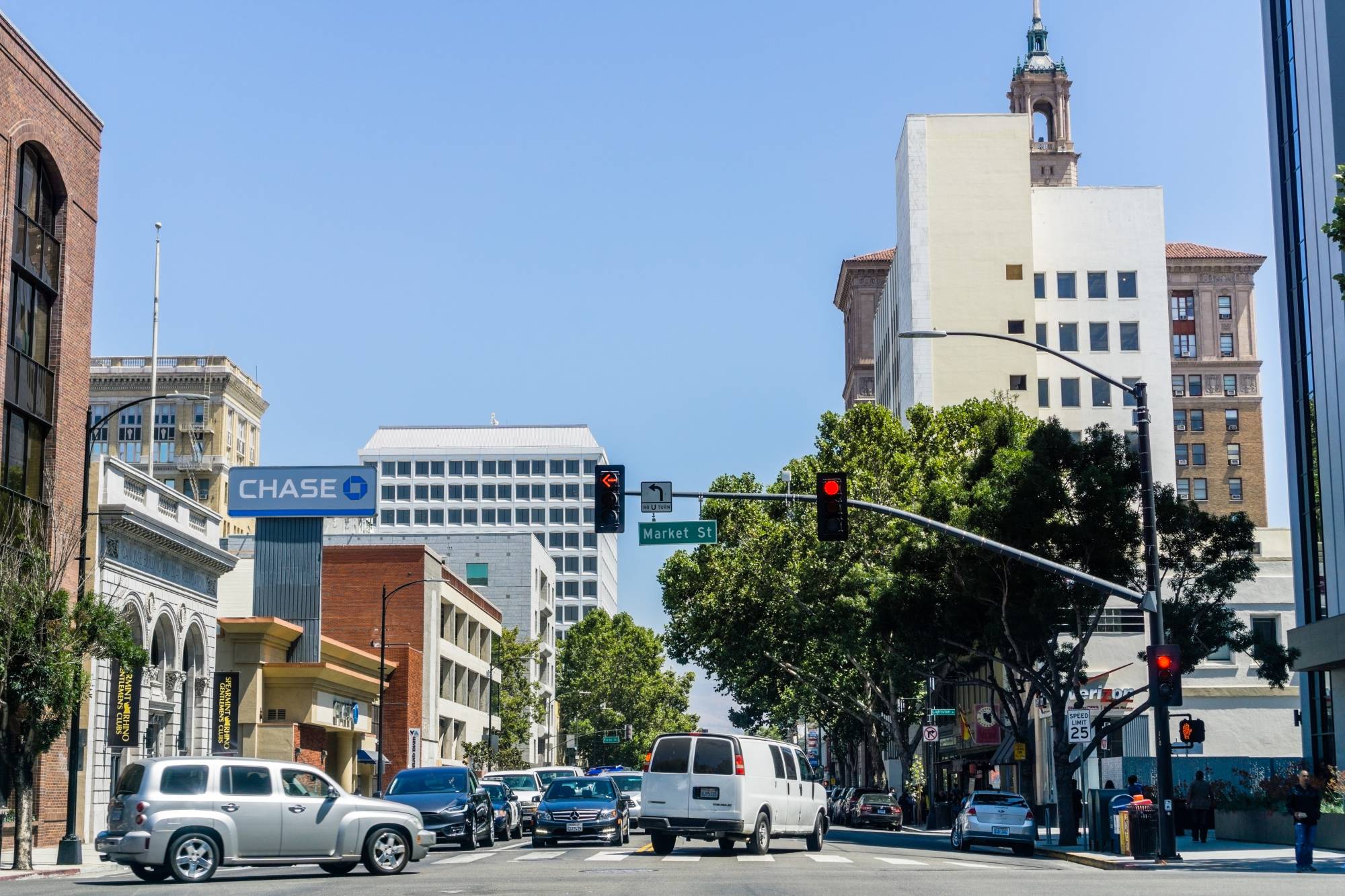
"caption": "Downtown San Jose on a sunny day, August 17, 2018. New red-light cameras are a years-in-the-making effort to reduce red-light running, which is the second-highest contributing factor to traffic deaths and severe injuries in the city.",
"credit": "Sundry Photography/Getty",
"altTag": null,
"description": null,
"imgSizes": {
"medium": {
"file": "https://cdn.kqed.org/wp-content/uploads/sites/10/2025/10/GettyImages-1073937084-2000x1333.jpg",
"width": 2000,
"height": 1333,
"mimeType": "image/jpeg"
},
"large": {
"file": "https://cdn.kqed.org/wp-content/uploads/sites/10/2025/10/GettyImages-1073937084-2000x1333.jpg",
"width": 2000,
"height": 1333,
"mimeType": "image/jpeg"
},
"thumbnail": {
"file": "https://cdn.kqed.org/wp-content/uploads/sites/10/2025/10/GettyImages-1073937084-160x107.jpg",
"width": 160,
"height": 107,
"mimeType": "image/jpeg"
},
"1536x1536": {
"file": "https://cdn.kqed.org/wp-content/uploads/sites/10/2025/10/GettyImages-1073937084-1536x1024.jpg",
"width": 1536,
"height": 1024,
"mimeType": "image/jpeg"
},
"2048x2048": {
"file": "https://cdn.kqed.org/wp-content/uploads/sites/10/2025/10/GettyImages-1073937084-2048x1365.jpg",
"width": 2048,
"height": 1365,
"mimeType": "image/jpeg"
},
"post-thumbnail": {
"file": "https://cdn.kqed.org/wp-content/uploads/sites/10/2025/10/GettyImages-1073937084-672x372.jpg",
"width": 672,
"height": 372,
"mimeType": "image/jpeg"
},
"twentyfourteen-full-width": {
"file": "https://cdn.kqed.org/wp-content/uploads/sites/10/2025/10/GettyImages-1073937084-1038x576.jpg",
"width": 1038,
"height": 576,
"mimeType": "image/jpeg"
},
"full-width": {
"file": "https://cdn.kqed.org/wp-content/uploads/sites/10/2025/10/GettyImages-1073937084-2000x1333.jpg",
"width": 2000,
"height": 1333,
"mimeType": "image/jpeg"
},
"kqedFullSize": {
"file": "https://cdn.kqed.org/wp-content/uploads/sites/10/2025/10/GettyImages-1073937084-scaled.jpg",
"width": 2560,
"height": 1707
}
},
"isLoading": false,
"fetchFailed": false
},
"news_12058157": {
"type": "attachments",
"id": "news_12058157",
"meta": {
"index": "attachments_1716263798",
"site": "news",
"id": "12058157",
"found": true
},
"title": "250912-TrumpsSignageOrder-36-BL_qed",
"publishDate": 1759275286,
"status": "inherit",
"parent": 12058137,
"modified": 1759275313,
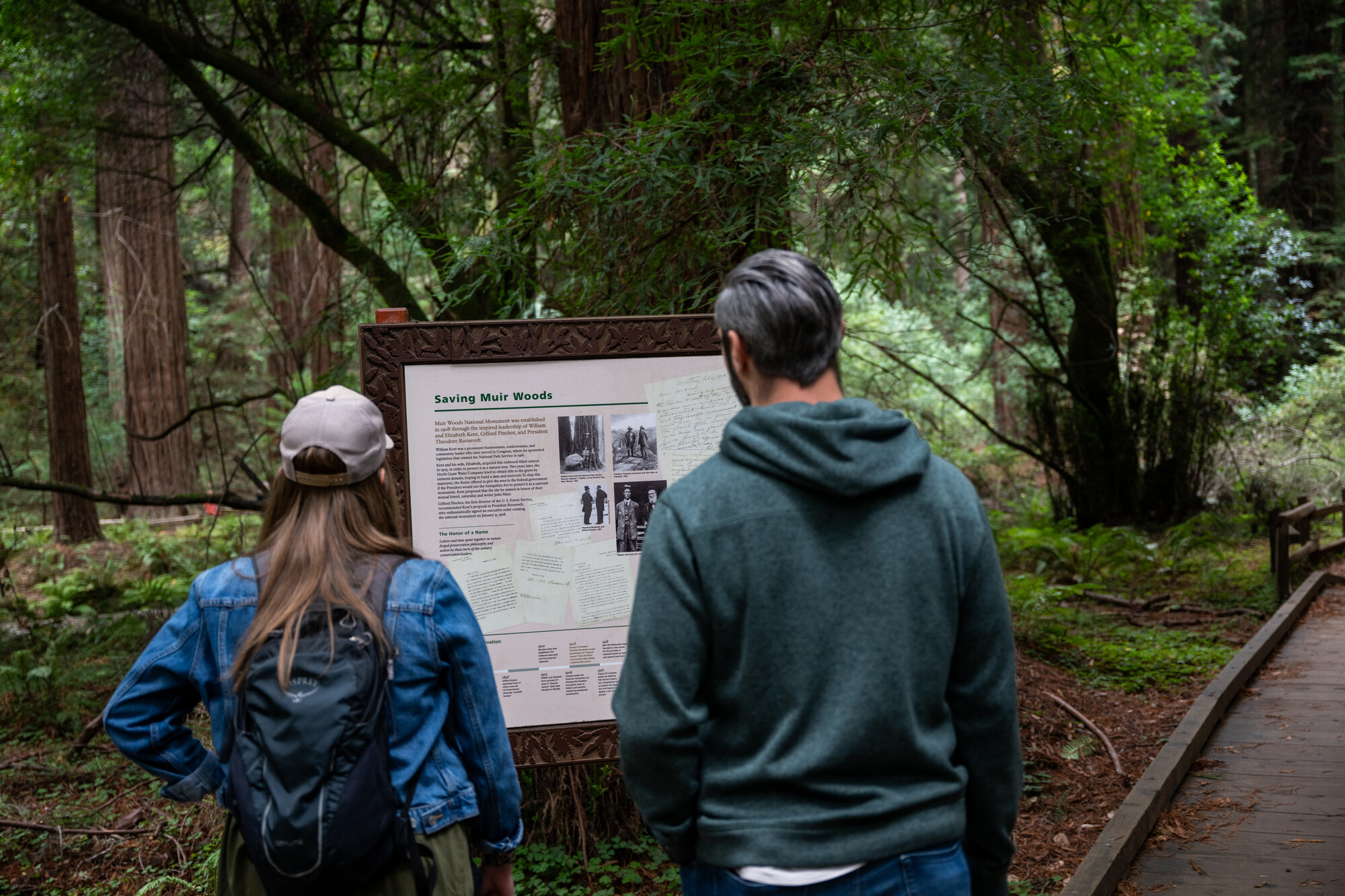
"caption": "Park visitors look at a sign titled \"Saving Muir Woods\" in Founders Grove at Muir Woods National Monument on Sept. 12, 2025. Part of the Golden Gate National Recreation Area, the monument preserves one of the last remaining old-growth coast redwood forests in the Bay Area.",
"credit": "Beth LaBerge/KQED",
"altTag": null,
"description": null,
"imgSizes": {
"thumbnail": {
"file": "https://cdn.kqed.org/wp-content/uploads/sites/10/2025/09/250912-TrumpsSignageOrder-36-BL_qed-160x107.jpg",
"width": 160,
"height": 107,
"mimeType": "image/jpeg"
},
"1536x1536": {
"file": "https://cdn.kqed.org/wp-content/uploads/sites/10/2025/09/250912-TrumpsSignageOrder-36-BL_qed-1536x1024.jpg",
"width": 1536,
"height": 1024,
"mimeType": "image/jpeg"
},
"post-thumbnail": {
"file": "https://cdn.kqed.org/wp-content/uploads/sites/10/2025/09/250912-TrumpsSignageOrder-36-BL_qed-672x372.jpg",
"width": 672,
"height": 372,
"mimeType": "image/jpeg"
},
"twentyfourteen-full-width": {
"file": "https://cdn.kqed.org/wp-content/uploads/sites/10/2025/09/250912-TrumpsSignageOrder-36-BL_qed-1038x576.jpg",
"width": 1038,
"height": 576,
"mimeType": "image/jpeg"
},
"kqedFullSize": {
"file": "https://cdn.kqed.org/wp-content/uploads/sites/10/2025/09/250912-TrumpsSignageOrder-36-BL_qed.jpg",
"width": 2000,
"height": 1333
}
},
"isLoading": false,
"fetchFailed": false
},
"news_12058166": {
"type": "attachments",
"id": "news_12058166",
"meta": {
"index": "attachments_1716263798",
"site": "news",
"id": "12058166",
"found": true
},
"title": "President Trump And Pete Hegseth Address U.S. Senior Military Leaders At Quantico",
"publishDate": 1759276159,
"status": "inherit",
"parent": 12058130,
"modified": 1759276199,
"caption": "U.S. President Donald Trump speaks to senior military leaders at Marine Corps Base Quantico on Sept. 30, 2025, in Quantico, Virginia. In an unprecedented gathering, almost 800 generals, admirals and their senior enlisted leaders have been ordered into one location from around the world on short notice. ",
"credit": "Andrew Harnik/Getty Images",
"altTag": null,
"description": null,
"imgSizes": {
"thumbnail": {
"file": "https://cdn.kqed.org/wp-content/uploads/sites/10/2025/09/DonaldTrumpVirginaGetty-160x107.jpg",
"width": 160,
"height": 107,
"mimeType": "image/jpeg"
},
"1536x1536": {
"file": "https://cdn.kqed.org/wp-content/uploads/sites/10/2025/09/DonaldTrumpVirginaGetty-1536x1024.jpg",
"width": 1536,
"height": 1024,
"mimeType": "image/jpeg"
},
"post-thumbnail": {
"file": "https://cdn.kqed.org/wp-content/uploads/sites/10/2025/09/DonaldTrumpVirginaGetty-672x372.jpg",
"width": 672,
"height": 372,
"mimeType": "image/jpeg"
},
"twentyfourteen-full-width": {
"file": "https://cdn.kqed.org/wp-content/uploads/sites/10/2025/09/DonaldTrumpVirginaGetty-1038x576.jpg",
"width": 1038,
"height": 576,
"mimeType": "image/jpeg"
},
"kqedFullSize": {
"file": "https://cdn.kqed.org/wp-content/uploads/sites/10/2025/09/DonaldTrumpVirginaGetty.jpg",
"width": 2000,
"height": 1333
}
},
"isLoading": false,
"fetchFailed": false
},
"news_12054336": {
"type": "attachments",
"id": "news_12054336",
"meta": {
"index": "attachments_1716263798",
"site": "news",
"id": "12054336",
"found": true
},
"title": "250831-CREATIVEMUTUALAID00140_TV-KQED",
"publishDate": 1756830735,
"status": "inherit",
"parent": 12058091,
"modified": 1759254619,
"caption": "Joe Mitchell (left) and Sara Rubenstein (right) pose for a portrait at their tabling session for Creative Mutual Aid at the Conservatory of Flowers in San Francisco on Aug. 31, 2025. Creative Mutual Aid, a group of Sara Rubenstein and Joe Mitchell, aims to bring mutual aid to San Francisco parks whether it’s through free trinkets, or providing household items.",
"credit": "Tâm Vũ/KQED",
"altTag": null,
"description": null,
"imgSizes": {
"thumbnail": {
"file": "https://cdn.kqed.org/wp-content/uploads/sites/10/2025/09/250831-CREATIVEMUTUALAID00140_TV-KQED-160x107.jpg",
"width": 160,
"height": 107,
"mimeType": "image/jpeg"
},
"1536x1536": {
"file": "https://cdn.kqed.org/wp-content/uploads/sites/10/2025/09/250831-CREATIVEMUTUALAID00140_TV-KQED-1536x1024.jpg",
"width": 1536,
"height": 1024,
"mimeType": "image/jpeg"
},
"post-thumbnail": {
"file": "https://cdn.kqed.org/wp-content/uploads/sites/10/2025/09/250831-CREATIVEMUTUALAID00140_TV-KQED-672x372.jpg",
"width": 672,
"height": 372,
"mimeType": "image/jpeg"
},
"twentyfourteen-full-width": {
"file": "https://cdn.kqed.org/wp-content/uploads/sites/10/2025/09/250831-CREATIVEMUTUALAID00140_TV-KQED-1038x576.jpg",
"width": 1038,
"height": 576,
"mimeType": "image/jpeg"
},
"kqedFullSize": {
"file": "https://cdn.kqed.org/wp-content/uploads/sites/10/2025/09/250831-CREATIVEMUTUALAID00140_TV-KQED.jpg",
"width": 2000,
"height": 1333
}
},
"isLoading": false,
"fetchFailed": false
},
"news_12055583": {
"type": "attachments",
"id": "news_12055583",
"meta": {
"index": "attachments_1716263798",
"site": "news",
"id": "12055583",
"found": true
},
"title": "Clean Air Vehicle",
"publishDate": 1757610953,
"status": "inherit",
"parent": 12055568,
"modified": 1757611147,
"caption": "A close-up of an 'Access OK – California Clean Air Vehicle' decal on the bumper of a black Toyota Prius, indicating the car is permitted to use carpool lanes, in Silicon Valley in San José, California, on Aug. 17, 2017.",
"credit": "Smith Collection/Gado/Getty Images",
"altTag": null,
"description": null,
"imgSizes": {
"thumbnail": {
"file": "https://cdn.kqed.org/wp-content/uploads/sites/10/2025/09/CleanAirVehicleDecalGetty-160x106.jpg",
"width": 160,
"height": 106,
"mimeType": "image/jpeg"
},
"1536x1536": {
"file": "https://cdn.kqed.org/wp-content/uploads/sites/10/2025/09/CleanAirVehicleDecalGetty-1536x1018.jpg",
"width": 1536,
"height": 1018,
"mimeType": "image/jpeg"
},
"post-thumbnail": {
"file": "https://cdn.kqed.org/wp-content/uploads/sites/10/2025/09/CleanAirVehicleDecalGetty-672x372.jpg",
"width": 672,
"height": 372,
"mimeType": "image/jpeg"
},
"twentyfourteen-full-width": {
"file": "https://cdn.kqed.org/wp-content/uploads/sites/10/2025/09/CleanAirVehicleDecalGetty-1038x576.jpg",
"width": 1038,
"height": 576,
"mimeType": "image/jpeg"
},
"kqedFullSize": {
"file": "https://cdn.kqed.org/wp-content/uploads/sites/10/2025/09/CleanAirVehicleDecalGetty.jpg",
"width": 2000,
"height": 1326
}
},
"isLoading": false,
"fetchFailed": false
},
"news_12058018": {
"type": "attachments",
"id": "news_12058018",
"meta": {
"index": "attachments_1716263798",
"site": "news",
"id": "12058018",
"found": true
},
"title": "Hope and Bounce2",
"publishDate": 1759176017,
"status": "inherit",
"parent": 12058007,
"modified": 1759176212,
"caption": "Hope and Bounce foraging for food in the wild in Lake Tahoe in June 2025.",
"credit": "Courtesy of John Bryden/The BEAR League",
"altTag": null,
"description": null,
"imgSizes": {
"thumbnail": {
"file": "https://cdn.kqed.org/wp-content/uploads/sites/10/2025/09/Hope-and-Bounce2-160x118.jpg",
"width": 160,
"height": 118,
"mimeType": "image/jpeg"
},
"post-thumbnail": {
"file": "https://cdn.kqed.org/wp-content/uploads/sites/10/2025/09/Hope-and-Bounce2-672x372.jpg",
"width": 672,
"height": 372,
"mimeType": "image/jpeg"
},
"twentyfourteen-full-width": {
"file": "https://cdn.kqed.org/wp-content/uploads/sites/10/2025/09/Hope-and-Bounce2-798x576.jpg",
"width": 798,
"height": 576,
"mimeType": "image/jpeg"
},
"kqedFullSize": {
"file": "https://cdn.kqed.org/wp-content/uploads/sites/10/2025/09/Hope-and-Bounce2.jpg",
"width": 798,
"height": 591
}
},
"isLoading": false,
"fetchFailed": false
},
"news_12058063": {
"type": "attachments",
"id": "news_12058063",
"meta": {
"index": "attachments_1716263798",
"site": "news",
"id": "12058063",
"found": true
},
"title": "Calif. Democratic convention",
"publishDate": 1759189030,
"status": "inherit",
"parent": 12058028,
"modified": 1759189079,
"caption": "Toni Atkins speaks to supporters at the California Democratic convention at the Anaheim Convention Center on May 31, 2025 in Los Angeles.",
"credit": "Carlin Stiehl / Los Angeles Times via Getty Images",
"altTag": null,
"description": null,
"imgSizes": {
"thumbnail": {
"file": "https://cdn.kqed.org/wp-content/uploads/sites/10/2025/09/GETTYIMAGES-2217377508-KQED-160x107.jpg",
"width": 160,
"height": 107,
"mimeType": "image/jpeg"
},
"1536x1536": {
"file": "https://cdn.kqed.org/wp-content/uploads/sites/10/2025/09/GETTYIMAGES-2217377508-KQED-1536x1025.jpg",
"width": 1536,
"height": 1025,
"mimeType": "image/jpeg"
},
"post-thumbnail": {
"file": "https://cdn.kqed.org/wp-content/uploads/sites/10/2025/09/GETTYIMAGES-2217377508-KQED-672x372.jpg",
"width": 672,
"height": 372,
"mimeType": "image/jpeg"
},
"twentyfourteen-full-width": {
"file": "https://cdn.kqed.org/wp-content/uploads/sites/10/2025/09/GETTYIMAGES-2217377508-KQED-1038x576.jpg",
"width": 1038,
"height": 576,
"mimeType": "image/jpeg"
},
"kqedFullSize": {
"file": "https://cdn.kqed.org/wp-content/uploads/sites/10/2025/09/GETTYIMAGES-2217377508-KQED.jpg",
"width": 2000,
"height": 1334
}
},
"isLoading": false,
"fetchFailed": false
},
"news_12051438": {
"type": "attachments",
"id": "news_12051438",
"meta": {
"index": "attachments_1716263798",
"site": "news",
"id": "12051438",
"found": true
},
"title": "GavinNewsomAISF2",
"publishDate": 1754670252,
"status": "inherit",
"parent": 12051433,
"modified": 1754670418,
"caption": "On the rooftop of Google’s San Francisco Embarcadero offices on Aug. 7, 2025, Gov. Gavin Newsom announced a major statewide partnership with Google, Microsoft, IBM and Adobe to expand generative AI education — including training programs, certifications, and internships — across California’s high schools, community colleges and Cal State universities.",
"credit": "Courtesy of the Office of the Governor",
"altTag": null,
"description": null,
"imgSizes": {
"thumbnail": {
"file": "https://cdn.kqed.org/wp-content/uploads/sites/10/2025/08/GavinNewsomAISF2-160x107.jpg",
"width": 160,
"height": 107,
"mimeType": "image/jpeg"
},
"1536x1536": {
"file": "https://cdn.kqed.org/wp-content/uploads/sites/10/2025/08/GavinNewsomAISF2-1536x1024.jpg",
"width": 1536,
"height": 1024,
"mimeType": "image/jpeg"
},
"post-thumbnail": {
"file": "https://cdn.kqed.org/wp-content/uploads/sites/10/2025/08/GavinNewsomAISF2-672x372.jpg",
"width": 672,
"height": 372,
"mimeType": "image/jpeg"
},
"twentyfourteen-full-width": {
"file": "https://cdn.kqed.org/wp-content/uploads/sites/10/2025/08/GavinNewsomAISF2-1038x576.jpg",
"width": 1038,
"height": 576,
"mimeType": "image/jpeg"
},
"kqedFullSize": {
"file": "https://cdn.kqed.org/wp-content/uploads/sites/10/2025/08/GavinNewsomAISF2.jpg",
"width": 2000,
"height": 1333
}
},
"isLoading": false,
"fetchFailed": false
},
"news_12057996": {
"type": "attachments",
"id": "news_12057996",
"meta": {
"index": "attachments_1716263798",
"site": "news",
"id": "12057996",
"found": true
},
"title": "Atmospheric river storm in Northern California",
"publishDate": 1759168970,
"status": "inherit",
"parent": 12057992,
"modified": 1781200630,
"caption": "A woman with an umbrella walks on a road during heavy rain in Guerneville, California, on Feb. 6, 2025, as an atmospheric river hits Northern California. ",
"credit": "Tayfun Coskun/Anadolu via Getty Images",
"altTag": null,
"description": null,
"imgSizes": {
"medium": {
"file": "https://cdn.kqed.org/wp-content/uploads/sites/10/2025/09/GettyImages-2197490970-2000x1333.jpg",
"width": 2000,
"height": 1333,
"mimeType": "image/jpeg"
},
"large": {
"file": "https://cdn.kqed.org/wp-content/uploads/sites/10/2025/09/GettyImages-2197490970-2000x1333.jpg",
"width": 2000,
"height": 1333,
"mimeType": "image/jpeg"
},
"thumbnail": {
"file": "https://cdn.kqed.org/wp-content/uploads/sites/10/2025/09/GettyImages-2197490970-160x107.jpg",
"width": 160,
"height": 107,
"mimeType": "image/jpeg"
},
"1536x1536": {
"file": "https://cdn.kqed.org/wp-content/uploads/sites/10/2025/09/GettyImages-2197490970-1536x1024.jpg",
"width": 1536,
"height": 1024,
"mimeType": "image/jpeg"
},
"2048x2048": {
"file": "https://cdn.kqed.org/wp-content/uploads/sites/10/2025/09/GettyImages-2197490970-2048x1365.jpg",
"width": 2048,
"height": 1365,
"mimeType": "image/jpeg"
},
"post-thumbnail": {
"file": "https://cdn.kqed.org/wp-content/uploads/sites/10/2025/09/GettyImages-2197490970-672x372.jpg",
"width": 672,
"height": 372,
"mimeType": "image/jpeg"
},
"twentyfourteen-full-width": {
"file": "https://cdn.kqed.org/wp-content/uploads/sites/10/2025/09/GettyImages-2197490970-1038x576.jpg",
"width": 1038,
"height": 576,
"mimeType": "image/jpeg"
},
"full-width": {
"file": "https://cdn.kqed.org/wp-content/uploads/sites/10/2025/09/GettyImages-2197490970-2000x1333.jpg",
"width": 2000,
"height": 1333,
"mimeType": "image/jpeg"
},
"kqedFullSize": {
"file": "https://cdn.kqed.org/wp-content/uploads/sites/10/2025/09/GettyImages-2197490970-scaled-e1759169024848.jpg",
"width": 2000,
"height": 1334
}
},
"isLoading": false,
"fetchFailed": false
},
"news_12057971": {
"type": "attachments",
"id": "news_12057971",
"meta": {
"index": "attachments_1716263798",
"site": "news",
"id": "12057971",
"found": true
},
"title": "Electronic Arts-Buyout",
"publishDate": 1759166947,
"status": "inherit",
"parent": 12057966,
"modified": 1759168795,
"caption": "The logo for Electronic Arts is displayed during the Electronic Entertainment Expo in Los Angeles on June 12, 2013. ",
"credit": "Jae C. Hong/AP Photo",
"altTag": null,
"description": null,
"imgSizes": {
"medium": {
"file": "https://cdn.kqed.org/wp-content/uploads/sites/10/2025/09/AP25272445694578-2000x1334.jpg",
"width": 2000,
"height": 1334,
"mimeType": "image/jpeg"
},
"large": {
"file": "https://cdn.kqed.org/wp-content/uploads/sites/10/2025/09/AP25272445694578-2000x1334.jpg",
"width": 2000,
"height": 1334,
"mimeType": "image/jpeg"
},
"thumbnail": {
"file": "https://cdn.kqed.org/wp-content/uploads/sites/10/2025/09/AP25272445694578-160x107.jpg",
"width": 160,
"height": 107,
"mimeType": "image/jpeg"
},
"1536x1536": {
"file": "https://cdn.kqed.org/wp-content/uploads/sites/10/2025/09/AP25272445694578-1536x1024.jpg",
"width": 1536,
"height": 1024,
"mimeType": "image/jpeg"
},
"2048x2048": {
"file": "https://cdn.kqed.org/wp-content/uploads/sites/10/2025/09/AP25272445694578-2048x1366.jpg",
"width": 2048,
"height": 1366,
"mimeType": "image/jpeg"
},
"post-thumbnail": {
"file": "https://cdn.kqed.org/wp-content/uploads/sites/10/2025/09/AP25272445694578-672x372.jpg",
"width": 672,
"height": 372,
"mimeType": "image/jpeg"
},
"twentyfourteen-full-width": {
"file": "https://cdn.kqed.org/wp-content/uploads/sites/10/2025/09/AP25272445694578-1038x576.jpg",
"width": 1038,
"height": 576,
"mimeType": "image/jpeg"
},
"full-width": {
"file": "https://cdn.kqed.org/wp-content/uploads/sites/10/2025/09/AP25272445694578-2000x1334.jpg",
"width": 2000,
"height": 1334,
"mimeType": "image/jpeg"
},
"kqedFullSize": {
"file": "https://cdn.kqed.org/wp-content/uploads/sites/10/2025/09/AP25272445694578-scaled.jpg",
"width": 2560,
"height": 1707
}
},
"isLoading": false,
"fetchFailed": false
},
"news_12057957": {
"type": "attachments",
"id": "news_12057957",
"meta": {
"index": "attachments_1716263798",
"site": "news",
"id": "12057957",
"found": true
},
"title": "Rockies Giants Baseball",
"publishDate": 1759165287,
"status": "inherit",
"parent": 12057956,
"modified": 1759165308,
"caption": "San Francisco Giants manager Bob Melvin gives out autographs before an MLB baseball game against the Colorado Rockies, Saturday, Sept. 27, 2025, in San Francisco. ",
"credit": "Carlos Avila Gonzalez/San Francisco Chronicle via AP",
"altTag": null,
"description": null,
"imgSizes": {
"medium": {
"file": "https://cdn.kqed.org/wp-content/uploads/sites/10/2025/09/AP25270699858184-2000x1334.jpg",
"width": 2000,
"height": 1334,
"mimeType": "image/jpeg"
},
"large": {
"file": "https://cdn.kqed.org/wp-content/uploads/sites/10/2025/09/AP25270699858184-2000x1334.jpg",
"width": 2000,
"height": 1334,
"mimeType": "image/jpeg"
},
"thumbnail": {
"file": "https://cdn.kqed.org/wp-content/uploads/sites/10/2025/09/AP25270699858184-160x107.jpg",
"width": 160,
"height": 107,
"mimeType": "image/jpeg"
},
"1536x1536": {
"file": "https://cdn.kqed.org/wp-content/uploads/sites/10/2025/09/AP25270699858184-1536x1025.jpg",
"width": 1536,
"height": 1025,
"mimeType": "image/jpeg"
},
"2048x2048": {
"file": "https://cdn.kqed.org/wp-content/uploads/sites/10/2025/09/AP25270699858184-2048x1366.jpg",
"width": 2048,
"height": 1366,
"mimeType": "image/jpeg"
},
"post-thumbnail": {
"file": "https://cdn.kqed.org/wp-content/uploads/sites/10/2025/09/AP25270699858184-672x372.jpg",
"width": 672,
"height": 372,
"mimeType": "image/jpeg"
},
"twentyfourteen-full-width": {
"file": "https://cdn.kqed.org/wp-content/uploads/sites/10/2025/09/AP25270699858184-1038x576.jpg",
"width": 1038,
"height": 576,
"mimeType": "image/jpeg"
},
"full-width": {
"file": "https://cdn.kqed.org/wp-content/uploads/sites/10/2025/09/AP25270699858184-2000x1334.jpg",
"width": 2000,
"height": 1334,
"mimeType": "image/jpeg"
},
"kqedFullSize": {
"file": "https://cdn.kqed.org/wp-content/uploads/sites/10/2025/09/AP25270699858184-scaled.jpg",
"width": 2560,
"height": 1708
}
},
"isLoading": false,
"fetchFailed": false
},
"news_12052400": {
"type": "attachments",
"id": "news_12052400",
"meta": {
"index": "attachments_1716263798",
"site": "news",
"id": "12052400",
"found": true
},
"title": "California Governor Newsom Makes Announcement On Gerrymandering In Response To Trump's Efforts In Texas",
"publishDate": 1755284023,
"status": "inherit",
"parent": 12052388,
"modified": 1758952603,
"caption": "LOS ANGELES, CALIFORNIA - AUGUST 14: California Gov. Gavin Newsom speaks about the “Election Rigging Response Act” at a press conference at the Democracy Center, Japanese American National Museum on August 14, 2025 in Los Angeles, California. Newsom spoke about a possible California referendum on redistricting to counter the legislative effort to add five Republican House seats in the state of Texas. ",
"credit": "Mario Tama/Getty Images",
"altTag": null,
"description": null,
"imgSizes": {
"medium": {
"file": "https://cdn.kqed.org/wp-content/uploads/sites/10/2025/08/GettyImages-2230198852-2000x1377.jpg",
"width": 2000,
"height": 1377,
"mimeType": "image/jpeg"
},
"large": {
"file": "https://cdn.kqed.org/wp-content/uploads/sites/10/2025/08/GettyImages-2230198852-2000x1377.jpg",
"width": 2000,
"height": 1377,
"mimeType": "image/jpeg"
},
"thumbnail": {
"file": "https://cdn.kqed.org/wp-content/uploads/sites/10/2025/08/GettyImages-2230198852-160x110.jpg",
"width": 160,
"height": 110,
"mimeType": "image/jpeg"
},
"1536x1536": {
"file": "https://cdn.kqed.org/wp-content/uploads/sites/10/2025/08/GettyImages-2230198852-1536x1057.jpg",
"width": 1536,
"height": 1057,
"mimeType": "image/jpeg"
},
"2048x2048": {
"file": "https://cdn.kqed.org/wp-content/uploads/sites/10/2025/08/GettyImages-2230198852-2048x1410.jpg",
"width": 2048,
"height": 1410,
"mimeType": "image/jpeg"
},
"post-thumbnail": {
"file": "https://cdn.kqed.org/wp-content/uploads/sites/10/2025/08/GettyImages-2230198852-672x372.jpg",
"width": 672,
"height": 372,
"mimeType": "image/jpeg"
},
"twentyfourteen-full-width": {
"file": "https://cdn.kqed.org/wp-content/uploads/sites/10/2025/08/GettyImages-2230198852-1038x576.jpg",
"width": 1038,
"height": 576,
"mimeType": "image/jpeg"
},
"full-width": {
"file": "https://cdn.kqed.org/wp-content/uploads/sites/10/2025/08/GettyImages-2230198852-2000x1377.jpg",
"width": 2000,
"height": 1377,
"mimeType": "image/jpeg"
},
"kqedFullSize": {
"file": "https://cdn.kqed.org/wp-content/uploads/sites/10/2025/08/GettyImages-2230198852-scaled.jpg",
"width": 2560,
"height": 1762
}
},
"isLoading": false,
"fetchFailed": false
}
},
"audioPlayerReducer": {
"postId": "stream_live",
"isPaused": true,
"isPlaying": false,
"pfsActive": false,
"pledgeModalIsOpen": true,
"playerDrawerIsOpen": false,
"liveAudioPlayStartedAt": 0,
"liveAudioPlayContext": ""
},
"authorsReducer": {
"byline_news_12058091": {
"type": "authors",
"id": "byline_news_12058091",
"meta": {
"override": true
},
"slug": "byline_news_12058091",
"name": "Hussain Khan",
"isLoading": false
},
"byline_news_12057966": {
"type": "authors",
"id": "byline_news_12057966",
"meta": {
"override": true
},
"slug": "byline_news_12057966",
"name": "Michael Liedtke and Michelle Chapman, Associated Press",
"isLoading": false
},
"byline_news_12057956": {
"type": "authors",
"id": "byline_news_12057956",
"meta": {
"override": true
},
"slug": "byline_news_12057956",
"name": "Janie McCauley, The Associated Press",
"isLoading": false
},
"gmarzorati": {
"type": "authors",
"id": "227",
"meta": {
"index": "authors_1716337520",
"id": "227",
"found": true
},
"name": "Guy Marzorati",
"firstName": "Guy",
"lastName": "Marzorati",
"slug": "gmarzorati",
"email": "gmarzorati@KQED.org",
"display_author_email": true,
"staff_mastheads": [
"news"
],
"title": "Correspondent",
"bio": "Guy Marzorati is a correspondent on KQED's California Politics and Government Desk, based in San Jose. A graduate of Santa Clara University, Guy joined KQED in 2013. He reports on state and local politics and produces KQED's digital voter guide.",
"avatar": "https://secure.gravatar.com/avatar/771cddf45ce3a8ed533d82dcc214e9ef925d76d2af5794a33da1ce439eb54a32?s=600&d=blank&r=g",
"twitter": "guymarzorati",
"bluesky": null,
"facebook": null,
"instagram": null,
"linkedin": null,
"sites": [
{
"site": "",
"roles": [
"editor"
]
},
{
"site": "news",
"roles": [
"editor"
]
},
{
"site": "science",
"roles": [
"editor"
]
},
{
"site": "forum",
"roles": [
"editor"
]
},
{
"site": "elections",
"roles": [
"editor"
]
},
{
"site": "liveblog",
"roles": [
"editor"
]
}
],
"headData": {
"title": "Guy Marzorati | KQED",
"description": "Correspondent",
"ogImgSrc": "https://secure.gravatar.com/avatar/771cddf45ce3a8ed533d82dcc214e9ef925d76d2af5794a33da1ce439eb54a32?s=600&d=blank&r=g",
"twImgSrc": "https://secure.gravatar.com/avatar/771cddf45ce3a8ed533d82dcc214e9ef925d76d2af5794a33da1ce439eb54a32?s=600&d=blank&r=g"
},
"isLoading": false,
"link": "/author/gmarzorati"
},
"rachael-myrow": {
"type": "authors",
"id": "251",
"meta": {
"index": "authors_1716337520",
"id": "251",
"found": true
},
"name": "Rachael Myrow",
"firstName": "Rachael",
"lastName": "Myrow",
"slug": "rachael-myrow",
"email": "rmyrow@kqed.org",
"display_author_email": true,
"staff_mastheads": [
"news"
],
"title": "Senior Editor of KQED's Silicon Valley News Desk",
"bio": "• I write and edit stories about how Silicon Valley power and policies shape everyday life in California. I’m also passionate about making Bay Area history and culture more accessible to a broad public. • I’ve been a journalist for most of my life, starting in high school with The Franklin Press in Los Angeles, where I grew up. While earning my first degree in English at UC Berkeley, I got my start in public radio at KALX-FM. After completing a second degree in journalism at Cal, I landed my first professional job at Marketplace, then moved on to KPCC (now LAist), and then KQED, where I hosted The California Report for more than seven years. • My reporting has appeared on NPR, The World, WBUR’s \u003ci>Here & Now\u003c/i>, and the BBC. I also guest host for KQED’s \u003ci>Forum\u003c/i>, as well as the Commonwealth Club in San Francisco. • I speak periodically on media, democracy and technology issues, and do voiceover work for documentaries and educational video projects. • Outside of the studio, you'll find me hiking Bay Area trails and whipping up Insta-ready meals in my kitchen. • I do not accept gifts, money, or favors from anyone connected to my reporting, I don't pay people for information, and I do not support or donate to political causes. • I strive to treat the people I report on with fairness, honesty, and respect. I also recognize there are often multiple sides to a story and work to verify information through multiple sources and documentation. If I get something wrong, I correct it.",
"avatar": "https://secure.gravatar.com/avatar/3ed8a3c5f26025e4a805ba634cda8cd764906b97438a6d9ce216b044e340da4e?s=600&d=blank&r=g",
"twitter": "rachaelmyrow",
"bluesky": null,
"facebook": null,
"instagram": null,
"linkedin": "https://www.linkedin.com/in/rachaelmyrow/",
"sites": [
{
"site": "arts",
"roles": [
"administrator"
]
},
{
"site": "news",
"roles": [
"edit_others_posts",
"editor"
]
},
{
"site": "futureofyou",
"roles": [
"editor"
]
},
{
"site": "bayareabites",
"roles": [
"editor"
]
},
{
"site": "stateofhealth",
"roles": [
"editor"
]
},
{
"site": "science",
"roles": [
"editor"
]
},
{
"site": "food",
"roles": [
"editor"
]
},
{
"site": "forum",
"roles": [
"editor"
]
},
{
"site": "liveblog",
"roles": [
"author"
]
}
],
"headData": {
"title": "Rachael Myrow | KQED",
"description": "Senior Editor of KQED's Silicon Valley News Desk",
"ogImgSrc": "https://secure.gravatar.com/avatar/3ed8a3c5f26025e4a805ba634cda8cd764906b97438a6d9ce216b044e340da4e?s=600&d=blank&r=g",
"twImgSrc": "https://secure.gravatar.com/avatar/3ed8a3c5f26025e4a805ba634cda8cd764906b97438a6d9ce216b044e340da4e?s=600&d=blank&r=g"
},
"isLoading": false,
"link": "/author/rachael-myrow"
},
"carlysevern": {
"type": "authors",
"id": "3243",
"meta": {
"index": "authors_1716337520",
"id": "3243",
"found": true
},
"name": "Carly Severn",
"firstName": "Carly",
"lastName": "Severn",
"slug": "carlysevern",
"email": "csevern@kqed.org",
"display_author_email": false,
"staff_mastheads": [
"news"
],
"title": "Senior Editor, Audience News ",
"bio": "Carly is KQED's Senior Editor of Audience News on the Digital News team, and has reported for the California Report Magazine, Bay Curious and KQED Arts. She's formerly the host of \u003ca href=\"http://ww2.kqed.org/pop/category/the-cooler/\" rel=\"noopener noreferrer\">The Cooler\u003c/a> podcast.",
"avatar": "https://secure.gravatar.com/avatar/54037bf5c128fe678f0ef26cec97a93f2e7f220a22d7285703328f12c42c1b1d?s=600&d=blank&r=g",
"twitter": "teacupinthebay",
"bluesky": null,
"facebook": null,
"instagram": null,
"linkedin": null,
"sites": [
{
"site": "",
"roles": [
"editor"
]
},
{
"site": "arts",
"roles": [
"editor"
]
},
{
"site": "news",
"roles": [
"administrator"
]
},
{
"site": "pop",
"roles": [
"editor"
]
},
{
"site": "futureofyou",
"roles": [
"editor"
]
},
{
"site": "about",
"roles": [
"administrator"
]
},
{
"site": "mindshift",
"roles": [
"editor"
]
},
{
"site": "bayareabites",
"roles": [
"editor"
]
},
{
"site": "stateofhealth",
"roles": [
"editor"
]
},
{
"site": "science",
"roles": [
"editor"
]
},
{
"site": "food",
"roles": [
"contributor"
]
},
{
"site": "forum",
"roles": [
"editor"
]
},
{
"site": "perspectives",
"roles": [
"administrator"
]
},
{
"site": "liveblog",
"roles": [
"editor"
]
}
],
"headData": {
"title": "Carly Severn | KQED",
"description": "Senior Editor, Audience News ",
"ogImgSrc": "https://secure.gravatar.com/avatar/54037bf5c128fe678f0ef26cec97a93f2e7f220a22d7285703328f12c42c1b1d?s=600&d=blank&r=g",
"twImgSrc": "https://secure.gravatar.com/avatar/54037bf5c128fe678f0ef26cec97a93f2e7f220a22d7285703328f12c42c1b1d?s=600&d=blank&r=g"
},
"isLoading": false,
"link": "/author/carlysevern"
},
"ccabreralomeli": {
"type": "authors",
"id": "11708",
"meta": {
"index": "authors_1716337520",
"id": "11708",
"found": true
},
"name": "Carlos Cabrera-Lomelí",
"firstName": "Carlos",
"lastName": "Cabrera-Lomelí",
"slug": "ccabreralomeli",
"email": "ccabreralomeli@KQED.org",
"display_author_email": true,
"staff_mastheads": [
"news"
],
"title": "Community Reporter",
"bio": "Carlos Cabrera-Lomelí is a community reporter with KQED's digital engagement team. He also reports and co-produces for KQED's bilingual news hub KQED en Español. He grew up in San Francisco's Mission District and has previously worked with Univision, 48 Hills and REFORMA in Mexico City.",
"avatar": "https://secure.gravatar.com/avatar/c309be9665e484f887b818c89e273ecc673004f426f36b24d00a4d813a2e0518?s=600&d=blank&r=g",
"twitter": "@LomeliCabrera",
"bluesky": null,
"facebook": null,
"instagram": null,
"linkedin": null,
"sites": [
{
"site": "arts",
"roles": [
"editor"
]
},
{
"site": "news",
"roles": [
"editor"
]
},
{
"site": "about",
"roles": [
"editor"
]
},
{
"site": "science",
"roles": [
"editor"
]
},
{
"site": "perspectives",
"roles": [
"editor"
]
},
{
"site": "elections",
"roles": [
"editor"
]
},
{
"site": "liveblog",
"roles": [
"contributor"
]
}
],
"headData": {
"title": "Carlos Cabrera-Lomelí | KQED",
"description": "Community Reporter",
"ogImgSrc": "https://secure.gravatar.com/avatar/c309be9665e484f887b818c89e273ecc673004f426f36b24d00a4d813a2e0518?s=600&d=blank&r=g",
"twImgSrc": "https://secure.gravatar.com/avatar/c309be9665e484f887b818c89e273ecc673004f426f36b24d00a4d813a2e0518?s=600&d=blank&r=g"
},
"isLoading": false,
"link": "/author/ccabreralomeli"
},
"eromero": {
"type": "authors",
"id": "11746",
"meta": {
"index": "authors_1716337520",
"id": "11746",
"found": true
},
"name": "Ezra David Romero",
"firstName": "Ezra David",
"lastName": "Romero",
"slug": "eromero",
"email": "eromero@kqed.org",
"display_author_email": true,
"staff_mastheads": [
"news",
"science"
],
"title": "Climate Reporter",
"bio": "Ezra David Romero is a climate reporter for KQED News. He covers the absence and excess of water in the Bay Area — think sea level rise, flooding and drought. For nearly a decade he’s covered how warming temperatures are altering the lives of Californians. He’s reported on farmers worried their pistachio trees aren’t getting enough sleep, families desperate for water, scientists studying dying giant sequoias, and alongside firefighters containing wildfires. His work has appeared on local stations across California and nationally on public radio shows like Morning Edition, Here and Now, All Things Considered and Science Friday. ",
"avatar": "https://secure.gravatar.com/avatar/c76404d287c10ed40224227551ac36e24352c7306f106632caf6fead76f8801f?s=600&d=blank&r=g",
"twitter": "ezraromero",
"bluesky": null,
"facebook": null,
"instagram": null,
"linkedin": null,
"sites": [
{
"site": "arts",
"roles": [
"editor"
]
},
{
"site": "news",
"roles": [
"editor"
]
},
{
"site": "science",
"roles": [
"editor"
]
},
{
"site": "liveblog",
"roles": [
"author"
]
}
],
"headData": {
"title": "Ezra David Romero | KQED",
"description": "Climate Reporter",
"ogImgSrc": "https://secure.gravatar.com/avatar/c76404d287c10ed40224227551ac36e24352c7306f106632caf6fead76f8801f?s=600&d=blank&r=g",
"twImgSrc": "https://secure.gravatar.com/avatar/c76404d287c10ed40224227551ac36e24352c7306f106632caf6fead76f8801f?s=600&d=blank&r=g"
},
"isLoading": false,
"link": "/author/eromero"
},
"sjohnson": {
"type": "authors",
"id": "11840",
"meta": {
"index": "authors_1716337520",
"id": "11840",
"found": true
},
"name": "Sydney Johnson",
"firstName": "Sydney",
"lastName": "Johnson",
"slug": "sjohnson",
"email": "sjohnson@kqed.org",
"display_author_email": false,
"staff_mastheads": [
"news"
],
"title": "KQED Reporter",
"bio": "Sydney Johnson is a general assignment reporter at KQED. She previously reported on public health and city government at the San Francisco Examiner, and before that, she covered statewide education policy for EdSource. Her reporting has won multiple local, state and national awards. Sydney is a graduate of the University of California, Berkeley and lives in San Francisco.",
"avatar": "https://secure.gravatar.com/avatar/97855f2719b72ad6190b7c535fe642c8?s=600&d=blank&r=g",
"twitter": "sydneyfjohnson",
"facebook": null,
"instagram": null,
"linkedin": null,
"sites": [
{
"site": "news",
"roles": [
"editor"
]
}
],
"headData": {
"title": "Sydney Johnson | KQED",
"description": "KQED Reporter",
"ogImgSrc": "https://secure.gravatar.com/avatar/97855f2719b72ad6190b7c535fe642c8?s=600&d=blank&r=g",
"twImgSrc": "https://secure.gravatar.com/avatar/97855f2719b72ad6190b7c535fe642c8?s=600&d=blank&r=g"
},
"isLoading": false,
"link": "/author/sjohnson"
},
"kdebenedetti": {
"type": "authors",
"id": "11913",
"meta": {
"index": "authors_1716337520",
"id": "11913",
"found": true
},
"name": "Katie DeBenedetti",
"firstName": "Katie",
"lastName": "DeBenedetti",
"slug": "kdebenedetti",
"email": "kdebenedetti@kqed.org",
"display_author_email": false,
"staff_mastheads": [
"news",
"science"
],
"title": "KQED Contributor",
"bio": "Katie DeBenedetti is a digital reporter covering daily news for the Express Desk. Prior to joining KQED as a culture reporting intern in January 2024, she covered education and city government for the Napa Valley Register.",
"avatar": "https://secure.gravatar.com/avatar/6e31073cb8f7e4214ab03f42771d0f45?s=600&d=blank&r=g",
"twitter": null,
"facebook": null,
"instagram": null,
"linkedin": null,
"sites": [
{
"site": "news",
"roles": [
"author"
]
},
{
"site": "science",
"roles": [
"author"
]
},
{
"site": "liveblog",
"roles": [
"author"
]
}
],
"headData": {
"title": "Katie DeBenedetti | KQED",
"description": "KQED Contributor",
"ogImgSrc": "https://secure.gravatar.com/avatar/6e31073cb8f7e4214ab03f42771d0f45?s=600&d=blank&r=g",
"twImgSrc": "https://secure.gravatar.com/avatar/6e31073cb8f7e4214ab03f42771d0f45?s=600&d=blank&r=g"
},
"isLoading": false,
"link": "/author/kdebenedetti"
},
"sarahwright": {
"type": "authors",
"id": "11956",
"meta": {
"index": "authors_1716337520",
"id": "11956",
"found": true
},
"name": "Sarah Wright",
"firstName": "Sarah",
"lastName": "Wright",
"slug": "sarahwright",
"email": "swright@kqed.org",
"display_author_email": true,
"staff_mastheads": [],
"title": "Outdoors Engagement Reporter",
"bio": "Sarah Wright is KQED's Outdoors Engagement Reporter. Originally from Lake Tahoe, she completed a thru-hike of the Pacific Crest Trail in 2019 and was a U.S. Fulbright Program grantee to Argentina in 2023. Her journalism has appeared in The Guardian, The San Francisco Standard, The Palo Alto Weekly and the Half Moon Bay Review.",
"avatar": "https://secure.gravatar.com/avatar/c161a3d6441865cba25e6db4fa561099ad665799e9432e34da2b84d7e371524c?s=600&d=blank&r=g",
"twitter": null,
"bluesky": null,
"facebook": null,
"instagram": null,
"linkedin": null,
"sites": [
{
"site": "arts",
"roles": [
"editor"
]
},
{
"site": "news",
"roles": [
"editor"
]
},
{
"site": "science",
"roles": [
"contributor",
"author"
]
},
{
"site": "forum",
"roles": [
"editor"
]
}
],
"headData": {
"title": "Sarah Wright | KQED",
"description": "Outdoors Engagement Reporter",
"ogImgSrc": "https://secure.gravatar.com/avatar/c161a3d6441865cba25e6db4fa561099ad665799e9432e34da2b84d7e371524c?s=600&d=blank&r=g",
"twImgSrc": "https://secure.gravatar.com/avatar/c161a3d6441865cba25e6db4fa561099ad665799e9432e34da2b84d7e371524c?s=600&d=blank&r=g"
},
"isLoading": false,
"link": "/author/sarahwright"
},
"aaliahmad": {
"type": "authors",
"id": "11986",
"meta": {
"index": "authors_1716337520",
"id": "11986",
"found": true
},
"name": "Ayah Ali-Ahmad",
"firstName": "Ayah",
"lastName": "Ali-Ahmad",
"slug": "aaliahmad",
"email": "aaliahmad@KQED.org",
"display_author_email": false,
"staff_mastheads": [],
"title": "KQED Contributor",
"bio": null,
"avatar": "https://secure.gravatar.com/avatar/1cf54f187a5e1064b2cfef3f3d2f1e4f93e453395d56912aca6382a6071ec3ed?s=600&d=blank&r=g",
"twitter": "ayahaliahmad",
"bluesky": null,
"facebook": null,
"instagram": null,
"linkedin": null,
"sites": [
{
"site": "news",
"roles": [
"subscriber"
]
}
],
"headData": {
"title": "Ayah Ali-Ahmad | KQED",
"description": "KQED Contributor",
"ogImgSrc": "https://secure.gravatar.com/avatar/1cf54f187a5e1064b2cfef3f3d2f1e4f93e453395d56912aca6382a6071ec3ed?s=600&d=blank&r=g",
"twImgSrc": "https://secure.gravatar.com/avatar/1cf54f187a5e1064b2cfef3f3d2f1e4f93e453395d56912aca6382a6071ec3ed?s=600&d=blank&r=g"
},
"isLoading": false,
"link": "/author/aaliahmad"
}
},
"pagesReducer": {
"news_category_california": {
"type": "terms",
"id": "news_31795",
"meta": {
"index": "terms_1716263798",
"site": "news",
"id": "31795",
"score": 10.849707
},
"featImg": null,
"name": "California",
"description": null,
"taxonomy": "category",
"headData": {
"twImgId": null,
"twTitle": null,
"ogTitle": null,
"ogImgId": null,
"twDescription": null,
"description": null,
"title": "California Archives | KQED News",
"ogDescription": null
},
"ttid": 31812,
"slug": "california",
"isLoading": false,
"title": "California",
"pageMeta": {
"site": "news",
"WpPageTemplate": "page-topic-editorial",
"currentPage": 100
},
"blocks": [
{
"blockName": "kqed/post-list",
"attrs": {
"layout": "cardArticle2",
"query": "posts/news?category=california",
"seeMore": false,
"paginated": true,
"page": 100
}
},
{
"blockName": "kqed/ad"
}
]
}
},
"pfsSessionReducer": {},
"postsReducer": {
"stream_live": {
"type": "live",
"id": "stream_live",
"audioUrl": "https://hls.kqed.org/hls/kqed_app/playlist.m3u8",
"title": "Live Stream",
"excerpt": "Live Stream information currently unavailable.",
"link": "/radio",
"featImg": "",
"label": {
"name": "KQED Live",
"link": "/"
}
},
"stream_kqedNewscast": {
"type": "posts",
"id": "stream_kqedNewscast",
"audioUrl": "https://www.kqed.org/.stream/anon/radio/RDnews/newscast.mp3?_=1",
"title": "KQED Newscast",
"featImg": "",
"label": {
"name": "88.5 FM",
"link": "/"
}
},
"news_12058285": {
"type": "posts",
"id": "news_12058285",
"meta": {
"index": "posts_1716263798",
"site": "news",
"id": "12058285",
"score": null,
"sort": [
1759357974000
]
},
"guestAuthors": [],
"slug": "san-jose-launches-new-red-light-cameras-in-effort-to-reduce-traffic-deaths",
"title": "San José Launches New Red-Light Cameras in Effort to Reduce Traffic Deaths",
"publishDate": 1759357974,
"format": "standard",
"headTitle": "San José Launches New Red-Light Cameras in Effort to Reduce Traffic Deaths | KQED",
"labelTerm": {
"site": "news"
},
"content": "\u003cp>\u003ca href=\"https://www.kqed.org/news/tag/san-jose\">San José\u003c/a> is rolling out four red-light cameras at some of its most dangerous intersections, part of a yearlong traffic safety pilot program.\u003c/p>\n\u003cp>The cameras, which have all been installed, will become operational on a warning-only basis on Oct. 13, with citations beginning in December. They are a years-in-the-making effort to reduce red-light running, which is the second-highest contributing factor to traffic deaths and severe injuries in San José, according to the city’s Transportation Department.\u003c/p>\n\u003cp>At a news conference on Wednesday, city leaders and community members underscored the urgency of the \u003ca href=\"https://www.sanjoseca.gov/your-government/departments-offices/transportation/projects/red-light-running-camera-system\">red-light camera project\u003c/a>, which was approved in 2022, citing the number of people who have been killed or seriously hurt in crashes on city streets.\u003c/p>\n\u003cp>[ad fullwidth]\u003c/p>\n\u003cp>“In Chicago, they led to a 52% reduction in [overall crashes at intersections with cameras. If we had implemented this technology here back in 2020, we might have prevented 30 of those deaths or serious injuries based on that track record,” Mayor Matt Mahan said. “Clearly, these are preventable injuries and deaths, and these cameras will help us move toward ending them.” Transportation officials chose the four camera locations based on crash data collected from 2019 to 2023. The corridor where one of the cameras is located, Monterey Road and Branham Lane, has seen 58 deaths or serious injuries since 2020, officials noted. \u003c!-- iframe plugin v.4.3 wordpress.org/plugins/iframe/ --> \u003ciframe loading=\"lazy\" title=\"San Jose speed camera locations\" aria-label=\"Map\" id=\"“san-jose”\" src=\"https://maps.visualizedot.com/TrafficSafety/SpeedCameras/\" scrolling=\"no\" frameborder=\"0\" style=\"border: none;\" width=\"1000\" height=\"637\" data-external=\"1\" class=\"iframe-class\">\u003c/iframe> The other pilot locations are: \u003c/p>\n\u003cul>\n\u003cli>Leigh Avenue and Parkmoor Avenue\u003c/li>\n\u003cli>Keyes Street and South Third Street\u003c/li>\n\u003cli>South Bascom Avenue and Camden Avenue\u003c/li>\n\u003c/ul>\n\u003cp> The project aligns with San José’s Vision Zero goal of eliminating traffic fatalities and severe injuries, according to Vice Mayor Pam Foley, who has chaired the city’s task force on the initiative. Foley called the cameras a “powerful tool to hold drivers accountable, reduce dangerous collisions, and ultimately save lives.” She emphasized the city’s commitment to reducing fatal crashes and severe injuries by 30% by 2030 and eliminating them by 2040. Most major cities, however, have \u003ca href=\"https://www.kqed.org/news/12055304/after-vision-zero-san-francisco-looks-to-a-new-approach-to-traffic-safety\">struggled to make progress\u003c/a> on their Vision Zero goals. San Francisco, for example, saw its deadliest year on city streets in over a decade last year. In an effort to help reduce dangerous crashes, a 2023 state bill authorized San Francisco, San José and four other cities to pilot automated speed enforcement cameras. San Francisco is so far the only city to have \u003ca href=\"https://www.kqed.org/news/12050882/sfs-speed-cameras-a-good-first-step-but-bittersweet-for-families-of-speeding-victims\">rolled out the speed cameras\u003c/a>. San José’s red-light camera initiative is separate.[aside postID=news_12051730 hero='https://cdn.kqed.org/wp-content/uploads/sites/10/2025/08/250623-VTAWESTPORTAL-JG-5_qed.jpg']Under the program, citations will be issued to the vehicle’s owner, though the San José Police Department will review the video footage and images to confirm the driver’s identity before a ticket is sent. If the driver cannot be identified, a courtesy notice will be issued.\u003c/p>\n\u003cp>The fines for camera-issued citations are the same as those for tickets issued by a police officer, adding up to\u003ca href=\"https://youtu.be/ZPrl6-eN1W4?si=1cZUQBRodyMjCsyx&t=584\"> $486, after fines and fees\u003c/a>.\u003c/p>\n\u003cp>The one-year pilot — expected to cost $733,000, funded by the city’s general budget — is designed to assess the cameras’ effectiveness in deterring dangerous driving and reducing crashes. At the end of the year, the city will release a report with its findings, and the City Council will decide whether to continue, expand or terminate the program.\u003c/p>\n\u003cp>San José is not the first city to use this technology; California has permitted the use of red light cameras since 1996, following authorization by the state Legislature.\u003c/p>\n\u003cp>Fremont has had \u003ca href=\"https://www.fremontpolice.gov/about-us/patrol-division/traffic-unit/red-light-camera-program\">red-light cameras\u003c/a> for about 25 years. Resident Tuan Tu, who spoke at the press conference, said he was initially skeptical of the technology but changed his mind after seeing its success in Fremont.\u003c/p>\n\u003cp>“I’m less worried about getting T-boned … less worried about getting hit when I bike to work,” Tu said. “I’m less worried about crossing the street and getting killed by somebody that’s trying to make the light last second.”\u003c/p>\n\u003cp>\u003cem>A previous version of this story misstated the base fine amount of the ticket. \u003c/em>\u003c/p>\n\u003cp>\u003c/p>\n",
"blocks": [],
"excerpt": "The cameras are a years-in-the-making effort to reduce red-light running, which is the second-highest contributing factor to traffic deaths and severe injuries in the city.",
"status": "publish",
"parent": 0,
"modified": 1763421926,
"stats": {
"hasAudio": false,
"hasVideo": false,
"hasChartOrMap": true,
"iframeSrcs": [
"https://maps.visualizedot.com/TrafficSafety/SpeedCameras/"
],
"hasGoogleForm": false,
"hasGallery": false,
"hasHearkenModule": false,
"hasPolis": false,
"paragraphCount": 13,
"wordCount": 715
},
"headData": {
"title": "San José Launches New Red-Light Cameras in Effort to Reduce Traffic Deaths | KQED",
"description": "The cameras are a years-in-the-making effort to reduce red-light running, which is the second-highest contributing factor to traffic deaths and severe injuries in the city.",
"ogTitle": "",
"ogDescription": "",
"ogImgId": "",
"twTitle": "",
"twDescription": "",
"twImgId": "",
"schema": {
"@context": "https://schema.org",
"@type": "NewsArticle",
"headline": "San José Launches New Red-Light Cameras in Effort to Reduce Traffic Deaths",
"datePublished": "2025-10-01T15:32:54-07:00",
"dateModified": "2025-11-17T15:25:26-08:00",
"image": "https://cdn.kqed.org/wp-content/uploads/2020/02/KQED-OG-Image@1x.png",
"isAccessibleForFree": "True",
"publisher": {
"@type": "NewsMediaOrganization",
"@id": "https://www.kqed.org/#organization",
"name": "KQED",
"logo": "https://cdn.kqed.org/wp-content/uploads/2020/02/KQED-OG-Image@1x.png",
"url": "https://www.kqed.org",
"sameAs": [
"https://www.facebook.com/KQED",
"https://twitter.com/KQED",
"https://www.instagram.com/kqed/",
"https://www.tiktok.com/@kqedofficial",
"https://www.linkedin.com/company/kqed",
"https://www.youtube.com/channel/UCeC0IOo7i1P_61zVUWbJ4nw"
]
}
}
},
"primaryCategory": {
"termId": 8,
"slug": "news",
"name": "News"
},
"sticky": false,
"nprStoryId": "kqed-12058285",
"templateType": "standard",
"featuredImageType": "standard",
"excludeFromSiteSearch": "Include",
"showOnAuthorArchivePages": "No",
"articleAge": "0",
"path": "/news/12058285/san-jose-launches-new-red-light-cameras-in-effort-to-reduce-traffic-deaths",
"audioTrackLength": null,
"parsedContent": [
{
"type": "contentString",
"content": "\u003cdiv class=\"post-body\">\u003cp>\u003cp>\u003ca href=\"https://www.kqed.org/news/tag/san-jose\">San José\u003c/a> is rolling out four red-light cameras at some of its most dangerous intersections, part of a yearlong traffic safety pilot program.\u003c/p>\n\u003cp>The cameras, which have all been installed, will become operational on a warning-only basis on Oct. 13, with citations beginning in December. They are a years-in-the-making effort to reduce red-light running, which is the second-highest contributing factor to traffic deaths and severe injuries in San José, according to the city’s Transportation Department.\u003c/p>\n\u003cp>At a news conference on Wednesday, city leaders and community members underscored the urgency of the \u003ca href=\"https://www.sanjoseca.gov/your-government/departments-offices/transportation/projects/red-light-running-camera-system\">red-light camera project\u003c/a>, which was approved in 2022, citing the number of people who have been killed or seriously hurt in crashes on city streets.\u003c/p>\n\u003cp>\u003c/p>\u003c/div>",
"attributes": {
"named": {},
"numeric": []
}
},
{
"type": "component",
"content": "",
"name": "ad",
"attributes": {
"named": {
"label": "fullwidth"
},
"numeric": [
"fullwidth"
]
}
},
{
"type": "contentString",
"content": "\u003cdiv class=\"post-body\">\u003cp>\u003c/p>\n\u003cp>“In Chicago, they led to a 52% reduction in [overall crashes at intersections with cameras. If we had implemented this technology here back in 2020, we might have prevented 30 of those deaths or serious injuries based on that track record,” Mayor Matt Mahan said. “Clearly, these are preventable injuries and deaths, and these cameras will help us move toward ending them.” Transportation officials chose the four camera locations based on crash data collected from 2019 to 2023. The corridor where one of the cameras is located, Monterey Road and Branham Lane, has seen 58 deaths or serious injuries since 2020, officials noted. \u003c!-- iframe plugin v.4.3 wordpress.org/plugins/iframe/ --> \u003ciframe loading=\"lazy\" title=\"San Jose speed camera locations\" aria-label=\"Map\" id=\"“san-jose”\" src=\"https://maps.visualizedot.com/TrafficSafety/SpeedCameras/\" scrolling=\"no\" frameborder=\"0\" style=\"border: none;\" width=\"1000\" height=\"637\" data-external=\"1\" class=\"iframe-class\">\u003c/iframe> The other pilot locations are: \u003c/p>\n\u003cul>\n\u003cli>Leigh Avenue and Parkmoor Avenue\u003c/li>\n\u003cli>Keyes Street and South Third Street\u003c/li>\n\u003cli>South Bascom Avenue and Camden Avenue\u003c/li>\n\u003c/ul>\n\u003cp> The project aligns with San José’s Vision Zero goal of eliminating traffic fatalities and severe injuries, according to Vice Mayor Pam Foley, who has chaired the city’s task force on the initiative. Foley called the cameras a “powerful tool to hold drivers accountable, reduce dangerous collisions, and ultimately save lives.” She emphasized the city’s commitment to reducing fatal crashes and severe injuries by 30% by 2030 and eliminating them by 2040. Most major cities, however, have \u003ca href=\"https://www.kqed.org/news/12055304/after-vision-zero-san-francisco-looks-to-a-new-approach-to-traffic-safety\">struggled to make progress\u003c/a> on their Vision Zero goals. San Francisco, for example, saw its deadliest year on city streets in over a decade last year. In an effort to help reduce dangerous crashes, a 2023 state bill authorized San Francisco, San José and four other cities to pilot automated speed enforcement cameras. San Francisco is so far the only city to have \u003ca href=\"https://www.kqed.org/news/12050882/sfs-speed-cameras-a-good-first-step-but-bittersweet-for-families-of-speeding-victims\">rolled out the speed cameras\u003c/a>. San José’s red-light camera initiative is separate.\u003c/p>\u003c/div>",
"attributes": {
"named": {},
"numeric": []
}
},
{
"type": "component",
"content": "",
"name": "aside",
"attributes": {
"named": {
"postid": "news_12051730",
"hero": "https://cdn.kqed.org/wp-content/uploads/sites/10/2025/08/250623-VTAWESTPORTAL-JG-5_qed.jpg",
"label": ""
},
"numeric": []
}
},
{
"type": "contentString",
"content": "\u003cdiv class=\"post-body\">\u003cp>Under the program, citations will be issued to the vehicle’s owner, though the San José Police Department will review the video footage and images to confirm the driver’s identity before a ticket is sent. If the driver cannot be identified, a courtesy notice will be issued.\u003c/p>\n\u003cp>The fines for camera-issued citations are the same as those for tickets issued by a police officer, adding up to\u003ca href=\"https://youtu.be/ZPrl6-eN1W4?si=1cZUQBRodyMjCsyx&t=584\"> $486, after fines and fees\u003c/a>.\u003c/p>\n\u003cp>The one-year pilot — expected to cost $733,000, funded by the city’s general budget — is designed to assess the cameras’ effectiveness in deterring dangerous driving and reducing crashes. At the end of the year, the city will release a report with its findings, and the City Council will decide whether to continue, expand or terminate the program.\u003c/p>\n\u003cp>San José is not the first city to use this technology; California has permitted the use of red light cameras since 1996, following authorization by the state Legislature.\u003c/p>\n\u003cp>Fremont has had \u003ca href=\"https://www.fremontpolice.gov/about-us/patrol-division/traffic-unit/red-light-camera-program\">red-light cameras\u003c/a> for about 25 years. Resident Tuan Tu, who spoke at the press conference, said he was initially skeptical of the technology but changed his mind after seeing its success in Fremont.\u003c/p>\n\u003cp>“I’m less worried about getting T-boned … less worried about getting hit when I bike to work,” Tu said. “I’m less worried about crossing the street and getting killed by somebody that’s trying to make the light last second.”\u003c/p>\n\u003cp>\u003cem>A previous version of this story misstated the base fine amount of the ticket. \u003c/em>\u003c/p>\n\u003cp>\u003c/p>\n\u003c/div>\u003c/p>",
"attributes": {
"named": {},
"numeric": []
}
}
],
"link": "/news/12058285/san-jose-launches-new-red-light-cameras-in-effort-to-reduce-traffic-deaths",
"authors": [
"11986"
],
"categories": [
"news_31795",
"news_34167",
"news_8"
],
"tags": [
"news_18538",
"news_22456",
"news_18541",
"news_2684"
],
"featImg": "news_12058306",
"label": "news"
},
"news_12058137": {
"type": "posts",
"id": "news_12058137",
"meta": {
"index": "posts_1716263798",
"site": "news",
"id": "12058137",
"score": null,
"sort": [
1759280102000
]
},
"guestAuthors": [],
"slug": "government-shutdown-2025-national-parks-planning-memo",
"title": "‘Going to Be Chaos’: Advocates Alarmed by Last-Minute National Parks Shutdown Plans",
"publishDate": 1759280102,
"format": "standard",
"headTitle": "‘Going to Be Chaos’: Advocates Alarmed by Last-Minute National Parks Shutdown Plans | KQED",
"labelTerm": {
"site": "news"
},
"content": "\u003cp>\u003ca href=\"https://www.kqed.org/forum/2010101911415/federal-government-shutdown-looms-large-ahead-of-midnight-deadline\">The federal government shut down\u003c/a> at 12:01 a.m. Wednesday, after Congress failed to \u003ca href=\"https://www.kqed.org/news/tag/government-shutdown\">pass stop-gap government funding\u003c/a> by Tuesday’s deadline.\u003c/p>\n\u003cp>And with hours to go, the \u003ca href=\"https://www.kqed.org/news/tag/national-parks-service\">National Park Service\u003c/a> shared a last-minute contingency plan that would keep many park sites open but without full staffing.\u003c/p>\n\u003cp>According to an internal NPS memo obtained by KQED, national park sites that \u003cem>can\u003c/em> be made physically inaccessible to the public will be closed off. But all other NPS sites, including those with roads and trails that are accessible to the public, will now remain open according to the memo.\u003c/p>\n\u003cul>\n\u003cli>\u003cstrong>Jump straight to: \u003ca href=\"#national-park-closures-bay-area\">What national parks will be closed in the Bay Area?\u003c/a>\u003c/strong>\u003c/li>\n\u003c/ul>\n\u003cp>\u003ca href=\"https://www.doi.gov/sites/default/files/documents/2025-09/doi-nps-lapse-plan2025930508.pdf\">An expanded version of the NPS plan\u003c/a> was posted online later Tuesday, with an estimate that over 9,000 staff nationwide — out of a total NPS workforce of 14,500 — are expected to be furloughed in the event of a shutdown.\u003c/p>\n\u003cp>The shutdown will see federal workers around the country — including NPS staff — go without pay, with those employees deemed “essential” required to work through the period regardless. Under \u003ca href=\"https://www.doi.gov/sites/default/files/documents/2025-09/doi-nps-lapse-plan2025930508.pdf\">the NPS shutdown plan posted online\u003c/a>, just over 5,000 NPS staff would be categorized as essential.\u003c/p>\n\u003cp>[ad fullwidth]\u003c/p>\n\u003cp>Advocates for America’s national parks have expressed alarm at the last-minute nature of this planning for park closures. Superintendents were only informed during a meeting late Tuesday afternoon about which sites would remain open — followed by the email memo shortly after — according to Jesse Chakrin, executive director of the Fund for People in Parks, an advocacy group that works with small or lesser-known parks in the West.\u003c/p>\n\u003cp>Chakrin said this is the tightest turnaround for shutdown planning he’s seen by a large margin. “They’re asking for each park unit to make a plan, including staffing numbers and associated costs for a shutdown, which is happening in hours,” he said.\u003c/p>\n\u003cfigure id=\"attachment_12029489\" class=\"wp-caption aligncenter\" style=\"max-width: 2000px\">\u003cimg loading=\"lazy\" decoding=\"async\" class=\"size-full wp-image-12029489\" src=\"https://cdn.kqed.org/wp-content/uploads/sites/10/2025/03/CaliforniaPublicLandsGetty1.jpg\" alt=\"\" width=\"2000\" height=\"1335\" srcset=\"https://cdn.kqed.org/wp-content/uploads/sites/10/2025/03/CaliforniaPublicLandsGetty1.jpg 2000w, https://cdn.kqed.org/wp-content/uploads/sites/10/2025/03/CaliforniaPublicLandsGetty1-800x534.jpg 800w, https://cdn.kqed.org/wp-content/uploads/sites/10/2025/03/CaliforniaPublicLandsGetty1-1020x681.jpg 1020w, https://cdn.kqed.org/wp-content/uploads/sites/10/2025/03/CaliforniaPublicLandsGetty1-160x107.jpg 160w, https://cdn.kqed.org/wp-content/uploads/sites/10/2025/03/CaliforniaPublicLandsGetty1-1536x1025.jpg 1536w, https://cdn.kqed.org/wp-content/uploads/sites/10/2025/03/CaliforniaPublicLandsGetty1-1920x1282.jpg 1920w\" sizes=\"auto, (max-width: 2000px) 100vw, 2000px\">\u003cfigcaption class=\"wp-caption-text\">A volunteer for the National Park Service welcomes visitors at the Exploration Center in Yosemite Valley, at Yosemite National Park on March 1, 2025. \u003ccite>(Laure Andrillon/AFP via Getty)\u003c/cite>\u003c/figcaption>\u003c/figure>\n\u003cp>“This would have been something that would have taken at least all hands, weeks to prepare for in any other administration,” Chakrin said.\u003c/p>\n\u003ch2>\u003ca id=\"national-park-closures-bay-area\">\u003c/a>National park closures in the Bay Area\u003c/h2>\n\u003cp>The Golden Gate National Recreation Area, which manages many of the Bay Area’s national park sites, has released a list of \u003ca href=\"https://www.nps.gov/goga/planyourvisit/park-status-during-2025-lapse.htm\">which parks are closed as of Wednesday and which will remain open.\u003c/a> They include:\u003c/p>\n\u003cul>\n\u003cli>Muir Woods National Monument: Closed\u003c/li>\n\u003cli>Alcatraz Island: Temporarily closed on Wednesday, but “reopening for its regular schedule on October 2 with all facilities OPEN”\u003c/li>\n\u003cli>Fort Point: Interior, parking lot and Long Avenue and Marine Drive closed, with restrooms open\u003c/li>\n\u003cli>China Beach: Closed\u003c/li>\n\u003cli>Ocean Beach: Sloat Blvd parking lot closed, with bathrooms open\u003c/li>\n\u003cli>Stinson Beach: Parking lot closed, with bathrooms open\u003c/li>\n\u003cli>Muir Beach and Muir Beach Overlook: Parking lot closed, with bathrooms open.\u003c/li>\n\u003c/ul>\n\u003cp>Point Reyes National Seashore is open, but with \u003ca href=\"https://www.nps.gov/pore/planyourvisit/conditions.htm\">certain bathroom closures\u003c/a>.\u003c/p>\n\u003cp>A spokesperson for the Presidio, which is financially independent from NPS, said that site would remain fully open to the public.\u003c/p>\n\u003ch2>‘Morale is already rock bottom’\u003c/h2>\n\u003cp>The NPS’s email memo to staff “sounds to me like it will be a mixture of open and closed with as much open as possible,” Chakrin said. But he expressed concern about the “haphazard” nature of the planning and confusing language contained in the memo.\u003c/p>\n\u003cp>“It looks like a lot of this was cut and pasted from different plans,” he said, calling the memo “not very well thought out.” KQED has contacted NPS to request comment on its shutdown planning.[aside postID=news_12057777 hero='https://cdn.kqed.org/wp-content/uploads/sites/10/2025/09/GETTYIMAGES-2236770685-KQED_1.jpg']The memo states that parks that collect entrance fees will be staying open to do what they can to collect those fees and use them to run the park during the shutdown, Chakrin explained. Those that don’t collect fees may be able to pull from those same pots of cash to keep extremely limited services going.\u003c/p>\n\u003cp>While peak summer tourism season is over, fall is still a busy time for parks in the Bay Area and across the country. NPS \u003ca href=\"https://www.nps.gov/subjects/socialscience/visitor-use-statistics-dashboard.htm#:~:text=The%20National%20Park%20Service%20reported,2%25\">data\u003c/a> shows nearly 30 million people visited parks in October of last year.\u003c/p>\n\u003cp>As federal staff, NPS employees will have to wait for backpay after a shutdown ends, while some will be required to work unpaid through the period as “essential” staff. Parks staff have grown increasingly worried, however, that they will be the \u003ca href=\"https://www.politico.com/news/2025/09/24/white-house-firings-shutdown-00579909\">target of firings Trump has proposed\u003c/a> — on top of the \u003ca href=\"https://www.npca.org/articles/9551-staffing-crisis-at-national-parks-reaches-breaking-point-new-data-shows-24\">reported 24% reduction in staff \u003c/a>that parks have already seen this year.\u003c/p>\n\u003cfigure id=\"attachment_11691329\" class=\"wp-caption aligncenter\" style=\"max-width: 1920px\">\u003cimg loading=\"lazy\" decoding=\"async\" class=\"size-full wp-image-11691329\" src=\"https://cdn.kqed.org/wp-content/uploads/sites/10/2018/09/RS30208_DSC_1071-qut.jpg\" alt=\"\" width=\"1920\" height=\"1280\" srcset=\"https://cdn.kqed.org/wp-content/uploads/sites/10/2018/09/RS30208_DSC_1071-qut.jpg 1920w, https://cdn.kqed.org/wp-content/uploads/sites/10/2018/09/RS30208_DSC_1071-qut-160x107.jpg 160w, https://cdn.kqed.org/wp-content/uploads/sites/10/2018/09/RS30208_DSC_1071-qut-800x533.jpg 800w, https://cdn.kqed.org/wp-content/uploads/sites/10/2018/09/RS30208_DSC_1071-qut-1020x680.jpg 1020w, https://cdn.kqed.org/wp-content/uploads/sites/10/2018/09/RS30208_DSC_1071-qut-1200x800.jpg 1200w, https://cdn.kqed.org/wp-content/uploads/sites/10/2018/09/RS30208_DSC_1071-qut-1180x787.jpg 1180w, https://cdn.kqed.org/wp-content/uploads/sites/10/2018/09/RS30208_DSC_1071-qut-960x640.jpg 960w, https://cdn.kqed.org/wp-content/uploads/sites/10/2018/09/RS30208_DSC_1071-qut-240x160.jpg 240w, https://cdn.kqed.org/wp-content/uploads/sites/10/2018/09/RS30208_DSC_1071-qut-375x250.jpg 375w, https://cdn.kqed.org/wp-content/uploads/sites/10/2018/09/RS30208_DSC_1071-qut-520x347.jpg 520w\" sizes=\"auto, (max-width: 1920px) 100vw, 1920px\">\u003cfigcaption class=\"wp-caption-text\">Point Reyes National Seashore. \u003ccite>(Carly Severn/KQED)\u003c/cite>\u003c/figcaption>\u003c/figure>\n\u003cp>“Morale is already rock bottom with park staff,” said Don Neubacher, former park superintendent for Yosemite and Point Reyes national parks.\u003c/p>\n\u003cp>Parks advocates warn that keeping parks open with such skeletal resources is a bad idea for both the parks and the people who visit them. Late last week, a group of more than 40 former park superintendents \u003ca href=\"https://www.kqed.org/news/12057777/with-a-government-shutdown-looming-heres-how-the-bay-area-could-be-affected\">signed a letter\u003c/a> calling on the administration to close parks to avoid damage to fragile ecosystems and harm to visitors.\u003c/p>\n\u003cp>The last government shutdown over the winter of 2018–19 lasted 35 days, and resulted in vandalism, garbage and long-term damage by visitors to California’s Joshua Tree National Park while most of its park rangers were furloughed.\u003c/p>\n\u003cp>“This type of both open and closed type of situation is really confusing,” Chakrin said. “It’s confusing for the folks that are trying to manage parks responsibly and for the public trying to visit them responsibly.”\u003c/p>\n\u003cp>“I think it is going to be chaos,” he said.\u003c/p>\n\u003cp>\u003cem>This story contains reporting from KQED’s \u003ca href=\"https://www.kqed.org/author/abandlamudi\">Adhiti Bandlamudi\u003c/a>.\u003c/em>\u003c/p>\n\u003cp>\u003c/p>\n",
"blocks": [],
"excerpt": "Many parks will stay open during a federal government shutdown, but confusion persists about what visitors can expect.",
"status": "publish",
"parent": 0,
"modified": 1761760800,
"stats": {
"hasAudio": false,
"hasVideo": false,
"hasChartOrMap": false,
"iframeSrcs": [],
"hasGoogleForm": false,
"hasGallery": false,
"hasHearkenModule": false,
"hasPolis": false,
"paragraphCount": 23,
"wordCount": 1004
},
"headData": {
"title": "‘Going to Be Chaos’: Advocates Alarmed by Last-Minute National Parks Shutdown Plans | KQED",
"description": "Many parks will stay open during a federal government shutdown, but confusion persists about what visitors can expect.",
"ogTitle": "",
"ogDescription": "",
"ogImgId": "",
"twTitle": "",
"twDescription": "",
"twImgId": "",
"schema": {
"@context": "https://schema.org",
"@type": "NewsArticle",
"headline": "‘Going to Be Chaos’: Advocates Alarmed by Last-Minute National Parks Shutdown Plans",
"datePublished": "2025-09-30T17:55:02-07:00",
"dateModified": "2025-10-29T11:00:00-07:00",
"image": "https://cdn.kqed.org/wp-content/uploads/2020/02/KQED-OG-Image@1x.png",
"isAccessibleForFree": "True",
"publisher": {
"@type": "NewsMediaOrganization",
"@id": "https://www.kqed.org/#organization",
"name": "KQED",
"logo": "https://cdn.kqed.org/wp-content/uploads/2020/02/KQED-OG-Image@1x.png",
"url": "https://www.kqed.org",
"sameAs": [
"https://www.facebook.com/KQED",
"https://twitter.com/KQED",
"https://www.instagram.com/kqed/",
"https://www.tiktok.com/@kqedofficial",
"https://www.linkedin.com/company/kqed",
"https://www.youtube.com/channel/UCeC0IOo7i1P_61zVUWbJ4nw"
]
}
}
},
"primaryCategory": {
"termId": 34168,
"slug": "guides-and-explainers",
"name": "Guides and Explainers"
},
"sticky": false,
"nprStoryId": "kqed-12058137",
"templateType": "standard",
"featuredImageType": "standard",
"excludeFromSiteSearch": "Include",
"articleAge": "0",
"path": "/news/12058137/government-shutdown-2025-national-parks-planning-memo",
"audioTrackLength": null,
"parsedContent": [
{
"type": "contentString",
"content": "\u003cdiv class=\"post-body\">\u003cp>\u003cp>\u003ca href=\"https://www.kqed.org/forum/2010101911415/federal-government-shutdown-looms-large-ahead-of-midnight-deadline\">The federal government shut down\u003c/a> at 12:01 a.m. Wednesday, after Congress failed to \u003ca href=\"https://www.kqed.org/news/tag/government-shutdown\">pass stop-gap government funding\u003c/a> by Tuesday’s deadline.\u003c/p>\n\u003cp>And with hours to go, the \u003ca href=\"https://www.kqed.org/news/tag/national-parks-service\">National Park Service\u003c/a> shared a last-minute contingency plan that would keep many park sites open but without full staffing.\u003c/p>\n\u003cp>According to an internal NPS memo obtained by KQED, national park sites that \u003cem>can\u003c/em> be made physically inaccessible to the public will be closed off. But all other NPS sites, including those with roads and trails that are accessible to the public, will now remain open according to the memo.\u003c/p>\n\u003cul>\n\u003cli>\u003cstrong>Jump straight to: \u003ca href=\"#national-park-closures-bay-area\">What national parks will be closed in the Bay Area?\u003c/a>\u003c/strong>\u003c/li>\n\u003c/ul>\n\u003cp>\u003ca href=\"https://www.doi.gov/sites/default/files/documents/2025-09/doi-nps-lapse-plan2025930508.pdf\">An expanded version of the NPS plan\u003c/a> was posted online later Tuesday, with an estimate that over 9,000 staff nationwide — out of a total NPS workforce of 14,500 — are expected to be furloughed in the event of a shutdown.\u003c/p>\n\u003cp>The shutdown will see federal workers around the country — including NPS staff — go without pay, with those employees deemed “essential” required to work through the period regardless. Under \u003ca href=\"https://www.doi.gov/sites/default/files/documents/2025-09/doi-nps-lapse-plan2025930508.pdf\">the NPS shutdown plan posted online\u003c/a>, just over 5,000 NPS staff would be categorized as essential.\u003c/p>\n\u003cp>\u003c/p>\u003c/div>",
"attributes": {
"named": {},
"numeric": []
}
},
{
"type": "component",
"content": "",
"name": "ad",
"attributes": {
"named": {
"label": "fullwidth"
},
"numeric": [
"fullwidth"
]
}
},
{
"type": "contentString",
"content": "\u003cdiv class=\"post-body\">\u003cp>\u003c/p>\n\u003cp>Advocates for America’s national parks have expressed alarm at the last-minute nature of this planning for park closures. Superintendents were only informed during a meeting late Tuesday afternoon about which sites would remain open — followed by the email memo shortly after — according to Jesse Chakrin, executive director of the Fund for People in Parks, an advocacy group that works with small or lesser-known parks in the West.\u003c/p>\n\u003cp>Chakrin said this is the tightest turnaround for shutdown planning he’s seen by a large margin. “They’re asking for each park unit to make a plan, including staffing numbers and associated costs for a shutdown, which is happening in hours,” he said.\u003c/p>\n\u003cfigure id=\"attachment_12029489\" class=\"wp-caption aligncenter\" style=\"max-width: 2000px\">\u003cimg loading=\"lazy\" decoding=\"async\" class=\"size-full wp-image-12029489\" src=\"https://cdn.kqed.org/wp-content/uploads/sites/10/2025/03/CaliforniaPublicLandsGetty1.jpg\" alt=\"\" width=\"2000\" height=\"1335\" srcset=\"https://cdn.kqed.org/wp-content/uploads/sites/10/2025/03/CaliforniaPublicLandsGetty1.jpg 2000w, https://cdn.kqed.org/wp-content/uploads/sites/10/2025/03/CaliforniaPublicLandsGetty1-800x534.jpg 800w, https://cdn.kqed.org/wp-content/uploads/sites/10/2025/03/CaliforniaPublicLandsGetty1-1020x681.jpg 1020w, https://cdn.kqed.org/wp-content/uploads/sites/10/2025/03/CaliforniaPublicLandsGetty1-160x107.jpg 160w, https://cdn.kqed.org/wp-content/uploads/sites/10/2025/03/CaliforniaPublicLandsGetty1-1536x1025.jpg 1536w, https://cdn.kqed.org/wp-content/uploads/sites/10/2025/03/CaliforniaPublicLandsGetty1-1920x1282.jpg 1920w\" sizes=\"auto, (max-width: 2000px) 100vw, 2000px\">\u003cfigcaption class=\"wp-caption-text\">A volunteer for the National Park Service welcomes visitors at the Exploration Center in Yosemite Valley, at Yosemite National Park on March 1, 2025. \u003ccite>(Laure Andrillon/AFP via Getty)\u003c/cite>\u003c/figcaption>\u003c/figure>\n\u003cp>“This would have been something that would have taken at least all hands, weeks to prepare for in any other administration,” Chakrin said.\u003c/p>\n\u003ch2>\u003ca id=\"national-park-closures-bay-area\">\u003c/a>National park closures in the Bay Area\u003c/h2>\n\u003cp>The Golden Gate National Recreation Area, which manages many of the Bay Area’s national park sites, has released a list of \u003ca href=\"https://www.nps.gov/goga/planyourvisit/park-status-during-2025-lapse.htm\">which parks are closed as of Wednesday and which will remain open.\u003c/a> They include:\u003c/p>\n\u003cul>\n\u003cli>Muir Woods National Monument: Closed\u003c/li>\n\u003cli>Alcatraz Island: Temporarily closed on Wednesday, but “reopening for its regular schedule on October 2 with all facilities OPEN”\u003c/li>\n\u003cli>Fort Point: Interior, parking lot and Long Avenue and Marine Drive closed, with restrooms open\u003c/li>\n\u003cli>China Beach: Closed\u003c/li>\n\u003cli>Ocean Beach: Sloat Blvd parking lot closed, with bathrooms open\u003c/li>\n\u003cli>Stinson Beach: Parking lot closed, with bathrooms open\u003c/li>\n\u003cli>Muir Beach and Muir Beach Overlook: Parking lot closed, with bathrooms open.\u003c/li>\n\u003c/ul>\n\u003cp>Point Reyes National Seashore is open, but with \u003ca href=\"https://www.nps.gov/pore/planyourvisit/conditions.htm\">certain bathroom closures\u003c/a>.\u003c/p>\n\u003cp>A spokesperson for the Presidio, which is financially independent from NPS, said that site would remain fully open to the public.\u003c/p>\n\u003ch2>‘Morale is already rock bottom’\u003c/h2>\n\u003cp>The NPS’s email memo to staff “sounds to me like it will be a mixture of open and closed with as much open as possible,” Chakrin said. But he expressed concern about the “haphazard” nature of the planning and confusing language contained in the memo.\u003c/p>\n\u003cp>“It looks like a lot of this was cut and pasted from different plans,” he said, calling the memo “not very well thought out.” KQED has contacted NPS to request comment on its shutdown planning.\u003c/p>\u003c/div>",
"attributes": {
"named": {},
"numeric": []
}
},
{
"type": "component",
"content": "",
"name": "aside",
"attributes": {
"named": {
"postid": "news_12057777",
"hero": "https://cdn.kqed.org/wp-content/uploads/sites/10/2025/09/GETTYIMAGES-2236770685-KQED_1.jpg",
"label": ""
},
"numeric": []
}
},
{
"type": "contentString",
"content": "\u003cdiv class=\"post-body\">\u003cp>The memo states that parks that collect entrance fees will be staying open to do what they can to collect those fees and use them to run the park during the shutdown, Chakrin explained. Those that don’t collect fees may be able to pull from those same pots of cash to keep extremely limited services going.\u003c/p>\n\u003cp>While peak summer tourism season is over, fall is still a busy time for parks in the Bay Area and across the country. NPS \u003ca href=\"https://www.nps.gov/subjects/socialscience/visitor-use-statistics-dashboard.htm#:~:text=The%20National%20Park%20Service%20reported,2%25\">data\u003c/a> shows nearly 30 million people visited parks in October of last year.\u003c/p>\n\u003cp>As federal staff, NPS employees will have to wait for backpay after a shutdown ends, while some will be required to work unpaid through the period as “essential” staff. Parks staff have grown increasingly worried, however, that they will be the \u003ca href=\"https://www.politico.com/news/2025/09/24/white-house-firings-shutdown-00579909\">target of firings Trump has proposed\u003c/a> — on top of the \u003ca href=\"https://www.npca.org/articles/9551-staffing-crisis-at-national-parks-reaches-breaking-point-new-data-shows-24\">reported 24% reduction in staff \u003c/a>that parks have already seen this year.\u003c/p>\n\u003cfigure id=\"attachment_11691329\" class=\"wp-caption aligncenter\" style=\"max-width: 1920px\">\u003cimg loading=\"lazy\" decoding=\"async\" class=\"size-full wp-image-11691329\" src=\"https://cdn.kqed.org/wp-content/uploads/sites/10/2018/09/RS30208_DSC_1071-qut.jpg\" alt=\"\" width=\"1920\" height=\"1280\" srcset=\"https://cdn.kqed.org/wp-content/uploads/sites/10/2018/09/RS30208_DSC_1071-qut.jpg 1920w, https://cdn.kqed.org/wp-content/uploads/sites/10/2018/09/RS30208_DSC_1071-qut-160x107.jpg 160w, https://cdn.kqed.org/wp-content/uploads/sites/10/2018/09/RS30208_DSC_1071-qut-800x533.jpg 800w, https://cdn.kqed.org/wp-content/uploads/sites/10/2018/09/RS30208_DSC_1071-qut-1020x680.jpg 1020w, https://cdn.kqed.org/wp-content/uploads/sites/10/2018/09/RS30208_DSC_1071-qut-1200x800.jpg 1200w, https://cdn.kqed.org/wp-content/uploads/sites/10/2018/09/RS30208_DSC_1071-qut-1180x787.jpg 1180w, https://cdn.kqed.org/wp-content/uploads/sites/10/2018/09/RS30208_DSC_1071-qut-960x640.jpg 960w, https://cdn.kqed.org/wp-content/uploads/sites/10/2018/09/RS30208_DSC_1071-qut-240x160.jpg 240w, https://cdn.kqed.org/wp-content/uploads/sites/10/2018/09/RS30208_DSC_1071-qut-375x250.jpg 375w, https://cdn.kqed.org/wp-content/uploads/sites/10/2018/09/RS30208_DSC_1071-qut-520x347.jpg 520w\" sizes=\"auto, (max-width: 1920px) 100vw, 1920px\">\u003cfigcaption class=\"wp-caption-text\">Point Reyes National Seashore. \u003ccite>(Carly Severn/KQED)\u003c/cite>\u003c/figcaption>\u003c/figure>\n\u003cp>“Morale is already rock bottom with park staff,” said Don Neubacher, former park superintendent for Yosemite and Point Reyes national parks.\u003c/p>\n\u003cp>Parks advocates warn that keeping parks open with such skeletal resources is a bad idea for both the parks and the people who visit them. Late last week, a group of more than 40 former park superintendents \u003ca href=\"https://www.kqed.org/news/12057777/with-a-government-shutdown-looming-heres-how-the-bay-area-could-be-affected\">signed a letter\u003c/a> calling on the administration to close parks to avoid damage to fragile ecosystems and harm to visitors.\u003c/p>\n\u003cp>The last government shutdown over the winter of 2018–19 lasted 35 days, and resulted in vandalism, garbage and long-term damage by visitors to California’s Joshua Tree National Park while most of its park rangers were furloughed.\u003c/p>\n\u003cp>“This type of both open and closed type of situation is really confusing,” Chakrin said. “It’s confusing for the folks that are trying to manage parks responsibly and for the public trying to visit them responsibly.”\u003c/p>\n\u003cp>“I think it is going to be chaos,” he said.\u003c/p>\n\u003cp>\u003cem>This story contains reporting from KQED’s \u003ca href=\"https://www.kqed.org/author/abandlamudi\">Adhiti Bandlamudi\u003c/a>.\u003c/em>\u003c/p>\n\u003cp>\u003c/p>\n\u003c/div>\u003c/p>",
"attributes": {
"named": {},
"numeric": []
}
}
],
"link": "/news/12058137/government-shutdown-2025-national-parks-planning-memo",
"authors": [
"11956",
"3243"
],
"categories": [
"news_31795",
"news_34168",
"news_34551",
"news_8",
"news_13"
],
"tags": [
"news_32707",
"news_36020",
"news_24345",
"news_1323",
"news_35888",
"news_27626",
"news_34957",
"news_1204",
"news_19904",
"news_2715",
"news_35724"
],
"featImg": "news_12058157",
"label": "news"
},
"news_12058130": {
"type": "posts",
"id": "news_12058130",
"meta": {
"index": "posts_1716263798",
"site": "news",
"id": "12058130",
"score": null,
"sort": [
1759276516000
]
},
"guestAuthors": [],
"slug": "san-francisco-officials-respond-to-trump-telling-us-generals-were-under-invasion-from-within",
"title": "San Francisco Officials Respond to Trump Telling US Generals: ‘We're Under Invasion From Within’",
"publishDate": 1759276516,
"format": "standard",
"headTitle": "San Francisco Officials Respond to Trump Telling US Generals: ‘We’re Under Invasion From Within’ | KQED",
"labelTerm": {
"site": "news"
},
"content": "\u003cp>California elected officials reacted with concern on Tuesday to President \u003ca href=\"https://www.kqed.org/news/tag/donald-trump\">Donald Trump\u003c/a>’s threat to send troops to Democratic strongholds like \u003ca href=\"https://www.kqed.org/news/tag/san-francisco\">San Francisco\u003c/a> and other major cities to fight what the commander-in-chief called a “war from within.”\u003c/p>\n\u003cp>Speaking to a highly unusual gathering of top U.S. military officials in Virginia, Trump called on generals to defend the country against an internal invasion. He suggested using Democratic-led cities as “training grounds” for the National Guard.\u003c/p>\n\u003cp>The president’s comments quickly drew condemnation from Democratic leaders, including Gov. Gavin Newsom and state Sen. Scott Wiener, as well as immigration advocates across California.\u003c/p>\n\u003cp>[ad fullwidth]\u003c/p>\n\u003cp>“Training the military to ‘quell civil disturbances’ is another step toward authoritarianism,” Wiener posted on social media platform X. “Linking it to ‘the enemy from within’ is absolutely terrifying since that was the phrase Hitler used for Jews & others considered undesirable. He doesn’t even hide what he’s doing.”\u003c/p>\n\u003cp>Trump’s remarks come amid \u003ca href=\"https://www.kqed.org/news/12054322/judge-rules-trump-violated-law-by-sending-troops-to-los-angeles\">an ongoing court battle over his decision\u003c/a> to deploy the National Guard and military to Los Angeles in June in the wake of protests against raids by U.S. Immigration and Customs Enforcement. A federal judge later ruled that deployment violated federal law, and the Trump administration has appealed.\u003c/p>\n\u003cfigure id=\"attachment_12010450\" class=\"wp-caption aligncenter\" style=\"max-width: 2000px\">\u003cimg loading=\"lazy\" decoding=\"async\" class=\"size-full wp-image-12010450\" src=\"https://cdn.kqed.org/wp-content/uploads/sites/10/2024/10/241021-SFUSD-BREED-STATE-PRESSER-MD-09-KQED.jpg\" alt=\"\" width=\"2000\" height=\"1333\" srcset=\"https://cdn.kqed.org/wp-content/uploads/sites/10/2024/10/241021-SFUSD-BREED-STATE-PRESSER-MD-09-KQED.jpg 2000w, https://cdn.kqed.org/wp-content/uploads/sites/10/2024/10/241021-SFUSD-BREED-STATE-PRESSER-MD-09-KQED-800x533.jpg 800w, https://cdn.kqed.org/wp-content/uploads/sites/10/2024/10/241021-SFUSD-BREED-STATE-PRESSER-MD-09-KQED-1020x680.jpg 1020w, https://cdn.kqed.org/wp-content/uploads/sites/10/2024/10/241021-SFUSD-BREED-STATE-PRESSER-MD-09-KQED-160x107.jpg 160w, https://cdn.kqed.org/wp-content/uploads/sites/10/2024/10/241021-SFUSD-BREED-STATE-PRESSER-MD-09-KQED-1536x1024.jpg 1536w, https://cdn.kqed.org/wp-content/uploads/sites/10/2024/10/241021-SFUSD-BREED-STATE-PRESSER-MD-09-KQED-1920x1280.jpg 1920w\" sizes=\"auto, (max-width: 2000px) 100vw, 2000px\">\u003cfigcaption class=\"wp-caption-text\">State Sen. Scott Wiener speaks at a press event in front of the SFUSD offices in San Francisco on Oct. 21, 2024. \u003ccite>(Martin do Nascimento/KQED)\u003c/cite>\u003c/figcaption>\u003c/figure>\n\u003cp>He has repeatedly targeted cities with sanctuary policies, which prohibit local law enforcement from aiding ICE. Federal officers can still carry out immigration enforcement in these cities.\u003c/p>\n\u003cp>In August, Trump called out San Francisco as one of the \u003ca href=\"https://www.sfchronicle.com/politics/article/trump-san-francisco-troops-20883072.php\">cities he’d like to “clean up”\u003c/a> by sending in the National Guard. This week, the president said he would deploy troops to Portland, Oregon, to protect immigration enforcement officials. The city of Portland and the state of Oregon have since sued the Trump administration to stop the deployment.\u003c/p>\n\u003cp>The president’s speech on Tuesday, however, was the first time Trump publicly alluded to cities such as San Francisco, Chicago, New York and Los Angeles as war zones, according to the \u003cem>Washington Post\u003c/em>, and directed military officials to be “a major part” in fighting on the ground.[aside postID=news_12057742 hero='https://cdn.kqed.org/wp-content/uploads/sites/10/2025/09/GettyImages-2236329361-2000x1333.jpg']“San Francisco and Chicago, New York, Los Angeles. They’re very unsafe places,” Trump said. “We’re gonna straighten them out one by one.”\u003c/p>\n\u003cp>An operation is currently underway in Memphis, Tennessee, where 219 officers have been “special deputized,” according to a \u003ca href=\"https://x.com/AGPamBondi/status/1973000379185938582\">post on X\u003c/a> from Attorney General Pamela Bondi. Nine arrests were made on Monday, she said.\u003c/p>\n\u003cp>When asked by reporters for a response at a press conference on Tuesday, San Francisco Mayor Daniel Lurie said crime rates are falling and general welfare in the city is rebounding.\u003c/p>\n\u003cp>“Crime in San Francisco is down 30%, it’s down 40% in our financial district, and we are continuing to drive those numbers down,” Lurie said. “People are feeling better here in San Francisco. And that’s what I can control.”\u003c/p>\n\u003cp>Lurie has largely \u003ca href=\"https://www.kqed.org/news/12023569/lurie-tiptoes-around-trump-as-sf-leaders-challenge-executive-orders\">avoided uttering Trump’s name\u003c/a> and repeatedly said he can only focus on San Francisco, not what happens in Washington, D.C. The mayor’s approach has marked a stark contrast to that of other Democratic leaders, \u003ca href=\"https://www.kqed.org/news/12054630/in-picking-a-fight-with-trump-newsom-gambles-on-his-own-political-future\">like Newsom\u003c/a>, who has staked out a position as a leader of the Trump resistance movement and sought opportunities to spar with the president.\u003c/p>\n\u003cp>“This speech should terrify anyone who cares about our country. Declaring war on our nation’s cities and using our troops as political pawns is what dictators do,” Newsom posted on X on Tuesday. “This man cares about nothing but his own ego and power.”\u003c/p>\n\u003cfigure id=\"attachment_12054634\" class=\"wp-caption aligncenter\" style=\"max-width: 2000px\">\u003cimg loading=\"lazy\" decoding=\"async\" class=\"size-full wp-image-12054634\" src=\"https://cdn.kqed.org/wp-content/uploads/sites/10/2025/09/GavinNewsomAP.jpg\" alt=\"\" width=\"2000\" height=\"1333\" srcset=\"https://cdn.kqed.org/wp-content/uploads/sites/10/2025/09/GavinNewsomAP.jpg 2000w, https://cdn.kqed.org/wp-content/uploads/sites/10/2025/09/GavinNewsomAP-160x107.jpg 160w, https://cdn.kqed.org/wp-content/uploads/sites/10/2025/09/GavinNewsomAP-1536x1024.jpg 1536w\" sizes=\"auto, (max-width: 2000px) 100vw, 2000px\">\u003cfigcaption class=\"wp-caption-text\">Gov. Gavin Newsom at a press conference to discuss the measures to redraw the state’s Congressional districts and put new maps before voters in a special election, in Sacramento, California, on Aug. 21, 2025. \u003ccite>(Rich Pedroncelli/AP Photo)\u003c/cite>\u003c/figcaption>\u003c/figure>\n\u003cp>Trump, known for his off-the-cuff remarks, has previously made threats that don’t transpire and his comments on Tuesday were met with lackluster applause from military leaders. But arrests by ICE outside San Francisco’s immigration court have increased this year already and his comments on Tuesday appear to mark an escalation in his fight against Democrats.\u003c/p>\n\u003cp>Immigration advocates across the state said the president’s words amplify fear in communities and should be taken seriously.\u003c/p>\n\u003cp>“Far from making our neighborhoods safer, the militarization of our streets brought fear, violence and separation of families,” said Masih Fouladi, executive director of the California Immigration Policy Center.\u003c/p>\n\u003cp>Fouladi pointed to events such as the National Guard rolling military vehicles through MacArthur Park in Los Angeles in July in a dramatic show of force.\u003c/p>\n\u003cp>“The deployment led to the detention and deportation of permanent residents … including family members of military veterans. This is not public safety. It is state-sponsored violence and harm.”\u003c/p>\n\u003cp>Several local leaders in Los Angeles, including Mayor Karen Bass, fired back at the president at the time, saying local police were capable of keeping peace in protests and that federal law enforcement was overreaching and stirring fear.\u003c/p>\n\u003cp>“Localities and the state should not take this passively,” Fouladi said. “They should be thinking proactively about how to prepare so that if what happened in L.A. happens in our region, that we protect those who are going to be most vulnerable.”\u003c/p>\n\u003cp>\u003c/p>\n",
"blocks": [],
"excerpt": "The president’s remarks quickly drew criticism from local Democratic leaders and were met with lackluster applause from military officials.",
"status": "publish",
"parent": 0,
"modified": 1759278341,
"stats": {
"hasAudio": false,
"hasVideo": false,
"hasChartOrMap": false,
"iframeSrcs": [],
"hasGoogleForm": false,
"hasGallery": false,
"hasHearkenModule": false,
"hasPolis": false,
"paragraphCount": 22,
"wordCount": 969
},
"headData": {
"title": "San Francisco Officials Respond to Trump Telling US Generals: ‘We're Under Invasion From Within’ | KQED",
"description": "The president’s remarks quickly drew criticism from local Democratic leaders and were met with lackluster applause from military officials.",
"ogTitle": "",
"ogDescription": "",
"ogImgId": "",
"twTitle": "",
"twDescription": "",
"twImgId": "",
"schema": {
"@context": "https://schema.org",
"@type": "NewsArticle",
"headline": "San Francisco Officials Respond to Trump Telling US Generals: ‘We're Under Invasion From Within’",
"datePublished": "2025-09-30T16:55:16-07:00",
"dateModified": "2025-09-30T17:25:41-07:00",
"image": "https://cdn.kqed.org/wp-content/uploads/2020/02/KQED-OG-Image@1x.png",
"isAccessibleForFree": "True",
"publisher": {
"@type": "NewsMediaOrganization",
"@id": "https://www.kqed.org/#organization",
"name": "KQED",
"logo": "https://cdn.kqed.org/wp-content/uploads/2020/02/KQED-OG-Image@1x.png",
"url": "https://www.kqed.org",
"sameAs": [
"https://www.facebook.com/KQED",
"https://twitter.com/KQED",
"https://www.instagram.com/kqed/",
"https://www.tiktok.com/@kqedofficial",
"https://www.linkedin.com/company/kqed",
"https://www.youtube.com/channel/UCeC0IOo7i1P_61zVUWbJ4nw"
]
}
}
},
"primaryCategory": {
"termId": 13,
"slug": "politics",
"name": "Politics"
},
"sticky": false,
"nprStoryId": "kqed-12058130",
"templateType": "standard",
"featuredImageType": "standard",
"excludeFromSiteSearch": "Include",
"articleAge": "0",
"path": "/news/12058130/san-francisco-officials-respond-to-trump-telling-us-generals-were-under-invasion-from-within",
"audioTrackLength": null,
"parsedContent": [
{
"type": "contentString",
"content": "\u003cdiv class=\"post-body\">\u003cp>\u003cp>California elected officials reacted with concern on Tuesday to President \u003ca href=\"https://www.kqed.org/news/tag/donald-trump\">Donald Trump\u003c/a>’s threat to send troops to Democratic strongholds like \u003ca href=\"https://www.kqed.org/news/tag/san-francisco\">San Francisco\u003c/a> and other major cities to fight what the commander-in-chief called a “war from within.”\u003c/p>\n\u003cp>Speaking to a highly unusual gathering of top U.S. military officials in Virginia, Trump called on generals to defend the country against an internal invasion. He suggested using Democratic-led cities as “training grounds” for the National Guard.\u003c/p>\n\u003cp>The president’s comments quickly drew condemnation from Democratic leaders, including Gov. Gavin Newsom and state Sen. Scott Wiener, as well as immigration advocates across California.\u003c/p>\n\u003cp>\u003c/p>\u003c/div>",
"attributes": {
"named": {},
"numeric": []
}
},
{
"type": "component",
"content": "",
"name": "ad",
"attributes": {
"named": {
"label": "fullwidth"
},
"numeric": [
"fullwidth"
]
}
},
{
"type": "contentString",
"content": "\u003cdiv class=\"post-body\">\u003cp>\u003c/p>\n\u003cp>“Training the military to ‘quell civil disturbances’ is another step toward authoritarianism,” Wiener posted on social media platform X. “Linking it to ‘the enemy from within’ is absolutely terrifying since that was the phrase Hitler used for Jews & others considered undesirable. He doesn’t even hide what he’s doing.”\u003c/p>\n\u003cp>Trump’s remarks come amid \u003ca href=\"https://www.kqed.org/news/12054322/judge-rules-trump-violated-law-by-sending-troops-to-los-angeles\">an ongoing court battle over his decision\u003c/a> to deploy the National Guard and military to Los Angeles in June in the wake of protests against raids by U.S. Immigration and Customs Enforcement. A federal judge later ruled that deployment violated federal law, and the Trump administration has appealed.\u003c/p>\n\u003cfigure id=\"attachment_12010450\" class=\"wp-caption aligncenter\" style=\"max-width: 2000px\">\u003cimg loading=\"lazy\" decoding=\"async\" class=\"size-full wp-image-12010450\" src=\"https://cdn.kqed.org/wp-content/uploads/sites/10/2024/10/241021-SFUSD-BREED-STATE-PRESSER-MD-09-KQED.jpg\" alt=\"\" width=\"2000\" height=\"1333\" srcset=\"https://cdn.kqed.org/wp-content/uploads/sites/10/2024/10/241021-SFUSD-BREED-STATE-PRESSER-MD-09-KQED.jpg 2000w, https://cdn.kqed.org/wp-content/uploads/sites/10/2024/10/241021-SFUSD-BREED-STATE-PRESSER-MD-09-KQED-800x533.jpg 800w, https://cdn.kqed.org/wp-content/uploads/sites/10/2024/10/241021-SFUSD-BREED-STATE-PRESSER-MD-09-KQED-1020x680.jpg 1020w, https://cdn.kqed.org/wp-content/uploads/sites/10/2024/10/241021-SFUSD-BREED-STATE-PRESSER-MD-09-KQED-160x107.jpg 160w, https://cdn.kqed.org/wp-content/uploads/sites/10/2024/10/241021-SFUSD-BREED-STATE-PRESSER-MD-09-KQED-1536x1024.jpg 1536w, https://cdn.kqed.org/wp-content/uploads/sites/10/2024/10/241021-SFUSD-BREED-STATE-PRESSER-MD-09-KQED-1920x1280.jpg 1920w\" sizes=\"auto, (max-width: 2000px) 100vw, 2000px\">\u003cfigcaption class=\"wp-caption-text\">State Sen. Scott Wiener speaks at a press event in front of the SFUSD offices in San Francisco on Oct. 21, 2024. \u003ccite>(Martin do Nascimento/KQED)\u003c/cite>\u003c/figcaption>\u003c/figure>\n\u003cp>He has repeatedly targeted cities with sanctuary policies, which prohibit local law enforcement from aiding ICE. Federal officers can still carry out immigration enforcement in these cities.\u003c/p>\n\u003cp>In August, Trump called out San Francisco as one of the \u003ca href=\"https://www.sfchronicle.com/politics/article/trump-san-francisco-troops-20883072.php\">cities he’d like to “clean up”\u003c/a> by sending in the National Guard. This week, the president said he would deploy troops to Portland, Oregon, to protect immigration enforcement officials. The city of Portland and the state of Oregon have since sued the Trump administration to stop the deployment.\u003c/p>\n\u003cp>The president’s speech on Tuesday, however, was the first time Trump publicly alluded to cities such as San Francisco, Chicago, New York and Los Angeles as war zones, according to the \u003cem>Washington Post\u003c/em>, and directed military officials to be “a major part” in fighting on the ground.\u003c/p>\u003c/div>",
"attributes": {
"named": {},
"numeric": []
}
},
{
"type": "component",
"content": "",
"name": "aside",
"attributes": {
"named": {
"postid": "news_12057742",
"hero": "https://cdn.kqed.org/wp-content/uploads/sites/10/2025/09/GettyImages-2236329361-2000x1333.jpg",
"label": ""
},
"numeric": []
}
},
{
"type": "contentString",
"content": "\u003cdiv class=\"post-body\">\u003cp>“San Francisco and Chicago, New York, Los Angeles. They’re very unsafe places,” Trump said. “We’re gonna straighten them out one by one.”\u003c/p>\n\u003cp>An operation is currently underway in Memphis, Tennessee, where 219 officers have been “special deputized,” according to a \u003ca href=\"https://x.com/AGPamBondi/status/1973000379185938582\">post on X\u003c/a> from Attorney General Pamela Bondi. Nine arrests were made on Monday, she said.\u003c/p>\n\u003cp>When asked by reporters for a response at a press conference on Tuesday, San Francisco Mayor Daniel Lurie said crime rates are falling and general welfare in the city is rebounding.\u003c/p>\n\u003cp>“Crime in San Francisco is down 30%, it’s down 40% in our financial district, and we are continuing to drive those numbers down,” Lurie said. “People are feeling better here in San Francisco. And that’s what I can control.”\u003c/p>\n\u003cp>Lurie has largely \u003ca href=\"https://www.kqed.org/news/12023569/lurie-tiptoes-around-trump-as-sf-leaders-challenge-executive-orders\">avoided uttering Trump’s name\u003c/a> and repeatedly said he can only focus on San Francisco, not what happens in Washington, D.C. The mayor’s approach has marked a stark contrast to that of other Democratic leaders, \u003ca href=\"https://www.kqed.org/news/12054630/in-picking-a-fight-with-trump-newsom-gambles-on-his-own-political-future\">like Newsom\u003c/a>, who has staked out a position as a leader of the Trump resistance movement and sought opportunities to spar with the president.\u003c/p>\n\u003cp>“This speech should terrify anyone who cares about our country. Declaring war on our nation’s cities and using our troops as political pawns is what dictators do,” Newsom posted on X on Tuesday. “This man cares about nothing but his own ego and power.”\u003c/p>\n\u003cfigure id=\"attachment_12054634\" class=\"wp-caption aligncenter\" style=\"max-width: 2000px\">\u003cimg loading=\"lazy\" decoding=\"async\" class=\"size-full wp-image-12054634\" src=\"https://cdn.kqed.org/wp-content/uploads/sites/10/2025/09/GavinNewsomAP.jpg\" alt=\"\" width=\"2000\" height=\"1333\" srcset=\"https://cdn.kqed.org/wp-content/uploads/sites/10/2025/09/GavinNewsomAP.jpg 2000w, https://cdn.kqed.org/wp-content/uploads/sites/10/2025/09/GavinNewsomAP-160x107.jpg 160w, https://cdn.kqed.org/wp-content/uploads/sites/10/2025/09/GavinNewsomAP-1536x1024.jpg 1536w\" sizes=\"auto, (max-width: 2000px) 100vw, 2000px\">\u003cfigcaption class=\"wp-caption-text\">Gov. Gavin Newsom at a press conference to discuss the measures to redraw the state’s Congressional districts and put new maps before voters in a special election, in Sacramento, California, on Aug. 21, 2025. \u003ccite>(Rich Pedroncelli/AP Photo)\u003c/cite>\u003c/figcaption>\u003c/figure>\n\u003cp>Trump, known for his off-the-cuff remarks, has previously made threats that don’t transpire and his comments on Tuesday were met with lackluster applause from military leaders. But arrests by ICE outside San Francisco’s immigration court have increased this year already and his comments on Tuesday appear to mark an escalation in his fight against Democrats.\u003c/p>\n\u003cp>Immigration advocates across the state said the president’s words amplify fear in communities and should be taken seriously.\u003c/p>\n\u003cp>“Far from making our neighborhoods safer, the militarization of our streets brought fear, violence and separation of families,” said Masih Fouladi, executive director of the California Immigration Policy Center.\u003c/p>\n\u003cp>Fouladi pointed to events such as the National Guard rolling military vehicles through MacArthur Park in Los Angeles in July in a dramatic show of force.\u003c/p>\n\u003cp>“The deployment led to the detention and deportation of permanent residents … including family members of military veterans. This is not public safety. It is state-sponsored violence and harm.”\u003c/p>\n\u003cp>Several local leaders in Los Angeles, including Mayor Karen Bass, fired back at the president at the time, saying local police were capable of keeping peace in protests and that federal law enforcement was overreaching and stirring fear.\u003c/p>\n\u003cp>“Localities and the state should not take this passively,” Fouladi said. “They should be thinking proactively about how to prepare so that if what happened in L.A. happens in our region, that we protect those who are going to be most vulnerable.”\u003c/p>\n\u003cp>\u003c/p>\n\u003c/div>\u003c/p>",
"attributes": {
"named": {},
"numeric": []
}
}
],
"link": "/news/12058130/san-francisco-officials-respond-to-trump-telling-us-generals-were-under-invasion-from-within",
"authors": [
"11840"
],
"categories": [
"news_31795",
"news_1169",
"news_6188",
"news_28250",
"news_8",
"news_13"
],
"tags": [
"news_20098",
"news_34055",
"news_1323",
"news_34377",
"news_20202",
"news_79",
"news_17968",
"news_38"
],
"featImg": "news_12058166",
"label": "news"
},
"news_12058091": {
"type": "posts",
"id": "news_12058091",
"meta": {
"index": "posts_1716263798",
"site": "news",
"id": "12058091",
"score": null,
"sort": [
1759256527000
]
},
"guestAuthors": [],
"slug": "need-community-support-dial-mystery-to-reach-san-franciscos-creative-mutual-aid-hotline",
"title": "Need Community Support? Dial 'MYSTERY' to Reach San Francisco’s Creative Mutual Aid Hotline",
"publishDate": 1759256527,
"format": "standard",
"headTitle": "Need Community Support? Dial ‘MYSTERY’ to Reach San Francisco’s Creative Mutual Aid Hotline | KQED",
"labelTerm": {
"term": 26731,
"site": "news"
},
"content": "\u003cp>On a Sunday in San Francisco’s Castro neighborhood, a prize wheel promising zany items invited passersby to try their luck.\u003c/p>\n\u003cp>Out on an afternoon walk, Matt Melnicki took a spin. The wheel landed on a picture of a skull and crossbones surrounded by jelly beans, meaning he had to eat a mystery flavor.\u003c/p>\n\u003cp>Melnicki guessed a red jelly bean was either cappuccino or liver and onion. He took a bite and grimaced.\u003c/p>\n\u003cp>[ad fullwidth]\u003c/p>\n\u003cp>“It … doesn’t taste like coffee,” Melnicki said, laughing.\u003c/p>\n\u003cp>The wheel of fortune and a host of other activities, including whimsical petitions — “Abolish the raven vs. crow distinction” and art supplies for drawing on strangers’ faces, seemed fantastically varied, but fit the name of the station’s organizers: Creative Mutual Aid.\u003c/p>\n\u003cfigure id=\"attachment_12054341\" class=\"wp-caption aligncenter\" style=\"max-width: 2000px\">\u003ca href=\"https://cdn.kqed.org/wp-content/uploads/sites/10/2025/09/250831-CREATIVEMUTUALAID00490_TV-KQED.jpg\">\u003cimg loading=\"lazy\" decoding=\"async\" class=\"size-full wp-image-12054341\" src=\"https://cdn.kqed.org/wp-content/uploads/sites/10/2025/09/250831-CREATIVEMUTUALAID00490_TV-KQED.jpg\" alt=\"\" width=\"2000\" height=\"1333\" srcset=\"https://cdn.kqed.org/wp-content/uploads/sites/10/2025/09/250831-CREATIVEMUTUALAID00490_TV-KQED.jpg 2000w, https://cdn.kqed.org/wp-content/uploads/sites/10/2025/09/250831-CREATIVEMUTUALAID00490_TV-KQED-160x107.jpg 160w, https://cdn.kqed.org/wp-content/uploads/sites/10/2025/09/250831-CREATIVEMUTUALAID00490_TV-KQED-1536x1024.jpg 1536w\" sizes=\"auto, (max-width: 2000px) 100vw, 2000px\">\u003c/a>\u003cfigcaption class=\"wp-caption-text\">Joe Mitchell (left) sits with his friend at a Creative Mutual Aid tabling session at the Conservatory of Flowers in San Francisco on Aug. 31, 2025. Creative Mutual Aid, a group of Sara Rubenstein and Joe Mitchell, aims to bring mutual aid to San Francisco parks, whether it’s through free trinkets or providing household items. \u003ccite>(Tâm Vũ/KQED)\u003c/cite>\u003c/figcaption>\u003c/figure>\n\u003cp>Mutual aid, an idea that gained traction during the pandemic, is defined broadly as people caring for one another by building “new social relations that are more survivable” than those traditionally provided (or not) by the government, according to some researchers.\u003c/p>\n\u003cp>Conventional examples of mutual aid include online crowdfunding to help people cover emergency bills or neighbors sharing food or skills with one another.\u003c/p>\n\u003cp>San Francisco’s Creative Mutual Aid, a volunteer-led collective, also provides this kind of grassroots support to the community. At their pop-ups, there’s a “Free Mall” — usually a blanket laid out with donated items, such as canned food, used books and clothes. They also provide free fentanyl test strips in a heart-shaped tin.[aside postID=news_12055649 hero='https://cdn.kqed.org/wp-content/uploads/sites/10/2025/09/250905-JackieKeliiaa-01-BL_qed.jpg']“You can give something to someone who’s spending, you know, more nights under the stars than they’d like to,” said Joe Mitchell, an organizer with Creative Mutual Aid. “Give them some toilet paper, give somebody some water.”\u003c/p>\n\u003cp>Or, dial their hotline at 252-697-8379 (“MYSTERY”). You’ll hear Sara Rubenstein’s voice saying, “You’ve reached the gifts request hotline. Please make your request, and our links in the chain will fulfill it,” — with the “links” being their community of volunteers.\u003c/p>\n\u003cp>These requests run from the artistic to the absurd, Rubenstein, another organizer, said. One early request was for a painting of a sunset, fulfilled by a community member who created a watercolor for the caller. Someone once requested a blueprint for a time machine. Another there requested a scented bar of soap — an item Rubenstein calls “small acts of care.”\u003c/p>\n\u003cp>“It can be anything as deep as something helping somebody out of a really depressed state, or it can be something funny — like the other day we got a request for unusual Rice Krispies treats,” Rubenstein said.\u003c/p>\n\u003cp>Once someone texted the line and asked for some words of wisdom. Rubenstein texted back a passage from Herman Hesse’s novel Steppenwolf.\u003c/p>\n\u003cp>“Thus, like a precious, fleeting foam over the sea of sufferings arise all those works of art in which a single individual lives himself for an hour or so high above his personal destiny that his happiness shines like a star … .”\u003c/p>\n\u003cfigure id=\"attachment_12054334\" class=\"wp-caption aligncenter\" style=\"max-width: 2000px\">\u003ca href=\"https://cdn.kqed.org/wp-content/uploads/sites/10/2025/09/250831-CREATIVEMUTUALAID00048_TV-KQED.jpg\">\u003cimg loading=\"lazy\" decoding=\"async\" class=\"size-full wp-image-12054334\" src=\"https://cdn.kqed.org/wp-content/uploads/sites/10/2025/09/250831-CREATIVEMUTUALAID00048_TV-KQED.jpg\" alt=\"\" width=\"2000\" height=\"1333\" srcset=\"https://cdn.kqed.org/wp-content/uploads/sites/10/2025/09/250831-CREATIVEMUTUALAID00048_TV-KQED.jpg 2000w, https://cdn.kqed.org/wp-content/uploads/sites/10/2025/09/250831-CREATIVEMUTUALAID00048_TV-KQED-160x107.jpg 160w, https://cdn.kqed.org/wp-content/uploads/sites/10/2025/09/250831-CREATIVEMUTUALAID00048_TV-KQED-1536x1024.jpg 1536w\" sizes=\"auto, (max-width: 2000px) 100vw, 2000px\">\u003c/a>\u003cfigcaption class=\"wp-caption-text\">A wagon houses Creative Mutual Aid’s, “Free Mall” full of trinkets, condoms, and fentanyl testing strips at the Conservatory of Flowers in San Francisco on Aug. 31, 2025. Creative Mutual Aid, a group of Sara Rubenstein and Joe Mitchell, aims to bring mutual aid to San Francisco parks, whether it’s through free trinkets or providing household items. \u003ccite>(Tâm Vũ/KQED)\u003c/cite>\u003c/figcaption>\u003c/figure>\n\u003cp>The response: “Beautiful. I feel my precious fleeting foams arising already.”\u003c/p>\n\u003cp>Creative Mutual Aid launched informally around last spring. Rubenstein had recently made the switch from a career as a preschool educator to working at a nonprofit, and she missed the creativity and playfulness of working with children.\u003c/p>\n\u003cp>“I was trying to figure out how to engage with the public in a way that was natural to me and was my giving self,” she said.\u003c/p>\n\u003cp>One day, she and Mitchell decided to set up a table of art supplies in Golden Gate Park. At first, only children showed up, but they soon dragged adults along with them.\u003c/p>\n\u003cp>Rubenstein and Mitchell started doing the pop-ups nearly every week, on Sundays from noon to 6 p.m. at public parks in San Francisco.[aside postID=news_12052092 hero='https://cdn.kqed.org/wp-content/uploads/sites/10/2025/07/250716-SFFixItClinic-25-BL_qed.jpg']The collective mainly does art, but they mentioned needs that might not be met by governments or nonprofits, citing examples like raising money for rent to prevent sudden eviction, or paying emergency medical bills.\u003c/p>\n\u003cp>They try to address serious and immediate needs, too. Rubenstein remembered a man named Stanley who approached her on the street. She said he needed a dress shirt and shoes for a job interview he had coming up, and a mobility scooter. Through the Creative Mutual Aid network, they were able to crowdsource what he needed.\u003c/p>\n\u003cp>“Except for the scooter,” Rubenstein said, undeterred. “That’s still on the list!”\u003c/p>\n\u003cp>As a part of the group’s theatrical flair, Mitchell wears chainmail on his head during tabling, and Rubenstein has some wrapped around her hands. Mitchell thinks the attire is an appropriate metaphor for what the group tries to provide, connecting the medieval-themed accessories to the current political atmosphere.\u003c/p>\n\u003cp>“I mean, let’s face it. These are dark ages. And we want to be a light,” Mitchell said. “ Neighbors have to be around for each other, supporting each other — without needing anything in return.”\u003c/p>\n\u003cp>The group is supported through donations, volunteers and self-funding. While most interactions are positive, some aren’t, and there are times when hardly anyone shows up at all.\u003c/p>\n\u003cp>The Sunday in the Castro was particularly slow. Toward the end of their shift, a man named Teddy stopped by with his partner, David, spun the wheel and got a temporary tattoo of a skull from Rubenstein.\u003c/p>\n\u003cfigure id=\"attachment_12054338\" class=\"wp-caption aligncenter\" style=\"max-width: 2000px\">\u003ca href=\"https://cdn.kqed.org/wp-content/uploads/sites/10/2025/09/250831-CREATIVEMUTUALAID00374_TV-KQED.jpg\">\u003cimg loading=\"lazy\" decoding=\"async\" class=\"size-full wp-image-12054338\" src=\"https://cdn.kqed.org/wp-content/uploads/sites/10/2025/09/250831-CREATIVEMUTUALAID00374_TV-KQED.jpg\" alt=\"\" width=\"2000\" height=\"1333\" srcset=\"https://cdn.kqed.org/wp-content/uploads/sites/10/2025/09/250831-CREATIVEMUTUALAID00374_TV-KQED.jpg 2000w, https://cdn.kqed.org/wp-content/uploads/sites/10/2025/09/250831-CREATIVEMUTUALAID00374_TV-KQED-160x107.jpg 160w, https://cdn.kqed.org/wp-content/uploads/sites/10/2025/09/250831-CREATIVEMUTUALAID00374_TV-KQED-1536x1024.jpg 1536w\" sizes=\"auto, (max-width: 2000px) 100vw, 2000px\">\u003c/a>\u003cfigcaption class=\"wp-caption-text\">Sara Rubenstein makes bubbles at the Conservatory of Flowers in San Francisco on Aug. 31, 2025. Creative Mutual Aid, a group of Sara Rubenstein and Joe Mitchell, aims to bring mutual aid to San Francisco parks whether it’s through free trinkets, or providing household items. \u003ccite>(Tâm Vũ/KQED)\u003c/cite>\u003c/figcaption>\u003c/figure>\n\u003cp>Before he left, she rummaged under the table and found a bookmark with a teddy bear design to give him. The gratitude was evident in Teddy’s voice and eyes.\u003c/p>\n\u003cp>“Thank you so much. I really appreciate you,” he said. “And you’re our neighbors, yeah?”\u003c/p>\n\u003cp>Interactions like that, for Rubenstein, are what make the group’s efforts worthwhile.\u003c/p>\n\u003cp>“The idea of being part of a beautiful experience for somebody in this destabilized world is a joy and a sacred honor to me.”\u003c/p>\n\u003cp>[ad floatright]\u003c/p>\n",
"blocks": [],
"excerpt": "A San Francisco arts collective is reimagining solidarity, one wacky request at a time. ",
"status": "publish",
"parent": 0,
"modified": 1759257151,
"stats": {
"hasAudio": false,
"hasVideo": false,
"hasChartOrMap": false,
"iframeSrcs": [],
"hasGoogleForm": false,
"hasGallery": false,
"hasHearkenModule": false,
"hasPolis": false,
"paragraphCount": 30,
"wordCount": 1257
},
"headData": {
"title": "Need Community Support? Dial 'MYSTERY' to Reach San Francisco’s Creative Mutual Aid Hotline | KQED",
"description": "A San Francisco arts collective is reimagining solidarity, one wacky request at a time. ",
"ogTitle": "",
"ogDescription": "",
"ogImgId": "",
"twTitle": "",
"twDescription": "",
"twImgId": "",
"schema": {
"@context": "https://schema.org",
"@type": "NewsArticle",
"headline": "Need Community Support? Dial 'MYSTERY' to Reach San Francisco’s Creative Mutual Aid Hotline",
"datePublished": "2025-09-30T11:22:07-07:00",
"dateModified": "2025-09-30T11:32:31-07:00",
"image": "https://cdn.kqed.org/wp-content/uploads/2020/02/KQED-OG-Image@1x.png",
"isAccessibleForFree": "True",
"publisher": {
"@type": "NewsMediaOrganization",
"@id": "https://www.kqed.org/#organization",
"name": "KQED",
"logo": "https://cdn.kqed.org/wp-content/uploads/2020/02/KQED-OG-Image@1x.png",
"url": "https://www.kqed.org",
"sameAs": [
"https://www.facebook.com/KQED",
"https://twitter.com/KQED",
"https://www.instagram.com/kqed/",
"https://www.tiktok.com/@kqedofficial",
"https://www.linkedin.com/company/kqed",
"https://www.youtube.com/channel/UCeC0IOo7i1P_61zVUWbJ4nw"
]
}
}
},
"primaryCategory": {
"termId": 33520,
"slug": "podcast",
"name": "Podcast"
},
"audioUrl": "https://traffic.omny.fm/d/clips/0af137ef-751e-4b19-a055-aaef00d2d578/ffca7e9f-6831-41c5-bcaf-aaef00f5a073/ca889afb-c285-4440-8507-b368010ebcc6/audio.mp3",
"sticky": false,
"nprByline": "Hussain Khan",
"nprStoryId": "kqed-12058091",
"templateType": "standard",
"featuredImageType": "standard",
"excludeFromSiteSearch": "Include",
"showOnAuthorArchivePages": "No",
"articleAge": "0",
"path": "/news/12058091/need-community-support-dial-mystery-to-reach-san-franciscos-creative-mutual-aid-hotline",
"audioTrackLength": null,
"parsedContent": [
{
"type": "contentString",
"content": "\u003cdiv class=\"post-body\">\u003cp>\u003cp>On a Sunday in San Francisco’s Castro neighborhood, a prize wheel promising zany items invited passersby to try their luck.\u003c/p>\n\u003cp>Out on an afternoon walk, Matt Melnicki took a spin. The wheel landed on a picture of a skull and crossbones surrounded by jelly beans, meaning he had to eat a mystery flavor.\u003c/p>\n\u003cp>Melnicki guessed a red jelly bean was either cappuccino or liver and onion. He took a bite and grimaced.\u003c/p>\n\u003cp>\u003c/p>\u003c/div>",
"attributes": {
"named": {},
"numeric": []
}
},
{
"type": "component",
"content": "",
"name": "ad",
"attributes": {
"named": {
"label": "fullwidth"
},
"numeric": [
"fullwidth"
]
}
},
{
"type": "contentString",
"content": "\u003cdiv class=\"post-body\">\u003cp>\u003c/p>\n\u003cp>“It … doesn’t taste like coffee,” Melnicki said, laughing.\u003c/p>\n\u003cp>The wheel of fortune and a host of other activities, including whimsical petitions — “Abolish the raven vs. crow distinction” and art supplies for drawing on strangers’ faces, seemed fantastically varied, but fit the name of the station’s organizers: Creative Mutual Aid.\u003c/p>\n\u003cfigure id=\"attachment_12054341\" class=\"wp-caption aligncenter\" style=\"max-width: 2000px\">\u003ca href=\"https://cdn.kqed.org/wp-content/uploads/sites/10/2025/09/250831-CREATIVEMUTUALAID00490_TV-KQED.jpg\">\u003cimg loading=\"lazy\" decoding=\"async\" class=\"size-full wp-image-12054341\" src=\"https://cdn.kqed.org/wp-content/uploads/sites/10/2025/09/250831-CREATIVEMUTUALAID00490_TV-KQED.jpg\" alt=\"\" width=\"2000\" height=\"1333\" srcset=\"https://cdn.kqed.org/wp-content/uploads/sites/10/2025/09/250831-CREATIVEMUTUALAID00490_TV-KQED.jpg 2000w, https://cdn.kqed.org/wp-content/uploads/sites/10/2025/09/250831-CREATIVEMUTUALAID00490_TV-KQED-160x107.jpg 160w, https://cdn.kqed.org/wp-content/uploads/sites/10/2025/09/250831-CREATIVEMUTUALAID00490_TV-KQED-1536x1024.jpg 1536w\" sizes=\"auto, (max-width: 2000px) 100vw, 2000px\">\u003c/a>\u003cfigcaption class=\"wp-caption-text\">Joe Mitchell (left) sits with his friend at a Creative Mutual Aid tabling session at the Conservatory of Flowers in San Francisco on Aug. 31, 2025. Creative Mutual Aid, a group of Sara Rubenstein and Joe Mitchell, aims to bring mutual aid to San Francisco parks, whether it’s through free trinkets or providing household items. \u003ccite>(Tâm Vũ/KQED)\u003c/cite>\u003c/figcaption>\u003c/figure>\n\u003cp>Mutual aid, an idea that gained traction during the pandemic, is defined broadly as people caring for one another by building “new social relations that are more survivable” than those traditionally provided (or not) by the government, according to some researchers.\u003c/p>\n\u003cp>Conventional examples of mutual aid include online crowdfunding to help people cover emergency bills or neighbors sharing food or skills with one another.\u003c/p>\n\u003cp>San Francisco’s Creative Mutual Aid, a volunteer-led collective, also provides this kind of grassroots support to the community. At their pop-ups, there’s a “Free Mall” — usually a blanket laid out with donated items, such as canned food, used books and clothes. They also provide free fentanyl test strips in a heart-shaped tin.\u003c/p>\u003c/div>",
"attributes": {
"named": {},
"numeric": []
}
},
{
"type": "component",
"content": "",
"name": "aside",
"attributes": {
"named": {
"postid": "news_12055649",
"hero": "https://cdn.kqed.org/wp-content/uploads/sites/10/2025/09/250905-JackieKeliiaa-01-BL_qed.jpg",
"label": ""
},
"numeric": []
}
},
{
"type": "contentString",
"content": "\u003cdiv class=\"post-body\">\u003cp>“You can give something to someone who’s spending, you know, more nights under the stars than they’d like to,” said Joe Mitchell, an organizer with Creative Mutual Aid. “Give them some toilet paper, give somebody some water.”\u003c/p>\n\u003cp>Or, dial their hotline at 252-697-8379 (“MYSTERY”). You’ll hear Sara Rubenstein’s voice saying, “You’ve reached the gifts request hotline. Please make your request, and our links in the chain will fulfill it,” — with the “links” being their community of volunteers.\u003c/p>\n\u003cp>These requests run from the artistic to the absurd, Rubenstein, another organizer, said. One early request was for a painting of a sunset, fulfilled by a community member who created a watercolor for the caller. Someone once requested a blueprint for a time machine. Another there requested a scented bar of soap — an item Rubenstein calls “small acts of care.”\u003c/p>\n\u003cp>“It can be anything as deep as something helping somebody out of a really depressed state, or it can be something funny — like the other day we got a request for unusual Rice Krispies treats,” Rubenstein said.\u003c/p>\n\u003cp>Once someone texted the line and asked for some words of wisdom. Rubenstein texted back a passage from Herman Hesse’s novel Steppenwolf.\u003c/p>\n\u003cp>“Thus, like a precious, fleeting foam over the sea of sufferings arise all those works of art in which a single individual lives himself for an hour or so high above his personal destiny that his happiness shines like a star … .”\u003c/p>\n\u003cfigure id=\"attachment_12054334\" class=\"wp-caption aligncenter\" style=\"max-width: 2000px\">\u003ca href=\"https://cdn.kqed.org/wp-content/uploads/sites/10/2025/09/250831-CREATIVEMUTUALAID00048_TV-KQED.jpg\">\u003cimg loading=\"lazy\" decoding=\"async\" class=\"size-full wp-image-12054334\" src=\"https://cdn.kqed.org/wp-content/uploads/sites/10/2025/09/250831-CREATIVEMUTUALAID00048_TV-KQED.jpg\" alt=\"\" width=\"2000\" height=\"1333\" srcset=\"https://cdn.kqed.org/wp-content/uploads/sites/10/2025/09/250831-CREATIVEMUTUALAID00048_TV-KQED.jpg 2000w, https://cdn.kqed.org/wp-content/uploads/sites/10/2025/09/250831-CREATIVEMUTUALAID00048_TV-KQED-160x107.jpg 160w, https://cdn.kqed.org/wp-content/uploads/sites/10/2025/09/250831-CREATIVEMUTUALAID00048_TV-KQED-1536x1024.jpg 1536w\" sizes=\"auto, (max-width: 2000px) 100vw, 2000px\">\u003c/a>\u003cfigcaption class=\"wp-caption-text\">A wagon houses Creative Mutual Aid’s, “Free Mall” full of trinkets, condoms, and fentanyl testing strips at the Conservatory of Flowers in San Francisco on Aug. 31, 2025. Creative Mutual Aid, a group of Sara Rubenstein and Joe Mitchell, aims to bring mutual aid to San Francisco parks, whether it’s through free trinkets or providing household items. \u003ccite>(Tâm Vũ/KQED)\u003c/cite>\u003c/figcaption>\u003c/figure>\n\u003cp>The response: “Beautiful. I feel my precious fleeting foams arising already.”\u003c/p>\n\u003cp>Creative Mutual Aid launched informally around last spring. Rubenstein had recently made the switch from a career as a preschool educator to working at a nonprofit, and she missed the creativity and playfulness of working with children.\u003c/p>\n\u003cp>“I was trying to figure out how to engage with the public in a way that was natural to me and was my giving self,” she said.\u003c/p>\n\u003cp>One day, she and Mitchell decided to set up a table of art supplies in Golden Gate Park. At first, only children showed up, but they soon dragged adults along with them.\u003c/p>\n\u003cp>Rubenstein and Mitchell started doing the pop-ups nearly every week, on Sundays from noon to 6 p.m. at public parks in San Francisco.\u003c/p>\u003c/div>",
"attributes": {
"named": {},
"numeric": []
}
},
{
"type": "component",
"content": "",
"name": "aside",
"attributes": {
"named": {
"postid": "news_12052092",
"hero": "https://cdn.kqed.org/wp-content/uploads/sites/10/2025/07/250716-SFFixItClinic-25-BL_qed.jpg",
"label": ""
},
"numeric": []
}
},
{
"type": "contentString",
"content": "\u003cdiv class=\"post-body\">\u003cp>The collective mainly does art, but they mentioned needs that might not be met by governments or nonprofits, citing examples like raising money for rent to prevent sudden eviction, or paying emergency medical bills.\u003c/p>\n\u003cp>They try to address serious and immediate needs, too. Rubenstein remembered a man named Stanley who approached her on the street. She said he needed a dress shirt and shoes for a job interview he had coming up, and a mobility scooter. Through the Creative Mutual Aid network, they were able to crowdsource what he needed.\u003c/p>\n\u003cp>“Except for the scooter,” Rubenstein said, undeterred. “That’s still on the list!”\u003c/p>\n\u003cp>As a part of the group’s theatrical flair, Mitchell wears chainmail on his head during tabling, and Rubenstein has some wrapped around her hands. Mitchell thinks the attire is an appropriate metaphor for what the group tries to provide, connecting the medieval-themed accessories to the current political atmosphere.\u003c/p>\n\u003cp>“I mean, let’s face it. These are dark ages. And we want to be a light,” Mitchell said. “ Neighbors have to be around for each other, supporting each other — without needing anything in return.”\u003c/p>\n\u003cp>The group is supported through donations, volunteers and self-funding. While most interactions are positive, some aren’t, and there are times when hardly anyone shows up at all.\u003c/p>\n\u003cp>The Sunday in the Castro was particularly slow. Toward the end of their shift, a man named Teddy stopped by with his partner, David, spun the wheel and got a temporary tattoo of a skull from Rubenstein.\u003c/p>\n\u003cfigure id=\"attachment_12054338\" class=\"wp-caption aligncenter\" style=\"max-width: 2000px\">\u003ca href=\"https://cdn.kqed.org/wp-content/uploads/sites/10/2025/09/250831-CREATIVEMUTUALAID00374_TV-KQED.jpg\">\u003cimg loading=\"lazy\" decoding=\"async\" class=\"size-full wp-image-12054338\" src=\"https://cdn.kqed.org/wp-content/uploads/sites/10/2025/09/250831-CREATIVEMUTUALAID00374_TV-KQED.jpg\" alt=\"\" width=\"2000\" height=\"1333\" srcset=\"https://cdn.kqed.org/wp-content/uploads/sites/10/2025/09/250831-CREATIVEMUTUALAID00374_TV-KQED.jpg 2000w, https://cdn.kqed.org/wp-content/uploads/sites/10/2025/09/250831-CREATIVEMUTUALAID00374_TV-KQED-160x107.jpg 160w, https://cdn.kqed.org/wp-content/uploads/sites/10/2025/09/250831-CREATIVEMUTUALAID00374_TV-KQED-1536x1024.jpg 1536w\" sizes=\"auto, (max-width: 2000px) 100vw, 2000px\">\u003c/a>\u003cfigcaption class=\"wp-caption-text\">Sara Rubenstein makes bubbles at the Conservatory of Flowers in San Francisco on Aug. 31, 2025. Creative Mutual Aid, a group of Sara Rubenstein and Joe Mitchell, aims to bring mutual aid to San Francisco parks whether it’s through free trinkets, or providing household items. \u003ccite>(Tâm Vũ/KQED)\u003c/cite>\u003c/figcaption>\u003c/figure>\n\u003cp>Before he left, she rummaged under the table and found a bookmark with a teddy bear design to give him. The gratitude was evident in Teddy’s voice and eyes.\u003c/p>\n\u003cp>“Thank you so much. I really appreciate you,” he said. “And you’re our neighbors, yeah?”\u003c/p>\n\u003cp>Interactions like that, for Rubenstein, are what make the group’s efforts worthwhile.\u003c/p>\n\u003cp>“The idea of being part of a beautiful experience for somebody in this destabilized world is a joy and a sacred honor to me.”\u003c/p>\n\u003cp>\u003c/p>\u003c/div>",
"attributes": {
"named": {},
"numeric": []
}
},
{
"type": "component",
"content": "",
"name": "ad",
"attributes": {
"named": {
"label": "floatright"
},
"numeric": [
"floatright"
]
}
},
{
"type": "contentString",
"content": "\u003cdiv class=\"post-body\">\u003cp>\u003c/p>\n\u003c/div>\u003c/p>",
"attributes": {
"named": {},
"numeric": []
}
}
],
"link": "/news/12058091/need-community-support-dial-mystery-to-reach-san-franciscos-creative-mutual-aid-hotline",
"authors": [
"byline_news_12058091"
],
"programs": [
"news_26731"
],
"categories": [
"news_223",
"news_31795",
"news_8",
"news_33520"
],
"tags": [
"news_18538",
"news_22960",
"news_27626",
"news_28508",
"news_38"
],
"featImg": "news_12054336",
"label": "news_26731"
},
"news_12055568": {
"type": "posts",
"id": "news_12055568",
"meta": {
"index": "posts_1716263798",
"site": "news",
"id": "12055568",
"score": null,
"sort": [
1759249507000
]
},
"guestAuthors": [],
"slug": "california-carpool-sticker-clean-air-program-cav-decal-ca-hybrid-ev-vehicle",
"title": "Hybrid and EV Drivers: Your Solo Carpool Lane Access Ends Wednesday. What Now?",
"publishDate": 1759249507,
"format": "standard",
"headTitle": "Hybrid and EV Drivers: Your Solo Carpool Lane Access Ends Wednesday. What Now? | KQED",
"labelTerm": {
"site": "news"
},
"content": "\u003cp>For more than two decades, \u003ca href=\"https://www.kqed.org/news/tag/california\">California’s\u003c/a> Clean Air Vehicle Decal Program has allowed certain hybrid, electric and hydrogen-powered cars to use the carpool lane — even when they didn’t meet the passenger minimum that other cars are subject to.\u003c/p>\n\u003cp>On Wednesday, \u003ca href=\"https://ww2.arb.ca.gov/end-californias-clean-air-vehicle-decal-program\">CAV comes to an end\u003c/a>, and drivers who would have otherwise qualified for the program will no longer be able to use the HOV lane if driving without passengers, regardless of whether they have a valid clean-air sticker on their vehicle.\u003c/p>\n\u003cp>However, the California Highway Patrol has confirmed to KQED that drivers will have a 60-day grace period beginning Oct. 1, “during which drivers with a valid clean-air decal will not be cited for driving alone in the carpool lane.” But CHP added that officers could still pull over drivers during this period for a variety of reasons.\u003c/p>\n\u003cp>After Nov. 30 — once 60 days have passed — CHP confirmed that driving without passengers in the carpool lane will result in a citation.\u003c/p>\n\u003ch2>\u003cstrong>Why is the CAV Decal Program ending?\u003c/strong>\u003c/h2>\n\u003cp>California officials originally launched CAV in 1999 to encourage drivers to buy low-emission vehicles. But Congress \u003ca href=\"https://www.reuters.com/sustainability/climate-energy/us-ending-electric-vehicle-carpool-lane-access-program-2025-09-10/\">did not approve\u003c/a> an extension of CAV to enable the program to keep running. “The state needs approval to operate [the program] on federal roadways throughout the state,” said Lindsay Buckley, director of communications of the California Air Resources Board.\u003c/p>\n\u003cul>\n\u003cli>\u003cstrong>Jump straight to: \u003ca href=\"#HowcanIkeepusingthecarpoollane\">How can I keep using the carpool lane?\u003c/a>\u003c/strong>\u003c/li>\n\u003c/ul>\n\u003cp>“We’re really disappointed in the federal government’s inaction,” added Buckley. “It’s a really smart, cost-effective thing that has played an important role here in driving adoption of clean air vehicles and making Californians aware that these vehicles even exist.”\u003c/p>\n\u003cp>According to \u003ca href=\"https://ww2.arb.ca.gov/end-californias-clean-air-vehicle-decal-program\">state data\u003c/a>, this change will affect around half a million vehicles that currently have the CAV sticker. If you’re one of them, keep reading for what you need to know.\u003c/p>\n\u003cfigure id=\"attachment_32945\" class=\"wp-caption aligncenter\" style=\"max-width: 1948px\">\u003cimg loading=\"lazy\" decoding=\"async\" class=\"wp-image-32945 size-full\" src=\"https://cdn.kqed.org/wp-content/uploads/sites/10/2011/07/hybrid.jpg\" alt=\"\" width=\"1948\" height=\"1504\">\u003cfigcaption class=\"wp-caption-text\">A Toyota Prius with a California ‘clean air vehicle’ sticker drives in the carpool lane on Highway 101 on May 6, 2011, in San Rafael, California. \u003ccite>(Justin Sullivan/Getty Images)\u003c/cite>\u003c/figcaption>\u003c/figure>\n\u003ch2>I have a CAV decal. What will happen on Oct. 1?\u003c/h2>\n\u003cp>Sept. 30 is the last day the CAV program will exist in its current form. State officials previously told KQED that after that date, folks driving solo in the HOV lane could receive a citation from CHP. And misusing the carpool lane could cost you a fine of at least $490.\u003c/p>\n\u003cp>But CHP recently updated KQED that drivers will have a 60-day grace period starting Oct. 1 where the law enforcement agency will be educating residents about this change. During this 60-day window, however, CHP could still pull over a car with a decal, if officers believe there’s something else the driver is doing wrong.\u003c/p>\n\u003cp>(\u003ca href=\"https://ww2.arb.ca.gov/end-californias-clean-air-vehicle-decal-program\">You don’t have to remove your decal \u003c/a>if you don’t want to.)\u003c/p>\n\u003cp>[ad fullwidth]\u003c/p>\n\u003ch2>Does this impact all CAV decal colors?\u003c/h2>\n\u003cp>In the past, the California Department of Motor Vehicles would send out decals with different colors depending on the year. Different colors have different expiration dates: Yellow and green decals, for example, will expire on Sept. 30.\u003c/p>\n\u003cp>As of Aug. 30, even if you’ve just purchased the newest EV on the market, \u003ca href=\"https://ww2.arb.ca.gov/resources/fact-sheets/clean-air-vehicle-decal\">you can no longer order a new CAV decal.\u003c/a>\u003c/p>\n\u003ch2>\u003ca id=\"HowcanIkeepusingthecarpoollane\">\u003c/a>What can I do if I want to keep using the carpool lane?\u003c/h2>\n\u003cp>\u003cstrong>Carpool with more people\u003c/strong>\u003c/p>\n\u003cp>Different highways have different regulations for how many people need to be inside a vehicle in order to use the carpool lane legally. On most routes, you need at least two people in the vehicle — including the driver — to enter the HOV lane during peak commute hours. But you need \u003ca href=\"https://dot.ca.gov/programs/traffic-operations/hov\">at least three people\u003c/a> when driving I-80 (including the Bay Bridge) and I-880 in the Bay Area.\u003c/p>\n\u003cp>\u003cstrong>Consider public transit …\u003c/strong>\u003c/p>\n\u003cp>As frustrating as it might feel if you’re one of those people who purchased an EV primarily \u003cem>for \u003c/em>the carpool access, you may have to explore new commute options outside of your car.[aside postID=news_12055461 hero='https://cdn.kqed.org/wp-content/uploads/sites/10/2025/09/250509-BeniciaRefinery-31-BL_qed.jpg']“Folks might want to consider public transit as an alternative due to the additional travel time that they may face out of the carpool lane,” Buckley said.\u003c/p>\n\u003cp>If you haven’t ridden BART or AC Transit across the Bay in a while, keep in mind that both agencies \u003ca href=\"https://www.kqed.org/news/12051362/bart-and-ac-transits-new-schedules-and-changes-start-this-week-check-if-your-routes-affected\">updated their schedules and routes in August\u003c/a>.\u003c/p>\n\u003cp>\u003cstrong>… or look into casual carpool \u003c/strong>\u003c/p>\n\u003cp>Another option for folks commuting from the East Bay to San Francisco is the region’s \u003ca href=\"https://www.kqed.org/news/12052422/the-relaunch-of-casual-carpool\">reactivated casual carpool initiative\u003c/a>. Organized informally by riders, two passengers join a driver to form a 3-person carpool. Paused during the pandemic, community members have set up \u003ca href=\"https://511.org/carpool/casual\">more than 20 casual carpool pick-up locations\u003c/a>.\u003c/p>\n\u003cp>\u003cstrong>See if you qualify for an Express Lanes discount\u003c/strong>\u003c/p>\n\u003cp>If you are looking for other ways to save time but also money when commuting across the Bay Bridge, \u003ca href=\"https://www.kqed.org/news/11972997/drive-in-the-i-880-express-lanes-you-may-qualify-for-a-cheaper-tollbooth-fee\">you may qualify for Express Lanes START\u003c/a>. This discount program offers drivers who make below a certain income a discount of at least 50% on their tolls when using the I-880 Express Lanes.\u003c/p>\n\u003ch2>How effective was the CAV Decal Program?\u003c/h2>\n\u003cp>Since CAV was first created, more than a million Californians have received a decal for their car. Multiple academic studies — most of them from the 2010s — show that the initiative succeeded in convincing drivers to switch over to low-emission vehicles. A \u003ca href=\"https://escholarship.org/uc/item/7hw5899j\">2014 UC Davis study\u003c/a> found that 54% of Prius drivers in the nine-county Bay Area said that they chose to purchase a hybrid vehicle primarily for access to the HOV lane. In Los Angeles, that number was 64%.\u003c/p>\n\u003cp>Low-emission vehicles are now everywhere in the state’s highways: per federal data, roughly one in three electric vehicles in the country are registered in the Golden State. Researchers at the University of Southern California in 2023 found that zip codes with a higher percentage of EVs also saw \u003ca href=\"http://keck.usc.edu/news/study-links-adoption-of-electric-vehicles-with-less-air-pollution-and-improved-health/\">lower concentration\u003c/a> in the air of nitrogen dioxide — a pollutant that causes certain respiratory diseases.\u003c/p>\n\u003cp>It’s still unclear whether any long-term impacts on the state’s air quality can be attributed to the CAV program or other factors. The 2023 USC study also found that zip codes with more EVs were also much wealthier than those with fewer low-emission cars.\u003c/p>\n\u003cp>[ad fullwidth]\u003c/p>\n\u003cp>[ad floatright]\u003c/p>\n",
"blocks": [],
"excerpt": "California’s Clean Air Vehicle Decal Program will no longer be in effect starting Wednesday, Oct. 1. Here’s what to know about carpool access if you drive an electric or hybrid vehicle.",
"status": "publish",
"parent": 0,
"modified": 1759505900,
"stats": {
"hasAudio": false,
"hasVideo": false,
"hasChartOrMap": false,
"iframeSrcs": [],
"hasGoogleForm": false,
"hasGallery": false,
"hasHearkenModule": false,
"hasPolis": false,
"paragraphCount": 27,
"wordCount": 1113
},
"headData": {
"title": "Hybrid and EV Drivers: Your Solo Carpool Lane Access Ends Wednesday. What Now? | KQED",
"description": "California’s Clean Air Vehicle Decal Program will no longer be in effect starting Wednesday, Oct. 1. Here’s what to know about carpool access if you drive an electric or hybrid vehicle.",
"ogTitle": "",
"ogDescription": "",
"ogImgId": "",
"twTitle": "",
"twDescription": "",
"twImgId": "",
"schema": {
"@context": "https://schema.org",
"@type": "NewsArticle",
"headline": "Hybrid and EV Drivers: Your Solo Carpool Lane Access Ends Wednesday. What Now?",
"datePublished": "2025-09-30T09:25:07-07:00",
"dateModified": "2025-10-03T08:38:20-07:00",
"image": "https://cdn.kqed.org/wp-content/uploads/2020/02/KQED-OG-Image@1x.png",
"isAccessibleForFree": "True",
"publisher": {
"@type": "NewsMediaOrganization",
"@id": "https://www.kqed.org/#organization",
"name": "KQED",
"logo": "https://cdn.kqed.org/wp-content/uploads/2020/02/KQED-OG-Image@1x.png",
"url": "https://www.kqed.org",
"sameAs": [
"https://www.facebook.com/KQED",
"https://twitter.com/KQED",
"https://www.instagram.com/kqed/",
"https://www.tiktok.com/@kqedofficial",
"https://www.linkedin.com/company/kqed",
"https://www.youtube.com/channel/UCeC0IOo7i1P_61zVUWbJ4nw"
]
}
}
},
"primaryCategory": {
"termId": 34165,
"slug": "climate",
"name": "Climate"
},
"audioUrl": "https://traffic.omny.fm/d/clips/0af137ef-751e-4b19-a055-aaef00d2d578/ffca7e9f-6831-41c5-bcaf-aaef00f5a073/3d602587-0ae8-4c0c-b1d8-b36201129da6/audio.mp3",
"sticky": false,
"WpOldSlug": "drive-a-hybrid-or-ev-your-solo-carpool-lane-access-ends-this-month",
"nprStoryId": "kqed-12055568",
"templateType": "standard",
"featuredImageType": "standard",
"excludeFromSiteSearch": "Include",
"articleAge": "0",
"path": "/news/12055568/california-carpool-sticker-clean-air-program-cav-decal-ca-hybrid-ev-vehicle",
"audioTrackLength": null,
"parsedContent": [
{
"type": "contentString",
"content": "\u003cdiv class=\"post-body\">\u003cp>\u003cp>For more than two decades, \u003ca href=\"https://www.kqed.org/news/tag/california\">California’s\u003c/a> Clean Air Vehicle Decal Program has allowed certain hybrid, electric and hydrogen-powered cars to use the carpool lane — even when they didn’t meet the passenger minimum that other cars are subject to.\u003c/p>\n\u003cp>On Wednesday, \u003ca href=\"https://ww2.arb.ca.gov/end-californias-clean-air-vehicle-decal-program\">CAV comes to an end\u003c/a>, and drivers who would have otherwise qualified for the program will no longer be able to use the HOV lane if driving without passengers, regardless of whether they have a valid clean-air sticker on their vehicle.\u003c/p>\n\u003cp>However, the California Highway Patrol has confirmed to KQED that drivers will have a 60-day grace period beginning Oct. 1, “during which drivers with a valid clean-air decal will not be cited for driving alone in the carpool lane.” But CHP added that officers could still pull over drivers during this period for a variety of reasons.\u003c/p>\n\u003cp>After Nov. 30 — once 60 days have passed — CHP confirmed that driving without passengers in the carpool lane will result in a citation.\u003c/p>\n\u003ch2>\u003cstrong>Why is the CAV Decal Program ending?\u003c/strong>\u003c/h2>\n\u003cp>California officials originally launched CAV in 1999 to encourage drivers to buy low-emission vehicles. But Congress \u003ca href=\"https://www.reuters.com/sustainability/climate-energy/us-ending-electric-vehicle-carpool-lane-access-program-2025-09-10/\">did not approve\u003c/a> an extension of CAV to enable the program to keep running. “The state needs approval to operate [the program] on federal roadways throughout the state,” said Lindsay Buckley, director of communications of the California Air Resources Board.\u003c/p>\n\u003cul>\n\u003cli>\u003cstrong>Jump straight to: \u003ca href=\"#HowcanIkeepusingthecarpoollane\">How can I keep using the carpool lane?\u003c/a>\u003c/strong>\u003c/li>\n\u003c/ul>\n\u003cp>“We’re really disappointed in the federal government’s inaction,” added Buckley. “It’s a really smart, cost-effective thing that has played an important role here in driving adoption of clean air vehicles and making Californians aware that these vehicles even exist.”\u003c/p>\n\u003cp>According to \u003ca href=\"https://ww2.arb.ca.gov/end-californias-clean-air-vehicle-decal-program\">state data\u003c/a>, this change will affect around half a million vehicles that currently have the CAV sticker. If you’re one of them, keep reading for what you need to know.\u003c/p>\n\u003cfigure id=\"attachment_32945\" class=\"wp-caption aligncenter\" style=\"max-width: 1948px\">\u003cimg loading=\"lazy\" decoding=\"async\" class=\"wp-image-32945 size-full\" src=\"https://cdn.kqed.org/wp-content/uploads/sites/10/2011/07/hybrid.jpg\" alt=\"\" width=\"1948\" height=\"1504\">\u003cfigcaption class=\"wp-caption-text\">A Toyota Prius with a California ‘clean air vehicle’ sticker drives in the carpool lane on Highway 101 on May 6, 2011, in San Rafael, California. \u003ccite>(Justin Sullivan/Getty Images)\u003c/cite>\u003c/figcaption>\u003c/figure>\n\u003ch2>I have a CAV decal. What will happen on Oct. 1?\u003c/h2>\n\u003cp>Sept. 30 is the last day the CAV program will exist in its current form. State officials previously told KQED that after that date, folks driving solo in the HOV lane could receive a citation from CHP. And misusing the carpool lane could cost you a fine of at least $490.\u003c/p>\n\u003cp>But CHP recently updated KQED that drivers will have a 60-day grace period starting Oct. 1 where the law enforcement agency will be educating residents about this change. During this 60-day window, however, CHP could still pull over a car with a decal, if officers believe there’s something else the driver is doing wrong.\u003c/p>\n\u003cp>(\u003ca href=\"https://ww2.arb.ca.gov/end-californias-clean-air-vehicle-decal-program\">You don’t have to remove your decal \u003c/a>if you don’t want to.)\u003c/p>\n\u003cp>\u003c/p>\u003c/div>",
"attributes": {
"named": {},
"numeric": []
}
},
{
"type": "component",
"content": "",
"name": "ad",
"attributes": {
"named": {
"label": "fullwidth"
},
"numeric": [
"fullwidth"
]
}
},
{
"type": "contentString",
"content": "\u003cdiv class=\"post-body\">\u003cp>\u003c/p>\n\u003ch2>Does this impact all CAV decal colors?\u003c/h2>\n\u003cp>In the past, the California Department of Motor Vehicles would send out decals with different colors depending on the year. Different colors have different expiration dates: Yellow and green decals, for example, will expire on Sept. 30.\u003c/p>\n\u003cp>As of Aug. 30, even if you’ve just purchased the newest EV on the market, \u003ca href=\"https://ww2.arb.ca.gov/resources/fact-sheets/clean-air-vehicle-decal\">you can no longer order a new CAV decal.\u003c/a>\u003c/p>\n\u003ch2>\u003ca id=\"HowcanIkeepusingthecarpoollane\">\u003c/a>What can I do if I want to keep using the carpool lane?\u003c/h2>\n\u003cp>\u003cstrong>Carpool with more people\u003c/strong>\u003c/p>\n\u003cp>Different highways have different regulations for how many people need to be inside a vehicle in order to use the carpool lane legally. On most routes, you need at least two people in the vehicle — including the driver — to enter the HOV lane during peak commute hours. But you need \u003ca href=\"https://dot.ca.gov/programs/traffic-operations/hov\">at least three people\u003c/a> when driving I-80 (including the Bay Bridge) and I-880 in the Bay Area.\u003c/p>\n\u003cp>\u003cstrong>Consider public transit …\u003c/strong>\u003c/p>\n\u003cp>As frustrating as it might feel if you’re one of those people who purchased an EV primarily \u003cem>for \u003c/em>the carpool access, you may have to explore new commute options outside of your car.\u003c/p>\u003c/div>",
"attributes": {
"named": {},
"numeric": []
}
},
{
"type": "component",
"content": "",
"name": "aside",
"attributes": {
"named": {
"postid": "news_12055461",
"hero": "https://cdn.kqed.org/wp-content/uploads/sites/10/2025/09/250509-BeniciaRefinery-31-BL_qed.jpg",
"label": ""
},
"numeric": []
}
},
{
"type": "contentString",
"content": "\u003cdiv class=\"post-body\">\u003cp>“Folks might want to consider public transit as an alternative due to the additional travel time that they may face out of the carpool lane,” Buckley said.\u003c/p>\n\u003cp>If you haven’t ridden BART or AC Transit across the Bay in a while, keep in mind that both agencies \u003ca href=\"https://www.kqed.org/news/12051362/bart-and-ac-transits-new-schedules-and-changes-start-this-week-check-if-your-routes-affected\">updated their schedules and routes in August\u003c/a>.\u003c/p>\n\u003cp>\u003cstrong>… or look into casual carpool \u003c/strong>\u003c/p>\n\u003cp>Another option for folks commuting from the East Bay to San Francisco is the region’s \u003ca href=\"https://www.kqed.org/news/12052422/the-relaunch-of-casual-carpool\">reactivated casual carpool initiative\u003c/a>. Organized informally by riders, two passengers join a driver to form a 3-person carpool. Paused during the pandemic, community members have set up \u003ca href=\"https://511.org/carpool/casual\">more than 20 casual carpool pick-up locations\u003c/a>.\u003c/p>\n\u003cp>\u003cstrong>See if you qualify for an Express Lanes discount\u003c/strong>\u003c/p>\n\u003cp>If you are looking for other ways to save time but also money when commuting across the Bay Bridge, \u003ca href=\"https://www.kqed.org/news/11972997/drive-in-the-i-880-express-lanes-you-may-qualify-for-a-cheaper-tollbooth-fee\">you may qualify for Express Lanes START\u003c/a>. This discount program offers drivers who make below a certain income a discount of at least 50% on their tolls when using the I-880 Express Lanes.\u003c/p>\n\u003ch2>How effective was the CAV Decal Program?\u003c/h2>\n\u003cp>Since CAV was first created, more than a million Californians have received a decal for their car. Multiple academic studies — most of them from the 2010s — show that the initiative succeeded in convincing drivers to switch over to low-emission vehicles. A \u003ca href=\"https://escholarship.org/uc/item/7hw5899j\">2014 UC Davis study\u003c/a> found that 54% of Prius drivers in the nine-county Bay Area said that they chose to purchase a hybrid vehicle primarily for access to the HOV lane. In Los Angeles, that number was 64%.\u003c/p>\n\u003cp>Low-emission vehicles are now everywhere in the state’s highways: per federal data, roughly one in three electric vehicles in the country are registered in the Golden State. Researchers at the University of Southern California in 2023 found that zip codes with a higher percentage of EVs also saw \u003ca href=\"http://keck.usc.edu/news/study-links-adoption-of-electric-vehicles-with-less-air-pollution-and-improved-health/\">lower concentration\u003c/a> in the air of nitrogen dioxide — a pollutant that causes certain respiratory diseases.\u003c/p>\n\u003cp>It’s still unclear whether any long-term impacts on the state’s air quality can be attributed to the CAV program or other factors. The 2023 USC study also found that zip codes with more EVs were also much wealthier than those with fewer low-emission cars.\u003c/p>\n\u003cp>\u003c/p>\u003c/div>",
"attributes": {
"named": {},
"numeric": []
}
},
{
"type": "component",
"content": "",
"name": "ad",
"attributes": {
"named": {
"label": "fullwidth"
},
"numeric": [
"fullwidth"
]
}
},
{
"type": "contentString",
"content": "\u003cdiv class=\"post-body\">\u003cp>\u003c/p>\n\u003cp>\u003c/p>\u003c/div>",
"attributes": {
"named": {},
"numeric": []
}
},
{
"type": "component",
"content": "",
"name": "ad",
"attributes": {
"named": {
"label": "floatright"
},
"numeric": [
"floatright"
]
}
},
{
"type": "contentString",
"content": "\u003cdiv class=\"post-body\">\u003cp>\u003c/p>\n\u003c/div>\u003c/p>",
"attributes": {
"named": {},
"numeric": []
}
}
],
"link": "/news/12055568/california-carpool-sticker-clean-air-program-cav-decal-ca-hybrid-ev-vehicle",
"authors": [
"11708"
],
"categories": [
"news_31795",
"news_34165",
"news_34168",
"news_457",
"news_28250",
"news_8"
],
"tags": [
"news_2036",
"news_32707",
"news_18538",
"news_23716",
"news_35478",
"news_19204",
"news_21348",
"news_20023",
"news_31830",
"news_2920",
"news_35568"
],
"featImg": "news_12055583",
"label": "news"
},
"news_12058007": {
"type": "posts",
"id": "news_12058007",
"meta": {
"index": "posts_1716263798",
"site": "news",
"id": "12058007",
"score": null,
"sort": [
1759237249000
]
},
"guestAuthors": [],
"slug": "in-lake-tahoe-a-mother-bears-break-ins-have-her-at-risk-of-being-killed",
"title": "In Lake Tahoe, a Mother Bear’s Break-ins Have Her at Risk of Being Killed",
"publishDate": 1759237249,
"format": "standard",
"headTitle": "In Lake Tahoe, a Mother Bear’s Break-ins Have Her at Risk of Being Killed | KQED",
"labelTerm": {
"site": "news"
},
"content": "\u003cp>Hope has earned a reputation for what could be called urban foraging — rummaging through South \u003ca href=\"https://www.kqed.org/news/tag/lake-tahoe\">Lake Tahoe\u003c/a> cabins and, more recently, a preschool for food to feed herself and her young cub.\u003c/p>\n\u003cp>While the repeated break-ins have proved an effective way for the 5-year-old black bear to find a delicious meal, they’ve also earned her a spot on the California Department of Fish and Wildlife’s “conflict bear” list, making her vulnerable to euthanasia.\u003c/p>\n\u003cp>Wildlife advocates in the Tahoe area are fighting to stop CDFW from killing Hope, which they say won’t stop the break-ins but would leave her cub, Bounce, an orphan — and other hungry bears more likely to meet the same fate.\u003c/p>\n\u003cp>[ad fullwidth]\u003c/p>\n\u003cp>“Hope should not be singled out as the most notorious, incorrigible break-in bear. Other mother [bears] are all doing the same thing,” said Ann Bryant, the executive director of the BEAR League, a nonprofit that aims to protect bears in the Tahoe region. “So our concern is once they kill her, then are they just going to move on to the next family?”\u003c/p>\n\u003cp>While Hope has lived in South Lake Tahoe for about five years, the BEAR League has been keeping a closer eye on her and Bounce since the spring, when they emerged from hibernation hungry and making repeated unwelcome visits to homes.\u003c/p>\n\u003cfigure id=\"attachment_12058048\" class=\"wp-caption aligncenter\" style=\"max-width: 1080px\">\u003ca href=\"https://cdn.kqed.org/wp-content/uploads/sites/10/2025/09/BEar-League.jpg\">\u003cimg loading=\"lazy\" decoding=\"async\" class=\"size-full wp-image-12058048\" src=\"https://cdn.kqed.org/wp-content/uploads/sites/10/2025/09/BEar-League.jpg\" alt=\"\" width=\"1080\" height=\"810\" srcset=\"https://cdn.kqed.org/wp-content/uploads/sites/10/2025/09/BEar-League.jpg 1080w, https://cdn.kqed.org/wp-content/uploads/sites/10/2025/09/BEar-League-160x120.jpg 160w\" sizes=\"auto, (max-width: 1080px) 100vw, 1080px\">\u003c/a>\u003cfigcaption class=\"wp-caption-text\">A BEAR League protest in September 2025 to stop the California Department of Fish and Wildlife from trapping Hope and Bounce, two black bears. \u003ccite>(Courtesy of the BEAR League)\u003c/cite>\u003c/figcaption>\u003c/figure>\n\u003cp>Two weeks ago, staffers at a \u003ca href=\"https://www.tahoedailytribune.com/news/bear-753-chased-out-of-preschool/\">South Lake Tahoe preschool\u003c/a> arrived on a Monday morning to find Hope and Bounce inside, intensifying fears that they could pose threats to people in the Tahoe Keys neighborhood.\u003c/p>\n\u003cp>But as Hope’s case illustrates, such run-ins — which are becoming increasingly common in the Tahoe area — pose a threat to the bears, too.\u003c/p>\n\u003cp>Peter Tira, a CDFW spokesperson, said Hope is different from many bears in that she breaks into homes repeatedly and is teaching her cub to do the same.\u003c/p>\n\u003cp>That’s gotten her deemed a “conflict bear,” a CDFW designation that means she could be subject to long-term captivity, relocation or death if she comes in contact with staff.\u003c/p>\n\u003cp>But Bryant said bears like Hope aren’t born with an instinct to enter buildings and rummage through homes. In the Tahoe region, they’ve been conditioned to do so by tourists and others who don’t protect their homes from bears, despite taking over their natural habitat.[aside postID=news_12018132 hero='https://cdn.kqed.org/wp-content/uploads/sites/10/2024/12/BlackBearTahoeGetty-1020x680.jpg']“When a window’s open and [Hope] smells a pie inside on the counter, she’s going to go in and get it,” Bryant said.\u003c/p>\n\u003cp>Bears are intelligent; when they’re repeatedly lured toward people’s homes by wafts of food, they learn that humans’ kitchens are a good place to find their next meal.\u003c/p>\n\u003cp>They think, “This is an easy way to make a living,” Bryant said.\u003c/p>\n\u003cp>Bryant said most of Hope’s break-ins, especially her early ones, were “soft entries,” using non-destructive means like an open window or unlocked door to get in.\u003c/p>\n\u003cp>At Step by Step Early Learning Center, the preschool Hope broke into, Tira said he believes employees might have left a door to the building unlocked or open over the weekend.\u003c/p>\n\u003cp>Often, though, after a bear makes a soft entry and gets its first taste or two of human food, it can get more aggressive. Hope has broken into multiple homes by smashing windows, according to Bryant.\u003c/p>\n\u003cp>Tira said that’s made her “a very serious public safety situation.”\u003c/p>\n\u003cfigure id=\"attachment_12058051\" class=\"wp-caption aligncenter\" style=\"max-width: 640px\">\u003ca href=\"https://cdn.kqed.org/wp-content/uploads/sites/10/2025/09/hope-bounce-aug23.jpg\">\u003cimg loading=\"lazy\" decoding=\"async\" class=\"size-full wp-image-12058051\" src=\"https://cdn.kqed.org/wp-content/uploads/sites/10/2025/09/hope-bounce-aug23.jpg\" alt=\"\" width=\"640\" height=\"427\" srcset=\"https://cdn.kqed.org/wp-content/uploads/sites/10/2025/09/hope-bounce-aug23.jpg 640w, https://cdn.kqed.org/wp-content/uploads/sites/10/2025/09/hope-bounce-aug23-160x107.jpg 160w\" sizes=\"auto, (max-width: 640px) 100vw, 640px\">\u003c/a>\u003cfigcaption class=\"wp-caption-text\">Hope and Bounce in Lake Tahoe on Aug. 23, 2025. \u003ccite>(Courtesy of the BEAR League)\u003c/cite>\u003c/figcaption>\u003c/figure>\n\u003cp>“Mother bears are incredibly protective of their cubs,” he said. “Let’s say these two bears enter a home and there’s elderly people there or children or somebody inadvertently gets in the way of the mother cub. There’s all sorts of scenarios that could play out that we don’t want to see happen.”\u003c/p>\n\u003cp>Bryant said killing Hope isn’t going to neutralize that threat.\u003c/p>\n\u003cp>“They’ll see after she’s dead, if they succeed: ‘Uh-oh, here’s another break in, and it sure wasn’t Hope,’” Bryant said. “The way to resolve this is not just to kill and kill and kill until there’s no bears left.”\u003c/p>\n\u003cp>She believes that CDFW should focus more on highlighting the conditions that contribute to bear break-ins, and \u003ca href=\"https://www.kqed.org/news/12002429/california-camping-tahoe-yosemite-bears-safety-what-to-do-bear-spray\">teaching people how to prevent them\u003c/a>.\u003c/p>\n\u003cp>“We need them to help us tell people that if you don’t want bears in your building, in your home or in your preschool or in your church or wherever, close and lock the windows and doors,” Bryant said, adding that trash should be secured in bear-proof containers, which are abundant around public beaches and rental properties, and food shouldn’t be left in cars or outdoors.\u003c/p>\n\u003cp>Homeowners can also have bear wires set up around their property that are effective at keeping the animals away.\u003c/p>\n\u003cp>Bryant said bear safety education is especially important now, as more people buy second homes in Tahoe and rent during the off-season thanks to the rise in remote work during COVID-19.\u003c/p>\n\u003cp>While break-ins have always happened, they became more common as out-of-towners moved in, unaware of the precautions necessary when sharing a habitat with more wild animals.[aside postID=news_12057419 hero='https://cdn.kqed.org/wp-content/uploads/sites/10/2025/08/250604-HikingSFBluffs-03-BL_qed.jpg']“The mistakes they made during that time, until they got with the program and started to research and ask questions … really trained a lot of bears on the tricks of getting into homes and getting into refrigerators,” Bryant said.\u003c/p>\n\u003cp>In 2021, the Caldor and Tamarack fires that burned tens of thousands of acres of Tahoe’s backcountry also forced more bears to move into developed parts of the region. Many have stayed because of the easier access to food they found there.\u003c/p>\n\u003cp>“That was the big turning point,” she said.\u003c/p>\n\u003cp>Although CDFW has year-round educational programming, Tira said the agency is also responsible for many priorities throughout the state of California, and doesn’t have the staffing to focus on changing local ordinances or zoning that could decrease the frequency of bear break-ins.\u003c/p>\n\u003cp>As for Hope, he said the department is not actively searching for her to kill her. If Hope is killed, Bryant said Bounce would be placed in a rehabilitation center.\u003c/p>\n\u003cp>For the past three weeks, groups of volunteers have been watching Hope daily, scurrying her away from neighborhoods and trying to keep her out of trouble.\u003c/p>\n\u003cp>Bryant said they’re hoping to get a message through to state officials: “The citizens and the residents don’t want her to die. We think it’s deplorable and there are other options.”\u003c/p>\n\u003cp>[ad floatright]\u003c/p>\n",
"blocks": [],
"excerpt": "Advocates are fighting to stop California wildlife officials from euthanizing a black bear who officials say has been breaking into homes for food — and teaching her cub to do the same.",
"status": "publish",
"parent": 0,
"modified": 1759188165,
"stats": {
"hasAudio": false,
"hasVideo": false,
"hasChartOrMap": false,
"iframeSrcs": [],
"hasGoogleForm": false,
"hasGallery": false,
"hasHearkenModule": false,
"hasPolis": false,
"paragraphCount": 32,
"wordCount": 1236
},
"headData": {
"title": "In Lake Tahoe, a Mother Bear’s Break-ins Have Her at Risk of Being Killed | KQED",
"description": "Advocates are fighting to stop California wildlife officials from euthanizing a black bear who officials say has been breaking into homes for food — and teaching her cub to do the same.",
"ogTitle": "",
"ogDescription": "",
"ogImgId": "",
"twTitle": "",
"twDescription": "",
"twImgId": "",
"schema": {
"@context": "https://schema.org",
"@type": "NewsArticle",
"headline": "In Lake Tahoe, a Mother Bear’s Break-ins Have Her at Risk of Being Killed",
"datePublished": "2025-09-30T06:00:49-07:00",
"dateModified": "2025-09-29T16:22:45-07:00",
"image": "https://cdn.kqed.org/wp-content/uploads/2020/02/KQED-OG-Image@1x.png",
"isAccessibleForFree": "True",
"publisher": {
"@type": "NewsMediaOrganization",
"@id": "https://www.kqed.org/#organization",
"name": "KQED",
"logo": "https://cdn.kqed.org/wp-content/uploads/2020/02/KQED-OG-Image@1x.png",
"url": "https://www.kqed.org",
"sameAs": [
"https://www.facebook.com/KQED",
"https://twitter.com/KQED",
"https://www.instagram.com/kqed/",
"https://www.tiktok.com/@kqedofficial",
"https://www.linkedin.com/company/kqed",
"https://www.youtube.com/channel/UCeC0IOo7i1P_61zVUWbJ4nw"
]
}
}
},
"primaryCategory": {
"termId": 19906,
"slug": "environment",
"name": "Environment"
},
"sticky": false,
"templateType": "standard",
"featuredImageType": "standard",
"excludeFromSiteSearch": "Include",
"articleAge": "0",
"path": "/news/12058007/in-lake-tahoe-a-mother-bears-break-ins-have-her-at-risk-of-being-killed",
"audioTrackLength": null,
"parsedContent": [
{
"type": "contentString",
"content": "\u003cdiv class=\"post-body\">\u003cp>\u003cp>Hope has earned a reputation for what could be called urban foraging — rummaging through South \u003ca href=\"https://www.kqed.org/news/tag/lake-tahoe\">Lake Tahoe\u003c/a> cabins and, more recently, a preschool for food to feed herself and her young cub.\u003c/p>\n\u003cp>While the repeated break-ins have proved an effective way for the 5-year-old black bear to find a delicious meal, they’ve also earned her a spot on the California Department of Fish and Wildlife’s “conflict bear” list, making her vulnerable to euthanasia.\u003c/p>\n\u003cp>Wildlife advocates in the Tahoe area are fighting to stop CDFW from killing Hope, which they say won’t stop the break-ins but would leave her cub, Bounce, an orphan — and other hungry bears more likely to meet the same fate.\u003c/p>\n\u003cp>\u003c/p>\u003c/div>",
"attributes": {
"named": {},
"numeric": []
}
},
{
"type": "component",
"content": "",
"name": "ad",
"attributes": {
"named": {
"label": "fullwidth"
},
"numeric": [
"fullwidth"
]
}
},
{
"type": "contentString",
"content": "\u003cdiv class=\"post-body\">\u003cp>\u003c/p>\n\u003cp>“Hope should not be singled out as the most notorious, incorrigible break-in bear. Other mother [bears] are all doing the same thing,” said Ann Bryant, the executive director of the BEAR League, a nonprofit that aims to protect bears in the Tahoe region. “So our concern is once they kill her, then are they just going to move on to the next family?”\u003c/p>\n\u003cp>While Hope has lived in South Lake Tahoe for about five years, the BEAR League has been keeping a closer eye on her and Bounce since the spring, when they emerged from hibernation hungry and making repeated unwelcome visits to homes.\u003c/p>\n\u003cfigure id=\"attachment_12058048\" class=\"wp-caption aligncenter\" style=\"max-width: 1080px\">\u003ca href=\"https://cdn.kqed.org/wp-content/uploads/sites/10/2025/09/BEar-League.jpg\">\u003cimg loading=\"lazy\" decoding=\"async\" class=\"size-full wp-image-12058048\" src=\"https://cdn.kqed.org/wp-content/uploads/sites/10/2025/09/BEar-League.jpg\" alt=\"\" width=\"1080\" height=\"810\" srcset=\"https://cdn.kqed.org/wp-content/uploads/sites/10/2025/09/BEar-League.jpg 1080w, https://cdn.kqed.org/wp-content/uploads/sites/10/2025/09/BEar-League-160x120.jpg 160w\" sizes=\"auto, (max-width: 1080px) 100vw, 1080px\">\u003c/a>\u003cfigcaption class=\"wp-caption-text\">A BEAR League protest in September 2025 to stop the California Department of Fish and Wildlife from trapping Hope and Bounce, two black bears. \u003ccite>(Courtesy of the BEAR League)\u003c/cite>\u003c/figcaption>\u003c/figure>\n\u003cp>Two weeks ago, staffers at a \u003ca href=\"https://www.tahoedailytribune.com/news/bear-753-chased-out-of-preschool/\">South Lake Tahoe preschool\u003c/a> arrived on a Monday morning to find Hope and Bounce inside, intensifying fears that they could pose threats to people in the Tahoe Keys neighborhood.\u003c/p>\n\u003cp>But as Hope’s case illustrates, such run-ins — which are becoming increasingly common in the Tahoe area — pose a threat to the bears, too.\u003c/p>\n\u003cp>Peter Tira, a CDFW spokesperson, said Hope is different from many bears in that she breaks into homes repeatedly and is teaching her cub to do the same.\u003c/p>\n\u003cp>That’s gotten her deemed a “conflict bear,” a CDFW designation that means she could be subject to long-term captivity, relocation or death if she comes in contact with staff.\u003c/p>\n\u003cp>But Bryant said bears like Hope aren’t born with an instinct to enter buildings and rummage through homes. In the Tahoe region, they’ve been conditioned to do so by tourists and others who don’t protect their homes from bears, despite taking over their natural habitat.\u003c/p>\u003c/div>",
"attributes": {
"named": {},
"numeric": []
}
},
{
"type": "component",
"content": "",
"name": "aside",
"attributes": {
"named": {
"postid": "news_12018132",
"hero": "https://cdn.kqed.org/wp-content/uploads/sites/10/2024/12/BlackBearTahoeGetty-1020x680.jpg",
"label": ""
},
"numeric": []
}
},
{
"type": "contentString",
"content": "\u003cdiv class=\"post-body\">\u003cp>“When a window’s open and [Hope] smells a pie inside on the counter, she’s going to go in and get it,” Bryant said.\u003c/p>\n\u003cp>Bears are intelligent; when they’re repeatedly lured toward people’s homes by wafts of food, they learn that humans’ kitchens are a good place to find their next meal.\u003c/p>\n\u003cp>They think, “This is an easy way to make a living,” Bryant said.\u003c/p>\n\u003cp>Bryant said most of Hope’s break-ins, especially her early ones, were “soft entries,” using non-destructive means like an open window or unlocked door to get in.\u003c/p>\n\u003cp>At Step by Step Early Learning Center, the preschool Hope broke into, Tira said he believes employees might have left a door to the building unlocked or open over the weekend.\u003c/p>\n\u003cp>Often, though, after a bear makes a soft entry and gets its first taste or two of human food, it can get more aggressive. Hope has broken into multiple homes by smashing windows, according to Bryant.\u003c/p>\n\u003cp>Tira said that’s made her “a very serious public safety situation.”\u003c/p>\n\u003cfigure id=\"attachment_12058051\" class=\"wp-caption aligncenter\" style=\"max-width: 640px\">\u003ca href=\"https://cdn.kqed.org/wp-content/uploads/sites/10/2025/09/hope-bounce-aug23.jpg\">\u003cimg loading=\"lazy\" decoding=\"async\" class=\"size-full wp-image-12058051\" src=\"https://cdn.kqed.org/wp-content/uploads/sites/10/2025/09/hope-bounce-aug23.jpg\" alt=\"\" width=\"640\" height=\"427\" srcset=\"https://cdn.kqed.org/wp-content/uploads/sites/10/2025/09/hope-bounce-aug23.jpg 640w, https://cdn.kqed.org/wp-content/uploads/sites/10/2025/09/hope-bounce-aug23-160x107.jpg 160w\" sizes=\"auto, (max-width: 640px) 100vw, 640px\">\u003c/a>\u003cfigcaption class=\"wp-caption-text\">Hope and Bounce in Lake Tahoe on Aug. 23, 2025. \u003ccite>(Courtesy of the BEAR League)\u003c/cite>\u003c/figcaption>\u003c/figure>\n\u003cp>“Mother bears are incredibly protective of their cubs,” he said. “Let’s say these two bears enter a home and there’s elderly people there or children or somebody inadvertently gets in the way of the mother cub. There’s all sorts of scenarios that could play out that we don’t want to see happen.”\u003c/p>\n\u003cp>Bryant said killing Hope isn’t going to neutralize that threat.\u003c/p>\n\u003cp>“They’ll see after she’s dead, if they succeed: ‘Uh-oh, here’s another break in, and it sure wasn’t Hope,’” Bryant said. “The way to resolve this is not just to kill and kill and kill until there’s no bears left.”\u003c/p>\n\u003cp>She believes that CDFW should focus more on highlighting the conditions that contribute to bear break-ins, and \u003ca href=\"https://www.kqed.org/news/12002429/california-camping-tahoe-yosemite-bears-safety-what-to-do-bear-spray\">teaching people how to prevent them\u003c/a>.\u003c/p>\n\u003cp>“We need them to help us tell people that if you don’t want bears in your building, in your home or in your preschool or in your church or wherever, close and lock the windows and doors,” Bryant said, adding that trash should be secured in bear-proof containers, which are abundant around public beaches and rental properties, and food shouldn’t be left in cars or outdoors.\u003c/p>\n\u003cp>Homeowners can also have bear wires set up around their property that are effective at keeping the animals away.\u003c/p>\n\u003cp>Bryant said bear safety education is especially important now, as more people buy second homes in Tahoe and rent during the off-season thanks to the rise in remote work during COVID-19.\u003c/p>\n\u003cp>While break-ins have always happened, they became more common as out-of-towners moved in, unaware of the precautions necessary when sharing a habitat with more wild animals.\u003c/p>\u003c/div>",
"attributes": {
"named": {},
"numeric": []
}
},
{
"type": "component",
"content": "",
"name": "aside",
"attributes": {
"named": {
"postid": "news_12057419",
"hero": "https://cdn.kqed.org/wp-content/uploads/sites/10/2025/08/250604-HikingSFBluffs-03-BL_qed.jpg",
"label": ""
},
"numeric": []
}
},
{
"type": "contentString",
"content": "\u003cdiv class=\"post-body\">\u003cp>“The mistakes they made during that time, until they got with the program and started to research and ask questions … really trained a lot of bears on the tricks of getting into homes and getting into refrigerators,” Bryant said.\u003c/p>\n\u003cp>In 2021, the Caldor and Tamarack fires that burned tens of thousands of acres of Tahoe’s backcountry also forced more bears to move into developed parts of the region. Many have stayed because of the easier access to food they found there.\u003c/p>\n\u003cp>“That was the big turning point,” she said.\u003c/p>\n\u003cp>Although CDFW has year-round educational programming, Tira said the agency is also responsible for many priorities throughout the state of California, and doesn’t have the staffing to focus on changing local ordinances or zoning that could decrease the frequency of bear break-ins.\u003c/p>\n\u003cp>As for Hope, he said the department is not actively searching for her to kill her. If Hope is killed, Bryant said Bounce would be placed in a rehabilitation center.\u003c/p>\n\u003cp>For the past three weeks, groups of volunteers have been watching Hope daily, scurrying her away from neighborhoods and trying to keep her out of trouble.\u003c/p>\n\u003cp>Bryant said they’re hoping to get a message through to state officials: “The citizens and the residents don’t want her to die. We think it’s deplorable and there are other options.”\u003c/p>\n\u003cp>\u003c/p>\u003c/div>",
"attributes": {
"named": {},
"numeric": []
}
},
{
"type": "component",
"content": "",
"name": "ad",
"attributes": {
"named": {
"label": "floatright"
},
"numeric": [
"floatright"
]
}
},
{
"type": "contentString",
"content": "\u003cdiv class=\"post-body\">\u003cp>\u003c/p>\n\u003c/div>\u003c/p>",
"attributes": {
"named": {},
"numeric": []
}
}
],
"link": "/news/12058007/in-lake-tahoe-a-mother-bears-break-ins-have-her-at-risk-of-being-killed",
"authors": [
"11913"
],
"categories": [
"news_31795",
"news_19906",
"news_8"
],
"tags": [
"news_19757",
"news_18538",
"news_19204",
"news_20023",
"news_27626",
"news_1430",
"news_21950",
"news_1421"
],
"featImg": "news_12058018",
"label": "news"
},
"news_12058028": {
"type": "posts",
"id": "news_12058028",
"meta": {
"index": "posts_1716263798",
"site": "news",
"id": "12058028",
"score": null,
"sort": [
1759188111000
]
},
"guestAuthors": [],
"slug": "toni-atkins-drops-out-california-governors-race-ahead-of-2026-primary",
"title": "Toni Atkins Drops Out of California Governor’s Race Ahead of 2026 Primary",
"publishDate": 1759188111,
"format": "standard",
"headTitle": "Toni Atkins Drops Out of California Governor’s Race Ahead of 2026 Primary | KQED",
"labelTerm": {
"site": "news"
},
"content": "\u003cp>Toni Atkins, the \u003ca href=\"https://www.kqed.org/news/11972317/senate-president-pro-tem-toni-atkins-on-why-its-time-for-a-woman-governor\">former speaker of the California Assembly\u003c/a> and president pro tem of the state Senate, ended her campaign for governor Monday.\u003c/p>\n\u003cp>Atkins, a San Diego Democrat, entered the race with \u003ca href=\"https://www.kqed.org/news/11656891/5-things-to-know-about-toni-atkins-californias-next-senate-leader\">years of Capitol experience\u003c/a> and fundraising prowess, but admitted in a letter to supporters that “there is simply no viable path forward to victory.” Her move further solidifies the crowded field of candidates vying for the state’s top job in 2026.\u003c/p>\n\u003cp>“From my time on the San Diego City Council and as Acting Mayor, to serving as Speaker of the Assembly, and later leading the State Senate, we’ve gotten a lot done,” Atkins wrote. “My intention was to build on that progress, to bring real solutions from day one, and to do good work for the people.”\u003c/p>\n\u003cp>[ad fullwidth]\u003c/p>\n\u003cp>“That’s why it’s with such a heavy heart that I’m stepping aside today as a candidate for governor,” she added.\u003c/p>\n\u003cp>Atkins launched her campaign in early 2024, hoping her prolific legislative career and humble roots would appeal to Democrats searching for fixes to the state’s most intractable problems, such as housing affordability. But she struggled to gain traction in a governor’s race consumed by a focus on national politics.\u003c/p>\n\u003cfigure id=\"attachment_11980990\" class=\"wp-caption aligncenter\" style=\"max-width: 2000px\">\u003ca href=\"https://cdn.kqed.org/wp-content/uploads/sites/10/2024/03/022924_Newsom-Prop-1_KC_CM_21.jpg\">\u003cimg loading=\"lazy\" decoding=\"async\" class=\"size-full wp-image-11980990\" src=\"https://cdn.kqed.org/wp-content/uploads/sites/10/2024/03/022924_Newsom-Prop-1_KC_CM_21.jpg\" alt=\"A white man in a business suit with his hands up by a podium stands next to two other men.\" width=\"2000\" height=\"1333\" srcset=\"https://cdn.kqed.org/wp-content/uploads/sites/10/2024/03/022924_Newsom-Prop-1_KC_CM_21.jpg 2000w, https://cdn.kqed.org/wp-content/uploads/sites/10/2024/03/022924_Newsom-Prop-1_KC_CM_21-800x533.jpg 800w, https://cdn.kqed.org/wp-content/uploads/sites/10/2024/03/022924_Newsom-Prop-1_KC_CM_21-1020x680.jpg 1020w, https://cdn.kqed.org/wp-content/uploads/sites/10/2024/03/022924_Newsom-Prop-1_KC_CM_21-160x107.jpg 160w, https://cdn.kqed.org/wp-content/uploads/sites/10/2024/03/022924_Newsom-Prop-1_KC_CM_21-1536x1024.jpg 1536w, https://cdn.kqed.org/wp-content/uploads/sites/10/2024/03/022924_Newsom-Prop-1_KC_CM_21-1920x1280.jpg 1920w\" sizes=\"auto, (max-width: 2000px) 100vw, 2000px\">\u003c/a>\u003cfigcaption class=\"wp-caption-text\">Senate President Pro Tem Toni Atkins stands with Gov. Gavin Newsom, along with Attorney General Rob Bonta, during a press conference in San Diego on Feb. 29, 2024. \u003ccite>(Kristian Carreon/CalMatters)\u003c/cite>\u003c/figcaption>\u003c/figure>\n\u003cp>Born in rural Virginia to a seamstress and a coal miner, Atkins \u003ca href=\"https://www.kqed.org/news/11692120/state-senate-president-toni-atkins-on-her-appalachian-roots-san-diegos-political-culture-and-leadership-in-the-metoo-era\">told\u003c/a> KQED’s Political Breakdown in 2018 that her early childhood home had no bathroom — just an outhouse.\u003c/p>\n\u003cp>“We had no running water,” she recalled. “My mom cooked on a wood stove.”\u003c/p>\n\u003cp>Atkins moved to California in the 1980s and was elected to two terms on the San Diego City Council. After two years as Assembly speaker, she became the first woman and first LGBTQ person to serve as Senate president pro tem when she ascended to the post in 2018.\u003c/p>\n\u003cp>During her six years as leader of the Senate, Atkins wrote bills to ease housing construction, ban state travel to states with anti-LGBT policies and enshrine abortion protections in the constitution — a measure that won wide approval from California voters.\u003c/p>\n\u003cp>In her campaign for governor, Atkins built up a hefty financial warchest of over $4 million. Her support of pro-housing bills in the Legislature won her the early support of the state’s carpenters union and San Francisco state Sen. Scott Wiener.[aside postID=news_12052104 hero='https://cdn.kqed.org/wp-content/uploads/sites/10/2025/05/GETTYIMAGES-2212828202-KQED-1020x676.jpg']“I’m really sad that Toni dropped out, she’s fantastic. She’s a really great, smart, thoughtful leader for California and it would have been great to see her as governor,” Wiener told KQED. “But I understand you have to make assessments about the state of the campaign.”\u003c/p>\n\u003cp>In the months since former Vice President Kamala Harris \u003ca href=\"https://www.kqed.org/news/12050425/kamala-harris-wont-run-for-governor-opening-up-the-field\">passed on the race\u003c/a>, many of the leading Democrats running for governor — including former Congresswoman Katie Porter and former Attorney General Xavier Becerra — have \u003ca href=\"https://www.kqed.org/news/12054200/top-challengers-for-californias-gubernatorial-race\">escalated their promises\u003c/a> to spearhead a resistance to President Donald Trump if elected.\u003c/p>\n\u003cp>By contrast, Atkins ran on a platform of pragmatism and hoped to connect with residents of small towns and cities through a statewide listening tour. But her significant clout in the Capitol failed to gain her recognition among the wider electorate.\u003c/p>\n\u003cp>An \u003ca href=\"https://escholarship.org/uc/item/0ph594n5\">August survey\u003c/a> from the Berkeley Institute for Governmental Studies found Atkins near the bottom of the field, with just 1% of registered voters naming her as their first choice for governor.\u003c/p>\n\u003cp>Atkins’ departure from the race is the latest shakeup ahead of the June 2026 primary. Lt. Gov. Eleni Kounalakis \u003ca href=\"https://www.kqed.org/forum/2010101910873/california-governors-race-shifts-as-harris-kounalakis-say-theyre-not-running\">bowed out\u003c/a> of the race this summer to pursue a run for treasurer. And just last week Ian Calderon, a former Assembly member who was the first millennial elected to the Legislature, announced he is entering the race.\u003c/p>\n\u003cp>\u003cem>KQED’s \u003c/em>\u003ca href=\"https://www.kqed.org/author/mlagos\">\u003cem>Marisa Lagos\u003c/em>\u003c/a>\u003cem> contributed to this report. \u003c/em>\u003c/p>\n\u003cp>\u003c/p>\n",
"blocks": [],
"excerpt": "The San Diego Democrat and state Senate leader ended her bid after struggling to gain traction in a crowded field. ",
"status": "publish",
"parent": 0,
"modified": 1759189220,
"stats": {
"hasAudio": false,
"hasVideo": false,
"hasChartOrMap": false,
"iframeSrcs": [],
"hasGoogleForm": false,
"hasGallery": false,
"hasHearkenModule": false,
"hasPolis": false,
"paragraphCount": 17,
"wordCount": 703
},
"headData": {
"title": "Toni Atkins Drops Out of California Governor’s Race Ahead of 2026 Primary | KQED",
"description": "The San Diego Democrat and state Senate leader ended her bid after struggling to gain traction in a crowded field. ",
"ogTitle": "",
"ogDescription": "",
"ogImgId": "",
"twTitle": "",
"twDescription": "",
"twImgId": "",
"schema": {
"@context": "https://schema.org",
"@type": "NewsArticle",
"headline": "Toni Atkins Drops Out of California Governor’s Race Ahead of 2026 Primary",
"datePublished": "2025-09-29T16:21:51-07:00",
"dateModified": "2025-09-29T16:40:20-07:00",
"image": "https://cdn.kqed.org/wp-content/uploads/2020/02/KQED-OG-Image@1x.png",
"isAccessibleForFree": "True",
"publisher": {
"@type": "NewsMediaOrganization",
"@id": "https://www.kqed.org/#organization",
"name": "KQED",
"logo": "https://cdn.kqed.org/wp-content/uploads/2020/02/KQED-OG-Image@1x.png",
"url": "https://www.kqed.org",
"sameAs": [
"https://www.facebook.com/KQED",
"https://twitter.com/KQED",
"https://www.instagram.com/kqed/",
"https://www.tiktok.com/@kqedofficial",
"https://www.linkedin.com/company/kqed",
"https://www.youtube.com/channel/UCeC0IOo7i1P_61zVUWbJ4nw"
]
}
}
},
"primaryCategory": {
"termId": 13,
"slug": "politics",
"name": "Politics"
},
"sticky": false,
"nprStoryId": "kqed-12058028",
"templateType": "standard",
"featuredImageType": "standard",
"excludeFromSiteSearch": "Include",
"articleAge": "0",
"path": "/news/12058028/toni-atkins-drops-out-california-governors-race-ahead-of-2026-primary",
"audioTrackLength": null,
"parsedContent": [
{
"type": "contentString",
"content": "\u003cdiv class=\"post-body\">\u003cp>\u003cp>Toni Atkins, the \u003ca href=\"https://www.kqed.org/news/11972317/senate-president-pro-tem-toni-atkins-on-why-its-time-for-a-woman-governor\">former speaker of the California Assembly\u003c/a> and president pro tem of the state Senate, ended her campaign for governor Monday.\u003c/p>\n\u003cp>Atkins, a San Diego Democrat, entered the race with \u003ca href=\"https://www.kqed.org/news/11656891/5-things-to-know-about-toni-atkins-californias-next-senate-leader\">years of Capitol experience\u003c/a> and fundraising prowess, but admitted in a letter to supporters that “there is simply no viable path forward to victory.” Her move further solidifies the crowded field of candidates vying for the state’s top job in 2026.\u003c/p>\n\u003cp>“From my time on the San Diego City Council and as Acting Mayor, to serving as Speaker of the Assembly, and later leading the State Senate, we’ve gotten a lot done,” Atkins wrote. “My intention was to build on that progress, to bring real solutions from day one, and to do good work for the people.”\u003c/p>\n\u003cp>\u003c/p>\u003c/div>",
"attributes": {
"named": {},
"numeric": []
}
},
{
"type": "component",
"content": "",
"name": "ad",
"attributes": {
"named": {
"label": "fullwidth"
},
"numeric": [
"fullwidth"
]
}
},
{
"type": "contentString",
"content": "\u003cdiv class=\"post-body\">\u003cp>\u003c/p>\n\u003cp>“That’s why it’s with such a heavy heart that I’m stepping aside today as a candidate for governor,” she added.\u003c/p>\n\u003cp>Atkins launched her campaign in early 2024, hoping her prolific legislative career and humble roots would appeal to Democrats searching for fixes to the state’s most intractable problems, such as housing affordability. But she struggled to gain traction in a governor’s race consumed by a focus on national politics.\u003c/p>\n\u003cfigure id=\"attachment_11980990\" class=\"wp-caption aligncenter\" style=\"max-width: 2000px\">\u003ca href=\"https://cdn.kqed.org/wp-content/uploads/sites/10/2024/03/022924_Newsom-Prop-1_KC_CM_21.jpg\">\u003cimg loading=\"lazy\" decoding=\"async\" class=\"size-full wp-image-11980990\" src=\"https://cdn.kqed.org/wp-content/uploads/sites/10/2024/03/022924_Newsom-Prop-1_KC_CM_21.jpg\" alt=\"A white man in a business suit with his hands up by a podium stands next to two other men.\" width=\"2000\" height=\"1333\" srcset=\"https://cdn.kqed.org/wp-content/uploads/sites/10/2024/03/022924_Newsom-Prop-1_KC_CM_21.jpg 2000w, https://cdn.kqed.org/wp-content/uploads/sites/10/2024/03/022924_Newsom-Prop-1_KC_CM_21-800x533.jpg 800w, https://cdn.kqed.org/wp-content/uploads/sites/10/2024/03/022924_Newsom-Prop-1_KC_CM_21-1020x680.jpg 1020w, https://cdn.kqed.org/wp-content/uploads/sites/10/2024/03/022924_Newsom-Prop-1_KC_CM_21-160x107.jpg 160w, https://cdn.kqed.org/wp-content/uploads/sites/10/2024/03/022924_Newsom-Prop-1_KC_CM_21-1536x1024.jpg 1536w, https://cdn.kqed.org/wp-content/uploads/sites/10/2024/03/022924_Newsom-Prop-1_KC_CM_21-1920x1280.jpg 1920w\" sizes=\"auto, (max-width: 2000px) 100vw, 2000px\">\u003c/a>\u003cfigcaption class=\"wp-caption-text\">Senate President Pro Tem Toni Atkins stands with Gov. Gavin Newsom, along with Attorney General Rob Bonta, during a press conference in San Diego on Feb. 29, 2024. \u003ccite>(Kristian Carreon/CalMatters)\u003c/cite>\u003c/figcaption>\u003c/figure>\n\u003cp>Born in rural Virginia to a seamstress and a coal miner, Atkins \u003ca href=\"https://www.kqed.org/news/11692120/state-senate-president-toni-atkins-on-her-appalachian-roots-san-diegos-political-culture-and-leadership-in-the-metoo-era\">told\u003c/a> KQED’s Political Breakdown in 2018 that her early childhood home had no bathroom — just an outhouse.\u003c/p>\n\u003cp>“We had no running water,” she recalled. “My mom cooked on a wood stove.”\u003c/p>\n\u003cp>Atkins moved to California in the 1980s and was elected to two terms on the San Diego City Council. After two years as Assembly speaker, she became the first woman and first LGBTQ person to serve as Senate president pro tem when she ascended to the post in 2018.\u003c/p>\n\u003cp>During her six years as leader of the Senate, Atkins wrote bills to ease housing construction, ban state travel to states with anti-LGBT policies and enshrine abortion protections in the constitution — a measure that won wide approval from California voters.\u003c/p>\n\u003cp>In her campaign for governor, Atkins built up a hefty financial warchest of over $4 million. Her support of pro-housing bills in the Legislature won her the early support of the state’s carpenters union and San Francisco state Sen. Scott Wiener.\u003c/p>\u003c/div>",
"attributes": {
"named": {},
"numeric": []
}
},
{
"type": "component",
"content": "",
"name": "aside",
"attributes": {
"named": {
"postid": "news_12052104",
"hero": "https://cdn.kqed.org/wp-content/uploads/sites/10/2025/05/GETTYIMAGES-2212828202-KQED-1020x676.jpg",
"label": ""
},
"numeric": []
}
},
{
"type": "contentString",
"content": "\u003cdiv class=\"post-body\">\u003cp>“I’m really sad that Toni dropped out, she’s fantastic. She’s a really great, smart, thoughtful leader for California and it would have been great to see her as governor,” Wiener told KQED. “But I understand you have to make assessments about the state of the campaign.”\u003c/p>\n\u003cp>In the months since former Vice President Kamala Harris \u003ca href=\"https://www.kqed.org/news/12050425/kamala-harris-wont-run-for-governor-opening-up-the-field\">passed on the race\u003c/a>, many of the leading Democrats running for governor — including former Congresswoman Katie Porter and former Attorney General Xavier Becerra — have \u003ca href=\"https://www.kqed.org/news/12054200/top-challengers-for-californias-gubernatorial-race\">escalated their promises\u003c/a> to spearhead a resistance to President Donald Trump if elected.\u003c/p>\n\u003cp>By contrast, Atkins ran on a platform of pragmatism and hoped to connect with residents of small towns and cities through a statewide listening tour. But her significant clout in the Capitol failed to gain her recognition among the wider electorate.\u003c/p>\n\u003cp>An \u003ca href=\"https://escholarship.org/uc/item/0ph594n5\">August survey\u003c/a> from the Berkeley Institute for Governmental Studies found Atkins near the bottom of the field, with just 1% of registered voters naming her as their first choice for governor.\u003c/p>\n\u003cp>Atkins’ departure from the race is the latest shakeup ahead of the June 2026 primary. Lt. Gov. Eleni Kounalakis \u003ca href=\"https://www.kqed.org/forum/2010101910873/california-governors-race-shifts-as-harris-kounalakis-say-theyre-not-running\">bowed out\u003c/a> of the race this summer to pursue a run for treasurer. And just last week Ian Calderon, a former Assembly member who was the first millennial elected to the Legislature, announced he is entering the race.\u003c/p>\n\u003cp>\u003cem>KQED’s \u003c/em>\u003ca href=\"https://www.kqed.org/author/mlagos\">\u003cem>Marisa Lagos\u003c/em>\u003c/a>\u003cem> contributed to this report. \u003c/em>\u003c/p>\n\u003cp>\u003c/p>\n\u003c/div>\u003c/p>",
"attributes": {
"named": {},
"numeric": []
}
}
],
"link": "/news/12058028/toni-atkins-drops-out-california-governors-race-ahead-of-2026-primary",
"authors": [
"227"
],
"categories": [
"news_31795",
"news_28250",
"news_8",
"news_13"
],
"tags": [
"news_35700",
"news_1386",
"news_18538",
"news_27626",
"news_34377",
"news_17968",
"news_386",
"news_4486"
],
"featImg": "news_12058063",
"label": "news"
},
"news_12058013": {
"type": "posts",
"id": "news_12058013",
"meta": {
"index": "posts_1716263798",
"site": "news",
"id": "12058013",
"score": null,
"sort": [
1759183178000
]
},
"guestAuthors": [],
"slug": "newsom-signs-california-ai-transparency-bill-tailored-to-meet-tech-industry-tastes",
"title": "Newsom Signs California AI Transparency Bill Tailored to Meet Tech Industry Tastes",
"publishDate": 1759183178,
"format": "standard",
"headTitle": "Newsom Signs California AI Transparency Bill Tailored to Meet Tech Industry Tastes | KQED",
"labelTerm": {
"site": "news"
},
"content": "\u003cp>Gov. Gavin Newsom today \u003ca href=\"https://www.gov.ca.gov/2025/09/29/governor-newsom-signs-sb-53-advancing-californias-world-leading-artificial-intelligence-industry/\">signed\u003c/a> into law\u003ca href=\"https://leginfo.legislature.ca.gov/faces/billNavClient.xhtml?bill_id=202520260SB53\"> Senate Bill 53\u003c/a>, which would require large model developers like Anthropic and Open AI to be transparent about safety measures they put in place to prevent catastrophic events. The legislation would also create CalCompute, a public cloud infrastructure that expands access to AI resources for researchers, startups and public institutions.\u003c/p>\n\u003cp>In announcing his decision, Newsom wrote, “California has proven that we can establish regulations to protect our communities while also ensuring that the growing AI industry continues to thrive. This legislation strikes that balance.”\u003c/p>\n\u003cp>Senator Scott Wiener (D-San Francisco) authored the bill, after his original effort became target No. 1 for Silicon Valley lobbyists\u003ca href=\"https://www.kqed.org/news/12007323/can-california-still-lead-on-ai-regulation-following-newsoms-veto-of-ai-safety-bill\"> last legislative session\u003c/a> and died on Newsom’s desk. That bill spooked high-profile California politicians, including\u003ca href=\"https://www.kqed.org/news/12002254/california-bill-to-regulate-catastrophic-effects-of-ai-heads-to-newsoms-desk\"> Nancy Pelosi,\u003c/a> nervous about getting on the wrong side of Big Tech. In last year’s veto message for SB 1047, Newsom announced a working group on AI, which helped lay the groundwork for \u003ca href=\"https://www.kqed.org/news/12020857/california-lawmaker-ready-revive-fight-regulating-ai\">SB 53\u003c/a>.\u003c/p>\n\u003cp>[ad fullwidth]\u003c/p>\n\u003cp>“With a technology as transformative as AI, we have a responsibility to support that innovation while putting in place commonsense guardrails to understand and reduce risk,” \u003ca href=\"https://sd11.senate.ca.gov/news/governor-newsom-signs-senator-wieners-landmark-ai-law-set-commonsense-guardrails-boost\">wrote\u003c/a> Wiener. “I’m grateful to the Governor for his leadership in convening the Joint California AI Policy Working Group, working with us to refine the legislation, and now signing it into law.”\u003c/p>\n\u003cp>The working group issued its\u003ca href=\"https://www.gov.ca.gov/wp-content/uploads/2025/06/June-17-2025-%E2%80%93-The-California-Report-on-Frontier-AI-Policy.pdf\"> report\u003c/a> in June, calling on lawmakers to pass transparency requirements and whistleblower protections, declaring that California has the “responsibility” to ensure the safety of generative artificial intelligence software, “so that their benefit to society can be realized.”\u003c/p>\n\u003cfigure id=\"attachment_12058035\" class=\"wp-caption aligncenter\" style=\"max-width: 2560px\">\u003ca href=\"https://cdn.kqed.org/wp-content/uploads/sites/10/2025/09/GettyImages-2159671948-scaled.jpg\">\u003cimg loading=\"lazy\" decoding=\"async\" class=\"size-full wp-image-12058035\" src=\"https://cdn.kqed.org/wp-content/uploads/sites/10/2025/09/GettyImages-2159671948-scaled.jpg\" alt=\"\" width=\"2560\" height=\"1707\" srcset=\"https://cdn.kqed.org/wp-content/uploads/sites/10/2025/09/GettyImages-2159671948-scaled.jpg 2560w, https://cdn.kqed.org/wp-content/uploads/sites/10/2025/09/GettyImages-2159671948-2000x1333.jpg 2000w, https://cdn.kqed.org/wp-content/uploads/sites/10/2025/09/GettyImages-2159671948-160x107.jpg 160w, https://cdn.kqed.org/wp-content/uploads/sites/10/2025/09/GettyImages-2159671948-1536x1024.jpg 1536w, https://cdn.kqed.org/wp-content/uploads/sites/10/2025/09/GettyImages-2159671948-2048x1365.jpg 2048w\" sizes=\"auto, (max-width: 2560px) 100vw, 2560px\">\u003c/a>\u003cfigcaption class=\"wp-caption-text\">Close-up of phone screen displaying Anthropic Claude, a Large Language Model (LLM) powered generative artificial intelligence chatbot, in Lafayette, California, June 27, 2024. \u003ccite>(Photo by Smith Collection/Gado/Getty Images)\u003c/cite>\u003c/figcaption>\u003c/figure>\n\u003cp>The report noted that AI systems have been observed finding loopholes that allow them to behave in ways their programmers did not intend. Also, that competitive pressures are undermining safety, and policy intervention is needed to prevent a race to the bottom.\u003c/p>\n\u003cp>Anthropic, which makes the chatbot Claude, was the first major AI developer to endorse SB 53, having offered more cautious support for SB 1047. “We’re proud to have worked with Senator Wiener to help bring industry to the table and develop practical safeguards that create real accountability for how powerful AI systems are developed and deployed, which will in turn keep everyone safer as the rapid acceleration of AI capabilities continues,” wrote Jack Clark, co-founder and head of policy for Anthropic.[aside postID=news_12052617 hero='https://cdn.kqed.org/wp-content/uploads/sites/10/2025/08/GETTYIMAGES-2228237489-KQED.jpg']Federal lawmakers on both sides of the aisle have historically taken a relatively\u003ca href=\"https://www.kqed.org/news/11905230/do-federal-lawmakers-have-the-stomach-to-rein-in-big-tech\"> light touch\u003c/a> toward regulating the technology industry. Despite high-drama hearings about troubling trends in social media and now AI, few bills make it out of their respective committees, let alone to a floor vote. “While federal standards remain essential to avoid a patchwork of state regulations, California has created a strong framework that balances public safety with continued innovation,” Clark added.\u003c/p>\n\u003cp>This time around, other AI developers got behind Wiener’s effort. “Meta supports balanced AI regulation and the California Frontier AI law is a positive step in that direction,” a spokesperson for Meta wrote in a statement.\u003c/p>\n\u003cp>Earlier this year, a coalition of more than 20 tech and youth safety advocacy organizations\u003ca href=\"https://encodeai.org/wp-content/uploads/2025/09/SB-53-Coalition-Letter-9_24_2025.pdf\"> sent a letter\u003c/a> to Gov. Newsom in support of SB 53. “If basic guardrails like this had existed at the inception of social media, our children could be living in a safer, healthier world,” the letter said.\u003c/p>\n\u003cp>“We are incredibly proud to have worked with Senator Wiener and Governor Newsom on this AI safety legislation,” wrote Sneha Revanur, founder of Encode AI, a youth-led nonprofit that pushes for responsible AI through policy. The group was one of the primary drivers behind that coalition. “Frontier AI models have immense potential but without proper oversight, they can create real risks and harms. California has shown it’s possible to lead on AI safety without stifling progress.”\u003c/p>\n\u003cp>The bill was opposed by business and industry representatives, including the California Chamber of Commerce, TechNet and Silicon Valley Leadership Group and TechNet.\u003c/p>\n\u003cp>“It’s vital that we strengthen California’s role as the global leader in AI and the epicenter of innovation. SVLG is committed to advocating for policies that seek to responsibly scale this transformative technology at this pivotal juncture and to unleash a new wave of innovation and growth,” Ahmad Thomas, CEO of Silicon Valley Leadership Group, wrote in a statement. “We will continue to work with the Governor and leaders in the Legislature to ensure that new laws and regulations don’t impose undue burdens on the most innovative companies in the world.”\u003c/p>\n\u003cp> \u003c/p>\n\u003cp>\u003c/p>\n",
"blocks": [],
"excerpt": "Gov. Gavin Newsom signed State Senator Scott Wiener’s SB 53, which aims to put safety guardrails on AI development while not squashing the growing AI industry. ",
"status": "publish",
"parent": 0,
"modified": 1759246357,
"stats": {
"hasAudio": false,
"hasVideo": false,
"hasChartOrMap": false,
"iframeSrcs": [],
"hasGoogleForm": false,
"hasGallery": false,
"hasHearkenModule": false,
"hasPolis": false,
"paragraphCount": 14,
"wordCount": 838
},
"headData": {
"title": "Newsom Signs California AI Transparency Bill Tailored to Meet Tech Industry Tastes | KQED",
"description": "Gov. Gavin Newsom signed State Senator Scott Wiener’s SB 53, which aims to put safety guardrails on AI development while not squashing the growing AI industry. ",
"ogTitle": "",
"ogDescription": "",
"ogImgId": "",
"twTitle": "",
"twDescription": "",
"twImgId": "",
"schema": {
"@context": "https://schema.org",
"@type": "NewsArticle",
"headline": "Newsom Signs California AI Transparency Bill Tailored to Meet Tech Industry Tastes",
"datePublished": "2025-09-29T14:59:38-07:00",
"dateModified": "2025-09-30T08:32:37-07:00",
"image": "https://cdn.kqed.org/wp-content/uploads/2020/02/KQED-OG-Image@1x.png",
"isAccessibleForFree": "True",
"publisher": {
"@type": "NewsMediaOrganization",
"@id": "https://www.kqed.org/#organization",
"name": "KQED",
"logo": "https://cdn.kqed.org/wp-content/uploads/2020/02/KQED-OG-Image@1x.png",
"url": "https://www.kqed.org",
"sameAs": [
"https://www.facebook.com/KQED",
"https://twitter.com/KQED",
"https://www.instagram.com/kqed/",
"https://www.tiktok.com/@kqedofficial",
"https://www.linkedin.com/company/kqed",
"https://www.youtube.com/channel/UCeC0IOo7i1P_61zVUWbJ4nw"
]
}
}
},
"primaryCategory": {
"termId": 8,
"slug": "news",
"name": "News"
},
"sticky": false,
"nprStoryId": "kqed-12058013",
"templateType": "standard",
"featuredImageType": "standard",
"excludeFromSiteSearch": "Include",
"articleAge": "0",
"path": "/news/12058013/newsom-signs-california-ai-transparency-bill-tailored-to-meet-tech-industry-tastes",
"audioTrackLength": null,
"parsedContent": [
{
"type": "contentString",
"content": "\u003cdiv class=\"post-body\">\u003cp>\u003cp>Gov. Gavin Newsom today \u003ca href=\"https://www.gov.ca.gov/2025/09/29/governor-newsom-signs-sb-53-advancing-californias-world-leading-artificial-intelligence-industry/\">signed\u003c/a> into law\u003ca href=\"https://leginfo.legislature.ca.gov/faces/billNavClient.xhtml?bill_id=202520260SB53\"> Senate Bill 53\u003c/a>, which would require large model developers like Anthropic and Open AI to be transparent about safety measures they put in place to prevent catastrophic events. The legislation would also create CalCompute, a public cloud infrastructure that expands access to AI resources for researchers, startups and public institutions.\u003c/p>\n\u003cp>In announcing his decision, Newsom wrote, “California has proven that we can establish regulations to protect our communities while also ensuring that the growing AI industry continues to thrive. This legislation strikes that balance.”\u003c/p>\n\u003cp>Senator Scott Wiener (D-San Francisco) authored the bill, after his original effort became target No. 1 for Silicon Valley lobbyists\u003ca href=\"https://www.kqed.org/news/12007323/can-california-still-lead-on-ai-regulation-following-newsoms-veto-of-ai-safety-bill\"> last legislative session\u003c/a> and died on Newsom’s desk. That bill spooked high-profile California politicians, including\u003ca href=\"https://www.kqed.org/news/12002254/california-bill-to-regulate-catastrophic-effects-of-ai-heads-to-newsoms-desk\"> Nancy Pelosi,\u003c/a> nervous about getting on the wrong side of Big Tech. In last year’s veto message for SB 1047, Newsom announced a working group on AI, which helped lay the groundwork for \u003ca href=\"https://www.kqed.org/news/12020857/california-lawmaker-ready-revive-fight-regulating-ai\">SB 53\u003c/a>.\u003c/p>\n\u003cp>\u003c/p>\u003c/div>",
"attributes": {
"named": {},
"numeric": []
}
},
{
"type": "component",
"content": "",
"name": "ad",
"attributes": {
"named": {
"label": "fullwidth"
},
"numeric": [
"fullwidth"
]
}
},
{
"type": "contentString",
"content": "\u003cdiv class=\"post-body\">\u003cp>\u003c/p>\n\u003cp>“With a technology as transformative as AI, we have a responsibility to support that innovation while putting in place commonsense guardrails to understand and reduce risk,” \u003ca href=\"https://sd11.senate.ca.gov/news/governor-newsom-signs-senator-wieners-landmark-ai-law-set-commonsense-guardrails-boost\">wrote\u003c/a> Wiener. “I’m grateful to the Governor for his leadership in convening the Joint California AI Policy Working Group, working with us to refine the legislation, and now signing it into law.”\u003c/p>\n\u003cp>The working group issued its\u003ca href=\"https://www.gov.ca.gov/wp-content/uploads/2025/06/June-17-2025-%E2%80%93-The-California-Report-on-Frontier-AI-Policy.pdf\"> report\u003c/a> in June, calling on lawmakers to pass transparency requirements and whistleblower protections, declaring that California has the “responsibility” to ensure the safety of generative artificial intelligence software, “so that their benefit to society can be realized.”\u003c/p>\n\u003cfigure id=\"attachment_12058035\" class=\"wp-caption aligncenter\" style=\"max-width: 2560px\">\u003ca href=\"https://cdn.kqed.org/wp-content/uploads/sites/10/2025/09/GettyImages-2159671948-scaled.jpg\">\u003cimg loading=\"lazy\" decoding=\"async\" class=\"size-full wp-image-12058035\" src=\"https://cdn.kqed.org/wp-content/uploads/sites/10/2025/09/GettyImages-2159671948-scaled.jpg\" alt=\"\" width=\"2560\" height=\"1707\" srcset=\"https://cdn.kqed.org/wp-content/uploads/sites/10/2025/09/GettyImages-2159671948-scaled.jpg 2560w, https://cdn.kqed.org/wp-content/uploads/sites/10/2025/09/GettyImages-2159671948-2000x1333.jpg 2000w, https://cdn.kqed.org/wp-content/uploads/sites/10/2025/09/GettyImages-2159671948-160x107.jpg 160w, https://cdn.kqed.org/wp-content/uploads/sites/10/2025/09/GettyImages-2159671948-1536x1024.jpg 1536w, https://cdn.kqed.org/wp-content/uploads/sites/10/2025/09/GettyImages-2159671948-2048x1365.jpg 2048w\" sizes=\"auto, (max-width: 2560px) 100vw, 2560px\">\u003c/a>\u003cfigcaption class=\"wp-caption-text\">Close-up of phone screen displaying Anthropic Claude, a Large Language Model (LLM) powered generative artificial intelligence chatbot, in Lafayette, California, June 27, 2024. \u003ccite>(Photo by Smith Collection/Gado/Getty Images)\u003c/cite>\u003c/figcaption>\u003c/figure>\n\u003cp>The report noted that AI systems have been observed finding loopholes that allow them to behave in ways their programmers did not intend. Also, that competitive pressures are undermining safety, and policy intervention is needed to prevent a race to the bottom.\u003c/p>\n\u003cp>Anthropic, which makes the chatbot Claude, was the first major AI developer to endorse SB 53, having offered more cautious support for SB 1047. “We’re proud to have worked with Senator Wiener to help bring industry to the table and develop practical safeguards that create real accountability for how powerful AI systems are developed and deployed, which will in turn keep everyone safer as the rapid acceleration of AI capabilities continues,” wrote Jack Clark, co-founder and head of policy for Anthropic.\u003c/p>\u003c/div>",
"attributes": {
"named": {},
"numeric": []
}
},
{
"type": "component",
"content": "",
"name": "aside",
"attributes": {
"named": {
"postid": "news_12052617",
"hero": "https://cdn.kqed.org/wp-content/uploads/sites/10/2025/08/GETTYIMAGES-2228237489-KQED.jpg",
"label": ""
},
"numeric": []
}
},
{
"type": "contentString",
"content": "\u003cdiv class=\"post-body\">\u003cp>Federal lawmakers on both sides of the aisle have historically taken a relatively\u003ca href=\"https://www.kqed.org/news/11905230/do-federal-lawmakers-have-the-stomach-to-rein-in-big-tech\"> light touch\u003c/a> toward regulating the technology industry. Despite high-drama hearings about troubling trends in social media and now AI, few bills make it out of their respective committees, let alone to a floor vote. “While federal standards remain essential to avoid a patchwork of state regulations, California has created a strong framework that balances public safety with continued innovation,” Clark added.\u003c/p>\n\u003cp>This time around, other AI developers got behind Wiener’s effort. “Meta supports balanced AI regulation and the California Frontier AI law is a positive step in that direction,” a spokesperson for Meta wrote in a statement.\u003c/p>\n\u003cp>Earlier this year, a coalition of more than 20 tech and youth safety advocacy organizations\u003ca href=\"https://encodeai.org/wp-content/uploads/2025/09/SB-53-Coalition-Letter-9_24_2025.pdf\"> sent a letter\u003c/a> to Gov. Newsom in support of SB 53. “If basic guardrails like this had existed at the inception of social media, our children could be living in a safer, healthier world,” the letter said.\u003c/p>\n\u003cp>“We are incredibly proud to have worked with Senator Wiener and Governor Newsom on this AI safety legislation,” wrote Sneha Revanur, founder of Encode AI, a youth-led nonprofit that pushes for responsible AI through policy. The group was one of the primary drivers behind that coalition. “Frontier AI models have immense potential but without proper oversight, they can create real risks and harms. California has shown it’s possible to lead on AI safety without stifling progress.”\u003c/p>\n\u003cp>The bill was opposed by business and industry representatives, including the California Chamber of Commerce, TechNet and Silicon Valley Leadership Group and TechNet.\u003c/p>\n\u003cp>“It’s vital that we strengthen California’s role as the global leader in AI and the epicenter of innovation. SVLG is committed to advocating for policies that seek to responsibly scale this transformative technology at this pivotal juncture and to unleash a new wave of innovation and growth,” Ahmad Thomas, CEO of Silicon Valley Leadership Group, wrote in a statement. “We will continue to work with the Governor and leaders in the Legislature to ensure that new laws and regulations don’t impose undue burdens on the most innovative companies in the world.”\u003c/p>\n\u003cp> \u003c/p>\n\u003cp>\u003c/p>\n\u003c/div>\u003c/p>",
"attributes": {
"named": {},
"numeric": []
}
}
],
"link": "/news/12058013/newsom-signs-california-ai-transparency-bill-tailored-to-meet-tech-industry-tastes",
"authors": [
"251"
],
"categories": [
"news_31795",
"news_28250",
"news_8",
"news_13",
"news_248"
],
"tags": [
"news_25184",
"news_32664",
"news_34755",
"news_18538",
"news_22307",
"news_32668",
"news_27626",
"news_16",
"news_34586",
"news_1631"
],
"featImg": "news_12051438",
"label": "news"
},
"news_12057992": {
"type": "posts",
"id": "news_12057992",
"meta": {
"index": "posts_1716263798",
"site": "news",
"id": "12057992",
"score": null,
"sort": [
1759169083000
]
},
"guestAuthors": [],
"slug": "bay-area-storm-season-sneaks-in-with-sprinkles-and-a-chance-of-thunder",
"title": "Bay Area Storm Season Sneaks In With Sprinkles and a Chance of Thunder",
"publishDate": 1759169083,
"format": "standard",
"headTitle": "Bay Area Storm Season Sneaks In With Sprinkles and a Chance of Thunder | KQED",
"labelTerm": {
"site": "news"
},
"content": "\u003cp>Early-season storms will bring scattered showers and a slight chance of thunderstorms across the \u003ca href=\"https://www.kqed.org/news/tag/bay-area-weather\">Bay Area\u003c/a> starting Monday.\u003c/p>\n\u003cp>The first storm, driven by a low-pressure system off the Pacific Northwest, is expected to mainly affect the North Bay. As much as a quarter-inch of rain could fall in the northern portion of Sonoma County, said Joe Merchant, a meteorologist with the National Weather Service’s Bay Area office. The rest of the Bay Area could receive as much as a tenth of an inch of rain.\u003c/p>\n\u003cp>“The storm loses a little bit of a punch as it comes onshore,” Merchant said. “We’re not expecting much in the way of impacts as far as any flooding.”\u003c/p>\n\u003cp>[ad fullwidth]\u003c/p>\n\u003cp>After a break on Tuesday, a second cold front could bring more \u003ca href=\"https://www.kqed.org/news/12057407/weather-in-san-francisco-and-the-bay-area-takes-a-dramatic-turn-after-record-heat\">unsettled weather\u003c/a>, with rain forecast for Wednesday and Thursday. Merchant said the highest rainfall totals will once again be over the North Bay, with a 10% chance of thunderstorms.\u003c/p>\n\u003cp>“Wednesday’s storm still has a chance to sort of overachieve because it’s tapping into some moisture way out west,” he said.\u003c/p>\n\u003cp>After the storms break, rainfall totals for the week could be as high as an inch in the North Bay and about half as much for the rest of the region, Merchant said.\u003c/p>\n\u003cp>“By Thursday, most of the interesting weather will be behind us, but the details of the more subtle pattern become uncertain,” meteorologists wrote in the weather service’s daily forecast discussion. They said there “isn’t any real threat of more rain” and conditions will likely be cooler through Saturday.\u003c/p>\n\u003cp>After this week’s stormy weather, Merchant said long-term weather outlooks suggest warmer and near-normal weather in the coming weeks.\u003c/p>\n\u003cp>“After these fronts, we’re going to dry out and there’s not much on the horizon after that,” Merchant said. “That can obviously change very quickly.”\u003c/p>\n\u003cp>\u003c/p>\n",
"blocks": [],
"excerpt": "Early season storms will bring light rain to the Bay Area this week, mostly in the North Bay.\r\n\r\n",
"status": "publish",
"parent": 0,
"modified": 1759169917,
"stats": {
"hasAudio": false,
"hasVideo": false,
"hasChartOrMap": false,
"iframeSrcs": [],
"hasGoogleForm": false,
"hasGallery": false,
"hasHearkenModule": false,
"hasPolis": false,
"paragraphCount": 11,
"wordCount": 340
},
"headData": {
"title": "Bay Area Storm Season Sneaks In With Sprinkles and a Chance of Thunder | KQED",
"description": "Early season storms will bring light rain to the Bay Area this week, mostly in the North Bay.\r\n\r\n",
"ogTitle": "",
"ogDescription": "",
"ogImgId": "",
"twTitle": "",
"twDescription": "",
"twImgId": "",
"schema": {
"@context": "https://schema.org",
"@type": "NewsArticle",
"headline": "Bay Area Storm Season Sneaks In With Sprinkles and a Chance of Thunder",
"datePublished": "2025-09-29T11:04:43-07:00",
"dateModified": "2025-09-29T11:18:37-07:00",
"image": "https://cdn.kqed.org/wp-content/uploads/2020/02/KQED-OG-Image@1x.png",
"isAccessibleForFree": "True",
"publisher": {
"@type": "NewsMediaOrganization",
"@id": "https://www.kqed.org/#organization",
"name": "KQED",
"logo": "https://cdn.kqed.org/wp-content/uploads/2020/02/KQED-OG-Image@1x.png",
"url": "https://www.kqed.org",
"sameAs": [
"https://www.facebook.com/KQED",
"https://twitter.com/KQED",
"https://www.instagram.com/kqed/",
"https://www.tiktok.com/@kqedofficial",
"https://www.linkedin.com/company/kqed",
"https://www.youtube.com/channel/UCeC0IOo7i1P_61zVUWbJ4nw"
]
}
}
},
"primaryCategory": {
"termId": 34165,
"slug": "climate",
"name": "Climate"
},
"sticky": false,
"nprStoryId": "kqed-12057992",
"templateType": "standard",
"featuredImageType": "standard",
"excludeFromSiteSearch": "Include",
"articleAge": "0",
"path": "/news/12057992/bay-area-storm-season-sneaks-in-with-sprinkles-and-a-chance-of-thunder",
"audioTrackLength": null,
"parsedContent": [
{
"type": "contentString",
"content": "\u003cdiv class=\"post-body\">\u003cp>\u003cp>Early-season storms will bring scattered showers and a slight chance of thunderstorms across the \u003ca href=\"https://www.kqed.org/news/tag/bay-area-weather\">Bay Area\u003c/a> starting Monday.\u003c/p>\n\u003cp>The first storm, driven by a low-pressure system off the Pacific Northwest, is expected to mainly affect the North Bay. As much as a quarter-inch of rain could fall in the northern portion of Sonoma County, said Joe Merchant, a meteorologist with the National Weather Service’s Bay Area office. The rest of the Bay Area could receive as much as a tenth of an inch of rain.\u003c/p>\n\u003cp>“The storm loses a little bit of a punch as it comes onshore,” Merchant said. “We’re not expecting much in the way of impacts as far as any flooding.”\u003c/p>\n\u003cp>\u003c/p>\u003c/div>",
"attributes": {
"named": {},
"numeric": []
}
},
{
"type": "component",
"content": "",
"name": "ad",
"attributes": {
"named": {
"label": "fullwidth"
},
"numeric": [
"fullwidth"
]
}
},
{
"type": "contentString",
"content": "\u003cdiv class=\"post-body\">\u003cp>\u003c/p>\n\u003cp>After a break on Tuesday, a second cold front could bring more \u003ca href=\"https://www.kqed.org/news/12057407/weather-in-san-francisco-and-the-bay-area-takes-a-dramatic-turn-after-record-heat\">unsettled weather\u003c/a>, with rain forecast for Wednesday and Thursday. Merchant said the highest rainfall totals will once again be over the North Bay, with a 10% chance of thunderstorms.\u003c/p>\n\u003cp>“Wednesday’s storm still has a chance to sort of overachieve because it’s tapping into some moisture way out west,” he said.\u003c/p>\n\u003cp>After the storms break, rainfall totals for the week could be as high as an inch in the North Bay and about half as much for the rest of the region, Merchant said.\u003c/p>\n\u003cp>“By Thursday, most of the interesting weather will be behind us, but the details of the more subtle pattern become uncertain,” meteorologists wrote in the weather service’s daily forecast discussion. They said there “isn’t any real threat of more rain” and conditions will likely be cooler through Saturday.\u003c/p>\n\u003cp>After this week’s stormy weather, Merchant said long-term weather outlooks suggest warmer and near-normal weather in the coming weeks.\u003c/p>\n\u003cp>“After these fronts, we’re going to dry out and there’s not much on the horizon after that,” Merchant said. “That can obviously change very quickly.”\u003c/p>\n\u003cp>\u003c/p>\n\u003c/div>\u003c/p>",
"attributes": {
"named": {},
"numeric": []
}
}
],
"link": "/news/12057992/bay-area-storm-season-sneaks-in-with-sprinkles-and-a-chance-of-thunder",
"authors": [
"11746"
],
"categories": [
"news_31795",
"news_34165",
"news_19906",
"news_8"
],
"tags": [
"news_34945",
"news_19204",
"news_461",
"news_6615",
"news_5930",
"news_4981",
"news_3"
],
"featImg": "news_12057996",
"label": "news"
},
"news_12057966": {
"type": "posts",
"id": "news_12057966",
"meta": {
"index": "posts_1716263798",
"site": "news",
"id": "12057966",
"score": null,
"sort": [
1759168842000
]
},
"guestAuthors": [],
"slug": "bay-area-based-ea-to-sell-for-52-5-billion-in-largest-ever-private-equity-buyout",
"title": "Bay Area-Based EA to Sell for $52.5 Billion in Largest-Ever Private Equity Buyout",
"publishDate": 1759168842,
"format": "standard",
"headTitle": "Bay Area-Based EA to Sell for $52.5 Billion in Largest-Ever Private Equity Buyout | KQED",
"labelTerm": {
"site": "news"
},
"content": "\u003cp>Electronic Arts, the Redwood City-based maker of \u003ca href=\"https://www.kqed.org/arts/tag/gaming\">video games\u003c/a> like “Madden NFL,” “Battlefield,” and “The Sims,” is being acquired for $52.5 billion in what could become the largest buyout ever funded by private equity firms.\u003c/p>\n\u003cp>Silver Lake Partners, Saudi Arabia’s sovereign wealth fund PIF, and Affinity Partners will pay EA’s stockholders $210 per share. Affinity Partners is run by \u003ca href=\"https://www.kqed.org/news/tag/donald-trump\">President Donald Trump\u003c/a>’s son-in-law, Jared Kushner.\u003c/p>\n\u003cp>The deal is valued at $55 billion if EA’s debt is included, far exceeding the $32 billion price tag to take Texas utility TXU private in 2007, which had shattered records for leveraged buyouts.\u003c/p>\n\u003cp>[ad fullwidth]\u003c/p>\n\u003cp>PIF, which was currently the largest insider stakeholder in Electronic Arts, will be rolling over its existing 9.9% investment in the company.\u003c/p>\n\u003cp>The commitment to the massive deal is in line with recent activity in the gaming sector by Saudi Arabia’s sovereign wealth fund, wrote Andrew Marok, analyst with private equity researcher Raymond James.[aside postID=arts_13973088 hero='https://cdn.kqed.org/wp-content/uploads/sites/2/2025/03/trishotnew-1020x574.jpeg']“The Saudi PIF has been a very active player in the video gaming market since 2022, taking minority stakes in most scaled public video gaming publishers, and also outright purchases of companies like ESL, FACEIT, and Scopely,” he wrote. “The PIF has made its intentions to scale its gaming arm, Savvy Gaming Group, clear, and the EA deal would represent the biggest such move to date by some distance.”\u003c/p>\n\u003cp>PIF is also a minority investor in Nintendo.\u003c/p>\n\u003cp>If the transaction closes as anticipated, it will end EA’s 36-year history as a publicly traded company that began with its shares ending its first day of trading at a split-adjusted 52 cents.\u003c/p>\n\u003cp>The IPO came seven years after EA was founded by former Apple employee William “Trip” Hawkins, who began playing analog versions of baseball and football made by “Strat-O-Matic” as a teenager during the 1960s.\u003c/p>\n\u003cp>CEO Andrew Wilson has led the company since 2013 and he will remain in that role, the firms said Monday. Electronic Arts would be taken private and its headquarters would remain in Redwood City.\u003c/p>\n\u003cp>“Electronic Arts is an extraordinary company with a world-class management team and a bold vision for the future,” said Kushner, CEO of Affinity Partners. “I’ve admired their ability to create iconic, lasting experiences, and as someone who grew up playing their games — and now enjoys them with his kids — I couldn’t be more excited about what’s ahead.”\u003c/p>\n\u003cp>The size of the video game market has attracted large investors in recent years.[aside postID=news_12057327 hero='https://cdn.kqed.org/wp-content/uploads/sites/10/2025/09/AIandReligion_webimg.png']One of EA’s biggest rivals, Activision Blizzard, was snapped up by technology powerhouse \u003ca href=\"https://apnews.com/article/microsoft-activision-video-game-britain-ed7f6123dd114098fe64c03a88f84327\">Microsoft for nearly $69 billion in 2023,\u003c/a> while the competition from mobile video game makers such as Epic Games has intensified.\u003c/p>\n\u003cp>This marks the second high-profile deal involving Silver Lake and a technology company with a legion of loyal fans in recent weeks. Silver Lake is also part of a newly formed joint venture spearheaded by Oracle involved in a deal to \u003ca href=\"https://apnews.com/article/trump-tiktok-china-d5d8a1d56b5185778536874d7fc1ee62\">take over the U.S. oversight\u003c/a> of TikTok’s social video platform, although all the details of that complex transaction haven’t been divulged yet.\u003c/p>\n\u003cp>Silver Lake also bought out two other well-known technology companies, the now-defunct video calling service \u003ca href=\"https://www.silverlake.com/investor-group-to-acquire-majority-stake-in-skype/\">Skype in a $1.9 billion deal\u003c/a> completed in 2009, and \u003ca href=\"https://www.silverlake.com/dell-completes-go-private-transaction/\">a $24.9 billion buyout\u003c/a> of personal computer maker Dell in 2013. After Dell restructured its operations as a private company, it returned to the stock market with publicly traded shares in 2018.\u003c/p>\n\u003cp>By going private, EA will be able to retool operations without worrying about market reactions. Although its video games still have a fervent following, EA’s annual revenues have been stagnant during the past three fiscal years, hovering from $7.4 billion to $7.6 billion.\u003c/p>\n\u003cp>Mike Hickey of The Benchmark Company thinks the proposed deal’s $210 per share offer price may be falling short of EA’s intrinsic value.\u003c/p>\n\u003cp>“With Battlefield 6 about to launch and a pipeline that could add more than $2B in incremental bookings by FY28, the true earnings power of EA is only beginning to emerge,” he wrote.\u003c/p>\n\u003cp>Hickey is unsure if the transaction is in shareholders’ best interest.\u003c/p>\n\u003cp>“In our view, this transaction is a self-serving, opportunistic move by management and the investor group,” he wrote. “Management has long been rumored to seek a sale around $200 per share, a level that may have been defensible in prior years but not in the current environment where visibility into growth, franchise momentum, and pipeline strength is far more robust. The board’s decision to recommend a sale at $210 per share suggests a prioritization of near-term certainty and legacy over maximizing long-term shareholder value.”\u003c/p>\n\u003cp>But Nick McKay of Freedom Capital Markets believes the offer makes sense for EA because share price appreciation is likely limited given that the success of its sports franchises and various live services streams are already mostly baked into the stock.\u003c/p>\n\u003cp>“The financial backing and resources of the investor consortium should enable EA to increase its focus on long-term growth opportunities that may have been viewed as too risky or expensive as a public company,” he wrote in an analyst note.\u003c/p>\n\u003cp>EA shares, which rose nearly 5% on Monday, had jumped 15% on Friday after rumors of a takeover began to circulate.\u003c/p>\n\u003cp>The deal is expected to close in the first quarter of fiscal 2027. It still needs approval from EA shareholders.\u003c/p>\n\u003cp>\u003c/p>\n",
"blocks": [],
"excerpt": "Electronic Arts, the video game maker of “Madden NFL,” “The Sims,” and other popular titles, is being acquired and taken private for about $52.5 billion in what could become the largest-ever buyout funded by private equity firms.",
"status": "publish",
"parent": 0,
"modified": 1759169306,
"stats": {
"hasAudio": false,
"hasVideo": false,
"hasChartOrMap": false,
"iframeSrcs": [],
"hasGoogleForm": false,
"hasGallery": false,
"hasHearkenModule": false,
"hasPolis": false,
"paragraphCount": 24,
"wordCount": 999
},
"headData": {
"title": "Bay Area-Based EA to Sell for $52.5 Billion in Largest-Ever Private Equity Buyout | KQED",
"description": "Electronic Arts, the video game maker of “Madden NFL,” “The Sims,” and other popular titles, is being acquired and taken private for about $52.5 billion in what could become the largest-ever buyout funded by private equity firms.",
"ogTitle": "",
"ogDescription": "",
"ogImgId": "",
"twTitle": "",
"twDescription": "",
"twImgId": "",
"schema": {
"@context": "https://schema.org",
"@type": "NewsArticle",
"headline": "Bay Area-Based EA to Sell for $52.5 Billion in Largest-Ever Private Equity Buyout",
"datePublished": "2025-09-29T11:00:42-07:00",
"dateModified": "2025-09-29T11:08:26-07:00",
"image": "https://cdn.kqed.org/wp-content/uploads/2020/02/KQED-OG-Image@1x.png",
"isAccessibleForFree": "True",
"publisher": {
"@type": "NewsMediaOrganization",
"@id": "https://www.kqed.org/#organization",
"name": "KQED",
"logo": "https://cdn.kqed.org/wp-content/uploads/2020/02/KQED-OG-Image@1x.png",
"url": "https://www.kqed.org",
"sameAs": [
"https://www.facebook.com/KQED",
"https://twitter.com/KQED",
"https://www.instagram.com/kqed/",
"https://www.tiktok.com/@kqedofficial",
"https://www.linkedin.com/company/kqed",
"https://www.youtube.com/channel/UCeC0IOo7i1P_61zVUWbJ4nw"
]
}
}
},
"primaryCategory": {
"termId": 248,
"slug": "technology",
"name": "Technology"
},
"sticky": false,
"nprByline": "Michael Liedtke and Michelle Chapman, Associated Press",
"nprStoryId": "kqed-12057966",
"templateType": "standard",
"featuredImageType": "standard",
"excludeFromSiteSearch": "Include",
"showOnAuthorArchivePages": "No",
"articleAge": "0",
"path": "/news/12057966/bay-area-based-ea-to-sell-for-52-5-billion-in-largest-ever-private-equity-buyout",
"audioTrackLength": null,
"parsedContent": [
{
"type": "contentString",
"content": "\u003cdiv class=\"post-body\">\u003cp>\u003cp>Electronic Arts, the Redwood City-based maker of \u003ca href=\"https://www.kqed.org/arts/tag/gaming\">video games\u003c/a> like “Madden NFL,” “Battlefield,” and “The Sims,” is being acquired for $52.5 billion in what could become the largest buyout ever funded by private equity firms.\u003c/p>\n\u003cp>Silver Lake Partners, Saudi Arabia’s sovereign wealth fund PIF, and Affinity Partners will pay EA’s stockholders $210 per share. Affinity Partners is run by \u003ca href=\"https://www.kqed.org/news/tag/donald-trump\">President Donald Trump\u003c/a>’s son-in-law, Jared Kushner.\u003c/p>\n\u003cp>The deal is valued at $55 billion if EA’s debt is included, far exceeding the $32 billion price tag to take Texas utility TXU private in 2007, which had shattered records for leveraged buyouts.\u003c/p>\n\u003cp>\u003c/p>\u003c/div>",
"attributes": {
"named": {},
"numeric": []
}
},
{
"type": "component",
"content": "",
"name": "ad",
"attributes": {
"named": {
"label": "fullwidth"
},
"numeric": [
"fullwidth"
]
}
},
{
"type": "contentString",
"content": "\u003cdiv class=\"post-body\">\u003cp>\u003c/p>\n\u003cp>PIF, which was currently the largest insider stakeholder in Electronic Arts, will be rolling over its existing 9.9% investment in the company.\u003c/p>\n\u003cp>The commitment to the massive deal is in line with recent activity in the gaming sector by Saudi Arabia’s sovereign wealth fund, wrote Andrew Marok, analyst with private equity researcher Raymond James.\u003c/p>\u003c/div>",
"attributes": {
"named": {},
"numeric": []
}
},
{
"type": "component",
"content": "",
"name": "aside",
"attributes": {
"named": {
"postid": "arts_13973088",
"hero": "https://cdn.kqed.org/wp-content/uploads/sites/2/2025/03/trishotnew-1020x574.jpeg",
"label": ""
},
"numeric": []
}
},
{
"type": "contentString",
"content": "\u003cdiv class=\"post-body\">\u003cp>“The Saudi PIF has been a very active player in the video gaming market since 2022, taking minority stakes in most scaled public video gaming publishers, and also outright purchases of companies like ESL, FACEIT, and Scopely,” he wrote. “The PIF has made its intentions to scale its gaming arm, Savvy Gaming Group, clear, and the EA deal would represent the biggest such move to date by some distance.”\u003c/p>\n\u003cp>PIF is also a minority investor in Nintendo.\u003c/p>\n\u003cp>If the transaction closes as anticipated, it will end EA’s 36-year history as a publicly traded company that began with its shares ending its first day of trading at a split-adjusted 52 cents.\u003c/p>\n\u003cp>The IPO came seven years after EA was founded by former Apple employee William “Trip” Hawkins, who began playing analog versions of baseball and football made by “Strat-O-Matic” as a teenager during the 1960s.\u003c/p>\n\u003cp>CEO Andrew Wilson has led the company since 2013 and he will remain in that role, the firms said Monday. Electronic Arts would be taken private and its headquarters would remain in Redwood City.\u003c/p>\n\u003cp>“Electronic Arts is an extraordinary company with a world-class management team and a bold vision for the future,” said Kushner, CEO of Affinity Partners. “I’ve admired their ability to create iconic, lasting experiences, and as someone who grew up playing their games — and now enjoys them with his kids — I couldn’t be more excited about what’s ahead.”\u003c/p>\n\u003cp>The size of the video game market has attracted large investors in recent years.\u003c/p>\u003c/div>",
"attributes": {
"named": {},
"numeric": []
}
},
{
"type": "component",
"content": "",
"name": "aside",
"attributes": {
"named": {
"postid": "news_12057327",
"hero": "https://cdn.kqed.org/wp-content/uploads/sites/10/2025/09/AIandReligion_webimg.png",
"label": ""
},
"numeric": []
}
},
{
"type": "contentString",
"content": "\u003cdiv class=\"post-body\">\u003cp>One of EA’s biggest rivals, Activision Blizzard, was snapped up by technology powerhouse \u003ca href=\"https://apnews.com/article/microsoft-activision-video-game-britain-ed7f6123dd114098fe64c03a88f84327\">Microsoft for nearly $69 billion in 2023,\u003c/a> while the competition from mobile video game makers such as Epic Games has intensified.\u003c/p>\n\u003cp>This marks the second high-profile deal involving Silver Lake and a technology company with a legion of loyal fans in recent weeks. Silver Lake is also part of a newly formed joint venture spearheaded by Oracle involved in a deal to \u003ca href=\"https://apnews.com/article/trump-tiktok-china-d5d8a1d56b5185778536874d7fc1ee62\">take over the U.S. oversight\u003c/a> of TikTok’s social video platform, although all the details of that complex transaction haven’t been divulged yet.\u003c/p>\n\u003cp>Silver Lake also bought out two other well-known technology companies, the now-defunct video calling service \u003ca href=\"https://www.silverlake.com/investor-group-to-acquire-majority-stake-in-skype/\">Skype in a $1.9 billion deal\u003c/a> completed in 2009, and \u003ca href=\"https://www.silverlake.com/dell-completes-go-private-transaction/\">a $24.9 billion buyout\u003c/a> of personal computer maker Dell in 2013. After Dell restructured its operations as a private company, it returned to the stock market with publicly traded shares in 2018.\u003c/p>\n\u003cp>By going private, EA will be able to retool operations without worrying about market reactions. Although its video games still have a fervent following, EA’s annual revenues have been stagnant during the past three fiscal years, hovering from $7.4 billion to $7.6 billion.\u003c/p>\n\u003cp>Mike Hickey of The Benchmark Company thinks the proposed deal’s $210 per share offer price may be falling short of EA’s intrinsic value.\u003c/p>\n\u003cp>“With Battlefield 6 about to launch and a pipeline that could add more than $2B in incremental bookings by FY28, the true earnings power of EA is only beginning to emerge,” he wrote.\u003c/p>\n\u003cp>Hickey is unsure if the transaction is in shareholders’ best interest.\u003c/p>\n\u003cp>“In our view, this transaction is a self-serving, opportunistic move by management and the investor group,” he wrote. “Management has long been rumored to seek a sale around $200 per share, a level that may have been defensible in prior years but not in the current environment where visibility into growth, franchise momentum, and pipeline strength is far more robust. The board’s decision to recommend a sale at $210 per share suggests a prioritization of near-term certainty and legacy over maximizing long-term shareholder value.”\u003c/p>\n\u003cp>But Nick McKay of Freedom Capital Markets believes the offer makes sense for EA because share price appreciation is likely limited given that the success of its sports franchises and various live services streams are already mostly baked into the stock.\u003c/p>\n\u003cp>“The financial backing and resources of the investor consortium should enable EA to increase its focus on long-term growth opportunities that may have been viewed as too risky or expensive as a public company,” he wrote in an analyst note.\u003c/p>\n\u003cp>EA shares, which rose nearly 5% on Monday, had jumped 15% on Friday after rumors of a takeover began to circulate.\u003c/p>\n\u003cp>The deal is expected to close in the first quarter of fiscal 2027. It still needs approval from EA shareholders.\u003c/p>\n\u003cp>\u003c/p>\n\u003c/div>\u003c/p>",
"attributes": {
"named": {},
"numeric": []
}
}
],
"link": "/news/12057966/bay-area-based-ea-to-sell-for-52-5-billion-in-largest-ever-private-equity-buyout",
"authors": [
"byline_news_12057966"
],
"categories": [
"news_31795",
"news_8",
"news_248"
],
"tags": [
"news_2619",
"news_17996",
"news_34586",
"news_1631",
"news_5702"
],
"featImg": "news_12057971",
"label": "news"
},
"news_12057956": {
"type": "posts",
"id": "news_12057956",
"meta": {
"index": "posts_1716263798",
"site": "news",
"id": "12057956",
"score": null,
"sort": [
1759165720000
]
},
"guestAuthors": [],
"slug": "giants-fire-veteran-manager-bob-melvin-after-2-years",
"title": "Giants Fire Veteran Manager Bob Melvin After 2 Years",
"publishDate": 1759165720,
"format": "standard",
"headTitle": "Giants Fire Veteran Manager Bob Melvin After 2 Years | KQED",
"labelTerm": {
"site": "news"
},
"content": "\u003cp>Manager Bob Melvin was fired Monday by \u003ca href=\"https://www.kqed.org/news/tag/san-francisco-giants\">the San Francisco Giants\u003c/a> after the club missed the playoffs for a fourth straight season.\u003c/p>\n\u003cp>Giants President of Baseball Operations \u003ca href=\"https://www.kqed.org/news/tag/buster-posey\">Buster Posey\u003c/a> announced the decision Monday. Posey had shown his confidence in Melvin by exercising the veteran manager’s contract option for the 2026 season on July 1.\u003c/p>\n\u003cp>But, after Sunday’s 4–0 victory against Colorado to conclude his second season, Melvin said he had received no assurances about managing in 2026.\u003c/p>\n\u003cp>“It is what it is,” he said. “We’ll see what the next day brings.”\u003c/p>\n\u003cp>[ad fullwidth]\u003c/p>\n\u003cp>The Giants finished 81–81 for one more victory than in Melvin’s first year. They haven’t reached the postseason since winning the NL West with a franchise-record 107 victories to edge the rival Dodgers by one game in 2021 under then-skipper Gabe Kapler.[aside postID=news_12057075 hero='https://cdn.kqed.org/wp-content/uploads/sites/10/2024/06/240604-OAKLAND-BALLERS-AC-05-KQED-1020x680.jpg']“After meeting with ownership, I met with Bob today to inform him of my decision,” Posey said in a statement. “On behalf of the organization, I want to express my appreciation to Bob for his dedication, professionalism and class. I wish him all the best. After careful evaluation, we determined that making a change in leadership was in the best interest of the team. The last couple of months have been both disappointing and frustrating for all of us, and we did not perform up to our standards. We now turn our focus to identifying a new leader to guide us forward.”\u003c/p>\n\u003cp>Players offered support for Melvin as the season ended.\u003c/p>\n\u003cp>“You know how I feel about BoMel, I loved him. He’s been my manager for I guess seven years,” said third baseman Matt Chapman, who also played for Melvin with Oakland. “I feel extremely grateful that I get to play for him and he’s the same guy every day. He’s been steady for us, he’s always honest with the players, he has our back. He’s done the best with what we’ve given him. The players, a lot of us, didn’t play to probably our capabilities.”\u003c/p>\n\u003cp>The 63-year-old Melvin left the San Diego Padres \u003ca href=\"https://apnews.com/article/bob-melvin-giants-padres-hired-manager-d9c861b54aef09b7e30814f0e54cec8b\">to return home to the Bay Area\u003c/a> and manage the Giants last year for the job he always dreamed of doing as a former catcher with the organization. This is his 22nd year as a major league manager.\u003c/p>\n\u003cp>Melvin has a 1,678–1,588 career regular-season managerial record. A three-time Manager of the Year who has won the award in both leagues, he has eight postseason appearances while guiding Arizona, Seattle, Oakland, San Diego and the Giants.\u003c/p>\n\u003cp>San Francisco finished 80–82 in Melvin’s first season last year after he replaced Kapler, who was fired with three days remaining in the 2023 season.[aside postID=news_12056563 hero='https://cdn.kqed.org/wp-content/uploads/sites/10/2025/09/250917-VALKYRIESPLAYOFFS-14-BL_QED-KQED.jpg']Melvin is a native of nearby Palo Alto. He attended UC Berkeley and played for his hometown Giants from 1986–88.\u003c/p>\n\u003cp>\u003ca href=\"https://apnews.com/article/bob-melvin-giants-padres-hired-manager-d9c861b54aef09b7e30814f0e54cec8b\">This has been his dream job\u003c/a>, one he thought about in each visit to Oracle Park as a visiting manager.\u003c/p>\n\u003cp>His players realized their skipper’s passion for being in a place that means so much to him.\u003c/p>\n\u003cp>While several Giants — including All-Star Logan Webb — said they don’t expect Posey to be satisfied with this disappointing year, that didn’t necessarily mean they expected a managerial change.\u003c/p>\n\u003cp>“He’s done a great job,” Webb said after Sunday’s start. “I know I said some things last time that I think got misconstrued. It had nothing to do with BoMel. He’s amazing at what he does. I think at the end of the day, it comes down to us being able to play better as players, and I think everyone in here will say the exact same thing. BoMel’s a great leader of men. It’s been amazing. I think BoMel is great.”\u003c/p>\n\u003cp>\u003c/p>\n",
"blocks": [],
"excerpt": "Manager Bob Melvin has been fired by the San Francisco Giants after the club missed the playoffs for a fourth straight season. ",
"status": "publish",
"parent": 0,
"modified": 1759169547,
"stats": {
"hasAudio": false,
"hasVideo": false,
"hasChartOrMap": false,
"iframeSrcs": [],
"hasGoogleForm": false,
"hasGallery": false,
"hasHearkenModule": false,
"hasPolis": false,
"paragraphCount": 16,
"wordCount": 730
},
"headData": {
"title": "Giants Fire Veteran Manager Bob Melvin After 2 Years | KQED",
"description": "Manager Bob Melvin has been fired by the San Francisco Giants after the club missed the playoffs for a fourth straight season. ",
"ogTitle": "",
"ogDescription": "",
"ogImgId": "",
"twTitle": "",
"twDescription": "",
"twImgId": "",
"schema": {
"@context": "https://schema.org",
"@type": "NewsArticle",
"headline": "Giants Fire Veteran Manager Bob Melvin After 2 Years",
"datePublished": "2025-09-29T10:08:40-07:00",
"dateModified": "2025-09-29T11:12:27-07:00",
"image": "https://cdn.kqed.org/wp-content/uploads/2020/02/KQED-OG-Image@1x.png",
"isAccessibleForFree": "True",
"publisher": {
"@type": "NewsMediaOrganization",
"@id": "https://www.kqed.org/#organization",
"name": "KQED",
"logo": "https://cdn.kqed.org/wp-content/uploads/2020/02/KQED-OG-Image@1x.png",
"url": "https://www.kqed.org",
"sameAs": [
"https://www.facebook.com/KQED",
"https://twitter.com/KQED",
"https://www.instagram.com/kqed/",
"https://www.tiktok.com/@kqedofficial",
"https://www.linkedin.com/company/kqed",
"https://www.youtube.com/channel/UCeC0IOo7i1P_61zVUWbJ4nw"
]
}
}
},
"primaryCategory": {
"termId": 10,
"slug": "sports",
"name": "Sports"
},
"sticky": false,
"nprByline": "Janie McCauley, The Associated Press",
"nprStoryId": "kqed-12057956",
"templateType": "standard",
"featuredImageType": "standard",
"excludeFromSiteSearch": "Include",
"showOnAuthorArchivePages": "No",
"articleAge": "0",
"path": "/news/12057956/giants-fire-veteran-manager-bob-melvin-after-2-years",
"audioTrackLength": null,
"parsedContent": [
{
"type": "contentString",
"content": "\u003cdiv class=\"post-body\">\u003cp>\u003cp>Manager Bob Melvin was fired Monday by \u003ca href=\"https://www.kqed.org/news/tag/san-francisco-giants\">the San Francisco Giants\u003c/a> after the club missed the playoffs for a fourth straight season.\u003c/p>\n\u003cp>Giants President of Baseball Operations \u003ca href=\"https://www.kqed.org/news/tag/buster-posey\">Buster Posey\u003c/a> announced the decision Monday. Posey had shown his confidence in Melvin by exercising the veteran manager’s contract option for the 2026 season on July 1.\u003c/p>\n\u003cp>But, after Sunday’s 4–0 victory against Colorado to conclude his second season, Melvin said he had received no assurances about managing in 2026.\u003c/p>\n\u003cp>“It is what it is,” he said. “We’ll see what the next day brings.”\u003c/p>\n\u003cp>\u003c/p>\u003c/div>",
"attributes": {
"named": {},
"numeric": []
}
},
{
"type": "component",
"content": "",
"name": "ad",
"attributes": {
"named": {
"label": "fullwidth"
},
"numeric": [
"fullwidth"
]
}
},
{
"type": "contentString",
"content": "\u003cdiv class=\"post-body\">\u003cp>\u003c/p>\n\u003cp>The Giants finished 81–81 for one more victory than in Melvin’s first year. They haven’t reached the postseason since winning the NL West with a franchise-record 107 victories to edge the rival Dodgers by one game in 2021 under then-skipper Gabe Kapler.\u003c/p>\u003c/div>",
"attributes": {
"named": {},
"numeric": []
}
},
{
"type": "component",
"content": "",
"name": "aside",
"attributes": {
"named": {
"postid": "news_12057075",
"hero": "https://cdn.kqed.org/wp-content/uploads/sites/10/2024/06/240604-OAKLAND-BALLERS-AC-05-KQED-1020x680.jpg",
"label": ""
},
"numeric": []
}
},
{
"type": "contentString",
"content": "\u003cdiv class=\"post-body\">\u003cp>“After meeting with ownership, I met with Bob today to inform him of my decision,” Posey said in a statement. “On behalf of the organization, I want to express my appreciation to Bob for his dedication, professionalism and class. I wish him all the best. After careful evaluation, we determined that making a change in leadership was in the best interest of the team. The last couple of months have been both disappointing and frustrating for all of us, and we did not perform up to our standards. We now turn our focus to identifying a new leader to guide us forward.”\u003c/p>\n\u003cp>Players offered support for Melvin as the season ended.\u003c/p>\n\u003cp>“You know how I feel about BoMel, I loved him. He’s been my manager for I guess seven years,” said third baseman Matt Chapman, who also played for Melvin with Oakland. “I feel extremely grateful that I get to play for him and he’s the same guy every day. He’s been steady for us, he’s always honest with the players, he has our back. He’s done the best with what we’ve given him. The players, a lot of us, didn’t play to probably our capabilities.”\u003c/p>\n\u003cp>The 63-year-old Melvin left the San Diego Padres \u003ca href=\"https://apnews.com/article/bob-melvin-giants-padres-hired-manager-d9c861b54aef09b7e30814f0e54cec8b\">to return home to the Bay Area\u003c/a> and manage the Giants last year for the job he always dreamed of doing as a former catcher with the organization. This is his 22nd year as a major league manager.\u003c/p>\n\u003cp>Melvin has a 1,678–1,588 career regular-season managerial record. A three-time Manager of the Year who has won the award in both leagues, he has eight postseason appearances while guiding Arizona, Seattle, Oakland, San Diego and the Giants.\u003c/p>\n\u003cp>San Francisco finished 80–82 in Melvin’s first season last year after he replaced Kapler, who was fired with three days remaining in the 2023 season.\u003c/p>\u003c/div>",
"attributes": {
"named": {},
"numeric": []
}
},
{
"type": "component",
"content": "",
"name": "aside",
"attributes": {
"named": {
"postid": "news_12056563",
"hero": "https://cdn.kqed.org/wp-content/uploads/sites/10/2025/09/250917-VALKYRIESPLAYOFFS-14-BL_QED-KQED.jpg",
"label": ""
},
"numeric": []
}
},
{
"type": "contentString",
"content": "\u003cdiv class=\"post-body\">\u003cp>Melvin is a native of nearby Palo Alto. He attended UC Berkeley and played for his hometown Giants from 1986–88.\u003c/p>\n\u003cp>\u003ca href=\"https://apnews.com/article/bob-melvin-giants-padres-hired-manager-d9c861b54aef09b7e30814f0e54cec8b\">This has been his dream job\u003c/a>, one he thought about in each visit to Oracle Park as a visiting manager.\u003c/p>\n\u003cp>His players realized their skipper’s passion for being in a place that means so much to him.\u003c/p>\n\u003cp>While several Giants — including All-Star Logan Webb — said they don’t expect Posey to be satisfied with this disappointing year, that didn’t necessarily mean they expected a managerial change.\u003c/p>\n\u003cp>“He’s done a great job,” Webb said after Sunday’s start. “I know I said some things last time that I think got misconstrued. It had nothing to do with BoMel. He’s amazing at what he does. I think at the end of the day, it comes down to us being able to play better as players, and I think everyone in here will say the exact same thing. BoMel’s a great leader of men. It’s been amazing. I think BoMel is great.”\u003c/p>\n\u003cp>\u003c/p>\n\u003c/div>\u003c/p>",
"attributes": {
"named": {},
"numeric": []
}
}
],
"link": "/news/12057956/giants-fire-veteran-manager-bob-melvin-after-2-years",
"authors": [
"byline_news_12057956"
],
"categories": [
"news_31795",
"news_28250",
"news_8",
"news_10"
],
"tags": [
"news_18203",
"news_18538",
"news_4694",
"news_17996",
"news_38",
"news_17152",
"news_34078"
],
"featImg": "news_12057957",
"label": "news"
},
"news_12057425": {
"type": "posts",
"id": "news_12057425",
"meta": {
"index": "posts_1716263798",
"site": "news",
"id": "12057425",
"score": null,
"sort": [
1759060830000
]
},
"guestAuthors": [],
"slug": "millions-pour-into-california-fight-over-newsoms-redistricting-ballot-measure",
"title": "Millions Pour Into California Fight Over Newsom’s Redistricting Ballot Measure",
"publishDate": 1759060830,
"format": "standard",
"headTitle": "Millions Pour Into California Fight Over Newsom’s Redistricting Ballot Measure | KQED",
"labelTerm": {
"site": "news"
},
"content": "\u003cp>The campaigns for and against Gov. Gavin Newsom’s controversial \u003ca href=\"https://www.kqed.org/news/tag/redistricting\">redistricting ballot measure\u003c/a> are raising millions to flood California’s airwaves ahead of the state’s Nov. 4 special election.\u003c/p>\n\u003cp>Through Sept. 20, Newsom’s campaign supporting Proposition 50 has raised $77 million, outpacing the $35 million raised by two campaign committees opposing the measure, according to reports filed with the Secretary of State’s office on Thursday.\u003c/p>\n\u003cp>Proposition 50 would \u003ca href=\"https://www.kqed.org/news/12053201/california-voters-divided-on-newsoms-plan-to-redraw-congressional-districts\">redraw the state’s congressional map\u003c/a> to favor Democrats for the next three election cycles, replacing the current lines drawn by an independent commission. Newsom pushed the measure to combat Republican-led gerrymandering in states such as Texas, which redrew its lines with encouragement from President Donald Trump.\u003c/p>\n\u003cp>So far, the proposition has garnered national attention — and national money.\u003c/p>\n\u003cp>[ad fullwidth]\u003c/p>\n\u003cp>The largest single donation supporting the map redraw came Sept. 18 in the form of a $10 million check from the Fund for Policy Reform, the political organization of New York hedge fund billionaire and longtime liberal donor George Soros.\u003c/p>\n\u003cp>On the opposing side, GOP philanthropist Charles Munger Jr. has poured in more than $30 million to defeat the measure.[aside postID=news_12057779 hero='https://cdn.kqed.org/wp-content/uploads/sites/10/2025/09/GettyImages-2235142142-scaled.jpg']Unlike campaigns for individual candidates, groups supporting and opposing ballot measures can raise and spend unlimited sums of money. Ballot measure battles consistently drive up political ad spending in California — as does the cost of running ads in expensive markets such as Los Angeles.\u003c/p>\n\u003cp>Through Sept. 18, both sides had spent $24.2 million on TV ads, according to ad tracking firm AdImpact. The firm projects a total of $1.1 billion in political ad spending in California during the 2025–2026 election cycle, by far the most of any state.\u003c/p>\n\u003cp>“The state has recently featured at least one high-cost ballot proposition each cycle,” a recent AdImpact report noted. “In 2025, Governor Gavin Newsom’s redistricting proposal appears poised to take that spot.”\u003c/p>\n\u003cfigure id=\"attachment_12057843\" class=\"wp-caption aligncenter\" style=\"max-width: 2560px\">\u003ca href=\"https://cdn.kqed.org/wp-content/uploads/sites/10/2025/09/GettyImages-2231339599-scaled.jpg\">\u003cimg loading=\"lazy\" decoding=\"async\" class=\"size-full wp-image-12057843\" src=\"https://cdn.kqed.org/wp-content/uploads/sites/10/2025/09/GettyImages-2231339599-scaled.jpg\" alt=\"\" width=\"2560\" height=\"1707\" srcset=\"https://cdn.kqed.org/wp-content/uploads/sites/10/2025/09/GettyImages-2231339599-scaled.jpg 2560w, https://cdn.kqed.org/wp-content/uploads/sites/10/2025/09/GettyImages-2231339599-2000x1333.jpg 2000w, https://cdn.kqed.org/wp-content/uploads/sites/10/2025/09/GettyImages-2231339599-160x107.jpg 160w, https://cdn.kqed.org/wp-content/uploads/sites/10/2025/09/GettyImages-2231339599-1536x1024.jpg 1536w, https://cdn.kqed.org/wp-content/uploads/sites/10/2025/09/GettyImages-2231339599-2048x1365.jpg 2048w\" sizes=\"auto, (max-width: 2560px) 100vw, 2560px\">\u003c/a>\u003cfigcaption class=\"wp-caption-text\">Republican Assemblymember James Gallagher speaks during a press conference ahead of a meeting of the California State Assembly at the California State Capitol on Aug. 21, 2025, in Sacramento. \u003ccite>(Photo by Justin Sullivan/Getty Images)\u003c/cite>\u003c/figcaption>\u003c/figure>\n\u003cp>Newsom’s pro-Proposition 50 group received individual contributions from every state, suggesting nationwide grassroots interest in the measure.\u003c/p>\n\u003cp>But powerful political groups have also lined up behind Newsom’s effort. The House Majority PAC, the super PAC supporting Democratic candidates for Congress, donated $7.6 million. The California Teachers Association pitched in $3 million and the state’s nurses union added $2.5 million.\u003c/p>\n\u003cp>Those contributions have funded an ad campaign focused squarely on Trump, who remains unpopular in California. Newsom has argued that the map redraw is necessary to prevent Republicans from maintaining unified control in Washington after the 2026 elections.\u003c/p>\n\u003cp>Recent pro-Proposition 50 ads have featured leading Democrats such as Rep. Alexandria Ocasio-Cortez and Sens. Elizabeth Warren and Alex Padilla touting the measure as a key tool for fighting back against Trump.\u003c/p>\n\u003cp>Meanwhile, Republicans are running a bifurcated opposition campaign.[aside postID=news_12054630 hero='https://cdn.kqed.org/wp-content/uploads/sites/10/2025/09/GavinNewsomAP.jpg']Munger’s large donations allowed his anti-Prop. 50 group to hit the airwaves first, with ads highlighting voter support for independent redistricting. Munger’s political committee reported spending $26.7 million of the roughly $30 million he donated — leaving about $3.5 million on hand. Munger was the leading proponent of two ballot measures California voters passed in 2008 and 2010 to hand line-drawing to a citizens commission.\u003c/p>\n\u003cp>While Munger’s group focuses on good-government messaging, a separate political group has taken a more partisan stance. The committee, organized by Jessica Milan Patterson, the former chair of the California Republican Party, has labeled Proposition 50 “Gavin Newsom’s Power Grab” and plans to attack Democrats for their past opposition to independent redistricting, according to \u003ca href=\"https://www.politico.com/newsletters/california-playbook/2025/09/22/the-plan-to-hit-pelosi-padilla-and-newsom-on-redistricting-00574612\">\u003cem>Politico\u003c/em>\u003c/a>.\u003c/p>\n\u003cp>But the committee has reported just $5.2 million in donations — despite former House Speaker Kevin McCarthy, a Patterson ally, aiming to raise $100 million.\u003c/p>\n\u003cp>A wild card in the ad war is Arnold Schwarzenegger, who partnered with Munger on the measure to create the independent redistricting commission in 2008.\u003c/p>\n\u003cp>The former governor was front and center in an ad released by the Munger committee Tuesday, encouraging voters to oppose Proposition 50. Munger spokesperson Amy Thoma Tan said the campaign is spending about $1 million a day to place the spot on broadcast, cable and online.\u003c/p>\n\u003cp>But Schwarzenegger wasn’t an active collaborator on the commercial. His comments were pulled from remarks he delivered at his policy institute at a University of Southern California forum last week. At the university’s request, the USC logo was scrubbed from the backdrop — replaced by AI-generated “No on 50” logos.\u003c/p>\n\u003cp>Republican strategist Dave Gilliard said Schwarzenegger has unique appeal for California’s independent voters. But it remains to be seen whether the former governor will have further involvement in the campaign.\u003c/p>\n\u003cp>“I’ve been very surprised that he has not been more out there campaigning on this,” Gilliard said. “He’s a good spokesman for the group of voters that aren’t aligned heavily as a partisan Democrat or a partisan Republican — he’s good with them and he’s still got some strong numbers with those particular voters.”\u003c/p>\n\u003cp>\u003c/p>\n",
"blocks": [],
"excerpt": "Proposition 50 could redraw California’s congressional map, and campaigns are spending big. ",
"status": "publish",
"parent": 0,
"modified": 1759083460,
"stats": {
"hasAudio": false,
"hasVideo": false,
"hasChartOrMap": false,
"iframeSrcs": [],
"hasGoogleForm": false,
"hasGallery": false,
"hasHearkenModule": false,
"hasPolis": false,
"paragraphCount": 22,
"wordCount": 938
},
"headData": {
"title": "Millions Pour Into California Fight Over Newsom’s Redistricting Ballot Measure | KQED",
"description": "Proposition 50 could redraw California’s congressional map, and campaigns are spending big. ",
"ogTitle": "",
"ogDescription": "",
"ogImgId": "",
"twTitle": "",
"twDescription": "",
"twImgId": "",
"schema": {
"@context": "https://schema.org",
"@type": "NewsArticle",
"headline": "Millions Pour Into California Fight Over Newsom’s Redistricting Ballot Measure",
"datePublished": "2025-09-28T05:00:30-07:00",
"dateModified": "2025-09-28T11:17:40-07:00",
"image": "https://cdn.kqed.org/wp-content/uploads/2020/02/KQED-OG-Image@1x.png",
"isAccessibleForFree": "True",
"publisher": {
"@type": "NewsMediaOrganization",
"@id": "https://www.kqed.org/#organization",
"name": "KQED",
"logo": "https://cdn.kqed.org/wp-content/uploads/2020/02/KQED-OG-Image@1x.png",
"url": "https://www.kqed.org",
"sameAs": [
"https://www.facebook.com/KQED",
"https://twitter.com/KQED",
"https://www.instagram.com/kqed/",
"https://www.tiktok.com/@kqedofficial",
"https://www.linkedin.com/company/kqed",
"https://www.youtube.com/channel/UCeC0IOo7i1P_61zVUWbJ4nw"
]
}
}
},
"primaryCategory": {
"termId": 8,
"slug": "news",
"name": "News"
},
"sticky": false,
"nprStoryId": "kqed-12057425",
"templateType": "standard",
"featuredImageType": "standard",
"excludeFromSiteSearch": "Include",
"articleAge": "0",
"path": "/news/12057425/millions-pour-into-california-fight-over-newsoms-redistricting-ballot-measure",
"audioTrackLength": null,
"parsedContent": [
{
"type": "contentString",
"content": "\u003cdiv class=\"post-body\">\u003cp>\u003cp>The campaigns for and against Gov. Gavin Newsom’s controversial \u003ca href=\"https://www.kqed.org/news/tag/redistricting\">redistricting ballot measure\u003c/a> are raising millions to flood California’s airwaves ahead of the state’s Nov. 4 special election.\u003c/p>\n\u003cp>Through Sept. 20, Newsom’s campaign supporting Proposition 50 has raised $77 million, outpacing the $35 million raised by two campaign committees opposing the measure, according to reports filed with the Secretary of State’s office on Thursday.\u003c/p>\n\u003cp>Proposition 50 would \u003ca href=\"https://www.kqed.org/news/12053201/california-voters-divided-on-newsoms-plan-to-redraw-congressional-districts\">redraw the state’s congressional map\u003c/a> to favor Democrats for the next three election cycles, replacing the current lines drawn by an independent commission. Newsom pushed the measure to combat Republican-led gerrymandering in states such as Texas, which redrew its lines with encouragement from President Donald Trump.\u003c/p>\n\u003cp>So far, the proposition has garnered national attention — and national money.\u003c/p>\n\u003cp>\u003c/p>\u003c/div>",
"attributes": {
"named": {},
"numeric": []
}
},
{
"type": "component",
"content": "",
"name": "ad",
"attributes": {
"named": {
"label": "fullwidth"
},
"numeric": [
"fullwidth"
]
}
},
{
"type": "contentString",
"content": "\u003cdiv class=\"post-body\">\u003cp>\u003c/p>\n\u003cp>The largest single donation supporting the map redraw came Sept. 18 in the form of a $10 million check from the Fund for Policy Reform, the political organization of New York hedge fund billionaire and longtime liberal donor George Soros.\u003c/p>\n\u003cp>On the opposing side, GOP philanthropist Charles Munger Jr. has poured in more than $30 million to defeat the measure.\u003c/p>\u003c/div>",
"attributes": {
"named": {},
"numeric": []
}
},
{
"type": "component",
"content": "",
"name": "aside",
"attributes": {
"named": {
"postid": "news_12057779",
"hero": "https://cdn.kqed.org/wp-content/uploads/sites/10/2025/09/GettyImages-2235142142-scaled.jpg",
"label": ""
},
"numeric": []
}
},
{
"type": "contentString",
"content": "\u003cdiv class=\"post-body\">\u003cp>Unlike campaigns for individual candidates, groups supporting and opposing ballot measures can raise and spend unlimited sums of money. Ballot measure battles consistently drive up political ad spending in California — as does the cost of running ads in expensive markets such as Los Angeles.\u003c/p>\n\u003cp>Through Sept. 18, both sides had spent $24.2 million on TV ads, according to ad tracking firm AdImpact. The firm projects a total of $1.1 billion in political ad spending in California during the 2025–2026 election cycle, by far the most of any state.\u003c/p>\n\u003cp>“The state has recently featured at least one high-cost ballot proposition each cycle,” a recent AdImpact report noted. “In 2025, Governor Gavin Newsom’s redistricting proposal appears poised to take that spot.”\u003c/p>\n\u003cfigure id=\"attachment_12057843\" class=\"wp-caption aligncenter\" style=\"max-width: 2560px\">\u003ca href=\"https://cdn.kqed.org/wp-content/uploads/sites/10/2025/09/GettyImages-2231339599-scaled.jpg\">\u003cimg loading=\"lazy\" decoding=\"async\" class=\"size-full wp-image-12057843\" src=\"https://cdn.kqed.org/wp-content/uploads/sites/10/2025/09/GettyImages-2231339599-scaled.jpg\" alt=\"\" width=\"2560\" height=\"1707\" srcset=\"https://cdn.kqed.org/wp-content/uploads/sites/10/2025/09/GettyImages-2231339599-scaled.jpg 2560w, https://cdn.kqed.org/wp-content/uploads/sites/10/2025/09/GettyImages-2231339599-2000x1333.jpg 2000w, https://cdn.kqed.org/wp-content/uploads/sites/10/2025/09/GettyImages-2231339599-160x107.jpg 160w, https://cdn.kqed.org/wp-content/uploads/sites/10/2025/09/GettyImages-2231339599-1536x1024.jpg 1536w, https://cdn.kqed.org/wp-content/uploads/sites/10/2025/09/GettyImages-2231339599-2048x1365.jpg 2048w\" sizes=\"auto, (max-width: 2560px) 100vw, 2560px\">\u003c/a>\u003cfigcaption class=\"wp-caption-text\">Republican Assemblymember James Gallagher speaks during a press conference ahead of a meeting of the California State Assembly at the California State Capitol on Aug. 21, 2025, in Sacramento. \u003ccite>(Photo by Justin Sullivan/Getty Images)\u003c/cite>\u003c/figcaption>\u003c/figure>\n\u003cp>Newsom’s pro-Proposition 50 group received individual contributions from every state, suggesting nationwide grassroots interest in the measure.\u003c/p>\n\u003cp>But powerful political groups have also lined up behind Newsom’s effort. The House Majority PAC, the super PAC supporting Democratic candidates for Congress, donated $7.6 million. The California Teachers Association pitched in $3 million and the state’s nurses union added $2.5 million.\u003c/p>\n\u003cp>Those contributions have funded an ad campaign focused squarely on Trump, who remains unpopular in California. Newsom has argued that the map redraw is necessary to prevent Republicans from maintaining unified control in Washington after the 2026 elections.\u003c/p>\n\u003cp>Recent pro-Proposition 50 ads have featured leading Democrats such as Rep. Alexandria Ocasio-Cortez and Sens. Elizabeth Warren and Alex Padilla touting the measure as a key tool for fighting back against Trump.\u003c/p>\n\u003cp>Meanwhile, Republicans are running a bifurcated opposition campaign.\u003c/p>\u003c/div>",
"attributes": {
"named": {},
"numeric": []
}
},
{
"type": "component",
"content": "",
"name": "aside",
"attributes": {
"named": {
"postid": "news_12054630",
"hero": "https://cdn.kqed.org/wp-content/uploads/sites/10/2025/09/GavinNewsomAP.jpg",
"label": ""
},
"numeric": []
}
},
{
"type": "contentString",
"content": "\u003cdiv class=\"post-body\">\u003cp>Munger’s large donations allowed his anti-Prop. 50 group to hit the airwaves first, with ads highlighting voter support for independent redistricting. Munger’s political committee reported spending $26.7 million of the roughly $30 million he donated — leaving about $3.5 million on hand. Munger was the leading proponent of two ballot measures California voters passed in 2008 and 2010 to hand line-drawing to a citizens commission.\u003c/p>\n\u003cp>While Munger’s group focuses on good-government messaging, a separate political group has taken a more partisan stance. The committee, organized by Jessica Milan Patterson, the former chair of the California Republican Party, has labeled Proposition 50 “Gavin Newsom’s Power Grab” and plans to attack Democrats for their past opposition to independent redistricting, according to \u003ca href=\"https://www.politico.com/newsletters/california-playbook/2025/09/22/the-plan-to-hit-pelosi-padilla-and-newsom-on-redistricting-00574612\">\u003cem>Politico\u003c/em>\u003c/a>.\u003c/p>\n\u003cp>But the committee has reported just $5.2 million in donations — despite former House Speaker Kevin McCarthy, a Patterson ally, aiming to raise $100 million.\u003c/p>\n\u003cp>A wild card in the ad war is Arnold Schwarzenegger, who partnered with Munger on the measure to create the independent redistricting commission in 2008.\u003c/p>\n\u003cp>The former governor was front and center in an ad released by the Munger committee Tuesday, encouraging voters to oppose Proposition 50. Munger spokesperson Amy Thoma Tan said the campaign is spending about $1 million a day to place the spot on broadcast, cable and online.\u003c/p>\n\u003cp>But Schwarzenegger wasn’t an active collaborator on the commercial. His comments were pulled from remarks he delivered at his policy institute at a University of Southern California forum last week. At the university’s request, the USC logo was scrubbed from the backdrop — replaced by AI-generated “No on 50” logos.\u003c/p>\n\u003cp>Republican strategist Dave Gilliard said Schwarzenegger has unique appeal for California’s independent voters. But it remains to be seen whether the former governor will have further involvement in the campaign.\u003c/p>\n\u003cp>“I’ve been very surprised that he has not been more out there campaigning on this,” Gilliard said. “He’s a good spokesman for the group of voters that aren’t aligned heavily as a partisan Democrat or a partisan Republican — he’s good with them and he’s still got some strong numbers with those particular voters.”\u003c/p>\n\u003cp>\u003c/p>\n\u003c/div>\u003c/p>",
"attributes": {
"named": {},
"numeric": []
}
}
],
"link": "/news/12057425/millions-pour-into-california-fight-over-newsoms-redistricting-ballot-measure",
"authors": [
"227"
],
"categories": [
"news_31795",
"news_8",
"news_13"
],
"tags": [
"news_1323",
"news_34377",
"news_16",
"news_282"
],
"featImg": "news_12052400",
"label": "news"
}
},
"podcastsReducer": {
"isFetching": false,
"fetchFailed": false,
"hasFetched": false,
"podcasts": {}
},
"radioProgramsReducer": {
"isFetching": false,
"fetchFailed": false,
"hasFetched": false,
"radioPrograms": {}
},
"radioSearchSegmentsReducer": {},
"programsReducer": {
"all-things-considered": {
"id": "all-things-considered",
"title": "All Things Considered",
"info": "Every weekday, \u003cem>All Things Considered\u003c/em> hosts Robert Siegel, Audie Cornish, Ari Shapiro, and Kelly McEvers present the program's trademark mix of news, interviews, commentaries, reviews, and offbeat features. Michel Martin hosts on the weekends.",
"airtime": "MON-FRI 1pm-2pm, 4:30pm-6:30pm\u003cbr />SAT-SUN 5pm-6pm",
"imageSrc": "https://cdn.kqed.org/wp-content/uploads/2024/04/All-Things-Considered-Podcast-Tile-360x360-1.jpg",
"officialWebsiteLink": "https://www.npr.org/programs/all-things-considered/",
"meta": {
"site": "news",
"source": "npr"
},
"link": "/radio/program/all-things-considered"
},
"american-suburb-podcast": {
"id": "american-suburb-podcast",
"title": "American Suburb: The Podcast",
"tagline": "The flip side of gentrification, told through one town",
"info": "Gentrification is changing cities across America, forcing people from neighborhoods they have long called home. Call them the displaced. Now those priced out of the Bay Area are looking for a better life in an unlikely place. American Suburb follows this migration to one California town along the Delta, 45 miles from San Francisco. But is this once sleepy suburb ready for them?",
"imageSrc": "https://cdn.kqed.org/wp-content/uploads/2024/04/American-Suburb-Podcast-Tile-703x703-1.jpg",
"officialWebsiteLink": "/news/series/american-suburb-podcast",
"meta": {
"site": "news",
"source": "kqed",
"order": 19
},
"link": "/news/series/american-suburb-podcast/",
"subscribe": {
"npr": "https://rpb3r.app.goo.gl/RBrW",
"apple": "https://itunes.apple.com/WebObjects/MZStore.woa/wa/viewPodcast?mt=2&id=1287748328",
"tuneIn": "https://tunein.com/radio/American-Suburb-p1086805/",
"rss": "https://ww2.kqed.org/news/series/american-suburb-podcast/feed/podcast",
"google": "https://podcasts.google.com/feed/aHR0cHM6Ly9mZWVkcy5tZWdhcGhvbmUuZm0vS1FJTkMzMDExODgxNjA5"
}
},
"baycurious": {
"id": "baycurious",
"title": "Bay Curious",
"tagline": "Exploring the Bay Area, one question at a time",
"info": "KQED’s new podcast, Bay Curious, gets to the bottom of the mysteries — both profound and peculiar — that give the Bay Area its unique identity. And we’ll do it with your help! You ask the questions. You decide what Bay Curious investigates. And you join us on the journey to find the answers.",
"imageSrc": "https://cdn.kqed.org/wp-content/uploads/2024/04/Bay-Curious-Podcast-Tile-703x703-1.jpg",
"imageAlt": "KQED Bay Curious",
"officialWebsiteLink": "/news/series/baycurious",
"meta": {
"site": "news",
"source": "kqed",
"order": 3
},
"link": "/podcasts/baycurious",
"subscribe": {
"apple": "https://podcasts.apple.com/us/podcast/bay-curious/id1172473406",
"npr": "https://www.npr.org/podcasts/500557090/bay-curious",
"rss": "https://ww2.kqed.org/news/category/bay-curious-podcast/feed/podcast",
"amazon": "https://music.amazon.com/podcasts/9a90d476-aa04-455d-9a4c-0871ed6216d4/bay-curious",
"stitcher": "https://www.stitcher.com/podcast/kqed/bay-curious",
"spotify": "https://open.spotify.com/show/6O76IdmhixfijmhTZLIJ8k"
}
},
"bbc-world-service": {
"id": "bbc-world-service",
"title": "BBC World Service",
"info": "The day's top stories from BBC News compiled twice daily in the week, once at weekends.",
"airtime": "MON-FRI 9pm-10pm, TUE-FRI 1am-2am",
"imageSrc": "https://cdn.kqed.org/wp-content/uploads/2024/04/BBC-World-Service-Podcast-Tile-360x360-1.jpg",
"officialWebsiteLink": "https://www.bbc.co.uk/sounds/play/live:bbc_world_service",
"meta": {
"site": "news",
"source": "BBC World Service"
},
"link": "/radio/program/bbc-world-service",
"subscribe": {
"apple": "https://itunes.apple.com/us/podcast/global-news-podcast/id135067274?mt=2",
"tuneIn": "https://tunein.com/radio/BBC-World-Service-p455581/",
"rss": "https://podcasts.files.bbci.co.uk/p02nq0gn.rss"
}
},
"californiareport": {
"id": "californiareport",
"title": "The California Report",
"tagline": "California, day by day",
"info": "KQED’s statewide radio news program providing daily coverage of issues, trends and public policy decisions.",
"imageSrc": "https://cdn.kqed.org/wp-content/uploads/2024/04/The-California-Report-Podcast-Tile-703x703-1.jpg",
"imageAlt": "KQED The California Report",
"officialWebsiteLink": "/californiareport",
"meta": {
"site": "news",
"source": "kqed",
"order": 8
},
"link": "/californiareport",
"subscribe": {
"apple": "https://podcasts.apple.com/us/podcast/kqeds-the-california-report/id79681292",
"amazon": "https://music.amazon.com/podcasts/26099305-72af-4542-9dde-ac1807fe36d5/kqed-s-the-california-report",
"npr": "https://www.npr.org/podcasts/432285393/the-california-report",
"stitcher": "https://www.stitcher.com/podcast/kqedfm-kqeds-the-california-report-podcast-8838",
"rss": "https://ww2.kqed.org/news/tag/tcram/feed/podcast"
}
},
"californiareportmagazine": {
"id": "californiareportmagazine",
"title": "The California Report Magazine",
"tagline": "Your state, your stories",
"info": "Every week, The California Report Magazine takes you on a road trip for the ears: to visit the places and meet the people who make California unique. The in-depth storytelling podcast from the California Report.",
"airtime": "FRI 4:30pm-5pm, 6:30pm-7pm, 11pm-11:30pm",
"imageSrc": "https://cdn.kqed.org/wp-content/uploads/2024/04/The-California-Report-Magazine-Podcast-Tile-703x703-1.jpg",
"imageAlt": "KQED The California Report Magazine",
"officialWebsiteLink": "/californiareportmagazine",
"meta": {
"site": "news",
"source": "kqed",
"order": 10
},
"link": "/californiareportmagazine",
"subscribe": {
"apple": "https://podcasts.apple.com/us/podcast/the-california-report-magazine/id1314750545",
"google": "https://podcasts.google.com/feed/aHR0cHM6Ly9mZWVkcy5tZWdhcGhvbmUuZm0vS1FJTkM3NjkwNjk1OTAz",
"npr": "https://www.npr.org/podcasts/564733126/the-california-report-magazine",
"stitcher": "https://www.stitcher.com/podcast/kqed/the-california-report-magazine",
"rss": "https://ww2.kqed.org/news/tag/tcrmag/feed/podcast"
}
},
"city-arts": {
"id": "city-arts",
"title": "City Arts & Lectures",
"info": "A one-hour radio program to hear celebrated writers, artists and thinkers address contemporary ideas and values, often discussing the creative process. Please note: tapes or transcripts are not available",
"imageSrc": "https://ww2.kqed.org/radio/wp-content/uploads/sites/50/2018/05/cityartsandlecture-300x300.jpg",
"officialWebsiteLink": "https://www.cityarts.net/",
"airtime": "SUN 1pm-2pm, TUE 10pm, WED 1am",
"meta": {
"site": "news",
"source": "City Arts & Lectures"
},
"link": "https://www.cityarts.net",
"subscribe": {
"tuneIn": "https://tunein.com/radio/City-Arts-and-Lectures-p692/",
"rss": "https://www.cityarts.net/feed/"
}
},
"closealltabs": {
"id": "closealltabs",
"title": "Close All Tabs",
"tagline": "Your irreverent guide to the trends redefining our world",
"info": "Close All Tabs breaks down how digital culture shapes our world through thoughtful insights and irreverent humor.",
"imageSrc": "https://cdn.kqed.org/wp-content/uploads/2025/02/CAT_2_Tile-scaled.jpg",
"imageAlt": "KQED Close All Tabs",
"officialWebsiteLink": "/podcasts/closealltabs",
"meta": {
"site": "news",
"source": "kqed",
"order": 1
},
"link": "/podcasts/closealltabs",
"subscribe": {
"apple": "https://podcasts.apple.com/us/podcast/close-all-tabs/id214663465",
"rss": "https://feeds.megaphone.fm/KQINC6993880386",
"amazon": "https://music.amazon.com/podcasts/92d9d4ac-67a3-4eed-b10a-fb45d45b1ef2/close-all-tabs",
"spotify": "https://open.spotify.com/show/6LAJFHnGK1pYXYzv6SIol6?si=deb0cae19813417c"
}
},
"code-switch-life-kit": {
"id": "code-switch-life-kit",
"title": "Code Switch / Life Kit",
"info": "\u003cem>Code Switch\u003c/em>, which listeners will hear in the first part of the hour, has fearless and much-needed conversations about race. Hosted by journalists of color, the show tackles the subject of race head-on, exploring how it impacts every part of society — from politics and pop culture to history, sports and more.\u003cbr />\u003cbr />\u003cem>Life Kit\u003c/em>, which will be in the second part of the hour, guides you through spaces and feelings no one prepares you for — from finances to mental health, from workplace microaggressions to imposter syndrome, from relationships to parenting. The show features experts with real world experience and shares their knowledge. Because everyone needs a little help being human.\u003cbr />\u003cbr />\u003ca href=\"https://www.npr.org/podcasts/510312/codeswitch\">\u003cem>Code Switch\u003c/em> offical site and podcast\u003c/a>\u003cbr />\u003ca href=\"https://www.npr.org/lifekit\">\u003cem>Life Kit\u003c/em> offical site and podcast\u003c/a>\u003cbr />",
"airtime": "SUN 9pm-10pm",
"imageSrc": "https://cdn.kqed.org/wp-content/uploads/2024/04/Code-Switch-Life-Kit-Podcast-Tile-360x360-1.jpg",
"meta": {
"site": "radio",
"source": "npr"
},
"link": "/radio/program/code-switch-life-kit",
"subscribe": {
"apple": "https://podcasts.apple.com/podcast/1112190608?mt=2&at=11l79Y&ct=nprdirectory",
"google": "https://podcasts.google.com/feed/aHR0cHM6Ly93d3cubnByLm9yZy9yc3MvcG9kY2FzdC5waHA_aWQ9NTEwMzEy",
"spotify": "https://open.spotify.com/show/3bExJ9JQpkwNhoHvaIIuyV",
"rss": "https://feeds.npr.org/510312/podcast.xml"
}
},
"commonwealth-club": {
"id": "commonwealth-club",
"title": "Commonwealth Club of California Podcast",
"info": "The Commonwealth Club of California is the nation's oldest and largest public affairs forum. As a non-partisan forum, The Club brings to the public airwaves diverse viewpoints on important topics. The Club's weekly radio broadcast - the oldest in the U.S., dating back to 1924 - is carried across the nation on public radio stations and is now podcasting. Our website archive features audio of our recent programs, as well as selected speeches from our long and distinguished history. This podcast feed is usually updated twice a week and is always un-edited.",
"airtime": "THU 10pm, FRI 1am",
"imageSrc": "https://cdn.kqed.org/wp-content/uploads/2024/04/Commonwealth-Club-Podcast-Tile-360x360-1.jpg",
"officialWebsiteLink": "https://www.commonwealthclub.org/podcasts",
"meta": {
"site": "news",
"source": "Commonwealth Club of California"
},
"link": "/radio/program/commonwealth-club",
"subscribe": {
"apple": "https://itunes.apple.com/us/podcast/commonwealth-club-of-california-podcast/id976334034?mt=2",
"google": "https://podcasts.google.com/feed/aHR0cDovL3d3dy5jb21tb253ZWFsdGhjbHViLm9yZy9hdWRpby9wb2RjYXN0L3dlZWtseS54bWw",
"tuneIn": "https://tunein.com/radio/Commonwealth-Club-of-California-p1060/"
}
},
"forum": {
"id": "forum",
"title": "Forum",
"tagline": "The conversation starts here",
"info": "KQED’s live call-in program discussing local, state, national and international issues, as well as in-depth interviews.",
"airtime": "MON-FRI 9am-11am, 10pm-11pm",
"imageSrc": "https://cdn.kqed.org/wp-content/uploads/2024/04/Forum-Podcast-Tile-703x703-1.jpg",
"imageAlt": "KQED Forum with Mina Kim and Alexis Madrigal",
"officialWebsiteLink": "/forum",
"meta": {
"site": "news",
"source": "kqed",
"order": 9
},
"link": "/forum",
"subscribe": {
"apple": "https://podcasts.apple.com/us/podcast/kqeds-forum/id73329719",
"google": "https://podcasts.google.com/feed/aHR0cHM6Ly9mZWVkcy5tZWdhcGhvbmUuZm0vS1FJTkM5NTU3MzgxNjMz",
"npr": "https://www.npr.org/podcasts/432307980/forum",
"stitcher": "https://www.stitcher.com/podcast/kqedfm-kqeds-forum-podcast",
"rss": "https://feeds.megaphone.fm/KQINC9557381633"
}
},
"freakonomics-radio": {
"id": "freakonomics-radio",
"title": "Freakonomics Radio",
"info": "Freakonomics Radio is a one-hour award-winning podcast and public-radio project hosted by Stephen Dubner, with co-author Steve Levitt as a regular guest. It is produced in partnership with WNYC.",
"imageSrc": "https://ww2.kqed.org/news/wp-content/uploads/sites/10/2018/05/freakonomicsRadio.png",
"officialWebsiteLink": "http://freakonomics.com/",
"airtime": "SUN 1am-2am, SAT 3pm-4pm",
"meta": {
"site": "radio",
"source": "WNYC"
},
"link": "/radio/program/freakonomics-radio",
"subscribe": {
"npr": "https://rpb3r.app.goo.gl/4s8b",
"apple": "https://itunes.apple.com/us/podcast/freakonomics-radio/id354668519",
"tuneIn": "https://tunein.com/podcasts/WNYC-Podcasts/Freakonomics-Radio-p272293/",
"rss": "https://feeds.feedburner.com/freakonomicsradio"
}
},
"fresh-air": {
"id": "fresh-air",
"title": "Fresh Air",
"info": "Hosted by Terry Gross, \u003cem>Fresh Air from WHYY\u003c/em> is the Peabody Award-winning weekday magazine of contemporary arts and issues. One of public radio's most popular programs, Fresh Air features intimate conversations with today's biggest luminaries.",
"airtime": "MON-FRI 7pm-8pm",
"imageSrc": "https://cdn.kqed.org/wp-content/uploads/2024/04/Fresh-Air-Podcast-Tile-360x360-1.jpg",
"officialWebsiteLink": "https://www.npr.org/programs/fresh-air/",
"meta": {
"site": "radio",
"source": "npr"
},
"link": "/radio/program/fresh-air",
"subscribe": {
"npr": "https://rpb3r.app.goo.gl/4s8b",
"apple": "https://itunes.apple.com/WebObjects/MZStore.woa/wa/viewPodcast?s=143441&mt=2&id=214089682&at=11l79Y&ct=nprdirectory",
"tuneIn": "https://tunein.com/radio/Fresh-Air-p17/",
"rss": "https://feeds.npr.org/381444908/podcast.xml"
}
},
"here-and-now": {
"id": "here-and-now",
"title": "Here & Now",
"info": "A live production of NPR and WBUR Boston, in collaboration with stations across the country, Here & Now reflects the fluid world of news as it's happening in the middle of the day, with timely, in-depth news, interviews and conversation. Hosted by Robin Young, Jeremy Hobson and Tonya Mosley.",
"airtime": "MON-THU 11am-12pm",
"imageSrc": "https://cdn.kqed.org/wp-content/uploads/2024/04/Here-And-Now-Podcast-Tile-360x360-1.jpg",
"officialWebsiteLink": "http://www.wbur.org/hereandnow",
"meta": {
"site": "news",
"source": "npr"
},
"link": "/radio/program/here-and-now",
"subsdcribe": {
"apple": "https://itunes.apple.com/WebObjects/MZStore.woa/wa/viewPodcast?mt=2&id=426698661",
"tuneIn": "https://tunein.com/radio/Here--Now-p211/",
"rss": "https://feeds.npr.org/510051/podcast.xml"
}
},
"hidden-brain": {
"id": "hidden-brain",
"title": "Hidden Brain",
"info": "Shankar Vedantam uses science and storytelling to reveal the unconscious patterns that drive human behavior, shape our choices and direct our relationships.",
"imageSrc": "https://ww2.kqed.org/radio/wp-content/uploads/sites/50/2018/05/hiddenbrain.jpg",
"officialWebsiteLink": "https://www.npr.org/series/423302056/hidden-brain",
"airtime": "SUN 7pm-8pm",
"meta": {
"site": "news",
"source": "NPR"
},
"link": "/radio/program/hidden-brain",
"subscribe": {
"apple": "https://itunes.apple.com/us/podcast/hidden-brain/id1028908750?mt=2",
"tuneIn": "https://tunein.com/podcasts/Science-Podcasts/Hidden-Brain-p787503/",
"rss": "https://feeds.npr.org/510308/podcast.xml"
}
},
"how-i-built-this": {
"id": "how-i-built-this",
"title": "How I Built This with Guy Raz",
"info": "Guy Raz dives into the stories behind some of the world's best known companies. How I Built This weaves a narrative journey about innovators, entrepreneurs and idealists—and the movements they built.",
"imageSrc": "https://ww2.kqed.org/news/wp-content/uploads/sites/10/2018/05/howIBuiltThis.png",
"officialWebsiteLink": "https://www.npr.org/podcasts/510313/how-i-built-this",
"airtime": "SUN 7:30pm-8pm",
"meta": {
"site": "news",
"source": "npr"
},
"link": "/radio/program/how-i-built-this",
"subscribe": {
"npr": "https://rpb3r.app.goo.gl/3zxy",
"apple": "https://itunes.apple.com/us/podcast/how-i-built-this-with-guy-raz/id1150510297?mt=2",
"tuneIn": "https://tunein.com/podcasts/Arts--Culture-Podcasts/How-I-Built-This-p910896/",
"rss": "https://feeds.npr.org/510313/podcast.xml"
}
},
"hyphenacion": {
"id": "hyphenacion",
"title": "Hyphenación",
"tagline": "Where conversation and cultura meet",
"info": "What kind of no sabo word is Hyphenación? For us, it’s about living within a hyphenation. Like being a third-gen Mexican-American from the Texas border now living that Bay Area Chicano life. Like Xorje! Each week we bring together a couple of hyphenated Latinos to talk all about personal life choices: family, careers, relationships, belonging … everything is on the table. ",
"imageSrc": "https://cdn.kqed.org/wp-content/uploads/2025/03/Hyphenacion_FinalAssets_PodcastTile.png",
"imageAlt": "KQED Hyphenación",
"officialWebsiteLink": "/podcasts/hyphenacion",
"meta": {
"site": "news",
"source": "kqed",
"order": 15
},
"link": "/podcasts/hyphenacion",
"subscribe": {
"apple": "https://podcasts.apple.com/us/podcast/hyphenaci%C3%B3n/id1191591838",
"spotify": "https://open.spotify.com/show/2p3Fifq96nw9BPcmFdIq0o?si=39209f7b25774f38",
"youtube": "https://www.youtube.com/c/kqedarts",
"amazon": "https://music.amazon.com/podcasts/6c3dd23c-93fb-4aab-97ba-1725fa6315f1/hyphenaci%C3%B3n",
"rss": "https://feeds.megaphone.fm/KQINC2275451163"
}
},
"jerrybrown": {
"id": "jerrybrown",
"title": "The Political Mind of Jerry Brown",
"tagline": "Lessons from a lifetime in politics",
"info": "The Political Mind of Jerry Brown brings listeners the wisdom of the former Governor, Mayor, and presidential candidate. Scott Shafer interviewed Brown for more than 40 hours, covering the former governor's life and half-century in the political game – and Brown has some lessons he'd like to share. ",
"imageSrc": "https://cdn.kqed.org/wp-content/uploads/2024/04/The-Political-Mind-of-Jerry-Brown-Podcast-Tile-703x703-1.jpg",
"imageAlt": "KQED The Political Mind of Jerry Brown",
"officialWebsiteLink": "/podcasts/jerrybrown",
"meta": {
"site": "news",
"source": "kqed",
"order": 18
},
"link": "/podcasts/jerrybrown",
"subscribe": {
"npr": "https://www.npr.org/podcasts/790253322/the-political-mind-of-jerry-brown",
"apple": "https://itunes.apple.com/us/podcast/id1492194549",
"rss": "https://ww2.kqed.org/news/series/jerrybrown/feed/podcast/",
"tuneIn": "http://tun.in/pjGcK",
"stitcher": "https://www.stitcher.com/podcast/kqed/the-political-mind-of-jerry-brown",
"spotify": "https://open.spotify.com/show/54C1dmuyFyKMFttY6X2j6r?si=K8SgRCoISNK6ZbjpXrX5-w",
"amazon": "https://music.amazon.com/podcasts/44420f75-3b0e-4301-ab3b-16da6b09e543/the-political-mind-of-jerry-brown"
}
},
"latino-usa": {
"id": "latino-usa",
"title": "Latino USA",
"airtime": "MON 1am-2am, SUN 6pm-7pm",
"info": "Latino USA, the radio journal of news and culture, is the only national, English-language radio program produced from a Latino perspective.",
"imageSrc": "https://ww2.kqed.org/radio/wp-content/uploads/sites/50/2018/04/latinoUsa.jpg",
"officialWebsiteLink": "http://latinousa.org/",
"meta": {
"site": "news",
"source": "npr"
},
"link": "/radio/program/latino-usa",
"subscribe": {
"npr": "https://rpb3r.app.goo.gl/xtTd",
"apple": "https://itunes.apple.com/WebObjects/MZStore.woa/wa/viewPodcast?s=143441&mt=2&id=79681317&at=11l79Y&ct=nprdirectory",
"tuneIn": "https://tunein.com/radio/Latino-USA-p621/",
"rss": "https://feeds.npr.org/510016/podcast.xml"
}
},
"marketplace": {
"id": "marketplace",
"title": "Marketplace",
"info": "Our flagship program, helmed by Kai Ryssdal, examines what the day in money delivered, through stories, conversations, newsworthy numbers and more. Updated Monday through Friday at about 3:30 p.m. PT.",
"airtime": "MON-FRI 4pm-4:30pm, MON-WED 6:30pm-7pm",
"imageSrc": "https://cdn.kqed.org/wp-content/uploads/2024/04/Marketplace-Podcast-Tile-360x360-1.jpg",
"officialWebsiteLink": "https://www.marketplace.org/",
"meta": {
"site": "news",
"source": "American Public Media"
},
"link": "/radio/program/marketplace",
"subscribe": {
"apple": "https://itunes.apple.com/WebObjects/MZStore.woa/wa/viewPodcast?s=143441&mt=2&id=201853034&at=11l79Y&ct=nprdirectory",
"tuneIn": "https://tunein.com/radio/APM-Marketplace-p88/",
"rss": "https://feeds.publicradio.org/public_feeds/marketplace-pm/rss/rss"
}
},
"masters-of-scale": {
"id": "masters-of-scale",
"title": "Masters of Scale",
"info": "Masters of Scale is an original podcast in which LinkedIn co-founder and Greylock Partner Reid Hoffman sets out to describe and prove theories that explain how great entrepreneurs take their companies from zero to a gazillion in ingenious fashion.",
"airtime": "Every other Wednesday June 12 through October 16 at 8pm (repeats Thursdays at 2am)",
"imageSrc": "https://cdn.kqed.org/wp-content/uploads/2024/04/Masters-of-Scale-Podcast-Tile-360x360-1.jpg",
"officialWebsiteLink": "https://mastersofscale.com/",
"meta": {
"site": "radio",
"source": "WaitWhat"
},
"link": "/radio/program/masters-of-scale",
"subscribe": {
"apple": "http://mastersofscale.app.link/",
"rss": "https://rss.art19.com/masters-of-scale"
}
},
"mindshift": {
"id": "mindshift",
"title": "MindShift",
"tagline": "A podcast about the future of learning and how we raise our kids",
"info": "The MindShift podcast explores the innovations in education that are shaping how kids learn. Hosts Ki Sung and Katrina Schwartz introduce listeners to educators, researchers, parents and students who are developing effective ways to improve how kids learn. We cover topics like how fed-up administrators are developing surprising tactics to deal with classroom disruptions; how listening to podcasts are helping kids develop reading skills; the consequences of overparenting; and why interdisciplinary learning can engage students on all ends of the traditional achievement spectrum. This podcast is part of the MindShift education site, a division of KQED News. KQED is an NPR/PBS member station based in San Francisco. You can also visit the MindShift website for episodes and supplemental blog posts or tweet us \u003ca href=\"https://twitter.com/MindShiftKQED\">@MindShiftKQED\u003c/a> or visit us at \u003ca href=\"/mindshift\">MindShift.KQED.org\u003c/a>",
"imageSrc": "https://cdn.kqed.org/wp-content/uploads/2024/04/Mindshift-Podcast-Tile-703x703-1.jpg",
"imageAlt": "KQED MindShift: How We Will Learn",
"officialWebsiteLink": "/mindshift/",
"meta": {
"site": "news",
"source": "kqed",
"order": 12
},
"link": "/podcasts/mindshift",
"subscribe": {
"apple": "https://podcasts.apple.com/us/podcast/mindshift-podcast/id1078765985",
"google": "https://podcasts.google.com/feed/aHR0cHM6Ly9mZWVkcy5tZWdhcGhvbmUuZm0vS1FJTkM1NzY0NjAwNDI5",
"npr": "https://www.npr.org/podcasts/464615685/mind-shift-podcast",
"stitcher": "https://www.stitcher.com/podcast/kqed/stories-teachers-share",
"spotify": "https://open.spotify.com/show/0MxSpNYZKNprFLCl7eEtyx"
}
},
"morning-edition": {
"id": "morning-edition",
"title": "Morning Edition",
"info": "\u003cem>Morning Edition\u003c/em> takes listeners around the country and the world with multi-faceted stories and commentaries every weekday. Hosts Steve Inskeep, David Greene and Rachel Martin bring you the latest breaking news and features to prepare you for the day.",
"airtime": "MON-FRI 3am-9am",
"imageSrc": "https://cdn.kqed.org/wp-content/uploads/2024/04/Morning-Edition-Podcast-Tile-360x360-1.jpg",
"officialWebsiteLink": "https://www.npr.org/programs/morning-edition/",
"meta": {
"site": "news",
"source": "npr"
},
"link": "/radio/program/morning-edition"
},
"onourwatch": {
"id": "onourwatch",
"title": "On Our Watch",
"tagline": "Deeply-reported investigative journalism",
"info": "For decades, the process for how police police themselves has been inconsistent – if not opaque. In some states, like California, these proceedings were completely hidden. After a new police transparency law unsealed scores of internal affairs files, our reporters set out to examine these cases and the shadow world of police discipline. On Our Watch brings listeners into the rooms where officers are questioned and witnesses are interrogated to find out who this system is really protecting. Is it the officers, or the public they've sworn to serve?",
"imageSrc": "https://cdn.kqed.org/wp-content/uploads/2024/04/On-Our-Watch-Podcast-Tile-703x703-1.jpg",
"imageAlt": "On Our Watch from NPR and KQED",
"officialWebsiteLink": "/podcasts/onourwatch",
"meta": {
"site": "news",
"source": "kqed",
"order": 11
},
"link": "/podcasts/onourwatch",
"subscribe": {
"apple": "https://podcasts.apple.com/podcast/id1567098962",
"google": "https://podcasts.google.com/feed/aHR0cHM6Ly9mZWVkcy5ucHIub3JnLzUxMDM2MC9wb2RjYXN0LnhtbD9zYz1nb29nbGVwb2RjYXN0cw",
"npr": "https://rpb3r.app.goo.gl/onourwatch",
"spotify": "https://open.spotify.com/show/0OLWoyizopu6tY1XiuX70x",
"tuneIn": "https://tunein.com/radio/On-Our-Watch-p1436229/",
"stitcher": "https://www.stitcher.com/show/on-our-watch",
"rss": "https://feeds.npr.org/510360/podcast.xml"
}
},
"on-the-media": {
"id": "on-the-media",
"title": "On The Media",
"info": "Our weekly podcast explores how the media 'sausage' is made, casts an incisive eye on fluctuations in the marketplace of ideas, and examines threats to the freedom of information and expression in America and abroad. For one hour a week, the show tries to lift the veil from the process of \"making media,\" especially news media, because it's through that lens that we see the world and the world sees us",
"airtime": "SUN 2pm-3pm, MON 12am-1am",
"imageSrc": "https://ww2.kqed.org/radio/wp-content/uploads/sites/50/2018/04/onTheMedia.png",
"officialWebsiteLink": "https://www.wnycstudios.org/shows/otm",
"meta": {
"site": "news",
"source": "wnyc"
},
"link": "/radio/program/on-the-media",
"subscribe": {
"apple": "https://itunes.apple.com/us/podcast/on-the-media/id73330715?mt=2",
"tuneIn": "https://tunein.com/radio/On-the-Media-p69/",
"rss": "http://feeds.wnyc.org/onthemedia"
}
},
"pbs-newshour": {
"id": "pbs-newshour",
"title": "PBS NewsHour",
"info": "Analysis, background reports and updates from the PBS NewsHour putting today's news in context.",
"airtime": "MON-FRI 3pm-4pm",
"imageSrc": "https://cdn.kqed.org/wp-content/uploads/2024/04/PBS-News-Hour-Podcast-Tile-360x360-1.jpg",
"officialWebsiteLink": "https://www.pbs.org/newshour/",
"meta": {
"site": "news",
"source": "pbs"
},
"link": "/radio/program/pbs-newshour",
"subscribe": {
"apple": "https://itunes.apple.com/us/podcast/pbs-newshour-full-show/id394432287?mt=2",
"tuneIn": "https://tunein.com/radio/PBS-NewsHour---Full-Show-p425698/",
"rss": "https://www.pbs.org/newshour/feeds/rss/podcasts/show"
}
},
"perspectives": {
"id": "perspectives",
"title": "Perspectives",
"tagline": "KQED's series of daily listener commentaries since 1991",
"info": "KQED's series of daily listener commentaries since 1991.",
"imageSrc": "https://cdn.kqed.org/wp-content/uploads/2025/01/Perspectives_Tile_Final.jpg",
"imageAlt": "KQED Perspectives",
"officialWebsiteLink": "/perspectives/",
"meta": {
"site": "radio",
"source": "kqed",
"order": 14
},
"link": "/perspectives",
"subscribe": {
"apple": "https://podcasts.apple.com/us/podcast/id73801135",
"npr": "https://www.npr.org/podcasts/432309616/perspectives",
"rss": "https://ww2.kqed.org/perspectives/category/perspectives/feed/",
"google": "https://podcasts.google.com/feed/aHR0cHM6Ly93dzIua3FlZC5vcmcvcGVyc3BlY3RpdmVzL2NhdGVnb3J5L3BlcnNwZWN0aXZlcy9mZWVkLw"
}
},
"planet-money": {
"id": "planet-money",
"title": "Planet Money",
"info": "The economy explained. Imagine you could call up a friend and say, Meet me at the bar and tell me what's going on with the economy. Now imagine that's actually a fun evening.",
"airtime": "SUN 3pm-4pm",
"imageSrc": "https://ww2.kqed.org/radio/wp-content/uploads/sites/50/2018/04/planetmoney.jpg",
"officialWebsiteLink": "https://www.npr.org/sections/money/",
"meta": {
"site": "news",
"source": "npr"
},
"link": "/radio/program/planet-money",
"subscribe": {
"npr": "https://rpb3r.app.goo.gl/M4f5",
"apple": "https://itunes.apple.com/us/podcast/planet-money/id290783428?mt=2",
"tuneIn": "https://tunein.com/podcasts/Business--Economics-Podcasts/Planet-Money-p164680/",
"rss": "https://feeds.npr.org/510289/podcast.xml"
}
},
"politicalbreakdown": {
"id": "politicalbreakdown",
"title": "Political Breakdown",
"tagline": "Politics from a personal perspective",
"info": "Political Breakdown is a new series that explores the political intersection of California and the nation. Each week hosts Scott Shafer and Marisa Lagos are joined with a new special guest to unpack politics -- with personality — and offer an insider’s glimpse at how politics happens.",
"airtime": "THU 6:30pm-7pm",
"imageSrc": "https://cdn.kqed.org/wp-content/uploads/2024/04/Political-Breakdown-2024-Podcast-Tile-703x703-1.jpg",
"imageAlt": "KQED Political Breakdown",
"officialWebsiteLink": "/podcasts/politicalbreakdown",
"meta": {
"site": "radio",
"source": "kqed",
"order": 5
},
"link": "/podcasts/politicalbreakdown",
"subscribe": {
"apple": "https://podcasts.apple.com/us/podcast/political-breakdown/id1327641087",
"amazon": "https://music.amazon.com/podcasts/e0c2d153-ad36-4c8d-901d-f1da6a724824/political-breakdown",
"npr": "https://www.npr.org/podcasts/572155894/political-breakdown",
"stitcher": "https://www.stitcher.com/podcast/kqed/political-breakdown",
"spotify": "https://open.spotify.com/show/07RVyIjIdk2WDuVehvBMoN",
"rss": "https://ww2.kqed.org/news/tag/political-breakdown/feed/podcast"
}
},
"possible": {
"id": "possible",
"title": "Possible",
"info": "Possible is hosted by entrepreneur Reid Hoffman and writer Aria Finger. Together in Possible, Hoffman and Finger lead enlightening discussions about building a brighter collective future. The show features interviews with visionary guests like Trevor Noah, Sam Altman and Janette Sadik-Khan. Possible paints an optimistic portrait of the world we can create through science, policy, business, art and our shared humanity. It asks: What if everything goes right for once? How can we get there? Each episode also includes a short fiction story generated by advanced AI GPT-4, serving as a thought-provoking springboard to speculate how humanity could leverage technology for good.",
"airtime": "SUN 2pm",
"imageSrc": "https://cdn.kqed.org/wp-content/uploads/2024/04/Possible-Podcast-Tile-360x360-1.jpg",
"officialWebsiteLink": "https://www.possible.fm/",
"meta": {
"site": "news",
"source": "Possible"
},
"link": "/radio/program/possible",
"subscribe": {
"apple": "https://podcasts.apple.com/us/podcast/possible/id1677184070",
"spotify": "https://open.spotify.com/show/730YpdUSNlMyPQwNnyjp4k"
}
},
"pri-the-world": {
"id": "pri-the-world",
"title": "PRI's The World: Latest Edition",
"info": "Each weekday, host Marco Werman and his team of producers bring you the world's most interesting stories in an hour of radio that reminds us just how small our planet really is.",
"airtime": "MON-FRI 2pm-3pm",
"imageSrc": "https://cdn.kqed.org/wp-content/uploads/2024/04/The-World-Podcast-Tile-360x360-1.jpg",
"officialWebsiteLink": "https://www.pri.org/programs/the-world",
"meta": {
"site": "news",
"source": "PRI"
},
"link": "/radio/program/pri-the-world",
"subscribe": {
"apple": "https://itunes.apple.com/us/podcast/pris-the-world-latest-edition/id278196007?mt=2",
"tuneIn": "https://tunein.com/podcasts/News--Politics-Podcasts/PRIs-The-World-p24/",
"rss": "http://feeds.feedburner.com/pri/theworld"
}
},
"radiolab": {
"id": "radiolab",
"title": "Radiolab",
"info": "A two-time Peabody Award-winner, Radiolab is an investigation told through sounds and stories, and centered around one big idea. In the Radiolab world, information sounds like music and science and culture collide. Hosted by Jad Abumrad and Robert Krulwich, the show is designed for listeners who demand skepticism, but appreciate wonder. WNYC Studios is the producer of other leading podcasts including Freakonomics Radio, Death, Sex & Money, On the Media and many more.",
"airtime": "SUN 12am-1am, SAT 2pm-3pm",
"imageSrc": "https://ww2.kqed.org/radio/wp-content/uploads/sites/50/2018/04/radiolab1400.png",
"officialWebsiteLink": "https://www.wnycstudios.org/shows/radiolab/",
"meta": {
"site": "science",
"source": "WNYC"
},
"link": "/radio/program/radiolab",
"subscribe": {
"apple": "https://itunes.apple.com/us/podcast/radiolab/id152249110?mt=2",
"tuneIn": "https://tunein.com/radio/RadioLab-p68032/",
"rss": "https://feeds.wnyc.org/radiolab"
}
},
"reveal": {
"id": "reveal",
"title": "Reveal",
"info": "Created by The Center for Investigative Reporting and PRX, Reveal is public radios first one-hour weekly radio show and podcast dedicated to investigative reporting. Credible, fact based and without a partisan agenda, Reveal combines the power and artistry of driveway moment storytelling with data-rich reporting on critically important issues. The result is stories that inform and inspire, arming our listeners with information to right injustices, hold the powerful accountable and improve lives.Reveal is hosted by Al Letson and showcases the award-winning work of CIR and newsrooms large and small across the nation. In a radio and podcast market crowded with choices, Reveal focuses on important and often surprising stories that illuminate the world for our listeners.",
"airtime": "SAT 4pm-5pm",
"imageSrc": "https://ww2.kqed.org/radio/wp-content/uploads/sites/50/2018/04/reveal300px.png",
"officialWebsiteLink": "https://www.revealnews.org/episodes/",
"meta": {
"site": "news",
"source": "npr"
},
"link": "/radio/program/reveal",
"subscribe": {
"apple": "https://itunes.apple.com/us/podcast/reveal/id886009669",
"tuneIn": "https://tunein.com/radio/Reveal-p679597/",
"rss": "http://feeds.revealradio.org/revealpodcast"
}
},
"rightnowish": {
"id": "rightnowish",
"title": "Rightnowish",
"tagline": "Art is where you find it",
"info": "Rightnowish digs into life in the Bay Area right now… ish. Journalist Pendarvis Harshaw takes us to galleries painted on the sides of liquor stores in West Oakland. We'll dance in warehouses in the Bayview, make smoothies with kids in South Berkeley, and listen to classical music in a 1984 Cutlass Supreme in Richmond. Every week, Pen talks to movers and shakers about how the Bay Area shapes what they create, and how they shape the place we call home.",
"imageSrc": "https://cdn.kqed.org/wp-content/uploads/2024/04/Rightnowish-Podcast-Tile-500x500-1.jpg",
"imageAlt": "KQED Rightnowish with Pendarvis Harshaw",
"officialWebsiteLink": "/podcasts/rightnowish",
"meta": {
"site": "arts",
"source": "kqed",
"order": 16
},
"link": "/podcasts/rightnowish",
"subscribe": {
"npr": "https://www.npr.org/podcasts/721590300/rightnowish",
"rss": "https://ww2.kqed.org/arts/programs/rightnowish/feed/podcast",
"apple": "https://podcasts.apple.com/us/podcast/rightnowish/id1482187648",
"stitcher": "https://www.stitcher.com/podcast/kqed/rightnowish",
"google": "https://podcasts.google.com/feed/aHR0cHM6Ly9mZWVkcy5tZWdhcGhvbmUuZm0vS1FJTkMxMjU5MTY3NDc4",
"spotify": "https://open.spotify.com/show/7kEJuafTzTVan7B78ttz1I"
}
},
"science-friday": {
"id": "science-friday",
"title": "Science Friday",
"info": "Science Friday is a weekly science talk show, broadcast live over public radio stations nationwide. Each week, the show focuses on science topics that are in the news and tries to bring an educated, balanced discussion to bear on the scientific issues at hand. Panels of expert guests join host Ira Flatow, a veteran science journalist, to discuss science and to take questions from listeners during the call-in portion of the program.",
"airtime": "FRI 11am-1pm",
"imageSrc": "https://cdn.kqed.org/wp-content/uploads/2024/04/Science-Friday-Podcast-Tile-360x360-1.jpg",
"officialWebsiteLink": "https://www.wnycstudios.org/shows/science-friday",
"meta": {
"site": "news",
"source": "npr"
},
"link": "/radio/program/science-friday",
"subscribe": {
"apple": "https://itunes.apple.com/WebObjects/MZStore.woa/wa/viewPodcast?s=143441&mt=2&id=73329284&at=11l79Y&ct=nprdirectory",
"tuneIn": "https://tunein.com/radio/Science-Friday-p394/",
"rss": "http://feeds.wnyc.org/science-friday"
}
},
"snap-judgment": {
"id": "snap-judgment",
"title": "Snap Judgment",
"tagline": "Real stories with killer beats",
"info": "The Snap Judgment radio show and podcast mixes real stories with killer beats to produce cinematic, dramatic radio. Snap's musical brand of storytelling dares listeners to see the world through the eyes of another. This is storytelling... with a BEAT!! Snap first aired on public radio stations nationwide in July 2010. Today, Snap Judgment airs on over 450 public radio stations and is brought to the airwaves by KQED & PRX.",
"airtime": "SAT 1pm-2pm, 9pm-10pm",
"imageSrc": "https://cdn.kqed.org/wp-content/uploads/2024/05/Snap-Judgment-Podcast-Tile-703x703-1.jpg",
"imageAlt": "KQED Snap Judgment",
"officialWebsiteLink": "https://snapjudgment.org",
"meta": {
"site": "arts",
"source": "kqed",
"order": 4
},
"link": "https://snapjudgment.org",
"subscribe": {
"apple": "https://podcasts.apple.com/us/podcast/snap-judgment/id283657561",
"npr": "https://www.npr.org/podcasts/449018144/snap-judgment",
"stitcher": "https://www.pandora.com/podcast/snap-judgment/PC:241?source=stitcher-sunset",
"spotify": "https://open.spotify.com/show/3Cct7ZWmxHNAtLgBTqjC5v",
"rss": "https://snap.feed.snapjudgment.org/"
}
},
"soldout": {
"id": "soldout",
"title": "SOLD OUT: Rethinking Housing in America",
"tagline": "A new future for housing",
"info": "Sold Out: Rethinking Housing in America",
"imageSrc": "https://cdn.kqed.org/wp-content/uploads/2024/04/Sold-Out-Podcast-Tile-703x703-1.jpg",
"imageAlt": "KQED Sold Out: Rethinking Housing in America",
"officialWebsiteLink": "/podcasts/soldout",
"meta": {
"site": "news",
"source": "kqed",
"order": 13
},
"link": "/podcasts/soldout",
"subscribe": {
"npr": "https://www.npr.org/podcasts/911586047/s-o-l-d-o-u-t-a-new-future-for-housing",
"apple": "https://podcasts.apple.com/us/podcast/introducing-sold-out-rethinking-housing-in-america/id1531354937",
"rss": "https://feeds.megaphone.fm/soldout",
"spotify": "https://open.spotify.com/show/38dTBSk2ISFoPiyYNoKn1X",
"stitcher": "https://www.stitcher.com/podcast/kqed/sold-out-rethinking-housing-in-america",
"tunein": "https://tunein.com/radio/SOLD-OUT-Rethinking-Housing-in-America-p1365871/"
}
},
"spooked": {
"id": "spooked",
"title": "Spooked",
"tagline": "True-life supernatural stories",
"info": "",
"imageSrc": "https://cdn.kqed.org/wp-content/uploads/2024/10/Spooked-Podcast-Tile-703x703-1.jpg",
"imageAlt": "KQED Spooked",
"officialWebsiteLink": "https://spookedpodcast.org/",
"meta": {
"site": "news",
"source": "kqed",
"order": 7
},
"link": "https://spookedpodcast.org/",
"subscribe": {
"apple": "https://podcasts.apple.com/us/podcast/spooked/id1279361017",
"npr": "https://www.npr.org/podcasts/549547848/snap-judgment-presents-spooked",
"spotify": "https://open.spotify.com/show/76571Rfl3m7PLJQZKQIGCT",
"rss": "https://feeds.simplecast.com/TBotaapn"
}
},
"tech-nation": {
"id": "tech-nation",
"title": "Tech Nation Radio Podcast",
"info": "Tech Nation is a weekly public radio program, hosted by Dr. Moira Gunn. Founded in 1993, it has grown from a simple interview show to a multi-faceted production, featuring conversations with noted technology and science leaders, and a weekly science and technology-related commentary.",
"airtime": "FRI 10pm",
"imageSrc": "https://cdn.kqed.org/wp-content/uploads/2024/04/Tech-Nation-Radio-Podcast-Tile-360x360-1.jpg",
"officialWebsiteLink": "http://technation.podomatic.com/",
"meta": {
"site": "science",
"source": "Tech Nation Media"
},
"link": "/radio/program/tech-nation",
"subscribe": {
"rss": "https://technation.podomatic.com/rss2.xml"
}
},
"ted-radio-hour": {
"id": "ted-radio-hour",
"title": "TED Radio Hour",
"info": "The TED Radio Hour is a journey through fascinating ideas, astonishing inventions, fresh approaches to old problems, and new ways to think and create.",
"airtime": "SUN 3pm-4pm, SAT 10pm-11pm",
"imageSrc": "https://ww2.kqed.org/radio/wp-content/uploads/sites/50/2018/04/tedRadioHour.jpg",
"officialWebsiteLink": "https://www.npr.org/programs/ted-radio-hour/?showDate=2018-06-22",
"meta": {
"site": "news",
"source": "npr"
},
"link": "/radio/program/ted-radio-hour",
"subscribe": {
"npr": "https://rpb3r.app.goo.gl/8vsS",
"apple": "https://itunes.apple.com/WebObjects/MZStore.woa/wa/viewPodcast?s=143441&mt=2&id=523121474&at=11l79Y&ct=nprdirectory",
"tuneIn": "https://tunein.com/radio/TED-Radio-Hour-p418021/",
"rss": "https://feeds.npr.org/510298/podcast.xml"
}
},
"thebay": {
"id": "thebay",
"title": "The Bay",
"tagline": "Local news to keep you rooted",
"info": "Host Devin Katayama walks you through the biggest story of the day with reporters and newsmakers.",
"imageSrc": "https://cdn.kqed.org/wp-content/uploads/2024/04/The-Bay-Podcast-Tile-703x703-1.jpg",
"imageAlt": "KQED The Bay",
"officialWebsiteLink": "/podcasts/thebay",
"meta": {
"site": "radio",
"source": "kqed",
"order": 2
},
"link": "/podcasts/thebay",
"subscribe": {
"apple": "https://podcasts.apple.com/us/podcast/the-bay/id1350043452",
"amazon": "https://music.amazon.com/podcasts/d800ea4c-7a2c-42f2-b861-edaf78a5db0b/the-bay",
"npr": "https://www.npr.org/podcasts/586725995/the-bay",
"stitcher": "https://www.stitcher.com/podcast/kqed/the-bay",
"spotify": "https://open.spotify.com/show/4BIKBKIujizLHlIlBNaAqQ",
"rss": "https://feeds.megaphone.fm/KQINC8259786327"
}
},
"thelatest": {
"id": "thelatest",
"title": "The Latest",
"tagline": "Trusted local news in real time",
"info": "",
"imageSrc": "https://cdn.kqed.org/wp-content/uploads/2025/05/The-Latest-2025-Podcast-Tile-703x703-1.jpg",
"imageAlt": "KQED The Latest",
"officialWebsiteLink": "/thelatest",
"meta": {
"site": "news",
"source": "kqed",
"order": 6
},
"link": "/thelatest",
"subscribe": {
"apple": "https://podcasts.apple.com/us/podcast/the-latest-from-kqed/id1197721799",
"npr": "https://www.npr.org/podcasts/1257949365/the-latest-from-k-q-e-d",
"spotify": "https://open.spotify.com/show/5KIIXMgM9GTi5AepwOYvIZ?si=bd3053fec7244dba",
"rss": "https://feeds.megaphone.fm/KQINC9137121918"
}
},
"theleap": {
"id": "theleap",
"title": "The Leap",
"tagline": "What if you closed your eyes, and jumped?",
"info": "Stories about people making dramatic, risky changes, told by award-winning public radio reporter Judy Campbell.",
"imageSrc": "https://cdn.kqed.org/wp-content/uploads/2024/04/The-Leap-Podcast-Tile-703x703-1.jpg",
"imageAlt": "KQED The Leap",
"officialWebsiteLink": "/podcasts/theleap",
"meta": {
"site": "news",
"source": "kqed",
"order": 17
},
"link": "/podcasts/theleap",
"subscribe": {
"apple": "https://podcasts.apple.com/us/podcast/the-leap/id1046668171",
"npr": "https://www.npr.org/podcasts/447248267/the-leap",
"stitcher": "https://www.stitcher.com/podcast/kqed/the-leap",
"spotify": "https://open.spotify.com/show/3sSlVHHzU0ytLwuGs1SD1U",
"rss": "https://ww2.kqed.org/news/programs/the-leap/feed/podcast"
}
},
"the-moth-radio-hour": {
"id": "the-moth-radio-hour",
"title": "The Moth Radio Hour",
"info": "Since its launch in 1997, The Moth has presented thousands of true stories, told live and without notes, to standing-room-only crowds worldwide. Moth storytellers stand alone, under a spotlight, with only a microphone and a roomful of strangers. The storyteller and the audience embark on a high-wire act of shared experience which is both terrifying and exhilarating. Since 2008, The Moth podcast has featured many of our favorite stories told live on Moth stages around the country. For information on all of our programs and live events, visit themoth.org.",
"airtime": "SAT 8pm-9pm and SUN 11am-12pm",
"imageSrc": "https://ww2.kqed.org/radio/wp-content/uploads/sites/50/2018/04/theMoth.jpg",
"officialWebsiteLink": "https://themoth.org/",
"meta": {
"site": "arts",
"source": "prx"
},
"link": "/radio/program/the-moth-radio-hour",
"subscribe": {
"apple": "https://itunes.apple.com/us/podcast/the-moth-podcast/id275699983?mt=2",
"tuneIn": "https://tunein.com/radio/The-Moth-p273888/",
"rss": "http://feeds.themoth.org/themothpodcast"
}
},
"the-new-yorker-radio-hour": {
"id": "the-new-yorker-radio-hour",
"title": "The New Yorker Radio Hour",
"info": "The New Yorker Radio Hour is a weekly program presented by the magazine's editor, David Remnick, and produced by WNYC Studios and The New Yorker. Each episode features a diverse mix of interviews, profiles, storytelling, and an occasional burst of humor inspired by the magazine, and shaped by its writers, artists, and editors. This isn't a radio version of a magazine, but something all its own, reflecting the rich possibilities of audio storytelling and conversation. Theme music for the show was composed and performed by Merrill Garbus of tUnE-YArDs.",
"airtime": "SAT 10am-11am",
"imageSrc": "https://cdn.kqed.org/wp-content/uploads/2024/04/The-New-Yorker-Podcast-Tile-360x360-1.jpg",
"officialWebsiteLink": "https://www.wnycstudios.org/shows/tnyradiohour",
"meta": {
"site": "arts",
"source": "WNYC"
},
"link": "/radio/program/the-new-yorker-radio-hour",
"subscribe": {
"apple": "https://itunes.apple.com/us/podcast/id1050430296",
"tuneIn": "https://tunein.com/podcasts/WNYC-Podcasts/New-Yorker-Radio-Hour-p803804/",
"rss": "https://feeds.feedburner.com/newyorkerradiohour"
}
},
"the-sam-sanders-show": {
"id": "the-sam-sanders-show",
"title": "The Sam Sanders Show",
"info": "One of public radio's most dynamic voices, Sam Sanders helped launch The NPR Politics Podcast and hosted NPR's hit show It's Been A Minute. Now, the award-winning host returns with something brand new, The Sam Sanders Show. Every week, Sam Sanders and friends dig into the culture that shapes our lives: what's driving the biggest trends, how artists really think, and even the memes you can't stop scrolling past. Sam is beloved for his way of unpacking the world and bringing you up close to fresh currents and engaging conversations. The Sam Sanders Show is smart, funny and always a good time.",
"airtime": "FRI 12-1pm AND SAT 11am-12pm",
"imageSrc": "https://cdn.kqed.org/wp-content/uploads/2025/11/The-Sam-Sanders-Show-Podcast-Tile-400x400-1.jpg",
"officialWebsiteLink": "https://www.kcrw.com/shows/the-sam-sanders-show/latest",
"meta": {
"site": "arts",
"source": "KCRW"
},
"link": "https://www.kcrw.com/shows/the-sam-sanders-show/latest",
"subscribe": {
"rss": "https://feed.cdnstream1.com/zjb/feed/download/ac/28/59/ac28594c-e1d0-4231-8728-61865cdc80e8.xml"
}
},
"the-splendid-table": {
"id": "the-splendid-table",
"title": "The Splendid Table",
"info": "\u003cem>The Splendid Table\u003c/em> hosts our nation's conversations about cooking, sustainability and food culture.",
"imageSrc": "https://cdn.kqed.org/wp-content/uploads/2024/04/The-Splendid-Table-Podcast-Tile-360x360-1.jpg",
"officialWebsiteLink": "https://www.splendidtable.org/",
"airtime": "SUN 10-11 pm",
"meta": {
"site": "radio",
"source": "npr"
},
"link": "/radio/program/the-splendid-table"
},
"this-american-life": {
"id": "this-american-life",
"title": "This American Life",
"info": "This American Life is a weekly public radio show, heard by 2.2 million people on more than 500 stations. Another 2.5 million people download the weekly podcast. It is hosted by Ira Glass, produced in collaboration with Chicago Public Media, delivered to stations by PRX The Public Radio Exchange, and has won all of the major broadcasting awards.",
"airtime": "SAT 12pm-1pm, 7pm-8pm",
"imageSrc": "https://ww2.kqed.org/radio/wp-content/uploads/sites/50/2018/04/thisAmericanLife.png",
"officialWebsiteLink": "https://www.thisamericanlife.org/",
"meta": {
"site": "news",
"source": "wbez"
},
"link": "/radio/program/this-american-life",
"subscribe": {
"apple": "https://itunes.apple.com/WebObjects/MZStore.woa/wa/viewPodcast?s=143441&mt=2&id=201671138&at=11l79Y&ct=nprdirectory",
"rss": "https://www.thisamericanlife.org/podcast/rss.xml"
}
},
"tinydeskradio": {
"id": "tinydeskradio",
"title": "Tiny Desk Radio",
"info": "We're bringing the best of Tiny Desk to the airwaves, only on public radio.",
"airtime": "SUN 8pm and SAT 9pm",
"imageSrc": "https://cdn.kqed.org/wp-content/uploads/2025/04/300x300-For-Member-Station-Logo-Tiny-Desk-Radio-@2x.png",
"officialWebsiteLink": "https://www.npr.org/series/g-s1-52030/tiny-desk-radio",
"meta": {
"site": "news",
"source": "npr"
},
"link": "/radio/program/tinydeskradio",
"subscribe": {
"rss": "https://feeds.npr.org/g-s1-52030/rss.xml"
}
},
"wait-wait-dont-tell-me": {
"id": "wait-wait-dont-tell-me",
"title": "Wait Wait... Don't Tell Me!",
"info": "Peter Sagal and Bill Kurtis host the weekly NPR News quiz show alongside some of the best and brightest news and entertainment personalities.",
"airtime": "SUN 10am-11am, SAT 11am-12pm, SAT 6pm-7pm",
"imageSrc": "https://cdn.kqed.org/wp-content/uploads/2024/04/Wait-Wait-Podcast-Tile-300x300-1.jpg",
"officialWebsiteLink": "https://www.npr.org/programs/wait-wait-dont-tell-me/",
"meta": {
"site": "news",
"source": "npr"
},
"link": "/radio/program/wait-wait-dont-tell-me",
"subscribe": {
"npr": "https://rpb3r.app.goo.gl/Xogv",
"apple": "https://itunes.apple.com/WebObjects/MZStore.woa/wa/viewPodcast?s=143441&mt=2&id=121493804&at=11l79Y&ct=nprdirectory",
"tuneIn": "https://tunein.com/radio/Wait-Wait-Dont-Tell-Me-p46/",
"rss": "https://feeds.npr.org/344098539/podcast.xml"
}
},
"weekend-edition-saturday": {
"id": "weekend-edition-saturday",
"title": "Weekend Edition Saturday",
"info": "Weekend Edition Saturday wraps up the week's news and offers a mix of analysis and features on a wide range of topics, including arts, sports, entertainment, and human interest stories. The two-hour program is hosted by NPR's Peabody Award-winning Scott Simon.",
"airtime": "SAT 5am-10am",
"imageSrc": "https://cdn.kqed.org/wp-content/uploads/2024/04/Weekend-Edition-Podcast-Tile-360x360-1.jpg",
"officialWebsiteLink": "https://www.npr.org/programs/weekend-edition-saturday/",
"meta": {
"site": "news",
"source": "npr"
},
"link": "/radio/program/weekend-edition-saturday"
},
"weekend-edition-sunday": {
"id": "weekend-edition-sunday",
"title": "Weekend Edition Sunday",
"info": "Weekend Edition Sunday features interviews with newsmakers, artists, scientists, politicians, musicians, writers, theologians and historians. The program has covered news events from Nelson Mandela's 1990 release from a South African prison to the capture of Saddam Hussein.",
"airtime": "SUN 5am-10am",
"imageSrc": "https://cdn.kqed.org/wp-content/uploads/2024/04/Weekend-Edition-Podcast-Tile-360x360-1.jpg",
"officialWebsiteLink": "https://www.npr.org/programs/weekend-edition-sunday/",
"meta": {
"site": "news",
"source": "npr"
},
"link": "/radio/program/weekend-edition-sunday"
}
},
"racesReducer": {},
"racesGenElectionReducer": {},
"racesGenElection2026Reducer": {},
"racesGeneralEl2026Reducer": {},
"radioSchedulesReducer": {},
"listsReducer": {
"posts/news?category=california": {
"isFetching": false,
"latestQuery": {
"from": 1188,
"size": 12
},
"vitalsOnly": false,
"totalRequested": 12,
"isLoading": false,
"isLoadingMore": true,
"total": {
"value": 2956,
"relation": "eq"
},
"items": [
"news_12058285",
"news_12058137",
"news_12058130",
"news_12058091",
"news_12055568",
"news_12058007",
"news_12058028",
"news_12058013",
"news_12057992",
"news_12057966",
"news_12057956",
"news_12057425"
],
"complete": true
}
},
"recallGuideReducer": {
"intros": {},
"policy": {},
"candidates": {}
},
"savedArticleReducer": {
"articles": [],
"status": {}
},
"newslettersReducer": {
"isFetching": false,
"fetchFailed": false,
"hasFetched": false,
"newsletters": {},
"isSubscribing": false,
"isUnsubscribing": false,
"subscribedNewsletters": {}
},
"termsReducer": {
"about": {
"name": "About",
"type": "terms",
"id": "about",
"slug": "about",
"link": "/about",
"taxonomy": "site"
},
"arts": {
"name": "Arts & Culture",
"grouping": [
"arts",
"pop",
"trulyca"
],
"description": "KQED Arts provides daily in-depth coverage of the Bay Area's music, art, film, performing arts, literature and arts news, as well as cultural commentary and criticism.",
"type": "terms",
"id": "arts",
"slug": "arts",
"link": "/arts",
"taxonomy": "site"
},
"artschool": {
"name": "Art School",
"parent": "arts",
"type": "terms",
"id": "artschool",
"slug": "artschool",
"link": "/artschool",
"taxonomy": "site"
},
"bayareabites": {
"name": "KQED food",
"grouping": [
"food",
"bayareabites",
"checkplease"
],
"parent": "food",
"type": "terms",
"id": "bayareabites",
"slug": "bayareabites",
"link": "/food",
"taxonomy": "site"
},
"bayareahiphop": {
"name": "Bay Area Hiphop",
"type": "terms",
"id": "bayareahiphop",
"slug": "bayareahiphop",
"link": "/bayareahiphop",
"taxonomy": "site"
},
"campaign21": {
"name": "Campaign 21",
"type": "terms",
"id": "campaign21",
"slug": "campaign21",
"link": "/campaign21",
"taxonomy": "site"
},
"careers": {
"name": "Careers",
"type": "terms",
"id": "careers",
"slug": "careers",
"link": "/careers",
"taxonomy": "site"
},
"checkplease": {
"name": "KQED food",
"grouping": [
"food",
"bayareabites",
"checkplease"
],
"parent": "food",
"type": "terms",
"id": "checkplease",
"slug": "checkplease",
"link": "/food",
"taxonomy": "site"
},
"education": {
"name": "Education",
"grouping": [
"education"
],
"type": "terms",
"id": "education",
"slug": "education",
"link": "/education",
"taxonomy": "site"
},
"elections": {
"name": "Elections",
"type": "terms",
"id": "elections",
"slug": "elections",
"link": "/elections",
"taxonomy": "site"
},
"events": {
"name": "Events",
"type": "terms",
"id": "events",
"slug": "events",
"link": "/events",
"taxonomy": "site"
},
"event": {
"name": "Event",
"alias": "events",
"type": "terms",
"id": "event",
"slug": "event",
"link": "/event",
"taxonomy": "site"
},
"filmschoolshorts": {
"name": "Film School Shorts",
"type": "terms",
"id": "filmschoolshorts",
"slug": "filmschoolshorts",
"link": "/filmschoolshorts",
"taxonomy": "site"
},
"food": {
"name": "KQED food",
"grouping": [
"food",
"bayareabites",
"checkplease"
],
"type": "terms",
"id": "food",
"slug": "food",
"link": "/food",
"taxonomy": "site"
},
"forum": {
"name": "Forum",
"relatedContentQuery": "posts/forum?",
"parent": "news",
"type": "terms",
"id": "forum",
"slug": "forum",
"link": "/forum",
"taxonomy": "site"
},
"futureofyou": {
"name": "Future of You",
"grouping": [
"science",
"futureofyou"
],
"parent": "science",
"type": "terms",
"id": "futureofyou",
"slug": "futureofyou",
"link": "/futureofyou",
"taxonomy": "site"
},
"jpepinheart": {
"name": "KQED food",
"relatedContentQuery": "posts/food,bayareabites,checkplease",
"parent": "food",
"type": "terms",
"id": "jpepinheart",
"slug": "jpepinheart",
"link": "/food",
"taxonomy": "site"
},
"liveblog": {
"name": "Live Blog",
"type": "terms",
"id": "liveblog",
"slug": "liveblog",
"link": "/liveblog",
"taxonomy": "site"
},
"livetv": {
"name": "Live TV",
"parent": "tv",
"type": "terms",
"id": "livetv",
"slug": "livetv",
"link": "/livetv",
"taxonomy": "site"
},
"lowdown": {
"name": "The Lowdown",
"relatedContentQuery": "posts/lowdown?",
"parent": "news",
"type": "terms",
"id": "lowdown",
"slug": "lowdown",
"link": "/lowdown",
"taxonomy": "site"
},
"mindshift": {
"name": "Mindshift",
"parent": "news",
"description": "MindShift explores the future of education by highlighting the innovative – and sometimes counterintuitive – ways educators and parents are helping all children succeed.",
"type": "terms",
"id": "mindshift",
"slug": "mindshift",
"link": "/mindshift",
"taxonomy": "site"
},
"news": {
"name": "News",
"grouping": [
"news",
"forum"
],
"type": "terms",
"id": "news",
"slug": "news",
"link": "/news",
"taxonomy": "site"
},
"newsletters": {
"name": "newsletters",
"type": "terms",
"id": "newsletters",
"slug": "newsletters",
"link": "/newsletters",
"taxonomy": "site"
},
"perspectives": {
"name": "Perspectives",
"parent": "radio",
"type": "terms",
"id": "perspectives",
"slug": "perspectives",
"link": "/perspectives",
"taxonomy": "site"
},
"podcasts": {
"name": "Podcasts",
"type": "terms",
"id": "podcasts",
"slug": "podcasts",
"link": "/podcasts",
"taxonomy": "site"
},
"pop": {
"name": "Pop",
"parent": "arts",
"type": "terms",
"id": "pop",
"slug": "pop",
"link": "/pop",
"taxonomy": "site"
},
"pressroom": {
"name": "Pressroom",
"type": "terms",
"id": "pressroom",
"slug": "pressroom",
"link": "/pressroom",
"taxonomy": "site"
},
"quest": {
"name": "Quest",
"parent": "science",
"type": "terms",
"id": "quest",
"slug": "quest",
"link": "/quest",
"taxonomy": "site"
},
"radio": {
"name": "Radio",
"grouping": [
"forum",
"perspectives"
],
"description": "Listen to KQED Public Radio – home of Forum and The California Report – on 88.5 FM in San Francisco, 89.3 FM in Sacramento, 88.3 FM in Santa Rosa and 88.1 FM in Martinez.",
"type": "terms",
"id": "radio",
"slug": "radio",
"link": "/radio",
"taxonomy": "site"
},
"root": {
"name": "KQED",
"image": "https://ww2.kqed.org/app/uploads/2020/02/KQED-OG-Image@1x.png",
"imageWidth": 1200,
"imageHeight": 630,
"headData": {
"title": "KQED | News, Radio, Podcasts, TV | Public Media for Northern California",
"description": "KQED provides public radio, television, and independent reporting on issues that matter to the Bay Area. We’re the NPR and PBS member station for Northern California."
},
"type": "terms",
"id": "root",
"slug": "root",
"link": "/root",
"taxonomy": "site"
},
"science": {
"name": "Science",
"grouping": [
"science",
"futureofyou"
],
"description": "KQED Science brings you award-winning science and environment coverage from the Bay Area and beyond.",
"type": "terms",
"id": "science",
"slug": "science",
"link": "/science",
"taxonomy": "site"
},
"stateofhealth": {
"name": "State of Health",
"parent": "science",
"type": "terms",
"id": "stateofhealth",
"slug": "stateofhealth",
"link": "/stateofhealth",
"taxonomy": "site"
},
"support": {
"name": "Support",
"type": "terms",
"id": "support",
"slug": "support",
"link": "/support",
"taxonomy": "site"
},
"thedolist": {
"name": "The Do List",
"parent": "arts",
"type": "terms",
"id": "thedolist",
"slug": "thedolist",
"link": "/thedolist",
"taxonomy": "site"
},
"trulyca": {
"name": "Truly CA",
"grouping": [
"arts",
"pop",
"trulyca"
],
"parent": "arts",
"type": "terms",
"id": "trulyca",
"slug": "trulyca",
"link": "/trulyca",
"taxonomy": "site"
},
"tv": {
"name": "TV",
"type": "terms",
"id": "tv",
"slug": "tv",
"link": "/tv",
"taxonomy": "site"
},
"voterguide": {
"name": "Voter Guide",
"parent": "elections",
"alias": "elections",
"type": "terms",
"id": "voterguide",
"slug": "voterguide",
"link": "/voterguide",
"taxonomy": "site"
},
"guiaelectoral": {
"name": "Guia Electoral",
"parent": "elections",
"alias": "elections",
"type": "terms",
"id": "guiaelectoral",
"slug": "guiaelectoral",
"link": "/guiaelectoral",
"taxonomy": "site"
},
"news_category_california": {
"isLoading": true
},
"news_31795": {
"type": "terms",
"id": "news_31795",
"meta": {
"index": "terms_1716263798",
"site": "news",
"id": "31795",
"found": true
},
"relationships": {},
"featImg": null,
"name": "California",
"description": null,
"taxonomy": "category",
"headData": {
"twImgId": null,
"twTitle": null,
"ogTitle": null,
"ogImgId": null,
"twDescription": null,
"description": null,
"title": "California Archives | KQED News",
"ogDescription": null
},
"ttid": 31812,
"slug": "california",
"isLoading": false,
"link": "/news/category/california"
},
"news_34167": {
"type": "terms",
"id": "news_34167",
"meta": {
"index": "terms_1716263798",
"site": "news",
"id": "34167",
"found": true
},
"relationships": {},
"name": "Criminal Justice",
"slug": "criminal-justice",
"taxonomy": "category",
"description": null,
"featImg": null,
"headData": {
"title": "Criminal Justice Archives | KQED News",
"description": null,
"ogTitle": null,
"ogDescription": null,
"ogImgId": null,
"twTitle": null,
"twDescription": null,
"twImgId": null
},
"ttid": 34184,
"isLoading": false,
"link": "/news/category/criminal-justice"
},
"news_8": {
"type": "terms",
"id": "news_8",
"meta": {
"index": "terms_1716263798",
"site": "news",
"id": "8",
"found": true
},
"relationships": {},
"featImg": null,
"name": "News",
"description": null,
"taxonomy": "category",
"headData": {
"twImgId": null,
"twTitle": null,
"ogTitle": null,
"ogImgId": null,
"twDescription": null,
"description": null,
"title": "News Archives | KQED News",
"ogDescription": null
},
"ttid": 8,
"slug": "news",
"isLoading": false,
"link": "/news/category/news"
},
"news_18538": {
"type": "terms",
"id": "news_18538",
"meta": {
"index": "terms_1716263798",
"site": "news",
"id": "18538",
"found": true
},
"relationships": {},
"featImg": null,
"name": "California",
"description": null,
"taxonomy": "tag",
"headData": {
"twImgId": null,
"twTitle": null,
"ogTitle": null,
"ogImgId": null,
"twDescription": null,
"description": null,
"title": "California Archives | KQED News",
"ogDescription": null
},
"ttid": 31,
"slug": "california",
"isLoading": false,
"link": "/news/tag/california"
},
"news_22456": {
"type": "terms",
"id": "news_22456",
"meta": {
"index": "terms_1716263798",
"site": "news",
"id": "22456",
"found": true
},
"relationships": {},
"featImg": null,
"name": "public safety",
"description": null,
"taxonomy": "tag",
"headData": {
"twImgId": null,
"twTitle": null,
"ogTitle": null,
"ogImgId": null,
"twDescription": null,
"description": null,
"title": "public safety Archives | KQED News",
"ogDescription": null
},
"ttid": 22473,
"slug": "public-safety",
"isLoading": false,
"link": "/news/tag/public-safety"
},
"news_18541": {
"type": "terms",
"id": "news_18541",
"meta": {
"index": "terms_1716263798",
"site": "news",
"id": "18541",
"found": true
},
"relationships": {},
"featImg": null,
"name": "San Jose",
"description": null,
"taxonomy": "tag",
"headData": {
"twImgId": null,
"twTitle": null,
"ogTitle": null,
"ogImgId": null,
"twDescription": null,
"description": null,
"title": "San Jose Archives | KQED News",
"ogDescription": null
},
"ttid": 91,
"slug": "san-jose",
"isLoading": false,
"link": "/news/tag/san-jose"
},
"news_2684": {
"type": "terms",
"id": "news_2684",
"meta": {
"index": "terms_1716263798",
"site": "news",
"id": "2684",
"found": true
},
"relationships": {},
"featImg": null,
"name": "transit",
"description": null,
"taxonomy": "tag",
"headData": {
"twImgId": null,
"twTitle": null,
"ogTitle": null,
"ogImgId": null,
"twDescription": null,
"description": null,
"title": "transit Archives | KQED News",
"ogDescription": null
},
"ttid": 2701,
"slug": "transit",
"isLoading": false,
"link": "/news/tag/transit"
},
"news_33745": {
"type": "terms",
"id": "news_33745",
"meta": {
"index": "terms_1716263798",
"site": "news",
"id": "33745",
"found": true
},
"relationships": {},
"featImg": null,
"name": "Criminal Justice",
"description": null,
"taxonomy": "interest",
"headData": {
"twImgId": null,
"twTitle": null,
"ogTitle": null,
"ogImgId": null,
"twDescription": null,
"description": null,
"title": "Criminal Justice Archives | KQED News",
"ogDescription": null
},
"ttid": 33762,
"slug": "criminal-justice",
"isLoading": false,
"link": "/news/interest/criminal-justice"
},
"news_33733": {
"type": "terms",
"id": "news_33733",
"meta": {
"index": "terms_1716263798",
"site": "news",
"id": "33733",
"found": true
},
"relationships": {},
"featImg": null,
"name": "News",
"description": null,
"taxonomy": "interest",
"headData": {
"twImgId": null,
"twTitle": null,
"ogTitle": null,
"ogImgId": null,
"twDescription": null,
"description": null,
"title": "News Archives | KQED News",
"ogDescription": null
},
"ttid": 33750,
"slug": "news",
"isLoading": false,
"link": "/news/interest/news"
},
"news_33729": {
"type": "terms",
"id": "news_33729",
"meta": {
"index": "terms_1716263798",
"site": "news",
"id": "33729",
"found": true
},
"relationships": {},
"featImg": null,
"name": "San Francisco",
"description": null,
"taxonomy": "interest",
"headData": {
"twImgId": null,
"twTitle": null,
"ogTitle": null,
"ogImgId": null,
"twDescription": null,
"description": null,
"title": "San Francisco Archives | KQED News",
"ogDescription": null
},
"ttid": 33746,
"slug": "san-francisco",
"isLoading": false,
"link": "/news/interest/san-francisco"
},
"news_34168": {
"type": "terms",
"id": "news_34168",
"meta": {
"index": "terms_1716263798",
"site": "news",
"id": "34168",
"found": true
},
"relationships": {},
"name": "Guides",
"slug": "guides",
"taxonomy": "category",
"description": null,
"featImg": null,
"headData": {
"title": "Guides | KQED News",
"description": null,
"ogTitle": null,
"ogDescription": null,
"ogImgId": null,
"twTitle": null,
"twDescription": null,
"twImgId": null
},
"ttid": 34185,
"isLoading": false,
"link": "/news/category/guides"
},
"news_34551": {
"type": "terms",
"id": "news_34551",
"meta": {
"index": "terms_1716263798",
"site": "news",
"id": "34551",
"found": true
},
"relationships": {},
"name": "Labor",
"slug": "labor",
"taxonomy": "category",
"description": "We examine worker safety, workplace regulation, employment trends and union organizing.",
"featImg": null,
"headData": {
"title": "Labor | KQED News",
"description": "We examine worker safety, workplace regulation, employment trends and union organizing.",
"ogTitle": null,
"ogDescription": null,
"ogImgId": null,
"twTitle": null,
"twDescription": null,
"twImgId": null
},
"ttid": 34568,
"isLoading": false,
"link": "/news/category/labor"
},
"news_13": {
"type": "terms",
"id": "news_13",
"meta": {
"index": "terms_1716263798",
"site": "news",
"id": "13",
"found": true
},
"relationships": {},
"name": "Politics",
"slug": "politics",
"taxonomy": "category",
"description": null,
"featImg": null,
"headData": {
"title": "Politics | KQED News",
"description": null,
"ogTitle": null,
"ogDescription": null,
"ogImgId": null,
"twTitle": null,
"twDescription": null,
"twImgId": null
},
"ttid": 13,
"isLoading": false,
"link": "/news/category/politics"
},
"news_32707": {
"type": "terms",
"id": "news_32707",
"meta": {
"index": "terms_1716263798",
"site": "news",
"id": "32707",
"found": true
},
"relationships": {},
"featImg": null,
"name": "audience-news",
"description": null,
"taxonomy": "tag",
"headData": {
"twImgId": null,
"twTitle": null,
"ogTitle": null,
"ogImgId": null,
"twDescription": null,
"description": null,
"title": "audience-news Archives | KQED News",
"ogDescription": null
},
"ttid": 32724,
"slug": "audience-news",
"isLoading": false,
"link": "/news/tag/audience-news"
},
"news_36020": {
"type": "terms",
"id": "news_36020",
"meta": {
"index": "terms_1716263798",
"site": "news",
"id": "36020",
"found": true
},
"relationships": {},
"name": "audience-shutdown",
"slug": "audience-shutdown",
"taxonomy": "tag",
"description": null,
"featImg": null,
"headData": {
"title": "audience-shutdown | KQED News",
"description": null,
"ogTitle": null,
"ogDescription": null,
"ogImgId": null,
"twTitle": null,
"twDescription": null,
"twImgId": null
},
"ttid": 36037,
"isLoading": false,
"link": "/news/tag/audience-shutdown"
},
"news_24345": {
"type": "terms",
"id": "news_24345",
"meta": {
"index": "terms_1716263798",
"site": "news",
"id": "24345",
"found": true
},
"relationships": {},
"featImg": null,
"name": "California State Parks",
"description": null,
"taxonomy": "tag",
"headData": {
"twImgId": null,
"twTitle": null,
"ogTitle": null,
"ogImgId": null,
"twDescription": null,
"description": null,
"title": "California State Parks Archives | KQED News",
"ogDescription": null
},
"ttid": 24362,
"slug": "california-state-parks",
"isLoading": false,
"link": "/news/tag/california-state-parks"
},
"news_1323": {
"type": "terms",
"id": "news_1323",
"meta": {
"index": "terms_1716263798",
"site": "news",
"id": "1323",
"found": true
},
"relationships": {},
"featImg": null,
"name": "Donald Trump",
"description": null,
"taxonomy": "tag",
"headData": {
"twImgId": null,
"twTitle": null,
"ogTitle": null,
"ogImgId": null,
"twDescription": null,
"description": null,
"title": "Donald Trump Archives | KQED News",
"ogDescription": null
},
"ttid": 1335,
"slug": "donald-trump",
"isLoading": false,
"link": "/news/tag/donald-trump"
},
"news_35888": {
"type": "terms",
"id": "news_35888",
"meta": {
"index": "terms_1716263798",
"site": "news",
"id": "35888",
"found": true
},
"relationships": {},
"name": "featured-audience-news",
"slug": "featured-audience-news",
"taxonomy": "tag",
"description": null,
"featImg": null,
"headData": {
"title": "featured-audience-news | KQED News",
"description": null,
"ogTitle": null,
"ogDescription": null,
"ogImgId": null,
"twTitle": null,
"twDescription": null,
"twImgId": null
},
"ttid": 35905,
"isLoading": false,
"link": "/news/tag/featured-audience-news"
},
"news_27626": {
"type": "terms",
"id": "news_27626",
"meta": {
"index": "terms_1716263798",
"site": "news",
"id": "27626",
"found": true
},
"relationships": {},
"featImg": null,
"name": "featured-news",
"description": null,
"taxonomy": "tag",
"headData": {
"twImgId": null,
"twTitle": null,
"ogTitle": null,
"ogImgId": null,
"twDescription": null,
"description": null,
"title": "featured-news Archives | KQED News",
"ogDescription": null
},
"ttid": 27643,
"slug": "featured-news",
"isLoading": false,
"link": "/news/tag/featured-news"
},
"news_34957": {
"type": "terms",
"id": "news_34957",
"meta": {
"index": "terms_1716263798",
"site": "news",
"id": "34957",
"found": true
},
"relationships": {},
"name": "federal employees",
"slug": "federal-employees",
"taxonomy": "tag",
"description": null,
"featImg": null,
"headData": {
"title": "federal employees | KQED News",
"description": null,
"ogTitle": null,
"ogDescription": null,
"ogImgId": null,
"twTitle": null,
"twDescription": null,
"twImgId": null
},
"ttid": 34974,
"isLoading": false,
"link": "/news/tag/federal-employees"
},
"news_1204": {
"type": "terms",
"id": "news_1204",
"meta": {
"index": "terms_1716263798",
"site": "news",
"id": "1204",
"found": true
},
"relationships": {},
"featImg": null,
"name": "government shutdown",
"description": null,
"taxonomy": "tag",
"headData": {
"twImgId": null,
"twTitle": null,
"ogTitle": null,
"ogImgId": null,
"twDescription": null,
"description": null,
"title": "government shutdown Archives | KQED News",
"ogDescription": null
},
"ttid": 1216,
"slug": "government-shutdown",
"isLoading": false,
"link": "/news/tag/government-shutdown"
},
"news_19904": {
"type": "terms",
"id": "news_19904",
"meta": {
"index": "terms_1716263798",
"site": "news",
"id": "19904",
"found": true
},
"relationships": {},
"name": "Labor",
"slug": "labor",
"taxonomy": "tag",
"description": null,
"featImg": null,
"headData": {
"title": "Labor | KQED News",
"description": null,
"ogTitle": null,
"ogDescription": null,
"ogImgId": null,
"twTitle": null,
"twDescription": null,
"twImgId": null
},
"ttid": 19921,
"isLoading": false,
"link": "/news/tag/labor"
},
"news_2715": {
"type": "terms",
"id": "news_2715",
"meta": {
"index": "terms_1716263798",
"site": "news",
"id": "2715",
"found": true
},
"relationships": {},
"featImg": null,
"name": "national parks",
"description": null,
"taxonomy": "tag",
"headData": {
"twImgId": null,
"twTitle": null,
"ogTitle": null,
"ogImgId": null,
"twDescription": null,
"description": null,
"title": "national parks Archives | KQED News",
"ogDescription": null
},
"ttid": 2733,
"slug": "national-parks",
"isLoading": false,
"link": "/news/tag/national-parks"
},
"news_35724": {
"type": "terms",
"id": "news_35724",
"meta": {
"index": "terms_1716263798",
"site": "news",
"id": "35724",
"found": true
},
"relationships": {},
"name": "Parks Service",
"slug": "parks-service",
"taxonomy": "tag",
"description": null,
"featImg": null,
"headData": {
"title": "Parks Service | KQED News",
"description": null,
"ogTitle": null,
"ogDescription": null,
"ogImgId": null,
"twTitle": null,
"twDescription": null,
"twImgId": null
},
"ttid": 35741,
"isLoading": false,
"link": "/news/tag/parks-service"
},
"news_33738": {
"type": "terms",
"id": "news_33738",
"meta": {
"index": "terms_1716263798",
"site": "news",
"id": "33738",
"found": true
},
"relationships": {},
"featImg": null,
"name": "California",
"description": null,
"taxonomy": "interest",
"headData": {
"twImgId": null,
"twTitle": null,
"ogTitle": null,
"ogImgId": null,
"twDescription": null,
"description": null,
"title": "California Archives | KQED News",
"ogDescription": null
},
"ttid": 33755,
"slug": "california",
"isLoading": false,
"link": "/news/interest/california"
},
"news_33734": {
"type": "terms",
"id": "news_33734",
"meta": {
"index": "terms_1716263798",
"site": "news",
"id": "33734",
"found": true
},
"relationships": {},
"featImg": null,
"name": "Local Politics",
"description": null,
"taxonomy": "interest",
"headData": {
"twImgId": null,
"twTitle": null,
"ogTitle": null,
"ogImgId": null,
"twDescription": null,
"description": null,
"title": "Local Politics Archives | KQED News",
"ogDescription": null
},
"ttid": 33751,
"slug": "local-politics",
"isLoading": false,
"link": "/news/interest/local-politics"
},
"news_1169": {
"type": "terms",
"id": "news_1169",
"meta": {
"index": "terms_1716263798",
"site": "news",
"id": "1169",
"found": true
},
"relationships": {},
"featImg": null,
"name": "Immigration",
"description": null,
"taxonomy": "category",
"headData": {
"twImgId": null,
"twTitle": null,
"ogTitle": null,
"ogImgId": null,
"twDescription": null,
"description": null,
"title": "Immigration Archives | KQED News",
"ogDescription": null
},
"ttid": 1180,
"slug": "immigration",
"isLoading": false,
"link": "/news/category/immigration"
},
"news_6188": {
"type": "terms",
"id": "news_6188",
"meta": {
"index": "terms_1716263798",
"site": "news",
"id": "6188",
"found": true
},
"relationships": {},
"featImg": null,
"name": "Law and Justice",
"description": null,
"taxonomy": "category",
"headData": {
"twImgId": null,
"twTitle": null,
"ogTitle": null,
"ogImgId": null,
"twDescription": null,
"description": null,
"title": "Law and Justice Archives | KQED News",
"ogDescription": null
},
"ttid": 6212,
"slug": "law-and-justice",
"isLoading": false,
"link": "/news/category/law-and-justice"
},
"news_28250": {
"type": "terms",
"id": "news_28250",
"meta": {
"index": "terms_1716263798",
"site": "news",
"id": "28250",
"found": true
},
"relationships": {},
"featImg": null,
"name": "Local",
"description": null,
"taxonomy": "category",
"headData": {
"twImgId": null,
"twTitle": null,
"ogTitle": null,
"ogImgId": null,
"twDescription": null,
"description": null,
"title": "Local Archives | KQED News",
"ogDescription": null
},
"ttid": 28267,
"slug": "local",
"isLoading": false,
"link": "/news/category/local"
},
"news_20098": {
"type": "terms",
"id": "news_20098",
"meta": {
"index": "terms_1716263798",
"site": "news",
"id": "20098",
"found": true
},
"relationships": {},
"featImg": null,
"name": "California National Guard",
"description": null,
"taxonomy": "tag",
"headData": {
"twImgId": null,
"twTitle": null,
"ogTitle": null,
"ogImgId": null,
"twDescription": null,
"description": null,
"title": "California National Guard Archives | KQED News",
"ogDescription": null
},
"ttid": 20115,
"slug": "california-national-guard",
"isLoading": false,
"link": "/news/tag/california-national-guard"
},
"news_34055": {
"type": "terms",
"id": "news_34055",
"meta": {
"index": "terms_1716263798",
"site": "news",
"id": "34055",
"found": true
},
"relationships": {},
"name": "Daniel Lurie",
"slug": "daniel-lurie",
"taxonomy": "tag",
"description": null,
"featImg": null,
"headData": {
"title": "Daniel Lurie | KQED News",
"description": null,
"ogTitle": null,
"ogDescription": null,
"ogImgId": null,
"twTitle": null,
"twDescription": null,
"twImgId": null
},
"ttid": 34072,
"isLoading": false,
"link": "/news/tag/daniel-lurie"
},
"news_34377": {
"type": "terms",
"id": "news_34377",
"meta": {
"index": "terms_1716263798",
"site": "news",
"id": "34377",
"found": true
},
"relationships": {},
"name": "featured-politics",
"slug": "featured-politics",
"taxonomy": "tag",
"description": null,
"featImg": null,
"headData": {
"title": "featured-politics Archives | KQED News",
"description": null,
"ogTitle": null,
"ogDescription": null,
"ogImgId": null,
"twTitle": null,
"twDescription": null,
"twImgId": null
},
"ttid": 34394,
"isLoading": false,
"link": "/news/tag/featured-politics"
},
"news_20202": {
"type": "terms",
"id": "news_20202",
"meta": {
"index": "terms_1716263798",
"site": "news",
"id": "20202",
"found": true
},
"relationships": {},
"featImg": null,
"name": "immigration",
"description": null,
"taxonomy": "tag",
"headData": {
"twImgId": null,
"twTitle": null,
"ogTitle": null,
"ogImgId": null,
"twDescription": null,
"description": null,
"title": "immigration Archives | KQED News",
"ogDescription": null
},
"ttid": 20219,
"slug": "immigration",
"isLoading": false,
"link": "/news/tag/immigration"
},
"news_79": {
"type": "terms",
"id": "news_79",
"meta": {
"index": "terms_1716263798",
"site": "news",
"id": "79",
"found": true
},
"relationships": {},
"featImg": null,
"name": "National Guard",
"description": null,
"taxonomy": "tag",
"headData": {
"twImgId": null,
"twTitle": null,
"ogTitle": null,
"ogImgId": null,
"twDescription": null,
"description": null,
"title": "National Guard Archives | KQED News",
"ogDescription": null
},
"ttid": 80,
"slug": "national-guard",
"isLoading": false,
"link": "/news/tag/national-guard"
},
"news_17968": {
"type": "terms",
"id": "news_17968",
"meta": {
"index": "terms_1716263798",
"site": "news",
"id": "17968",
"found": true
},
"relationships": {},
"name": "Politics",
"slug": "politics",
"taxonomy": "tag",
"description": null,
"featImg": null,
"headData": {
"title": "Politics | KQED News",
"description": null,
"ogTitle": null,
"ogDescription": null,
"ogImgId": null,
"twTitle": null,
"twDescription": null,
"twImgId": null
},
"ttid": 18002,
"isLoading": false,
"link": "/news/tag/politics"
},
"news_38": {
"type": "terms",
"id": "news_38",
"meta": {
"index": "terms_1716263798",
"site": "news",
"id": "38",
"found": true
},
"relationships": {},
"featImg": null,
"name": "San Francisco",
"description": null,
"taxonomy": "tag",
"headData": {
"twImgId": null,
"twTitle": null,
"ogTitle": null,
"ogImgId": null,
"twDescription": null,
"description": null,
"title": "San Francisco Archives | KQED News",
"ogDescription": null
},
"ttid": 58,
"slug": "san-francisco",
"isLoading": false,
"link": "/news/tag/san-francisco"
},
"news_26731": {
"type": "terms",
"id": "news_26731",
"meta": {
"index": "terms_1716263798",
"site": "news",
"id": "26731",
"found": true
},
"relationships": {},
"featImg": null,
"name": "The California Report Magazine",
"description": null,
"taxonomy": "program",
"headData": {
"twImgId": null,
"twTitle": null,
"ogTitle": null,
"ogImgId": null,
"twDescription": null,
"description": null,
"title": "The California Report Magazine Archives | KQED News",
"ogDescription": null
},
"ttid": 26748,
"slug": "the-california-report-magazine",
"isLoading": false,
"link": "/news/program/the-california-report-magazine"
},
"news_223": {
"type": "terms",
"id": "news_223",
"meta": {
"index": "terms_1716263798",
"site": "news",
"id": "223",
"found": true
},
"relationships": {},
"featImg": null,
"name": "Arts and Culture",
"description": null,
"taxonomy": "category",
"headData": {
"twImgId": null,
"twTitle": null,
"ogTitle": null,
"ogImgId": null,
"twDescription": null,
"description": null,
"title": "Arts and Culture Archives | KQED News",
"ogDescription": null
},
"ttid": 231,
"slug": "arts-and-culture",
"isLoading": false,
"link": "/news/category/arts-and-culture"
},
"news_33520": {
"type": "terms",
"id": "news_33520",
"meta": {
"index": "terms_1716263798",
"site": "news",
"id": "33520",
"found": true
},
"relationships": {},
"featImg": null,
"name": "Podcast",
"description": null,
"taxonomy": "category",
"headData": {
"twImgId": null,
"twTitle": null,
"ogTitle": null,
"ogImgId": null,
"twDescription": null,
"description": null,
"title": "Podcast Archives | KQED News",
"ogDescription": null
},
"ttid": 33537,
"slug": "podcast",
"isLoading": false,
"link": "/news/category/podcast"
},
"news_22960": {
"type": "terms",
"id": "news_22960",
"meta": {
"index": "terms_1716263798",
"site": "news",
"id": "22960",
"found": true
},
"relationships": {},
"featImg": null,
"name": "community",
"description": null,
"taxonomy": "tag",
"headData": {
"twImgId": null,
"twTitle": null,
"ogTitle": null,
"ogImgId": null,
"twDescription": null,
"description": null,
"title": "community Archives | KQED News",
"ogDescription": null
},
"ttid": 22977,
"slug": "community",
"isLoading": false,
"link": "/news/tag/community"
},
"news_28508": {
"type": "terms",
"id": "news_28508",
"meta": {
"index": "terms_1716263798",
"site": "news",
"id": "28508",
"found": true
},
"relationships": {},
"featImg": null,
"name": "mutual aid",
"description": null,
"taxonomy": "tag",
"headData": {
"twImgId": null,
"twTitle": null,
"ogTitle": null,
"ogImgId": null,
"twDescription": null,
"description": null,
"title": "mutual aid Archives | KQED News",
"ogDescription": null
},
"ttid": 28525,
"slug": "mutual-aid",
"isLoading": false,
"link": "/news/tag/mutual-aid"
},
"news_33736": {
"type": "terms",
"id": "news_33736",
"meta": {
"index": "terms_1716263798",
"site": "news",
"id": "33736",
"found": true
},
"relationships": {},
"featImg": null,
"name": "Arts and Culture",
"description": null,
"taxonomy": "interest",
"headData": {
"twImgId": null,
"twTitle": null,
"ogTitle": null,
"ogImgId": null,
"twDescription": null,
"description": null,
"title": "Arts and Culture Archives | KQED News",
"ogDescription": null
},
"ttid": 33753,
"slug": "arts-and-culture",
"isLoading": false,
"link": "/news/interest/arts-and-culture"
},
"news_34165": {
"type": "terms",
"id": "news_34165",
"meta": {
"index": "terms_1716263798",
"site": "news",
"id": "34165",
"found": true
},
"relationships": {},
"name": "Climate",
"slug": "climate",
"taxonomy": "category",
"description": null,
"featImg": null,
"headData": {
"title": "Climate Archives | KQED News",
"description": null,
"ogTitle": null,
"ogDescription": null,
"ogImgId": null,
"twTitle": null,
"twDescription": null,
"twImgId": null
},
"ttid": 34182,
"isLoading": false,
"link": "/news/category/climate"
},
"news_457": {
"type": "terms",
"id": "news_457",
"meta": {
"index": "terms_1716263798",
"site": "news",
"id": "457",
"found": true
},
"relationships": {},
"featImg": null,
"name": "Health",
"description": null,
"taxonomy": "category",
"headData": {
"twImgId": null,
"twTitle": null,
"ogTitle": null,
"ogImgId": null,
"twDescription": null,
"description": null,
"title": "Health Archives | KQED News",
"ogDescription": null
},
"ttid": 16998,
"slug": "health",
"isLoading": false,
"link": "/news/category/health"
},
"news_2036": {
"type": "terms",
"id": "news_2036",
"meta": {
"index": "terms_1716263798",
"site": "news",
"id": "2036",
"found": true
},
"relationships": {},
"featImg": null,
"name": "air pollution",
"description": null,
"taxonomy": "tag",
"headData": {
"twImgId": null,
"twTitle": null,
"ogTitle": null,
"ogImgId": null,
"twDescription": null,
"description": null,
"title": "air pollution Archives | KQED News",
"ogDescription": null
},
"ttid": 2051,
"slug": "air-pollution",
"isLoading": false,
"link": "/news/tag/air-pollution"
},
"news_23716": {
"type": "terms",
"id": "news_23716",
"meta": {
"index": "terms_1716263798",
"site": "news",
"id": "23716",
"found": true
},
"relationships": {},
"featImg": null,
"name": "carbon emissions",
"description": null,
"taxonomy": "tag",
"headData": {
"twImgId": null,
"twTitle": null,
"ogTitle": null,
"ogImgId": null,
"twDescription": null,
"description": null,
"title": "carbon emissions Archives | KQED News",
"ogDescription": null
},
"ttid": 23733,
"slug": "carbon-emissions",
"isLoading": false,
"link": "/news/tag/carbon-emissions"
},
"news_35478": {
"type": "terms",
"id": "news_35478",
"meta": {
"index": "terms_1716263798",
"site": "news",
"id": "35478",
"found": true
},
"relationships": {},
"name": "clean air",
"slug": "clean-air",
"taxonomy": "tag",
"description": null,
"featImg": null,
"headData": {
"title": "clean air | KQED News",
"description": null,
"ogTitle": null,
"ogDescription": null,
"ogImgId": null,
"twTitle": null,
"twDescription": null,
"twImgId": null
},
"ttid": 35495,
"isLoading": false,
"link": "/news/tag/clean-air"
},
"news_19204": {
"type": "terms",
"id": "news_19204",
"meta": {
"index": "terms_1716263798",
"site": "news",
"id": "19204",
"found": true
},
"relationships": {},
"featImg": null,
"name": "climate",
"description": null,
"taxonomy": "tag",
"headData": {
"twImgId": null,
"twTitle": null,
"ogTitle": null,
"ogImgId": null,
"twDescription": null,
"description": null,
"title": "climate Archives | KQED News",
"ogDescription": null
},
"ttid": 19221,
"slug": "climate",
"isLoading": false,
"link": "/news/tag/climate"
},
"news_21348": {
"type": "terms",
"id": "news_21348",
"meta": {
"index": "terms_1716263798",
"site": "news",
"id": "21348",
"found": true
},
"relationships": {},
"featImg": null,
"name": "electric vehicles;",
"description": null,
"taxonomy": "tag",
"headData": {
"twImgId": null,
"twTitle": null,
"ogTitle": null,
"ogImgId": null,
"twDescription": null,
"description": null,
"title": "electric vehicles; Archives | KQED News",
"ogDescription": null
},
"ttid": 21365,
"slug": "electric-vehicles",
"isLoading": false,
"link": "/news/tag/electric-vehicles"
},
"news_20023": {
"type": "terms",
"id": "news_20023",
"meta": {
"index": "terms_1716263798",
"site": "news",
"id": "20023",
"found": true
},
"relationships": {},
"featImg": null,
"name": "environment",
"description": null,
"taxonomy": "tag",
"headData": {
"twImgId": null,
"twTitle": null,
"ogTitle": null,
"ogImgId": null,
"twDescription": null,
"description": null,
"title": "environment Archives | KQED News",
"ogDescription": null
},
"ttid": 20040,
"slug": "environment",
"isLoading": false,
"link": "/news/tag/environment"
},
"news_31830": {
"type": "terms",
"id": "news_31830",
"meta": {
"index": "terms_1716263798",
"site": "news",
"id": "31830",
"found": true
},
"relationships": {},
"featImg": null,
"name": "environmental pollution",
"description": null,
"taxonomy": "tag",
"headData": {
"twImgId": null,
"twTitle": null,
"ogTitle": null,
"ogImgId": null,
"twDescription": null,
"description": null,
"title": "environmental pollution Archives | KQED News",
"ogDescription": null
},
"ttid": 31847,
"slug": "environmental-pollution",
"isLoading": false,
"link": "/news/tag/environmental-pollution"
},
"news_2920": {
"type": "terms",
"id": "news_2920",
"meta": {
"index": "terms_1716263798",
"site": "news",
"id": "2920",
"found": true
},
"relationships": {},
"featImg": null,
"name": "pollution",
"description": null,
"taxonomy": "tag",
"headData": {
"twImgId": null,
"twTitle": null,
"ogTitle": null,
"ogImgId": null,
"twDescription": null,
"description": null,
"title": "pollution Archives | KQED News",
"ogDescription": null
},
"ttid": 2938,
"slug": "pollution",
"isLoading": false,
"link": "/news/tag/pollution"
},
"news_35568": {
"type": "terms",
"id": "news_35568",
"meta": {
"index": "terms_1716263798",
"site": "news",
"id": "35568",
"found": true
},
"relationships": {},
"name": "vehicle emissions",
"slug": "vehicle-emissions",
"taxonomy": "tag",
"description": null,
"featImg": null,
"headData": {
"title": "vehicle emissions | KQED News",
"description": null,
"ogTitle": null,
"ogDescription": null,
"ogImgId": null,
"twTitle": null,
"twDescription": null,
"twImgId": null
},
"ttid": 35585,
"isLoading": false,
"link": "/news/tag/vehicle-emissions"
},
"news_33750": {
"type": "terms",
"id": "news_33750",
"meta": {
"index": "terms_1716263798",
"site": "news",
"id": "33750",
"found": true
},
"relationships": {},
"featImg": null,
"name": "Climate",
"description": null,
"taxonomy": "interest",
"headData": {
"twImgId": null,
"twTitle": null,
"ogTitle": null,
"ogImgId": null,
"twDescription": null,
"description": null,
"title": "Climate Archives | KQED News",
"ogDescription": null
},
"ttid": 33767,
"slug": "climate",
"isLoading": false,
"link": "/news/interest/climate"
},
"news_19906": {
"type": "terms",
"id": "news_19906",
"meta": {
"index": "terms_1716263798",
"site": "news",
"id": "19906",
"found": true
},
"relationships": {},
"featImg": null,
"name": "Environment",
"description": null,
"taxonomy": "category",
"headData": {
"twImgId": null,
"twTitle": null,
"ogTitle": null,
"ogImgId": null,
"twDescription": null,
"description": null,
"title": "Environment Archives | KQED News",
"ogDescription": null
},
"ttid": 19923,
"slug": "environment",
"isLoading": false,
"link": "/news/category/environment"
},
"news_19757": {
"type": "terms",
"id": "news_19757",
"meta": {
"index": "terms_1716263798",
"site": "news",
"id": "19757",
"found": true
},
"relationships": {},
"featImg": null,
"name": "bears",
"description": null,
"taxonomy": "tag",
"headData": {
"twImgId": null,
"twTitle": null,
"ogTitle": null,
"ogImgId": null,
"twDescription": null,
"description": null,
"title": "bears Archives | KQED News",
"ogDescription": null
},
"ttid": 19774,
"slug": "bears",
"isLoading": false,
"link": "/news/tag/bears"
},
"news_1430": {
"type": "terms",
"id": "news_1430",
"meta": {
"index": "terms_1716263798",
"site": "news",
"id": "1430",
"found": true
},
"relationships": {},
"featImg": null,
"name": "Lake Tahoe",
"description": null,
"taxonomy": "tag",
"headData": {
"twImgId": null,
"twTitle": null,
"ogTitle": null,
"ogImgId": null,
"twDescription": null,
"description": null,
"title": "Lake Tahoe Archives | KQED News",
"ogDescription": null
},
"ttid": 1442,
"slug": "lake-tahoe",
"isLoading": false,
"link": "/news/tag/lake-tahoe"
},
"news_21950": {
"type": "terms",
"id": "news_21950",
"meta": {
"index": "terms_1716263798",
"site": "news",
"id": "21950",
"found": true
},
"relationships": {},
"featImg": null,
"name": "nature",
"description": null,
"taxonomy": "tag",
"headData": {
"twImgId": null,
"twTitle": null,
"ogTitle": null,
"ogImgId": null,
"twDescription": null,
"description": null,
"title": "nature Archives | KQED News",
"ogDescription": null
},
"ttid": 21967,
"slug": "nature",
"isLoading": false,
"link": "/news/tag/nature"
},
"news_1421": {
"type": "terms",
"id": "news_1421",
"meta": {
"index": "terms_1716263798",
"site": "news",
"id": "1421",
"found": true
},
"relationships": {},
"featImg": null,
"name": "wildlife",
"description": null,
"taxonomy": "tag",
"headData": {
"twImgId": null,
"twTitle": null,
"ogTitle": null,
"ogImgId": null,
"twDescription": null,
"description": null,
"title": "wildlife Archives | KQED News",
"ogDescription": null
},
"ttid": 1433,
"slug": "wildlife",
"isLoading": false,
"link": "/news/tag/wildlife"
},
"news_35700": {
"type": "terms",
"id": "news_35700",
"meta": {
"index": "terms_1716263798",
"site": "news",
"id": "35700",
"found": true
},
"relationships": {},
"name": "2026 governor's race",
"slug": "2026-governors-race",
"taxonomy": "tag",
"description": null,
"featImg": null,
"headData": {
"title": "2026 governor's race | KQED News",
"description": null,
"ogTitle": null,
"ogDescription": null,
"ogImgId": null,
"twTitle": null,
"twDescription": null,
"twImgId": null
},
"ttid": 35717,
"isLoading": false,
"link": "/news/tag/2026-governors-race"
},
"news_1386": {
"type": "terms",
"id": "news_1386",
"meta": {
"index": "terms_1716263798",
"site": "news",
"id": "1386",
"found": true
},
"relationships": {},
"featImg": null,
"name": "Bay Area",
"description": null,
"taxonomy": "tag",
"headData": {
"twImgId": null,
"twTitle": null,
"ogTitle": null,
"ogImgId": null,
"twDescription": null,
"description": null,
"title": "Bay Area Archives | KQED News",
"ogDescription": null
},
"ttid": 1398,
"slug": "bay-area",
"isLoading": false,
"link": "/news/tag/bay-area"
},
"news_386": {
"type": "terms",
"id": "news_386",
"meta": {
"index": "terms_1716263798",
"site": "news",
"id": "386",
"found": true
},
"relationships": {},
"featImg": null,
"name": "Republicans",
"description": null,
"taxonomy": "tag",
"headData": {
"twImgId": null,
"twTitle": null,
"ogTitle": null,
"ogImgId": null,
"twDescription": null,
"description": null,
"title": "Republicans Archives | KQED News",
"ogDescription": null
},
"ttid": 394,
"slug": "republicans",
"isLoading": false,
"link": "/news/tag/republicans"
},
"news_4486": {
"type": "terms",
"id": "news_4486",
"meta": {
"index": "terms_1716263798",
"site": "news",
"id": "4486",
"found": true
},
"relationships": {},
"featImg": null,
"name": "San Diego",
"description": null,
"taxonomy": "tag",
"headData": {
"twImgId": null,
"twTitle": null,
"ogTitle": null,
"ogImgId": null,
"twDescription": null,
"description": null,
"title": "San Diego Archives | KQED News",
"ogDescription": null
},
"ttid": 4505,
"slug": "san-diego",
"isLoading": false,
"link": "/news/tag/san-diego"
},
"news_248": {
"type": "terms",
"id": "news_248",
"meta": {
"index": "terms_1716263798",
"site": "news",
"id": "248",
"found": true
},
"relationships": {},
"featImg": null,
"name": "Technology",
"description": null,
"taxonomy": "category",
"headData": {
"twImgId": null,
"twTitle": null,
"ogTitle": null,
"ogImgId": null,
"twDescription": null,
"description": null,
"title": "Technology Archives | KQED News",
"ogDescription": null
},
"ttid": 256,
"slug": "technology",
"isLoading": false,
"link": "/news/category/technology"
},
"news_25184": {
"type": "terms",
"id": "news_25184",
"meta": {
"index": "terms_1716263798",
"site": "news",
"id": "25184",
"found": true
},
"relationships": {},
"featImg": null,
"name": "AI",
"description": null,
"taxonomy": "tag",
"headData": {
"twImgId": null,
"twTitle": null,
"ogTitle": null,
"ogImgId": null,
"twDescription": null,
"description": null,
"title": "AI Archives | KQED News",
"ogDescription": null
},
"ttid": 25201,
"slug": "ai",
"isLoading": false,
"link": "/news/tag/ai"
},
"news_32664": {
"type": "terms",
"id": "news_32664",
"meta": {
"index": "terms_1716263798",
"site": "news",
"id": "32664",
"found": true
},
"relationships": {},
"name": "AI software",
"slug": "ai-software",
"taxonomy": "tag",
"description": null,
"featImg": null,
"headData": {
"title": "AI software | KQED News",
"description": null,
"ogTitle": null,
"ogDescription": null,
"ogImgId": null,
"twTitle": null,
"twDescription": null,
"twImgId": null
},
"ttid": 32681,
"isLoading": false,
"link": "/news/tag/ai-software"
},
"news_34755": {
"type": "terms",
"id": "news_34755",
"meta": {
"index": "terms_1716263798",
"site": "news",
"id": "34755",
"found": true
},
"relationships": {},
"name": "artificial intelligence",
"slug": "artificial-intelligence",
"taxonomy": "tag",
"description": null,
"featImg": null,
"headData": {
"title": "artificial intelligence | KQED News",
"description": null,
"ogTitle": null,
"ogDescription": null,
"ogImgId": null,
"twTitle": null,
"twDescription": null,
"twImgId": null
},
"ttid": 34772,
"isLoading": false,
"link": "/news/tag/artificial-intelligence"
},
"news_22307": {
"type": "terms",
"id": "news_22307",
"meta": {
"index": "terms_1716263798",
"site": "news",
"id": "22307",
"found": true
},
"relationships": {},
"featImg": null,
"name": "california laws",
"description": null,
"taxonomy": "tag",
"headData": {
"twImgId": null,
"twTitle": null,
"ogTitle": null,
"ogImgId": null,
"twDescription": null,
"description": null,
"title": "california laws Archives | KQED News",
"ogDescription": null
},
"ttid": 22324,
"slug": "california-laws",
"isLoading": false,
"link": "/news/tag/california-laws"
},
"news_32668": {
"type": "terms",
"id": "news_32668",
"meta": {
"index": "terms_1716263798",
"site": "news",
"id": "32668",
"found": true
},
"relationships": {},
"featImg": null,
"name": "ChatGPT",
"description": null,
"taxonomy": "tag",
"headData": {
"twImgId": null,
"twTitle": null,
"ogTitle": null,
"ogImgId": null,
"twDescription": null,
"description": null,
"title": "ChatGPT Archives | KQED News",
"ogDescription": null
},
"ttid": 32685,
"slug": "chatgpt",
"isLoading": false,
"link": "/news/tag/chatgpt"
},
"news_16": {
"type": "terms",
"id": "news_16",
"meta": {
"index": "terms_1716263798",
"site": "news",
"id": "16",
"found": true
},
"relationships": {},
"featImg": null,
"name": "Gavin Newsom",
"description": null,
"taxonomy": "tag",
"headData": {
"twImgId": null,
"twTitle": null,
"ogTitle": null,
"ogImgId": null,
"twDescription": null,
"description": null,
"title": "Gavin Newsom Archives | KQED News",
"ogDescription": null
},
"ttid": 16,
"slug": "gavin-newsom",
"isLoading": false,
"link": "/news/tag/gavin-newsom"
},
"news_34586": {
"type": "terms",
"id": "news_34586",
"meta": {
"index": "terms_1716263798",
"site": "news",
"id": "34586",
"found": true
},
"relationships": {},
"name": "Silicon Valley",
"slug": "silicon-valley",
"taxonomy": "tag",
"description": null,
"featImg": null,
"headData": {
"title": "Silicon Valley | KQED News",
"description": null,
"ogTitle": null,
"ogDescription": null,
"ogImgId": null,
"twTitle": null,
"twDescription": null,
"twImgId": null
},
"ttid": 34603,
"isLoading": false,
"link": "/news/tag/silicon-valley"
},
"news_1631": {
"type": "terms",
"id": "news_1631",
"meta": {
"index": "terms_1716263798",
"site": "news",
"id": "1631",
"found": true
},
"relationships": {},
"name": "Technology",
"slug": "technology",
"taxonomy": "tag",
"description": null,
"featImg": null,
"headData": {
"title": "Technology | KQED News",
"description": null,
"ogTitle": null,
"ogDescription": null,
"ogImgId": null,
"twTitle": null,
"twDescription": null,
"twImgId": null
},
"ttid": 1643,
"isLoading": false,
"link": "/news/tag/technology"
},
"news_33732": {
"type": "terms",
"id": "news_33732",
"meta": {
"index": "terms_1716263798",
"site": "news",
"id": "33732",
"found": true
},
"relationships": {},
"featImg": null,
"name": "Technology",
"description": null,
"taxonomy": "interest",
"headData": {
"twImgId": null,
"twTitle": null,
"ogTitle": null,
"ogImgId": null,
"twDescription": null,
"description": null,
"title": "Technology Archives | KQED News",
"ogDescription": null
},
"ttid": 33749,
"slug": "technology",
"isLoading": false,
"link": "/news/interest/technology"
},
"news_34945": {
"type": "terms",
"id": "news_34945",
"meta": {
"index": "terms_1716263798",
"site": "news",
"id": "34945",
"found": true
},
"relationships": {},
"name": "bay area weather",
"slug": "bay-area-weather",
"taxonomy": "tag",
"description": null,
"featImg": null,
"headData": {
"title": "bay area weather | KQED News",
"description": null,
"ogTitle": null,
"ogDescription": null,
"ogImgId": null,
"twTitle": null,
"twDescription": null,
"twImgId": null
},
"ttid": 34962,
"isLoading": false,
"link": "/news/tag/bay-area-weather"
},
"news_461": {
"type": "terms",
"id": "news_461",
"meta": {
"index": "terms_1716263798",
"site": "news",
"id": "461",
"found": true
},
"relationships": {},
"featImg": null,
"name": "National Weather Service",
"description": null,
"taxonomy": "tag",
"headData": {
"twImgId": null,
"twTitle": null,
"ogTitle": null,
"ogImgId": null,
"twDescription": null,
"description": null,
"title": "National Weather Service Archives | KQED News",
"ogDescription": null
},
"ttid": 470,
"slug": "national-weather-service",
"isLoading": false,
"link": "/news/tag/national-weather-service"
},
"news_6615": {
"type": "terms",
"id": "news_6615",
"meta": {
"index": "terms_1716263798",
"site": "news",
"id": "6615",
"found": true
},
"relationships": {},
"featImg": null,
"name": "North Bay",
"description": null,
"taxonomy": "tag",
"headData": {
"twImgId": null,
"twTitle": null,
"ogTitle": null,
"ogImgId": null,
"twDescription": null,
"description": null,
"title": "North Bay Archives | KQED News",
"ogDescription": null
},
"ttid": 6639,
"slug": "north-bay",
"isLoading": false,
"link": "/news/tag/north-bay"
},
"news_5930": {
"type": "terms",
"id": "news_5930",
"meta": {
"index": "terms_1716263798",
"site": "news",
"id": "5930",
"found": true
},
"relationships": {},
"featImg": null,
"name": "Northern California",
"description": null,
"taxonomy": "tag",
"headData": {
"twImgId": null,
"twTitle": null,
"ogTitle": null,
"ogImgId": null,
"twDescription": null,
"description": null,
"title": "Northern California Archives | KQED News",
"ogDescription": null
},
"ttid": 5954,
"slug": "northern-california",
"isLoading": false,
"link": "/news/tag/northern-california"
},
"news_4981": {
"type": "terms",
"id": "news_4981",
"meta": {
"index": "terms_1716263798",
"site": "news",
"id": "4981",
"found": true
},
"relationships": {},
"featImg": null,
"name": "Sonoma County",
"description": null,
"taxonomy": "tag",
"headData": {
"twImgId": null,
"twTitle": null,
"ogTitle": null,
"ogImgId": null,
"twDescription": null,
"description": null,
"title": "Sonoma County Archives | KQED News",
"ogDescription": null
},
"ttid": 5000,
"slug": "sonoma-county",
"isLoading": false,
"link": "/news/tag/sonoma-county"
},
"news_3": {
"type": "terms",
"id": "news_3",
"meta": {
"index": "terms_1716263798",
"site": "news",
"id": "3",
"found": true
},
"relationships": {},
"featImg": null,
"name": "weather",
"description": null,
"taxonomy": "tag",
"headData": {
"twImgId": null,
"twTitle": null,
"ogTitle": null,
"ogImgId": null,
"twDescription": null,
"description": null,
"title": "weather Archives | KQED News",
"ogDescription": null
},
"ttid": 3,
"slug": "weather",
"isLoading": false,
"link": "/news/tag/weather"
},
"news_2619": {
"type": "terms",
"id": "news_2619",
"meta": {
"index": "terms_1716263798",
"site": "news",
"id": "2619",
"found": true
},
"relationships": {},
"featImg": null,
"name": "finance",
"description": null,
"taxonomy": "tag",
"headData": {
"twImgId": null,
"twTitle": null,
"ogTitle": null,
"ogImgId": null,
"twDescription": null,
"description": null,
"title": "finance Archives | KQED News",
"ogDescription": null
},
"ttid": 2635,
"slug": "finance",
"isLoading": false,
"link": "/news/tag/finance"
},
"news_17996": {
"type": "terms",
"id": "news_17996",
"meta": {
"index": "terms_1716263798",
"site": "news",
"id": "17996",
"found": true
},
"relationships": {},
"featImg": null,
"name": "News",
"description": null,
"taxonomy": "tag",
"headData": {
"twImgId": null,
"twTitle": null,
"ogTitle": null,
"ogImgId": null,
"twDescription": null,
"description": null,
"title": "News Archives | KQED News",
"ogDescription": null
},
"ttid": 18030,
"slug": "news",
"isLoading": false,
"link": "/news/tag/news"
},
"news_5702": {
"type": "terms",
"id": "news_5702",
"meta": {
"index": "terms_1716263798",
"site": "news",
"id": "5702",
"found": true
},
"relationships": {},
"featImg": null,
"name": "video games",
"description": null,
"taxonomy": "tag",
"headData": {
"twImgId": null,
"twTitle": null,
"ogTitle": null,
"ogImgId": null,
"twDescription": null,
"description": null,
"title": "video games Archives | KQED News",
"ogDescription": null
},
"ttid": 5726,
"slug": "video-games",
"isLoading": false,
"link": "/news/tag/video-games"
},
"news_10": {
"type": "terms",
"id": "news_10",
"meta": {
"index": "terms_1716263798",
"site": "news",
"id": "10",
"found": true
},
"relationships": {},
"featImg": null,
"name": "Sports",
"description": null,
"taxonomy": "category",
"headData": {
"twImgId": null,
"twTitle": null,
"ogTitle": null,
"ogImgId": null,
"twDescription": null,
"description": null,
"title": "Sports Archives | KQED News",
"ogDescription": null
},
"ttid": 10,
"slug": "sports",
"isLoading": false,
"link": "/news/category/sports"
},
"news_18203": {
"type": "terms",
"id": "news_18203",
"meta": {
"index": "terms_1716263798",
"site": "news",
"id": "18203",
"found": true
},
"relationships": {},
"featImg": null,
"name": "baseball",
"description": null,
"taxonomy": "tag",
"headData": {
"twImgId": null,
"twTitle": null,
"ogTitle": null,
"ogImgId": null,
"twDescription": null,
"description": null,
"title": "baseball Archives | KQED News",
"ogDescription": null
},
"ttid": 18237,
"slug": "baseball",
"isLoading": false,
"link": "/news/tag/baseball"
},
"news_4694": {
"type": "terms",
"id": "news_4694",
"meta": {
"index": "terms_1716263798",
"site": "news",
"id": "4694",
"found": true
},
"relationships": {},
"featImg": null,
"name": "Major League Baseball",
"description": null,
"taxonomy": "tag",
"headData": {
"twImgId": null,
"twTitle": null,
"ogTitle": null,
"ogImgId": null,
"twDescription": null,
"description": null,
"title": "Major League Baseball Archives | KQED News",
"ogDescription": null
},
"ttid": 4713,
"slug": "major-league-baseball",
"isLoading": false,
"link": "/news/tag/major-league-baseball"
},
"news_17152": {
"type": "terms",
"id": "news_17152",
"meta": {
"index": "terms_1716263798",
"site": "news",
"id": "17152",
"found": true
},
"relationships": {},
"featImg": null,
"name": "San Francisco Giants",
"description": null,
"taxonomy": "tag",
"headData": {
"twImgId": null,
"twTitle": null,
"ogTitle": null,
"ogImgId": null,
"twDescription": null,
"description": null,
"title": "San Francisco Giants Archives | KQED News",
"ogDescription": null
},
"ttid": 17182,
"slug": "san-francisco-giants",
"isLoading": false,
"link": "/news/tag/san-francisco-giants"
},
"news_34078": {
"type": "terms",
"id": "news_34078",
"meta": {
"index": "terms_1716263798",
"site": "news",
"id": "34078",
"found": true
},
"relationships": {},
"featImg": null,
"name": "sports",
"description": null,
"taxonomy": "tag",
"headData": {
"twImgId": null,
"twTitle": null,
"ogTitle": null,
"ogImgId": null,
"twDescription": null,
"description": null,
"title": "sports Archives | KQED News",
"ogDescription": null
},
"ttid": 34095,
"slug": "sports",
"isLoading": false,
"link": "/news/tag/sports"
},
"news_33749": {
"type": "terms",
"id": "news_33749",
"meta": {
"index": "terms_1716263798",
"site": "news",
"id": "33749",
"found": true
},
"relationships": {},
"featImg": null,
"name": "Entertainment",
"description": null,
"taxonomy": "interest",
"headData": {
"twImgId": null,
"twTitle": null,
"ogTitle": null,
"ogImgId": null,
"twDescription": null,
"description": null,
"title": "Entertainment Archives | KQED News",
"ogDescription": null
},
"ttid": 33766,
"slug": "entertainment",
"isLoading": false,
"link": "/news/interest/entertainment"
},
"news_282": {
"type": "terms",
"id": "news_282",
"meta": {
"index": "terms_1716263798",
"site": "news",
"id": "282",
"found": true
},
"relationships": {},
"featImg": null,
"name": "redistricting",
"description": null,
"taxonomy": "tag",
"headData": {
"twImgId": null,
"twTitle": null,
"ogTitle": null,
"ogImgId": null,
"twDescription": null,
"description": null,
"title": "redistricting Archives | KQED News",
"ogDescription": null
},
"ttid": 290,
"slug": "redistricting",
"isLoading": false,
"link": "/news/tag/redistricting"
}
},
"userPermissionsReducer": {
"wpLoggedIn": false
},
"eventsReducer": {},
"fssReducer": {},
"tvDailyScheduleReducer": {},
"tvWeeklyScheduleReducer": {},
"tvPrimetimeScheduleReducer": {},
"tvMonthlyScheduleReducer": {},
"userAccountReducer": {
"user": {
"email": null,
"emailStatus": "EMAIL_UNVALIDATED",
"loggedStatus": "LOGGED_OUT",
"loggingChecked": false,
"articles": [],
"firstName": null,
"lastName": null,
"phoneNumber": null,
"fetchingMembership": false,
"membershipError": false,
"memberships": [
{
"id": null,
"startDate": null,
"firstName": null,
"lastName": null,
"familyNumber": null,
"memberNumber": null,
"memberSince": null,
"expirationDate": null,
"pfsEligible": false,
"isSustaining": false,
"membershipLevel": "Prospect",
"membershipStatus": "Non Member",
"lastGiftDate": null,
"renewalDate": null,
"lastDonationAmount": null
}
]
},
"authModal": {
"isOpen": false,
"view": "LANDING_VIEW"
},
"error": null
},
"youthMediaReducer": {},
"checkPleaseReducer": {
"filterData": {
"region": {
"key": "Restaurant Region",
"filters": [
"Any Region"
]
},
"cuisine": {
"key": "Restaurant Cuisine",
"filters": [
"Any Cuisine"
]
}
},
"restaurantDataById": {},
"restaurantIdsSorted": [],
"error": null
},
"userAgentReducer": {
"userAgent": "Mozilla/5.0 AppleWebKit/537.36 (KHTML, like Gecko; compatible; ClaudeBot/1.0; +claudebot@anthropic.com)",
"isBot": true
},
"requestOutcomesReducer": {
"notFound": []
},
"navPromosReducer": {
"isFetching": false,
"fetchFailed": false,
"hasFetched": true,
"promos": {
"news": {},
"podcasts-radio": {},
"video-tv": {},
"events": {},
"support": {
"name": "Shop exclusive Bay Area offers",
"link": "https://shop.kqed.org/",
"imageURL": "https://cdn.kqed.org/wp-content/uploads/2026/11/Nav-Support-KQED-Marketplace@2x-e29b8111.png",
"description": "100% of net proceeds go to support KQED’s mission."
}
}
}
}