window.__IS_SSR__=true
window.__INITIAL_STATE__={
"attachmentsReducer": {
"audio_0": {
"type": "attachments",
"id": "audio_0",
"imgSizes": {
"kqedFullSize": {
"file": "https://ww2.kqed.org/news/wp-content/themes/KQED-unified/img/audio_bgs/background0.jpg"
}
}
},
"audio_1": {
"type": "attachments",
"id": "audio_1",
"imgSizes": {
"kqedFullSize": {
"file": "https://ww2.kqed.org/news/wp-content/themes/KQED-unified/img/audio_bgs/background1.jpg"
}
}
},
"audio_2": {
"type": "attachments",
"id": "audio_2",
"imgSizes": {
"kqedFullSize": {
"file": "https://ww2.kqed.org/news/wp-content/themes/KQED-unified/img/audio_bgs/background2.jpg"
}
}
},
"audio_3": {
"type": "attachments",
"id": "audio_3",
"imgSizes": {
"kqedFullSize": {
"file": "https://ww2.kqed.org/news/wp-content/themes/KQED-unified/img/audio_bgs/background3.jpg"
}
}
},
"audio_4": {
"type": "attachments",
"id": "audio_4",
"imgSizes": {
"kqedFullSize": {
"file": "https://ww2.kqed.org/news/wp-content/themes/KQED-unified/img/audio_bgs/background4.jpg"
}
}
},
"placeholder": {
"type": "attachments",
"id": "placeholder",
"imgSizes": {
"thumbnail": {
"file": "https://cdn.kqed.org/wp-content/uploads/2024/12/KQED-Default-Image-816638274-2000x1333-1-160x107.jpg",
"width": 160,
"height": 107,
"mimeType": "image/jpeg"
},
"medium": {
"file": "https://cdn.kqed.org/wp-content/uploads/2024/12/KQED-Default-Image-816638274-2000x1333-1-800x533.jpg",
"width": 800,
"height": 533,
"mimeType": "image/jpeg"
},
"medium_large": {
"file": "https://cdn.kqed.org/wp-content/uploads/2024/12/KQED-Default-Image-816638274-2000x1333-1-768x512.jpg",
"width": 768,
"height": 512,
"mimeType": "image/jpeg"
},
"large": {
"file": "https://cdn.kqed.org/wp-content/uploads/2024/12/KQED-Default-Image-816638274-2000x1333-1-1020x680.jpg",
"width": 1020,
"height": 680,
"mimeType": "image/jpeg"
},
"1536x1536": {
"file": "https://cdn.kqed.org/wp-content/uploads/2024/12/KQED-Default-Image-816638274-2000x1333-1-1536x1024.jpg",
"width": 1536,
"height": 1024,
"mimeType": "image/jpeg"
},
"fd-lrg": {
"file": "https://cdn.kqed.org/wp-content/uploads/2024/12/KQED-Default-Image-816638274-2000x1333-1-1536x1024.jpg",
"width": 1536,
"height": 1024,
"mimeType": "image/jpeg"
},
"fd-med": {
"file": "https://cdn.kqed.org/wp-content/uploads/2024/12/KQED-Default-Image-816638274-2000x1333-1-1020x680.jpg",
"width": 1020,
"height": 680,
"mimeType": "image/jpeg"
},
"fd-sm": {
"file": "https://cdn.kqed.org/wp-content/uploads/2024/12/KQED-Default-Image-816638274-2000x1333-1-800x533.jpg",
"width": 800,
"height": 533,
"mimeType": "image/jpeg"
},
"post-thumbnail": {
"file": "https://cdn.kqed.org/wp-content/uploads/2024/12/KQED-Default-Image-816638274-2000x1333-1-672x372.jpg",
"width": 672,
"height": 372,
"mimeType": "image/jpeg"
},
"twentyfourteen-full-width": {
"file": "https://cdn.kqed.org/wp-content/uploads/2024/12/KQED-Default-Image-816638274-2000x1333-1-1038x576.jpg",
"width": 1038,
"height": 576,
"mimeType": "image/jpeg"
},
"xxsmall": {
"file": "https://cdn.kqed.org/wp-content/uploads/2024/12/KQED-Default-Image-816638274-2000x1333-1-160x107.jpg",
"width": 160,
"height": 107,
"mimeType": "image/jpeg"
},
"xsmall": {
"file": "https://cdn.kqed.org/wp-content/uploads/2024/12/KQED-Default-Image-816638274-2000x1333-1-672x372.jpg",
"width": 672,
"height": 372,
"mimeType": "image/jpeg"
},
"small": {
"file": "https://cdn.kqed.org/wp-content/uploads/2024/12/KQED-Default-Image-816638274-2000x1333-1-672x372.jpg",
"width": 672,
"height": 372,
"mimeType": "image/jpeg"
},
"xlarge": {
"file": "https://cdn.kqed.org/wp-content/uploads/2024/12/KQED-Default-Image-816638274-2000x1333-1-1020x680.jpg",
"width": 1020,
"height": 680,
"mimeType": "image/jpeg"
},
"full-width": {
"file": "https://cdn.kqed.org/wp-content/uploads/2024/12/KQED-Default-Image-816638274-2000x1333-1-1920x1280.jpg",
"width": 1920,
"height": 1280,
"mimeType": "image/jpeg"
},
"guest-author-32": {
"file": "https://cdn.kqed.org/wp-content/uploads/2025/01/KQED-Default-Image-816638274-1333x1333-1-160x160.jpg",
"width": 32,
"height": 32,
"mimeType": "image/jpeg"
},
"guest-author-50": {
"file": "https://cdn.kqed.org/wp-content/uploads/2025/01/KQED-Default-Image-816638274-1333x1333-1-160x160.jpg",
"width": 50,
"height": 50,
"mimeType": "image/jpeg"
},
"guest-author-64": {
"file": "https://cdn.kqed.org/wp-content/uploads/2025/01/KQED-Default-Image-816638274-1333x1333-1-160x160.jpg",
"width": 64,
"height": 64,
"mimeType": "image/jpeg"
},
"guest-author-96": {
"file": "https://cdn.kqed.org/wp-content/uploads/2025/01/KQED-Default-Image-816638274-1333x1333-1-160x160.jpg",
"width": 96,
"height": 96,
"mimeType": "image/jpeg"
},
"guest-author-128": {
"file": "https://cdn.kqed.org/wp-content/uploads/2025/01/KQED-Default-Image-816638274-1333x1333-1-160x160.jpg",
"width": 128,
"height": 128,
"mimeType": "image/jpeg"
},
"detail": {
"file": "https://cdn.kqed.org/wp-content/uploads/2025/01/KQED-Default-Image-816638274-1333x1333-1-160x160.jpg",
"width": 160,
"height": 160,
"mimeType": "image/jpeg"
},
"kqedFullSize": {
"file": "https://cdn.kqed.org/wp-content/uploads/2024/12/KQED-Default-Image-816638274-2000x1333-1.jpg",
"width": 2000,
"height": 1333
}
}
},
"news_12048869": {
"type": "attachments",
"id": "news_12048869",
"meta": {
"index": "attachments_1716263798",
"site": "news",
"id": "12048869",
"found": true
},
"title": "npr.brightspotcdn copy",
"publishDate": 1752873669,
"status": "inherit",
"parent": 12048860,
"modified": 1752873692,
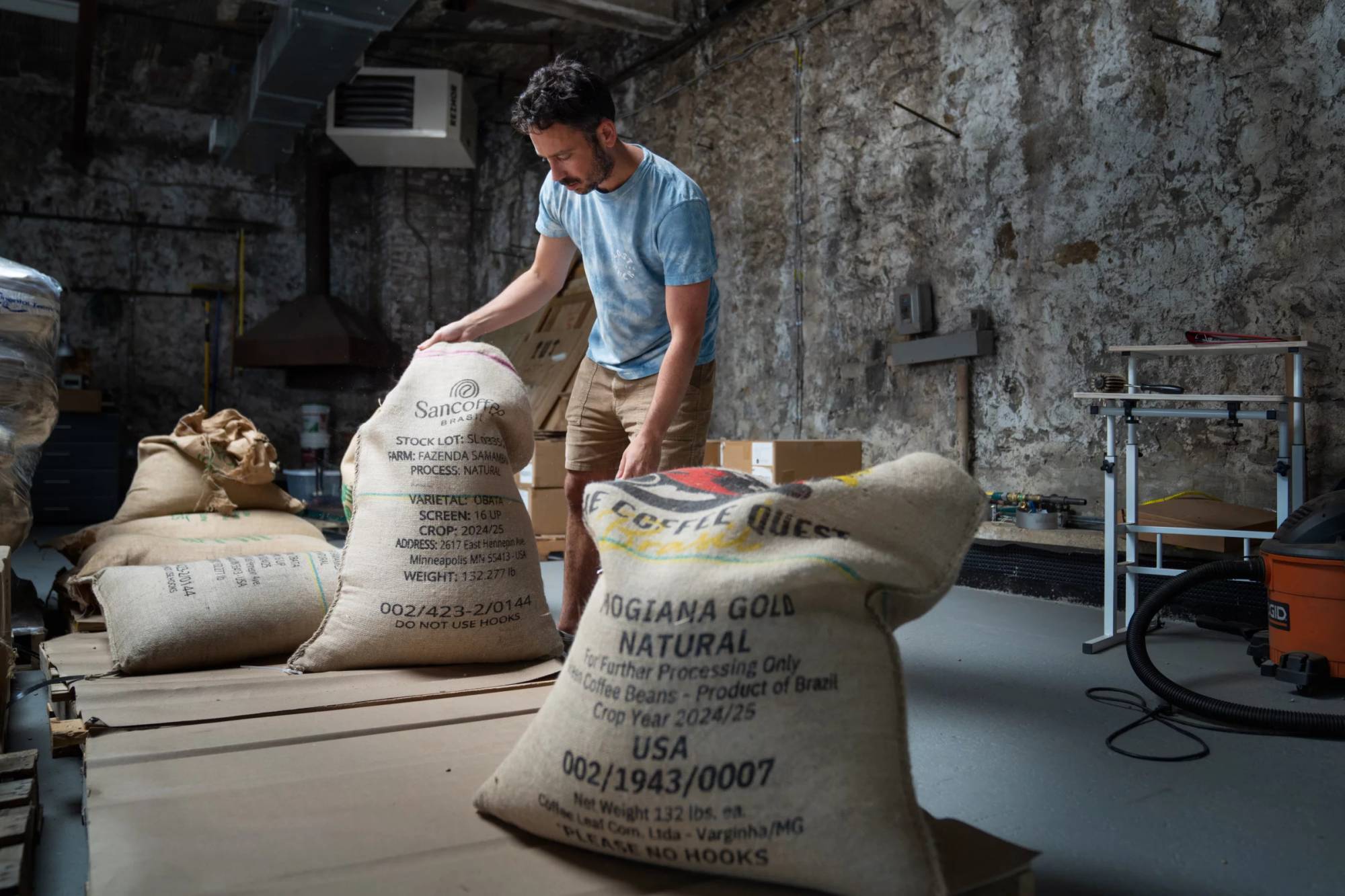
"caption": "While air traffic controllers welcome an infusion of more than $12 billion to modernize their equipment, some controllers say they are under pressure due to other issues, such as grueling schedules, mandatory overtime and stagnating pay.",
"credit": "Glenn Harvey for NPR",
"altTag": null,
"description": null,
"imgSizes": {
"medium": {
"file": "https://cdn.kqed.org/wp-content/uploads/sites/10/2025/07/npr.brightspotcdn-copy-14-2000x1333.jpg",
"width": 2000,
"height": 1333,
"mimeType": "image/jpeg"
},
"large": {
"file": "https://cdn.kqed.org/wp-content/uploads/sites/10/2025/07/npr.brightspotcdn-copy-14-2000x1333.jpg",
"width": 2000,
"height": 1333,
"mimeType": "image/jpeg"
},
"thumbnail": {
"file": "https://cdn.kqed.org/wp-content/uploads/sites/10/2025/07/npr.brightspotcdn-copy-14-160x107.jpg",
"width": 160,
"height": 107,
"mimeType": "image/jpeg"
},
"1536x1536": {
"file": "https://cdn.kqed.org/wp-content/uploads/sites/10/2025/07/npr.brightspotcdn-copy-14-1536x1024.jpg",
"width": 1536,
"height": 1024,
"mimeType": "image/jpeg"
},
"2048x2048": {
"file": "https://cdn.kqed.org/wp-content/uploads/sites/10/2025/07/npr.brightspotcdn-copy-14-2048x1365.jpg",
"width": 2048,
"height": 1365,
"mimeType": "image/jpeg"
},
"post-thumbnail": {
"file": "https://cdn.kqed.org/wp-content/uploads/sites/10/2025/07/npr.brightspotcdn-copy-14-672x372.jpg",
"width": 672,
"height": 372,
"mimeType": "image/jpeg"
},
"twentyfourteen-full-width": {
"file": "https://cdn.kqed.org/wp-content/uploads/sites/10/2025/07/npr.brightspotcdn-copy-14-1038x576.jpg",
"width": 1038,
"height": 576,
"mimeType": "image/jpeg"
},
"full-width": {
"file": "https://cdn.kqed.org/wp-content/uploads/sites/10/2025/07/npr.brightspotcdn-copy-14-2000x1333.jpg",
"width": 2000,
"height": 1333,
"mimeType": "image/jpeg"
},
"kqedFullSize": {
"file": "https://cdn.kqed.org/wp-content/uploads/sites/10/2025/07/npr.brightspotcdn-copy-14.jpg",
"width": 2400,
"height": 1600
}
},
"isLoading": false,
"fetchFailed": false
},
"news_12048821": {
"type": "attachments",
"id": "news_12048821",
"meta": {
"index": "attachments_1716263798",
"site": "news",
"id": "12048821",
"found": true
},
"title": "npr.brightspotcdn copy",
"publishDate": 1752869055,
"status": "inherit",
"parent": 12048819,
"modified": 1752869079,
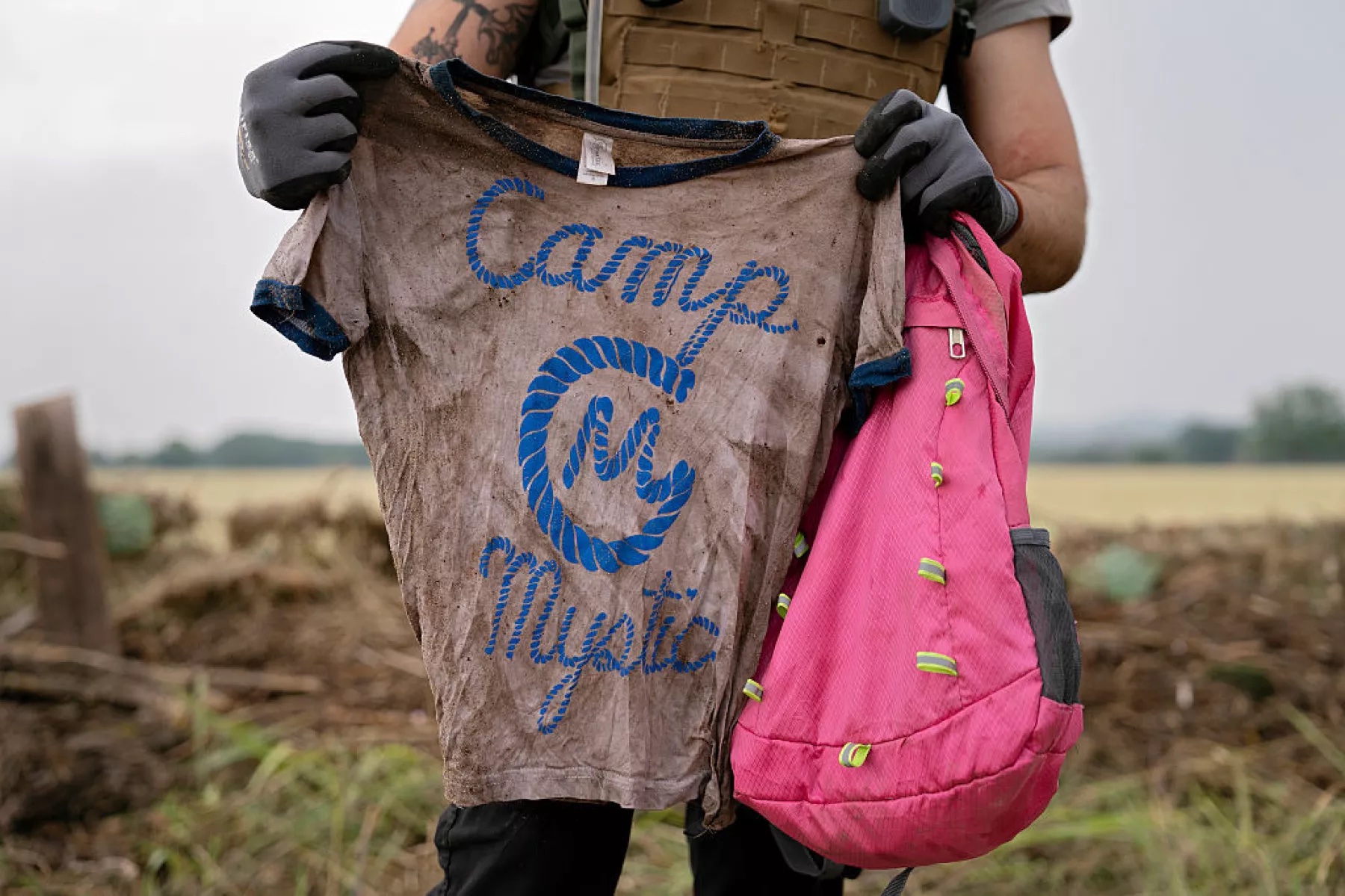
"caption": "Experts say there are key questions parents and guardians should ask camp operators about wildfires, flood and heat risk.",
"credit": "Danielle Villasana for The Washington Post via Getty Images",
"altTag": null,
"description": null,
"imgSizes": {
"thumbnail": {
"file": "https://cdn.kqed.org/wp-content/uploads/sites/10/2025/07/npr.brightspotcdn-copy-9-160x107.jpg",
"width": 160,
"height": 107,
"mimeType": "image/jpeg"
},
"1536x1536": {
"file": "https://cdn.kqed.org/wp-content/uploads/sites/10/2025/07/npr.brightspotcdn-copy-9-1536x1023.jpg",
"width": 1536,
"height": 1023,
"mimeType": "image/jpeg"
},
"post-thumbnail": {
"file": "https://cdn.kqed.org/wp-content/uploads/sites/10/2025/07/npr.brightspotcdn-copy-9-672x372.jpg",
"width": 672,
"height": 372,
"mimeType": "image/jpeg"
},
"twentyfourteen-full-width": {
"file": "https://cdn.kqed.org/wp-content/uploads/sites/10/2025/07/npr.brightspotcdn-copy-9-1038x576.jpg",
"width": 1038,
"height": 576,
"mimeType": "image/jpeg"
},
"kqedFullSize": {
"file": "https://cdn.kqed.org/wp-content/uploads/sites/10/2025/07/npr.brightspotcdn-copy-9.jpg",
"width": 1800,
"height": 1199
}
},
"isLoading": false,
"fetchFailed": false
},
"news_12048109": {
"type": "attachments",
"id": "news_12048109",
"meta": {
"index": "attachments_1716263798",
"site": "news",
"id": "12048109",
"found": true
},
"title": "npr.brightspotcdn copy",
"publishDate": 1752601677,
"status": "inherit",
"parent": 12048108,
"modified": 1752601711,
"caption": "Sun shines on the U.S. Capitol dome on Capitol Hill in Washington, D.C., in 2022.",
"credit": "Patrick Semansky/AP",
"altTag": null,
"description": null,
"imgSizes": {
"thumbnail": {
"file": "https://cdn.kqed.org/wp-content/uploads/sites/10/2025/07/npr.brightspotcdn-copy-8-160x107.jpg",
"width": 160,
"height": 107,
"mimeType": "image/jpeg"
},
"1536x1536": {
"file": "https://cdn.kqed.org/wp-content/uploads/sites/10/2025/07/npr.brightspotcdn-copy-8-1536x1024.jpg",
"width": 1536,
"height": 1024,
"mimeType": "image/jpeg"
},
"post-thumbnail": {
"file": "https://cdn.kqed.org/wp-content/uploads/sites/10/2025/07/npr.brightspotcdn-copy-8-672x372.jpg",
"width": 672,
"height": 372,
"mimeType": "image/jpeg"
},
"twentyfourteen-full-width": {
"file": "https://cdn.kqed.org/wp-content/uploads/sites/10/2025/07/npr.brightspotcdn-copy-8-1038x576.jpg",
"width": 1038,
"height": 576,
"mimeType": "image/jpeg"
},
"kqedFullSize": {
"file": "https://cdn.kqed.org/wp-content/uploads/sites/10/2025/07/npr.brightspotcdn-copy-8.jpg",
"width": 1800,
"height": 1200
}
},
"isLoading": false,
"fetchFailed": false
},
"news_12047166": {
"type": "attachments",
"id": "news_12047166",
"meta": {
"index": "attachments_1716263798",
"site": "news",
"id": "12047166",
"found": true
},
"title": "npr.brightspotcdn copy",
"publishDate": 1751912264,
"status": "inherit",
"parent": 12047165,
"modified": 1751912300,
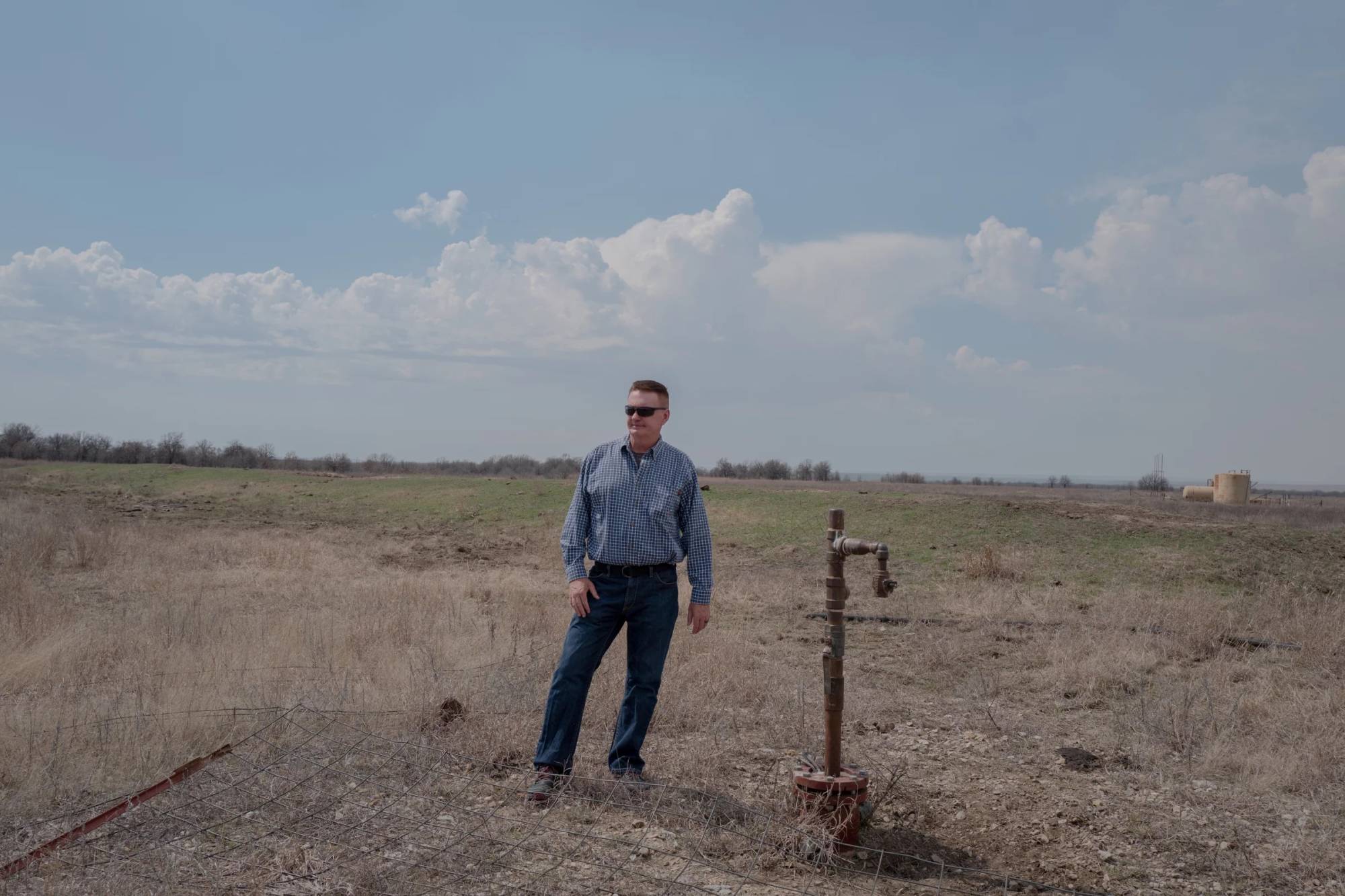
"caption": "Dan Arthur, the president and chief engineer of ALL Consulting, stands beside a defunct oil well in the Tallgrass Prairie Preserve in Oklahoma on March 20, 2024. The well has not been used for years — there's no pump attached to it. But it hasn't been properly plugged, either.",
"credit": "September Dawn Bottoms for NPR",
"altTag": null,
"description": null,
"imgSizes": {
"medium": {
"file": "https://cdn.kqed.org/wp-content/uploads/sites/10/2025/07/npr.brightspotcdn-copy-1-2000x1333.jpg",
"width": 2000,
"height": 1333,
"mimeType": "image/jpeg"
},
"large": {
"file": "https://cdn.kqed.org/wp-content/uploads/sites/10/2025/07/npr.brightspotcdn-copy-1-2000x1333.jpg",
"width": 2000,
"height": 1333,
"mimeType": "image/jpeg"
},
"thumbnail": {
"file": "https://cdn.kqed.org/wp-content/uploads/sites/10/2025/07/npr.brightspotcdn-copy-1-160x107.jpg",
"width": 160,
"height": 107,
"mimeType": "image/jpeg"
},
"1536x1536": {
"file": "https://cdn.kqed.org/wp-content/uploads/sites/10/2025/07/npr.brightspotcdn-copy-1-1536x1024.jpg",
"width": 1536,
"height": 1024,
"mimeType": "image/jpeg"
},
"2048x2048": {
"file": "https://cdn.kqed.org/wp-content/uploads/sites/10/2025/07/npr.brightspotcdn-copy-1-2048x1365.jpg",
"width": 2048,
"height": 1365,
"mimeType": "image/jpeg"
},
"post-thumbnail": {
"file": "https://cdn.kqed.org/wp-content/uploads/sites/10/2025/07/npr.brightspotcdn-copy-1-672x372.jpg",
"width": 672,
"height": 372,
"mimeType": "image/jpeg"
},
"twentyfourteen-full-width": {
"file": "https://cdn.kqed.org/wp-content/uploads/sites/10/2025/07/npr.brightspotcdn-copy-1-1038x576.jpg",
"width": 1038,
"height": 576,
"mimeType": "image/jpeg"
},
"full-width": {
"file": "https://cdn.kqed.org/wp-content/uploads/sites/10/2025/07/npr.brightspotcdn-copy-1-2000x1333.jpg",
"width": 2000,
"height": 1333,
"mimeType": "image/jpeg"
},
"kqedFullSize": {
"file": "https://cdn.kqed.org/wp-content/uploads/sites/10/2025/07/npr.brightspotcdn-copy-1.jpg",
"width": 2400,
"height": 1600
}
},
"isLoading": false,
"fetchFailed": false
},
"news_12047111": {
"type": "attachments",
"id": "news_12047111",
"meta": {
"index": "attachments_1716263798",
"site": "news",
"id": "12047111",
"found": true
},
"title": "default",
"publishDate": 1751651145,
"status": "inherit",
"parent": 12047108,
"modified": 1751651174,
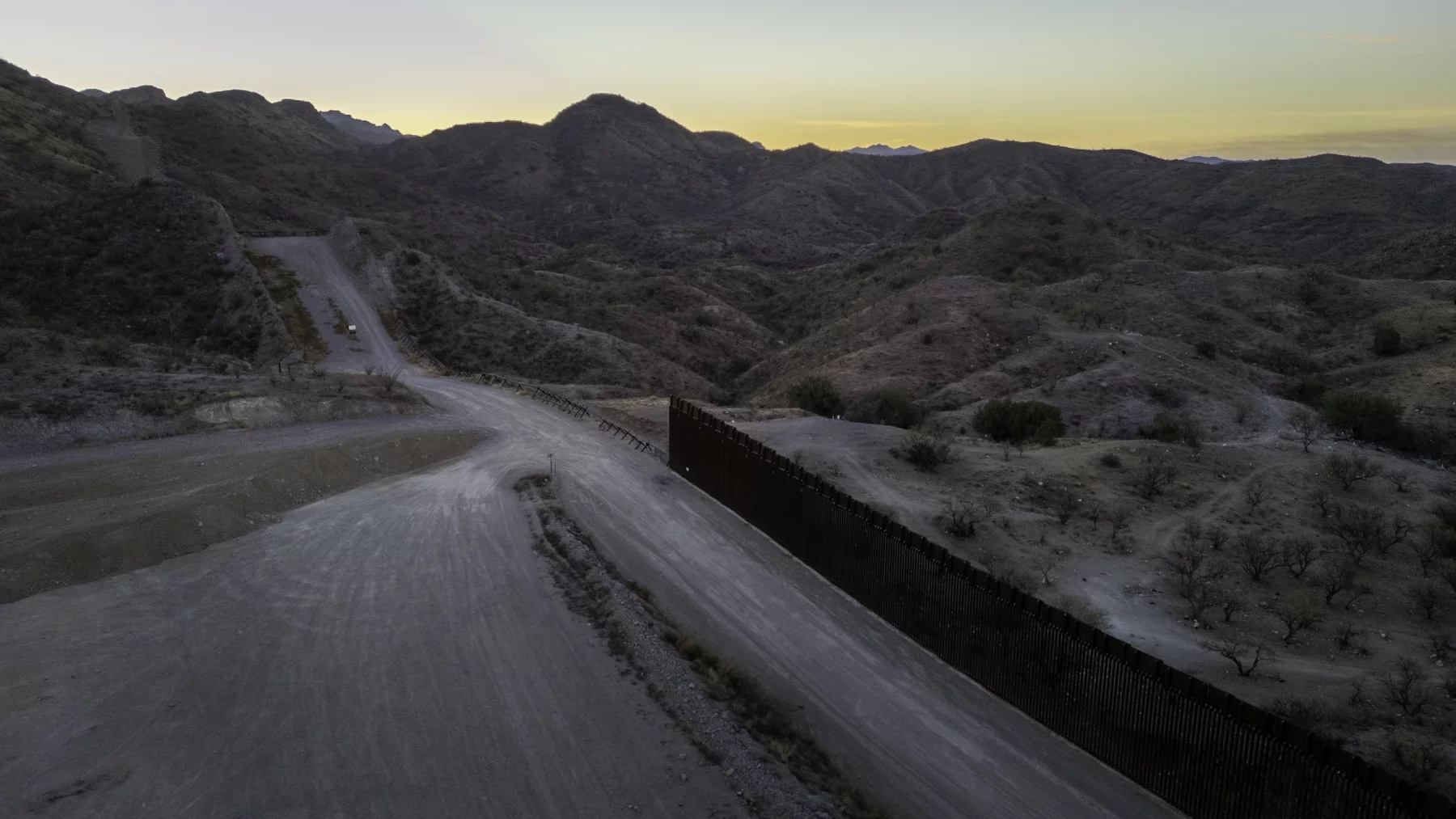
"caption": "From an aerial view, the US-Mexico border fence ends with a gap on Jan. 20, 2025 near Sasabe, Ariz. Republicans' tax and spending bill includes $46.5 billion for border wall projects.",
"credit": "John Moore/Getty Images",
"altTag": null,
"description": null,
"imgSizes": {
"thumbnail": {
"file": "https://cdn.kqed.org/wp-content/uploads/sites/10/2025/07/npr.brightspotcdn-copy-160x90.jpg",
"width": 160,
"height": 90,
"mimeType": "image/jpeg"
},
"1536x1536": {
"file": "https://cdn.kqed.org/wp-content/uploads/sites/10/2025/07/npr.brightspotcdn-copy-1536x864.jpg",
"width": 1536,
"height": 864,
"mimeType": "image/jpeg"
},
"post-thumbnail": {
"file": "https://cdn.kqed.org/wp-content/uploads/sites/10/2025/07/npr.brightspotcdn-copy-672x372.jpg",
"width": 672,
"height": 372,
"mimeType": "image/jpeg"
},
"twentyfourteen-full-width": {
"file": "https://cdn.kqed.org/wp-content/uploads/sites/10/2025/07/npr.brightspotcdn-copy-1038x576.jpg",
"width": 1038,
"height": 576,
"mimeType": "image/jpeg"
},
"kqedFullSize": {
"file": "https://cdn.kqed.org/wp-content/uploads/sites/10/2025/07/npr.brightspotcdn-copy.jpg",
"width": 1800,
"height": 1013
}
},
"isLoading": false,
"fetchFailed": false
},
"news_12046267": {
"type": "attachments",
"id": "news_12046267",
"meta": {
"index": "attachments_1716263798",
"site": "news",
"id": "12046267",
"found": true
},
"title": "Trump Administration Asks Supreme Court To Block Order To Return Mistakenly Deported Man",
"publishDate": 1751036305,
"status": "inherit",
"parent": 12046266,
"modified": 1772572584,
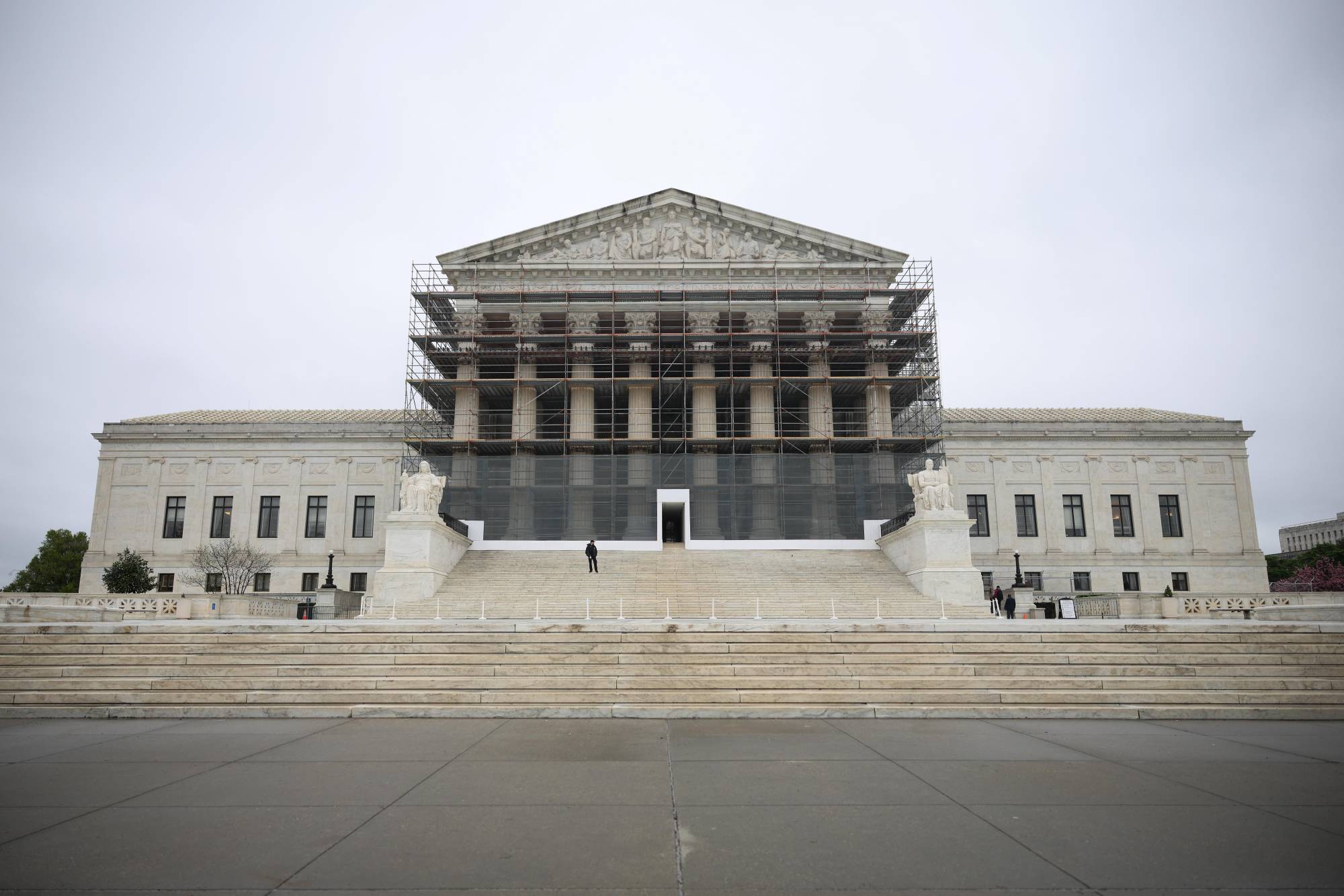
"caption": "The U.S. Supreme Court on April 7, 2025, in Washington, D.C.",
"credit": "Kayla Bartkowski/Getty Images",
"altTag": "The U.S. Supreme Court",
"description": "The U.S. Supreme Court is seen on April 07, 2025 in Washington, D.C.",
"imgSizes": {
"medium": {
"file": "https://cdn.kqed.org/wp-content/uploads/sites/10/2025/06/gettyimages-2209056030-4-2000x1334.jpeg",
"width": 2000,
"height": 1334,
"mimeType": "image/jpeg"
},
"large": {
"file": "https://cdn.kqed.org/wp-content/uploads/sites/10/2025/06/gettyimages-2209056030-4-2000x1334.jpeg",
"width": 2000,
"height": 1334,
"mimeType": "image/jpeg"
},
"thumbnail": {
"file": "https://cdn.kqed.org/wp-content/uploads/sites/10/2025/06/gettyimages-2209056030-4-160x107.jpeg",
"width": 160,
"height": 107,
"mimeType": "image/jpeg"
},
"1536x1536": {
"file": "https://cdn.kqed.org/wp-content/uploads/sites/10/2025/06/gettyimages-2209056030-4-1536x1025.jpeg",
"width": 1536,
"height": 1025,
"mimeType": "image/jpeg"
},
"2048x2048": {
"file": "https://cdn.kqed.org/wp-content/uploads/sites/10/2025/06/gettyimages-2209056030-4-2048x1366.jpeg",
"width": 2048,
"height": 1366,
"mimeType": "image/jpeg"
},
"post-thumbnail": {
"file": "https://cdn.kqed.org/wp-content/uploads/sites/10/2025/06/gettyimages-2209056030-4-672x372.jpeg",
"width": 672,
"height": 372,
"mimeType": "image/jpeg"
},
"twentyfourteen-full-width": {
"file": "https://cdn.kqed.org/wp-content/uploads/sites/10/2025/06/gettyimages-2209056030-4-1038x576.jpeg",
"width": 1038,
"height": 576,
"mimeType": "image/jpeg"
},
"full-width": {
"file": "https://cdn.kqed.org/wp-content/uploads/sites/10/2025/06/gettyimages-2209056030-4-2000x1334.jpeg",
"width": 2000,
"height": 1334,
"mimeType": "image/jpeg"
},
"kqedFullSize": {
"file": "https://cdn.kqed.org/wp-content/uploads/sites/10/2025/06/gettyimages-2209056030-4-scaled-e1772572598710.jpeg",
"width": 2000,
"height": 1334
}
},
"isLoading": false,
"fetchFailed": false
},
"news_12045108": {
"type": "attachments",
"id": "news_12045108",
"meta": {
"index": "attachments_1716263798",
"site": "news",
"id": "12045108",
"found": true
},
"title": "npr.brightspotcdn copy",
"publishDate": 1750353963,
"status": "inherit",
"parent": 12045107,
"modified": 1750353979,
"caption": "A view of the sign of Center for Disease Control headquarters is seen in Atlanta, Georgia.",
"credit": "Nathan Posner/Anadolu Agency via Getty Images",
"altTag": null,
"description": null,
"imgSizes": {
"thumbnail": {
"file": "https://cdn.kqed.org/wp-content/uploads/sites/10/2025/06/npr.brightspotcdn-copy-9-160x107.jpg",
"width": 160,
"height": 107,
"mimeType": "image/jpeg"
},
"1536x1536": {
"file": "https://cdn.kqed.org/wp-content/uploads/sites/10/2025/06/npr.brightspotcdn-copy-9-1536x1024.jpg",
"width": 1536,
"height": 1024,
"mimeType": "image/jpeg"
},
"post-thumbnail": {
"file": "https://cdn.kqed.org/wp-content/uploads/sites/10/2025/06/npr.brightspotcdn-copy-9-672x372.jpg",
"width": 672,
"height": 372,
"mimeType": "image/jpeg"
},
"twentyfourteen-full-width": {
"file": "https://cdn.kqed.org/wp-content/uploads/sites/10/2025/06/npr.brightspotcdn-copy-9-1038x576.jpg",
"width": 1038,
"height": 576,
"mimeType": "image/jpeg"
},
"kqedFullSize": {
"file": "https://cdn.kqed.org/wp-content/uploads/sites/10/2025/06/npr.brightspotcdn-copy-9.jpg",
"width": 1600,
"height": 1067
}
},
"isLoading": false,
"fetchFailed": false
},
"news_12045122": {
"type": "attachments",
"id": "news_12045122",
"meta": {
"index": "attachments_1716263798",
"site": "news",
"id": "12045122",
"found": true
},
"title": "ap20171727050509_custom-6a71476be8ec18c3035a503a2600793baabb534c copy",
"publishDate": 1750361212,
"status": "inherit",
"parent": 12045121,
"modified": 1750361245,
"caption": "A young boy walks past a painting depicting Dr. Martin Luther King Jr. during a Juneteenth celebration in Los Angeles in 2020. Juneteenth marks the day in 1865 when federal troops arrived in Galveston, Texas, to take control of the state and ensure all enslaved people be freed, more than 2 years after the Emancipation Proclamation.",
"credit": "Jae C. Hong/AP",
"altTag": null,
"description": null,
"imgSizes": {
"thumbnail": {
"file": "https://cdn.kqed.org/wp-content/uploads/sites/10/2025/06/ap20171727050509_custom-6a71476be8ec18c3035a503a2600793baabb534c-copy-160x116.jpg",
"width": 160,
"height": 116,
"mimeType": "image/jpeg"
},
"1536x1536": {
"file": "https://cdn.kqed.org/wp-content/uploads/sites/10/2025/06/ap20171727050509_custom-6a71476be8ec18c3035a503a2600793baabb534c-copy-1536x1110.jpg",
"width": 1536,
"height": 1110,
"mimeType": "image/jpeg"
},
"post-thumbnail": {
"file": "https://cdn.kqed.org/wp-content/uploads/sites/10/2025/06/ap20171727050509_custom-6a71476be8ec18c3035a503a2600793baabb534c-copy-672x372.jpg",
"width": 672,
"height": 372,
"mimeType": "image/jpeg"
},
"twentyfourteen-full-width": {
"file": "https://cdn.kqed.org/wp-content/uploads/sites/10/2025/06/ap20171727050509_custom-6a71476be8ec18c3035a503a2600793baabb534c-copy-1038x576.jpg",
"width": 1038,
"height": 576,
"mimeType": "image/jpeg"
},
"kqedFullSize": {
"file": "https://cdn.kqed.org/wp-content/uploads/sites/10/2025/06/ap20171727050509_custom-6a71476be8ec18c3035a503a2600793baabb534c-copy.jpg",
"width": 1600,
"height": 1156
}
},
"isLoading": false,
"fetchFailed": false
},
"news_12044267": {
"type": "attachments",
"id": "news_12044267",
"meta": {
"index": "attachments_1716263798",
"site": "news",
"id": "12044267",
"found": true
},
"title": "npr.brightspotcdn copy",
"publishDate": 1749846102,
"status": "inherit",
"parent": 12044264,
"modified": 1749846118,
"caption": null,
"credit": "Mar Hernandez for NPR",
"altTag": null,
"description": null,
"imgSizes": {
"thumbnail": {
"file": "https://cdn.kqed.org/wp-content/uploads/sites/10/2025/06/npr.brightspotcdn-copy-7-160x107.jpg",
"width": 160,
"height": 107,
"mimeType": "image/jpeg"
},
"1536x1536": {
"file": "https://cdn.kqed.org/wp-content/uploads/sites/10/2025/06/npr.brightspotcdn-copy-7-1536x1024.jpg",
"width": 1536,
"height": 1024,
"mimeType": "image/jpeg"
},
"post-thumbnail": {
"file": "https://cdn.kqed.org/wp-content/uploads/sites/10/2025/06/npr.brightspotcdn-copy-7-672x372.jpg",
"width": 672,
"height": 372,
"mimeType": "image/jpeg"
},
"twentyfourteen-full-width": {
"file": "https://cdn.kqed.org/wp-content/uploads/sites/10/2025/06/npr.brightspotcdn-copy-7-1038x576.jpg",
"width": 1038,
"height": 576,
"mimeType": "image/jpeg"
},
"kqedFullSize": {
"file": "https://cdn.kqed.org/wp-content/uploads/sites/10/2025/06/npr.brightspotcdn-copy-7.jpg",
"width": 1600,
"height": 1067
}
},
"isLoading": false,
"fetchFailed": false
},
"news_12044511": {
"type": "attachments",
"id": "news_12044511",
"meta": {
"index": "attachments_1716263798",
"site": "news",
"id": "12044511",
"found": true
},
"title": "npr.brightspotcdn copy",
"publishDate": 1749951802,
"status": "inherit",
"parent": 12044504,
"modified": 1749951837,
"caption": "Cadets from the U.S. Military Academy West Point pass by the reviewing stand as President Trump attends a military parade commemorating the Army's 250th anniversary, coinciding with his 79th birthday, on Saturday, June 14, 2025, in Washington, DC.",
"credit": "Julia Demaree Nikhinson/AP",
"altTag": null,
"description": null,
"imgSizes": {
"thumbnail": {
"file": "https://cdn.kqed.org/wp-content/uploads/sites/10/2025/06/npr.brightspotcdn-copy-8-160x107.jpg",
"width": 160,
"height": 107,
"mimeType": "image/jpeg"
},
"1536x1536": {
"file": "https://cdn.kqed.org/wp-content/uploads/sites/10/2025/06/npr.brightspotcdn-copy-8-1536x1023.jpg",
"width": 1536,
"height": 1023,
"mimeType": "image/jpeg"
},
"post-thumbnail": {
"file": "https://cdn.kqed.org/wp-content/uploads/sites/10/2025/06/npr.brightspotcdn-copy-8-672x372.jpg",
"width": 672,
"height": 372,
"mimeType": "image/jpeg"
},
"twentyfourteen-full-width": {
"file": "https://cdn.kqed.org/wp-content/uploads/sites/10/2025/06/npr.brightspotcdn-copy-8-1038x576.jpg",
"width": 1038,
"height": 576,
"mimeType": "image/jpeg"
},
"kqedFullSize": {
"file": "https://cdn.kqed.org/wp-content/uploads/sites/10/2025/06/npr.brightspotcdn-copy-8.jpg",
"width": 1600,
"height": 1066
}
},
"isLoading": false,
"fetchFailed": false
},
"news_12044253": {
"type": "attachments",
"id": "news_12044253",
"meta": {
"index": "attachments_1716263798",
"site": "news",
"id": "12044253",
"found": true
},
"title": "npr.brightspotcdn copy",
"publishDate": 1749845414,
"status": "inherit",
"parent": 12044225,
"modified": 1749845433,
"caption": "On the site of a former ranch slated for housing development on the outskirts of Aurora, Colo., Pedro Macedo of Perks Deconstruction pulls nails from a wood frame that once stood in a barn.",
"credit": "Hart Van Denburg/CPR News",
"altTag": null,
"description": null,
"imgSizes": {
"thumbnail": {
"file": "https://cdn.kqed.org/wp-content/uploads/sites/10/2025/06/npr.brightspotcdn-copy-6-160x106.jpg",
"width": 160,
"height": 106,
"mimeType": "image/jpeg"
},
"1536x1536": {
"file": "https://cdn.kqed.org/wp-content/uploads/sites/10/2025/06/npr.brightspotcdn-copy-6-1536x1021.jpg",
"width": 1536,
"height": 1021,
"mimeType": "image/jpeg"
},
"post-thumbnail": {
"file": "https://cdn.kqed.org/wp-content/uploads/sites/10/2025/06/npr.brightspotcdn-copy-6-672x372.jpg",
"width": 672,
"height": 372,
"mimeType": "image/jpeg"
},
"twentyfourteen-full-width": {
"file": "https://cdn.kqed.org/wp-content/uploads/sites/10/2025/06/npr.brightspotcdn-copy-6-1038x576.jpg",
"width": 1038,
"height": 576,
"mimeType": "image/jpeg"
},
"kqedFullSize": {
"file": "https://cdn.kqed.org/wp-content/uploads/sites/10/2025/06/npr.brightspotcdn-copy-6.jpg",
"width": 1800,
"height": 1197
}
},
"isLoading": false,
"fetchFailed": false
},
"news_12044023": {
"type": "attachments",
"id": "news_12044023",
"meta": {
"index": "attachments_1716263798",
"site": "news",
"id": "12044023",
"found": true
},
"title": "npr.brightspotcdn copy",
"publishDate": 1749760599,
"status": "inherit",
"parent": 12044021,
"modified": 1749760626,
"caption": "Legislation in Congress would claw back 2 years of funding for the public media system, along with money for foreign aid programs.",
"credit": "Bonnie Cash/Getty Images",
"altTag": null,
"description": null,
"imgSizes": {
"thumbnail": {
"file": "https://cdn.kqed.org/wp-content/uploads/sites/10/2025/06/npr.brightspotcdn-copy-5-160x107.jpg",
"width": 160,
"height": 107,
"mimeType": "image/jpeg"
},
"1536x1536": {
"file": "https://cdn.kqed.org/wp-content/uploads/sites/10/2025/06/npr.brightspotcdn-copy-5-1536x1024.jpg",
"width": 1536,
"height": 1024,
"mimeType": "image/jpeg"
},
"post-thumbnail": {
"file": "https://cdn.kqed.org/wp-content/uploads/sites/10/2025/06/npr.brightspotcdn-copy-5-672x372.jpg",
"width": 672,
"height": 372,
"mimeType": "image/jpeg"
},
"twentyfourteen-full-width": {
"file": "https://cdn.kqed.org/wp-content/uploads/sites/10/2025/06/npr.brightspotcdn-copy-5-1038x576.jpg",
"width": 1038,
"height": 576,
"mimeType": "image/jpeg"
},
"kqedFullSize": {
"file": "https://cdn.kqed.org/wp-content/uploads/sites/10/2025/06/npr.brightspotcdn-copy-5.jpg",
"width": 1600,
"height": 1067
}
},
"isLoading": false,
"fetchFailed": false
}
},
"audioPlayerReducer": {
"postId": "stream_live",
"isPaused": true,
"isPlaying": false,
"pfsActive": false,
"pledgeModalIsOpen": true,
"playerDrawerIsOpen": false,
"liveAudioPlayStartedAt": 0,
"liveAudioPlayContext": ""
},
"authorsReducer": {
"byline_news_12048860": {
"type": "authors",
"id": "byline_news_12048860",
"meta": {
"override": true
},
"slug": "byline_news_12048860",
"name": "Joe Hernandez and Joel Rose, NPR",
"isLoading": false
},
"byline_news_12048819": {
"type": "authors",
"id": "byline_news_12048819",
"meta": {
"override": true
},
"slug": "byline_news_12048819",
"name": "Julia Simon, NPR",
"isLoading": false
},
"byline_news_12048108": {
"type": "authors",
"id": "byline_news_12048108",
"meta": {
"override": true
},
"slug": "byline_news_12048108",
"name": "Deirdre Walsh, NPR",
"isLoading": false
},
"byline_news_12047165": {
"type": "authors",
"id": "byline_news_12047165",
"meta": {
"override": true
},
"slug": "byline_news_12047165",
"name": "Camila Domonoske, NPR",
"isLoading": false
},
"byline_news_12047108": {
"type": "authors",
"id": "byline_news_12047108",
"meta": {
"override": true
},
"slug": "byline_news_12047108",
"name": "Juliana Kim, NPR",
"isLoading": false
},
"byline_news_12044886": {
"type": "authors",
"id": "byline_news_12044886",
"meta": {
"override": true
},
"slug": "byline_news_12044886",
"name": "Nina Totenberg, NPR",
"isLoading": false
},
"byline_news_12045107": {
"type": "authors",
"id": "byline_news_12045107",
"meta": {
"override": true
},
"slug": "byline_news_12045107",
"name": "Brian Mann, NPR",
"isLoading": false
},
"byline_news_12045121": {
"type": "authors",
"id": "byline_news_12045121",
"meta": {
"override": true
},
"slug": "byline_news_12045121",
"name": "Alana Wise, NPR",
"isLoading": false
},
"byline_news_12044264": {
"type": "authors",
"id": "byline_news_12044264",
"meta": {
"override": true
},
"slug": "byline_news_12044264",
"name": "Cory Turner, NPR",
"isLoading": false
},
"byline_news_12044504": {
"type": "authors",
"id": "byline_news_12044504",
"meta": {
"override": true
},
"slug": "byline_news_12044504",
"name": "Alana Wise and Kat Lonsdorf, NPR",
"isLoading": false
},
"byline_news_12044225": {
"type": "authors",
"id": "byline_news_12044225",
"meta": {
"override": true
},
"slug": "byline_news_12044225",
"name": "Rae Solomon, NPR",
"isLoading": false
},
"byline_news_12044021": {
"type": "authors",
"id": "byline_news_12044021",
"meta": {
"override": true
},
"slug": "byline_news_12044021",
"name": "\u003ca href=\"https://www.npr.org/people/617095374/deirdre-walsh\">Deirdre Walsh\u003c/a> and \u003ca href=\"https://www.npr.org/people/4459112/david-folkenflik\">David Folkenflik\u003c/a>, NPR",
"isLoading": false
}
},
"pagesReducer": {
"news_affiliate_npr": {
"type": "terms",
"id": "news_253",
"meta": {
"index": "terms_1716263798",
"site": "news",
"id": "253",
"score": 14.262106
},
"featImg": null,
"name": "NPR",
"description": null,
"taxonomy": "affiliate",
"headData": {
"twImgId": null,
"twTitle": null,
"ogTitle": null,
"ogImgId": null,
"twDescription": null,
"description": "KQED is the NPR station for the Bay Area, providing award-winning news, programming, and community engagement.",
"title": "NPR Archives - Get the Latest News and Reports from California | KQED",
"ogDescription": null
},
"ttid": 7083,
"slug": "npr",
"isLoading": false,
"title": "NPR",
"pageMeta": {
"site": "news",
"WpPageTemplate": "page-topic-editorial",
"currentPage": 4
},
"blocks": [
{
"blockName": "kqed/post-list",
"attrs": {
"layout": "cardArticle2",
"query": "posts/news?affiliate=npr",
"seeMore": false,
"paginated": true,
"page": 4
}
},
{
"blockName": "kqed/ad"
}
]
}
},
"pfsSessionReducer": {},
"postsReducer": {
"stream_live": {
"type": "live",
"id": "stream_live",
"audioUrl": "https://streams.kqed.org/kqedradio",
"title": "Live Stream",
"excerpt": "Live Stream information currently unavailable.",
"link": "/radio",
"featImg": "",
"label": {
"name": "KQED Live",
"link": "/"
}
},
"stream_kqedNewscast": {
"type": "posts",
"id": "stream_kqedNewscast",
"audioUrl": "https://www.kqed.org/.stream/anon/radio/RDnews/newscast.mp3?_=1",
"title": "KQED Newscast",
"featImg": "",
"label": {
"name": "88.5 FM",
"link": "/"
}
},
"news_12048860": {
"type": "posts",
"id": "news_12048860",
"meta": {
"index": "posts_1716263798",
"site": "news",
"id": "12048860",
"score": null,
"sort": [
1753030816000
]
},
"guestAuthors": [],
"slug": "air-traffic-controllers-say-a-push-to-modernize-equipment-wont-fix-deeper-problems",
"title": "Air Traffic Controllers Say a Push to Modernize Equipment Won't Fix Deeper Problems",
"publishDate": 1753030816,
"format": "standard",
"headTitle": "Air Traffic Controllers Say a Push to Modernize Equipment Won’t Fix Deeper Problems | KQED",
"labelTerm": {
"term": 253,
"site": "news"
},
"content": "\u003cp>When a \u003ca href=\"https://www.npr.org/2025/03/11/nx-s1-5324543/ntsb-dca-mid-air-collision-american-black-hawk\">midair collision\u003c/a> and a \u003ca href=\"https://www.npr.org/2025/05/22/g-s1-68333/newark-air-traffic-controller-atc\">series of radar outages\u003c/a> captured attention in the United States this year, some air traffic controllers thought it might finally lead to solutions for a nationwide staffing shortage and other longstanding problems at the country’s air traffic facilities.\u003c/p>\n\u003cp>“Everybody’s talking about us,” said one controller who works at a facility in the Midwest that handles high-altitude traffic. “You have that one moment of like, ‘oh, some hope. Hey, they see us out here.'”\u003c/p>\n\u003cp>But that controller watched with growing dismay as the response from federal officials and union leaders coalesced around an effort to upgrade equipment and ramp up hiring. The plan failed to address some other long-held concerns of many air traffic controllers, such as grueling schedules, stagnating pay and an onerous process for taking paid time off, the controller said.\u003c/p>\n\u003cp>[ad fullwidth]\u003c/p>\n\u003cp>“The morale just really plummets at that point,” said the controller, who asked NPR not to use their name because they’re not authorized to speak publicly and are worried about retaliation from the Federal Aviation Administration.\u003c/p>\n\u003cp>“Not a word of it is about anything that’s going to actually help controllers in the not even just short term, but the mid-term,” they said. “Honestly, it’s more demoralizing than if they weren’t talking about us at all.”\u003c/p>\n\u003cfigure id=\"attachment_12048863\" class=\"wp-caption aligncenter\" style=\"max-width: 1800px\">\u003cimg loading=\"lazy\" decoding=\"async\" class=\"size-full wp-image-12048863\" src=\"https://cdn.kqed.org/wp-content/uploads/sites/10/2025/07/npr.brightspotcdn-1-copy.jpg\" alt=\"\" width=\"1800\" height=\"1201\" srcset=\"https://cdn.kqed.org/wp-content/uploads/sites/10/2025/07/npr.brightspotcdn-1-copy.jpg 1800w, https://cdn.kqed.org/wp-content/uploads/sites/10/2025/07/npr.brightspotcdn-1-copy-160x107.jpg 160w, https://cdn.kqed.org/wp-content/uploads/sites/10/2025/07/npr.brightspotcdn-1-copy-1536x1025.jpg 1536w\" sizes=\"auto, (max-width: 1800px) 100vw, 1800px\">\u003cfigcaption class=\"wp-caption-text\">Transportation Secretary Sean Duffy holds a news conference at Newark Liberty International Airport, where he announced the reopening of a major runway at the airport, nearly 2 weeks ahead of schedule in Newark, N.J., on June 2.\u003c/figcaption>\u003c/figure>\n\u003cp>U.S. Transportation Secretary Sean Duffy has made rebuilding the national air traffic control system a priority in his first few months on the job. He’s vowed to “supercharge” the hiring of new controllers, and the Trump administration is also seeking to \u003ca href=\"https://www.npr.org/2025/05/08/nx-s1-5391297/air-traffic-control-system-overhaul-modernization\">completely overhaul the technology\u003c/a> used in air traffic facilities across the country, including radar and telecommunications equipment.\u003c/p>\n\u003cp>This month, Congress approved $12.5 billion for that purpose in the budget reconciliation law.\u003cstrong> \u003c/strong>Duffy called that funding an important “down payment,” though he said it would ultimately take a total of roughly $31 billion to finish the job.\u003c/p>\n\u003cp>[aside postID=news_12033338 hero='https://cdn.kqed.org/wp-content/uploads/sites/10/2025/03/GettyImages-1243270396-1-1020x680.jpg']\u003c/p>\n\u003cp>“Our goal is to make air travel not just safer, but also more efficient,” Duffy said Wednesday during \u003ca href=\"https://transportation.house.gov/calendar/eventsingle.aspx?EventID=408886\">a hearing\u003c/a> of the House Transportation and Infrastructure Committee. “State of the art, gold-plated, best in the world.”\u003c/p>\n\u003cp>Still, many air traffic controllers say problems with the U.S. air traffic system run deeper than outdated equipment. Some have vented their frustrations anonymously on social media platforms \u003ca href=\"https://www.tiktok.com/@doaviation/video/7506983705282596142\">like TikTok\u003c/a>, and \u003ca href=\"https://www.reddit.com/r/atc2/\">Reddit\u003c/a>.\u003c/p>\n\u003cp>NPR spoke to five current and former air traffic controllers for this story. (Most requested anonymity because they are also worried about retaliation from the FAA.) While several controllers welcomed the additional investment in modernized equipment, they were also skeptical that the Trump administration could achieve its goals as quickly as promised. All of them said the FAA is overlooking\u003cstrong> \u003c/strong>critical quality-of-life concerns among controllers.\u003c/p>\n\u003cp>Meanwhile, they say they’re expected to work under stressful conditions each day to keep the complex U.S. air travel system operating, in part by working mandatory overtime and six-day workweeks.\u003c/p>\n\u003cp>“[Passengers] get to go where they want to go because controllers are showing up to work six days a week. And they’re tired, they’re exhausted,” said the controller who works in the Midwest center. “But they’re still showing up and doing an amazing job.”\u003c/p>\n\u003ch2>Staffing shortages squeeze controllers\u003c/h2>\n\u003cfigure id=\"attachment_12048864\" class=\"wp-caption aligncenter\" style=\"max-width: 1800px\">\u003cimg loading=\"lazy\" decoding=\"async\" class=\"size-full wp-image-12048864\" src=\"https://cdn.kqed.org/wp-content/uploads/sites/10/2025/07/npr.brightspotcdn-2-copy.jpg\" alt=\"\" width=\"1800\" height=\"1201\" srcset=\"https://cdn.kqed.org/wp-content/uploads/sites/10/2025/07/npr.brightspotcdn-2-copy.jpg 1800w, https://cdn.kqed.org/wp-content/uploads/sites/10/2025/07/npr.brightspotcdn-2-copy-160x107.jpg 160w, https://cdn.kqed.org/wp-content/uploads/sites/10/2025/07/npr.brightspotcdn-2-copy-1536x1025.jpg 1536w\" sizes=\"auto, (max-width: 1800px) 100vw, 1800px\">\u003cfigcaption class=\"wp-caption-text\">The air traffic control tower at Ronald Reagan Washington National Airport in Arlington, Va., several days after an American Airlines jet collided in midair with a military Black Hawk helicopter, killing 67 people. \u003ccite>(Kayla Bartkowski/Getty Images)\u003c/cite>\u003c/figcaption>\u003c/figure>\n\u003cp>Problems in the nation’s air traffic system were well known within the aviation industry. But they burst into public view in January, when an American Airlines regional jet and an U.S. Army Black Hawk helicopter \u003ca href=\"https://www.npr.org/2025/01/30/nx-s1-5280403/map-plane-helicopter-crash-washington-dc\">collided in midair\u003c/a> near Ronald Reagan Washington National Airport.\u003c/p>\n\u003cp>According to \u003ca href=\"https://www.ntsb.gov/investigations/Documents/DCA25MA108%20Prelim.pdf\" target=\"_blank\" rel=\"noopener\">a preliminary report\u003c/a> from the National Transportation Safety Board, the duties of several air traffic controllers in the local control tower had been combined at the time of the incident, though it’s not clear if that played any role in the collision. Still, the accident focused national attention on the controller staffing shortages.\u003c/p>\n\u003cp>Then the facility that handles traffic around Newark Liberty International Airport in New Jersey suffered \u003ca href=\"https://www.npr.org/2025/05/22/g-s1-68333/newark-air-traffic-controller-atc\">a series of radar and telecommunication outages\u003c/a> in April and May, forcing thousands of delays, diversions and cancellations at one of the nation’s busiest airports. When some controllers took trauma leave to recover from the impact of those outages, that only \u003ca href=\"https://www.npr.org/2025/05/13/nx-s1-5396838/newark-airport-three-radar-controllers-monitored-airspace-faa\">exacerbated the staffing shortage\u003c/a>.[aside postID=news_12027050 hero='https://cdn.kqed.org/wp-content/uploads/sites/10/2025/05/GettyImages-1940010763-1-1020x680.jpg']The roots of the air traffic controller shortage go all the way back to 1981, when then-President Ronald Reagan \u003ca href=\"https://www.npr.org/2021/08/05/1025018833/looking-back-on-when-president-reagan-fired-air-traffic-controllers\">fired more than 11,000 controllers\u003c/a> who had gone on strike to protest what they considered to be unfair wages and long work hours.\u003c/p>\n\u003cp>That set off a scramble to hire and train thousands of new air traffic controllers. In some areas, the effort succeeded, but facilities that handle some of the busiest and most complex airspace in the world have always been difficult to staff.\u003c/p>\n\u003cp>Over the past decade, the FAA has struggled to hire enough controllers to keep pace with retirements — hiring only two-thirds of the controllers called for by its own staffing models, \u003ca href=\"https://nap.nationalacademies.org/catalog/29112/the-air-traffic-controller-workforce-imperative-staffing-models-and-their\">according to a recent study\u003c/a> by the National Academies of Sciences, Engineering, and Medicine. The problem was made more acute by the COVID-19 pandemic, which disrupted in-person training at the FAA’s academy in Oklahoma.\u003c/p>\n\u003cp>The FAA currently has \u003ca href=\"https://www.faa.gov/about/office_org/headquarters_offices/afn/offices/finance/offices/office-financial-labor-analysis/plans/controller-workforce\">fewer than 11,000 certified controllers\u003c/a>, more than 3,000 short of its nationwide target. As a result, many are regularly assigned to work a sixth workday. \u003ca href=\"https://www.natca.org/2025/06/18/national-academies-of-sciences-report-doubles-down-on-failed-controller-staffing-model/\">According to the National Air Traffic Controllers Association\u003c/a>, over 41% of certified air traffic controllers work “10-hour days, six days a week.”\u003c/p>\n\u003cp>That’s in addition to the taxing schedules many controllers already work, including weekend, overnight and rotating shifts. An \u003ca href=\"https://www.faa.gov/newsroom/media/Fatigue_Report.pdf\" target=\"_blank\" rel=\"noopener\">independent report\u003c/a> commissioned by the FAA found last year that a common controller schedule known as the “rattler” can create “known fatigue risks” and should be eliminated.\u003c/p>\n\u003cfigure id=\"attachment_12048865\" class=\"wp-caption aligncenter\" style=\"max-width: 1800px\">\u003cimg loading=\"lazy\" decoding=\"async\" class=\"size-full wp-image-12048865\" src=\"https://cdn.kqed.org/wp-content/uploads/sites/10/2025/07/npr.brightspotcdn-3-copy.jpg\" alt=\"\" width=\"1800\" height=\"1200\" srcset=\"https://cdn.kqed.org/wp-content/uploads/sites/10/2025/07/npr.brightspotcdn-3-copy.jpg 1800w, https://cdn.kqed.org/wp-content/uploads/sites/10/2025/07/npr.brightspotcdn-3-copy-160x107.jpg 160w, https://cdn.kqed.org/wp-content/uploads/sites/10/2025/07/npr.brightspotcdn-3-copy-1536x1024.jpg 1536w\" sizes=\"auto, (max-width: 1800px) 100vw, 1800px\">\u003cfigcaption class=\"wp-caption-text\">People wait in line at Newark Liberty International Airport in Newark, N.J. Air traffic control outages, runway construction and staffing shortages contributed to hundreds of delays and cancellations. \u003ccite>(Spencer Platt/Getty Images)\u003c/cite>\u003c/figcaption>\u003c/figure>\n\u003cp>Staying alert at work is critical for controllers tasked with ensuring planes don’t collide and sequencing them for takeoff and landing, said one current air traffic controller at a terminal radar approach control facility (or TRACON) in the central U.S.\u003c/p>\n\u003cp>“We can’t have an off day. We can’t have a day where we come in and say, ‘oh, I’m just kind of not feeling it today. I’m just going to, you know, kind of cruise through the day.’ We don’t get that chance,” they said. “You walk into work and you have to be 100% mistake-free essentially in your entire career or, you know, people die.”[aside postID=news_12033814 hero='https://cdn.kqed.org/wp-content/uploads/sites/10/2025/03/250211-SkyDaddy-08-BL_qed-1020x680.jpg']Controllers also report that it can be difficult to take paid time off. They “bid” for leave in the fall for the following year based on seniority, and requests for time off on shorter notice — what’s known as “spot leave” — may be denied due to a lack of staffing.\u003c/p>\n\u003cp>“It became harder and harder to take leave, to plan family vacations, to even get spot leave if you needed time off for your kid’s baseball game or soccer game,” said one retired air traffic controller.\u003c/p>\n\u003cp>“It just became more of a shift towards spot leave being denied and feeling like, ‘OK, I need this time off because family is important, so I’m going to take sick leave now,'” they said.\u003c/p>\n\u003cp>The head of the union that represents controllers across the country said he understands how hard they’re being pushed.\u003c/p>\n\u003cp>“We are asking the world of them right now,” said Nick Daniels, president of the National Air Traffic Controllers Association, in an NPR interview. “Every single person has a right to be frustrated right now. When you are extremely short-staffed, you don’t have working equipment.”\u003c/p>\n\u003cp>In a statement, the FAA said it was making it a priority to bolster the air traffic controller ranks by “taking a multi-pronged approach to recruit new controllers, improve training success rates and reduce overall training times.”\u003c/p>\n\u003cp>The FAA is expanding academy training by nearly 30%, shortening the hiring process by five months and partnering with colleges and universities to prepare more students for careers in air traffic control, the agency said.\u003c/p>\n\u003ch2>‘Nobody’s talking about pay’\u003c/h2>\n\u003cp>Still, some controllers argue they should be paid more to compensate for the grueling working conditions.\u003c/p>\n\u003cp>“We’re missing huge chunks of the prime time of our lives with our families to keep airplanes moving,” said the controller who works high-altitude traffic. “We love our job. But, you know, I want to be paid fairly.”\u003c/p>\n\u003cp>Daniels said he has heard that message, too. “I go visit facilities every single week,” said the union president. “One of the main topics is pay.”\u003c/p>\n\u003cfigure id=\"attachment_12048866\" class=\"wp-caption aligncenter\" style=\"max-width: 1800px\">\u003cimg loading=\"lazy\" decoding=\"async\" class=\"size-full wp-image-12048866\" src=\"https://cdn.kqed.org/wp-content/uploads/sites/10/2025/07/npr.brightspotcdn-4-copy.jpg\" alt=\"\" width=\"1800\" height=\"1201\" srcset=\"https://cdn.kqed.org/wp-content/uploads/sites/10/2025/07/npr.brightspotcdn-4-copy.jpg 1800w, https://cdn.kqed.org/wp-content/uploads/sites/10/2025/07/npr.brightspotcdn-4-copy-160x107.jpg 160w, https://cdn.kqed.org/wp-content/uploads/sites/10/2025/07/npr.brightspotcdn-4-copy-1536x1025.jpg 1536w\" sizes=\"auto, (max-width: 1800px) 100vw, 1800px\">\u003cfigcaption class=\"wp-caption-text\">Nick Daniels, the president of the National Air Traffic Controllers Association, speaks at a news conference at the U.S. Department of Transportation headquarters in Washington, D.C., on May 1. \u003ccite>(Chip Somodevilla/Getty Images)\u003c/cite>\u003c/figcaption>\u003c/figure>\n\u003cp>With the Trump administration slashing staffing across the federal government, the union has not pushed publicly for a raise. Still, Daniels said the union is looking to find areas of agreement with the administration, which is why the union has supported the effort to modernize equipment and hire more staff.\u003c/p>\n\u003cp>“The equipment has to be addressed,” Daniels said. “12 and a half billion dollars is a good start to where we need to go.”\u003c/p>\n\u003cp>Daniels said he expects that the administration’s push to hire more controllers will yield tangible results, possibly ending the staffing shortage within four to five years. “Those things will start to reduce the stresses and pressures of the mandatory overtime,” he said.\u003c/p>\n\u003cp>But at least one union member said that does little to ease the pressure on controllers right now — even as many in the government and the general public praise them for doing a critical job.\u003c/p>\n\u003cp>“All you’re hearing in the news is staffing [and] equipment, staffing [and] equipment, staffing [and] equipment. Nobody’s talking about pay,” said the high-altitude controller. “The union should be out here every single day talking about pay.”\u003c/p>\n\u003cp>FAA air traffic controllers have been working under the same contract since 2016. It’s been extended twice since then — once in 2021 and again \u003ca href=\"https://www.natca.org/wp-content/uploads/2024/12/NATCA_MOU_Executed_121824.pdf\" target=\"_blank\" rel=\"noopener\">last December\u003c/a> — which means their salary ranges haven’t been renegotiated in nearly a decade and won’t be again for at least four more years.\u003c/p>\n\u003cp>That’s not to say that air traffic controller pay hasn’t gone up. \u003ca href=\"https://www.natca.org/wp-content/uploads/2016/05/2016NATCACBABookmarks.pdf\" target=\"_blank\" rel=\"noopener\">Their contract\u003c/a> gives controllers a 1.6% “length of service adjustment” each June. They also receive the \u003ca href=\"https://www.federalpay.org/gs/raises\">raises given to most federal employees\u003c/a> at the beginning of each year at the discretion of the president and Congress. President Trump \u003ca href=\"https://www.fedweek.com/fedweek/trump-proposes-no-2026-raise-for-employees-cuts-in-non-defense-agencies/\">has proposed no raise\u003c/a> for federal workers next year.\u003c/p>\n\u003cp>Certified controllers receive a starting salary between $70,876 and $152,426 or higher, based on the facility where they work. In the last fiscal year, the average certified controller earned a salary of about $155,000, according to the FAA, plus overtime and other premiums that push the total cash compensation to an average of $193,000.\u003c/p>\n\u003cp>But a pay raise would help compensate for rising inflation and the added pressures of the job, controllers say, and give a much-needed boost to controllers working at lower-level facilities in high-cost-of-living areas.\u003c/p>\n\u003cp>When he was running for NATCA president last summer, \u003ca href=\"https://www.youtube.com/watch?v=-cgtyKrFAc0\">Daniels said\u003c/a> he would work to reset controllers’ pay bands “in 2026 when we go to the negotiating table,” but as president he extended the contract to 2029.\u003c/p>\n\u003cp>In an interview, Daniels said circumstances had changed since the Trump administration came to power and began slashing the federal workforce. The union stood to lose more than it would gain from reopening the contract, Daniels said. So it’s taking a more cautious approach.\u003c/p>\n\u003cp>“It has to be very strategic, and it has to be in conjunction with this administration and the direction that they’re going to go,” he said. “You can’t be short-sighted when you’re talking about 15,000 peoples’ lives. And just screaming pay to scream pay is short-sighted.”\u003c/p>\n\u003cp>The union could also push for other financial benefits besides raises, such as premium pay for working Saturdays and changes to overtime pay, the controller added.\u003c/p>\n\u003ch2>What’s next for U.S. air traffic controllers\u003c/h2>\n\u003cfigure id=\"attachment_12048867\" class=\"wp-caption aligncenter\" style=\"max-width: 1800px\">\u003cimg loading=\"lazy\" decoding=\"async\" class=\"size-full wp-image-12048867\" src=\"https://cdn.kqed.org/wp-content/uploads/sites/10/2025/07/npr.brightspotcdn-5-copy.jpg\" alt=\"\" width=\"1800\" height=\"1200\" srcset=\"https://cdn.kqed.org/wp-content/uploads/sites/10/2025/07/npr.brightspotcdn-5-copy.jpg 1800w, https://cdn.kqed.org/wp-content/uploads/sites/10/2025/07/npr.brightspotcdn-5-copy-160x107.jpg 160w, https://cdn.kqed.org/wp-content/uploads/sites/10/2025/07/npr.brightspotcdn-5-copy-1536x1024.jpg 1536w\" sizes=\"auto, (max-width: 1800px) 100vw, 1800px\">\u003cfigcaption class=\"wp-caption-text\">Planes are parked at Newark Liberty International Airport on May 6. Hundreds of flights were delayed or canceled because of equipment malfunctions at the facility that handles traffic around the airport. \u003ccite>(Andres Kudacki/Getty Images)\u003c/cite>\u003c/figcaption>\u003c/figure>\n\u003cp>Controllers who spoke to NPR offered mixed reviews of the steps being taken by the Trump administration to address problems at U.S. air traffic control facilities.\u003c/p>\n\u003cp>Part of Transportation Secretary \u003ca href=\"https://www.faa.gov/newsroom/us-transportation-secretary-sean-p-duffy-unveils-new-package-boost-air-traffic-controller\">Duffy’s plan to staff up\u003c/a> the workforce includes $5,000 bonuses for recent academy graduates and lump sum payments to encourage controllers eligible for retirement to stay on the job longer.\u003c/p>\n\u003cp>“There’s not one silver bullet to shoot on air traffic control,” Duffy told lawmakers on Wednesday. “We have to take all of these multiple steps to move as quickly as possible, to get more young people into the business of air traffic control, and keep more of those experienced controllers on the payroll.”\u003c/p>\n\u003cp>But controllers lament that no similar incentives are being offered to the rest of the air traffic controller workforce, the career employees responsible for the day-to-day task of maintaining order in U.S. skies.\u003c/p>\n\u003cp>“I am happy for them. I’m glad they’re getting it. They deserve every penny of it,” the TRACON controller said of academy graduates and those eligible for retirement. “But it should’ve been for the entire workforce.”\u003c/p>\n\u003cp>On the equipment upgrades, one controller said they were glad the FAA was finally replacing faulty and outdated gear, while another criticized the decision to pay for new technology before wage increases. The retired controller questioned the wisdom of swapping the paper strips controllers use to sequence planes with a digital alternative. “It’s a great system. It doesn’t need to be fixed,” they said. “If it’s not broke, why fix it? It’s not broke at all.”\u003c/p>\n\u003cp>The FAA said in a statement that the new air traffic control system will “enhance safety in the sky, reduce delays, and unlock the future of air travel” and would also ensure that “hard-working air traffic controllers have a system they can rely on and one they deserve.”\u003c/p>\n\u003cp>For some controllers, though, the long-standing problems at the FAA have pushed them to look for work elsewhere.\u003c/p>\n\u003cp>Former U.S. air traffic controller Chris Dickinson recently left the FAA after feeling burnt out at the agency. He found a job with Airservices Australia, and he and his family moved to the country in May.\u003c/p>\n\u003cp>Dickinson said he understands the stresses facing his friends and former colleagues back in the U.S. “I hope it changes for them, because it’s a fantastic job, a wonderful, wonderful career,” he said. “But it just sucks right now because there’s no staffing, morale’s crap.”\u003c/p>\n\u003cp>It was after a family vacation to Sydney two years ago that Dickinson began to consider the move. While on the trip, he told several Australian air traffic controllers he met that he had never had weekends off during his career except for a few holidays.\u003c/p>\n\u003cp>“They were just completely blown away at the fact that anyone could go, like, more than six months without having weekends off, let alone 12 and a half years at that point,” Dickinson said. “And it really made me kind of look back and go, ‘What is it that I’m willing to accept in my short amount of time on this Earth?'”\u003c/p>\n\u003cp>[ad floatright]\u003c/p>\n",
"blocks": [],
"excerpt": "While there have been efforts to upgrade equipment and ramp up hiring, grueling schedules, stagnating pay and an onerous process for taking paid time off have also been concerns for air traffic controllers.",
"status": "publish",
"parent": 0,
"modified": 1752874700,
"stats": {
"hasAudio": false,
"hasVideo": false,
"hasChartOrMap": false,
"iframeSrcs": [],
"hasGoogleForm": false,
"hasGallery": false,
"hasHearkenModule": false,
"hasPolis": false,
"paragraphCount": 58,
"wordCount": 2976
},
"headData": {
"title": "Air Traffic Controllers Say a Push to Modernize Equipment Won't Fix Deeper Problems | KQED",
"description": "While there have been efforts to upgrade equipment and ramp up hiring, grueling schedules, stagnating pay and an onerous process for taking paid time off have also been concerns for air traffic controllers.",
"ogTitle": "",
"ogDescription": "",
"ogImgId": "",
"twTitle": "",
"twDescription": "",
"twImgId": "",
"schema": {
"@context": "https://schema.org",
"@type": "NewsArticle",
"headline": "Air Traffic Controllers Say a Push to Modernize Equipment Won't Fix Deeper Problems",
"datePublished": "2025-07-20T10:00:16-07:00",
"dateModified": "2025-07-18T14:38:20-07:00",
"image": "https://cdn.kqed.org/wp-content/uploads/2020/02/KQED-OG-Image@1x.png",
"isAccessibleForFree": "True",
"publisher": {
"@type": "NewsMediaOrganization",
"@id": "https://www.kqed.org/#organization",
"name": "KQED",
"logo": "https://cdn.kqed.org/wp-content/uploads/2020/02/KQED-OG-Image@1x.png",
"url": "https://www.kqed.org",
"sameAs": [
"https://www.facebook.com/KQED",
"https://twitter.com/KQED",
"https://www.instagram.com/kqed/",
"https://www.tiktok.com/@kqedofficial",
"https://www.linkedin.com/company/kqed",
"https://www.youtube.com/channel/UCeC0IOo7i1P_61zVUWbJ4nw"
]
}
}
},
"primaryCategory": {
"termId": 8,
"slug": "news",
"name": "News"
},
"sticky": false,
"nprByline": "Joe Hernandez and Joel Rose, NPR",
"templateType": "standard",
"featuredImageType": "standard",
"excludeFromSiteSearch": "Include",
"showOnAuthorArchivePages": "No",
"articleAge": "0",
"path": "/news/12048860/air-traffic-controllers-say-a-push-to-modernize-equipment-wont-fix-deeper-problems",
"audioTrackLength": null,
"parsedContent": [
{
"type": "contentString",
"content": "\u003cdiv class=\"post-body\">\u003cp>\u003cp>When a \u003ca href=\"https://www.npr.org/2025/03/11/nx-s1-5324543/ntsb-dca-mid-air-collision-american-black-hawk\">midair collision\u003c/a> and a \u003ca href=\"https://www.npr.org/2025/05/22/g-s1-68333/newark-air-traffic-controller-atc\">series of radar outages\u003c/a> captured attention in the United States this year, some air traffic controllers thought it might finally lead to solutions for a nationwide staffing shortage and other longstanding problems at the country’s air traffic facilities.\u003c/p>\n\u003cp>“Everybody’s talking about us,” said one controller who works at a facility in the Midwest that handles high-altitude traffic. “You have that one moment of like, ‘oh, some hope. Hey, they see us out here.'”\u003c/p>\n\u003cp>But that controller watched with growing dismay as the response from federal officials and union leaders coalesced around an effort to upgrade equipment and ramp up hiring. The plan failed to address some other long-held concerns of many air traffic controllers, such as grueling schedules, stagnating pay and an onerous process for taking paid time off, the controller said.\u003c/p>\n\u003cp>\u003c/p>\u003c/div>",
"attributes": {
"named": {},
"numeric": []
}
},
{
"type": "component",
"content": "",
"name": "ad",
"attributes": {
"named": {
"label": "fullwidth"
},
"numeric": [
"fullwidth"
]
}
},
{
"type": "contentString",
"content": "\u003cdiv class=\"post-body\">\u003cp>\u003c/p>\n\u003cp>“The morale just really plummets at that point,” said the controller, who asked NPR not to use their name because they’re not authorized to speak publicly and are worried about retaliation from the Federal Aviation Administration.\u003c/p>\n\u003cp>“Not a word of it is about anything that’s going to actually help controllers in the not even just short term, but the mid-term,” they said. “Honestly, it’s more demoralizing than if they weren’t talking about us at all.”\u003c/p>\n\u003cfigure id=\"attachment_12048863\" class=\"wp-caption aligncenter\" style=\"max-width: 1800px\">\u003cimg loading=\"lazy\" decoding=\"async\" class=\"size-full wp-image-12048863\" src=\"https://cdn.kqed.org/wp-content/uploads/sites/10/2025/07/npr.brightspotcdn-1-copy.jpg\" alt=\"\" width=\"1800\" height=\"1201\" srcset=\"https://cdn.kqed.org/wp-content/uploads/sites/10/2025/07/npr.brightspotcdn-1-copy.jpg 1800w, https://cdn.kqed.org/wp-content/uploads/sites/10/2025/07/npr.brightspotcdn-1-copy-160x107.jpg 160w, https://cdn.kqed.org/wp-content/uploads/sites/10/2025/07/npr.brightspotcdn-1-copy-1536x1025.jpg 1536w\" sizes=\"auto, (max-width: 1800px) 100vw, 1800px\">\u003cfigcaption class=\"wp-caption-text\">Transportation Secretary Sean Duffy holds a news conference at Newark Liberty International Airport, where he announced the reopening of a major runway at the airport, nearly 2 weeks ahead of schedule in Newark, N.J., on June 2.\u003c/figcaption>\u003c/figure>\n\u003cp>U.S. Transportation Secretary Sean Duffy has made rebuilding the national air traffic control system a priority in his first few months on the job. He’s vowed to “supercharge” the hiring of new controllers, and the Trump administration is also seeking to \u003ca href=\"https://www.npr.org/2025/05/08/nx-s1-5391297/air-traffic-control-system-overhaul-modernization\">completely overhaul the technology\u003c/a> used in air traffic facilities across the country, including radar and telecommunications equipment.\u003c/p>\n\u003cp>This month, Congress approved $12.5 billion for that purpose in the budget reconciliation law.\u003cstrong> \u003c/strong>Duffy called that funding an important “down payment,” though he said it would ultimately take a total of roughly $31 billion to finish the job.\u003c/p>\n\u003cp>\u003c/p>\u003c/div>",
"attributes": {
"named": {},
"numeric": []
}
},
{
"type": "component",
"content": "",
"name": "aside",
"attributes": {
"named": {
"postid": "news_12033338",
"hero": "https://cdn.kqed.org/wp-content/uploads/sites/10/2025/03/GettyImages-1243270396-1-1020x680.jpg",
"label": ""
},
"numeric": []
}
},
{
"type": "contentString",
"content": "\u003cdiv class=\"post-body\">\u003cp>\u003c/p>\n\u003cp>“Our goal is to make air travel not just safer, but also more efficient,” Duffy said Wednesday during \u003ca href=\"https://transportation.house.gov/calendar/eventsingle.aspx?EventID=408886\">a hearing\u003c/a> of the House Transportation and Infrastructure Committee. “State of the art, gold-plated, best in the world.”\u003c/p>\n\u003cp>Still, many air traffic controllers say problems with the U.S. air traffic system run deeper than outdated equipment. Some have vented their frustrations anonymously on social media platforms \u003ca href=\"https://www.tiktok.com/@doaviation/video/7506983705282596142\">like TikTok\u003c/a>, and \u003ca href=\"https://www.reddit.com/r/atc2/\">Reddit\u003c/a>.\u003c/p>\n\u003cp>NPR spoke to five current and former air traffic controllers for this story. (Most requested anonymity because they are also worried about retaliation from the FAA.) While several controllers welcomed the additional investment in modernized equipment, they were also skeptical that the Trump administration could achieve its goals as quickly as promised. All of them said the FAA is overlooking\u003cstrong> \u003c/strong>critical quality-of-life concerns among controllers.\u003c/p>\n\u003cp>Meanwhile, they say they’re expected to work under stressful conditions each day to keep the complex U.S. air travel system operating, in part by working mandatory overtime and six-day workweeks.\u003c/p>\n\u003cp>“[Passengers] get to go where they want to go because controllers are showing up to work six days a week. And they’re tired, they’re exhausted,” said the controller who works in the Midwest center. “But they’re still showing up and doing an amazing job.”\u003c/p>\n\u003ch2>Staffing shortages squeeze controllers\u003c/h2>\n\u003cfigure id=\"attachment_12048864\" class=\"wp-caption aligncenter\" style=\"max-width: 1800px\">\u003cimg loading=\"lazy\" decoding=\"async\" class=\"size-full wp-image-12048864\" src=\"https://cdn.kqed.org/wp-content/uploads/sites/10/2025/07/npr.brightspotcdn-2-copy.jpg\" alt=\"\" width=\"1800\" height=\"1201\" srcset=\"https://cdn.kqed.org/wp-content/uploads/sites/10/2025/07/npr.brightspotcdn-2-copy.jpg 1800w, https://cdn.kqed.org/wp-content/uploads/sites/10/2025/07/npr.brightspotcdn-2-copy-160x107.jpg 160w, https://cdn.kqed.org/wp-content/uploads/sites/10/2025/07/npr.brightspotcdn-2-copy-1536x1025.jpg 1536w\" sizes=\"auto, (max-width: 1800px) 100vw, 1800px\">\u003cfigcaption class=\"wp-caption-text\">The air traffic control tower at Ronald Reagan Washington National Airport in Arlington, Va., several days after an American Airlines jet collided in midair with a military Black Hawk helicopter, killing 67 people. \u003ccite>(Kayla Bartkowski/Getty Images)\u003c/cite>\u003c/figcaption>\u003c/figure>\n\u003cp>Problems in the nation’s air traffic system were well known within the aviation industry. But they burst into public view in January, when an American Airlines regional jet and an U.S. Army Black Hawk helicopter \u003ca href=\"https://www.npr.org/2025/01/30/nx-s1-5280403/map-plane-helicopter-crash-washington-dc\">collided in midair\u003c/a> near Ronald Reagan Washington National Airport.\u003c/p>\n\u003cp>According to \u003ca href=\"https://www.ntsb.gov/investigations/Documents/DCA25MA108%20Prelim.pdf\" target=\"_blank\" rel=\"noopener\">a preliminary report\u003c/a> from the National Transportation Safety Board, the duties of several air traffic controllers in the local control tower had been combined at the time of the incident, though it’s not clear if that played any role in the collision. Still, the accident focused national attention on the controller staffing shortages.\u003c/p>\n\u003cp>Then the facility that handles traffic around Newark Liberty International Airport in New Jersey suffered \u003ca href=\"https://www.npr.org/2025/05/22/g-s1-68333/newark-air-traffic-controller-atc\">a series of radar and telecommunication outages\u003c/a> in April and May, forcing thousands of delays, diversions and cancellations at one of the nation’s busiest airports. When some controllers took trauma leave to recover from the impact of those outages, that only \u003ca href=\"https://www.npr.org/2025/05/13/nx-s1-5396838/newark-airport-three-radar-controllers-monitored-airspace-faa\">exacerbated the staffing shortage\u003c/a>.\u003c/p>\u003c/div>",
"attributes": {
"named": {},
"numeric": []
}
},
{
"type": "component",
"content": "",
"name": "aside",
"attributes": {
"named": {
"postid": "news_12027050",
"hero": "https://cdn.kqed.org/wp-content/uploads/sites/10/2025/05/GettyImages-1940010763-1-1020x680.jpg",
"label": ""
},
"numeric": []
}
},
{
"type": "contentString",
"content": "\u003cdiv class=\"post-body\">\u003cp>The roots of the air traffic controller shortage go all the way back to 1981, when then-President Ronald Reagan \u003ca href=\"https://www.npr.org/2021/08/05/1025018833/looking-back-on-when-president-reagan-fired-air-traffic-controllers\">fired more than 11,000 controllers\u003c/a> who had gone on strike to protest what they considered to be unfair wages and long work hours.\u003c/p>\n\u003cp>That set off a scramble to hire and train thousands of new air traffic controllers. In some areas, the effort succeeded, but facilities that handle some of the busiest and most complex airspace in the world have always been difficult to staff.\u003c/p>\n\u003cp>Over the past decade, the FAA has struggled to hire enough controllers to keep pace with retirements — hiring only two-thirds of the controllers called for by its own staffing models, \u003ca href=\"https://nap.nationalacademies.org/catalog/29112/the-air-traffic-controller-workforce-imperative-staffing-models-and-their\">according to a recent study\u003c/a> by the National Academies of Sciences, Engineering, and Medicine. The problem was made more acute by the COVID-19 pandemic, which disrupted in-person training at the FAA’s academy in Oklahoma.\u003c/p>\n\u003cp>The FAA currently has \u003ca href=\"https://www.faa.gov/about/office_org/headquarters_offices/afn/offices/finance/offices/office-financial-labor-analysis/plans/controller-workforce\">fewer than 11,000 certified controllers\u003c/a>, more than 3,000 short of its nationwide target. As a result, many are regularly assigned to work a sixth workday. \u003ca href=\"https://www.natca.org/2025/06/18/national-academies-of-sciences-report-doubles-down-on-failed-controller-staffing-model/\">According to the National Air Traffic Controllers Association\u003c/a>, over 41% of certified air traffic controllers work “10-hour days, six days a week.”\u003c/p>\n\u003cp>That’s in addition to the taxing schedules many controllers already work, including weekend, overnight and rotating shifts. An \u003ca href=\"https://www.faa.gov/newsroom/media/Fatigue_Report.pdf\" target=\"_blank\" rel=\"noopener\">independent report\u003c/a> commissioned by the FAA found last year that a common controller schedule known as the “rattler” can create “known fatigue risks” and should be eliminated.\u003c/p>\n\u003cfigure id=\"attachment_12048865\" class=\"wp-caption aligncenter\" style=\"max-width: 1800px\">\u003cimg loading=\"lazy\" decoding=\"async\" class=\"size-full wp-image-12048865\" src=\"https://cdn.kqed.org/wp-content/uploads/sites/10/2025/07/npr.brightspotcdn-3-copy.jpg\" alt=\"\" width=\"1800\" height=\"1200\" srcset=\"https://cdn.kqed.org/wp-content/uploads/sites/10/2025/07/npr.brightspotcdn-3-copy.jpg 1800w, https://cdn.kqed.org/wp-content/uploads/sites/10/2025/07/npr.brightspotcdn-3-copy-160x107.jpg 160w, https://cdn.kqed.org/wp-content/uploads/sites/10/2025/07/npr.brightspotcdn-3-copy-1536x1024.jpg 1536w\" sizes=\"auto, (max-width: 1800px) 100vw, 1800px\">\u003cfigcaption class=\"wp-caption-text\">People wait in line at Newark Liberty International Airport in Newark, N.J. Air traffic control outages, runway construction and staffing shortages contributed to hundreds of delays and cancellations. \u003ccite>(Spencer Platt/Getty Images)\u003c/cite>\u003c/figcaption>\u003c/figure>\n\u003cp>Staying alert at work is critical for controllers tasked with ensuring planes don’t collide and sequencing them for takeoff and landing, said one current air traffic controller at a terminal radar approach control facility (or TRACON) in the central U.S.\u003c/p>\n\u003cp>“We can’t have an off day. We can’t have a day where we come in and say, ‘oh, I’m just kind of not feeling it today. I’m just going to, you know, kind of cruise through the day.’ We don’t get that chance,” they said. “You walk into work and you have to be 100% mistake-free essentially in your entire career or, you know, people die.”\u003c/p>\u003c/div>",
"attributes": {
"named": {},
"numeric": []
}
},
{
"type": "component",
"content": "",
"name": "aside",
"attributes": {
"named": {
"postid": "news_12033814",
"hero": "https://cdn.kqed.org/wp-content/uploads/sites/10/2025/03/250211-SkyDaddy-08-BL_qed-1020x680.jpg",
"label": ""
},
"numeric": []
}
},
{
"type": "contentString",
"content": "\u003cdiv class=\"post-body\">\u003cp>Controllers also report that it can be difficult to take paid time off. They “bid” for leave in the fall for the following year based on seniority, and requests for time off on shorter notice — what’s known as “spot leave” — may be denied due to a lack of staffing.\u003c/p>\n\u003cp>“It became harder and harder to take leave, to plan family vacations, to even get spot leave if you needed time off for your kid’s baseball game or soccer game,” said one retired air traffic controller.\u003c/p>\n\u003cp>“It just became more of a shift towards spot leave being denied and feeling like, ‘OK, I need this time off because family is important, so I’m going to take sick leave now,'” they said.\u003c/p>\n\u003cp>The head of the union that represents controllers across the country said he understands how hard they’re being pushed.\u003c/p>\n\u003cp>“We are asking the world of them right now,” said Nick Daniels, president of the National Air Traffic Controllers Association, in an NPR interview. “Every single person has a right to be frustrated right now. When you are extremely short-staffed, you don’t have working equipment.”\u003c/p>\n\u003cp>In a statement, the FAA said it was making it a priority to bolster the air traffic controller ranks by “taking a multi-pronged approach to recruit new controllers, improve training success rates and reduce overall training times.”\u003c/p>\n\u003cp>The FAA is expanding academy training by nearly 30%, shortening the hiring process by five months and partnering with colleges and universities to prepare more students for careers in air traffic control, the agency said.\u003c/p>\n\u003ch2>‘Nobody’s talking about pay’\u003c/h2>\n\u003cp>Still, some controllers argue they should be paid more to compensate for the grueling working conditions.\u003c/p>\n\u003cp>“We’re missing huge chunks of the prime time of our lives with our families to keep airplanes moving,” said the controller who works high-altitude traffic. “We love our job. But, you know, I want to be paid fairly.”\u003c/p>\n\u003cp>Daniels said he has heard that message, too. “I go visit facilities every single week,” said the union president. “One of the main topics is pay.”\u003c/p>\n\u003cfigure id=\"attachment_12048866\" class=\"wp-caption aligncenter\" style=\"max-width: 1800px\">\u003cimg loading=\"lazy\" decoding=\"async\" class=\"size-full wp-image-12048866\" src=\"https://cdn.kqed.org/wp-content/uploads/sites/10/2025/07/npr.brightspotcdn-4-copy.jpg\" alt=\"\" width=\"1800\" height=\"1201\" srcset=\"https://cdn.kqed.org/wp-content/uploads/sites/10/2025/07/npr.brightspotcdn-4-copy.jpg 1800w, https://cdn.kqed.org/wp-content/uploads/sites/10/2025/07/npr.brightspotcdn-4-copy-160x107.jpg 160w, https://cdn.kqed.org/wp-content/uploads/sites/10/2025/07/npr.brightspotcdn-4-copy-1536x1025.jpg 1536w\" sizes=\"auto, (max-width: 1800px) 100vw, 1800px\">\u003cfigcaption class=\"wp-caption-text\">Nick Daniels, the president of the National Air Traffic Controllers Association, speaks at a news conference at the U.S. Department of Transportation headquarters in Washington, D.C., on May 1. \u003ccite>(Chip Somodevilla/Getty Images)\u003c/cite>\u003c/figcaption>\u003c/figure>\n\u003cp>With the Trump administration slashing staffing across the federal government, the union has not pushed publicly for a raise. Still, Daniels said the union is looking to find areas of agreement with the administration, which is why the union has supported the effort to modernize equipment and hire more staff.\u003c/p>\n\u003cp>“The equipment has to be addressed,” Daniels said. “12 and a half billion dollars is a good start to where we need to go.”\u003c/p>\n\u003cp>Daniels said he expects that the administration’s push to hire more controllers will yield tangible results, possibly ending the staffing shortage within four to five years. “Those things will start to reduce the stresses and pressures of the mandatory overtime,” he said.\u003c/p>\n\u003cp>But at least one union member said that does little to ease the pressure on controllers right now — even as many in the government and the general public praise them for doing a critical job.\u003c/p>\n\u003cp>“All you’re hearing in the news is staffing [and] equipment, staffing [and] equipment, staffing [and] equipment. Nobody’s talking about pay,” said the high-altitude controller. “The union should be out here every single day talking about pay.”\u003c/p>\n\u003cp>FAA air traffic controllers have been working under the same contract since 2016. It’s been extended twice since then — once in 2021 and again \u003ca href=\"https://www.natca.org/wp-content/uploads/2024/12/NATCA_MOU_Executed_121824.pdf\" target=\"_blank\" rel=\"noopener\">last December\u003c/a> — which means their salary ranges haven’t been renegotiated in nearly a decade and won’t be again for at least four more years.\u003c/p>\n\u003cp>That’s not to say that air traffic controller pay hasn’t gone up. \u003ca href=\"https://www.natca.org/wp-content/uploads/2016/05/2016NATCACBABookmarks.pdf\" target=\"_blank\" rel=\"noopener\">Their contract\u003c/a> gives controllers a 1.6% “length of service adjustment” each June. They also receive the \u003ca href=\"https://www.federalpay.org/gs/raises\">raises given to most federal employees\u003c/a> at the beginning of each year at the discretion of the president and Congress. President Trump \u003ca href=\"https://www.fedweek.com/fedweek/trump-proposes-no-2026-raise-for-employees-cuts-in-non-defense-agencies/\">has proposed no raise\u003c/a> for federal workers next year.\u003c/p>\n\u003cp>Certified controllers receive a starting salary between $70,876 and $152,426 or higher, based on the facility where they work. In the last fiscal year, the average certified controller earned a salary of about $155,000, according to the FAA, plus overtime and other premiums that push the total cash compensation to an average of $193,000.\u003c/p>\n\u003cp>But a pay raise would help compensate for rising inflation and the added pressures of the job, controllers say, and give a much-needed boost to controllers working at lower-level facilities in high-cost-of-living areas.\u003c/p>\n\u003cp>When he was running for NATCA president last summer, \u003ca href=\"https://www.youtube.com/watch?v=-cgtyKrFAc0\">Daniels said\u003c/a> he would work to reset controllers’ pay bands “in 2026 when we go to the negotiating table,” but as president he extended the contract to 2029.\u003c/p>\n\u003cp>In an interview, Daniels said circumstances had changed since the Trump administration came to power and began slashing the federal workforce. The union stood to lose more than it would gain from reopening the contract, Daniels said. So it’s taking a more cautious approach.\u003c/p>\n\u003cp>“It has to be very strategic, and it has to be in conjunction with this administration and the direction that they’re going to go,” he said. “You can’t be short-sighted when you’re talking about 15,000 peoples’ lives. And just screaming pay to scream pay is short-sighted.”\u003c/p>\n\u003cp>The union could also push for other financial benefits besides raises, such as premium pay for working Saturdays and changes to overtime pay, the controller added.\u003c/p>\n\u003ch2>What’s next for U.S. air traffic controllers\u003c/h2>\n\u003cfigure id=\"attachment_12048867\" class=\"wp-caption aligncenter\" style=\"max-width: 1800px\">\u003cimg loading=\"lazy\" decoding=\"async\" class=\"size-full wp-image-12048867\" src=\"https://cdn.kqed.org/wp-content/uploads/sites/10/2025/07/npr.brightspotcdn-5-copy.jpg\" alt=\"\" width=\"1800\" height=\"1200\" srcset=\"https://cdn.kqed.org/wp-content/uploads/sites/10/2025/07/npr.brightspotcdn-5-copy.jpg 1800w, https://cdn.kqed.org/wp-content/uploads/sites/10/2025/07/npr.brightspotcdn-5-copy-160x107.jpg 160w, https://cdn.kqed.org/wp-content/uploads/sites/10/2025/07/npr.brightspotcdn-5-copy-1536x1024.jpg 1536w\" sizes=\"auto, (max-width: 1800px) 100vw, 1800px\">\u003cfigcaption class=\"wp-caption-text\">Planes are parked at Newark Liberty International Airport on May 6. Hundreds of flights were delayed or canceled because of equipment malfunctions at the facility that handles traffic around the airport. \u003ccite>(Andres Kudacki/Getty Images)\u003c/cite>\u003c/figcaption>\u003c/figure>\n\u003cp>Controllers who spoke to NPR offered mixed reviews of the steps being taken by the Trump administration to address problems at U.S. air traffic control facilities.\u003c/p>\n\u003cp>Part of Transportation Secretary \u003ca href=\"https://www.faa.gov/newsroom/us-transportation-secretary-sean-p-duffy-unveils-new-package-boost-air-traffic-controller\">Duffy’s plan to staff up\u003c/a> the workforce includes $5,000 bonuses for recent academy graduates and lump sum payments to encourage controllers eligible for retirement to stay on the job longer.\u003c/p>\n\u003cp>“There’s not one silver bullet to shoot on air traffic control,” Duffy told lawmakers on Wednesday. “We have to take all of these multiple steps to move as quickly as possible, to get more young people into the business of air traffic control, and keep more of those experienced controllers on the payroll.”\u003c/p>\n\u003cp>But controllers lament that no similar incentives are being offered to the rest of the air traffic controller workforce, the career employees responsible for the day-to-day task of maintaining order in U.S. skies.\u003c/p>\n\u003cp>“I am happy for them. I’m glad they’re getting it. They deserve every penny of it,” the TRACON controller said of academy graduates and those eligible for retirement. “But it should’ve been for the entire workforce.”\u003c/p>\n\u003cp>On the equipment upgrades, one controller said they were glad the FAA was finally replacing faulty and outdated gear, while another criticized the decision to pay for new technology before wage increases. The retired controller questioned the wisdom of swapping the paper strips controllers use to sequence planes with a digital alternative. “It’s a great system. It doesn’t need to be fixed,” they said. “If it’s not broke, why fix it? It’s not broke at all.”\u003c/p>\n\u003cp>The FAA said in a statement that the new air traffic control system will “enhance safety in the sky, reduce delays, and unlock the future of air travel” and would also ensure that “hard-working air traffic controllers have a system they can rely on and one they deserve.”\u003c/p>\n\u003cp>For some controllers, though, the long-standing problems at the FAA have pushed them to look for work elsewhere.\u003c/p>\n\u003cp>Former U.S. air traffic controller Chris Dickinson recently left the FAA after feeling burnt out at the agency. He found a job with Airservices Australia, and he and his family moved to the country in May.\u003c/p>\n\u003cp>Dickinson said he understands the stresses facing his friends and former colleagues back in the U.S. “I hope it changes for them, because it’s a fantastic job, a wonderful, wonderful career,” he said. “But it just sucks right now because there’s no staffing, morale’s crap.”\u003c/p>\n\u003cp>It was after a family vacation to Sydney two years ago that Dickinson began to consider the move. While on the trip, he told several Australian air traffic controllers he met that he had never had weekends off during his career except for a few holidays.\u003c/p>\n\u003cp>“They were just completely blown away at the fact that anyone could go, like, more than six months without having weekends off, let alone 12 and a half years at that point,” Dickinson said. “And it really made me kind of look back and go, ‘What is it that I’m willing to accept in my short amount of time on this Earth?'”\u003c/p>\n\u003cp>\u003c/p>\u003c/div>",
"attributes": {
"named": {},
"numeric": []
}
},
{
"type": "component",
"content": "",
"name": "ad",
"attributes": {
"named": {
"label": "floatright"
},
"numeric": [
"floatright"
]
}
},
{
"type": "contentString",
"content": "\u003cdiv class=\"post-body\">\u003cp>\u003c/p>\n\u003c/div>\u003c/p>",
"attributes": {
"named": {},
"numeric": []
}
}
],
"link": "/news/12048860/air-traffic-controllers-say-a-push-to-modernize-equipment-wont-fix-deeper-problems",
"authors": [
"byline_news_12048860"
],
"categories": [
"news_34551",
"news_8",
"news_1397"
],
"tags": [
"news_20281",
"news_949",
"news_22456",
"news_20517"
],
"affiliates": [
"news_253"
],
"featImg": "news_12048869",
"label": "news_253"
},
"news_12048819": {
"type": "posts",
"id": "news_12048819",
"meta": {
"index": "posts_1716263798",
"site": "news",
"id": "12048819",
"score": null,
"sort": [
1752955216000
]
},
"guestAuthors": [],
"slug": "key-questions-to-ask-your-kids-camps-about-heat-and-flood-safety",
"title": "Key Questions to Ask Your Kids' Camps About Heat and Flood Safety",
"publishDate": 1752955216,
"format": "standard",
"headTitle": "Key Questions to Ask Your Kids’ Camps About Heat and Flood Safety | KQED",
"labelTerm": {
"term": 253,
"site": "news"
},
"content": "\u003cp>The deaths of at least 27 children and staff at Camp Mystic in Kerr County, Texas have some parents and guardians questioning the safety of summer camps, especially as global warming increases risks of extreme weather.\u003c/p>\n\u003cp>Part of summer camp’s allure is that children are outside in nature. But that can also raise the possibility of heat illness and risks from greater proximity to wildfire or flood-prone areas, says Tracey Gaslin, chief executive of the nonprofit \u003ca href=\"https://allianceforcamphealth.org/\">\u003cu>Alliance for Camp Health\u003c/u>\u003c/a> in Kentucky.\u003c/p>\n\u003cp>Outside of regulations that apply to all businesses, there are no federal standards that are specific to camps, says Henry DeHart, interim chief executive of the \u003ca href=\"https://www.acacamps.org/\">\u003cu>American Camp Association\u003c/u>\u003c/a> (ACA). The ACA has a national accreditation program that includes some health and safety standards, but it’s voluntary and only about 12% of the country’s \u003ca href=\"https://www.acacamps.org/resources/national-economic-impact-study-camp-industry\">\u003cu>roughly 20,000\u003c/u>\u003c/a> camps have participated, he says.\u003c/p>\n\u003cp>[ad fullwidth]\u003c/p>\n\u003cp>On the state level, DeHart says some state agencies conduct camp health and safety inspections. But oversight and protections vary considerably from state to state, and some states have very little regulation.\u003c/p>\n\u003cp>“There are a lot of states that have very little or no regulation related to camp,” DeHart says. “The regulatory framework is wide and varied and, in some places, it’s not very robust.”\u003c/p>\n\u003cp>Because of the gaps in the current regulatory framework, some experts on climate-related risks say parents and guardians should ask more detailed questions about campers’ safety. Chad Berginnis, the executive director of the \u003ca href=\"https://www.floods.org/about/staff/\">\u003cu>Association of State Floodplain Managers\u003c/u>\u003c/a>, dropped off his 8-year-old daughter at Girl Scout Camp earlier this month, and realized he, too, had many more questions about his daughter’s camp’s flood precautions.\u003c/p>\n\u003cp>“Even as a floodplain manager,” he says, “I don’t think I even had appreciation for what, as a parent, I should be thinking about when sending kids to camp.”\u003c/p>\n\u003cp>Now, Berginnis has a list of points to cover. For parents or guardians sending children to any kind of camp, here are the top questions experts say you should be asking about increased risks of heat, wildfires and floods.\u003c/p>\n\u003cfigure id=\"attachment_12048822\" class=\"wp-caption aligncenter\" style=\"max-width: 1800px\">\u003cimg loading=\"lazy\" decoding=\"async\" class=\"size-full wp-image-12048822\" src=\"https://cdn.kqed.org/wp-content/uploads/sites/10/2025/07/npr.brightspotcdn-copy-10.jpg\" alt=\"\" width=\"1800\" height=\"1350\" srcset=\"https://cdn.kqed.org/wp-content/uploads/sites/10/2025/07/npr.brightspotcdn-copy-10.jpg 1800w, https://cdn.kqed.org/wp-content/uploads/sites/10/2025/07/npr.brightspotcdn-copy-10-160x120.jpg 160w, https://cdn.kqed.org/wp-content/uploads/sites/10/2025/07/npr.brightspotcdn-copy-10-1536x1152.jpg 1536w\" sizes=\"auto, (max-width: 1800px) 100vw, 1800px\">\u003cfigcaption class=\"wp-caption-text\">Camps can be great for kids, but can also expose them to heat. Children and teenagers’ developing bodies aren’t as good at regulating their body temperatures as adult bodies. \u003ccite>(Serhii Bezrukyi/Getty Images)\u003c/cite>\u003c/figcaption>\u003c/figure>\n\u003ch2 class=\"edTag\">\u003cstrong>What is the camp doing to reduce risk of heat-related illness and death?\u003c/strong>\u003c/h2>\n\u003cp>This question is important because heat-related illness and death are major and growing risks in the U.S. — and that threat is often underestimated.\u003c/p>\n\u003cp>[aside postID=news_12045055 hero='https://cdn.kqed.org/wp-content/uploads/sites/10/2025/06/GettyImages-1450590312-2000x1334.jpg']\u003c/p>\n\u003cp>Also, children and teenagers’ developing bodies aren’t as good at regulating their body temperatures as adult bodies, says Rupa Basu, senior science advisor for the University of California, San Francisco \u003ca href=\"https://climatehealth.ucsf.edu/\">\u003cu>Center for Climate Health and Equity\u003c/u>\u003c/a>. That makes them more at risk for heat illness, she says.\u003c/p>\n\u003cp>“I think that people don’t even think of children often as being high risk populations,” Basu says. “ But they absolutely are.”\u003c/p>\n\u003cp>For these reasons, Gaslin at the Alliance for Camp Health thinks parents and guardians should be asking camps how they are thinking about heat and hydration. She suggests parents and guardians ask about how the camp’s physical site is designed.\u003c/p>\n\u003cp>“Do you have things like shade structures? Misting systems?” Gaslin says. “A really solid infrastructure build is important.”\u003c/p>\n\u003cp>Gaslin also thinks parents and guardians should be asking about how “climate-aware” the campers’ schedules are. That can look like an activity in a cool location, then an activity outside in a warmer location, then back into the cool, she says. Also it’s important to ask about how frequently counselors are reminding campers to hydrate.\u003c/p>\n\u003cp>“It’s really about giving conscious thought to how do we manage that impact of heat,” she says. “If we’re gonna be outdoors, guess what? Water activities are a great thing to do.”\u003c/p>\n\u003cfigure id=\"attachment_12048823\" class=\"wp-caption aligncenter\" style=\"max-width: 1800px\">\u003cimg loading=\"lazy\" decoding=\"async\" class=\"size-full wp-image-12048823\" src=\"https://cdn.kqed.org/wp-content/uploads/sites/10/2025/07/npr.brightspotcdn-copy-11.jpg\" alt=\"\" width=\"1800\" height=\"1201\" srcset=\"https://cdn.kqed.org/wp-content/uploads/sites/10/2025/07/npr.brightspotcdn-copy-11.jpg 1800w, https://cdn.kqed.org/wp-content/uploads/sites/10/2025/07/npr.brightspotcdn-copy-11-160x107.jpg 160w, https://cdn.kqed.org/wp-content/uploads/sites/10/2025/07/npr.brightspotcdn-copy-11-1536x1025.jpg 1536w\" sizes=\"auto, (max-width: 1800px) 100vw, 1800px\">\u003cfigcaption class=\"wp-caption-text\">Chad Berginnis, the executive director of the Association of State Floodplain Managers, thinks parents and guardians need to know if their kids’ camp is in a floodplain, and what the camp is doing about it. \u003ccite>(Ronaldo Schemidt/AFP)\u003c/cite>\u003c/figcaption>\u003c/figure>\n\u003ch2>What is the camp doing to reduce risks from flooding?\u003c/h2>\n\u003cp>This question is key because many camps are located in flood-prone areas, Berginnis says.\u003c/p>\n\u003cp>He says — in many ways — that’s understandable. “To me, it makes logical sense that you’d have a lot of camps there because it has really interesting habitats. It has interesting animals and geology and everything, and kids can learn a lot there,” Berginnis says.[aside postID=news_11834305 hero='https://cdn.kqed.org/wp-content/uploads/sites/10/2020/08/RS44514_GettyImages-1261921915-qut.jpg']But he thinks parents and guardians need to know if their kids’ camp is in a floodplain, and what the camp is doing about it. Berginnis says adults can look up risks on this \u003ca href=\"https://msc.fema.gov/portal/home\">\u003cu>FEMA website\u003c/u>\u003c/a>. Parents and guardians can also plug in \u003ca href=\"https://firststreet.org/\">\u003cu>addresses to this database from First Street\u003c/u>\u003c/a>, a climate risk modeling company. If it’s a sleep-away camp, Berginnis says it’s important to ask where the kids’ sleeping quarters are located.\u003c/p>\n\u003cp>“If it’s an overnight camp, any kind of residential lodging overnight for the kids, if it’s in a floodway, that should be a huge red flag right there,” he says.\u003c/p>\n\u003cp>And he says parents and guardians should ask camps about things like flood sirens and specifics of emergency action plans.\u003c/p>\n\u003cp>“I would be very blunt with a campground: I wanna know the procedure. If a flash flood warning is declared for the area, what does the camp do? What do the counselors do? So that they can talk it through with you,” he says in an email. “Do not be satisfied with a generic answer like ‘we have an emergency action plan’. Ask them about specific actions like is there anyone monitoring the weather at night? What are the designated evacuation areas? And if they cannot talk that through with you, again, I would say, that’s another red flag.”\u003c/p>\n\u003cfigure id=\"attachment_12048824\" class=\"wp-caption aligncenter\" style=\"max-width: 1800px\">\u003cimg loading=\"lazy\" decoding=\"async\" class=\"size-full wp-image-12048824\" src=\"https://cdn.kqed.org/wp-content/uploads/sites/10/2025/07/npr.brightspotcdn-copy-12.jpg\" alt=\"\" width=\"1800\" height=\"1213\" srcset=\"https://cdn.kqed.org/wp-content/uploads/sites/10/2025/07/npr.brightspotcdn-copy-12.jpg 1800w, https://cdn.kqed.org/wp-content/uploads/sites/10/2025/07/npr.brightspotcdn-copy-12-160x108.jpg 160w, https://cdn.kqed.org/wp-content/uploads/sites/10/2025/07/npr.brightspotcdn-copy-12-1536x1035.jpg 1536w\" sizes=\"auto, (max-width: 1800px) 100vw, 1800px\">\u003cfigcaption class=\"wp-caption-text\">Tracey Gaslin at the Alliance for Camp Health says parents and guardians should make sure that all camp emergency action plans are regularly updated and reviewed by local emergency partners, including emergency medical staff. \u003ccite>(Sandy Huffaker/Getty Images)\u003c/cite>\u003c/figcaption>\u003c/figure>\n\u003ch2>What is the camp doing to reduce risks of wildfires and wildfire smoke?\u003c/h2>\n\u003cp>As with flood risks, parents and guardians should be asking about emergency action plans and preparedness for wildfire and smoke, Gaslin says.\u003c/p>\n\u003cp>“Parents can ask camps, do they monitor air quality?” she says, “What’s their evacuation plan? How are they gonna communicate with families? So families are gonna be able to say, in a moment of crisis, I wanna be able to communicate with you in some way.”\u003c/p>\n\u003cp>Gaslin says it’s important to make sure that all camp emergency action plans are regularly updated and reviewed by local emergency partners, including emergency medical staff.\u003c/p>\n\u003cp>Gaslin says parents and guardians should make sure there are always staff monitoring the weather, and at sleepaway camps there should be a solid communication system so at night, individuals are alerted to environmental changes or concerns. That means at least some staff with cell phones and radios at all hours, to monitor for wildfire risk, flash floods, or any other hazards.\u003c/p>\n\u003cp>[ad floatright]\u003c/p>\n",
"blocks": [],
"excerpt": "Part of summer camp's allure is that children are outside in nature. But that can also raise the possibility of heat illness and risks from greater proximity to wildfire or flood-prone areas. Here are some expert tips questions to ask your kids' camp.",
"status": "publish",
"parent": 0,
"modified": 1752955285,
"stats": {
"hasAudio": false,
"hasVideo": false,
"hasChartOrMap": false,
"iframeSrcs": [],
"hasGoogleForm": false,
"hasGallery": false,
"hasHearkenModule": false,
"hasPolis": false,
"paragraphCount": 27,
"wordCount": 1316
},
"headData": {
"title": "Key Questions to Ask Your Kids' Camps About Heat and Flood Safety | KQED",
"description": "Part of summer camp's allure is that children are outside in nature. But that can also raise the possibility of heat illness and risks from greater proximity to wildfire or flood-prone areas. Here are some expert tips questions to ask your kids' camp.",
"ogTitle": "",
"ogDescription": "",
"ogImgId": "",
"twTitle": "",
"twDescription": "",
"twImgId": "",
"schema": {
"@context": "https://schema.org",
"@type": "NewsArticle",
"headline": "Key Questions to Ask Your Kids' Camps About Heat and Flood Safety",
"datePublished": "2025-07-19T13:00:16-07:00",
"dateModified": "2025-07-19T13:01:25-07:00",
"image": "https://cdn.kqed.org/wp-content/uploads/2020/02/KQED-OG-Image@1x.png",
"isAccessibleForFree": "True",
"publisher": {
"@type": "NewsMediaOrganization",
"@id": "https://www.kqed.org/#organization",
"name": "KQED",
"logo": "https://cdn.kqed.org/wp-content/uploads/2020/02/KQED-OG-Image@1x.png",
"url": "https://www.kqed.org",
"sameAs": [
"https://www.facebook.com/KQED",
"https://twitter.com/KQED",
"https://www.instagram.com/kqed/",
"https://www.tiktok.com/@kqedofficial",
"https://www.linkedin.com/company/kqed",
"https://www.youtube.com/channel/UCeC0IOo7i1P_61zVUWbJ4nw"
]
}
}
},
"primaryCategory": {
"termId": 8,
"slug": "news",
"name": "News"
},
"sticky": false,
"nprByline": "Julia Simon, NPR",
"nprStoryId": "kqed-12048819",
"templateType": "standard",
"featuredImageType": "standard",
"excludeFromSiteSearch": "Include",
"showOnAuthorArchivePages": "No",
"articleAge": "0",
"path": "/news/12048819/key-questions-to-ask-your-kids-camps-about-heat-and-flood-safety",
"audioTrackLength": null,
"parsedContent": [
{
"type": "contentString",
"content": "\u003cdiv class=\"post-body\">\u003cp>\u003cp>The deaths of at least 27 children and staff at Camp Mystic in Kerr County, Texas have some parents and guardians questioning the safety of summer camps, especially as global warming increases risks of extreme weather.\u003c/p>\n\u003cp>Part of summer camp’s allure is that children are outside in nature. But that can also raise the possibility of heat illness and risks from greater proximity to wildfire or flood-prone areas, says Tracey Gaslin, chief executive of the nonprofit \u003ca href=\"https://allianceforcamphealth.org/\">\u003cu>Alliance for Camp Health\u003c/u>\u003c/a> in Kentucky.\u003c/p>\n\u003cp>Outside of regulations that apply to all businesses, there are no federal standards that are specific to camps, says Henry DeHart, interim chief executive of the \u003ca href=\"https://www.acacamps.org/\">\u003cu>American Camp Association\u003c/u>\u003c/a> (ACA). The ACA has a national accreditation program that includes some health and safety standards, but it’s voluntary and only about 12% of the country’s \u003ca href=\"https://www.acacamps.org/resources/national-economic-impact-study-camp-industry\">\u003cu>roughly 20,000\u003c/u>\u003c/a> camps have participated, he says.\u003c/p>\n\u003cp>\u003c/p>\u003c/div>",
"attributes": {
"named": {},
"numeric": []
}
},
{
"type": "component",
"content": "",
"name": "ad",
"attributes": {
"named": {
"label": "fullwidth"
},
"numeric": [
"fullwidth"
]
}
},
{
"type": "contentString",
"content": "\u003cdiv class=\"post-body\">\u003cp>\u003c/p>\n\u003cp>On the state level, DeHart says some state agencies conduct camp health and safety inspections. But oversight and protections vary considerably from state to state, and some states have very little regulation.\u003c/p>\n\u003cp>“There are a lot of states that have very little or no regulation related to camp,” DeHart says. “The regulatory framework is wide and varied and, in some places, it’s not very robust.”\u003c/p>\n\u003cp>Because of the gaps in the current regulatory framework, some experts on climate-related risks say parents and guardians should ask more detailed questions about campers’ safety. Chad Berginnis, the executive director of the \u003ca href=\"https://www.floods.org/about/staff/\">\u003cu>Association of State Floodplain Managers\u003c/u>\u003c/a>, dropped off his 8-year-old daughter at Girl Scout Camp earlier this month, and realized he, too, had many more questions about his daughter’s camp’s flood precautions.\u003c/p>\n\u003cp>“Even as a floodplain manager,” he says, “I don’t think I even had appreciation for what, as a parent, I should be thinking about when sending kids to camp.”\u003c/p>\n\u003cp>Now, Berginnis has a list of points to cover. For parents or guardians sending children to any kind of camp, here are the top questions experts say you should be asking about increased risks of heat, wildfires and floods.\u003c/p>\n\u003cfigure id=\"attachment_12048822\" class=\"wp-caption aligncenter\" style=\"max-width: 1800px\">\u003cimg loading=\"lazy\" decoding=\"async\" class=\"size-full wp-image-12048822\" src=\"https://cdn.kqed.org/wp-content/uploads/sites/10/2025/07/npr.brightspotcdn-copy-10.jpg\" alt=\"\" width=\"1800\" height=\"1350\" srcset=\"https://cdn.kqed.org/wp-content/uploads/sites/10/2025/07/npr.brightspotcdn-copy-10.jpg 1800w, https://cdn.kqed.org/wp-content/uploads/sites/10/2025/07/npr.brightspotcdn-copy-10-160x120.jpg 160w, https://cdn.kqed.org/wp-content/uploads/sites/10/2025/07/npr.brightspotcdn-copy-10-1536x1152.jpg 1536w\" sizes=\"auto, (max-width: 1800px) 100vw, 1800px\">\u003cfigcaption class=\"wp-caption-text\">Camps can be great for kids, but can also expose them to heat. Children and teenagers’ developing bodies aren’t as good at regulating their body temperatures as adult bodies. \u003ccite>(Serhii Bezrukyi/Getty Images)\u003c/cite>\u003c/figcaption>\u003c/figure>\n\u003ch2 class=\"edTag\">\u003cstrong>What is the camp doing to reduce risk of heat-related illness and death?\u003c/strong>\u003c/h2>\n\u003cp>This question is important because heat-related illness and death are major and growing risks in the U.S. — and that threat is often underestimated.\u003c/p>\n\u003cp>\u003c/p>\u003c/div>",
"attributes": {
"named": {},
"numeric": []
}
},
{
"type": "component",
"content": "",
"name": "aside",
"attributes": {
"named": {
"postid": "news_12045055",
"hero": "https://cdn.kqed.org/wp-content/uploads/sites/10/2025/06/GettyImages-1450590312-2000x1334.jpg",
"label": ""
},
"numeric": []
}
},
{
"type": "contentString",
"content": "\u003cdiv class=\"post-body\">\u003cp>\u003c/p>\n\u003cp>Also, children and teenagers’ developing bodies aren’t as good at regulating their body temperatures as adult bodies, says Rupa Basu, senior science advisor for the University of California, San Francisco \u003ca href=\"https://climatehealth.ucsf.edu/\">\u003cu>Center for Climate Health and Equity\u003c/u>\u003c/a>. That makes them more at risk for heat illness, she says.\u003c/p>\n\u003cp>“I think that people don’t even think of children often as being high risk populations,” Basu says. “ But they absolutely are.”\u003c/p>\n\u003cp>For these reasons, Gaslin at the Alliance for Camp Health thinks parents and guardians should be asking camps how they are thinking about heat and hydration. She suggests parents and guardians ask about how the camp’s physical site is designed.\u003c/p>\n\u003cp>“Do you have things like shade structures? Misting systems?” Gaslin says. “A really solid infrastructure build is important.”\u003c/p>\n\u003cp>Gaslin also thinks parents and guardians should be asking about how “climate-aware” the campers’ schedules are. That can look like an activity in a cool location, then an activity outside in a warmer location, then back into the cool, she says. Also it’s important to ask about how frequently counselors are reminding campers to hydrate.\u003c/p>\n\u003cp>“It’s really about giving conscious thought to how do we manage that impact of heat,” she says. “If we’re gonna be outdoors, guess what? Water activities are a great thing to do.”\u003c/p>\n\u003cfigure id=\"attachment_12048823\" class=\"wp-caption aligncenter\" style=\"max-width: 1800px\">\u003cimg loading=\"lazy\" decoding=\"async\" class=\"size-full wp-image-12048823\" src=\"https://cdn.kqed.org/wp-content/uploads/sites/10/2025/07/npr.brightspotcdn-copy-11.jpg\" alt=\"\" width=\"1800\" height=\"1201\" srcset=\"https://cdn.kqed.org/wp-content/uploads/sites/10/2025/07/npr.brightspotcdn-copy-11.jpg 1800w, https://cdn.kqed.org/wp-content/uploads/sites/10/2025/07/npr.brightspotcdn-copy-11-160x107.jpg 160w, https://cdn.kqed.org/wp-content/uploads/sites/10/2025/07/npr.brightspotcdn-copy-11-1536x1025.jpg 1536w\" sizes=\"auto, (max-width: 1800px) 100vw, 1800px\">\u003cfigcaption class=\"wp-caption-text\">Chad Berginnis, the executive director of the Association of State Floodplain Managers, thinks parents and guardians need to know if their kids’ camp is in a floodplain, and what the camp is doing about it. \u003ccite>(Ronaldo Schemidt/AFP)\u003c/cite>\u003c/figcaption>\u003c/figure>\n\u003ch2>What is the camp doing to reduce risks from flooding?\u003c/h2>\n\u003cp>This question is key because many camps are located in flood-prone areas, Berginnis says.\u003c/p>\n\u003cp>He says — in many ways — that’s understandable. “To me, it makes logical sense that you’d have a lot of camps there because it has really interesting habitats. It has interesting animals and geology and everything, and kids can learn a lot there,” Berginnis says.\u003c/p>\u003c/div>",
"attributes": {
"named": {},
"numeric": []
}
},
{
"type": "component",
"content": "",
"name": "aside",
"attributes": {
"named": {
"postid": "news_11834305",
"hero": "https://cdn.kqed.org/wp-content/uploads/sites/10/2020/08/RS44514_GettyImages-1261921915-qut.jpg",
"label": ""
},
"numeric": []
}
},
{
"type": "contentString",
"content": "\u003cdiv class=\"post-body\">\u003cp>But he thinks parents and guardians need to know if their kids’ camp is in a floodplain, and what the camp is doing about it. Berginnis says adults can look up risks on this \u003ca href=\"https://msc.fema.gov/portal/home\">\u003cu>FEMA website\u003c/u>\u003c/a>. Parents and guardians can also plug in \u003ca href=\"https://firststreet.org/\">\u003cu>addresses to this database from First Street\u003c/u>\u003c/a>, a climate risk modeling company. If it’s a sleep-away camp, Berginnis says it’s important to ask where the kids’ sleeping quarters are located.\u003c/p>\n\u003cp>“If it’s an overnight camp, any kind of residential lodging overnight for the kids, if it’s in a floodway, that should be a huge red flag right there,” he says.\u003c/p>\n\u003cp>And he says parents and guardians should ask camps about things like flood sirens and specifics of emergency action plans.\u003c/p>\n\u003cp>“I would be very blunt with a campground: I wanna know the procedure. If a flash flood warning is declared for the area, what does the camp do? What do the counselors do? So that they can talk it through with you,” he says in an email. “Do not be satisfied with a generic answer like ‘we have an emergency action plan’. Ask them about specific actions like is there anyone monitoring the weather at night? What are the designated evacuation areas? And if they cannot talk that through with you, again, I would say, that’s another red flag.”\u003c/p>\n\u003cfigure id=\"attachment_12048824\" class=\"wp-caption aligncenter\" style=\"max-width: 1800px\">\u003cimg loading=\"lazy\" decoding=\"async\" class=\"size-full wp-image-12048824\" src=\"https://cdn.kqed.org/wp-content/uploads/sites/10/2025/07/npr.brightspotcdn-copy-12.jpg\" alt=\"\" width=\"1800\" height=\"1213\" srcset=\"https://cdn.kqed.org/wp-content/uploads/sites/10/2025/07/npr.brightspotcdn-copy-12.jpg 1800w, https://cdn.kqed.org/wp-content/uploads/sites/10/2025/07/npr.brightspotcdn-copy-12-160x108.jpg 160w, https://cdn.kqed.org/wp-content/uploads/sites/10/2025/07/npr.brightspotcdn-copy-12-1536x1035.jpg 1536w\" sizes=\"auto, (max-width: 1800px) 100vw, 1800px\">\u003cfigcaption class=\"wp-caption-text\">Tracey Gaslin at the Alliance for Camp Health says parents and guardians should make sure that all camp emergency action plans are regularly updated and reviewed by local emergency partners, including emergency medical staff. \u003ccite>(Sandy Huffaker/Getty Images)\u003c/cite>\u003c/figcaption>\u003c/figure>\n\u003ch2>What is the camp doing to reduce risks of wildfires and wildfire smoke?\u003c/h2>\n\u003cp>As with flood risks, parents and guardians should be asking about emergency action plans and preparedness for wildfire and smoke, Gaslin says.\u003c/p>\n\u003cp>“Parents can ask camps, do they monitor air quality?” she says, “What’s their evacuation plan? How are they gonna communicate with families? So families are gonna be able to say, in a moment of crisis, I wanna be able to communicate with you in some way.”\u003c/p>\n\u003cp>Gaslin says it’s important to make sure that all camp emergency action plans are regularly updated and reviewed by local emergency partners, including emergency medical staff.\u003c/p>\n\u003cp>Gaslin says parents and guardians should make sure there are always staff monitoring the weather, and at sleepaway camps there should be a solid communication system so at night, individuals are alerted to environmental changes or concerns. That means at least some staff with cell phones and radios at all hours, to monitor for wildfire risk, flash floods, or any other hazards.\u003c/p>\n\u003cp>\u003c/p>\u003c/div>",
"attributes": {
"named": {},
"numeric": []
}
},
{
"type": "component",
"content": "",
"name": "ad",
"attributes": {
"named": {
"label": "floatright"
},
"numeric": [
"floatright"
]
}
},
{
"type": "contentString",
"content": "\u003cdiv class=\"post-body\">\u003cp>\u003c/p>\n\u003c/div>\u003c/p>",
"attributes": {
"named": {},
"numeric": []
}
}
],
"link": "/news/12048819/key-questions-to-ask-your-kids-camps-about-heat-and-flood-safety",
"authors": [
"byline_news_12048819"
],
"categories": [
"news_34165",
"news_18540",
"news_457",
"news_8"
],
"tags": [
"news_29886",
"news_19204",
"news_20013",
"news_3431",
"news_2929",
"news_17762",
"news_22456",
"news_34684",
"news_29851"
],
"affiliates": [
"news_253"
],
"featImg": "news_12048821",
"label": "news_253"
},
"news_12048108": {
"type": "posts",
"id": "news_12048108",
"meta": {
"index": "posts_1716263798",
"site": "news",
"id": "12048108",
"score": null,
"sort": [
1752602431000
]
},
"guestAuthors": [],
"slug": "will-congress-cut-funds-to-npr-pbs-and-foreign-aid-this-week",
"title": "Will Congress Cut Funds to NPR/PBS and Foreign Aid This Week?",
"publishDate": 1752602431,
"format": "standard",
"headTitle": "Will Congress Cut Funds to NPR/PBS and Foreign Aid This Week? | KQED",
"labelTerm": {
"term": 253,
"site": "news"
},
"content": "\u003cp>The Senate is moving to vote this week on the Trump administration’s request to claw back federal funding for public media and foreign assistance programs.\u003c/p>\n\u003cp>The House \u003ca href=\"https://www.npr.org/2025/06/12/g-s1-72223/public-media-funding-up-in-the-air-as-house-prepares-to-vote-on-claw-backs\">approved\u003c/a> the package last month in a largely party-line vote, but several GOP senators are pressing for changes in the $9.4 billion in spending cuts the Office of Management and Budget asked Congress to eliminate. Some proposed cuts could be scaled back or new parameters could be added by Congress for the way funds are distributed.\u003c/p>\n\u003cp>Senate Majority Leader John Thune told reporters last week he expected the Senate would clear a procedural vote, which leaders are planning for Tuesday, to begin debating the measure. GOP leaders can only afford to lose three votes to pass the measure using a process that allows the Senate to get around a filibuster.\u003c/p>\n\u003cp>[ad fullwidth]\u003c/p>\n\u003cp>In a \u003ca href=\"https://www.npr.org/2025/06/25/nx-s1-5445236/senate-hearing-rescissions-international-aid-npr-pbs\">recent Senate Appropriations hearing\u003c/a> about the rescissions package, several GOP senators raised concerns about the impact of the cuts on public radio and television stations in their states, and warned that zeroing out federal support would turn many communities into news deserts. The \u003ca href=\"https://www.npr.org/2025/06/03/nx-s1-5418080/pbs-npr-trump-rescission-public-broadcasting\">administration proposal\u003c/a> eliminates $1.1 billion for the Corporation for Public Broadcasting, which is the full amount Congress already approved for the private, nonprofit agency for the next two fiscal years. Some Senate Republicans, like Appropriations Chair Susan Collins, R-Maine, have criticized NPR, arguing that its news coverage is ideologically biased, but suggested the Senate should tweak the bill to continue supporting local public media stations.\u003c/p>\n\u003cp>Sen. Mike Rounds, R-S.D., told reporters he’s working to ensure that stations that serve Native Americans in his state continue to receive federal resources. “This has got to be resolved because this is where — in these rural areas — they get their emergency services, they get their announcements. They’re not political in nature,” he said.\u003c/p>\n\u003cp>Rounds, said on X today that the Trump administration has agreed to find money outside the rescissions package to fund tribal radio stations. Rounds said that move would allow him to vote in favor of the funding cuts.\u003c/p>\n\u003cp>https://twitter.com/SenatorRounds/status/1945145431916233064?ref_src=twsrc%5Etfw%7Ctwcamp%5Etweetembed%7Ctwterm%5E1945145431916233064%7Ctwgr%5E05d1bb3af368987f536dc35a4410251e6ee61137%7Ctwcon%5Es1_&ref_url=https%3A%2F%2Fwww.npr.org%2F2025%2F07%2F15%2Fg-s1-77572%2Fnpr-pbs-funding-rescission-congress\u003c/p>\n\u003cp>Collins and other Republicans like Sen. Mitch McConnell, R-Ky., have also raised concerns with the cuts to foreign assistance programs like PEPFAR, a global health initiative set up by former President George W. Bush to combat the HIV/AIDS epidemic, noting the program has saved millions of lives.\u003c/p>\n\u003cp>Last week, President Trump threatened to withhold his endorsement for any Republican who opposed the rescissions package. In a \u003ca href=\"https://truthsocial.com/@realDonaldTrump/posts/114831435031070955\">message on his social media platform\u003c/a>, he said, “It is very important that all Republicans adhere to my Recissions Bill and, in particular, DEFUND THE CORPORATION FOR PUBLIC BROADCASTING (PBS and NPR), which is worse than CNN & MSDNC put together.”\u003c/p>\n\u003cp>[aside postID=news_12038576 hero='https://cdn.kqed.org/wp-content/uploads/sites/10/2025/05/GettyImages-2206434879-1020x680.jpg']\u003c/p>\n\u003cp>Oklahoma GOP Sen. Markwayne Mullin told reporters the president doesn’t want changes to the package, but he didn’t know if it could pass in its current form. Referring to some of his GOP colleagues, he said, “We have some unique personalities we’ve got to deal with, like the House does.” But Mullin said he believed the Senate would pass something this week.\u003c/p>\n\u003cp>The package is the first attempt by the Trump administration to formally adopt some of the cuts that the Department of Government Efficiency, or “DOGE,” the effort to slash federal spending, announced on its own. OMB Director Russ Vought also said the administration was considering additional rescissions packages to submit in the coming months.\u003c/p>\n\u003cp>Vought is expected to attend the weekly closed-door Senate GOP lunch on Tuesday to discuss the requests and concerns from individual senators. “I think it will be very helpful,” Sen. Eric Schmitt, R-Mo., who sponsored the bill, told reporters. He said the original mission of the CPB “may have been laudable at the time. There’s such a greater diffusion of media now and personally I don’t feel the need and I don’t think the broad swath of our conference does either.”\u003c/p>\n\u003cp>Senate Minority Leader Chuck Schumer said Monday the package “suffocates public broadcasting” and warned it “sets the stage for even more party line cuts in the future.” He has also warned that if Senate Republicans move ahead with rescissions packages that undo funding levels set in bipartisan spending bills, Democrats could walk away from future talks on upcoming spending bills, increasing the odds of a government shutdown this fall.\u003c/p>\n\u003cp>Any proposed changes to the package would need to be vetted first by the Senate parliamentarian because of the process Republicans are using to pass the bill with a simple majority. If leaders secure the votes to begin debating the measure, senators can offer an unlimited number of amendments in a vote-a-rama, which could last hours. The amendments would also need to be approved by the parliamentarian, who decides whether they are germane to the legislation. But it’s unlikely many, if any, of those amendments other than the one negotiated by GOP leaders will have the votes to pass.\u003c/p>\n\u003cp>If the Senate modifies the package the House passed, it would need to go back to the House for a vote on the new package, but it will be a tight window. Congress needs to complete action on this measure by July 18 to meet the 45-day deadline specified in the law. If it fails to act in time, the funds for the targeted programs must be released.\u003c/p>\n\u003cp>\u003cem>Disclosure: This story was written and reported by NPR Congressional Correspondent Deirdre Walsh and edited by Managing Editors Vickie Walton-James and Gerry Holmes. Under NPR’s protocol for reporting on itself, no corporate official or news executive reviewed this story before it was posted publicly.\u003c/em>\u003c/p>\n\u003cp>\u003c/p>\n",
"blocks": [],
"excerpt": "The Senate will vote this week on the Trump administration's request to claw back federal funding for public media and foreign assistance programs. Some GOP senators have raised concerns about the impact of the cuts on public radio and television stations in their states.",
"status": "publish",
"parent": 0,
"modified": 1752602499,
"stats": {
"hasAudio": false,
"hasVideo": false,
"hasChartOrMap": false,
"iframeSrcs": [],
"hasGoogleForm": false,
"hasGallery": false,
"hasHearkenModule": false,
"hasPolis": false,
"paragraphCount": 18,
"wordCount": 1042
},
"headData": {
"title": "Will Congress Cut Funds to NPR/PBS and Foreign Aid This Week? | KQED",
"description": "The Senate will vote this week on the Trump administration's request to claw back federal funding for public media and foreign assistance programs. Some GOP senators have raised concerns about the impact of the cuts on public radio and television stations in their states.",
"ogTitle": "",
"ogDescription": "",
"ogImgId": "",
"twTitle": "",
"twDescription": "",
"twImgId": "",
"schema": {
"@context": "https://schema.org",
"@type": "NewsArticle",
"headline": "Will Congress Cut Funds to NPR/PBS and Foreign Aid This Week?",
"datePublished": "2025-07-15T11:00:31-07:00",
"dateModified": "2025-07-15T11:01:39-07:00",
"image": "https://cdn.kqed.org/wp-content/uploads/2020/02/KQED-OG-Image@1x.png",
"isAccessibleForFree": "True",
"publisher": {
"@type": "NewsMediaOrganization",
"@id": "https://www.kqed.org/#organization",
"name": "KQED",
"logo": "https://cdn.kqed.org/wp-content/uploads/2020/02/KQED-OG-Image@1x.png",
"url": "https://www.kqed.org",
"sameAs": [
"https://www.facebook.com/KQED",
"https://twitter.com/KQED",
"https://www.instagram.com/kqed/",
"https://www.tiktok.com/@kqedofficial",
"https://www.linkedin.com/company/kqed",
"https://www.youtube.com/channel/UCeC0IOo7i1P_61zVUWbJ4nw"
]
}
}
},
"primaryCategory": {
"termId": 8,
"slug": "news",
"name": "News"
},
"sticky": false,
"nprByline": "Deirdre Walsh, NPR",
"nprStoryId": "kqed-12048108",
"templateType": "standard",
"featuredImageType": "standard",
"excludeFromSiteSearch": "Include",
"showOnAuthorArchivePages": "No",
"articleAge": "0",
"path": "/news/12048108/will-congress-cut-funds-to-npr-pbs-and-foreign-aid-this-week",
"audioTrackLength": null,
"parsedContent": [
{
"type": "contentString",
"content": "\u003cdiv class=\"post-body\">\u003cp>\u003cp>The Senate is moving to vote this week on the Trump administration’s request to claw back federal funding for public media and foreign assistance programs.\u003c/p>\n\u003cp>The House \u003ca href=\"https://www.npr.org/2025/06/12/g-s1-72223/public-media-funding-up-in-the-air-as-house-prepares-to-vote-on-claw-backs\">approved\u003c/a> the package last month in a largely party-line vote, but several GOP senators are pressing for changes in the $9.4 billion in spending cuts the Office of Management and Budget asked Congress to eliminate. Some proposed cuts could be scaled back or new parameters could be added by Congress for the way funds are distributed.\u003c/p>\n\u003cp>Senate Majority Leader John Thune told reporters last week he expected the Senate would clear a procedural vote, which leaders are planning for Tuesday, to begin debating the measure. GOP leaders can only afford to lose three votes to pass the measure using a process that allows the Senate to get around a filibuster.\u003c/p>\n\u003cp>\u003c/p>\u003c/div>",
"attributes": {
"named": {},
"numeric": []
}
},
{
"type": "component",
"content": "",
"name": "ad",
"attributes": {
"named": {
"label": "fullwidth"
},
"numeric": [
"fullwidth"
]
}
},
{
"type": "contentString",
"content": "\u003cdiv class=\"post-body\">\u003cp>\u003c/p>\n\u003cp>In a \u003ca href=\"https://www.npr.org/2025/06/25/nx-s1-5445236/senate-hearing-rescissions-international-aid-npr-pbs\">recent Senate Appropriations hearing\u003c/a> about the rescissions package, several GOP senators raised concerns about the impact of the cuts on public radio and television stations in their states, and warned that zeroing out federal support would turn many communities into news deserts. The \u003ca href=\"https://www.npr.org/2025/06/03/nx-s1-5418080/pbs-npr-trump-rescission-public-broadcasting\">administration proposal\u003c/a> eliminates $1.1 billion for the Corporation for Public Broadcasting, which is the full amount Congress already approved for the private, nonprofit agency for the next two fiscal years. Some Senate Republicans, like Appropriations Chair Susan Collins, R-Maine, have criticized NPR, arguing that its news coverage is ideologically biased, but suggested the Senate should tweak the bill to continue supporting local public media stations.\u003c/p>\n\u003cp>Sen. Mike Rounds, R-S.D., told reporters he’s working to ensure that stations that serve Native Americans in his state continue to receive federal resources. “This has got to be resolved because this is where — in these rural areas — they get their emergency services, they get their announcements. They’re not political in nature,” he said.\u003c/p>\n\u003cp>Rounds, said on X today that the Trump administration has agreed to find money outside the rescissions package to fund tribal radio stations. Rounds said that move would allow him to vote in favor of the funding cuts.\u003c/p>\u003c/p>\u003c/div>",
"attributes": {
"named": {},
"numeric": []
}
},
{
"type": "component",
"content": "",
"name": "singleTwitterStatus",
"attributes": {
"named": {
"id": "1945145431916233064"
},
"numeric": []
}
},
{
"type": "contentString",
"content": "\u003cdiv class=\"post-body\">\u003cp>\n\u003cp>Collins and other Republicans like Sen. Mitch McConnell, R-Ky., have also raised concerns with the cuts to foreign assistance programs like PEPFAR, a global health initiative set up by former President George W. Bush to combat the HIV/AIDS epidemic, noting the program has saved millions of lives.\u003c/p>\n\u003cp>Last week, President Trump threatened to withhold his endorsement for any Republican who opposed the rescissions package. In a \u003ca href=\"https://truthsocial.com/@realDonaldTrump/posts/114831435031070955\">message on his social media platform\u003c/a>, he said, “It is very important that all Republicans adhere to my Recissions Bill and, in particular, DEFUND THE CORPORATION FOR PUBLIC BROADCASTING (PBS and NPR), which is worse than CNN & MSDNC put together.”\u003c/p>\n\u003cp>\u003c/p>\u003c/div>",
"attributes": {
"named": {},
"numeric": []
}
},
{
"type": "component",
"content": "",
"name": "aside",
"attributes": {
"named": {
"postid": "news_12038576",
"hero": "https://cdn.kqed.org/wp-content/uploads/sites/10/2025/05/GettyImages-2206434879-1020x680.jpg",
"label": ""
},
"numeric": []
}
},
{
"type": "contentString",
"content": "\u003cdiv class=\"post-body\">\u003cp>\u003c/p>\n\u003cp>Oklahoma GOP Sen. Markwayne Mullin told reporters the president doesn’t want changes to the package, but he didn’t know if it could pass in its current form. Referring to some of his GOP colleagues, he said, “We have some unique personalities we’ve got to deal with, like the House does.” But Mullin said he believed the Senate would pass something this week.\u003c/p>\n\u003cp>The package is the first attempt by the Trump administration to formally adopt some of the cuts that the Department of Government Efficiency, or “DOGE,” the effort to slash federal spending, announced on its own. OMB Director Russ Vought also said the administration was considering additional rescissions packages to submit in the coming months.\u003c/p>\n\u003cp>Vought is expected to attend the weekly closed-door Senate GOP lunch on Tuesday to discuss the requests and concerns from individual senators. “I think it will be very helpful,” Sen. Eric Schmitt, R-Mo., who sponsored the bill, told reporters. He said the original mission of the CPB “may have been laudable at the time. There’s such a greater diffusion of media now and personally I don’t feel the need and I don’t think the broad swath of our conference does either.”\u003c/p>\n\u003cp>Senate Minority Leader Chuck Schumer said Monday the package “suffocates public broadcasting” and warned it “sets the stage for even more party line cuts in the future.” He has also warned that if Senate Republicans move ahead with rescissions packages that undo funding levels set in bipartisan spending bills, Democrats could walk away from future talks on upcoming spending bills, increasing the odds of a government shutdown this fall.\u003c/p>\n\u003cp>Any proposed changes to the package would need to be vetted first by the Senate parliamentarian because of the process Republicans are using to pass the bill with a simple majority. If leaders secure the votes to begin debating the measure, senators can offer an unlimited number of amendments in a vote-a-rama, which could last hours. The amendments would also need to be approved by the parliamentarian, who decides whether they are germane to the legislation. But it’s unlikely many, if any, of those amendments other than the one negotiated by GOP leaders will have the votes to pass.\u003c/p>\n\u003cp>If the Senate modifies the package the House passed, it would need to go back to the House for a vote on the new package, but it will be a tight window. Congress needs to complete action on this measure by July 18 to meet the 45-day deadline specified in the law. If it fails to act in time, the funds for the targeted programs must be released.\u003c/p>\n\u003cp>\u003cem>Disclosure: This story was written and reported by NPR Congressional Correspondent Deirdre Walsh and edited by Managing Editors Vickie Walton-James and Gerry Holmes. Under NPR’s protocol for reporting on itself, no corporate official or news executive reviewed this story before it was posted publicly.\u003c/em>\u003c/p>\n\u003cp>\u003c/p>\n\u003c/div>\u003c/p>",
"attributes": {
"named": {},
"numeric": []
}
}
],
"link": "/news/12048108/will-congress-cut-funds-to-npr-pbs-and-foreign-aid-this-week",
"authors": [
"byline_news_12048108"
],
"categories": [
"news_8",
"news_13"
],
"tags": [
"news_1323",
"news_35063",
"news_18542",
"news_1400",
"news_1401",
"news_35256"
],
"affiliates": [
"news_253"
],
"featImg": "news_12048109",
"label": "news_253"
},
"news_12047165": {
"type": "posts",
"id": "news_12047165",
"meta": {
"index": "posts_1716263798",
"site": "news",
"id": "12047165",
"score": null,
"sort": [
1751922028000
]
},
"guestAuthors": [],
"slug": "defunct-oil-wells-are-a-national-problem-finding-them-is-the-first-step",
"title": "Defunct Oil Wells Are a National Problem. Finding Them Is the First Step",
"publishDate": 1751922028,
"format": "standard",
"headTitle": "Defunct Oil Wells Are a National Problem. Finding Them Is the First Step | KQED",
"labelTerm": {
"term": 253,
"site": "news"
},
"content": "\u003cp>A knee-high pipe sticking out of the ground not far from a school. A gurgle in a pond on rolling farmland. A patch of forest undergrowth hiding a long-forgotten, leaking oil well.\u003c/p>\n\u003cp>Relics like these dot the country from California to Pennsylvania: unused, unplugged oil and gas wells. They’re called orphan wells. They should have been plugged when their useful life was over. But many weren’t.\u003c/p>\n\u003cp>These unplugged wells can leak oil, natural gas and toxins into waterways and air. Because natural gas, also known as methane, is a potent greenhouse gas, these wells are adding to climate change.\u003c/p>\n\u003cp>[ad fullwidth]\u003c/p>\n\u003cp>And nobody knows how many are out there.\u003c/p>\n\u003cp>“It is entirely possible that we have a million or more undocumented wells in the United States,” says Mary Kang, an associate professor at McGill University who has extensively researched methane emissions from these old wells.\u003c/p>\n\u003cp>This old problem is attracting new scrutiny, and a \u003ca href=\"https://www.doi.gov/orphanedwells\">\u003cu>multibillion dollar effort to fix it\u003c/u>\u003c/a>.\u003c/p>\n\u003cp>Step one: Figuring out where they are.\u003c/p>\n\u003ch2>Hunting for orphans\u003c/h2>\n\u003cp>Last spring, Dan Arthur, a petroleum engineer and geologist, stepped carefully through Oklahoma prairie grasses to examine a capped pipe sticking out of the ground. An entourage followed: Arthur’s stepson, an NPR reporter, a photographer, and one of Arthur’s employees with an expensive camera that could detect gas leaks.\u003c/p>\n\u003cfigure id=\"attachment_12047168\" class=\"wp-caption aligncenter\" style=\"max-width: 800px\">\u003cimg loading=\"lazy\" decoding=\"async\" class=\"size-full wp-image-12047168\" src=\"https://cdn.kqed.org/wp-content/uploads/sites/10/2025/07/npr.brightspotcdn-copy-2.jpg\" alt=\"\" width=\"800\" height=\"1202\" srcset=\"https://cdn.kqed.org/wp-content/uploads/sites/10/2025/07/npr.brightspotcdn-copy-2.jpg 800w, https://cdn.kqed.org/wp-content/uploads/sites/10/2025/07/npr.brightspotcdn-copy-2-160x240.jpg 160w\" sizes=\"auto, (max-width: 800px) 100vw, 800px\">\u003cfigcaption class=\"wp-caption-text\">Arthur, shown posing for a portrait in Tulsa, Okla., last year, consults for oil companies, and has worked for decades to address the problems caused by orphan oil wells. He also likes to look for them in his spare time, for fun. \u003ccite>(September Dawn Bottoms for NPR)\u003c/cite>\u003c/figcaption>\u003c/figure>\n\u003cp>Arthur’s an oil guy. He loves the view of pumpjacks scattered over the prairie, the oil pumps that bob up and down across the horizon like strange, skinny birds pecking at the ground in slow motion. But to him, orphan wells are a serious problem — and they’re a lot less visible than those pumpjacks. “A lot of people don’t see them,” Arthur says with frustration.\u003c/p>\n\u003cp>And if you don’t see them, you don’t even know there’s a problem there to fix.\u003c/p>\n\u003cp>Finding them is kind of like hunting for fossils, another hobby of Arthur’s. “Some people take their friends fishing,” he said, standing in Tallgrass Prairie Preserve in Osage County and gazing out on a stormy horizon. “I’ll go, ‘Let’s go hunt for dinosaurs.’ You know, ‘Let’s go hunt for orphan wells.’”\u003cbr>\nMore than 100,000 orphan wells have been \u003ca href=\"https://www.usgs.gov/data/united-states-documented-unplugged-orphaned-oil-and-gas-well-dataset\">\u003cu>documented\u003c/u>\u003c/a>, but everyone in the industry knows the problem is \u003ca href=\"http://web.archive.org/web/20240927045104/https://discover.lanl.gov/publications/national-security-science/2023-winter/looking-for-whats-lost/\">\u003cu>much bigger than that\u003c/u>\u003c/a>. Arthur and his stepsons have found wells in the middle of the Arkansas River in Tulsa, actively leaking pollutants into the river. They’ve found old wells in urban parks.\u003c/p>\n\u003cp>\u003cimg loading=\"lazy\" decoding=\"async\" class=\"aligncenter size-full wp-image-12047180\" src=\"https://cdn.kqed.org/wp-content/uploads/sites/10/2025/07/IMG_0352.png\" alt=\"\" width=\"1024\" height=\"993\" srcset=\"https://cdn.kqed.org/wp-content/uploads/sites/10/2025/07/IMG_0352.png 1024w, https://cdn.kqed.org/wp-content/uploads/sites/10/2025/07/IMG_0352-160x155.png 160w\" sizes=\"auto, (max-width: 1024px) 100vw, 1024px\">\u003c/p>\n\u003cp>Some orphan wells were drilled and abandoned in the early days of the oil industry, before modern techniques for plugging defunct wells were developed, let alone required. And that helps explain why they’d be missing from maps.\u003c/p>\n\u003cp>Or, as Arthur put it, with exaggerated skepticism: “You think all these early wells in Osage, when they were drilling, had \u003cem>permits?”\u003c/em>\u003c/p>\n\u003cp>The history of oil development in Osage Nation is long and violent. A hundred years ago, as oil boomed, white people murdered many members of the tribe to steal their oil wealth — maybe you saw\u003cem> Killers of the Flower Moon. \u003c/em>\u003c/p>\n\u003cp>A few of the wells drilled during that bloody string of murders are still pumping today. Others are relics, left unplugged.\u003c/p>\n\u003cp>This problem spans the nation. There were early oil booms in Appalachia, California and Texas, and they too left a legacy of unplugged, undocumented wells.\u003c/p>\n\u003cfigure id=\"attachment_12047172\" class=\"wp-caption aligncenter\" style=\"max-width: 2400px\">\u003cimg loading=\"lazy\" decoding=\"async\" class=\"size-full wp-image-12047172\" src=\"https://cdn.kqed.org/wp-content/uploads/sites/10/2025/07/npr.brightspotcdn-copy-3.jpg\" alt=\"\" width=\"2400\" height=\"1600\" srcset=\"https://cdn.kqed.org/wp-content/uploads/sites/10/2025/07/npr.brightspotcdn-copy-3.jpg 2400w, https://cdn.kqed.org/wp-content/uploads/sites/10/2025/07/npr.brightspotcdn-copy-3-2000x1333.jpg 2000w, https://cdn.kqed.org/wp-content/uploads/sites/10/2025/07/npr.brightspotcdn-copy-3-160x107.jpg 160w, https://cdn.kqed.org/wp-content/uploads/sites/10/2025/07/npr.brightspotcdn-copy-3-1536x1024.jpg 1536w, https://cdn.kqed.org/wp-content/uploads/sites/10/2025/07/npr.brightspotcdn-copy-3-2048x1365.jpg 2048w\" sizes=\"auto, (max-width: 2400px) 100vw, 2400px\">\u003cfigcaption class=\"wp-caption-text\">Carter Arthur (left) and Dan Arthur examine an active pumpjack in Sperry, Okla., on March 20, 2024. \u003ccite>(September Dawn Bottoms for NPR)\u003c/cite>\u003c/figcaption>\u003c/figure>\n\u003cp>Most people don’t look for these wells on spring break, like Arthur and his stepsons — but lots of groups are hunting for them. \u003ca href=\"https://catalog.energy.gov/\">\u003cu>The Department of Energy\u003c/u>\u003c/a> is working with state regulators and tribal groups (including the Osage Nation), as well as \u003ca href=\"https://iopscience.iop.org/article/10.1088/1748-9326/acdae7/meta\">\u003cu>academics\u003c/u>\u003c/a> and \u003ca href=\"https://blogs.edf.org/energyexchange/2023/07/11/landmark-study-reveals-that-millions-of-americans-live-less-than-a-mile-from-an-orphaned-oil-and-gas-well/\">\u003cu>advocacy groups\u003c/u>\u003c/a> to map more orphan wells.\u003c/p>\n\u003cp>That means looking at historical photos, applying machine learning to old oil records, attaching magnetometers to drones, using aerial photography, and, of course, going out into the field to look in person.\u003c/p>\n\u003cp>“We’re finding more and more every single day,” says Craig Walker, of the Department of Natural Resources for the Osage Nation.\u003c/p>\n\u003ch2>It’s unplugged. But is it orphaned?\u003c/h2>\n\u003cp>Not all orphan wells are old — and putting a pin in a map isn’t always the end of the story.\u003c/p>\n\u003cp>Take the waist-high, capped pipe that Arthur was examining, surrounded by pristine prairie and bison dung. Arthur said it \u003cem>could \u003c/em>be an orphan well — “We don’t really know.”\u003c/p>\n\u003cp>It definitely wasn’t drilled a century ago. It was, in fact, drilled in recent memory.\u003c/p>\n\u003cp>“That was one of my favorites,” says Shane Matson, the geologist and former oilman who drilled the now-idled well in the early 2010s. “It was a spectacular, very fascinating well.”\u003c/p>\n\u003cp>But, thanks in part to a market crash, the well was never profitable to run. Matson sold the well to a former business partner a decade ago. Then that partner sold it, too, Matson says.\u003c/p>\n\u003cfigure id=\"attachment_12047173\" class=\"wp-caption aligncenter\" style=\"max-width: 2400px\">\u003cimg loading=\"lazy\" decoding=\"async\" class=\"size-full wp-image-12047173\" src=\"https://cdn.kqed.org/wp-content/uploads/sites/10/2025/07/npr.brightspotcdn-copy-4.jpg\" alt=\"\" width=\"2400\" height=\"1600\" srcset=\"https://cdn.kqed.org/wp-content/uploads/sites/10/2025/07/npr.brightspotcdn-copy-4.jpg 2400w, https://cdn.kqed.org/wp-content/uploads/sites/10/2025/07/npr.brightspotcdn-copy-4-2000x1333.jpg 2000w, https://cdn.kqed.org/wp-content/uploads/sites/10/2025/07/npr.brightspotcdn-copy-4-160x107.jpg 160w, https://cdn.kqed.org/wp-content/uploads/sites/10/2025/07/npr.brightspotcdn-copy-4-1536x1024.jpg 1536w, https://cdn.kqed.org/wp-content/uploads/sites/10/2025/07/npr.brightspotcdn-copy-4-2048x1365.jpg 2048w\" sizes=\"auto, (max-width: 2400px) 100vw, 2400px\">\u003cfigcaption class=\"wp-caption-text\">A pipe, left over from a now-defunct piece of oil equipment, stretches across the land in the Tallgrass Prairie Preserve in Oklahoma on March 20, 2024. \u003ccite>(September Dawn Bottoms for NPR)\u003c/cite>\u003c/figcaption>\u003c/figure>\n\u003cp>So who’s responsible for plugging the well? The Osage Nation’s records indicate the well is \u003cem>potentially \u003c/em>orphaned, and may be investigated to determine whether it should be formally categorized as such. The Bureau of Indian Affairs, which administers the oil and gas leases in Osage County, maintains Matson’s company is still responsible for plugging it. Matson says that company was bought by another, along with all of its assets, and doesn’t even exist as its own entity any more.\u003c/p>\n\u003cp>It’s not an unusual situation. In many cases, responsibility for orphan wells gets passed along like a hot potato.\u003c/p>\n\u003cp>That’s because an unprofitable well is very expensive to close properly. It’s much cheaper to put a small cap on top as a short-term solution.\u003c/p>\n\u003cp>Such a well — capped, but not permanently plugged — can be sold from one company to another. That can end two ways: A company, usually under pressure from regulators, finally agrees to plug the well. Or it goes bankrupt and the well is orphaned. Now, plugging it is up to the government.\u003c/p>\n\u003cp>And there’s another wrinkle. Before actually plugging an orphan well, the Osage would also need to confirm that the well wouldn’t be better off being \u003cem>reopened \u003c/em>as a source of oil.\u003c/p>\n\u003cdiv class=\"ad-header \">\n\u003cp>“If it’s potentially economically viable for the Osage Nation, we cannot plug it,” says Walker, of the Osage Department of Natural Resources.\u003c/p>\n\u003ch2>The costs of inaction\u003c/h2>\n\u003cp>There’s an environmental cost to letting orphan wells linger. Natural gas — which is obviously found in gas wells, and often associated with oil deposits — is also known as methane. It’s a fuel when it’s in a pipeline and a pollutant when it leaks into the air. In fact, it’s a far more potent greenhouse gas than carbon dioxide.\u003c/p>\n\u003cfigure id=\"attachment_12047174\" class=\"wp-caption alignright\" style=\"max-width: 160px\">\u003cimg loading=\"lazy\" decoding=\"async\" class=\"size-thumbnail wp-image-12047174\" src=\"https://cdn.kqed.org/wp-content/uploads/sites/10/2025/07/npr.brightspotcdn-copy-5-160x240.jpg\" alt=\"\" width=\"160\" height=\"240\" srcset=\"https://cdn.kqed.org/wp-content/uploads/sites/10/2025/07/npr.brightspotcdn-copy-5-160x240.jpg 160w, https://cdn.kqed.org/wp-content/uploads/sites/10/2025/07/npr.brightspotcdn-copy-5.jpg 800w\" sizes=\"auto, (max-width: 160px) 100vw, 160px\">\u003cfigcaption class=\"wp-caption-text\">Daniel Caldwell, a technician for Arthur’s company, ALL Consulting, looks through an optical gas imaging camera at an oil well in the Tallgrass Prairie Preserve in Oklahoma on March 20, 2024. \u003ccite>(September Dawn Bottoms for NPR)\u003c/cite>\u003c/figcaption>\u003c/figure>\n\u003cp>On a hillside in Osage County, Arthur’s employee Dan Caldwell sets up an optical gas imaging camera, an expensive machine that makes invisible gas leaks visible. The nearby wells look good. But they’re connected to some old tanks. “I think there’s a plume,” Caldwell says, and zooms in.\u003c/p>\n\u003cp>Arthur steps over to take a look. The view through the camera is disorienting, a pixelated grayscale landscape. But there it is: a little stream of planet-warming gases, rising up into the air.\u003c/p>\n\u003cp>Old oil and gas wells are not the top source of methane. Agriculture, landfills and active oil and gas production are all bigger offenders. And it’s tricky to calculate the climate effects, because there’s huge variation in how much wells leak; some release a lot of methane, others none at all. But it’s not negligible. According to \u003ca href=\"https://www.epa.gov/system/files/documents/2023-04/US-GHG-Inventory-2023-Main-Text.pdf\" target=\"_blank\" rel=\"noopener\">\u003cu>government estimates\u003c/u>\u003c/a>, old oil wells as a whole (including orphan wells) have a bigger climate footprint than all the motorcycles in the country.\u003c/p>\n\u003cp>And orphan wells are a particularly odious source of the pollution because they provide no societal benefit at all. They are not a source of food or energy. They don’t even make anybody money any more.\u003c/p>\n\u003cp>Methane isn’t the only risk; there are other chemicals like hydrogen sulfide that can work up from underground. “These wells can impact people, the environment, groundwater, surface water, soils — all these different things over time,” Dan Arthur says.\u003c/p>\n\u003ch2>Will there be more orphans?\u003c/h2>\n\u003cp>Finding the perhaps one million existing orphan wells is a daunting enough challenge.\u003c/p>\n\u003cp>But Adam Peltz, of the Environmental Defense Fund, says they are only half the problem. “We have a million active wells that all eventually need to be plugged — and in the absence of policy change, a lot of them will become orphan too,” he says.\u003c/p>\n\u003cp>That’s because right now, companies have \u003ca href=\"https://www.npr.org/2025/03/26/nx-s1-5338922/marginal-oil-wells-big-deal\">\u003cu>an economic incentive\u003c/u>\u003c/a> to keep wells open as long as possible, even if they aren’t being used. Wells at the end of their lifespan are often sold to other companies, whether small operators or \u003ca href=\"https://www.bloomberg.com/features/diversified-energy-natural-gas-wells-methane-leaks-2021/\">\u003cu>big corporations\u003c/u>\u003c/a>, that specialize in older \u003ca href=\"https://www.npr.org/2025/03/26/nx-s1-5338922/marginal-oil-wells-big-deal\">\u003cu>“marginal” or “stripper” wells\u003c/u>\u003c/a>. A tiny dribble of oil from those wells can still be profitable. Or owners might let wells lie dormant, arguing they might have economic potential in the future.\u003c/p>\n\u003cp>But that increases the risks that some of these companies, particularly the smaller ones, will go bankrupt with unplugged wells on their books. Then they become the taxpayers’ problem.\u003c/p>\n\u003cp>There are rules — state, tribal, and federal — that are meant to prevent this from happening. But in many cases those rules have either been too weak or too easily skirted, and orphan wells continue to be created.\u003c/p>\n\u003cp>And making the rules stricter would add costs for oil producers. The oil industry \u003ca href=\"https://www.propublica.org/article/oil-industry-lobbying-unplugged-wells\">\u003cu>lobbies fiercely \u003c/u>\u003c/a>against such changes, arguing any state that adopts them would drive producers to friendlier regions, causing a blow to state coffers.\u003c/p>\n\u003cp>The Bureau of Indian Affairs sums up the dilemma from an oil regulator’s perspective: “The regulation necessary to eliminate the possibility of orphan wells would be tantamount to a prohibition on development” of Osage oil, the agency wrote to NPR last year.\u003c/p>\n\u003cp>But many advocates are hopeful that states and the federal government could make real progress. Peltz starts rattling off things that could help: Government regulators could require companies to put up more money in the form of surety bonds that will help cover plugging costs if they go bankrupt. Or make it harder for companies to keep non-producing wells open for years at a time. Or collect more money from the oil industry as a whole to cover orphan well plugging costs, rather than relying on taxpayers to foot the bill.\u003c/p>\n\u003cp>Many states, he says, are working on approaches like this, to hold the industry accountable for the cost of closing wells and avoid creating more orphans. He points to recent changes in \u003ca href=\"https://www.texastribune.org/2025/05/27/texas-oil-gas-abadoned-wells-regulations/\">\u003cu>Texas\u003c/u>\u003c/a> and \u003ca href=\"https://oksenate.gov/press-releases/bill-reduce-idle-natural-gas-wells-across-oklahoma-becomes-law?back=/press-releases/2025-06\">\u003cu>Oklahoma\u003c/u>\u003c/a> as examples. “There is no justification for orphaning wells,” he says.\u003c/p>\n\u003cfigure id=\"attachment_12047176\" class=\"wp-caption aligncenter\" style=\"max-width: 2400px\">\u003cimg loading=\"lazy\" decoding=\"async\" class=\"size-full wp-image-12047176\" src=\"https://cdn.kqed.org/wp-content/uploads/sites/10/2025/07/npr.brightspotcdn-copy-6.jpg\" alt=\"\" width=\"2400\" height=\"1597\" srcset=\"https://cdn.kqed.org/wp-content/uploads/sites/10/2025/07/npr.brightspotcdn-copy-6.jpg 2400w, https://cdn.kqed.org/wp-content/uploads/sites/10/2025/07/npr.brightspotcdn-copy-6-2000x1331.jpg 2000w, https://cdn.kqed.org/wp-content/uploads/sites/10/2025/07/npr.brightspotcdn-copy-6-160x106.jpg 160w, https://cdn.kqed.org/wp-content/uploads/sites/10/2025/07/npr.brightspotcdn-copy-6-1536x1022.jpg 1536w, https://cdn.kqed.org/wp-content/uploads/sites/10/2025/07/npr.brightspotcdn-copy-6-2048x1363.jpg 2048w\" sizes=\"auto, (max-width: 2400px) 100vw, 2400px\">\u003cfigcaption class=\"wp-caption-text\">Caldwell walks through dry grass in the Tallgrass Prairie Preserve in Oklahoma on March 20, 2024. A pumpjack is visible in the distance. \u003ccite>(September Dawn Bottoms for NPR)\u003c/cite>\u003c/figcaption>\u003c/figure>\n\u003ch2>Despite challenges, the map is getting filled in\u003c/h2>\n\u003cp>A few years ago Mary Kang, of McGill University, tracked a 50% increase in how many wells had been documented in the U.S. over just six months. She attributes the increase to the Bipartisan Infrastructure Law, which passed in 2021 and included $4.7 billion in funding for plugging those orphan wells — both creating an incentive for states to map them, and providing resources for the effort.\u003c/p>\n\u003cp>Before using funds to plug wells, “the states had to submit the numbers of orphan wells that they have in their state,” she says. “So that increase has a lot to do with states actually taking the time and effort … to document wells that they know of or improving their databases.”\u003c/p>\n\u003cp>The well-plugging program was launched under the Biden administration. Some of that funding is currently frozen, but the Department of the Interior tells NPR via email that it is currently reviewing state applications for some grant funding and plans to open others after a policy review. In the meantime, more than a billion dollars have already been awarded.\u003c/p>\n\u003cp>That federal money has already been transformative. But how far will $4.7 billion go toward actually plugging wells?\u003c/p>\n\u003cp>“Oh, it’s not enough,” Kang says, immediately.\u003c/p>\n\u003cp>That’s because once they’re found, fixing them is pricey. They have to be examined, cleaned up and carefully filled with cement. “I have spent as low as $20,000 and as high as $300,000,” says Everett Waller, the former chair of the Osage Minerals Council.\u003c/p>\n\u003cp>Before the current federal funding existed, Waller led an effort to plug orphan wells on the tribe’s land. At the time, the tribe knew of about 1,600. With a budget of $19 million, Waller managed to plug just 85.\u003c/p>\n\u003cp>That’s a microcosm of the trend nationwide. Every attempt to plug orphan wells has been dwarfed by the size of the problem.\u003c/p>\n\u003cp>But Waller, who says he’s the only chairman of the Osage Minerals Council who saw more wells plugged than drilled on tribal lands, says that giving up is not an option.\u003c/p>\n\u003cp>“I don’t want my children to have to live through things that I can fix,” he says.\u003c/p>\n\u003c/div>\n\u003cp>[ad floatright]\u003c/p>\n",
"blocks": [],
"excerpt": "Unused oil and gas wells — aka orphan wells — dot the country from California to Pennsylvania. When left unplugged, these can leak oil, natural gas and toxins into waterways and air, including methane, a potent greenhouse gas.",
"status": "publish",
"parent": 0,
"modified": 1751922169,
"stats": {
"hasAudio": false,
"hasVideo": false,
"hasChartOrMap": false,
"iframeSrcs": [],
"hasGoogleForm": false,
"hasGallery": false,
"hasHearkenModule": false,
"hasPolis": false,
"paragraphCount": 58,
"wordCount": 2477
},
"headData": {
"title": "Defunct Oil Wells Are a National Problem. Finding Them Is the First Step | KQED",
"description": "Unused oil and gas wells — aka orphan wells — dot the country from California to Pennsylvania. When left unplugged, these can leak oil, natural gas and toxins into waterways and air, including methane, a potent greenhouse gas.",
"ogTitle": "",
"ogDescription": "",
"ogImgId": "",
"twTitle": "",
"twDescription": "",
"twImgId": "",
"schema": {
"@context": "https://schema.org",
"@type": "NewsArticle",
"headline": "Defunct Oil Wells Are a National Problem. Finding Them Is the First Step",
"datePublished": "2025-07-07T14:00:28-07:00",
"dateModified": "2025-07-07T14:02:49-07:00",
"image": "https://cdn.kqed.org/wp-content/uploads/2020/02/KQED-OG-Image@1x.png",
"isAccessibleForFree": "True",
"publisher": {
"@type": "NewsMediaOrganization",
"@id": "https://www.kqed.org/#organization",
"name": "KQED",
"logo": "https://cdn.kqed.org/wp-content/uploads/2020/02/KQED-OG-Image@1x.png",
"url": "https://www.kqed.org",
"sameAs": [
"https://www.facebook.com/KQED",
"https://twitter.com/KQED",
"https://www.instagram.com/kqed/",
"https://www.tiktok.com/@kqedofficial",
"https://www.linkedin.com/company/kqed",
"https://www.youtube.com/channel/UCeC0IOo7i1P_61zVUWbJ4nw"
]
}
}
},
"primaryCategory": {
"termId": 31795,
"slug": "california",
"name": "California"
},
"sticky": false,
"nprByline": "Camila Domonoske, NPR",
"nprStoryId": "kqed-12047165",
"templateType": "standard",
"featuredImageType": "standard",
"excludeFromSiteSearch": "Include",
"showOnAuthorArchivePages": "No",
"articleAge": "0",
"path": "/news/12047165/defunct-oil-wells-are-a-national-problem-finding-them-is-the-first-step",
"audioTrackLength": null,
"parsedContent": [
{
"type": "contentString",
"content": "\u003cdiv class=\"post-body\">\u003cp>\u003cp>A knee-high pipe sticking out of the ground not far from a school. A gurgle in a pond on rolling farmland. A patch of forest undergrowth hiding a long-forgotten, leaking oil well.\u003c/p>\n\u003cp>Relics like these dot the country from California to Pennsylvania: unused, unplugged oil and gas wells. They’re called orphan wells. They should have been plugged when their useful life was over. But many weren’t.\u003c/p>\n\u003cp>These unplugged wells can leak oil, natural gas and toxins into waterways and air. Because natural gas, also known as methane, is a potent greenhouse gas, these wells are adding to climate change.\u003c/p>\n\u003cp>\u003c/p>\u003c/div>",
"attributes": {
"named": {},
"numeric": []
}
},
{
"type": "component",
"content": "",
"name": "ad",
"attributes": {
"named": {
"label": "fullwidth"
},
"numeric": [
"fullwidth"
]
}
},
{
"type": "contentString",
"content": "\u003cdiv class=\"post-body\">\u003cp>\u003c/p>\n\u003cp>And nobody knows how many are out there.\u003c/p>\n\u003cp>“It is entirely possible that we have a million or more undocumented wells in the United States,” says Mary Kang, an associate professor at McGill University who has extensively researched methane emissions from these old wells.\u003c/p>\n\u003cp>This old problem is attracting new scrutiny, and a \u003ca href=\"https://www.doi.gov/orphanedwells\">\u003cu>multibillion dollar effort to fix it\u003c/u>\u003c/a>.\u003c/p>\n\u003cp>Step one: Figuring out where they are.\u003c/p>\n\u003ch2>Hunting for orphans\u003c/h2>\n\u003cp>Last spring, Dan Arthur, a petroleum engineer and geologist, stepped carefully through Oklahoma prairie grasses to examine a capped pipe sticking out of the ground. An entourage followed: Arthur’s stepson, an NPR reporter, a photographer, and one of Arthur’s employees with an expensive camera that could detect gas leaks.\u003c/p>\n\u003cfigure id=\"attachment_12047168\" class=\"wp-caption aligncenter\" style=\"max-width: 800px\">\u003cimg loading=\"lazy\" decoding=\"async\" class=\"size-full wp-image-12047168\" src=\"https://cdn.kqed.org/wp-content/uploads/sites/10/2025/07/npr.brightspotcdn-copy-2.jpg\" alt=\"\" width=\"800\" height=\"1202\" srcset=\"https://cdn.kqed.org/wp-content/uploads/sites/10/2025/07/npr.brightspotcdn-copy-2.jpg 800w, https://cdn.kqed.org/wp-content/uploads/sites/10/2025/07/npr.brightspotcdn-copy-2-160x240.jpg 160w\" sizes=\"auto, (max-width: 800px) 100vw, 800px\">\u003cfigcaption class=\"wp-caption-text\">Arthur, shown posing for a portrait in Tulsa, Okla., last year, consults for oil companies, and has worked for decades to address the problems caused by orphan oil wells. He also likes to look for them in his spare time, for fun. \u003ccite>(September Dawn Bottoms for NPR)\u003c/cite>\u003c/figcaption>\u003c/figure>\n\u003cp>Arthur’s an oil guy. He loves the view of pumpjacks scattered over the prairie, the oil pumps that bob up and down across the horizon like strange, skinny birds pecking at the ground in slow motion. But to him, orphan wells are a serious problem — and they’re a lot less visible than those pumpjacks. “A lot of people don’t see them,” Arthur says with frustration.\u003c/p>\n\u003cp>And if you don’t see them, you don’t even know there’s a problem there to fix.\u003c/p>\n\u003cp>Finding them is kind of like hunting for fossils, another hobby of Arthur’s. “Some people take their friends fishing,” he said, standing in Tallgrass Prairie Preserve in Osage County and gazing out on a stormy horizon. “I’ll go, ‘Let’s go hunt for dinosaurs.’ You know, ‘Let’s go hunt for orphan wells.’”\u003cbr>\nMore than 100,000 orphan wells have been \u003ca href=\"https://www.usgs.gov/data/united-states-documented-unplugged-orphaned-oil-and-gas-well-dataset\">\u003cu>documented\u003c/u>\u003c/a>, but everyone in the industry knows the problem is \u003ca href=\"http://web.archive.org/web/20240927045104/https://discover.lanl.gov/publications/national-security-science/2023-winter/looking-for-whats-lost/\">\u003cu>much bigger than that\u003c/u>\u003c/a>. Arthur and his stepsons have found wells in the middle of the Arkansas River in Tulsa, actively leaking pollutants into the river. They’ve found old wells in urban parks.\u003c/p>\n\u003cp>\u003cimg loading=\"lazy\" decoding=\"async\" class=\"aligncenter size-full wp-image-12047180\" src=\"https://cdn.kqed.org/wp-content/uploads/sites/10/2025/07/IMG_0352.png\" alt=\"\" width=\"1024\" height=\"993\" srcset=\"https://cdn.kqed.org/wp-content/uploads/sites/10/2025/07/IMG_0352.png 1024w, https://cdn.kqed.org/wp-content/uploads/sites/10/2025/07/IMG_0352-160x155.png 160w\" sizes=\"auto, (max-width: 1024px) 100vw, 1024px\">\u003c/p>\n\u003cp>Some orphan wells were drilled and abandoned in the early days of the oil industry, before modern techniques for plugging defunct wells were developed, let alone required. And that helps explain why they’d be missing from maps.\u003c/p>\n\u003cp>Or, as Arthur put it, with exaggerated skepticism: “You think all these early wells in Osage, when they were drilling, had \u003cem>permits?”\u003c/em>\u003c/p>\n\u003cp>The history of oil development in Osage Nation is long and violent. A hundred years ago, as oil boomed, white people murdered many members of the tribe to steal their oil wealth — maybe you saw\u003cem> Killers of the Flower Moon. \u003c/em>\u003c/p>\n\u003cp>A few of the wells drilled during that bloody string of murders are still pumping today. Others are relics, left unplugged.\u003c/p>\n\u003cp>This problem spans the nation. There were early oil booms in Appalachia, California and Texas, and they too left a legacy of unplugged, undocumented wells.\u003c/p>\n\u003cfigure id=\"attachment_12047172\" class=\"wp-caption aligncenter\" style=\"max-width: 2400px\">\u003cimg loading=\"lazy\" decoding=\"async\" class=\"size-full wp-image-12047172\" src=\"https://cdn.kqed.org/wp-content/uploads/sites/10/2025/07/npr.brightspotcdn-copy-3.jpg\" alt=\"\" width=\"2400\" height=\"1600\" srcset=\"https://cdn.kqed.org/wp-content/uploads/sites/10/2025/07/npr.brightspotcdn-copy-3.jpg 2400w, https://cdn.kqed.org/wp-content/uploads/sites/10/2025/07/npr.brightspotcdn-copy-3-2000x1333.jpg 2000w, https://cdn.kqed.org/wp-content/uploads/sites/10/2025/07/npr.brightspotcdn-copy-3-160x107.jpg 160w, https://cdn.kqed.org/wp-content/uploads/sites/10/2025/07/npr.brightspotcdn-copy-3-1536x1024.jpg 1536w, https://cdn.kqed.org/wp-content/uploads/sites/10/2025/07/npr.brightspotcdn-copy-3-2048x1365.jpg 2048w\" sizes=\"auto, (max-width: 2400px) 100vw, 2400px\">\u003cfigcaption class=\"wp-caption-text\">Carter Arthur (left) and Dan Arthur examine an active pumpjack in Sperry, Okla., on March 20, 2024. \u003ccite>(September Dawn Bottoms for NPR)\u003c/cite>\u003c/figcaption>\u003c/figure>\n\u003cp>Most people don’t look for these wells on spring break, like Arthur and his stepsons — but lots of groups are hunting for them. \u003ca href=\"https://catalog.energy.gov/\">\u003cu>The Department of Energy\u003c/u>\u003c/a> is working with state regulators and tribal groups (including the Osage Nation), as well as \u003ca href=\"https://iopscience.iop.org/article/10.1088/1748-9326/acdae7/meta\">\u003cu>academics\u003c/u>\u003c/a> and \u003ca href=\"https://blogs.edf.org/energyexchange/2023/07/11/landmark-study-reveals-that-millions-of-americans-live-less-than-a-mile-from-an-orphaned-oil-and-gas-well/\">\u003cu>advocacy groups\u003c/u>\u003c/a> to map more orphan wells.\u003c/p>\n\u003cp>That means looking at historical photos, applying machine learning to old oil records, attaching magnetometers to drones, using aerial photography, and, of course, going out into the field to look in person.\u003c/p>\n\u003cp>“We’re finding more and more every single day,” says Craig Walker, of the Department of Natural Resources for the Osage Nation.\u003c/p>\n\u003ch2>It’s unplugged. But is it orphaned?\u003c/h2>\n\u003cp>Not all orphan wells are old — and putting a pin in a map isn’t always the end of the story.\u003c/p>\n\u003cp>Take the waist-high, capped pipe that Arthur was examining, surrounded by pristine prairie and bison dung. Arthur said it \u003cem>could \u003c/em>be an orphan well — “We don’t really know.”\u003c/p>\n\u003cp>It definitely wasn’t drilled a century ago. It was, in fact, drilled in recent memory.\u003c/p>\n\u003cp>“That was one of my favorites,” says Shane Matson, the geologist and former oilman who drilled the now-idled well in the early 2010s. “It was a spectacular, very fascinating well.”\u003c/p>\n\u003cp>But, thanks in part to a market crash, the well was never profitable to run. Matson sold the well to a former business partner a decade ago. Then that partner sold it, too, Matson says.\u003c/p>\n\u003cfigure id=\"attachment_12047173\" class=\"wp-caption aligncenter\" style=\"max-width: 2400px\">\u003cimg loading=\"lazy\" decoding=\"async\" class=\"size-full wp-image-12047173\" src=\"https://cdn.kqed.org/wp-content/uploads/sites/10/2025/07/npr.brightspotcdn-copy-4.jpg\" alt=\"\" width=\"2400\" height=\"1600\" srcset=\"https://cdn.kqed.org/wp-content/uploads/sites/10/2025/07/npr.brightspotcdn-copy-4.jpg 2400w, https://cdn.kqed.org/wp-content/uploads/sites/10/2025/07/npr.brightspotcdn-copy-4-2000x1333.jpg 2000w, https://cdn.kqed.org/wp-content/uploads/sites/10/2025/07/npr.brightspotcdn-copy-4-160x107.jpg 160w, https://cdn.kqed.org/wp-content/uploads/sites/10/2025/07/npr.brightspotcdn-copy-4-1536x1024.jpg 1536w, https://cdn.kqed.org/wp-content/uploads/sites/10/2025/07/npr.brightspotcdn-copy-4-2048x1365.jpg 2048w\" sizes=\"auto, (max-width: 2400px) 100vw, 2400px\">\u003cfigcaption class=\"wp-caption-text\">A pipe, left over from a now-defunct piece of oil equipment, stretches across the land in the Tallgrass Prairie Preserve in Oklahoma on March 20, 2024. \u003ccite>(September Dawn Bottoms for NPR)\u003c/cite>\u003c/figcaption>\u003c/figure>\n\u003cp>So who’s responsible for plugging the well? The Osage Nation’s records indicate the well is \u003cem>potentially \u003c/em>orphaned, and may be investigated to determine whether it should be formally categorized as such. The Bureau of Indian Affairs, which administers the oil and gas leases in Osage County, maintains Matson’s company is still responsible for plugging it. Matson says that company was bought by another, along with all of its assets, and doesn’t even exist as its own entity any more.\u003c/p>\n\u003cp>It’s not an unusual situation. In many cases, responsibility for orphan wells gets passed along like a hot potato.\u003c/p>\n\u003cp>That’s because an unprofitable well is very expensive to close properly. It’s much cheaper to put a small cap on top as a short-term solution.\u003c/p>\n\u003cp>Such a well — capped, but not permanently plugged — can be sold from one company to another. That can end two ways: A company, usually under pressure from regulators, finally agrees to plug the well. Or it goes bankrupt and the well is orphaned. Now, plugging it is up to the government.\u003c/p>\n\u003cp>And there’s another wrinkle. Before actually plugging an orphan well, the Osage would also need to confirm that the well wouldn’t be better off being \u003cem>reopened \u003c/em>as a source of oil.\u003c/p>\n\u003cdiv class=\"ad-header \">\n\u003cp>“If it’s potentially economically viable for the Osage Nation, we cannot plug it,” says Walker, of the Osage Department of Natural Resources.\u003c/p>\n\u003ch2>The costs of inaction\u003c/h2>\n\u003cp>There’s an environmental cost to letting orphan wells linger. Natural gas — which is obviously found in gas wells, and often associated with oil deposits — is also known as methane. It’s a fuel when it’s in a pipeline and a pollutant when it leaks into the air. In fact, it’s a far more potent greenhouse gas than carbon dioxide.\u003c/p>\n\u003cfigure id=\"attachment_12047174\" class=\"wp-caption alignright\" style=\"max-width: 160px\">\u003cimg loading=\"lazy\" decoding=\"async\" class=\"size-thumbnail wp-image-12047174\" src=\"https://cdn.kqed.org/wp-content/uploads/sites/10/2025/07/npr.brightspotcdn-copy-5-160x240.jpg\" alt=\"\" width=\"160\" height=\"240\" srcset=\"https://cdn.kqed.org/wp-content/uploads/sites/10/2025/07/npr.brightspotcdn-copy-5-160x240.jpg 160w, https://cdn.kqed.org/wp-content/uploads/sites/10/2025/07/npr.brightspotcdn-copy-5.jpg 800w\" sizes=\"auto, (max-width: 160px) 100vw, 160px\">\u003cfigcaption class=\"wp-caption-text\">Daniel Caldwell, a technician for Arthur’s company, ALL Consulting, looks through an optical gas imaging camera at an oil well in the Tallgrass Prairie Preserve in Oklahoma on March 20, 2024. \u003ccite>(September Dawn Bottoms for NPR)\u003c/cite>\u003c/figcaption>\u003c/figure>\n\u003cp>On a hillside in Osage County, Arthur’s employee Dan Caldwell sets up an optical gas imaging camera, an expensive machine that makes invisible gas leaks visible. The nearby wells look good. But they’re connected to some old tanks. “I think there’s a plume,” Caldwell says, and zooms in.\u003c/p>\n\u003cp>Arthur steps over to take a look. The view through the camera is disorienting, a pixelated grayscale landscape. But there it is: a little stream of planet-warming gases, rising up into the air.\u003c/p>\n\u003cp>Old oil and gas wells are not the top source of methane. Agriculture, landfills and active oil and gas production are all bigger offenders. And it’s tricky to calculate the climate effects, because there’s huge variation in how much wells leak; some release a lot of methane, others none at all. But it’s not negligible. According to \u003ca href=\"https://www.epa.gov/system/files/documents/2023-04/US-GHG-Inventory-2023-Main-Text.pdf\" target=\"_blank\" rel=\"noopener\">\u003cu>government estimates\u003c/u>\u003c/a>, old oil wells as a whole (including orphan wells) have a bigger climate footprint than all the motorcycles in the country.\u003c/p>\n\u003cp>And orphan wells are a particularly odious source of the pollution because they provide no societal benefit at all. They are not a source of food or energy. They don’t even make anybody money any more.\u003c/p>\n\u003cp>Methane isn’t the only risk; there are other chemicals like hydrogen sulfide that can work up from underground. “These wells can impact people, the environment, groundwater, surface water, soils — all these different things over time,” Dan Arthur says.\u003c/p>\n\u003ch2>Will there be more orphans?\u003c/h2>\n\u003cp>Finding the perhaps one million existing orphan wells is a daunting enough challenge.\u003c/p>\n\u003cp>But Adam Peltz, of the Environmental Defense Fund, says they are only half the problem. “We have a million active wells that all eventually need to be plugged — and in the absence of policy change, a lot of them will become orphan too,” he says.\u003c/p>\n\u003cp>That’s because right now, companies have \u003ca href=\"https://www.npr.org/2025/03/26/nx-s1-5338922/marginal-oil-wells-big-deal\">\u003cu>an economic incentive\u003c/u>\u003c/a> to keep wells open as long as possible, even if they aren’t being used. Wells at the end of their lifespan are often sold to other companies, whether small operators or \u003ca href=\"https://www.bloomberg.com/features/diversified-energy-natural-gas-wells-methane-leaks-2021/\">\u003cu>big corporations\u003c/u>\u003c/a>, that specialize in older \u003ca href=\"https://www.npr.org/2025/03/26/nx-s1-5338922/marginal-oil-wells-big-deal\">\u003cu>“marginal” or “stripper” wells\u003c/u>\u003c/a>. A tiny dribble of oil from those wells can still be profitable. Or owners might let wells lie dormant, arguing they might have economic potential in the future.\u003c/p>\n\u003cp>But that increases the risks that some of these companies, particularly the smaller ones, will go bankrupt with unplugged wells on their books. Then they become the taxpayers’ problem.\u003c/p>\n\u003cp>There are rules — state, tribal, and federal — that are meant to prevent this from happening. But in many cases those rules have either been too weak or too easily skirted, and orphan wells continue to be created.\u003c/p>\n\u003cp>And making the rules stricter would add costs for oil producers. The oil industry \u003ca href=\"https://www.propublica.org/article/oil-industry-lobbying-unplugged-wells\">\u003cu>lobbies fiercely \u003c/u>\u003c/a>against such changes, arguing any state that adopts them would drive producers to friendlier regions, causing a blow to state coffers.\u003c/p>\n\u003cp>The Bureau of Indian Affairs sums up the dilemma from an oil regulator’s perspective: “The regulation necessary to eliminate the possibility of orphan wells would be tantamount to a prohibition on development” of Osage oil, the agency wrote to NPR last year.\u003c/p>\n\u003cp>But many advocates are hopeful that states and the federal government could make real progress. Peltz starts rattling off things that could help: Government regulators could require companies to put up more money in the form of surety bonds that will help cover plugging costs if they go bankrupt. Or make it harder for companies to keep non-producing wells open for years at a time. Or collect more money from the oil industry as a whole to cover orphan well plugging costs, rather than relying on taxpayers to foot the bill.\u003c/p>\n\u003cp>Many states, he says, are working on approaches like this, to hold the industry accountable for the cost of closing wells and avoid creating more orphans. He points to recent changes in \u003ca href=\"https://www.texastribune.org/2025/05/27/texas-oil-gas-abadoned-wells-regulations/\">\u003cu>Texas\u003c/u>\u003c/a> and \u003ca href=\"https://oksenate.gov/press-releases/bill-reduce-idle-natural-gas-wells-across-oklahoma-becomes-law?back=/press-releases/2025-06\">\u003cu>Oklahoma\u003c/u>\u003c/a> as examples. “There is no justification for orphaning wells,” he says.\u003c/p>\n\u003cfigure id=\"attachment_12047176\" class=\"wp-caption aligncenter\" style=\"max-width: 2400px\">\u003cimg loading=\"lazy\" decoding=\"async\" class=\"size-full wp-image-12047176\" src=\"https://cdn.kqed.org/wp-content/uploads/sites/10/2025/07/npr.brightspotcdn-copy-6.jpg\" alt=\"\" width=\"2400\" height=\"1597\" srcset=\"https://cdn.kqed.org/wp-content/uploads/sites/10/2025/07/npr.brightspotcdn-copy-6.jpg 2400w, https://cdn.kqed.org/wp-content/uploads/sites/10/2025/07/npr.brightspotcdn-copy-6-2000x1331.jpg 2000w, https://cdn.kqed.org/wp-content/uploads/sites/10/2025/07/npr.brightspotcdn-copy-6-160x106.jpg 160w, https://cdn.kqed.org/wp-content/uploads/sites/10/2025/07/npr.brightspotcdn-copy-6-1536x1022.jpg 1536w, https://cdn.kqed.org/wp-content/uploads/sites/10/2025/07/npr.brightspotcdn-copy-6-2048x1363.jpg 2048w\" sizes=\"auto, (max-width: 2400px) 100vw, 2400px\">\u003cfigcaption class=\"wp-caption-text\">Caldwell walks through dry grass in the Tallgrass Prairie Preserve in Oklahoma on March 20, 2024. A pumpjack is visible in the distance. \u003ccite>(September Dawn Bottoms for NPR)\u003c/cite>\u003c/figcaption>\u003c/figure>\n\u003ch2>Despite challenges, the map is getting filled in\u003c/h2>\n\u003cp>A few years ago Mary Kang, of McGill University, tracked a 50% increase in how many wells had been documented in the U.S. over just six months. She attributes the increase to the Bipartisan Infrastructure Law, which passed in 2021 and included $4.7 billion in funding for plugging those orphan wells — both creating an incentive for states to map them, and providing resources for the effort.\u003c/p>\n\u003cp>Before using funds to plug wells, “the states had to submit the numbers of orphan wells that they have in their state,” she says. “So that increase has a lot to do with states actually taking the time and effort … to document wells that they know of or improving their databases.”\u003c/p>\n\u003cp>The well-plugging program was launched under the Biden administration. Some of that funding is currently frozen, but the Department of the Interior tells NPR via email that it is currently reviewing state applications for some grant funding and plans to open others after a policy review. In the meantime, more than a billion dollars have already been awarded.\u003c/p>\n\u003cp>That federal money has already been transformative. But how far will $4.7 billion go toward actually plugging wells?\u003c/p>\n\u003cp>“Oh, it’s not enough,” Kang says, immediately.\u003c/p>\n\u003cp>That’s because once they’re found, fixing them is pricey. They have to be examined, cleaned up and carefully filled with cement. “I have spent as low as $20,000 and as high as $300,000,” says Everett Waller, the former chair of the Osage Minerals Council.\u003c/p>\n\u003cp>Before the current federal funding existed, Waller led an effort to plug orphan wells on the tribe’s land. At the time, the tribe knew of about 1,600. With a budget of $19 million, Waller managed to plug just 85.\u003c/p>\n\u003cp>That’s a microcosm of the trend nationwide. Every attempt to plug orphan wells has been dwarfed by the size of the problem.\u003c/p>\n\u003cp>But Waller, who says he’s the only chairman of the Osage Minerals Council who saw more wells plugged than drilled on tribal lands, says that giving up is not an option.\u003c/p>\n\u003cp>“I don’t want my children to have to live through things that I can fix,” he says.\u003c/p>\n\u003c/div>\n\u003cp>\u003c/p>\u003c/div>",
"attributes": {
"named": {},
"numeric": []
}
},
{
"type": "component",
"content": "",
"name": "ad",
"attributes": {
"named": {
"label": "floatright"
},
"numeric": [
"floatright"
]
}
},
{
"type": "contentString",
"content": "\u003cdiv class=\"post-body\">\u003cp>\u003c/p>\n\u003c/div>\u003c/p>",
"attributes": {
"named": {},
"numeric": []
}
}
],
"link": "/news/12047165/defunct-oil-wells-are-a-national-problem-finding-them-is-the-first-step",
"authors": [
"byline_news_12047165"
],
"categories": [
"news_31795",
"news_19906",
"news_356"
],
"tags": [
"news_28708",
"news_17781",
"news_32208"
],
"affiliates": [
"news_253"
],
"featImg": "news_12047166",
"label": "news_253"
},
"news_12047108": {
"type": "posts",
"id": "news_12047108",
"meta": {
"index": "posts_1716263798",
"site": "news",
"id": "12047108",
"score": null,
"sort": [
1751652019000
]
},
"guestAuthors": [],
"slug": "how-trumps-tax-cut-and-policy-bill-aims-to-supercharge-immigration-enforcement",
"title": "How Trump's Tax Cut and Policy Bill Aims to 'Supercharge' Immigration Enforcement",
"publishDate": 1751652019,
"format": "standard",
"headTitle": "How Trump’s Tax Cut and Policy Bill Aims to ‘Supercharge’ Immigration Enforcement | KQED",
"labelTerm": {
"term": 253,
"site": "news"
},
"content": "\u003cp>President Trump’s \u003ca href=\"https://www.npr.org/2025/07/03/nx-s1-5454841/house-republicans-trump-tax-bill-medicaid\">signature domestic policy bill\u003c/a> is headed to his desk, marking a historic federal investment in immigration enforcement.\u003c/p>\n\u003cp>The House \u003ca href=\"https://www.congress.gov/bill/119th-congress/house-bill/1/text\">cleared\u003c/a> Trump’s “big, beautiful bill” on Thursday — meeting the president’s self-imposed deadline of July 4.\u003c/p>\n\u003cp>The massive package sets aside \u003ca href=\"https://www.npr.org/2025/06/29/nx-s1-5445352/trumps-mass-deportation-policy-could-cost-the-economy\">about $170 billion\u003c/a> to support the Trump’s administration’s border and immigration goals, which includes detaining and deporting a record number of people from the U.S.\u003c/p>\n\u003cp>[ad fullwidth]\u003c/p>\n\u003cp>Earlier this week, White House border czar Tom Homan told reporters that Congress needed to pass the bill in order for the federal government to buy more detention beds.\u003c/p>\n\u003cp>“The more beds that we have, the more bad guys we arrest,” he added.\u003c/p>\n\u003cp>Both critics and supporters say carrying out Trump’s immigration agenda will depend on how effectively federal agencies implement and deploy those resources.\u003c/p>\n\u003cp>“It will absolutely supercharge immigration enforcement over time, but it’s not gonna happen overnight,” said Kathleen Bush-Joseph, a policy analyst at the Migration Policy Institute. “So how quickly the Trump administration is able to use this money to fuel its mass deportations campaign is a real question.”\u003c/p>\n\u003ch2>Immigration enforcement\u003c/h2>\n\u003cp>The final bill allocates $45 billion for immigration detention centers, as well as about $30 billion to hire more ICE personnel, for transportation costs, and to maintain ICE facilities, among other spending. It comes as detention centers operate \u003ca href=\"https://www.npr.org/2025/06/04/nx-s1-5417980/private-prisons-and-local-jails-are-ramping-up-as-ice-detention-exceeds-capacity\">beyond their capacity\u003c/a>.\u003c/p>\n\u003cp>The American Immigration Council \u003ca href=\"https://www.americanimmigrationcouncil.org/fact-sheet/house-reconciliation-bill-immigration-border-security/\">estimates\u003c/a> that the new funding could expand detention capacity to “at least 116,000 beds.”\u003c/p>\n\u003cp>[aside postID=news_12047037 hero='https://cdn.kqed.org/wp-content/uploads/sites/10/2025/07/NancyPelosiGetty2.jpg']\u003c/p>\n\u003cp>Bush-Joseph said the money may help reduce overcrowding and improve staffing. But she is also concerned that it will lead to a broader use of detention.\u003c/p>\n\u003cp>After migrants are identified as removable from the U.S., they may be released ahead of their court dates, held in \u003ca href=\"https://www.npr.org/2025/06/04/nx-s1-5417980/private-prisons-and-local-jails-are-ramping-up-as-ice-detention-exceeds-capacity\">local jails\u003c/a>, or placed in ICE detention. The Trump administration \u003ca href=\"https://www.npr.org/2025/01/20/g-s1-43650/trump-inauguration-day-one-immigration\">has made plans\u003c/a> to end the policy known as “catch and release” — which allows people to be released from detention while they await an immigration court hearing — but ending it would require more detention space.\u003c/p>\n\u003cp>Bush-Joseph said that individuals in immigration custody tend to face greater challenges with communication, obtaining counsel, interpretation, and understanding their rights.\u003c/p>\n\u003cp>“The nature of immigration detention in and of itself is that it’s harder for people to win relief in immigration court,” she said.\u003c/p>\n\u003ch2>Border security\u003c/h2>\n\u003cp>The bill provides roughly $46.5 billion to complete Trump’s border wall. It also sets aside $5 billion for Customs and Border Protection facilities and $10 billion for border security initiatives more broadly.\u003c/p>\n\u003cp>About $13.5 billion is put toward reimbursing states and local governments engaging in immigration and border-related enforcement.\u003c/p>\n\u003cp>Some critics have questioned the need for more border security funding, given that the number of people crossing the southern border has fallen to \u003ca href=\"https://www.whitehouse.gov/articles/2025/07/extraordinary-president-trump-drives-illegal-border-crossings-to-a-new-historic-low/\">its lowest level in decades\u003c/a> — with slightly over 6,000 apprehensions in June, according to \u003ca href=\"https://www.dhs.gov/news/2025/07/02/dhs-shatters-nationwide-border-records-once-again-delivering-most-secure-border\">preliminary figures\u003c/a> released by the Department of Homeland Security.\u003c/p>\n\u003cp>But Andrew Arthur, a fellow at the Center for Immigration Studies, a think tank that supports restricting immigration, argued that its better to invest in border infrastructure now than wait until another surge in crossings.\u003c/p>\n\u003cp>“If we wait until 250,000 people arrive per month, it’s going to be too late,” he added, referring to the \u003ca href=\"https://www.npr.org/2024/06/04/nx-s1-4991917/biden-executive-order-asylum-migration-border\">peak of monthly arrests\u003c/a> hit under former President Joe Biden.\u003c/p>\n\u003ch2>Immigration fees\u003c/h2>\n\u003cp>Republicans also sought to make the immigration process more expensive with increased or new fees.\u003c/p>\n\u003cp>Among the biggest changes to the immigration provisions from the House to the Senate version is the reduction in the minimum fee required to apply for asylum: \u003ca href=\"https://www.npr.org/2025/05/28/nx-s1-5403815/congress-reconciliation-immigrants-benefits\">from $1,000 in the initial House version\u003c/a> to $100 in the final bill. The adjustment came after the Senate parliamentarian determined that the higher fee did not meet the rules needed to qualify for a simple majority vote.[aside postID=news_12044974 hero='https://cdn.kqed.org/wp-content/uploads/sites/10/2025/01/Presser_IMG_5746-1020x765.jpg']Arthur said adjudicating each application can be costly. “ It’s not unreasonable to expect them to pay at least $100 for their asylum application if only to cover a portion — and a very small portion of that — of the processing and adjudication fees,” he added, speaking about migrants seeking asylum to stay in the U.S.\u003c/p>\n\u003cp>But Heidi Altman, vice president of policy at the National Immigration Law Center, argued that the new or increased fees will put an “unaffordable price tag on due process” for many immigrants. According to Altman, among the biggest increases is the fee to appeal an immigration judge’s decision: from the current $110 to $900.\u003c/p>\n\u003cp>“Many of these fees are going to become barriers or obstacles to people making their way through the very basic requirements of the immigration court system,” she said.\u003c/p>\n\u003ch2>Safety net programs\u003c/h2>\n\u003cp>The initial House bill \u003ca href=\"https://www.npr.org/2025/05/28/nx-s1-5403815/congress-reconciliation-immigrants-benefits\">already stripped health coverage\u003c/a> under Affordable Care Act marketplaces and Medicare for a range of lawfully present immigrants including refugees, asylees, and those with other humanitarian protections. It also restricted eligibility for the Supplemental Nutrition Assistance Program.\u003c/p>\n\u003cp>The final version maintains those cuts while extending similar limitations to federal funding for Medicaid and the Children’s Health Insurance Program, according to Shelby Gonzales, the vice president for immigration policy at the left-leaning think tank Center on Budget and Policy Priorities.\u003c/p>\n\u003cp>“The truth is that already a lot of people are barred from insurance just based off of not having the right kind of immigration status,” Gonzales said. “The changes that are made in this law go even further.”\u003c/p>\n\u003cp>Those remaining eligible for these public benefits are green card holders who have completed the five-year waiting period, certain Cubans and Haitians, and individuals residing in the U.S. under the Compacts of Free Association, which includes people from Micronesia, Palau and the Marshall Islands.\u003c/p>\n\u003cp>Arthur from the Center for Immigration Studies argued that the U.S. already faces a challenge supporting a large number of low-income citizens — even without the additional strain on the country’s social safety nets.\u003c/p>\n\u003cp>“It is reasonable to expect those who come to this country to be able to provide for themselves,” he said. Arthur added that states who want to provide benefits should be able to fund them.\u003c/p>\n\u003cp>Gonzales said her most immediate concern is the limits to SNAP benefits, adding that she is worried whether food banks can meet potential increased demand in the future. “I don’t think that they have the capacity to help people in huge numbers that might be losing access to food immediately,” she said.\u003c/p>\n\u003cp>The bill’s changes to the Child Tax Credit will also have an impact on immigrant families. Currently, only the child needs to have a Social Security number to qualify for the benefit. While the House initially proposed requiring both parents to have a Social Security number, the final version requires just one parent to do so.\u003c/p>\n\u003cp>“The child tax credit will be effectively cut off for kids with two undocumented parents,” said Tara Watson, director of the Center for Economic Security and Opportunity at the Brookings Institution. “That’s a significant amount of money that assists with the wellbeing of citizen children and it will be gone.”\u003c/p>\n\u003ch2>Immigration courts\u003c/h2>\n\u003cp>Over $3 billion is allocated to the Justice Department for immigration-related activities. That includes the hiring of more immigration judges to address the growing case backlog, which was at \u003ca href=\"https://www.justice.gov/eoir/media/1344791/dl?inline\">nearly 4 million cases\u003c/a> as of April, the latest data available.\u003c/p>\n\u003cp>Bush-Joseph from the Migration Policy Institute said the immigration court system is vastly underfunded compared to ICE and CBP, therefore the additional funding is promising. But she noted that the bill caps the number of judges to 800, which may fall short of what’s needed.\u003c/p>\n\u003cp>Bush-Joseph pointed to a 2023 analysis by the \u003ca href=\"https://www.congress.gov/crs-product/R47637\">Congressional Research Service\u003c/a>, which estimated that over 1,300 judges would be necessary to eliminate the backlog over the next several years.\u003c/p>\n\u003cp>“To my mind, immigration courts will likely continue to struggle to keep up because the backlog is so huge,” she added.\u003c/p>\n\u003cp>[ad floatright]\u003c/p>\n",
"blocks": [],
"excerpt": "Trump's massive \"big, beautiful bill\" package sets aside about $170 billion to support the Trump administration's border and immigration goals, which includes detaining and deporting a record number of people from the U.S.",
"status": "publish",
"parent": 0,
"modified": 1751663110,
"stats": {
"hasAudio": false,
"hasVideo": false,
"hasChartOrMap": false,
"iframeSrcs": [],
"hasGoogleForm": false,
"hasGallery": false,
"hasHearkenModule": false,
"hasPolis": false,
"paragraphCount": 38,
"wordCount": 1454
},
"headData": {
"title": "How Trump's Tax Cut and Policy Bill Aims to 'Supercharge' Immigration Enforcement | KQED",
"description": "Trump's massive "big, beautiful bill" package sets aside about $170 billion to support the Trump administration's border and immigration goals, which includes detaining and deporting a record number of people from the U.S.",
"ogTitle": "",
"ogDescription": "",
"ogImgId": "",
"twTitle": "",
"twDescription": "",
"twImgId": "",
"schema": {
"@context": "https://schema.org",
"@type": "NewsArticle",
"headline": "How Trump's Tax Cut and Policy Bill Aims to 'Supercharge' Immigration Enforcement",
"datePublished": "2025-07-04T11:00:19-07:00",
"dateModified": "2025-07-04T14:05:10-07:00",
"image": "https://cdn.kqed.org/wp-content/uploads/2020/02/KQED-OG-Image@1x.png",
"isAccessibleForFree": "True",
"publisher": {
"@type": "NewsMediaOrganization",
"@id": "https://www.kqed.org/#organization",
"name": "KQED",
"logo": "https://cdn.kqed.org/wp-content/uploads/2020/02/KQED-OG-Image@1x.png",
"url": "https://www.kqed.org",
"sameAs": [
"https://www.facebook.com/KQED",
"https://twitter.com/KQED",
"https://www.instagram.com/kqed/",
"https://www.tiktok.com/@kqedofficial",
"https://www.linkedin.com/company/kqed",
"https://www.youtube.com/channel/UCeC0IOo7i1P_61zVUWbJ4nw"
]
}
}
},
"primaryCategory": {
"termId": 8,
"slug": "news",
"name": "News"
},
"sticky": false,
"nprByline": "Juliana Kim, NPR",
"nprStoryId": "kqed-12047108",
"templateType": "standard",
"featuredImageType": "standard",
"excludeFromSiteSearch": "Include",
"showOnAuthorArchivePages": "No",
"articleAge": "0",
"path": "/news/12047108/how-trumps-tax-cut-and-policy-bill-aims-to-supercharge-immigration-enforcement",
"audioTrackLength": null,
"parsedContent": [
{
"type": "contentString",
"content": "\u003cdiv class=\"post-body\">\u003cp>\u003cp>President Trump’s \u003ca href=\"https://www.npr.org/2025/07/03/nx-s1-5454841/house-republicans-trump-tax-bill-medicaid\">signature domestic policy bill\u003c/a> is headed to his desk, marking a historic federal investment in immigration enforcement.\u003c/p>\n\u003cp>The House \u003ca href=\"https://www.congress.gov/bill/119th-congress/house-bill/1/text\">cleared\u003c/a> Trump’s “big, beautiful bill” on Thursday — meeting the president’s self-imposed deadline of July 4.\u003c/p>\n\u003cp>The massive package sets aside \u003ca href=\"https://www.npr.org/2025/06/29/nx-s1-5445352/trumps-mass-deportation-policy-could-cost-the-economy\">about $170 billion\u003c/a> to support the Trump’s administration’s border and immigration goals, which includes detaining and deporting a record number of people from the U.S.\u003c/p>\n\u003cp>\u003c/p>\u003c/div>",
"attributes": {
"named": {},
"numeric": []
}
},
{
"type": "component",
"content": "",
"name": "ad",
"attributes": {
"named": {
"label": "fullwidth"
},
"numeric": [
"fullwidth"
]
}
},
{
"type": "contentString",
"content": "\u003cdiv class=\"post-body\">\u003cp>\u003c/p>\n\u003cp>Earlier this week, White House border czar Tom Homan told reporters that Congress needed to pass the bill in order for the federal government to buy more detention beds.\u003c/p>\n\u003cp>“The more beds that we have, the more bad guys we arrest,” he added.\u003c/p>\n\u003cp>Both critics and supporters say carrying out Trump’s immigration agenda will depend on how effectively federal agencies implement and deploy those resources.\u003c/p>\n\u003cp>“It will absolutely supercharge immigration enforcement over time, but it’s not gonna happen overnight,” said Kathleen Bush-Joseph, a policy analyst at the Migration Policy Institute. “So how quickly the Trump administration is able to use this money to fuel its mass deportations campaign is a real question.”\u003c/p>\n\u003ch2>Immigration enforcement\u003c/h2>\n\u003cp>The final bill allocates $45 billion for immigration detention centers, as well as about $30 billion to hire more ICE personnel, for transportation costs, and to maintain ICE facilities, among other spending. It comes as detention centers operate \u003ca href=\"https://www.npr.org/2025/06/04/nx-s1-5417980/private-prisons-and-local-jails-are-ramping-up-as-ice-detention-exceeds-capacity\">beyond their capacity\u003c/a>.\u003c/p>\n\u003cp>The American Immigration Council \u003ca href=\"https://www.americanimmigrationcouncil.org/fact-sheet/house-reconciliation-bill-immigration-border-security/\">estimates\u003c/a> that the new funding could expand detention capacity to “at least 116,000 beds.”\u003c/p>\n\u003cp>\u003c/p>\u003c/div>",
"attributes": {
"named": {},
"numeric": []
}
},
{
"type": "component",
"content": "",
"name": "aside",
"attributes": {
"named": {
"postid": "news_12047037",
"hero": "https://cdn.kqed.org/wp-content/uploads/sites/10/2025/07/NancyPelosiGetty2.jpg",
"label": ""
},
"numeric": []
}
},
{
"type": "contentString",
"content": "\u003cdiv class=\"post-body\">\u003cp>\u003c/p>\n\u003cp>Bush-Joseph said the money may help reduce overcrowding and improve staffing. But she is also concerned that it will lead to a broader use of detention.\u003c/p>\n\u003cp>After migrants are identified as removable from the U.S., they may be released ahead of their court dates, held in \u003ca href=\"https://www.npr.org/2025/06/04/nx-s1-5417980/private-prisons-and-local-jails-are-ramping-up-as-ice-detention-exceeds-capacity\">local jails\u003c/a>, or placed in ICE detention. The Trump administration \u003ca href=\"https://www.npr.org/2025/01/20/g-s1-43650/trump-inauguration-day-one-immigration\">has made plans\u003c/a> to end the policy known as “catch and release” — which allows people to be released from detention while they await an immigration court hearing — but ending it would require more detention space.\u003c/p>\n\u003cp>Bush-Joseph said that individuals in immigration custody tend to face greater challenges with communication, obtaining counsel, interpretation, and understanding their rights.\u003c/p>\n\u003cp>“The nature of immigration detention in and of itself is that it’s harder for people to win relief in immigration court,” she said.\u003c/p>\n\u003ch2>Border security\u003c/h2>\n\u003cp>The bill provides roughly $46.5 billion to complete Trump’s border wall. It also sets aside $5 billion for Customs and Border Protection facilities and $10 billion for border security initiatives more broadly.\u003c/p>\n\u003cp>About $13.5 billion is put toward reimbursing states and local governments engaging in immigration and border-related enforcement.\u003c/p>\n\u003cp>Some critics have questioned the need for more border security funding, given that the number of people crossing the southern border has fallen to \u003ca href=\"https://www.whitehouse.gov/articles/2025/07/extraordinary-president-trump-drives-illegal-border-crossings-to-a-new-historic-low/\">its lowest level in decades\u003c/a> — with slightly over 6,000 apprehensions in June, according to \u003ca href=\"https://www.dhs.gov/news/2025/07/02/dhs-shatters-nationwide-border-records-once-again-delivering-most-secure-border\">preliminary figures\u003c/a> released by the Department of Homeland Security.\u003c/p>\n\u003cp>But Andrew Arthur, a fellow at the Center for Immigration Studies, a think tank that supports restricting immigration, argued that its better to invest in border infrastructure now than wait until another surge in crossings.\u003c/p>\n\u003cp>“If we wait until 250,000 people arrive per month, it’s going to be too late,” he added, referring to the \u003ca href=\"https://www.npr.org/2024/06/04/nx-s1-4991917/biden-executive-order-asylum-migration-border\">peak of monthly arrests\u003c/a> hit under former President Joe Biden.\u003c/p>\n\u003ch2>Immigration fees\u003c/h2>\n\u003cp>Republicans also sought to make the immigration process more expensive with increased or new fees.\u003c/p>\n\u003cp>Among the biggest changes to the immigration provisions from the House to the Senate version is the reduction in the minimum fee required to apply for asylum: \u003ca href=\"https://www.npr.org/2025/05/28/nx-s1-5403815/congress-reconciliation-immigrants-benefits\">from $1,000 in the initial House version\u003c/a> to $100 in the final bill. The adjustment came after the Senate parliamentarian determined that the higher fee did not meet the rules needed to qualify for a simple majority vote.\u003c/p>\u003c/div>",
"attributes": {
"named": {},
"numeric": []
}
},
{
"type": "component",
"content": "",
"name": "aside",
"attributes": {
"named": {
"postid": "news_12044974",
"hero": "https://cdn.kqed.org/wp-content/uploads/sites/10/2025/01/Presser_IMG_5746-1020x765.jpg",
"label": ""
},
"numeric": []
}
},
{
"type": "contentString",
"content": "\u003cdiv class=\"post-body\">\u003cp>Arthur said adjudicating each application can be costly. “ It’s not unreasonable to expect them to pay at least $100 for their asylum application if only to cover a portion — and a very small portion of that — of the processing and adjudication fees,” he added, speaking about migrants seeking asylum to stay in the U.S.\u003c/p>\n\u003cp>But Heidi Altman, vice president of policy at the National Immigration Law Center, argued that the new or increased fees will put an “unaffordable price tag on due process” for many immigrants. According to Altman, among the biggest increases is the fee to appeal an immigration judge’s decision: from the current $110 to $900.\u003c/p>\n\u003cp>“Many of these fees are going to become barriers or obstacles to people making their way through the very basic requirements of the immigration court system,” she said.\u003c/p>\n\u003ch2>Safety net programs\u003c/h2>\n\u003cp>The initial House bill \u003ca href=\"https://www.npr.org/2025/05/28/nx-s1-5403815/congress-reconciliation-immigrants-benefits\">already stripped health coverage\u003c/a> under Affordable Care Act marketplaces and Medicare for a range of lawfully present immigrants including refugees, asylees, and those with other humanitarian protections. It also restricted eligibility for the Supplemental Nutrition Assistance Program.\u003c/p>\n\u003cp>The final version maintains those cuts while extending similar limitations to federal funding for Medicaid and the Children’s Health Insurance Program, according to Shelby Gonzales, the vice president for immigration policy at the left-leaning think tank Center on Budget and Policy Priorities.\u003c/p>\n\u003cp>“The truth is that already a lot of people are barred from insurance just based off of not having the right kind of immigration status,” Gonzales said. “The changes that are made in this law go even further.”\u003c/p>\n\u003cp>Those remaining eligible for these public benefits are green card holders who have completed the five-year waiting period, certain Cubans and Haitians, and individuals residing in the U.S. under the Compacts of Free Association, which includes people from Micronesia, Palau and the Marshall Islands.\u003c/p>\n\u003cp>Arthur from the Center for Immigration Studies argued that the U.S. already faces a challenge supporting a large number of low-income citizens — even without the additional strain on the country’s social safety nets.\u003c/p>\n\u003cp>“It is reasonable to expect those who come to this country to be able to provide for themselves,” he said. Arthur added that states who want to provide benefits should be able to fund them.\u003c/p>\n\u003cp>Gonzales said her most immediate concern is the limits to SNAP benefits, adding that she is worried whether food banks can meet potential increased demand in the future. “I don’t think that they have the capacity to help people in huge numbers that might be losing access to food immediately,” she said.\u003c/p>\n\u003cp>The bill’s changes to the Child Tax Credit will also have an impact on immigrant families. Currently, only the child needs to have a Social Security number to qualify for the benefit. While the House initially proposed requiring both parents to have a Social Security number, the final version requires just one parent to do so.\u003c/p>\n\u003cp>“The child tax credit will be effectively cut off for kids with two undocumented parents,” said Tara Watson, director of the Center for Economic Security and Opportunity at the Brookings Institution. “That’s a significant amount of money that assists with the wellbeing of citizen children and it will be gone.”\u003c/p>\n\u003ch2>Immigration courts\u003c/h2>\n\u003cp>Over $3 billion is allocated to the Justice Department for immigration-related activities. That includes the hiring of more immigration judges to address the growing case backlog, which was at \u003ca href=\"https://www.justice.gov/eoir/media/1344791/dl?inline\">nearly 4 million cases\u003c/a> as of April, the latest data available.\u003c/p>\n\u003cp>Bush-Joseph from the Migration Policy Institute said the immigration court system is vastly underfunded compared to ICE and CBP, therefore the additional funding is promising. But she noted that the bill caps the number of judges to 800, which may fall short of what’s needed.\u003c/p>\n\u003cp>Bush-Joseph pointed to a 2023 analysis by the \u003ca href=\"https://www.congress.gov/crs-product/R47637\">Congressional Research Service\u003c/a>, which estimated that over 1,300 judges would be necessary to eliminate the backlog over the next several years.\u003c/p>\n\u003cp>“To my mind, immigration courts will likely continue to struggle to keep up because the backlog is so huge,” she added.\u003c/p>\n\u003cp>\u003c/p>\u003c/div>",
"attributes": {
"named": {},
"numeric": []
}
},
{
"type": "component",
"content": "",
"name": "ad",
"attributes": {
"named": {
"label": "floatright"
},
"numeric": [
"floatright"
]
}
},
{
"type": "contentString",
"content": "\u003cdiv class=\"post-body\">\u003cp>\u003c/p>\n\u003c/div>\u003c/p>",
"attributes": {
"named": {},
"numeric": []
}
}
],
"link": "/news/12047108/how-trumps-tax-cut-and-policy-bill-aims-to-supercharge-immigration-enforcement",
"authors": [
"byline_news_12047108"
],
"categories": [
"news_1169",
"news_8",
"news_13"
],
"tags": [
"news_27240",
"news_27626",
"news_20202",
"news_20584",
"news_21791",
"news_35256",
"news_20529"
],
"affiliates": [
"news_253"
],
"featImg": "news_12047111",
"label": "news_253"
},
"news_12044886": {
"type": "posts",
"id": "news_12044886",
"meta": {
"index": "posts_1716263798",
"site": "news",
"id": "12044886",
"score": null,
"sort": [
1751037000000
]
},
"guestAuthors": [],
"slug": "supreme-court-birthright-citizenship-ruling-limits-nationwide-injunctions",
"title": "Supreme Court Limits Nationwide Injunctions in Ruling on Birthright Citizenship Order",
"publishDate": 1751037000,
"format": "standard",
"headTitle": "Supreme Court Limits Nationwide Injunctions in Ruling on Birthright Citizenship Order | KQED",
"labelTerm": {
"term": 253,
"site": "news"
},
"content": "\u003cp>\u003cem>Updated 9:25 a.m. Friday\u003c/em>\u003c/p>\n\u003cp>The Supreme Court, in a 6-3 decision along ideological lines on Friday, sided with the Trump administration’s request to limit universal injunctions issued by federal courts. The opinion in the \u003ca href=\"https://www.kqed.org/news/tag/birthright-citizenship\">birthright citizenship\u003c/a> case was highly anticipated.\u003c/p>\n\u003cp>At issue was \u003ca href=\"https://www.npr.org/2025/05/15/nx-s1-5395840/birthright-citizenship-supreme-court\">how the lower courts should handle\u003c/a> President Trump’s \u003ca href=\"https://www.whitehouse.gov/presidential-actions/2025/01/protecting-the-meaning-and-value-of-american-citizenship/\">executive order\u003c/a>, which declared that the children of parents who enter the U.S. illegally or on a temporary visa are not entitled to automatic citizenship.\u003c/p>\n\u003cp>The majority opinion, written by Justice Amy Coney Barrett, didn’t rule on whether President Trump’s executive order violates the 14th Amendment or the Nationality Act. Instead, it focused on whether federal courts have the power to issue nationwide blocks.\u003c/p>\n\u003cp>[ad fullwidth]\u003c/p>\n\u003cp>“Universal injunctions likely exceed the equitable authority that Congress has given to federal courts,” the conservative majority said. “The Court grants the Government’s applications for a partial stay of the injunctions entered below, but only to the extent that the injunctions are broader than necessary to provide complete relief to each plaintiff with standing to sue.”\u003c/p>\n\u003cp>Friday’s opinion asked the lower courts to reconsider their broad rulings in light of the Supreme Court’s opinion and otherwise “with principles of equity.” However, the opinion also said Trump’s birthright citizenship order can’t take effect for 30 days from Friday’s opinion, giving more time for legal challenges.\u003c/p>\n\u003cfigure id=\"attachment_12045683\" class=\"wp-caption aligncenter\" style=\"max-width: 2560px\">\u003cimg loading=\"lazy\" decoding=\"async\" class=\"size-full wp-image-12045683\" src=\"https://cdn.kqed.org/wp-content/uploads/sites/10/2025/06/GettyImages-2220642625-scaled.jpg\" alt=\"\" width=\"2560\" height=\"1707\" srcset=\"https://cdn.kqed.org/wp-content/uploads/sites/10/2025/06/GettyImages-2220642625-scaled.jpg 2560w, https://cdn.kqed.org/wp-content/uploads/sites/10/2025/06/GettyImages-2220642625-2000x1333.jpg 2000w, https://cdn.kqed.org/wp-content/uploads/sites/10/2025/06/GettyImages-2220642625-160x107.jpg 160w, https://cdn.kqed.org/wp-content/uploads/sites/10/2025/06/GettyImages-2220642625-1536x1024.jpg 1536w, https://cdn.kqed.org/wp-content/uploads/sites/10/2025/06/GettyImages-2220642625-2048x1365.jpg 2048w\" sizes=\"auto, (max-width: 2560px) 100vw, 2560px\">\u003cfigcaption class=\"wp-caption-text\">President Donald Trump addresses the nation, alongside Vice President JD Vance (left), Secretary of State Marco Rubio (second, right) and Secretary of Defense Pete Hegseth (right), from the White House in Washington, D.C. on June 21, 2025. \u003ccite>(Carlos Barria/Pool/AFP via Getty Images )\u003c/cite>\u003c/figcaption>\u003c/figure>\n\u003cp>Dissenting from Friday’s decision were the court’s three liberal justices. Writing for the three of them, Justice Sonia Sotomayor said the government’s rush to limit nationwide injunctions “disregards basic principles of equity as well as the long history of injunctive relief granted to nonparties.”\u003c/p>\n\u003cp>Immigrant rights groups and 22 states had sued over Trump’s birthright citizenship order, and three different federal district court judges invalidated Trump’s order, issuing what are called universal injunctions barring the administration from enforcing the Trump policy anywhere in the country.\u003c/p>\n\u003cp>When the courts of appeal refused to intervene while the litigation proceeded, the Trump administration asked the Supreme Court to block universal injunctions altogether.[aside postID=news_12046217 hero='https://cdn.kqed.org/wp-content/uploads/sites/10/2030/01/GettyImages-1314541146.jpg']While Friday’s decision is procedural, the issue at the center of the case is \u003ca href=\"https://www.npr.org/2025/01/23/nx-s1-5270572/birthright-citizenship-trump-executive-order\">Trump’s long-held, but fringe view\u003c/a> that there is no such thing as automatic citizenship for people born in the U.S. On his first day in office this year, he signed an executive order declaring that babies born in the U.S. may not be citizens if their parents were not here legally or if the parents were here legally but on a temporary basis like a work visa. Trump’s view, however, is directly contradicted by a Supreme Court ruling 127 years ago — a decision that has never been disturbed, and is based on the text of the 14th Amendment to the Constitution.\u003c/p>\n\u003cp>The amendment says: “All persons born or naturalized in the United States, and subject to the jurisdiction thereof, are citizens of the United States.” It was enacted in 1866 after the Civil War and aimed at reversing the Supreme Court’s infamous Dred Scott decision, which had declared that Black people, enslaved or free, could not be citizens. It has always been applied to anyone born in the U.S. And the Supreme Court on Friday did nothing to change that 150-year understanding.\u003c/p>\n\u003cp>President Trump \u003ca href=\"https://truthsocial.com/@realDonaldTrump/posts/114755893176827573\">responded to the decision on Truth Social\u003c/a>, calling it a “giant win.”\u003c/p>\n\u003cp>He implied that immigrants were trying to scam the process to get U.S. citizenship and that the 14th Amendment was only meant to give citizenship to “babies of slaves (same year!)”\u003c/p>\n\u003cp>\u003c/p>\n",
"blocks": [],
"excerpt": "At issue was how the lower courts should handle President Trump's executive order on birthright citizenship, which limited citizenship only to children born of parents with permanent status to be in the U.S.",
"status": "publish",
"parent": 0,
"modified": 1751041750,
"stats": {
"hasAudio": false,
"hasVideo": false,
"hasChartOrMap": false,
"iframeSrcs": [],
"hasGoogleForm": false,
"hasGallery": false,
"hasHearkenModule": false,
"hasPolis": false,
"paragraphCount": 14,
"wordCount": 702
},
"headData": {
"title": "Supreme Court Limits Nationwide Injunctions in Ruling on Birthright Citizenship Order | KQED",
"description": "At issue was how the lower courts should handle President Trump's executive order on birthright citizenship, which limited citizenship only to children born of parents with permanent status to be in the U.S.",
"ogTitle": "",
"ogDescription": "",
"ogImgId": "",
"twTitle": "",
"twDescription": "",
"twImgId": "",
"schema": {
"@context": "https://schema.org",
"@type": "NewsArticle",
"headline": "Supreme Court Limits Nationwide Injunctions in Ruling on Birthright Citizenship Order",
"datePublished": "2025-06-27T08:10:00-07:00",
"dateModified": "2025-06-27T09:29:10-07:00",
"image": "https://cdn.kqed.org/wp-content/uploads/2020/02/KQED-OG-Image@1x.png",
"isAccessibleForFree": "True",
"publisher": {
"@type": "NewsMediaOrganization",
"@id": "https://www.kqed.org/#organization",
"name": "KQED",
"logo": "https://cdn.kqed.org/wp-content/uploads/2020/02/KQED-OG-Image@1x.png",
"url": "https://www.kqed.org",
"sameAs": [
"https://www.facebook.com/KQED",
"https://twitter.com/KQED",
"https://www.instagram.com/kqed/",
"https://www.tiktok.com/@kqedofficial",
"https://www.linkedin.com/company/kqed",
"https://www.youtube.com/channel/UCeC0IOo7i1P_61zVUWbJ4nw"
]
}
}
},
"primaryCategory": {
"termId": 8,
"slug": "news",
"name": "News"
},
"sticky": false,
"nprByline": "Nina Totenberg, NPR",
"nprStoryId": "kqed-12044886",
"templateType": "standard",
"featuredImageType": "standard",
"excludeFromSiteSearch": "Include",
"showOnAuthorArchivePages": "No",
"articleAge": "0",
"path": "/news/12044886/supreme-court-birthright-citizenship-ruling-limits-nationwide-injunctions",
"audioTrackLength": null,
"parsedContent": [
{
"type": "contentString",
"content": "\u003cdiv class=\"post-body\">\u003cp>\u003cp>\u003cem>Updated 9:25 a.m. Friday\u003c/em>\u003c/p>\n\u003cp>The Supreme Court, in a 6-3 decision along ideological lines on Friday, sided with the Trump administration’s request to limit universal injunctions issued by federal courts. The opinion in the \u003ca href=\"https://www.kqed.org/news/tag/birthright-citizenship\">birthright citizenship\u003c/a> case was highly anticipated.\u003c/p>\n\u003cp>At issue was \u003ca href=\"https://www.npr.org/2025/05/15/nx-s1-5395840/birthright-citizenship-supreme-court\">how the lower courts should handle\u003c/a> President Trump’s \u003ca href=\"https://www.whitehouse.gov/presidential-actions/2025/01/protecting-the-meaning-and-value-of-american-citizenship/\">executive order\u003c/a>, which declared that the children of parents who enter the U.S. illegally or on a temporary visa are not entitled to automatic citizenship.\u003c/p>\n\u003cp>The majority opinion, written by Justice Amy Coney Barrett, didn’t rule on whether President Trump’s executive order violates the 14th Amendment or the Nationality Act. Instead, it focused on whether federal courts have the power to issue nationwide blocks.\u003c/p>\n\u003cp>\u003c/p>\u003c/div>",
"attributes": {
"named": {},
"numeric": []
}
},
{
"type": "component",
"content": "",
"name": "ad",
"attributes": {
"named": {
"label": "fullwidth"
},
"numeric": [
"fullwidth"
]
}
},
{
"type": "contentString",
"content": "\u003cdiv class=\"post-body\">\u003cp>\u003c/p>\n\u003cp>“Universal injunctions likely exceed the equitable authority that Congress has given to federal courts,” the conservative majority said. “The Court grants the Government’s applications for a partial stay of the injunctions entered below, but only to the extent that the injunctions are broader than necessary to provide complete relief to each plaintiff with standing to sue.”\u003c/p>\n\u003cp>Friday’s opinion asked the lower courts to reconsider their broad rulings in light of the Supreme Court’s opinion and otherwise “with principles of equity.” However, the opinion also said Trump’s birthright citizenship order can’t take effect for 30 days from Friday’s opinion, giving more time for legal challenges.\u003c/p>\n\u003cfigure id=\"attachment_12045683\" class=\"wp-caption aligncenter\" style=\"max-width: 2560px\">\u003cimg loading=\"lazy\" decoding=\"async\" class=\"size-full wp-image-12045683\" src=\"https://cdn.kqed.org/wp-content/uploads/sites/10/2025/06/GettyImages-2220642625-scaled.jpg\" alt=\"\" width=\"2560\" height=\"1707\" srcset=\"https://cdn.kqed.org/wp-content/uploads/sites/10/2025/06/GettyImages-2220642625-scaled.jpg 2560w, https://cdn.kqed.org/wp-content/uploads/sites/10/2025/06/GettyImages-2220642625-2000x1333.jpg 2000w, https://cdn.kqed.org/wp-content/uploads/sites/10/2025/06/GettyImages-2220642625-160x107.jpg 160w, https://cdn.kqed.org/wp-content/uploads/sites/10/2025/06/GettyImages-2220642625-1536x1024.jpg 1536w, https://cdn.kqed.org/wp-content/uploads/sites/10/2025/06/GettyImages-2220642625-2048x1365.jpg 2048w\" sizes=\"auto, (max-width: 2560px) 100vw, 2560px\">\u003cfigcaption class=\"wp-caption-text\">President Donald Trump addresses the nation, alongside Vice President JD Vance (left), Secretary of State Marco Rubio (second, right) and Secretary of Defense Pete Hegseth (right), from the White House in Washington, D.C. on June 21, 2025. \u003ccite>(Carlos Barria/Pool/AFP via Getty Images )\u003c/cite>\u003c/figcaption>\u003c/figure>\n\u003cp>Dissenting from Friday’s decision were the court’s three liberal justices. Writing for the three of them, Justice Sonia Sotomayor said the government’s rush to limit nationwide injunctions “disregards basic principles of equity as well as the long history of injunctive relief granted to nonparties.”\u003c/p>\n\u003cp>Immigrant rights groups and 22 states had sued over Trump’s birthright citizenship order, and three different federal district court judges invalidated Trump’s order, issuing what are called universal injunctions barring the administration from enforcing the Trump policy anywhere in the country.\u003c/p>\n\u003cp>When the courts of appeal refused to intervene while the litigation proceeded, the Trump administration asked the Supreme Court to block universal injunctions altogether.\u003c/p>\u003c/div>",
"attributes": {
"named": {},
"numeric": []
}
},
{
"type": "component",
"content": "",
"name": "aside",
"attributes": {
"named": {
"postid": "news_12046217",
"hero": "https://cdn.kqed.org/wp-content/uploads/sites/10/2030/01/GettyImages-1314541146.jpg",
"label": ""
},
"numeric": []
}
},
{
"type": "contentString",
"content": "\u003cdiv class=\"post-body\">\u003cp>While Friday’s decision is procedural, the issue at the center of the case is \u003ca href=\"https://www.npr.org/2025/01/23/nx-s1-5270572/birthright-citizenship-trump-executive-order\">Trump’s long-held, but fringe view\u003c/a> that there is no such thing as automatic citizenship for people born in the U.S. On his first day in office this year, he signed an executive order declaring that babies born in the U.S. may not be citizens if their parents were not here legally or if the parents were here legally but on a temporary basis like a work visa. Trump’s view, however, is directly contradicted by a Supreme Court ruling 127 years ago — a decision that has never been disturbed, and is based on the text of the 14th Amendment to the Constitution.\u003c/p>\n\u003cp>The amendment says: “All persons born or naturalized in the United States, and subject to the jurisdiction thereof, are citizens of the United States.” It was enacted in 1866 after the Civil War and aimed at reversing the Supreme Court’s infamous Dred Scott decision, which had declared that Black people, enslaved or free, could not be citizens. It has always been applied to anyone born in the U.S. And the Supreme Court on Friday did nothing to change that 150-year understanding.\u003c/p>\n\u003cp>President Trump \u003ca href=\"https://truthsocial.com/@realDonaldTrump/posts/114755893176827573\">responded to the decision on Truth Social\u003c/a>, calling it a “giant win.”\u003c/p>\n\u003cp>He implied that immigrants were trying to scam the process to get U.S. citizenship and that the 14th Amendment was only meant to give citizenship to “babies of slaves (same year!)”\u003c/p>\n\u003cp>\u003c/p>\n\u003c/div>\u003c/p>",
"attributes": {
"named": {},
"numeric": []
}
}
],
"link": "/news/12044886/supreme-court-birthright-citizenship-ruling-limits-nationwide-injunctions",
"authors": [
"byline_news_12044886"
],
"categories": [
"news_31795",
"news_1169",
"news_8",
"news_13"
],
"tags": [
"news_34903",
"news_18538",
"news_1323",
"news_20202"
],
"affiliates": [
"news_253"
],
"featImg": "news_12046267",
"label": "news_253"
},
"news_12045107": {
"type": "posts",
"id": "news_12045107",
"meta": {
"index": "posts_1716263798",
"site": "news",
"id": "12045107",
"score": null,
"sort": [
1750626029000
]
},
"guestAuthors": [],
"slug": "new-report-shows-us-drug-overdose-deaths-rising-again-after-hopeful-decline",
"title": "New Report Shows US Drug Overdose Deaths Rising Again After Hopeful Decline",
"publishDate": 1750626029,
"format": "standard",
"headTitle": "New Report Shows US Drug Overdose Deaths Rising Again After Hopeful Decline | KQED",
"labelTerm": {
"term": 253,
"site": "news"
},
"content": "\u003cp>For the first time in more than a year, street drug deaths appear to be rising across the U.S. according to \u003ca href=\"https://www.cdc.gov/nchs/nvss/vsrr/drug-overdose-data.htm\">a new report from the Centers for Disease Control and Prevention\u003c/a>.\u003c/p>\n\u003cp>The latest available data, compiled in January of this year, shows fatal overdoses over the previous 12-month period increased by roughly 1,400 deaths.\u003c/p>\n\u003cp>“This slight increase reflects historic data and suggests that the U.S. saw more overdose deaths in January 2025 than it did in January 2024,” the CDC said in a statement sent to NPR. “We are working on analyses to better understand geographic trends.”\u003c/p>\n\u003cp>[ad fullwidth]\u003c/p>\n\u003cp>The CDC data suggests roughly 82,138 deaths during the 12-month period ending in January 2025. That would be a significant increase from the December 2024 report, but it’s still far below the overdose crisis peak of 114,664 recorded in August 2023.\u003c/p>\n\u003cp>Still, after seventeen months of declines in fatal overdoses that stunned drug policy experts and an \u003ca href=\"https://www.cdc.gov/nchs/pressroom/nchs_press_releases/2025/20250514.htm\">unprecedented 27 percent drop in drug deaths in 2024\u003c/a>, some addiction researchers described this report as troubling.\u003c/p>\n\u003cp>[aside postID=news_12044896 hero='https://cdn.kqed.org/wp-content/uploads/sites/10/2025/06/GETTYIMAGES-564026777-KQED.jpg']\u003c/p>\n\u003cp>Keith Humphreys, a researcher at Stanford University, said the new CDC data could be an early warning that drug death declines brought on by a number of factors, including the end of COVID pandemic disruptions and weaker fentanyl being sold on U.S. streets, could be fading.\u003c/p>\n\u003cp>“If we assume it’s not a blip, this makes it more likely that the sudden drop [in fatal overdoses] was a one-off event rather than a fundamental change in epidemic dynamics,” Humphreys said in an email.\u003c/p>\n\u003cp>Most overdose deaths in the U.S. are caused by fentanyl, but researchers who sample the street drug supply have warned of an increasingly dangerous mix of chemicals being sold by dealers, including cocaine and methamphetamines, as well veterinary tranquilizers such as medetomidine and xylazine.\u003c/p>\n\u003cp>“Overdose trends are not a one-way street, and there will be periodic local increases,” said Nabarun Dasgupta, who studies overdose trends at the University of North Carolina.\u003c/p>\n\u003cp>His analysis of the latest CDC data suggested “most of the country is still trending down in the right direction.”\u003c/p>\n\u003cp>According to Dasgupta, the “increase in predicted national numbers are driven primarily by upticks in Texas, Arizona, California and Washington.”\u003c/p>\n\u003ch2>A ‘blip’ or a troubling new trend?\u003c/h2>\n\u003cp>Drug death data in the U.S. is collected slowly and made public only after significant delays.\u003c/p>\n\u003cp>Experts say reports like this one, incorporating the most recent available preliminary data from January, offer only a crude snapshot of the current street drug situation.[aside postID=news_12033622 hero='https://cdn.kqed.org/wp-content/uploads/sites/10/2025/01/240903-OverdoseResponse-56-BL_qed-1020x680.jpg']CDC officials said “fluctuations” in drug overdose deaths could be caused by a number of factors including changes in the illegal drug supply and shifts in access to treatment.\u003c/p>\n\u003cp>This CDC data is from the period before President Trump took office or any of his policies took effect.\u003c/p>\n\u003cp>But the apparent rise in drug deaths comes as the Trump administration and Republicans in Congress are moving to curtail spending on addiction-related public health and science programs, as well as funding for Medicaid, which currently provides the largest source of insurance coverage for people in the U.S. experiencing addiction.\u003c/p>\n\u003cp>“America is still in the middle of an incredibly deadly addiction and overdose crisis,” Dr. Stephen Taylor, head of the American Society of Addiction Medicine, said in response to the latest CDC data.\u003c/p>\n\u003cp>“Reducing federal support for Medicaid — the largest payer of mental health and substance use disorder treatment — would be a sign of retreat,” Taylor added.\u003c/p>\n\u003cp>Regina LaBelle, former White House acting chief of the Office of National Drug Control Policy under President Joe Biden, who studies addiction policy at Georgetown University, echoed that concern but said she hopes this report amounts to a “blip” in what had been steady improvements in drug death numbers.\u003c/p>\n\u003cp>“I do know that there’s always more we can do in a bipartisan way to curb overdose deaths. Cutting grants to states and laying off thousands of employees isn’t a plan,” she said.\u003c/p>\n\u003cp>Last week, the U.S. Health and Human Services Department sent a statement to NPR saying “reorganization” of federal addiction programs is designed to improve their “efficiency and effectiveness.”\u003c/p>\n\u003cp>“We aim to streamline resources and eliminate redundancies, ensuring that essential mental health and substance use disorder services are delivered more effectively,” the HHS statement said.\u003c/p>\n\u003cp>In a statement to NPR on Tuesday, CDC officials said this latest data highlights the need for continued “public health investments” to research and monitor street drug impacts.\u003c/p>\n\u003cp>\u003c/p>\n",
"blocks": [],
"excerpt": "The latest available data, compiled in January of this year, shows fatal overdoses over the previous 12-month period increased by roughly 1,400 deaths.",
"status": "publish",
"parent": 0,
"modified": 1750354529,
"stats": {
"hasAudio": false,
"hasVideo": false,
"hasChartOrMap": false,
"iframeSrcs": [],
"hasGoogleForm": false,
"hasGallery": false,
"hasHearkenModule": false,
"hasPolis": false,
"paragraphCount": 25,
"wordCount": 834
},
"headData": {
"title": "New Report Shows US Drug Overdose Deaths Rising Again After Hopeful Decline | KQED",
"description": "The latest available data, compiled in January of this year, shows fatal overdoses over the previous 12-month period increased by roughly 1,400 deaths.",
"ogTitle": "",
"ogDescription": "",
"ogImgId": "",
"twTitle": "",
"twDescription": "",
"twImgId": "",
"schema": {
"@context": "https://schema.org",
"@type": "NewsArticle",
"headline": "New Report Shows US Drug Overdose Deaths Rising Again After Hopeful Decline",
"datePublished": "2025-06-22T14:00:29-07:00",
"dateModified": "2025-06-19T10:35:29-07:00",
"image": "https://cdn.kqed.org/wp-content/uploads/2020/02/KQED-OG-Image@1x.png",
"isAccessibleForFree": "True",
"publisher": {
"@type": "NewsMediaOrganization",
"@id": "https://www.kqed.org/#organization",
"name": "KQED",
"logo": "https://cdn.kqed.org/wp-content/uploads/2020/02/KQED-OG-Image@1x.png",
"url": "https://www.kqed.org",
"sameAs": [
"https://www.facebook.com/KQED",
"https://twitter.com/KQED",
"https://www.instagram.com/kqed/",
"https://www.tiktok.com/@kqedofficial",
"https://www.linkedin.com/company/kqed",
"https://www.youtube.com/channel/UCeC0IOo7i1P_61zVUWbJ4nw"
]
}
}
},
"sticky": false,
"nprByline": "Brian Mann, NPR",
"templateType": "standard",
"featuredImageType": "standard",
"excludeFromSiteSearch": "Include",
"showOnAuthorArchivePages": "No",
"articleAge": "0",
"path": "/news/12045107/new-report-shows-us-drug-overdose-deaths-rising-again-after-hopeful-decline",
"audioTrackLength": null,
"parsedContent": [
{
"type": "contentString",
"content": "\u003cdiv class=\"post-body\">\u003cp>\u003cp>For the first time in more than a year, street drug deaths appear to be rising across the U.S. according to \u003ca href=\"https://www.cdc.gov/nchs/nvss/vsrr/drug-overdose-data.htm\">a new report from the Centers for Disease Control and Prevention\u003c/a>.\u003c/p>\n\u003cp>The latest available data, compiled in January of this year, shows fatal overdoses over the previous 12-month period increased by roughly 1,400 deaths.\u003c/p>\n\u003cp>“This slight increase reflects historic data and suggests that the U.S. saw more overdose deaths in January 2025 than it did in January 2024,” the CDC said in a statement sent to NPR. “We are working on analyses to better understand geographic trends.”\u003c/p>\n\u003cp>\u003c/p>\u003c/div>",
"attributes": {
"named": {},
"numeric": []
}
},
{
"type": "component",
"content": "",
"name": "ad",
"attributes": {
"named": {
"label": "fullwidth"
},
"numeric": [
"fullwidth"
]
}
},
{
"type": "contentString",
"content": "\u003cdiv class=\"post-body\">\u003cp>\u003c/p>\n\u003cp>The CDC data suggests roughly 82,138 deaths during the 12-month period ending in January 2025. That would be a significant increase from the December 2024 report, but it’s still far below the overdose crisis peak of 114,664 recorded in August 2023.\u003c/p>\n\u003cp>Still, after seventeen months of declines in fatal overdoses that stunned drug policy experts and an \u003ca href=\"https://www.cdc.gov/nchs/pressroom/nchs_press_releases/2025/20250514.htm\">unprecedented 27 percent drop in drug deaths in 2024\u003c/a>, some addiction researchers described this report as troubling.\u003c/p>\n\u003cp>\u003c/p>\u003c/div>",
"attributes": {
"named": {},
"numeric": []
}
},
{
"type": "component",
"content": "",
"name": "aside",
"attributes": {
"named": {
"postid": "news_12044896",
"hero": "https://cdn.kqed.org/wp-content/uploads/sites/10/2025/06/GETTYIMAGES-564026777-KQED.jpg",
"label": ""
},
"numeric": []
}
},
{
"type": "contentString",
"content": "\u003cdiv class=\"post-body\">\u003cp>\u003c/p>\n\u003cp>Keith Humphreys, a researcher at Stanford University, said the new CDC data could be an early warning that drug death declines brought on by a number of factors, including the end of COVID pandemic disruptions and weaker fentanyl being sold on U.S. streets, could be fading.\u003c/p>\n\u003cp>“If we assume it’s not a blip, this makes it more likely that the sudden drop [in fatal overdoses] was a one-off event rather than a fundamental change in epidemic dynamics,” Humphreys said in an email.\u003c/p>\n\u003cp>Most overdose deaths in the U.S. are caused by fentanyl, but researchers who sample the street drug supply have warned of an increasingly dangerous mix of chemicals being sold by dealers, including cocaine and methamphetamines, as well veterinary tranquilizers such as medetomidine and xylazine.\u003c/p>\n\u003cp>“Overdose trends are not a one-way street, and there will be periodic local increases,” said Nabarun Dasgupta, who studies overdose trends at the University of North Carolina.\u003c/p>\n\u003cp>His analysis of the latest CDC data suggested “most of the country is still trending down in the right direction.”\u003c/p>\n\u003cp>According to Dasgupta, the “increase in predicted national numbers are driven primarily by upticks in Texas, Arizona, California and Washington.”\u003c/p>\n\u003ch2>A ‘blip’ or a troubling new trend?\u003c/h2>\n\u003cp>Drug death data in the U.S. is collected slowly and made public only after significant delays.\u003c/p>\n\u003cp>Experts say reports like this one, incorporating the most recent available preliminary data from January, offer only a crude snapshot of the current street drug situation.\u003c/p>\u003c/div>",
"attributes": {
"named": {},
"numeric": []
}
},
{
"type": "component",
"content": "",
"name": "aside",
"attributes": {
"named": {
"postid": "news_12033622",
"hero": "https://cdn.kqed.org/wp-content/uploads/sites/10/2025/01/240903-OverdoseResponse-56-BL_qed-1020x680.jpg",
"label": ""
},
"numeric": []
}
},
{
"type": "contentString",
"content": "\u003cdiv class=\"post-body\">\u003cp>CDC officials said “fluctuations” in drug overdose deaths could be caused by a number of factors including changes in the illegal drug supply and shifts in access to treatment.\u003c/p>\n\u003cp>This CDC data is from the period before President Trump took office or any of his policies took effect.\u003c/p>\n\u003cp>But the apparent rise in drug deaths comes as the Trump administration and Republicans in Congress are moving to curtail spending on addiction-related public health and science programs, as well as funding for Medicaid, which currently provides the largest source of insurance coverage for people in the U.S. experiencing addiction.\u003c/p>\n\u003cp>“America is still in the middle of an incredibly deadly addiction and overdose crisis,” Dr. Stephen Taylor, head of the American Society of Addiction Medicine, said in response to the latest CDC data.\u003c/p>\n\u003cp>“Reducing federal support for Medicaid — the largest payer of mental health and substance use disorder treatment — would be a sign of retreat,” Taylor added.\u003c/p>\n\u003cp>Regina LaBelle, former White House acting chief of the Office of National Drug Control Policy under President Joe Biden, who studies addiction policy at Georgetown University, echoed that concern but said she hopes this report amounts to a “blip” in what had been steady improvements in drug death numbers.\u003c/p>\n\u003cp>“I do know that there’s always more we can do in a bipartisan way to curb overdose deaths. Cutting grants to states and laying off thousands of employees isn’t a plan,” she said.\u003c/p>\n\u003cp>Last week, the U.S. Health and Human Services Department sent a statement to NPR saying “reorganization” of federal addiction programs is designed to improve their “efficiency and effectiveness.”\u003c/p>\n\u003cp>“We aim to streamline resources and eliminate redundancies, ensuring that essential mental health and substance use disorder services are delivered more effectively,” the HHS statement said.\u003c/p>\n\u003cp>In a statement to NPR on Tuesday, CDC officials said this latest data highlights the need for continued “public health investments” to research and monitor street drug impacts.\u003c/p>\n\u003cp>\u003c/p>\n\u003c/div>\u003c/p>",
"attributes": {
"named": {},
"numeric": []
}
}
],
"link": "/news/12045107/new-report-shows-us-drug-overdose-deaths-rising-again-after-hopeful-decline",
"authors": [
"byline_news_12045107"
],
"categories": [
"news_457",
"news_8"
],
"tags": [
"news_22221",
"news_26003",
"news_2587",
"news_23051",
"news_22774",
"news_29747"
],
"affiliates": [
"news_253"
],
"featImg": "news_12045108",
"label": "news_253"
},
"news_12045121": {
"type": "posts",
"id": "news_12045121",
"meta": {
"index": "posts_1716263798",
"site": "news",
"id": "12045121",
"score": null,
"sort": [
1750361444000
]
},
"guestAuthors": [],
"slug": "juneteenth-the-newest-federal-holiday-is-gaining-awareness",
"title": "Juneteenth, the Newest Federal Holiday, Is Gaining Awareness",
"publishDate": 1750361444,
"format": "standard",
"headTitle": "Juneteenth, the Newest Federal Holiday, Is Gaining Awareness | KQED",
"labelTerm": {
"term": 253,
"site": "news"
},
"content": "\u003cp>Americans have been celebrating \u003ca href=\"https://www.npr.org/2021/06/18/1008095439/juneteenth-is-a-federal-holiday-now-but-what-that-means-for-workers-varies-widel\">Juneteenth\u003c/a> this weekend, the third year since the holiday was given federal status by President Biden in 2021.\u003c/p>\n\u003cp>The date commemorates the \u003ca href=\"https://www.npr.org/2022/06/20/1105911785/the-new-juneteenth-federal-holiday-traces-its-roots-to-galveston-texas\">fall of slavery in Galveston, Texas\u003c/a>, two years after the Emancipation Proclamation was issued in 1863 to free enslaved Black people held in the Confederacy.\u003c/p>\n\u003cp>News of Union troops’ victory over the Confederates spread slowly across the South, eventually reaching the shores of Galveston in 1865.\u003c/p>\n\u003cp>[ad fullwidth]\u003c/p>\n\u003cp>“We are not celebrating the history of Juneteenth. We are celebrating the symbolism of Juneteenth,” said Leslie Wilson, professor of history at Montclair State University in New Jersey.\u003c/p>\n\u003cp>“The symbolism of Juneteenth is the transition from slavery to freedom.”\u003c/p>\n\u003cp>[aside postID=arts_13976970 hero='https://cdn.kqed.org/wp-content/uploads/sites/2/2025/06/20240619_JuneteenthCookout_GC-5_qed-1020x680.jpg']\u003c/p>\n\u003cp>Celebrations of the holiday started out regionally in Texas, but as Black Americans spread out across the United States, they brought their traditions with them, including remembrances for one of the final vestiges of chattel slavery.\u003c/p>\n\u003cp>“You could say that Juneteenth had a renaissance, largely because when World War II was over and soldiers came home, it was the second Great Migration. People started traveling from various points in the South to points in the North and points in the West,” Wilson said.\u003c/p>\n\u003cp>“During the Civil Rights Movement in the 1960s, with civil rights and also with the Black Power movement, Juneteenth became a symbol of strength as well as a symbol of triumph for African Americans.”\u003c/p>\n\u003cp>Widespread recognition of the holiday was slow moving. For years, it was a relatively obscure holiday celebrated among Black people with little acknowledgment or understanding from outside cultures and communities.\u003c/p>\n\u003cp>“I’m sure there’s a ton I’m totally unaware of on African American history in the U.S.,” said Alex Markle.\u003c/p>\n\u003cp>Markle and his fiancée were visiting the National Mall in Washington, D.C., during the long holiday weekend and said it wasn’t until he was in his 40s that he learned about Black history events like Juneteenth, Black Wall Street and the Tulsa Race Massacre.\u003c/p>\n\u003cp>“That was kind of shocking that like a big piece of American history was something that I had never learned about and was unaware of that much of my life.”[aside postID=news_12044169 hero='https://cdn.kqed.org/wp-content/uploads/sites/10/2025/06/GettyImages-2210191440.jpg']Markle’s experience is not unique.\u003c/p>\n\u003cp>In 2021, when the holiday gained federal recognition, just 37% of American adults said they knew at least something about Juneteenth, according to polling by \u003ca href=\"https://news.gallup.com/poll/393755/public-understanding-juneteenth-grown-2021.aspx\">Gallup\u003c/a>.\u003c/p>\n\u003cp>Just a year later, that number would spike to nearly 60%.\u003c/p>\n\u003cp>As the holiday has grown in popularity, many Black people have celebrated the idea that African American history would be more widely recognized as part of the fabric of the United States.\u003c/p>\n\u003cp>“As a Black person, it means a lot to me to celebrate everybody who was free because it’s like so many people don’t know,” said Precious Williams, a Dallas native who was visiting Washington, D.C., over the holiday weekend.\u003c/p>\n\u003cp>“We celebrate everything in America, you know. So those Black holidays, it’s like everybody should know about Juneteenth because it’s a part of our history.”\u003c/p>\n\u003cp>But there are also concerns that corporate money-grabs taking advantage of the day could potentially weaken the gravity of such a historic event.[aside postID=arts_13977525 hero='https://cdn.kqed.org/wp-content/uploads/sites/2/2025/06/20240619_JuneteenthCookout_GC-6_qed.jpg']“The significance of it becoming an official holiday is really the fact that it raised awareness of Juneteenth beyond communities that had [already] been commemorating Juneteenth. Beyond that, it seems that the significance, unfortunately, also brings with it some commodification of that day and sort of commercialization of that day as well,” said Amara Enyia, a public policy expert in Chicago.\u003c/p>\n\u003cp>Just last year, big-box retailers \u003ca href=\"https://www.npr.org/2022/06/20/1106193407/celebrate-juneteenth-the-right-way\">like Walmart\u003c/a> came \u003ca href=\"https://www.npr.org/2022/06/17/1101017257/juneteenth-products-companies-problematic\">under fire\u003c/a> for a spread of Juneteenth-themed products deemed tasteless and appropriative by many.\u003c/p>\n\u003cp>And politically, the holiday has been weaponized by some Republicans as part of an ongoing culture war that claims truthful acknowledgments of race and racism are a ploy to demonize white Americans.\u003c/p>\n\u003cp>Despite these controversies, for many Monday is an opportunity to reflect on America and its history, as well as consider what the future might hold.\u003c/p>\n\u003cp>“Juneteenth celebrations are a chance for this country, for the United States to rethink not only its origins, but the relationship of everybody who lives in this country to each other,” said \u003ca href=\"https://profiles.howard.edu/greg-carr\">Greg Carr\u003c/a>, associate professor of Africana Studies at Howard University.\u003c/p>\n\u003cp>“In many ways, Juneteenth symbolically becomes a litmus test for the possibilities of this country.”\u003c/p>\n\u003cp>\u003c/p>\n",
"blocks": [],
"excerpt": "Celebrations of the holiday started in Texas, but as Black Americans spread out across the US, they brought with them their traditions and remembrances for one of the final vestiges of chattel slavery.",
"status": "publish",
"parent": 0,
"modified": 1750362176,
"stats": {
"hasAudio": false,
"hasVideo": false,
"hasChartOrMap": false,
"iframeSrcs": [],
"hasGoogleForm": false,
"hasGallery": false,
"hasHearkenModule": false,
"hasPolis": false,
"paragraphCount": 26,
"wordCount": 822
},
"headData": {
"title": "Juneteenth, the Newest Federal Holiday, Is Gaining Awareness | KQED",
"description": "Celebrations of the holiday started in Texas, but as Black Americans spread out across the US, they brought with them their traditions and remembrances for one of the final vestiges of chattel slavery.",
"ogTitle": "",
"ogDescription": "",
"ogImgId": "",
"twTitle": "",
"twDescription": "",
"twImgId": "",
"schema": {
"@context": "https://schema.org",
"@type": "NewsArticle",
"headline": "Juneteenth, the Newest Federal Holiday, Is Gaining Awareness",
"datePublished": "2025-06-19T12:30:44-07:00",
"dateModified": "2025-06-19T12:42:56-07:00",
"image": "https://cdn.kqed.org/wp-content/uploads/2020/02/KQED-OG-Image@1x.png",
"isAccessibleForFree": "True",
"publisher": {
"@type": "NewsMediaOrganization",
"@id": "https://www.kqed.org/#organization",
"name": "KQED",
"logo": "https://cdn.kqed.org/wp-content/uploads/2020/02/KQED-OG-Image@1x.png",
"url": "https://www.kqed.org",
"sameAs": [
"https://www.facebook.com/KQED",
"https://twitter.com/KQED",
"https://www.instagram.com/kqed/",
"https://www.tiktok.com/@kqedofficial",
"https://www.linkedin.com/company/kqed",
"https://www.youtube.com/channel/UCeC0IOo7i1P_61zVUWbJ4nw"
]
}
}
},
"sticky": false,
"nprByline": "Alana Wise, NPR",
"nprStoryId": "kqed-12045121",
"templateType": "standard",
"featuredImageType": "standard",
"excludeFromSiteSearch": "Include",
"showOnAuthorArchivePages": "No",
"articleAge": "0",
"path": "/news/12045121/juneteenth-the-newest-federal-holiday-is-gaining-awareness",
"audioTrackLength": null,
"parsedContent": [
{
"type": "contentString",
"content": "\u003cdiv class=\"post-body\">\u003cp>\u003cp>Americans have been celebrating \u003ca href=\"https://www.npr.org/2021/06/18/1008095439/juneteenth-is-a-federal-holiday-now-but-what-that-means-for-workers-varies-widel\">Juneteenth\u003c/a> this weekend, the third year since the holiday was given federal status by President Biden in 2021.\u003c/p>\n\u003cp>The date commemorates the \u003ca href=\"https://www.npr.org/2022/06/20/1105911785/the-new-juneteenth-federal-holiday-traces-its-roots-to-galveston-texas\">fall of slavery in Galveston, Texas\u003c/a>, two years after the Emancipation Proclamation was issued in 1863 to free enslaved Black people held in the Confederacy.\u003c/p>\n\u003cp>News of Union troops’ victory over the Confederates spread slowly across the South, eventually reaching the shores of Galveston in 1865.\u003c/p>\n\u003cp>\u003c/p>\u003c/div>",
"attributes": {
"named": {},
"numeric": []
}
},
{
"type": "component",
"content": "",
"name": "ad",
"attributes": {
"named": {
"label": "fullwidth"
},
"numeric": [
"fullwidth"
]
}
},
{
"type": "contentString",
"content": "\u003cdiv class=\"post-body\">\u003cp>\u003c/p>\n\u003cp>“We are not celebrating the history of Juneteenth. We are celebrating the symbolism of Juneteenth,” said Leslie Wilson, professor of history at Montclair State University in New Jersey.\u003c/p>\n\u003cp>“The symbolism of Juneteenth is the transition from slavery to freedom.”\u003c/p>\n\u003cp>\u003c/p>\u003c/div>",
"attributes": {
"named": {},
"numeric": []
}
},
{
"type": "component",
"content": "",
"name": "aside",
"attributes": {
"named": {
"postid": "arts_13976970",
"hero": "https://cdn.kqed.org/wp-content/uploads/sites/2/2025/06/20240619_JuneteenthCookout_GC-5_qed-1020x680.jpg",
"label": ""
},
"numeric": []
}
},
{
"type": "contentString",
"content": "\u003cdiv class=\"post-body\">\u003cp>\u003c/p>\n\u003cp>Celebrations of the holiday started out regionally in Texas, but as Black Americans spread out across the United States, they brought their traditions with them, including remembrances for one of the final vestiges of chattel slavery.\u003c/p>\n\u003cp>“You could say that Juneteenth had a renaissance, largely because when World War II was over and soldiers came home, it was the second Great Migration. People started traveling from various points in the South to points in the North and points in the West,” Wilson said.\u003c/p>\n\u003cp>“During the Civil Rights Movement in the 1960s, with civil rights and also with the Black Power movement, Juneteenth became a symbol of strength as well as a symbol of triumph for African Americans.”\u003c/p>\n\u003cp>Widespread recognition of the holiday was slow moving. For years, it was a relatively obscure holiday celebrated among Black people with little acknowledgment or understanding from outside cultures and communities.\u003c/p>\n\u003cp>“I’m sure there’s a ton I’m totally unaware of on African American history in the U.S.,” said Alex Markle.\u003c/p>\n\u003cp>Markle and his fiancée were visiting the National Mall in Washington, D.C., during the long holiday weekend and said it wasn’t until he was in his 40s that he learned about Black history events like Juneteenth, Black Wall Street and the Tulsa Race Massacre.\u003c/p>\n\u003cp>“That was kind of shocking that like a big piece of American history was something that I had never learned about and was unaware of that much of my life.”\u003c/p>\u003c/div>",
"attributes": {
"named": {},
"numeric": []
}
},
{
"type": "component",
"content": "",
"name": "aside",
"attributes": {
"named": {
"postid": "news_12044169",
"hero": "https://cdn.kqed.org/wp-content/uploads/sites/10/2025/06/GettyImages-2210191440.jpg",
"label": ""
},
"numeric": []
}
},
{
"type": "contentString",
"content": "\u003cdiv class=\"post-body\">\u003cp>Markle’s experience is not unique.\u003c/p>\n\u003cp>In 2021, when the holiday gained federal recognition, just 37% of American adults said they knew at least something about Juneteenth, according to polling by \u003ca href=\"https://news.gallup.com/poll/393755/public-understanding-juneteenth-grown-2021.aspx\">Gallup\u003c/a>.\u003c/p>\n\u003cp>Just a year later, that number would spike to nearly 60%.\u003c/p>\n\u003cp>As the holiday has grown in popularity, many Black people have celebrated the idea that African American history would be more widely recognized as part of the fabric of the United States.\u003c/p>\n\u003cp>“As a Black person, it means a lot to me to celebrate everybody who was free because it’s like so many people don’t know,” said Precious Williams, a Dallas native who was visiting Washington, D.C., over the holiday weekend.\u003c/p>\n\u003cp>“We celebrate everything in America, you know. So those Black holidays, it’s like everybody should know about Juneteenth because it’s a part of our history.”\u003c/p>\n\u003cp>But there are also concerns that corporate money-grabs taking advantage of the day could potentially weaken the gravity of such a historic event.\u003c/p>\u003c/div>",
"attributes": {
"named": {},
"numeric": []
}
},
{
"type": "component",
"content": "",
"name": "aside",
"attributes": {
"named": {
"postid": "arts_13977525",
"hero": "https://cdn.kqed.org/wp-content/uploads/sites/2/2025/06/20240619_JuneteenthCookout_GC-6_qed.jpg",
"label": ""
},
"numeric": []
}
},
{
"type": "contentString",
"content": "\u003cdiv class=\"post-body\">\u003cp>“The significance of it becoming an official holiday is really the fact that it raised awareness of Juneteenth beyond communities that had [already] been commemorating Juneteenth. Beyond that, it seems that the significance, unfortunately, also brings with it some commodification of that day and sort of commercialization of that day as well,” said Amara Enyia, a public policy expert in Chicago.\u003c/p>\n\u003cp>Just last year, big-box retailers \u003ca href=\"https://www.npr.org/2022/06/20/1106193407/celebrate-juneteenth-the-right-way\">like Walmart\u003c/a> came \u003ca href=\"https://www.npr.org/2022/06/17/1101017257/juneteenth-products-companies-problematic\">under fire\u003c/a> for a spread of Juneteenth-themed products deemed tasteless and appropriative by many.\u003c/p>\n\u003cp>And politically, the holiday has been weaponized by some Republicans as part of an ongoing culture war that claims truthful acknowledgments of race and racism are a ploy to demonize white Americans.\u003c/p>\n\u003cp>Despite these controversies, for many Monday is an opportunity to reflect on America and its history, as well as consider what the future might hold.\u003c/p>\n\u003cp>“Juneteenth celebrations are a chance for this country, for the United States to rethink not only its origins, but the relationship of everybody who lives in this country to each other,” said \u003ca href=\"https://profiles.howard.edu/greg-carr\">Greg Carr\u003c/a>, associate professor of Africana Studies at Howard University.\u003c/p>\n\u003cp>“In many ways, Juneteenth symbolically becomes a litmus test for the possibilities of this country.”\u003c/p>\n\u003cp>\u003c/p>\n\u003c/div>\u003c/p>",
"attributes": {
"named": {},
"numeric": []
}
}
],
"link": "/news/12045121/juneteenth-the-newest-federal-holiday-is-gaining-awareness",
"authors": [
"byline_news_12045121"
],
"categories": [
"news_223",
"news_8"
],
"tags": [
"news_6385",
"news_5241",
"news_29600",
"news_1620",
"news_1216",
"news_160",
"news_20138",
"news_23528",
"news_20755",
"news_22493"
],
"affiliates": [
"news_253"
],
"featImg": "news_12045122",
"label": "news_253"
},
"news_12044264": {
"type": "posts",
"id": "news_12044264",
"meta": {
"index": "posts_1716263798",
"site": "news",
"id": "12044264",
"score": null,
"sort": [
1750003252000
]
},
"guestAuthors": [],
"slug": "consequences-for-colleges-whose-students-carry-mountains-of-debt-republicans-say-yes",
"title": "Consequences for Colleges Whose Students Carry Mountains of Debt? Republicans Say Yes",
"publishDate": 1750003252,
"format": "standard",
"headTitle": "Consequences for Colleges Whose Students Carry Mountains of Debt? Republicans Say Yes | KQED",
"labelTerm": {
"term": 253,
"site": "news"
},
"content": "\u003cp>Nestled inside Republicans’ One Big Beautiful Bill Act is a bold idea: to penalize colleges and universities whose students leave with mountains of student loan debt but not nearly the earnings boost to pay it off — and to reward schools that do the opposite.\u003c/p>\n\u003cp>Or, as U.S. Secretary of Education Linda McMahon told lawmakers in a recent hearing, it’s a way to force schools to have \u003ca href=\"https://www.npr.org/2025/06/04/nx-s1-5423327/education-secretary-questioned-about-shrinking-federal-role\">“a little skin in the game.”\u003c/a>\u003c/p>\n\u003cp>This risk-sharing plan would, among other things, require higher education institutions — public and private, for-profit and nonprofit, undergraduate and graduate — to reimburse the federal government for a portion of the federal loan debt their students do not repay.\u003c/p>\n\u003cp>[ad fullwidth]\u003c/p>\n\u003cp>The Congressional Budget Office \u003ca href=\"https://www.cbo.gov/system/files/2025-05/HEDWork_Reconciliation2025.pdf\" target=\"_blank\" rel=\"noopener\">estimates that\u003c/a>, if enacted, the full risk-sharing proposal would save the government more than $6 billion over the next decade.\u003c/p>\n\u003cp>NPR spoke with student loan experts who saw both promise and cause for concern in Republicans’ plan. Here’s what to know:\u003c/p>\n\u003ch2>How it would work\u003c/h2>\n\u003cp>The proposal would divide a school’s student loan borrowers by the kind of program they attended, separating English majors from biology majors, for example, or those who enrolled for a master’s in social work versus a master’s in business administration.\u003c/p>\n\u003cp>The plan would then calculate, for each program, how much borrowers were supposed to pay toward their federal student loan debts for the year, but didn’t.\u003c/p>\n\u003cp>Schools could also be penalized when students enroll in an income-based repayment plan. They would be forced to reimburse the government for a share of the interest and principal the Education Department willingly waives for lower-income borrowers as part of these plans.\u003c/p>\n\u003cp>How much of that outstanding debt schools end up having to repay would depend on some complicated math, including the program’s cost and how much money its graduates earn.\u003c/p>\n\u003cp>What schools would be hit hardest?\u003c/p>\n\u003cp>“Schools and programs that are basically charging a whole lot of money, using a whole lot of student loans and not necessarily producing the outcomes that we might expect for those student debt burdens,” says Preston Cooper at the conservative-leaning American Enterprise Institute (AEI).\u003c/p>\n\u003ch2>Not just a stick but a carrot too\u003c/h2>\n\u003cp>The Republicans’ plan wouldn’t just penalize schools for graduating students with large debts and poor earnings potential. It would also award “PROMISE Grants” to colleges that provide low-income students a great value for the money — meaning federal loans and grants — they spent on their college education.\u003c/p>\n\u003cp>As with the cost-sharing proposal, these grants — worth up to $5,000 for every student in a school’s cohort who received federal aid — would go to schools with relatively lower tuition and debt loads and stronger student outcomes.\u003c/p>\n\u003cp>In an extra twist, the stick would fund the carrot, with schools’ risk-sharing payments being recycled into these benefit payments to top-performing schools.\u003c/p>\n\u003ch2>The plan would exclude loans in default\u003c/h2>\n\u003cp>Higher education experts point to a few flaws with the plan.\u003c/p>\n\u003cp>One: The math used to decide whether a school should be penalized omits a key variable.\u003c/p>\n\u003cp>“[It] would not include loan balances that were in default, which is very odd,” says Dominique Baker, who studies college access at the University of Delaware.\u003c/p>\n\u003cp>[aside postID=news_12038094 hero='https://cdn.kqed.org/wp-content/uploads/sites/10/2025/03/GettyImages-2204718967-1020x680.jpg']\u003c/p>\n\u003cp>Baker says a plan to hold schools accountable for unpaid student loans should necessarily include debts that have gone into default. She’s not alone.\u003c/p>\n\u003cp>“This is where the proposal jumps the shark, giving a pass to the loans that hurt borrowers and taxpayers the most,” says Jordan Matsudaira, who served as deputy under secretary at the U.S. Department of Education in the Biden administration.\u003c/p>\n\u003cp>Matsudaira speculates that the omission of defaulted loans is Republicans’ “concession to institutions or programs that do generate particularly high default rates. So those could be for-profit colleges. Those could also be colleges that serve a lot of underserved populations: low-income, minority populations that generate loans with disproportionately high default rates.”\u003c/p>\n\u003cp>AEI’s Cooper explains it this way: “Lawmakers are trying to find a balance between holding schools accountable and ensuring risk-sharing penalties are not overwhelming for institutions. Including defaulted loans makes sense in principle, but doing so would have significantly increased penalties. Lawmakers may have decided that was a bridge too far.”\u003c/p>\n\u003cp>Baker is also concerned about the plan to punish many schools whose borrowers enroll in income-based repayment plans, by forcing those schools to reimburse the government for a share of the interest and principal it waives.\u003c/p>\n\u003cp>“That’s bananas to me,” says Baker, who worries this might compel schools to steer students into less-affordable repayment plans.\u003c/p>\n\u003ch2>The data doesn’t exist\u003c/h2>\n\u003cp>The other big problem experts routinely pointed out with Republicans’ plan is that its math depends on a mountain of data — including the cost of individual, undergraduate programs — “that we do not have and have never had,” says Baker.\u003c/p>\n\u003cp>“A lot of the underlying data here are imaginary,” says Matsudaira, who should know. He was the department’s first chief economist.\u003c/p>\n\u003cp>Some of the data was being collected as part of a Biden-era initiative, but, if the Big Beautiful Bill passes, “it’s not clear who at the Department of Education is actually going to be doing this because most data people were subject to the reduction-in-force,” says Robert Kelchen, who studies higher education finance at the University of Tennessee, Knoxville.\u003c/p>\n\u003cp>In March, the Trump administration \u003ca href=\"https://www.npr.org/2025/03/11/nx-s1-5324746/trump-education-department-layoffs-closure-reorganization\">initiated the termination\u003c/a> of more than 1,300 department employees in a massive reduction-in-force that, when coupled with the hundreds of workers who have left voluntarily, has left the department at roughly half its previous staff.\u003c/p>\n\u003cp>A federal judge recently ordered the administration to reinstate those fired workers — a decision \u003ca href=\"https://www.npr.org/2025/06/06/nx-s1-5425431/trump-scotus-education-department-injunction\">now being considered by the U.S. Supreme Court.\u003c/a>\u003c/p>\n\u003cp>“This [bill] is the most substantial set of changes to higher education policy since at least 1992,” Kelchen says. “And it is hard to think about how the Department of Education can do all the data work behind it.”\u003c/p>\n\u003ch2>\u003cstrong>Potential winners and losers\u003c/strong>\u003c/h2>\n\u003cp>It’s difficult to assess a policy built on data that doesn’t exist, but \u003ca href=\"https://www.aei.org/education/how-the-one-big-beautiful-bill-act-would-hold-colleges-accountable-for-outcomes/\">AEI’s Cooper has tried\u003c/a> using what’s available. He found that for-profit undergraduate programs and private, nonprofit graduate programs are likely to be hit hardest by these cost-sharing penalties.\u003c/p>\n\u003cp>The three schools on tap to pay the largest penalties, by Cooper’s calculations, would be: 1. Strayer University (for-profit), 2. University of Phoenix (for-profit) and 3. University of Southern California, or USC (private nonprofit).\u003c/p>\n\u003cp>If USC surprises you, it’s not because of their undergraduate programs, says Cooper. In 2019–’20, students in the school’s \u003cem>graduate\u003c/em> programs took on $533 million in debt, an enormous sum ranking it third in the nation that year in graduate school debt, \u003ca href=\"https://www.realcleareducation.com/articles/2021/11/01/usc_exemplifies_the_hypocrisy_of_demands_for_student_loan_relief_110665.html\">according to Cooper.\u003c/a>\u003c/p>\n\u003cp>On the other side, the 10 schools that stand to benefit most from PROMISE Grants, rewarding schools that give low-income students the most bang for their buck, include six public universities in the California state system (Long Beach, Fullerton, Northridge, Los Angeles, Sacramento, Pomona) and three public universities in Florida.\u003c/p>\n\u003cp>“These are two states which are known for keeping public college tuition really low,” says Cooper. “These are also schools that tend to enroll fairly sizable, low-income student populations.”\u003c/p>\n\u003cp>Cooper says many community colleges would also likely benefit from this system.\u003c/p>\n\u003cp>The idea of holding schools accountable for pushing unmanageable debts onto students isn’t new, though past efforts led by the Obama and Biden administrations focused largely on for-profit colleges.\u003c/p>\n\u003cp>With this proposal, Kelchen says, “the Republican mantra is ‘accountability for everyone.’ ”\u003c/p>\n\u003cp>Its fate now depends on the Senate, where lawmakers recently released \u003ca href=\"https://www.help.senate.gov/imo/media/doc/25-06-10_help_section_by_section_finalpdf.pdf\" target=\"_blank\" rel=\"noopener\">their own, very different version\u003c/a> of a college accountability plan.\u003c/p>\n\u003cp>[ad floatright]\u003c/p>\n",
"blocks": [],
"excerpt": "A GOP risk-sharing plan would require higher education institutions to reimburse the federal government for a portion of the federal loan debt their students do not repay.",
"status": "publish",
"parent": 0,
"modified": 1749847423,
"stats": {
"hasAudio": false,
"hasVideo": false,
"hasChartOrMap": false,
"iframeSrcs": [],
"hasGoogleForm": false,
"hasGallery": false,
"hasHearkenModule": false,
"hasPolis": false,
"paragraphCount": 41,
"wordCount": 1406
},
"headData": {
"title": "Consequences for Colleges Whose Students Carry Mountains of Debt? Republicans Say Yes | KQED",
"description": "A GOP risk-sharing plan would require higher education institutions to reimburse the federal government for a portion of the federal loan debt their students do not repay.",
"ogTitle": "",
"ogDescription": "",
"ogImgId": "",
"twTitle": "",
"twDescription": "",
"twImgId": "",
"schema": {
"@context": "https://schema.org",
"@type": "NewsArticle",
"headline": "Consequences for Colleges Whose Students Carry Mountains of Debt? Republicans Say Yes",
"datePublished": "2025-06-15T09:00:52-07:00",
"dateModified": "2025-06-13T13:43:43-07:00",
"image": "https://cdn.kqed.org/wp-content/uploads/2020/02/KQED-OG-Image@1x.png",
"isAccessibleForFree": "True",
"publisher": {
"@type": "NewsMediaOrganization",
"@id": "https://www.kqed.org/#organization",
"name": "KQED",
"logo": "https://cdn.kqed.org/wp-content/uploads/2020/02/KQED-OG-Image@1x.png",
"url": "https://www.kqed.org",
"sameAs": [
"https://www.facebook.com/KQED",
"https://twitter.com/KQED",
"https://www.instagram.com/kqed/",
"https://www.tiktok.com/@kqedofficial",
"https://www.linkedin.com/company/kqed",
"https://www.youtube.com/channel/UCeC0IOo7i1P_61zVUWbJ4nw"
]
}
}
},
"sticky": false,
"nprByline": "Cory Turner, NPR",
"templateType": "standard",
"featuredImageType": "standard",
"excludeFromSiteSearch": "Include",
"showOnAuthorArchivePages": "No",
"articleAge": "0",
"path": "/news/12044264/consequences-for-colleges-whose-students-carry-mountains-of-debt-republicans-say-yes",
"audioTrackLength": null,
"parsedContent": [
{
"type": "contentString",
"content": "\u003cdiv class=\"post-body\">\u003cp>\u003cp>Nestled inside Republicans’ One Big Beautiful Bill Act is a bold idea: to penalize colleges and universities whose students leave with mountains of student loan debt but not nearly the earnings boost to pay it off — and to reward schools that do the opposite.\u003c/p>\n\u003cp>Or, as U.S. Secretary of Education Linda McMahon told lawmakers in a recent hearing, it’s a way to force schools to have \u003ca href=\"https://www.npr.org/2025/06/04/nx-s1-5423327/education-secretary-questioned-about-shrinking-federal-role\">“a little skin in the game.”\u003c/a>\u003c/p>\n\u003cp>This risk-sharing plan would, among other things, require higher education institutions — public and private, for-profit and nonprofit, undergraduate and graduate — to reimburse the federal government for a portion of the federal loan debt their students do not repay.\u003c/p>\n\u003cp>\u003c/p>\u003c/div>",
"attributes": {
"named": {},
"numeric": []
}
},
{
"type": "component",
"content": "",
"name": "ad",
"attributes": {
"named": {
"label": "fullwidth"
},
"numeric": [
"fullwidth"
]
}
},
{
"type": "contentString",
"content": "\u003cdiv class=\"post-body\">\u003cp>\u003c/p>\n\u003cp>The Congressional Budget Office \u003ca href=\"https://www.cbo.gov/system/files/2025-05/HEDWork_Reconciliation2025.pdf\" target=\"_blank\" rel=\"noopener\">estimates that\u003c/a>, if enacted, the full risk-sharing proposal would save the government more than $6 billion over the next decade.\u003c/p>\n\u003cp>NPR spoke with student loan experts who saw both promise and cause for concern in Republicans’ plan. Here’s what to know:\u003c/p>\n\u003ch2>How it would work\u003c/h2>\n\u003cp>The proposal would divide a school’s student loan borrowers by the kind of program they attended, separating English majors from biology majors, for example, or those who enrolled for a master’s in social work versus a master’s in business administration.\u003c/p>\n\u003cp>The plan would then calculate, for each program, how much borrowers were supposed to pay toward their federal student loan debts for the year, but didn’t.\u003c/p>\n\u003cp>Schools could also be penalized when students enroll in an income-based repayment plan. They would be forced to reimburse the government for a share of the interest and principal the Education Department willingly waives for lower-income borrowers as part of these plans.\u003c/p>\n\u003cp>How much of that outstanding debt schools end up having to repay would depend on some complicated math, including the program’s cost and how much money its graduates earn.\u003c/p>\n\u003cp>What schools would be hit hardest?\u003c/p>\n\u003cp>“Schools and programs that are basically charging a whole lot of money, using a whole lot of student loans and not necessarily producing the outcomes that we might expect for those student debt burdens,” says Preston Cooper at the conservative-leaning American Enterprise Institute (AEI).\u003c/p>\n\u003ch2>Not just a stick but a carrot too\u003c/h2>\n\u003cp>The Republicans’ plan wouldn’t just penalize schools for graduating students with large debts and poor earnings potential. It would also award “PROMISE Grants” to colleges that provide low-income students a great value for the money — meaning federal loans and grants — they spent on their college education.\u003c/p>\n\u003cp>As with the cost-sharing proposal, these grants — worth up to $5,000 for every student in a school’s cohort who received federal aid — would go to schools with relatively lower tuition and debt loads and stronger student outcomes.\u003c/p>\n\u003cp>In an extra twist, the stick would fund the carrot, with schools’ risk-sharing payments being recycled into these benefit payments to top-performing schools.\u003c/p>\n\u003ch2>The plan would exclude loans in default\u003c/h2>\n\u003cp>Higher education experts point to a few flaws with the plan.\u003c/p>\n\u003cp>One: The math used to decide whether a school should be penalized omits a key variable.\u003c/p>\n\u003cp>“[It] would not include loan balances that were in default, which is very odd,” says Dominique Baker, who studies college access at the University of Delaware.\u003c/p>\n\u003cp>\u003c/p>\u003c/div>",
"attributes": {
"named": {},
"numeric": []
}
},
{
"type": "component",
"content": "",
"name": "aside",
"attributes": {
"named": {
"postid": "news_12038094",
"hero": "https://cdn.kqed.org/wp-content/uploads/sites/10/2025/03/GettyImages-2204718967-1020x680.jpg",
"label": ""
},
"numeric": []
}
},
{
"type": "contentString",
"content": "\u003cdiv class=\"post-body\">\u003cp>\u003c/p>\n\u003cp>Baker says a plan to hold schools accountable for unpaid student loans should necessarily include debts that have gone into default. She’s not alone.\u003c/p>\n\u003cp>“This is where the proposal jumps the shark, giving a pass to the loans that hurt borrowers and taxpayers the most,” says Jordan Matsudaira, who served as deputy under secretary at the U.S. Department of Education in the Biden administration.\u003c/p>\n\u003cp>Matsudaira speculates that the omission of defaulted loans is Republicans’ “concession to institutions or programs that do generate particularly high default rates. So those could be for-profit colleges. Those could also be colleges that serve a lot of underserved populations: low-income, minority populations that generate loans with disproportionately high default rates.”\u003c/p>\n\u003cp>AEI’s Cooper explains it this way: “Lawmakers are trying to find a balance between holding schools accountable and ensuring risk-sharing penalties are not overwhelming for institutions. Including defaulted loans makes sense in principle, but doing so would have significantly increased penalties. Lawmakers may have decided that was a bridge too far.”\u003c/p>\n\u003cp>Baker is also concerned about the plan to punish many schools whose borrowers enroll in income-based repayment plans, by forcing those schools to reimburse the government for a share of the interest and principal it waives.\u003c/p>\n\u003cp>“That’s bananas to me,” says Baker, who worries this might compel schools to steer students into less-affordable repayment plans.\u003c/p>\n\u003ch2>The data doesn’t exist\u003c/h2>\n\u003cp>The other big problem experts routinely pointed out with Republicans’ plan is that its math depends on a mountain of data — including the cost of individual, undergraduate programs — “that we do not have and have never had,” says Baker.\u003c/p>\n\u003cp>“A lot of the underlying data here are imaginary,” says Matsudaira, who should know. He was the department’s first chief economist.\u003c/p>\n\u003cp>Some of the data was being collected as part of a Biden-era initiative, but, if the Big Beautiful Bill passes, “it’s not clear who at the Department of Education is actually going to be doing this because most data people were subject to the reduction-in-force,” says Robert Kelchen, who studies higher education finance at the University of Tennessee, Knoxville.\u003c/p>\n\u003cp>In March, the Trump administration \u003ca href=\"https://www.npr.org/2025/03/11/nx-s1-5324746/trump-education-department-layoffs-closure-reorganization\">initiated the termination\u003c/a> of more than 1,300 department employees in a massive reduction-in-force that, when coupled with the hundreds of workers who have left voluntarily, has left the department at roughly half its previous staff.\u003c/p>\n\u003cp>A federal judge recently ordered the administration to reinstate those fired workers — a decision \u003ca href=\"https://www.npr.org/2025/06/06/nx-s1-5425431/trump-scotus-education-department-injunction\">now being considered by the U.S. Supreme Court.\u003c/a>\u003c/p>\n\u003cp>“This [bill] is the most substantial set of changes to higher education policy since at least 1992,” Kelchen says. “And it is hard to think about how the Department of Education can do all the data work behind it.”\u003c/p>\n\u003ch2>\u003cstrong>Potential winners and losers\u003c/strong>\u003c/h2>\n\u003cp>It’s difficult to assess a policy built on data that doesn’t exist, but \u003ca href=\"https://www.aei.org/education/how-the-one-big-beautiful-bill-act-would-hold-colleges-accountable-for-outcomes/\">AEI’s Cooper has tried\u003c/a> using what’s available. He found that for-profit undergraduate programs and private, nonprofit graduate programs are likely to be hit hardest by these cost-sharing penalties.\u003c/p>\n\u003cp>The three schools on tap to pay the largest penalties, by Cooper’s calculations, would be: 1. Strayer University (for-profit), 2. University of Phoenix (for-profit) and 3. University of Southern California, or USC (private nonprofit).\u003c/p>\n\u003cp>If USC surprises you, it’s not because of their undergraduate programs, says Cooper. In 2019–’20, students in the school’s \u003cem>graduate\u003c/em> programs took on $533 million in debt, an enormous sum ranking it third in the nation that year in graduate school debt, \u003ca href=\"https://www.realcleareducation.com/articles/2021/11/01/usc_exemplifies_the_hypocrisy_of_demands_for_student_loan_relief_110665.html\">according to Cooper.\u003c/a>\u003c/p>\n\u003cp>On the other side, the 10 schools that stand to benefit most from PROMISE Grants, rewarding schools that give low-income students the most bang for their buck, include six public universities in the California state system (Long Beach, Fullerton, Northridge, Los Angeles, Sacramento, Pomona) and three public universities in Florida.\u003c/p>\n\u003cp>“These are two states which are known for keeping public college tuition really low,” says Cooper. “These are also schools that tend to enroll fairly sizable, low-income student populations.”\u003c/p>\n\u003cp>Cooper says many community colleges would also likely benefit from this system.\u003c/p>\n\u003cp>The idea of holding schools accountable for pushing unmanageable debts onto students isn’t new, though past efforts led by the Obama and Biden administrations focused largely on for-profit colleges.\u003c/p>\n\u003cp>With this proposal, Kelchen says, “the Republican mantra is ‘accountability for everyone.’ ”\u003c/p>\n\u003cp>Its fate now depends on the Senate, where lawmakers recently released \u003ca href=\"https://www.help.senate.gov/imo/media/doc/25-06-10_help_section_by_section_finalpdf.pdf\" target=\"_blank\" rel=\"noopener\">their own, very different version\u003c/a> of a college accountability plan.\u003c/p>\n\u003cp>\u003c/p>\u003c/div>",
"attributes": {
"named": {},
"numeric": []
}
},
{
"type": "component",
"content": "",
"name": "ad",
"attributes": {
"named": {
"label": "floatright"
},
"numeric": [
"floatright"
]
}
},
{
"type": "contentString",
"content": "\u003cdiv class=\"post-body\">\u003cp>\u003c/p>\n\u003c/div>\u003c/p>",
"attributes": {
"named": {},
"numeric": []
}
}
],
"link": "/news/12044264/consequences-for-colleges-whose-students-carry-mountains-of-debt-republicans-say-yes",
"authors": [
"byline_news_12044264"
],
"categories": [
"news_18540",
"news_8",
"news_13"
],
"tags": [
"news_32239",
"news_20013",
"news_21447",
"news_25523",
"news_35256",
"news_33765"
],
"affiliates": [
"news_253"
],
"featImg": "news_12044267",
"label": "news_253"
},
"news_12044504": {
"type": "posts",
"id": "news_12044504",
"meta": {
"index": "posts_1716263798",
"site": "news",
"id": "12044504",
"score": null,
"sort": [
1749985244000
]
},
"guestAuthors": [],
"slug": "tanks-flyovers-and-protests-army-celebrates-its-250th-year-trump-celebrates-his-79th",
"title": "Tanks, Flyovers and Protests: Army Celebrates Its 250th Year, Trump Celebrates His 79th",
"publishDate": 1749985244,
"format": "standard",
"headTitle": "Tanks, Flyovers and Protests: Army Celebrates Its 250th Year, Trump Celebrates His 79th | KQED",
"labelTerm": {
"term": 253,
"site": "news"
},
"content": "\u003cp>The U.S. Army \u003ca href=\"https://www.npr.org/2025/06/12/g-s1-70085/trump-birthday-dc-military-parade-history\">celebrated its 250th anniversary\u003c/a> on Saturday with a massive military parade that overtook the streets and skies of Washington, D.C., and included thousands of service members participating in the big-budget spectacle.\u003c/p>\n\u003cp>Also celebrating on Saturday is President Trump, whose 79th birthday corresponds with the Army anniversary, and who has long dreamed of holding such a display of America’s military might. A parade of this magnitude is unusual during times of peace and has stirred up controversy for what opponents view as a politicization of the nation’s armed forces and a break from U.S. democratic norms.\u003c/p>\n\u003cp>As Trump and first lady Melania Trump took to the viewing stands at the start of the main event, a group of individuals wearing “250 special guest” badges began singing “Happy Birthday” to the president. Others chanted “USA.”\u003c/p>\n\u003cp>[ad fullwidth]\u003c/p>\n\u003cp>Kicking off the parade, parachutists from the Army’s Golden Knights team drifted onto the National Mall from the gloomy Washington sky as Trump and hundreds of thousands of spectators watched from below. The Army said it expected around 200,000 attendees.\u003c/p>\n\u003cp>Thousands across the country spent the day participating in demonstrations against the parade and Trump’s broader political agenda, including fallout from mass immigration raids in Los Angeles that led Trump to \u003ca href=\"https://www.npr.org/2025/06/12/nx-s1-5429752/trump-newsom-california-national-guard-ice-immigration\">send in both California’s National Guard, against state officials’ request, and the Marines\u003c/a>.\u003c/p>\n\u003cp>[aside postID=news_12044426 hero='https://cdn.kqed.org/wp-content/uploads/sites/10/2025/06/250614-NO-KINGS-SF-MD-11-KQED.jpg']\u003c/p>\n\u003cp>The group No Kings — a coalition of more than 200 organizations — arranged \u003ca href=\"https://www.npr.org/2025/06/14/nx-s1-5432708/no-kings-protests-military-parade\">some 2,000 protests\u003c/a> nationwide against what they described as a “costly, wasteful, and un-American birthday parade in Washington.”\u003c/p>\n\u003cp>Plans for commemorating the milestone Army anniversary have been in place for at least a year — long before Trump had secured a second term. But the parade feature was added in recent months, ballooning the budget by tens of millions and leaving planners for both the city and military scrambling to prepare.\u003c/p>\n\u003cp>The parade is part of a larger \u003ca href=\"https://www.army.mil/1775/events.html\">slate of events\u003c/a>, all taking place around the National Mall. Beginning at 11 a.m. ET, the Army hosted a public festival with military demonstrations and live music. The parade march, which started just after 6 p.m. is expected to end around 8 p.m., and the evening will be capped off with a fireworks display in front of the White House.\u003c/p>\n\u003ch2>Presidential wishlist\u003c/h2>\n\u003cp>Trump has been asking for such a parade since 2017, after he saw a military demonstration in France for \u003ca href=\"https://www.npr.org/2017/07/14/537291290/trump-joins-french-president-macron-for-bastille-day-celebration-in-paris\">Bastille Day\u003c/a>. At the time, officials were able to keep the notion at bay, citing the questionable optics of a peacetime demonstration.\u003c/p>\n\u003cfigure id=\"attachment_12044505\" class=\"wp-caption aligncenter\" style=\"max-width: 1600px\">\u003cimg loading=\"lazy\" decoding=\"async\" class=\"size-full wp-image-12044505\" src=\"https://cdn.kqed.org/wp-content/uploads/sites/10/2025/06/npr.brightspotcdn-1-copy-2.jpg\" alt=\"\" width=\"1600\" height=\"1067\" srcset=\"https://cdn.kqed.org/wp-content/uploads/sites/10/2025/06/npr.brightspotcdn-1-copy-2.jpg 1600w, https://cdn.kqed.org/wp-content/uploads/sites/10/2025/06/npr.brightspotcdn-1-copy-2-160x107.jpg 160w, https://cdn.kqed.org/wp-content/uploads/sites/10/2025/06/npr.brightspotcdn-1-copy-2-1536x1024.jpg 1536w\" sizes=\"auto, (max-width: 1600px) 100vw, 1600px\">\u003cfigcaption class=\"wp-caption-text\">US President Trump and First Lady Melania Trump join French leaders, including President Emmanuel Macron and his wife Brigitte Macron, to watch the Bastille Day military parade on July 14, 2017. \u003ccite>(AFP Contributor/AFP via Getty Images/AFP)\u003c/cite>\u003c/figcaption>\u003c/figure>\n\u003cp>But in his second term, the Army’s birthday presented an opportunity for Trump to have the parade he’d long wanted.\u003c/p>\n\u003cp>Speaking last week at Fort Bragg, Trump said the parade was going to mark a “big day in Washington, D.C.”\u003c/p>\n\u003cp>“You know a lot of people said we don’t want to do that. I said, ‘yeah we do, we want to show off a little bit,'” he said.\u003c/p>\n\u003cp>Since the parade was announced, there has been sharp criticism, particularly from Democratic lawmakers who call the showcase self-indulgent and a misuse of public funds.\u003c/p>\n\u003cp>“To use the military in this manner when Donald Trump is slashing veterans’ benefits to aggrandize himself, to communicate to the country his control over the military, is just another shameful act of this administration,” said Democratic Sen. Adam Schiff of California.\u003c/p>\n\u003cp>Other critics have said it’s a display of military force typically associated with autocratic governments in places like Russia or North Korea.\u003c/p>\n\u003cp>“It’s a vulgar display,” Democratic Gov. Gavin Newsom of California said during a news conference on Friday. “It’s the kind of thing you see Kim Jong Un, you see Putin — you see with dictators around the world that are weak.”\u003c/p>\n\u003cp>“How weak do you have to be to commandeer the military to fete you on your birthday in a vulgar display of weakness? That’s Donald Trump,” he continued.\u003c/p>\n\u003cp>https://twitter.com/GavinNewsom/status/1933623930193129852\u003c/p>\n\u003cp>Already, the weekend festivities have racked up an expected price tag of between $25 million and $45 million, according to Army spokesperson Heather J. Hagan. That includes \u003ca href=\"https://wamu.org/story/25/06/13/what-to-know-ahead-of-the-armys-250th-anniversary-parade/\">planned road repairs\u003c/a> due to possible damage from tanks rolling on city streets.\u003c/p>\n\u003cp>Trump is expected to participate in the parade as a spectator, but he is scheduled to receive a folded American flag, according to Army spokesman Steve Warren. Such presentations are usually reserved for the families of fallen soldiers.\u003c/p>\n\u003ch2>Military equipment has been arriving in D.C. for days\u003c/h2>\n\u003cp>Heavy military equipment began rolling into the city days ahead of the Saturday event, coming in by freight or carried through city streets on large, flat-bed trucks.\u003c/p>\n\u003cp>https://twitter.com/USArmy/status/1932528204054421850\u003c/p>\n\u003cp>Peirce Economakis was bartending on Tuesday evening in Shaw — a residential neighborhood in the city — when he said the main road nearby was suddenly closed off by police around 8 p.m. as truck after truck loaded with military machinery such as tanks and armored cars drove through. He says the whole scene probably lasted about 30 minutes.\u003c/p>\n\u003cp>“It’s surreal. It’s a little depressing,” he said. “I think a lot of people forget that people actually live here and it’s not, you know, some sort of playground.”\u003c/p>\n\u003cp>Not everyone, however, was against having a military display.\u003c/p>\n\u003cp>Mike Davis, a 30-year Army serviceman and employee of the Pentagon, said that he felt the 250-year anniversary of the military branch called for something big.\u003c/p>\n\u003cp>“I welcome it, and the reason I say that is the last time we’ve had a military parade of any sorts, I recall, is the Gulf War,” Davis said. “So, it’s been a long time and what better way to celebrate it than the 250th?”\u003c/p>\n\u003cp>Davis said that protests against the event cast a pall on what he thought should be a celebratory occasion, but he said he understood people’s First Amendment rights to speak out.\u003c/p>\n\u003cp>“I think they have their own agenda,” Davis said. “But you know, hey, we go to war and defend the nation’s rights for the citizens to do things like that, so more power to it.”\u003c/p>\n\u003cp>Significant street closures have been in effect around the city since Thursday, and Reagan National Airport has said it will close for several hours, potentially disrupting flights on Saturday to accommodate the military flyover safely.\u003c/p>\n\u003cp>The city has also been bracing for potential damage to its streets by installing steel plates along the parade route. D.C. Mayor Mariel Bowser has expressed concern that heavy machinery and tanks could rip up roads and require millions of dollars to repair.\u003c/p>\n\u003cfigure id=\"attachment_12044508\" class=\"wp-caption aligncenter\" style=\"max-width: 1600px\">\u003cimg loading=\"lazy\" decoding=\"async\" class=\"size-full wp-image-12044508\" src=\"https://cdn.kqed.org/wp-content/uploads/sites/10/2025/06/npr.brightspotcdn-1-copy-3.jpg\" alt=\"\" width=\"1600\" height=\"1067\" srcset=\"https://cdn.kqed.org/wp-content/uploads/sites/10/2025/06/npr.brightspotcdn-1-copy-3.jpg 1600w, https://cdn.kqed.org/wp-content/uploads/sites/10/2025/06/npr.brightspotcdn-1-copy-3-160x107.jpg 160w, https://cdn.kqed.org/wp-content/uploads/sites/10/2025/06/npr.brightspotcdn-1-copy-3-1536x1024.jpg 1536w\" sizes=\"auto, (max-width: 1600px) 100vw, 1600px\">\u003cfigcaption class=\"wp-caption-text\">The US Capitol is seen through security fencing, set up on the National Mall, during preparations for an upcoming military parade commemorating the Army’s 250th anniversary and coinciding with President Donald Trump’s 79th birthday, Thursday, June 12, 2025, in Washington, DC. \u003ccite>(Rod Lamkey, Jr./AP Photo)\u003c/cite>\u003c/figcaption>\u003c/figure>\n\u003cp>The country has not had a major military parade like the one planned for this weekend during times of peace in a very long time, although presidents such as John F. Kennedy and Dwight D. Eisenhower did have some troops marching with military equipment for their inaugurations.\u003c/p>\n\u003cp>The last major military parade was in 1991, also in D.C., to celebrate the end of the Gulf War and commemorate fallen soldiers from that conflict. But even that move was seen as controversial, says Joshua Zeitz, a historian and contributing editor for \u003cem>Politico \u003c/em>magazine.\u003c/p>\n\u003cp>“Our country was born of a very particular opposition to state power, state authority, to standing armies which could enforce that type of authority and power,” \u003ca href=\"https://www.npr.org/2025/06/02/nx-s1-5418453/critics-say-trumps-planned-military-parade-will-send-the-wrong-message\">he told NPR’s\u003cem> All Things Considered\u003c/em>,\u003c/a> saying that it’s important to view this parade in context with other moves Trump has made to expand the authority and the power of the presidency.\u003c/p>\n\u003cp>“He’s really reinventing the presidency as something that doesn’t resemble what it has traditionally in American history, and the military parade is part of that,” Zeitz says.\u003c/p>\n\u003cp>But Matthew Frakes, a historian of American military history and assistant professor at the Ohio State University, points out America does have a history of smaller military parades — like local Independence Day or Veterans Day celebrations, for example. He said the key with this parade will be to see how much of it focuses on history versus a show of America’s military prowess.\u003c/p>\n\u003cp>“In democracies, military parades are meant to commemorate, whereas in authoritarian regimes they’re meant to intimidate. And so you can think of, you know, the Soviet Union or more recently in China or North Korea,” Frakes says.\u003c/p>\n\u003cfigure id=\"attachment_12044509\" class=\"wp-caption aligncenter\" style=\"max-width: 1600px\">\u003cimg loading=\"lazy\" decoding=\"async\" class=\"size-full wp-image-12044509\" src=\"https://cdn.kqed.org/wp-content/uploads/sites/10/2025/06/npr.brightspotcdn-1-copy-4.jpg\" alt=\"\" width=\"1600\" height=\"1067\" srcset=\"https://cdn.kqed.org/wp-content/uploads/sites/10/2025/06/npr.brightspotcdn-1-copy-4.jpg 1600w, https://cdn.kqed.org/wp-content/uploads/sites/10/2025/06/npr.brightspotcdn-1-copy-4-160x107.jpg 160w, https://cdn.kqed.org/wp-content/uploads/sites/10/2025/06/npr.brightspotcdn-1-copy-4-1536x1024.jpg 1536w\" sizes=\"auto, (max-width: 1600px) 100vw, 1600px\">\u003cfigcaption class=\"wp-caption-text\">A US Army soldier walks past a Bradley fighting vehicle staged in West Potomac Park ahead of an upcoming military parade commemorating the Army’s 250th anniversary and coinciding with Donald Trump’s 79th birthday, June 11, 2025, in Washington, DC. \u003ccite>(Julia Demaree Nikhinson/AP)\u003c/cite>\u003c/figcaption>\u003c/figure>\n\u003ch2>Anti-Trump protests held nationwide\u003c/h2>\n\u003cp>Ahead of the weekend events, \u003ca href=\"https://www.npr.org/2025/06/14/nx-s1-5432708/no-kings-protests-military-parade\" target=\"_blank\" rel=\"noopener\">organizations across the country protested\u003c/a> against the parade, which has been criticized as a vanity project for the White House.\u003c/p>\n\u003cp>The group No Kings, which has organized past protests against Trump, planned to host events in more than 1,800 \u003ca href=\"https://www.nokings.org/#map\">cities across the country\u003c/a>.\u003c/p>\n\u003cp>“On June 14 — Flag Day — President Trump wants tanks in the street and a made-for-TV display of dominance for his birthday,” No Kings said in a statement on their website. “A spectacle meant to look like strength. But real power isn’t staged in Washington. It rises up everywhere else.”\u003c/p>\n\u003cp>The group said that in order to pull attention away from the display of military grandeur, No Kings would specifically not demonstrate in Washington on Saturday, and instead hosted their largest demonstration in Philadelphia — the city known as the birthplace of America.\u003c/p>\n\u003cp>The Philadelphia event was attended by tens of thousands of demonstrators, and police said the protest was peaceful.\u003c/p>\n\u003cp>Demonstrations in other cities carried on throughout the afternoon. But No Kings called for the cancellation of all remaining events in the state of Minnesota “out of an abundance of caution” \u003ca href=\"https://www.npr.org/2025/06/14/nx-s1-5433645/minnesota-state-legislators-lawmaker-shootings\">following the targeted shootings\u003c/a> of two Democratic lawmakers at their homes in Minnesota. State Rep. Melissa Hortman and her husband were shot and killed at their home; state Sen. John Hoffman and his wife were shot and wounded at their home.\u003c/p>\n\u003cp>In Washington, as of Friday afternoon, the National Parks Service had approved a protest permit for just one demonstration related to the parade.\u003c/p>\n\u003cp>On Friday evening, U.S. Capitol Police arrested 60 protesters, some of whom pushed down barriers and ran toward the steps of the Capitol Rotunda. All 60, police said, will be charged with unlawful demonstration and crossing a police line and some will also be charged with assault on a police officer and resisting arrest.\u003c/p>\n\u003cp>Trump had vowed to take action against demonstrators at Saturday’s events. The president is already facing sharp blowback for his decision to deploy the \u003ca href=\"https://www.npr.org/2025/06/09/nx-s1-5427233/trump-guard-deployment-unprecedented-los-angeles-william-enyart\">military to Los Angeles\u003c/a> amid protests against ICE immigration raids.\u003c/p>\n\u003cp>[ad floatright]\u003c/p>\n",
"blocks": [],
"excerpt": "Thousands across the country and the Bay Area spent the day participating in demonstrations against the parade and Trump's broader political agenda.",
"status": "publish",
"parent": 0,
"modified": 1749999079,
"stats": {
"hasAudio": false,
"hasVideo": false,
"hasChartOrMap": false,
"iframeSrcs": [],
"hasGoogleForm": false,
"hasGallery": false,
"hasHearkenModule": false,
"hasPolis": false,
"paragraphCount": 47,
"wordCount": 2012
},
"headData": {
"title": "Tanks, Flyovers and Protests: Army Celebrates Its 250th Year, Trump Celebrates His 79th | KQED",
"description": "Thousands across the country and the Bay Area spent the day participating in demonstrations against the parade and Trump's broader political agenda.",
"ogTitle": "",
"ogDescription": "",
"ogImgId": "",
"twTitle": "",
"twDescription": "",
"twImgId": "",
"schema": {
"@context": "https://schema.org",
"@type": "NewsArticle",
"headline": "Tanks, Flyovers and Protests: Army Celebrates Its 250th Year, Trump Celebrates His 79th",
"datePublished": "2025-06-15T04:00:44-07:00",
"dateModified": "2025-06-15T07:51:19-07:00",
"image": "https://cdn.kqed.org/wp-content/uploads/2020/02/KQED-OG-Image@1x.png",
"isAccessibleForFree": "True",
"publisher": {
"@type": "NewsMediaOrganization",
"@id": "https://www.kqed.org/#organization",
"name": "KQED",
"logo": "https://cdn.kqed.org/wp-content/uploads/2020/02/KQED-OG-Image@1x.png",
"url": "https://www.kqed.org",
"sameAs": [
"https://www.facebook.com/KQED",
"https://twitter.com/KQED",
"https://www.instagram.com/kqed/",
"https://www.tiktok.com/@kqedofficial",
"https://www.linkedin.com/company/kqed",
"https://www.youtube.com/channel/UCeC0IOo7i1P_61zVUWbJ4nw"
]
}
}
},
"sticky": false,
"nprByline": "Alana Wise and Kat Lonsdorf, NPR",
"nprStoryId": "kqed-12044504",
"templateType": "standard",
"featuredImageType": "standard",
"excludeFromSiteSearch": "Include",
"showOnAuthorArchivePages": "No",
"articleAge": "0",
"path": "/news/12044504/tanks-flyovers-and-protests-army-celebrates-its-250th-year-trump-celebrates-his-79th",
"audioTrackLength": null,
"parsedContent": [
{
"type": "contentString",
"content": "\u003cdiv class=\"post-body\">\u003cp>\u003cp>The U.S. Army \u003ca href=\"https://www.npr.org/2025/06/12/g-s1-70085/trump-birthday-dc-military-parade-history\">celebrated its 250th anniversary\u003c/a> on Saturday with a massive military parade that overtook the streets and skies of Washington, D.C., and included thousands of service members participating in the big-budget spectacle.\u003c/p>\n\u003cp>Also celebrating on Saturday is President Trump, whose 79th birthday corresponds with the Army anniversary, and who has long dreamed of holding such a display of America’s military might. A parade of this magnitude is unusual during times of peace and has stirred up controversy for what opponents view as a politicization of the nation’s armed forces and a break from U.S. democratic norms.\u003c/p>\n\u003cp>As Trump and first lady Melania Trump took to the viewing stands at the start of the main event, a group of individuals wearing “250 special guest” badges began singing “Happy Birthday” to the president. Others chanted “USA.”\u003c/p>\n\u003cp>\u003c/p>\u003c/div>",
"attributes": {
"named": {},
"numeric": []
}
},
{
"type": "component",
"content": "",
"name": "ad",
"attributes": {
"named": {
"label": "fullwidth"
},
"numeric": [
"fullwidth"
]
}
},
{
"type": "contentString",
"content": "\u003cdiv class=\"post-body\">\u003cp>\u003c/p>\n\u003cp>Kicking off the parade, parachutists from the Army’s Golden Knights team drifted onto the National Mall from the gloomy Washington sky as Trump and hundreds of thousands of spectators watched from below. The Army said it expected around 200,000 attendees.\u003c/p>\n\u003cp>Thousands across the country spent the day participating in demonstrations against the parade and Trump’s broader political agenda, including fallout from mass immigration raids in Los Angeles that led Trump to \u003ca href=\"https://www.npr.org/2025/06/12/nx-s1-5429752/trump-newsom-california-national-guard-ice-immigration\">send in both California’s National Guard, against state officials’ request, and the Marines\u003c/a>.\u003c/p>\n\u003cp>\u003c/p>\u003c/div>",
"attributes": {
"named": {},
"numeric": []
}
},
{
"type": "component",
"content": "",
"name": "aside",
"attributes": {
"named": {
"postid": "news_12044426",
"hero": "https://cdn.kqed.org/wp-content/uploads/sites/10/2025/06/250614-NO-KINGS-SF-MD-11-KQED.jpg",
"label": ""
},
"numeric": []
}
},
{
"type": "contentString",
"content": "\u003cdiv class=\"post-body\">\u003cp>\u003c/p>\n\u003cp>The group No Kings — a coalition of more than 200 organizations — arranged \u003ca href=\"https://www.npr.org/2025/06/14/nx-s1-5432708/no-kings-protests-military-parade\">some 2,000 protests\u003c/a> nationwide against what they described as a “costly, wasteful, and un-American birthday parade in Washington.”\u003c/p>\n\u003cp>Plans for commemorating the milestone Army anniversary have been in place for at least a year — long before Trump had secured a second term. But the parade feature was added in recent months, ballooning the budget by tens of millions and leaving planners for both the city and military scrambling to prepare.\u003c/p>\n\u003cp>The parade is part of a larger \u003ca href=\"https://www.army.mil/1775/events.html\">slate of events\u003c/a>, all taking place around the National Mall. Beginning at 11 a.m. ET, the Army hosted a public festival with military demonstrations and live music. The parade march, which started just after 6 p.m. is expected to end around 8 p.m., and the evening will be capped off with a fireworks display in front of the White House.\u003c/p>\n\u003ch2>Presidential wishlist\u003c/h2>\n\u003cp>Trump has been asking for such a parade since 2017, after he saw a military demonstration in France for \u003ca href=\"https://www.npr.org/2017/07/14/537291290/trump-joins-french-president-macron-for-bastille-day-celebration-in-paris\">Bastille Day\u003c/a>. At the time, officials were able to keep the notion at bay, citing the questionable optics of a peacetime demonstration.\u003c/p>\n\u003cfigure id=\"attachment_12044505\" class=\"wp-caption aligncenter\" style=\"max-width: 1600px\">\u003cimg loading=\"lazy\" decoding=\"async\" class=\"size-full wp-image-12044505\" src=\"https://cdn.kqed.org/wp-content/uploads/sites/10/2025/06/npr.brightspotcdn-1-copy-2.jpg\" alt=\"\" width=\"1600\" height=\"1067\" srcset=\"https://cdn.kqed.org/wp-content/uploads/sites/10/2025/06/npr.brightspotcdn-1-copy-2.jpg 1600w, https://cdn.kqed.org/wp-content/uploads/sites/10/2025/06/npr.brightspotcdn-1-copy-2-160x107.jpg 160w, https://cdn.kqed.org/wp-content/uploads/sites/10/2025/06/npr.brightspotcdn-1-copy-2-1536x1024.jpg 1536w\" sizes=\"auto, (max-width: 1600px) 100vw, 1600px\">\u003cfigcaption class=\"wp-caption-text\">US President Trump and First Lady Melania Trump join French leaders, including President Emmanuel Macron and his wife Brigitte Macron, to watch the Bastille Day military parade on July 14, 2017. \u003ccite>(AFP Contributor/AFP via Getty Images/AFP)\u003c/cite>\u003c/figcaption>\u003c/figure>\n\u003cp>But in his second term, the Army’s birthday presented an opportunity for Trump to have the parade he’d long wanted.\u003c/p>\n\u003cp>Speaking last week at Fort Bragg, Trump said the parade was going to mark a “big day in Washington, D.C.”\u003c/p>\n\u003cp>“You know a lot of people said we don’t want to do that. I said, ‘yeah we do, we want to show off a little bit,'” he said.\u003c/p>\n\u003cp>Since the parade was announced, there has been sharp criticism, particularly from Democratic lawmakers who call the showcase self-indulgent and a misuse of public funds.\u003c/p>\n\u003cp>“To use the military in this manner when Donald Trump is slashing veterans’ benefits to aggrandize himself, to communicate to the country his control over the military, is just another shameful act of this administration,” said Democratic Sen. Adam Schiff of California.\u003c/p>\n\u003cp>Other critics have said it’s a display of military force typically associated with autocratic governments in places like Russia or North Korea.\u003c/p>\n\u003cp>“It’s a vulgar display,” Democratic Gov. Gavin Newsom of California said during a news conference on Friday. “It’s the kind of thing you see Kim Jong Un, you see Putin — you see with dictators around the world that are weak.”\u003c/p>\n\u003cp>“How weak do you have to be to commandeer the military to fete you on your birthday in a vulgar display of weakness? That’s Donald Trump,” he continued.\u003c/p>\u003c/p>\u003c/div>",
"attributes": {
"named": {},
"numeric": []
}
},
{
"type": "component",
"content": "",
"name": "singleTwitterStatus",
"attributes": {
"named": {
"id": "1933623930193129852"
},
"numeric": []
}
},
{
"type": "contentString",
"content": "\u003cdiv class=\"post-body\">\u003cp>\n\u003cp>Already, the weekend festivities have racked up an expected price tag of between $25 million and $45 million, according to Army spokesperson Heather J. Hagan. That includes \u003ca href=\"https://wamu.org/story/25/06/13/what-to-know-ahead-of-the-armys-250th-anniversary-parade/\">planned road repairs\u003c/a> due to possible damage from tanks rolling on city streets.\u003c/p>\n\u003cp>Trump is expected to participate in the parade as a spectator, but he is scheduled to receive a folded American flag, according to Army spokesman Steve Warren. Such presentations are usually reserved for the families of fallen soldiers.\u003c/p>\n\u003ch2>Military equipment has been arriving in D.C. for days\u003c/h2>\n\u003cp>Heavy military equipment began rolling into the city days ahead of the Saturday event, coming in by freight or carried through city streets on large, flat-bed trucks.\u003c/p>\u003c/p>\u003c/div>",
"attributes": {
"named": {},
"numeric": []
}
},
{
"type": "component",
"content": "",
"name": "singleTwitterStatus",
"attributes": {
"named": {
"id": "1932528204054421850"
},
"numeric": []
}
},
{
"type": "contentString",
"content": "\u003cdiv class=\"post-body\">\u003cp>\n\u003cp>Peirce Economakis was bartending on Tuesday evening in Shaw — a residential neighborhood in the city — when he said the main road nearby was suddenly closed off by police around 8 p.m. as truck after truck loaded with military machinery such as tanks and armored cars drove through. He says the whole scene probably lasted about 30 minutes.\u003c/p>\n\u003cp>“It’s surreal. It’s a little depressing,” he said. “I think a lot of people forget that people actually live here and it’s not, you know, some sort of playground.”\u003c/p>\n\u003cp>Not everyone, however, was against having a military display.\u003c/p>\n\u003cp>Mike Davis, a 30-year Army serviceman and employee of the Pentagon, said that he felt the 250-year anniversary of the military branch called for something big.\u003c/p>\n\u003cp>“I welcome it, and the reason I say that is the last time we’ve had a military parade of any sorts, I recall, is the Gulf War,” Davis said. “So, it’s been a long time and what better way to celebrate it than the 250th?”\u003c/p>\n\u003cp>Davis said that protests against the event cast a pall on what he thought should be a celebratory occasion, but he said he understood people’s First Amendment rights to speak out.\u003c/p>\n\u003cp>“I think they have their own agenda,” Davis said. “But you know, hey, we go to war and defend the nation’s rights for the citizens to do things like that, so more power to it.”\u003c/p>\n\u003cp>Significant street closures have been in effect around the city since Thursday, and Reagan National Airport has said it will close for several hours, potentially disrupting flights on Saturday to accommodate the military flyover safely.\u003c/p>\n\u003cp>The city has also been bracing for potential damage to its streets by installing steel plates along the parade route. D.C. Mayor Mariel Bowser has expressed concern that heavy machinery and tanks could rip up roads and require millions of dollars to repair.\u003c/p>\n\u003cfigure id=\"attachment_12044508\" class=\"wp-caption aligncenter\" style=\"max-width: 1600px\">\u003cimg loading=\"lazy\" decoding=\"async\" class=\"size-full wp-image-12044508\" src=\"https://cdn.kqed.org/wp-content/uploads/sites/10/2025/06/npr.brightspotcdn-1-copy-3.jpg\" alt=\"\" width=\"1600\" height=\"1067\" srcset=\"https://cdn.kqed.org/wp-content/uploads/sites/10/2025/06/npr.brightspotcdn-1-copy-3.jpg 1600w, https://cdn.kqed.org/wp-content/uploads/sites/10/2025/06/npr.brightspotcdn-1-copy-3-160x107.jpg 160w, https://cdn.kqed.org/wp-content/uploads/sites/10/2025/06/npr.brightspotcdn-1-copy-3-1536x1024.jpg 1536w\" sizes=\"auto, (max-width: 1600px) 100vw, 1600px\">\u003cfigcaption class=\"wp-caption-text\">The US Capitol is seen through security fencing, set up on the National Mall, during preparations for an upcoming military parade commemorating the Army’s 250th anniversary and coinciding with President Donald Trump’s 79th birthday, Thursday, June 12, 2025, in Washington, DC. \u003ccite>(Rod Lamkey, Jr./AP Photo)\u003c/cite>\u003c/figcaption>\u003c/figure>\n\u003cp>The country has not had a major military parade like the one planned for this weekend during times of peace in a very long time, although presidents such as John F. Kennedy and Dwight D. Eisenhower did have some troops marching with military equipment for their inaugurations.\u003c/p>\n\u003cp>The last major military parade was in 1991, also in D.C., to celebrate the end of the Gulf War and commemorate fallen soldiers from that conflict. But even that move was seen as controversial, says Joshua Zeitz, a historian and contributing editor for \u003cem>Politico \u003c/em>magazine.\u003c/p>\n\u003cp>“Our country was born of a very particular opposition to state power, state authority, to standing armies which could enforce that type of authority and power,” \u003ca href=\"https://www.npr.org/2025/06/02/nx-s1-5418453/critics-say-trumps-planned-military-parade-will-send-the-wrong-message\">he told NPR’s\u003cem> All Things Considered\u003c/em>,\u003c/a> saying that it’s important to view this parade in context with other moves Trump has made to expand the authority and the power of the presidency.\u003c/p>\n\u003cp>“He’s really reinventing the presidency as something that doesn’t resemble what it has traditionally in American history, and the military parade is part of that,” Zeitz says.\u003c/p>\n\u003cp>But Matthew Frakes, a historian of American military history and assistant professor at the Ohio State University, points out America does have a history of smaller military parades — like local Independence Day or Veterans Day celebrations, for example. He said the key with this parade will be to see how much of it focuses on history versus a show of America’s military prowess.\u003c/p>\n\u003cp>“In democracies, military parades are meant to commemorate, whereas in authoritarian regimes they’re meant to intimidate. And so you can think of, you know, the Soviet Union or more recently in China or North Korea,” Frakes says.\u003c/p>\n\u003cfigure id=\"attachment_12044509\" class=\"wp-caption aligncenter\" style=\"max-width: 1600px\">\u003cimg loading=\"lazy\" decoding=\"async\" class=\"size-full wp-image-12044509\" src=\"https://cdn.kqed.org/wp-content/uploads/sites/10/2025/06/npr.brightspotcdn-1-copy-4.jpg\" alt=\"\" width=\"1600\" height=\"1067\" srcset=\"https://cdn.kqed.org/wp-content/uploads/sites/10/2025/06/npr.brightspotcdn-1-copy-4.jpg 1600w, https://cdn.kqed.org/wp-content/uploads/sites/10/2025/06/npr.brightspotcdn-1-copy-4-160x107.jpg 160w, https://cdn.kqed.org/wp-content/uploads/sites/10/2025/06/npr.brightspotcdn-1-copy-4-1536x1024.jpg 1536w\" sizes=\"auto, (max-width: 1600px) 100vw, 1600px\">\u003cfigcaption class=\"wp-caption-text\">A US Army soldier walks past a Bradley fighting vehicle staged in West Potomac Park ahead of an upcoming military parade commemorating the Army’s 250th anniversary and coinciding with Donald Trump’s 79th birthday, June 11, 2025, in Washington, DC. \u003ccite>(Julia Demaree Nikhinson/AP)\u003c/cite>\u003c/figcaption>\u003c/figure>\n\u003ch2>Anti-Trump protests held nationwide\u003c/h2>\n\u003cp>Ahead of the weekend events, \u003ca href=\"https://www.npr.org/2025/06/14/nx-s1-5432708/no-kings-protests-military-parade\" target=\"_blank\" rel=\"noopener\">organizations across the country protested\u003c/a> against the parade, which has been criticized as a vanity project for the White House.\u003c/p>\n\u003cp>The group No Kings, which has organized past protests against Trump, planned to host events in more than 1,800 \u003ca href=\"https://www.nokings.org/#map\">cities across the country\u003c/a>.\u003c/p>\n\u003cp>“On June 14 — Flag Day — President Trump wants tanks in the street and a made-for-TV display of dominance for his birthday,” No Kings said in a statement on their website. “A spectacle meant to look like strength. But real power isn’t staged in Washington. It rises up everywhere else.”\u003c/p>\n\u003cp>The group said that in order to pull attention away from the display of military grandeur, No Kings would specifically not demonstrate in Washington on Saturday, and instead hosted their largest demonstration in Philadelphia — the city known as the birthplace of America.\u003c/p>\n\u003cp>The Philadelphia event was attended by tens of thousands of demonstrators, and police said the protest was peaceful.\u003c/p>\n\u003cp>Demonstrations in other cities carried on throughout the afternoon. But No Kings called for the cancellation of all remaining events in the state of Minnesota “out of an abundance of caution” \u003ca href=\"https://www.npr.org/2025/06/14/nx-s1-5433645/minnesota-state-legislators-lawmaker-shootings\">following the targeted shootings\u003c/a> of two Democratic lawmakers at their homes in Minnesota. State Rep. Melissa Hortman and her husband were shot and killed at their home; state Sen. John Hoffman and his wife were shot and wounded at their home.\u003c/p>\n\u003cp>In Washington, as of Friday afternoon, the National Parks Service had approved a protest permit for just one demonstration related to the parade.\u003c/p>\n\u003cp>On Friday evening, U.S. Capitol Police arrested 60 protesters, some of whom pushed down barriers and ran toward the steps of the Capitol Rotunda. All 60, police said, will be charged with unlawful demonstration and crossing a police line and some will also be charged with assault on a police officer and resisting arrest.\u003c/p>\n\u003cp>Trump had vowed to take action against demonstrators at Saturday’s events. The president is already facing sharp blowback for his decision to deploy the \u003ca href=\"https://www.npr.org/2025/06/09/nx-s1-5427233/trump-guard-deployment-unprecedented-los-angeles-william-enyart\">military to Los Angeles\u003c/a> amid protests against ICE immigration raids.\u003c/p>\n\u003cp>\u003c/p>\u003c/div>",
"attributes": {
"named": {},
"numeric": []
}
},
{
"type": "component",
"content": "",
"name": "ad",
"attributes": {
"named": {
"label": "floatright"
},
"numeric": [
"floatright"
]
}
},
{
"type": "contentString",
"content": "\u003cdiv class=\"post-body\">\u003cp>\u003c/p>\n\u003c/div>\u003c/p>",
"attributes": {
"named": {},
"numeric": []
}
}
],
"link": "/news/12044504/tanks-flyovers-and-protests-army-celebrates-its-250th-year-trump-celebrates-his-79th",
"authors": [
"byline_news_12044504"
],
"categories": [
"news_8",
"news_13"
],
"tags": [
"news_1323",
"news_35256",
"news_21417"
],
"affiliates": [
"news_253"
],
"featImg": "news_12044511",
"label": "news_253"
},
"news_12044225": {
"type": "posts",
"id": "news_12044225",
"meta": {
"index": "posts_1716263798",
"site": "news",
"id": "12044225",
"score": null,
"sort": [
1749920430000
]
},
"guestAuthors": [],
"slug": "why-taking-apart-buildings-piece-by-piece-is-a-climate-solution",
"title": "Why Taking Apart Buildings Piece by Piece Is a Climate Solution",
"publishDate": 1749920430,
"format": "standard",
"headTitle": "Why Taking Apart Buildings Piece by Piece Is a Climate Solution | KQED",
"labelTerm": {
"term": 253,
"site": "news"
},
"content": "\u003cp>Proponents of a growing movement in the construction industry are asking: Why tear down old buildings with wrecking balls when those materials can be mined for reusable materials?\u003c/p>\n\u003cp>The practice, called deconstruction, creates a circular economy of reuse for building materials. It keeps waste out of landfills and shrinks the carbon footprint of buildings and infrastructure. It’s the kind of idea that sounds like an obvious win-win. But as the built environment rapidly changes over from one generation to the next, communities may not yet have the infrastructure — the sorting facilities and reuse stores — to keep up with new demand.\u003c/p>\n\u003cp>[ad fullwidth]\u003c/p>\n\u003cp>Deconstruction and reuse industries have taken flight in the past five to 10 years in cities like Portland, Ore., and Boulder, Colo., where much of the original aging housing stock is now being replaced to suit the tastes of a much wealthier 21st-century population. As old homes come down to make way for new ones, specialist contractors like Anna Perks are moving in to handle the materials left behind.\u003c/p>\n\u003cp>“Our team is systematically unbuilding the structure,” said Perks, co-owner of Perks Deconstruction, a contracting company that disassembles buildings for parts. She was hired to make a snug three-bedroom, two-bath home near the top of a green, hilly street in Boulder disappear.\u003c/p>\n\u003cfigure id=\"attachment_12044254\" class=\"wp-caption aligncenter\" style=\"max-width: 1800px\">\u003cimg loading=\"lazy\" decoding=\"async\" class=\"size-full wp-image-12044254\" src=\"https://cdn.kqed.org/wp-content/uploads/sites/10/2025/06/npr.brightspotcdn-1-copy-1.jpg\" alt=\"\" width=\"1800\" height=\"1200\" srcset=\"https://cdn.kqed.org/wp-content/uploads/sites/10/2025/06/npr.brightspotcdn-1-copy-1.jpg 1800w, https://cdn.kqed.org/wp-content/uploads/sites/10/2025/06/npr.brightspotcdn-1-copy-1-160x107.jpg 160w, https://cdn.kqed.org/wp-content/uploads/sites/10/2025/06/npr.brightspotcdn-1-copy-1-1536x1024.jpg 1536w\" sizes=\"auto, (max-width: 1800px) 100vw, 1800px\">\u003cfigcaption class=\"wp-caption-text\">Perks Deconstruction co-owner Anna Perks walks past the remaining slab of an old farmhouse at a project in Aurora. \u003ccite>(Hart Van Denburg/CPR News)\u003c/cite>\u003c/figcaption>\u003c/figure>\n\u003cp>Her crew worked quickly. After the first day on-site, the roof of the house disappeared. The siding, too. A crew wielding hammers and crowbars pried pieces of wood sheathing off the studs and carefully sorted materials. Others clawed nails out of two-by-sixes in the backyard.\u003c/p>\n\u003cp>“We’ve got a pretty good pile of lumber,” she said. “That’s all ceiling joists and floor joists. There’s a lot of good reusable lumber in there.”\u003c/p>\n\u003cp>The workers were trained to work precisely and with patience to keep the lumber as intact as possible as they removed it from the house.\u003c/p>\n\u003cp>“Typically, what happens is a bulldozer will come in, smash it all — it’ll all get trashed,” Perks said. “But deconstruction, we try to salvage and recycle as much as possible.”\u003c/p>\n\u003cfigure id=\"attachment_12044255\" class=\"wp-caption aligncenter\" style=\"max-width: 1800px\">\u003cimg loading=\"lazy\" decoding=\"async\" class=\"size-full wp-image-12044255\" src=\"https://cdn.kqed.org/wp-content/uploads/sites/10/2025/06/npr.brightspotcdn-2-copy.jpg\" alt=\"\" width=\"1800\" height=\"1200\" srcset=\"https://cdn.kqed.org/wp-content/uploads/sites/10/2025/06/npr.brightspotcdn-2-copy.jpg 1800w, https://cdn.kqed.org/wp-content/uploads/sites/10/2025/06/npr.brightspotcdn-2-copy-160x107.jpg 160w, https://cdn.kqed.org/wp-content/uploads/sites/10/2025/06/npr.brightspotcdn-2-copy-1536x1024.jpg 1536w\" sizes=\"auto, (max-width: 1800px) 100vw, 1800px\">\u003cfigcaption class=\"wp-caption-text\">A truck is piled with planks salvaged by Perks Deconstruction from an old farmhouse in Aurora. The wood will be transported to the company’s warehouse, where it will be sorted and priced for sale. \u003ccite>(Hart Van Denburg/CPR News)\u003c/cite>\u003c/figcaption>\u003c/figure>\n\u003ch2>The carbon emissions embodied in buildings\u003c/h2>\n\u003cp>The idea is to limit the climate impact of our built environment, which accounts for \u003ca href=\"https://www.unep.org/resources/publication/2022-global-status-report-buildings-and-construction\">nearly 40%\u003c/a> of global greenhouse gas emissions. \u003ca href=\"https://carbonleadershipforum.org/the-embodied-carbon-benchmark-report/\">About half\u003c/a> of that comes from the \u003ca href=\"https://rmi.org/embodied-carbon-101/\">embodied carbon\u003c/a> of construction materials, according to Michelle Lambert, the policy and engagement manager at the nonprofit Carbon Leadership Forum.\u003c/p>\n\u003cp>“Embodied carbon is the greenhouse gas emissions that are generated by the manufacturing, the transportation, the installation, all the way through to the disposal of construction materials that are used in buildings or in roads and other infrastructure projects,” Lambert said.\u003c/p>\n\u003cp>For a long time, experts have focused on the \u003ca href=\"https://www.renewableenergyworld.com/energy-business/policy-and-regulation/embodied-carbon-vs-operational-carbon-whats-the-difference-and-why-does-it-matter/\">climate impact\u003c/a> of building operations — the energy used to heat, cool and electrify spaces.\u003c/p>\n\u003cp>“But in the last five, 10 years, we’ve really started to understand that the materials and the processes that have created those materials are a really significant piece of the whole carbon footprint of buildings as well,” she said.\u003c/p>\n\u003cfigure id=\"attachment_12044256\" class=\"wp-caption aligncenter\" style=\"max-width: 1800px\">\u003cimg loading=\"lazy\" decoding=\"async\" class=\"size-full wp-image-12044256\" src=\"https://cdn.kqed.org/wp-content/uploads/sites/10/2025/06/npr.brightspotcdn-3-copy.jpg\" alt=\"\" width=\"1800\" height=\"1200\" srcset=\"https://cdn.kqed.org/wp-content/uploads/sites/10/2025/06/npr.brightspotcdn-3-copy.jpg 1800w, https://cdn.kqed.org/wp-content/uploads/sites/10/2025/06/npr.brightspotcdn-3-copy-160x107.jpg 160w, https://cdn.kqed.org/wp-content/uploads/sites/10/2025/06/npr.brightspotcdn-3-copy-1536x1024.jpg 1536w\" sizes=\"auto, (max-width: 1800px) 100vw, 1800px\">\u003cfigcaption class=\"wp-caption-text\">Scout Wise, a Perks Deconstruction warehouse coordinator, walks through the company’s warehouse. \u003ccite>(Hart Van Denburg/CPR News)\u003c/cite>\u003c/figcaption>\u003c/figure>\n\u003cp>The big promise of deconstruction is in creating a \u003ca href=\"https://www.nrel.gov/buildings/circular-economy\">circular economy\u003c/a> for building materials: harvesting lumber, say, from an old house, rather than a forest.\u003c/p>\n\u003cp>“Making use of the materials that we have already manufactured is one of the most impactful ways that we can reduce embodied carbon,” Lambert said. “Eliminating all of those emissions that would’ve been required to create new materials.”\u003c/p>\n\u003ch2>The challenges of deconstruction\u003c/h2>\n\u003cp>Chris Fellows, president of Colorado-based development company Resolute Strategies, hired Perks Deconstruction to dismantle a few crumbling farm buildings on a former homestead he’s now building out as a mixed-use residential neighborhood in Aurora. In his brief for the project, he included reusing as many of the original materials as possible on-site.\u003c/p>\n\u003cp>Bricks from the farmhouse and siding from the barn have been set aside in containers. They’ll be incorporated into a new community center for the neighborhood.\u003c/p>\n\u003cp>“This was a place where there’s cool history and culture in the pioneers and the settlers that came out and did \u003ca href=\"https://www.drylandag.org/\">dryland farming\u003c/a>,” Fellows said. “We’re trying to honor that part of that culture and history of Colorado.”\u003c/p>\n\u003cp>Fellows said he and his partners also liked deconstruction as a way to cut the carbon footprint of the project.\u003c/p>\n\u003cp>“We wanted to be good stewards of the land in terms of the climate and the environment,” he said. “So, to the extent that we could reuse and recycle any materials, we wanted to do that, so we don’t have to consume as much new material, nor do we have to take as much stuff to a landfill.”\u003c/p>\n\u003cp>Just because the interest is there doesn’t mean the execution is easy. A successful deconstruction program requires local infrastructure for processing and distributing salvaged materials, not to mention local end markets — people who want to buy and use those materials. Boulder, for instance, has a robust \u003ca href=\"https://assets.bouldercounty.gov/wp-content/uploads/2017/02/cdrecyclingresourcesflyer.pdf\" target=\"_blank\" rel=\"noopener\">deconstruction ecosystem\u003c/a> that includes expert contractors and recycling facilities for concrete, masonry and lumber, not to mention several building-materials reuse stores and donation centers.\u003c/p>\n\u003cfigure id=\"attachment_12044257\" class=\"wp-caption aligncenter\" style=\"max-width: 1800px\">\u003cimg loading=\"lazy\" decoding=\"async\" class=\"size-full wp-image-12044257\" src=\"https://cdn.kqed.org/wp-content/uploads/sites/10/2025/06/npr.brightspotcdn-4-copy.jpg\" alt=\"\" width=\"1800\" height=\"1200\" srcset=\"https://cdn.kqed.org/wp-content/uploads/sites/10/2025/06/npr.brightspotcdn-4-copy.jpg 1800w, https://cdn.kqed.org/wp-content/uploads/sites/10/2025/06/npr.brightspotcdn-4-copy-160x107.jpg 160w, https://cdn.kqed.org/wp-content/uploads/sites/10/2025/06/npr.brightspotcdn-4-copy-1536x1024.jpg 1536w\" sizes=\"auto, (max-width: 1800px) 100vw, 1800px\">\u003cfigcaption class=\"wp-caption-text\">At a project site in Boulder, a Perks Deconstruction crew pulls a metal gutter from a piece of roofing taken off a house. \u003ccite>(Hart Van Denburg/CPR News)\u003c/cite>\u003c/figcaption>\u003c/figure>\n\u003cp>But a lot of places don’t have those resources.\u003c/p>\n\u003cp>“We have to have a place to take all this material,” Perks said. “It gets really hard for contractors when there’s nowhere to take the material.”\u003c/p>\n\u003cp>The extra cost of deconstruction can also make it a hard sell. Homeowners and developers may be motivated by environmental reasons, but the economic incentives aren’t there.\u003c/p>\n\u003cp>Fellows estimates that deconstruction increased project costs 35% to 40% and added at least a year to the schedule.\u003c/p>\n\u003cp>“Because we had to stage things carefully and do them in a certain sequence,” he said. “And we had to find the right people.”\u003c/p>\n\u003cp>Even so, Fellows said he’s glad they went for it and even thinks he’ll see an eventual return on the investment when eco-conscious homebuyers learn about the process.\u003c/p>\n\u003cp>“We’ll have to check back in three to five years. We’ll see if we think that’s happening,” he said. “But I think it was still the right thing to do.”\u003c/p>\n\u003ch2>On the books\u003c/h2>\n\u003cp>A \u003ca href=\"https://www.allforreuse.org/resources/policy-tracker\" target=\"_blank\" rel=\"noopener\">handful\u003c/a> of local governments, from \u003ca href=\"https://www.paloalto.gov/Departments/Public-Works/Zero-Waste/Zero-Waste-Requirements-Guidelines/Deconstruction-Ordinance\">Palo Alto, Calif.\u003c/a>, to \u003ca href=\"https://www.leegov.com/solidwaste/recycling/constructiondebris\">Fort Myers, Fla.\u003c/a>, and counting, now either require some percentage of demolition waste be salvaged, reused or recycled, or incentivize those practices. Portland, where \u003ca href=\"https://www.portland.gov/bps/garbage-recycling/decon/about-decon\">an ordinance\u003c/a> has been on the books since 2016, was among the earliest deconstruction pioneers.\u003c/p>\n\u003cp>In Boulder, more than 140 million pounds of materials have been kept out of landfills since a \u003ca href=\"https://bouldercolorado.gov/services/sustainable-deconstruction-requirements\">deconstruction ordinance\u003c/a> was adopted in 2020, according to the city of Boulder’s circular economy policy adviser, Emily Freeman.\u003c/p>\n\u003cfigure id=\"attachment_12044258\" class=\"wp-caption aligncenter\" style=\"max-width: 1800px\">\u003cimg loading=\"lazy\" decoding=\"async\" class=\"size-full wp-image-12044258\" src=\"https://cdn.kqed.org/wp-content/uploads/sites/10/2025/06/npr.brightspotcdn-5-copy.jpg\" alt=\"\" width=\"1800\" height=\"1200\" srcset=\"https://cdn.kqed.org/wp-content/uploads/sites/10/2025/06/npr.brightspotcdn-5-copy.jpg 1800w, https://cdn.kqed.org/wp-content/uploads/sites/10/2025/06/npr.brightspotcdn-5-copy-160x107.jpg 160w, https://cdn.kqed.org/wp-content/uploads/sites/10/2025/06/npr.brightspotcdn-5-copy-1536x1024.jpg 1536w\" sizes=\"auto, (max-width: 1800px) 100vw, 1800px\">\u003cfigcaption class=\"wp-caption-text\">Old wiring and pipe fittings are piled in the corner of a basement at a home in Boulder, where Perks Deconstruction is taking down the home and salvaging as much of its material as possible. \u003ccite>(Hart Van Denburg/CPR News)\u003c/cite>\u003c/figcaption>\u003c/figure>\n\u003cp>“All residential and commercial buildings are required to be deconstructed,” Freeman said. “The ordinance requirements are that 75% or more of those building materials are diverted from landfill.”\u003c/p>\n\u003cp>So far, the city has overshot that goal. Over the last five years, Freeman said, more than 83% of the construction waste generated in Boulder has been kept out of landfills.\u003c/p>\n\u003cp>As the movement matures, Perks said, the next frontier in deconstruction would be to \u003ca href=\"https://www.epa.gov/sites/default/files/2017-06/documents/design_for_disassembly_in_the_built_environment.pdf\" target=\"_blank\" rel=\"noopener\">plan for disassembly\u003c/a> before a building ever got built.\u003c/p>\n\u003cp>“Can you either incorporate reclaimed materials into the new design, or when you’re designing, can you think about what’s this going to be like to take it down?” she said. “And when it gets taken down, can it be reused?”\u003c/p>\n\u003cp>Perks says the future of climate-conscious construction will be knowing exactly how you’ll take a building apart before you even put it together.\u003c/p>\n\u003cp>[ad floatright]\u003c/p>\n",
"blocks": [],
"excerpt": "Deconstruction involves mining old buildings for reusable materials, creating a circular economy of reuse that keeps waste out of landfills and shrinks the carbon footprint of buildings and infrastructure.",
"status": "publish",
"parent": 0,
"modified": 1749845913,
"stats": {
"hasAudio": false,
"hasVideo": false,
"hasChartOrMap": false,
"iframeSrcs": [],
"hasGoogleForm": false,
"hasGallery": false,
"hasHearkenModule": false,
"hasPolis": false,
"paragraphCount": 36,
"wordCount": 1516
},
"headData": {
"title": "Why Taking Apart Buildings Piece by Piece Is a Climate Solution | KQED",
"description": "Deconstruction involves mining old buildings for reusable materials, creating a circular economy of reuse that keeps waste out of landfills and shrinks the carbon footprint of buildings and infrastructure.",
"ogTitle": "",
"ogDescription": "",
"ogImgId": "",
"twTitle": "",
"twDescription": "",
"twImgId": "",
"schema": {
"@context": "https://schema.org",
"@type": "NewsArticle",
"headline": "Why Taking Apart Buildings Piece by Piece Is a Climate Solution",
"datePublished": "2025-06-14T10:00:30-07:00",
"dateModified": "2025-06-13T13:18:33-07:00",
"image": "https://cdn.kqed.org/wp-content/uploads/2020/02/KQED-OG-Image@1x.png",
"isAccessibleForFree": "True",
"publisher": {
"@type": "NewsMediaOrganization",
"@id": "https://www.kqed.org/#organization",
"name": "KQED",
"logo": "https://cdn.kqed.org/wp-content/uploads/2020/02/KQED-OG-Image@1x.png",
"url": "https://www.kqed.org",
"sameAs": [
"https://www.facebook.com/KQED",
"https://twitter.com/KQED",
"https://www.instagram.com/kqed/",
"https://www.tiktok.com/@kqedofficial",
"https://www.linkedin.com/company/kqed",
"https://www.youtube.com/channel/UCeC0IOo7i1P_61zVUWbJ4nw"
]
}
}
},
"sticky": false,
"nprByline": "Rae Solomon, NPR",
"templateType": "standard",
"featuredImageType": "standard",
"excludeFromSiteSearch": "Include",
"showOnAuthorArchivePages": "No",
"articleAge": "0",
"path": "/news/12044225/why-taking-apart-buildings-piece-by-piece-is-a-climate-solution",
"audioTrackLength": null,
"parsedContent": [
{
"type": "contentString",
"content": "\u003cdiv class=\"post-body\">\u003cp>\u003cp>Proponents of a growing movement in the construction industry are asking: Why tear down old buildings with wrecking balls when those materials can be mined for reusable materials?\u003c/p>\n\u003cp>The practice, called deconstruction, creates a circular economy of reuse for building materials. It keeps waste out of landfills and shrinks the carbon footprint of buildings and infrastructure. It’s the kind of idea that sounds like an obvious win-win. But as the built environment rapidly changes over from one generation to the next, communities may not yet have the infrastructure — the sorting facilities and reuse stores — to keep up with new demand.\u003c/p>\n\u003cp>\u003c/p>\u003c/div>",
"attributes": {
"named": {},
"numeric": []
}
},
{
"type": "component",
"content": "",
"name": "ad",
"attributes": {
"named": {
"label": "fullwidth"
},
"numeric": [
"fullwidth"
]
}
},
{
"type": "contentString",
"content": "\u003cdiv class=\"post-body\">\u003cp>\u003c/p>\n\u003cp>Deconstruction and reuse industries have taken flight in the past five to 10 years in cities like Portland, Ore., and Boulder, Colo., where much of the original aging housing stock is now being replaced to suit the tastes of a much wealthier 21st-century population. As old homes come down to make way for new ones, specialist contractors like Anna Perks are moving in to handle the materials left behind.\u003c/p>\n\u003cp>“Our team is systematically unbuilding the structure,” said Perks, co-owner of Perks Deconstruction, a contracting company that disassembles buildings for parts. She was hired to make a snug three-bedroom, two-bath home near the top of a green, hilly street in Boulder disappear.\u003c/p>\n\u003cfigure id=\"attachment_12044254\" class=\"wp-caption aligncenter\" style=\"max-width: 1800px\">\u003cimg loading=\"lazy\" decoding=\"async\" class=\"size-full wp-image-12044254\" src=\"https://cdn.kqed.org/wp-content/uploads/sites/10/2025/06/npr.brightspotcdn-1-copy-1.jpg\" alt=\"\" width=\"1800\" height=\"1200\" srcset=\"https://cdn.kqed.org/wp-content/uploads/sites/10/2025/06/npr.brightspotcdn-1-copy-1.jpg 1800w, https://cdn.kqed.org/wp-content/uploads/sites/10/2025/06/npr.brightspotcdn-1-copy-1-160x107.jpg 160w, https://cdn.kqed.org/wp-content/uploads/sites/10/2025/06/npr.brightspotcdn-1-copy-1-1536x1024.jpg 1536w\" sizes=\"auto, (max-width: 1800px) 100vw, 1800px\">\u003cfigcaption class=\"wp-caption-text\">Perks Deconstruction co-owner Anna Perks walks past the remaining slab of an old farmhouse at a project in Aurora. \u003ccite>(Hart Van Denburg/CPR News)\u003c/cite>\u003c/figcaption>\u003c/figure>\n\u003cp>Her crew worked quickly. After the first day on-site, the roof of the house disappeared. The siding, too. A crew wielding hammers and crowbars pried pieces of wood sheathing off the studs and carefully sorted materials. Others clawed nails out of two-by-sixes in the backyard.\u003c/p>\n\u003cp>“We’ve got a pretty good pile of lumber,” she said. “That’s all ceiling joists and floor joists. There’s a lot of good reusable lumber in there.”\u003c/p>\n\u003cp>The workers were trained to work precisely and with patience to keep the lumber as intact as possible as they removed it from the house.\u003c/p>\n\u003cp>“Typically, what happens is a bulldozer will come in, smash it all — it’ll all get trashed,” Perks said. “But deconstruction, we try to salvage and recycle as much as possible.”\u003c/p>\n\u003cfigure id=\"attachment_12044255\" class=\"wp-caption aligncenter\" style=\"max-width: 1800px\">\u003cimg loading=\"lazy\" decoding=\"async\" class=\"size-full wp-image-12044255\" src=\"https://cdn.kqed.org/wp-content/uploads/sites/10/2025/06/npr.brightspotcdn-2-copy.jpg\" alt=\"\" width=\"1800\" height=\"1200\" srcset=\"https://cdn.kqed.org/wp-content/uploads/sites/10/2025/06/npr.brightspotcdn-2-copy.jpg 1800w, https://cdn.kqed.org/wp-content/uploads/sites/10/2025/06/npr.brightspotcdn-2-copy-160x107.jpg 160w, https://cdn.kqed.org/wp-content/uploads/sites/10/2025/06/npr.brightspotcdn-2-copy-1536x1024.jpg 1536w\" sizes=\"auto, (max-width: 1800px) 100vw, 1800px\">\u003cfigcaption class=\"wp-caption-text\">A truck is piled with planks salvaged by Perks Deconstruction from an old farmhouse in Aurora. The wood will be transported to the company’s warehouse, where it will be sorted and priced for sale. \u003ccite>(Hart Van Denburg/CPR News)\u003c/cite>\u003c/figcaption>\u003c/figure>\n\u003ch2>The carbon emissions embodied in buildings\u003c/h2>\n\u003cp>The idea is to limit the climate impact of our built environment, which accounts for \u003ca href=\"https://www.unep.org/resources/publication/2022-global-status-report-buildings-and-construction\">nearly 40%\u003c/a> of global greenhouse gas emissions. \u003ca href=\"https://carbonleadershipforum.org/the-embodied-carbon-benchmark-report/\">About half\u003c/a> of that comes from the \u003ca href=\"https://rmi.org/embodied-carbon-101/\">embodied carbon\u003c/a> of construction materials, according to Michelle Lambert, the policy and engagement manager at the nonprofit Carbon Leadership Forum.\u003c/p>\n\u003cp>“Embodied carbon is the greenhouse gas emissions that are generated by the manufacturing, the transportation, the installation, all the way through to the disposal of construction materials that are used in buildings or in roads and other infrastructure projects,” Lambert said.\u003c/p>\n\u003cp>For a long time, experts have focused on the \u003ca href=\"https://www.renewableenergyworld.com/energy-business/policy-and-regulation/embodied-carbon-vs-operational-carbon-whats-the-difference-and-why-does-it-matter/\">climate impact\u003c/a> of building operations — the energy used to heat, cool and electrify spaces.\u003c/p>\n\u003cp>“But in the last five, 10 years, we’ve really started to understand that the materials and the processes that have created those materials are a really significant piece of the whole carbon footprint of buildings as well,” she said.\u003c/p>\n\u003cfigure id=\"attachment_12044256\" class=\"wp-caption aligncenter\" style=\"max-width: 1800px\">\u003cimg loading=\"lazy\" decoding=\"async\" class=\"size-full wp-image-12044256\" src=\"https://cdn.kqed.org/wp-content/uploads/sites/10/2025/06/npr.brightspotcdn-3-copy.jpg\" alt=\"\" width=\"1800\" height=\"1200\" srcset=\"https://cdn.kqed.org/wp-content/uploads/sites/10/2025/06/npr.brightspotcdn-3-copy.jpg 1800w, https://cdn.kqed.org/wp-content/uploads/sites/10/2025/06/npr.brightspotcdn-3-copy-160x107.jpg 160w, https://cdn.kqed.org/wp-content/uploads/sites/10/2025/06/npr.brightspotcdn-3-copy-1536x1024.jpg 1536w\" sizes=\"auto, (max-width: 1800px) 100vw, 1800px\">\u003cfigcaption class=\"wp-caption-text\">Scout Wise, a Perks Deconstruction warehouse coordinator, walks through the company’s warehouse. \u003ccite>(Hart Van Denburg/CPR News)\u003c/cite>\u003c/figcaption>\u003c/figure>\n\u003cp>The big promise of deconstruction is in creating a \u003ca href=\"https://www.nrel.gov/buildings/circular-economy\">circular economy\u003c/a> for building materials: harvesting lumber, say, from an old house, rather than a forest.\u003c/p>\n\u003cp>“Making use of the materials that we have already manufactured is one of the most impactful ways that we can reduce embodied carbon,” Lambert said. “Eliminating all of those emissions that would’ve been required to create new materials.”\u003c/p>\n\u003ch2>The challenges of deconstruction\u003c/h2>\n\u003cp>Chris Fellows, president of Colorado-based development company Resolute Strategies, hired Perks Deconstruction to dismantle a few crumbling farm buildings on a former homestead he’s now building out as a mixed-use residential neighborhood in Aurora. In his brief for the project, he included reusing as many of the original materials as possible on-site.\u003c/p>\n\u003cp>Bricks from the farmhouse and siding from the barn have been set aside in containers. They’ll be incorporated into a new community center for the neighborhood.\u003c/p>\n\u003cp>“This was a place where there’s cool history and culture in the pioneers and the settlers that came out and did \u003ca href=\"https://www.drylandag.org/\">dryland farming\u003c/a>,” Fellows said. “We’re trying to honor that part of that culture and history of Colorado.”\u003c/p>\n\u003cp>Fellows said he and his partners also liked deconstruction as a way to cut the carbon footprint of the project.\u003c/p>\n\u003cp>“We wanted to be good stewards of the land in terms of the climate and the environment,” he said. “So, to the extent that we could reuse and recycle any materials, we wanted to do that, so we don’t have to consume as much new material, nor do we have to take as much stuff to a landfill.”\u003c/p>\n\u003cp>Just because the interest is there doesn’t mean the execution is easy. A successful deconstruction program requires local infrastructure for processing and distributing salvaged materials, not to mention local end markets — people who want to buy and use those materials. Boulder, for instance, has a robust \u003ca href=\"https://assets.bouldercounty.gov/wp-content/uploads/2017/02/cdrecyclingresourcesflyer.pdf\" target=\"_blank\" rel=\"noopener\">deconstruction ecosystem\u003c/a> that includes expert contractors and recycling facilities for concrete, masonry and lumber, not to mention several building-materials reuse stores and donation centers.\u003c/p>\n\u003cfigure id=\"attachment_12044257\" class=\"wp-caption aligncenter\" style=\"max-width: 1800px\">\u003cimg loading=\"lazy\" decoding=\"async\" class=\"size-full wp-image-12044257\" src=\"https://cdn.kqed.org/wp-content/uploads/sites/10/2025/06/npr.brightspotcdn-4-copy.jpg\" alt=\"\" width=\"1800\" height=\"1200\" srcset=\"https://cdn.kqed.org/wp-content/uploads/sites/10/2025/06/npr.brightspotcdn-4-copy.jpg 1800w, https://cdn.kqed.org/wp-content/uploads/sites/10/2025/06/npr.brightspotcdn-4-copy-160x107.jpg 160w, https://cdn.kqed.org/wp-content/uploads/sites/10/2025/06/npr.brightspotcdn-4-copy-1536x1024.jpg 1536w\" sizes=\"auto, (max-width: 1800px) 100vw, 1800px\">\u003cfigcaption class=\"wp-caption-text\">At a project site in Boulder, a Perks Deconstruction crew pulls a metal gutter from a piece of roofing taken off a house. \u003ccite>(Hart Van Denburg/CPR News)\u003c/cite>\u003c/figcaption>\u003c/figure>\n\u003cp>But a lot of places don’t have those resources.\u003c/p>\n\u003cp>“We have to have a place to take all this material,” Perks said. “It gets really hard for contractors when there’s nowhere to take the material.”\u003c/p>\n\u003cp>The extra cost of deconstruction can also make it a hard sell. Homeowners and developers may be motivated by environmental reasons, but the economic incentives aren’t there.\u003c/p>\n\u003cp>Fellows estimates that deconstruction increased project costs 35% to 40% and added at least a year to the schedule.\u003c/p>\n\u003cp>“Because we had to stage things carefully and do them in a certain sequence,” he said. “And we had to find the right people.”\u003c/p>\n\u003cp>Even so, Fellows said he’s glad they went for it and even thinks he’ll see an eventual return on the investment when eco-conscious homebuyers learn about the process.\u003c/p>\n\u003cp>“We’ll have to check back in three to five years. We’ll see if we think that’s happening,” he said. “But I think it was still the right thing to do.”\u003c/p>\n\u003ch2>On the books\u003c/h2>\n\u003cp>A \u003ca href=\"https://www.allforreuse.org/resources/policy-tracker\" target=\"_blank\" rel=\"noopener\">handful\u003c/a> of local governments, from \u003ca href=\"https://www.paloalto.gov/Departments/Public-Works/Zero-Waste/Zero-Waste-Requirements-Guidelines/Deconstruction-Ordinance\">Palo Alto, Calif.\u003c/a>, to \u003ca href=\"https://www.leegov.com/solidwaste/recycling/constructiondebris\">Fort Myers, Fla.\u003c/a>, and counting, now either require some percentage of demolition waste be salvaged, reused or recycled, or incentivize those practices. Portland, where \u003ca href=\"https://www.portland.gov/bps/garbage-recycling/decon/about-decon\">an ordinance\u003c/a> has been on the books since 2016, was among the earliest deconstruction pioneers.\u003c/p>\n\u003cp>In Boulder, more than 140 million pounds of materials have been kept out of landfills since a \u003ca href=\"https://bouldercolorado.gov/services/sustainable-deconstruction-requirements\">deconstruction ordinance\u003c/a> was adopted in 2020, according to the city of Boulder’s circular economy policy adviser, Emily Freeman.\u003c/p>\n\u003cfigure id=\"attachment_12044258\" class=\"wp-caption aligncenter\" style=\"max-width: 1800px\">\u003cimg loading=\"lazy\" decoding=\"async\" class=\"size-full wp-image-12044258\" src=\"https://cdn.kqed.org/wp-content/uploads/sites/10/2025/06/npr.brightspotcdn-5-copy.jpg\" alt=\"\" width=\"1800\" height=\"1200\" srcset=\"https://cdn.kqed.org/wp-content/uploads/sites/10/2025/06/npr.brightspotcdn-5-copy.jpg 1800w, https://cdn.kqed.org/wp-content/uploads/sites/10/2025/06/npr.brightspotcdn-5-copy-160x107.jpg 160w, https://cdn.kqed.org/wp-content/uploads/sites/10/2025/06/npr.brightspotcdn-5-copy-1536x1024.jpg 1536w\" sizes=\"auto, (max-width: 1800px) 100vw, 1800px\">\u003cfigcaption class=\"wp-caption-text\">Old wiring and pipe fittings are piled in the corner of a basement at a home in Boulder, where Perks Deconstruction is taking down the home and salvaging as much of its material as possible. \u003ccite>(Hart Van Denburg/CPR News)\u003c/cite>\u003c/figcaption>\u003c/figure>\n\u003cp>“All residential and commercial buildings are required to be deconstructed,” Freeman said. “The ordinance requirements are that 75% or more of those building materials are diverted from landfill.”\u003c/p>\n\u003cp>So far, the city has overshot that goal. Over the last five years, Freeman said, more than 83% of the construction waste generated in Boulder has been kept out of landfills.\u003c/p>\n\u003cp>As the movement matures, Perks said, the next frontier in deconstruction would be to \u003ca href=\"https://www.epa.gov/sites/default/files/2017-06/documents/design_for_disassembly_in_the_built_environment.pdf\" target=\"_blank\" rel=\"noopener\">plan for disassembly\u003c/a> before a building ever got built.\u003c/p>\n\u003cp>“Can you either incorporate reclaimed materials into the new design, or when you’re designing, can you think about what’s this going to be like to take it down?” she said. “And when it gets taken down, can it be reused?”\u003c/p>\n\u003cp>Perks says the future of climate-conscious construction will be knowing exactly how you’ll take a building apart before you even put it together.\u003c/p>\n\u003cp>\u003c/p>\u003c/div>",
"attributes": {
"named": {},
"numeric": []
}
},
{
"type": "component",
"content": "",
"name": "ad",
"attributes": {
"named": {
"label": "floatright"
},
"numeric": [
"floatright"
]
}
},
{
"type": "contentString",
"content": "\u003cdiv class=\"post-body\">\u003cp>\u003c/p>\n\u003c/div>\u003c/p>",
"attributes": {
"named": {},
"numeric": []
}
}
],
"link": "/news/12044225/why-taking-apart-buildings-piece-by-piece-is-a-climate-solution",
"authors": [
"byline_news_12044225"
],
"categories": [
"news_34165",
"news_19906",
"news_6266",
"news_8"
],
"tags": [
"news_19204",
"news_32695",
"news_1775",
"news_1730",
"news_903"
],
"affiliates": [
"news_253"
],
"featImg": "news_12044253",
"label": "news_253"
},
"news_12044021": {
"type": "posts",
"id": "news_12044021",
"meta": {
"index": "posts_1716263798",
"site": "news",
"id": "12044021",
"score": null,
"sort": [
1749761131000
]
},
"guestAuthors": [],
"slug": "house-votes-to-claw-back-1-1-billion-from-public-media",
"title": "House Votes to Claw Back $1.1 Billion From Public Media",
"publishDate": 1749761131,
"format": "standard",
"headTitle": "House Votes to Claw Back $1.1 Billion From Public Media | KQED",
"labelTerm": {
"term": 253,
"site": "news"
},
"content": "\u003cp>The House of Representatives narrowly approved legislation Thursday to claw back two years of federal funding for public media outlets. President Trump, who has attacked the mainstream media more broadly, has accused NPR and PBS of bias against conservative viewpoints.\u003c/p>\n\u003cp>The measure passed largely along party lines, 214 to 212.\u003c/p>\n\u003cp>The \u003ca href=\"https://www.govinfo.gov/content/pkg/BILLS-119hr4ih/pdf/BILLS-119hr4ih.pdf\" target=\"_blank\" rel=\"noopener\">\u003cu>legislation\u003c/u>\u003c/a> is the first request by the Trump administration for Congress to take back money it already has approved through annual spending bills. The bill reflects a list of cuts totaling $9.4 billion that were requested by the Office of Management and Budget. The bulk of the cuts — $8.3 billion — are to foreign aid programs addressing global public health, international disaster assistance and hunger relief.\u003c/p>\n\u003cp>[ad fullwidth]\u003c/p>\n\u003cp>The remainder would \u003ca href=\"https://www.npr.org/2025/06/03/nx-s1-5418080/pbs-npr-trump-rescission-public-broadcasting\">\u003cu>slash $1.1 billion\u003c/u>\u003c/a> for the Corporation for Public Broadcasting, which allocates nearly all of the funds to local stations, for the next two fiscal years. By law, that money is supposed to be approved in advance as part of an effort to insulate public broadcasting from political influence over fleeting issues.\u003c/p>\n\u003cp>House Majority Leader Steve Scalise formally introduced the legislation last week, saying it “codifies President Trump’s cuts to wasteful foreign aid initiatives within the State Department and USAID, as well as woke public broadcasting, including NPR and PBS, at the Corporation for Public Broadcasting, which is a business the federal government shouldn’t even be in.”\u003c/p>\n\u003ch2>Heated partisan debate before the vote\u003c/h2>\n\u003cp>Republicans attacked the programs they targeted for cuts in speeches Thursday before the vote. “Don’t spend money on stupid things and don’t subsidize biased media,” Ohio GOP Rep. Jim Jordan said.\u003c/p>\n\u003cp>Democrats defended public broadcasting as providing essential services. They cited the need for local information during natural disasters and balanced news coverage.\u003c/p>\n\u003cp>“NPR and PBS are targeted here today precisely because they are so good at delivering the truth,” Texas Democratic Rep. Lloyd Doggett said. He pointed to Trump’s social media attacks on the outlets, saying, “Trump doesn’t want a country of engaged, informed Americans. He prefers those who salute on command.”\u003c/p>\n\u003cp>[aside postID=news_12038576 hero='https://cdn.kqed.org/wp-content/uploads/sites/10/2025/05/GettyImages-2206434879-1020x680.jpg']\u003c/p>\n\u003cp>House Minority Leader Hakeem Jeffries, who has accused Republicans of rubber stamping Trump’s agenda despite their own misgivings, held up a doll of Elmo, the Sesame Street character, on the House floor.\u003c/p>\n\u003cp>“The letter of the day is ‘C’. How appropriate because this bill is cruel, and it cuts children’s programs all across the country,” he said.\u003c/p>\n\u003cp>While a handful of Congressional Republicans have expressed support for their local public radio and television stations, there is intense pressure on them to side with the president. Heritage Action, a grassroots conservative group, designated the vote on the rescissions bill as the first “key vote” included on their scorecard tracking lawmakers’ voting records this session of Congress.\u003c/p>\n\u003cp>Some of Trump’s supporters have been frustrated that Congress has not moved sooner to officially back the cuts recommended or put into motion already by the Department of Government Efficiency or DOGE, launched by Elon Musk. Musk initially vowed to cut $2 trillion from the federal budget, then scaled back to $1 trillion. The \u003ca href=\"https://www.npr.org/2025/05/30/nx-s1-5415641/musk-leaves-doge-what-comes-next\">\u003cu>actual amount\u003c/u>\u003c/a> so far has been a small fraction of the trillion promised. But Musk’s imprint slimming down or gutting some federal agencies has already reverberated in fallout in the U.S. and around the world.\u003c/p>\n\u003cp>Musk’s recent departure from the administration and high profile public feud with the president haven’t affected the plans of top GOP leaders on Capitol Hill to schedule votes to formally wipe out spending for the targeted agencies and programs. House Speaker Mike Johnson said Tuesday he expected additional votes on rescissions requests based on DOGE’s efforts.\u003c/p>\n\u003cp>After the heads of both NPR and PBS testified before a House oversight panel in March, the speaker argued in a statement on social media that NPR and PBS “have consistently and knowingly betrayed the public trust. Instead of fair and balanced reporting, they routinely ignore facts to advance a far left agenda.” He added, “The American people support the free press, but will not be forced to fund a biased political outlet with taxpayer funds.” This is in alignment with criticism from the Trump administration.\u003c/p>\n\u003ch2>Conservative views on public media have changed\u003c/h2>\n\u003cp>Two former Republican lawmakers say that the GOP sentiment toward public broadcasting has shifted over time — from frequently backing public broadcasting to being skeptical of it, to viewing it as a hostile force.\u003c/p>\n\u003cp>“I always supported PBS on the rationale that ‘just because Barnes and Nobles sold books didn’t mean public libraries were no longer needed’,” former Oregon Sen. Gordon Smith, who served from 1997 to 2009, tells NPR. “But even in those days, I would admonish my friends in PBS to strive for better political balance. This, they haven’t done.”\u003c/p>\n\u003cp>Smith says he gave the same advice after later becoming chief of the National Association of Broadcasters, a trade group to which PBS and NPR do not belong. “Given the size of the public debt and PBS’s ability to find other financing and sell advertising, well, they’ve left themselves vulnerable,” Smith says.\u003c/p>\n\u003cp>Former U.S. Rep. Charles Bass came to office with former U.S. House Speaker Newt Gingrich’s big Republican wave. Bass went on to represent New Hampshire’s 2nd Congressional District for 14 years.\u003c/p>\n\u003cp>“The debate over whether to fund public television or public radio networks is more divisive than it was,” Bass says. “By that process, it is likely to be more imperiled.”\u003c/p>\n\u003cp>“To some extent it’s influenced by the perception that it’s more liberal than it actually is,” Bass says. “There is a bent to it, but it’s not as significant as the commercial networks — Fox and MSNBC on either end and CNN in the middle. They really are.”\u003c/p>\n\u003cp>Bass says public broadcasting stands apart for avoiding commercial priorities. But, he says, technological changes in how people consume media have raised valid questions about the need for federal subsidies.\u003c/p>\n\u003cp>He says that the shift in formats from music to all news and public affairs talk by many NPR member stations increased content that has proved controversial and attracted scrutiny by critics, especially on the right.\u003c/p>\n\u003cp>Yet he also says the lines have hardened within Republican ranks toward public broadcasting as cultural warfare has become increasingly important to the party faithful: first with Gingrich, then with the Tea Party, and now MAGA Republicans with Trump at the lead, each of which have sought to present public media as unworthy of taxpayer dollars.\u003c/p>\n\u003cp>“I would be pondering this seriously. I wouldn’t be a lock-step supporter or opponent of public radio or television funding,” Bass says. “That’s true even though I probably listen to [New Hampshire Public Radio] as a news source more than any other source of news.”\u003c/p>\n\u003ch2>History of public media funding\u003c/h2>\n\u003cp>Congress created CPB, a private nonprofit entity, in 1967. President Lyndon B. Johnson signed the law making CPB the entity to oversee federal grants to more than 300 public television stations and more than 1,000 public radio stations.\u003c/p>\n\u003cp>In the early years, there were questions about the federal role for CPB. In 1969, Fred Rogers, the host of the popular children’s show “Mister Rogers’ Neighborhood,” \u003ca href=\"https://www.youtube.com/watch?v=fKy7ljRr0AA\">\u003cu>testified\u003c/u>\u003c/a> about the benefit of continued federal funding. His defense of CPB was credited with changing the mind of a key senator, John Pastore, D-R.I., who had pressed Rogers on the value of public television.\u003c/p>\n\u003cp>Rogers described themes in his half-hour program addressing children’s feelings and offering ways to handle them. He told the congressional panel, “I feel that if we in public television can only make it clear that feelings are mentionable and manageable we will have done a great service for mental health.”\u003c/p>\n\u003cp>Lawmakers from both parties frequently appear on their local public stations for interviews. They participate in debates hosted by local stations during House and Senate campaigns.\u003c/p>\n\u003cp>But for decades, Republicans in Congress have vowed to defund public media outlets. In 1994, then-House Speaker Newt Gingrich \u003ca href=\"https://current.org/1994/12/gingrich-wants-to-zero-out-federal-funding-to-cpb/\">\u003cu>argued\u003c/u>\u003c/a> for zeroing out CPB’s budget. That didn’t advance, but in more recent years Republicans have included provisions in annual spending bills to strip all federal money for NPR and PBS. But these have failed to be included in final versions of government funding bills enacted by presidents of both parties.\u003c/p>\n\u003cp>In 2011, the GOP-controlled House \u003ca href=\"https://www.npr.org/sections/thetwo-way/2011/03/17/134629713/house-votes-to-cut-nprs-federal-funds\">\u003cu>approved a bill\u003c/u>\u003c/a> to bar NPR from receiving any additional federal funding, but that measure failed to advance in the Senate. Seven House Republicans \u003ca href=\"https://clerk.house.gov/evs/2011/roll192.xml\">\u003cu>voted against\u003c/u>\u003c/a> that bill, including then-Wisconsin Rep. Sean Duffy, who now serves as Trump’s transportation secretary.\u003c/p>\n\u003cp>More recently during years of divided government, GOP leaders had to rely on Democrats to approve must-pass funding bills to avoid shutdowns. The debate over the issue of federal funding for public media became more of a backburner issue. CPB received $535 million for 2025. The spending bill approved with bipartisan votes in the House and Senate and signed by Trump in March approved the same level for the next two years.\u003c/p>\n\u003cp>Just two months later, Trump \u003ca href=\"https://www.npr.org/2025/05/02/nx-s1-5384790/trump-orders-end-to-federal-funding-for-npr-and-pbs\">\u003cu>issued an executive order\u003c/u>\u003c/a> to block funding for NPR and PBS. And this first effort by the Office of Management and Budget to ask Congress to rescind federal money lumped in public media with foreign aid — two areas the GOP base frequently holds up as priorities Washington needs to scale back or eliminate altogether.\u003c/p>\n\u003ch2>Concern for rural areas\u003c/h2>\n\u003cp>In advance of the vote, the two House co-chairs of the Public Broadcasting Caucus, Rep. Mark Amodei, R-Nev, and Rep. Dan Goldman, D-N.Y., released a statement urging the Trump administration to “reconsider” clawing back money for CPB.\u003c/p>\n\u003cp>They touted public media’s role in communicating during emergencies and its news coverage, and pointed out that rural areas are “particularly vulnerable” if funding is cut.\u003c/p>\n\u003cp>“Public broadcasting represents less than 0.01% of the federal budget, yet its impact reaches every congressional district,” the two noted. “Cutting this funding will not meaningfully reduce the deficit, but it will dismantle a trusted source of information for millions of Americans.”\u003c/p>\n\u003cp>Goldman told NPR that Trump’s role in pushing this issue is “100%” making this a tough vote for GOP lawmakers to break with the president. “I think if they looked at the merits of it they would recognize it’s essential funding — and public media, independent journalism plays an essential role.” He added that Trump’s issue is “effectively that independent media that exposes facts that may look unfavorable to him is therefore somehow biased, but the First Amendment protects freedom of the press specifically because the press is an essential form of accountability in our democracy.”\u003c/p>\n\u003cp>Some Republicans have defended their own local public television and radio stations and expressed a willingness to work with Democrats to avoid cuts that would force them to scale back coverage or staffing.\u003c/p>\n\u003cp>Alabama GOP Rep. Robert Aderholt, pressed by Colorado Democratic Rep. Joe Neguse in a hearing on the bill on Tuesday, said Alabama Public Television “has not been subject to these woke policies that some of these other states have,” and suggested he could join a bipartisan effort to continue grants to local stations.\u003c/p>\n\u003cp>But Aderholt noted “NPR is in a different category” and said most GOP lawmakers have had concerns about the outlet for some time.\u003c/p>\n\u003cp>Public television and radio stations have mounted a grassroots lobbying effort to urge lawmakers to oppose the package. The Protect My Public Media campaign says more than 2 million messages have been sent to House and Senate offices. “This support is driven by the deep connections Americans have to their local public media stations and the essential services stations provide to their communities.”\u003c/p>\n\u003cp>The rescissions package now moves to the Senate. Under the rules, it needs a simple majority to pass and must be approved within 45 days of the president sending the request to Capitol Hill. That means if the Senate fails to pass the bill by mid-July, the administration would be required to release the $9.4 billion in funding for the foreign aid programs and CPB. Senate Majority Leader John Thune has indicated the Senate would take up the rescissions request soon.\u003c/p>\n\u003cp>\u003cem>Disclosure: This story was reported and written by NPR Congressional Correspondent Deirdre Walsh and Media Correspondent David Folkenflik. It was edited by Deputy Business Editor Emily Kopp, Managing Editor Vickie Walton-James and Managing Editor Gerry Holmes. Under NPR’s protocol for reporting on itself, no corporate official or news executive reviewed this story before it was posted publicly.\u003c/em>\u003c/p>\n\u003cp>[ad floatright]\u003c/p>\n",
"blocks": [],
"excerpt": "President Trump, who has attacked the mainstream media more broadly, has accused NPR and PBS of bias against conservative viewpoints.",
"status": "publish",
"parent": 0,
"modified": 1749762344,
"stats": {
"hasAudio": false,
"hasVideo": false,
"hasChartOrMap": false,
"iframeSrcs": [],
"hasGoogleForm": false,
"hasGallery": false,
"hasHearkenModule": false,
"hasPolis": false,
"paragraphCount": 45,
"wordCount": 2245
},
"headData": {
"title": "House Votes to Claw Back $1.1 Billion From Public Media | KQED",
"description": "President Trump, who has attacked the mainstream media more broadly, has accused NPR and PBS of bias against conservative viewpoints.",
"ogTitle": "",
"ogDescription": "",
"ogImgId": "",
"twTitle": "",
"twDescription": "",
"twImgId": "",
"schema": {
"@context": "https://schema.org",
"@type": "NewsArticle",
"headline": "House Votes to Claw Back $1.1 Billion From Public Media",
"datePublished": "2025-06-12T13:45:31-07:00",
"dateModified": "2025-06-12T14:05:44-07:00",
"image": "https://cdn.kqed.org/wp-content/uploads/2020/02/KQED-OG-Image@1x.png",
"isAccessibleForFree": "True",
"publisher": {
"@type": "NewsMediaOrganization",
"@id": "https://www.kqed.org/#organization",
"name": "KQED",
"logo": "https://cdn.kqed.org/wp-content/uploads/2020/02/KQED-OG-Image@1x.png",
"url": "https://www.kqed.org",
"sameAs": [
"https://www.facebook.com/KQED",
"https://twitter.com/KQED",
"https://www.instagram.com/kqed/",
"https://www.tiktok.com/@kqedofficial",
"https://www.linkedin.com/company/kqed",
"https://www.youtube.com/channel/UCeC0IOo7i1P_61zVUWbJ4nw"
]
}
}
},
"sticky": false,
"nprByline": "\u003ca href=\"https://www.npr.org/people/617095374/deirdre-walsh\">Deirdre Walsh\u003c/a> and \u003ca href=\"https://www.npr.org/people/4459112/david-folkenflik\">David Folkenflik\u003c/a>, NPR",
"nprStoryId": "kqed-12044021",
"templateType": "standard",
"featuredImageType": "standard",
"excludeFromSiteSearch": "Include",
"showOnAuthorArchivePages": "No",
"articleAge": "0",
"path": "/news/12044021/house-votes-to-claw-back-1-1-billion-from-public-media",
"audioTrackLength": null,
"parsedContent": [
{
"type": "contentString",
"content": "\u003cdiv class=\"post-body\">\u003cp>\u003cp>The House of Representatives narrowly approved legislation Thursday to claw back two years of federal funding for public media outlets. President Trump, who has attacked the mainstream media more broadly, has accused NPR and PBS of bias against conservative viewpoints.\u003c/p>\n\u003cp>The measure passed largely along party lines, 214 to 212.\u003c/p>\n\u003cp>The \u003ca href=\"https://www.govinfo.gov/content/pkg/BILLS-119hr4ih/pdf/BILLS-119hr4ih.pdf\" target=\"_blank\" rel=\"noopener\">\u003cu>legislation\u003c/u>\u003c/a> is the first request by the Trump administration for Congress to take back money it already has approved through annual spending bills. The bill reflects a list of cuts totaling $9.4 billion that were requested by the Office of Management and Budget. The bulk of the cuts — $8.3 billion — are to foreign aid programs addressing global public health, international disaster assistance and hunger relief.\u003c/p>\n\u003cp>\u003c/p>\u003c/div>",
"attributes": {
"named": {},
"numeric": []
}
},
{
"type": "component",
"content": "",
"name": "ad",
"attributes": {
"named": {
"label": "fullwidth"
},
"numeric": [
"fullwidth"
]
}
},
{
"type": "contentString",
"content": "\u003cdiv class=\"post-body\">\u003cp>\u003c/p>\n\u003cp>The remainder would \u003ca href=\"https://www.npr.org/2025/06/03/nx-s1-5418080/pbs-npr-trump-rescission-public-broadcasting\">\u003cu>slash $1.1 billion\u003c/u>\u003c/a> for the Corporation for Public Broadcasting, which allocates nearly all of the funds to local stations, for the next two fiscal years. By law, that money is supposed to be approved in advance as part of an effort to insulate public broadcasting from political influence over fleeting issues.\u003c/p>\n\u003cp>House Majority Leader Steve Scalise formally introduced the legislation last week, saying it “codifies President Trump’s cuts to wasteful foreign aid initiatives within the State Department and USAID, as well as woke public broadcasting, including NPR and PBS, at the Corporation for Public Broadcasting, which is a business the federal government shouldn’t even be in.”\u003c/p>\n\u003ch2>Heated partisan debate before the vote\u003c/h2>\n\u003cp>Republicans attacked the programs they targeted for cuts in speeches Thursday before the vote. “Don’t spend money on stupid things and don’t subsidize biased media,” Ohio GOP Rep. Jim Jordan said.\u003c/p>\n\u003cp>Democrats defended public broadcasting as providing essential services. They cited the need for local information during natural disasters and balanced news coverage.\u003c/p>\n\u003cp>“NPR and PBS are targeted here today precisely because they are so good at delivering the truth,” Texas Democratic Rep. Lloyd Doggett said. He pointed to Trump’s social media attacks on the outlets, saying, “Trump doesn’t want a country of engaged, informed Americans. He prefers those who salute on command.”\u003c/p>\n\u003cp>\u003c/p>\u003c/div>",
"attributes": {
"named": {},
"numeric": []
}
},
{
"type": "component",
"content": "",
"name": "aside",
"attributes": {
"named": {
"postid": "news_12038576",
"hero": "https://cdn.kqed.org/wp-content/uploads/sites/10/2025/05/GettyImages-2206434879-1020x680.jpg",
"label": ""
},
"numeric": []
}
},
{
"type": "contentString",
"content": "\u003cdiv class=\"post-body\">\u003cp>\u003c/p>\n\u003cp>House Minority Leader Hakeem Jeffries, who has accused Republicans of rubber stamping Trump’s agenda despite their own misgivings, held up a doll of Elmo, the Sesame Street character, on the House floor.\u003c/p>\n\u003cp>“The letter of the day is ‘C’. How appropriate because this bill is cruel, and it cuts children’s programs all across the country,” he said.\u003c/p>\n\u003cp>While a handful of Congressional Republicans have expressed support for their local public radio and television stations, there is intense pressure on them to side with the president. Heritage Action, a grassroots conservative group, designated the vote on the rescissions bill as the first “key vote” included on their scorecard tracking lawmakers’ voting records this session of Congress.\u003c/p>\n\u003cp>Some of Trump’s supporters have been frustrated that Congress has not moved sooner to officially back the cuts recommended or put into motion already by the Department of Government Efficiency or DOGE, launched by Elon Musk. Musk initially vowed to cut $2 trillion from the federal budget, then scaled back to $1 trillion. The \u003ca href=\"https://www.npr.org/2025/05/30/nx-s1-5415641/musk-leaves-doge-what-comes-next\">\u003cu>actual amount\u003c/u>\u003c/a> so far has been a small fraction of the trillion promised. But Musk’s imprint slimming down or gutting some federal agencies has already reverberated in fallout in the U.S. and around the world.\u003c/p>\n\u003cp>Musk’s recent departure from the administration and high profile public feud with the president haven’t affected the plans of top GOP leaders on Capitol Hill to schedule votes to formally wipe out spending for the targeted agencies and programs. House Speaker Mike Johnson said Tuesday he expected additional votes on rescissions requests based on DOGE’s efforts.\u003c/p>\n\u003cp>After the heads of both NPR and PBS testified before a House oversight panel in March, the speaker argued in a statement on social media that NPR and PBS “have consistently and knowingly betrayed the public trust. Instead of fair and balanced reporting, they routinely ignore facts to advance a far left agenda.” He added, “The American people support the free press, but will not be forced to fund a biased political outlet with taxpayer funds.” This is in alignment with criticism from the Trump administration.\u003c/p>\n\u003ch2>Conservative views on public media have changed\u003c/h2>\n\u003cp>Two former Republican lawmakers say that the GOP sentiment toward public broadcasting has shifted over time — from frequently backing public broadcasting to being skeptical of it, to viewing it as a hostile force.\u003c/p>\n\u003cp>“I always supported PBS on the rationale that ‘just because Barnes and Nobles sold books didn’t mean public libraries were no longer needed’,” former Oregon Sen. Gordon Smith, who served from 1997 to 2009, tells NPR. “But even in those days, I would admonish my friends in PBS to strive for better political balance. This, they haven’t done.”\u003c/p>\n\u003cp>Smith says he gave the same advice after later becoming chief of the National Association of Broadcasters, a trade group to which PBS and NPR do not belong. “Given the size of the public debt and PBS’s ability to find other financing and sell advertising, well, they’ve left themselves vulnerable,” Smith says.\u003c/p>\n\u003cp>Former U.S. Rep. Charles Bass came to office with former U.S. House Speaker Newt Gingrich’s big Republican wave. Bass went on to represent New Hampshire’s 2nd Congressional District for 14 years.\u003c/p>\n\u003cp>“The debate over whether to fund public television or public radio networks is more divisive than it was,” Bass says. “By that process, it is likely to be more imperiled.”\u003c/p>\n\u003cp>“To some extent it’s influenced by the perception that it’s more liberal than it actually is,” Bass says. “There is a bent to it, but it’s not as significant as the commercial networks — Fox and MSNBC on either end and CNN in the middle. They really are.”\u003c/p>\n\u003cp>Bass says public broadcasting stands apart for avoiding commercial priorities. But, he says, technological changes in how people consume media have raised valid questions about the need for federal subsidies.\u003c/p>\n\u003cp>He says that the shift in formats from music to all news and public affairs talk by many NPR member stations increased content that has proved controversial and attracted scrutiny by critics, especially on the right.\u003c/p>\n\u003cp>Yet he also says the lines have hardened within Republican ranks toward public broadcasting as cultural warfare has become increasingly important to the party faithful: first with Gingrich, then with the Tea Party, and now MAGA Republicans with Trump at the lead, each of which have sought to present public media as unworthy of taxpayer dollars.\u003c/p>\n\u003cp>“I would be pondering this seriously. I wouldn’t be a lock-step supporter or opponent of public radio or television funding,” Bass says. “That’s true even though I probably listen to [New Hampshire Public Radio] as a news source more than any other source of news.”\u003c/p>\n\u003ch2>History of public media funding\u003c/h2>\n\u003cp>Congress created CPB, a private nonprofit entity, in 1967. President Lyndon B. Johnson signed the law making CPB the entity to oversee federal grants to more than 300 public television stations and more than 1,000 public radio stations.\u003c/p>\n\u003cp>In the early years, there were questions about the federal role for CPB. In 1969, Fred Rogers, the host of the popular children’s show “Mister Rogers’ Neighborhood,” \u003ca href=\"https://www.youtube.com/watch?v=fKy7ljRr0AA\">\u003cu>testified\u003c/u>\u003c/a> about the benefit of continued federal funding. His defense of CPB was credited with changing the mind of a key senator, John Pastore, D-R.I., who had pressed Rogers on the value of public television.\u003c/p>\n\u003cp>Rogers described themes in his half-hour program addressing children’s feelings and offering ways to handle them. He told the congressional panel, “I feel that if we in public television can only make it clear that feelings are mentionable and manageable we will have done a great service for mental health.”\u003c/p>\n\u003cp>Lawmakers from both parties frequently appear on their local public stations for interviews. They participate in debates hosted by local stations during House and Senate campaigns.\u003c/p>\n\u003cp>But for decades, Republicans in Congress have vowed to defund public media outlets. In 1994, then-House Speaker Newt Gingrich \u003ca href=\"https://current.org/1994/12/gingrich-wants-to-zero-out-federal-funding-to-cpb/\">\u003cu>argued\u003c/u>\u003c/a> for zeroing out CPB’s budget. That didn’t advance, but in more recent years Republicans have included provisions in annual spending bills to strip all federal money for NPR and PBS. But these have failed to be included in final versions of government funding bills enacted by presidents of both parties.\u003c/p>\n\u003cp>In 2011, the GOP-controlled House \u003ca href=\"https://www.npr.org/sections/thetwo-way/2011/03/17/134629713/house-votes-to-cut-nprs-federal-funds\">\u003cu>approved a bill\u003c/u>\u003c/a> to bar NPR from receiving any additional federal funding, but that measure failed to advance in the Senate. Seven House Republicans \u003ca href=\"https://clerk.house.gov/evs/2011/roll192.xml\">\u003cu>voted against\u003c/u>\u003c/a> that bill, including then-Wisconsin Rep. Sean Duffy, who now serves as Trump’s transportation secretary.\u003c/p>\n\u003cp>More recently during years of divided government, GOP leaders had to rely on Democrats to approve must-pass funding bills to avoid shutdowns. The debate over the issue of federal funding for public media became more of a backburner issue. CPB received $535 million for 2025. The spending bill approved with bipartisan votes in the House and Senate and signed by Trump in March approved the same level for the next two years.\u003c/p>\n\u003cp>Just two months later, Trump \u003ca href=\"https://www.npr.org/2025/05/02/nx-s1-5384790/trump-orders-end-to-federal-funding-for-npr-and-pbs\">\u003cu>issued an executive order\u003c/u>\u003c/a> to block funding for NPR and PBS. And this first effort by the Office of Management and Budget to ask Congress to rescind federal money lumped in public media with foreign aid — two areas the GOP base frequently holds up as priorities Washington needs to scale back or eliminate altogether.\u003c/p>\n\u003ch2>Concern for rural areas\u003c/h2>\n\u003cp>In advance of the vote, the two House co-chairs of the Public Broadcasting Caucus, Rep. Mark Amodei, R-Nev, and Rep. Dan Goldman, D-N.Y., released a statement urging the Trump administration to “reconsider” clawing back money for CPB.\u003c/p>\n\u003cp>They touted public media’s role in communicating during emergencies and its news coverage, and pointed out that rural areas are “particularly vulnerable” if funding is cut.\u003c/p>\n\u003cp>“Public broadcasting represents less than 0.01% of the federal budget, yet its impact reaches every congressional district,” the two noted. “Cutting this funding will not meaningfully reduce the deficit, but it will dismantle a trusted source of information for millions of Americans.”\u003c/p>\n\u003cp>Goldman told NPR that Trump’s role in pushing this issue is “100%” making this a tough vote for GOP lawmakers to break with the president. “I think if they looked at the merits of it they would recognize it’s essential funding — and public media, independent journalism plays an essential role.” He added that Trump’s issue is “effectively that independent media that exposes facts that may look unfavorable to him is therefore somehow biased, but the First Amendment protects freedom of the press specifically because the press is an essential form of accountability in our democracy.”\u003c/p>\n\u003cp>Some Republicans have defended their own local public television and radio stations and expressed a willingness to work with Democrats to avoid cuts that would force them to scale back coverage or staffing.\u003c/p>\n\u003cp>Alabama GOP Rep. Robert Aderholt, pressed by Colorado Democratic Rep. Joe Neguse in a hearing on the bill on Tuesday, said Alabama Public Television “has not been subject to these woke policies that some of these other states have,” and suggested he could join a bipartisan effort to continue grants to local stations.\u003c/p>\n\u003cp>But Aderholt noted “NPR is in a different category” and said most GOP lawmakers have had concerns about the outlet for some time.\u003c/p>\n\u003cp>Public television and radio stations have mounted a grassroots lobbying effort to urge lawmakers to oppose the package. The Protect My Public Media campaign says more than 2 million messages have been sent to House and Senate offices. “This support is driven by the deep connections Americans have to their local public media stations and the essential services stations provide to their communities.”\u003c/p>\n\u003cp>The rescissions package now moves to the Senate. Under the rules, it needs a simple majority to pass and must be approved within 45 days of the president sending the request to Capitol Hill. That means if the Senate fails to pass the bill by mid-July, the administration would be required to release the $9.4 billion in funding for the foreign aid programs and CPB. Senate Majority Leader John Thune has indicated the Senate would take up the rescissions request soon.\u003c/p>\n\u003cp>\u003cem>Disclosure: This story was reported and written by NPR Congressional Correspondent Deirdre Walsh and Media Correspondent David Folkenflik. It was edited by Deputy Business Editor Emily Kopp, Managing Editor Vickie Walton-James and Managing Editor Gerry Holmes. Under NPR’s protocol for reporting on itself, no corporate official or news executive reviewed this story before it was posted publicly.\u003c/em>\u003c/p>\n\u003cp>\u003c/p>\u003c/div>",
"attributes": {
"named": {},
"numeric": []
}
},
{
"type": "component",
"content": "",
"name": "ad",
"attributes": {
"named": {
"label": "floatright"
},
"numeric": [
"floatright"
]
}
},
{
"type": "contentString",
"content": "\u003cdiv class=\"post-body\">\u003cp>\u003c/p>\n\u003c/div>\u003c/p>",
"attributes": {
"named": {},
"numeric": []
}
}
],
"link": "/news/12044021/house-votes-to-claw-back-1-1-billion-from-public-media",
"authors": [
"byline_news_12044021"
],
"categories": [
"news_8",
"news_13"
],
"tags": [
"news_1323",
"news_32406",
"news_18542",
"news_1401",
"news_35256",
"news_387",
"news_34954"
],
"affiliates": [
"news_253"
],
"featImg": "news_12044023",
"label": "news_253"
}
},
"podcastsReducer": {
"isFetching": false,
"fetchFailed": false,
"hasFetched": false,
"podcasts": {}
},
"radioProgramsReducer": {
"isFetching": false,
"fetchFailed": false,
"hasFetched": false,
"radioPrograms": {}
},
"radioSearchSegmentsReducer": {},
"programsReducer": {
"all-things-considered": {
"id": "all-things-considered",
"title": "All Things Considered",
"info": "Every weekday, \u003cem>All Things Considered\u003c/em> hosts Robert Siegel, Audie Cornish, Ari Shapiro, and Kelly McEvers present the program's trademark mix of news, interviews, commentaries, reviews, and offbeat features. Michel Martin hosts on the weekends.",
"airtime": "MON-FRI 1pm-2pm, 4:30pm-6:30pm\u003cbr />SAT-SUN 5pm-6pm",
"imageSrc": "https://cdn.kqed.org/wp-content/uploads/2024/04/All-Things-Considered-Podcast-Tile-360x360-1.jpg",
"officialWebsiteLink": "https://www.npr.org/programs/all-things-considered/",
"meta": {
"site": "news",
"source": "npr"
},
"link": "/radio/program/all-things-considered"
},
"american-suburb-podcast": {
"id": "american-suburb-podcast",
"title": "American Suburb: The Podcast",
"tagline": "The flip side of gentrification, told through one town",
"info": "Gentrification is changing cities across America, forcing people from neighborhoods they have long called home. Call them the displaced. Now those priced out of the Bay Area are looking for a better life in an unlikely place. American Suburb follows this migration to one California town along the Delta, 45 miles from San Francisco. But is this once sleepy suburb ready for them?",
"imageSrc": "https://cdn.kqed.org/wp-content/uploads/2024/04/American-Suburb-Podcast-Tile-703x703-1.jpg",
"officialWebsiteLink": "/news/series/american-suburb-podcast",
"meta": {
"site": "news",
"source": "kqed",
"order": 19
},
"link": "/news/series/american-suburb-podcast/",
"subscribe": {
"npr": "https://rpb3r.app.goo.gl/RBrW",
"apple": "https://itunes.apple.com/WebObjects/MZStore.woa/wa/viewPodcast?mt=2&id=1287748328",
"tuneIn": "https://tunein.com/radio/American-Suburb-p1086805/",
"rss": "https://ww2.kqed.org/news/series/american-suburb-podcast/feed/podcast",
"google": "https://podcasts.google.com/feed/aHR0cHM6Ly9mZWVkcy5tZWdhcGhvbmUuZm0vS1FJTkMzMDExODgxNjA5"
}
},
"baycurious": {
"id": "baycurious",
"title": "Bay Curious",
"tagline": "Exploring the Bay Area, one question at a time",
"info": "KQED’s new podcast, Bay Curious, gets to the bottom of the mysteries — both profound and peculiar — that give the Bay Area its unique identity. And we’ll do it with your help! You ask the questions. You decide what Bay Curious investigates. And you join us on the journey to find the answers.",
"imageSrc": "https://cdn.kqed.org/wp-content/uploads/2024/04/Bay-Curious-Podcast-Tile-703x703-1.jpg",
"imageAlt": "KQED Bay Curious",
"officialWebsiteLink": "/news/series/baycurious",
"meta": {
"site": "news",
"source": "kqed",
"order": 3
},
"link": "/podcasts/baycurious",
"subscribe": {
"apple": "https://podcasts.apple.com/us/podcast/bay-curious/id1172473406",
"npr": "https://www.npr.org/podcasts/500557090/bay-curious",
"rss": "https://ww2.kqed.org/news/category/bay-curious-podcast/feed/podcast",
"amazon": "https://music.amazon.com/podcasts/9a90d476-aa04-455d-9a4c-0871ed6216d4/bay-curious",
"stitcher": "https://www.stitcher.com/podcast/kqed/bay-curious",
"spotify": "https://open.spotify.com/show/6O76IdmhixfijmhTZLIJ8k"
}
},
"bbc-world-service": {
"id": "bbc-world-service",
"title": "BBC World Service",
"info": "The day's top stories from BBC News compiled twice daily in the week, once at weekends.",
"airtime": "MON-FRI 9pm-10pm, TUE-FRI 1am-2am",
"imageSrc": "https://cdn.kqed.org/wp-content/uploads/2024/04/BBC-World-Service-Podcast-Tile-360x360-1.jpg",
"officialWebsiteLink": "https://www.bbc.co.uk/sounds/play/live:bbc_world_service",
"meta": {
"site": "news",
"source": "BBC World Service"
},
"link": "/radio/program/bbc-world-service",
"subscribe": {
"apple": "https://itunes.apple.com/us/podcast/global-news-podcast/id135067274?mt=2",
"tuneIn": "https://tunein.com/radio/BBC-World-Service-p455581/",
"rss": "https://podcasts.files.bbci.co.uk/p02nq0gn.rss"
}
},
"californiareport": {
"id": "californiareport",
"title": "The California Report",
"tagline": "California, day by day",
"info": "KQED’s statewide radio news program providing daily coverage of issues, trends and public policy decisions.",
"imageSrc": "https://cdn.kqed.org/wp-content/uploads/2024/04/The-California-Report-Podcast-Tile-703x703-1.jpg",
"imageAlt": "KQED The California Report",
"officialWebsiteLink": "/californiareport",
"meta": {
"site": "news",
"source": "kqed",
"order": 8
},
"link": "/californiareport",
"subscribe": {
"apple": "https://podcasts.apple.com/us/podcast/kqeds-the-california-report/id79681292",
"amazon": "https://music.amazon.com/podcasts/26099305-72af-4542-9dde-ac1807fe36d5/kqed-s-the-california-report",
"npr": "https://www.npr.org/podcasts/432285393/the-california-report",
"stitcher": "https://www.stitcher.com/podcast/kqedfm-kqeds-the-california-report-podcast-8838",
"rss": "https://ww2.kqed.org/news/tag/tcram/feed/podcast"
}
},
"californiareportmagazine": {
"id": "californiareportmagazine",
"title": "The California Report Magazine",
"tagline": "Your state, your stories",
"info": "Every week, The California Report Magazine takes you on a road trip for the ears: to visit the places and meet the people who make California unique. The in-depth storytelling podcast from the California Report.",
"airtime": "FRI 4:30pm-5pm, 6:30pm-7pm, 11pm-11:30pm",
"imageSrc": "https://cdn.kqed.org/wp-content/uploads/2024/04/The-California-Report-Magazine-Podcast-Tile-703x703-1.jpg",
"imageAlt": "KQED The California Report Magazine",
"officialWebsiteLink": "/californiareportmagazine",
"meta": {
"site": "news",
"source": "kqed",
"order": 10
},
"link": "/californiareportmagazine",
"subscribe": {
"apple": "https://podcasts.apple.com/us/podcast/the-california-report-magazine/id1314750545",
"google": "https://podcasts.google.com/feed/aHR0cHM6Ly9mZWVkcy5tZWdhcGhvbmUuZm0vS1FJTkM3NjkwNjk1OTAz",
"npr": "https://www.npr.org/podcasts/564733126/the-california-report-magazine",
"stitcher": "https://www.stitcher.com/podcast/kqed/the-california-report-magazine",
"rss": "https://ww2.kqed.org/news/tag/tcrmag/feed/podcast"
}
},
"city-arts": {
"id": "city-arts",
"title": "City Arts & Lectures",
"info": "A one-hour radio program to hear celebrated writers, artists and thinkers address contemporary ideas and values, often discussing the creative process. Please note: tapes or transcripts are not available",
"imageSrc": "https://ww2.kqed.org/radio/wp-content/uploads/sites/50/2018/05/cityartsandlecture-300x300.jpg",
"officialWebsiteLink": "https://www.cityarts.net/",
"airtime": "SUN 1pm-2pm, TUE 10pm, WED 1am",
"meta": {
"site": "news",
"source": "City Arts & Lectures"
},
"link": "https://www.cityarts.net",
"subscribe": {
"tuneIn": "https://tunein.com/radio/City-Arts-and-Lectures-p692/",
"rss": "https://www.cityarts.net/feed/"
}
},
"closealltabs": {
"id": "closealltabs",
"title": "Close All Tabs",
"tagline": "Your irreverent guide to the trends redefining our world",
"info": "Close All Tabs breaks down how digital culture shapes our world through thoughtful insights and irreverent humor.",
"imageSrc": "https://cdn.kqed.org/wp-content/uploads/2025/02/CAT_2_Tile-scaled.jpg",
"imageAlt": "KQED Close All Tabs",
"officialWebsiteLink": "/podcasts/closealltabs",
"meta": {
"site": "news",
"source": "kqed",
"order": 1
},
"link": "/podcasts/closealltabs",
"subscribe": {
"apple": "https://podcasts.apple.com/us/podcast/close-all-tabs/id214663465",
"rss": "https://feeds.megaphone.fm/KQINC6993880386",
"amazon": "https://music.amazon.com/podcasts/92d9d4ac-67a3-4eed-b10a-fb45d45b1ef2/close-all-tabs",
"spotify": "https://open.spotify.com/show/6LAJFHnGK1pYXYzv6SIol6?si=deb0cae19813417c"
}
},
"code-switch-life-kit": {
"id": "code-switch-life-kit",
"title": "Code Switch / Life Kit",
"info": "\u003cem>Code Switch\u003c/em>, which listeners will hear in the first part of the hour, has fearless and much-needed conversations about race. Hosted by journalists of color, the show tackles the subject of race head-on, exploring how it impacts every part of society — from politics and pop culture to history, sports and more.\u003cbr />\u003cbr />\u003cem>Life Kit\u003c/em>, which will be in the second part of the hour, guides you through spaces and feelings no one prepares you for — from finances to mental health, from workplace microaggressions to imposter syndrome, from relationships to parenting. The show features experts with real world experience and shares their knowledge. Because everyone needs a little help being human.\u003cbr />\u003cbr />\u003ca href=\"https://www.npr.org/podcasts/510312/codeswitch\">\u003cem>Code Switch\u003c/em> offical site and podcast\u003c/a>\u003cbr />\u003ca href=\"https://www.npr.org/lifekit\">\u003cem>Life Kit\u003c/em> offical site and podcast\u003c/a>\u003cbr />",
"airtime": "SUN 9pm-10pm",
"imageSrc": "https://cdn.kqed.org/wp-content/uploads/2024/04/Code-Switch-Life-Kit-Podcast-Tile-360x360-1.jpg",
"meta": {
"site": "radio",
"source": "npr"
},
"link": "/radio/program/code-switch-life-kit",
"subscribe": {
"apple": "https://podcasts.apple.com/podcast/1112190608?mt=2&at=11l79Y&ct=nprdirectory",
"google": "https://podcasts.google.com/feed/aHR0cHM6Ly93d3cubnByLm9yZy9yc3MvcG9kY2FzdC5waHA_aWQ9NTEwMzEy",
"spotify": "https://open.spotify.com/show/3bExJ9JQpkwNhoHvaIIuyV",
"rss": "https://feeds.npr.org/510312/podcast.xml"
}
},
"commonwealth-club": {
"id": "commonwealth-club",
"title": "Commonwealth Club of California Podcast",
"info": "The Commonwealth Club of California is the nation's oldest and largest public affairs forum. As a non-partisan forum, The Club brings to the public airwaves diverse viewpoints on important topics. The Club's weekly radio broadcast - the oldest in the U.S., dating back to 1924 - is carried across the nation on public radio stations and is now podcasting. Our website archive features audio of our recent programs, as well as selected speeches from our long and distinguished history. This podcast feed is usually updated twice a week and is always un-edited.",
"airtime": "THU 10pm, FRI 1am",
"imageSrc": "https://cdn.kqed.org/wp-content/uploads/2024/04/Commonwealth-Club-Podcast-Tile-360x360-1.jpg",
"officialWebsiteLink": "https://www.commonwealthclub.org/podcasts",
"meta": {
"site": "news",
"source": "Commonwealth Club of California"
},
"link": "/radio/program/commonwealth-club",
"subscribe": {
"apple": "https://itunes.apple.com/us/podcast/commonwealth-club-of-california-podcast/id976334034?mt=2",
"google": "https://podcasts.google.com/feed/aHR0cDovL3d3dy5jb21tb253ZWFsdGhjbHViLm9yZy9hdWRpby9wb2RjYXN0L3dlZWtseS54bWw",
"tuneIn": "https://tunein.com/radio/Commonwealth-Club-of-California-p1060/"
}
},
"forum": {
"id": "forum",
"title": "Forum",
"tagline": "The conversation starts here",
"info": "KQED’s live call-in program discussing local, state, national and international issues, as well as in-depth interviews.",
"airtime": "MON-FRI 9am-11am, 10pm-11pm",
"imageSrc": "https://cdn.kqed.org/wp-content/uploads/2024/04/Forum-Podcast-Tile-703x703-1.jpg",
"imageAlt": "KQED Forum with Mina Kim and Alexis Madrigal",
"officialWebsiteLink": "/forum",
"meta": {
"site": "news",
"source": "kqed",
"order": 9
},
"link": "/forum",
"subscribe": {
"apple": "https://podcasts.apple.com/us/podcast/kqeds-forum/id73329719",
"google": "https://podcasts.google.com/feed/aHR0cHM6Ly9mZWVkcy5tZWdhcGhvbmUuZm0vS1FJTkM5NTU3MzgxNjMz",
"npr": "https://www.npr.org/podcasts/432307980/forum",
"stitcher": "https://www.stitcher.com/podcast/kqedfm-kqeds-forum-podcast",
"rss": "https://feeds.megaphone.fm/KQINC9557381633"
}
},
"freakonomics-radio": {
"id": "freakonomics-radio",
"title": "Freakonomics Radio",
"info": "Freakonomics Radio is a one-hour award-winning podcast and public-radio project hosted by Stephen Dubner, with co-author Steve Levitt as a regular guest. It is produced in partnership with WNYC.",
"imageSrc": "https://ww2.kqed.org/news/wp-content/uploads/sites/10/2018/05/freakonomicsRadio.png",
"officialWebsiteLink": "http://freakonomics.com/",
"airtime": "SUN 1am-2am, SAT 3pm-4pm",
"meta": {
"site": "radio",
"source": "WNYC"
},
"link": "/radio/program/freakonomics-radio",
"subscribe": {
"npr": "https://rpb3r.app.goo.gl/4s8b",
"apple": "https://itunes.apple.com/us/podcast/freakonomics-radio/id354668519",
"tuneIn": "https://tunein.com/podcasts/WNYC-Podcasts/Freakonomics-Radio-p272293/",
"rss": "https://feeds.feedburner.com/freakonomicsradio"
}
},
"fresh-air": {
"id": "fresh-air",
"title": "Fresh Air",
"info": "Hosted by Terry Gross, \u003cem>Fresh Air from WHYY\u003c/em> is the Peabody Award-winning weekday magazine of contemporary arts and issues. One of public radio's most popular programs, Fresh Air features intimate conversations with today's biggest luminaries.",
"airtime": "MON-FRI 7pm-8pm",
"imageSrc": "https://cdn.kqed.org/wp-content/uploads/2024/04/Fresh-Air-Podcast-Tile-360x360-1.jpg",
"officialWebsiteLink": "https://www.npr.org/programs/fresh-air/",
"meta": {
"site": "radio",
"source": "npr"
},
"link": "/radio/program/fresh-air",
"subscribe": {
"npr": "https://rpb3r.app.goo.gl/4s8b",
"apple": "https://itunes.apple.com/WebObjects/MZStore.woa/wa/viewPodcast?s=143441&mt=2&id=214089682&at=11l79Y&ct=nprdirectory",
"tuneIn": "https://tunein.com/radio/Fresh-Air-p17/",
"rss": "https://feeds.npr.org/381444908/podcast.xml"
}
},
"here-and-now": {
"id": "here-and-now",
"title": "Here & Now",
"info": "A live production of NPR and WBUR Boston, in collaboration with stations across the country, Here & Now reflects the fluid world of news as it's happening in the middle of the day, with timely, in-depth news, interviews and conversation. Hosted by Robin Young, Jeremy Hobson and Tonya Mosley.",
"airtime": "MON-THU 11am-12pm",
"imageSrc": "https://cdn.kqed.org/wp-content/uploads/2024/04/Here-And-Now-Podcast-Tile-360x360-1.jpg",
"officialWebsiteLink": "http://www.wbur.org/hereandnow",
"meta": {
"site": "news",
"source": "npr"
},
"link": "/radio/program/here-and-now",
"subsdcribe": {
"apple": "https://itunes.apple.com/WebObjects/MZStore.woa/wa/viewPodcast?mt=2&id=426698661",
"tuneIn": "https://tunein.com/radio/Here--Now-p211/",
"rss": "https://feeds.npr.org/510051/podcast.xml"
}
},
"hidden-brain": {
"id": "hidden-brain",
"title": "Hidden Brain",
"info": "Shankar Vedantam uses science and storytelling to reveal the unconscious patterns that drive human behavior, shape our choices and direct our relationships.",
"imageSrc": "https://ww2.kqed.org/radio/wp-content/uploads/sites/50/2018/05/hiddenbrain.jpg",
"officialWebsiteLink": "https://www.npr.org/series/423302056/hidden-brain",
"airtime": "SUN 7pm-8pm",
"meta": {
"site": "news",
"source": "NPR"
},
"link": "/radio/program/hidden-brain",
"subscribe": {
"apple": "https://itunes.apple.com/us/podcast/hidden-brain/id1028908750?mt=2",
"tuneIn": "https://tunein.com/podcasts/Science-Podcasts/Hidden-Brain-p787503/",
"rss": "https://feeds.npr.org/510308/podcast.xml"
}
},
"how-i-built-this": {
"id": "how-i-built-this",
"title": "How I Built This with Guy Raz",
"info": "Guy Raz dives into the stories behind some of the world's best known companies. How I Built This weaves a narrative journey about innovators, entrepreneurs and idealists—and the movements they built.",
"imageSrc": "https://ww2.kqed.org/news/wp-content/uploads/sites/10/2018/05/howIBuiltThis.png",
"officialWebsiteLink": "https://www.npr.org/podcasts/510313/how-i-built-this",
"airtime": "SUN 7:30pm-8pm",
"meta": {
"site": "news",
"source": "npr"
},
"link": "/radio/program/how-i-built-this",
"subscribe": {
"npr": "https://rpb3r.app.goo.gl/3zxy",
"apple": "https://itunes.apple.com/us/podcast/how-i-built-this-with-guy-raz/id1150510297?mt=2",
"tuneIn": "https://tunein.com/podcasts/Arts--Culture-Podcasts/How-I-Built-This-p910896/",
"rss": "https://feeds.npr.org/510313/podcast.xml"
}
},
"hyphenacion": {
"id": "hyphenacion",
"title": "Hyphenación",
"tagline": "Where conversation and cultura meet",
"info": "What kind of no sabo word is Hyphenación? For us, it’s about living within a hyphenation. Like being a third-gen Mexican-American from the Texas border now living that Bay Area Chicano life. Like Xorje! Each week we bring together a couple of hyphenated Latinos to talk all about personal life choices: family, careers, relationships, belonging … everything is on the table. ",
"imageSrc": "https://cdn.kqed.org/wp-content/uploads/2025/03/Hyphenacion_FinalAssets_PodcastTile.png",
"imageAlt": "KQED Hyphenación",
"officialWebsiteLink": "/podcasts/hyphenacion",
"meta": {
"site": "news",
"source": "kqed",
"order": 15
},
"link": "/podcasts/hyphenacion",
"subscribe": {
"apple": "https://podcasts.apple.com/us/podcast/hyphenaci%C3%B3n/id1191591838",
"spotify": "https://open.spotify.com/show/2p3Fifq96nw9BPcmFdIq0o?si=39209f7b25774f38",
"youtube": "https://www.youtube.com/c/kqedarts",
"amazon": "https://music.amazon.com/podcasts/6c3dd23c-93fb-4aab-97ba-1725fa6315f1/hyphenaci%C3%B3n",
"rss": "https://feeds.megaphone.fm/KQINC2275451163"
}
},
"jerrybrown": {
"id": "jerrybrown",
"title": "The Political Mind of Jerry Brown",
"tagline": "Lessons from a lifetime in politics",
"info": "The Political Mind of Jerry Brown brings listeners the wisdom of the former Governor, Mayor, and presidential candidate. Scott Shafer interviewed Brown for more than 40 hours, covering the former governor's life and half-century in the political game and Brown has some lessons he'd like to share. ",
"imageSrc": "https://cdn.kqed.org/wp-content/uploads/2024/04/The-Political-Mind-of-Jerry-Brown-Podcast-Tile-703x703-1.jpg",
"imageAlt": "KQED The Political Mind of Jerry Brown",
"officialWebsiteLink": "/podcasts/jerrybrown",
"meta": {
"site": "news",
"source": "kqed",
"order": 18
},
"link": "/podcasts/jerrybrown",
"subscribe": {
"npr": "https://www.npr.org/podcasts/790253322/the-political-mind-of-jerry-brown",
"apple": "https://itunes.apple.com/us/podcast/id1492194549",
"rss": "https://ww2.kqed.org/news/series/jerrybrown/feed/podcast/",
"tuneIn": "http://tun.in/pjGcK",
"stitcher": "https://www.stitcher.com/podcast/kqed/the-political-mind-of-jerry-brown",
"spotify": "https://open.spotify.com/show/54C1dmuyFyKMFttY6X2j6r?si=K8SgRCoISNK6ZbjpXrX5-w",
"amazon": "https://music.amazon.com/podcasts/44420f75-3b0e-4301-ab3b-16da6b09e543/the-political-mind-of-jerry-brown"
}
},
"latino-usa": {
"id": "latino-usa",
"title": "Latino USA",
"airtime": "MON 1am-2am, SUN 6pm-7pm",
"info": "Latino USA, the radio journal of news and culture, is the only national, English-language radio program produced from a Latino perspective.",
"imageSrc": "https://ww2.kqed.org/radio/wp-content/uploads/sites/50/2018/04/latinoUsa.jpg",
"officialWebsiteLink": "http://latinousa.org/",
"meta": {
"site": "news",
"source": "npr"
},
"link": "/radio/program/latino-usa",
"subscribe": {
"npr": "https://rpb3r.app.goo.gl/xtTd",
"apple": "https://itunes.apple.com/WebObjects/MZStore.woa/wa/viewPodcast?s=143441&mt=2&id=79681317&at=11l79Y&ct=nprdirectory",
"tuneIn": "https://tunein.com/radio/Latino-USA-p621/",
"rss": "https://feeds.npr.org/510016/podcast.xml"
}
},
"marketplace": {
"id": "marketplace",
"title": "Marketplace",
"info": "Our flagship program, helmed by Kai Ryssdal, examines what the day in money delivered, through stories, conversations, newsworthy numbers and more. Updated Monday through Friday at about 3:30 p.m. PT.",
"airtime": "MON-FRI 4pm-4:30pm, MON-WED 6:30pm-7pm",
"imageSrc": "https://cdn.kqed.org/wp-content/uploads/2024/04/Marketplace-Podcast-Tile-360x360-1.jpg",
"officialWebsiteLink": "https://www.marketplace.org/",
"meta": {
"site": "news",
"source": "American Public Media"
},
"link": "/radio/program/marketplace",
"subscribe": {
"apple": "https://itunes.apple.com/WebObjects/MZStore.woa/wa/viewPodcast?s=143441&mt=2&id=201853034&at=11l79Y&ct=nprdirectory",
"tuneIn": "https://tunein.com/radio/APM-Marketplace-p88/",
"rss": "https://feeds.publicradio.org/public_feeds/marketplace-pm/rss/rss"
}
},
"masters-of-scale": {
"id": "masters-of-scale",
"title": "Masters of Scale",
"info": "Masters of Scale is an original podcast in which LinkedIn co-founder and Greylock Partner Reid Hoffman sets out to describe and prove theories that explain how great entrepreneurs take their companies from zero to a gazillion in ingenious fashion.",
"airtime": "Every other Wednesday June 12 through October 16 at 8pm (repeats Thursdays at 2am)",
"imageSrc": "https://cdn.kqed.org/wp-content/uploads/2024/04/Masters-of-Scale-Podcast-Tile-360x360-1.jpg",
"officialWebsiteLink": "https://mastersofscale.com/",
"meta": {
"site": "radio",
"source": "WaitWhat"
},
"link": "/radio/program/masters-of-scale",
"subscribe": {
"apple": "http://mastersofscale.app.link/",
"rss": "https://rss.art19.com/masters-of-scale"
}
},
"mindshift": {
"id": "mindshift",
"title": "MindShift",
"tagline": "A podcast about the future of learning and how we raise our kids",
"info": "The MindShift podcast explores the innovations in education that are shaping how kids learn. Hosts Ki Sung and Katrina Schwartz introduce listeners to educators, researchers, parents and students who are developing effective ways to improve how kids learn. We cover topics like how fed-up administrators are developing surprising tactics to deal with classroom disruptions; how listening to podcasts are helping kids develop reading skills; the consequences of overparenting; and why interdisciplinary learning can engage students on all ends of the traditional achievement spectrum. This podcast is part of the MindShift education site, a division of KQED News. KQED is an NPR/PBS member station based in San Francisco. You can also visit the MindShift website for episodes and supplemental blog posts or tweet us \u003ca href=\"https://twitter.com/MindShiftKQED\">@MindShiftKQED\u003c/a> or visit us at \u003ca href=\"/mindshift\">MindShift.KQED.org\u003c/a>",
"imageSrc": "https://cdn.kqed.org/wp-content/uploads/2024/04/Mindshift-Podcast-Tile-703x703-1.jpg",
"imageAlt": "KQED MindShift: How We Will Learn",
"officialWebsiteLink": "/mindshift/",
"meta": {
"site": "news",
"source": "kqed",
"order": 12
},
"link": "/podcasts/mindshift",
"subscribe": {
"apple": "https://podcasts.apple.com/us/podcast/mindshift-podcast/id1078765985",
"google": "https://podcasts.google.com/feed/aHR0cHM6Ly9mZWVkcy5tZWdhcGhvbmUuZm0vS1FJTkM1NzY0NjAwNDI5",
"npr": "https://www.npr.org/podcasts/464615685/mind-shift-podcast",
"stitcher": "https://www.stitcher.com/podcast/kqed/stories-teachers-share",
"spotify": "https://open.spotify.com/show/0MxSpNYZKNprFLCl7eEtyx"
}
},
"morning-edition": {
"id": "morning-edition",
"title": "Morning Edition",
"info": "\u003cem>Morning Edition\u003c/em> takes listeners around the country and the world with multi-faceted stories and commentaries every weekday. Hosts Steve Inskeep, David Greene and Rachel Martin bring you the latest breaking news and features to prepare you for the day.",
"airtime": "MON-FRI 3am-9am",
"imageSrc": "https://cdn.kqed.org/wp-content/uploads/2024/04/Morning-Edition-Podcast-Tile-360x360-1.jpg",
"officialWebsiteLink": "https://www.npr.org/programs/morning-edition/",
"meta": {
"site": "news",
"source": "npr"
},
"link": "/radio/program/morning-edition"
},
"onourwatch": {
"id": "onourwatch",
"title": "On Our Watch",
"tagline": "Deeply-reported investigative journalism",
"info": "For decades, the process for how police police themselves has been inconsistent – if not opaque. In some states, like California, these proceedings were completely hidden. After a new police transparency law unsealed scores of internal affairs files, our reporters set out to examine these cases and the shadow world of police discipline. On Our Watch brings listeners into the rooms where officers are questioned and witnesses are interrogated to find out who this system is really protecting. Is it the officers, or the public they've sworn to serve?",
"imageSrc": "https://cdn.kqed.org/wp-content/uploads/2024/04/On-Our-Watch-Podcast-Tile-703x703-1.jpg",
"imageAlt": "On Our Watch from NPR and KQED",
"officialWebsiteLink": "/podcasts/onourwatch",
"meta": {
"site": "news",
"source": "kqed",
"order": 11
},
"link": "/podcasts/onourwatch",
"subscribe": {
"apple": "https://podcasts.apple.com/podcast/id1567098962",
"google": "https://podcasts.google.com/feed/aHR0cHM6Ly9mZWVkcy5ucHIub3JnLzUxMDM2MC9wb2RjYXN0LnhtbD9zYz1nb29nbGVwb2RjYXN0cw",
"npr": "https://rpb3r.app.goo.gl/onourwatch",
"spotify": "https://open.spotify.com/show/0OLWoyizopu6tY1XiuX70x",
"tuneIn": "https://tunein.com/radio/On-Our-Watch-p1436229/",
"stitcher": "https://www.stitcher.com/show/on-our-watch",
"rss": "https://feeds.npr.org/510360/podcast.xml"
}
},
"on-the-media": {
"id": "on-the-media",
"title": "On The Media",
"info": "Our weekly podcast explores how the media 'sausage' is made, casts an incisive eye on fluctuations in the marketplace of ideas, and examines threats to the freedom of information and expression in America and abroad. For one hour a week, the show tries to lift the veil from the process of \"making media,\" especially news media, because it's through that lens that we see the world and the world sees us",
"airtime": "SUN 2pm-3pm, MON 12am-1am",
"imageSrc": "https://ww2.kqed.org/radio/wp-content/uploads/sites/50/2018/04/onTheMedia.png",
"officialWebsiteLink": "https://www.wnycstudios.org/shows/otm",
"meta": {
"site": "news",
"source": "wnyc"
},
"link": "/radio/program/on-the-media",
"subscribe": {
"apple": "https://itunes.apple.com/us/podcast/on-the-media/id73330715?mt=2",
"tuneIn": "https://tunein.com/radio/On-the-Media-p69/",
"rss": "http://feeds.wnyc.org/onthemedia"
}
},
"pbs-newshour": {
"id": "pbs-newshour",
"title": "PBS NewsHour",
"info": "Analysis, background reports and updates from the PBS NewsHour putting today's news in context.",
"airtime": "MON-FRI 3pm-4pm",
"imageSrc": "https://cdn.kqed.org/wp-content/uploads/2024/04/PBS-News-Hour-Podcast-Tile-360x360-1.jpg",
"officialWebsiteLink": "https://www.pbs.org/newshour/",
"meta": {
"site": "news",
"source": "pbs"
},
"link": "/radio/program/pbs-newshour",
"subscribe": {
"apple": "https://itunes.apple.com/us/podcast/pbs-newshour-full-show/id394432287?mt=2",
"tuneIn": "https://tunein.com/radio/PBS-NewsHour---Full-Show-p425698/",
"rss": "https://www.pbs.org/newshour/feeds/rss/podcasts/show"
}
},
"perspectives": {
"id": "perspectives",
"title": "Perspectives",
"tagline": "KQED's series of daily listener commentaries since 1991",
"info": "KQED's series of daily listener commentaries since 1991.",
"imageSrc": "https://cdn.kqed.org/wp-content/uploads/2025/01/Perspectives_Tile_Final.jpg",
"imageAlt": "KQED Perspectives",
"officialWebsiteLink": "/perspectives/",
"meta": {
"site": "radio",
"source": "kqed",
"order": 14
},
"link": "/perspectives",
"subscribe": {
"apple": "https://podcasts.apple.com/us/podcast/id73801135",
"npr": "https://www.npr.org/podcasts/432309616/perspectives",
"rss": "https://ww2.kqed.org/perspectives/category/perspectives/feed/",
"google": "https://podcasts.google.com/feed/aHR0cHM6Ly93dzIua3FlZC5vcmcvcGVyc3BlY3RpdmVzL2NhdGVnb3J5L3BlcnNwZWN0aXZlcy9mZWVkLw"
}
},
"planet-money": {
"id": "planet-money",
"title": "Planet Money",
"info": "The economy explained. Imagine you could call up a friend and say, Meet me at the bar and tell me what's going on with the economy. Now imagine that's actually a fun evening.",
"airtime": "SUN 3pm-4pm",
"imageSrc": "https://ww2.kqed.org/radio/wp-content/uploads/sites/50/2018/04/planetmoney.jpg",
"officialWebsiteLink": "https://www.npr.org/sections/money/",
"meta": {
"site": "news",
"source": "npr"
},
"link": "/radio/program/planet-money",
"subscribe": {
"npr": "https://rpb3r.app.goo.gl/M4f5",
"apple": "https://itunes.apple.com/us/podcast/planet-money/id290783428?mt=2",
"tuneIn": "https://tunein.com/podcasts/Business--Economics-Podcasts/Planet-Money-p164680/",
"rss": "https://feeds.npr.org/510289/podcast.xml"
}
},
"politicalbreakdown": {
"id": "politicalbreakdown",
"title": "Political Breakdown",
"tagline": "Politics from a personal perspective",
"info": "Political Breakdown is a new series that explores the political intersection of California and the nation. Each week hosts Scott Shafer and Marisa Lagos are joined with a new special guest to unpack politics -- with personality — and offer an insider’s glimpse at how politics happens.",
"airtime": "THU 6:30pm-7pm",
"imageSrc": "https://cdn.kqed.org/wp-content/uploads/2024/04/Political-Breakdown-2024-Podcast-Tile-703x703-1.jpg",
"imageAlt": "KQED Political Breakdown",
"officialWebsiteLink": "/podcasts/politicalbreakdown",
"meta": {
"site": "radio",
"source": "kqed",
"order": 5
},
"link": "/podcasts/politicalbreakdown",
"subscribe": {
"apple": "https://podcasts.apple.com/us/podcast/political-breakdown/id1327641087",
"amazon": "https://music.amazon.com/podcasts/e0c2d153-ad36-4c8d-901d-f1da6a724824/political-breakdown",
"npr": "https://www.npr.org/podcasts/572155894/political-breakdown",
"stitcher": "https://www.stitcher.com/podcast/kqed/political-breakdown",
"spotify": "https://open.spotify.com/show/07RVyIjIdk2WDuVehvBMoN",
"rss": "https://ww2.kqed.org/news/tag/political-breakdown/feed/podcast"
}
},
"possible": {
"id": "possible",
"title": "Possible",
"info": "Possible is hosted by entrepreneur Reid Hoffman and writer Aria Finger. Together in Possible, Hoffman and Finger lead enlightening discussions about building a brighter collective future. The show features interviews with visionary guests like Trevor Noah, Sam Altman and Janette Sadik-Khan. Possible paints an optimistic portrait of the world we can create through science, policy, business, art and our shared humanity. It asks: What if everything goes right for once? How can we get there? Each episode also includes a short fiction story generated by advanced AI GPT-4, serving as a thought-provoking springboard to speculate how humanity could leverage technology for good.",
"airtime": "SUN 2pm",
"imageSrc": "https://cdn.kqed.org/wp-content/uploads/2024/04/Possible-Podcast-Tile-360x360-1.jpg",
"officialWebsiteLink": "https://www.possible.fm/",
"meta": {
"site": "news",
"source": "Possible"
},
"link": "/radio/program/possible",
"subscribe": {
"apple": "https://podcasts.apple.com/us/podcast/possible/id1677184070",
"spotify": "https://open.spotify.com/show/730YpdUSNlMyPQwNnyjp4k"
}
},
"pri-the-world": {
"id": "pri-the-world",
"title": "PRI's The World: Latest Edition",
"info": "Each weekday, host Marco Werman and his team of producers bring you the world's most interesting stories in an hour of radio that reminds us just how small our planet really is.",
"airtime": "MON-FRI 2pm-3pm",
"imageSrc": "https://cdn.kqed.org/wp-content/uploads/2024/04/The-World-Podcast-Tile-360x360-1.jpg",
"officialWebsiteLink": "https://www.pri.org/programs/the-world",
"meta": {
"site": "news",
"source": "PRI"
},
"link": "/radio/program/pri-the-world",
"subscribe": {
"apple": "https://itunes.apple.com/us/podcast/pris-the-world-latest-edition/id278196007?mt=2",
"tuneIn": "https://tunein.com/podcasts/News--Politics-Podcasts/PRIs-The-World-p24/",
"rss": "http://feeds.feedburner.com/pri/theworld"
}
},
"radiolab": {
"id": "radiolab",
"title": "Radiolab",
"info": "A two-time Peabody Award-winner, Radiolab is an investigation told through sounds and stories, and centered around one big idea. In the Radiolab world, information sounds like music and science and culture collide. Hosted by Jad Abumrad and Robert Krulwich, the show is designed for listeners who demand skepticism, but appreciate wonder. WNYC Studios is the producer of other leading podcasts including Freakonomics Radio, Death, Sex & Money, On the Media and many more.",
"airtime": "SUN 12am-1am, SAT 2pm-3pm",
"imageSrc": "https://ww2.kqed.org/radio/wp-content/uploads/sites/50/2018/04/radiolab1400.png",
"officialWebsiteLink": "https://www.wnycstudios.org/shows/radiolab/",
"meta": {
"site": "science",
"source": "WNYC"
},
"link": "/radio/program/radiolab",
"subscribe": {
"apple": "https://itunes.apple.com/us/podcast/radiolab/id152249110?mt=2",
"tuneIn": "https://tunein.com/radio/RadioLab-p68032/",
"rss": "https://feeds.wnyc.org/radiolab"
}
},
"reveal": {
"id": "reveal",
"title": "Reveal",
"info": "Created by The Center for Investigative Reporting and PRX, Reveal is public radios first one-hour weekly radio show and podcast dedicated to investigative reporting. Credible, fact based and without a partisan agenda, Reveal combines the power and artistry of driveway moment storytelling with data-rich reporting on critically important issues. The result is stories that inform and inspire, arming our listeners with information to right injustices, hold the powerful accountable and improve lives.Reveal is hosted by Al Letson and showcases the award-winning work of CIR and newsrooms large and small across the nation. In a radio and podcast market crowded with choices, Reveal focuses on important and often surprising stories that illuminate the world for our listeners.",
"airtime": "SAT 4pm-5pm",
"imageSrc": "https://ww2.kqed.org/radio/wp-content/uploads/sites/50/2018/04/reveal300px.png",
"officialWebsiteLink": "https://www.revealnews.org/episodes/",
"meta": {
"site": "news",
"source": "npr"
},
"link": "/radio/program/reveal",
"subscribe": {
"apple": "https://itunes.apple.com/us/podcast/reveal/id886009669",
"tuneIn": "https://tunein.com/radio/Reveal-p679597/",
"rss": "http://feeds.revealradio.org/revealpodcast"
}
},
"rightnowish": {
"id": "rightnowish",
"title": "Rightnowish",
"tagline": "Art is where you find it",
"info": "Rightnowish digs into life in the Bay Area right now… ish. Journalist Pendarvis Harshaw takes us to galleries painted on the sides of liquor stores in West Oakland. We'll dance in warehouses in the Bayview, make smoothies with kids in South Berkeley, and listen to classical music in a 1984 Cutlass Supreme in Richmond. Every week, Pen talks to movers and shakers about how the Bay Area shapes what they create, and how they shape the place we call home.",
"imageSrc": "https://cdn.kqed.org/wp-content/uploads/2024/04/Rightnowish-Podcast-Tile-500x500-1.jpg",
"imageAlt": "KQED Rightnowish with Pendarvis Harshaw",
"officialWebsiteLink": "/podcasts/rightnowish",
"meta": {
"site": "arts",
"source": "kqed",
"order": 16
},
"link": "/podcasts/rightnowish",
"subscribe": {
"npr": "https://www.npr.org/podcasts/721590300/rightnowish",
"rss": "https://ww2.kqed.org/arts/programs/rightnowish/feed/podcast",
"apple": "https://podcasts.apple.com/us/podcast/rightnowish/id1482187648",
"stitcher": "https://www.stitcher.com/podcast/kqed/rightnowish",
"google": "https://podcasts.google.com/feed/aHR0cHM6Ly9mZWVkcy5tZWdhcGhvbmUuZm0vS1FJTkMxMjU5MTY3NDc4",
"spotify": "https://open.spotify.com/show/7kEJuafTzTVan7B78ttz1I"
}
},
"science-friday": {
"id": "science-friday",
"title": "Science Friday",
"info": "Science Friday is a weekly science talk show, broadcast live over public radio stations nationwide. Each week, the show focuses on science topics that are in the news and tries to bring an educated, balanced discussion to bear on the scientific issues at hand. Panels of expert guests join host Ira Flatow, a veteran science journalist, to discuss science and to take questions from listeners during the call-in portion of the program.",
"airtime": "FRI 11am-1pm",
"imageSrc": "https://cdn.kqed.org/wp-content/uploads/2024/04/Science-Friday-Podcast-Tile-360x360-1.jpg",
"officialWebsiteLink": "https://www.wnycstudios.org/shows/science-friday",
"meta": {
"site": "news",
"source": "npr"
},
"link": "/radio/program/science-friday",
"subscribe": {
"apple": "https://itunes.apple.com/WebObjects/MZStore.woa/wa/viewPodcast?s=143441&mt=2&id=73329284&at=11l79Y&ct=nprdirectory",
"tuneIn": "https://tunein.com/radio/Science-Friday-p394/",
"rss": "http://feeds.wnyc.org/science-friday"
}
},
"snap-judgment": {
"id": "snap-judgment",
"title": "Snap Judgment",
"tagline": "Real stories with killer beats",
"info": "The Snap Judgment radio show and podcast mixes real stories with killer beats to produce cinematic, dramatic radio. Snap's musical brand of storytelling dares listeners to see the world through the eyes of another. This is storytelling... with a BEAT!! Snap first aired on public radio stations nationwide in July 2010. Today, Snap Judgment airs on over 450 public radio stations and is brought to the airwaves by KQED & PRX.",
"airtime": "SAT 1pm-2pm, 9pm-10pm",
"imageSrc": "https://cdn.kqed.org/wp-content/uploads/2024/05/Snap-Judgment-Podcast-Tile-703x703-1.jpg",
"imageAlt": "KQED Snap Judgment",
"officialWebsiteLink": "https://snapjudgment.org",
"meta": {
"site": "arts",
"source": "kqed",
"order": 4
},
"link": "https://snapjudgment.org",
"subscribe": {
"apple": "https://podcasts.apple.com/us/podcast/snap-judgment/id283657561",
"npr": "https://www.npr.org/podcasts/449018144/snap-judgment",
"stitcher": "https://www.pandora.com/podcast/snap-judgment/PC:241?source=stitcher-sunset",
"spotify": "https://open.spotify.com/show/3Cct7ZWmxHNAtLgBTqjC5v",
"rss": "https://snap.feed.snapjudgment.org/"
}
},
"soldout": {
"id": "soldout",
"title": "SOLD OUT: Rethinking Housing in America",
"tagline": "A new future for housing",
"info": "Sold Out: Rethinking Housing in America",
"imageSrc": "https://cdn.kqed.org/wp-content/uploads/2024/04/Sold-Out-Podcast-Tile-703x703-1.jpg",
"imageAlt": "KQED Sold Out: Rethinking Housing in America",
"officialWebsiteLink": "/podcasts/soldout",
"meta": {
"site": "news",
"source": "kqed",
"order": 13
},
"link": "/podcasts/soldout",
"subscribe": {
"npr": "https://www.npr.org/podcasts/911586047/s-o-l-d-o-u-t-a-new-future-for-housing",
"apple": "https://podcasts.apple.com/us/podcast/introducing-sold-out-rethinking-housing-in-america/id1531354937",
"rss": "https://feeds.megaphone.fm/soldout",
"spotify": "https://open.spotify.com/show/38dTBSk2ISFoPiyYNoKn1X",
"stitcher": "https://www.stitcher.com/podcast/kqed/sold-out-rethinking-housing-in-america",
"tunein": "https://tunein.com/radio/SOLD-OUT-Rethinking-Housing-in-America-p1365871/"
}
},
"spooked": {
"id": "spooked",
"title": "Spooked",
"tagline": "True-life supernatural stories",
"info": "",
"imageSrc": "https://cdn.kqed.org/wp-content/uploads/2024/10/Spooked-Podcast-Tile-703x703-1.jpg",
"imageAlt": "KQED Spooked",
"officialWebsiteLink": "https://spookedpodcast.org/",
"meta": {
"site": "news",
"source": "kqed",
"order": 7
},
"link": "https://spookedpodcast.org/",
"subscribe": {
"apple": "https://podcasts.apple.com/us/podcast/spooked/id1279361017",
"npr": "https://www.npr.org/podcasts/549547848/snap-judgment-presents-spooked",
"spotify": "https://open.spotify.com/show/76571Rfl3m7PLJQZKQIGCT",
"rss": "https://feeds.simplecast.com/TBotaapn"
}
},
"tech-nation": {
"id": "tech-nation",
"title": "Tech Nation Radio Podcast",
"info": "Tech Nation is a weekly public radio program, hosted by Dr. Moira Gunn. Founded in 1993, it has grown from a simple interview show to a multi-faceted production, featuring conversations with noted technology and science leaders, and a weekly science and technology-related commentary.",
"airtime": "FRI 10pm",
"imageSrc": "https://cdn.kqed.org/wp-content/uploads/2024/04/Tech-Nation-Radio-Podcast-Tile-360x360-1.jpg",
"officialWebsiteLink": "http://technation.podomatic.com/",
"meta": {
"site": "science",
"source": "Tech Nation Media"
},
"link": "/radio/program/tech-nation",
"subscribe": {
"rss": "https://technation.podomatic.com/rss2.xml"
}
},
"ted-radio-hour": {
"id": "ted-radio-hour",
"title": "TED Radio Hour",
"info": "The TED Radio Hour is a journey through fascinating ideas, astonishing inventions, fresh approaches to old problems, and new ways to think and create.",
"airtime": "SUN 3pm-4pm, SAT 10pm-11pm",
"imageSrc": "https://ww2.kqed.org/radio/wp-content/uploads/sites/50/2018/04/tedRadioHour.jpg",
"officialWebsiteLink": "https://www.npr.org/programs/ted-radio-hour/?showDate=2018-06-22",
"meta": {
"site": "news",
"source": "npr"
},
"link": "/radio/program/ted-radio-hour",
"subscribe": {
"npr": "https://rpb3r.app.goo.gl/8vsS",
"apple": "https://itunes.apple.com/WebObjects/MZStore.woa/wa/viewPodcast?s=143441&mt=2&id=523121474&at=11l79Y&ct=nprdirectory",
"tuneIn": "https://tunein.com/radio/TED-Radio-Hour-p418021/",
"rss": "https://feeds.npr.org/510298/podcast.xml"
}
},
"thebay": {
"id": "thebay",
"title": "The Bay",
"tagline": "Local news to keep you rooted",
"info": "Host Devin Katayama walks you through the biggest story of the day with reporters and newsmakers.",
"imageSrc": "https://cdn.kqed.org/wp-content/uploads/2024/04/The-Bay-Podcast-Tile-703x703-1.jpg",
"imageAlt": "KQED The Bay",
"officialWebsiteLink": "/podcasts/thebay",
"meta": {
"site": "radio",
"source": "kqed",
"order": 2
},
"link": "/podcasts/thebay",
"subscribe": {
"apple": "https://podcasts.apple.com/us/podcast/the-bay/id1350043452",
"amazon": "https://music.amazon.com/podcasts/d800ea4c-7a2c-42f2-b861-edaf78a5db0b/the-bay",
"npr": "https://www.npr.org/podcasts/586725995/the-bay",
"stitcher": "https://www.stitcher.com/podcast/kqed/the-bay",
"spotify": "https://open.spotify.com/show/4BIKBKIujizLHlIlBNaAqQ",
"rss": "https://feeds.megaphone.fm/KQINC8259786327"
}
},
"thelatest": {
"id": "thelatest",
"title": "The Latest",
"tagline": "Trusted local news in real time",
"info": "",
"imageSrc": "https://cdn.kqed.org/wp-content/uploads/2025/05/The-Latest-2025-Podcast-Tile-703x703-1.jpg",
"imageAlt": "KQED The Latest",
"officialWebsiteLink": "/thelatest",
"meta": {
"site": "news",
"source": "kqed",
"order": 6
},
"link": "/thelatest",
"subscribe": {
"apple": "https://podcasts.apple.com/us/podcast/the-latest-from-kqed/id1197721799",
"npr": "https://www.npr.org/podcasts/1257949365/the-latest-from-k-q-e-d",
"spotify": "https://open.spotify.com/show/5KIIXMgM9GTi5AepwOYvIZ?si=bd3053fec7244dba",
"rss": "https://feeds.megaphone.fm/KQINC9137121918"
}
},
"theleap": {
"id": "theleap",
"title": "The Leap",
"tagline": "What if you closed your eyes, and jumped?",
"info": "Stories about people making dramatic, risky changes, told by award-winning public radio reporter Judy Campbell.",
"imageSrc": "https://cdn.kqed.org/wp-content/uploads/2024/04/The-Leap-Podcast-Tile-703x703-1.jpg",
"imageAlt": "KQED The Leap",
"officialWebsiteLink": "/podcasts/theleap",
"meta": {
"site": "news",
"source": "kqed",
"order": 17
},
"link": "/podcasts/theleap",
"subscribe": {
"apple": "https://podcasts.apple.com/us/podcast/the-leap/id1046668171",
"npr": "https://www.npr.org/podcasts/447248267/the-leap",
"stitcher": "https://www.stitcher.com/podcast/kqed/the-leap",
"spotify": "https://open.spotify.com/show/3sSlVHHzU0ytLwuGs1SD1U",
"rss": "https://ww2.kqed.org/news/programs/the-leap/feed/podcast"
}
},
"the-moth-radio-hour": {
"id": "the-moth-radio-hour",
"title": "The Moth Radio Hour",
"info": "Since its launch in 1997, The Moth has presented thousands of true stories, told live and without notes, to standing-room-only crowds worldwide. Moth storytellers stand alone, under a spotlight, with only a microphone and a roomful of strangers. The storyteller and the audience embark on a high-wire act of shared experience which is both terrifying and exhilarating. Since 2008, The Moth podcast has featured many of our favorite stories told live on Moth stages around the country. For information on all of our programs and live events, visit themoth.org.",
"airtime": "SAT 8pm-9pm and SUN 11am-12pm",
"imageSrc": "https://ww2.kqed.org/radio/wp-content/uploads/sites/50/2018/04/theMoth.jpg",
"officialWebsiteLink": "https://themoth.org/",
"meta": {
"site": "arts",
"source": "prx"
},
"link": "/radio/program/the-moth-radio-hour",
"subscribe": {
"apple": "https://itunes.apple.com/us/podcast/the-moth-podcast/id275699983?mt=2",
"tuneIn": "https://tunein.com/radio/The-Moth-p273888/",
"rss": "http://feeds.themoth.org/themothpodcast"
}
},
"the-new-yorker-radio-hour": {
"id": "the-new-yorker-radio-hour",
"title": "The New Yorker Radio Hour",
"info": "The New Yorker Radio Hour is a weekly program presented by the magazine's editor, David Remnick, and produced by WNYC Studios and The New Yorker. Each episode features a diverse mix of interviews, profiles, storytelling, and an occasional burst of humor inspired by the magazine, and shaped by its writers, artists, and editors. This isn't a radio version of a magazine, but something all its own, reflecting the rich possibilities of audio storytelling and conversation. Theme music for the show was composed and performed by Merrill Garbus of tUnE-YArDs.",
"airtime": "SAT 10am-11am",
"imageSrc": "https://cdn.kqed.org/wp-content/uploads/2024/04/The-New-Yorker-Podcast-Tile-360x360-1.jpg",
"officialWebsiteLink": "https://www.wnycstudios.org/shows/tnyradiohour",
"meta": {
"site": "arts",
"source": "WNYC"
},
"link": "/radio/program/the-new-yorker-radio-hour",
"subscribe": {
"apple": "https://itunes.apple.com/us/podcast/id1050430296",
"tuneIn": "https://tunein.com/podcasts/WNYC-Podcasts/New-Yorker-Radio-Hour-p803804/",
"rss": "https://feeds.feedburner.com/newyorkerradiohour"
}
},
"the-sam-sanders-show": {
"id": "the-sam-sanders-show",
"title": "The Sam Sanders Show",
"info": "One of public radio's most dynamic voices, Sam Sanders helped launch The NPR Politics Podcast and hosted NPR's hit show It's Been A Minute. Now, the award-winning host returns with something brand new, The Sam Sanders Show. Every week, Sam Sanders and friends dig into the culture that shapes our lives: what's driving the biggest trends, how artists really think, and even the memes you can't stop scrolling past. Sam is beloved for his way of unpacking the world and bringing you up close to fresh currents and engaging conversations. The Sam Sanders Show is smart, funny and always a good time.",
"airtime": "FRI 12-1pm AND SAT 11am-12pm",
"imageSrc": "https://cdn.kqed.org/wp-content/uploads/2025/11/The-Sam-Sanders-Show-Podcast-Tile-400x400-1.jpg",
"officialWebsiteLink": "https://www.kcrw.com/shows/the-sam-sanders-show/latest",
"meta": {
"site": "arts",
"source": "KCRW"
},
"link": "https://www.kcrw.com/shows/the-sam-sanders-show/latest",
"subscribe": {
"rss": "https://feed.cdnstream1.com/zjb/feed/download/ac/28/59/ac28594c-e1d0-4231-8728-61865cdc80e8.xml"
}
},
"the-splendid-table": {
"id": "the-splendid-table",
"title": "The Splendid Table",
"info": "\u003cem>The Splendid Table\u003c/em> hosts our nation's conversations about cooking, sustainability and food culture.",
"imageSrc": "https://cdn.kqed.org/wp-content/uploads/2024/04/The-Splendid-Table-Podcast-Tile-360x360-1.jpg",
"officialWebsiteLink": "https://www.splendidtable.org/",
"airtime": "SUN 10-11 pm",
"meta": {
"site": "radio",
"source": "npr"
},
"link": "/radio/program/the-splendid-table"
},
"this-american-life": {
"id": "this-american-life",
"title": "This American Life",
"info": "This American Life is a weekly public radio show, heard by 2.2 million people on more than 500 stations. Another 2.5 million people download the weekly podcast. It is hosted by Ira Glass, produced in collaboration with Chicago Public Media, delivered to stations by PRX The Public Radio Exchange, and has won all of the major broadcasting awards.",
"airtime": "SAT 12pm-1pm, 7pm-8pm",
"imageSrc": "https://ww2.kqed.org/radio/wp-content/uploads/sites/50/2018/04/thisAmericanLife.png",
"officialWebsiteLink": "https://www.thisamericanlife.org/",
"meta": {
"site": "news",
"source": "wbez"
},
"link": "/radio/program/this-american-life",
"subscribe": {
"apple": "https://itunes.apple.com/WebObjects/MZStore.woa/wa/viewPodcast?s=143441&mt=2&id=201671138&at=11l79Y&ct=nprdirectory",
"rss": "https://www.thisamericanlife.org/podcast/rss.xml"
}
},
"tinydeskradio": {
"id": "tinydeskradio",
"title": "Tiny Desk Radio",
"info": "We're bringing the best of Tiny Desk to the airwaves, only on public radio.",
"airtime": "SUN 8pm and SAT 9pm",
"imageSrc": "https://cdn.kqed.org/wp-content/uploads/2025/04/300x300-For-Member-Station-Logo-Tiny-Desk-Radio-@2x.png",
"officialWebsiteLink": "https://www.npr.org/series/g-s1-52030/tiny-desk-radio",
"meta": {
"site": "news",
"source": "npr"
},
"link": "/radio/program/tinydeskradio",
"subscribe": {
"rss": "https://feeds.npr.org/g-s1-52030/rss.xml"
}
},
"wait-wait-dont-tell-me": {
"id": "wait-wait-dont-tell-me",
"title": "Wait Wait... Don't Tell Me!",
"info": "Peter Sagal and Bill Kurtis host the weekly NPR News quiz show alongside some of the best and brightest news and entertainment personalities.",
"airtime": "SUN 10am-11am, SAT 11am-12pm, SAT 6pm-7pm",
"imageSrc": "https://cdn.kqed.org/wp-content/uploads/2024/04/Wait-Wait-Podcast-Tile-300x300-1.jpg",
"officialWebsiteLink": "https://www.npr.org/programs/wait-wait-dont-tell-me/",
"meta": {
"site": "news",
"source": "npr"
},
"link": "/radio/program/wait-wait-dont-tell-me",
"subscribe": {
"npr": "https://rpb3r.app.goo.gl/Xogv",
"apple": "https://itunes.apple.com/WebObjects/MZStore.woa/wa/viewPodcast?s=143441&mt=2&id=121493804&at=11l79Y&ct=nprdirectory",
"tuneIn": "https://tunein.com/radio/Wait-Wait-Dont-Tell-Me-p46/",
"rss": "https://feeds.npr.org/344098539/podcast.xml"
}
},
"weekend-edition-saturday": {
"id": "weekend-edition-saturday",
"title": "Weekend Edition Saturday",
"info": "Weekend Edition Saturday wraps up the week's news and offers a mix of analysis and features on a wide range of topics, including arts, sports, entertainment, and human interest stories. The two-hour program is hosted by NPR's Peabody Award-winning Scott Simon.",
"airtime": "SAT 5am-10am",
"imageSrc": "https://cdn.kqed.org/wp-content/uploads/2024/04/Weekend-Edition-Podcast-Tile-360x360-1.jpg",
"officialWebsiteLink": "https://www.npr.org/programs/weekend-edition-saturday/",
"meta": {
"site": "news",
"source": "npr"
},
"link": "/radio/program/weekend-edition-saturday"
},
"weekend-edition-sunday": {
"id": "weekend-edition-sunday",
"title": "Weekend Edition Sunday",
"info": "Weekend Edition Sunday features interviews with newsmakers, artists, scientists, politicians, musicians, writers, theologians and historians. The program has covered news events from Nelson Mandela's 1990 release from a South African prison to the capture of Saddam Hussein.",
"airtime": "SUN 5am-10am",
"imageSrc": "https://cdn.kqed.org/wp-content/uploads/2024/04/Weekend-Edition-Podcast-Tile-360x360-1.jpg",
"officialWebsiteLink": "https://www.npr.org/programs/weekend-edition-sunday/",
"meta": {
"site": "news",
"source": "npr"
},
"link": "/radio/program/weekend-edition-sunday"
}
},
"racesReducer": {},
"racesGenElectionReducer": {},
"racesGenElection2026Reducer": {},
"radioSchedulesReducer": {},
"listsReducer": {
"posts/news?affiliate=npr": {
"isFetching": false,
"latestQuery": {
"from": 36,
"size": 12
},
"vitalsOnly": false,
"totalRequested": 12,
"isLoading": false,
"isLoadingMore": true,
"total": {
"value": 1242,
"relation": "eq"
},
"items": [
"news_12048860",
"news_12048819",
"news_12048108",
"news_12047165",
"news_12047108",
"news_12044886",
"news_12045107",
"news_12045121",
"news_12044264",
"news_12044504",
"news_12044225",
"news_12044021"
],
"complete": true
}
},
"recallGuideReducer": {
"intros": {},
"policy": {},
"candidates": {}
},
"savedArticleReducer": {
"articles": [],
"status": {}
},
"newslettersReducer": {
"isFetching": false,
"fetchFailed": false,
"hasFetched": false,
"newsletters": {},
"isSubscribing": false,
"isUnsubscribing": false,
"subscribedNewsletters": {}
},
"termsReducer": {
"about": {
"name": "About",
"type": "terms",
"id": "about",
"slug": "about",
"link": "/about",
"taxonomy": "site"
},
"arts": {
"name": "Arts & Culture",
"grouping": [
"arts",
"pop",
"trulyca"
],
"description": "KQED Arts provides daily in-depth coverage of the Bay Area's music, art, film, performing arts, literature and arts news, as well as cultural commentary and criticism.",
"type": "terms",
"id": "arts",
"slug": "arts",
"link": "/arts",
"taxonomy": "site"
},
"artschool": {
"name": "Art School",
"parent": "arts",
"type": "terms",
"id": "artschool",
"slug": "artschool",
"link": "/artschool",
"taxonomy": "site"
},
"bayareabites": {
"name": "KQED food",
"grouping": [
"food",
"bayareabites",
"checkplease"
],
"parent": "food",
"type": "terms",
"id": "bayareabites",
"slug": "bayareabites",
"link": "/food",
"taxonomy": "site"
},
"bayareahiphop": {
"name": "Bay Area Hiphop",
"type": "terms",
"id": "bayareahiphop",
"slug": "bayareahiphop",
"link": "/bayareahiphop",
"taxonomy": "site"
},
"campaign21": {
"name": "Campaign 21",
"type": "terms",
"id": "campaign21",
"slug": "campaign21",
"link": "/campaign21",
"taxonomy": "site"
},
"careers": {
"name": "Careers",
"type": "terms",
"id": "careers",
"slug": "careers",
"link": "/careers",
"taxonomy": "site"
},
"checkplease": {
"name": "KQED food",
"grouping": [
"food",
"bayareabites",
"checkplease"
],
"parent": "food",
"type": "terms",
"id": "checkplease",
"slug": "checkplease",
"link": "/food",
"taxonomy": "site"
},
"education": {
"name": "Education",
"grouping": [
"education"
],
"type": "terms",
"id": "education",
"slug": "education",
"link": "/education",
"taxonomy": "site"
},
"elections": {
"name": "Elections",
"type": "terms",
"id": "elections",
"slug": "elections",
"link": "/elections",
"taxonomy": "site"
},
"events": {
"name": "Events",
"type": "terms",
"id": "events",
"slug": "events",
"link": "/events",
"taxonomy": "site"
},
"event": {
"name": "Event",
"alias": "events",
"type": "terms",
"id": "event",
"slug": "event",
"link": "/event",
"taxonomy": "site"
},
"filmschoolshorts": {
"name": "Film School Shorts",
"type": "terms",
"id": "filmschoolshorts",
"slug": "filmschoolshorts",
"link": "/filmschoolshorts",
"taxonomy": "site"
},
"food": {
"name": "KQED food",
"grouping": [
"food",
"bayareabites",
"checkplease"
],
"type": "terms",
"id": "food",
"slug": "food",
"link": "/food",
"taxonomy": "site"
},
"forum": {
"name": "Forum",
"relatedContentQuery": "posts/forum?",
"parent": "news",
"type": "terms",
"id": "forum",
"slug": "forum",
"link": "/forum",
"taxonomy": "site"
},
"futureofyou": {
"name": "Future of You",
"grouping": [
"science",
"futureofyou"
],
"parent": "science",
"type": "terms",
"id": "futureofyou",
"slug": "futureofyou",
"link": "/futureofyou",
"taxonomy": "site"
},
"jpepinheart": {
"name": "KQED food",
"relatedContentQuery": "posts/food,bayareabites,checkplease",
"parent": "food",
"type": "terms",
"id": "jpepinheart",
"slug": "jpepinheart",
"link": "/food",
"taxonomy": "site"
},
"liveblog": {
"name": "Live Blog",
"type": "terms",
"id": "liveblog",
"slug": "liveblog",
"link": "/liveblog",
"taxonomy": "site"
},
"livetv": {
"name": "Live TV",
"parent": "tv",
"type": "terms",
"id": "livetv",
"slug": "livetv",
"link": "/livetv",
"taxonomy": "site"
},
"lowdown": {
"name": "The Lowdown",
"relatedContentQuery": "posts/lowdown?",
"parent": "news",
"type": "terms",
"id": "lowdown",
"slug": "lowdown",
"link": "/lowdown",
"taxonomy": "site"
},
"mindshift": {
"name": "Mindshift",
"parent": "news",
"description": "MindShift explores the future of education by highlighting the innovative – and sometimes counterintuitive – ways educators and parents are helping all children succeed.",
"type": "terms",
"id": "mindshift",
"slug": "mindshift",
"link": "/mindshift",
"taxonomy": "site"
},
"news": {
"name": "News",
"grouping": [
"news",
"forum"
],
"type": "terms",
"id": "news",
"slug": "news",
"link": "/news",
"taxonomy": "site"
},
"newsletters": {
"name": "newsletters",
"type": "terms",
"id": "newsletters",
"slug": "newsletters",
"link": "/newsletters",
"taxonomy": "site"
},
"perspectives": {
"name": "Perspectives",
"parent": "radio",
"type": "terms",
"id": "perspectives",
"slug": "perspectives",
"link": "/perspectives",
"taxonomy": "site"
},
"podcasts": {
"name": "Podcasts",
"type": "terms",
"id": "podcasts",
"slug": "podcasts",
"link": "/podcasts",
"taxonomy": "site"
},
"pop": {
"name": "Pop",
"parent": "arts",
"type": "terms",
"id": "pop",
"slug": "pop",
"link": "/pop",
"taxonomy": "site"
},
"pressroom": {
"name": "Pressroom",
"type": "terms",
"id": "pressroom",
"slug": "pressroom",
"link": "/pressroom",
"taxonomy": "site"
},
"quest": {
"name": "Quest",
"parent": "science",
"type": "terms",
"id": "quest",
"slug": "quest",
"link": "/quest",
"taxonomy": "site"
},
"radio": {
"name": "Radio",
"grouping": [
"forum",
"perspectives"
],
"description": "Listen to KQED Public Radio – home of Forum and The California Report – on 88.5 FM in San Francisco, 89.3 FM in Sacramento, 88.3 FM in Santa Rosa and 88.1 FM in Martinez.",
"type": "terms",
"id": "radio",
"slug": "radio",
"link": "/radio",
"taxonomy": "site"
},
"root": {
"name": "KQED",
"image": "https://ww2.kqed.org/app/uploads/2020/02/KQED-OG-Image@1x.png",
"imageWidth": 1200,
"imageHeight": 630,
"headData": {
"title": "KQED | News, Radio, Podcasts, TV | Public Media for Northern California",
"description": "KQED provides public radio, television, and independent reporting on issues that matter to the Bay Area. We’re the NPR and PBS member station for Northern California."
},
"type": "terms",
"id": "root",
"slug": "root",
"link": "/root",
"taxonomy": "site"
},
"science": {
"name": "Science",
"grouping": [
"science",
"futureofyou"
],
"description": "KQED Science brings you award-winning science and environment coverage from the Bay Area and beyond.",
"type": "terms",
"id": "science",
"slug": "science",
"link": "/science",
"taxonomy": "site"
},
"stateofhealth": {
"name": "State of Health",
"parent": "science",
"type": "terms",
"id": "stateofhealth",
"slug": "stateofhealth",
"link": "/stateofhealth",
"taxonomy": "site"
},
"support": {
"name": "Support",
"type": "terms",
"id": "support",
"slug": "support",
"link": "/support",
"taxonomy": "site"
},
"thedolist": {
"name": "The Do List",
"parent": "arts",
"type": "terms",
"id": "thedolist",
"slug": "thedolist",
"link": "/thedolist",
"taxonomy": "site"
},
"trulyca": {
"name": "Truly CA",
"grouping": [
"arts",
"pop",
"trulyca"
],
"parent": "arts",
"type": "terms",
"id": "trulyca",
"slug": "trulyca",
"link": "/trulyca",
"taxonomy": "site"
},
"tv": {
"name": "TV",
"type": "terms",
"id": "tv",
"slug": "tv",
"link": "/tv",
"taxonomy": "site"
},
"voterguide": {
"name": "Voter Guide",
"parent": "elections",
"alias": "elections",
"type": "terms",
"id": "voterguide",
"slug": "voterguide",
"link": "/voterguide",
"taxonomy": "site"
},
"guiaelectoral": {
"name": "Guia Electoral",
"parent": "elections",
"alias": "elections",
"type": "terms",
"id": "guiaelectoral",
"slug": "guiaelectoral",
"link": "/guiaelectoral",
"taxonomy": "site"
},
"news_affiliate_npr": {
"isLoading": true
},
"news_253": {
"type": "terms",
"id": "news_253",
"meta": {
"index": "terms_1716263798",
"site": "news",
"id": "253",
"found": true
},
"relationships": {},
"featImg": null,
"name": "NPR",
"description": null,
"taxonomy": "affiliate",
"headData": {
"twImgId": null,
"twTitle": null,
"ogTitle": null,
"ogImgId": null,
"twDescription": null,
"description": "KQED is the NPR station for the Bay Area, providing award-winning news, programming, and community engagement.",
"title": "NPR Archives - Get the Latest News and Reports from California | KQED",
"ogDescription": null
},
"ttid": 7083,
"slug": "npr",
"isLoading": false,
"link": "/news/affiliate/npr"
},
"news_34551": {
"type": "terms",
"id": "news_34551",
"meta": {
"index": "terms_1716263798",
"site": "news",
"id": "34551",
"found": true
},
"relationships": {},
"name": "Labor",
"slug": "labor",
"taxonomy": "category",
"description": "We examine worker safety, workplace regulation, employment trends and union organizing.",
"featImg": null,
"headData": {
"title": "Labor | KQED News",
"description": "We examine worker safety, workplace regulation, employment trends and union organizing.",
"ogTitle": null,
"ogDescription": null,
"ogImgId": null,
"twTitle": null,
"twDescription": null,
"twImgId": null
},
"ttid": 34568,
"isLoading": false,
"link": "/news/category/labor"
},
"news_8": {
"type": "terms",
"id": "news_8",
"meta": {
"index": "terms_1716263798",
"site": "news",
"id": "8",
"found": true
},
"relationships": {},
"featImg": null,
"name": "News",
"description": null,
"taxonomy": "category",
"headData": {
"twImgId": null,
"twTitle": null,
"ogTitle": null,
"ogImgId": null,
"twDescription": null,
"description": null,
"title": "News Archives | KQED News",
"ogDescription": null
},
"ttid": 8,
"slug": "news",
"isLoading": false,
"link": "/news/category/news"
},
"news_1397": {
"type": "terms",
"id": "news_1397",
"meta": {
"index": "terms_1716263798",
"site": "news",
"id": "1397",
"found": true
},
"relationships": {},
"featImg": null,
"name": "Transportation",
"description": null,
"taxonomy": "category",
"headData": {
"twImgId": null,
"twTitle": null,
"ogTitle": null,
"ogImgId": null,
"twDescription": null,
"description": null,
"title": "Transportation Archives | KQED News",
"ogDescription": null
},
"ttid": 1409,
"slug": "transportation",
"isLoading": false,
"link": "/news/category/transportation"
},
"news_20281": {
"type": "terms",
"id": "news_20281",
"meta": {
"index": "terms_1716263798",
"site": "news",
"id": "20281",
"found": true
},
"relationships": {},
"featImg": null,
"name": "air travel",
"description": null,
"taxonomy": "tag",
"headData": {
"twImgId": null,
"twTitle": null,
"ogTitle": null,
"ogImgId": null,
"twDescription": null,
"description": null,
"title": "air travel Archives | KQED News",
"ogDescription": null
},
"ttid": 20298,
"slug": "air-travel",
"isLoading": false,
"link": "/news/tag/air-travel"
},
"news_949": {
"type": "terms",
"id": "news_949",
"meta": {
"index": "terms_1716263798",
"site": "news",
"id": "949",
"found": true
},
"relationships": {},
"featImg": null,
"name": "National Transportation Safety Board",
"description": null,
"taxonomy": "tag",
"headData": {
"twImgId": null,
"twTitle": null,
"ogTitle": null,
"ogImgId": null,
"twDescription": null,
"description": null,
"title": "National Transportation Safety Board Archives | KQED News",
"ogDescription": null
},
"ttid": 959,
"slug": "national-transportation-safety-board",
"isLoading": false,
"link": "/news/tag/national-transportation-safety-board"
},
"news_22456": {
"type": "terms",
"id": "news_22456",
"meta": {
"index": "terms_1716263798",
"site": "news",
"id": "22456",
"found": true
},
"relationships": {},
"featImg": null,
"name": "public safety",
"description": null,
"taxonomy": "tag",
"headData": {
"twImgId": null,
"twTitle": null,
"ogTitle": null,
"ogImgId": null,
"twDescription": null,
"description": null,
"title": "public safety Archives | KQED News",
"ogDescription": null
},
"ttid": 22473,
"slug": "public-safety",
"isLoading": false,
"link": "/news/tag/public-safety"
},
"news_20517": {
"type": "terms",
"id": "news_20517",
"meta": {
"index": "terms_1716263798",
"site": "news",
"id": "20517",
"found": true
},
"relationships": {},
"featImg": null,
"name": "transportation",
"description": null,
"taxonomy": "tag",
"headData": {
"twImgId": null,
"twTitle": null,
"ogTitle": null,
"ogImgId": null,
"twDescription": null,
"description": null,
"title": "transportation Archives | KQED News",
"ogDescription": null
},
"ttid": 20534,
"slug": "transportation",
"isLoading": false,
"link": "/news/tag/transportation"
},
"news_33733": {
"type": "terms",
"id": "news_33733",
"meta": {
"index": "terms_1716263798",
"site": "news",
"id": "33733",
"found": true
},
"relationships": {},
"featImg": null,
"name": "News",
"description": null,
"taxonomy": "interest",
"headData": {
"twImgId": null,
"twTitle": null,
"ogTitle": null,
"ogImgId": null,
"twDescription": null,
"description": null,
"title": "News Archives | KQED News",
"ogDescription": null
},
"ttid": 33750,
"slug": "news",
"isLoading": false,
"link": "/news/interest/news"
},
"news_34165": {
"type": "terms",
"id": "news_34165",
"meta": {
"index": "terms_1716263798",
"site": "news",
"id": "34165",
"found": true
},
"relationships": {},
"name": "Climate",
"slug": "climate",
"taxonomy": "category",
"description": null,
"featImg": null,
"headData": {
"title": "Climate Archives | KQED News",
"description": null,
"ogTitle": null,
"ogDescription": null,
"ogImgId": null,
"twTitle": null,
"twDescription": null,
"twImgId": null
},
"ttid": 34182,
"isLoading": false,
"link": "/news/category/climate"
},
"news_18540": {
"type": "terms",
"id": "news_18540",
"meta": {
"index": "terms_1716263798",
"site": "news",
"id": "18540",
"found": true
},
"relationships": {},
"featImg": null,
"name": "Education",
"description": null,
"taxonomy": "category",
"headData": {
"twImgId": null,
"twTitle": null,
"ogTitle": null,
"ogImgId": null,
"twDescription": null,
"description": null,
"title": "Education Archives | KQED News",
"ogDescription": null
},
"ttid": 2595,
"slug": "education",
"isLoading": false,
"link": "/news/category/education"
},
"news_457": {
"type": "terms",
"id": "news_457",
"meta": {
"index": "terms_1716263798",
"site": "news",
"id": "457",
"found": true
},
"relationships": {},
"featImg": null,
"name": "Health",
"description": null,
"taxonomy": "category",
"headData": {
"twImgId": null,
"twTitle": null,
"ogTitle": null,
"ogImgId": null,
"twDescription": null,
"description": null,
"title": "Health Archives | KQED News",
"ogDescription": null
},
"ttid": 16998,
"slug": "health",
"isLoading": false,
"link": "/news/category/health"
},
"news_29886": {
"type": "terms",
"id": "news_29886",
"meta": {
"index": "terms_1716263798",
"site": "news",
"id": "29886",
"found": true
},
"relationships": {},
"featImg": null,
"name": "children's health",
"description": null,
"taxonomy": "tag",
"headData": {
"twImgId": null,
"twTitle": null,
"ogTitle": null,
"ogImgId": null,
"twDescription": null,
"description": null,
"title": "children's health Archives | KQED News",
"ogDescription": null
},
"ttid": 29903,
"slug": "childrens-health",
"isLoading": false,
"link": "/news/tag/childrens-health"
},
"news_19204": {
"type": "terms",
"id": "news_19204",
"meta": {
"index": "terms_1716263798",
"site": "news",
"id": "19204",
"found": true
},
"relationships": {},
"featImg": null,
"name": "climate",
"description": null,
"taxonomy": "tag",
"headData": {
"twImgId": null,
"twTitle": null,
"ogTitle": null,
"ogImgId": null,
"twDescription": null,
"description": null,
"title": "climate Archives | KQED News",
"ogDescription": null
},
"ttid": 19221,
"slug": "climate",
"isLoading": false,
"link": "/news/tag/climate"
},
"news_20013": {
"type": "terms",
"id": "news_20013",
"meta": {
"index": "terms_1716263798",
"site": "news",
"id": "20013",
"found": true
},
"relationships": {},
"featImg": null,
"name": "education",
"description": null,
"taxonomy": "tag",
"headData": {
"twImgId": null,
"twTitle": null,
"ogTitle": null,
"ogImgId": null,
"twDescription": null,
"description": null,
"title": "education Archives | KQED News",
"ogDescription": null
},
"ttid": 20030,
"slug": "education",
"isLoading": false,
"link": "/news/tag/education"
},
"news_3431": {
"type": "terms",
"id": "news_3431",
"meta": {
"index": "terms_1716263798",
"site": "news",
"id": "3431",
"found": true
},
"relationships": {},
"name": "Flooding",
"slug": "flooding",
"taxonomy": "tag",
"description": null,
"featImg": null,
"headData": {
"title": "Flooding | KQED News",
"description": null,
"ogTitle": null,
"ogDescription": null,
"ogImgId": null,
"twTitle": null,
"twDescription": null,
"twImgId": null
},
"ttid": 3449,
"isLoading": false,
"link": "/news/tag/flooding"
},
"news_2929": {
"type": "terms",
"id": "news_2929",
"meta": {
"index": "terms_1716263798",
"site": "news",
"id": "2929",
"found": true
},
"relationships": {},
"featImg": null,
"name": "heat",
"description": null,
"taxonomy": "tag",
"headData": {
"twImgId": null,
"twTitle": null,
"ogTitle": null,
"ogImgId": null,
"twDescription": null,
"description": null,
"title": "heat Archives | KQED News",
"ogDescription": null
},
"ttid": 2947,
"slug": "heat",
"isLoading": false,
"link": "/news/tag/heat"
},
"news_17762": {
"type": "terms",
"id": "news_17762",
"meta": {
"index": "terms_1716263798",
"site": "news",
"id": "17762",
"found": true
},
"relationships": {},
"featImg": null,
"name": "kids",
"description": null,
"taxonomy": "tag",
"headData": {
"twImgId": null,
"twTitle": null,
"ogTitle": null,
"ogImgId": null,
"twDescription": null,
"description": null,
"title": "kids Archives | KQED News",
"ogDescription": null
},
"ttid": 17796,
"slug": "kids",
"isLoading": false,
"link": "/news/tag/kids"
},
"news_34684": {
"type": "terms",
"id": "news_34684",
"meta": {
"index": "terms_1716263798",
"site": "news",
"id": "34684",
"found": true
},
"relationships": {},
"name": "wildfire",
"slug": "wildfire",
"taxonomy": "tag",
"description": null,
"featImg": null,
"headData": {
"title": "wildfire | KQED News",
"description": null,
"ogTitle": null,
"ogDescription": null,
"ogImgId": null,
"twTitle": null,
"twDescription": null,
"twImgId": null
},
"ttid": 34701,
"isLoading": false,
"link": "/news/tag/wildfire"
},
"news_29851": {
"type": "terms",
"id": "news_29851",
"meta": {
"index": "terms_1716263798",
"site": "news",
"id": "29851",
"found": true
},
"relationships": {},
"featImg": null,
"name": "wildfire smoke",
"description": null,
"taxonomy": "tag",
"headData": {
"twImgId": null,
"twTitle": null,
"ogTitle": null,
"ogImgId": null,
"twDescription": null,
"description": null,
"title": "wildfire smoke Archives | KQED News",
"ogDescription": null
},
"ttid": 29868,
"slug": "wildfire-smoke",
"isLoading": false,
"link": "/news/tag/wildfire-smoke"
},
"news_33750": {
"type": "terms",
"id": "news_33750",
"meta": {
"index": "terms_1716263798",
"site": "news",
"id": "33750",
"found": true
},
"relationships": {},
"featImg": null,
"name": "Climate",
"description": null,
"taxonomy": "interest",
"headData": {
"twImgId": null,
"twTitle": null,
"ogTitle": null,
"ogImgId": null,
"twDescription": null,
"description": null,
"title": "Climate Archives | KQED News",
"ogDescription": null
},
"ttid": 33767,
"slug": "climate",
"isLoading": false,
"link": "/news/interest/climate"
},
"news_33746": {
"type": "terms",
"id": "news_33746",
"meta": {
"index": "terms_1716263798",
"site": "news",
"id": "33746",
"found": true
},
"relationships": {},
"featImg": null,
"name": "Education",
"description": null,
"taxonomy": "interest",
"headData": {
"twImgId": null,
"twTitle": null,
"ogTitle": null,
"ogImgId": null,
"twDescription": null,
"description": null,
"title": "Education Archives | KQED News",
"ogDescription": null
},
"ttid": 33763,
"slug": "education",
"isLoading": false,
"link": "/news/interest/education"
},
"news_33747": {
"type": "terms",
"id": "news_33747",
"meta": {
"index": "terms_1716263798",
"site": "news",
"id": "33747",
"found": true
},
"relationships": {},
"featImg": null,
"name": "Health",
"description": null,
"taxonomy": "interest",
"headData": {
"twImgId": null,
"twTitle": null,
"ogTitle": null,
"ogImgId": null,
"twDescription": null,
"description": null,
"title": "Health Archives | KQED News",
"ogDescription": null
},
"ttid": 33764,
"slug": "health",
"isLoading": false,
"link": "/news/interest/health"
},
"news_13": {
"type": "terms",
"id": "news_13",
"meta": {
"index": "terms_1716263798",
"site": "news",
"id": "13",
"found": true
},
"relationships": {},
"name": "Politics",
"slug": "politics",
"taxonomy": "category",
"description": null,
"featImg": null,
"headData": {
"title": "Politics | KQED News",
"description": null,
"ogTitle": null,
"ogDescription": null,
"ogImgId": null,
"twTitle": null,
"twDescription": null,
"twImgId": null
},
"ttid": 13,
"isLoading": false,
"link": "/news/category/politics"
},
"news_1323": {
"type": "terms",
"id": "news_1323",
"meta": {
"index": "terms_1716263798",
"site": "news",
"id": "1323",
"found": true
},
"relationships": {},
"featImg": null,
"name": "Donald Trump",
"description": null,
"taxonomy": "tag",
"headData": {
"twImgId": null,
"twTitle": null,
"ogTitle": null,
"ogImgId": null,
"twDescription": null,
"description": null,
"title": "Donald Trump Archives | KQED News",
"ogDescription": null
},
"ttid": 1335,
"slug": "donald-trump",
"isLoading": false,
"link": "/news/tag/donald-trump"
},
"news_35063": {
"type": "terms",
"id": "news_35063",
"meta": {
"index": "terms_1716263798",
"site": "news",
"id": "35063",
"found": true
},
"relationships": {},
"name": "federal funding",
"slug": "federal-funding",
"taxonomy": "tag",
"description": null,
"featImg": null,
"headData": {
"title": "federal funding | KQED News",
"description": null,
"ogTitle": null,
"ogDescription": null,
"ogImgId": null,
"twTitle": null,
"twDescription": null,
"twImgId": null
},
"ttid": 35080,
"isLoading": false,
"link": "/news/tag/federal-funding"
},
"news_18542": {
"type": "terms",
"id": "news_18542",
"meta": {
"index": "terms_1716263798",
"site": "news",
"id": "18542",
"found": true
},
"relationships": {},
"featImg": null,
"name": "NPR",
"description": null,
"taxonomy": "tag",
"headData": {
"twImgId": null,
"twTitle": null,
"ogTitle": null,
"ogImgId": null,
"twDescription": null,
"description": null,
"title": "NPR Archives | KQED News",
"ogDescription": null
},
"ttid": 261,
"slug": "npr",
"isLoading": false,
"link": "/news/tag/npr"
},
"news_1400": {
"type": "terms",
"id": "news_1400",
"meta": {
"index": "terms_1716263798",
"site": "news",
"id": "1400",
"found": true
},
"relationships": {},
"featImg": null,
"name": "pbs",
"description": null,
"taxonomy": "tag",
"headData": {
"twImgId": null,
"twTitle": null,
"ogTitle": null,
"ogImgId": null,
"twDescription": null,
"description": null,
"title": "pbs Archives | KQED News",
"ogDescription": null
},
"ttid": 1412,
"slug": "pbs",
"isLoading": false,
"link": "/news/tag/pbs"
},
"news_1401": {
"type": "terms",
"id": "news_1401",
"meta": {
"index": "terms_1716263798",
"site": "news",
"id": "1401",
"found": true
},
"relationships": {},
"featImg": null,
"name": "public media",
"description": null,
"taxonomy": "tag",
"headData": {
"twImgId": null,
"twTitle": null,
"ogTitle": null,
"ogImgId": null,
"twDescription": null,
"description": null,
"title": "public media Archives | KQED News",
"ogDescription": null
},
"ttid": 1413,
"slug": "public-media",
"isLoading": false,
"link": "/news/tag/public-media"
},
"news_35256": {
"type": "terms",
"id": "news_35256",
"meta": {
"index": "terms_1716263798",
"site": "news",
"id": "35256",
"found": true
},
"relationships": {},
"name": "Trump Administration",
"slug": "trump-administration",
"taxonomy": "tag",
"description": null,
"featImg": null,
"headData": {
"title": "Trump Administration | KQED News",
"description": null,
"ogTitle": null,
"ogDescription": null,
"ogImgId": null,
"twTitle": null,
"twDescription": null,
"twImgId": null
},
"ttid": 35273,
"isLoading": false,
"link": "/news/tag/trump-administration"
},
"news_31795": {
"type": "terms",
"id": "news_31795",
"meta": {
"index": "terms_1716263798",
"site": "news",
"id": "31795",
"found": true
},
"relationships": {},
"featImg": null,
"name": "California",
"description": null,
"taxonomy": "category",
"headData": {
"twImgId": null,
"twTitle": null,
"ogTitle": null,
"ogImgId": null,
"twDescription": null,
"description": null,
"title": "California Archives | KQED News",
"ogDescription": null
},
"ttid": 31812,
"slug": "california",
"isLoading": false,
"link": "/news/category/california"
},
"news_19906": {
"type": "terms",
"id": "news_19906",
"meta": {
"index": "terms_1716263798",
"site": "news",
"id": "19906",
"found": true
},
"relationships": {},
"featImg": null,
"name": "Environment",
"description": null,
"taxonomy": "category",
"headData": {
"twImgId": null,
"twTitle": null,
"ogTitle": null,
"ogImgId": null,
"twDescription": null,
"description": null,
"title": "Environment Archives | KQED News",
"ogDescription": null
},
"ttid": 19923,
"slug": "environment",
"isLoading": false,
"link": "/news/category/environment"
},
"news_356": {
"type": "terms",
"id": "news_356",
"meta": {
"index": "terms_1716263798",
"site": "news",
"id": "356",
"found": true
},
"relationships": {},
"featImg": null,
"name": "Science",
"description": null,
"taxonomy": "category",
"headData": {
"twImgId": null,
"twTitle": null,
"ogTitle": null,
"ogImgId": null,
"twDescription": null,
"description": null,
"title": "Science Archives | KQED News",
"ogDescription": null
},
"ttid": 364,
"slug": "science",
"isLoading": false,
"link": "/news/category/science"
},
"news_28708": {
"type": "terms",
"id": "news_28708",
"meta": {
"index": "terms_1716263798",
"site": "news",
"id": "28708",
"found": true
},
"relationships": {},
"featImg": null,
"name": "california oil",
"description": null,
"taxonomy": "tag",
"headData": {
"twImgId": null,
"twTitle": null,
"ogTitle": null,
"ogImgId": null,
"twDescription": null,
"description": null,
"title": "california oil Archives | KQED News",
"ogDescription": null
},
"ttid": 28725,
"slug": "california-oil",
"isLoading": false,
"link": "/news/tag/california-oil"
},
"news_17781": {
"type": "terms",
"id": "news_17781",
"meta": {
"index": "terms_1716263798",
"site": "news",
"id": "17781",
"found": true
},
"relationships": {},
"featImg": null,
"name": "oil drilling",
"description": null,
"taxonomy": "tag",
"headData": {
"twImgId": null,
"twTitle": null,
"ogTitle": null,
"ogImgId": null,
"twDescription": null,
"description": null,
"title": "oil drilling Archives | KQED News",
"ogDescription": null
},
"ttid": 17815,
"slug": "oil-drilling",
"isLoading": false,
"link": "/news/tag/oil-drilling"
},
"news_32208": {
"type": "terms",
"id": "news_32208",
"meta": {
"index": "terms_1716263798",
"site": "news",
"id": "32208",
"found": true
},
"relationships": {},
"featImg": null,
"name": "oil wells",
"description": null,
"taxonomy": "tag",
"headData": {
"twImgId": null,
"twTitle": null,
"ogTitle": null,
"ogImgId": null,
"twDescription": null,
"description": null,
"title": "oil wells Archives | KQED News",
"ogDescription": null
},
"ttid": 32225,
"slug": "oil-wells",
"isLoading": false,
"link": "/news/tag/oil-wells"
},
"news_33738": {
"type": "terms",
"id": "news_33738",
"meta": {
"index": "terms_1716263798",
"site": "news",
"id": "33738",
"found": true
},
"relationships": {},
"featImg": null,
"name": "California",
"description": null,
"taxonomy": "interest",
"headData": {
"twImgId": null,
"twTitle": null,
"ogTitle": null,
"ogImgId": null,
"twDescription": null,
"description": null,
"title": "California Archives | KQED News",
"ogDescription": null
},
"ttid": 33755,
"slug": "california",
"isLoading": false,
"link": "/news/interest/california"
},
"news_1169": {
"type": "terms",
"id": "news_1169",
"meta": {
"index": "terms_1716263798",
"site": "news",
"id": "1169",
"found": true
},
"relationships": {},
"featImg": null,
"name": "Immigration",
"description": null,
"taxonomy": "category",
"headData": {
"twImgId": null,
"twTitle": null,
"ogTitle": null,
"ogImgId": null,
"twDescription": null,
"description": null,
"title": "Immigration Archives | KQED News",
"ogDescription": null
},
"ttid": 1180,
"slug": "immigration",
"isLoading": false,
"link": "/news/category/immigration"
},
"news_27240": {
"type": "terms",
"id": "news_27240",
"meta": {
"index": "terms_1716263798",
"site": "news",
"id": "27240",
"found": true
},
"relationships": {},
"featImg": null,
"name": "detention centers",
"description": null,
"taxonomy": "tag",
"headData": {
"twImgId": null,
"twTitle": null,
"ogTitle": null,
"ogImgId": null,
"twDescription": null,
"description": null,
"title": "detention centers Archives | KQED News",
"ogDescription": null
},
"ttid": 27257,
"slug": "detention-centers",
"isLoading": false,
"link": "/news/tag/detention-centers"
},
"news_27626": {
"type": "terms",
"id": "news_27626",
"meta": {
"index": "terms_1716263798",
"site": "news",
"id": "27626",
"found": true
},
"relationships": {},
"featImg": null,
"name": "featured-news",
"description": null,
"taxonomy": "tag",
"headData": {
"twImgId": null,
"twTitle": null,
"ogTitle": null,
"ogImgId": null,
"twDescription": null,
"description": null,
"title": "featured-news Archives | KQED News",
"ogDescription": null
},
"ttid": 27643,
"slug": "featured-news",
"isLoading": false,
"link": "/news/tag/featured-news"
},
"news_20202": {
"type": "terms",
"id": "news_20202",
"meta": {
"index": "terms_1716263798",
"site": "news",
"id": "20202",
"found": true
},
"relationships": {},
"featImg": null,
"name": "immigration",
"description": null,
"taxonomy": "tag",
"headData": {
"twImgId": null,
"twTitle": null,
"ogTitle": null,
"ogImgId": null,
"twDescription": null,
"description": null,
"title": "immigration Archives | KQED News",
"ogDescription": null
},
"ttid": 20219,
"slug": "immigration",
"isLoading": false,
"link": "/news/tag/immigration"
},
"news_20584": {
"type": "terms",
"id": "news_20584",
"meta": {
"index": "terms_1716263798",
"site": "news",
"id": "20584",
"found": true
},
"relationships": {},
"featImg": null,
"name": "immigration detention",
"description": null,
"taxonomy": "tag",
"headData": {
"twImgId": null,
"twTitle": null,
"ogTitle": null,
"ogImgId": null,
"twDescription": null,
"description": null,
"title": "immigration detention Archives | KQED News",
"ogDescription": null
},
"ttid": 20601,
"slug": "immigration-detention",
"isLoading": false,
"link": "/news/tag/immigration-detention"
},
"news_21791": {
"type": "terms",
"id": "news_21791",
"meta": {
"index": "terms_1716263798",
"site": "news",
"id": "21791",
"found": true
},
"relationships": {},
"featImg": null,
"name": "immigration enforcement",
"description": null,
"taxonomy": "tag",
"headData": {
"twImgId": null,
"twTitle": null,
"ogTitle": null,
"ogImgId": null,
"twDescription": null,
"description": null,
"title": "immigration enforcement Archives | KQED News",
"ogDescription": null
},
"ttid": 21808,
"slug": "immigration-enforcement",
"isLoading": false,
"link": "/news/tag/immigration-enforcement"
},
"news_20529": {
"type": "terms",
"id": "news_20529",
"meta": {
"index": "terms_1716263798",
"site": "news",
"id": "20529",
"found": true
},
"relationships": {},
"featImg": null,
"name": "U.S. Immigration and Customs Enforcement",
"description": null,
"taxonomy": "tag",
"headData": {
"twImgId": null,
"twTitle": null,
"ogTitle": null,
"ogImgId": null,
"twDescription": null,
"description": null,
"title": "U.S. Immigration and Customs Enforcement Archives | KQED News",
"ogDescription": null
},
"ttid": 20546,
"slug": "u-s-immigration-and-customs-enforcement",
"isLoading": false,
"link": "/news/tag/u-s-immigration-and-customs-enforcement"
},
"news_33748": {
"type": "terms",
"id": "news_33748",
"meta": {
"index": "terms_1716263798",
"site": "news",
"id": "33748",
"found": true
},
"relationships": {},
"featImg": null,
"name": "Immigration",
"description": null,
"taxonomy": "interest",
"headData": {
"twImgId": null,
"twTitle": null,
"ogTitle": null,
"ogImgId": null,
"twDescription": null,
"description": null,
"title": "Immigration Archives | KQED News",
"ogDescription": null
},
"ttid": 33765,
"slug": "immigration",
"isLoading": false,
"link": "/news/interest/immigration"
},
"news_34903": {
"type": "terms",
"id": "news_34903",
"meta": {
"index": "terms_1716263798",
"site": "news",
"id": "34903",
"found": true
},
"relationships": {},
"name": "birthright citizenship",
"slug": "birthright-citizenship",
"taxonomy": "tag",
"description": null,
"featImg": null,
"headData": {
"title": "birthright citizenship | KQED News",
"description": null,
"ogTitle": null,
"ogDescription": null,
"ogImgId": null,
"twTitle": null,
"twDescription": null,
"twImgId": null
},
"ttid": 34920,
"isLoading": false,
"link": "/news/tag/birthright-citizenship"
},
"news_18538": {
"type": "terms",
"id": "news_18538",
"meta": {
"index": "terms_1716263798",
"site": "news",
"id": "18538",
"found": true
},
"relationships": {},
"featImg": null,
"name": "California",
"description": null,
"taxonomy": "tag",
"headData": {
"twImgId": null,
"twTitle": null,
"ogTitle": null,
"ogImgId": null,
"twDescription": null,
"description": null,
"title": "California Archives | KQED News",
"ogDescription": null
},
"ttid": 31,
"slug": "california",
"isLoading": false,
"link": "/news/tag/california"
},
"news_22221": {
"type": "terms",
"id": "news_22221",
"meta": {
"index": "terms_1716263798",
"site": "news",
"id": "22221",
"found": true
},
"relationships": {},
"featImg": null,
"name": "cdc",
"description": null,
"taxonomy": "tag",
"headData": {
"twImgId": null,
"twTitle": null,
"ogTitle": null,
"ogImgId": null,
"twDescription": null,
"description": null,
"title": "cdc Archives | KQED News",
"ogDescription": null
},
"ttid": 22238,
"slug": "cdc",
"isLoading": false,
"link": "/news/tag/cdc"
},
"news_26003": {
"type": "terms",
"id": "news_26003",
"meta": {
"index": "terms_1716263798",
"site": "news",
"id": "26003",
"found": true
},
"relationships": {},
"featImg": null,
"name": "drug overdose",
"description": null,
"taxonomy": "tag",
"headData": {
"twImgId": null,
"twTitle": null,
"ogTitle": null,
"ogImgId": null,
"twDescription": null,
"description": null,
"title": "drug overdose Archives | KQED News",
"ogDescription": null
},
"ttid": 26020,
"slug": "drug-overdose",
"isLoading": false,
"link": "/news/tag/drug-overdose"
},
"news_2587": {
"type": "terms",
"id": "news_2587",
"meta": {
"index": "terms_1716263798",
"site": "news",
"id": "2587",
"found": true
},
"relationships": {},
"featImg": null,
"name": "drugs",
"description": null,
"taxonomy": "tag",
"headData": {
"twImgId": null,
"twTitle": null,
"ogTitle": null,
"ogImgId": null,
"twDescription": null,
"description": null,
"title": "drugs Archives | KQED News",
"ogDescription": null
},
"ttid": 2603,
"slug": "drugs",
"isLoading": false,
"link": "/news/tag/drugs"
},
"news_23051": {
"type": "terms",
"id": "news_23051",
"meta": {
"index": "terms_1716263798",
"site": "news",
"id": "23051",
"found": true
},
"relationships": {},
"featImg": null,
"name": "fentanyl",
"description": null,
"taxonomy": "tag",
"headData": {
"twImgId": null,
"twTitle": null,
"ogTitle": null,
"ogImgId": null,
"twDescription": null,
"description": null,
"title": "fentanyl Archives | KQED News",
"ogDescription": null
},
"ttid": 23068,
"slug": "fentanyl",
"isLoading": false,
"link": "/news/tag/fentanyl"
},
"news_22774": {
"type": "terms",
"id": "news_22774",
"meta": {
"index": "terms_1716263798",
"site": "news",
"id": "22774",
"found": true
},
"relationships": {},
"featImg": null,
"name": "opioids",
"description": null,
"taxonomy": "tag",
"headData": {
"twImgId": null,
"twTitle": null,
"ogTitle": null,
"ogImgId": null,
"twDescription": null,
"description": null,
"title": "opioids Archives | KQED News",
"ogDescription": null
},
"ttid": 22791,
"slug": "opioids",
"isLoading": false,
"link": "/news/tag/opioids"
},
"news_29747": {
"type": "terms",
"id": "news_29747",
"meta": {
"index": "terms_1716263798",
"site": "news",
"id": "29747",
"found": true
},
"relationships": {},
"featImg": null,
"name": "overdose deaths",
"description": null,
"taxonomy": "tag",
"headData": {
"twImgId": null,
"twTitle": null,
"ogTitle": null,
"ogImgId": null,
"twDescription": null,
"description": null,
"title": "overdose deaths Archives | KQED News",
"ogDescription": null
},
"ttid": 29764,
"slug": "overdose-deaths",
"isLoading": false,
"link": "/news/tag/overdose-deaths"
},
"news_223": {
"type": "terms",
"id": "news_223",
"meta": {
"index": "terms_1716263798",
"site": "news",
"id": "223",
"found": true
},
"relationships": {},
"featImg": null,
"name": "Arts and Culture",
"description": null,
"taxonomy": "category",
"headData": {
"twImgId": null,
"twTitle": null,
"ogTitle": null,
"ogImgId": null,
"twDescription": null,
"description": null,
"title": "Arts and Culture Archives | KQED News",
"ogDescription": null
},
"ttid": 231,
"slug": "arts-and-culture",
"isLoading": false,
"link": "/news/category/arts-and-culture"
},
"news_6385": {
"type": "terms",
"id": "news_6385",
"meta": {
"index": "terms_1716263798",
"site": "news",
"id": "6385",
"found": true
},
"relationships": {},
"featImg": null,
"name": "African Americans",
"description": null,
"taxonomy": "tag",
"headData": {
"twImgId": null,
"twTitle": null,
"ogTitle": null,
"ogImgId": null,
"twDescription": null,
"description": null,
"title": "African Americans Archives | KQED News",
"ogDescription": null
},
"ttid": 6409,
"slug": "african-americans",
"isLoading": false,
"link": "/news/tag/african-americans"
},
"news_5241": {
"type": "terms",
"id": "news_5241",
"meta": {
"index": "terms_1716263798",
"site": "news",
"id": "5241",
"found": true
},
"relationships": {},
"featImg": null,
"name": "African-American history",
"description": null,
"taxonomy": "tag",
"headData": {
"twImgId": null,
"twTitle": null,
"ogTitle": null,
"ogImgId": null,
"twDescription": null,
"description": null,
"title": "African-American history Archives | KQED News",
"ogDescription": null
},
"ttid": 5263,
"slug": "african-american-history",
"isLoading": false,
"link": "/news/tag/african-american-history"
},
"news_29600": {
"type": "terms",
"id": "news_29600",
"meta": {
"index": "terms_1716263798",
"site": "news",
"id": "29600",
"found": true
},
"relationships": {},
"featImg": null,
"name": "black history",
"description": null,
"taxonomy": "tag",
"headData": {
"twImgId": null,
"twTitle": null,
"ogTitle": null,
"ogImgId": null,
"twDescription": null,
"description": null,
"title": "black history Archives | KQED News",
"ogDescription": null
},
"ttid": 29617,
"slug": "black-history",
"isLoading": false,
"link": "/news/tag/black-history"
},
"news_1620": {
"type": "terms",
"id": "news_1620",
"meta": {
"index": "terms_1716263798",
"site": "news",
"id": "1620",
"found": true
},
"relationships": {},
"featImg": null,
"name": "celebrations",
"description": null,
"taxonomy": "tag",
"headData": {
"twImgId": null,
"twTitle": null,
"ogTitle": null,
"ogImgId": null,
"twDescription": null,
"description": null,
"title": "celebrations Archives | KQED News",
"ogDescription": null
},
"ttid": 1632,
"slug": "celebrations",
"isLoading": false,
"link": "/news/tag/celebrations"
},
"news_1216": {
"type": "terms",
"id": "news_1216",
"meta": {
"index": "terms_1716263798",
"site": "news",
"id": "1216",
"found": true
},
"relationships": {},
"featImg": null,
"name": "Civil War",
"description": null,
"taxonomy": "tag",
"headData": {
"twImgId": null,
"twTitle": null,
"ogTitle": null,
"ogImgId": null,
"twDescription": null,
"description": null,
"title": "Civil War Archives | KQED News",
"ogDescription": null
},
"ttid": 1228,
"slug": "civil-war",
"isLoading": false,
"link": "/news/tag/civil-war"
},
"news_160": {
"type": "terms",
"id": "news_160",
"meta": {
"index": "terms_1716263798",
"site": "news",
"id": "160",
"found": true
},
"relationships": {},
"featImg": null,
"name": "history",
"description": null,
"taxonomy": "tag",
"headData": {
"twImgId": null,
"twTitle": null,
"ogTitle": null,
"ogImgId": null,
"twDescription": null,
"description": null,
"title": "history Archives | KQED News",
"ogDescription": null
},
"ttid": 167,
"slug": "history",
"isLoading": false,
"link": "/news/tag/history"
},
"news_20138": {
"type": "terms",
"id": "news_20138",
"meta": {
"index": "terms_1716263798",
"site": "news",
"id": "20138",
"found": true
},
"relationships": {},
"featImg": null,
"name": "holidays",
"description": null,
"taxonomy": "tag",
"headData": {
"twImgId": null,
"twTitle": null,
"ogTitle": null,
"ogImgId": null,
"twDescription": null,
"description": null,
"title": "holidays Archives | KQED News",
"ogDescription": null
},
"ttid": 20155,
"slug": "holidays",
"isLoading": false,
"link": "/news/tag/holidays"
},
"news_23528": {
"type": "terms",
"id": "news_23528",
"meta": {
"index": "terms_1716263798",
"site": "news",
"id": "23528",
"found": true
},
"relationships": {},
"featImg": null,
"name": "Juneteenth",
"description": null,
"taxonomy": "tag",
"headData": {
"twImgId": null,
"twTitle": null,
"ogTitle": null,
"ogImgId": null,
"twDescription": null,
"description": null,
"title": "Juneteenth Archives | KQED News",
"ogDescription": null
},
"ttid": 23545,
"slug": "juneteenth",
"isLoading": false,
"link": "/news/tag/juneteenth"
},
"news_20755": {
"type": "terms",
"id": "news_20755",
"meta": {
"index": "terms_1716263798",
"site": "news",
"id": "20755",
"found": true
},
"relationships": {},
"featImg": null,
"name": "Martin Luther King Jr.",
"description": null,
"taxonomy": "tag",
"headData": {
"twImgId": null,
"twTitle": null,
"ogTitle": null,
"ogImgId": null,
"twDescription": null,
"description": null,
"title": "Martin Luther King Jr. Archives | KQED News",
"ogDescription": null
},
"ttid": 20772,
"slug": "martin-luther-king-jr",
"isLoading": false,
"link": "/news/tag/martin-luther-king-jr"
},
"news_22493": {
"type": "terms",
"id": "news_22493",
"meta": {
"index": "terms_1716263798",
"site": "news",
"id": "22493",
"found": true
},
"relationships": {},
"featImg": null,
"name": "Slavery",
"description": null,
"taxonomy": "tag",
"headData": {
"twImgId": null,
"twTitle": null,
"ogTitle": null,
"ogImgId": null,
"twDescription": null,
"description": null,
"title": "Slavery Archives | KQED News",
"ogDescription": null
},
"ttid": 22510,
"slug": "slavery",
"isLoading": false,
"link": "/news/tag/slavery"
},
"news_33736": {
"type": "terms",
"id": "news_33736",
"meta": {
"index": "terms_1716263798",
"site": "news",
"id": "33736",
"found": true
},
"relationships": {},
"featImg": null,
"name": "Arts and Culture",
"description": null,
"taxonomy": "interest",
"headData": {
"twImgId": null,
"twTitle": null,
"ogTitle": null,
"ogImgId": null,
"twDescription": null,
"description": null,
"title": "Arts and Culture Archives | KQED News",
"ogDescription": null
},
"ttid": 33753,
"slug": "arts-and-culture",
"isLoading": false,
"link": "/news/interest/arts-and-culture"
},
"news_33740": {
"type": "terms",
"id": "news_33740",
"meta": {
"index": "terms_1716263798",
"site": "news",
"id": "33740",
"found": true
},
"relationships": {},
"featImg": null,
"name": "Events",
"description": null,
"taxonomy": "interest",
"headData": {
"twImgId": null,
"twTitle": null,
"ogTitle": null,
"ogImgId": null,
"twDescription": null,
"description": null,
"title": "Events Archives | KQED News",
"ogDescription": null
},
"ttid": 33757,
"slug": "events",
"isLoading": false,
"link": "/news/interest/events"
},
"news_32239": {
"type": "terms",
"id": "news_32239",
"meta": {
"index": "terms_1716263798",
"site": "news",
"id": "32239",
"found": true
},
"relationships": {},
"featImg": null,
"name": "colleges",
"description": null,
"taxonomy": "tag",
"headData": {
"twImgId": null,
"twTitle": null,
"ogTitle": null,
"ogImgId": null,
"twDescription": null,
"description": null,
"title": "colleges Archives | KQED News",
"ogDescription": null
},
"ttid": 32256,
"slug": "colleges",
"isLoading": false,
"link": "/news/tag/colleges"
},
"news_21447": {
"type": "terms",
"id": "news_21447",
"meta": {
"index": "terms_1716263798",
"site": "news",
"id": "21447",
"found": true
},
"relationships": {},
"featImg": null,
"name": "Republican Party",
"description": null,
"taxonomy": "tag",
"headData": {
"twImgId": null,
"twTitle": null,
"ogTitle": null,
"ogImgId": null,
"twDescription": null,
"description": null,
"title": "Republican Party Archives | KQED News",
"ogDescription": null
},
"ttid": 21464,
"slug": "republican-party",
"isLoading": false,
"link": "/news/tag/republican-party"
},
"news_25523": {
"type": "terms",
"id": "news_25523",
"meta": {
"index": "terms_1716263798",
"site": "news",
"id": "25523",
"found": true
},
"relationships": {},
"featImg": null,
"name": "student loans",
"description": null,
"taxonomy": "tag",
"headData": {
"twImgId": null,
"twTitle": null,
"ogTitle": null,
"ogImgId": null,
"twDescription": null,
"description": null,
"title": "student loans Archives | KQED News",
"ogDescription": null
},
"ttid": 25540,
"slug": "student-loans",
"isLoading": false,
"link": "/news/tag/student-loans"
},
"news_33765": {
"type": "terms",
"id": "news_33765",
"meta": {
"index": "terms_1716263798",
"site": "news",
"id": "33765",
"found": true
},
"relationships": {},
"featImg": null,
"name": "universities",
"description": null,
"taxonomy": "tag",
"headData": {
"twImgId": null,
"twTitle": null,
"ogTitle": null,
"ogImgId": null,
"twDescription": null,
"description": null,
"title": "universities Archives | KQED News",
"ogDescription": null
},
"ttid": 33782,
"slug": "universities",
"isLoading": false,
"link": "/news/tag/universities"
},
"news_21417": {
"type": "terms",
"id": "news_21417",
"meta": {
"index": "terms_1716263798",
"site": "news",
"id": "21417",
"found": true
},
"relationships": {},
"featImg": null,
"name": "U.S. Military",
"description": null,
"taxonomy": "tag",
"headData": {
"twImgId": null,
"twTitle": null,
"ogTitle": null,
"ogImgId": null,
"twDescription": null,
"description": null,
"title": "U.S. Military Archives | KQED News",
"ogDescription": null
},
"ttid": 21434,
"slug": "u-s-military",
"isLoading": false,
"link": "/news/tag/u-s-military"
},
"news_6266": {
"type": "terms",
"id": "news_6266",
"meta": {
"index": "terms_1716263798",
"site": "news",
"id": "6266",
"found": true
},
"relationships": {},
"featImg": null,
"name": "Housing",
"description": null,
"taxonomy": "category",
"headData": {
"twImgId": null,
"twTitle": null,
"ogTitle": null,
"ogImgId": null,
"twDescription": null,
"description": null,
"title": "Housing Archives | KQED News",
"ogDescription": null
},
"ttid": 6290,
"slug": "housing",
"isLoading": false,
"link": "/news/category/housing"
},
"news_32695": {
"type": "terms",
"id": "news_32695",
"meta": {
"index": "terms_1716263798",
"site": "news",
"id": "32695",
"found": true
},
"relationships": {},
"featImg": null,
"name": "construction",
"description": null,
"taxonomy": "tag",
"headData": {
"twImgId": null,
"twTitle": null,
"ogTitle": null,
"ogImgId": null,
"twDescription": null,
"description": null,
"title": "construction Archives | KQED News",
"ogDescription": null
},
"ttid": 32712,
"slug": "construction",
"isLoading": false,
"link": "/news/tag/construction"
},
"news_1775": {
"type": "terms",
"id": "news_1775",
"meta": {
"index": "terms_1716263798",
"site": "news",
"id": "1775",
"found": true
},
"relationships": {},
"featImg": null,
"name": "housing",
"description": null,
"taxonomy": "tag",
"headData": {
"twImgId": null,
"twTitle": null,
"ogTitle": null,
"ogImgId": null,
"twDescription": null,
"description": null,
"title": "housing Archives | KQED News",
"ogDescription": null
},
"ttid": 1790,
"slug": "housing",
"isLoading": false,
"link": "/news/tag/housing"
},
"news_1730": {
"type": "terms",
"id": "news_1730",
"meta": {
"index": "terms_1716263798",
"site": "news",
"id": "1730",
"found": true
},
"relationships": {},
"featImg": null,
"name": "infrastructure",
"description": null,
"taxonomy": "tag",
"headData": {
"twImgId": null,
"twTitle": null,
"ogTitle": null,
"ogImgId": null,
"twDescription": null,
"description": null,
"title": "infrastructure Archives | KQED News",
"ogDescription": null
},
"ttid": 1742,
"slug": "infrastructure",
"isLoading": false,
"link": "/news/tag/infrastructure"
},
"news_903": {
"type": "terms",
"id": "news_903",
"meta": {
"index": "terms_1716263798",
"site": "news",
"id": "903",
"found": true
},
"relationships": {},
"featImg": null,
"name": "Recology",
"description": null,
"taxonomy": "tag",
"headData": {
"twImgId": null,
"twTitle": null,
"ogTitle": null,
"ogImgId": null,
"twDescription": null,
"description": null,
"title": "Recology Archives | KQED News",
"ogDescription": null
},
"ttid": 913,
"slug": "recology",
"isLoading": false,
"link": "/news/tag/recology"
},
"news_33739": {
"type": "terms",
"id": "news_33739",
"meta": {
"index": "terms_1716263798",
"site": "news",
"id": "33739",
"found": true
},
"relationships": {},
"featImg": null,
"name": "Housing",
"description": null,
"taxonomy": "interest",
"headData": {
"twImgId": null,
"twTitle": null,
"ogTitle": null,
"ogImgId": null,
"twDescription": null,
"description": null,
"title": "Housing Archives | KQED News",
"ogDescription": null
},
"ttid": 33756,
"slug": "housing",
"isLoading": false,
"link": "/news/interest/housing"
},
"news_33737": {
"type": "terms",
"id": "news_33737",
"meta": {
"index": "terms_1716263798",
"site": "news",
"id": "33737",
"found": true
},
"relationships": {},
"featImg": null,
"name": "Science",
"description": null,
"taxonomy": "interest",
"headData": {
"twImgId": null,
"twTitle": null,
"ogTitle": null,
"ogImgId": null,
"twDescription": null,
"description": null,
"title": "Science Archives | KQED News",
"ogDescription": null
},
"ttid": 33754,
"slug": "science",
"isLoading": false,
"link": "/news/interest/science"
},
"news_32406": {
"type": "terms",
"id": "news_32406",
"meta": {
"index": "terms_1716263798",
"site": "news",
"id": "32406",
"found": true
},
"relationships": {},
"featImg": null,
"name": "humanitarian aid",
"description": null,
"taxonomy": "tag",
"headData": {
"twImgId": null,
"twTitle": null,
"ogTitle": null,
"ogImgId": null,
"twDescription": null,
"description": null,
"title": "humanitarian aid Archives | KQED News",
"ogDescription": null
},
"ttid": 32423,
"slug": "humanitarian-aid",
"isLoading": false,
"link": "/news/tag/humanitarian-aid"
},
"news_387": {
"type": "terms",
"id": "news_387",
"meta": {
"index": "terms_1716263798",
"site": "news",
"id": "387",
"found": true
},
"relationships": {},
"featImg": null,
"name": "U.S. House of Representatives",
"description": null,
"taxonomy": "tag",
"headData": {
"twImgId": null,
"twTitle": null,
"ogTitle": null,
"ogImgId": null,
"twDescription": null,
"description": null,
"title": "U.S. House of Representatives Archives | KQED News",
"ogDescription": null
},
"ttid": 395,
"slug": "u-s-house-of-representatives",
"isLoading": false,
"link": "/news/tag/u-s-house-of-representatives"
},
"news_34954": {
"type": "terms",
"id": "news_34954",
"meta": {
"index": "terms_1716263798",
"site": "news",
"id": "34954",
"found": true
},
"relationships": {},
"name": "USAID",
"slug": "usaid",
"taxonomy": "tag",
"description": null,
"featImg": null,
"headData": {
"title": "USAID | KQED News",
"description": null,
"ogTitle": null,
"ogDescription": null,
"ogImgId": null,
"twTitle": null,
"twDescription": null,
"twImgId": null
},
"ttid": 34971,
"isLoading": false,
"link": "/news/tag/usaid"
}
},
"userPermissionsReducer": {
"wpLoggedIn": false
},
"eventsReducer": {},
"fssReducer": {},
"tvDailyScheduleReducer": {},
"tvWeeklyScheduleReducer": {},
"tvPrimetimeScheduleReducer": {},
"tvMonthlyScheduleReducer": {},
"userAccountReducer": {
"user": {
"email": null,
"emailStatus": "EMAIL_UNVALIDATED",
"loggedStatus": "LOGGED_OUT",
"loggingChecked": false,
"articles": [],
"firstName": null,
"lastName": null,
"phoneNumber": null,
"fetchingMembership": false,
"membershipError": false,
"memberships": [
{
"id": null,
"startDate": null,
"firstName": null,
"lastName": null,
"familyNumber": null,
"memberNumber": null,
"memberSince": null,
"expirationDate": null,
"pfsEligible": false,
"isSustaining": false,
"membershipLevel": "Prospect",
"membershipStatus": "Non Member",
"lastGiftDate": null,
"renewalDate": null,
"lastDonationAmount": null
}
]
},
"authModal": {
"isOpen": false,
"view": "LANDING_VIEW"
},
"error": null
},
"youthMediaReducer": {},
"checkPleaseReducer": {
"filterData": {
"region": {
"key": "Restaurant Region",
"filters": [
"Any Region"
]
},
"cuisine": {
"key": "Restaurant Cuisine",
"filters": [
"Any Cuisine"
]
}
},
"restaurantDataById": {},
"restaurantIdsSorted": [],
"error": null
},
"userAgentReducer": {
"userAgent": "Mozilla/5.0 AppleWebKit/537.36 (KHTML, like Gecko; compatible; ClaudeBot/1.0; +claudebot@anthropic.com)",
"isBot": true
}
}