window.__IS_SSR__=true
window.__INITIAL_STATE__={
"attachmentsReducer": {
"audio_0": {
"type": "attachments",
"id": "audio_0",
"imgSizes": {
"kqedFullSize": {
"file": "https://ww2.kqed.org/news/wp-content/themes/KQED-unified/img/audio_bgs/background0.jpg"
}
}
},
"audio_1": {
"type": "attachments",
"id": "audio_1",
"imgSizes": {
"kqedFullSize": {
"file": "https://ww2.kqed.org/news/wp-content/themes/KQED-unified/img/audio_bgs/background1.jpg"
}
}
},
"audio_2": {
"type": "attachments",
"id": "audio_2",
"imgSizes": {
"kqedFullSize": {
"file": "https://ww2.kqed.org/news/wp-content/themes/KQED-unified/img/audio_bgs/background2.jpg"
}
}
},
"audio_3": {
"type": "attachments",
"id": "audio_3",
"imgSizes": {
"kqedFullSize": {
"file": "https://ww2.kqed.org/news/wp-content/themes/KQED-unified/img/audio_bgs/background3.jpg"
}
}
},
"audio_4": {
"type": "attachments",
"id": "audio_4",
"imgSizes": {
"kqedFullSize": {
"file": "https://ww2.kqed.org/news/wp-content/themes/KQED-unified/img/audio_bgs/background4.jpg"
}
}
},
"placeholder": {
"type": "attachments",
"id": "placeholder",
"imgSizes": {
"thumbnail": {
"file": "https://cdn.kqed.org/wp-content/uploads/2024/12/KQED-Default-Image-816638274-2000x1333-1-160x107.jpg",
"width": 160,
"height": 107,
"mimeType": "image/jpeg"
},
"medium": {
"file": "https://cdn.kqed.org/wp-content/uploads/2024/12/KQED-Default-Image-816638274-2000x1333-1-800x533.jpg",
"width": 800,
"height": 533,
"mimeType": "image/jpeg"
},
"medium_large": {
"file": "https://cdn.kqed.org/wp-content/uploads/2024/12/KQED-Default-Image-816638274-2000x1333-1-768x512.jpg",
"width": 768,
"height": 512,
"mimeType": "image/jpeg"
},
"large": {
"file": "https://cdn.kqed.org/wp-content/uploads/2024/12/KQED-Default-Image-816638274-2000x1333-1-1020x680.jpg",
"width": 1020,
"height": 680,
"mimeType": "image/jpeg"
},
"1536x1536": {
"file": "https://cdn.kqed.org/wp-content/uploads/2024/12/KQED-Default-Image-816638274-2000x1333-1-1536x1024.jpg",
"width": 1536,
"height": 1024,
"mimeType": "image/jpeg"
},
"fd-lrg": {
"file": "https://cdn.kqed.org/wp-content/uploads/2024/12/KQED-Default-Image-816638274-2000x1333-1-1536x1024.jpg",
"width": 1536,
"height": 1024,
"mimeType": "image/jpeg"
},
"fd-med": {
"file": "https://cdn.kqed.org/wp-content/uploads/2024/12/KQED-Default-Image-816638274-2000x1333-1-1020x680.jpg",
"width": 1020,
"height": 680,
"mimeType": "image/jpeg"
},
"fd-sm": {
"file": "https://cdn.kqed.org/wp-content/uploads/2024/12/KQED-Default-Image-816638274-2000x1333-1-800x533.jpg",
"width": 800,
"height": 533,
"mimeType": "image/jpeg"
},
"post-thumbnail": {
"file": "https://cdn.kqed.org/wp-content/uploads/2024/12/KQED-Default-Image-816638274-2000x1333-1-672x372.jpg",
"width": 672,
"height": 372,
"mimeType": "image/jpeg"
},
"twentyfourteen-full-width": {
"file": "https://cdn.kqed.org/wp-content/uploads/2024/12/KQED-Default-Image-816638274-2000x1333-1-1038x576.jpg",
"width": 1038,
"height": 576,
"mimeType": "image/jpeg"
},
"xxsmall": {
"file": "https://cdn.kqed.org/wp-content/uploads/2024/12/KQED-Default-Image-816638274-2000x1333-1-160x107.jpg",
"width": 160,
"height": 107,
"mimeType": "image/jpeg"
},
"xsmall": {
"file": "https://cdn.kqed.org/wp-content/uploads/2024/12/KQED-Default-Image-816638274-2000x1333-1-672x372.jpg",
"width": 672,
"height": 372,
"mimeType": "image/jpeg"
},
"small": {
"file": "https://cdn.kqed.org/wp-content/uploads/2024/12/KQED-Default-Image-816638274-2000x1333-1-672x372.jpg",
"width": 672,
"height": 372,
"mimeType": "image/jpeg"
},
"xlarge": {
"file": "https://cdn.kqed.org/wp-content/uploads/2024/12/KQED-Default-Image-816638274-2000x1333-1-1020x680.jpg",
"width": 1020,
"height": 680,
"mimeType": "image/jpeg"
},
"full-width": {
"file": "https://cdn.kqed.org/wp-content/uploads/2024/12/KQED-Default-Image-816638274-2000x1333-1-1920x1280.jpg",
"width": 1920,
"height": 1280,
"mimeType": "image/jpeg"
},
"guest-author-32": {
"file": "https://cdn.kqed.org/wp-content/uploads/2025/01/KQED-Default-Image-816638274-1333x1333-1-160x160.jpg",
"width": 32,
"height": 32,
"mimeType": "image/jpeg"
},
"guest-author-50": {
"file": "https://cdn.kqed.org/wp-content/uploads/2025/01/KQED-Default-Image-816638274-1333x1333-1-160x160.jpg",
"width": 50,
"height": 50,
"mimeType": "image/jpeg"
},
"guest-author-64": {
"file": "https://cdn.kqed.org/wp-content/uploads/2025/01/KQED-Default-Image-816638274-1333x1333-1-160x160.jpg",
"width": 64,
"height": 64,
"mimeType": "image/jpeg"
},
"guest-author-96": {
"file": "https://cdn.kqed.org/wp-content/uploads/2025/01/KQED-Default-Image-816638274-1333x1333-1-160x160.jpg",
"width": 96,
"height": 96,
"mimeType": "image/jpeg"
},
"guest-author-128": {
"file": "https://cdn.kqed.org/wp-content/uploads/2025/01/KQED-Default-Image-816638274-1333x1333-1-160x160.jpg",
"width": 128,
"height": 128,
"mimeType": "image/jpeg"
},
"detail": {
"file": "https://cdn.kqed.org/wp-content/uploads/2025/01/KQED-Default-Image-816638274-1333x1333-1-160x160.jpg",
"width": 160,
"height": 160,
"mimeType": "image/jpeg"
},
"kqedFullSize": {
"file": "https://cdn.kqed.org/wp-content/uploads/2024/12/KQED-Default-Image-816638274-2000x1333-1.jpg",
"width": 2000,
"height": 1333
}
}
},
"news_11966397": {
"type": "attachments",
"id": "news_11966397",
"meta": {
"index": "attachments_1716263798",
"site": "news",
"id": "11966397",
"found": true
},
"parent": 11966391,
"imgSizes": {
"twentyfourteen-full-width": {
"file": "https://ww2.kqed.org/app/uploads/sites/10/2023/11/102323_Maya-Murchison_AH_CM_05-copy-1038x576.jpg",
"width": 1038,
"mimeType": "image/jpeg",
"height": 576
},
"thumbnail": {
"file": "https://ww2.kqed.org/app/uploads/sites/10/2023/11/102323_Maya-Murchison_AH_CM_05-copy-160x107.jpg",
"width": 160,
"mimeType": "image/jpeg",
"height": 107
},
"post-thumbnail": {
"file": "https://ww2.kqed.org/app/uploads/sites/10/2023/11/102323_Maya-Murchison_AH_CM_05-copy-672x372.jpg",
"width": 672,
"mimeType": "image/jpeg",
"height": 372
},
"kqedFullSize": {
"file": "https://ww2.kqed.org/app/uploads/sites/10/2023/11/102323_Maya-Murchison_AH_CM_05-copy.jpg",
"width": 2000,
"height": 1333
},
"large": {
"file": "https://ww2.kqed.org/app/uploads/sites/10/2023/11/102323_Maya-Murchison_AH_CM_05-copy-1020x680.jpg",
"width": 1020,
"mimeType": "image/jpeg",
"height": 680
},
"1536x1536": {
"file": "https://ww2.kqed.org/app/uploads/sites/10/2023/11/102323_Maya-Murchison_AH_CM_05-copy-1536x1024.jpg",
"width": 1536,
"mimeType": "image/jpeg",
"height": 1024
},
"full-width": {
"file": "https://ww2.kqed.org/app/uploads/sites/10/2023/11/102323_Maya-Murchison_AH_CM_05-copy-1920x1280.jpg",
"width": 1920,
"mimeType": "image/jpeg",
"height": 1280
},
"medium": {
"file": "https://ww2.kqed.org/app/uploads/sites/10/2023/11/102323_Maya-Murchison_AH_CM_05-copy-800x533.jpg",
"width": 800,
"mimeType": "image/jpeg",
"height": 533
}
},
"publishDate": 1699056226,
"modified": 1699056305,
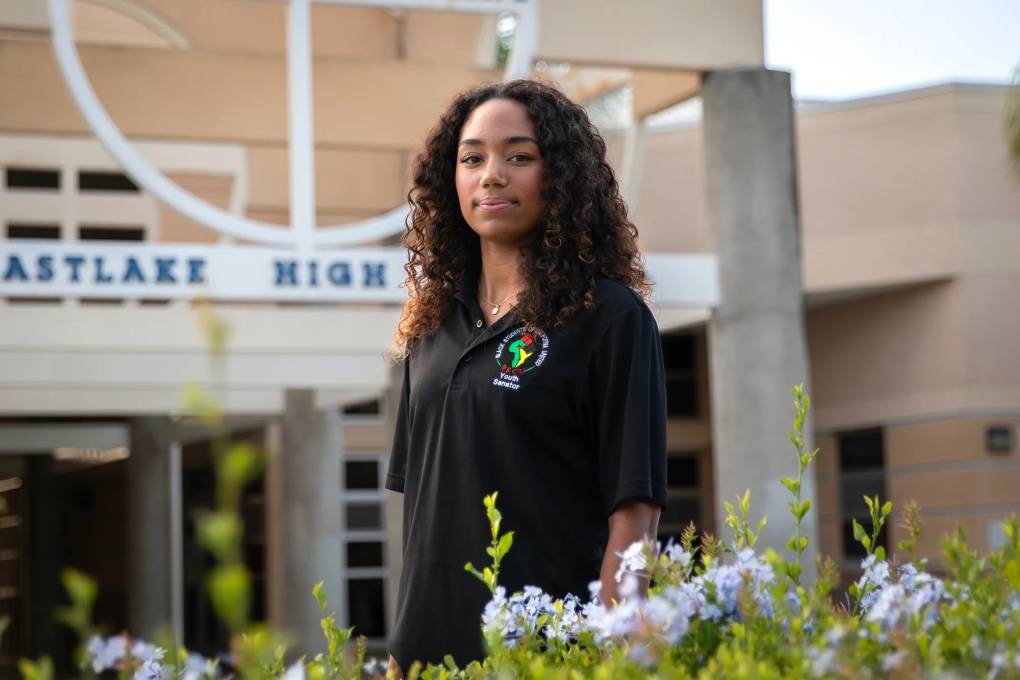
"caption": "Maya Murchison at Eastlake High School in Chula Vista on Oct. 23, 2023. Murchison, a high school senior, says the recent US Supreme Court ruling on affirmative action has affected her college application process.",
"description": null,
"title": "102323_Maya-Murchison_AH_CM_05 copy",
"credit": "Adriana Heldiz/CalMatters",
"status": "inherit",
"altTag": "A young African American student looks at the camera with a high school in the background.",
"isLoading": false,
"fetchFailed": false
},
"news_11966197": {
"type": "attachments",
"id": "news_11966197",
"meta": {
"index": "attachments_1716263798",
"site": "news",
"id": "11966197",
"found": true
},
"parent": 11966111,
"imgSizes": {
"twentyfourteen-full-width": {
"file": "https://ww2.kqed.org/app/uploads/sites/10/2023/11/AP090921075744-1038x576.jpg",
"width": 1038,
"mimeType": "image/jpeg",
"height": 576
},
"thumbnail": {
"file": "https://ww2.kqed.org/app/uploads/sites/10/2023/11/AP090921075744-160x107.jpg",
"width": 160,
"mimeType": "image/jpeg",
"height": 107
},
"post-thumbnail": {
"file": "https://ww2.kqed.org/app/uploads/sites/10/2023/11/AP090921075744-672x372.jpg",
"width": 672,
"mimeType": "image/jpeg",
"height": 372
},
"kqedFullSize": {
"file": "https://ww2.kqed.org/app/uploads/sites/10/2023/11/AP090921075744-scaled.jpg",
"width": 2560,
"height": 1707
},
"2048x2048": {
"file": "https://ww2.kqed.org/app/uploads/sites/10/2023/11/AP090921075744-2048x1365.jpg",
"width": 2048,
"mimeType": "image/jpeg",
"height": 1365
},
"large": {
"file": "https://ww2.kqed.org/app/uploads/sites/10/2023/11/AP090921075744-1020x680.jpg",
"width": 1020,
"mimeType": "image/jpeg",
"height": 680
},
"1536x1536": {
"file": "https://ww2.kqed.org/app/uploads/sites/10/2023/11/AP090921075744-1536x1024.jpg",
"width": 1536,
"mimeType": "image/jpeg",
"height": 1024
},
"full-width": {
"file": "https://ww2.kqed.org/app/uploads/sites/10/2023/11/AP090921075744-1920x1280.jpg",
"width": 1920,
"mimeType": "image/jpeg",
"height": 1280
},
"medium": {
"file": "https://ww2.kqed.org/app/uploads/sites/10/2023/11/AP090921075744-800x533.jpg",
"width": 800,
"mimeType": "image/jpeg",
"height": 533
}
},
"publishDate": 1698887789,
"modified": 1698887998,
"caption": "An unemployment man poses with unemployment forms from the state of California at his home in Palo Alto on Monday, Sept. 21, 2009. ",
"description": null,
"title": "Unemployment Benefits",
"credit": "Paul Sakuma/Associated Press",
"status": "inherit",
"altTag": "Two pieces of paper with a hand holding the brochure on the right that says \"To Find a Job.\"",
"isLoading": false,
"fetchFailed": false
},
"news_11965924": {
"type": "attachments",
"id": "news_11965924",
"meta": {
"index": "attachments_1716263798",
"site": "news",
"id": "11965924",
"found": true
},
"parent": 11965919,
"imgSizes": {
"twentyfourteen-full-width": {
"file": "https://ww2.kqed.org/app/uploads/sites/10/2023/10/033023-Hollister-Hospital-LV_CM_18-1038x576.jpg",
"width": 1038,
"mimeType": "image/jpeg",
"height": 576
},
"thumbnail": {
"file": "https://ww2.kqed.org/app/uploads/sites/10/2023/10/033023-Hollister-Hospital-LV_CM_18-160x107.jpg",
"width": 160,
"mimeType": "image/jpeg",
"height": 107
},
"post-thumbnail": {
"file": "https://ww2.kqed.org/app/uploads/sites/10/2023/10/033023-Hollister-Hospital-LV_CM_18-672x372.jpg",
"width": 672,
"mimeType": "image/jpeg",
"height": 372
},
"kqedFullSize": {
"file": "https://ww2.kqed.org/app/uploads/sites/10/2023/10/033023-Hollister-Hospital-LV_CM_18.jpg",
"width": 2000,
"height": 1333
},
"large": {
"file": "https://ww2.kqed.org/app/uploads/sites/10/2023/10/033023-Hollister-Hospital-LV_CM_18-1020x680.jpg",
"width": 1020,
"mimeType": "image/jpeg",
"height": 680
},
"1536x1536": {
"file": "https://ww2.kqed.org/app/uploads/sites/10/2023/10/033023-Hollister-Hospital-LV_CM_18-1536x1024.jpg",
"width": 1536,
"mimeType": "image/jpeg",
"height": 1024
},
"full-width": {
"file": "https://ww2.kqed.org/app/uploads/sites/10/2023/10/033023-Hollister-Hospital-LV_CM_18-1920x1280.jpg",
"width": 1920,
"mimeType": "image/jpeg",
"height": 1280
},
"medium": {
"file": "https://ww2.kqed.org/app/uploads/sites/10/2023/10/033023-Hollister-Hospital-LV_CM_18-800x533.jpg",
"width": 800,
"mimeType": "image/jpeg",
"height": 533
}
},
"publishDate": 1698691851,
"modified": 1698691920,
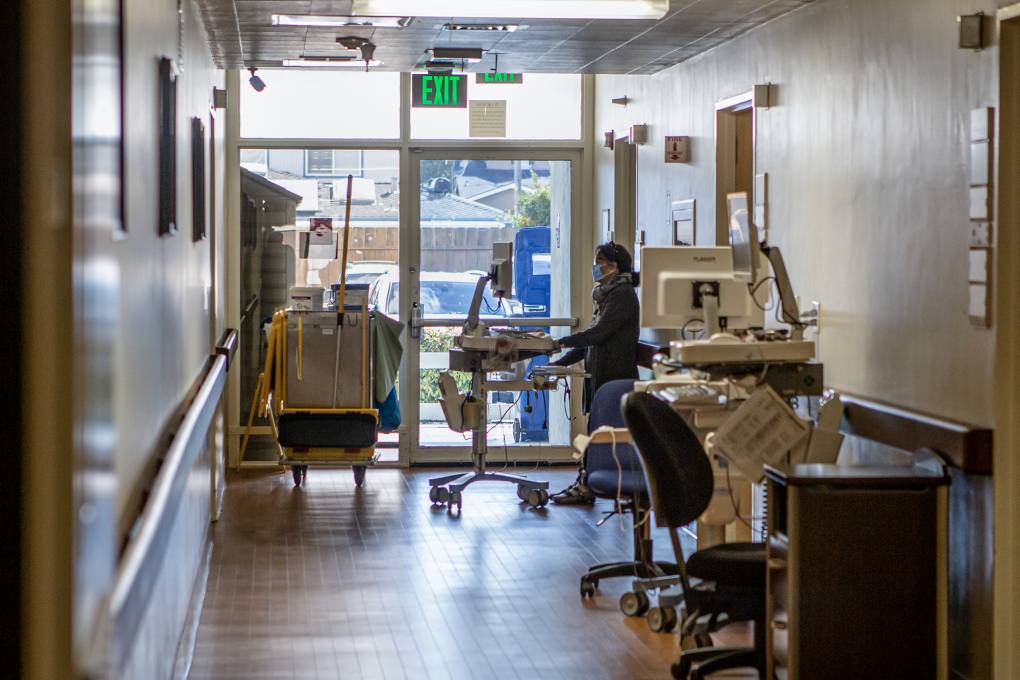
"caption": "A medical personnel working on her computer in the corridor of Hazel Hawkins Memorial Hospital in Hollister on March 30, 2023. ",
"description": null,
"title": "033023-Hollister-Hospital-LV_CM_18",
"credit": "Larry Valenzuela/CalMatters/CatchLight Local",
"status": "inherit",
"altTag": "A woman wearing a face mask stands in front of a computer in the hallway surrounded by more medical equipment.",
"isLoading": false,
"fetchFailed": false
},
"news_11965795": {
"type": "attachments",
"id": "news_11965795",
"meta": {
"index": "attachments_1716263798",
"site": "news",
"id": "11965795",
"found": true
},
"parent": 11965784,
"imgSizes": {
"twentyfourteen-full-width": {
"file": "https://ww2.kqed.org/app/uploads/sites/10/2023/10/102623-Computer-Science-BIPOC-ES-CM-019-copy-1038x576.jpg",
"width": 1038,
"mimeType": "image/jpeg",
"height": 576
},
"thumbnail": {
"file": "https://ww2.kqed.org/app/uploads/sites/10/2023/10/102623-Computer-Science-BIPOC-ES-CM-019-copy-160x107.jpg",
"width": 160,
"mimeType": "image/jpeg",
"height": 107
},
"post-thumbnail": {
"file": "https://ww2.kqed.org/app/uploads/sites/10/2023/10/102623-Computer-Science-BIPOC-ES-CM-019-copy-672x372.jpg",
"width": 672,
"mimeType": "image/jpeg",
"height": 372
},
"kqedFullSize": {
"file": "https://ww2.kqed.org/app/uploads/sites/10/2023/10/102623-Computer-Science-BIPOC-ES-CM-019-copy.jpg",
"width": 2000,
"height": 1333
},
"large": {
"file": "https://ww2.kqed.org/app/uploads/sites/10/2023/10/102623-Computer-Science-BIPOC-ES-CM-019-copy-1020x680.jpg",
"width": 1020,
"mimeType": "image/jpeg",
"height": 680
},
"1536x1536": {
"file": "https://ww2.kqed.org/app/uploads/sites/10/2023/10/102623-Computer-Science-BIPOC-ES-CM-019-copy-1536x1024.jpg",
"width": 1536,
"mimeType": "image/jpeg",
"height": 1024
},
"full-width": {
"file": "https://ww2.kqed.org/app/uploads/sites/10/2023/10/102623-Computer-Science-BIPOC-ES-CM-019-copy-1920x1280.jpg",
"width": 1920,
"mimeType": "image/jpeg",
"height": 1280
},
"medium": {
"file": "https://ww2.kqed.org/app/uploads/sites/10/2023/10/102623-Computer-Science-BIPOC-ES-CM-019-copy-800x533.jpg",
"width": 800,
"mimeType": "image/jpeg",
"height": 533
}
},
"publishDate": 1698437165,
"modified": 1698446329,
"caption": "Tim Barnes (right), the assistant program manager at Carnegie Mellon University Computer Science Academy, explains some of the curriculum and programming to Michaela De Guzman (left) and Jocelyn Tang (center) of Girls Who Code. Dozens of computer science-focused organizations displayed booths on the first floor of the Oakland Scottish Rite Center on Oct. 26, 2023.",
"description": null,
"title": "102623-Computer-Science-BIPOC-ES-CM-019 copy",
"credit": "Emily Steinberger for CalMatters",
"status": "inherit",
"altTag": "A man holds up a laptop computer and shows the screen to two younger women.",
"isLoading": false,
"fetchFailed": false
},
"news_11965691": {
"type": "attachments",
"id": "news_11965691",
"meta": {
"index": "attachments_1716263798",
"site": "news",
"id": "11965691",
"found": true
},
"parent": 11965675,
"imgSizes": {
"twentyfourteen-full-width": {
"file": "https://ww2.kqed.org/app/uploads/sites/10/2023/10/060223-Homeless-Village-Goshen-LV_17-1038x576.jpg",
"width": 1038,
"mimeType": "image/jpeg",
"height": 576
},
"thumbnail": {
"file": "https://ww2.kqed.org/app/uploads/sites/10/2023/10/060223-Homeless-Village-Goshen-LV_17-160x107.jpg",
"width": 160,
"mimeType": "image/jpeg",
"height": 107
},
"post-thumbnail": {
"file": "https://ww2.kqed.org/app/uploads/sites/10/2023/10/060223-Homeless-Village-Goshen-LV_17-672x372.jpg",
"width": 672,
"mimeType": "image/jpeg",
"height": 372
},
"kqedFullSize": {
"file": "https://ww2.kqed.org/app/uploads/sites/10/2023/10/060223-Homeless-Village-Goshen-LV_17.jpg",
"width": 2000,
"height": 1333
},
"large": {
"file": "https://ww2.kqed.org/app/uploads/sites/10/2023/10/060223-Homeless-Village-Goshen-LV_17-1020x680.jpg",
"width": 1020,
"mimeType": "image/jpeg",
"height": 680
},
"1536x1536": {
"file": "https://ww2.kqed.org/app/uploads/sites/10/2023/10/060223-Homeless-Village-Goshen-LV_17-1536x1024.jpg",
"width": 1536,
"mimeType": "image/jpeg",
"height": 1024
},
"full-width": {
"file": "https://ww2.kqed.org/app/uploads/sites/10/2023/10/060223-Homeless-Village-Goshen-LV_17-1920x1280.jpg",
"width": 1920,
"mimeType": "image/jpeg",
"height": 1280
},
"medium": {
"file": "https://ww2.kqed.org/app/uploads/sites/10/2023/10/060223-Homeless-Village-Goshen-LV_17-800x533.jpg",
"width": 800,
"mimeType": "image/jpeg",
"height": 533
}
},
"publishDate": 1698344087,
"modified": 1698348863,
"caption": "Construction site of a tiny homes village in Goshen on June 2, 2023. The village is a Salt + Light project to provide housing for unhoused individuals. ",
"description": null,
"title": "060223-Homeless-Village-Goshen-LV_17",
"credit": "Larry Valenzuela/CalMatters/CatchLight Local",
"status": "inherit",
"altTag": "Two men wearing construction outfits with neon green and orange shirts hold a piece of paper and a wooden beam.",
"isLoading": false,
"fetchFailed": false
},
"news_11965579": {
"type": "attachments",
"id": "news_11965579",
"meta": {
"index": "attachments_1716263798",
"site": "news",
"id": "11965579",
"found": true
},
"parent": 11965571,
"imgSizes": {
"twentyfourteen-full-width": {
"file": "https://ww2.kqed.org/app/uploads/sites/10/2023/10/101223_Elisa-Arquieta_LJ_CM-02-1038x576.jpg",
"width": 1038,
"mimeType": "image/jpeg",
"height": 576
},
"thumbnail": {
"file": "https://ww2.kqed.org/app/uploads/sites/10/2023/10/101223_Elisa-Arquieta_LJ_CM-02-160x107.jpg",
"width": 160,
"mimeType": "image/jpeg",
"height": 107
},
"post-thumbnail": {
"file": "https://ww2.kqed.org/app/uploads/sites/10/2023/10/101223_Elisa-Arquieta_LJ_CM-02-672x372.jpg",
"width": 672,
"mimeType": "image/jpeg",
"height": 372
},
"kqedFullSize": {
"file": "https://ww2.kqed.org/app/uploads/sites/10/2023/10/101223_Elisa-Arquieta_LJ_CM-02.jpg",
"width": 2000,
"height": 1333
},
"large": {
"file": "https://ww2.kqed.org/app/uploads/sites/10/2023/10/101223_Elisa-Arquieta_LJ_CM-02-1020x680.jpg",
"width": 1020,
"mimeType": "image/jpeg",
"height": 680
},
"1536x1536": {
"file": "https://ww2.kqed.org/app/uploads/sites/10/2023/10/101223_Elisa-Arquieta_LJ_CM-02-1536x1024.jpg",
"width": 1536,
"mimeType": "image/jpeg",
"height": 1024
},
"full-width": {
"file": "https://ww2.kqed.org/app/uploads/sites/10/2023/10/101223_Elisa-Arquieta_LJ_CM-02-1920x1280.jpg",
"width": 1920,
"mimeType": "image/jpeg",
"height": 1280
},
"medium": {
"file": "https://ww2.kqed.org/app/uploads/sites/10/2023/10/101223_Elisa-Arquieta_LJ_CM-02-800x533.jpg",
"width": 800,
"mimeType": "image/jpeg",
"height": 533
}
},
"publishDate": 1698258300,
"modified": 1698341389,
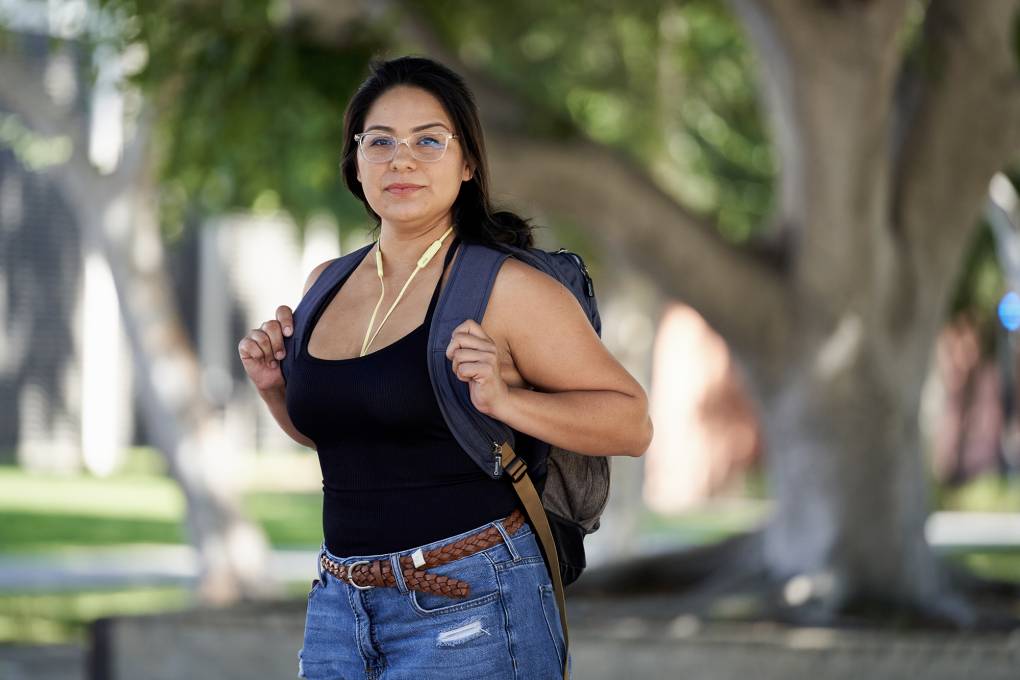
"caption": "Elisa Arquieta at California State University Long Beach on Oct. 12, 2023. Arquieta is both a student and a parent. Photo by Lauren Justice for CalMatters",
"description": null,
"title": "101223_Elisa-Arquieta_LJ_CM-02",
"credit": "Lauren Justice/CalMatters",
"status": "inherit",
"altTag": "A woman wearing glasses, a black shirt and a backpack stands outside.",
"isLoading": false,
"fetchFailed": false
},
"news_11965303": {
"type": "attachments",
"id": "news_11965303",
"meta": {
"index": "attachments_1716263798",
"site": "news",
"id": "11965303",
"found": true
},
"parent": 11965285,
"imgSizes": {
"twentyfourteen-full-width": {
"file": "https://ww2.kqed.org/app/uploads/sites/10/2023/10/101213-California-Broadband-MG-CM-1038x576.jpg",
"width": 1038,
"mimeType": "image/jpeg",
"height": 576
},
"thumbnail": {
"file": "https://ww2.kqed.org/app/uploads/sites/10/2023/10/101213-California-Broadband-MG-CM-160x107.jpg",
"width": 160,
"mimeType": "image/jpeg",
"height": 107
},
"post-thumbnail": {
"file": "https://ww2.kqed.org/app/uploads/sites/10/2023/10/101213-California-Broadband-MG-CM-672x372.jpg",
"width": 672,
"mimeType": "image/jpeg",
"height": 372
},
"kqedFullSize": {
"file": "https://ww2.kqed.org/app/uploads/sites/10/2023/10/101213-California-Broadband-MG-CM.jpg",
"width": 2000,
"height": 1333
},
"large": {
"file": "https://ww2.kqed.org/app/uploads/sites/10/2023/10/101213-California-Broadband-MG-CM-1020x680.jpg",
"width": 1020,
"mimeType": "image/jpeg",
"height": 680
},
"1536x1536": {
"file": "https://ww2.kqed.org/app/uploads/sites/10/2023/10/101213-California-Broadband-MG-CM-1536x1024.jpg",
"width": 1536,
"mimeType": "image/jpeg",
"height": 1024
},
"full-width": {
"file": "https://ww2.kqed.org/app/uploads/sites/10/2023/10/101213-California-Broadband-MG-CM-1920x1280.jpg",
"width": 1920,
"mimeType": "image/jpeg",
"height": 1280
},
"medium": {
"file": "https://ww2.kqed.org/app/uploads/sites/10/2023/10/101213-California-Broadband-MG-CM-800x533.jpg",
"width": 800,
"mimeType": "image/jpeg",
"height": 533
}
},
"publishDate": 1698090066,
"modified": 1698090162,
"caption": null,
"description": null,
"title": "101213-California-Broadband-MG-CM",
"credit": "Miguel Gutierrez Jr./ CalMatters; iStock",
"status": "inherit",
"altTag": "An illustration of the state of California with a ethernet wire snaked towards it.",
"isLoading": false,
"fetchFailed": false
},
"news_11964995": {
"type": "attachments",
"id": "news_11964995",
"meta": {
"index": "attachments_1716263798",
"site": "news",
"id": "11964995",
"found": true
},
"parent": 11964985,
"imgSizes": {
"twentyfourteen-full-width": {
"file": "https://ww2.kqed.org/app/uploads/sites/10/2023/10/100323-DignityMoves-Tiny-Homes-LE-CM-08-1038x576.jpg",
"width": 1038,
"mimeType": "image/jpeg",
"height": 576
},
"thumbnail": {
"file": "https://ww2.kqed.org/app/uploads/sites/10/2023/10/100323-DignityMoves-Tiny-Homes-LE-CM-08-160x107.jpg",
"width": 160,
"mimeType": "image/jpeg",
"height": 107
},
"post-thumbnail": {
"file": "https://ww2.kqed.org/app/uploads/sites/10/2023/10/100323-DignityMoves-Tiny-Homes-LE-CM-08-672x372.jpg",
"width": 672,
"mimeType": "image/jpeg",
"height": 372
},
"kqedFullSize": {
"file": "https://ww2.kqed.org/app/uploads/sites/10/2023/10/100323-DignityMoves-Tiny-Homes-LE-CM-08.jpg",
"width": 2000,
"height": 1334
},
"large": {
"file": "https://ww2.kqed.org/app/uploads/sites/10/2023/10/100323-DignityMoves-Tiny-Homes-LE-CM-08-1020x680.jpg",
"width": 1020,
"mimeType": "image/jpeg",
"height": 680
},
"1536x1536": {
"file": "https://ww2.kqed.org/app/uploads/sites/10/2023/10/100323-DignityMoves-Tiny-Homes-LE-CM-08-1536x1025.jpg",
"width": 1536,
"mimeType": "image/jpeg",
"height": 1025
},
"full-width": {
"file": "https://ww2.kqed.org/app/uploads/sites/10/2023/10/100323-DignityMoves-Tiny-Homes-LE-CM-08-1920x1281.jpg",
"width": 1920,
"mimeType": "image/jpeg",
"height": 1281
},
"medium": {
"file": "https://ww2.kqed.org/app/uploads/sites/10/2023/10/100323-DignityMoves-Tiny-Homes-LE-CM-08-800x534.jpg",
"width": 800,
"mimeType": "image/jpeg",
"height": 534
}
},
"publishDate": 1697744413,
"modified": 1697756015,
"caption": "Mia Salvaggio organizes her room at the DignityMoves tiny home village in downtown San Francisco on Oct. 3, 2023. The program provides interim supportive housing to individuals experiencing homelessness. ",
"description": null,
"title": "100323-DignityMoves-Tiny-Homes-LE-CM-08",
"credit": "Loren Elliott/CalMatters",
"status": "inherit",
"altTag": "A woman wearing a grey sweater is seen in a mirror with stickers.",
"isLoading": false,
"fetchFailed": false
},
"news_11964796": {
"type": "attachments",
"id": "news_11964796",
"meta": {
"index": "attachments_1716263798",
"site": "news",
"id": "11964796",
"found": true
},
"parent": 11964791,
"imgSizes": {
"twentyfourteen-full-width": {
"file": "https://ww2.kqed.org/app/uploads/sites/10/2023/10/CalMatters01-1038x576.jpg",
"width": 1038,
"mimeType": "image/jpeg",
"height": 576
},
"thumbnail": {
"file": "https://ww2.kqed.org/app/uploads/sites/10/2023/10/CalMatters01-160x107.jpg",
"width": 160,
"mimeType": "image/jpeg",
"height": 107
},
"post-thumbnail": {
"file": "https://ww2.kqed.org/app/uploads/sites/10/2023/10/CalMatters01-672x372.jpg",
"width": 672,
"mimeType": "image/jpeg",
"height": 372
},
"kqedFullSize": {
"file": "https://ww2.kqed.org/app/uploads/sites/10/2023/10/CalMatters01.jpg",
"width": 2000,
"height": 1333
},
"large": {
"file": "https://ww2.kqed.org/app/uploads/sites/10/2023/10/CalMatters01-1020x680.jpg",
"width": 1020,
"mimeType": "image/jpeg",
"height": 680
},
"1536x1536": {
"file": "https://ww2.kqed.org/app/uploads/sites/10/2023/10/CalMatters01-1536x1024.jpg",
"width": 1536,
"mimeType": "image/jpeg",
"height": 1024
},
"full-width": {
"file": "https://ww2.kqed.org/app/uploads/sites/10/2023/10/CalMatters01-1920x1280.jpg",
"width": 1920,
"mimeType": "image/jpeg",
"height": 1280
},
"medium": {
"file": "https://ww2.kqed.org/app/uploads/sites/10/2023/10/CalMatters01-800x533.jpg",
"width": 800,
"mimeType": "image/jpeg",
"height": 533
}
},
"publishDate": 1697561951,
"modified": 1697562044,
"caption": "Striking Kaiser Permanente mental health workers stage a die-in at the Kaiser Headquarters in Oakland on Oct. 7, 2022.",
"description": null,
"title": "CalMatters01",
"credit": "Martin do Nascimento/CalMatters",
"status": "inherit",
"altTag": "Mental health workers in red T-shirts hold signs in protest outside of a Kaiser facility in Oakland.",
"isLoading": false,
"fetchFailed": false
},
"news_11964610": {
"type": "attachments",
"id": "news_11964610",
"meta": {
"index": "attachments_1716263798",
"site": "news",
"id": "11964610",
"found": true
},
"parent": 11964609,
"imgSizes": {
"twentyfourteen-full-width": {
"file": "https://ww2.kqed.org/app/uploads/sites/10/2023/10/101223-Hearing-Aid-Veto-JYO-CM-03-1038x576.jpg",
"width": 1038,
"mimeType": "image/jpeg",
"height": 576
},
"thumbnail": {
"file": "https://ww2.kqed.org/app/uploads/sites/10/2023/10/101223-Hearing-Aid-Veto-JYO-CM-03-160x107.jpg",
"width": 160,
"mimeType": "image/jpeg",
"height": 107
},
"post-thumbnail": {
"file": "https://ww2.kqed.org/app/uploads/sites/10/2023/10/101223-Hearing-Aid-Veto-JYO-CM-03-672x372.jpg",
"width": 672,
"mimeType": "image/jpeg",
"height": 372
},
"kqedFullSize": {
"file": "https://ww2.kqed.org/app/uploads/sites/10/2023/10/101223-Hearing-Aid-Veto-JYO-CM-03.jpg",
"width": 2000,
"height": 1333
},
"large": {
"file": "https://ww2.kqed.org/app/uploads/sites/10/2023/10/101223-Hearing-Aid-Veto-JYO-CM-03-1020x680.jpg",
"width": 1020,
"mimeType": "image/jpeg",
"height": 680
},
"1536x1536": {
"file": "https://ww2.kqed.org/app/uploads/sites/10/2023/10/101223-Hearing-Aid-Veto-JYO-CM-03-1536x1024.jpg",
"width": 1536,
"mimeType": "image/jpeg",
"height": 1024
},
"full-width": {
"file": "https://ww2.kqed.org/app/uploads/sites/10/2023/10/101223-Hearing-Aid-Veto-JYO-CM-03-1920x1280.jpg",
"width": 1920,
"mimeType": "image/jpeg",
"height": 1280
},
"medium": {
"file": "https://ww2.kqed.org/app/uploads/sites/10/2023/10/101223-Hearing-Aid-Veto-JYO-CM-03-800x533.jpg",
"width": 800,
"mimeType": "image/jpeg",
"height": 533
}
},
"publishDate": 1697411672,
"modified": 1697412393,
"caption": "Johanna Wonderly helps her children Cara, Caitlin and Cassie with their homework on Oct. 11, 2023. ",
"description": null,
"title": "101223-Hearing-Aid-Veto-JYO-CM-03",
"credit": "Jyotsana Bhamidipati/CalMatters",
"status": "inherit",
"altTag": "A white woman on the right points at a piece of paper while three young white girls sit around a desk holding pencils on sheets of paper.",
"isLoading": false,
"fetchFailed": false
},
"news_11953163": {
"type": "attachments",
"id": "news_11953163",
"meta": {
"index": "attachments_1716263798",
"site": "news",
"id": "11953163",
"found": true
},
"parent": 0,
"imgSizes": {
"twentyfourteen-full-width": {
"file": "https://ww2.kqed.org/app/uploads/sites/10/2023/06/GettyImages-1385201995-KQED-1038x576.jpg",
"width": 1038,
"mimeType": "image/jpeg",
"height": 576
},
"thumbnail": {
"file": "https://ww2.kqed.org/app/uploads/sites/10/2023/06/GettyImages-1385201995-KQED-160x110.jpg",
"width": 160,
"mimeType": "image/jpeg",
"height": 110
},
"post-thumbnail": {
"file": "https://ww2.kqed.org/app/uploads/sites/10/2023/06/GettyImages-1385201995-KQED-672x372.jpg",
"width": 672,
"mimeType": "image/jpeg",
"height": 372
},
"kqedFullSize": {
"file": "https://ww2.kqed.org/app/uploads/sites/10/2023/06/GettyImages-1385201995-KQED.jpg",
"width": 2000,
"height": 1376
},
"large": {
"file": "https://ww2.kqed.org/app/uploads/sites/10/2023/06/GettyImages-1385201995-KQED-1020x702.jpg",
"width": 1020,
"mimeType": "image/jpeg",
"height": 702
},
"1536x1536": {
"file": "https://ww2.kqed.org/app/uploads/sites/10/2023/06/GettyImages-1385201995-KQED-1536x1057.jpg",
"width": 1536,
"mimeType": "image/jpeg",
"height": 1057
},
"full-width": {
"file": "https://ww2.kqed.org/app/uploads/sites/10/2023/06/GettyImages-1385201995-KQED-1920x1321.jpg",
"width": 1920,
"mimeType": "image/jpeg",
"height": 1321
},
"medium": {
"file": "https://ww2.kqed.org/app/uploads/sites/10/2023/06/GettyImages-1385201995-KQED-800x550.jpg",
"width": 800,
"mimeType": "image/jpeg",
"height": 550
}
},
"publishDate": 1686935725,
"modified": 1697143920,
"caption": "Students walk through Sproul Plaza on the UC Berkeley campus. ",
"description": null,
"title": "GettyImages-1385201995-KQED",
"credit": "Justin Sullivan/Getty Images",
"status": "inherit",
"altTag": "Young people wearing backpacks walk through a brick courtyard and under an ornate iron archway.",
"isLoading": false,
"fetchFailed": false
},
"news_11964113": {
"type": "attachments",
"id": "news_11964113",
"meta": {
"index": "attachments_1716263798",
"site": "news",
"id": "11964113",
"found": true
},
"parent": 11964105,
"imgSizes": {
"twentyfourteen-full-width": {
"file": "https://ww2.kqed.org/app/uploads/sites/10/2023/10/100123_Aura-Silva-Vergara_AM_CM_01-1038x576.jpg",
"width": 1038,
"mimeType": "image/jpeg",
"height": 576
},
"thumbnail": {
"file": "https://ww2.kqed.org/app/uploads/sites/10/2023/10/100123_Aura-Silva-Vergara_AM_CM_01-160x107.jpg",
"width": 160,
"mimeType": "image/jpeg",
"height": 107
},
"post-thumbnail": {
"file": "https://ww2.kqed.org/app/uploads/sites/10/2023/10/100123_Aura-Silva-Vergara_AM_CM_01-672x372.jpg",
"width": 672,
"mimeType": "image/jpeg",
"height": 372
},
"kqedFullSize": {
"file": "https://ww2.kqed.org/app/uploads/sites/10/2023/10/100123_Aura-Silva-Vergara_AM_CM_01.jpg",
"width": 2000,
"height": 1333
},
"large": {
"file": "https://ww2.kqed.org/app/uploads/sites/10/2023/10/100123_Aura-Silva-Vergara_AM_CM_01-1020x680.jpg",
"width": 1020,
"mimeType": "image/jpeg",
"height": 680
},
"1536x1536": {
"file": "https://ww2.kqed.org/app/uploads/sites/10/2023/10/100123_Aura-Silva-Vergara_AM_CM_01-1536x1024.jpg",
"width": 1536,
"mimeType": "image/jpeg",
"height": 1024
},
"full-width": {
"file": "https://ww2.kqed.org/app/uploads/sites/10/2023/10/100123_Aura-Silva-Vergara_AM_CM_01-1920x1280.jpg",
"width": 1920,
"mimeType": "image/jpeg",
"height": 1280
},
"medium": {
"file": "https://ww2.kqed.org/app/uploads/sites/10/2023/10/100123_Aura-Silva-Vergara_AM_CM_01-800x533.jpg",
"width": 800,
"mimeType": "image/jpeg",
"height": 533
}
},
"publishDate": 1697052473,
"modified": 1697062586,
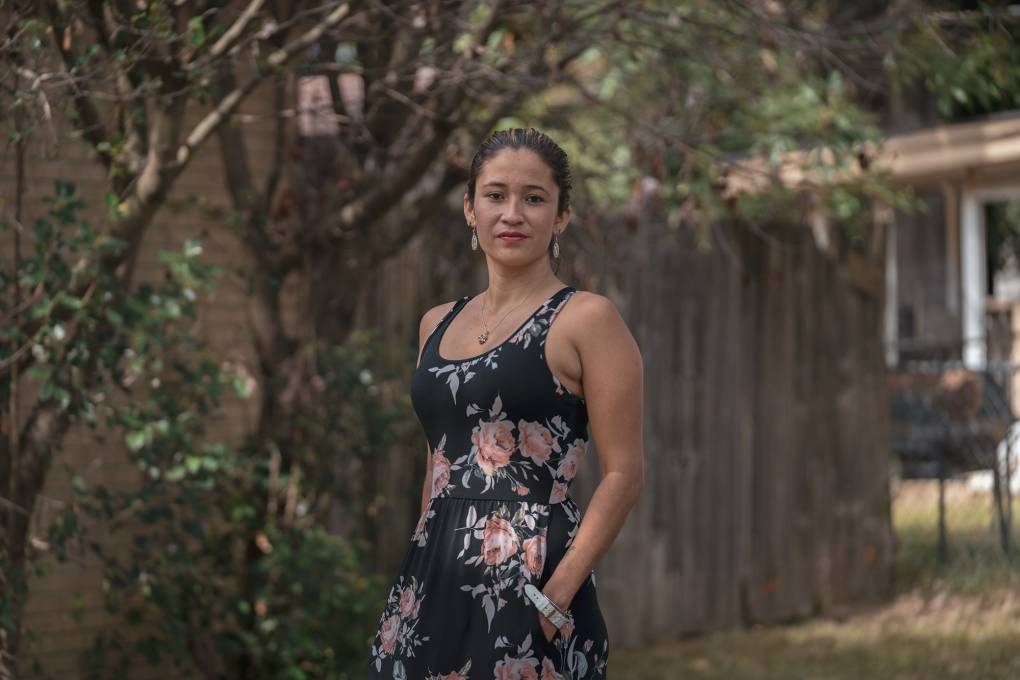
"caption": "Aura Silva Vergara stands for a portrait at the home where she stays in Memphis, Tenn. Silva Vergara is an asylum seeker from Colombia who entered the country via the southern border and was sent to California first before arriving in Tennessee.",
"description": null,
"title": "100123_Aura-Silva-Vergara_AM_CM_01",
"credit": "Andrea Morales/CalMatters",
"status": "inherit",
"altTag": "A woman with a black floral-printed dress stands outside.",
"isLoading": false,
"fetchFailed": false
}
},
"audioPlayerReducer": {
"postId": "stream_live",
"isPaused": true,
"isPlaying": false,
"pfsActive": false,
"pledgeModalIsOpen": true,
"playerDrawerIsOpen": false,
"liveAudioPlayStartedAt": 0,
"liveAudioPlayContext": ""
},
"authorsReducer": {
"byline_news_11966391": {
"type": "authors",
"id": "byline_news_11966391",
"meta": {
"override": true
},
"slug": "byline_news_11966391",
"name": "\u003ca href=\"https://calmatters.org/author/carolyn-jones/\">Carolyn Jones\u003c/a> and \u003ca href=\"https://calmatters.org/author/mikhailzinshteyn/\">Mikhail Zinshteyn\u003c/a>",
"isLoading": false
},
"byline_news_11966111": {
"type": "authors",
"id": "byline_news_11966111",
"meta": {
"override": true
},
"slug": "byline_news_11966111",
"name": "Levi Sumagaysay",
"isLoading": false
},
"byline_news_11965919": {
"type": "authors",
"id": "byline_news_11965919",
"meta": {
"override": true
},
"slug": "byline_news_11965919",
"name": "Kristen Hwang",
"isLoading": false
},
"byline_news_11965784": {
"type": "authors",
"id": "byline_news_11965784",
"meta": {
"override": true
},
"slug": "byline_news_11965784",
"name": "\u003ca href=\"https://calmatters.org/author/carolyn-jones/\">Carolyn Jones\u003c/a>",
"isLoading": false
},
"byline_news_11965675": {
"type": "authors",
"id": "byline_news_11965675",
"meta": {
"override": true
},
"slug": "byline_news_11965675",
"name": "Alejandra Reyes-Velarde",
"isLoading": false
},
"byline_news_11965571": {
"type": "authors",
"id": "byline_news_11965571",
"meta": {
"override": true
},
"slug": "byline_news_11965571",
"name": "Atmika Iyer and Briana Mendez-Padilla",
"isLoading": false
},
"byline_news_11965285": {
"type": "authors",
"id": "byline_news_11965285",
"meta": {
"override": true
},
"slug": "byline_news_11965285",
"name": "Alejandra Reyes-Velarde",
"isLoading": false
},
"byline_news_11964985": {
"type": "authors",
"id": "byline_news_11964985",
"meta": {
"override": true
},
"slug": "byline_news_11964985",
"name": "Jeanne Kuang",
"isLoading": false
},
"byline_news_11964791": {
"type": "authors",
"id": "byline_news_11964791",
"meta": {
"override": true
},
"slug": "byline_news_11964791",
"name": "\u003ca href=\"https://calmatters.org/author/jocelyn-wiener/\">Jocelyn Wiener\u003c/a>",
"isLoading": false
},
"byline_news_11964609": {
"type": "authors",
"id": "byline_news_11964609",
"meta": {
"override": true
},
"slug": "byline_news_11964609",
"name": "Kristen Hwang",
"isLoading": false
},
"byline_news_11964259": {
"type": "authors",
"id": "byline_news_11964259",
"meta": {
"override": true
},
"slug": "byline_news_11964259",
"name": "\u003ca href=\"https://calmatters.org/author/carolyn-jones/\">Carolyn Jones\u003c/a> and \u003ca href=\"https://calmatters.org/author/mikhailzinshteyn/\">Mikhail Zinshteyn\u003c/a>",
"isLoading": false
},
"byline_news_11964105": {
"type": "authors",
"id": "byline_news_11964105",
"meta": {
"override": true
},
"slug": "byline_news_11964105",
"name": "\u003ca href=\"https://calmatters.org/author/kervy-robles/\">Justo Robles\u003c/a> and \u003ca href=\"https://calmatters.org/author/alejandra-reyesvelarde/\">Alejandra Reyes-Velarde\u003c/a>",
"isLoading": false
}
},
"pagesReducer": {
"news_affiliate_calmatters": {
"type": "terms",
"id": "news_18481",
"meta": {
"index": "terms_1716263798",
"site": "news",
"id": "18481",
"score": 15.355862
},
"featImg": null,
"name": "CALmatters",
"description": null,
"taxonomy": "affiliate",
"headData": {
"twImgId": null,
"twTitle": null,
"ogTitle": null,
"ogImgId": null,
"twDescription": null,
"description": null,
"title": "CALmatters Archives | KQED Arts",
"ogDescription": null
},
"ttid": 18515,
"slug": "calmatters",
"isLoading": false,
"title": "CALmatters",
"pageMeta": {
"site": "news",
"WpPageTemplate": "page-topic-editorial",
"currentPage": 42
},
"blocks": [
{
"blockName": "kqed/post-list",
"attrs": {
"layout": "cardArticle2",
"query": "posts/news?affiliate=calmatters",
"seeMore": false,
"paginated": true,
"page": 42
}
},
{
"blockName": "kqed/ad"
}
]
}
},
"pfsSessionReducer": {},
"postsReducer": {
"stream_live": {
"type": "live",
"id": "stream_live",
"audioUrl": "https://streams.kqed.org/kqedradio",
"title": "Live Stream",
"excerpt": "Live Stream information currently unavailable.",
"link": "/radio",
"featImg": "",
"label": {
"name": "KQED Live",
"link": "/"
}
},
"stream_kqedNewscast": {
"type": "posts",
"id": "stream_kqedNewscast",
"audioUrl": "https://www.kqed.org/.stream/anon/radio/RDnews/newscast.mp3?_=1",
"title": "KQED Newscast",
"featImg": "",
"label": {
"name": "88.5 FM",
"link": "/"
}
},
"news_11966391": {
"type": "posts",
"id": "news_11966391",
"meta": {
"index": "posts_1716263798",
"site": "news",
"id": "11966391",
"score": null,
"sort": [
1699117214000
]
},
"guestAuthors": [],
"slug": "how-the-end-of-affirmative-action-is-changing-college-admissions",
"title": "How the End of Affirmative Action Is Changing College Admissions",
"publishDate": 1699117214,
"format": "standard",
"headTitle": "How the End of Affirmative Action Is Changing College Admissions | KQED",
"labelTerm": {
"term": 18481,
"site": "news"
},
"content": "\u003cp>For students of color, \u003ca href=\"https://www.supremecourt.gov/opinions/22pdf/20-1199_hgdj.pdf\">the Supreme Court’s recent ban on affirmative action (PDF)\u003c/a> has left them frustrated but undaunted as they plow through college application season. Some California private colleges, meanwhile, are increasing their outreach efforts to attract more students and send a signal that the end of race-based admissions doesn’t change their belief in the importance of diversity.\u003c/p>\n\u003cp>“I want to go to a college where I feel comfortable and supported and confident. So yes, the ruling has definitely affected what schools I’m looking at,” said Maya Murchison, a senior at Eastlake High School in Chula Vista. “I want to know what colleges are doing to guarantee diversity.”\u003c/p>\n\u003cp>The court’s 6–3 ruling in June prohibits all colleges in the country from \u003ca href=\"https://www.scotusblog.com/2023/06/supreme-court-strikes-down-affirmative-action-programs-in-college-admissions/\">using race as a consideration in admissions\u003c/a>. California’s public universities \u003ca href=\"https://calmatters.org/education/higher-education/2023/06/affirmative-action-aca-7/\">have not used affirmative action\u003c/a> for almost 30 years, but some of the state’s selective private colleges, and many out-of-state public universities, have relied on affirmative action to attract students of color and create a more diverse student body.\u003c/p>\n\u003cp>[ad fullwidth]\u003c/p>\n\u003cp>Collectively, the state’s private nonprofit colleges enroll \u003ca href=\"https://nces.ed.gov/ipeds/TrendGenerator/app/answer/2/2?f=6%3D6%3B4%3D2%3B9%3D1%3B1%3D2&rid=57&cid=2\">around 180,000 undergraduates\u003c/a> who are drawn to the smaller class sizes and leafy campus idyll.\u003c/p>\n\u003cp>Immediately after the court decision, an association representing more than 80 California nonprofit private colleges wrote that it feared that the end of race-based admissions will mean less diversity on campuses: “Our member colleges and universities across California are deeply concerned that the decision will have a chilling effect on applications and enrollment among historically underserved community groups — Black, Latino, and Native American students, low-income and first-generation students,” \u003ca href=\"https://cdn.ymaws.com/aiccu.edu/resource/resmgr/publications/2023/final_aiccu_statement_sc_dec.pdf\">wrote Kristen F. Soares (PDF)\u003c/a>, president of the Association of Independent California Colleges and Universities.\u003c/p>\n\u003cp>Four months later, that fear is still there, Soares said in a phone interview.\u003c/p>\n\u003cp>Those worries are fueled by the struggles that the University of California experienced when state voters approved a ballot initiative in 1996 that barred public institutions from considering race as a factor in admissions, contracting and hiring. \u003ca href=\"https://calmatters.org/education/higher-education/college-beat/2023/06/california-private-colleges-affirmative-action-supreme-court/\">Diversity at the UC collapsed in the first few years after the ban\u003c/a> and the university \u003ca href=\"https://www.supremecourt.gov/DocketPDF/20/20-1199/232355/20220801134931730_20-1199%20bsac%20University%20of%20California.pdf#page=23\">has written\u003c/a> that its formidable spending on outreach programs — \u003ca href=\"https://www.supremecourt.gov/DocketPDF/20/20-1199/232355/20220801134931730_20-1199%20bsac%20University%20of%20California.pdf#page=25\">half a billion dollars since the late 1990s (PDF)\u003c/a> — and race-neutral changes to its admissions processes weren’t as effective as affirmative action.\u003c/p>\n\u003cp>Private colleges will see next spring and fall how the Supreme Court’s decision affected their admissions and enrollment patterns.\u003c/p>\n\u003ch2 id=\"h-response-of-some-california-private-colleges\" class=\"wp-block-heading\">Response of some California private colleges\u003c/h2>\n\u003cp>Still, the court ruling has prompted some of California’s more selective private schools to appeal to students through campus visits and stronger relationships with high school counselors.\u003c/p>\n\u003cp>[pullquote align=\"right\" size=\"medium\" citation=\"Maya Murchison, senior, Eastlake High School in Chula Vista\"]‘I want to go to a college where I feel comfortable and supported and confident. So yes, the ruling has definitely affected what schools I’m looking at.’[/pullquote]Pomona College, a highly selective liberal arts college in Los Angeles County, has increased the number of nearby high schools it hosts for half-day visits to its campus from 17 to 25, upping the number of students from around 650 to 900. Pomona covers the transportation and food costs. The college and its sister campuses of the Claremont Colleges are also inviting counselors from more than 460 high schools in the region, including about half that predominantly serve students with lower-income. It’s the largest such event the consortium has put together — and Pomona is hosting it.\u003c/p>\n\u003cp>“The reality is that we know in our backyard that we probably could have been doing more and we needed to do this work and felt like now was a good time to make that turn,” said Adam Sapp, director of admissions at Pomona, in a phone interview. About a quarter of the college’s 1,700 students are from California.\u003c/p>\n\u003cp>But while the campus won’t use race as a factor in admissions anymore, its longstanding practice of holistic review allows for applicants to explain how their identities played a role in their academics and social experiences relevant to college admissions. The court ruling said students \u003ca href=\"https://www.supremecourt.gov/opinions/22pdf/20-1199_hgdj.pdf#page=8\">can still discuss (PDF)\u003c/a> their racial and ethnic backgrounds in admissions applications.\u003c/p>\n\u003cp>“We see the benefits of diversity as critical to the success of Pomona,” Sapp added, later noting that “none of that has changed because of the Supreme Court.”\u003c/p>\n\u003cp>Stanford University, which \u003ca href=\"https://news.stanford.edu/report/2023/06/29/presidents-message-regarding-supreme-court-ruling-race-conscious-university-admissions/\">previously used\u003c/a> affirmative action in admissions, \u003ca href=\"https://news.stanford.edu/report/2023/10/05/provost-provides-admissions-update/\">wants prospective students to know\u003c/a> about its generous financial aid policies that cover the total cost of college, from tuition to housing and books, \u003ca href=\"https://financialaid.stanford.edu/undergrad/how/index.html\">for lower- and moderate-income students\u003c/a> — though students are expected to work part time to \u003ca href=\"https://financialaid.stanford.edu/undergrad/how/parent.html\">cover some of the costs\u003c/a>. Six California private colleges use a third-party tool, MyinTuition, \u003ca href=\"https://myintuition.org/quick-college-cost-estimator/\">that estimates how much financial aid a student would get\u003c/a> by asking a few questions — a faster approach than other so-called \u003ca href=\"https://collegecost.ed.gov/net-price\">net price calculators\u003c/a>.\u003c/p>\n\u003cp>The amount lower-income students have to pay after financial aid across California’s private colleges ranges from almost nothing to $30,000 a year or more, according to federal data on average total costs that CalMatters reviewed.\u003c/p>\n\u003cp>University of Southern California, among the state’s most selective private colleges, is pursuing a recruitment strategy that’s worked for them so far, said Timothy Brunold, dean of admission. The approach didn’t focus on the racial makeup of high schools. “Our practice has not focused on particular schools because of their racial/ethnic makeup,” he wrote in an email. “Instead, we’ve tended to be mindful of schools based on other factors, such as the socio-economic makeup of their student body, their geographic location, and past history with USC.” The university used affirmative action as one of many factors in admissions prior to the court ruling.\u003c/p>\n\u003ch2 id=\"h-on-campus-diversity-efforts-matter\" class=\"wp-block-heading\">On-campus diversity efforts matter\u003c/h2>\n\u003cp>The biggest impact of the Supreme Court ruling might not be related to admissions, some experts said, but whether colleges will continue to support diversity on campus. That means bolstering student groups, programs and events focused on race and ethnicity, providing ample financial aid, and creating an overall welcoming atmosphere.\u003c/p>\n\u003cp>That will be crucial to attract students of color going forward, said Angie Barfield, executive director of Black Students of California United, which promotes civic engagement, academic achievement and leadership among Black students in California. Her organization is doubling down on its college recruitment efforts by raising money to host students on college tours, arranging for Black college alumni to meet with students, encouraging colleges to interview promising students, and providing extra guidance to students with their applications.\u003c/p>\n\u003cp>[aside label=\"Related Stories\" postID=\"news_11954612,news_11954761,mindshift_61929\"]“We tell students, you might not think you belong there, but you do,” Barfield said. “There’s a lot of fear of the unknown, a lot of imposter syndrome. So we work hard to expose our students to college life via their culture and show them they can succeed anywhere.”\u003c/p>\n\u003cp>Lisa Andrews-Swartzlander, a longtime school counselor and college mentor in Los Angeles County, said imposter syndrome is common among students of color but it’s not insurmountable. She advises her students to be proud of their accomplishments and forge ahead regardless of a Supreme Court ruling that “sends a message that your history doesn’t matter, your culture doesn’t matter.”\u003c/p>\n\u003cp>“I am not deterring any of my students from attending their desired universities,” she said. “In fact, I’m encouraging them to embrace rigorous coursework and intentionally apply to universities that have eradicated affirmative action. Their presence needs to be visible no matter what.”\u003c/p>\n\u003cp>Cultural groups, such as historically Black or Latino fraternities and sororities, are amping up their outreach efforts and can play a key role in helping students of color feel comfortable on campus, she said.\u003c/p>\n\u003cp>“The message is, we want you here, you will be safe, you will thrive,” Andrews said.\u003c/p>\n\u003ch2 id=\"h-colleges-have-been-reaching-students-for-years\" class=\"wp-block-heading\">Colleges have been reaching students for years\u003c/h2>\n\u003cp>For some colleges, the ruling will have minimal impact because they’ve already been working for decades to diversify their campuses, said Shirley Collado, president of College Track, a nonprofit that helps students of color get into and graduate from college. Affirmative action, she said, was only one tool among many that colleges used to attract and retain students of color. Other important factors include affordability, school information materials in multiple languages, and an overall welcoming, appreciative — and not patronizing — attitude toward students of color.\u003c/p>\n\u003cp>[pullquote align=\"right\" size=\"medium\" citation=\"Lisa Andrews-Swartzlander, school counselor and college mentor, Los Angeles County\"]‘I am not deterring any of my students from attending their desired universities. In fact, I’m encouraging them to embrace rigorous coursework and intentionally apply to universities that have eradicated affirmative action. Their presence needs to be visible no matter what.’[/pullquote]That’s true for the University of San Francisco. The selective private college didn’t factor a student’s race or ethnicity in its admissions decisions prior to the Supreme Court ruling, said its head of admissions in an interview, but still \u003ca href=\"https://www.usnews.com/best-colleges/rankings/national-universities/campus-ethnic-diversity\">topped a national ranking for campus diversity\u003c/a>. Much of that is aided by California’s rich panoply of cultures: Roughly two-thirds of the school’s incoming students are California residents. Once students are admitted, they’re encouraged to apply for a \u003ca href=\"https://www.usfca.edu/black-achievement-success-engagement/black-scholars-program\">competitive program for Black scholars\u003c/a> and one for \u003ca href=\"https://myusf.usfca.edu/casa/muscat/MSP1G\">first-generation students\u003c/a>.\u003c/p>\n\u003cp>“I think that’s what helps students decide, ‘Yes, I want to come to USF,’” said Sherie Gilmore-Cleveland, an associate provost who directs admissions at the university. The emphasis isn’t just on recruitment but also on persuading students to attend once they’re admitted.\u003c/p>\n\u003cp>Hosting high school students on campus matters. So does visiting the students. “I think whenever students have an opportunity to hear directly from the college and when colleges are actually coming to students’ high schools, I know it’s an old school way of recruitment, but it helps students feel seen,” Gilmore-Cleveland said. The campus has extensive visiting hours, too, but doesn’t pay for prospective students’ travel, she said.\u003c/p>\n\u003cp>Some colleges partner with specific high schools or nonprofits to put students on a college-bound path beginning in ninth grade, Collado said. College Track recently announced such a partnership with 14 colleges nationwide, including UC Merced and American University. The agreement includes admission, financial aid and ongoing support once students are enrolled. USC \u003ca href=\"https://communities.usc.edu/educational-partnerships/nai/\">runs a similar program\u003c/a> for low-income students from Los Angeles.\u003c/p>\n\u003cp>The state’s private college association is also ramping up relations with community colleges. In September it \u003ca href=\"https://www.caprivatecollegeispossible.org/post/aiccu-counselor-conferences-empower-counselors-to-guide-students-to-a-private-higher-education\">hosted a conference with community college and high school counselors\u003c/a> on financial aid and admissions policies that several private colleges offer. Soares said it was the first such event in at least 15 years.\u003c/p>\n\u003ch2 id=\"h-students-aren-t-deterred\" class=\"wp-block-heading\">Students aren’t deterred\u003c/h2>\n\u003cp>“On a symbolic level, the Supreme Court decision is tragic. It speaks volumes about where we are as a country,” Collado said. “But for most of us, we get up the next day and the work continues. It’s a disruption but it does not shift how important this issue is. It won’t stop us from doing what’s right for kids in this country.”\u003c/p>\n\u003cp>Kimberly Sockwell, a senior at Orange Vista High in Riverside County, said campus diversity is important to her, but it’s not the only factor she’s considering as she looks at colleges. How safe it is for women and how accessible for disabled people also are priorities, she said.\u003c/p>\n\u003cp>“I want to be with people who look like me, but not just that. I want to be exposed to different kinds of people and viewpoints,” said Sockwell, who identifies as African American and Salvadoran. “I’m looking for a place where I can grow into an adult and become someone I’ll be proud of, and my family will be proud of.”\u003c/p>\n\u003cp>Bethzy Mejia, a senior at Robert Kennedy School for the Visual Arts and Humanities in Los Angeles, said she’s unfazed by the Supreme Court ruling. She’s confident that her accomplishments — a 4.0 grade point average, internships, student government, marathon runner — will earn her a spot at the country’s most elite colleges.\u003c/p>\n\u003cp>As for her application essay, she does plan to write about being the child of immigrants from Guatemala — not to alert colleges to her ethnicity, but because she considers it a central part of her identity.\u003c/p>\n\u003cp>“The essay question is, what makes you unique. Well, my race makes me unique,” Mejia said. “But I’m not going to focus on that 100%. I’m going to write about my achievements and my mentality.”\u003c/p>\n\u003cp>Murchison, the Eastlake High student who serves as president of the Black Students of California United, also said she’ll be writing about race in her application essay. Her topic is “Black girl magic,” a theme she probably would not have chosen prior to the Supreme Court decision.\u003c/p>\n\u003cp>“I want to make my identity clear,” she said. “But it’s frustrating, because it’s an extra step I shouldn’t have to take. What if I wanted to write about something else?”\u003c/p>\n\u003cp>Crafting an essay that addresses race with the exact right tone, choosing colleges with a commitment to diversity but also strong programs in the subjects that interest her, like business and marketing — it’s often overwhelming, she said.\u003c/p>\n\u003cp>“At times I just want to give up,” Murchison said. “But then I remember my goals and just keep pushing forward.”\u003c/p>\n\u003cp>[ad floatright]\u003c/p>\n",
"blocks": [],
"excerpt": "After the Supreme Court ended affirmative action in college admissions, some students are rethinking their school selections. Some colleges are also boosting their student outreach as they seek diversity.",
"status": "publish",
"parent": 0,
"modified": 1740612980,
"stats": {
"hasAudio": false,
"hasVideo": false,
"hasChartOrMap": false,
"iframeSrcs": [],
"hasGoogleForm": false,
"hasGallery": false,
"hasHearkenModule": false,
"hasPolis": false,
"paragraphCount": 41,
"wordCount": 2417
},
"headData": {
"title": "How the End of Affirmative Action Is Changing College Admissions | KQED",
"description": "After the Supreme Court ended affirmative action in college admissions, some students are rethinking their school selections. Some colleges are also boosting their student outreach as they seek diversity.",
"ogTitle": "",
"ogDescription": "",
"ogImgId": "",
"twTitle": "",
"twDescription": "",
"twImgId": "",
"schema": {
"@context": "https://schema.org",
"@type": "NewsArticle",
"headline": "How the End of Affirmative Action Is Changing College Admissions",
"datePublished": "2023-11-04T10:00:14-07:00",
"dateModified": "2025-02-26T15:36:20-08:00",
"image": "https://cdn.kqed.org/wp-content/uploads/2020/02/KQED-OG-Image@1x.png",
"isAccessibleForFree": "True",
"publisher": {
"@type": "NewsMediaOrganization",
"@id": "https://www.kqed.org/#organization",
"name": "KQED",
"logo": "https://cdn.kqed.org/wp-content/uploads/2020/02/KQED-OG-Image@1x.png",
"url": "https://www.kqed.org",
"sameAs": [
"https://www.facebook.com/KQED",
"https://twitter.com/KQED",
"https://www.instagram.com/kqed/",
"https://www.tiktok.com/@kqedofficial",
"https://www.linkedin.com/company/kqed",
"https://www.youtube.com/channel/UCeC0IOo7i1P_61zVUWbJ4nw"
]
}
}
},
"sticky": false,
"nprByline": "\u003ca href=\"https://calmatters.org/author/carolyn-jones/\">Carolyn Jones\u003c/a> and \u003ca href=\"https://calmatters.org/author/mikhailzinshteyn/\">Mikhail Zinshteyn\u003c/a>",
"excludeFromSiteSearch": "Include",
"showOnAuthorArchivePages": "No",
"articleAge": "0",
"path": "/news/11966391/how-the-end-of-affirmative-action-is-changing-college-admissions",
"audioTrackLength": null,
"parsedContent": [
{
"type": "contentString",
"content": "\u003cdiv class=\"post-body\">\u003cp>\u003cp>For students of color, \u003ca href=\"https://www.supremecourt.gov/opinions/22pdf/20-1199_hgdj.pdf\">the Supreme Court’s recent ban on affirmative action (PDF)\u003c/a> has left them frustrated but undaunted as they plow through college application season. Some California private colleges, meanwhile, are increasing their outreach efforts to attract more students and send a signal that the end of race-based admissions doesn’t change their belief in the importance of diversity.\u003c/p>\n\u003cp>“I want to go to a college where I feel comfortable and supported and confident. So yes, the ruling has definitely affected what schools I’m looking at,” said Maya Murchison, a senior at Eastlake High School in Chula Vista. “I want to know what colleges are doing to guarantee diversity.”\u003c/p>\n\u003cp>The court’s 6–3 ruling in June prohibits all colleges in the country from \u003ca href=\"https://www.scotusblog.com/2023/06/supreme-court-strikes-down-affirmative-action-programs-in-college-admissions/\">using race as a consideration in admissions\u003c/a>. California’s public universities \u003ca href=\"https://calmatters.org/education/higher-education/2023/06/affirmative-action-aca-7/\">have not used affirmative action\u003c/a> for almost 30 years, but some of the state’s selective private colleges, and many out-of-state public universities, have relied on affirmative action to attract students of color and create a more diverse student body.\u003c/p>\n\u003cp>\u003c/p>\u003c/div>",
"attributes": {
"named": {},
"numeric": []
}
},
{
"type": "component",
"content": "",
"name": "ad",
"attributes": {
"named": {
"label": "fullwidth"
},
"numeric": [
"fullwidth"
]
}
},
{
"type": "contentString",
"content": "\u003cdiv class=\"post-body\">\u003cp>\u003c/p>\n\u003cp>Collectively, the state’s private nonprofit colleges enroll \u003ca href=\"https://nces.ed.gov/ipeds/TrendGenerator/app/answer/2/2?f=6%3D6%3B4%3D2%3B9%3D1%3B1%3D2&rid=57&cid=2\">around 180,000 undergraduates\u003c/a> who are drawn to the smaller class sizes and leafy campus idyll.\u003c/p>\n\u003cp>Immediately after the court decision, an association representing more than 80 California nonprofit private colleges wrote that it feared that the end of race-based admissions will mean less diversity on campuses: “Our member colleges and universities across California are deeply concerned that the decision will have a chilling effect on applications and enrollment among historically underserved community groups — Black, Latino, and Native American students, low-income and first-generation students,” \u003ca href=\"https://cdn.ymaws.com/aiccu.edu/resource/resmgr/publications/2023/final_aiccu_statement_sc_dec.pdf\">wrote Kristen F. Soares (PDF)\u003c/a>, president of the Association of Independent California Colleges and Universities.\u003c/p>\n\u003cp>Four months later, that fear is still there, Soares said in a phone interview.\u003c/p>\n\u003cp>Those worries are fueled by the struggles that the University of California experienced when state voters approved a ballot initiative in 1996 that barred public institutions from considering race as a factor in admissions, contracting and hiring. \u003ca href=\"https://calmatters.org/education/higher-education/college-beat/2023/06/california-private-colleges-affirmative-action-supreme-court/\">Diversity at the UC collapsed in the first few years after the ban\u003c/a> and the university \u003ca href=\"https://www.supremecourt.gov/DocketPDF/20/20-1199/232355/20220801134931730_20-1199%20bsac%20University%20of%20California.pdf#page=23\">has written\u003c/a> that its formidable spending on outreach programs — \u003ca href=\"https://www.supremecourt.gov/DocketPDF/20/20-1199/232355/20220801134931730_20-1199%20bsac%20University%20of%20California.pdf#page=25\">half a billion dollars since the late 1990s (PDF)\u003c/a> — and race-neutral changes to its admissions processes weren’t as effective as affirmative action.\u003c/p>\n\u003cp>Private colleges will see next spring and fall how the Supreme Court’s decision affected their admissions and enrollment patterns.\u003c/p>\n\u003ch2 id=\"h-response-of-some-california-private-colleges\" class=\"wp-block-heading\">Response of some California private colleges\u003c/h2>\n\u003cp>Still, the court ruling has prompted some of California’s more selective private schools to appeal to students through campus visits and stronger relationships with high school counselors.\u003c/p>\n\u003cp>\u003c/p>\u003c/div>",
"attributes": {
"named": {},
"numeric": []
}
},
{
"type": "component",
"content": "‘I want to go to a college where I feel comfortable and supported and confident. So yes, the ruling has definitely affected what schools I’m looking at.’",
"name": "pullquote",
"attributes": {
"named": {
"align": "right",
"size": "medium",
"citation": "Maya Murchison, senior, Eastlake High School in Chula Vista",
"label": ""
},
"numeric": []
}
},
{
"type": "contentString",
"content": "\u003cdiv class=\"post-body\">\u003cp>Pomona College, a highly selective liberal arts college in Los Angeles County, has increased the number of nearby high schools it hosts for half-day visits to its campus from 17 to 25, upping the number of students from around 650 to 900. Pomona covers the transportation and food costs. The college and its sister campuses of the Claremont Colleges are also inviting counselors from more than 460 high schools in the region, including about half that predominantly serve students with lower-income. It’s the largest such event the consortium has put together — and Pomona is hosting it.\u003c/p>\n\u003cp>“The reality is that we know in our backyard that we probably could have been doing more and we needed to do this work and felt like now was a good time to make that turn,” said Adam Sapp, director of admissions at Pomona, in a phone interview. About a quarter of the college’s 1,700 students are from California.\u003c/p>\n\u003cp>But while the campus won’t use race as a factor in admissions anymore, its longstanding practice of holistic review allows for applicants to explain how their identities played a role in their academics and social experiences relevant to college admissions. The court ruling said students \u003ca href=\"https://www.supremecourt.gov/opinions/22pdf/20-1199_hgdj.pdf#page=8\">can still discuss (PDF)\u003c/a> their racial and ethnic backgrounds in admissions applications.\u003c/p>\n\u003cp>“We see the benefits of diversity as critical to the success of Pomona,” Sapp added, later noting that “none of that has changed because of the Supreme Court.”\u003c/p>\n\u003cp>Stanford University, which \u003ca href=\"https://news.stanford.edu/report/2023/06/29/presidents-message-regarding-supreme-court-ruling-race-conscious-university-admissions/\">previously used\u003c/a> affirmative action in admissions, \u003ca href=\"https://news.stanford.edu/report/2023/10/05/provost-provides-admissions-update/\">wants prospective students to know\u003c/a> about its generous financial aid policies that cover the total cost of college, from tuition to housing and books, \u003ca href=\"https://financialaid.stanford.edu/undergrad/how/index.html\">for lower- and moderate-income students\u003c/a> — though students are expected to work part time to \u003ca href=\"https://financialaid.stanford.edu/undergrad/how/parent.html\">cover some of the costs\u003c/a>. Six California private colleges use a third-party tool, MyinTuition, \u003ca href=\"https://myintuition.org/quick-college-cost-estimator/\">that estimates how much financial aid a student would get\u003c/a> by asking a few questions — a faster approach than other so-called \u003ca href=\"https://collegecost.ed.gov/net-price\">net price calculators\u003c/a>.\u003c/p>\n\u003cp>The amount lower-income students have to pay after financial aid across California’s private colleges ranges from almost nothing to $30,000 a year or more, according to federal data on average total costs that CalMatters reviewed.\u003c/p>\n\u003cp>University of Southern California, among the state’s most selective private colleges, is pursuing a recruitment strategy that’s worked for them so far, said Timothy Brunold, dean of admission. The approach didn’t focus on the racial makeup of high schools. “Our practice has not focused on particular schools because of their racial/ethnic makeup,” he wrote in an email. “Instead, we’ve tended to be mindful of schools based on other factors, such as the socio-economic makeup of their student body, their geographic location, and past history with USC.” The university used affirmative action as one of many factors in admissions prior to the court ruling.\u003c/p>\n\u003ch2 id=\"h-on-campus-diversity-efforts-matter\" class=\"wp-block-heading\">On-campus diversity efforts matter\u003c/h2>\n\u003cp>The biggest impact of the Supreme Court ruling might not be related to admissions, some experts said, but whether colleges will continue to support diversity on campus. That means bolstering student groups, programs and events focused on race and ethnicity, providing ample financial aid, and creating an overall welcoming atmosphere.\u003c/p>\n\u003cp>That will be crucial to attract students of color going forward, said Angie Barfield, executive director of Black Students of California United, which promotes civic engagement, academic achievement and leadership among Black students in California. Her organization is doubling down on its college recruitment efforts by raising money to host students on college tours, arranging for Black college alumni to meet with students, encouraging colleges to interview promising students, and providing extra guidance to students with their applications.\u003c/p>\n\u003cp>\u003c/p>\u003c/div>",
"attributes": {
"named": {},
"numeric": []
}
},
{
"type": "component",
"content": "",
"name": "aside",
"attributes": {
"named": {
"label": "Related Stories ",
"postid": "news_11954612,news_11954761,mindshift_61929"
},
"numeric": []
}
},
{
"type": "contentString",
"content": "\u003cdiv class=\"post-body\">\u003cp>“We tell students, you might not think you belong there, but you do,” Barfield said. “There’s a lot of fear of the unknown, a lot of imposter syndrome. So we work hard to expose our students to college life via their culture and show them they can succeed anywhere.”\u003c/p>\n\u003cp>Lisa Andrews-Swartzlander, a longtime school counselor and college mentor in Los Angeles County, said imposter syndrome is common among students of color but it’s not insurmountable. She advises her students to be proud of their accomplishments and forge ahead regardless of a Supreme Court ruling that “sends a message that your history doesn’t matter, your culture doesn’t matter.”\u003c/p>\n\u003cp>“I am not deterring any of my students from attending their desired universities,” she said. “In fact, I’m encouraging them to embrace rigorous coursework and intentionally apply to universities that have eradicated affirmative action. Their presence needs to be visible no matter what.”\u003c/p>\n\u003cp>Cultural groups, such as historically Black or Latino fraternities and sororities, are amping up their outreach efforts and can play a key role in helping students of color feel comfortable on campus, she said.\u003c/p>\n\u003cp>“The message is, we want you here, you will be safe, you will thrive,” Andrews said.\u003c/p>\n\u003ch2 id=\"h-colleges-have-been-reaching-students-for-years\" class=\"wp-block-heading\">Colleges have been reaching students for years\u003c/h2>\n\u003cp>For some colleges, the ruling will have minimal impact because they’ve already been working for decades to diversify their campuses, said Shirley Collado, president of College Track, a nonprofit that helps students of color get into and graduate from college. Affirmative action, she said, was only one tool among many that colleges used to attract and retain students of color. Other important factors include affordability, school information materials in multiple languages, and an overall welcoming, appreciative — and not patronizing — attitude toward students of color.\u003c/p>\n\u003cp>\u003c/p>\u003c/div>",
"attributes": {
"named": {},
"numeric": []
}
},
{
"type": "component",
"content": "‘I am not deterring any of my students from attending their desired universities. In fact, I’m encouraging them to embrace rigorous coursework and intentionally apply to universities that have eradicated affirmative action. Their presence needs to be visible no matter what.’",
"name": "pullquote",
"attributes": {
"named": {
"align": "right",
"size": "medium",
"citation": "Lisa Andrews-Swartzlander, school counselor and college mentor, Los Angeles County",
"label": ""
},
"numeric": []
}
},
{
"type": "contentString",
"content": "\u003cdiv class=\"post-body\">\u003cp>That’s true for the University of San Francisco. The selective private college didn’t factor a student’s race or ethnicity in its admissions decisions prior to the Supreme Court ruling, said its head of admissions in an interview, but still \u003ca href=\"https://www.usnews.com/best-colleges/rankings/national-universities/campus-ethnic-diversity\">topped a national ranking for campus diversity\u003c/a>. Much of that is aided by California’s rich panoply of cultures: Roughly two-thirds of the school’s incoming students are California residents. Once students are admitted, they’re encouraged to apply for a \u003ca href=\"https://www.usfca.edu/black-achievement-success-engagement/black-scholars-program\">competitive program for Black scholars\u003c/a> and one for \u003ca href=\"https://myusf.usfca.edu/casa/muscat/MSP1G\">first-generation students\u003c/a>.\u003c/p>\n\u003cp>“I think that’s what helps students decide, ‘Yes, I want to come to USF,’” said Sherie Gilmore-Cleveland, an associate provost who directs admissions at the university. The emphasis isn’t just on recruitment but also on persuading students to attend once they’re admitted.\u003c/p>\n\u003cp>Hosting high school students on campus matters. So does visiting the students. “I think whenever students have an opportunity to hear directly from the college and when colleges are actually coming to students’ high schools, I know it’s an old school way of recruitment, but it helps students feel seen,” Gilmore-Cleveland said. The campus has extensive visiting hours, too, but doesn’t pay for prospective students’ travel, she said.\u003c/p>\n\u003cp>Some colleges partner with specific high schools or nonprofits to put students on a college-bound path beginning in ninth grade, Collado said. College Track recently announced such a partnership with 14 colleges nationwide, including UC Merced and American University. The agreement includes admission, financial aid and ongoing support once students are enrolled. USC \u003ca href=\"https://communities.usc.edu/educational-partnerships/nai/\">runs a similar program\u003c/a> for low-income students from Los Angeles.\u003c/p>\n\u003cp>The state’s private college association is also ramping up relations with community colleges. In September it \u003ca href=\"https://www.caprivatecollegeispossible.org/post/aiccu-counselor-conferences-empower-counselors-to-guide-students-to-a-private-higher-education\">hosted a conference with community college and high school counselors\u003c/a> on financial aid and admissions policies that several private colleges offer. Soares said it was the first such event in at least 15 years.\u003c/p>\n\u003ch2 id=\"h-students-aren-t-deterred\" class=\"wp-block-heading\">Students aren’t deterred\u003c/h2>\n\u003cp>“On a symbolic level, the Supreme Court decision is tragic. It speaks volumes about where we are as a country,” Collado said. “But for most of us, we get up the next day and the work continues. It’s a disruption but it does not shift how important this issue is. It won’t stop us from doing what’s right for kids in this country.”\u003c/p>\n\u003cp>Kimberly Sockwell, a senior at Orange Vista High in Riverside County, said campus diversity is important to her, but it’s not the only factor she’s considering as she looks at colleges. How safe it is for women and how accessible for disabled people also are priorities, she said.\u003c/p>\n\u003cp>“I want to be with people who look like me, but not just that. I want to be exposed to different kinds of people and viewpoints,” said Sockwell, who identifies as African American and Salvadoran. “I’m looking for a place where I can grow into an adult and become someone I’ll be proud of, and my family will be proud of.”\u003c/p>\n\u003cp>Bethzy Mejia, a senior at Robert Kennedy School for the Visual Arts and Humanities in Los Angeles, said she’s unfazed by the Supreme Court ruling. She’s confident that her accomplishments — a 4.0 grade point average, internships, student government, marathon runner — will earn her a spot at the country’s most elite colleges.\u003c/p>\n\u003cp>As for her application essay, she does plan to write about being the child of immigrants from Guatemala — not to alert colleges to her ethnicity, but because she considers it a central part of her identity.\u003c/p>\n\u003cp>“The essay question is, what makes you unique. Well, my race makes me unique,” Mejia said. “But I’m not going to focus on that 100%. I’m going to write about my achievements and my mentality.”\u003c/p>\n\u003cp>Murchison, the Eastlake High student who serves as president of the Black Students of California United, also said she’ll be writing about race in her application essay. Her topic is “Black girl magic,” a theme she probably would not have chosen prior to the Supreme Court decision.\u003c/p>\n\u003cp>“I want to make my identity clear,” she said. “But it’s frustrating, because it’s an extra step I shouldn’t have to take. What if I wanted to write about something else?”\u003c/p>\n\u003cp>Crafting an essay that addresses race with the exact right tone, choosing colleges with a commitment to diversity but also strong programs in the subjects that interest her, like business and marketing — it’s often overwhelming, she said.\u003c/p>\n\u003cp>“At times I just want to give up,” Murchison said. “But then I remember my goals and just keep pushing forward.”\u003c/p>\n\u003cp>\u003c/p>\u003c/div>",
"attributes": {
"named": {},
"numeric": []
}
},
{
"type": "component",
"content": "",
"name": "ad",
"attributes": {
"named": {
"label": "floatright"
},
"numeric": [
"floatright"
]
}
},
{
"type": "contentString",
"content": "\u003cdiv class=\"post-body\">\u003cp>\u003c/p>\n\u003c/div>\u003c/p>",
"attributes": {
"named": {},
"numeric": []
}
}
],
"link": "/news/11966391/how-the-end-of-affirmative-action-is-changing-college-admissions",
"authors": [
"byline_news_11966391"
],
"categories": [
"news_8"
],
"tags": [
"news_1895",
"news_4843",
"news_3457"
],
"affiliates": [
"news_18481"
],
"featImg": "news_11966397",
"label": "news_18481"
},
"news_11966111": {
"type": "posts",
"id": "news_11966111",
"meta": {
"index": "posts_1716263798",
"site": "news",
"id": "11966111",
"score": null,
"sort": [
1698958805000
]
},
"parent": 0,
"labelTerm": {
"site": "news",
"term": 18481
},
"blocks": [],
"publishDate": 1698958805,
"format": "standard",
"title": "California’s Unemployment Insurance Debt Reaches $20 Billion",
"headTitle": "California’s Unemployment Insurance Debt Reaches $20 Billion | KQED",
"content": "\u003cp>California’s unemployment insurance fund is $20 billion in debt, putting the state in a terrible position in case of a recession.\u003c/p>\n\u003cp>The deep debt — incurred during the COVID-19 pandemic as millions of people lost their jobs and the state borrowed money from the federal government for unemployment benefits — is on Gov. Gavin Newsom’s mind.\u003c/p>\n\u003cp>He cited it as a factor in his recent \u003ca href=\"https://calmatters.org/california-divide/2023/10/california-unemployment-benefits-strikers/\">veto\u003c/a> of a bill that would have allowed striking workers to be eligible for unemployment benefits, mentioning that the state is paying hundreds of millions of dollars of interest on the debt.\u003c/p>\n\u003cp>It’s also top of mind for businesses, which face an increase in required contributions toward the state’s unemployment insurance fund as a result. And it’s on the minds of those concerned about whether the state’s unemployment system can handle another crisis, such as a pandemic or a recession.\u003c/p>\n\u003cp>[pullquote size=\"medium\" align=\"right\" citation=\"Chas Alamo, principal fiscal and policy analyst, Legislative Analyst’s Office\"]‘The administration’s forecast of a UI trust fund deficit adds urgency that may not have existed last year, making this one of the key issues facing the Legislature in the near future.’[/pullquote]The unemployment insurance fund had regular solvency issues even before the pandemic. Now the situation is more dire, with the Employment Development Department issuing \u003ca href=\"https://edd.ca.gov/siteassets/files/pdf/edduiforecastmay23.pdf\">a spring forecast\u003c/a> that the debt — which the Legislative Analyst’s Office has said does not include the infamous \u003ca href=\"https://calmatters.org/economy/2020/12/who-will-pay-for-all-of-californias-unemployment-fraud/\">unemployment fraud\u003c/a> that mostly involved temporary federal benefits that the state doesn’t have to pay back — would grow to $19.7 billion at the end of the year.\u003c/p>\n\u003cp>[ad fullwidth]\u003c/p>\n\u003cp>In addition, the state Legislative Analyst’s Office \u003ca href=\"https://lao.ca.gov/LAOEconTax/Article/Detail/779\">said\u003c/a> this summer that for the first time during a period of job growth, it expects California’s unemployment insurance fund to have fewer contributions coming in than benefits being paid out.\u003c/p>\n\u003cp>“The administration’s forecast of a UI trust fund deficit adds urgency that may not have existed last year, making this one of the key issues facing the Legislature in the near future,” said Chas Alamo, principal fiscal and policy analyst for the Legislative Analyst’s Office.\u003c/p>\n\u003cp>But this is just one example of the ongoing battle among workers, labor and business in California, and how politicians have to navigate that tension.\u003c/p>\n\u003ch2>Debt could cost California billions just in interest\u003c/h2>\n\u003cp>It is difficult to gauge the urgency the governor and state legislators feel about the debt.\u003c/p>\n\u003cp>Southern California Democrats Sen. \u003ca href=\"https://calmatters.org/legislator-tracker/anthony-portantino-1961/\">Anthony Portantino\u003c/a> and Assemblymember \u003ca href=\"https://calmatters.org/legislator-tracker/chris-holden-1960/\">Chris Holden\u003c/a>, co-authors of the bill Newsom vetoed, citing concerns over the size of the debt, declined to comment on the debt. Lerna Kayserian Shirinian, a spokesperson for Portantino, said, “The senator will continue to have conversations with the administration and others on that issue.”\u003c/p>\n\u003cp>Alex Stack, a spokesperson for the governor, referred to Newsom’s veto of the bill as one way the governor is avoiding increasing business costs. Another way, he said, is that “the state has been covering interest payments instead of pushing that cost to employers.”\u003c/p>\n\u003cp>The required debt repayment has triggered automatic tax increases on employers, who under federal law are responsible for paying down the principal, while the state typically pays the interest. The governor last year \u003ca href=\"https://calmatters.org/economy/2022/03/california-unemployment-debt/\">proposed using $3 billion\u003c/a> from a projected budget surplus to pay off some of the debt but ended up paying only $250 million toward the principal. The state has since swung to a budget deficit, and this year paid $306 million in interest by borrowing from the disability insurance fund.\u003c/p>\n\u003cp>Alamo has \u003ca href=\"https://lao.ca.gov/Publications/Report/4543\">forecast\u003c/a> that depending on interest rates, the debt could cost the state anywhere from $3 billion to $7 billion in interest payments for the next several years, possibly through 2033. The state also borrowed from the federal government for unemployment benefits during the Great Recession; that debt cost the state $1.4 billion in interest payments from 2011 until 2018 when it was paid off.\u003c/p>\n\u003ch2>Longstanding fund problems\u003c/h2>\n\u003cp>The California unemployment insurance fund’s solvency problems go way back.\u003c/p>\n\u003cp>[aside postID=\"news_11949192,news_11963061\" label=\"Related Stories\"]The fund was solvent as recently as 2018 and 2019, but still below the recommended standard of having enough funds to distribute benefits for a year, according to Department of Labor data analyzed by the Century Foundation, a progressive think tank that advocates for equity in domestic and foreign policy. In 2017, and each year before that, going back to 2009, the fund had been insolvent. The last time the state’s unemployment insurance fund met the standard was in 1990.\u003c/p>\n\u003cp>The current debt has triggered a $21 increase per employee that employers must pay in payroll taxes starting this year. Employers’ rates will keep rising an additional $21 per employee each year until the state pays off the debt to the federal government, for a total of $945 per employee through 2031, according to projections by the Legislative Analyst’s Office based on the average state unemployment insurance tax rate.\u003c/p>\n\u003cp>“California’s business community is terribly concerned about our state’s unemployment insurance fund debt and the increased taxes it is bringing to businesses and will continue to bring for the next decade,” said Rob Moutrie, a policy advocate for the California Chamber of Commerce. “We believe all the factors affecting California’s unemployment insurance fund, including eligibility issues and EDD’s failures, must be considered when looking at the unprecedented debt.”\u003c/p>\n\u003cp>But others say the state’s system to fund unemployment has for years been structured to favor businesses in the first place.\u003c/p>\n\u003cp>“Big businesses haven’t been paying the true cost of unemployment for decades,” said Alissa Anderson, a senior policy fellow at the California Budget & Policy Center, who said she plans to speak with Portantino’s office about the issue. Anderson added that shifting unemployment insurance debt to the state, as businesses have called for, is “a backdoor tax break for businesses.”\u003c/p>\n\u003cp>A variable percentage tax funds the state’s unemployment fund, currently an average of 3.46%, on employers based on the first $7,000 each employee earns, the minimum taxable wage base required by federal law — a base California has not raised since 1983. That same wage base also applies to employers of both high-wage and low-wage earners, even though high-wage earners are eligible for higher unemployment benefits when they lose their jobs. Other states have raised their taxable wage bases as high as 100% of average weekly wages; in states like Washington, the taxable wage base this year is $67,600.\u003c/p>\n\u003cp>Economists say the fact that California’s taxable wage base has been the same for so long is one of the main reasons its unemployment fund is consistently underfunded or insolvent. Another reason is that the state has added benefits and eligibility over the years without adjusting how the system is funded.\u003c/p>\n\u003cp>“California never has sufficient funding,” said Stephen Wandner, senior fellow at the National Academy of Social Insurance and author of the book “Transforming Unemployment Insurance for the Twenty-First Century: A Comprehensive Guide to Reform.” Wandner called it “unreasonable… to have fairly generous benefits and extremely weak financing. It’s not sustainable.”\u003c/p>\n\u003cp>“The last time I checked, 1983 was about 40 years ago,” Wandner added. “What’s happened since then? Wages and prices have gone up every year.” In his book, Wandner recommends that states such as California should index their taxable wage base by setting it at 50% or more of the Social Security taxable wage base, or by indexing it to wage growth.\u003c/p>\n\u003cp>But Alamo, of the state Legislative Analyst’s Office, said that while the state’s wage base is lower than others, the percentage employers pay on that wage base is actually greater than the percentage employers in many other states pay on higher wage bases. “The amount contributed on behalf of workers is pretty middle of the pack,” he said.\u003c/p>\n\u003ch2>Businesses want a working group\u003c/h2>\n\u003cp>The state should take action to address the problems with the fund, said Jenna Gerry, senior staff attorney for the National Employment Law Project, who covers unemployment insurance issues in California.\u003c/p>\n\u003cp>“People need to understand the historic nature of this, and that something needs to be done now,” Gerry said, adding that fixing the system is also an equity issue in a high-cost state. The state’s unemployment benefit has been at a maximum of $450 weekly since 2005. “Who can live on that in California?” Gerry asked. Gerry added that the state needs to fix the unemployment fund’s solvency issues before it can raise the benefit limit.\u003c/p>\n\u003cp>Bill Sokol, who teaches labor law at San Francisco State University, said the system to fund unemployment insurance hasn’t changed all these years because the business lobby is strong. Sokol also said labor is fighting for more pressing issues that affect employed workers, not unemployed ones.\u003c/p>\n\u003cp>“What companies pay for UI is never going to be a top priority for unions, but it’s a top priority for business,” Sokol said. “This leaves it to the politicians to decide it’s for the greater good” to fix the unemployment insurance system, he said.\u003c/p>\n\u003cp>Lorena Gonzalez Fletcher, head of the California Labor Federation, agreed. She said that the governor used the unemployment insurance debt “as an excuse” not to sign Portantino’s bill — which was co-sponsored by the federation — but that she hasn’t “heard anything else” about how Newsom plans to address the debt.\u003c/p>\n\u003cp>There are different ways to “sculpt” a solution, Gonzales Fletcher said, including lowering the percentage all employers pay into the fund but bumping up what employers of higher-wage workers are required to pay.\u003c/p>\n\u003cp>That gets into the fact that employers of different sizes have differing concerns.\u003c/p>\n\u003cp>Small Business Majority, a national nonprofit organization that advocates primarily for under-resourced entrepreneurs and small businesses, wants to address equity issues, including the disproportionate effect the funding system has on smaller businesses.\u003c/p>\n\u003cp>Bianca Blomquist, the organization’s California policy director, called the system “regressive” and said it will be important to gather data about its impact on small businesses. Blomquist added that a well-funded unemployment insurance fund is vital because small businesses understand that “when a community is suffering (from unemployment), small businesses suffer.”\u003c/p>\n\u003cp>Meanwhile, CalChamber and other business groups in 2021 asked the governor to form a working group to address the fund’s debt and solvency issues.\u003c/p>\n\u003cp>Moutrie of CalChamber said there has been no meeting about the matter so far, but that he expects meetings to happen next year.\u003c/p>\n\u003cp>[ad floatright]\u003c/p>\n\u003cp>Stack, the governor’s spokesperson, said a working group has not been created, and Newsom’s office had no comment on a possible push by business groups to discuss the issue.\u003c/p>\n\n",
"stats": {
"hasVideo": false,
"hasChartOrMap": false,
"hasAudio": false,
"hasPolis": false,
"wordCount": 1892,
"hasGoogleForm": false,
"hasGallery": false,
"hasHearkenModule": false,
"iframeSrcs": [],
"paragraphCount": 38
},
"modified": 1698951638,
"excerpt": "The state’s unemployment insurance debt, which ballooned due to the pandemic, is in dire straits with no clear path forward.",
"headData": {
"twImgId": "",
"twTitle": "",
"ogTitle": "",
"ogImgId": "",
"twDescription": "",
"description": "The state’s unemployment insurance debt, which ballooned due to the pandemic, is in dire straits with no clear path forward.",
"title": "California’s Unemployment Insurance Debt Reaches $20 Billion | KQED",
"ogDescription": "",
"schema": {
"@context": "https://schema.org",
"@type": "NewsArticle",
"headline": "California’s Unemployment Insurance Debt Reaches $20 Billion",
"datePublished": "2023-11-02T14:00:05-07:00",
"dateModified": "2023-11-02T12:00:38-07:00",
"image": "https://cdn.kqed.org/wp-content/uploads/2020/02/KQED-OG-Image@1x.png",
"isAccessibleForFree": "True",
"publisher": {
"@type": "NewsMediaOrganization",
"@id": "https://www.kqed.org/#organization",
"name": "KQED",
"logo": "https://cdn.kqed.org/wp-content/uploads/2020/02/KQED-OG-Image@1x.png",
"url": "https://www.kqed.org",
"sameAs": [
"https://www.facebook.com/KQED",
"https://twitter.com/KQED",
"https://www.instagram.com/kqed/",
"https://www.tiktok.com/@kqedofficial",
"https://www.linkedin.com/company/kqed",
"https://www.youtube.com/channel/UCeC0IOo7i1P_61zVUWbJ4nw"
]
}
}
},
"guestAuthors": [],
"slug": "unemployment-insurance-californias-urgent-20-billion-problem",
"status": "publish",
"nprByline": "Levi Sumagaysay",
"excludeFromSiteSearch": "Include",
"showOnAuthorArchivePages": "No",
"articleAge": "0",
"path": "/news/11966111/unemployment-insurance-californias-urgent-20-billion-problem",
"audioTrackLength": null,
"parsedContent": [
{
"type": "contentString",
"content": "\u003cdiv class=\"post-body\">\u003cp>\u003cp>California’s unemployment insurance fund is $20 billion in debt, putting the state in a terrible position in case of a recession.\u003c/p>\n\u003cp>The deep debt — incurred during the COVID-19 pandemic as millions of people lost their jobs and the state borrowed money from the federal government for unemployment benefits — is on Gov. Gavin Newsom’s mind.\u003c/p>\n\u003cp>He cited it as a factor in his recent \u003ca href=\"https://calmatters.org/california-divide/2023/10/california-unemployment-benefits-strikers/\">veto\u003c/a> of a bill that would have allowed striking workers to be eligible for unemployment benefits, mentioning that the state is paying hundreds of millions of dollars of interest on the debt.\u003c/p>\n\u003cp>It’s also top of mind for businesses, which face an increase in required contributions toward the state’s unemployment insurance fund as a result. And it’s on the minds of those concerned about whether the state’s unemployment system can handle another crisis, such as a pandemic or a recession.\u003c/p>\n\u003cp>\u003c/p>\u003c/div>",
"attributes": {
"named": {},
"numeric": []
}
},
{
"type": "component",
"content": "‘The administration’s forecast of a UI trust fund deficit adds urgency that may not have existed last year, making this one of the key issues facing the Legislature in the near future.’",
"name": "pullquote",
"attributes": {
"named": {
"size": "medium",
"align": "right",
"citation": "Chas Alamo, principal fiscal and policy analyst, Legislative Analyst’s Office",
"label": ""
},
"numeric": []
}
},
{
"type": "contentString",
"content": "\u003cdiv class=\"post-body\">\u003cp>The unemployment insurance fund had regular solvency issues even before the pandemic. Now the situation is more dire, with the Employment Development Department issuing \u003ca href=\"https://edd.ca.gov/siteassets/files/pdf/edduiforecastmay23.pdf\">a spring forecast\u003c/a> that the debt — which the Legislative Analyst’s Office has said does not include the infamous \u003ca href=\"https://calmatters.org/economy/2020/12/who-will-pay-for-all-of-californias-unemployment-fraud/\">unemployment fraud\u003c/a> that mostly involved temporary federal benefits that the state doesn’t have to pay back — would grow to $19.7 billion at the end of the year.\u003c/p>\n\u003cp>\u003c/p>\u003c/div>",
"attributes": {
"named": {},
"numeric": []
}
},
{
"type": "component",
"content": "",
"name": "ad",
"attributes": {
"named": {
"label": "fullwidth"
},
"numeric": [
"fullwidth"
]
}
},
{
"type": "contentString",
"content": "\u003cdiv class=\"post-body\">\u003cp>\u003c/p>\n\u003cp>In addition, the state Legislative Analyst’s Office \u003ca href=\"https://lao.ca.gov/LAOEconTax/Article/Detail/779\">said\u003c/a> this summer that for the first time during a period of job growth, it expects California’s unemployment insurance fund to have fewer contributions coming in than benefits being paid out.\u003c/p>\n\u003cp>“The administration’s forecast of a UI trust fund deficit adds urgency that may not have existed last year, making this one of the key issues facing the Legislature in the near future,” said Chas Alamo, principal fiscal and policy analyst for the Legislative Analyst’s Office.\u003c/p>\n\u003cp>But this is just one example of the ongoing battle among workers, labor and business in California, and how politicians have to navigate that tension.\u003c/p>\n\u003ch2>Debt could cost California billions just in interest\u003c/h2>\n\u003cp>It is difficult to gauge the urgency the governor and state legislators feel about the debt.\u003c/p>\n\u003cp>Southern California Democrats Sen. \u003ca href=\"https://calmatters.org/legislator-tracker/anthony-portantino-1961/\">Anthony Portantino\u003c/a> and Assemblymember \u003ca href=\"https://calmatters.org/legislator-tracker/chris-holden-1960/\">Chris Holden\u003c/a>, co-authors of the bill Newsom vetoed, citing concerns over the size of the debt, declined to comment on the debt. Lerna Kayserian Shirinian, a spokesperson for Portantino, said, “The senator will continue to have conversations with the administration and others on that issue.”\u003c/p>\n\u003cp>Alex Stack, a spokesperson for the governor, referred to Newsom’s veto of the bill as one way the governor is avoiding increasing business costs. Another way, he said, is that “the state has been covering interest payments instead of pushing that cost to employers.”\u003c/p>\n\u003cp>The required debt repayment has triggered automatic tax increases on employers, who under federal law are responsible for paying down the principal, while the state typically pays the interest. The governor last year \u003ca href=\"https://calmatters.org/economy/2022/03/california-unemployment-debt/\">proposed using $3 billion\u003c/a> from a projected budget surplus to pay off some of the debt but ended up paying only $250 million toward the principal. The state has since swung to a budget deficit, and this year paid $306 million in interest by borrowing from the disability insurance fund.\u003c/p>\n\u003cp>Alamo has \u003ca href=\"https://lao.ca.gov/Publications/Report/4543\">forecast\u003c/a> that depending on interest rates, the debt could cost the state anywhere from $3 billion to $7 billion in interest payments for the next several years, possibly through 2033. The state also borrowed from the federal government for unemployment benefits during the Great Recession; that debt cost the state $1.4 billion in interest payments from 2011 until 2018 when it was paid off.\u003c/p>\n\u003ch2>Longstanding fund problems\u003c/h2>\n\u003cp>The California unemployment insurance fund’s solvency problems go way back.\u003c/p>\n\u003cp>\u003c/p>\u003c/div>",
"attributes": {
"named": {},
"numeric": []
}
},
{
"type": "component",
"content": "",
"name": "aside",
"attributes": {
"named": {
"postid": "news_11949192,news_11963061",
"label": "Related Stories "
},
"numeric": []
}
},
{
"type": "contentString",
"content": "\u003cdiv class=\"post-body\">\u003cp>The fund was solvent as recently as 2018 and 2019, but still below the recommended standard of having enough funds to distribute benefits for a year, according to Department of Labor data analyzed by the Century Foundation, a progressive think tank that advocates for equity in domestic and foreign policy. In 2017, and each year before that, going back to 2009, the fund had been insolvent. The last time the state’s unemployment insurance fund met the standard was in 1990.\u003c/p>\n\u003cp>The current debt has triggered a $21 increase per employee that employers must pay in payroll taxes starting this year. Employers’ rates will keep rising an additional $21 per employee each year until the state pays off the debt to the federal government, for a total of $945 per employee through 2031, according to projections by the Legislative Analyst’s Office based on the average state unemployment insurance tax rate.\u003c/p>\n\u003cp>“California’s business community is terribly concerned about our state’s unemployment insurance fund debt and the increased taxes it is bringing to businesses and will continue to bring for the next decade,” said Rob Moutrie, a policy advocate for the California Chamber of Commerce. “We believe all the factors affecting California’s unemployment insurance fund, including eligibility issues and EDD’s failures, must be considered when looking at the unprecedented debt.”\u003c/p>\n\u003cp>But others say the state’s system to fund unemployment has for years been structured to favor businesses in the first place.\u003c/p>\n\u003cp>“Big businesses haven’t been paying the true cost of unemployment for decades,” said Alissa Anderson, a senior policy fellow at the California Budget & Policy Center, who said she plans to speak with Portantino’s office about the issue. Anderson added that shifting unemployment insurance debt to the state, as businesses have called for, is “a backdoor tax break for businesses.”\u003c/p>\n\u003cp>A variable percentage tax funds the state’s unemployment fund, currently an average of 3.46%, on employers based on the first $7,000 each employee earns, the minimum taxable wage base required by federal law — a base California has not raised since 1983. That same wage base also applies to employers of both high-wage and low-wage earners, even though high-wage earners are eligible for higher unemployment benefits when they lose their jobs. Other states have raised their taxable wage bases as high as 100% of average weekly wages; in states like Washington, the taxable wage base this year is $67,600.\u003c/p>\n\u003cp>Economists say the fact that California’s taxable wage base has been the same for so long is one of the main reasons its unemployment fund is consistently underfunded or insolvent. Another reason is that the state has added benefits and eligibility over the years without adjusting how the system is funded.\u003c/p>\n\u003cp>“California never has sufficient funding,” said Stephen Wandner, senior fellow at the National Academy of Social Insurance and author of the book “Transforming Unemployment Insurance for the Twenty-First Century: A Comprehensive Guide to Reform.” Wandner called it “unreasonable… to have fairly generous benefits and extremely weak financing. It’s not sustainable.”\u003c/p>\n\u003cp>“The last time I checked, 1983 was about 40 years ago,” Wandner added. “What’s happened since then? Wages and prices have gone up every year.” In his book, Wandner recommends that states such as California should index their taxable wage base by setting it at 50% or more of the Social Security taxable wage base, or by indexing it to wage growth.\u003c/p>\n\u003cp>But Alamo, of the state Legislative Analyst’s Office, said that while the state’s wage base is lower than others, the percentage employers pay on that wage base is actually greater than the percentage employers in many other states pay on higher wage bases. “The amount contributed on behalf of workers is pretty middle of the pack,” he said.\u003c/p>\n\u003ch2>Businesses want a working group\u003c/h2>\n\u003cp>The state should take action to address the problems with the fund, said Jenna Gerry, senior staff attorney for the National Employment Law Project, who covers unemployment insurance issues in California.\u003c/p>\n\u003cp>“People need to understand the historic nature of this, and that something needs to be done now,” Gerry said, adding that fixing the system is also an equity issue in a high-cost state. The state’s unemployment benefit has been at a maximum of $450 weekly since 2005. “Who can live on that in California?” Gerry asked. Gerry added that the state needs to fix the unemployment fund’s solvency issues before it can raise the benefit limit.\u003c/p>\n\u003cp>Bill Sokol, who teaches labor law at San Francisco State University, said the system to fund unemployment insurance hasn’t changed all these years because the business lobby is strong. Sokol also said labor is fighting for more pressing issues that affect employed workers, not unemployed ones.\u003c/p>\n\u003cp>“What companies pay for UI is never going to be a top priority for unions, but it’s a top priority for business,” Sokol said. “This leaves it to the politicians to decide it’s for the greater good” to fix the unemployment insurance system, he said.\u003c/p>\n\u003cp>Lorena Gonzalez Fletcher, head of the California Labor Federation, agreed. She said that the governor used the unemployment insurance debt “as an excuse” not to sign Portantino’s bill — which was co-sponsored by the federation — but that she hasn’t “heard anything else” about how Newsom plans to address the debt.\u003c/p>\n\u003cp>There are different ways to “sculpt” a solution, Gonzales Fletcher said, including lowering the percentage all employers pay into the fund but bumping up what employers of higher-wage workers are required to pay.\u003c/p>\n\u003cp>That gets into the fact that employers of different sizes have differing concerns.\u003c/p>\n\u003cp>Small Business Majority, a national nonprofit organization that advocates primarily for under-resourced entrepreneurs and small businesses, wants to address equity issues, including the disproportionate effect the funding system has on smaller businesses.\u003c/p>\n\u003cp>Bianca Blomquist, the organization’s California policy director, called the system “regressive” and said it will be important to gather data about its impact on small businesses. Blomquist added that a well-funded unemployment insurance fund is vital because small businesses understand that “when a community is suffering (from unemployment), small businesses suffer.”\u003c/p>\n\u003cp>Meanwhile, CalChamber and other business groups in 2021 asked the governor to form a working group to address the fund’s debt and solvency issues.\u003c/p>\n\u003cp>Moutrie of CalChamber said there has been no meeting about the matter so far, but that he expects meetings to happen next year.\u003c/p>\n\u003cp>\u003c/p>\u003c/div>",
"attributes": {
"named": {},
"numeric": []
}
},
{
"type": "component",
"content": "",
"name": "ad",
"attributes": {
"named": {
"label": "floatright"
},
"numeric": [
"floatright"
]
}
},
{
"type": "contentString",
"content": "\u003cdiv class=\"post-body\">\u003cp>\u003c/p>\n\u003cp>Stack, the governor’s spokesperson, said a working group has not been created, and Newsom’s office had no comment on a possible push by business groups to discuss the issue.\u003c/p>\n\n\u003c/div>\u003c/p>",
"attributes": {
"named": {},
"numeric": []
}
}
],
"link": "/news/11966111/unemployment-insurance-californias-urgent-20-billion-problem",
"authors": [
"byline_news_11966111"
],
"categories": [
"news_8"
],
"tags": [
"news_33431",
"news_27626",
"news_33429",
"news_33430",
"news_27765"
],
"affiliates": [
"news_18481"
],
"featImg": "news_11966197",
"label": "news_18481"
},
"news_11965919": {
"type": "posts",
"id": "news_11965919",
"meta": {
"index": "posts_1716263798",
"site": "news",
"id": "11965919",
"score": null,
"sort": [
1698699605000
]
},
"parent": 0,
"labelTerm": {
"site": "news",
"term": 18481
},
"blocks": [],
"publishDate": 1698699605,
"format": "standard",
"title": "California Hospitals Ignored Bias Training Despite High Black Maternal Death Rate",
"headTitle": "California Hospitals Ignored Bias Training Despite High Black Maternal Death Rate | KQED",
"content": "\u003cp>More than two and a half years after a law took effect requiring maternity care staff to complete racism in medicine training, only 17% of hospitals were in compliance, according to an \u003ca href=\"https://oag.ca.gov/system/files/attachments/press-docs/Report%20on%20Healthcare%20Facilities%20and%20the%20California%20Dignity%20in%20Pregnancy%20and%20Childbirth%20Act%20%282%29.pdf\">investigation published by the state Department of Justice\u003c/a> on Friday.\u003c/p>\n\u003cp>The training matters, Attorney General Rob Bonta and others said during a press conference, because of the state’s persistently high death rates among Black mothers.\u003c/p>\n\u003cp>[pullquote size=\"medium\" align=\"right\" citation=\"Attorney General Rob Bonta\"]‘Listen to these women and make substantial transformative change before another patient is hurt or worse.’[/pullquote]Though California is often looked at as a national model for improving maternal outcomes, Black women are still far more likely than others to die during pregnancy. They account for only 5% of pregnancies in the state but make up 21% of pregnancy-related deaths, according to the California Department of Public Health.\u003c/p>\n\u003cp>The mortality rate for Black infants is also three times higher than for white infants and nearly 1.5 times higher than for Pacific Islander babies, the second highest mortality rate, state data shows.\u003c/p>\n\u003cp>Investigations into the cause of all pregnancy-related deaths by the California Department of Public Health determined that more than half are preventable.\u003c/p>\n\u003cp>[ad fullwidth]\u003c/p>\n\u003cp>“We need to listen to this data. It’s screaming at us to do something,” Bonta said. “Listen to these women and make substantial transformative change before another patient is hurt or worse.”\u003c/p>\n\u003cp>No hospitals were in compliance when the department began its investigation in 2021, and not a single employee had completed training.\u003c/p>\n\u003cp>[aside postID=\"news_11958841,news_11943821\" label=\"Related Stories\"]Lawmakers passed the \u003ca href=\"https://leginfo.legislature.ca.gov/faces/billNavClient.xhtml?bill_id=201920200SB464\">California Dignity in Pregnancy and Childbirth Act\u003c/a> four years ago in an effort to reverse the vast disparities in \u003ca href=\"https://calmatters.org/health/2019/07/black-women-health-racism-maternity-care-california/\">maternal deaths among Black women\u003c/a>, who are three times more likely than any other race to die during or immediately after pregnancy. The law requires hospitals and other facilities to train perinatal care providers on unconscious bias in medicine and racial disparities in maternal deaths. It took effect in January 2020.\u003c/p>\n\u003cp>Bonta recommended lawmakers adopt additional regulations to strengthen the law, including setting clear deadlines for compliance, designating a state agency to enforce the law and introducing penalties for noncompliance.\u003c/p>\n\u003cp>Former state Sen. Holly Mitchell, the Los Angeles Democrat who authored the bill, said “clearly more must be done” to implement the policy.\u003c/p>\n\u003cp>“It is my full expectation that every hospital across L.A. County and across the state join in making sure that their staff take the training,” said Mitchell, who is now a Los Angeles County supervisor. “We are simply asking them to follow the law.”\u003c/p>\n\u003cp>According to the department’s investigation report, about 76% of more than 200 hospitals surveyed had begun training employees by August 2022 but had not completed training. Two hospitals had not fully trained any staff, and 13 did not provide the department with any information.\u003c/p>\n\u003cp>“Nearly a third of facilities to which DOJ reached out began training only after DOJ contacted them, suggesting that DOJ’s outreach caused compliance in many cases,” the report states.\u003c/p>\n\u003ch2>Black women report mistreatment at hospitals\u003c/h2>\n\u003cp>It is well-documented that \u003ca href=\"https://www.cdph.ca.gov/Programs/CFH/DMCAH/CDPH%20Document%20Library/Centering-Black-Mothers/Centering-Black-Mothers-Report-2023.pdf\">racism in health care\u003c/a> settings contributes to poor outcomes. Black women in California consistently report \u003ca href=\"https://pubmed.ncbi.nlm.nih.gov/29494846/\">poor experiences with medical professionals during pregnancy\u003c/a>, including mistreatment because of their “race, age, socioeconomic class, sexuality, and assumed or actual marital status,” according to a recent research review and report by the California Department of Public Health.\u003c/p>\n\u003cp>They also struggle to convince providers that they are \u003ca href=\"https://pubmed.ncbi.nlm.nih.gov/22239747/\">in pain\u003c/a> and report mistreatment when advocating for their health during pregnancy. A national survey from 2016 revealed \u003ca href=\"https://www.pnas.org/doi/10.1073/pnas.1516047113\">half of white medical students and residents believed false and debunked myths\u003c/a> about the biological differences between white and Black patients. Those who endorsed the beliefs were more likely to dismiss patients’ pain and make inaccurate treatment decisions.\u003c/p>\n\u003cp>“What is so deeply offensive about that is it is within our power to change,” Mitchell said.\u003c/p>\n\u003cp>Implicit bias training is the “bare minimum” of what health professionals can do to improve outcomes, said Assemblymember Akilah Weber, a Democrat from La Mesa and a medical doctor.\u003c/p>\n\u003cp>Research also shows maternal and infant health disparities among Black women and babies persist regardless of patients’ education or income levels. Celebrities like \u003ca href=\"https://www.elle.com/life-love/a39586444/how-serena-williams-saved-her-own-life/\">Serena Williams\u003c/a> and Beyoncé have spoken out about their near-death experiences during childbirth.\u003c/p>\n\u003ch2>Recent maternal deaths in Los Angeles\u003c/h2>\n\u003cp>Earlier this year, the deaths of two Black women, \u003ca href=\"https://www.gofundme.com/f/tragic-untimely-death-of-a-wife-mother-of-5\">Bridgette Cromer\u003c/a> and \u003ca href=\"https://laist.com/news/health/april-valentine-childbirth-death-centinela-hospital-los-angeles-black-maternal-mortality-investigation\">April Valentine\u003c/a>, in childbirth shook Los Angeles. Valentine’s death led to \u003ca href=\"https://www.latimes.com/california/story/2023-06-15/state-investigators-found-lapses-that-could-threaten-patients-at-inglewood-hospital\">a state investigation and a $75,000 fine levied against Centinela Hospital Medical Center\u003c/a>, where her daughter was delivered via C-section. The \u003ca href=\"http://investigation%20stated%20the%20hospital%20%E2%80%9Cfailed%20to%20prevent%20the%20deficiencies%E2%80%A6that%20caused,%20or%20are%20likely%20to%20cause,%20serious%20injury%20or%20death%E2%80%9D%20to%20Valentine,\">investigation stated the hospital “failed to prevent the deficiencies…that caused, or are likely to cause, serious injury or death” to Valentine\u003c/a>, including repeated failure to take steps to prevent blood clots, a common pregnancy risk, even when Valentine complained of feeling heaviness in her leg, numbness and leg swelling.\u003c/p>\n\u003cp>The \u003ca href=\"https://me.lacounty.gov/case-detail/?caseNumber=2023-00446\">Los Angeles County Medical Examiner determined\u003c/a> she died from a blood clot that traveled from her leg into her lungs.\u003c/p>\n\u003cp>Centinela announced its intent to close the maternity ward permanently days after Valentine’s family filed a \u003ca href=\"https://www.documentcloud.org/documents/23945140-robertson-complaint-draft-1-08242023-1\">wrongful death lawsuit\u003c/a>. The maternity ward, which delivered more than 700 babies last year, closed Wednesday.\u003c/p>\n\u003cp>In a GoFundMe post, Cromer’s family said they did not have autopsy results yet but noted that she was readmitted into the operating room after birth with major bleeding before dying.\u003c/p>\n\u003cp>Gabrielle Brown, an advocate with Black Women for Wellness, said Centinela’s maternity ward closure is “a stark reminder of how healthcare disparities persist in our society.”\u003c/p>\n\u003cp>“It reminds us of the implicit biases that have subtly influenced healthcare decisions, ultimately leading to an immense reduction in the accessibility and quality of care for many members of our community,” Brown said.\u003c/p>\n\u003cp>\u003c/p>\n\u003cp>\u003cem>Supported by the California Health Care Foundation (CHCF), which works to ensure that people have access to the care they need, when they need it, at a price they can afford. Visit \u003ca href=\"http://www.chcf.org/\">www.chcf.org\u003c/a> to learn more.\u003c/em>\u003c/p>\n\n",
"stats": {
"hasVideo": false,
"hasChartOrMap": false,
"hasAudio": false,
"hasPolis": false,
"wordCount": 1051,
"hasGoogleForm": false,
"hasGallery": false,
"hasHearkenModule": false,
"iframeSrcs": [],
"paragraphCount": 27
},
"modified": 1698701013,
"excerpt": "Black women are three times more likely than other women to die during or immediately after pregnancy. California lawmakers passed a law in 2019 requiring hospitals to train labor and delivery staff on unconscious bias in medicine.",
"headData": {
"twImgId": "",
"twTitle": "",
"ogTitle": "",
"ogImgId": "",
"twDescription": "",
"description": "Black women are three times more likely than other women to die during or immediately after pregnancy. California lawmakers passed a law in 2019 requiring hospitals to train labor and delivery staff on unconscious bias in medicine.",
"title": "California Hospitals Ignored Bias Training Despite High Black Maternal Death Rate | KQED",
"ogDescription": "",
"schema": {
"@context": "https://schema.org",
"@type": "NewsArticle",
"headline": "California Hospitals Ignored Bias Training Despite High Black Maternal Death Rate",
"datePublished": "2023-10-30T14:00:05-07:00",
"dateModified": "2023-10-30T14:23:33-07:00",
"image": "https://cdn.kqed.org/wp-content/uploads/2020/02/KQED-OG-Image@1x.png",
"isAccessibleForFree": "True",
"publisher": {
"@type": "NewsMediaOrganization",
"@id": "https://www.kqed.org/#organization",
"name": "KQED",
"logo": "https://cdn.kqed.org/wp-content/uploads/2020/02/KQED-OG-Image@1x.png",
"url": "https://www.kqed.org",
"sameAs": [
"https://www.facebook.com/KQED",
"https://twitter.com/KQED",
"https://www.instagram.com/kqed/",
"https://www.tiktok.com/@kqedofficial",
"https://www.linkedin.com/company/kqed",
"https://www.youtube.com/channel/UCeC0IOo7i1P_61zVUWbJ4nw"
]
}
}
},
"guestAuthors": [],
"slug": "california-hospitals-ignored-bias-training-despite-high-black-maternal-death-rate",
"status": "publish",
"audioUrl": "https://omny.fm/shows/kqed-segmented-audio/kqed-newscast-40c98640-dfab-44c2-86fc-614e57368b77",
"nprByline": "Kristen Hwang",
"excludeFromSiteSearch": "Include",
"showOnAuthorArchivePages": "No",
"articleAge": "0",
"path": "/news/11965919/california-hospitals-ignored-bias-training-despite-high-black-maternal-death-rate",
"audioTrackLength": null,
"parsedContent": [
{
"type": "contentString",
"content": "\u003cdiv class=\"post-body\">\u003cp>\u003cp>More than two and a half years after a law took effect requiring maternity care staff to complete racism in medicine training, only 17% of hospitals were in compliance, according to an \u003ca href=\"https://oag.ca.gov/system/files/attachments/press-docs/Report%20on%20Healthcare%20Facilities%20and%20the%20California%20Dignity%20in%20Pregnancy%20and%20Childbirth%20Act%20%282%29.pdf\">investigation published by the state Department of Justice\u003c/a> on Friday.\u003c/p>\n\u003cp>The training matters, Attorney General Rob Bonta and others said during a press conference, because of the state’s persistently high death rates among Black mothers.\u003c/p>\n\u003cp>\u003c/p>\u003c/div>",
"attributes": {
"named": {},
"numeric": []
}
},
{
"type": "component",
"content": "‘Listen to these women and make substantial transformative change before another patient is hurt or worse.’",
"name": "pullquote",
"attributes": {
"named": {
"size": "medium",
"align": "right",
"citation": "Attorney General Rob Bonta",
"label": ""
},
"numeric": []
}
},
{
"type": "contentString",
"content": "\u003cdiv class=\"post-body\">\u003cp>Though California is often looked at as a national model for improving maternal outcomes, Black women are still far more likely than others to die during pregnancy. They account for only 5% of pregnancies in the state but make up 21% of pregnancy-related deaths, according to the California Department of Public Health.\u003c/p>\n\u003cp>The mortality rate for Black infants is also three times higher than for white infants and nearly 1.5 times higher than for Pacific Islander babies, the second highest mortality rate, state data shows.\u003c/p>\n\u003cp>Investigations into the cause of all pregnancy-related deaths by the California Department of Public Health determined that more than half are preventable.\u003c/p>\n\u003cp>\u003c/p>\u003c/div>",
"attributes": {
"named": {},
"numeric": []
}
},
{
"type": "component",
"content": "",
"name": "ad",
"attributes": {
"named": {
"label": "fullwidth"
},
"numeric": [
"fullwidth"
]
}
},
{
"type": "contentString",
"content": "\u003cdiv class=\"post-body\">\u003cp>\u003c/p>\n\u003cp>“We need to listen to this data. It’s screaming at us to do something,” Bonta said. “Listen to these women and make substantial transformative change before another patient is hurt or worse.”\u003c/p>\n\u003cp>No hospitals were in compliance when the department began its investigation in 2021, and not a single employee had completed training.\u003c/p>\n\u003cp>\u003c/p>\u003c/div>",
"attributes": {
"named": {},
"numeric": []
}
},
{
"type": "component",
"content": "",
"name": "aside",
"attributes": {
"named": {
"postid": "news_11958841,news_11943821",
"label": "Related Stories "
},
"numeric": []
}
},
{
"type": "contentString",
"content": "\u003cdiv class=\"post-body\">\u003cp>Lawmakers passed the \u003ca href=\"https://leginfo.legislature.ca.gov/faces/billNavClient.xhtml?bill_id=201920200SB464\">California Dignity in Pregnancy and Childbirth Act\u003c/a> four years ago in an effort to reverse the vast disparities in \u003ca href=\"https://calmatters.org/health/2019/07/black-women-health-racism-maternity-care-california/\">maternal deaths among Black women\u003c/a>, who are three times more likely than any other race to die during or immediately after pregnancy. The law requires hospitals and other facilities to train perinatal care providers on unconscious bias in medicine and racial disparities in maternal deaths. It took effect in January 2020.\u003c/p>\n\u003cp>Bonta recommended lawmakers adopt additional regulations to strengthen the law, including setting clear deadlines for compliance, designating a state agency to enforce the law and introducing penalties for noncompliance.\u003c/p>\n\u003cp>Former state Sen. Holly Mitchell, the Los Angeles Democrat who authored the bill, said “clearly more must be done” to implement the policy.\u003c/p>\n\u003cp>“It is my full expectation that every hospital across L.A. County and across the state join in making sure that their staff take the training,” said Mitchell, who is now a Los Angeles County supervisor. “We are simply asking them to follow the law.”\u003c/p>\n\u003cp>According to the department’s investigation report, about 76% of more than 200 hospitals surveyed had begun training employees by August 2022 but had not completed training. Two hospitals had not fully trained any staff, and 13 did not provide the department with any information.\u003c/p>\n\u003cp>“Nearly a third of facilities to which DOJ reached out began training only after DOJ contacted them, suggesting that DOJ’s outreach caused compliance in many cases,” the report states.\u003c/p>\n\u003ch2>Black women report mistreatment at hospitals\u003c/h2>\n\u003cp>It is well-documented that \u003ca href=\"https://www.cdph.ca.gov/Programs/CFH/DMCAH/CDPH%20Document%20Library/Centering-Black-Mothers/Centering-Black-Mothers-Report-2023.pdf\">racism in health care\u003c/a> settings contributes to poor outcomes. Black women in California consistently report \u003ca href=\"https://pubmed.ncbi.nlm.nih.gov/29494846/\">poor experiences with medical professionals during pregnancy\u003c/a>, including mistreatment because of their “race, age, socioeconomic class, sexuality, and assumed or actual marital status,” according to a recent research review and report by the California Department of Public Health.\u003c/p>\n\u003cp>They also struggle to convince providers that they are \u003ca href=\"https://pubmed.ncbi.nlm.nih.gov/22239747/\">in pain\u003c/a> and report mistreatment when advocating for their health during pregnancy. A national survey from 2016 revealed \u003ca href=\"https://www.pnas.org/doi/10.1073/pnas.1516047113\">half of white medical students and residents believed false and debunked myths\u003c/a> about the biological differences between white and Black patients. Those who endorsed the beliefs were more likely to dismiss patients’ pain and make inaccurate treatment decisions.\u003c/p>\n\u003cp>“What is so deeply offensive about that is it is within our power to change,” Mitchell said.\u003c/p>\n\u003cp>Implicit bias training is the “bare minimum” of what health professionals can do to improve outcomes, said Assemblymember Akilah Weber, a Democrat from La Mesa and a medical doctor.\u003c/p>\n\u003cp>Research also shows maternal and infant health disparities among Black women and babies persist regardless of patients’ education or income levels. Celebrities like \u003ca href=\"https://www.elle.com/life-love/a39586444/how-serena-williams-saved-her-own-life/\">Serena Williams\u003c/a> and Beyoncé have spoken out about their near-death experiences during childbirth.\u003c/p>\n\u003ch2>Recent maternal deaths in Los Angeles\u003c/h2>\n\u003cp>Earlier this year, the deaths of two Black women, \u003ca href=\"https://www.gofundme.com/f/tragic-untimely-death-of-a-wife-mother-of-5\">Bridgette Cromer\u003c/a> and \u003ca href=\"https://laist.com/news/health/april-valentine-childbirth-death-centinela-hospital-los-angeles-black-maternal-mortality-investigation\">April Valentine\u003c/a>, in childbirth shook Los Angeles. Valentine’s death led to \u003ca href=\"https://www.latimes.com/california/story/2023-06-15/state-investigators-found-lapses-that-could-threaten-patients-at-inglewood-hospital\">a state investigation and a $75,000 fine levied against Centinela Hospital Medical Center\u003c/a>, where her daughter was delivered via C-section. The \u003ca href=\"http://investigation%20stated%20the%20hospital%20%E2%80%9Cfailed%20to%20prevent%20the%20deficiencies%E2%80%A6that%20caused,%20or%20are%20likely%20to%20cause,%20serious%20injury%20or%20death%E2%80%9D%20to%20Valentine,\">investigation stated the hospital “failed to prevent the deficiencies…that caused, or are likely to cause, serious injury or death” to Valentine\u003c/a>, including repeated failure to take steps to prevent blood clots, a common pregnancy risk, even when Valentine complained of feeling heaviness in her leg, numbness and leg swelling.\u003c/p>\n\u003cp>The \u003ca href=\"https://me.lacounty.gov/case-detail/?caseNumber=2023-00446\">Los Angeles County Medical Examiner determined\u003c/a> she died from a blood clot that traveled from her leg into her lungs.\u003c/p>\n\u003cp>Centinela announced its intent to close the maternity ward permanently days after Valentine’s family filed a \u003ca href=\"https://www.documentcloud.org/documents/23945140-robertson-complaint-draft-1-08242023-1\">wrongful death lawsuit\u003c/a>. The maternity ward, which delivered more than 700 babies last year, closed Wednesday.\u003c/p>\n\u003cp>In a GoFundMe post, Cromer’s family said they did not have autopsy results yet but noted that she was readmitted into the operating room after birth with major bleeding before dying.\u003c/p>\n\u003cp>Gabrielle Brown, an advocate with Black Women for Wellness, said Centinela’s maternity ward closure is “a stark reminder of how healthcare disparities persist in our society.”\u003c/p>\n\u003cp>“It reminds us of the implicit biases that have subtly influenced healthcare decisions, ultimately leading to an immense reduction in the accessibility and quality of care for many members of our community,” Brown said.\u003c/p>\n\u003cp>\u003c/p>\n\u003cp>\u003cem>Supported by the California Health Care Foundation (CHCF), which works to ensure that people have access to the care they need, when they need it, at a price they can afford. Visit \u003ca href=\"http://www.chcf.org/\">www.chcf.org\u003c/a> to learn more.\u003c/em>\u003c/p>\n\n\u003c/div>\u003c/p>",
"attributes": {
"named": {},
"numeric": []
}
}
],
"link": "/news/11965919/california-hospitals-ignored-bias-training-despite-high-black-maternal-death-rate",
"authors": [
"byline_news_11965919"
],
"categories": [
"news_8"
],
"tags": [
"news_29948",
"news_18659",
"news_20109",
"news_33419"
],
"affiliates": [
"news_18481"
],
"featImg": "news_11965924",
"label": "news_18481"
},
"news_11965784": {
"type": "posts",
"id": "news_11965784",
"meta": {
"index": "posts_1716263798",
"site": "news",
"id": "11965784",
"score": null,
"sort": [
1698490847000
]
},
"guestAuthors": [],
"slug": "california-near-the-bottom-of-us-computer-science-rankings-as-it-struggles-with-teacher-shortage",
"title": "California Near the Bottom of US Computer Science Rankings as It Struggles With Teacher Shortage",
"publishDate": 1698490847,
"format": "standard",
"headTitle": "California Near the Bottom of US Computer Science Rankings as It Struggles With Teacher Shortage | KQED",
"labelTerm": {
"term": 18481,
"site": "news"
},
"content": "\u003cp>Five years ago, California embarked on an ambitious plan to bring computer science to all K–12 students, bolstering the state economy and opening doors to promising careers — especially for lower-income students and students of color.\u003c/p>\n\u003cp>But a lack of qualified teachers has stalled these efforts and left California — a global hub for the technological industry — ranked \u003ca href=\"https://advocacy.code.org/state-handouts/California.pdf\">near the bottom (PDF)\u003c/a> of states nationally in the percentage of high schools offering computer science classes.\u003c/p>\n\u003cp>[pullquote align=\"right\" size=\"medium\" citation=\"Allison Scott, CEO, Kapor Foundation\"]‘I truly believe that California’s future is dependent on preparing students for the tech-driven global economy. You see where the world is going, and it’s urgent that we make this happen.’[/pullquote]“I truly believe that California’s future is dependent on preparing students for the tech-driven global economy. You see where the world is going, and it’s urgent that we make this happen,” said Allison Scott, chief executive officer of the Kapor Foundation, an Oakland-based organization that advocates for equity in the technology sector.\u003c/p>\n\u003cp>Scott was among those at a \u003ca href=\"https://www.summit.csforall.org/\">conference\u003c/a> in Oakland this week aimed at expanding computer science education nationally. While some states — such as Arkansas, Maryland and South Carolina — are well on their way to offering computer science to all students, California lags far behind. According to a \u003ca href=\"https://advocacy.code.org/state-handouts/California.pdf\">2022 report by Code.org (PDF)\u003c/a>, only 40% of California high schools offer computer science classes, well below the national average of 53%.\u003c/p>\n\u003cp>California’s lower-income students, rural students and students of color were significantly less likely to have access to computer science classes, putting them at a disadvantage in the job market, \u003ca href=\"https://csforca.org/wp-content/uploads/2021/09/KC21007_CS-for-CA_9-28-21-1-1.pdf\">according to a 2021 report (PDF)\u003c/a> by the Kapor Center and Computer Science for California.\u003c/p>\n\u003ch2 id=\"h-slow-signs-of-progress\" class=\"wp-block-heading\">Slow signs of progress\u003c/h2>\n\u003cp>The state has made some progress in the past few years since adopting its sweeping \u003ca href=\"https://www.cde.ca.gov/pd/ca/cs/cssip.asp\">Computer Science Strategic Implementation Plan\u003c/a> and \u003ca href=\"https://www.cde.ca.gov/be/st/ss/computerscicontentstds.asp\">curriculum standards\u003c/a> in 2018. More students are taking and passing the Advanced Placement computer science exams, and schools are gradually adding computer science curriculum either as a stand-alone class or integrated into math, science or other courses. The University of California now accepts computer science as satisfying a third or fourth year of math or science, instead of just as an elective. And some districts, such as Oakland Unified and San Francisco Unified, have greatly expanded their computer science offerings, thanks in part to a grant from the Salesforce Foundation.\u003c/p>\n\u003cp>To help solve the computer science teacher shortage, Gov. Gavin Newsom this month signed \u003ca href=\"https://leginfo.legislature.ca.gov/faces/billTextClient.xhtml?bill_id=202320240AB1251\">Assembly Bill 1251\u003c/a>, which creates a commission that will look at ways to streamline the process of becoming a computer science teacher. The current process is so arduous, some say, that it’s keeping high-quality teachers from the classroom, especially in rural and lower-income areas.\u003c/p>\n\u003cfigure id=\"attachment_11965796\" class=\"wp-caption alignnone\" style=\"max-width: 1568px\">\u003cimg loading=\"lazy\" decoding=\"async\" class=\"size-full wp-image-11965796\" src=\"https://ww2.kqed.org/app/uploads/sites/10/2023/10/102623-Computer-Science-BIPOC-ES-CM-009-copy.jpg\" alt=\"A woman speaks into a microphone while another looks on behind her.\" width=\"1568\" height=\"1045\" srcset=\"https://cdn.kqed.org/wp-content/uploads/sites/10/2023/10/102623-Computer-Science-BIPOC-ES-CM-009-copy.jpg 1568w, https://cdn.kqed.org/wp-content/uploads/sites/10/2023/10/102623-Computer-Science-BIPOC-ES-CM-009-copy-800x533.jpg 800w, https://cdn.kqed.org/wp-content/uploads/sites/10/2023/10/102623-Computer-Science-BIPOC-ES-CM-009-copy-1020x680.jpg 1020w, https://cdn.kqed.org/wp-content/uploads/sites/10/2023/10/102623-Computer-Science-BIPOC-ES-CM-009-copy-160x107.jpg 160w, https://cdn.kqed.org/wp-content/uploads/sites/10/2023/10/102623-Computer-Science-BIPOC-ES-CM-009-copy-1536x1024.jpg 1536w\" sizes=\"(max-width: 1568px) 100vw, 1568px\">\u003cfigcaption class=\"wp-caption-text\">Camie Belgrave, the senior director of programs and partnerships at CSforALL, speaks to the hundreds of people gathered at the Oakland Scottish Rite Center on Oct. 26, 2023, for the CSforALL Summit. She explained the importance of commitments to computer science education and noted that, according to the CSforALL commitment map, California has the most commitment makers of any U.S. state. \u003ccite>(Emily Steinberger for CalMatters)\u003c/cite>\u003c/figcaption>\u003c/figure>\n\u003cp>Currently, there are three ways to teach computer science in California. One is to earn a career and technical education credential, which requires work experience but no post-graduate coursework. Another is to hold a math, business or industrial technology credential. The third is to obtain a credential in any subject and then add an extra 20 units of computer science. Because of confusion over requirements, funding and curriculum, schools have difficulty finding the right teachers to teach specific classes.\u003c/p>\n\u003cp>“The goal is to ensure we have well-prepared computer science teachers for all students so they can engage in the world around them. We’re making progress, but we have a ways to go,” said Julie Flapan, director of the Computer Science Equity Project at UCLA. The new law should help eliminate that confusion, possibly leading to the creation of a computer science credential.\u003c/p>\n\u003cp>[aside label=\"Related Stories\" postID=\"forum_2010101894069,news_11930171\"]Due in part to the lack of teachers, \u003ca href=\"https://leginfo.legislature.ca.gov/faces/billAnalysisClient.xhtml?bill_id=202320240AB1054\">a bill that would have required\u003c/a> all California high schools to offer computer science stalled in the Senate this year. It’s also a reason California is among the states that don’t require computer science to graduate, although State Superintendent of Public Instruction Tony Thurmond said Wednesday that he might propose such legislation next year.\u003c/p>\n\u003cp>A lack of teachers isn’t the only roadblock to expanding computer science. School administrators and counselors also must prioritize the subject, Flapan said, making sure it’s offered and that students in underrepresented groups understand the benefits and have access to classes.\u003c/p>\n\u003cp>Computer science has evolved to include more than basic coding. A good class now includes lessons on artificial intelligence, media literacy, data science, ethics and biased algorithms, so “students know how to think critically to solve problems using technology,” Flapan said.\u003c/p>\n\u003ch2 id=\"h-easier-paths-to-teach-computer-science\" class=\"wp-block-heading\">Easier paths to teach computer science\u003c/h2>\n\u003cp>Becoming a computer science teacher can be a long and expensive process, but San Francisco State University has found a way to make the pathway more enticing. Using grant money from the National Science Foundation, the university offers online courses for teachers who want to gain the extra 20 units in computer science, enabling them to teach at the high school level.\u003c/p>\n\u003cp>Since it launched the program in 2018, San Francisco State has trained more than 150 computer science teachers and is helping other universities start similar programs. Every year, it’s flooded with applications from throughout California, said Hao Yue, assistant chair of the computer science department at San Francisco State and a leader of the computer science education program.\u003c/p>\n\u003cp>Some participants are current teachers who want to broaden their qualifications, in some cases for a bump in pay, while others are referred by their districts. The university is trying to broaden the pool further by luring undergraduates.\u003c/p>\n\u003cp>[pullquote align=\"right\" size=\"medium\" citation=\"Shana V. White, director of computer science equity, Kapor Center\"]‘We know that if you focus on the most marginalized, the most vulnerable students, everyone benefits. That’s true everywhere, but especially in tech.’[/pullquote]“When you’re majoring in computer science, all you hear about is becoming a software engineer. They don’t know that teaching is an option. But some of them love working with kids, love teaching, and we’re able to help them become teachers,” Yue said.\u003c/p>\n\u003cp>Two years ago, Newsom \u003ca href=\"https://www.ctc.ca.gov/educator-prep/grant-funded-programs/cs-incentive-grant\">allotted $15 million in the state budget\u003c/a> to help teachers of other subjects obtain their 20 extra units of computer science. The state Department of Education has also made \u003ca href=\"https://www.cde.ca.gov/fg/fo/r12/csewig23rfa.asp\">$20 million available\u003c/a> to train teachers, counselors and administrators in computer science.\u003c/p>\n\u003cp>UC Berkeley also runs a free program to help teachers qualify to teach computer science. Funded in part through a grant from Google, the program gives teachers the credits they need to teach computer science, as well as guidance on how to make computer science more accessible to students of color, students with disabilities and students with lower income.\u003c/p>\n\u003cp>Shana V. White, director of computer science equity at the Kapor Center, said making computer science available to underrepresented students in the technology field must be a priority as California rolls out its program.\u003c/p>\n\u003cp>“We know that if you focus on the most marginalized, the most vulnerable students, everyone benefits,” White said. “That’s true everywhere, but especially in tech.”\u003c/p>\n\u003cp>[ad fullwidth]\u003c/p>\n\u003cp>[ad floatright]\u003c/p>\n",
"blocks": [],
"excerpt": "Only 40% of California high schools offer computer science classes. A new law aims to make it easier to certify computer science teachers.",
"status": "publish",
"parent": 0,
"modified": 1721114522,
"stats": {
"hasAudio": false,
"hasVideo": false,
"hasChartOrMap": false,
"iframeSrcs": [],
"hasGoogleForm": false,
"hasGallery": false,
"hasHearkenModule": false,
"hasPolis": false,
"paragraphCount": 22,
"wordCount": 1307
},
"headData": {
"title": "California Near the Bottom of US Computer Science Rankings as It Struggles With Teacher Shortage | KQED",
"description": "Only 40% of California high schools offer computer science classes. A new law aims to make it easier to certify computer science teachers.",
"ogTitle": "",
"ogDescription": "",
"ogImgId": "",
"twTitle": "",
"twDescription": "",
"twImgId": "",
"schema": {
"@context": "https://schema.org",
"@type": "NewsArticle",
"headline": "California Near the Bottom of US Computer Science Rankings as It Struggles With Teacher Shortage",
"datePublished": "2023-10-28T04:00:47-07:00",
"dateModified": "2024-07-16T00:22:02-07:00",
"image": "https://cdn.kqed.org/wp-content/uploads/2020/02/KQED-OG-Image@1x.png",
"isAccessibleForFree": "True",
"publisher": {
"@type": "NewsMediaOrganization",
"@id": "https://www.kqed.org/#organization",
"name": "KQED",
"logo": "https://cdn.kqed.org/wp-content/uploads/2020/02/KQED-OG-Image@1x.png",
"url": "https://www.kqed.org",
"sameAs": [
"https://www.facebook.com/KQED",
"https://twitter.com/KQED",
"https://www.instagram.com/kqed/",
"https://www.tiktok.com/@kqedofficial",
"https://www.linkedin.com/company/kqed",
"https://www.youtube.com/channel/UCeC0IOo7i1P_61zVUWbJ4nw"
]
}
}
},
"sticky": false,
"nprByline": "\u003ca href=\"https://calmatters.org/author/carolyn-jones/\">Carolyn Jones\u003c/a>",
"excludeFromSiteSearch": "Include",
"showOnAuthorArchivePages": "No",
"articleAge": "0",
"path": "/news/11965784/california-near-the-bottom-of-us-computer-science-rankings-as-it-struggles-with-teacher-shortage",
"audioTrackLength": null,
"parsedContent": [
{
"type": "contentString",
"content": "\u003cdiv class=\"post-body\">\u003cp>\u003cp>Five years ago, California embarked on an ambitious plan to bring computer science to all K–12 students, bolstering the state economy and opening doors to promising careers — especially for lower-income students and students of color.\u003c/p>\n\u003cp>But a lack of qualified teachers has stalled these efforts and left California — a global hub for the technological industry — ranked \u003ca href=\"https://advocacy.code.org/state-handouts/California.pdf\">near the bottom (PDF)\u003c/a> of states nationally in the percentage of high schools offering computer science classes.\u003c/p>\n\u003cp>\u003c/p>\u003c/div>",
"attributes": {
"named": {},
"numeric": []
}
},
{
"type": "component",
"content": "‘I truly believe that California’s future is dependent on preparing students for the tech-driven global economy. You see where the world is going, and it’s urgent that we make this happen.’",
"name": "pullquote",
"attributes": {
"named": {
"align": "right",
"size": "medium",
"citation": "Allison Scott, CEO, Kapor Foundation",
"label": ""
},
"numeric": []
}
},
{
"type": "contentString",
"content": "\u003cdiv class=\"post-body\">\u003cp>“I truly believe that California’s future is dependent on preparing students for the tech-driven global economy. You see where the world is going, and it’s urgent that we make this happen,” said Allison Scott, chief executive officer of the Kapor Foundation, an Oakland-based organization that advocates for equity in the technology sector.\u003c/p>\n\u003cp>Scott was among those at a \u003ca href=\"https://www.summit.csforall.org/\">conference\u003c/a> in Oakland this week aimed at expanding computer science education nationally. While some states — such as Arkansas, Maryland and South Carolina — are well on their way to offering computer science to all students, California lags far behind. According to a \u003ca href=\"https://advocacy.code.org/state-handouts/California.pdf\">2022 report by Code.org (PDF)\u003c/a>, only 40% of California high schools offer computer science classes, well below the national average of 53%.\u003c/p>\n\u003cp>California’s lower-income students, rural students and students of color were significantly less likely to have access to computer science classes, putting them at a disadvantage in the job market, \u003ca href=\"https://csforca.org/wp-content/uploads/2021/09/KC21007_CS-for-CA_9-28-21-1-1.pdf\">according to a 2021 report (PDF)\u003c/a> by the Kapor Center and Computer Science for California.\u003c/p>\n\u003ch2 id=\"h-slow-signs-of-progress\" class=\"wp-block-heading\">Slow signs of progress\u003c/h2>\n\u003cp>The state has made some progress in the past few years since adopting its sweeping \u003ca href=\"https://www.cde.ca.gov/pd/ca/cs/cssip.asp\">Computer Science Strategic Implementation Plan\u003c/a> and \u003ca href=\"https://www.cde.ca.gov/be/st/ss/computerscicontentstds.asp\">curriculum standards\u003c/a> in 2018. More students are taking and passing the Advanced Placement computer science exams, and schools are gradually adding computer science curriculum either as a stand-alone class or integrated into math, science or other courses. The University of California now accepts computer science as satisfying a third or fourth year of math or science, instead of just as an elective. And some districts, such as Oakland Unified and San Francisco Unified, have greatly expanded their computer science offerings, thanks in part to a grant from the Salesforce Foundation.\u003c/p>\n\u003cp>To help solve the computer science teacher shortage, Gov. Gavin Newsom this month signed \u003ca href=\"https://leginfo.legislature.ca.gov/faces/billTextClient.xhtml?bill_id=202320240AB1251\">Assembly Bill 1251\u003c/a>, which creates a commission that will look at ways to streamline the process of becoming a computer science teacher. The current process is so arduous, some say, that it’s keeping high-quality teachers from the classroom, especially in rural and lower-income areas.\u003c/p>\n\u003cfigure id=\"attachment_11965796\" class=\"wp-caption alignnone\" style=\"max-width: 1568px\">\u003cimg loading=\"lazy\" decoding=\"async\" class=\"size-full wp-image-11965796\" src=\"https://ww2.kqed.org/app/uploads/sites/10/2023/10/102623-Computer-Science-BIPOC-ES-CM-009-copy.jpg\" alt=\"A woman speaks into a microphone while another looks on behind her.\" width=\"1568\" height=\"1045\" srcset=\"https://cdn.kqed.org/wp-content/uploads/sites/10/2023/10/102623-Computer-Science-BIPOC-ES-CM-009-copy.jpg 1568w, https://cdn.kqed.org/wp-content/uploads/sites/10/2023/10/102623-Computer-Science-BIPOC-ES-CM-009-copy-800x533.jpg 800w, https://cdn.kqed.org/wp-content/uploads/sites/10/2023/10/102623-Computer-Science-BIPOC-ES-CM-009-copy-1020x680.jpg 1020w, https://cdn.kqed.org/wp-content/uploads/sites/10/2023/10/102623-Computer-Science-BIPOC-ES-CM-009-copy-160x107.jpg 160w, https://cdn.kqed.org/wp-content/uploads/sites/10/2023/10/102623-Computer-Science-BIPOC-ES-CM-009-copy-1536x1024.jpg 1536w\" sizes=\"(max-width: 1568px) 100vw, 1568px\">\u003cfigcaption class=\"wp-caption-text\">Camie Belgrave, the senior director of programs and partnerships at CSforALL, speaks to the hundreds of people gathered at the Oakland Scottish Rite Center on Oct. 26, 2023, for the CSforALL Summit. She explained the importance of commitments to computer science education and noted that, according to the CSforALL commitment map, California has the most commitment makers of any U.S. state. \u003ccite>(Emily Steinberger for CalMatters)\u003c/cite>\u003c/figcaption>\u003c/figure>\n\u003cp>Currently, there are three ways to teach computer science in California. One is to earn a career and technical education credential, which requires work experience but no post-graduate coursework. Another is to hold a math, business or industrial technology credential. The third is to obtain a credential in any subject and then add an extra 20 units of computer science. Because of confusion over requirements, funding and curriculum, schools have difficulty finding the right teachers to teach specific classes.\u003c/p>\n\u003cp>“The goal is to ensure we have well-prepared computer science teachers for all students so they can engage in the world around them. We’re making progress, but we have a ways to go,” said Julie Flapan, director of the Computer Science Equity Project at UCLA. The new law should help eliminate that confusion, possibly leading to the creation of a computer science credential.\u003c/p>\n\u003cp>\u003c/p>\u003c/div>",
"attributes": {
"named": {},
"numeric": []
}
},
{
"type": "component",
"content": "",
"name": "aside",
"attributes": {
"named": {
"label": "Related Stories ",
"postid": "forum_2010101894069,news_11930171"
},
"numeric": []
}
},
{
"type": "contentString",
"content": "\u003cdiv class=\"post-body\">\u003cp>Due in part to the lack of teachers, \u003ca href=\"https://leginfo.legislature.ca.gov/faces/billAnalysisClient.xhtml?bill_id=202320240AB1054\">a bill that would have required\u003c/a> all California high schools to offer computer science stalled in the Senate this year. It’s also a reason California is among the states that don’t require computer science to graduate, although State Superintendent of Public Instruction Tony Thurmond said Wednesday that he might propose such legislation next year.\u003c/p>\n\u003cp>A lack of teachers isn’t the only roadblock to expanding computer science. School administrators and counselors also must prioritize the subject, Flapan said, making sure it’s offered and that students in underrepresented groups understand the benefits and have access to classes.\u003c/p>\n\u003cp>Computer science has evolved to include more than basic coding. A good class now includes lessons on artificial intelligence, media literacy, data science, ethics and biased algorithms, so “students know how to think critically to solve problems using technology,” Flapan said.\u003c/p>\n\u003ch2 id=\"h-easier-paths-to-teach-computer-science\" class=\"wp-block-heading\">Easier paths to teach computer science\u003c/h2>\n\u003cp>Becoming a computer science teacher can be a long and expensive process, but San Francisco State University has found a way to make the pathway more enticing. Using grant money from the National Science Foundation, the university offers online courses for teachers who want to gain the extra 20 units in computer science, enabling them to teach at the high school level.\u003c/p>\n\u003cp>Since it launched the program in 2018, San Francisco State has trained more than 150 computer science teachers and is helping other universities start similar programs. Every year, it’s flooded with applications from throughout California, said Hao Yue, assistant chair of the computer science department at San Francisco State and a leader of the computer science education program.\u003c/p>\n\u003cp>Some participants are current teachers who want to broaden their qualifications, in some cases for a bump in pay, while others are referred by their districts. The university is trying to broaden the pool further by luring undergraduates.\u003c/p>\n\u003cp>\u003c/p>\u003c/div>",
"attributes": {
"named": {},
"numeric": []
}
},
{
"type": "component",
"content": "‘We know that if you focus on the most marginalized, the most vulnerable students, everyone benefits. That’s true everywhere, but especially in tech.’",
"name": "pullquote",
"attributes": {
"named": {
"align": "right",
"size": "medium",
"citation": "Shana V. White, director of computer science equity, Kapor Center",
"label": ""
},
"numeric": []
}
},
{
"type": "contentString",
"content": "\u003cdiv class=\"post-body\">\u003cp>“When you’re majoring in computer science, all you hear about is becoming a software engineer. They don’t know that teaching is an option. But some of them love working with kids, love teaching, and we’re able to help them become teachers,” Yue said.\u003c/p>\n\u003cp>Two years ago, Newsom \u003ca href=\"https://www.ctc.ca.gov/educator-prep/grant-funded-programs/cs-incentive-grant\">allotted $15 million in the state budget\u003c/a> to help teachers of other subjects obtain their 20 extra units of computer science. The state Department of Education has also made \u003ca href=\"https://www.cde.ca.gov/fg/fo/r12/csewig23rfa.asp\">$20 million available\u003c/a> to train teachers, counselors and administrators in computer science.\u003c/p>\n\u003cp>UC Berkeley also runs a free program to help teachers qualify to teach computer science. Funded in part through a grant from Google, the program gives teachers the credits they need to teach computer science, as well as guidance on how to make computer science more accessible to students of color, students with disabilities and students with lower income.\u003c/p>\n\u003cp>Shana V. White, director of computer science equity at the Kapor Center, said making computer science available to underrepresented students in the technology field must be a priority as California rolls out its program.\u003c/p>\n\u003cp>“We know that if you focus on the most marginalized, the most vulnerable students, everyone benefits,” White said. “That’s true everywhere, but especially in tech.”\u003c/p>\n\u003cp>\u003c/p>\u003c/div>",
"attributes": {
"named": {},
"numeric": []
}
},
{
"type": "component",
"content": "",
"name": "ad",
"attributes": {
"named": {
"label": "fullwidth"
},
"numeric": [
"fullwidth"
]
}
},
{
"type": "contentString",
"content": "\u003cdiv class=\"post-body\">\u003cp>\u003c/p>\n\u003cp>\u003c/p>\u003c/div>",
"attributes": {
"named": {},
"numeric": []
}
},
{
"type": "component",
"content": "",
"name": "ad",
"attributes": {
"named": {
"label": "floatright"
},
"numeric": [
"floatright"
]
}
},
{
"type": "contentString",
"content": "\u003cdiv class=\"post-body\">\u003cp>\u003c/p>\n\u003c/div>\u003c/p>",
"attributes": {
"named": {},
"numeric": []
}
}
],
"link": "/news/11965784/california-near-the-bottom-of-us-computer-science-rankings-as-it-struggles-with-teacher-shortage",
"authors": [
"byline_news_11965784"
],
"categories": [
"news_18540",
"news_8"
],
"tags": [
"news_1631"
],
"affiliates": [
"news_18481"
],
"featImg": "news_11965795",
"label": "news_18481"
},
"news_11965675": {
"type": "posts",
"id": "news_11965675",
"meta": {
"index": "posts_1716263798",
"site": "news",
"id": "11965675",
"score": null,
"sort": [
1698354037000
]
},
"parent": 0,
"labelTerm": {
"site": "news",
"term": 18481
},
"blocks": [],
"publishDate": 1698354037,
"format": "standard",
"title": "Working Californians Devastated by Loss of Safety Net Programs",
"headTitle": "Working Californians Devastated by Loss of Safety Net Programs | KQED",
"content": "\u003cp>California’s poverty rate climbed in the first quarter of 2023, the latest quarter measured by the Public Policy Institute of California. [pullquote size= \"medium\" align= \"right\" citation= \"Caroline Danielson, researcher, Public Policy Institute of California\"] ‘We’re seeing an uptick in poverty. That’s not because the economy is worse — it’s actually improving — but it’s because we temporarily, using federal funds mainly, had expansions of safety net programs.’ [/pullquote]Poverty increased from 11.7% in 2021 to 13.2%, the institute said, with 5 million people living in poverty.\u003c/p>\n\u003cp>Safety net programs played a major role in recent shifts in the state’s poverty rate.\u003c/p>\n\u003cp>During the pandemic, the federal government expanded social safety net programs such as tax credits for families with children and emergency food assistance, lowering\u003ca href=\"https://calmatters.org/california-divide/2022/11/child-tax-credit/\"> poverty rates\u003c/a> nationwide. Poverty rates jumped when those expansions expired late last year and earlier this year, said Caroline Danielson, a researcher at the institute.\u003c/p>\n\u003cp>“We’re seeing an uptick in poverty. That’s not because the economy is worse — it’s actually improving — but it’s because we temporarily, using federal funds mainly, had expansions of safety net programs,” she said.\u003c/p>\n\u003cp>About 3.2 million more Californians would be in poverty without any \u003ca href=\"https://www.ppic.org/wp-content/uploads/JTF_PovertyJTF.pdf\">safety net programs\u003c/a>, Danielson said. Expanded CalFresh food assistance alone kept 1.1 million people out of poverty in the first quarter of 2023, when that expansion expired, the report said.\u003cbr>\nLatinos make up about half of Californians living in poverty, despite being 39.7% of the population. By comparison, about 10% of white Californians live in poverty.\u003c/p>\n\u003cp>[ad fullwidth]\u003c/p>\n\u003cp>Child poverty leaped from 9% in 2021 to about 14% in early 2023, largely due to the expiration of social safety net expansions. In 2019, the child poverty rate was about 18%.\u003c/p>\n\u003cp>Senior Californians also experienced a higher poverty rate at 15%, compared to about 13% for adults ages 18 to 64.\u003c/p>\n\u003ch2>Poverty and high living costs\u003c/h2>\n\u003cp>Poverty rates also varied significantly by region, with San Diego and Los Angeles counties experiencing the highest, about 15%, while the Central Valley and Sierra counties experienced the lowest, about 11%.\u003c/p>\n\u003cp>A big reason for that, Danielson said, is the high cost of living in Southern California counties and demographic differences among the regions. Los Angeles and San Diego counties have high populations of Latino and immigrant communities that experience higher rates of poverty.\u003c/p>\n\u003cp>\u003c!-- iframe plugin v.4.3 wordpress.org/plugins/iframe/ -->\u003cbr>\n\u003ciframe loading=\"lazy\" src=\"https://infogram.com/65c53012-7962-4bf4-85ce-04db69162c0d?parent_url=https%3A%2F%2Fcalmatters.org%2Fcalifornia-divide%2F2023%2F10%2Fpoverty-rate-california%2F&src=embed#async_embed\" width=\"800\" height=\"700\" scrolling=\"yes\" class=\"iframe-class\" frameborder=\"0\">\u003c/iframe>\u003c/p>\n\u003cp>The Public Policy Institute’s California Poverty Measure includes such things as the value of government assistance and a region’s cost of living, which the federal poverty rate does not consider.\u003c/p>\n\u003cp>Social safety net programs make less of a dent in poverty in counties with higher costs of living. That’s because poor Californians in these counties may earn incomes too high for federal poverty thresholds and don’t qualify for as much aid.\u003c/p>\n\u003cp>[aside postID= \"news_11955866,news_11947683,news_11952349\" label=\"Related Stories\"]For example, researchers found that social safety net programs reduced poverty the most in inland areas, \u003ca href=\"https://www.ppic.org/interactive/california-poverty-by-county-and-legislative-district/\">where poverty rates are lower\u003c/a>. Without the programs, poverty would be 14.4 points higher in the Central Valley and Sierra region but only 4.3 points higher in the Bay Area, the report shows.\u003c/p>\n\u003cp>The Public Policy Institute looked closer at working Californians and found that most Californians in poverty are working, and even \u003ca href=\"https://www.ppic.org/wp-content/uploads/jtf-working-poor.pdf\">full-time employment\u003c/a> didn’t keep some residents from poverty.\u003c/p>\n\u003cp>Over 8 in 10 of California’s 1.3 million working poor were employed year-round; nearly half worked full-time and 37% part-time. Part-time workers had higher poverty rates than full-time workers.\u003c/p>\n\u003cp>\u003c!-- iframe plugin v.4.3 wordpress.org/plugins/iframe/ -->\u003cbr>\n\u003ciframe loading=\"lazy\" src=\"https://infogram.com/57d1723b-4abd-4a98-8dbf-eb89e924b189?parent_url=https%3A%2F%2Fcalmatters.org%2Fcalifornia-divide%2F2023%2F10%2Fpoverty-rate-california%2F&src=embed#async_embed\" width=\"800\" height=\"700\" scrolling=\"yes\" class=\"iframe-class\" frameborder=\"0\">\u003c/iframe>\u003c/p>\n\u003cp>Workers in service industries — janitors, landscapers, cosmetologists, housekeepers and other service jobs — and workers in agriculture tended to experience poverty at higher rates than other labor sectors. For example, people in building and grounds maintenance have a 20% poverty rate, followed by workers in food preparation and service who endure a 16% poverty rate.\u003c/p>\n\u003cp>The report also highlights how the working poor spend their money. They cohabit with family members to make ends meet; 82% of impoverished Californians live with other adult family members.\u003c/p>\n\u003cp>People use most of their earnings for everyday expenses and bills. On average, working poor adults make $28,000 annually.\u003c/p>\n\u003cp>\u003c/p>\n\u003cp>Danielson said this underscores the need for policies that increase wages and improve training and educational opportunities for the working poor.\u003c/p>\n\n",
"stats": {
"hasVideo": false,
"hasChartOrMap": true,
"hasAudio": false,
"hasPolis": false,
"wordCount": 749,
"hasGoogleForm": false,
"hasGallery": false,
"hasHearkenModule": false,
"iframeSrcs": [
"https://infogram.com/65c53012-7962-4bf4-85ce-04db69162c0d",
"https://infogram.com/57d1723b-4abd-4a98-8dbf-eb89e924b189"
],
"paragraphCount": 22
},
"modified": 1698361309,
"excerpt": "California’s poverty rate climbed and its working poor grew this spring, says the Public Policy Institute of California. Safety net programs played a major role in poverty rate changes.",
"headData": {
"twImgId": "",
"twTitle": "",
"ogTitle": "",
"ogImgId": "",
"twDescription": "",
"description": "California’s poverty rate climbed and its working poor grew this spring, says the Public Policy Institute of California. Safety net programs played a major role in poverty rate changes.",
"title": "Working Californians Devastated by Loss of Safety Net Programs | KQED",
"ogDescription": "",
"schema": {
"@context": "https://schema.org",
"@type": "NewsArticle",
"headline": "Working Californians Devastated by Loss of Safety Net Programs",
"datePublished": "2023-10-26T14:00:37-07:00",
"dateModified": "2023-10-26T16:01:49-07:00",
"image": "https://cdn.kqed.org/wp-content/uploads/2020/02/KQED-OG-Image@1x.png",
"isAccessibleForFree": "True",
"publisher": {
"@type": "NewsMediaOrganization",
"@id": "https://www.kqed.org/#organization",
"name": "KQED",
"logo": "https://cdn.kqed.org/wp-content/uploads/2020/02/KQED-OG-Image@1x.png",
"url": "https://www.kqed.org",
"sameAs": [
"https://www.facebook.com/KQED",
"https://twitter.com/KQED",
"https://www.instagram.com/kqed/",
"https://www.tiktok.com/@kqedofficial",
"https://www.linkedin.com/company/kqed",
"https://www.youtube.com/channel/UCeC0IOo7i1P_61zVUWbJ4nw"
]
}
}
},
"guestAuthors": [],
"slug": "more-working-californians-slipped-into-poverty-as-pandemic-aid-expired",
"status": "publish",
"nprByline": "Alejandra Reyes-Velarde",
"excludeFromSiteSearch": "Include",
"showOnAuthorArchivePages": "No",
"articleAge": "0",
"path": "/news/11965675/more-working-californians-slipped-into-poverty-as-pandemic-aid-expired",
"audioTrackLength": null,
"parsedContent": [
{
"type": "contentString",
"content": "\u003cdiv class=\"post-body\">\u003cp>\u003cp>California’s poverty rate climbed in the first quarter of 2023, the latest quarter measured by the Public Policy Institute of California. \u003c/p>\u003c/div>",
"attributes": {
"named": {},
"numeric": []
}
},
{
"type": "component",
"content": " ‘We’re seeing an uptick in poverty. That’s not because the economy is worse — it’s actually improving — but it’s because we temporarily, using federal funds mainly, had expansions of safety net programs.’ ",
"name": "pullquote",
"attributes": {
"named": {
"size": "medium",
"align": "right",
"citation": "Caroline Danielson, researcher, Public Policy Institute of California",
"label": ""
},
"numeric": []
}
},
{
"type": "contentString",
"content": "\u003cdiv class=\"post-body\">\u003cp>Poverty increased from 11.7% in 2021 to 13.2%, the institute said, with 5 million people living in poverty.\u003c/p>\n\u003cp>Safety net programs played a major role in recent shifts in the state’s poverty rate.\u003c/p>\n\u003cp>During the pandemic, the federal government expanded social safety net programs such as tax credits for families with children and emergency food assistance, lowering\u003ca href=\"https://calmatters.org/california-divide/2022/11/child-tax-credit/\"> poverty rates\u003c/a> nationwide. Poverty rates jumped when those expansions expired late last year and earlier this year, said Caroline Danielson, a researcher at the institute.\u003c/p>\n\u003cp>“We’re seeing an uptick in poverty. That’s not because the economy is worse — it’s actually improving — but it’s because we temporarily, using federal funds mainly, had expansions of safety net programs,” she said.\u003c/p>\n\u003cp>About 3.2 million more Californians would be in poverty without any \u003ca href=\"https://www.ppic.org/wp-content/uploads/JTF_PovertyJTF.pdf\">safety net programs\u003c/a>, Danielson said. Expanded CalFresh food assistance alone kept 1.1 million people out of poverty in the first quarter of 2023, when that expansion expired, the report said.\u003cbr>\nLatinos make up about half of Californians living in poverty, despite being 39.7% of the population. By comparison, about 10% of white Californians live in poverty.\u003c/p>\n\u003cp>\u003c/p>\u003c/div>",
"attributes": {
"named": {},
"numeric": []
}
},
{
"type": "component",
"content": "",
"name": "ad",
"attributes": {
"named": {
"label": "fullwidth"
},
"numeric": [
"fullwidth"
]
}
},
{
"type": "contentString",
"content": "\u003cdiv class=\"post-body\">\u003cp>\u003c/p>\n\u003cp>Child poverty leaped from 9% in 2021 to about 14% in early 2023, largely due to the expiration of social safety net expansions. In 2019, the child poverty rate was about 18%.\u003c/p>\n\u003cp>Senior Californians also experienced a higher poverty rate at 15%, compared to about 13% for adults ages 18 to 64.\u003c/p>\n\u003ch2>Poverty and high living costs\u003c/h2>\n\u003cp>Poverty rates also varied significantly by region, with San Diego and Los Angeles counties experiencing the highest, about 15%, while the Central Valley and Sierra counties experienced the lowest, about 11%.\u003c/p>\n\u003cp>A big reason for that, Danielson said, is the high cost of living in Southern California counties and demographic differences among the regions. Los Angeles and San Diego counties have high populations of Latino and immigrant communities that experience higher rates of poverty.\u003c/p>\n\u003cp>\u003c!-- iframe plugin v.4.3 wordpress.org/plugins/iframe/ -->\u003cbr>\n\u003ciframe loading=\"lazy\" src=\"https://infogram.com/65c53012-7962-4bf4-85ce-04db69162c0d?parent_url=https%3A%2F%2Fcalmatters.org%2Fcalifornia-divide%2F2023%2F10%2Fpoverty-rate-california%2F&src=embed#async_embed\" width=\"800\" height=\"700\" scrolling=\"yes\" class=\"iframe-class\" frameborder=\"0\">\u003c/iframe>\u003c/p>\n\u003cp>The Public Policy Institute’s California Poverty Measure includes such things as the value of government assistance and a region’s cost of living, which the federal poverty rate does not consider.\u003c/p>\n\u003cp>Social safety net programs make less of a dent in poverty in counties with higher costs of living. That’s because poor Californians in these counties may earn incomes too high for federal poverty thresholds and don’t qualify for as much aid.\u003c/p>\n\u003cp>\u003c/p>\u003c/div>",
"attributes": {
"named": {},
"numeric": []
}
},
{
"type": "component",
"content": "",
"name": "aside",
"attributes": {
"named": {
"postid": "news_11955866,news_11947683,news_11952349",
"label": "Related Stories "
},
"numeric": []
}
},
{
"type": "contentString",
"content": "\u003cdiv class=\"post-body\">\u003cp>For example, researchers found that social safety net programs reduced poverty the most in inland areas, \u003ca href=\"https://www.ppic.org/interactive/california-poverty-by-county-and-legislative-district/\">where poverty rates are lower\u003c/a>. Without the programs, poverty would be 14.4 points higher in the Central Valley and Sierra region but only 4.3 points higher in the Bay Area, the report shows.\u003c/p>\n\u003cp>The Public Policy Institute looked closer at working Californians and found that most Californians in poverty are working, and even \u003ca href=\"https://www.ppic.org/wp-content/uploads/jtf-working-poor.pdf\">full-time employment\u003c/a> didn’t keep some residents from poverty.\u003c/p>\n\u003cp>Over 8 in 10 of California’s 1.3 million working poor were employed year-round; nearly half worked full-time and 37% part-time. Part-time workers had higher poverty rates than full-time workers.\u003c/p>\n\u003cp>\u003c!-- iframe plugin v.4.3 wordpress.org/plugins/iframe/ -->\u003cbr>\n\u003ciframe loading=\"lazy\" src=\"https://infogram.com/57d1723b-4abd-4a98-8dbf-eb89e924b189?parent_url=https%3A%2F%2Fcalmatters.org%2Fcalifornia-divide%2F2023%2F10%2Fpoverty-rate-california%2F&src=embed#async_embed\" width=\"800\" height=\"700\" scrolling=\"yes\" class=\"iframe-class\" frameborder=\"0\">\u003c/iframe>\u003c/p>\n\u003cp>Workers in service industries — janitors, landscapers, cosmetologists, housekeepers and other service jobs — and workers in agriculture tended to experience poverty at higher rates than other labor sectors. For example, people in building and grounds maintenance have a 20% poverty rate, followed by workers in food preparation and service who endure a 16% poverty rate.\u003c/p>\n\u003cp>The report also highlights how the working poor spend their money. They cohabit with family members to make ends meet; 82% of impoverished Californians live with other adult family members.\u003c/p>\n\u003cp>People use most of their earnings for everyday expenses and bills. On average, working poor adults make $28,000 annually.\u003c/p>\n\u003cp>\u003c/p>\n\u003cp>Danielson said this underscores the need for policies that increase wages and improve training and educational opportunities for the working poor.\u003c/p>\n\n\u003c/div>\u003c/p>",
"attributes": {
"named": {},
"numeric": []
}
}
],
"link": "/news/11965675/more-working-californians-slipped-into-poverty-as-pandemic-aid-expired",
"authors": [
"byline_news_11965675"
],
"categories": [
"news_8"
],
"tags": [
"news_33405",
"news_27626",
"news_31555",
"news_33406"
],
"affiliates": [
"news_18481"
],
"featImg": "news_11965691",
"label": "news_18481"
},
"news_11965571": {
"type": "posts",
"id": "news_11965571",
"meta": {
"index": "posts_1716263798",
"site": "news",
"id": "11965571",
"score": null,
"sort": [
1698346815000
]
},
"parent": 0,
"labelTerm": {
"site": "news",
"term": 18481
},
"blocks": [],
"publishDate": 1698346815,
"format": "standard",
"title": "California Colleges Miss the Deadline to Offer Student Parents Priority Registration",
"headTitle": "California Colleges Miss the Deadline to Offer Student Parents Priority Registration | KQED",
"content": "\u003cp>It was well past 8 a.m. by the time Elisa Arquieta finished dropping off her daughter at middle school and her two younger children at her university’s child care center. Only after dropping them off did she realize it was also well past the opening of fall class registration for her and the rest of her Cal State Long Beach classmates.\u003c/p>\n\u003cp>Arquieta eventually logged on to her student portal to find the final two classes required for her degree completely booked. As a fourth-year student with no other choice but to waitlist the courses, Arquieta became nervous, wondering how this would affect her graduation date.\u003c/p>\n\u003cp>“I was just like, ‘Ah, but I kind of need these,’” Arquieta said.\u003c/p>\n\u003cp>Student parents like Arquieta have long been an underserved population in higher education despite more than \u003ca href=\"https://education.ucdavis.edu/sites/main/files/wheelhouse_research_brief_vol_6_no_2_final.pdf\">200,000 college students\u003c/a> in California having dependents. Nationally, \u003ca href=\"https://iwpr.org/wp-content/uploads/2023/08/Student-Parent-State-Policy-Brief-FINAL.pdf\">1 in 5\u003c/a> college students have dependents.\u003c/p>\n\u003cp>To address their specific needs, Assemblymember Marc Berman, a Menlo Park Democrat, authored \u003ca href=\"https://leginfo.legislature.ca.gov/faces/billNavClient.xhtml?bill_id=202120220AB2881\">Assembly Bill 2881\u003c/a>, which was signed into law in September 2022. The law stipulates that all campuses across California’s three public higher education systems provide priority registration for student parents by July 1, 2023, and maintain a website listing resources for them by Feb. 1, 2023.\u003c/p>\n\u003cp>[ad fullwidth]\u003c/p>\n\u003cp>“This bill would remove barriers that inhibit academic success and degree attainment for student parents, bring greater attention to their needs, and in doing so, uplift their children as well,” Berman said via email.\u003c/p>\n\u003cp>Although the law took effect this year, most California student parents will have to wait for priority registration. While all 10 University of California campuses offered priority registration for student parents before this fall, both the California State University and California Community College systems failed to meet the deadline. They cited a lack of data on the number of eligible students and a lack of time to implement the necessary software. However, advocates and campus coordinators are optimistic that the law will formalize and ease data collection, allowing schools to better serve these students’ needs.\u003c/p>\n\u003cp>All three public systems in California lacked a comprehensive method of regular data collection on student parents and their needs on each campus before the law.\u003c/p>\n\u003cp>In 2019, Larissa Mercado-López, a Fresno State professor of women’s, gender and sexuality studies, led the first effort in California public higher education to count the number of student parents on her campus. According to Mercado-López, 350 pregnant or parenting students self-identified as part of the 2022 fall survey — a figure she called a likely undercount.\u003c/p>\n\u003cp>[pullquote size= “medium” align= “right” citation= “Afet Dundar, senior research director, Institute for Women’s Policy Research”]’ This is about gender and racial equity, really, when we talk about student parents.’ [/pullquote]Like other public campuses in California, Fresno State relied on numbers from the Free Application for Federal Student Aid before the release of Mercado-López’s annual survey. However, given some students become a parent after applying for financial aid and with only \u003ca href=\"https://www.salliemae.com/content/dam/slm/writtencontent/Research/HowAmericaPaysforCollege2022.pdf\">70% of students\u003c/a> nationally filling out the FAFSA, Mercado-López said universities should routinely collect their data on student parent populations and their needs.\u003c/p>\n\u003cp>The law will now require campuses to collect that data. The California Community Colleges added a question to its application this past summer to identify student parents eligible for priority registration. The California State University added an option to students’ registration portals for student parents to certify their eligibility. At the UC, student parents must self-identify with their campus by filling out a form to alert the registrar of their priority registration eligibility.\u003c/p>\n\u003cp>“It kind of indirectly addresses that invisibility issue or awareness,” said Afet Dundar, senior research director at the Institute for Women’s Policy Research in Washington, D.C. “So that’s the good part in terms of the resources and website.”\u003c/p>\n\u003cp>Data collected by campuses can help them better assist student parents by connecting them to government programs like \u003ca href=\"https://www.cdss.ca.gov/calworks\">CalWORKS\u003c/a>, \u003ca href=\"https://www.ccceopsa.org/care\">Cooperative Agencies Resources for Education\u003c/a> and the \u003ca href=\"https://www.fns.usda.gov/wic\">Special Supplemental Nutrition Program for Women, Infants, and Children\u003c/a> that are designed to provide financial assistance and other resources. All campuses in the UC and California Community Colleges systems successfully created or updated a website of resources for student parents to comply with the law. Except for CSU Bakersfield, CSU Los Angeles, CSU Maritime Academy and San Francisco State University, all other CSU campuses also created the \u003ca href=\"https://www.studentparentjoy.org/ab2881/webpage-full-list\">resource pages\u003c/a> for this fall.\u003c/p>\n\u003cp>Data captured from FAFSA and the California Dream Act application for the 2018-19 academic year found that \u003ca href=\"https://education.ucdavis.edu/sites/main/files/wheelhouse_research_brief_vol_6_no_2_final.pdf\">72% of student parents\u003c/a> in California intended to enroll at a community college, according to the UC Davis School of Education. In 2018, 145,061 student parents were enrolled at community colleges, 24,023 were enrolled in the CSU system and 2,975 were enrolled in the UC system.\u003c/p>\n\u003cp>Research on the \u003ca href=\"https://education.ucdavis.edu/sites/main/files/wheelhouse_research_brief_vol_6_no_2_v2.pdf\">racial demographics\u003c/a> of student parents entering community college in 2016 in California found that 48% of student parents were Latino, 25% were white, 13% were Black and 14% were Asian or “other,” according to a report from UC Davis. The same report found 77% of the state’s student parents were female, while 33% were male.\u003c/p>\n\u003cp>Women of color are the majority of the student-parent population and about one-third are student-fathers, according to Dundar.\u003c/p>\n\u003cp>“This is about gender and racial equity, really, when we talk about student parents,” Dundar said. “There are additional considerations because our student debt report showed [students of color] are more likely to take on debt. It has nothing to do with race. It has everything to do with their lack of intergenerational wealth.”\u003c/p>\n\u003cp>Pregnant or parenting students face unique barriers in higher education: affordability, child care, family-friendly housing and transportation. These barriers result in \u003ca href=\"https://iwpr.org/wp-content/uploads/2021/03/Busy-With-Purpose-v2b.pdf\">52% of student parents\u003c/a> nationwide leaving school without their degree despite investing as much as six years in their undergraduate education, according to the Institute for Women’s Policy Research.\u003c/p>\n\u003cp>“We’re talking about non-traditional students here and trying to fit them into a traditional four-year university mold is really difficult,” said Liz Reed, CSU systemwide assistant director of enrollment management technology.\u003c/p>\n\u003cfigure id=\"attachment_11965580\" class=\"wp-caption aligncenter\" style=\"max-width: 800px\">\u003ca href=\"https://ww2.kqed.org/app/uploads/sites/10/2023/10/101623-Parent-Priority-LV_CM-04.jpg\">\u003cimg decoding=\"async\" loading=\"lazy\" class=\"size-medium wp-image-11965580\" src=\"https://ww2.kqed.org/app/uploads/sites/10/2023/10/101623-Parent-Priority-LV_CM-04-800x533.jpg\" alt=\"A white woman wearing glasses and and a striped shirt stands outside.\" width=\"800\" height=\"533\" srcset=\"https://ww2.kqed.org/app/uploads/sites/10/2023/10/101623-Parent-Priority-LV_CM-04-800x533.jpg 800w, https://ww2.kqed.org/app/uploads/sites/10/2023/10/101623-Parent-Priority-LV_CM-04-1020x680.jpg 1020w, https://ww2.kqed.org/app/uploads/sites/10/2023/10/101623-Parent-Priority-LV_CM-04-160x107.jpg 160w, https://ww2.kqed.org/app/uploads/sites/10/2023/10/101623-Parent-Priority-LV_CM-04-1536x1024.jpg 1536w, https://ww2.kqed.org/app/uploads/sites/10/2023/10/101623-Parent-Priority-LV_CM-04-1920x1280.jpg 1920w, https://ww2.kqed.org/app/uploads/sites/10/2023/10/101623-Parent-Priority-LV_CM-04.jpg 2000w\" sizes=\"(max-width: 800px) 100vw, 800px\">\u003c/a>\u003cfigcaption class=\"wp-caption-text\">Katie Dyer at Fresno State College on Oct. 16, 2023. Dyer is a student at Fresno State College and a parent. \u003ccite>(Larry Valenzuela/CalMatters/CatchLight Local)\u003c/cite>\u003c/figcaption>\u003c/figure>\n\u003cp>Katie Dyer works part-time as an office manager at a hydrogeology firm, parenting 10- and 12-year-old kids while double majoring in philosophy of religion and women and gender sexuality studies at Fresno State. Like many student parents, Dyer’s higher education journey began at her local community college. In 2018, Dyer began taking night classes at Fresno City College, saying she “wanted more and better — and that was not going to happen without an education.”\u003c/p>\n\u003cp>Around 44% of student parents nationally are balancing a \u003ca href=\"https://www.gao.gov/products/gao-19-522\">full-time\u003c/a> job with their parental and educational responsibilities, according to the U.S. Government Accountability Office. Having so much on their plate leads to what researchers call “time poverty,” in which student parents’ obligations leave them with little time to complete coursework and maintain mental and physical health.\u003c/p>\n\u003cp>Over the course of their undergraduate education, Dyer navigated a divorce, child care during a pandemic, and homeschooling.\u003c/p>\n\u003cp>“Every semester, there is a point where I feel like I’m gonna completely fall apart every single time, and it’s just because there’s a lot,” Dyer said. “I think the important part for me with being a student who has kids is that you include your kids in what you’re doing. We talk about what they’re learning, we talk about what I’m learning, we do our homework together.\u003c/p>\n\u003cp>Dyer, like many other student parents, attributes her motivation to attain her bachelor’s degree to her children.\u003c/p>\n\u003cp>“They know I’m graduating in May, and they’re so excited about it,” Dyer said. “You know that you can’t fail, and you can’t stop because you’ve got these two little cheerleaders just standing there ready to celebrate everything with you.”\u003c/p>\n\u003cp>For Arquieta, part of her stress turned to celebration when she got off the waitlist for her classes, putting her back on track to hit her graduation date and leaving her with one less challenge to overcome.\u003c/p>\n\u003cp>“Luckily, I was able to get it,” Arquieta said. “But it was just like, ‘Oh my gosh, I’m gonna have to wait and I’m gonna have to figure this out.’”\u003c/p>\n\u003cp>[ad floatright]\u003c/p>\n\u003cp>\u003cem>Iyer and Mendez-Padilla are fellows with the \u003ca href=\"https://calmatters.org/category/education/higher-education/college-beat/\">CalMatters College Journalism Network\u003c/a>, a collaboration between CalMatters and student journalists from across California. This story and other higher education coverage are supported by the College Futures Foundation.\u003c/em>\u003c/p>\n\n",
"stats": {
"hasVideo": false,
"hasChartOrMap": false,
"hasAudio": false,
"hasPolis": false,
"wordCount": 1534,
"hasGoogleForm": false,
"hasGallery": false,
"hasHearkenModule": false,
"iframeSrcs": [],
"paragraphCount": 30
},
"modified": 1698343538,
"excerpt": "Signed by the governor in September 2022, AB 2881 aims to identify and address the needs of student parents in California by offering them priority registration.",
"headData": {
"twImgId": "",
"twTitle": "",
"ogTitle": "",
"ogImgId": "",
"twDescription": "",
"description": "Signed by the governor in September 2022, AB 2881 aims to identify and address the needs of student parents in California by offering them priority registration.",
"title": "California Colleges Miss the Deadline to Offer Student Parents Priority Registration | KQED",
"ogDescription": "",
"schema": {
"@context": "https://schema.org",
"@type": "NewsArticle",
"headline": "California Colleges Miss the Deadline to Offer Student Parents Priority Registration",
"datePublished": "2023-10-26T12:00:15-07:00",
"dateModified": "2023-10-26T11:05:38-07:00",
"image": "https://cdn.kqed.org/wp-content/uploads/2020/02/KQED-OG-Image@1x.png",
"isAccessibleForFree": "True",
"publisher": {
"@type": "NewsMediaOrganization",
"@id": "https://www.kqed.org/#organization",
"name": "KQED",
"logo": "https://cdn.kqed.org/wp-content/uploads/2020/02/KQED-OG-Image@1x.png",
"url": "https://www.kqed.org",
"sameAs": [
"https://www.facebook.com/KQED",
"https://twitter.com/KQED",
"https://www.instagram.com/kqed/",
"https://www.tiktok.com/@kqedofficial",
"https://www.linkedin.com/company/kqed",
"https://www.youtube.com/channel/UCeC0IOo7i1P_61zVUWbJ4nw"
]
}
}
},
"guestAuthors": [],
"slug": "california-colleges-miss-the-deadline-to-offer-student-parents-priority-registration",
"status": "publish",
"nprByline": "Atmika Iyer and Briana Mendez-Padilla",
"excludeFromSiteSearch": "Include",
"showOnAuthorArchivePages": "No",
"articleAge": "0",
"path": "/news/11965571/california-colleges-miss-the-deadline-to-offer-student-parents-priority-registration",
"audioTrackLength": null,
"parsedContent": [
{
"type": "contentString",
"content": "\u003cdiv class=\"post-body\">\u003cp>\u003cp>It was well past 8 a.m. by the time Elisa Arquieta finished dropping off her daughter at middle school and her two younger children at her university’s child care center. Only after dropping them off did she realize it was also well past the opening of fall class registration for her and the rest of her Cal State Long Beach classmates.\u003c/p>\n\u003cp>Arquieta eventually logged on to her student portal to find the final two classes required for her degree completely booked. As a fourth-year student with no other choice but to waitlist the courses, Arquieta became nervous, wondering how this would affect her graduation date.\u003c/p>\n\u003cp>“I was just like, ‘Ah, but I kind of need these,’” Arquieta said.\u003c/p>\n\u003cp>Student parents like Arquieta have long been an underserved population in higher education despite more than \u003ca href=\"https://education.ucdavis.edu/sites/main/files/wheelhouse_research_brief_vol_6_no_2_final.pdf\">200,000 college students\u003c/a> in California having dependents. Nationally, \u003ca href=\"https://iwpr.org/wp-content/uploads/2023/08/Student-Parent-State-Policy-Brief-FINAL.pdf\">1 in 5\u003c/a> college students have dependents.\u003c/p>\n\u003cp>To address their specific needs, Assemblymember Marc Berman, a Menlo Park Democrat, authored \u003ca href=\"https://leginfo.legislature.ca.gov/faces/billNavClient.xhtml?bill_id=202120220AB2881\">Assembly Bill 2881\u003c/a>, which was signed into law in September 2022. The law stipulates that all campuses across California’s three public higher education systems provide priority registration for student parents by July 1, 2023, and maintain a website listing resources for them by Feb. 1, 2023.\u003c/p>\n\u003cp>\u003c/p>\u003c/div>",
"attributes": {
"named": {},
"numeric": []
}
},
{
"type": "component",
"content": "",
"name": "ad",
"attributes": {
"named": {
"label": "fullwidth"
},
"numeric": [
"fullwidth"
]
}
},
{
"type": "contentString",
"content": "\u003cdiv class=\"post-body\">\u003cp>\u003c/p>\n\u003cp>“This bill would remove barriers that inhibit academic success and degree attainment for student parents, bring greater attention to their needs, and in doing so, uplift their children as well,” Berman said via email.\u003c/p>\n\u003cp>Although the law took effect this year, most California student parents will have to wait for priority registration. While all 10 University of California campuses offered priority registration for student parents before this fall, both the California State University and California Community College systems failed to meet the deadline. They cited a lack of data on the number of eligible students and a lack of time to implement the necessary software. However, advocates and campus coordinators are optimistic that the law will formalize and ease data collection, allowing schools to better serve these students’ needs.\u003c/p>\n\u003cp>All three public systems in California lacked a comprehensive method of regular data collection on student parents and their needs on each campus before the law.\u003c/p>\n\u003cp>In 2019, Larissa Mercado-López, a Fresno State professor of women’s, gender and sexuality studies, led the first effort in California public higher education to count the number of student parents on her campus. According to Mercado-López, 350 pregnant or parenting students self-identified as part of the 2022 fall survey — a figure she called a likely undercount.\u003c/p>\n\u003cp>\u003c/p>\u003c/div>",
"attributes": {
"named": {},
"numeric": []
}
},
{
"type": "component",
"content": "’ This is about gender and racial equity, really, when we talk about student parents.’ ",
"name": "pullquote",
"attributes": {
"named": {
"size": "“medium”",
"align": "“right”",
"citation": "“Afet",
"label": "Dundar, senior research director, Institute for Women’s Policy Research”"
},
"numeric": [
"Dundar,",
"senior",
"research",
"director,",
"Institute",
"for",
"Women’s",
"Policy",
"Research”"
]
}
},
{
"type": "contentString",
"content": "\u003cdiv class=\"post-body\">\u003cp>Like other public campuses in California, Fresno State relied on numbers from the Free Application for Federal Student Aid before the release of Mercado-López’s annual survey. However, given some students become a parent after applying for financial aid and with only \u003ca href=\"https://www.salliemae.com/content/dam/slm/writtencontent/Research/HowAmericaPaysforCollege2022.pdf\">70% of students\u003c/a> nationally filling out the FAFSA, Mercado-López said universities should routinely collect their data on student parent populations and their needs.\u003c/p>\n\u003cp>The law will now require campuses to collect that data. The California Community Colleges added a question to its application this past summer to identify student parents eligible for priority registration. The California State University added an option to students’ registration portals for student parents to certify their eligibility. At the UC, student parents must self-identify with their campus by filling out a form to alert the registrar of their priority registration eligibility.\u003c/p>\n\u003cp>“It kind of indirectly addresses that invisibility issue or awareness,” said Afet Dundar, senior research director at the Institute for Women’s Policy Research in Washington, D.C. “So that’s the good part in terms of the resources and website.”\u003c/p>\n\u003cp>Data collected by campuses can help them better assist student parents by connecting them to government programs like \u003ca href=\"https://www.cdss.ca.gov/calworks\">CalWORKS\u003c/a>, \u003ca href=\"https://www.ccceopsa.org/care\">Cooperative Agencies Resources for Education\u003c/a> and the \u003ca href=\"https://www.fns.usda.gov/wic\">Special Supplemental Nutrition Program for Women, Infants, and Children\u003c/a> that are designed to provide financial assistance and other resources. All campuses in the UC and California Community Colleges systems successfully created or updated a website of resources for student parents to comply with the law. Except for CSU Bakersfield, CSU Los Angeles, CSU Maritime Academy and San Francisco State University, all other CSU campuses also created the \u003ca href=\"https://www.studentparentjoy.org/ab2881/webpage-full-list\">resource pages\u003c/a> for this fall.\u003c/p>\n\u003cp>Data captured from FAFSA and the California Dream Act application for the 2018-19 academic year found that \u003ca href=\"https://education.ucdavis.edu/sites/main/files/wheelhouse_research_brief_vol_6_no_2_final.pdf\">72% of student parents\u003c/a> in California intended to enroll at a community college, according to the UC Davis School of Education. In 2018, 145,061 student parents were enrolled at community colleges, 24,023 were enrolled in the CSU system and 2,975 were enrolled in the UC system.\u003c/p>\n\u003cp>Research on the \u003ca href=\"https://education.ucdavis.edu/sites/main/files/wheelhouse_research_brief_vol_6_no_2_v2.pdf\">racial demographics\u003c/a> of student parents entering community college in 2016 in California found that 48% of student parents were Latino, 25% were white, 13% were Black and 14% were Asian or “other,” according to a report from UC Davis. The same report found 77% of the state’s student parents were female, while 33% were male.\u003c/p>\n\u003cp>Women of color are the majority of the student-parent population and about one-third are student-fathers, according to Dundar.\u003c/p>\n\u003cp>“This is about gender and racial equity, really, when we talk about student parents,” Dundar said. “There are additional considerations because our student debt report showed [students of color] are more likely to take on debt. It has nothing to do with race. It has everything to do with their lack of intergenerational wealth.”\u003c/p>\n\u003cp>Pregnant or parenting students face unique barriers in higher education: affordability, child care, family-friendly housing and transportation. These barriers result in \u003ca href=\"https://iwpr.org/wp-content/uploads/2021/03/Busy-With-Purpose-v2b.pdf\">52% of student parents\u003c/a> nationwide leaving school without their degree despite investing as much as six years in their undergraduate education, according to the Institute for Women’s Policy Research.\u003c/p>\n\u003cp>“We’re talking about non-traditional students here and trying to fit them into a traditional four-year university mold is really difficult,” said Liz Reed, CSU systemwide assistant director of enrollment management technology.\u003c/p>\n\u003cfigure id=\"attachment_11965580\" class=\"wp-caption aligncenter\" style=\"max-width: 800px\">\u003ca href=\"https://ww2.kqed.org/app/uploads/sites/10/2023/10/101623-Parent-Priority-LV_CM-04.jpg\">\u003cimg decoding=\"async\" loading=\"lazy\" class=\"size-medium wp-image-11965580\" src=\"https://ww2.kqed.org/app/uploads/sites/10/2023/10/101623-Parent-Priority-LV_CM-04-800x533.jpg\" alt=\"A white woman wearing glasses and and a striped shirt stands outside.\" width=\"800\" height=\"533\" srcset=\"https://ww2.kqed.org/app/uploads/sites/10/2023/10/101623-Parent-Priority-LV_CM-04-800x533.jpg 800w, https://ww2.kqed.org/app/uploads/sites/10/2023/10/101623-Parent-Priority-LV_CM-04-1020x680.jpg 1020w, https://ww2.kqed.org/app/uploads/sites/10/2023/10/101623-Parent-Priority-LV_CM-04-160x107.jpg 160w, https://ww2.kqed.org/app/uploads/sites/10/2023/10/101623-Parent-Priority-LV_CM-04-1536x1024.jpg 1536w, https://ww2.kqed.org/app/uploads/sites/10/2023/10/101623-Parent-Priority-LV_CM-04-1920x1280.jpg 1920w, https://ww2.kqed.org/app/uploads/sites/10/2023/10/101623-Parent-Priority-LV_CM-04.jpg 2000w\" sizes=\"(max-width: 800px) 100vw, 800px\">\u003c/a>\u003cfigcaption class=\"wp-caption-text\">Katie Dyer at Fresno State College on Oct. 16, 2023. Dyer is a student at Fresno State College and a parent. \u003ccite>(Larry Valenzuela/CalMatters/CatchLight Local)\u003c/cite>\u003c/figcaption>\u003c/figure>\n\u003cp>Katie Dyer works part-time as an office manager at a hydrogeology firm, parenting 10- and 12-year-old kids while double majoring in philosophy of religion and women and gender sexuality studies at Fresno State. Like many student parents, Dyer’s higher education journey began at her local community college. In 2018, Dyer began taking night classes at Fresno City College, saying she “wanted more and better — and that was not going to happen without an education.”\u003c/p>\n\u003cp>Around 44% of student parents nationally are balancing a \u003ca href=\"https://www.gao.gov/products/gao-19-522\">full-time\u003c/a> job with their parental and educational responsibilities, according to the U.S. Government Accountability Office. Having so much on their plate leads to what researchers call “time poverty,” in which student parents’ obligations leave them with little time to complete coursework and maintain mental and physical health.\u003c/p>\n\u003cp>Over the course of their undergraduate education, Dyer navigated a divorce, child care during a pandemic, and homeschooling.\u003c/p>\n\u003cp>“Every semester, there is a point where I feel like I’m gonna completely fall apart every single time, and it’s just because there’s a lot,” Dyer said. “I think the important part for me with being a student who has kids is that you include your kids in what you’re doing. We talk about what they’re learning, we talk about what I’m learning, we do our homework together.\u003c/p>\n\u003cp>Dyer, like many other student parents, attributes her motivation to attain her bachelor’s degree to her children.\u003c/p>\n\u003cp>“They know I’m graduating in May, and they’re so excited about it,” Dyer said. “You know that you can’t fail, and you can’t stop because you’ve got these two little cheerleaders just standing there ready to celebrate everything with you.”\u003c/p>\n\u003cp>For Arquieta, part of her stress turned to celebration when she got off the waitlist for her classes, putting her back on track to hit her graduation date and leaving her with one less challenge to overcome.\u003c/p>\n\u003cp>“Luckily, I was able to get it,” Arquieta said. “But it was just like, ‘Oh my gosh, I’m gonna have to wait and I’m gonna have to figure this out.’”\u003c/p>\n\u003cp>\u003c/p>\u003c/div>",
"attributes": {
"named": {},
"numeric": []
}
},
{
"type": "component",
"content": "",
"name": "ad",
"attributes": {
"named": {
"label": "floatright"
},
"numeric": [
"floatright"
]
}
},
{
"type": "contentString",
"content": "\u003cdiv class=\"post-body\">\u003cp>\u003c/p>\n\u003cp>\u003cem>Iyer and Mendez-Padilla are fellows with the \u003ca href=\"https://calmatters.org/category/education/higher-education/college-beat/\">CalMatters College Journalism Network\u003c/a>, a collaboration between CalMatters and student journalists from across California. This story and other higher education coverage are supported by the College Futures Foundation.\u003c/em>\u003c/p>\n\n\u003c/div>\u003c/p>",
"attributes": {
"named": {},
"numeric": []
}
}
],
"link": "/news/11965571/california-colleges-miss-the-deadline-to-offer-student-parents-priority-registration",
"authors": [
"byline_news_11965571"
],
"categories": [
"news_8"
],
"tags": [
"news_18085",
"news_33399",
"news_33400",
"news_33398"
],
"affiliates": [
"news_18481"
],
"featImg": "news_11965579",
"label": "news_18481"
},
"news_11965285": {
"type": "posts",
"id": "news_11965285",
"meta": {
"index": "posts_1716263798",
"site": "news",
"id": "11965285",
"score": null,
"sort": [
1698094841000
]
},
"guestAuthors": [],
"slug": "back-of-the-line-again-californias-broadband-plan-deprioritized-underserved-regions-advocates-say",
"title": "‘Back of the Line Again’: California’s Broadband Plan Deprioritized Underserved Regions, Advocates Say",
"publishDate": 1698094841,
"format": "standard",
"headTitle": "‘Back of the Line Again’: California’s Broadband Plan Deprioritized Underserved Regions, Advocates Say | KQED",
"labelTerm": {
"term": 18481,
"site": "news"
},
"content": "\u003cp>In November 2021, Gov. Gavin Newsom announced \u003ca href=\"https://www.gov.ca.gov/2021/11/17/governor-newsom-announces-initial-broadband-projects-to-help-bridge-digital-divide/\">the first 18 projects\u003c/a> in the state’s plan to build a public broadband infrastructure system to help bridge the digital divide between those who have access to high-speed internet and those who don’t. That list included underserved communities of Southeast and South Los Angeles, \u003ca href=\"https://www.oaklandca.gov/news/2021/ca-selects-oakland-for-historic-investment-to-close-the-digital-divide\">Oakland\u003c/a> and the Coachella Valley.\u003c/p>\n\u003cp>The plan is part of a “\u003ca href=\"https://a04.asmdc.org/press-releases/20210715-6-billion-dollar-broadband-budget-generational-investment-passes\">once-in-a-lifetime\u003c/a>,” \u003ca href=\"https://www.gov.ca.gov/2021/07/20/governor-newsom-signs-historic-broadband-legislation-to-help-bridge-digital-divide/\">$6 billion state and federal investment\u003c/a>, which includes $3.8 billion to build a backbone network of high-capacity fiber lines throughout the state, state officials said.\u003c/p>\n\u003cp>[pullquote size=\"medium\" align=\"right\" citation=\"Daniel Lopez, spokesperson, Gov. Gavin Newsom's office\"]‘The governor’s commitment to that mission has not wavered, and his January (proposed) budget will double down on the state’s work to deliver high-speed internet access to all communities.’[/pullquote]Over the last two years, the California Department of Technology, the agency responsible for mapping the broadband infrastructure, used community input and analysis from the state Public Utilities Commission to create its “ideal” map for the broadband network, said Mark Monroe, deputy director of the department’s middle-mile broadband initiative, at a July meeting.\u003c/p>\n\u003cp>Then, this summer, some community leaders and advocates noticed that portions of the initially proposed broadband network would no longer be built with available funds. Instead, some of the neediest communities were pushed to an unfunded “phase 2” portion of the plan.\u003cbr>\n“It feels like we’re getting sent to the back of the line again,” said Isabel Aguayo, mayor of the Southeast L.A. city of Paramount.\u003c/p>\n\u003cp>Advocates and state and community leaders confronted state officials, asking why after years of working with community members to build an infrastructure system that would bridge the digital divide, some parts of the plan were suddenly defunded or deprioritized. Meanwhile, portions of the network infrastructure in wealthier areas, like Beverly Hills, have already been leased.\u003c/p>\n\u003cp>[ad fullwidth]\u003c/p>\n\u003cp>The Department of Technology responded recently to CalMatters that the governor is committed to funding the entire network with a 2024 budget allocation and that the project will no longer be completed in separate phases.\u003c/p>\n\u003cp>But the state is facing a \u003ca href=\"https://calmatters.org/newsletters/whatmatters/2023/10/gavin-newsom-veto-bills/\">$30 billion budget deficit\u003c/a>, and some community leaders and advocates are skeptical that the governor will be able to keep his promise. They also said they’re frustrated by the state’s lack of transparency regarding changes to the network.\u003c/p>\n\u003ch2>Broadband for all\u003c/h2>\n\u003cp>Advocates of \u003ca href=\"https://www.counties.org/press-release/statewide-coalition-applauds-historic-broadband-investment\">digital equity\u003c/a> and state leaders \u003ca href=\"https://calmatters.org/projects/california-digital-divide-broadband/\">worked for years\u003c/a> to push for the 2021 law that would fund the new broadband infrastructure.\u003c/p>\n\u003cp>In California, 15% of households, or about 2 million residents, don’t have access to high-speed internet, said Niu Gao, a researcher for the Public Policy Institute of California.\u003c/p>\n\u003cp>A \u003ca href=\"https://belonging.berkeley.edu/atts-digital-divide-california\">few internet service providers\u003c/a> often have a monopoly over service in an area, which means they can \u003ca href=\"https://www.digitalequityla.org/price-disparities\">determine pricing\u003c/a> and choose where to do business. That has left lower-income and Black, Latino, tribal and rural \u003ca href=\"https://www.ppic.org/publication/policy-brief-achieving-universal-broadband-in-california/\">communities underserved or paying unaffordable prices\u003c/a> for internet access, Gao said.\u003c/p>\n\u003cp>\u003c!-- iframe plugin v.4.3 wordpress.org/plugins/iframe/ -->\u003cbr>\n\u003ciframe loading=\"lazy\" src=\"https://calmatters-mmbi-broadband-map.netlify.app/?initialWidth=780&childId=pym-parent&parentTitle=CA%20broadband%20plan%20deprioritized%20low-income%20communities%20-%20CalMatters&parentUrl=https%3A%2F%2Fcalmatters.org%2Fcalifornia-divide%2F2023%2F10%2Fcalifornia-broadband%2F\" width=\"800\" height=\"800\" scrolling=\"yes\" class=\"iframe-class\" frameborder=\"0\">\u003c/iframe>\u003c/p>\n\u003cp>The COVID pandemic shed light on \u003ca href=\"https://calmatters.org/projects/california-broadband-student-access/\">an existing internet equity problem\u003c/a>.\u003c/p>\n\u003cp>School districts provided hotspots and free devices to help students who lacked computers and internet accessibility at home, so they could complete school assignments while their schools were closed. But even with the technology, a lack of broadband infrastructure meant many students experienced slow internet speeds, making it difficult to stay on track.\u003c/p>\n\u003cp>[aside postID=\"news_11954197,news_11951980\" label=\"Related Stories\"]A 2021 \u003ca href=\"https://twitter.com/SupervisorAlejo/status/1298509984645279744\">photograph of two elementary-age Salinas girls\u003c/a> doing their homework in \u003ca href=\"https://www.usatoday.com/story/news/nation/2020/09/01/thousands-raised-girls-who-had-use-taco-bell-wifi-school/5680992002/\">a Taco Bell parking lot\u003c/a> using the restaurant’s \u003ca href=\"https://calmatters.org/projects/california-digital-divide-broadband/\">WiFi went viral\u003c/a>, creating a flurry of concern over the now obvious digital divide.\u003c/p>\n\u003cp>The same year, \u003ca href=\"https://www.gov.ca.gov/2021/07/20/governor-newsom-signs-historic-broadband-legislation-to-help-bridge-digital-divide/\">Newsom signed\u003c/a> the bill approving broadband funding, saying the state was committed to addressing internet connectivity challenges the pandemic exposed. The state would use mostly federal dollars, including funds from the American Rescue Plan Act.\u003c/p>\n\u003cp>“This $6 billion investment will make broadband more accessible than ever before,” he said, “expanding opportunity across the spectrum for students, families and businesses — from enhanced educational supports to job opportunities to health care and other essential services.”\u003c/p>\n\u003cp>The broadband system would include “middle-mile” broadband networks and “last-mile” networks. Middle-mile broadband network refers to the fiber optic backbone network that will be built out across the state. Last-mile networks connect homes, businesses and schools to that larger state network.\u003c/p>\n\u003cp>The state would own and manage the system and municipalities, nonprofits, internet service providers and education agencies would tap into the network, in theory creating competition and lowering broadband prices for all Californians, said Gao, the public policy researcher.\u003c/p>\n\u003ch2>Will Newsom keep his promise?\u003c/h2>\n\u003cp>The California Department of Technology s\u003ca href=\"https://www.youtube.com/watch?v=gtz1T1J_9fE\">aid in its July Middle-Mile Advisory Committee meeting\u003c/a> that unexpected costs and inflation meant the funds allocated to the project weren’t enough to cover the 10,000 miles of middle-mile broadband that the state planned. The money would only cover 8,300 miles, leaving the remaining 1,700 miles of broadband unfunded.\u003c/p>\n\u003cp>In Los Angeles, middle-mile broadband infrastructure plans along major highways in South and Southeast L.A. cities were initially cut from the phase one plan, while infrastructure plans for Beverly Hills and West L.A. moved forward.\u003c/p>\n\u003cp>In the Bay Area, broadband infrastructure in suburban Livermore and Pleasanton were in phase one plans, but some communities in Oakland were relegated to phase two, said Patrick Messac, director of Oakland Undivided, an organization that aims to help bridge the digital divide.\u003c/p>\n\u003cp>Although state officials previously spoke about the plan in terms of a “phase one” and “phase two,” after inquiries from media and digital equity advocates, they now say that work for the entire 10,000 miles is underway, although much of it is not yet funded.\u003c/p>\n\u003cp>“No one area is being prioritized over another by (the California Department of Technology),” said Bob Andosca, a spokesperson for the department. “The work will be authorized immediately in every area where Caltrans completes pre-construction work, and many projects will proceed simultaneously.”\u003c/p>\n\u003cfigure id=\"attachment_11965304\" class=\"wp-caption aligncenter\" style=\"max-width: 800px\">\u003ca href=\"https://ww2.kqed.org/app/uploads/sites/10/2023/10/101823_Broadband-Maps_CM_01.jpg\">\u003cimg loading=\"lazy\" decoding=\"async\" class=\"size-medium wp-image-11965304\" src=\"https://ww2.kqed.org/app/uploads/sites/10/2023/10/101823_Broadband-Maps_CM_01-800x533.jpg\" alt=\"An illustration of two maps of California.\" width=\"800\" height=\"533\" srcset=\"https://cdn.kqed.org/wp-content/uploads/sites/10/2023/10/101823_Broadband-Maps_CM_01-800x533.jpg 800w, https://cdn.kqed.org/wp-content/uploads/sites/10/2023/10/101823_Broadband-Maps_CM_01-1020x680.jpg 1020w, https://cdn.kqed.org/wp-content/uploads/sites/10/2023/10/101823_Broadband-Maps_CM_01-160x107.jpg 160w, https://cdn.kqed.org/wp-content/uploads/sites/10/2023/10/101823_Broadband-Maps_CM_01-1536x1024.jpg 1536w, https://cdn.kqed.org/wp-content/uploads/sites/10/2023/10/101823_Broadband-Maps_CM_01-1920x1280.jpg 1920w, https://cdn.kqed.org/wp-content/uploads/sites/10/2023/10/101823_Broadband-Maps_CM_01.jpg 2000w\" sizes=\"(max-width: 800px) 100vw, 800px\">\u003c/a>\u003cfigcaption class=\"wp-caption-text\">A screenshot of the California Department of Technology’s Middle-Mile Broadband Initiative webpage.\u003c/figcaption>\u003c/figure>\n\u003cp>Daniel Lopez, a spokesperson for the governor’s office, said closing the digital divide has been a top priority for Newsom.\u003c/p>\n\u003cp>“The governor’s commitment to that mission has not wavered, and his January (proposed) budget will double down on the state’s work to deliver high-speed internet access to all communities across California and will fund the full 10,000 miles of middle-mile projects,” Lopez said.\u003c/p>\n\u003cp>The governor’s office did not answer specific questions about how much funding would be needed to cover the entire network nor how the budget allocation would be possible if the state is facing a budget deficit.\u003c/p>\n\u003cp>“It’s really hard for the people of Oakland to trust more promises when so many have been broken in the past, and the state describes this broadband for all as a once-in-a-generation investment,” said Messac of Oakland Undivided.\u003c/p>\n\u003cp>Leaders of the California Community Foundation say they’re grateful the governor has committed to funding the whole network, but they worry the rollout has not been equitable, and they are skeptical the project can be completed by the December 2026 deadline, given the overall budget deficit.\u003c/p>\n\u003cp>Jarrett Barrios, chair of the \u003ca href=\"https://theangelenoproject.org/policy-areas/digital-equity/\">Digital Equity Team’s Angeleno Project\u003c/a>, said the underserved communities were “lifted up” as the reason for seeking funding for a broadband project.\u003c/p>\n\u003cp>“Communities get overlooked again and again and again, and that’s why they are underserved,” he said. “And it becomes habit.”\u003c/p>\n\u003cp>Assemblymember Mia Bonta, a Democrat from Oakland, met with top-level members of Newsom’s administration at the end of the legislative session to discuss the shortfall in funding.\u003c/p>\n\u003cp>“Assemblymember Bonta was upset to see a pattern in which the communities that were deprioritized were low-income and communities of color,” said Tomasa Duenas, her spokesperson. “This includes a major portion of Oakland that has historically been underserved by broadband but has a huge need for proper infrastructure … She, along with the California Legislative Black Caucus and others, will be watching to make sure (Newsom) keeps his promise. Too much is at risk.”\u003c/p>\n\u003ch2>Rural and underserved cities left behind\u003c/h2>\n\u003cp>The state’s $6 billion investment includes \u003ca href=\"https://www.cpuc.ca.gov/industries-and-topics/internet-and-phone/broadband-implementation-for-california/last-mile-federal-funding-account#:~:text=in%20The%20program%20was%20established,112%2C%20Statutes%20of%202021).\">$2 billion for state grants \u003c/a>to local governments, internet service providers, nonprofits, libraries and education agencies that plan to build last-mile networks connecting to the state’s network.\u003c/p>\n\u003cp>The technology department received 483 applications from entities in every county, requesting $4.6 billion, more than twice the grant money available.\u003c/p>\n\u003cp>But with the changes to the middle-mile plan, some communities that applied for those grants wonder if their work was in vain.\u003c/p>\n\u003cp>The middle-mile changes likely determine which municipalities and agencies are prioritized for the grants. The farther away a last-mile project is from the middle-mile network, the more expensive it is, making broadband projects in underserved communities less tenable, said Shayna Englin, director of the California Community Foundation’s \u003ca href=\"https://www.calfund.org/digital-equity-initiative/\">Digital Equity Initiative\u003c/a>.\u003c/p>\n\u003cp>Some groups chose to scale back ambitious plans because they no longer know what middle-mile networks are guaranteed.\u003c/p>\n\u003cp>Others have chosen to wait to see if the state Public Utilities Commission has answers about which projects will be funded or delayed, Englin said.\u003c/p>\n\u003cp>One of those project applicants is the Gateway Council of Governments, a group of 26 Southeast Los Angeles-area cities, including Compton, Paramount, Bellflower and Lakewood.\u003c/p>\n\u003cp>The council leaders were excited to learn in November 2021, they would be prioritized. They immediately got to work.\u003c/p>\n\u003cp>The group applied for the state grant and invested two years developing a cost analysis and initial design plan to link their communities to the state’s broadband network, said Andrew Vialpando, a spokesperson for Paramount’s mayor. Now, the group has chosen to scale back its plan, cutting out six underserved cities, including Paramount, Compton and Bellflower.\u003c/p>\n\u003cp>“It was something we were all getting behind,” Compton Mayor Emma Sharif said. “We were excited about it. All of a sudden, we looked up and said, ‘Wait a minute, what happened?’ It was devastating for us. This is something I was really hoping to bring to my community.”\u003c/p>\n\u003cp>Similarly, 40 rural counties that make up the Rural County Representatives of California came up with a joint plan to build last-mile projects in 37 jurisdictions. They weren’t expecting the state to change the plan.\u003c/p>\n\u003cp>The most recent change to the maps the group used for its planning happened on or around Sept. 29, the day applications were due, said Tracy Rhine, senior policy advocate with the Rural County Representatives of California. That change means a project they hoped to build in the majority Latino, farmworker community of Greenfield in Monterey County may no longer be viable.\u003c/p>\n\u003cp>Both groups still submitted their grant applications by the deadline. They said they’re unsure if they’ll receive the grants and haven’t received clarity or guidance from the state Public Utilities Commission about how to modify their applications based on the middle-mile network changes.\u003c/p>\n\u003cp>The California Public Utilities Commission, the agency in charge of disbursing funds for last-mile projects, declined interview requests from CalMatters. It did provide a statement in response to questions.\u003c/p>\n\u003cp>Terrie Prosper, a spokesperson for the state Public Utilities Commission, wrote applicants got “extensive technical assistance” before the applications were due, and commission staff continues to work with applicants.\u003c/p>\n\u003cp>In the July 21 meeting, Public Utilities Commission officials said the grants would be disbursed in the first quarter of 2024.\u003c/p>\n\u003cp>The Department of Technology declined CalMatters’ request to interview department officials but answered questions via email.\u003c/p>\n\u003cp>In order to roll out the middle-mile network in the most cost-efficient way, the Department of Technology is using a mix of methods, including purchasing or leasing existing fiber optic networks, which the state would operate and maintain, along with building new infrastructure. The state so far has spent $1.8 billion on various lease, purchase and joint-build agreements that will deliver 6,500 miles of the middle-mile network.\u003c/p>\n\u003cp>Most of that, $1.2 billion, went to leases for existing infrastructure. The state has contracts with 10 lease providers — private sector companies, government organizations and nonprofits — covering about 4,699 miles of the network. That includes leases for infrastructure in Beverly Hills and parts of West L.A.\u003c/p>\n\u003cp>Advocates also say the state underestimates\u003cspan class=\"fc6omth regular_f1jfh96c f18ev72d\"> \u003c/span>the number of households lacking broadband services because agencies rely on flawed information from service providers.\u003c/p>\n\u003cp>Based on such Federal Communications Commission data, less than 10% of the population, or 20 million people, lack broadband internet, Gao, of the Public Policy Institute of California, said. However, \u003ca href=\"https://broadbandnow.com/research/fcc-underestimates-unserved-by-50-percent\">reports from broadband research organizations \u003c/a>estimate about 42 million people are underserved.\u003c/p>\n\u003cp>Prosper, from the Public Utilities Commission, said \u003ca href=\"https://www.fcc.gov/news-events/notes/2022/09/02/another-step-toward-better-broadband-maps\">state and federal officials acknowledge\u003c/a> their broadband data is flawed.\u003c/p>\n\u003cp>Regardless, Sharif, Compton’s mayor, said cities in the second phase are keeping an eye on the broadband funding decisions, hoping Newsom will keep his promises.\u003c/p>\n\u003cp>[ad floatright]\u003c/p>\n\u003cp>“Our cities can’t afford to be pushed aside and forgotten,” she said. “These are critical steps to closing the digital divide, and we want to make sure we are part of that and that we are being thought of.”\u003c/p>\n\n",
"blocks": [],
"excerpt": "After years of planning a broadband system to bridge California’s digital divide, officials deprioritized some low-income areas due to unexpected costs. Gov. Gavin Newsom says he’s committed to funding the entire network, but advocates are skeptical.",
"status": "publish",
"parent": 0,
"modified": 1721153764,
"stats": {
"hasAudio": false,
"hasVideo": false,
"hasChartOrMap": true,
"iframeSrcs": [
"https://calmatters-mmbi-broadband-map.netlify.app/"
],
"hasGoogleForm": false,
"hasGallery": false,
"hasHearkenModule": false,
"hasPolis": false,
"paragraphCount": 58,
"wordCount": 2311
},
"headData": {
"title": "‘Back of the Line Again’: California’s Broadband Plan Deprioritized Underserved Regions, Advocates Say | KQED",
"description": "After years of planning a broadband system to bridge California’s digital divide, officials deprioritized some low-income areas due to unexpected costs. Gov. Gavin Newsom says he’s committed to funding the entire network, but advocates are skeptical.",
"ogTitle": "",
"ogDescription": "",
"ogImgId": "",
"twTitle": "",
"twDescription": "",
"twImgId": "",
"schema": {
"@context": "https://schema.org",
"@type": "NewsArticle",
"headline": "‘Back of the Line Again’: California’s Broadband Plan Deprioritized Underserved Regions, Advocates Say",
"datePublished": "2023-10-23T14:00:41-07:00",
"dateModified": "2024-07-16T11:16:04-07:00",
"image": "https://cdn.kqed.org/wp-content/uploads/2020/02/KQED-OG-Image@1x.png",
"isAccessibleForFree": "True",
"publisher": {
"@type": "NewsMediaOrganization",
"@id": "https://www.kqed.org/#organization",
"name": "KQED",
"logo": "https://cdn.kqed.org/wp-content/uploads/2020/02/KQED-OG-Image@1x.png",
"url": "https://www.kqed.org",
"sameAs": [
"https://www.facebook.com/KQED",
"https://twitter.com/KQED",
"https://www.instagram.com/kqed/",
"https://www.tiktok.com/@kqedofficial",
"https://www.linkedin.com/company/kqed",
"https://www.youtube.com/channel/UCeC0IOo7i1P_61zVUWbJ4nw"
]
}
}
},
"sticky": false,
"nprByline": "Alejandra Reyes-Velarde",
"excludeFromSiteSearch": "Include",
"showOnAuthorArchivePages": "No",
"articleAge": "0",
"path": "/news/11965285/back-of-the-line-again-californias-broadband-plan-deprioritized-underserved-regions-advocates-say",
"audioTrackLength": null,
"parsedContent": [
{
"type": "contentString",
"content": "\u003cdiv class=\"post-body\">\u003cp>\u003cp>In November 2021, Gov. Gavin Newsom announced \u003ca href=\"https://www.gov.ca.gov/2021/11/17/governor-newsom-announces-initial-broadband-projects-to-help-bridge-digital-divide/\">the first 18 projects\u003c/a> in the state’s plan to build a public broadband infrastructure system to help bridge the digital divide between those who have access to high-speed internet and those who don’t. That list included underserved communities of Southeast and South Los Angeles, \u003ca href=\"https://www.oaklandca.gov/news/2021/ca-selects-oakland-for-historic-investment-to-close-the-digital-divide\">Oakland\u003c/a> and the Coachella Valley.\u003c/p>\n\u003cp>The plan is part of a “\u003ca href=\"https://a04.asmdc.org/press-releases/20210715-6-billion-dollar-broadband-budget-generational-investment-passes\">once-in-a-lifetime\u003c/a>,” \u003ca href=\"https://www.gov.ca.gov/2021/07/20/governor-newsom-signs-historic-broadband-legislation-to-help-bridge-digital-divide/\">$6 billion state and federal investment\u003c/a>, which includes $3.8 billion to build a backbone network of high-capacity fiber lines throughout the state, state officials said.\u003c/p>\n\u003cp>\u003c/p>\u003c/div>",
"attributes": {
"named": {},
"numeric": []
}
},
{
"type": "component",
"content": "‘The governor’s commitment to that mission has not wavered, and his January (proposed) budget will double down on the state’s work to deliver high-speed internet access to all communities.’",
"name": "pullquote",
"attributes": {
"named": {
"size": "medium",
"align": "right",
"citation": "Daniel Lopez, spokesperson, Gov. Gavin Newsom's office",
"label": ""
},
"numeric": []
}
},
{
"type": "contentString",
"content": "\u003cdiv class=\"post-body\">\u003cp>Over the last two years, the California Department of Technology, the agency responsible for mapping the broadband infrastructure, used community input and analysis from the state Public Utilities Commission to create its “ideal” map for the broadband network, said Mark Monroe, deputy director of the department’s middle-mile broadband initiative, at a July meeting.\u003c/p>\n\u003cp>Then, this summer, some community leaders and advocates noticed that portions of the initially proposed broadband network would no longer be built with available funds. Instead, some of the neediest communities were pushed to an unfunded “phase 2” portion of the plan.\u003cbr>\n“It feels like we’re getting sent to the back of the line again,” said Isabel Aguayo, mayor of the Southeast L.A. city of Paramount.\u003c/p>\n\u003cp>Advocates and state and community leaders confronted state officials, asking why after years of working with community members to build an infrastructure system that would bridge the digital divide, some parts of the plan were suddenly defunded or deprioritized. Meanwhile, portions of the network infrastructure in wealthier areas, like Beverly Hills, have already been leased.\u003c/p>\n\u003cp>\u003c/p>\u003c/div>",
"attributes": {
"named": {},
"numeric": []
}
},
{
"type": "component",
"content": "",
"name": "ad",
"attributes": {
"named": {
"label": "fullwidth"
},
"numeric": [
"fullwidth"
]
}
},
{
"type": "contentString",
"content": "\u003cdiv class=\"post-body\">\u003cp>\u003c/p>\n\u003cp>The Department of Technology responded recently to CalMatters that the governor is committed to funding the entire network with a 2024 budget allocation and that the project will no longer be completed in separate phases.\u003c/p>\n\u003cp>But the state is facing a \u003ca href=\"https://calmatters.org/newsletters/whatmatters/2023/10/gavin-newsom-veto-bills/\">$30 billion budget deficit\u003c/a>, and some community leaders and advocates are skeptical that the governor will be able to keep his promise. They also said they’re frustrated by the state’s lack of transparency regarding changes to the network.\u003c/p>\n\u003ch2>Broadband for all\u003c/h2>\n\u003cp>Advocates of \u003ca href=\"https://www.counties.org/press-release/statewide-coalition-applauds-historic-broadband-investment\">digital equity\u003c/a> and state leaders \u003ca href=\"https://calmatters.org/projects/california-digital-divide-broadband/\">worked for years\u003c/a> to push for the 2021 law that would fund the new broadband infrastructure.\u003c/p>\n\u003cp>In California, 15% of households, or about 2 million residents, don’t have access to high-speed internet, said Niu Gao, a researcher for the Public Policy Institute of California.\u003c/p>\n\u003cp>A \u003ca href=\"https://belonging.berkeley.edu/atts-digital-divide-california\">few internet service providers\u003c/a> often have a monopoly over service in an area, which means they can \u003ca href=\"https://www.digitalequityla.org/price-disparities\">determine pricing\u003c/a> and choose where to do business. That has left lower-income and Black, Latino, tribal and rural \u003ca href=\"https://www.ppic.org/publication/policy-brief-achieving-universal-broadband-in-california/\">communities underserved or paying unaffordable prices\u003c/a> for internet access, Gao said.\u003c/p>\n\u003cp>\u003c!-- iframe plugin v.4.3 wordpress.org/plugins/iframe/ -->\u003cbr>\n\u003ciframe loading=\"lazy\" src=\"https://calmatters-mmbi-broadband-map.netlify.app/?initialWidth=780&childId=pym-parent&parentTitle=CA%20broadband%20plan%20deprioritized%20low-income%20communities%20-%20CalMatters&parentUrl=https%3A%2F%2Fcalmatters.org%2Fcalifornia-divide%2F2023%2F10%2Fcalifornia-broadband%2F\" width=\"800\" height=\"800\" scrolling=\"yes\" class=\"iframe-class\" frameborder=\"0\">\u003c/iframe>\u003c/p>\n\u003cp>The COVID pandemic shed light on \u003ca href=\"https://calmatters.org/projects/california-broadband-student-access/\">an existing internet equity problem\u003c/a>.\u003c/p>\n\u003cp>School districts provided hotspots and free devices to help students who lacked computers and internet accessibility at home, so they could complete school assignments while their schools were closed. But even with the technology, a lack of broadband infrastructure meant many students experienced slow internet speeds, making it difficult to stay on track.\u003c/p>\n\u003cp>\u003c/p>\u003c/div>",
"attributes": {
"named": {},
"numeric": []
}
},
{
"type": "component",
"content": "",
"name": "aside",
"attributes": {
"named": {
"postid": "news_11954197,news_11951980",
"label": "Related Stories "
},
"numeric": []
}
},
{
"type": "contentString",
"content": "\u003cdiv class=\"post-body\">\u003cp>A 2021 \u003ca href=\"https://twitter.com/SupervisorAlejo/status/1298509984645279744\">photograph of two elementary-age Salinas girls\u003c/a> doing their homework in \u003ca href=\"https://www.usatoday.com/story/news/nation/2020/09/01/thousands-raised-girls-who-had-use-taco-bell-wifi-school/5680992002/\">a Taco Bell parking lot\u003c/a> using the restaurant’s \u003ca href=\"https://calmatters.org/projects/california-digital-divide-broadband/\">WiFi went viral\u003c/a>, creating a flurry of concern over the now obvious digital divide.\u003c/p>\n\u003cp>The same year, \u003ca href=\"https://www.gov.ca.gov/2021/07/20/governor-newsom-signs-historic-broadband-legislation-to-help-bridge-digital-divide/\">Newsom signed\u003c/a> the bill approving broadband funding, saying the state was committed to addressing internet connectivity challenges the pandemic exposed. The state would use mostly federal dollars, including funds from the American Rescue Plan Act.\u003c/p>\n\u003cp>“This $6 billion investment will make broadband more accessible than ever before,” he said, “expanding opportunity across the spectrum for students, families and businesses — from enhanced educational supports to job opportunities to health care and other essential services.”\u003c/p>\n\u003cp>The broadband system would include “middle-mile” broadband networks and “last-mile” networks. Middle-mile broadband network refers to the fiber optic backbone network that will be built out across the state. Last-mile networks connect homes, businesses and schools to that larger state network.\u003c/p>\n\u003cp>The state would own and manage the system and municipalities, nonprofits, internet service providers and education agencies would tap into the network, in theory creating competition and lowering broadband prices for all Californians, said Gao, the public policy researcher.\u003c/p>\n\u003ch2>Will Newsom keep his promise?\u003c/h2>\n\u003cp>The California Department of Technology s\u003ca href=\"https://www.youtube.com/watch?v=gtz1T1J_9fE\">aid in its July Middle-Mile Advisory Committee meeting\u003c/a> that unexpected costs and inflation meant the funds allocated to the project weren’t enough to cover the 10,000 miles of middle-mile broadband that the state planned. The money would only cover 8,300 miles, leaving the remaining 1,700 miles of broadband unfunded.\u003c/p>\n\u003cp>In Los Angeles, middle-mile broadband infrastructure plans along major highways in South and Southeast L.A. cities were initially cut from the phase one plan, while infrastructure plans for Beverly Hills and West L.A. moved forward.\u003c/p>\n\u003cp>In the Bay Area, broadband infrastructure in suburban Livermore and Pleasanton were in phase one plans, but some communities in Oakland were relegated to phase two, said Patrick Messac, director of Oakland Undivided, an organization that aims to help bridge the digital divide.\u003c/p>\n\u003cp>Although state officials previously spoke about the plan in terms of a “phase one” and “phase two,” after inquiries from media and digital equity advocates, they now say that work for the entire 10,000 miles is underway, although much of it is not yet funded.\u003c/p>\n\u003cp>“No one area is being prioritized over another by (the California Department of Technology),” said Bob Andosca, a spokesperson for the department. “The work will be authorized immediately in every area where Caltrans completes pre-construction work, and many projects will proceed simultaneously.”\u003c/p>\n\u003cfigure id=\"attachment_11965304\" class=\"wp-caption aligncenter\" style=\"max-width: 800px\">\u003ca href=\"https://ww2.kqed.org/app/uploads/sites/10/2023/10/101823_Broadband-Maps_CM_01.jpg\">\u003cimg loading=\"lazy\" decoding=\"async\" class=\"size-medium wp-image-11965304\" src=\"https://ww2.kqed.org/app/uploads/sites/10/2023/10/101823_Broadband-Maps_CM_01-800x533.jpg\" alt=\"An illustration of two maps of California.\" width=\"800\" height=\"533\" srcset=\"https://cdn.kqed.org/wp-content/uploads/sites/10/2023/10/101823_Broadband-Maps_CM_01-800x533.jpg 800w, https://cdn.kqed.org/wp-content/uploads/sites/10/2023/10/101823_Broadband-Maps_CM_01-1020x680.jpg 1020w, https://cdn.kqed.org/wp-content/uploads/sites/10/2023/10/101823_Broadband-Maps_CM_01-160x107.jpg 160w, https://cdn.kqed.org/wp-content/uploads/sites/10/2023/10/101823_Broadband-Maps_CM_01-1536x1024.jpg 1536w, https://cdn.kqed.org/wp-content/uploads/sites/10/2023/10/101823_Broadband-Maps_CM_01-1920x1280.jpg 1920w, https://cdn.kqed.org/wp-content/uploads/sites/10/2023/10/101823_Broadband-Maps_CM_01.jpg 2000w\" sizes=\"(max-width: 800px) 100vw, 800px\">\u003c/a>\u003cfigcaption class=\"wp-caption-text\">A screenshot of the California Department of Technology’s Middle-Mile Broadband Initiative webpage.\u003c/figcaption>\u003c/figure>\n\u003cp>Daniel Lopez, a spokesperson for the governor’s office, said closing the digital divide has been a top priority for Newsom.\u003c/p>\n\u003cp>“The governor’s commitment to that mission has not wavered, and his January (proposed) budget will double down on the state’s work to deliver high-speed internet access to all communities across California and will fund the full 10,000 miles of middle-mile projects,” Lopez said.\u003c/p>\n\u003cp>The governor’s office did not answer specific questions about how much funding would be needed to cover the entire network nor how the budget allocation would be possible if the state is facing a budget deficit.\u003c/p>\n\u003cp>“It’s really hard for the people of Oakland to trust more promises when so many have been broken in the past, and the state describes this broadband for all as a once-in-a-generation investment,” said Messac of Oakland Undivided.\u003c/p>\n\u003cp>Leaders of the California Community Foundation say they’re grateful the governor has committed to funding the whole network, but they worry the rollout has not been equitable, and they are skeptical the project can be completed by the December 2026 deadline, given the overall budget deficit.\u003c/p>\n\u003cp>Jarrett Barrios, chair of the \u003ca href=\"https://theangelenoproject.org/policy-areas/digital-equity/\">Digital Equity Team’s Angeleno Project\u003c/a>, said the underserved communities were “lifted up” as the reason for seeking funding for a broadband project.\u003c/p>\n\u003cp>“Communities get overlooked again and again and again, and that’s why they are underserved,” he said. “And it becomes habit.”\u003c/p>\n\u003cp>Assemblymember Mia Bonta, a Democrat from Oakland, met with top-level members of Newsom’s administration at the end of the legislative session to discuss the shortfall in funding.\u003c/p>\n\u003cp>“Assemblymember Bonta was upset to see a pattern in which the communities that were deprioritized were low-income and communities of color,” said Tomasa Duenas, her spokesperson. “This includes a major portion of Oakland that has historically been underserved by broadband but has a huge need for proper infrastructure … She, along with the California Legislative Black Caucus and others, will be watching to make sure (Newsom) keeps his promise. Too much is at risk.”\u003c/p>\n\u003ch2>Rural and underserved cities left behind\u003c/h2>\n\u003cp>The state’s $6 billion investment includes \u003ca href=\"https://www.cpuc.ca.gov/industries-and-topics/internet-and-phone/broadband-implementation-for-california/last-mile-federal-funding-account#:~:text=in%20The%20program%20was%20established,112%2C%20Statutes%20of%202021).\">$2 billion for state grants \u003c/a>to local governments, internet service providers, nonprofits, libraries and education agencies that plan to build last-mile networks connecting to the state’s network.\u003c/p>\n\u003cp>The technology department received 483 applications from entities in every county, requesting $4.6 billion, more than twice the grant money available.\u003c/p>\n\u003cp>But with the changes to the middle-mile plan, some communities that applied for those grants wonder if their work was in vain.\u003c/p>\n\u003cp>The middle-mile changes likely determine which municipalities and agencies are prioritized for the grants. The farther away a last-mile project is from the middle-mile network, the more expensive it is, making broadband projects in underserved communities less tenable, said Shayna Englin, director of the California Community Foundation’s \u003ca href=\"https://www.calfund.org/digital-equity-initiative/\">Digital Equity Initiative\u003c/a>.\u003c/p>\n\u003cp>Some groups chose to scale back ambitious plans because they no longer know what middle-mile networks are guaranteed.\u003c/p>\n\u003cp>Others have chosen to wait to see if the state Public Utilities Commission has answers about which projects will be funded or delayed, Englin said.\u003c/p>\n\u003cp>One of those project applicants is the Gateway Council of Governments, a group of 26 Southeast Los Angeles-area cities, including Compton, Paramount, Bellflower and Lakewood.\u003c/p>\n\u003cp>The council leaders were excited to learn in November 2021, they would be prioritized. They immediately got to work.\u003c/p>\n\u003cp>The group applied for the state grant and invested two years developing a cost analysis and initial design plan to link their communities to the state’s broadband network, said Andrew Vialpando, a spokesperson for Paramount’s mayor. Now, the group has chosen to scale back its plan, cutting out six underserved cities, including Paramount, Compton and Bellflower.\u003c/p>\n\u003cp>“It was something we were all getting behind,” Compton Mayor Emma Sharif said. “We were excited about it. All of a sudden, we looked up and said, ‘Wait a minute, what happened?’ It was devastating for us. This is something I was really hoping to bring to my community.”\u003c/p>\n\u003cp>Similarly, 40 rural counties that make up the Rural County Representatives of California came up with a joint plan to build last-mile projects in 37 jurisdictions. They weren’t expecting the state to change the plan.\u003c/p>\n\u003cp>The most recent change to the maps the group used for its planning happened on or around Sept. 29, the day applications were due, said Tracy Rhine, senior policy advocate with the Rural County Representatives of California. That change means a project they hoped to build in the majority Latino, farmworker community of Greenfield in Monterey County may no longer be viable.\u003c/p>\n\u003cp>Both groups still submitted their grant applications by the deadline. They said they’re unsure if they’ll receive the grants and haven’t received clarity or guidance from the state Public Utilities Commission about how to modify their applications based on the middle-mile network changes.\u003c/p>\n\u003cp>The California Public Utilities Commission, the agency in charge of disbursing funds for last-mile projects, declined interview requests from CalMatters. It did provide a statement in response to questions.\u003c/p>\n\u003cp>Terrie Prosper, a spokesperson for the state Public Utilities Commission, wrote applicants got “extensive technical assistance” before the applications were due, and commission staff continues to work with applicants.\u003c/p>\n\u003cp>In the July 21 meeting, Public Utilities Commission officials said the grants would be disbursed in the first quarter of 2024.\u003c/p>\n\u003cp>The Department of Technology declined CalMatters’ request to interview department officials but answered questions via email.\u003c/p>\n\u003cp>In order to roll out the middle-mile network in the most cost-efficient way, the Department of Technology is using a mix of methods, including purchasing or leasing existing fiber optic networks, which the state would operate and maintain, along with building new infrastructure. The state so far has spent $1.8 billion on various lease, purchase and joint-build agreements that will deliver 6,500 miles of the middle-mile network.\u003c/p>\n\u003cp>Most of that, $1.2 billion, went to leases for existing infrastructure. The state has contracts with 10 lease providers — private sector companies, government organizations and nonprofits — covering about 4,699 miles of the network. That includes leases for infrastructure in Beverly Hills and parts of West L.A.\u003c/p>\n\u003cp>Advocates also say the state underestimates\u003cspan class=\"fc6omth regular_f1jfh96c f18ev72d\"> \u003c/span>the number of households lacking broadband services because agencies rely on flawed information from service providers.\u003c/p>\n\u003cp>Based on such Federal Communications Commission data, less than 10% of the population, or 20 million people, lack broadband internet, Gao, of the Public Policy Institute of California, said. However, \u003ca href=\"https://broadbandnow.com/research/fcc-underestimates-unserved-by-50-percent\">reports from broadband research organizations \u003c/a>estimate about 42 million people are underserved.\u003c/p>\n\u003cp>Prosper, from the Public Utilities Commission, said \u003ca href=\"https://www.fcc.gov/news-events/notes/2022/09/02/another-step-toward-better-broadband-maps\">state and federal officials acknowledge\u003c/a> their broadband data is flawed.\u003c/p>\n\u003cp>Regardless, Sharif, Compton’s mayor, said cities in the second phase are keeping an eye on the broadband funding decisions, hoping Newsom will keep his promises.\u003c/p>\n\u003cp>\u003c/p>\u003c/div>",
"attributes": {
"named": {},
"numeric": []
}
},
{
"type": "component",
"content": "",
"name": "ad",
"attributes": {
"named": {
"label": "floatright"
},
"numeric": [
"floatright"
]
}
},
{
"type": "contentString",
"content": "\u003cdiv class=\"post-body\">\u003cp>\u003c/p>\n\u003cp>“Our cities can’t afford to be pushed aside and forgotten,” she said. “These are critical steps to closing the digital divide, and we want to make sure we are part of that and that we are being thought of.”\u003c/p>\n\n\u003c/div>\u003c/p>",
"attributes": {
"named": {},
"numeric": []
}
}
],
"link": "/news/11965285/back-of-the-line-again-californias-broadband-plan-deprioritized-underserved-regions-advocates-say",
"authors": [
"byline_news_11965285"
],
"categories": [
"news_8"
],
"tags": [
"news_33383",
"news_1631"
],
"affiliates": [
"news_18481"
],
"featImg": "news_11965303",
"label": "news_18481"
},
"news_11964985": {
"type": "posts",
"id": "news_11964985",
"meta": {
"index": "posts_1716263798",
"site": "news",
"id": "11964985",
"score": null,
"sort": [
1697749207000
]
},
"guestAuthors": [],
"slug": "why-tiny-homes-will-remain-part-of-californias-homelessness-equation-for-years",
"title": "Why Tiny Homes Will Remain Part of California’s Homelessness Equation for Years",
"publishDate": 1697749207,
"format": "standard",
"headTitle": "Why Tiny Homes Will Remain Part of California’s Homelessness Equation for Years | KQED",
"labelTerm": {
"term": 18481,
"site": "news"
},
"content": "\u003cp>Despite moving into her new digs just a month ago, Darlene Pizarro and her white dog, Angel, are already regulars at the local dog run.\u003c/p>\n\u003cp>Pizarro’s new place is not quite a city neighborhood and where she lives isn’t quite a home, but a tiny home, one of 94 city-funded units for the homeless at that lot. But Pizarro, who last lived as a squatter in an abandoned house, was relieved to be there.\u003c/p>\n\u003cp>“Tiny home” describes a specific type of housing more permanent than a tent or disaster shelter but less than a single-family home, townhouse, apartment or something else thought of as permanent housing. The structures — smaller than 400 square feet, often lacking either a kitchen or private bathroom — have become increasingly common in California’s response to homelessness over the past five years, though opinions are split on how much to rely on them in years to come.\u003c/p>\n\u003cp>The site of Pizarro’s tiny home, on Guadalupe Parkway in the city’s downtown, opened in May as the newest of San Jose’s six sites that aim to fill the steps between traditional, congregate homeless shelters — think “room full of bunk beds and cubicles” — and an apartment of one’s own.\u003c/p>\n\u003cp>It boasts all the fixings of what homeless advocates say are best practices for temporary housing:\u003c/p>\n\u003cul>\n\u003cli>Individualized case management allowing residents to stay as long as they need to get permanent housing\u003c/li>\n\u003cli>Laundry and kitchen facilities\u003c/li>\n\u003cli>The privacy of individual rooms that lock, with personal bathrooms\u003c/li>\n\u003cli>Other elements that emphasize residents’ dignity, like the dog run and weekly community events.\u003c/li>\n\u003c/ul>\n\u003cp>Tiny homes are sometimes called modular homes or, in the case of San Jose, “emergency interim housing.” The city is all in, operating more than 600 such beds across six sites and building more. Mayor Matt Mahan attributes to them \u003ca href=\"https://news.santaclaracounty.gov/news-release/county-santa-clara-and-city-san-jose-release-preliminary-results-2023-point-time\">a recent 10% decline\u003c/a> in the city’s unsheltered population, and notes that of the 1,500 people the city has sheltered in its tiny home sites, 48% moved to permanent housing. That’s compared to an average rate of 34% \u003ca href=\"https://osh.sccgov.org/sites/g/files/exjcpb671/files/documents/SH%20Dashboard%20and%20TemporaryHousing_PSH_Report_June_2023_Final.pdf\">across Santa Clara County’s shelters\u003c/a> over the past three years.\u003c/p>\n\u003cp>[ad fullwidth]\u003c/p>\n\u003cp>[pullquote size=\"medium\" align=\"right\" citation=\"Jennifer Loving, CEO, Destination: HOME\"]‘People are tired of seeing homelessness and they’re saying, ‘Do something, now.’ These non-congregate shelters are being positioned as the, ‘We’re doing something now.’’[/pullquote]Tiny homes are increasingly California cities’ shelter option of choice for new sites to house the homeless. Gov. Gavin Newsom’s administration earlier this year said it is sending out 1,200 units statewide. San Jose and Sacramento, each set to receive hundreds, recently said they had selected their sites; as of October the state is \u003ca href=\"https://www.sacbee.com/news/politics-government/capitol-alert/article280140969.html\">still selecting vendors\u003c/a> to build the homes.\u003c/p>\n\u003cp>“They are our single best solution to the crisis on our streets,” Mahan said.\u003c/p>\n\u003ch2>The rise of the tiny home\u003c/h2>\n\u003cp>Mahan’s zeal to open more tiny home sites got him in hot water this year in an age-old debate over which end of the housing shortage to focus on: temporary or permanent.\u003c/p>\n\u003cp>Advocates of tiny homes say they’re fast, cheap ways to get people sheltered immediately. Other longtime homeless advocates applaud tiny homes as improved shelter options but are wary about over-relying on them in the long-term solution to homelessness.\u003c/p>\n\u003cp>“Non-congregate tiny homes are better than congregate shelter, but people are still homeless when they live there,” said Jennifer Loving, CEO of the nonprofit Destination: HOME, one of the primary agencies coordinating Santa Clara County’s response to homelessness. “You may be getting some more homeless folks into temporary shelter, but what about the hordes of people dying for an affordable place to live?”\u003c/p>\n\u003cp>In June, San Jose officials diverted $8 million of the city’s $137 million in homelessness and housing funding from developing affordable housing to running and building more tiny homes.\u003c/p>\n\u003cp>[aside postID=\"news_11960819,news_11943746,news_11959120\" label=\"Related Stories\"]Mahan \u003ca href=\"https://www.sanjoseca.gov/home/showpublisheddocument/97404/638188872211600000\">initially proposed\u003c/a> putting 36% of the housing funds, which come from a 2020 property sales tax, toward temporary housing and 53% toward permanent housing for low- and middle-income households (the remainder would go toward rental assistance and administrative costs). He called it a one-time diversion to address the homelessness crisis on the streets while waiting on affordable housing that can cost more than \u003ca href=\"https://www.latimes.com/homeless-housing/story/2022-06-20/california-affordable-housing-cost-1-million-apartment\">$1 million a unit\u003c/a> in the Bay Area and take years to build.\u003c/p>\n\u003cp>Advocates and several city council members pushed back on what would have been a dramatic shift from past spending plans, which put three-quarters of the funds toward developing affordable housing and 15% on shelter. The city passed a compromise budget that put 68% of the funds toward permanent housing and 21% toward temporary.\u003c/p>\n\u003cp>Loving said the only way to keep temporary sites successful is to keep developing permanent housing for residents to move into.\u003c/p>\n\u003cp>“People are tired of seeing homelessness and they’re saying, ‘Do something, now,’” Loving said. “I think these non-congregate shelters are being positioned as the, ‘We’re doing something now.’”\u003c/p>\n\u003cp>While California cities have been installing tiny homes for at least the past five years, it was the pandemic that thrust the potential solution into the spotlight.\u003c/p>\n\u003cp>California has for the past decade been shifting its focus from temporary shelter towards building permanent supportive housing: affordable, long-term living options that come with social services. Permanent supportive housing units have been on the rise since 2008 in California as the number of temporary spots fell, according to an analysis of federal data by the Terner Center for Housing Innovation.\u003c/p>\n\u003cp>\u003c!-- iframe plugin v.4.3 wordpress.org/plugins/iframe/ -->\u003cbr>\n\u003ciframe loading=\"lazy\" src=\"https://datawrapper.dwcdn.net/jrFR3/1/\" width=\"800\" height=\"800\" scrolling=\"yes\" class=\"iframe-class\" frameborder=\"0\">\u003c/iframe>\u003c/p>\n\u003cp>\u003c!-- iframe plugin v.4.3 wordpress.org/plugins/iframe/ -->\u003cbr>\n\u003ciframe loading=\"lazy\" src=\"https://datawrapper.dwcdn.net/8TIQx/1/\" width=\"800\" height=\"800\" scrolling=\"yes\" class=\"iframe-class\" frameborder=\"0\">\u003c/iframe>\u003c/p>\n\u003cp>But with a global pandemic and a record number of Californians falling into homelessness faster than the state could house them, officials turned toward non-congregate but temporary options like hotel rooms and tiny homes to keep people sheltered. In 2021, interim housing spots in California again exceeded permanent supportive housing units for the first time since 2015.\u003c/p>\n\u003ch2>A sense of privacy\u003c/h2>\n\u003cp>Also making the sites attractive are a host of modular housing companies springing up to offer tiny homes that are more livable.\u003c/p>\n\u003cp>Compared to flimsier and less fireproof prior models that evoked disaster zones, many tiny homes now include double-pane windows that can open, individual thermostats and doorbells. In San Jose, one site where the city broke ground this year will include some tiny homes that have private kitchenettes.\u003c/p>\n\u003cp>Though not all cities use them, many companies build modular units with en suite bathrooms, which residents say provide significantly more privacy and dignity.\u003c/p>\n\u003cfigure id=\"attachment_11964997\" class=\"wp-caption aligncenter\" style=\"max-width: 800px\">\u003ca href=\"https://ww2.kqed.org/app/uploads/sites/10/2023/10/101023-San-Jose-Tiny-Homes-TH-CM-14.jpg\">\u003cimg loading=\"lazy\" decoding=\"async\" class=\"size-medium wp-image-11964997\" src=\"https://ww2.kqed.org/app/uploads/sites/10/2023/10/101023-San-Jose-Tiny-Homes-TH-CM-14-800x534.jpg\" alt=\"A row of small homes. The home on the left is orange and the far right is red.\" width=\"800\" height=\"534\" srcset=\"https://cdn.kqed.org/wp-content/uploads/sites/10/2023/10/101023-San-Jose-Tiny-Homes-TH-CM-14-800x534.jpg 800w, https://cdn.kqed.org/wp-content/uploads/sites/10/2023/10/101023-San-Jose-Tiny-Homes-TH-CM-14-1020x680.jpg 1020w, https://cdn.kqed.org/wp-content/uploads/sites/10/2023/10/101023-San-Jose-Tiny-Homes-TH-CM-14-160x107.jpg 160w, https://cdn.kqed.org/wp-content/uploads/sites/10/2023/10/101023-San-Jose-Tiny-Homes-TH-CM-14-1536x1025.jpg 1536w, https://cdn.kqed.org/wp-content/uploads/sites/10/2023/10/101023-San-Jose-Tiny-Homes-TH-CM-14-1920x1281.jpg 1920w, https://cdn.kqed.org/wp-content/uploads/sites/10/2023/10/101023-San-Jose-Tiny-Homes-TH-CM-14.jpg 2000w\" sizes=\"auto, (max-width: 800px) 100vw, 800px\">\u003c/a>\u003cfigcaption class=\"wp-caption-text\">A new tiny home community in San Jose on Oct. 10, 2023. \u003ccite>(Talia Herman/CalMatters)\u003c/cite>\u003c/figcaption>\u003c/figure>\n\u003cp>It was the bathrooms that convinced Pizarro to accept an offer of shelter at the San Jose site last month.\u003c/p>\n\u003cp>The 67-year-old has been homeless for five years and did not trust traditional shelters, where she said, “You have to sleep with one eye open” to evade theft. With a stable place to sleep, Pizarro says she plans to look for retail work and apply for a housing voucher to get her own permanent place.\u003c/p>\n\u003cp>“I’m very hyper and active, and I like to work because I know if I sit around, I’m going to fade away and I’m not ready for that yet,” she said.\u003c/p>\n\u003cfigure id=\"attachment_11964998\" class=\"wp-caption aligncenter\" style=\"max-width: 800px\">\u003ca href=\"https://ww2.kqed.org/app/uploads/sites/10/2023/10/101023-San-Jose-Tiny-Homes-TH-CM-27.jpg\">\u003cimg loading=\"lazy\" decoding=\"async\" class=\"size-medium wp-image-11964998\" src=\"https://ww2.kqed.org/app/uploads/sites/10/2023/10/101023-San-Jose-Tiny-Homes-TH-CM-27-800x533.jpg\" alt=\"A woman wearing a purple sweater outside.\" width=\"800\" height=\"533\" srcset=\"https://cdn.kqed.org/wp-content/uploads/sites/10/2023/10/101023-San-Jose-Tiny-Homes-TH-CM-27-800x533.jpg 800w, https://cdn.kqed.org/wp-content/uploads/sites/10/2023/10/101023-San-Jose-Tiny-Homes-TH-CM-27-1020x680.jpg 1020w, https://cdn.kqed.org/wp-content/uploads/sites/10/2023/10/101023-San-Jose-Tiny-Homes-TH-CM-27-160x107.jpg 160w, https://cdn.kqed.org/wp-content/uploads/sites/10/2023/10/101023-San-Jose-Tiny-Homes-TH-CM-27-1536x1024.jpg 1536w, https://cdn.kqed.org/wp-content/uploads/sites/10/2023/10/101023-San-Jose-Tiny-Homes-TH-CM-27-1920x1280.jpg 1920w, https://cdn.kqed.org/wp-content/uploads/sites/10/2023/10/101023-San-Jose-Tiny-Homes-TH-CM-27.jpg 2000w\" sizes=\"auto, (max-width: 800px) 100vw, 800px\">\u003c/a>\u003cfigcaption class=\"wp-caption-text\">Monica Rojo is a resident of the new tiny home community built in San Jose on Oct. 10, 2023. \u003ccite>(Talia Herman/CalMatters)\u003c/cite>\u003c/figcaption>\u003c/figure>\n\u003cp>Others aren’t ready to plan their next steps yet. Monica Rojo, 50, moved into her room in May after having lived at a creekside encampment with about 70 others.\u003c/p>\n\u003cp>As a woman camping alone, she feared violence constantly. She now feels safer, and since getting her own shower, she no longer feels the disdain of others when she walks into stores. She’s personalized her room with photos of her three adult children in Mexico — two engineers and a nurse, she beams.\u003c/p>\n\u003cp>Rojo, a former janitor, said she’s recovering from leukemia and depression and working on getting her IDs after most of her documents were stolen.\u003c/p>\n\u003cp>“This program opens the doors, for work, for everything,” she said.\u003c/p>\n\u003ch2>Advocates split on tiny homes\u003c/h2>\n\u003cp>The more each tiny home feels like a real one, the more it costs — and the closer it inches to the “real housing” that advocates say is what actually solves homelessness. In San Jose, plumbing and utilities for the Guadalupe Parkway site drove the cost of each unit from $30,000 for the structure itself to more than $175,000. (Some of the cost was covered by philanthropy, city officials said.)\u003c/p>\n\u003cp>Mahan’s aware of the tradeoffs. But he said he’s striking the right balance by pushing for temporary shelter that is dignified, while folks wait for permanent housing.\u003c/p>\n\u003cp>“We all know the two extremes,” he said of the spectrum of housing options, from camps to permanent supportive housing. “One is kind of the perfect solution, or as close to it as you can get. The other is abject human misery and totally unacceptable. I am of the opinion that we have to spend more, we have to put more of our emphasis on the lower rungs of the ladder, the side of the spectrum that is improving on sanctioned encampments.”\u003c/p>\n\u003cp>Some in the tiny homes movement would take it even further.\u003c/p>\n\u003cfigure id=\"attachment_11964994\" class=\"wp-caption aligncenter\" style=\"max-width: 800px\">\u003ca href=\"https://ww2.kqed.org/app/uploads/sites/10/2023/10/100323-DignityMoves-Tiny-Homes-LE-CM-06.jpg\">\u003cimg loading=\"lazy\" decoding=\"async\" class=\"size-medium wp-image-11964994\" src=\"https://ww2.kqed.org/app/uploads/sites/10/2023/10/100323-DignityMoves-Tiny-Homes-LE-CM-06-800x534.jpg\" alt=\"A person walks past small homes.\" width=\"800\" height=\"534\" srcset=\"https://cdn.kqed.org/wp-content/uploads/sites/10/2023/10/100323-DignityMoves-Tiny-Homes-LE-CM-06-800x534.jpg 800w, https://cdn.kqed.org/wp-content/uploads/sites/10/2023/10/100323-DignityMoves-Tiny-Homes-LE-CM-06-1020x680.jpg 1020w, https://cdn.kqed.org/wp-content/uploads/sites/10/2023/10/100323-DignityMoves-Tiny-Homes-LE-CM-06-160x107.jpg 160w, https://cdn.kqed.org/wp-content/uploads/sites/10/2023/10/100323-DignityMoves-Tiny-Homes-LE-CM-06-1536x1025.jpg 1536w, https://cdn.kqed.org/wp-content/uploads/sites/10/2023/10/100323-DignityMoves-Tiny-Homes-LE-CM-06-1920x1281.jpg 1920w, https://cdn.kqed.org/wp-content/uploads/sites/10/2023/10/100323-DignityMoves-Tiny-Homes-LE-CM-06.jpg 2000w\" sizes=\"auto, (max-width: 800px) 100vw, 800px\">\u003c/a>\u003cfigcaption class=\"wp-caption-text\">Resident Johnny Nielson walks through the DignityMoves tiny home village in downtown San Francisco, on Oct. 3, 2023. The program provides interim supportive housing to individuals experiencing homelessness. \u003ccite>(Loren Elliott/CalMatters)\u003c/cite>\u003c/figcaption>\u003c/figure>\n\u003cp>Elizabeth Funk is CEO of DignityMoves, a nonprofit advocating for tiny home shelter sites. More than two years ago the nonprofit got San Francisco’s only tiny homes village so far set up in mere months, with donated structures on a sliver of a city parking lot. Residents can stay as long as they need, with regular access to social and health care workers at the 90 structures. Funk said the site takes advantage of a lot that’s in the yearslong wait of being developed into housing; the structures can be easily relocated when the project breaks ground.\u003c/p>\n\u003cp>DignityMoves pushed \u003ca href=\"https://leginfo.legislature.ca.gov/faces/billNavClient.xhtml?bill_id=202320240SB634\">a bill\u003c/a> in the state Senate this year to allow non-congregate, relocatable tiny home projects to bypass certain permitting procedures, and direct cities and counties to make available empty land for those uses. The bill initially defined such projects under the state building code as a type of housing, rather than as temporary shelter. Funk even suggested using housing vouchers to pay for them.\u003c/p>\n\u003cp>She said she didn’t expect the controversy she sparked. A group of advocates pushed back on the bill, arguing that, as Alex Visotzky of the National Alliance to End Homelessness put it, “it blurred the line between housing and shelter.” Sharon Rapport of the Corporation for Supportive Housing pointed out that certain shelters already can bypass permitting restrictions.\u003c/p>\n\u003cp>“It should be that that kind of expedited process is reserved for housing projects or any other kind of projects that are really promoting good policy,” Rapport said.\u003c/p>\n\u003cp>Despite some amendments requiring the projects to include plans for residents to get permanent housing when the land is needed for other uses, the bill died in the Senate appropriations committee in May. Its author, San Mateo Democratic Sen. Josh Becker, said he intends to bring it back next year.\u003c/p>\n\u003cp>Even Pallet Shelter, an early tiny homes builder that has supplied units for 36 sites across 32 California cities, was opposed to Becker’s bill. Amy King, CEO of the Washington-based company, said she asked for the bill to be amended to prohibit such sites from charging rents to tenants. No such change was made.\u003c/p>\n\u003cp>“I am not a supporter of this type of housing becoming a substitute for permanent housing,” King said.\u003c/p>\n\u003cp>Funk said she wasn’t trying to divert resources from one end of the housing spectrum to the other, but said the lines between the two may be too rigid when permanent housing is so scarce.\u003c/p>\n\u003cp>If someone needs or wants to stay in a tiny home for multiple years until they’re “ready” to move into a permanent apartment, she says, why shouldn’t it count as their housing?\u003c/p>\n\u003cp>The site DignityMoves opened in San Francisco illustrates both her point and her skeptics’.\u003c/p>\n\u003cfigure id=\"attachment_11964996\" class=\"wp-caption aligncenter\" style=\"max-width: 800px\">\u003ca href=\"https://ww2.kqed.org/app/uploads/sites/10/2023/10/100323-DignityMoves-Tiny-Homes-LE-CM-14.jpg\">\u003cimg loading=\"lazy\" decoding=\"async\" class=\"size-medium wp-image-11964996\" src=\"https://ww2.kqed.org/app/uploads/sites/10/2023/10/100323-DignityMoves-Tiny-Homes-LE-CM-14-800x534.jpg\" alt=\"A woman with blue hair a jacket and lots of clothing behind her sits down while a woman wearing purple is in the foreground.\" width=\"800\" height=\"534\" srcset=\"https://cdn.kqed.org/wp-content/uploads/sites/10/2023/10/100323-DignityMoves-Tiny-Homes-LE-CM-14-800x534.jpg 800w, https://cdn.kqed.org/wp-content/uploads/sites/10/2023/10/100323-DignityMoves-Tiny-Homes-LE-CM-14-1020x680.jpg 1020w, https://cdn.kqed.org/wp-content/uploads/sites/10/2023/10/100323-DignityMoves-Tiny-Homes-LE-CM-14-160x107.jpg 160w, https://cdn.kqed.org/wp-content/uploads/sites/10/2023/10/100323-DignityMoves-Tiny-Homes-LE-CM-14-1536x1025.jpg 1536w, https://cdn.kqed.org/wp-content/uploads/sites/10/2023/10/100323-DignityMoves-Tiny-Homes-LE-CM-14-1920x1281.jpg 1920w, https://cdn.kqed.org/wp-content/uploads/sites/10/2023/10/100323-DignityMoves-Tiny-Homes-LE-CM-14.jpg 2000w\" sizes=\"auto, (max-width: 800px) 100vw, 800px\">\u003c/a>\u003cfigcaption class=\"wp-caption-text\">Jezzeille Murdock speaks with a clinical case manager at the DignityMoves tiny home village in downtown San Francisco, on Oct. 3, 2023. \u003ccite>(Loren Elliott/CalMatters)\u003c/cite>\u003c/figcaption>\u003c/figure>\n\u003cp>Mia Salvaggio moved in two and a half years ago. She became homeless in 2020, after couch surfing and battling a drug addiction. After bouncing around different campsites in the Bay Area, Salvaggio chose the offer of shelter space at DignityMoves because it afforded her some privacy, she said.\u003c/p>\n\u003cp>Being there has allowed her to meet a caseworker who helped her get her Social Security card. In an interview, she rattled off a long list of goals to focus on next: drug treatment, getting evaluated by a mental health provider and landing a part-time job. She was waiting for news about a permanent housing placement in early October.\u003c/p>\n\u003cp>She said she was grateful for the stay at the site, but some aspects still make it a far cry from a home: There’s no kitchen, the communal restrooms are porta-potties and the showers are on a trailer, which staff only keep open until 2:30 p.m. each day.\u003c/p>\n\u003cp>Salvaggio was also tired of living in close quarters with other residents, whom she accused of stealing her things and dirtying common areas. The rooms at that site are only 64 square feet, smaller than San Jose’s structures, and guests aren’t allowed.\u003c/p>\n\u003cp>[ad floatright]\u003c/p>\n\u003cp>“As long as I can prepare my own food and have my own bathroom,” she’ll be satisfied, Salvaggio said. “I haven’t literally sat on a toilet seat for probably two and a half years.”\u003c/p>\n\n",
"blocks": [],
"excerpt": "Tiny homes are increasingly California cities’ shelter option of choice — but how far they go in solving homelessness is a contentious question.",
"status": "publish",
"parent": 0,
"modified": 1740520218,
"stats": {
"hasAudio": false,
"hasVideo": false,
"hasChartOrMap": true,
"iframeSrcs": [
"https://datawrapper.dwcdn.net/jrFR3/1/",
"https://datawrapper.dwcdn.net/8TIQx/1/"
],
"hasGoogleForm": false,
"hasGallery": false,
"hasHearkenModule": false,
"hasPolis": false,
"paragraphCount": 52,
"wordCount": 2415
},
"headData": {
"title": "Why Tiny Homes Will Remain Part of California’s Homelessness Equation for Years | KQED",
"description": "Tiny homes are increasingly California cities’ shelter option of choice — but how far they go in solving homelessness is a contentious question.",
"ogTitle": "",
"ogDescription": "",
"ogImgId": "",
"twTitle": "",
"twDescription": "",
"twImgId": "",
"schema": {
"@context": "https://schema.org",
"@type": "NewsArticle",
"headline": "Why Tiny Homes Will Remain Part of California’s Homelessness Equation for Years",
"datePublished": "2023-10-19T14:00:07-07:00",
"dateModified": "2025-02-25T13:50:18-08:00",
"image": "https://cdn.kqed.org/wp-content/uploads/2020/02/KQED-OG-Image@1x.png",
"isAccessibleForFree": "True",
"publisher": {
"@type": "NewsMediaOrganization",
"@id": "https://www.kqed.org/#organization",
"name": "KQED",
"logo": "https://cdn.kqed.org/wp-content/uploads/2020/02/KQED-OG-Image@1x.png",
"url": "https://www.kqed.org",
"sameAs": [
"https://www.facebook.com/KQED",
"https://twitter.com/KQED",
"https://www.instagram.com/kqed/",
"https://www.tiktok.com/@kqedofficial",
"https://www.linkedin.com/company/kqed",
"https://www.youtube.com/channel/UCeC0IOo7i1P_61zVUWbJ4nw"
]
}
}
},
"sticky": false,
"nprByline": "Jeanne Kuang",
"excludeFromSiteSearch": "Include",
"showOnAuthorArchivePages": "No",
"articleAge": "0",
"path": "/news/11964985/why-tiny-homes-will-remain-part-of-californias-homelessness-equation-for-years",
"audioTrackLength": null,
"parsedContent": [
{
"type": "contentString",
"content": "\u003cdiv class=\"post-body\">\u003cp>\u003cp>Despite moving into her new digs just a month ago, Darlene Pizarro and her white dog, Angel, are already regulars at the local dog run.\u003c/p>\n\u003cp>Pizarro’s new place is not quite a city neighborhood and where she lives isn’t quite a home, but a tiny home, one of 94 city-funded units for the homeless at that lot. But Pizarro, who last lived as a squatter in an abandoned house, was relieved to be there.\u003c/p>\n\u003cp>“Tiny home” describes a specific type of housing more permanent than a tent or disaster shelter but less than a single-family home, townhouse, apartment or something else thought of as permanent housing. The structures — smaller than 400 square feet, often lacking either a kitchen or private bathroom — have become increasingly common in California’s response to homelessness over the past five years, though opinions are split on how much to rely on them in years to come.\u003c/p>\n\u003cp>The site of Pizarro’s tiny home, on Guadalupe Parkway in the city’s downtown, opened in May as the newest of San Jose’s six sites that aim to fill the steps between traditional, congregate homeless shelters — think “room full of bunk beds and cubicles” — and an apartment of one’s own.\u003c/p>\n\u003cp>It boasts all the fixings of what homeless advocates say are best practices for temporary housing:\u003c/p>\n\u003cul>\n\u003cli>Individualized case management allowing residents to stay as long as they need to get permanent housing\u003c/li>\n\u003cli>Laundry and kitchen facilities\u003c/li>\n\u003cli>The privacy of individual rooms that lock, with personal bathrooms\u003c/li>\n\u003cli>Other elements that emphasize residents’ dignity, like the dog run and weekly community events.\u003c/li>\n\u003c/ul>\n\u003cp>Tiny homes are sometimes called modular homes or, in the case of San Jose, “emergency interim housing.” The city is all in, operating more than 600 such beds across six sites and building more. Mayor Matt Mahan attributes to them \u003ca href=\"https://news.santaclaracounty.gov/news-release/county-santa-clara-and-city-san-jose-release-preliminary-results-2023-point-time\">a recent 10% decline\u003c/a> in the city’s unsheltered population, and notes that of the 1,500 people the city has sheltered in its tiny home sites, 48% moved to permanent housing. That’s compared to an average rate of 34% \u003ca href=\"https://osh.sccgov.org/sites/g/files/exjcpb671/files/documents/SH%20Dashboard%20and%20TemporaryHousing_PSH_Report_June_2023_Final.pdf\">across Santa Clara County’s shelters\u003c/a> over the past three years.\u003c/p>\n\u003cp>\u003c/p>\u003c/div>",
"attributes": {
"named": {},
"numeric": []
}
},
{
"type": "component",
"content": "",
"name": "ad",
"attributes": {
"named": {
"label": "fullwidth"
},
"numeric": [
"fullwidth"
]
}
},
{
"type": "contentString",
"content": "\u003cdiv class=\"post-body\">\u003cp>\u003c/p>\n\u003cp>\u003c/p>\u003c/div>",
"attributes": {
"named": {},
"numeric": []
}
},
{
"type": "component",
"content": "‘People are tired of seeing homelessness and they’re saying, ‘Do something, now.’ These non-congregate shelters are being positioned as the, ‘We’re doing something now.’’",
"name": "pullquote",
"attributes": {
"named": {
"size": "medium",
"align": "right",
"citation": "Jennifer Loving, CEO, Destination: HOME",
"label": ""
},
"numeric": []
}
},
{
"type": "contentString",
"content": "\u003cdiv class=\"post-body\">\u003cp>Tiny homes are increasingly California cities’ shelter option of choice for new sites to house the homeless. Gov. Gavin Newsom’s administration earlier this year said it is sending out 1,200 units statewide. San Jose and Sacramento, each set to receive hundreds, recently said they had selected their sites; as of October the state is \u003ca href=\"https://www.sacbee.com/news/politics-government/capitol-alert/article280140969.html\">still selecting vendors\u003c/a> to build the homes.\u003c/p>\n\u003cp>“They are our single best solution to the crisis on our streets,” Mahan said.\u003c/p>\n\u003ch2>The rise of the tiny home\u003c/h2>\n\u003cp>Mahan’s zeal to open more tiny home sites got him in hot water this year in an age-old debate over which end of the housing shortage to focus on: temporary or permanent.\u003c/p>\n\u003cp>Advocates of tiny homes say they’re fast, cheap ways to get people sheltered immediately. Other longtime homeless advocates applaud tiny homes as improved shelter options but are wary about over-relying on them in the long-term solution to homelessness.\u003c/p>\n\u003cp>“Non-congregate tiny homes are better than congregate shelter, but people are still homeless when they live there,” said Jennifer Loving, CEO of the nonprofit Destination: HOME, one of the primary agencies coordinating Santa Clara County’s response to homelessness. “You may be getting some more homeless folks into temporary shelter, but what about the hordes of people dying for an affordable place to live?”\u003c/p>\n\u003cp>In June, San Jose officials diverted $8 million of the city’s $137 million in homelessness and housing funding from developing affordable housing to running and building more tiny homes.\u003c/p>\n\u003cp>\u003c/p>\u003c/div>",
"attributes": {
"named": {},
"numeric": []
}
},
{
"type": "component",
"content": "",
"name": "aside",
"attributes": {
"named": {
"postid": "news_11960819,news_11943746,news_11959120",
"label": "Related Stories "
},
"numeric": []
}
},
{
"type": "contentString",
"content": "\u003cdiv class=\"post-body\">\u003cp>Mahan \u003ca href=\"https://www.sanjoseca.gov/home/showpublisheddocument/97404/638188872211600000\">initially proposed\u003c/a> putting 36% of the housing funds, which come from a 2020 property sales tax, toward temporary housing and 53% toward permanent housing for low- and middle-income households (the remainder would go toward rental assistance and administrative costs). He called it a one-time diversion to address the homelessness crisis on the streets while waiting on affordable housing that can cost more than \u003ca href=\"https://www.latimes.com/homeless-housing/story/2022-06-20/california-affordable-housing-cost-1-million-apartment\">$1 million a unit\u003c/a> in the Bay Area and take years to build.\u003c/p>\n\u003cp>Advocates and several city council members pushed back on what would have been a dramatic shift from past spending plans, which put three-quarters of the funds toward developing affordable housing and 15% on shelter. The city passed a compromise budget that put 68% of the funds toward permanent housing and 21% toward temporary.\u003c/p>\n\u003cp>Loving said the only way to keep temporary sites successful is to keep developing permanent housing for residents to move into.\u003c/p>\n\u003cp>“People are tired of seeing homelessness and they’re saying, ‘Do something, now,’” Loving said. “I think these non-congregate shelters are being positioned as the, ‘We’re doing something now.’”\u003c/p>\n\u003cp>While California cities have been installing tiny homes for at least the past five years, it was the pandemic that thrust the potential solution into the spotlight.\u003c/p>\n\u003cp>California has for the past decade been shifting its focus from temporary shelter towards building permanent supportive housing: affordable, long-term living options that come with social services. Permanent supportive housing units have been on the rise since 2008 in California as the number of temporary spots fell, according to an analysis of federal data by the Terner Center for Housing Innovation.\u003c/p>\n\u003cp>\u003c!-- iframe plugin v.4.3 wordpress.org/plugins/iframe/ -->\u003cbr>\n\u003ciframe loading=\"lazy\" src=\"https://datawrapper.dwcdn.net/jrFR3/1/\" width=\"800\" height=\"800\" scrolling=\"yes\" class=\"iframe-class\" frameborder=\"0\">\u003c/iframe>\u003c/p>\n\u003cp>\u003c!-- iframe plugin v.4.3 wordpress.org/plugins/iframe/ -->\u003cbr>\n\u003ciframe loading=\"lazy\" src=\"https://datawrapper.dwcdn.net/8TIQx/1/\" width=\"800\" height=\"800\" scrolling=\"yes\" class=\"iframe-class\" frameborder=\"0\">\u003c/iframe>\u003c/p>\n\u003cp>But with a global pandemic and a record number of Californians falling into homelessness faster than the state could house them, officials turned toward non-congregate but temporary options like hotel rooms and tiny homes to keep people sheltered. In 2021, interim housing spots in California again exceeded permanent supportive housing units for the first time since 2015.\u003c/p>\n\u003ch2>A sense of privacy\u003c/h2>\n\u003cp>Also making the sites attractive are a host of modular housing companies springing up to offer tiny homes that are more livable.\u003c/p>\n\u003cp>Compared to flimsier and less fireproof prior models that evoked disaster zones, many tiny homes now include double-pane windows that can open, individual thermostats and doorbells. In San Jose, one site where the city broke ground this year will include some tiny homes that have private kitchenettes.\u003c/p>\n\u003cp>Though not all cities use them, many companies build modular units with en suite bathrooms, which residents say provide significantly more privacy and dignity.\u003c/p>\n\u003cfigure id=\"attachment_11964997\" class=\"wp-caption aligncenter\" style=\"max-width: 800px\">\u003ca href=\"https://ww2.kqed.org/app/uploads/sites/10/2023/10/101023-San-Jose-Tiny-Homes-TH-CM-14.jpg\">\u003cimg loading=\"lazy\" decoding=\"async\" class=\"size-medium wp-image-11964997\" src=\"https://ww2.kqed.org/app/uploads/sites/10/2023/10/101023-San-Jose-Tiny-Homes-TH-CM-14-800x534.jpg\" alt=\"A row of small homes. The home on the left is orange and the far right is red.\" width=\"800\" height=\"534\" srcset=\"https://cdn.kqed.org/wp-content/uploads/sites/10/2023/10/101023-San-Jose-Tiny-Homes-TH-CM-14-800x534.jpg 800w, https://cdn.kqed.org/wp-content/uploads/sites/10/2023/10/101023-San-Jose-Tiny-Homes-TH-CM-14-1020x680.jpg 1020w, https://cdn.kqed.org/wp-content/uploads/sites/10/2023/10/101023-San-Jose-Tiny-Homes-TH-CM-14-160x107.jpg 160w, https://cdn.kqed.org/wp-content/uploads/sites/10/2023/10/101023-San-Jose-Tiny-Homes-TH-CM-14-1536x1025.jpg 1536w, https://cdn.kqed.org/wp-content/uploads/sites/10/2023/10/101023-San-Jose-Tiny-Homes-TH-CM-14-1920x1281.jpg 1920w, https://cdn.kqed.org/wp-content/uploads/sites/10/2023/10/101023-San-Jose-Tiny-Homes-TH-CM-14.jpg 2000w\" sizes=\"auto, (max-width: 800px) 100vw, 800px\">\u003c/a>\u003cfigcaption class=\"wp-caption-text\">A new tiny home community in San Jose on Oct. 10, 2023. \u003ccite>(Talia Herman/CalMatters)\u003c/cite>\u003c/figcaption>\u003c/figure>\n\u003cp>It was the bathrooms that convinced Pizarro to accept an offer of shelter at the San Jose site last month.\u003c/p>\n\u003cp>The 67-year-old has been homeless for five years and did not trust traditional shelters, where she said, “You have to sleep with one eye open” to evade theft. With a stable place to sleep, Pizarro says she plans to look for retail work and apply for a housing voucher to get her own permanent place.\u003c/p>\n\u003cp>“I’m very hyper and active, and I like to work because I know if I sit around, I’m going to fade away and I’m not ready for that yet,” she said.\u003c/p>\n\u003cfigure id=\"attachment_11964998\" class=\"wp-caption aligncenter\" style=\"max-width: 800px\">\u003ca href=\"https://ww2.kqed.org/app/uploads/sites/10/2023/10/101023-San-Jose-Tiny-Homes-TH-CM-27.jpg\">\u003cimg loading=\"lazy\" decoding=\"async\" class=\"size-medium wp-image-11964998\" src=\"https://ww2.kqed.org/app/uploads/sites/10/2023/10/101023-San-Jose-Tiny-Homes-TH-CM-27-800x533.jpg\" alt=\"A woman wearing a purple sweater outside.\" width=\"800\" height=\"533\" srcset=\"https://cdn.kqed.org/wp-content/uploads/sites/10/2023/10/101023-San-Jose-Tiny-Homes-TH-CM-27-800x533.jpg 800w, https://cdn.kqed.org/wp-content/uploads/sites/10/2023/10/101023-San-Jose-Tiny-Homes-TH-CM-27-1020x680.jpg 1020w, https://cdn.kqed.org/wp-content/uploads/sites/10/2023/10/101023-San-Jose-Tiny-Homes-TH-CM-27-160x107.jpg 160w, https://cdn.kqed.org/wp-content/uploads/sites/10/2023/10/101023-San-Jose-Tiny-Homes-TH-CM-27-1536x1024.jpg 1536w, https://cdn.kqed.org/wp-content/uploads/sites/10/2023/10/101023-San-Jose-Tiny-Homes-TH-CM-27-1920x1280.jpg 1920w, https://cdn.kqed.org/wp-content/uploads/sites/10/2023/10/101023-San-Jose-Tiny-Homes-TH-CM-27.jpg 2000w\" sizes=\"auto, (max-width: 800px) 100vw, 800px\">\u003c/a>\u003cfigcaption class=\"wp-caption-text\">Monica Rojo is a resident of the new tiny home community built in San Jose on Oct. 10, 2023. \u003ccite>(Talia Herman/CalMatters)\u003c/cite>\u003c/figcaption>\u003c/figure>\n\u003cp>Others aren’t ready to plan their next steps yet. Monica Rojo, 50, moved into her room in May after having lived at a creekside encampment with about 70 others.\u003c/p>\n\u003cp>As a woman camping alone, she feared violence constantly. She now feels safer, and since getting her own shower, she no longer feels the disdain of others when she walks into stores. She’s personalized her room with photos of her three adult children in Mexico — two engineers and a nurse, she beams.\u003c/p>\n\u003cp>Rojo, a former janitor, said she’s recovering from leukemia and depression and working on getting her IDs after most of her documents were stolen.\u003c/p>\n\u003cp>“This program opens the doors, for work, for everything,” she said.\u003c/p>\n\u003ch2>Advocates split on tiny homes\u003c/h2>\n\u003cp>The more each tiny home feels like a real one, the more it costs — and the closer it inches to the “real housing” that advocates say is what actually solves homelessness. In San Jose, plumbing and utilities for the Guadalupe Parkway site drove the cost of each unit from $30,000 for the structure itself to more than $175,000. (Some of the cost was covered by philanthropy, city officials said.)\u003c/p>\n\u003cp>Mahan’s aware of the tradeoffs. But he said he’s striking the right balance by pushing for temporary shelter that is dignified, while folks wait for permanent housing.\u003c/p>\n\u003cp>“We all know the two extremes,” he said of the spectrum of housing options, from camps to permanent supportive housing. “One is kind of the perfect solution, or as close to it as you can get. The other is abject human misery and totally unacceptable. I am of the opinion that we have to spend more, we have to put more of our emphasis on the lower rungs of the ladder, the side of the spectrum that is improving on sanctioned encampments.”\u003c/p>\n\u003cp>Some in the tiny homes movement would take it even further.\u003c/p>\n\u003cfigure id=\"attachment_11964994\" class=\"wp-caption aligncenter\" style=\"max-width: 800px\">\u003ca href=\"https://ww2.kqed.org/app/uploads/sites/10/2023/10/100323-DignityMoves-Tiny-Homes-LE-CM-06.jpg\">\u003cimg loading=\"lazy\" decoding=\"async\" class=\"size-medium wp-image-11964994\" src=\"https://ww2.kqed.org/app/uploads/sites/10/2023/10/100323-DignityMoves-Tiny-Homes-LE-CM-06-800x534.jpg\" alt=\"A person walks past small homes.\" width=\"800\" height=\"534\" srcset=\"https://cdn.kqed.org/wp-content/uploads/sites/10/2023/10/100323-DignityMoves-Tiny-Homes-LE-CM-06-800x534.jpg 800w, https://cdn.kqed.org/wp-content/uploads/sites/10/2023/10/100323-DignityMoves-Tiny-Homes-LE-CM-06-1020x680.jpg 1020w, https://cdn.kqed.org/wp-content/uploads/sites/10/2023/10/100323-DignityMoves-Tiny-Homes-LE-CM-06-160x107.jpg 160w, https://cdn.kqed.org/wp-content/uploads/sites/10/2023/10/100323-DignityMoves-Tiny-Homes-LE-CM-06-1536x1025.jpg 1536w, https://cdn.kqed.org/wp-content/uploads/sites/10/2023/10/100323-DignityMoves-Tiny-Homes-LE-CM-06-1920x1281.jpg 1920w, https://cdn.kqed.org/wp-content/uploads/sites/10/2023/10/100323-DignityMoves-Tiny-Homes-LE-CM-06.jpg 2000w\" sizes=\"auto, (max-width: 800px) 100vw, 800px\">\u003c/a>\u003cfigcaption class=\"wp-caption-text\">Resident Johnny Nielson walks through the DignityMoves tiny home village in downtown San Francisco, on Oct. 3, 2023. The program provides interim supportive housing to individuals experiencing homelessness. \u003ccite>(Loren Elliott/CalMatters)\u003c/cite>\u003c/figcaption>\u003c/figure>\n\u003cp>Elizabeth Funk is CEO of DignityMoves, a nonprofit advocating for tiny home shelter sites. More than two years ago the nonprofit got San Francisco’s only tiny homes village so far set up in mere months, with donated structures on a sliver of a city parking lot. Residents can stay as long as they need, with regular access to social and health care workers at the 90 structures. Funk said the site takes advantage of a lot that’s in the yearslong wait of being developed into housing; the structures can be easily relocated when the project breaks ground.\u003c/p>\n\u003cp>DignityMoves pushed \u003ca href=\"https://leginfo.legislature.ca.gov/faces/billNavClient.xhtml?bill_id=202320240SB634\">a bill\u003c/a> in the state Senate this year to allow non-congregate, relocatable tiny home projects to bypass certain permitting procedures, and direct cities and counties to make available empty land for those uses. The bill initially defined such projects under the state building code as a type of housing, rather than as temporary shelter. Funk even suggested using housing vouchers to pay for them.\u003c/p>\n\u003cp>She said she didn’t expect the controversy she sparked. A group of advocates pushed back on the bill, arguing that, as Alex Visotzky of the National Alliance to End Homelessness put it, “it blurred the line between housing and shelter.” Sharon Rapport of the Corporation for Supportive Housing pointed out that certain shelters already can bypass permitting restrictions.\u003c/p>\n\u003cp>“It should be that that kind of expedited process is reserved for housing projects or any other kind of projects that are really promoting good policy,” Rapport said.\u003c/p>\n\u003cp>Despite some amendments requiring the projects to include plans for residents to get permanent housing when the land is needed for other uses, the bill died in the Senate appropriations committee in May. Its author, San Mateo Democratic Sen. Josh Becker, said he intends to bring it back next year.\u003c/p>\n\u003cp>Even Pallet Shelter, an early tiny homes builder that has supplied units for 36 sites across 32 California cities, was opposed to Becker’s bill. Amy King, CEO of the Washington-based company, said she asked for the bill to be amended to prohibit such sites from charging rents to tenants. No such change was made.\u003c/p>\n\u003cp>“I am not a supporter of this type of housing becoming a substitute for permanent housing,” King said.\u003c/p>\n\u003cp>Funk said she wasn’t trying to divert resources from one end of the housing spectrum to the other, but said the lines between the two may be too rigid when permanent housing is so scarce.\u003c/p>\n\u003cp>If someone needs or wants to stay in a tiny home for multiple years until they’re “ready” to move into a permanent apartment, she says, why shouldn’t it count as their housing?\u003c/p>\n\u003cp>The site DignityMoves opened in San Francisco illustrates both her point and her skeptics’.\u003c/p>\n\u003cfigure id=\"attachment_11964996\" class=\"wp-caption aligncenter\" style=\"max-width: 800px\">\u003ca href=\"https://ww2.kqed.org/app/uploads/sites/10/2023/10/100323-DignityMoves-Tiny-Homes-LE-CM-14.jpg\">\u003cimg loading=\"lazy\" decoding=\"async\" class=\"size-medium wp-image-11964996\" src=\"https://ww2.kqed.org/app/uploads/sites/10/2023/10/100323-DignityMoves-Tiny-Homes-LE-CM-14-800x534.jpg\" alt=\"A woman with blue hair a jacket and lots of clothing behind her sits down while a woman wearing purple is in the foreground.\" width=\"800\" height=\"534\" srcset=\"https://cdn.kqed.org/wp-content/uploads/sites/10/2023/10/100323-DignityMoves-Tiny-Homes-LE-CM-14-800x534.jpg 800w, https://cdn.kqed.org/wp-content/uploads/sites/10/2023/10/100323-DignityMoves-Tiny-Homes-LE-CM-14-1020x680.jpg 1020w, https://cdn.kqed.org/wp-content/uploads/sites/10/2023/10/100323-DignityMoves-Tiny-Homes-LE-CM-14-160x107.jpg 160w, https://cdn.kqed.org/wp-content/uploads/sites/10/2023/10/100323-DignityMoves-Tiny-Homes-LE-CM-14-1536x1025.jpg 1536w, https://cdn.kqed.org/wp-content/uploads/sites/10/2023/10/100323-DignityMoves-Tiny-Homes-LE-CM-14-1920x1281.jpg 1920w, https://cdn.kqed.org/wp-content/uploads/sites/10/2023/10/100323-DignityMoves-Tiny-Homes-LE-CM-14.jpg 2000w\" sizes=\"auto, (max-width: 800px) 100vw, 800px\">\u003c/a>\u003cfigcaption class=\"wp-caption-text\">Jezzeille Murdock speaks with a clinical case manager at the DignityMoves tiny home village in downtown San Francisco, on Oct. 3, 2023. \u003ccite>(Loren Elliott/CalMatters)\u003c/cite>\u003c/figcaption>\u003c/figure>\n\u003cp>Mia Salvaggio moved in two and a half years ago. She became homeless in 2020, after couch surfing and battling a drug addiction. After bouncing around different campsites in the Bay Area, Salvaggio chose the offer of shelter space at DignityMoves because it afforded her some privacy, she said.\u003c/p>\n\u003cp>Being there has allowed her to meet a caseworker who helped her get her Social Security card. In an interview, she rattled off a long list of goals to focus on next: drug treatment, getting evaluated by a mental health provider and landing a part-time job. She was waiting for news about a permanent housing placement in early October.\u003c/p>\n\u003cp>She said she was grateful for the stay at the site, but some aspects still make it a far cry from a home: There’s no kitchen, the communal restrooms are porta-potties and the showers are on a trailer, which staff only keep open until 2:30 p.m. each day.\u003c/p>\n\u003cp>Salvaggio was also tired of living in close quarters with other residents, whom she accused of stealing her things and dirtying common areas. The rooms at that site are only 64 square feet, smaller than San Jose’s structures, and guests aren’t allowed.\u003c/p>\n\u003cp>\u003c/p>\u003c/div>",
"attributes": {
"named": {},
"numeric": []
}
},
{
"type": "component",
"content": "",
"name": "ad",
"attributes": {
"named": {
"label": "floatright"
},
"numeric": [
"floatright"
]
}
},
{
"type": "contentString",
"content": "\u003cdiv class=\"post-body\">\u003cp>\u003c/p>\n\u003cp>“As long as I can prepare my own food and have my own bathroom,” she’ll be satisfied, Salvaggio said. “I haven’t literally sat on a toilet seat for probably two and a half years.”\u003c/p>\n\n\u003c/div>\u003c/p>",
"attributes": {
"named": {},
"numeric": []
}
}
],
"link": "/news/11964985/why-tiny-homes-will-remain-part-of-californias-homelessness-equation-for-years",
"authors": [
"byline_news_11964985"
],
"categories": [
"news_6266",
"news_8"
],
"tags": [
"news_4020",
"news_22864",
"news_29607"
],
"affiliates": [
"news_18481"
],
"featImg": "news_11964995",
"label": "news_18481"
},
"news_11964791": {
"type": "posts",
"id": "news_11964791",
"meta": {
"index": "posts_1716263798",
"site": "news",
"id": "11964791",
"score": null,
"sort": [
1697569223000
]
},
"guestAuthors": [],
"slug": "californias-groundbreaking-mental-health-law-faces-scrutiny",
"title": "California's 'Groundbreaking' Mental Health Law Faces Scrutiny",
"publishDate": 1697569223,
"format": "standard",
"headTitle": "California’s ‘Groundbreaking’ Mental Health Law Faces Scrutiny | KQED",
"labelTerm": {
"term": 18481,
"site": "news"
},
"content": "\u003cp>Three years ago, California leaders passed legislation that promised \u003ca href=\"https://calmatters.org/health/2020/08/california-leader-mental-health/\">the most dramatic expansion \u003c/a>of mental health and addiction care coverage in decades.\u003c/p>\n\u003cp>As the state’s residents struggled with the stress and trauma of a raging pandemic and a record wildfire season, mental health advocates used words like “groundbreaking” to describe the new law. Finally, they said, California was poised to become a national leader in mental health.\u003c/p>\n\u003cp>Their optimism about that law, Senate Bill 855, has been fraying ever since. Advocates say health plans routinely fail to ensure enough mental health providers accept their coverage, making patients wait too long before being seen.\u003c/p>\n\u003cp>Case in point: Last week, the Department of Managed Health Care unveiled news of a historic $200 million settlement with Kaiser Permanente for failing to provide patients with\u003ca href=\"https://calmatters.org/health/2023/10/kaiser-permanente-california-behavioral-health-settlement/\"> timely mental health appointments\u003c/a>, among other issues.\u003c/p>\n\u003cp>[ad fullwidth]\u003c/p>\n\u003cp>Such issues will take center stage on Wednesday at a \u003ca href=\"https://www.senate.ca.gov/mental-health-and-addiction\">special oversight hearing\u003c/a> of the Senate Select Committee on Mental Health and Addiction.\u003c/p>\n\u003cp>Democratic state Sen. Scott Wiener of San Francisco, chair of the committee and author of the California Mental Health Parity Act, says he shares many of the mental health advocates’ concerns. [pullquote size=\"medium\" align=\"right\" citation=\"Sen. Scott Wiener, D-San Francisco\"]‘We know the plans have a long history of finding ways not to cover mental health treatment. The whole purpose of this law is to put an end to that.’[/pullquote] “We know the plans have a long history of finding ways not to cover mental health treatment,” he told CalMatters. “The whole purpose of this law is to put an end to that.”\u003c/p>\n\u003cp>Before the passage of the 2020 law, the state only required health plans to cover medically necessary treatment of nine serious mental illnesses. For years, mental health advocates have tried and failed to \u003ca href=\"https://calmatters.org/projects/california-mental-health-care-parity/\">expand that list\u003c/a>. With Wiener’s law, they were finally triumphant.\u003c/p>\n\u003cp>Beginning in January 2021, the state has required plans to pay for treatment of a much more extensive array of mental health issues, along with substance use disorder and addiction. This state law is separate from a \u003ca href=\"https://www.apa.org/topics/managed-care-insurance/parity-law-resources\">federal mental health parity\u003c/a> law passed in 2008. The concept of “parity” refers to requiring insurers to treat mental and physical health conditions equally.\u003c/p>\n\u003cp>Health plans say they “have been diligently working in good faith” to comply with these laws while facing industry-wide challenges like workforce shortages. They say they are navigating guidelines that are ambiguous and uneven while waiting for the Department of Managed Health Care to finalize regulations.\u003c/p>\n\u003cp>“This creates a situation of moving goalposts for plans, providers, and our enrollees,” said Mary Ellen Grant, spokesperson for the California Association of Health Plans, in an email.\u003c/p>\n\u003ch2>Mental health parity investigations\u003c/h2>\n\u003cp>Mental health advocates have also long criticized the Department of Managed Health Care, which oversees health plans in the state that receive monthly fees to provide health care for their members. And they, too, are concerned that it’s taking so long for the official rules to be decided.\u003c/p>\n\u003cp>This summer, more than a dozen advocacy groups signed a letter of concern to the department, questioning its commitment to enforcing some aspects of\u003ca href=\"https://steinberginstitute.org/wp-content/uploads/2023/08/Comments-to-DMHC-on-BH-Investigations_DRAFT.pdf\"> the new state parity law\u003c/a>. The organizations want the department to publish and publicize its investigations.\u003c/p>\n\u003cp>“It’s still a relatively secret process,” said Lauren Finke, a policy director at The Kennedy Forum, a national organization that cosponsored California’s parity legislation.\u003c/p>\n\u003cfigure id=\"attachment_11964805\" class=\"wp-caption aligncenter\" style=\"max-width: 800px\">\u003cimg loading=\"lazy\" decoding=\"async\" class=\"size-medium wp-image-11964805\" src=\"https://ww2.kqed.org/app/uploads/sites/10/2023/10/231004-KAISER-STRIKE-MD-03-qut-1-800x533.jpg\" alt=\"Kaiser workers on strike in front of a building.\" width=\"800\" height=\"533\" srcset=\"https://cdn.kqed.org/wp-content/uploads/sites/10/2023/10/231004-KAISER-STRIKE-MD-03-qut-1-800x533.jpg 800w, https://cdn.kqed.org/wp-content/uploads/sites/10/2023/10/231004-KAISER-STRIKE-MD-03-qut-1-1020x680.jpg 1020w, https://cdn.kqed.org/wp-content/uploads/sites/10/2023/10/231004-KAISER-STRIKE-MD-03-qut-1-160x107.jpg 160w, https://cdn.kqed.org/wp-content/uploads/sites/10/2023/10/231004-KAISER-STRIKE-MD-03-qut-1-1536x1024.jpg 1536w, https://cdn.kqed.org/wp-content/uploads/sites/10/2023/10/231004-KAISER-STRIKE-MD-03-qut-1.jpg 1920w\" sizes=\"(max-width: 800px) 100vw, 800px\">\u003cfigcaption class=\"wp-caption-text\">Kaiser workers strike in front of the Kaiser Permanente Oakland Medical Center in Oakland on Oct. 2, 2023. \u003ccite>(Martin do Nascimento/KQED)\u003c/cite>\u003c/figcaption>\u003c/figure>\n\u003cp>The Department of Managed Health Care declined to make anyone available to speak with CalMatters until later this fall. In an email, a representative said the department “is committed to ensuring enrollees have appropriate access to behavioral health care when they need it.”\u003c/p>\n\u003cp>In response to advocates’ critiques that the department isn’t adequately analyzing and publicizing how well plans are complying with state parity law, the department said in a statement that it is evaluating health plans’ compliance in other ways; including that analysis in the behavioral health investigations would slow them down too much, the statement said. [pullquote size=\"medium\" align=\"right\" citation=\"Meiram Bendat, attorney and psychotherapist, Santa Barbara\"]‘The historic network inadequacy around the state and the lack of meaningful fines, that’s a real failure on the part of the department.’[/pullquote] Meiram Bendat, a Santa Barbara attorney and psychotherapist who focuses on mental health parity, says that the three-year-old state law has improved patients’ ability to receive mental health care by creating a uniform definition of what is considered “medically necessary.”\u003c/p>\n\u003cp>But when it comes to ensuring that health plans maintain adequate provider networks, he said, the department is “failing miserably.” Too often, plans offer their members only outdated lists of providers who then prove to be unavailable, Bendat said. The Department of Managed Health Care hasn’t adequately held plans accountable for this and other problematic practices, he said.\u003c/p>\n\u003cp>“The historic network inadequacy around the state and the lack of meaningful fines, that’s a real failure on the part of the department,” he said.\u003c/p>\n\u003ch2>Kaiser mental health settlement\u003c/h2>\n\u003cp>Finke, of The Kennedy Forum, called the Kaiser settlement “long overdue” and “a very important first step in the Department holding plans more accountable for their performance [or lack thereof].” The settlement includes a $50 million fine and corrective action plan as well as a commitment by Kaiser to invest an additional $150 million over five years to improve behavioral health services. [aside label='More on Around California' tag='california-law'] But Finke and others also said the settlement itself provides evidence of the department’s failures to enforce a previous \u003ca href=\"https://wpso.dmhc.ca.gov/enfactions/docs/2895/1500394196511.pdf\">settlement agreement\u003c/a> with Kaiser from 2017.\u003c/p>\n\u003cp>“Will DMHC do its job going forward? That’s the big question,” asked Fred Seavey, research director for the National Union of Healthcare Workers. The union represents 2,000 Kaiser mental health workers in Northern California who undertook a 10-week strike last year over heavy clinician workloads and long wait times for appointments.\u003c/p>\n\u003cp>He said he wrote complaints to the Department of Managed Health Care earlier this year, saying that Kaiser in Southern California has been illegally restricting the scope of behavioral health services.\u003c/p>\n\u003cp>Kaiser said, in an emailed statement, that “any accusation that we intentionally limit or restrict needed care is untrue.”\u003c/p>\n\u003cp>Southern California Kaiser members receive a wide range of behavioral health clinical offerings, the statement said. Despite a statewide shortage of clinicians, Kaiser is “doing all that we can” to expand its network of mental health providers.\u003c/p>\n\u003cp>[ad floatright]\u003c/p>\n",
"blocks": [],
"excerpt": "A 2020 California law expanded the number of mental health conditions that insurers must cover. Now, lawmakers are reviewing whether the law is working as intended.",
"status": "publish",
"parent": 0,
"modified": 1726004824,
"stats": {
"hasAudio": false,
"hasVideo": false,
"hasChartOrMap": false,
"iframeSrcs": [],
"hasGoogleForm": false,
"hasGallery": false,
"hasHearkenModule": false,
"hasPolis": false,
"paragraphCount": 24,
"wordCount": 1161
},
"headData": {
"title": "California's 'Groundbreaking' Mental Health Law Faces Scrutiny | KQED",
"description": "A 2020 California law expanded the number of mental health conditions that insurers must cover. Now, lawmakers are reviewing whether the law is working as intended.",
"ogTitle": "",
"ogDescription": "",
"ogImgId": "",
"twTitle": "",
"twDescription": "",
"twImgId": "",
"schema": {
"@context": "https://schema.org",
"@type": "NewsArticle",
"headline": "California's 'Groundbreaking' Mental Health Law Faces Scrutiny",
"datePublished": "2023-10-17T12:00:23-07:00",
"dateModified": "2024-09-10T14:47:04-07:00",
"image": "https://cdn.kqed.org/wp-content/uploads/2020/02/KQED-OG-Image@1x.png",
"isAccessibleForFree": "True",
"publisher": {
"@type": "NewsMediaOrganization",
"@id": "https://www.kqed.org/#organization",
"name": "KQED",
"logo": "https://cdn.kqed.org/wp-content/uploads/2020/02/KQED-OG-Image@1x.png",
"url": "https://www.kqed.org",
"sameAs": [
"https://www.facebook.com/KQED",
"https://twitter.com/KQED",
"https://www.instagram.com/kqed/",
"https://www.tiktok.com/@kqedofficial",
"https://www.linkedin.com/company/kqed",
"https://www.youtube.com/channel/UCeC0IOo7i1P_61zVUWbJ4nw"
]
}
}
},
"sticky": false,
"nprByline": "\u003ca href=\"https://calmatters.org/author/jocelyn-wiener/\">Jocelyn Wiener\u003c/a>",
"excludeFromSiteSearch": "Include",
"showOnAuthorArchivePages": "No",
"articleAge": "0",
"path": "/news/11964791/californias-groundbreaking-mental-health-law-faces-scrutiny",
"audioTrackLength": null,
"parsedContent": [
{
"type": "contentString",
"content": "\u003cdiv class=\"post-body\">\u003cp>\u003cp>Three years ago, California leaders passed legislation that promised \u003ca href=\"https://calmatters.org/health/2020/08/california-leader-mental-health/\">the most dramatic expansion \u003c/a>of mental health and addiction care coverage in decades.\u003c/p>\n\u003cp>As the state’s residents struggled with the stress and trauma of a raging pandemic and a record wildfire season, mental health advocates used words like “groundbreaking” to describe the new law. Finally, they said, California was poised to become a national leader in mental health.\u003c/p>\n\u003cp>Their optimism about that law, Senate Bill 855, has been fraying ever since. Advocates say health plans routinely fail to ensure enough mental health providers accept their coverage, making patients wait too long before being seen.\u003c/p>\n\u003cp>Case in point: Last week, the Department of Managed Health Care unveiled news of a historic $200 million settlement with Kaiser Permanente for failing to provide patients with\u003ca href=\"https://calmatters.org/health/2023/10/kaiser-permanente-california-behavioral-health-settlement/\"> timely mental health appointments\u003c/a>, among other issues.\u003c/p>\n\u003cp>\u003c/p>\u003c/div>",
"attributes": {
"named": {},
"numeric": []
}
},
{
"type": "component",
"content": "",
"name": "ad",
"attributes": {
"named": {
"label": "fullwidth"
},
"numeric": [
"fullwidth"
]
}
},
{
"type": "contentString",
"content": "\u003cdiv class=\"post-body\">\u003cp>\u003c/p>\n\u003cp>Such issues will take center stage on Wednesday at a \u003ca href=\"https://www.senate.ca.gov/mental-health-and-addiction\">special oversight hearing\u003c/a> of the Senate Select Committee on Mental Health and Addiction.\u003c/p>\n\u003cp>Democratic state Sen. Scott Wiener of San Francisco, chair of the committee and author of the California Mental Health Parity Act, says he shares many of the mental health advocates’ concerns. \u003c/p>\u003c/div>",
"attributes": {
"named": {},
"numeric": []
}
},
{
"type": "component",
"content": "‘We know the plans have a long history of finding ways not to cover mental health treatment. The whole purpose of this law is to put an end to that.’",
"name": "pullquote",
"attributes": {
"named": {
"size": "medium",
"align": "right",
"citation": "Sen. Scott Wiener, D-San Francisco",
"label": ""
},
"numeric": []
}
},
{
"type": "contentString",
"content": "\u003cdiv class=\"post-body\">\u003cp> “We know the plans have a long history of finding ways not to cover mental health treatment,” he told CalMatters. “The whole purpose of this law is to put an end to that.”\u003c/p>\n\u003cp>Before the passage of the 2020 law, the state only required health plans to cover medically necessary treatment of nine serious mental illnesses. For years, mental health advocates have tried and failed to \u003ca href=\"https://calmatters.org/projects/california-mental-health-care-parity/\">expand that list\u003c/a>. With Wiener’s law, they were finally triumphant.\u003c/p>\n\u003cp>Beginning in January 2021, the state has required plans to pay for treatment of a much more extensive array of mental health issues, along with substance use disorder and addiction. This state law is separate from a \u003ca href=\"https://www.apa.org/topics/managed-care-insurance/parity-law-resources\">federal mental health parity\u003c/a> law passed in 2008. The concept of “parity” refers to requiring insurers to treat mental and physical health conditions equally.\u003c/p>\n\u003cp>Health plans say they “have been diligently working in good faith” to comply with these laws while facing industry-wide challenges like workforce shortages. They say they are navigating guidelines that are ambiguous and uneven while waiting for the Department of Managed Health Care to finalize regulations.\u003c/p>\n\u003cp>“This creates a situation of moving goalposts for plans, providers, and our enrollees,” said Mary Ellen Grant, spokesperson for the California Association of Health Plans, in an email.\u003c/p>\n\u003ch2>Mental health parity investigations\u003c/h2>\n\u003cp>Mental health advocates have also long criticized the Department of Managed Health Care, which oversees health plans in the state that receive monthly fees to provide health care for their members. And they, too, are concerned that it’s taking so long for the official rules to be decided.\u003c/p>\n\u003cp>This summer, more than a dozen advocacy groups signed a letter of concern to the department, questioning its commitment to enforcing some aspects of\u003ca href=\"https://steinberginstitute.org/wp-content/uploads/2023/08/Comments-to-DMHC-on-BH-Investigations_DRAFT.pdf\"> the new state parity law\u003c/a>. The organizations want the department to publish and publicize its investigations.\u003c/p>\n\u003cp>“It’s still a relatively secret process,” said Lauren Finke, a policy director at The Kennedy Forum, a national organization that cosponsored California’s parity legislation.\u003c/p>\n\u003cfigure id=\"attachment_11964805\" class=\"wp-caption aligncenter\" style=\"max-width: 800px\">\u003cimg loading=\"lazy\" decoding=\"async\" class=\"size-medium wp-image-11964805\" src=\"https://ww2.kqed.org/app/uploads/sites/10/2023/10/231004-KAISER-STRIKE-MD-03-qut-1-800x533.jpg\" alt=\"Kaiser workers on strike in front of a building.\" width=\"800\" height=\"533\" srcset=\"https://cdn.kqed.org/wp-content/uploads/sites/10/2023/10/231004-KAISER-STRIKE-MD-03-qut-1-800x533.jpg 800w, https://cdn.kqed.org/wp-content/uploads/sites/10/2023/10/231004-KAISER-STRIKE-MD-03-qut-1-1020x680.jpg 1020w, https://cdn.kqed.org/wp-content/uploads/sites/10/2023/10/231004-KAISER-STRIKE-MD-03-qut-1-160x107.jpg 160w, https://cdn.kqed.org/wp-content/uploads/sites/10/2023/10/231004-KAISER-STRIKE-MD-03-qut-1-1536x1024.jpg 1536w, https://cdn.kqed.org/wp-content/uploads/sites/10/2023/10/231004-KAISER-STRIKE-MD-03-qut-1.jpg 1920w\" sizes=\"(max-width: 800px) 100vw, 800px\">\u003cfigcaption class=\"wp-caption-text\">Kaiser workers strike in front of the Kaiser Permanente Oakland Medical Center in Oakland on Oct. 2, 2023. \u003ccite>(Martin do Nascimento/KQED)\u003c/cite>\u003c/figcaption>\u003c/figure>\n\u003cp>The Department of Managed Health Care declined to make anyone available to speak with CalMatters until later this fall. In an email, a representative said the department “is committed to ensuring enrollees have appropriate access to behavioral health care when they need it.”\u003c/p>\n\u003cp>In response to advocates’ critiques that the department isn’t adequately analyzing and publicizing how well plans are complying with state parity law, the department said in a statement that it is evaluating health plans’ compliance in other ways; including that analysis in the behavioral health investigations would slow them down too much, the statement said. \u003c/p>\u003c/div>",
"attributes": {
"named": {},
"numeric": []
}
},
{
"type": "component",
"content": "‘The historic network inadequacy around the state and the lack of meaningful fines, that’s a real failure on the part of the department.’",
"name": "pullquote",
"attributes": {
"named": {
"size": "medium",
"align": "right",
"citation": "Meiram Bendat, attorney and psychotherapist, Santa Barbara",
"label": ""
},
"numeric": []
}
},
{
"type": "contentString",
"content": "\u003cdiv class=\"post-body\">\u003cp> Meiram Bendat, a Santa Barbara attorney and psychotherapist who focuses on mental health parity, says that the three-year-old state law has improved patients’ ability to receive mental health care by creating a uniform definition of what is considered “medically necessary.”\u003c/p>\n\u003cp>But when it comes to ensuring that health plans maintain adequate provider networks, he said, the department is “failing miserably.” Too often, plans offer their members only outdated lists of providers who then prove to be unavailable, Bendat said. The Department of Managed Health Care hasn’t adequately held plans accountable for this and other problematic practices, he said.\u003c/p>\n\u003cp>“The historic network inadequacy around the state and the lack of meaningful fines, that’s a real failure on the part of the department,” he said.\u003c/p>\n\u003ch2>Kaiser mental health settlement\u003c/h2>\n\u003cp>Finke, of The Kennedy Forum, called the Kaiser settlement “long overdue” and “a very important first step in the Department holding plans more accountable for their performance [or lack thereof].” The settlement includes a $50 million fine and corrective action plan as well as a commitment by Kaiser to invest an additional $150 million over five years to improve behavioral health services. \u003c/p>\u003c/div>",
"attributes": {
"named": {},
"numeric": []
}
},
{
"type": "component",
"content": "",
"name": "aside",
"attributes": {
"named": {
"label": "More on Around California ",
"tag": "california-law"
},
"numeric": []
}
},
{
"type": "contentString",
"content": "\u003cdiv class=\"post-body\">\u003cp> But Finke and others also said the settlement itself provides evidence of the department’s failures to enforce a previous \u003ca href=\"https://wpso.dmhc.ca.gov/enfactions/docs/2895/1500394196511.pdf\">settlement agreement\u003c/a> with Kaiser from 2017.\u003c/p>\n\u003cp>“Will DMHC do its job going forward? That’s the big question,” asked Fred Seavey, research director for the National Union of Healthcare Workers. The union represents 2,000 Kaiser mental health workers in Northern California who undertook a 10-week strike last year over heavy clinician workloads and long wait times for appointments.\u003c/p>\n\u003cp>He said he wrote complaints to the Department of Managed Health Care earlier this year, saying that Kaiser in Southern California has been illegally restricting the scope of behavioral health services.\u003c/p>\n\u003cp>Kaiser said, in an emailed statement, that “any accusation that we intentionally limit or restrict needed care is untrue.”\u003c/p>\n\u003cp>Southern California Kaiser members receive a wide range of behavioral health clinical offerings, the statement said. Despite a statewide shortage of clinicians, Kaiser is “doing all that we can” to expand its network of mental health providers.\u003c/p>\n\u003cp>\u003c/p>\u003c/div>",
"attributes": {
"named": {},
"numeric": []
}
},
{
"type": "component",
"content": "",
"name": "ad",
"attributes": {
"named": {
"label": "floatright"
},
"numeric": [
"floatright"
]
}
},
{
"type": "contentString",
"content": "\u003cdiv class=\"post-body\">\u003cp>\u003c/p>\n\u003c/div>\u003c/p>",
"attributes": {
"named": {},
"numeric": []
}
}
],
"link": "/news/11964791/californias-groundbreaking-mental-health-law-faces-scrutiny",
"authors": [
"byline_news_11964791"
],
"categories": [
"news_457",
"news_8"
],
"tags": [
"news_18538",
"news_30069",
"news_22307",
"news_18543",
"news_421",
"news_6637",
"news_33310",
"news_19904",
"news_2109"
],
"affiliates": [
"news_18481"
],
"featImg": "news_11964796",
"label": "news_18481"
},
"news_11964609": {
"type": "posts",
"id": "news_11964609",
"meta": {
"index": "posts_1716263798",
"site": "news",
"id": "11964609",
"score": null,
"sort": [
1697414425000
]
},
"guestAuthors": [],
"slug": "families-fume-over-newsoms-veto-of-childrens-hearing-aid-bill",
"title": "Families Fume Over Newsom’s Veto of Children’s Hearing Aid Bill",
"publishDate": 1697414425,
"format": "standard",
"headTitle": "Families Fume Over Newsom’s Veto of Children’s Hearing Aid Bill | KQED",
"labelTerm": {
"term": 18481,
"site": "news"
},
"content": "\u003cp>Two of Johanna Wonderly’s four children depend on hearing aids, and the other two will probably need them in the future. At roughly $6,000 per child, the cost adds up quickly.\u003c/p>\n\u003cp>But the Roseville family can only afford them when Wonderly’s husband, Paul, is called to active duty for the California Army National Guard, because that’s when federal coverage kicks in. The family’s standard insurance does not cover hearing aids.\u003c/p>\n\u003cp>Her second oldest daughter, Cara, was born while Paul was working at his then-private-sector job as a bartender. His insurance denied their claim for a hearing aid. A state-run program for children with disabilities or chronic medical conditions said the family made too much money to qualify for help. The Wonderlys applied for assistance through a national non-profit and crossed their fingers.\u003c/p>\n\u003cp>[pullquote size=\"medium\" align=\"right\" citation=\"Dr. Dylan Chan, director, Children’s Communication Center at UC San Francisco\"]‘It would be like being able to diagnose a child with asthma but not giving them an inhaler.’[/pullquote]“We were living paycheck-to-paycheck back then. We didn’t have savings if my husband lost his job, let alone pay for an unexpected $6,000 expense,” Johanna Wonderly said. “We were going to have to say ‘Sorry, Cara. You don’t get hearing aids.’”\u003c/p>\n\u003cp>The Legislature this year unanimously passed a measure that would have helped families like hers by \u003ca href=\"https://leginfo.legislature.ca.gov/faces/billTextClient.xhtml?bill_id=202320240SB635\">requiring health insurers to cover hearing aids\u003c/a> for anyone under 21. Most private health insurance in California designates children’s hearing aids as cosmetic or elective devices.\u003c/p>\n\u003cp>[ad fullwidth]\u003c/p>\n\u003cp>But over the weekend \u003ca href=\"https://www.gov.ca.gov/wp-content/uploads/2023/10/SB-635-Veto.pdf\">Gov. Gavin Newsom vetoed the bill\u003c/a>, citing improvements made to an existing state program established in 2021 to help families afford hearing aids. It’s the second time Newsom has effectively blocked this legislation and pointed to the state’s Hearing Aid Coverage for Children Program as an alternative. Advocates and some legislators say that program has failed.\u003c/p>\n\u003cp>[aside postID=\"news_11963514,news_11964331,news_11963061\" label=\"Related Stories\"]In his veto message, Newsom cites concern about creating a costly precedent by adding benefits to the state’s Affordable Care Act insurance exchange, known as Covered California. A legislative analysis estimates the added cost at about $11 million.\u003c/p>\n\u003cp>Newsom also said improving access to children’s hearing aids remained a priority for his administration.\u003c/p>\n\u003cp>“We can, and we must, do better for these children and their families as we implement” the Hearing Aid Coverage for Children Program, the message said.\u003c/p>\n\u003cp>Children’s advocates say the program will never work.\u003c/p>\n\u003cp>“There’s been two years of oversight hearings on this program. It’s not working, so to double down on a failing program it’s not only harmful to children, it’s wasting, you know, millions of taxpayers dollars,” said Michelle Marciniak, co-founder of \u003ca href=\"https://letcakidshear.com/\">Let California Kids Hear\u003c/a>, a parent advocacy group that sponsored the legislation. Marciniak’s daughter lost partial hearing after a viral infection.\u003c/p>\n\u003ch2>Lifelong impact of hearing loss\u003c/h2>\n\u003cp>Research shows infants and children who cannot hear can develop permanent speech, language, and cognitive deficits. They quickly fall behind in school, suffering delayed reading comprehension and social and emotional problems. Those who get an assistive device like a \u003ca href=\"https://publications.aap.org/pediatrics/article/146/4/e20200557/79717/Kindergarten-Readiness-in-Children-Who-Are-Deaf-or?autologincheck=redirected\">hearing aid within the first six months\u003c/a> of life have much better outcomes.\u003c/p>\n\u003cp>“If you have a child that’s born with hearing loss and doesn’t get hearing aids until the age of 3 or 4, this kid is going to be delayed for the rest of their life,” said Dr. Daniela Carvalho, director of Rady Children’s Hospital-San Diego’s hearing program, who testified in support of the measure.\u003c/p>\n\u003cfigure id=\"attachment_11964611\" class=\"wp-caption aligncenter\" style=\"max-width: 800px\">\u003ca href=\"https://ww2.kqed.org/app/uploads/sites/10/2023/10/101223-Hearing-Aid-Veto-JYO-CM-15-scaled-1.jpg\">\u003cimg loading=\"lazy\" decoding=\"async\" class=\"size-medium wp-image-11964611\" src=\"https://ww2.kqed.org/app/uploads/sites/10/2023/10/101223-Hearing-Aid-Veto-JYO-CM-15-scaled-1-800x533.jpg\" alt=\"A young white girl with a hearing aid and red shirt leans over a desk holding a pencil to a piece of paper.\" width=\"800\" height=\"533\" srcset=\"https://cdn.kqed.org/wp-content/uploads/sites/10/2023/10/101223-Hearing-Aid-Veto-JYO-CM-15-scaled-1-800x533.jpg 800w, https://cdn.kqed.org/wp-content/uploads/sites/10/2023/10/101223-Hearing-Aid-Veto-JYO-CM-15-scaled-1-1020x680.jpg 1020w, https://cdn.kqed.org/wp-content/uploads/sites/10/2023/10/101223-Hearing-Aid-Veto-JYO-CM-15-scaled-1-160x107.jpg 160w, https://cdn.kqed.org/wp-content/uploads/sites/10/2023/10/101223-Hearing-Aid-Veto-JYO-CM-15-scaled-1-1536x1024.jpg 1536w, https://cdn.kqed.org/wp-content/uploads/sites/10/2023/10/101223-Hearing-Aid-Veto-JYO-CM-15-scaled-1-2048x1366.jpg 2048w, https://cdn.kqed.org/wp-content/uploads/sites/10/2023/10/101223-Hearing-Aid-Veto-JYO-CM-15-scaled-1-1920x1280.jpg 1920w\" sizes=\"(max-width: 800px) 100vw, 800px\">\u003c/a>\u003cfigcaption class=\"wp-caption-text\">Cassie, 9, works on her homework on Oct. 11, 2023. \u003ccite>(Jyotsana Bhamidipati/CalMatters)\u003c/cite>\u003c/figcaption>\u003c/figure>\n\u003cp>Dr. Dylan Chan, director of the Children’s Communication Center at UC San Francisco, said the impact on a child’s life is so profound that hospitals are required by state and federal law to test every newborn for hearing problems.\u003c/p>\n\u003cp>“But identifying kids with hearing loss does no good if we don’t have the ability to provide the appropriate interventions,” Chan said. “It would be like being able to diagnose a child with asthma but not giving them an inhaler.”\u003c/p>\n\u003cp>Carvalho said several of her patients’ families were waiting for the legislation to pass to be able to afford hearing aids.\u003c/p>\n\u003cp>“They have their hands tied. I mean it literally is a choice that the family needs to make. It’s a huge financial decision,” Carvalho said.\u003c/p>\n\u003ch2>Support for hearing aid bill\u003c/h2>\n\u003cp>Marciniak, the advocate who has helped lead the fight for coverage since 2019, said lawmakers brought the bill back this year because the Hearing Aid Coverage for Children Program has been ineffective since it launched in 2021.\u003c/p>\n\u003cp>“This is definitely a broken promise,” Marciniak said. “And it’s disappointing because they haven’t been willing to come to the table to solve this with us in a meaningful way.”\u003c/p>\n\u003cp>Most states already include hearing aid coverage in their insurance exchanges. Thirty-two states require private insurance to offer some level of coverage for kids’ hearing aids, including 27 that mandate it as a benefit under the Affordable Care Act. California only offers coverage to very low-income families through public insurance like Medi-Cal or the program for kids with disabilities, setting the income cap for a family of four around $40,000.\u003c/p>\n\u003cp>The state’s coverage gap leaves 20,000 kids and young adults whose families don’t qualify for low-income assistance, according to a \u003ca href=\"https://www.chbrp.org/sites/default/files/bill-documents/SB0/Abbreviated%20Analysis%20of%20SB%20635%20Hearing%20Aids%20FINAL%20060923.pdf\">California Health Benefits Review Program analysis for the Legislature\u003c/a>. That represents nearly half of all hearing aid users between the ages of 0 and 20.\u003c/p>\n\u003cp>In 2019 a similar bill passed unanimously and was sent to Newsom. At the time, former Santa Monica Democratic Assemblymember Richard Bloom, the bill author, told \u003ca href=\"https://calmatters.org/health/2022/08/childrens-hearing-aids/\">CalMatters\u003c/a> that Newsom asked him to rescind the bill with a promise to create a budget fix.\u003c/p>\n\u003cp>That “fix” came in the form of the Hearing Aid Coverage for Children Program. The program, which received $16 million its first year, \u003ca href=\"https://calmatters.org/health/2022/08/childrens-hearing-aids/\">distributed hearing aids to 39 children\u003c/a> and has been harshly criticized by legislators demanding accountability. Last year another budget allocation \u003ca href=\"https://calmatters.org/health/2022/09/children-hearing-aids/\">expanded eligibility to about 7,000 kids\u003c/a> and doubled the budget. Currently, \u003ca href=\"https://www.dhcs.ca.gov/services/HACCP/Pages/Partners/Program-Data.aspx\">255 children\u003c/a> — roughly half of all applicants — have gotten hearing aids, according to state data.\u003c/p>\n\u003cp>Parents say they can’t find providers who participate, the application process is lengthy and confusing, and resources are unavailable for people who don’t speak English.\u003c/p>\n\u003cfigure id=\"attachment_11964612\" class=\"wp-caption aligncenter\" style=\"max-width: 800px\">\u003ca href=\"https://ww2.kqed.org/app/uploads/sites/10/2023/10/101223-Hearing-Aid-Veto-JYO-CM-19.jpg\">\u003cimg loading=\"lazy\" decoding=\"async\" class=\"size-medium wp-image-11964612\" src=\"https://ww2.kqed.org/app/uploads/sites/10/2023/10/101223-Hearing-Aid-Veto-JYO-CM-19-800x533.jpg\" alt=\"Three young white girls sit against a wall with an illustration while the middle child holds a baby.\" width=\"800\" height=\"533\" srcset=\"https://cdn.kqed.org/wp-content/uploads/sites/10/2023/10/101223-Hearing-Aid-Veto-JYO-CM-19-800x533.jpg 800w, https://cdn.kqed.org/wp-content/uploads/sites/10/2023/10/101223-Hearing-Aid-Veto-JYO-CM-19-1020x680.jpg 1020w, https://cdn.kqed.org/wp-content/uploads/sites/10/2023/10/101223-Hearing-Aid-Veto-JYO-CM-19-160x107.jpg 160w, https://cdn.kqed.org/wp-content/uploads/sites/10/2023/10/101223-Hearing-Aid-Veto-JYO-CM-19-1536x1024.jpg 1536w, https://cdn.kqed.org/wp-content/uploads/sites/10/2023/10/101223-Hearing-Aid-Veto-JYO-CM-19-1920x1280.jpg 1920w, https://cdn.kqed.org/wp-content/uploads/sites/10/2023/10/101223-Hearing-Aid-Veto-JYO-CM-19.jpg 2000w\" sizes=\"(max-width: 800px) 100vw, 800px\">\u003c/a>\u003cfigcaption class=\"wp-caption-text\">From left Caitlyn, Cassie, Carter and Cara in Roseville on Oct. 11, 2023. \u003ccite>(Jyotsana Bhamidipati/CalMatters)\u003c/cite>\u003c/figcaption>\u003c/figure>\n\u003cp>Kasey Cain, a mom from Lincoln and board president of California Hands and Voices, said she spent nine months fighting red tape. She sent required paperwork to the program in a pre-addressed envelope from the state. It was returned as undeliverable.\u003c/p>\n\u003cp>“It was a nightmare. I started to receive calls that they were going to close my account because they never received the documents,” Cain said. “I don’t know why your self-addressed envelope doesn’t work.”\u003c/p>\n\u003cp>Eventually, she and her husband gave up and put the $2,500 charge on a credit card. They couldn’t wait any longer to update their 7-year-old son’s hearing aid. Later, when one of his hearing aids was replaced by a cochlear implant, insurance considered it a necessary medical device and covered it. The family was responsible for a $15 copay.\u003c/p>\n\u003cp>Newsom’s veto message said the Department of Health Care Services, which manages the hearing aid program, has developed an improvement plan that will be implemented over the next six months.\u003c/p>\n\u003cp>A representative from the Department of Health Care Services in a written statement said the department has moved its application process online and translated materials into 19 languages. Information about the program is also mailed to all parents’ whose children are identified with hearing loss at birth.\u003c/p>\n\u003ch2>California Democrats want to try again\u003c/h2>\n\u003cp>Sen. Caroline Menjivar, a Democrat from Burbank, co-authored this year’s measure with Democratic Sen. Anthony Portantino from Glendale.\u003c/p>\n\u003cp>“I’m not sure why we haven’t been able to pass it,” Menjivar said during the bill’s final floor vote. “We are behind close to 30 states that have already implemented this. Let’s be the next one.”\u003c/p>\n\u003cp>In a statement following the veto, Menjivar pledged to hold the administration accountable.\u003c/p>\n\u003cp>Wonderly, the mom of four, said it took 14 months for her eldest daughter Cassie’s hearing loss to get diagnosed. She worried that Cassie, who didn’t respond to sound and who had the limited eyesight normal for newborns, wouldn’t know who her parents were.\u003c/p>\n\u003cp>“Every night I fell asleep with my hand on my baby because I wanted her to know that she was secure, she was safe. That she knew that we were there for her,” Wonderly said.\u003c/p>\n\u003cp>Wonderly said eventually the national grant program paid for her second daughter’s hearing aids. But soon Cassie, now 9, will need an updated pair, and Wonderly’s two other children, ages 7 and 1, who also have hearing loss, will likely need hearing aids in the future.\u003c/p>\n\u003cp>The closest provider that participates in the Hearing Aid Coverage for Children Program is more than 100 miles away, Wonderly said.\u003c/p>\n\u003cp>[ad floatright]\u003c/p>\n\u003cp>\u003cem>Supported by the California Health Care Foundation (CHCF), which works to ensure that people have access to the care they need, when they need it, at a price they can afford. Visit \u003ca href=\"http://www.chcf.org/\">www.chcf.org\u003c/a> to learn more.\u003c/em>\u003c/p>\n\n",
"blocks": [],
"excerpt": "More than 30 states require insurers to provide some level of coverage for kids’ hearing aids. California isn’t one of them, and Gov. Newsom for the second time has vetoed a bill to close that gap.",
"status": "publish",
"parent": 0,
"modified": 1722644157,
"stats": {
"hasAudio": false,
"hasVideo": false,
"hasChartOrMap": false,
"iframeSrcs": [],
"hasGoogleForm": false,
"hasGallery": false,
"hasHearkenModule": false,
"hasPolis": false,
"paragraphCount": 39,
"wordCount": 1685
},
"headData": {
"title": "Families Fume Over Newsom’s Veto of Children’s Hearing Aid Bill | KQED",
"description": "More than 30 states require insurers to provide some level of coverage for kids’ hearing aids. California isn’t one of them, and Gov. Newsom for the second time has vetoed a bill to close that gap.",
"ogTitle": "",
"ogDescription": "",
"ogImgId": "",
"twTitle": "",
"twDescription": "",
"twImgId": "",
"schema": {
"@context": "https://schema.org",
"@type": "NewsArticle",
"headline": "Families Fume Over Newsom’s Veto of Children’s Hearing Aid Bill",
"datePublished": "2023-10-15T17:00:25-07:00",
"dateModified": "2024-08-02T17:15:57-07:00",
"image": "https://cdn.kqed.org/wp-content/uploads/2020/02/KQED-OG-Image@1x.png",
"isAccessibleForFree": "True",
"publisher": {
"@type": "NewsMediaOrganization",
"@id": "https://www.kqed.org/#organization",
"name": "KQED",
"logo": "https://cdn.kqed.org/wp-content/uploads/2020/02/KQED-OG-Image@1x.png",
"url": "https://www.kqed.org",
"sameAs": [
"https://www.facebook.com/KQED",
"https://twitter.com/KQED",
"https://www.instagram.com/kqed/",
"https://www.tiktok.com/@kqedofficial",
"https://www.linkedin.com/company/kqed",
"https://www.youtube.com/channel/UCeC0IOo7i1P_61zVUWbJ4nw"
]
}
}
},
"sticky": false,
"nprByline": "Kristen Hwang",
"excludeFromSiteSearch": "Include",
"showOnAuthorArchivePages": "No",
"articleAge": "0",
"path": "/news/11964609/families-fume-over-newsoms-veto-of-childrens-hearing-aid-bill",
"audioTrackLength": null,
"parsedContent": [
{
"type": "contentString",
"content": "\u003cdiv class=\"post-body\">\u003cp>\u003cp>Two of Johanna Wonderly’s four children depend on hearing aids, and the other two will probably need them in the future. At roughly $6,000 per child, the cost adds up quickly.\u003c/p>\n\u003cp>But the Roseville family can only afford them when Wonderly’s husband, Paul, is called to active duty for the California Army National Guard, because that’s when federal coverage kicks in. The family’s standard insurance does not cover hearing aids.\u003c/p>\n\u003cp>Her second oldest daughter, Cara, was born while Paul was working at his then-private-sector job as a bartender. His insurance denied their claim for a hearing aid. A state-run program for children with disabilities or chronic medical conditions said the family made too much money to qualify for help. The Wonderlys applied for assistance through a national non-profit and crossed their fingers.\u003c/p>\n\u003cp>\u003c/p>\u003c/div>",
"attributes": {
"named": {},
"numeric": []
}
},
{
"type": "component",
"content": "‘It would be like being able to diagnose a child with asthma but not giving them an inhaler.’",
"name": "pullquote",
"attributes": {
"named": {
"size": "medium",
"align": "right",
"citation": "Dr. Dylan Chan, director, Children’s Communication Center at UC San Francisco",
"label": ""
},
"numeric": []
}
},
{
"type": "contentString",
"content": "\u003cdiv class=\"post-body\">\u003cp>“We were living paycheck-to-paycheck back then. We didn’t have savings if my husband lost his job, let alone pay for an unexpected $6,000 expense,” Johanna Wonderly said. “We were going to have to say ‘Sorry, Cara. You don’t get hearing aids.’”\u003c/p>\n\u003cp>The Legislature this year unanimously passed a measure that would have helped families like hers by \u003ca href=\"https://leginfo.legislature.ca.gov/faces/billTextClient.xhtml?bill_id=202320240SB635\">requiring health insurers to cover hearing aids\u003c/a> for anyone under 21. Most private health insurance in California designates children’s hearing aids as cosmetic or elective devices.\u003c/p>\n\u003cp>\u003c/p>\u003c/div>",
"attributes": {
"named": {},
"numeric": []
}
},
{
"type": "component",
"content": "",
"name": "ad",
"attributes": {
"named": {
"label": "fullwidth"
},
"numeric": [
"fullwidth"
]
}
},
{
"type": "contentString",
"content": "\u003cdiv class=\"post-body\">\u003cp>\u003c/p>\n\u003cp>But over the weekend \u003ca href=\"https://www.gov.ca.gov/wp-content/uploads/2023/10/SB-635-Veto.pdf\">Gov. Gavin Newsom vetoed the bill\u003c/a>, citing improvements made to an existing state program established in 2021 to help families afford hearing aids. It’s the second time Newsom has effectively blocked this legislation and pointed to the state’s Hearing Aid Coverage for Children Program as an alternative. Advocates and some legislators say that program has failed.\u003c/p>\n\u003cp>\u003c/p>\u003c/div>",
"attributes": {
"named": {},
"numeric": []
}
},
{
"type": "component",
"content": "",
"name": "aside",
"attributes": {
"named": {
"postid": "news_11963514,news_11964331,news_11963061",
"label": "Related Stories "
},
"numeric": []
}
},
{
"type": "contentString",
"content": "\u003cdiv class=\"post-body\">\u003cp>In his veto message, Newsom cites concern about creating a costly precedent by adding benefits to the state’s Affordable Care Act insurance exchange, known as Covered California. A legislative analysis estimates the added cost at about $11 million.\u003c/p>\n\u003cp>Newsom also said improving access to children’s hearing aids remained a priority for his administration.\u003c/p>\n\u003cp>“We can, and we must, do better for these children and their families as we implement” the Hearing Aid Coverage for Children Program, the message said.\u003c/p>\n\u003cp>Children’s advocates say the program will never work.\u003c/p>\n\u003cp>“There’s been two years of oversight hearings on this program. It’s not working, so to double down on a failing program it’s not only harmful to children, it’s wasting, you know, millions of taxpayers dollars,” said Michelle Marciniak, co-founder of \u003ca href=\"https://letcakidshear.com/\">Let California Kids Hear\u003c/a>, a parent advocacy group that sponsored the legislation. Marciniak’s daughter lost partial hearing after a viral infection.\u003c/p>\n\u003ch2>Lifelong impact of hearing loss\u003c/h2>\n\u003cp>Research shows infants and children who cannot hear can develop permanent speech, language, and cognitive deficits. They quickly fall behind in school, suffering delayed reading comprehension and social and emotional problems. Those who get an assistive device like a \u003ca href=\"https://publications.aap.org/pediatrics/article/146/4/e20200557/79717/Kindergarten-Readiness-in-Children-Who-Are-Deaf-or?autologincheck=redirected\">hearing aid within the first six months\u003c/a> of life have much better outcomes.\u003c/p>\n\u003cp>“If you have a child that’s born with hearing loss and doesn’t get hearing aids until the age of 3 or 4, this kid is going to be delayed for the rest of their life,” said Dr. Daniela Carvalho, director of Rady Children’s Hospital-San Diego’s hearing program, who testified in support of the measure.\u003c/p>\n\u003cfigure id=\"attachment_11964611\" class=\"wp-caption aligncenter\" style=\"max-width: 800px\">\u003ca href=\"https://ww2.kqed.org/app/uploads/sites/10/2023/10/101223-Hearing-Aid-Veto-JYO-CM-15-scaled-1.jpg\">\u003cimg loading=\"lazy\" decoding=\"async\" class=\"size-medium wp-image-11964611\" src=\"https://ww2.kqed.org/app/uploads/sites/10/2023/10/101223-Hearing-Aid-Veto-JYO-CM-15-scaled-1-800x533.jpg\" alt=\"A young white girl with a hearing aid and red shirt leans over a desk holding a pencil to a piece of paper.\" width=\"800\" height=\"533\" srcset=\"https://cdn.kqed.org/wp-content/uploads/sites/10/2023/10/101223-Hearing-Aid-Veto-JYO-CM-15-scaled-1-800x533.jpg 800w, https://cdn.kqed.org/wp-content/uploads/sites/10/2023/10/101223-Hearing-Aid-Veto-JYO-CM-15-scaled-1-1020x680.jpg 1020w, https://cdn.kqed.org/wp-content/uploads/sites/10/2023/10/101223-Hearing-Aid-Veto-JYO-CM-15-scaled-1-160x107.jpg 160w, https://cdn.kqed.org/wp-content/uploads/sites/10/2023/10/101223-Hearing-Aid-Veto-JYO-CM-15-scaled-1-1536x1024.jpg 1536w, https://cdn.kqed.org/wp-content/uploads/sites/10/2023/10/101223-Hearing-Aid-Veto-JYO-CM-15-scaled-1-2048x1366.jpg 2048w, https://cdn.kqed.org/wp-content/uploads/sites/10/2023/10/101223-Hearing-Aid-Veto-JYO-CM-15-scaled-1-1920x1280.jpg 1920w\" sizes=\"(max-width: 800px) 100vw, 800px\">\u003c/a>\u003cfigcaption class=\"wp-caption-text\">Cassie, 9, works on her homework on Oct. 11, 2023. \u003ccite>(Jyotsana Bhamidipati/CalMatters)\u003c/cite>\u003c/figcaption>\u003c/figure>\n\u003cp>Dr. Dylan Chan, director of the Children’s Communication Center at UC San Francisco, said the impact on a child’s life is so profound that hospitals are required by state and federal law to test every newborn for hearing problems.\u003c/p>\n\u003cp>“But identifying kids with hearing loss does no good if we don’t have the ability to provide the appropriate interventions,” Chan said. “It would be like being able to diagnose a child with asthma but not giving them an inhaler.”\u003c/p>\n\u003cp>Carvalho said several of her patients’ families were waiting for the legislation to pass to be able to afford hearing aids.\u003c/p>\n\u003cp>“They have their hands tied. I mean it literally is a choice that the family needs to make. It’s a huge financial decision,” Carvalho said.\u003c/p>\n\u003ch2>Support for hearing aid bill\u003c/h2>\n\u003cp>Marciniak, the advocate who has helped lead the fight for coverage since 2019, said lawmakers brought the bill back this year because the Hearing Aid Coverage for Children Program has been ineffective since it launched in 2021.\u003c/p>\n\u003cp>“This is definitely a broken promise,” Marciniak said. “And it’s disappointing because they haven’t been willing to come to the table to solve this with us in a meaningful way.”\u003c/p>\n\u003cp>Most states already include hearing aid coverage in their insurance exchanges. Thirty-two states require private insurance to offer some level of coverage for kids’ hearing aids, including 27 that mandate it as a benefit under the Affordable Care Act. California only offers coverage to very low-income families through public insurance like Medi-Cal or the program for kids with disabilities, setting the income cap for a family of four around $40,000.\u003c/p>\n\u003cp>The state’s coverage gap leaves 20,000 kids and young adults whose families don’t qualify for low-income assistance, according to a \u003ca href=\"https://www.chbrp.org/sites/default/files/bill-documents/SB0/Abbreviated%20Analysis%20of%20SB%20635%20Hearing%20Aids%20FINAL%20060923.pdf\">California Health Benefits Review Program analysis for the Legislature\u003c/a>. That represents nearly half of all hearing aid users between the ages of 0 and 20.\u003c/p>\n\u003cp>In 2019 a similar bill passed unanimously and was sent to Newsom. At the time, former Santa Monica Democratic Assemblymember Richard Bloom, the bill author, told \u003ca href=\"https://calmatters.org/health/2022/08/childrens-hearing-aids/\">CalMatters\u003c/a> that Newsom asked him to rescind the bill with a promise to create a budget fix.\u003c/p>\n\u003cp>That “fix” came in the form of the Hearing Aid Coverage for Children Program. The program, which received $16 million its first year, \u003ca href=\"https://calmatters.org/health/2022/08/childrens-hearing-aids/\">distributed hearing aids to 39 children\u003c/a> and has been harshly criticized by legislators demanding accountability. Last year another budget allocation \u003ca href=\"https://calmatters.org/health/2022/09/children-hearing-aids/\">expanded eligibility to about 7,000 kids\u003c/a> and doubled the budget. Currently, \u003ca href=\"https://www.dhcs.ca.gov/services/HACCP/Pages/Partners/Program-Data.aspx\">255 children\u003c/a> — roughly half of all applicants — have gotten hearing aids, according to state data.\u003c/p>\n\u003cp>Parents say they can’t find providers who participate, the application process is lengthy and confusing, and resources are unavailable for people who don’t speak English.\u003c/p>\n\u003cfigure id=\"attachment_11964612\" class=\"wp-caption aligncenter\" style=\"max-width: 800px\">\u003ca href=\"https://ww2.kqed.org/app/uploads/sites/10/2023/10/101223-Hearing-Aid-Veto-JYO-CM-19.jpg\">\u003cimg loading=\"lazy\" decoding=\"async\" class=\"size-medium wp-image-11964612\" src=\"https://ww2.kqed.org/app/uploads/sites/10/2023/10/101223-Hearing-Aid-Veto-JYO-CM-19-800x533.jpg\" alt=\"Three young white girls sit against a wall with an illustration while the middle child holds a baby.\" width=\"800\" height=\"533\" srcset=\"https://cdn.kqed.org/wp-content/uploads/sites/10/2023/10/101223-Hearing-Aid-Veto-JYO-CM-19-800x533.jpg 800w, https://cdn.kqed.org/wp-content/uploads/sites/10/2023/10/101223-Hearing-Aid-Veto-JYO-CM-19-1020x680.jpg 1020w, https://cdn.kqed.org/wp-content/uploads/sites/10/2023/10/101223-Hearing-Aid-Veto-JYO-CM-19-160x107.jpg 160w, https://cdn.kqed.org/wp-content/uploads/sites/10/2023/10/101223-Hearing-Aid-Veto-JYO-CM-19-1536x1024.jpg 1536w, https://cdn.kqed.org/wp-content/uploads/sites/10/2023/10/101223-Hearing-Aid-Veto-JYO-CM-19-1920x1280.jpg 1920w, https://cdn.kqed.org/wp-content/uploads/sites/10/2023/10/101223-Hearing-Aid-Veto-JYO-CM-19.jpg 2000w\" sizes=\"(max-width: 800px) 100vw, 800px\">\u003c/a>\u003cfigcaption class=\"wp-caption-text\">From left Caitlyn, Cassie, Carter and Cara in Roseville on Oct. 11, 2023. \u003ccite>(Jyotsana Bhamidipati/CalMatters)\u003c/cite>\u003c/figcaption>\u003c/figure>\n\u003cp>Kasey Cain, a mom from Lincoln and board president of California Hands and Voices, said she spent nine months fighting red tape. She sent required paperwork to the program in a pre-addressed envelope from the state. It was returned as undeliverable.\u003c/p>\n\u003cp>“It was a nightmare. I started to receive calls that they were going to close my account because they never received the documents,” Cain said. “I don’t know why your self-addressed envelope doesn’t work.”\u003c/p>\n\u003cp>Eventually, she and her husband gave up and put the $2,500 charge on a credit card. They couldn’t wait any longer to update their 7-year-old son’s hearing aid. Later, when one of his hearing aids was replaced by a cochlear implant, insurance considered it a necessary medical device and covered it. The family was responsible for a $15 copay.\u003c/p>\n\u003cp>Newsom’s veto message said the Department of Health Care Services, which manages the hearing aid program, has developed an improvement plan that will be implemented over the next six months.\u003c/p>\n\u003cp>A representative from the Department of Health Care Services in a written statement said the department has moved its application process online and translated materials into 19 languages. Information about the program is also mailed to all parents’ whose children are identified with hearing loss at birth.\u003c/p>\n\u003ch2>California Democrats want to try again\u003c/h2>\n\u003cp>Sen. Caroline Menjivar, a Democrat from Burbank, co-authored this year’s measure with Democratic Sen. Anthony Portantino from Glendale.\u003c/p>\n\u003cp>“I’m not sure why we haven’t been able to pass it,” Menjivar said during the bill’s final floor vote. “We are behind close to 30 states that have already implemented this. Let’s be the next one.”\u003c/p>\n\u003cp>In a statement following the veto, Menjivar pledged to hold the administration accountable.\u003c/p>\n\u003cp>Wonderly, the mom of four, said it took 14 months for her eldest daughter Cassie’s hearing loss to get diagnosed. She worried that Cassie, who didn’t respond to sound and who had the limited eyesight normal for newborns, wouldn’t know who her parents were.\u003c/p>\n\u003cp>“Every night I fell asleep with my hand on my baby because I wanted her to know that she was secure, she was safe. That she knew that we were there for her,” Wonderly said.\u003c/p>\n\u003cp>Wonderly said eventually the national grant program paid for her second daughter’s hearing aids. But soon Cassie, now 9, will need an updated pair, and Wonderly’s two other children, ages 7 and 1, who also have hearing loss, will likely need hearing aids in the future.\u003c/p>\n\u003cp>The closest provider that participates in the Hearing Aid Coverage for Children Program is more than 100 miles away, Wonderly said.\u003c/p>\n\u003cp>\u003c/p>\u003c/div>",
"attributes": {
"named": {},
"numeric": []
}
},
{
"type": "component",
"content": "",
"name": "ad",
"attributes": {
"named": {
"label": "floatright"
},
"numeric": [
"floatright"
]
}
},
{
"type": "contentString",
"content": "\u003cdiv class=\"post-body\">\u003cp>\u003c/p>\n\u003cp>\u003cem>Supported by the California Health Care Foundation (CHCF), which works to ensure that people have access to the care they need, when they need it, at a price they can afford. Visit \u003ca href=\"http://www.chcf.org/\">www.chcf.org\u003c/a> to learn more.\u003c/em>\u003c/p>\n\n\u003c/div>\u003c/p>",
"attributes": {
"named": {},
"numeric": []
}
}
],
"link": "/news/11964609/families-fume-over-newsoms-veto-of-childrens-hearing-aid-bill",
"authors": [
"byline_news_11964609"
],
"categories": [
"news_8"
],
"tags": [
"news_21845",
"news_27626",
"news_16",
"news_2605"
],
"affiliates": [
"news_18481"
],
"featImg": "news_11964610",
"label": "news_18481"
},
"news_11964259": {
"type": "posts",
"id": "news_11964259",
"meta": {
"index": "posts_1716263798",
"site": "news",
"id": "11964259",
"score": null,
"sort": [
1697146545000
]
},
"parent": 0,
"labelTerm": {
"site": "news",
"term": 18481
},
"blocks": [],
"publishDate": 1697146545,
"format": "standard",
"title": "'We Can't Pretend It Away': Schools Grapple With Guidelines for Using Generative AI on College Applications",
"headTitle": "‘We Can’t Pretend It Away’: Schools Grapple With Guidelines for Using Generative AI on College Applications | KQED",
"content": "\u003cp>Artificial intelligence might be the new frontier in technology, but Toby Reed, a senior at Fremont High in Oakland, is unequivocal about whether to harness its powers — at least on his college application essay.\u003c/p>\n\u003cp>“No. It’s blatantly plagiarizing,” said Reed, who, like hundreds of thousands of other California seniors, is in the process of applying to colleges. “It’s bad enough stealing content, but with ChatGPT you’re not even stealing from a real person.”\u003c/p>\n\u003cp>In the first application season since generative AI tools like ChatGPT have become widely available, colleges and high schools are grappling with the ethical and practical implications of text-writing technology.\u003c/p>\n\u003cp>[pullquote align=\"right\" size=\"medium\" citation=\"Katherine Goyette, computer science coordinator, California Department of Education\"]‘We want our students to understand how AI works and how to leverage it, but also understand the ethical implications. AI is here. We need to teach students and educators how to learn with it, and learn about it.’[/pullquote]“We can’t pretend it away,” said Josh Godinez, a counselor at Centennial High School in Riverside County, and former president of the California Association of School Counselors. Students are using AI on their college application essays, whether grown-ups like it or not, he said.\u003c/p>\n\u003cp>Most school leaders and college experts that CalMatters interviewed agree that students who rely exclusively on AI to write their college application essays are violating academic integrity rules and are subject to having their applications rejected. But there’s plenty of nuance in the details, and guidelines can be vague and confusing.\u003c/p>\n\u003cp>The California Department of Education \u003ca href=\"https://www.cde.ca.gov/pd/ca/cs/aiincalifornia.asp\">encourages districts to explore\u003c/a> the potential benefits of AI, particularly in computer science curriculum or as part of broader lessons in media literacy. But it leaves decisions about AI use in classrooms up to school districts — many of which have policies prohibiting plagiarism, which could include the use of AI for writing essays, for example.\u003c/p>\n\u003cp>That means most students applying to college now are at least familiar with the ethics of using technology to write their essays for them.\u003c/p>\n\u003cp>“We want our students to understand how AI works and how to leverage it, but also understand the ethical implications,” said Katherine Goyette, the state education department’s computer science coordinator. “AI is here. We need to teach students and educators how to learn with it, and learn about it.”\u003c/p>\n\u003cp>And even if colleges prohibit essays whose provenance is generative AI, nabbing a student for robotic plagiarism is an imprecise science. The company behind ChatGPT \u003ca href=\"https://www.theverge.com/2023/7/25/23807487/openai-ai-generated-low-accuracy\">shut down its own tool\u003c/a> for detecting text generated by AI in July, citing a high rate of error. One scholar \u003ca href=\"https://www.wired.com/story/ai-detection-chat-gpt-college-students/\">in a \u003cem>Wired\u003c/em> article\u003c/a> noted that even a 1% rate of false-positives is inexcusable, because for every 1,000 essays, that’s 10 students who could be accused of an academic theft they didn’t commit.\u003c/p>\n\u003cp>José Gonzalez, chief technology officer for the Los Angeles County Office of Education, noted that no AI detection tool is 100% accurate. And AI itself can occasionally produce incorrect information.\u003c/p>\n\u003ch2>Varying policies on AI in admissions essays\u003c/h2>\n\u003cp>Common App, the college application tool used by \u003ca href=\"https://www.commonapp.org/explore/\">1,000 institutions nationwide\u003c/a>, in August included a restriction on “substantive” AI use in college admissions applications as part of its \u003ca href=\"https://www.commonapp.org/files/Common-App-Fraud-Policy.pdf\">fraud policy (PDF)\u003c/a>. The addition was a response to feedback from member colleges and an internal desire to “keep up with the changing technologies,” a spokesperson wrote.\u003c/p>\n\u003cp>What does “substantive” mean? Common App’s CEO, Jenny Rickard, said there’s no definition, and that’s intentional, writing in an email that “we will evaluate the totality of the circumstances to determine if a student truly intended to misrepresent content generated by AI technology as their own work.”\u003c/p>\n\u003cp>Common App doesn’t determine whether students are being honest — that’s up to the member colleges to figure out. But if Common App concludes that a student plagiarized, that student’s account may be terminated and Common App will notify the campuses to which the student applied, Rickard wrote.\u003c/p>\n\u003cp>University of Southern California, which uses the Common App exclusively to process its admissions and is a \u003ca href=\"https://s3.us-west-2.amazonaws.com/ca.research.publish/State+2020/California2020.pdf\">top choice for Common App applicants (PDF)\u003c/a>, is less lenient.\u003c/p>\n\u003cp>“Were we to learn that an applicant had used generative AI for any part of their application, their application would be immediately rejected,” the university said in a written statement. The school turned down CalMatters’ request to interview an admissions official.\u003c/p>\n\u003cfigure id=\"attachment_11964280\" class=\"wp-caption alignnone\" style=\"max-width: 2000px\">\u003ca href=\"https://ww2.kqed.org/app/uploads/sites/10/2023/10/101023-AI-College-Toby-Reed-LA-CM-17.jpg\">\u003cimg decoding=\"async\" loading=\"lazy\" class=\"size-full wp-image-11964280\" src=\"https://ww2.kqed.org/app/uploads/sites/10/2023/10/101023-AI-College-Toby-Reed-LA-CM-17.jpg\" alt=\"A Black student with long hair leans against a wall.\" width=\"2000\" height=\"1333\" srcset=\"https://ww2.kqed.org/app/uploads/sites/10/2023/10/101023-AI-College-Toby-Reed-LA-CM-17.jpg 2000w, https://ww2.kqed.org/app/uploads/sites/10/2023/10/101023-AI-College-Toby-Reed-LA-CM-17-800x533.jpg 800w, https://ww2.kqed.org/app/uploads/sites/10/2023/10/101023-AI-College-Toby-Reed-LA-CM-17-1020x680.jpg 1020w, https://ww2.kqed.org/app/uploads/sites/10/2023/10/101023-AI-College-Toby-Reed-LA-CM-17-160x107.jpg 160w, https://ww2.kqed.org/app/uploads/sites/10/2023/10/101023-AI-College-Toby-Reed-LA-CM-17-1536x1024.jpg 1536w, https://ww2.kqed.org/app/uploads/sites/10/2023/10/101023-AI-College-Toby-Reed-LA-CM-17-1920x1280.jpg 1920w\" sizes=\"(max-width: 2000px) 100vw, 2000px\">\u003c/a>\u003cfigcaption class=\"wp-caption-text\">Toby Reed, a senior at Fremont High School in Oakland, on campus on Oct. 10, 2023. \u003ccite>(Laure Andrillon/CalMatters)\u003c/cite>\u003c/figcaption>\u003c/figure>\n\u003cp>But those stern words lack teeth. The highly selective private university isn’t employing any AI-detection software, a spokesperson wrote.\u003c/p>\n\u003cp>The University of California and its nine undergraduate campuses permit students to use generative AI in admissions essays in limited form, such as “advice on content and editing,” but “content and final written text must be their own,” \u003ca href=\"https://apply.universityofcalifornia.edu/docs/StatementOfIntegrity.pdf\">its written policy states (PDF)\u003c/a>. Unlike the state’s private campuses, UC operates its own admissions portal.\u003c/p>\n\u003cp>But the UC Office of the President, which also turned down a CalMatters request for an interview on the topic, wouldn’t specify how it detects whether students relied on AI tools to write their essays. “UC conducts regular screenings to verify the integrity of the responses, may request authentication of the content or writing as the student’s, and will take action when it is determined that the integrity of the response is compromised,” including plagiarism through AI, its guidance states.\u003c/p>\n\u003cp>Ryan King, a UC spokesperson, suggested students are wasting their effort by relying on AI generative tools, writing “it would be more work for them to try building a strong ChatGPT prompt than it would be to develop their own original responses to the (essay questions).”\u003c/p>\n\u003cp>Campuses that responded to CalMatters indicated that while generative AI can be a source to spitball ideas, structure an outline and generally shape the essay-writing process, the tools are no match for human voices to communicate nuance and detail how an applicant’s life experiences tie into the various essay questions. There’s also limited room for the banal writing AI tools typically generate — the Common App essay response can’t exceed 650 words while UC’s four essays are capped at 350 words each.\u003c/p>\n\u003cp>[aside label=\"related coverage\" tag=\"artificial-intelligence\"]Pomona College, a highly selective institution that accepts applications through the Common App, has no formal policy on AI use in admissions essays, though its admissions director, Adam Sapp, wrote in an email that the technology is “not very good at nuance, personalization or helping a student communicate in their authentic voice, which is what we’re really looking for when we evaluate an application.”\u003c/p>\n\u003cp>“The value of a 350-word response on topics like leadership, resiliency, or creativity may be diminished if it doesn’t directly reflect a student’s own experiences,” noted UC Riverside’s director of undergraduate admissions, Veronica Zendejas, in email.\u003c/p>\n\u003cp>Admissions officials at Stanford University and UC Berkeley conveyed similar sentiments.\u003c/p>\n\u003cp>Zendejas offers practical tips for crafting essay responses, a process that can often cause anxiety in students. She tells prospective students to “write in clear, straightforward prose, much like they would in an interview or a conversation. This approach should alleviate concerns about the need for AI tools to assist in writing their responses.”\u003c/p>\n\u003cp>University of San Francisco, another Common App partner, won’t use AI detection software for college applications because school officials don’t think it’s necessary. The full picture of a student’s fit on campus comes into view from their grades, letters of recommendation and other aspects of the holistic application review, said Sherie Gilmore-Cleveland, the university’s associate provost who oversees undergraduate admissions.\u003c/p>\n\u003cp>After a student’s high school academics, the essay is the second-most important factor in a student’s application, she said. But in her 20-plus years of working in admissions, Gilmore-Cleveland noted, she’s never encountered a case in which a student with weak grades and a strong essay was admitted.\u003c/p>\n\u003cp>On the flip side, however, a student with good grades and an awful essay may be rejected from the university if they’re trying to apply for a competitive major. The student may be re-routed to another major, or just be rejected outright — it’s a case-by-case basis, Gilmore-Cleveland said.\u003c/p>\n\u003ch2>Using generative AI is easy\u003c/h2>\n\u003cp>But not everyone applying to college is a good writer, said Jeffrey Hancock, a Stanford University \u003ca href=\"https://news.stanford.edu/2023/02/13/will-chatgpt-change-way-think-work/\">professor of communication\u003c/a>, and some students will “probably find that they do better when they use a tool like this.”\u003c/p>\n\u003cp>Hancock said students with no coding experience can train a tool like ChatGPT, especially the latest premium version, to generate strong essays, in a process known as fine-tuning.[ad fullwidth]\u003c/p>\n\u003cp>First, an applicant pastes old essays written by students who were admitted to top colleges into an AI tool, and tells it to analyze them for positive traits. Then, the applicant pastes essays from students who were rejected from schools and prompts the AI to look for patterns to avoid. Along the way, the applicant can also confirm that the AI tool is understanding the task.\u003c/p>\n\u003cp>Finally, the applicant prompts the tool to generate a rough draft based on those findings.\u003c/p>\n\u003cp>Hancock co-published a peer-reviewed study in March showing that humans can detect AI-written work \u003ca href=\"https://www.pnas.org/doi/10.1073/pnas.2208839120\">about as accurately as predicting a coin toss\u003c/a> — meaning poorly. And “as you build detectors, the AI gets better,” said Hancock, who anticipates there will soon be an arms race between detection and evasion tools.\u003c/p>\n\u003cp>And while generative AI may be the latest cause célèbre, it’s part of a long line of help students have been able to access for decades. Teachers, counselors and family members offer students writing support. So can pricey tutors, who — even if they’re \u003ca href=\"https://slate.com/human-interest/2023/09/college-essay-personal-statement-narrative-common-app.html#:~:text=Hiring%20an%20expensive,and%20editing%20drafts.\">ethically opposed\u003c/a> to writing an essay for a student — can still provide tailored coaching in a way that’s inaccessible to most lower-income students.\u003c/p>\n\u003cp>The debate over AI use in college applications reflects a larger trend in classrooms. Educators are deciding how to adapt to artificial intelligence, especially as it improves and becomes more ubiquitous. Some districts have yet to address the issue, while others have adopted comprehensive guidelines promoting its benefits and warning of its dangers.\u003c/p>\n\u003cp>[pullquote align=\"right\" size=\"medium\" citation=\"Tara Sorkhabi, senior at Monte Vista High School in Danville\"]‘Admissions officers wouldn’t know who they’re accepting. They’d basically be admitting a bot.’[/pullquote]The Los Angeles County Office of Education held an AI symposium last summer for hundreds of educators, and is crafting guidelines for the 80 districts it oversees. Despite AI’s obvious risks, the most obvious benefits, according to Gonzalez, are for teachers and administrators: creating lesson plans, making master schedules, tracking student achievement and attendance, writing grant applications and even crafting state-mandated accountability plans.\u003c/p>\n\u003cp>Christine Elgersma, senior editor for learning content strategy at Common Sense Media, a research and advocacy nonprofit, suggests that schools move forward thoughtfully as they create AI policies and include students in the discussion. Students should understand the ethical implications, the biases that exist in AI algorithms, the potential for misinformation and the privacy risks, she said.\u003c/p>\n\u003cp>“Since college essays are so personal, it brings up a question of privacy,” Elgersma said. “For example, pieces of your story could turn up folded into another student’s AI-generated essay.”\u003c/p>\n\u003cp>Students should also understand the value of learning to write, and think, independently, “developing your own ideas and expressing yourself in words, with clarity and profundity and a flair that’s your own,” she said.\u003c/p>\n\u003cp>Tara Sorkhabi, a senior at Monte Vista High School in Danville, said her teachers have been clear in discouraging, if not outright banning, the use of AI for writing assignments. While Sorkhabi has found AI useful in studying chemistry, for example, she does not believe students should use it for college application essays.\u003c/p>\n\u003cp>“Admissions officers wouldn’t know who they’re accepting. They’d basically be admitting a bot,” she said.\u003c/p>\n\u003cp>She also thinks that allowing AI in college application essays is unfair to students who toil for weeks perfecting their own essays without the help of machines.\u003c/p>\n\u003cp>Reed, the Fremont High senior, said students who over-rely on AI for writing assignments are ultimately cheating themselves, because they’re not learning valuable skills like research, expression and critical thinking.\u003c/p>\n\u003cp>“It’s your future,” Reed said, emphasizing that students should take advantage of opportunities to expand their minds, not use short-cuts. “You can’t plagiarize in school. You can’t do it at work. People like AI because it’s quick and easy, but it’s not good.”\u003c/p>\n\u003cp>[ad floatright]\u003c/p>\n",
"stats": {
"hasVideo": false,
"hasChartOrMap": false,
"hasAudio": false,
"hasPolis": false,
"wordCount": 2260,
"hasGoogleForm": false,
"hasGallery": false,
"hasHearkenModule": false,
"iframeSrcs": [],
"paragraphCount": 44
},
"modified": 1697148048,
"excerpt": "In the first college application season since generative AI tools like ChatGPT have become widely available, colleges and high schools are weighing the ethical and practical implications of text-writing technology.",
"headData": {
"twImgId": "",
"twTitle": "",
"ogTitle": "",
"ogImgId": "",
"twDescription": "",
"description": "In the first college application season since generative AI tools like ChatGPT have become widely available, colleges and high schools are weighing the ethical and practical implications of text-writing technology.",
"title": "'We Can't Pretend It Away': Schools Grapple With Guidelines for Using Generative AI on College Applications | KQED",
"ogDescription": "",
"schema": {
"@context": "https://schema.org",
"@type": "NewsArticle",
"headline": "'We Can't Pretend It Away': Schools Grapple With Guidelines for Using Generative AI on College Applications",
"datePublished": "2023-10-12T14:35:45-07:00",
"dateModified": "2023-10-12T15:00:48-07:00",
"image": "https://cdn.kqed.org/wp-content/uploads/2020/02/KQED-OG-Image@1x.png",
"isAccessibleForFree": "True",
"publisher": {
"@type": "NewsMediaOrganization",
"@id": "https://www.kqed.org/#organization",
"name": "KQED",
"logo": "https://cdn.kqed.org/wp-content/uploads/2020/02/KQED-OG-Image@1x.png",
"url": "https://www.kqed.org",
"sameAs": [
"https://www.facebook.com/KQED",
"https://twitter.com/KQED",
"https://www.instagram.com/kqed/",
"https://www.tiktok.com/@kqedofficial",
"https://www.linkedin.com/company/kqed",
"https://www.youtube.com/channel/UCeC0IOo7i1P_61zVUWbJ4nw"
]
}
}
},
"guestAuthors": [],
"slug": "we-cant-pretend-it-away-schools-grapple-with-guidelines-for-using-generative-ai-on-college-applications",
"status": "publish",
"nprByline": "\u003ca href=\"https://calmatters.org/author/carolyn-jones/\">Carolyn Jones\u003c/a> and \u003ca href=\"https://calmatters.org/author/mikhailzinshteyn/\">Mikhail Zinshteyn\u003c/a>",
"excludeFromSiteSearch": "Include",
"showOnAuthorArchivePages": "No",
"articleAge": "0",
"path": "/news/11964259/we-cant-pretend-it-away-schools-grapple-with-guidelines-for-using-generative-ai-on-college-applications",
"audioTrackLength": null,
"parsedContent": [
{
"type": "contentString",
"content": "\u003cdiv class=\"post-body\">\u003cp>\u003cp>Artificial intelligence might be the new frontier in technology, but Toby Reed, a senior at Fremont High in Oakland, is unequivocal about whether to harness its powers — at least on his college application essay.\u003c/p>\n\u003cp>“No. It’s blatantly plagiarizing,” said Reed, who, like hundreds of thousands of other California seniors, is in the process of applying to colleges. “It’s bad enough stealing content, but with ChatGPT you’re not even stealing from a real person.”\u003c/p>\n\u003cp>In the first application season since generative AI tools like ChatGPT have become widely available, colleges and high schools are grappling with the ethical and practical implications of text-writing technology.\u003c/p>\n\u003cp>\u003c/p>\u003c/div>",
"attributes": {
"named": {},
"numeric": []
}
},
{
"type": "component",
"content": "‘We want our students to understand how AI works and how to leverage it, but also understand the ethical implications. AI is here. We need to teach students and educators how to learn with it, and learn about it.’",
"name": "pullquote",
"attributes": {
"named": {
"align": "right",
"size": "medium",
"citation": "Katherine Goyette, computer science coordinator, California Department of Education",
"label": ""
},
"numeric": []
}
},
{
"type": "contentString",
"content": "\u003cdiv class=\"post-body\">\u003cp>“We can’t pretend it away,” said Josh Godinez, a counselor at Centennial High School in Riverside County, and former president of the California Association of School Counselors. Students are using AI on their college application essays, whether grown-ups like it or not, he said.\u003c/p>\n\u003cp>Most school leaders and college experts that CalMatters interviewed agree that students who rely exclusively on AI to write their college application essays are violating academic integrity rules and are subject to having their applications rejected. But there’s plenty of nuance in the details, and guidelines can be vague and confusing.\u003c/p>\n\u003cp>The California Department of Education \u003ca href=\"https://www.cde.ca.gov/pd/ca/cs/aiincalifornia.asp\">encourages districts to explore\u003c/a> the potential benefits of AI, particularly in computer science curriculum or as part of broader lessons in media literacy. But it leaves decisions about AI use in classrooms up to school districts — many of which have policies prohibiting plagiarism, which could include the use of AI for writing essays, for example.\u003c/p>\n\u003cp>That means most students applying to college now are at least familiar with the ethics of using technology to write their essays for them.\u003c/p>\n\u003cp>“We want our students to understand how AI works and how to leverage it, but also understand the ethical implications,” said Katherine Goyette, the state education department’s computer science coordinator. “AI is here. We need to teach students and educators how to learn with it, and learn about it.”\u003c/p>\n\u003cp>And even if colleges prohibit essays whose provenance is generative AI, nabbing a student for robotic plagiarism is an imprecise science. The company behind ChatGPT \u003ca href=\"https://www.theverge.com/2023/7/25/23807487/openai-ai-generated-low-accuracy\">shut down its own tool\u003c/a> for detecting text generated by AI in July, citing a high rate of error. One scholar \u003ca href=\"https://www.wired.com/story/ai-detection-chat-gpt-college-students/\">in a \u003cem>Wired\u003c/em> article\u003c/a> noted that even a 1% rate of false-positives is inexcusable, because for every 1,000 essays, that’s 10 students who could be accused of an academic theft they didn’t commit.\u003c/p>\n\u003cp>José Gonzalez, chief technology officer for the Los Angeles County Office of Education, noted that no AI detection tool is 100% accurate. And AI itself can occasionally produce incorrect information.\u003c/p>\n\u003ch2>Varying policies on AI in admissions essays\u003c/h2>\n\u003cp>Common App, the college application tool used by \u003ca href=\"https://www.commonapp.org/explore/\">1,000 institutions nationwide\u003c/a>, in August included a restriction on “substantive” AI use in college admissions applications as part of its \u003ca href=\"https://www.commonapp.org/files/Common-App-Fraud-Policy.pdf\">fraud policy (PDF)\u003c/a>. The addition was a response to feedback from member colleges and an internal desire to “keep up with the changing technologies,” a spokesperson wrote.\u003c/p>\n\u003cp>What does “substantive” mean? Common App’s CEO, Jenny Rickard, said there’s no definition, and that’s intentional, writing in an email that “we will evaluate the totality of the circumstances to determine if a student truly intended to misrepresent content generated by AI technology as their own work.”\u003c/p>\n\u003cp>Common App doesn’t determine whether students are being honest — that’s up to the member colleges to figure out. But if Common App concludes that a student plagiarized, that student’s account may be terminated and Common App will notify the campuses to which the student applied, Rickard wrote.\u003c/p>\n\u003cp>University of Southern California, which uses the Common App exclusively to process its admissions and is a \u003ca href=\"https://s3.us-west-2.amazonaws.com/ca.research.publish/State+2020/California2020.pdf\">top choice for Common App applicants (PDF)\u003c/a>, is less lenient.\u003c/p>\n\u003cp>“Were we to learn that an applicant had used generative AI for any part of their application, their application would be immediately rejected,” the university said in a written statement. The school turned down CalMatters’ request to interview an admissions official.\u003c/p>\n\u003cfigure id=\"attachment_11964280\" class=\"wp-caption alignnone\" style=\"max-width: 2000px\">\u003ca href=\"https://ww2.kqed.org/app/uploads/sites/10/2023/10/101023-AI-College-Toby-Reed-LA-CM-17.jpg\">\u003cimg decoding=\"async\" loading=\"lazy\" class=\"size-full wp-image-11964280\" src=\"https://ww2.kqed.org/app/uploads/sites/10/2023/10/101023-AI-College-Toby-Reed-LA-CM-17.jpg\" alt=\"A Black student with long hair leans against a wall.\" width=\"2000\" height=\"1333\" srcset=\"https://ww2.kqed.org/app/uploads/sites/10/2023/10/101023-AI-College-Toby-Reed-LA-CM-17.jpg 2000w, https://ww2.kqed.org/app/uploads/sites/10/2023/10/101023-AI-College-Toby-Reed-LA-CM-17-800x533.jpg 800w, https://ww2.kqed.org/app/uploads/sites/10/2023/10/101023-AI-College-Toby-Reed-LA-CM-17-1020x680.jpg 1020w, https://ww2.kqed.org/app/uploads/sites/10/2023/10/101023-AI-College-Toby-Reed-LA-CM-17-160x107.jpg 160w, https://ww2.kqed.org/app/uploads/sites/10/2023/10/101023-AI-College-Toby-Reed-LA-CM-17-1536x1024.jpg 1536w, https://ww2.kqed.org/app/uploads/sites/10/2023/10/101023-AI-College-Toby-Reed-LA-CM-17-1920x1280.jpg 1920w\" sizes=\"(max-width: 2000px) 100vw, 2000px\">\u003c/a>\u003cfigcaption class=\"wp-caption-text\">Toby Reed, a senior at Fremont High School in Oakland, on campus on Oct. 10, 2023. \u003ccite>(Laure Andrillon/CalMatters)\u003c/cite>\u003c/figcaption>\u003c/figure>\n\u003cp>But those stern words lack teeth. The highly selective private university isn’t employing any AI-detection software, a spokesperson wrote.\u003c/p>\n\u003cp>The University of California and its nine undergraduate campuses permit students to use generative AI in admissions essays in limited form, such as “advice on content and editing,” but “content and final written text must be their own,” \u003ca href=\"https://apply.universityofcalifornia.edu/docs/StatementOfIntegrity.pdf\">its written policy states (PDF)\u003c/a>. Unlike the state’s private campuses, UC operates its own admissions portal.\u003c/p>\n\u003cp>But the UC Office of the President, which also turned down a CalMatters request for an interview on the topic, wouldn’t specify how it detects whether students relied on AI tools to write their essays. “UC conducts regular screenings to verify the integrity of the responses, may request authentication of the content or writing as the student’s, and will take action when it is determined that the integrity of the response is compromised,” including plagiarism through AI, its guidance states.\u003c/p>\n\u003cp>Ryan King, a UC spokesperson, suggested students are wasting their effort by relying on AI generative tools, writing “it would be more work for them to try building a strong ChatGPT prompt than it would be to develop their own original responses to the (essay questions).”\u003c/p>\n\u003cp>Campuses that responded to CalMatters indicated that while generative AI can be a source to spitball ideas, structure an outline and generally shape the essay-writing process, the tools are no match for human voices to communicate nuance and detail how an applicant’s life experiences tie into the various essay questions. There’s also limited room for the banal writing AI tools typically generate — the Common App essay response can’t exceed 650 words while UC’s four essays are capped at 350 words each.\u003c/p>\n\u003cp>\u003c/p>\u003c/div>",
"attributes": {
"named": {},
"numeric": []
}
},
{
"type": "component",
"content": "",
"name": "aside",
"attributes": {
"named": {
"label": "related coverage ",
"tag": "artificial-intelligence"
},
"numeric": []
}
},
{
"type": "contentString",
"content": "\u003cdiv class=\"post-body\">\u003cp>Pomona College, a highly selective institution that accepts applications through the Common App, has no formal policy on AI use in admissions essays, though its admissions director, Adam Sapp, wrote in an email that the technology is “not very good at nuance, personalization or helping a student communicate in their authentic voice, which is what we’re really looking for when we evaluate an application.”\u003c/p>\n\u003cp>“The value of a 350-word response on topics like leadership, resiliency, or creativity may be diminished if it doesn’t directly reflect a student’s own experiences,” noted UC Riverside’s director of undergraduate admissions, Veronica Zendejas, in email.\u003c/p>\n\u003cp>Admissions officials at Stanford University and UC Berkeley conveyed similar sentiments.\u003c/p>\n\u003cp>Zendejas offers practical tips for crafting essay responses, a process that can often cause anxiety in students. She tells prospective students to “write in clear, straightforward prose, much like they would in an interview or a conversation. This approach should alleviate concerns about the need for AI tools to assist in writing their responses.”\u003c/p>\n\u003cp>University of San Francisco, another Common App partner, won’t use AI detection software for college applications because school officials don’t think it’s necessary. The full picture of a student’s fit on campus comes into view from their grades, letters of recommendation and other aspects of the holistic application review, said Sherie Gilmore-Cleveland, the university’s associate provost who oversees undergraduate admissions.\u003c/p>\n\u003cp>After a student’s high school academics, the essay is the second-most important factor in a student’s application, she said. But in her 20-plus years of working in admissions, Gilmore-Cleveland noted, she’s never encountered a case in which a student with weak grades and a strong essay was admitted.\u003c/p>\n\u003cp>On the flip side, however, a student with good grades and an awful essay may be rejected from the university if they’re trying to apply for a competitive major. The student may be re-routed to another major, or just be rejected outright — it’s a case-by-case basis, Gilmore-Cleveland said.\u003c/p>\n\u003ch2>Using generative AI is easy\u003c/h2>\n\u003cp>But not everyone applying to college is a good writer, said Jeffrey Hancock, a Stanford University \u003ca href=\"https://news.stanford.edu/2023/02/13/will-chatgpt-change-way-think-work/\">professor of communication\u003c/a>, and some students will “probably find that they do better when they use a tool like this.”\u003c/p>\n\u003cp>Hancock said students with no coding experience can train a tool like ChatGPT, especially the latest premium version, to generate strong essays, in a process known as fine-tuning.\u003c/p>\u003c/div>",
"attributes": {
"named": {},
"numeric": []
}
},
{
"type": "component",
"content": "",
"name": "ad",
"attributes": {
"named": {
"label": "fullwidth"
},
"numeric": [
"fullwidth"
]
}
},
{
"type": "contentString",
"content": "\u003cdiv class=\"post-body\">\u003cp>\u003c/p>\n\u003cp>First, an applicant pastes old essays written by students who were admitted to top colleges into an AI tool, and tells it to analyze them for positive traits. Then, the applicant pastes essays from students who were rejected from schools and prompts the AI to look for patterns to avoid. Along the way, the applicant can also confirm that the AI tool is understanding the task.\u003c/p>\n\u003cp>Finally, the applicant prompts the tool to generate a rough draft based on those findings.\u003c/p>\n\u003cp>Hancock co-published a peer-reviewed study in March showing that humans can detect AI-written work \u003ca href=\"https://www.pnas.org/doi/10.1073/pnas.2208839120\">about as accurately as predicting a coin toss\u003c/a> — meaning poorly. And “as you build detectors, the AI gets better,” said Hancock, who anticipates there will soon be an arms race between detection and evasion tools.\u003c/p>\n\u003cp>And while generative AI may be the latest cause célèbre, it’s part of a long line of help students have been able to access for decades. Teachers, counselors and family members offer students writing support. So can pricey tutors, who — even if they’re \u003ca href=\"https://slate.com/human-interest/2023/09/college-essay-personal-statement-narrative-common-app.html#:~:text=Hiring%20an%20expensive,and%20editing%20drafts.\">ethically opposed\u003c/a> to writing an essay for a student — can still provide tailored coaching in a way that’s inaccessible to most lower-income students.\u003c/p>\n\u003cp>The debate over AI use in college applications reflects a larger trend in classrooms. Educators are deciding how to adapt to artificial intelligence, especially as it improves and becomes more ubiquitous. Some districts have yet to address the issue, while others have adopted comprehensive guidelines promoting its benefits and warning of its dangers.\u003c/p>\n\u003cp>\u003c/p>\u003c/div>",
"attributes": {
"named": {},
"numeric": []
}
},
{
"type": "component",
"content": "‘Admissions officers wouldn’t know who they’re accepting. They’d basically be admitting a bot.’",
"name": "pullquote",
"attributes": {
"named": {
"align": "right",
"size": "medium",
"citation": "Tara Sorkhabi, senior at Monte Vista High School in Danville",
"label": ""
},
"numeric": []
}
},
{
"type": "contentString",
"content": "\u003cdiv class=\"post-body\">\u003cp>The Los Angeles County Office of Education held an AI symposium last summer for hundreds of educators, and is crafting guidelines for the 80 districts it oversees. Despite AI’s obvious risks, the most obvious benefits, according to Gonzalez, are for teachers and administrators: creating lesson plans, making master schedules, tracking student achievement and attendance, writing grant applications and even crafting state-mandated accountability plans.\u003c/p>\n\u003cp>Christine Elgersma, senior editor for learning content strategy at Common Sense Media, a research and advocacy nonprofit, suggests that schools move forward thoughtfully as they create AI policies and include students in the discussion. Students should understand the ethical implications, the biases that exist in AI algorithms, the potential for misinformation and the privacy risks, she said.\u003c/p>\n\u003cp>“Since college essays are so personal, it brings up a question of privacy,” Elgersma said. “For example, pieces of your story could turn up folded into another student’s AI-generated essay.”\u003c/p>\n\u003cp>Students should also understand the value of learning to write, and think, independently, “developing your own ideas and expressing yourself in words, with clarity and profundity and a flair that’s your own,” she said.\u003c/p>\n\u003cp>Tara Sorkhabi, a senior at Monte Vista High School in Danville, said her teachers have been clear in discouraging, if not outright banning, the use of AI for writing assignments. While Sorkhabi has found AI useful in studying chemistry, for example, she does not believe students should use it for college application essays.\u003c/p>\n\u003cp>“Admissions officers wouldn’t know who they’re accepting. They’d basically be admitting a bot,” she said.\u003c/p>\n\u003cp>She also thinks that allowing AI in college application essays is unfair to students who toil for weeks perfecting their own essays without the help of machines.\u003c/p>\n\u003cp>Reed, the Fremont High senior, said students who over-rely on AI for writing assignments are ultimately cheating themselves, because they’re not learning valuable skills like research, expression and critical thinking.\u003c/p>\n\u003cp>“It’s your future,” Reed said, emphasizing that students should take advantage of opportunities to expand their minds, not use short-cuts. “You can’t plagiarize in school. You can’t do it at work. People like AI because it’s quick and easy, but it’s not good.”\u003c/p>\n\u003cp>\u003c/p>\u003c/div>",
"attributes": {
"named": {},
"numeric": []
}
},
{
"type": "component",
"content": "",
"name": "ad",
"attributes": {
"named": {
"label": "floatright"
},
"numeric": [
"floatright"
]
}
},
{
"type": "contentString",
"content": "\u003cdiv class=\"post-body\">\u003cp>\u003c/p>\n\u003c/div>\u003c/p>",
"attributes": {
"named": {},
"numeric": []
}
}
],
"link": "/news/11964259/we-cant-pretend-it-away-schools-grapple-with-guidelines-for-using-generative-ai-on-college-applications",
"authors": [
"byline_news_11964259"
],
"categories": [
"news_18540",
"news_8",
"news_248"
],
"tags": [
"news_2114",
"news_32668",
"news_18085",
"news_33324",
"news_27626",
"news_33325"
],
"affiliates": [
"news_18481"
],
"featImg": "news_11953163",
"label": "news_18481"
},
"news_11964105": {
"type": "posts",
"id": "news_11964105",
"meta": {
"index": "posts_1716263798",
"site": "news",
"id": "11964105",
"score": null,
"sort": [
1697063676000
]
},
"parent": 0,
"labelTerm": {
"site": "news",
"term": 18481
},
"blocks": [],
"publishDate": 1697063676,
"format": "standard",
"title": "A Tale of Two California Cities: Contrasting Responses to Unexpected Migrant Arrivals",
"headTitle": "A Tale of Two California Cities: Contrasting Responses to Unexpected Migrant Arrivals | KQED",
"content": "\u003cp>Aura Silva was among 36 migrants who in early June were driven from Texas’ border to New Mexico and then flown to Sacramento. She had no family there to take her in and no knowledge of how to find shelter. She had just learned about the capital city several days before, after crossing the U.S. border.\u003c/p>\n\u003cp>The Diocese of Sacramento and partner organizations stepped in to help, offering clothes and food to the 31-year-old Colombian mother and her fellow travelers. The next few days, the migrants slept at a synagogue before being placed in a hotel.\u003c/p>\n\u003cp>[pullquote size=\"medium\" align=\"right\" citation=\"Angelica Salas, director, The Coalition for Humane Immigrant Rights\"]‘We have to be responsive to these major emergencies, sometimes not created from a natural flow of migration but by the politics in the nation.’[/pullquote]While grateful for that support, Silva soon began to feel frustrated because she couldn’t find a job. Without guidance on the convoluted U.S. asylum process, Silva didn’t know how to apply for a work permit, which can take six months or more to get.\u003c/p>\n\u003cp>After three months of waiting, Silva decided to leave Sacramento.\u003c/p>\n\u003cp>“A friend of mine told me I could find a job at a Mexican restaurant in Memphis. I thought about it for days until I left,” Silva said during a phone interview from the apartment she shares with three other migrants in Tennessee’s second largest city.\u003c/p>\n\u003cfigure id=\"attachment_11964108\" class=\"wp-caption aligncenter\" style=\"max-width: 800px\">\u003ca href=\"https://ww2.kqed.org/app/uploads/sites/10/2023/10/091923_Migrants-Los-Angeles_LJ_CM_01.jpg\">\u003cimg decoding=\"async\" loading=\"lazy\" class=\"size-medium wp-image-11964108\" src=\"https://ww2.kqed.org/app/uploads/sites/10/2023/10/091923_Migrants-Los-Angeles_LJ_CM_01-800x533.jpg\" alt=\"People exit the bus wearing face masks and blue clothing holding bags.\" width=\"800\" height=\"533\" srcset=\"https://ww2.kqed.org/app/uploads/sites/10/2023/10/091923_Migrants-Los-Angeles_LJ_CM_01-800x533.jpg 800w, https://ww2.kqed.org/app/uploads/sites/10/2023/10/091923_Migrants-Los-Angeles_LJ_CM_01-1020x680.jpg 1020w, https://ww2.kqed.org/app/uploads/sites/10/2023/10/091923_Migrants-Los-Angeles_LJ_CM_01-160x107.jpg 160w, https://ww2.kqed.org/app/uploads/sites/10/2023/10/091923_Migrants-Los-Angeles_LJ_CM_01-1536x1024.jpg 1536w, https://ww2.kqed.org/app/uploads/sites/10/2023/10/091923_Migrants-Los-Angeles_LJ_CM_01-1920x1280.jpg 1920w, https://ww2.kqed.org/app/uploads/sites/10/2023/10/091923_Migrants-Los-Angeles_LJ_CM_01.jpg 2000w\" sizes=\"(max-width: 800px) 100vw, 800px\">\u003c/a>\u003cfigcaption class=\"wp-caption-text\">Migrants arrive to St. Anthony’s Croatian Catholic Church in Los Angeles on 2 buses traveling from Texas on Sept. 19, 2023. \u003ccite>(Lauren Justice/CalMatters)\u003c/cite>\u003c/figcaption>\u003c/figure>\n\u003cp>Silva and her fellow new arrivals in Sacramento found an under-resourced local support system, community leaders said. Some, like Silva, already are considering moving on to other destinations.\u003c/p>\n\u003cp>By contrast, other migrants are finding better support in Los Angeles. Since June, more than 900 migrants have arrived there, most on buses from Texas. Advocates say they are being quickly integrated into the L.A. community.\u003c/p>\n\u003cfigure id=\"attachment_11964109\" class=\"wp-caption aligncenter\" style=\"max-width: 800px\">\u003ca href=\"https://ww2.kqed.org/app/uploads/sites/10/2023/10/091923_Migrants-Los-Angeles_LJ_CM_02.jpg\">\u003cimg decoding=\"async\" loading=\"lazy\" class=\"size-medium wp-image-11964109\" src=\"https://ww2.kqed.org/app/uploads/sites/10/2023/10/091923_Migrants-Los-Angeles_LJ_CM_02-800x533.jpg\" alt=\"People exit the bus wearing face masks and blue clothing.\" width=\"800\" height=\"533\" srcset=\"https://ww2.kqed.org/app/uploads/sites/10/2023/10/091923_Migrants-Los-Angeles_LJ_CM_02-800x533.jpg 800w, https://ww2.kqed.org/app/uploads/sites/10/2023/10/091923_Migrants-Los-Angeles_LJ_CM_02-1020x680.jpg 1020w, https://ww2.kqed.org/app/uploads/sites/10/2023/10/091923_Migrants-Los-Angeles_LJ_CM_02-160x107.jpg 160w, https://ww2.kqed.org/app/uploads/sites/10/2023/10/091923_Migrants-Los-Angeles_LJ_CM_02-1536x1024.jpg 1536w, https://ww2.kqed.org/app/uploads/sites/10/2023/10/091923_Migrants-Los-Angeles_LJ_CM_02-1920x1280.jpg 1920w, https://ww2.kqed.org/app/uploads/sites/10/2023/10/091923_Migrants-Los-Angeles_LJ_CM_02.jpg 2000w\" sizes=\"(max-width: 800px) 100vw, 800px\">\u003c/a>\u003cfigcaption class=\"wp-caption-text\">Migrants arrive to St. Anthony’s Croatian Catholic Church in Los Angeles. \u003ccite>(Lauren Justice/CalMatters)\u003c/cite>\u003c/figcaption>\u003c/figure>\n\u003ch2>Texas ‘theatrics’ or California hospitality\u003c/h2>\n\u003cp>Los Angeles has received millions of dollars from the state to help newly arrived migrants. Sacramento has received no such help from the state. State officials said that’s because of the significantly larger number of migrant arrivals in L.A. than in Sacramento.\u003c/p>\n\u003cp>Some lawmakers applaud California’s response.\u003c/p>\n\u003cp>“While the governors of Florida and Texas have decided to play politics with human lives, our state has decided to take a compassionate approach towards individuals who are in need of care,” said Assembly member Wendy Carrillo, a Democrat from Los Angeles. “For me, it’s about coming together as a state to recognize the humanity of people, and treating them with dignity, rather than engaging in political theatrics.”\u003c/p>\n\u003cp>Beyond \u003ca href=\"https://calmatters.org/justice/2023/06/gavin-newsom-migrant-flights/\">the political controversy\u003c/a> over the unexpected migrant arrivals, Silva’s experience raises a question: Does the capital city have sufficient resources to help migrants, especially compared to Los Angeles?\u003c/p>\n\u003cfigure id=\"attachment_11964110\" class=\"wp-caption aligncenter\" style=\"max-width: 800px\">\u003ca href=\"https://ww2.kqed.org/app/uploads/sites/10/2023/10/091923_Migrants-Los-Angeles_LJ_CM_03.jpg\">\u003cimg decoding=\"async\" loading=\"lazy\" class=\"size-medium wp-image-11964110\" src=\"https://ww2.kqed.org/app/uploads/sites/10/2023/10/091923_Migrants-Los-Angeles_LJ_CM_03-800x533.jpg\" alt=\"A family with a young girl on the left, a woman holding a baby in the center and a man on the right.\" width=\"800\" height=\"533\" srcset=\"https://ww2.kqed.org/app/uploads/sites/10/2023/10/091923_Migrants-Los-Angeles_LJ_CM_03-800x533.jpg 800w, https://ww2.kqed.org/app/uploads/sites/10/2023/10/091923_Migrants-Los-Angeles_LJ_CM_03-1020x680.jpg 1020w, https://ww2.kqed.org/app/uploads/sites/10/2023/10/091923_Migrants-Los-Angeles_LJ_CM_03-160x107.jpg 160w, https://ww2.kqed.org/app/uploads/sites/10/2023/10/091923_Migrants-Los-Angeles_LJ_CM_03-1536x1024.jpg 1536w, https://ww2.kqed.org/app/uploads/sites/10/2023/10/091923_Migrants-Los-Angeles_LJ_CM_03-1920x1280.jpg 1920w, https://ww2.kqed.org/app/uploads/sites/10/2023/10/091923_Migrants-Los-Angeles_LJ_CM_03.jpg 2000w\" sizes=\"(max-width: 800px) 100vw, 800px\">\u003c/a>\u003cfigcaption class=\"wp-caption-text\">(left to right) Daughter Sheryl Paz, 11, Dena Arenas, 31, mother, 5-month-old daughter Hanna Paiz, and Hember Paiz, 30, father, stand for a portrait at the Immigrant Defenders Law Center in Los Angeles Sept. 19, 2023. The family immigrated to the US from Guatemala in June 2023. \u003ccite>(Lauren Justice/CalMatters)\u003c/cite>\u003c/figcaption>\u003c/figure>\n\u003cp>A few days after Silva landed in Sacramento, Hember Paiz and Dena Arenas arrived in L.A.’s Union Station. They were part of Texas Gov. Greg Abbott’s plans to bus thousands of migrants to Democratic-led cities.\u003c/p>\n\u003cp>The Guatemalan couple received a paper listing local resources and phone numbers. They knew who to call for legal advice, for instance. A relative picked them up.\u003c/p>\n\u003cp>Three months later Paiz and Arenas were sitting in a downtown Los Angeles law office, ready to apply for a government work permit.\u003c/p>\n\u003cp>“The city is beautiful, honestly,” Paiz said in September. “We don’t yet have jobs to be able to become more independent.”\u003c/p>\n\u003cp>With help from the local nonprofit Immigrant Defenders Law Center, Paiz and Arenas applied for work permits, received health care coverage for their family through Medi-Cal and enrolled in the state’s Supplemental Nutrition Program for Women, Infants and Children.\u003c/p>\n\u003ch2>No funds available\u003c/h2>\n\u003cp>Meanwhile in Sacramento, some community leaders were criticizing how California’s capital city responded to the arrival of the 36 migrants in June.\u003c/p>\n\u003cp>“What we saw in the experience of these particular migrants is that integration into this community has been slower,” said Jessie Tientcheu, CEO of Opening Doors, a resettlement organization in Sacramento.\u003c/p>\n\u003cfigure id=\"attachment_11964114\" class=\"wp-caption aligncenter\" style=\"max-width: 800px\">\u003ca href=\"https://ww2.kqed.org/app/uploads/sites/10/2023/10/100123_Aura-Silva-Vergara_AM_CM_02.jpg\">\u003cimg decoding=\"async\" loading=\"lazy\" class=\"size-medium wp-image-11964114\" src=\"https://ww2.kqed.org/app/uploads/sites/10/2023/10/100123_Aura-Silva-Vergara_AM_CM_02-800x533.jpg\" alt=\"A woman wearing a black floral-printed dress stairs out a window.\" width=\"800\" height=\"533\" srcset=\"https://ww2.kqed.org/app/uploads/sites/10/2023/10/100123_Aura-Silva-Vergara_AM_CM_02-800x533.jpg 800w, https://ww2.kqed.org/app/uploads/sites/10/2023/10/100123_Aura-Silva-Vergara_AM_CM_02-1020x680.jpg 1020w, https://ww2.kqed.org/app/uploads/sites/10/2023/10/100123_Aura-Silva-Vergara_AM_CM_02-160x107.jpg 160w, https://ww2.kqed.org/app/uploads/sites/10/2023/10/100123_Aura-Silva-Vergara_AM_CM_02-1536x1024.jpg 1536w, https://ww2.kqed.org/app/uploads/sites/10/2023/10/100123_Aura-Silva-Vergara_AM_CM_02-1920x1280.jpg 1920w, https://ww2.kqed.org/app/uploads/sites/10/2023/10/100123_Aura-Silva-Vergara_AM_CM_02.jpg 2000w\" sizes=\"(max-width: 800px) 100vw, 800px\">\u003c/a>\u003cfigcaption class=\"wp-caption-text\">Aura Silva Vergara stands for a portrait at the home where she stays in Memphis, Tenn. \u003ccite>(Andrea Morales/CalMatters)\u003c/cite>\u003c/figcaption>\u003c/figure>\n\u003cp>“I think we need a more coordinated approach. And that is going to include both the city and the county governments, as well as the state, frankly.”\u003c/p>\n\u003cp>For 32 years the mission of Sacramento Area Congregations Together (ACT) has been to organize and work with the faith community to further social justice causes. On June 2 the organization’s executive director, Gabby Trejo, received a phone call, informing her that a group of 16 migrants had been abruptly dropped off at the offices of the Sacramento diocese and needed immediate assistance.\u003c/p>\n\u003cp>[aside postID=\"news_11958372,news_11957568\" label=\"Related Stories\"]Though Sacramento ACT had never provided direct services in a situation like this, Trejo said, the organization decided to respond to what seemed to be a temporary emergency.\u003c/p>\n\u003cp>But it wasn’t temporary. Three days later, a second flight with 15 Latin American asylum seekers, including Silva, arrived in Sacramento similarly unprepared.\u003c/p>\n\u003cp>“At the beginning this incident was considered a crisis, but it quickly escalated,” Trejo said.\u003c/p>\n\u003cp>“We got a sense of how much the hotels cost per day, but we realized we would need help, so we pulled someone out of retirement to help us with folks going to ER, dental appointments, and a lot of coordination. We normally don’t do that.”\u003c/p>\n\u003cp>Anticipating the logistical and economic challenges of helping a growing number of asylum seekers in Sacramento, Trejo sent a funding request to Sacramento County on July 12, more than a month after the migrants’ unexpected arrivals.\u003c/p>\n\u003cp>Trejo asked for nearly $194,000, to cover 17 hotel rooms for four months and to pay the salaries of a case manager and staff. Trejo said at first Sacramento County officials said they would explore available resources to assist the migrants, though spending the funds would require approval by the county Board of Supervisors.\u003c/p>\n\u003cp>Sacramento County ultimately did not release the money, saying in a written statement that officials had not identified funds they could allocate for the immigrants.\u003c/p>\n\u003ch2>Fears of sleeping on streets\u003c/h2>\n\u003cp>As Sacramento ACT waited for an official answer from Sacramento County, Silva feared having to sleep on the streets again.\u003c/p>\n\u003cp>She’d experienced homelessness during her journey to the United States, she said. She had walked across mountains in the notorious Darién Gap rainforest in Panama and traversed several Central American countries to reach Mexico. She settled in Ciudad Juárez, near the U.S. border, for about a month.\u003c/p>\n\u003cp>In May Silva surrendered to U.S. border officials in El Paso, Texas. Once Silva was released and placed into a shelter two men approached her, promising her housing and a job in California. Feeling hopeful, she accepted the ticket on a chartered flight, which was later revealed to have been paid for by Florida’s migrant relocation program.\u003c/p>\n\u003cp>[ad fullwidth]\u003c/p>\n\u003cp>Silva thought Sacramento might be where she could start over and, little by little, fulfill the promise she had made to the 15-year-old daughter she left back in Colombia: to make enough money to help her daughter continue and improve on her education.\u003c/p>\n\u003cp>Some time before Sacramento County rejected Trejo’s funding request, the Governor’s Office of Business and Economic Development (GO-Biz) \u003ca href=\"https://business.ca.gov/go-biz-announces-first-ever-grants-to-help-immigrants-succeed-in-their-communities/\">announced\u003c/a> the state’s first Local Immigrant Integration and Inclusion Grants, more than $6 million going to 12 local governments across California.\u003c/p>\n\u003cp>Sacramento County was awarded $910,210 to “establish an interagency task force to promote cross-jurisdictional coordination to create a rapid response plan and system of care for newly arriving migrants,” according to the state agency. But the county would not be able to disburse the funds until January.\u003c/p>\n\u003cp>Like Silva, some asylum seekers have left Sacramento. Ones who stayed were told Sacramento ACT could no longer help them financially.\u003c/p>\n\u003ch2>State aid for Los Angeles\u003c/h2>\n\u003cp>California officials began planning last spring for a potential increase in migrant arrivals linked to the impending end of Title 42, a federal emergency health rule that had allowed border officials to turn away migrants at the U.S.-Mexico border, to prevent the spread of COVID-19.\u003c/p>\n\u003cp>From April 2021 to September 30, 2023, the state helped more than 472,000 migrants who were processed and released at the border, said Scott Murray, a social services department spokesperson. That includes more than 98,000 who came to the state since Title 42 ended on May 12.\u003c/p>\n\u003cfigure id=\"attachment_11964111\" class=\"wp-caption aligncenter\" style=\"max-width: 800px\">\u003ca href=\"https://ww2.kqed.org/app/uploads/sites/10/2023/10/091923_Migrants-Los-Angeles_LJ_CM_04.jpg\">\u003cimg decoding=\"async\" loading=\"lazy\" class=\"size-medium wp-image-11964111\" src=\"https://ww2.kqed.org/app/uploads/sites/10/2023/10/091923_Migrants-Los-Angeles_LJ_CM_04-800x533.jpg\" alt=\"A white, blue and green colored bus on the street.\" width=\"800\" height=\"533\" srcset=\"https://ww2.kqed.org/app/uploads/sites/10/2023/10/091923_Migrants-Los-Angeles_LJ_CM_04-800x533.jpg 800w, https://ww2.kqed.org/app/uploads/sites/10/2023/10/091923_Migrants-Los-Angeles_LJ_CM_04-1020x680.jpg 1020w, https://ww2.kqed.org/app/uploads/sites/10/2023/10/091923_Migrants-Los-Angeles_LJ_CM_04-160x107.jpg 160w, https://ww2.kqed.org/app/uploads/sites/10/2023/10/091923_Migrants-Los-Angeles_LJ_CM_04-1536x1024.jpg 1536w, https://ww2.kqed.org/app/uploads/sites/10/2023/10/091923_Migrants-Los-Angeles_LJ_CM_04-1920x1280.jpg 1920w, https://ww2.kqed.org/app/uploads/sites/10/2023/10/091923_Migrants-Los-Angeles_LJ_CM_04.jpg 2000w\" sizes=\"(max-width: 800px) 100vw, 800px\">\u003c/a>\u003cfigcaption class=\"wp-caption-text\">Migrants arrive to St. Anthony’s Croatian Catholic Church in Los Angeles on 2 buses traveling from Texas on Sept. 19, 2023. \u003ccite>(Lauren Justice/CalMatters)\u003c/cite>\u003c/figcaption>\u003c/figure>\n\u003cp>The state’s preparation included a $1.3 million contract with the Coalition for Humane Immigrant Rights in Los Angeles, the lead organization of the L.A. Welcomes Collective of nonprofits. Officials allowed that contract to stay in place, to provide humanitarian aid for migrants arriving to the L.A. area from Texas, Murray said. It expires in December.\u003c/p>\n\u003cp>As part of the state’s 2023 budget, the L.A. County government also received $2 million from the state’s social services department, to work with nonprofits providing aid to newly arriving migrants.\u003c/p>\n\u003cp>Lyndsay Toczylowski, executive director at the Immigrant Defenders Law Center, said her firm is providing legal guidance and support to migrants seeking asylum. The L.A. Welcomes Collective organizations also work with each other and with state and local officials to provide services to arriving migrants. That includes medical attention and a warm meal at arrival, and legal services and transportation to new destinations if migrants choose to leave L.A., said Jorge-Mario Cabrera, a spokesperson for the Coalition for Humane Immigrant Rights, more commonly known as CHIRLA.\u003c/p>\n\u003cp>This is nothing new for the organization, said Executive Director Angelica Salas. “We feel like this is the nature of the work we do, which is that we have to be responsive to these major emergencies, sometimes not created from a natural flow of migration but by the politics in the nation.”\u003c/p>\n\u003ch2>A family’s flight\u003c/h2>\n\u003cp>Since June, Texas has sent dozens of buses of migrants to Los Angeles. The City Council in August \u003ca href=\"https://clkrep.lacity.org/onlinedocs/2023/23-0655_misc_6-16-23.pdf\">voted to (PDF)\u003c/a> investigate whether human trafficking, kidnapping, or any other crime was committed when the first bus arrived from Texas on June 14.\u003c/p>\n\u003cfigure id=\"attachment_11964112\" class=\"wp-caption aligncenter\" style=\"max-width: 800px\">\u003ca href=\"https://ww2.kqed.org/app/uploads/sites/10/2023/10/091923_Migrants-Los-Angeles_LJ_CM_05.jpg\">\u003cimg decoding=\"async\" loading=\"lazy\" class=\"size-medium wp-image-11964112\" src=\"https://ww2.kqed.org/app/uploads/sites/10/2023/10/091923_Migrants-Los-Angeles_LJ_CM_05-800x533.jpg\" alt=\"A young girl wearing a white floral-printed shirt holds a baby to her face.\" width=\"800\" height=\"533\" srcset=\"https://ww2.kqed.org/app/uploads/sites/10/2023/10/091923_Migrants-Los-Angeles_LJ_CM_05-800x533.jpg 800w, https://ww2.kqed.org/app/uploads/sites/10/2023/10/091923_Migrants-Los-Angeles_LJ_CM_05-1020x680.jpg 1020w, https://ww2.kqed.org/app/uploads/sites/10/2023/10/091923_Migrants-Los-Angeles_LJ_CM_05-160x107.jpg 160w, https://ww2.kqed.org/app/uploads/sites/10/2023/10/091923_Migrants-Los-Angeles_LJ_CM_05-1536x1024.jpg 1536w, https://ww2.kqed.org/app/uploads/sites/10/2023/10/091923_Migrants-Los-Angeles_LJ_CM_05-1920x1280.jpg 1920w, https://ww2.kqed.org/app/uploads/sites/10/2023/10/091923_Migrants-Los-Angeles_LJ_CM_05.jpg 2000w\" sizes=\"(max-width: 800px) 100vw, 800px\">\u003c/a>\u003cfigcaption class=\"wp-caption-text\">Sheryl Paiz, 11, holds her baby sister Hanna at the Immigrant Defenders Law Center in Los Angeles on Sept. 19, 2023. \u003ccite>(Lauren Justice/CalMatters)\u003c/cite>\u003c/figcaption>\u003c/figure>\n\u003cp>Paiz, Arenas and their two daughters were on one of those buses. The Guatemalan family had escaped gang violence in their hometown, they said, then endured a long journey hoping for a more stable life.\u003c/p>\n\u003cp>“The gang activity was growing and we were getting threats; we were being extorted and abused,” Paiz said. “It was a difficult situation. More than anything, that’s why I needed to look for some security and protection for my family.”\u003c/p>\n\u003cp>Paiz, 30, had been a propane gas salesman, and his daily routine involved driving a truck through various neighborhoods. Gang violence was growing in Guatemala, Paiz said, and gang members harassed him on his work routes. They stole money and, when he stopped carrying cash, they stole tanks of gas, which his employer deducted from his earnings, he said.\u003c/p>\n\u003cp>In early 2023, two gang members approached him at work with a proposition, Paiz said: Would he join the gang as an informant? They asked that he give them information about his clients and in exchange, gang members would leave him alone and supplement his earnings.\u003c/p>\n\u003cp>Paiz said no and the gang assaulted him. He arrived home that day with his nose and mouth bloodied and his chest covered in bruises. Soon after the family left Guatemala and made the journey to the U.S.-Mexico border by car, bus and foot.\u003c/p>\n\u003ch2>Claiming asylum\u003c/h2>\n\u003cp>By the time Paiz, Arenas and their oldest daughter made it to the U.S.-Mexico border, Arenas, 31, was near the end of her pregnancy. Hanna was born in April in Tamaulipas, Mexico where they waited two months before crossing the border to Laredo, Texas.\u003c/p>\n\u003cp>There they claimed asylum, saying they had fled violence in Guatemala. The family was transported to a Laredo church where they waited two weeks for the bus that would take them to Los Angeles.\u003c/p>\n\u003cp>Hanna, barely a month old, cried the whole way. She had wanted warm milk but there was no way to heat up her formula on the bus, Arenas said.\u003c/p>\n\u003cp>The only consolation, Arenas said, was the view out the window of a beautiful new country she had never seen before, as the bus made its way through the Arizona desert.\u003c/p>\n\u003cp>Three months later the family sat in a Los Angeles legal office. Arenas bounced Hanna on her lap as the infant babbled. Occasionally croons would begin to turn into cries, and Arenas would stand and rock Hanna to quiet her. Arenas handed Hanna to 11-year-old Sheryl, who rubbed noses with her baby sister.\u003c/p>\n\u003cp>Paiz said the family is living in central Los Angeles with his uncle, and he’s looking for jobs while he waits for his permit.\u003c/p>\n\u003cp>“We want stability, emotionally and economically,” Paiz said. “My family wants to have a home free of everything we went through in Guatemala. To forget about all of that and build a new home.”\u003c/p>\n\u003ch2>A promise to keep\u003c/h2>\n\u003cp>In total, California has spent more than $1.3 billion since 2019, to assist the federal government in providing humanitarian services and help for newly arriving migrants, said Murray, of the California Department of Social Services. The Coalition for Humane Immigrant Rights’ contract is part of that investment.\u003c/p>\n\u003cp>California does not have a contract with Sacramento ACT, or any other organization in Sacramento, for providing services to migrants sent there, Murray said.\u003c/p>\n\u003cp>Because Sacramento ACT couldn’t provide long-term assistance to asylum seekers, at least two other organizations stepped in. NorCal Resist has daily supplied food and basic necessities and Opening Doors, which has worked with Afghan and Ukrainian refugees, will pay for housing the asylum seekers for six months.\u003c/p>\n\u003cp>Tientcheu, of Opening Doors, said welcoming migrants is a good investment for the city and county of Sacramento — and for the state.\u003c/p>\n\u003cp>“Immigrants and refugees are incredibly entrepreneurial,” she said. “Over time, they pay more in taxes than they use in public benefits.”\u003c/p>\n\u003cfigure id=\"attachment_11964115\" class=\"wp-caption aligncenter\" style=\"max-width: 800px\">\u003ca href=\"https://ww2.kqed.org/app/uploads/sites/10/2023/10/100223_Aura-Silva_AM_CM_03.jpg\">\u003cimg decoding=\"async\" loading=\"lazy\" class=\"size-medium wp-image-11964115\" src=\"https://ww2.kqed.org/app/uploads/sites/10/2023/10/100223_Aura-Silva_AM_CM_03-800x533.jpg\" alt=\"A woman standing for a portrait with a view from her side. \" width=\"800\" height=\"533\" srcset=\"https://ww2.kqed.org/app/uploads/sites/10/2023/10/100223_Aura-Silva_AM_CM_03-800x533.jpg 800w, https://ww2.kqed.org/app/uploads/sites/10/2023/10/100223_Aura-Silva_AM_CM_03-1020x680.jpg 1020w, https://ww2.kqed.org/app/uploads/sites/10/2023/10/100223_Aura-Silva_AM_CM_03-160x107.jpg 160w, https://ww2.kqed.org/app/uploads/sites/10/2023/10/100223_Aura-Silva_AM_CM_03-1536x1024.jpg 1536w, https://ww2.kqed.org/app/uploads/sites/10/2023/10/100223_Aura-Silva_AM_CM_03-1920x1280.jpg 1920w, https://ww2.kqed.org/app/uploads/sites/10/2023/10/100223_Aura-Silva_AM_CM_03.jpg 2000w\" sizes=\"(max-width: 800px) 100vw, 800px\">\u003c/a>\u003cfigcaption class=\"wp-caption-text\">Aura Silva Vergara stands for a portrait at the home where she stays in Memphis, Tenn. \u003ccite>(Andrea Morales/CalMatters)\u003c/cite>\u003c/figcaption>\u003c/figure>\n\u003cp>Days before Silva left Sacramento, she was able to start working on her declaration for asylum application, detailing her experiences in Colombia and her reasons for fleeing and fearing going back. But Silva wasn’t able to file her asylum application while in Sacramento, she said, because she wasn’t given proper information about the asylum process.\u003c/p>\n\u003cp>In her paperwork, Silva recounted that her former partner, a police officer in Colombia, psychically abused her. Before she could report it to authorities, he threatened to kill her, she said.\u003c/p>\n\u003cp>Now, seven months after she fled Colombia, Silva works as a waitress in Memphis. Her tips are best on weekends, she said, though her earnings aren’t enough to pay for her own apartment.\u003c/p>\n\u003cp>Still, Silva is able to send money to Colombia, to build a better future for her daughter.\u003c/p>\n\u003cp>“I didn’t want to leave Sacramento. I loved it,” Silva said. “But I came to this country to work and give my daughter a better education. That was a promise I will keep.”\u003c/p>\n\u003cp>[ad floatright]\u003c/p>\n",
"stats": {
"hasVideo": false,
"hasChartOrMap": false,
"hasAudio": false,
"hasPolis": false,
"wordCount": 2765,
"hasGoogleForm": false,
"hasGallery": false,
"hasHearkenModule": false,
"iframeSrcs": [],
"paragraphCount": 65
},
"modified": 1697066449,
"excerpt": "While many of the 900-plus migrants who arrived in Los Angeles from Republican states quickly integrated into the community, the few dozen who went to Sacramento found an under-resourced support system.",
"headData": {
"twImgId": "",
"twTitle": "",
"ogTitle": "",
"ogImgId": "",
"twDescription": "",
"description": "While many of the 900-plus migrants who arrived in Los Angeles from Republican states quickly integrated into the community, the few dozen who went to Sacramento found an under-resourced support system.",
"title": "A Tale of Two California Cities: Contrasting Responses to Unexpected Migrant Arrivals | KQED",
"ogDescription": "",
"schema": {
"@context": "https://schema.org",
"@type": "NewsArticle",
"headline": "A Tale of Two California Cities: Contrasting Responses to Unexpected Migrant Arrivals",
"datePublished": "2023-10-11T15:34:36-07:00",
"dateModified": "2023-10-11T16:20:49-07:00",
"image": "https://cdn.kqed.org/wp-content/uploads/2020/02/KQED-OG-Image@1x.png",
"isAccessibleForFree": "True",
"publisher": {
"@type": "NewsMediaOrganization",
"@id": "https://www.kqed.org/#organization",
"name": "KQED",
"logo": "https://cdn.kqed.org/wp-content/uploads/2020/02/KQED-OG-Image@1x.png",
"url": "https://www.kqed.org",
"sameAs": [
"https://www.facebook.com/KQED",
"https://twitter.com/KQED",
"https://www.instagram.com/kqed/",
"https://www.tiktok.com/@kqedofficial",
"https://www.linkedin.com/company/kqed",
"https://www.youtube.com/channel/UCeC0IOo7i1P_61zVUWbJ4nw"
]
}
}
},
"guestAuthors": [],
"slug": "a-tale-of-two-california-cities-contrasting-responses-to-unexpected-migrant-arrivals",
"status": "publish",
"nprByline": "\u003ca href=\"https://calmatters.org/author/kervy-robles/\">Justo Robles\u003c/a> and \u003ca href=\"https://calmatters.org/author/alejandra-reyesvelarde/\">Alejandra Reyes-Velarde\u003c/a>",
"excludeFromSiteSearch": "Include",
"showOnAuthorArchivePages": "No",
"articleAge": "0",
"path": "/news/11964105/a-tale-of-two-california-cities-contrasting-responses-to-unexpected-migrant-arrivals",
"audioTrackLength": null,
"parsedContent": [
{
"type": "contentString",
"content": "\u003cdiv class=\"post-body\">\u003cp>\u003cp>Aura Silva was among 36 migrants who in early June were driven from Texas’ border to New Mexico and then flown to Sacramento. She had no family there to take her in and no knowledge of how to find shelter. She had just learned about the capital city several days before, after crossing the U.S. border.\u003c/p>\n\u003cp>The Diocese of Sacramento and partner organizations stepped in to help, offering clothes and food to the 31-year-old Colombian mother and her fellow travelers. The next few days, the migrants slept at a synagogue before being placed in a hotel.\u003c/p>\n\u003cp>\u003c/p>\u003c/div>",
"attributes": {
"named": {},
"numeric": []
}
},
{
"type": "component",
"content": "‘We have to be responsive to these major emergencies, sometimes not created from a natural flow of migration but by the politics in the nation.’",
"name": "pullquote",
"attributes": {
"named": {
"size": "medium",
"align": "right",
"citation": "Angelica Salas, director, The Coalition for Humane Immigrant Rights",
"label": ""
},
"numeric": []
}
},
{
"type": "contentString",
"content": "\u003cdiv class=\"post-body\">\u003cp>While grateful for that support, Silva soon began to feel frustrated because she couldn’t find a job. Without guidance on the convoluted U.S. asylum process, Silva didn’t know how to apply for a work permit, which can take six months or more to get.\u003c/p>\n\u003cp>After three months of waiting, Silva decided to leave Sacramento.\u003c/p>\n\u003cp>“A friend of mine told me I could find a job at a Mexican restaurant in Memphis. I thought about it for days until I left,” Silva said during a phone interview from the apartment she shares with three other migrants in Tennessee’s second largest city.\u003c/p>\n\u003cfigure id=\"attachment_11964108\" class=\"wp-caption aligncenter\" style=\"max-width: 800px\">\u003ca href=\"https://ww2.kqed.org/app/uploads/sites/10/2023/10/091923_Migrants-Los-Angeles_LJ_CM_01.jpg\">\u003cimg decoding=\"async\" loading=\"lazy\" class=\"size-medium wp-image-11964108\" src=\"https://ww2.kqed.org/app/uploads/sites/10/2023/10/091923_Migrants-Los-Angeles_LJ_CM_01-800x533.jpg\" alt=\"People exit the bus wearing face masks and blue clothing holding bags.\" width=\"800\" height=\"533\" srcset=\"https://ww2.kqed.org/app/uploads/sites/10/2023/10/091923_Migrants-Los-Angeles_LJ_CM_01-800x533.jpg 800w, https://ww2.kqed.org/app/uploads/sites/10/2023/10/091923_Migrants-Los-Angeles_LJ_CM_01-1020x680.jpg 1020w, https://ww2.kqed.org/app/uploads/sites/10/2023/10/091923_Migrants-Los-Angeles_LJ_CM_01-160x107.jpg 160w, https://ww2.kqed.org/app/uploads/sites/10/2023/10/091923_Migrants-Los-Angeles_LJ_CM_01-1536x1024.jpg 1536w, https://ww2.kqed.org/app/uploads/sites/10/2023/10/091923_Migrants-Los-Angeles_LJ_CM_01-1920x1280.jpg 1920w, https://ww2.kqed.org/app/uploads/sites/10/2023/10/091923_Migrants-Los-Angeles_LJ_CM_01.jpg 2000w\" sizes=\"(max-width: 800px) 100vw, 800px\">\u003c/a>\u003cfigcaption class=\"wp-caption-text\">Migrants arrive to St. Anthony’s Croatian Catholic Church in Los Angeles on 2 buses traveling from Texas on Sept. 19, 2023. \u003ccite>(Lauren Justice/CalMatters)\u003c/cite>\u003c/figcaption>\u003c/figure>\n\u003cp>Silva and her fellow new arrivals in Sacramento found an under-resourced local support system, community leaders said. Some, like Silva, already are considering moving on to other destinations.\u003c/p>\n\u003cp>By contrast, other migrants are finding better support in Los Angeles. Since June, more than 900 migrants have arrived there, most on buses from Texas. Advocates say they are being quickly integrated into the L.A. community.\u003c/p>\n\u003cfigure id=\"attachment_11964109\" class=\"wp-caption aligncenter\" style=\"max-width: 800px\">\u003ca href=\"https://ww2.kqed.org/app/uploads/sites/10/2023/10/091923_Migrants-Los-Angeles_LJ_CM_02.jpg\">\u003cimg decoding=\"async\" loading=\"lazy\" class=\"size-medium wp-image-11964109\" src=\"https://ww2.kqed.org/app/uploads/sites/10/2023/10/091923_Migrants-Los-Angeles_LJ_CM_02-800x533.jpg\" alt=\"People exit the bus wearing face masks and blue clothing.\" width=\"800\" height=\"533\" srcset=\"https://ww2.kqed.org/app/uploads/sites/10/2023/10/091923_Migrants-Los-Angeles_LJ_CM_02-800x533.jpg 800w, https://ww2.kqed.org/app/uploads/sites/10/2023/10/091923_Migrants-Los-Angeles_LJ_CM_02-1020x680.jpg 1020w, https://ww2.kqed.org/app/uploads/sites/10/2023/10/091923_Migrants-Los-Angeles_LJ_CM_02-160x107.jpg 160w, https://ww2.kqed.org/app/uploads/sites/10/2023/10/091923_Migrants-Los-Angeles_LJ_CM_02-1536x1024.jpg 1536w, https://ww2.kqed.org/app/uploads/sites/10/2023/10/091923_Migrants-Los-Angeles_LJ_CM_02-1920x1280.jpg 1920w, https://ww2.kqed.org/app/uploads/sites/10/2023/10/091923_Migrants-Los-Angeles_LJ_CM_02.jpg 2000w\" sizes=\"(max-width: 800px) 100vw, 800px\">\u003c/a>\u003cfigcaption class=\"wp-caption-text\">Migrants arrive to St. Anthony’s Croatian Catholic Church in Los Angeles. \u003ccite>(Lauren Justice/CalMatters)\u003c/cite>\u003c/figcaption>\u003c/figure>\n\u003ch2>Texas ‘theatrics’ or California hospitality\u003c/h2>\n\u003cp>Los Angeles has received millions of dollars from the state to help newly arrived migrants. Sacramento has received no such help from the state. State officials said that’s because of the significantly larger number of migrant arrivals in L.A. than in Sacramento.\u003c/p>\n\u003cp>Some lawmakers applaud California’s response.\u003c/p>\n\u003cp>“While the governors of Florida and Texas have decided to play politics with human lives, our state has decided to take a compassionate approach towards individuals who are in need of care,” said Assembly member Wendy Carrillo, a Democrat from Los Angeles. “For me, it’s about coming together as a state to recognize the humanity of people, and treating them with dignity, rather than engaging in political theatrics.”\u003c/p>\n\u003cp>Beyond \u003ca href=\"https://calmatters.org/justice/2023/06/gavin-newsom-migrant-flights/\">the political controversy\u003c/a> over the unexpected migrant arrivals, Silva’s experience raises a question: Does the capital city have sufficient resources to help migrants, especially compared to Los Angeles?\u003c/p>\n\u003cfigure id=\"attachment_11964110\" class=\"wp-caption aligncenter\" style=\"max-width: 800px\">\u003ca href=\"https://ww2.kqed.org/app/uploads/sites/10/2023/10/091923_Migrants-Los-Angeles_LJ_CM_03.jpg\">\u003cimg decoding=\"async\" loading=\"lazy\" class=\"size-medium wp-image-11964110\" src=\"https://ww2.kqed.org/app/uploads/sites/10/2023/10/091923_Migrants-Los-Angeles_LJ_CM_03-800x533.jpg\" alt=\"A family with a young girl on the left, a woman holding a baby in the center and a man on the right.\" width=\"800\" height=\"533\" srcset=\"https://ww2.kqed.org/app/uploads/sites/10/2023/10/091923_Migrants-Los-Angeles_LJ_CM_03-800x533.jpg 800w, https://ww2.kqed.org/app/uploads/sites/10/2023/10/091923_Migrants-Los-Angeles_LJ_CM_03-1020x680.jpg 1020w, https://ww2.kqed.org/app/uploads/sites/10/2023/10/091923_Migrants-Los-Angeles_LJ_CM_03-160x107.jpg 160w, https://ww2.kqed.org/app/uploads/sites/10/2023/10/091923_Migrants-Los-Angeles_LJ_CM_03-1536x1024.jpg 1536w, https://ww2.kqed.org/app/uploads/sites/10/2023/10/091923_Migrants-Los-Angeles_LJ_CM_03-1920x1280.jpg 1920w, https://ww2.kqed.org/app/uploads/sites/10/2023/10/091923_Migrants-Los-Angeles_LJ_CM_03.jpg 2000w\" sizes=\"(max-width: 800px) 100vw, 800px\">\u003c/a>\u003cfigcaption class=\"wp-caption-text\">(left to right) Daughter Sheryl Paz, 11, Dena Arenas, 31, mother, 5-month-old daughter Hanna Paiz, and Hember Paiz, 30, father, stand for a portrait at the Immigrant Defenders Law Center in Los Angeles Sept. 19, 2023. The family immigrated to the US from Guatemala in June 2023. \u003ccite>(Lauren Justice/CalMatters)\u003c/cite>\u003c/figcaption>\u003c/figure>\n\u003cp>A few days after Silva landed in Sacramento, Hember Paiz and Dena Arenas arrived in L.A.’s Union Station. They were part of Texas Gov. Greg Abbott’s plans to bus thousands of migrants to Democratic-led cities.\u003c/p>\n\u003cp>The Guatemalan couple received a paper listing local resources and phone numbers. They knew who to call for legal advice, for instance. A relative picked them up.\u003c/p>\n\u003cp>Three months later Paiz and Arenas were sitting in a downtown Los Angeles law office, ready to apply for a government work permit.\u003c/p>\n\u003cp>“The city is beautiful, honestly,” Paiz said in September. “We don’t yet have jobs to be able to become more independent.”\u003c/p>\n\u003cp>With help from the local nonprofit Immigrant Defenders Law Center, Paiz and Arenas applied for work permits, received health care coverage for their family through Medi-Cal and enrolled in the state’s Supplemental Nutrition Program for Women, Infants and Children.\u003c/p>\n\u003ch2>No funds available\u003c/h2>\n\u003cp>Meanwhile in Sacramento, some community leaders were criticizing how California’s capital city responded to the arrival of the 36 migrants in June.\u003c/p>\n\u003cp>“What we saw in the experience of these particular migrants is that integration into this community has been slower,” said Jessie Tientcheu, CEO of Opening Doors, a resettlement organization in Sacramento.\u003c/p>\n\u003cfigure id=\"attachment_11964114\" class=\"wp-caption aligncenter\" style=\"max-width: 800px\">\u003ca href=\"https://ww2.kqed.org/app/uploads/sites/10/2023/10/100123_Aura-Silva-Vergara_AM_CM_02.jpg\">\u003cimg decoding=\"async\" loading=\"lazy\" class=\"size-medium wp-image-11964114\" src=\"https://ww2.kqed.org/app/uploads/sites/10/2023/10/100123_Aura-Silva-Vergara_AM_CM_02-800x533.jpg\" alt=\"A woman wearing a black floral-printed dress stairs out a window.\" width=\"800\" height=\"533\" srcset=\"https://ww2.kqed.org/app/uploads/sites/10/2023/10/100123_Aura-Silva-Vergara_AM_CM_02-800x533.jpg 800w, https://ww2.kqed.org/app/uploads/sites/10/2023/10/100123_Aura-Silva-Vergara_AM_CM_02-1020x680.jpg 1020w, https://ww2.kqed.org/app/uploads/sites/10/2023/10/100123_Aura-Silva-Vergara_AM_CM_02-160x107.jpg 160w, https://ww2.kqed.org/app/uploads/sites/10/2023/10/100123_Aura-Silva-Vergara_AM_CM_02-1536x1024.jpg 1536w, https://ww2.kqed.org/app/uploads/sites/10/2023/10/100123_Aura-Silva-Vergara_AM_CM_02-1920x1280.jpg 1920w, https://ww2.kqed.org/app/uploads/sites/10/2023/10/100123_Aura-Silva-Vergara_AM_CM_02.jpg 2000w\" sizes=\"(max-width: 800px) 100vw, 800px\">\u003c/a>\u003cfigcaption class=\"wp-caption-text\">Aura Silva Vergara stands for a portrait at the home where she stays in Memphis, Tenn. \u003ccite>(Andrea Morales/CalMatters)\u003c/cite>\u003c/figcaption>\u003c/figure>\n\u003cp>“I think we need a more coordinated approach. And that is going to include both the city and the county governments, as well as the state, frankly.”\u003c/p>\n\u003cp>For 32 years the mission of Sacramento Area Congregations Together (ACT) has been to organize and work with the faith community to further social justice causes. On June 2 the organization’s executive director, Gabby Trejo, received a phone call, informing her that a group of 16 migrants had been abruptly dropped off at the offices of the Sacramento diocese and needed immediate assistance.\u003c/p>\n\u003cp>\u003c/p>\u003c/div>",
"attributes": {
"named": {},
"numeric": []
}
},
{
"type": "component",
"content": "",
"name": "aside",
"attributes": {
"named": {
"postid": "news_11958372,news_11957568",
"label": "Related Stories "
},
"numeric": []
}
},
{
"type": "contentString",
"content": "\u003cdiv class=\"post-body\">\u003cp>Though Sacramento ACT had never provided direct services in a situation like this, Trejo said, the organization decided to respond to what seemed to be a temporary emergency.\u003c/p>\n\u003cp>But it wasn’t temporary. Three days later, a second flight with 15 Latin American asylum seekers, including Silva, arrived in Sacramento similarly unprepared.\u003c/p>\n\u003cp>“At the beginning this incident was considered a crisis, but it quickly escalated,” Trejo said.\u003c/p>\n\u003cp>“We got a sense of how much the hotels cost per day, but we realized we would need help, so we pulled someone out of retirement to help us with folks going to ER, dental appointments, and a lot of coordination. We normally don’t do that.”\u003c/p>\n\u003cp>Anticipating the logistical and economic challenges of helping a growing number of asylum seekers in Sacramento, Trejo sent a funding request to Sacramento County on July 12, more than a month after the migrants’ unexpected arrivals.\u003c/p>\n\u003cp>Trejo asked for nearly $194,000, to cover 17 hotel rooms for four months and to pay the salaries of a case manager and staff. Trejo said at first Sacramento County officials said they would explore available resources to assist the migrants, though spending the funds would require approval by the county Board of Supervisors.\u003c/p>\n\u003cp>Sacramento County ultimately did not release the money, saying in a written statement that officials had not identified funds they could allocate for the immigrants.\u003c/p>\n\u003ch2>Fears of sleeping on streets\u003c/h2>\n\u003cp>As Sacramento ACT waited for an official answer from Sacramento County, Silva feared having to sleep on the streets again.\u003c/p>\n\u003cp>She’d experienced homelessness during her journey to the United States, she said. She had walked across mountains in the notorious Darién Gap rainforest in Panama and traversed several Central American countries to reach Mexico. She settled in Ciudad Juárez, near the U.S. border, for about a month.\u003c/p>\n\u003cp>In May Silva surrendered to U.S. border officials in El Paso, Texas. Once Silva was released and placed into a shelter two men approached her, promising her housing and a job in California. Feeling hopeful, she accepted the ticket on a chartered flight, which was later revealed to have been paid for by Florida’s migrant relocation program.\u003c/p>\n\u003cp>\u003c/p>\u003c/div>",
"attributes": {
"named": {},
"numeric": []
}
},
{
"type": "component",
"content": "",
"name": "ad",
"attributes": {
"named": {
"label": "fullwidth"
},
"numeric": [
"fullwidth"
]
}
},
{
"type": "contentString",
"content": "\u003cdiv class=\"post-body\">\u003cp>\u003c/p>\n\u003cp>Silva thought Sacramento might be where she could start over and, little by little, fulfill the promise she had made to the 15-year-old daughter she left back in Colombia: to make enough money to help her daughter continue and improve on her education.\u003c/p>\n\u003cp>Some time before Sacramento County rejected Trejo’s funding request, the Governor’s Office of Business and Economic Development (GO-Biz) \u003ca href=\"https://business.ca.gov/go-biz-announces-first-ever-grants-to-help-immigrants-succeed-in-their-communities/\">announced\u003c/a> the state’s first Local Immigrant Integration and Inclusion Grants, more than $6 million going to 12 local governments across California.\u003c/p>\n\u003cp>Sacramento County was awarded $910,210 to “establish an interagency task force to promote cross-jurisdictional coordination to create a rapid response plan and system of care for newly arriving migrants,” according to the state agency. But the county would not be able to disburse the funds until January.\u003c/p>\n\u003cp>Like Silva, some asylum seekers have left Sacramento. Ones who stayed were told Sacramento ACT could no longer help them financially.\u003c/p>\n\u003ch2>State aid for Los Angeles\u003c/h2>\n\u003cp>California officials began planning last spring for a potential increase in migrant arrivals linked to the impending end of Title 42, a federal emergency health rule that had allowed border officials to turn away migrants at the U.S.-Mexico border, to prevent the spread of COVID-19.\u003c/p>\n\u003cp>From April 2021 to September 30, 2023, the state helped more than 472,000 migrants who were processed and released at the border, said Scott Murray, a social services department spokesperson. That includes more than 98,000 who came to the state since Title 42 ended on May 12.\u003c/p>\n\u003cfigure id=\"attachment_11964111\" class=\"wp-caption aligncenter\" style=\"max-width: 800px\">\u003ca href=\"https://ww2.kqed.org/app/uploads/sites/10/2023/10/091923_Migrants-Los-Angeles_LJ_CM_04.jpg\">\u003cimg decoding=\"async\" loading=\"lazy\" class=\"size-medium wp-image-11964111\" src=\"https://ww2.kqed.org/app/uploads/sites/10/2023/10/091923_Migrants-Los-Angeles_LJ_CM_04-800x533.jpg\" alt=\"A white, blue and green colored bus on the street.\" width=\"800\" height=\"533\" srcset=\"https://ww2.kqed.org/app/uploads/sites/10/2023/10/091923_Migrants-Los-Angeles_LJ_CM_04-800x533.jpg 800w, https://ww2.kqed.org/app/uploads/sites/10/2023/10/091923_Migrants-Los-Angeles_LJ_CM_04-1020x680.jpg 1020w, https://ww2.kqed.org/app/uploads/sites/10/2023/10/091923_Migrants-Los-Angeles_LJ_CM_04-160x107.jpg 160w, https://ww2.kqed.org/app/uploads/sites/10/2023/10/091923_Migrants-Los-Angeles_LJ_CM_04-1536x1024.jpg 1536w, https://ww2.kqed.org/app/uploads/sites/10/2023/10/091923_Migrants-Los-Angeles_LJ_CM_04-1920x1280.jpg 1920w, https://ww2.kqed.org/app/uploads/sites/10/2023/10/091923_Migrants-Los-Angeles_LJ_CM_04.jpg 2000w\" sizes=\"(max-width: 800px) 100vw, 800px\">\u003c/a>\u003cfigcaption class=\"wp-caption-text\">Migrants arrive to St. Anthony’s Croatian Catholic Church in Los Angeles on 2 buses traveling from Texas on Sept. 19, 2023. \u003ccite>(Lauren Justice/CalMatters)\u003c/cite>\u003c/figcaption>\u003c/figure>\n\u003cp>The state’s preparation included a $1.3 million contract with the Coalition for Humane Immigrant Rights in Los Angeles, the lead organization of the L.A. Welcomes Collective of nonprofits. Officials allowed that contract to stay in place, to provide humanitarian aid for migrants arriving to the L.A. area from Texas, Murray said. It expires in December.\u003c/p>\n\u003cp>As part of the state’s 2023 budget, the L.A. County government also received $2 million from the state’s social services department, to work with nonprofits providing aid to newly arriving migrants.\u003c/p>\n\u003cp>Lyndsay Toczylowski, executive director at the Immigrant Defenders Law Center, said her firm is providing legal guidance and support to migrants seeking asylum. The L.A. Welcomes Collective organizations also work with each other and with state and local officials to provide services to arriving migrants. That includes medical attention and a warm meal at arrival, and legal services and transportation to new destinations if migrants choose to leave L.A., said Jorge-Mario Cabrera, a spokesperson for the Coalition for Humane Immigrant Rights, more commonly known as CHIRLA.\u003c/p>\n\u003cp>This is nothing new for the organization, said Executive Director Angelica Salas. “We feel like this is the nature of the work we do, which is that we have to be responsive to these major emergencies, sometimes not created from a natural flow of migration but by the politics in the nation.”\u003c/p>\n\u003ch2>A family’s flight\u003c/h2>\n\u003cp>Since June, Texas has sent dozens of buses of migrants to Los Angeles. The City Council in August \u003ca href=\"https://clkrep.lacity.org/onlinedocs/2023/23-0655_misc_6-16-23.pdf\">voted to (PDF)\u003c/a> investigate whether human trafficking, kidnapping, or any other crime was committed when the first bus arrived from Texas on June 14.\u003c/p>\n\u003cfigure id=\"attachment_11964112\" class=\"wp-caption aligncenter\" style=\"max-width: 800px\">\u003ca href=\"https://ww2.kqed.org/app/uploads/sites/10/2023/10/091923_Migrants-Los-Angeles_LJ_CM_05.jpg\">\u003cimg decoding=\"async\" loading=\"lazy\" class=\"size-medium wp-image-11964112\" src=\"https://ww2.kqed.org/app/uploads/sites/10/2023/10/091923_Migrants-Los-Angeles_LJ_CM_05-800x533.jpg\" alt=\"A young girl wearing a white floral-printed shirt holds a baby to her face.\" width=\"800\" height=\"533\" srcset=\"https://ww2.kqed.org/app/uploads/sites/10/2023/10/091923_Migrants-Los-Angeles_LJ_CM_05-800x533.jpg 800w, https://ww2.kqed.org/app/uploads/sites/10/2023/10/091923_Migrants-Los-Angeles_LJ_CM_05-1020x680.jpg 1020w, https://ww2.kqed.org/app/uploads/sites/10/2023/10/091923_Migrants-Los-Angeles_LJ_CM_05-160x107.jpg 160w, https://ww2.kqed.org/app/uploads/sites/10/2023/10/091923_Migrants-Los-Angeles_LJ_CM_05-1536x1024.jpg 1536w, https://ww2.kqed.org/app/uploads/sites/10/2023/10/091923_Migrants-Los-Angeles_LJ_CM_05-1920x1280.jpg 1920w, https://ww2.kqed.org/app/uploads/sites/10/2023/10/091923_Migrants-Los-Angeles_LJ_CM_05.jpg 2000w\" sizes=\"(max-width: 800px) 100vw, 800px\">\u003c/a>\u003cfigcaption class=\"wp-caption-text\">Sheryl Paiz, 11, holds her baby sister Hanna at the Immigrant Defenders Law Center in Los Angeles on Sept. 19, 2023. \u003ccite>(Lauren Justice/CalMatters)\u003c/cite>\u003c/figcaption>\u003c/figure>\n\u003cp>Paiz, Arenas and their two daughters were on one of those buses. The Guatemalan family had escaped gang violence in their hometown, they said, then endured a long journey hoping for a more stable life.\u003c/p>\n\u003cp>“The gang activity was growing and we were getting threats; we were being extorted and abused,” Paiz said. “It was a difficult situation. More than anything, that’s why I needed to look for some security and protection for my family.”\u003c/p>\n\u003cp>Paiz, 30, had been a propane gas salesman, and his daily routine involved driving a truck through various neighborhoods. Gang violence was growing in Guatemala, Paiz said, and gang members harassed him on his work routes. They stole money and, when he stopped carrying cash, they stole tanks of gas, which his employer deducted from his earnings, he said.\u003c/p>\n\u003cp>In early 2023, two gang members approached him at work with a proposition, Paiz said: Would he join the gang as an informant? They asked that he give them information about his clients and in exchange, gang members would leave him alone and supplement his earnings.\u003c/p>\n\u003cp>Paiz said no and the gang assaulted him. He arrived home that day with his nose and mouth bloodied and his chest covered in bruises. Soon after the family left Guatemala and made the journey to the U.S.-Mexico border by car, bus and foot.\u003c/p>\n\u003ch2>Claiming asylum\u003c/h2>\n\u003cp>By the time Paiz, Arenas and their oldest daughter made it to the U.S.-Mexico border, Arenas, 31, was near the end of her pregnancy. Hanna was born in April in Tamaulipas, Mexico where they waited two months before crossing the border to Laredo, Texas.\u003c/p>\n\u003cp>There they claimed asylum, saying they had fled violence in Guatemala. The family was transported to a Laredo church where they waited two weeks for the bus that would take them to Los Angeles.\u003c/p>\n\u003cp>Hanna, barely a month old, cried the whole way. She had wanted warm milk but there was no way to heat up her formula on the bus, Arenas said.\u003c/p>\n\u003cp>The only consolation, Arenas said, was the view out the window of a beautiful new country she had never seen before, as the bus made its way through the Arizona desert.\u003c/p>\n\u003cp>Three months later the family sat in a Los Angeles legal office. Arenas bounced Hanna on her lap as the infant babbled. Occasionally croons would begin to turn into cries, and Arenas would stand and rock Hanna to quiet her. Arenas handed Hanna to 11-year-old Sheryl, who rubbed noses with her baby sister.\u003c/p>\n\u003cp>Paiz said the family is living in central Los Angeles with his uncle, and he’s looking for jobs while he waits for his permit.\u003c/p>\n\u003cp>“We want stability, emotionally and economically,” Paiz said. “My family wants to have a home free of everything we went through in Guatemala. To forget about all of that and build a new home.”\u003c/p>\n\u003ch2>A promise to keep\u003c/h2>\n\u003cp>In total, California has spent more than $1.3 billion since 2019, to assist the federal government in providing humanitarian services and help for newly arriving migrants, said Murray, of the California Department of Social Services. The Coalition for Humane Immigrant Rights’ contract is part of that investment.\u003c/p>\n\u003cp>California does not have a contract with Sacramento ACT, or any other organization in Sacramento, for providing services to migrants sent there, Murray said.\u003c/p>\n\u003cp>Because Sacramento ACT couldn’t provide long-term assistance to asylum seekers, at least two other organizations stepped in. NorCal Resist has daily supplied food and basic necessities and Opening Doors, which has worked with Afghan and Ukrainian refugees, will pay for housing the asylum seekers for six months.\u003c/p>\n\u003cp>Tientcheu, of Opening Doors, said welcoming migrants is a good investment for the city and county of Sacramento — and for the state.\u003c/p>\n\u003cp>“Immigrants and refugees are incredibly entrepreneurial,” she said. “Over time, they pay more in taxes than they use in public benefits.”\u003c/p>\n\u003cfigure id=\"attachment_11964115\" class=\"wp-caption aligncenter\" style=\"max-width: 800px\">\u003ca href=\"https://ww2.kqed.org/app/uploads/sites/10/2023/10/100223_Aura-Silva_AM_CM_03.jpg\">\u003cimg decoding=\"async\" loading=\"lazy\" class=\"size-medium wp-image-11964115\" src=\"https://ww2.kqed.org/app/uploads/sites/10/2023/10/100223_Aura-Silva_AM_CM_03-800x533.jpg\" alt=\"A woman standing for a portrait with a view from her side. \" width=\"800\" height=\"533\" srcset=\"https://ww2.kqed.org/app/uploads/sites/10/2023/10/100223_Aura-Silva_AM_CM_03-800x533.jpg 800w, https://ww2.kqed.org/app/uploads/sites/10/2023/10/100223_Aura-Silva_AM_CM_03-1020x680.jpg 1020w, https://ww2.kqed.org/app/uploads/sites/10/2023/10/100223_Aura-Silva_AM_CM_03-160x107.jpg 160w, https://ww2.kqed.org/app/uploads/sites/10/2023/10/100223_Aura-Silva_AM_CM_03-1536x1024.jpg 1536w, https://ww2.kqed.org/app/uploads/sites/10/2023/10/100223_Aura-Silva_AM_CM_03-1920x1280.jpg 1920w, https://ww2.kqed.org/app/uploads/sites/10/2023/10/100223_Aura-Silva_AM_CM_03.jpg 2000w\" sizes=\"(max-width: 800px) 100vw, 800px\">\u003c/a>\u003cfigcaption class=\"wp-caption-text\">Aura Silva Vergara stands for a portrait at the home where she stays in Memphis, Tenn. \u003ccite>(Andrea Morales/CalMatters)\u003c/cite>\u003c/figcaption>\u003c/figure>\n\u003cp>Days before Silva left Sacramento, she was able to start working on her declaration for asylum application, detailing her experiences in Colombia and her reasons for fleeing and fearing going back. But Silva wasn’t able to file her asylum application while in Sacramento, she said, because she wasn’t given proper information about the asylum process.\u003c/p>\n\u003cp>In her paperwork, Silva recounted that her former partner, a police officer in Colombia, psychically abused her. Before she could report it to authorities, he threatened to kill her, she said.\u003c/p>\n\u003cp>Now, seven months after she fled Colombia, Silva works as a waitress in Memphis. Her tips are best on weekends, she said, though her earnings aren’t enough to pay for her own apartment.\u003c/p>\n\u003cp>Still, Silva is able to send money to Colombia, to build a better future for her daughter.\u003c/p>\n\u003cp>“I didn’t want to leave Sacramento. I loved it,” Silva said. “But I came to this country to work and give my daughter a better education. That was a promise I will keep.”\u003c/p>\n\u003cp>\u003c/p>\u003c/div>",
"attributes": {
"named": {},
"numeric": []
}
},
{
"type": "component",
"content": "",
"name": "ad",
"attributes": {
"named": {
"label": "floatright"
},
"numeric": [
"floatright"
]
}
},
{
"type": "contentString",
"content": "\u003cdiv class=\"post-body\">\u003cp>\u003c/p>\n\u003c/div>\u003c/p>",
"attributes": {
"named": {},
"numeric": []
}
}
],
"link": "/news/11964105/a-tale-of-two-california-cities-contrasting-responses-to-unexpected-migrant-arrivals",
"authors": [
"byline_news_11964105"
],
"categories": [
"news_1169",
"news_8"
],
"tags": [
"news_25969",
"news_17708",
"news_4",
"news_95"
],
"affiliates": [
"news_18481"
],
"featImg": "news_11964113",
"label": "news_18481"
}
},
"podcastsReducer": {
"isFetching": false,
"fetchFailed": false,
"hasFetched": false,
"podcasts": {}
},
"radioProgramsReducer": {
"isFetching": false,
"fetchFailed": false,
"hasFetched": false,
"radioPrograms": {}
},
"radioSearchSegmentsReducer": {},
"programsReducer": {
"all-things-considered": {
"id": "all-things-considered",
"title": "All Things Considered",
"info": "Every weekday, \u003cem>All Things Considered\u003c/em> hosts Robert Siegel, Audie Cornish, Ari Shapiro, and Kelly McEvers present the program's trademark mix of news, interviews, commentaries, reviews, and offbeat features. Michel Martin hosts on the weekends.",
"airtime": "MON-FRI 1pm-2pm, 4:30pm-6:30pm\u003cbr />SAT-SUN 5pm-6pm",
"imageSrc": "https://cdn.kqed.org/wp-content/uploads/2024/04/All-Things-Considered-Podcast-Tile-360x360-1.jpg",
"officialWebsiteLink": "https://www.npr.org/programs/all-things-considered/",
"meta": {
"site": "news",
"source": "npr"
},
"link": "/radio/program/all-things-considered"
},
"american-suburb-podcast": {
"id": "american-suburb-podcast",
"title": "American Suburb: The Podcast",
"tagline": "The flip side of gentrification, told through one town",
"info": "Gentrification is changing cities across America, forcing people from neighborhoods they have long called home. Call them the displaced. Now those priced out of the Bay Area are looking for a better life in an unlikely place. American Suburb follows this migration to one California town along the Delta, 45 miles from San Francisco. But is this once sleepy suburb ready for them?",
"imageSrc": "https://cdn.kqed.org/wp-content/uploads/2024/04/American-Suburb-Podcast-Tile-703x703-1.jpg",
"officialWebsiteLink": "/news/series/american-suburb-podcast",
"meta": {
"site": "news",
"source": "kqed",
"order": 19
},
"link": "/news/series/american-suburb-podcast/",
"subscribe": {
"npr": "https://rpb3r.app.goo.gl/RBrW",
"apple": "https://itunes.apple.com/WebObjects/MZStore.woa/wa/viewPodcast?mt=2&id=1287748328",
"tuneIn": "https://tunein.com/radio/American-Suburb-p1086805/",
"rss": "https://ww2.kqed.org/news/series/american-suburb-podcast/feed/podcast",
"google": "https://podcasts.google.com/feed/aHR0cHM6Ly9mZWVkcy5tZWdhcGhvbmUuZm0vS1FJTkMzMDExODgxNjA5"
}
},
"baycurious": {
"id": "baycurious",
"title": "Bay Curious",
"tagline": "Exploring the Bay Area, one question at a time",
"info": "KQED’s new podcast, Bay Curious, gets to the bottom of the mysteries — both profound and peculiar — that give the Bay Area its unique identity. And we’ll do it with your help! You ask the questions. You decide what Bay Curious investigates. And you join us on the journey to find the answers.",
"imageSrc": "https://cdn.kqed.org/wp-content/uploads/2024/04/Bay-Curious-Podcast-Tile-703x703-1.jpg",
"imageAlt": "KQED Bay Curious",
"officialWebsiteLink": "/news/series/baycurious",
"meta": {
"site": "news",
"source": "kqed",
"order": 3
},
"link": "/podcasts/baycurious",
"subscribe": {
"apple": "https://podcasts.apple.com/us/podcast/bay-curious/id1172473406",
"npr": "https://www.npr.org/podcasts/500557090/bay-curious",
"rss": "https://ww2.kqed.org/news/category/bay-curious-podcast/feed/podcast",
"amazon": "https://music.amazon.com/podcasts/9a90d476-aa04-455d-9a4c-0871ed6216d4/bay-curious",
"stitcher": "https://www.stitcher.com/podcast/kqed/bay-curious",
"spotify": "https://open.spotify.com/show/6O76IdmhixfijmhTZLIJ8k"
}
},
"bbc-world-service": {
"id": "bbc-world-service",
"title": "BBC World Service",
"info": "The day's top stories from BBC News compiled twice daily in the week, once at weekends.",
"airtime": "MON-FRI 9pm-10pm, TUE-FRI 1am-2am",
"imageSrc": "https://cdn.kqed.org/wp-content/uploads/2024/04/BBC-World-Service-Podcast-Tile-360x360-1.jpg",
"officialWebsiteLink": "https://www.bbc.co.uk/sounds/play/live:bbc_world_service",
"meta": {
"site": "news",
"source": "BBC World Service"
},
"link": "/radio/program/bbc-world-service",
"subscribe": {
"apple": "https://itunes.apple.com/us/podcast/global-news-podcast/id135067274?mt=2",
"tuneIn": "https://tunein.com/radio/BBC-World-Service-p455581/",
"rss": "https://podcasts.files.bbci.co.uk/p02nq0gn.rss"
}
},
"californiareport": {
"id": "californiareport",
"title": "The California Report",
"tagline": "California, day by day",
"info": "KQED’s statewide radio news program providing daily coverage of issues, trends and public policy decisions.",
"imageSrc": "https://cdn.kqed.org/wp-content/uploads/2024/04/The-California-Report-Podcast-Tile-703x703-1.jpg",
"imageAlt": "KQED The California Report",
"officialWebsiteLink": "/californiareport",
"meta": {
"site": "news",
"source": "kqed",
"order": 8
},
"link": "/californiareport",
"subscribe": {
"apple": "https://podcasts.apple.com/us/podcast/kqeds-the-california-report/id79681292",
"amazon": "https://music.amazon.com/podcasts/26099305-72af-4542-9dde-ac1807fe36d5/kqed-s-the-california-report",
"npr": "https://www.npr.org/podcasts/432285393/the-california-report",
"stitcher": "https://www.stitcher.com/podcast/kqedfm-kqeds-the-california-report-podcast-8838",
"rss": "https://ww2.kqed.org/news/tag/tcram/feed/podcast"
}
},
"californiareportmagazine": {
"id": "californiareportmagazine",
"title": "The California Report Magazine",
"tagline": "Your state, your stories",
"info": "Every week, The California Report Magazine takes you on a road trip for the ears: to visit the places and meet the people who make California unique. The in-depth storytelling podcast from the California Report.",
"airtime": "FRI 4:30pm-5pm, 6:30pm-7pm, 11pm-11:30pm",
"imageSrc": "https://cdn.kqed.org/wp-content/uploads/2024/04/The-California-Report-Magazine-Podcast-Tile-703x703-1.jpg",
"imageAlt": "KQED The California Report Magazine",
"officialWebsiteLink": "/californiareportmagazine",
"meta": {
"site": "news",
"source": "kqed",
"order": 10
},
"link": "/californiareportmagazine",
"subscribe": {
"apple": "https://podcasts.apple.com/us/podcast/the-california-report-magazine/id1314750545",
"google": "https://podcasts.google.com/feed/aHR0cHM6Ly9mZWVkcy5tZWdhcGhvbmUuZm0vS1FJTkM3NjkwNjk1OTAz",
"npr": "https://www.npr.org/podcasts/564733126/the-california-report-magazine",
"stitcher": "https://www.stitcher.com/podcast/kqed/the-california-report-magazine",
"rss": "https://ww2.kqed.org/news/tag/tcrmag/feed/podcast"
}
},
"city-arts": {
"id": "city-arts",
"title": "City Arts & Lectures",
"info": "A one-hour radio program to hear celebrated writers, artists and thinkers address contemporary ideas and values, often discussing the creative process. Please note: tapes or transcripts are not available",
"imageSrc": "https://ww2.kqed.org/radio/wp-content/uploads/sites/50/2018/05/cityartsandlecture-300x300.jpg",
"officialWebsiteLink": "https://www.cityarts.net/",
"airtime": "SUN 1pm-2pm, TUE 10pm, WED 1am",
"meta": {
"site": "news",
"source": "City Arts & Lectures"
},
"link": "https://www.cityarts.net",
"subscribe": {
"tuneIn": "https://tunein.com/radio/City-Arts-and-Lectures-p692/",
"rss": "https://www.cityarts.net/feed/"
}
},
"closealltabs": {
"id": "closealltabs",
"title": "Close All Tabs",
"tagline": "Your irreverent guide to the trends redefining our world",
"info": "Close All Tabs breaks down how digital culture shapes our world through thoughtful insights and irreverent humor.",
"imageSrc": "https://cdn.kqed.org/wp-content/uploads/2025/02/CAT_2_Tile-scaled.jpg",
"imageAlt": "KQED Close All Tabs",
"officialWebsiteLink": "/podcasts/closealltabs",
"meta": {
"site": "news",
"source": "kqed",
"order": 1
},
"link": "/podcasts/closealltabs",
"subscribe": {
"apple": "https://podcasts.apple.com/us/podcast/close-all-tabs/id214663465",
"rss": "https://feeds.megaphone.fm/KQINC6993880386",
"amazon": "https://music.amazon.com/podcasts/92d9d4ac-67a3-4eed-b10a-fb45d45b1ef2/close-all-tabs",
"spotify": "https://open.spotify.com/show/6LAJFHnGK1pYXYzv6SIol6?si=deb0cae19813417c"
}
},
"code-switch-life-kit": {
"id": "code-switch-life-kit",
"title": "Code Switch / Life Kit",
"info": "\u003cem>Code Switch\u003c/em>, which listeners will hear in the first part of the hour, has fearless and much-needed conversations about race. Hosted by journalists of color, the show tackles the subject of race head-on, exploring how it impacts every part of society — from politics and pop culture to history, sports and more.\u003cbr />\u003cbr />\u003cem>Life Kit\u003c/em>, which will be in the second part of the hour, guides you through spaces and feelings no one prepares you for — from finances to mental health, from workplace microaggressions to imposter syndrome, from relationships to parenting. The show features experts with real world experience and shares their knowledge. Because everyone needs a little help being human.\u003cbr />\u003cbr />\u003ca href=\"https://www.npr.org/podcasts/510312/codeswitch\">\u003cem>Code Switch\u003c/em> offical site and podcast\u003c/a>\u003cbr />\u003ca href=\"https://www.npr.org/lifekit\">\u003cem>Life Kit\u003c/em> offical site and podcast\u003c/a>\u003cbr />",
"airtime": "SUN 9pm-10pm",
"imageSrc": "https://cdn.kqed.org/wp-content/uploads/2024/04/Code-Switch-Life-Kit-Podcast-Tile-360x360-1.jpg",
"meta": {
"site": "radio",
"source": "npr"
},
"link": "/radio/program/code-switch-life-kit",
"subscribe": {
"apple": "https://podcasts.apple.com/podcast/1112190608?mt=2&at=11l79Y&ct=nprdirectory",
"google": "https://podcasts.google.com/feed/aHR0cHM6Ly93d3cubnByLm9yZy9yc3MvcG9kY2FzdC5waHA_aWQ9NTEwMzEy",
"spotify": "https://open.spotify.com/show/3bExJ9JQpkwNhoHvaIIuyV",
"rss": "https://feeds.npr.org/510312/podcast.xml"
}
},
"commonwealth-club": {
"id": "commonwealth-club",
"title": "Commonwealth Club of California Podcast",
"info": "The Commonwealth Club of California is the nation's oldest and largest public affairs forum. As a non-partisan forum, The Club brings to the public airwaves diverse viewpoints on important topics. The Club's weekly radio broadcast - the oldest in the U.S., dating back to 1924 - is carried across the nation on public radio stations and is now podcasting. Our website archive features audio of our recent programs, as well as selected speeches from our long and distinguished history. This podcast feed is usually updated twice a week and is always un-edited.",
"airtime": "THU 10pm, FRI 1am",
"imageSrc": "https://cdn.kqed.org/wp-content/uploads/2024/04/Commonwealth-Club-Podcast-Tile-360x360-1.jpg",
"officialWebsiteLink": "https://www.commonwealthclub.org/podcasts",
"meta": {
"site": "news",
"source": "Commonwealth Club of California"
},
"link": "/radio/program/commonwealth-club",
"subscribe": {
"apple": "https://itunes.apple.com/us/podcast/commonwealth-club-of-california-podcast/id976334034?mt=2",
"google": "https://podcasts.google.com/feed/aHR0cDovL3d3dy5jb21tb253ZWFsdGhjbHViLm9yZy9hdWRpby9wb2RjYXN0L3dlZWtseS54bWw",
"tuneIn": "https://tunein.com/radio/Commonwealth-Club-of-California-p1060/"
}
},
"forum": {
"id": "forum",
"title": "Forum",
"tagline": "The conversation starts here",
"info": "KQED’s live call-in program discussing local, state, national and international issues, as well as in-depth interviews.",
"airtime": "MON-FRI 9am-11am, 10pm-11pm",
"imageSrc": "https://cdn.kqed.org/wp-content/uploads/2024/04/Forum-Podcast-Tile-703x703-1.jpg",
"imageAlt": "KQED Forum with Mina Kim and Alexis Madrigal",
"officialWebsiteLink": "/forum",
"meta": {
"site": "news",
"source": "kqed",
"order": 9
},
"link": "/forum",
"subscribe": {
"apple": "https://podcasts.apple.com/us/podcast/kqeds-forum/id73329719",
"google": "https://podcasts.google.com/feed/aHR0cHM6Ly9mZWVkcy5tZWdhcGhvbmUuZm0vS1FJTkM5NTU3MzgxNjMz",
"npr": "https://www.npr.org/podcasts/432307980/forum",
"stitcher": "https://www.stitcher.com/podcast/kqedfm-kqeds-forum-podcast",
"rss": "https://feeds.megaphone.fm/KQINC9557381633"
}
},
"freakonomics-radio": {
"id": "freakonomics-radio",
"title": "Freakonomics Radio",
"info": "Freakonomics Radio is a one-hour award-winning podcast and public-radio project hosted by Stephen Dubner, with co-author Steve Levitt as a regular guest. It is produced in partnership with WNYC.",
"imageSrc": "https://ww2.kqed.org/news/wp-content/uploads/sites/10/2018/05/freakonomicsRadio.png",
"officialWebsiteLink": "http://freakonomics.com/",
"airtime": "SUN 1am-2am, SAT 3pm-4pm",
"meta": {
"site": "radio",
"source": "WNYC"
},
"link": "/radio/program/freakonomics-radio",
"subscribe": {
"npr": "https://rpb3r.app.goo.gl/4s8b",
"apple": "https://itunes.apple.com/us/podcast/freakonomics-radio/id354668519",
"tuneIn": "https://tunein.com/podcasts/WNYC-Podcasts/Freakonomics-Radio-p272293/",
"rss": "https://feeds.feedburner.com/freakonomicsradio"
}
},
"fresh-air": {
"id": "fresh-air",
"title": "Fresh Air",
"info": "Hosted by Terry Gross, \u003cem>Fresh Air from WHYY\u003c/em> is the Peabody Award-winning weekday magazine of contemporary arts and issues. One of public radio's most popular programs, Fresh Air features intimate conversations with today's biggest luminaries.",
"airtime": "MON-FRI 7pm-8pm",
"imageSrc": "https://cdn.kqed.org/wp-content/uploads/2024/04/Fresh-Air-Podcast-Tile-360x360-1.jpg",
"officialWebsiteLink": "https://www.npr.org/programs/fresh-air/",
"meta": {
"site": "radio",
"source": "npr"
},
"link": "/radio/program/fresh-air",
"subscribe": {
"npr": "https://rpb3r.app.goo.gl/4s8b",
"apple": "https://itunes.apple.com/WebObjects/MZStore.woa/wa/viewPodcast?s=143441&mt=2&id=214089682&at=11l79Y&ct=nprdirectory",
"tuneIn": "https://tunein.com/radio/Fresh-Air-p17/",
"rss": "https://feeds.npr.org/381444908/podcast.xml"
}
},
"here-and-now": {
"id": "here-and-now",
"title": "Here & Now",
"info": "A live production of NPR and WBUR Boston, in collaboration with stations across the country, Here & Now reflects the fluid world of news as it's happening in the middle of the day, with timely, in-depth news, interviews and conversation. Hosted by Robin Young, Jeremy Hobson and Tonya Mosley.",
"airtime": "MON-THU 11am-12pm",
"imageSrc": "https://cdn.kqed.org/wp-content/uploads/2024/04/Here-And-Now-Podcast-Tile-360x360-1.jpg",
"officialWebsiteLink": "http://www.wbur.org/hereandnow",
"meta": {
"site": "news",
"source": "npr"
},
"link": "/radio/program/here-and-now",
"subsdcribe": {
"apple": "https://itunes.apple.com/WebObjects/MZStore.woa/wa/viewPodcast?mt=2&id=426698661",
"tuneIn": "https://tunein.com/radio/Here--Now-p211/",
"rss": "https://feeds.npr.org/510051/podcast.xml"
}
},
"hidden-brain": {
"id": "hidden-brain",
"title": "Hidden Brain",
"info": "Shankar Vedantam uses science and storytelling to reveal the unconscious patterns that drive human behavior, shape our choices and direct our relationships.",
"imageSrc": "https://ww2.kqed.org/radio/wp-content/uploads/sites/50/2018/05/hiddenbrain.jpg",
"officialWebsiteLink": "https://www.npr.org/series/423302056/hidden-brain",
"airtime": "SUN 7pm-8pm",
"meta": {
"site": "news",
"source": "NPR"
},
"link": "/radio/program/hidden-brain",
"subscribe": {
"apple": "https://itunes.apple.com/us/podcast/hidden-brain/id1028908750?mt=2",
"tuneIn": "https://tunein.com/podcasts/Science-Podcasts/Hidden-Brain-p787503/",
"rss": "https://feeds.npr.org/510308/podcast.xml"
}
},
"how-i-built-this": {
"id": "how-i-built-this",
"title": "How I Built This with Guy Raz",
"info": "Guy Raz dives into the stories behind some of the world's best known companies. How I Built This weaves a narrative journey about innovators, entrepreneurs and idealists—and the movements they built.",
"imageSrc": "https://ww2.kqed.org/news/wp-content/uploads/sites/10/2018/05/howIBuiltThis.png",
"officialWebsiteLink": "https://www.npr.org/podcasts/510313/how-i-built-this",
"airtime": "SUN 7:30pm-8pm",
"meta": {
"site": "news",
"source": "npr"
},
"link": "/radio/program/how-i-built-this",
"subscribe": {
"npr": "https://rpb3r.app.goo.gl/3zxy",
"apple": "https://itunes.apple.com/us/podcast/how-i-built-this-with-guy-raz/id1150510297?mt=2",
"tuneIn": "https://tunein.com/podcasts/Arts--Culture-Podcasts/How-I-Built-This-p910896/",
"rss": "https://feeds.npr.org/510313/podcast.xml"
}
},
"hyphenacion": {
"id": "hyphenacion",
"title": "Hyphenación",
"tagline": "Where conversation and cultura meet",
"info": "What kind of no sabo word is Hyphenación? For us, it’s about living within a hyphenation. Like being a third-gen Mexican-American from the Texas border now living that Bay Area Chicano life. Like Xorje! Each week we bring together a couple of hyphenated Latinos to talk all about personal life choices: family, careers, relationships, belonging … everything is on the table. ",
"imageSrc": "https://cdn.kqed.org/wp-content/uploads/2025/03/Hyphenacion_FinalAssets_PodcastTile.png",
"imageAlt": "KQED Hyphenación",
"officialWebsiteLink": "/podcasts/hyphenacion",
"meta": {
"site": "news",
"source": "kqed",
"order": 15
},
"link": "/podcasts/hyphenacion",
"subscribe": {
"apple": "https://podcasts.apple.com/us/podcast/hyphenaci%C3%B3n/id1191591838",
"spotify": "https://open.spotify.com/show/2p3Fifq96nw9BPcmFdIq0o?si=39209f7b25774f38",
"youtube": "https://www.youtube.com/c/kqedarts",
"amazon": "https://music.amazon.com/podcasts/6c3dd23c-93fb-4aab-97ba-1725fa6315f1/hyphenaci%C3%B3n",
"rss": "https://feeds.megaphone.fm/KQINC2275451163"
}
},
"jerrybrown": {
"id": "jerrybrown",
"title": "The Political Mind of Jerry Brown",
"tagline": "Lessons from a lifetime in politics",
"info": "The Political Mind of Jerry Brown brings listeners the wisdom of the former Governor, Mayor, and presidential candidate. Scott Shafer interviewed Brown for more than 40 hours, covering the former governor's life and half-century in the political game – and Brown has some lessons he'd like to share. ",
"imageSrc": "https://cdn.kqed.org/wp-content/uploads/2024/04/The-Political-Mind-of-Jerry-Brown-Podcast-Tile-703x703-1.jpg",
"imageAlt": "KQED The Political Mind of Jerry Brown",
"officialWebsiteLink": "/podcasts/jerrybrown",
"meta": {
"site": "news",
"source": "kqed",
"order": 18
},
"link": "/podcasts/jerrybrown",
"subscribe": {
"npr": "https://www.npr.org/podcasts/790253322/the-political-mind-of-jerry-brown",
"apple": "https://itunes.apple.com/us/podcast/id1492194549",
"rss": "https://ww2.kqed.org/news/series/jerrybrown/feed/podcast/",
"tuneIn": "http://tun.in/pjGcK",
"stitcher": "https://www.stitcher.com/podcast/kqed/the-political-mind-of-jerry-brown",
"spotify": "https://open.spotify.com/show/54C1dmuyFyKMFttY6X2j6r?si=K8SgRCoISNK6ZbjpXrX5-w",
"amazon": "https://music.amazon.com/podcasts/44420f75-3b0e-4301-ab3b-16da6b09e543/the-political-mind-of-jerry-brown"
}
},
"latino-usa": {
"id": "latino-usa",
"title": "Latino USA",
"airtime": "MON 1am-2am, SUN 6pm-7pm",
"info": "Latino USA, the radio journal of news and culture, is the only national, English-language radio program produced from a Latino perspective.",
"imageSrc": "https://ww2.kqed.org/radio/wp-content/uploads/sites/50/2018/04/latinoUsa.jpg",
"officialWebsiteLink": "http://latinousa.org/",
"meta": {
"site": "news",
"source": "npr"
},
"link": "/radio/program/latino-usa",
"subscribe": {
"npr": "https://rpb3r.app.goo.gl/xtTd",
"apple": "https://itunes.apple.com/WebObjects/MZStore.woa/wa/viewPodcast?s=143441&mt=2&id=79681317&at=11l79Y&ct=nprdirectory",
"tuneIn": "https://tunein.com/radio/Latino-USA-p621/",
"rss": "https://feeds.npr.org/510016/podcast.xml"
}
},
"marketplace": {
"id": "marketplace",
"title": "Marketplace",
"info": "Our flagship program, helmed by Kai Ryssdal, examines what the day in money delivered, through stories, conversations, newsworthy numbers and more. Updated Monday through Friday at about 3:30 p.m. PT.",
"airtime": "MON-FRI 4pm-4:30pm, MON-WED 6:30pm-7pm",
"imageSrc": "https://cdn.kqed.org/wp-content/uploads/2024/04/Marketplace-Podcast-Tile-360x360-1.jpg",
"officialWebsiteLink": "https://www.marketplace.org/",
"meta": {
"site": "news",
"source": "American Public Media"
},
"link": "/radio/program/marketplace",
"subscribe": {
"apple": "https://itunes.apple.com/WebObjects/MZStore.woa/wa/viewPodcast?s=143441&mt=2&id=201853034&at=11l79Y&ct=nprdirectory",
"tuneIn": "https://tunein.com/radio/APM-Marketplace-p88/",
"rss": "https://feeds.publicradio.org/public_feeds/marketplace-pm/rss/rss"
}
},
"masters-of-scale": {
"id": "masters-of-scale",
"title": "Masters of Scale",
"info": "Masters of Scale is an original podcast in which LinkedIn co-founder and Greylock Partner Reid Hoffman sets out to describe and prove theories that explain how great entrepreneurs take their companies from zero to a gazillion in ingenious fashion.",
"airtime": "Every other Wednesday June 12 through October 16 at 8pm (repeats Thursdays at 2am)",
"imageSrc": "https://cdn.kqed.org/wp-content/uploads/2024/04/Masters-of-Scale-Podcast-Tile-360x360-1.jpg",
"officialWebsiteLink": "https://mastersofscale.com/",
"meta": {
"site": "radio",
"source": "WaitWhat"
},
"link": "/radio/program/masters-of-scale",
"subscribe": {
"apple": "http://mastersofscale.app.link/",
"rss": "https://rss.art19.com/masters-of-scale"
}
},
"mindshift": {
"id": "mindshift",
"title": "MindShift",
"tagline": "A podcast about the future of learning and how we raise our kids",
"info": "The MindShift podcast explores the innovations in education that are shaping how kids learn. Hosts Ki Sung and Katrina Schwartz introduce listeners to educators, researchers, parents and students who are developing effective ways to improve how kids learn. We cover topics like how fed-up administrators are developing surprising tactics to deal with classroom disruptions; how listening to podcasts are helping kids develop reading skills; the consequences of overparenting; and why interdisciplinary learning can engage students on all ends of the traditional achievement spectrum. This podcast is part of the MindShift education site, a division of KQED News. KQED is an NPR/PBS member station based in San Francisco. You can also visit the MindShift website for episodes and supplemental blog posts or tweet us \u003ca href=\"https://twitter.com/MindShiftKQED\">@MindShiftKQED\u003c/a> or visit us at \u003ca href=\"/mindshift\">MindShift.KQED.org\u003c/a>",
"imageSrc": "https://cdn.kqed.org/wp-content/uploads/2024/04/Mindshift-Podcast-Tile-703x703-1.jpg",
"imageAlt": "KQED MindShift: How We Will Learn",
"officialWebsiteLink": "/mindshift/",
"meta": {
"site": "news",
"source": "kqed",
"order": 12
},
"link": "/podcasts/mindshift",
"subscribe": {
"apple": "https://podcasts.apple.com/us/podcast/mindshift-podcast/id1078765985",
"google": "https://podcasts.google.com/feed/aHR0cHM6Ly9mZWVkcy5tZWdhcGhvbmUuZm0vS1FJTkM1NzY0NjAwNDI5",
"npr": "https://www.npr.org/podcasts/464615685/mind-shift-podcast",
"stitcher": "https://www.stitcher.com/podcast/kqed/stories-teachers-share",
"spotify": "https://open.spotify.com/show/0MxSpNYZKNprFLCl7eEtyx"
}
},
"morning-edition": {
"id": "morning-edition",
"title": "Morning Edition",
"info": "\u003cem>Morning Edition\u003c/em> takes listeners around the country and the world with multi-faceted stories and commentaries every weekday. Hosts Steve Inskeep, David Greene and Rachel Martin bring you the latest breaking news and features to prepare you for the day.",
"airtime": "MON-FRI 3am-9am",
"imageSrc": "https://cdn.kqed.org/wp-content/uploads/2024/04/Morning-Edition-Podcast-Tile-360x360-1.jpg",
"officialWebsiteLink": "https://www.npr.org/programs/morning-edition/",
"meta": {
"site": "news",
"source": "npr"
},
"link": "/radio/program/morning-edition"
},
"onourwatch": {
"id": "onourwatch",
"title": "On Our Watch",
"tagline": "Deeply-reported investigative journalism",
"info": "For decades, the process for how police police themselves has been inconsistent – if not opaque. In some states, like California, these proceedings were completely hidden. After a new police transparency law unsealed scores of internal affairs files, our reporters set out to examine these cases and the shadow world of police discipline. On Our Watch brings listeners into the rooms where officers are questioned and witnesses are interrogated to find out who this system is really protecting. Is it the officers, or the public they've sworn to serve?",
"imageSrc": "https://cdn.kqed.org/wp-content/uploads/2024/04/On-Our-Watch-Podcast-Tile-703x703-1.jpg",
"imageAlt": "On Our Watch from NPR and KQED",
"officialWebsiteLink": "/podcasts/onourwatch",
"meta": {
"site": "news",
"source": "kqed",
"order": 11
},
"link": "/podcasts/onourwatch",
"subscribe": {
"apple": "https://podcasts.apple.com/podcast/id1567098962",
"google": "https://podcasts.google.com/feed/aHR0cHM6Ly9mZWVkcy5ucHIub3JnLzUxMDM2MC9wb2RjYXN0LnhtbD9zYz1nb29nbGVwb2RjYXN0cw",
"npr": "https://rpb3r.app.goo.gl/onourwatch",
"spotify": "https://open.spotify.com/show/0OLWoyizopu6tY1XiuX70x",
"tuneIn": "https://tunein.com/radio/On-Our-Watch-p1436229/",
"stitcher": "https://www.stitcher.com/show/on-our-watch",
"rss": "https://feeds.npr.org/510360/podcast.xml"
}
},
"on-the-media": {
"id": "on-the-media",
"title": "On The Media",
"info": "Our weekly podcast explores how the media 'sausage' is made, casts an incisive eye on fluctuations in the marketplace of ideas, and examines threats to the freedom of information and expression in America and abroad. For one hour a week, the show tries to lift the veil from the process of \"making media,\" especially news media, because it's through that lens that we see the world and the world sees us",
"airtime": "SUN 2pm-3pm, MON 12am-1am",
"imageSrc": "https://ww2.kqed.org/radio/wp-content/uploads/sites/50/2018/04/onTheMedia.png",
"officialWebsiteLink": "https://www.wnycstudios.org/shows/otm",
"meta": {
"site": "news",
"source": "wnyc"
},
"link": "/radio/program/on-the-media",
"subscribe": {
"apple": "https://itunes.apple.com/us/podcast/on-the-media/id73330715?mt=2",
"tuneIn": "https://tunein.com/radio/On-the-Media-p69/",
"rss": "http://feeds.wnyc.org/onthemedia"
}
},
"pbs-newshour": {
"id": "pbs-newshour",
"title": "PBS NewsHour",
"info": "Analysis, background reports and updates from the PBS NewsHour putting today's news in context.",
"airtime": "MON-FRI 3pm-4pm",
"imageSrc": "https://cdn.kqed.org/wp-content/uploads/2024/04/PBS-News-Hour-Podcast-Tile-360x360-1.jpg",
"officialWebsiteLink": "https://www.pbs.org/newshour/",
"meta": {
"site": "news",
"source": "pbs"
},
"link": "/radio/program/pbs-newshour",
"subscribe": {
"apple": "https://itunes.apple.com/us/podcast/pbs-newshour-full-show/id394432287?mt=2",
"tuneIn": "https://tunein.com/radio/PBS-NewsHour---Full-Show-p425698/",
"rss": "https://www.pbs.org/newshour/feeds/rss/podcasts/show"
}
},
"perspectives": {
"id": "perspectives",
"title": "Perspectives",
"tagline": "KQED's series of daily listener commentaries since 1991",
"info": "KQED's series of daily listener commentaries since 1991.",
"imageSrc": "https://cdn.kqed.org/wp-content/uploads/2025/01/Perspectives_Tile_Final.jpg",
"imageAlt": "KQED Perspectives",
"officialWebsiteLink": "/perspectives/",
"meta": {
"site": "radio",
"source": "kqed",
"order": 14
},
"link": "/perspectives",
"subscribe": {
"apple": "https://podcasts.apple.com/us/podcast/id73801135",
"npr": "https://www.npr.org/podcasts/432309616/perspectives",
"rss": "https://ww2.kqed.org/perspectives/category/perspectives/feed/",
"google": "https://podcasts.google.com/feed/aHR0cHM6Ly93dzIua3FlZC5vcmcvcGVyc3BlY3RpdmVzL2NhdGVnb3J5L3BlcnNwZWN0aXZlcy9mZWVkLw"
}
},
"planet-money": {
"id": "planet-money",
"title": "Planet Money",
"info": "The economy explained. Imagine you could call up a friend and say, Meet me at the bar and tell me what's going on with the economy. Now imagine that's actually a fun evening.",
"airtime": "SUN 3pm-4pm",
"imageSrc": "https://ww2.kqed.org/radio/wp-content/uploads/sites/50/2018/04/planetmoney.jpg",
"officialWebsiteLink": "https://www.npr.org/sections/money/",
"meta": {
"site": "news",
"source": "npr"
},
"link": "/radio/program/planet-money",
"subscribe": {
"npr": "https://rpb3r.app.goo.gl/M4f5",
"apple": "https://itunes.apple.com/us/podcast/planet-money/id290783428?mt=2",
"tuneIn": "https://tunein.com/podcasts/Business--Economics-Podcasts/Planet-Money-p164680/",
"rss": "https://feeds.npr.org/510289/podcast.xml"
}
},
"politicalbreakdown": {
"id": "politicalbreakdown",
"title": "Political Breakdown",
"tagline": "Politics from a personal perspective",
"info": "Political Breakdown is a new series that explores the political intersection of California and the nation. Each week hosts Scott Shafer and Marisa Lagos are joined with a new special guest to unpack politics -- with personality — and offer an insider’s glimpse at how politics happens.",
"airtime": "THU 6:30pm-7pm",
"imageSrc": "https://cdn.kqed.org/wp-content/uploads/2024/04/Political-Breakdown-2024-Podcast-Tile-703x703-1.jpg",
"imageAlt": "KQED Political Breakdown",
"officialWebsiteLink": "/podcasts/politicalbreakdown",
"meta": {
"site": "radio",
"source": "kqed",
"order": 5
},
"link": "/podcasts/politicalbreakdown",
"subscribe": {
"apple": "https://podcasts.apple.com/us/podcast/political-breakdown/id1327641087",
"amazon": "https://music.amazon.com/podcasts/e0c2d153-ad36-4c8d-901d-f1da6a724824/political-breakdown",
"npr": "https://www.npr.org/podcasts/572155894/political-breakdown",
"stitcher": "https://www.stitcher.com/podcast/kqed/political-breakdown",
"spotify": "https://open.spotify.com/show/07RVyIjIdk2WDuVehvBMoN",
"rss": "https://ww2.kqed.org/news/tag/political-breakdown/feed/podcast"
}
},
"possible": {
"id": "possible",
"title": "Possible",
"info": "Possible is hosted by entrepreneur Reid Hoffman and writer Aria Finger. Together in Possible, Hoffman and Finger lead enlightening discussions about building a brighter collective future. The show features interviews with visionary guests like Trevor Noah, Sam Altman and Janette Sadik-Khan. Possible paints an optimistic portrait of the world we can create through science, policy, business, art and our shared humanity. It asks: What if everything goes right for once? How can we get there? Each episode also includes a short fiction story generated by advanced AI GPT-4, serving as a thought-provoking springboard to speculate how humanity could leverage technology for good.",
"airtime": "SUN 2pm",
"imageSrc": "https://cdn.kqed.org/wp-content/uploads/2024/04/Possible-Podcast-Tile-360x360-1.jpg",
"officialWebsiteLink": "https://www.possible.fm/",
"meta": {
"site": "news",
"source": "Possible"
},
"link": "/radio/program/possible",
"subscribe": {
"apple": "https://podcasts.apple.com/us/podcast/possible/id1677184070",
"spotify": "https://open.spotify.com/show/730YpdUSNlMyPQwNnyjp4k"
}
},
"pri-the-world": {
"id": "pri-the-world",
"title": "PRI's The World: Latest Edition",
"info": "Each weekday, host Marco Werman and his team of producers bring you the world's most interesting stories in an hour of radio that reminds us just how small our planet really is.",
"airtime": "MON-FRI 2pm-3pm",
"imageSrc": "https://cdn.kqed.org/wp-content/uploads/2024/04/The-World-Podcast-Tile-360x360-1.jpg",
"officialWebsiteLink": "https://www.pri.org/programs/the-world",
"meta": {
"site": "news",
"source": "PRI"
},
"link": "/radio/program/pri-the-world",
"subscribe": {
"apple": "https://itunes.apple.com/us/podcast/pris-the-world-latest-edition/id278196007?mt=2",
"tuneIn": "https://tunein.com/podcasts/News--Politics-Podcasts/PRIs-The-World-p24/",
"rss": "http://feeds.feedburner.com/pri/theworld"
}
},
"radiolab": {
"id": "radiolab",
"title": "Radiolab",
"info": "A two-time Peabody Award-winner, Radiolab is an investigation told through sounds and stories, and centered around one big idea. In the Radiolab world, information sounds like music and science and culture collide. Hosted by Jad Abumrad and Robert Krulwich, the show is designed for listeners who demand skepticism, but appreciate wonder. WNYC Studios is the producer of other leading podcasts including Freakonomics Radio, Death, Sex & Money, On the Media and many more.",
"airtime": "SUN 12am-1am, SAT 2pm-3pm",
"imageSrc": "https://ww2.kqed.org/radio/wp-content/uploads/sites/50/2018/04/radiolab1400.png",
"officialWebsiteLink": "https://www.wnycstudios.org/shows/radiolab/",
"meta": {
"site": "science",
"source": "WNYC"
},
"link": "/radio/program/radiolab",
"subscribe": {
"apple": "https://itunes.apple.com/us/podcast/radiolab/id152249110?mt=2",
"tuneIn": "https://tunein.com/radio/RadioLab-p68032/",
"rss": "https://feeds.wnyc.org/radiolab"
}
},
"reveal": {
"id": "reveal",
"title": "Reveal",
"info": "Created by The Center for Investigative Reporting and PRX, Reveal is public radios first one-hour weekly radio show and podcast dedicated to investigative reporting. Credible, fact based and without a partisan agenda, Reveal combines the power and artistry of driveway moment storytelling with data-rich reporting on critically important issues. The result is stories that inform and inspire, arming our listeners with information to right injustices, hold the powerful accountable and improve lives.Reveal is hosted by Al Letson and showcases the award-winning work of CIR and newsrooms large and small across the nation. In a radio and podcast market crowded with choices, Reveal focuses on important and often surprising stories that illuminate the world for our listeners.",
"airtime": "SAT 4pm-5pm",
"imageSrc": "https://ww2.kqed.org/radio/wp-content/uploads/sites/50/2018/04/reveal300px.png",
"officialWebsiteLink": "https://www.revealnews.org/episodes/",
"meta": {
"site": "news",
"source": "npr"
},
"link": "/radio/program/reveal",
"subscribe": {
"apple": "https://itunes.apple.com/us/podcast/reveal/id886009669",
"tuneIn": "https://tunein.com/radio/Reveal-p679597/",
"rss": "http://feeds.revealradio.org/revealpodcast"
}
},
"rightnowish": {
"id": "rightnowish",
"title": "Rightnowish",
"tagline": "Art is where you find it",
"info": "Rightnowish digs into life in the Bay Area right now… ish. Journalist Pendarvis Harshaw takes us to galleries painted on the sides of liquor stores in West Oakland. We'll dance in warehouses in the Bayview, make smoothies with kids in South Berkeley, and listen to classical music in a 1984 Cutlass Supreme in Richmond. Every week, Pen talks to movers and shakers about how the Bay Area shapes what they create, and how they shape the place we call home.",
"imageSrc": "https://cdn.kqed.org/wp-content/uploads/2024/04/Rightnowish-Podcast-Tile-500x500-1.jpg",
"imageAlt": "KQED Rightnowish with Pendarvis Harshaw",
"officialWebsiteLink": "/podcasts/rightnowish",
"meta": {
"site": "arts",
"source": "kqed",
"order": 16
},
"link": "/podcasts/rightnowish",
"subscribe": {
"npr": "https://www.npr.org/podcasts/721590300/rightnowish",
"rss": "https://ww2.kqed.org/arts/programs/rightnowish/feed/podcast",
"apple": "https://podcasts.apple.com/us/podcast/rightnowish/id1482187648",
"stitcher": "https://www.stitcher.com/podcast/kqed/rightnowish",
"google": "https://podcasts.google.com/feed/aHR0cHM6Ly9mZWVkcy5tZWdhcGhvbmUuZm0vS1FJTkMxMjU5MTY3NDc4",
"spotify": "https://open.spotify.com/show/7kEJuafTzTVan7B78ttz1I"
}
},
"science-friday": {
"id": "science-friday",
"title": "Science Friday",
"info": "Science Friday is a weekly science talk show, broadcast live over public radio stations nationwide. Each week, the show focuses on science topics that are in the news and tries to bring an educated, balanced discussion to bear on the scientific issues at hand. Panels of expert guests join host Ira Flatow, a veteran science journalist, to discuss science and to take questions from listeners during the call-in portion of the program.",
"airtime": "FRI 11am-1pm",
"imageSrc": "https://cdn.kqed.org/wp-content/uploads/2024/04/Science-Friday-Podcast-Tile-360x360-1.jpg",
"officialWebsiteLink": "https://www.wnycstudios.org/shows/science-friday",
"meta": {
"site": "news",
"source": "npr"
},
"link": "/radio/program/science-friday",
"subscribe": {
"apple": "https://itunes.apple.com/WebObjects/MZStore.woa/wa/viewPodcast?s=143441&mt=2&id=73329284&at=11l79Y&ct=nprdirectory",
"tuneIn": "https://tunein.com/radio/Science-Friday-p394/",
"rss": "http://feeds.wnyc.org/science-friday"
}
},
"snap-judgment": {
"id": "snap-judgment",
"title": "Snap Judgment",
"tagline": "Real stories with killer beats",
"info": "The Snap Judgment radio show and podcast mixes real stories with killer beats to produce cinematic, dramatic radio. Snap's musical brand of storytelling dares listeners to see the world through the eyes of another. This is storytelling... with a BEAT!! Snap first aired on public radio stations nationwide in July 2010. Today, Snap Judgment airs on over 450 public radio stations and is brought to the airwaves by KQED & PRX.",
"airtime": "SAT 1pm-2pm, 9pm-10pm",
"imageSrc": "https://cdn.kqed.org/wp-content/uploads/2024/05/Snap-Judgment-Podcast-Tile-703x703-1.jpg",
"imageAlt": "KQED Snap Judgment",
"officialWebsiteLink": "https://snapjudgment.org",
"meta": {
"site": "arts",
"source": "kqed",
"order": 4
},
"link": "https://snapjudgment.org",
"subscribe": {
"apple": "https://podcasts.apple.com/us/podcast/snap-judgment/id283657561",
"npr": "https://www.npr.org/podcasts/449018144/snap-judgment",
"stitcher": "https://www.pandora.com/podcast/snap-judgment/PC:241?source=stitcher-sunset",
"spotify": "https://open.spotify.com/show/3Cct7ZWmxHNAtLgBTqjC5v",
"rss": "https://snap.feed.snapjudgment.org/"
}
},
"soldout": {
"id": "soldout",
"title": "SOLD OUT: Rethinking Housing in America",
"tagline": "A new future for housing",
"info": "Sold Out: Rethinking Housing in America",
"imageSrc": "https://cdn.kqed.org/wp-content/uploads/2024/04/Sold-Out-Podcast-Tile-703x703-1.jpg",
"imageAlt": "KQED Sold Out: Rethinking Housing in America",
"officialWebsiteLink": "/podcasts/soldout",
"meta": {
"site": "news",
"source": "kqed",
"order": 13
},
"link": "/podcasts/soldout",
"subscribe": {
"npr": "https://www.npr.org/podcasts/911586047/s-o-l-d-o-u-t-a-new-future-for-housing",
"apple": "https://podcasts.apple.com/us/podcast/introducing-sold-out-rethinking-housing-in-america/id1531354937",
"rss": "https://feeds.megaphone.fm/soldout",
"spotify": "https://open.spotify.com/show/38dTBSk2ISFoPiyYNoKn1X",
"stitcher": "https://www.stitcher.com/podcast/kqed/sold-out-rethinking-housing-in-america",
"tunein": "https://tunein.com/radio/SOLD-OUT-Rethinking-Housing-in-America-p1365871/"
}
},
"spooked": {
"id": "spooked",
"title": "Spooked",
"tagline": "True-life supernatural stories",
"info": "",
"imageSrc": "https://cdn.kqed.org/wp-content/uploads/2024/10/Spooked-Podcast-Tile-703x703-1.jpg",
"imageAlt": "KQED Spooked",
"officialWebsiteLink": "https://spookedpodcast.org/",
"meta": {
"site": "news",
"source": "kqed",
"order": 7
},
"link": "https://spookedpodcast.org/",
"subscribe": {
"apple": "https://podcasts.apple.com/us/podcast/spooked/id1279361017",
"npr": "https://www.npr.org/podcasts/549547848/snap-judgment-presents-spooked",
"spotify": "https://open.spotify.com/show/76571Rfl3m7PLJQZKQIGCT",
"rss": "https://feeds.simplecast.com/TBotaapn"
}
},
"tech-nation": {
"id": "tech-nation",
"title": "Tech Nation Radio Podcast",
"info": "Tech Nation is a weekly public radio program, hosted by Dr. Moira Gunn. Founded in 1993, it has grown from a simple interview show to a multi-faceted production, featuring conversations with noted technology and science leaders, and a weekly science and technology-related commentary.",
"airtime": "FRI 10pm",
"imageSrc": "https://cdn.kqed.org/wp-content/uploads/2024/04/Tech-Nation-Radio-Podcast-Tile-360x360-1.jpg",
"officialWebsiteLink": "http://technation.podomatic.com/",
"meta": {
"site": "science",
"source": "Tech Nation Media"
},
"link": "/radio/program/tech-nation",
"subscribe": {
"rss": "https://technation.podomatic.com/rss2.xml"
}
},
"ted-radio-hour": {
"id": "ted-radio-hour",
"title": "TED Radio Hour",
"info": "The TED Radio Hour is a journey through fascinating ideas, astonishing inventions, fresh approaches to old problems, and new ways to think and create.",
"airtime": "SUN 3pm-4pm, SAT 10pm-11pm",
"imageSrc": "https://ww2.kqed.org/radio/wp-content/uploads/sites/50/2018/04/tedRadioHour.jpg",
"officialWebsiteLink": "https://www.npr.org/programs/ted-radio-hour/?showDate=2018-06-22",
"meta": {
"site": "news",
"source": "npr"
},
"link": "/radio/program/ted-radio-hour",
"subscribe": {
"npr": "https://rpb3r.app.goo.gl/8vsS",
"apple": "https://itunes.apple.com/WebObjects/MZStore.woa/wa/viewPodcast?s=143441&mt=2&id=523121474&at=11l79Y&ct=nprdirectory",
"tuneIn": "https://tunein.com/radio/TED-Radio-Hour-p418021/",
"rss": "https://feeds.npr.org/510298/podcast.xml"
}
},
"thebay": {
"id": "thebay",
"title": "The Bay",
"tagline": "Local news to keep you rooted",
"info": "Host Devin Katayama walks you through the biggest story of the day with reporters and newsmakers.",
"imageSrc": "https://cdn.kqed.org/wp-content/uploads/2024/04/The-Bay-Podcast-Tile-703x703-1.jpg",
"imageAlt": "KQED The Bay",
"officialWebsiteLink": "/podcasts/thebay",
"meta": {
"site": "radio",
"source": "kqed",
"order": 2
},
"link": "/podcasts/thebay",
"subscribe": {
"apple": "https://podcasts.apple.com/us/podcast/the-bay/id1350043452",
"amazon": "https://music.amazon.com/podcasts/d800ea4c-7a2c-42f2-b861-edaf78a5db0b/the-bay",
"npr": "https://www.npr.org/podcasts/586725995/the-bay",
"stitcher": "https://www.stitcher.com/podcast/kqed/the-bay",
"spotify": "https://open.spotify.com/show/4BIKBKIujizLHlIlBNaAqQ",
"rss": "https://feeds.megaphone.fm/KQINC8259786327"
}
},
"thelatest": {
"id": "thelatest",
"title": "The Latest",
"tagline": "Trusted local news in real time",
"info": "",
"imageSrc": "https://cdn.kqed.org/wp-content/uploads/2025/05/The-Latest-2025-Podcast-Tile-703x703-1.jpg",
"imageAlt": "KQED The Latest",
"officialWebsiteLink": "/thelatest",
"meta": {
"site": "news",
"source": "kqed",
"order": 6
},
"link": "/thelatest",
"subscribe": {
"apple": "https://podcasts.apple.com/us/podcast/the-latest-from-kqed/id1197721799",
"npr": "https://www.npr.org/podcasts/1257949365/the-latest-from-k-q-e-d",
"spotify": "https://open.spotify.com/show/5KIIXMgM9GTi5AepwOYvIZ?si=bd3053fec7244dba",
"rss": "https://feeds.megaphone.fm/KQINC9137121918"
}
},
"theleap": {
"id": "theleap",
"title": "The Leap",
"tagline": "What if you closed your eyes, and jumped?",
"info": "Stories about people making dramatic, risky changes, told by award-winning public radio reporter Judy Campbell.",
"imageSrc": "https://cdn.kqed.org/wp-content/uploads/2024/04/The-Leap-Podcast-Tile-703x703-1.jpg",
"imageAlt": "KQED The Leap",
"officialWebsiteLink": "/podcasts/theleap",
"meta": {
"site": "news",
"source": "kqed",
"order": 17
},
"link": "/podcasts/theleap",
"subscribe": {
"apple": "https://podcasts.apple.com/us/podcast/the-leap/id1046668171",
"npr": "https://www.npr.org/podcasts/447248267/the-leap",
"stitcher": "https://www.stitcher.com/podcast/kqed/the-leap",
"spotify": "https://open.spotify.com/show/3sSlVHHzU0ytLwuGs1SD1U",
"rss": "https://ww2.kqed.org/news/programs/the-leap/feed/podcast"
}
},
"the-moth-radio-hour": {
"id": "the-moth-radio-hour",
"title": "The Moth Radio Hour",
"info": "Since its launch in 1997, The Moth has presented thousands of true stories, told live and without notes, to standing-room-only crowds worldwide. Moth storytellers stand alone, under a spotlight, with only a microphone and a roomful of strangers. The storyteller and the audience embark on a high-wire act of shared experience which is both terrifying and exhilarating. Since 2008, The Moth podcast has featured many of our favorite stories told live on Moth stages around the country. For information on all of our programs and live events, visit themoth.org.",
"airtime": "SAT 8pm-9pm and SUN 11am-12pm",
"imageSrc": "https://ww2.kqed.org/radio/wp-content/uploads/sites/50/2018/04/theMoth.jpg",
"officialWebsiteLink": "https://themoth.org/",
"meta": {
"site": "arts",
"source": "prx"
},
"link": "/radio/program/the-moth-radio-hour",
"subscribe": {
"apple": "https://itunes.apple.com/us/podcast/the-moth-podcast/id275699983?mt=2",
"tuneIn": "https://tunein.com/radio/The-Moth-p273888/",
"rss": "http://feeds.themoth.org/themothpodcast"
}
},
"the-new-yorker-radio-hour": {
"id": "the-new-yorker-radio-hour",
"title": "The New Yorker Radio Hour",
"info": "The New Yorker Radio Hour is a weekly program presented by the magazine's editor, David Remnick, and produced by WNYC Studios and The New Yorker. Each episode features a diverse mix of interviews, profiles, storytelling, and an occasional burst of humor inspired by the magazine, and shaped by its writers, artists, and editors. This isn't a radio version of a magazine, but something all its own, reflecting the rich possibilities of audio storytelling and conversation. Theme music for the show was composed and performed by Merrill Garbus of tUnE-YArDs.",
"airtime": "SAT 10am-11am",
"imageSrc": "https://cdn.kqed.org/wp-content/uploads/2024/04/The-New-Yorker-Podcast-Tile-360x360-1.jpg",
"officialWebsiteLink": "https://www.wnycstudios.org/shows/tnyradiohour",
"meta": {
"site": "arts",
"source": "WNYC"
},
"link": "/radio/program/the-new-yorker-radio-hour",
"subscribe": {
"apple": "https://itunes.apple.com/us/podcast/id1050430296",
"tuneIn": "https://tunein.com/podcasts/WNYC-Podcasts/New-Yorker-Radio-Hour-p803804/",
"rss": "https://feeds.feedburner.com/newyorkerradiohour"
}
},
"the-sam-sanders-show": {
"id": "the-sam-sanders-show",
"title": "The Sam Sanders Show",
"info": "One of public radio's most dynamic voices, Sam Sanders helped launch The NPR Politics Podcast and hosted NPR's hit show It's Been A Minute. Now, the award-winning host returns with something brand new, The Sam Sanders Show. Every week, Sam Sanders and friends dig into the culture that shapes our lives: what's driving the biggest trends, how artists really think, and even the memes you can't stop scrolling past. Sam is beloved for his way of unpacking the world and bringing you up close to fresh currents and engaging conversations. The Sam Sanders Show is smart, funny and always a good time.",
"airtime": "FRI 12-1pm AND SAT 11am-12pm",
"imageSrc": "https://cdn.kqed.org/wp-content/uploads/2025/11/The-Sam-Sanders-Show-Podcast-Tile-400x400-1.jpg",
"officialWebsiteLink": "https://www.kcrw.com/shows/the-sam-sanders-show/latest",
"meta": {
"site": "arts",
"source": "KCRW"
},
"link": "https://www.kcrw.com/shows/the-sam-sanders-show/latest",
"subscribe": {
"rss": "https://feed.cdnstream1.com/zjb/feed/download/ac/28/59/ac28594c-e1d0-4231-8728-61865cdc80e8.xml"
}
},
"the-splendid-table": {
"id": "the-splendid-table",
"title": "The Splendid Table",
"info": "\u003cem>The Splendid Table\u003c/em> hosts our nation's conversations about cooking, sustainability and food culture.",
"imageSrc": "https://cdn.kqed.org/wp-content/uploads/2024/04/The-Splendid-Table-Podcast-Tile-360x360-1.jpg",
"officialWebsiteLink": "https://www.splendidtable.org/",
"airtime": "SUN 10-11 pm",
"meta": {
"site": "radio",
"source": "npr"
},
"link": "/radio/program/the-splendid-table"
},
"this-american-life": {
"id": "this-american-life",
"title": "This American Life",
"info": "This American Life is a weekly public radio show, heard by 2.2 million people on more than 500 stations. Another 2.5 million people download the weekly podcast. It is hosted by Ira Glass, produced in collaboration with Chicago Public Media, delivered to stations by PRX The Public Radio Exchange, and has won all of the major broadcasting awards.",
"airtime": "SAT 12pm-1pm, 7pm-8pm",
"imageSrc": "https://ww2.kqed.org/radio/wp-content/uploads/sites/50/2018/04/thisAmericanLife.png",
"officialWebsiteLink": "https://www.thisamericanlife.org/",
"meta": {
"site": "news",
"source": "wbez"
},
"link": "/radio/program/this-american-life",
"subscribe": {
"apple": "https://itunes.apple.com/WebObjects/MZStore.woa/wa/viewPodcast?s=143441&mt=2&id=201671138&at=11l79Y&ct=nprdirectory",
"rss": "https://www.thisamericanlife.org/podcast/rss.xml"
}
},
"tinydeskradio": {
"id": "tinydeskradio",
"title": "Tiny Desk Radio",
"info": "We're bringing the best of Tiny Desk to the airwaves, only on public radio.",
"airtime": "SUN 8pm and SAT 9pm",
"imageSrc": "https://cdn.kqed.org/wp-content/uploads/2025/04/300x300-For-Member-Station-Logo-Tiny-Desk-Radio-@2x.png",
"officialWebsiteLink": "https://www.npr.org/series/g-s1-52030/tiny-desk-radio",
"meta": {
"site": "news",
"source": "npr"
},
"link": "/radio/program/tinydeskradio",
"subscribe": {
"rss": "https://feeds.npr.org/g-s1-52030/rss.xml"
}
},
"wait-wait-dont-tell-me": {
"id": "wait-wait-dont-tell-me",
"title": "Wait Wait... Don't Tell Me!",
"info": "Peter Sagal and Bill Kurtis host the weekly NPR News quiz show alongside some of the best and brightest news and entertainment personalities.",
"airtime": "SUN 10am-11am, SAT 11am-12pm, SAT 6pm-7pm",
"imageSrc": "https://cdn.kqed.org/wp-content/uploads/2024/04/Wait-Wait-Podcast-Tile-300x300-1.jpg",
"officialWebsiteLink": "https://www.npr.org/programs/wait-wait-dont-tell-me/",
"meta": {
"site": "news",
"source": "npr"
},
"link": "/radio/program/wait-wait-dont-tell-me",
"subscribe": {
"npr": "https://rpb3r.app.goo.gl/Xogv",
"apple": "https://itunes.apple.com/WebObjects/MZStore.woa/wa/viewPodcast?s=143441&mt=2&id=121493804&at=11l79Y&ct=nprdirectory",
"tuneIn": "https://tunein.com/radio/Wait-Wait-Dont-Tell-Me-p46/",
"rss": "https://feeds.npr.org/344098539/podcast.xml"
}
},
"weekend-edition-saturday": {
"id": "weekend-edition-saturday",
"title": "Weekend Edition Saturday",
"info": "Weekend Edition Saturday wraps up the week's news and offers a mix of analysis and features on a wide range of topics, including arts, sports, entertainment, and human interest stories. The two-hour program is hosted by NPR's Peabody Award-winning Scott Simon.",
"airtime": "SAT 5am-10am",
"imageSrc": "https://cdn.kqed.org/wp-content/uploads/2024/04/Weekend-Edition-Podcast-Tile-360x360-1.jpg",
"officialWebsiteLink": "https://www.npr.org/programs/weekend-edition-saturday/",
"meta": {
"site": "news",
"source": "npr"
},
"link": "/radio/program/weekend-edition-saturday"
},
"weekend-edition-sunday": {
"id": "weekend-edition-sunday",
"title": "Weekend Edition Sunday",
"info": "Weekend Edition Sunday features interviews with newsmakers, artists, scientists, politicians, musicians, writers, theologians and historians. The program has covered news events from Nelson Mandela's 1990 release from a South African prison to the capture of Saddam Hussein.",
"airtime": "SUN 5am-10am",
"imageSrc": "https://cdn.kqed.org/wp-content/uploads/2024/04/Weekend-Edition-Podcast-Tile-360x360-1.jpg",
"officialWebsiteLink": "https://www.npr.org/programs/weekend-edition-sunday/",
"meta": {
"site": "news",
"source": "npr"
},
"link": "/radio/program/weekend-edition-sunday"
}
},
"racesReducer": {},
"racesGenElectionReducer": {},
"racesGenElection2026Reducer": {},
"racesGenElection2026PresidentialReducer": {},
"radioSchedulesReducer": {},
"listsReducer": {
"posts/news?affiliate=calmatters": {
"isFetching": false,
"latestQuery": {
"from": 492,
"size": 12
},
"vitalsOnly": false,
"totalRequested": 12,
"isLoading": false,
"isLoadingMore": true,
"total": {
"value": 1005,
"relation": "eq"
},
"items": [
"news_11966391",
"news_11966111",
"news_11965919",
"news_11965784",
"news_11965675",
"news_11965571",
"news_11965285",
"news_11964985",
"news_11964791",
"news_11964609",
"news_11964259",
"news_11964105"
],
"complete": true
}
},
"recallGuideReducer": {
"intros": {},
"policy": {},
"candidates": {}
},
"savedArticleReducer": {
"articles": [],
"status": {}
},
"newslettersReducer": {
"isFetching": false,
"fetchFailed": false,
"hasFetched": false,
"newsletters": {},
"isSubscribing": false,
"isUnsubscribing": false,
"subscribedNewsletters": {}
},
"termsReducer": {
"about": {
"name": "About",
"type": "terms",
"id": "about",
"slug": "about",
"link": "/about",
"taxonomy": "site"
},
"arts": {
"name": "Arts & Culture",
"grouping": [
"arts",
"pop",
"trulyca"
],
"description": "KQED Arts provides daily in-depth coverage of the Bay Area's music, art, film, performing arts, literature and arts news, as well as cultural commentary and criticism.",
"type": "terms",
"id": "arts",
"slug": "arts",
"link": "/arts",
"taxonomy": "site"
},
"artschool": {
"name": "Art School",
"parent": "arts",
"type": "terms",
"id": "artschool",
"slug": "artschool",
"link": "/artschool",
"taxonomy": "site"
},
"bayareabites": {
"name": "KQED food",
"grouping": [
"food",
"bayareabites",
"checkplease"
],
"parent": "food",
"type": "terms",
"id": "bayareabites",
"slug": "bayareabites",
"link": "/food",
"taxonomy": "site"
},
"bayareahiphop": {
"name": "Bay Area Hiphop",
"type": "terms",
"id": "bayareahiphop",
"slug": "bayareahiphop",
"link": "/bayareahiphop",
"taxonomy": "site"
},
"campaign21": {
"name": "Campaign 21",
"type": "terms",
"id": "campaign21",
"slug": "campaign21",
"link": "/campaign21",
"taxonomy": "site"
},
"careers": {
"name": "Careers",
"type": "terms",
"id": "careers",
"slug": "careers",
"link": "/careers",
"taxonomy": "site"
},
"checkplease": {
"name": "KQED food",
"grouping": [
"food",
"bayareabites",
"checkplease"
],
"parent": "food",
"type": "terms",
"id": "checkplease",
"slug": "checkplease",
"link": "/food",
"taxonomy": "site"
},
"education": {
"name": "Education",
"grouping": [
"education"
],
"type": "terms",
"id": "education",
"slug": "education",
"link": "/education",
"taxonomy": "site"
},
"elections": {
"name": "Elections",
"type": "terms",
"id": "elections",
"slug": "elections",
"link": "/elections",
"taxonomy": "site"
},
"events": {
"name": "Events",
"type": "terms",
"id": "events",
"slug": "events",
"link": "/events",
"taxonomy": "site"
},
"event": {
"name": "Event",
"alias": "events",
"type": "terms",
"id": "event",
"slug": "event",
"link": "/event",
"taxonomy": "site"
},
"filmschoolshorts": {
"name": "Film School Shorts",
"type": "terms",
"id": "filmschoolshorts",
"slug": "filmschoolshorts",
"link": "/filmschoolshorts",
"taxonomy": "site"
},
"food": {
"name": "KQED food",
"grouping": [
"food",
"bayareabites",
"checkplease"
],
"type": "terms",
"id": "food",
"slug": "food",
"link": "/food",
"taxonomy": "site"
},
"forum": {
"name": "Forum",
"relatedContentQuery": "posts/forum?",
"parent": "news",
"type": "terms",
"id": "forum",
"slug": "forum",
"link": "/forum",
"taxonomy": "site"
},
"futureofyou": {
"name": "Future of You",
"grouping": [
"science",
"futureofyou"
],
"parent": "science",
"type": "terms",
"id": "futureofyou",
"slug": "futureofyou",
"link": "/futureofyou",
"taxonomy": "site"
},
"jpepinheart": {
"name": "KQED food",
"relatedContentQuery": "posts/food,bayareabites,checkplease",
"parent": "food",
"type": "terms",
"id": "jpepinheart",
"slug": "jpepinheart",
"link": "/food",
"taxonomy": "site"
},
"liveblog": {
"name": "Live Blog",
"type": "terms",
"id": "liveblog",
"slug": "liveblog",
"link": "/liveblog",
"taxonomy": "site"
},
"livetv": {
"name": "Live TV",
"parent": "tv",
"type": "terms",
"id": "livetv",
"slug": "livetv",
"link": "/livetv",
"taxonomy": "site"
},
"lowdown": {
"name": "The Lowdown",
"relatedContentQuery": "posts/lowdown?",
"parent": "news",
"type": "terms",
"id": "lowdown",
"slug": "lowdown",
"link": "/lowdown",
"taxonomy": "site"
},
"mindshift": {
"name": "Mindshift",
"parent": "news",
"description": "MindShift explores the future of education by highlighting the innovative – and sometimes counterintuitive – ways educators and parents are helping all children succeed.",
"type": "terms",
"id": "mindshift",
"slug": "mindshift",
"link": "/mindshift",
"taxonomy": "site"
},
"news": {
"name": "News",
"grouping": [
"news",
"forum"
],
"type": "terms",
"id": "news",
"slug": "news",
"link": "/news",
"taxonomy": "site"
},
"newsletters": {
"name": "newsletters",
"type": "terms",
"id": "newsletters",
"slug": "newsletters",
"link": "/newsletters",
"taxonomy": "site"
},
"perspectives": {
"name": "Perspectives",
"parent": "radio",
"type": "terms",
"id": "perspectives",
"slug": "perspectives",
"link": "/perspectives",
"taxonomy": "site"
},
"podcasts": {
"name": "Podcasts",
"type": "terms",
"id": "podcasts",
"slug": "podcasts",
"link": "/podcasts",
"taxonomy": "site"
},
"pop": {
"name": "Pop",
"parent": "arts",
"type": "terms",
"id": "pop",
"slug": "pop",
"link": "/pop",
"taxonomy": "site"
},
"pressroom": {
"name": "Pressroom",
"type": "terms",
"id": "pressroom",
"slug": "pressroom",
"link": "/pressroom",
"taxonomy": "site"
},
"quest": {
"name": "Quest",
"parent": "science",
"type": "terms",
"id": "quest",
"slug": "quest",
"link": "/quest",
"taxonomy": "site"
},
"radio": {
"name": "Radio",
"grouping": [
"forum",
"perspectives"
],
"description": "Listen to KQED Public Radio – home of Forum and The California Report – on 88.5 FM in San Francisco, 89.3 FM in Sacramento, 88.3 FM in Santa Rosa and 88.1 FM in Martinez.",
"type": "terms",
"id": "radio",
"slug": "radio",
"link": "/radio",
"taxonomy": "site"
},
"root": {
"name": "KQED",
"image": "https://ww2.kqed.org/app/uploads/2020/02/KQED-OG-Image@1x.png",
"imageWidth": 1200,
"imageHeight": 630,
"headData": {
"title": "KQED | News, Radio, Podcasts, TV | Public Media for Northern California",
"description": "KQED provides public radio, television, and independent reporting on issues that matter to the Bay Area. We’re the NPR and PBS member station for Northern California."
},
"type": "terms",
"id": "root",
"slug": "root",
"link": "/root",
"taxonomy": "site"
},
"science": {
"name": "Science",
"grouping": [
"science",
"futureofyou"
],
"description": "KQED Science brings you award-winning science and environment coverage from the Bay Area and beyond.",
"type": "terms",
"id": "science",
"slug": "science",
"link": "/science",
"taxonomy": "site"
},
"stateofhealth": {
"name": "State of Health",
"parent": "science",
"type": "terms",
"id": "stateofhealth",
"slug": "stateofhealth",
"link": "/stateofhealth",
"taxonomy": "site"
},
"support": {
"name": "Support",
"type": "terms",
"id": "support",
"slug": "support",
"link": "/support",
"taxonomy": "site"
},
"thedolist": {
"name": "The Do List",
"parent": "arts",
"type": "terms",
"id": "thedolist",
"slug": "thedolist",
"link": "/thedolist",
"taxonomy": "site"
},
"trulyca": {
"name": "Truly CA",
"grouping": [
"arts",
"pop",
"trulyca"
],
"parent": "arts",
"type": "terms",
"id": "trulyca",
"slug": "trulyca",
"link": "/trulyca",
"taxonomy": "site"
},
"tv": {
"name": "TV",
"type": "terms",
"id": "tv",
"slug": "tv",
"link": "/tv",
"taxonomy": "site"
},
"voterguide": {
"name": "Voter Guide",
"parent": "elections",
"alias": "elections",
"type": "terms",
"id": "voterguide",
"slug": "voterguide",
"link": "/voterguide",
"taxonomy": "site"
},
"guiaelectoral": {
"name": "Guia Electoral",
"parent": "elections",
"alias": "elections",
"type": "terms",
"id": "guiaelectoral",
"slug": "guiaelectoral",
"link": "/guiaelectoral",
"taxonomy": "site"
},
"news_affiliate_calmatters": {
"isLoading": true
},
"news_18481": {
"type": "terms",
"id": "news_18481",
"meta": {
"index": "terms_1716263798",
"site": "news",
"id": "18481",
"found": true
},
"relationships": {},
"featImg": null,
"name": "CALmatters",
"description": null,
"taxonomy": "affiliate",
"headData": {
"twImgId": null,
"twTitle": null,
"ogTitle": null,
"ogImgId": null,
"twDescription": null,
"description": null,
"title": "CALmatters Archives | KQED Arts",
"ogDescription": null
},
"ttid": 18515,
"slug": "calmatters",
"isLoading": false,
"link": "/news/affiliate/calmatters"
},
"news_8": {
"type": "terms",
"id": "news_8",
"meta": {
"index": "terms_1716263798",
"site": "news",
"id": "8",
"found": true
},
"relationships": {},
"featImg": null,
"name": "News",
"description": null,
"taxonomy": "category",
"headData": {
"twImgId": null,
"twTitle": null,
"ogTitle": null,
"ogImgId": null,
"twDescription": null,
"description": null,
"title": "News Archives | KQED News",
"ogDescription": null
},
"ttid": 8,
"slug": "news",
"isLoading": false,
"link": "/news/category/news"
},
"news_1895": {
"type": "terms",
"id": "news_1895",
"meta": {
"index": "terms_1716263798",
"site": "news",
"id": "1895",
"found": true
},
"relationships": {},
"featImg": null,
"name": "affirmative action",
"description": null,
"taxonomy": "tag",
"headData": {
"twImgId": null,
"twTitle": null,
"ogTitle": null,
"ogImgId": null,
"twDescription": null,
"description": null,
"title": "affirmative action Archives | KQED News",
"ogDescription": null
},
"ttid": 1910,
"slug": "affirmative-action",
"isLoading": false,
"link": "/news/tag/affirmative-action"
},
"news_4843": {
"type": "terms",
"id": "news_4843",
"meta": {
"index": "terms_1716263798",
"site": "news",
"id": "4843",
"found": true
},
"relationships": {},
"featImg": null,
"name": "higher education",
"description": null,
"taxonomy": "tag",
"headData": {
"twImgId": null,
"twTitle": null,
"ogTitle": null,
"ogImgId": null,
"twDescription": null,
"description": null,
"title": "higher education Archives | KQED News",
"ogDescription": null
},
"ttid": 4862,
"slug": "higher-education",
"isLoading": false,
"link": "/news/tag/higher-education"
},
"news_3457": {
"type": "terms",
"id": "news_3457",
"meta": {
"index": "terms_1716263798",
"site": "news",
"id": "3457",
"found": true
},
"relationships": {},
"name": "Students",
"slug": "students",
"taxonomy": "tag",
"description": null,
"featImg": null,
"headData": {
"title": "Students | KQED News",
"description": null,
"ogTitle": null,
"ogDescription": null,
"ogImgId": null,
"twTitle": null,
"twDescription": null,
"twImgId": null
},
"ttid": 3475,
"isLoading": false,
"link": "/news/tag/students"
},
"news_27626": {
"type": "terms",
"id": "news_27626",
"meta": {
"index": "terms_1716263798",
"site": "news",
"id": "27626",
"found": true
},
"relationships": {},
"featImg": null,
"name": "featured-news",
"description": null,
"taxonomy": "tag",
"headData": {
"twImgId": null,
"twTitle": null,
"ogTitle": null,
"ogImgId": null,
"twDescription": null,
"description": null,
"title": "featured-news Archives | KQED News",
"ogDescription": null
},
"ttid": 27643,
"slug": "featured-news",
"isLoading": false,
"link": "/news/tag/featured-news"
},
"news_27765": {
"type": "terms",
"id": "news_27765",
"meta": {
"index": "terms_1716263798",
"site": "news",
"id": "27765",
"found": true
},
"relationships": {},
"featImg": null,
"name": "unemployment insurance",
"description": null,
"taxonomy": "tag",
"headData": {
"twImgId": null,
"twTitle": null,
"ogTitle": null,
"ogImgId": null,
"twDescription": null,
"description": null,
"title": "unemployment insurance Archives | KQED News",
"ogDescription": null
},
"ttid": 27782,
"slug": "unemployment-insurance",
"isLoading": false,
"link": "/news/tag/unemployment-insurance"
},
"news_29948": {
"type": "terms",
"id": "news_29948",
"meta": {
"index": "terms_1716263798",
"site": "news",
"id": "29948",
"found": true
},
"relationships": {},
"name": "black maternal health",
"slug": "black-maternal-health",
"taxonomy": "tag",
"description": null,
"featImg": null,
"headData": {
"title": "black maternal health | KQED News",
"description": null,
"ogTitle": null,
"ogDescription": null,
"ogImgId": null,
"twTitle": null,
"twDescription": null,
"twImgId": null,
"metaRobotsNoIndex": "noindex"
},
"ttid": 29965,
"isLoading": false,
"link": "/news/tag/black-maternal-health"
},
"news_18659": {
"type": "terms",
"id": "news_18659",
"meta": {
"index": "terms_1716263798",
"site": "news",
"id": "18659",
"found": true
},
"relationships": {},
"featImg": null,
"name": "hospitals",
"description": null,
"taxonomy": "tag",
"headData": {
"twImgId": null,
"twTitle": null,
"ogTitle": null,
"ogImgId": null,
"twDescription": null,
"description": null,
"title": "hospitals Archives | KQED News",
"ogDescription": null
},
"ttid": 18676,
"slug": "hospitals",
"isLoading": false,
"link": "/news/tag/hospitals"
},
"news_20109": {
"type": "terms",
"id": "news_20109",
"meta": {
"index": "terms_1716263798",
"site": "news",
"id": "20109",
"found": true
},
"relationships": {},
"featImg": null,
"name": "implicit bias",
"description": null,
"taxonomy": "tag",
"headData": {
"twImgId": null,
"twTitle": null,
"ogTitle": null,
"ogImgId": null,
"twDescription": null,
"description": null,
"title": "implicit bias Archives | KQED News",
"ogDescription": null
},
"ttid": 20126,
"slug": "implicit-bias",
"isLoading": false,
"link": "/news/tag/implicit-bias"
},
"news_18540": {
"type": "terms",
"id": "news_18540",
"meta": {
"index": "terms_1716263798",
"site": "news",
"id": "18540",
"found": true
},
"relationships": {},
"featImg": null,
"name": "Education",
"description": null,
"taxonomy": "category",
"headData": {
"twImgId": null,
"twTitle": null,
"ogTitle": null,
"ogImgId": null,
"twDescription": null,
"description": null,
"title": "Education Archives | KQED News",
"ogDescription": null
},
"ttid": 2595,
"slug": "education",
"isLoading": false,
"link": "/news/category/education"
},
"news_1631": {
"type": "terms",
"id": "news_1631",
"meta": {
"index": "terms_1716263798",
"site": "news",
"id": "1631",
"found": true
},
"relationships": {},
"name": "Technology",
"slug": "technology",
"taxonomy": "tag",
"description": null,
"featImg": null,
"headData": {
"title": "Technology | KQED News",
"description": null,
"ogTitle": null,
"ogDescription": null,
"ogImgId": null,
"twTitle": null,
"twDescription": null,
"twImgId": null
},
"ttid": 1643,
"isLoading": false,
"link": "/news/tag/technology"
},
"news_31555": {
"type": "terms",
"id": "news_31555",
"meta": {
"index": "terms_1716263798",
"site": "news",
"id": "31555",
"found": true
},
"relationships": {},
"featImg": null,
"name": "pandemic relief funds",
"description": null,
"taxonomy": "tag",
"headData": {
"twImgId": null,
"twTitle": null,
"ogTitle": null,
"ogImgId": null,
"twDescription": null,
"description": null,
"title": "pandemic relief funds Archives | KQED News",
"ogDescription": null
},
"ttid": 31572,
"slug": "pandemic-relief-funds",
"isLoading": false,
"link": "/news/tag/pandemic-relief-funds"
},
"news_18085": {
"type": "terms",
"id": "news_18085",
"meta": {
"index": "terms_1716263798",
"site": "news",
"id": "18085",
"found": true
},
"relationships": {},
"name": "College",
"slug": "college",
"taxonomy": "tag",
"description": null,
"featImg": null,
"headData": {
"title": "College | KQED News",
"description": null,
"ogTitle": null,
"ogDescription": null,
"ogImgId": null,
"twTitle": null,
"twDescription": null,
"twImgId": null
},
"ttid": 18119,
"isLoading": false,
"link": "/news/tag/college"
},
"news_33398": {
"type": "terms",
"id": "news_33398",
"meta": {
"index": "terms_1716263798",
"site": "news",
"id": "33398",
"found": true
},
"relationships": {},
"name": "student parents",
"slug": "student-parents",
"taxonomy": "tag",
"description": null,
"featImg": null,
"headData": {
"title": "student parents | KQED News",
"description": null,
"ogTitle": null,
"ogDescription": null,
"ogImgId": null,
"twTitle": null,
"twDescription": null,
"twImgId": null,
"metaRobotsNoIndex": "noindex"
},
"ttid": 33415,
"isLoading": false,
"link": "/news/tag/student-parents"
},
"news_33383": {
"type": "terms",
"id": "news_33383",
"meta": {
"index": "terms_1716263798",
"site": "news",
"id": "33383",
"found": true
},
"relationships": {},
"name": "high speed internet",
"slug": "high-speed-internet",
"taxonomy": "tag",
"description": null,
"featImg": null,
"headData": {
"title": "high speed internet | KQED News",
"description": null,
"ogTitle": null,
"ogDescription": null,
"ogImgId": null,
"twTitle": null,
"twDescription": null,
"twImgId": null,
"metaRobotsNoIndex": "noindex"
},
"ttid": 33400,
"isLoading": false,
"link": "/news/tag/high-speed-internet"
},
"news_6266": {
"type": "terms",
"id": "news_6266",
"meta": {
"index": "terms_1716263798",
"site": "news",
"id": "6266",
"found": true
},
"relationships": {},
"featImg": null,
"name": "Housing",
"description": null,
"taxonomy": "category",
"headData": {
"twImgId": null,
"twTitle": null,
"ogTitle": null,
"ogImgId": null,
"twDescription": null,
"description": null,
"title": "Housing Archives | KQED News",
"ogDescription": null
},
"ttid": 6290,
"slug": "housing",
"isLoading": false,
"link": "/news/category/housing"
},
"news_4020": {
"type": "terms",
"id": "news_4020",
"meta": {
"index": "terms_1716263798",
"site": "news",
"id": "4020",
"found": true
},
"relationships": {},
"name": "Homelessness",
"slug": "homelessness",
"taxonomy": "tag",
"description": null,
"featImg": null,
"headData": {
"title": "Homelessness | KQED News",
"description": null,
"ogTitle": null,
"ogDescription": null,
"ogImgId": null,
"twTitle": null,
"twDescription": null,
"twImgId": null,
"metaRobotsNoIndex": "index"
},
"ttid": 4039,
"isLoading": false,
"link": "/news/tag/homelessness"
},
"news_22864": {
"type": "terms",
"id": "news_22864",
"meta": {
"index": "terms_1716263798",
"site": "news",
"id": "22864",
"found": true
},
"relationships": {},
"featImg": null,
"name": "Tiny Homes",
"description": null,
"taxonomy": "tag",
"headData": {
"twImgId": null,
"twTitle": null,
"ogTitle": null,
"ogImgId": null,
"twDescription": null,
"description": null,
"title": "Tiny Homes Archives | KQED News",
"ogDescription": null
},
"ttid": 22881,
"slug": "tiny-homes",
"isLoading": false,
"link": "/news/tag/tiny-homes"
},
"news_29607": {
"type": "terms",
"id": "news_29607",
"meta": {
"index": "terms_1716263798",
"site": "news",
"id": "29607",
"found": true
},
"relationships": {},
"featImg": null,
"name": "unhoused",
"description": null,
"taxonomy": "tag",
"headData": {
"twImgId": null,
"twTitle": null,
"ogTitle": null,
"ogImgId": null,
"twDescription": null,
"description": null,
"title": "unhoused Archives | KQED News",
"ogDescription": null
},
"ttid": 29624,
"slug": "unhoused",
"isLoading": false,
"link": "/news/tag/unhoused"
},
"news_457": {
"type": "terms",
"id": "news_457",
"meta": {
"index": "terms_1716263798",
"site": "news",
"id": "457",
"found": true
},
"relationships": {},
"featImg": null,
"name": "Health",
"description": null,
"taxonomy": "category",
"headData": {
"twImgId": null,
"twTitle": null,
"ogTitle": null,
"ogImgId": null,
"twDescription": null,
"description": null,
"title": "Health Archives | KQED News",
"ogDescription": null
},
"ttid": 16998,
"slug": "health",
"isLoading": false,
"link": "/news/category/health"
},
"news_18538": {
"type": "terms",
"id": "news_18538",
"meta": {
"index": "terms_1716263798",
"site": "news",
"id": "18538",
"found": true
},
"relationships": {},
"featImg": null,
"name": "California",
"description": null,
"taxonomy": "tag",
"headData": {
"twImgId": null,
"twTitle": null,
"ogTitle": null,
"ogImgId": null,
"twDescription": null,
"description": null,
"title": "California Archives | KQED News",
"ogDescription": null
},
"ttid": 31,
"slug": "california",
"isLoading": false,
"link": "/news/tag/california"
},
"news_30069": {
"type": "terms",
"id": "news_30069",
"meta": {
"index": "terms_1716263798",
"site": "news",
"id": "30069",
"found": true
},
"relationships": {},
"featImg": null,
"name": "california law",
"description": null,
"taxonomy": "tag",
"headData": {
"twImgId": null,
"twTitle": null,
"ogTitle": null,
"ogImgId": null,
"twDescription": null,
"description": null,
"title": "california law Archives | KQED News",
"ogDescription": null
},
"ttid": 30086,
"slug": "california-law",
"isLoading": false,
"link": "/news/tag/california-law"
},
"news_22307": {
"type": "terms",
"id": "news_22307",
"meta": {
"index": "terms_1716263798",
"site": "news",
"id": "22307",
"found": true
},
"relationships": {},
"featImg": null,
"name": "california laws",
"description": null,
"taxonomy": "tag",
"headData": {
"twImgId": null,
"twTitle": null,
"ogTitle": null,
"ogImgId": null,
"twDescription": null,
"description": null,
"title": "california laws Archives | KQED News",
"ogDescription": null
},
"ttid": 22324,
"slug": "california-laws",
"isLoading": false,
"link": "/news/tag/california-laws"
},
"news_18543": {
"type": "terms",
"id": "news_18543",
"meta": {
"index": "terms_1716263798",
"site": "news",
"id": "18543",
"found": true
},
"relationships": {},
"featImg": null,
"name": "Health",
"description": null,
"taxonomy": "tag",
"headData": {
"twImgId": null,
"twTitle": null,
"ogTitle": null,
"ogImgId": null,
"twDescription": null,
"description": null,
"title": "Health Archives | KQED News",
"ogDescription": null
},
"ttid": 466,
"slug": "health",
"isLoading": false,
"link": "/news/tag/health"
},
"news_421": {
"type": "terms",
"id": "news_421",
"meta": {
"index": "terms_1716263798",
"site": "news",
"id": "421",
"found": true
},
"relationships": {},
"featImg": null,
"name": "Kaiser Permanente",
"description": null,
"taxonomy": "tag",
"headData": {
"twImgId": null,
"twTitle": null,
"ogTitle": null,
"ogImgId": null,
"twDescription": null,
"description": null,
"title": "Kaiser Permanente Archives | KQED News",
"ogDescription": null
},
"ttid": 430,
"slug": "kaiser-permanente",
"isLoading": false,
"link": "/news/tag/kaiser-permanente"
},
"news_6637": {
"type": "terms",
"id": "news_6637",
"meta": {
"index": "terms_1716263798",
"site": "news",
"id": "6637",
"found": true
},
"relationships": {},
"featImg": null,
"name": "Kaiser Permanente mental health",
"description": null,
"taxonomy": "tag",
"headData": {
"twImgId": null,
"twTitle": null,
"ogTitle": null,
"ogImgId": null,
"twDescription": null,
"description": null,
"title": "Kaiser Permanente mental health Archives | KQED News",
"ogDescription": null
},
"ttid": 6661,
"slug": "kaiser-permanente-mental-health",
"isLoading": false,
"link": "/news/tag/kaiser-permanente-mental-health"
},
"news_33310": {
"type": "terms",
"id": "news_33310",
"meta": {
"index": "terms_1716263798",
"site": "news",
"id": "33310",
"found": true
},
"relationships": {},
"name": "kaiser workers",
"slug": "kaiser-workers",
"taxonomy": "tag",
"description": null,
"featImg": null,
"headData": {
"title": "kaiser workers | KQED News",
"description": null,
"ogTitle": null,
"ogDescription": null,
"ogImgId": null,
"twTitle": null,
"twDescription": null,
"twImgId": null,
"metaRobotsNoIndex": "noindex"
},
"ttid": 33327,
"isLoading": false,
"link": "/news/tag/kaiser-workers"
},
"news_19904": {
"type": "terms",
"id": "news_19904",
"meta": {
"index": "terms_1716263798",
"site": "news",
"id": "19904",
"found": true
},
"relationships": {},
"name": "Labor",
"slug": "labor",
"taxonomy": "tag",
"description": null,
"featImg": null,
"headData": {
"title": "Labor | KQED News",
"description": null,
"ogTitle": null,
"ogDescription": null,
"ogImgId": null,
"twTitle": null,
"twDescription": null,
"twImgId": null
},
"ttid": 19921,
"isLoading": false,
"link": "/news/tag/labor"
},
"news_2109": {
"type": "terms",
"id": "news_2109",
"meta": {
"index": "terms_1716263798",
"site": "news",
"id": "2109",
"found": true
},
"relationships": {},
"featImg": null,
"name": "mental health",
"description": null,
"taxonomy": "tag",
"headData": {
"twImgId": null,
"twTitle": null,
"ogTitle": null,
"ogImgId": null,
"twDescription": null,
"description": null,
"title": "mental health Archives | KQED News",
"ogDescription": null
},
"ttid": 2124,
"slug": "mental-health",
"isLoading": false,
"link": "/news/tag/mental-health"
},
"news_21845": {
"type": "terms",
"id": "news_21845",
"meta": {
"index": "terms_1716263798",
"site": "news",
"id": "21845",
"found": true
},
"relationships": {},
"featImg": null,
"name": "disability",
"description": null,
"taxonomy": "tag",
"headData": {
"twImgId": null,
"twTitle": null,
"ogTitle": null,
"ogImgId": null,
"twDescription": null,
"description": null,
"title": "disability Archives | KQED News",
"ogDescription": null
},
"ttid": 21862,
"slug": "disability",
"isLoading": false,
"link": "/news/tag/disability"
},
"news_16": {
"type": "terms",
"id": "news_16",
"meta": {
"index": "terms_1716263798",
"site": "news",
"id": "16",
"found": true
},
"relationships": {},
"featImg": null,
"name": "Gavin Newsom",
"description": null,
"taxonomy": "tag",
"headData": {
"twImgId": null,
"twTitle": null,
"ogTitle": null,
"ogImgId": null,
"twDescription": null,
"description": null,
"title": "Gavin Newsom Archives | KQED News",
"ogDescription": null
},
"ttid": 16,
"slug": "gavin-newsom",
"isLoading": false,
"link": "/news/tag/gavin-newsom"
},
"news_2605": {
"type": "terms",
"id": "news_2605",
"meta": {
"index": "terms_1716263798",
"site": "news",
"id": "2605",
"found": true
},
"relationships": {},
"featImg": null,
"name": "Medi-Cal",
"description": null,
"taxonomy": "tag",
"headData": {
"twImgId": null,
"twTitle": null,
"ogTitle": null,
"ogImgId": null,
"twDescription": null,
"description": null,
"title": "Medi-Cal Archives | KQED News",
"ogDescription": null
},
"ttid": 2621,
"slug": "medi-cal",
"isLoading": false,
"link": "/news/tag/medi-cal"
},
"news_248": {
"type": "terms",
"id": "news_248",
"meta": {
"index": "terms_1716263798",
"site": "news",
"id": "248",
"found": true
},
"relationships": {},
"featImg": null,
"name": "Technology",
"description": null,
"taxonomy": "category",
"headData": {
"twImgId": null,
"twTitle": null,
"ogTitle": null,
"ogImgId": null,
"twDescription": null,
"description": null,
"title": "Technology Archives | KQED News",
"ogDescription": null
},
"ttid": 256,
"slug": "technology",
"isLoading": false,
"link": "/news/category/technology"
},
"news_32668": {
"type": "terms",
"id": "news_32668",
"meta": {
"index": "terms_1716263798",
"site": "news",
"id": "32668",
"found": true
},
"relationships": {},
"featImg": null,
"name": "ChatGPT",
"description": null,
"taxonomy": "tag",
"headData": {
"twImgId": null,
"twTitle": null,
"ogTitle": null,
"ogImgId": null,
"twDescription": null,
"description": null,
"title": "ChatGPT Archives | KQED News",
"ogDescription": null
},
"ttid": 32685,
"slug": "chatgpt",
"isLoading": false,
"link": "/news/tag/chatgpt"
},
"news_1169": {
"type": "terms",
"id": "news_1169",
"meta": {
"index": "terms_1716263798",
"site": "news",
"id": "1169",
"found": true
},
"relationships": {},
"featImg": null,
"name": "Immigration",
"description": null,
"taxonomy": "category",
"headData": {
"twImgId": null,
"twTitle": null,
"ogTitle": null,
"ogImgId": null,
"twDescription": null,
"description": null,
"title": "Immigration Archives | KQED News",
"ogDescription": null
},
"ttid": 1180,
"slug": "immigration",
"isLoading": false,
"link": "/news/category/immigration"
},
"news_25969": {
"type": "terms",
"id": "news_25969",
"meta": {
"index": "terms_1716263798",
"site": "news",
"id": "25969",
"found": true
},
"relationships": {},
"featImg": null,
"name": "border crisis",
"description": null,
"taxonomy": "tag",
"headData": {
"twImgId": null,
"twTitle": null,
"ogTitle": null,
"ogImgId": null,
"twDescription": null,
"description": null,
"title": "border crisis Archives | KQED News",
"ogDescription": null
},
"ttid": 25986,
"slug": "border-crisis",
"isLoading": false,
"link": "/news/tag/border-crisis"
},
"news_17708": {
"type": "terms",
"id": "news_17708",
"meta": {
"index": "terms_1716263798",
"site": "news",
"id": "17708",
"found": true
},
"relationships": {},
"featImg": null,
"name": "immigrants",
"description": null,
"taxonomy": "tag",
"headData": {
"twImgId": null,
"twTitle": null,
"ogTitle": null,
"ogImgId": null,
"twDescription": null,
"description": null,
"title": "immigrants Archives | KQED News",
"ogDescription": null
},
"ttid": 17742,
"slug": "immigrants",
"isLoading": false,
"link": "/news/tag/immigrants"
},
"news_4": {
"type": "terms",
"id": "news_4",
"meta": {
"index": "terms_1716263798",
"site": "news",
"id": "4",
"found": true
},
"relationships": {},
"featImg": null,
"name": "los angeles",
"description": null,
"taxonomy": "tag",
"headData": {
"twImgId": null,
"twTitle": null,
"ogTitle": null,
"ogImgId": null,
"twDescription": null,
"description": null,
"title": "los angeles Archives | KQED News",
"ogDescription": null
},
"ttid": 4,
"slug": "los-angeles",
"isLoading": false,
"link": "/news/tag/los-angeles"
},
"news_95": {
"type": "terms",
"id": "news_95",
"meta": {
"index": "terms_1716263798",
"site": "news",
"id": "95",
"found": true
},
"relationships": {},
"featImg": null,
"name": "Sacramento",
"description": null,
"taxonomy": "tag",
"headData": {
"twImgId": null,
"twTitle": null,
"ogTitle": null,
"ogImgId": null,
"twDescription": null,
"description": null,
"title": "Sacramento Archives | KQED News",
"ogDescription": null
},
"ttid": 411,
"slug": "sacramento",
"isLoading": false,
"link": "/news/tag/sacramento"
}
},
"userPermissionsReducer": {
"wpLoggedIn": false
},
"eventsReducer": {},
"fssReducer": {},
"tvDailyScheduleReducer": {},
"tvWeeklyScheduleReducer": {},
"tvPrimetimeScheduleReducer": {},
"tvMonthlyScheduleReducer": {},
"userAccountReducer": {
"user": {
"email": null,
"emailStatus": "EMAIL_UNVALIDATED",
"loggedStatus": "LOGGED_OUT",
"loggingChecked": false,
"articles": [],
"firstName": null,
"lastName": null,
"phoneNumber": null,
"fetchingMembership": false,
"membershipError": false,
"memberships": [
{
"id": null,
"startDate": null,
"firstName": null,
"lastName": null,
"familyNumber": null,
"memberNumber": null,
"memberSince": null,
"expirationDate": null,
"pfsEligible": false,
"isSustaining": false,
"membershipLevel": "Prospect",
"membershipStatus": "Non Member",
"lastGiftDate": null,
"renewalDate": null,
"lastDonationAmount": null
}
]
},
"authModal": {
"isOpen": false,
"view": "LANDING_VIEW"
},
"error": null
},
"youthMediaReducer": {},
"checkPleaseReducer": {
"filterData": {
"region": {
"key": "Restaurant Region",
"filters": [
"Any Region"
]
},
"cuisine": {
"key": "Restaurant Cuisine",
"filters": [
"Any Cuisine"
]
}
},
"restaurantDataById": {},
"restaurantIdsSorted": [],
"error": null
},
"userAgentReducer": {
"userAgent": "Mozilla/5.0 AppleWebKit/537.36 (KHTML, like Gecko; compatible; ClaudeBot/1.0; +claudebot@anthropic.com)",
"isBot": true
},
"requestOutcomesReducer": {
"notFound": []
}
}