Pomegranates and Persimmons You’ve Never Seen Taste Like California’s History
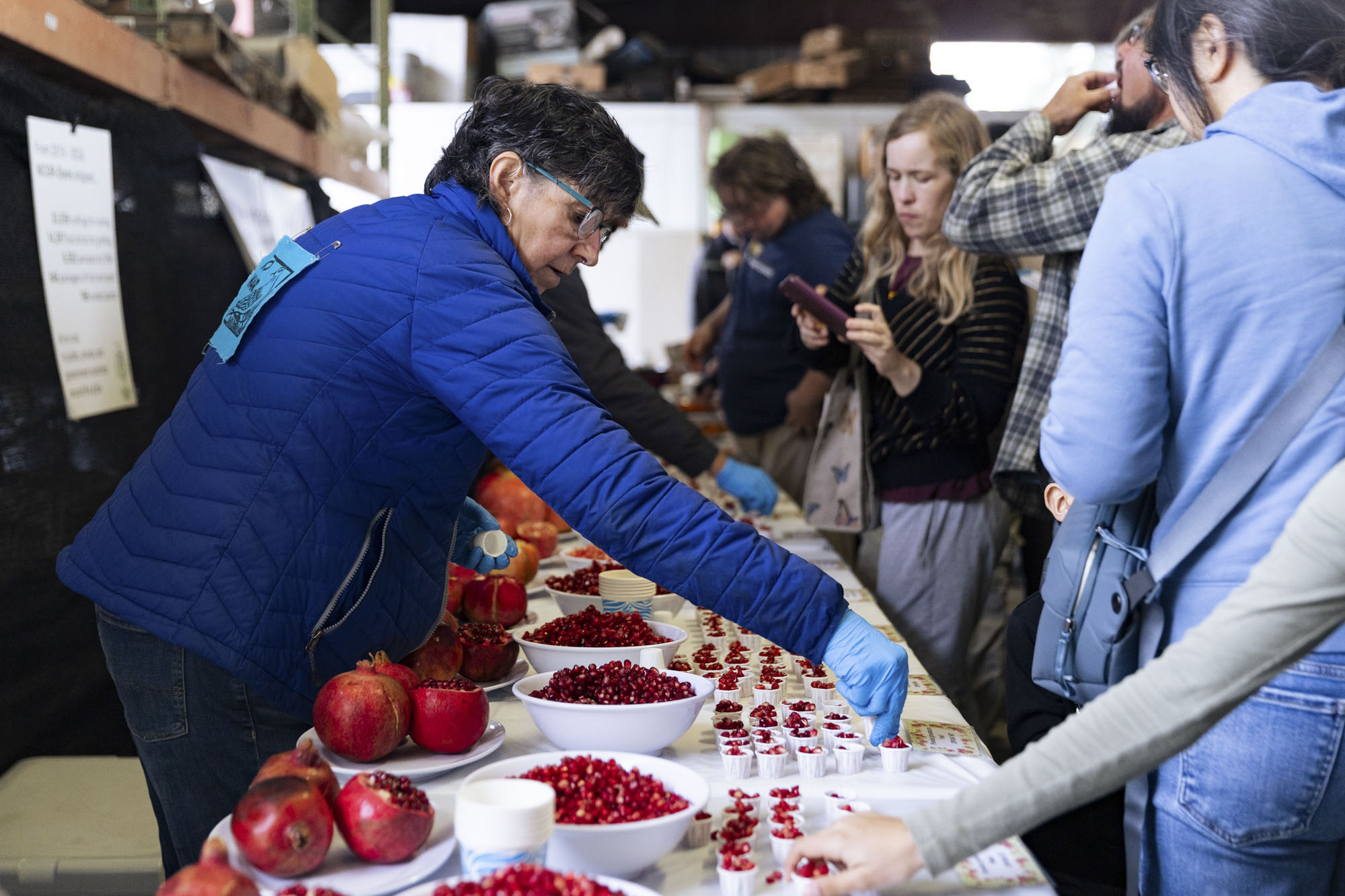
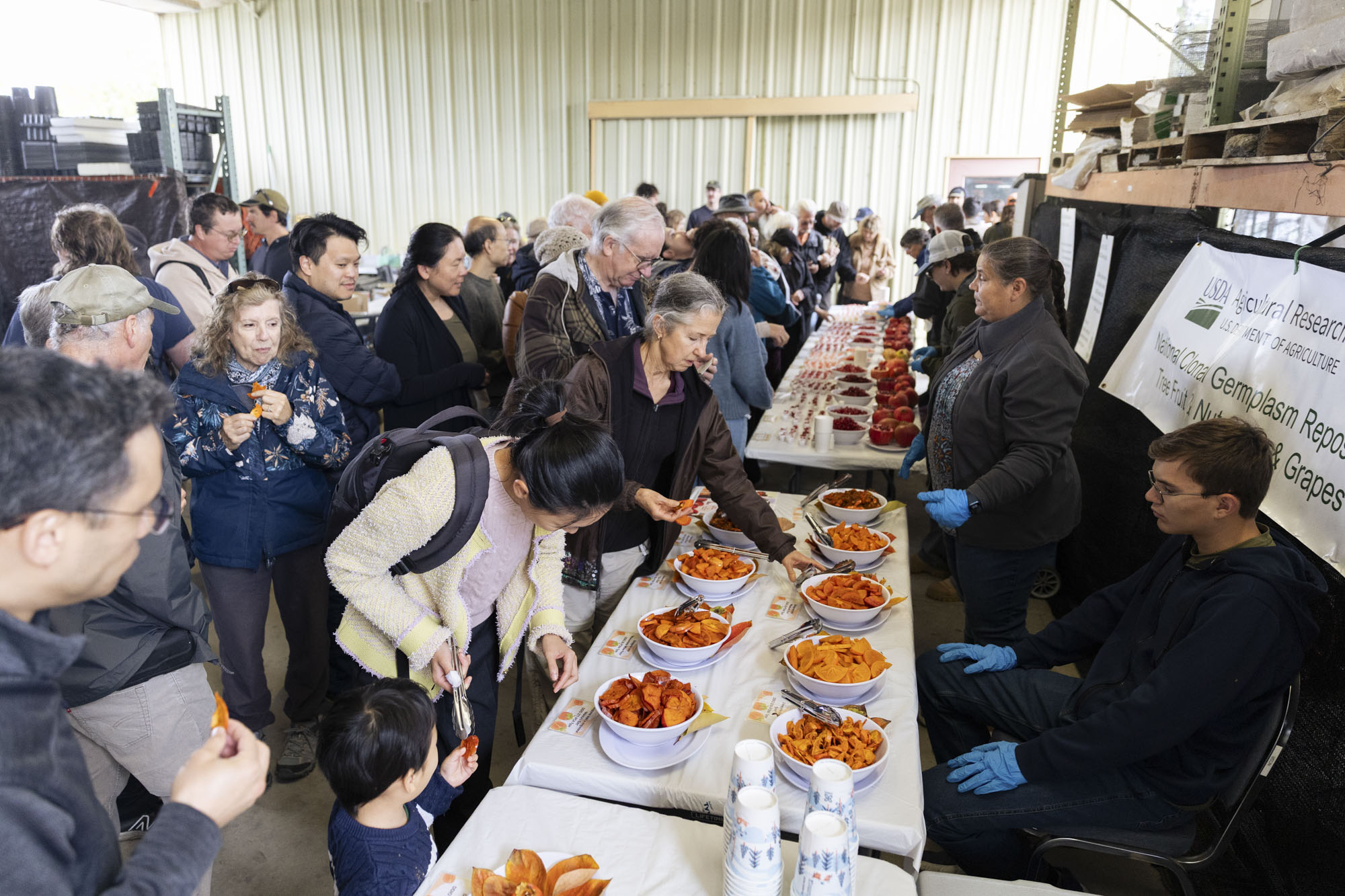
On a rainy November afternoon, a bubbly crowd gathered in a farm shed at UC Davis, where the stars of the show sat on two long tables draped in white.
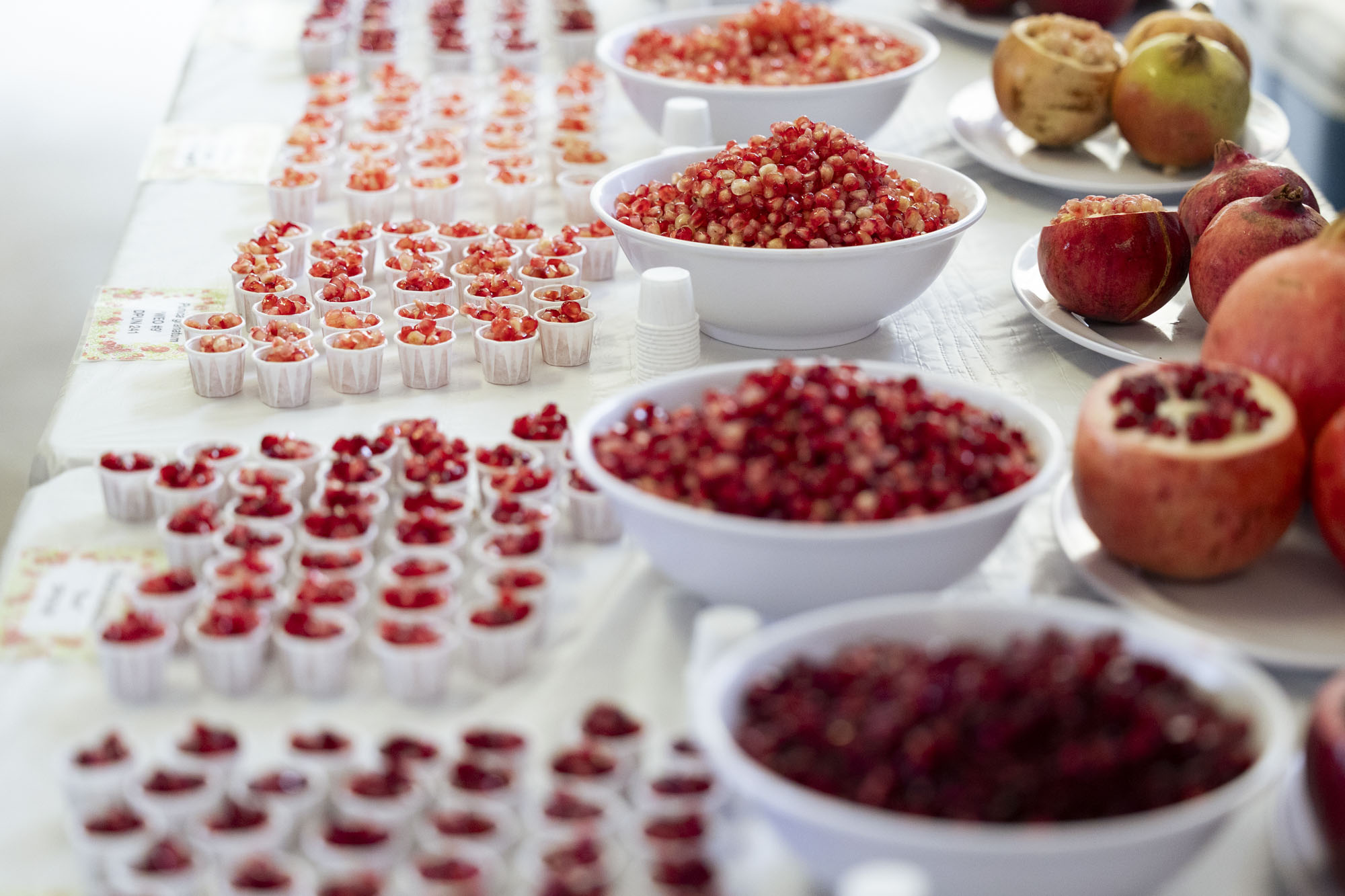
On one: 15 varieties of pomegranate, their seeds ranging from pale gold to blush pink to ruby red. On the other: 8 varieties of persimmon, every orange between apricot and deep amber.
The occasion was the annual National Clonal Germplasm Repository Pomegranate and Persimmon Tasting. Among the crowd were home gardeners, horticulturists, UC Davis agriculture students, and people who feel a deep cultural connection to the fruits.
“Part of the reason I’m so drawn to the pomegranate is it’s part of my heritage as an Iranian. The fruit originates in Central Asia and Western Asia,” said retired San Jose State professor Persis Karim. “In Iran it’s a symbol of fertility and abundance, and Iranians eat it every fall in their Yalda, their winter solstice celebrations.”
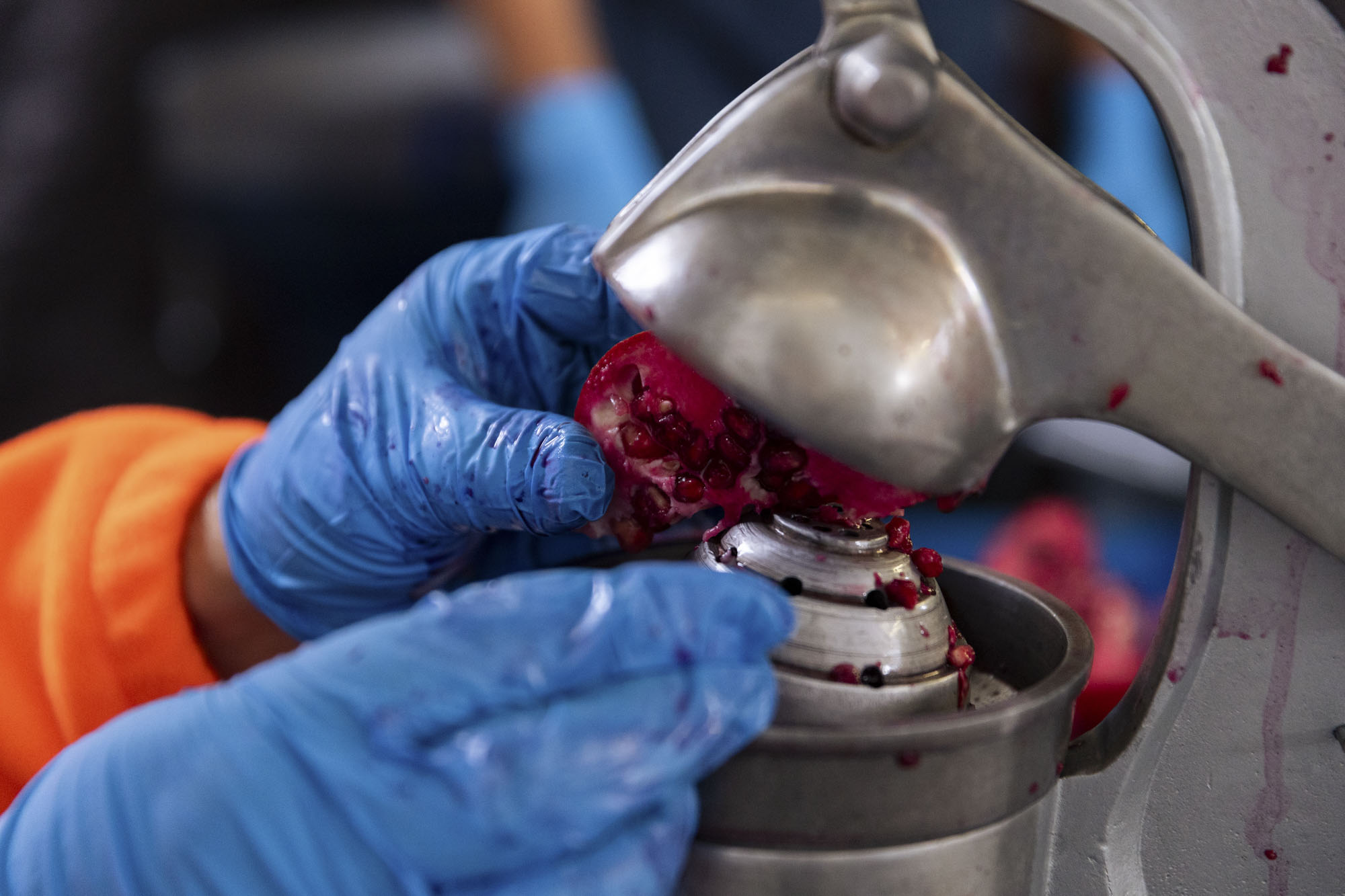
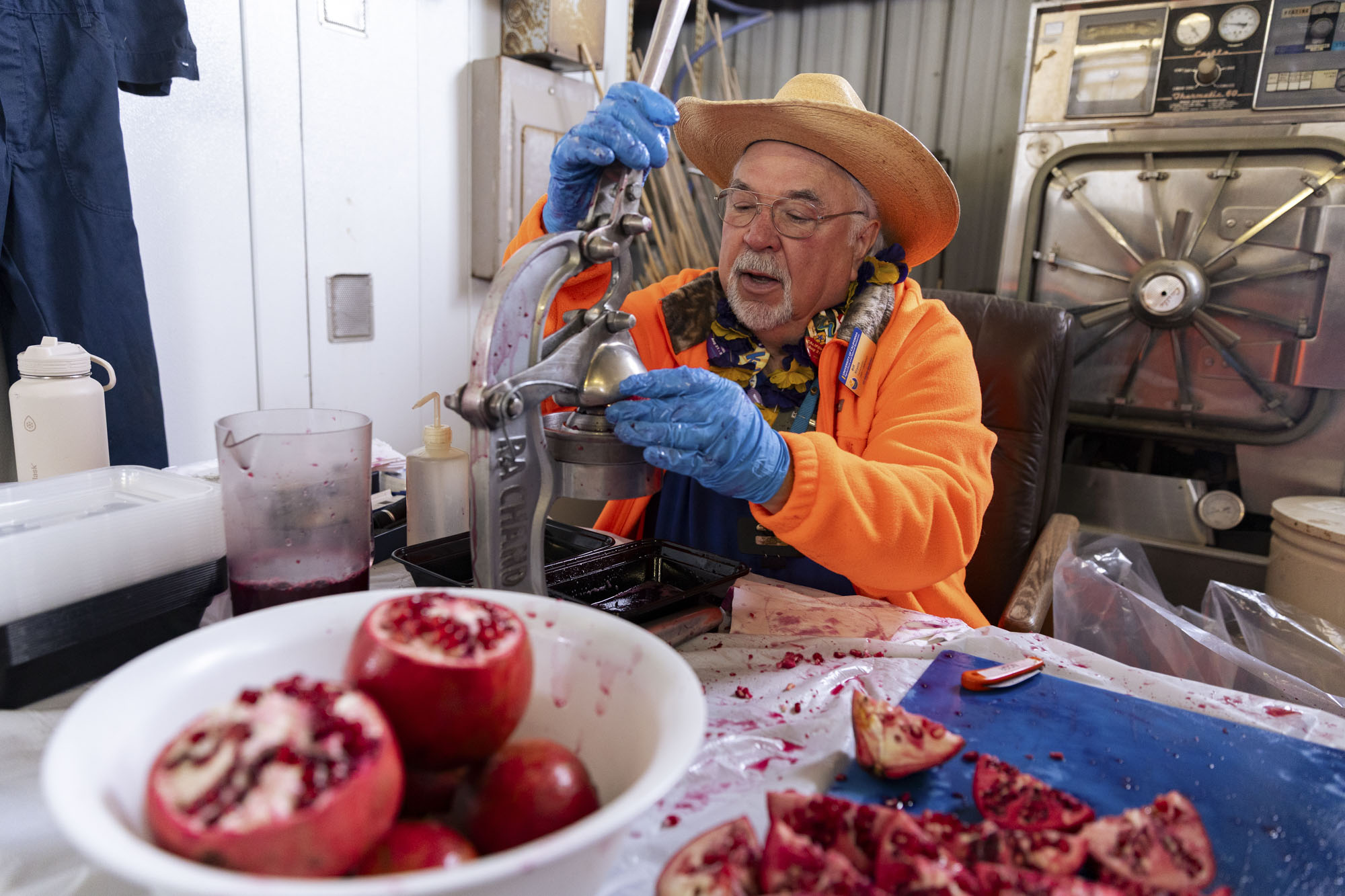
Karim has been volunteering at the tasting for more than 20 years, and has mastered the messy art of shucking pomegranates. Knife carefully in hand, she sliced off the crown, revealing a jewel box filled with rubies. She then lightly scored the skin along the fruit’s natural ridges and pulled the sections open.
The tasting was hosted by the USDA’s National Clonal Germplasm Repository, which manages 72 acres near Winters and is home to the largest collection of pomegranate and persimmon varieties in North America.
It’s a treasure trove of genetic diversity, for fruits and nuts that first pushed through the soil tens of millions of years ago and have since survived a host of epic insults: ice ages, droughts, pests, diseases, and political instability.
Many of the 214 pomegranate varieties grown here come from Turkmenistan, where a Soviet botanist maintained a collection of more than a thousand varieties until he was forced out of the country. The job of any repository, including this one, is to provide safe harbor for plants that may become valuable to human survival in the future.
“We don’t necessarily know what all they hold, but we know the nature of agriculture is that there will be problems that we have to deal with,” said Jeff Moersfelder, who has spent most of his adult life tending to the collection. “Potentially within our collections we have material that will do well under whatever those particular conditions are.”
“It’s a library of genetics and we need to maintain it,” said David Karp, a pomologist and fruit researcher with the Department of Botany and Plant Sciences at UC Riverside.
“It’s absolutely indispensable if you’re one of those people out there who eats,” Karp said.
Repository staff lined up the pomegranates like a wine tasting, from mildest to tartest. Some pomegranates don’t have names, just field numbers. At the mild end sat WEO #2, with a yellow rind, pale gold seeds tinged with pink, and hardly any acid at all. Farther along, WEO #48 had deep, wine-red seeds, which were a little crunchy and a little sweet.

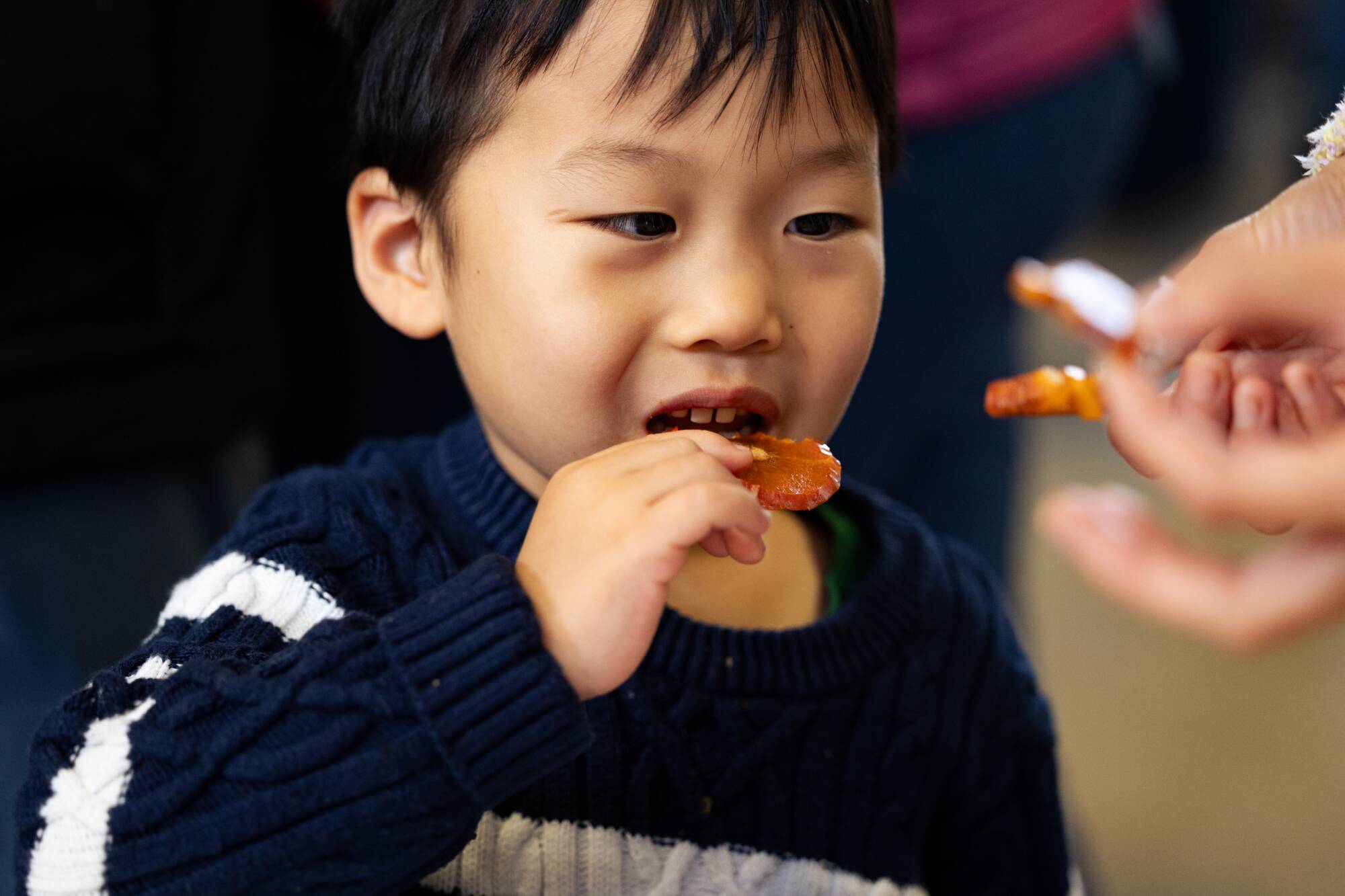
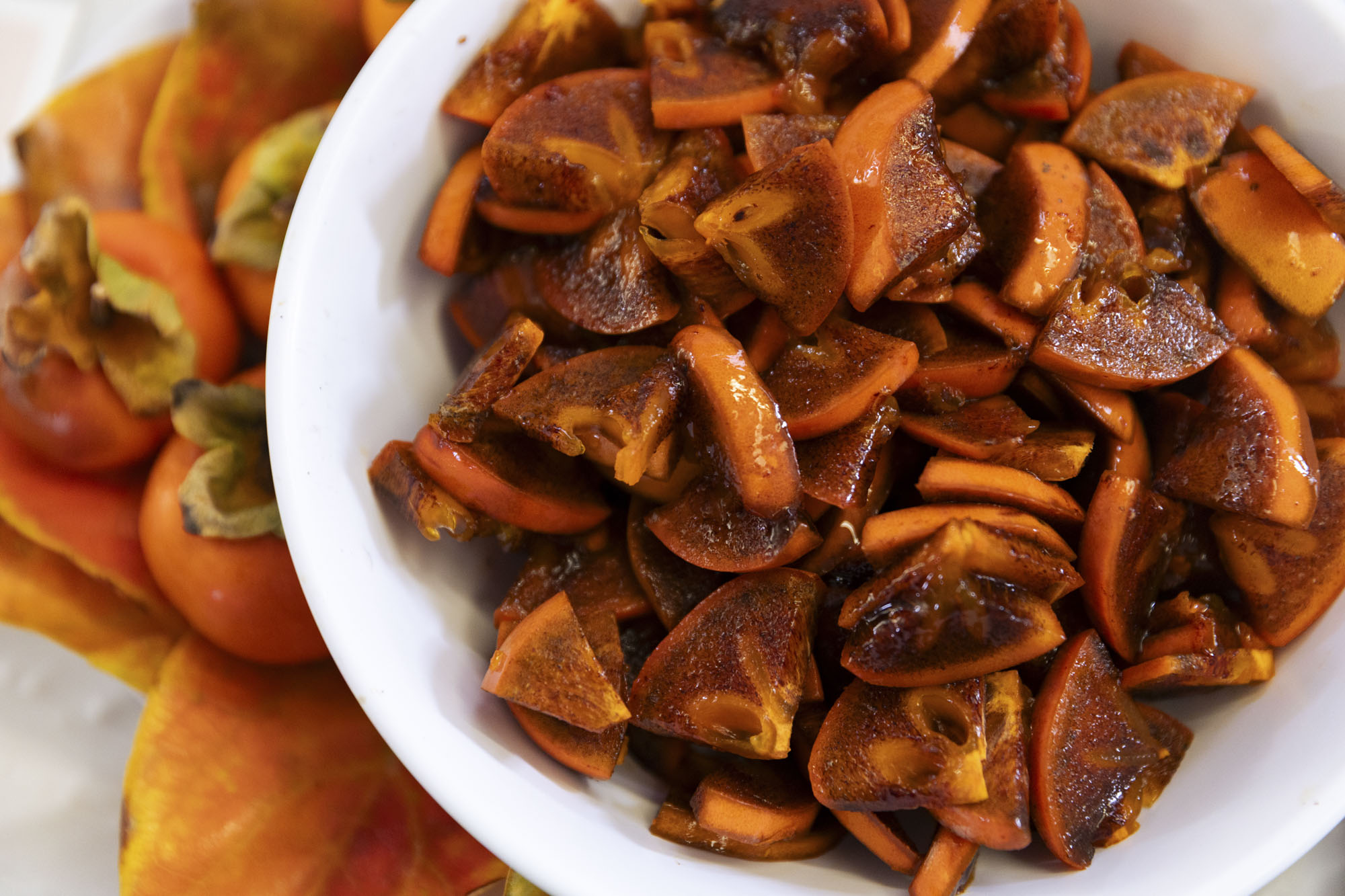
On the persimmon table, this reporter focused on two “chocolate” varieties that might appear rotten because their flesh turns brown when pollinated: Mikatani Gosho, descended from an ancient Japanese persimmon called Gosho, and Vaniglia, an old variety from southern Italy.
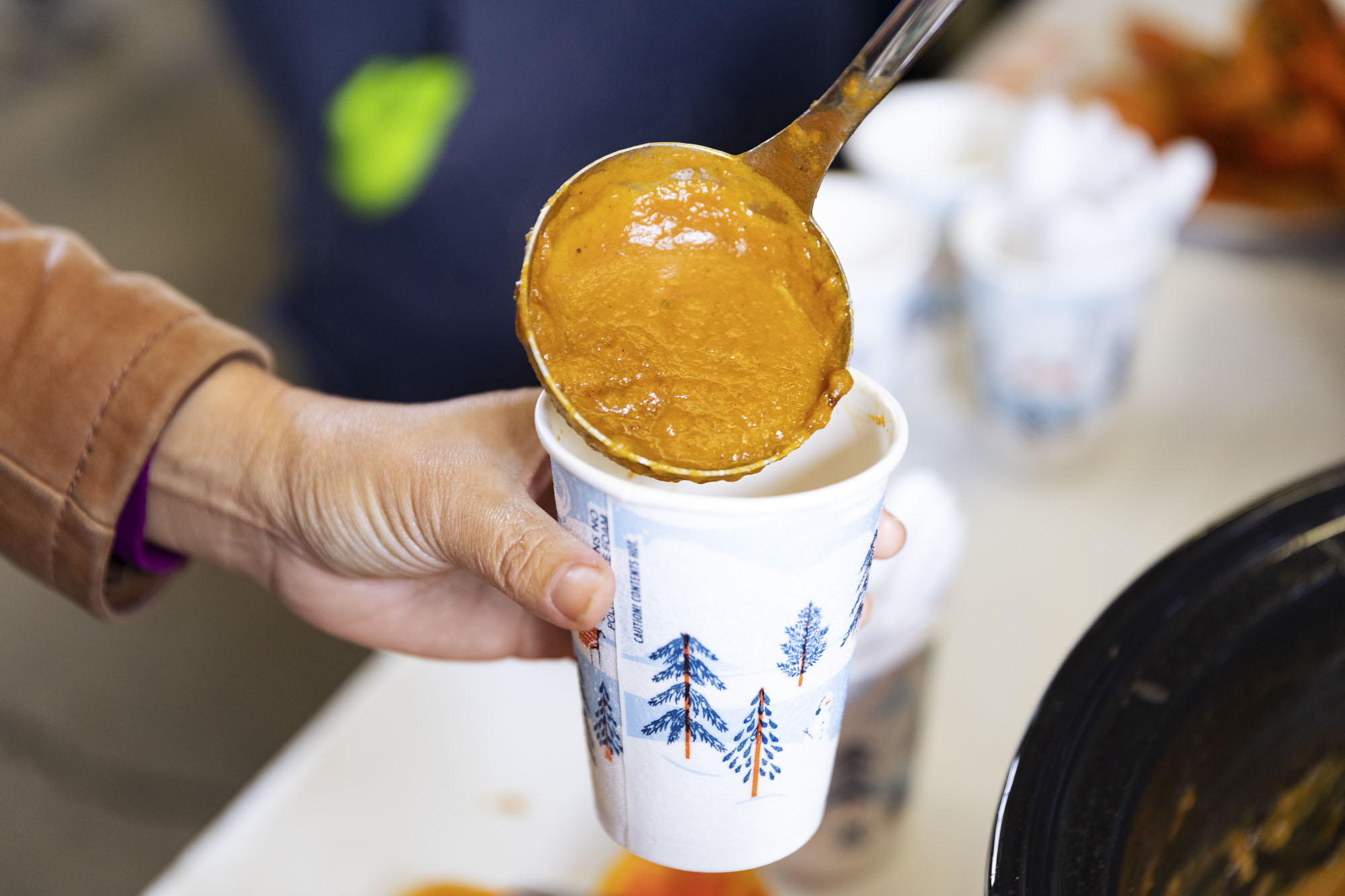
Ideas for enjoying the fruits went beyond eating them out of hand or throwing them into salads. Two delicious soups highlighted the variety of persimmons: butternut squash with Fuyu, and sweet potato with Suruga.
In spite of the diversity of persimmons and pomegranates on display here, most people encounter only one variety of each: the gorgeous Wonderful, born in Florida, with brilliant ruby red seeds, sweet and tart at the same time; and the Fuyu, the size and firmness of a small orange apple, crunchy, juicy, tasting vaguely of pumpkin pie.
Growers favor both because they ship well, look good and taste good. Less commercially viable treats like the Parfianka pomegranate or the Maru persimmon are largely left to those able to grow the trees themselves.
Lakshmi Aradhya, whose husband served as a geneticist and curator at the Davis repository before he retired, makes the most of pomegranates in her kitchen.
“With the pomegranate skin we make the chutney, and then in India, we also dry the pomegranate skin, and then we powder it, and then we use it as a seasoning,” she said.
This time of year, we celebrate family traditions around food, and the bounty of the land — which, in California, is great.
California’s agricultural heritage has been sown by generations of immigrants from Armenia, China, India, Italy, Japan, Mexico, and the Philippines. Many brought seeds and cuttings from home to see what would grow here.
It’s tempting to worry younger generations don’t know or care enough to keep the flame alive. But that fear dissipates when talking to the people in this crowd, like Mark Fujiwara, grant writer and farm steward with the nonprofit Planting Justice. He made the trip from Oakland with his colleague, office manager Cynthia Green.
“We’re also members of the California Rare Fruit Growers,” Fujiwara said, bringing up a nonprofit that bills itself as the largest amateur fruit-growing group in the world. “And so we come up to both check out all the different varieties, but also socialize and connect with other people in the fruit nerd community.”