Get Overwhelmed at Airports? This Room in SFO Provides an Oasis — and Practice Flying
Even if you’re a frequent traveler through San Francisco International Airport, you’ve probably missed a colorful door tucked into a corridor in the always-busy Harvey Milk Terminal 1.
But if you need a quick escape from the stresses of air travel, it might be worth keeping an eye out for it because that door leads to the SFO Sensory Room — a quiet space with a recreation of an airplane cabin, created for neurodiverse passengers and their families.
“A lot of folks that are neurodivergent are probably anxious about flying, and this gives them a calm, safe space for them to relax before their trip,” explained Francis Tsang, a strategic communications advisor at SFO.
But the Sensory Room is actually open to anyone, said Ryan Fetters, design director and principal in the San Francisco office of architecture company Gensler, who worked on the project. In fact, he has heard that flight attendants have also rested in the room to get away and recharge.
“The spectrum of society that really has a need for this type of thing is actually much broader than I think people realize,” he said.
(Jason O’Rear Photography)
SFO’s Sensory Room opened earlier this year, in February. Other airports in the country also have similar accessibility options, including Seattle–Tacoma International Airport and Kansas City International Airport.
The space was developed with input from UCSF Benioff Children’s Hospital — “on some very specific components of the interactive portion of the sensory room,” Fetters said — and The Arc San Francisco, a Bay Area advocacy group centered on people with intellectual and developmental disabilities.
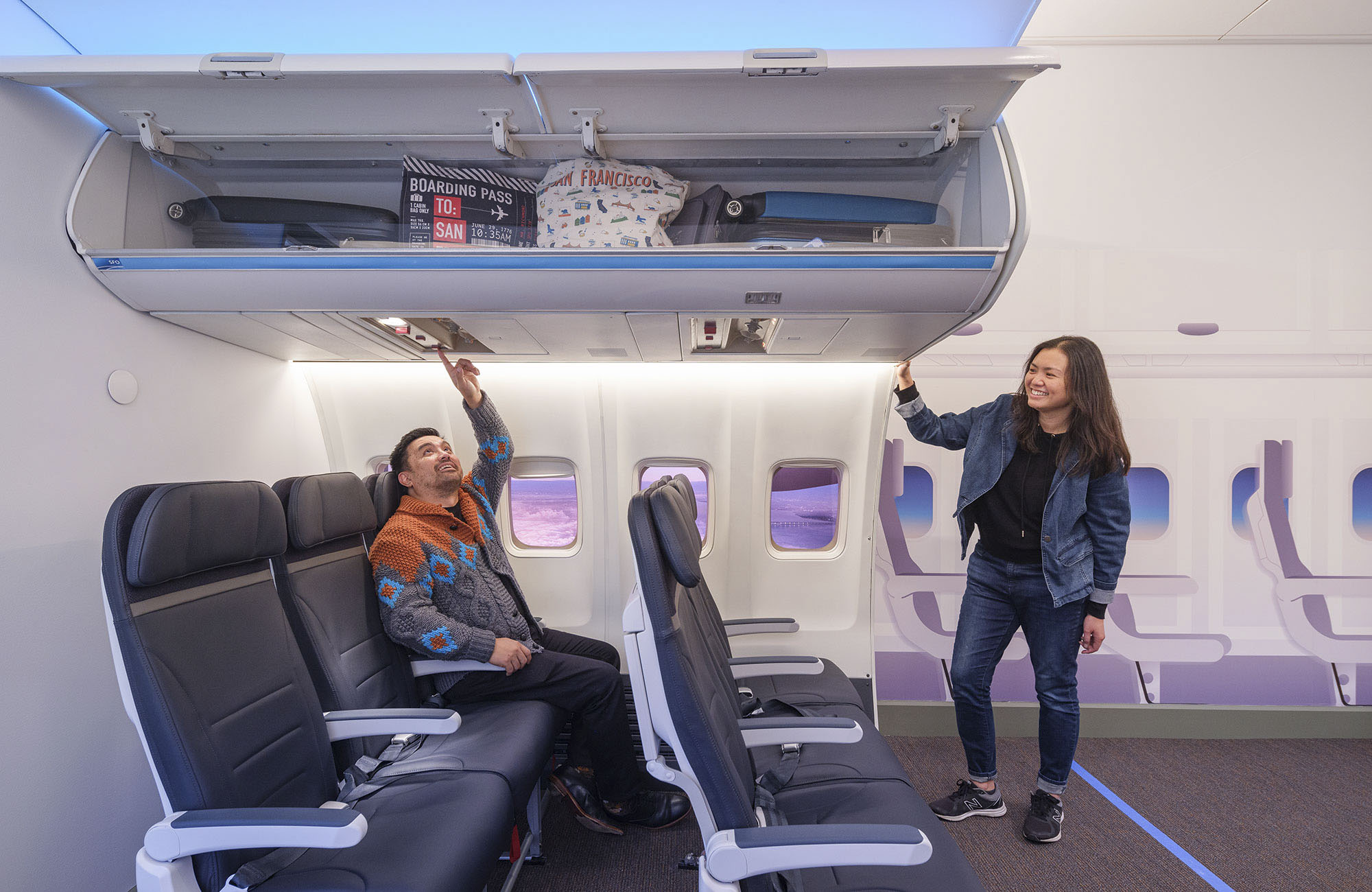
The room’s major feature — the mock-up cabin — allows passengers to “go in and practice what it’s like to be in an aircraft so that when they go to the real thing, it’s a much better headspace that they’re in,” Fetters said.
And remember, this space is open to all. So whether you’re neurodiverse, traveling with a neurodivergent family member this Thanksgiving, are an anxious flyer or would just appreciate a break from the overstimulation of SFO, here’s what to know about using the airport’s Sensory Room.
Where is the Sensory Room — and when is it open?
The Sensory Room can be found after going through security.
You’ll find it on Level 2 of Harvey Milk Terminal 1, near Gate C2 — and close to several food options, if you want to grab a bite to eat going inside.
It can be entered any time from 5 a.m. to 11 p.m. every day.
Even if your flight doesn’t leave from Harvey Milk Terminal 1, remember: After security, all terminals — including the International Terminal — are connected to each other by a walkway. So if you’ve got enough time before your flight departs, factoring in walking time between terminals, you can still visit the Sensory Room.
What’s inside the Sensory Room?
While SFO does have a quiet airport policy — meaning no gate announcements or loud music — the Sensory Room is still markedly calmer than Terminal 1.
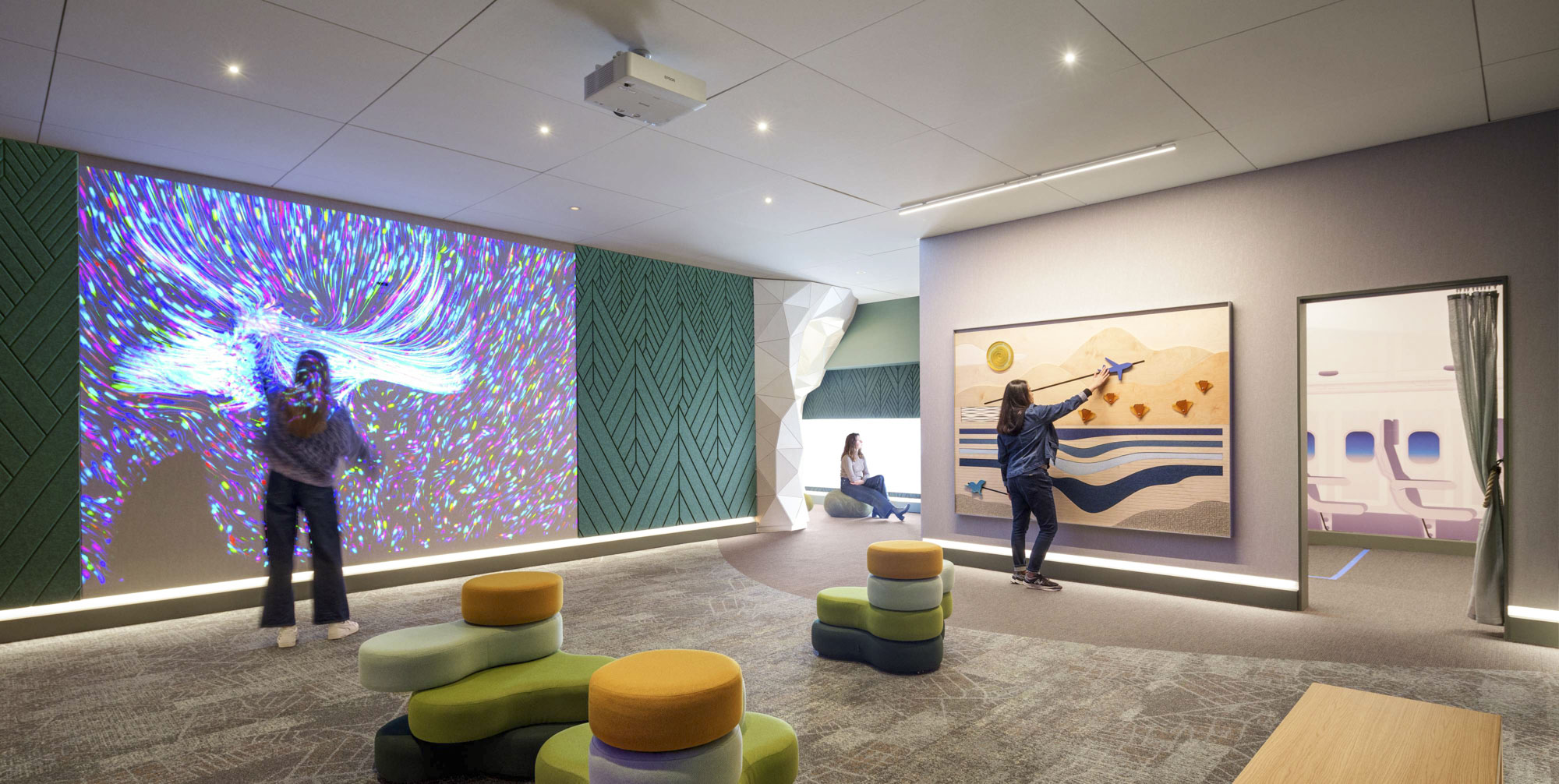
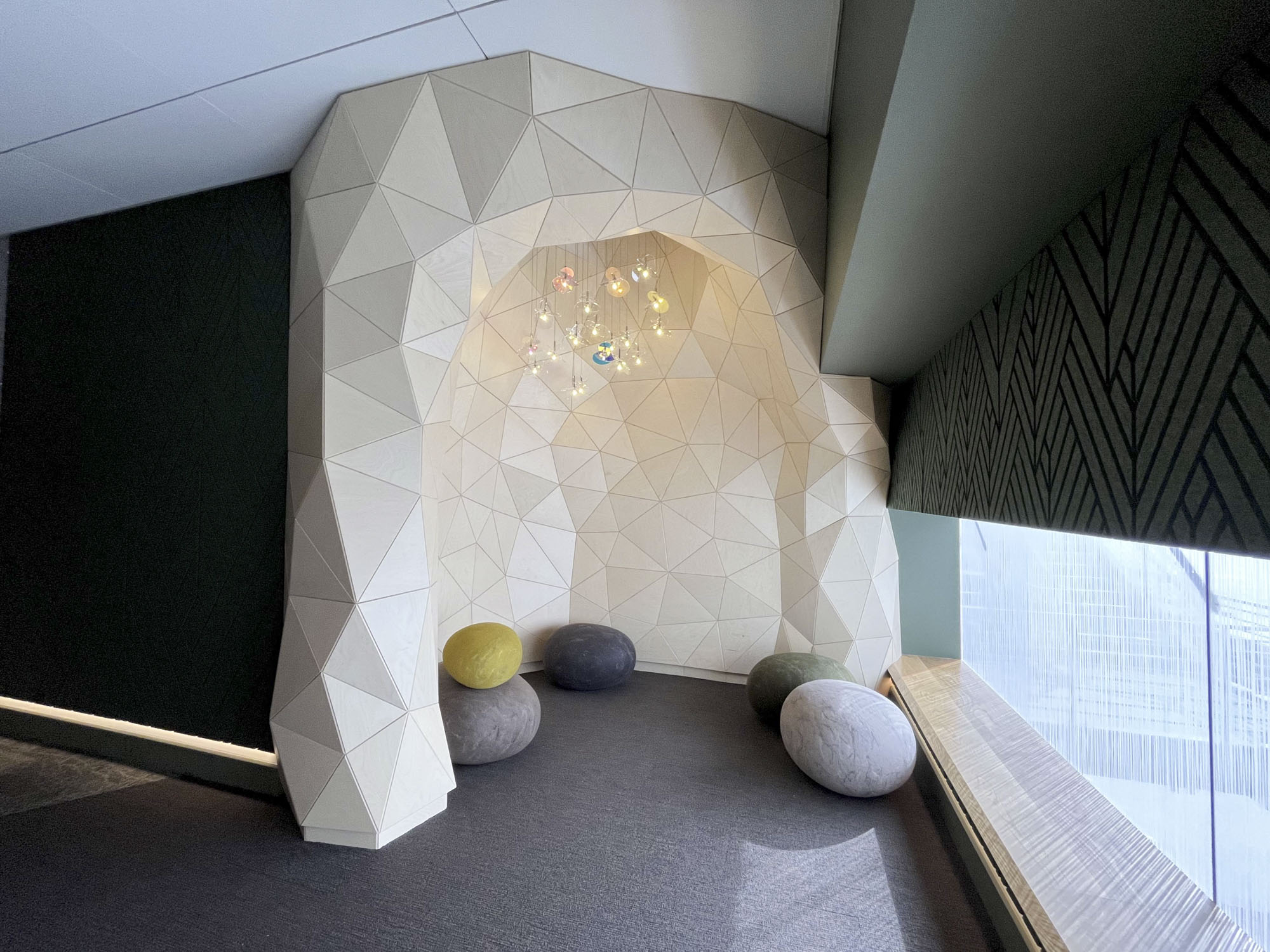
Inside, you’ll find a large open space with soft couches, stools and areas where you can sit and even lie down. The lights are darker in the Sensory Room, with a particular area in the corner next to the window, which has warm lighting and a “cove” like structure to sit under.
(Courtesy of San Francisco International Airport.)
Along the walls are interactive displays and tactile textures to touch, including an installation of lights that follow your body’s movements.
What is the Cabin Experience?
A major feature of the Sensory Room is this full-scale recreation of part of an airplane cabin. The Cabin Experience is right at the entrance, as you open the door to the Sensory Room.
This space can be used by anyone, including neurodivergent kids and adults — but other groups who may find the practice cabin helpful include:
- Anxious fliers
- People with claustrophobia
- Passengers with dementia
- Fear of flying
- New travelers
Here, passengers can simulate entering a cabin, walking down an aisle, opening and closing overhead bins, finding their seat, buckling their seatbelt and using a meal tray.
“It’s not meant to be theater or a toy per se,” Fetters said. “It’s meant to help people better be prepared to practice toward something that they want to do — or will have to do — at the end.”
Boarding an airplane means “a dramatic shift of scale, sensory inputs, smells, all sorts of things that you’re bombarded with,” he said. “And then you’re in this little tiny confined space.”
But this can especially apply to scenarios like a child flying for the first time, a passenger with mobility issues or a neurodiverse traveler. “That’s a lot to take in, in a very short amount of time,” Fetters said. According to a 2020 study by Birkbeck, University of London, about 15 to 20% of the world’s population show signs of neurodivergence.
“Airports started to realize this about 10 years ago,” Fetters said. “They provided these areas of respite for the people that need a minute, half an hour, whatever it is, to go reset themselves.”
“Really, the reason that we’ve seen the need arise is just there’s a whole subset of our population that historically has not been very well represented,” he said.
Are there other sensory rooms in SFO?
For now, there is only one Sensory Room in Harvey Milk Terminal 1.
But Fetters said a new room is slated to open early to mid 2028 in Terminal 3, with “more space” and a “better cabin experience.”
“As much as we can from a design perspective and a programmatic perspective, we do anything we can to make the space more comfortable for everyone,” he said.
What other support options are available for travelers at SFO?
SFO is also hosting a ticketed workshop with a nonprofit group called the Fear of Flying Clinic on Dec. 12. According to the clinic’s website, the one-day session discusses the mechanics of a flight, weather, turbulence and aviation safety procedures.
For help during security, you can fill out the TSA Cares form that can get you access to extra assistance during screening for situations including:
- Difficulty following instructions due to a disability or medical condition
- Mobility limitations, including difficulty standing, walking or lifting your arms
- Mobility aids or support devices
- Traveling with a child who has a disability or medical condition
- Traveling with a service animal
- Difficulty understanding and communicating in English
If your flight is within 72 hours, you should call 855-787-2227.
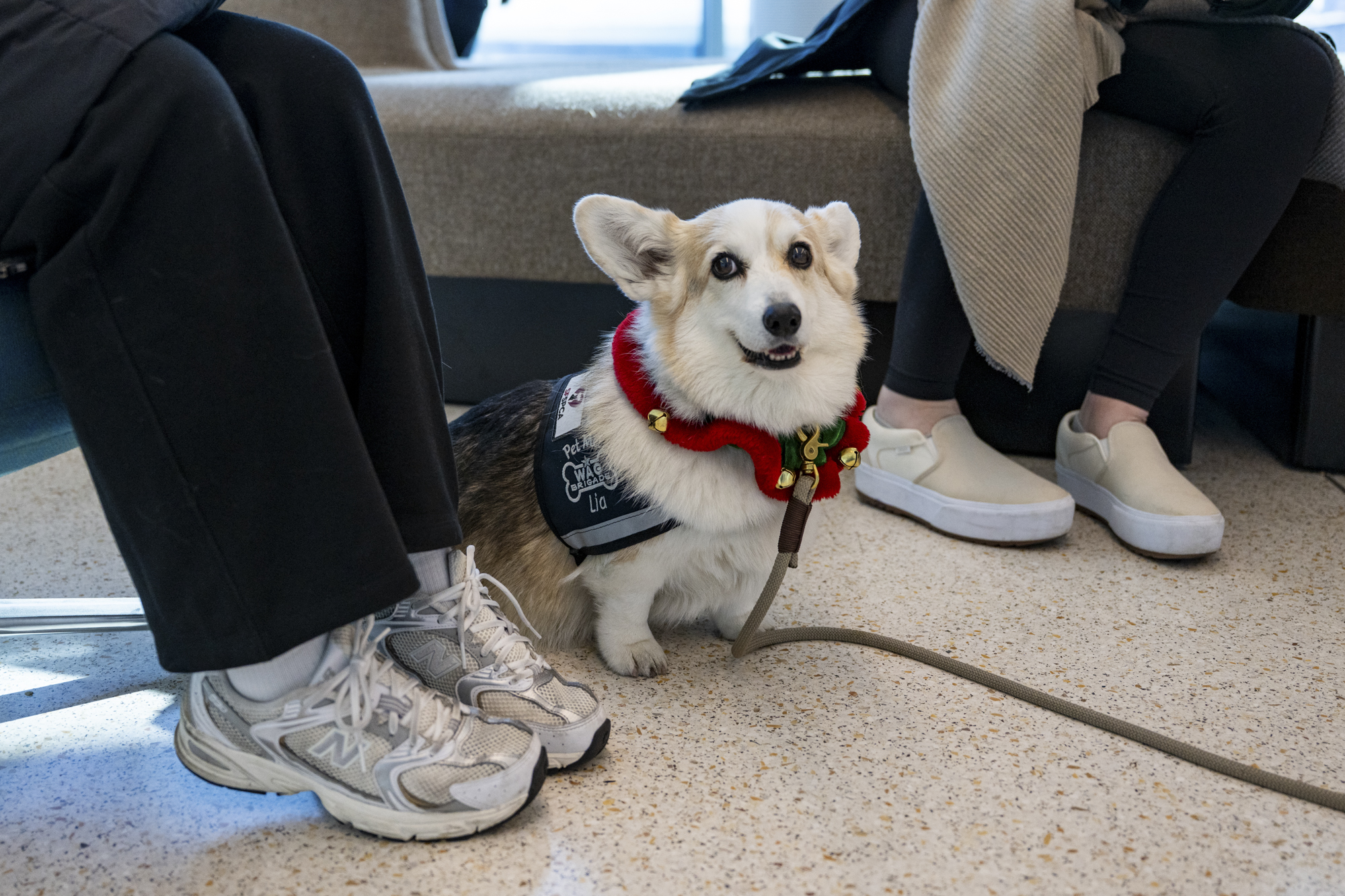
And there’s a great option for animal lovers, too: SFO has a program called the “Wag Brigade,” where trained animals wander the terminals post-security, accompanied by their humans, for any travelers to approach, pet or cuddle before or after their flight.
The animals — including golden retrievers, rabbits and sometimes even a pig named LiLou — will be wearing vests that explicitly encourage visitors to pet them. (But of course, be sure you are not confusing a Wag Brigade animal with another traveler’s service animal.)