As UC Regents Reconsider SAT Requirements, Students Rally for Test-Free Admissions
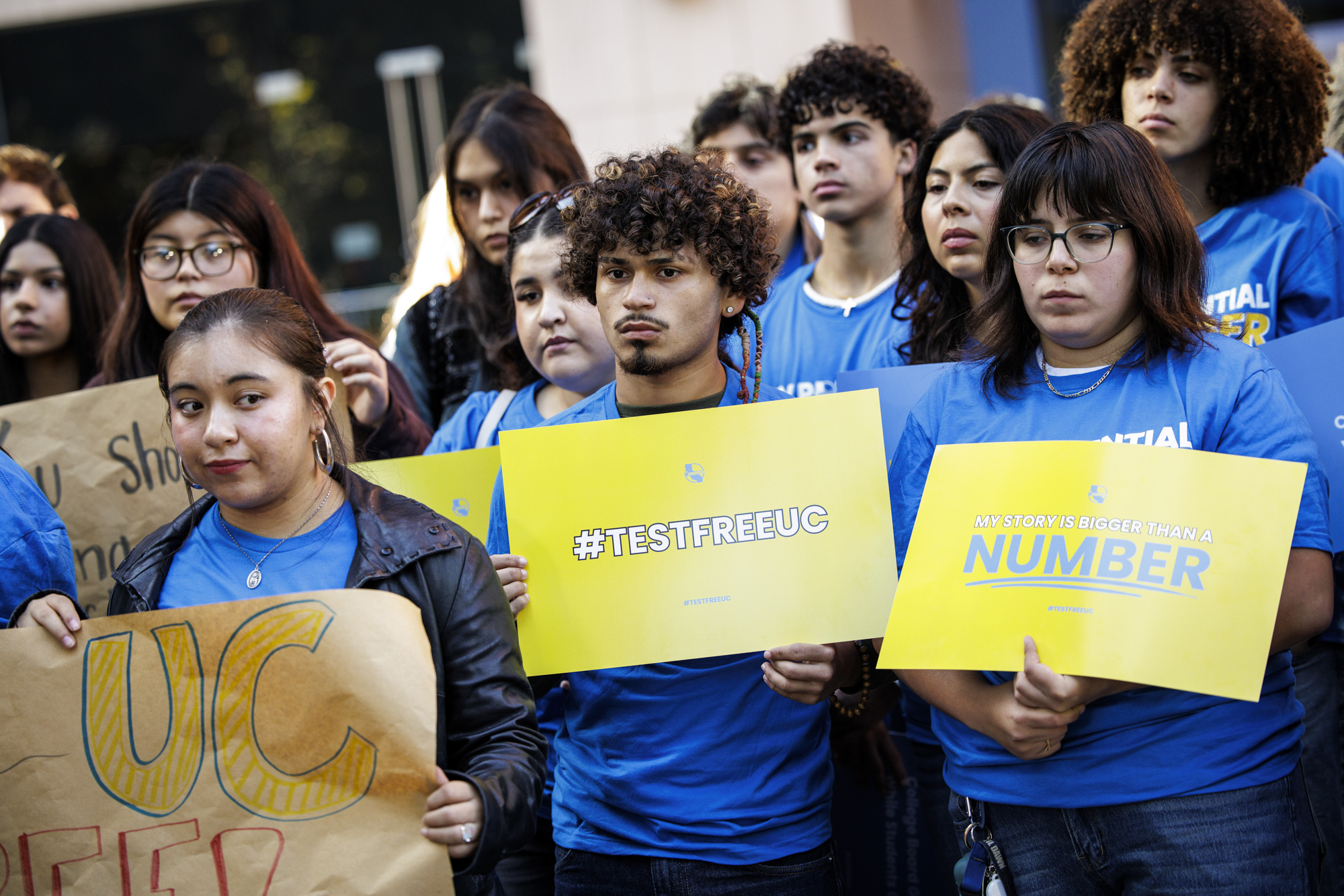
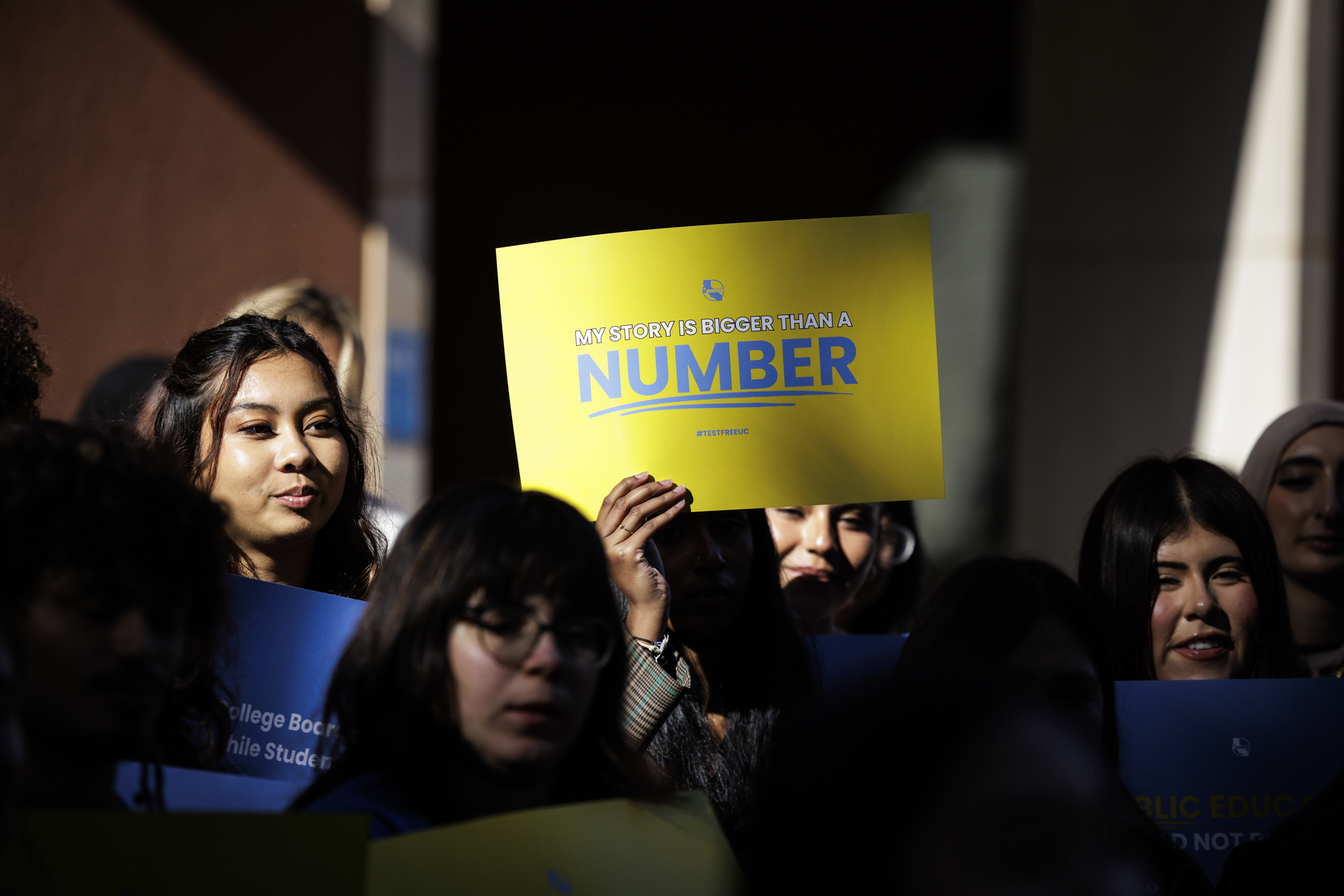
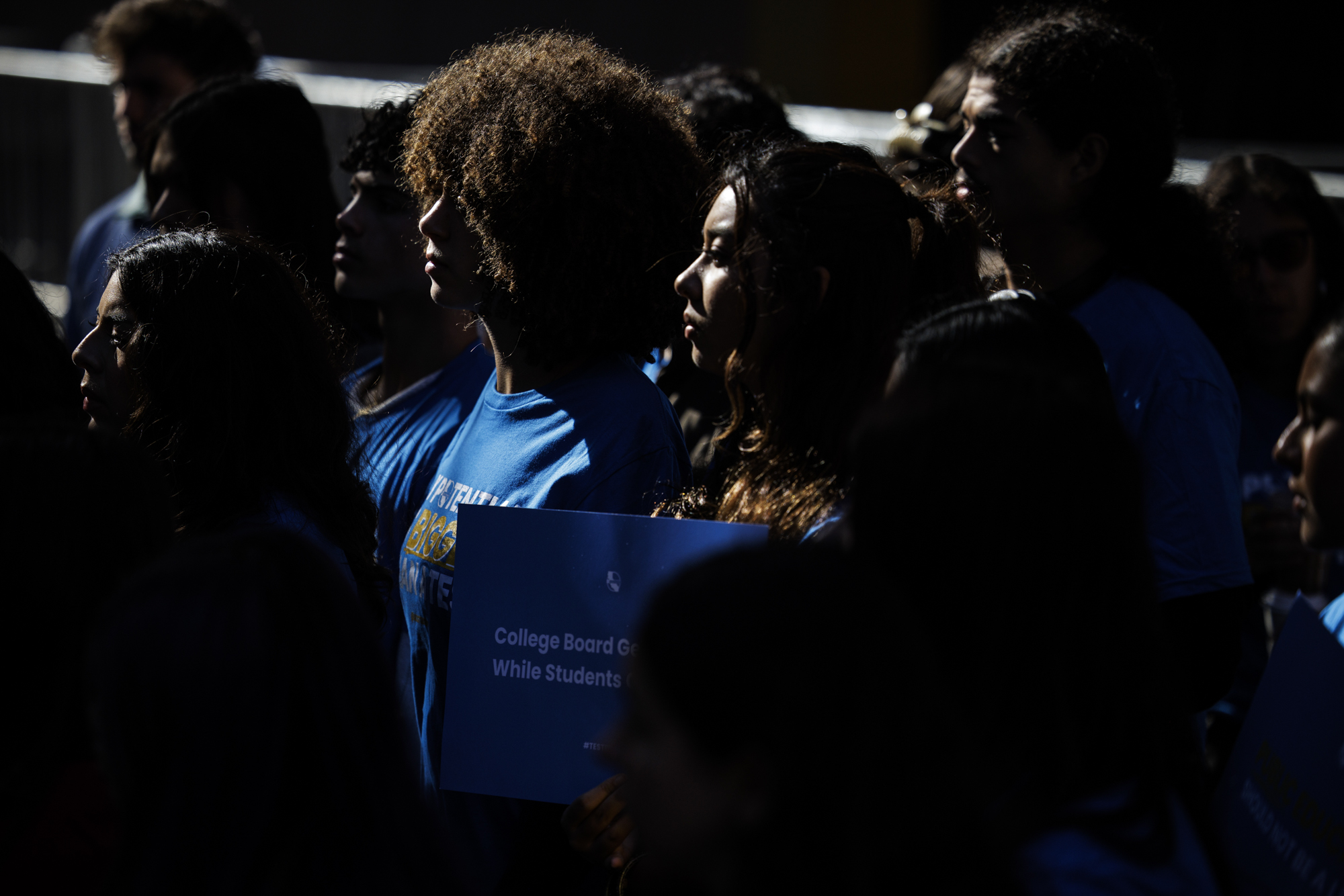
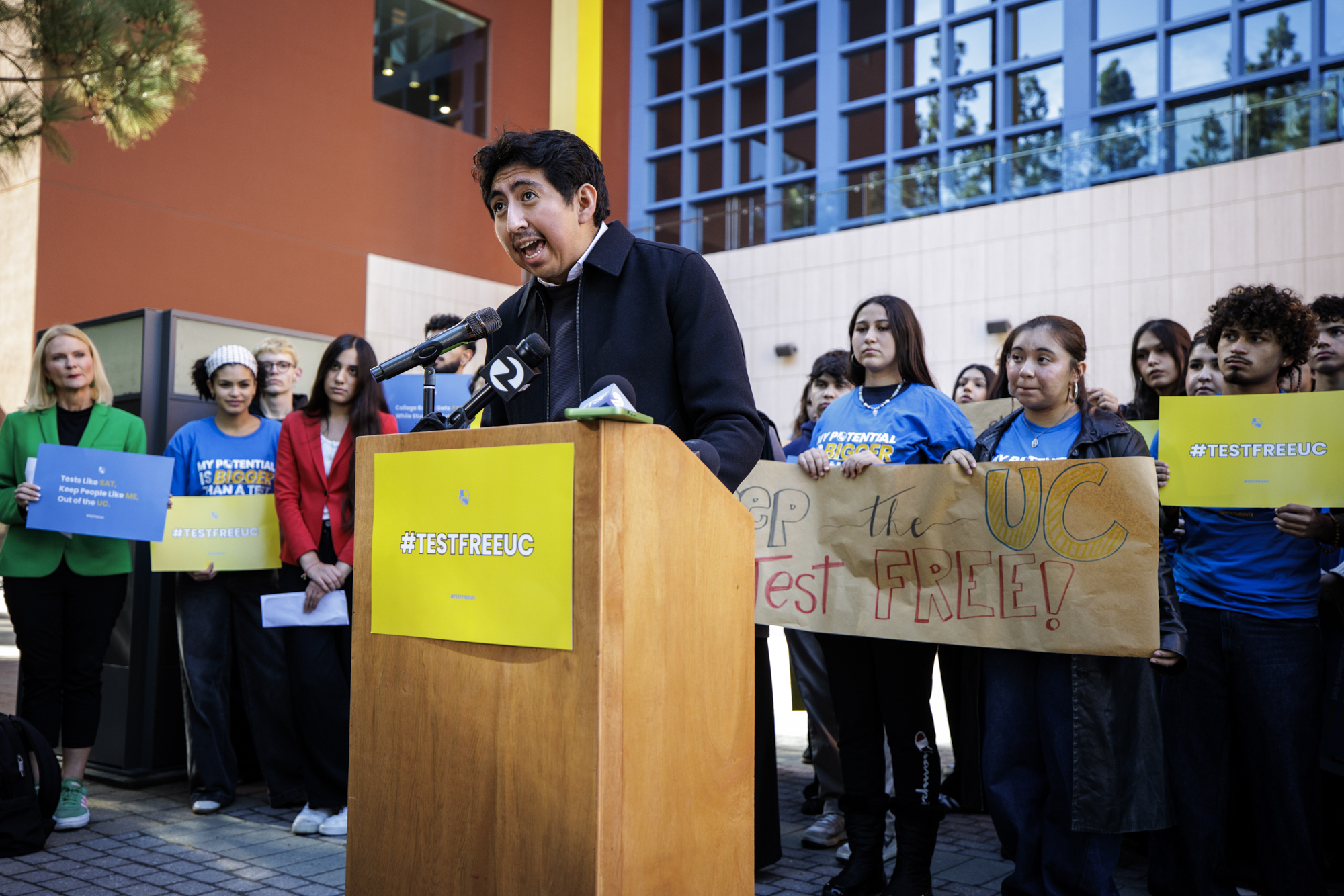
As University of California leaders weighed whether to restore the use of SAT and ACT tests in freshman admissions on Tuesday in San Francisco, more than 50 students gathered outside to demand the public university system remain test-free.
Though officials did not take action at Tuesday’s UC Board of Regents meeting on UCSF’s Mission Bay Campus, they considered “questions about academic preparation, student performance, and educational opportunity,” according to discussion notes.
The meeting follows heated debate over whether to bring back the tests after a pandemic pause. This year, more than 3,000 faculty members signed open letters supporting a return to the test requirement, saying their students have fared worse in math since the UC system eliminated it in 2020.
“We now observe preparation gaps so severe that instructors must reteach middle-school mathematics while simultaneously teaching the material students need for sciences, engineering, economics, and other quantitatively demanding fields,” faculty wrote in one letter.

Speaking from the quad, students argued that requiring SAT and ACTs for university entry shuts the door on students from communities of color and low-income backgrounds.
“We want UC test-free,” said Candice Phan, a fourth-year sociology student at UC Davis and president of the UC Student Association, which sent a letter to regents in July opposing the decision. “Standardized testing closes the doors on students from communities of color and low-income backgrounds, and that is UC breaking its promise of being an engine of social mobility.”
At the meeting, regents heard from John Friedman, an economics professor at Brown University, who said standardized test scores “potentially offer information that improves measurement of students’ academic preparation.”
Friedman described tests as a thermometer, detecting underlying conditions.

“Test scores are an important and unbiased predictor of student preparedness,” Friedman said, adding that disparities in scores “reflect large underlying disparities in school quality and other environmental factors, rather than biases in the test itself.”
Jesse Rothstein, a UC Berkeley professor of public policy and economics who has studied the role of SAT scores throughout his career, said the tests “somewhat help in predicting first-year grades” but come at a “direct cost in access for students from underrepresented groups.”
Bringing back the SAT would “have clear effects on who we admit, tilting admissions towards more advantaged students, and especially towards students from wealthier high schools.”
At the same time, UC admissions have “improved notably without the SAT,” he said.
“We’re admitting a diverse pool,” Rothstein said. “There have been declines in UC student performance in recent years, but there is no basis to attribute that to the SAT change; it seems to be a national or even a global change.”
Phan notes that since the UC system dropped the policy, it “saw a 19% increase in freshman applications and retention rates for first-generation students and Pell Grant recipients have improved significantly since 2018.”
Jessie Ryan, president of the Campaign for College Opportunity, a nonprofit advocating higher education access, opposed reinstating standardized testing, saying “it’s a solution in search of a problem.”
“A standardized test does not prepare a single student for college,” Ryan said. “It does not improve the quality of instruction, expand access to rigorous classes, or address the inequities that shape educational opportunity. It simply measures students at the door without addressing the conditions that brought them there.”
Jose Aguilar, a Ph.D. student at UC Berkeley, said he doesn’t feel SAT or ACT scores really tell admissions officials much about a student and that they should be evaluated for merits beyond test scores.
“A score cannot capture a student’s potential, their aspirations, hopes, dreams, or what they are capable of becoming,” Aguilar said. “We cannot talk about college readiness without talking about the conditions in which our students are expected to become college ready, a system that is inherently broken.”
The UC Academic Senate will give its recommendations to the regents by the end of June on whether or not to reinstate standardized tests.