
This piece was featured first on Nov 12 for One Good Thing, a weekly newsletter brought to you by Alexis Madrigal about his take on Bay Area art, culture & nature. Subscribe today.
Let me tell you about my number one book of the year.
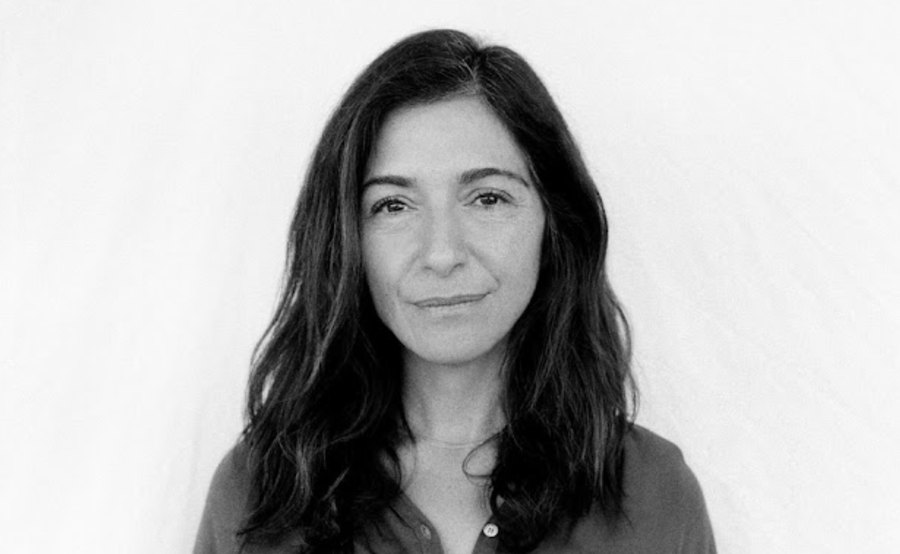
It’s called Female Life on Planet Earth, by Laleh Khadivi, the chair of the MFA program at the University of San Francisco. In it, we meet Heti, the daughter of an Iranian mother, who both participated in and then fled the revolution. After her mother Anahita’s death, a mysterious package shows up at her door with several pictures showing her machine-gun toting mother participating in the oppression of other women.
The book proceeds along a double-barreled course: we are tracking both Heti’s healing from grief and her work to suss out her mother’s history. Both journeys end up refracting the same question, which the Kirkus Review describes as: “What is a woman?”
Khadivi’s novel, up until the dramatic final scene, is composed of brilliant little vignettes, conversations Heti has with a soccer mom, her daughters, her aunt, a refugee poet, her cousin at Costco, a Mexican restaurant owner, and many more.
Each of the women speaks to her own life, and, inevitably, to her experience as a woman. The style of the book strips away the punctuation marks of dialog, placing each woman’s remarks right into the narration, entwining it with Heti’s own observations and thoughts.
For example, we read in the opening lines of the book. “One year after the death you throw a party. They say grief needs a turn of seasons—one summer, fall, winter and spring—before the sadness lets go. If you survive the year, you celebrate. When a man dies, his wife organizes the celebration. When a woman dies, the first daughter arranges the party. If there are no daughters, the wife of the oldest living son does it. If the dead woman has no children, there is no party,” and then it is revealed, it has been Heti’s aunt talking all along. “Because you are her only child, her aunt said matter-of-factly, the party is your responsibility.”
This opening paragraph is a statement of the book’s arc, a reflection on the nature of grief, and an ominous reminder of the expectations governing women’s lives. And, slyly, the opener also demonstrates another of the book’s themes: the rules might very well be enforced by another woman. In fact, other women might do it better than men.
Reading this novel, an image kept recurring to me. You remember that experiment you do in school, where you put a pencil (or whatever) into a glass filled with water? Because light travels more slowly in water than in air, it bends at the water’s surface. The object appears in a different place in the water from where it seemed to enter from above. There is a disjuncture that can be explained, but cannot be denied or made to go away.
This, to me, is the experience of the child of an immigrant. You can know and be known by your parent. You can love and be loved by your parent. But there will always be something about who your parent was in another country and another time that will be missing or confused or broken.
Heti’s form of this problem is, of course, extreme. The Iranian Revolution not only was one of the most unusual events in global history, but most members of the Persian diaspora have not been able to go back to Iran with any regularity. They do not have what we Mexicans can access quite easily: a sense of the country where you’ve come from. Iran is an imaginary place for many Iranian Americans, a place they visit in stories and imagination only.
And Heti’s mother was extreme, too. Not just a bystander to the revolution, but a militant participant. Then again, many immigrant stories are extreme. What about those who escaped the Holocaust or the dirty wars of Central America or the secret police of Communist bloc or the civil wars and famines of east Africa?
To call back to last week’s newsletter, Thao Nguyen’s song “Temple,” is a beautiful reflection in her mother’s voice that begins, “I lost my city in the light of day / Thick smoke, helicopter blades / Heaven and earth, I’ve never moved so fast / You’ll never know the fear your mama has.”
“You’ll never know” is the hope of immigrants and then the frustration of their children. In the final scene of the book, five different women who knew her Heti’s mother come forward to offer their testimonies and perspectives on her. None of their truths is or can be complete, nor do they easily resolve into each other.
Her mother cannot be fully known, which means that Heti cannot pass judgment on who her mother ultimately was.
“Whatever claims she had on her mother, she had to let go of. She couldn’t say, ‘My mother was this kind of woman or that kind of woman,’” Khadivi told me on Forum this week. “She had to be okay with not knowing, in the aftermath of her mother’s death, exactly who she was. And that was a liberation.”
When her inheritance cannot be precisely known, when she doesn’t have a cultural script to follow, Heti has to make it up, and by it, I mean her life. What a scary, wonderful, American kind of freedom.

Alexis Madrigal, Co-Host, Forum

My Tipline
- Dashka Slater has been writing amazing non-fiction books for kids, and this Sunday, she’s being interviewed by my 10-year-old!
- Holiday szn upon us! Renegade Craft Fair is this weekend at Fort Mason
- Fantastic AI doc screening and panel at the Oakland library
- Intriguing Japanese art event down in Palo Alto

My Picks
 FORUM
How Much Do We Really Know About Our Mothers?
You can hear Laleh and I talk about Female Life on Planet Earth.
 ARTS
Crybaby, Cherished Oakland Nightclub, to Close at End of November
Ah, man. This is too bad.
 BOOKS
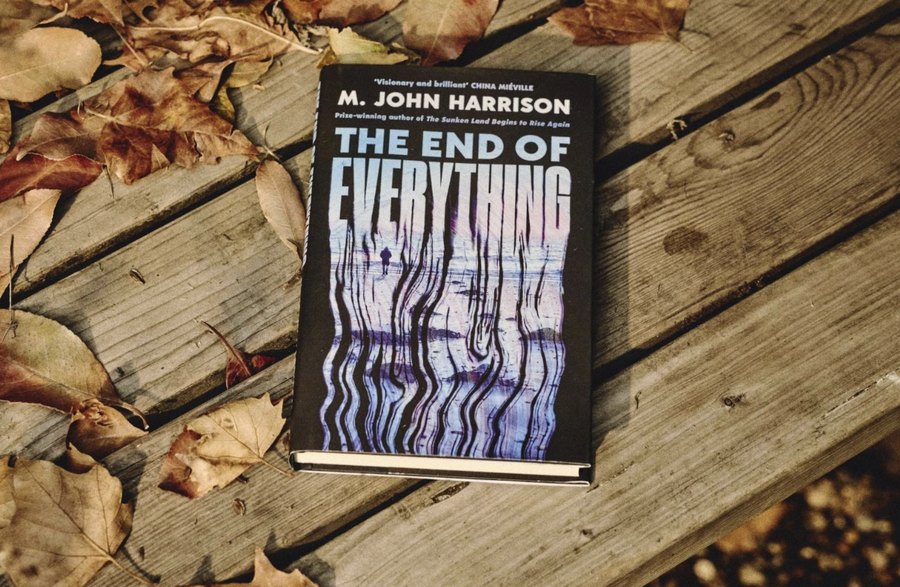
Apocalyptic Sci-Fi Novel ‘The End of Everything’ Wins This Year’s Booker Prize
I really, really wanted to love this book, but did not.