Xavier Becerra Wins Governor's Race
Here are the morning’s top stories on Wednesday, November 4, 2026
- The blue wave that many had predicted came true on Tuesday, with Democrats taking control of both the House and Senate. And in California, it was much the same, with Democrats flipping House seats that were under new maps following the passage of Proposition 50. As anticipated, Democrat Xavier Becerra was also victorious in the governor’s race, defeating Republican Steve Hilton.
- Proposition 40 – the billionaire tax, looks like it could be headed for defeat. The measure would have imposed a one-time 5% tax on individuals with assets valued over $1 billion, who lived in the state as of the first of the year.
- Voters rejected Proposition 39, a GOP-backed voter ID measure. About 60% of voters rebuffed the measure, which Democratic leaders opposed.
Xavier Becerra, a Democrat whose deep experience and steady demeanor helped him navigate a tumultuous primary and chart a safe course in the general election, will be California’s next governor.
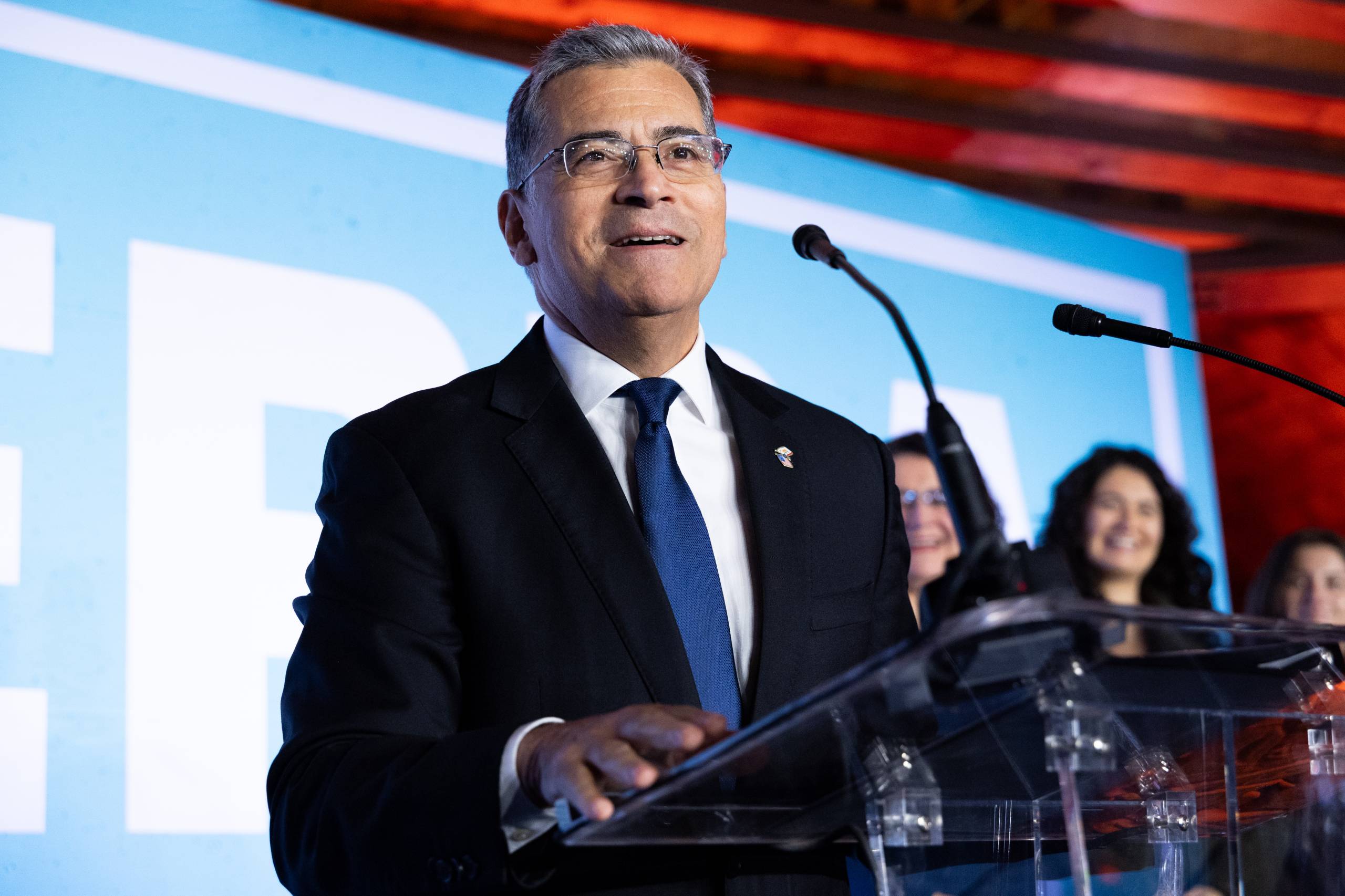
The Associated Press called a victory for Becerra over Republican Steve Hilton a minute after polls closed. He will be the first Latino person elected to serve as California governor. Taking the stage at his election night party in Sacramento on Tuesday night to chants of “Sí, se puede,” Becerra delivered triumphant remarks amid a Democratic surge in races nationwide.
“What a great night to be a Californian,” Becerra said. “What a great night to be an American. To be the son of immigrants from a union household. To be standing in victory with all of you. Now, I’m not going to sugarcoat it. These past two years have been tough. Higher prices, more wars, corruption, and lawlessness. But we hung in there, fought back.”
Becerra is a familiar face in state politics, having represented Los Angeles in Congress for years before serving as California attorney general and the U.S. secretary of Health and Human Services under former President Joe Biden.
Hilton, by contrast, was a political outsider. Born in Britain, he served as an adviser to former U.K. Prime Minister David Cameron and hosted a show on Fox News after moving to the U.S. An endorsement from President Donald Trump rallied the Republican vote around Hilton in the June primary and boosted him into the general election. He campaigned tirelessly through the summer and fall, holding regular events and media appearances and running ads that made direct appeals to Californians who disliked the president.
It made little difference in a state where 3 in 4 voters disapprove of Trump and where Republicans have not won a statewide office in two decades.
In the lone debate between the candidates, hosted by CNN, Becerra relentlessly reminded viewers of Trump’s endorsement, while Hilton took few steps to decisively break from the president. It was perhaps the only high-profile moment of an otherwise sleepy general election. Becerra largely stayed out of sight until the final weeks of the race, when he barnstormed the state and promised to look at changes to the tax code or tax increases in order to offset federal health cuts.
A proposal to impose a wealth tax on California’s billionaires to fund healthcare was trailing Tuesday night, though it remains too early to call the result for Proposition 40.
Two competing measures placed on the ballot by billionaires opposed to the wealth tax were mixed. Proposition 41 was behind in a neck-and-neck race, while Proposition 42 was leading. Both measures contain language aimed at undermining Proposition 40, making it impossible for the state to enforce the wealth tax if they pass with more votes.
Proposition 40 asked voters whether to assess a 5% tax on the overall wealth of anyone who lived in California as of Jan. 1 of this year and had assets topping $1 billion, which would apply to about 200 people.
The money raised by the tax — some $100 billion over five years, according to supporters — would backfill healthcare cuts imposed by President Donald Trump and Republicans in Congress under last year’s so-called One Big Beautiful Bill.
It’s a type of tax that’s never been attempted in the U.S. and one that aimed to get at the vast wealth of the state’s billionaires by taxing their overall assets, not just their income or capital gains. That overall wealth grew by an estimated 15% per year from 2019 to 2025. The measure was placed on the ballot by SEIU-UHW West, a union representing more than 120,000 healthcare workers in California.
But after spending more than $20 million to qualify the measure, the union was vastly outspent by billionaires opposed to Proposition 40 and in support of Propositions 41 and 42. Google co-founder Sergey Brin alone donated more than $100 million, and the campaign raised more than $330 million overall. Some surprising allies, including Democratic Gov. Gavin Newsom, the California Teachers Association and Planned Parenthood, buoyed the no side. They all argued that the measure would ultimately hurt California’s budget and economy by driving wealthy executives and businesses out of state.
Democratic Party leaders are breathing a sigh of relief after voters rejected Proposition 39, a GOP-backed voter ID measure that drew interest — and millions of dollars — from Republican megadonors across the country.
About 60% of voters rebuffed the measure, which Democratic leaders opposed in unison and heavily campaigned against, arguing it would amount to voter suppression. Republican Party leaders and other supporters of the initiative characterized Prop. 39 as a common-sense idea that has precedence in more than two dozen states.
The measure would have required voters to show a government ID at polling places or write the last four digits of a Social Security or other government-issued number on mail ballots. Illinois billionaire Richard Uihlein, the campaign’s biggest donor, helped proponents amass $37 million in support from Republicans nationwide.
“It was an absolutely unnecessary ballot measure,” said David Trujillo, executive director of American Civil Liberties Union California Action Tuesday night. “California voters saw it for what it was, which was an attempt to disenfranchise voters in this state.”
The GOP headwinds nationwide appeared to trickle down-ballot in California, spelling bad news for the Republican-endorsed measure as returns quickly showed overwhelming opposition.