California Cancer Patients Divided Over Whether Prop 38 Will Help Them
Here are the morning’s top stories on Monday, November 2, 2026
- There’s been a lot of debate this election over Prop 40 and whether California’s billionaires should pay a new tax to fund health care. Meanwhile, another California billionaire has put a measure on the ballot asking taxpayers to bankroll his own brand new medical lab.
- A San Francisco judge is holding a hearing this morning over the US Justice Department’s appeal of a ruling that barred the department from demanding that election officers remove possible noncitizens from voter rolls. The case is one of many involving the federal government’s claims that thousands of noncitizens are registered to vote in California. The hearing comes just weeks after 28 green card holders were charged with crimes including voter fraud.
- In Congressional District 13, Incumbent Adam Gray is campaigning as a moderate Democrat. That comes despite the latest redistricting effort from Prop 50, and more chatter around progressive voters.
Cancer patients who say their lives were saved by innovations in immunotherapy treatments are among the most vocal proponents of California’s Proposition 38, arguing the $8.4 billion bond measure to fund immune-system research would save even more lives.
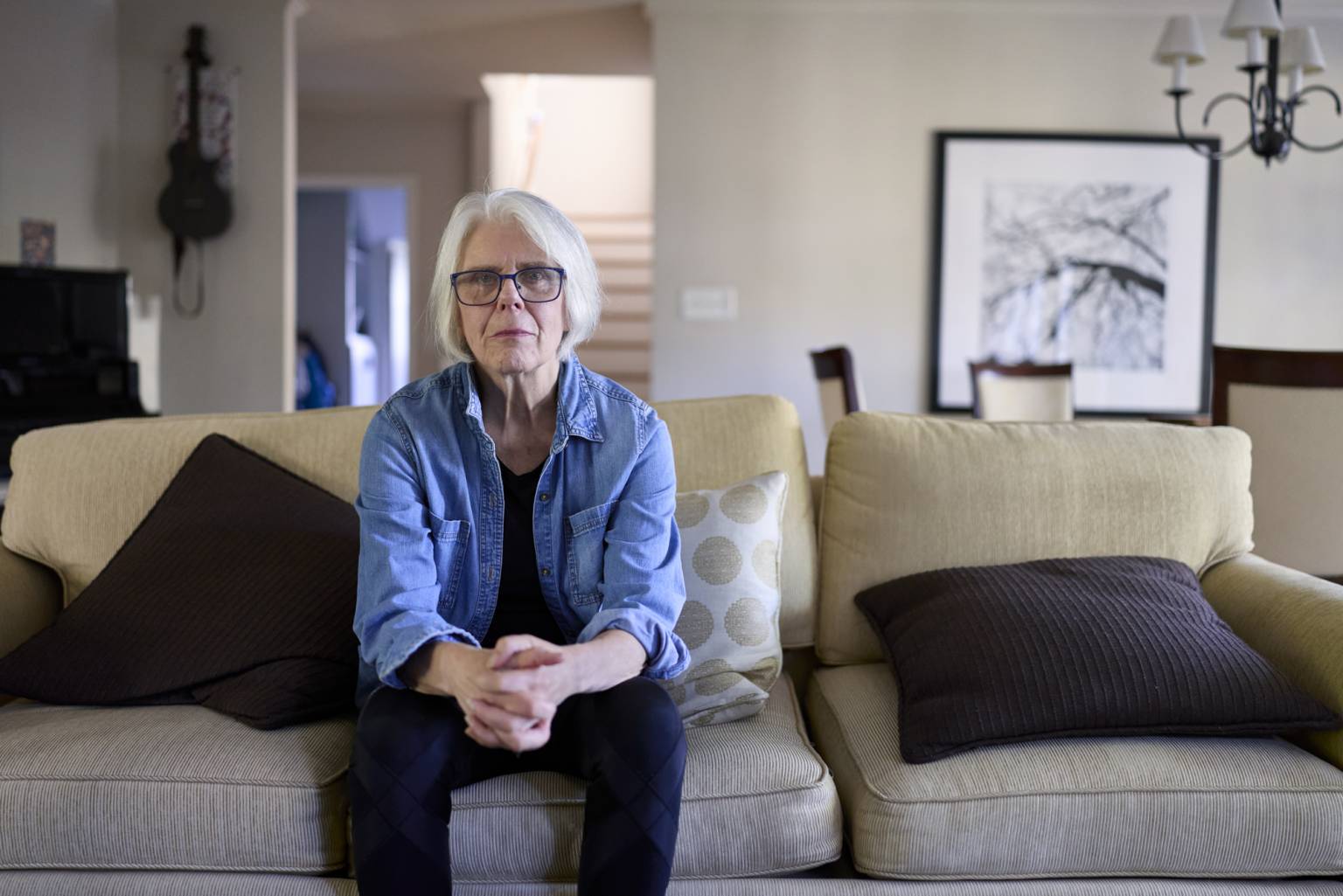
But those who oppose Proposition 38 are also patients, who say their illnesses are being exploited to shill for an initiative that is overly narrow, opaque and expensive. “Don’t approve this measure because you want to help me or other people with Parkinson’s,” said Marianne O’Malley, a former analyst with the state’s Legislative Analyst’s Office who was diagnosed with Parkinson’s disease about eight years ago. “This is the wrong way to go about things.”
Backers of Proposition 38 proposed it as a solution to the Trump administration’s attack on science: where federal research funding has become diminished or uncertain, California would step in, issuing bond money to bring stability to promising projects and turn the state into a hub of excellence for immunology and immunotherapy research. But the patients who stand to benefit from such a move are divided over whether Californians should shoulder that burden instead of taxpayers across the US, and if so, whether Proposition 38 is the right way to do it.
“I have never thought of biomedical research as something that needs to be centered in a particular location,” said Robert Kaplan, a senior scholar at Stanford who formerly coordinated research portfolios at the National Institutes of Health and an opponent of Proposition 38. “Proposition 38 money is good for California institutions, but it means that California taxpayers might be taking a disproportionate share of the responsibility for paying for that research.”
Blood cancer survivor Laurie Adami is in favor of the measure. She was diagnosed with non-Hodgkin lymphoma 20 years ago, when she was 46, and her son was in kindergarten. She fought her way through seven different treatments, including grueling rounds of chemotherapy and three experimental trials so she could survive to see him graduate from high school. In 2018, she enrolled in an immunotherapy trial where scientists reengineered Adami’s own immune cells to attack her disease. “Chemotherapy is like napalm — they poison your whole body in the hopes of killing off your cancer,” she said. “This idea of waking up the immune system is a much more elegant way to target cancers.”
The campaign in favor of Proposition 38 is being financed by philanthropist Gary Michelson, who also happens to be a co-founder and chair of the brand new California Institute for Immunology & Immunotherapy at UCLA, which, according to the ballot measure’s criteria, stands to receive half the bond money directly, then help oversee the distribution of the other half in research grants to nonprofits. The measure would also exempt this institute from complying with a series of state transparency laws, including public records act requests and open meetings, O’Malley said, meaning taxpayers won’t have a way of knowing if their money is being spent wisely. “This measure hijacks the initiative process to steer public funds to a billionaire’s philanthropic project and then hides its tracks by waiving all the usual laws to promote governmental transparency,” she said. “This one is so bad and supposedly being done to help people like me, I felt a moral obligation to speak out.”
A day before Election Day, the Department of Justice is asking the U.S. Supreme Court to wade into its unprecedented feud with California over the state’s voter rolls.
The appeal is the department’s latest foray into state election administration, which a federal judge referred to last week as “a broad, ongoing pattern of attempted election interference by federal officials.” After that judge, David Carter, a Clinton appointee, and a divided 9th Circuit Court of Appeals panel rejected the DOJ’s request to order California to set aside and stop processing the ballots of thousands of people, the DOJ filed a notice Monday that it is seeking injunctive relief from the high court.
It remains to be seen whether the Supreme Court will agree to intervene and, if so, whether it would weigh in before Tuesday’s Election Day.
The DOJ says it has identified 20,000 “likely” noncitizens on California’s voter roll whose ballots should not be counted until their citizenship can be verified. Courts so far have sided with California and Los Angeles County’s arguments that the federal government’s list is unreliable, and that creating a novel system to segregate ballots while voting is already underway is infeasible.
28 Californians have been charged with crimes, including voter fraud. And Stanford Law Professor Jennifer Chacon said they could face even more sever consequences. “The fact that these individuals can be criminally prosecuted, barred from naturalization, subject to deportation, all sort of demonstrates why, as a general rule, noncitizen voting is not a problem,” she said.
Even though California’s Prop. 50 made Congressional District 13 lean more Democratic, incumbent Rep. Adam Gray’s campaign strategy hasn’t changed much, and he’s sticking to his “Valleycrat” approach by trying to appeal to Republican voters, too.
When Gray flipped the House seat two years ago, he won by fewer than 200 votes. Despite the Democratic advantage this time around, Gray is still courting voters from both sides of the aisle. “You can both be a strong Democrat, as I am, and still believe in bipartisanship,” Gray told The Merced FOCUS.
Gray, 49, whose district includes all of Merced County, and parts of Fresno, Stanislaus, Madera, and San Joaquin counties, said he’s still focused on being someone who can make relationships across the aisle and remain moderate.
Because of Prop. 50, Gray’s Republican challenger this term is former Stockton Mayor Kevin Lincoln, who gained the support of the Republican Party in Merced County as well as an endorsement from President Donald Trump early in his campaign. Lincoln’s campaign did not respond to an interview request.
More recently, several Democratic candidates with strong progressive backings have gained momentum. For instance, in District 22 in the southern San Joaquin Valley, Republican incumbent David Valadao will face off against Democrat Randy Villegas, whose campaign was boosted by recent visits to the district by progressive powerhouses Senator Bernie Sanders, D-Vermont, and Rep. Alexandria Ocasio-Cortez, D-New York City.
But this shift in Democratic politics isn’t necessarily universal. Blake Zante, executive director of the nonpartisan public policy institute, the Maddy Institute, said progressive politics often don’t take center stage for so-called “Valleycrat” candidates, or those with a moderate Democrat attitude, because Prop 50 largely made seats safer for all Democrats. “It seems like more progressive candidates are winning in some of these races in municipal, state, and federal elections all across the country, so I think it’s hard to pinpoint whether or not Prop. 50 [changed] the types of Democratic voters included [in the district],” Zante said. “I think overall the goal was to make it a safer Democratic seat.”