Californians Reject Republican-Backed Voter ID Measure
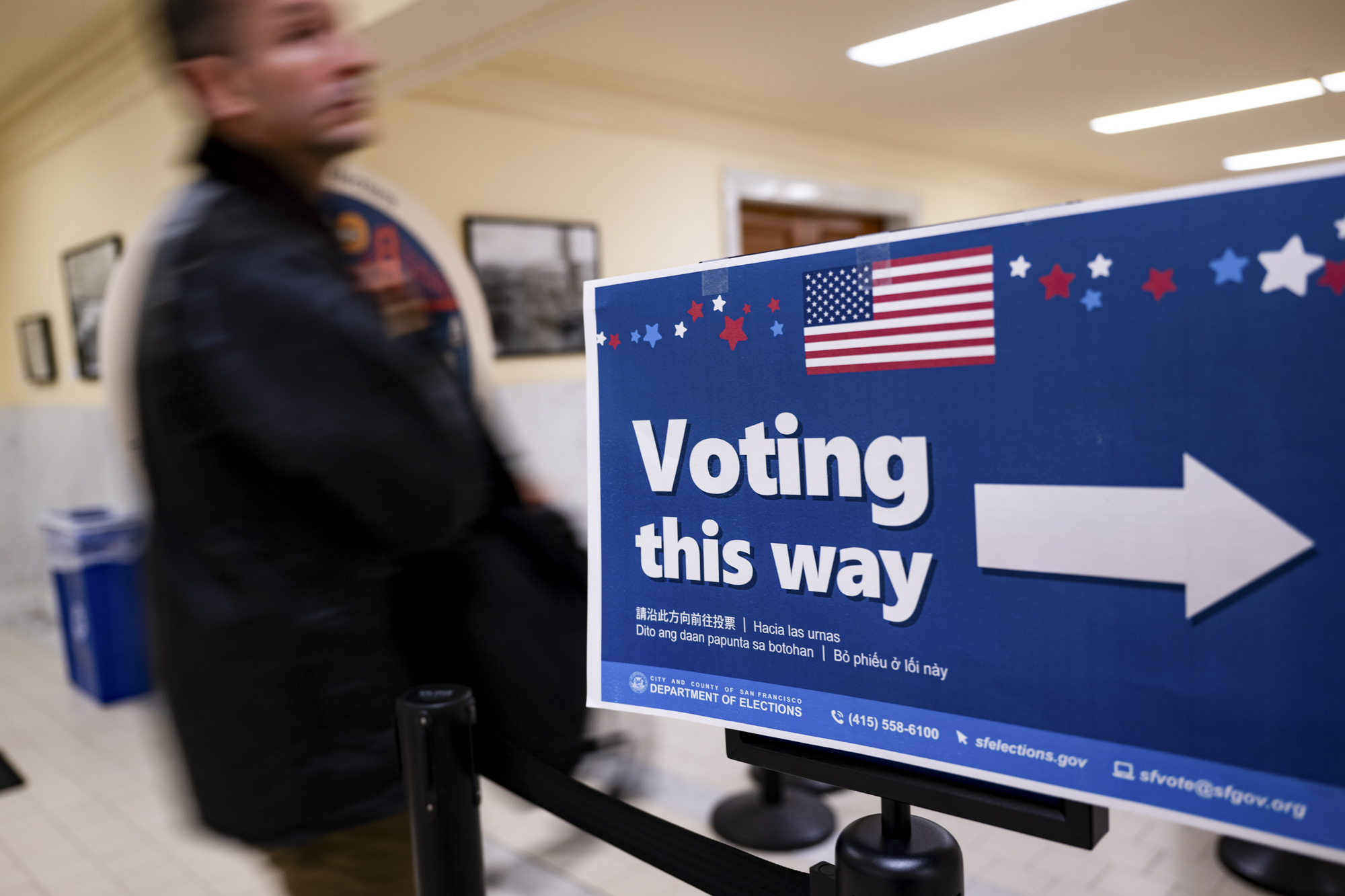
As discourse about election integrity shadowed this year’s midterm elections, California voters rejected a statewide initiative brought by Republican lawmakers to require identification when voting.
On Tuesday, the measure failed, with about 60% of voters opposed and 40% in favor, according to the Associated Press.
The vote came as President Donald Trump made multiple attempts to limit mail-in voting in recent months and apply new voter identification requirements nationwide.
Proposition 39 would have amended the state constitution to require voters to present a government-issued ID — such as a driver’s license or Social Security card — when voting in person. For those mailing their ballots, it would have required voters to write the last four digits of their ID number on the ballot envelope.
Additionally, the measure would have required the Secretary of State and county election officials to use their “best efforts” to verify the citizenship of registered voters and report annually the percentage verified. The State Auditor would have been responsible for auditing the state and county for compliance and recommending changes in odd-numbered years.
“California already has strong systems in place to verify voters and protect our elections,” said Jenny Farrell, executive director of the League of Women Voters. “Prop. 39 responds to claims of widespread voter fraud that simply are not supported by evidence in California while creating very real new barriers for eligible voters.”
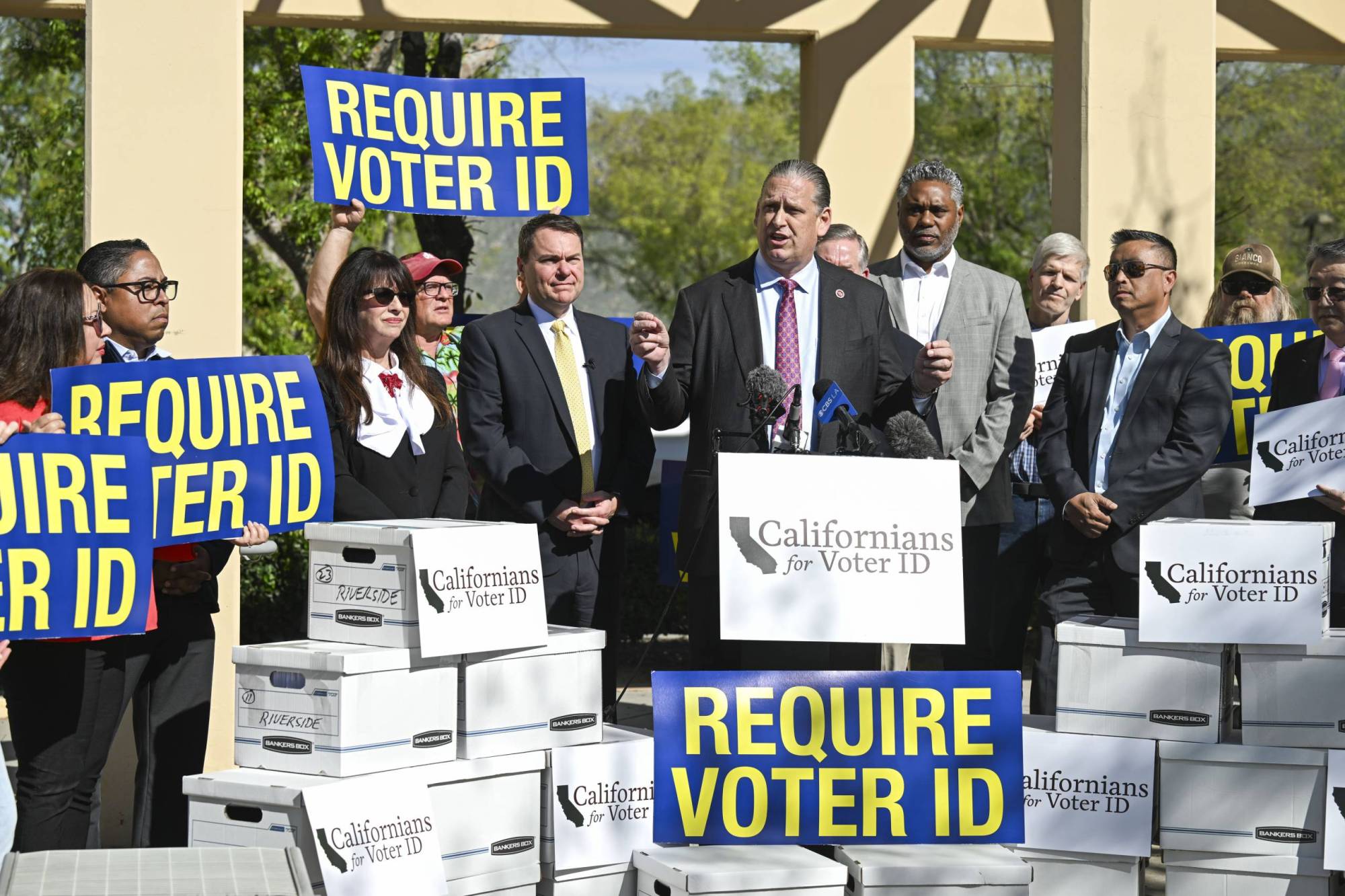
San Diego Assemblymember Carl DeMaio led the initiative, framing it as a common-sense reform that would improve public confidence in elections, regardless of how common voter fraud actually is.
“Whether it’s real or perceived, these issues result in a low confidence level amongst many voters in our elections,” he said. “So why don’t we fix that?”
DeMaio attempted a similar voter ID initiative in 2023, which failed. This time, he claimed the initiative had bipartisan support because nearly half of the signatures gathered to qualify for the ballot were from Democrats and Independents.
But the initiative faced an uphill battle as opponents began tying it to Trump’s SAVE America Act. That measure stalled in Congress and would not just require voter ID at the polls nationwide, but also mandate proof of citizenship during registration and ban vote-by-mail except for illness, disability, military service or travel.
During a CNN gubernatorial debate in September, Democratic candidate Xavier Becerra credited Proposition 39 to Trump.
“Prop. 39 is an initiative that is backed by Donald Trump,” he said. “He couldn’t get his SAVE Act out of Congress, which tries to interfere in elections, so he’s gone around the country and put initiatives on the ballot. In California, it’s Prop. 39.”
But DeMaio pushed back on that characterization and has tried to distance the initiative from the president. Trump did not weigh in on the measure.
Proposition 39 is a far less severe proposal than the SAVE America Act, but supporters have repeated the president’s claims about voter fraud. The measure’s co-author, state Sen. Tony Strickland, cited an instance when a California woman registered her dog to vote.

“Here in Orange County, where I represent, a dog voted in the last two elections,” Strickland said. “We need to bring about voter integrity to our election system.”
The case against Laura Lee Yourex, 64, of Costa Mesa, was dismissed last month after she pleaded guilty to a misdemeanor and completed the terms of her plea agreement, according to NBC Los Angeles. Yourex is registered as a Republican.
Democrats have said Yourex’s ultimate prosecution indicates the system worked as designed.
Across the country, studies have shown there is no evidence of widespread voter fraud, and Farrell criticized California’s initiative as a solution to a nonexistent problem.
“You are more likely to be struck by lightning in the United States than you are to commit voter fraud in an American election,” Farrell said.
Opponents — which include the California Democratic Party, Gov. Gavin Newsom and ACLU California Action — also raised concerns that the initiative would suppress voter turnout among eligible voters who don’t have the required documentation handy.

“Prop. 39 would actually affect every California voter, but we know that additional ID requirements don’t fall equally on everyone,” Farrell said.
She pointed to voters of color, younger voters, low-income voters, voters with disabilities and people who have changed their names, including married women and transgender people, as all less likely to have the documents required by this initiative.
The measure also leaves key details to the Legislature, including what a “best effort” to verify citizenship means in practice and what counts as a government-issued ID.
Whether lawmakers accept public housing IDs, student IDs, gun registration IDs or tribal IDs could privilege certain age, racial and socioeconomic groups over others.
As of late last week, the opposition campaign had drawn in around $34.5 million from donors like the California Democratic Party, the California Nurses Association and the Federated Indians of Graton Rancheria.
In contrast, support for the measure had reached $36.6 million, including out-of-state Republican donors like billionaire shipping supplies magnate Richard Uihlein and Airbnb co-founder Joe Gebbia.