East Bay Immigration Arrest Raises Questions About ‘ICE-Free Zones,’ Training at Hospitals

After immigration authorities detained a man in Emeryville last week and brought him to an Alameda County hospital, some medical staff said they didn’t receive legally required training that would have helped them respond to enforcement activity.
Several staff members at Wilma Chan Highland Hospital Campus in Oakland told administrators in a letter that the Oct. 16 arrival of U.S. Immigration and Customs Enforcement agents and a detainee “highlighted major hazards to the rights and safety of our patients.”
Immigration agents brought a man to Highland for treatment after an agent allegedly tackled him and fractured six of his ribs, said Nikolas De Bremaeker, an attorney at Centro Legal De La Raza who represents the man.
Since then, De Bremaeker and some employees said agents allegedly tried to obstruct access to counsel, to direct medical treatment and to ask staff for medical information. The agent who tackled the patient, the attorney said, has been “sitting on his bed, grinning at him.”
“It’s incredibly scary,” De Bremaeker told KQED. “It’s just unacceptable for ICE agents to be terrorizing folks inside a hospital.”

About two dozen community members were on the lookout for agents on Thursday morning for hours, being directed by others to make noise if immigration authorities exited or entered the facility. They’d been showing up since Monday, an organizer said.
The Alameda Health System, which Highland is a part of, declined to comment on allegations specific to De Bremaeker’s client’s care, citing patient confidentiality. But said, generally, law enforcement does not direct treatment and the system is complying with all laws and requirements concerning immigration enforcement in its facilities.
In an earlier statement to KQED about the ICE activity, AHS said that it activated an Incident Command Center and that security personnel are on site monitoring developments.
“We are following all immigration response protocols,” AHS said in the statement.
Alameda Health System’s training falls short, staff says
Some staff members told AHS in the letter that they “at all levels, remain confused and consistently express a lack of clarity on policy when patients are brought in civil detention.”
“This is out of step with current best practices in the state of California,” the staff members wrote.
Senate Bill 81, which took effect in September 2025, requires medical health care providers to restrict certain immigration information from being shared and, as part of new restrictions to nonpublic areas, facilities must inform staff on how to respond to requests to access sites and establish procedures for receiving visitors.

But staff told administrators the hospital system isn’t in compliance with that law.
Ansel Schmidt, a physical therapist at the Highland Hospital, isn’t on the patient’s care team, but helped draft the letter.
“I’m not sure that I’ve received anything that I would call training,” Schmidt told KQED. What Schmidt has received is a “badge buddy,” or a reference guide, that he said implies staff can cooperate with ICE.
A badge buddy reviewed by KQED shows that staff are instructed to notify an administrator when a patient in ICE custody shows up for care. Providers request agents leave during evaluation, inform patients of their rights and, if they don’t meet admission criteria, can be handed off to the ICE control office.

Schmidt said that emails about responding to immigration activity have left him and others feeling “really confused and isolated,” because that “isn’t a training.”
In response to staff concerns over training and what training is already in place, AHS said staff are told to “promptly escalate” situations through the appropriate channels where immigration authorities are present at any facility.
“We reinforce these procedures through staff communications, training, scenario-based exercises, desktop training, and quick-reference ‘badge buddies’ that staff can keep with their identification badges,” AHS said. “The protocol has also been reviewed in staff webinar forums, including this week, and recordings are available to staff on our intranet.”
Iman Khalil, a respiratory therapist at San Leandro Hospital, part of the Alameda Health System, said staff members receive minimal training about what to do when immigration authorities show up. Khalil received the same badge and emails Schmidt did.
“Allowing the agents in the hospital … undoes all that training,” Khalil said. “You really don’t think they’ll even allow the agents in the hospital. But here we are.”
AHS CEO James Jackson told staff that AHS believed the man in ICE’s custody at the hospital was part of the agency’s civil immigration enforcement authority and called on personnel to review established immigration response protocols, according to an Oct. 19 email obtained and reviewed by KQED.
ICE-free zone?
Highland Hospital, which sits on county property, also falls under Alameda County’s “ICE-free zone” ordinance that limits cooperation with federal immigration authorities.
County supervisors and advocates touted the policy, of which similar ones have been adopted across the Bay Area, as a way to push back against violent and sometimes deadly actions by immigration agents during the second Trump administration. In January, agents fatally shot Renee Good and Alex Pretti in Minnesota during a surge of immigration enforcement.
But Alameda County Sheriff Yesenia Sanchez and other officials have also noted the limits of just how far the ICE-free zone can go. It doesn’t prevent immigration officials from actually being on county property, Sanchez said previously. Officials in other jurisdictions with these “zones” have even referred to them as symbolic — or a way to create “false expectations.”

De Bremaeker said his client is still in ICE custody as of Thursday afternoon. Another man he represents was detained by ICE in the San Antonio neighborhood in Oakland on the same day, before being taken to another hospital for injuries that De Bremaeker said were sustained because of the officers’ actions.
The two cases are part of an “unprecedented escalation” of violence from ICE, De Bremaeker said.
The attorney called on federal lawmakers to launch a congressional inquiry into ICE’s actions and, in particular, the agency’s activity in hospitals.
“They have been occupying these hospitals for days, creating an incredible threat to community members, terrifying folks who need medical care from going to the hospital,” De Bremaeker said.
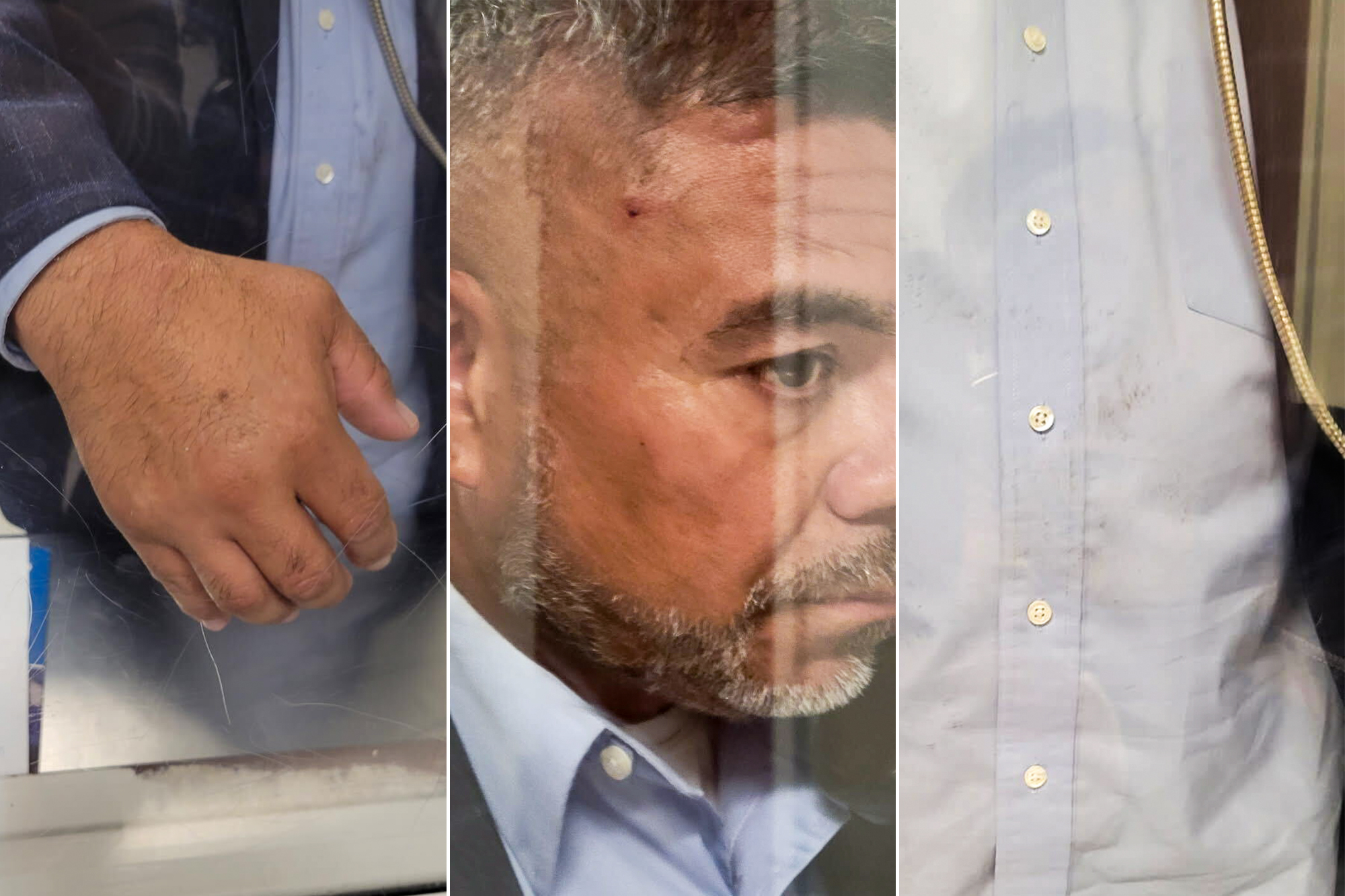
ICE said that De Bremaeker’s client — who the agency characterized as an “illegal alien” — was arrested as part of a targeted enforcement operation. During which, the agency said the detainee tried to assault officers and refused lawful commands.
“Officers relied on their training to control the situation,” an ICE spokesperson said, adding that De Bremaeker’s client disclosed a preexisting injury of falling off a ladder two days prior.
The agency said, like other law enforcement agencies, it is standard procedure for ICE to accompany detainees for the safety of staff and public.
Renee Coe, with the Party for Socialism and Liberation, is among the community members who came out to keep watch for ICE at the hospital. She said some community members are scared to show up to the hospital because of federal agents’ presence, but urged them not to put off medical care.
AHS said its property is not being used as a staging area, operations base or processing location for immigration enforcement activities, and the immigration vehicles currently on Highland property are present “only in connection with a patient who is in immigration enforcement custody.”
Several Oakland residents are holding an emergency press conference at 6 p.m. on Friday in front of Highland to demand the release of De Bremaeker’s client and accountability for local authorities, security contracting with the facility and AHS “continuously” assisting ICE operations at the hospital.
KQED’s Brian Krans contributed to this report.