New Study Shows Low-Income Students Gain Most From Transitional Kindergarten
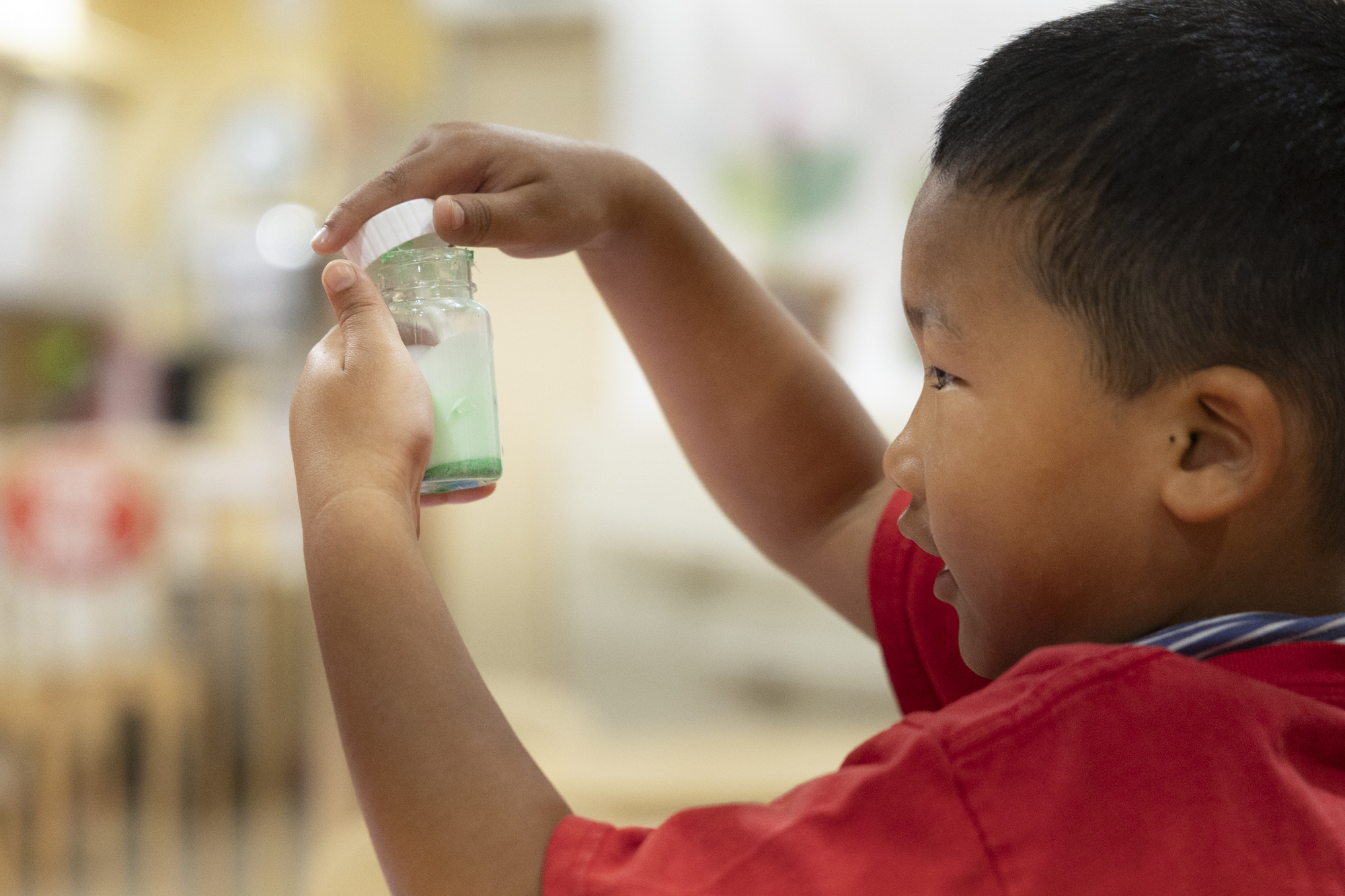
The first children to attend transitional kindergarten when it began in California public schools more than a decade ago made significant learning gains that persisted into later elementary school years, according to a new UC Berkeley study.
Children from lower-income families benefited the most from TK, according to a research brief published Thursday.
They gained about seven more months of learning in reading and math by third grade compared to students from the same school who did not attend TK. What’s more, the children who got an extra year of preschool in addition to TK made the biggest strides. The effects were larger and longer-lasting when they attended well-funded elementary schools.
Researchers said the evidence shows that two major education reforms that happened around the time TK started in 2012 combined to narrow deep and longstanding achievement gaps in California schools.
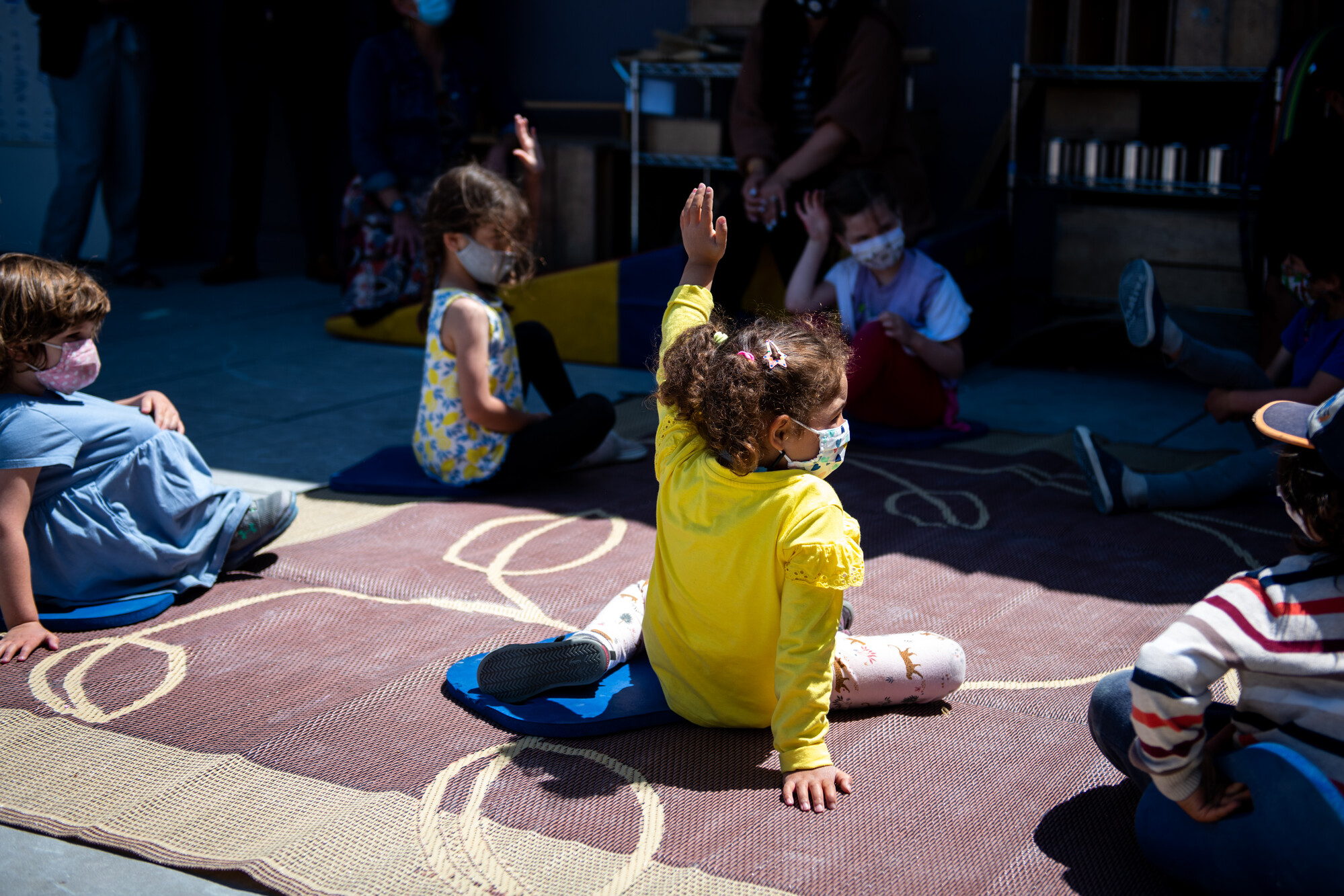
Those changes include the expansion of the California State Preschool Program, or CSPP, which is free to income-eligible 3- and 4-year-olds, and the Local Control Funding Formula, which directs more resources to high-need students.
“It’s this trifecta of public policies — TK, State Preschool and more equitable school funding — that has been the catalyst accelerating young children’s growth,” said Rucker Johnson, an economist and public policy professor at UC Berkeley.
California introduced transitional kindergarten to address disparities that begin even before children enter kindergarten. The state’s previous Dec. 2 cutoff date to begin kindergarten was among the latest in the nation, which meant that some kids who were turning 5 in the fall were entering kindergarten when they were still 4.
This led families who could afford childcare or preschool on their own to delay entry, giving their kids a developmental advantage, while lower-income families typically couldn’t. By shifting the cutoff date to Sept. 1, and enrolling kids who were almost 5 in TK, lawmakers hoped that an extra year of early education would help them develop the necessary skills to succeed in kindergarten.
Johnson said his research found that TK alone doesn’t solve the achievement gap. Instead, its efficacy hinges on what happens to children before, during and after they complete the grade. The benefits of TK were greater for low-income kids who first attended CSPP when they were 3 and persisted when they were in elementary schools that had more resources.
“You could think of each of these three policies having an independent effect that you could add, like two plus two plus two is six,” Johnson said. “But what we’re finding is that the effects are not additive but multiplicative. When you invest early, they actually make the efficacy of subsequent investments more effective. And so two plus two might equal eight.”
Austin Land, a policy analyst and co-author of the study, said the findings suggest that children who attended CSPP might have gotten more out of TK because they started in a high-quality program. The program is modeled after Head Start but is less known than the federal antipoverty program. It provides play-based learning and family support services. Classroom sizes are smaller than TK and are often staffed by educators who speak children’s home languages.

“CSPP appears to have played an important role,” Land said. “If they have that year of preschool where it’s not so academic and they’re around other children their age before entering these more formal TK environments, that was important for them.”
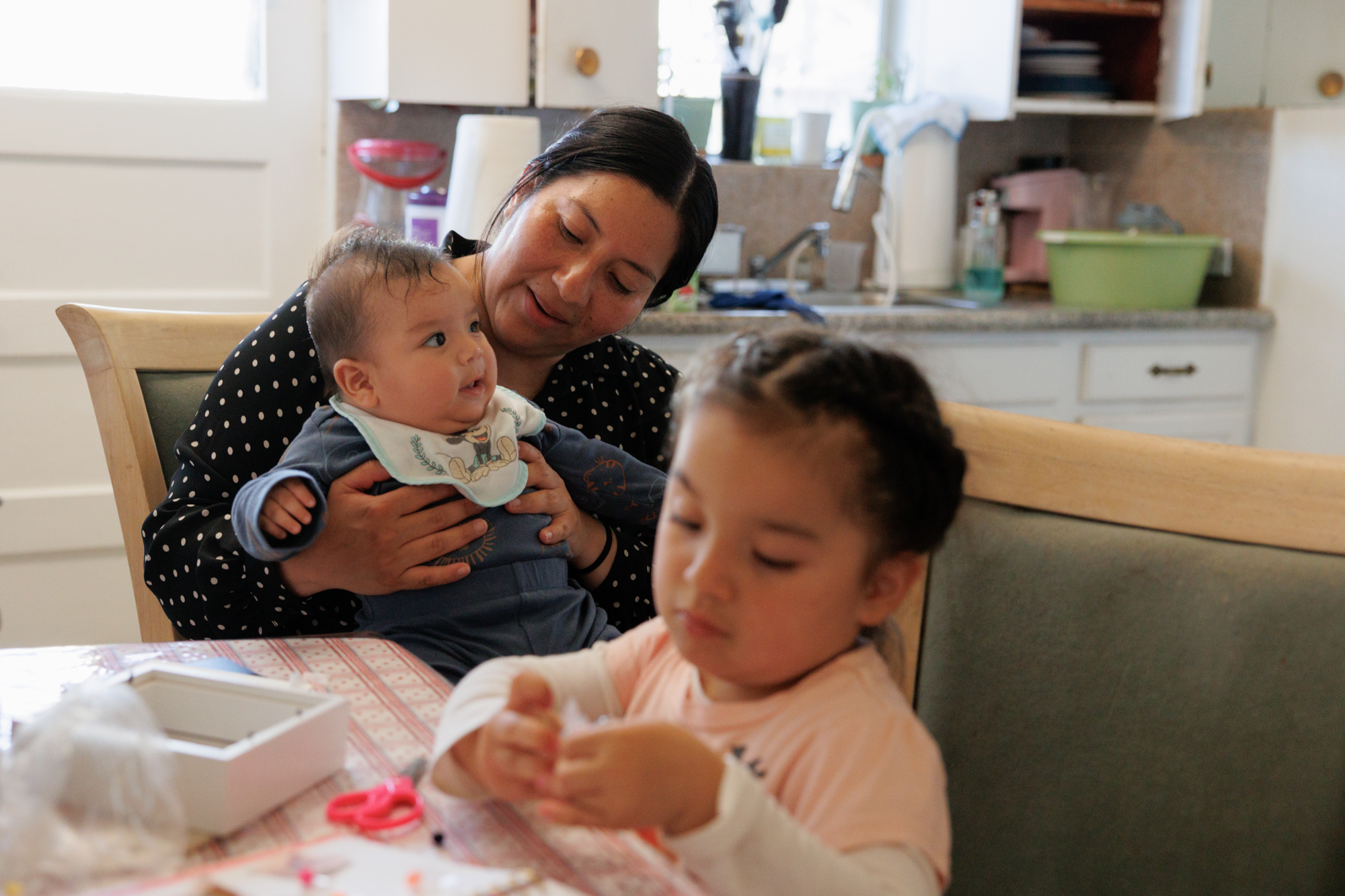
Two years of early education made a difference for her family, said Selam Mulatu, a Bay Area mom who enrolled all three of her children in CSPP. She said her oldest, who is 9, began reading when he started kindergarten and now, “I can’t get him off of books.”
“He really enjoyed the hands-on activities [in preschool],” Mulatu said. “He would come home with so many crafts and tracing and artwork. I think that really helped with coordination and just got him really excited to learn. We read a lot at home too — we’re big readers — so I think that contributes, as well.”
Mulatu said when she became a first-time parent, she assumed that children couldn’t enroll in public schools until they were 6 years old. But a relative told her about Franklin Preschool, a CSPP program run by the Berkeley Unified School District, and she learned she qualified for it based on her income as a waitress.
“The preschool does a great job exposing them to so many different activities like gardening, reading, socializing. You cannot do all of that as a working mother,” she said. “I think it’s so important to have these systems because they fill in the gap that parents cannot meet.”
Despite the evidence of CSPP’s benefits, enrollment has declined since the COVID-19 pandemic. Recent data show only 18% of eligible 3-year-olds are enrolled in CSPP, even though in recent years the program has expanded to reach two-thirds of young children in California, including those from middle-income families, Land said.
Families who earn up to 100% of the state median income, which is $136,044 for a family of four, qualify. The program can be offered in elementary schools, licensed child care centers or community-based organizations like the YMCA.
Land said now that TK is universally available to all 4-year-olds, regardless of their family’s income, the state could focus on strengthening CSPP and getting more eligible 3-year-olds into the program.
“Because enrollment is lower than the budget suggests it should be, I think there’s a temptation to say, ‘Oh, families don’t want that because they’re not showing up for it and we should fund other things,’” he said. “That would be a tragedy.”
Johnson, meanwhile, said that given that more than half of young children in California are learning English alongside their home language, the state could do more to meet the needs of these dual language learners.
Research unrelated to this study has found that encouraging home language use in classrooms leads to stronger outcomes for these children.
“We put a lot of emphasis on making sure children are ready for school, but we want to make sure schools are ready for children,” he said. “We’re the largest and most diverse state system in the country, so the lessons that we’re drawing out for California are a roadmap for many other state systems.”