As San José Tries to Regulate Data Centers, Residents Want to Ban Them
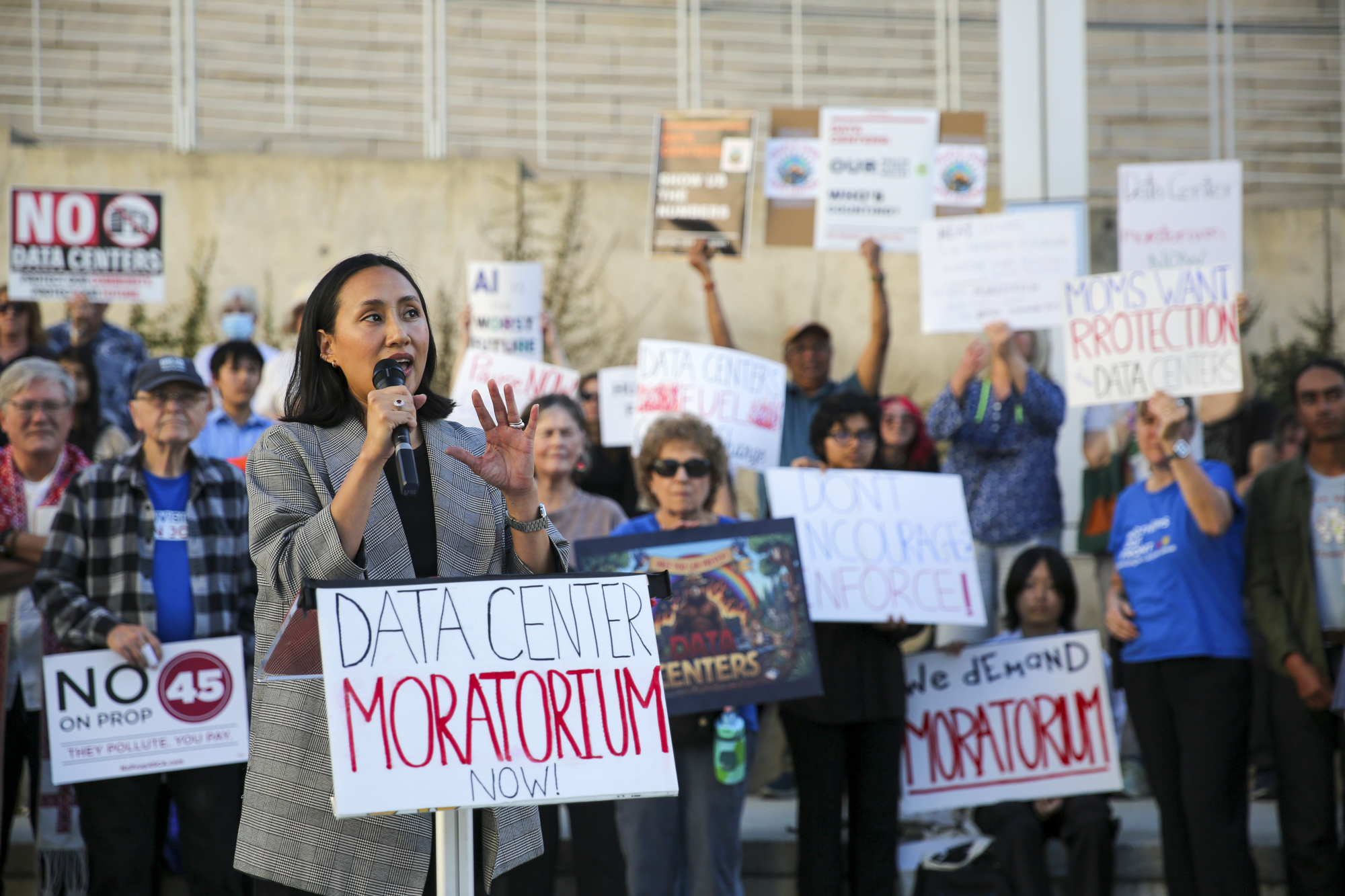
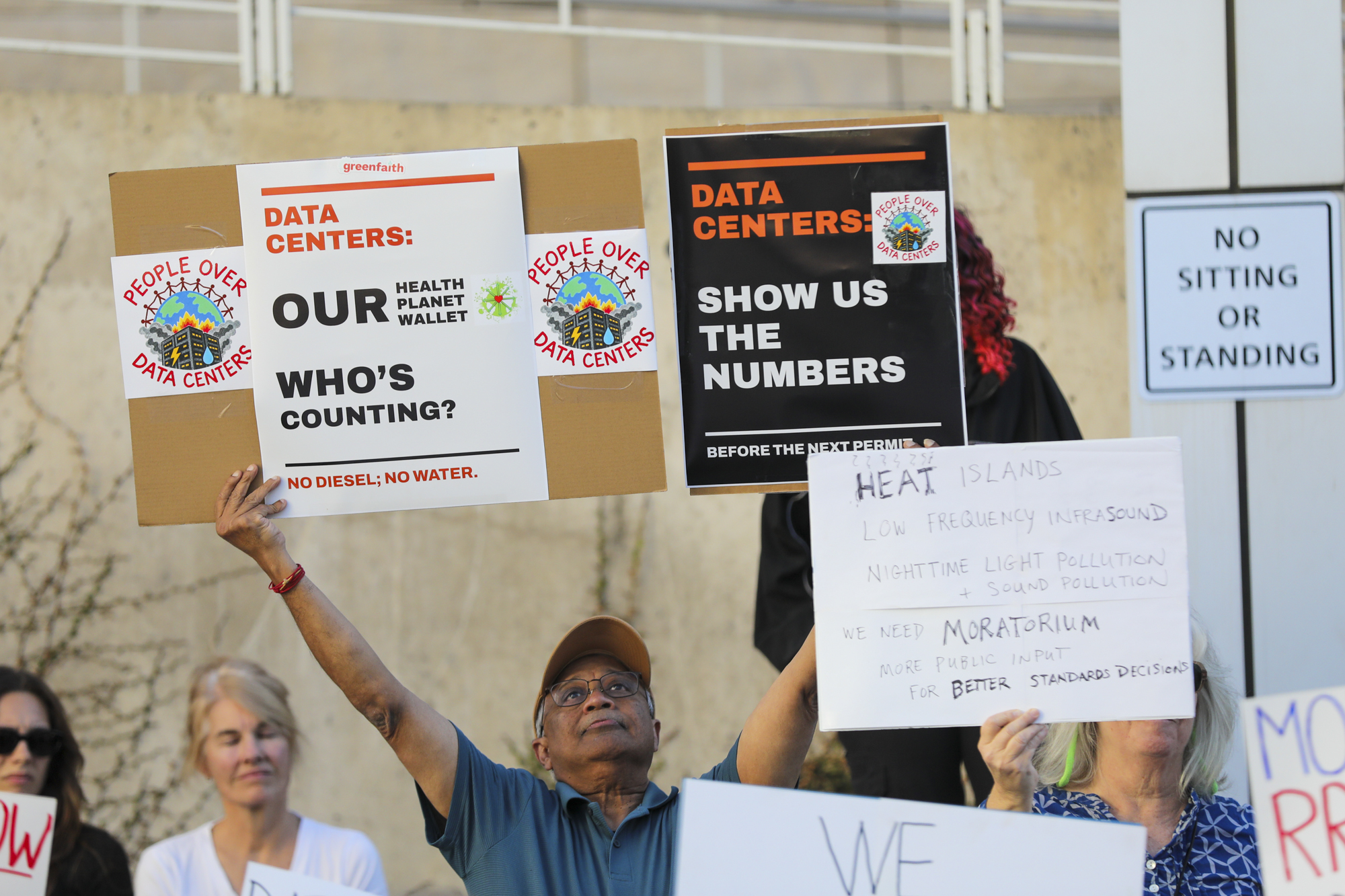
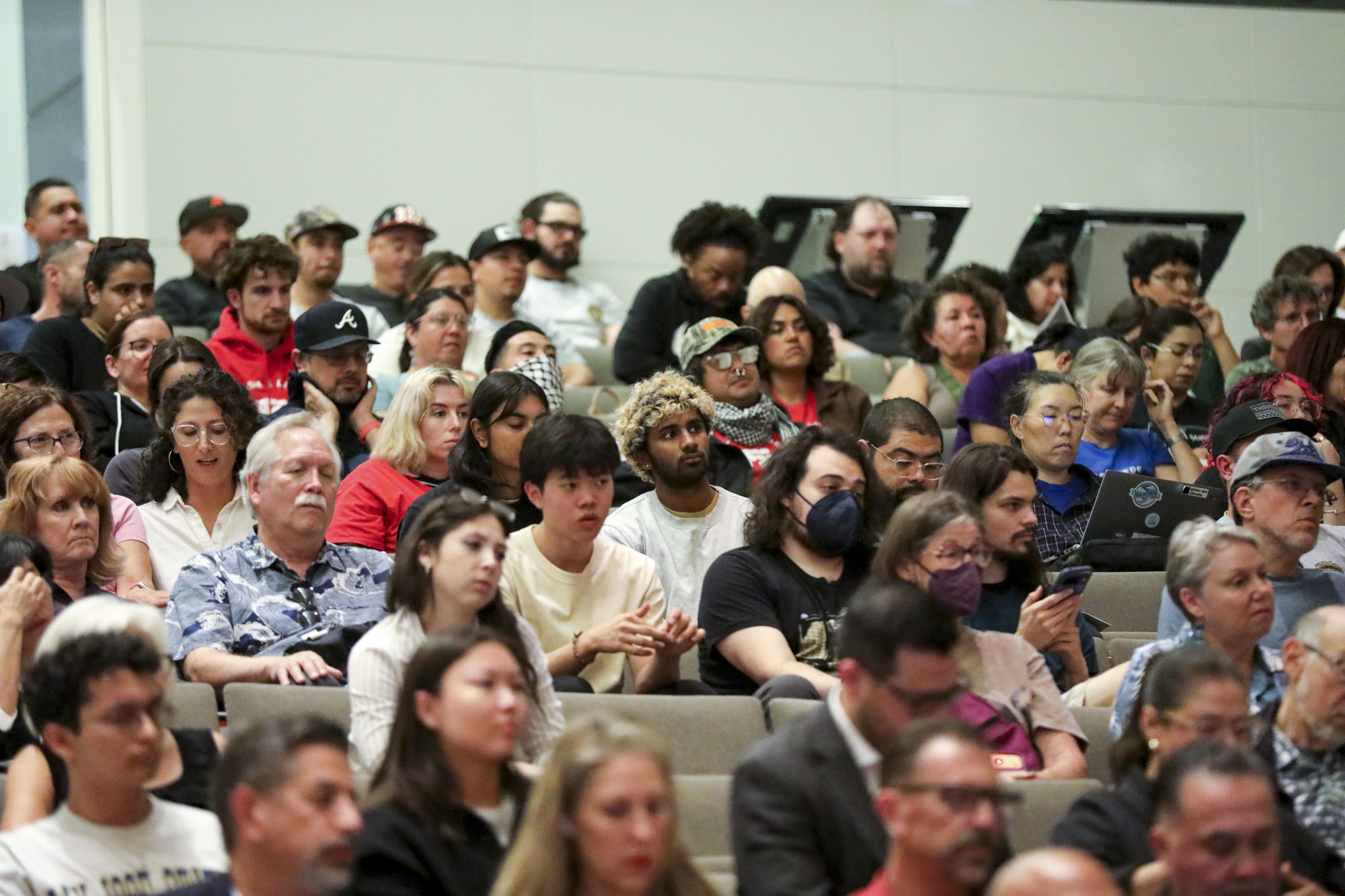
As San José officials rolled out new proposed data center development standards, moving one step closer to enshrining them, residents and environmental advocates staged rallies and packed city hall demanding an outright moratorium on the power-hungry facilities.
During a community meeting Thursday night, high-ranking city staff members proffered new rules and requirements for future data centers such as requiring recycled water use, aesthetic design enhancements, sound dampeners, limits on backup generator runtime for testing and maintenance, and developer fees for affordable housing.
While the city garnered commendations for its proposals from business groups and union laborers who build data centers, community groups and residents from around San José called for a pause on all data center approvals and applications, saying the standards don’t do enough to protect people from risks of air and water pollution, increased local temperatures and constant noise.
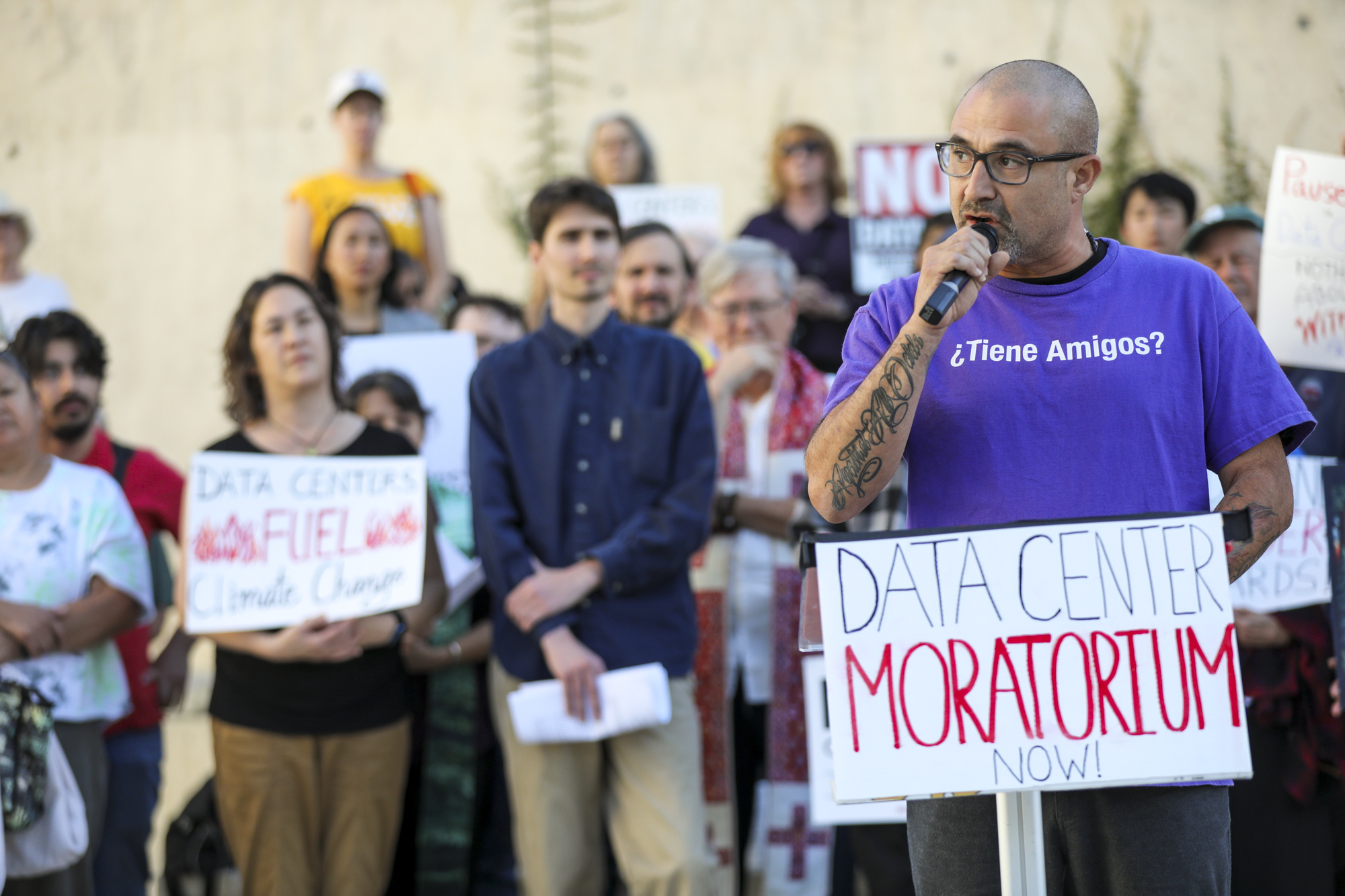
“The very least that we could expect is that our government, which is funded by our tax dollars and led by people who we elected to serve us, does not blindly follow corporations and billionaires into the unknown,” Kylie Clark, policy director at the Silicon Valley Council of Nonprofits, said during a rally before the meeting.
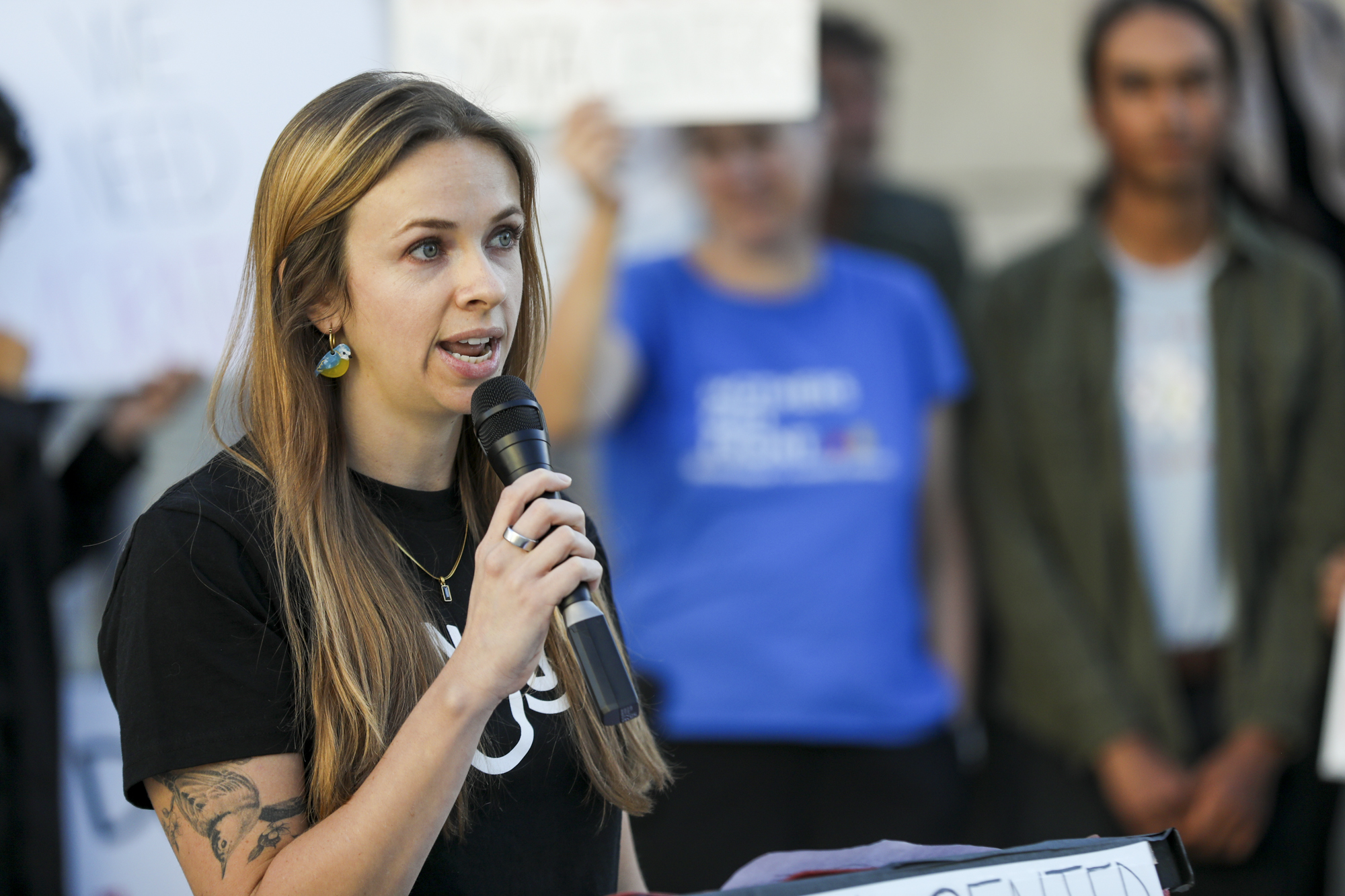
“These decisions are not reversible. They will define our city for generations to come. So our question is, what is the rush? Why in the world wouldn’t we take our time, understand the impacts, and get it right?” Clark said.
While other Bay Area cities including San Francisco, Oakland, Richmond, Gilroy and Oakley have passed temporary moratoriums on data centers out of concern about health and environmental impacts, and to give city officials time to plan out codes and regulations, San José has continued a policy of courting data center developers.
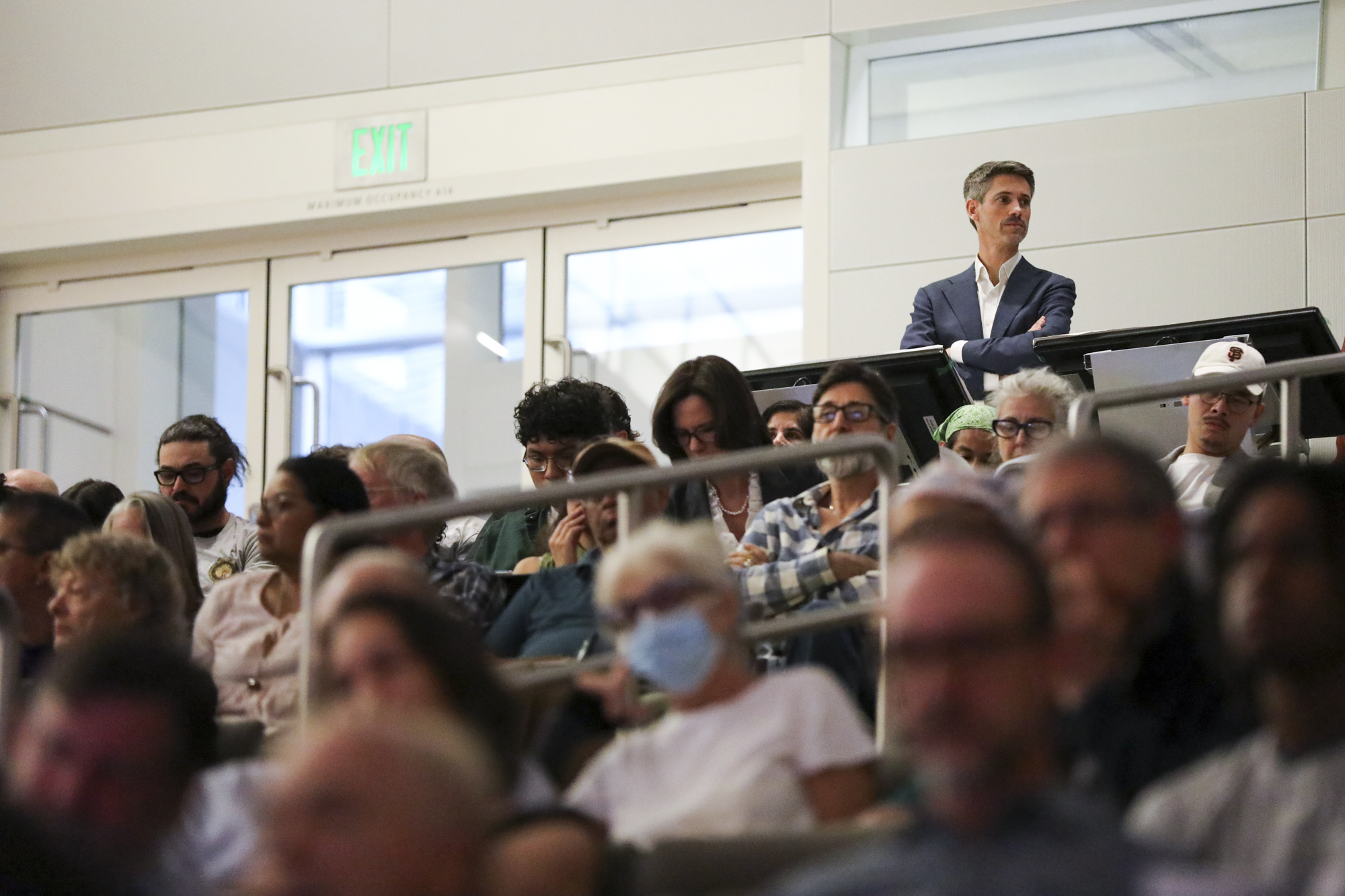
Mayor Matt Mahan, who attended part of Thursday evening’s meeting, has said previously the city should lead the way in helping shape how such significant investments benefit municipalities, and has likened an outright ban on data center development to burying “our heads in the sand.”
He pledged in an interview last month that the city would set some of the “highest, strictest standards in every category of concern we’ve heard” from residents.
City officials, including Deputy City Manager Manuel Pineda who oversees the city’s energy and environmental services work, reiterated Thursday that the City Council has not directed staff to work toward a moratorium, despite public calls to do so.
Instead, the city is pushing ahead with a process that began in August to hold community meetings and accept feedback from residents to help craft new rules around data center development, monitoring and requirements for ensuring such projects help support affordable housing fees.
Long before responding to concerns from residents by ramping up this public input process, however, San José had established dedicated staffing to attract data centers, inked a power reliability agreement with PG&E, and offered “concierge-style support” to data center developers.
“We are still listening as we continue to develop those standards, to make them the best standards possible,” Pineda said Thursday at the meeting.
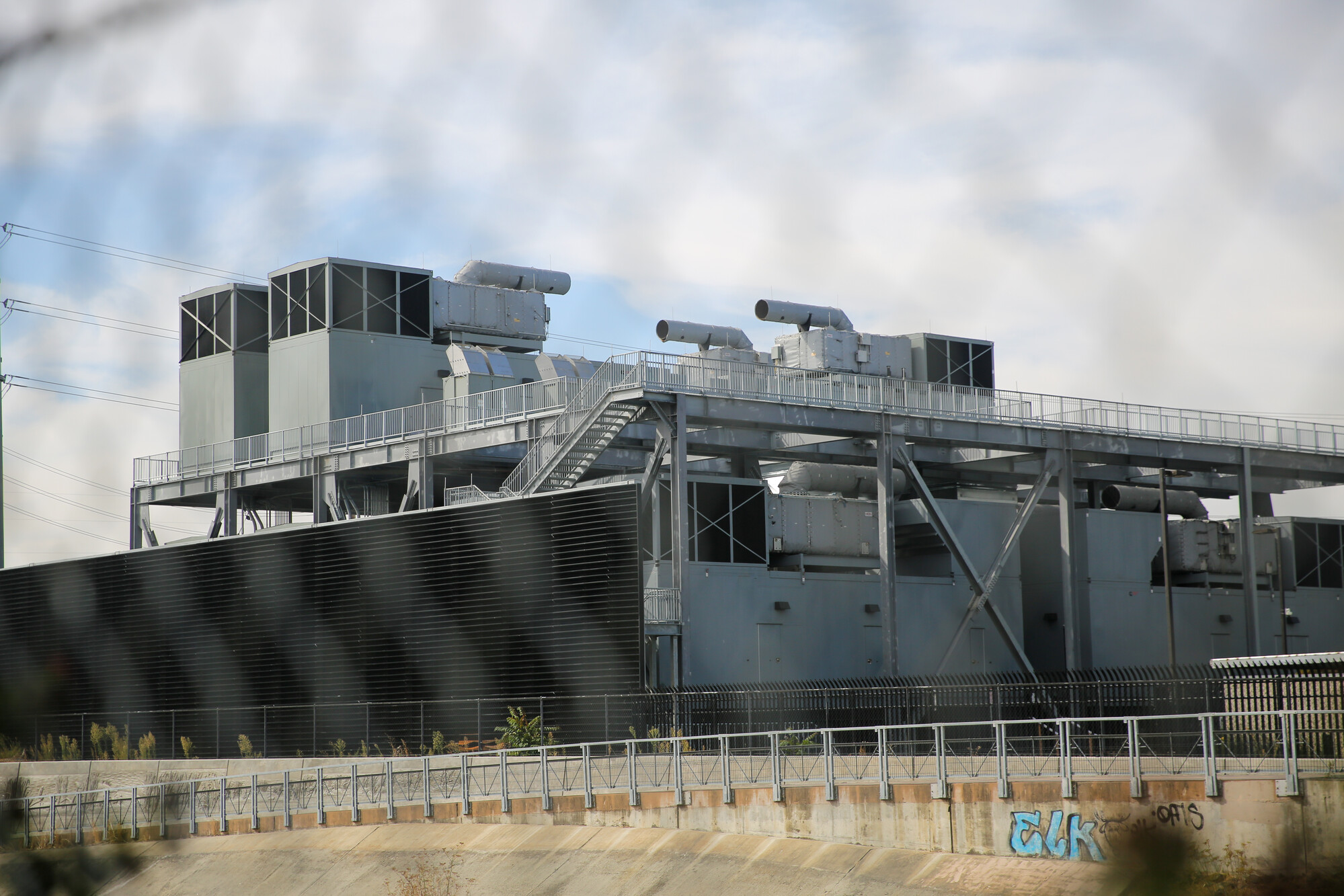
The city’s proposed standards include requirements that data centers use recycled water for cooling the intensive heat put off by racks of processors and servers, or use low-water systems that use air or “closed-loop” design.
Data centers would need to use completely carbon-neutral electricity, limit the time their backup generators are run for testing or maintenance to only 25 hours per year, as opposed to state rules of 50 hours annually, and must regularly report their water and electricity usage to the city, with third-party verification every five years.
San José’s proposed standards also could require sewer discharge and noise monitoring, and would expand the radius for who receives mailed notification cards about a possible data center project to 1,500 feet, from the current maximum of 1,000 feet.
During the meeting, and at rallies before and after outside City Hall, residents expressed outright distrust of city leadership and staff, saying the public engagement process has felt rushed and has resulted in proposed standards that some characterized as weak or a giveaway to AI data center developers.
Some residents also asked for a moratorium because the limited regulatory reach of the city will not be able to encompass broader concerns stemming from data center development, like the unknown cumulative impacts of having too many in one area, the risk of groundwater pollution from harsh chemicals used in some cooling processes, and even the potential of security risk, citing Ukraine and Russia ramping up attacks each other’s data centers this week.
Ted Smith, a longtime resident of San José, helped lead the charge for a right-to-know ordinance in the 1980s after the semiconductor industry’s unrestrained growth led to mass pollution in the county due to mismanaged solvents used in chipmaking, all while leaders of companies like Fairchild and Intel said their industry was a clean one.
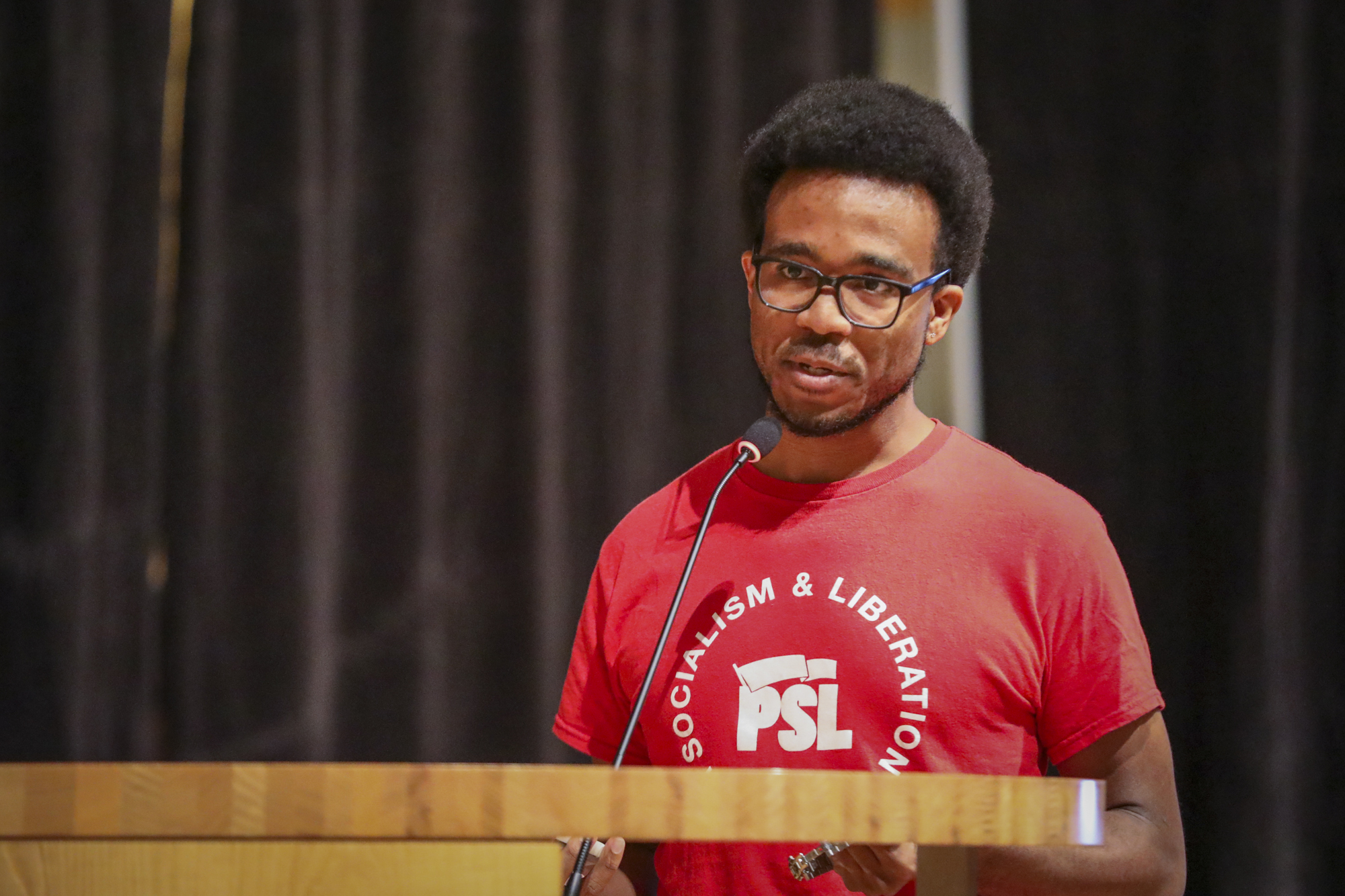
“Mayor Janet Gray Hayes, at the time, said she was horn-swoggled by the fact that they didn’t understand what was going on. I’m afraid we’re walking right back into that same trap,” Smith told city officials. “I see your standards here; I think you could drive a truck through a lot of those in terms of what they can put over on you.”
Shaf Khan, another resident, agreed, saying they were worried history would repeat itself.
“I live in an area with three data centers already. I’d like to know the impacts of those over a long period of time, especially on young and developing children and expecting parents before we move on with making more,” Khan said.
Bob Staedler, a longtime San José land use consultant, said in an interview that the city is being too “chummy” with data center developers, and has tools at its disposal if it wanted to more closely restrict how many are allowed in any one area, such as how it recently put a moratorium on all new smoke shops through late 2027 due to concerns about overconcentration.
“This just seems to just be ignoring the huge issues of our time, where you’ve got things like cumulative concentration,” Staedler said of the proposed data center standards.
“We spend more time worrying about weed shops and alcohol and smoke shops than we are going to do with data centers,” Staedler said.
While the city’s standards would regulate how often diesel or natural gas backup generators can be run for testing and maintenance, they would not apply during a power outage, one of the primary concerns from residents.
“What happens when there’s a heat wave, as we are constantly experiencing year after year,” Ellina Yin, who closely tracks data center development in the city, said at a rally she helped organize before the meeting. “What happens when the power goes out and all of the generators kick on?”