SFUSD Moves Closer to Neighborhood-Based Enrollment in Historic Vote
San Francisco’s public schools will officially move toward neighborhood-based enrollment after decades of giving families the choice over where they send their children.
The school board directed staff Tuesday to propose an enrollment policy to take effect in fall 2028 that would ensure San Francisco Unified School District applicants a seat in a school by their home — but drastically reduce the number of campuses they can attend based on where they live.
The school board’s decision, which passed in a 5-2 vote, went against broad parent support to retain the option to apply to any San Francisco public school. But Superintendent Maria Su said she believes the pivot to neighborhood schools is necessary to improve educational quality across the city.
“Families should not have to roll the dice and try their luck in our system,” Su said. “Families should not have to leave where they live to secure their child’s future. The school down the street should be a good option and a certain one.”
For years, San Francisco families and school district staff have lamented over the “lottery” enrollment system. Introduced in 2011, it aimed to give applicants a broad choice over where they attended school and reduce socio-economic segregation across campuses.
Each fall, prospective SFUSD applicants submit ranked lists of schools and programs in order of preference, and then wait for an assignment in the spring — determined by an algorithm that considers their home addresses, siblings’ schools and other factors.
It’s long been criticized as unpredictable, confusing, and frustrating enough to turn some families away from the city’s public school system entirely. But it’s also been seen as an “escape hatch” for others who don’t feel that the schools in their neighborhoods have the resources their kids need.
In 2018, the school board vowed to scrap the lottery, but putting a new policy in place has proven to be a herculean task.
That’s now expected to change in fall of 2028.
Students entering SFUSD elementary schools that year will automatically be assigned to a school near their home — their neighborhood school — first.
If they choose to accept that placement, their enrollment process will end there.
But, if they would like to apply to a citywide program that the district offers, like its language pathways or kindergarten through eighth grade campuses, they’ll have the option to do so. Like the lottery, there’s no guarantee they’ll nab a seat in one of those coveted schools. It’s unclear what factors will determine who is most likely to get their choice.
Su acknowledged that the selected proposal, known as “Option C,” wasn’t most parents’ top preference, but she called it the “bold” choice.
The alternative considered Tuesday, which was dubbed “Option B,” would also have first assigned students to a neighborhood school, but it would have then allowed them to apply to any other school in the district with open seats.
While that system would have maintained more choice for applicants, Su said it would “keep the status quo.”
“Families who do not trust their neighborhood schools will continue to leave those schools,” she said. “Those schools will remain under-enrolled and that pattern impacts our southeast neighborhoods the hardest.”
Many of the parents who spoke at Tuesday’s packed board meeting voiced concerns about losing the choice that the lottery affords, especially for lower-income families and those who live in the southeast region of the city. And in an engagement survey conducted prior to the meeting, 72% of the nearly 3,000 respondents said Option B would meet their needs, while 48% approved of Option C.
“There are big equity issues in the district, and when you create a system that favors neighborhood schools with very limited choice, it forces families who are living nearest to those struggling schools to not have options,” said Rebecca Kee, the executive director of the SF Parent Coalition.
Option B was also supported by board members Alida Fisher and Supriya Ray, who voted against Option C.
The board previously considered multiple options that would have created enrollment zones, similar to a 2020 policy passed but never adopted, but those were abandoned in earlier discussions.
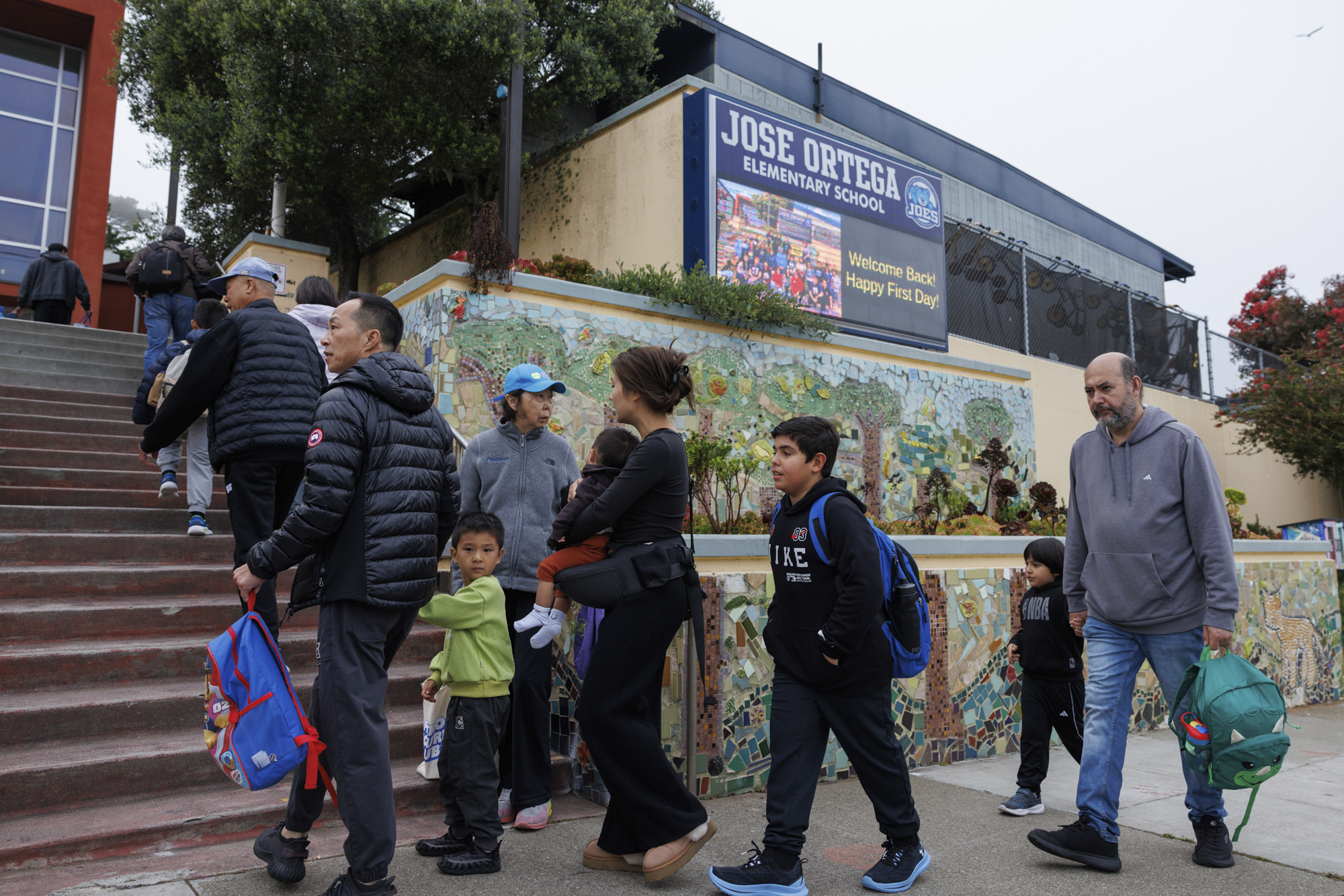
For decades, SFUSD has struggled to ensure that schools in lower-income neighborhoods and where students have had lower academic performance rates, receive equitable resources, staff and programs — creating a loop of underenrollment, and thus, a lack of funding, for schools with the most acute needs.
Under the current system, one of the tiebreakers that determines who gets a seat at their requested school when it has more requests than seats available is called “CTIP1,” or test score area. Students who live in the census tracts in the city with the lowest average test scores get priority access to a seat, after students with a sibling already in the school, and Pre-K or transitional kindergarten students who live in the school’s attendance area.
Many of the board members acknowledged that the lottery provides some students the opportunity to move into better resourced schools. But, Commissioner Matt Alexander said, not all get to do so.
“The choice system creates an escape valve for the families that have the most … understand, the most ability to navigate the system,” he said. “But we’re still operating those schools.”
“Choice is not a solution, because it doesn’t offer a solution for all of the families,” Alexander continued.
Tuesday’s vote only sets up a broad framework for the new policy. Staff will now begin to work with demographers to draw maps with attendance area boundaries, determine tiebreaker criteria for citywide school seats and draft a strategic investment plan for next year to begin redistributing district resources.
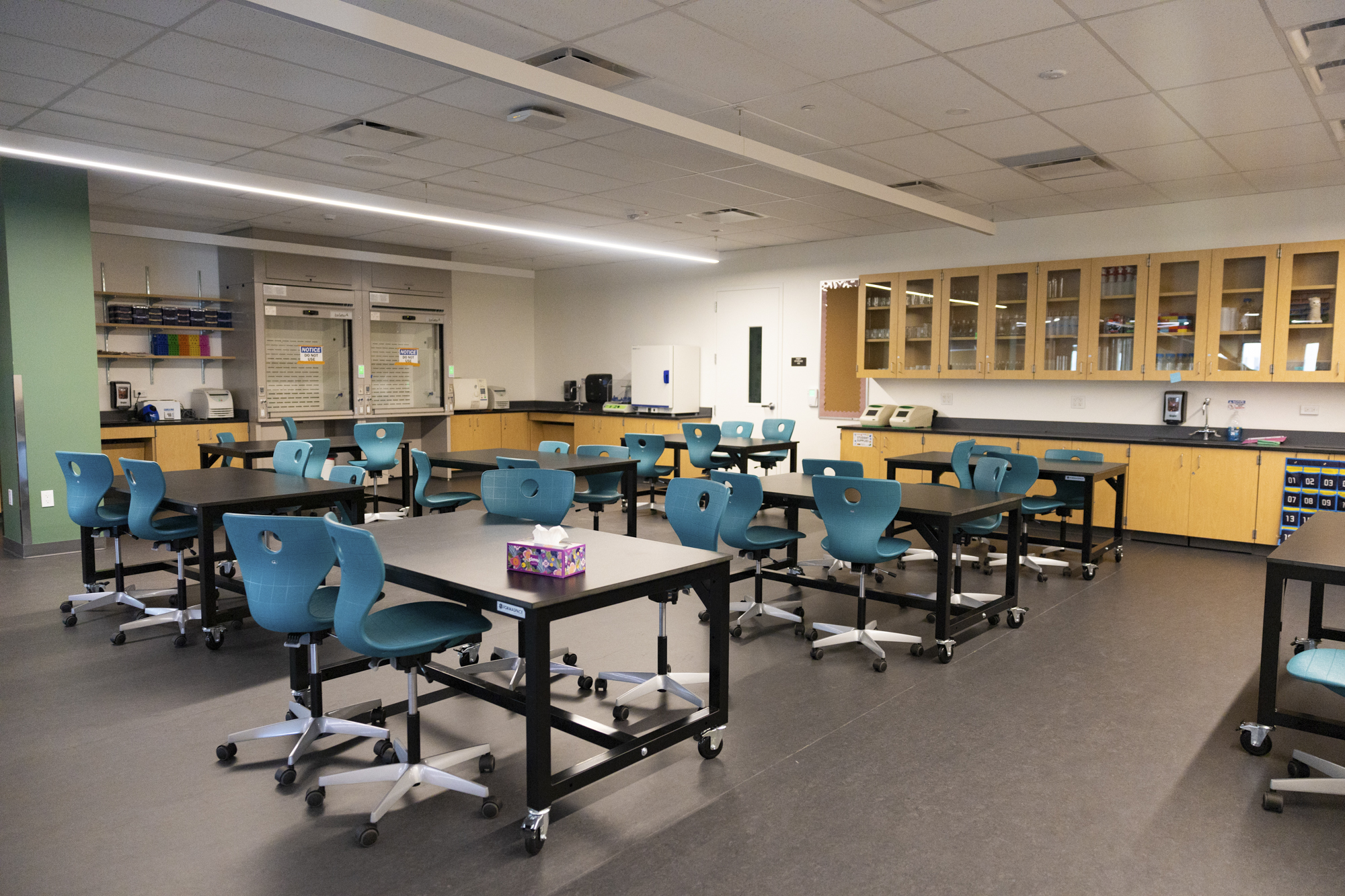
One of the biggest challenges they’ll face is ensuring that each attendance zone has enough seats in neighborhood schools for the students who live there. Modeling with the district’s current attendance boundaries, 19 of the 58 zones, or about 32%, will be short of kindergarten general education seats based on projected residents in 2033.
Staff says that by moving attendance boundaries with new maps, they will be able to eliminate some, but not all, of that shortfall.
Other levers they might use to increase the number of seats in neighborhoods that fall short are: transitioning a citywide school to a neighborhood school, moving language pathways to schools with seat surpluses, or assigning students to a neighborhood school outside of their attendance zone.
The board will meet again in November to hash out other details, and are expected to vote on the final policy in April.