What Does Romantic Jealousy Do to Us?
This story is part of Inside Love, our series exploring what it means to love through science and curious conversation.
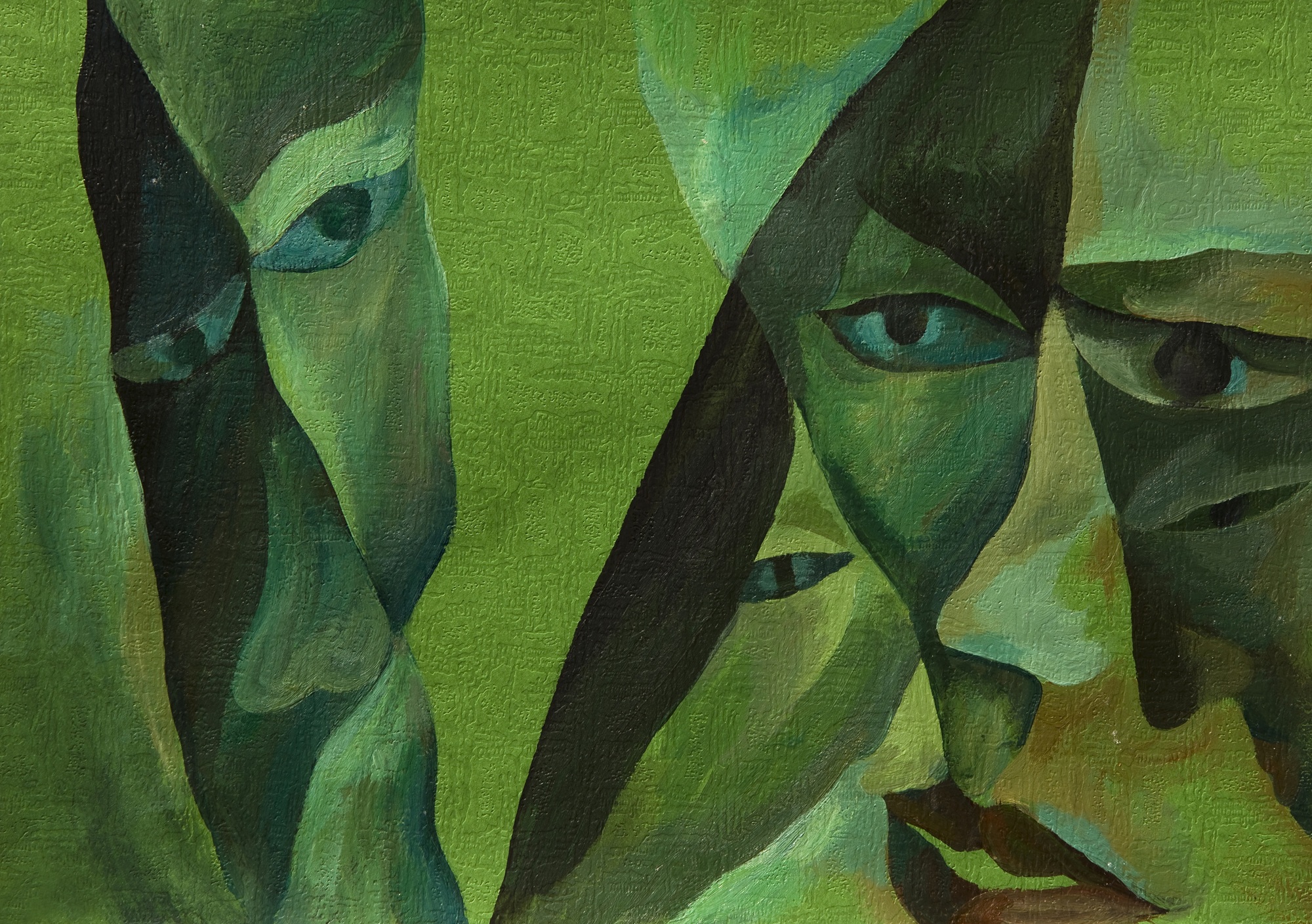
Jealousy can begin as curiosity, even admiration, before it curdles into something darker. For writer Sarah Haas, an old Instagram post of her husband’s ex became the root of an obsession. She began to stalk the woman online, pore over her photographs and even tried to look like her. She began to feel the woman’s presence in ordinary moments in her marriage, the intrusive thoughts spiraling her into anger and shame.
“I studied her, and I Googled her, and I did all the things you can do on the internet to find out about a person,” said Haas. “And she became somebody who was always with me and who was standing against me. She was a threat to what I had.”
We talk to Haas about the destructive power of jealousy and the source of the emotion she calls both noxious and inevitable. Haas’s forthcoming book is “Jealousy: A Memoir.”
Learn more about Sarah Haas and her work here.
Guest:
- Sarah Haas, author, “Jealousy: A Memoir”
Lesley McClurg: Sarah, you have really experienced the absolute depths of jealousy. How do you define it? And how is it potentially different from envy?
Sarah Haas: Jealousy is a possessive urge. It wants to take something and own it and have it, buy it, keep it. And that’s really predicated, when it comes to romantic jealousy, on turning another person into a thing in order to make that attempt, in order to have that urge. So it can be quite dangerous.
Lesley McClurg: You even call it forbidden.
Sarah Haas: Yeah, it’s hazardous, and it’s also inevitable. So it’s a part of us. It’s cyclical, and it’s a little bit ruthless as well.
Lesley McClurg: Your memoir really centers on this type of jealousy that we’re talking about, an all-consuming jealousy. It gripped you in the very early stages of your relationship with your boyfriend, who is now your husband. It started with an old Instagram image of one of his former partners. At first, it seems like you’re kind of fascinated and even filled with a little bit of admiration. Is that how it started?
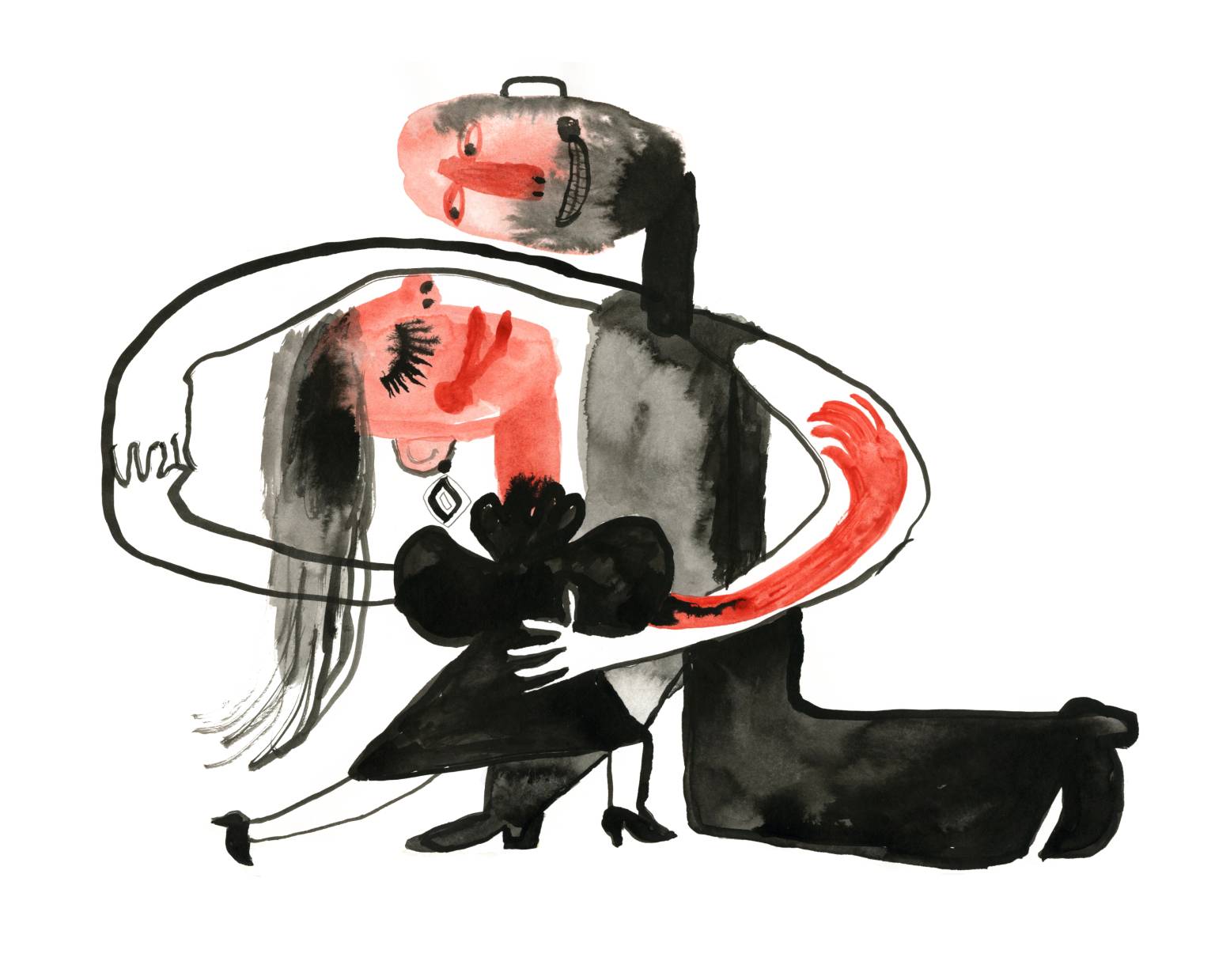
Sarah Haas: I plot jealousy on a spectrum — and it’s not mine; it’s borrowed from a philosopher, Max Scheler. At a certain point, envy gives way to jealousy just as green eventually on the color spectrum becomes blue, and it becomes poisonous. It’s a deadening. It’s hardening. When I first saw those pictures of my husband’s ex, I went through those stages from naivete, being myself and seeing her being herself, to distinguishing between us, one of us is different than the other, to judging her, wanting to make a qualification about who was better or worse, to admiring her bittersweetly, and eventually it gave way to jealousy.
Lesley McClurg: Then what happens? Because you move on pretty quickly to competitor and eventually a threat to your very existence.
Sarah Haas: I think my experience became mythological. In part, that’s because jealousy is a mythological phenomenon that swirls in all of the mythologies of the world. It’s really big and intense. It begs to take details and turn them into symbols. Like her blonde hair became so important to me. I hated it. I wanted it. I didn’t want it. I would go to Walmart and see blondes, and each of them had so much meaning that had nothing to do with them and their specifics.
Lesley McClurg: And we should say you have long brown hair.
Sarah Haas: I have long, brown hair. So, as jealousy and I developed a relationship, I felt like it overtook me, and that was terrifying and thrilling. Also, I had to acknowledge, at a certain point, that jealousy seemed to have agency. What was happening to me wasn’t just one subject, but two. We outstripped the bounds of reality together. I resisted this possession. I didn’t. I wielded it, but either way we were bigger than reality.
Lesley McClurg: I mean, are you eating? Are you sleeping? Are you functioning? You’re married to this man, so clearly you’re engaged enough in the relationship to keep him engaged. But it sounds like your inner landscape was quite tortured.
Sarah Haas: Yeah, and returning to that idea of everything became a symbol. I’m eating, and I’m sleeping. And we’re having sex, and we are developing our relationship, but I was in a slightly different plane of existence than he was. So if we’re eating spaghetti, I scan my brain to think, “Have I ever seen a picture of him eating spaghetti or her eating spaghetti? Maybe spaghetti is their love language.” It was impossible for me to just simply enjoy anything or to really experience anything very presently except for jealousy, which was always at a remove from the real world.
Lesley McClurg: What were you most jealous of? What was the quality of the thing that she either had or you projected that she had that really was getting to you?
Sarah Haas: We were about to take a trip together to Las Vegas, and I had already developed my whole mythology of who she was, and what they were to each other, and hadn’t really discussed it with him yet. And before we left for the trip, I thought it would be wise to ask him about her just to see, to get the cards out on the table. He said, “Do you really wanna know?” I said, “I do.” He said, “She’s my soulmate, but it didn’t work out in this lifetime.” I remember that night going to sleep and thinking about how we could very well live a life together, but on our deathbed, he’d be waiting for the next life so he could be with her. And it felt impossible to deny that, as impossible as it felt to deny that I had feelings for him, that I was in love with him.
Lesley McClurg: How different was the character that began to be created in your mind? How different was that character from her reality?
Sarah Haas: It’s important to note that I’ve never met her. That’s never happened. I’ve seen pictures of her, and not very many. But I’ve seen hundreds of pictures that she’s taken because she’s a photographer. I studied her, and I Googled her, and I did all the things you can do on the internet to find out about a person. She became somebody who was always with me, who was also standing against me. She was a threat to what I had. And as my husband and I got closer and closer to marriage and our lives melded together, possessable things came into our relationship because a marriage becomes a contract about things. It was my economic security. I quit my job. I depended on him. I lived in his house. I felt that I needed to keep her away as if she was an enemy or a threat.
Lesley McClurg: You mentioned that you have looked at many, many pictures that she took. So obviously, you were looking, you were scrolling through her social media account. It’s almost kind of like a form of masochism that many of us can probably relate to, especially in today’s social media world. Why do you think you continued to dig deeper? Why do we continue to scroll, even when it’s really, really painful?
Sarah Haas: There was a part of me that wanted to see how the story ended and maybe even wanted to play a part in begetting the end. I was convinced that if this was my husband’s soulmate, they were meant to be together. And so it’s like, okay, let’s just get ahead. Let’s get to the end so I can be released, and we can all go home and know how this ends.
Lesley McClurg: Meaning you were trying to push them together? How do you get that story to play out for yourself?
Sarah Haas: Do I tempt him? Do I enrage him? Do I push him? I never went so far as to reach out to her, but I tried to look like her. There was a part of me that was like, “Let’s prove that you’re attracted to this woman because you’ll be attracted to the version of me that looks like this woman.” And none of it worked; he stayed.
Lesley McClurg: Would you say that there was a sexual element, like a fetish that began to awaken in you around jealousy that you played out with him?
Sarah Haas: Well, it’s certainly the most adventurous I’ve ever been sexually, but part of it was getting to play someone else and getting to be bad. Sex is a really interesting thing in a marriage and in a relationship, because it’s not just nice. I did develop an understanding, or at least an experience, of obsession and of wanting to be someone else, to see what that would do to our relationship.
Lesley McClurg: To that end, to find out more, to flesh out what you know, you steal your husband’s phone to read his old text messages to his ex. Describe that moment and what did you decide to do next once you had that information?
Sarah Haas: I had imagined all the ways that the two of them could have been together. I would insist on my imaginations and what’s actually real. Every attempt he made to deny that, I would say, “No, it’s not true. I know what happened.” When I read the texts, I confirmed some of what I thought I knew to be true. I started to feel really justified. There was a part of me that realized that I had really violated his privacy by going into his phone. I had peered into this relationship that I had no business peering into. I was pretty overwhelmed by shame at that point. And I took a bath, and I got really close to very seriously considering whether or not I ought to live, because if you see that kind of evil inside of you, what are you supposed to do with it? But the decision I came to was that I should marry him, and that we should have a child because it was a way to embody possession. It was a way to make him mine and to hold him to account in a way. Okay, you say you love me, then it’s time to be possessed.
Lesley McClurg: Do you feel on the other side, though? The way you described it in the book, it’s like this literal mythological character takes over your soul. Are you wrestling with that on a daily basis?
Sarah Haas: I’m hesitant to say, because I think that I’m at a point with jealousy where I’m wanting to throw my hands up and relinquish control and let it develop some substance on its own terms. I want to acknowledge that it’s noxious and that it is inevitable. As much as it’s a personal failure, it’s also a collective failure because it’s built in and incentivized into consumerism and social media, and it’s provoked. And there’s something that’s worth seeing in that, that it’s not necessarily something that needs to hide in the shadow of shame, even if it is a despotic impulse.
Lesley McClurg: Do you think if you met her, it would end?
Sarah Haas: No, it would change. It would change probably beyond recognition. It would be a new version of the jealous cycle. When you’re in a relationship, there’s the time that you spend with your partner, and then there’s the time that they exist apart from you. I often find myself aching to be a part of every one of his experiences, but that’s not what a relationship is.
Lesley McClurg: Thank you so much, Sarah, for sharing your story and really humanizing a feeling that we all tend to shrink from.
Sarah Haas: Thank you so much for having me.
Lesley McClurg: Sarah Haas is a writer whose forthcoming book is Jealousy: A Memoir. Inside Love is a new production of KQED, and we’d love to hear your thoughts. Our email is [email protected]. Our engineer is Katherine Monahan. Our producers are Susie Britton and Emiko Oda. I’m Lesley McClurg. Thanks so much for listening.
This transcript was lightly edited for clarity.