SF Has the Fewest Kids. City Leaders Hope These Policies Will Help Families Stick Around
This story is part of How We Get By, a KQED series exploring how people are coping with rising costs in the Bay Area and California. Find the full series here.
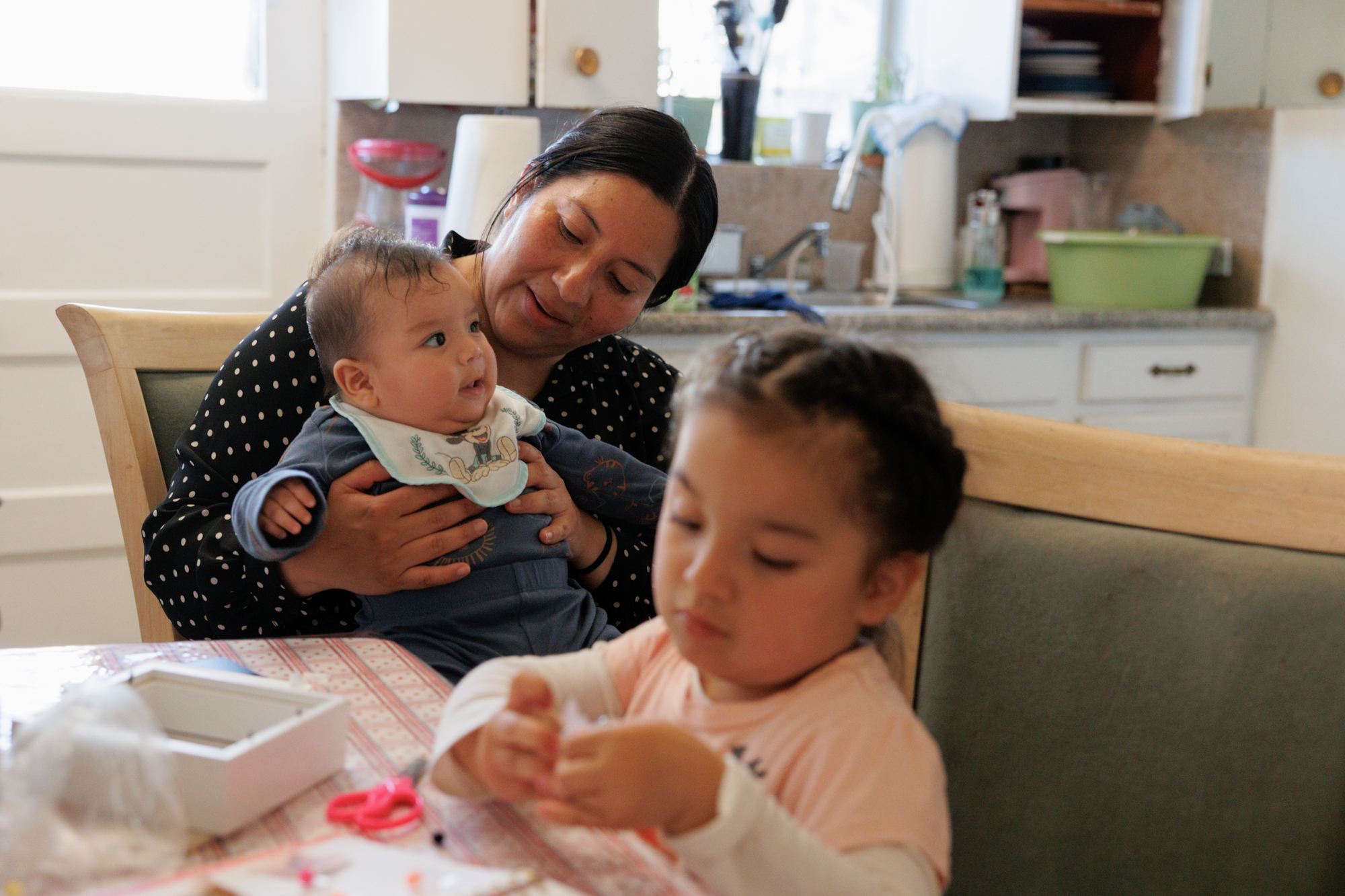
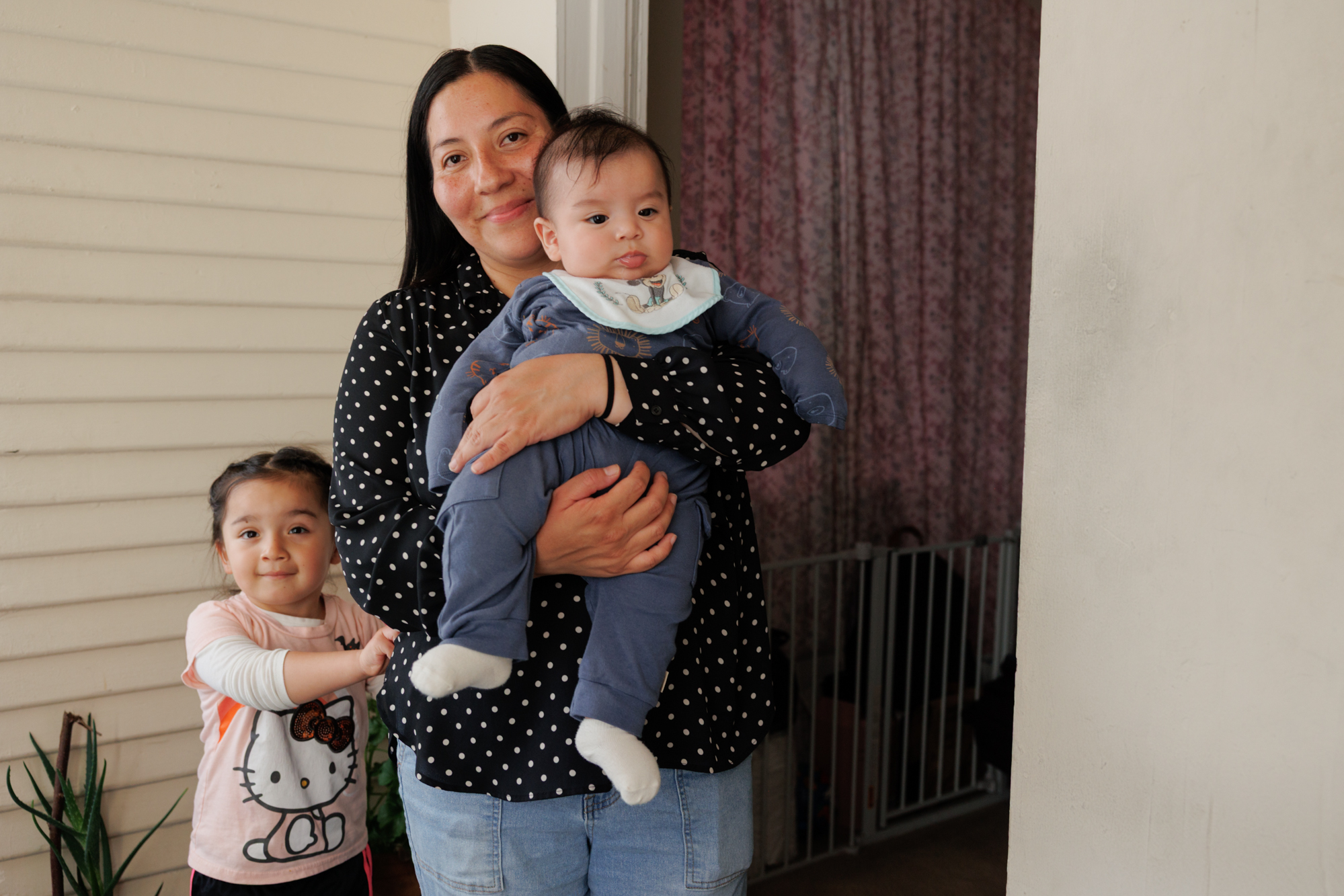
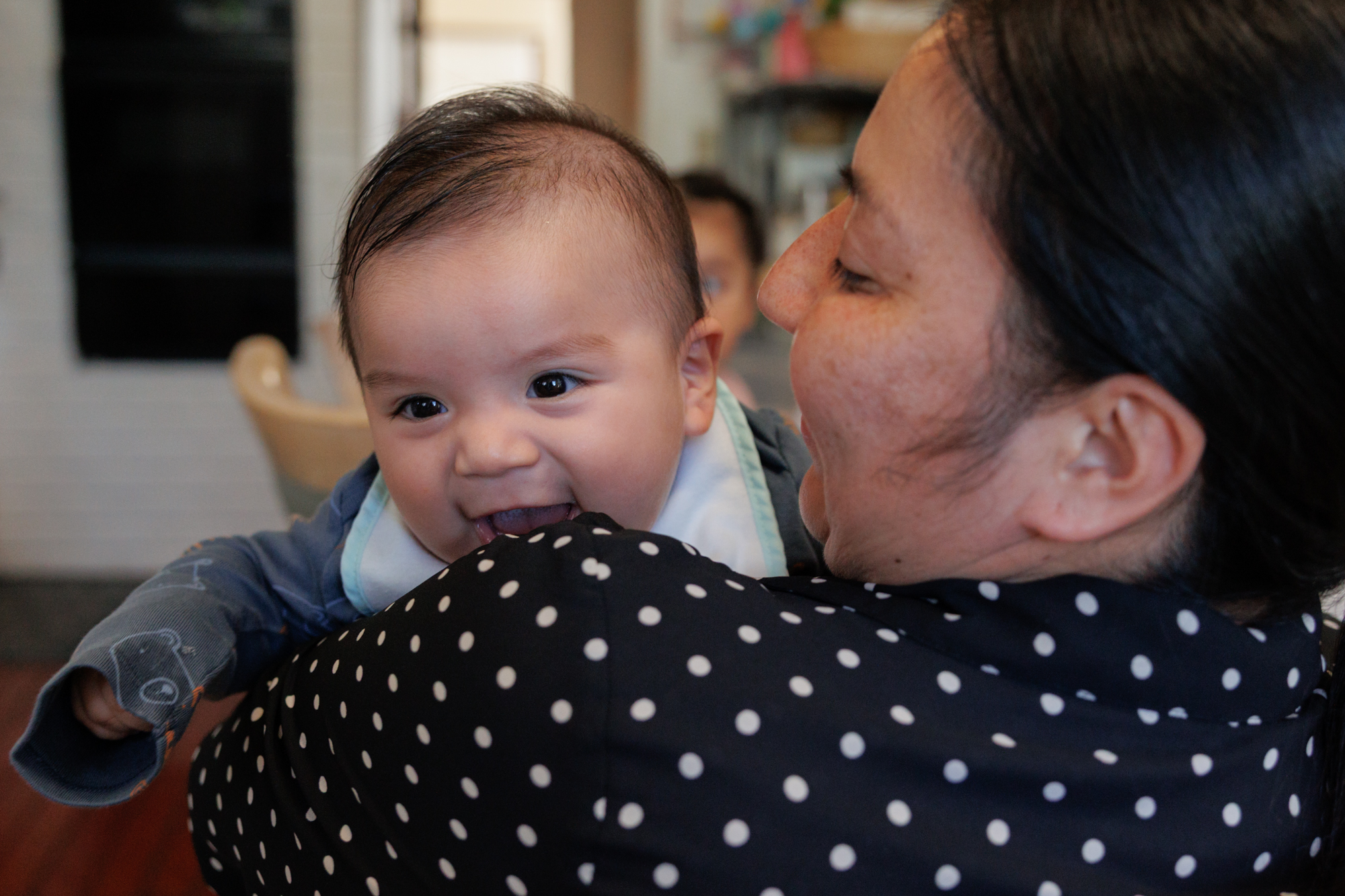
After giving birth to her second child this Spring, Angelica Torres was able to take four months off work to care for herself and her baby.
It’s a luxury not all working parents can afford, but Torres was able to take advantage of a San Francisco law, which offers parents full paychecks while they miss work to bond with a new child. That benefit, plus another city program that offers free childcare for her 3-year-old daughter, gave her welcome financial relief as she navigated the additional cost of growing her family, she said.
“With everything getting so expensive, I feel that San Francisco does a lot to support families,” she said. “This is why we’re still here.”
For at least a decade, San Francisco has had the fewest children of any major American city, with about 13% of residents under the age of 18 in 2025, according to U.S. Census data. The cost of raising a family has long been cited as one reason.
As the artificial intelligence boom fuels economic growth and stirs anxiety about the costs of living rising even higher, local leaders are trying to help families stay in San Francisco by making life a little more affordable.
“There’s a joke about San Francisco having more dogs than kids, and that’s a little funny, but a little sad,” said Supervisor Danny Sauter, who pushed to expand the city’s paid parental leave ordinance to make it easier for workers to qualify. “It’s our responsibility at City Hall to look to see if we can remove barriers, if we could lend a hand.”
Since the beginning of this year, the city has focused on alleviating some of the largest expenses families face. In January, Mayor Daniel Lurie rolled out his “Family Opportunity Agenda,” which included expanding the city’s subsidized childcare to include higher-income earners — a family of four making up to $324,000 a year can now qualify — as well as growing the city’s after-school programs.
Lurie is among a handful of mayors and state governors who’ve championed similar policies aimed at families, joining Delaware, Maine, Minnesota and Colorado in enacting or expanding paid parental leave and New York City in rolling out free childcare for 2-year-olds.
Those efforts come as the child population is trending down nationwide due to falling birth and fertility rates, and major cities saw the biggest decline in the past five years, according to Census data. Between 2010 and 2025, San Francisco’s under-18 population decreased numerically but stayed relatively flat as a percentage of the overall population. The portion of children under 5 had hovered around 4.5% between 2010 and 2020, but since the pandemic, it’s dropped to just under 4%.
In speeches, Lurie and other city leaders echoed concerns about people delaying having children, if at all, or moving out of San Francisco after they have kids.
“This is the greatest city in the world, but it can’t be great if the people that are living here today can’t afford to stay here tomorrow,” Lurie told KQED in a recent interview. “We know how expensive this city is to raise a family, and so we’re doing everything in our power to build more affordable housing, to make early childhood care and education accessible to every family.”
City leaders are focusing on the early years because Census surveys show that’s when families are most likely to leave. It’s also the most expensive phase of life, when childcare prices can consume a big chunk of a family’s income.
“One of the things that’s been true in San Francisco is that if you have a child [under] 5, you’re more likely to leave,” said Ted Egan, the city’s chief economist. “But if you have a child who’s over 5, you’re not — which basically means once people are settled in school, they’re less mobile.”
San Francisco first began using city funds to offer free preschool for 4-year-olds in 2004 and two decades later broadened that program by using revenue from a voter-approved tax to offer free or discounted early education and care for families, based on their income. Lurie stops short of calling it universal childcare, but said he wants San Francisco to become the first major city in the country to provide “access to childcare” for every family with a child under 5.
The city was also a leader in offering fully paid parental leave, becoming the first in the nation to do so in 2017. The ordinance built on California’s paid family leave program, which offers new parents between 60 and 70 percent of their wages for eight weeks, by requiring employers to cover the rest of workers’ paychecks.
Studies have shown that workers in industries with high turnover, like restaurants and hospitality, were least likely to opt in. A new update to the law makes employees who are starting a new job eligible for the benefit sooner — at 90 days, up from 180.
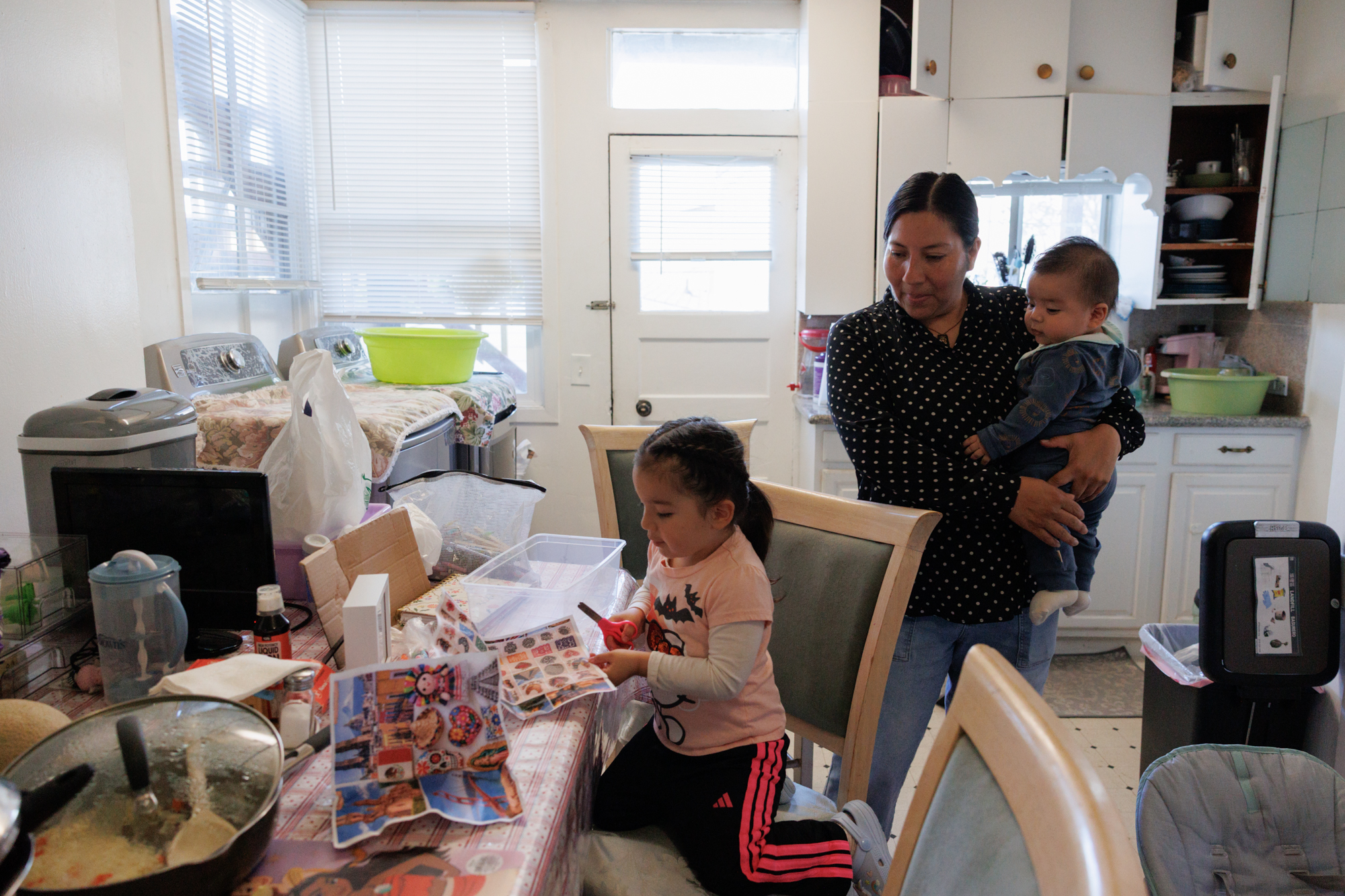
Torres said this change didn’t directly affect her, but she was glad to see her partner take time off his job as a restaurant cook to take care of their baby after she went back to work as a site supervisor at a preschool. It was a benefit he could have taken after their daughter was born, but didn’t, she said.
“He was like, ‘I cannot miss a lot of days of work. What is my boss going to say?’” Torres said. “This time around, I explained to him [he] could take some time off. It’s a law. He would go on walks with the baby and take care of our daughter. I feel like he was more connected to his children.”
The subsidized childcare program, Early Learning For All, saves her more than $2,000 per month for her daughter’s full-time care, she said, and helps offset other rising costs. The program also boosts the pay of early childhood educators at its participating programs, including the preschool where Torres works, and that has increased her hourly wage from $28 to $36 per hour in the last few years.
While she’s grateful for the help, Torres said her biggest expense is still the rent. The couple shares a four-bedroom apartment with Torres’ parents and brother in the Excelsior District, a working-class neighborhood in the southeastern part of the city. Since the pandemic, the rent stayed at $4,000 until a couple of months ago, when Torres said the landlord bumped it up by 10%.
She said she hopes that city leaders “can target the bigger issues that people in San Francisco face like the rent.”
“Rent is really expensive. Super expensive,” she said. “I really love this city. I love the diversity, and I want my children to grow here.”
‘Hard to live here’
In several interviews, parents of young children echoed Torres’ concern, praising the family-friendly policies but citing the high cost of housing, limited availability of family-sized apartments and an unpopular school lottery as reasons they may eventually leave.
“People who locked in their [mortgage or rental] rates during the pandemic are happy to stay, but those that want to move or want to expand out of their one-bedroom or two-bedroom apartments really do find it hard to live here,” said Vai Sundaresan, a tech worker who was laid off when she was pregnant with her 1-year-old daughter.
She said one reason she and her husband, who also works in tech, can afford to live in San Francisco is that they bought their house four years ago. “But if we were to move now, it would be hard.”
Sauter is keenly aware of this trend: In the 15 years he’s lived in San Francisco, he said he’s seen friends leave after they start a family. He became a dad himself more than a year ago and said he’s now getting a closer glimpse into the challenges of parenting in the city.
“It almost feels destined when you have a first child, or certainly a second child, that you just expect someone to move away,” Sauter said. “That’s not healthy for a city.”
To encourage developers to build larger, family-sized apartments, Sauter co-authored an incentive to allow developers to add another floor if they build apartments with two or more bedrooms.
The incentive is part of a state-mandated effort to address California’s housing shortage. The city’s proposal, which Lurie branded the “Family Zoning Plan,” was approved in December 2025 and allows for the construction of some 36,000 additional homes and apartments, largely in neighborhoods with access to public transit, parks, retail, and community facilities.
In addition to championing the rezoning amendment and expanded paid parental leave, Sauter is also looking to add more diaper-changing tables and lactation rooms in public spaces and improve transit access for families with young kids.
But for some families, a bigger issue is the public school system.

Hitomi Wada and EJ Macayan, a couple who own a small business in the Tenderloin District, said they’re grateful to save $3,000 per month in infant care under the city’s expanded Early Learning for All program but aren’t sure what they’ll do when their 1-year-old son reaches school age.
Wada said she’s heard “nightmare stories” of navigating San Francisco Unified School District’s lottery — a complicated assignment system intended to desegregate schools but one that has also led to long waitlists and confusion, leaving families anxious about whether they’ll get into their preferred school.
The district wants to overhaul the system but has repeatedly delayed replacing it, though officials said this year, 65% of families got into their top-ranked school.
“He’s only 15 months old, but we’re already thinking, ‘What is our strategy for navigating that portion?’ and trying to figure out what best fits us,” Wada said.
Lurie’s hands are tied when it comes to resolving this problem: By law, an elected school board governs the district, which is funded by the state.
He said the city does set aside around $100 million annually from its general fund to support public school libraries and the district’s arts, sports and college readiness programs. The city also increased access to free or discounted after-school care “to help bridge the gap between the time that school ends and parents are done with their job,” he said.
“We have more work to do, but we’ve made some progress, especially on this early childhood [initiative],” Lurie said. “We’re going to lean in on transit; we’re going to lean in on building more affordable housing.”
Wada and Macayan said their heart is in San Francisco, but they’re not sure how long they can sustain their life in the city.
“We do want to stay,” Wada said. “We want to make it work for as long as possible.”
But as they look into the future, Wada said they’re already bracing themselves for what comes next: “When we do have to leave, where do we want to go?”