Incarcerated Women Fight for Justice Against Prison Abuse
Here are the morning’s top stories on Tuesday, September 29, 2026
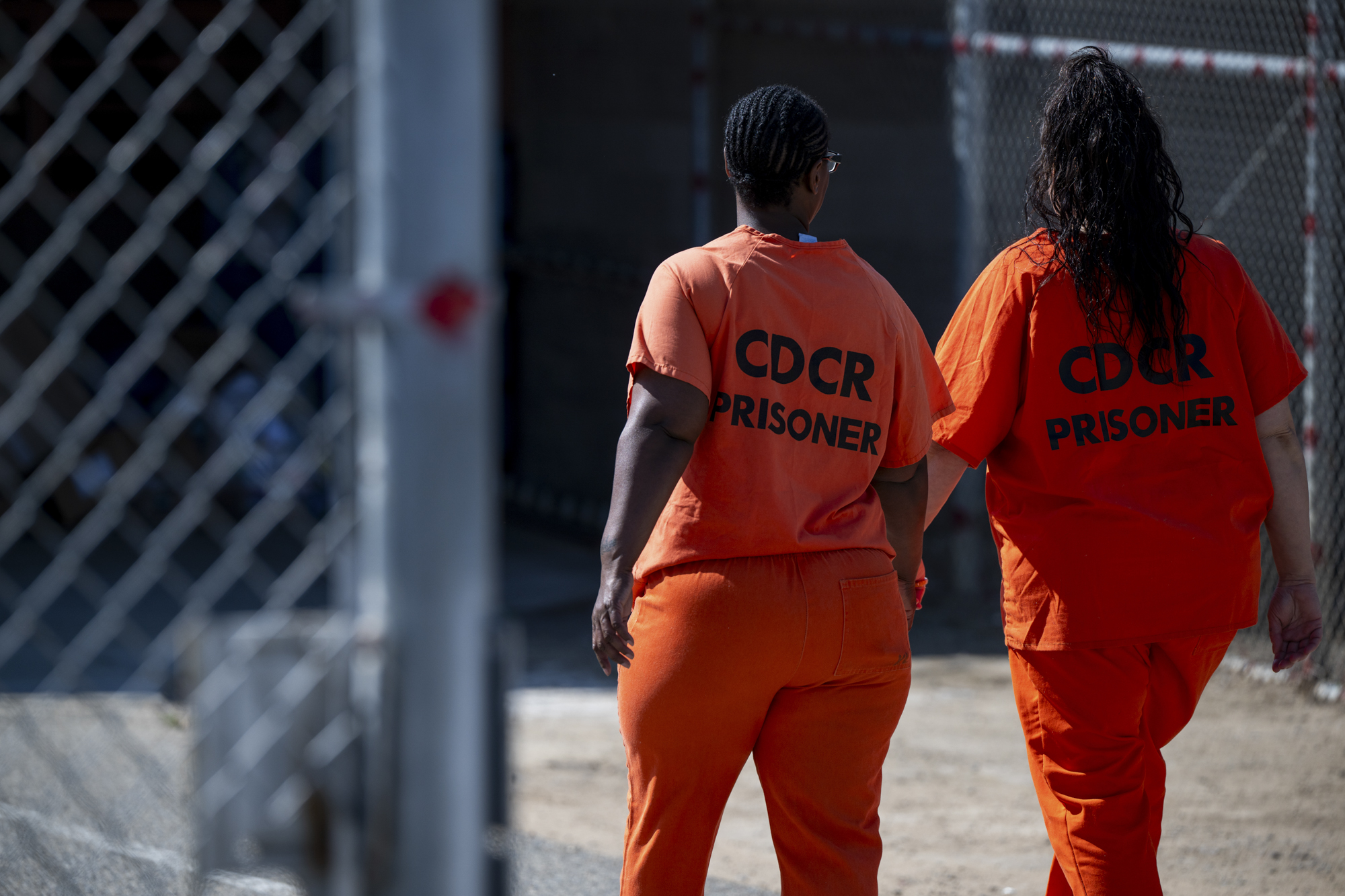
- Back in August 2024, a mass use-of-force incident left dozens of women injured and traumatized at the women’s prison in Chowchilla. The incident led to an investigation into abuse at one of the largest women’s prisons.
- Governor Gavin Newsom has vetoed a bill aimed at strengthening the pipeline of new immigration lawyers, to serve rural parts of California – where there are many immigrants, but few attorneys.
- New research on Valley fever shows that the fungal disease, endemic to parts of Central and Southern California, is not just coming from dust particles in rural areas.
Alexandria Prout is also known as Jane Doe #1. Back in 2022, she was sent to the Central California Women’s Facility in Chowchilla. She was stopped on the way to a medical appointment by a correctional officer. “He said – you have beautiful lips and beautiful eyes. You’re so beautiful,” Prout said.
A few days later, Prout was told she had an attorney’s visit. When she arrived at the hearing room, there was no visit. There were also no cameras. But that officer, Gregory Rodriguez, was there. “He showed me his office next door. He said, there’s also no cameras in this room,” she said.
Then Rodriguez sexually assaulted her. Afterwards, Prout said he warned her if she reported him, she could get a write up and spend more time in prison. “I’m like – I can do one of two things. Fight him and pray that his superiors and fellow correctional officers are gonna believe me, a convicted felon, or I can just compartmentalize,” she said. Prout collected evidence and took note of the cameras in the prison. When she was released in August 2022 she started calling lawyers. It turned out the state was already investigating Rodriguez. They would go on to identify 22 potential victims.
Amika Mota is executive director of a prison advocacy nonprofit. As part of a broader effort deal with sexual abuse in the state’s women’s facilities, her group was tapped by the legislature to hold meetings where incarcerated people could talk privately about their experiences. “The arrest of Officer Rodriguez in 2023 was a real pivotal moment. I feel like it’s kind of when Pandora’s Box opened,” Mota said.
Hundreds of women started filing complaints and civil claims against Rodriguez and other officers. By the summer of 2024, Prout was preparing to testify against Rodriguez in his criminal trial, when something big happened. She got a call from her former cellmate, Catrina Cameron, who was still inside. She told Prout she couldn’t see out of one eye. Officers had used pepper spray and tear gas on her and more than 150 women in the dining hall.
Prout says the call made her wonder if it had anything to do with her coming forward, and whether it was retaliation for speaking out.
Newsom vetoes bill to support immigration attorneys in rural California
Gov. Gavin Newsom has vetoed a bill that would have fortified a pipeline of new immigration lawyers to work in rural parts of California that are home to many immigrants but few attorneys equipped to help them.
The bill, SB 1194, authored by Central Valley Sen. Anna Caballero, would have codified an existing legal fellowship pilot program placing newly minted lawyers at immigrant-serving community organizations in underserved regions such as the Central Valley, Inland Empire and Central Coast, and pairing them with experienced immigration lawyers from urban areas who provide intensive training and mentorship.
The legislature sent it to the governor’s desk at a time when the Trump administration has ramped up immigration arrests in the state and across the country to new levels as part of the president’s mass deportation campaign.
Since 2019, the pilot program has received about $2.5 million a year, and the current budget provides $7.5 million — three years worth of funding — so the program is expected to continue operating for now. But advocates say SB 1194 would have made it permanent and ensured the funding builds capacity in rural and underserved areas, which the budget language does not.
In his veto message on Sunday evening, Newsom said he shared Caballero’s commitment “to ensure California maintains the capacity to provide legal representation for vulnerable immigrant communities as arrests and detentions rise.” But he said that’s taken care of by the budget, which includes a total of nearly $150 million for immigration services, including the $7.5 million and another $34 million for nonprofit organizations to provide legal aid. “As such, this bill, which creates an unfunded program on top of this work, is duplicative and unnecessary,” Newsom wrote.
New study shows Valley fever might not just be a rural problem
New research on Valley fever shows that the fungal disease, endemic to parts of Central and Southern California, is not just coming from dust particles in rural areas.
The study from UC Berkeley’s School of Public Health shows that the development of new oil and gas wells in Kern County was associated with an increased risk of Valley fever. Lead author Lisa Couper is a postdoctoral researcher at UC Berkeley. “Our study identifies a previously unrecognized adverse health outcome of oil and gas development. It also identifies a novel source of exposure risk for individuals in surrounding communities,” she said. “We hope this research will guide decision-making surrounding energy development in California. Further, we hope this research will support awareness of measures to minimize Valley fever risk, including wetting soil prior to disturbance to reduce dust, avoiding dusty areas when possible, and, when unavoidable, keeping windows closed and/or wearing a properly-fitting N95 respirator.”
Researchers have found Valley fever in the burrows of rodents living along the banks of waterways. The burrows that were studied were along two rivers that cross Bakersfield and Coalinga. That puts Valley fever in a previously unknown place: in urban areas.