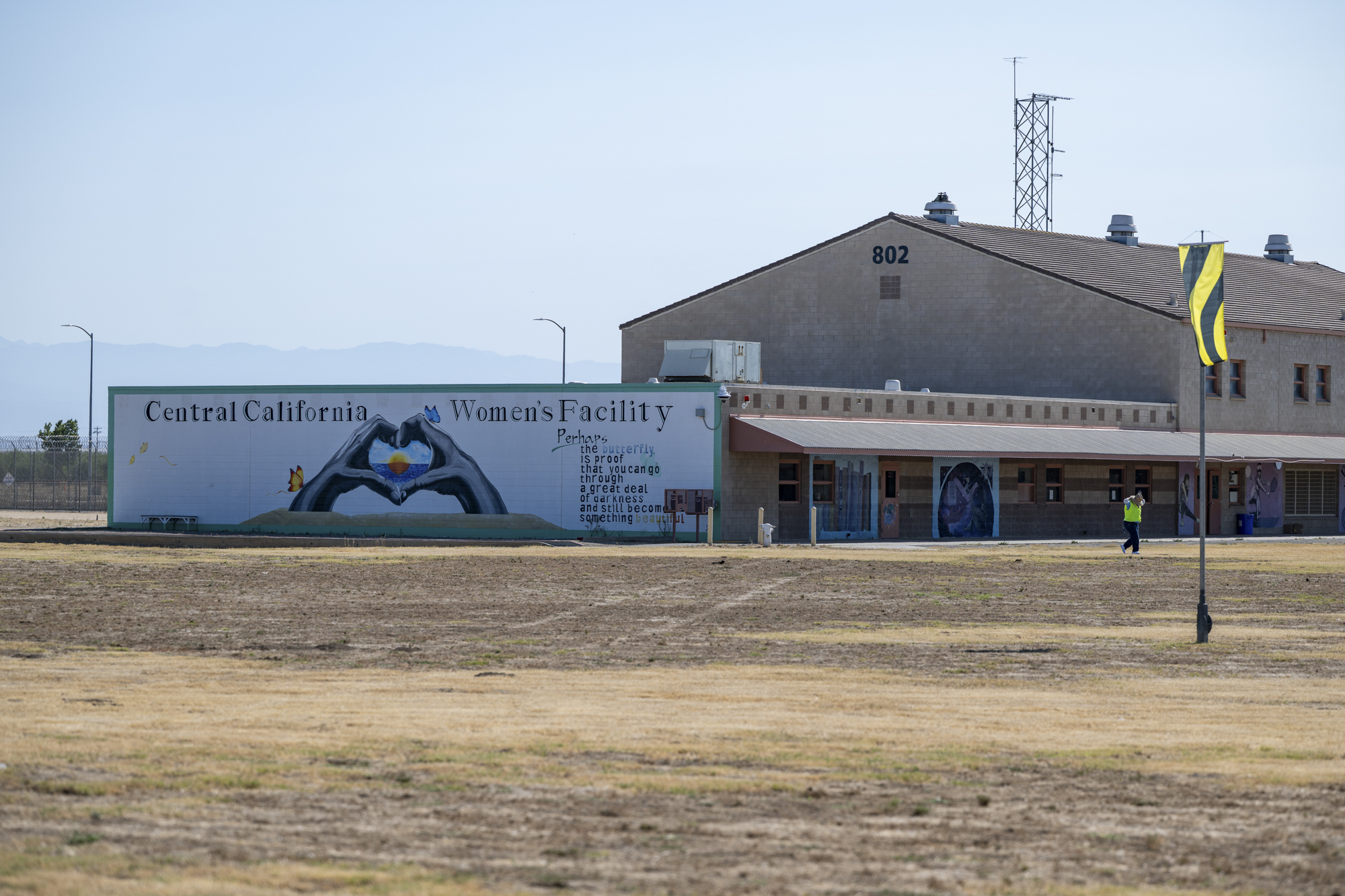
Warden at Central California Women's Prison Ousted Amid Sexual Abuse Scandal
Here are the morning’s top stories on Friday, September 18, 2026
- The warden of the state women’s prison in Chowchilla has been demoted and reassigned from her position this week.
- California Senator Alex Padilla just announced new bipartisan legislation to address health and safety concerns for wildland firefighters.
- The HBO drama, The Pitt, won six Emmy’s this week… but it’s also getting another kind of recognition. Health care workers say it gives viewers a glimpse inside the ER. We go inside suburban San Diego’s Sharp Grossmont hospital to find out what local doctors and nurses think it gets right, and how it may be shaping patient expectations.
Anissa De La Cruz is no longer warden of the Central California Women’s Facility as of Tuesday. The California Department of Corrections and Rehabilitation says she will become a correctional administrator at nearby Valley State Prison next month.
The move comes one month after the U.S. Department of Justice found a “unbroken pattern” of sexual assault and retaliation at the facility. The Justice Department began investigating the Central California Women’s Facility in Chowchilla and the California Institution for Women in Chino nearly two years ago after hundreds of incarcerated women filed legal claims alleging sexual exploitation by staff and an officer was arrested for sexually abusing at least 22 women.
Elizabeth Nomura is a formerly incarcerated advocate with the California Coalition for Women Prisoners. She says the issue of sexual assault in prisons is bigger than one person.
“Just because you cut off the head of the snake doesn’t mean that the poison that is within that snake doesn’t continue to seep out,” said Nomura.
CDCR said they cannot comment on personnel decisions and did not say why De La Cruz had been moved from her position.
The legislation would create a task force on firefighters’ long-term health issues… and a pilot program to develop better respiratory protections…
Padilla says it also aims to set health and safety standards and increase compensation for time spent showering and cleaning gear.
“We have municipal firefighters who for years now have been better protected through decontamination processes and protocols, equipment that helps protect them that our wildland firefighters do not benefit from,” Padilla said.
The bill builds on legislation introduced by Padilla earlier this year that mandates paid rest periods for firefighters.
If you work in an emergency room, there’s a good chance you’ve watched The Pitt.
Emergency room doctor James Elia says he was hooked when he heard the show uses real cases.
“I kind of try to figure out what’s going on with the patient. But at the same time you get a little bit of anxiety because it kind of brings you back to thinking, geez, am I on shift?”
Elia has worked at Sharp Grossmont for 17 years.
“Some days we are like the pitt, you know, and it’s not every single day. It’s not every single hour. But we definitely have days where it’s that busy.”
Elia says television can create very different expectations about what actually happens in an ER, and those TV versions of medicine can stick with patients.
“There’s of course some Hollywood hype in these shows as some things that are exaggerated. People throughout the years would ask me, for example, are you going to pump the stomach? Which we don’t really do, but you see that on some of these shows.”
Then there are the moments that may show viewers a side of the ER they rarely see.
Amber Dinh is an ER nurse. Some scenes in particular hit close to home for her.
“There’s a fight scene with a nurse, she gets in a fight with a patient because the patient is getting aggressive,” said Dinh. “I was recently in a fight with a patient, a patient on a hold, and she’s in a psychiatric moment. And she started, she ran out of her room and started swinging fists at people. I think it’s finally opening the public’s eyes and like, oh my gosh, like, people actually do this every day and have to help people in these conditions.”
But she says the show isn’t just capturing the dramatic moments. It also shows the constant juggling that happens behind the scenes, and things most patients don’t see when they’re waiting for care.
“Someone’s dying in room five and someone’s asking for a hot blanket in room two,” Dinh said. “Meanwhile, you have to have send someone to cath lab in room three. Everything’s going on at once, whether it’s minor or little. And I think it’s nice that people see like, oh, there’s something bigger going on than just sometimes what I’m going through.”
And it turns out, the show may be teaching people more than she realizes.
A study from USC’s Norman Lear Center surveyed more than 1,400 viewers of The Pitt.
Viewers who watched an end of life storyline said they were more likely to plan ahead, including making a living will or designating a power of attorney.
That’s an area where palliative care doctor Nicki Rao says the show is helping start important conversations.
“So it is sadly very common that people have not ironed out their wishes for end of life. So I probably see this scenario on a weekly basis, if not more often,” said Rao.
And now, when she talks with patients about those difficult decisions…
“I’m glad I can finally tell them that, hey, there are shows on TV, did you watch this and see if they reply? Or sometimes they tell me like, oh, it’s kind of like The Pitt. And so I’m glad that there’s finally a kind of third party space that I can refer to.”
And she says The Pitt is showing a version of medicine that looks different from the medical dramas many viewers grew up with.
“Before you’d watch medical TV shows for the drama, the affairs, the crazy scenarios that you couldn’t figure out. And now they’re showing real medicine. So things like heart failure or bad COPD or cancer, those are very realistic things that come into our E.R,” said Rao.
Rao says the show is also bringing attention to fields many people don’t know about.
“So like palliative care, like death doulas, like chaplains, the people that are really supporting our patients.”
Dinh says maybe pulling back the curtain on the people who run emergency rooms is the real impact of The Pitt.