The Race for California's 48th Congressional District
Here are the morning’s top stories on Tuesday, September 15, 2026
- Voting in November’s midterm election will begin in less than three weeks, and a handful of California districts are at the center of the fight for control of Congress. That includes the 48th House District in Riverside and San Diego counties. KQED politics correspondent Guy Marzorati has been reporting in the district, and he joins us this morning from San Diego.
- President Donald Trump is expanding the Interior Department’s authority over energy projects under the Defense Production Act. The executive order could affect the Central Coast, where the administration has already invoked the federal law to support a pipeline restart off the Santa Barbara coast.
- Santa Clara County officials are urging ICE to give up on constructing its new facility in Gilroy.
Election Outlook in “One of the Last Purple Districts” in California
HALL: So why are Democrats and Republicans focusing so much on this district?
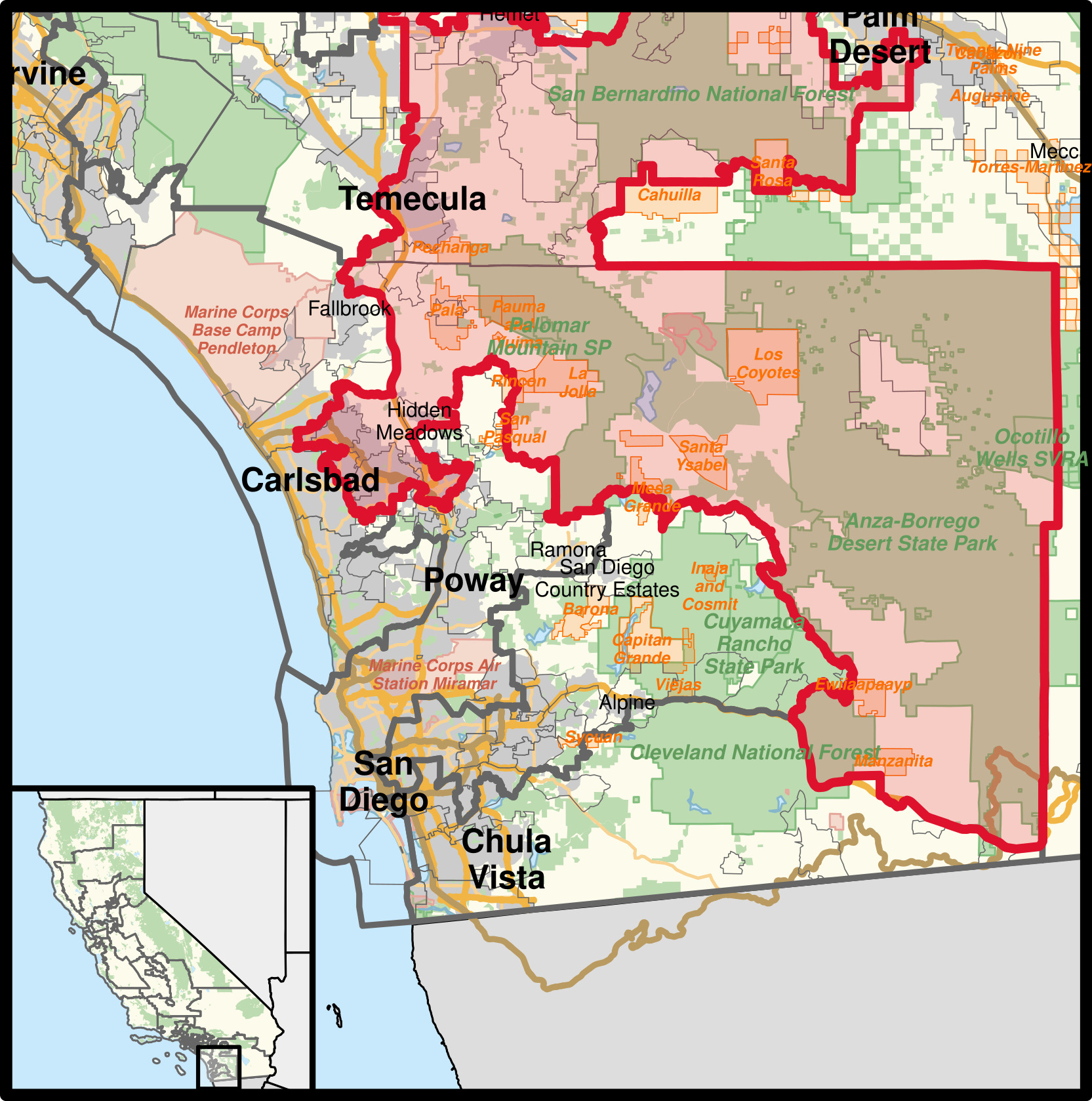
MARZORATI: Well, really, because this is one of the last purple congressional districts we have in California. It’s one of only three districts in the state that was rated competitive by the nonpartisan political report. So it will go a long way into deciding the balance of power in Congress. And this 48th district, specifically this map, which was created by voters under Prop 50 last year to help Democrats, this thing is just a piece of gerrymandering art. I mean, it makes no sense on paper. It runs from here in North County San Diego up to Riverside. It goes out to Palm Springs, back down to the desert. But the goal was really just to make the district more favorable to Democrats, and that happened. We saw the incumbent Republican Darrell Issa decide he just didn’t wanna run here.
HALL: And who are the candidates running in the district?
MARZORATI: So with Issa out, we have on the Democratic side, Marni von Wilpert. She’s the San Diego City Council member. On the Republican side, Jim Desmond. He’s a San Diego County supervisor, and about half the voters in this congressional district are already represented by Desmond on the board of supervisors. So I think that’s clearly an advantage for him in this election, just that familiarity. And I saw it at this Fiestas Patrias Mexican Independence Day celebration over the weekend at Vista. Desmond’s office I’ll put on the events, andsome of his supporters were there as well. I talked with the mayor of Vista, John Franklin, who’s supporting Desmond for Congress.
“We think of him as a common sense leader. He’s been very responsive. He’s focused on affordability issues,” said Mayor Franklin
MARZORATI: And there were other Vista residents I talked to at the event. They mentioned Desmond’s office giving out free baby formula, free car seats. So you can see this in Desmond ads too. He’s kind of leaning into this message of non-partisan service.
HALL: Going back to Von Wilpert, what’s the case that she’s making to voters?
MARZORATI: I think Von Wilpert is hoping the election is going to hinge more on national issues, more on President Trump. Trump has endorsed Desmond and Desmond will be running as a Republican in this race. This is not a supervisor election, which is nonpartisan. Immigration enforcement, ICE, I think are definitely issues to watch here as a motivator for Democrats. It’s interesting, that same Fiestas Patrias event I mentioned that Desmond’s office helped sponsor, organizers told me they almost canceled the event last year because of fears over ICE raids. And there have been debates over ICE training facilities at the county level in San Diego, locally in Escondido. So it’s on the mind of voters, including Supreshma Riya. She’s a freshman at Cal State San Marcos, who just registered to vote for the first time yesterday. And I caught up with her. And honestly, like many Democrats I talked to this week, she singled out immigration and Trump’s enforcement as her top issue.
“I think that the way that he’s handling the situation is inhumane,” said Riya.
MARZORATI: I think it’s no surprise Von Wilpert has really made standing up to ice one of her top priorities.
HALL: I know that this district is pretty sprawling. How are the candidates getting their messages out?
MARZORATI: Yeah, that’s a great question. In Riverside, San Diego, Palm Springs, you have three different TV markets in the same district. So if a campaign is running a broadcast TV ad, it’s not even going to reach all of the voters in the district. So how they get the message out will be interesting. We saw last week some outside spending reported on mailers against Von Wilpert. What was interesting about that is the New York Times reported that it was part of this bankrolling effort by Trump’s super PAC, MAGA Inc. So maybe there’s involvement there. Democratic groups will surely get involved. I think the question is, voters in this district have a history recently of ticket splitting, by which I mean they’ve supported Republicans at the local level and at the state level and Democrats for president. We’ll see which way they go for Congress.
HALL: Guy, thanks for your reporting.
MARZORATI: Thanks, Alex.
President Donald Trump is expanding the Interior Department’s authority over energy projects under the Defense Production Act.
The executive order could affect the Central Coast, where the administration has already invoked the federal law to support a pipeline restart off the Santa Barbara coast; Sable Offshore’s Santa Ynez pipeline system.
The Defense Production Act allows the federal government to prioritize contracts and resources considered necessary for national defense. The new order gives that authority to both the Interior and Energy secretaries when it involves energy production and distribution.
Linda Krop is with the Environmental Defense Center, or the EDC. She says the amended order could give other federal agencies another way to intervene in disputes involving Sable Offshore’s Santa Ynez pipeline system.
“Sable doesn’t have any military defense contracts or requests for services. At the time the order was issued, it wasn’t even producing anything. So there was nothing to prioritize,” said Krop.
She said that’s why the EDC is supporting California’s legal challenge against the administration’s use of the federal law earlier this year.
Meanwhile, the order does not mention Sable or authorize a specific project. It also does not directly approve permits or override state law. Instead, it expands the federal authority to include secretaries with the Department of Interior and Commerce, who oversee other aspects of offshore oil and gas developments.