Nepali Solidarity Takes Root in East Bay After ‘Apocalyptic’ Flash Flooding
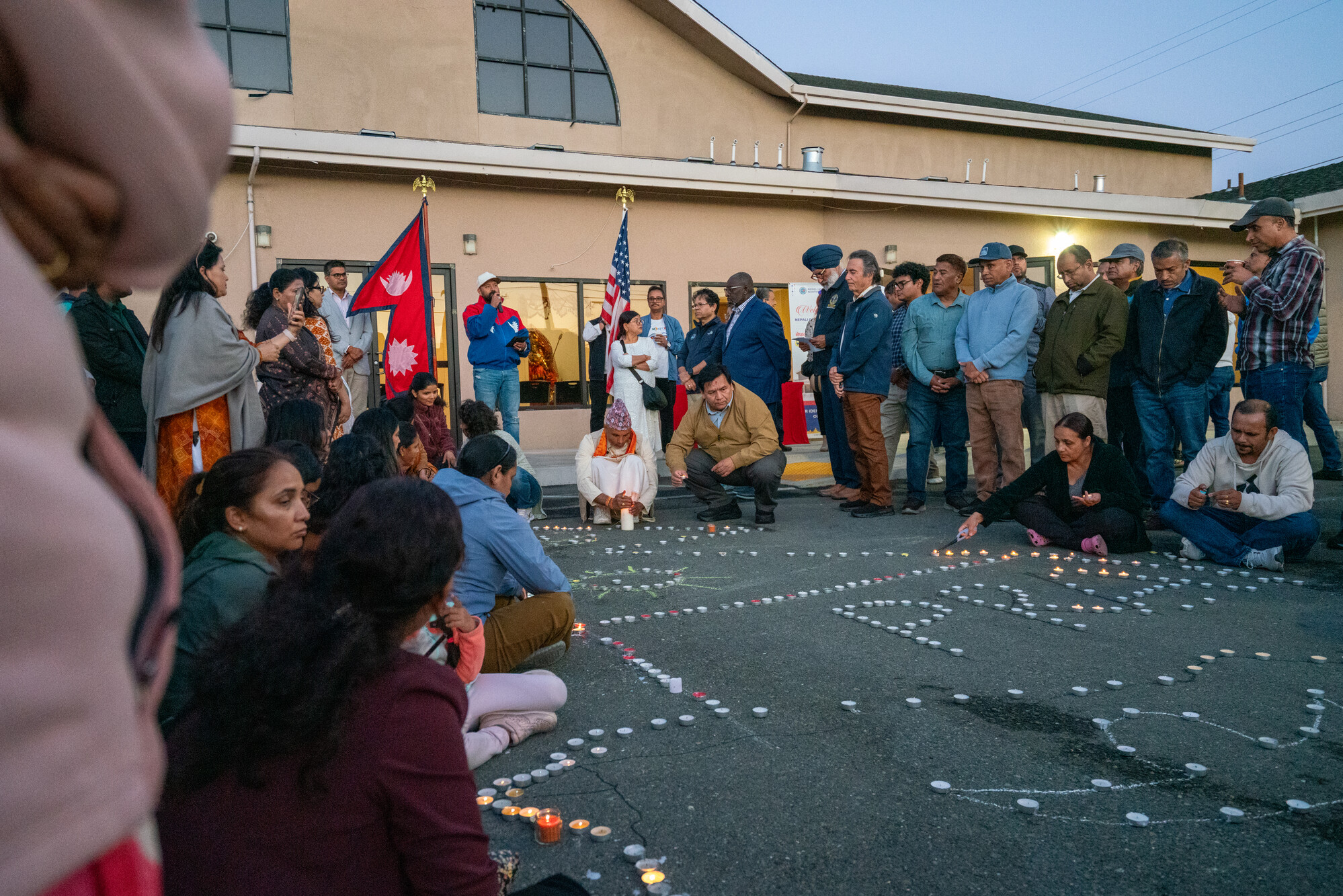
More than a dozen members of Janak Raj Dhungana’s family are still missing following the flash flooding in Nepal and Tibet. Another two dozen of the Richmond resident’s friends – some from his childhood in Nepal – are also unaccounted for.
“It’s really very hard to control my emotions,” he said at a candlelight vigil at the Nepali Community Center in Richmond. “We are praying for them. We can’t do nothing.”
At least 676 people died in the flooding that swept through the Nepal-Tibet border region on Wednesday, and almost 3,000 people are still missing, according to Saturday morning figures from both governments. Nepali authorities said that 65 U.S. citizens are among the missing.
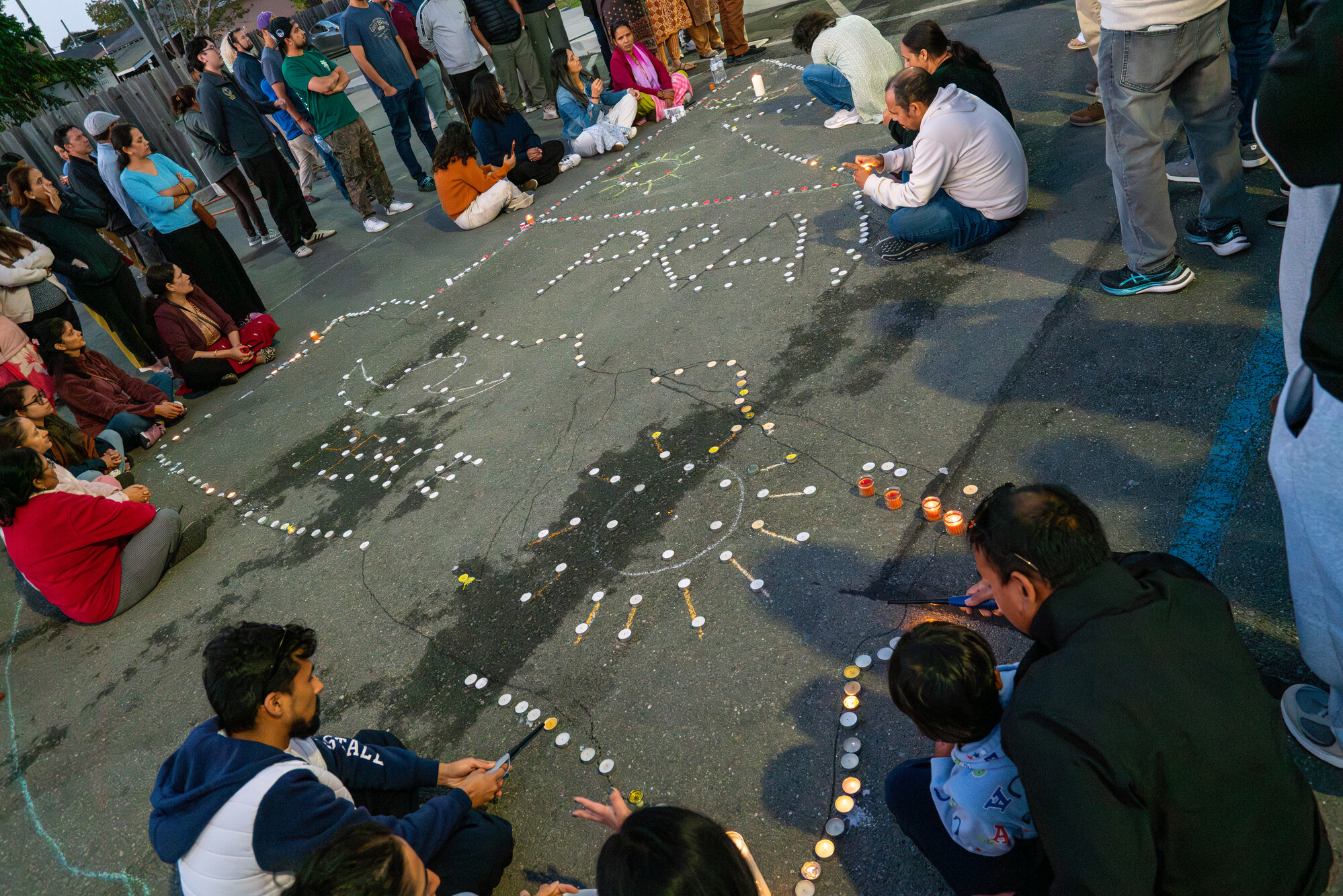
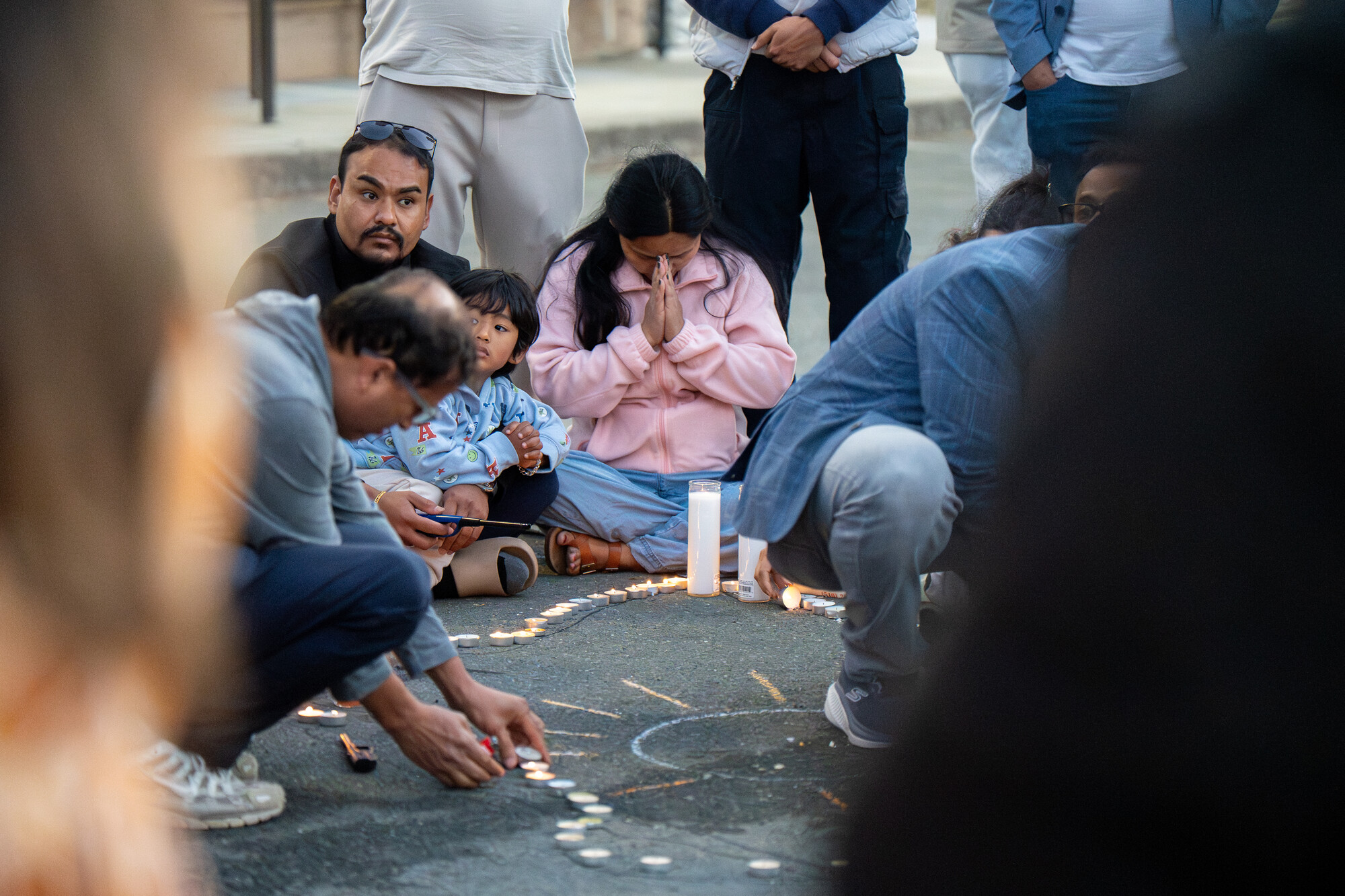
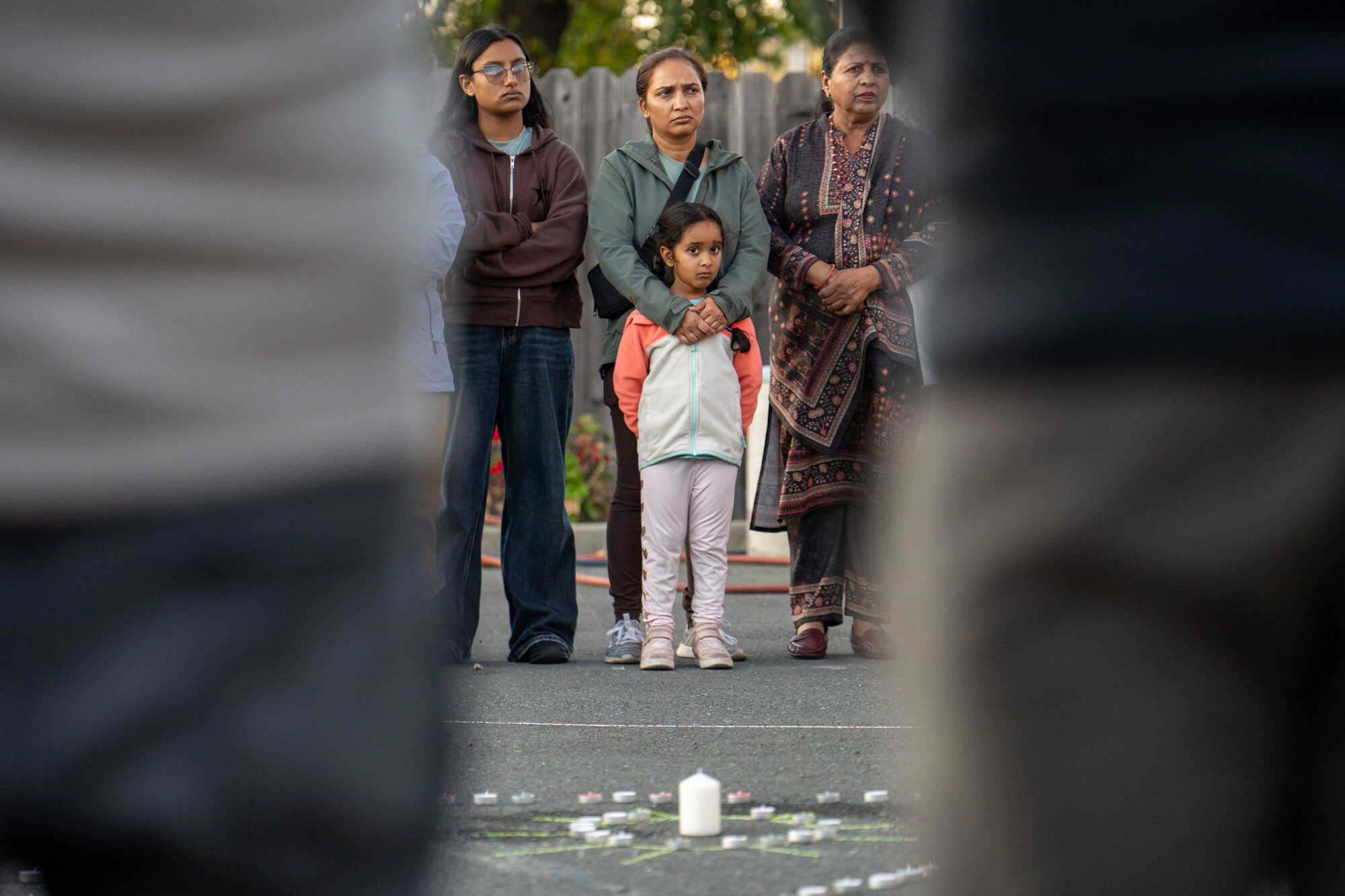
Raj Dhungana was with about 100 people who said a prayer thousands of miles away for their families and friends who number among the missing and dead.
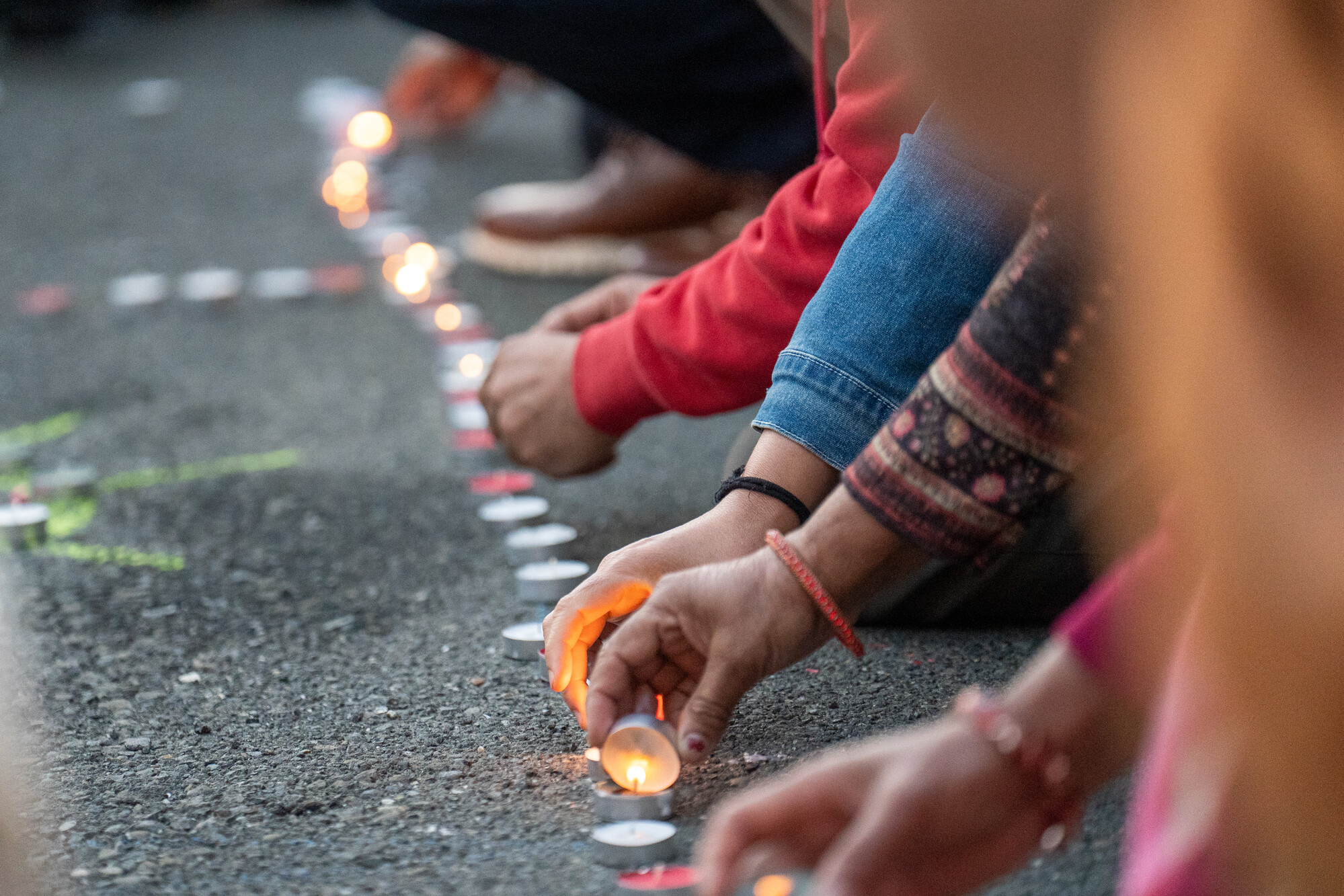
Members of the Nepali Association of Northern California bowed their heads on Friday night at its community center, surrounding candles they had placed on the ground in patterns. One of the arrangements spelled out the word: “PRAY.”
Sheela Dawadi, a Pittsburg resident, said she doesn’t have any blood relatives affected by the floods, but that “family” includes everyone right now.
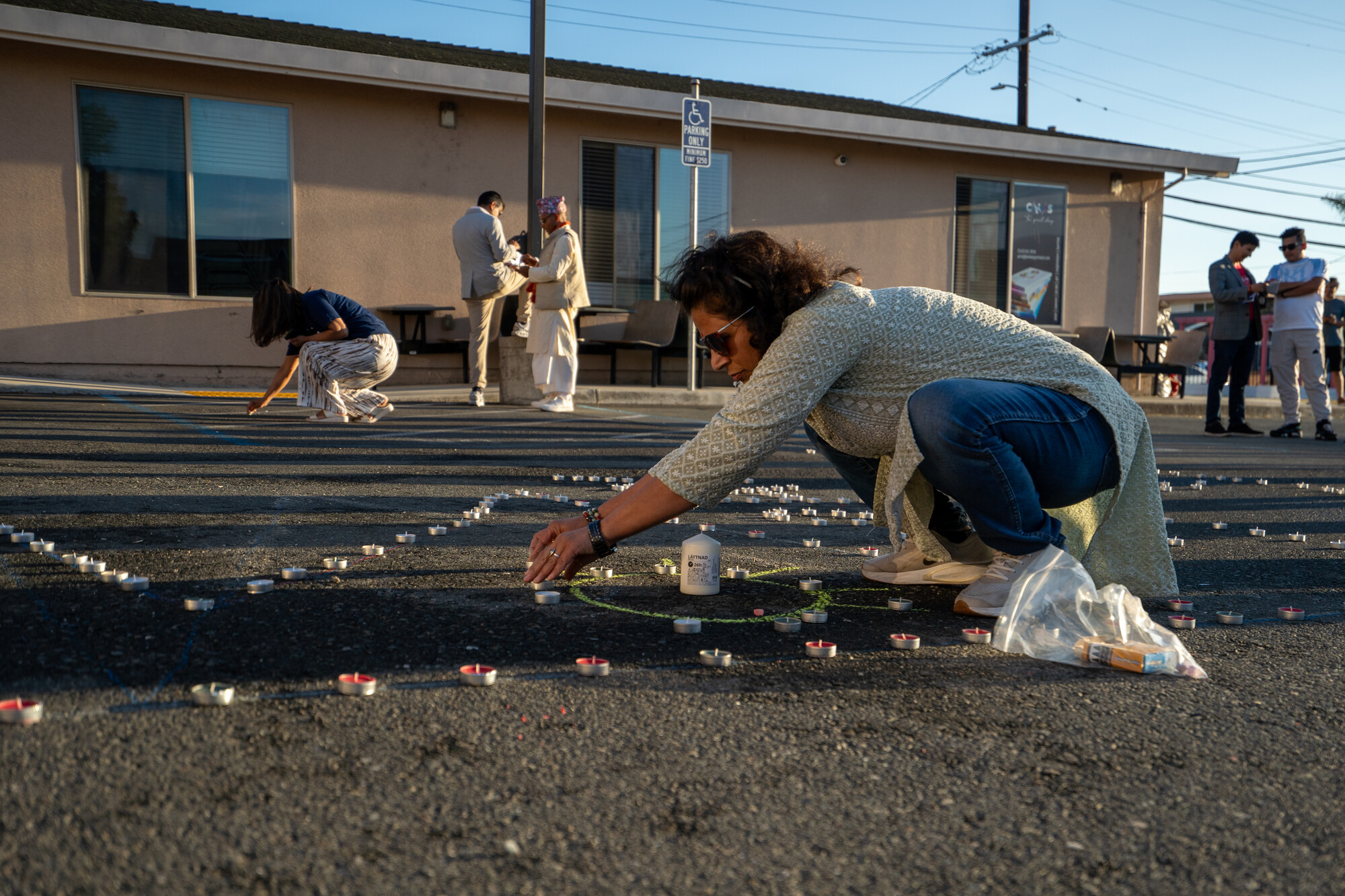
“[The whole of] Nepal is family right now,” Dawadi said. “I’m far away. I feel so hopeless.”
The Bay Area is home to upwards of 35,000 Nepali people in the diaspora, according to Preetesh Karki, president of the Nepali Association of Northern California.
The U.S. Geological Survey said the flooding was “likely triggered” by rapid slope failure that involved a glacier. Though the agency hasn’t definitely said the cause is a melting glacier and an investigation into the incident is still underway, climate experts say that it’s likely.
Climate change has increased the speed at which glaciers defrost, meaning events like those in Nepal are becoming more frequent. Karki and Tika Lamsal, president of the Buddha Nepal Peace Foundation, said the disaster didn’t have to happen.
“It’s kind of surreal, apocalyptic for all of us,” Lamsal said at the vigil. “It is not only Nepal that is suffering right now, it’s all the community in the world because global warming is real.”
Karki agreed, blasting other countries that disproportionately contribute to climate change.
“People from a country like mine who have nothing to do with all this impact are the people who are losing life,” Karki said before the vigil. “Nepal don’t just need your prayer. We need your apology.”
Nepal contributed less than 1% of the world’s carbon emissions in 2023, according to the International Energy Agency. In comparison, the U.S. made up 15.5% and China, 32.1%, that same year.
The recent wars in Iran and Russia also contribute to the increase in emissions, Karki said.
“People living in the world, especially in developed countries, are enjoying their everyday life, that luxury is being paid by someone remote who has nothing to do [with it],” Karki said.
The Nepali Association of Northern California said it is doubling donations going toward flood relief.
KQED’s Paula Sibulo and Katherine Monahan contributed to this report.