This piece was featured first on Jul 16 for One Good Thing, a weekly newsletter brought to you by Alexis Madrigal about his take on Bay Area art, culture & nature. Subscribe today.
Human memory is strange. It is, to a first approximation, about forgetting everything. I don’t mean this in some hand-waving way. The rich, three-dimensional, living world of consciousness becomes the faintest traces, called back to mind by a process closer to hallucination than retrieval.
The Stanford historian Tom Mullaney, who will be on Forum with me tomorrow, has written a remarkable book about this strange process by which everything melts away in the churn of human biology and societies. The book is called How We Disappear: A Personal History of Information. Early in the book, Mullaney cites the cognitive scientist Thomas Landauer’s estimate that a human’s total memory (total!) amounted to just 125 megabytes. I have hundreds of individual videos on my phone that are larger than that.
So, I’ll say it again: memory is about forgetting.
Did you know that we’re still not precisely sure what a memory is? More than one hundred years ago, the German scientist Richard Semon proposed that there was such a thing as an “engram,” the physical trace of experience that must surely exist in some form in our brains to allow us to remember. But where are the engrams? They probably exist in ensembles of cells in your brain, but nearly everything about what form they might take or how they might work is unknown or brutally contested.
I find all this free space a bit thrilling. One of my favorite scientists, Tufts’ Michael Levin, describes memories not as recordings of the past but as messages from our past selves in the journal Entropy. We evolved to use these traces of what was to enable us to deal with new circumstances. Could there be a more empowering vision of the past?
Mullaney lays out a different set of ideas about reckoning with the past. His starting point is entropy, the second law of thermodynamics, and the cold fact that everything put in order will fall apart. The special role that life plays in the universe, as far as we know, is that we resist the dissolution of entropy. In his formulation, anything alive is like a hero in a saga: doomed, but heroic.
“Entropy comes first. Every time we put something in formation, we do so within a universe that is at all times tending toward de-formation,” he writes. “It’s not that information comes first, and then entropy ‘happens’ to it. Information happens to entropy—and if human beings want that information to survive, it needs to keep happening to it, over and over. There is no such thing as continuity—only continuation.”
Perhaps this is a depressing outlook on the wonder of living, but I found it ennobling. Here we are, these watery creatures wobbling on two legs through an incomprehensible world battling the most fundamental forces that we know in the universe.
And what is our main weapon in this epic battle? Memory. Continuation. Life has reproduced, continuously, from the very oldest ancestor we’ve got, billions of years old, keeping track of what’s happened in our genomes, in our bodies, and for humans, in the documents we keep and the stories that we tell.
To imagine we must search for something greater than ourselves is a misunderstanding as large as the one Mullaney identifies about entropy. To be alive is to be a component of the great continuation. Zoom out far enough and there is nothing else. Our individual contributions are pebbles on the mountain. What a relief.

Alexis Madrigal, Co-Host, Forum

My Tipline
- Big one! The first annual Temescal Alley Book Fair
- Serious vintage radio nerd stuff in Alameda
- Been reading the San Francisco classic, Suicide Blonde. It’s intense!
- This deep soul song makes me want to go to Como, Mississippi

My Picks
 SCIENCE
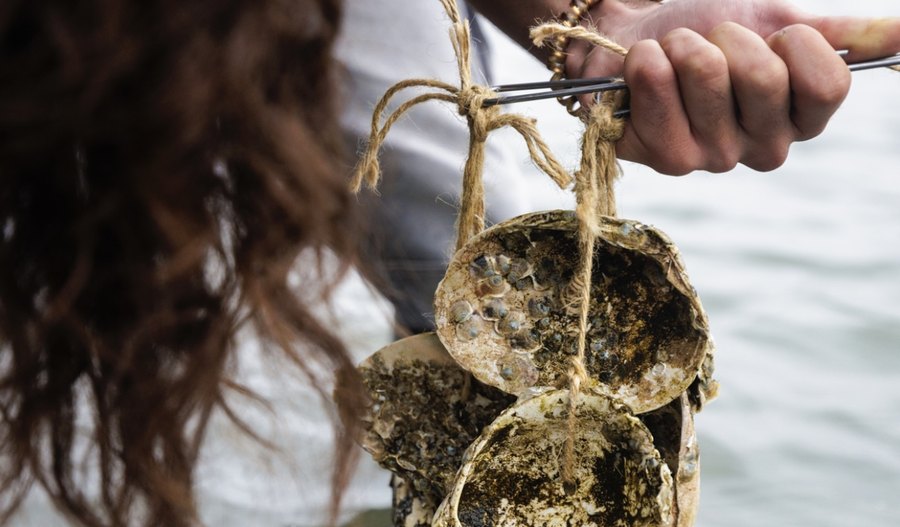
This Tiny Oyster Once Thrived in California. Now, Scientists Are Bringing It Back
Olympias! Olympias! Olympias!
 FOOD
FOOD
West African Flavors Do Battle as Jollof Festival Returns to Oakland
I officially take no position.
 LIVE
LIVE
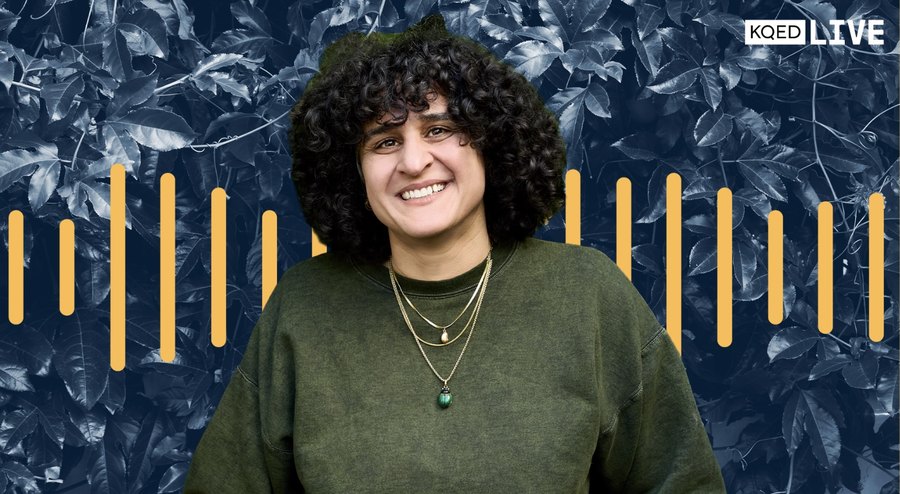
Come See Me and Samin Nosrat!
It will be full of laughs. Probably. If you come.