Santa Clara County Leaders Commit $1 Billion to Revamp Jails
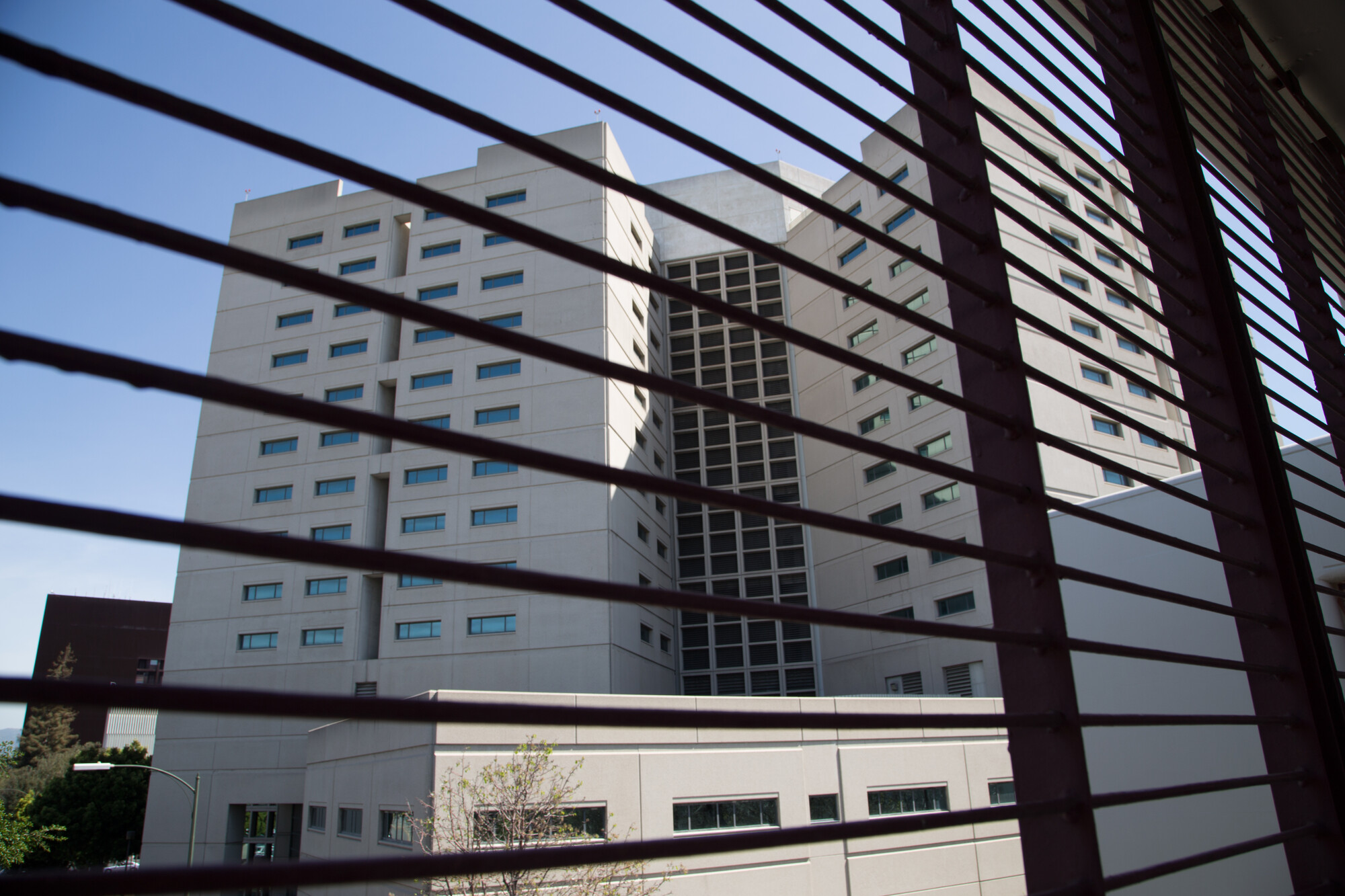
Santa Clara County leaders approved a broad plan to spend roughly $1 billion over several years to revamp significantly outdated jail facilities described as “awful” by county officials, and bring them into compliance with longstanding court orders to improve safety and conditions.
The unanimous decision by the Board of Supervisors came over the protests of dozens of residents and advocates for people who are or have been incarcerated, who called on leaders to avoid further spending on new jail buildings, and to instead invest more in preventive and intervention programs, housing and education.
Supervisors said the decision reflects dual realities in the county, with leaders pledging to continue efforts to reduce incarceration and recidivism, while also facing a legal mandate to have adequate, safe facilities for people who are jailed and the people who work there.
“Today is not about an either-or decision,” Supervisor Susan Ellenberg said just before voting to support the plans this week. “We need to do everything we can to prevent people from entering the criminal legal system. When those investments are not successful, our obligation to care for people doesn’t end when they are incarcerated.”

“The punishment of incarceration itself, while it has debatable value, is the deprivation of liberty,” Ellenberg said, and “should not be the exposure to unsafe, deteriorating or inhumane conditions.”
The county plans are aimed at addressing the most pressing needs at both its jail facilities: the Main Jail near downtown San José and the Elmwood Correctional Facility in Milpitas. The changes include major investments in spaces for better medical and mental-health care, more efficient intake and processing and better assessment of people’s needs as they are coming into the jails.
Supervisor Margaret Abe-Koga said she has toured both jail facilities and was “shocked” by the conditions. “It’s beyond just cleaning the facilities. It’s really quite deplorable,” she said.
The lack of proper facilities, including layouts that make it harder for staff to supervise people, and the lack of access to adequate mental health and medical facilities have contributed to devastating outcomes like jail deaths and assaults, which led to costly lawsuits and two federal consent decrees mandating improvements with court oversight.

The jail system in the county has faced periods of intense scrutiny that started gaining more traction following the 2015 death of Michael Tyree, a mentally ill man who three sheriff’s correctional deputies beat to death in his cell.
Overall, county staff said their plans would reduce the total number of jail beds in the system from 4,872 to 3,457, in line with estimated need for the 2035 jail population.
The biggest changes would happen at Elmwood, a sprawling 675,123-square-foot complex where more than two-thirds of the buildings are over 40 years old, with some more than 100 years old. County reports said the facilities there “were designed to meet the operational needs of a bygone era.”
The county plans to demolish the minimum-security camp portion of Elmwood, known colloquially as “the farm,” which would eliminate 1,130 beds. County reports said some of the units there are already closed due to poor conditions, and the minimum-security people it was built for are “a group no longer held in custody.”
The barracks-style facility was the site of a fatal assault of an incarcerated man by other incarcerated men in January 2025, in an attack that lasted 15 minutes, much of which was captured on surveillance cameras, but not seen in real time by officers.
Elmwood would also gain a new 145,000-square-foot medical and behavioral health facility. The undersized medical facilities there currently lack a functional infirmary and an acute psychiatric unit, forcing people in jail who need those services to be transferred to the Main Jail, which increases risk to themselves and others, the report said.

The new facility would also “provide 300 new dedicated and purpose-built beds specifically for people with serious mental illness,” according to the report.
Another men’s housing unit at Elmwood with 540 beds would be demolished, with a new 672-bed modern facility to replace it, allowing some of the high-security inmates from the Main Jail to be transferred there.
The Main Jail would be in line for a new 56,000-square-foot intake, booking and short-term housing facility that would provide “dedicated space for medical, mental health, and custody assessments,” the report said.
Supervisor Sylvia Arenas said she wants the county to be “equally ambitious” about spending on youth violence prevention programs, education and other efforts to lower incarceration rates.

“I take this work really seriously because it impacts me as a mom of a 17-year-old who’s going to school on the East Side,” she said. “I don’t want a new jail. I don’t want any additional jails, because guess what? The people who are in there are going to look like me.”
Raj Jayadev, the director of Silicon Valley De-Bug, a community organization that advocates for criminal justice reform, told supervisors the county should “prioritize housing and healthcare and education and youth instead of cages and jails.”
Jayadev said the county’s plan — which spans about eight years for the first phases but up to 15 years in forecasted phases — lacks perspective.
“We are limiting our thinking of what’s possible based on the limitations of how the county thinks of the world today. We should allow for the possibility of the next generation, of what they could become,” he said.
The initial phases will likely be funded through lease revenue bonds, county reports said.
Future phases contemplated in the longer plan include up to another $1.5 billion in demolition, new construction and renovations, including new women’s housing units, and more new men’s units. Those future phases were not up for approval this week, and county staff noted the funding for those projects is unlikely to be available under current forecasts.