Partial Lunar Eclipse to Bring a ‘Blood Moon’ to the Bay Area Thursday
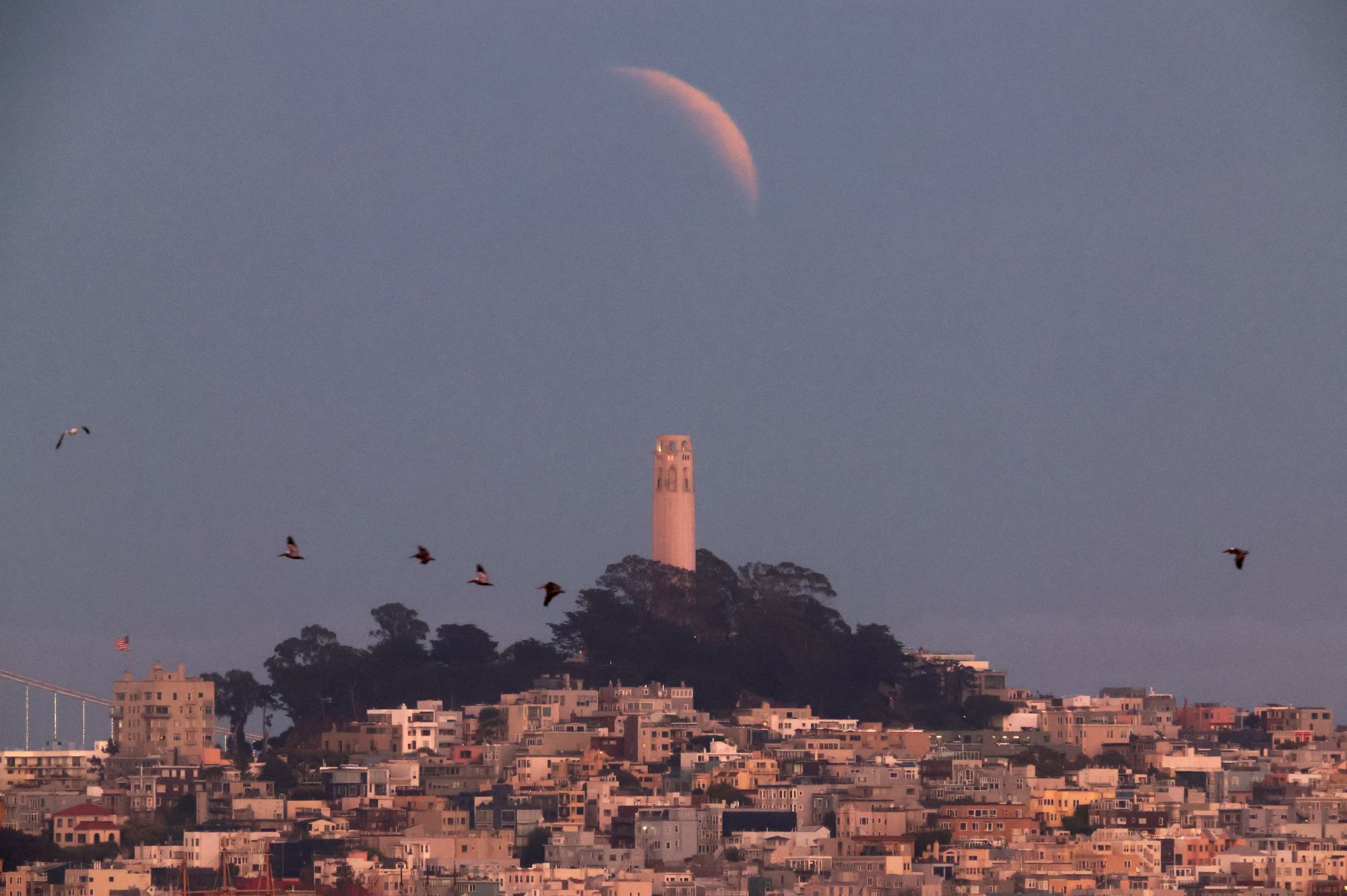
As summer draws to a close, a lunar eclipse will turn August’s full moon a rusty red on Thursday, creating a “blood moon” that astronomers say will be visible across California and the U.S.
Around 96% of the moon will be eclipsed by Earth’s shadow, according to NASA.
When that happens, the moon will appear almost entirely red with “just a little sliver up at the north part of the moon” remaining light, said Gerald McKeegan, an astronomer with the Chabot Space & Science Center in Oakland.
“Nature, every once in a while, likes to put on a little show for us,” McKeegan said. “It reminds us that we’re part of a much larger universe.”
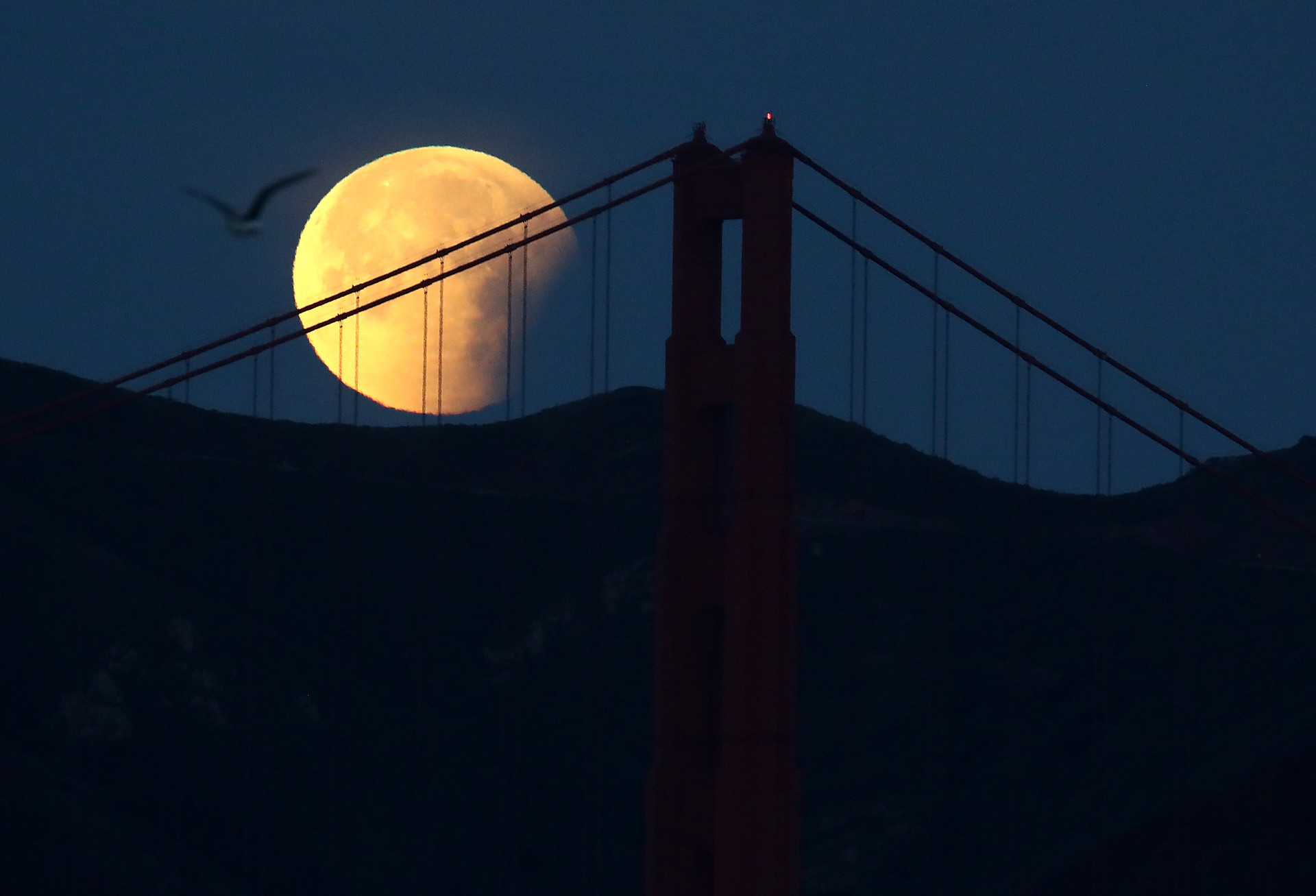
The partial eclipse will begin around 7:33 p.m. and end around 10:52 p.m. This means that the eclipse will already be underway when the moon begins to rise over the Bay around 7:36 p.m.
The eclipse will reach its maximum, or the peak moment when the moon moves closest to the center of Earth’s dark shadow, at 9:13 p.m.
Andrew Fraknoi, a retired astronomy professor who taught at San Francisco State University, wrote KQED that the exact color of the glow will depend, in part, on what he called the “sooty-ness” of our atmosphere. The degree of “sooty-ness” depends on fire smoke, air quality, volcanic eruptions and even cloud cover, Fraknoi said.
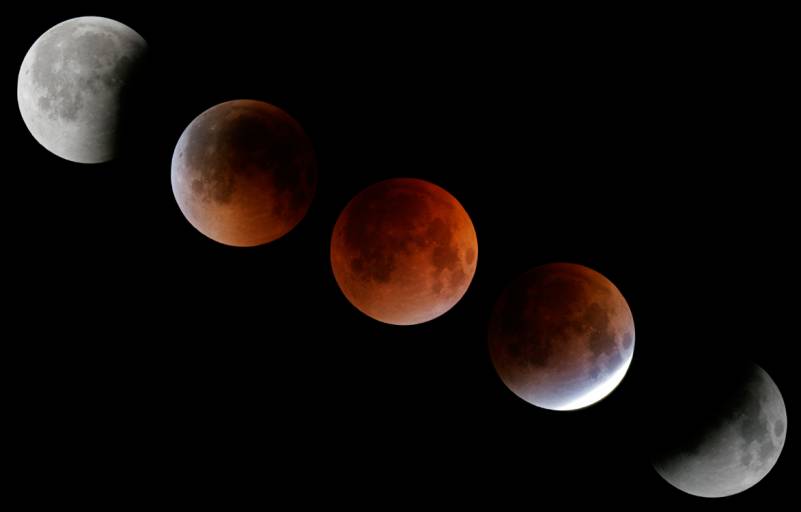
Lunar eclipses happen when the Earth orbits between the sun and the moon, casting a shadow over humanity’s most loyal companion on our journey through space.
In classic Bay Area fashion, Thursday night will be mostly cloudy, according to Roger Gass, a meteorologist with the National Weather Service, who said that most of the region will be covered by its typical low-lying fog.
Gass said that eclipse-gazers may have more luck viewing in places like Livermore, Concord, San Mateo and San José, where the clouds will roll in later on Thursday night. However, even those areas will have some high cloud cover that could partially obstruct the moon.
This partial lunar eclipse will last for hours — giving viewers ample time to find a gap in the clouds.
The Chabot Space & Science Center in Oakland will host a partial lunar eclipse watch party from 7 p.m. to 10 p.m. McKeegan said the event will livestream the start of the eclipse from a location farther east to make sure everyone can see the full eclipse process. Once the moon gets high enough in the sky, attendees will be able to view the blood moon through their telescope, McKeegan said.
The last lunar eclipse visible in the Bay occurred in March — though it peaked at 3:33 a.m., so residents might have slept through it.
The next total lunar eclipse visible to the Bay will not be until June 2029, so this is the show to catch, McKeegan said.