‘A Chromebook in the Hand of Every Child.’ Did Schools Go Too Far?
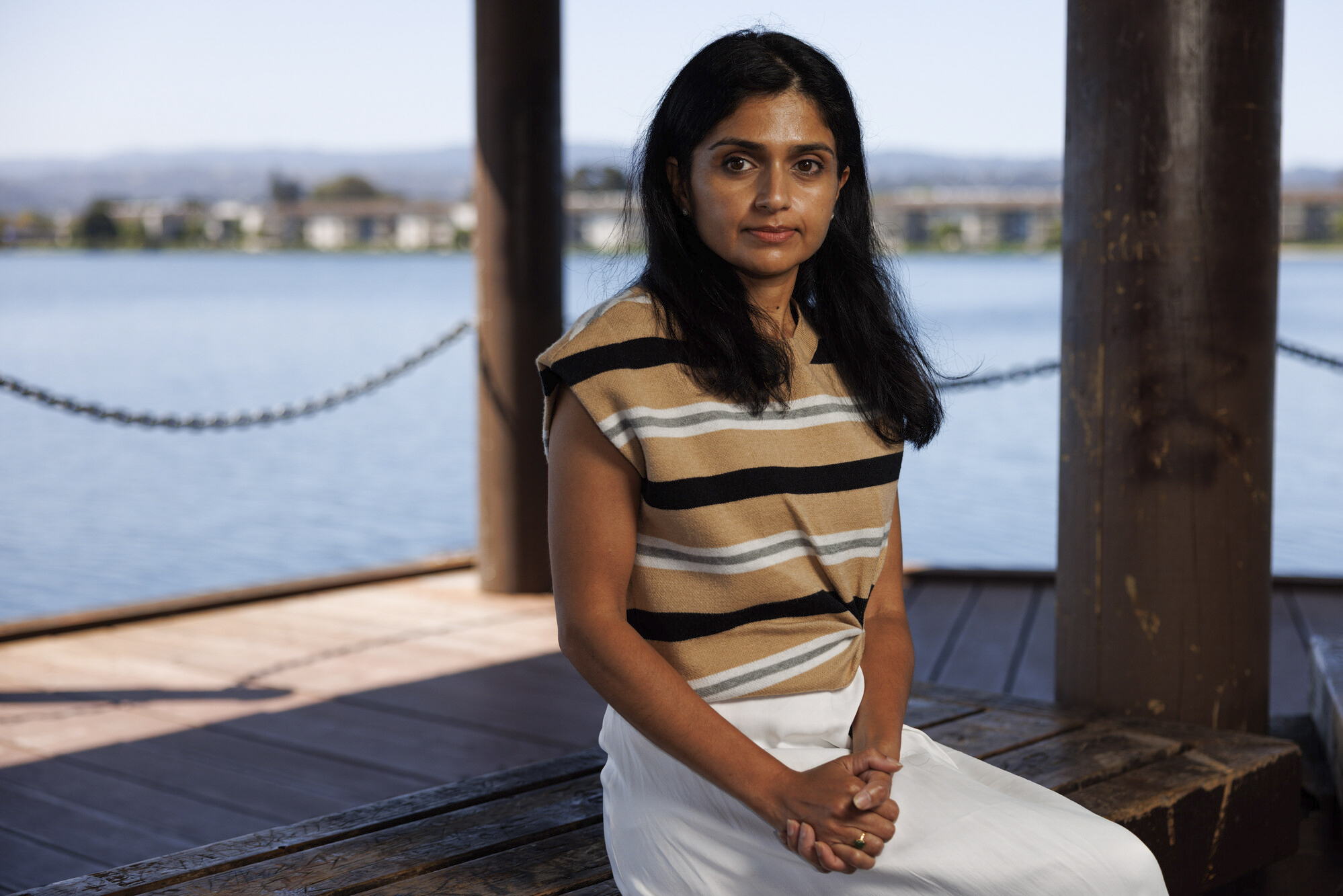
Last year, Suki Reddy started to enter her third-grader’s bedroom to find him, face lit up behind the glow of a computer, watching YouTube.
This didn’t seem possible, she thought; she had put controls on his iPad and closely monitored his screen time.
But Reddy’s son didn’t have to use his personal tablet to watch videos in bed. He could open YouTube on his school-issued Chromebook.
“They had less controls on their school computer than families have,” Reddy said. “There’s families who don’t have any phones or iPads for their kids. The only access that their kids are getting is through the school computer.”
Reddy’s two children are in the San Mateo–Foster City School District, which includes 21 elementary and middle schools across the two cities. For years, the district has issued each child a Chromebook and integrated them into students’ learning, using them for access to textbooks, class handouts and homework as early as transitional kindergarten.
Last year, as Reddy became concerned about the amount of screen time her children had through school, she started to speak with other parents who were also growing worried. They saw their kids getting distracted by entertainment apps, noticed their attention spans deteriorating and their mental health suffering from the effects of spending hours online.
While many parents already had their own rules for their kids’ use of social media and personal devices, educational technology had opened up a new front. Even when guardrails were put in place to limit the school devices’ usage, parents learned that children had found tricks to bypass protections.
SMFCSD spokesperson Diego Perez said via email that the district has “a ton of restrictions” on its Chromebooks but did not respond to direct questions about whether YouTube was blocked on the devices.
“It really made me realize it’s time to look at schools,” Reddy said. “That’s when I started asking questions directly to them.”

Over the last 15 years, classroom technology use has increased rapidly in districts across the country. Most now have 1:1 device programs, sending children as young as 5 and 6 home with personal tablets or computers.
But as more research emerges about the potential harms of screen use for children, while test scores in schools across the U.S. struggle to rebound after the COVID-19 pandemic, districts are at an inflection point.
California has mandated school cellphone restrictions across the state, and parents in the Bay Area are pushing their school boards and administrators to pass new policies that limit screen time and institute content guardrails for students — following in the footsteps of the Los Angeles Unified School District, whose board passed a landmark resolution this year.
“We’re not anti-technology,” Reddy said. “We’re very much a group in the Bay Area. Many parents work in the tech industry and work for the very companies who produce these tech tools. But because of that, we have a very unique stance where we recognize that there’s not just an upside to this — there are actually a lot of potential problems.”
The rise of ed tech
One-to-one device programs are now in 88% of public schools across the U.S., according to data from the National Center for Education Statistics.
They gained traction throughout the 2010s, according to neuroscientist and former teacher Jared Cooney Horvath, who said education technology companies pitched their products as an unrivaled opportunity to individualize learning and, later, as the great equalizer for students across demographic groups.
“Put a Chromebook in the hand of every child, and that’s how you’re going to close the equity gap,” said Anya Meksin, the deputy director of parent organization Schools Beyond Screens, which advocated for the LAUSD policy. “This idea was sold to school districts without really any data to back it up. It was really a sales pitch.”

While 1:1 device programs first jumped significantly in 2010, Horvath said, they became pervasive during the COVID-19 pandemic.
Many school districts used federal grants to buy and distribute technology to their students at home, which allowed teachers to continue connecting with their classes and provide some instruction — if limited.
“It’s a Band-Aid,” Horvath said. “The problem is, [districts] invested so much in the tech infrastructure that when COVID ended, rather than pulling the Band-Aid off and going back to what we know works, we just stuck with it.”
Schools Beyond Screens
In 2025, after California passed statewide legislation restricting students’ cellphone use in school, a group of Los Angeles parents founded Schools Beyond Screens, asking LAUSD to rethink its technology policies.
“When I toured 10 local public elementary schools to decide where my kid was going to go, I was completely appalled to see kindergartners on almost every single school tour sitting on computers with headphones on in a darkened room,” Meksin said. They were “not looking at the teacher, not looking at each other. A lot of times, the kids were just scrolling on YouTube.”
Meksin and other parents spent months rallying supporters on dozens of district campuses, flooded the public comment period of school board meetings, lobbied district representatives and board members, and redlined draft legislation before passing a slate of historic policies in June.
Beginning this fall, the country’s second-largest school district banned the use of student digital devices in early education through first-grade classrooms, and put strict minute caps on older students’ screen time.
LAUSD also rolled back its 1:1 device program, no longer making it the default for a student entering the district to be issued a personal tablet or laptop to use in the classroom and at home.
“We have to acknowledge that we now know more,” said LAUSD board member Nick Melvoin, who put forward the district’s “Using Technology With Intention” resolution that passed in April. “Yes, we’ve seen some academic benefits, but we’ve also seen a lot of the harms with kids on screens and the addictive nature of things like YouTube algorithms and all that.”
“When you know better, you need to do better,” he continued.
‘A hard Pandora’s box to close’
Parents in the Bay Area said they also started to question school device use after seeing declines in their children’s learning outcomes.
Nationally, standardized reading and math test scores were lower in 2025 than they were in 2015 in 83% and 70% of school districts, respectively. School districts have cited the pandemic as one of the main causes for a dip in the early 2020s, but scores haven’t rebounded since then as education professionals had hoped.
San Mateo–Foster City’s reading scores declined by 1.2 grade levels over the 10-year period, with the sharpest drop coming between 2022 and 2025. Math scores followed a similar trend.

“It made me look at their curriculum more closely, look at the materials they had and the distractions they were up against,” Reddy said.
“There was no textbook where [students] could go back and forth between pages to see how to do something and where [they’re] getting things wrong,” she continued.
Despite growing anecdotal concern and research revealing the pitfalls of ed tech, Meksin said rolling it back “was a hard Pandora’s box to close.”
During the 2014-15 school year, California public school districts transitioned statewide standardized testing online with the California Assessment of Student Performance and Progress (CAASPP), eliminating the need for Scantron forms and #2 pencils.
In some districts, digital testing software is also used to track student benchmarks throughout the year and determine which students are placed into advanced courses or receive extra support. Reading quizzes and other small assessments are often embedded in online learning management systems.
Parents said apps such as i-Ready, a digital program that provides diagnostic math and language arts testing and associated curriculum, are now too ingrained to remove — even if their merit is in question.
“There’s no evidence that it actually helps kids, and a lot of anecdotal evidence that what it does do is create a distance between the student and the teacher, create a lot of confusion and anxiety for the parent because they’re getting these scores and they don’t know what they mean,” Candace Wei, a parent in the Palo Alto Unified School District, said of i-Ready’s format.
She said despite this, when Mountain View’s school district tried to get rid of the software, “parents revolted.”
“They said, ‘If our kids don’t do the i-Ready curriculum, how will they be prepared for the diagnostic [test]? How will they get into honors algebra?”
Mountain View Whisman School District spokesperson Shelly Hausman said the district is moving away from using i-Ready diagnostic assessments this year.
“MVWSD is moving toward teacher-created tests that are more closely aligned with California state standards and statewide tests,” she said via email. “This work, based on the district’s systems study, ensures our benchmark assessments align with the rigor of state SBAC assessments.”
This year, fifth- through eighth-grade students will still take i-Ready math diagnostic exams three times.
For now, i-Ready Math is one of two measures used to determine their placement in math classes, she said.
Using momentum
After Los Angeles’ historic resolution this spring, though, their tech-limiting movement has gained traction.
“We saw a massive influx of interest from across the country, people signing up on our website and emailing and asking, ‘How do I start a chapter?’” Meksin said.
There are now more than 200 chapters in 38 states, and Schools Beyond Screens is tracking more than 70 districts that have changed or are considering new tech policies.
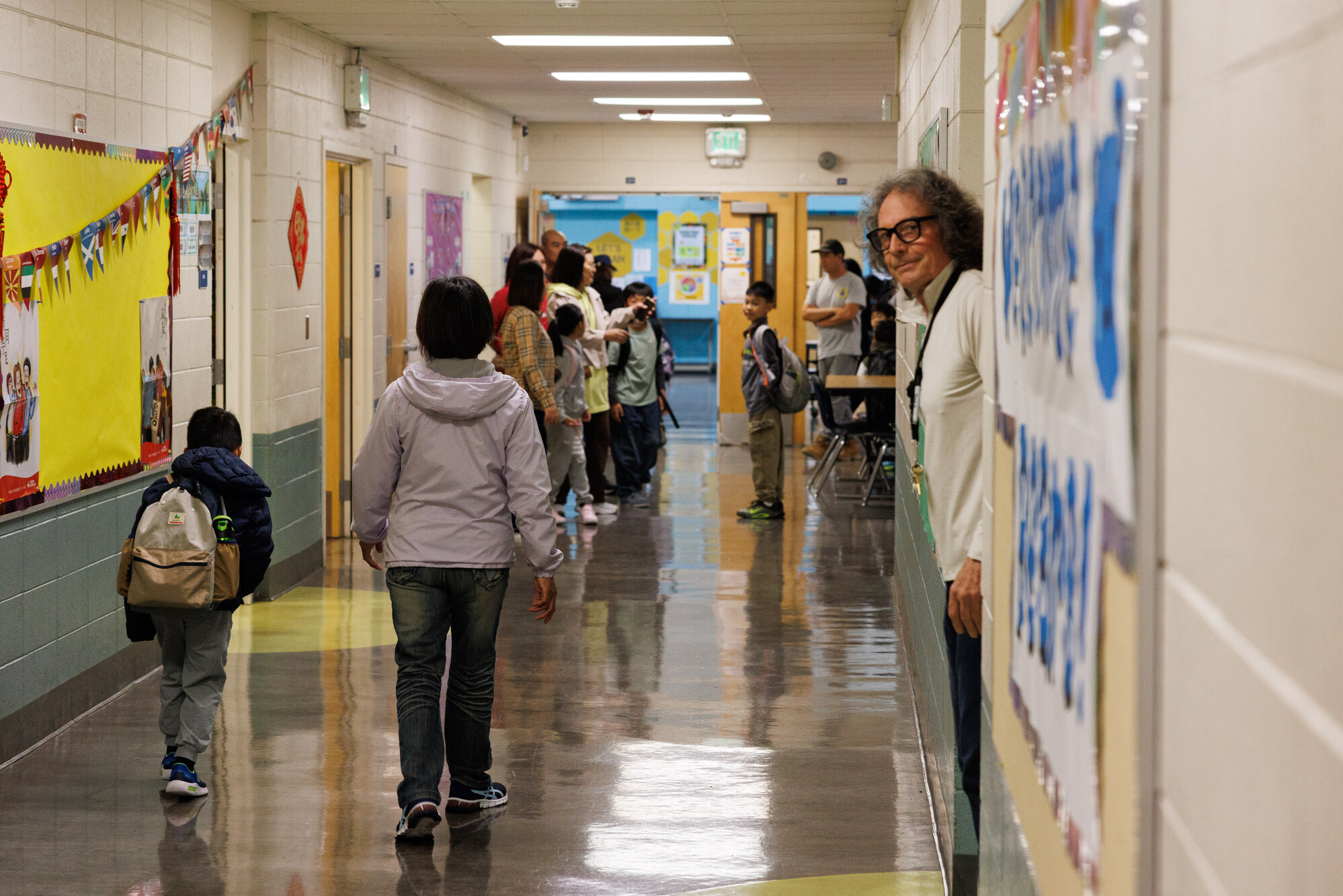
The Bay Area has 11 chapters, including San Mateo’s “Intentional Tech in Schools.” More than 580 SMFCSD parents have signed a petition that the group circulated, urging the district to consider a slew of policies modeled after those in Los Angeles.
In a message to parents just a week before the school year began this month, Superintendent Diego Ochoa announced that the district would transition away from assigning devices to every student in transitional kindergarten through second grade, and said it’s implementing a new “print-first” math curriculum in elementary schools. SMFCSD is also establishing a technology task force and plans to move toward replacing its 1:1 device strategy with Chromebook carts.
Reddy said that at her child’s back-to-school night earlier this month, multiple teachers told parents that students wouldn’t be allowed to use Chromebooks during class downtime, and that the school planned to restrict use during passing periods, P.E. and lunch.
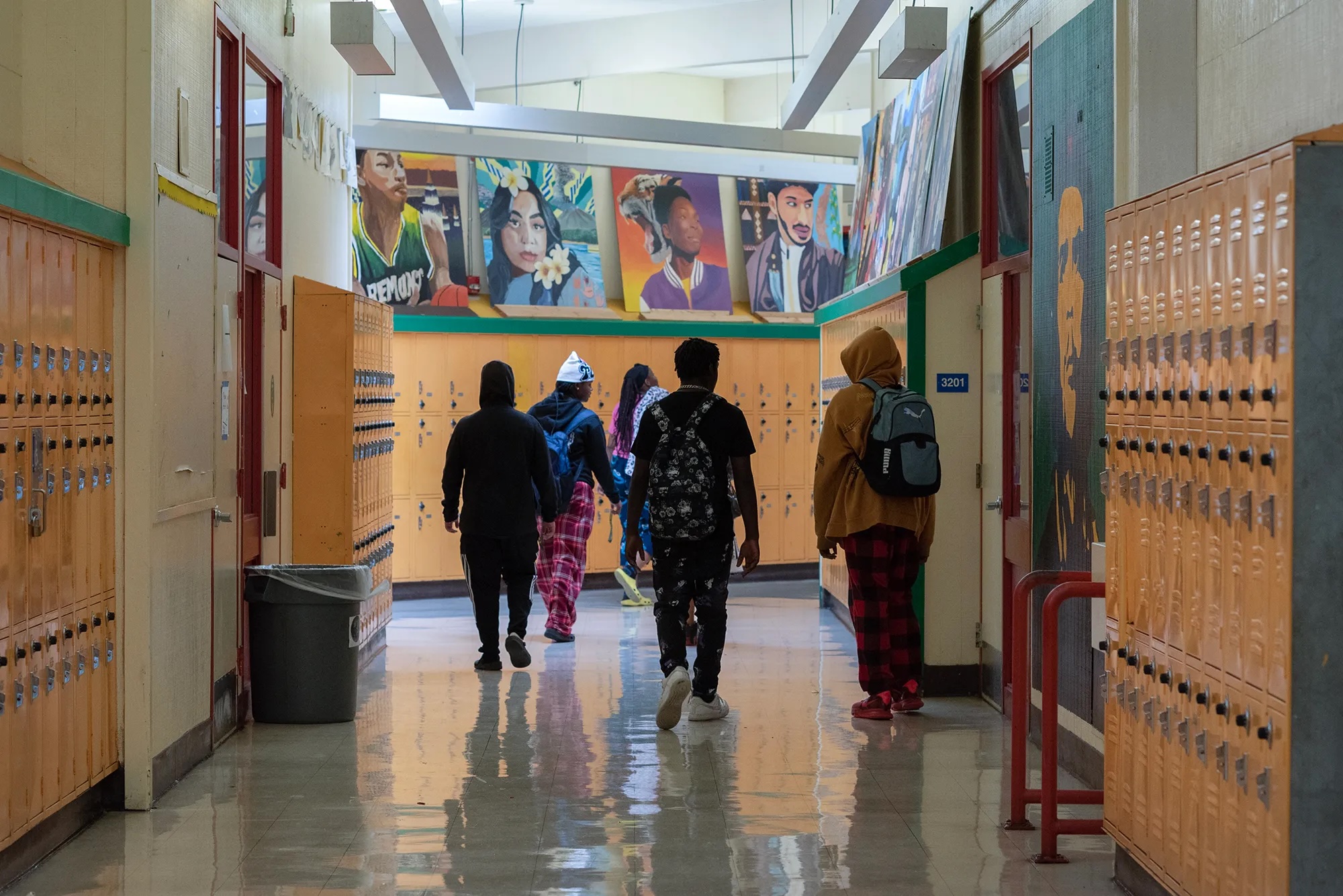
Some of the educators also said that they planned to give out handwritten assignments and project lessons on a single screen at the front of the classroom, instead of having students follow along on their own devices.
“It’s something. However, it isn’t enough,” Reddy said. “Technology evolves way faster than policy, so we can’t keep sticking to these old-school ways of taking a long time with lengthy stakeholder processes for every decision.”
Reddy and other SMFCSD parents plan to attend the district’s school board meeting on Thursday to push for their more robust requests.
Meanwhile, groups in Palo Alto, Sunnyvale, San Francisco and Oakland are also organizing as school resumes, circulating petitions and connecting parents to drum up support at school board meetings.
Many said as they look toward the November election, they’ll also be considering school board candidates’ stance on technology reform at the ballot box.
“I will absolutely be thinking about sensible screen policy platforms when it comes to voting for any school board member, now and in the future,” said Miranda Arly, who started a Schools Beyond Screens chapter for the Sunnyvale, Mountain View and Los Altos school districts in May. “I’m paying more attention than I ever would have before.”