California Budget Crew Sets Eyes on Flood-Prone Highway 37
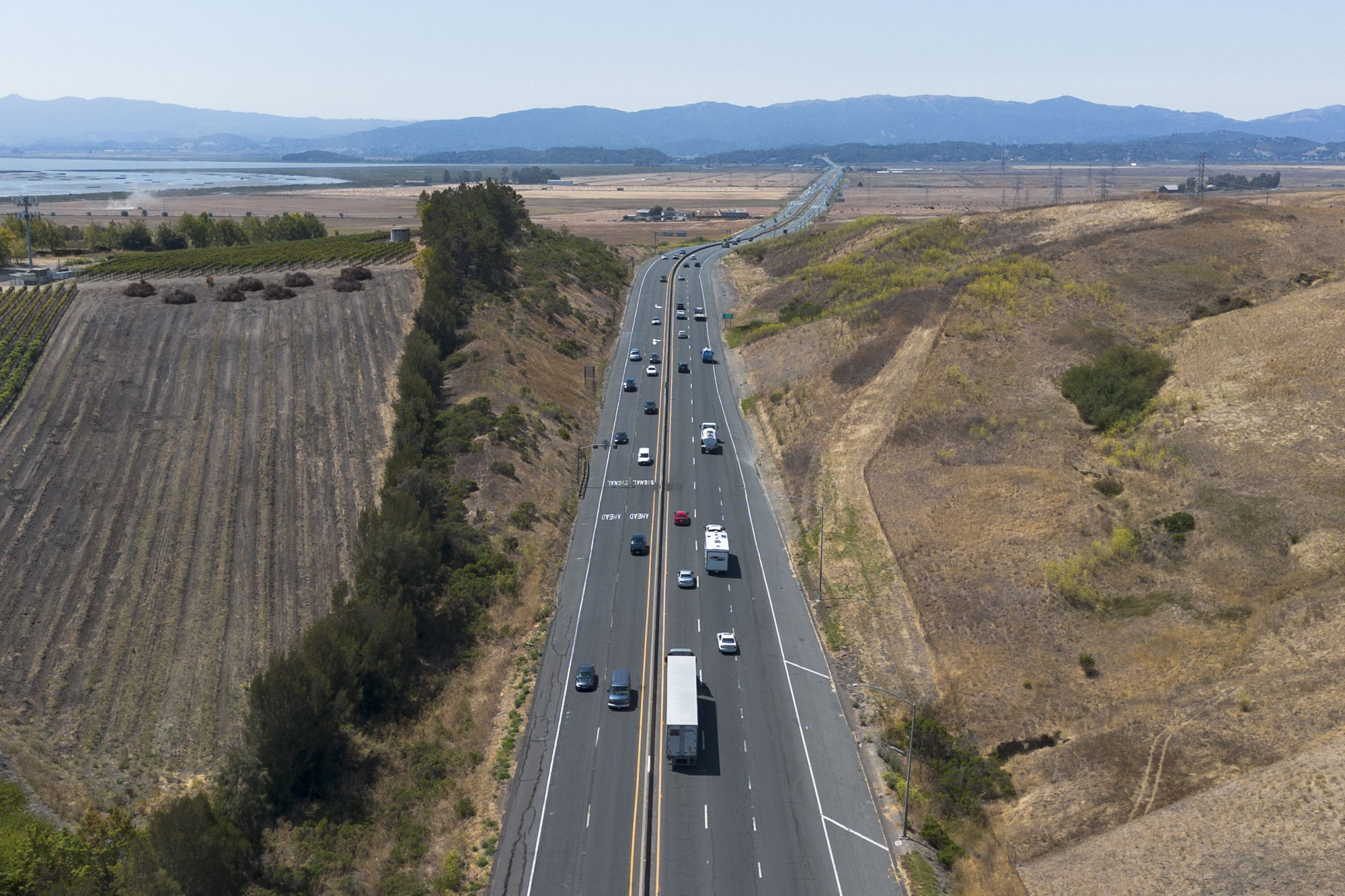
The California Transportation Commission will vote Friday on a $95 million funding bid that would launch the long-delayed overhaul of Highway 37, the flood-prone route linking Marin, Sonoma, Napa and Solano counties.
Rep. Mike Thompson, who has directed federal money to the corridor, said the road’s problems have been deferred for decades. Thompson noted that officials had installed traffic barriers known as K-rails years ago to divide the two directions of traffic because a real fix was too expensive at the time. Now, the road is not only inadequate and unsafe but is going underwater.
Highway 37 runs close to sea level across the San Pablo Baylands and already faces regular storm closures and permanent flooding risks as the bay rises. Caltrans says the work would be built to hold up against sea level rise projected through 2050.
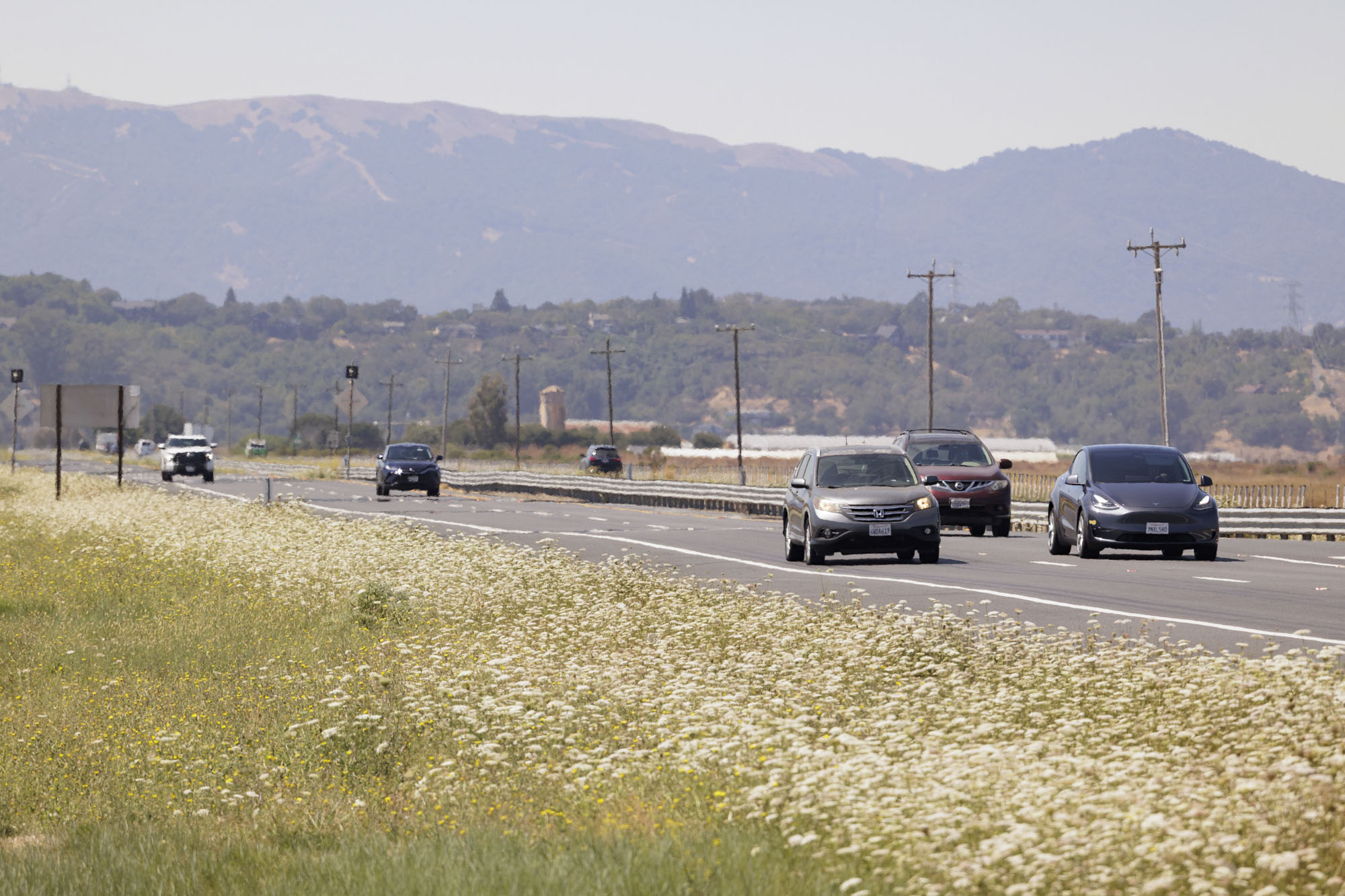
Marin County Supervisor Stephanie Moulton-Peters and other supporters of the reconstruction vision gathered Wednesday at a nearby ranch, urging commissioners to approve the funding as traffic tops 40,000 vehicles daily and commute delays stretch past 90 minutes.
“The responsible thing to do is build for the future instead of having this conversation again and again when the need is so urgent,” said Moulton-Peters, a member of the regional policy committee for the corridor.
Dan Reding, a union official representing Caltrans workers who maintain the road, said improvements have been discussed for decades. “We’ve been talking about this Fix 37 [project] for well over 30 years,” he said. “It’s time that we make a change.”
The money sits in two separate budgetary items. One allocates $32.35 million to rebuild the intersection at Sears Point where Highway 37 meets Highway 121; extend the eastbound merge lane by about a mile; and replace pavement, barriers and lighting. The other allocates $62.79 million toward the first phase of the larger Sears Point to Mare Island project, which includes replacing the Tolay Creek Bridge with a longer, wider and higher span. Caltrans plans to advertise the combined contract in September and start work in May.
Joshua Arce, executive director of the California Alliance for Jobs, said the work is also an equity issue. He told KQED that 85% of people who use Highway 37 to get to work earn below the region’s median wage, while on other Bay Area roads that share is less than 40%. Backers estimate the construction would support as many as 5,000 jobs in Solano County, a region that has the Bay Area’s highest unemployment rate among the nine San Francisco Bay Area Counties.

The state has been inching toward this point for years. Caltrans programmed the Sears Point intersection work in 2022, but the funding lapsed in 2025 and had to be reprogrammed.
An updated July estimate pushed costs 54% higher after engineers discovered bay mud required them to swap standard sheet walls for complex, pile-supported retaining walls and extensive groundwater treatment. The department also asked for three more years to finish.
Gov. Gavin Newsom helped to grease the wheels last October when he signed a bill that eased protections for three species of bird and the salt-marsh harvest mouse, all inhabitants of the marsh beside the highway.
The new law lets state wildlife regulators permit a limited number of deaths of the mouse, the California Ridgway’s rail, the California black rail and the white-tailed kite, provided Caltrans restores habitat in return.
Supporters of the roadwork plans said the preexisting restrictions would have limited construction to roughly three months out of a year.
Some environmental and transit groups are in the meantime fighting the plan to widen Highway 37. In a 2024 letter to state Senate leadership, two dozen organizations warned that changes to wildlife protections would invite other highway expansions to seek similar exemptions.
Advocates at the nonprofit TransForm, which was the lead signatory of the 2024 letter, are not opposing Friday’s item.
TransForm policy director Zack Deutsch-Gross told KQED it is staying neutral on the Tolay Creek bridge replacement while continuing to fight the added lanes planned for later phases.
“Spending money on expanding a highway that already floods regularly is a waste of taxpayer money and time,” he said.
Deutsch-Gross said more lanes won’t relieve congestion long-term, and any elevation gained in this phase is minimal and doesn’t address sea level rise. He also argued that construction of the causeway would mean tearing out the interim work entirely.
“We should be advancing truly equitable solutions like affordable housing near jobs and reliable transit service so people don’t have to pay over $12,000 a year in car upkeep and maintenance,” Deutsch-Gross said.
Friday’s vote covers phase one. Later phases would widen the highway to four lanes between Sears Point and Mare Island, adding a carpool lane in each direction and bringing bus service to a corridor that has none. Caltrans describes the project as including marsh restoration and nature-based shoreline protection.
Solano County Supervisor Cassandra James, whose district includes where the highway enters the county, said commuters absorb the cost daily.
“Every single day, thousands of working families across our region are paying a hidden tax,” she said. Nearly one in four Solano residents commute out of the county for work, she said, and for many, the highway is the only route.