Pierre Rushing Was Convicted of Murder in 2011. The Key Witness Just Recanted His Testimony
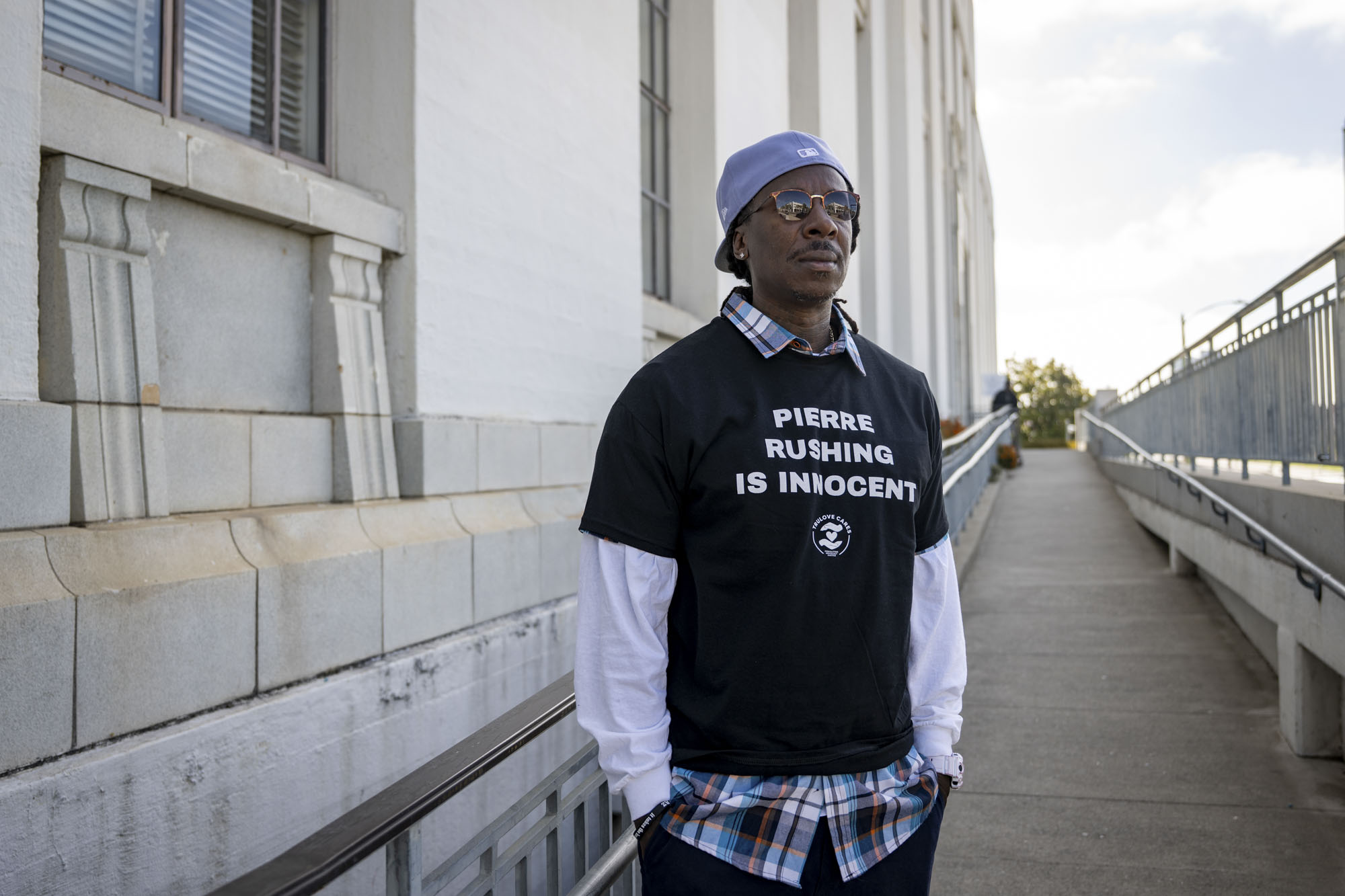
Robert Green’s eyewitness account was central to Pierre Rushing’s conviction for first-degree murder 15 years ago. But on Tuesday, Green testified in an Oakland courtroom that Rushing, now serving 50 years to life, was not the shooter.
The moment came at the start of a four-day evidentiary hearing in Alameda County Superior Court reexamining the Oakland resident’s 2011 conviction for the murder of Dawyone Taylor.
Rushing, now 37, has maintained his innocence since he was convicted at 22. His attorneys are asking the court to vacate the conviction, citing Green’s recantation and hundreds of pages of police reports they say prosecutors failed to turn over for more than a decade.
Rushing entered the courtroom in a yellow jumpsuit with his fist raised, smiling at a gallery nearly full of supporters — roughly two dozen people, some of whom said they had themselves been wrongfully convicted and others who had never met him.
At trial, prosecutors argued Rushing killed Taylor, 25, in Oakland in 2011 over the belief that Taylor had stolen his iPod. The case rested heavily on Green, who testified he saw Rushing get out of a car and fire a shot.
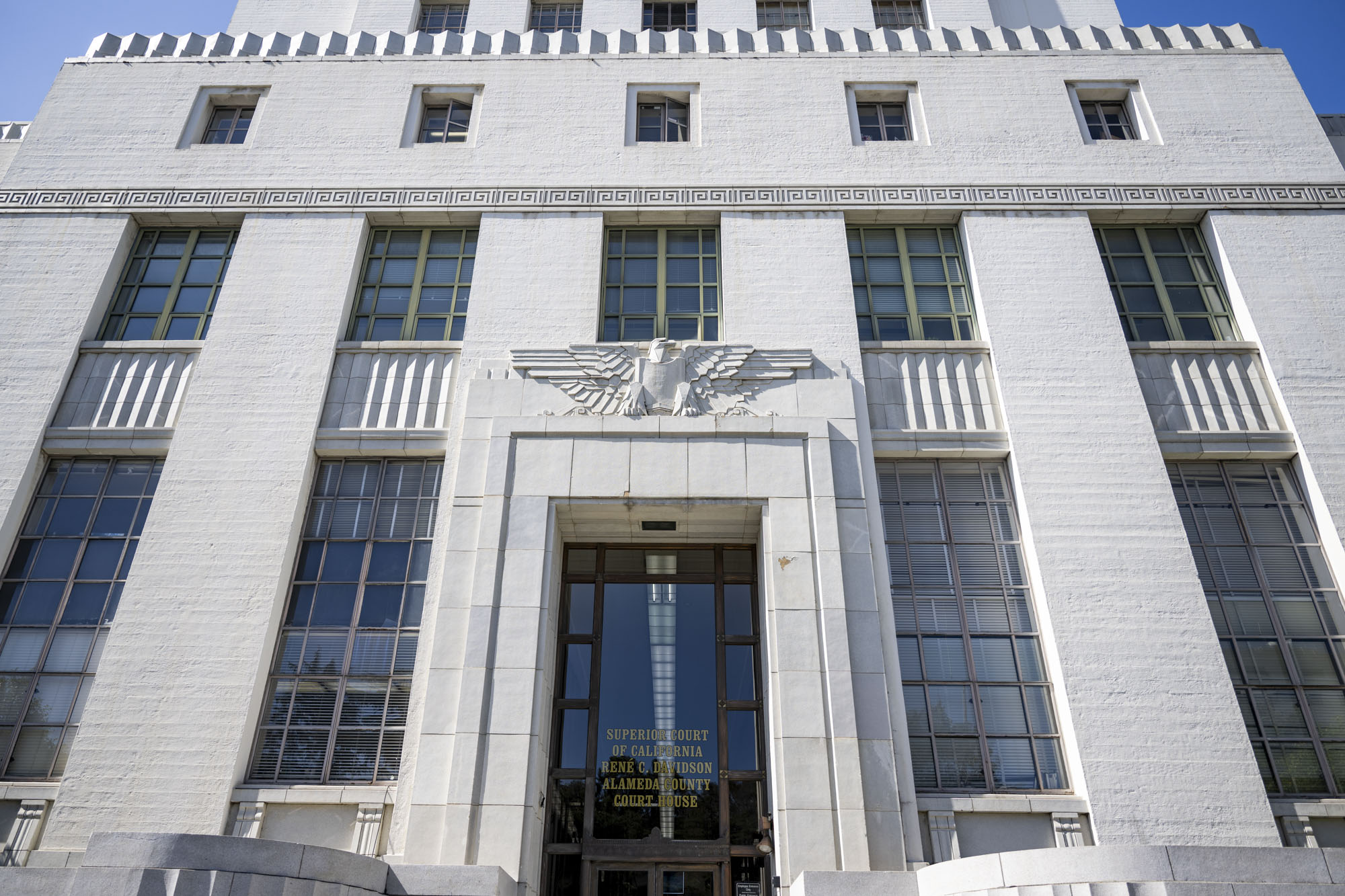
Green’s account this week was different. Under questioning, he said Rushing was not the person he saw, and he had told police it was Rushing because officers indicated they already believed Rushing was involved.
During cross-examination, Green — who acknowledged he was using drugs around the time of the killing — admitted he had committed perjury at the original trial.
Rushing’s attorneys pointed instead to a man they identified in court as Charles Dunn, known in the case by the nickname “C,” and alleged that he shot Taylor. The defense also called an investigator, identified in court as Mr. Fine, who was hired to locate Green and interview him in jail, and who helped persuade him to testify. Green is currently serving time in an unrelated case.
Jordan Grotzinger, Rushing’s lead attorney, has said the district attorney’s office produced 464 pages of police reports in 2024 that were never given to Rushing’s original defense.
On a podcast from Grotzinger’s law firm, the attorney said the reports described Andre Morris, a man present the night of the killing, committing robberies shortly before and after Taylor’s death alongside “C,” and that details in them — the shooter holding a gun in his left hand, driving a gray or white pickup — matched what Green first told police in 2011.
Rushing’s team argues the late disclosure violated the Brady rule, which requires prosecutors to share evidence favorable to the defense. The Alameda County District Attorney’s office said it would not comment on the ongoing case.
Outside the courthouse, the hearing drew supporters who framed Rushing’s case as another example of convictions built on a single, shaky eyewitness testimony. Among them was Jamal Trulove, an organizer who was convicted of a 2007 San Francisco murder before an appeals court overturned the conviction and he was acquitted.
A federal jury later found police had fabricated evidence and coerced the eyewitness against Trulove. The city later paid him a $13.1 million settlement.
“I was convicted off of what one person said,” Trulove said. “Having one eyewitness to prove a fact in a murder case is a low burden to convict somebody for the rest of their life.”
Watching Green recant, he said, brought back his own experience.
“To really be in that courtroom and remember the feeling that I had of knowing that I was convicted for something I didn’t do,” he said. “Finally hearing the person that said that he did commit this crime, admit that he didn’t commit the crime. It was very emotional.”
Demora Henderson, who said he also had been wrongfully convicted in 2006 of murder in San Francisco, traveled to support Rushing after seeing his case on CNN.
“I’m coming here to show solidarity and show the system that a lot of people [are] wrongfully incarcerated,” he said. He described the experience as “disheartening” and “lonely.”
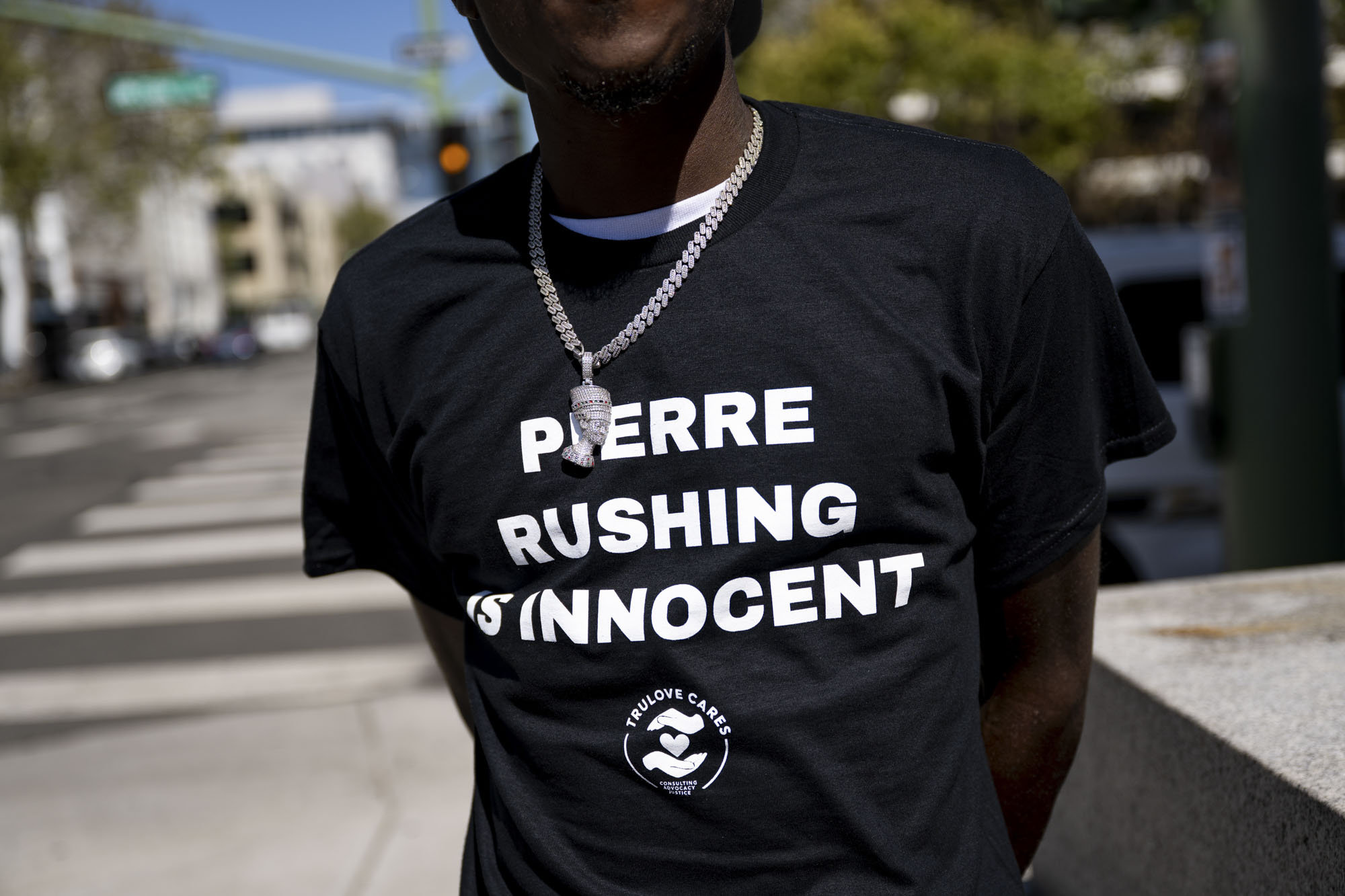
“All we do is have faith and hope in the process of us trying to regain our freedom and liberties back,” Henderson said.
Lori Rothschild Ansaldi, a criminal justice reform advocate, said she has followed Rushing’s case since 2018 and teared up listening to Green.
“It’s hard to hear it when the truth finally comes out,” she said. “It’s profoundly sad when they get it wrong.”
The hearing is the first of four days, scheduled to run through the end of the week, and it is not clear when the judge will rule.
Even if the court finds in Rushing’s favor, a ruling to vacate a conviction does not automatically mean release; it can lead to a new trial or to the charges being dropped.
“Finally, it feels like the tides are turning,” Trulove said. “The hope is that after these four days, the judge will … deem the 464 pages of evidence that the D.A.’s office didn’t turn over as a Brady violation and his case will be ultimately thrown out and vacated. And Pierre Rushing will be released.”
KQED’s Maria Fernanda Bernal contributed to this reporting.