Bay Area Allies Remember Palestinian Activist, 1 Year After His Death
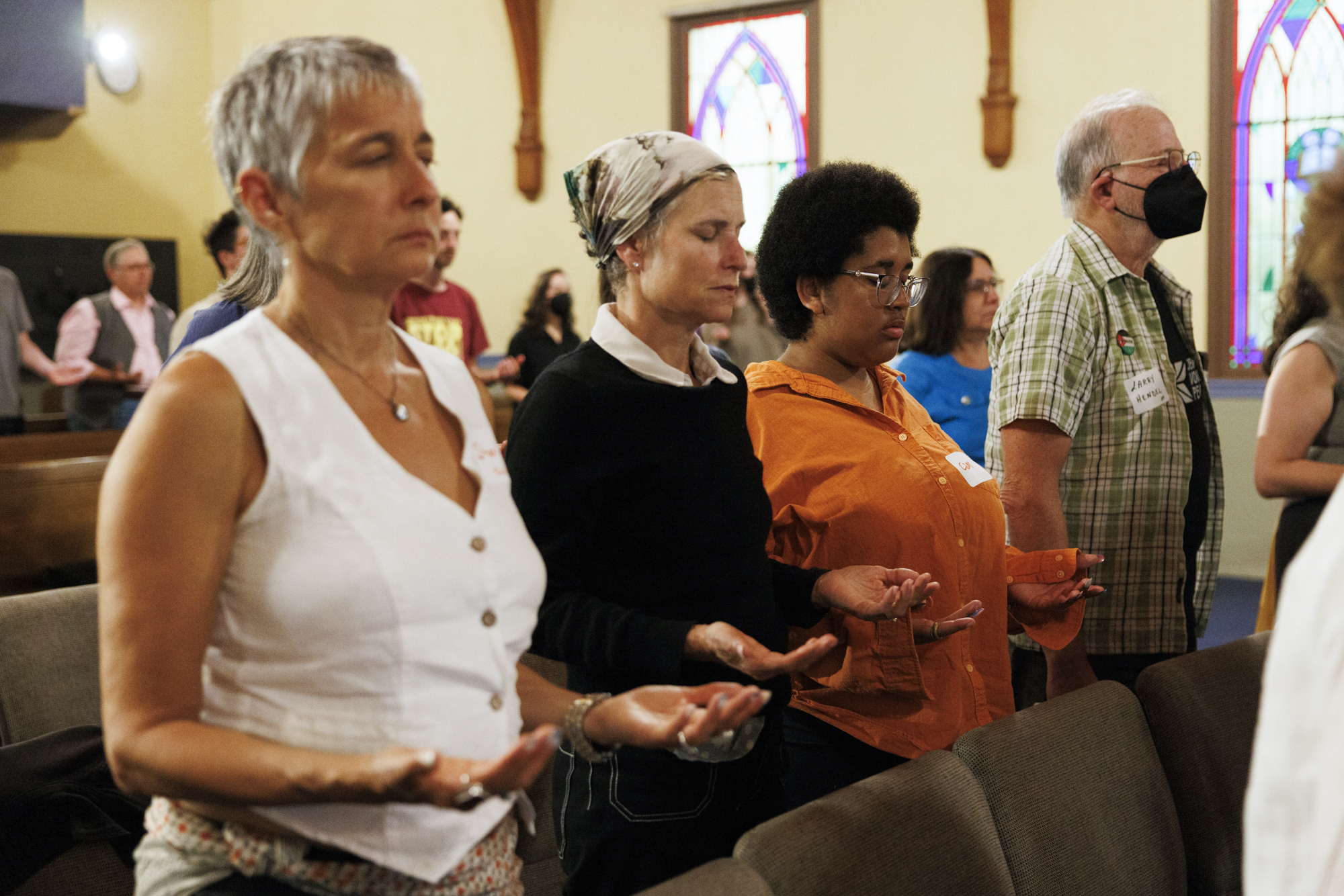
Activist Avital Raff stood in front of a crowd of mourners gathered at Kehilla Community Synagogue in the East Bay and described her time in the occupied Palestinian territories, with the family of the late Palestinian activist Awdah Al-Hathaleen.
“Ramadan is normally greeted with excitement for the happiest and holiest time of year, but it was greeted this year with dread and despair,” she said Tuesday.
She recalled Al-Hathaleen’s wife, Hanady, telling her that she feared the idea of waking up early for the pre-fast meal alone.
“Awdah would normally prepare for Suhoor for her,” Raff said.
Raff said she also helped babysit Al-Hathaleen’s three sons. The youngest began to walk in February.
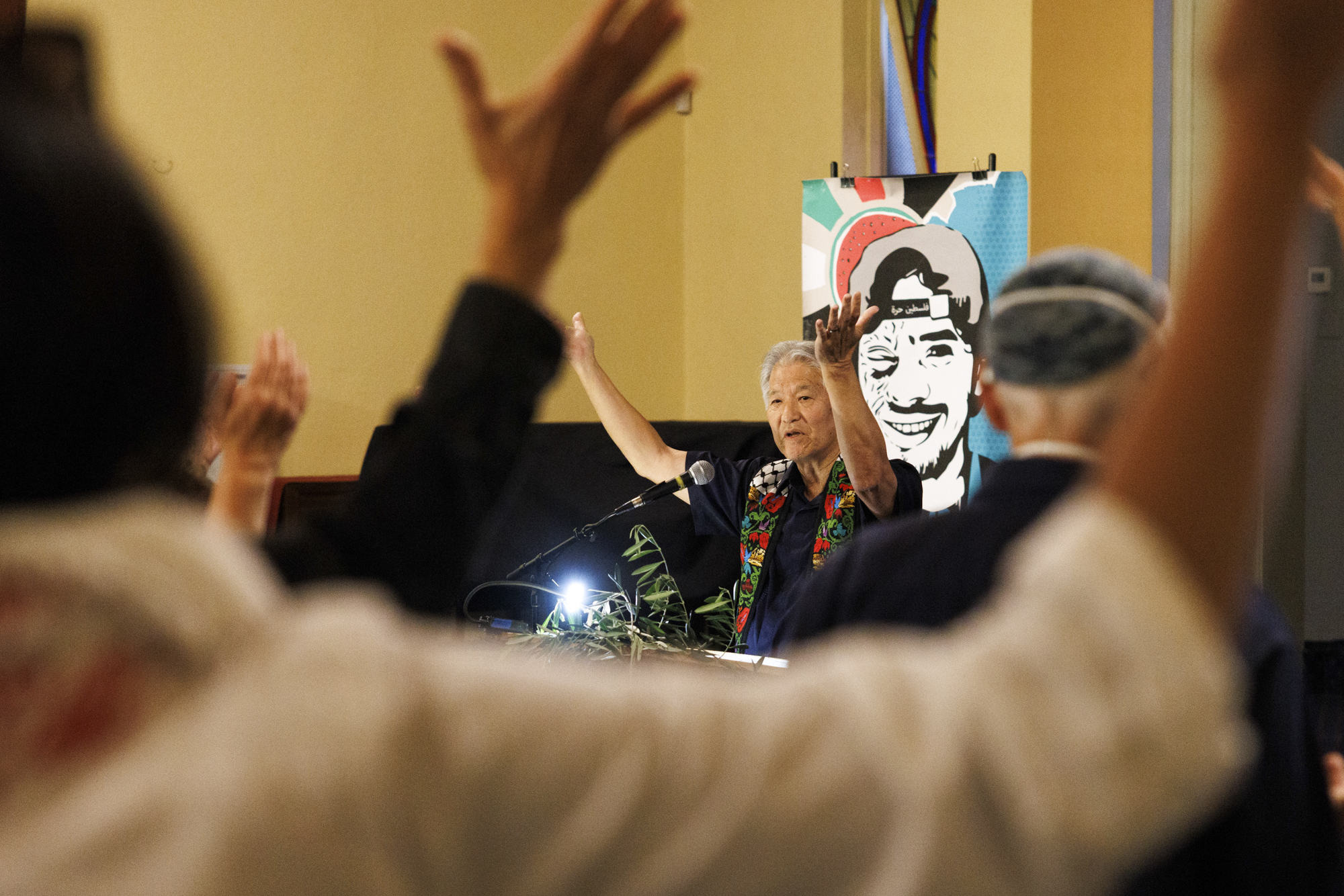
“We cheered and clapped for him, but we did so with tears in our eyes, knowing that his father was not here for this milestone,” she said.
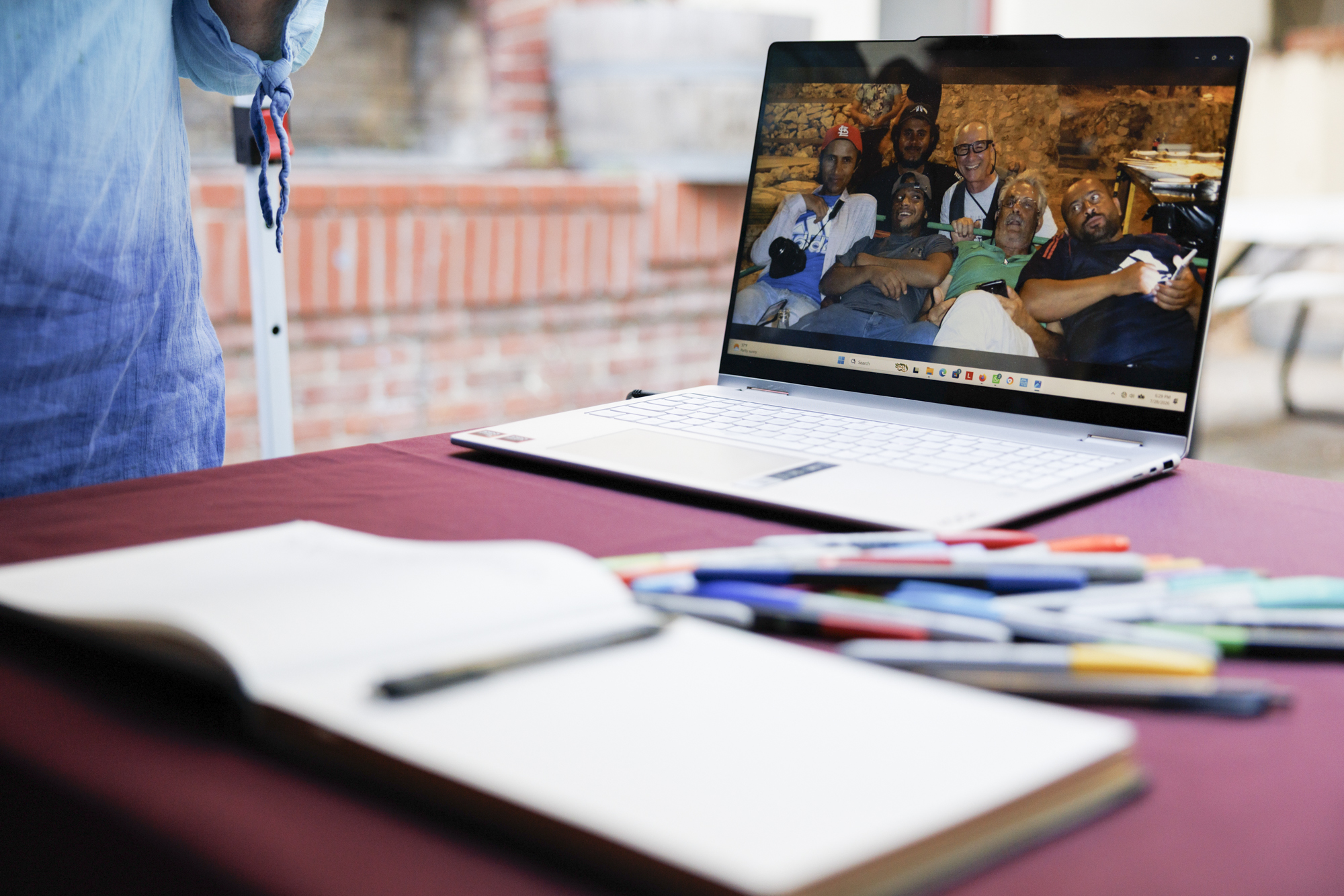
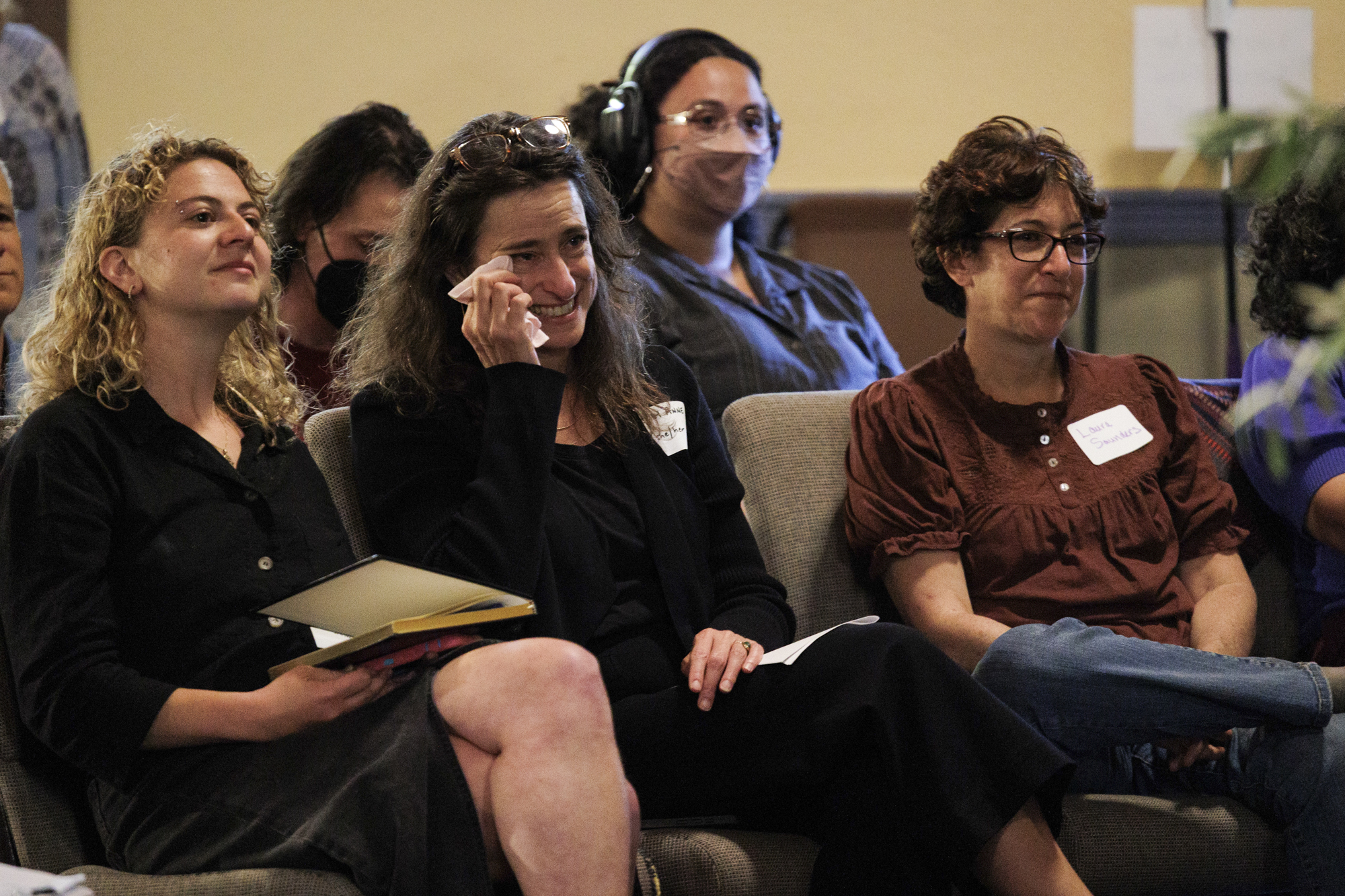
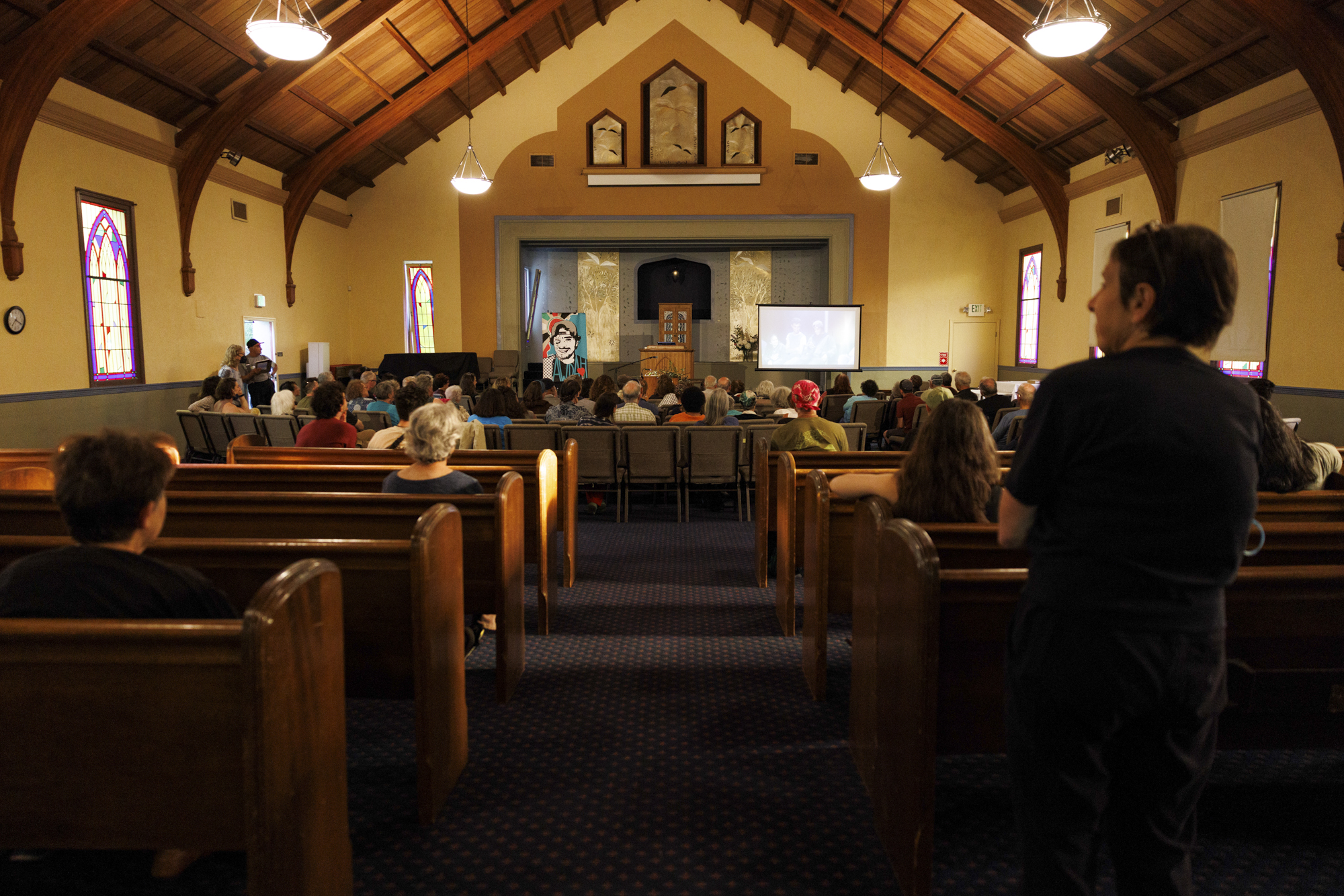
Raff was one of many who attended and spoke at a Tuesday night memorial in Piedmont, honoring the life of 31-year-old Awdah Al-Hathaleen, who had deep ties to the Bay Area. A year after his killing, attendees shared memories, photos and videos of the teacher and his loved ones, recited a poem by his widow and emphasized his mission: protecting his village, Umm al-Khair.
Another speaker, Shira Wolkenfeld, said she worked with Al-Hathaleen on a project called Humans of Masafer Yatta on social media, which documents Israeli demolitions of Palestinian homes. She said they would often talk about how to end a story.
“Do you leave people with a piece of hope to hold onto, a call to action, something to keep them going?” she said. “Awdah usually chose to end his stories and his presentations with a simple request to share his story: to tell people what’s happening, to help others understand, not to let this be ignored.”
During the memorial video, Al-Hathaleen is leaning down, translating a young Palestinian girl’s words into English.
“We love our land,” he said. “We will not leave.”
Among his activist work, Al-Hathaleen captured footage for the 2025 Oscar-winning documentary No Other Land, which follows the Israeli government’s bulldozing of a Palestinian community.
Last June, Al-Hathaleen was slated to speak at a series of events at synagogues and other places of worship in the Bay Area as part of a humanitarian mission. However, Al-Hathaleen and his cousin, another speaker, were denied entry at San Francisco International Airport, detained overnight and then sent back home.
A few weeks later, Al-Hathaleen was shot and killed by an Israeli settler whom witnesses identified as Yinon Levi, according to Phil Weintraub, an organizer with the Palestinian Solidarity Committee at the Kehilla Community Synagogue in Piedmont, which sponsored Al-Hathaleen’s visit. A memorial video shown during the service said that Al-Hathaleen was filming settlers when he was killed.
“When I arrived in Umm al-Khair for the first time this past September, Awdah’s blood still stained the ground of the community center,” said another speaker, Emily Axelrod.
Kehilla is the host of the Face-to-Face Jewish-Palestinian Reparations Alliance, an organization created in 2021 that connects allies in the Bay Area with residents of Umm al-Khair.
Last October, Face-to-Face advocates sounded the alarm over the future of Umm al-Khair, following reports of Israel’s plan to demolish the village. A recent investigation by Al Jazeera reported several Palestinians’ fears of a new Israeli outpost established nearby that has prevented them from moving and working freely in the area.
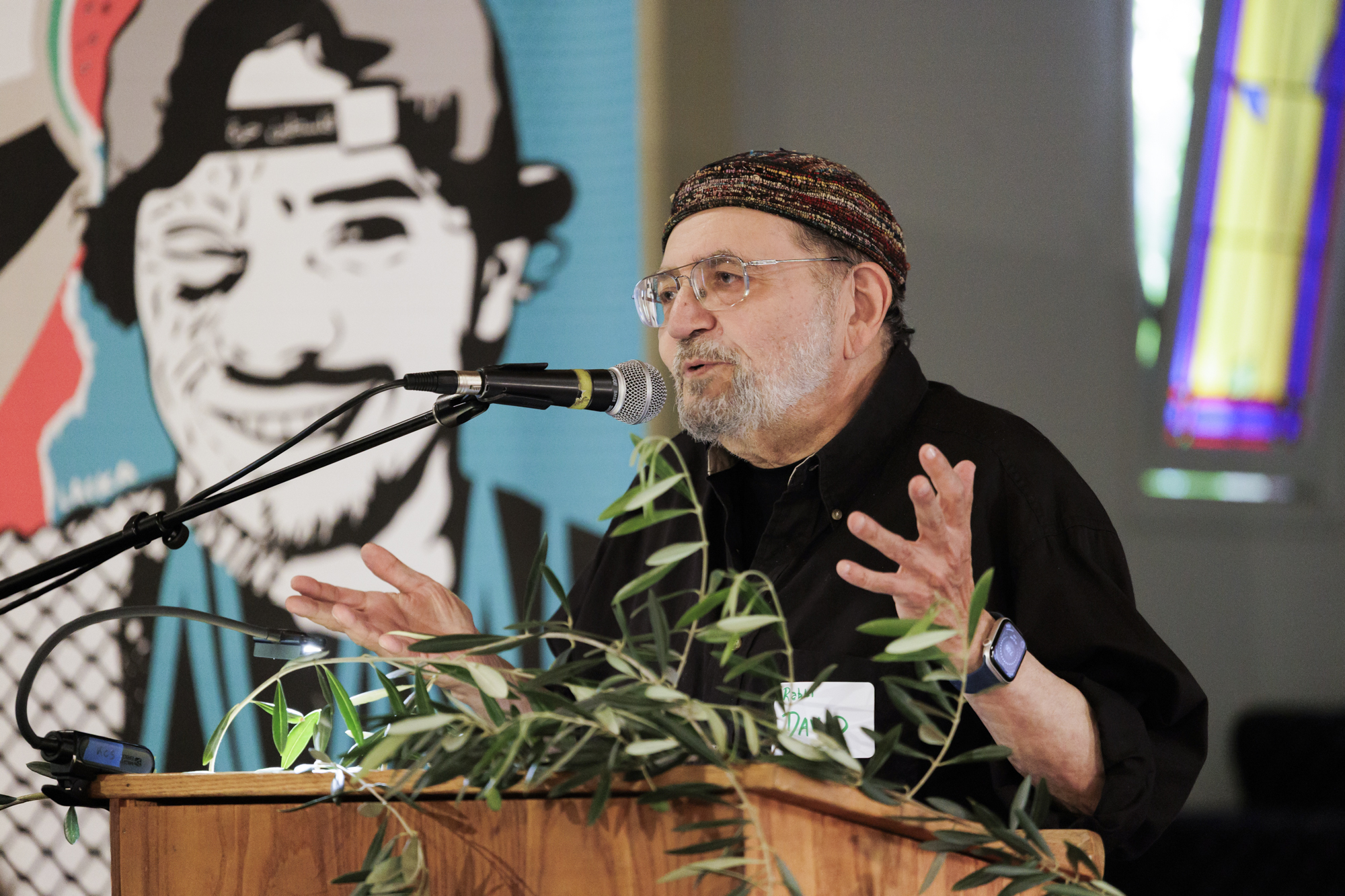
“I want to stress that this gathering is not just a memorial to Awdah,” Kehilla Rabbi David Cooper said. “It is an active recommitment to Umm al-Khair and to Palestinian freedom.”
South Bay Rep. Ro Khanna — who was among several Bay Area elected officials who condemned Al-Hathaleen’s detention and deportation from SFO last year — recently visited the village during his three-day visit to the West Bank this summer, according to Israeli American peace activist Ben Linder who accompanied the politician during the trip. Khanna has also recently shared a social media post featuring residents of the village, writing “Umm al-Khair is surrounded on all sides by settlements.”
During the trip, in the town of Khirbet Zanuta, Khanna said settlers and the Israeli military detained him, and he was only able to leave after contacting the American Embassy in Jerusalem.
In a statement to the Associated Press, the Israeli military said, “IDF troops were dispatched to the scene, quickly dispersed the Israeli civilians, and reopened the blocked road … The IDF soldiers operating in the area did not take part in blocking the road.”
Khanna pushed back on the explanation on NPR, saying that the IDF is “now claiming that they were just waiting for orders from the police, and that’s why they had detained us. But it still does not change the facts that there were illegal settlers that detained us and that the IDF sided with the settlers, as the videotape shows.”
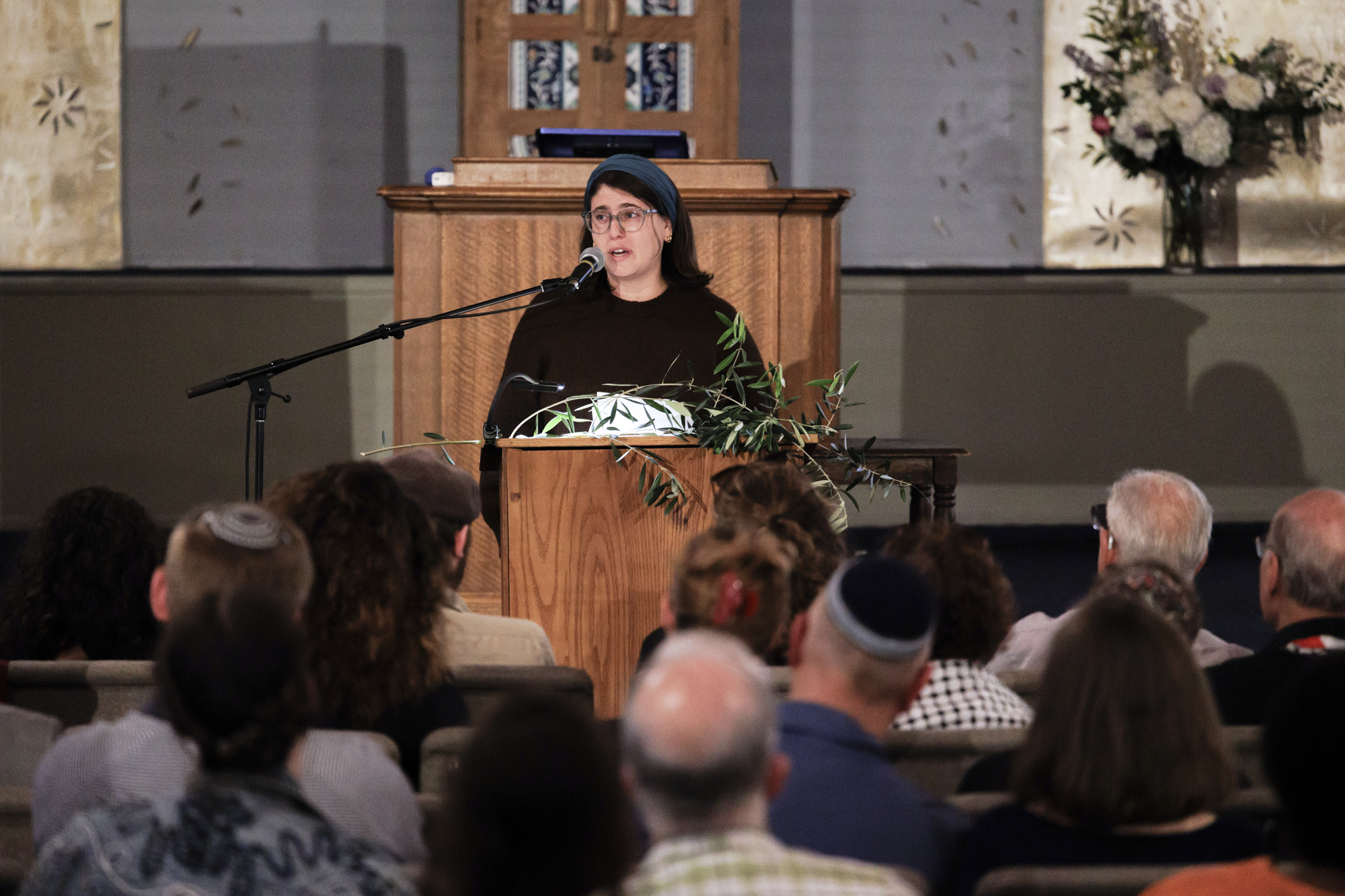
Al-Hathaleen’s ceremony ended with a Kaddish, a mourner’s prayer, recited by San Francisco Rabbi Faryn Borella.
“When we mourn a loved one, we get this opportunity to remember, to praise, to remember to look toward what is beautiful in the world and look through their eyes at what they saw,” she said.
Borella asked the crowd what the ways Al-Hathaleen praised the world he lived in “even in the midst of such suffering.”
People chimed in:
“Friendship.”
“Soccer.”
“Barbecue.”
“The children.”
Borella asked them to hold these praises during the prayer.
“We’re going to see the world through his eyes for a moment,” she said.
“May his memory be for a blessing, may his memory be for revolution … may his memory be for a positive peace, a just peace, a lasting peace, in which all are free.”