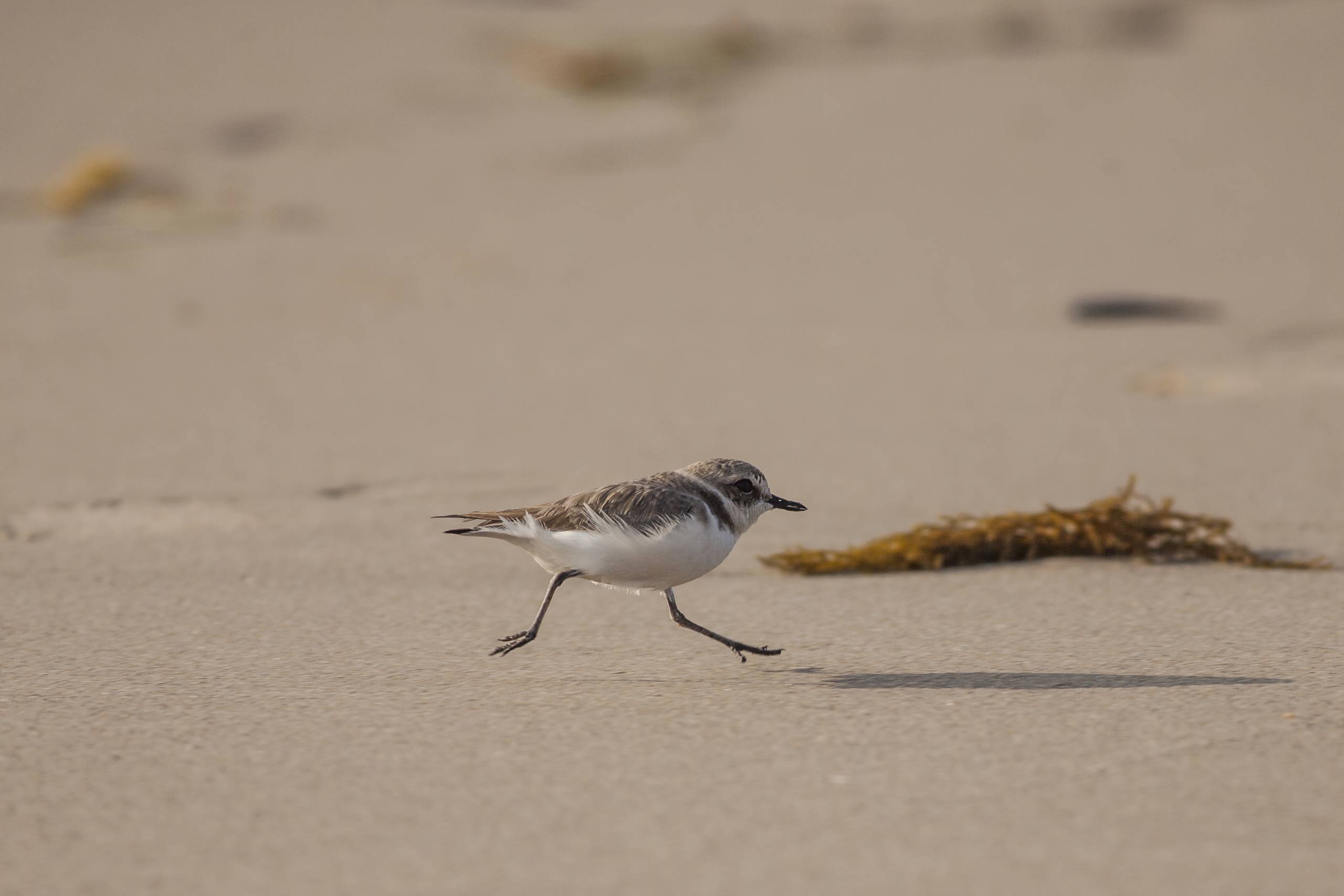
Western Snowy Plover Population Passes Milestone
Here are the morning’s top stories on Friday, July 24, 2026:
- Each year in late spring, scientists and volunteers try to count every plover on the west coast. The annual count started more than 20 years ago.
- Doctors are announcing an effort to unionize nearly 10,000 senior physicians at the University of California.
The first official breeding window survey happened in 1991, and since 2004 it’s become an annual event. The numbers tell a compelling story. Back in 2023, the count revealed just 2,336 snowy plovers. In 2024, that number rose to 2,676. And in 2025, the most recent survey, the count reached 3,018 — breaking 3,000 for the first time since the recovery plan was developed.
Each bird is carefully tallied, sometimes identified by tiny color bands on their legs, which help prevent double-counting. These bands, like little nametags, allow researchers to track individuals and better understand the population as a whole.
Western snowy plovers were listed as threatened under the endangered species act in 1993 because of habitat loss and human disturbance. They nest in sandy dune habitats, which are threatened by development and sea level rise. Biologists call this narrowing of habitat “coastal squeeze.”
The population needs to stay at current numbers or grow for at least 10 years in order for snowy plovers to come off the threatened list.
Historically, doctors haven’t shown a lot of interest in joining unions. But a growing number of attending physicians – especially post pandemic – say they are stretched too thin with unsustainable patient loads, understaffing and less decision making power.
The campaign, UC Doctors United, is a joint effort between doctors in the UC system and Service Employees International Union (SEIU) Doctors United, a union that currently comprises 45,000 doctors and 1.2 million healthcare workers nationwide. The formation of UC Doctors United comes in the wake of UC resident physicians and fellows’ tentative contract agreement with UC Health.
UC Doctors United said in an announcement that it is organizing for improved working conditions, stronger patient care and safety, more comprehensive medical education and better protections for academic freedom and the peer review system.
The UC resident physicians and fellows’ bargaining team will present the contract to the union’s full membership for a ratification vote in the coming weeks. If more than half the members vote in favor of the contract, it will then take effect.
Labor experts say UC executives are unlikely to welcome a new large doctor’s union if organizing is successful.