Updated 3:40 p.m. Sunday
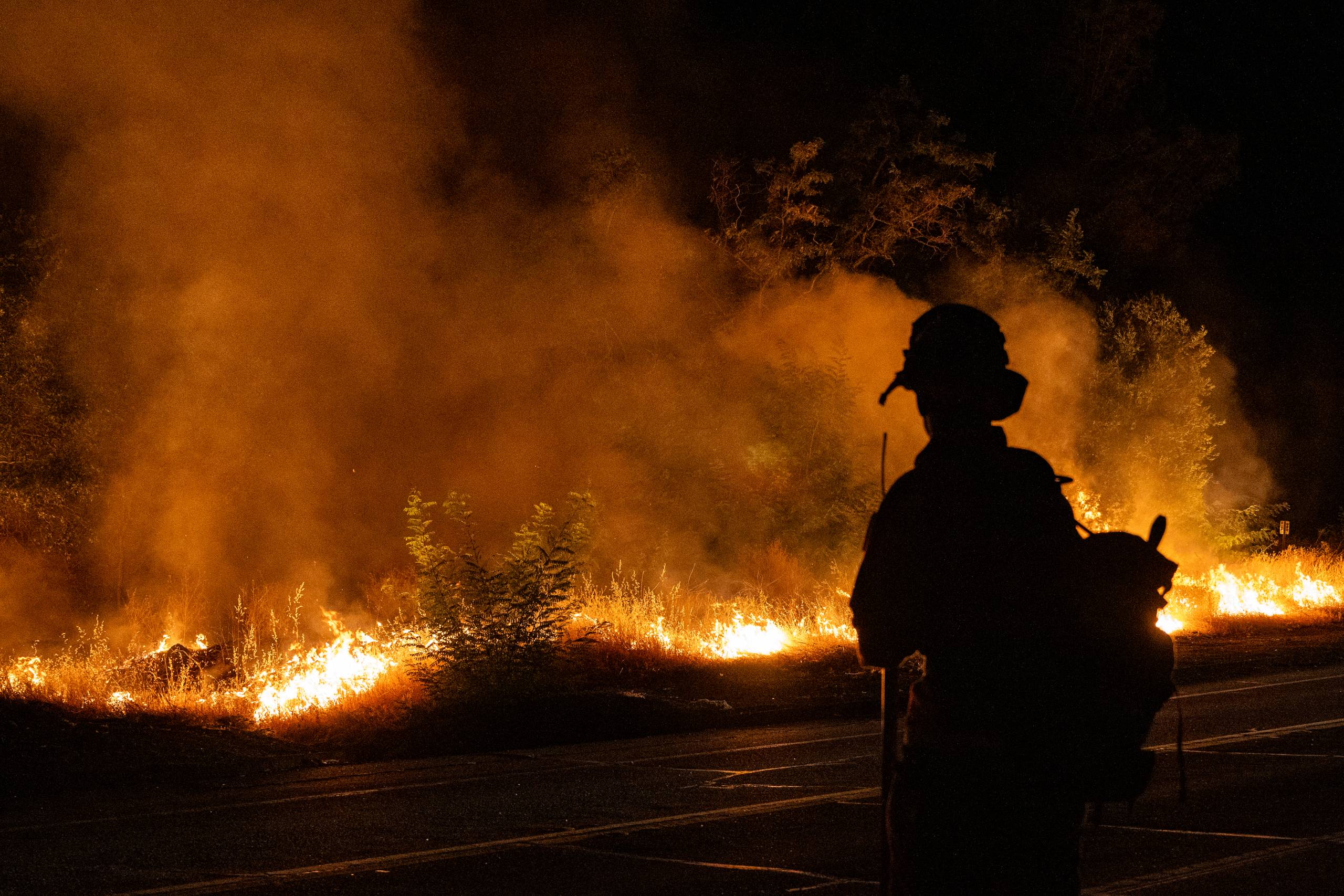
The Park Fire has burned over 357,000 acres north of Chico since Wednesday, making it one of the largest fires in state history. On Saturday, Gov. Gavin Newsom visited the area to survey firefighting efforts.
“We’re continuing to see dangerous conditions – our firefighters and emergency responders are working day and night to protect our communities,” Newsom said. “Californians must heed warning from local authorities and take steps to stay safe.”
The fire is 12% contained as of Sunday morning, according to Cal Fire.
“We have pedal to the metal right now,” Sergio Arellano, a public information officer for Cal Fire told KQED Sunday morning. “We want to get this contained. We are ordering resources. We still are considering this a dangerous fire, with the potential to grow.”
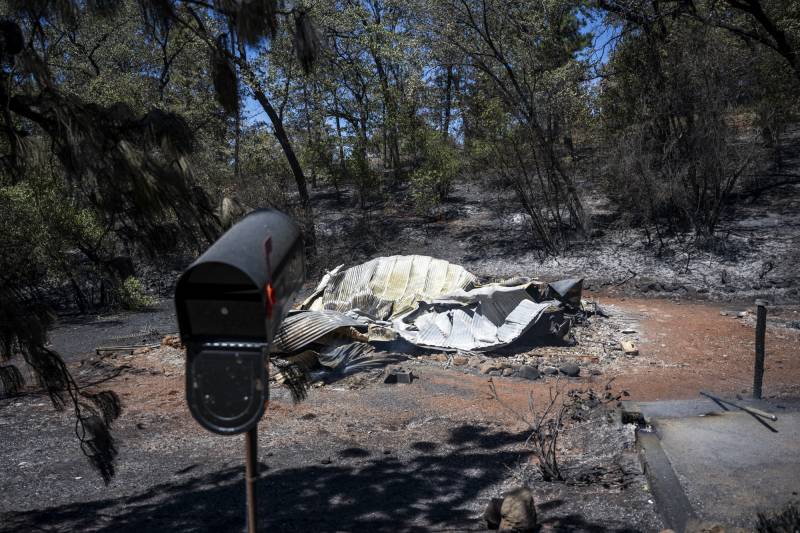
Temperatures are predicted to continue rising, and the fire is still considered extremely dangerous. No major injuries have been reported, and state firefighting officials decreased Sunday the estimated number of buildings destroyed by the fire — down to 67.
Arellano added that there are almost 4,000 people working on the fire and cautioned those eager to check on their homes to wait until it is safe. “It is going to take a little while to make sure that we haven’t missed anything and not try to repopulate or open up any kind of evac zones or warnings too early,” Arellano said.
Climate scientist Daniel Swain said Saturday afternoon in a webcast that he expected the fire would likely reach at least 500,000 acres, and did not rule out as much as a million acres. That’s despite an aggressive, coordinated response from firefighters.
“I think what we’re realizing is that even with probably the most well-resourced wildland firefighting agency in the world in California, Cal Fire,” Swain said, “it’s still beyond technology to address a fire at that scope.”
Before Saturday, the fire’s growth was explosive.
“It’s been growing 5,000 acres an hour since the ignition of this incident,” said Billy See, the Incident Commander for CalFire at Saturday morning’s briefing. “We’re looking at almost eight square miles an hour.”
“It really is incredible how quickly it’s grown,” Rick Carhart, public information officer for Cal Fire, told KQED Saturday. Despite the cooler weather, he said, the fire is still capable of behaving erratically.
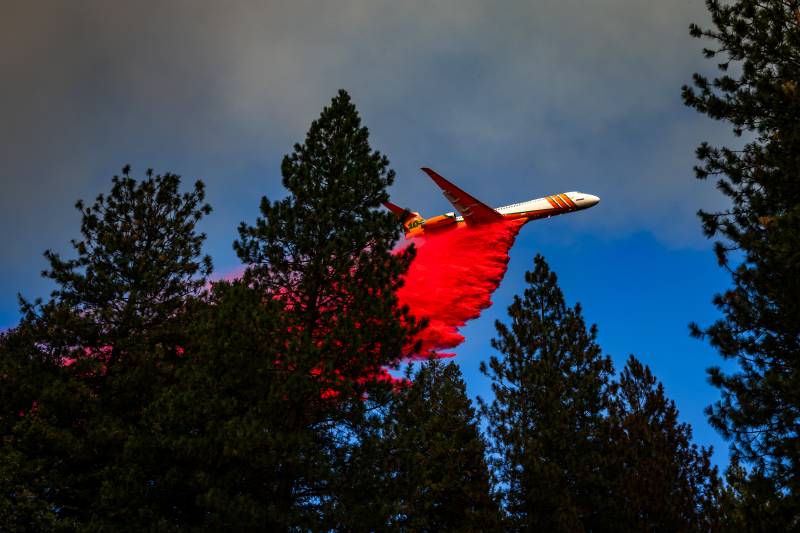
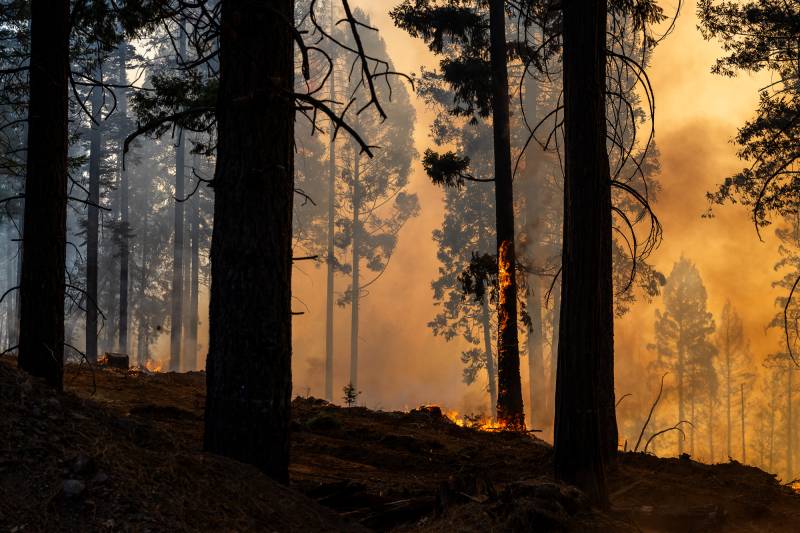
“That giant cloud that the fire is putting up, that is a pyrocumulus cloud, which is basically the fire creating its own weather,” Carhart said. “When the fire’s creating its own weather, it’s all unpredictable.”
Carhart added that some of the areas in the Cohasset and Forest Ranch areas have not seen fire activity in a couple decades.
“When you have 20 years with no fires, that’s a lot of brush,” he said.
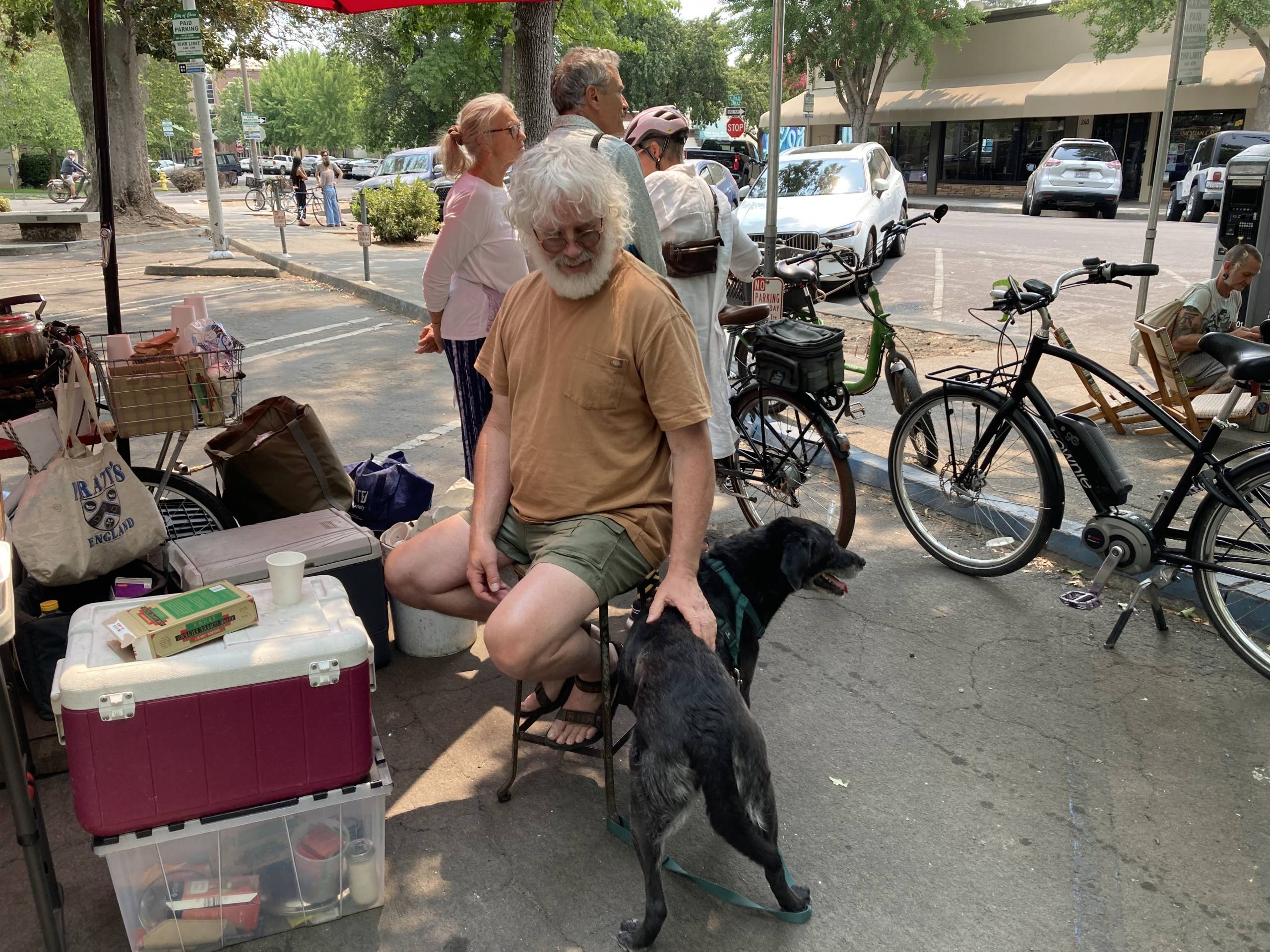
Larry Jansen, a Cohasset resident, lost his home and made it out just an hour before the fire went over the road and closed the way out.
“Our place is gone, burnt. Totally gone. And our whole area burned up,” he said, at Chico farmers market, where community members are coming together to support those who have been evacuated. “Friends are taking care of us right now … It’s a clean slate ahead. Nothing to worry about right now.”
Friday, the fire crossed Highway 36, impacting several small communities. Cal Fire’s Jed Gaines described how they had to wake up teams of firefighters out of hotels to “surge them in” to help maintain the lines in the area, meaning that some teams had to work double-shifts.
Evacuation orders are in effect for communities north of Chico. Evacuation orders have also been issued for areas in eastern Shasta County up to Highway 44 and Shingletown. Overall, thousands of people are affected by evacuation orders, many have been affected by previous fires. Lassen Volcanic National Park has announced it is closed due to the encroaching Park Fire, with all reservations canceled and personnel evacuated.
On X, formerly Twitter, Butte County posted: “Seeing a sky filled with smoke affects this community. The fact that this has evacuated people who have been evacuated many times before is horrific. Please do not hesitate to reach out to the Butte County Behavioral Health Access Line if you need assistance: 530-891-2810.”
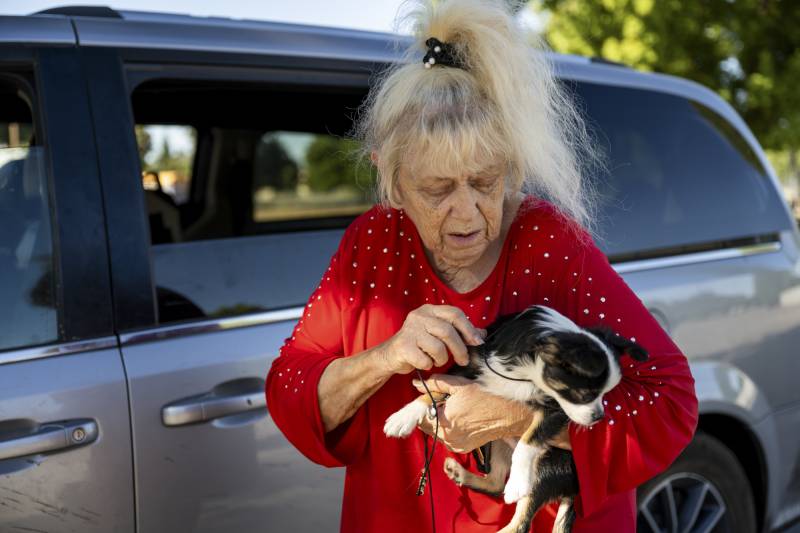
For many in Paradise, the smoke and warnings from the Park Fire bring back trauma from previous evacuations. “We still have the warning in place, and we’re saying be ready if you feel uncomfortable, go ahead and evacuate,” Paradise Mayor Ronald Lassonde told KQED on Saturday. “There’s a large percentage of our population that actually drove through the flames. Someone ran through the flames. So, of course, that trauma stays with you.”
Lassonde also said the process of rebuilding is hard work and takes time. “Folks are used to things happening in 30 to 60 minutes on television. It’s going to take years to recover a community.”
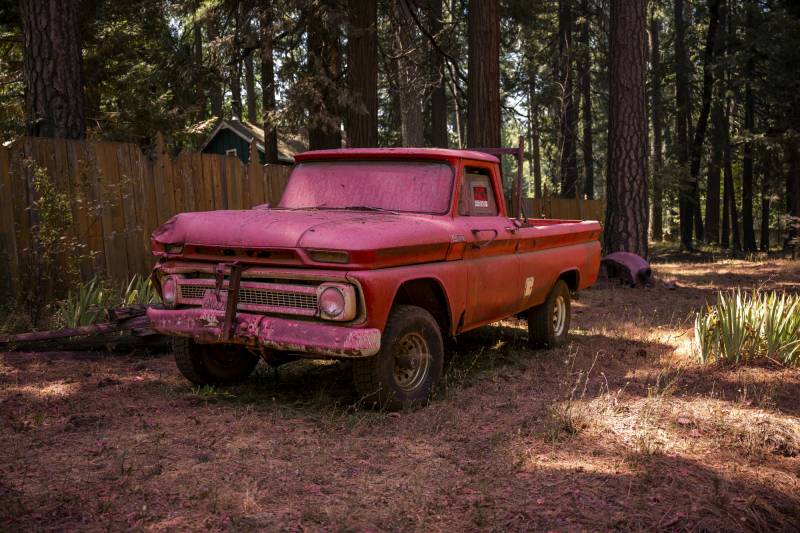
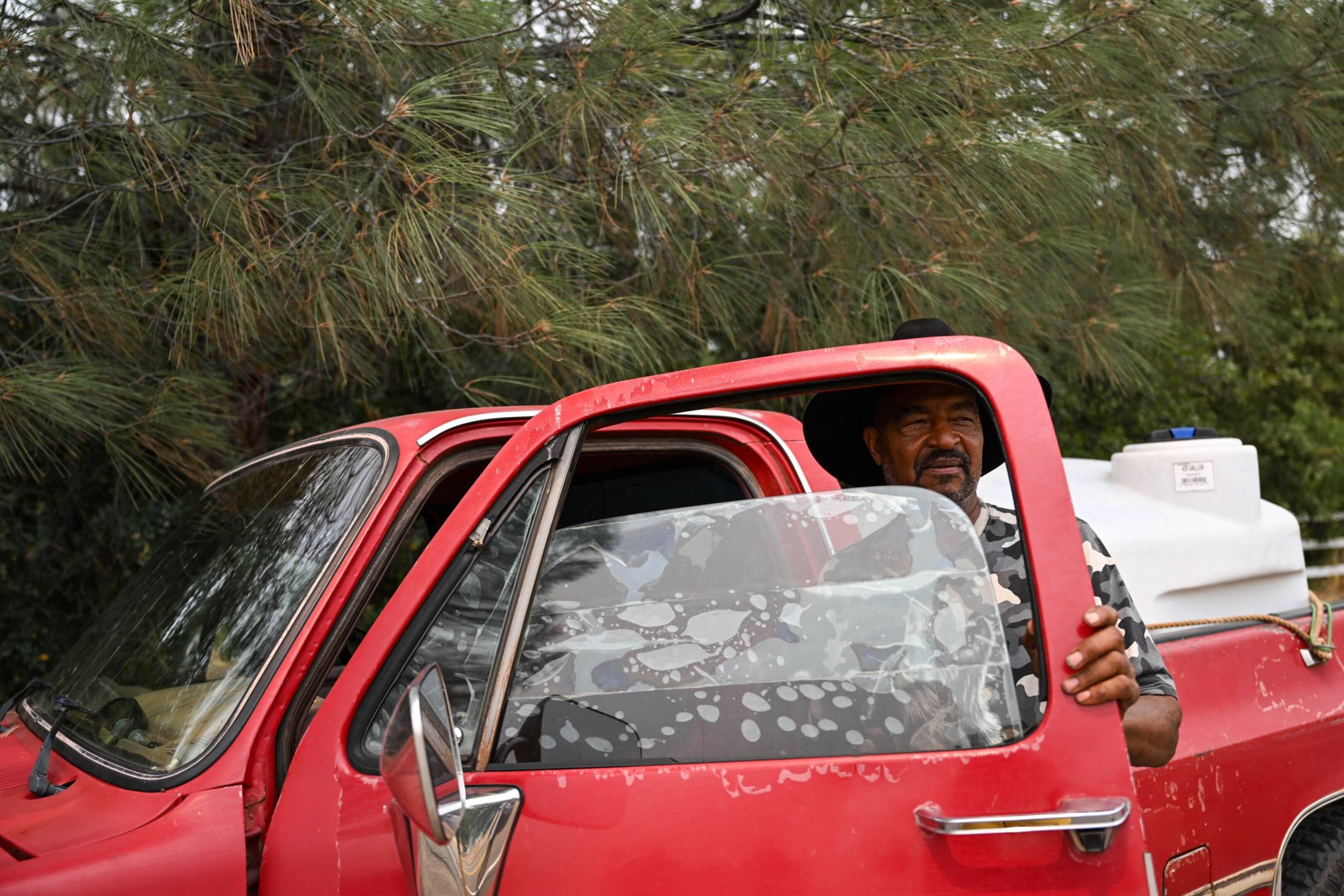
Kenneth Gaines evacuated his farm in Payne’s Creek in Tehama County Friday night, and relocated to Dales. He said he saw flames jump the highway less than a mile from his gate.
“I just got my wallet and my phone and a couple of other things,” said Gaines. “I didn’t realize it was that close. … I stayed through the Ponderosa Fire, but this is a much bigger fire, it’s moving a lot faster.”
Evacuation Shelter and Animal Shelter Info
Evacuation zones maps:
- Butte County Evacuation Map
- Plumas County Evacuation Map
- Shasta County Evacuation Map
- Tehama County Evacuation Map
Shelters in Butte, Tehama and Shasta Counties:
- Shasta County: Bella Vista Elementary School Evacuation Shelter, 22661 Old Alturas Rd, Bella Vista, CA 96008.
- Butte County Fairgrounds Evacuation Shelter, 199 East Hazel Street, Gridley, Butte County.
- Butte County: Neighborhood Church Evacuation Shelter, 2801 Notre Dame Blvd Chico, CA 95928
- Tehama County: Red Cross Los Molinos Vet’s Hall Evacuation Shelter, 7980 Sherwood Blvd, Los Molinos, CA 96055.
- Tehama County Evacuation Resource Center, St. Peter’s Episcopal Church, 510 Jefferson St. Red Bluff, CA 96080 Saturday: 9 a.m.–6p.m. and Sunday: 11 a.m.–6 p.m.
- Butte County: North Valley Animal Disaster Group Small Animal Shelter, 2279 Del Oro Ave, Oroville, CA 95965 8 a.m.–9 p.m. No waterfowl or chickens accepted. 530-895-0000
- Tehama County Small Animal Shelter, 22005 Gilmore Ranch Road, Red Bluff, CA 96080 8 a.m.–5 p.m.
- Butte County: Camelot Equestrian Park Large Animal Shelter, 1985 Clark Road, Oroville, CA 95966.
- Tehama County: Ridgeway Park Large Animal Shelter, 19725 Ridge Road, Red Bluff, CA 96080 7 a.m.–9 p.m. Self Service, provide your own set up and feed. Ridgeway has open space, an arena area, and space for folks to bring panels in, to set up locations for livestock.
- Tehama County: Corning Rodeo Grounds at Estill C. Clark Park Large Animal Shelter, 103 E Fig Lane, Corning, CA 96021. Self Service, provide your own set up and feed. Power and water will be available. Use the east gate at the road on Fig Lane to access the location, the gate will be shut but not locked.
- Redding Rodeo Grounds Large Animal Shelter, 715 Auditorium Dr, Redding, CA 96001.
The Tehama County Sheriff’s Office will be providing escorts into the evacuation zones for owners to evacuate or feed and water animals left behind.
Owners will be required to call 530-529-7940 to schedule a time slot to be escorted. The phone line will be available starting at 7:30 AM on Sunday July 28.
The escorts will allow 15-20 minutes for folks to provide for the basic needs of the animals or to load the animals up for removal. Owners will be required to provide proof that you belong to the property/location (home address on a driver’s license, animal ownership papers and other means can be used to provide proof).
The hours of operation for the escorts will be 8 AM to 5 PM on Sunday July 28th.
Butte County Postal Info: United State Postal Service (USPS) customers located in the Forest Ranch and Cohasset communities can pick-up their mail at the Chico Post Office located at 550 Vallombrosa Ave. Chico, Monday-Friday 9:00 am to 5:00 pm and Saturday 9:30 am to12:30 pm. USPS offers temporary mail forwarding services.
This post will be updated throughout the day.
KQED’s Keith Mizuguchi, Attila Pelit, Natalia V Navarro, Katherine Monahan and Danielle Venton contributed to this report.