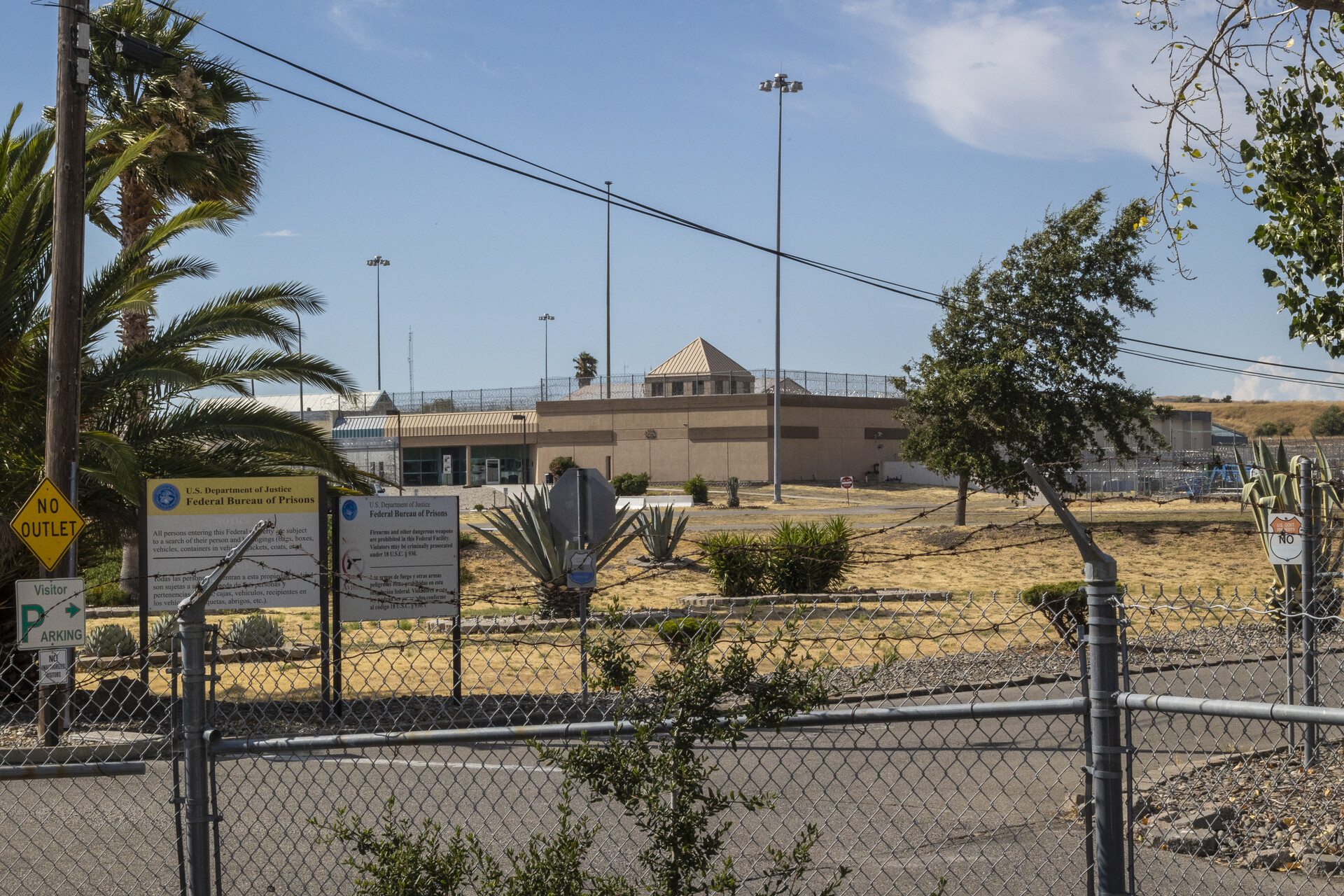
The relocations began after the Federal Bureau of Prisons abruptly started to shut down the facility on April 15, following years of reports of sexual abuse by guards, and allegations of as well as retaliation against incarcerated women who reported misconduct.
Eight former FCI Dublin prison officers, including the former warden and a former chaplain, have been charged over the last two years with sexual abuse and seven have been sentenced. The prison still faces nearly 60 individual lawsuits from women formerly incarcerated there, as well as a class action suit.
KQED reviewed nearly two dozen compassionate release requests that have been submitted since the prison closed. Many cited medical issues and anxiety that have been amplified during the relocation process, as well as ongoing concerns about being far away from families and children.
“I have a young daughter who was left behind at age 11 with my elderly ill parents, who have already passed away since,” reads another letter.
As of Thursday, a small fraction of incarcerated women remained at the prison, including those whose release is pending or who may be transferred to a facility outside the BOP system, according to BOP spokesperson Scott Taylor.
“The process involved careful planning and coordination to ensure the safe transfer of women to other facilities, with special attention given to their unique programming, medical, and mental health requirements,” Taylor wrote in an email. “We continue to expect that the women’s needs are addressed with compassion and respect, providing ongoing support as needed.”
But attorneys for some of the transferred women who are now seeking compassionate release said their clients told them the experience was unnecessarily harsh, with reports of guards yelling at the women to hurry up and throwing out some of their personal belongings, like photographs.
“Once they were actually being transferred, the travel process was pretty brutal,” said Alana McMains, Castillo’s attorney. “Many women were given little notice in advance to leave and given little time to pack their belongings.”
U.S. District Judge Yvonne Gonzalez Rogers earlier this month ordered to delay the transfers and for BOP to follow certain protocols before doing so, including evaluating medical conditions and eligibility for release.
But McMains said many of the incarcerated women she represents told her those protocols were largely ignored.
Some women reported that they didn’t have access to a bathroom and were forced to defecate on themselves, McMains said. “One woman told me she did not have her medication and was vomiting.”
Attorney Jaehyun Oh has represented a total of 36 women who have alleged that guards at FCI Dublin sexually abused them. Four of her clients were still housed at the prison when it closed last week and shared similar horrific experiences with her, she said.
“People are happy the prison is closed. But the way that it happened, the abruptness and how there was no preparation for it whatsoever has been very hard,” Oh told KQED. “A lot of them have family in California or on the West Coast, and my four clients are no longer on the West Coast.”
BOP announced that it was closing FCI Dublin just over a week after U.S. District Judge Yvonne Gonzales Rogers appointed Wendy Still to be the agency’s first ever “special master” and oversee mandatory changes at the prison.
BOP has not said how long it plans to keep FCI Dublin closed or what will become of the facility if it never reopens, although its staff will not lose their jobs, Taylor said.
This week, California Sens. Lafonza Butler and Alex Padilla were among five senators who asked the BOP to respond to reports of the hectic prison transfers and other issues.
The letter said they intend to exercise the oversight authority of the U.S. Senate Judiciary Committee over the BOP to monitor the situation.
“This reporting is appalling and even more concerning in light of the well-documented abuses that have taken place previously at FCI Dublin,” the letter reads. “Individuals in custody at FCI Dublin have long endured a toxic carceral culture marked by sexual assault, harassment and medical neglect at the hands of BOP staff.”
Advocates for incarcerated women are also calling on President Joe Biden to grant clemency to all of the women who claimed they were sexually abused at FCI Dublin, and for U.S. Immigration and Customs Enforcement to lift immigration detainers for noncitizens who were held there.
“It’s heartbreaking. Everybody is upset. So many of these individuals had already suffered extensive trauma before they came to FCI Dublin, and at FCI Dublin, and this appears to have been handled the worst way possible,” said Kara Janssen, a plaintiff attorney at Rosen Bien Galvan & Grunfeld LLP.
The influx of compassionate release requests, she said, “shows the chaos this process has caused.”
“There was no reason for this process to be so rushed.”
KQED reporter Alex Hall contributed to this story.