window.__IS_SSR__=true
window.__INITIAL_STATE__={
"attachmentsReducer": {
"audio_0": {
"type": "attachments",
"id": "audio_0",
"imgSizes": {
"kqedFullSize": {
"file": "https://ww2.kqed.org/news/wp-content/themes/KQED-unified/img/audio_bgs/background0.jpg"
}
}
},
"audio_1": {
"type": "attachments",
"id": "audio_1",
"imgSizes": {
"kqedFullSize": {
"file": "https://ww2.kqed.org/news/wp-content/themes/KQED-unified/img/audio_bgs/background1.jpg"
}
}
},
"audio_2": {
"type": "attachments",
"id": "audio_2",
"imgSizes": {
"kqedFullSize": {
"file": "https://ww2.kqed.org/news/wp-content/themes/KQED-unified/img/audio_bgs/background2.jpg"
}
}
},
"audio_3": {
"type": "attachments",
"id": "audio_3",
"imgSizes": {
"kqedFullSize": {
"file": "https://ww2.kqed.org/news/wp-content/themes/KQED-unified/img/audio_bgs/background3.jpg"
}
}
},
"audio_4": {
"type": "attachments",
"id": "audio_4",
"imgSizes": {
"kqedFullSize": {
"file": "https://ww2.kqed.org/news/wp-content/themes/KQED-unified/img/audio_bgs/background4.jpg"
}
}
},
"placeholder": {
"type": "attachments",
"id": "placeholder",
"imgSizes": {
"thumbnail": {
"file": "https://cdn.kqed.org/wp-content/uploads/2024/12/KQED-Default-Image-816638274-2000x1333-1-160x107.jpg",
"width": 160,
"height": 107,
"mimeType": "image/jpeg"
},
"medium": {
"file": "https://cdn.kqed.org/wp-content/uploads/2024/12/KQED-Default-Image-816638274-2000x1333-1-800x533.jpg",
"width": 800,
"height": 533,
"mimeType": "image/jpeg"
},
"medium_large": {
"file": "https://cdn.kqed.org/wp-content/uploads/2024/12/KQED-Default-Image-816638274-2000x1333-1-768x512.jpg",
"width": 768,
"height": 512,
"mimeType": "image/jpeg"
},
"large": {
"file": "https://cdn.kqed.org/wp-content/uploads/2024/12/KQED-Default-Image-816638274-2000x1333-1-1020x680.jpg",
"width": 1020,
"height": 680,
"mimeType": "image/jpeg"
},
"1536x1536": {
"file": "https://cdn.kqed.org/wp-content/uploads/2024/12/KQED-Default-Image-816638274-2000x1333-1-1536x1024.jpg",
"width": 1536,
"height": 1024,
"mimeType": "image/jpeg"
},
"fd-lrg": {
"file": "https://cdn.kqed.org/wp-content/uploads/2024/12/KQED-Default-Image-816638274-2000x1333-1-1536x1024.jpg",
"width": 1536,
"height": 1024,
"mimeType": "image/jpeg"
},
"fd-med": {
"file": "https://cdn.kqed.org/wp-content/uploads/2024/12/KQED-Default-Image-816638274-2000x1333-1-1020x680.jpg",
"width": 1020,
"height": 680,
"mimeType": "image/jpeg"
},
"fd-sm": {
"file": "https://cdn.kqed.org/wp-content/uploads/2024/12/KQED-Default-Image-816638274-2000x1333-1-800x533.jpg",
"width": 800,
"height": 533,
"mimeType": "image/jpeg"
},
"post-thumbnail": {
"file": "https://cdn.kqed.org/wp-content/uploads/2024/12/KQED-Default-Image-816638274-2000x1333-1-672x372.jpg",
"width": 672,
"height": 372,
"mimeType": "image/jpeg"
},
"twentyfourteen-full-width": {
"file": "https://cdn.kqed.org/wp-content/uploads/2024/12/KQED-Default-Image-816638274-2000x1333-1-1038x576.jpg",
"width": 1038,
"height": 576,
"mimeType": "image/jpeg"
},
"xxsmall": {
"file": "https://cdn.kqed.org/wp-content/uploads/2024/12/KQED-Default-Image-816638274-2000x1333-1-160x107.jpg",
"width": 160,
"height": 107,
"mimeType": "image/jpeg"
},
"xsmall": {
"file": "https://cdn.kqed.org/wp-content/uploads/2024/12/KQED-Default-Image-816638274-2000x1333-1-672x372.jpg",
"width": 672,
"height": 372,
"mimeType": "image/jpeg"
},
"small": {
"file": "https://cdn.kqed.org/wp-content/uploads/2024/12/KQED-Default-Image-816638274-2000x1333-1-672x372.jpg",
"width": 672,
"height": 372,
"mimeType": "image/jpeg"
},
"xlarge": {
"file": "https://cdn.kqed.org/wp-content/uploads/2024/12/KQED-Default-Image-816638274-2000x1333-1-1020x680.jpg",
"width": 1020,
"height": 680,
"mimeType": "image/jpeg"
},
"full-width": {
"file": "https://cdn.kqed.org/wp-content/uploads/2024/12/KQED-Default-Image-816638274-2000x1333-1-1920x1280.jpg",
"width": 1920,
"height": 1280,
"mimeType": "image/jpeg"
},
"guest-author-32": {
"file": "https://cdn.kqed.org/wp-content/uploads/2025/01/KQED-Default-Image-816638274-1333x1333-1-160x160.jpg",
"width": 32,
"height": 32,
"mimeType": "image/jpeg"
},
"guest-author-50": {
"file": "https://cdn.kqed.org/wp-content/uploads/2025/01/KQED-Default-Image-816638274-1333x1333-1-160x160.jpg",
"width": 50,
"height": 50,
"mimeType": "image/jpeg"
},
"guest-author-64": {
"file": "https://cdn.kqed.org/wp-content/uploads/2025/01/KQED-Default-Image-816638274-1333x1333-1-160x160.jpg",
"width": 64,
"height": 64,
"mimeType": "image/jpeg"
},
"guest-author-96": {
"file": "https://cdn.kqed.org/wp-content/uploads/2025/01/KQED-Default-Image-816638274-1333x1333-1-160x160.jpg",
"width": 96,
"height": 96,
"mimeType": "image/jpeg"
},
"guest-author-128": {
"file": "https://cdn.kqed.org/wp-content/uploads/2025/01/KQED-Default-Image-816638274-1333x1333-1-160x160.jpg",
"width": 128,
"height": 128,
"mimeType": "image/jpeg"
},
"detail": {
"file": "https://cdn.kqed.org/wp-content/uploads/2025/01/KQED-Default-Image-816638274-1333x1333-1-160x160.jpg",
"width": 160,
"height": 160,
"mimeType": "image/jpeg"
},
"kqedFullSize": {
"file": "https://cdn.kqed.org/wp-content/uploads/2024/12/KQED-Default-Image-816638274-2000x1333-1.jpg",
"width": 2000,
"height": 1333
}
}
},
"mindshift_54865": {
"type": "attachments",
"id": "mindshift_54865",
"meta": {
"index": "attachments_1716263798",
"site": "mindshift",
"id": "54865",
"found": true
},
"parent": 54853,
"imgSizes": {
"twentyfourteen-full-width": {
"file": "https://ww2.kqed.org/app/uploads/sites/23/2019/11/emotion-scientists-1038x576.jpg",
"width": 1038,
"mimeType": "image/jpeg",
"height": 576
},
"thumbnail": {
"file": "https://ww2.kqed.org/app/uploads/sites/23/2019/11/emotion-scientists-160x111.jpg",
"width": 160,
"mimeType": "image/jpeg",
"height": 111
},
"post-thumbnail": {
"file": "https://ww2.kqed.org/app/uploads/sites/23/2019/11/emotion-scientists-672x372.jpg",
"width": 672,
"mimeType": "image/jpeg",
"height": 372
},
"kqedFullSize": {
"file": "https://ww2.kqed.org/app/uploads/sites/23/2019/11/emotion-scientists.jpg",
"width": 1920,
"height": 1332
},
"large": {
"file": "https://ww2.kqed.org/app/uploads/sites/23/2019/11/emotion-scientists-1020x708.jpg",
"width": 1020,
"mimeType": "image/jpeg",
"height": 708
},
"complete_open_graph": {
"file": "https://ww2.kqed.org/app/uploads/sites/23/2019/11/emotion-scientists-1200x833.jpg",
"width": 1200,
"mimeType": "image/jpeg",
"height": 833
},
"full-width": {
"file": "https://ww2.kqed.org/app/uploads/sites/23/2019/11/emotion-scientists-1920x1332.jpg",
"width": 1920,
"mimeType": "image/jpeg",
"height": 1332
},
"medium": {
"file": "https://ww2.kqed.org/app/uploads/sites/23/2019/11/emotion-scientists-800x555.jpg",
"width": 800,
"mimeType": "image/jpeg",
"height": 555
},
"medium_large": {
"file": "https://ww2.kqed.org/app/uploads/sites/23/2019/11/emotion-scientists-768x533.jpg",
"width": 768,
"mimeType": "image/jpeg",
"height": 533
}
},
"publishDate": 1574204401,
"modified": 1574204714,
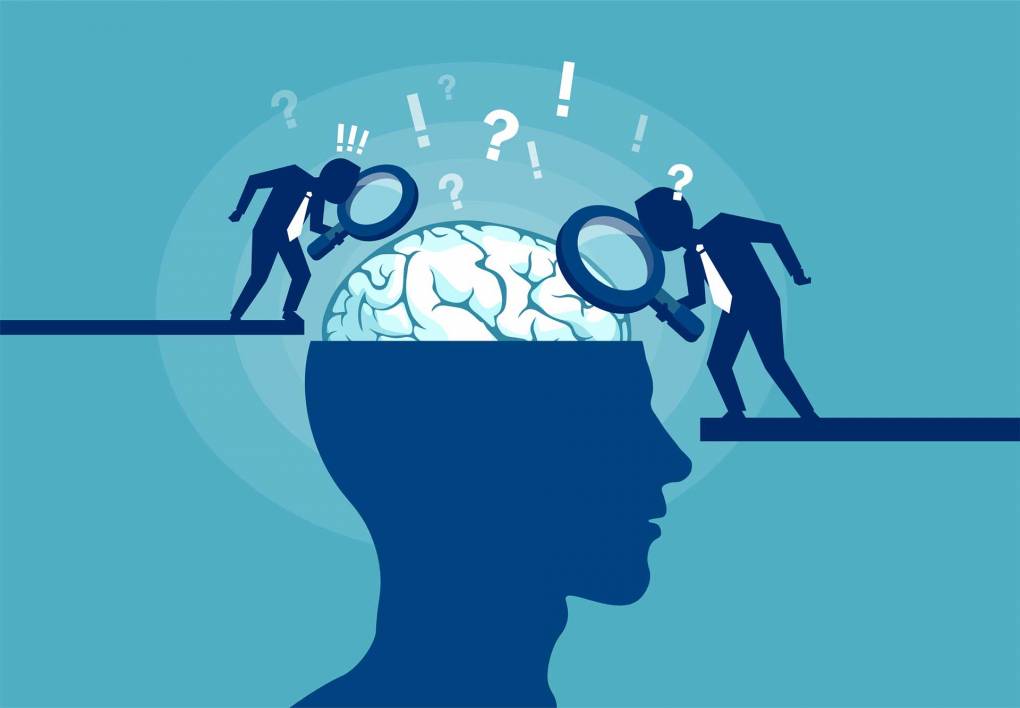
"caption": "Emotions determine success in five key areas: attention, memory, and learning, decisions, quality of relationships, mental and physical health, and creativity and general performance.",
"description": "Emotions determine success in five key areas: attention, memory, and learning, decisions, quality of relationships, mental and physical health, and creativity and general performance.",
"title": "emotion-scientists",
"credit": "iStock/Feodora Chiosea",
"status": "inherit",
"isLoading": false,
"fetchFailed": false
},
"mindshift_54646": {
"type": "attachments",
"id": "mindshift_54646",
"meta": {
"index": "attachments_1716263798",
"site": "mindshift",
"id": "54646",
"found": true
},
"parent": 54644,
"imgSizes": {
"twentyfourteen-full-width": {
"file": "https://ww2.kqed.org/app/uploads/sites/23/2019/10/dsc_1801-22414e866a3c82d45545e6ffb69e98fd90aead80-1038x576.jpg",
"width": 1038,
"mimeType": "image/jpeg",
"height": 576
},
"thumbnail": {
"file": "https://ww2.kqed.org/app/uploads/sites/23/2019/10/dsc_1801-22414e866a3c82d45545e6ffb69e98fd90aead80-160x120.jpg",
"width": 160,
"mimeType": "image/jpeg",
"height": 120
},
"post-thumbnail": {
"file": "https://ww2.kqed.org/app/uploads/sites/23/2019/10/dsc_1801-22414e866a3c82d45545e6ffb69e98fd90aead80-672x372.jpg",
"width": 672,
"mimeType": "image/jpeg",
"height": 372
},
"kqedFullSize": {
"file": "https://ww2.kqed.org/app/uploads/sites/23/2019/10/dsc_1801-22414e866a3c82d45545e6ffb69e98fd90aead80-e1571898843506.jpg",
"width": 1920,
"height": 1440
},
"large": {
"file": "https://ww2.kqed.org/app/uploads/sites/23/2019/10/dsc_1801-22414e866a3c82d45545e6ffb69e98fd90aead80-1020x765.jpg",
"width": 1020,
"mimeType": "image/jpeg",
"height": 765
},
"complete_open_graph": {
"file": "https://ww2.kqed.org/app/uploads/sites/23/2019/10/dsc_1801-22414e866a3c82d45545e6ffb69e98fd90aead80-1200x900.jpg",
"width": 1200,
"mimeType": "image/jpeg",
"height": 900
},
"full-width": {
"file": "https://ww2.kqed.org/app/uploads/sites/23/2019/10/dsc_1801-22414e866a3c82d45545e6ffb69e98fd90aead80-1920x1440.jpg",
"width": 1920,
"mimeType": "image/jpeg",
"height": 1440
},
"medium": {
"file": "https://ww2.kqed.org/app/uploads/sites/23/2019/10/dsc_1801-22414e866a3c82d45545e6ffb69e98fd90aead80-800x600.jpg",
"width": 800,
"mimeType": "image/jpeg",
"height": 600
},
"medium_large": {
"file": "https://ww2.kqed.org/app/uploads/sites/23/2019/10/dsc_1801-22414e866a3c82d45545e6ffb69e98fd90aead80-768x576.jpg",
"width": 768,
"mimeType": "image/jpeg",
"height": 576
}
},
"publishDate": 1571898739,
"modified": 1571898859,
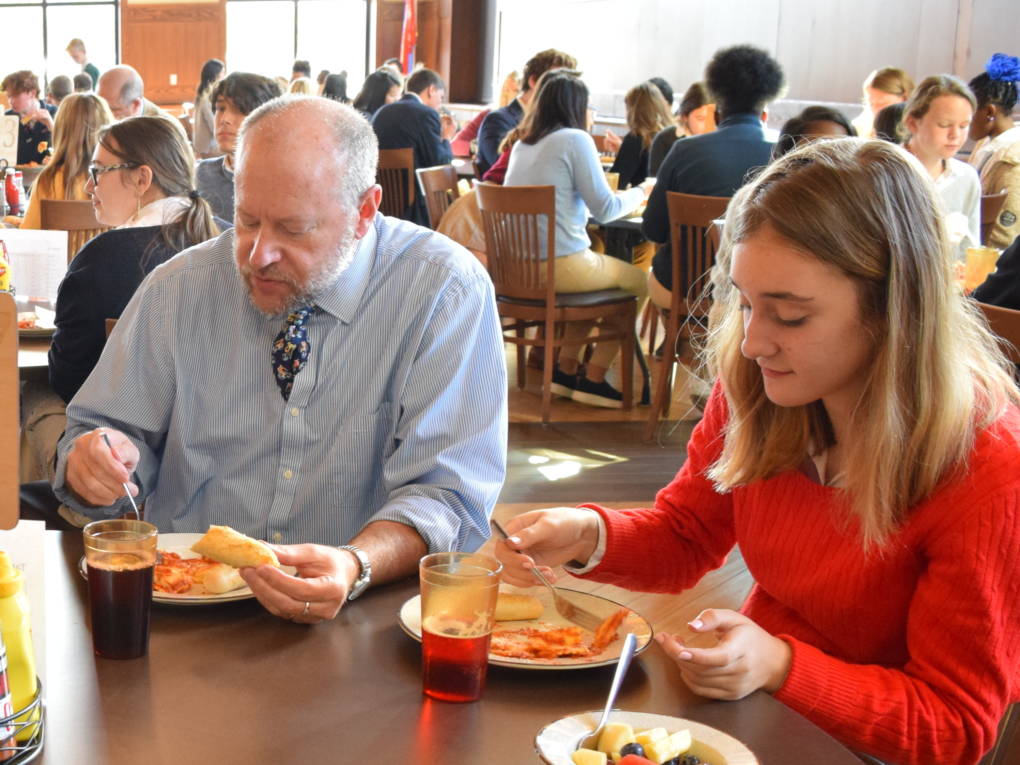
"caption": "Kylie Burger (right), a University School of Milwaukee student, eats lunch with band director Dain Shuler. The school has a long-standing tradition of assigned seating at lunch. A staff member is also required to sit at each table to help facilitate conversation.\n",
"description": "Kylie Burger (right), a University School of Milwaukee student, eats lunch with band director Dain Shuler. The school has a long-standing tradition of assigned seating at lunch. A staff member is also required to sit at each table to help facilitate conversation.",
"title": "Kylie Burger (right), a University School of Milwaukee student, eats lunch with band director Dain Shuler. The school has a long-standing tradition of assigned seating at lunch. A staff member is also required to sit at each table to help facilitate conversation.",
"credit": "Emily Files/WUWM",
"status": "inherit",
"isLoading": false,
"fetchFailed": false
},
"mindshift_54500": {
"type": "attachments",
"id": "mindshift_54500",
"meta": {
"index": "attachments_1716263798",
"site": "mindshift",
"id": "54500",
"found": true
},
"parent": 54497,
"imgSizes": {
"twentyfourteen-full-width": {
"file": "https://ww2.kqed.org/app/uploads/sites/23/2019/09/empathy-needed-1038x576.jpg",
"width": 1038,
"mimeType": "image/jpeg",
"height": 576
},
"thumbnail": {
"file": "https://ww2.kqed.org/app/uploads/sites/23/2019/09/empathy-needed-160x90.jpg",
"width": 160,
"mimeType": "image/jpeg",
"height": 90
},
"post-thumbnail": {
"file": "https://ww2.kqed.org/app/uploads/sites/23/2019/09/empathy-needed-672x372.jpg",
"width": 672,
"mimeType": "image/jpeg",
"height": 372
},
"kqedFullSize": {
"file": "https://ww2.kqed.org/app/uploads/sites/23/2019/09/empathy-needed.jpg",
"width": 1920,
"height": 1080
},
"large": {
"file": "https://ww2.kqed.org/app/uploads/sites/23/2019/09/empathy-needed-1020x574.jpg",
"width": 1020,
"mimeType": "image/jpeg",
"height": 574
},
"complete_open_graph": {
"file": "https://ww2.kqed.org/app/uploads/sites/23/2019/09/empathy-needed-1200x675.jpg",
"width": 1200,
"mimeType": "image/jpeg",
"height": 675
},
"full-width": {
"file": "https://ww2.kqed.org/app/uploads/sites/23/2019/09/empathy-needed-1920x1080.jpg",
"width": 1920,
"mimeType": "image/jpeg",
"height": 1080
},
"medium": {
"file": "https://ww2.kqed.org/app/uploads/sites/23/2019/09/empathy-needed-800x450.jpg",
"width": 800,
"mimeType": "image/jpeg",
"height": 450
},
"medium_large": {
"file": "https://ww2.kqed.org/app/uploads/sites/23/2019/09/empathy-needed-768x432.jpg",
"width": 768,
"mimeType": "image/jpeg",
"height": 432
}
},
"publishDate": 1569369170,
"modified": 1569369222,
"caption": null,
"description": null,
"title": "empathy-needed",
"credit": "Lordn/iStock",
"status": "inherit",
"isLoading": false,
"fetchFailed": false
},
"mindshift_54555": {
"type": "attachments",
"id": "mindshift_54555",
"meta": {
"index": "attachments_1716263798",
"site": "mindshift",
"id": "54555",
"found": true
},
"parent": 54548,
"imgSizes": {
"twentyfourteen-full-width": {
"file": "https://ww2.kqed.org/app/uploads/sites/23/2019/09/IMG_2684-1038x576.jpg",
"width": 1038,
"mimeType": "image/jpeg",
"height": 576
},
"thumbnail": {
"file": "https://ww2.kqed.org/app/uploads/sites/23/2019/09/IMG_2684-160x120.jpg",
"width": 160,
"mimeType": "image/jpeg",
"height": 120
},
"post-thumbnail": {
"file": "https://ww2.kqed.org/app/uploads/sites/23/2019/09/IMG_2684-672x372.jpg",
"width": 672,
"mimeType": "image/jpeg",
"height": 372
},
"kqedFullSize": {
"file": "https://ww2.kqed.org/app/uploads/sites/23/2019/09/IMG_2684-e1569869624136.jpg",
"width": 1920,
"height": 1440
},
"large": {
"file": "https://ww2.kqed.org/app/uploads/sites/23/2019/09/IMG_2684-1020x765.jpg",
"width": 1020,
"mimeType": "image/jpeg",
"height": 765
},
"complete_open_graph": {
"file": "https://ww2.kqed.org/app/uploads/sites/23/2019/09/IMG_2684-1200x900.jpg",
"width": 1200,
"mimeType": "image/jpeg",
"height": 900
},
"full-width": {
"file": "https://ww2.kqed.org/app/uploads/sites/23/2019/09/IMG_2684-1920x1440.jpg",
"width": 1920,
"mimeType": "image/jpeg",
"height": 1440
},
"medium": {
"file": "https://ww2.kqed.org/app/uploads/sites/23/2019/09/IMG_2684-800x600.jpg",
"width": 800,
"mimeType": "image/jpeg",
"height": 600
},
"medium_large": {
"file": "https://ww2.kqed.org/app/uploads/sites/23/2019/09/IMG_2684-768x576.jpg",
"width": 768,
"mimeType": "image/jpeg",
"height": 576
}
},
"publishDate": 1569867511,
"modified": 1569881122,
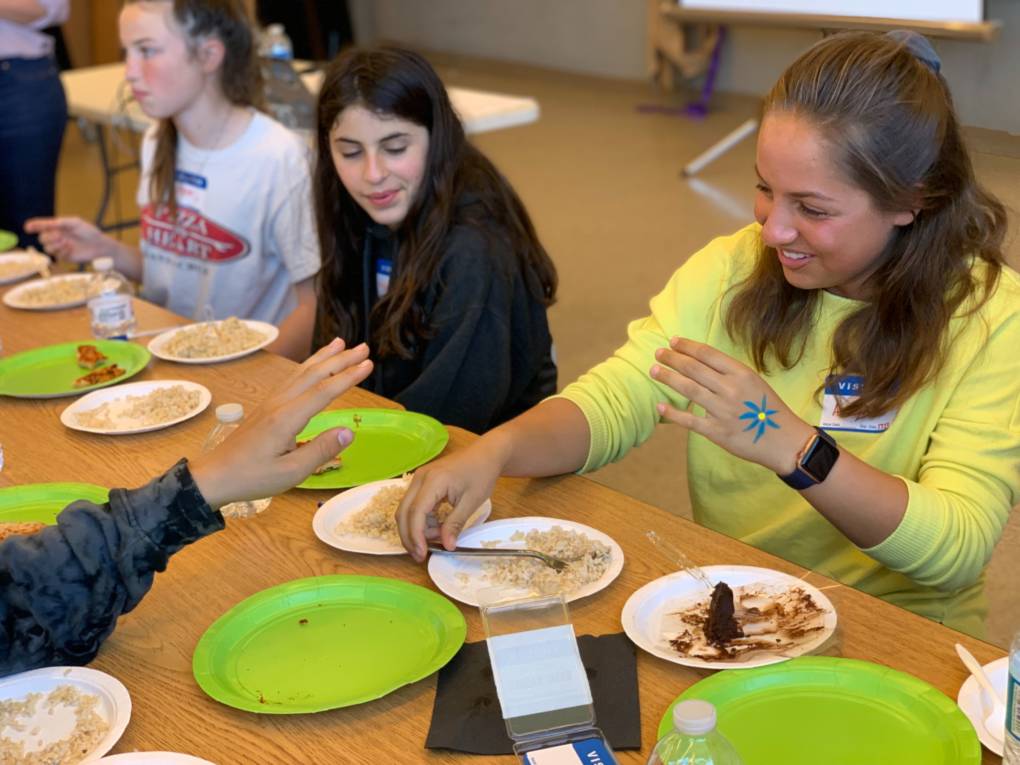
"caption": "Tice Creek students taste-test different varieties of rice. ",
"description": null,
"title": "IMG_2684",
"credit": "Ki Sung/KQED",
"status": "inherit",
"isLoading": false,
"fetchFailed": false
},
"mindshift_54300": {
"type": "attachments",
"id": "mindshift_54300",
"meta": {
"index": "attachments_1716263798",
"site": "mindshift",
"id": "54300",
"found": true
},
"parent": 54286,
"imgSizes": {
"twentyfourteen-full-width": {
"file": "https://ww2.kqed.org/app/uploads/sites/23/2019/08/Amadou-Diallo-Diallo_91230-1038x576.jpg",
"width": 1038,
"mimeType": "image/jpeg",
"height": 576
},
"thumbnail": {
"file": "https://ww2.kqed.org/app/uploads/sites/23/2019/08/Amadou-Diallo-Diallo_91230-160x120.jpg",
"width": 160,
"mimeType": "image/jpeg",
"height": 120
},
"post-thumbnail": {
"file": "https://ww2.kqed.org/app/uploads/sites/23/2019/08/Amadou-Diallo-Diallo_91230-672x372.jpg",
"width": 672,
"mimeType": "image/jpeg",
"height": 372
},
"kqedFullSize": {
"file": "https://ww2.kqed.org/app/uploads/sites/23/2019/08/Amadou-Diallo-Diallo_91230-e1567489621975.jpg",
"width": 1800,
"height": 1350
},
"large": {
"file": "https://ww2.kqed.org/app/uploads/sites/23/2019/08/Amadou-Diallo-Diallo_91230-1020x765.jpg",
"width": 1020,
"mimeType": "image/jpeg",
"height": 765
},
"complete_open_graph": {
"file": "https://ww2.kqed.org/app/uploads/sites/23/2019/08/Amadou-Diallo-Diallo_91230-1200x900.jpg",
"width": 1200,
"mimeType": "image/jpeg",
"height": 900
},
"medium": {
"file": "https://ww2.kqed.org/app/uploads/sites/23/2019/08/Amadou-Diallo-Diallo_91230-800x600.jpg",
"width": 800,
"mimeType": "image/jpeg",
"height": 600
},
"medium_large": {
"file": "https://ww2.kqed.org/app/uploads/sites/23/2019/08/Amadou-Diallo-Diallo_91230-768x576.jpg",
"width": 768,
"mimeType": "image/jpeg",
"height": 576
}
},
"publishDate": 1567488572,
"modified": 1567489657,
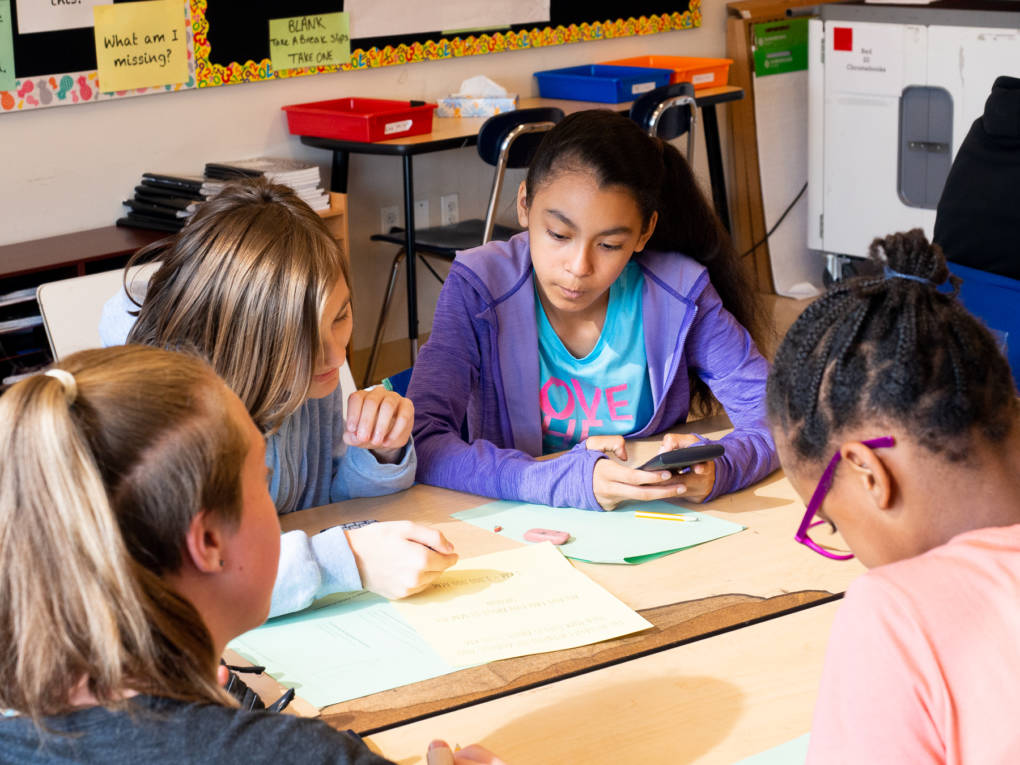
"caption": "Sixth graders at Capital City Public Charter School work collaboratively on a math problem. ",
"description": null,
"title": "Samantha Clarke 6th grade math and science class",
"credit": "Amadou Diallo for The Hechinger Report",
"status": "inherit",
"isLoading": false,
"fetchFailed": false
},
"mindshift_53918": {
"type": "attachments",
"id": "mindshift_53918",
"meta": {
"index": "attachments_1716263798",
"site": "mindshift",
"id": "53918",
"found": true
},
"parent": 53917,
"imgSizes": {
"twentyfourteen-full-width": {
"file": "https://ww2.kqed.org/app/uploads/sites/23/2019/07/l-hyrbyk-kindness_slide-50ee50769e6a728aca4a74361e084c09fefe4d0c-1038x576.jpg",
"width": 1038,
"mimeType": "image/jpeg",
"height": 576
},
"thumbnail": {
"file": "https://ww2.kqed.org/app/uploads/sites/23/2019/07/l-hyrbyk-kindness_slide-50ee50769e6a728aca4a74361e084c09fefe4d0c-160x107.jpg",
"width": 160,
"mimeType": "image/jpeg",
"height": 107
},
"post-thumbnail": {
"file": "https://ww2.kqed.org/app/uploads/sites/23/2019/07/l-hyrbyk-kindness_slide-50ee50769e6a728aca4a74361e084c09fefe4d0c-672x372.jpg",
"width": 672,
"mimeType": "image/jpeg",
"height": 372
},
"kqedFullSize": {
"file": "https://ww2.kqed.org/app/uploads/sites/23/2019/07/l-hyrbyk-kindness_slide-50ee50769e6a728aca4a74361e084c09fefe4d0c-e1562566536141.jpg",
"width": 1920,
"height": 1280
},
"large": {
"file": "https://ww2.kqed.org/app/uploads/sites/23/2019/07/l-hyrbyk-kindness_slide-50ee50769e6a728aca4a74361e084c09fefe4d0c-1020x680.jpg",
"width": 1020,
"mimeType": "image/jpeg",
"height": 680
},
"complete_open_graph": {
"file": "https://ww2.kqed.org/app/uploads/sites/23/2019/07/l-hyrbyk-kindness_slide-50ee50769e6a728aca4a74361e084c09fefe4d0c-1200x800.jpg",
"width": 1200,
"mimeType": "image/jpeg",
"height": 800
},
"full-width": {
"file": "https://ww2.kqed.org/app/uploads/sites/23/2019/07/l-hyrbyk-kindness_slide-50ee50769e6a728aca4a74361e084c09fefe4d0c-1920x1280.jpg",
"width": 1920,
"mimeType": "image/jpeg",
"height": 1280
},
"medium": {
"file": "https://ww2.kqed.org/app/uploads/sites/23/2019/07/l-hyrbyk-kindness_slide-50ee50769e6a728aca4a74361e084c09fefe4d0c-800x533.jpg",
"width": 800,
"mimeType": "image/jpeg",
"height": 533
},
"medium_large": {
"file": "https://ww2.kqed.org/app/uploads/sites/23/2019/07/l-hyrbyk-kindness_slide-50ee50769e6a728aca4a74361e084c09fefe4d0c-768x512.jpg",
"width": 768,
"mimeType": "image/jpeg",
"height": 512
}
},
"publishDate": 1562565583,
"modified": 1562566552,
"caption": null,
"description": "The science of kindness.",
"title": "The science of kindness.",
"credit": "Laurent Hyrbyk for NPR",
"status": "inherit",
"isLoading": false,
"fetchFailed": false
},
"mindshift_53850": {
"type": "attachments",
"id": "mindshift_53850",
"meta": {
"index": "attachments_1716263798",
"site": "mindshift",
"id": "53850",
"found": true
},
"parent": 53815,
"imgSizes": {
"twentyfourteen-full-width": {
"file": "https://ww2.kqed.org/app/uploads/sites/23/2019/06/Edutopia-Preschool-3-738x576.png",
"width": 738,
"mimeType": "image/png",
"height": 576
},
"thumbnail": {
"file": "https://ww2.kqed.org/app/uploads/sites/23/2019/06/Edutopia-Preschool-3-160x130.png",
"width": 160,
"mimeType": "image/png",
"height": 130
},
"post-thumbnail": {
"file": "https://ww2.kqed.org/app/uploads/sites/23/2019/06/Edutopia-Preschool-3-672x372.png",
"width": 672,
"mimeType": "image/png",
"height": 372
},
"kqedFullSize": {
"file": "https://ww2.kqed.org/app/uploads/sites/23/2019/06/Edutopia-Preschool-3.png",
"width": 738,
"height": 601
}
},
"publishDate": 1561010482,
"modified": 1561010503,
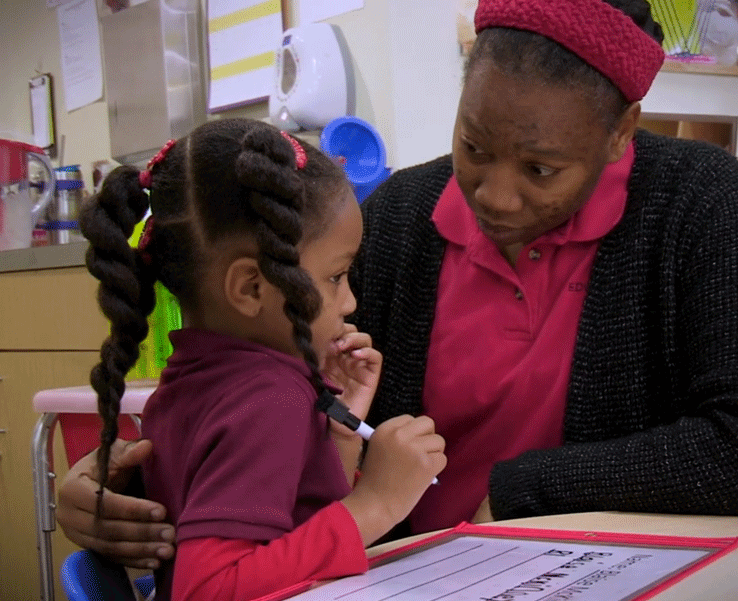
"caption": "Antonia Celius, a preschool lead teacher at Educare, talks with a student.",
"description": "Antonia Celius, a preschool lead teacher at Educare, talks with a student.",
"title": "Edutopia-Preschool-3",
"credit": "Courtesy \u003ca href=\"https://www.edutopia.org/video/building-emotional-literacy-preschoolers\">Edutopia\u003c/a>",
"status": "inherit",
"isLoading": false,
"fetchFailed": false
},
"mindshift_53717": {
"type": "attachments",
"id": "mindshift_53717",
"meta": {
"index": "attachments_1716263798",
"site": "mindshift",
"id": "53717",
"found": true
},
"parent": 53701,
"imgSizes": {
"twentyfourteen-full-width": {
"file": "https://ww2.kqed.org/app/uploads/sites/23/2019/05/iStock-1043032870-1038x576.jpg",
"width": 1038,
"mimeType": "image/jpeg",
"height": 576
},
"thumbnail": {
"file": "https://ww2.kqed.org/app/uploads/sites/23/2019/05/iStock-1043032870-160x103.jpg",
"width": 160,
"mimeType": "image/jpeg",
"height": 103
},
"post-thumbnail": {
"file": "https://ww2.kqed.org/app/uploads/sites/23/2019/05/iStock-1043032870-672x372.jpg",
"width": 672,
"mimeType": "image/jpeg",
"height": 372
},
"kqedFullSize": {
"file": "https://ww2.kqed.org/app/uploads/sites/23/2019/05/iStock-1043032870-e1558685047921.jpg",
"width": 1920,
"height": 1240
},
"large": {
"file": "https://ww2.kqed.org/app/uploads/sites/23/2019/05/iStock-1043032870-1020x659.jpg",
"width": 1020,
"mimeType": "image/jpeg",
"height": 659
},
"complete_open_graph": {
"file": "https://ww2.kqed.org/app/uploads/sites/23/2019/05/iStock-1043032870-1200x775.jpg",
"width": 1200,
"mimeType": "image/jpeg",
"height": 775
},
"full-width": {
"file": "https://ww2.kqed.org/app/uploads/sites/23/2019/05/iStock-1043032870-1920x1240.jpg",
"width": 1920,
"mimeType": "image/jpeg",
"height": 1240
},
"medium": {
"file": "https://ww2.kqed.org/app/uploads/sites/23/2019/05/iStock-1043032870-800x517.jpg",
"width": 800,
"mimeType": "image/jpeg",
"height": 517
},
"medium_large": {
"file": "https://ww2.kqed.org/app/uploads/sites/23/2019/05/iStock-1043032870-768x496.jpg",
"width": 768,
"mimeType": "image/jpeg",
"height": 496
}
},
"publishDate": 1558685027,
"modified": 1558685065,
"caption": null,
"description": null,
"title": "iStock-1043032870",
"credit": "Trifonov_Evgeniy/iStock",
"status": "inherit",
"isLoading": false,
"fetchFailed": false
},
"mindshift_53550": {
"type": "attachments",
"id": "mindshift_53550",
"meta": {
"index": "attachments_1716263798",
"site": "mindshift",
"id": "53550",
"found": true
},
"parent": 53544,
"imgSizes": {
"twentyfourteen-full-width": {
"file": "https://ww2.kqed.org/app/uploads/sites/23/2019/05/iStock-1140580191-1038x576.png",
"width": 1038,
"mimeType": "image/png",
"height": 576
},
"thumbnail": {
"file": "https://ww2.kqed.org/app/uploads/sites/23/2019/05/iStock-1140580191-160x127.png",
"width": 160,
"mimeType": "image/png",
"height": 127
},
"post-thumbnail": {
"file": "https://ww2.kqed.org/app/uploads/sites/23/2019/05/iStock-1140580191-672x372.png",
"width": 672,
"mimeType": "image/png",
"height": 372
},
"kqedFullSize": {
"file": "https://ww2.kqed.org/app/uploads/sites/23/2019/05/iStock-1140580191.png",
"width": 1211,
"height": 958
},
"large": {
"file": "https://ww2.kqed.org/app/uploads/sites/23/2019/05/iStock-1140580191-1020x807.png",
"width": 1020,
"mimeType": "image/png",
"height": 807
},
"complete_open_graph": {
"file": "https://ww2.kqed.org/app/uploads/sites/23/2019/05/iStock-1140580191-1200x949.png",
"width": 1200,
"mimeType": "image/png",
"height": 949
},
"medium": {
"file": "https://ww2.kqed.org/app/uploads/sites/23/2019/05/iStock-1140580191-800x633.png",
"width": 800,
"mimeType": "image/png",
"height": 633
},
"medium_large": {
"file": "https://ww2.kqed.org/app/uploads/sites/23/2019/05/iStock-1140580191-768x608.png",
"width": 768,
"mimeType": "image/png",
"height": 608
}
},
"publishDate": 1556740862,
"modified": 1556740890,
"caption": null,
"description": null,
"title": "iStock-1140580191",
"credit": "bananajazz/iStock",
"status": "inherit",
"isLoading": false,
"fetchFailed": false
},
"mindshift_53649": {
"type": "attachments",
"id": "mindshift_53649",
"meta": {
"index": "attachments_1716263798",
"site": "mindshift",
"id": "53649",
"found": true
},
"parent": 51784,
"imgSizes": {
"twentyfourteen-full-width": {
"file": "https://ww2.kqed.org/app/uploads/sites/23/2019/05/39197807651_5375edc304_k-1038x576.jpg",
"width": 1038,
"mimeType": "image/jpeg",
"height": 576
},
"thumbnail": {
"file": "https://ww2.kqed.org/app/uploads/sites/23/2019/05/39197807651_5375edc304_k-160x107.jpg",
"width": 160,
"mimeType": "image/jpeg",
"height": 107
},
"post-thumbnail": {
"file": "https://ww2.kqed.org/app/uploads/sites/23/2019/05/39197807651_5375edc304_k-672x372.jpg",
"width": 672,
"mimeType": "image/jpeg",
"height": 372
},
"kqedFullSize": {
"file": "https://ww2.kqed.org/app/uploads/sites/23/2019/05/39197807651_5375edc304_k-e1557729868150.jpg",
"width": 1920,
"height": 1280
},
"large": {
"file": "https://ww2.kqed.org/app/uploads/sites/23/2019/05/39197807651_5375edc304_k-1020x680.jpg",
"width": 1020,
"mimeType": "image/jpeg",
"height": 680
},
"complete_open_graph": {
"file": "https://ww2.kqed.org/app/uploads/sites/23/2019/05/39197807651_5375edc304_k-1200x800.jpg",
"width": 1200,
"mimeType": "image/jpeg",
"height": 800
},
"full-width": {
"file": "https://ww2.kqed.org/app/uploads/sites/23/2019/05/39197807651_5375edc304_k-1920x1280.jpg",
"width": 1920,
"mimeType": "image/jpeg",
"height": 1280
},
"medium": {
"file": "https://ww2.kqed.org/app/uploads/sites/23/2019/05/39197807651_5375edc304_k-800x533.jpg",
"width": 800,
"mimeType": "image/jpeg",
"height": 533
},
"medium_large": {
"file": "https://ww2.kqed.org/app/uploads/sites/23/2019/05/39197807651_5375edc304_k-768x512.jpg",
"width": 768,
"mimeType": "image/jpeg",
"height": 512
}
},
"publishDate": 1557729850,
"modified": 1557730052,
"caption": null,
"description": null,
"title": "39197807651_5375edc304_k",
"credit": "\u003ca href “https://www.flickr.com/photos/njea/39197807651/“>Courtesy of New Jersey Education Association\u003c/a>",
"status": "inherit",
"isLoading": false,
"fetchFailed": false
},
"mindshift_53532": {
"type": "attachments",
"id": "mindshift_53532",
"meta": {
"index": "attachments_1716263798",
"site": "mindshift",
"id": "53532",
"found": true
},
"parent": 53306,
"imgSizes": {
"twentyfourteen-full-width": {
"file": "https://ww2.kqed.org/app/uploads/sites/23/2019/04/iStock-1041507344-1038x576.jpg",
"width": 1038,
"mimeType": "image/jpeg",
"height": 576
},
"thumbnail": {
"file": "https://ww2.kqed.org/app/uploads/sites/23/2019/04/iStock-1041507344-160x160.jpg",
"width": 160,
"mimeType": "image/jpeg",
"height": 160
},
"post-thumbnail": {
"file": "https://ww2.kqed.org/app/uploads/sites/23/2019/04/iStock-1041507344-672x372.jpg",
"width": 672,
"mimeType": "image/jpeg",
"height": 372
},
"kqedFullSize": {
"file": "https://ww2.kqed.org/app/uploads/sites/23/2019/04/iStock-1041507344.jpg",
"width": 1732,
"height": 1732
},
"large": {
"file": "https://ww2.kqed.org/app/uploads/sites/23/2019/04/iStock-1041507344-1020x1020.jpg",
"width": 1020,
"mimeType": "image/jpeg",
"height": 1020
},
"complete_open_graph": {
"file": "https://ww2.kqed.org/app/uploads/sites/23/2019/04/iStock-1041507344-1200x1200.jpg",
"width": 1200,
"mimeType": "image/jpeg",
"height": 1200
},
"medium": {
"file": "https://ww2.kqed.org/app/uploads/sites/23/2019/04/iStock-1041507344-800x800.jpg",
"width": 800,
"mimeType": "image/jpeg",
"height": 800
},
"medium_large": {
"file": "https://ww2.kqed.org/app/uploads/sites/23/2019/04/iStock-1041507344-768x768.jpg",
"width": 768,
"mimeType": "image/jpeg",
"height": 768
}
},
"publishDate": 1556643335,
"modified": 1556643359,
"caption": null,
"description": null,
"title": "iStock-1041507344",
"credit": "Sky_melody/iStock",
"status": "inherit",
"isLoading": false,
"fetchFailed": false
},
"mindshift_53402": {
"type": "attachments",
"id": "mindshift_53402",
"meta": {
"index": "attachments_1716263798",
"site": "mindshift",
"id": "53402",
"found": true
},
"parent": 53138,
"imgSizes": {
"twentyfourteen-full-width": {
"file": "https://ww2.kqed.org/app/uploads/sites/23/2019/02/Edutopia-1038x576.png",
"width": 1038,
"mimeType": "image/png",
"height": 576
},
"thumbnail": {
"file": "https://ww2.kqed.org/app/uploads/sites/23/2019/02/Edutopia-160x83.png",
"width": 160,
"mimeType": "image/png",
"height": 83
},
"post-thumbnail": {
"file": "https://ww2.kqed.org/app/uploads/sites/23/2019/02/Edutopia-672x372.png",
"width": 672,
"mimeType": "image/png",
"height": 372
},
"kqedFullSize": {
"file": "https://ww2.kqed.org/app/uploads/sites/23/2019/02/Edutopia.png",
"width": 1111,
"height": 576
},
"large": {
"file": "https://ww2.kqed.org/app/uploads/sites/23/2019/02/Edutopia-1020x529.png",
"width": 1020,
"mimeType": "image/png",
"height": 529
},
"guest-author-50": {
"file": "https://ww2.kqed.org/app/uploads/sites/23/2019/02/Edutopia-50x50.png",
"width": 50,
"mimeType": "image/png",
"height": 50
},
"guest-author-96": {
"file": "https://ww2.kqed.org/app/uploads/sites/23/2019/02/Edutopia-96x96.png",
"width": 96,
"mimeType": "image/png",
"height": 96
},
"medium": {
"file": "https://ww2.kqed.org/app/uploads/sites/23/2019/02/Edutopia-800x415.png",
"width": 800,
"mimeType": "image/png",
"height": 415
},
"guest-author-64": {
"file": "https://ww2.kqed.org/app/uploads/sites/23/2019/02/Edutopia-64x64.png",
"width": 64,
"mimeType": "image/png",
"height": 64
},
"guest-author-32": {
"file": "https://ww2.kqed.org/app/uploads/sites/23/2019/02/Edutopia-32x32.png",
"width": 32,
"mimeType": "image/png",
"height": 32
},
"medium_large": {
"file": "https://ww2.kqed.org/app/uploads/sites/23/2019/02/Edutopia-768x398.png",
"width": 768,
"mimeType": "image/png",
"height": 398
},
"guest-author-128": {
"file": "https://ww2.kqed.org/app/uploads/sites/23/2019/02/Edutopia-128x128.png",
"width": 128,
"mimeType": "image/png",
"height": 128
}
},
"publishDate": 1554444094,
"modified": 1554444126,
"caption": "Students discuss their reading in book clubs they chose.",
"description": null,
"title": "Edutopia",
"credit": "Courtesy \u003ca href=\"https://www.edutopia.org/video/motivating-students-book-choice\">Edutopia\u003c/a>",
"status": "inherit",
"isLoading": false,
"fetchFailed": false
}
},
"audioPlayerReducer": {
"postId": "stream_live",
"isPaused": true,
"isPlaying": false,
"pfsActive": false,
"pledgeModalIsOpen": true,
"playerDrawerIsOpen": false,
"liveAudioPlayStartedAt": 0,
"liveAudioPlayContext": ""
},
"authorsReducer": {
"byline_mindshift_54644": {
"type": "authors",
"id": "byline_mindshift_54644",
"meta": {
"override": true
},
"slug": "byline_mindshift_54644",
"name": "Emily Files",
"isLoading": false
},
"byline_mindshift_54286": {
"type": "authors",
"id": "byline_mindshift_54286",
"meta": {
"override": true
},
"slug": "byline_mindshift_54286",
"name": "\u003ca href=\"https://hechingerreport.org/\">Amadou Diallo, The Hechinger Report\u003c/a>",
"isLoading": false
},
"byline_mindshift_53917": {
"type": "authors",
"id": "byline_mindshift_53917",
"meta": {
"override": true
},
"slug": "byline_mindshift_53917",
"name": "Cory Turner and Anya Kamenetz",
"isLoading": false
},
"byline_mindshift_53306": {
"type": "authors",
"id": "byline_mindshift_53306",
"meta": {
"override": true
},
"slug": "byline_mindshift_53306",
"name": "Patricia C. Broderick",
"isLoading": false
},
"katrinaschwartz": {
"type": "authors",
"id": "234",
"meta": {
"index": "authors_1716337520",
"id": "234",
"found": true
},
"name": "Katrina Schwartz",
"firstName": "Katrina",
"lastName": "Schwartz",
"slug": "katrinaschwartz",
"email": "kschwartz@kqed.org",
"display_author_email": false,
"staff_mastheads": [
"news"
],
"title": "Producer",
"bio": "Katrina Schwartz is a journalist based in San Francisco. She's worked at KPCC public radio in LA and has reported on air and online for KQED since 2010. She covered how teaching and learning is changing for MindShift between 2012 and 2020. She is the co-host of the MindShift podcast and now produces KQED's Bay Curious podcast.",
"avatar": "https://secure.gravatar.com/avatar/edb4ee79070447a018538c9aae6eeecf28786515b8a0c30e43b6b7dce5aa44c8?s=600&d=blank&r=g",
"twitter": "kschwart",
"bluesky": null,
"facebook": null,
"instagram": null,
"linkedin": null,
"sites": [
{
"site": "",
"roles": [
"editor"
]
},
{
"site": "news",
"roles": [
"editor"
]
},
{
"site": "mindshift",
"roles": [
"administrator"
]
},
{
"site": "stateofhealth",
"roles": [
"author"
]
},
{
"site": "science",
"roles": [
"editor"
]
}
],
"headData": {
"title": "Katrina Schwartz | KQED",
"description": "Producer",
"ogImgSrc": "https://secure.gravatar.com/avatar/edb4ee79070447a018538c9aae6eeecf28786515b8a0c30e43b6b7dce5aa44c8?s=600&d=blank&r=g",
"twImgSrc": "https://secure.gravatar.com/avatar/edb4ee79070447a018538c9aae6eeecf28786515b8a0c30e43b6b7dce5aa44c8?s=600&d=blank&r=g"
},
"isLoading": false,
"link": "/author/katrinaschwartz"
},
"ksung": {
"type": "authors",
"id": "4596",
"meta": {
"index": "authors_1716337520",
"id": "4596",
"found": true
},
"name": "Ki Sung",
"firstName": "Ki",
"lastName": "Sung",
"slug": "ksung",
"email": "ksung@kqed.org",
"display_author_email": false,
"staff_mastheads": [
"news"
],
"title": "KQED Contributor",
"bio": "Ki Sung is Managing Editor of Digital News at KQED. She is former Senior Editor of MindShift and worked at NPR before joining KQED in 2014.",
"avatar": "https://secure.gravatar.com/avatar/64271e01dc95486c133be56937739045b7c00c990525bf9add12d3dd4f0433c9?s=600&d=blank&r=g",
"twitter": null,
"bluesky": null,
"facebook": null,
"instagram": null,
"linkedin": null,
"sites": [
{
"site": "news",
"roles": [
"editor"
]
},
{
"site": "mindshift",
"roles": [
"administrator"
]
},
{
"site": "elections",
"roles": [
"administrator"
]
}
],
"headData": {
"title": "Ki Sung | KQED",
"description": "KQED Contributor",
"ogImgSrc": "https://secure.gravatar.com/avatar/64271e01dc95486c133be56937739045b7c00c990525bf9add12d3dd4f0433c9?s=600&d=blank&r=g",
"twImgSrc": "https://secure.gravatar.com/avatar/64271e01dc95486c133be56937739045b7c00c990525bf9add12d3dd4f0433c9?s=600&d=blank&r=g"
},
"isLoading": false,
"link": "/author/ksung"
},
"lindaflan": {
"type": "authors",
"id": "4613",
"meta": {
"index": "authors_1716337520",
"id": "4613",
"found": true
},
"name": "Linda Flanagan",
"firstName": "Linda",
"lastName": "Flanagan",
"slug": "lindaflan",
"email": "lindaflan@comcast.net",
"display_author_email": false,
"staff_mastheads": [],
"title": null,
"bio": "Linda Flanagan is a freelance writer, researcher, and editor. Her work has appeared in The Atlantic, The Wall St. Journal, Newsweek, Running Times, and Mind/Shift, and she blogs regularly for the Huffington Post. Linda writes about education, culture, athletics, youth sports, mental health, politics, college admissions, and other curiosities. She also reviews books and conducts interviews.",
"avatar": "https://secure.gravatar.com/avatar/6bca04c0736bf5eaea80654019de688f?s=600&d=blank&r=g",
"twitter": "LindaFlanagan2",
"facebook": null,
"instagram": null,
"linkedin": null,
"sites": [
{
"site": "mindshift",
"roles": [
"contributor"
]
}
],
"headData": {
"title": "Linda Flanagan | KQED",
"description": null,
"ogImgSrc": "https://secure.gravatar.com/avatar/6bca04c0736bf5eaea80654019de688f?s=600&d=blank&r=g",
"twImgSrc": "https://secure.gravatar.com/avatar/6bca04c0736bf5eaea80654019de688f?s=600&d=blank&r=g"
},
"isLoading": false,
"link": "/author/lindaflan"
},
"pauldarvasi": {
"type": "authors",
"id": "11107",
"meta": {
"index": "authors_1716337520",
"id": "11107",
"found": true
},
"name": "Paul Darvasi",
"firstName": "Paul",
"lastName": "Darvasi",
"slug": "pauldarvasi",
"email": "pauldarvasi@gmail.com",
"display_author_email": false,
"staff_mastheads": [],
"title": null,
"bio": "Paul Darvasi is an experienced educator whose research, speaking and writing explore the intersections of learning, technology, narrative and games. You can follow him on Twitter:\u003ca href=\"https://twitter.com/PaulDarvasi\"> @pauldarvasi\u003c/a>",
"avatar": "https://secure.gravatar.com/avatar/df387897a1bf0cd4b720b8175112731a?s=600&d=blank&r=g",
"twitter": "pauldarvasi",
"facebook": null,
"instagram": null,
"linkedin": null,
"sites": [
{
"site": "mindshift",
"roles": [
"contributor"
]
}
],
"headData": {
"title": "Paul Darvasi | KQED",
"description": null,
"ogImgSrc": "https://secure.gravatar.com/avatar/df387897a1bf0cd4b720b8175112731a?s=600&d=blank&r=g",
"twImgSrc": "https://secure.gravatar.com/avatar/df387897a1bf0cd4b720b8175112731a?s=600&d=blank&r=g"
},
"isLoading": false,
"link": "/author/pauldarvasi"
},
"lshaffer": {
"type": "authors",
"id": "11330",
"meta": {
"index": "authors_1716337520",
"id": "11330",
"found": true
},
"name": "Leah Shaffer",
"firstName": "Leah",
"lastName": "Shaffer",
"slug": "lshaffer",
"email": "leahabshaffer@gmail.com",
"display_author_email": false,
"staff_mastheads": [],
"title": null,
"bio": null,
"avatar": "https://secure.gravatar.com/avatar/ee7b4bb631d0c035e426aba5e260f9ce?s=600&d=blank&r=g",
"twitter": null,
"facebook": null,
"instagram": null,
"linkedin": null,
"sites": [
{
"site": "mindshift",
"roles": [
"author"
]
}
],
"headData": {
"title": "Leah Shaffer | KQED",
"description": null,
"ogImgSrc": "https://secure.gravatar.com/avatar/ee7b4bb631d0c035e426aba5e260f9ce?s=600&d=blank&r=g",
"twImgSrc": "https://secure.gravatar.com/avatar/ee7b4bb631d0c035e426aba5e260f9ce?s=600&d=blank&r=g"
},
"isLoading": false,
"link": "/author/lshaffer"
}
},
"pagesReducer": {
"mindshift_tag_social-emotional-learning": {
"type": "terms",
"id": "mindshift_943",
"meta": {
"index": "terms_1716263798",
"site": "mindshift",
"id": "943",
"score": 10.40406
},
"featImg": null,
"name": "social emotional learning",
"description": null,
"taxonomy": "tag",
"headData": {
"twImgId": null,
"twTitle": null,
"ogTitle": null,
"ogImgId": null,
"twDescription": null,
"description": null,
"title": "social emotional learning Archives - KQED Mindshift",
"ogDescription": null
},
"ttid": 948,
"slug": "social-emotional-learning",
"isLoading": false,
"title": "social emotional learning",
"pageMeta": {
"site": "mindshift",
"WpPageTemplate": "page-topic-editorial",
"currentPage": 8
},
"blocks": [
{
"blockName": "kqed/post-list",
"attrs": {
"layout": "cardArticle2",
"query": "posts/mindshift?tag=social-emotional-learning",
"seeMore": false,
"paginated": true,
"page": 8
}
},
{
"blockName": "kqed/ad"
}
]
}
},
"pfsSessionReducer": {},
"postsReducer": {
"stream_live": {
"type": "live",
"id": "stream_live",
"audioUrl": "https://streams.kqed.org/kqedradio",
"title": "Live Stream",
"excerpt": "Live Stream information currently unavailable.",
"link": "/radio",
"featImg": "",
"label": {
"name": "KQED Live",
"link": "/"
}
},
"stream_kqedNewscast": {
"type": "posts",
"id": "stream_kqedNewscast",
"audioUrl": "https://www.kqed.org/.stream/anon/radio/RDnews/newscast.mp3?_=1",
"title": "KQED Newscast",
"featImg": "",
"label": {
"name": "88.5 FM",
"link": "/"
}
},
"mindshift_54853": {
"type": "posts",
"id": "mindshift_54853",
"meta": {
"index": "posts_1716263798",
"site": "mindshift",
"id": "54853",
"score": null,
"sort": [
1574320857000
]
},
"parent": 0,
"labelTerm": {
"site": "mindshift"
},
"blocks": [],
"publishDate": 1574320857,
"format": "standard",
"disqusTitle": "Why It's Imperative We All Learn To Be 'Emotion Scientists'",
"title": "Why It's Imperative We All Learn To Be 'Emotion Scientists'",
"headTitle": "MindShift | KQED News",
"content": "\u003cp>\u003cem>From \"\u003ca href=\"https://us.macmillan.com/books/9781250212849\">Permission to Feel:\u003c/a> \u003ca href=\"https://us.macmillan.com/books/9781250212849\">Unlocking the Power of Emotions to Help Our Kids, Ourselves, and Our Society Thrive\"\u003c/a> by Marc Brackett. Copyright (c) 2019 by the author and reprinted with permission of Celadon Books, a division of Macmillan Publishing Group, LLC.\u003c/em>\u003c/p>\n\u003cp>\u003cstrong>By Marc Brackett\u003c/strong>\u003c/p>\n\u003cp>Our lives are saturated with emotions – sadness, disappointment, anxiety, irritation, enthusiasm, and even tranquility. Sometimes – often – those feelings are inconvenient. They get in the way of our busy lives, or at least that’s what we tell ourselves. So we do our best to ignore them. It's everywhere, from the stiff upper lip of our country's Puritan founders to the tough-it-out ethos of schoolyards and playgrounds. We all believe that our feelings are important and deserve to be addressed respectfully and fully. But we also think of emotions as being disruptive and unproductive – at work, at home, and everywhere else. Until the 1980s, most psychologists viewed emotions as extraneous noise, useless static. Our feelings slow us down and get in the way of achieving our goals. We've all heard the message: Get over it. Stop focusing on yourself (as though such a thing were possible!). Don't be so sensitive. Time to move on.\u003c/p>\n\u003cp>The irony, though, is that when we ignore our feelings, or suppress them, they only become stronger. The really powerful emotions build up inside us, like a dark force that inevitably poisons everything we do, whether we like it or not. Hurt feelings don’t vanish on their own. They don't heal themselves. If we don’t express our emotions, they pile up like a debt that will eventually come due.\u003c/p>\n\u003cp>And I'm not talking only about the times we’re feeling something unpleasant. We may also fail to understand exactly how we feel when things are going great. We're content just to enjoy the emotions and not probe too deeply. It's a mistake, of course. If we're going to make positive choices in the future, we need to know what will bring us happiness – and why.\u003c/p>\n\u003cp>[ad fullwidth]\u003c/p>\n\u003cp>Proof of our inability to deal constructively with our emotional lives is all around us. In 2015, in collaboration with the Robert Wood Johnson Foundation and Born This Way Foundation (founded by Lady Gaga and her mother, Cynthia Germanotta), we conducted a large-scale survey of twenty-two thousand teenagers from across the United States and asked them to describe how they feel while in school. Three- quarters of the words they used were negative, with \"tired,\" \"bored,\" and \"stressed\" topping the list. This wasn't surprising given that around 30 percent of elementary and middle school students now experience adjustment problems severe enough to require regular counseling. In economically disadvantaged schools, this runs as high as 60 percent.\u003c/p>\n\u003cp>American youths now rank in the bottom quarter among developed nations in well- being and life satisfaction, according to a report by UNICEF. Research shows that our youths have stress levels that surpass those of adults. Our teenagers are now world leaders in violence, binge drinking, marijuana use, and obesity. More than half of college students experience overwhelming anxiety, and a third report intense depression. And over the last two decades, there has been a 28-percent increase in our suicide rate.\u003c/p>\n\u003cfigure id=\"attachment_54858\" class=\"wp-caption alignright\" style=\"max-width: 250px\">\u003cimg class=\"wp-image-54858\" src=\"https://ww2.kqed.org/app/uploads/sites/23/2019/11/MarcBrackettPhD_sm-1020x1342.jpg\" alt=\"Marc Brackett headshot\" width=\"250\" height=\"329\" srcset=\"https://ww2.kqed.org/app/uploads/sites/23/2019/11/MarcBrackettPhD_sm-1020x1342.jpg 1020w, https://ww2.kqed.org/app/uploads/sites/23/2019/11/MarcBrackettPhD_sm-160x211.jpg 160w, https://ww2.kqed.org/app/uploads/sites/23/2019/11/MarcBrackettPhD_sm-800x1053.jpg 800w, https://ww2.kqed.org/app/uploads/sites/23/2019/11/MarcBrackettPhD_sm-768x1010.jpg 768w, https://ww2.kqed.org/app/uploads/sites/23/2019/11/MarcBrackettPhD_sm-912x1200.jpg 912w, https://ww2.kqed.org/app/uploads/sites/23/2019/11/MarcBrackettPhD_sm.jpg 1080w\" sizes=\"(max-width: 250px) 100vw, 250px\">\u003cfigcaption class=\"wp-caption-text\">Marc Bracket is the author of \"Permission to Feel,\" and is the Founder and Director of the Yale Center For Emotional Intelligence. \u003ccite>(Courtesy The Yale Center For Emotional Intelligence)\u003c/cite>\u003c/figcaption>\u003c/figure>\n\u003cp>How clearly will kids think when they are feeling tired, bored, and stressed? How well do they absorb new information when they are anxious? Do they take their studies seriously? Do they feel inclined to express their curiosity and pursue learning?\u003c/p>\n\u003cp>Here's a story that tells me a lot about the emotional atmosphere in schools.\u003c/p>\n\u003cp>The superintendent of a major metropolitan district was out making classroom visits. As she walked the halls with the principal, she saw a little girl headed to a classroom and greeted her, attempting to start up a conversation.\u003c/p>\n\u003cp>The girl refused to acknowledge her.\u003c/p>\n\u003cp>\"She wouldn’t say hello to me,\" the superintendent told me. After a moment of mutual confusion, the little girl put her head down and continued on her way. Apparently, students had been told they could walk only on the white line painted down the middle of the corridors. \"Stepping over to talk to me would mean breaking the rules,\" said the superintendent.\u003c/p>\n\u003cp>We'll never know how that conversation might have gone. The natural instinct of both student and educator to engage with each other was squelched by the school's demand for order above all else.\u003c/p>\n\u003cp>What can happen in a single exchange? A moment of small talk in a hallway? Probably very little. Although if you are like me, you have some memories from early childhood that stand out from the fog of years, that have endured over time for no other reason than that a grown-up made space in his or her life, for a moment, for you. A small thing like that, if it is heartfelt, can reverberate.\u003c/p>\n\u003cp>It's not only students who feel oppressed. What about their teachers? In 2017, in collaboration with the New Teacher Center, we surveyed more than five thousand educators and found that they spend nearly 70 percent of their workdays feeling \"frustrated,\" \"overwhelmed,\" and \"stressed.\" This conforms with Gallup data showing that nearly half of U.S. teachers report high stress on a daily basis. A frightening snapshot of our educational system, wouldn’t you agree?\u003c/p>\n\u003cp>How effective are our educators when they feel just as frustrated, overwhelmed, and stressed as the kids? Will they give 100 percent to their lessons? Do they snap at students unintentionally, or ignore their needs, because they are emotionally exhausted? Are they leaving work feeling burned out, dreading tomorrow's return to the classroom?\u003c/p>\n\u003cp>If we don't understand emotions and find strategies to deal with them, they will take over our lives, as they did for me as a child. Fear and anxiety made it impossible for me to try to deal with my problems. I was paralyzed. The science now proves why. If there had been someone to teach me the skills – if there had been someone to even tell me there were such skills – I might have felt more in control of my situation. Instead, all I could do was endure it.\u003c/p>\n\u003cp>During presentations, I’ll often make the observation that many children today are in serious crisis mode. Usually this will prompt someone to ask a question that’s really more of an opinion: \"Don't you think these kids lack the toughness and moral fiber that people had generations ago?\"\u003c/p>\n\u003cp>My response to this has matured over the years. Once, a statement like that would really rile me. It sounded like somebody looking for a reason to feel superior and blame the victims. Now I think it’s irresponsible.\u003c/p>\n\u003cp>Let's suppose that children today do lack the emotional strength we, or some other generation, had in abundance. Let's assume that in the past kids were just as challenged — maybe more — but they were able to buckle down and deal with it.\u003c/p>\n\u003cp>So what?\u003c/p>\n\u003cp>Would that mean we abdicate responsibility for doing our best to help today’s kids? If they do require a little help, isn’t it our job to give it to them, without judging? And if they need so much support, how did they end up that way? Did it have anything to do with how we raised them?\u003c/p>\n\u003cp>There was a time, not so long ago, that children did have a serious need that was not being met. Our national response was instructive. In 1945, while World War II was still raging, a general (and former teacher) named Lewis B. Hershey testified before Congress that almost half of all army draftees were turned away for reasons owing to poor nutrition. He was in a good position to know: Hershey was in charge of the Selective Service System. He saw the underfed and malnourished young American men and realized their unfitness for war.\u003c/p>\n\u003cp>Congress did not issue a proclamation condemning the fecklessness of the younger generation. It passed a bipartisan bill: the National School Lunch Act.\u003c/p>\n\u003cp>In other words, we fed our kids. It's time to feed our kids again.\u003c/p>\n\u003cp>At the Yale Center for Emotional Intelligence, that's all we think about: how we can help people to identify their emotions, understand the influence of their feelings on all aspects of their lives, and develop the skills to make sure they use their emotions in healthy, productive ways.\u003c/p>\n\u003cp>Once, after a talk to mental health professionals at a major hospital, the head of child psychiatry approached me. He said, \"Marc, great job. But, you know, according to our data we're going to need another eight thousand child psychiatrists to deal with the problems these kids will be having.\"\u003c/p>\n\u003cp>I was stunned.\u003c/p>\n\u003cp>\"You misunderstood me. I want to put you all out of business,\" I said half-jokingly.\u003c/p>\n\u003cp>He was thinking that all those troubled children would need professional interventions in order to deal with their lives. I was saying that we need to remake education so that it includes emotion skills—so that professional interventions become less necessary.\u003c/p>\n\u003cp>\u003ca href=\"https://us.macmillan.com/books/9781250212849\">\u003cimg class=\"alignright wp-image-54860\" src=\"https://ww2.kqed.org/app/uploads/sites/23/2019/11/Permission-Final-Cover1-160x243.jpg\" alt=\"\" width=\"250\" height=\"380\" srcset=\"https://ww2.kqed.org/app/uploads/sites/23/2019/11/Permission-Final-Cover1-160x243.jpg 160w, https://ww2.kqed.org/app/uploads/sites/23/2019/11/Permission-Final-Cover1.jpg 540w\" sizes=\"(max-width: 250px) 100vw, 250px\">\u003c/a>\u003c/p>\n\u003cp>It’s been nearly thirty years since the idea of emotional intelligence was introduced by my mentors, Peter Salovey, professor of psychology and current president of Yale University, and Jack Mayer, professor of psychology at the University of New Hampshire. It's been a quarter century since Daniel Goleman published his bestselling book, \u003cem>Emotional Intelligence\u003c/em>, which popularized the concept. And yet we're still grappling with the most basic questions, such as \"How are you feeling?\"\u003c/p>\n\u003cp>Feelings are a form of information. They’re like news reports from inside our psyches, sending messages about what’s going on inside the unique person that is each of us in response to whatever internal or external events we’re experiencing. We need to access that information and then figure out what it’s telling us. That way we can make the most informed decisions.\u003c/p>\n\u003cp>That’s a major challenge. It’s not as though every emotion comes with a label telling us precisely what prompted it, and why, and what can be done to resolve it. Our thinking and behavior absolutely change in response to what we’re feeling. But we don’t always know why or how best to address our emotions. For parents, this might be a familiar scenario: we see a child who’s clearly suffering, and the reason isn’t apparent. Ask simply, “What’s wrong?” and the answer will almost never reveal the source of the anguish. Maybe the child doesn’t even know what’s wrong.\u003c/p>\n\u003cp>Here’s an example: Anger can sometimes seem unprovoked or inexplicable, but in almost every case it’s a response to what we perceive as unfair treatment. We’ve suffered an injustice of some kind, big or small, and it makes us mad. Someone cut in front of you in line— and you’re irritated. You were up for a promotion at work, but it went to the boss’s niece— and you’re outraged. But it’s the same basic dynamic at work.\u003c/p>\n\u003cp>Most of us don’t enjoy dealing with anger, whether it’s our own or someone else’s. When a parent or teacher is faced with what might appear to be an angry child, often the first impulse is to threaten discipline—if you don’t stop yelling, or speaking rudely, or stamping your feet, you’ll go sit in the corner, or I’ll send you to your room, or you’ll lose your privileges!\u003c/p>\n\u003cp>When it’s an adult who’s angry, our response isn’t much different. We immediately pull back. We stop listening sympathetically. We feel under attack, which makes it nearly impossible for us to deal with the information the person is conveying. But that anger was an important message. If we can try to mollify the injustice that sparked it, the anger will go away, because it’s outlived its usefulness. If not, it will fester, even if it seems to subside.\u003c/p>\n\u003cp>Thankfully, there’s a science to understanding emotion. It’s not just a matter of intuition, opinion, or gut instinct. We are not born with an innate talent for recognizing what we or anyone else is feeling and why. We all have to learn it. I had to learn it.\u003c/p>\n\u003cp>As with any science, there’s a process of discovery, a method of investigation. After three decades of research and practical experience, we at the Yale Center have identified the talents needed to become what we’ve termed an “emotion scientist.”\u003c/p>\n\u003cp>Here are the five skills we've identified. We need to\u003c/p>\n\u003cul>\n\u003cli>recognize our own emotions and those of others, not just in the things we think, feel, and say but in facial expressions, body language, vocal tones, and other nonverbal signals.\u003c/li>\n\u003cli>understand those feelings and determine their source— what experiences actually caused them— and then see how they’ve influenced our behaviors.\u003c/li>\n\u003cli>label emotions with a nuanced vocabulary.\u003c/li>\n\u003cli>express our feelings in accordance with cultural norms and social contexts in a way that tries to inform and invites empathy from the listener.\u003c/li>\n\u003cli>regulate emotions, rather than letting them regulate us, by finding practical strategies for dealing with what we and other feel.\u003c/li>\n\u003c/ul>\n\u003cp>The rest of this book is devoted to teaching those skills and how to use them.\u003c/p>\n\u003cp>In the late 1990s, Uncle Marvin and I set out together to bring these skills to schools. We failed. We were prepared to deliver classroom instruction only to children. But some teachers were resistant. “Teaching kids about anxiety makes me nervous,” one said. “I’m not opening that Pandora’s box of talking about how these kids feel,” said another. If the teachers didn’t believe in the importance of these emotion skills, they’d never be effective at instructing their students. So Marvin and I, along with new colleagues at Yale, went back to the drawing board. We saw that we would never reach children until we first enlisted teachers who understood the importance of emotion skills. And soon after that we realized that only if there was commitment at the very top, at the school board, superintendent, and principal levels, could entire school systems be transformed.\u003c/p>\n\u003cp>Then it became clear that the skills must be even more widely shared. We adults all need to understand how our emotions influence us and everyone around us, not just schoolchildren. We need to develop the skills and be positive role models. Educators and parents have to demonstrate the ability to identify, discuss, and regulate their own emotions before they can teach the skills to others. Our classroom research shows that where there is an emotionally skilled teacher present, students disrupt less, focus more, and perform better academically. Our studies show that where there is an emotionally skilled principal, there are teachers who are less stressed and more satisfied. And where there is an emotionally skilled parent, there are children who have a greater ability to identify and regulate their emotions.\u003c/p>\n\u003cp>Once our children grow into emotionally skilled adults, the entire culture will change— for the better. But learning the skills and improving the way we respond to our feelings doesn’t mean we’ll suddenly become happy all the time. Perpetual happiness can’t be our goal— it’s just not how real life works. We need the ability to experience and express all emotions, to down- or up- regulate both pleasant and unpleasant emotions in order to achieve greater well- being, make the most informed decisions, build and maintain meaningful relationships, and realize our potential.\u003c/p>\n\u003cp>But that starts with all of us. If you’re a parent, ask yourself this: What are the qualities you most want your children to possess as they grow into adults? Is it math skills, scientific knowledge, athletic ability? Or is it confidence, kindness, a sense of purpose, the wisdom to build healthy, lasting relationships? When we consult with corporations, they tell us they’re searching for employees who persevere with a task, who take personal responsibility for their work, who can get along with others and function as members of a team. Not technical abilities or specialized knowledge— they’re looking first for emotional attributes. A colleague from the RAND Corporation told me that technology advances so rapidly today that companies don’t hire workers for their current skills— firms are looking for people who are flexible, who can present new ideas, inspire cooperation in groups, manage and lead teams, and so on.\u003c/p>\n\u003cp>We may acquire some of those skills by osmosis—by watching and emulating others who possess them. But for the most part they must be taught. And they are best learned in communities. Emotion skills are both personal and mutual. They can be used privately, but their best application is throughout a community, so that a network emerges to reinforce its own influence. I have seen this happen— these skills are being deployed in thousands of schools all over the world, with dramatic results. The children benefit, naturally: there is less bullying and emotional distress, better attendance, fewer suspensions, and greater academic achievement. But we have also seen that schools where these skills are taught have teachers with lower levels of stress and burnout, fewer intentions to leave the profession, greater job satisfaction, and more engaging classrooms.\u003c/p>\n\u003cp>We all want our lives, and the lives of the people we love, to be free of hardship and troubling events.\u003c/p>\n\u003cp>We can never make that happen.\u003c/p>\n\u003cp>We all want our lives to be filled with healthy relationships, compassion, and a sense of purpose.\u003c/p>\n\u003cp>That we can make happen.\u003c/p>\n\u003cp>Uncle Marvin showed me how. It starts with the permission to feel, the first step of the process.\u003c/p>\n\u003cp>[ad floatright]\u003c/p>\n\u003cp>\u003cem>\u003ca href=\"https://www.marcbrackett.com/about/about-marc-brackett-ph-d/\">Marc Brackett, Ph.D\u003c/a>., is the Founder and Director of the \u003ca href=\"http://ei.yale.edu/\" target=\"_blank\" rel=\"noopener noreferrer\">Yale Center for Emotional Intelligence\u003c/a> and a Professor in the Child Study Center of Yale University. He is the author of \"\u003ca href=\"https://us.macmillan.com/books/9781250212849\">Permission to Feel:\u003c/a> \u003ca href=\"https://us.macmillan.com/books/9781250212849\">Unlocking the Power of Emotions to Help Our Kids, Ourselves, and Our Society Thrive.\"\u003c/a> He is the lead developer of \u003ca href=\"http://ei.yale.edu/ruler/how-ruler-works/\" target=\"_blank\" rel=\"noopener noreferrer\">RULER\u003c/a>, an evidence-based approach to social and emotional learning that has been adopted by nearly 2,000 pre-K through high schools across the United States and in other countries. He also serves on the Board of Directors for the Collaborative for Academic, Social, and Emotional Learning (\u003ca href=\"https://casel.org/\" target=\"_blank\" rel=\"noopener noreferrer\">CASEL\u003c/a>).\u003cbr>\n\u003c/em>\u003c/p>\n\n",
"disqusIdentifier": "54853 https://ww2.kqed.org/mindshift/?p=54853",
"disqusUrl": "https://ww2.kqed.org/mindshift/2019/11/20/why-its-imperative-we-all-learn-to-be-emotion-scientists/",
"stats": {
"hasVideo": false,
"hasChartOrMap": false,
"hasAudio": false,
"hasPolis": false,
"wordCount": 3245,
"hasGoogleForm": false,
"hasGallery": false,
"hasHearkenModule": false,
"iframeSrcs": [],
"paragraphCount": 54
},
"modified": 1574320857,
"excerpt": "Emotions affect everything from how well we pay attention to our mental and physical health. And yet many of us never learn to talk about them with specificity. Marc Brackett's work at the Yale Center For Emotional Intelligence is to help people learn to recognize and thus manage their emotions for better life success.",
"headData": {
"twImgId": "",
"twTitle": "",
"ogTitle": "",
"ogImgId": "",
"twDescription": "",
"description": "Emotions affect everything from how well we pay attention to our mental and physical health. And yet many of us never learn to talk about them with specificity. Marc Brackett's work at the Yale Center For Emotional Intelligence is to help people learn to recognize and thus manage their emotions for better life success.",
"title": "Why It's Imperative We All Learn To Be 'Emotion Scientists' | KQED",
"ogDescription": "",
"schema": {
"@context": "https://schema.org",
"@type": "Article",
"headline": "Why It's Imperative We All Learn To Be 'Emotion Scientists'",
"datePublished": "2019-11-20T23:20:57-08:00",
"dateModified": "2019-11-20T23:20:57-08:00",
"image": "https://cdn.kqed.org/wp-content/uploads/2020/02/KQED-OG-Image@1x.png"
}
},
"guestAuthors": [],
"slug": "why-its-imperative-we-all-learn-to-be-emotion-scientists",
"status": "publish",
"path": "/mindshift/54853/why-its-imperative-we-all-learn-to-be-emotion-scientists",
"audioTrackLength": null,
"parsedContent": [
{
"type": "contentString",
"content": "\u003cdiv class=\"post-body\">\u003cp>\u003cp>\u003cem>From \"\u003ca href=\"https://us.macmillan.com/books/9781250212849\">Permission to Feel:\u003c/a> \u003ca href=\"https://us.macmillan.com/books/9781250212849\">Unlocking the Power of Emotions to Help Our Kids, Ourselves, and Our Society Thrive\"\u003c/a> by Marc Brackett. Copyright (c) 2019 by the author and reprinted with permission of Celadon Books, a division of Macmillan Publishing Group, LLC.\u003c/em>\u003c/p>\n\u003cp>\u003cstrong>By Marc Brackett\u003c/strong>\u003c/p>\n\u003cp>Our lives are saturated with emotions – sadness, disappointment, anxiety, irritation, enthusiasm, and even tranquility. Sometimes – often – those feelings are inconvenient. They get in the way of our busy lives, or at least that’s what we tell ourselves. So we do our best to ignore them. It's everywhere, from the stiff upper lip of our country's Puritan founders to the tough-it-out ethos of schoolyards and playgrounds. We all believe that our feelings are important and deserve to be addressed respectfully and fully. But we also think of emotions as being disruptive and unproductive – at work, at home, and everywhere else. Until the 1980s, most psychologists viewed emotions as extraneous noise, useless static. Our feelings slow us down and get in the way of achieving our goals. We've all heard the message: Get over it. Stop focusing on yourself (as though such a thing were possible!). Don't be so sensitive. Time to move on.\u003c/p>\n\u003cp>The irony, though, is that when we ignore our feelings, or suppress them, they only become stronger. The really powerful emotions build up inside us, like a dark force that inevitably poisons everything we do, whether we like it or not. Hurt feelings don’t vanish on their own. They don't heal themselves. If we don’t express our emotions, they pile up like a debt that will eventually come due.\u003c/p>\n\u003cp>And I'm not talking only about the times we’re feeling something unpleasant. We may also fail to understand exactly how we feel when things are going great. We're content just to enjoy the emotions and not probe too deeply. It's a mistake, of course. If we're going to make positive choices in the future, we need to know what will bring us happiness – and why.\u003c/p>\n\u003cp>\u003c/p>\u003c/div>",
"attributes": {
"named": {},
"numeric": []
}
},
{
"type": "component",
"content": "",
"name": "ad",
"attributes": {
"named": {
"label": "fullwidth"
},
"numeric": [
"fullwidth"
]
}
},
{
"type": "contentString",
"content": "\u003cdiv class=\"post-body\">\u003cp>\u003c/p>\n\u003cp>Proof of our inability to deal constructively with our emotional lives is all around us. In 2015, in collaboration with the Robert Wood Johnson Foundation and Born This Way Foundation (founded by Lady Gaga and her mother, Cynthia Germanotta), we conducted a large-scale survey of twenty-two thousand teenagers from across the United States and asked them to describe how they feel while in school. Three- quarters of the words they used were negative, with \"tired,\" \"bored,\" and \"stressed\" topping the list. This wasn't surprising given that around 30 percent of elementary and middle school students now experience adjustment problems severe enough to require regular counseling. In economically disadvantaged schools, this runs as high as 60 percent.\u003c/p>\n\u003cp>American youths now rank in the bottom quarter among developed nations in well- being and life satisfaction, according to a report by UNICEF. Research shows that our youths have stress levels that surpass those of adults. Our teenagers are now world leaders in violence, binge drinking, marijuana use, and obesity. More than half of college students experience overwhelming anxiety, and a third report intense depression. And over the last two decades, there has been a 28-percent increase in our suicide rate.\u003c/p>\n\u003cfigure id=\"attachment_54858\" class=\"wp-caption alignright\" style=\"max-width: 250px\">\u003cimg class=\"wp-image-54858\" src=\"https://ww2.kqed.org/app/uploads/sites/23/2019/11/MarcBrackettPhD_sm-1020x1342.jpg\" alt=\"Marc Brackett headshot\" width=\"250\" height=\"329\" srcset=\"https://ww2.kqed.org/app/uploads/sites/23/2019/11/MarcBrackettPhD_sm-1020x1342.jpg 1020w, https://ww2.kqed.org/app/uploads/sites/23/2019/11/MarcBrackettPhD_sm-160x211.jpg 160w, https://ww2.kqed.org/app/uploads/sites/23/2019/11/MarcBrackettPhD_sm-800x1053.jpg 800w, https://ww2.kqed.org/app/uploads/sites/23/2019/11/MarcBrackettPhD_sm-768x1010.jpg 768w, https://ww2.kqed.org/app/uploads/sites/23/2019/11/MarcBrackettPhD_sm-912x1200.jpg 912w, https://ww2.kqed.org/app/uploads/sites/23/2019/11/MarcBrackettPhD_sm.jpg 1080w\" sizes=\"(max-width: 250px) 100vw, 250px\">\u003cfigcaption class=\"wp-caption-text\">Marc Bracket is the author of \"Permission to Feel,\" and is the Founder and Director of the Yale Center For Emotional Intelligence. \u003ccite>(Courtesy The Yale Center For Emotional Intelligence)\u003c/cite>\u003c/figcaption>\u003c/figure>\n\u003cp>How clearly will kids think when they are feeling tired, bored, and stressed? How well do they absorb new information when they are anxious? Do they take their studies seriously? Do they feel inclined to express their curiosity and pursue learning?\u003c/p>\n\u003cp>Here's a story that tells me a lot about the emotional atmosphere in schools.\u003c/p>\n\u003cp>The superintendent of a major metropolitan district was out making classroom visits. As she walked the halls with the principal, she saw a little girl headed to a classroom and greeted her, attempting to start up a conversation.\u003c/p>\n\u003cp>The girl refused to acknowledge her.\u003c/p>\n\u003cp>\"She wouldn’t say hello to me,\" the superintendent told me. After a moment of mutual confusion, the little girl put her head down and continued on her way. Apparently, students had been told they could walk only on the white line painted down the middle of the corridors. \"Stepping over to talk to me would mean breaking the rules,\" said the superintendent.\u003c/p>\n\u003cp>We'll never know how that conversation might have gone. The natural instinct of both student and educator to engage with each other was squelched by the school's demand for order above all else.\u003c/p>\n\u003cp>What can happen in a single exchange? A moment of small talk in a hallway? Probably very little. Although if you are like me, you have some memories from early childhood that stand out from the fog of years, that have endured over time for no other reason than that a grown-up made space in his or her life, for a moment, for you. A small thing like that, if it is heartfelt, can reverberate.\u003c/p>\n\u003cp>It's not only students who feel oppressed. What about their teachers? In 2017, in collaboration with the New Teacher Center, we surveyed more than five thousand educators and found that they spend nearly 70 percent of their workdays feeling \"frustrated,\" \"overwhelmed,\" and \"stressed.\" This conforms with Gallup data showing that nearly half of U.S. teachers report high stress on a daily basis. A frightening snapshot of our educational system, wouldn’t you agree?\u003c/p>\n\u003cp>How effective are our educators when they feel just as frustrated, overwhelmed, and stressed as the kids? Will they give 100 percent to their lessons? Do they snap at students unintentionally, or ignore their needs, because they are emotionally exhausted? Are they leaving work feeling burned out, dreading tomorrow's return to the classroom?\u003c/p>\n\u003cp>If we don't understand emotions and find strategies to deal with them, they will take over our lives, as they did for me as a child. Fear and anxiety made it impossible for me to try to deal with my problems. I was paralyzed. The science now proves why. If there had been someone to teach me the skills – if there had been someone to even tell me there were such skills – I might have felt more in control of my situation. Instead, all I could do was endure it.\u003c/p>\n\u003cp>During presentations, I’ll often make the observation that many children today are in serious crisis mode. Usually this will prompt someone to ask a question that’s really more of an opinion: \"Don't you think these kids lack the toughness and moral fiber that people had generations ago?\"\u003c/p>\n\u003cp>My response to this has matured over the years. Once, a statement like that would really rile me. It sounded like somebody looking for a reason to feel superior and blame the victims. Now I think it’s irresponsible.\u003c/p>\n\u003cp>Let's suppose that children today do lack the emotional strength we, or some other generation, had in abundance. Let's assume that in the past kids were just as challenged — maybe more — but they were able to buckle down and deal with it.\u003c/p>\n\u003cp>So what?\u003c/p>\n\u003cp>Would that mean we abdicate responsibility for doing our best to help today’s kids? If they do require a little help, isn’t it our job to give it to them, without judging? And if they need so much support, how did they end up that way? Did it have anything to do with how we raised them?\u003c/p>\n\u003cp>There was a time, not so long ago, that children did have a serious need that was not being met. Our national response was instructive. In 1945, while World War II was still raging, a general (and former teacher) named Lewis B. Hershey testified before Congress that almost half of all army draftees were turned away for reasons owing to poor nutrition. He was in a good position to know: Hershey was in charge of the Selective Service System. He saw the underfed and malnourished young American men and realized their unfitness for war.\u003c/p>\n\u003cp>Congress did not issue a proclamation condemning the fecklessness of the younger generation. It passed a bipartisan bill: the National School Lunch Act.\u003c/p>\n\u003cp>In other words, we fed our kids. It's time to feed our kids again.\u003c/p>\n\u003cp>At the Yale Center for Emotional Intelligence, that's all we think about: how we can help people to identify their emotions, understand the influence of their feelings on all aspects of their lives, and develop the skills to make sure they use their emotions in healthy, productive ways.\u003c/p>\n\u003cp>Once, after a talk to mental health professionals at a major hospital, the head of child psychiatry approached me. He said, \"Marc, great job. But, you know, according to our data we're going to need another eight thousand child psychiatrists to deal with the problems these kids will be having.\"\u003c/p>\n\u003cp>I was stunned.\u003c/p>\n\u003cp>\"You misunderstood me. I want to put you all out of business,\" I said half-jokingly.\u003c/p>\n\u003cp>He was thinking that all those troubled children would need professional interventions in order to deal with their lives. I was saying that we need to remake education so that it includes emotion skills—so that professional interventions become less necessary.\u003c/p>\n\u003cp>\u003ca href=\"https://us.macmillan.com/books/9781250212849\">\u003cimg class=\"alignright wp-image-54860\" src=\"https://ww2.kqed.org/app/uploads/sites/23/2019/11/Permission-Final-Cover1-160x243.jpg\" alt=\"\" width=\"250\" height=\"380\" srcset=\"https://ww2.kqed.org/app/uploads/sites/23/2019/11/Permission-Final-Cover1-160x243.jpg 160w, https://ww2.kqed.org/app/uploads/sites/23/2019/11/Permission-Final-Cover1.jpg 540w\" sizes=\"(max-width: 250px) 100vw, 250px\">\u003c/a>\u003c/p>\n\u003cp>It’s been nearly thirty years since the idea of emotional intelligence was introduced by my mentors, Peter Salovey, professor of psychology and current president of Yale University, and Jack Mayer, professor of psychology at the University of New Hampshire. It's been a quarter century since Daniel Goleman published his bestselling book, \u003cem>Emotional Intelligence\u003c/em>, which popularized the concept. And yet we're still grappling with the most basic questions, such as \"How are you feeling?\"\u003c/p>\n\u003cp>Feelings are a form of information. They’re like news reports from inside our psyches, sending messages about what’s going on inside the unique person that is each of us in response to whatever internal or external events we’re experiencing. We need to access that information and then figure out what it’s telling us. That way we can make the most informed decisions.\u003c/p>\n\u003cp>That’s a major challenge. It’s not as though every emotion comes with a label telling us precisely what prompted it, and why, and what can be done to resolve it. Our thinking and behavior absolutely change in response to what we’re feeling. But we don’t always know why or how best to address our emotions. For parents, this might be a familiar scenario: we see a child who’s clearly suffering, and the reason isn’t apparent. Ask simply, “What’s wrong?” and the answer will almost never reveal the source of the anguish. Maybe the child doesn’t even know what’s wrong.\u003c/p>\n\u003cp>Here’s an example: Anger can sometimes seem unprovoked or inexplicable, but in almost every case it’s a response to what we perceive as unfair treatment. We’ve suffered an injustice of some kind, big or small, and it makes us mad. Someone cut in front of you in line— and you’re irritated. You were up for a promotion at work, but it went to the boss’s niece— and you’re outraged. But it’s the same basic dynamic at work.\u003c/p>\n\u003cp>Most of us don’t enjoy dealing with anger, whether it’s our own or someone else’s. When a parent or teacher is faced with what might appear to be an angry child, often the first impulse is to threaten discipline—if you don’t stop yelling, or speaking rudely, or stamping your feet, you’ll go sit in the corner, or I’ll send you to your room, or you’ll lose your privileges!\u003c/p>\n\u003cp>When it’s an adult who’s angry, our response isn’t much different. We immediately pull back. We stop listening sympathetically. We feel under attack, which makes it nearly impossible for us to deal with the information the person is conveying. But that anger was an important message. If we can try to mollify the injustice that sparked it, the anger will go away, because it’s outlived its usefulness. If not, it will fester, even if it seems to subside.\u003c/p>\n\u003cp>Thankfully, there’s a science to understanding emotion. It’s not just a matter of intuition, opinion, or gut instinct. We are not born with an innate talent for recognizing what we or anyone else is feeling and why. We all have to learn it. I had to learn it.\u003c/p>\n\u003cp>As with any science, there’s a process of discovery, a method of investigation. After three decades of research and practical experience, we at the Yale Center have identified the talents needed to become what we’ve termed an “emotion scientist.”\u003c/p>\n\u003cp>Here are the five skills we've identified. We need to\u003c/p>\n\u003cul>\n\u003cli>recognize our own emotions and those of others, not just in the things we think, feel, and say but in facial expressions, body language, vocal tones, and other nonverbal signals.\u003c/li>\n\u003cli>understand those feelings and determine their source— what experiences actually caused them— and then see how they’ve influenced our behaviors.\u003c/li>\n\u003cli>label emotions with a nuanced vocabulary.\u003c/li>\n\u003cli>express our feelings in accordance with cultural norms and social contexts in a way that tries to inform and invites empathy from the listener.\u003c/li>\n\u003cli>regulate emotions, rather than letting them regulate us, by finding practical strategies for dealing with what we and other feel.\u003c/li>\n\u003c/ul>\n\u003cp>The rest of this book is devoted to teaching those skills and how to use them.\u003c/p>\n\u003cp>In the late 1990s, Uncle Marvin and I set out together to bring these skills to schools. We failed. We were prepared to deliver classroom instruction only to children. But some teachers were resistant. “Teaching kids about anxiety makes me nervous,” one said. “I’m not opening that Pandora’s box of talking about how these kids feel,” said another. If the teachers didn’t believe in the importance of these emotion skills, they’d never be effective at instructing their students. So Marvin and I, along with new colleagues at Yale, went back to the drawing board. We saw that we would never reach children until we first enlisted teachers who understood the importance of emotion skills. And soon after that we realized that only if there was commitment at the very top, at the school board, superintendent, and principal levels, could entire school systems be transformed.\u003c/p>\n\u003cp>Then it became clear that the skills must be even more widely shared. We adults all need to understand how our emotions influence us and everyone around us, not just schoolchildren. We need to develop the skills and be positive role models. Educators and parents have to demonstrate the ability to identify, discuss, and regulate their own emotions before they can teach the skills to others. Our classroom research shows that where there is an emotionally skilled teacher present, students disrupt less, focus more, and perform better academically. Our studies show that where there is an emotionally skilled principal, there are teachers who are less stressed and more satisfied. And where there is an emotionally skilled parent, there are children who have a greater ability to identify and regulate their emotions.\u003c/p>\n\u003cp>Once our children grow into emotionally skilled adults, the entire culture will change— for the better. But learning the skills and improving the way we respond to our feelings doesn’t mean we’ll suddenly become happy all the time. Perpetual happiness can’t be our goal— it’s just not how real life works. We need the ability to experience and express all emotions, to down- or up- regulate both pleasant and unpleasant emotions in order to achieve greater well- being, make the most informed decisions, build and maintain meaningful relationships, and realize our potential.\u003c/p>\n\u003cp>But that starts with all of us. If you’re a parent, ask yourself this: What are the qualities you most want your children to possess as they grow into adults? Is it math skills, scientific knowledge, athletic ability? Or is it confidence, kindness, a sense of purpose, the wisdom to build healthy, lasting relationships? When we consult with corporations, they tell us they’re searching for employees who persevere with a task, who take personal responsibility for their work, who can get along with others and function as members of a team. Not technical abilities or specialized knowledge— they’re looking first for emotional attributes. A colleague from the RAND Corporation told me that technology advances so rapidly today that companies don’t hire workers for their current skills— firms are looking for people who are flexible, who can present new ideas, inspire cooperation in groups, manage and lead teams, and so on.\u003c/p>\n\u003cp>We may acquire some of those skills by osmosis—by watching and emulating others who possess them. But for the most part they must be taught. And they are best learned in communities. Emotion skills are both personal and mutual. They can be used privately, but their best application is throughout a community, so that a network emerges to reinforce its own influence. I have seen this happen— these skills are being deployed in thousands of schools all over the world, with dramatic results. The children benefit, naturally: there is less bullying and emotional distress, better attendance, fewer suspensions, and greater academic achievement. But we have also seen that schools where these skills are taught have teachers with lower levels of stress and burnout, fewer intentions to leave the profession, greater job satisfaction, and more engaging classrooms.\u003c/p>\n\u003cp>We all want our lives, and the lives of the people we love, to be free of hardship and troubling events.\u003c/p>\n\u003cp>We can never make that happen.\u003c/p>\n\u003cp>We all want our lives to be filled with healthy relationships, compassion, and a sense of purpose.\u003c/p>\n\u003cp>That we can make happen.\u003c/p>\n\u003cp>Uncle Marvin showed me how. It starts with the permission to feel, the first step of the process.\u003c/p>\n\u003cp>\u003c/p>\u003c/div>",
"attributes": {
"named": {},
"numeric": []
}
},
{
"type": "component",
"content": "",
"name": "ad",
"attributes": {
"named": {
"label": "floatright"
},
"numeric": [
"floatright"
]
}
},
{
"type": "contentString",
"content": "\u003cdiv class=\"post-body\">\u003cp>\u003c/p>\n\u003cp>\u003cem>\u003ca href=\"https://www.marcbrackett.com/about/about-marc-brackett-ph-d/\">Marc Brackett, Ph.D\u003c/a>., is the Founder and Director of the \u003ca href=\"http://ei.yale.edu/\" target=\"_blank\" rel=\"noopener noreferrer\">Yale Center for Emotional Intelligence\u003c/a> and a Professor in the Child Study Center of Yale University. He is the author of \"\u003ca href=\"https://us.macmillan.com/books/9781250212849\">Permission to Feel:\u003c/a> \u003ca href=\"https://us.macmillan.com/books/9781250212849\">Unlocking the Power of Emotions to Help Our Kids, Ourselves, and Our Society Thrive.\"\u003c/a> He is the lead developer of \u003ca href=\"http://ei.yale.edu/ruler/how-ruler-works/\" target=\"_blank\" rel=\"noopener noreferrer\">RULER\u003c/a>, an evidence-based approach to social and emotional learning that has been adopted by nearly 2,000 pre-K through high schools across the United States and in other countries. He also serves on the Board of Directors for the Collaborative for Academic, Social, and Emotional Learning (\u003ca href=\"https://casel.org/\" target=\"_blank\" rel=\"noopener noreferrer\">CASEL\u003c/a>).\u003cbr>\n\u003c/em>\u003c/p>\n\n\u003c/div>\u003c/p>",
"attributes": {
"named": {},
"numeric": []
}
}
],
"link": "/mindshift/54853/why-its-imperative-we-all-learn-to-be-emotion-scientists",
"authors": [
"4354"
],
"categories": [
"mindshift_192"
],
"tags": [
"mindshift_21247",
"mindshift_21157",
"mindshift_21047",
"mindshift_20784",
"mindshift_1040",
"mindshift_20865",
"mindshift_943"
],
"featImg": "mindshift_54865",
"label": "mindshift"
},
"mindshift_54644": {
"type": "posts",
"id": "mindshift_54644",
"meta": {
"index": "posts_1716263798",
"site": "mindshift",
"id": "54644",
"score": null,
"sort": [
1571899014000
]
},
"parent": 0,
"labelTerm": {
"site": "mindshift"
},
"blocks": [],
"publishDate": 1571899014,
"format": "standard",
"disqusTitle": "How Assigned Seats During Lunchtime Can Foster a Positive School Culture",
"title": "How Assigned Seats During Lunchtime Can Foster a Positive School Culture",
"headTitle": "MindShift | KQED News",
"content": "\u003cp>There's a scene in the movie \u003cem>Mean Girls\u003c/em> where new student Cady Heron gets a lesson from her friend, Janice Ian, about the social hierarchy of the high school cafeteria.\u003c/p>\n\u003cp>\"Where you sit in the cafeteria is crucial,\" Janice says. She then maps out the cliques, including preps, jocks and, of course, the \"plastics.\"\u003c/p>\n\u003cp>The scene is an exaggeration of a common experience: the stress of finding your place in a school cafeteria. But Wisconsin resident Smitha Chintamaneni can't relate.\u003c/p>\n\u003cp>\"I've never had that experience,\" she said. \"I've never been at the cool kids' table or the nerd table. We never had that at my school.\"\u003c/p>\n\u003cp>Chintamaneni is an alum of the \u003ca href=\"https://www.usmk12.org/\">University School of Milwaukee\u003c/a>, a private K-12 school in the suburb of River Hills. One of the most unusual things about the University School is its long-standing tradition of assigned lunch seating.\u003c/p>\n\u003cp>[ad fullwidth]\u003c/p>\n\u003cp>For new students, the seating rules can be a welcome relief. Sophomore Kylie Burger went to public elementary and middle schools before coming to the University School her freshman year of high school.\u003c/p>\n\u003cp>\"At first I was really hyped,\" said Kylie, 15. \"I moved a lot with middle school, and usually I would sit alone. So I was excited to not sit alone at a table all year.\"\u003c/p>\n\u003cp>The students are randomly assigned to eight-person circular tables, which rotate depending on that day's schedule. Each has a mix of kids from different grades, with one teacher whose job is to get the table talking. Kylie says it doesn't always go as planned.\u003c/p>\n\u003cp>\"Sometimes it gets super awkward at tables,\" she explained. \"Like the conversation goes, 'OK, what did you just come out of?' 'Math.' 'OK.' And that was really kind of where it ends.\"\u003c/p>\n\u003cp>But administrators say a little awkwardness is worth the trouble. Dean of Students Charlie Housiaux says forcing students to get out of their social comfort zones builds relationships that improve the school culture.\u003c/p>\n\u003cp>\"It's a really valuable way for students to get to know each other, for students to meet new friends and keep the community as inclusive as possible,\" Housiaux said.\u003c/p>\n\u003cfigure id=\"attachment_54645\" class=\"wp-caption alignright\" style=\"max-width: 1920px\">\u003cimg class=\"size-full wp-image-54645\" src=\"https://ww2.kqed.org/mindshift/wp-content/uploads/sites/23/2019/10/dsc_1790-3bb38f2b81ef2151391b273c29742d3775f04096-e1571898904491.jpg\" alt=\"\" width=\"1920\" height=\"1440\">\u003cfigcaption class=\"wp-caption-text\">High school students at lunch in the University School of Milwaukee's cafeteria. Students are assigned seats, along with staff, to foster a positive school culture. \u003ccite>(Emily Files/WUWM)\u003c/cite>\u003c/figcaption>\u003c/figure>\n\u003cp>University of Kansas education professor Suzanne Rice \u003ca href=\"https://www.palgrave.com/gp/book/9783319725161\">edited a book\u003c/a> that explores the social dynamics of school lunch. She says the University School's assigned seating strategy is rare — but maybe it shouldn't be.\u003c/p>\n\u003cp>\"A meal is the venue over which adults get to know one another and develop their social skills. But we treat that utterly cavalierly in most schools,\" Rice said. \"I would urge schools to investigate what's going on in your own lunchroom. Think about how you could organize students' lunchroom experience to better reflect the values that you hope your students are acquiring.\"\u003c/p>\n\u003cp>One Wisconsin public school asked those questions a few years ago. Gibraltar Elementary in Fish Creek was having problems with bullying in the cafeteria, according to assistant principal Tim Mulrain. He says a school parent told them about the University School's assigned seating. They \u003ca href=\"https://www.greenbaypressgazette.com/story/news/local/door-co/news/2015/03/14/gibraltar-elementary-implements-new-seating-program/24754371/\">decided to try it\u003c/a>, although Gibraltar did not require teachers to participate. Mulrain says the strategy transformed the lunchroom into a more welcoming and less chaotic space.\u003c/p>\n\u003cp>\"We haven't had any major referrals, any major discipline problems since the inception of the program,\" Mulrain said. \"That was a major change. On top of that, we see students aren't rushing through the lunch line, they're not having anxiety about who they're going to sit with.\"\u003c/p>\n\u003cp>At the University School, Kylie said the assigned seating doesn't fix everything. Like any high school, there are still cliques.\u003c/p>\n\u003cp>\"The lunch system is more kind of a relief from [the cliques,]\" Burger said. \"It doesn't reduce it in any way, from my experience. But it definitely, like, gives you a break.\"\u003c/p>\n\u003cp>\u003c/p>\n\u003cp>Burger said there are times she would rather sit with her friends. But she thinks it's a good thing that at this school, no one sits alone.\u003c/p>\n\u003cdiv class=\"fullattribution\">Copyright 2019 WUWM 89.7 FM - Milwaukee's NPR. To see more, visit \u003ca href=\"https://www.wuwm.com/\">WUWM 89.7 FM - Milwaukee's NPR\u003c/a>.\u003cimg src=\"https://www.google-analytics.com/__utm.gif?utmac=UA-5828686-4&utmdt=Wisconsin+School+Breaks+Up+Lunchtime+Cliques+With+Assigned+Seating&utme=8(APIKey)9(MDAxOTAwOTE4MDEyMTkxMDAzNjczZDljZA004)\">\u003c/div>\n\n",
"disqusIdentifier": "54644 https://ww2.kqed.org/mindshift/?p=54644",
"disqusUrl": "https://ww2.kqed.org/mindshift/2019/10/23/how-assigned-seats-during-lunchtime-can-foster-a-positive-school-culture/",
"stats": {
"hasVideo": false,
"hasChartOrMap": false,
"hasAudio": false,
"hasPolis": false,
"wordCount": 716,
"hasGoogleForm": false,
"hasGallery": false,
"hasHearkenModule": false,
"iframeSrcs": [],
"paragraphCount": 20
},
"modified": 1571899014,
"excerpt": "The school is trying to take anxiety out of the lunchroom experience. It has assigned seating with a teacher at each table. Officials say it improves school culture. Others aren't so sure.",
"headData": {
"twImgId": "",
"twTitle": "",
"ogTitle": "",
"ogImgId": "",
"twDescription": "",
"description": "The school is trying to take anxiety out of the lunchroom experience. It has assigned seating with a teacher at each table. Officials say it improves school culture. Others aren't so sure.",
"title": "How Assigned Seats During Lunchtime Can Foster a Positive School Culture | KQED",
"ogDescription": "",
"schema": {
"@context": "https://schema.org",
"@type": "Article",
"headline": "How Assigned Seats During Lunchtime Can Foster a Positive School Culture",
"datePublished": "2019-10-23T23:36:54-07:00",
"dateModified": "2019-10-23T23:36:54-07:00",
"image": "https://cdn.kqed.org/wp-content/uploads/2020/02/KQED-OG-Image@1x.png"
}
},
"guestAuthors": [],
"slug": "how-assigned-seats-during-lunchtime-can-foster-a-positive-school-culture",
"status": "publish",
"nprApiLink": "http://api.npr.org/query?id=772560418&apiKey=MDAxOTAwOTE4MDEyMTkxMDAzNjczZDljZA004",
"nprStoryDate": "Wed, 23 Oct 2019 05:01:00 -0400",
"nprLastModifiedDate": "Wed, 23 Oct 2019 16:03:51 -0400",
"nprHtmlLink": "https://www.npr.org/2019/10/23/772560418/wisconsin-school-breaks-up-lunchtime-cliques-with-assigned-seating?ft=nprml&f=772560418",
"nprAudio": "https://ondemand.npr.org/anon.npr-mp3/npr/me/2019/10/20191023_me_wisconsin_school_breaks_up_lunchtime_cliques_with_assigned_seating.mp3?orgId=674&topicId=1003&d=218&p=3&story=772560418&ft=nprml&f=772560418",
"nprImageAgency": "WUWM",
"nprAudioM3u": "http://api.npr.org/m3u/1772560419-6ee7c1.m3u?orgId=674&topicId=1003&d=218&p=3&story=772560418&ft=nprml&f=772560418",
"nprStoryId": "772560418",
"nprByline": "Emily Files",
"audioTrackLength": 218,
"nprImageCredit": "Emily Files",
"nprRetrievedStory": "1",
"nprPubDate": "Wed, 23 Oct 2019 16:03:00 -0400",
"path": "/mindshift/54644/how-assigned-seats-during-lunchtime-can-foster-a-positive-school-culture",
"audioUrl": "https://ondemand.npr.org/anon.npr-mp3/npr/me/2019/10/20191023_me_wisconsin_school_breaks_up_lunchtime_cliques_with_assigned_seating.mp3?orgId=674&topicId=1003&d=218&p=3&story=772560418&ft=nprml&f=772560418",
"parsedContent": [
{
"type": "contentString",
"content": "\u003cdiv class=\"post-body\">\u003cp>\u003cp>There's a scene in the movie \u003cem>Mean Girls\u003c/em> where new student Cady Heron gets a lesson from her friend, Janice Ian, about the social hierarchy of the high school cafeteria.\u003c/p>\n\u003cp>\"Where you sit in the cafeteria is crucial,\" Janice says. She then maps out the cliques, including preps, jocks and, of course, the \"plastics.\"\u003c/p>\n\u003cp>The scene is an exaggeration of a common experience: the stress of finding your place in a school cafeteria. But Wisconsin resident Smitha Chintamaneni can't relate.\u003c/p>\n\u003cp>\"I've never had that experience,\" she said. \"I've never been at the cool kids' table or the nerd table. We never had that at my school.\"\u003c/p>\n\u003cp>Chintamaneni is an alum of the \u003ca href=\"https://www.usmk12.org/\">University School of Milwaukee\u003c/a>, a private K-12 school in the suburb of River Hills. One of the most unusual things about the University School is its long-standing tradition of assigned lunch seating.\u003c/p>\n\u003cp>\u003c/p>\u003c/div>",
"attributes": {
"named": {},
"numeric": []
}
},
{
"type": "component",
"content": "",
"name": "ad",
"attributes": {
"named": {
"label": "fullwidth"
},
"numeric": [
"fullwidth"
]
}
},
{
"type": "contentString",
"content": "\u003cdiv class=\"post-body\">\u003cp>\u003c/p>\n\u003cp>For new students, the seating rules can be a welcome relief. Sophomore Kylie Burger went to public elementary and middle schools before coming to the University School her freshman year of high school.\u003c/p>\n\u003cp>\"At first I was really hyped,\" said Kylie, 15. \"I moved a lot with middle school, and usually I would sit alone. So I was excited to not sit alone at a table all year.\"\u003c/p>\n\u003cp>The students are randomly assigned to eight-person circular tables, which rotate depending on that day's schedule. Each has a mix of kids from different grades, with one teacher whose job is to get the table talking. Kylie says it doesn't always go as planned.\u003c/p>\n\u003cp>\"Sometimes it gets super awkward at tables,\" she explained. \"Like the conversation goes, 'OK, what did you just come out of?' 'Math.' 'OK.' And that was really kind of where it ends.\"\u003c/p>\n\u003cp>But administrators say a little awkwardness is worth the trouble. Dean of Students Charlie Housiaux says forcing students to get out of their social comfort zones builds relationships that improve the school culture.\u003c/p>\n\u003cp>\"It's a really valuable way for students to get to know each other, for students to meet new friends and keep the community as inclusive as possible,\" Housiaux said.\u003c/p>\n\u003cfigure id=\"attachment_54645\" class=\"wp-caption alignright\" style=\"max-width: 1920px\">\u003cimg class=\"size-full wp-image-54645\" src=\"https://ww2.kqed.org/mindshift/wp-content/uploads/sites/23/2019/10/dsc_1790-3bb38f2b81ef2151391b273c29742d3775f04096-e1571898904491.jpg\" alt=\"\" width=\"1920\" height=\"1440\">\u003cfigcaption class=\"wp-caption-text\">High school students at lunch in the University School of Milwaukee's cafeteria. Students are assigned seats, along with staff, to foster a positive school culture. \u003ccite>(Emily Files/WUWM)\u003c/cite>\u003c/figcaption>\u003c/figure>\n\u003cp>University of Kansas education professor Suzanne Rice \u003ca href=\"https://www.palgrave.com/gp/book/9783319725161\">edited a book\u003c/a> that explores the social dynamics of school lunch. She says the University School's assigned seating strategy is rare — but maybe it shouldn't be.\u003c/p>\n\u003cp>\"A meal is the venue over which adults get to know one another and develop their social skills. But we treat that utterly cavalierly in most schools,\" Rice said. \"I would urge schools to investigate what's going on in your own lunchroom. Think about how you could organize students' lunchroom experience to better reflect the values that you hope your students are acquiring.\"\u003c/p>\n\u003cp>One Wisconsin public school asked those questions a few years ago. Gibraltar Elementary in Fish Creek was having problems with bullying in the cafeteria, according to assistant principal Tim Mulrain. He says a school parent told them about the University School's assigned seating. They \u003ca href=\"https://www.greenbaypressgazette.com/story/news/local/door-co/news/2015/03/14/gibraltar-elementary-implements-new-seating-program/24754371/\">decided to try it\u003c/a>, although Gibraltar did not require teachers to participate. Mulrain says the strategy transformed the lunchroom into a more welcoming and less chaotic space.\u003c/p>\n\u003cp>\"We haven't had any major referrals, any major discipline problems since the inception of the program,\" Mulrain said. \"That was a major change. On top of that, we see students aren't rushing through the lunch line, they're not having anxiety about who they're going to sit with.\"\u003c/p>\n\u003cp>At the University School, Kylie said the assigned seating doesn't fix everything. Like any high school, there are still cliques.\u003c/p>\n\u003cp>\"The lunch system is more kind of a relief from [the cliques,]\" Burger said. \"It doesn't reduce it in any way, from my experience. But it definitely, like, gives you a break.\"\u003c/p>\n\u003cp>\u003c/p>\n\u003cp>Burger said there are times she would rather sit with her friends. But she thinks it's a good thing that at this school, no one sits alone.\u003c/p>\n\u003cdiv class=\"fullattribution\">Copyright 2019 WUWM 89.7 FM - Milwaukee's NPR. To see more, visit \u003ca href=\"https://www.wuwm.com/\">WUWM 89.7 FM - Milwaukee's NPR\u003c/a>.\u003cimg src=\"https://www.google-analytics.com/__utm.gif?utmac=UA-5828686-4&utmdt=Wisconsin+School+Breaks+Up+Lunchtime+Cliques+With+Assigned+Seating&utme=8(APIKey)9(MDAxOTAwOTE4MDEyMTkxMDAzNjczZDljZA004)\">\u003c/div>\n\n\u003c/div>\u003c/p>",
"attributes": {
"named": {},
"numeric": []
}
}
],
"link": "/mindshift/54644/how-assigned-seats-during-lunchtime-can-foster-a-positive-school-culture",
"authors": [
"byline_mindshift_54644"
],
"categories": [
"mindshift_192"
],
"tags": [
"mindshift_20784",
"mindshift_1040",
"mindshift_21301",
"mindshift_486",
"mindshift_943"
],
"featImg": "mindshift_54646",
"label": "mindshift"
},
"mindshift_54497": {
"type": "posts",
"id": "mindshift_54497",
"meta": {
"index": "posts_1716263798",
"site": "mindshift",
"id": "54497",
"score": null,
"sort": [
1570773656000
]
},
"parent": 0,
"labelTerm": {
"site": "mindshift"
},
"blocks": [],
"publishDate": 1570773656,
"format": "standard",
"disqusTitle": "Why Intentionally Building Empathy Is More Important Now Than Ever",
"title": "Why Intentionally Building Empathy Is More Important Now Than Ever",
"headTitle": "MindShift | KQED News",
"content": "\u003cp>Many people believe that life is a zero-sum game and that the most ruthless people get the furthest. But Jamil Zaki, a Stanford psychologist and author of \u003cem>\u003ca href=\"https://www.penguinrandomhouse.com/books/550616/the-war-for-kindness-by-jamil-zaki/9780451499240/\" target=\"_blank\" rel=\"noopener\">The War for Kindness: Building Empathy in a Fractured World\u003c/a>\u003c/em>, says there's a lot of evidence to the contrary.\u003c/p>\n\u003cp>“It turns out that nice guys finish first in lots of different ways,” Zaki said on \u003ca href=\"https://www.kqed.org/forum/2010101872598/empathy-as-a-radical-act\" target=\"_blank\" rel=\"noopener\">KQED’s Forum program\u003c/a>. And, when people are nice, they not only help others, but they help themselves as well. \u003ca href=\"https://www.kqed.org/mindshift/36448/why-its-imperative-to-teach-empathy-to-boys\" target=\"_blank\" rel=\"noopener\">Empathetic people are generally happier\u003c/a>, healthier and more effective at work. And, acting from a place of empathy, he argues, could be just what the world needs at this moment, when division has become the norm.\u003c/p>\n\u003cp>He points to the case of a former Canadian white supremacist, \u003ca href=\"https://www.theforgivenessproject.com/tony-mcaleer\" target=\"_blank\" rel=\"noopener\">Tony McAleer\u003c/a>, who turned to a mentor when he was trying to leave that lifestyle. He confessed his participation in groups like White Aryan Resistance (WAR) and his role as a recruiter for them. He didn’t realize that his mentor, \u003ca href=\"https://fullmontyleadership.com/\" target=\"_blank\" rel=\"noopener\">Dov Baron\u003c/a>, was Jewish. When McAleer learned this fact, he immediately felt shame and disconnection, but rather than judging him, Baron had compassion for his struggle. Zaki writes about this act of empathy in his book:\u003c/p>\n\u003cblockquote>\u003cp>\"‘Here was this man who loved me and wanted to heal me, and here was I, a person who had once advocated for the annihilation of his people.’ Tony felt he didn’t deserve a shred of compassion from Dov, but Dov extended it nonetheless. This cracked Tony open. He’d created a surface of hatred to cover his shame and loneliness. Once someone accepted him warts and all, he no longer needed it.”\u003c/p>\u003c/blockquote>\n\u003cp>Dov Baron's empathetic response to McAleer’s hate helped set him on a different path. When Baron showed compassion, it made a bigger impact than shunning McAleer. It opened up an opportunity for dialogue and growth. McAleer now runs an organization called \u003ca href=\"https://www.lifeafterhate.org/about-us-page\" target=\"_blank\" rel=\"noopener\">Life After Hate\u003c/a> to help other people leave hate groups.\u003c/p>\n\u003cp>\"I truly feel that the cultural forces that are pushing us apart are so vast and so prevalent that acting with empathy, and trying to connect despite them, is a radical act,\" Zaki said. “It takes pushing back against something in order to reclaim that common humanity.”\u003c/p>\n\u003cp>[ad fullwidth]\u003c/p>\n\u003cp>He points \u003ca href=\"https://faculty.chicagobooth.edu/eob/edobrien_empathyPSPR.pdf\" target=\"_blank\" rel=\"noopener\">to evidence\u003c/a> that empathy has been declining over the past 30 years. Psychologists measure empathy through self-reported surveys. Participants rate themselves on a scale of one to five on various questions like: “I often have tender, concerned feelings for people less fortunate than me” or “I try to think about everyone’s side of a disagreement before I make a decision.” The scores are averaged to get a total empathy score.\u003c/p>\n\u003cp>In 1979, the average American’s total empathy score was a four out of five, a “solid B.” In 2009, thirty years later, the average American scored a three out of five. In practical terms, Zaki says Americans in 2009 are 75-percent less empathetic than their counterparts thirty years ago. Studies like these stoke his concern about empathy erosion.\u003c/p>\n\u003cp>[pullquote size='medium' align='right' citation='Jamil Zaki, Stanford psychologist and author of \u003cem>The War For Kindness\u003c/em>']'I truly feel that the cultural forces that are pushing us apart are so vast and so prevalent that acting with empathy, and trying to connect despite them, is a radical act. It takes pushing back against something in order to reclaim that common humanity.'[/pullquote]\u003c/p>\n\u003cp>“I don’t argue that what we want is maximal empathy at all times,” Zaki said. “If you felt everyone’s pain at all times, you wouldn’t make it down one block in San Francisco without falling down in a heap.”\u003c/p>\n\u003cp>And, he recognizes that there are many professions that experience empathy fatigue, which is why he thinks empathy is a skill and a tool that needs to be cultivated and used at the right times. Part of functioning in this world is to know when to fall back and when to employ empathy.\u003c/p>\n\u003cp>Those in helping professions like teaching, social work, or medicine \u003ca href=\"https://tspace.library.utoronto.ca/bitstream/1807/80997/1/Regehr%20strategies%20for%20reducing%20secondary%20or%20vicarious%20trauma.pdf\" target=\"_blank\" rel=\"noopener\">can buffer themselves from burnout\u003c/a> and “compassion fatigue” with self-care strategies, including meditation and \u003ca href=\"https://www.ncbi.nlm.nih.gov/pubmed/19293416\" target=\"_blank\" rel=\"noopener\">social support\u003c/a>. A \u003ca href=\"https://www.ncbi.nlm.nih.gov/pubmed/15548253\" target=\"_blank\" rel=\"noopener\">study\u003c/a> of nurses in acute mental health settings found staff support groups helped buffer the nurses, but only if they were structured to minimize negative communication and focused on talking about challenges in constructive ways.\u003cbr>\n\u003cstrong>\u003cbr>\nConcerns About Simplistic Definitions of Empathy\u003c/strong>\u003c/p>\n\u003cp>English Professor Cris Beam also studies empathy and wrote a book called, \u003cem>\u003ca href=\"http://www.crisbeam.com/i-feel-you\" target=\"_blank\" rel=\"noopener\">I Feel You: The Surprising Power of Extreme Empathy\u003c/a>\u003c/em>. She notes that there are many definitions of empathy. Some of the earliest, and simplest ones, characterize empathy as the ability to “stand in another’s shoes.” \u003ca href=\"https://brenebrown.com/about/\" target=\"_blank\" rel=\"noopener\">Brené Brown\u003c/a>, who has recently popularized empathy, defines it as \"\u003ca href=\"https://www.kqed.org/mindshift/47502/empathy-is-tough-to-teach-but-is-one-of-the-most-important-life-lessons\" target=\"_blank\" rel=\"noopener\">feeling with people\u003c/a>,\" and notes that it's a \"vulnerable choice\" because it requires a person to tap into something personal that identifies with the struggle of another.\u003c/p>\n\u003cp>While researching South Africa, Beam came across another definition of empathy she finds powerful: Empathy is a disruption of power. She described the case of \u003ca href=\"https://www.theguardian.com/stage/2014/jun/09/eugene-de-kock-apartheid-a-human-being-died-that-night\" target=\"_blank\" rel=\"noopener\">Eugene de Kock\u003c/a>, an apartheid-era assassin responsible for the deaths of dozens of black activists. South African authorities \u003ca href=\"https://www.theguardian.com/world/2015/jan/30/south-africa-eugene-de-kock-released-prime-evil\" target=\"_blank\" rel=\"noopener\">released de Kock\u003c/a> from prison after he had served 20 years, in part because some families of his victims supported the move. They felt de Kock held too much power as the embodiment of evil, and that it kept other South Africans from reflecting on their own role in apartheid.\u003c/p>\n\u003cp>“We can think about empathy as a way to not only look at the other, but to look at ourselves,” Beam said.\u003c/p>\n\u003cp>Beam contends that empathy is a moral position, not a discrete set of skills, as it is sometimes taught. She says empathy can be strengthened, but before that a person must be grounded in an empathetic understanding that often comes from literature, art and theater. Yale professor \u003ca href=\"https://www.newyorker.com/magazine/2013/05/20/the-baby-in-the-well\" target=\"_blank\" rel=\"noopener\">Paul Bloom is also critical of the emphasis on empathy\u003c/a>, arguing that it's easier to empathetic towards individuals, leading society to make important policy decisions based on emotion instead of facts.\u003c/p>\n\u003cp>“I worry about [empathy] being taught as a skill because it should be something of a core identity and a way of moving through the world,” said Beam.\u003c/p>\n\u003cp>Some of her concern comes from the way that empathy has been co-opted by the business world. Terms like “empathetic design” and “empathetic marketing” repel her. She sees these as attempts to isolate the consumer, and provide them with exactly what they want, when they want it, as antithetical to a core part of deeper empathy – connection.\u003c/p>\n\u003cp>\u003cstrong>Could Empathy Change Systems? \u003c/strong>\u003c/p>\n\u003cp>Jamil Zaki agrees with Beam that deep empathy is about connection. But his research shows that empathy can be developed, like a muscle. And, he thinks that could affect the world positively not only at the individual level, but in things like police training.\u003c/p>\n\u003cp>In his book, Zaki describes how Washington State’s police trainer, Sue Rahr, used the \u003ca href=\"https://www.washingtonpost.com/sf/investigative/2015/12/10/new-style-of-police-training-aims-to-produce-guardians-not-warriors/?utm_term=.78d88f52ab07\" target=\"_blank\" rel=\"noopener\">power of social norms to reduce use-of-force \u003c/a>among police there. She recognized that many police saw themselves as “warriors,” a social norm that could push new recruits who signed up to police with altruistic motives into believing they need to show dominance at all times. Rahr pushed back against that norm, training police to work with the community instead of against them. Psychologists recently chose 300 police officers working in high-need areas of Seattle and ran them through Rahr’s program. They found those officers \u003ca href=\"https://www.ncjrs.gov/pdffiles1/nij/grants/249881.pdf\" target=\"_blank\" rel=\"noopener\">used force 30 percent less often\u003c/a> than their peers. And, \u003ca href=\"https://www.seattleu.edu/media/college-of-arts-and-sciences/departments/criminaljustice/crimeandjusticeresearchcenter/documents/Helfgott-and-Hickman-2019_Longitudinal-Continuation-The-Effect-of-Guardian-Focused-Training-for-LE.pdf\" target=\"_blank\" rel=\"noopener\">other studies\u003c/a> have shown police who went through the training have more knowledge about how to deal with someone in a behavioral crisis and more emotional intelligence.\u003c/p>\n\u003cp>Still, Zaki is quick to point out the empathy can’t solve everything. Many of the most pernicious problems are structural, not individual, and no amount of individual empathy can solve them. The policing story is a good example of that – while Rahr’s training takes steps in the right direction it doesn’t solve all the problems with policing, including racial bias. Citizens appreciated attempts to change policing, but were still upset that police officers who did use force were rarely prosecuted.\u003c/p>\n\u003cp>\u003cstrong>Stress Makes It Hard To Be Empathetic\u003c/strong>\u003c/p>\n\u003cp>Stress inhibits people’s ability to be empathetic. Zaki points out irony here. Many psychologists say human connection is one of the best ways to move past pain or trauma, the very things that keep people from opening up to empathy.\u003c/p>\n\u003cp>“Often times when we experience stress, we feel that we’re in a rush in order to survive for ourselves, we become untuned to the needs of others,” Zaki said.\u003c/p>\n\u003cp>A \u003ca href=\"https://www.psychologytoday.com/us/blog/creativity-the-art-and-science/201909/how-get-students-persist\" target=\"_blank\" rel=\"noopener\">famous study\u003c/a> conducted in the ‘70s by Princeton researchers John Darley and Daniel Batson asked seminary students to write a sermon about the parable of the good Samaritan. They were then told to go across campus to deliver the sermon. Unbeknownst to the study participants, an actor lurked along the route they would take, and acted as though he required help. Half the participants had been told to take their time getting to the location for the sermon and the other half had been told they were in a rush.\u003c/p>\n\u003cp>Sixty to 70-percent of the seminary students in the “non-rush” condition stopped to help. Only 10-percent of those in the “rush” condition did so.\u003c/p>\n\u003cp>“Sometimes one of the most important things is to cue ourselves in for one moment and recognize that there’s a full person on the other side of this interaction,” Zaki said.\u003c/p>\n\u003cp>He sees enormous potential in the internet to connect people, but is also aware that often communication through the internet has the effect of dehumanizing the person on the other side of the exchange. When we interact online, we can’t see the usual cues that indicate to us how the other person is reacting to what we’re saying. That makes it easier to be cruel and to not listen.\u003c/p>\n\u003cp>But it’s not all bad news. Empathy is contagious and establishing compassion and kindness as social norms can help spread it. Zaki and his graduate student, Erika Weisz, conducted a study with close to 1,000 seventh graders in the San Francisco Bay Area in which students wrote about why they think empathy is important and useful. Then students read one another’s responses, learning that their peers valued caring as much as they did. The data from this study is preliminary, but students told Weisz and her team that after learning about their peers’ empathy they were also more motivated to be empathetic.\u003c/p>\n\u003cp>Jason Okonofua has been experimenting with similar prosocial interventions with teachers. In a \u003ca href=\"https://mindsetscholarsnetwork.org/research_library/brief-intervention-encourage-empathic-discipline-cuts-suspension-rates-half-among-adolescents/\" target=\"_blank\" rel=\"noopener\">small study at five middle schools\u003c/a>, he taught teachers about “empathetic discipline.” They reflected on discipline strategies that would not only punish students, but help them grow. They heard stories of students who’d experienced empathetic discipline and how it helped them. And teachers wrote about strategies they could use in their classrooms. After the training, the empathetic attitudes teachers expressed in their writing seemed to show up in the classroom. Students reported feeling more respected, especially if they had previously been suspended.\u003c/p>\n\u003cp>While none of these examples are definitive, they hint at the possibility that systems can change as the people within them change their attitudes. Humans conform to social norms – the good ones and the bad ones – and shaping those norms can be a powerful force for promoting empathy.\u003c/p>\n\u003cp>[ad floatright]\u003c/p>\n\u003cp>https://www.youtube.com/watch?v=-DspKSYxYDM\u003c/p>\n\n",
"disqusIdentifier": "54497 https://ww2.kqed.org/mindshift/?p=54497",
"disqusUrl": "https://ww2.kqed.org/mindshift/2019/10/10/why-intentionally-building-empathy-is-more-important-now-than-ever/",
"stats": {
"hasVideo": true,
"hasChartOrMap": false,
"hasAudio": false,
"hasPolis": false,
"wordCount": 2013,
"hasGoogleForm": false,
"hasGallery": false,
"hasHearkenModule": false,
"iframeSrcs": [],
"paragraphCount": 34
},
"modified": 1570773656,
"excerpt": "Empathy is eroding, says Stanford psychologist Jamil Zaki. The average American in 2009 was 30 percent less empathetic than their counterpart thirty years before. But there are ways to strengthen our empathy despite deep divisions in the world today.",
"headData": {
"twImgId": "",
"twTitle": "",
"ogTitle": "",
"ogImgId": "",
"twDescription": "",
"description": "Empathy is eroding, says Stanford psychologist Jamil Zaki. The average American in 2009 was 30 percent less empathetic than their counterpart thirty years before. But there are ways to strengthen our empathy despite deep divisions in the world today.",
"title": "Why Intentionally Building Empathy Is More Important Now Than Ever | KQED",
"ogDescription": "",
"schema": {
"@context": "https://schema.org",
"@type": "Article",
"headline": "Why Intentionally Building Empathy Is More Important Now Than Ever",
"datePublished": "2019-10-10T23:00:56-07:00",
"dateModified": "2019-10-10T23:00:56-07:00",
"image": "https://cdn.kqed.org/wp-content/uploads/2020/02/KQED-OG-Image@1x.png"
}
},
"guestAuthors": [],
"slug": "why-intentionally-building-empathy-is-more-important-now-than-ever",
"status": "publish",
"path": "/mindshift/54497/why-intentionally-building-empathy-is-more-important-now-than-ever",
"audioTrackLength": null,
"parsedContent": [
{
"type": "contentString",
"content": "\u003cdiv class=\"post-body\">\u003cp>\u003cp>Many people believe that life is a zero-sum game and that the most ruthless people get the furthest. But Jamil Zaki, a Stanford psychologist and author of \u003cem>\u003ca href=\"https://www.penguinrandomhouse.com/books/550616/the-war-for-kindness-by-jamil-zaki/9780451499240/\" target=\"_blank\" rel=\"noopener\">The War for Kindness: Building Empathy in a Fractured World\u003c/a>\u003c/em>, says there's a lot of evidence to the contrary.\u003c/p>\n\u003cp>“It turns out that nice guys finish first in lots of different ways,” Zaki said on \u003ca href=\"https://www.kqed.org/forum/2010101872598/empathy-as-a-radical-act\" target=\"_blank\" rel=\"noopener\">KQED’s Forum program\u003c/a>. And, when people are nice, they not only help others, but they help themselves as well. \u003ca href=\"https://www.kqed.org/mindshift/36448/why-its-imperative-to-teach-empathy-to-boys\" target=\"_blank\" rel=\"noopener\">Empathetic people are generally happier\u003c/a>, healthier and more effective at work. And, acting from a place of empathy, he argues, could be just what the world needs at this moment, when division has become the norm.\u003c/p>\n\u003cp>He points to the case of a former Canadian white supremacist, \u003ca href=\"https://www.theforgivenessproject.com/tony-mcaleer\" target=\"_blank\" rel=\"noopener\">Tony McAleer\u003c/a>, who turned to a mentor when he was trying to leave that lifestyle. He confessed his participation in groups like White Aryan Resistance (WAR) and his role as a recruiter for them. He didn’t realize that his mentor, \u003ca href=\"https://fullmontyleadership.com/\" target=\"_blank\" rel=\"noopener\">Dov Baron\u003c/a>, was Jewish. When McAleer learned this fact, he immediately felt shame and disconnection, but rather than judging him, Baron had compassion for his struggle. Zaki writes about this act of empathy in his book:\u003c/p>\n\u003cblockquote>\u003cp>\"‘Here was this man who loved me and wanted to heal me, and here was I, a person who had once advocated for the annihilation of his people.’ Tony felt he didn’t deserve a shred of compassion from Dov, but Dov extended it nonetheless. This cracked Tony open. He’d created a surface of hatred to cover his shame and loneliness. Once someone accepted him warts and all, he no longer needed it.”\u003c/p>\u003c/blockquote>\n\u003cp>Dov Baron's empathetic response to McAleer’s hate helped set him on a different path. When Baron showed compassion, it made a bigger impact than shunning McAleer. It opened up an opportunity for dialogue and growth. McAleer now runs an organization called \u003ca href=\"https://www.lifeafterhate.org/about-us-page\" target=\"_blank\" rel=\"noopener\">Life After Hate\u003c/a> to help other people leave hate groups.\u003c/p>\n\u003cp>\"I truly feel that the cultural forces that are pushing us apart are so vast and so prevalent that acting with empathy, and trying to connect despite them, is a radical act,\" Zaki said. “It takes pushing back against something in order to reclaim that common humanity.”\u003c/p>\n\u003cp>\u003c/p>\u003c/div>",
"attributes": {
"named": {},
"numeric": []
}
},
{
"type": "component",
"content": "",
"name": "ad",
"attributes": {
"named": {
"label": "fullwidth"
},
"numeric": [
"fullwidth"
]
}
},
{
"type": "contentString",
"content": "\u003cdiv class=\"post-body\">\u003cp>\u003c/p>\n\u003cp>He points \u003ca href=\"https://faculty.chicagobooth.edu/eob/edobrien_empathyPSPR.pdf\" target=\"_blank\" rel=\"noopener\">to evidence\u003c/a> that empathy has been declining over the past 30 years. Psychologists measure empathy through self-reported surveys. Participants rate themselves on a scale of one to five on various questions like: “I often have tender, concerned feelings for people less fortunate than me” or “I try to think about everyone’s side of a disagreement before I make a decision.” The scores are averaged to get a total empathy score.\u003c/p>\n\u003cp>In 1979, the average American’s total empathy score was a four out of five, a “solid B.” In 2009, thirty years later, the average American scored a three out of five. In practical terms, Zaki says Americans in 2009 are 75-percent less empathetic than their counterparts thirty years ago. Studies like these stoke his concern about empathy erosion.\u003c/p>\n\u003cp>\u003c/p>\u003c/div>",
"attributes": {
"named": {},
"numeric": []
}
},
{
"type": "component",
"content": "'I truly feel that the cultural forces that are pushing us apart are so vast and so prevalent that acting with empathy, and trying to connect despite them, is a radical act. It takes pushing back against something in order to reclaim that common humanity.'",
"name": "pullquote",
"attributes": {
"named": {
"size": "medium",
"align": "right",
"citation": "Jamil Zaki, Stanford psychologist and author of \u003cem>The War For Kindness\u003c/em>",
"label": ""
},
"numeric": []
}
},
{
"type": "contentString",
"content": "\u003cdiv class=\"post-body\">\u003cp>\u003c/p>\n\u003cp>“I don’t argue that what we want is maximal empathy at all times,” Zaki said. “If you felt everyone’s pain at all times, you wouldn’t make it down one block in San Francisco without falling down in a heap.”\u003c/p>\n\u003cp>And, he recognizes that there are many professions that experience empathy fatigue, which is why he thinks empathy is a skill and a tool that needs to be cultivated and used at the right times. Part of functioning in this world is to know when to fall back and when to employ empathy.\u003c/p>\n\u003cp>Those in helping professions like teaching, social work, or medicine \u003ca href=\"https://tspace.library.utoronto.ca/bitstream/1807/80997/1/Regehr%20strategies%20for%20reducing%20secondary%20or%20vicarious%20trauma.pdf\" target=\"_blank\" rel=\"noopener\">can buffer themselves from burnout\u003c/a> and “compassion fatigue” with self-care strategies, including meditation and \u003ca href=\"https://www.ncbi.nlm.nih.gov/pubmed/19293416\" target=\"_blank\" rel=\"noopener\">social support\u003c/a>. A \u003ca href=\"https://www.ncbi.nlm.nih.gov/pubmed/15548253\" target=\"_blank\" rel=\"noopener\">study\u003c/a> of nurses in acute mental health settings found staff support groups helped buffer the nurses, but only if they were structured to minimize negative communication and focused on talking about challenges in constructive ways.\u003cbr>\n\u003cstrong>\u003cbr>\nConcerns About Simplistic Definitions of Empathy\u003c/strong>\u003c/p>\n\u003cp>English Professor Cris Beam also studies empathy and wrote a book called, \u003cem>\u003ca href=\"http://www.crisbeam.com/i-feel-you\" target=\"_blank\" rel=\"noopener\">I Feel You: The Surprising Power of Extreme Empathy\u003c/a>\u003c/em>. She notes that there are many definitions of empathy. Some of the earliest, and simplest ones, characterize empathy as the ability to “stand in another’s shoes.” \u003ca href=\"https://brenebrown.com/about/\" target=\"_blank\" rel=\"noopener\">Brené Brown\u003c/a>, who has recently popularized empathy, defines it as \"\u003ca href=\"https://www.kqed.org/mindshift/47502/empathy-is-tough-to-teach-but-is-one-of-the-most-important-life-lessons\" target=\"_blank\" rel=\"noopener\">feeling with people\u003c/a>,\" and notes that it's a \"vulnerable choice\" because it requires a person to tap into something personal that identifies with the struggle of another.\u003c/p>\n\u003cp>While researching South Africa, Beam came across another definition of empathy she finds powerful: Empathy is a disruption of power. She described the case of \u003ca href=\"https://www.theguardian.com/stage/2014/jun/09/eugene-de-kock-apartheid-a-human-being-died-that-night\" target=\"_blank\" rel=\"noopener\">Eugene de Kock\u003c/a>, an apartheid-era assassin responsible for the deaths of dozens of black activists. South African authorities \u003ca href=\"https://www.theguardian.com/world/2015/jan/30/south-africa-eugene-de-kock-released-prime-evil\" target=\"_blank\" rel=\"noopener\">released de Kock\u003c/a> from prison after he had served 20 years, in part because some families of his victims supported the move. They felt de Kock held too much power as the embodiment of evil, and that it kept other South Africans from reflecting on their own role in apartheid.\u003c/p>\n\u003cp>“We can think about empathy as a way to not only look at the other, but to look at ourselves,” Beam said.\u003c/p>\n\u003cp>Beam contends that empathy is a moral position, not a discrete set of skills, as it is sometimes taught. She says empathy can be strengthened, but before that a person must be grounded in an empathetic understanding that often comes from literature, art and theater. Yale professor \u003ca href=\"https://www.newyorker.com/magazine/2013/05/20/the-baby-in-the-well\" target=\"_blank\" rel=\"noopener\">Paul Bloom is also critical of the emphasis on empathy\u003c/a>, arguing that it's easier to empathetic towards individuals, leading society to make important policy decisions based on emotion instead of facts.\u003c/p>\n\u003cp>“I worry about [empathy] being taught as a skill because it should be something of a core identity and a way of moving through the world,” said Beam.\u003c/p>\n\u003cp>Some of her concern comes from the way that empathy has been co-opted by the business world. Terms like “empathetic design” and “empathetic marketing” repel her. She sees these as attempts to isolate the consumer, and provide them with exactly what they want, when they want it, as antithetical to a core part of deeper empathy – connection.\u003c/p>\n\u003cp>\u003cstrong>Could Empathy Change Systems? \u003c/strong>\u003c/p>\n\u003cp>Jamil Zaki agrees with Beam that deep empathy is about connection. But his research shows that empathy can be developed, like a muscle. And, he thinks that could affect the world positively not only at the individual level, but in things like police training.\u003c/p>\n\u003cp>In his book, Zaki describes how Washington State’s police trainer, Sue Rahr, used the \u003ca href=\"https://www.washingtonpost.com/sf/investigative/2015/12/10/new-style-of-police-training-aims-to-produce-guardians-not-warriors/?utm_term=.78d88f52ab07\" target=\"_blank\" rel=\"noopener\">power of social norms to reduce use-of-force \u003c/a>among police there. She recognized that many police saw themselves as “warriors,” a social norm that could push new recruits who signed up to police with altruistic motives into believing they need to show dominance at all times. Rahr pushed back against that norm, training police to work with the community instead of against them. Psychologists recently chose 300 police officers working in high-need areas of Seattle and ran them through Rahr’s program. They found those officers \u003ca href=\"https://www.ncjrs.gov/pdffiles1/nij/grants/249881.pdf\" target=\"_blank\" rel=\"noopener\">used force 30 percent less often\u003c/a> than their peers. And, \u003ca href=\"https://www.seattleu.edu/media/college-of-arts-and-sciences/departments/criminaljustice/crimeandjusticeresearchcenter/documents/Helfgott-and-Hickman-2019_Longitudinal-Continuation-The-Effect-of-Guardian-Focused-Training-for-LE.pdf\" target=\"_blank\" rel=\"noopener\">other studies\u003c/a> have shown police who went through the training have more knowledge about how to deal with someone in a behavioral crisis and more emotional intelligence.\u003c/p>\n\u003cp>Still, Zaki is quick to point out the empathy can’t solve everything. Many of the most pernicious problems are structural, not individual, and no amount of individual empathy can solve them. The policing story is a good example of that – while Rahr’s training takes steps in the right direction it doesn’t solve all the problems with policing, including racial bias. Citizens appreciated attempts to change policing, but were still upset that police officers who did use force were rarely prosecuted.\u003c/p>\n\u003cp>\u003cstrong>Stress Makes It Hard To Be Empathetic\u003c/strong>\u003c/p>\n\u003cp>Stress inhibits people’s ability to be empathetic. Zaki points out irony here. Many psychologists say human connection is one of the best ways to move past pain or trauma, the very things that keep people from opening up to empathy.\u003c/p>\n\u003cp>“Often times when we experience stress, we feel that we’re in a rush in order to survive for ourselves, we become untuned to the needs of others,” Zaki said.\u003c/p>\n\u003cp>A \u003ca href=\"https://www.psychologytoday.com/us/blog/creativity-the-art-and-science/201909/how-get-students-persist\" target=\"_blank\" rel=\"noopener\">famous study\u003c/a> conducted in the ‘70s by Princeton researchers John Darley and Daniel Batson asked seminary students to write a sermon about the parable of the good Samaritan. They were then told to go across campus to deliver the sermon. Unbeknownst to the study participants, an actor lurked along the route they would take, and acted as though he required help. Half the participants had been told to take their time getting to the location for the sermon and the other half had been told they were in a rush.\u003c/p>\n\u003cp>Sixty to 70-percent of the seminary students in the “non-rush” condition stopped to help. Only 10-percent of those in the “rush” condition did so.\u003c/p>\n\u003cp>“Sometimes one of the most important things is to cue ourselves in for one moment and recognize that there’s a full person on the other side of this interaction,” Zaki said.\u003c/p>\n\u003cp>He sees enormous potential in the internet to connect people, but is also aware that often communication through the internet has the effect of dehumanizing the person on the other side of the exchange. When we interact online, we can’t see the usual cues that indicate to us how the other person is reacting to what we’re saying. That makes it easier to be cruel and to not listen.\u003c/p>\n\u003cp>But it’s not all bad news. Empathy is contagious and establishing compassion and kindness as social norms can help spread it. Zaki and his graduate student, Erika Weisz, conducted a study with close to 1,000 seventh graders in the San Francisco Bay Area in which students wrote about why they think empathy is important and useful. Then students read one another’s responses, learning that their peers valued caring as much as they did. The data from this study is preliminary, but students told Weisz and her team that after learning about their peers’ empathy they were also more motivated to be empathetic.\u003c/p>\n\u003cp>Jason Okonofua has been experimenting with similar prosocial interventions with teachers. In a \u003ca href=\"https://mindsetscholarsnetwork.org/research_library/brief-intervention-encourage-empathic-discipline-cuts-suspension-rates-half-among-adolescents/\" target=\"_blank\" rel=\"noopener\">small study at five middle schools\u003c/a>, he taught teachers about “empathetic discipline.” They reflected on discipline strategies that would not only punish students, but help them grow. They heard stories of students who’d experienced empathetic discipline and how it helped them. And teachers wrote about strategies they could use in their classrooms. After the training, the empathetic attitudes teachers expressed in their writing seemed to show up in the classroom. Students reported feeling more respected, especially if they had previously been suspended.\u003c/p>\n\u003cp>While none of these examples are definitive, they hint at the possibility that systems can change as the people within them change their attitudes. Humans conform to social norms – the good ones and the bad ones – and shaping those norms can be a powerful force for promoting empathy.\u003c/p>\n\u003cp>\u003c/p>\u003c/div>",
"attributes": {
"named": {},
"numeric": []
}
},
{
"type": "component",
"content": "",
"name": "ad",
"attributes": {
"named": {
"label": "floatright"
},
"numeric": [
"floatright"
]
}
},
{
"type": "contentString",
"content": "\u003cdiv class=\"post-body\">\u003cp>\u003c/p>\u003c/p>\u003cp>\u003cspan class='utils-parseShortcode-shortcodes-__youtubeShortcode__embedYoutube'>\n \u003cspan class='utils-parseShortcode-shortcodes-__youtubeShortcode__embedYoutubeInside'>\n \u003ciframe\n loading='lazy'\n class='utils-parseShortcode-shortcodes-__youtubeShortcode__youtubePlayer'\n type='text/html'\n src='//www.youtube.com/embed/-DspKSYxYDM'\n title='//www.youtube.com/embed/-DspKSYxYDM'\n allowfullscreen='true'\n style='border:0;'>\u003c/iframe>\n \u003c/span>\n \u003c/span>\u003c/p>\u003cp>\n\u003c/div>\u003c/p>",
"attributes": {
"named": {},
"numeric": []
}
}
],
"link": "/mindshift/54497/why-intentionally-building-empathy-is-more-important-now-than-ever",
"authors": [
"234"
],
"categories": [
"mindshift_192"
],
"tags": [
"mindshift_21093",
"mindshift_20699",
"mindshift_20784",
"mindshift_1040",
"mindshift_20512",
"mindshift_943",
"mindshift_21159"
],
"featImg": "mindshift_54500",
"label": "mindshift"
},
"mindshift_54548": {
"type": "posts",
"id": "mindshift_54548",
"meta": {
"index": "posts_1716263798",
"site": "mindshift",
"id": "54548",
"score": null,
"sort": [
1569917663000
]
},
"guestAuthors": [],
"slug": "how-students-would-improve-their-school-lunch-experience",
"title": "How Students Would Improve Their School Lunch Experience ",
"publishDate": 1569917663,
"format": "audio",
"headTitle": "How Students Would Improve Their School Lunch Experience | KQED",
"labelTerm": {
"term": 21942,
"site": "mindshift"
},
"content": "\u003ch4>Listen and subscribe to our podcast from your mobile device:\u003cbr>\n\u003ca href=\"https://podcasts.apple.com/us/podcast/how-students-would-improve-their-school-lunch-experience/id1078765985?i=1000451885096\">via Apple Podcasts \u003c/a>| \u003ca href=\"https://www.stitcher.com/s?eid=64279369&autoplay=1\">via Stitcher\u003c/a> | \u003ca href=\"https://one.npr.org/i/766295024:766295026\">via NPROne\u003c/a> | \u003ca href=\"https://open.spotify.com/episode/5LYpEzZlF0875vEDAlT6PM\">via Spotify\u003c/a>\u003c/h4>\n\u003cp>School lunchtime is when kids can eat and recharge before getting back to learning. But at many schools across the country, kids don’t have much time for lunch. Some schools \u003ca href=\"https://brightthemag.com/school-lunches-are-too-short-and-thats-a-problem-1fa7d933c67d\">average\u003c/a> 25 minutes in the elementary years and 30 minutes for middle and high schools but time gets eaten up when kids have to wait in long lines for food. A \u003ca href=\"https://media.npr.org/documents/2013/dec/rwjf_npr_harvard_edpoll.pdf\">2013 survey\u003c/a> of parents found that 20 percent of their elementary-age kids had less than 15 minutes to eat.\u003c/p>\n\u003cp>And the amount of time kids have for lunch \u003ca href=\"https://www.ncbi.nlm.nih.gov/pubmed/26372337\">influences food choices\u003c/a>. Studies have shown that when kids have 20 minutes or less to eat, they will eat less food and skip the fruit. Even if fiber and vitamin-rich foods end up on a kid’s tray, that doesn’t mean the kids have time to eat them, and this food often ends up in the trash. Changing food without addressing the time and conditions needed to eat those foods can get in the way of healthy eating.\u003c/p>\n\u003cp>And then there are social issues. School administrators and lunch supervisors are often trying to maintain order so that kids are safe. But ask kids what concerns them during lunchtime and it’s all about their peers. They don’t want to be left out, especially in middle school, when socializing means so much to developing adolescents.\u003c/p>\n\u003cp>\u003cimg loading=\"lazy\" decoding=\"async\" class=\"alignright size-full wp-image-54554\" src=\"https://ww2.kqed.org/mindshift/wp-content/uploads/sites/23/2019/09/IMG_2682-e1569871902767.jpg\" alt=\"\" width=\"1920\" height=\"1440\">\u003c/p>\n\u003cp>“There might be some kind of joke they wouldn’t understand,” said Tice Creek student Alejandra Gonzalez about kids waiting in the cafeteria line. Being included in the conversation is so important, students spend time in the mornings to make lunch so they don’t have to wait in the cafeteria line.\u003c/p>\n\u003cp>[ad fullwidth]\u003c/p>\n\u003cp>And then there’s the matter of getting a good spot at a table inside the bustling cafeteria.\u003c/p>\n\u003cp>“Sometimes you might worry that you might not get a spot,” said Gonzalez. “You might get pushed to the edge or sit at a different table than you would like because of the fact that you have to wait in line, and then it takes a lot more time to get ready and sit down with your friends.”\u003c/p>\n\u003cp>It’s why so many kids at this Walnut Creek school bring their lunch to school. Nearly all middle school students I observed brought their lunch to school. And it’s often full of snacks.\u003c/p>\n\u003cfigure id=\"attachment_54560\" class=\"wp-caption alignnone\" style=\"max-width: 1920px\">\u003cimg loading=\"lazy\" decoding=\"async\" class=\"size-full wp-image-54560\" src=\"https://ww2.kqed.org/mindshift/wp-content/uploads/sites/23/2019/09/IMG_3111-e1569869561490.jpg\" alt=\"\" width=\"1920\" height=\"2560\">\u003cfigcaption class=\"wp-caption-text\">Lunch brought from home can consist of a lot of snacks. \u003ccite>(Ki Sung)\u003c/cite>\u003c/figcaption>\u003c/figure>\n\u003cp>\u003cb>DESIGN THINKING\u003c/b>\u003c/p>\n\u003cp>In order to improve the school lunch experience, \u003ca href=\"https://abettercourse.org/\">Zetta Reicker\u003c/a> and Melanie Brokdskiy, who both have kids enrolled at the school, approached the principal and the district superintendent to explore what a student-led school lunch redesign might look like. \u003ca href=\"https://abettercourse.org/\">Reicker\u003c/a> was the nutrition director of the San Francisco Unified School District, so she knows the challenges inherent to school lunch. She also worked with design firm \u003ca href=\"https://archive.sfusd.edu/en/assets/sfusd-staff/nutrition-and-meals/files/DiningExperience_final.pdf\">IDEO\u003c/a> when it worked with the district to launch a school lunch \u003ca href=\"https://www.theatlantic.com/magazine/archive/2015/03/happy-meals/384981/\">redesign process\u003c/a> in 2013.\u003c/p>\n\u003cp>As part of redesigning the lunch experience for Tice Creek students, Reicker and Brodskiy hosted a series of workshops to gather student input about food and how lunch could better serve students. The students learn about sourcing and sustainable farming. During a taste test of different varieties of rice and pizza, Brodskiy tells students to close their eyes so they can pay attention to their senses and notice the differences.\u003c/p>\n\u003cfigure id=\"attachment_54575\" class=\"wp-caption alignnone\" style=\"max-width: 1920px\">\u003cimg loading=\"lazy\" decoding=\"async\" class=\"size-full wp-image-54575\" src=\"https://ww2.kqed.org/mindshift/wp-content/uploads/sites/23/2019/09/IMG_2674-e1569911889299.jpg\" alt=\"\" width=\"1920\" height=\"1440\">\u003cfigcaption class=\"wp-caption-text\">Workshop students close and cover their eyes in order to taste the nuances of differently sourced food. \u003ccite>(Ki Sung/KQED)\u003c/cite>\u003c/figcaption>\u003c/figure>\n\u003cp>The kids enjoy tasting the food, but the subject they’re particularly skilled at has more to do with socializing.\u003c/p>\n\u003cp>Since students are ultimately the experts at what makes a good lunch experience, Reicker and Brodskiy are eager to hear their ideas. They use the design thinking process to brainstorm and iterate on ideas kids put forward.\u003c/p>\n\u003cfigure id=\"attachment_54552\" class=\"wp-caption alignnone\" style=\"max-width: 4032px\">\u003cimg loading=\"lazy\" decoding=\"async\" class=\"size-full wp-image-54552\" src=\"https://ww2.kqed.org/mindshift/wp-content/uploads/sites/23/2019/09/IMG_2693.jpg\" alt=\"\" width=\"4032\" height=\"3024\" srcset=\"https://cdn.kqed.org/wp-content/uploads/sites/23/2019/09/IMG_2693.jpg 4032w, https://cdn.kqed.org/wp-content/uploads/sites/23/2019/09/IMG_2693-160x120.jpg 160w, https://cdn.kqed.org/wp-content/uploads/sites/23/2019/09/IMG_2693-800x600.jpg 800w, https://cdn.kqed.org/wp-content/uploads/sites/23/2019/09/IMG_2693-768x576.jpg 768w, https://cdn.kqed.org/wp-content/uploads/sites/23/2019/09/IMG_2693-1020x765.jpg 1020w, https://cdn.kqed.org/wp-content/uploads/sites/23/2019/09/IMG_2693-1200x900.jpg 1200w, https://cdn.kqed.org/wp-content/uploads/sites/23/2019/09/IMG_2693-1920x1440.jpg 1920w\" sizes=\"(max-width: 4032px) 100vw, 4032px\">\u003cfigcaption class=\"wp-caption-text\">Tice Creek school lunch redesign workshop students turn their ideas for lunch improvement into prototypes. \u003ccite>(Ki Sung)\u003c/cite>\u003c/figcaption>\u003c/figure>\n\u003cp>The students in the workshop prototyped ideas to make lunch a better experience. For example, Soren Squire suggested an activity table for students who want to play games during lunch or do homework. Another student described kiosks where kids can grab their lunch quickly to avoid the cafeteria line. Another worked on an easier way to order lunch in the morning.\u003c/p>\n\u003cp>\u003cb>REAL-WORLD DESIGNS\u003c/b>\u003c/p>\n\u003cp>One place where a lot of these ideas have already been implemented is Dr. Martin Luther King Jr. Middle School in San Francisco. I visited several times during lunch, and had the chance to see students use their time differently. There were some long tables inside the cafeteria, but students were also spread out across campus.\u003c/p>\n\u003cfigure id=\"attachment_54567\" class=\"wp-caption alignnone\" style=\"max-width: 1920px\">\u003cimg loading=\"lazy\" decoding=\"async\" class=\"size-full wp-image-54567\" src=\"https://ww2.kqed.org/mindshift/wp-content/uploads/sites/23/2019/09/Vending-Machine-e1569869378702.jpg\" alt=\"\" width=\"1920\" height=\"1288\">\u003cfigcaption class=\"wp-caption-text\">Students can punch their code into a vending machine to grab full meals. Turkey sandwiches (left) were available at the start of the lunch period and mostly milk is what remained at the end. \u003ccite>(Ki Sung)\u003c/cite>\u003c/figcaption>\u003c/figure>\n\u003cp>Students waited in the cafeteria line, but they could also punch a code into the cafeteria vending machine, which serves full meals that are different from what kids can get in the main line. Kids can also get food from an outdoor kiosk that looks like something you’d see at a farmers market or a festival.\u003c/p>\n\u003cfigure id=\"attachment_54564\" class=\"wp-caption alignnone\" style=\"max-width: 1920px\">\u003cimg loading=\"lazy\" decoding=\"async\" class=\"size-full wp-image-54564\" src=\"https://ww2.kqed.org/mindshift/wp-content/uploads/sites/23/2019/09/IMG_3149-e1569867868262.jpg\" alt=\"\" width=\"1920\" height=\"1440\">\u003cfigcaption class=\"wp-caption-text\">School staff wait for students to be released for lunch. Kids will wait as long as five minutes to get food from this popular outdoor kiosk. \u003ccite>(Ki Sung)\u003c/cite>\u003c/figcaption>\u003c/figure>\n\u003cp>Students also engaged in all kinds of activities during lunch. School staff, including security guards, facilitated outdoor sports and games for students. They’re mindful that some students need to be invited to play, especially if they have difficulty being social.\u003c/p>\n\u003cp>“These are targeted activities to get kids involved in ways that are constructive, but also build relationships,” said Principal Michael Essien. “Instead of adults just being individuals that monitor kids and tell kids what not to do, what are some things we can engage with the kids and facilitate?”\u003c/p>\n\u003cp>Finding ways to improve the lunch experience for kids came directly from the IDEO/SFUSD redesign. Essien said 40 minutes can be a long time for lunch and recess, especially if kids have nothing to do, or if they’re at risk for bullying. Some school administrators restrict the amount of time kids have for lunch to reduce opportunities for bullying, but at MLK, Essien said activities across campus have worked well.\u003c/p>\n\u003cp>In addition to outdoor sports, those who want a quieter indoor experience can bring their lunch into the library to play games or do maker activities.\u003c/p>\n\u003cfigure id=\"attachment_54566\" class=\"wp-caption alignnone\" style=\"max-width: 1920px\">\u003cimg loading=\"lazy\" decoding=\"async\" class=\"size-full wp-image-54566\" src=\"https://ww2.kqed.org/mindshift/wp-content/uploads/sites/23/2019/09/Chess.jpg\" alt=\"\" width=\"1920\" height=\"1400\" srcset=\"https://cdn.kqed.org/wp-content/uploads/sites/23/2019/09/Chess.jpg 1920w, https://cdn.kqed.org/wp-content/uploads/sites/23/2019/09/Chess-160x117.jpg 160w, https://cdn.kqed.org/wp-content/uploads/sites/23/2019/09/Chess-800x583.jpg 800w, https://cdn.kqed.org/wp-content/uploads/sites/23/2019/09/Chess-768x560.jpg 768w, https://cdn.kqed.org/wp-content/uploads/sites/23/2019/09/Chess-1020x744.jpg 1020w, https://cdn.kqed.org/wp-content/uploads/sites/23/2019/09/Chess-1200x875.jpg 1200w\" sizes=\"(max-width: 1920px) 100vw, 1920px\">\u003cfigcaption class=\"wp-caption-text\">Students can come into the library with their lunch to play games, such as chess. \u003ccite>(Ki Sung)\u003c/cite>\u003c/figcaption>\u003c/figure>\n\u003cp>“It’s a lot easier to invite someone over to play Connect Four than it is to say, ‘Hey, I want to be your friend. Can I talk to you?’ ” said MLK teacher-librarian Emily McManus.\u003c/p>\n\u003cp>Unlike the libraries of my childhood, at MLK the space is bustling with activity. And it’s definitely not silent. There are quiet areas, but they are just one of several ways kids can recharge before getting back to class.\u003c/p>\n\u003cp>“It’s not just supposed to be a quiet tomb of books,” said McManus. “It’s supposed to be a living, breathing space that meets the needs of the students in all kinds of ways. And so students definitely bring their lunch in here.”\u003c/p>\n\u003cfigure id=\"attachment_54556\" class=\"wp-caption alignnone\" style=\"max-width: 1920px\">\u003cimg loading=\"lazy\" decoding=\"async\" class=\"size-full wp-image-54556\" src=\"https://ww2.kqed.org/mindshift/wp-content/uploads/sites/23/2019/09/IMG_3063-e1569909741422.jpg\" alt=\"\" width=\"1920\" height=\"1440\">\u003cfigcaption class=\"wp-caption-text\">Students enjoy a game of Scrabble in the library during lunch time. \u003ccite>(Ki Sung/KQED)\u003c/cite>\u003c/figcaption>\u003c/figure>\n\u003cp>Essien has seen school lunch participation increase since the redesign. More than 50 percent of students at MLK are eligible for free or reduced-price lunch, so all students can get a free lunch. But that doesn’t guarantee that kids will eat the food.\u003c/p>\n\u003cp>For example, the school also has a Breakfast in the Classroom program that gives all students free breakfast. For several years, breakfast was offered in the cafeteria before the start of school, but only about 20 students ate breakfast each day. Essien attributes the low participation to a variety of issues, like not having enough time before school started to eat, and the stigma of going to a separate space to receive free food.\u003c/p>\n\u003cfigure id=\"attachment_54562\" class=\"wp-caption alignnone\" style=\"max-width: 1920px\">\u003cimg loading=\"lazy\" decoding=\"async\" class=\"size-full wp-image-54562\" src=\"https://ww2.kqed.org/mindshift/wp-content/uploads/sites/23/2019/09/IMG_3142-e1569867893561.jpg\" alt=\"\" width=\"1920\" height=\"1440\">\u003cfigcaption class=\"wp-caption-text\">Food left over from the Breakfast in the Classroom program is consolidated for kids who are looking for a snack throughout the day. \u003ccite>(Ki Sung)\u003c/cite>\u003c/figcaption>\u003c/figure>\n\u003cp>In order to increase participation, the school started sending the food directly into the classroom and the number of students eating breakfast each day increased to \u003ca href=\"https://www.sfexaminer.com/features/sf-schools-make-it-easy-for-students-to-eat-a-healthy-breakfast/\">175\u003c/a>. Every morning, each class gets an insulated box filled with enough breakfast food for anyone who wants to eat. The leftovers are then spread throughout the campus for kids who need a snack throughout the day.\u003c/p>\n\u003cp>And when the kids had access to a more nutritious breakfast, Essien saw better behavior on campus. He said having nutritious food affected kids’ behavior and their ability to redirect negative behavior. He also said the food helped kids’ academics and studies have shown a correlation between \u003ca href=\"https://www.brookings.edu/blog/brown-center-chalkboard/2017/05/03/how-the-quality-of-school-lunch-affects-students-academic-performance/\">nutritious food and test scores\u003c/a>.\u003c/p>\n\u003cp>“We saw a change in all of that when we addressed the food issue,” said Essien.\u003c/p>\n\u003cp>By listening to student needs around food, and taking the bold step to change how schools have always done things, these schools and their districts are meeting student needs, while in the process, developing relationships and improving classroom behavior.\u003c/p>\n\u003ch4>Listen and subscribe to our podcast from your mobile device:\u003cbr>\n\u003ca href=\"https://podcasts.apple.com/us/podcast/how-students-would-improve-their-school-lunch-experience/id1078765985?i=1000451885096\">via Apple Podcasts \u003c/a>| \u003ca href=\"https://www.stitcher.com/s?eid=64279369&autoplay=1\">via Stitcher\u003c/a> | \u003ca href=\"https://one.npr.org/i/766295024:766295026\">via NPROne\u003c/a> | \u003ca href=\"https://open.spotify.com/episode/5LYpEzZlF0875vEDAlT6PM\">via Spotify\u003c/a>\u003c/h4>\n\u003cp>[ad floatright]\u003c/p>\n\u003cp> \u003c/p>\n\n",
"blocks": [],
"excerpt": "Lunch is such an important time of day for kids, but kids might not be getting the most out of their experience. That's where students can design a lunch break that helps kids eat well and feel connected to their peers.",
"status": "publish",
"parent": 0,
"modified": 1726872596,
"stats": {
"hasAudio": false,
"hasVideo": false,
"hasChartOrMap": false,
"iframeSrcs": [],
"hasGoogleForm": false,
"hasGallery": false,
"hasHearkenModule": false,
"hasPolis": false,
"paragraphCount": 32,
"wordCount": 1647
},
"headData": {
"title": "How Students Would Improve Their School Lunch Experience | KQED",
"description": "Lunch is such an important time of day for kids, but kids might not be getting the most out of their experience. That's where students can design a lunch break that helps kids eat well and feel connected to their peers.",
"ogTitle": "",
"ogDescription": "",
"ogImgId": "",
"twTitle": "",
"twDescription": "",
"twImgId": "",
"schema": {
"@context": "https://schema.org",
"@type": "Article",
"headline": "How Students Would Improve Their School Lunch Experience ",
"datePublished": "2019-10-01T01:14:23-07:00",
"dateModified": "2024-09-20T15:49:56-07:00",
"image": "https://cdn.kqed.org/wp-content/uploads/2020/02/KQED-OG-Image@1x.png"
}
},
"sticky": false,
"audioTrackLength": 1178,
"path": "/mindshift/54548/how-students-would-improve-their-school-lunch-experience",
"audioUrl": "https://www.kqed.org/.stream/anon/radio/storiesteachersshare/2019/09/RedesigningSchoolLunch.mp3",
"audioDuration": 1070000,
"parsedContent": [
{
"type": "contentString",
"content": "\u003cdiv class=\"post-body\">\u003cp>\u003ch4>Listen and subscribe to our podcast from your mobile device:\u003cbr>\n\u003ca href=\"https://podcasts.apple.com/us/podcast/how-students-would-improve-their-school-lunch-experience/id1078765985?i=1000451885096\">via Apple Podcasts \u003c/a>| \u003ca href=\"https://www.stitcher.com/s?eid=64279369&autoplay=1\">via Stitcher\u003c/a> | \u003ca href=\"https://one.npr.org/i/766295024:766295026\">via NPROne\u003c/a> | \u003ca href=\"https://open.spotify.com/episode/5LYpEzZlF0875vEDAlT6PM\">via Spotify\u003c/a>\u003c/h4>\n\u003cp>School lunchtime is when kids can eat and recharge before getting back to learning. But at many schools across the country, kids don’t have much time for lunch. Some schools \u003ca href=\"https://brightthemag.com/school-lunches-are-too-short-and-thats-a-problem-1fa7d933c67d\">average\u003c/a> 25 minutes in the elementary years and 30 minutes for middle and high schools but time gets eaten up when kids have to wait in long lines for food. A \u003ca href=\"https://media.npr.org/documents/2013/dec/rwjf_npr_harvard_edpoll.pdf\">2013 survey\u003c/a> of parents found that 20 percent of their elementary-age kids had less than 15 minutes to eat.\u003c/p>\n\u003cp>And the amount of time kids have for lunch \u003ca href=\"https://www.ncbi.nlm.nih.gov/pubmed/26372337\">influences food choices\u003c/a>. Studies have shown that when kids have 20 minutes or less to eat, they will eat less food and skip the fruit. Even if fiber and vitamin-rich foods end up on a kid’s tray, that doesn’t mean the kids have time to eat them, and this food often ends up in the trash. Changing food without addressing the time and conditions needed to eat those foods can get in the way of healthy eating.\u003c/p>\n\u003cp>And then there are social issues. School administrators and lunch supervisors are often trying to maintain order so that kids are safe. But ask kids what concerns them during lunchtime and it’s all about their peers. They don’t want to be left out, especially in middle school, when socializing means so much to developing adolescents.\u003c/p>\n\u003cp>\u003cimg loading=\"lazy\" decoding=\"async\" class=\"alignright size-full wp-image-54554\" src=\"https://ww2.kqed.org/mindshift/wp-content/uploads/sites/23/2019/09/IMG_2682-e1569871902767.jpg\" alt=\"\" width=\"1920\" height=\"1440\">\u003c/p>\n\u003cp>“There might be some kind of joke they wouldn’t understand,” said Tice Creek student Alejandra Gonzalez about kids waiting in the cafeteria line. Being included in the conversation is so important, students spend time in the mornings to make lunch so they don’t have to wait in the cafeteria line.\u003c/p>\n\u003cp>\u003c/p>\u003c/div>",
"attributes": {
"named": {},
"numeric": []
}
},
{
"type": "component",
"content": "",
"name": "ad",
"attributes": {
"named": {
"label": "fullwidth"
},
"numeric": [
"fullwidth"
]
}
},
{
"type": "contentString",
"content": "\u003cdiv class=\"post-body\">\u003cp>\u003c/p>\n\u003cp>And then there’s the matter of getting a good spot at a table inside the bustling cafeteria.\u003c/p>\n\u003cp>“Sometimes you might worry that you might not get a spot,” said Gonzalez. “You might get pushed to the edge or sit at a different table than you would like because of the fact that you have to wait in line, and then it takes a lot more time to get ready and sit down with your friends.”\u003c/p>\n\u003cp>It’s why so many kids at this Walnut Creek school bring their lunch to school. Nearly all middle school students I observed brought their lunch to school. And it’s often full of snacks.\u003c/p>\n\u003cfigure id=\"attachment_54560\" class=\"wp-caption alignnone\" style=\"max-width: 1920px\">\u003cimg loading=\"lazy\" decoding=\"async\" class=\"size-full wp-image-54560\" src=\"https://ww2.kqed.org/mindshift/wp-content/uploads/sites/23/2019/09/IMG_3111-e1569869561490.jpg\" alt=\"\" width=\"1920\" height=\"2560\">\u003cfigcaption class=\"wp-caption-text\">Lunch brought from home can consist of a lot of snacks. \u003ccite>(Ki Sung)\u003c/cite>\u003c/figcaption>\u003c/figure>\n\u003cp>\u003cb>DESIGN THINKING\u003c/b>\u003c/p>\n\u003cp>In order to improve the school lunch experience, \u003ca href=\"https://abettercourse.org/\">Zetta Reicker\u003c/a> and Melanie Brokdskiy, who both have kids enrolled at the school, approached the principal and the district superintendent to explore what a student-led school lunch redesign might look like. \u003ca href=\"https://abettercourse.org/\">Reicker\u003c/a> was the nutrition director of the San Francisco Unified School District, so she knows the challenges inherent to school lunch. She also worked with design firm \u003ca href=\"https://archive.sfusd.edu/en/assets/sfusd-staff/nutrition-and-meals/files/DiningExperience_final.pdf\">IDEO\u003c/a> when it worked with the district to launch a school lunch \u003ca href=\"https://www.theatlantic.com/magazine/archive/2015/03/happy-meals/384981/\">redesign process\u003c/a> in 2013.\u003c/p>\n\u003cp>As part of redesigning the lunch experience for Tice Creek students, Reicker and Brodskiy hosted a series of workshops to gather student input about food and how lunch could better serve students. The students learn about sourcing and sustainable farming. During a taste test of different varieties of rice and pizza, Brodskiy tells students to close their eyes so they can pay attention to their senses and notice the differences.\u003c/p>\n\u003cfigure id=\"attachment_54575\" class=\"wp-caption alignnone\" style=\"max-width: 1920px\">\u003cimg loading=\"lazy\" decoding=\"async\" class=\"size-full wp-image-54575\" src=\"https://ww2.kqed.org/mindshift/wp-content/uploads/sites/23/2019/09/IMG_2674-e1569911889299.jpg\" alt=\"\" width=\"1920\" height=\"1440\">\u003cfigcaption class=\"wp-caption-text\">Workshop students close and cover their eyes in order to taste the nuances of differently sourced food. \u003ccite>(Ki Sung/KQED)\u003c/cite>\u003c/figcaption>\u003c/figure>\n\u003cp>The kids enjoy tasting the food, but the subject they’re particularly skilled at has more to do with socializing.\u003c/p>\n\u003cp>Since students are ultimately the experts at what makes a good lunch experience, Reicker and Brodskiy are eager to hear their ideas. They use the design thinking process to brainstorm and iterate on ideas kids put forward.\u003c/p>\n\u003cfigure id=\"attachment_54552\" class=\"wp-caption alignnone\" style=\"max-width: 4032px\">\u003cimg loading=\"lazy\" decoding=\"async\" class=\"size-full wp-image-54552\" src=\"https://ww2.kqed.org/mindshift/wp-content/uploads/sites/23/2019/09/IMG_2693.jpg\" alt=\"\" width=\"4032\" height=\"3024\" srcset=\"https://cdn.kqed.org/wp-content/uploads/sites/23/2019/09/IMG_2693.jpg 4032w, https://cdn.kqed.org/wp-content/uploads/sites/23/2019/09/IMG_2693-160x120.jpg 160w, https://cdn.kqed.org/wp-content/uploads/sites/23/2019/09/IMG_2693-800x600.jpg 800w, https://cdn.kqed.org/wp-content/uploads/sites/23/2019/09/IMG_2693-768x576.jpg 768w, https://cdn.kqed.org/wp-content/uploads/sites/23/2019/09/IMG_2693-1020x765.jpg 1020w, https://cdn.kqed.org/wp-content/uploads/sites/23/2019/09/IMG_2693-1200x900.jpg 1200w, https://cdn.kqed.org/wp-content/uploads/sites/23/2019/09/IMG_2693-1920x1440.jpg 1920w\" sizes=\"(max-width: 4032px) 100vw, 4032px\">\u003cfigcaption class=\"wp-caption-text\">Tice Creek school lunch redesign workshop students turn their ideas for lunch improvement into prototypes. \u003ccite>(Ki Sung)\u003c/cite>\u003c/figcaption>\u003c/figure>\n\u003cp>The students in the workshop prototyped ideas to make lunch a better experience. For example, Soren Squire suggested an activity table for students who want to play games during lunch or do homework. Another student described kiosks where kids can grab their lunch quickly to avoid the cafeteria line. Another worked on an easier way to order lunch in the morning.\u003c/p>\n\u003cp>\u003cb>REAL-WORLD DESIGNS\u003c/b>\u003c/p>\n\u003cp>One place where a lot of these ideas have already been implemented is Dr. Martin Luther King Jr. Middle School in San Francisco. I visited several times during lunch, and had the chance to see students use their time differently. There were some long tables inside the cafeteria, but students were also spread out across campus.\u003c/p>\n\u003cfigure id=\"attachment_54567\" class=\"wp-caption alignnone\" style=\"max-width: 1920px\">\u003cimg loading=\"lazy\" decoding=\"async\" class=\"size-full wp-image-54567\" src=\"https://ww2.kqed.org/mindshift/wp-content/uploads/sites/23/2019/09/Vending-Machine-e1569869378702.jpg\" alt=\"\" width=\"1920\" height=\"1288\">\u003cfigcaption class=\"wp-caption-text\">Students can punch their code into a vending machine to grab full meals. Turkey sandwiches (left) were available at the start of the lunch period and mostly milk is what remained at the end. \u003ccite>(Ki Sung)\u003c/cite>\u003c/figcaption>\u003c/figure>\n\u003cp>Students waited in the cafeteria line, but they could also punch a code into the cafeteria vending machine, which serves full meals that are different from what kids can get in the main line. Kids can also get food from an outdoor kiosk that looks like something you’d see at a farmers market or a festival.\u003c/p>\n\u003cfigure id=\"attachment_54564\" class=\"wp-caption alignnone\" style=\"max-width: 1920px\">\u003cimg loading=\"lazy\" decoding=\"async\" class=\"size-full wp-image-54564\" src=\"https://ww2.kqed.org/mindshift/wp-content/uploads/sites/23/2019/09/IMG_3149-e1569867868262.jpg\" alt=\"\" width=\"1920\" height=\"1440\">\u003cfigcaption class=\"wp-caption-text\">School staff wait for students to be released for lunch. Kids will wait as long as five minutes to get food from this popular outdoor kiosk. \u003ccite>(Ki Sung)\u003c/cite>\u003c/figcaption>\u003c/figure>\n\u003cp>Students also engaged in all kinds of activities during lunch. School staff, including security guards, facilitated outdoor sports and games for students. They’re mindful that some students need to be invited to play, especially if they have difficulty being social.\u003c/p>\n\u003cp>“These are targeted activities to get kids involved in ways that are constructive, but also build relationships,” said Principal Michael Essien. “Instead of adults just being individuals that monitor kids and tell kids what not to do, what are some things we can engage with the kids and facilitate?”\u003c/p>\n\u003cp>Finding ways to improve the lunch experience for kids came directly from the IDEO/SFUSD redesign. Essien said 40 minutes can be a long time for lunch and recess, especially if kids have nothing to do, or if they’re at risk for bullying. Some school administrators restrict the amount of time kids have for lunch to reduce opportunities for bullying, but at MLK, Essien said activities across campus have worked well.\u003c/p>\n\u003cp>In addition to outdoor sports, those who want a quieter indoor experience can bring their lunch into the library to play games or do maker activities.\u003c/p>\n\u003cfigure id=\"attachment_54566\" class=\"wp-caption alignnone\" style=\"max-width: 1920px\">\u003cimg loading=\"lazy\" decoding=\"async\" class=\"size-full wp-image-54566\" src=\"https://ww2.kqed.org/mindshift/wp-content/uploads/sites/23/2019/09/Chess.jpg\" alt=\"\" width=\"1920\" height=\"1400\" srcset=\"https://cdn.kqed.org/wp-content/uploads/sites/23/2019/09/Chess.jpg 1920w, https://cdn.kqed.org/wp-content/uploads/sites/23/2019/09/Chess-160x117.jpg 160w, https://cdn.kqed.org/wp-content/uploads/sites/23/2019/09/Chess-800x583.jpg 800w, https://cdn.kqed.org/wp-content/uploads/sites/23/2019/09/Chess-768x560.jpg 768w, https://cdn.kqed.org/wp-content/uploads/sites/23/2019/09/Chess-1020x744.jpg 1020w, https://cdn.kqed.org/wp-content/uploads/sites/23/2019/09/Chess-1200x875.jpg 1200w\" sizes=\"(max-width: 1920px) 100vw, 1920px\">\u003cfigcaption class=\"wp-caption-text\">Students can come into the library with their lunch to play games, such as chess. \u003ccite>(Ki Sung)\u003c/cite>\u003c/figcaption>\u003c/figure>\n\u003cp>“It’s a lot easier to invite someone over to play Connect Four than it is to say, ‘Hey, I want to be your friend. Can I talk to you?’ ” said MLK teacher-librarian Emily McManus.\u003c/p>\n\u003cp>Unlike the libraries of my childhood, at MLK the space is bustling with activity. And it’s definitely not silent. There are quiet areas, but they are just one of several ways kids can recharge before getting back to class.\u003c/p>\n\u003cp>“It’s not just supposed to be a quiet tomb of books,” said McManus. “It’s supposed to be a living, breathing space that meets the needs of the students in all kinds of ways. And so students definitely bring their lunch in here.”\u003c/p>\n\u003cfigure id=\"attachment_54556\" class=\"wp-caption alignnone\" style=\"max-width: 1920px\">\u003cimg loading=\"lazy\" decoding=\"async\" class=\"size-full wp-image-54556\" src=\"https://ww2.kqed.org/mindshift/wp-content/uploads/sites/23/2019/09/IMG_3063-e1569909741422.jpg\" alt=\"\" width=\"1920\" height=\"1440\">\u003cfigcaption class=\"wp-caption-text\">Students enjoy a game of Scrabble in the library during lunch time. \u003ccite>(Ki Sung/KQED)\u003c/cite>\u003c/figcaption>\u003c/figure>\n\u003cp>Essien has seen school lunch participation increase since the redesign. More than 50 percent of students at MLK are eligible for free or reduced-price lunch, so all students can get a free lunch. But that doesn’t guarantee that kids will eat the food.\u003c/p>\n\u003cp>For example, the school also has a Breakfast in the Classroom program that gives all students free breakfast. For several years, breakfast was offered in the cafeteria before the start of school, but only about 20 students ate breakfast each day. Essien attributes the low participation to a variety of issues, like not having enough time before school started to eat, and the stigma of going to a separate space to receive free food.\u003c/p>\n\u003cfigure id=\"attachment_54562\" class=\"wp-caption alignnone\" style=\"max-width: 1920px\">\u003cimg loading=\"lazy\" decoding=\"async\" class=\"size-full wp-image-54562\" src=\"https://ww2.kqed.org/mindshift/wp-content/uploads/sites/23/2019/09/IMG_3142-e1569867893561.jpg\" alt=\"\" width=\"1920\" height=\"1440\">\u003cfigcaption class=\"wp-caption-text\">Food left over from the Breakfast in the Classroom program is consolidated for kids who are looking for a snack throughout the day. \u003ccite>(Ki Sung)\u003c/cite>\u003c/figcaption>\u003c/figure>\n\u003cp>In order to increase participation, the school started sending the food directly into the classroom and the number of students eating breakfast each day increased to \u003ca href=\"https://www.sfexaminer.com/features/sf-schools-make-it-easy-for-students-to-eat-a-healthy-breakfast/\">175\u003c/a>. Every morning, each class gets an insulated box filled with enough breakfast food for anyone who wants to eat. The leftovers are then spread throughout the campus for kids who need a snack throughout the day.\u003c/p>\n\u003cp>And when the kids had access to a more nutritious breakfast, Essien saw better behavior on campus. He said having nutritious food affected kids’ behavior and their ability to redirect negative behavior. He also said the food helped kids’ academics and studies have shown a correlation between \u003ca href=\"https://www.brookings.edu/blog/brown-center-chalkboard/2017/05/03/how-the-quality-of-school-lunch-affects-students-academic-performance/\">nutritious food and test scores\u003c/a>.\u003c/p>\n\u003cp>“We saw a change in all of that when we addressed the food issue,” said Essien.\u003c/p>\n\u003cp>By listening to student needs around food, and taking the bold step to change how schools have always done things, these schools and their districts are meeting student needs, while in the process, developing relationships and improving classroom behavior.\u003c/p>\n\u003ch4>Listen and subscribe to our podcast from your mobile device:\u003cbr>\n\u003ca href=\"https://podcasts.apple.com/us/podcast/how-students-would-improve-their-school-lunch-experience/id1078765985?i=1000451885096\">via Apple Podcasts \u003c/a>| \u003ca href=\"https://www.stitcher.com/s?eid=64279369&autoplay=1\">via Stitcher\u003c/a> | \u003ca href=\"https://one.npr.org/i/766295024:766295026\">via NPROne\u003c/a> | \u003ca href=\"https://open.spotify.com/episode/5LYpEzZlF0875vEDAlT6PM\">via Spotify\u003c/a>\u003c/h4>\n\u003cp>\u003c/p>\u003c/div>",
"attributes": {
"named": {},
"numeric": []
}
},
{
"type": "component",
"content": "",
"name": "ad",
"attributes": {
"named": {
"label": "floatright"
},
"numeric": [
"floatright"
]
}
},
{
"type": "contentString",
"content": "\u003cdiv class=\"post-body\">\u003cp>\u003c/p>\n\u003cp> \u003c/p>\n\n\u003c/div>\u003c/p>",
"attributes": {
"named": {},
"numeric": []
}
}
],
"link": "/mindshift/54548/how-students-would-improve-their-school-lunch-experience",
"authors": [
"4596"
],
"programs": [
"mindshift_21847",
"mindshift_21942"
],
"categories": [
"mindshift_21130",
"mindshift_21848"
],
"tags": [
"mindshift_167",
"mindshift_20784",
"mindshift_1040",
"mindshift_21132",
"mindshift_21069",
"mindshift_21295",
"mindshift_943"
],
"featImg": "mindshift_54555",
"label": "mindshift_21942"
},
"mindshift_54286": {
"type": "posts",
"id": "mindshift_54286",
"meta": {
"index": "posts_1716263798",
"site": "mindshift",
"id": "54286",
"score": null,
"sort": [
1567490928000
]
},
"parent": 0,
"labelTerm": {
"site": "mindshift"
},
"blocks": [],
"publishDate": 1567490928,
"format": "standard",
"disqusTitle": "How A School Prioritizes Character as Much as Academics",
"title": "How A School Prioritizes Character as Much as Academics",
"headTitle": "MindShift | KQED News",
"content": "\u003cp>\u003cem>This story about \u003c/em>\u003ca href=\"https://hechingerreport.org/a-school-where-character-matters-as-much-as-academics/\">\u003cem>social emotional skills\u003c/em>\u003c/a>\u003cem> was produced by \u003c/em>\u003ca href=\"https://hechingerreport.org/\">The Hechinger Report\u003c/a>\u003cem>, a nonprofit, independent news organization focused on inequality and innovation in education. Sign up for the\u003c/em>\u003ca href=\"https://us2.list-manage.com/subscribe?u=66c306eebb323868c3ce353c1&id=d3ee4c3e04\"> \u003cem>Hechinger newsletter\u003c/em>\u003c/a>\u003cem>.\u003c/em>\u003c/p>\n\u003cp>WASHINGTON — It was late May in a conference room at Capital City Public Charter School and Nia Reese, an eighth grader dressed in a business suit, guided her audience through a PowerPoint presentation. She talked about her academic achievements, then segued to a project on gun violence and its toll on teenagers in her community.\u003c/p>\n\u003cp>“A struggle I had,” she said, her voice suddenly shaking, “was taking an emotional risk and talking about things I don’t usually talk about: how gun violence has affected people that I love.”\u003c/p>\n\u003cp>Nia took a moment to compose herself. She was halfway through the 40-minute talk. Her objective? To persuade a three-person panel of educators and community members that she was ready to graduate to Capital City’s high school program in the fall.\u003c/p>\n\u003cfigure id=\"attachment_54296\" class=\"wp-caption alignnone\" style=\"max-width: 1800px\">\u003cimg class=\"size-full wp-image-54296\" src=\"https://ww2.kqed.org/mindshift/wp-content/uploads/sites/23/2019/08/Amadou-Diallo-Diallo_91328.jpg\" alt=\"\" width=\"1800\" height=\"1350\" srcset=\"https://ww2.kqed.org/app/uploads/sites/23/2019/08/Amadou-Diallo-Diallo_91328.jpg 1800w, https://ww2.kqed.org/app/uploads/sites/23/2019/08/Amadou-Diallo-Diallo_91328-160x120.jpg 160w, https://ww2.kqed.org/app/uploads/sites/23/2019/08/Amadou-Diallo-Diallo_91328-800x600.jpg 800w, https://ww2.kqed.org/app/uploads/sites/23/2019/08/Amadou-Diallo-Diallo_91328-768x576.jpg 768w, https://ww2.kqed.org/app/uploads/sites/23/2019/08/Amadou-Diallo-Diallo_91328-1020x765.jpg 1020w, https://ww2.kqed.org/app/uploads/sites/23/2019/08/Amadou-Diallo-Diallo_91328-1200x900.jpg 1200w\" sizes=\"(max-width: 1800px) 100vw, 1800px\">\u003cfigcaption class=\"wp-caption-text\">At Capital City Public Charter School, eighth grader Nia Reese delivers a 40-minute presentation aimed at convincing panelists that she is prepared to move on to the campus’ high school. \u003ccite>(Amadou Diallo for The Hechinger Report)\u003c/cite>\u003c/figcaption>\u003c/figure>\n\u003cp>Nia is a good student with solid academic grades. But at this school, that’s not enough. The presentation, for which she spent months preparing, is required of all eighth graders who wish to continue on to the campus’ high school. While Capital City takes pride in preparing students academically for that next step, teachers and staff place an emphasis on ensuring that these young people are emotionally ready as well — with the social skills, like strength of character, resilience and integrity, needed to succeed.\u003c/p>\n\u003cp>[ad fullwidth]\u003c/p>\n\u003cp>Spurred by brain research that has shown a \u003ca href=\"https://onlinelibrary.wiley.com/doi/abs/10.1111/j.1467-8624.2004.00679.x\">strong connection\u003c/a> between the social and emotional skills of students and their cognitive development, more schools across the country are emphasizing “soft skills” such as communication, collaboration, self-awareness and problem-solving as part of a trend known as social and emotional learning, or SEL.\u003c/p>\n\u003cp>The obstacles to implementing SEL are significant. It requires resources and training at a time when many districts are struggling to \u003ca href=\"https://hechingerreport.org/how-does-underfunding-actually-affect-schools-four-questions-with-greene-county-superintendent-richard-fleming/\">provide the basics\u003c/a>. There are critics who contend that instilling social values in students is the purview of parents not schools, and others who fear that SEL could easily be used as yet another way to punish low-income students of color who don’t conform to behavioral norms.\u003c/p>\n\u003cp>Another big challenge is \u003ca href=\"https://hechingerreport.org/new-advances-measuring-social-emotional-learning/\">determining\u003c/a> how to measure social and emotional development in the first place. Unlike algebra or world history, there is no bubble sheet by which to judge students’ soft skills, let alone evaluate their growth over time. And even if there were standardized measures for traits like integrity and compassion, whose cultural norms should be used to judge the results?\u003c/p>\n\u003cp>Capital City is often cited by advocates of social and emotional learning for its commitment to putting these skills on a par with homework and exam scores. In addition to traditional academic grades, student report cards include marks from 1 to 4 on qualities such as organization, timeliness and accountability. While distilling character-based attributes to number grades has its skeptics, Capital City officials said the approach not only helps students gauge their progress, but signals just how important these skills are to their futures. Increasingly, it is these social and emotional skills — like perseverance and collaboration — that are seen as key to success in college and the workplace. Yet many employers say \u003ca href=\"https://www.bna.com/uploadedFiles/BNA_V2/Micro_Sites/2018/Future_of_Work/Workday%20Bloomberg%20Build-Tomorrow-Talent_FINAL.pdf\">graduates lack\u003c/a> these skills.\u003c/p>\n\u003cp>“We don’t question why students come to school to learn academics,” said Laina Cox, Capital City’s middle school principal. “And I see SEL the exact same way.”\u003c/p>\n\u003cfigure id=\"attachment_54301\" class=\"wp-caption alignnone\" style=\"max-width: 1800px\">\u003cimg class=\"size-full wp-image-54301\" src=\"https://ww2.kqed.org/mindshift/wp-content/uploads/sites/23/2019/08/Amadou-Diallo-Diallo_91211-e1567489609300.jpg\" alt=\"\" width=\"1800\" height=\"1350\">\u003cfigcaption class=\"wp-caption-text\">Samantha Clark teaches a sixth-grade combined math and science class at Capital City Public Charter School. \u003ccite>(Amadou Diallo for The Hechinger Report)\u003c/cite>\u003c/figcaption>\u003c/figure>\n\u003cp>Students talk about this so-called “character data” on a regular basis: in parent conferences, with their teachers, and during schoolwide “equity days,” where students discuss topics like religion and sexual orientation and participate in activities designed to build compassion and empathy. For Nia, the portfolio presentation represented a high-stakes opportunity to demonstrate her own character. She was being evaluated not only on her achievements over the last three years, but on her ability to communicate them effectively and put them in the context of her personal growth. Students who fail to receive a positive evaluation are given detailed feedback on where they need to improve and an opportunity to present again.\u003c/p>\n\u003cp>At Capital City, a 19-year old school in northwest D.C., social and emotional learning is woven into daily interactions between adults and students and integrated into classroom content. After completing a challenging science project, for example, students might be given the opportunity to reflect on not just the academic material, but on how they adopted strategies of perseverance or problem-solving to overcome obstacles that arose along the way.\u003c/p>\n\u003cp>Students hone public speaking and communication skills by regularly presenting their work. Feedback, whether from teachers or peers, is viewed as a crucial learning tool. Students describe the process of rewriting and revising as a prerequisite for submitting high-quality work. When reflecting on their time at Capital City, many students are quick to link outcomes like good grades to personal characteristics of persistence, self-confidence and the ability to manage their time wisely.\u003c/p>\n\u003cp>In addition to their academic classes, students have a daily advisory class (led by one of their current teachers) in groups limited to no more than 10. The advisory class is designed as a space where students are encouraged to discuss whatever’s on their minds — not just academic issues, but personal issues too. Sharing their stories, and listening to the experiences of their peers, can help build a level of trust and respect that teachers say is key to allowing students thrive both socially and academically.\u003c/p>\n\u003cp>“I got a bunch of friends who go to schools around the neighborhood and it’s like you go to school, you get your grades, alright we’re done for the day,” said Daniel Escobar, a 2019 graduate who plans to attend Washington Adventist University in the fall. “Capital City finds a way to make sure everyone feels safe, emotionally and also academically.”\u003c/p>\n\u003cp>“Without the social-emotional part I would have dropped out,” said 18-year-old Kimberly Hernandez, class of 2019. “In my family, a lot of people don’t really graduate from high school. There were various times at Capital City where I was just like, ‘Man I wanna drop out. It’s getting really hard.’ The students here, the teachers, the staff itself they were just like you have to stay, you have to work harder. I’m really proud of myself because I didn’t think I was going to make it this far in the first place.”\u003c/p>\n\u003cfigure id=\"attachment_54295\" class=\"wp-caption alignnone\" style=\"max-width: 1800px\">\u003cimg class=\"size-full wp-image-54295\" src=\"https://ww2.kqed.org/mindshift/wp-content/uploads/sites/23/2019/08/Amadou-Diallo-Diallo_91336.jpg\" alt=\"\" width=\"1800\" height=\"1350\" srcset=\"https://ww2.kqed.org/app/uploads/sites/23/2019/08/Amadou-Diallo-Diallo_91336.jpg 1800w, https://ww2.kqed.org/app/uploads/sites/23/2019/08/Amadou-Diallo-Diallo_91336-160x120.jpg 160w, https://ww2.kqed.org/app/uploads/sites/23/2019/08/Amadou-Diallo-Diallo_91336-800x600.jpg 800w, https://ww2.kqed.org/app/uploads/sites/23/2019/08/Amadou-Diallo-Diallo_91336-768x576.jpg 768w, https://ww2.kqed.org/app/uploads/sites/23/2019/08/Amadou-Diallo-Diallo_91336-1020x765.jpg 1020w, https://ww2.kqed.org/app/uploads/sites/23/2019/08/Amadou-Diallo-Diallo_91336-1200x900.jpg 1200w\" sizes=\"(max-width: 1800px) 100vw, 1800px\">\u003cfigcaption class=\"wp-caption-text\">Students at Capital City Public Charter School tend to one of the campus’ community gardens. \u003ccite>(Amadou Diallo for The Hechinger Report)\u003c/cite>\u003c/figcaption>\u003c/figure>\n\u003cp>In the majority black and Latino pre-K-12 school of roughly 1,000 students, 74 percent of whom come from low-income households, 100 percent of graduating seniors are accepted to college, officials said. The four- and five-year high school graduation rates of 86 percent and 98 percent, respectively, \u003ca href=\"https://dcschoolreportcard.org/schools/108-1207/graduation-rate\">exceed city averages\u003c/a>, as does attendance in both the \u003ca href=\"https://dcschoolreportcard.org/schools/108-0182/attendance\">middle school\u003c/a> and \u003ca href=\"https://dcschoolreportcard.org/schools/108-1207/attendance\">high school\u003c/a>.\u003c/p>\n\u003cp>\u003ca href=\"https://dcschoolreportcard.org/schools/108-0182/student-achievement?lang=en\">Middle school performance\u003c/a> on standardized tests, however, isn’t notably higher than city averages in English and dips below them in math. And within the school there remains a significant achievement gap, with black and Latino students scoring three times lower than their white classmates in English and five times lower in math. School leaders acknowledge that there is still plenty of work to be done, but argue for longer-term measures of success.\u003c/p>\n\u003cp>“I’m not saying test scores should be out the door,” said Cox. “What I’m saying is they shouldn’t be the only way we are judging our kids.”\u003c/p>\n\u003cp>To that end, Capital City’s high school counselors have made tracking students after graduation a priority. The results they cite are promising. Of its first class of seniors in 2012, 45 percent received a college degree within six years, according to documents provided by the school, far above the \u003ca href=\"https://collegeforamerica.org/college-completion-low-income-students/\">14 percent nationwide\u003c/a> average for low-income students. School leaders say their near-term goal is to increase that number to 60 percent, in line with the national average for all students. For subsequent graduating classes, the school’s latest figures indicate that 71 percent of students are still enrolled in college.\u003c/p>\n\u003cp>As social and emotional learning spreads, schools are increasingly wrestling with questions of assessment — how to quantify student performance in areas like self-awareness and problem-solving. Capital City’s approach of attaching grades to social and emotional skills on student report cards \u003ca href=\"https://www.edweek.org/ew/articles/2017/05/31/is-your-child-showing-grit-school-report.html\">isn’t unique\u003c/a>. Elementary schoolers in San Francisco Public Schools, for example, \u003ca href=\"http://www.sfusd.edu/en/news/media-coverage/2016-media-coverage-archive/11/new-report-cards-in-sf-a-f-grades-get-an-o-for-obsolete.html\">receive number grades\u003c/a> in areas like regulating their emotions and managing challenging situations. In Montgomery County, Maryland, \u003ca href=\"https://www.montgomeryschoolsmd.org/uploadedFiles/info/grading/SBRC_2018_2019_Gr3.pdf\">report cards specify\u003c/a> whether elementary school students “collaborate with others” and demonstrate “motivation and persistence.”\u003c/p>\n\u003cp>But there is disagreement, even among SEL proponents, not only over how to measure social and emotional learning, but \u003ca href=\"https://blogs.edweek.org/edweek/rulesforengagement/2015/05/grit_accountability_noncognitive_skills_duckworth_yeager.html\">whether to do it in the first place\u003c/a>. Methods for assessing SEL are only just emerging. Putting teachers in charge of deciding which students are socially competent raises concerns that educators’ unconscious biases could creep into the evaluation process, disproportionately penalizing students of color. Experts stress that grades should be used not as an end unto themselves, but as tool for helping students improve.\u003c/p>\n\u003cp>“It is useful to get a baseline understanding of where students are on things we want them to learn,” said Robert Jagers, vice president of research at CASEL, a nonprofit that advocates for social and emotional learning. But, he added, “[social and emotional] competencies are hard to measure.” Researchers like himself, he said, are “concerned about their use for high-stakes purposes” such as school accountability and funding.\u003c/p>\n\u003cfigure id=\"attachment_54302\" class=\"wp-caption alignnone\" style=\"max-width: 1800px\">\u003cimg class=\"size-full wp-image-54302\" src=\"https://ww2.kqed.org/mindshift/wp-content/uploads/sites/23/2019/08/Amadou-Diallo-Diallo_91183-e1567489544615.jpg\" alt=\"\" width=\"1800\" height=\"1350\">\u003cfigcaption class=\"wp-caption-text\">Capital City Public Charter School serves students throughout the Washington, D.C. area. A majority of the school’s students live in low-income households. \u003ccite>(Amadou Diallo for The Hechinger Report)\u003c/cite>\u003c/figcaption>\u003c/figure>\n\u003cp>Schools that do evaluate these skills need to consider including input beyond that of the classroom teacher, said Jagers. Students, parents and outside evaluators should also have a voice in whether the school is providing a safe and welcoming environment, through surveys and other tools. Done right, he said, social and emotional instruction will help elevate student performance in academic areas.\u003c/p>\n\u003cp>Hayden Frederick-Clarke, director of cultural proficiency at Boston Public Schools, likewise stressed that schools need to be careful about imposing the cultural norms of white teachers onto students from other backgrounds. Otherwise, he said, social and emotional learning can turn into “acculturation and assimilation activities.”\u003c/p>\n\u003cp>Capital City educators said they take steps to ensure that their process is fair and geared toward helping students improve. Students are measured on traits like reflection and accountability in the context of their academic work, school officials said. A research-heavy science project that involves numerous revisions and multiple draft deadlines, for example, provides an opportunity for a student to demonstrate organization and punctuality skills. A group project that ends in a class presentation will call upon a student’s communication abilities.\u003c/p>\n\u003cp>Students also discuss “character data” on more subjective qualities like integrity and character, but they don’t receive grades in these areas. The focus is on more concrete qualities like organization and timeliness in the context of their academic studies.\u003c/p>\n\u003cp>Administrators added the program places an emphasis on ensuring that the school’s teachers, many of whom are white, understand the importance of culturally responsive teaching. They receive professional training on race and implicit bias and participate in regular, often candid conversations about these topics with their colleagues. Teachers are also hired based in part on their understanding of, and commitment to, the school’s approach to social and emotional learning, said Cox.\u003c/p>\n\u003cp>“When I interviewed here,” said Lapeta Solomon, an English teacher who just finished her third year at the school, “I came in the door and I saw people laughing, I saw people talking to little kids, I saw people smiling, I saw people giving hugs. I knew this was for me. I called my partner and I was like ‘I’m home.’”\u003c/p>\n\u003cfigure id=\"attachment_54297\" class=\"wp-caption alignnone\" style=\"max-width: 1800px\">\u003cimg class=\"size-full wp-image-54297\" src=\"https://ww2.kqed.org/mindshift/wp-content/uploads/sites/23/2019/08/Amadou-Diallo-Diallo_91283.jpg\" alt=\"\" width=\"1800\" height=\"1350\" srcset=\"https://ww2.kqed.org/app/uploads/sites/23/2019/08/Amadou-Diallo-Diallo_91283.jpg 1800w, https://ww2.kqed.org/app/uploads/sites/23/2019/08/Amadou-Diallo-Diallo_91283-160x120.jpg 160w, https://ww2.kqed.org/app/uploads/sites/23/2019/08/Amadou-Diallo-Diallo_91283-800x600.jpg 800w, https://ww2.kqed.org/app/uploads/sites/23/2019/08/Amadou-Diallo-Diallo_91283-768x576.jpg 768w, https://ww2.kqed.org/app/uploads/sites/23/2019/08/Amadou-Diallo-Diallo_91283-1020x765.jpg 1020w, https://ww2.kqed.org/app/uploads/sites/23/2019/08/Amadou-Diallo-Diallo_91283-1200x900.jpg 1200w\" sizes=\"(max-width: 1800px) 100vw, 1800px\">\u003cfigcaption class=\"wp-caption-text\">Marnier Robinson's portfolio presentation. \u003ccite>(Amadou Diallo for The Hechinger Report)\u003c/cite>\u003c/figcaption>\u003c/figure>\n\u003cp>She and others noted that Capital City’s approach is not easy to replicate. The school serves grades pre-K to 12, providing a cohesive educational experience. And because Capital City is a lottery school, many of its students gain admission aided by a high level of parental involvement. Teachers also cited the autonomy they are given and their freedom from the strictures of teach-to-the-test mandates many said they’ve experienced at previous schools. Above all, however, the school’s educators cited the importance of creating mutual trust and respect between teachers and students.\u003c/p>\n\u003cp>The trust helped carry Nia, the eighth grader, through the jitters of her presentation day. As she wrapped up her portfolio presentation and listened to feedback from the panel, the atmosphere was more reminiscent of a PhD presentation than the conclusion of middle school. Afterward, Nia said she felt relieved to have the experience behind her but added that the months of preparation reminded her just how much she’s grown since arriving as a fifth grader.\u003c/p>\n\u003cp>“I’ve become more confident,” she said. Her experiences at Capital City, Nia said, would help carry her to high school and beyond.\u003c/p>\n\u003cp>\u003cem>This story about \u003c/em>\u003ca href=\"https://hechingerreport.org/a-school-where-character-matters-as-much-as-academics/\">\u003cem>social emotional skills\u003c/em>\u003c/a>\u003cem> was produced by \u003c/em>\u003ca href=\"https://hechingerreport.org/\">The Hechinger Report\u003c/a>\u003cem>, a nonprofit, independent news organization focused on inequality and innovation in education. Sign up for the\u003c/em>\u003ca href=\"https://us2.list-manage.com/subscribe?u=66c306eebb323868c3ce353c1&id=d3ee4c3e04\"> \u003cem>Hechinger newsletter\u003c/em>\u003c/a>\u003cem>.\u003c/em>\u003c/p>\n\u003cp>\u003cem> \u003c/em>\u003c/p>\n\u003cp>[ad floatright]\u003c/p>\n\u003cp> \u003c/p>\n\n",
"disqusIdentifier": "54286 https://ww2.kqed.org/mindshift/?p=54286",
"disqusUrl": "https://ww2.kqed.org/mindshift/2019/09/02/how-a-school-prioritizes-character-as-much-as-academics/",
"stats": {
"hasVideo": false,
"hasChartOrMap": false,
"hasAudio": false,
"hasPolis": false,
"wordCount": 2410,
"hasGoogleForm": false,
"hasGallery": false,
"hasHearkenModule": false,
"iframeSrcs": [],
"paragraphCount": 35
},
"modified": 1567532699,
"excerpt": "Capital City Public Charter School considers its students’ social and emotional development — their persistence, collaboration and integrity — to be just as important as their academic work. One way the school sends that message to young people is by grading them on their progress in areas like punctuality, timeliness and accountability, and discussing their “character data” in meetings with students and parents.",
"headData": {
"twImgId": "",
"twTitle": "",
"ogTitle": "",
"ogImgId": "",
"twDescription": "",
"description": "Capital City Public Charter School considers its students’ social and emotional development — their persistence, collaboration and integrity — to be just as important as their academic work. One way the school sends that message to young people is by grading them on their progress in areas like punctuality, timeliness and accountability, and discussing their “character data” in meetings with students and parents.",
"title": "How A School Prioritizes Character as Much as Academics | KQED",
"ogDescription": "",
"schema": {
"@context": "https://schema.org",
"@type": "Article",
"headline": "How A School Prioritizes Character as Much as Academics",
"datePublished": "2019-09-02T23:08:48-07:00",
"dateModified": "2019-09-03T10:44:59-07:00",
"image": "https://cdn.kqed.org/wp-content/uploads/2020/02/KQED-OG-Image@1x.png"
}
},
"guestAuthors": [],
"slug": "how-a-school-prioritizes-character-as-much-as-academics",
"status": "publish",
"nprByline": "\u003ca href=\"https://hechingerreport.org/\">Amadou Diallo, The Hechinger Report\u003c/a>",
"path": "/mindshift/54286/how-a-school-prioritizes-character-as-much-as-academics",
"audioTrackLength": null,
"parsedContent": [
{
"type": "contentString",
"content": "\u003cdiv class=\"post-body\">\u003cp>\u003cp>\u003cem>This story about \u003c/em>\u003ca href=\"https://hechingerreport.org/a-school-where-character-matters-as-much-as-academics/\">\u003cem>social emotional skills\u003c/em>\u003c/a>\u003cem> was produced by \u003c/em>\u003ca href=\"https://hechingerreport.org/\">The Hechinger Report\u003c/a>\u003cem>, a nonprofit, independent news organization focused on inequality and innovation in education. Sign up for the\u003c/em>\u003ca href=\"https://us2.list-manage.com/subscribe?u=66c306eebb323868c3ce353c1&id=d3ee4c3e04\"> \u003cem>Hechinger newsletter\u003c/em>\u003c/a>\u003cem>.\u003c/em>\u003c/p>\n\u003cp>WASHINGTON — It was late May in a conference room at Capital City Public Charter School and Nia Reese, an eighth grader dressed in a business suit, guided her audience through a PowerPoint presentation. She talked about her academic achievements, then segued to a project on gun violence and its toll on teenagers in her community.\u003c/p>\n\u003cp>“A struggle I had,” she said, her voice suddenly shaking, “was taking an emotional risk and talking about things I don’t usually talk about: how gun violence has affected people that I love.”\u003c/p>\n\u003cp>Nia took a moment to compose herself. She was halfway through the 40-minute talk. Her objective? To persuade a three-person panel of educators and community members that she was ready to graduate to Capital City’s high school program in the fall.\u003c/p>\n\u003cfigure id=\"attachment_54296\" class=\"wp-caption alignnone\" style=\"max-width: 1800px\">\u003cimg class=\"size-full wp-image-54296\" src=\"https://ww2.kqed.org/mindshift/wp-content/uploads/sites/23/2019/08/Amadou-Diallo-Diallo_91328.jpg\" alt=\"\" width=\"1800\" height=\"1350\" srcset=\"https://ww2.kqed.org/app/uploads/sites/23/2019/08/Amadou-Diallo-Diallo_91328.jpg 1800w, https://ww2.kqed.org/app/uploads/sites/23/2019/08/Amadou-Diallo-Diallo_91328-160x120.jpg 160w, https://ww2.kqed.org/app/uploads/sites/23/2019/08/Amadou-Diallo-Diallo_91328-800x600.jpg 800w, https://ww2.kqed.org/app/uploads/sites/23/2019/08/Amadou-Diallo-Diallo_91328-768x576.jpg 768w, https://ww2.kqed.org/app/uploads/sites/23/2019/08/Amadou-Diallo-Diallo_91328-1020x765.jpg 1020w, https://ww2.kqed.org/app/uploads/sites/23/2019/08/Amadou-Diallo-Diallo_91328-1200x900.jpg 1200w\" sizes=\"(max-width: 1800px) 100vw, 1800px\">\u003cfigcaption class=\"wp-caption-text\">At Capital City Public Charter School, eighth grader Nia Reese delivers a 40-minute presentation aimed at convincing panelists that she is prepared to move on to the campus’ high school. \u003ccite>(Amadou Diallo for The Hechinger Report)\u003c/cite>\u003c/figcaption>\u003c/figure>\n\u003cp>Nia is a good student with solid academic grades. But at this school, that’s not enough. The presentation, for which she spent months preparing, is required of all eighth graders who wish to continue on to the campus’ high school. While Capital City takes pride in preparing students academically for that next step, teachers and staff place an emphasis on ensuring that these young people are emotionally ready as well — with the social skills, like strength of character, resilience and integrity, needed to succeed.\u003c/p>\n\u003cp>\u003c/p>\u003c/div>",
"attributes": {
"named": {},
"numeric": []
}
},
{
"type": "component",
"content": "",
"name": "ad",
"attributes": {
"named": {
"label": "fullwidth"
},
"numeric": [
"fullwidth"
]
}
},
{
"type": "contentString",
"content": "\u003cdiv class=\"post-body\">\u003cp>\u003c/p>\n\u003cp>Spurred by brain research that has shown a \u003ca href=\"https://onlinelibrary.wiley.com/doi/abs/10.1111/j.1467-8624.2004.00679.x\">strong connection\u003c/a> between the social and emotional skills of students and their cognitive development, more schools across the country are emphasizing “soft skills” such as communication, collaboration, self-awareness and problem-solving as part of a trend known as social and emotional learning, or SEL.\u003c/p>\n\u003cp>The obstacles to implementing SEL are significant. It requires resources and training at a time when many districts are struggling to \u003ca href=\"https://hechingerreport.org/how-does-underfunding-actually-affect-schools-four-questions-with-greene-county-superintendent-richard-fleming/\">provide the basics\u003c/a>. There are critics who contend that instilling social values in students is the purview of parents not schools, and others who fear that SEL could easily be used as yet another way to punish low-income students of color who don’t conform to behavioral norms.\u003c/p>\n\u003cp>Another big challenge is \u003ca href=\"https://hechingerreport.org/new-advances-measuring-social-emotional-learning/\">determining\u003c/a> how to measure social and emotional development in the first place. Unlike algebra or world history, there is no bubble sheet by which to judge students’ soft skills, let alone evaluate their growth over time. And even if there were standardized measures for traits like integrity and compassion, whose cultural norms should be used to judge the results?\u003c/p>\n\u003cp>Capital City is often cited by advocates of social and emotional learning for its commitment to putting these skills on a par with homework and exam scores. In addition to traditional academic grades, student report cards include marks from 1 to 4 on qualities such as organization, timeliness and accountability. While distilling character-based attributes to number grades has its skeptics, Capital City officials said the approach not only helps students gauge their progress, but signals just how important these skills are to their futures. Increasingly, it is these social and emotional skills — like perseverance and collaboration — that are seen as key to success in college and the workplace. Yet many employers say \u003ca href=\"https://www.bna.com/uploadedFiles/BNA_V2/Micro_Sites/2018/Future_of_Work/Workday%20Bloomberg%20Build-Tomorrow-Talent_FINAL.pdf\">graduates lack\u003c/a> these skills.\u003c/p>\n\u003cp>“We don’t question why students come to school to learn academics,” said Laina Cox, Capital City’s middle school principal. “And I see SEL the exact same way.”\u003c/p>\n\u003cfigure id=\"attachment_54301\" class=\"wp-caption alignnone\" style=\"max-width: 1800px\">\u003cimg class=\"size-full wp-image-54301\" src=\"https://ww2.kqed.org/mindshift/wp-content/uploads/sites/23/2019/08/Amadou-Diallo-Diallo_91211-e1567489609300.jpg\" alt=\"\" width=\"1800\" height=\"1350\">\u003cfigcaption class=\"wp-caption-text\">Samantha Clark teaches a sixth-grade combined math and science class at Capital City Public Charter School. \u003ccite>(Amadou Diallo for The Hechinger Report)\u003c/cite>\u003c/figcaption>\u003c/figure>\n\u003cp>Students talk about this so-called “character data” on a regular basis: in parent conferences, with their teachers, and during schoolwide “equity days,” where students discuss topics like religion and sexual orientation and participate in activities designed to build compassion and empathy. For Nia, the portfolio presentation represented a high-stakes opportunity to demonstrate her own character. She was being evaluated not only on her achievements over the last three years, but on her ability to communicate them effectively and put them in the context of her personal growth. Students who fail to receive a positive evaluation are given detailed feedback on where they need to improve and an opportunity to present again.\u003c/p>\n\u003cp>At Capital City, a 19-year old school in northwest D.C., social and emotional learning is woven into daily interactions between adults and students and integrated into classroom content. After completing a challenging science project, for example, students might be given the opportunity to reflect on not just the academic material, but on how they adopted strategies of perseverance or problem-solving to overcome obstacles that arose along the way.\u003c/p>\n\u003cp>Students hone public speaking and communication skills by regularly presenting their work. Feedback, whether from teachers or peers, is viewed as a crucial learning tool. Students describe the process of rewriting and revising as a prerequisite for submitting high-quality work. When reflecting on their time at Capital City, many students are quick to link outcomes like good grades to personal characteristics of persistence, self-confidence and the ability to manage their time wisely.\u003c/p>\n\u003cp>In addition to their academic classes, students have a daily advisory class (led by one of their current teachers) in groups limited to no more than 10. The advisory class is designed as a space where students are encouraged to discuss whatever’s on their minds — not just academic issues, but personal issues too. Sharing their stories, and listening to the experiences of their peers, can help build a level of trust and respect that teachers say is key to allowing students thrive both socially and academically.\u003c/p>\n\u003cp>“I got a bunch of friends who go to schools around the neighborhood and it’s like you go to school, you get your grades, alright we’re done for the day,” said Daniel Escobar, a 2019 graduate who plans to attend Washington Adventist University in the fall. “Capital City finds a way to make sure everyone feels safe, emotionally and also academically.”\u003c/p>\n\u003cp>“Without the social-emotional part I would have dropped out,” said 18-year-old Kimberly Hernandez, class of 2019. “In my family, a lot of people don’t really graduate from high school. There were various times at Capital City where I was just like, ‘Man I wanna drop out. It’s getting really hard.’ The students here, the teachers, the staff itself they were just like you have to stay, you have to work harder. I’m really proud of myself because I didn’t think I was going to make it this far in the first place.”\u003c/p>\n\u003cfigure id=\"attachment_54295\" class=\"wp-caption alignnone\" style=\"max-width: 1800px\">\u003cimg class=\"size-full wp-image-54295\" src=\"https://ww2.kqed.org/mindshift/wp-content/uploads/sites/23/2019/08/Amadou-Diallo-Diallo_91336.jpg\" alt=\"\" width=\"1800\" height=\"1350\" srcset=\"https://ww2.kqed.org/app/uploads/sites/23/2019/08/Amadou-Diallo-Diallo_91336.jpg 1800w, https://ww2.kqed.org/app/uploads/sites/23/2019/08/Amadou-Diallo-Diallo_91336-160x120.jpg 160w, https://ww2.kqed.org/app/uploads/sites/23/2019/08/Amadou-Diallo-Diallo_91336-800x600.jpg 800w, https://ww2.kqed.org/app/uploads/sites/23/2019/08/Amadou-Diallo-Diallo_91336-768x576.jpg 768w, https://ww2.kqed.org/app/uploads/sites/23/2019/08/Amadou-Diallo-Diallo_91336-1020x765.jpg 1020w, https://ww2.kqed.org/app/uploads/sites/23/2019/08/Amadou-Diallo-Diallo_91336-1200x900.jpg 1200w\" sizes=\"(max-width: 1800px) 100vw, 1800px\">\u003cfigcaption class=\"wp-caption-text\">Students at Capital City Public Charter School tend to one of the campus’ community gardens. \u003ccite>(Amadou Diallo for The Hechinger Report)\u003c/cite>\u003c/figcaption>\u003c/figure>\n\u003cp>In the majority black and Latino pre-K-12 school of roughly 1,000 students, 74 percent of whom come from low-income households, 100 percent of graduating seniors are accepted to college, officials said. The four- and five-year high school graduation rates of 86 percent and 98 percent, respectively, \u003ca href=\"https://dcschoolreportcard.org/schools/108-1207/graduation-rate\">exceed city averages\u003c/a>, as does attendance in both the \u003ca href=\"https://dcschoolreportcard.org/schools/108-0182/attendance\">middle school\u003c/a> and \u003ca href=\"https://dcschoolreportcard.org/schools/108-1207/attendance\">high school\u003c/a>.\u003c/p>\n\u003cp>\u003ca href=\"https://dcschoolreportcard.org/schools/108-0182/student-achievement?lang=en\">Middle school performance\u003c/a> on standardized tests, however, isn’t notably higher than city averages in English and dips below them in math. And within the school there remains a significant achievement gap, with black and Latino students scoring three times lower than their white classmates in English and five times lower in math. School leaders acknowledge that there is still plenty of work to be done, but argue for longer-term measures of success.\u003c/p>\n\u003cp>“I’m not saying test scores should be out the door,” said Cox. “What I’m saying is they shouldn’t be the only way we are judging our kids.”\u003c/p>\n\u003cp>To that end, Capital City’s high school counselors have made tracking students after graduation a priority. The results they cite are promising. Of its first class of seniors in 2012, 45 percent received a college degree within six years, according to documents provided by the school, far above the \u003ca href=\"https://collegeforamerica.org/college-completion-low-income-students/\">14 percent nationwide\u003c/a> average for low-income students. School leaders say their near-term goal is to increase that number to 60 percent, in line with the national average for all students. For subsequent graduating classes, the school’s latest figures indicate that 71 percent of students are still enrolled in college.\u003c/p>\n\u003cp>As social and emotional learning spreads, schools are increasingly wrestling with questions of assessment — how to quantify student performance in areas like self-awareness and problem-solving. Capital City’s approach of attaching grades to social and emotional skills on student report cards \u003ca href=\"https://www.edweek.org/ew/articles/2017/05/31/is-your-child-showing-grit-school-report.html\">isn’t unique\u003c/a>. Elementary schoolers in San Francisco Public Schools, for example, \u003ca href=\"http://www.sfusd.edu/en/news/media-coverage/2016-media-coverage-archive/11/new-report-cards-in-sf-a-f-grades-get-an-o-for-obsolete.html\">receive number grades\u003c/a> in areas like regulating their emotions and managing challenging situations. In Montgomery County, Maryland, \u003ca href=\"https://www.montgomeryschoolsmd.org/uploadedFiles/info/grading/SBRC_2018_2019_Gr3.pdf\">report cards specify\u003c/a> whether elementary school students “collaborate with others” and demonstrate “motivation and persistence.”\u003c/p>\n\u003cp>But there is disagreement, even among SEL proponents, not only over how to measure social and emotional learning, but \u003ca href=\"https://blogs.edweek.org/edweek/rulesforengagement/2015/05/grit_accountability_noncognitive_skills_duckworth_yeager.html\">whether to do it in the first place\u003c/a>. Methods for assessing SEL are only just emerging. Putting teachers in charge of deciding which students are socially competent raises concerns that educators’ unconscious biases could creep into the evaluation process, disproportionately penalizing students of color. Experts stress that grades should be used not as an end unto themselves, but as tool for helping students improve.\u003c/p>\n\u003cp>“It is useful to get a baseline understanding of where students are on things we want them to learn,” said Robert Jagers, vice president of research at CASEL, a nonprofit that advocates for social and emotional learning. But, he added, “[social and emotional] competencies are hard to measure.” Researchers like himself, he said, are “concerned about their use for high-stakes purposes” such as school accountability and funding.\u003c/p>\n\u003cfigure id=\"attachment_54302\" class=\"wp-caption alignnone\" style=\"max-width: 1800px\">\u003cimg class=\"size-full wp-image-54302\" src=\"https://ww2.kqed.org/mindshift/wp-content/uploads/sites/23/2019/08/Amadou-Diallo-Diallo_91183-e1567489544615.jpg\" alt=\"\" width=\"1800\" height=\"1350\">\u003cfigcaption class=\"wp-caption-text\">Capital City Public Charter School serves students throughout the Washington, D.C. area. A majority of the school’s students live in low-income households. \u003ccite>(Amadou Diallo for The Hechinger Report)\u003c/cite>\u003c/figcaption>\u003c/figure>\n\u003cp>Schools that do evaluate these skills need to consider including input beyond that of the classroom teacher, said Jagers. Students, parents and outside evaluators should also have a voice in whether the school is providing a safe and welcoming environment, through surveys and other tools. Done right, he said, social and emotional instruction will help elevate student performance in academic areas.\u003c/p>\n\u003cp>Hayden Frederick-Clarke, director of cultural proficiency at Boston Public Schools, likewise stressed that schools need to be careful about imposing the cultural norms of white teachers onto students from other backgrounds. Otherwise, he said, social and emotional learning can turn into “acculturation and assimilation activities.”\u003c/p>\n\u003cp>Capital City educators said they take steps to ensure that their process is fair and geared toward helping students improve. Students are measured on traits like reflection and accountability in the context of their academic work, school officials said. A research-heavy science project that involves numerous revisions and multiple draft deadlines, for example, provides an opportunity for a student to demonstrate organization and punctuality skills. A group project that ends in a class presentation will call upon a student’s communication abilities.\u003c/p>\n\u003cp>Students also discuss “character data” on more subjective qualities like integrity and character, but they don’t receive grades in these areas. The focus is on more concrete qualities like organization and timeliness in the context of their academic studies.\u003c/p>\n\u003cp>Administrators added the program places an emphasis on ensuring that the school’s teachers, many of whom are white, understand the importance of culturally responsive teaching. They receive professional training on race and implicit bias and participate in regular, often candid conversations about these topics with their colleagues. Teachers are also hired based in part on their understanding of, and commitment to, the school’s approach to social and emotional learning, said Cox.\u003c/p>\n\u003cp>“When I interviewed here,” said Lapeta Solomon, an English teacher who just finished her third year at the school, “I came in the door and I saw people laughing, I saw people talking to little kids, I saw people smiling, I saw people giving hugs. I knew this was for me. I called my partner and I was like ‘I’m home.’”\u003c/p>\n\u003cfigure id=\"attachment_54297\" class=\"wp-caption alignnone\" style=\"max-width: 1800px\">\u003cimg class=\"size-full wp-image-54297\" src=\"https://ww2.kqed.org/mindshift/wp-content/uploads/sites/23/2019/08/Amadou-Diallo-Diallo_91283.jpg\" alt=\"\" width=\"1800\" height=\"1350\" srcset=\"https://ww2.kqed.org/app/uploads/sites/23/2019/08/Amadou-Diallo-Diallo_91283.jpg 1800w, https://ww2.kqed.org/app/uploads/sites/23/2019/08/Amadou-Diallo-Diallo_91283-160x120.jpg 160w, https://ww2.kqed.org/app/uploads/sites/23/2019/08/Amadou-Diallo-Diallo_91283-800x600.jpg 800w, https://ww2.kqed.org/app/uploads/sites/23/2019/08/Amadou-Diallo-Diallo_91283-768x576.jpg 768w, https://ww2.kqed.org/app/uploads/sites/23/2019/08/Amadou-Diallo-Diallo_91283-1020x765.jpg 1020w, https://ww2.kqed.org/app/uploads/sites/23/2019/08/Amadou-Diallo-Diallo_91283-1200x900.jpg 1200w\" sizes=\"(max-width: 1800px) 100vw, 1800px\">\u003cfigcaption class=\"wp-caption-text\">Marnier Robinson's portfolio presentation. \u003ccite>(Amadou Diallo for The Hechinger Report)\u003c/cite>\u003c/figcaption>\u003c/figure>\n\u003cp>She and others noted that Capital City’s approach is not easy to replicate. The school serves grades pre-K to 12, providing a cohesive educational experience. And because Capital City is a lottery school, many of its students gain admission aided by a high level of parental involvement. Teachers also cited the autonomy they are given and their freedom from the strictures of teach-to-the-test mandates many said they’ve experienced at previous schools. Above all, however, the school’s educators cited the importance of creating mutual trust and respect between teachers and students.\u003c/p>\n\u003cp>The trust helped carry Nia, the eighth grader, through the jitters of her presentation day. As she wrapped up her portfolio presentation and listened to feedback from the panel, the atmosphere was more reminiscent of a PhD presentation than the conclusion of middle school. Afterward, Nia said she felt relieved to have the experience behind her but added that the months of preparation reminded her just how much she’s grown since arriving as a fifth grader.\u003c/p>\n\u003cp>“I’ve become more confident,” she said. Her experiences at Capital City, Nia said, would help carry her to high school and beyond.\u003c/p>\n\u003cp>\u003cem>This story about \u003c/em>\u003ca href=\"https://hechingerreport.org/a-school-where-character-matters-as-much-as-academics/\">\u003cem>social emotional skills\u003c/em>\u003c/a>\u003cem> was produced by \u003c/em>\u003ca href=\"https://hechingerreport.org/\">The Hechinger Report\u003c/a>\u003cem>, a nonprofit, independent news organization focused on inequality and innovation in education. Sign up for the\u003c/em>\u003ca href=\"https://us2.list-manage.com/subscribe?u=66c306eebb323868c3ce353c1&id=d3ee4c3e04\"> \u003cem>Hechinger newsletter\u003c/em>\u003c/a>\u003cem>.\u003c/em>\u003c/p>\n\u003cp>\u003cem> \u003c/em>\u003c/p>\n\u003cp>\u003c/p>\u003c/div>",
"attributes": {
"named": {},
"numeric": []
}
},
{
"type": "component",
"content": "",
"name": "ad",
"attributes": {
"named": {
"label": "floatright"
},
"numeric": [
"floatright"
]
}
},
{
"type": "contentString",
"content": "\u003cdiv class=\"post-body\">\u003cp>\u003c/p>\n\u003cp> \u003c/p>\n\n\u003c/div>\u003c/p>",
"attributes": {
"named": {},
"numeric": []
}
}
],
"link": "/mindshift/54286/how-a-school-prioritizes-character-as-much-as-academics",
"authors": [
"byline_mindshift_54286"
],
"categories": [
"mindshift_1"
],
"tags": [
"mindshift_942",
"mindshift_20649",
"mindshift_1028",
"mindshift_21036",
"mindshift_20867",
"mindshift_21213",
"mindshift_943"
],
"featImg": "mindshift_54300",
"label": "mindshift"
},
"mindshift_53917": {
"type": "posts",
"id": "mindshift_53917",
"meta": {
"index": "posts_1716263798",
"site": "mindshift",
"id": "53917",
"score": null,
"sort": [
1562392796000
]
},
"parent": 0,
"labelTerm": {
"site": "mindshift"
},
"blocks": [],
"publishDate": 1562392796,
"format": "standard",
"disqusTitle": "Kindness Vs. Cruelty: Helping Kids Hear The Better Angels Of Their Nature",
"title": "Kindness Vs. Cruelty: Helping Kids Hear The Better Angels Of Their Nature",
"headTitle": "MindShift | KQED News",
"content": "\u003cp>\u003cstrong>\u003cem>This story was adapted from an episode from a Life Kit podcast,\u003c/em>\u003c/strong> \u003ca href=\"https://www.npr.org/podcasts/510344/raising-awesome-kids\">\u003cstrong>Parenting: Raising Awesome Kids\u003c/strong>\u003c/a>\u003cstrong>. \u003c/strong>\u003c/p>\n\u003cp>Are humans born kind?\u003c/p>\n\u003cp>We both assumed, as parents of young children, that kindness is just something our kids would pick up by osmosis, because we love them. It's a common assumption.\u003c/p>\n\u003cp>\"We often just expect people to be kind without talking about it,\" says Jennifer Kotler, vice president of research and evaluation at Sesame Workshop. \"We think, 'Oh, you're a good kid. You're gonna be kind.' \"\u003c/p>\n\u003cp>Now, that's not entirely wrong. Humans are certainly born with a capacity to be kind — even \u003cem>leaning\u003c/em> toward kindness in many situations.\u003c/p>\n\u003cp>[ad fullwidth]\u003c/p>\n\u003cp>We have neurons in our brains, called mirror neurons, and they respond in the same way when we experience pain, say by being pricked with a needle, as they do when we see someone else experience the same thing.\u003c/p>\n\u003cp>We also see signs of what is called empathic distress even in babies, says Thomas Lickona, a psychologist and author of \u003cem>How to Raise Kind Kids\u003c/em>.\u003c/p>\n\u003cp>\"Soon after birth, children will be more likely to cry as a result of hearing another child cry than in response to any other sort of noise,\" says Lickona.\u003c/p>\n\u003cp>But kindness is about more than sensing someone else's pain. It's also about wanting to do something about it — and then actually being helpful. Lickona says kids show an early preference for helping, too.\u003c/p>\n\u003cp>In \u003ca href=\"https://science.sciencemag.org/content/311/5765/1301.full\">one study\u003c/a>, when toddlers observed an adult appear to accidentally drop something, nearly every one of them responded by helping, usually within seconds, Lickona says. \"And they did this without any request from the adult and without even being thanked by the adult. And it didn't matter whether or not the parent was in the room.\"\u003c/p>\n\u003cp>In fact, this preference for helping shows up even earlier. Kiley Hamlin is an associate professor of psychology at the University of British Columbia, and she has used puppets to \u003ca href=\"https://www.nature.com/articles/nature06288#article-info\">test this preference\u003c/a> in babies.\u003c/p>\n\u003cp>Hamlin had infants watch as a puppet looked longingly up a hill it wanted to climb. When the puppet tried, though, one of two things happened: Either a helper puppet gave the climber a boost up the hill or, once at the top, the climber puppet got bumped back down by a hinderer puppet. Hamlin then put the helper and hinderer in front of the babies and waited to see which one they preferred.\u003c/p>\n\u003cp>\"The surprising thing was the sheer number of babies who were showing this preference for the helper,\" says Hamlin.\u003c/p>\n\u003cfigure id=\"attachment_53928\" class=\"wp-caption alignnone\" style=\"max-width: 500px\">\u003cimg class=\"wp-image-53928\" src=\"https://ww2.kqed.org/mindshift/wp-content/uploads/sites/23/2019/07/nature06288-s1-helper.gif\" alt=\"\" width=\"500\" height=\"376\">\u003cfigcaption class=\"wp-caption-text\">The Climber (red circle) fails to get up the hill on its own and is boosted to the top by the Helper (yellow triangle). \u003ccite>(Courtesy of Nature)\u003c/cite>\u003c/figcaption>\u003c/figure>\n\u003cp> \u003c/p>\n\u003cfigure id=\"attachment_53931\" class=\"wp-caption alignnone\" style=\"max-width: 500px\">\u003cimg class=\"wp-image-53931\" src=\"https://ww2.kqed.org/mindshift/wp-content/uploads/sites/23/2019/07/nature06288-s6-hinderer-1.gif\" alt=\"\" width=\"500\" height=\"375\">\u003cfigcaption class=\"wp-caption-text\">The red circle rests at the top of the hill before being pushed down to the bottom by the yellow triangle. \u003ccite>(Courtesy of Nature)\u003c/cite>\u003c/figcaption>\u003c/figure>\n\u003cp>\u003ca href=\"https://apps.npr.org/dailygraphics/graphics/kindness-20190611?mode=childlink&utm_source=nprnews&utm_medium=app&utm_campaign=storyredirect\">\u003cem>\u003cstrong>Don't see the graphic above? Click here.\u003c/strong>\u003c/em>\u003c/a>\u003c/p>\n\u003cp>Between 75% and 100% of babies in these studies tend to reach for, or look longer at, the helper puppet rather than the meanie, Hamlin says. This suggests that even babies are picking up on \"who has goals that need help, who did what to whom, who's a good guy, who's a bad guy, and that they're using this understanding in order to structure sort of their own social preferences.\"\u003c/p>\n\u003cp>As we said, in some ways, kids are born kind.\u003c/p>\n\u003cp>But there are also big barriers to kindness. For example, in one \u003ca href=\"https://www.jstor.org/stable/1129406?read-now=1&seq=7#page_scan_tab_contents\">small study\u003c/a>, children who were roughly 2 years old witnessed other kids in distress. Perhaps a fellow child fell on the playground, though not necessarily someone they knew. In only a third of these situations did the bystander children respond with altruism — going over to the child, offering a hug, or calling for an adult.\u003c/p>\n\u003cp>What gets in the way of kindness? Lots of things. For one, young kids are naturally self-centered. The ability to take others' perspective is something they have to develop through experience.\u003c/p>\n\u003cp>There's also temperament. Some kids really can't handle other kids' pain. Or maybe they're shy, or not sure what to do, and they wait for someone else to step up.\u003c/p>\n\u003cp>But there's another, more disturbing barrier to kindness: Tribalism. Not just a preference for those who look and act like us but even a desire to see those not like us treated badly.\u003c/p>\n\u003cp>In a \u003ca href=\"https://www.utoronto.ca/news/racial-bias-may-begin-babies-six-months-u-t-research-reveals\">University of Toronto study\u003c/a>, infants as young as six months old showed a preference for members of their own race and against members of different races. And this us vs. them mentality extends beyond physical differences.\u003c/p>\n\u003cp>Hamlin, at the University of British Columbia, introduced a new variable to her puppet shows. When the puppet and baby liked different snacks, the baby wasn't just less kind. She often wanted the puppet that did not share her snack preference \u003cem>punished\u003c/em>.\u003c/p>\n\u003cp>\"Babies did seem to care more about who was like them than they cared about niceness and meanness,\" says Hamlin.\u003c/p>\n\u003cp>\"So here's a real forerunner, evident as early as six months of age, of what becomes ugly prejudice, discrimination and so on later on,\" says Tom Lickona.\u003c/p>\n\u003cp>No surprise, much of the hard work of cultivating a more consistent kindness in children — especially toward people who aren't like them — falls to parents, teachers, and the rest of us grown-ups.\u003c/p>\n\u003cp>Remember that study of the kids who observed fellow children in distress? The ones who were most likely to help had mothers who were warm and nurturing but also gave direct and firm moral instruction. (The study only examined mothers). These mothers took it very seriously when their child harmed another child. Lickona says they gave clear correction, and did so with feeling. For example, \"You \u003cem>hurt\u003c/em> Amy. Pulling hair hurts. \u003cem>Never \u003c/em>pull hair\u003cem>.\" \u003c/em>\u003c/p>\n\u003cp>The message? Hurting is a big deal.\u003c/p>\n\u003cp>\"As a result, the child was more likely to take it seriously later on and respond compassionately when she saw another child crying on the playground,\" Lickona says.\u003c/p>\n\u003cp>[ad floatright]\u003c/p>\n\u003cp>Turns out, kindness is complicated. We're born with the wiring for both kindness and cruelty, so altruism is not inevitable. It's a skill and a habit that we have the power — and responsibility — to foster, one good deed at a time.\u003c/p>\n\u003cdiv class=\"fullattribution\">Copyright 2019 NPR. To see more, visit https://www.npr.org.\u003cimg src=\"https://www.google-analytics.com/__utm.gif?utmac=UA-5828686-4&utmdt=Kindness+Vs.+Cruelty%3A+Helping+Kids+Hear+The+Better+Angels+Of+Their+Nature&utme=8(APIKey)9(MDAxOTAwOTE4MDEyMTkxMDAzNjczZDljZA004)\">\u003c/div>\n\n",
"disqusIdentifier": "53917 https://ww2.kqed.org/mindshift/?p=53917",
"disqusUrl": "https://ww2.kqed.org/mindshift/2019/07/05/kindness-vs-cruelty-helping-kids-hear-the-better-angels-of-their-nature/",
"stats": {
"hasVideo": false,
"hasChartOrMap": false,
"hasAudio": false,
"hasPolis": false,
"wordCount": 1071,
"hasGoogleForm": false,
"hasGallery": false,
"hasHearkenModule": false,
"iframeSrcs": [],
"paragraphCount": 31
},
"modified": 1562567865,
"excerpt": "A hardwired, us-vs.-them mentality can easily pull kids away from kindness, toward cruelty. Here's what parents can do about it. ",
"headData": {
"twImgId": "",
"twTitle": "",
"ogTitle": "",
"ogImgId": "",
"twDescription": "",
"description": "A hardwired, us-vs.-them mentality can easily pull kids away from kindness, toward cruelty. Here's what parents can do about it. ",
"title": "Kindness Vs. Cruelty: Helping Kids Hear The Better Angels Of Their Nature | KQED",
"ogDescription": "",
"schema": {
"@context": "https://schema.org",
"@type": "Article",
"headline": "Kindness Vs. Cruelty: Helping Kids Hear The Better Angels Of Their Nature",
"datePublished": "2019-07-05T22:59:56-07:00",
"dateModified": "2019-07-07T23:37:45-07:00",
"image": "https://cdn.kqed.org/wp-content/uploads/2020/02/KQED-OG-Image@1x.png"
}
},
"guestAuthors": [],
"slug": "kindness-vs-cruelty-helping-kids-hear-the-better-angels-of-their-nature",
"status": "publish",
"nprApiLink": "http://api.npr.org/query?id=731346268&apiKey=MDAxOTAwOTE4MDEyMTkxMDAzNjczZDljZA004",
"nprByline": "Cory Turner and Anya Kamenetz",
"nprStoryDate": "Fri, 05 Jul 2019 11:10:03 -0400",
"nprLastModifiedDate": "Fri, 05 Jul 2019 15:40:51 -0400",
"nprHtmlLink": "https://www.npr.org/2019/07/05/731346268/kindness-vs-cruelty-helping-kids-hear-the-better-angels-of-their-nature?ft=nprml&f=731346268",
"nprImageAgency": "Laurent Hyrbyk for NPR",
"nprStoryId": "731346268",
"nprRetrievedStory": "1",
"nprPubDate": "Fri, 05 Jul 2019 15:40:00 -0400",
"path": "/mindshift/53917/kindness-vs-cruelty-helping-kids-hear-the-better-angels-of-their-nature",
"audioTrackLength": null,
"parsedContent": [
{
"type": "contentString",
"content": "\u003cdiv class=\"post-body\">\u003cp>\u003cp>\u003cstrong>\u003cem>This story was adapted from an episode from a Life Kit podcast,\u003c/em>\u003c/strong> \u003ca href=\"https://www.npr.org/podcasts/510344/raising-awesome-kids\">\u003cstrong>Parenting: Raising Awesome Kids\u003c/strong>\u003c/a>\u003cstrong>. \u003c/strong>\u003c/p>\n\u003cp>Are humans born kind?\u003c/p>\n\u003cp>We both assumed, as parents of young children, that kindness is just something our kids would pick up by osmosis, because we love them. It's a common assumption.\u003c/p>\n\u003cp>\"We often just expect people to be kind without talking about it,\" says Jennifer Kotler, vice president of research and evaluation at Sesame Workshop. \"We think, 'Oh, you're a good kid. You're gonna be kind.' \"\u003c/p>\n\u003cp>Now, that's not entirely wrong. Humans are certainly born with a capacity to be kind — even \u003cem>leaning\u003c/em> toward kindness in many situations.\u003c/p>\n\u003cp>\u003c/p>\u003c/div>",
"attributes": {
"named": {},
"numeric": []
}
},
{
"type": "component",
"content": "",
"name": "ad",
"attributes": {
"named": {
"label": "fullwidth"
},
"numeric": [
"fullwidth"
]
}
},
{
"type": "contentString",
"content": "\u003cdiv class=\"post-body\">\u003cp>\u003c/p>\n\u003cp>We have neurons in our brains, called mirror neurons, and they respond in the same way when we experience pain, say by being pricked with a needle, as they do when we see someone else experience the same thing.\u003c/p>\n\u003cp>We also see signs of what is called empathic distress even in babies, says Thomas Lickona, a psychologist and author of \u003cem>How to Raise Kind Kids\u003c/em>.\u003c/p>\n\u003cp>\"Soon after birth, children will be more likely to cry as a result of hearing another child cry than in response to any other sort of noise,\" says Lickona.\u003c/p>\n\u003cp>But kindness is about more than sensing someone else's pain. It's also about wanting to do something about it — and then actually being helpful. Lickona says kids show an early preference for helping, too.\u003c/p>\n\u003cp>In \u003ca href=\"https://science.sciencemag.org/content/311/5765/1301.full\">one study\u003c/a>, when toddlers observed an adult appear to accidentally drop something, nearly every one of them responded by helping, usually within seconds, Lickona says. \"And they did this without any request from the adult and without even being thanked by the adult. And it didn't matter whether or not the parent was in the room.\"\u003c/p>\n\u003cp>In fact, this preference for helping shows up even earlier. Kiley Hamlin is an associate professor of psychology at the University of British Columbia, and she has used puppets to \u003ca href=\"https://www.nature.com/articles/nature06288#article-info\">test this preference\u003c/a> in babies.\u003c/p>\n\u003cp>Hamlin had infants watch as a puppet looked longingly up a hill it wanted to climb. When the puppet tried, though, one of two things happened: Either a helper puppet gave the climber a boost up the hill or, once at the top, the climber puppet got bumped back down by a hinderer puppet. Hamlin then put the helper and hinderer in front of the babies and waited to see which one they preferred.\u003c/p>\n\u003cp>\"The surprising thing was the sheer number of babies who were showing this preference for the helper,\" says Hamlin.\u003c/p>\n\u003cfigure id=\"attachment_53928\" class=\"wp-caption alignnone\" style=\"max-width: 500px\">\u003cimg class=\"wp-image-53928\" src=\"https://ww2.kqed.org/mindshift/wp-content/uploads/sites/23/2019/07/nature06288-s1-helper.gif\" alt=\"\" width=\"500\" height=\"376\">\u003cfigcaption class=\"wp-caption-text\">The Climber (red circle) fails to get up the hill on its own and is boosted to the top by the Helper (yellow triangle). \u003ccite>(Courtesy of Nature)\u003c/cite>\u003c/figcaption>\u003c/figure>\n\u003cp> \u003c/p>\n\u003cfigure id=\"attachment_53931\" class=\"wp-caption alignnone\" style=\"max-width: 500px\">\u003cimg class=\"wp-image-53931\" src=\"https://ww2.kqed.org/mindshift/wp-content/uploads/sites/23/2019/07/nature06288-s6-hinderer-1.gif\" alt=\"\" width=\"500\" height=\"375\">\u003cfigcaption class=\"wp-caption-text\">The red circle rests at the top of the hill before being pushed down to the bottom by the yellow triangle. \u003ccite>(Courtesy of Nature)\u003c/cite>\u003c/figcaption>\u003c/figure>\n\u003cp>\u003ca href=\"https://apps.npr.org/dailygraphics/graphics/kindness-20190611?mode=childlink&utm_source=nprnews&utm_medium=app&utm_campaign=storyredirect\">\u003cem>\u003cstrong>Don't see the graphic above? Click here.\u003c/strong>\u003c/em>\u003c/a>\u003c/p>\n\u003cp>Between 75% and 100% of babies in these studies tend to reach for, or look longer at, the helper puppet rather than the meanie, Hamlin says. This suggests that even babies are picking up on \"who has goals that need help, who did what to whom, who's a good guy, who's a bad guy, and that they're using this understanding in order to structure sort of their own social preferences.\"\u003c/p>\n\u003cp>As we said, in some ways, kids are born kind.\u003c/p>\n\u003cp>But there are also big barriers to kindness. For example, in one \u003ca href=\"https://www.jstor.org/stable/1129406?read-now=1&seq=7#page_scan_tab_contents\">small study\u003c/a>, children who were roughly 2 years old witnessed other kids in distress. Perhaps a fellow child fell on the playground, though not necessarily someone they knew. In only a third of these situations did the bystander children respond with altruism — going over to the child, offering a hug, or calling for an adult.\u003c/p>\n\u003cp>What gets in the way of kindness? Lots of things. For one, young kids are naturally self-centered. The ability to take others' perspective is something they have to develop through experience.\u003c/p>\n\u003cp>There's also temperament. Some kids really can't handle other kids' pain. Or maybe they're shy, or not sure what to do, and they wait for someone else to step up.\u003c/p>\n\u003cp>But there's another, more disturbing barrier to kindness: Tribalism. Not just a preference for those who look and act like us but even a desire to see those not like us treated badly.\u003c/p>\n\u003cp>In a \u003ca href=\"https://www.utoronto.ca/news/racial-bias-may-begin-babies-six-months-u-t-research-reveals\">University of Toronto study\u003c/a>, infants as young as six months old showed a preference for members of their own race and against members of different races. And this us vs. them mentality extends beyond physical differences.\u003c/p>\n\u003cp>Hamlin, at the University of British Columbia, introduced a new variable to her puppet shows. When the puppet and baby liked different snacks, the baby wasn't just less kind. She often wanted the puppet that did not share her snack preference \u003cem>punished\u003c/em>.\u003c/p>\n\u003cp>\"Babies did seem to care more about who was like them than they cared about niceness and meanness,\" says Hamlin.\u003c/p>\n\u003cp>\"So here's a real forerunner, evident as early as six months of age, of what becomes ugly prejudice, discrimination and so on later on,\" says Tom Lickona.\u003c/p>\n\u003cp>No surprise, much of the hard work of cultivating a more consistent kindness in children — especially toward people who aren't like them — falls to parents, teachers, and the rest of us grown-ups.\u003c/p>\n\u003cp>Remember that study of the kids who observed fellow children in distress? The ones who were most likely to help had mothers who were warm and nurturing but also gave direct and firm moral instruction. (The study only examined mothers). These mothers took it very seriously when their child harmed another child. Lickona says they gave clear correction, and did so with feeling. For example, \"You \u003cem>hurt\u003c/em> Amy. Pulling hair hurts. \u003cem>Never \u003c/em>pull hair\u003cem>.\" \u003c/em>\u003c/p>\n\u003cp>The message? Hurting is a big deal.\u003c/p>\n\u003cp>\"As a result, the child was more likely to take it seriously later on and respond compassionately when she saw another child crying on the playground,\" Lickona says.\u003c/p>\n\u003cp>\u003c/p>\u003c/div>",
"attributes": {
"named": {},
"numeric": []
}
},
{
"type": "component",
"content": "",
"name": "ad",
"attributes": {
"named": {
"label": "floatright"
},
"numeric": [
"floatright"
]
}
},
{
"type": "contentString",
"content": "\u003cdiv class=\"post-body\">\u003cp>\u003c/p>\n\u003cp>Turns out, kindness is complicated. We're born with the wiring for both kindness and cruelty, so altruism is not inevitable. It's a skill and a habit that we have the power — and responsibility — to foster, one good deed at a time.\u003c/p>\n\u003cdiv class=\"fullattribution\">Copyright 2019 NPR. To see more, visit https://www.npr.org.\u003cimg src=\"https://www.google-analytics.com/__utm.gif?utmac=UA-5828686-4&utmdt=Kindness+Vs.+Cruelty%3A+Helping+Kids+Hear+The+Better+Angels+Of+Their+Nature&utme=8(APIKey)9(MDAxOTAwOTE4MDEyMTkxMDAzNjczZDljZA004)\">\u003c/div>\n\n\u003c/div>\u003c/p>",
"attributes": {
"named": {},
"numeric": []
}
}
],
"link": "/mindshift/53917/kindness-vs-cruelty-helping-kids-hear-the-better-angels-of-their-nature",
"authors": [
"byline_mindshift_53917"
],
"categories": [
"mindshift_192"
],
"tags": [
"mindshift_20720",
"mindshift_20955",
"mindshift_21106",
"mindshift_943"
],
"featImg": "mindshift_53918",
"label": "mindshift"
},
"mindshift_53815": {
"type": "posts",
"id": "mindshift_53815",
"meta": {
"index": "posts_1716263798",
"site": "mindshift",
"id": "53815",
"score": null,
"sort": [
1561010560000
]
},
"parent": 0,
"labelTerm": {
"site": "mindshift"
},
"blocks": [],
"publishDate": 1561010560,
"format": "standard",
"disqusTitle": "Helping Preschoolers Build Self-Regulation Skills That Are The Foundation Of Success",
"title": "Helping Preschoolers Build Self-Regulation Skills That Are The Foundation Of Success",
"headTitle": "MindShift | KQED News",
"content": "\u003cp>Preschool is an important time for children to build pro-social behaviors and learn to get along with other kids in a school setting. Recently, there has been more emphasis on academic preparation in preschool, but just as important, are the social and emotional skills kids will need to succeed when they move into kindergarten.\u003c/p>\n\u003cp>\u003ca href=\"https://www.educareschools.org/schools/new-orleans/\" target=\"_blank\" rel=\"noopener\">Educare New Orleans Early Childhood School\u003c/a> is a public pre-K that focuses on giving kids the language to talk about their emotions from an early age. Their play-based curriculum gives teachers lots of opportunities to help students build self-regulation skills. Educators here say success is when a child moves into elementary school with the self-regulation skills they need to focus and learn at the next level.\u003c/p>\n\u003cp>\"They're better able to verbalize their emotions and what they're going through,\" said Thomas Whifield, family support manager at Educare New Orleans. \"They're ready to speak about their problems and not react to their problems. And my doing that they're ready to go to that next level.\"\u003c/p>\n\u003cp>Teachers use the \u003ca href=\"https://consciousdiscipline.com/methodology/\" target=\"_blank\" rel=\"noopener\">Conscious Discipline\u003c/a> curriculum, which they like because it doesn't focus on managing behavior, but rather on giving kids the tools to direct it themselves. \u003ca href=\"https://www.edutopia.org/video/building-emotional-literacy-preschoolers\" target=\"_blank\" rel=\"noopener\">Edutopia profiled\u003c/a> Educare's social and emotional program on their \"Schools that Work\" segment.\u003c/p>\n\u003cp>\u003c!-- iframe plugin v.4.3 wordpress.org/plugins/iframe/ -->\u003cbr>\n\u003ciframe width=\"640\" height=\"360\" src=\"https://www.youtube.com/embed/5cO3JjMxDzU\" frameborder=\"0\" allow=\"accelerometer; autoplay; encrypted-media; gyroscope; picture-in-picture\" scrolling=\"yes\" class=\"iframe-class\">\u003c/iframe>\u003c/p>\n\u003cp>[ad fullwidth]\u003c/p>\n\u003cp>\"In previous classrooms that I've had, we didn't give them the means to articulate their feelings,\" said Antonia Celius, a preschool lead teacher. \"If you don't give them the language that they need, they can't communicate what their needs are. We're always telling them, 'Use your words and not your hands!' But, what words?\"\u003c/p>\n\u003cp>Celius also points out that many preschool teachers talk about touch with kids in a negative way. She takes time every morning to do a \u003ca href=\"https://www.edutopia.org/video/60-second-strategy-respectful-touch\" target=\"_blank\" rel=\"noopener\">positive touch ritual \u003c/a>so kids learn what \"gentle touch\" means and have a framework to understand when it's a good time and place to express oneself through touch.\u003c/p>\n\u003cp>\u003c!-- iframe plugin v.4.3 wordpress.org/plugins/iframe/ -->\u003cbr>\n\u003ciframe width=\"640\" height=\"360\" src=\"https://www.youtube.com/embed/8KrM4qotecw\" frameborder=\"0\" allow=\"accelerometer; autoplay; encrypted-media; gyroscope; picture-in-picture\" scrolling=\"yes\" class=\"iframe-class\">\u003c/iframe>\u003c/p>\n\u003cp>And while teachers here know if they do their jobs well it will serve these students in the future, they're also aware of how important it is to help kids' caregivers to continue the practices at home. Educare has a two-generation approach to early childhood, in which they bring parents into school as much as possible and teach them the same techniques and strategies.\u003c/p>\n\u003cp>\"We're not trying to do for them, we're trying to do with them,\" said Whitfield.\u003c/p>\n\u003cp>\u003c!-- iframe plugin v.4.3 wordpress.org/plugins/iframe/ -->\u003cbr>\n\u003ciframe width=\"640\" height=\"360\" src=\"https://www.youtube.com/embed/FaZ0bwo6kB8\" frameborder=\"0\" allow=\"accelerometer; autoplay; encrypted-media; gyroscope; picture-in-picture\" scrolling=\"yes\" class=\"iframe-class\">\u003c/iframe>\u003c/p>\n\u003cp>They offer parents a mixture of online and in-person resources on financial fitness, health and wellness and literacy. Maybe more important, they build relationships with parents.\u003c/p>\n\u003cp>\u003c/p>\n\u003cp>\"Anything I need, Ms. Angie she's there for me,\" said a single-parent named Troy. \"It's deeper than just school, they care about you.\"\u003c/p>\n\n",
"disqusIdentifier": "53815 https://ww2.kqed.org/mindshift/?p=53815",
"disqusUrl": "https://ww2.kqed.org/mindshift/2019/06/19/helping-preschoolers-build-self-regulation-skills-that-are-the-foundation-of-success/",
"stats": {
"hasVideo": true,
"hasChartOrMap": true,
"hasAudio": false,
"hasPolis": false,
"wordCount": 469,
"hasGoogleForm": false,
"hasGallery": false,
"hasHearkenModule": false,
"iframeSrcs": [
"https://www.youtube.com/embed/5cO3JjMxDzU",
"https://www.youtube.com/embed/8KrM4qotecw",
"https://www.youtube.com/embed/FaZ0bwo6kB8"
],
"paragraphCount": 15
},
"modified": 1561010560,
"excerpt": "Preschool is a crucial time to build young children's prosocial and self-regulation skills, in addition to academic preparedness.",
"headData": {
"twImgId": "",
"twTitle": "",
"ogTitle": "",
"ogImgId": "",
"twDescription": "",
"description": "Preschool is a crucial time to build young children's prosocial and self-regulation skills, in addition to academic preparedness.",
"title": "Helping Preschoolers Build Self-Regulation Skills That Are The Foundation Of Success | KQED",
"ogDescription": "",
"schema": {
"@context": "https://schema.org",
"@type": "Article",
"headline": "Helping Preschoolers Build Self-Regulation Skills That Are The Foundation Of Success",
"datePublished": "2019-06-19T23:02:40-07:00",
"dateModified": "2019-06-19T23:02:40-07:00",
"image": "https://cdn.kqed.org/wp-content/uploads/2020/02/KQED-OG-Image@1x.png"
}
},
"guestAuthors": [],
"slug": "helping-preschoolers-build-self-regulation-skills-that-are-the-foundation-of-success",
"status": "publish",
"path": "/mindshift/53815/helping-preschoolers-build-self-regulation-skills-that-are-the-foundation-of-success",
"audioTrackLength": null,
"parsedContent": [
{
"type": "contentString",
"content": "\u003cdiv class=\"post-body\">\u003cp>\u003cp>Preschool is an important time for children to build pro-social behaviors and learn to get along with other kids in a school setting. Recently, there has been more emphasis on academic preparation in preschool, but just as important, are the social and emotional skills kids will need to succeed when they move into kindergarten.\u003c/p>\n\u003cp>\u003ca href=\"https://www.educareschools.org/schools/new-orleans/\" target=\"_blank\" rel=\"noopener\">Educare New Orleans Early Childhood School\u003c/a> is a public pre-K that focuses on giving kids the language to talk about their emotions from an early age. Their play-based curriculum gives teachers lots of opportunities to help students build self-regulation skills. Educators here say success is when a child moves into elementary school with the self-regulation skills they need to focus and learn at the next level.\u003c/p>\n\u003cp>\"They're better able to verbalize their emotions and what they're going through,\" said Thomas Whifield, family support manager at Educare New Orleans. \"They're ready to speak about their problems and not react to their problems. And my doing that they're ready to go to that next level.\"\u003c/p>\n\u003cp>Teachers use the \u003ca href=\"https://consciousdiscipline.com/methodology/\" target=\"_blank\" rel=\"noopener\">Conscious Discipline\u003c/a> curriculum, which they like because it doesn't focus on managing behavior, but rather on giving kids the tools to direct it themselves. \u003ca href=\"https://www.edutopia.org/video/building-emotional-literacy-preschoolers\" target=\"_blank\" rel=\"noopener\">Edutopia profiled\u003c/a> Educare's social and emotional program on their \"Schools that Work\" segment.\u003c/p>\n\u003cp>\u003c!-- iframe plugin v.4.3 wordpress.org/plugins/iframe/ -->\u003cbr>\n\u003ciframe width=\"640\" height=\"360\" src=\"https://www.youtube.com/embed/5cO3JjMxDzU\" frameborder=\"0\" allow=\"accelerometer; autoplay; encrypted-media; gyroscope; picture-in-picture\" scrolling=\"yes\" class=\"iframe-class\">\u003c/iframe>\u003c/p>\n\u003cp>\u003c/p>\u003c/div>",
"attributes": {
"named": {},
"numeric": []
}
},
{
"type": "component",
"content": "",
"name": "ad",
"attributes": {
"named": {
"label": "fullwidth"
},
"numeric": [
"fullwidth"
]
}
},
{
"type": "contentString",
"content": "\u003cdiv class=\"post-body\">\u003cp>\u003c/p>\n\u003cp>\"In previous classrooms that I've had, we didn't give them the means to articulate their feelings,\" said Antonia Celius, a preschool lead teacher. \"If you don't give them the language that they need, they can't communicate what their needs are. We're always telling them, 'Use your words and not your hands!' But, what words?\"\u003c/p>\n\u003cp>Celius also points out that many preschool teachers talk about touch with kids in a negative way. She takes time every morning to do a \u003ca href=\"https://www.edutopia.org/video/60-second-strategy-respectful-touch\" target=\"_blank\" rel=\"noopener\">positive touch ritual \u003c/a>so kids learn what \"gentle touch\" means and have a framework to understand when it's a good time and place to express oneself through touch.\u003c/p>\n\u003cp>\u003c!-- iframe plugin v.4.3 wordpress.org/plugins/iframe/ -->\u003cbr>\n\u003ciframe width=\"640\" height=\"360\" src=\"https://www.youtube.com/embed/8KrM4qotecw\" frameborder=\"0\" allow=\"accelerometer; autoplay; encrypted-media; gyroscope; picture-in-picture\" scrolling=\"yes\" class=\"iframe-class\">\u003c/iframe>\u003c/p>\n\u003cp>And while teachers here know if they do their jobs well it will serve these students in the future, they're also aware of how important it is to help kids' caregivers to continue the practices at home. Educare has a two-generation approach to early childhood, in which they bring parents into school as much as possible and teach them the same techniques and strategies.\u003c/p>\n\u003cp>\"We're not trying to do for them, we're trying to do with them,\" said Whitfield.\u003c/p>\n\u003cp>\u003c!-- iframe plugin v.4.3 wordpress.org/plugins/iframe/ -->\u003cbr>\n\u003ciframe width=\"640\" height=\"360\" src=\"https://www.youtube.com/embed/FaZ0bwo6kB8\" frameborder=\"0\" allow=\"accelerometer; autoplay; encrypted-media; gyroscope; picture-in-picture\" scrolling=\"yes\" class=\"iframe-class\">\u003c/iframe>\u003c/p>\n\u003cp>They offer parents a mixture of online and in-person resources on financial fitness, health and wellness and literacy. Maybe more important, they build relationships with parents.\u003c/p>\n\u003cp>\u003c/p>\n\u003cp>\"Anything I need, Ms. Angie she's there for me,\" said a single-parent named Troy. \"It's deeper than just school, they care about you.\"\u003c/p>\n\n\u003c/div>\u003c/p>",
"attributes": {
"named": {},
"numeric": []
}
}
],
"link": "/mindshift/53815/helping-preschoolers-build-self-regulation-skills-that-are-the-foundation-of-success",
"authors": [
"234"
],
"categories": [
"mindshift_193"
],
"tags": [
"mindshift_21047",
"mindshift_20784",
"mindshift_1040",
"mindshift_164",
"mindshift_152",
"mindshift_21252",
"mindshift_943"
],
"featImg": "mindshift_53850",
"label": "mindshift"
},
"mindshift_53701": {
"type": "posts",
"id": "mindshift_53701",
"meta": {
"index": "posts_1716263798",
"site": "mindshift",
"id": "53701",
"score": null,
"sort": [
1558685450000
]
},
"parent": 0,
"labelTerm": {
"site": "mindshift"
},
"blocks": [],
"publishDate": 1558685450,
"format": "standard",
"disqusTitle": "What Students Gain From Learning Ethics in School",
"title": "What Students Gain From Learning Ethics in School",
"headTitle": "MindShift | KQED News",
"content": "\u003cp>When Sophie Huttner was 16 years old, she labored over an ethical dilemma. Her small class at Kent Place School in New Jersey was discussing a case study that concerned a woman who was thinking of leaving her disabled husband; caring for his injuries was devouring the woman’s every moment, and the couple’s affection for each other had fizzled. Was it ethically wrong for her to leave him?\u003c/p>\n\u003cp>“The case made me realize that the value I placed on individual autonomy would often conflict with other values that I also thought important, like loyalty and integrity,” Huttner said. At the time, she was involved in her first serious relationship, and the case and ensuing discussion touched on the very questions she was mulling in her personal life.\u003c/p>\n\u003cp>“When you give kids and teenagers the space to explore ethical dilemmas, this can be very powerful for students,” said Jana M. Lone, director of the \u003ca href=\"https://depts.washington.edu/nwcenter/\">Center for Philosophy for Children\u003c/a> at the University of Washington, which brings introductory philosophy to schoolkids in the Seattle area. Central to ethics education is teaching kids the skills to make sound decisions: to search for and evaluate their assumptions, to excavate the reasons behind those assumptions, to examine without prejudice another’s opinion and to make a thoughtful decision with confidence.\u003c/p>\n\u003cp>“There’s more hunger for this kind of training now,” Lone said. “The most recent political polarization, the shifting news cycle—which makes us less engaged with people who think differently—has made it more imperative,” she added. Kids, too, sense the ugly divisions in society. “Teenagers and kids recognize that they live in a fractured world, and it’s troubling to them,” Lone said.\u003c/p>\n\u003cp>Though sought after, ethics classes are largely absent from schools. Also, teachers’ freedom to migrate into wide-ranging conversations that might veer into ethics have been curbed by standardized testing and curriculum requirements. This is despite research that shows teenagers’ ability to make ethical decisions—to see problems from multiple view points, and to consider the potential harm to others that a decision can cause—is underdeveloped. In the most recent survey of teenage ethics done by the Josephson Institute, for example, just 49% percent of the 23,000 teenagers \u003ca href=\"https://charactercounts.org/wp-content/uploads/2014/02/ReportCard-2012-DataTables.pdf\">surveyed\u003c/a> reported never cheating on a test in school. A 2014 analysis by the Making Caring Common Project at Harvard University \u003ca href=\"https://static1.squarespace.com/static/5b7c56e255b02c683659fe43/t/5bae776da4222ffd8b7508a2/1538160493964/executive-summary-children-raise.pdf\">found\u003c/a> that a majority of teenagers value happiness and personal success more than concern for others.\u003c/p>\n\u003cp>[ad fullwidth]\u003c/p>\n\u003cp>https://vimeo.com/136588083\u003c/p>\n\u003cp>\u003cstrong>Teaching ethics to children and teenagers \u003c/strong>\u003c/p>\n\u003cp>The \u003ca href=\"https://www.kentplace.org/page/ethics-institute\">Ethics Institute*\u003c/a> at Kent Place School is devoted solely to teaching ethics to primary and secondary school students, said Karen Rezach, the institute’s director. “There are so many ethics institutes at the university level, but none at our level,” she said. Like Lone, Rezach thinks kids and teenagers long for ethical guidance. “We’re trying to teach them how to exist in this world,” she said.\u003c/p>\n\u003cp>Children at Kent Place are introduced to ethics in fifth grade, during what would otherwise be a health and wellness class. Rezach engages the students in simple case studies and invites them to consider the various points of view. She also acquaints them with the concept of right vs. right—the idea that ethical dilemmas often involve a contest between valid but conflicting values. “It’s really, really, really elementary,” she said.\u003c/p>\n\u003cp>In middle and upper school, the training is more structured and challenging. At the core of this education is a simple framework for ethical decision-making that Rezach underscores with all her classes, and which is captured on a poster board inside school. Paired with this framework is a collection of values that students are encouraged to study and explore. The values and framework for decision-making are the foundation of their ethics training.\u003c/p>\n\u003cp>\u003cimg class=\"alignnone size-full wp-image-53703\" src=\"https://ww2.kqed.org/mindshift/wp-content/uploads/sites/23/2019/05/Ethics-1.png\" alt=\"\" width=\"960\" height=\"540\" srcset=\"https://ww2.kqed.org/app/uploads/sites/23/2019/05/Ethics-1.png 960w, https://ww2.kqed.org/app/uploads/sites/23/2019/05/Ethics-1-160x90.png 160w, https://ww2.kqed.org/app/uploads/sites/23/2019/05/Ethics-1-800x450.png 800w, https://ww2.kqed.org/app/uploads/sites/23/2019/05/Ethics-1-768x432.png 768w\" sizes=\"(max-width: 960px) 100vw, 960px\">\u003c/p>\n\u003cp>Once a month, all middle school students grapple with an ethics case study during advisory that’s been written for their grade. Sixth-graders, for example, wrestled with a case about “Emma”, who wasn’t invited to Jane’s party but who saw pictures of the festivities on Instagram. The students then discussed various questions: How might Emma feel when she sees the Instagram photo? What is Jane’s responsibility in this case? What values influence the way you think about this scenario? Though the case studies reflect real-life problems the kids have encountered, the stories are told in the third person, which frees them to talk openly, Rezach said.\u003c/p>\n\u003cp>Two elective courses on ethics for seventh- and eighth-graders explore deeper quandaries while pressing students to understand the values reflected in those views. In one case study they discussed, “Allison” enters a coffee shop wearing a T-shirt with a swastika, which clearly offends other customers. What should the manager do? How does one balance the right to freedom of expression with the rights of the community? “In this situation, as in all ethical dilemmas, the students have to weigh the benefit and the harm,” Rezach said. She draws connections to books they’re reading in English class, brings up related news stories, and asks students to think of and share ethical quandaries they’ve encountered.\u003c/p>\n\u003cp>For homework, students study critical historical documents, like the Constitution and Bible, and identify the values that suffuse the work. In another assignment, they prepare a two-minute oral presentation on a principle that matters deeply to them. Some will read a poem, or sing a song, or produce a video that reflects that value. Once the presentations end, Rezach pairs up students with conflicting ideals—compassion versus justice, for example—and asks them to write a case study together.\u003c/p>\n\u003cp>\u003cimg class=\"alignnone wp-image-53704\" src=\"https://ww2.kqed.org/mindshift/wp-content/uploads/sites/23/2019/05/Ethics-2.png\" alt=\"\" width=\"960\" height=\"540\" srcset=\"https://ww2.kqed.org/app/uploads/sites/23/2019/05/Ethics-2.png 512w, https://ww2.kqed.org/app/uploads/sites/23/2019/05/Ethics-2-160x90.png 160w\" sizes=\"(max-width: 960px) 100vw, 960px\">\u003c/p>\n\u003cp>High school students interested in ethics have other ways to learn. Fourteen kids meet weekly after school on an ethics bowl team, which competes nationally against other schools. In bioethics class, an elective, students explore a particular ethical problem related to a single theme—such as “Environment and Health,” this year’s subject—then present and defend their position at a spring symposium. The ethics club is launching an Instagram account, \u003ca href=\"https://www.instagram.com/p/BxJQdHpn-YE/\">@ethicseverywhere\u003c/a>, which will pose an idea or dilemma for all student followers to reflect on. And during the summer, students can apply for shorter programs, one on the ethical issues surrounding science and technology and the other on ethics in business.\u003c/p>\n\u003cp>\u003cstrong>Impact on students \u003c/strong>\u003c/p>\n\u003cp>Research suggests that ethics training improves academic performance. Children in Scotland who had been taught to think about ethical decision-making and the responsibilities of citizenship \u003ca href=\"https://www.e-publicacoes.uerj.br/index.php/childhood/article/view/20690/15016\">showed\u003c/a> improved reasoning abilities. A study in Australia \u003ca href=\"http://www.ep.liu.se/ecp/021/vol1/005/ecp2107005.pdf\">showed\u003c/a> that young students who took part in a class on “dialogue-based ethical inquiry” were better able to evaluate and construct reasoned, ethical arguments. Standardized test scores for children who studied “collaborative philosophical enquiry”—a variant of ethics training—\u003ca href=\"https://www.ncbi.nlm.nih.gov/pubmed/17504547\">went up\u003c/a> in verbal, nonverbal, and quantitative reasoning. And a small study conducted by researchers at Penn State \u003ca href=\"https://drive.google.com/file/d/0B0q5bakTCCqVVnJxT0FhTm5BSEE/view\">revealed\u003c/a> that even preschoolers can engage with and learn from simple ethical instruction.\u003c/p>\n\u003cp>Academic benefits aside, students at Kent Place involved in ethics training relish the open-ended conversations with peers along with the chance to reflect on what matters to them. “I love discussing these things with other people, and hearing other points of view, especially on controversial topics,” said Alexandra Grushkin, an eighth-grader. The value she selected that’s most dear to her is integrity. “I believe you’re a good person if you have integrity,” she explained. In her class presentation, she shared a quote by author Lynne Namka that reflected this value. Alexandra was matched with a student who chose loyalty, and the two crafted a case study that captured the tension between these principles: What does a student do when she spots her close friend cheating in a school competition?\u003c/p>\n\u003cp>Encouraged at home to listen to others’ opinions, Alexandra said that she’s better able now to understand the ideals that undergird beliefs and to articulate her own positions. “It has changed the way I approach conflict—and most things, actually,” she said. “With ethics, I’ve learned that there are a lot of different sides to everything.” What Alexandra’s mother, Trisha, welcomes in this training is the open-mindedness it provokes, as well as the instruction it provides in how to converse calmly. “There’s a humility that comes with this ethical framework that will serve them well for the rest of their lives,” she said.\u003c/p>\n\u003cp>Rezach believes that students benefit from an ethics education in many ways. “For the first time in their lives, they’re allowed to think for themselves—without someone telling them what to think,” she said, adding “It’s like you’ve taken the lid off the top of their minds.” For teenagers who often struggle with confidence and identity, these debates on ethics free them to test their values in an abstract, unthreatening way. Exploring conflicts from different points of view—and striving to understand the value behind an opinion—also makes them more empathetic to others. “I see them grow in their ability to see somebody else’s perspective,” Rezach said. Having to identify and defend their decision is also critical, she added. Ordinarily, students she encounters avoid making decisions because they fear they’ll get it wrong. “Being able to make a decision and articulate why—that’s huge!” she said. “And being respectful to a person who doesn’t agree—that’s huge.”\u003c/p>\n\u003cp>Rezach writes the case studies, teaches the classes and overseas all the extracurricular ethics programs. She has also consulted with about 100 other middle- and high schools that want to bring this discipline back to their communities. “It can’t be a one and done,” Rezach said about how to build an ethical student body. “You have to infuse it into current programs—in classes and after school,” she added.\u003c/p>\n\u003cp>Now a college freshman, Sophie Huttner said she continues to apply the analytical frameworks she absorbed in her ethics training to her studies at Yale. “My ethics education, above all, has functioned as a mirror, allowing me to reflect on my own values and those held by my community,” she said. “Because I have had the chance to consider at length the ethical concepts most important to me, I have become a better judge of my own actions.”\u003c/p>\n\u003cp>https://www.youtube.com/watch?v=LDvYzxnwMGA&t=187s\u003c/p>\n\u003cp>[ad floatright]\u003c/p>\n\u003cp>\u003cem>*Linda Flanagan serves on the \u003ca href=\"https://www.kentplace.org/ethics-institute/about-ethics/eikps-governance\">advisory board\u003c/a> of the Ethics Institute, for which she receives no financial compensation. \u003c/em>\u003c/p>\n\n",
"disqusIdentifier": "53701 https://ww2.kqed.org/mindshift/?p=53701",
"disqusUrl": "https://ww2.kqed.org/mindshift/2019/05/24/what-students-gain-from-learning-ethics-in-school/",
"stats": {
"hasVideo": true,
"hasChartOrMap": false,
"hasAudio": false,
"hasPolis": false,
"wordCount": 1860,
"hasGoogleForm": false,
"hasGallery": false,
"hasHearkenModule": false,
"iframeSrcs": [],
"paragraphCount": 25
},
"modified": 1558685586,
"excerpt": "Kids have constant discussions about what's fair and right. Ethics education can help make youths have a framework for deepening one's understanding of the issues and developing empathy for other perspectives. \r\n",
"headData": {
"twImgId": "",
"twTitle": "",
"ogTitle": "",
"ogImgId": "",
"twDescription": "",
"description": "Kids have constant discussions about what's fair and right. Ethics education can help make youths have a framework for deepening one's understanding of the issues and developing empathy for other perspectives. \r\n",
"title": "What Students Gain From Learning Ethics in School | KQED",
"ogDescription": "",
"schema": {
"@context": "https://schema.org",
"@type": "Article",
"headline": "What Students Gain From Learning Ethics in School",
"datePublished": "2019-05-24T01:10:50-07:00",
"dateModified": "2019-05-24T01:13:06-07:00",
"image": "https://cdn.kqed.org/wp-content/uploads/2020/02/KQED-OG-Image@1x.png"
}
},
"guestAuthors": [],
"slug": "what-students-gain-from-learning-ethics-in-school",
"status": "publish",
"path": "/mindshift/53701/what-students-gain-from-learning-ethics-in-school",
"audioTrackLength": null,
"parsedContent": [
{
"type": "contentString",
"content": "\u003cdiv class=\"post-body\">\u003cp>\u003cp>When Sophie Huttner was 16 years old, she labored over an ethical dilemma. Her small class at Kent Place School in New Jersey was discussing a case study that concerned a woman who was thinking of leaving her disabled husband; caring for his injuries was devouring the woman’s every moment, and the couple’s affection for each other had fizzled. Was it ethically wrong for her to leave him?\u003c/p>\n\u003cp>“The case made me realize that the value I placed on individual autonomy would often conflict with other values that I also thought important, like loyalty and integrity,” Huttner said. At the time, she was involved in her first serious relationship, and the case and ensuing discussion touched on the very questions she was mulling in her personal life.\u003c/p>\n\u003cp>“When you give kids and teenagers the space to explore ethical dilemmas, this can be very powerful for students,” said Jana M. Lone, director of the \u003ca href=\"https://depts.washington.edu/nwcenter/\">Center for Philosophy for Children\u003c/a> at the University of Washington, which brings introductory philosophy to schoolkids in the Seattle area. Central to ethics education is teaching kids the skills to make sound decisions: to search for and evaluate their assumptions, to excavate the reasons behind those assumptions, to examine without prejudice another’s opinion and to make a thoughtful decision with confidence.\u003c/p>\n\u003cp>“There’s more hunger for this kind of training now,” Lone said. “The most recent political polarization, the shifting news cycle—which makes us less engaged with people who think differently—has made it more imperative,” she added. Kids, too, sense the ugly divisions in society. “Teenagers and kids recognize that they live in a fractured world, and it’s troubling to them,” Lone said.\u003c/p>\n\u003cp>Though sought after, ethics classes are largely absent from schools. Also, teachers’ freedom to migrate into wide-ranging conversations that might veer into ethics have been curbed by standardized testing and curriculum requirements. This is despite research that shows teenagers’ ability to make ethical decisions—to see problems from multiple view points, and to consider the potential harm to others that a decision can cause—is underdeveloped. In the most recent survey of teenage ethics done by the Josephson Institute, for example, just 49% percent of the 23,000 teenagers \u003ca href=\"https://charactercounts.org/wp-content/uploads/2014/02/ReportCard-2012-DataTables.pdf\">surveyed\u003c/a> reported never cheating on a test in school. A 2014 analysis by the Making Caring Common Project at Harvard University \u003ca href=\"https://static1.squarespace.com/static/5b7c56e255b02c683659fe43/t/5bae776da4222ffd8b7508a2/1538160493964/executive-summary-children-raise.pdf\">found\u003c/a> that a majority of teenagers value happiness and personal success more than concern for others.\u003c/p>\n\u003cp>\u003c/p>\u003c/div>",
"attributes": {
"named": {},
"numeric": []
}
},
{
"type": "component",
"content": "",
"name": "ad",
"attributes": {
"named": {
"label": "fullwidth"
},
"numeric": [
"fullwidth"
]
}
},
{
"type": "contentString",
"content": "\u003cdiv class=\"post-body\">\u003cp>\u003c/p>\u003c/p>\u003c/div>",
"attributes": {
"named": {},
"numeric": []
}
},
{
"type": "component",
"content": "",
"name": "vimeoLink",
"attributes": {
"named": {
"vimeoId": "136588083"
},
"numeric": []
}
},
{
"type": "contentString",
"content": "\u003cdiv class=\"post-body\">\u003cp>\u003cp>\u003cstrong>Teaching ethics to children and teenagers \u003c/strong>\u003c/p>\n\u003cp>The \u003ca href=\"https://www.kentplace.org/page/ethics-institute\">Ethics Institute*\u003c/a> at Kent Place School is devoted solely to teaching ethics to primary and secondary school students, said Karen Rezach, the institute’s director. “There are so many ethics institutes at the university level, but none at our level,” she said. Like Lone, Rezach thinks kids and teenagers long for ethical guidance. “We’re trying to teach them how to exist in this world,” she said.\u003c/p>\n\u003cp>Children at Kent Place are introduced to ethics in fifth grade, during what would otherwise be a health and wellness class. Rezach engages the students in simple case studies and invites them to consider the various points of view. She also acquaints them with the concept of right vs. right—the idea that ethical dilemmas often involve a contest between valid but conflicting values. “It’s really, really, really elementary,” she said.\u003c/p>\n\u003cp>In middle and upper school, the training is more structured and challenging. At the core of this education is a simple framework for ethical decision-making that Rezach underscores with all her classes, and which is captured on a poster board inside school. Paired with this framework is a collection of values that students are encouraged to study and explore. The values and framework for decision-making are the foundation of their ethics training.\u003c/p>\n\u003cp>\u003cimg class=\"alignnone size-full wp-image-53703\" src=\"https://ww2.kqed.org/mindshift/wp-content/uploads/sites/23/2019/05/Ethics-1.png\" alt=\"\" width=\"960\" height=\"540\" srcset=\"https://ww2.kqed.org/app/uploads/sites/23/2019/05/Ethics-1.png 960w, https://ww2.kqed.org/app/uploads/sites/23/2019/05/Ethics-1-160x90.png 160w, https://ww2.kqed.org/app/uploads/sites/23/2019/05/Ethics-1-800x450.png 800w, https://ww2.kqed.org/app/uploads/sites/23/2019/05/Ethics-1-768x432.png 768w\" sizes=\"(max-width: 960px) 100vw, 960px\">\u003c/p>\n\u003cp>Once a month, all middle school students grapple with an ethics case study during advisory that’s been written for their grade. Sixth-graders, for example, wrestled with a case about “Emma”, who wasn’t invited to Jane’s party but who saw pictures of the festivities on Instagram. The students then discussed various questions: How might Emma feel when she sees the Instagram photo? What is Jane’s responsibility in this case? What values influence the way you think about this scenario? Though the case studies reflect real-life problems the kids have encountered, the stories are told in the third person, which frees them to talk openly, Rezach said.\u003c/p>\n\u003cp>Two elective courses on ethics for seventh- and eighth-graders explore deeper quandaries while pressing students to understand the values reflected in those views. In one case study they discussed, “Allison” enters a coffee shop wearing a T-shirt with a swastika, which clearly offends other customers. What should the manager do? How does one balance the right to freedom of expression with the rights of the community? “In this situation, as in all ethical dilemmas, the students have to weigh the benefit and the harm,” Rezach said. She draws connections to books they’re reading in English class, brings up related news stories, and asks students to think of and share ethical quandaries they’ve encountered.\u003c/p>\n\u003cp>For homework, students study critical historical documents, like the Constitution and Bible, and identify the values that suffuse the work. In another assignment, they prepare a two-minute oral presentation on a principle that matters deeply to them. Some will read a poem, or sing a song, or produce a video that reflects that value. Once the presentations end, Rezach pairs up students with conflicting ideals—compassion versus justice, for example—and asks them to write a case study together.\u003c/p>\n\u003cp>\u003cimg class=\"alignnone wp-image-53704\" src=\"https://ww2.kqed.org/mindshift/wp-content/uploads/sites/23/2019/05/Ethics-2.png\" alt=\"\" width=\"960\" height=\"540\" srcset=\"https://ww2.kqed.org/app/uploads/sites/23/2019/05/Ethics-2.png 512w, https://ww2.kqed.org/app/uploads/sites/23/2019/05/Ethics-2-160x90.png 160w\" sizes=\"(max-width: 960px) 100vw, 960px\">\u003c/p>\n\u003cp>High school students interested in ethics have other ways to learn. Fourteen kids meet weekly after school on an ethics bowl team, which competes nationally against other schools. In bioethics class, an elective, students explore a particular ethical problem related to a single theme—such as “Environment and Health,” this year’s subject—then present and defend their position at a spring symposium. The ethics club is launching an Instagram account, \u003ca href=\"https://www.instagram.com/p/BxJQdHpn-YE/\">@ethicseverywhere\u003c/a>, which will pose an idea or dilemma for all student followers to reflect on. And during the summer, students can apply for shorter programs, one on the ethical issues surrounding science and technology and the other on ethics in business.\u003c/p>\n\u003cp>\u003cstrong>Impact on students \u003c/strong>\u003c/p>\n\u003cp>Research suggests that ethics training improves academic performance. Children in Scotland who had been taught to think about ethical decision-making and the responsibilities of citizenship \u003ca href=\"https://www.e-publicacoes.uerj.br/index.php/childhood/article/view/20690/15016\">showed\u003c/a> improved reasoning abilities. A study in Australia \u003ca href=\"http://www.ep.liu.se/ecp/021/vol1/005/ecp2107005.pdf\">showed\u003c/a> that young students who took part in a class on “dialogue-based ethical inquiry” were better able to evaluate and construct reasoned, ethical arguments. Standardized test scores for children who studied “collaborative philosophical enquiry”—a variant of ethics training—\u003ca href=\"https://www.ncbi.nlm.nih.gov/pubmed/17504547\">went up\u003c/a> in verbal, nonverbal, and quantitative reasoning. And a small study conducted by researchers at Penn State \u003ca href=\"https://drive.google.com/file/d/0B0q5bakTCCqVVnJxT0FhTm5BSEE/view\">revealed\u003c/a> that even preschoolers can engage with and learn from simple ethical instruction.\u003c/p>\n\u003cp>Academic benefits aside, students at Kent Place involved in ethics training relish the open-ended conversations with peers along with the chance to reflect on what matters to them. “I love discussing these things with other people, and hearing other points of view, especially on controversial topics,” said Alexandra Grushkin, an eighth-grader. The value she selected that’s most dear to her is integrity. “I believe you’re a good person if you have integrity,” she explained. In her class presentation, she shared a quote by author Lynne Namka that reflected this value. Alexandra was matched with a student who chose loyalty, and the two crafted a case study that captured the tension between these principles: What does a student do when she spots her close friend cheating in a school competition?\u003c/p>\n\u003cp>Encouraged at home to listen to others’ opinions, Alexandra said that she’s better able now to understand the ideals that undergird beliefs and to articulate her own positions. “It has changed the way I approach conflict—and most things, actually,” she said. “With ethics, I’ve learned that there are a lot of different sides to everything.” What Alexandra’s mother, Trisha, welcomes in this training is the open-mindedness it provokes, as well as the instruction it provides in how to converse calmly. “There’s a humility that comes with this ethical framework that will serve them well for the rest of their lives,” she said.\u003c/p>\n\u003cp>Rezach believes that students benefit from an ethics education in many ways. “For the first time in their lives, they’re allowed to think for themselves—without someone telling them what to think,” she said, adding “It’s like you’ve taken the lid off the top of their minds.” For teenagers who often struggle with confidence and identity, these debates on ethics free them to test their values in an abstract, unthreatening way. Exploring conflicts from different points of view—and striving to understand the value behind an opinion—also makes them more empathetic to others. “I see them grow in their ability to see somebody else’s perspective,” Rezach said. Having to identify and defend their decision is also critical, she added. Ordinarily, students she encounters avoid making decisions because they fear they’ll get it wrong. “Being able to make a decision and articulate why—that’s huge!” she said. “And being respectful to a person who doesn’t agree—that’s huge.”\u003c/p>\n\u003cp>Rezach writes the case studies, teaches the classes and overseas all the extracurricular ethics programs. She has also consulted with about 100 other middle- and high schools that want to bring this discipline back to their communities. “It can’t be a one and done,” Rezach said about how to build an ethical student body. “You have to infuse it into current programs—in classes and after school,” she added.\u003c/p>\n\u003cp>Now a college freshman, Sophie Huttner said she continues to apply the analytical frameworks she absorbed in her ethics training to her studies at Yale. “My ethics education, above all, has functioned as a mirror, allowing me to reflect on my own values and those held by my community,” she said. “Because I have had the chance to consider at length the ethical concepts most important to me, I have become a better judge of my own actions.”\u003c/p>\u003c/p>\u003cp>\u003cspan class='utils-parseShortcode-shortcodes-__youtubeShortcode__embedYoutube'>\n \u003cspan class='utils-parseShortcode-shortcodes-__youtubeShortcode__embedYoutubeInside'>\n \u003ciframe\n loading='lazy'\n class='utils-parseShortcode-shortcodes-__youtubeShortcode__youtubePlayer'\n type='text/html'\n src='//www.youtube.com/embed/LDvYzxnwMGA'\n title='//www.youtube.com/embed/LDvYzxnwMGA'\n allowfullscreen='true'\n style='border:0;'>\u003c/iframe>\n \u003c/span>\n \u003c/span>\u003c/p>\u003cp>\u003cp>\u003c/p>\u003c/div>",
"attributes": {
"named": {},
"numeric": []
}
},
{
"type": "component",
"content": "",
"name": "ad",
"attributes": {
"named": {
"label": "floatright"
},
"numeric": [
"floatright"
]
}
},
{
"type": "contentString",
"content": "\u003cdiv class=\"post-body\">\u003cp>\u003c/p>\n\u003cp>\u003cem>*Linda Flanagan serves on the \u003ca href=\"https://www.kentplace.org/ethics-institute/about-ethics/eikps-governance\">advisory board\u003c/a> of the Ethics Institute, for which she receives no financial compensation. \u003c/em>\u003c/p>\n\n\u003c/div>\u003c/p>",
"attributes": {
"named": {},
"numeric": []
}
}
],
"link": "/mindshift/53701/what-students-gain-from-learning-ethics-in-school",
"authors": [
"4613"
],
"categories": [
"mindshift_192",
"mindshift_193"
],
"tags": [
"mindshift_21268",
"mindshift_20784",
"mindshift_1040",
"mindshift_20790",
"mindshift_943"
],
"featImg": "mindshift_53717",
"label": "mindshift"
},
"mindshift_53544": {
"type": "posts",
"id": "mindshift_53544",
"meta": {
"index": "posts_1716263798",
"site": "mindshift",
"id": "53544",
"score": null,
"sort": [
1557907128000
]
},
"parent": 0,
"labelTerm": {
"site": "mindshift"
},
"blocks": [],
"publishDate": 1557907128,
"format": "standard",
"disqusTitle": "How Schools Can Bridge Mental Health Care Gaps with Cognitive Behavioral Therapy Tools",
"title": "How Schools Can Bridge Mental Health Care Gaps with Cognitive Behavioral Therapy Tools",
"headTitle": "MindShift | KQED News",
"content": "\u003cp>School counselors help guide students with academics, college applications and social matters with other students. Increasingly, however, they are also helping students deal with mental health issues, such as anxiety and depression. School counselors, along with school social workers, may be children’s only access to some form of mental health care, since it’s estimated that only 20 percent of children with mental or behavioral disorders receive help from a mental health care \u003ca href=\"https://www.cdc.gov/childrensmentalhealth/access.html\">provider\u003c/a>.\u003c/p>\n\u003cp>“The vast majority of mental health services are actually delivered in schools,\" said Sharon Hoover, co-director for the National Center for School Mental Health. \"Kids and families don’t make it consistently to community mental health settings.”\u003c/p>\n\u003cp>A challenge for schools is to efficiently incorporate the services that do exist, said Hoover. In most schools, you already have an established mental health care workforce, but they’re understaffed with caseloads of a few hundred students and may not partner well with community care providers.\u003c/p>\n\u003cp>However, a program through the University of Michigan is trying to address that challenge by partnering school staff with community counselors in a professional development program. The Transforming Research into Action to Improve the Lives of Students (\u003ca href=\"https://trailstowellness.org/about\">TRAILS\u003c/a>) program trains K-12 counselors and social workers to teach students how to manage their thoughts, feelings and actions with cognitive behavioral therapy.\u003c/p>\n\u003cp>CBT is a way to treat stress, anxiety and depression by identifying patterns in thinking that negatively affect emotion and behavior. One sample activity used by TRAILS is around a form of communication ubiquitous in a teen’s life: text messaging. Students are asked to imagine what they would think if a friend didn't text them back. What emotions would they feel and what actions might they take? The students are walked through the series of steps in order to identify and stop negative feedback at the thoughts stage, before that thinking can snowball into panic, depression or lashing out to others. Students would be encouraged to re-analyze their thoughts to not take the lack of communication as a personal slight or let those thoughts become negative feelings and behavior.\u003c/p>\n\u003cp>[ad fullwidth]\u003c/p>\n\u003cp>Greta Furlong, a social worker at Ypsilanti Community Schools in Ypsilanti, Michigan, has seen the positive impact of CBT. Furlong went through the TRAILS training last year and established a CBT group for students at Ypsilanti Community High School.\u003c/p>\n\u003cp>She recalled how one young man in a CBT group tended to hold in his feelings until he would explode in anger and frustration. But after learning some of the strategies in CBT, he learned how to take a step back, pause to take a moment and reflect on his negative thoughts.\u003c/p>\n\u003cp>“The CBT groups were teaching the students the connection between thoughts, feelings, behaviors and actions,” Furlong said. The student told Furlong that the CBT group “really helped him begin to manage his feelings better,” she said. Engaging in these group settings also helps people feel less alone in their struggles.\u003c/p>\n\u003cp>https://www.youtube.com/watch?v=9c_Bv_FBE-c\u003c/p>\n\u003cp>\u003cstrong>KIDS’ GROWING MENTAL HEALTH NEEDS\u003c/strong>\u003c/p>\n\u003cp>There is some evidence that more children are experiencing mental health problems, or at the very least awareness of it has increased. The percentage of children ages 6 to 17 who have been diagnosed with either anxiety or depression increased from 5.4 percent in 2003 to 8.4 percent in 2011–2012, according to the \u003ca href=\"https://www.cdc.gov/childrensmentalhealth/data.html\">Centers for Disease Control and Prevention\u003c/a>.\u003c/p>\n\u003cp>Christa Lindemer, a social worker at Chelsea High School in Chelsea, Michigan, sees the reality of students’ needs all day.\u003c/p>\n\u003cp>She had previously learned about CBT through her social work training, but TRAILS was more focused on methods and strategies to implement the program for students, she said. She is continuing CBT groups at her school.\u003c/p>\n\u003cp>“For some students, this is the only mental health support that they get,” said Lindemer.\u003c/p>\n\u003cp>The students she refers to the group meet up for an hourlong session once a week where they receive skills to cope with the anxiety and/or depression they experience.\u003c/p>\n\u003cp>One caution, noted Lindemer, is that staff need to be thoughtful in making sure the student personalities will blend well together when selecting students for a CBT group.\u003c/p>\n\u003cp>And, if a student needs intensive mental health support, the CBT group by itself may not be enough to address their needs, she added. The student would then be referred to the right provider of help.\u003c/p>\n\u003cp>\u003cstrong>MAKING CONNECTIONS\u003c/strong>\u003c/p>\n\u003cp>Through TRAILS, school staff (usually nurses, social workers, counselors) participate in a daylong training event through the \u003ca href=\"https://www.depressioncenter.org/\">University of Michigan Depression Center\u003c/a>. More importantly, participants are then connected to a counselor who serves as a coach in establishing CBT groups in schools.\u003c/p>\n\u003cp>All the materials for the course are available on the \u003ca href=\"https://trailstowellness.org/resources/mindfulness\">TRAILS\u003c/a> \u003ca href=\"https://trailstowellness.org/resources/mindfulness\">website\u003c/a>, so school staff can pick and choose different activities.\u003c/p>\n\u003cp>If they participate in the TRAILS training event, they are paired with a coach. TRAILS has a network of some 100 coaches throughout the state of Michigan. The coach visits the school once a week for the first semester of running a CBT group. In nine to 12 sessions, this coach helps model skills, provide feedback and demonstrate how to work with students.\u003c/p>\n\u003cp>Every school professional who participates is expected to run at least one CBT group with their students and coach. But afterward, they can run other groups on their own or just work with individual students as they need to, according to \u003cspan class=\"s1\">Elizabeth Koschmann, director of TRAILS\u003c/span>.\u003c/p>\n\u003cp>\u003cstrong>Expanding TRAILS\u003c/strong>\u003c/p>\n\u003cp>Schools in Michigan have taken to TRAILS since it first started as a pilot program in 2013. School staff from almost every county in the state have been trained through the program.\u003c/p>\n\u003cp>Koschmann says they have just started a collaboration with K-12 Detroit public schools and are meeting with a collaborator from Harvard who wants to bring the program to Boston public schools.\u003c/p>\n\u003cp>The project is funded through grants, but finding enough money for their fast expansion is a challenge, says Koschmann. They will need to adjust materials so that it fits with programming for K-8. They also want to develop materials so more classroom teachers can use a condensed version of the curriculum, with 20-minute lesson plans.\u003c/p>\n\u003cp>Koschmann’s hope is that every single student in a K-12 building could get a 20-minute lesson introducing them to the basics of CBT and mindfulness. Every class could start the day with a mindfulness exercise, “some way it can be woven into the fabric of the school.”\u003c/p>\n\u003cp>However, students need to be at a developmental level where they can understand the curriculum, and staff need to be cautious about selecting students who will respond well to the group dynamic, said Furlong.\u003c/p>\n\u003cp>She uses some TRAILS activities on an individual level with some students at her middle school. Those students have behavioral problems and are not at a point to be reflective in a group setting. But TRAILS activities that promote self-reflection can help the students be less reactive, she said.\u003c/p>\n\u003cp>But for students facing everyday stresses, the CBT groups can make a difference.\u003c/p>\n\u003cp>[ad floatright]\u003c/p>\n\u003cp>“The kids really looked forward to coming,” said Furlong.\u003c/p>\n\n",
"disqusIdentifier": "53544 https://ww2.kqed.org/mindshift/?p=53544",
"disqusUrl": "https://ww2.kqed.org/mindshift/2019/05/15/how-schools-can-bridge-mental-health-care-gaps-with-cognitive-behavioral-therapy-tools/",
"stats": {
"hasVideo": true,
"hasChartOrMap": false,
"hasAudio": false,
"hasPolis": false,
"wordCount": 1214,
"hasGoogleForm": false,
"hasGallery": false,
"hasHearkenModule": false,
"iframeSrcs": [],
"paragraphCount": 32
},
"modified": 1557907128,
"excerpt": "The Transforming Research into Action to Improve the Lives of Students (TRAILS) program trains K-12 counselors and social workers to teach students how to manage their thoughts, feelings and actions with cognitive behavioral therapy.",
"headData": {
"twImgId": "",
"twTitle": "",
"ogTitle": "",
"ogImgId": "",
"twDescription": "",
"description": "The Transforming Research into Action to Improve the Lives of Students (TRAILS) program trains K-12 counselors and social workers to teach students how to manage their thoughts, feelings and actions with cognitive behavioral therapy.",
"title": "How Schools Can Bridge Mental Health Care Gaps with Cognitive Behavioral Therapy Tools | KQED",
"ogDescription": "",
"schema": {
"@context": "https://schema.org",
"@type": "Article",
"headline": "How Schools Can Bridge Mental Health Care Gaps with Cognitive Behavioral Therapy Tools",
"datePublished": "2019-05-15T00:58:48-07:00",
"dateModified": "2019-05-15T00:58:48-07:00",
"image": "https://cdn.kqed.org/wp-content/uploads/2020/02/KQED-OG-Image@1x.png"
}
},
"guestAuthors": [],
"slug": "how-schools-can-bridge-mental-health-care-gaps-with-cognitive-behavioral-therapy-tools",
"status": "publish",
"path": "/mindshift/53544/how-schools-can-bridge-mental-health-care-gaps-with-cognitive-behavioral-therapy-tools",
"audioTrackLength": null,
"parsedContent": [
{
"type": "contentString",
"content": "\u003cdiv class=\"post-body\">\u003cp>\u003cp>School counselors help guide students with academics, college applications and social matters with other students. Increasingly, however, they are also helping students deal with mental health issues, such as anxiety and depression. School counselors, along with school social workers, may be children’s only access to some form of mental health care, since it’s estimated that only 20 percent of children with mental or behavioral disorders receive help from a mental health care \u003ca href=\"https://www.cdc.gov/childrensmentalhealth/access.html\">provider\u003c/a>.\u003c/p>\n\u003cp>“The vast majority of mental health services are actually delivered in schools,\" said Sharon Hoover, co-director for the National Center for School Mental Health. \"Kids and families don’t make it consistently to community mental health settings.”\u003c/p>\n\u003cp>A challenge for schools is to efficiently incorporate the services that do exist, said Hoover. In most schools, you already have an established mental health care workforce, but they’re understaffed with caseloads of a few hundred students and may not partner well with community care providers.\u003c/p>\n\u003cp>However, a program through the University of Michigan is trying to address that challenge by partnering school staff with community counselors in a professional development program. The Transforming Research into Action to Improve the Lives of Students (\u003ca href=\"https://trailstowellness.org/about\">TRAILS\u003c/a>) program trains K-12 counselors and social workers to teach students how to manage their thoughts, feelings and actions with cognitive behavioral therapy.\u003c/p>\n\u003cp>CBT is a way to treat stress, anxiety and depression by identifying patterns in thinking that negatively affect emotion and behavior. One sample activity used by TRAILS is around a form of communication ubiquitous in a teen’s life: text messaging. Students are asked to imagine what they would think if a friend didn't text them back. What emotions would they feel and what actions might they take? The students are walked through the series of steps in order to identify and stop negative feedback at the thoughts stage, before that thinking can snowball into panic, depression or lashing out to others. Students would be encouraged to re-analyze their thoughts to not take the lack of communication as a personal slight or let those thoughts become negative feelings and behavior.\u003c/p>\n\u003cp>\u003c/p>\u003c/div>",
"attributes": {
"named": {},
"numeric": []
}
},
{
"type": "component",
"content": "",
"name": "ad",
"attributes": {
"named": {
"label": "fullwidth"
},
"numeric": [
"fullwidth"
]
}
},
{
"type": "contentString",
"content": "\u003cdiv class=\"post-body\">\u003cp>\u003c/p>\n\u003cp>Greta Furlong, a social worker at Ypsilanti Community Schools in Ypsilanti, Michigan, has seen the positive impact of CBT. Furlong went through the TRAILS training last year and established a CBT group for students at Ypsilanti Community High School.\u003c/p>\n\u003cp>She recalled how one young man in a CBT group tended to hold in his feelings until he would explode in anger and frustration. But after learning some of the strategies in CBT, he learned how to take a step back, pause to take a moment and reflect on his negative thoughts.\u003c/p>\n\u003cp>“The CBT groups were teaching the students the connection between thoughts, feelings, behaviors and actions,” Furlong said. The student told Furlong that the CBT group “really helped him begin to manage his feelings better,” she said. Engaging in these group settings also helps people feel less alone in their struggles.\u003c/p>\u003c/p>\u003cp>\u003cspan class='utils-parseShortcode-shortcodes-__youtubeShortcode__embedYoutube'>\n \u003cspan class='utils-parseShortcode-shortcodes-__youtubeShortcode__embedYoutubeInside'>\n \u003ciframe\n loading='lazy'\n class='utils-parseShortcode-shortcodes-__youtubeShortcode__youtubePlayer'\n type='text/html'\n src='//www.youtube.com/embed/9c_Bv_FBE-c'\n title='//www.youtube.com/embed/9c_Bv_FBE-c'\n allowfullscreen='true'\n style='border:0;'>\u003c/iframe>\n \u003c/span>\n \u003c/span>\u003c/p>\u003cp>\u003cp>\u003cstrong>KIDS’ GROWING MENTAL HEALTH NEEDS\u003c/strong>\u003c/p>\n\u003cp>There is some evidence that more children are experiencing mental health problems, or at the very least awareness of it has increased. The percentage of children ages 6 to 17 who have been diagnosed with either anxiety or depression increased from 5.4 percent in 2003 to 8.4 percent in 2011–2012, according to the \u003ca href=\"https://www.cdc.gov/childrensmentalhealth/data.html\">Centers for Disease Control and Prevention\u003c/a>.\u003c/p>\n\u003cp>Christa Lindemer, a social worker at Chelsea High School in Chelsea, Michigan, sees the reality of students’ needs all day.\u003c/p>\n\u003cp>She had previously learned about CBT through her social work training, but TRAILS was more focused on methods and strategies to implement the program for students, she said. She is continuing CBT groups at her school.\u003c/p>\n\u003cp>“For some students, this is the only mental health support that they get,” said Lindemer.\u003c/p>\n\u003cp>The students she refers to the group meet up for an hourlong session once a week where they receive skills to cope with the anxiety and/or depression they experience.\u003c/p>\n\u003cp>One caution, noted Lindemer, is that staff need to be thoughtful in making sure the student personalities will blend well together when selecting students for a CBT group.\u003c/p>\n\u003cp>And, if a student needs intensive mental health support, the CBT group by itself may not be enough to address their needs, she added. The student would then be referred to the right provider of help.\u003c/p>\n\u003cp>\u003cstrong>MAKING CONNECTIONS\u003c/strong>\u003c/p>\n\u003cp>Through TRAILS, school staff (usually nurses, social workers, counselors) participate in a daylong training event through the \u003ca href=\"https://www.depressioncenter.org/\">University of Michigan Depression Center\u003c/a>. More importantly, participants are then connected to a counselor who serves as a coach in establishing CBT groups in schools.\u003c/p>\n\u003cp>All the materials for the course are available on the \u003ca href=\"https://trailstowellness.org/resources/mindfulness\">TRAILS\u003c/a> \u003ca href=\"https://trailstowellness.org/resources/mindfulness\">website\u003c/a>, so school staff can pick and choose different activities.\u003c/p>\n\u003cp>If they participate in the TRAILS training event, they are paired with a coach. TRAILS has a network of some 100 coaches throughout the state of Michigan. The coach visits the school once a week for the first semester of running a CBT group. In nine to 12 sessions, this coach helps model skills, provide feedback and demonstrate how to work with students.\u003c/p>\n\u003cp>Every school professional who participates is expected to run at least one CBT group with their students and coach. But afterward, they can run other groups on their own or just work with individual students as they need to, according to \u003cspan class=\"s1\">Elizabeth Koschmann, director of TRAILS\u003c/span>.\u003c/p>\n\u003cp>\u003cstrong>Expanding TRAILS\u003c/strong>\u003c/p>\n\u003cp>Schools in Michigan have taken to TRAILS since it first started as a pilot program in 2013. School staff from almost every county in the state have been trained through the program.\u003c/p>\n\u003cp>Koschmann says they have just started a collaboration with K-12 Detroit public schools and are meeting with a collaborator from Harvard who wants to bring the program to Boston public schools.\u003c/p>\n\u003cp>The project is funded through grants, but finding enough money for their fast expansion is a challenge, says Koschmann. They will need to adjust materials so that it fits with programming for K-8. They also want to develop materials so more classroom teachers can use a condensed version of the curriculum, with 20-minute lesson plans.\u003c/p>\n\u003cp>Koschmann’s hope is that every single student in a K-12 building could get a 20-minute lesson introducing them to the basics of CBT and mindfulness. Every class could start the day with a mindfulness exercise, “some way it can be woven into the fabric of the school.”\u003c/p>\n\u003cp>However, students need to be at a developmental level where they can understand the curriculum, and staff need to be cautious about selecting students who will respond well to the group dynamic, said Furlong.\u003c/p>\n\u003cp>She uses some TRAILS activities on an individual level with some students at her middle school. Those students have behavioral problems and are not at a point to be reflective in a group setting. But TRAILS activities that promote self-reflection can help the students be less reactive, she said.\u003c/p>\n\u003cp>But for students facing everyday stresses, the CBT groups can make a difference.\u003c/p>\n\u003cp>\u003c/p>\u003c/div>",
"attributes": {
"named": {},
"numeric": []
}
},
{
"type": "component",
"content": "",
"name": "ad",
"attributes": {
"named": {
"label": "floatright"
},
"numeric": [
"floatright"
]
}
},
{
"type": "contentString",
"content": "\u003cdiv class=\"post-body\">\u003cp>\u003c/p>\n\u003cp>“The kids really looked forward to coming,” said Furlong.\u003c/p>\n\n\u003c/div>\u003c/p>",
"attributes": {
"named": {},
"numeric": []
}
}
],
"link": "/mindshift/53544/how-schools-can-bridge-mental-health-care-gaps-with-cognitive-behavioral-therapy-tools",
"authors": [
"11330"
],
"categories": [
"mindshift_192"
],
"tags": [
"mindshift_21137",
"mindshift_20784",
"mindshift_1040",
"mindshift_20865",
"mindshift_943"
],
"featImg": "mindshift_53550",
"label": "mindshift"
},
"mindshift_51784": {
"type": "posts",
"id": "mindshift_51784",
"meta": {
"index": "posts_1716263798",
"site": "mindshift",
"id": "51784",
"score": null,
"sort": [
1557731110000
]
},
"parent": 0,
"labelTerm": {
"site": "mindshift"
},
"blocks": [],
"publishDate": 1557731110,
"format": "standard",
"disqusTitle": "How Dungeons & Dragons Can Help Kids Develop Social-Emotional Learning Skills",
"title": "How Dungeons & Dragons Can Help Kids Develop Social-Emotional Learning Skills",
"headTitle": "MindShift | KQED News",
"content": "\u003cp>For many of the kids who arrive at \u003ca href=\"http://www.lihighschool.org/\">LiHigh School\u003c/a> in Vermont, it’s their last chance at school. They have serious behavioral challenges that are difficult to address in traditional settings. LiHigh is a \u003ca href=\"https://www.kqed.org/mindshift/40184/can-self-directed-learning-work-for-underprivileged-children\">democratic school\u003c/a> and emphasizes a therapeutic approach to student learning. It also uses a variety of personal learning strategies to develop curriculum around the students’ passions and interests, including the tabletop role-playing game (RPG), \u003cem>Dungeons & Dragons\u003c/em>. A few years ago one of Kyle Callahan’s students with autism asked if the game could be played in class, and it has since become a cornerstone of the school’s program.\u003c/p>\n\u003cp>“Without a doubt, \u003cem>D&D \u003c/em>has been one of the most successful classes we’ve offered at LiHigh School,\" said Callahan. \"Students love it; staff love it; and it genuinely helps the students achieve their social-emotional goals.”\u003c/p>\n\u003cp>\u003cstrong>Join the Party\u003c/strong>\u003c/p>\n\u003cp>\u003cem>Dungeons & Dragons\u003c/em> is a fundamentally social experience. A team of adventurers, known as a party, are immersed in a pseudo-medieval world of sword-and-sorcery run by the Dungeon Master (“DM” for short), who narrates setting and events and adapts the emerging game to the players’ free actions and decisions. The world of the game is orally constructed and conjured in the imagination with the help of rule books, reference guides, charts, multifaceted dice and maps.\u003c/p>\n\u003cp>Rather than compete, players work together to coordinate their complementary skill sets to problem-solve and overcome diverse challenges. Their co-dependence translates into a sense of belonging and genuine social cohesion.\u003c/p>\n\u003cp>[ad fullwidth]\u003c/p>\n\u003cp>https://www.youtube.com/watch?v=2PEt5RdNHNw\u003c/p>\n\u003cp>\"Cooperative games are on the rise right now as I think people are tired of strict competition in every game they play. \u003cem>D&D\u003c/em> is the original cooperative game,” said Dr. Ian Slater, who teaches at York University in Toronto and runs Black Dragon Games, a company that trains novice players and organizes \u003cem>Dungeons & Dragon\u003c/em> campaigns for schools and private events.\u003c/p>\n\u003cp>“\u003cem>D&D\u003c/em> is a class-based system in the sense that your set of usable in-game skills is determined entirely by your class. Since the classes are based on archetypes (e.g. the knight, the wizard, the thief and the priest), the skills vary. As adventuring occurs in a dangerous and dynamic environment where all those skills are needed, for the most part, if you don’t cooperate you die,” said Slater.\u003c/p>\n\u003cp>Callahan claims that while his students play, they collaborate with their classmates, are relieved of loneliness and are granted a safe haven from difficult home lives.\u003c/p>\n\u003cp>“They develop real relationships with the players at the table, and while they can still get annoyed or frustrated with one another to the point where their disorders will sometimes come out, more often than not, they connect with and support one another, sometimes with a kind word and other times with a perfectly placed fireball,” said Callahan.\u003c/p>\n\u003cp>In addition to encouraging students to work together and form social bonds, Callahan and other educators who use \u003cem>Dungeons & Dragons\u003c/em> and similar role-playing games claim that their students acquire and practice a broad range of social and emotional skills.\u003c/p>\n\u003cp>But how does battling a spike-hurling Manticore with an enchanted two-handed axe contribute to a person’s emotional well-being?\u003c/p>\n\u003cfigure id=\"attachment_53558\" class=\"wp-caption alignnone\" style=\"max-width: 1920px\">\u003cimg class=\"wp-image-53558 size-full\" src=\"https://ww2.kqed.org/mindshift/wp-content/uploads/sites/23/2019/05/DnD-Sarah-Roman-e1557527352420.png\" alt=\"\" width=\"1920\" height=\"1328\">\u003cfigcaption class=\"wp-caption-text\">Sarah Roman's students at Raritan High School learn how to play Dungeons & Dragons. (Courtesy of Sarah Roman) \u003ccite>(Courtesy of Sarah Roman)\u003c/cite>\u003c/figcaption>\u003c/figure>\n\u003cp>\u003cstrong>Real-World Fantasy\u003c/strong>\u003c/p>\n\u003cp>Social-emotional learning (SEL) has become a hot topic in education discourse as \u003ca href=\"https://casel.org/impact/\">a growing body of evidence\u003c/a> finds that self-confidence, self-control, social and self-awareness, empathy and a sense of well-being are predictive of academic success. More importantly, the cultivation of these qualities generally leads to happier and more fulfilling lives. If this is the case, then the traditional educational emphasis on academics to the neglect of SEL seems to be a clear case of placing the cart squarely ahead of the horse.\u003c/p>\n\u003cp>Brian Foglia is the founder of \u003ca href=\"http://www.southjerseysudburyschool.org/\">South Jersey Sudbury School\u003c/a>, which pursues a vision of fostering a non-hierarchical educational community where students design their own curriculum and learn through exploration and play. The school’s student-centered philosophy emphasizes conflict resolution, empathy, self-regulation and open interpersonal communication. Foglia found that including \u003cem>Dungeons & Dragons\u003c/em> in the curriculum has fit well with the school’s emphasis on SEL.\u003c/p>\n\u003cp>“The ability to imagine, design and role-play a character who has a background from an imaginary universe with its own rule context is immensely sophisticated,\" said Foglia. \"Practicing this confers many emotional benefits, including increased empathy skills, negotiation, problem-solving, teamwork and social maneuvering. These are all immensely valuable skills in the adult world, as well as for children.\"\u003c/p>\n\u003cp>https://twitter.com/VoiceOfOBrien/status/1037363232569057282\u003c/p>\n\u003cp>Despite its outward appearance as a frivolous escape from reality, the fantasy genre has profound metaphorical correspondences to the real world. Tolkien’s influential \u003cem>Lord of the Rings\u003c/em>, for example, has been interpreted as symbolically capturing the \u003ca href=\"http://www.bbc.co.uk/guides/zgr9kqt\">horrors he experienced as a soldier in World War I\u003c/a>, as an \u003ca href=\"http://www.theimaginativeconservative.org/2016/05/lord-of-the-rings-allegory.html\">allegory of power\u003c/a>, and as an \u003ca href=\"https://www.telegraph.co.uk/culture/film/film-news/9737923/The-Hobbits-Andy-Serkis-Gollum-is-based-on-addiction.html\">exploration of addiction\u003c/a>. The enchanted settings are veiled representations of universal human experiences and emotional truths.\u003c/p>\n\u003cp>Paradoxically, for kids, the fantasy genre can be both an escape from reality while simultaneously providing an indirect commentary on everyday life. Bullies become dragons, malevolent gods are the feared adults in their lives, and a labyrinthine dungeon filled with puzzles and ghouls become a metaphor for school The fantasy world is sufficiently removed from reality that kids are empowered to tackle difficult subjects at a safe emotional distance. Confronting these challenges, even within the symbolic realm of sword-and-sorcery, may help provide scaffolding to improve emotional awareness and help players operate more confidently in the real world.\u003c/p>\n\u003cp>“I have seen the quietest student in class become the biggest voice at the gaming table. It is heartwarming to watch these students’ confidence grow to such a degree from a game, and a great triumph to see them carry that over into the classroom,” said Houston-area teacher \u003ca href=\"https://www.kqed.org/mindshift/51781/hacking-the-education-narrative-with-dungeons-dragons\">Kade Wells\u003c/a>.\u003c/p>\n\u003cp>A cursory Google search yields pages of stories from adults who credit \u003cem>D&D\u003c/em> for making them more \u003ca href=\"https://ideas.ted.com/how-playing-dungeons-dragons-has-helped-me-be-more-connected-creative-and-compassionate/\">caring and compassionate\u003c/a>, \u003ca href=\"https://thewalrus.ca/send-the-barbarian-in-first/\">better parents\u003c/a>, and even \u003ca href=\"https://www.huffingtonpost.com/levi-a-miles/how-dungeons-dragons-saved-life_b_4735303.html\">saving their lives\u003c/a>. In almost every case, they attribute their best social and emotional qualities to an adolescence spent role-playing with friends in a parallel universe woven by their collective imagination.\u003c/p>\n\u003cp>https://www.youtube.com/watch?v=M8Pis2bqcIY\u003c/p>\n\u003cp>\u003cstrong>The Transformative Power of Role-Play\u003c/strong>\u003c/p>\n\u003cp>Assuming a role and experimenting with alternate views, identities and perspectives lies at the heart of how games like \u003cem>Dungeons & Dragons\u003c/em> have the potential to foster SEL skills, including empathy and self-awareness.\u003c/p>\n\u003cp>“Good players must act not according to one’s own disposition but to that of the character, whose experiences are almost certainly totally different,” said Foglia.\u003c/p>\n\u003cp>The characters may be fictional, but playing them requires a cognitive and emotional investment that is rooted in the player’s real psychological life. Students can try on different ways of being, and safely push boundaries that may normally limit them in their day-to-day life.\u003c/p>\n\u003cp>“In a real sense you 'become' the character you play,\" said Slater. \"When your character is threatened with death it gives \u003cem>you\u003c/em> a jolt. In almost every adventure I’ve run someone has died, and you can see the excitement pass through the room. Things get real, real fast.\" Unlike most video games, a character’s death in \u003cem>D&D\u003c/em> is permanent, so the stakes are high.\u003c/p>\n\u003cp>Sarah Roman is a New Jersey public high school teacher who used \u003cem>Dungeon & Dragons\u003c/em> in her English classes and co-founded \u003ca href=\"https://teachingwithdnd.com/\">Teaching with \u003c/a>\u003ca href=\"https://teachingwithdnd.com/\">\u003cem>Dungeons & Dragons\u003c/em>\u003c/a> with Wells. Since incorporating \u003cem>D&D\u003c/em>, she found her students were more willing to help each other, they communicated more diplomatically, and it even brought some of her quieter kids out of their shell. She recalls parents contacting her in gratitude for the changes they had noticed in their children.\u003c/p>\n\u003cp>“\u003cem>D&D\u003c/em> really forces students to become someone else for a little while. We’ve been seeing the role-playing aspect become heavily used in mental health groups, and therapists have been employing role-play as a way to promote empathy, social skills, and resilience. In that vein, we have to remember that teachers also play the role of the therapist from time to time,” said Roman.\u003c/p>\n\u003cp>https://www.youtube.com/watch?v=C9zZIZW0gU0\u003c/p>\n\u003cp>Therapy groups like \u003ca href=\"http://gametogrow.org/\">Game to Grow\u003c/a>, \u003ca href=\"http://rpgtherapy.com/wp/\">RPG Therapeutics\u003c/a>, \u003ca href=\"http://www.takethis.org/\">Take This\u003c/a> and the \u003ca href=\"http://www.thebodhanagroup.org/\">Bodhana Group\u003c/a> recognize the benefits of using role-play as a viable course of treatment. They use \u003cem>D&D\u003c/em> and other games to treat a variety of conditions, provide social-emotional support for teens and children, and even help them contend with gender.\u003c/p>\n\u003cp>“I’ve known at least two gamers that regularly played different gender characters, e.g., a male playing a female character,” said Slater. “\u003cem>D&D\u003c/em> allows you to adopt a role, and that can be a powerful tool for self-exploration.”\u003c/p>\n\u003cp>Narrative therapy is another relevant therapeutic approach that encourages patients to rewrite the stories of their lives, a concept related to Maria Laura Ruggiero’s idea of \u003ca href=\"https://www.kqed.org/mindshift/51781/hacking-the-education-narrative-with-dungeons-dragons\">hacking personal narratives\u003c/a>. \u003ca href=\"https://www.nytimes.com/2008/04/28/us/28white.html\">Michael White\u003c/a>, a narrative therapy pioneer, discusses the approach in his 2007 book \u003ca href=\"https://www.amazon.com/Narrative-Practice-Norton-Professional-Hardcover/dp/0393705161\">\u003cem>Maps of Narrative Practice\u003c/em>\u003c/a>: “Effective therapy engages people in the re-authoring of life's compelling plights in ways that arouse curiosity about human possibility and invoke the play of imagination. It opens space for varying perspectives while assisting people to participate fuller and with a stronger voice of authorship in constructing the stories of their lives.”\u003c/p>\n\u003cp>As an active exercise in role-play and collaborative storytelling, \u003cem>Dungeons & Dragons\u003c/em> merges elements of both therapeutic approaches. Players experiment with different identities, and simultaneously enact the skills to reimagine their personal narratives. Furthermore, these ingredients blend within a magic circle of play, an essential element for learning and development championed by celebrated developmental psychologists Jean Piaget and Lev Vygotsky.\u003c/p>\n\u003cp>“Psychological studies are clear that play is the primary means by which humans (and all other mammals) acquire the life skills they need to succeed. Intrinsic motivation preserves and reinforces an ideal brain state for learning, processing, and retaining information. Children naturally want to play-practice those skills which are most valuable to human adults,” said Foglia.\u003c/p>\n\u003cp>[ad floatright]\u003c/p>\n\u003cp>Like so many struggling students, \u003cem>Dungeons & Dragons\u003c/em>’ potential as an educational tool has been limited by how it has been labeled. When seen in a broader light, it emerges as an engaging and dynamic learning artifact that enlists the imagination, role-play, socialization, collaboration and storytelling, all of which act as powerful social-emotional catalysts that can help a child shed their own labels, and learn to tell new stories about themselves.\u003c/p>\n\n",
"disqusIdentifier": "51784 https://ww2.kqed.org/mindshift/?p=51784",
"disqusUrl": "https://ww2.kqed.org/mindshift/2019/05/13/how-dungeons-dragons-can-help-kids-develop-social-emotional-learning-skills/",
"stats": {
"hasVideo": true,
"hasChartOrMap": false,
"hasAudio": false,
"hasPolis": false,
"wordCount": 1861,
"hasGoogleForm": false,
"hasGallery": false,
"hasHearkenModule": false,
"iframeSrcs": [],
"paragraphCount": 34
},
"modified": 1557731229,
"excerpt": "Playing a cooperative role-playing game like Dungeons & Dragons can have the added benefit of helping kids develop social emotional skills. ",
"headData": {
"twImgId": "",
"twTitle": "",
"ogTitle": "",
"ogImgId": "",
"twDescription": "",
"description": "Playing a cooperative role-playing game like Dungeons & Dragons can have the added benefit of helping kids develop social emotional skills. ",
"title": "How Dungeons & Dragons Can Help Kids Develop Social-Emotional Learning Skills | KQED",
"ogDescription": "",
"schema": {
"@context": "https://schema.org",
"@type": "Article",
"headline": "How Dungeons & Dragons Can Help Kids Develop Social-Emotional Learning Skills",
"datePublished": "2019-05-13T00:05:10-07:00",
"dateModified": "2019-05-13T00:07:09-07:00",
"image": "https://cdn.kqed.org/wp-content/uploads/2020/02/KQED-OG-Image@1x.png"
}
},
"guestAuthors": [],
"slug": "how-dungeons-dragons-can-help-kids-develop-social-emotional-learning-skills",
"status": "publish",
"path": "/mindshift/51784/how-dungeons-dragons-can-help-kids-develop-social-emotional-learning-skills",
"audioTrackLength": null,
"parsedContent": [
{
"type": "contentString",
"content": "\u003cdiv class=\"post-body\">\u003cp>\u003cp>For many of the kids who arrive at \u003ca href=\"http://www.lihighschool.org/\">LiHigh School\u003c/a> in Vermont, it’s their last chance at school. They have serious behavioral challenges that are difficult to address in traditional settings. LiHigh is a \u003ca href=\"https://www.kqed.org/mindshift/40184/can-self-directed-learning-work-for-underprivileged-children\">democratic school\u003c/a> and emphasizes a therapeutic approach to student learning. It also uses a variety of personal learning strategies to develop curriculum around the students’ passions and interests, including the tabletop role-playing game (RPG), \u003cem>Dungeons & Dragons\u003c/em>. A few years ago one of Kyle Callahan’s students with autism asked if the game could be played in class, and it has since become a cornerstone of the school’s program.\u003c/p>\n\u003cp>“Without a doubt, \u003cem>D&D \u003c/em>has been one of the most successful classes we’ve offered at LiHigh School,\" said Callahan. \"Students love it; staff love it; and it genuinely helps the students achieve their social-emotional goals.”\u003c/p>\n\u003cp>\u003cstrong>Join the Party\u003c/strong>\u003c/p>\n\u003cp>\u003cem>Dungeons & Dragons\u003c/em> is a fundamentally social experience. A team of adventurers, known as a party, are immersed in a pseudo-medieval world of sword-and-sorcery run by the Dungeon Master (“DM” for short), who narrates setting and events and adapts the emerging game to the players’ free actions and decisions. The world of the game is orally constructed and conjured in the imagination with the help of rule books, reference guides, charts, multifaceted dice and maps.\u003c/p>\n\u003cp>Rather than compete, players work together to coordinate their complementary skill sets to problem-solve and overcome diverse challenges. Their co-dependence translates into a sense of belonging and genuine social cohesion.\u003c/p>\n\u003cp>\u003c/p>\u003c/div>",
"attributes": {
"named": {},
"numeric": []
}
},
{
"type": "component",
"content": "",
"name": "ad",
"attributes": {
"named": {
"label": "fullwidth"
},
"numeric": [
"fullwidth"
]
}
},
{
"type": "contentString",
"content": "\u003cdiv class=\"post-body\">\u003cp>\u003c/p>\u003c/p>\u003cp>\u003cspan class='utils-parseShortcode-shortcodes-__youtubeShortcode__embedYoutube'>\n \u003cspan class='utils-parseShortcode-shortcodes-__youtubeShortcode__embedYoutubeInside'>\n \u003ciframe\n loading='lazy'\n class='utils-parseShortcode-shortcodes-__youtubeShortcode__youtubePlayer'\n type='text/html'\n src='//www.youtube.com/embed/2PEt5RdNHNw'\n title='//www.youtube.com/embed/2PEt5RdNHNw'\n allowfullscreen='true'\n style='border:0;'>\u003c/iframe>\n \u003c/span>\n \u003c/span>\u003c/p>\u003cp>\u003cp>\"Cooperative games are on the rise right now as I think people are tired of strict competition in every game they play. \u003cem>D&D\u003c/em> is the original cooperative game,” said Dr. Ian Slater, who teaches at York University in Toronto and runs Black Dragon Games, a company that trains novice players and organizes \u003cem>Dungeons & Dragon\u003c/em> campaigns for schools and private events.\u003c/p>\n\u003cp>“\u003cem>D&D\u003c/em> is a class-based system in the sense that your set of usable in-game skills is determined entirely by your class. Since the classes are based on archetypes (e.g. the knight, the wizard, the thief and the priest), the skills vary. As adventuring occurs in a dangerous and dynamic environment where all those skills are needed, for the most part, if you don’t cooperate you die,” said Slater.\u003c/p>\n\u003cp>Callahan claims that while his students play, they collaborate with their classmates, are relieved of loneliness and are granted a safe haven from difficult home lives.\u003c/p>\n\u003cp>“They develop real relationships with the players at the table, and while they can still get annoyed or frustrated with one another to the point where their disorders will sometimes come out, more often than not, they connect with and support one another, sometimes with a kind word and other times with a perfectly placed fireball,” said Callahan.\u003c/p>\n\u003cp>In addition to encouraging students to work together and form social bonds, Callahan and other educators who use \u003cem>Dungeons & Dragons\u003c/em> and similar role-playing games claim that their students acquire and practice a broad range of social and emotional skills.\u003c/p>\n\u003cp>But how does battling a spike-hurling Manticore with an enchanted two-handed axe contribute to a person’s emotional well-being?\u003c/p>\n\u003cfigure id=\"attachment_53558\" class=\"wp-caption alignnone\" style=\"max-width: 1920px\">\u003cimg class=\"wp-image-53558 size-full\" src=\"https://ww2.kqed.org/mindshift/wp-content/uploads/sites/23/2019/05/DnD-Sarah-Roman-e1557527352420.png\" alt=\"\" width=\"1920\" height=\"1328\">\u003cfigcaption class=\"wp-caption-text\">Sarah Roman's students at Raritan High School learn how to play Dungeons & Dragons. (Courtesy of Sarah Roman) \u003ccite>(Courtesy of Sarah Roman)\u003c/cite>\u003c/figcaption>\u003c/figure>\n\u003cp>\u003cstrong>Real-World Fantasy\u003c/strong>\u003c/p>\n\u003cp>Social-emotional learning (SEL) has become a hot topic in education discourse as \u003ca href=\"https://casel.org/impact/\">a growing body of evidence\u003c/a> finds that self-confidence, self-control, social and self-awareness, empathy and a sense of well-being are predictive of academic success. More importantly, the cultivation of these qualities generally leads to happier and more fulfilling lives. If this is the case, then the traditional educational emphasis on academics to the neglect of SEL seems to be a clear case of placing the cart squarely ahead of the horse.\u003c/p>\n\u003cp>Brian Foglia is the founder of \u003ca href=\"http://www.southjerseysudburyschool.org/\">South Jersey Sudbury School\u003c/a>, which pursues a vision of fostering a non-hierarchical educational community where students design their own curriculum and learn through exploration and play. The school’s student-centered philosophy emphasizes conflict resolution, empathy, self-regulation and open interpersonal communication. Foglia found that including \u003cem>Dungeons & Dragons\u003c/em> in the curriculum has fit well with the school’s emphasis on SEL.\u003c/p>\n\u003cp>“The ability to imagine, design and role-play a character who has a background from an imaginary universe with its own rule context is immensely sophisticated,\" said Foglia. \"Practicing this confers many emotional benefits, including increased empathy skills, negotiation, problem-solving, teamwork and social maneuvering. These are all immensely valuable skills in the adult world, as well as for children.\"\u003c/p>\u003c/p>\u003c/div>",
"attributes": {
"named": {},
"numeric": []
}
},
{
"type": "component",
"content": "",
"name": "singleTwitterStatus",
"attributes": {
"named": {
"id": "1037363232569057282"
},
"numeric": []
}
},
{
"type": "contentString",
"content": "\u003cdiv class=\"post-body\">\u003cp>\n\u003cp>Despite its outward appearance as a frivolous escape from reality, the fantasy genre has profound metaphorical correspondences to the real world. Tolkien’s influential \u003cem>Lord of the Rings\u003c/em>, for example, has been interpreted as symbolically capturing the \u003ca href=\"http://www.bbc.co.uk/guides/zgr9kqt\">horrors he experienced as a soldier in World War I\u003c/a>, as an \u003ca href=\"http://www.theimaginativeconservative.org/2016/05/lord-of-the-rings-allegory.html\">allegory of power\u003c/a>, and as an \u003ca href=\"https://www.telegraph.co.uk/culture/film/film-news/9737923/The-Hobbits-Andy-Serkis-Gollum-is-based-on-addiction.html\">exploration of addiction\u003c/a>. The enchanted settings are veiled representations of universal human experiences and emotional truths.\u003c/p>\n\u003cp>Paradoxically, for kids, the fantasy genre can be both an escape from reality while simultaneously providing an indirect commentary on everyday life. Bullies become dragons, malevolent gods are the feared adults in their lives, and a labyrinthine dungeon filled with puzzles and ghouls become a metaphor for school The fantasy world is sufficiently removed from reality that kids are empowered to tackle difficult subjects at a safe emotional distance. Confronting these challenges, even within the symbolic realm of sword-and-sorcery, may help provide scaffolding to improve emotional awareness and help players operate more confidently in the real world.\u003c/p>\n\u003cp>“I have seen the quietest student in class become the biggest voice at the gaming table. It is heartwarming to watch these students’ confidence grow to such a degree from a game, and a great triumph to see them carry that over into the classroom,” said Houston-area teacher \u003ca href=\"https://www.kqed.org/mindshift/51781/hacking-the-education-narrative-with-dungeons-dragons\">Kade Wells\u003c/a>.\u003c/p>\n\u003cp>A cursory Google search yields pages of stories from adults who credit \u003cem>D&D\u003c/em> for making them more \u003ca href=\"https://ideas.ted.com/how-playing-dungeons-dragons-has-helped-me-be-more-connected-creative-and-compassionate/\">caring and compassionate\u003c/a>, \u003ca href=\"https://thewalrus.ca/send-the-barbarian-in-first/\">better parents\u003c/a>, and even \u003ca href=\"https://www.huffingtonpost.com/levi-a-miles/how-dungeons-dragons-saved-life_b_4735303.html\">saving their lives\u003c/a>. In almost every case, they attribute their best social and emotional qualities to an adolescence spent role-playing with friends in a parallel universe woven by their collective imagination.\u003c/p>\u003c/p>\u003cp>\u003cspan class='utils-parseShortcode-shortcodes-__youtubeShortcode__embedYoutube'>\n \u003cspan class='utils-parseShortcode-shortcodes-__youtubeShortcode__embedYoutubeInside'>\n \u003ciframe\n loading='lazy'\n class='utils-parseShortcode-shortcodes-__youtubeShortcode__youtubePlayer'\n type='text/html'\n src='//www.youtube.com/embed/M8Pis2bqcIY'\n title='//www.youtube.com/embed/M8Pis2bqcIY'\n allowfullscreen='true'\n style='border:0;'>\u003c/iframe>\n \u003c/span>\n \u003c/span>\u003c/p>\u003cp>\u003cp>\u003cstrong>The Transformative Power of Role-Play\u003c/strong>\u003c/p>\n\u003cp>Assuming a role and experimenting with alternate views, identities and perspectives lies at the heart of how games like \u003cem>Dungeons & Dragons\u003c/em> have the potential to foster SEL skills, including empathy and self-awareness.\u003c/p>\n\u003cp>“Good players must act not according to one’s own disposition but to that of the character, whose experiences are almost certainly totally different,” said Foglia.\u003c/p>\n\u003cp>The characters may be fictional, but playing them requires a cognitive and emotional investment that is rooted in the player’s real psychological life. Students can try on different ways of being, and safely push boundaries that may normally limit them in their day-to-day life.\u003c/p>\n\u003cp>“In a real sense you 'become' the character you play,\" said Slater. \"When your character is threatened with death it gives \u003cem>you\u003c/em> a jolt. In almost every adventure I’ve run someone has died, and you can see the excitement pass through the room. Things get real, real fast.\" Unlike most video games, a character’s death in \u003cem>D&D\u003c/em> is permanent, so the stakes are high.\u003c/p>\n\u003cp>Sarah Roman is a New Jersey public high school teacher who used \u003cem>Dungeon & Dragons\u003c/em> in her English classes and co-founded \u003ca href=\"https://teachingwithdnd.com/\">Teaching with \u003c/a>\u003ca href=\"https://teachingwithdnd.com/\">\u003cem>Dungeons & Dragons\u003c/em>\u003c/a> with Wells. Since incorporating \u003cem>D&D\u003c/em>, she found her students were more willing to help each other, they communicated more diplomatically, and it even brought some of her quieter kids out of their shell. She recalls parents contacting her in gratitude for the changes they had noticed in their children.\u003c/p>\n\u003cp>“\u003cem>D&D\u003c/em> really forces students to become someone else for a little while. We’ve been seeing the role-playing aspect become heavily used in mental health groups, and therapists have been employing role-play as a way to promote empathy, social skills, and resilience. In that vein, we have to remember that teachers also play the role of the therapist from time to time,” said Roman.\u003c/p>\u003c/p>\u003cp>\u003cspan class='utils-parseShortcode-shortcodes-__youtubeShortcode__embedYoutube'>\n \u003cspan class='utils-parseShortcode-shortcodes-__youtubeShortcode__embedYoutubeInside'>\n \u003ciframe\n loading='lazy'\n class='utils-parseShortcode-shortcodes-__youtubeShortcode__youtubePlayer'\n type='text/html'\n src='//www.youtube.com/embed/C9zZIZW0gU0'\n title='//www.youtube.com/embed/C9zZIZW0gU0'\n allowfullscreen='true'\n style='border:0;'>\u003c/iframe>\n \u003c/span>\n \u003c/span>\u003c/p>\u003cp>\u003cp>Therapy groups like \u003ca href=\"http://gametogrow.org/\">Game to Grow\u003c/a>, \u003ca href=\"http://rpgtherapy.com/wp/\">RPG Therapeutics\u003c/a>, \u003ca href=\"http://www.takethis.org/\">Take This\u003c/a> and the \u003ca href=\"http://www.thebodhanagroup.org/\">Bodhana Group\u003c/a> recognize the benefits of using role-play as a viable course of treatment. They use \u003cem>D&D\u003c/em> and other games to treat a variety of conditions, provide social-emotional support for teens and children, and even help them contend with gender.\u003c/p>\n\u003cp>“I’ve known at least two gamers that regularly played different gender characters, e.g., a male playing a female character,” said Slater. “\u003cem>D&D\u003c/em> allows you to adopt a role, and that can be a powerful tool for self-exploration.”\u003c/p>\n\u003cp>Narrative therapy is another relevant therapeutic approach that encourages patients to rewrite the stories of their lives, a concept related to Maria Laura Ruggiero’s idea of \u003ca href=\"https://www.kqed.org/mindshift/51781/hacking-the-education-narrative-with-dungeons-dragons\">hacking personal narratives\u003c/a>. \u003ca href=\"https://www.nytimes.com/2008/04/28/us/28white.html\">Michael White\u003c/a>, a narrative therapy pioneer, discusses the approach in his 2007 book \u003ca href=\"https://www.amazon.com/Narrative-Practice-Norton-Professional-Hardcover/dp/0393705161\">\u003cem>Maps of Narrative Practice\u003c/em>\u003c/a>: “Effective therapy engages people in the re-authoring of life's compelling plights in ways that arouse curiosity about human possibility and invoke the play of imagination. It opens space for varying perspectives while assisting people to participate fuller and with a stronger voice of authorship in constructing the stories of their lives.”\u003c/p>\n\u003cp>As an active exercise in role-play and collaborative storytelling, \u003cem>Dungeons & Dragons\u003c/em> merges elements of both therapeutic approaches. Players experiment with different identities, and simultaneously enact the skills to reimagine their personal narratives. Furthermore, these ingredients blend within a magic circle of play, an essential element for learning and development championed by celebrated developmental psychologists Jean Piaget and Lev Vygotsky.\u003c/p>\n\u003cp>“Psychological studies are clear that play is the primary means by which humans (and all other mammals) acquire the life skills they need to succeed. Intrinsic motivation preserves and reinforces an ideal brain state for learning, processing, and retaining information. Children naturally want to play-practice those skills which are most valuable to human adults,” said Foglia.\u003c/p>\n\u003cp>\u003c/p>\u003c/div>",
"attributes": {
"named": {},
"numeric": []
}
},
{
"type": "component",
"content": "",
"name": "ad",
"attributes": {
"named": {
"label": "floatright"
},
"numeric": [
"floatright"
]
}
},
{
"type": "contentString",
"content": "\u003cdiv class=\"post-body\">\u003cp>\u003c/p>\n\u003cp>Like so many struggling students, \u003cem>Dungeons & Dragons\u003c/em>’ potential as an educational tool has been limited by how it has been labeled. When seen in a broader light, it emerges as an engaging and dynamic learning artifact that enlists the imagination, role-play, socialization, collaboration and storytelling, all of which act as powerful social-emotional catalysts that can help a child shed their own labels, and learn to tell new stories about themselves.\u003c/p>\n\n\u003c/div>\u003c/p>",
"attributes": {
"named": {},
"numeric": []
}
}
],
"link": "/mindshift/51784/how-dungeons-dragons-can-help-kids-develop-social-emotional-learning-skills",
"authors": [
"11107"
],
"categories": [
"mindshift_193"
],
"tags": [
"mindshift_21211",
"mindshift_20784",
"mindshift_1040",
"mindshift_20865",
"mindshift_20774",
"mindshift_943",
"mindshift_20931"
],
"featImg": "mindshift_53649",
"label": "mindshift"
},
"mindshift_53306": {
"type": "posts",
"id": "mindshift_53306",
"meta": {
"index": "posts_1716263798",
"site": "mindshift",
"id": "53306",
"score": null,
"sort": [
1556694412000
]
},
"parent": 0,
"labelTerm": {
"site": "mindshift"
},
"blocks": [],
"publishDate": 1556694412,
"format": "standard",
"disqusTitle": "How Mindfulness Can Help Teachers and Students Manage Challenging Situations",
"title": "How Mindfulness Can Help Teachers and Students Manage Challenging Situations",
"headTitle": "MindShift | KQED News",
"content": "\u003cp class=\"p1\">\u003cem>\u003cspan class=\"s1\">Excerpted from \"\u003ca href=\"https://www.amazon.com/gp/product/039371313X/ref=dbs_a_def_rwt_hsch_vapi_taft_p1_i4\">Mindfulness in the Secondary Classroom: A Guide for Teaching Adolescents\u003c/a>,\" (c) 2019 by Patricia C. Broderick. Used with permission of the publisher, W. W. Norton & Company. \u003c/span>\u003c/em>\u003c/p>\n\u003cp>\u003cstrong>Skillful Responding: The Mindful Way of Dealing with Challenges\u003c/strong>\u003c/p>\n\u003cp>Mindfulness, the awareness that is \u003cem>right here and right now\u003c/em>, \u003cem>nonjudgmental\u003c/em>, and \u003cem>open\u003c/em>, sounds relaxed, calm, and actually pretty great. Many moments invite mindful savoring, such as when we begin our long-awaited vacation, when we enjoy a delicious meal, or when we score the winning points for our team. But what happens when we really don’t want to be in \u003cem>this particular moment\u003c/em>? For most teachers and students, it’s an experience we know all too well. Let’s imagine that \u003cem>this\u003c/em> is the moment a parent challenges you in a meeting or the moment you learn that a colleague was diagnosed with a serious illness. For students, maybe \u003cem>this\u003c/em> is the moment you make a mistake in class, do something awkward in front of your friends, or learn that you were left out of a social gathering. These examples illustrate the range of human experience. Much of our daily experience is less emotionally charged, but for the sake of simplicity, let’s work with the examples above.\u003c/p>\n\u003cp>A vacation, a good meal, and a win are very pleasant, so we might meet these moments with anticipation and delight. We typically want to have more experiences like these. Dealing with difficult people can make us anxious, and we gear up for the possibility of a parent-meeting confrontation. Hearing bad news unnerves us, and we find all manner of reasons to put off calling the sick colleague. The in-class mistake, the public display of awkwardness, or the exclusion from a peer group can also upset students, who may feel like running away and hiding.\u003c/p>\n\u003cp>Each moment comes with its own feeling quality—pleasant, unpleasant, or neutral—even if we’re not always aware of it. The basic attitude we humans share about experience is that we want more of the pleasant variety and less (or none) of the unpleasant. In fact, “stress” could be just another name for “unpleasant.” It’s important to note that there’s no advantage in seeking out unpleasant experiences and nothing wrong with enjoying, sustaining, and appreciating the pleasant ones. In fact, mindfully savoring positive experience promotes resilience (Smith & Bryant, 2016). But, when we have problems coping without drama when the inevitable difficulties of life arise, or when we voluntarily add to our own stress burden, some balance needs to be restored.\u003c/p>\n\u003cp>[ad fullwidth]\u003c/p>\n\u003cp>Fueled by the expectation that we \u003cem>can\u003c/em> make unpleasant things go away, we often try very hard to manage our stress or unpleasant experience by trying to fix it. After one round of a diet regimen, we regain most of the weight, and move on to another diet, and then another, with the same results. We use alcohol and other substances to help us relax and fix our troubles by forgetting, only to wake up in the middle of the night with the problems racing around in our heads. We become chronically irritable and overcontrolling toward a student who has a knack for getting on our nerves, anticipating her every annoying move in advance. There’s a cyclical quality to our stress management, characterized by repeated efforts to transform unpleasant situations into those that suit us better. Sometimes we manage to make this strategy work, but in the long term we usually end up facing the same problems over and over again, frustrating ourselves in the process.\u003c/p>\n\u003cp>It is sensible and intelligent to apply the skills of fixing and problem solving to those things that are amenable to change. Certainly, there’s no advantage in mindless acceptance of that which is inefficient or harmful to oneself or others. This is why we teach students to plan, reason, and problem solve (Elias & Tobias, 1996; Kendall & Braswell, 1982). For the most part, such approaches rely on logical thinking and are most successfully applied to well-defined problems with well-defined solutions, such as how to study, solve math problems, and eat healthfully. But not all teacher or student problems are \u003cem>well-defined\u003c/em> (Kitchener, 1983). Some of the very real challenges of life and the classroom are \u003cem>ill-defined \u003c/em>problems that have emotional underpinnings and no clear-cut answers. How can I handle my angry students? How can I manage to sustain empathy for parents who are uninvolved? How can I maintain my sense of balance when I’m constantly being asked to do more? Mindfulness offers another way to approach the difficult, ill-defined problems and uncomfortable feelings of real life, both for teachers and students. It begins by recognizing that uncomfortable feelings may be a signal that you need to act in some way, but \u003cem>that feelings are not, in themselves, the problem.\u003c/em>\u003c/p>\n\u003cp>\u003ca href=\"https://www.amazon.com/gp/product/039371313X/ref=dbs_a_def_rwt_hsch_vapi_taft_p1_i4\">\u003cimg class=\"alignright size-full wp-image-53535\" src=\"https://ww2.kqed.org/mindshift/wp-content/uploads/sites/23/2019/04/Broderick.jpeg\" alt=\"\" width=\"212\" height=\"238\" srcset=\"https://ww2.kqed.org/app/uploads/sites/23/2019/04/Broderick.jpeg 212w, https://ww2.kqed.org/app/uploads/sites/23/2019/04/Broderick-160x180.jpeg 160w\" sizes=\"(max-width: 212px) 100vw, 212px\">\u003c/a>Many of the risky and potentially dangerous behaviors of adolescents—procrastination, disruptiveness, disordered eating, cutting, drinking, violence, taking drugs, technological addiction, and so on—have a common denominator. They likely involve avoiding unpleasant emotional experience by trying to make it go away. The extent to which we do this is a measure of our \u003cem>distress tolerance\u003c/em> (García-Oliva & Piqueras, 2016; Simons & Gaher, 2005). We all have our limits, but individuals who are highly intolerant of distress and unable to cope adaptively have quick triggers and are more likely to suffer from a range of psychological and behavioral problems (Zvolensky & Hogan, 2013). We know that we are primed to react consciously and unconsciously to threat. High levels of stress or trauma can sensitize people to stress, making the slings and arrows of life more difficult for them to bear. Sometimes, risky behavior like drug abuse can start as an attempt to silence the memories of past pain. But our generally allergic reaction to unpleasantness can also be manifested in more ordinary ways, like avoiding boring homework, cutting classes, or misbehaving. Student behaviors that attempt to make unwanted, uncomfortable feelings like inadequacy, boredom, restlessness, or anxiety go away are common, and they are also supported by certain implicit assumptions. Specifically, we appear to endorse the culturally reinforced belief that unpleasant things \u003cem>should\u003c/em> go away. When we can’t make the unpleasant parts of life go away, we often pile on some judgment, criticizing ourselves and others for life’s imperfect circumstances.\u003c/p>\n\u003cp>It bears repeating that it’s not harmful to try to fix problems or make things better. This is just common sense. The problem is that without some awareness of our knee-jerk inclination to perceive unpleasant things as threatening, our attempts to fix certain things can make them worse. Imagine this hypothetical scenario. A student is walking up the school stairway surrounded by classmates. He stumbles badly, falls and hits his knee, dropping the athletic equipment and books he is carrying, and lands face downward on the stairs. The rest of the kids turn to see what happened. Some ask if he’s okay; others start to giggle and poke fun at him. His face feels flushed, his heart races, and his knee really hurts. He hurriedly pulls himself together and moves along as quickly as he can. From the outside, it looks like he’s recovered. But on the inside, his mind races: \u003cem>They must think I’m really stupid. Come on, don’t be a baby. Suck it up and get back up. Don’t show them you got hurt. I know someone tripped me. I’ll show them. \u003c/em>\u003c/p>\n\u003cp>The mental chatter resumes later as he thinks about his friends’ teasing, fueling his internal distress. Every time he passes that stairway, he remembers himself sprawled on the stairs. He’s sure everyone else remembers it, too. Ruminative processing about how he could be so clumsy plays out in an endless mental loop. He attempts to avoid and suppress the embarrassment of the incident by placing the blame on others and plotting some revenge. Not only is the fall unpleasant in terms of the physical sensations in the body, but his discomfort is amplified by his evaluative stream of thoughts. Mental elaboration sustains the unpleasantness of the physical injury, creating emotional distress. Pain is felt in the knee, but suffering is in the mind. It’s a double whammy. His automatic thoughts and emotions trigger the physiological cascade associated with the stress response. His mind continues its playback loop in an effort to justify his experience and avoid feelings of shame and helplessness. And, perhaps most importantly, these efforts are largely ineffective, because the painful memory surfaces again and again. Students are not the only ones who handle perceived threats by trying to avoid uncomfortable feelings. Similar thought streams (e.g., \u003cem>I shouldn’t have to put up with this. Things shouldn’t be so hard\u003c/em>) might also sound familiar to teachers.\u003c/p>\n\u003cp>You might be wondering what the alternative is, given our ingrained human habit of trying to change or avoid the unpleasant. Maybe it’s not too surprising that contemporary researchers have recognized what many traditional approaches to well-being have long stated: avoidance of negative or uncomfortable emotions is usually not helpful, let alone possible (Hayes, 1994). While avoidance of unpleasant thoughts, feelings, and sensations may produce some immediate gratification, chronic avoidance is associated with a number of problematic outcomes when it becomes a coping style (Spinhoven, Drost, de Rooij, van Hemert, & Penninx, 2014). This knowledge might be particularly important for adolescents, whose brains are especially sensitive to emotional experience and whose habits of coping are becoming established.\u003c/p>\n\u003cp>Adolescents report more daily experience of negative affect from ages 10 to 18 (Larson, Moneta, Richards & Wilson, 2002) but have more difficulty identifying and sorting out their feelings of anger, sadness, fear, disgust, and upset compared to younger children and adults (Nook, Sasse, Lambert, McLaughlin & Somerville, 2018). Presumably, the adolescent experience of negative affect involves co-occurring emotions that are more complex than those experienced in childhood and that pose greater coping challenges. As described in the hypothetical example, commonly used adolescent strategies for coping with distress (e.g., emotion avoidance, emotion suppression, and rumination) are maladaptive and related to more problems down the line. Although avoidance of emotional experience may offer short-term relief, the longer-term consequences can include depression, anxiety, restricted opportunity, and poor social relationships (Eastabrook, Flynn, & Hollenstein, 2014). Rumination, or the repetitive focus on negative events, thoughts, or feelings in order to reduce the pain of a situation, is a well-known risk factor for depression and anxiety among youth and adults (Rood, Roelofs, Bögels, Nolen-Hoeksema, & Schouten, 2009). A recent examination of multiple studies showed that the maladaptive strategies many youth employ to manage their emotional distress actually play a \u003cem>causal\u003c/em> \u003cem>role\u003c/em> in the development of subsequent problems (Schäfer, Naumann, Holmes, Tuschen-Caffier, & Samson, 2017). Many major mental disorders have their start in adolescence, and less severe symptoms of disorders like anxiety and depression are alarmingly common (Lee et al., 2014; Spear, 2009).\u003c/p>\n\u003cp>The mental advances that secondary school teachers recognize in their students, such as the ability to reason abstractly or to take the perspective of others, also come with a price. Because youth can think abstractly, they can also engage in hypothetical thinking (e.g., \u003cem>What if I were richer or thinner, like her?\u003c/em>) and can reach counterfactual conclusions (e.g., \u003cem>Then I would be happier\u003c/em>). The very same mentalizing skills that allow students to take the perspective of Atticus Finch in Harper Lee’s novel, \u003cem>To Kill a Mockingbird\u003c/em>, allow them to imagine and mull over what their peers and teachers are thinking \u003cem>about them\u003c/em> (Blakemore & Mills, 2014). Social media offers a ready platform for comparing oneself to others, a process called \u003cem>social comparison\u003c/em>. Social comparison processes, already elevated during adolescence, are exacerbated by excessive media use and linked to depressive symptoms (Nesi & Prinstein, 2015). Cyberbullying is perceived as especially threatening to adolescents because one’s shaming is on public display, comparison with others is exposed, and social isolation is threatened (Nilan, Burgess, Hobbs, Threadgold, & Alexander, 2015).\u003c/p>\n\u003cp>Overall, despite many obvious advantages, adolescent changes in cognitive and emotional development can lead to increased rumination and emotional distress for some youth. Just as educators work diligently to prepare students with academic knowledge and skills for the next stage of their life, so, too, should we prepare them with other life skills related to healthy emotion regulation. The importance of this social and emotional skill set can’t be overestimated for adolescents, who are at an age when emotionality increases and adult patterns of emotion regulation are beginning to be consolidated (Paus, Keshavan, & Giedd, 2008).\u003c/p>\n\u003cp>\u003cstrong>How Mindfulness Helps Regulate Emotions\u003c/strong>\u003c/p>\n\u003cp>A major developmental advance during adolescence is the increasing ability to reason, make decisions, and think abstractly. These kinds of cognitive processes are rational and logical, referred to as “cool cognitions” (e.g., \u003cem>These are the factors that led to the civil war, \u003c/em>or \u003cem>Here are some steps I can take to break down this project\u003c/em>), and they are often taught in decision making and study skills courses (Bergmann & Rudman, 1985). When thinking and decision making are done in an emotional context, as in a group of peers, cognition can be less rational. The so-called emotional or “hot cognitions” can distort thinking and underlie many impulsive acts (e.g., \u003cem>Forget about that homework. Let’s party!\u003c/em>). It’s difficult for most of us, but especially for adolescents, to override powerful emotions in order to think coolly and rationally, even if we know better. The student who keeps checking her phone in class can’t seem to resist seeing her best friend’s messages despite her teacher’s disapproval. The student who fell on the stairs may not easily let go of his angry thoughts. In an effort to feel more of the pleasant things, like excitement, and fewer of the unpleasant things, like rejection or shame, adolescents may behave in ways that prove unproductive, especially if these behaviors ultimately become well-established patterns.\u003c/p>\n\u003cp>Mindfulness gets to the root of these tendencies by encouraging exploration and acceptance of all feelings, without judgment. Mindful awareness of one’s thoughts and emotions includes not just being present and curious about pleasant experience, but about \u003cem>all\u003c/em> experience. This is a hard but crucial truth. Mindfulness is not about feeling a certain way; it’s about feeling whatever is present in your life right now in order to have greater discernment about how to respond. This involves changing our relationship to feelings, perhaps especially to unpleasant ones. Rather than trying to escape as soon as we notice them, we actually acknowledge them, and perhaps even make some peace with them. This is what the practice of awareness and nonreactivity fosters.\u003c/p>\n\u003cp>Some studies show that simply being focused on observing thoughts, feelings, and physical sensations is not helpful and may even add to anxiety (e.g., \u003cem>Oh no, here comes that anxious thought again!\u003c/em>). Importantly, it’s how we observe—nonjudgmentally, with curiosity, and without reactivity—that promotes emotion regulation (e.g., \u003cem>Where is the anxiety in my body right now? Can I be curious about it? Can I simply watch the anxious thoughts come and go?\u003c/em>) (Baer et al., 2008; Desrosiers, Curtiss, Vine, & Klemanski, 2014).\u003c/p>\n\u003cp>The process of observing emotions and thoughts nonreactively offers us a glimpse into the operations of our mind. Instead of being caught up as the lead performer in our mental drama, we have a front-row seat for the play. This permits greater perspective and deeper understanding. It also tempers the fear we often have of feeling our own feelings, because there is less automatic avoidance. If we \u003cem>are\u003c/em> avoiding something, we notice that as well, but without commentary and without judging. Emotions become more tolerable because we have the courage to feel them, and from our new vantage point, we can see that they ebb and flow. There is less pressure to fix them and greater acceptance of our basic human experience.\u003c/p>\n\u003cp>Dispassionate observation and acknowledgement of experience, both pleasant and unpleasant, is a lot easier to do when the focus is on the breath or on some activity like eating. This is why teachers often start there. But the rubber really hits the road with stress. Compassionate acknowledgment of our unpleasant feelings and our typical ways of coping with them (e.g., harsh self criticism, lashing out, mental brooding, gossip, bullying, self-harm) is the doorway to reducing our reactivity and lessening our stress overall. We notice the inner mental and emotional experience, and, as best we can, we let it be. This practice has an interesting effect: It releases us from trying to solve the problem of unpleasant emotions. We struggle and stress less. We find less reactive and more regulated ways of working with difficult, ill-defined problems. We pull the plug, metaphorically speaking, to deactivate the stress cascade.\u003c/p>\n\u003cp>\u003cstrong>A Mindful Approach to Challenges\u003c/strong>\u003c/p>\n\u003cp>We know, at some deep level, that feeling our fear, anger, shame, irritation, anxiety, and sadness is better than masking it. But because it’s not what we usually do, we need to practice. You can try a mindfulness experiment when you next experience something unpleasant (i.e., stress). Maybe your child is cranky before school and you have to rush to get yourself to work. \u003cem>Unpleasant\u003c/em>. Perhaps a person who was supposed to help you with a project doesn’t show up. \u003cem>Unpleasant\u003c/em>. Perhaps your back pain returns or a student disrupts your class and you can’t finish your lesson. \u003cem>Unpleasant\u003c/em>. We can’t escape all stress, but we don’t need to make it worse. Remember that no one is advocating we deliberately try to make ourselves uncomfortable or search out unpleasant experiences in order to suffer more. There are plenty of naturally occurring events throughout the day when we don’t get our own way. Simply acknowledging the affective quality of our experience (i.e., pleasant, unpleasant, or neutral) and the accompanying bodily sensations, thoughts, and feelings adds a different perspective to the experience, building resilience and grit (Duckworth, 2016). This kind of emotional resilience can protect adolescents from being overwhelmed by intense feelings of anger, sadness, or other distressing emotions that can lead to destructive actions.\u003c/p>\n\u003cp>Teachers are natural caregivers whose instincts are often oriented to making things better, so mindfulness of one’s own tendency to avoid discomfort is also a good starting point. When it comes to emotions, not everything can be fixed or made pleasant, and we can’t use performance-based thinking for emotional issues. Many adolescents have come to believe that only pleasant emotions are acceptable and that uncomfortable emotions are a sign of personal weakness or substandard performance in life. This fallacy presents a great but avoidable mental burden. It is critically important that students learn to recognize their uncomfortable feelings \u003cem>in the moment\u003c/em> and understand that they do not have to \u003cem>like\u003c/em> these feelings if they are to regulate distress in a balanced and wholesome way.\u003c/p>\n\u003cp>Teachers can help students understand their own tendency to cover up unpleasant feelings by modeling emotional balance. For example, teachers might respond to student pressure or complaints about schoolwork by acknowledging the obvious dissatisfaction without fixing or confrontation. It may be possible, when there is clearly something causing stress in the classroom, to recognize it openly, nonjudgmentally, and in the moment, thus modeling for students a mindful approach to unpleasant circumstances. The practices included in this chapter can provide the foundation for this emotional skill.\u003c/p>\n\u003cp>Sometimes pressures related to time or performance demands, fatigue, restlessness, and boredom build up in the classroom, and students react in negative ways. Simply avoiding the obviousness of the circumstances by pressing ahead can make matters worse. Allowing students to take a few mindful breaths or engage in some movement can demonstrate acceptance of the situation (e.g., \u003cem>I know we’ve been working hard, and you’re feeling tired\u003c/em>) and provide tools for stress management. Simple recognition of the body and feeling its sensations (e.g., \u003cem>noticing feet on the floor, tension in the shoulders\u003c/em>) without changing anything can be a particularly effective antidote to stress. Body awareness or \u003cem>interoception\u003c/em> helps students regulate their stress because it grounds attention in the physical body and reduces the amplification of distress caused by spiraling thought streams and emotional reactivity (Roeser & Pinela, 2014).\u003c/p>\n\u003cp>While classroom “peace corners” or places where students can go to self-regulate are becoming more popular for younger children (Lantieri, 2002), they are not usually available to adolescents. The purpose of a classroom peace corner is to provide students a safe place where they have an opportunity to handle strong emotions by recognizing them, accepting them, and restoring balance. They can then find a responsible way to act without hurting themselves or others. The opportunity to take a voluntary break to restore emotional control is certainly something adolescents need. Offering some nondisciplinary means for this process in secondary education settings could help adolescents develop better self-regulation and ultimately improve learning.\u003c/p>\n\u003cp>[ad floatright]\u003c/p>\n\u003cp>\u003cem>\u003cimg class=\"alignleft wp-image-53541\" src=\"https://ww2.kqed.org/mindshift/wp-content/uploads/sites/23/2019/05/Broderick-e1556730490247.jpeg\" alt=\"\" width=\"250\" height=\"298\" srcset=\"https://ww2.kqed.org/app/uploads/sites/23/2019/05/Broderick-e1556730490247.jpeg 300w, https://ww2.kqed.org/app/uploads/sites/23/2019/05/Broderick-e1556730490247-160x191.jpeg 160w\" sizes=\"(max-width: 250px) 100vw, 250px\">Patricia Broderick, PhD, is a research associate at the Penn State Prevention Research Center. She is a licensed psychologist, certified school psychologist, certified school counselor, and the author of a mindfulness curriculum. She is the author of \"\u003cspan class=\"s1\">\u003ca href=\"https://www.amazon.com/gp/product/039371313X/ref=dbs_a_def_rwt_hsch_vapi_taft_p1_i4\">Mindfulness in the Secondary Classroom: A Guide for Teaching Adolescents.\u003c/a>\"\u003c/span>\u003c/em>\u003c/p>\n\n",
"disqusIdentifier": "53306 https://ww2.kqed.org/mindshift/?p=53306",
"disqusUrl": "https://ww2.kqed.org/mindshift/2019/05/01/how-mindfulness-can-help-teachers-and-students-manage-challenging-situations/",
"stats": {
"hasVideo": false,
"hasChartOrMap": false,
"hasAudio": false,
"hasPolis": false,
"wordCount": 3670,
"hasGoogleForm": false,
"hasGallery": false,
"hasHearkenModule": false,
"iframeSrcs": [],
"paragraphCount": 28
},
"modified": 1556730520,
"excerpt": "Learning how to notice and accept how one is feeling -- even if it's uncomfortable -- is a helpful first step towards managing one's emotions and attaining a sense of mindfulness. ",
"headData": {
"twImgId": "",
"twTitle": "",
"ogTitle": "",
"ogImgId": "",
"twDescription": "",
"description": "Learning how to notice and accept how one is feeling -- even if it's uncomfortable -- is a helpful first step towards managing one's emotions and attaining a sense of mindfulness. ",
"title": "How Mindfulness Can Help Teachers and Students Manage Challenging Situations | KQED",
"ogDescription": "",
"schema": {
"@context": "https://schema.org",
"@type": "Article",
"headline": "How Mindfulness Can Help Teachers and Students Manage Challenging Situations",
"datePublished": "2019-05-01T00:06:52-07:00",
"dateModified": "2019-05-01T10:08:40-07:00",
"image": "https://cdn.kqed.org/wp-content/uploads/2020/02/KQED-OG-Image@1x.png"
}
},
"guestAuthors": [],
"slug": "how-mindfulness-can-help-teachers-and-students-manage-challenging-situations",
"status": "publish",
"nprByline": "Patricia C. Broderick",
"path": "/mindshift/53306/how-mindfulness-can-help-teachers-and-students-manage-challenging-situations",
"audioTrackLength": null,
"parsedContent": [
{
"type": "contentString",
"content": "\u003cdiv class=\"post-body\">\u003cp>\u003cp class=\"p1\">\u003cem>\u003cspan class=\"s1\">Excerpted from \"\u003ca href=\"https://www.amazon.com/gp/product/039371313X/ref=dbs_a_def_rwt_hsch_vapi_taft_p1_i4\">Mindfulness in the Secondary Classroom: A Guide for Teaching Adolescents\u003c/a>,\" (c) 2019 by Patricia C. Broderick. Used with permission of the publisher, W. W. Norton & Company. \u003c/span>\u003c/em>\u003c/p>\n\u003cp>\u003cstrong>Skillful Responding: The Mindful Way of Dealing with Challenges\u003c/strong>\u003c/p>\n\u003cp>Mindfulness, the awareness that is \u003cem>right here and right now\u003c/em>, \u003cem>nonjudgmental\u003c/em>, and \u003cem>open\u003c/em>, sounds relaxed, calm, and actually pretty great. Many moments invite mindful savoring, such as when we begin our long-awaited vacation, when we enjoy a delicious meal, or when we score the winning points for our team. But what happens when we really don’t want to be in \u003cem>this particular moment\u003c/em>? For most teachers and students, it’s an experience we know all too well. Let’s imagine that \u003cem>this\u003c/em> is the moment a parent challenges you in a meeting or the moment you learn that a colleague was diagnosed with a serious illness. For students, maybe \u003cem>this\u003c/em> is the moment you make a mistake in class, do something awkward in front of your friends, or learn that you were left out of a social gathering. These examples illustrate the range of human experience. Much of our daily experience is less emotionally charged, but for the sake of simplicity, let’s work with the examples above.\u003c/p>\n\u003cp>A vacation, a good meal, and a win are very pleasant, so we might meet these moments with anticipation and delight. We typically want to have more experiences like these. Dealing with difficult people can make us anxious, and we gear up for the possibility of a parent-meeting confrontation. Hearing bad news unnerves us, and we find all manner of reasons to put off calling the sick colleague. The in-class mistake, the public display of awkwardness, or the exclusion from a peer group can also upset students, who may feel like running away and hiding.\u003c/p>\n\u003cp>Each moment comes with its own feeling quality—pleasant, unpleasant, or neutral—even if we’re not always aware of it. The basic attitude we humans share about experience is that we want more of the pleasant variety and less (or none) of the unpleasant. In fact, “stress” could be just another name for “unpleasant.” It’s important to note that there’s no advantage in seeking out unpleasant experiences and nothing wrong with enjoying, sustaining, and appreciating the pleasant ones. In fact, mindfully savoring positive experience promotes resilience (Smith & Bryant, 2016). But, when we have problems coping without drama when the inevitable difficulties of life arise, or when we voluntarily add to our own stress burden, some balance needs to be restored.\u003c/p>\n\u003cp>\u003c/p>\u003c/div>",
"attributes": {
"named": {},
"numeric": []
}
},
{
"type": "component",
"content": "",
"name": "ad",
"attributes": {
"named": {
"label": "fullwidth"
},
"numeric": [
"fullwidth"
]
}
},
{
"type": "contentString",
"content": "\u003cdiv class=\"post-body\">\u003cp>\u003c/p>\n\u003cp>Fueled by the expectation that we \u003cem>can\u003c/em> make unpleasant things go away, we often try very hard to manage our stress or unpleasant experience by trying to fix it. After one round of a diet regimen, we regain most of the weight, and move on to another diet, and then another, with the same results. We use alcohol and other substances to help us relax and fix our troubles by forgetting, only to wake up in the middle of the night with the problems racing around in our heads. We become chronically irritable and overcontrolling toward a student who has a knack for getting on our nerves, anticipating her every annoying move in advance. There’s a cyclical quality to our stress management, characterized by repeated efforts to transform unpleasant situations into those that suit us better. Sometimes we manage to make this strategy work, but in the long term we usually end up facing the same problems over and over again, frustrating ourselves in the process.\u003c/p>\n\u003cp>It is sensible and intelligent to apply the skills of fixing and problem solving to those things that are amenable to change. Certainly, there’s no advantage in mindless acceptance of that which is inefficient or harmful to oneself or others. This is why we teach students to plan, reason, and problem solve (Elias & Tobias, 1996; Kendall & Braswell, 1982). For the most part, such approaches rely on logical thinking and are most successfully applied to well-defined problems with well-defined solutions, such as how to study, solve math problems, and eat healthfully. But not all teacher or student problems are \u003cem>well-defined\u003c/em> (Kitchener, 1983). Some of the very real challenges of life and the classroom are \u003cem>ill-defined \u003c/em>problems that have emotional underpinnings and no clear-cut answers. How can I handle my angry students? How can I manage to sustain empathy for parents who are uninvolved? How can I maintain my sense of balance when I’m constantly being asked to do more? Mindfulness offers another way to approach the difficult, ill-defined problems and uncomfortable feelings of real life, both for teachers and students. It begins by recognizing that uncomfortable feelings may be a signal that you need to act in some way, but \u003cem>that feelings are not, in themselves, the problem.\u003c/em>\u003c/p>\n\u003cp>\u003ca href=\"https://www.amazon.com/gp/product/039371313X/ref=dbs_a_def_rwt_hsch_vapi_taft_p1_i4\">\u003cimg class=\"alignright size-full wp-image-53535\" src=\"https://ww2.kqed.org/mindshift/wp-content/uploads/sites/23/2019/04/Broderick.jpeg\" alt=\"\" width=\"212\" height=\"238\" srcset=\"https://ww2.kqed.org/app/uploads/sites/23/2019/04/Broderick.jpeg 212w, https://ww2.kqed.org/app/uploads/sites/23/2019/04/Broderick-160x180.jpeg 160w\" sizes=\"(max-width: 212px) 100vw, 212px\">\u003c/a>Many of the risky and potentially dangerous behaviors of adolescents—procrastination, disruptiveness, disordered eating, cutting, drinking, violence, taking drugs, technological addiction, and so on—have a common denominator. They likely involve avoiding unpleasant emotional experience by trying to make it go away. The extent to which we do this is a measure of our \u003cem>distress tolerance\u003c/em> (García-Oliva & Piqueras, 2016; Simons & Gaher, 2005). We all have our limits, but individuals who are highly intolerant of distress and unable to cope adaptively have quick triggers and are more likely to suffer from a range of psychological and behavioral problems (Zvolensky & Hogan, 2013). We know that we are primed to react consciously and unconsciously to threat. High levels of stress or trauma can sensitize people to stress, making the slings and arrows of life more difficult for them to bear. Sometimes, risky behavior like drug abuse can start as an attempt to silence the memories of past pain. But our generally allergic reaction to unpleasantness can also be manifested in more ordinary ways, like avoiding boring homework, cutting classes, or misbehaving. Student behaviors that attempt to make unwanted, uncomfortable feelings like inadequacy, boredom, restlessness, or anxiety go away are common, and they are also supported by certain implicit assumptions. Specifically, we appear to endorse the culturally reinforced belief that unpleasant things \u003cem>should\u003c/em> go away. When we can’t make the unpleasant parts of life go away, we often pile on some judgment, criticizing ourselves and others for life’s imperfect circumstances.\u003c/p>\n\u003cp>It bears repeating that it’s not harmful to try to fix problems or make things better. This is just common sense. The problem is that without some awareness of our knee-jerk inclination to perceive unpleasant things as threatening, our attempts to fix certain things can make them worse. Imagine this hypothetical scenario. A student is walking up the school stairway surrounded by classmates. He stumbles badly, falls and hits his knee, dropping the athletic equipment and books he is carrying, and lands face downward on the stairs. The rest of the kids turn to see what happened. Some ask if he’s okay; others start to giggle and poke fun at him. His face feels flushed, his heart races, and his knee really hurts. He hurriedly pulls himself together and moves along as quickly as he can. From the outside, it looks like he’s recovered. But on the inside, his mind races: \u003cem>They must think I’m really stupid. Come on, don’t be a baby. Suck it up and get back up. Don’t show them you got hurt. I know someone tripped me. I’ll show them. \u003c/em>\u003c/p>\n\u003cp>The mental chatter resumes later as he thinks about his friends’ teasing, fueling his internal distress. Every time he passes that stairway, he remembers himself sprawled on the stairs. He’s sure everyone else remembers it, too. Ruminative processing about how he could be so clumsy plays out in an endless mental loop. He attempts to avoid and suppress the embarrassment of the incident by placing the blame on others and plotting some revenge. Not only is the fall unpleasant in terms of the physical sensations in the body, but his discomfort is amplified by his evaluative stream of thoughts. Mental elaboration sustains the unpleasantness of the physical injury, creating emotional distress. Pain is felt in the knee, but suffering is in the mind. It’s a double whammy. His automatic thoughts and emotions trigger the physiological cascade associated with the stress response. His mind continues its playback loop in an effort to justify his experience and avoid feelings of shame and helplessness. And, perhaps most importantly, these efforts are largely ineffective, because the painful memory surfaces again and again. Students are not the only ones who handle perceived threats by trying to avoid uncomfortable feelings. Similar thought streams (e.g., \u003cem>I shouldn’t have to put up with this. Things shouldn’t be so hard\u003c/em>) might also sound familiar to teachers.\u003c/p>\n\u003cp>You might be wondering what the alternative is, given our ingrained human habit of trying to change or avoid the unpleasant. Maybe it’s not too surprising that contemporary researchers have recognized what many traditional approaches to well-being have long stated: avoidance of negative or uncomfortable emotions is usually not helpful, let alone possible (Hayes, 1994). While avoidance of unpleasant thoughts, feelings, and sensations may produce some immediate gratification, chronic avoidance is associated with a number of problematic outcomes when it becomes a coping style (Spinhoven, Drost, de Rooij, van Hemert, & Penninx, 2014). This knowledge might be particularly important for adolescents, whose brains are especially sensitive to emotional experience and whose habits of coping are becoming established.\u003c/p>\n\u003cp>Adolescents report more daily experience of negative affect from ages 10 to 18 (Larson, Moneta, Richards & Wilson, 2002) but have more difficulty identifying and sorting out their feelings of anger, sadness, fear, disgust, and upset compared to younger children and adults (Nook, Sasse, Lambert, McLaughlin & Somerville, 2018). Presumably, the adolescent experience of negative affect involves co-occurring emotions that are more complex than those experienced in childhood and that pose greater coping challenges. As described in the hypothetical example, commonly used adolescent strategies for coping with distress (e.g., emotion avoidance, emotion suppression, and rumination) are maladaptive and related to more problems down the line. Although avoidance of emotional experience may offer short-term relief, the longer-term consequences can include depression, anxiety, restricted opportunity, and poor social relationships (Eastabrook, Flynn, & Hollenstein, 2014). Rumination, or the repetitive focus on negative events, thoughts, or feelings in order to reduce the pain of a situation, is a well-known risk factor for depression and anxiety among youth and adults (Rood, Roelofs, Bögels, Nolen-Hoeksema, & Schouten, 2009). A recent examination of multiple studies showed that the maladaptive strategies many youth employ to manage their emotional distress actually play a \u003cem>causal\u003c/em> \u003cem>role\u003c/em> in the development of subsequent problems (Schäfer, Naumann, Holmes, Tuschen-Caffier, & Samson, 2017). Many major mental disorders have their start in adolescence, and less severe symptoms of disorders like anxiety and depression are alarmingly common (Lee et al., 2014; Spear, 2009).\u003c/p>\n\u003cp>The mental advances that secondary school teachers recognize in their students, such as the ability to reason abstractly or to take the perspective of others, also come with a price. Because youth can think abstractly, they can also engage in hypothetical thinking (e.g., \u003cem>What if I were richer or thinner, like her?\u003c/em>) and can reach counterfactual conclusions (e.g., \u003cem>Then I would be happier\u003c/em>). The very same mentalizing skills that allow students to take the perspective of Atticus Finch in Harper Lee’s novel, \u003cem>To Kill a Mockingbird\u003c/em>, allow them to imagine and mull over what their peers and teachers are thinking \u003cem>about them\u003c/em> (Blakemore & Mills, 2014). Social media offers a ready platform for comparing oneself to others, a process called \u003cem>social comparison\u003c/em>. Social comparison processes, already elevated during adolescence, are exacerbated by excessive media use and linked to depressive symptoms (Nesi & Prinstein, 2015). Cyberbullying is perceived as especially threatening to adolescents because one’s shaming is on public display, comparison with others is exposed, and social isolation is threatened (Nilan, Burgess, Hobbs, Threadgold, & Alexander, 2015).\u003c/p>\n\u003cp>Overall, despite many obvious advantages, adolescent changes in cognitive and emotional development can lead to increased rumination and emotional distress for some youth. Just as educators work diligently to prepare students with academic knowledge and skills for the next stage of their life, so, too, should we prepare them with other life skills related to healthy emotion regulation. The importance of this social and emotional skill set can’t be overestimated for adolescents, who are at an age when emotionality increases and adult patterns of emotion regulation are beginning to be consolidated (Paus, Keshavan, & Giedd, 2008).\u003c/p>\n\u003cp>\u003cstrong>How Mindfulness Helps Regulate Emotions\u003c/strong>\u003c/p>\n\u003cp>A major developmental advance during adolescence is the increasing ability to reason, make decisions, and think abstractly. These kinds of cognitive processes are rational and logical, referred to as “cool cognitions” (e.g., \u003cem>These are the factors that led to the civil war, \u003c/em>or \u003cem>Here are some steps I can take to break down this project\u003c/em>), and they are often taught in decision making and study skills courses (Bergmann & Rudman, 1985). When thinking and decision making are done in an emotional context, as in a group of peers, cognition can be less rational. The so-called emotional or “hot cognitions” can distort thinking and underlie many impulsive acts (e.g., \u003cem>Forget about that homework. Let’s party!\u003c/em>). It’s difficult for most of us, but especially for adolescents, to override powerful emotions in order to think coolly and rationally, even if we know better. The student who keeps checking her phone in class can’t seem to resist seeing her best friend’s messages despite her teacher’s disapproval. The student who fell on the stairs may not easily let go of his angry thoughts. In an effort to feel more of the pleasant things, like excitement, and fewer of the unpleasant things, like rejection or shame, adolescents may behave in ways that prove unproductive, especially if these behaviors ultimately become well-established patterns.\u003c/p>\n\u003cp>Mindfulness gets to the root of these tendencies by encouraging exploration and acceptance of all feelings, without judgment. Mindful awareness of one’s thoughts and emotions includes not just being present and curious about pleasant experience, but about \u003cem>all\u003c/em> experience. This is a hard but crucial truth. Mindfulness is not about feeling a certain way; it’s about feeling whatever is present in your life right now in order to have greater discernment about how to respond. This involves changing our relationship to feelings, perhaps especially to unpleasant ones. Rather than trying to escape as soon as we notice them, we actually acknowledge them, and perhaps even make some peace with them. This is what the practice of awareness and nonreactivity fosters.\u003c/p>\n\u003cp>Some studies show that simply being focused on observing thoughts, feelings, and physical sensations is not helpful and may even add to anxiety (e.g., \u003cem>Oh no, here comes that anxious thought again!\u003c/em>). Importantly, it’s how we observe—nonjudgmentally, with curiosity, and without reactivity—that promotes emotion regulation (e.g., \u003cem>Where is the anxiety in my body right now? Can I be curious about it? Can I simply watch the anxious thoughts come and go?\u003c/em>) (Baer et al., 2008; Desrosiers, Curtiss, Vine, & Klemanski, 2014).\u003c/p>\n\u003cp>The process of observing emotions and thoughts nonreactively offers us a glimpse into the operations of our mind. Instead of being caught up as the lead performer in our mental drama, we have a front-row seat for the play. This permits greater perspective and deeper understanding. It also tempers the fear we often have of feeling our own feelings, because there is less automatic avoidance. If we \u003cem>are\u003c/em> avoiding something, we notice that as well, but without commentary and without judging. Emotions become more tolerable because we have the courage to feel them, and from our new vantage point, we can see that they ebb and flow. There is less pressure to fix them and greater acceptance of our basic human experience.\u003c/p>\n\u003cp>Dispassionate observation and acknowledgement of experience, both pleasant and unpleasant, is a lot easier to do when the focus is on the breath or on some activity like eating. This is why teachers often start there. But the rubber really hits the road with stress. Compassionate acknowledgment of our unpleasant feelings and our typical ways of coping with them (e.g., harsh self criticism, lashing out, mental brooding, gossip, bullying, self-harm) is the doorway to reducing our reactivity and lessening our stress overall. We notice the inner mental and emotional experience, and, as best we can, we let it be. This practice has an interesting effect: It releases us from trying to solve the problem of unpleasant emotions. We struggle and stress less. We find less reactive and more regulated ways of working with difficult, ill-defined problems. We pull the plug, metaphorically speaking, to deactivate the stress cascade.\u003c/p>\n\u003cp>\u003cstrong>A Mindful Approach to Challenges\u003c/strong>\u003c/p>\n\u003cp>We know, at some deep level, that feeling our fear, anger, shame, irritation, anxiety, and sadness is better than masking it. But because it’s not what we usually do, we need to practice. You can try a mindfulness experiment when you next experience something unpleasant (i.e., stress). Maybe your child is cranky before school and you have to rush to get yourself to work. \u003cem>Unpleasant\u003c/em>. Perhaps a person who was supposed to help you with a project doesn’t show up. \u003cem>Unpleasant\u003c/em>. Perhaps your back pain returns or a student disrupts your class and you can’t finish your lesson. \u003cem>Unpleasant\u003c/em>. We can’t escape all stress, but we don’t need to make it worse. Remember that no one is advocating we deliberately try to make ourselves uncomfortable or search out unpleasant experiences in order to suffer more. There are plenty of naturally occurring events throughout the day when we don’t get our own way. Simply acknowledging the affective quality of our experience (i.e., pleasant, unpleasant, or neutral) and the accompanying bodily sensations, thoughts, and feelings adds a different perspective to the experience, building resilience and grit (Duckworth, 2016). This kind of emotional resilience can protect adolescents from being overwhelmed by intense feelings of anger, sadness, or other distressing emotions that can lead to destructive actions.\u003c/p>\n\u003cp>Teachers are natural caregivers whose instincts are often oriented to making things better, so mindfulness of one’s own tendency to avoid discomfort is also a good starting point. When it comes to emotions, not everything can be fixed or made pleasant, and we can’t use performance-based thinking for emotional issues. Many adolescents have come to believe that only pleasant emotions are acceptable and that uncomfortable emotions are a sign of personal weakness or substandard performance in life. This fallacy presents a great but avoidable mental burden. It is critically important that students learn to recognize their uncomfortable feelings \u003cem>in the moment\u003c/em> and understand that they do not have to \u003cem>like\u003c/em> these feelings if they are to regulate distress in a balanced and wholesome way.\u003c/p>\n\u003cp>Teachers can help students understand their own tendency to cover up unpleasant feelings by modeling emotional balance. For example, teachers might respond to student pressure or complaints about schoolwork by acknowledging the obvious dissatisfaction without fixing or confrontation. It may be possible, when there is clearly something causing stress in the classroom, to recognize it openly, nonjudgmentally, and in the moment, thus modeling for students a mindful approach to unpleasant circumstances. The practices included in this chapter can provide the foundation for this emotional skill.\u003c/p>\n\u003cp>Sometimes pressures related to time or performance demands, fatigue, restlessness, and boredom build up in the classroom, and students react in negative ways. Simply avoiding the obviousness of the circumstances by pressing ahead can make matters worse. Allowing students to take a few mindful breaths or engage in some movement can demonstrate acceptance of the situation (e.g., \u003cem>I know we’ve been working hard, and you’re feeling tired\u003c/em>) and provide tools for stress management. Simple recognition of the body and feeling its sensations (e.g., \u003cem>noticing feet on the floor, tension in the shoulders\u003c/em>) without changing anything can be a particularly effective antidote to stress. Body awareness or \u003cem>interoception\u003c/em> helps students regulate their stress because it grounds attention in the physical body and reduces the amplification of distress caused by spiraling thought streams and emotional reactivity (Roeser & Pinela, 2014).\u003c/p>\n\u003cp>While classroom “peace corners” or places where students can go to self-regulate are becoming more popular for younger children (Lantieri, 2002), they are not usually available to adolescents. The purpose of a classroom peace corner is to provide students a safe place where they have an opportunity to handle strong emotions by recognizing them, accepting them, and restoring balance. They can then find a responsible way to act without hurting themselves or others. The opportunity to take a voluntary break to restore emotional control is certainly something adolescents need. Offering some nondisciplinary means for this process in secondary education settings could help adolescents develop better self-regulation and ultimately improve learning.\u003c/p>\n\u003cp>\u003c/p>\u003c/div>",
"attributes": {
"named": {},
"numeric": []
}
},
{
"type": "component",
"content": "",
"name": "ad",
"attributes": {
"named": {
"label": "floatright"
},
"numeric": [
"floatright"
]
}
},
{
"type": "contentString",
"content": "\u003cdiv class=\"post-body\">\u003cp>\u003c/p>\n\u003cp>\u003cem>\u003cimg class=\"alignleft wp-image-53541\" src=\"https://ww2.kqed.org/mindshift/wp-content/uploads/sites/23/2019/05/Broderick-e1556730490247.jpeg\" alt=\"\" width=\"250\" height=\"298\" srcset=\"https://ww2.kqed.org/app/uploads/sites/23/2019/05/Broderick-e1556730490247.jpeg 300w, https://ww2.kqed.org/app/uploads/sites/23/2019/05/Broderick-e1556730490247-160x191.jpeg 160w\" sizes=\"(max-width: 250px) 100vw, 250px\">Patricia Broderick, PhD, is a research associate at the Penn State Prevention Research Center. She is a licensed psychologist, certified school psychologist, certified school counselor, and the author of a mindfulness curriculum. She is the author of \"\u003cspan class=\"s1\">\u003ca href=\"https://www.amazon.com/gp/product/039371313X/ref=dbs_a_def_rwt_hsch_vapi_taft_p1_i4\">Mindfulness in the Secondary Classroom: A Guide for Teaching Adolescents.\u003c/a>\"\u003c/span>\u003c/em>\u003c/p>\n\n\u003c/div>\u003c/p>",
"attributes": {
"named": {},
"numeric": []
}
}
],
"link": "/mindshift/53306/how-mindfulness-can-help-teachers-and-students-manage-challenging-situations",
"authors": [
"byline_mindshift_53306"
],
"categories": [
"mindshift_192",
"mindshift_193"
],
"tags": [
"mindshift_20784",
"mindshift_1040",
"mindshift_841",
"mindshift_21134",
"mindshift_943"
],
"featImg": "mindshift_53532",
"label": "mindshift"
},
"mindshift_53138": {
"type": "posts",
"id": "mindshift_53138",
"meta": {
"index": "posts_1716263798",
"site": "mindshift",
"id": "53138",
"score": null,
"sort": [
1554444481000
]
},
"parent": 0,
"labelTerm": {
"site": "mindshift"
},
"blocks": [],
"publishDate": 1554444481,
"format": "standard",
"disqusTitle": "Classroom Strategies To Encourage Participation And Learner Agency",
"title": "Classroom Strategies To Encourage Participation And Learner Agency",
"headTitle": "MindShift | KQED News",
"content": "\u003cp>Every classroom has a few eager students who always participate and a less enthusiastic majority content to sit back. Often asking students to raise a hand when they know the answer exacerbates this problem because some students process the question more quickly and their eagerness to answer can undermine others' confidence. That's why Ann Young, a middle school math teacher, uses a \u003ca href=\"https://www.edutopia.org/video/inviting-participation-thumbs-responses\" target=\"_blank\" rel=\"noopener\">thumbs up strategy\u003c/a> that's less visible to give students more confidence participating.\u003c/p>\n\u003cp>\"You need instructional strategies and routines that allow everybody an entry point, particularly at the beginning of the class,\" Young said in an \u003ca href=\"https://www.edutopia.org/how-learning-happens\" target=\"_blank\" rel=\"noopener\">Edutopia series\u003c/a> on the science of learning. If you have something where the kids are feeling like, 'Oh, this is great, I participated today, I contributed something today,' then they go on to their next task, you have them a little bit more than you would otherwise.\"\u003c/p>\n\u003cp>\u003c!-- iframe plugin v.4.3 wordpress.org/plugins/iframe/ -->\u003cbr>\n\u003ciframe width=\"700\" height=\"400\" src=\"https://www.youtube.com/embed/37CTCDTesWA\" frameborder=\"0\" allow=\"accelerometer; autoplay; encrypted-media; gyroscope; picture-in-picture\" scrolling=\"yes\" class=\"iframe-class\">\u003c/iframe>\u003c/p>\n\u003cp>Giving students some agency over their learning is another simple way to increase student motivation. No matter how carefully a teacher picks books to include in the curriculum there will always be students who aren't excited to read them. Letting \u003ca href=\"https://www.edutopia.org/video/motivating-students-book-choice\" target=\"_blank\" rel=\"noopener\">students choose books\u003c/a> they'll read in a book club format could make the difference for many.\u003c/p>\n\u003cp>\u003c!-- iframe plugin v.4.3 wordpress.org/plugins/iframe/ -->\u003cbr>\n\u003ciframe width=\"700\" height=\"400\" src=\"https://www.youtube.com/embed/g20xJkEv6QQ\" frameborder=\"0\" allow=\"accelerometer; autoplay; encrypted-media; gyroscope; picture-in-picture\" scrolling=\"yes\" class=\"iframe-class\">\u003c/iframe>\u003c/p>\n\u003cp>[ad fullwidth]\u003c/p>\n\u003cp>Ultimately teachers and parents want students to take ownership of their learning and be able to identify strengths and areas that need support. Some schools have found that \u003ca href=\"https://www.edutopia.org/video/developing-agency-student-led-conferences\" target=\"_blank\" rel=\"noopener\">student-led conferences\u003c/a> are a good way to build this type of learner independence.\u003c/p>\n\u003cp>\"So often in anything that you do in education, in life, students always feel like, oh, adults are always saying their opinion. I don't have a voice. I never have any say,\" said Lynnel Reed, a school counselor. \"So part of what we do with the student-led meetings is they get a chance to say what their concerns are, how they see things.\"\u003c/p>\n\u003cp>\u003c!-- iframe plugin v.4.3 wordpress.org/plugins/iframe/ -->\u003cbr>\n\u003ciframe width=\"700\" height=\"400\" src=\"https://www.youtube.com/embed/Ju0GlA7wE3w\" frameborder=\"0\" allow=\"accelerometer; autoplay; encrypted-media; gyroscope; picture-in-picture\" scrolling=\"yes\" class=\"iframe-class\">\u003c/iframe>\u003c/p>\n\u003cp>\u003c/p>\n\u003cp>\"Interestingly, the \u003ca href=\"https://www.kqed.org/mindshift/43148/why-emotional-intelligence-is-vital-to-keep-students-on-track\" target=\"_blank\" rel=\"noopener\">social and emotional competencies are as important as the intellectual skills\u003c/a> that we try to teach in school, and they predict more of how you do in school and in life than particular lessons that get taught academically,\" said Linda Darling-Hammond, President and CEO of the Learning Policy Institute.\u003c/p>\n\n",
"disqusIdentifier": "53138 https://ww2.kqed.org/mindshift/?p=53138",
"disqusUrl": "https://ww2.kqed.org/mindshift/2019/04/04/classroom-strategies-to-encourage-participation-and-learner-agency/",
"stats": {
"hasVideo": true,
"hasChartOrMap": true,
"hasAudio": false,
"hasPolis": false,
"wordCount": 365,
"hasGoogleForm": false,
"hasGallery": false,
"hasHearkenModule": false,
"iframeSrcs": [
"https://www.youtube.com/embed/37CTCDTesWA",
"https://www.youtube.com/embed/g20xJkEv6QQ",
"https://www.youtube.com/embed/Ju0GlA7wE3w"
],
"paragraphCount": 11
},
"modified": 1554444481,
"excerpt": "When students participate in class discussion and activities they're more engaged and learn more.",
"headData": {
"twImgId": "",
"twTitle": "",
"ogTitle": "",
"ogImgId": "",
"twDescription": "",
"description": "When students participate in class discussion and activities they're more engaged and learn more.",
"title": "Classroom Strategies To Encourage Participation And Learner Agency | KQED",
"ogDescription": "",
"schema": {
"@context": "https://schema.org",
"@type": "Article",
"headline": "Classroom Strategies To Encourage Participation And Learner Agency",
"datePublished": "2019-04-04T23:08:01-07:00",
"dateModified": "2019-04-04T23:08:01-07:00",
"image": "https://cdn.kqed.org/wp-content/uploads/2020/02/KQED-OG-Image@1x.png"
}
},
"guestAuthors": [],
"slug": "classroom-strategies-to-encourage-participation-and-learner-agency",
"status": "publish",
"path": "/mindshift/53138/classroom-strategies-to-encourage-participation-and-learner-agency",
"audioTrackLength": null,
"parsedContent": [
{
"type": "contentString",
"content": "\u003cdiv class=\"post-body\">\u003cp>\u003cp>Every classroom has a few eager students who always participate and a less enthusiastic majority content to sit back. Often asking students to raise a hand when they know the answer exacerbates this problem because some students process the question more quickly and their eagerness to answer can undermine others' confidence. That's why Ann Young, a middle school math teacher, uses a \u003ca href=\"https://www.edutopia.org/video/inviting-participation-thumbs-responses\" target=\"_blank\" rel=\"noopener\">thumbs up strategy\u003c/a> that's less visible to give students more confidence participating.\u003c/p>\n\u003cp>\"You need instructional strategies and routines that allow everybody an entry point, particularly at the beginning of the class,\" Young said in an \u003ca href=\"https://www.edutopia.org/how-learning-happens\" target=\"_blank\" rel=\"noopener\">Edutopia series\u003c/a> on the science of learning. If you have something where the kids are feeling like, 'Oh, this is great, I participated today, I contributed something today,' then they go on to their next task, you have them a little bit more than you would otherwise.\"\u003c/p>\n\u003cp>\u003c!-- iframe plugin v.4.3 wordpress.org/plugins/iframe/ -->\u003cbr>\n\u003ciframe width=\"700\" height=\"400\" src=\"https://www.youtube.com/embed/37CTCDTesWA\" frameborder=\"0\" allow=\"accelerometer; autoplay; encrypted-media; gyroscope; picture-in-picture\" scrolling=\"yes\" class=\"iframe-class\">\u003c/iframe>\u003c/p>\n\u003cp>Giving students some agency over their learning is another simple way to increase student motivation. No matter how carefully a teacher picks books to include in the curriculum there will always be students who aren't excited to read them. Letting \u003ca href=\"https://www.edutopia.org/video/motivating-students-book-choice\" target=\"_blank\" rel=\"noopener\">students choose books\u003c/a> they'll read in a book club format could make the difference for many.\u003c/p>\n\u003cp>\u003c!-- iframe plugin v.4.3 wordpress.org/plugins/iframe/ -->\u003cbr>\n\u003ciframe width=\"700\" height=\"400\" src=\"https://www.youtube.com/embed/g20xJkEv6QQ\" frameborder=\"0\" allow=\"accelerometer; autoplay; encrypted-media; gyroscope; picture-in-picture\" scrolling=\"yes\" class=\"iframe-class\">\u003c/iframe>\u003c/p>\n\u003cp>\u003c/p>\u003c/div>",
"attributes": {
"named": {},
"numeric": []
}
},
{
"type": "component",
"content": "",
"name": "ad",
"attributes": {
"named": {
"label": "fullwidth"
},
"numeric": [
"fullwidth"
]
}
},
{
"type": "contentString",
"content": "\u003cdiv class=\"post-body\">\u003cp>\u003c/p>\n\u003cp>Ultimately teachers and parents want students to take ownership of their learning and be able to identify strengths and areas that need support. Some schools have found that \u003ca href=\"https://www.edutopia.org/video/developing-agency-student-led-conferences\" target=\"_blank\" rel=\"noopener\">student-led conferences\u003c/a> are a good way to build this type of learner independence.\u003c/p>\n\u003cp>\"So often in anything that you do in education, in life, students always feel like, oh, adults are always saying their opinion. I don't have a voice. I never have any say,\" said Lynnel Reed, a school counselor. \"So part of what we do with the student-led meetings is they get a chance to say what their concerns are, how they see things.\"\u003c/p>\n\u003cp>\u003c!-- iframe plugin v.4.3 wordpress.org/plugins/iframe/ -->\u003cbr>\n\u003ciframe width=\"700\" height=\"400\" src=\"https://www.youtube.com/embed/Ju0GlA7wE3w\" frameborder=\"0\" allow=\"accelerometer; autoplay; encrypted-media; gyroscope; picture-in-picture\" scrolling=\"yes\" class=\"iframe-class\">\u003c/iframe>\u003c/p>\n\u003cp>\u003c/p>\n\u003cp>\"Interestingly, the \u003ca href=\"https://www.kqed.org/mindshift/43148/why-emotional-intelligence-is-vital-to-keep-students-on-track\" target=\"_blank\" rel=\"noopener\">social and emotional competencies are as important as the intellectual skills\u003c/a> that we try to teach in school, and they predict more of how you do in school and in life than particular lessons that get taught academically,\" said Linda Darling-Hammond, President and CEO of the Learning Policy Institute.\u003c/p>\n\n\u003c/div>\u003c/p>",
"attributes": {
"named": {},
"numeric": []
}
}
],
"link": "/mindshift/53138/classroom-strategies-to-encourage-participation-and-learner-agency",
"authors": [
"234"
],
"categories": [
"mindshift_193"
],
"tags": [
"mindshift_20984",
"mindshift_20784",
"mindshift_1040",
"mindshift_943",
"mindshift_21253"
],
"featImg": "mindshift_53402",
"label": "mindshift"
}
},
"podcastsReducer": {
"isFetching": false,
"fetchFailed": false,
"hasFetched": false,
"podcasts": {}
},
"radioProgramsReducer": {
"isFetching": false,
"fetchFailed": false,
"hasFetched": false,
"radioPrograms": {}
},
"radioSearchSegmentsReducer": {},
"programsReducer": {
"all-things-considered": {
"id": "all-things-considered",
"title": "All Things Considered",
"info": "Every weekday, \u003cem>All Things Considered\u003c/em> hosts Robert Siegel, Audie Cornish, Ari Shapiro, and Kelly McEvers present the program's trademark mix of news, interviews, commentaries, reviews, and offbeat features. Michel Martin hosts on the weekends.",
"airtime": "MON-FRI 1pm-2pm, 4:30pm-6:30pm\u003cbr />SAT-SUN 5pm-6pm",
"imageSrc": "https://cdn.kqed.org/wp-content/uploads/2024/04/All-Things-Considered-Podcast-Tile-360x360-1.jpg",
"officialWebsiteLink": "https://www.npr.org/programs/all-things-considered/",
"meta": {
"site": "news",
"source": "npr"
},
"link": "/radio/program/all-things-considered"
},
"american-suburb-podcast": {
"id": "american-suburb-podcast",
"title": "American Suburb: The Podcast",
"tagline": "The flip side of gentrification, told through one town",
"info": "Gentrification is changing cities across America, forcing people from neighborhoods they have long called home. Call them the displaced. Now those priced out of the Bay Area are looking for a better life in an unlikely place. American Suburb follows this migration to one California town along the Delta, 45 miles from San Francisco. But is this once sleepy suburb ready for them?",
"imageSrc": "https://cdn.kqed.org/wp-content/uploads/2024/04/American-Suburb-Podcast-Tile-703x703-1.jpg",
"officialWebsiteLink": "/news/series/american-suburb-podcast",
"meta": {
"site": "news",
"source": "kqed",
"order": 19
},
"link": "/news/series/american-suburb-podcast/",
"subscribe": {
"npr": "https://rpb3r.app.goo.gl/RBrW",
"apple": "https://itunes.apple.com/WebObjects/MZStore.woa/wa/viewPodcast?mt=2&id=1287748328",
"tuneIn": "https://tunein.com/radio/American-Suburb-p1086805/",
"rss": "https://ww2.kqed.org/news/series/american-suburb-podcast/feed/podcast",
"google": "https://podcasts.google.com/feed/aHR0cHM6Ly9mZWVkcy5tZWdhcGhvbmUuZm0vS1FJTkMzMDExODgxNjA5"
}
},
"baycurious": {
"id": "baycurious",
"title": "Bay Curious",
"tagline": "Exploring the Bay Area, one question at a time",
"info": "KQED’s new podcast, Bay Curious, gets to the bottom of the mysteries — both profound and peculiar — that give the Bay Area its unique identity. And we’ll do it with your help! You ask the questions. You decide what Bay Curious investigates. And you join us on the journey to find the answers.",
"imageSrc": "https://cdn.kqed.org/wp-content/uploads/2024/04/Bay-Curious-Podcast-Tile-703x703-1.jpg",
"imageAlt": "KQED Bay Curious",
"officialWebsiteLink": "/news/series/baycurious",
"meta": {
"site": "news",
"source": "kqed",
"order": 3
},
"link": "/podcasts/baycurious",
"subscribe": {
"apple": "https://podcasts.apple.com/us/podcast/bay-curious/id1172473406",
"npr": "https://www.npr.org/podcasts/500557090/bay-curious",
"rss": "https://ww2.kqed.org/news/category/bay-curious-podcast/feed/podcast",
"amazon": "https://music.amazon.com/podcasts/9a90d476-aa04-455d-9a4c-0871ed6216d4/bay-curious",
"stitcher": "https://www.stitcher.com/podcast/kqed/bay-curious",
"spotify": "https://open.spotify.com/show/6O76IdmhixfijmhTZLIJ8k"
}
},
"bbc-world-service": {
"id": "bbc-world-service",
"title": "BBC World Service",
"info": "The day's top stories from BBC News compiled twice daily in the week, once at weekends.",
"airtime": "MON-FRI 9pm-10pm, TUE-FRI 1am-2am",
"imageSrc": "https://cdn.kqed.org/wp-content/uploads/2024/04/BBC-World-Service-Podcast-Tile-360x360-1.jpg",
"officialWebsiteLink": "https://www.bbc.co.uk/sounds/play/live:bbc_world_service",
"meta": {
"site": "news",
"source": "BBC World Service"
},
"link": "/radio/program/bbc-world-service",
"subscribe": {
"apple": "https://itunes.apple.com/us/podcast/global-news-podcast/id135067274?mt=2",
"tuneIn": "https://tunein.com/radio/BBC-World-Service-p455581/",
"rss": "https://podcasts.files.bbci.co.uk/p02nq0gn.rss"
}
},
"californiareport": {
"id": "californiareport",
"title": "The California Report",
"tagline": "California, day by day",
"info": "KQED’s statewide radio news program providing daily coverage of issues, trends and public policy decisions.",
"imageSrc": "https://cdn.kqed.org/wp-content/uploads/2024/04/The-California-Report-Podcast-Tile-703x703-1.jpg",
"imageAlt": "KQED The California Report",
"officialWebsiteLink": "/californiareport",
"meta": {
"site": "news",
"source": "kqed",
"order": 8
},
"link": "/californiareport",
"subscribe": {
"apple": "https://podcasts.apple.com/us/podcast/kqeds-the-california-report/id79681292",
"amazon": "https://music.amazon.com/podcasts/26099305-72af-4542-9dde-ac1807fe36d5/kqed-s-the-california-report",
"npr": "https://www.npr.org/podcasts/432285393/the-california-report",
"stitcher": "https://www.stitcher.com/podcast/kqedfm-kqeds-the-california-report-podcast-8838",
"rss": "https://ww2.kqed.org/news/tag/tcram/feed/podcast"
}
},
"californiareportmagazine": {
"id": "californiareportmagazine",
"title": "The California Report Magazine",
"tagline": "Your state, your stories",
"info": "Every week, The California Report Magazine takes you on a road trip for the ears: to visit the places and meet the people who make California unique. The in-depth storytelling podcast from the California Report.",
"airtime": "FRI 4:30pm-5pm, 6:30pm-7pm, 11pm-11:30pm",
"imageSrc": "https://cdn.kqed.org/wp-content/uploads/2024/04/The-California-Report-Magazine-Podcast-Tile-703x703-1.jpg",
"imageAlt": "KQED The California Report Magazine",
"officialWebsiteLink": "/californiareportmagazine",
"meta": {
"site": "news",
"source": "kqed",
"order": 10
},
"link": "/californiareportmagazine",
"subscribe": {
"apple": "https://podcasts.apple.com/us/podcast/the-california-report-magazine/id1314750545",
"google": "https://podcasts.google.com/feed/aHR0cHM6Ly9mZWVkcy5tZWdhcGhvbmUuZm0vS1FJTkM3NjkwNjk1OTAz",
"npr": "https://www.npr.org/podcasts/564733126/the-california-report-magazine",
"stitcher": "https://www.stitcher.com/podcast/kqed/the-california-report-magazine",
"rss": "https://ww2.kqed.org/news/tag/tcrmag/feed/podcast"
}
},
"city-arts": {
"id": "city-arts",
"title": "City Arts & Lectures",
"info": "A one-hour radio program to hear celebrated writers, artists and thinkers address contemporary ideas and values, often discussing the creative process. Please note: tapes or transcripts are not available",
"imageSrc": "https://ww2.kqed.org/radio/wp-content/uploads/sites/50/2018/05/cityartsandlecture-300x300.jpg",
"officialWebsiteLink": "https://www.cityarts.net/",
"airtime": "SUN 1pm-2pm, TUE 10pm, WED 1am",
"meta": {
"site": "news",
"source": "City Arts & Lectures"
},
"link": "https://www.cityarts.net",
"subscribe": {
"tuneIn": "https://tunein.com/radio/City-Arts-and-Lectures-p692/",
"rss": "https://www.cityarts.net/feed/"
}
},
"closealltabs": {
"id": "closealltabs",
"title": "Close All Tabs",
"tagline": "Your irreverent guide to the trends redefining our world",
"info": "Close All Tabs breaks down how digital culture shapes our world through thoughtful insights and irreverent humor.",
"imageSrc": "https://cdn.kqed.org/wp-content/uploads/2025/02/CAT_2_Tile-scaled.jpg",
"imageAlt": "KQED Close All Tabs",
"officialWebsiteLink": "/podcasts/closealltabs",
"meta": {
"site": "news",
"source": "kqed",
"order": 1
},
"link": "/podcasts/closealltabs",
"subscribe": {
"apple": "https://podcasts.apple.com/us/podcast/close-all-tabs/id214663465",
"rss": "https://feeds.megaphone.fm/KQINC6993880386",
"amazon": "https://music.amazon.com/podcasts/92d9d4ac-67a3-4eed-b10a-fb45d45b1ef2/close-all-tabs",
"spotify": "https://open.spotify.com/show/6LAJFHnGK1pYXYzv6SIol6?si=deb0cae19813417c"
}
},
"code-switch-life-kit": {
"id": "code-switch-life-kit",
"title": "Code Switch / Life Kit",
"info": "\u003cem>Code Switch\u003c/em>, which listeners will hear in the first part of the hour, has fearless and much-needed conversations about race. Hosted by journalists of color, the show tackles the subject of race head-on, exploring how it impacts every part of society — from politics and pop culture to history, sports and more.\u003cbr />\u003cbr />\u003cem>Life Kit\u003c/em>, which will be in the second part of the hour, guides you through spaces and feelings no one prepares you for — from finances to mental health, from workplace microaggressions to imposter syndrome, from relationships to parenting. The show features experts with real world experience and shares their knowledge. Because everyone needs a little help being human.\u003cbr />\u003cbr />\u003ca href=\"https://www.npr.org/podcasts/510312/codeswitch\">\u003cem>Code Switch\u003c/em> offical site and podcast\u003c/a>\u003cbr />\u003ca href=\"https://www.npr.org/lifekit\">\u003cem>Life Kit\u003c/em> offical site and podcast\u003c/a>\u003cbr />",
"airtime": "SUN 9pm-10pm",
"imageSrc": "https://cdn.kqed.org/wp-content/uploads/2024/04/Code-Switch-Life-Kit-Podcast-Tile-360x360-1.jpg",
"meta": {
"site": "radio",
"source": "npr"
},
"link": "/radio/program/code-switch-life-kit",
"subscribe": {
"apple": "https://podcasts.apple.com/podcast/1112190608?mt=2&at=11l79Y&ct=nprdirectory",
"google": "https://podcasts.google.com/feed/aHR0cHM6Ly93d3cubnByLm9yZy9yc3MvcG9kY2FzdC5waHA_aWQ9NTEwMzEy",
"spotify": "https://open.spotify.com/show/3bExJ9JQpkwNhoHvaIIuyV",
"rss": "https://feeds.npr.org/510312/podcast.xml"
}
},
"commonwealth-club": {
"id": "commonwealth-club",
"title": "Commonwealth Club of California Podcast",
"info": "The Commonwealth Club of California is the nation's oldest and largest public affairs forum. As a non-partisan forum, The Club brings to the public airwaves diverse viewpoints on important topics. The Club's weekly radio broadcast - the oldest in the U.S., dating back to 1924 - is carried across the nation on public radio stations and is now podcasting. Our website archive features audio of our recent programs, as well as selected speeches from our long and distinguished history. This podcast feed is usually updated twice a week and is always un-edited.",
"airtime": "THU 10pm, FRI 1am",
"imageSrc": "https://cdn.kqed.org/wp-content/uploads/2024/04/Commonwealth-Club-Podcast-Tile-360x360-1.jpg",
"officialWebsiteLink": "https://www.commonwealthclub.org/podcasts",
"meta": {
"site": "news",
"source": "Commonwealth Club of California"
},
"link": "/radio/program/commonwealth-club",
"subscribe": {
"apple": "https://itunes.apple.com/us/podcast/commonwealth-club-of-california-podcast/id976334034?mt=2",
"google": "https://podcasts.google.com/feed/aHR0cDovL3d3dy5jb21tb253ZWFsdGhjbHViLm9yZy9hdWRpby9wb2RjYXN0L3dlZWtseS54bWw",
"tuneIn": "https://tunein.com/radio/Commonwealth-Club-of-California-p1060/"
}
},
"forum": {
"id": "forum",
"title": "Forum",
"tagline": "The conversation starts here",
"info": "KQED’s live call-in program discussing local, state, national and international issues, as well as in-depth interviews.",
"airtime": "MON-FRI 9am-11am, 10pm-11pm",
"imageSrc": "https://cdn.kqed.org/wp-content/uploads/2024/04/Forum-Podcast-Tile-703x703-1.jpg",
"imageAlt": "KQED Forum with Mina Kim and Alexis Madrigal",
"officialWebsiteLink": "/forum",
"meta": {
"site": "news",
"source": "kqed",
"order": 9
},
"link": "/forum",
"subscribe": {
"apple": "https://podcasts.apple.com/us/podcast/kqeds-forum/id73329719",
"google": "https://podcasts.google.com/feed/aHR0cHM6Ly9mZWVkcy5tZWdhcGhvbmUuZm0vS1FJTkM5NTU3MzgxNjMz",
"npr": "https://www.npr.org/podcasts/432307980/forum",
"stitcher": "https://www.stitcher.com/podcast/kqedfm-kqeds-forum-podcast",
"rss": "https://feeds.megaphone.fm/KQINC9557381633"
}
},
"freakonomics-radio": {
"id": "freakonomics-radio",
"title": "Freakonomics Radio",
"info": "Freakonomics Radio is a one-hour award-winning podcast and public-radio project hosted by Stephen Dubner, with co-author Steve Levitt as a regular guest. It is produced in partnership with WNYC.",
"imageSrc": "https://ww2.kqed.org/news/wp-content/uploads/sites/10/2018/05/freakonomicsRadio.png",
"officialWebsiteLink": "http://freakonomics.com/",
"airtime": "SUN 1am-2am, SAT 3pm-4pm",
"meta": {
"site": "radio",
"source": "WNYC"
},
"link": "/radio/program/freakonomics-radio",
"subscribe": {
"npr": "https://rpb3r.app.goo.gl/4s8b",
"apple": "https://itunes.apple.com/us/podcast/freakonomics-radio/id354668519",
"tuneIn": "https://tunein.com/podcasts/WNYC-Podcasts/Freakonomics-Radio-p272293/",
"rss": "https://feeds.feedburner.com/freakonomicsradio"
}
},
"fresh-air": {
"id": "fresh-air",
"title": "Fresh Air",
"info": "Hosted by Terry Gross, \u003cem>Fresh Air from WHYY\u003c/em> is the Peabody Award-winning weekday magazine of contemporary arts and issues. One of public radio's most popular programs, Fresh Air features intimate conversations with today's biggest luminaries.",
"airtime": "MON-FRI 7pm-8pm",
"imageSrc": "https://cdn.kqed.org/wp-content/uploads/2024/04/Fresh-Air-Podcast-Tile-360x360-1.jpg",
"officialWebsiteLink": "https://www.npr.org/programs/fresh-air/",
"meta": {
"site": "radio",
"source": "npr"
},
"link": "/radio/program/fresh-air",
"subscribe": {
"npr": "https://rpb3r.app.goo.gl/4s8b",
"apple": "https://itunes.apple.com/WebObjects/MZStore.woa/wa/viewPodcast?s=143441&mt=2&id=214089682&at=11l79Y&ct=nprdirectory",
"tuneIn": "https://tunein.com/radio/Fresh-Air-p17/",
"rss": "https://feeds.npr.org/381444908/podcast.xml"
}
},
"here-and-now": {
"id": "here-and-now",
"title": "Here & Now",
"info": "A live production of NPR and WBUR Boston, in collaboration with stations across the country, Here & Now reflects the fluid world of news as it's happening in the middle of the day, with timely, in-depth news, interviews and conversation. Hosted by Robin Young, Jeremy Hobson and Tonya Mosley.",
"airtime": "MON-THU 11am-12pm",
"imageSrc": "https://cdn.kqed.org/wp-content/uploads/2024/04/Here-And-Now-Podcast-Tile-360x360-1.jpg",
"officialWebsiteLink": "http://www.wbur.org/hereandnow",
"meta": {
"site": "news",
"source": "npr"
},
"link": "/radio/program/here-and-now",
"subsdcribe": {
"apple": "https://itunes.apple.com/WebObjects/MZStore.woa/wa/viewPodcast?mt=2&id=426698661",
"tuneIn": "https://tunein.com/radio/Here--Now-p211/",
"rss": "https://feeds.npr.org/510051/podcast.xml"
}
},
"hidden-brain": {
"id": "hidden-brain",
"title": "Hidden Brain",
"info": "Shankar Vedantam uses science and storytelling to reveal the unconscious patterns that drive human behavior, shape our choices and direct our relationships.",
"imageSrc": "https://ww2.kqed.org/radio/wp-content/uploads/sites/50/2018/05/hiddenbrain.jpg",
"officialWebsiteLink": "https://www.npr.org/series/423302056/hidden-brain",
"airtime": "SUN 7pm-8pm",
"meta": {
"site": "news",
"source": "NPR"
},
"link": "/radio/program/hidden-brain",
"subscribe": {
"apple": "https://itunes.apple.com/us/podcast/hidden-brain/id1028908750?mt=2",
"tuneIn": "https://tunein.com/podcasts/Science-Podcasts/Hidden-Brain-p787503/",
"rss": "https://feeds.npr.org/510308/podcast.xml"
}
},
"how-i-built-this": {
"id": "how-i-built-this",
"title": "How I Built This with Guy Raz",
"info": "Guy Raz dives into the stories behind some of the world's best known companies. How I Built This weaves a narrative journey about innovators, entrepreneurs and idealists—and the movements they built.",
"imageSrc": "https://ww2.kqed.org/news/wp-content/uploads/sites/10/2018/05/howIBuiltThis.png",
"officialWebsiteLink": "https://www.npr.org/podcasts/510313/how-i-built-this",
"airtime": "SUN 7:30pm-8pm",
"meta": {
"site": "news",
"source": "npr"
},
"link": "/radio/program/how-i-built-this",
"subscribe": {
"npr": "https://rpb3r.app.goo.gl/3zxy",
"apple": "https://itunes.apple.com/us/podcast/how-i-built-this-with-guy-raz/id1150510297?mt=2",
"tuneIn": "https://tunein.com/podcasts/Arts--Culture-Podcasts/How-I-Built-This-p910896/",
"rss": "https://feeds.npr.org/510313/podcast.xml"
}
},
"hyphenacion": {
"id": "hyphenacion",
"title": "Hyphenación",
"tagline": "Where conversation and cultura meet",
"info": "What kind of no sabo word is Hyphenación? For us, it’s about living within a hyphenation. Like being a third-gen Mexican-American from the Texas border now living that Bay Area Chicano life. Like Xorje! Each week we bring together a couple of hyphenated Latinos to talk all about personal life choices: family, careers, relationships, belonging … everything is on the table. ",
"imageSrc": "https://cdn.kqed.org/wp-content/uploads/2025/03/Hyphenacion_FinalAssets_PodcastTile.png",
"imageAlt": "KQED Hyphenación",
"officialWebsiteLink": "/podcasts/hyphenacion",
"meta": {
"site": "news",
"source": "kqed",
"order": 15
},
"link": "/podcasts/hyphenacion",
"subscribe": {
"apple": "https://podcasts.apple.com/us/podcast/hyphenaci%C3%B3n/id1191591838",
"spotify": "https://open.spotify.com/show/2p3Fifq96nw9BPcmFdIq0o?si=39209f7b25774f38",
"youtube": "https://www.youtube.com/c/kqedarts",
"amazon": "https://music.amazon.com/podcasts/6c3dd23c-93fb-4aab-97ba-1725fa6315f1/hyphenaci%C3%B3n",
"rss": "https://feeds.megaphone.fm/KQINC2275451163"
}
},
"jerrybrown": {
"id": "jerrybrown",
"title": "The Political Mind of Jerry Brown",
"tagline": "Lessons from a lifetime in politics",
"info": "The Political Mind of Jerry Brown brings listeners the wisdom of the former Governor, Mayor, and presidential candidate. Scott Shafer interviewed Brown for more than 40 hours, covering the former governor's life and half-century in the political game – and Brown has some lessons he'd like to share. ",
"imageSrc": "https://cdn.kqed.org/wp-content/uploads/2024/04/The-Political-Mind-of-Jerry-Brown-Podcast-Tile-703x703-1.jpg",
"imageAlt": "KQED The Political Mind of Jerry Brown",
"officialWebsiteLink": "/podcasts/jerrybrown",
"meta": {
"site": "news",
"source": "kqed",
"order": 18
},
"link": "/podcasts/jerrybrown",
"subscribe": {
"npr": "https://www.npr.org/podcasts/790253322/the-political-mind-of-jerry-brown",
"apple": "https://itunes.apple.com/us/podcast/id1492194549",
"rss": "https://ww2.kqed.org/news/series/jerrybrown/feed/podcast/",
"tuneIn": "http://tun.in/pjGcK",
"stitcher": "https://www.stitcher.com/podcast/kqed/the-political-mind-of-jerry-brown",
"spotify": "https://open.spotify.com/show/54C1dmuyFyKMFttY6X2j6r?si=K8SgRCoISNK6ZbjpXrX5-w",
"amazon": "https://music.amazon.com/podcasts/44420f75-3b0e-4301-ab3b-16da6b09e543/the-political-mind-of-jerry-brown"
}
},
"latino-usa": {
"id": "latino-usa",
"title": "Latino USA",
"airtime": "MON 1am-2am, SUN 6pm-7pm",
"info": "Latino USA, the radio journal of news and culture, is the only national, English-language radio program produced from a Latino perspective.",
"imageSrc": "https://ww2.kqed.org/radio/wp-content/uploads/sites/50/2018/04/latinoUsa.jpg",
"officialWebsiteLink": "http://latinousa.org/",
"meta": {
"site": "news",
"source": "npr"
},
"link": "/radio/program/latino-usa",
"subscribe": {
"npr": "https://rpb3r.app.goo.gl/xtTd",
"apple": "https://itunes.apple.com/WebObjects/MZStore.woa/wa/viewPodcast?s=143441&mt=2&id=79681317&at=11l79Y&ct=nprdirectory",
"tuneIn": "https://tunein.com/radio/Latino-USA-p621/",
"rss": "https://feeds.npr.org/510016/podcast.xml"
}
},
"marketplace": {
"id": "marketplace",
"title": "Marketplace",
"info": "Our flagship program, helmed by Kai Ryssdal, examines what the day in money delivered, through stories, conversations, newsworthy numbers and more. Updated Monday through Friday at about 3:30 p.m. PT.",
"airtime": "MON-FRI 4pm-4:30pm, MON-WED 6:30pm-7pm",
"imageSrc": "https://cdn.kqed.org/wp-content/uploads/2024/04/Marketplace-Podcast-Tile-360x360-1.jpg",
"officialWebsiteLink": "https://www.marketplace.org/",
"meta": {
"site": "news",
"source": "American Public Media"
},
"link": "/radio/program/marketplace",
"subscribe": {
"apple": "https://itunes.apple.com/WebObjects/MZStore.woa/wa/viewPodcast?s=143441&mt=2&id=201853034&at=11l79Y&ct=nprdirectory",
"tuneIn": "https://tunein.com/radio/APM-Marketplace-p88/",
"rss": "https://feeds.publicradio.org/public_feeds/marketplace-pm/rss/rss"
}
},
"masters-of-scale": {
"id": "masters-of-scale",
"title": "Masters of Scale",
"info": "Masters of Scale is an original podcast in which LinkedIn co-founder and Greylock Partner Reid Hoffman sets out to describe and prove theories that explain how great entrepreneurs take their companies from zero to a gazillion in ingenious fashion.",
"airtime": "Every other Wednesday June 12 through October 16 at 8pm (repeats Thursdays at 2am)",
"imageSrc": "https://cdn.kqed.org/wp-content/uploads/2024/04/Masters-of-Scale-Podcast-Tile-360x360-1.jpg",
"officialWebsiteLink": "https://mastersofscale.com/",
"meta": {
"site": "radio",
"source": "WaitWhat"
},
"link": "/radio/program/masters-of-scale",
"subscribe": {
"apple": "http://mastersofscale.app.link/",
"rss": "https://rss.art19.com/masters-of-scale"
}
},
"mindshift": {
"id": "mindshift",
"title": "MindShift",
"tagline": "A podcast about the future of learning and how we raise our kids",
"info": "The MindShift podcast explores the innovations in education that are shaping how kids learn. Hosts Ki Sung and Katrina Schwartz introduce listeners to educators, researchers, parents and students who are developing effective ways to improve how kids learn. We cover topics like how fed-up administrators are developing surprising tactics to deal with classroom disruptions; how listening to podcasts are helping kids develop reading skills; the consequences of overparenting; and why interdisciplinary learning can engage students on all ends of the traditional achievement spectrum. This podcast is part of the MindShift education site, a division of KQED News. KQED is an NPR/PBS member station based in San Francisco. You can also visit the MindShift website for episodes and supplemental blog posts or tweet us \u003ca href=\"https://twitter.com/MindShiftKQED\">@MindShiftKQED\u003c/a> or visit us at \u003ca href=\"/mindshift\">MindShift.KQED.org\u003c/a>",
"imageSrc": "https://cdn.kqed.org/wp-content/uploads/2024/04/Mindshift-Podcast-Tile-703x703-1.jpg",
"imageAlt": "KQED MindShift: How We Will Learn",
"officialWebsiteLink": "/mindshift/",
"meta": {
"site": "news",
"source": "kqed",
"order": 12
},
"link": "/podcasts/mindshift",
"subscribe": {
"apple": "https://podcasts.apple.com/us/podcast/mindshift-podcast/id1078765985",
"google": "https://podcasts.google.com/feed/aHR0cHM6Ly9mZWVkcy5tZWdhcGhvbmUuZm0vS1FJTkM1NzY0NjAwNDI5",
"npr": "https://www.npr.org/podcasts/464615685/mind-shift-podcast",
"stitcher": "https://www.stitcher.com/podcast/kqed/stories-teachers-share",
"spotify": "https://open.spotify.com/show/0MxSpNYZKNprFLCl7eEtyx"
}
},
"morning-edition": {
"id": "morning-edition",
"title": "Morning Edition",
"info": "\u003cem>Morning Edition\u003c/em> takes listeners around the country and the world with multi-faceted stories and commentaries every weekday. Hosts Steve Inskeep, David Greene and Rachel Martin bring you the latest breaking news and features to prepare you for the day.",
"airtime": "MON-FRI 3am-9am",
"imageSrc": "https://cdn.kqed.org/wp-content/uploads/2024/04/Morning-Edition-Podcast-Tile-360x360-1.jpg",
"officialWebsiteLink": "https://www.npr.org/programs/morning-edition/",
"meta": {
"site": "news",
"source": "npr"
},
"link": "/radio/program/morning-edition"
},
"onourwatch": {
"id": "onourwatch",
"title": "On Our Watch",
"tagline": "Deeply-reported investigative journalism",
"info": "For decades, the process for how police police themselves has been inconsistent – if not opaque. In some states, like California, these proceedings were completely hidden. After a new police transparency law unsealed scores of internal affairs files, our reporters set out to examine these cases and the shadow world of police discipline. On Our Watch brings listeners into the rooms where officers are questioned and witnesses are interrogated to find out who this system is really protecting. Is it the officers, or the public they've sworn to serve?",
"imageSrc": "https://cdn.kqed.org/wp-content/uploads/2024/04/On-Our-Watch-Podcast-Tile-703x703-1.jpg",
"imageAlt": "On Our Watch from NPR and KQED",
"officialWebsiteLink": "/podcasts/onourwatch",
"meta": {
"site": "news",
"source": "kqed",
"order": 11
},
"link": "/podcasts/onourwatch",
"subscribe": {
"apple": "https://podcasts.apple.com/podcast/id1567098962",
"google": "https://podcasts.google.com/feed/aHR0cHM6Ly9mZWVkcy5ucHIub3JnLzUxMDM2MC9wb2RjYXN0LnhtbD9zYz1nb29nbGVwb2RjYXN0cw",
"npr": "https://rpb3r.app.goo.gl/onourwatch",
"spotify": "https://open.spotify.com/show/0OLWoyizopu6tY1XiuX70x",
"tuneIn": "https://tunein.com/radio/On-Our-Watch-p1436229/",
"stitcher": "https://www.stitcher.com/show/on-our-watch",
"rss": "https://feeds.npr.org/510360/podcast.xml"
}
},
"on-the-media": {
"id": "on-the-media",
"title": "On The Media",
"info": "Our weekly podcast explores how the media 'sausage' is made, casts an incisive eye on fluctuations in the marketplace of ideas, and examines threats to the freedom of information and expression in America and abroad. For one hour a week, the show tries to lift the veil from the process of \"making media,\" especially news media, because it's through that lens that we see the world and the world sees us",
"airtime": "SUN 2pm-3pm, MON 12am-1am",
"imageSrc": "https://ww2.kqed.org/radio/wp-content/uploads/sites/50/2018/04/onTheMedia.png",
"officialWebsiteLink": "https://www.wnycstudios.org/shows/otm",
"meta": {
"site": "news",
"source": "wnyc"
},
"link": "/radio/program/on-the-media",
"subscribe": {
"apple": "https://itunes.apple.com/us/podcast/on-the-media/id73330715?mt=2",
"tuneIn": "https://tunein.com/radio/On-the-Media-p69/",
"rss": "http://feeds.wnyc.org/onthemedia"
}
},
"pbs-newshour": {
"id": "pbs-newshour",
"title": "PBS NewsHour",
"info": "Analysis, background reports and updates from the PBS NewsHour putting today's news in context.",
"airtime": "MON-FRI 3pm-4pm",
"imageSrc": "https://cdn.kqed.org/wp-content/uploads/2024/04/PBS-News-Hour-Podcast-Tile-360x360-1.jpg",
"officialWebsiteLink": "https://www.pbs.org/newshour/",
"meta": {
"site": "news",
"source": "pbs"
},
"link": "/radio/program/pbs-newshour",
"subscribe": {
"apple": "https://itunes.apple.com/us/podcast/pbs-newshour-full-show/id394432287?mt=2",
"tuneIn": "https://tunein.com/radio/PBS-NewsHour---Full-Show-p425698/",
"rss": "https://www.pbs.org/newshour/feeds/rss/podcasts/show"
}
},
"perspectives": {
"id": "perspectives",
"title": "Perspectives",
"tagline": "KQED's series of daily listener commentaries since 1991",
"info": "KQED's series of daily listener commentaries since 1991.",
"imageSrc": "https://cdn.kqed.org/wp-content/uploads/2025/01/Perspectives_Tile_Final.jpg",
"imageAlt": "KQED Perspectives",
"officialWebsiteLink": "/perspectives/",
"meta": {
"site": "radio",
"source": "kqed",
"order": 14
},
"link": "/perspectives",
"subscribe": {
"apple": "https://podcasts.apple.com/us/podcast/id73801135",
"npr": "https://www.npr.org/podcasts/432309616/perspectives",
"rss": "https://ww2.kqed.org/perspectives/category/perspectives/feed/",
"google": "https://podcasts.google.com/feed/aHR0cHM6Ly93dzIua3FlZC5vcmcvcGVyc3BlY3RpdmVzL2NhdGVnb3J5L3BlcnNwZWN0aXZlcy9mZWVkLw"
}
},
"planet-money": {
"id": "planet-money",
"title": "Planet Money",
"info": "The economy explained. Imagine you could call up a friend and say, Meet me at the bar and tell me what's going on with the economy. Now imagine that's actually a fun evening.",
"airtime": "SUN 3pm-4pm",
"imageSrc": "https://ww2.kqed.org/radio/wp-content/uploads/sites/50/2018/04/planetmoney.jpg",
"officialWebsiteLink": "https://www.npr.org/sections/money/",
"meta": {
"site": "news",
"source": "npr"
},
"link": "/radio/program/planet-money",
"subscribe": {
"npr": "https://rpb3r.app.goo.gl/M4f5",
"apple": "https://itunes.apple.com/us/podcast/planet-money/id290783428?mt=2",
"tuneIn": "https://tunein.com/podcasts/Business--Economics-Podcasts/Planet-Money-p164680/",
"rss": "https://feeds.npr.org/510289/podcast.xml"
}
},
"politicalbreakdown": {
"id": "politicalbreakdown",
"title": "Political Breakdown",
"tagline": "Politics from a personal perspective",
"info": "Political Breakdown is a new series that explores the political intersection of California and the nation. Each week hosts Scott Shafer and Marisa Lagos are joined with a new special guest to unpack politics -- with personality — and offer an insider’s glimpse at how politics happens.",
"airtime": "THU 6:30pm-7pm",
"imageSrc": "https://cdn.kqed.org/wp-content/uploads/2024/04/Political-Breakdown-2024-Podcast-Tile-703x703-1.jpg",
"imageAlt": "KQED Political Breakdown",
"officialWebsiteLink": "/podcasts/politicalbreakdown",
"meta": {
"site": "radio",
"source": "kqed",
"order": 5
},
"link": "/podcasts/politicalbreakdown",
"subscribe": {
"apple": "https://podcasts.apple.com/us/podcast/political-breakdown/id1327641087",
"amazon": "https://music.amazon.com/podcasts/e0c2d153-ad36-4c8d-901d-f1da6a724824/political-breakdown",
"npr": "https://www.npr.org/podcasts/572155894/political-breakdown",
"stitcher": "https://www.stitcher.com/podcast/kqed/political-breakdown",
"spotify": "https://open.spotify.com/show/07RVyIjIdk2WDuVehvBMoN",
"rss": "https://ww2.kqed.org/news/tag/political-breakdown/feed/podcast"
}
},
"possible": {
"id": "possible",
"title": "Possible",
"info": "Possible is hosted by entrepreneur Reid Hoffman and writer Aria Finger. Together in Possible, Hoffman and Finger lead enlightening discussions about building a brighter collective future. The show features interviews with visionary guests like Trevor Noah, Sam Altman and Janette Sadik-Khan. Possible paints an optimistic portrait of the world we can create through science, policy, business, art and our shared humanity. It asks: What if everything goes right for once? How can we get there? Each episode also includes a short fiction story generated by advanced AI GPT-4, serving as a thought-provoking springboard to speculate how humanity could leverage technology for good.",
"airtime": "SUN 2pm",
"imageSrc": "https://cdn.kqed.org/wp-content/uploads/2024/04/Possible-Podcast-Tile-360x360-1.jpg",
"officialWebsiteLink": "https://www.possible.fm/",
"meta": {
"site": "news",
"source": "Possible"
},
"link": "/radio/program/possible",
"subscribe": {
"apple": "https://podcasts.apple.com/us/podcast/possible/id1677184070",
"spotify": "https://open.spotify.com/show/730YpdUSNlMyPQwNnyjp4k"
}
},
"pri-the-world": {
"id": "pri-the-world",
"title": "PRI's The World: Latest Edition",
"info": "Each weekday, host Marco Werman and his team of producers bring you the world's most interesting stories in an hour of radio that reminds us just how small our planet really is.",
"airtime": "MON-FRI 2pm-3pm",
"imageSrc": "https://cdn.kqed.org/wp-content/uploads/2024/04/The-World-Podcast-Tile-360x360-1.jpg",
"officialWebsiteLink": "https://www.pri.org/programs/the-world",
"meta": {
"site": "news",
"source": "PRI"
},
"link": "/radio/program/pri-the-world",
"subscribe": {
"apple": "https://itunes.apple.com/us/podcast/pris-the-world-latest-edition/id278196007?mt=2",
"tuneIn": "https://tunein.com/podcasts/News--Politics-Podcasts/PRIs-The-World-p24/",
"rss": "http://feeds.feedburner.com/pri/theworld"
}
},
"radiolab": {
"id": "radiolab",
"title": "Radiolab",
"info": "A two-time Peabody Award-winner, Radiolab is an investigation told through sounds and stories, and centered around one big idea. In the Radiolab world, information sounds like music and science and culture collide. Hosted by Jad Abumrad and Robert Krulwich, the show is designed for listeners who demand skepticism, but appreciate wonder. WNYC Studios is the producer of other leading podcasts including Freakonomics Radio, Death, Sex & Money, On the Media and many more.",
"airtime": "SUN 12am-1am, SAT 2pm-3pm",
"imageSrc": "https://ww2.kqed.org/radio/wp-content/uploads/sites/50/2018/04/radiolab1400.png",
"officialWebsiteLink": "https://www.wnycstudios.org/shows/radiolab/",
"meta": {
"site": "science",
"source": "WNYC"
},
"link": "/radio/program/radiolab",
"subscribe": {
"apple": "https://itunes.apple.com/us/podcast/radiolab/id152249110?mt=2",
"tuneIn": "https://tunein.com/radio/RadioLab-p68032/",
"rss": "https://feeds.wnyc.org/radiolab"
}
},
"reveal": {
"id": "reveal",
"title": "Reveal",
"info": "Created by The Center for Investigative Reporting and PRX, Reveal is public radios first one-hour weekly radio show and podcast dedicated to investigative reporting. Credible, fact based and without a partisan agenda, Reveal combines the power and artistry of driveway moment storytelling with data-rich reporting on critically important issues. The result is stories that inform and inspire, arming our listeners with information to right injustices, hold the powerful accountable and improve lives.Reveal is hosted by Al Letson and showcases the award-winning work of CIR and newsrooms large and small across the nation. In a radio and podcast market crowded with choices, Reveal focuses on important and often surprising stories that illuminate the world for our listeners.",
"airtime": "SAT 4pm-5pm",
"imageSrc": "https://ww2.kqed.org/radio/wp-content/uploads/sites/50/2018/04/reveal300px.png",
"officialWebsiteLink": "https://www.revealnews.org/episodes/",
"meta": {
"site": "news",
"source": "npr"
},
"link": "/radio/program/reveal",
"subscribe": {
"apple": "https://itunes.apple.com/us/podcast/reveal/id886009669",
"tuneIn": "https://tunein.com/radio/Reveal-p679597/",
"rss": "http://feeds.revealradio.org/revealpodcast"
}
},
"rightnowish": {
"id": "rightnowish",
"title": "Rightnowish",
"tagline": "Art is where you find it",
"info": "Rightnowish digs into life in the Bay Area right now… ish. Journalist Pendarvis Harshaw takes us to galleries painted on the sides of liquor stores in West Oakland. We'll dance in warehouses in the Bayview, make smoothies with kids in South Berkeley, and listen to classical music in a 1984 Cutlass Supreme in Richmond. Every week, Pen talks to movers and shakers about how the Bay Area shapes what they create, and how they shape the place we call home.",
"imageSrc": "https://cdn.kqed.org/wp-content/uploads/2024/04/Rightnowish-Podcast-Tile-500x500-1.jpg",
"imageAlt": "KQED Rightnowish with Pendarvis Harshaw",
"officialWebsiteLink": "/podcasts/rightnowish",
"meta": {
"site": "arts",
"source": "kqed",
"order": 16
},
"link": "/podcasts/rightnowish",
"subscribe": {
"npr": "https://www.npr.org/podcasts/721590300/rightnowish",
"rss": "https://ww2.kqed.org/arts/programs/rightnowish/feed/podcast",
"apple": "https://podcasts.apple.com/us/podcast/rightnowish/id1482187648",
"stitcher": "https://www.stitcher.com/podcast/kqed/rightnowish",
"google": "https://podcasts.google.com/feed/aHR0cHM6Ly9mZWVkcy5tZWdhcGhvbmUuZm0vS1FJTkMxMjU5MTY3NDc4",
"spotify": "https://open.spotify.com/show/7kEJuafTzTVan7B78ttz1I"
}
},
"science-friday": {
"id": "science-friday",
"title": "Science Friday",
"info": "Science Friday is a weekly science talk show, broadcast live over public radio stations nationwide. Each week, the show focuses on science topics that are in the news and tries to bring an educated, balanced discussion to bear on the scientific issues at hand. Panels of expert guests join host Ira Flatow, a veteran science journalist, to discuss science and to take questions from listeners during the call-in portion of the program.",
"airtime": "FRI 11am-1pm",
"imageSrc": "https://cdn.kqed.org/wp-content/uploads/2024/04/Science-Friday-Podcast-Tile-360x360-1.jpg",
"officialWebsiteLink": "https://www.wnycstudios.org/shows/science-friday",
"meta": {
"site": "news",
"source": "npr"
},
"link": "/radio/program/science-friday",
"subscribe": {
"apple": "https://itunes.apple.com/WebObjects/MZStore.woa/wa/viewPodcast?s=143441&mt=2&id=73329284&at=11l79Y&ct=nprdirectory",
"tuneIn": "https://tunein.com/radio/Science-Friday-p394/",
"rss": "http://feeds.wnyc.org/science-friday"
}
},
"snap-judgment": {
"id": "snap-judgment",
"title": "Snap Judgment",
"tagline": "Real stories with killer beats",
"info": "The Snap Judgment radio show and podcast mixes real stories with killer beats to produce cinematic, dramatic radio. Snap's musical brand of storytelling dares listeners to see the world through the eyes of another. This is storytelling... with a BEAT!! Snap first aired on public radio stations nationwide in July 2010. Today, Snap Judgment airs on over 450 public radio stations and is brought to the airwaves by KQED & PRX.",
"airtime": "SAT 1pm-2pm, 9pm-10pm",
"imageSrc": "https://cdn.kqed.org/wp-content/uploads/2024/05/Snap-Judgment-Podcast-Tile-703x703-1.jpg",
"imageAlt": "KQED Snap Judgment",
"officialWebsiteLink": "https://snapjudgment.org",
"meta": {
"site": "arts",
"source": "kqed",
"order": 4
},
"link": "https://snapjudgment.org",
"subscribe": {
"apple": "https://podcasts.apple.com/us/podcast/snap-judgment/id283657561",
"npr": "https://www.npr.org/podcasts/449018144/snap-judgment",
"stitcher": "https://www.pandora.com/podcast/snap-judgment/PC:241?source=stitcher-sunset",
"spotify": "https://open.spotify.com/show/3Cct7ZWmxHNAtLgBTqjC5v",
"rss": "https://snap.feed.snapjudgment.org/"
}
},
"soldout": {
"id": "soldout",
"title": "SOLD OUT: Rethinking Housing in America",
"tagline": "A new future for housing",
"info": "Sold Out: Rethinking Housing in America",
"imageSrc": "https://cdn.kqed.org/wp-content/uploads/2024/04/Sold-Out-Podcast-Tile-703x703-1.jpg",
"imageAlt": "KQED Sold Out: Rethinking Housing in America",
"officialWebsiteLink": "/podcasts/soldout",
"meta": {
"site": "news",
"source": "kqed",
"order": 13
},
"link": "/podcasts/soldout",
"subscribe": {
"npr": "https://www.npr.org/podcasts/911586047/s-o-l-d-o-u-t-a-new-future-for-housing",
"apple": "https://podcasts.apple.com/us/podcast/introducing-sold-out-rethinking-housing-in-america/id1531354937",
"rss": "https://feeds.megaphone.fm/soldout",
"spotify": "https://open.spotify.com/show/38dTBSk2ISFoPiyYNoKn1X",
"stitcher": "https://www.stitcher.com/podcast/kqed/sold-out-rethinking-housing-in-america",
"tunein": "https://tunein.com/radio/SOLD-OUT-Rethinking-Housing-in-America-p1365871/"
}
},
"spooked": {
"id": "spooked",
"title": "Spooked",
"tagline": "True-life supernatural stories",
"info": "",
"imageSrc": "https://cdn.kqed.org/wp-content/uploads/2024/10/Spooked-Podcast-Tile-703x703-1.jpg",
"imageAlt": "KQED Spooked",
"officialWebsiteLink": "https://spookedpodcast.org/",
"meta": {
"site": "news",
"source": "kqed",
"order": 7
},
"link": "https://spookedpodcast.org/",
"subscribe": {
"apple": "https://podcasts.apple.com/us/podcast/spooked/id1279361017",
"npr": "https://www.npr.org/podcasts/549547848/snap-judgment-presents-spooked",
"spotify": "https://open.spotify.com/show/76571Rfl3m7PLJQZKQIGCT",
"rss": "https://feeds.simplecast.com/TBotaapn"
}
},
"tech-nation": {
"id": "tech-nation",
"title": "Tech Nation Radio Podcast",
"info": "Tech Nation is a weekly public radio program, hosted by Dr. Moira Gunn. Founded in 1993, it has grown from a simple interview show to a multi-faceted production, featuring conversations with noted technology and science leaders, and a weekly science and technology-related commentary.",
"airtime": "FRI 10pm",
"imageSrc": "https://cdn.kqed.org/wp-content/uploads/2024/04/Tech-Nation-Radio-Podcast-Tile-360x360-1.jpg",
"officialWebsiteLink": "http://technation.podomatic.com/",
"meta": {
"site": "science",
"source": "Tech Nation Media"
},
"link": "/radio/program/tech-nation",
"subscribe": {
"rss": "https://technation.podomatic.com/rss2.xml"
}
},
"ted-radio-hour": {
"id": "ted-radio-hour",
"title": "TED Radio Hour",
"info": "The TED Radio Hour is a journey through fascinating ideas, astonishing inventions, fresh approaches to old problems, and new ways to think and create.",
"airtime": "SUN 3pm-4pm, SAT 10pm-11pm",
"imageSrc": "https://ww2.kqed.org/radio/wp-content/uploads/sites/50/2018/04/tedRadioHour.jpg",
"officialWebsiteLink": "https://www.npr.org/programs/ted-radio-hour/?showDate=2018-06-22",
"meta": {
"site": "news",
"source": "npr"
},
"link": "/radio/program/ted-radio-hour",
"subscribe": {
"npr": "https://rpb3r.app.goo.gl/8vsS",
"apple": "https://itunes.apple.com/WebObjects/MZStore.woa/wa/viewPodcast?s=143441&mt=2&id=523121474&at=11l79Y&ct=nprdirectory",
"tuneIn": "https://tunein.com/radio/TED-Radio-Hour-p418021/",
"rss": "https://feeds.npr.org/510298/podcast.xml"
}
},
"thebay": {
"id": "thebay",
"title": "The Bay",
"tagline": "Local news to keep you rooted",
"info": "Host Devin Katayama walks you through the biggest story of the day with reporters and newsmakers.",
"imageSrc": "https://cdn.kqed.org/wp-content/uploads/2024/04/The-Bay-Podcast-Tile-703x703-1.jpg",
"imageAlt": "KQED The Bay",
"officialWebsiteLink": "/podcasts/thebay",
"meta": {
"site": "radio",
"source": "kqed",
"order": 2
},
"link": "/podcasts/thebay",
"subscribe": {
"apple": "https://podcasts.apple.com/us/podcast/the-bay/id1350043452",
"amazon": "https://music.amazon.com/podcasts/d800ea4c-7a2c-42f2-b861-edaf78a5db0b/the-bay",
"npr": "https://www.npr.org/podcasts/586725995/the-bay",
"stitcher": "https://www.stitcher.com/podcast/kqed/the-bay",
"spotify": "https://open.spotify.com/show/4BIKBKIujizLHlIlBNaAqQ",
"rss": "https://feeds.megaphone.fm/KQINC8259786327"
}
},
"thelatest": {
"id": "thelatest",
"title": "The Latest",
"tagline": "Trusted local news in real time",
"info": "",
"imageSrc": "https://cdn.kqed.org/wp-content/uploads/2025/05/The-Latest-2025-Podcast-Tile-703x703-1.jpg",
"imageAlt": "KQED The Latest",
"officialWebsiteLink": "/thelatest",
"meta": {
"site": "news",
"source": "kqed",
"order": 6
},
"link": "/thelatest",
"subscribe": {
"apple": "https://podcasts.apple.com/us/podcast/the-latest-from-kqed/id1197721799",
"npr": "https://www.npr.org/podcasts/1257949365/the-latest-from-k-q-e-d",
"spotify": "https://open.spotify.com/show/5KIIXMgM9GTi5AepwOYvIZ?si=bd3053fec7244dba",
"rss": "https://feeds.megaphone.fm/KQINC9137121918"
}
},
"theleap": {
"id": "theleap",
"title": "The Leap",
"tagline": "What if you closed your eyes, and jumped?",
"info": "Stories about people making dramatic, risky changes, told by award-winning public radio reporter Judy Campbell.",
"imageSrc": "https://cdn.kqed.org/wp-content/uploads/2024/04/The-Leap-Podcast-Tile-703x703-1.jpg",
"imageAlt": "KQED The Leap",
"officialWebsiteLink": "/podcasts/theleap",
"meta": {
"site": "news",
"source": "kqed",
"order": 17
},
"link": "/podcasts/theleap",
"subscribe": {
"apple": "https://podcasts.apple.com/us/podcast/the-leap/id1046668171",
"npr": "https://www.npr.org/podcasts/447248267/the-leap",
"stitcher": "https://www.stitcher.com/podcast/kqed/the-leap",
"spotify": "https://open.spotify.com/show/3sSlVHHzU0ytLwuGs1SD1U",
"rss": "https://ww2.kqed.org/news/programs/the-leap/feed/podcast"
}
},
"the-moth-radio-hour": {
"id": "the-moth-radio-hour",
"title": "The Moth Radio Hour",
"info": "Since its launch in 1997, The Moth has presented thousands of true stories, told live and without notes, to standing-room-only crowds worldwide. Moth storytellers stand alone, under a spotlight, with only a microphone and a roomful of strangers. The storyteller and the audience embark on a high-wire act of shared experience which is both terrifying and exhilarating. Since 2008, The Moth podcast has featured many of our favorite stories told live on Moth stages around the country. For information on all of our programs and live events, visit themoth.org.",
"airtime": "SAT 8pm-9pm and SUN 11am-12pm",
"imageSrc": "https://ww2.kqed.org/radio/wp-content/uploads/sites/50/2018/04/theMoth.jpg",
"officialWebsiteLink": "https://themoth.org/",
"meta": {
"site": "arts",
"source": "prx"
},
"link": "/radio/program/the-moth-radio-hour",
"subscribe": {
"apple": "https://itunes.apple.com/us/podcast/the-moth-podcast/id275699983?mt=2",
"tuneIn": "https://tunein.com/radio/The-Moth-p273888/",
"rss": "http://feeds.themoth.org/themothpodcast"
}
},
"the-new-yorker-radio-hour": {
"id": "the-new-yorker-radio-hour",
"title": "The New Yorker Radio Hour",
"info": "The New Yorker Radio Hour is a weekly program presented by the magazine's editor, David Remnick, and produced by WNYC Studios and The New Yorker. Each episode features a diverse mix of interviews, profiles, storytelling, and an occasional burst of humor inspired by the magazine, and shaped by its writers, artists, and editors. This isn't a radio version of a magazine, but something all its own, reflecting the rich possibilities of audio storytelling and conversation. Theme music for the show was composed and performed by Merrill Garbus of tUnE-YArDs.",
"airtime": "SAT 10am-11am",
"imageSrc": "https://cdn.kqed.org/wp-content/uploads/2024/04/The-New-Yorker-Podcast-Tile-360x360-1.jpg",
"officialWebsiteLink": "https://www.wnycstudios.org/shows/tnyradiohour",
"meta": {
"site": "arts",
"source": "WNYC"
},
"link": "/radio/program/the-new-yorker-radio-hour",
"subscribe": {
"apple": "https://itunes.apple.com/us/podcast/id1050430296",
"tuneIn": "https://tunein.com/podcasts/WNYC-Podcasts/New-Yorker-Radio-Hour-p803804/",
"rss": "https://feeds.feedburner.com/newyorkerradiohour"
}
},
"the-sam-sanders-show": {
"id": "the-sam-sanders-show",
"title": "The Sam Sanders Show",
"info": "One of public radio's most dynamic voices, Sam Sanders helped launch The NPR Politics Podcast and hosted NPR's hit show It's Been A Minute. Now, the award-winning host returns with something brand new, The Sam Sanders Show. Every week, Sam Sanders and friends dig into the culture that shapes our lives: what's driving the biggest trends, how artists really think, and even the memes you can't stop scrolling past. Sam is beloved for his way of unpacking the world and bringing you up close to fresh currents and engaging conversations. The Sam Sanders Show is smart, funny and always a good time.",
"airtime": "FRI 12-1pm AND SAT 11am-12pm",
"imageSrc": "https://cdn.kqed.org/wp-content/uploads/2025/11/The-Sam-Sanders-Show-Podcast-Tile-400x400-1.jpg",
"officialWebsiteLink": "https://www.kcrw.com/shows/the-sam-sanders-show/latest",
"meta": {
"site": "arts",
"source": "KCRW"
},
"link": "https://www.kcrw.com/shows/the-sam-sanders-show/latest",
"subscribe": {
"rss": "https://feed.cdnstream1.com/zjb/feed/download/ac/28/59/ac28594c-e1d0-4231-8728-61865cdc80e8.xml"
}
},
"the-splendid-table": {
"id": "the-splendid-table",
"title": "The Splendid Table",
"info": "\u003cem>The Splendid Table\u003c/em> hosts our nation's conversations about cooking, sustainability and food culture.",
"imageSrc": "https://cdn.kqed.org/wp-content/uploads/2024/04/The-Splendid-Table-Podcast-Tile-360x360-1.jpg",
"officialWebsiteLink": "https://www.splendidtable.org/",
"airtime": "SUN 10-11 pm",
"meta": {
"site": "radio",
"source": "npr"
},
"link": "/radio/program/the-splendid-table"
},
"this-american-life": {
"id": "this-american-life",
"title": "This American Life",
"info": "This American Life is a weekly public radio show, heard by 2.2 million people on more than 500 stations. Another 2.5 million people download the weekly podcast. It is hosted by Ira Glass, produced in collaboration with Chicago Public Media, delivered to stations by PRX The Public Radio Exchange, and has won all of the major broadcasting awards.",
"airtime": "SAT 12pm-1pm, 7pm-8pm",
"imageSrc": "https://ww2.kqed.org/radio/wp-content/uploads/sites/50/2018/04/thisAmericanLife.png",
"officialWebsiteLink": "https://www.thisamericanlife.org/",
"meta": {
"site": "news",
"source": "wbez"
},
"link": "/radio/program/this-american-life",
"subscribe": {
"apple": "https://itunes.apple.com/WebObjects/MZStore.woa/wa/viewPodcast?s=143441&mt=2&id=201671138&at=11l79Y&ct=nprdirectory",
"rss": "https://www.thisamericanlife.org/podcast/rss.xml"
}
},
"tinydeskradio": {
"id": "tinydeskradio",
"title": "Tiny Desk Radio",
"info": "We're bringing the best of Tiny Desk to the airwaves, only on public radio.",
"airtime": "SUN 8pm and SAT 9pm",
"imageSrc": "https://cdn.kqed.org/wp-content/uploads/2025/04/300x300-For-Member-Station-Logo-Tiny-Desk-Radio-@2x.png",
"officialWebsiteLink": "https://www.npr.org/series/g-s1-52030/tiny-desk-radio",
"meta": {
"site": "news",
"source": "npr"
},
"link": "/radio/program/tinydeskradio",
"subscribe": {
"rss": "https://feeds.npr.org/g-s1-52030/rss.xml"
}
},
"wait-wait-dont-tell-me": {
"id": "wait-wait-dont-tell-me",
"title": "Wait Wait... Don't Tell Me!",
"info": "Peter Sagal and Bill Kurtis host the weekly NPR News quiz show alongside some of the best and brightest news and entertainment personalities.",
"airtime": "SUN 10am-11am, SAT 11am-12pm, SAT 6pm-7pm",
"imageSrc": "https://cdn.kqed.org/wp-content/uploads/2024/04/Wait-Wait-Podcast-Tile-300x300-1.jpg",
"officialWebsiteLink": "https://www.npr.org/programs/wait-wait-dont-tell-me/",
"meta": {
"site": "news",
"source": "npr"
},
"link": "/radio/program/wait-wait-dont-tell-me",
"subscribe": {
"npr": "https://rpb3r.app.goo.gl/Xogv",
"apple": "https://itunes.apple.com/WebObjects/MZStore.woa/wa/viewPodcast?s=143441&mt=2&id=121493804&at=11l79Y&ct=nprdirectory",
"tuneIn": "https://tunein.com/radio/Wait-Wait-Dont-Tell-Me-p46/",
"rss": "https://feeds.npr.org/344098539/podcast.xml"
}
},
"weekend-edition-saturday": {
"id": "weekend-edition-saturday",
"title": "Weekend Edition Saturday",
"info": "Weekend Edition Saturday wraps up the week's news and offers a mix of analysis and features on a wide range of topics, including arts, sports, entertainment, and human interest stories. The two-hour program is hosted by NPR's Peabody Award-winning Scott Simon.",
"airtime": "SAT 5am-10am",
"imageSrc": "https://cdn.kqed.org/wp-content/uploads/2024/04/Weekend-Edition-Podcast-Tile-360x360-1.jpg",
"officialWebsiteLink": "https://www.npr.org/programs/weekend-edition-saturday/",
"meta": {
"site": "news",
"source": "npr"
},
"link": "/radio/program/weekend-edition-saturday"
},
"weekend-edition-sunday": {
"id": "weekend-edition-sunday",
"title": "Weekend Edition Sunday",
"info": "Weekend Edition Sunday features interviews with newsmakers, artists, scientists, politicians, musicians, writers, theologians and historians. The program has covered news events from Nelson Mandela's 1990 release from a South African prison to the capture of Saddam Hussein.",
"airtime": "SUN 5am-10am",
"imageSrc": "https://cdn.kqed.org/wp-content/uploads/2024/04/Weekend-Edition-Podcast-Tile-360x360-1.jpg",
"officialWebsiteLink": "https://www.npr.org/programs/weekend-edition-sunday/",
"meta": {
"site": "news",
"source": "npr"
},
"link": "/radio/program/weekend-edition-sunday"
}
},
"racesReducer": {},
"racesGenElectionReducer": {},
"racesGenElection2026Reducer": {},
"radioSchedulesReducer": {},
"listsReducer": {
"posts/mindshift?tag=social-emotional-learning": {
"isFetching": false,
"latestQuery": {
"from": 84,
"size": 12
},
"vitalsOnly": false,
"totalRequested": 12,
"isLoading": false,
"isLoadingMore": true,
"total": {
"value": 189,
"relation": "eq"
},
"items": [
"mindshift_54853",
"mindshift_54644",
"mindshift_54497",
"mindshift_54548",
"mindshift_54286",
"mindshift_53917",
"mindshift_53815",
"mindshift_53701",
"mindshift_53544",
"mindshift_51784",
"mindshift_53306",
"mindshift_53138"
],
"complete": true
}
},
"recallGuideReducer": {
"intros": {},
"policy": {},
"candidates": {}
},
"savedArticleReducer": {
"articles": [],
"status": {}
},
"newslettersReducer": {
"isFetching": false,
"fetchFailed": false,
"hasFetched": false,
"newsletters": {},
"isSubscribing": false,
"isUnsubscribing": false,
"subscribedNewsletters": {}
},
"termsReducer": {
"about": {
"name": "About",
"type": "terms",
"id": "about",
"slug": "about",
"link": "/about",
"taxonomy": "site"
},
"arts": {
"name": "Arts & Culture",
"grouping": [
"arts",
"pop",
"trulyca"
],
"description": "KQED Arts provides daily in-depth coverage of the Bay Area's music, art, film, performing arts, literature and arts news, as well as cultural commentary and criticism.",
"type": "terms",
"id": "arts",
"slug": "arts",
"link": "/arts",
"taxonomy": "site"
},
"artschool": {
"name": "Art School",
"parent": "arts",
"type": "terms",
"id": "artschool",
"slug": "artschool",
"link": "/artschool",
"taxonomy": "site"
},
"bayareabites": {
"name": "KQED food",
"grouping": [
"food",
"bayareabites",
"checkplease"
],
"parent": "food",
"type": "terms",
"id": "bayareabites",
"slug": "bayareabites",
"link": "/food",
"taxonomy": "site"
},
"bayareahiphop": {
"name": "Bay Area Hiphop",
"type": "terms",
"id": "bayareahiphop",
"slug": "bayareahiphop",
"link": "/bayareahiphop",
"taxonomy": "site"
},
"campaign21": {
"name": "Campaign 21",
"type": "terms",
"id": "campaign21",
"slug": "campaign21",
"link": "/campaign21",
"taxonomy": "site"
},
"careers": {
"name": "Careers",
"type": "terms",
"id": "careers",
"slug": "careers",
"link": "/careers",
"taxonomy": "site"
},
"checkplease": {
"name": "KQED food",
"grouping": [
"food",
"bayareabites",
"checkplease"
],
"parent": "food",
"type": "terms",
"id": "checkplease",
"slug": "checkplease",
"link": "/food",
"taxonomy": "site"
},
"education": {
"name": "Education",
"grouping": [
"education"
],
"type": "terms",
"id": "education",
"slug": "education",
"link": "/education",
"taxonomy": "site"
},
"elections": {
"name": "Elections",
"type": "terms",
"id": "elections",
"slug": "elections",
"link": "/elections",
"taxonomy": "site"
},
"events": {
"name": "Events",
"type": "terms",
"id": "events",
"slug": "events",
"link": "/events",
"taxonomy": "site"
},
"event": {
"name": "Event",
"alias": "events",
"type": "terms",
"id": "event",
"slug": "event",
"link": "/event",
"taxonomy": "site"
},
"filmschoolshorts": {
"name": "Film School Shorts",
"type": "terms",
"id": "filmschoolshorts",
"slug": "filmschoolshorts",
"link": "/filmschoolshorts",
"taxonomy": "site"
},
"food": {
"name": "KQED food",
"grouping": [
"food",
"bayareabites",
"checkplease"
],
"type": "terms",
"id": "food",
"slug": "food",
"link": "/food",
"taxonomy": "site"
},
"forum": {
"name": "Forum",
"relatedContentQuery": "posts/forum?",
"parent": "news",
"type": "terms",
"id": "forum",
"slug": "forum",
"link": "/forum",
"taxonomy": "site"
},
"futureofyou": {
"name": "Future of You",
"grouping": [
"science",
"futureofyou"
],
"parent": "science",
"type": "terms",
"id": "futureofyou",
"slug": "futureofyou",
"link": "/futureofyou",
"taxonomy": "site"
},
"jpepinheart": {
"name": "KQED food",
"relatedContentQuery": "posts/food,bayareabites,checkplease",
"parent": "food",
"type": "terms",
"id": "jpepinheart",
"slug": "jpepinheart",
"link": "/food",
"taxonomy": "site"
},
"liveblog": {
"name": "Live Blog",
"type": "terms",
"id": "liveblog",
"slug": "liveblog",
"link": "/liveblog",
"taxonomy": "site"
},
"livetv": {
"name": "Live TV",
"parent": "tv",
"type": "terms",
"id": "livetv",
"slug": "livetv",
"link": "/livetv",
"taxonomy": "site"
},
"lowdown": {
"name": "The Lowdown",
"relatedContentQuery": "posts/lowdown?",
"parent": "news",
"type": "terms",
"id": "lowdown",
"slug": "lowdown",
"link": "/lowdown",
"taxonomy": "site"
},
"mindshift": {
"name": "Mindshift",
"parent": "news",
"description": "MindShift explores the future of education by highlighting the innovative – and sometimes counterintuitive – ways educators and parents are helping all children succeed.",
"type": "terms",
"id": "mindshift",
"slug": "mindshift",
"link": "/mindshift",
"taxonomy": "site"
},
"news": {
"name": "News",
"grouping": [
"news",
"forum"
],
"type": "terms",
"id": "news",
"slug": "news",
"link": "/news",
"taxonomy": "site"
},
"newsletters": {
"name": "newsletters",
"type": "terms",
"id": "newsletters",
"slug": "newsletters",
"link": "/newsletters",
"taxonomy": "site"
},
"perspectives": {
"name": "Perspectives",
"parent": "radio",
"type": "terms",
"id": "perspectives",
"slug": "perspectives",
"link": "/perspectives",
"taxonomy": "site"
},
"podcasts": {
"name": "Podcasts",
"type": "terms",
"id": "podcasts",
"slug": "podcasts",
"link": "/podcasts",
"taxonomy": "site"
},
"pop": {
"name": "Pop",
"parent": "arts",
"type": "terms",
"id": "pop",
"slug": "pop",
"link": "/pop",
"taxonomy": "site"
},
"pressroom": {
"name": "Pressroom",
"type": "terms",
"id": "pressroom",
"slug": "pressroom",
"link": "/pressroom",
"taxonomy": "site"
},
"quest": {
"name": "Quest",
"parent": "science",
"type": "terms",
"id": "quest",
"slug": "quest",
"link": "/quest",
"taxonomy": "site"
},
"radio": {
"name": "Radio",
"grouping": [
"forum",
"perspectives"
],
"description": "Listen to KQED Public Radio – home of Forum and The California Report – on 88.5 FM in San Francisco, 89.3 FM in Sacramento, 88.3 FM in Santa Rosa and 88.1 FM in Martinez.",
"type": "terms",
"id": "radio",
"slug": "radio",
"link": "/radio",
"taxonomy": "site"
},
"root": {
"name": "KQED",
"image": "https://ww2.kqed.org/app/uploads/2020/02/KQED-OG-Image@1x.png",
"imageWidth": 1200,
"imageHeight": 630,
"headData": {
"title": "KQED | News, Radio, Podcasts, TV | Public Media for Northern California",
"description": "KQED provides public radio, television, and independent reporting on issues that matter to the Bay Area. We’re the NPR and PBS member station for Northern California."
},
"type": "terms",
"id": "root",
"slug": "root",
"link": "/root",
"taxonomy": "site"
},
"science": {
"name": "Science",
"grouping": [
"science",
"futureofyou"
],
"description": "KQED Science brings you award-winning science and environment coverage from the Bay Area and beyond.",
"type": "terms",
"id": "science",
"slug": "science",
"link": "/science",
"taxonomy": "site"
},
"stateofhealth": {
"name": "State of Health",
"parent": "science",
"type": "terms",
"id": "stateofhealth",
"slug": "stateofhealth",
"link": "/stateofhealth",
"taxonomy": "site"
},
"support": {
"name": "Support",
"type": "terms",
"id": "support",
"slug": "support",
"link": "/support",
"taxonomy": "site"
},
"thedolist": {
"name": "The Do List",
"parent": "arts",
"type": "terms",
"id": "thedolist",
"slug": "thedolist",
"link": "/thedolist",
"taxonomy": "site"
},
"trulyca": {
"name": "Truly CA",
"grouping": [
"arts",
"pop",
"trulyca"
],
"parent": "arts",
"type": "terms",
"id": "trulyca",
"slug": "trulyca",
"link": "/trulyca",
"taxonomy": "site"
},
"tv": {
"name": "TV",
"type": "terms",
"id": "tv",
"slug": "tv",
"link": "/tv",
"taxonomy": "site"
},
"voterguide": {
"name": "Voter Guide",
"parent": "elections",
"alias": "elections",
"type": "terms",
"id": "voterguide",
"slug": "voterguide",
"link": "/voterguide",
"taxonomy": "site"
},
"guiaelectoral": {
"name": "Guia Electoral",
"parent": "elections",
"alias": "elections",
"type": "terms",
"id": "guiaelectoral",
"slug": "guiaelectoral",
"link": "/guiaelectoral",
"taxonomy": "site"
},
"mindshift_tag_social-emotional-learning": {
"isLoading": true
},
"mindshift_943": {
"type": "terms",
"id": "mindshift_943",
"meta": {
"index": "terms_1716263798",
"site": "mindshift",
"id": "943",
"found": true
},
"relationships": {},
"featImg": null,
"name": "social emotional learning",
"description": null,
"taxonomy": "tag",
"headData": {
"twImgId": null,
"twTitle": null,
"ogTitle": null,
"ogImgId": null,
"twDescription": null,
"description": null,
"title": "social emotional learning Archives - KQED Mindshift",
"ogDescription": null
},
"ttid": 948,
"slug": "social-emotional-learning",
"isLoading": false,
"link": "/mindshift/tag/social-emotional-learning"
},
"mindshift_192": {
"type": "terms",
"id": "mindshift_192",
"meta": {
"index": "terms_1716263798",
"site": "mindshift",
"id": "192",
"found": true
},
"relationships": {},
"featImg": null,
"name": "Big Ideas",
"description": "The latest findings from experts in the field related to the future of learning.",
"taxonomy": "category",
"headData": {
"twImgId": null,
"twTitle": null,
"ogTitle": null,
"ogImgId": null,
"twDescription": null,
"description": "The latest findings from experts in the field related to the future of learning.",
"title": "Big Ideas Archives | KQED Mindshift",
"ogDescription": null
},
"ttid": 192,
"slug": "big-ideas",
"isLoading": false,
"link": "/mindshift/category/big-ideas"
},
"mindshift_21247": {
"type": "terms",
"id": "mindshift_21247",
"meta": {
"index": "terms_1716263798",
"site": "mindshift",
"id": "21247",
"found": true
},
"relationships": {},
"featImg": null,
"name": "anger",
"description": null,
"taxonomy": "tag",
"headData": {
"twImgId": null,
"twTitle": null,
"ogTitle": null,
"ogImgId": null,
"twDescription": null,
"description": null,
"title": "anger Archives | KQED Mindshift",
"ogDescription": null
},
"ttid": 20519,
"slug": "anger",
"isLoading": false,
"link": "/mindshift/tag/anger"
},
"mindshift_21157": {
"type": "terms",
"id": "mindshift_21157",
"meta": {
"index": "terms_1716263798",
"site": "mindshift",
"id": "21157",
"found": true
},
"relationships": {},
"featImg": null,
"name": "emotional intelligence",
"description": null,
"taxonomy": "tag",
"headData": {
"twImgId": null,
"twTitle": null,
"ogTitle": null,
"ogImgId": null,
"twDescription": null,
"description": null,
"title": "emotional intelligence Archives | KQED Mindshift",
"ogDescription": null
},
"ttid": 20429,
"slug": "emotional-intelligence",
"isLoading": false,
"link": "/mindshift/tag/emotional-intelligence"
},
"mindshift_21047": {
"type": "terms",
"id": "mindshift_21047",
"meta": {
"index": "terms_1716263798",
"site": "mindshift",
"id": "21047",
"found": true
},
"relationships": {},
"featImg": null,
"name": "emotions and learning",
"description": null,
"taxonomy": "tag",
"headData": {
"twImgId": null,
"twTitle": null,
"ogTitle": null,
"ogImgId": null,
"twDescription": null,
"description": null,
"title": "emotions and learning Archives | KQED Mindshift",
"ogDescription": null
},
"ttid": 20319,
"slug": "emotions-and-learning",
"isLoading": false,
"link": "/mindshift/tag/emotions-and-learning"
},
"mindshift_20784": {
"type": "terms",
"id": "mindshift_20784",
"meta": {
"index": "terms_1716263798",
"site": "mindshift",
"id": "20784",
"found": true
},
"relationships": {},
"featImg": null,
"name": "featured",
"description": null,
"taxonomy": "tag",
"headData": {
"twImgId": null,
"twTitle": null,
"ogTitle": null,
"ogImgId": null,
"twDescription": null,
"description": null,
"title": "featured Archives | KQED Mindshift",
"ogDescription": null
},
"ttid": 20061,
"slug": "featured",
"isLoading": false,
"link": "/mindshift/tag/featured"
},
"mindshift_1040": {
"type": "terms",
"id": "mindshift_1040",
"meta": {
"index": "terms_1716263798",
"site": "mindshift",
"id": "1040",
"found": true
},
"relationships": {},
"featImg": null,
"name": "full-image",
"description": null,
"taxonomy": "tag",
"headData": {
"twImgId": null,
"twTitle": null,
"ogTitle": null,
"ogImgId": null,
"twDescription": null,
"description": null,
"title": "full-image Archives | KQED Mindshift",
"ogDescription": null
},
"ttid": 1045,
"slug": "full-image",
"isLoading": false,
"link": "/mindshift/tag/full-image"
},
"mindshift_20865": {
"type": "terms",
"id": "mindshift_20865",
"meta": {
"index": "terms_1716263798",
"site": "mindshift",
"id": "20865",
"found": true
},
"relationships": {},
"featImg": null,
"name": "mental health",
"description": null,
"taxonomy": "tag",
"headData": {
"twImgId": null,
"twTitle": null,
"ogTitle": null,
"ogImgId": null,
"twDescription": null,
"description": null,
"title": "mental health Archives - KQED Mindshift",
"ogDescription": null
},
"ttid": 20143,
"slug": "mental-health",
"isLoading": false,
"link": "/mindshift/tag/mental-health"
},
"mindshift_21301": {
"type": "terms",
"id": "mindshift_21301",
"meta": {
"index": "terms_1716263798",
"site": "mindshift",
"id": "21301",
"found": true
},
"relationships": {},
"featImg": null,
"name": "lunch",
"description": null,
"taxonomy": "tag",
"headData": {
"twImgId": null,
"twTitle": null,
"ogTitle": null,
"ogImgId": null,
"twDescription": null,
"description": null,
"title": "lunch Archives | KQED Mindshift",
"ogDescription": null
},
"ttid": 20573,
"slug": "lunch",
"isLoading": false,
"link": "/mindshift/tag/lunch"
},
"mindshift_486": {
"type": "terms",
"id": "mindshift_486",
"meta": {
"index": "terms_1716263798",
"site": "mindshift",
"id": "486",
"found": true
},
"relationships": {},
"featImg": null,
"name": "school culture",
"description": null,
"taxonomy": "tag",
"headData": {
"twImgId": null,
"twTitle": null,
"ogTitle": null,
"ogImgId": null,
"twDescription": null,
"description": null,
"title": "school culture Archives | KQED Mindshift",
"ogDescription": null
},
"ttid": 489,
"slug": "school-culture",
"isLoading": false,
"link": "/mindshift/tag/school-culture"
},
"mindshift_21093": {
"type": "terms",
"id": "mindshift_21093",
"meta": {
"index": "terms_1716263798",
"site": "mindshift",
"id": "21093",
"found": true
},
"relationships": {},
"featImg": null,
"name": "adolescence",
"description": null,
"taxonomy": "tag",
"headData": {
"twImgId": null,
"twTitle": null,
"ogTitle": null,
"ogImgId": null,
"twDescription": null,
"description": null,
"title": "adolescence Archives | KQED Mindshift",
"ogDescription": null
},
"ttid": 20365,
"slug": "adolescence",
"isLoading": false,
"link": "/mindshift/tag/adolescence"
},
"mindshift_20699": {
"type": "terms",
"id": "mindshift_20699",
"meta": {
"index": "terms_1716263798",
"site": "mindshift",
"id": "20699",
"found": true
},
"relationships": {},
"featImg": null,
"name": "empathy",
"description": null,
"taxonomy": "tag",
"headData": {
"twImgId": null,
"twTitle": null,
"ogTitle": null,
"ogImgId": null,
"twDescription": null,
"description": null,
"title": "empathy Archives | KQED Mindshift",
"ogDescription": null
},
"ttid": 19976,
"slug": "empathy",
"isLoading": false,
"link": "/mindshift/tag/empathy"
},
"mindshift_20512": {
"type": "terms",
"id": "mindshift_20512",
"meta": {
"index": "terms_1716263798",
"site": "mindshift",
"id": "20512",
"found": true
},
"relationships": {},
"featImg": null,
"name": "growth mindset",
"description": null,
"taxonomy": "tag",
"headData": {
"twImgId": null,
"twTitle": null,
"ogTitle": null,
"ogImgId": null,
"twDescription": null,
"description": null,
"title": "growth mindset Archives - KQED Mindshift",
"ogDescription": null
},
"ttid": 19789,
"slug": "growth-mindset",
"isLoading": false,
"link": "/mindshift/tag/growth-mindset"
},
"mindshift_21159": {
"type": "terms",
"id": "mindshift_21159",
"meta": {
"index": "terms_1716263798",
"site": "mindshift",
"id": "21159",
"found": true
},
"relationships": {},
"featImg": null,
"name": "teenage brain",
"description": null,
"taxonomy": "tag",
"headData": {
"twImgId": null,
"twTitle": null,
"ogTitle": null,
"ogImgId": null,
"twDescription": null,
"description": null,
"title": "teenage brain Archives | KQED Mindshift",
"ogDescription": null
},
"ttid": 20431,
"slug": "teenage-brain",
"isLoading": false,
"link": "/mindshift/tag/teenage-brain"
},
"mindshift_21847": {
"type": "terms",
"id": "mindshift_21847",
"meta": {
"index": "terms_1716263798",
"site": "mindshift",
"id": "21847",
"found": true
},
"relationships": {},
"featImg": null,
"name": "MindShift",
"description": null,
"taxonomy": "program",
"headData": {
"twImgId": null,
"twTitle": null,
"ogTitle": null,
"ogImgId": null,
"twDescription": null,
"description": null,
"title": "MindShift Archives - KQED Mindshift",
"ogDescription": null
},
"ttid": 21119,
"slug": "mindshift",
"isLoading": false,
"link": "/mindshift/program/mindshift"
},
"mindshift_21942": {
"type": "terms",
"id": "mindshift_21942",
"meta": {
"index": "terms_1716263798",
"site": "mindshift",
"id": "21942",
"found": true
},
"relationships": {},
"name": "Mindshift Podcast",
"slug": "mindshiftpodcast",
"taxonomy": "program",
"description": null,
"featImg": null,
"headData": {
"title": "Mindshift Podcast - KQED Mindshift",
"description": null,
"ogTitle": null,
"ogDescription": null,
"ogImgId": null,
"twTitle": null,
"twDescription": null,
"twImgId": null
},
"ttid": 21214,
"isLoading": false,
"link": "/mindshift/program/mindshiftpodcast"
},
"mindshift_21130": {
"type": "terms",
"id": "mindshift_21130",
"meta": {
"index": "terms_1716263798",
"site": "mindshift",
"id": "21130",
"found": true
},
"relationships": {},
"featImg": "https://ww2.kqed.org/app/uploads/sites/23/2017/08/Mindshift_KQEDorg_1440x1103_02-1.jpg",
"name": "MindShift Podcast",
"description": "It’s easy to see a child’s education as a path determined by grades, test scores and extra curricular activities. But genuine learning is about so much more than the points schools tally. MindShift explores the future of education by investigating innovations and issues that are shaping how kids learn.\r\nEmotional safety, trust, and relationships: this season, we investigate the intangible, and often overlooked, elements of academic success. You’ll hear how teacher home visits can help parents see themselves as a valued a partner in their child’s education; how far a public high school goes to develop an inclusive experience for the crucial transition to ninth grade; how parents and schools can address childhood trauma so it doesn’t become an obstacle to learning, and what parents and communities can do to help kids grow.\r\nThis podcast is part of the MindShift education site, a division of KQED News. KQED is an NPR/PBS member station based in San Francisco. You can also visit the MindShift website for episodes and supplemental blog posts or tweet us @MindShiftKQED or visit us at MindShift.KQED.org.",
"taxonomy": "category",
"headData": {
"twImgId": null,
"twTitle": null,
"ogTitle": null,
"ogImgId": null,
"twDescription": null,
"description": "It’s easy to see a child’s education as a path determined by grades, test scores and extra curricular activities. But genuine learning is about so much more than the points schools tally. MindShift explores the future of education by investigating innovations and issues that are shaping how kids learn. Emotional safety, trust, and relationships: this season, we investigate the intangible, and often overlooked, elements of academic success. You’ll hear how teacher home visits can help parents see themselves as a valued a partner in their child’s education; how far a public high school goes to develop an inclusive experience for the crucial transition to ninth grade; how parents and schools can address childhood trauma so it doesn’t become an obstacle to learning, and what parents and communities can do to help kids grow. This podcast is part of the MindShift education site, a division of KQED News. KQED is an NPR/PBS member station based in San Francisco. You can also visit the MindShift website for episodes and supplemental blog posts or tweet us @MindShiftKQED or visit us at MindShift.KQED.org.",
"title": "MindShift Podcast Archives | KQED Mindshift",
"ogDescription": null
},
"ttid": 20402,
"slug": "mindshiftpodcast",
"isLoading": false,
"link": "/mindshift/category/mindshiftpodcast"
},
"mindshift_21848": {
"type": "terms",
"id": "mindshift_21848",
"meta": {
"index": "terms_1716263798",
"site": "mindshift",
"id": "21848",
"found": true
},
"relationships": {},
"featImg": null,
"name": "Podcast",
"description": null,
"taxonomy": "category",
"headData": {
"twImgId": null,
"twTitle": null,
"ogTitle": null,
"ogImgId": null,
"twDescription": null,
"description": null,
"title": "Podcast Archives - KQED Mindshift",
"ogDescription": null
},
"ttid": 21120,
"slug": "podcast",
"isLoading": false,
"link": "/mindshift/category/podcast"
},
"mindshift_167": {
"type": "terms",
"id": "mindshift_167",
"meta": {
"index": "terms_1716263798",
"site": "mindshift",
"id": "167",
"found": true
},
"relationships": {},
"featImg": null,
"name": "design thinking",
"description": null,
"taxonomy": "tag",
"headData": {
"twImgId": null,
"twTitle": null,
"ogTitle": null,
"ogImgId": null,
"twDescription": null,
"description": null,
"title": "design thinking Archives | KQED Mindshift",
"ogDescription": null
},
"ttid": 167,
"slug": "design-thinking",
"isLoading": false,
"link": "/mindshift/tag/design-thinking"
},
"mindshift_21132": {
"type": "terms",
"id": "mindshift_21132",
"meta": {
"index": "terms_1716263798",
"site": "mindshift",
"id": "21132",
"found": true
},
"relationships": {},
"featImg": null,
"name": "MindShift Podcast",
"description": null,
"taxonomy": "tag",
"headData": {
"twImgId": null,
"twTitle": null,
"ogTitle": null,
"ogImgId": null,
"twDescription": null,
"description": null,
"title": "MindShift Podcast Archives | KQED Mindshift",
"ogDescription": null
},
"ttid": 20404,
"slug": "mindshift-podcast",
"isLoading": false,
"link": "/mindshift/tag/mindshift-podcast"
},
"mindshift_21069": {
"type": "terms",
"id": "mindshift_21069",
"meta": {
"index": "terms_1716263798",
"site": "mindshift",
"id": "21069",
"found": true
},
"relationships": {},
"featImg": null,
"name": "school design",
"description": null,
"taxonomy": "tag",
"headData": {
"twImgId": null,
"twTitle": null,
"ogTitle": null,
"ogImgId": null,
"twDescription": null,
"description": null,
"title": "school design Archives | KQED Mindshift",
"ogDescription": null
},
"ttid": 20341,
"slug": "school-design",
"isLoading": false,
"link": "/mindshift/tag/school-design"
},
"mindshift_21295": {
"type": "terms",
"id": "mindshift_21295",
"meta": {
"index": "terms_1716263798",
"site": "mindshift",
"id": "21295",
"found": true
},
"relationships": {},
"featImg": null,
"name": "School Lunch Redesign",
"description": null,
"taxonomy": "tag",
"headData": {
"twImgId": null,
"twTitle": null,
"ogTitle": null,
"ogImgId": null,
"twDescription": null,
"description": null,
"title": "School Lunch Redesign Archives | KQED Mindshift",
"ogDescription": null
},
"ttid": 20567,
"slug": "school-lunch-redesign",
"isLoading": false,
"link": "/mindshift/tag/school-lunch-redesign"
},
"mindshift_1": {
"type": "terms",
"id": "mindshift_1",
"meta": {
"index": "terms_1716263798",
"site": "mindshift",
"id": "1",
"found": true
},
"relationships": {},
"featImg": null,
"name": "Uncategorized",
"description": null,
"taxonomy": "category",
"headData": {
"twImgId": null,
"twTitle": null,
"ogTitle": null,
"ogImgId": null,
"twDescription": null,
"description": null,
"title": "Uncategorized Archives | KQED Mindshift",
"ogDescription": null
},
"ttid": 1,
"slug": "uncategorized",
"isLoading": false,
"link": "/mindshift/category/uncategorized"
},
"mindshift_942": {
"type": "terms",
"id": "mindshift_942",
"meta": {
"index": "terms_1716263798",
"site": "mindshift",
"id": "942",
"found": true
},
"relationships": {},
"featImg": null,
"name": "CASEL",
"description": null,
"taxonomy": "tag",
"headData": {
"twImgId": null,
"twTitle": null,
"ogTitle": null,
"ogImgId": null,
"twDescription": null,
"description": null,
"title": "CASEL Archives | KQED Mindshift",
"ogDescription": null
},
"ttid": 947,
"slug": "casel",
"isLoading": false,
"link": "/mindshift/tag/casel"
},
"mindshift_20649": {
"type": "terms",
"id": "mindshift_20649",
"meta": {
"index": "terms_1716263798",
"site": "mindshift",
"id": "20649",
"found": true
},
"relationships": {},
"featImg": null,
"name": "character",
"description": null,
"taxonomy": "tag",
"headData": {
"twImgId": null,
"twTitle": null,
"ogTitle": null,
"ogImgId": null,
"twDescription": null,
"description": null,
"title": "character Archives | KQED Mindshift",
"ogDescription": null
},
"ttid": 19926,
"slug": "character",
"isLoading": false,
"link": "/mindshift/tag/character"
},
"mindshift_1028": {
"type": "terms",
"id": "mindshift_1028",
"meta": {
"index": "terms_1716263798",
"site": "mindshift",
"id": "1028",
"found": true
},
"relationships": {},
"featImg": null,
"name": "collaboration",
"description": null,
"taxonomy": "tag",
"headData": {
"twImgId": null,
"twTitle": null,
"ogTitle": null,
"ogImgId": null,
"twDescription": null,
"description": null,
"title": "collaboration Archives | KQED Mindshift",
"ogDescription": null
},
"ttid": 1033,
"slug": "collaboration",
"isLoading": false,
"link": "/mindshift/tag/collaboration"
},
"mindshift_21036": {
"type": "terms",
"id": "mindshift_21036",
"meta": {
"index": "terms_1716263798",
"site": "mindshift",
"id": "21036",
"found": true
},
"relationships": {},
"featImg": null,
"name": "communication",
"description": null,
"taxonomy": "tag",
"headData": {
"twImgId": null,
"twTitle": null,
"ogTitle": null,
"ogImgId": null,
"twDescription": null,
"description": null,
"title": "communication Archives | KQED Mindshift",
"ogDescription": null
},
"ttid": 20308,
"slug": "communication",
"isLoading": false,
"link": "/mindshift/tag/communication"
},
"mindshift_20867": {
"type": "terms",
"id": "mindshift_20867",
"meta": {
"index": "terms_1716263798",
"site": "mindshift",
"id": "20867",
"found": true
},
"relationships": {},
"featImg": null,
"name": "non-cognitive skills",
"description": null,
"taxonomy": "tag",
"headData": {
"twImgId": null,
"twTitle": null,
"ogTitle": null,
"ogImgId": null,
"twDescription": null,
"description": null,
"title": "non-cognitive skills Archives | KQED Mindshift",
"ogDescription": null
},
"ttid": 20145,
"slug": "non-cognitive-skills",
"isLoading": false,
"link": "/mindshift/tag/non-cognitive-skills"
},
"mindshift_21213": {
"type": "terms",
"id": "mindshift_21213",
"meta": {
"index": "terms_1716263798",
"site": "mindshift",
"id": "21213",
"found": true
},
"relationships": {},
"featImg": null,
"name": "relationships",
"description": null,
"taxonomy": "tag",
"headData": {
"twImgId": null,
"twTitle": null,
"ogTitle": null,
"ogImgId": null,
"twDescription": null,
"description": null,
"title": "relationships Archives - KQED Mindshift",
"ogDescription": null
},
"ttid": 20485,
"slug": "relationships",
"isLoading": false,
"link": "/mindshift/tag/relationships"
},
"mindshift_20720": {
"type": "terms",
"id": "mindshift_20720",
"meta": {
"index": "terms_1716263798",
"site": "mindshift",
"id": "20720",
"found": true
},
"relationships": {},
"featImg": null,
"name": "early childhood education",
"description": null,
"taxonomy": "tag",
"headData": {
"twImgId": null,
"twTitle": null,
"ogTitle": null,
"ogImgId": null,
"twDescription": null,
"description": null,
"title": "early childhood education Archives | KQED Mindshift",
"ogDescription": null
},
"ttid": 19997,
"slug": "early-childhood-education",
"isLoading": false,
"link": "/mindshift/tag/early-childhood-education"
},
"mindshift_20955": {
"type": "terms",
"id": "mindshift_20955",
"meta": {
"index": "terms_1716263798",
"site": "mindshift",
"id": "20955",
"found": true
},
"relationships": {},
"featImg": null,
"name": "executive function",
"description": null,
"taxonomy": "tag",
"headData": {
"twImgId": null,
"twTitle": null,
"ogTitle": null,
"ogImgId": null,
"twDescription": null,
"description": null,
"title": "executive function Archives | KQED Mindshift",
"ogDescription": null
},
"ttid": 20227,
"slug": "executive-function",
"isLoading": false,
"link": "/mindshift/tag/executive-function"
},
"mindshift_21106": {
"type": "terms",
"id": "mindshift_21106",
"meta": {
"index": "terms_1716263798",
"site": "mindshift",
"id": "21106",
"found": true
},
"relationships": {},
"featImg": null,
"name": "kindness",
"description": null,
"taxonomy": "tag",
"headData": {
"twImgId": null,
"twTitle": null,
"ogTitle": null,
"ogImgId": null,
"twDescription": null,
"description": null,
"title": "kindness Archives | KQED Mindshift",
"ogDescription": null
},
"ttid": 20378,
"slug": "kindness",
"isLoading": false,
"link": "/mindshift/tag/kindness"
},
"mindshift_193": {
"type": "terms",
"id": "mindshift_193",
"meta": {
"index": "terms_1716263798",
"site": "mindshift",
"id": "193",
"found": true
},
"relationships": {},
"featImg": null,
"name": "Teaching Strategies",
"description": "Innovative ideas - projects, processes, curricula, and more - that are transforming how we teach and learn.",
"taxonomy": "category",
"headData": {
"twImgId": null,
"twTitle": null,
"ogTitle": null,
"ogImgId": null,
"twDescription": null,
"description": "Innovative ideas - projects, processes, curricula, and more - that are transforming how we teach and learn.",
"title": "Teaching Strategies Archives | KQED Mindshift",
"ogDescription": null
},
"ttid": 193,
"slug": "teaching-strategies",
"isLoading": false,
"link": "/mindshift/category/teaching-strategies"
},
"mindshift_164": {
"type": "terms",
"id": "mindshift_164",
"meta": {
"index": "terms_1716263798",
"site": "mindshift",
"id": "164",
"found": true
},
"relationships": {},
"featImg": null,
"name": "prek",
"description": null,
"taxonomy": "tag",
"headData": {
"twImgId": null,
"twTitle": null,
"ogTitle": null,
"ogImgId": null,
"twDescription": null,
"description": null,
"title": "prek Archives | KQED Mindshift",
"ogDescription": null
},
"ttid": 164,
"slug": "prek",
"isLoading": false,
"link": "/mindshift/tag/prek"
},
"mindshift_152": {
"type": "terms",
"id": "mindshift_152",
"meta": {
"index": "terms_1716263798",
"site": "mindshift",
"id": "152",
"found": true
},
"relationships": {},
"featImg": null,
"name": "preschool",
"description": null,
"taxonomy": "tag",
"headData": {
"twImgId": null,
"twTitle": null,
"ogTitle": null,
"ogImgId": null,
"twDescription": null,
"description": null,
"title": "preschool Archives | KQED Mindshift",
"ogDescription": null
},
"ttid": 152,
"slug": "preschool",
"isLoading": false,
"link": "/mindshift/tag/preschool"
},
"mindshift_21252": {
"type": "terms",
"id": "mindshift_21252",
"meta": {
"index": "terms_1716263798",
"site": "mindshift",
"id": "21252",
"found": true
},
"relationships": {},
"featImg": null,
"name": "self-regulation",
"description": null,
"taxonomy": "tag",
"headData": {
"twImgId": null,
"twTitle": null,
"ogTitle": null,
"ogImgId": null,
"twDescription": null,
"description": null,
"title": "self-regulation Archives | KQED Mindshift",
"ogDescription": null
},
"ttid": 20524,
"slug": "self-regulation",
"isLoading": false,
"link": "/mindshift/tag/self-regulation"
},
"mindshift_21268": {
"type": "terms",
"id": "mindshift_21268",
"meta": {
"index": "terms_1716263798",
"site": "mindshift",
"id": "21268",
"found": true
},
"relationships": {},
"featImg": null,
"name": "ethics",
"description": null,
"taxonomy": "tag",
"headData": {
"twImgId": null,
"twTitle": null,
"ogTitle": null,
"ogImgId": null,
"twDescription": null,
"description": null,
"title": "ethics Archives | KQED Mindshift",
"ogDescription": null
},
"ttid": 20540,
"slug": "ethics",
"isLoading": false,
"link": "/mindshift/tag/ethics"
},
"mindshift_20790": {
"type": "terms",
"id": "mindshift_20790",
"meta": {
"index": "terms_1716263798",
"site": "mindshift",
"id": "20790",
"found": true
},
"relationships": {},
"featImg": null,
"name": "metacognition",
"description": null,
"taxonomy": "tag",
"headData": {
"twImgId": null,
"twTitle": null,
"ogTitle": null,
"ogImgId": null,
"twDescription": null,
"description": null,
"title": "metacognition Archives | KQED Mindshift",
"ogDescription": null
},
"ttid": 20067,
"slug": "metacognition",
"isLoading": false,
"link": "/mindshift/tag/metacognition"
},
"mindshift_21137": {
"type": "terms",
"id": "mindshift_21137",
"meta": {
"index": "terms_1716263798",
"site": "mindshift",
"id": "21137",
"found": true
},
"relationships": {},
"featImg": null,
"name": "cognitive behavioral therapy",
"description": null,
"taxonomy": "tag",
"headData": {
"twImgId": null,
"twTitle": null,
"ogTitle": null,
"ogImgId": null,
"twDescription": null,
"description": null,
"title": "cognitive behavioral therapy Archives | KQED Mindshift",
"ogDescription": null
},
"ttid": 20409,
"slug": "cognitive-behavioral-therapy",
"isLoading": false,
"link": "/mindshift/tag/cognitive-behavioral-therapy"
},
"mindshift_21211": {
"type": "terms",
"id": "mindshift_21211",
"meta": {
"index": "terms_1716263798",
"site": "mindshift",
"id": "21211",
"found": true
},
"relationships": {},
"featImg": null,
"name": "Dungeons & Dragons",
"description": null,
"taxonomy": "tag",
"headData": {
"twImgId": null,
"twTitle": null,
"ogTitle": null,
"ogImgId": null,
"twDescription": null,
"description": null,
"title": "Dungeons & Dragons Archives | KQED Mindshift",
"ogDescription": null
},
"ttid": 20483,
"slug": "dungeons-dragons",
"isLoading": false,
"link": "/mindshift/tag/dungeons-dragons"
},
"mindshift_20774": {
"type": "terms",
"id": "mindshift_20774",
"meta": {
"index": "terms_1716263798",
"site": "mindshift",
"id": "20774",
"found": true
},
"relationships": {},
"featImg": null,
"name": "role-playing games",
"description": null,
"taxonomy": "tag",
"headData": {
"twImgId": null,
"twTitle": null,
"ogTitle": null,
"ogImgId": null,
"twDescription": null,
"description": null,
"title": "role-playing games Archives | KQED Mindshift",
"ogDescription": null
},
"ttid": 20051,
"slug": "role-playing-games",
"isLoading": false,
"link": "/mindshift/tag/role-playing-games"
},
"mindshift_20931": {
"type": "terms",
"id": "mindshift_20931",
"meta": {
"index": "terms_1716263798",
"site": "mindshift",
"id": "20931",
"found": true
},
"relationships": {},
"featImg": null,
"name": "tabletop role-playing games",
"description": null,
"taxonomy": "tag",
"headData": {
"twImgId": null,
"twTitle": null,
"ogTitle": null,
"ogImgId": null,
"twDescription": null,
"description": null,
"title": "tabletop role-playing games Archives | KQED Mindshift",
"ogDescription": null
},
"ttid": 20203,
"slug": "tabletop-role-playing-games",
"isLoading": false,
"link": "/mindshift/tag/tabletop-role-playing-games"
},
"mindshift_841": {
"type": "terms",
"id": "mindshift_841",
"meta": {
"index": "terms_1716263798",
"site": "mindshift",
"id": "841",
"found": true
},
"relationships": {},
"featImg": null,
"name": "mindfulness",
"description": null,
"taxonomy": "tag",
"headData": {
"twImgId": null,
"twTitle": null,
"ogTitle": null,
"ogImgId": null,
"twDescription": null,
"description": null,
"title": "mindfulness Archives - KQED Mindshift",
"ogDescription": null
},
"ttid": 844,
"slug": "mindfulness",
"isLoading": false,
"link": "/mindshift/tag/mindfulness"
},
"mindshift_21134": {
"type": "terms",
"id": "mindshift_21134",
"meta": {
"index": "terms_1716263798",
"site": "mindshift",
"id": "21134",
"found": true
},
"relationships": {},
"featImg": null,
"name": "prosocial behavior",
"description": null,
"taxonomy": "tag",
"headData": {
"twImgId": null,
"twTitle": null,
"ogTitle": null,
"ogImgId": null,
"twDescription": null,
"description": null,
"title": "prosocial behavior Archives | KQED Mindshift",
"ogDescription": null
},
"ttid": 20406,
"slug": "prosocial-behavior",
"isLoading": false,
"link": "/mindshift/tag/prosocial-behavior"
},
"mindshift_20984": {
"type": "terms",
"id": "mindshift_20984",
"meta": {
"index": "terms_1716263798",
"site": "mindshift",
"id": "20984",
"found": true
},
"relationships": {},
"featImg": null,
"name": "agency",
"description": null,
"taxonomy": "tag",
"headData": {
"twImgId": null,
"twTitle": null,
"ogTitle": null,
"ogImgId": null,
"twDescription": null,
"description": null,
"title": "agency Archives | KQED Mindshift",
"ogDescription": null
},
"ttid": 20256,
"slug": "agency",
"isLoading": false,
"link": "/mindshift/tag/agency"
},
"mindshift_21253": {
"type": "terms",
"id": "mindshift_21253",
"meta": {
"index": "terms_1716263798",
"site": "mindshift",
"id": "21253",
"found": true
},
"relationships": {},
"featImg": null,
"name": "student-led conference",
"description": null,
"taxonomy": "tag",
"headData": {
"twImgId": null,
"twTitle": null,
"ogTitle": null,
"ogImgId": null,
"twDescription": null,
"description": null,
"title": "student-led conference Archives | KQED Mindshift",
"ogDescription": null
},
"ttid": 20525,
"slug": "student-led-conference",
"isLoading": false,
"link": "/mindshift/tag/student-led-conference"
}
},
"userPermissionsReducer": {
"wpLoggedIn": false
},
"eventsReducer": {},
"fssReducer": {},
"tvDailyScheduleReducer": {},
"tvWeeklyScheduleReducer": {},
"tvPrimetimeScheduleReducer": {},
"tvMonthlyScheduleReducer": {},
"userAccountReducer": {
"user": {
"email": null,
"emailStatus": "EMAIL_UNVALIDATED",
"loggedStatus": "LOGGED_OUT",
"loggingChecked": false,
"articles": [],
"firstName": null,
"lastName": null,
"phoneNumber": null,
"fetchingMembership": false,
"membershipError": false,
"memberships": [
{
"id": null,
"startDate": null,
"firstName": null,
"lastName": null,
"familyNumber": null,
"memberNumber": null,
"memberSince": null,
"expirationDate": null,
"pfsEligible": false,
"isSustaining": false,
"membershipLevel": "Prospect",
"membershipStatus": "Non Member",
"lastGiftDate": null,
"renewalDate": null,
"lastDonationAmount": null
}
]
},
"authModal": {
"isOpen": false,
"view": "LANDING_VIEW"
},
"error": null
},
"youthMediaReducer": {},
"checkPleaseReducer": {
"filterData": {
"region": {
"key": "Restaurant Region",
"filters": [
"Any Region"
]
},
"cuisine": {
"key": "Restaurant Cuisine",
"filters": [
"Any Cuisine"
]
}
},
"restaurantDataById": {},
"restaurantIdsSorted": [],
"error": null
},
"userAgentReducer": {
"userAgent": "Mozilla/5.0 AppleWebKit/537.36 (KHTML, like Gecko; compatible; ClaudeBot/1.0; +claudebot@anthropic.com)",
"isBot": true
},
"requestOutcomesReducer": {
"notFound": []
}
}