window.__IS_SSR__=true
window.__INITIAL_STATE__={
"attachmentsReducer": {
"audio_0": {
"type": "attachments",
"id": "audio_0",
"imgSizes": {
"kqedFullSize": {
"file": "https://ww2.kqed.org/news/wp-content/themes/KQED-unified/img/audio_bgs/background0.jpg"
}
}
},
"audio_1": {
"type": "attachments",
"id": "audio_1",
"imgSizes": {
"kqedFullSize": {
"file": "https://ww2.kqed.org/news/wp-content/themes/KQED-unified/img/audio_bgs/background1.jpg"
}
}
},
"audio_2": {
"type": "attachments",
"id": "audio_2",
"imgSizes": {
"kqedFullSize": {
"file": "https://ww2.kqed.org/news/wp-content/themes/KQED-unified/img/audio_bgs/background2.jpg"
}
}
},
"audio_3": {
"type": "attachments",
"id": "audio_3",
"imgSizes": {
"kqedFullSize": {
"file": "https://ww2.kqed.org/news/wp-content/themes/KQED-unified/img/audio_bgs/background3.jpg"
}
}
},
"audio_4": {
"type": "attachments",
"id": "audio_4",
"imgSizes": {
"kqedFullSize": {
"file": "https://ww2.kqed.org/news/wp-content/themes/KQED-unified/img/audio_bgs/background4.jpg"
}
}
},
"placeholder": {
"type": "attachments",
"id": "placeholder",
"imgSizes": {
"thumbnail": {
"file": "https://cdn.kqed.org/wp-content/uploads/2024/12/KQED-Default-Image-816638274-2000x1333-1-160x107.jpg",
"width": 160,
"height": 107,
"mimeType": "image/jpeg"
},
"medium": {
"file": "https://cdn.kqed.org/wp-content/uploads/2024/12/KQED-Default-Image-816638274-2000x1333-1-800x533.jpg",
"width": 800,
"height": 533,
"mimeType": "image/jpeg"
},
"medium_large": {
"file": "https://cdn.kqed.org/wp-content/uploads/2024/12/KQED-Default-Image-816638274-2000x1333-1-768x512.jpg",
"width": 768,
"height": 512,
"mimeType": "image/jpeg"
},
"large": {
"file": "https://cdn.kqed.org/wp-content/uploads/2024/12/KQED-Default-Image-816638274-2000x1333-1-1020x680.jpg",
"width": 1020,
"height": 680,
"mimeType": "image/jpeg"
},
"1536x1536": {
"file": "https://cdn.kqed.org/wp-content/uploads/2024/12/KQED-Default-Image-816638274-2000x1333-1-1536x1024.jpg",
"width": 1536,
"height": 1024,
"mimeType": "image/jpeg"
},
"fd-lrg": {
"file": "https://cdn.kqed.org/wp-content/uploads/2024/12/KQED-Default-Image-816638274-2000x1333-1-1536x1024.jpg",
"width": 1536,
"height": 1024,
"mimeType": "image/jpeg"
},
"fd-med": {
"file": "https://cdn.kqed.org/wp-content/uploads/2024/12/KQED-Default-Image-816638274-2000x1333-1-1020x680.jpg",
"width": 1020,
"height": 680,
"mimeType": "image/jpeg"
},
"fd-sm": {
"file": "https://cdn.kqed.org/wp-content/uploads/2024/12/KQED-Default-Image-816638274-2000x1333-1-800x533.jpg",
"width": 800,
"height": 533,
"mimeType": "image/jpeg"
},
"post-thumbnail": {
"file": "https://cdn.kqed.org/wp-content/uploads/2024/12/KQED-Default-Image-816638274-2000x1333-1-672x372.jpg",
"width": 672,
"height": 372,
"mimeType": "image/jpeg"
},
"twentyfourteen-full-width": {
"file": "https://cdn.kqed.org/wp-content/uploads/2024/12/KQED-Default-Image-816638274-2000x1333-1-1038x576.jpg",
"width": 1038,
"height": 576,
"mimeType": "image/jpeg"
},
"xxsmall": {
"file": "https://cdn.kqed.org/wp-content/uploads/2024/12/KQED-Default-Image-816638274-2000x1333-1-160x107.jpg",
"width": 160,
"height": 107,
"mimeType": "image/jpeg"
},
"xsmall": {
"file": "https://cdn.kqed.org/wp-content/uploads/2024/12/KQED-Default-Image-816638274-2000x1333-1-672x372.jpg",
"width": 672,
"height": 372,
"mimeType": "image/jpeg"
},
"small": {
"file": "https://cdn.kqed.org/wp-content/uploads/2024/12/KQED-Default-Image-816638274-2000x1333-1-672x372.jpg",
"width": 672,
"height": 372,
"mimeType": "image/jpeg"
},
"xlarge": {
"file": "https://cdn.kqed.org/wp-content/uploads/2024/12/KQED-Default-Image-816638274-2000x1333-1-1020x680.jpg",
"width": 1020,
"height": 680,
"mimeType": "image/jpeg"
},
"full-width": {
"file": "https://cdn.kqed.org/wp-content/uploads/2024/12/KQED-Default-Image-816638274-2000x1333-1-1920x1280.jpg",
"width": 1920,
"height": 1280,
"mimeType": "image/jpeg"
},
"guest-author-32": {
"file": "https://cdn.kqed.org/wp-content/uploads/2025/01/KQED-Default-Image-816638274-1333x1333-1-160x160.jpg",
"width": 32,
"height": 32,
"mimeType": "image/jpeg"
},
"guest-author-50": {
"file": "https://cdn.kqed.org/wp-content/uploads/2025/01/KQED-Default-Image-816638274-1333x1333-1-160x160.jpg",
"width": 50,
"height": 50,
"mimeType": "image/jpeg"
},
"guest-author-64": {
"file": "https://cdn.kqed.org/wp-content/uploads/2025/01/KQED-Default-Image-816638274-1333x1333-1-160x160.jpg",
"width": 64,
"height": 64,
"mimeType": "image/jpeg"
},
"guest-author-96": {
"file": "https://cdn.kqed.org/wp-content/uploads/2025/01/KQED-Default-Image-816638274-1333x1333-1-160x160.jpg",
"width": 96,
"height": 96,
"mimeType": "image/jpeg"
},
"guest-author-128": {
"file": "https://cdn.kqed.org/wp-content/uploads/2025/01/KQED-Default-Image-816638274-1333x1333-1-160x160.jpg",
"width": 128,
"height": 128,
"mimeType": "image/jpeg"
},
"detail": {
"file": "https://cdn.kqed.org/wp-content/uploads/2025/01/KQED-Default-Image-816638274-1333x1333-1-160x160.jpg",
"width": 160,
"height": 160,
"mimeType": "image/jpeg"
},
"kqedFullSize": {
"file": "https://cdn.kqed.org/wp-content/uploads/2024/12/KQED-Default-Image-816638274-2000x1333-1.jpg",
"width": 2000,
"height": 1333
}
}
},
"mindshift_61235": {
"type": "attachments",
"id": "mindshift_61235",
"meta": {
"index": "attachments_1716263798",
"site": "mindshift",
"id": "61235",
"found": true
},
"parent": 61233,
"imgSizes": {
"twentyfourteen-full-width": {
"file": "https://ww2.kqed.org/app/uploads/sites/23/2023/03/Mader-SEL13-1038x576.jpg",
"width": 1038,
"mimeType": "image/jpeg",
"height": 576
},
"thumbnail": {
"file": "https://ww2.kqed.org/app/uploads/sites/23/2023/03/Mader-SEL13-160x120.jpg",
"width": 160,
"mimeType": "image/jpeg",
"height": 120
},
"post-thumbnail": {
"file": "https://ww2.kqed.org/app/uploads/sites/23/2023/03/Mader-SEL13-672x372.jpg",
"width": 672,
"mimeType": "image/jpeg",
"height": 372
},
"kqedFullSize": {
"file": "https://ww2.kqed.org/app/uploads/sites/23/2023/03/Mader-SEL13-scaled.jpg",
"width": 2560,
"height": 1920
},
"2048x2048": {
"file": "https://ww2.kqed.org/app/uploads/sites/23/2023/03/Mader-SEL13-2048x1536.jpg",
"width": 2048,
"mimeType": "image/jpeg",
"height": 1536
},
"large": {
"file": "https://ww2.kqed.org/app/uploads/sites/23/2023/03/Mader-SEL13-1020x765.jpg",
"width": 1020,
"mimeType": "image/jpeg",
"height": 765
},
"1536x1536": {
"file": "https://ww2.kqed.org/app/uploads/sites/23/2023/03/Mader-SEL13-1536x1152.jpg",
"width": 1536,
"mimeType": "image/jpeg",
"height": 1152
},
"full-width": {
"file": "https://ww2.kqed.org/app/uploads/sites/23/2023/03/Mader-SEL13-1920x1440.jpg",
"width": 1920,
"mimeType": "image/jpeg",
"height": 1440
},
"medium": {
"file": "https://ww2.kqed.org/app/uploads/sites/23/2023/03/Mader-SEL13-800x600.jpg",
"width": 800,
"mimeType": "image/jpeg",
"height": 600
},
"medium_large": {
"file": "https://ww2.kqed.org/app/uploads/sites/23/2023/03/Mader-SEL13-768x576.jpg",
"width": 768,
"mimeType": "image/jpeg",
"height": 576
}
},
"publishDate": 1679102203,
"modified": 1679102256,
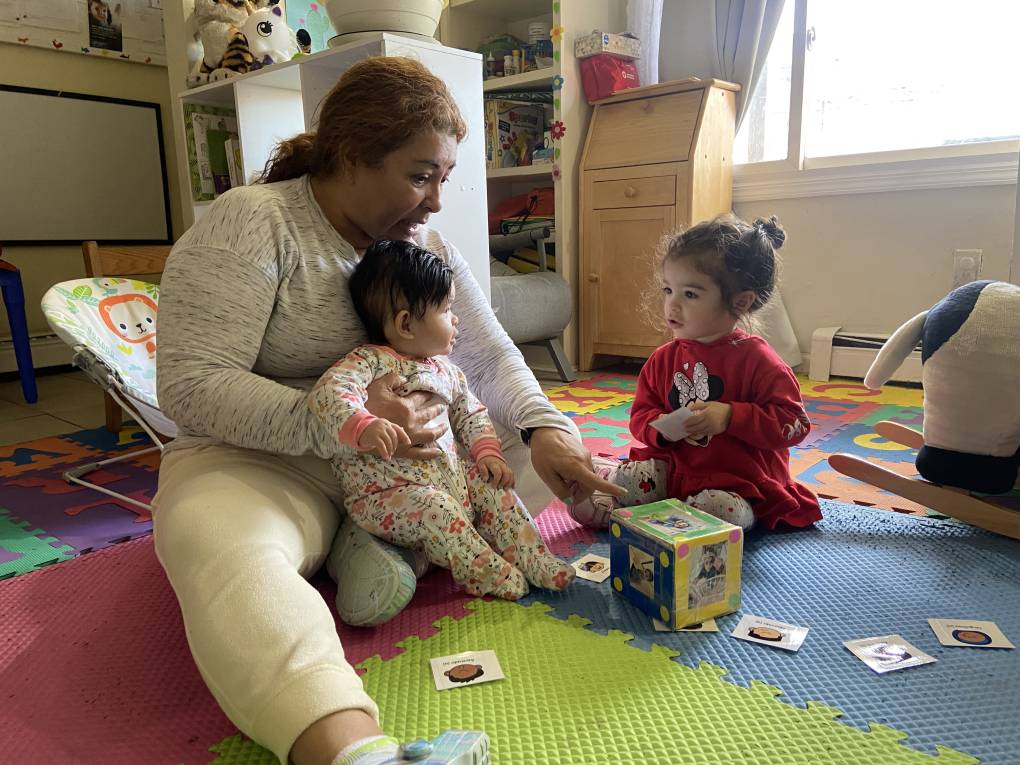
"caption": "Mader SEL 13: Julia Zamora talks about emotions and feelings with two children in her child care program. Zamora did not have training in SEL before she opened her child care program and said training from the nonprofit All Our Kin has been beneficial in helping her better support children in her care.",
"description": null,
"title": "Mader SEL13",
"credit": "Image provided by Julia Zamora",
"status": "inherit",
"altTag": null,
"isLoading": false,
"fetchFailed": false
},
"mindshift_59945": {
"type": "attachments",
"id": "mindshift_59945",
"meta": {
"index": "attachments_1716263798",
"site": "mindshift",
"id": "59945",
"found": true
},
"parent": 59944,
"imgSizes": {
"twentyfourteen-full-width": {
"file": "https://ww2.kqed.org/app/uploads/sites/23/2022/09/lengleman-sel_revised2_custom-fe8885ea967becbd4f16499786f0f5a17fde7f1a-1038x576.jpg",
"width": 1038,
"mimeType": "image/jpeg",
"height": 576
},
"thumbnail": {
"file": "https://ww2.kqed.org/app/uploads/sites/23/2022/09/lengleman-sel_revised2_custom-fe8885ea967becbd4f16499786f0f5a17fde7f1a-160x100.jpg",
"width": 160,
"mimeType": "image/jpeg",
"height": 100
},
"post-thumbnail": {
"file": "https://ww2.kqed.org/app/uploads/sites/23/2022/09/lengleman-sel_revised2_custom-fe8885ea967becbd4f16499786f0f5a17fde7f1a-672x372.jpg",
"width": 672,
"mimeType": "image/jpeg",
"height": 372
},
"kqedFullSize": {
"file": "https://ww2.kqed.org/app/uploads/sites/23/2022/09/lengleman-sel_revised2_custom-fe8885ea967becbd4f16499786f0f5a17fde7f1a-scaled-e1664520430727.jpg",
"width": 1920,
"height": 1199
},
"2048x2048": {
"file": "https://ww2.kqed.org/app/uploads/sites/23/2022/09/lengleman-sel_revised2_custom-fe8885ea967becbd4f16499786f0f5a17fde7f1a-2048x1278.jpg",
"width": 2048,
"mimeType": "image/jpeg",
"height": 1278
},
"large": {
"file": "https://ww2.kqed.org/app/uploads/sites/23/2022/09/lengleman-sel_revised2_custom-fe8885ea967becbd4f16499786f0f5a17fde7f1a-1020x637.jpg",
"width": 1020,
"mimeType": "image/jpeg",
"height": 637
},
"1536x1536": {
"file": "https://ww2.kqed.org/app/uploads/sites/23/2022/09/lengleman-sel_revised2_custom-fe8885ea967becbd4f16499786f0f5a17fde7f1a-1536x959.jpg",
"width": 1536,
"mimeType": "image/jpeg",
"height": 959
},
"full-width": {
"file": "https://ww2.kqed.org/app/uploads/sites/23/2022/09/lengleman-sel_revised2_custom-fe8885ea967becbd4f16499786f0f5a17fde7f1a-1920x1198.jpg",
"width": 1920,
"mimeType": "image/jpeg",
"height": 1198
},
"medium": {
"file": "https://ww2.kqed.org/app/uploads/sites/23/2022/09/lengleman-sel_revised2_custom-fe8885ea967becbd4f16499786f0f5a17fde7f1a-800x499.jpg",
"width": 800,
"mimeType": "image/jpeg",
"height": 499
},
"medium_large": {
"file": "https://ww2.kqed.org/app/uploads/sites/23/2022/09/lengleman-sel_revised2_custom-fe8885ea967becbd4f16499786f0f5a17fde7f1a-768x479.jpg",
"width": 768,
"mimeType": "image/jpeg",
"height": 479
}
},
"publishDate": 1664520399,
"modified": 1664520496,
"caption": null,
"description": null,
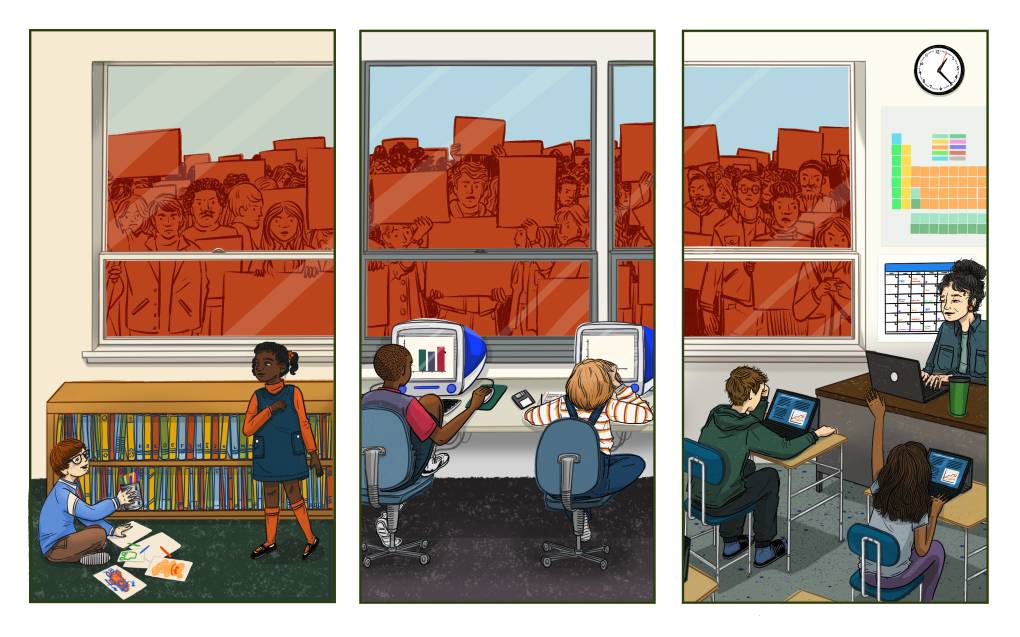
"title": "Classrooms through the decades.",
"credit": "Lucy Engleman for NPR",
"status": "inherit",
"altTag": "Illustration of classrooms through the decades.",
"isLoading": false,
"fetchFailed": false
},
"mindshift_59765": {
"type": "attachments",
"id": "mindshift_59765",
"meta": {
"index": "attachments_1716263798",
"site": "mindshift",
"id": "59765",
"found": true
},
"parent": 59757,
"imgSizes": {
"twentyfourteen-full-width": {
"file": "https://ww2.kqed.org/app/uploads/sites/23/2022/08/RJ-image-1038x576.jpg",
"width": 1038,
"mimeType": "image/jpeg",
"height": 576
},
"thumbnail": {
"file": "https://ww2.kqed.org/app/uploads/sites/23/2022/08/RJ-image-160x90.jpg",
"width": 160,
"mimeType": "image/jpeg",
"height": 90
},
"post-thumbnail": {
"file": "https://ww2.kqed.org/app/uploads/sites/23/2022/08/RJ-image-672x372.jpg",
"width": 672,
"mimeType": "image/jpeg",
"height": 372
},
"kqedFullSize": {
"file": "https://ww2.kqed.org/app/uploads/sites/23/2022/08/RJ-image-scaled.jpg",
"width": 2560,
"height": 1437
},
"2048x2048": {
"file": "https://ww2.kqed.org/app/uploads/sites/23/2022/08/RJ-image-2048x1150.jpg",
"width": 2048,
"mimeType": "image/jpeg",
"height": 1150
},
"large": {
"file": "https://ww2.kqed.org/app/uploads/sites/23/2022/08/RJ-image-1020x573.jpg",
"width": 1020,
"mimeType": "image/jpeg",
"height": 573
},
"1536x1536": {
"file": "https://ww2.kqed.org/app/uploads/sites/23/2022/08/RJ-image-1536x862.jpg",
"width": 1536,
"mimeType": "image/jpeg",
"height": 862
},
"full-width": {
"file": "https://ww2.kqed.org/app/uploads/sites/23/2022/08/RJ-image-1920x1078.jpg",
"width": 1920,
"mimeType": "image/jpeg",
"height": 1078
},
"medium": {
"file": "https://ww2.kqed.org/app/uploads/sites/23/2022/08/RJ-image-800x449.jpg",
"width": 800,
"mimeType": "image/jpeg",
"height": 449
},
"medium_large": {
"file": "https://ww2.kqed.org/app/uploads/sites/23/2022/08/RJ-image-768x431.jpg",
"width": 768,
"mimeType": "image/jpeg",
"height": 431
}
},
"publishDate": 1661371967,
"modified": 1661800790,
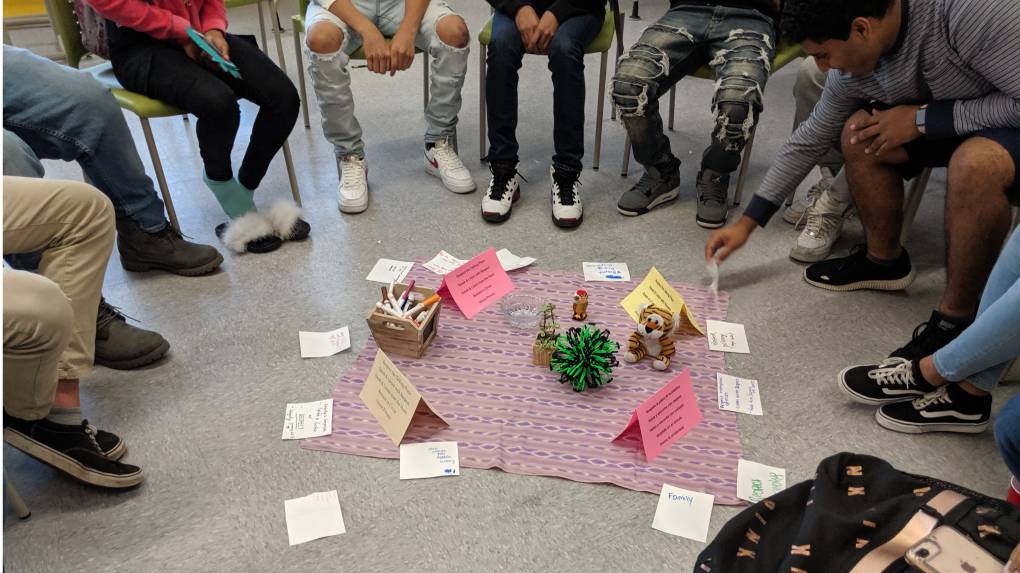
"caption": "Students in Tatiana Chaterji's class gather in a restorative justice circle around a centerpiece with community agreements (Courtesy of Tatiana Chaterji)",
"description": null,
"title": "RJ image",
"credit": null,
"status": "inherit",
"altTag": null,
"isLoading": false,
"fetchFailed": false
},
"mindshift_59751": {
"type": "attachments",
"id": "mindshift_59751",
"meta": {
"index": "attachments_1716263798",
"site": "mindshift",
"id": "59751",
"found": true
},
"parent": 59748,
"imgSizes": {
"twentyfourteen-full-width": {
"file": "https://ww2.kqed.org/app/uploads/sites/23/2022/08/iStock-1308886846-1038x576.jpg",
"width": 1038,
"mimeType": "image/jpeg",
"height": 576
},
"thumbnail": {
"file": "https://ww2.kqed.org/app/uploads/sites/23/2022/08/iStock-1308886846-160x107.jpg",
"width": 160,
"mimeType": "image/jpeg",
"height": 107
},
"post-thumbnail": {
"file": "https://ww2.kqed.org/app/uploads/sites/23/2022/08/iStock-1308886846-672x372.jpg",
"width": 672,
"mimeType": "image/jpeg",
"height": 372
},
"kqedFullSize": {
"file": "https://ww2.kqed.org/app/uploads/sites/23/2022/08/iStock-1308886846.jpg",
"width": 2121,
"height": 1414
},
"2048x2048": {
"file": "https://ww2.kqed.org/app/uploads/sites/23/2022/08/iStock-1308886846-2048x1365.jpg",
"width": 2048,
"mimeType": "image/jpeg",
"height": 1365
},
"large": {
"file": "https://ww2.kqed.org/app/uploads/sites/23/2022/08/iStock-1308886846-1020x680.jpg",
"width": 1020,
"mimeType": "image/jpeg",
"height": 680
},
"1536x1536": {
"file": "https://ww2.kqed.org/app/uploads/sites/23/2022/08/iStock-1308886846-1536x1024.jpg",
"width": 1536,
"mimeType": "image/jpeg",
"height": 1024
},
"full-width": {
"file": "https://ww2.kqed.org/app/uploads/sites/23/2022/08/iStock-1308886846-1920x1280.jpg",
"width": 1920,
"mimeType": "image/jpeg",
"height": 1280
},
"medium": {
"file": "https://ww2.kqed.org/app/uploads/sites/23/2022/08/iStock-1308886846-800x533.jpg",
"width": 800,
"mimeType": "image/jpeg",
"height": 533
},
"medium_large": {
"file": "https://ww2.kqed.org/app/uploads/sites/23/2022/08/iStock-1308886846-768x512.jpg",
"width": 768,
"mimeType": "image/jpeg",
"height": 512
}
},
"publishDate": 1661239689,
"modified": 1661239727,
"caption": null,
"description": null,
"title": null,
"credit": "Ponomariova_Maria/iStock",
"status": "inherit",
"altTag": "Art of two people coming together",
"isLoading": false,
"fetchFailed": false
},
"mindshift_59511": {
"type": "attachments",
"id": "mindshift_59511",
"meta": {
"index": "attachments_1716263798",
"site": "mindshift",
"id": "59511",
"found": true
},
"parent": 59510,
"imgSizes": {
"twentyfourteen-full-width": {
"file": "https://ww2.kqed.org/app/uploads/sites/23/2022/06/ap21155807680754-92c0a196f1217d138b1008a1f3afd07be709f48b-1038x576.jpg",
"width": 1038,
"mimeType": "image/jpeg",
"height": 576
},
"thumbnail": {
"file": "https://ww2.kqed.org/app/uploads/sites/23/2022/06/ap21155807680754-92c0a196f1217d138b1008a1f3afd07be709f48b-160x120.jpg",
"width": 160,
"mimeType": "image/jpeg",
"height": 120
},
"post-thumbnail": {
"file": "https://ww2.kqed.org/app/uploads/sites/23/2022/06/ap21155807680754-92c0a196f1217d138b1008a1f3afd07be709f48b-672x372.jpg",
"width": 672,
"mimeType": "image/jpeg",
"height": 372
},
"kqedFullSize": {
"file": "https://ww2.kqed.org/app/uploads/sites/23/2022/06/ap21155807680754-92c0a196f1217d138b1008a1f3afd07be709f48b-scaled-e1656087604122.jpg",
"width": 1920,
"height": 1440
},
"2048x2048": {
"file": "https://ww2.kqed.org/app/uploads/sites/23/2022/06/ap21155807680754-92c0a196f1217d138b1008a1f3afd07be709f48b-2048x1536.jpg",
"width": 2048,
"mimeType": "image/jpeg",
"height": 1536
},
"large": {
"file": "https://ww2.kqed.org/app/uploads/sites/23/2022/06/ap21155807680754-92c0a196f1217d138b1008a1f3afd07be709f48b-1020x765.jpg",
"width": 1020,
"mimeType": "image/jpeg",
"height": 765
},
"1536x1536": {
"file": "https://ww2.kqed.org/app/uploads/sites/23/2022/06/ap21155807680754-92c0a196f1217d138b1008a1f3afd07be709f48b-1536x1152.jpg",
"width": 1536,
"mimeType": "image/jpeg",
"height": 1152
},
"full-width": {
"file": "https://ww2.kqed.org/app/uploads/sites/23/2022/06/ap21155807680754-92c0a196f1217d138b1008a1f3afd07be709f48b-1920x1440.jpg",
"width": 1920,
"mimeType": "image/jpeg",
"height": 1440
},
"medium": {
"file": "https://ww2.kqed.org/app/uploads/sites/23/2022/06/ap21155807680754-92c0a196f1217d138b1008a1f3afd07be709f48b-800x600.jpg",
"width": 800,
"mimeType": "image/jpeg",
"height": 600
},
"medium_large": {
"file": "https://ww2.kqed.org/app/uploads/sites/23/2022/06/ap21155807680754-92c0a196f1217d138b1008a1f3afd07be709f48b-768x576.jpg",
"width": 768,
"mimeType": "image/jpeg",
"height": 576
}
},
"publishDate": 1656087512,
"modified": 1656087637,
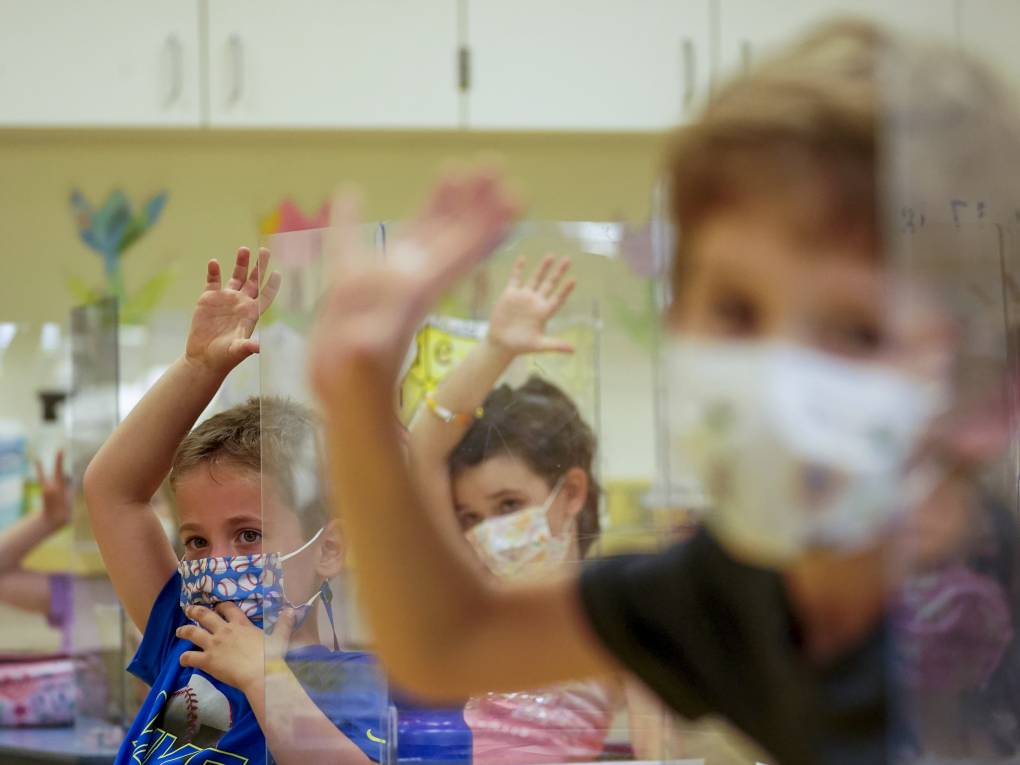
"caption": "After a rough couple of years, teachers are feeling the pressure.\n",
"description": "FILE - This Tuesday May 18, 2021 file photo shows kindergarten students wearing face masks and separated by plexiglass during a math lesson at the Milton Elementary School in Rye, N.Y. New York plans to make mask-wearing optional in K-12 schools starting Monday, June 7, 2021 the state's health commissioner said in a letter to federal health regulators Friday. (AP Photo/Mary Altaffer, File)",
"title": "After a rough couple of years, teachers are feeling the pressure.",
"credit": "Mary Altaffer/AP",
"status": "inherit",
"altTag": "Students raising hand in classroom",
"isLoading": false,
"fetchFailed": false
},
"mindshift_59480": {
"type": "attachments",
"id": "mindshift_59480",
"meta": {
"index": "attachments_1716263798",
"site": "mindshift",
"id": "59480",
"found": true
},
"parent": 59477,
"imgSizes": {
"twentyfourteen-full-width": {
"file": "https://ww2.kqed.org/app/uploads/sites/23/2022/06/Alan-Petersime-for-Chalkbeat-1038x576.jpeg",
"width": 1038,
"mimeType": "image/jpeg",
"height": 576
},
"thumbnail": {
"file": "https://ww2.kqed.org/app/uploads/sites/23/2022/06/Alan-Petersime-for-Chalkbeat-160x91.jpeg",
"width": 160,
"mimeType": "image/jpeg",
"height": 91
},
"post-thumbnail": {
"file": "https://ww2.kqed.org/app/uploads/sites/23/2022/06/Alan-Petersime-for-Chalkbeat-672x372.jpeg",
"width": 672,
"mimeType": "image/jpeg",
"height": 372
},
"kqedFullSize": {
"file": "https://ww2.kqed.org/app/uploads/sites/23/2022/06/Alan-Petersime-for-Chalkbeat.jpeg",
"width": 1461,
"height": 834
},
"large": {
"file": "https://ww2.kqed.org/app/uploads/sites/23/2022/06/Alan-Petersime-for-Chalkbeat-1020x582.jpeg",
"width": 1020,
"mimeType": "image/jpeg",
"height": 582
},
"medium": {
"file": "https://ww2.kqed.org/app/uploads/sites/23/2022/06/Alan-Petersime-for-Chalkbeat-800x457.jpeg",
"width": 800,
"mimeType": "image/jpeg",
"height": 457
},
"medium_large": {
"file": "https://ww2.kqed.org/app/uploads/sites/23/2022/06/Alan-Petersime-for-Chalkbeat-768x438.jpeg",
"width": 768,
"mimeType": "image/jpeg",
"height": 438
}
},
"publishDate": 1655276476,
"modified": 1655276499,
"caption": "A growing number of educators are embracing a practice known as cogenerative dialogues, convening small groups of students to get their feedback and give them bigger say in shaping their learning. ",
"description": null,
"title": "Alan Petersime for Chalkbeat",
"credit": "Alan Petersime for Chalkbeat",
"status": "inherit",
"altTag": null,
"isLoading": false,
"fetchFailed": false
},
"mindshift_59326": {
"type": "attachments",
"id": "mindshift_59326",
"meta": {
"index": "attachments_1716263798",
"site": "mindshift",
"id": "59326",
"found": true
},
"parent": 59323,
"imgSizes": {
"twentyfourteen-full-width": {
"file": "https://ww2.kqed.org/app/uploads/sites/23/2022/04/iStock-1340065960-1038x576.jpg",
"width": 1038,
"mimeType": "image/jpeg",
"height": 576
},
"thumbnail": {
"file": "https://ww2.kqed.org/app/uploads/sites/23/2022/04/iStock-1340065960-160x128.jpg",
"width": 160,
"mimeType": "image/jpeg",
"height": 128
},
"post-thumbnail": {
"file": "https://ww2.kqed.org/app/uploads/sites/23/2022/04/iStock-1340065960-672x372.jpg",
"width": 672,
"mimeType": "image/jpeg",
"height": 372
},
"kqedFullSize": {
"file": "https://ww2.kqed.org/app/uploads/sites/23/2022/04/iStock-1340065960.jpg",
"width": 1934,
"height": 1550
},
"large": {
"file": "https://ww2.kqed.org/app/uploads/sites/23/2022/04/iStock-1340065960-1020x817.jpg",
"width": 1020,
"mimeType": "image/jpeg",
"height": 817
},
"1536x1536": {
"file": "https://ww2.kqed.org/app/uploads/sites/23/2022/04/iStock-1340065960-1536x1231.jpg",
"width": 1536,
"mimeType": "image/jpeg",
"height": 1231
},
"full-width": {
"file": "https://ww2.kqed.org/app/uploads/sites/23/2022/04/iStock-1340065960-1920x1539.jpg",
"width": 1920,
"mimeType": "image/jpeg",
"height": 1539
},
"medium": {
"file": "https://ww2.kqed.org/app/uploads/sites/23/2022/04/iStock-1340065960-800x641.jpg",
"width": 800,
"mimeType": "image/jpeg",
"height": 641
},
"medium_large": {
"file": "https://ww2.kqed.org/app/uploads/sites/23/2022/04/iStock-1340065960-768x616.jpg",
"width": 768,
"mimeType": "image/jpeg",
"height": 616
}
},
"publishDate": 1650958360,
"modified": 1650958385,
"caption": null,
"description": null,
"title": "Professional worker sitting in front of her computer and feeling upset. Young woman addicted to internet and have a headache. Vector illustration.",
"credit": "salim hanzaz/iStock",
"status": "inherit",
"altTag": "Professional worker sitting in front of her computer and feeling upset. Young woman addicted to internet and have a headache.",
"isLoading": false,
"fetchFailed": false
},
"mindshift_59268": {
"type": "attachments",
"id": "mindshift_59268",
"meta": {
"index": "attachments_1716263798",
"site": "mindshift",
"id": "59268",
"found": true
},
"parent": 59266,
"imgSizes": {
"twentyfourteen-full-width": {
"file": "https://ww2.kqed.org/app/uploads/sites/23/2022/04/5176473913_7f1f3ec5b7_k-1038x576.jpg",
"width": 1038,
"mimeType": "image/jpeg",
"height": 576
},
"thumbnail": {
"file": "https://ww2.kqed.org/app/uploads/sites/23/2022/04/5176473913_7f1f3ec5b7_k-160x106.jpg",
"width": 160,
"mimeType": "image/jpeg",
"height": 106
},
"post-thumbnail": {
"file": "https://ww2.kqed.org/app/uploads/sites/23/2022/04/5176473913_7f1f3ec5b7_k-672x372.jpg",
"width": 672,
"mimeType": "image/jpeg",
"height": 372
},
"kqedFullSize": {
"file": "https://ww2.kqed.org/app/uploads/sites/23/2022/04/5176473913_7f1f3ec5b7_k-e1649314941528.jpg",
"width": 1920,
"height": 1276
},
"large": {
"file": "https://ww2.kqed.org/app/uploads/sites/23/2022/04/5176473913_7f1f3ec5b7_k-1020x678.jpg",
"width": 1020,
"mimeType": "image/jpeg",
"height": 678
},
"1536x1536": {
"file": "https://ww2.kqed.org/app/uploads/sites/23/2022/04/5176473913_7f1f3ec5b7_k-1536x1020.jpg",
"width": 1536,
"mimeType": "image/jpeg",
"height": 1020
},
"full-width": {
"file": "https://ww2.kqed.org/app/uploads/sites/23/2022/04/5176473913_7f1f3ec5b7_k-1920x1276.jpg",
"width": 1920,
"mimeType": "image/jpeg",
"height": 1276
},
"medium": {
"file": "https://ww2.kqed.org/app/uploads/sites/23/2022/04/5176473913_7f1f3ec5b7_k-800x532.jpg",
"width": 800,
"mimeType": "image/jpeg",
"height": 532
},
"medium_large": {
"file": "https://ww2.kqed.org/app/uploads/sites/23/2022/04/5176473913_7f1f3ec5b7_k-768x510.jpg",
"width": 768,
"mimeType": "image/jpeg",
"height": 510
}
},
"publishDate": 1649314830,
"modified": 1649314961,
"caption": null,
"description": null,
"title": "5176473913_7f1f3ec5b7_k",
"credit": "\u003ca href=\"https://www.flickr.com/photos/pmillera4/5176473913/in/photolist-8TqMme-79AW3W-zCTrfG-oVg7z3-pRSPtF-7a4Ysd-7a4Vnf-7a4Y4o-MbXkLh-nanZHg-pRSPuc-oVg7zo-pSbN6L-aEtfoW-7a4XHu-3KSRHW-7a5cKh-7a4Wn5-7a17fp-7a14tM-7a13TK-dgQWF8-pzFqTz-7a4W2L-dovPpG-dovADp-gBnyBW-pzHuJu-pSbN5d-cce5JE-7a4VFQ-gBn48s-NAmE3M-pF3atn-yEovBA-71AYPm-pzFr5M-dovMJ7-dovuAM-7fZ4Ng-dowadX-ayNkcA-doweea-rbvvHG-aEtGiY-dow7uq-gBo1xy-PXrFvU-6aEtxy-8PFqdV\">Peter Miller/Flickr\u003c/a>",
"status": "inherit",
"altTag": "Leaves in the midst of changing color during the fall.",
"isLoading": false,
"fetchFailed": false
},
"mindshift_58795": {
"type": "attachments",
"id": "mindshift_58795",
"meta": {
"index": "attachments_1716263798",
"site": "mindshift",
"id": "58795",
"found": true
},
"parent": 58790,
"imgSizes": {
"twentyfourteen-full-width": {
"file": "https://ww2.kqed.org/app/uploads/sites/23/2021/11/iStock-938379438-1038x576.jpg",
"width": 1038,
"mimeType": "image/jpeg",
"height": 576
},
"thumbnail": {
"file": "https://ww2.kqed.org/app/uploads/sites/23/2021/11/iStock-938379438-160x107.jpg",
"width": 160,
"mimeType": "image/jpeg",
"height": 107
},
"post-thumbnail": {
"file": "https://ww2.kqed.org/app/uploads/sites/23/2021/11/iStock-938379438-672x372.jpg",
"width": 672,
"mimeType": "image/jpeg",
"height": 372
},
"kqedFullSize": {
"file": "https://ww2.kqed.org/app/uploads/sites/23/2021/11/iStock-938379438-e1638294576720.jpg",
"width": 1920,
"height": 1282
},
"2048x2048": {
"file": "https://ww2.kqed.org/app/uploads/sites/23/2021/11/iStock-938379438-2048x1367.jpg",
"width": 2048,
"mimeType": "image/jpeg",
"height": 1367
},
"large": {
"file": "https://ww2.kqed.org/app/uploads/sites/23/2021/11/iStock-938379438-1020x681.jpg",
"width": 1020,
"mimeType": "image/jpeg",
"height": 681
},
"1536x1536": {
"file": "https://ww2.kqed.org/app/uploads/sites/23/2021/11/iStock-938379438-1536x1025.jpg",
"width": 1536,
"mimeType": "image/jpeg",
"height": 1025
},
"full-width": {
"file": "https://ww2.kqed.org/app/uploads/sites/23/2021/11/iStock-938379438-1920x1282.jpg",
"width": 1920,
"mimeType": "image/jpeg",
"height": 1282
},
"medium": {
"file": "https://ww2.kqed.org/app/uploads/sites/23/2021/11/iStock-938379438-800x534.jpg",
"width": 800,
"mimeType": "image/jpeg",
"height": 534
},
"medium_large": {
"file": "https://ww2.kqed.org/app/uploads/sites/23/2021/11/iStock-938379438-768x513.jpg",
"width": 768,
"mimeType": "image/jpeg",
"height": 513
}
},
"publishDate": 1638294557,
"modified": 1638294591,
"caption": null,
"description": null,
"title": "iStock-938379438",
"credit": "Hakase_/iStock",
"status": "inherit",
"altTag": null,
"isLoading": false,
"fetchFailed": false
},
"mindshift_59010": {
"type": "attachments",
"id": "mindshift_59010",
"meta": {
"index": "attachments_1716263798",
"site": "mindshift",
"id": "59010",
"found": true
},
"parent": 59008,
"imgSizes": {
"twentyfourteen-full-width": {
"file": "https://ww2.kqed.org/app/uploads/sites/23/2022/01/healing-in-schools-1038x576.jpg",
"width": 1038,
"mimeType": "image/jpeg",
"height": 576
},
"thumbnail": {
"file": "https://ww2.kqed.org/app/uploads/sites/23/2022/01/healing-in-schools-160x139.jpg",
"width": 160,
"mimeType": "image/jpeg",
"height": 139
},
"post-thumbnail": {
"file": "https://ww2.kqed.org/app/uploads/sites/23/2022/01/healing-in-schools-672x372.jpg",
"width": 672,
"mimeType": "image/jpeg",
"height": 372
},
"kqedFullSize": {
"file": "https://ww2.kqed.org/app/uploads/sites/23/2022/01/healing-in-schools.jpg",
"width": 1920,
"height": 1673
},
"large": {
"file": "https://ww2.kqed.org/app/uploads/sites/23/2022/01/healing-in-schools-1020x889.jpg",
"width": 1020,
"mimeType": "image/jpeg",
"height": 889
},
"1536x1536": {
"file": "https://ww2.kqed.org/app/uploads/sites/23/2022/01/healing-in-schools-1536x1338.jpg",
"width": 1536,
"mimeType": "image/jpeg",
"height": 1338
},
"medium": {
"file": "https://ww2.kqed.org/app/uploads/sites/23/2022/01/healing-in-schools-800x697.jpg",
"width": 800,
"mimeType": "image/jpeg",
"height": 697
},
"medium_large": {
"file": "https://ww2.kqed.org/app/uploads/sites/23/2022/01/healing-in-schools-768x669.jpg",
"width": 768,
"mimeType": "image/jpeg",
"height": 669
}
},
"publishDate": 1643656103,
"modified": 1643656152,
"caption": null,
"description": null,
"title": "Empathy - Empathetic Design - Illustration",
"credit": "Shivendu Jauhari/ iStock",
"status": "inherit",
"altTag": null,
"isLoading": false,
"fetchFailed": false
},
"mindshift_58820": {
"type": "attachments",
"id": "mindshift_58820",
"meta": {
"index": "attachments_1716263798",
"site": "mindshift",
"id": "58820",
"found": true
},
"parent": 58817,
"imgSizes": {
"twentyfourteen-full-width": {
"file": "https://ww2.kqed.org/app/uploads/sites/23/2021/12/Inclusive-conversations-with-students-1038x576.jpg",
"width": 1038,
"mimeType": "image/jpeg",
"height": 576
},
"thumbnail": {
"file": "https://ww2.kqed.org/app/uploads/sites/23/2021/12/Inclusive-conversations-with-students-160x107.jpg",
"width": 160,
"mimeType": "image/jpeg",
"height": 107
},
"post-thumbnail": {
"file": "https://ww2.kqed.org/app/uploads/sites/23/2021/12/Inclusive-conversations-with-students-672x372.jpg",
"width": 672,
"mimeType": "image/jpeg",
"height": 372
},
"kqedFullSize": {
"file": "https://ww2.kqed.org/app/uploads/sites/23/2021/12/Inclusive-conversations-with-students-e1642063129217.jpg",
"width": 1920,
"height": 1280
},
"2048x2048": {
"file": "https://ww2.kqed.org/app/uploads/sites/23/2021/12/Inclusive-conversations-with-students-2048x1365.jpg",
"width": 2048,
"mimeType": "image/jpeg",
"height": 1365
},
"large": {
"file": "https://ww2.kqed.org/app/uploads/sites/23/2021/12/Inclusive-conversations-with-students-1020x680.jpg",
"width": 1020,
"mimeType": "image/jpeg",
"height": 680
},
"1536x1536": {
"file": "https://ww2.kqed.org/app/uploads/sites/23/2021/12/Inclusive-conversations-with-students-1536x1024.jpg",
"width": 1536,
"mimeType": "image/jpeg",
"height": 1024
},
"full-width": {
"file": "https://ww2.kqed.org/app/uploads/sites/23/2021/12/Inclusive-conversations-with-students-1920x1280.jpg",
"width": 1920,
"mimeType": "image/jpeg",
"height": 1280
},
"medium": {
"file": "https://ww2.kqed.org/app/uploads/sites/23/2021/12/Inclusive-conversations-with-students-800x533.jpg",
"width": 800,
"mimeType": "image/jpeg",
"height": 533
},
"medium_large": {
"file": "https://ww2.kqed.org/app/uploads/sites/23/2021/12/Inclusive-conversations-with-students-768x512.jpg",
"width": 768,
"mimeType": "image/jpeg",
"height": 512
}
},
"publishDate": 1638997782,
"modified": 1642063161,
"caption": null,
"description": null,
"title": null,
"credit": "iStock/ Tetiana Garkusha",
"status": "inherit",
"altTag": "Outline of young people talking",
"isLoading": false,
"fetchFailed": false
},
"mindshift_58864": {
"type": "attachments",
"id": "mindshift_58864",
"meta": {
"index": "attachments_1716263798",
"site": "mindshift",
"id": "58864",
"found": true
},
"parent": 58862,
"imgSizes": {
"twentyfourteen-full-width": {
"file": "https://ww2.kqed.org/app/uploads/sites/23/2021/12/ap21352667848597-41b1bfbe356d341fde2252b8b1928de48b06cb36-1038x576.jpg",
"width": 1038,
"mimeType": "image/jpeg",
"height": 576
},
"thumbnail": {
"file": "https://ww2.kqed.org/app/uploads/sites/23/2021/12/ap21352667848597-41b1bfbe356d341fde2252b8b1928de48b06cb36-160x120.jpg",
"width": 160,
"mimeType": "image/jpeg",
"height": 120
},
"post-thumbnail": {
"file": "https://ww2.kqed.org/app/uploads/sites/23/2021/12/ap21352667848597-41b1bfbe356d341fde2252b8b1928de48b06cb36-672x372.jpg",
"width": 672,
"mimeType": "image/jpeg",
"height": 372
},
"kqedFullSize": {
"file": "https://ww2.kqed.org/app/uploads/sites/23/2021/12/ap21352667848597-41b1bfbe356d341fde2252b8b1928de48b06cb36-scaled-e1640076624406.jpg",
"width": 1920,
"height": 1440
},
"2048x2048": {
"file": "https://ww2.kqed.org/app/uploads/sites/23/2021/12/ap21352667848597-41b1bfbe356d341fde2252b8b1928de48b06cb36-2048x1536.jpg",
"width": 2048,
"mimeType": "image/jpeg",
"height": 1536
},
"large": {
"file": "https://ww2.kqed.org/app/uploads/sites/23/2021/12/ap21352667848597-41b1bfbe356d341fde2252b8b1928de48b06cb36-1020x765.jpg",
"width": 1020,
"mimeType": "image/jpeg",
"height": 765
},
"1536x1536": {
"file": "https://ww2.kqed.org/app/uploads/sites/23/2021/12/ap21352667848597-41b1bfbe356d341fde2252b8b1928de48b06cb36-1536x1152.jpg",
"width": 1536,
"mimeType": "image/jpeg",
"height": 1152
},
"full-width": {
"file": "https://ww2.kqed.org/app/uploads/sites/23/2021/12/ap21352667848597-41b1bfbe356d341fde2252b8b1928de48b06cb36-1920x1440.jpg",
"width": 1920,
"mimeType": "image/jpeg",
"height": 1440
},
"medium": {
"file": "https://ww2.kqed.org/app/uploads/sites/23/2021/12/ap21352667848597-41b1bfbe356d341fde2252b8b1928de48b06cb36-800x600.jpg",
"width": 800,
"mimeType": "image/jpeg",
"height": 600
},
"medium_large": {
"file": "https://ww2.kqed.org/app/uploads/sites/23/2021/12/ap21352667848597-41b1bfbe356d341fde2252b8b1928de48b06cb36-768x576.jpg",
"width": 768,
"mimeType": "image/jpeg",
"height": 576
}
},
"publishDate": 1640076327,
"modified": 1640076663,
"caption": "Trixie, a comfort dog, waits to greet students at the early elementary wing of the Paw Paw Elementary School in Paw Paw, Mich. Staff members, from teachers to kitchen staff and bus drivers, have received training in social-emotional support to help students, more of whom have struggled in the pandemic.\n",
"description": null,
"title": null,
"credit": "Martha Irvine/AP",
"status": "inherit",
"altTag": "Trixie, a comfort dog, waits to greet students at the early elementary wing of the Paw Paw Elementary School.",
"isLoading": false,
"fetchFailed": false
}
},
"audioPlayerReducer": {
"postId": "stream_live",
"isPaused": true,
"isPlaying": false,
"pfsActive": false,
"pledgeModalIsOpen": true,
"playerDrawerIsOpen": false,
"liveAudioPlayStartedAt": 0,
"liveAudioPlayContext": ""
},
"authorsReducer": {
"byline_mindshift_61233": {
"type": "authors",
"id": "byline_mindshift_61233",
"meta": {
"override": true
},
"slug": "byline_mindshift_61233",
"name": "Jackie Mader, \u003ca href=\"https://hechingerreport.org/\" target=\"_blank\">The Hechinger Report\u003c/a>",
"isLoading": false
},
"byline_mindshift_59944": {
"type": "authors",
"id": "byline_mindshift_59944",
"meta": {
"override": true
},
"slug": "byline_mindshift_59944",
"name": "Meg Anderson",
"isLoading": false
},
"byline_mindshift_59748": {
"type": "authors",
"id": "byline_mindshift_59748",
"meta": {
"override": true
},
"slug": "byline_mindshift_59748",
"name": "Jill Barshay, \u003ca href=\"https://hechingerreport.org/\">The Hechinger Report\u003c/a>",
"isLoading": false
},
"byline_mindshift_59510": {
"type": "authors",
"id": "byline_mindshift_59510",
"meta": {
"override": true
},
"slug": "byline_mindshift_59510",
"name": "Manuela López Restrepo and Ailsa Chang",
"isLoading": false
},
"byline_mindshift_59477": {
"type": "authors",
"id": "byline_mindshift_59477",
"meta": {
"override": true
},
"slug": "byline_mindshift_59477",
"name": "Amy Zimmer, \u003ca href=\"https://ny.chalkbeat.org/2022/6/14/23158781/social-emotional-learning-cogenerative-dialogues-christopher-emdin-nyc-schools\">Chalkbeat New York\u003c/a>",
"isLoading": false
},
"byline_mindshift_58862": {
"type": "authors",
"id": "byline_mindshift_58862",
"meta": {
"override": true
},
"slug": "byline_mindshift_58862",
"name": "Lindsey Tanner, The Associated Press",
"isLoading": false
},
"dfkris": {
"type": "authors",
"id": "11087",
"meta": {
"index": "authors_1716337520",
"id": "11087",
"found": true
},
"name": "Deborah Farmer Kris",
"firstName": "Deborah Farmer",
"lastName": "Kris",
"slug": "dfkris",
"email": "dfkris@gmail.com",
"display_author_email": false,
"staff_mastheads": [],
"title": null,
"bio": "\u003cem>\u003ca href=\"https://twitter.com/@dfkris\">Deborah Farmer Kris\u003c/a> has taught elementary, middle and high school and served as a charter school administrator. She spent a decade as an associate at Boston University’s \u003c/em>\u003cem>\u003ca href=\"http://www.bu.edu/ccsr/about-us/\">Center for Character and Social Responsibility\u003c/a>, \u003c/em>\u003cem>researching, writing, and consulting with schools. She is the mother of two young children. You can follower her on Twitter \u003ca href=\"https://twitter.com/@dfkris\">@dfkris\u003c/a>.\u003c/em>",
"avatar": "https://secure.gravatar.com/avatar/48efe6f17031ed31222b74af9605fe5a?s=600&d=blank&r=g",
"twitter": "dfkris",
"facebook": null,
"instagram": null,
"linkedin": null,
"sites": [
{
"site": "mindshift",
"roles": [
"author"
]
}
],
"headData": {
"title": "Deborah Farmer Kris | KQED",
"description": null,
"ogImgSrc": "https://secure.gravatar.com/avatar/48efe6f17031ed31222b74af9605fe5a?s=600&d=blank&r=g",
"twImgSrc": "https://secure.gravatar.com/avatar/48efe6f17031ed31222b74af9605fe5a?s=600&d=blank&r=g"
},
"isLoading": false,
"link": "/author/dfkris"
},
"kdnewhouse": {
"type": "authors",
"id": "11487",
"meta": {
"index": "authors_1716337520",
"id": "11487",
"found": true
},
"name": "Kara Newhouse",
"firstName": "Kara",
"lastName": "Newhouse",
"slug": "kdnewhouse",
"email": "knewhouse@kqed.org",
"display_author_email": false,
"staff_mastheads": [],
"title": "MindShift Editor",
"bio": null,
"avatar": "https://secure.gravatar.com/avatar/3dceed6fb271527113abfa9a8e9df34e?s=600&d=blank&r=g",
"twitter": null,
"facebook": null,
"instagram": null,
"linkedin": null,
"sites": [
{
"site": "",
"roles": [
"editor"
]
},
{
"site": "mindshift",
"roles": []
}
],
"headData": {
"title": "Kara Newhouse | KQED",
"description": "MindShift Editor",
"ogImgSrc": "https://secure.gravatar.com/avatar/3dceed6fb271527113abfa9a8e9df34e?s=600&d=blank&r=g",
"twImgSrc": "https://secure.gravatar.com/avatar/3dceed6fb271527113abfa9a8e9df34e?s=600&d=blank&r=g"
},
"isLoading": false,
"link": "/author/kdnewhouse"
},
"ngobir": {
"type": "authors",
"id": "11721",
"meta": {
"index": "authors_1716337520",
"id": "11721",
"found": true
},
"name": "Nimah Gobir",
"firstName": "Nimah",
"lastName": "Gobir",
"slug": "ngobir",
"email": "ngobir@kqed.org",
"display_author_email": false,
"staff_mastheads": [],
"title": "KQED Contributor",
"bio": null,
"avatar": "https://secure.gravatar.com/avatar/837f5df7045c59f3ec097cdf7ac391373ab75d5ec936dd7099b8cb6f0af1b0e9?s=600&d=blank&r=g",
"twitter": null,
"bluesky": null,
"facebook": null,
"instagram": null,
"linkedin": null,
"sites": [
{
"site": "mindshift",
"roles": [
"editor"
]
}
],
"headData": {
"title": "Nimah Gobir | KQED",
"description": "KQED Contributor",
"ogImgSrc": "https://secure.gravatar.com/avatar/837f5df7045c59f3ec097cdf7ac391373ab75d5ec936dd7099b8cb6f0af1b0e9?s=600&d=blank&r=g",
"twImgSrc": "https://secure.gravatar.com/avatar/837f5df7045c59f3ec097cdf7ac391373ab75d5ec936dd7099b8cb6f0af1b0e9?s=600&d=blank&r=g"
},
"isLoading": false,
"link": "/author/ngobir"
}
},
"pagesReducer": {
"mindshift_tag_social-emotional-learning": {
"type": "terms",
"id": "mindshift_943",
"meta": {
"index": "terms_1716263798",
"site": "mindshift",
"id": "943",
"score": 10.40406
},
"featImg": null,
"name": "social emotional learning",
"description": null,
"taxonomy": "tag",
"headData": {
"twImgId": null,
"twTitle": null,
"ogTitle": null,
"ogImgId": null,
"twDescription": null,
"description": null,
"title": "social emotional learning Archives - KQED Mindshift",
"ogDescription": null
},
"ttid": 948,
"slug": "social-emotional-learning",
"isLoading": false,
"title": "social emotional learning",
"pageMeta": {
"site": "mindshift",
"WpPageTemplate": "page-topic-editorial",
"currentPage": 3
},
"blocks": [
{
"blockName": "kqed/post-list",
"attrs": {
"layout": "cardArticle2",
"query": "posts/mindshift?tag=social-emotional-learning",
"seeMore": false,
"paginated": true,
"page": 3
}
},
{
"blockName": "kqed/ad"
}
]
}
},
"pfsSessionReducer": {},
"postsReducer": {
"stream_live": {
"type": "live",
"id": "stream_live",
"audioUrl": "https://streams.kqed.org/kqedradio",
"title": "Live Stream",
"excerpt": "Live Stream information currently unavailable.",
"link": "/radio",
"featImg": "",
"label": {
"name": "KQED Live",
"link": "/"
}
},
"stream_kqedNewscast": {
"type": "posts",
"id": "stream_kqedNewscast",
"audioUrl": "https://www.kqed.org/.stream/anon/radio/RDnews/newscast.mp3?_=1",
"title": "KQED Newscast",
"featImg": "",
"label": {
"name": "88.5 FM",
"link": "/"
}
},
"mindshift_61233": {
"type": "posts",
"id": "mindshift_61233",
"meta": {
"index": "posts_1716263798",
"site": "mindshift",
"id": "61233",
"score": null,
"sort": [
1679392834000
]
},
"parent": 0,
"labelTerm": {
"site": "mindshift"
},
"blocks": [],
"publishDate": 1679392834,
"format": "standard",
"title": "Why cultivating emotional intelligence among toddlers has become more urgent",
"headTitle": "MindShift | KQED News",
"content": "\u003cp>\u003cspan style=\"font-weight: 400\">BOSTON — The six toddlers in the “Bears” classroom at the Ellis Early Learning center were hard at play when, suddenly, a tower of large, brightly-colored plastic blocks crashed to the ground. The children froze as the little boy who had just built the tower burst into tears. \u003c/span>\u003c/p>\n\u003cp>\u003cspan style=\"font-weight: 400\">“Look, he’s sad!” their teacher said gently as she kneeled next to the 2-year-old. “What can we do to make him feel better?”\u003c/span>\u003c/p>\n\u003cp>\u003cspan style=\"font-weight: 400\">One little girl padded over and gently touched his arm. The boy looked up and did what many frustrated, unpredictable toddlers do: He bit her.\u003c/span>\u003c/p>\n\u003cp>\u003cspan style=\"font-weight: 400\">As the little girl erupted in tears, the teacher swooped in calmly and hugged her. “You can say, ‘That hurt!’” she instructed. “You need to be gentle,” she reminded the boy.\u003c/span>\u003c/p>\n\u003cp>\u003cspan style=\"font-weight: 400\">Biting — and the big emotions that cause it — are commonplace in toddler classrooms. And now, thanks to a new initiative at this Boston-based child care program, teachers have a unified strategy both for addressing the problematic behavior and teaching the toddlers to recognize the underlying emotion behind it. \u003c/span>\u003c/p>\n\u003cp>[ad fullwidth]\u003c/p>\n\u003cp>\u003cspan style=\"font-weight: 400\">In previous years, responses to student emotions and conflicts would vary by teacher, often based on training or experiences, said Lauren Cook, chief executive officer at Ellis, which has three locations in the city. \u003c/span>\u003ca href=\"https://www.ellisearlylearning.org/begin-to-ecsel\" target=\"_blank\" rel=\"noopener\">\u003cspan style=\"font-weight: 400\">In late 2022\u003c/span>\u003c/a>\u003cspan style=\"font-weight: 400\">, Ellis adopted a formal social and emotional learning program — SEL for short — for the first time, pairing online training for teachers and classroom-based resources with visits from social-emotional coaches. \u003c/span>\u003c/p>\n\u003cp>\u003cspan style=\"font-weight: 400\">The school is part of a small but growing wave of early learning programs seeking to build or expand their social-emotional component in the wake of a pandemic that has led to \u003c/span>\u003ca href=\"https://www.ffyf.org/how-has-covid-19-impacted-infants-and-toddlers-social-development/\" target=\"_blank\" rel=\"noopener\">\u003cspan style=\"font-weight: 400\">more challenging student behavior\u003c/span>\u003c/a>\u003cspan style=\"font-weight: 400\"> and unprecedented turnover among child care workers. In Connecticut and New York, for example, home-based child care providers have sought out more formal training in SEL. More than \u003c/span>\u003ca href=\"https://www.prnewswire.com/news-releases/mvp-kids-provides-character-development-and-social-and-emotional-learning-through-the-implementation-of-instill-sel-into-more-than-400-preschool-classrooms-in-the-east-and-southeast-301387618.html\" target=\"_blank\" rel=\"noopener\">\u003cspan style=\"font-weight: 400\">250 preschool classrooms in Florida\u003c/span>\u003c/a>\u003cspan style=\"font-weight: 400\"> and 150 Head Start classrooms in the northeast have adopted a new SEL curriculum aimed specifically at addressing the pandemic’s toll on young children. And the federal government recently put millions toward expanding SEL programs in the earliest years.\u003c/span>\u003c/p>\n\u003cfigure id=\"attachment_61240\" class=\"wp-caption alignnone\" style=\"max-width: 800px\">\u003cimg decoding=\"async\" loading=\"lazy\" class=\"size-medium wp-image-61240\" src=\"https://ww2.kqed.org/app/uploads/sites/23/2023/03/Mader-SEL1-scaled-e1679105313759-800x600.jpg\" alt=\"\" width=\"800\" height=\"600\" srcset=\"https://ww2.kqed.org/app/uploads/sites/23/2023/03/Mader-SEL1-scaled-e1679105313759-800x600.jpg 800w, https://ww2.kqed.org/app/uploads/sites/23/2023/03/Mader-SEL1-scaled-e1679105313759-1020x765.jpg 1020w, https://ww2.kqed.org/app/uploads/sites/23/2023/03/Mader-SEL1-scaled-e1679105313759-160x120.jpg 160w, https://ww2.kqed.org/app/uploads/sites/23/2023/03/Mader-SEL1-scaled-e1679105313759-768x576.jpg 768w, https://ww2.kqed.org/app/uploads/sites/23/2023/03/Mader-SEL1-scaled-e1679105313759-1536x1152.jpg 1536w, https://ww2.kqed.org/app/uploads/sites/23/2023/03/Mader-SEL1-scaled-e1679105313759.jpg 1920w\" sizes=\"(max-width: 800px) 100vw, 800px\">\u003cfigcaption class=\"wp-caption-text\">A chart in a toddler classroom at Ellis Early Learning where pictures of children are placed next to the emotions they are feeling to help kids learn how to identify and name their feelings. \u003ccite>(Jackie Mader/The Hechinger Report)\u003c/cite>\u003c/figcaption>\u003c/figure>\n\u003cp>\u003cspan style=\"font-weight: 400\">The need is real. Research and educator surveys show that young children have been severely impacted by \u003c/span>\u003ca href=\"https://medium.com/rapid-ec-project/flattening-the-other-curve-7be1e574b340\" target=\"_blank\" rel=\"noopener\">\u003cspan style=\"font-weight: 400\">pandemic-related stress and trauma\u003c/span>\u003c/a>\u003cspan style=\"font-weight: 400\">, such as the death of loved ones and food and housing security, as well as limited opportunities for social interaction outside of the home. Parents and educators \u003c/span>\u003ca href=\"https://nieer.org/wp-content/uploads/2021/08/NIEER-MAYJUNE2021-Pandemic-First-Look826-el.pdf\" target=\"_blank\" rel=\"noopener\">\u003cspan style=\"font-weight: 400\">report\u003c/span>\u003c/a>\u003cspan style=\"font-weight: 400\"> more young children are hyperactive, \u003c/span>\u003ca href=\"https://www.usatoday.com/in-depth/news/education/2022/06/09/pandemic-babies-now-toddlers-delayed-development-heres-why/9660318002/\" target=\"_blank\" rel=\"noopener\">\u003cspan style=\"font-weight: 400\">fearful, aggressive\u003c/span>\u003c/a>\u003cspan style=\"font-weight: 400\">, and have trouble interacting with peers. Their teachers, too, can benefit tremendously from increased support in coping with sometimes difficult classrooms and behavior. \u003c/span>\u003c/p>\n\u003cp>\u003cspan style=\"font-weight: 400\">“Coming out of the pandemic where we’ve seen so much more challenging behavior and just really difficult experiences that the kids have gone through that are showing up in their behavior,” said Cook. “It’s even more important to be devoting time and resources to this.” \u003c/span>\u003c/p>\n\u003cp>\u003cspan style=\"font-weight: 400\">Yet even programs for the youngest kids have not escaped some of the broader pushback and \u003c/span>\u003ca href=\"https://hechingerreport.org/social-and-emotional-learning-is-the-latest-flashpoint-in-the-education-wars/\" target=\"_blank\" rel=\"noopener\">\u003cspan style=\"font-weight: 400\">controversy over SEL\u003c/span>\u003c/a>\u003cspan style=\"font-weight: 400\">, which opponents have accused of promoting critical race theory, the idea that the framework for racism is embedded in society, among other things. Last year in Louisiana, for instance, lawmakers and parents claimed that the state’s new early learning standards might include “\u003c/span>\u003ca href=\"https://www.theadvocate.com/baton_rouge/news/education/article_37205080-1f3d-11ed-8f22-9b22e3bba854.html\" target=\"_blank\" rel=\"noopener\">\u003cspan style=\"font-weight: 400\">potentially divisive concepts\u003c/span>\u003c/a>\u003cspan style=\"font-weight: 400\">,\u003c/span>\u003cspan style=\"font-weight: 400\">” such as gender identity and systemic racism, within SEL lessons. (Those standards were approved twice by the state’s top school board, but early this year the school board re-opened public comment.)\u003c/span>\u003c/p>\n\u003cp>\u003cspan style=\"font-weight: 400\">“We get to states where, suddenly, SEL has become a taboo word to use,” said Mary Louise Hemmeter, a professor of special education at Vanderbilt University. In January, Hemmeter was awarded a nearly \u003c/span>\u003ca href=\"https://news.vanderbilt.edu/2023/01/10/hemmeter-receives-11-9-million-grant-to-expand-pyramid-model-in-pre-k-and-kindergarten-classrooms-nationally/\" target=\"_blank\" rel=\"noopener\">\u003cspan style=\"font-weight: 400\">$12 million grant\u003c/span>\u003c/a>\u003cspan style=\"font-weight: 400\"> from the U.S. Department of Education for the nationwide expansion of a social-emotional learning model that she developed for child care programs, pre-K, and kindergarten classrooms. In some communities, Hemmeter said, she’s very cautious in the language she uses to describe the SEL programming.\u003c/span>\u003c/p>\n\u003cp>\u003cspan style=\"font-weight: 400\">The occasional pushback has not significantly slowed SEL’s spread for the youngest students, however. Early childhood experts say the goal is quite simple: teaching children basic social, emotional and cognitive skills and how to build empathetic relationships with others. \u003c/span>\u003c/p>\n\u003cp>\u003cspan style=\"font-weight: 400\">“If you ask kindergarten teachers what they want children to be able to do when they come to kindergarten, it’s not write their name or know their letters,” Hemmeter said. Kindergarten teachers “want [kids] to be able to follow directions. They want them to be able to persist at difficult tasks. They want them to be able to get along with other kids and work together and be able to engage in classroom routines.” \u003c/span>\u003c/p>\n\u003cfigure id=\"attachment_61242\" class=\"wp-caption alignnone\" style=\"max-width: 800px\">\u003cimg decoding=\"async\" loading=\"lazy\" class=\"size-medium wp-image-61242\" src=\"https://ww2.kqed.org/app/uploads/sites/23/2023/03/Mader-SEL2-scaled-e1679105533383-800x600.jpg\" alt=\"\" width=\"800\" height=\"600\" srcset=\"https://ww2.kqed.org/app/uploads/sites/23/2023/03/Mader-SEL2-scaled-e1679105533383-800x600.jpg 800w, https://ww2.kqed.org/app/uploads/sites/23/2023/03/Mader-SEL2-scaled-e1679105533383-1020x765.jpg 1020w, https://ww2.kqed.org/app/uploads/sites/23/2023/03/Mader-SEL2-scaled-e1679105533383-160x120.jpg 160w, https://ww2.kqed.org/app/uploads/sites/23/2023/03/Mader-SEL2-scaled-e1679105533383-768x576.jpg 768w, https://ww2.kqed.org/app/uploads/sites/23/2023/03/Mader-SEL2-scaled-e1679105533383-1536x1152.jpg 1536w, https://ww2.kqed.org/app/uploads/sites/23/2023/03/Mader-SEL2-scaled-e1679105533383.jpg 1920w\" sizes=\"(max-width: 800px) 100vw, 800px\">\u003cfigcaption class=\"wp-caption-text\">Ellis Early Learning adopted the “begin to ECSEL” social and emotional learning curriculum, which emphasizes teaching emotional intelligence from birth. \u003ccite>(Jackie Mader/The Hechinger Report)\u003c/cite>\u003c/figcaption>\u003c/figure>\n\u003cp>\u003cspan style=\"font-weight: 400\">When Cook and her colleagues at Ellis Early Learning started looking into SEL in 2020, they were motivated in part by wanting to ease the transition to elementary school, especially for students who have experienced trauma. More than two-thirds of the program’s families face economic hardship and receive financial assistance from the state to pay tuition. More than 25 percent of children have active cases with the city’s foster care system. \u003c/span>\u003c/p>\n\u003cp>\u003cspan style=\"font-weight: 400\">“There are big feelings, there have been traumatic events that kids have witnessed,” said Cook. “We’re giving [kids] autonomy and saying, ‘All of your feelings are valid. You get to feel them in a way that is safe for you and others.’” \u003c/span>\u003c/p>\n\u003cp>\u003cspan style=\"font-weight: 400\">“We really need to build capacity in these areas earlier so by the time our kids get to K-12, teachers there will have a much easier time, and the child will have a much easier time,” she added.\u003c/span>\u003c/p>\n\u003cp>\u003cspan style=\"font-weight: 400\">In any given classroom at Ellis, a visitor will now hear the same refrains echoed throughout the day: \u003c/span>\u003c/p>\n\u003cp>\u003cspan style=\"font-weight: 400\">“Use your words!” \u003c/span>\u003c/p>\n\u003cp>\u003cspan style=\"font-weight: 400\">“How do you think your friend is feeling?” \u003c/span>\u003c/p>\n\u003cp>\u003cspan style=\"font-weight: 400\">“How did that make you feel?”\u003c/span>\u003c/p>\n\u003cp>\u003cspan style=\"font-weight: 400\">Each day, teachers ask students to take time to identify their feelings by affixing their picture next to the name of the emotion they’re feeling on a chart. On a recent February morning in a preschool classroom, for example, most of the class chose happy or excited, but one student selected “frustrated.”\u003c/span>\u003c/p>\n\u003cp>\u003cspan style=\"font-weight: 400\">This illustration of feelings helps teachers know how to support individual students. They might give a frustrated or angry child a break in a calming corner, for instance. Or they might know to offer up a hug, a song, a chance to play with items from a sensory box or help practicing deep breathing. \u003c/span>\u003c/p>\n\u003cfigure id=\"attachment_61241\" class=\"wp-caption alignnone\" style=\"max-width: 800px\">\u003cimg decoding=\"async\" loading=\"lazy\" class=\"size-medium wp-image-61241\" src=\"https://ww2.kqed.org/app/uploads/sites/23/2023/03/Mader-SEL10-scaled-e1679105421934-800x533.jpg\" alt=\"\" width=\"800\" height=\"533\" srcset=\"https://ww2.kqed.org/app/uploads/sites/23/2023/03/Mader-SEL10-scaled-e1679105421934-800x533.jpg 800w, https://ww2.kqed.org/app/uploads/sites/23/2023/03/Mader-SEL10-scaled-e1679105421934-1020x680.jpg 1020w, https://ww2.kqed.org/app/uploads/sites/23/2023/03/Mader-SEL10-scaled-e1679105421934-160x107.jpg 160w, https://ww2.kqed.org/app/uploads/sites/23/2023/03/Mader-SEL10-scaled-e1679105421934-768x512.jpg 768w, https://ww2.kqed.org/app/uploads/sites/23/2023/03/Mader-SEL10-scaled-e1679105421934-1536x1024.jpg 1536w, https://ww2.kqed.org/app/uploads/sites/23/2023/03/Mader-SEL10-scaled-e1679105421934.jpg 1920w\" sizes=\"(max-width: 800px) 100vw, 800px\">\u003cfigcaption class=\"wp-caption-text\">Teacher Jamalia Sheets watches a child model the emotion “surprised” during an activity in the infant classroom at Ellis Early Learning. \u003ccite>(Jackie Mader/The Hechinger Report)\u003c/cite>\u003c/figcaption>\u003c/figure>\n\u003cp>\u003cspan style=\"font-weight: 400\">The focus on building emotional intelligence starts even before students can walk or talk. In a bright infant classroom, lead infant teacher Jamalia Sheets held up a card with a picture of a cartoon animal showing a sad face. “Look, she’s sad! Can we make a sad face?” Sheets and her two co-teachers all mimicked a sad face and made crying sounds. “Let’s make an angry face,” she said, flipping to another card and modeling an angry face. A 14-month-old toddling around the circle of teachers mimicked the angry face. “Oooh look at that angry face! That’s what I’m talking about,” Sheets said, before moving on to model excitement, worry and surprise. \u003c/span>\u003c/p>\n\u003cp>\u003cspan style=\"font-weight: 400\">Teaching emotional competence from birth is a key tenet of “\u003c/span>\u003ci>\u003cspan style=\"font-weight: 400\">begin to \u003c/span>\u003c/i>\u003cspan style=\"font-weight: 400\">ECSEL,” the program Ellis has adopted. Created by the Boston-based Housman Institute,* the approach capitalizes on the rapid brain development that happens in the first few years of life, said Donna Housman, founder of the institute. “When the brain is overwhelmed by negative emotions, it can’t learn,” she said. “Having the skills to deal with and regulate our own emotions calms the brain.”\u003c/span>\u003c/p>\n\u003cp>\u003cspan style=\"font-weight: 400\">Ideally, these skills should not be imparted randomly, experts say. “Where it’s done really well, you can see [SEL] woven into everyday practices in the classroom,” said Tia Kim, a developmental psychologist and the vice president of education, research and impact for the Committee for Children, which developed a global SEL program called Second Step. \u003c/span>\u003c/p>\n\u003cp>\u003cspan style=\"font-weight: 400\">A \u003c/span>\u003ca href=\"https://casel.org/fundamentals-of-sel/what-does-the-research-say/\" target=\"_blank\" rel=\"noopener\">\u003cspan style=\"font-weight: 400\">growing body of research\u003c/span>\u003c/a>\u003cspan style=\"font-weight: 400\"> shows the long-term benefits of quality social-emotional learning for children: an increase in academic performance, better classroom behavior and higher levels of well-being as young adults. One \u003c/span>\u003ca href=\"https://www.tandfonline.com/doi/abs/10.1080/02568543.2020.1728446?journalCode=ujrc20\" target=\"_blank\" rel=\"noopener\">\u003cspan style=\"font-weight: 400\">study\u003c/span>\u003c/a>\u003cspan style=\"font-weight: 400\"> found that low-income children with stronger social problem-solving skills at the start of preschool learned math skills faster. \u003c/span>\u003c/p>\n\u003cp>\u003cspan style=\"font-weight: 400\">Moreover, research shows that providing strong social-emotional training to teachers in early learning programs can help lessen chronic and frequent preschool suspensions — if those supports are done right.\u003c/span>\u003c/p>\n\u003cp>\u003cspan style=\"font-weight: 400\">“When SEL contributes to reducing teacher stress, that could benefit expulsion rates,” said Kate Zinsser, an applied developmental psychologist and associate professor at the University of Illinois, Chicago and the \u003c/span>\u003ca href=\"https://today.uic.edu/new-book-explores-crisis-of-early-childhood-expulsion-suspension-practices/\" target=\"_blank\" rel=\"noopener\">\u003cspan style=\"font-weight: 400\">author\u003c/span>\u003c/a>\u003cspan style=\"font-weight: 400\"> of “No Longer Welcome: The Epidemic of Expulsion from Early Childhood Education.” But, she added, “poorly implemented SEL supports could increase teacher stress.” That poor implementation includes simply handing a teacher “yet another curriculum” without enough training or observations to enable the teacher to roll out SEL effectively.\u003c/span>\u003c/p>\n\u003cp>\u003cspan style=\"font-weight: 400\">It can be hard for educators to \u003c/span>\u003ca href=\"https://www.edweek.org/leadership/opinion-is-petting-a-guinea-pig-sel-its-time-to-call-out-the-quacks/2022/11\" target=\"_blank\" rel=\"noopener\">\u003cspan style=\"font-weight: 400\">decipher which SEL programs are beneficial\u003c/span>\u003c/a>\u003cspan style=\"font-weight: 400\"> and which are not. At Ellis, officials said they were drawn to the Housman Institute’s program due to a clear \u003c/span>\u003ca href=\"https://www.housmaninstitute.com/impact-of-ecsel-on-childrens-self-regulation-executive-functions-and-learning?submissionGuid=93495665-cb6f-420c-b4ad-d45b2001b31f\" target=\"_blank\" rel=\"noopener\">\u003cspan style=\"font-weight: 400\">record of successful outcomes\u003c/span>\u003c/a>\u003cspan style=\"font-weight: 400\"> for children, but investigating alternatives can take time.\u003c/span>\u003c/p>\n\u003cp>\u003cspan style=\"font-weight: 400\">Cook is already seeing positive signs that the program is having an impact. Students are better able to work through upsetting situations at school. And parents have reported that their children are showing more empathy and curiosity about emotions and can more clearly identify their feelings. \u003c/span>\u003c/p>\n\u003cp>\u003cspan style=\"font-weight: 400\">But one of the most striking impacts has been on Ellis’ teachers, who now have more strategies to handle a stressful job, the many challenges that come with educating young children, and their own stressors outside of work.\u003c/span>\u003c/p>\n\u003cfigure id=\"attachment_61239\" class=\"wp-caption alignnone\" style=\"max-width: 800px\">\u003cimg decoding=\"async\" loading=\"lazy\" class=\"size-medium wp-image-61239\" src=\"https://ww2.kqed.org/app/uploads/sites/23/2023/03/Mader-SEL11-800x533.jpg\" alt=\"\" width=\"800\" height=\"533\" srcset=\"https://ww2.kqed.org/app/uploads/sites/23/2023/03/Mader-SEL11-800x533.jpg 800w, https://ww2.kqed.org/app/uploads/sites/23/2023/03/Mader-SEL11-1020x680.jpg 1020w, https://ww2.kqed.org/app/uploads/sites/23/2023/03/Mader-SEL11-160x107.jpg 160w, https://ww2.kqed.org/app/uploads/sites/23/2023/03/Mader-SEL11-768x512.jpg 768w, https://ww2.kqed.org/app/uploads/sites/23/2023/03/Mader-SEL11-1536x1024.jpg 1536w, https://ww2.kqed.org/app/uploads/sites/23/2023/03/Mader-SEL11-2048x1365.jpg 2048w, https://ww2.kqed.org/app/uploads/sites/23/2023/03/Mader-SEL11-1920x1280.jpg 1920w\" sizes=\"(max-width: 800px) 100vw, 800px\">\u003cfigcaption class=\"wp-caption-text\">Ellis Early Learning runs three child care programs in Boston. \u003ccite>(Jackie Mader/The Hechinger Report)\u003c/cite>\u003c/figcaption>\u003c/figure>\n\u003cp>\u003cspan style=\"font-weight: 400\">While other industries have rebounded since the pandemic hit, the early childhood industry is still lagging, struggling to find staff and keep classrooms and programs open. Larger policy and economic changes are needed, such as more federal funding and higher pay for teachers, yet some educators say SEL can boost teacher mental health and retention, a goal Cook has at Ellis. \u003c/span>\u003c/p>\n\u003cp>\u003cspan style=\"font-weight: 400\">“We need this job to be easier for people, because it’s hard,” said Cook. “It can only be easier when we equip them with the right tools so they can manage their class successfully.” She hopes that with the new emphasis on SEL, “teachers will feel they have a much stronger capacity to manage their classrooms in a healthy, positive way, and also that the children have even better days.”\u003c/span>\u003c/p>\n\u003cp>\u003cspan style=\"font-weight: 400\">For Sheets, the infant room teacher, the embrace of SEL has helped her better regulate her emotions as well as those of her students — making it easier to balance a stressful, physically taxing job and motherhood. The curriculum used by Ellis includes several online teacher training modules on topics like identifying and managing emotions and how to deal with stress. The goal is to help teachers manage their own emotions and mental health first so they can then better help children. “Understanding emotions within yourself, understanding emotions within children helps you go a long way to helping them foster healthy child development,” Sheets said.\u003c/span>\u003c/p>\n\u003cp>\u003cspan style=\"font-weight: 400\">It was during one of these online training sessions that Sheets first heard the term “toxic stress,” or long-lasting stress due to frequent or prolonged adversity. Sheets realized then that experiences from what she said was a rough childhood, including five years living apart from her mother, were still impacting some of her emotional responses as an adult. The training has helped her manage her own stress, which translates into how she responds to children and models behavior. “Being able to pick up on certain things that could be stressors and regulate them before you come into the professional environment with them, it’s been very helpful,” she said. \u003c/span>\u003c/p>\n\u003cp>\u003cspan style=\"font-weight: 400\">Nationwide, not all child care programs have the staffing and funding that make it possible to access — and pay for — the quality SEL training and support that experts say is most likely to make a difference for teachers and children alike. In Bridgeport, Connecticut, the nonprofit All Our Kin is trying to fill that gap, offering social-emotional training to more than 550 home-based educators in Connecticut and Bronx, New York. \u003c/span>\u003c/p>\n\u003cp>\u003cspan style=\"font-weight: 400\">Julia Zamora, a Connecticut-based home child care provider, had never had SEL training until she started working with a coach from All Our Kin. Zamora, who spent 22 years in her home country of Ecuador teaching older students, primarily teenagers, said there was still much to learn when she started working with younger children two years ago. \u003c/span>\u003c/p>\n\u003cp>\u003cspan style=\"font-weight: 400\">“When I started receiving the training, I thought to myself, ‘Wow, this is what I needed,’” Zamora said in Spanish through an interpreter. When Zamora started rolling out more SEL strategies and lessons in her center, she had children enrolled who had autism and were in foster care. “I needed to navigate this and learn how to deal with my new students,” she said. “Every child … they’ve lived through some really hard stuff. The simple tools that I have learned have had a big impact,” she said. \u003c/span>\u003c/p>\n\u003cp>\u003cspan style=\"font-weight: 400\">“We need it, the children need it,” Zamora added.\u003c/span>\u003c/p>\n\u003cfigure id=\"attachment_61236\" class=\"wp-caption alignnone\" style=\"max-width: 800px\">\u003cimg decoding=\"async\" loading=\"lazy\" class=\"wp-image-61236 size-medium\" src=\"https://ww2.kqed.org/app/uploads/sites/23/2023/03/Mader-SEL12-scaled-e1679104574499-800x600.jpg\" alt=\"\" width=\"800\" height=\"600\" srcset=\"https://ww2.kqed.org/app/uploads/sites/23/2023/03/Mader-SEL12-scaled-e1679104574499-800x600.jpg 800w, https://ww2.kqed.org/app/uploads/sites/23/2023/03/Mader-SEL12-scaled-e1679104574499-1020x765.jpg 1020w, https://ww2.kqed.org/app/uploads/sites/23/2023/03/Mader-SEL12-scaled-e1679104574499-160x120.jpg 160w, https://ww2.kqed.org/app/uploads/sites/23/2023/03/Mader-SEL12-scaled-e1679104574499-768x576.jpg 768w, https://ww2.kqed.org/app/uploads/sites/23/2023/03/Mader-SEL12-scaled-e1679104574499-1536x1152.jpg 1536w, https://ww2.kqed.org/app/uploads/sites/23/2023/03/Mader-SEL12-scaled-e1679104574499.jpg 1920w\" sizes=\"(max-width: 800px) 100vw, 800px\">\u003cfigcaption class=\"wp-caption-text\">The cozy corner in Julia Zamora’s home-based child care program provides space and resources for children to learn about their emotions and practice emotional regulation strategies. \u003ccite>(Image provided by Julia Zamora)\u003c/cite>\u003c/figcaption>\u003c/figure>\n\u003cp>\u003cspan style=\"font-weight: 400\">After several training sessions with All Our Kin, Zamora created a “cozy corner” in her home where children can retreat when they need a calm space. The space has mirrors so the children can see how their faces look when they express different emotions. She also uses a cube that has pictures of the children’s faces and different emotions to encourage the kids to share their feelings and talk about different feelings. Through the training, she has learned various ways to adapt her approach to children based on their emotions, including by whispering to kids who are upset and overstimulated, offering hugs or encouraging children to take time in the cozy corner. \u003c/span>\u003c/p>\n\u003cp>\u003cspan style=\"font-weight: 400\">Overall, she said, she feels more confident and secure as an educator. “I have learned to interpret feelings when the child is not able to explain to me with words what they’re feeling,” Zamora said. “I am constantly evaluating myself and re-evaluating the work I do, because these children deserve to grow up in a safe environment,” she said. “Not only physically safe, but safe emotionally.”\u003c/span>\u003c/p>\n\u003cp>\u003cspan style=\"font-weight: 400\">While beneficial to educators, officials at Ellis said their work could be bolstered if parents embraced a similar SEL approach at home to further foster student behavior, emotional intelligence and regulation. “It’s so important because if we’re teaching the children about their social-emotional learning here, and then at home it’s not the same, then there’s not necessarily a balance,” said Cherish Casey, a social worker at Ellis. “I think it will really help the children build their social emotional regulation and emotional identity if it’s a full circle, and the family knows the same tools that we’re teaching them.”\u003c/span>\u003c/p>\n\u003cp>\u003ci>\u003cspan style=\"font-weight: 400\">This story about \u003ca href=\"https://hechingerreport.org/toddlers-need-social-emotional-learning-teachers-say/\" target=\"_blank\" rel=\"noopener\">social and emotional development in early childhood\u003c/a> was produced by \u003c/span>\u003c/i>\u003ca href=\"http://hechingerreport.org/\" target=\"_blank\" rel=\"noopener\">\u003cspan style=\"font-weight: 400\">The Hechinger Report\u003c/span>\u003c/a>\u003ci>\u003cspan style=\"font-weight: 400\">, a nonprofit, independent news organization focused on inequality and innovation.\u003c/span>\u003c/i>\u003c/p>\n\u003cp>[ad floatright]\u003c/p>\n\u003cp>*This story has been updated to clarify that the Housman Institute is not a nonprofit.\u003c/p>\n\n",
"stats": {
"hasVideo": false,
"hasChartOrMap": false,
"hasAudio": false,
"hasPolis": false,
"wordCount": 2839,
"hasGoogleForm": false,
"hasGallery": false,
"hasHearkenModule": false,
"iframeSrcs": [],
"paragraphCount": 46
},
"modified": 1679514269,
"excerpt": "A small but growing wave of early learning programs are building or expanding their social emotional learning components in the wake of a pandemic that has led to more challenging student behavior and unprecedented turnover among child care workers.",
"headData": {
"twImgId": "",
"twTitle": "",
"ogTitle": "",
"ogImgId": "",
"twDescription": "",
"description": "Despite controversy over social emotional learning, early childhood educators see benefits of SEL for toddlers and teachers.",
"title": "Why cultivating emotional intelligence among toddlers has become more urgent | KQED",
"ogDescription": "",
"schema": {
"@context": "https://schema.org",
"@type": "Article",
"headline": "Why cultivating emotional intelligence among toddlers has become more urgent",
"datePublished": "2023-03-21T03:00:34-07:00",
"dateModified": "2023-03-22T12:44:29-07:00",
"image": "https://cdn.kqed.org/wp-content/uploads/2020/02/KQED-OG-Image@1x.png"
}
},
"guestAuthors": [],
"slug": "why-cultivating-emotional-intelligence-among-toddlers-has-become-more-urgent",
"status": "publish",
"nprByline": "Jackie Mader, \u003ca href=\"https://hechingerreport.org/\" target=\"_blank\">The Hechinger Report\u003c/a>",
"excludeFromSiteSearch": "Include",
"showOnAuthorArchivePages": "No",
"articleAge": "0",
"path": "/mindshift/61233/why-cultivating-emotional-intelligence-among-toddlers-has-become-more-urgent",
"audioTrackLength": null,
"parsedContent": [
{
"type": "contentString",
"content": "\u003cdiv class=\"post-body\">\u003cp>\u003cp>\u003cspan style=\"font-weight: 400\">BOSTON — The six toddlers in the “Bears” classroom at the Ellis Early Learning center were hard at play when, suddenly, a tower of large, brightly-colored plastic blocks crashed to the ground. The children froze as the little boy who had just built the tower burst into tears. \u003c/span>\u003c/p>\n\u003cp>\u003cspan style=\"font-weight: 400\">“Look, he’s sad!” their teacher said gently as she kneeled next to the 2-year-old. “What can we do to make him feel better?”\u003c/span>\u003c/p>\n\u003cp>\u003cspan style=\"font-weight: 400\">One little girl padded over and gently touched his arm. The boy looked up and did what many frustrated, unpredictable toddlers do: He bit her.\u003c/span>\u003c/p>\n\u003cp>\u003cspan style=\"font-weight: 400\">As the little girl erupted in tears, the teacher swooped in calmly and hugged her. “You can say, ‘That hurt!’” she instructed. “You need to be gentle,” she reminded the boy.\u003c/span>\u003c/p>\n\u003cp>\u003cspan style=\"font-weight: 400\">Biting — and the big emotions that cause it — are commonplace in toddler classrooms. And now, thanks to a new initiative at this Boston-based child care program, teachers have a unified strategy both for addressing the problematic behavior and teaching the toddlers to recognize the underlying emotion behind it. \u003c/span>\u003c/p>\n\u003cp>\u003c/p>\u003c/div>",
"attributes": {
"named": {},
"numeric": []
}
},
{
"type": "component",
"content": "",
"name": "ad",
"attributes": {
"named": {
"label": "fullwidth"
},
"numeric": [
"fullwidth"
]
}
},
{
"type": "contentString",
"content": "\u003cdiv class=\"post-body\">\u003cp>\u003c/p>\n\u003cp>\u003cspan style=\"font-weight: 400\">In previous years, responses to student emotions and conflicts would vary by teacher, often based on training or experiences, said Lauren Cook, chief executive officer at Ellis, which has three locations in the city. \u003c/span>\u003ca href=\"https://www.ellisearlylearning.org/begin-to-ecsel\" target=\"_blank\" rel=\"noopener\">\u003cspan style=\"font-weight: 400\">In late 2022\u003c/span>\u003c/a>\u003cspan style=\"font-weight: 400\">, Ellis adopted a formal social and emotional learning program — SEL for short — for the first time, pairing online training for teachers and classroom-based resources with visits from social-emotional coaches. \u003c/span>\u003c/p>\n\u003cp>\u003cspan style=\"font-weight: 400\">The school is part of a small but growing wave of early learning programs seeking to build or expand their social-emotional component in the wake of a pandemic that has led to \u003c/span>\u003ca href=\"https://www.ffyf.org/how-has-covid-19-impacted-infants-and-toddlers-social-development/\" target=\"_blank\" rel=\"noopener\">\u003cspan style=\"font-weight: 400\">more challenging student behavior\u003c/span>\u003c/a>\u003cspan style=\"font-weight: 400\"> and unprecedented turnover among child care workers. In Connecticut and New York, for example, home-based child care providers have sought out more formal training in SEL. More than \u003c/span>\u003ca href=\"https://www.prnewswire.com/news-releases/mvp-kids-provides-character-development-and-social-and-emotional-learning-through-the-implementation-of-instill-sel-into-more-than-400-preschool-classrooms-in-the-east-and-southeast-301387618.html\" target=\"_blank\" rel=\"noopener\">\u003cspan style=\"font-weight: 400\">250 preschool classrooms in Florida\u003c/span>\u003c/a>\u003cspan style=\"font-weight: 400\"> and 150 Head Start classrooms in the northeast have adopted a new SEL curriculum aimed specifically at addressing the pandemic’s toll on young children. And the federal government recently put millions toward expanding SEL programs in the earliest years.\u003c/span>\u003c/p>\n\u003cfigure id=\"attachment_61240\" class=\"wp-caption alignnone\" style=\"max-width: 800px\">\u003cimg decoding=\"async\" loading=\"lazy\" class=\"size-medium wp-image-61240\" src=\"https://ww2.kqed.org/app/uploads/sites/23/2023/03/Mader-SEL1-scaled-e1679105313759-800x600.jpg\" alt=\"\" width=\"800\" height=\"600\" srcset=\"https://ww2.kqed.org/app/uploads/sites/23/2023/03/Mader-SEL1-scaled-e1679105313759-800x600.jpg 800w, https://ww2.kqed.org/app/uploads/sites/23/2023/03/Mader-SEL1-scaled-e1679105313759-1020x765.jpg 1020w, https://ww2.kqed.org/app/uploads/sites/23/2023/03/Mader-SEL1-scaled-e1679105313759-160x120.jpg 160w, https://ww2.kqed.org/app/uploads/sites/23/2023/03/Mader-SEL1-scaled-e1679105313759-768x576.jpg 768w, https://ww2.kqed.org/app/uploads/sites/23/2023/03/Mader-SEL1-scaled-e1679105313759-1536x1152.jpg 1536w, https://ww2.kqed.org/app/uploads/sites/23/2023/03/Mader-SEL1-scaled-e1679105313759.jpg 1920w\" sizes=\"(max-width: 800px) 100vw, 800px\">\u003cfigcaption class=\"wp-caption-text\">A chart in a toddler classroom at Ellis Early Learning where pictures of children are placed next to the emotions they are feeling to help kids learn how to identify and name their feelings. \u003ccite>(Jackie Mader/The Hechinger Report)\u003c/cite>\u003c/figcaption>\u003c/figure>\n\u003cp>\u003cspan style=\"font-weight: 400\">The need is real. Research and educator surveys show that young children have been severely impacted by \u003c/span>\u003ca href=\"https://medium.com/rapid-ec-project/flattening-the-other-curve-7be1e574b340\" target=\"_blank\" rel=\"noopener\">\u003cspan style=\"font-weight: 400\">pandemic-related stress and trauma\u003c/span>\u003c/a>\u003cspan style=\"font-weight: 400\">, such as the death of loved ones and food and housing security, as well as limited opportunities for social interaction outside of the home. Parents and educators \u003c/span>\u003ca href=\"https://nieer.org/wp-content/uploads/2021/08/NIEER-MAYJUNE2021-Pandemic-First-Look826-el.pdf\" target=\"_blank\" rel=\"noopener\">\u003cspan style=\"font-weight: 400\">report\u003c/span>\u003c/a>\u003cspan style=\"font-weight: 400\"> more young children are hyperactive, \u003c/span>\u003ca href=\"https://www.usatoday.com/in-depth/news/education/2022/06/09/pandemic-babies-now-toddlers-delayed-development-heres-why/9660318002/\" target=\"_blank\" rel=\"noopener\">\u003cspan style=\"font-weight: 400\">fearful, aggressive\u003c/span>\u003c/a>\u003cspan style=\"font-weight: 400\">, and have trouble interacting with peers. Their teachers, too, can benefit tremendously from increased support in coping with sometimes difficult classrooms and behavior. \u003c/span>\u003c/p>\n\u003cp>\u003cspan style=\"font-weight: 400\">“Coming out of the pandemic where we’ve seen so much more challenging behavior and just really difficult experiences that the kids have gone through that are showing up in their behavior,” said Cook. “It’s even more important to be devoting time and resources to this.” \u003c/span>\u003c/p>\n\u003cp>\u003cspan style=\"font-weight: 400\">Yet even programs for the youngest kids have not escaped some of the broader pushback and \u003c/span>\u003ca href=\"https://hechingerreport.org/social-and-emotional-learning-is-the-latest-flashpoint-in-the-education-wars/\" target=\"_blank\" rel=\"noopener\">\u003cspan style=\"font-weight: 400\">controversy over SEL\u003c/span>\u003c/a>\u003cspan style=\"font-weight: 400\">, which opponents have accused of promoting critical race theory, the idea that the framework for racism is embedded in society, among other things. Last year in Louisiana, for instance, lawmakers and parents claimed that the state’s new early learning standards might include “\u003c/span>\u003ca href=\"https://www.theadvocate.com/baton_rouge/news/education/article_37205080-1f3d-11ed-8f22-9b22e3bba854.html\" target=\"_blank\" rel=\"noopener\">\u003cspan style=\"font-weight: 400\">potentially divisive concepts\u003c/span>\u003c/a>\u003cspan style=\"font-weight: 400\">,\u003c/span>\u003cspan style=\"font-weight: 400\">” such as gender identity and systemic racism, within SEL lessons. (Those standards were approved twice by the state’s top school board, but early this year the school board re-opened public comment.)\u003c/span>\u003c/p>\n\u003cp>\u003cspan style=\"font-weight: 400\">“We get to states where, suddenly, SEL has become a taboo word to use,” said Mary Louise Hemmeter, a professor of special education at Vanderbilt University. In January, Hemmeter was awarded a nearly \u003c/span>\u003ca href=\"https://news.vanderbilt.edu/2023/01/10/hemmeter-receives-11-9-million-grant-to-expand-pyramid-model-in-pre-k-and-kindergarten-classrooms-nationally/\" target=\"_blank\" rel=\"noopener\">\u003cspan style=\"font-weight: 400\">$12 million grant\u003c/span>\u003c/a>\u003cspan style=\"font-weight: 400\"> from the U.S. Department of Education for the nationwide expansion of a social-emotional learning model that she developed for child care programs, pre-K, and kindergarten classrooms. In some communities, Hemmeter said, she’s very cautious in the language she uses to describe the SEL programming.\u003c/span>\u003c/p>\n\u003cp>\u003cspan style=\"font-weight: 400\">The occasional pushback has not significantly slowed SEL’s spread for the youngest students, however. Early childhood experts say the goal is quite simple: teaching children basic social, emotional and cognitive skills and how to build empathetic relationships with others. \u003c/span>\u003c/p>\n\u003cp>\u003cspan style=\"font-weight: 400\">“If you ask kindergarten teachers what they want children to be able to do when they come to kindergarten, it’s not write their name or know their letters,” Hemmeter said. Kindergarten teachers “want [kids] to be able to follow directions. They want them to be able to persist at difficult tasks. They want them to be able to get along with other kids and work together and be able to engage in classroom routines.” \u003c/span>\u003c/p>\n\u003cfigure id=\"attachment_61242\" class=\"wp-caption alignnone\" style=\"max-width: 800px\">\u003cimg decoding=\"async\" loading=\"lazy\" class=\"size-medium wp-image-61242\" src=\"https://ww2.kqed.org/app/uploads/sites/23/2023/03/Mader-SEL2-scaled-e1679105533383-800x600.jpg\" alt=\"\" width=\"800\" height=\"600\" srcset=\"https://ww2.kqed.org/app/uploads/sites/23/2023/03/Mader-SEL2-scaled-e1679105533383-800x600.jpg 800w, https://ww2.kqed.org/app/uploads/sites/23/2023/03/Mader-SEL2-scaled-e1679105533383-1020x765.jpg 1020w, https://ww2.kqed.org/app/uploads/sites/23/2023/03/Mader-SEL2-scaled-e1679105533383-160x120.jpg 160w, https://ww2.kqed.org/app/uploads/sites/23/2023/03/Mader-SEL2-scaled-e1679105533383-768x576.jpg 768w, https://ww2.kqed.org/app/uploads/sites/23/2023/03/Mader-SEL2-scaled-e1679105533383-1536x1152.jpg 1536w, https://ww2.kqed.org/app/uploads/sites/23/2023/03/Mader-SEL2-scaled-e1679105533383.jpg 1920w\" sizes=\"(max-width: 800px) 100vw, 800px\">\u003cfigcaption class=\"wp-caption-text\">Ellis Early Learning adopted the “begin to ECSEL” social and emotional learning curriculum, which emphasizes teaching emotional intelligence from birth. \u003ccite>(Jackie Mader/The Hechinger Report)\u003c/cite>\u003c/figcaption>\u003c/figure>\n\u003cp>\u003cspan style=\"font-weight: 400\">When Cook and her colleagues at Ellis Early Learning started looking into SEL in 2020, they were motivated in part by wanting to ease the transition to elementary school, especially for students who have experienced trauma. More than two-thirds of the program’s families face economic hardship and receive financial assistance from the state to pay tuition. More than 25 percent of children have active cases with the city’s foster care system. \u003c/span>\u003c/p>\n\u003cp>\u003cspan style=\"font-weight: 400\">“There are big feelings, there have been traumatic events that kids have witnessed,” said Cook. “We’re giving [kids] autonomy and saying, ‘All of your feelings are valid. You get to feel them in a way that is safe for you and others.’” \u003c/span>\u003c/p>\n\u003cp>\u003cspan style=\"font-weight: 400\">“We really need to build capacity in these areas earlier so by the time our kids get to K-12, teachers there will have a much easier time, and the child will have a much easier time,” she added.\u003c/span>\u003c/p>\n\u003cp>\u003cspan style=\"font-weight: 400\">In any given classroom at Ellis, a visitor will now hear the same refrains echoed throughout the day: \u003c/span>\u003c/p>\n\u003cp>\u003cspan style=\"font-weight: 400\">“Use your words!” \u003c/span>\u003c/p>\n\u003cp>\u003cspan style=\"font-weight: 400\">“How do you think your friend is feeling?” \u003c/span>\u003c/p>\n\u003cp>\u003cspan style=\"font-weight: 400\">“How did that make you feel?”\u003c/span>\u003c/p>\n\u003cp>\u003cspan style=\"font-weight: 400\">Each day, teachers ask students to take time to identify their feelings by affixing their picture next to the name of the emotion they’re feeling on a chart. On a recent February morning in a preschool classroom, for example, most of the class chose happy or excited, but one student selected “frustrated.”\u003c/span>\u003c/p>\n\u003cp>\u003cspan style=\"font-weight: 400\">This illustration of feelings helps teachers know how to support individual students. They might give a frustrated or angry child a break in a calming corner, for instance. Or they might know to offer up a hug, a song, a chance to play with items from a sensory box or help practicing deep breathing. \u003c/span>\u003c/p>\n\u003cfigure id=\"attachment_61241\" class=\"wp-caption alignnone\" style=\"max-width: 800px\">\u003cimg decoding=\"async\" loading=\"lazy\" class=\"size-medium wp-image-61241\" src=\"https://ww2.kqed.org/app/uploads/sites/23/2023/03/Mader-SEL10-scaled-e1679105421934-800x533.jpg\" alt=\"\" width=\"800\" height=\"533\" srcset=\"https://ww2.kqed.org/app/uploads/sites/23/2023/03/Mader-SEL10-scaled-e1679105421934-800x533.jpg 800w, https://ww2.kqed.org/app/uploads/sites/23/2023/03/Mader-SEL10-scaled-e1679105421934-1020x680.jpg 1020w, https://ww2.kqed.org/app/uploads/sites/23/2023/03/Mader-SEL10-scaled-e1679105421934-160x107.jpg 160w, https://ww2.kqed.org/app/uploads/sites/23/2023/03/Mader-SEL10-scaled-e1679105421934-768x512.jpg 768w, https://ww2.kqed.org/app/uploads/sites/23/2023/03/Mader-SEL10-scaled-e1679105421934-1536x1024.jpg 1536w, https://ww2.kqed.org/app/uploads/sites/23/2023/03/Mader-SEL10-scaled-e1679105421934.jpg 1920w\" sizes=\"(max-width: 800px) 100vw, 800px\">\u003cfigcaption class=\"wp-caption-text\">Teacher Jamalia Sheets watches a child model the emotion “surprised” during an activity in the infant classroom at Ellis Early Learning. \u003ccite>(Jackie Mader/The Hechinger Report)\u003c/cite>\u003c/figcaption>\u003c/figure>\n\u003cp>\u003cspan style=\"font-weight: 400\">The focus on building emotional intelligence starts even before students can walk or talk. In a bright infant classroom, lead infant teacher Jamalia Sheets held up a card with a picture of a cartoon animal showing a sad face. “Look, she’s sad! Can we make a sad face?” Sheets and her two co-teachers all mimicked a sad face and made crying sounds. “Let’s make an angry face,” she said, flipping to another card and modeling an angry face. A 14-month-old toddling around the circle of teachers mimicked the angry face. “Oooh look at that angry face! That’s what I’m talking about,” Sheets said, before moving on to model excitement, worry and surprise. \u003c/span>\u003c/p>\n\u003cp>\u003cspan style=\"font-weight: 400\">Teaching emotional competence from birth is a key tenet of “\u003c/span>\u003ci>\u003cspan style=\"font-weight: 400\">begin to \u003c/span>\u003c/i>\u003cspan style=\"font-weight: 400\">ECSEL,” the program Ellis has adopted. Created by the Boston-based Housman Institute,* the approach capitalizes on the rapid brain development that happens in the first few years of life, said Donna Housman, founder of the institute. “When the brain is overwhelmed by negative emotions, it can’t learn,” she said. “Having the skills to deal with and regulate our own emotions calms the brain.”\u003c/span>\u003c/p>\n\u003cp>\u003cspan style=\"font-weight: 400\">Ideally, these skills should not be imparted randomly, experts say. “Where it’s done really well, you can see [SEL] woven into everyday practices in the classroom,” said Tia Kim, a developmental psychologist and the vice president of education, research and impact for the Committee for Children, which developed a global SEL program called Second Step. \u003c/span>\u003c/p>\n\u003cp>\u003cspan style=\"font-weight: 400\">A \u003c/span>\u003ca href=\"https://casel.org/fundamentals-of-sel/what-does-the-research-say/\" target=\"_blank\" rel=\"noopener\">\u003cspan style=\"font-weight: 400\">growing body of research\u003c/span>\u003c/a>\u003cspan style=\"font-weight: 400\"> shows the long-term benefits of quality social-emotional learning for children: an increase in academic performance, better classroom behavior and higher levels of well-being as young adults. One \u003c/span>\u003ca href=\"https://www.tandfonline.com/doi/abs/10.1080/02568543.2020.1728446?journalCode=ujrc20\" target=\"_blank\" rel=\"noopener\">\u003cspan style=\"font-weight: 400\">study\u003c/span>\u003c/a>\u003cspan style=\"font-weight: 400\"> found that low-income children with stronger social problem-solving skills at the start of preschool learned math skills faster. \u003c/span>\u003c/p>\n\u003cp>\u003cspan style=\"font-weight: 400\">Moreover, research shows that providing strong social-emotional training to teachers in early learning programs can help lessen chronic and frequent preschool suspensions — if those supports are done right.\u003c/span>\u003c/p>\n\u003cp>\u003cspan style=\"font-weight: 400\">“When SEL contributes to reducing teacher stress, that could benefit expulsion rates,” said Kate Zinsser, an applied developmental psychologist and associate professor at the University of Illinois, Chicago and the \u003c/span>\u003ca href=\"https://today.uic.edu/new-book-explores-crisis-of-early-childhood-expulsion-suspension-practices/\" target=\"_blank\" rel=\"noopener\">\u003cspan style=\"font-weight: 400\">author\u003c/span>\u003c/a>\u003cspan style=\"font-weight: 400\"> of “No Longer Welcome: The Epidemic of Expulsion from Early Childhood Education.” But, she added, “poorly implemented SEL supports could increase teacher stress.” That poor implementation includes simply handing a teacher “yet another curriculum” without enough training or observations to enable the teacher to roll out SEL effectively.\u003c/span>\u003c/p>\n\u003cp>\u003cspan style=\"font-weight: 400\">It can be hard for educators to \u003c/span>\u003ca href=\"https://www.edweek.org/leadership/opinion-is-petting-a-guinea-pig-sel-its-time-to-call-out-the-quacks/2022/11\" target=\"_blank\" rel=\"noopener\">\u003cspan style=\"font-weight: 400\">decipher which SEL programs are beneficial\u003c/span>\u003c/a>\u003cspan style=\"font-weight: 400\"> and which are not. At Ellis, officials said they were drawn to the Housman Institute’s program due to a clear \u003c/span>\u003ca href=\"https://www.housmaninstitute.com/impact-of-ecsel-on-childrens-self-regulation-executive-functions-and-learning?submissionGuid=93495665-cb6f-420c-b4ad-d45b2001b31f\" target=\"_blank\" rel=\"noopener\">\u003cspan style=\"font-weight: 400\">record of successful outcomes\u003c/span>\u003c/a>\u003cspan style=\"font-weight: 400\"> for children, but investigating alternatives can take time.\u003c/span>\u003c/p>\n\u003cp>\u003cspan style=\"font-weight: 400\">Cook is already seeing positive signs that the program is having an impact. Students are better able to work through upsetting situations at school. And parents have reported that their children are showing more empathy and curiosity about emotions and can more clearly identify their feelings. \u003c/span>\u003c/p>\n\u003cp>\u003cspan style=\"font-weight: 400\">But one of the most striking impacts has been on Ellis’ teachers, who now have more strategies to handle a stressful job, the many challenges that come with educating young children, and their own stressors outside of work.\u003c/span>\u003c/p>\n\u003cfigure id=\"attachment_61239\" class=\"wp-caption alignnone\" style=\"max-width: 800px\">\u003cimg decoding=\"async\" loading=\"lazy\" class=\"size-medium wp-image-61239\" src=\"https://ww2.kqed.org/app/uploads/sites/23/2023/03/Mader-SEL11-800x533.jpg\" alt=\"\" width=\"800\" height=\"533\" srcset=\"https://ww2.kqed.org/app/uploads/sites/23/2023/03/Mader-SEL11-800x533.jpg 800w, https://ww2.kqed.org/app/uploads/sites/23/2023/03/Mader-SEL11-1020x680.jpg 1020w, https://ww2.kqed.org/app/uploads/sites/23/2023/03/Mader-SEL11-160x107.jpg 160w, https://ww2.kqed.org/app/uploads/sites/23/2023/03/Mader-SEL11-768x512.jpg 768w, https://ww2.kqed.org/app/uploads/sites/23/2023/03/Mader-SEL11-1536x1024.jpg 1536w, https://ww2.kqed.org/app/uploads/sites/23/2023/03/Mader-SEL11-2048x1365.jpg 2048w, https://ww2.kqed.org/app/uploads/sites/23/2023/03/Mader-SEL11-1920x1280.jpg 1920w\" sizes=\"(max-width: 800px) 100vw, 800px\">\u003cfigcaption class=\"wp-caption-text\">Ellis Early Learning runs three child care programs in Boston. \u003ccite>(Jackie Mader/The Hechinger Report)\u003c/cite>\u003c/figcaption>\u003c/figure>\n\u003cp>\u003cspan style=\"font-weight: 400\">While other industries have rebounded since the pandemic hit, the early childhood industry is still lagging, struggling to find staff and keep classrooms and programs open. Larger policy and economic changes are needed, such as more federal funding and higher pay for teachers, yet some educators say SEL can boost teacher mental health and retention, a goal Cook has at Ellis. \u003c/span>\u003c/p>\n\u003cp>\u003cspan style=\"font-weight: 400\">“We need this job to be easier for people, because it’s hard,” said Cook. “It can only be easier when we equip them with the right tools so they can manage their class successfully.” She hopes that with the new emphasis on SEL, “teachers will feel they have a much stronger capacity to manage their classrooms in a healthy, positive way, and also that the children have even better days.”\u003c/span>\u003c/p>\n\u003cp>\u003cspan style=\"font-weight: 400\">For Sheets, the infant room teacher, the embrace of SEL has helped her better regulate her emotions as well as those of her students — making it easier to balance a stressful, physically taxing job and motherhood. The curriculum used by Ellis includes several online teacher training modules on topics like identifying and managing emotions and how to deal with stress. The goal is to help teachers manage their own emotions and mental health first so they can then better help children. “Understanding emotions within yourself, understanding emotions within children helps you go a long way to helping them foster healthy child development,” Sheets said.\u003c/span>\u003c/p>\n\u003cp>\u003cspan style=\"font-weight: 400\">It was during one of these online training sessions that Sheets first heard the term “toxic stress,” or long-lasting stress due to frequent or prolonged adversity. Sheets realized then that experiences from what she said was a rough childhood, including five years living apart from her mother, were still impacting some of her emotional responses as an adult. The training has helped her manage her own stress, which translates into how she responds to children and models behavior. “Being able to pick up on certain things that could be stressors and regulate them before you come into the professional environment with them, it’s been very helpful,” she said. \u003c/span>\u003c/p>\n\u003cp>\u003cspan style=\"font-weight: 400\">Nationwide, not all child care programs have the staffing and funding that make it possible to access — and pay for — the quality SEL training and support that experts say is most likely to make a difference for teachers and children alike. In Bridgeport, Connecticut, the nonprofit All Our Kin is trying to fill that gap, offering social-emotional training to more than 550 home-based educators in Connecticut and Bronx, New York. \u003c/span>\u003c/p>\n\u003cp>\u003cspan style=\"font-weight: 400\">Julia Zamora, a Connecticut-based home child care provider, had never had SEL training until she started working with a coach from All Our Kin. Zamora, who spent 22 years in her home country of Ecuador teaching older students, primarily teenagers, said there was still much to learn when she started working with younger children two years ago. \u003c/span>\u003c/p>\n\u003cp>\u003cspan style=\"font-weight: 400\">“When I started receiving the training, I thought to myself, ‘Wow, this is what I needed,’” Zamora said in Spanish through an interpreter. When Zamora started rolling out more SEL strategies and lessons in her center, she had children enrolled who had autism and were in foster care. “I needed to navigate this and learn how to deal with my new students,” she said. “Every child … they’ve lived through some really hard stuff. The simple tools that I have learned have had a big impact,” she said. \u003c/span>\u003c/p>\n\u003cp>\u003cspan style=\"font-weight: 400\">“We need it, the children need it,” Zamora added.\u003c/span>\u003c/p>\n\u003cfigure id=\"attachment_61236\" class=\"wp-caption alignnone\" style=\"max-width: 800px\">\u003cimg decoding=\"async\" loading=\"lazy\" class=\"wp-image-61236 size-medium\" src=\"https://ww2.kqed.org/app/uploads/sites/23/2023/03/Mader-SEL12-scaled-e1679104574499-800x600.jpg\" alt=\"\" width=\"800\" height=\"600\" srcset=\"https://ww2.kqed.org/app/uploads/sites/23/2023/03/Mader-SEL12-scaled-e1679104574499-800x600.jpg 800w, https://ww2.kqed.org/app/uploads/sites/23/2023/03/Mader-SEL12-scaled-e1679104574499-1020x765.jpg 1020w, https://ww2.kqed.org/app/uploads/sites/23/2023/03/Mader-SEL12-scaled-e1679104574499-160x120.jpg 160w, https://ww2.kqed.org/app/uploads/sites/23/2023/03/Mader-SEL12-scaled-e1679104574499-768x576.jpg 768w, https://ww2.kqed.org/app/uploads/sites/23/2023/03/Mader-SEL12-scaled-e1679104574499-1536x1152.jpg 1536w, https://ww2.kqed.org/app/uploads/sites/23/2023/03/Mader-SEL12-scaled-e1679104574499.jpg 1920w\" sizes=\"(max-width: 800px) 100vw, 800px\">\u003cfigcaption class=\"wp-caption-text\">The cozy corner in Julia Zamora’s home-based child care program provides space and resources for children to learn about their emotions and practice emotional regulation strategies. \u003ccite>(Image provided by Julia Zamora)\u003c/cite>\u003c/figcaption>\u003c/figure>\n\u003cp>\u003cspan style=\"font-weight: 400\">After several training sessions with All Our Kin, Zamora created a “cozy corner” in her home where children can retreat when they need a calm space. The space has mirrors so the children can see how their faces look when they express different emotions. She also uses a cube that has pictures of the children’s faces and different emotions to encourage the kids to share their feelings and talk about different feelings. Through the training, she has learned various ways to adapt her approach to children based on their emotions, including by whispering to kids who are upset and overstimulated, offering hugs or encouraging children to take time in the cozy corner. \u003c/span>\u003c/p>\n\u003cp>\u003cspan style=\"font-weight: 400\">Overall, she said, she feels more confident and secure as an educator. “I have learned to interpret feelings when the child is not able to explain to me with words what they’re feeling,” Zamora said. “I am constantly evaluating myself and re-evaluating the work I do, because these children deserve to grow up in a safe environment,” she said. “Not only physically safe, but safe emotionally.”\u003c/span>\u003c/p>\n\u003cp>\u003cspan style=\"font-weight: 400\">While beneficial to educators, officials at Ellis said their work could be bolstered if parents embraced a similar SEL approach at home to further foster student behavior, emotional intelligence and regulation. “It’s so important because if we’re teaching the children about their social-emotional learning here, and then at home it’s not the same, then there’s not necessarily a balance,” said Cherish Casey, a social worker at Ellis. “I think it will really help the children build their social emotional regulation and emotional identity if it’s a full circle, and the family knows the same tools that we’re teaching them.”\u003c/span>\u003c/p>\n\u003cp>\u003ci>\u003cspan style=\"font-weight: 400\">This story about \u003ca href=\"https://hechingerreport.org/toddlers-need-social-emotional-learning-teachers-say/\" target=\"_blank\" rel=\"noopener\">social and emotional development in early childhood\u003c/a> was produced by \u003c/span>\u003c/i>\u003ca href=\"http://hechingerreport.org/\" target=\"_blank\" rel=\"noopener\">\u003cspan style=\"font-weight: 400\">The Hechinger Report\u003c/span>\u003c/a>\u003ci>\u003cspan style=\"font-weight: 400\">, a nonprofit, independent news organization focused on inequality and innovation.\u003c/span>\u003c/i>\u003c/p>\n\u003cp>\u003c/p>\u003c/div>",
"attributes": {
"named": {},
"numeric": []
}
},
{
"type": "component",
"content": "",
"name": "ad",
"attributes": {
"named": {
"label": "floatright"
},
"numeric": [
"floatright"
]
}
},
{
"type": "contentString",
"content": "\u003cdiv class=\"post-body\">\u003cp>\u003c/p>\n\u003cp>*This story has been updated to clarify that the Housman Institute is not a nonprofit.\u003c/p>\n\n\u003c/div>\u003c/p>",
"attributes": {
"named": {},
"numeric": []
}
}
],
"link": "/mindshift/61233/why-cultivating-emotional-intelligence-among-toddlers-has-become-more-urgent",
"authors": [
"byline_mindshift_61233"
],
"categories": [
"mindshift_193"
],
"tags": [
"mindshift_20720",
"mindshift_943",
"mindshift_21571"
],
"featImg": "mindshift_61235",
"label": "mindshift"
},
"mindshift_59944": {
"type": "posts",
"id": "mindshift_59944",
"meta": {
"index": "posts_1716263798",
"site": "mindshift",
"id": "59944",
"score": null,
"sort": [
1664347611000
]
},
"parent": 0,
"labelTerm": {
"site": "mindshift"
},
"blocks": [],
"publishDate": 1664347611,
"format": "standard",
"disqusTitle": "How social-emotional learning became a frontline in the battle against CRT",
"title": "How social-emotional learning became a frontline in the battle against CRT",
"headTitle": "MindShift | KQED News",
"content": "\u003cp>It's hard to pinpoint when exactly the questions started coming in. Angelyn Nichols, an administrator for Virginia Beach City Public Schools, thinks it was sometime in early 2021.\u003c/p>\n\u003cp>What she does know is that no one really expected them in the first place, and no one expected them to keep coming – week after week, and now, year after year.\u003c/p>\n\u003cp>That's because the questions involved a decades-old teaching concept many educators thought was settled, uncontroversial territory: the idea that, in order to learn, students need to know how to manage themselves and get along with others.\u003c/p>\n\u003cp>\"Principals were being asked, 'Can you talk to me about how you use social-emotional learning in your school? Are there connections to critical race theory?\" says Nichols, who coordinates professional learning for the district. \"Families were asking at a PTA meeting. Parents were asking their child's classroom teacher.\"\u003c/p>\n\u003cp>But one of the most visible places these concerns emerged was at the school board meetings.\u003c/p>\n\u003cp>[ad fullwidth]\u003c/p>\n\u003cp>\"Our school board meetings have been tense and they've gotten heated,\" says Natalie Allen, the district's chief communications and community engagement officer. \"We saw multiple terms being linked to critical race theory. Social-emotional learning just seems like the latest.\"\u003c/p>\n\u003cp>Virginia Beach is not an anomaly.\u003c/p>\n\u003cp>Although its core concepts have been around nearly as long as public education itself, \u003ca href=\"https://www.npr.org/sections/ed/2017/08/14/542070550/social-and-emotional-skills-everybody-loves-them-but-still-cant-define-them\">social-emotional learning\u003c/a> is emerging as the latest lightning rod in the battles over what gets taught in schools nationwide.\u003c/p>\n\u003cp>Across the country, parents and community members \u003ca href=\"https://www.nbcnews.com/news/us-news/parents-protesting-critical-race-theory-identify-new-target-mental-hea-rcna4991\">have protested angrily\u003c/a> at school board meetings, administrators \u003ca href=\"https://www.idahoednews.org/news/state-districts-navigate-political-pushback-on-social-emotional-learning/\">have distanced themselves\u003c/a> from the term and legislators have \u003ca href=\"https://kfor.com/news/local/senator-proposes-bill-that-would-prohibit-social-emotional-learning-in-oklahoma-schools/\">introduced bills trying to ban it\u003c/a>. In the last two years, NPR found evidence of disputes specifically concerning social-emotional learning in at least 25 states.\u003c/p>\n\u003ch2>What is social-emotional learning?\u003c/h2>\n\u003cp>Essentially, social-emotional learning teaches students how to manage their emotions, how to make good decisions, how to collaborate and how to understand themselves and others better.\u003c/p>\n\u003cp>It's more common in younger grades: \u003ca href=\"https://www.ncsl.org/research/education/social-emotional-learning.aspx\">All 50 states\u003c/a> have standards related to SEL in preschool, and \u003ca href=\"https://casel.org/systemic-implementation/sel-policy-at-the-state-level/\">more than half\u003c/a> have standards in K-12.\u003c/p>\n\u003cp>It has existed \u003ca href=\"https://www.npr.org/sections/ed/2017/08/14/542070550/social-and-emotional-skills-everybody-loves-them-but-still-cant-define-them\">under different names\u003c/a> across the decades: character education, 21st century skills, noncognitive skills. In the adult world, they're often called soft skills.\u003c/p>\n\u003cp>\"It was just part of what a good teacher does,\" says Aaliyah Samuel, president and CEO of the Collaborative for Academic, Social, and Emotional Learning, or CASEL.\u003c/p>\n\u003cp>Samuel says social-emotional learning can be broken down into five areas: self-awareness, self-management, social awareness, relationship skills and responsible decision-making.\u003c/p>\n\u003cp>\"Let's say a student is working on a really difficult algebra problem and they get so frustrated because they can't remember what the next step is,\" says Samuel. \"They have to be self-aware enough to say, 'You know what? I'm feeling frustrated. How do I handle this?' \"\u003c/p>\n\u003cp>A student solving a hard math problem, for example, might use all these skills to recognize and deal with their frustration and ask another student or a teacher for help. Think of any situation that happens in a school, and social-emotional skills probably come into play.\u003c/p>\n\u003cp>https://youtu.be/anE-_o41B9I\u003c/p>\n\u003cp>\"All academics also have a social-emotional component,\" says Lisa Xagas, an assistant superintendent for student services in Naperville, Ill. \"It's impossible to tease them apart because you can't have academics if you don't have social-emotional learning.\"\u003c/p>\n\u003cp>Research shows this type of approach pays off. In 2011, \u003ca href=\"https://srcd.onlinelibrary.wiley.com/doi/full/10.1111/j.1467-8624.2010.01564.x\">researchers looked at\u003c/a> more than 200 SEL programs across the country and saw improvements in behavior and academic achievement. \u003ca href=\"https://ajph.aphapublications.org/doi/full/10.2105/AJPH.2015.302630\">A 2015 study\u003c/a> found students deemed more socially competent in kindergarten were more likely to graduate from high school on time, complete a college degree and get a stable job in young adulthood. From an economic point of view, \u003ca href=\"https://www.researchgate.net/publication/272748098_The_Economic_Value_of_Social_and_Emotional_Learning\">another 2015 study\u003c/a> found SEL programs yield $11 for every $1 spent on them, by reducing crime, increasing earnings and contributing to better health.\u003c/p>\n\u003ch2>Conservatives began connecting social-emotional learning to CRT\u003c/h2>\n\u003cp>All of which is why the educators in Virginia Beach were puzzled when those questions started coming in.\u003c/p>\n\u003cp>\"Everything related to social-emotional learning that we are putting out there is research-based and it's in demand,\" says Allen, who handles community engagement at the district. \"Very often there's been a narrative created that's not accurate.\"\u003c/p>\n\u003cp>In the last year, in states across the country, parents and community members have increasingly been fighting the teaching of social-emotional learning in schools – largely because social-emotional learning has become linked with another flashpoint in public education: critical race theory, or CRT.\u003c/p>\n\u003cp>\u003ca href=\"https://www.npr.org/2021/07/02/1012696188/how-critical-race-theory-went-from-harvard-law-to-fox-news\">Critical race theory\u003c/a>, a decades-old legal framework, is the concept that racism goes far beyond the individual: It is systemic and deeply entrenched in our laws, policies and institutions. Nearly 900 school districts experienced anti-CRT protests between September of 2020 and August of last year, according to \u003ca href=\"https://idea.gseis.ucla.edu/publications/the-conflict-campaign/publications/files/the-conflict-campaign-report\">a report released this year\u003c/a> from the Institute for Democracy, Education, and Access at the University of California, Los Angeles.\u003c/p>\n\u003cp>\"We've seen a real freak-out on the right about the so-called teaching of critical race theory in schools. And usually the terms of that freak-out are white children are being taught to hate themselves and all children are being taught to hate America,\" says Natalia Mehlman Petrzela, an associate professor of history at the New School in New York City and the author of \u003cem>Classroom Wars: Language, Sex, and the Making of Modern Political Culture.\u003c/em>\u003c/p>\n\u003cp>But critical race theory itself is not something that is explicitly taught in K-12 schools.\u003c/p>\n\u003cp>\"The defense of most educators has been: 'I don't even know what critical race theory is. I've never heard of it until you, the conservative at the school board, brought it to my attention,' \" says Andrew Hartman, a professor and historian of educational trends at Illinois State University. \"But of course, all educators now know what social-emotional learning is. It's something much more tangible. It's a curriculum that is officially being implemented in schools all across the country.\"\u003c/p>\n\u003cp>A few years ago, conservatives began to connect the two concepts. A 2021 article in the \u003cem>Washington Examiner\u003c/em> said conservative activists were calling social-emotional learning a \u003ca href=\"https://www.washingtonexaminer.com/restoring-america/community-family/conservative-activists-call-social-emotional-learning-a-trojan-horse-for-critical-race-theory\">\"Trojan horse\"\u003c/a> for both critical race theory and transgender advocacy. In April of this year, a conservative group referred to it as a \u003ca href=\"https://amac.us/new-variant-of-the-crt-virus-social-emotional-learning/\">\"new variant of the \"CRT-virus.\"\u003c/a>\u003c/p>\n\u003cp>\"It will be concealed as a number of different things,\" \u003ca href=\"https://thefederalist.com/2021/08/18/how-to-see-if-critical-race-theory-is-in-your-kids-school-and-fight-it/\">another article published\u003c/a> on the right-wing website \u003cem>The Federalist\u003c/em> says. \"Most common is something including 'social justice,' 'equity and diversity,' 'multicultural education,' or 'social-emotional learning,' which is the most deceptive because it doesn't sound like it involves race at all!\"\u003c/p>\n\u003cp>An \u003ca href=\"https://defendinged.org/map/\">\"IndoctriNation Map\"\u003c/a> on the website of the conservative group Parents Defending Education tracked \"incidents\" in schools related to gender ideology, ethnic studies and social-emotional learning. The conservative Center for Renewing America includes social-emotional learning in its \u003ca href=\"https://americarenewing.com/issues/glossary-of-crt-related-terms/\">glossary of \"CRT-related terms.\"\u003c/a>\u003c/p>\n\u003ch2>How the SEL-CRT narrative is impacting schools\u003c/h2>\n\u003cp>In some places, these \u003ca href=\"https://www.npr.org/2021/10/22/1048450156/school-boards-a-new-front-line-in-the-culture-wars\">attacks have had real consequences\u003c/a>. In Georgia, an administrator tasked with leading a district's diversity, equity and inclusion efforts was \u003ca href=\"https://www.propublica.org/article/georgia-dei-crt-schools-parents\">forced to resign before she even started\u003c/a>, with one protester referring to social-emotional learning as \"synonymous\" with critical race theory.\u003c/p>\n\u003cp>In Wisconsin, Republican lawmakers \u003ca href=\"https://www.jsonline.com/story/news/politics/2021/09/28/wisconsin-lawmakers-take-up-controversial-bill-teaching-racism/5899255001/\">introduced a bill last year\u003c/a> trying to limit how educators talk about race and racism in the classroom. One of those lawmakers, Rep. Chuck Wichgers, \u003ca href=\"https://docs.legis.wisconsin.gov/misc/lc/hearing_testimony_and_materials/2021/ab411/ab0411_2021_08_11.pdf\">added an addendum\u003c/a> of terms he thought were associated with CRT, including social-emotional learning.\u003c/p>\n\u003cp>And when the Florida Department of Education issued \u003ca href=\"https://www.fldoe.org/core/fileparse.php/5574/urlt/SocialStudies-IM-Spec.pdf\">specifications for this year's social studies textbooks\u003c/a>, it indicated: \"Critical Race Theory, Social Justice, Culturally Responsive Teaching, Social and Emotional Learning, and any other unsolicited theories that may lead to student indoctrination are prohibited.\"\u003c/p>\n\u003cp>Rick Hess, the director of education policy studies at the conservative-leaning American Enterprise Institute, says some of the angry debates about social-emotional learning are a direct reaction to the stories about SEL that conservatives are seeing on social media, Fox News and elsewhere.\u003c/p>\n\u003cp>\"I think a lot of people wind up wedged into these debates about something like SEL, not because they necessarily have paid a lot of attention and have decided that, 'Gosh, you know, in good faith, we really disagree,' \" Hess says. \"It's more a gut level reaction to the other team and to be with your guys, than it is to really parse like, 'What are we arguing about here? And is there a more constructive way to solve this?' \"\u003c/p>\n\u003cp>For some parents, the outrage is rooted in mistrust – particularly of organizations that provide SEL resources and recommendations to school districts.\u003c/p>\n\u003cp>Hess says many parents feel \"this is a case of big, deep-pocketed, liberal, coastal foundations coming in, led by people who went to elite colleges who aren't from their communities, pushing ideological agendas that they find problematic and then calling them racists and idiots when they push back.\"\u003c/p>\n\u003cp>\"If there's anything more likely to turn skepticism into full blown rebellion, it's hard to think of what it might be,\" he added.\u003c/p>\n\u003ch2>SEL has always had an identity component\u003c/h2>\n\u003cp>Hess says many conservatives ultimately feel social-emotional learning spends too much time talking about identity.\u003c/p>\n\u003cp>But Hartman, the Illinois State University historian, says there actually is an important identity component to teaching students how to get along with others.\u003c/p>\n\u003cp>\"It's pretty impossible to do social and emotional learning without larger social issues coming into play. It's not just about individuals. It's about how an individual is situated in a society,\" Hartman says. \"If you're going to be a healthy, emotional individual, you're going to have to understand your own identity relative to society.\"\u003c/p>\n\u003cp>CASEL is quick to emphasize that social-emotional learning is not tied to any political viewpoints. But the organization acknowledges that questions of identity and culture might come up, for example, in conversations about social awareness, one of the organization's key SEL competencies.\u003c/p>\n\u003cp>\"Social awareness is about developing a better understanding of people around you so that you understand different perspectives and build healthy relationships,\" Samuel, the CEO, says. \"For students, this might mean learning about different cultures, reading about different people's experiences and perspectives, or studying historical figures and their strengths.\"\u003c/p>\n\u003cp>Some SEL advocates want those conversations to be more explicit about systemic racism.\u003c/p>\n\u003cp>Dena Simmons, the founder of LiberatED, an organization which aims to center racial social justice in social and emotional learning, says being able to talk about social-emotional learning without talking about identity is an example of white privilege.\u003c/p>\n\u003cp>\"You can't have those conversations without talking about identity ... Social-emotional learning is so that people can get along better. We also have to talk about why people don't get along,\" Simmons says. \"If we don't apply an anti-racist, abolitionist, anti-oppressive, anti-bias lens to social-emotional learning, it can very easily turn into white supremacy with a hug.\"\u003c/p>\n\u003cp>Some prominent SEL programs do talk about racial justice and racism. The website for Second Step, for instance, has a section dedicated to \u003ca href=\"https://www.secondstep.org/anti-racism-and-anti-bias-resources\">Anti-Racism and Anti-Bias Resources\u003c/a>. When educators don't acknowledge that identity component, it can make things worse, Mehlman Petrzela at the New School says.\u003c/p>\n\u003cp>\"I know it's really hard to have these nuanced conversations, especially when often some of these attacks are scary, and they're bad faith, and they're distracting from teaching kids,\" she says. \"But I do think it's really incumbent upon people to paint the full picture of what's going on here. Because without that, I don't really think we can move forward.\"\u003c/p>\n\u003ch2>The fear that teachers are indoctrinating children is not new\u003c/h2>\n\u003cp>The actual term \"social-emotional learning\" has existed since at least the 1990s. In 1997, researchers at CASEL published a book titled \u003cem>Promoting Social and Emotional Learning: Guidelines for Educators.\u003c/em> But social-emotional learning, in a broader sense, has existed for much longer.\u003c/p>\n\u003cp>\"One of the great ironies of the backlash around teaching morality or values in American education through social-emotional learning today is that American schools have always been about teaching values and character,\" says Mehlman Petrzela. \"And for much of American history, that focus has been on pretty conservative values, quite honestly.\"\u003c/p>\n\u003cp>In the mid-1800s, small books called \u003ca href=\"https://loc.gov/rr/rarebook/coll/152.html\">McGuffey readers\u003c/a> sought to instill morals in young readers. Around the same time, Horace Mann, an education reformer and proponent of public education, saw schools as the \"great equalizer\" in society.\u003c/p>\n\u003cp>\"This is where you impart in children not only academic learning, but the sort of beauty of the American experiment that one can transcend,\" Mehlman Petrzela says. \"You work hard. You are industrious. You don't lie. You are a good member of your community. Those are values.\"\u003c/p>\n\u003cp>In the early 20th century, John Dewey advocated for the idea that schools should educate the \u003ca href=\"https://eric.ed.gov/?id=ED533221\">\"whole\" child.\u003c/a> By the 1950s, there was \u003ca href=\"https://scalar.usc.edu/works/constructing-a-culture/life-adjustment-movement\">\"life adjustment\" education\u003c/a>, which focused on social order and patriotism as a response to growing fears of communism. Coronet Instructional Films were shown in schools, with titles like \"marriage is a partnership\" and \"mind your manners.\"\u003c/p>\n\u003cp>Then the 1960s happened. Some teachers began to address topics like social justice and racial equality – and, much like we're seeing today, those teachers faced a backlash.\u003c/p>\n\u003cp>The fear that teachers are trying to brainwash or indoctrinate children has been around for a while. Today, it's present not just in the disputes over SEL and CRT, but also in the current debates around sex education, transgender rights and banned books, says Mehlman Petrzela.\u003c/p>\n\u003cp>\"I sometimes cannot believe how much what we are experiencing right now feels so similar to what we have gone through in other moments, particularly in the 1960s and 70s,\" she says. \"The rhetoric is the same.\"\u003c/p>\n\u003ch2>How one school district is finding common ground with parents\u003c/h2>\n\u003cp>But in places like Virginia Beach, educators weren't there 50 years ago. They're in schools now, stuck in the middle of a political fight that feels new, at a time when \u003ca href=\"https://www.aecf.org/blog/national-state-by-state-data-show-depth-of-youth-mental-health-pandemic\">many students are struggling\u003c/a> and need more support managing their emotions, not less.\u003c/p>\n\u003cp>Angelyn Nichols, the district's lead for social-emotional learning, says 2020 put a heightened scrutiny on public education – one that's been rapidly evolving. First, it was about COVID policies. Then, after the police murder of George Floyd and the subsequent protests against racism, the conversation shifted to critical race theory. Now, it has spread to any topic deemed to be \u003cem>related \u003c/em>to critical race theory.\u003c/p>\n\u003cp>That's when Aaron Spence, superintendent of Virginia Beach City Public Schools, \u003ca href=\"https://www.pilotonline.com/opinion/columns/vp-ed-column-spence-0704-20210703-egpphwsp2bauna2vijnjf2puue-story.html\">wrote an op-ed\u003c/a> for \u003cem>The Virginian Pilot\u003c/em>.\u003c/p>\n\u003cp>\"Conflating good and longstanding work — such as our work around social and emotional learning — with things that simply aren't happening in our schools, debating who is more invested in our children, and undermining the credibility of public education with accusations of indoctrination is disappointing at best and debilitating at worst,\" he wrote.\u003c/p>\n\u003cp>Spence asked community members to look for common ground. For Nichols, that's been easier to find outside of the school board meetings, in one-on-one conversations with parents.\u003c/p>\n\u003cp>\"We can sit down together and say, 'Can you share with me what part of this is a concern for you? Which skill here do you feel is a threat, feels like indoctrination, or is of a concern for you?' \" she says. \"I've never exited one of those conversations where both parties didn't say, 'I actually think this is really important.' \"\u003c/p>\n\u003cp>[ad floatright]\u003c/p>\n\u003cp>She feels good about the progress they've made so far this year. In September, the school board passed a resolution that, in part, supports the continued teaching of social-emotional learning in schools.\u003c/p>\n\u003cdiv class=\"fullattribution\">Copyright 2022 NPR. To see more, visit https://www.npr.org.\u003cimg src=\"https://www.google-analytics.com/__utm.gif?utmac=UA-5828686-4&utmdt=How+social-emotional+learning+became+a+frontline+in+the+battle+against+CRT&utme=8(APIKey)9(MDAxOTAwOTE4MDEyMTkxMDAzNjczZDljZA004)\">\u003c/div>\n\n",
"disqusIdentifier": "59944 https://ww2.kqed.org/mindshift/?p=59944",
"disqusUrl": "https://ww2.kqed.org/mindshift/2022/09/27/how-social-emotional-learning-became-a-frontline-in-the-battle-against-crt/",
"stats": {
"hasVideo": false,
"hasChartOrMap": false,
"hasAudio": false,
"hasPolis": false,
"wordCount": 2680,
"hasGoogleForm": false,
"hasGallery": false,
"hasHearkenModule": false,
"iframeSrcs": [],
"paragraphCount": 63
},
"modified": 1664520819,
"excerpt": "Nationwide, community members are protesting the teaching of social-emotional learning – largely because conservatives have linked it with another flashpoint in public education: critical race theory.",
"headData": {
"twImgId": "",
"twTitle": "",
"ogTitle": "",
"ogImgId": "",
"twDescription": "",
"description": "Nationwide, community members are protesting the teaching of social-emotional learning – largely because conservatives have linked it with another flashpoint in public education: critical race theory.",
"title": "How social-emotional learning became a frontline in the battle against CRT - MindShift",
"ogDescription": "",
"schema": {
"@context": "https://schema.org",
"@type": "Article",
"headline": "How social-emotional learning became a frontline in the battle against CRT",
"datePublished": "2022-09-27T23:46:51-07:00",
"dateModified": "2022-09-29T23:53:39-07:00",
"image": "https://cdn.kqed.org/wp-content/uploads/2020/02/KQED-OG-Image@1x.png"
}
},
"guestAuthors": [],
"slug": "how-social-emotional-learning-became-a-frontline-in-the-battle-against-crt",
"status": "publish",
"nprApiLink": "http://api.npr.org/query?id=1124082878&apiKey=MDAxOTAwOTE4MDEyMTkxMDAzNjczZDljZA004",
"nprStoryDate": "Mon, 26 Sep 2022 05:01:12 -0400",
"excludeFromSiteSearch": "Include",
"nprLastModifiedDate": "Thu, 29 Sep 2022 19:19:53 -0400",
"nprHtmlLink": "https://www.npr.org/2022/09/26/1124082878/how-social-emotional-learning-became-a-frontline-in-the-battle-against-crt?ft=nprml&f=1124082878",
"nprAudio": "https://ondemand.npr.org/anon.npr-mp3/npr/atc/2022/09/20220929_atc_how_social-emotional_learning_became_a_frontline_in_the_battle_against_crt.mp3?orgId=1&topicId=1013&d=435&p=2&story=1124082878&ft=nprml&f=1124082878",
"nprImageAgency": "Lucy Engleman for NPR",
"nprAudioM3u": "http://api.npr.org/m3u/11126022587-26bade.m3u?orgId=1&topicId=1013&d=435&p=2&story=1124082878&ft=nprml&f=1124082878",
"nprStoryId": "1124082878",
"nprByline": "Meg Anderson",
"showOnAuthorArchivePages": "No",
"nprRetrievedStory": "1",
"nprPubDate": "Thu, 29 Sep 2022 19:12:00 -0400",
"path": "/mindshift/59944/how-social-emotional-learning-became-a-frontline-in-the-battle-against-crt",
"audioUrl": "https://ondemand.npr.org/anon.npr-mp3/npr/atc/2022/09/20220929_atc_how_social-emotional_learning_became_a_frontline_in_the_battle_against_crt.mp3?orgId=1&topicId=1013&d=435&p=2&story=1124082878&ft=nprml&f=1124082878",
"audioTrackLength": null,
"parsedContent": [
{
"type": "contentString",
"content": "\u003cdiv class=\"post-body\">\u003cp>\u003cp>It's hard to pinpoint when exactly the questions started coming in. Angelyn Nichols, an administrator for Virginia Beach City Public Schools, thinks it was sometime in early 2021.\u003c/p>\n\u003cp>What she does know is that no one really expected them in the first place, and no one expected them to keep coming – week after week, and now, year after year.\u003c/p>\n\u003cp>That's because the questions involved a decades-old teaching concept many educators thought was settled, uncontroversial territory: the idea that, in order to learn, students need to know how to manage themselves and get along with others.\u003c/p>\n\u003cp>\"Principals were being asked, 'Can you talk to me about how you use social-emotional learning in your school? Are there connections to critical race theory?\" says Nichols, who coordinates professional learning for the district. \"Families were asking at a PTA meeting. Parents were asking their child's classroom teacher.\"\u003c/p>\n\u003cp>But one of the most visible places these concerns emerged was at the school board meetings.\u003c/p>\n\u003cp>\u003c/p>\u003c/div>",
"attributes": {
"named": {},
"numeric": []
}
},
{
"type": "component",
"content": "",
"name": "ad",
"attributes": {
"named": {
"label": "fullwidth"
},
"numeric": [
"fullwidth"
]
}
},
{
"type": "contentString",
"content": "\u003cdiv class=\"post-body\">\u003cp>\u003c/p>\n\u003cp>\"Our school board meetings have been tense and they've gotten heated,\" says Natalie Allen, the district's chief communications and community engagement officer. \"We saw multiple terms being linked to critical race theory. Social-emotional learning just seems like the latest.\"\u003c/p>\n\u003cp>Virginia Beach is not an anomaly.\u003c/p>\n\u003cp>Although its core concepts have been around nearly as long as public education itself, \u003ca href=\"https://www.npr.org/sections/ed/2017/08/14/542070550/social-and-emotional-skills-everybody-loves-them-but-still-cant-define-them\">social-emotional learning\u003c/a> is emerging as the latest lightning rod in the battles over what gets taught in schools nationwide.\u003c/p>\n\u003cp>Across the country, parents and community members \u003ca href=\"https://www.nbcnews.com/news/us-news/parents-protesting-critical-race-theory-identify-new-target-mental-hea-rcna4991\">have protested angrily\u003c/a> at school board meetings, administrators \u003ca href=\"https://www.idahoednews.org/news/state-districts-navigate-political-pushback-on-social-emotional-learning/\">have distanced themselves\u003c/a> from the term and legislators have \u003ca href=\"https://kfor.com/news/local/senator-proposes-bill-that-would-prohibit-social-emotional-learning-in-oklahoma-schools/\">introduced bills trying to ban it\u003c/a>. In the last two years, NPR found evidence of disputes specifically concerning social-emotional learning in at least 25 states.\u003c/p>\n\u003ch2>What is social-emotional learning?\u003c/h2>\n\u003cp>Essentially, social-emotional learning teaches students how to manage their emotions, how to make good decisions, how to collaborate and how to understand themselves and others better.\u003c/p>\n\u003cp>It's more common in younger grades: \u003ca href=\"https://www.ncsl.org/research/education/social-emotional-learning.aspx\">All 50 states\u003c/a> have standards related to SEL in preschool, and \u003ca href=\"https://casel.org/systemic-implementation/sel-policy-at-the-state-level/\">more than half\u003c/a> have standards in K-12.\u003c/p>\n\u003cp>It has existed \u003ca href=\"https://www.npr.org/sections/ed/2017/08/14/542070550/social-and-emotional-skills-everybody-loves-them-but-still-cant-define-them\">under different names\u003c/a> across the decades: character education, 21st century skills, noncognitive skills. In the adult world, they're often called soft skills.\u003c/p>\n\u003cp>\"It was just part of what a good teacher does,\" says Aaliyah Samuel, president and CEO of the Collaborative for Academic, Social, and Emotional Learning, or CASEL.\u003c/p>\n\u003cp>Samuel says social-emotional learning can be broken down into five areas: self-awareness, self-management, social awareness, relationship skills and responsible decision-making.\u003c/p>\n\u003cp>\"Let's say a student is working on a really difficult algebra problem and they get so frustrated because they can't remember what the next step is,\" says Samuel. \"They have to be self-aware enough to say, 'You know what? I'm feeling frustrated. How do I handle this?' \"\u003c/p>\n\u003cp>A student solving a hard math problem, for example, might use all these skills to recognize and deal with their frustration and ask another student or a teacher for help. Think of any situation that happens in a school, and social-emotional skills probably come into play.\u003c/p>\u003c/p>\u003cp>\u003cspan class='utils-parseShortcode-shortcodes-__youtubeShortcode__embedYoutube'>\n \u003cspan class='utils-parseShortcode-shortcodes-__youtubeShortcode__embedYoutubeInside'>\n \u003ciframe\n loading='lazy'\n class='utils-parseShortcode-shortcodes-__youtubeShortcode__youtubePlayer'\n type='text/html'\n src='//www.youtube.com/embed/anE-_o41B9I'\n title='//www.youtube.com/embed/anE-_o41B9I'\n allowfullscreen='true'\n style='border:0;'>\u003c/iframe>\n \u003c/span>\n \u003c/span>\u003c/p>\u003cp>\u003cp>\"All academics also have a social-emotional component,\" says Lisa Xagas, an assistant superintendent for student services in Naperville, Ill. \"It's impossible to tease them apart because you can't have academics if you don't have social-emotional learning.\"\u003c/p>\n\u003cp>Research shows this type of approach pays off. In 2011, \u003ca href=\"https://srcd.onlinelibrary.wiley.com/doi/full/10.1111/j.1467-8624.2010.01564.x\">researchers looked at\u003c/a> more than 200 SEL programs across the country and saw improvements in behavior and academic achievement. \u003ca href=\"https://ajph.aphapublications.org/doi/full/10.2105/AJPH.2015.302630\">A 2015 study\u003c/a> found students deemed more socially competent in kindergarten were more likely to graduate from high school on time, complete a college degree and get a stable job in young adulthood. From an economic point of view, \u003ca href=\"https://www.researchgate.net/publication/272748098_The_Economic_Value_of_Social_and_Emotional_Learning\">another 2015 study\u003c/a> found SEL programs yield $11 for every $1 spent on them, by reducing crime, increasing earnings and contributing to better health.\u003c/p>\n\u003ch2>Conservatives began connecting social-emotional learning to CRT\u003c/h2>\n\u003cp>All of which is why the educators in Virginia Beach were puzzled when those questions started coming in.\u003c/p>\n\u003cp>\"Everything related to social-emotional learning that we are putting out there is research-based and it's in demand,\" says Allen, who handles community engagement at the district. \"Very often there's been a narrative created that's not accurate.\"\u003c/p>\n\u003cp>In the last year, in states across the country, parents and community members have increasingly been fighting the teaching of social-emotional learning in schools – largely because social-emotional learning has become linked with another flashpoint in public education: critical race theory, or CRT.\u003c/p>\n\u003cp>\u003ca href=\"https://www.npr.org/2021/07/02/1012696188/how-critical-race-theory-went-from-harvard-law-to-fox-news\">Critical race theory\u003c/a>, a decades-old legal framework, is the concept that racism goes far beyond the individual: It is systemic and deeply entrenched in our laws, policies and institutions. Nearly 900 school districts experienced anti-CRT protests between September of 2020 and August of last year, according to \u003ca href=\"https://idea.gseis.ucla.edu/publications/the-conflict-campaign/publications/files/the-conflict-campaign-report\">a report released this year\u003c/a> from the Institute for Democracy, Education, and Access at the University of California, Los Angeles.\u003c/p>\n\u003cp>\"We've seen a real freak-out on the right about the so-called teaching of critical race theory in schools. And usually the terms of that freak-out are white children are being taught to hate themselves and all children are being taught to hate America,\" says Natalia Mehlman Petrzela, an associate professor of history at the New School in New York City and the author of \u003cem>Classroom Wars: Language, Sex, and the Making of Modern Political Culture.\u003c/em>\u003c/p>\n\u003cp>But critical race theory itself is not something that is explicitly taught in K-12 schools.\u003c/p>\n\u003cp>\"The defense of most educators has been: 'I don't even know what critical race theory is. I've never heard of it until you, the conservative at the school board, brought it to my attention,' \" says Andrew Hartman, a professor and historian of educational trends at Illinois State University. \"But of course, all educators now know what social-emotional learning is. It's something much more tangible. It's a curriculum that is officially being implemented in schools all across the country.\"\u003c/p>\n\u003cp>A few years ago, conservatives began to connect the two concepts. A 2021 article in the \u003cem>Washington Examiner\u003c/em> said conservative activists were calling social-emotional learning a \u003ca href=\"https://www.washingtonexaminer.com/restoring-america/community-family/conservative-activists-call-social-emotional-learning-a-trojan-horse-for-critical-race-theory\">\"Trojan horse\"\u003c/a> for both critical race theory and transgender advocacy. In April of this year, a conservative group referred to it as a \u003ca href=\"https://amac.us/new-variant-of-the-crt-virus-social-emotional-learning/\">\"new variant of the \"CRT-virus.\"\u003c/a>\u003c/p>\n\u003cp>\"It will be concealed as a number of different things,\" \u003ca href=\"https://thefederalist.com/2021/08/18/how-to-see-if-critical-race-theory-is-in-your-kids-school-and-fight-it/\">another article published\u003c/a> on the right-wing website \u003cem>The Federalist\u003c/em> says. \"Most common is something including 'social justice,' 'equity and diversity,' 'multicultural education,' or 'social-emotional learning,' which is the most deceptive because it doesn't sound like it involves race at all!\"\u003c/p>\n\u003cp>An \u003ca href=\"https://defendinged.org/map/\">\"IndoctriNation Map\"\u003c/a> on the website of the conservative group Parents Defending Education tracked \"incidents\" in schools related to gender ideology, ethnic studies and social-emotional learning. The conservative Center for Renewing America includes social-emotional learning in its \u003ca href=\"https://americarenewing.com/issues/glossary-of-crt-related-terms/\">glossary of \"CRT-related terms.\"\u003c/a>\u003c/p>\n\u003ch2>How the SEL-CRT narrative is impacting schools\u003c/h2>\n\u003cp>In some places, these \u003ca href=\"https://www.npr.org/2021/10/22/1048450156/school-boards-a-new-front-line-in-the-culture-wars\">attacks have had real consequences\u003c/a>. In Georgia, an administrator tasked with leading a district's diversity, equity and inclusion efforts was \u003ca href=\"https://www.propublica.org/article/georgia-dei-crt-schools-parents\">forced to resign before she even started\u003c/a>, with one protester referring to social-emotional learning as \"synonymous\" with critical race theory.\u003c/p>\n\u003cp>In Wisconsin, Republican lawmakers \u003ca href=\"https://www.jsonline.com/story/news/politics/2021/09/28/wisconsin-lawmakers-take-up-controversial-bill-teaching-racism/5899255001/\">introduced a bill last year\u003c/a> trying to limit how educators talk about race and racism in the classroom. One of those lawmakers, Rep. Chuck Wichgers, \u003ca href=\"https://docs.legis.wisconsin.gov/misc/lc/hearing_testimony_and_materials/2021/ab411/ab0411_2021_08_11.pdf\">added an addendum\u003c/a> of terms he thought were associated with CRT, including social-emotional learning.\u003c/p>\n\u003cp>And when the Florida Department of Education issued \u003ca href=\"https://www.fldoe.org/core/fileparse.php/5574/urlt/SocialStudies-IM-Spec.pdf\">specifications for this year's social studies textbooks\u003c/a>, it indicated: \"Critical Race Theory, Social Justice, Culturally Responsive Teaching, Social and Emotional Learning, and any other unsolicited theories that may lead to student indoctrination are prohibited.\"\u003c/p>\n\u003cp>Rick Hess, the director of education policy studies at the conservative-leaning American Enterprise Institute, says some of the angry debates about social-emotional learning are a direct reaction to the stories about SEL that conservatives are seeing on social media, Fox News and elsewhere.\u003c/p>\n\u003cp>\"I think a lot of people wind up wedged into these debates about something like SEL, not because they necessarily have paid a lot of attention and have decided that, 'Gosh, you know, in good faith, we really disagree,' \" Hess says. \"It's more a gut level reaction to the other team and to be with your guys, than it is to really parse like, 'What are we arguing about here? And is there a more constructive way to solve this?' \"\u003c/p>\n\u003cp>For some parents, the outrage is rooted in mistrust – particularly of organizations that provide SEL resources and recommendations to school districts.\u003c/p>\n\u003cp>Hess says many parents feel \"this is a case of big, deep-pocketed, liberal, coastal foundations coming in, led by people who went to elite colleges who aren't from their communities, pushing ideological agendas that they find problematic and then calling them racists and idiots when they push back.\"\u003c/p>\n\u003cp>\"If there's anything more likely to turn skepticism into full blown rebellion, it's hard to think of what it might be,\" he added.\u003c/p>\n\u003ch2>SEL has always had an identity component\u003c/h2>\n\u003cp>Hess says many conservatives ultimately feel social-emotional learning spends too much time talking about identity.\u003c/p>\n\u003cp>But Hartman, the Illinois State University historian, says there actually is an important identity component to teaching students how to get along with others.\u003c/p>\n\u003cp>\"It's pretty impossible to do social and emotional learning without larger social issues coming into play. It's not just about individuals. It's about how an individual is situated in a society,\" Hartman says. \"If you're going to be a healthy, emotional individual, you're going to have to understand your own identity relative to society.\"\u003c/p>\n\u003cp>CASEL is quick to emphasize that social-emotional learning is not tied to any political viewpoints. But the organization acknowledges that questions of identity and culture might come up, for example, in conversations about social awareness, one of the organization's key SEL competencies.\u003c/p>\n\u003cp>\"Social awareness is about developing a better understanding of people around you so that you understand different perspectives and build healthy relationships,\" Samuel, the CEO, says. \"For students, this might mean learning about different cultures, reading about different people's experiences and perspectives, or studying historical figures and their strengths.\"\u003c/p>\n\u003cp>Some SEL advocates want those conversations to be more explicit about systemic racism.\u003c/p>\n\u003cp>Dena Simmons, the founder of LiberatED, an organization which aims to center racial social justice in social and emotional learning, says being able to talk about social-emotional learning without talking about identity is an example of white privilege.\u003c/p>\n\u003cp>\"You can't have those conversations without talking about identity ... Social-emotional learning is so that people can get along better. We also have to talk about why people don't get along,\" Simmons says. \"If we don't apply an anti-racist, abolitionist, anti-oppressive, anti-bias lens to social-emotional learning, it can very easily turn into white supremacy with a hug.\"\u003c/p>\n\u003cp>Some prominent SEL programs do talk about racial justice and racism. The website for Second Step, for instance, has a section dedicated to \u003ca href=\"https://www.secondstep.org/anti-racism-and-anti-bias-resources\">Anti-Racism and Anti-Bias Resources\u003c/a>. When educators don't acknowledge that identity component, it can make things worse, Mehlman Petrzela at the New School says.\u003c/p>\n\u003cp>\"I know it's really hard to have these nuanced conversations, especially when often some of these attacks are scary, and they're bad faith, and they're distracting from teaching kids,\" she says. \"But I do think it's really incumbent upon people to paint the full picture of what's going on here. Because without that, I don't really think we can move forward.\"\u003c/p>\n\u003ch2>The fear that teachers are indoctrinating children is not new\u003c/h2>\n\u003cp>The actual term \"social-emotional learning\" has existed since at least the 1990s. In 1997, researchers at CASEL published a book titled \u003cem>Promoting Social and Emotional Learning: Guidelines for Educators.\u003c/em> But social-emotional learning, in a broader sense, has existed for much longer.\u003c/p>\n\u003cp>\"One of the great ironies of the backlash around teaching morality or values in American education through social-emotional learning today is that American schools have always been about teaching values and character,\" says Mehlman Petrzela. \"And for much of American history, that focus has been on pretty conservative values, quite honestly.\"\u003c/p>\n\u003cp>In the mid-1800s, small books called \u003ca href=\"https://loc.gov/rr/rarebook/coll/152.html\">McGuffey readers\u003c/a> sought to instill morals in young readers. Around the same time, Horace Mann, an education reformer and proponent of public education, saw schools as the \"great equalizer\" in society.\u003c/p>\n\u003cp>\"This is where you impart in children not only academic learning, but the sort of beauty of the American experiment that one can transcend,\" Mehlman Petrzela says. \"You work hard. You are industrious. You don't lie. You are a good member of your community. Those are values.\"\u003c/p>\n\u003cp>In the early 20th century, John Dewey advocated for the idea that schools should educate the \u003ca href=\"https://eric.ed.gov/?id=ED533221\">\"whole\" child.\u003c/a> By the 1950s, there was \u003ca href=\"https://scalar.usc.edu/works/constructing-a-culture/life-adjustment-movement\">\"life adjustment\" education\u003c/a>, which focused on social order and patriotism as a response to growing fears of communism. Coronet Instructional Films were shown in schools, with titles like \"marriage is a partnership\" and \"mind your manners.\"\u003c/p>\n\u003cp>Then the 1960s happened. Some teachers began to address topics like social justice and racial equality – and, much like we're seeing today, those teachers faced a backlash.\u003c/p>\n\u003cp>The fear that teachers are trying to brainwash or indoctrinate children has been around for a while. Today, it's present not just in the disputes over SEL and CRT, but also in the current debates around sex education, transgender rights and banned books, says Mehlman Petrzela.\u003c/p>\n\u003cp>\"I sometimes cannot believe how much what we are experiencing right now feels so similar to what we have gone through in other moments, particularly in the 1960s and 70s,\" she says. \"The rhetoric is the same.\"\u003c/p>\n\u003ch2>How one school district is finding common ground with parents\u003c/h2>\n\u003cp>But in places like Virginia Beach, educators weren't there 50 years ago. They're in schools now, stuck in the middle of a political fight that feels new, at a time when \u003ca href=\"https://www.aecf.org/blog/national-state-by-state-data-show-depth-of-youth-mental-health-pandemic\">many students are struggling\u003c/a> and need more support managing their emotions, not less.\u003c/p>\n\u003cp>Angelyn Nichols, the district's lead for social-emotional learning, says 2020 put a heightened scrutiny on public education – one that's been rapidly evolving. First, it was about COVID policies. Then, after the police murder of George Floyd and the subsequent protests against racism, the conversation shifted to critical race theory. Now, it has spread to any topic deemed to be \u003cem>related \u003c/em>to critical race theory.\u003c/p>\n\u003cp>That's when Aaron Spence, superintendent of Virginia Beach City Public Schools, \u003ca href=\"https://www.pilotonline.com/opinion/columns/vp-ed-column-spence-0704-20210703-egpphwsp2bauna2vijnjf2puue-story.html\">wrote an op-ed\u003c/a> for \u003cem>The Virginian Pilot\u003c/em>.\u003c/p>\n\u003cp>\"Conflating good and longstanding work — such as our work around social and emotional learning — with things that simply aren't happening in our schools, debating who is more invested in our children, and undermining the credibility of public education with accusations of indoctrination is disappointing at best and debilitating at worst,\" he wrote.\u003c/p>\n\u003cp>Spence asked community members to look for common ground. For Nichols, that's been easier to find outside of the school board meetings, in one-on-one conversations with parents.\u003c/p>\n\u003cp>\"We can sit down together and say, 'Can you share with me what part of this is a concern for you? Which skill here do you feel is a threat, feels like indoctrination, or is of a concern for you?' \" she says. \"I've never exited one of those conversations where both parties didn't say, 'I actually think this is really important.' \"\u003c/p>\n\u003cp>\u003c/p>\u003c/div>",
"attributes": {
"named": {},
"numeric": []
}
},
{
"type": "component",
"content": "",
"name": "ad",
"attributes": {
"named": {
"label": "floatright"
},
"numeric": [
"floatright"
]
}
},
{
"type": "contentString",
"content": "\u003cdiv class=\"post-body\">\u003cp>\u003c/p>\n\u003cp>She feels good about the progress they've made so far this year. In September, the school board passed a resolution that, in part, supports the continued teaching of social-emotional learning in schools.\u003c/p>\n\u003cdiv class=\"fullattribution\">Copyright 2022 NPR. To see more, visit https://www.npr.org.\u003cimg src=\"https://www.google-analytics.com/__utm.gif?utmac=UA-5828686-4&utmdt=How+social-emotional+learning+became+a+frontline+in+the+battle+against+CRT&utme=8(APIKey)9(MDAxOTAwOTE4MDEyMTkxMDAzNjczZDljZA004)\">\u003c/div>\n\n\u003c/div>\u003c/p>",
"attributes": {
"named": {},
"numeric": []
}
}
],
"link": "/mindshift/59944/how-social-emotional-learning-became-a-frontline-in-the-battle-against-crt",
"authors": [
"byline_mindshift_59944"
],
"categories": [
"mindshift_21445",
"mindshift_192"
],
"tags": [
"mindshift_21442",
"mindshift_21126",
"mindshift_21015",
"mindshift_943"
],
"featImg": "mindshift_59945",
"label": "mindshift"
},
"mindshift_59757": {
"type": "posts",
"id": "mindshift_59757",
"meta": {
"index": "posts_1716263798",
"site": "mindshift",
"id": "59757",
"score": null,
"sort": [
1661843089000
]
},
"guestAuthors": [],
"slug": "with-classroom-behavior-issues-on-the-rise-restorative-justice-offers-solutions",
"title": "With classroom behavior issues on the rise, restorative justice offers solutions",
"publishDate": 1661843089,
"format": "audio",
"headTitle": "With classroom behavior issues on the rise, restorative justice offers solutions | KQED",
"labelTerm": {
"term": 21942,
"site": "mindshift"
},
"content": "\u003cp>\u003cspan style=\"font-weight: 400;\">When it was time to return to school in person for her junior year, Kimberly Higareda was resistant. She had gotten used to being at home, multitasking while attending her Zoom classes and having time to cook for herself in the middle of the day. On top of all of that, the masks they had to wear at school gave her acne.\u003c/span>\u003c/p>\n\u003cp>\u003cspan style=\"font-weight: 400;\">“When it was time to come back and do it all over again, I wanted to quit school,” she says.\u003c/span>\u003c/p>\n\u003cp>\u003cspan style=\"font-weight: 400;\">Higareda was a freshman at Fremont High School in Oakland when the pandemic closed her school building. She felt isolated during distance learning and, like so many people, was struggling with her relationships with peers and family. But she found help through online restorative justice (RJ) circles offered through school.\u003c/span>\u003c/p>\n\u003cp>\u003cspan style=\"font-weight: 400;\">“I brought my all to circles. It was so powerful because I didn’t have any other space to express it in,” says Higareda.\u003c/span>\u003c/p>\n\u003cp>\u003cspan style=\"font-weight: 400;\">Providing outlets through school was especially needed at the start of the 2021 school year because the pandemic had deepened inequities and led to more poverty in Oakland. “There have been challenges where violence in the community will make its way into the school,” says David Yusem, the RJ coordinator for Higareda’s district. “There’s been an increase in behavioral issues in the schools. There have been challenges with attendance.”\u003c/span>\u003c/p>\n\u003ch3>\u003cspan style=\"font-weight: 400;\">Solutions for behavior issues\u003c/span>\u003c/h3>\n\u003cp>\u003cspan style=\"font-weight: 400;\">Disrupted routines and trouble connecting to peers or teachers during the coronavirus lockdown and its aftermath has led to frayed relationships with school for many students.\u003c/span>\u003c/p>\n\u003cp>[ad fullwidth]\u003c/p>\n\u003cp>\u003cspan style=\"font-weight: 400;\">Studies show there have been \u003c/span>\u003ca href=\"https://www.npr.org/2022/03/17/1087137571/school-violence-teachers-covid\">\u003cspan style=\"font-weight: 400;\">more incidents of violence against teachers.\u003c/span>\u003c/a>\u003cspan style=\"font-weight: 400;\"> An American Psychological Association (APA) survey of nearly 15,000 school staff shows almost 60% of teachers feel victimized in some way at work. \u003c/span>\u003c/p>\n\u003cp>\u003cspan style=\"font-weight: 400;\">Experts on the APA task force that conducted the study recommended improving teacher education programs so that there is more focus on managing student behavior, in addition to providing social emotional learning training for all school staff. The task force also backed the \u003c/span>\u003ca href=\"https://www.congress.gov/bill/117th-congress/house-bill/3549/text?r=4&s=1\">\u003cspan style=\"font-weight: 400;\">Comprehensive Mental Health In Schools Pilot Program Act\u003c/span>\u003c/a>\u003cspan style=\"font-weight: 400;\"> which supports restorative justice as a social emotional learning technique to strengthen relationships between students, teachers and school leaders. But as can often be the case with recommendations – whether through lack of funding, will or support, for example – schools fall short. \u003c/span>\u003c/p>\n\u003cp>\u003c!-- iframe plugin v.4.3 wordpress.org/plugins/iframe/ -->\u003cbr>\n\u003ciframe loading=\"lazy\" frameborder=\"0\" height=\"200\" scrolling=\"no\" src=\"https://playlist.megaphone.fm?e=KQINC4064440725\" width=\"100%\" class=\"iframe-class\">\u003c/iframe>\u003c/p>\n\u003cp>\u003cspan style=\"font-weight: 400;\">“We have seen behaviors at a level that we’ve never experienced before at my high school,” Marta Schaffer, an English teacher in Oroville, California, told me earlier this year. “There’s been fighting pretty much every week, aggression towards staff and teachers and fighting happening in classrooms.” \u003c/span>\u003c/p>\n\u003cp>\u003cspan style=\"font-weight: 400;\">Schaffer says there are four social workers to meet with students at the three schools in her district and \u003ca href=\"https://oag.ca.gov/system/files/attachments/press-docs/OUHSD%20File-Stamped%20Complaint.pdf\">no restorative justice programs\u003c/a>. With limited mental health resources, student behavior during the first year in person after pandemic distance learning had been erratic and unpredictable. \u003c/span>\u003c/p>\n\u003ch3>\u003cspan style=\"font-weight: 400;\">What is restorative justice? \u003c/span>\u003c/h3>\n\u003cp>\u003cspan style=\"font-weight: 400;\">Restorative justice (RJ) programs are small talking groups called circles – because of how people are seated around one another – used to build community and respond to conflict. One person speaks at a time and everybody gets a chance to speak or pass. \u003c/span>\u003c/p>\n\u003cp>\u003ca href=\"https://www.ousd.org/domain/134\">\u003cspan style=\"font-weight: 400;\">RJ circles are composed of three tiers:\u003c/span>\u003c/a>\u003cspan style=\"font-weight: 400;\"> Tier one circles focus on building and maintaining community; they are meant to build relationships, so that conflict is less likely to happen. When a conflict arises, a tier two circle is done to address and repair harm. Tier three circles provide individualized support for someone coming back into the community. “It could be a student, teacher, or someone coming \u003c/span>in from being incarcerated. We want to identify what they need to be successful and help them get that,” says Yusem.\u003c/p>\n\u003cfigure id=\"attachment_59758\" class=\"wp-caption alignnone\" style=\"max-width: 258px\">\u003cimg loading=\"lazy\" decoding=\"async\" class=\" wp-image-59758\" src=\"https://ww2.kqed.org/app/uploads/sites/23/2022/08/rjtiers2.png\" alt=\"\" width=\"258\" height=\"239\" srcset=\"https://cdn.kqed.org/wp-content/uploads/sites/23/2022/08/rjtiers2.png 500w, https://cdn.kqed.org/wp-content/uploads/sites/23/2022/08/rjtiers2-160x148.png 160w\" sizes=\"(max-width: 258px) 100vw, 258px\">\u003cfigcaption class=\"wp-caption-text\">The three tiers of restorative justice (Courtesy of OUSD)\u003c/figcaption>\u003c/figure>\n\u003cp>\u003ca href=\"https://eastbayexpress.com/changing-culture-in-the-ousd-restorative-justice-can-reduce-harm-before-it-happens/\">\u003cspan style=\"font-weight: 400;\">OUSD has had RJ since 2007\u003c/span>\u003c/a>\u003cspan style=\"font-weight: 400;\"> and in \u003c/span>\u003ca href=\"https://www.ousd.org/Page/17570\">\u003cspan style=\"font-weight: 400;\">2017, they invested $2.5 million in their RJ programs\u003c/span>\u003c/a>\u003cspan style=\"font-weight: 400;\">. Yusem works with facilitators based in middle schools and high schools across the district. He says the facilitator’s goal is to “create an environment where teaching and learning can happen, where it feels safe, welcoming, where social and emotional learning can take place and students can begin to access the part of their brain they need to learn.” \u003c/span>\u003c/p>\n\u003cp>\u003cspan style=\"font-weight: 400;\">OUSD had built a strong foundation with restorative justice practices when the pandemic forced students and teachers into lockdown. They continued to do RJ circles online to support students. “We would do circles for people impacted by COVID,” says Yusem. “They were for people who either got sick themselves or had to take care of a loved one or lost a loved one.”\u003c/span>\u003c/p>\n\u003ch3>\u003cspan style=\"font-weight: 400;\">Restorative justice in the classroom\u003c/span>\u003c/h3>\n\u003cp>\u003cspan style=\"font-weight: 400;\">When students returned in person, Tatiana Chaterji, the RJ facilitator at Kimberly Higareda’s school, had to do a lot of work to help students feel comfortable around each other again. In OUSD, all ninth graders are required to take her RJ leadership class at least once. “RJ is all about relationships, and I think relationships have been weaker,” says Chaterji about her students. Because students haven’t seen each other in a while, some conflicts have been festering for years and may have gotten worse because of social media. \u003c/span>\u003cspan style=\"font-weight: 400;\"> \u003c/span>\u003c/p>\n\u003cfigure id=\"attachment_59759\" class=\"wp-caption alignnone\" style=\"max-width: 800px\">\u003cimg loading=\"lazy\" decoding=\"async\" class=\"size-medium wp-image-59759\" src=\"https://ww2.kqed.org/app/uploads/sites/23/2022/08/RJ-at-Fremont-HS-800x613.jpg\" alt=\"\" width=\"800\" height=\"613\" srcset=\"https://cdn.kqed.org/wp-content/uploads/sites/23/2022/08/RJ-at-Fremont-HS-800x613.jpg 800w, https://cdn.kqed.org/wp-content/uploads/sites/23/2022/08/RJ-at-Fremont-HS-1020x782.jpg 1020w, https://cdn.kqed.org/wp-content/uploads/sites/23/2022/08/RJ-at-Fremont-HS-160x123.jpg 160w, https://cdn.kqed.org/wp-content/uploads/sites/23/2022/08/RJ-at-Fremont-HS-768x589.jpg 768w, https://cdn.kqed.org/wp-content/uploads/sites/23/2022/08/RJ-at-Fremont-HS-1536x1178.jpg 1536w, https://cdn.kqed.org/wp-content/uploads/sites/23/2022/08/RJ-at-Fremont-HS-2048x1571.jpg 2048w, https://cdn.kqed.org/wp-content/uploads/sites/23/2022/08/RJ-at-Fremont-HS-1920x1472.jpg 1920w\" sizes=\"(max-width: 800px) 100vw, 800px\">\u003cfigcaption class=\"wp-caption-text\">A restorative justice explainer in Tatiana Chaterji’s’ classroom.\u003c/figcaption>\u003c/figure>\n\u003cp>\u003cspan style=\"font-weight: 400;\">“My day-to-day looks like a lot of training, teaching and introducing empathy,” says Chaterji. “Trauma, neglect, youth, social media, ego and all the sort of negative forces that encourage us to be so self-centered take us away from caring about others.” \u003c/span>\u003c/p>\n\u003cp>\u003cspan style=\"font-weight: 400;\">RJ helped Higareda keep in touch with her peers during distance learning. While her online classes were “dead silent,” people talked during online RJ circles even if they kept their videos off. “I definitely think it helped me because I knew names and I knew voices. Without that, I wouldn’t have known anyone,” says Higareda. Even though she kept in contact with some peers through online RJ circles, Higareda says her in-person relationships with classmates were strained. \u003c/span>\u003c/p>\n\u003cp>\u003cspan style=\"font-weight: 400;\">For instance, in her RJ leadership class, there was tension between upperclassmen and underclassmen. Higareda and other juniors felt the younger students were not pulling their weight on projects and activities. “We were friends with each other and not them,” says Higareda. “At moments we yelled at each other. I saw a couple of people yelling at each other really bad words and comments,” she says. The class did a tier two circle to deal with the conflict.\u003c/span>\u003c/p>\n\u003cfigure id=\"attachment_59760\" class=\"wp-caption alignright\" style=\"max-width: 283px\">\u003cimg loading=\"lazy\" decoding=\"async\" class=\" wp-image-59760\" src=\"https://ww2.kqed.org/app/uploads/sites/23/2022/08/tier-one-restorative-justice-soccer-ball-800x1067.jpg\" alt=\"\" width=\"283\" height=\"378\" srcset=\"https://cdn.kqed.org/wp-content/uploads/sites/23/2022/08/tier-one-restorative-justice-soccer-ball-800x1067.jpg 800w, https://cdn.kqed.org/wp-content/uploads/sites/23/2022/08/tier-one-restorative-justice-soccer-ball-1020x1360.jpg 1020w, https://cdn.kqed.org/wp-content/uploads/sites/23/2022/08/tier-one-restorative-justice-soccer-ball-160x213.jpg 160w, https://cdn.kqed.org/wp-content/uploads/sites/23/2022/08/tier-one-restorative-justice-soccer-ball-768x1024.jpg 768w, https://cdn.kqed.org/wp-content/uploads/sites/23/2022/08/tier-one-restorative-justice-soccer-ball-1152x1536.jpg 1152w, https://cdn.kqed.org/wp-content/uploads/sites/23/2022/08/tier-one-restorative-justice-soccer-ball-1536x2048.jpg 1536w, https://cdn.kqed.org/wp-content/uploads/sites/23/2022/08/tier-one-restorative-justice-soccer-ball-scaled.jpg 1920w\" sizes=\"(max-width: 283px) 100vw, 283px\">\u003cfigcaption class=\"wp-caption-text\">A soccer ball used to help students choose questions for tier one circles.\u003c/figcaption>\u003c/figure>\n\u003cp>\u003cspan style=\"font-weight: 400;\">Higareda is the oldest in her household, so when it was her turn to speak she told her classmates that she was tired of being a leader all the time; she wanted others to take initiative and contribute to the class community. \u003c/span>\u003c/p>\n\u003cp>\u003cspan style=\"font-weight: 400;\">“That circle opened up this space for us to talk and voice our opinions and it was great after. We all learned something new,” says Higareda. After the circle cleared things up, students who weren’t on speaking terms earlier in the year were following each other on social media and hanging out outside of class.\u003c/span>\u003c/p>\n\u003cp>\u003cspan style=\"font-weight: 400;\">“We’re all going through so much,” says Kimberly. “I’ve done so many circles where people actually get more vulnerable and I see them for something more than they express to be.”\u003c/span>\u003c/p>\n\u003ch3>\u003cspan style=\"font-weight: 400;\">An ecosystem of care\u003c/span>\u003c/h3>\n\u003cp>\u003ca href=\"https://sites.google.com/sausdlearns.net/restorative-practices/home?authuser=0\">\u003cspan style=\"font-weight: 400;\">School districts in Santa Ana\u003c/span>\u003c/a>\u003cspan style=\"font-weight: 400;\">, \u003c/span>\u003ca href=\"https://www.sandiegounified.org/about/restorative_justice_practices\">\u003cspan style=\"font-weight: 400;\">San Diego\u003c/span>\u003c/a>\u003cspan style=\"font-weight: 400;\"> and \u003c/span>\u003ca href=\"https://achieve.lausd.net/cms/lib08/CA01000043/Centricity/Domain/293/Restorative%20Justice%20Statement.pdf\">\u003cspan style=\"font-weight: 400;\">Los Angeles\u003c/span>\u003c/a>\u003cspan style=\"font-weight: 400;\"> have invested in RJ programs. “There’s still a huge movement to adopt these practices in schools,” says Andrew Martinez, another member of the APA task force on violence against teachers.\u003c/span>\u003c/p>\n\u003cp>\u003cspan style=\"font-weight: 400;\">Martinez studied the \u003c/span>\u003ca href=\"https://www.courtinnovation.org/publications/RJ-schools\">\u003cspan style=\"font-weight: 400;\">effect of RJ programs in New York schools\u003c/span>\u003c/a>\u003cspan style=\"font-weight: 400;\">. The research spanned two years and set out to see whether RJ could reduce suspensions. Based on his interviews with over 80 students, he found that RJ programs strengthened students’ relationships with the school, but did not reduce suspensions. That could be because suspensions have \u003c/span>\u003ca href=\"https://www.kqed.org/mindshift/58817/how-changing-schools-culture-of-discipline-paves-the-way-for-inclusivity\">\u003cspan style=\"font-weight: 400;\">as much to do with adult decisions as they do with student behavior\u003c/span>\u003c/a>\u003cspan style=\"font-weight: 400;\">.\u003c/span>\u003c/p>\n\u003cp>\u003cspan style=\"font-weight: 400;\">“The science behind restorative justice practices within school settings has kind of lagged,” says Martinez. Without research and numbers to back up RJ’s success, it’s hard to push for funding RJ programs at schools. \u003c/span>\u003c/p>\n\u003cp>\u003cspan style=\"font-weight: 400;\">Even still, Martinez sees similarities between how teachers used RJ circles to navigate the community violence in New York public schools and how RJ is being used to address poverty, \u003ca href=\"https://www.kqed.org/mindshift/57511/why-helping-grieving-students-heal-matters-so-much\">loss\u003c/a> and inequity after the pandemic. “It created a space to hear about a lot of concerning things happening in the lives of children,” says Martinez. \u003c/span>\u003c/p>\n\u003cp>\u003cspan style=\"font-weight: 400;\">He recommends that RJ is part of an ecosystem of care at a school. Once caring adults know what students are going through, they can give them referrals to additional support like psychologists, social workers and counselors.\u003c/span>\u003c/p>\n\u003cp>[ad floatright]\u003c/p>\n\u003cp>\u003cspan style=\"font-weight: 400;\">“RJ is not the cure. It’s not going to fully address trauma, but it’s the space to begin to start to listen,” says Martinez. \u003c/span>\u003c/p>\n\n",
"blocks": [],
"excerpt": "For teachers looking to address post-pandemic behavior issues and rusty social skills, restorative justice programs can help students express their feelings and manage their emotions.\r\n",
"status": "publish",
"parent": 0,
"modified": 1726872396,
"stats": {
"hasAudio": true,
"hasVideo": false,
"hasChartOrMap": false,
"iframeSrcs": [],
"hasGoogleForm": false,
"hasGallery": false,
"hasHearkenModule": false,
"hasPolis": false,
"paragraphCount": 30,
"wordCount": 1574
},
"headData": {
"title": "With classroom behavior issues on the rise, restorative justice offers solutions | KQED",
"description": "For teachers looking to address post-pandemic behavior issues and rusty social skills, restorative justice programs can help students express their feelings and manage their emotions.",
"ogTitle": "",
"ogDescription": "",
"ogImgId": "",
"twTitle": "",
"twDescription": "",
"twImgId": "",
"socialDescription": "For teachers looking to address post-pandemic behavior issues and rusty social skills, restorative justice programs can help students express their feelings and manage their emotions.",
"schema": {
"@context": "https://schema.org",
"@type": "Article",
"headline": "With classroom behavior issues on the rise, restorative justice offers solutions",
"datePublished": "2022-08-30T00:04:49-07:00",
"dateModified": "2024-09-20T15:46:36-07:00",
"image": "https://cdn.kqed.org/wp-content/uploads/2020/02/KQED-OG-Image@1x.png"
}
},
"audioUrl": "https://www.podtrac.com/pts/redirect.mp3/traffic.megaphone.fm/KQINC4064440725.mp3?updated=1661540526",
"sticky": false,
"excludeFromSiteSearch": "Include",
"path": "/mindshift/59757/with-classroom-behavior-issues-on-the-rise-restorative-justice-offers-solutions",
"audioTrackLength": null,
"parsedContent": [
{
"type": "contentString",
"content": "\u003cdiv class=\"post-body\">\u003cp>\u003cp>\u003cspan style=\"font-weight: 400;\">When it was time to return to school in person for her junior year, Kimberly Higareda was resistant. She had gotten used to being at home, multitasking while attending her Zoom classes and having time to cook for herself in the middle of the day. On top of all of that, the masks they had to wear at school gave her acne.\u003c/span>\u003c/p>\n\u003cp>\u003cspan style=\"font-weight: 400;\">“When it was time to come back and do it all over again, I wanted to quit school,” she says.\u003c/span>\u003c/p>\n\u003cp>\u003cspan style=\"font-weight: 400;\">Higareda was a freshman at Fremont High School in Oakland when the pandemic closed her school building. She felt isolated during distance learning and, like so many people, was struggling with her relationships with peers and family. But she found help through online restorative justice (RJ) circles offered through school.\u003c/span>\u003c/p>\n\u003cp>\u003cspan style=\"font-weight: 400;\">“I brought my all to circles. It was so powerful because I didn’t have any other space to express it in,” says Higareda.\u003c/span>\u003c/p>\n\u003cp>\u003cspan style=\"font-weight: 400;\">Providing outlets through school was especially needed at the start of the 2021 school year because the pandemic had deepened inequities and led to more poverty in Oakland. “There have been challenges where violence in the community will make its way into the school,” says David Yusem, the RJ coordinator for Higareda’s district. “There’s been an increase in behavioral issues in the schools. There have been challenges with attendance.”\u003c/span>\u003c/p>\n\u003ch3>\u003cspan style=\"font-weight: 400;\">Solutions for behavior issues\u003c/span>\u003c/h3>\n\u003cp>\u003cspan style=\"font-weight: 400;\">Disrupted routines and trouble connecting to peers or teachers during the coronavirus lockdown and its aftermath has led to frayed relationships with school for many students.\u003c/span>\u003c/p>\n\u003cp>\u003c/p>\u003c/div>",
"attributes": {
"named": {},
"numeric": []
}
},
{
"type": "component",
"content": "",
"name": "ad",
"attributes": {
"named": {
"label": "fullwidth"
},
"numeric": [
"fullwidth"
]
}
},
{
"type": "contentString",
"content": "\u003cdiv class=\"post-body\">\u003cp>\u003c/p>\n\u003cp>\u003cspan style=\"font-weight: 400;\">Studies show there have been \u003c/span>\u003ca href=\"https://www.npr.org/2022/03/17/1087137571/school-violence-teachers-covid\">\u003cspan style=\"font-weight: 400;\">more incidents of violence against teachers.\u003c/span>\u003c/a>\u003cspan style=\"font-weight: 400;\"> An American Psychological Association (APA) survey of nearly 15,000 school staff shows almost 60% of teachers feel victimized in some way at work. \u003c/span>\u003c/p>\n\u003cp>\u003cspan style=\"font-weight: 400;\">Experts on the APA task force that conducted the study recommended improving teacher education programs so that there is more focus on managing student behavior, in addition to providing social emotional learning training for all school staff. The task force also backed the \u003c/span>\u003ca href=\"https://www.congress.gov/bill/117th-congress/house-bill/3549/text?r=4&s=1\">\u003cspan style=\"font-weight: 400;\">Comprehensive Mental Health In Schools Pilot Program Act\u003c/span>\u003c/a>\u003cspan style=\"font-weight: 400;\"> which supports restorative justice as a social emotional learning technique to strengthen relationships between students, teachers and school leaders. But as can often be the case with recommendations – whether through lack of funding, will or support, for example – schools fall short. \u003c/span>\u003c/p>\n\u003cp>\u003c!-- iframe plugin v.4.3 wordpress.org/plugins/iframe/ -->\u003cbr>\n\u003ciframe loading=\"lazy\" frameborder=\"0\" height=\"200\" scrolling=\"no\" src=\"https://playlist.megaphone.fm?e=KQINC4064440725\" width=\"100%\" class=\"iframe-class\">\u003c/iframe>\u003c/p>\n\u003cp>\u003cspan style=\"font-weight: 400;\">“We have seen behaviors at a level that we’ve never experienced before at my high school,” Marta Schaffer, an English teacher in Oroville, California, told me earlier this year. “There’s been fighting pretty much every week, aggression towards staff and teachers and fighting happening in classrooms.” \u003c/span>\u003c/p>\n\u003cp>\u003cspan style=\"font-weight: 400;\">Schaffer says there are four social workers to meet with students at the three schools in her district and \u003ca href=\"https://oag.ca.gov/system/files/attachments/press-docs/OUHSD%20File-Stamped%20Complaint.pdf\">no restorative justice programs\u003c/a>. With limited mental health resources, student behavior during the first year in person after pandemic distance learning had been erratic and unpredictable. \u003c/span>\u003c/p>\n\u003ch3>\u003cspan style=\"font-weight: 400;\">What is restorative justice? \u003c/span>\u003c/h3>\n\u003cp>\u003cspan style=\"font-weight: 400;\">Restorative justice (RJ) programs are small talking groups called circles – because of how people are seated around one another – used to build community and respond to conflict. One person speaks at a time and everybody gets a chance to speak or pass. \u003c/span>\u003c/p>\n\u003cp>\u003ca href=\"https://www.ousd.org/domain/134\">\u003cspan style=\"font-weight: 400;\">RJ circles are composed of three tiers:\u003c/span>\u003c/a>\u003cspan style=\"font-weight: 400;\"> Tier one circles focus on building and maintaining community; they are meant to build relationships, so that conflict is less likely to happen. When a conflict arises, a tier two circle is done to address and repair harm. Tier three circles provide individualized support for someone coming back into the community. “It could be a student, teacher, or someone coming \u003c/span>in from being incarcerated. We want to identify what they need to be successful and help them get that,” says Yusem.\u003c/p>\n\u003cfigure id=\"attachment_59758\" class=\"wp-caption alignnone\" style=\"max-width: 258px\">\u003cimg loading=\"lazy\" decoding=\"async\" class=\" wp-image-59758\" src=\"https://ww2.kqed.org/app/uploads/sites/23/2022/08/rjtiers2.png\" alt=\"\" width=\"258\" height=\"239\" srcset=\"https://cdn.kqed.org/wp-content/uploads/sites/23/2022/08/rjtiers2.png 500w, https://cdn.kqed.org/wp-content/uploads/sites/23/2022/08/rjtiers2-160x148.png 160w\" sizes=\"(max-width: 258px) 100vw, 258px\">\u003cfigcaption class=\"wp-caption-text\">The three tiers of restorative justice (Courtesy of OUSD)\u003c/figcaption>\u003c/figure>\n\u003cp>\u003ca href=\"https://eastbayexpress.com/changing-culture-in-the-ousd-restorative-justice-can-reduce-harm-before-it-happens/\">\u003cspan style=\"font-weight: 400;\">OUSD has had RJ since 2007\u003c/span>\u003c/a>\u003cspan style=\"font-weight: 400;\"> and in \u003c/span>\u003ca href=\"https://www.ousd.org/Page/17570\">\u003cspan style=\"font-weight: 400;\">2017, they invested $2.5 million in their RJ programs\u003c/span>\u003c/a>\u003cspan style=\"font-weight: 400;\">. Yusem works with facilitators based in middle schools and high schools across the district. He says the facilitator’s goal is to “create an environment where teaching and learning can happen, where it feels safe, welcoming, where social and emotional learning can take place and students can begin to access the part of their brain they need to learn.” \u003c/span>\u003c/p>\n\u003cp>\u003cspan style=\"font-weight: 400;\">OUSD had built a strong foundation with restorative justice practices when the pandemic forced students and teachers into lockdown. They continued to do RJ circles online to support students. “We would do circles for people impacted by COVID,” says Yusem. “They were for people who either got sick themselves or had to take care of a loved one or lost a loved one.”\u003c/span>\u003c/p>\n\u003ch3>\u003cspan style=\"font-weight: 400;\">Restorative justice in the classroom\u003c/span>\u003c/h3>\n\u003cp>\u003cspan style=\"font-weight: 400;\">When students returned in person, Tatiana Chaterji, the RJ facilitator at Kimberly Higareda’s school, had to do a lot of work to help students feel comfortable around each other again. In OUSD, all ninth graders are required to take her RJ leadership class at least once. “RJ is all about relationships, and I think relationships have been weaker,” says Chaterji about her students. Because students haven’t seen each other in a while, some conflicts have been festering for years and may have gotten worse because of social media. \u003c/span>\u003cspan style=\"font-weight: 400;\"> \u003c/span>\u003c/p>\n\u003cfigure id=\"attachment_59759\" class=\"wp-caption alignnone\" style=\"max-width: 800px\">\u003cimg loading=\"lazy\" decoding=\"async\" class=\"size-medium wp-image-59759\" src=\"https://ww2.kqed.org/app/uploads/sites/23/2022/08/RJ-at-Fremont-HS-800x613.jpg\" alt=\"\" width=\"800\" height=\"613\" srcset=\"https://cdn.kqed.org/wp-content/uploads/sites/23/2022/08/RJ-at-Fremont-HS-800x613.jpg 800w, https://cdn.kqed.org/wp-content/uploads/sites/23/2022/08/RJ-at-Fremont-HS-1020x782.jpg 1020w, https://cdn.kqed.org/wp-content/uploads/sites/23/2022/08/RJ-at-Fremont-HS-160x123.jpg 160w, https://cdn.kqed.org/wp-content/uploads/sites/23/2022/08/RJ-at-Fremont-HS-768x589.jpg 768w, https://cdn.kqed.org/wp-content/uploads/sites/23/2022/08/RJ-at-Fremont-HS-1536x1178.jpg 1536w, https://cdn.kqed.org/wp-content/uploads/sites/23/2022/08/RJ-at-Fremont-HS-2048x1571.jpg 2048w, https://cdn.kqed.org/wp-content/uploads/sites/23/2022/08/RJ-at-Fremont-HS-1920x1472.jpg 1920w\" sizes=\"(max-width: 800px) 100vw, 800px\">\u003cfigcaption class=\"wp-caption-text\">A restorative justice explainer in Tatiana Chaterji’s’ classroom.\u003c/figcaption>\u003c/figure>\n\u003cp>\u003cspan style=\"font-weight: 400;\">“My day-to-day looks like a lot of training, teaching and introducing empathy,” says Chaterji. “Trauma, neglect, youth, social media, ego and all the sort of negative forces that encourage us to be so self-centered take us away from caring about others.” \u003c/span>\u003c/p>\n\u003cp>\u003cspan style=\"font-weight: 400;\">RJ helped Higareda keep in touch with her peers during distance learning. While her online classes were “dead silent,” people talked during online RJ circles even if they kept their videos off. “I definitely think it helped me because I knew names and I knew voices. Without that, I wouldn’t have known anyone,” says Higareda. Even though she kept in contact with some peers through online RJ circles, Higareda says her in-person relationships with classmates were strained. \u003c/span>\u003c/p>\n\u003cp>\u003cspan style=\"font-weight: 400;\">For instance, in her RJ leadership class, there was tension between upperclassmen and underclassmen. Higareda and other juniors felt the younger students were not pulling their weight on projects and activities. “We were friends with each other and not them,” says Higareda. “At moments we yelled at each other. I saw a couple of people yelling at each other really bad words and comments,” she says. The class did a tier two circle to deal with the conflict.\u003c/span>\u003c/p>\n\u003cfigure id=\"attachment_59760\" class=\"wp-caption alignright\" style=\"max-width: 283px\">\u003cimg loading=\"lazy\" decoding=\"async\" class=\" wp-image-59760\" src=\"https://ww2.kqed.org/app/uploads/sites/23/2022/08/tier-one-restorative-justice-soccer-ball-800x1067.jpg\" alt=\"\" width=\"283\" height=\"378\" srcset=\"https://cdn.kqed.org/wp-content/uploads/sites/23/2022/08/tier-one-restorative-justice-soccer-ball-800x1067.jpg 800w, https://cdn.kqed.org/wp-content/uploads/sites/23/2022/08/tier-one-restorative-justice-soccer-ball-1020x1360.jpg 1020w, https://cdn.kqed.org/wp-content/uploads/sites/23/2022/08/tier-one-restorative-justice-soccer-ball-160x213.jpg 160w, https://cdn.kqed.org/wp-content/uploads/sites/23/2022/08/tier-one-restorative-justice-soccer-ball-768x1024.jpg 768w, https://cdn.kqed.org/wp-content/uploads/sites/23/2022/08/tier-one-restorative-justice-soccer-ball-1152x1536.jpg 1152w, https://cdn.kqed.org/wp-content/uploads/sites/23/2022/08/tier-one-restorative-justice-soccer-ball-1536x2048.jpg 1536w, https://cdn.kqed.org/wp-content/uploads/sites/23/2022/08/tier-one-restorative-justice-soccer-ball-scaled.jpg 1920w\" sizes=\"(max-width: 283px) 100vw, 283px\">\u003cfigcaption class=\"wp-caption-text\">A soccer ball used to help students choose questions for tier one circles.\u003c/figcaption>\u003c/figure>\n\u003cp>\u003cspan style=\"font-weight: 400;\">Higareda is the oldest in her household, so when it was her turn to speak she told her classmates that she was tired of being a leader all the time; she wanted others to take initiative and contribute to the class community. \u003c/span>\u003c/p>\n\u003cp>\u003cspan style=\"font-weight: 400;\">“That circle opened up this space for us to talk and voice our opinions and it was great after. We all learned something new,” says Higareda. After the circle cleared things up, students who weren’t on speaking terms earlier in the year were following each other on social media and hanging out outside of class.\u003c/span>\u003c/p>\n\u003cp>\u003cspan style=\"font-weight: 400;\">“We’re all going through so much,” says Kimberly. “I’ve done so many circles where people actually get more vulnerable and I see them for something more than they express to be.”\u003c/span>\u003c/p>\n\u003ch3>\u003cspan style=\"font-weight: 400;\">An ecosystem of care\u003c/span>\u003c/h3>\n\u003cp>\u003ca href=\"https://sites.google.com/sausdlearns.net/restorative-practices/home?authuser=0\">\u003cspan style=\"font-weight: 400;\">School districts in Santa Ana\u003c/span>\u003c/a>\u003cspan style=\"font-weight: 400;\">, \u003c/span>\u003ca href=\"https://www.sandiegounified.org/about/restorative_justice_practices\">\u003cspan style=\"font-weight: 400;\">San Diego\u003c/span>\u003c/a>\u003cspan style=\"font-weight: 400;\"> and \u003c/span>\u003ca href=\"https://achieve.lausd.net/cms/lib08/CA01000043/Centricity/Domain/293/Restorative%20Justice%20Statement.pdf\">\u003cspan style=\"font-weight: 400;\">Los Angeles\u003c/span>\u003c/a>\u003cspan style=\"font-weight: 400;\"> have invested in RJ programs. “There’s still a huge movement to adopt these practices in schools,” says Andrew Martinez, another member of the APA task force on violence against teachers.\u003c/span>\u003c/p>\n\u003cp>\u003cspan style=\"font-weight: 400;\">Martinez studied the \u003c/span>\u003ca href=\"https://www.courtinnovation.org/publications/RJ-schools\">\u003cspan style=\"font-weight: 400;\">effect of RJ programs in New York schools\u003c/span>\u003c/a>\u003cspan style=\"font-weight: 400;\">. The research spanned two years and set out to see whether RJ could reduce suspensions. Based on his interviews with over 80 students, he found that RJ programs strengthened students’ relationships with the school, but did not reduce suspensions. That could be because suspensions have \u003c/span>\u003ca href=\"https://www.kqed.org/mindshift/58817/how-changing-schools-culture-of-discipline-paves-the-way-for-inclusivity\">\u003cspan style=\"font-weight: 400;\">as much to do with adult decisions as they do with student behavior\u003c/span>\u003c/a>\u003cspan style=\"font-weight: 400;\">.\u003c/span>\u003c/p>\n\u003cp>\u003cspan style=\"font-weight: 400;\">“The science behind restorative justice practices within school settings has kind of lagged,” says Martinez. Without research and numbers to back up RJ’s success, it’s hard to push for funding RJ programs at schools. \u003c/span>\u003c/p>\n\u003cp>\u003cspan style=\"font-weight: 400;\">Even still, Martinez sees similarities between how teachers used RJ circles to navigate the community violence in New York public schools and how RJ is being used to address poverty, \u003ca href=\"https://www.kqed.org/mindshift/57511/why-helping-grieving-students-heal-matters-so-much\">loss\u003c/a> and inequity after the pandemic. “It created a space to hear about a lot of concerning things happening in the lives of children,” says Martinez. \u003c/span>\u003c/p>\n\u003cp>\u003cspan style=\"font-weight: 400;\">He recommends that RJ is part of an ecosystem of care at a school. Once caring adults know what students are going through, they can give them referrals to additional support like psychologists, social workers and counselors.\u003c/span>\u003c/p>\n\u003cp>\u003c/p>\u003c/div>",
"attributes": {
"named": {},
"numeric": []
}
},
{
"type": "component",
"content": "",
"name": "ad",
"attributes": {
"named": {
"label": "floatright"
},
"numeric": [
"floatright"
]
}
},
{
"type": "contentString",
"content": "\u003cdiv class=\"post-body\">\u003cp>\u003c/p>\n\u003cp>\u003cspan style=\"font-weight: 400;\">“RJ is not the cure. It’s not going to fully address trauma, but it’s the space to begin to start to listen,” says Martinez. \u003c/span>\u003c/p>\n\n\u003c/div>\u003c/p>",
"attributes": {
"named": {},
"numeric": []
}
}
],
"link": "/mindshift/59757/with-classroom-behavior-issues-on-the-rise-restorative-justice-offers-solutions",
"authors": [
"11721"
],
"programs": [
"mindshift_21847",
"mindshift_21942"
],
"categories": [
"mindshift_21130",
"mindshift_21848"
],
"tags": [
"mindshift_21198",
"mindshift_21474",
"mindshift_20865",
"mindshift_21213",
"mindshift_20793",
"mindshift_21208",
"mindshift_943"
],
"featImg": "mindshift_59765",
"label": "mindshift_21942"
},
"mindshift_59748": {
"type": "posts",
"id": "mindshift_59748",
"meta": {
"index": "posts_1716263798",
"site": "mindshift",
"id": "59748",
"score": null,
"sort": [
1661240165000
]
},
"guestAuthors": [],
"slug": "how-perspective-taking-can-improve-classroom-behavior-and-teacher-student-relationships",
"title": "How Perspective Taking Can Improve Classroom Behavior and Teacher-Student Relationships",
"publishDate": 1661240165,
"format": "standard",
"headTitle": "How Perspective Taking Can Improve Classroom Behavior and Teacher-Student Relationships | KQED",
"labelTerm": {
"site": "mindshift"
},
"content": "\u003cp>One of the most vexing dilemmas for teachers is finding the best way to respond to students who misbehave. Experts argue over whether the best classroom-management approach is a consistent, strict discipline or a more forgiving response where students discuss their grievances with an adult’s guidance, a process called restorative justice. For-profit software companies sell systems to encourage teachers to award points or stars for good behavior and deduct them for misbehavior, but critics complain that the constant monitoring can feel too controlling and public shaming can be discouraging. Who can blame new teachers for feeling confused and ill-prepared to manage classroom disruptions?\u003c/p>\n\u003cp>Education researchers have been studying ways to prevent behavior problems from erupting in the first place, much like the field of preventive medicine aims to help people live healthier lives to minimize incidence of heart disease, cancer and diabetes. Generously doling out \u003ca href=\"https://hechingerreport.org/proof-points-putting-praise-to-the-test/\">praise\u003c/a> has proved to be somewhat effective in previous studies. In this column, I’m going to explain an idea that steals a page from marriage counseling: perspective taking. Its advocates advise teachers to put themselves in the shoes of their most perplexing, misbehaving students and simply imagine what they are thinking and feeling.\u003c/p>\n\u003cp>It might seem far-fetched that a simple, imaginative exercise inside the mind of the person who isn’t misbehaving – the teacher – would make any difference to the classroom atmosphere. But Johns Hopkins education professor Hunter Gehlbach found that students of teachers who were briefly trained in this thought experiment reported better relationships with their teachers and earned higher grades.\u003c/p>\n\u003cp>“We know, unequivocally, one of the best things that anyone can do for classroom management and for teachers to be effective at their jobs across a whole array of outcomes, is to improve teacher-student relationships,” said Gehlbach.\u003c/p>\n\u003cp>His theory, and hope, is that students’ need or desire to misbehave might be reduced if they feel a positive connection with the teacher at the front of the classroom.\u003c/p>\n\u003cp>[ad fullwidth]\u003c/p>\n\u003cp>Gehlbach, together with two other researchers, put perspective taking to a real world test at a charter school network in the northeastern United States. About 50 teachers, in kindergarten through ninth grade, were randomly selected to receive a single, 90-minute workshop. Another 50 teachers would eventually also go through the same training, but the staggered timing allowed the researchers to study what happened in the classrooms of the teachers who received the training first compared to classrooms of teachers who were waiting for it.\u003c/p>\n\u003cp>The session resembled a theater workshop. Teachers sat in pairs and were instructed to begin by thinking about their most frustrating student, with whom they often had conflicts.\u003c/p>\n\u003cp>“There’s some child who’s on your roster, who is only one child, but takes up like 70, 80, 90 percent of your emotional bandwidth,” said Gehlbach, a former high school history teacher.\u003c/p>\n\u003cp>Certain students jumped to the front of the brain of more than one teacher; several teachers had the same exact perplexing student in mind.\u003c/p>\n\u003cp>Teachers were then told to think of a particularly puzzling behavior or an incident with the student and tell her workshop partner about it. “We invite them to really let loose, say all the things that are frustrating and maddening about the child,” said Gehlbach.\u003c/p>\n\u003cp>Then, the teacher was asked to retell the story from the child’s perspective. If I were a teacher in this workshop, playing the role of the student, I might say, “Man, Ms. Barshay always picks on me. I think it’s because she doesn’t like me. Like, clearly, she’s out to get me. And I think she even got the other teacher down the hall to pick on me too, because she’s just that mean.”\u003c/p>\n\u003cp>“It doesn’t work for every single teacher,” Gehlbach said, “but the juxtaposition of the two perspectives gets a lot of them to internalize, ‘Oh, right. This is more of a two-way street. And I’ve gotten sort of sucked into my own perspective, a little too much.’”\u003c/p>\n\u003cp>With the partner’s help, the two teachers brainstorm reasons for why the student might have acted this way. Maybe the parents put too much pressure on the kid. Maybe the parents are going through a divorce.\u003c/p>\n\u003cp>“We don’t come to any sure conclusions,” said Gehlbach. “The final step is to go forth and get more information.”\u003c/p>\n\u003cp>A couple of months later, teachers who had taken the workshop reported more positive relationships with their students than teachers who hadn’t taken it. Students in their classrooms, similarly, reported more positive relationships with their teachers. Most importantly, students’ grades improved, a possible sign that improved teacher-student relationships were translating into more motivated students who wanted to learn and work more. However, while grades improved, math and reading test scores did not.\u003c/p>\n\u003cp>Another big disappointment was that the number of disciplinary incidents were no different among middle school students whose teachers had been trained compared with those who hadn’t; improved teacher-student relationships don’t necessarily translate into better student behavior. (The researchers only had discipline records for middle school students so they weren’t able to perform the same analysis for younger kids.)\u003c/p>\n\u003cp>The paper, “\u003ca href=\"https://edarxiv.org/yvcdb/\">Social Perspective Taking: A Professional Development Induction to Improve Teacher-Student Relationships and Student Learning\u003c/a>,” has been peer-reviewed and is slated for publication in the Journal of Educational Psychology this summer.\u003c/p>\n\u003cp>“It’s not bullet proof,” said Gehlbach. “But we have some evidence that they’re probably learning more from this teacher as a result of this intervention.” Gehlbach calls his classroom experiment a “proof of concept” and hopes to see if it can be repeated in other classrooms around the country\u003c/p>\n\u003cp>A 90-minute session on understanding someone else’s perspective will never be a complete answer to student discipline. And, more broadly, all of these preventive discipline ideas are not a substitute for the need to react to student disruptions in the moment. But it’s an interesting theory that appears to do no harm, and this thought experiment might be a helpful addition to the teacher’s toolbox.\u003c/p>\n\u003cp>[ad floatright]\u003c/p>\n\u003cp>\u003cem>This story about\u003c/em> \u003ca href=\"https://hechingerreport.org/proof-points-borrowing-a-page-from-marriage-therapy-in-the-classroom/\">\u003cem>classroom management\u003c/em>\u003c/a> \u003cem>was written by Jill Barshay and produced by The Hechinger Report, a nonprofit, independent news organization focused on inequality and innovation in education. Sign up for the \u003c/em>\u003ca href=\"http://hechingerreport.us2.list-manage1.com/subscribe?u=66c306eebb323868c3ce353c1&id=d3ee4c3e04\">\u003cem>Hechinger newsletter.\u003c/em>\u003c/a>\u003c/p>\n\n",
"blocks": [],
"excerpt": "A classroom management experiment in perspective taking could help improve teachers’ relationships with disruptive students.",
"status": "publish",
"parent": 0,
"modified": 1723562311,
"stats": {
"hasAudio": false,
"hasVideo": false,
"hasChartOrMap": false,
"iframeSrcs": [],
"hasGoogleForm": false,
"hasGallery": false,
"hasHearkenModule": false,
"hasPolis": false,
"paragraphCount": 22,
"wordCount": 1119
},
"headData": {
"title": "How Perspective Taking Can Improve Classroom Behavior and Teacher-Student Relationships | KQED",
"description": "A classroom management experiment in perspective taking could help improve teachers’ relationships with disruptive students.",
"ogTitle": "",
"ogDescription": "",
"ogImgId": "",
"twTitle": "",
"twDescription": "",
"twImgId": "",
"schema": {
"@context": "https://schema.org",
"@type": "Article",
"headline": "How Perspective Taking Can Improve Classroom Behavior and Teacher-Student Relationships",
"datePublished": "2022-08-23T00:36:05-07:00",
"dateModified": "2024-08-13T08:18:31-07:00",
"image": "https://cdn.kqed.org/wp-content/uploads/2020/02/KQED-OG-Image@1x.png"
}
},
"sticky": false,
"nprByline": "Jill Barshay, \u003ca href=\"https://hechingerreport.org/\">The Hechinger Report\u003c/a>",
"excludeFromSiteSearch": "Include",
"showOnAuthorArchivePages": "No",
"articleAge": "0",
"path": "/mindshift/59748/how-perspective-taking-can-improve-classroom-behavior-and-teacher-student-relationships",
"audioTrackLength": null,
"parsedContent": [
{
"type": "contentString",
"content": "\u003cdiv class=\"post-body\">\u003cp>\u003cp>One of the most vexing dilemmas for teachers is finding the best way to respond to students who misbehave. Experts argue over whether the best classroom-management approach is a consistent, strict discipline or a more forgiving response where students discuss their grievances with an adult’s guidance, a process called restorative justice. For-profit software companies sell systems to encourage teachers to award points or stars for good behavior and deduct them for misbehavior, but critics complain that the constant monitoring can feel too controlling and public shaming can be discouraging. Who can blame new teachers for feeling confused and ill-prepared to manage classroom disruptions?\u003c/p>\n\u003cp>Education researchers have been studying ways to prevent behavior problems from erupting in the first place, much like the field of preventive medicine aims to help people live healthier lives to minimize incidence of heart disease, cancer and diabetes. Generously doling out \u003ca href=\"https://hechingerreport.org/proof-points-putting-praise-to-the-test/\">praise\u003c/a> has proved to be somewhat effective in previous studies. In this column, I’m going to explain an idea that steals a page from marriage counseling: perspective taking. Its advocates advise teachers to put themselves in the shoes of their most perplexing, misbehaving students and simply imagine what they are thinking and feeling.\u003c/p>\n\u003cp>It might seem far-fetched that a simple, imaginative exercise inside the mind of the person who isn’t misbehaving – the teacher – would make any difference to the classroom atmosphere. But Johns Hopkins education professor Hunter Gehlbach found that students of teachers who were briefly trained in this thought experiment reported better relationships with their teachers and earned higher grades.\u003c/p>\n\u003cp>“We know, unequivocally, one of the best things that anyone can do for classroom management and for teachers to be effective at their jobs across a whole array of outcomes, is to improve teacher-student relationships,” said Gehlbach.\u003c/p>\n\u003cp>His theory, and hope, is that students’ need or desire to misbehave might be reduced if they feel a positive connection with the teacher at the front of the classroom.\u003c/p>\n\u003cp>\u003c/p>\u003c/div>",
"attributes": {
"named": {},
"numeric": []
}
},
{
"type": "component",
"content": "",
"name": "ad",
"attributes": {
"named": {
"label": "fullwidth"
},
"numeric": [
"fullwidth"
]
}
},
{
"type": "contentString",
"content": "\u003cdiv class=\"post-body\">\u003cp>\u003c/p>\n\u003cp>Gehlbach, together with two other researchers, put perspective taking to a real world test at a charter school network in the northeastern United States. About 50 teachers, in kindergarten through ninth grade, were randomly selected to receive a single, 90-minute workshop. Another 50 teachers would eventually also go through the same training, but the staggered timing allowed the researchers to study what happened in the classrooms of the teachers who received the training first compared to classrooms of teachers who were waiting for it.\u003c/p>\n\u003cp>The session resembled a theater workshop. Teachers sat in pairs and were instructed to begin by thinking about their most frustrating student, with whom they often had conflicts.\u003c/p>\n\u003cp>“There’s some child who’s on your roster, who is only one child, but takes up like 70, 80, 90 percent of your emotional bandwidth,” said Gehlbach, a former high school history teacher.\u003c/p>\n\u003cp>Certain students jumped to the front of the brain of more than one teacher; several teachers had the same exact perplexing student in mind.\u003c/p>\n\u003cp>Teachers were then told to think of a particularly puzzling behavior or an incident with the student and tell her workshop partner about it. “We invite them to really let loose, say all the things that are frustrating and maddening about the child,” said Gehlbach.\u003c/p>\n\u003cp>Then, the teacher was asked to retell the story from the child’s perspective. If I were a teacher in this workshop, playing the role of the student, I might say, “Man, Ms. Barshay always picks on me. I think it’s because she doesn’t like me. Like, clearly, she’s out to get me. And I think she even got the other teacher down the hall to pick on me too, because she’s just that mean.”\u003c/p>\n\u003cp>“It doesn’t work for every single teacher,” Gehlbach said, “but the juxtaposition of the two perspectives gets a lot of them to internalize, ‘Oh, right. This is more of a two-way street. And I’ve gotten sort of sucked into my own perspective, a little too much.’”\u003c/p>\n\u003cp>With the partner’s help, the two teachers brainstorm reasons for why the student might have acted this way. Maybe the parents put too much pressure on the kid. Maybe the parents are going through a divorce.\u003c/p>\n\u003cp>“We don’t come to any sure conclusions,” said Gehlbach. “The final step is to go forth and get more information.”\u003c/p>\n\u003cp>A couple of months later, teachers who had taken the workshop reported more positive relationships with their students than teachers who hadn’t taken it. Students in their classrooms, similarly, reported more positive relationships with their teachers. Most importantly, students’ grades improved, a possible sign that improved teacher-student relationships were translating into more motivated students who wanted to learn and work more. However, while grades improved, math and reading test scores did not.\u003c/p>\n\u003cp>Another big disappointment was that the number of disciplinary incidents were no different among middle school students whose teachers had been trained compared with those who hadn’t; improved teacher-student relationships don’t necessarily translate into better student behavior. (The researchers only had discipline records for middle school students so they weren’t able to perform the same analysis for younger kids.)\u003c/p>\n\u003cp>The paper, “\u003ca href=\"https://edarxiv.org/yvcdb/\">Social Perspective Taking: A Professional Development Induction to Improve Teacher-Student Relationships and Student Learning\u003c/a>,” has been peer-reviewed and is slated for publication in the Journal of Educational Psychology this summer.\u003c/p>\n\u003cp>“It’s not bullet proof,” said Gehlbach. “But we have some evidence that they’re probably learning more from this teacher as a result of this intervention.” Gehlbach calls his classroom experiment a “proof of concept” and hopes to see if it can be repeated in other classrooms around the country\u003c/p>\n\u003cp>A 90-minute session on understanding someone else’s perspective will never be a complete answer to student discipline. And, more broadly, all of these preventive discipline ideas are not a substitute for the need to react to student disruptions in the moment. But it’s an interesting theory that appears to do no harm, and this thought experiment might be a helpful addition to the teacher’s toolbox.\u003c/p>\n\u003cp>\u003c/p>\u003c/div>",
"attributes": {
"named": {},
"numeric": []
}
},
{
"type": "component",
"content": "",
"name": "ad",
"attributes": {
"named": {
"label": "floatright"
},
"numeric": [
"floatright"
]
}
},
{
"type": "contentString",
"content": "\u003cdiv class=\"post-body\">\u003cp>\u003c/p>\n\u003cp>\u003cem>This story about\u003c/em> \u003ca href=\"https://hechingerreport.org/proof-points-borrowing-a-page-from-marriage-therapy-in-the-classroom/\">\u003cem>classroom management\u003c/em>\u003c/a> \u003cem>was written by Jill Barshay and produced by The Hechinger Report, a nonprofit, independent news organization focused on inequality and innovation in education. Sign up for the \u003c/em>\u003ca href=\"http://hechingerreport.us2.list-manage1.com/subscribe?u=66c306eebb323868c3ce353c1&id=d3ee4c3e04\">\u003cem>Hechinger newsletter.\u003c/em>\u003c/a>\u003c/p>\n\n\u003c/div>\u003c/p>",
"attributes": {
"named": {},
"numeric": []
}
}
],
"link": "/mindshift/59748/how-perspective-taking-can-improve-classroom-behavior-and-teacher-student-relationships",
"authors": [
"byline_mindshift_59748"
],
"categories": [
"mindshift_193"
],
"tags": [
"mindshift_21198",
"mindshift_21474",
"mindshift_698",
"mindshift_20699",
"mindshift_20865",
"mindshift_21022",
"mindshift_21213",
"mindshift_943"
],
"featImg": "mindshift_59751",
"label": "mindshift"
},
"mindshift_59510": {
"type": "posts",
"id": "mindshift_59510",
"meta": {
"index": "posts_1716263798",
"site": "mindshift",
"id": "59510",
"score": null,
"sort": [
1655569178000
]
},
"parent": 0,
"labelTerm": {
"site": "mindshift"
},
"blocks": [],
"publishDate": 1655569178,
"format": "standard",
"disqusTitle": "We asked teachers how their year went. They warned of an exodus to come",
"title": "We asked teachers how their year went. They warned of an exodus to come",
"headTitle": "MindShift | KQED News",
"content": "\u003cp>School is out, but teacher stress and burnout is still in session.\u003c/p>\n\u003cp>Last December, \u003ca href=\"https://www.npr.org/2021/12/23/1067077413/teachers-pandemic-school-classroom-return-to-in-person-learning\">we spoke to teachers about the challenges of educating during a pandemic\u003c/a> and their hopes for the coming year.\u003c/p>\n\u003cp>While many of them had initially thought a return to the classroom after remote learning would make things easier, others realized a new set of challenges had arisen.\u003c/p>\n\u003cp>\"The teachers are just feeling overwhelmed, and they're breaking down underneath it,\" Michael Reinholdt, a teacher coach from Davenport, Iowa, said at the time. \"I find people crying in the bathroom.\"\u003c/p>\n\u003cp>Back then, the first omicron COVID wave was sweeping the country and schools were trying their hardest to return to normal after two years of closures, illness and disruption.\u003c/p>\n\u003cp>[ad fullwidth]\u003c/p>\n\u003cp>Since then, the question of basic safety has also come back into sharp focus after the Uvalde, Texas school shooting last month.\u003c/p>\n\u003cp>So, how are teachers reflecting on the year that was and the future ahead?\u003c/p>\n\u003cp>We caught up with Reinholdt; Suzen Polk-Hoffses, a pre-K teacher in Milbridge, Maine; and Tiki Boyea-Logan, a 4th grade teacher in Rowlett, Texas, to hear their thoughts.\u003c/p>\n\u003ch3>Bulletproof backpacks and a pandemic\u003c/h3>\n\u003cp>\"Honestly, I feel like we've been thrown an inner tube,\" Reinholdt said, reflecting on his December assessment that teachers were drowning. \"So we're floating, but we're only halfway back to the ship. We just have a lot of work to do.\"\u003c/p>\n\u003cp>With the recent shooting in her own state, Boyea-Logan said the return to normalcy seemed increasingly unattainable.\u003c/p>\n\u003cp>\"We're always kind of paying attention and [thinking], 'You see something, say something,' but this current shooting brought it all back,\" she said.\u003c/p>\n\u003cfigure id=\"attachment_59512\" class=\"wp-caption alignnone\" style=\"max-width: 1920px\">\u003cimg class=\"size-full wp-image-59512\" src=\"https://ww2.kqed.org/app/uploads/sites/23/2022/06/ap22145636061735-b42fdf293bfd153d65a783224dfee01dbc15b26b-scaled-e1656087760453.jpg\" alt=\"Robb Elementary School in Uvalde\" width=\"1920\" height=\"1440\">\u003cfigcaption class=\"wp-caption-text\">The shooting at Robb Elementary School has left many feeling unsafe now that students are back to the classroom.\u003cbr>Jae C. Hong/AP\u003c/figcaption>\u003c/figure>\n\u003cp>In the wake of the Sandy Hook shooting in 2012, Boyea-Logan's husband bought her a bulletproof backpack, which she still brings to school to this day.\u003c/p>\n\u003cp>\"Just thinking about saying that in an elementary school setting is just so ridiculous,\" she said. \"But I mean, that's just what we're dealing with right now.\"\u003c/p>\n\u003cp>Boyea-Logan teaches fourth grade, and has witnessed firsthand how disruptive the pandemic has been to the development of her students.\u003c/p>\n\u003cp>\"I feel like at the beginning of the school year, I basically got second graders, because that's the point where they were in school full time,\" she said.\u003c/p>\n\u003cp>\"Though you're a fourth grade teacher, you're teaching kids who are emotionally at the second grade level. And academically, we're back to working miracles, like, 'Hey, we need to get these kids caught up, we need to fill these gaps.'\"\u003c/p>\n\u003cp>Beyond academic development, teachers are also reporting serious concerns around mental health.\u003c/p>\n\u003cp>Polk-Hoffses said that although her pre-K students were coming to her \"fresh\" at a young age, she had witnessed the concern among her colleagues.\u003c/p>\n\u003cp>\"They're very worried about the students that they had this year, because they saw a lot of depression. Someone even brought up cutting, they were afraid that a student would begin cutting again,\" Polk-Hoffses said.\u003c/p>\n\u003cp>\"Students were learning in isolation, then they came back, and they're overwhelmed, and they've experienced a trauma. And unfortunately, all schools aren't equipped to deal with the trauma that the students have experienced during the pandemic.\"\u003c/p>\n\u003ch3>Teachers could be driven to quit\u003c/h3>\n\u003cp>While Boyea-Logan and Polk-Hoffses remain passionate about their vocation, both expressed concern about the sustainability of their work conditions.\u003c/p>\n\u003cp>\"I just worry about our young educators who haven't been in the field as long as I have,\" Polk-Hoffses said. \"I've been in the field of teaching for 21 years, I still feel strong and resilient. And I just want to let the young educators know, please find support somewhere within your school, your family, please don't leave the profession.\"\u003c/p>\n\u003cp>This is one thing Reinholdt, Polk-Hoffses and Boyea-Logan are all warning of: A possible exodus of teachers in the summer.\u003c/p>\n\u003cp>\"My fear is that during the summer, they'll just say, 'I just can't do this anymore, because it was just too hard,'\" Polk-Hoffses said.\u003c/p>\n\u003cfigure id=\"attachment_59513\" class=\"wp-caption alignnone\" style=\"max-width: 1920px\">\u003cimg class=\"wp-image-59513 size-full\" src=\"https://ww2.kqed.org/app/uploads/sites/23/2022/06/ap22041006223196-b55410fd8f8d1e1af68302d787e208e53bb096eb-scaled-e1656087830766.jpg\" alt=\"Students wait in line at school\" width=\"1920\" height=\"1440\">\u003cfigcaption class=\"wp-caption-text\">Teachers are warning of mental health challenges raised by the pandemic. (Brynn Anderson/AP) \u003ccite>(Brynn Anderson/AP)\u003c/cite>\u003c/figcaption>\u003c/figure>\n\u003cp>Boyea-Logan understands that thinking firsthand. For her, the question isn't whether she \u003cem>wants \u003c/em>to go on, but whether she \u003cem>can\u003c/em>.\u003c/p>\n\u003cp>\"It's just way too much has been put on our shoulders,\" she said. \"I feel like they expect us to juggle 18 different balls and hop on one foot while saying our ABCs backwards. I mean, that's how it feels. And I feel like it doesn't seem like there's any relief in sight.\"\u003c/p>\n\u003cp>Boyea-Logan said she hoped legislators and the upper management of school districts look at the data of teachers leaving.\u003c/p>\n\u003cp>\"And I hope they really look at that and really ask these teachers, and really pay attention to their answers, about why they're leaving, [asking], 'What can we do to fix this?'\"\u003c/p>\n\u003cp>\"Because if they don't, they're just gonna be hemorrhaging really good teachers for the foreseeable future.\"\u003c/p>\n\u003cp>Reinholdt said teachers were naturally \"eternal optimists\" in order to get the job done, but would reach their limit, while Polk-Hoffses worried of an exodus and asked one thing to anyone reading this:\u003c/p>\n\u003cp>\u003c/p>\n\u003cp>\"Understand how you can help support your local schools. You need to, because these children are our future. We need them educated. Help us educate them, please.\"\u003c/p>\n\u003cdiv class=\"fullattribution\">Copyright 2022 NPR. To see more, visit https://www.npr.org.\u003cimg src=\"https://www.google-analytics.com/__utm.gif?utmac=UA-5828686-4&utmdt=We+asked+teachers+how+their+year+went.+They+warned+of+an+exodus+to+come&utme=8(APIKey)9(MDAxOTAwOTE4MDEyMTkxMDAzNjczZDljZA004)\">\u003c/div>\n\n",
"disqusIdentifier": "59510 https://ww2.kqed.org/mindshift/?p=59510",
"disqusUrl": "https://ww2.kqed.org/mindshift/2022/06/18/we-asked-teachers-how-their-year-went-they-warned-of-an-exodus-to-come/",
"stats": {
"hasVideo": false,
"hasChartOrMap": false,
"hasAudio": false,
"hasPolis": false,
"wordCount": 947,
"hasGoogleForm": false,
"hasGallery": false,
"hasHearkenModule": false,
"iframeSrcs": [],
"paragraphCount": 33
},
"modified": 1656087905,
"excerpt": "After a rough couple of years, we asked teachers to tell us how they are doing. Their answers were revealing.",
"headData": {
"twImgId": "",
"twTitle": "",
"ogTitle": "",
"ogImgId": "",
"twDescription": "",
"description": "After a rough couple of years, we asked teachers to tell us how they are doing. Their answers were revealing.",
"title": "We asked teachers how their year went. They warned of an exodus to come - MindShift",
"ogDescription": "",
"schema": {
"@context": "https://schema.org",
"@type": "Article",
"headline": "We asked teachers how their year went. They warned of an exodus to come",
"datePublished": "2022-06-18T09:19:38-07:00",
"dateModified": "2022-06-24T09:25:05-07:00",
"image": "https://cdn.kqed.org/wp-content/uploads/2020/02/KQED-OG-Image@1x.png"
}
},
"guestAuthors": [],
"slug": "we-asked-teachers-how-their-year-went-they-warned-of-an-exodus-to-come",
"status": "publish",
"nprApiLink": "http://api.npr.org/query?id=1105655954&apiKey=MDAxOTAwOTE4MDEyMTkxMDAzNjczZDljZA004",
"nprStoryDate": "Sat, 18 Jun 2022 05:00:58 -0400",
"excludeFromSiteSearch": "Include",
"nprLastModifiedDate": "Sat, 18 Jun 2022 05:00:58 -0400",
"nprHtmlLink": "https://www.npr.org/2022/06/18/1105655954/classroom-in-person-burnout-teachers-school-shooting-zoom-student-depression?ft=nprml&f=1105655954",
"nprAudio": "https://ondemand.npr.org/anon.npr-mp3/npr/atc/2022/06/20220616_atc_teacher_roundtable.mp3?orgId=1&topicId=1013&d=495&story=1105655954&ft=nprml&f=1105655954",
"nprImageAgency": "AP",
"nprAudioM3u": "http://api.npr.org/m3u/11105660092-5b6860.m3u?orgId=1&topicId=1013&d=495&story=1105655954&ft=nprml&f=1105655954",
"nprStoryId": "1105655954",
"nprByline": "Manuela López Restrepo and Ailsa Chang",
"nprImageCredit": "Mary Altaffer",
"showOnAuthorArchivePages": "No",
"nprRetrievedStory": "1",
"nprPubDate": "Sat, 18 Jun 2022 05:00:00 -0400",
"path": "/mindshift/59510/we-asked-teachers-how-their-year-went-they-warned-of-an-exodus-to-come",
"audioUrl": "https://ondemand.npr.org/anon.npr-mp3/npr/atc/2022/06/20220616_atc_teacher_roundtable.mp3?orgId=1&topicId=1013&d=495&story=1105655954&ft=nprml&f=1105655954",
"audioTrackLength": null,
"parsedContent": [
{
"type": "contentString",
"content": "\u003cdiv class=\"post-body\">\u003cp>\u003cp>School is out, but teacher stress and burnout is still in session.\u003c/p>\n\u003cp>Last December, \u003ca href=\"https://www.npr.org/2021/12/23/1067077413/teachers-pandemic-school-classroom-return-to-in-person-learning\">we spoke to teachers about the challenges of educating during a pandemic\u003c/a> and their hopes for the coming year.\u003c/p>\n\u003cp>While many of them had initially thought a return to the classroom after remote learning would make things easier, others realized a new set of challenges had arisen.\u003c/p>\n\u003cp>\"The teachers are just feeling overwhelmed, and they're breaking down underneath it,\" Michael Reinholdt, a teacher coach from Davenport, Iowa, said at the time. \"I find people crying in the bathroom.\"\u003c/p>\n\u003cp>Back then, the first omicron COVID wave was sweeping the country and schools were trying their hardest to return to normal after two years of closures, illness and disruption.\u003c/p>\n\u003cp>\u003c/p>\u003c/div>",
"attributes": {
"named": {},
"numeric": []
}
},
{
"type": "component",
"content": "",
"name": "ad",
"attributes": {
"named": {
"label": "fullwidth"
},
"numeric": [
"fullwidth"
]
}
},
{
"type": "contentString",
"content": "\u003cdiv class=\"post-body\">\u003cp>\u003c/p>\n\u003cp>Since then, the question of basic safety has also come back into sharp focus after the Uvalde, Texas school shooting last month.\u003c/p>\n\u003cp>So, how are teachers reflecting on the year that was and the future ahead?\u003c/p>\n\u003cp>We caught up with Reinholdt; Suzen Polk-Hoffses, a pre-K teacher in Milbridge, Maine; and Tiki Boyea-Logan, a 4th grade teacher in Rowlett, Texas, to hear their thoughts.\u003c/p>\n\u003ch3>Bulletproof backpacks and a pandemic\u003c/h3>\n\u003cp>\"Honestly, I feel like we've been thrown an inner tube,\" Reinholdt said, reflecting on his December assessment that teachers were drowning. \"So we're floating, but we're only halfway back to the ship. We just have a lot of work to do.\"\u003c/p>\n\u003cp>With the recent shooting in her own state, Boyea-Logan said the return to normalcy seemed increasingly unattainable.\u003c/p>\n\u003cp>\"We're always kind of paying attention and [thinking], 'You see something, say something,' but this current shooting brought it all back,\" she said.\u003c/p>\n\u003cfigure id=\"attachment_59512\" class=\"wp-caption alignnone\" style=\"max-width: 1920px\">\u003cimg class=\"size-full wp-image-59512\" src=\"https://ww2.kqed.org/app/uploads/sites/23/2022/06/ap22145636061735-b42fdf293bfd153d65a783224dfee01dbc15b26b-scaled-e1656087760453.jpg\" alt=\"Robb Elementary School in Uvalde\" width=\"1920\" height=\"1440\">\u003cfigcaption class=\"wp-caption-text\">The shooting at Robb Elementary School has left many feeling unsafe now that students are back to the classroom.\u003cbr>Jae C. Hong/AP\u003c/figcaption>\u003c/figure>\n\u003cp>In the wake of the Sandy Hook shooting in 2012, Boyea-Logan's husband bought her a bulletproof backpack, which she still brings to school to this day.\u003c/p>\n\u003cp>\"Just thinking about saying that in an elementary school setting is just so ridiculous,\" she said. \"But I mean, that's just what we're dealing with right now.\"\u003c/p>\n\u003cp>Boyea-Logan teaches fourth grade, and has witnessed firsthand how disruptive the pandemic has been to the development of her students.\u003c/p>\n\u003cp>\"I feel like at the beginning of the school year, I basically got second graders, because that's the point where they were in school full time,\" she said.\u003c/p>\n\u003cp>\"Though you're a fourth grade teacher, you're teaching kids who are emotionally at the second grade level. And academically, we're back to working miracles, like, 'Hey, we need to get these kids caught up, we need to fill these gaps.'\"\u003c/p>\n\u003cp>Beyond academic development, teachers are also reporting serious concerns around mental health.\u003c/p>\n\u003cp>Polk-Hoffses said that although her pre-K students were coming to her \"fresh\" at a young age, she had witnessed the concern among her colleagues.\u003c/p>\n\u003cp>\"They're very worried about the students that they had this year, because they saw a lot of depression. Someone even brought up cutting, they were afraid that a student would begin cutting again,\" Polk-Hoffses said.\u003c/p>\n\u003cp>\"Students were learning in isolation, then they came back, and they're overwhelmed, and they've experienced a trauma. And unfortunately, all schools aren't equipped to deal with the trauma that the students have experienced during the pandemic.\"\u003c/p>\n\u003ch3>Teachers could be driven to quit\u003c/h3>\n\u003cp>While Boyea-Logan and Polk-Hoffses remain passionate about their vocation, both expressed concern about the sustainability of their work conditions.\u003c/p>\n\u003cp>\"I just worry about our young educators who haven't been in the field as long as I have,\" Polk-Hoffses said. \"I've been in the field of teaching for 21 years, I still feel strong and resilient. And I just want to let the young educators know, please find support somewhere within your school, your family, please don't leave the profession.\"\u003c/p>\n\u003cp>This is one thing Reinholdt, Polk-Hoffses and Boyea-Logan are all warning of: A possible exodus of teachers in the summer.\u003c/p>\n\u003cp>\"My fear is that during the summer, they'll just say, 'I just can't do this anymore, because it was just too hard,'\" Polk-Hoffses said.\u003c/p>\n\u003cfigure id=\"attachment_59513\" class=\"wp-caption alignnone\" style=\"max-width: 1920px\">\u003cimg class=\"wp-image-59513 size-full\" src=\"https://ww2.kqed.org/app/uploads/sites/23/2022/06/ap22041006223196-b55410fd8f8d1e1af68302d787e208e53bb096eb-scaled-e1656087830766.jpg\" alt=\"Students wait in line at school\" width=\"1920\" height=\"1440\">\u003cfigcaption class=\"wp-caption-text\">Teachers are warning of mental health challenges raised by the pandemic. (Brynn Anderson/AP) \u003ccite>(Brynn Anderson/AP)\u003c/cite>\u003c/figcaption>\u003c/figure>\n\u003cp>Boyea-Logan understands that thinking firsthand. For her, the question isn't whether she \u003cem>wants \u003c/em>to go on, but whether she \u003cem>can\u003c/em>.\u003c/p>\n\u003cp>\"It's just way too much has been put on our shoulders,\" she said. \"I feel like they expect us to juggle 18 different balls and hop on one foot while saying our ABCs backwards. I mean, that's how it feels. And I feel like it doesn't seem like there's any relief in sight.\"\u003c/p>\n\u003cp>Boyea-Logan said she hoped legislators and the upper management of school districts look at the data of teachers leaving.\u003c/p>\n\u003cp>\"And I hope they really look at that and really ask these teachers, and really pay attention to their answers, about why they're leaving, [asking], 'What can we do to fix this?'\"\u003c/p>\n\u003cp>\"Because if they don't, they're just gonna be hemorrhaging really good teachers for the foreseeable future.\"\u003c/p>\n\u003cp>Reinholdt said teachers were naturally \"eternal optimists\" in order to get the job done, but would reach their limit, while Polk-Hoffses worried of an exodus and asked one thing to anyone reading this:\u003c/p>\n\u003cp>\u003c/p>\n\u003cp>\"Understand how you can help support your local schools. You need to, because these children are our future. We need them educated. Help us educate them, please.\"\u003c/p>\n\u003cdiv class=\"fullattribution\">Copyright 2022 NPR. To see more, visit https://www.npr.org.\u003cimg src=\"https://www.google-analytics.com/__utm.gif?utmac=UA-5828686-4&utmdt=We+asked+teachers+how+their+year+went.+They+warned+of+an+exodus+to+come&utme=8(APIKey)9(MDAxOTAwOTE4MDEyMTkxMDAzNjczZDljZA004)\">\u003c/div>\n\n\u003c/div>\u003c/p>",
"attributes": {
"named": {},
"numeric": []
}
}
],
"link": "/mindshift/59510/we-asked-teachers-how-their-year-went-they-warned-of-an-exodus-to-come",
"authors": [
"byline_mindshift_59510"
],
"categories": [
"mindshift_21280"
],
"tags": [
"mindshift_21343",
"mindshift_20865",
"mindshift_943",
"mindshift_21398",
"mindshift_21461"
],
"featImg": "mindshift_59511",
"label": "mindshift"
},
"mindshift_59477": {
"type": "posts",
"id": "mindshift_59477",
"meta": {
"index": "posts_1716263798",
"site": "mindshift",
"id": "59477",
"score": null,
"sort": [
1655276609000
]
},
"parent": 0,
"labelTerm": {
"site": "mindshift"
},
"blocks": [],
"publishDate": 1655276609,
"format": "standard",
"disqusTitle": "Trading ‘Please focus’ for ‘How are you?’: A listening strategy that’s helping some teachers improve the classroom experience",
"title": "Trading ‘Please focus’ for ‘How are you?’: A listening strategy that’s helping some teachers improve the classroom experience",
"headTitle": "MindShift | KQED News",
"content": "\u003cp>\u003ctime>\u003cem>This story was \u003ca href=\"https://ny.chalkbeat.org/2022/6/14/23158781/social-emotional-learning-cogenerative-dialogues-christopher-emdin-nyc-schools\">originally published\u003c/a> by Chalkbeat. Sign up for their newsletters at \u003ca class=\"Link\" href=\"https://ckbe.at/newsletters\" target=\"_blank\" rel=\"noopener noreferrer\">\u003cu>ckbe.at/newsletters\u003c/u>\u003c/a>.\u003c/em>\u003cbr>\n\u003c/time>\u003c/p>\n\u003cp>To her relief, Elissa Levy’s ninth graders remembered how to make friends when they returned this September to East Harlem’s High School for Climate Justice.\u003c/p>\n\u003cp>But after spending prolonged time out of the classroom during the pandemic, they seem to have forgotten how to “do” other parts of school, the physics teacher said.\u003c/p>\n\u003cp>Many are about four or five years behind academically, as opposed to the past when her students were about two to three years behind. Some have been cutting class, hiding in bathrooms and stairwells during the day. Those who show up have been spending class time dancing to TikTok videos, doodling on furniture, and generally acting out.\u003c/p>\n\u003cp>Levy is trying everything in her toolkit to help them feel engaged in coursework again. One thing that’s helped is \u003ca class=\"Link\" href=\"https://medium.com/educate-pub/cogenerative-dialogues-as-a-tool-for-healing-10f5308e79dc\" target=\"_blank\" rel=\"noopener noreferrer\">a practice known as cogenerative dialogues, or cogens, for short,\u003c/a> in which teachers hold formal conversations with groups of students with an explicit goal: to create a plan of action aimed at improving learning and classroom community.\u003c/p>\n\u003cp>[ad fullwidth]\u003c/p>\n\u003cp>“Your whole life, school is a given. Even if you don’t like it, you have to do it. But then it disappears for 1.5 years,” Levy said. “So when it comes back, you have less patience for it.”\u003c/p>\n\u003cp>Popularized by Christopher Emdin in his 2016 New York Times best-selling book \u003ca class=\"Link\" href=\"https://www.penguinrandomhouse.com/books/237679/for-white-folks-who-teach-in-the-hood-and-the-rest-of-yall-too-by-christopher-emdin/#collapse2\" target=\"_blank\" rel=\"noopener noreferrer\">“For White Folks Who Teach in the Hood…and the Rest of Y’all Too,” \u003c/a> cogens can vary from teacher to teacher, but the practice often hinges on shifting the power dynamic. It creates space for students to critique what is or isn’t working in the classroom, and for teachers to incorporate that feedback into their instruction.\u003c/p>\n\u003cp>School leaders in New York City and across the nation have been reaching out “more than ever before” about cogens, said Emdin, a \u003ca class=\"Link\" href=\"https://rossier.usc.edu/faculty/christopher-emdin/\" target=\"_blank\" rel=\"noopener noreferrer\">professor at the University of Southern California\u003c/a> and \u003ca class=\"Link\" href=\"https://chrisemdin.com/aboutus/\" target=\"_blank\" rel=\"noopener noreferrer\">Scholar/Griot in Residence at Manhattan’s Lincoln Center for the Performing Arts\u003c/a>.\u003c/p>\n\u003cp>Emdin previously had featured cogens prominently in his work, but saw less traction, with school leaders often saying they had to focus more on standardized tests. However, more schools now are taking a closer look at the practice as districts elevate social-emotional learning as a way to address the startlingly high student mental health and academic needs exacerbated by the pandemic.\u003c/p>\n\u003cp>“We tell teachers all the time it’s important to build relationships with kids,” Emdin told Chalkbeat. “Teachers say, ‘How?’ What the cogens allow you to do — it gives you a way to invite different students in. It gives a set of practical tools to get to a big idea.”\u003c/p>\n\u003cp>In a cogen, no voice is more important than any other, and everyone gets equal turns to talk, Emdin explained. The practice gives students a chance to vent, as well as teachers, and in doing so, it helps the teachers develop more care for their students and vice versa.\u003c/p>\n\u003cp>Giving students a say — “in a world where they’ve been robbed of agency and power and they’re just passively receiving information” — can be transformative, he believes. “It gives the opportunity to meet those emotional and psychological needs while delivering the content.”\u003c/p>\n\u003cp>More importantly, it’s not costly to implement.\u003c/p>\n\u003cp>“You don’t have to buy a new curriculum or iPads,” said Emdin. “I love giving professional development, but there’s no better PD you can get than from a cogen. That is probably the most essential piece: the experts are your students.”\u003c/p>\n\u003cp>For Levy, holding cogens has enabled her to better understand the everyday realities of her students and how those shape their experience in the classroom, so if they’re not handing in assignments, she feels better equipped to respond.\u003c/p>\n\u003cp>“Cogens build empathy,” said Levy. “The first thing you say isn’t, ‘Please focus.’ It’s: ‘How are you?’ It might be that you need a break or guidance, or are confused or maybe other things are just more important to you right now.”\u003c/p>\n\u003cp>She, too, has seen the practice gain traction as educators grapple with this particularly rough time for many students across the nation. Levy recently co-facilitated a four-part workshop with Bronx algebra teacher Brian Palacios for \u003ca class=\"Link\" href=\"https://www.mathforamerica.org/\" target=\"_blank\" rel=\"noopener noreferrer\">Math for America\u003c/a>, a nonprofit focused on building community among the city’s accomplished math and science teachers. Both learned the practice from Emdin’s book but have never talked with the professor, calling him the “Beyonce” of the education world. Levy’s also discussed cogens with some national groups, including the \u003ca class=\"Link\" href=\"https://underrep.com/\" target=\"_blank\" rel=\"noopener noreferrer\">Underrepresentation Curriculum\u003c/a>, \u003ca class=\"Link\" href=\"https://www.aps.org/programs/education/su4w/index.cfm\" target=\"_blank\" rel=\"noopener noreferrer\">STEP UP (APS Physics)\u003c/a>, and RedesignU.\u003c/p>\n\u003cp>Levy, who switched to education from corporate America five years ago through the New York City Teaching Fellows program, quickly adapted to the classroom, becoming an instructional coach and winning a prestigious early career fellowship from Math For America. She began using the practice three years ago, as part of a schoolwide initiative. That didn’t last, but Levy stuck with the practice and is doing cogens in various forms about once a month.\u003c/p>\n\u003cp>During some cogens, for example, Levy will order Domino’s pizza for a small group of students, some she knows well, some who are less involved. They’ll talk about life and what gets them out of bed in the morning. She’ll listen to their experiences, and together, they agree on how to improve class moving forward.\u003c/p>\n\u003cp>After one fall cogen, Levy and her students agreed to begin class with \u003ca class=\"Link\" href=\"https://medium.com/educate-pub/pandemic-fallout-in-the-classroom-when-every-day-just-isnt-their-day-6a3ed81994e2\" target=\"_blank\" rel=\"noopener noreferrer\">an 8-minute “chill time,”\u003c/a> in which she allowed her students to hang out and be on their phones. A big part of allowing them to do that was because they didn’t seem to have the stamina for back-to-back 45-minute classes. She hoped the shift would lead to more sustained engagement for the rest of the class.\u003c/p>\n\u003cp>It didn’t necessarily pan out that way, but that practice had its benefits. It allowed her to spend one-on-one time with students at the start of class and help deepen her relationships with many students, she explained. While cogens haven’t erased this year’s challenges, she still feels like they’ve helped her be more responsive to her students’ needs.\u003c/p>\n\u003cp>“I think my students need group therapy more than they need my physics class most days. It’s a way of approaching that space that teachers are not prepared for — it’s not something we trained for,” Levy said, explaining how she’s often needed to be more like a social worker this year. “Cogens are a small thing I’m doing that makes things maybe just a little better. I understand how little their coursework seems to matter in their lives right now because of the weight of life.”\u003c/p>\n\u003cp>For Palacios, an algebra teacher at the Bronx Center for Science and Mathematics \u003ca class=\"Link\" href=\"https://lazyocho.com/\" target=\"_blank\" rel=\"noopener noreferrer\">who blogs about his weekly cogens\u003c/a>, the practice has been a game changer.\u003c/p>\n\u003cp>He had read Emdin’s book several years ago but wasn’t ready to put it into practice until re-reading it last summer and trying cogens when his students were learning remotely.\u003c/p>\n\u003cp>“It was a bright thing that came out of a dark time. It lit up my instruction,” Palacios said.\u003c/p>\n\u003cp>With his students, he devised this year’s homework policy, tutoring schedules, and several lessons. He used cogens to help him shape a math project about farming loans incorporating compounding interest that brought social justice into his class by focusing on the systemic racism of the farming industry.\u003c/p>\n\u003cp>After kicking off the project and debriefing with his students, he saw that they were less engaged in the activity than he thought they would be. He realized the lessons weren’t reaching them not because of what they said, but because of what they didn’t say, he explained. Seeing their mood and lack of enthusiasm, he had a “breakthrough” and pivoted: Instead of following fictional farmers of color, he had the students assume the role of farmers while he pretended to be the U.S. Secretary of Agriculture.\u003c/p>\n\u003cp>The role-playing aspect sparked more “joy,” and helped them both understand the math and the inequitable treatment of the farmers of color, he explained.\u003c/p>\n\u003cp>For Palacios, the feedback he gets from his students has been more helpful in transforming his instruction than other kinds of professional development in which he’s participated. It’s important to have a space away from the “teacher world” where it’s just educators talking to each other and instead to create a place that invites students to the table and then “actually” listen, he believes.\u003c/p>\n\u003cp>“When I collaborate with teachers, that’s valuable,” Palacios said. “But the cogen allows me to tap into the students. It helps me see how I can adjust and be more responsive. It’s kept me solution-oriented. It’s fueled me.”\u003c/p>\n\u003cp>His advice to other teachers: “Just listen to students. They’ll give you what they need.”\u003c/p>\n\u003cp>[ad floatright]\u003c/p>\n\u003cp>\u003ci>Amy Zimmer is the bureau chief for Chalkbeat New York. Contact Amy at azimmer@chalkbeat.org. \u003c/i>\u003cem>\u003ca href=\"https://ny.chalkbeat.org/2022/6/14/23158781/social-emotional-learning-cogenerative-dialogues-christopher-emdin-nyc-schools\">Chalkbeat\u003c/a> is a nonprofit news site covering educational change in public schools.\u003c/em>\u003cimg src=\"http://www.itjon.com/phppt/pixel.php?a=https://ny.chalkbeat.org/2022/6/14/23158781/social-emotional-learning-cogenerative-dialogues-christopher-emdin-nyc-schools\" alt=\"\">\u003c/p>\n\n",
"disqusIdentifier": "59477 https://ww2.kqed.org/mindshift/?p=59477",
"disqusUrl": "https://ww2.kqed.org/mindshift/2022/06/15/trading-please-focus-for-how-are-you-a-listening-strategy-thats-helping-some-teachers-improve-the-classroom-experience/",
"stats": {
"hasVideo": false,
"hasChartOrMap": false,
"hasAudio": false,
"hasPolis": false,
"wordCount": 1646,
"hasGoogleForm": false,
"hasGallery": false,
"hasHearkenModule": false,
"iframeSrcs": [],
"paragraphCount": 34
},
"modified": 1655276609,
"excerpt": "Cogenerative dialogues are helping students and teachers better understand one another and reach common goals. ",
"headData": {
"twImgId": "",
"twTitle": "",
"ogTitle": "",
"ogImgId": "",
"twDescription": "",
"description": "Cogenerative dialogues are helping students and teachers better understand one another and reach common goals. ",
"title": "Trading ‘Please focus’ for ‘How are you?’: A listening strategy that’s helping some teachers improve the classroom experience - MindShift",
"ogDescription": "",
"schema": {
"@context": "https://schema.org",
"@type": "Article",
"headline": "Trading ‘Please focus’ for ‘How are you?’: A listening strategy that’s helping some teachers improve the classroom experience",
"datePublished": "2022-06-15T00:03:29-07:00",
"dateModified": "2022-06-15T00:03:29-07:00",
"image": "https://cdn.kqed.org/wp-content/uploads/2020/02/KQED-OG-Image@1x.png"
}
},
"guestAuthors": [],
"slug": "trading-please-focus-for-how-are-you-a-listening-strategy-thats-helping-some-teachers-improve-the-classroom-experience",
"status": "publish",
"nprByline": "Amy Zimmer, \u003ca href=\"https://ny.chalkbeat.org/2022/6/14/23158781/social-emotional-learning-cogenerative-dialogues-christopher-emdin-nyc-schools\">Chalkbeat New York\u003c/a>",
"excludeFromSiteSearch": "Include",
"showOnAuthorArchivePages": "No",
"path": "/mindshift/59477/trading-please-focus-for-how-are-you-a-listening-strategy-thats-helping-some-teachers-improve-the-classroom-experience",
"audioTrackLength": null,
"parsedContent": [
{
"type": "contentString",
"content": "\u003cdiv class=\"post-body\">\u003cp>\u003cp>\u003ctime>\u003cem>This story was \u003ca href=\"https://ny.chalkbeat.org/2022/6/14/23158781/social-emotional-learning-cogenerative-dialogues-christopher-emdin-nyc-schools\">originally published\u003c/a> by Chalkbeat. Sign up for their newsletters at \u003ca class=\"Link\" href=\"https://ckbe.at/newsletters\" target=\"_blank\" rel=\"noopener noreferrer\">\u003cu>ckbe.at/newsletters\u003c/u>\u003c/a>.\u003c/em>\u003cbr>\n\u003c/time>\u003c/p>\n\u003cp>To her relief, Elissa Levy’s ninth graders remembered how to make friends when they returned this September to East Harlem’s High School for Climate Justice.\u003c/p>\n\u003cp>But after spending prolonged time out of the classroom during the pandemic, they seem to have forgotten how to “do” other parts of school, the physics teacher said.\u003c/p>\n\u003cp>Many are about four or five years behind academically, as opposed to the past when her students were about two to three years behind. Some have been cutting class, hiding in bathrooms and stairwells during the day. Those who show up have been spending class time dancing to TikTok videos, doodling on furniture, and generally acting out.\u003c/p>\n\u003cp>Levy is trying everything in her toolkit to help them feel engaged in coursework again. One thing that’s helped is \u003ca class=\"Link\" href=\"https://medium.com/educate-pub/cogenerative-dialogues-as-a-tool-for-healing-10f5308e79dc\" target=\"_blank\" rel=\"noopener noreferrer\">a practice known as cogenerative dialogues, or cogens, for short,\u003c/a> in which teachers hold formal conversations with groups of students with an explicit goal: to create a plan of action aimed at improving learning and classroom community.\u003c/p>\n\u003cp>\u003c/p>\u003c/div>",
"attributes": {
"named": {},
"numeric": []
}
},
{
"type": "component",
"content": "",
"name": "ad",
"attributes": {
"named": {
"label": "fullwidth"
},
"numeric": [
"fullwidth"
]
}
},
{
"type": "contentString",
"content": "\u003cdiv class=\"post-body\">\u003cp>\u003c/p>\n\u003cp>“Your whole life, school is a given. Even if you don’t like it, you have to do it. But then it disappears for 1.5 years,” Levy said. “So when it comes back, you have less patience for it.”\u003c/p>\n\u003cp>Popularized by Christopher Emdin in his 2016 New York Times best-selling book \u003ca class=\"Link\" href=\"https://www.penguinrandomhouse.com/books/237679/for-white-folks-who-teach-in-the-hood-and-the-rest-of-yall-too-by-christopher-emdin/#collapse2\" target=\"_blank\" rel=\"noopener noreferrer\">“For White Folks Who Teach in the Hood…and the Rest of Y’all Too,” \u003c/a> cogens can vary from teacher to teacher, but the practice often hinges on shifting the power dynamic. It creates space for students to critique what is or isn’t working in the classroom, and for teachers to incorporate that feedback into their instruction.\u003c/p>\n\u003cp>School leaders in New York City and across the nation have been reaching out “more than ever before” about cogens, said Emdin, a \u003ca class=\"Link\" href=\"https://rossier.usc.edu/faculty/christopher-emdin/\" target=\"_blank\" rel=\"noopener noreferrer\">professor at the University of Southern California\u003c/a> and \u003ca class=\"Link\" href=\"https://chrisemdin.com/aboutus/\" target=\"_blank\" rel=\"noopener noreferrer\">Scholar/Griot in Residence at Manhattan’s Lincoln Center for the Performing Arts\u003c/a>.\u003c/p>\n\u003cp>Emdin previously had featured cogens prominently in his work, but saw less traction, with school leaders often saying they had to focus more on standardized tests. However, more schools now are taking a closer look at the practice as districts elevate social-emotional learning as a way to address the startlingly high student mental health and academic needs exacerbated by the pandemic.\u003c/p>\n\u003cp>“We tell teachers all the time it’s important to build relationships with kids,” Emdin told Chalkbeat. “Teachers say, ‘How?’ What the cogens allow you to do — it gives you a way to invite different students in. It gives a set of practical tools to get to a big idea.”\u003c/p>\n\u003cp>In a cogen, no voice is more important than any other, and everyone gets equal turns to talk, Emdin explained. The practice gives students a chance to vent, as well as teachers, and in doing so, it helps the teachers develop more care for their students and vice versa.\u003c/p>\n\u003cp>Giving students a say — “in a world where they’ve been robbed of agency and power and they’re just passively receiving information” — can be transformative, he believes. “It gives the opportunity to meet those emotional and psychological needs while delivering the content.”\u003c/p>\n\u003cp>More importantly, it’s not costly to implement.\u003c/p>\n\u003cp>“You don’t have to buy a new curriculum or iPads,” said Emdin. “I love giving professional development, but there’s no better PD you can get than from a cogen. That is probably the most essential piece: the experts are your students.”\u003c/p>\n\u003cp>For Levy, holding cogens has enabled her to better understand the everyday realities of her students and how those shape their experience in the classroom, so if they’re not handing in assignments, she feels better equipped to respond.\u003c/p>\n\u003cp>“Cogens build empathy,” said Levy. “The first thing you say isn’t, ‘Please focus.’ It’s: ‘How are you?’ It might be that you need a break or guidance, or are confused or maybe other things are just more important to you right now.”\u003c/p>\n\u003cp>She, too, has seen the practice gain traction as educators grapple with this particularly rough time for many students across the nation. Levy recently co-facilitated a four-part workshop with Bronx algebra teacher Brian Palacios for \u003ca class=\"Link\" href=\"https://www.mathforamerica.org/\" target=\"_blank\" rel=\"noopener noreferrer\">Math for America\u003c/a>, a nonprofit focused on building community among the city’s accomplished math and science teachers. Both learned the practice from Emdin’s book but have never talked with the professor, calling him the “Beyonce” of the education world. Levy’s also discussed cogens with some national groups, including the \u003ca class=\"Link\" href=\"https://underrep.com/\" target=\"_blank\" rel=\"noopener noreferrer\">Underrepresentation Curriculum\u003c/a>, \u003ca class=\"Link\" href=\"https://www.aps.org/programs/education/su4w/index.cfm\" target=\"_blank\" rel=\"noopener noreferrer\">STEP UP (APS Physics)\u003c/a>, and RedesignU.\u003c/p>\n\u003cp>Levy, who switched to education from corporate America five years ago through the New York City Teaching Fellows program, quickly adapted to the classroom, becoming an instructional coach and winning a prestigious early career fellowship from Math For America. She began using the practice three years ago, as part of a schoolwide initiative. That didn’t last, but Levy stuck with the practice and is doing cogens in various forms about once a month.\u003c/p>\n\u003cp>During some cogens, for example, Levy will order Domino’s pizza for a small group of students, some she knows well, some who are less involved. They’ll talk about life and what gets them out of bed in the morning. She’ll listen to their experiences, and together, they agree on how to improve class moving forward.\u003c/p>\n\u003cp>After one fall cogen, Levy and her students agreed to begin class with \u003ca class=\"Link\" href=\"https://medium.com/educate-pub/pandemic-fallout-in-the-classroom-when-every-day-just-isnt-their-day-6a3ed81994e2\" target=\"_blank\" rel=\"noopener noreferrer\">an 8-minute “chill time,”\u003c/a> in which she allowed her students to hang out and be on their phones. A big part of allowing them to do that was because they didn’t seem to have the stamina for back-to-back 45-minute classes. She hoped the shift would lead to more sustained engagement for the rest of the class.\u003c/p>\n\u003cp>It didn’t necessarily pan out that way, but that practice had its benefits. It allowed her to spend one-on-one time with students at the start of class and help deepen her relationships with many students, she explained. While cogens haven’t erased this year’s challenges, she still feels like they’ve helped her be more responsive to her students’ needs.\u003c/p>\n\u003cp>“I think my students need group therapy more than they need my physics class most days. It’s a way of approaching that space that teachers are not prepared for — it’s not something we trained for,” Levy said, explaining how she’s often needed to be more like a social worker this year. “Cogens are a small thing I’m doing that makes things maybe just a little better. I understand how little their coursework seems to matter in their lives right now because of the weight of life.”\u003c/p>\n\u003cp>For Palacios, an algebra teacher at the Bronx Center for Science and Mathematics \u003ca class=\"Link\" href=\"https://lazyocho.com/\" target=\"_blank\" rel=\"noopener noreferrer\">who blogs about his weekly cogens\u003c/a>, the practice has been a game changer.\u003c/p>\n\u003cp>He had read Emdin’s book several years ago but wasn’t ready to put it into practice until re-reading it last summer and trying cogens when his students were learning remotely.\u003c/p>\n\u003cp>“It was a bright thing that came out of a dark time. It lit up my instruction,” Palacios said.\u003c/p>\n\u003cp>With his students, he devised this year’s homework policy, tutoring schedules, and several lessons. He used cogens to help him shape a math project about farming loans incorporating compounding interest that brought social justice into his class by focusing on the systemic racism of the farming industry.\u003c/p>\n\u003cp>After kicking off the project and debriefing with his students, he saw that they were less engaged in the activity than he thought they would be. He realized the lessons weren’t reaching them not because of what they said, but because of what they didn’t say, he explained. Seeing their mood and lack of enthusiasm, he had a “breakthrough” and pivoted: Instead of following fictional farmers of color, he had the students assume the role of farmers while he pretended to be the U.S. Secretary of Agriculture.\u003c/p>\n\u003cp>The role-playing aspect sparked more “joy,” and helped them both understand the math and the inequitable treatment of the farmers of color, he explained.\u003c/p>\n\u003cp>For Palacios, the feedback he gets from his students has been more helpful in transforming his instruction than other kinds of professional development in which he’s participated. It’s important to have a space away from the “teacher world” where it’s just educators talking to each other and instead to create a place that invites students to the table and then “actually” listen, he believes.\u003c/p>\n\u003cp>“When I collaborate with teachers, that’s valuable,” Palacios said. “But the cogen allows me to tap into the students. It helps me see how I can adjust and be more responsive. It’s kept me solution-oriented. It’s fueled me.”\u003c/p>\n\u003cp>His advice to other teachers: “Just listen to students. They’ll give you what they need.”\u003c/p>\n\u003cp>\u003c/p>\u003c/div>",
"attributes": {
"named": {},
"numeric": []
}
},
{
"type": "component",
"content": "",
"name": "ad",
"attributes": {
"named": {
"label": "floatright"
},
"numeric": [
"floatright"
]
}
},
{
"type": "contentString",
"content": "\u003cdiv class=\"post-body\">\u003cp>\u003c/p>\n\u003cp>\u003ci>Amy Zimmer is the bureau chief for Chalkbeat New York. Contact Amy at azimmer@chalkbeat.org. \u003c/i>\u003cem>\u003ca href=\"https://ny.chalkbeat.org/2022/6/14/23158781/social-emotional-learning-cogenerative-dialogues-christopher-emdin-nyc-schools\">Chalkbeat\u003c/a> is a nonprofit news site covering educational change in public schools.\u003c/em>\u003cimg src=\"http://www.itjon.com/phppt/pixel.php?a=https://ny.chalkbeat.org/2022/6/14/23158781/social-emotional-learning-cogenerative-dialogues-christopher-emdin-nyc-schools\" alt=\"\">\u003c/p>\n\n\u003c/div>\u003c/p>",
"attributes": {
"named": {},
"numeric": []
}
}
],
"link": "/mindshift/59477/trading-please-focus-for-how-are-you-a-listening-strategy-thats-helping-some-teachers-improve-the-classroom-experience",
"authors": [
"byline_mindshift_59477"
],
"categories": [
"mindshift_193"
],
"tags": [
"mindshift_21468",
"mindshift_943"
],
"featImg": "mindshift_59480",
"label": "mindshift"
},
"mindshift_59323": {
"type": "posts",
"id": "mindshift_59323",
"meta": {
"index": "posts_1716263798",
"site": "mindshift",
"id": "59323",
"score": null,
"sort": [
1650958442000
]
},
"guestAuthors": [],
"slug": "how-a-school-district-is-bringing-mental-health-support-directly-to-teachers-where-they-work",
"title": "How a School District Is Bringing Mental Health Support Directly To Teachers Where They Work ",
"publishDate": 1650958442,
"format": "standard",
"headTitle": "How a School District Is Bringing Mental Health Support Directly To Teachers Where They Work | KQED",
"labelTerm": {
"site": "mindshift"
},
"content": "\u003cp>\u003cspan style=\"font-weight: 400\">Two years into the COVID-19 pandemic, the in-person school days that once felt normal can feel totally draining for many educators. \u003c/span>\u003c/p>\n\u003cp>\u003cspan style=\"font-weight: 400\">That feeling comes from the challenges of motivating students after \u003c/span>\u003ca href=\"https://www.kqed.org/mindshift/59194/two-years-ago-schools-shut-down-around-the-world-these-are-the-biggest-impacts\">\u003cspan style=\"font-weight: 400\">two years of disrupted schooling\u003c/span>\u003c/a>\u003cspan style=\"font-weight: 400\">, as well as the toll the pandemic has taken on educators and their families. And it’s all layered on top of \u003c/span>\u003ca href=\"https://www.kqed.org/mindshift/tag/teacher-burnout\">\u003cspan style=\"font-weight: 400\">an already demanding job\u003c/span>\u003c/a>\u003cspan style=\"font-weight: 400\">. \u003c/span>\u003c/p>\n\u003cp>\u003cspan style=\"font-weight: 400\">“I just feel like a whole mountain is on top of me,” said a special education teacher in Arizona, \u003c/span>\u003cspan style=\"font-weight: 400\">whose name KQED is not revealing due to concerns about retaliation\u003c/span>\u003cspan style=\"font-weight: 400\">.\u003c/span>\u003c/p>\n\u003cp>\u003cspan style=\"font-weight: 400\">The overwhelm is widespread. Across the country, teachers have said they \u003c/span>\u003ca href=\"https://www.npr.org/2021/12/22/1067024858/teachers-are-drowning-as-they-deal-with-students-acting-out-low-staff-and-covid\">\u003cspan style=\"font-weight: 400\">feel like they are drowning\u003c/span>\u003c/a>\u003cspan style=\"font-weight: 400\">, and many are \u003c/span>\u003ca href=\"https://www.kqed.org/mindshift/59018/more-than-half-of-teachers-are-looking-for-the-exits-a-poll-says\">\u003cspan style=\"font-weight: 400\">considering quitting\u003c/span>\u003c/a>\u003cspan style=\"font-weight: 400\">. But at Phoenix Union High School District, where this teacher works, she can access a resource that’s not so common: mental health support for teachers on campus. Last year the school district hired two licensed professional counselors specifically to serve its 4,000 teachers and staff members. These \u003c/span>\u003ca href=\"https://www.pxu.org/Page/28214\">\u003cspan style=\"font-weight: 400\">wellness specialists\u003c/span>\u003c/a>\u003cspan style=\"font-weight: 400\"> meet with employees on-site, where they offer an empathetic ear, teach strategies for stress reduction and conflict management and make referrals for additional support.\u003c/span>\u003c/p>\n\u003cp>\u003cspan style=\"font-weight: 400\">“We come to you. It’s not something where you have to interrupt your workday in order to get your needs met,” said Erika Collins-Frazier, one of the wellness specialists. That model, she said, “changes the access, which means more people are going to reach out when they need help.”\u003c/span>\u003c/p>\n\u003ch1>\u003cb>Dreading the alarm\u003c/b>\u003c/h1>\n\u003cp>\u003cspan style=\"font-weight: 400\">Before the pandemic, the special education teacher I spoke with usually woke up excited for the school day. “I had joy in my heart and soul. I would think of all of the things that I had on my to-do list, but I had the energy to get through each of the items that I needed to accomplish,” she said. This past fall, that feeling morphed into dread. Difficulties at school were compounded by personal challenges and the responsibilities of motherhood. When her alarm went off, she’d think, “No, five more hours, please.”\u003c/span>\u003c/p>\n\u003cp>[ad fullwidth]\u003c/p>\n\u003cp>\u003cspan style=\"font-weight: 400\">In late October, at the suggestion of a colleague, she reached out to Phoenix Union’s wellness specialists. One of them, Cailene Pisciotta, responded “super quickly” and the pair scheduled an appointment for the end of a school day.\u003c/span>\u003c/p>\n\u003cp>\u003cspan style=\"font-weight: 400\">From the start of the school year through mid-March, Collins-Frazier and Pisciotta met with 208 teachers, administrators and staff members for a total of 438 individual counseling sessions, typically lasting an hour. They’d seen staff at every one of Phoenix Union’s 21 school sites. \u003c/span>\u003c/p>\n\u003cp>\u003cspan style=\"font-weight: 400\">The counselors said the most common reasons that employees contacted them were \u003c/span>\u003ca href=\"https://www.kqed.org/news/11859088/covid-19-and-personal-grief-advice-from-experts\">\u003cspan style=\"font-weight: 400\">grief\u003c/span>\u003c/a>\u003cspan style=\"font-weight: 400\">, depression, \u003c/span>\u003ca href=\"https://www.kqed.org/mindshift/tag/anxiety\">\u003cspan style=\"font-weight: 400\">anxiety\u003c/span>\u003c/a>\u003cspan style=\"font-weight: 400\">, challenges with some \u003c/span>\u003ca href=\"https://www.edweek.org/leadership/threats-of-student-violence-and-misbehavior-are-rising-many-school-leaders-report/2022/01\">\u003cspan style=\"font-weight: 400\">student behaviors\u003c/span>\u003c/a>\u003cspan style=\"font-weight: 400\"> and \u003c/span>\u003ca href=\"https://www.kqed.org/mindshift/58702/is-it-ok-for-teachers-to-cry-in-class\">\u003cspan style=\"font-weight: 400\">fatigue from the uncertainties\u003c/span>\u003c/a>\u003cspan style=\"font-weight: 400\"> wrought by COVID-19. When asked how they respond to those stressors, Collins-Frazier and Pisciotta replied in unison: “validation.” Teaching during a pandemic is scary. It’s overwhelming. And teachers need to hear that acknowledged “because what they’re going through is so real,” Pisciotta said.\u003c/span>\u003c/p>\n\u003cp>\u003cspan style=\"font-weight: 400\">The teacher I spoke with said she first contacted the counselors because of marital challenges but ended up talking about tension caused by differences in classroom management styles between her and her co-teacher. Pisciotta helped her practice articulating her feelings with “I” statements, which led to a three-hour conversation between the two teachers about how to better support each other.\u003c/span>\u003c/p>\n\u003cp>\u003cspan style=\"font-weight: 400\">“I think now we’re connecting more in every way, like personally and professionally,” she said after her meetings with Pisciotta. “And that tension has started to go down, which has been a sigh of relief now because now I feel better about coming to work.”\u003c/span>\u003c/p>\n\u003cp>\u003cspan style=\"font-weight: 400\">In addition to individual sessions, the wellness specialists lead workshops on self-care practices, such as \u003c/span>\u003ca href=\"https://www.kqed.org/mindshift/tag/mindfulness\">\u003cspan style=\"font-weight: 400\">mindfulness\u003c/span>\u003c/a>\u003cspan style=\"font-weight: 400\">. What they don’t do is crisis intervention or long-term treatment. If an employee needs more support after a few sessions, Collins-Frazier and Pisciotta refer them to an external provider. They’ve done a lot of outreach to find providers who can accept new clients and the district’s insurance, which can make a big difference when \u003c/span>\u003ca href=\"https://www.npr.org/sections/health-shots/2021/11/18/1053566020/americans-can-wait-many-weeks-to-see-a-therapist-california-law-aims-to-fix-that\">\u003cspan style=\"font-weight: 400\">long wait times for mental health services\u003c/span>\u003c/a>\u003cspan style=\"font-weight: 400\"> are the norm.\u003c/span>\u003c/p>\n\u003cp>\u003cspan style=\"font-weight: 400\">“We are building a little network of people that are willing to jump in and help,” said Collins-Frazier.\u003c/span>\u003c/p>\n\u003ch1>\u003cb>“Let’s start loving our people”\u003c/b>\u003c/h1>\n\u003cp>\u003cspan style=\"font-weight: 400\">Collins-Frazier and Pisciotta were hired in a time of \u003c/span>\u003ca href=\"https://www.nytimes.com/interactive/2021/12/16/well/mental-health-crisis-america-covid.html\">\u003cspan style=\"font-weight: 400\">heightened need\u003c/span>\u003c/a>\u003cspan style=\"font-weight: 400\"> for mental health support because of coronavirus, but the idea for their positions originated earlier, according to Phoenix Union Superintendent \u003c/span>\u003ca href=\"https://twitter.com/chadgestson\">\u003cspan style=\"font-weight: 400\">Chad Gestson\u003c/span>\u003c/a>\u003cspan style=\"font-weight: 400\">. “We had an initial discussion right before the pandemic about, you know, if we’re investing so much money into the mental health and wraparound services of our 30,000 teenagers, why are we not doing the same thing for our 4,000 employees?” he said.\u003c/span>\u003c/p>\n\u003cp>\u003cspan style=\"font-weight: 400\">So amid school closures in spring 2020, Gestson proposed to the governing board that the district create up to three full-time wellness positions, funded out of the regular operations budget. The board approved that plan. That was the start of the vision, not the end. In recent months, Gestson said, he and his team got approval for two wellness manager positions — one to oversee the social-emotional programs, and another to oversee physical wellness initiatives for staff. Those positions will be funded with money from the district’s medical insurance trust and its medical provider.\u003c/span>\u003c/p>\n\u003cp>\u003cspan style=\"font-weight: 400\">Gestson said the program is being built out with a “ready, fire, aim” approach — a term from the \u003c/span>\u003ca href=\"https://www.forbes.com/sites/kevinready/2012/08/16/ready-fire-aim/?sh=b46c52e26738\">\u003cspan style=\"font-weight: 400\">start-up world\u003c/span>\u003c/a>\u003cspan style=\"font-weight: 400\"> that suggests it’s better to start with something and adjust, rather than spending years planning. “When we launched this, it was just like, ‘let’s start loving our people,’” the superintendent said. In addition to adding manager positions, his team is still figuring out the parameters of the existing roles. For instance, what does wellness for the wellness specialists look like? When are they not on call? Pisciotta said setting the same kind of \u003c/span>\u003ca href=\"https://www.kqed.org/mindshift/tag/anxiety\">\u003cspan style=\"font-weight: 400\">boundaries she encourages teachers to set\u003c/span>\u003c/a>\u003cspan style=\"font-weight: 400\"> has taken conscious effort.\u003c/span>\u003c/p>\n\u003cp>\u003cspan style=\"font-weight: 400\">Administrators also are still figuring out how to evaluate the program’s success. Gestson said the numbers of employees requesting services, exiting services and being referred for additional support will be part of the equation, as will employee retention rates and an annual wellness survey that predates the creation of the positions.\u003c/span>\u003c/p>\n\u003cp>\u003cspan style=\"font-weight: 400\">But the anecdotal evidence of the benefits may be the most powerful. For example, Gestson said he’d received phone calls from two Phoenix Union administrators who told him that talking with the wellness specialists had been transformational for their mental health.\u003c/span>\u003c/p>\n\u003ch1>\u003cb>“They realize you’re not just a teacher”\u003c/b>\u003c/h1>\n\u003cp>\u003cspan style=\"font-weight: 400\">The special education teacher I spoke with also expressed gratitude for the service. “It’s just so awesome that, you know, we’re already struggling enough, and now this free, incredible resource just comes right to me, and I can do it on my prep period.”\u003c/span>\u003c/p>\n\u003cp>\u003cspan style=\"font-weight: 400\">It’s not a cure-all, of course. During winter break, she felt dread rising again at the thought of school. After returning in January, though, the honest communication she’d started to have with her co-teacher started to pay off in their classroom. She said that by leaning into and trusting each other more, they’ve been better able to handle student behaviors and target their instruction. “I think we’re finally getting to some of the kids. So I’ve seen more success, maybe the last two weeks than I have before that this year,” she said in February.\u003c/span>\u003c/p>\n\u003cp>\u003cspan style=\"font-weight: 400\">Meeting with Pisciotta also inspired her to \u003c/span>\u003ca href=\"https://www.kqed.org/mindshift/58377/unplanned-lessons-what-pandemic-education-has-taught-teachers\">\u003cspan style=\"font-weight: 400\">prioritize her own needs more\u003c/span>\u003c/a>\u003cspan style=\"font-weight: 400\">. For example, she started reading novels during her students’ silent reading time, bringing her back to her childhood identity as a bookworm. “I always tend to put everyone else in front of myself, and Cailene’s taught me how to be more aware of that,” she said.\u003c/span>\u003c/p>\n\u003cp>[ad floatright]\u003c/p>\n\u003cp>\u003cspan style=\"font-weight: 400\">“What I love about the program is they realize that you’re not just a teacher, that you’re a human and you have all these other things in your life.”\u003c/span>\u003c/p>\n\n",
"blocks": [],
"excerpt": "A school is making mental health services more easily accessible for teachers to use on campus. For one teacher, that's helped improve her teaching and how she shows up for her students.",
"status": "publish",
"parent": 0,
"modified": 1719325397,
"stats": {
"hasAudio": false,
"hasVideo": false,
"hasChartOrMap": false,
"iframeSrcs": [],
"hasGoogleForm": false,
"hasGallery": false,
"hasHearkenModule": false,
"hasPolis": false,
"paragraphCount": 24,
"wordCount": 1425
},
"headData": {
"title": "How a School District Is Bringing Mental Health Support Directly To Teachers Where They Work | KQED",
"description": "A school is making mental health services more easily accessible for teachers to use on campus. For one teacher, that's helped improve her teaching and how she shows up for her students.",
"ogTitle": "",
"ogDescription": "",
"ogImgId": "",
"twTitle": "",
"twDescription": "",
"twImgId": "",
"schema": {
"@context": "https://schema.org",
"@type": "Article",
"headline": "How a School District Is Bringing Mental Health Support Directly To Teachers Where They Work ",
"datePublished": "2022-04-26T00:34:02-07:00",
"dateModified": "2024-06-25T07:23:17-07:00",
"image": "https://cdn.kqed.org/wp-content/uploads/2020/02/KQED-OG-Image@1x.png"
}
},
"sticky": false,
"excludeFromSiteSearch": "Include",
"articleAge": "0",
"path": "/mindshift/59323/how-a-school-district-is-bringing-mental-health-support-directly-to-teachers-where-they-work",
"audioTrackLength": null,
"parsedContent": [
{
"type": "contentString",
"content": "\u003cdiv class=\"post-body\">\u003cp>\u003cp>\u003cspan style=\"font-weight: 400\">Two years into the COVID-19 pandemic, the in-person school days that once felt normal can feel totally draining for many educators. \u003c/span>\u003c/p>\n\u003cp>\u003cspan style=\"font-weight: 400\">That feeling comes from the challenges of motivating students after \u003c/span>\u003ca href=\"https://www.kqed.org/mindshift/59194/two-years-ago-schools-shut-down-around-the-world-these-are-the-biggest-impacts\">\u003cspan style=\"font-weight: 400\">two years of disrupted schooling\u003c/span>\u003c/a>\u003cspan style=\"font-weight: 400\">, as well as the toll the pandemic has taken on educators and their families. And it’s all layered on top of \u003c/span>\u003ca href=\"https://www.kqed.org/mindshift/tag/teacher-burnout\">\u003cspan style=\"font-weight: 400\">an already demanding job\u003c/span>\u003c/a>\u003cspan style=\"font-weight: 400\">. \u003c/span>\u003c/p>\n\u003cp>\u003cspan style=\"font-weight: 400\">“I just feel like a whole mountain is on top of me,” said a special education teacher in Arizona, \u003c/span>\u003cspan style=\"font-weight: 400\">whose name KQED is not revealing due to concerns about retaliation\u003c/span>\u003cspan style=\"font-weight: 400\">.\u003c/span>\u003c/p>\n\u003cp>\u003cspan style=\"font-weight: 400\">The overwhelm is widespread. Across the country, teachers have said they \u003c/span>\u003ca href=\"https://www.npr.org/2021/12/22/1067024858/teachers-are-drowning-as-they-deal-with-students-acting-out-low-staff-and-covid\">\u003cspan style=\"font-weight: 400\">feel like they are drowning\u003c/span>\u003c/a>\u003cspan style=\"font-weight: 400\">, and many are \u003c/span>\u003ca href=\"https://www.kqed.org/mindshift/59018/more-than-half-of-teachers-are-looking-for-the-exits-a-poll-says\">\u003cspan style=\"font-weight: 400\">considering quitting\u003c/span>\u003c/a>\u003cspan style=\"font-weight: 400\">. But at Phoenix Union High School District, where this teacher works, she can access a resource that’s not so common: mental health support for teachers on campus. Last year the school district hired two licensed professional counselors specifically to serve its 4,000 teachers and staff members. These \u003c/span>\u003ca href=\"https://www.pxu.org/Page/28214\">\u003cspan style=\"font-weight: 400\">wellness specialists\u003c/span>\u003c/a>\u003cspan style=\"font-weight: 400\"> meet with employees on-site, where they offer an empathetic ear, teach strategies for stress reduction and conflict management and make referrals for additional support.\u003c/span>\u003c/p>\n\u003cp>\u003cspan style=\"font-weight: 400\">“We come to you. It’s not something where you have to interrupt your workday in order to get your needs met,” said Erika Collins-Frazier, one of the wellness specialists. That model, she said, “changes the access, which means more people are going to reach out when they need help.”\u003c/span>\u003c/p>\n\u003ch1>\u003cb>Dreading the alarm\u003c/b>\u003c/h1>\n\u003cp>\u003cspan style=\"font-weight: 400\">Before the pandemic, the special education teacher I spoke with usually woke up excited for the school day. “I had joy in my heart and soul. I would think of all of the things that I had on my to-do list, but I had the energy to get through each of the items that I needed to accomplish,” she said. This past fall, that feeling morphed into dread. Difficulties at school were compounded by personal challenges and the responsibilities of motherhood. When her alarm went off, she’d think, “No, five more hours, please.”\u003c/span>\u003c/p>\n\u003cp>\u003c/p>\u003c/div>",
"attributes": {
"named": {},
"numeric": []
}
},
{
"type": "component",
"content": "",
"name": "ad",
"attributes": {
"named": {
"label": "fullwidth"
},
"numeric": [
"fullwidth"
]
}
},
{
"type": "contentString",
"content": "\u003cdiv class=\"post-body\">\u003cp>\u003c/p>\n\u003cp>\u003cspan style=\"font-weight: 400\">In late October, at the suggestion of a colleague, she reached out to Phoenix Union’s wellness specialists. One of them, Cailene Pisciotta, responded “super quickly” and the pair scheduled an appointment for the end of a school day.\u003c/span>\u003c/p>\n\u003cp>\u003cspan style=\"font-weight: 400\">From the start of the school year through mid-March, Collins-Frazier and Pisciotta met with 208 teachers, administrators and staff members for a total of 438 individual counseling sessions, typically lasting an hour. They’d seen staff at every one of Phoenix Union’s 21 school sites. \u003c/span>\u003c/p>\n\u003cp>\u003cspan style=\"font-weight: 400\">The counselors said the most common reasons that employees contacted them were \u003c/span>\u003ca href=\"https://www.kqed.org/news/11859088/covid-19-and-personal-grief-advice-from-experts\">\u003cspan style=\"font-weight: 400\">grief\u003c/span>\u003c/a>\u003cspan style=\"font-weight: 400\">, depression, \u003c/span>\u003ca href=\"https://www.kqed.org/mindshift/tag/anxiety\">\u003cspan style=\"font-weight: 400\">anxiety\u003c/span>\u003c/a>\u003cspan style=\"font-weight: 400\">, challenges with some \u003c/span>\u003ca href=\"https://www.edweek.org/leadership/threats-of-student-violence-and-misbehavior-are-rising-many-school-leaders-report/2022/01\">\u003cspan style=\"font-weight: 400\">student behaviors\u003c/span>\u003c/a>\u003cspan style=\"font-weight: 400\"> and \u003c/span>\u003ca href=\"https://www.kqed.org/mindshift/58702/is-it-ok-for-teachers-to-cry-in-class\">\u003cspan style=\"font-weight: 400\">fatigue from the uncertainties\u003c/span>\u003c/a>\u003cspan style=\"font-weight: 400\"> wrought by COVID-19. When asked how they respond to those stressors, Collins-Frazier and Pisciotta replied in unison: “validation.” Teaching during a pandemic is scary. It’s overwhelming. And teachers need to hear that acknowledged “because what they’re going through is so real,” Pisciotta said.\u003c/span>\u003c/p>\n\u003cp>\u003cspan style=\"font-weight: 400\">The teacher I spoke with said she first contacted the counselors because of marital challenges but ended up talking about tension caused by differences in classroom management styles between her and her co-teacher. Pisciotta helped her practice articulating her feelings with “I” statements, which led to a three-hour conversation between the two teachers about how to better support each other.\u003c/span>\u003c/p>\n\u003cp>\u003cspan style=\"font-weight: 400\">“I think now we’re connecting more in every way, like personally and professionally,” she said after her meetings with Pisciotta. “And that tension has started to go down, which has been a sigh of relief now because now I feel better about coming to work.”\u003c/span>\u003c/p>\n\u003cp>\u003cspan style=\"font-weight: 400\">In addition to individual sessions, the wellness specialists lead workshops on self-care practices, such as \u003c/span>\u003ca href=\"https://www.kqed.org/mindshift/tag/mindfulness\">\u003cspan style=\"font-weight: 400\">mindfulness\u003c/span>\u003c/a>\u003cspan style=\"font-weight: 400\">. What they don’t do is crisis intervention or long-term treatment. If an employee needs more support after a few sessions, Collins-Frazier and Pisciotta refer them to an external provider. They’ve done a lot of outreach to find providers who can accept new clients and the district’s insurance, which can make a big difference when \u003c/span>\u003ca href=\"https://www.npr.org/sections/health-shots/2021/11/18/1053566020/americans-can-wait-many-weeks-to-see-a-therapist-california-law-aims-to-fix-that\">\u003cspan style=\"font-weight: 400\">long wait times for mental health services\u003c/span>\u003c/a>\u003cspan style=\"font-weight: 400\"> are the norm.\u003c/span>\u003c/p>\n\u003cp>\u003cspan style=\"font-weight: 400\">“We are building a little network of people that are willing to jump in and help,” said Collins-Frazier.\u003c/span>\u003c/p>\n\u003ch1>\u003cb>“Let’s start loving our people”\u003c/b>\u003c/h1>\n\u003cp>\u003cspan style=\"font-weight: 400\">Collins-Frazier and Pisciotta were hired in a time of \u003c/span>\u003ca href=\"https://www.nytimes.com/interactive/2021/12/16/well/mental-health-crisis-america-covid.html\">\u003cspan style=\"font-weight: 400\">heightened need\u003c/span>\u003c/a>\u003cspan style=\"font-weight: 400\"> for mental health support because of coronavirus, but the idea for their positions originated earlier, according to Phoenix Union Superintendent \u003c/span>\u003ca href=\"https://twitter.com/chadgestson\">\u003cspan style=\"font-weight: 400\">Chad Gestson\u003c/span>\u003c/a>\u003cspan style=\"font-weight: 400\">. “We had an initial discussion right before the pandemic about, you know, if we’re investing so much money into the mental health and wraparound services of our 30,000 teenagers, why are we not doing the same thing for our 4,000 employees?” he said.\u003c/span>\u003c/p>\n\u003cp>\u003cspan style=\"font-weight: 400\">So amid school closures in spring 2020, Gestson proposed to the governing board that the district create up to three full-time wellness positions, funded out of the regular operations budget. The board approved that plan. That was the start of the vision, not the end. In recent months, Gestson said, he and his team got approval for two wellness manager positions — one to oversee the social-emotional programs, and another to oversee physical wellness initiatives for staff. Those positions will be funded with money from the district’s medical insurance trust and its medical provider.\u003c/span>\u003c/p>\n\u003cp>\u003cspan style=\"font-weight: 400\">Gestson said the program is being built out with a “ready, fire, aim” approach — a term from the \u003c/span>\u003ca href=\"https://www.forbes.com/sites/kevinready/2012/08/16/ready-fire-aim/?sh=b46c52e26738\">\u003cspan style=\"font-weight: 400\">start-up world\u003c/span>\u003c/a>\u003cspan style=\"font-weight: 400\"> that suggests it’s better to start with something and adjust, rather than spending years planning. “When we launched this, it was just like, ‘let’s start loving our people,’” the superintendent said. In addition to adding manager positions, his team is still figuring out the parameters of the existing roles. For instance, what does wellness for the wellness specialists look like? When are they not on call? Pisciotta said setting the same kind of \u003c/span>\u003ca href=\"https://www.kqed.org/mindshift/tag/anxiety\">\u003cspan style=\"font-weight: 400\">boundaries she encourages teachers to set\u003c/span>\u003c/a>\u003cspan style=\"font-weight: 400\"> has taken conscious effort.\u003c/span>\u003c/p>\n\u003cp>\u003cspan style=\"font-weight: 400\">Administrators also are still figuring out how to evaluate the program’s success. Gestson said the numbers of employees requesting services, exiting services and being referred for additional support will be part of the equation, as will employee retention rates and an annual wellness survey that predates the creation of the positions.\u003c/span>\u003c/p>\n\u003cp>\u003cspan style=\"font-weight: 400\">But the anecdotal evidence of the benefits may be the most powerful. For example, Gestson said he’d received phone calls from two Phoenix Union administrators who told him that talking with the wellness specialists had been transformational for their mental health.\u003c/span>\u003c/p>\n\u003ch1>\u003cb>“They realize you’re not just a teacher”\u003c/b>\u003c/h1>\n\u003cp>\u003cspan style=\"font-weight: 400\">The special education teacher I spoke with also expressed gratitude for the service. “It’s just so awesome that, you know, we’re already struggling enough, and now this free, incredible resource just comes right to me, and I can do it on my prep period.”\u003c/span>\u003c/p>\n\u003cp>\u003cspan style=\"font-weight: 400\">It’s not a cure-all, of course. During winter break, she felt dread rising again at the thought of school. After returning in January, though, the honest communication she’d started to have with her co-teacher started to pay off in their classroom. She said that by leaning into and trusting each other more, they’ve been better able to handle student behaviors and target their instruction. “I think we’re finally getting to some of the kids. So I’ve seen more success, maybe the last two weeks than I have before that this year,” she said in February.\u003c/span>\u003c/p>\n\u003cp>\u003cspan style=\"font-weight: 400\">Meeting with Pisciotta also inspired her to \u003c/span>\u003ca href=\"https://www.kqed.org/mindshift/58377/unplanned-lessons-what-pandemic-education-has-taught-teachers\">\u003cspan style=\"font-weight: 400\">prioritize her own needs more\u003c/span>\u003c/a>\u003cspan style=\"font-weight: 400\">. For example, she started reading novels during her students’ silent reading time, bringing her back to her childhood identity as a bookworm. “I always tend to put everyone else in front of myself, and Cailene’s taught me how to be more aware of that,” she said.\u003c/span>\u003c/p>\n\u003cp>\u003c/p>\u003c/div>",
"attributes": {
"named": {},
"numeric": []
}
},
{
"type": "component",
"content": "",
"name": "ad",
"attributes": {
"named": {
"label": "floatright"
},
"numeric": [
"floatright"
]
}
},
{
"type": "contentString",
"content": "\u003cdiv class=\"post-body\">\u003cp>\u003c/p>\n\u003cp>\u003cspan style=\"font-weight: 400\">“What I love about the program is they realize that you’re not just a teacher, that you’re a human and you have all these other things in your life.”\u003c/span>\u003c/p>\n\n\u003c/div>\u003c/p>",
"attributes": {
"named": {},
"numeric": []
}
}
],
"link": "/mindshift/59323/how-a-school-district-is-bringing-mental-health-support-directly-to-teachers-where-they-work",
"authors": [
"11487"
],
"categories": [
"mindshift_21280"
],
"tags": [
"mindshift_20865",
"mindshift_943",
"mindshift_21398"
],
"featImg": "mindshift_59326",
"label": "mindshift"
},
"mindshift_59266": {
"type": "posts",
"id": "mindshift_59266",
"meta": {
"index": "posts_1716263798",
"site": "mindshift",
"id": "59266",
"score": null,
"sort": [
1649315639000
]
},
"parent": 0,
"labelTerm": {
"site": "mindshift"
},
"blocks": [],
"publishDate": 1649315639,
"format": "standard",
"disqusTitle": "How to help kids and teens process bittersweet feelings",
"title": "How to help kids and teens process bittersweet feelings",
"headTitle": "MindShift | KQED News",
"content": "\u003cp>When kids and teens experience challenges or loss, they often feel pressure to hide their struggles or show their strength by quickly bouncing back. Susan Cain wrote about the unexpected benefits of sadness and how to help kids understand that all emotions are part of the normal human experience in her book “\u003ca href=\"https://susancain.net/book/bittersweet/\">Bittersweet: How Sorrow and Longing Make us Whole.\u003c/a>” She previously wrote \"Quiet: \u003ca href=\"https://www.goodreads.com/book/show/8520610-quiet\">The Power of Introverts\u003c/a> in a World That Can't Stop Talking.\"\u003c/p>\n\u003cp>\u003cstrong>Kris: In the first section of your book, you describe some of the “uses of sadness,” from sharpening our attention to stimulating creativity. I really love this line, “If we could honor sadness a little more, maybe we could see it – rather than enforced smiles or righteous outrage – as the bridge we need to connect with one another.” What do you mean by that and what’s its application to raising kids?\u003c/strong>\u003c/p>\n\u003cp>Cain: None of us wants to see our kids sad, of course. At the same time, it is a deeply human experience. So telegraphing to our kids that they shouldn't feel sad is not only not helpful, but it makes them feel shame on top of whatever they're feeling sad about.\u003c/p>\n\u003cp>But in terms of honoring sadness as a bridge, we are deeply evolutionarily primed to respond to each other's sadness. When you see another being in trouble or crying, your vagus nerve reacts to that. This instinct to feel bad when we see somebody else feeling bad – and to want to do something about it – is as much a part of humanity as our need to breathe.\u003c/p>\n\u003cp>\u003cstrong>Kris: For teens, the pressure to bounce back quickly and show that something didn’t really affect them can be intense. You write about the distinction between “moving on” and “moving forward.” Can you talk about that?\u003c/strong>\u003c/p>\n\u003cp>[ad fullwidth]\u003c/p>\n\u003cp>Cain: The phrases “move on” or “get over it” are basically saying, “It's not okay for you to carry your loss for very long. Sure, it's okay to be sad on the day of the loss. And maybe it's okay the day after that. But there's a point at which we are going to expect you to get over it. It should no longer be part of you. Go back to your pre-loss self.”\u003c/p>\n\u003cp>\u003ca href=\"https://susancain.net/book/bittersweet/\">\u003cimg class=\"alignright size-thumbnail wp-image-59273\" src=\"https://ww2.kqed.org/app/uploads/sites/23/2022/04/bittersweet-2d-cover-scaled-1-160x243.jpeg\" alt=\"\" width=\"160\" height=\"243\" srcset=\"https://ww2.kqed.org/app/uploads/sites/23/2022/04/bittersweet-2d-cover-scaled-1-160x243.jpeg 160w, https://ww2.kqed.org/app/uploads/sites/23/2022/04/bittersweet-2d-cover-scaled-1-800x1216.jpeg 800w, https://ww2.kqed.org/app/uploads/sites/23/2022/04/bittersweet-2d-cover-scaled-1-1020x1551.jpeg 1020w, https://ww2.kqed.org/app/uploads/sites/23/2022/04/bittersweet-2d-cover-scaled-1-768x1168.jpeg 768w, https://ww2.kqed.org/app/uploads/sites/23/2022/04/bittersweet-2d-cover-scaled-1-1010x1536.jpeg 1010w, https://ww2.kqed.org/app/uploads/sites/23/2022/04/bittersweet-2d-cover-scaled-1-1347x2048.jpeg 1347w, https://ww2.kqed.org/app/uploads/sites/23/2022/04/bittersweet-2d-cover-scaled-1.jpeg 1684w\" sizes=\"(max-width: 160px) 100vw, 160px\">\u003c/a>But there’s another path: you can move forward with your life and carry that loss with you. You can still feel sad sometimes while also integrating new experiences and having new joys. It all becomes part of you. So instead of saying, “Okay, I've got to get from sad back to happy as fast as I can,” you realize life is just a collection of experiences that shape you and you're carrying them all.\u003c/p>\n\u003cp>\u003cstrong>Kris: While reading your book, I wrote in the margins this phrase from Dr. Susan David: “Life’s beauty is inseparable from its fragility.” As adults, we sometimes struggle with how to talk to kids about the fragile side of life – and put a premium on shielding them from pain and discomfort. What are some of your thoughts about this?\u003c/strong>\u003c/p>\n\u003cp>Cain: I think we inadvertently teach kids, especially those growing up in relative comfort, that “normal” means everything is sky high and flourishing. But the smooth road is not the default; it's the detour. Unexpected twists and turns are actually the main road. When life seems to go off path, kids need to know that it doesn’t mean something is wrong with them or with their experiences. It's incredibly comforting for children to know that life is made up of bittersweet. The question then becomes, how do you navigate it? Challenges can become an opportunity for them to learn – while still under the loving guidance of their parents – that this is part of what life is.\u003c/p>\n\u003cp>When my kids were little, we rented a house in the countryside that was right next to a field where two donkeys lived – Lucky and Norman. The kids and the donkeys absolutely fell in love with each other. They spent their whole week feeding the donkeys apples and carrots. And then as always happens with any summer romance, it had to come to an end. The kids were crying themselves to sleep at the thought of having to say goodbye to Lucky and Norman. We said all kinds of things to help them feel better. But what gave them the most comfort was when we said, “These kinds of goodbyes are a natural part of life. It's not the first time you're saying them, and it's not going to be the last time. Everybody has to say these kinds of goodbyes. It's natural.” It helped them to hear that the feelings they were having were normal.\u003c/p>\n\u003cp>\u003cstrong>Kris: Just last night, my eight-year-old son called me into his room in tears at 10 pm and said, \"I don’t want to fall asleep because once I do, vacation’s over.\" It strikes me that these small transitions can be a fertile time for parents and teachers to help kids think about the beauty in the bittersweet.\u003c/strong>\u003c/p>\n\u003cp>Cain: Absolutely. Because transitions are mini goodbyes, right? They're an expression of the final goodbye that we all face eventually. We don't know that when we're getting upset about the transition, but that's really what's happening. And so every time you can walk your child through the discomfort of transitions and the pain of the mini goodbye – whether it's the last day of camp or the last day of vacation – those are prime learning moments.\u003c/p>\n\u003cp>I quote a poem in the book by Gerard Manley Hopkin called “Spring and Fall.” And it's written by the poet to a little girl who is crying because the leaves are falling and she doesn't want the leaves to go away. She doesn't want winter to come. And he says, “Márgarét, áre you gríeving/Over Goldengrove unleaving?” And then later he says, “It's the blight that man was born for/It is Margaret you mourn for.”\u003cbr>\nI can't say those lines without shivers because of the wisdom and the empathy of that insight: Margaret doesn't know it yet; she's crying over the fact that life is impermanent.\u003c/p>\n\u003cp>But here’s the thing that's also true about that impermanence: it can be so painful, but it's also so intensely beautiful. The beauty of impermanence might be the greatest beauty we have – and all humans experience it. There's something about knowing that we're all in this crazy, beautiful, intensely imperfect experience together that is very uplifting.\u003c/p>\n\u003cp>\u003cstrong>Kris: Let’s talk about the idea of “effortless perfection.”\u003cbr>\n\u003c/strong>\u003cbr>\nCain: I sat down with a group of students at Princeton and asked them, “What is your life like, really?” Literally two minutes into the conversation, they start talking to me about this phenomenon they call effortless perfection, which is this intense pressure that they all feel to be effortlessly perfect – to be very fit, very good looking, to have great grades, to be socially adept, all this stuff. And not only to achieve all those things, but to look as if you didn't have to try and it all came to you naturally.\u003c/p>\n\u003cp>[ad floatright]\u003c/p>\n\u003cp>And this isn't just at Princeton. This is a phenomenon at schools all over the country. Kids are living in a culture where whatever is plaguing them seems wrong – and that they are wrong for feeling it – instead of being viewed as just a normal part of experience.\u003cbr>\nSo what we're really talking about is the normalization of experience. That the sweet is normal and the bitter is normal. We should expect that. The paradox is that the more we expect that and accept it, the more we have the emotional power to transform the bitter into sweet and to take the pain that we have and turn it into beauty in one form or another.\u003c/p>\n\n",
"disqusIdentifier": "59266 https://ww2.kqed.org/mindshift/?p=59266",
"disqusUrl": "https://ww2.kqed.org/mindshift/2022/04/07/how-to-help-kids-and-teens-process-bittersweet-feelings/",
"stats": {
"hasVideo": false,
"hasChartOrMap": false,
"hasAudio": false,
"hasPolis": false,
"wordCount": 1410,
"hasGoogleForm": false,
"hasGallery": false,
"hasHearkenModule": false,
"iframeSrcs": [],
"paragraphCount": 18
},
"modified": 1649315870,
"excerpt": "Understanding the upside of sadness can help kids better cope with sadness and moments that pass. ",
"headData": {
"twImgId": "",
"twTitle": "",
"ogTitle": "",
"ogImgId": "",
"twDescription": "",
"description": "Understanding the upside of sadness can help kids better cope with sadness and moments that pass. ",
"title": "How to help kids and teens process bittersweet feelings - MindShift",
"ogDescription": "",
"schema": {
"@context": "https://schema.org",
"@type": "Article",
"headline": "How to help kids and teens process bittersweet feelings",
"datePublished": "2022-04-07T00:13:59-07:00",
"dateModified": "2022-04-07T00:17:50-07:00",
"image": "https://cdn.kqed.org/wp-content/uploads/2020/02/KQED-OG-Image@1x.png"
}
},
"guestAuthors": [],
"slug": "how-to-help-kids-and-teens-process-bittersweet-feelings",
"status": "publish",
"excludeFromSiteSearch": "Include",
"path": "/mindshift/59266/how-to-help-kids-and-teens-process-bittersweet-feelings",
"audioTrackLength": null,
"parsedContent": [
{
"type": "contentString",
"content": "\u003cdiv class=\"post-body\">\u003cp>\u003cp>When kids and teens experience challenges or loss, they often feel pressure to hide their struggles or show their strength by quickly bouncing back. Susan Cain wrote about the unexpected benefits of sadness and how to help kids understand that all emotions are part of the normal human experience in her book “\u003ca href=\"https://susancain.net/book/bittersweet/\">Bittersweet: How Sorrow and Longing Make us Whole.\u003c/a>” She previously wrote \"Quiet: \u003ca href=\"https://www.goodreads.com/book/show/8520610-quiet\">The Power of Introverts\u003c/a> in a World That Can't Stop Talking.\"\u003c/p>\n\u003cp>\u003cstrong>Kris: In the first section of your book, you describe some of the “uses of sadness,” from sharpening our attention to stimulating creativity. I really love this line, “If we could honor sadness a little more, maybe we could see it – rather than enforced smiles or righteous outrage – as the bridge we need to connect with one another.” What do you mean by that and what’s its application to raising kids?\u003c/strong>\u003c/p>\n\u003cp>Cain: None of us wants to see our kids sad, of course. At the same time, it is a deeply human experience. So telegraphing to our kids that they shouldn't feel sad is not only not helpful, but it makes them feel shame on top of whatever they're feeling sad about.\u003c/p>\n\u003cp>But in terms of honoring sadness as a bridge, we are deeply evolutionarily primed to respond to each other's sadness. When you see another being in trouble or crying, your vagus nerve reacts to that. This instinct to feel bad when we see somebody else feeling bad – and to want to do something about it – is as much a part of humanity as our need to breathe.\u003c/p>\n\u003cp>\u003cstrong>Kris: For teens, the pressure to bounce back quickly and show that something didn’t really affect them can be intense. You write about the distinction between “moving on” and “moving forward.” Can you talk about that?\u003c/strong>\u003c/p>\n\u003cp>\u003c/p>\u003c/div>",
"attributes": {
"named": {},
"numeric": []
}
},
{
"type": "component",
"content": "",
"name": "ad",
"attributes": {
"named": {
"label": "fullwidth"
},
"numeric": [
"fullwidth"
]
}
},
{
"type": "contentString",
"content": "\u003cdiv class=\"post-body\">\u003cp>\u003c/p>\n\u003cp>Cain: The phrases “move on” or “get over it” are basically saying, “It's not okay for you to carry your loss for very long. Sure, it's okay to be sad on the day of the loss. And maybe it's okay the day after that. But there's a point at which we are going to expect you to get over it. It should no longer be part of you. Go back to your pre-loss self.”\u003c/p>\n\u003cp>\u003ca href=\"https://susancain.net/book/bittersweet/\">\u003cimg class=\"alignright size-thumbnail wp-image-59273\" src=\"https://ww2.kqed.org/app/uploads/sites/23/2022/04/bittersweet-2d-cover-scaled-1-160x243.jpeg\" alt=\"\" width=\"160\" height=\"243\" srcset=\"https://ww2.kqed.org/app/uploads/sites/23/2022/04/bittersweet-2d-cover-scaled-1-160x243.jpeg 160w, https://ww2.kqed.org/app/uploads/sites/23/2022/04/bittersweet-2d-cover-scaled-1-800x1216.jpeg 800w, https://ww2.kqed.org/app/uploads/sites/23/2022/04/bittersweet-2d-cover-scaled-1-1020x1551.jpeg 1020w, https://ww2.kqed.org/app/uploads/sites/23/2022/04/bittersweet-2d-cover-scaled-1-768x1168.jpeg 768w, https://ww2.kqed.org/app/uploads/sites/23/2022/04/bittersweet-2d-cover-scaled-1-1010x1536.jpeg 1010w, https://ww2.kqed.org/app/uploads/sites/23/2022/04/bittersweet-2d-cover-scaled-1-1347x2048.jpeg 1347w, https://ww2.kqed.org/app/uploads/sites/23/2022/04/bittersweet-2d-cover-scaled-1.jpeg 1684w\" sizes=\"(max-width: 160px) 100vw, 160px\">\u003c/a>But there’s another path: you can move forward with your life and carry that loss with you. You can still feel sad sometimes while also integrating new experiences and having new joys. It all becomes part of you. So instead of saying, “Okay, I've got to get from sad back to happy as fast as I can,” you realize life is just a collection of experiences that shape you and you're carrying them all.\u003c/p>\n\u003cp>\u003cstrong>Kris: While reading your book, I wrote in the margins this phrase from Dr. Susan David: “Life’s beauty is inseparable from its fragility.” As adults, we sometimes struggle with how to talk to kids about the fragile side of life – and put a premium on shielding them from pain and discomfort. What are some of your thoughts about this?\u003c/strong>\u003c/p>\n\u003cp>Cain: I think we inadvertently teach kids, especially those growing up in relative comfort, that “normal” means everything is sky high and flourishing. But the smooth road is not the default; it's the detour. Unexpected twists and turns are actually the main road. When life seems to go off path, kids need to know that it doesn’t mean something is wrong with them or with their experiences. It's incredibly comforting for children to know that life is made up of bittersweet. The question then becomes, how do you navigate it? Challenges can become an opportunity for them to learn – while still under the loving guidance of their parents – that this is part of what life is.\u003c/p>\n\u003cp>When my kids were little, we rented a house in the countryside that was right next to a field where two donkeys lived – Lucky and Norman. The kids and the donkeys absolutely fell in love with each other. They spent their whole week feeding the donkeys apples and carrots. And then as always happens with any summer romance, it had to come to an end. The kids were crying themselves to sleep at the thought of having to say goodbye to Lucky and Norman. We said all kinds of things to help them feel better. But what gave them the most comfort was when we said, “These kinds of goodbyes are a natural part of life. It's not the first time you're saying them, and it's not going to be the last time. Everybody has to say these kinds of goodbyes. It's natural.” It helped them to hear that the feelings they were having were normal.\u003c/p>\n\u003cp>\u003cstrong>Kris: Just last night, my eight-year-old son called me into his room in tears at 10 pm and said, \"I don’t want to fall asleep because once I do, vacation’s over.\" It strikes me that these small transitions can be a fertile time for parents and teachers to help kids think about the beauty in the bittersweet.\u003c/strong>\u003c/p>\n\u003cp>Cain: Absolutely. Because transitions are mini goodbyes, right? They're an expression of the final goodbye that we all face eventually. We don't know that when we're getting upset about the transition, but that's really what's happening. And so every time you can walk your child through the discomfort of transitions and the pain of the mini goodbye – whether it's the last day of camp or the last day of vacation – those are prime learning moments.\u003c/p>\n\u003cp>I quote a poem in the book by Gerard Manley Hopkin called “Spring and Fall.” And it's written by the poet to a little girl who is crying because the leaves are falling and she doesn't want the leaves to go away. She doesn't want winter to come. And he says, “Márgarét, áre you gríeving/Over Goldengrove unleaving?” And then later he says, “It's the blight that man was born for/It is Margaret you mourn for.”\u003cbr>\nI can't say those lines without shivers because of the wisdom and the empathy of that insight: Margaret doesn't know it yet; she's crying over the fact that life is impermanent.\u003c/p>\n\u003cp>But here’s the thing that's also true about that impermanence: it can be so painful, but it's also so intensely beautiful. The beauty of impermanence might be the greatest beauty we have – and all humans experience it. There's something about knowing that we're all in this crazy, beautiful, intensely imperfect experience together that is very uplifting.\u003c/p>\n\u003cp>\u003cstrong>Kris: Let’s talk about the idea of “effortless perfection.”\u003cbr>\n\u003c/strong>\u003cbr>\nCain: I sat down with a group of students at Princeton and asked them, “What is your life like, really?” Literally two minutes into the conversation, they start talking to me about this phenomenon they call effortless perfection, which is this intense pressure that they all feel to be effortlessly perfect – to be very fit, very good looking, to have great grades, to be socially adept, all this stuff. And not only to achieve all those things, but to look as if you didn't have to try and it all came to you naturally.\u003c/p>\n\u003cp>\u003c/p>\u003c/div>",
"attributes": {
"named": {},
"numeric": []
}
},
{
"type": "component",
"content": "",
"name": "ad",
"attributes": {
"named": {
"label": "floatright"
},
"numeric": [
"floatright"
]
}
},
{
"type": "contentString",
"content": "\u003cdiv class=\"post-body\">\u003cp>\u003c/p>\n\u003cp>And this isn't just at Princeton. This is a phenomenon at schools all over the country. Kids are living in a culture where whatever is plaguing them seems wrong – and that they are wrong for feeling it – instead of being viewed as just a normal part of experience.\u003cbr>\nSo what we're really talking about is the normalization of experience. That the sweet is normal and the bitter is normal. We should expect that. The paradox is that the more we expect that and accept it, the more we have the emotional power to transform the bitter into sweet and to take the pain that we have and turn it into beauty in one form or another.\u003c/p>\n\n\u003c/div>\u003c/p>",
"attributes": {
"named": {},
"numeric": []
}
}
],
"link": "/mindshift/59266/how-to-help-kids-and-teens-process-bittersweet-feelings",
"authors": [
"11087"
],
"categories": [
"mindshift_21280"
],
"tags": [
"mindshift_21071",
"mindshift_21157",
"mindshift_943"
],
"featImg": "mindshift_59268",
"label": "mindshift"
},
"mindshift_58790": {
"type": "posts",
"id": "mindshift_58790",
"meta": {
"index": "posts_1716263798",
"site": "mindshift",
"id": "58790",
"score": null,
"sort": [
1645086954000
]
},
"parent": 0,
"labelTerm": {
"site": "mindshift"
},
"blocks": [],
"publishDate": 1645086954,
"format": "standard",
"disqusTitle": "Why kindness and emotional literacy matter in raising kids",
"title": "Why kindness and emotional literacy matter in raising kids",
"headTitle": "MindShift | KQED News",
"content": "\u003cp>\u003cspan style=\"font-weight: 400;\">America is facing a “crisis of kindness,” according to science journalist Melinda Wenner Moyer, citing some of the harsh messages kids are exposed to, whether parents like it or not. In order to help children have the tools to navigate a sometimes unkind world, Moyer went in search of ways to counteract the forces that drag us down. \u003c/span>\u003c/p>\n\u003cp>\u003cspan style=\"font-weight: 400;\">When we consciously raise our kids to be kind, she argues, we ensure that they will thrive – and that “they’ll build a better, fairer, stronger world in the process,” said Moyer, who wrote about her discoveries in her book, \u003ca href=\"https://www.amazon.com/Raise-Kids-Arent-Assholes-Parenting/dp/0593086937\">“How To Raise Kids Who Aren’t A**holes: Science-Based Strategies for Better Parenting\u003c/a>.” \u003c/span>\u003c/p>\n\u003ch2>\u003cb>The Link Between Kindness and Emotional Literacy\u003c/b>\u003c/h2>\n\u003cp>\u003cspan style=\"font-weight: 400;\">If we want to raise kind kids, we have to attend to their emotional development. “I was really surprised by the research on this,” said Moyer. “Over and over again, I saw studies that pointed out that just talking about feelings – allowing kids to have their feelings – is an important foundation for the development of generosity.” \u003c/span>\u003c/p>\n\u003cp>\u003cspan style=\"font-weight: 400;\">Emotional self-awareness is a building block for empathy, as is talking with kids about the link between their actions and another person’s reactions. “In order to be kind and helpful to someone else, you have to first be able to perceive what another person is feeling – and how what you do can directly affect another person’s state of mind,” said Moyer. “Help kids understand that there is a direct connection between what we do and what other people feel.” \u003c/span>\u003c/p>\n\u003cp>\u003cspan style=\"font-weight: 400;\">This practical empathy can help kids avoid hurting others, and it can also help them reach out proactively. For children, this might look like pausing to think: ‘My friend seems sad. Maybe there’s something I can do to help them not feel as sad.’”\u003c/span>\u003c/p>\n\u003cp>[ad fullwidth]\u003c/p>\n\u003cp>\u003cspan style=\"font-weight: 400;\">Research points to the efficacy of a disciplinary approach known as induction, in which caregivers explain how children’s actions affect other people. As Moyer explains, it’s the difference between saying, “Don’t hit” and saying “Hitting isn’t okay because it hurts your brother, and that’s why he’s sad right now”; or between “pick up your Legos” and “Please pick up your Legos because otherwise I’m going to step on one and it’s really going to hurt.”\u003c/span>\u003c/p>\n\u003cp>\u003cspan style=\"font-weight: 400;\">When parents and teachers simply say “don’t do that,” we miss an opportunity to help kids connect the dots. “Why are we asking them to stop? When we take the extra beat and link what they have done, or not done, with how it affects you or another person, it really helps them understand the rationale for your request,” said Moyer. \u003c/span>\u003c/p>\n\u003cp>\u003cspan style=\"font-weight: 400;\">In fact, according to studies Moyer cites, children whose parents use induction as a form of discipline are more generous and empathetic than children whose parents use power-assertive strategies such as punishments. \u003c/span>\u003c/p>\n\u003ch2>\u003cb>The Chores-Kindness Connection\u003c/b>\u003c/h2>\n\u003cp>\u003cspan style=\"font-weight: 400;\">Many parents will be pleased to learn that engaging in chores doesn’t just build useful skills – it also builds kindness. “There is a strong link between doing things that are good for the whole family and the development of generous behavior,” said Moyer. “When I ask my kids to help clear the table, I might say, ‘This is really helping me and dad out because we have a lot going on. You're making our house look nicer, and you're making it so that we have clean dishes for breakfast tomorrow. So it's really helpful for the entire family.\" \u003c/span>\u003c/p>\n\u003cp>\u003cspan style=\"font-weight: 400;\">While adults may feel that statements like this are pointing out the obvious, we have to remember that kids are at different stages of their development – and that kindness is a character trait that takes both practice and intellectual understanding. “Sometimes, as parents, we expect and assume that our kids understand things that we haven’t made explicit,” said Moyer. \u003c/span>\u003c/p>\n\u003cp>\u003cspan style=\"font-weight: 400;\">Additionally, speaking to children about their influence on the family is a sign of respect. According to Moyer, it tells them, “You really matter. What you do really affects others. Your actions are powerful and can be used in very, very good ways.”\u003c/span>\u003c/p>\n\u003ch2>\u003cb>Kindness, Bullying, and Upstanding\u003c/b>\u003c/h2>\n\u003cp>\u003cspan style=\"font-weight: 400;\">When parents regularly talk with kids about what kindness looks like and how their actions affect others, they raise kids who are less likely to bully and more likely to stand up for others.\u003c/span>\u003c/p>\n\u003cp>\u003cspan style=\"font-weight: 400;\">Parents often underestimate their child’s capacity to be mean. For example, in one study out of the University of New Hampshire, 31 percent of fifth graders admitted to teasing or picking on other kids. But only 11 percent of parents believed their child engaged in such activity – including only two percent of the parents whose children admitted to teasing. \u003c/span>\u003c/p>\n\u003cp>\u003cspan style=\"font-weight: 400;\">“There’s this bias in the way we perceive our kids,” said Moyer, “We are always worried about what other kids are going to do to our kids, rather than what our kids might do to other kids.” \u003c/span>\u003c/p>\n\u003cp>\u003cspan style=\"font-weight: 400;\">It’s helpful for parents and educators to recognize that bullying is a continuum and that a child’s role may vary from day to day – from aggressor, to bystander, to target. Even the kindest child might laugh along to a mean joke one day. This grey area highlights the need for clear, open conversations about what bullying is, the many forms it takes, and why it’s not okay for them to engage in this behavior. “We assume that kids know what bullying is and what it looks like, but the research suggests that there are lots of kids who just don’t get how teasing someone makes that person feel.” \u003c/span>\u003c/p>\n\u003cp>\u003cspan style=\"font-weight: 400;\">Of course, raising kids who don’t bully is a minimum standard. We also want to help our children be the type of people who stand up for others. According to one study, fourth and fifth graders whose parents gave them clear advice about what to do when they witnessed bullying were much more likely than other kids to reach out and support bullying victims. “Kids do actually listen to their parents,” said Moyer. “Having these conversations changes how our kids behave and the choices they make at school.”\u003c/span>\u003c/p>\n\u003cp>\u003cspan style=\"font-weight: 400;\">So what should our kids do if they see another child being picked on? Teach them to reach out with kindness to targets – to sit with them at lunch, invite them to play at recess, or even just stand near them in a warm manner. In surveys, children who have been bullied report that “the most helpful thing that other kids did after they've been bullied was to listen to them and to spend time with them,” said Moyer. “If your child feels courageous enough to say something to the bully, that's great. But if they don't, there's still so much they can do to be supportive.” \u003c/span>\u003c/p>\n\u003cp>\u003cspan style=\"font-weight: 400;\">Finally, Moyer reminds parents that children are incredible observers of adult behavior. “Your kids are watching what you're doing. They're watching how you interact with your friends and how you talk about and treat your partner.” When you do make a mistake or say something unkind – as we all do at times – that can also be a teachable moment.\u003c/span>\u003c/p>\n\u003cp>[ad floatright]\u003c/p>\n\u003cp>\u003cspan style=\"font-weight: 400;\">“When I lose my temper, I will use that as a conversation starter later and say, ‘Gosh. I got really angry there. And I think I should've taken some deep breaths before I said what I said',\" she explained. \"And sometimes I ask my kids, ‘What do you think I could have done better in that situation?’ It’s all about modeling what you want to see, while also showing that you're still growing and learning from your mistakes. We're all human and that's okay.”\u003c/span>\u003c/p>\n\n",
"disqusIdentifier": "58790 https://ww2.kqed.org/mindshift/?p=58790",
"disqusUrl": "https://ww2.kqed.org/mindshift/2022/02/17/why-kindness-and-emotional-literacy-matters-in-raising-kids/",
"stats": {
"hasVideo": false,
"hasChartOrMap": false,
"hasAudio": false,
"hasPolis": false,
"wordCount": 1400,
"hasGoogleForm": false,
"hasGallery": false,
"hasHearkenModule": false,
"iframeSrcs": [],
"paragraphCount": 21
},
"modified": 1645086986,
"excerpt": "When adults can explain to children how our actions affect other people, it can help kids develop the emotional literacy needed to be kind and empathic, creating more understanding than a punishment would accomplish. ",
"headData": {
"twImgId": "",
"twTitle": "",
"ogTitle": "",
"ogImgId": "",
"twDescription": "",
"description": "When adults can explain to children how our actions affect other people, it can help kids develop the emotional literacy needed to be kind and empathic, creating more understanding than a punishment would accomplish.",
"title": "Why kindness and emotional literacy matter in raising kids - MindShift",
"ogDescription": "",
"schema": {
"@context": "https://schema.org",
"@type": "Article",
"headline": "Why kindness and emotional literacy matter in raising kids",
"datePublished": "2022-02-17T00:35:54-08:00",
"dateModified": "2022-02-17T00:36:26-08:00",
"image": "https://cdn.kqed.org/wp-content/uploads/2020/02/KQED-OG-Image@1x.png"
}
},
"guestAuthors": [],
"slug": "why-kindness-and-emotional-literacy-matters-in-raising-kids",
"status": "publish",
"excludeFromSiteSearch": "Include",
"path": "/mindshift/58790/why-kindness-and-emotional-literacy-matters-in-raising-kids",
"audioTrackLength": null,
"parsedContent": [
{
"type": "contentString",
"content": "\u003cdiv class=\"post-body\">\u003cp>\u003cp>\u003cspan style=\"font-weight: 400;\">America is facing a “crisis of kindness,” according to science journalist Melinda Wenner Moyer, citing some of the harsh messages kids are exposed to, whether parents like it or not. In order to help children have the tools to navigate a sometimes unkind world, Moyer went in search of ways to counteract the forces that drag us down. \u003c/span>\u003c/p>\n\u003cp>\u003cspan style=\"font-weight: 400;\">When we consciously raise our kids to be kind, she argues, we ensure that they will thrive – and that “they’ll build a better, fairer, stronger world in the process,” said Moyer, who wrote about her discoveries in her book, \u003ca href=\"https://www.amazon.com/Raise-Kids-Arent-Assholes-Parenting/dp/0593086937\">“How To Raise Kids Who Aren’t A**holes: Science-Based Strategies for Better Parenting\u003c/a>.” \u003c/span>\u003c/p>\n\u003ch2>\u003cb>The Link Between Kindness and Emotional Literacy\u003c/b>\u003c/h2>\n\u003cp>\u003cspan style=\"font-weight: 400;\">If we want to raise kind kids, we have to attend to their emotional development. “I was really surprised by the research on this,” said Moyer. “Over and over again, I saw studies that pointed out that just talking about feelings – allowing kids to have their feelings – is an important foundation for the development of generosity.” \u003c/span>\u003c/p>\n\u003cp>\u003cspan style=\"font-weight: 400;\">Emotional self-awareness is a building block for empathy, as is talking with kids about the link between their actions and another person’s reactions. “In order to be kind and helpful to someone else, you have to first be able to perceive what another person is feeling – and how what you do can directly affect another person’s state of mind,” said Moyer. “Help kids understand that there is a direct connection between what we do and what other people feel.” \u003c/span>\u003c/p>\n\u003cp>\u003cspan style=\"font-weight: 400;\">This practical empathy can help kids avoid hurting others, and it can also help them reach out proactively. For children, this might look like pausing to think: ‘My friend seems sad. Maybe there’s something I can do to help them not feel as sad.’”\u003c/span>\u003c/p>\n\u003cp>\u003c/p>\u003c/div>",
"attributes": {
"named": {},
"numeric": []
}
},
{
"type": "component",
"content": "",
"name": "ad",
"attributes": {
"named": {
"label": "fullwidth"
},
"numeric": [
"fullwidth"
]
}
},
{
"type": "contentString",
"content": "\u003cdiv class=\"post-body\">\u003cp>\u003c/p>\n\u003cp>\u003cspan style=\"font-weight: 400;\">Research points to the efficacy of a disciplinary approach known as induction, in which caregivers explain how children’s actions affect other people. As Moyer explains, it’s the difference between saying, “Don’t hit” and saying “Hitting isn’t okay because it hurts your brother, and that’s why he’s sad right now”; or between “pick up your Legos” and “Please pick up your Legos because otherwise I’m going to step on one and it’s really going to hurt.”\u003c/span>\u003c/p>\n\u003cp>\u003cspan style=\"font-weight: 400;\">When parents and teachers simply say “don’t do that,” we miss an opportunity to help kids connect the dots. “Why are we asking them to stop? When we take the extra beat and link what they have done, or not done, with how it affects you or another person, it really helps them understand the rationale for your request,” said Moyer. \u003c/span>\u003c/p>\n\u003cp>\u003cspan style=\"font-weight: 400;\">In fact, according to studies Moyer cites, children whose parents use induction as a form of discipline are more generous and empathetic than children whose parents use power-assertive strategies such as punishments. \u003c/span>\u003c/p>\n\u003ch2>\u003cb>The Chores-Kindness Connection\u003c/b>\u003c/h2>\n\u003cp>\u003cspan style=\"font-weight: 400;\">Many parents will be pleased to learn that engaging in chores doesn’t just build useful skills – it also builds kindness. “There is a strong link between doing things that are good for the whole family and the development of generous behavior,” said Moyer. “When I ask my kids to help clear the table, I might say, ‘This is really helping me and dad out because we have a lot going on. You're making our house look nicer, and you're making it so that we have clean dishes for breakfast tomorrow. So it's really helpful for the entire family.\" \u003c/span>\u003c/p>\n\u003cp>\u003cspan style=\"font-weight: 400;\">While adults may feel that statements like this are pointing out the obvious, we have to remember that kids are at different stages of their development – and that kindness is a character trait that takes both practice and intellectual understanding. “Sometimes, as parents, we expect and assume that our kids understand things that we haven’t made explicit,” said Moyer. \u003c/span>\u003c/p>\n\u003cp>\u003cspan style=\"font-weight: 400;\">Additionally, speaking to children about their influence on the family is a sign of respect. According to Moyer, it tells them, “You really matter. What you do really affects others. Your actions are powerful and can be used in very, very good ways.”\u003c/span>\u003c/p>\n\u003ch2>\u003cb>Kindness, Bullying, and Upstanding\u003c/b>\u003c/h2>\n\u003cp>\u003cspan style=\"font-weight: 400;\">When parents regularly talk with kids about what kindness looks like and how their actions affect others, they raise kids who are less likely to bully and more likely to stand up for others.\u003c/span>\u003c/p>\n\u003cp>\u003cspan style=\"font-weight: 400;\">Parents often underestimate their child’s capacity to be mean. For example, in one study out of the University of New Hampshire, 31 percent of fifth graders admitted to teasing or picking on other kids. But only 11 percent of parents believed their child engaged in such activity – including only two percent of the parents whose children admitted to teasing. \u003c/span>\u003c/p>\n\u003cp>\u003cspan style=\"font-weight: 400;\">“There’s this bias in the way we perceive our kids,” said Moyer, “We are always worried about what other kids are going to do to our kids, rather than what our kids might do to other kids.” \u003c/span>\u003c/p>\n\u003cp>\u003cspan style=\"font-weight: 400;\">It’s helpful for parents and educators to recognize that bullying is a continuum and that a child’s role may vary from day to day – from aggressor, to bystander, to target. Even the kindest child might laugh along to a mean joke one day. This grey area highlights the need for clear, open conversations about what bullying is, the many forms it takes, and why it’s not okay for them to engage in this behavior. “We assume that kids know what bullying is and what it looks like, but the research suggests that there are lots of kids who just don’t get how teasing someone makes that person feel.” \u003c/span>\u003c/p>\n\u003cp>\u003cspan style=\"font-weight: 400;\">Of course, raising kids who don’t bully is a minimum standard. We also want to help our children be the type of people who stand up for others. According to one study, fourth and fifth graders whose parents gave them clear advice about what to do when they witnessed bullying were much more likely than other kids to reach out and support bullying victims. “Kids do actually listen to their parents,” said Moyer. “Having these conversations changes how our kids behave and the choices they make at school.”\u003c/span>\u003c/p>\n\u003cp>\u003cspan style=\"font-weight: 400;\">So what should our kids do if they see another child being picked on? Teach them to reach out with kindness to targets – to sit with them at lunch, invite them to play at recess, or even just stand near them in a warm manner. In surveys, children who have been bullied report that “the most helpful thing that other kids did after they've been bullied was to listen to them and to spend time with them,” said Moyer. “If your child feels courageous enough to say something to the bully, that's great. But if they don't, there's still so much they can do to be supportive.” \u003c/span>\u003c/p>\n\u003cp>\u003cspan style=\"font-weight: 400;\">Finally, Moyer reminds parents that children are incredible observers of adult behavior. “Your kids are watching what you're doing. They're watching how you interact with your friends and how you talk about and treat your partner.” When you do make a mistake or say something unkind – as we all do at times – that can also be a teachable moment.\u003c/span>\u003c/p>\n\u003cp>\u003c/p>\u003c/div>",
"attributes": {
"named": {},
"numeric": []
}
},
{
"type": "component",
"content": "",
"name": "ad",
"attributes": {
"named": {
"label": "floatright"
},
"numeric": [
"floatright"
]
}
},
{
"type": "contentString",
"content": "\u003cdiv class=\"post-body\">\u003cp>\u003c/p>\n\u003cp>\u003cspan style=\"font-weight: 400;\">“When I lose my temper, I will use that as a conversation starter later and say, ‘Gosh. I got really angry there. And I think I should've taken some deep breaths before I said what I said',\" she explained. \"And sometimes I ask my kids, ‘What do you think I could have done better in that situation?’ It’s all about modeling what you want to see, while also showing that you're still growing and learning from your mistakes. We're all human and that's okay.”\u003c/span>\u003c/p>\n\n\u003c/div>\u003c/p>",
"attributes": {
"named": {},
"numeric": []
}
}
],
"link": "/mindshift/58790/why-kindness-and-emotional-literacy-matters-in-raising-kids",
"authors": [
"11087"
],
"categories": [
"mindshift_21385"
],
"tags": [
"mindshift_21157",
"mindshift_21464",
"mindshift_943"
],
"featImg": "mindshift_58795",
"label": "mindshift"
},
"mindshift_59008": {
"type": "posts",
"id": "mindshift_59008",
"meta": {
"index": "posts_1716263798",
"site": "mindshift",
"id": "59008",
"score": null,
"sort": [
1644304833000
]
},
"parent": 0,
"labelTerm": {
"site": "mindshift"
},
"blocks": [],
"publishDate": 1644304833,
"format": "standard",
"title": "5 Strategies for developing a school-wide culture of healing",
"headTitle": "5 Strategies for developing a school-wide culture of healing | KQED",
"content": "\u003cp>\u003cspan style=\"font-weight: 400;\">If a child goes to the doctor because they have a tummy ache and they throw up on their doctor, the doctor doesn’t say, “This kid needs discipline!” The doctor asks questions. “What did they eat? Do they have a fever? They get curious about what’s toxic in that child’s system so that they can most appropriately treat it,” said Dr. Shawn Ginwright, founder of\u003c/span>\u003ca href=\"https://flourishagenda.com/\">\u003cspan style=\"font-weight: 400;\"> Flourish Agenda\u003c/span>\u003c/a>\u003cspan style=\"font-weight: 400;\"> and professor of education at San Francisco State University. The same goes for when children who have experienced trauma act out. “They emotionally throw up on teachers,” he said. “That means schools need to have a wider array of tools.”\u003c/span>\u003c/p>\n\u003cp>\u003cspan style=\"font-weight: 400;\">Social-emotional learning practices are just some of the tools making their way into more classrooms to help students manage trauma and relationships during pandemic schooling. Even so, the general understanding of trauma – and therefore the responses to trauma – is often limited. “While the term ‘trauma-informed care’ is important, it is incomplete,” \u003c/span>\u003ca href=\"https://ginwright.medium.com/the-future-of-healing-shifting-from-trauma-informed-care-to-healing-centered-engagement-634f557ce69c\">\u003cspan style=\"font-weight: 400;\">wrote Ginwright.\u003c/span>\u003c/a>\u003cspan style=\"font-weight: 400;\"> One of its shortcomings is that it leads people to think of trauma as only an individual experience instead of thinking about it in terms of systems or contexts. “We need to have a broader perspective of how the environment – where young people live and play – can be traumatizing,” said Ginwright. Another way many trauma-informed models fall short is that they are often deficit-based and focus on what is going wrong in a child’s life rather than looking at areas of possibility. \u003c/span>\u003c/p>\n\u003cp>\u003cspan style=\"font-weight: 400;\">To respond to the broader conditions of trauma, Ginwright developed healing-centered engagement (HCE), a strength-based social-emotional learning strategy for educators and caregivers. A healing-centered approach to addressing trauma requires a shift from asking a person, “What happened to you?” and instead asks, “What’s right with you?” Based on Ginwright’s research with young people and families for over 30 years in the San Francisco Bay Area, the healing-centered engagement model builds on trauma-informed care by focusing on development across five key principles: culture, agency, relationships, meaning and aspirations. \u003c/span>\u003c/p>\n\u003ch2>\u003ca href=\"https://ww2.kqed.org/app/uploads/sites/23/2022/01/Ginwright-sketchnote.jpg\">\u003cimg loading=\"lazy\" decoding=\"async\" class=\"alignnone size-medium wp-image-59011\" src=\"https://ww2.kqed.org/app/uploads/sites/23/2022/01/Ginwright-sketchnote-800x993.jpg\" alt=\"\" width=\"800\" height=\"993\" srcset=\"https://cdn.kqed.org/wp-content/uploads/sites/23/2022/01/Ginwright-sketchnote-800x993.jpg 800w, https://cdn.kqed.org/wp-content/uploads/sites/23/2022/01/Ginwright-sketchnote-1020x1266.jpg 1020w, https://cdn.kqed.org/wp-content/uploads/sites/23/2022/01/Ginwright-sketchnote-160x199.jpg 160w, https://cdn.kqed.org/wp-content/uploads/sites/23/2022/01/Ginwright-sketchnote-768x954.jpg 768w, https://cdn.kqed.org/wp-content/uploads/sites/23/2022/01/Ginwright-sketchnote-1237x1536.jpg 1237w, https://cdn.kqed.org/wp-content/uploads/sites/23/2022/01/Ginwright-sketchnote-1649x2048.jpg 1649w, https://cdn.kqed.org/wp-content/uploads/sites/23/2022/01/Ginwright-sketchnote.jpg 1668w\" sizes=\"(max-width: 800px) 100vw, 800px\">\u003c/a>\u003c/h2>\n\u003ch2>\u003cb>Culture\u003c/b>\u003c/h2>\n\u003cp>\u003cspan style=\"font-weight: 400;\">R\u003c/span>\u003cspan style=\"font-weight: 400;\">acism, classism and discrimination based on sexual orientation and immigration status can be stressors for\u003c/span>\u003cspan style=\"font-weight: 400;\"> young people and their families. “[Identity] is oftentimes the first area of harm that young people experience,” Ginwright said. However, healing-centered engagement focuses on culture and identity as pathways to healing. “We need to engage in restorative conversations about various types of identities that young people bring into our community programs or schools,” said Ginwright. \u003c/span>\u003c/p>\n\u003cp>\u003cspan style=\"font-weight: 400;\">For example, many students of color are told that they need to work twice as hard as their white peers, which may lead to stress, shame and anxiety. Instead of reinforcing the idea that students of color can’t be their authentic selves, schools may find it helpful to explore self reflection as a healing practice. They can set aside time for students to answer questions like, “How has your connection to a community or identity helped you through a hard time?” or “What are some healing practices rooted in an identity or community you belong to?” Strengthening introspection not only fosters healing, but leads to better decision making abilities and healthier relationships, said Ginwright.\u003c/span>\u003c/p>\n\u003ch2>\u003cb>Agency\u003c/b>\u003c/h2>\n\u003cp>\u003cspan style=\"font-weight: 400;\">Focusing on agency, youth voice and specific actions develops students’ ability to respond to traumatic environments. “Research shows that when we engage in action or some form of improving a problem, we find that action in and of itself facilitates a sense of well-being,” said Ginwright. Whether it’s making meaningful changes in their neighborhood or school, agency cultivates a sense of purpose and collective engagement. “We can act and respond in productive and collective ways to improve the environment where we live, work and play,” said Ginwright. “It provides us with a sense of control over what may be perceived as an uncontrollable situation.” \u003c/span>\u003c/p>\n\u003cp>[ad fullwidth]\u003c/p>\n\u003cp>\u003cspan style=\"font-weight: 400;\">When supporting students, Ginwright encourages educators to ask themselves, “How do we create strategies that allow for our young people to move out of trauma and into transformation?” For instance, ongoing systemic racism compounded the experience of COVID-19 and created stress and trauma among Black students. Many students felt helpless after George Floyd’s murder in 2020 and it prompted teachers to make space for students to talk about how they were feeling and the changes they’d like to see in their community. Ultimately \u003c/span>\u003ca href=\"https://www.edweek.org/leadership/a-year-of-activism-students-reflect-on-their-fight-for-racial-justice-at-school/2021/06\">\u003cspan style=\"font-weight: 400;\">many students were inspired to take action\u003c/span>\u003c/a>\u003cspan style=\"font-weight: 400;\"> from protesting police presence in schools to organizing neighborhood cleanups.\u003c/span>\u003c/p>\n\u003cp>\u003cspan style=\"font-weight: 400;\">Keeping up with constantly changing COVID-19 safety guidelines meant that students and educators alike felt like things were out of their control. “Even as leaders, you sometimes felt incompetent through all of this because you thought you understood what you were supposed to do and then you would do it only to find out the next day that it was something different,” said Dr. Sheila McCabe, assistant superintendent of educational services with the Fairfield-Suisun Unified School District in California. While those in the district couldn’t have control over the big picture, they found opportunities to exercise agency. Identifying and creating district-wide goals helped many people feel like they had a little bit of influence over their environment. \u003c/span>\u003c/p>\n\u003ch2>\u003cb>Transactional or Transformative Relationships\u003c/b>\u003c/h2>\n\u003cp>\u003cspan style=\"font-weight: 400;\">In school settings, according to Ginwright, relationships fall into two categories: transactional or transformative.\u003c/span>\u003c/p>\n\u003cp>\u003cspan style=\"font-weight: 400;\">Transactional relationships are related to the title or status a person has. For example, being a principal isn’t void of power dynamics with regards to staff. “Transactional relationships are effective and efficient relationships, but they’re not sufficient for healing,” said Ginwright. “Transactional relationships are easy to break because they are not about people. They’re about titles.”\u003c/span>\u003c/p>\n\u003cp>\u003cspan style=\"font-weight: 400;\">Transformative relationships, however, may require adults to learn how to be more vulnerable with each other and in turn cultivate a safe environment for students . Transformative relationships, he said, are built on pieces of our humanity. “And when we let our humanity spill out on each other, we create a bond that matters.”\u003c/span>\u003c/p>\n\u003cp>\u003cspan style=\"font-weight: 400;\">At Fairfield-Suisun Unified School District, administrators are using HCE to take steps in addressing chronic absenteeism with their students.\u003c/span>\u003c/p>\n\u003cp>\u003cspan style=\"font-weight: 400;\">Assistant superintendent McCabe said reaching out to students to learn more about why they aren’t able to show up to school revealed that many chronically absent students live in low income parts of the district and are more likely to experience persistent stress. “We think that part of [the solution] is really developing strategies to build authentic connection with our students and their parents and through those authentic connections help to reengage kids,” said McCabe. One strategy the district has used to create more transformative relationships is doing a check-in at the beginning of conversations with students. “The questions might be something like, ‘Share with the group the best thing that has happened this week’ or ‘What are you most proud of,’” said McCabe. “We are a few months into really using this technique and staff members have shared that they feel like their conversations, even those that might be challenging conversations, are more meaningful and more productive.”\u003c/span>\u003c/p>\n\u003cp>\u003cspan style=\"font-weight: 400;\">In McCabe’s district, they aren’t just strengthening relationships in the classroom. They’re building rapport among staff too. McCabe said her colleagues start every meeting by grounding the team with a breathing exercise. “It would take maybe three minutes of a one-hour meeting, but every time I’m like ‘Okay, I’m here.’”\u003c/span>\u003c/p>\n\u003ch2>\u003cb>Meaning\u003c/b>\u003c/h2>\n\u003cp>\u003cspan style=\"font-weight: 400;\">Being caught up in the daily grind can make people who work with kids lose sight of why they engage in this work in the first place, which is to build community, facilitate healing and wellbeing, and support young people in the restoration of their humanity. “We have to remind ourselves of the purpose that we’re engaged in when we are working with young people. We also have to remind young people of the broader, bigger, deeper purpose of their engagement.” Ginwright said, upholding the meaning in healing-centered engagement simply means that there is \u003c/span>\u003cspan style=\"font-weight: 400;\">ongoing focus on the things that matter. \u003c/span>\u003c/p>\n\u003ch2>\u003cb>Aspirations\u003c/b>\u003c/h2>\n\u003cp>\u003cspan style=\"font-weight: 400;\">COVID has made being a teacher and being a student incredibly difficult. However, it’s just as important to continue to envision a possible future, said Ginwright. \u003c/span>\u003c/p>\n\u003cp>\u003cspan style=\"font-weight: 400;\">“We know that schools are way more than knowledge exchange and acquisition. Schools are social emotional spaces,” he said. “So when we address the trauma and we create healing environments, then it means we get to the deep learning that young people so need and want.”\u003c/span>\u003c/p>\n\u003cp>[ad floatright]\u003c/p>\n\u003cp>\u003cem>MindShift is part of KQED, a non-profit NPR and PBS member station in San Francisco, CA. The text of this specific article is available to republish for noncommercial purposes under a Creative Commons \u003ca href=\"https://creativecommons.org/licenses/by-nc-nd/4.0/\">CC BY-NC-ND 4.0\u003c/a> license, thanks to support from the William and Flora Hewlett Foundation.\u003c/em>\u003c/p>\n\n",
"stats": {
"hasVideo": false,
"hasChartOrMap": false,
"hasAudio": false,
"hasPolis": false,
"wordCount": 1559,
"hasGoogleForm": false,
"hasGallery": false,
"hasHearkenModule": false,
"iframeSrcs": [],
"paragraphCount": 20
},
"modified": 1713642541,
"excerpt": "Shawn Ginwright’s healing centered engagement model builds on social-emotional learning and trauma-informed care to provide educators and school leaders with tools for healing.",
"headData": {
"twImgId": "",
"twTitle": "",
"ogTitle": "",
"ogImgId": "",
"twDescription": "",
"description": "Shawn Ginwright’s healing-centered engagement model builds on social-emotional learning and trauma-informed care to provide educators and school leaders with tools for healing.",
"socialDescription": "Shawn Ginwright’s healing-centered engagement model builds on social-emotional learning and trauma-informed care to provide educators and school leaders with tools for healing.",
"title": "5 Strategies for developing a school-wide culture of healing | KQED",
"ogDescription": "",
"schema": {
"@context": "https://schema.org",
"@type": "Article",
"headline": "5 Strategies for developing a school-wide culture of healing",
"datePublished": "2022-02-07T23:20:33-08:00",
"dateModified": "2024-04-20T12:49:01-07:00",
"image": "https://cdn.kqed.org/wp-content/uploads/2020/02/KQED-OG-Image@1x.png"
}
},
"guestAuthors": [],
"slug": "5-strategies-for-developing-a-school-wide-culture-of-healing",
"status": "publish",
"excludeFromSiteSearch": "Include",
"sticky": false,
"articleAge": "0",
"path": "/mindshift/59008/5-strategies-for-developing-a-school-wide-culture-of-healing",
"audioTrackLength": null,
"parsedContent": [
{
"type": "contentString",
"content": "\u003cdiv class=\"post-body\">\u003cp>\u003cp>\u003cspan style=\"font-weight: 400;\">If a child goes to the doctor because they have a tummy ache and they throw up on their doctor, the doctor doesn’t say, “This kid needs discipline!” The doctor asks questions. “What did they eat? Do they have a fever? They get curious about what’s toxic in that child’s system so that they can most appropriately treat it,” said Dr. Shawn Ginwright, founder of\u003c/span>\u003ca href=\"https://flourishagenda.com/\">\u003cspan style=\"font-weight: 400;\"> Flourish Agenda\u003c/span>\u003c/a>\u003cspan style=\"font-weight: 400;\"> and professor of education at San Francisco State University. The same goes for when children who have experienced trauma act out. “They emotionally throw up on teachers,” he said. “That means schools need to have a wider array of tools.”\u003c/span>\u003c/p>\n\u003cp>\u003cspan style=\"font-weight: 400;\">Social-emotional learning practices are just some of the tools making their way into more classrooms to help students manage trauma and relationships during pandemic schooling. Even so, the general understanding of trauma – and therefore the responses to trauma – is often limited. “While the term ‘trauma-informed care’ is important, it is incomplete,” \u003c/span>\u003ca href=\"https://ginwright.medium.com/the-future-of-healing-shifting-from-trauma-informed-care-to-healing-centered-engagement-634f557ce69c\">\u003cspan style=\"font-weight: 400;\">wrote Ginwright.\u003c/span>\u003c/a>\u003cspan style=\"font-weight: 400;\"> One of its shortcomings is that it leads people to think of trauma as only an individual experience instead of thinking about it in terms of systems or contexts. “We need to have a broader perspective of how the environment – where young people live and play – can be traumatizing,” said Ginwright. Another way many trauma-informed models fall short is that they are often deficit-based and focus on what is going wrong in a child’s life rather than looking at areas of possibility. \u003c/span>\u003c/p>\n\u003cp>\u003cspan style=\"font-weight: 400;\">To respond to the broader conditions of trauma, Ginwright developed healing-centered engagement (HCE), a strength-based social-emotional learning strategy for educators and caregivers. A healing-centered approach to addressing trauma requires a shift from asking a person, “What happened to you?” and instead asks, “What’s right with you?” Based on Ginwright’s research with young people and families for over 30 years in the San Francisco Bay Area, the healing-centered engagement model builds on trauma-informed care by focusing on development across five key principles: culture, agency, relationships, meaning and aspirations. \u003c/span>\u003c/p>\n\u003ch2>\u003ca href=\"https://ww2.kqed.org/app/uploads/sites/23/2022/01/Ginwright-sketchnote.jpg\">\u003cimg loading=\"lazy\" decoding=\"async\" class=\"alignnone size-medium wp-image-59011\" src=\"https://ww2.kqed.org/app/uploads/sites/23/2022/01/Ginwright-sketchnote-800x993.jpg\" alt=\"\" width=\"800\" height=\"993\" srcset=\"https://cdn.kqed.org/wp-content/uploads/sites/23/2022/01/Ginwright-sketchnote-800x993.jpg 800w, https://cdn.kqed.org/wp-content/uploads/sites/23/2022/01/Ginwright-sketchnote-1020x1266.jpg 1020w, https://cdn.kqed.org/wp-content/uploads/sites/23/2022/01/Ginwright-sketchnote-160x199.jpg 160w, https://cdn.kqed.org/wp-content/uploads/sites/23/2022/01/Ginwright-sketchnote-768x954.jpg 768w, https://cdn.kqed.org/wp-content/uploads/sites/23/2022/01/Ginwright-sketchnote-1237x1536.jpg 1237w, https://cdn.kqed.org/wp-content/uploads/sites/23/2022/01/Ginwright-sketchnote-1649x2048.jpg 1649w, https://cdn.kqed.org/wp-content/uploads/sites/23/2022/01/Ginwright-sketchnote.jpg 1668w\" sizes=\"(max-width: 800px) 100vw, 800px\">\u003c/a>\u003c/h2>\n\u003ch2>\u003cb>Culture\u003c/b>\u003c/h2>\n\u003cp>\u003cspan style=\"font-weight: 400;\">R\u003c/span>\u003cspan style=\"font-weight: 400;\">acism, classism and discrimination based on sexual orientation and immigration status can be stressors for\u003c/span>\u003cspan style=\"font-weight: 400;\"> young people and their families. “[Identity] is oftentimes the first area of harm that young people experience,” Ginwright said. However, healing-centered engagement focuses on culture and identity as pathways to healing. “We need to engage in restorative conversations about various types of identities that young people bring into our community programs or schools,” said Ginwright. \u003c/span>\u003c/p>\n\u003cp>\u003cspan style=\"font-weight: 400;\">For example, many students of color are told that they need to work twice as hard as their white peers, which may lead to stress, shame and anxiety. Instead of reinforcing the idea that students of color can’t be their authentic selves, schools may find it helpful to explore self reflection as a healing practice. They can set aside time for students to answer questions like, “How has your connection to a community or identity helped you through a hard time?” or “What are some healing practices rooted in an identity or community you belong to?” Strengthening introspection not only fosters healing, but leads to better decision making abilities and healthier relationships, said Ginwright.\u003c/span>\u003c/p>\n\u003ch2>\u003cb>Agency\u003c/b>\u003c/h2>\n\u003cp>\u003cspan style=\"font-weight: 400;\">Focusing on agency, youth voice and specific actions develops students’ ability to respond to traumatic environments. “Research shows that when we engage in action or some form of improving a problem, we find that action in and of itself facilitates a sense of well-being,” said Ginwright. Whether it’s making meaningful changes in their neighborhood or school, agency cultivates a sense of purpose and collective engagement. “We can act and respond in productive and collective ways to improve the environment where we live, work and play,” said Ginwright. “It provides us with a sense of control over what may be perceived as an uncontrollable situation.” \u003c/span>\u003c/p>\n\u003cp>\u003c/p>\u003c/div>",
"attributes": {
"named": {},
"numeric": []
}
},
{
"type": "component",
"content": "",
"name": "ad",
"attributes": {
"named": {
"label": "fullwidth"
},
"numeric": [
"fullwidth"
]
}
},
{
"type": "contentString",
"content": "\u003cdiv class=\"post-body\">\u003cp>\u003c/p>\n\u003cp>\u003cspan style=\"font-weight: 400;\">When supporting students, Ginwright encourages educators to ask themselves, “How do we create strategies that allow for our young people to move out of trauma and into transformation?” For instance, ongoing systemic racism compounded the experience of COVID-19 and created stress and trauma among Black students. Many students felt helpless after George Floyd’s murder in 2020 and it prompted teachers to make space for students to talk about how they were feeling and the changes they’d like to see in their community. Ultimately \u003c/span>\u003ca href=\"https://www.edweek.org/leadership/a-year-of-activism-students-reflect-on-their-fight-for-racial-justice-at-school/2021/06\">\u003cspan style=\"font-weight: 400;\">many students were inspired to take action\u003c/span>\u003c/a>\u003cspan style=\"font-weight: 400;\"> from protesting police presence in schools to organizing neighborhood cleanups.\u003c/span>\u003c/p>\n\u003cp>\u003cspan style=\"font-weight: 400;\">Keeping up with constantly changing COVID-19 safety guidelines meant that students and educators alike felt like things were out of their control. “Even as leaders, you sometimes felt incompetent through all of this because you thought you understood what you were supposed to do and then you would do it only to find out the next day that it was something different,” said Dr. Sheila McCabe, assistant superintendent of educational services with the Fairfield-Suisun Unified School District in California. While those in the district couldn’t have control over the big picture, they found opportunities to exercise agency. Identifying and creating district-wide goals helped many people feel like they had a little bit of influence over their environment. \u003c/span>\u003c/p>\n\u003ch2>\u003cb>Transactional or Transformative Relationships\u003c/b>\u003c/h2>\n\u003cp>\u003cspan style=\"font-weight: 400;\">In school settings, according to Ginwright, relationships fall into two categories: transactional or transformative.\u003c/span>\u003c/p>\n\u003cp>\u003cspan style=\"font-weight: 400;\">Transactional relationships are related to the title or status a person has. For example, being a principal isn’t void of power dynamics with regards to staff. “Transactional relationships are effective and efficient relationships, but they’re not sufficient for healing,” said Ginwright. “Transactional relationships are easy to break because they are not about people. They’re about titles.”\u003c/span>\u003c/p>\n\u003cp>\u003cspan style=\"font-weight: 400;\">Transformative relationships, however, may require adults to learn how to be more vulnerable with each other and in turn cultivate a safe environment for students . Transformative relationships, he said, are built on pieces of our humanity. “And when we let our humanity spill out on each other, we create a bond that matters.”\u003c/span>\u003c/p>\n\u003cp>\u003cspan style=\"font-weight: 400;\">At Fairfield-Suisun Unified School District, administrators are using HCE to take steps in addressing chronic absenteeism with their students.\u003c/span>\u003c/p>\n\u003cp>\u003cspan style=\"font-weight: 400;\">Assistant superintendent McCabe said reaching out to students to learn more about why they aren’t able to show up to school revealed that many chronically absent students live in low income parts of the district and are more likely to experience persistent stress. “We think that part of [the solution] is really developing strategies to build authentic connection with our students and their parents and through those authentic connections help to reengage kids,” said McCabe. One strategy the district has used to create more transformative relationships is doing a check-in at the beginning of conversations with students. “The questions might be something like, ‘Share with the group the best thing that has happened this week’ or ‘What are you most proud of,’” said McCabe. “We are a few months into really using this technique and staff members have shared that they feel like their conversations, even those that might be challenging conversations, are more meaningful and more productive.”\u003c/span>\u003c/p>\n\u003cp>\u003cspan style=\"font-weight: 400;\">In McCabe’s district, they aren’t just strengthening relationships in the classroom. They’re building rapport among staff too. McCabe said her colleagues start every meeting by grounding the team with a breathing exercise. “It would take maybe three minutes of a one-hour meeting, but every time I’m like ‘Okay, I’m here.’”\u003c/span>\u003c/p>\n\u003ch2>\u003cb>Meaning\u003c/b>\u003c/h2>\n\u003cp>\u003cspan style=\"font-weight: 400;\">Being caught up in the daily grind can make people who work with kids lose sight of why they engage in this work in the first place, which is to build community, facilitate healing and wellbeing, and support young people in the restoration of their humanity. “We have to remind ourselves of the purpose that we’re engaged in when we are working with young people. We also have to remind young people of the broader, bigger, deeper purpose of their engagement.” Ginwright said, upholding the meaning in healing-centered engagement simply means that there is \u003c/span>\u003cspan style=\"font-weight: 400;\">ongoing focus on the things that matter. \u003c/span>\u003c/p>\n\u003ch2>\u003cb>Aspirations\u003c/b>\u003c/h2>\n\u003cp>\u003cspan style=\"font-weight: 400;\">COVID has made being a teacher and being a student incredibly difficult. However, it’s just as important to continue to envision a possible future, said Ginwright. \u003c/span>\u003c/p>\n\u003cp>\u003cspan style=\"font-weight: 400;\">“We know that schools are way more than knowledge exchange and acquisition. Schools are social emotional spaces,” he said. “So when we address the trauma and we create healing environments, then it means we get to the deep learning that young people so need and want.”\u003c/span>\u003c/p>\n\u003cp>\u003c/p>\u003c/div>",
"attributes": {
"named": {},
"numeric": []
}
},
{
"type": "component",
"content": "",
"name": "ad",
"attributes": {
"named": {
"label": "floatright"
},
"numeric": [
"floatright"
]
}
},
{
"type": "contentString",
"content": "\u003cdiv class=\"post-body\">\u003cp>\u003c/p>\n\u003cp>\u003cem>MindShift is part of KQED, a non-profit NPR and PBS member station in San Francisco, CA. The text of this specific article is available to republish for noncommercial purposes under a Creative Commons \u003ca href=\"https://creativecommons.org/licenses/by-nc-nd/4.0/\">CC BY-NC-ND 4.0\u003c/a> license, thanks to support from the William and Flora Hewlett Foundation.\u003c/em>\u003c/p>\n\n\u003c/div>\u003c/p>",
"attributes": {
"named": {},
"numeric": []
}
}
],
"link": "/mindshift/59008/5-strategies-for-developing-a-school-wide-culture-of-healing",
"authors": [
"11721"
],
"categories": [
"mindshift_193"
],
"tags": [
"mindshift_21143",
"mindshift_21229",
"mindshift_20984",
"mindshift_21448",
"mindshift_21015",
"mindshift_21213",
"mindshift_21906",
"mindshift_20793",
"mindshift_486",
"mindshift_944",
"mindshift_943",
"mindshift_20925",
"mindshift_21395",
"mindshift_21105",
"mindshift_20999"
],
"featImg": "mindshift_59010",
"label": "mindshift"
},
"mindshift_58817": {
"type": "posts",
"id": "mindshift_58817",
"meta": {
"index": "posts_1716263798",
"site": "mindshift",
"id": "58817",
"score": null,
"sort": [
1642063499000
]
},
"parent": 0,
"labelTerm": {
"site": "mindshift"
},
"blocks": [],
"publishDate": 1642063499,
"format": "standard",
"title": "How Changing Schools’ Culture of Discipline Paves the Way for Inclusivity",
"headTitle": "How Changing Schools’ Culture of Discipline Paves the Way for Inclusivity | KQED",
"content": "\u003cp>\u003cspan style=\"font-weight: 400;\">Even grown adults can remember that one teacher they had who made school really exciting or terribly boring. Student-teacher relationships carry weight and have a significant effect on how kids perform in school. And this is even more apparent with \u003c/span>\u003ca href=\"https://www.educationnext.org/the-race-connection/\">\u003cspan style=\"font-weight: 400;\">studies\u003c/span>\u003c/a>\u003cspan style=\"font-weight: 400;\"> that show students who share their teacher’s racial identity experience benefits, such as better academic performance and more persistence in school. \u003c/span>\u003c/p>\n\u003cp>\u003cspan style=\"font-weight: 400;\">More evidence suggests that Black, Asian and Latinx students in grades four through eight who have teachers that match their ethnoracial identity get \u003c/span>\u003ca href=\"https://www.brookings.edu/blog/brown-center-chalkboard/2021/10/11/how-does-student-teacher-matching-affect-suspensions-for-students-of-color/\">\u003cspan style=\"font-weight: 400;\">fewer school suspensions\u003c/span>\u003c/a>\u003cspan style=\"font-weight: 400;\">, according to findings by educators \u003ca href=\"https://gse.berkeley.edu/travis-j-bristol-hehimhis\">Travis Bristol\u003c/a>, \u003ca href=\"https://gsehd.gwu.edu/directory/shirrell-matthew\">Matt Shirrell\u003c/a> and \u003ca href=\"https://gse.berkeley.edu/tolani-britton\">Tolani Britton\u003c/a> published last fall. In 2016, researchers at NYU found students of all races have more \u003c/span>\u003ca href=\"https://journals.sagepub.com/doi/full/10.3102/0013189X16671718\">\u003cspan style=\"font-weight: 400;\">favorable perceptions\u003c/span>\u003c/a>\u003cspan style=\"font-weight: 400;\"> of their Black and Latino teachers. “Something is happening in the classrooms of these teachers, and this is something that’s worthy of study and understanding,” said Britton, an assistant professor at UC Berkeley’s Graduate School of Education. \u003c/span>\u003c/p>\n\u003cp>\u003cspan style=\"font-weight: 400;\">That’s not to say that every student needs a teacher who exactly matches their race. With \u003c/span>\u003ca href=\"https://nces.ed.gov/programs/coe/indicator/cge\">\u003cspan style=\"font-weight: 400;\">more than half of the nation’s public school students being children of colo\u003c/span>\u003c/a>\u003cspan style=\"font-weight: 400;\">\u003ca href=\"https://nces.ed.gov/programs/coe/indicator/cge\">r\u003c/a> compared to about \u003c/span>\u003ca href=\"https://nces.ed.gov/programs/coe/indicator/clr\">\u003cspan style=\"font-weight: 400;\">20% of teachers\u003c/span>\u003c/a>\u003cspan style=\"font-weight: 400;\">, that would be an unrealistic expectation. It is to say that connecting with students matters and with that comes a need to diversify the teacher workforce and learn from the practices educators of color are using in their classrooms.\u003c/span>\u003c/p>\n\u003cp>\u003cspan style=\"font-weight: 400;\">Schools continue to \u003c/span>\u003ca href=\"https://www.childtrends.org/publications/despite-reductions-black-students-and-students-with-disabilities-remain-more-likely-to-experience-suspension\">\u003cspan style=\"font-weight: 400;\">disproportionately dole out suspensions to Black student\u003c/span>\u003c/a>\u003cspan style=\"font-weight: 400;\">\u003ca href=\"https://www.childtrends.org/publications/despite-reductions-black-students-and-students-with-disabilities-remain-more-likely-to-experience-suspension\">s\u003c/a>, even after reaching a peak in 2011-2012, \u003c/span>\u003ca href=\"https://www.ncsl.org/research/education/new-state-approaches-to-student-discipline.aspx\">\u003cspan style=\"font-weight: 400;\">which prompted action from state and federal governments\u003c/span>\u003c/a>\u003cspan style=\"font-weight: 400;\">. While one might see student misconduct and socioeconomic status as responsible for these high discipline rates, research suggests that\u003c/span>\u003cspan style=\"font-weight: 400;\"> it has more to do with how teachers and school leaders \u003ca href=\"https://journals.sagepub.com/stoken/default+domain/EZUzzne2qzAxus2Q69dK/full\">perceive student behavior\u003c/a>\u003c/span>\u003cspan style=\"font-weight: 400;\">. White teachers, who make up about 80% of the teacher workforce, are\u003c/span>\u003cspan style=\"font-weight: 400;\"> more likely \u003ca href=\"https://www.theguardian.com/world/2016/oct/04/black-students-teachers-implicit-racial-bias-preschool-study\">t\u003c/a>\u003ca href=\"https://www.theguardian.com/world/2016/oct/04/black-students-teachers-implicit-racial-bias-preschool-study\">o punish Black students more harshly\u003c/a> than white students for the same misbehavior\u003c/span>\u003cspan style=\"font-weight: 400;\">. \u003c/span>\u003c/p>\n\u003cp>\u003cspan style=\"font-weight: 400;\">Suspensions come with consequences that go far beyond missing several days of school. \u003c/span>\u003c/p>\n\u003cp>[ad fullwidth]\u003c/p>\n\u003cp>\u003cspan style=\"font-weight: 400;\">“There’s really tremendous evidence that the negatives far outweigh the benefits,” said Shirrell, an assistant professor at George Washington University’s Graduate School of Education and Human Development. He’s referring to \u003c/span>\u003ca href=\"https://drive.google.com/file/d/13RSSf4C6nD5La4VnlrYA1cnoGzVgTJ-d/view\">\u003cspan style=\"font-weight: 400;\">data \u003c/span>\u003c/a>\u003cspan style=\"font-weight: 400;\">showing that student suspensions are linked to a lower likelihood of graduating high school and going to college as well as\u003c/span>\u003ca href=\"https://www.ncbi.nlm.nih.gov/pmc/articles/PMC7288849/\">\u003cspan style=\"font-weight: 400;\"> a higher likelihood of interactions with the police\u003c/span>\u003c/a>\u003cspan style=\"font-weight: 400;\">. \u003c/span>\u003cspan style=\"font-weight: 400;\">Missing school, overall, even as little as \u003c/span>\u003ca href=\"https://www.ncbi.nlm.nih.gov/pmc/articles/PMC7288849/\">\u003cspan style=\"font-weight: 400;\">10 days in a school year\u003c/span>\u003c/a>\u003cspan style=\"font-weight: 400;\">, jeopardizes chances of graduating.\u003c/span>\u003cspan style=\"font-weight: 400;\"> Other studies show that \u003c/span>\u003ca href=\"https://www.nea.org/advocating-for-change/new-from-nea/school-suspensions-do-more-harm-good\">\u003cspan style=\"font-weight: 400;\">suspended students become less engaged in school\u003c/span>\u003c/a>\u003cspan style=\"font-weight: 400;\">, leading to low performance without necessarily correcting the behavior that caused the suspension in the first place. \u003c/span>\u003c/p>\n\u003cp>\u003cspan style=\"font-weight: 400;\">“If we’re trying to be more inclusive, what are we teaching young children by using exclusionary discipline practices?” asked Britton. “It’s not just that children are missing school or less likely to graduate, but it’s also what [they are] learning and internalizing about themselves.”\u003c/span>\u003c/p>\n\u003cp>\u003cspan style=\"font-weight: 400;\">With a transition back to learning in school buildings, \u003c/span>\u003ca href=\"https://www.cdc.gov/media/releases/2021/p1007-covid-19-orphaned-children.html\">\u003cspan style=\"font-weight: 400;\">many students have experienced trauma from the COVID-19 pandemic\u003c/span>\u003c/a>\u003cspan style=\"font-weight: 400;\"> and it’s showing up as alarming behavioral issues at school. “Our children are in crisis,” said Britton. Learning from Black, Asian and Latinx teachers about what is going well in their classrooms, especially in regards to discipline, helps all educators develop ways to better cope with how trauma is playing out in today’s students.\u003c/span>\u003c/p>\n\u003ch2>\u003cstrong>Strategies for shaping school culture\u003c/strong>\u003c/h2>\n\u003cp>\u003cspan style=\"font-weight: 400;\">School leaders are essential to \u003c/span>\u003cspan style=\"font-weight: 400;\">shaping\u003c/span>\u003cspan style=\"font-weight: 400;\"> school culture and retaining teachers who reflect the identities of their students. While school leaders are often under pressure from a variety of forces, including districts and school boards, factors that lead to increased retention are well in their control. \u003c/span>\u003ca href=\"https://journals.sagepub.com/doi/abs/10.1177/19427751211034214?journalCode=jrla\">\u003cspan style=\"font-weight: 400;\">Evidence\u003c/span>\u003c/a>\u003cspan style=\"font-weight: 400;\"> shows that teachers are more likely to stay at their school if their principal respects their input, is transparent and prioritizes quality student education. \u003c/span>\u003c/p>\n\u003cp>\u003ca href=\"https://www.kqed.org/mindshift/57646/how-unconditional-positive-regard-can-help-students-feel-cared-for\">\u003cspan style=\"font-weight: 400;\">Shaping school culture \u003c/span>\u003c/a>\u003cspan style=\"font-weight: 400;\">around discipline may include prioritizing mental health resources that address the underlying reasons for students’ behavioral issues or creating mandates around what types of disciplinary responses are allowed. Most importantly, school leaders need buy-in from teachers so that everyone is on the same page about how reexamining school discipline will have positive effects on both teaching and learning. \u003c/span>\u003c/p>\n\u003cp>\u003cspan style=\"font-weight: 400;\">Having teachers examine their own data, such as the race and gender of the students they have suspended in the past year, reveals helpful information, said Britton. Afterwards, teachers can participate in trainings and have honest, data-informed conversations about what they found when they reviewed the ways they were using discipline in their classrooms. “We need to understand and have more insight into what these biases are and how they might shape their expectations for students,” said Shirrell. \u003c/span>\u003c/p>\n\u003ch2>\u003cb>Coming up with creative solutions together\u003c/b>\u003c/h2>\n\u003cp>\u003cspan style=\"font-weight: 400;\">Educators don’t need to share the same race as their students in order to support their learning because teachers of color aren’t successful in the classroom just because they are teachers of color. “There are practices that they are bringing into their classroom that are allowing for some sort of relationship with students,” said Britton. “[It is] both social emotional as well as pedagogical.” \u003c/span>\u003ca href=\"https://journals.sagepub.com/doi/full/10.3102/0013189X16671718\">\u003cspan style=\"font-weight: 400;\">The success of teachers of color\u003c/span>\u003c/a>\u003cspan style=\"font-weight: 400;\"> with students is only in part because of their ability to serve as role models for students of color, draw from their own experience when addressing topics related to race and be culturally sensitive to the needs of their students. \u003c/span>\u003c/p>\n\u003cp>\u003cspan style=\"font-weight: 400;\">In order to bring these effective practices to light, teachers need to be in community together so that they can learn from each other, specifically in how to de-escalate situations with students. “There are so few opportunities for teachers to engage in that kind of collective work,” said Shirrell. He said creating a consistent space for teachers to come together to talk about the challenges they are having in the classroom could be impactful. “Engaging in this kind of critical thinking about our own biases and how that influences our work with our students is going to be more productive.” \u003c/span>\u003c/p>\n\u003cp>\u003cspan style=\"font-weight: 400;\">Additionally, there are opportunities for learning on both sides, said Britton about teachers of color and white teachers. Schools can make it a practice to allow teachers to visit their colleagues’ classrooms to learn about how they manage their classes. “Particularly when they’re teaching the same students,” she said, urging teachers to pay attention to how children perform with different teachers and in different environments. \u003c/span>\u003c/p>\n\u003cp>\u003cspan style=\"font-weight: 400;\">These conversations about discipline aren’t just isolated to schools.\u003c/span>\u003c/p>\n\u003cp>\u003cspan style=\"font-weight: 400;\"> “It’s part and parcel of the larger conversations that we are having as a society about how we police and monitor communities of color and students of color,” said Shirrell. \u003c/span>\u003c/p>\n\u003cp>\u003cspan style=\"font-weight: 400;\">Creativity will play an important role in finding new ways to address students who are not behaving according to expectations. One alternative is looking to parents and caregivers for the ways that they manage children’s behavior. \u003c/span>\u003c/p>\n\u003cp>\u003cspan style=\"font-weight: 400;\">“Our children spent a year home with us learning,” said Britton. “I may have wanted to use exclusionary discipline, but I didn’t.” Teachers can ask caregivers questions like “How can I support your child?” and “What does your child need in order to have a good learning experience?” to find different ways to address behavior. \u003c/span>\u003c/p>\n\u003cp>\u003cspan style=\"font-weight: 400;\">Fortunately, caregivers, school leaders and educators are united in one thing: wanting students to have a positive school experience. \u003c/span>\u003c/p>\n\u003cp>[ad floatright]\u003c/p>\n\u003cp>\u003cem>MindShift is part of KQED, a non-profit NPR and PBS member station in San Francisco, CA. The text of this specific article is available to republish for noncommercial purposes under a Creative Commons \u003ca href=\"https://creativecommons.org/licenses/by-nc-nd/4.0/\">CC BY-NC-ND 4.0\u003c/a> license, thanks to support from the William and Flora Hewlett Foundation.\u003c/em>\u003c/p>\n\n",
"stats": {
"hasVideo": false,
"hasChartOrMap": false,
"hasAudio": false,
"hasPolis": false,
"wordCount": 1336,
"hasGoogleForm": false,
"hasGallery": false,
"hasHearkenModule": false,
"iframeSrcs": [],
"paragraphCount": 22
},
"modified": 1713642519,
"excerpt": "The long-term negative consequences of suspensions are high, especially for students of color, who are disproportionately affected. Retaining diverse staff and creating opportunities for teachers to learn from each other can lead to less disciplinary responses and better outcomes for students.",
"headData": {
"twImgId": "",
"twTitle": "",
"ogTitle": "",
"ogImgId": "",
"twDescription": "",
"description": "With suspensions, the negatives far outweigh the positives. Retaining diverse staff and creating opportunities for teachers to learn from each other can lead to less disciplinary responses and better outcomes for students.",
"socialDescription": "With suspensions, the negatives far outweigh the positives. Retaining diverse staff and creating opportunities for teachers to learn from each other can lead to less disciplinary responses and better outcomes for students.",
"title": "How Changing Schools’ Culture of Discipline Paves the Way for Inclusivity | KQED",
"ogDescription": "",
"schema": {
"@context": "https://schema.org",
"@type": "Article",
"headline": "How Changing Schools’ Culture of Discipline Paves the Way for Inclusivity",
"datePublished": "2022-01-13T00:44:59-08:00",
"dateModified": "2024-04-20T12:48:39-07:00",
"image": "https://cdn.kqed.org/wp-content/uploads/2020/02/KQED-OG-Image@1x.png"
}
},
"guestAuthors": [],
"slug": "how-changing-schools-culture-of-discipline-paves-the-way-for-inclusivity",
"status": "publish",
"excludeFromSiteSearch": "Include",
"sticky": false,
"articleAge": "0",
"path": "/mindshift/58817/how-changing-schools-culture-of-discipline-paves-the-way-for-inclusivity",
"audioTrackLength": null,
"parsedContent": [
{
"type": "contentString",
"content": "\u003cdiv class=\"post-body\">\u003cp>\u003cp>\u003cspan style=\"font-weight: 400;\">Even grown adults can remember that one teacher they had who made school really exciting or terribly boring. Student-teacher relationships carry weight and have a significant effect on how kids perform in school. And this is even more apparent with \u003c/span>\u003ca href=\"https://www.educationnext.org/the-race-connection/\">\u003cspan style=\"font-weight: 400;\">studies\u003c/span>\u003c/a>\u003cspan style=\"font-weight: 400;\"> that show students who share their teacher’s racial identity experience benefits, such as better academic performance and more persistence in school. \u003c/span>\u003c/p>\n\u003cp>\u003cspan style=\"font-weight: 400;\">More evidence suggests that Black, Asian and Latinx students in grades four through eight who have teachers that match their ethnoracial identity get \u003c/span>\u003ca href=\"https://www.brookings.edu/blog/brown-center-chalkboard/2021/10/11/how-does-student-teacher-matching-affect-suspensions-for-students-of-color/\">\u003cspan style=\"font-weight: 400;\">fewer school suspensions\u003c/span>\u003c/a>\u003cspan style=\"font-weight: 400;\">, according to findings by educators \u003ca href=\"https://gse.berkeley.edu/travis-j-bristol-hehimhis\">Travis Bristol\u003c/a>, \u003ca href=\"https://gsehd.gwu.edu/directory/shirrell-matthew\">Matt Shirrell\u003c/a> and \u003ca href=\"https://gse.berkeley.edu/tolani-britton\">Tolani Britton\u003c/a> published last fall. In 2016, researchers at NYU found students of all races have more \u003c/span>\u003ca href=\"https://journals.sagepub.com/doi/full/10.3102/0013189X16671718\">\u003cspan style=\"font-weight: 400;\">favorable perceptions\u003c/span>\u003c/a>\u003cspan style=\"font-weight: 400;\"> of their Black and Latino teachers. “Something is happening in the classrooms of these teachers, and this is something that’s worthy of study and understanding,” said Britton, an assistant professor at UC Berkeley’s Graduate School of Education. \u003c/span>\u003c/p>\n\u003cp>\u003cspan style=\"font-weight: 400;\">That’s not to say that every student needs a teacher who exactly matches their race. With \u003c/span>\u003ca href=\"https://nces.ed.gov/programs/coe/indicator/cge\">\u003cspan style=\"font-weight: 400;\">more than half of the nation’s public school students being children of colo\u003c/span>\u003c/a>\u003cspan style=\"font-weight: 400;\">\u003ca href=\"https://nces.ed.gov/programs/coe/indicator/cge\">r\u003c/a> compared to about \u003c/span>\u003ca href=\"https://nces.ed.gov/programs/coe/indicator/clr\">\u003cspan style=\"font-weight: 400;\">20% of teachers\u003c/span>\u003c/a>\u003cspan style=\"font-weight: 400;\">, that would be an unrealistic expectation. It is to say that connecting with students matters and with that comes a need to diversify the teacher workforce and learn from the practices educators of color are using in their classrooms.\u003c/span>\u003c/p>\n\u003cp>\u003cspan style=\"font-weight: 400;\">Schools continue to \u003c/span>\u003ca href=\"https://www.childtrends.org/publications/despite-reductions-black-students-and-students-with-disabilities-remain-more-likely-to-experience-suspension\">\u003cspan style=\"font-weight: 400;\">disproportionately dole out suspensions to Black student\u003c/span>\u003c/a>\u003cspan style=\"font-weight: 400;\">\u003ca href=\"https://www.childtrends.org/publications/despite-reductions-black-students-and-students-with-disabilities-remain-more-likely-to-experience-suspension\">s\u003c/a>, even after reaching a peak in 2011-2012, \u003c/span>\u003ca href=\"https://www.ncsl.org/research/education/new-state-approaches-to-student-discipline.aspx\">\u003cspan style=\"font-weight: 400;\">which prompted action from state and federal governments\u003c/span>\u003c/a>\u003cspan style=\"font-weight: 400;\">. While one might see student misconduct and socioeconomic status as responsible for these high discipline rates, research suggests that\u003c/span>\u003cspan style=\"font-weight: 400;\"> it has more to do with how teachers and school leaders \u003ca href=\"https://journals.sagepub.com/stoken/default+domain/EZUzzne2qzAxus2Q69dK/full\">perceive student behavior\u003c/a>\u003c/span>\u003cspan style=\"font-weight: 400;\">. White teachers, who make up about 80% of the teacher workforce, are\u003c/span>\u003cspan style=\"font-weight: 400;\"> more likely \u003ca href=\"https://www.theguardian.com/world/2016/oct/04/black-students-teachers-implicit-racial-bias-preschool-study\">t\u003c/a>\u003ca href=\"https://www.theguardian.com/world/2016/oct/04/black-students-teachers-implicit-racial-bias-preschool-study\">o punish Black students more harshly\u003c/a> than white students for the same misbehavior\u003c/span>\u003cspan style=\"font-weight: 400;\">. \u003c/span>\u003c/p>\n\u003cp>\u003cspan style=\"font-weight: 400;\">Suspensions come with consequences that go far beyond missing several days of school. \u003c/span>\u003c/p>\n\u003cp>\u003c/p>\u003c/div>",
"attributes": {
"named": {},
"numeric": []
}
},
{
"type": "component",
"content": "",
"name": "ad",
"attributes": {
"named": {
"label": "fullwidth"
},
"numeric": [
"fullwidth"
]
}
},
{
"type": "contentString",
"content": "\u003cdiv class=\"post-body\">\u003cp>\u003c/p>\n\u003cp>\u003cspan style=\"font-weight: 400;\">“There’s really tremendous evidence that the negatives far outweigh the benefits,” said Shirrell, an assistant professor at George Washington University’s Graduate School of Education and Human Development. He’s referring to \u003c/span>\u003ca href=\"https://drive.google.com/file/d/13RSSf4C6nD5La4VnlrYA1cnoGzVgTJ-d/view\">\u003cspan style=\"font-weight: 400;\">data \u003c/span>\u003c/a>\u003cspan style=\"font-weight: 400;\">showing that student suspensions are linked to a lower likelihood of graduating high school and going to college as well as\u003c/span>\u003ca href=\"https://www.ncbi.nlm.nih.gov/pmc/articles/PMC7288849/\">\u003cspan style=\"font-weight: 400;\"> a higher likelihood of interactions with the police\u003c/span>\u003c/a>\u003cspan style=\"font-weight: 400;\">. \u003c/span>\u003cspan style=\"font-weight: 400;\">Missing school, overall, even as little as \u003c/span>\u003ca href=\"https://www.ncbi.nlm.nih.gov/pmc/articles/PMC7288849/\">\u003cspan style=\"font-weight: 400;\">10 days in a school year\u003c/span>\u003c/a>\u003cspan style=\"font-weight: 400;\">, jeopardizes chances of graduating.\u003c/span>\u003cspan style=\"font-weight: 400;\"> Other studies show that \u003c/span>\u003ca href=\"https://www.nea.org/advocating-for-change/new-from-nea/school-suspensions-do-more-harm-good\">\u003cspan style=\"font-weight: 400;\">suspended students become less engaged in school\u003c/span>\u003c/a>\u003cspan style=\"font-weight: 400;\">, leading to low performance without necessarily correcting the behavior that caused the suspension in the first place. \u003c/span>\u003c/p>\n\u003cp>\u003cspan style=\"font-weight: 400;\">“If we’re trying to be more inclusive, what are we teaching young children by using exclusionary discipline practices?” asked Britton. “It’s not just that children are missing school or less likely to graduate, but it’s also what [they are] learning and internalizing about themselves.”\u003c/span>\u003c/p>\n\u003cp>\u003cspan style=\"font-weight: 400;\">With a transition back to learning in school buildings, \u003c/span>\u003ca href=\"https://www.cdc.gov/media/releases/2021/p1007-covid-19-orphaned-children.html\">\u003cspan style=\"font-weight: 400;\">many students have experienced trauma from the COVID-19 pandemic\u003c/span>\u003c/a>\u003cspan style=\"font-weight: 400;\"> and it’s showing up as alarming behavioral issues at school. “Our children are in crisis,” said Britton. Learning from Black, Asian and Latinx teachers about what is going well in their classrooms, especially in regards to discipline, helps all educators develop ways to better cope with how trauma is playing out in today’s students.\u003c/span>\u003c/p>\n\u003ch2>\u003cstrong>Strategies for shaping school culture\u003c/strong>\u003c/h2>\n\u003cp>\u003cspan style=\"font-weight: 400;\">School leaders are essential to \u003c/span>\u003cspan style=\"font-weight: 400;\">shaping\u003c/span>\u003cspan style=\"font-weight: 400;\"> school culture and retaining teachers who reflect the identities of their students. While school leaders are often under pressure from a variety of forces, including districts and school boards, factors that lead to increased retention are well in their control. \u003c/span>\u003ca href=\"https://journals.sagepub.com/doi/abs/10.1177/19427751211034214?journalCode=jrla\">\u003cspan style=\"font-weight: 400;\">Evidence\u003c/span>\u003c/a>\u003cspan style=\"font-weight: 400;\"> shows that teachers are more likely to stay at their school if their principal respects their input, is transparent and prioritizes quality student education. \u003c/span>\u003c/p>\n\u003cp>\u003ca href=\"https://www.kqed.org/mindshift/57646/how-unconditional-positive-regard-can-help-students-feel-cared-for\">\u003cspan style=\"font-weight: 400;\">Shaping school culture \u003c/span>\u003c/a>\u003cspan style=\"font-weight: 400;\">around discipline may include prioritizing mental health resources that address the underlying reasons for students’ behavioral issues or creating mandates around what types of disciplinary responses are allowed. Most importantly, school leaders need buy-in from teachers so that everyone is on the same page about how reexamining school discipline will have positive effects on both teaching and learning. \u003c/span>\u003c/p>\n\u003cp>\u003cspan style=\"font-weight: 400;\">Having teachers examine their own data, such as the race and gender of the students they have suspended in the past year, reveals helpful information, said Britton. Afterwards, teachers can participate in trainings and have honest, data-informed conversations about what they found when they reviewed the ways they were using discipline in their classrooms. “We need to understand and have more insight into what these biases are and how they might shape their expectations for students,” said Shirrell. \u003c/span>\u003c/p>\n\u003ch2>\u003cb>Coming up with creative solutions together\u003c/b>\u003c/h2>\n\u003cp>\u003cspan style=\"font-weight: 400;\">Educators don’t need to share the same race as their students in order to support their learning because teachers of color aren’t successful in the classroom just because they are teachers of color. “There are practices that they are bringing into their classroom that are allowing for some sort of relationship with students,” said Britton. “[It is] both social emotional as well as pedagogical.” \u003c/span>\u003ca href=\"https://journals.sagepub.com/doi/full/10.3102/0013189X16671718\">\u003cspan style=\"font-weight: 400;\">The success of teachers of color\u003c/span>\u003c/a>\u003cspan style=\"font-weight: 400;\"> with students is only in part because of their ability to serve as role models for students of color, draw from their own experience when addressing topics related to race and be culturally sensitive to the needs of their students. \u003c/span>\u003c/p>\n\u003cp>\u003cspan style=\"font-weight: 400;\">In order to bring these effective practices to light, teachers need to be in community together so that they can learn from each other, specifically in how to de-escalate situations with students. “There are so few opportunities for teachers to engage in that kind of collective work,” said Shirrell. He said creating a consistent space for teachers to come together to talk about the challenges they are having in the classroom could be impactful. “Engaging in this kind of critical thinking about our own biases and how that influences our work with our students is going to be more productive.” \u003c/span>\u003c/p>\n\u003cp>\u003cspan style=\"font-weight: 400;\">Additionally, there are opportunities for learning on both sides, said Britton about teachers of color and white teachers. Schools can make it a practice to allow teachers to visit their colleagues’ classrooms to learn about how they manage their classes. “Particularly when they’re teaching the same students,” she said, urging teachers to pay attention to how children perform with different teachers and in different environments. \u003c/span>\u003c/p>\n\u003cp>\u003cspan style=\"font-weight: 400;\">These conversations about discipline aren’t just isolated to schools.\u003c/span>\u003c/p>\n\u003cp>\u003cspan style=\"font-weight: 400;\"> “It’s part and parcel of the larger conversations that we are having as a society about how we police and monitor communities of color and students of color,” said Shirrell. \u003c/span>\u003c/p>\n\u003cp>\u003cspan style=\"font-weight: 400;\">Creativity will play an important role in finding new ways to address students who are not behaving according to expectations. One alternative is looking to parents and caregivers for the ways that they manage children’s behavior. \u003c/span>\u003c/p>\n\u003cp>\u003cspan style=\"font-weight: 400;\">“Our children spent a year home with us learning,” said Britton. “I may have wanted to use exclusionary discipline, but I didn’t.” Teachers can ask caregivers questions like “How can I support your child?” and “What does your child need in order to have a good learning experience?” to find different ways to address behavior. \u003c/span>\u003c/p>\n\u003cp>\u003cspan style=\"font-weight: 400;\">Fortunately, caregivers, school leaders and educators are united in one thing: wanting students to have a positive school experience. \u003c/span>\u003c/p>\n\u003cp>\u003c/p>\u003c/div>",
"attributes": {
"named": {},
"numeric": []
}
},
{
"type": "component",
"content": "",
"name": "ad",
"attributes": {
"named": {
"label": "floatright"
},
"numeric": [
"floatright"
]
}
},
{
"type": "contentString",
"content": "\u003cdiv class=\"post-body\">\u003cp>\u003c/p>\n\u003cp>\u003cem>MindShift is part of KQED, a non-profit NPR and PBS member station in San Francisco, CA. The text of this specific article is available to republish for noncommercial purposes under a Creative Commons \u003ca href=\"https://creativecommons.org/licenses/by-nc-nd/4.0/\">CC BY-NC-ND 4.0\u003c/a> license, thanks to support from the William and Flora Hewlett Foundation.\u003c/em>\u003c/p>\n\n\u003c/div>\u003c/p>",
"attributes": {
"named": {},
"numeric": []
}
}
],
"link": "/mindshift/58817/how-changing-schools-culture-of-discipline-paves-the-way-for-inclusivity",
"authors": [
"11721"
],
"categories": [
"mindshift_21357"
],
"tags": [
"mindshift_21322",
"mindshift_20818",
"mindshift_20794",
"mindshift_21284",
"mindshift_21906",
"mindshift_943"
],
"featImg": "mindshift_58820",
"label": "mindshift"
},
"mindshift_58862": {
"type": "posts",
"id": "mindshift_58862",
"meta": {
"index": "posts_1716263798",
"site": "mindshift",
"id": "58862",
"score": null,
"sort": [
1640077384000
]
},
"parent": 0,
"labelTerm": {
"site": "mindshift"
},
"blocks": [],
"publishDate": 1640077384,
"format": "standard",
"disqusTitle": "Schools embrace tools to help 'overwhelmed' students",
"title": "Schools embrace tools to help 'overwhelmed' students",
"headTitle": "MindShift | KQED News",
"content": "\u003cp>PAW PAW, Mich. — On a windy December morning in rural southwest Michigan, an American flag flapped at half-staff outside Paw Paw Early Elementary School. A social worker with a miniature therapy dog named Trixie offered comfort at the entry doors.\u003c/p>\n\u003cp>Children wearing face masks scampered off buses into the morning chill, some stooping to pet the shaggy pup before ambling inside.\u003c/p>\n\u003cp>Like kids in so many cities and towns around the globe, the youngsters in Michigan's Van Buren Intermediate School District have been through a lot these past few years. A relentless pandemic that continues to disrupt classrooms, sicken friends and loved ones, and has left some district families jobless and homeless. Three student suicide attempts since in-person school resumed full-time this fall, two student suicides last year. And now, a deadly shooting just two days earlier at a school a few hours away.\u003c/p>\n\u003cp>But with an infusion of federal COVID relief money and state funding this year plus a belief among local school officials that kids can't succeed academically if they are struggling emotionally, every child in this district's 11 schools is receiving extra help.\u003c/p>\n\u003cp>In a school year that was supposed to be a return to normal but has proven anything but, the district has launched an educational program based on a key component of modern psychology — cognitive behavior therapy. Principles of this method are embedded in the curriculum and are part of the district's full embrace of social and emotional learning.\u003c/p>\n\u003cp>[ad fullwidth]\u003c/p>\n\u003cp>Students in every grade are taught how thoughts, feelings and behaviors are linked and how learning how to control and reframe thoughts can lead to more positive outcomes. The program includes more intensive lessons for kids struggling with anxiety, depression or trauma, along with sessions on suicide prevention. All district employees learn about the concepts.\u003c/p>\n\u003cp>While schools in the U.S. and elsewhere are increasingly teaching social and emotional learning skills, many use a more piecemeal approach, creating a designated class for talking about feelings, or focusing that attention only on the most troubled kids. Many lack funding and resources to adopt the kind of comprehensive approach that Paw Paw and its neighbor schools are attempting, weaving evidence-based psychology methods into the curriculum and involving all students and staff.\u003c/p>\n\u003cp>Effective social and emotional learning doesn't happen \"only at certain times of the day or with certain people,\" it should be reflected in all school operations and practices, said Olga Acosta Price, director of the national Center for Health and Health Care in Schools. With disruptions from the pandemic so widespread, that kind of approach is needed \"now more than ever,\" she said.\u003c/p>\n\u003cfigure id=\"attachment_58863\" class=\"wp-caption alignnone\" style=\"max-width: 1920px\">\u003cimg class=\"size-full wp-image-58863\" src=\"https://ww2.kqed.org/app/uploads/sites/23/2021/12/ap21352668106100-4ecfea18207b543fe0d6cee0b47ad3612a994f01-scaled-e1640076527963.jpg\" alt='Second-graders hold their heads as they talk about \"thoughts\" and how they compare with \"feelings\" and resulting \"actions.\"' width=\"1920\" height=\"1440\">\u003cfigcaption class=\"wp-caption-text\">Second-graders hold their heads as they talk about \"thoughts\" and how they compare with \"feelings\" and resulting \"actions,\" at Paw Paw Elementary School earlier this month, in Paw Paw, Mich. \u003ccite>(Martha Irvine/AP)\u003c/cite>\u003c/figcaption>\u003c/figure>\n\u003cp>As second-graders at Paw Paw Early Elementary sat crossed-legged on the floor on this December day, they received an introduction from their teacher and a video presentation, learning how to identify, manage and reframe \"big\" feelings like anxiety, anger and sadness.\u003c/p>\n\u003cp>The youngsters were given an example: Feeling angry and yelling at your mom because she forgot to buy your favorite breakfast cereal. That makes you more upset and your mom feel sad. Instead, remember that you also like waffles and could ask her nicely to make some, leading you both to feel happier as you begin your day.\u003c/p>\n\u003cp>At the adjoining elementary school for older grades, in a group session for more at-risk kids, four fifth graders practiced a mindfulness exercise, slowly breathing in and out while using a forefinger to trace up and down the fingers on the other hand. Behavior specialist Eric Clark, wearing a black face mask printed with the message, \"Be Nice,\" led the session, calmly accepting a defiant girl's refusal to participate.\u003c/p>\n\u003cp>Clark said that since school resumed, he's seen kids with lots of anxiety, thoughts of self-harm and feeling \"completely overwhelmed, they just don't want to do it anymore.\"\u003c/p>\n\u003cp>\"I think we're starting to see some of the effects of the past few years,\" he said. \"The extra stresses of not knowing what's next and not knowing if we're going to have school because we have too many cases or not knowing if another variant has come in or not knowing if somebody has a job still.\"\u003c/p>\n\u003cp>Clark said the psychology-focused program the district has adopted, dubbed \"TRAILS\" by its University of Michigan creators, is helping everyone manage the challenges.\u003c/p>\n\u003cfigure id=\"attachment_58865\" class=\"wp-caption alignnone\" style=\"max-width: 1920px\">\u003cimg class=\"size-full wp-image-58865\" src=\"https://ww2.kqed.org/app/uploads/sites/23/2021/12/ap21352668154502-bafaccce50f9f9d80e734ea1d1f002d5d6369648-scaled-e1640076699861.jpg\" alt=\"\" width=\"1920\" height=\"1440\">\u003cfigcaption class=\"wp-caption-text\">Second-graders talk in small groups about their how they're feeling at Paw Paw Elementary School in Paw Paw, Mich. With an infusion of federal COVID relief money and state funding this year, every child in this district's 11 schools is receiving extra support of some kind. \u003ccite>(Martha Irvine/AP)\u003c/cite>\u003c/figcaption>\u003c/figure>\n\u003cp>\"We can't control what's coming at us, but we can control how we respond to it,\" Clark said.\u003c/p>\n\u003cp>Abby Olmstead, a dark-haired, dark-eyed 10-year-old girl with a splash of freckles across her nose, says the finger-breathing exercise calms her and that working with Clark \"has been helping me a lot.\"\u003c/p>\n\u003cp>\"He always makes me laugh when I have anxiety, and that's not a bad thing,\" she said.\u003c/p>\n\u003cp>Her mom, Dawn Olmstead, said Abby struggled with online school last year and is learning how to better manage her frustrations.\u003c/p>\n\u003cp>\"I definitely approve of what they're doing for social and emotional learning,\" Olmstead said. \"If that was not there, you couldn't get down to the basics for my own daughter.\"\u003c/p>\n\u003cp>More than 1,000 district employees, even bus drivers, have received training in the program.\u003c/p>\n\u003cp>\"From the superintendent on down to every staff person, we have said you need to know what makes kids tick,\" said Corey Harbaugh, Paw Paw schools' curriculum director. \"You need to be better at that so that every adult a student comes into contact with — from the moment they get on a bus in the morning, the moment they get off in the afternoon — every adult has been trained and has been given some tools to work with kids around social, emotional skills.\"\u003c/p>\n\u003cp>Some parents have questioned the approach, arguing that their kids are \"well-regulated\" and don't need it. And some mistakenly think social and emotional learning is somehow related to a method of understanding American racism called critical race theory.\u003c/p>\n\u003cp>Harbaugh doesn't back down.\u003c/p>\n\u003cp>\"We're very direct in saying we know this is good for kids. The research is there,\" he said.\u003c/p>\n\u003cp>Studies have shown that social and emotional learning programs can improve academic performance, classroom behavior and stress management. Research also suggests TRAILS lessons for at-risk kids can reduce depression and improve coping skills.\u003c/p>\n\u003cp>Almost 700 U.S. schools have paid contracts to receive support and implement the program. Its website provides free online materials that are downloaded more than 2,000 times daily, and users come from all over the world, said Elizabeth Koschmann, a University of Michigan researcher who developed the program. Those downloads have skyrocketed during the pandemic.\u003c/p>\n\u003cp>She said schools contact her almost daily, asking \"how how they can possibly keep up with students who are falling apart, staff who are losing morale and experiencing tremendous burnout, and just a pervasive sense of exhaustion, despair, and hopelessness.\"\u003c/p>\n\u003cp>Evidence supporting the need for more attention to students' mental well-being is plentiful.\u003c/p>\n\u003cp>U.S. emergency rooms have seen a surge in kids with mental health crises including suicidal behavior, depression and eating disorders. Pediatric mental health therapists are scarce in many areas and kids often wait months for outpatient treatment.\u003c/p>\n\u003cp>In a Dec. 7 public health advisory, U.S. Surgeon General Vivek Murthy cited research showing that depression and anxiety symptoms doubled among youth worldwide during the pandemic. Expanding school-based programs is among his recommendations.\u003c/p>\n\u003cp>The American Academy of Pediatrics is among groups that recently made similar recommendations in declaring children's faltering mental health a national emergency.\u003c/p>\n\u003cp>With teachers and students all struggling with the effects of the pandemic, \"more needs to be done,\" said Dr. Sara Bode, chair-elect of the academy's council on school health and a pediatrician at Nationwide Children's Hospital in Columbus, Ohio. Comprehensive programs are \"critical because we cannot individually treat our way out of this crisis.\"\u003c/p>\n\u003cp>At Paw Paw Middle School, an emergency drill interrupted 8th graders writing down values and behavior they'd like to see in a social contract for the class. The drill gave students and administrators time to reflect on the recent school shooting in Oxford, Michigan, allegedly by a boy just a few years older than these kids.\u003c/p>\n\u003cp>Paw Paw students were told to seek the nearest classroom rather than flee outside, in case a shooter was positioned there.\u003c/p>\n\u003cp>Will Bowater, 13, said the reminders are stressful but that \"it helps to know that there are people who are, like, collected enough to think about how to deal with stuff like that.\"\u003c/p>\n\u003cp>He said the school's focus on feelings and positivity is a good thing, even if \"sometimes it does kind of sound, a bit, like, corny.\"\u003c/p>\n\u003cp>Harbaugh acknowledged it's a work in progress.\u003c/p>\n\u003cp>[ad floatright]\u003c/p>\n\u003cp>\"If you come to look at our school, social, emotional learning and Paw Paw, we're not serving up a gourmet meal here,\" he said. \"We're in the kitchen, there's flour everywhere, the eggs are broken and you know, we've got things in motion and the ovens are heating behind us. We're trying to figure it out. And we're going to keep at it.\"\u003c/p>\n\u003cdiv class=\"fullattribution\">Copyright 2021 NPR. To see more, visit https://www.npr.org.\u003cimg src=\"https://www.google-analytics.com/__utm.gif?utmac=UA-5828686-4&utmdt=Schools+embrace+social+and+emotional+learning+to+help+%27overwhelmed%27+students&utme=8(APIKey)9(MDAxOTAwOTE4MDEyMTkxMDAzNjczZDljZA004)\">\u003c/div>\n\n",
"disqusIdentifier": "58862 https://ww2.kqed.org/mindshift/?p=58862",
"disqusUrl": "https://ww2.kqed.org/mindshift/2021/12/21/schools-embrace-tools-to-help-overwhelmed-students/",
"stats": {
"hasVideo": false,
"hasChartOrMap": false,
"hasAudio": false,
"hasPolis": false,
"wordCount": 1641,
"hasGoogleForm": false,
"hasGallery": false,
"hasHearkenModule": false,
"iframeSrcs": [],
"paragraphCount": 40
},
"modified": 1640077384,
"excerpt": "School officials believe that kids can't succeed academically if they are struggling emotionally.",
"headData": {
"twImgId": "",
"twTitle": "",
"ogTitle": "",
"ogImgId": "",
"twDescription": "",
"description": "School officials believe that kids can't succeed academically if they are struggling emotionally.",
"title": "Schools embrace tools to help 'overwhelmed' students - MindShift",
"ogDescription": "",
"schema": {
"@context": "https://schema.org",
"@type": "Article",
"headline": "Schools embrace tools to help 'overwhelmed' students",
"datePublished": "2021-12-21T01:03:04-08:00",
"dateModified": "2021-12-21T01:03:04-08:00",
"image": "https://cdn.kqed.org/wp-content/uploads/2020/02/KQED-OG-Image@1x.png"
}
},
"guestAuthors": [],
"slug": "schools-embrace-tools-to-help-overwhelmed-students",
"status": "publish",
"nprApiLink": "http://api.npr.org/query?id=1065714681&apiKey=MDAxOTAwOTE4MDEyMTkxMDAzNjczZDljZA004",
"nprByline": "Lindsey Tanner, The Associated Press",
"nprStoryDate": "Mon, 20 Dec 2021 02:30:19 -0500",
"excludeFromSiteSearch": "Include",
"nprLastModifiedDate": "Mon, 20 Dec 2021 02:30:19 -0500",
"nprHtmlLink": "https://www.npr.org/2021/12/20/1065714681/schools-embrace-social-and-emotional-learning-to-help-overwhelmed-students?ft=nprml&f=1065714681",
"nprImageAgency": "AP",
"nprImageCredit": "Martha Irvine",
"showOnAuthorArchivePages": "No",
"nprStoryId": "1065714681",
"nprRetrievedStory": "1",
"nprPubDate": "Mon, 20 Dec 2021 02:30:00 -0500",
"path": "/mindshift/58862/schools-embrace-tools-to-help-overwhelmed-students",
"audioTrackLength": null,
"parsedContent": [
{
"type": "contentString",
"content": "\u003cdiv class=\"post-body\">\u003cp>\u003cp>PAW PAW, Mich. — On a windy December morning in rural southwest Michigan, an American flag flapped at half-staff outside Paw Paw Early Elementary School. A social worker with a miniature therapy dog named Trixie offered comfort at the entry doors.\u003c/p>\n\u003cp>Children wearing face masks scampered off buses into the morning chill, some stooping to pet the shaggy pup before ambling inside.\u003c/p>\n\u003cp>Like kids in so many cities and towns around the globe, the youngsters in Michigan's Van Buren Intermediate School District have been through a lot these past few years. A relentless pandemic that continues to disrupt classrooms, sicken friends and loved ones, and has left some district families jobless and homeless. Three student suicide attempts since in-person school resumed full-time this fall, two student suicides last year. And now, a deadly shooting just two days earlier at a school a few hours away.\u003c/p>\n\u003cp>But with an infusion of federal COVID relief money and state funding this year plus a belief among local school officials that kids can't succeed academically if they are struggling emotionally, every child in this district's 11 schools is receiving extra help.\u003c/p>\n\u003cp>In a school year that was supposed to be a return to normal but has proven anything but, the district has launched an educational program based on a key component of modern psychology — cognitive behavior therapy. Principles of this method are embedded in the curriculum and are part of the district's full embrace of social and emotional learning.\u003c/p>\n\u003cp>\u003c/p>\u003c/div>",
"attributes": {
"named": {},
"numeric": []
}
},
{
"type": "component",
"content": "",
"name": "ad",
"attributes": {
"named": {
"label": "fullwidth"
},
"numeric": [
"fullwidth"
]
}
},
{
"type": "contentString",
"content": "\u003cdiv class=\"post-body\">\u003cp>\u003c/p>\n\u003cp>Students in every grade are taught how thoughts, feelings and behaviors are linked and how learning how to control and reframe thoughts can lead to more positive outcomes. The program includes more intensive lessons for kids struggling with anxiety, depression or trauma, along with sessions on suicide prevention. All district employees learn about the concepts.\u003c/p>\n\u003cp>While schools in the U.S. and elsewhere are increasingly teaching social and emotional learning skills, many use a more piecemeal approach, creating a designated class for talking about feelings, or focusing that attention only on the most troubled kids. Many lack funding and resources to adopt the kind of comprehensive approach that Paw Paw and its neighbor schools are attempting, weaving evidence-based psychology methods into the curriculum and involving all students and staff.\u003c/p>\n\u003cp>Effective social and emotional learning doesn't happen \"only at certain times of the day or with certain people,\" it should be reflected in all school operations and practices, said Olga Acosta Price, director of the national Center for Health and Health Care in Schools. With disruptions from the pandemic so widespread, that kind of approach is needed \"now more than ever,\" she said.\u003c/p>\n\u003cfigure id=\"attachment_58863\" class=\"wp-caption alignnone\" style=\"max-width: 1920px\">\u003cimg class=\"size-full wp-image-58863\" src=\"https://ww2.kqed.org/app/uploads/sites/23/2021/12/ap21352668106100-4ecfea18207b543fe0d6cee0b47ad3612a994f01-scaled-e1640076527963.jpg\" alt='Second-graders hold their heads as they talk about \"thoughts\" and how they compare with \"feelings\" and resulting \"actions.\"' width=\"1920\" height=\"1440\">\u003cfigcaption class=\"wp-caption-text\">Second-graders hold their heads as they talk about \"thoughts\" and how they compare with \"feelings\" and resulting \"actions,\" at Paw Paw Elementary School earlier this month, in Paw Paw, Mich. \u003ccite>(Martha Irvine/AP)\u003c/cite>\u003c/figcaption>\u003c/figure>\n\u003cp>As second-graders at Paw Paw Early Elementary sat crossed-legged on the floor on this December day, they received an introduction from their teacher and a video presentation, learning how to identify, manage and reframe \"big\" feelings like anxiety, anger and sadness.\u003c/p>\n\u003cp>The youngsters were given an example: Feeling angry and yelling at your mom because she forgot to buy your favorite breakfast cereal. That makes you more upset and your mom feel sad. Instead, remember that you also like waffles and could ask her nicely to make some, leading you both to feel happier as you begin your day.\u003c/p>\n\u003cp>At the adjoining elementary school for older grades, in a group session for more at-risk kids, four fifth graders practiced a mindfulness exercise, slowly breathing in and out while using a forefinger to trace up and down the fingers on the other hand. Behavior specialist Eric Clark, wearing a black face mask printed with the message, \"Be Nice,\" led the session, calmly accepting a defiant girl's refusal to participate.\u003c/p>\n\u003cp>Clark said that since school resumed, he's seen kids with lots of anxiety, thoughts of self-harm and feeling \"completely overwhelmed, they just don't want to do it anymore.\"\u003c/p>\n\u003cp>\"I think we're starting to see some of the effects of the past few years,\" he said. \"The extra stresses of not knowing what's next and not knowing if we're going to have school because we have too many cases or not knowing if another variant has come in or not knowing if somebody has a job still.\"\u003c/p>\n\u003cp>Clark said the psychology-focused program the district has adopted, dubbed \"TRAILS\" by its University of Michigan creators, is helping everyone manage the challenges.\u003c/p>\n\u003cfigure id=\"attachment_58865\" class=\"wp-caption alignnone\" style=\"max-width: 1920px\">\u003cimg class=\"size-full wp-image-58865\" src=\"https://ww2.kqed.org/app/uploads/sites/23/2021/12/ap21352668154502-bafaccce50f9f9d80e734ea1d1f002d5d6369648-scaled-e1640076699861.jpg\" alt=\"\" width=\"1920\" height=\"1440\">\u003cfigcaption class=\"wp-caption-text\">Second-graders talk in small groups about their how they're feeling at Paw Paw Elementary School in Paw Paw, Mich. With an infusion of federal COVID relief money and state funding this year, every child in this district's 11 schools is receiving extra support of some kind. \u003ccite>(Martha Irvine/AP)\u003c/cite>\u003c/figcaption>\u003c/figure>\n\u003cp>\"We can't control what's coming at us, but we can control how we respond to it,\" Clark said.\u003c/p>\n\u003cp>Abby Olmstead, a dark-haired, dark-eyed 10-year-old girl with a splash of freckles across her nose, says the finger-breathing exercise calms her and that working with Clark \"has been helping me a lot.\"\u003c/p>\n\u003cp>\"He always makes me laugh when I have anxiety, and that's not a bad thing,\" she said.\u003c/p>\n\u003cp>Her mom, Dawn Olmstead, said Abby struggled with online school last year and is learning how to better manage her frustrations.\u003c/p>\n\u003cp>\"I definitely approve of what they're doing for social and emotional learning,\" Olmstead said. \"If that was not there, you couldn't get down to the basics for my own daughter.\"\u003c/p>\n\u003cp>More than 1,000 district employees, even bus drivers, have received training in the program.\u003c/p>\n\u003cp>\"From the superintendent on down to every staff person, we have said you need to know what makes kids tick,\" said Corey Harbaugh, Paw Paw schools' curriculum director. \"You need to be better at that so that every adult a student comes into contact with — from the moment they get on a bus in the morning, the moment they get off in the afternoon — every adult has been trained and has been given some tools to work with kids around social, emotional skills.\"\u003c/p>\n\u003cp>Some parents have questioned the approach, arguing that their kids are \"well-regulated\" and don't need it. And some mistakenly think social and emotional learning is somehow related to a method of understanding American racism called critical race theory.\u003c/p>\n\u003cp>Harbaugh doesn't back down.\u003c/p>\n\u003cp>\"We're very direct in saying we know this is good for kids. The research is there,\" he said.\u003c/p>\n\u003cp>Studies have shown that social and emotional learning programs can improve academic performance, classroom behavior and stress management. Research also suggests TRAILS lessons for at-risk kids can reduce depression and improve coping skills.\u003c/p>\n\u003cp>Almost 700 U.S. schools have paid contracts to receive support and implement the program. Its website provides free online materials that are downloaded more than 2,000 times daily, and users come from all over the world, said Elizabeth Koschmann, a University of Michigan researcher who developed the program. Those downloads have skyrocketed during the pandemic.\u003c/p>\n\u003cp>She said schools contact her almost daily, asking \"how how they can possibly keep up with students who are falling apart, staff who are losing morale and experiencing tremendous burnout, and just a pervasive sense of exhaustion, despair, and hopelessness.\"\u003c/p>\n\u003cp>Evidence supporting the need for more attention to students' mental well-being is plentiful.\u003c/p>\n\u003cp>U.S. emergency rooms have seen a surge in kids with mental health crises including suicidal behavior, depression and eating disorders. Pediatric mental health therapists are scarce in many areas and kids often wait months for outpatient treatment.\u003c/p>\n\u003cp>In a Dec. 7 public health advisory, U.S. Surgeon General Vivek Murthy cited research showing that depression and anxiety symptoms doubled among youth worldwide during the pandemic. Expanding school-based programs is among his recommendations.\u003c/p>\n\u003cp>The American Academy of Pediatrics is among groups that recently made similar recommendations in declaring children's faltering mental health a national emergency.\u003c/p>\n\u003cp>With teachers and students all struggling with the effects of the pandemic, \"more needs to be done,\" said Dr. Sara Bode, chair-elect of the academy's council on school health and a pediatrician at Nationwide Children's Hospital in Columbus, Ohio. Comprehensive programs are \"critical because we cannot individually treat our way out of this crisis.\"\u003c/p>\n\u003cp>At Paw Paw Middle School, an emergency drill interrupted 8th graders writing down values and behavior they'd like to see in a social contract for the class. The drill gave students and administrators time to reflect on the recent school shooting in Oxford, Michigan, allegedly by a boy just a few years older than these kids.\u003c/p>\n\u003cp>Paw Paw students were told to seek the nearest classroom rather than flee outside, in case a shooter was positioned there.\u003c/p>\n\u003cp>Will Bowater, 13, said the reminders are stressful but that \"it helps to know that there are people who are, like, collected enough to think about how to deal with stuff like that.\"\u003c/p>\n\u003cp>He said the school's focus on feelings and positivity is a good thing, even if \"sometimes it does kind of sound, a bit, like, corny.\"\u003c/p>\n\u003cp>Harbaugh acknowledged it's a work in progress.\u003c/p>\n\u003cp>\u003c/p>\u003c/div>",
"attributes": {
"named": {},
"numeric": []
}
},
{
"type": "component",
"content": "",
"name": "ad",
"attributes": {
"named": {
"label": "floatright"
},
"numeric": [
"floatright"
]
}
},
{
"type": "contentString",
"content": "\u003cdiv class=\"post-body\">\u003cp>\u003c/p>\n\u003cp>\"If you come to look at our school, social, emotional learning and Paw Paw, we're not serving up a gourmet meal here,\" he said. \"We're in the kitchen, there's flour everywhere, the eggs are broken and you know, we've got things in motion and the ovens are heating behind us. We're trying to figure it out. And we're going to keep at it.\"\u003c/p>\n\u003cdiv class=\"fullattribution\">Copyright 2021 NPR. To see more, visit https://www.npr.org.\u003cimg src=\"https://www.google-analytics.com/__utm.gif?utmac=UA-5828686-4&utmdt=Schools+embrace+social+and+emotional+learning+to+help+%27overwhelmed%27+students&utme=8(APIKey)9(MDAxOTAwOTE4MDEyMTkxMDAzNjczZDljZA004)\">\u003c/div>\n\n\u003c/div>\u003c/p>",
"attributes": {
"named": {},
"numeric": []
}
}
],
"link": "/mindshift/58862/schools-embrace-tools-to-help-overwhelmed-students",
"authors": [
"byline_mindshift_58862"
],
"categories": [
"mindshift_21280"
],
"tags": [
"mindshift_20589",
"mindshift_21137",
"mindshift_21047",
"mindshift_20865",
"mindshift_943"
],
"featImg": "mindshift_58864",
"label": "mindshift"
}
},
"podcastsReducer": {
"isFetching": false,
"fetchFailed": false,
"hasFetched": false,
"podcasts": {}
},
"radioProgramsReducer": {
"isFetching": false,
"fetchFailed": false,
"hasFetched": false,
"radioPrograms": {}
},
"radioSearchSegmentsReducer": {},
"programsReducer": {
"all-things-considered": {
"id": "all-things-considered",
"title": "All Things Considered",
"info": "Every weekday, \u003cem>All Things Considered\u003c/em> hosts Robert Siegel, Audie Cornish, Ari Shapiro, and Kelly McEvers present the program's trademark mix of news, interviews, commentaries, reviews, and offbeat features. Michel Martin hosts on the weekends.",
"airtime": "MON-FRI 1pm-2pm, 4:30pm-6:30pm\u003cbr />SAT-SUN 5pm-6pm",
"imageSrc": "https://cdn.kqed.org/wp-content/uploads/2024/04/All-Things-Considered-Podcast-Tile-360x360-1.jpg",
"officialWebsiteLink": "https://www.npr.org/programs/all-things-considered/",
"meta": {
"site": "news",
"source": "npr"
},
"link": "/radio/program/all-things-considered"
},
"american-suburb-podcast": {
"id": "american-suburb-podcast",
"title": "American Suburb: The Podcast",
"tagline": "The flip side of gentrification, told through one town",
"info": "Gentrification is changing cities across America, forcing people from neighborhoods they have long called home. Call them the displaced. Now those priced out of the Bay Area are looking for a better life in an unlikely place. American Suburb follows this migration to one California town along the Delta, 45 miles from San Francisco. But is this once sleepy suburb ready for them?",
"imageSrc": "https://cdn.kqed.org/wp-content/uploads/2024/04/American-Suburb-Podcast-Tile-703x703-1.jpg",
"officialWebsiteLink": "/news/series/american-suburb-podcast",
"meta": {
"site": "news",
"source": "kqed",
"order": 19
},
"link": "/news/series/american-suburb-podcast/",
"subscribe": {
"npr": "https://rpb3r.app.goo.gl/RBrW",
"apple": "https://itunes.apple.com/WebObjects/MZStore.woa/wa/viewPodcast?mt=2&id=1287748328",
"tuneIn": "https://tunein.com/radio/American-Suburb-p1086805/",
"rss": "https://ww2.kqed.org/news/series/american-suburb-podcast/feed/podcast",
"google": "https://podcasts.google.com/feed/aHR0cHM6Ly9mZWVkcy5tZWdhcGhvbmUuZm0vS1FJTkMzMDExODgxNjA5"
}
},
"baycurious": {
"id": "baycurious",
"title": "Bay Curious",
"tagline": "Exploring the Bay Area, one question at a time",
"info": "KQED’s new podcast, Bay Curious, gets to the bottom of the mysteries — both profound and peculiar — that give the Bay Area its unique identity. And we’ll do it with your help! You ask the questions. You decide what Bay Curious investigates. And you join us on the journey to find the answers.",
"imageSrc": "https://cdn.kqed.org/wp-content/uploads/2024/04/Bay-Curious-Podcast-Tile-703x703-1.jpg",
"imageAlt": "KQED Bay Curious",
"officialWebsiteLink": "/news/series/baycurious",
"meta": {
"site": "news",
"source": "kqed",
"order": 3
},
"link": "/podcasts/baycurious",
"subscribe": {
"apple": "https://podcasts.apple.com/us/podcast/bay-curious/id1172473406",
"npr": "https://www.npr.org/podcasts/500557090/bay-curious",
"rss": "https://ww2.kqed.org/news/category/bay-curious-podcast/feed/podcast",
"amazon": "https://music.amazon.com/podcasts/9a90d476-aa04-455d-9a4c-0871ed6216d4/bay-curious",
"stitcher": "https://www.stitcher.com/podcast/kqed/bay-curious",
"spotify": "https://open.spotify.com/show/6O76IdmhixfijmhTZLIJ8k"
}
},
"bbc-world-service": {
"id": "bbc-world-service",
"title": "BBC World Service",
"info": "The day's top stories from BBC News compiled twice daily in the week, once at weekends.",
"airtime": "MON-FRI 9pm-10pm, TUE-FRI 1am-2am",
"imageSrc": "https://cdn.kqed.org/wp-content/uploads/2024/04/BBC-World-Service-Podcast-Tile-360x360-1.jpg",
"officialWebsiteLink": "https://www.bbc.co.uk/sounds/play/live:bbc_world_service",
"meta": {
"site": "news",
"source": "BBC World Service"
},
"link": "/radio/program/bbc-world-service",
"subscribe": {
"apple": "https://itunes.apple.com/us/podcast/global-news-podcast/id135067274?mt=2",
"tuneIn": "https://tunein.com/radio/BBC-World-Service-p455581/",
"rss": "https://podcasts.files.bbci.co.uk/p02nq0gn.rss"
}
},
"californiareport": {
"id": "californiareport",
"title": "The California Report",
"tagline": "California, day by day",
"info": "KQED’s statewide radio news program providing daily coverage of issues, trends and public policy decisions.",
"imageSrc": "https://cdn.kqed.org/wp-content/uploads/2024/04/The-California-Report-Podcast-Tile-703x703-1.jpg",
"imageAlt": "KQED The California Report",
"officialWebsiteLink": "/californiareport",
"meta": {
"site": "news",
"source": "kqed",
"order": 8
},
"link": "/californiareport",
"subscribe": {
"apple": "https://podcasts.apple.com/us/podcast/kqeds-the-california-report/id79681292",
"amazon": "https://music.amazon.com/podcasts/26099305-72af-4542-9dde-ac1807fe36d5/kqed-s-the-california-report",
"npr": "https://www.npr.org/podcasts/432285393/the-california-report",
"stitcher": "https://www.stitcher.com/podcast/kqedfm-kqeds-the-california-report-podcast-8838",
"rss": "https://ww2.kqed.org/news/tag/tcram/feed/podcast"
}
},
"californiareportmagazine": {
"id": "californiareportmagazine",
"title": "The California Report Magazine",
"tagline": "Your state, your stories",
"info": "Every week, The California Report Magazine takes you on a road trip for the ears: to visit the places and meet the people who make California unique. The in-depth storytelling podcast from the California Report.",
"airtime": "FRI 4:30pm-5pm, 6:30pm-7pm, 11pm-11:30pm",
"imageSrc": "https://cdn.kqed.org/wp-content/uploads/2024/04/The-California-Report-Magazine-Podcast-Tile-703x703-1.jpg",
"imageAlt": "KQED The California Report Magazine",
"officialWebsiteLink": "/californiareportmagazine",
"meta": {
"site": "news",
"source": "kqed",
"order": 10
},
"link": "/californiareportmagazine",
"subscribe": {
"apple": "https://podcasts.apple.com/us/podcast/the-california-report-magazine/id1314750545",
"google": "https://podcasts.google.com/feed/aHR0cHM6Ly9mZWVkcy5tZWdhcGhvbmUuZm0vS1FJTkM3NjkwNjk1OTAz",
"npr": "https://www.npr.org/podcasts/564733126/the-california-report-magazine",
"stitcher": "https://www.stitcher.com/podcast/kqed/the-california-report-magazine",
"rss": "https://ww2.kqed.org/news/tag/tcrmag/feed/podcast"
}
},
"city-arts": {
"id": "city-arts",
"title": "City Arts & Lectures",
"info": "A one-hour radio program to hear celebrated writers, artists and thinkers address contemporary ideas and values, often discussing the creative process. Please note: tapes or transcripts are not available",
"imageSrc": "https://ww2.kqed.org/radio/wp-content/uploads/sites/50/2018/05/cityartsandlecture-300x300.jpg",
"officialWebsiteLink": "https://www.cityarts.net/",
"airtime": "SUN 1pm-2pm, TUE 10pm, WED 1am",
"meta": {
"site": "news",
"source": "City Arts & Lectures"
},
"link": "https://www.cityarts.net",
"subscribe": {
"tuneIn": "https://tunein.com/radio/City-Arts-and-Lectures-p692/",
"rss": "https://www.cityarts.net/feed/"
}
},
"closealltabs": {
"id": "closealltabs",
"title": "Close All Tabs",
"tagline": "Your irreverent guide to the trends redefining our world",
"info": "Close All Tabs breaks down how digital culture shapes our world through thoughtful insights and irreverent humor.",
"imageSrc": "https://cdn.kqed.org/wp-content/uploads/2025/02/CAT_2_Tile-scaled.jpg",
"imageAlt": "KQED Close All Tabs",
"officialWebsiteLink": "/podcasts/closealltabs",
"meta": {
"site": "news",
"source": "kqed",
"order": 1
},
"link": "/podcasts/closealltabs",
"subscribe": {
"apple": "https://podcasts.apple.com/us/podcast/close-all-tabs/id214663465",
"rss": "https://feeds.megaphone.fm/KQINC6993880386",
"amazon": "https://music.amazon.com/podcasts/92d9d4ac-67a3-4eed-b10a-fb45d45b1ef2/close-all-tabs",
"spotify": "https://open.spotify.com/show/6LAJFHnGK1pYXYzv6SIol6?si=deb0cae19813417c"
}
},
"code-switch-life-kit": {
"id": "code-switch-life-kit",
"title": "Code Switch / Life Kit",
"info": "\u003cem>Code Switch\u003c/em>, which listeners will hear in the first part of the hour, has fearless and much-needed conversations about race. Hosted by journalists of color, the show tackles the subject of race head-on, exploring how it impacts every part of society — from politics and pop culture to history, sports and more.\u003cbr />\u003cbr />\u003cem>Life Kit\u003c/em>, which will be in the second part of the hour, guides you through spaces and feelings no one prepares you for — from finances to mental health, from workplace microaggressions to imposter syndrome, from relationships to parenting. The show features experts with real world experience and shares their knowledge. Because everyone needs a little help being human.\u003cbr />\u003cbr />\u003ca href=\"https://www.npr.org/podcasts/510312/codeswitch\">\u003cem>Code Switch\u003c/em> offical site and podcast\u003c/a>\u003cbr />\u003ca href=\"https://www.npr.org/lifekit\">\u003cem>Life Kit\u003c/em> offical site and podcast\u003c/a>\u003cbr />",
"airtime": "SUN 9pm-10pm",
"imageSrc": "https://cdn.kqed.org/wp-content/uploads/2024/04/Code-Switch-Life-Kit-Podcast-Tile-360x360-1.jpg",
"meta": {
"site": "radio",
"source": "npr"
},
"link": "/radio/program/code-switch-life-kit",
"subscribe": {
"apple": "https://podcasts.apple.com/podcast/1112190608?mt=2&at=11l79Y&ct=nprdirectory",
"google": "https://podcasts.google.com/feed/aHR0cHM6Ly93d3cubnByLm9yZy9yc3MvcG9kY2FzdC5waHA_aWQ9NTEwMzEy",
"spotify": "https://open.spotify.com/show/3bExJ9JQpkwNhoHvaIIuyV",
"rss": "https://feeds.npr.org/510312/podcast.xml"
}
},
"commonwealth-club": {
"id": "commonwealth-club",
"title": "Commonwealth Club of California Podcast",
"info": "The Commonwealth Club of California is the nation's oldest and largest public affairs forum. As a non-partisan forum, The Club brings to the public airwaves diverse viewpoints on important topics. The Club's weekly radio broadcast - the oldest in the U.S., dating back to 1924 - is carried across the nation on public radio stations and is now podcasting. Our website archive features audio of our recent programs, as well as selected speeches from our long and distinguished history. This podcast feed is usually updated twice a week and is always un-edited.",
"airtime": "THU 10pm, FRI 1am",
"imageSrc": "https://cdn.kqed.org/wp-content/uploads/2024/04/Commonwealth-Club-Podcast-Tile-360x360-1.jpg",
"officialWebsiteLink": "https://www.commonwealthclub.org/podcasts",
"meta": {
"site": "news",
"source": "Commonwealth Club of California"
},
"link": "/radio/program/commonwealth-club",
"subscribe": {
"apple": "https://itunes.apple.com/us/podcast/commonwealth-club-of-california-podcast/id976334034?mt=2",
"google": "https://podcasts.google.com/feed/aHR0cDovL3d3dy5jb21tb253ZWFsdGhjbHViLm9yZy9hdWRpby9wb2RjYXN0L3dlZWtseS54bWw",
"tuneIn": "https://tunein.com/radio/Commonwealth-Club-of-California-p1060/"
}
},
"forum": {
"id": "forum",
"title": "Forum",
"tagline": "The conversation starts here",
"info": "KQED’s live call-in program discussing local, state, national and international issues, as well as in-depth interviews.",
"airtime": "MON-FRI 9am-11am, 10pm-11pm",
"imageSrc": "https://cdn.kqed.org/wp-content/uploads/2024/04/Forum-Podcast-Tile-703x703-1.jpg",
"imageAlt": "KQED Forum with Mina Kim and Alexis Madrigal",
"officialWebsiteLink": "/forum",
"meta": {
"site": "news",
"source": "kqed",
"order": 9
},
"link": "/forum",
"subscribe": {
"apple": "https://podcasts.apple.com/us/podcast/kqeds-forum/id73329719",
"google": "https://podcasts.google.com/feed/aHR0cHM6Ly9mZWVkcy5tZWdhcGhvbmUuZm0vS1FJTkM5NTU3MzgxNjMz",
"npr": "https://www.npr.org/podcasts/432307980/forum",
"stitcher": "https://www.stitcher.com/podcast/kqedfm-kqeds-forum-podcast",
"rss": "https://feeds.megaphone.fm/KQINC9557381633"
}
},
"freakonomics-radio": {
"id": "freakonomics-radio",
"title": "Freakonomics Radio",
"info": "Freakonomics Radio is a one-hour award-winning podcast and public-radio project hosted by Stephen Dubner, with co-author Steve Levitt as a regular guest. It is produced in partnership with WNYC.",
"imageSrc": "https://ww2.kqed.org/news/wp-content/uploads/sites/10/2018/05/freakonomicsRadio.png",
"officialWebsiteLink": "http://freakonomics.com/",
"airtime": "SUN 1am-2am, SAT 3pm-4pm",
"meta": {
"site": "radio",
"source": "WNYC"
},
"link": "/radio/program/freakonomics-radio",
"subscribe": {
"npr": "https://rpb3r.app.goo.gl/4s8b",
"apple": "https://itunes.apple.com/us/podcast/freakonomics-radio/id354668519",
"tuneIn": "https://tunein.com/podcasts/WNYC-Podcasts/Freakonomics-Radio-p272293/",
"rss": "https://feeds.feedburner.com/freakonomicsradio"
}
},
"fresh-air": {
"id": "fresh-air",
"title": "Fresh Air",
"info": "Hosted by Terry Gross, \u003cem>Fresh Air from WHYY\u003c/em> is the Peabody Award-winning weekday magazine of contemporary arts and issues. One of public radio's most popular programs, Fresh Air features intimate conversations with today's biggest luminaries.",
"airtime": "MON-FRI 7pm-8pm",
"imageSrc": "https://cdn.kqed.org/wp-content/uploads/2024/04/Fresh-Air-Podcast-Tile-360x360-1.jpg",
"officialWebsiteLink": "https://www.npr.org/programs/fresh-air/",
"meta": {
"site": "radio",
"source": "npr"
},
"link": "/radio/program/fresh-air",
"subscribe": {
"npr": "https://rpb3r.app.goo.gl/4s8b",
"apple": "https://itunes.apple.com/WebObjects/MZStore.woa/wa/viewPodcast?s=143441&mt=2&id=214089682&at=11l79Y&ct=nprdirectory",
"tuneIn": "https://tunein.com/radio/Fresh-Air-p17/",
"rss": "https://feeds.npr.org/381444908/podcast.xml"
}
},
"here-and-now": {
"id": "here-and-now",
"title": "Here & Now",
"info": "A live production of NPR and WBUR Boston, in collaboration with stations across the country, Here & Now reflects the fluid world of news as it's happening in the middle of the day, with timely, in-depth news, interviews and conversation. Hosted by Robin Young, Jeremy Hobson and Tonya Mosley.",
"airtime": "MON-THU 11am-12pm",
"imageSrc": "https://cdn.kqed.org/wp-content/uploads/2024/04/Here-And-Now-Podcast-Tile-360x360-1.jpg",
"officialWebsiteLink": "http://www.wbur.org/hereandnow",
"meta": {
"site": "news",
"source": "npr"
},
"link": "/radio/program/here-and-now",
"subsdcribe": {
"apple": "https://itunes.apple.com/WebObjects/MZStore.woa/wa/viewPodcast?mt=2&id=426698661",
"tuneIn": "https://tunein.com/radio/Here--Now-p211/",
"rss": "https://feeds.npr.org/510051/podcast.xml"
}
},
"hidden-brain": {
"id": "hidden-brain",
"title": "Hidden Brain",
"info": "Shankar Vedantam uses science and storytelling to reveal the unconscious patterns that drive human behavior, shape our choices and direct our relationships.",
"imageSrc": "https://ww2.kqed.org/radio/wp-content/uploads/sites/50/2018/05/hiddenbrain.jpg",
"officialWebsiteLink": "https://www.npr.org/series/423302056/hidden-brain",
"airtime": "SUN 7pm-8pm",
"meta": {
"site": "news",
"source": "NPR"
},
"link": "/radio/program/hidden-brain",
"subscribe": {
"apple": "https://itunes.apple.com/us/podcast/hidden-brain/id1028908750?mt=2",
"tuneIn": "https://tunein.com/podcasts/Science-Podcasts/Hidden-Brain-p787503/",
"rss": "https://feeds.npr.org/510308/podcast.xml"
}
},
"how-i-built-this": {
"id": "how-i-built-this",
"title": "How I Built This with Guy Raz",
"info": "Guy Raz dives into the stories behind some of the world's best known companies. How I Built This weaves a narrative journey about innovators, entrepreneurs and idealists—and the movements they built.",
"imageSrc": "https://ww2.kqed.org/news/wp-content/uploads/sites/10/2018/05/howIBuiltThis.png",
"officialWebsiteLink": "https://www.npr.org/podcasts/510313/how-i-built-this",
"airtime": "SUN 7:30pm-8pm",
"meta": {
"site": "news",
"source": "npr"
},
"link": "/radio/program/how-i-built-this",
"subscribe": {
"npr": "https://rpb3r.app.goo.gl/3zxy",
"apple": "https://itunes.apple.com/us/podcast/how-i-built-this-with-guy-raz/id1150510297?mt=2",
"tuneIn": "https://tunein.com/podcasts/Arts--Culture-Podcasts/How-I-Built-This-p910896/",
"rss": "https://feeds.npr.org/510313/podcast.xml"
}
},
"hyphenacion": {
"id": "hyphenacion",
"title": "Hyphenación",
"tagline": "Where conversation and cultura meet",
"info": "What kind of no sabo word is Hyphenación? For us, it’s about living within a hyphenation. Like being a third-gen Mexican-American from the Texas border now living that Bay Area Chicano life. Like Xorje! Each week we bring together a couple of hyphenated Latinos to talk all about personal life choices: family, careers, relationships, belonging … everything is on the table. ",
"imageSrc": "https://cdn.kqed.org/wp-content/uploads/2025/03/Hyphenacion_FinalAssets_PodcastTile.png",
"imageAlt": "KQED Hyphenación",
"officialWebsiteLink": "/podcasts/hyphenacion",
"meta": {
"site": "news",
"source": "kqed",
"order": 15
},
"link": "/podcasts/hyphenacion",
"subscribe": {
"apple": "https://podcasts.apple.com/us/podcast/hyphenaci%C3%B3n/id1191591838",
"spotify": "https://open.spotify.com/show/2p3Fifq96nw9BPcmFdIq0o?si=39209f7b25774f38",
"youtube": "https://www.youtube.com/c/kqedarts",
"amazon": "https://music.amazon.com/podcasts/6c3dd23c-93fb-4aab-97ba-1725fa6315f1/hyphenaci%C3%B3n",
"rss": "https://feeds.megaphone.fm/KQINC2275451163"
}
},
"jerrybrown": {
"id": "jerrybrown",
"title": "The Political Mind of Jerry Brown",
"tagline": "Lessons from a lifetime in politics",
"info": "The Political Mind of Jerry Brown brings listeners the wisdom of the former Governor, Mayor, and presidential candidate. Scott Shafer interviewed Brown for more than 40 hours, covering the former governor's life and half-century in the political game – and Brown has some lessons he'd like to share. ",
"imageSrc": "https://cdn.kqed.org/wp-content/uploads/2024/04/The-Political-Mind-of-Jerry-Brown-Podcast-Tile-703x703-1.jpg",
"imageAlt": "KQED The Political Mind of Jerry Brown",
"officialWebsiteLink": "/podcasts/jerrybrown",
"meta": {
"site": "news",
"source": "kqed",
"order": 18
},
"link": "/podcasts/jerrybrown",
"subscribe": {
"npr": "https://www.npr.org/podcasts/790253322/the-political-mind-of-jerry-brown",
"apple": "https://itunes.apple.com/us/podcast/id1492194549",
"rss": "https://ww2.kqed.org/news/series/jerrybrown/feed/podcast/",
"tuneIn": "http://tun.in/pjGcK",
"stitcher": "https://www.stitcher.com/podcast/kqed/the-political-mind-of-jerry-brown",
"spotify": "https://open.spotify.com/show/54C1dmuyFyKMFttY6X2j6r?si=K8SgRCoISNK6ZbjpXrX5-w",
"amazon": "https://music.amazon.com/podcasts/44420f75-3b0e-4301-ab3b-16da6b09e543/the-political-mind-of-jerry-brown"
}
},
"latino-usa": {
"id": "latino-usa",
"title": "Latino USA",
"airtime": "MON 1am-2am, SUN 6pm-7pm",
"info": "Latino USA, the radio journal of news and culture, is the only national, English-language radio program produced from a Latino perspective.",
"imageSrc": "https://ww2.kqed.org/radio/wp-content/uploads/sites/50/2018/04/latinoUsa.jpg",
"officialWebsiteLink": "http://latinousa.org/",
"meta": {
"site": "news",
"source": "npr"
},
"link": "/radio/program/latino-usa",
"subscribe": {
"npr": "https://rpb3r.app.goo.gl/xtTd",
"apple": "https://itunes.apple.com/WebObjects/MZStore.woa/wa/viewPodcast?s=143441&mt=2&id=79681317&at=11l79Y&ct=nprdirectory",
"tuneIn": "https://tunein.com/radio/Latino-USA-p621/",
"rss": "https://feeds.npr.org/510016/podcast.xml"
}
},
"marketplace": {
"id": "marketplace",
"title": "Marketplace",
"info": "Our flagship program, helmed by Kai Ryssdal, examines what the day in money delivered, through stories, conversations, newsworthy numbers and more. Updated Monday through Friday at about 3:30 p.m. PT.",
"airtime": "MON-FRI 4pm-4:30pm, MON-WED 6:30pm-7pm",
"imageSrc": "https://cdn.kqed.org/wp-content/uploads/2024/04/Marketplace-Podcast-Tile-360x360-1.jpg",
"officialWebsiteLink": "https://www.marketplace.org/",
"meta": {
"site": "news",
"source": "American Public Media"
},
"link": "/radio/program/marketplace",
"subscribe": {
"apple": "https://itunes.apple.com/WebObjects/MZStore.woa/wa/viewPodcast?s=143441&mt=2&id=201853034&at=11l79Y&ct=nprdirectory",
"tuneIn": "https://tunein.com/radio/APM-Marketplace-p88/",
"rss": "https://feeds.publicradio.org/public_feeds/marketplace-pm/rss/rss"
}
},
"masters-of-scale": {
"id": "masters-of-scale",
"title": "Masters of Scale",
"info": "Masters of Scale is an original podcast in which LinkedIn co-founder and Greylock Partner Reid Hoffman sets out to describe and prove theories that explain how great entrepreneurs take their companies from zero to a gazillion in ingenious fashion.",
"airtime": "Every other Wednesday June 12 through October 16 at 8pm (repeats Thursdays at 2am)",
"imageSrc": "https://cdn.kqed.org/wp-content/uploads/2024/04/Masters-of-Scale-Podcast-Tile-360x360-1.jpg",
"officialWebsiteLink": "https://mastersofscale.com/",
"meta": {
"site": "radio",
"source": "WaitWhat"
},
"link": "/radio/program/masters-of-scale",
"subscribe": {
"apple": "http://mastersofscale.app.link/",
"rss": "https://rss.art19.com/masters-of-scale"
}
},
"mindshift": {
"id": "mindshift",
"title": "MindShift",
"tagline": "A podcast about the future of learning and how we raise our kids",
"info": "The MindShift podcast explores the innovations in education that are shaping how kids learn. Hosts Ki Sung and Katrina Schwartz introduce listeners to educators, researchers, parents and students who are developing effective ways to improve how kids learn. We cover topics like how fed-up administrators are developing surprising tactics to deal with classroom disruptions; how listening to podcasts are helping kids develop reading skills; the consequences of overparenting; and why interdisciplinary learning can engage students on all ends of the traditional achievement spectrum. This podcast is part of the MindShift education site, a division of KQED News. KQED is an NPR/PBS member station based in San Francisco. You can also visit the MindShift website for episodes and supplemental blog posts or tweet us \u003ca href=\"https://twitter.com/MindShiftKQED\">@MindShiftKQED\u003c/a> or visit us at \u003ca href=\"/mindshift\">MindShift.KQED.org\u003c/a>",
"imageSrc": "https://cdn.kqed.org/wp-content/uploads/2024/04/Mindshift-Podcast-Tile-703x703-1.jpg",
"imageAlt": "KQED MindShift: How We Will Learn",
"officialWebsiteLink": "/mindshift/",
"meta": {
"site": "news",
"source": "kqed",
"order": 12
},
"link": "/podcasts/mindshift",
"subscribe": {
"apple": "https://podcasts.apple.com/us/podcast/mindshift-podcast/id1078765985",
"google": "https://podcasts.google.com/feed/aHR0cHM6Ly9mZWVkcy5tZWdhcGhvbmUuZm0vS1FJTkM1NzY0NjAwNDI5",
"npr": "https://www.npr.org/podcasts/464615685/mind-shift-podcast",
"stitcher": "https://www.stitcher.com/podcast/kqed/stories-teachers-share",
"spotify": "https://open.spotify.com/show/0MxSpNYZKNprFLCl7eEtyx"
}
},
"morning-edition": {
"id": "morning-edition",
"title": "Morning Edition",
"info": "\u003cem>Morning Edition\u003c/em> takes listeners around the country and the world with multi-faceted stories and commentaries every weekday. Hosts Steve Inskeep, David Greene and Rachel Martin bring you the latest breaking news and features to prepare you for the day.",
"airtime": "MON-FRI 3am-9am",
"imageSrc": "https://cdn.kqed.org/wp-content/uploads/2024/04/Morning-Edition-Podcast-Tile-360x360-1.jpg",
"officialWebsiteLink": "https://www.npr.org/programs/morning-edition/",
"meta": {
"site": "news",
"source": "npr"
},
"link": "/radio/program/morning-edition"
},
"onourwatch": {
"id": "onourwatch",
"title": "On Our Watch",
"tagline": "Deeply-reported investigative journalism",
"info": "For decades, the process for how police police themselves has been inconsistent – if not opaque. In some states, like California, these proceedings were completely hidden. After a new police transparency law unsealed scores of internal affairs files, our reporters set out to examine these cases and the shadow world of police discipline. On Our Watch brings listeners into the rooms where officers are questioned and witnesses are interrogated to find out who this system is really protecting. Is it the officers, or the public they've sworn to serve?",
"imageSrc": "https://cdn.kqed.org/wp-content/uploads/2024/04/On-Our-Watch-Podcast-Tile-703x703-1.jpg",
"imageAlt": "On Our Watch from NPR and KQED",
"officialWebsiteLink": "/podcasts/onourwatch",
"meta": {
"site": "news",
"source": "kqed",
"order": 11
},
"link": "/podcasts/onourwatch",
"subscribe": {
"apple": "https://podcasts.apple.com/podcast/id1567098962",
"google": "https://podcasts.google.com/feed/aHR0cHM6Ly9mZWVkcy5ucHIub3JnLzUxMDM2MC9wb2RjYXN0LnhtbD9zYz1nb29nbGVwb2RjYXN0cw",
"npr": "https://rpb3r.app.goo.gl/onourwatch",
"spotify": "https://open.spotify.com/show/0OLWoyizopu6tY1XiuX70x",
"tuneIn": "https://tunein.com/radio/On-Our-Watch-p1436229/",
"stitcher": "https://www.stitcher.com/show/on-our-watch",
"rss": "https://feeds.npr.org/510360/podcast.xml"
}
},
"on-the-media": {
"id": "on-the-media",
"title": "On The Media",
"info": "Our weekly podcast explores how the media 'sausage' is made, casts an incisive eye on fluctuations in the marketplace of ideas, and examines threats to the freedom of information and expression in America and abroad. For one hour a week, the show tries to lift the veil from the process of \"making media,\" especially news media, because it's through that lens that we see the world and the world sees us",
"airtime": "SUN 2pm-3pm, MON 12am-1am",
"imageSrc": "https://ww2.kqed.org/radio/wp-content/uploads/sites/50/2018/04/onTheMedia.png",
"officialWebsiteLink": "https://www.wnycstudios.org/shows/otm",
"meta": {
"site": "news",
"source": "wnyc"
},
"link": "/radio/program/on-the-media",
"subscribe": {
"apple": "https://itunes.apple.com/us/podcast/on-the-media/id73330715?mt=2",
"tuneIn": "https://tunein.com/radio/On-the-Media-p69/",
"rss": "http://feeds.wnyc.org/onthemedia"
}
},
"pbs-newshour": {
"id": "pbs-newshour",
"title": "PBS NewsHour",
"info": "Analysis, background reports and updates from the PBS NewsHour putting today's news in context.",
"airtime": "MON-FRI 3pm-4pm",
"imageSrc": "https://cdn.kqed.org/wp-content/uploads/2024/04/PBS-News-Hour-Podcast-Tile-360x360-1.jpg",
"officialWebsiteLink": "https://www.pbs.org/newshour/",
"meta": {
"site": "news",
"source": "pbs"
},
"link": "/radio/program/pbs-newshour",
"subscribe": {
"apple": "https://itunes.apple.com/us/podcast/pbs-newshour-full-show/id394432287?mt=2",
"tuneIn": "https://tunein.com/radio/PBS-NewsHour---Full-Show-p425698/",
"rss": "https://www.pbs.org/newshour/feeds/rss/podcasts/show"
}
},
"perspectives": {
"id": "perspectives",
"title": "Perspectives",
"tagline": "KQED's series of daily listener commentaries since 1991",
"info": "KQED's series of daily listener commentaries since 1991.",
"imageSrc": "https://cdn.kqed.org/wp-content/uploads/2025/01/Perspectives_Tile_Final.jpg",
"imageAlt": "KQED Perspectives",
"officialWebsiteLink": "/perspectives/",
"meta": {
"site": "radio",
"source": "kqed",
"order": 14
},
"link": "/perspectives",
"subscribe": {
"apple": "https://podcasts.apple.com/us/podcast/id73801135",
"npr": "https://www.npr.org/podcasts/432309616/perspectives",
"rss": "https://ww2.kqed.org/perspectives/category/perspectives/feed/",
"google": "https://podcasts.google.com/feed/aHR0cHM6Ly93dzIua3FlZC5vcmcvcGVyc3BlY3RpdmVzL2NhdGVnb3J5L3BlcnNwZWN0aXZlcy9mZWVkLw"
}
},
"planet-money": {
"id": "planet-money",
"title": "Planet Money",
"info": "The economy explained. Imagine you could call up a friend and say, Meet me at the bar and tell me what's going on with the economy. Now imagine that's actually a fun evening.",
"airtime": "SUN 3pm-4pm",
"imageSrc": "https://ww2.kqed.org/radio/wp-content/uploads/sites/50/2018/04/planetmoney.jpg",
"officialWebsiteLink": "https://www.npr.org/sections/money/",
"meta": {
"site": "news",
"source": "npr"
},
"link": "/radio/program/planet-money",
"subscribe": {
"npr": "https://rpb3r.app.goo.gl/M4f5",
"apple": "https://itunes.apple.com/us/podcast/planet-money/id290783428?mt=2",
"tuneIn": "https://tunein.com/podcasts/Business--Economics-Podcasts/Planet-Money-p164680/",
"rss": "https://feeds.npr.org/510289/podcast.xml"
}
},
"politicalbreakdown": {
"id": "politicalbreakdown",
"title": "Political Breakdown",
"tagline": "Politics from a personal perspective",
"info": "Political Breakdown is a new series that explores the political intersection of California and the nation. Each week hosts Scott Shafer and Marisa Lagos are joined with a new special guest to unpack politics -- with personality — and offer an insider’s glimpse at how politics happens.",
"airtime": "THU 6:30pm-7pm",
"imageSrc": "https://cdn.kqed.org/wp-content/uploads/2024/04/Political-Breakdown-2024-Podcast-Tile-703x703-1.jpg",
"imageAlt": "KQED Political Breakdown",
"officialWebsiteLink": "/podcasts/politicalbreakdown",
"meta": {
"site": "radio",
"source": "kqed",
"order": 5
},
"link": "/podcasts/politicalbreakdown",
"subscribe": {
"apple": "https://podcasts.apple.com/us/podcast/political-breakdown/id1327641087",
"amazon": "https://music.amazon.com/podcasts/e0c2d153-ad36-4c8d-901d-f1da6a724824/political-breakdown",
"npr": "https://www.npr.org/podcasts/572155894/political-breakdown",
"stitcher": "https://www.stitcher.com/podcast/kqed/political-breakdown",
"spotify": "https://open.spotify.com/show/07RVyIjIdk2WDuVehvBMoN",
"rss": "https://ww2.kqed.org/news/tag/political-breakdown/feed/podcast"
}
},
"possible": {
"id": "possible",
"title": "Possible",
"info": "Possible is hosted by entrepreneur Reid Hoffman and writer Aria Finger. Together in Possible, Hoffman and Finger lead enlightening discussions about building a brighter collective future. The show features interviews with visionary guests like Trevor Noah, Sam Altman and Janette Sadik-Khan. Possible paints an optimistic portrait of the world we can create through science, policy, business, art and our shared humanity. It asks: What if everything goes right for once? How can we get there? Each episode also includes a short fiction story generated by advanced AI GPT-4, serving as a thought-provoking springboard to speculate how humanity could leverage technology for good.",
"airtime": "SUN 2pm",
"imageSrc": "https://cdn.kqed.org/wp-content/uploads/2024/04/Possible-Podcast-Tile-360x360-1.jpg",
"officialWebsiteLink": "https://www.possible.fm/",
"meta": {
"site": "news",
"source": "Possible"
},
"link": "/radio/program/possible",
"subscribe": {
"apple": "https://podcasts.apple.com/us/podcast/possible/id1677184070",
"spotify": "https://open.spotify.com/show/730YpdUSNlMyPQwNnyjp4k"
}
},
"pri-the-world": {
"id": "pri-the-world",
"title": "PRI's The World: Latest Edition",
"info": "Each weekday, host Marco Werman and his team of producers bring you the world's most interesting stories in an hour of radio that reminds us just how small our planet really is.",
"airtime": "MON-FRI 2pm-3pm",
"imageSrc": "https://cdn.kqed.org/wp-content/uploads/2024/04/The-World-Podcast-Tile-360x360-1.jpg",
"officialWebsiteLink": "https://www.pri.org/programs/the-world",
"meta": {
"site": "news",
"source": "PRI"
},
"link": "/radio/program/pri-the-world",
"subscribe": {
"apple": "https://itunes.apple.com/us/podcast/pris-the-world-latest-edition/id278196007?mt=2",
"tuneIn": "https://tunein.com/podcasts/News--Politics-Podcasts/PRIs-The-World-p24/",
"rss": "http://feeds.feedburner.com/pri/theworld"
}
},
"radiolab": {
"id": "radiolab",
"title": "Radiolab",
"info": "A two-time Peabody Award-winner, Radiolab is an investigation told through sounds and stories, and centered around one big idea. In the Radiolab world, information sounds like music and science and culture collide. Hosted by Jad Abumrad and Robert Krulwich, the show is designed for listeners who demand skepticism, but appreciate wonder. WNYC Studios is the producer of other leading podcasts including Freakonomics Radio, Death, Sex & Money, On the Media and many more.",
"airtime": "SUN 12am-1am, SAT 2pm-3pm",
"imageSrc": "https://ww2.kqed.org/radio/wp-content/uploads/sites/50/2018/04/radiolab1400.png",
"officialWebsiteLink": "https://www.wnycstudios.org/shows/radiolab/",
"meta": {
"site": "science",
"source": "WNYC"
},
"link": "/radio/program/radiolab",
"subscribe": {
"apple": "https://itunes.apple.com/us/podcast/radiolab/id152249110?mt=2",
"tuneIn": "https://tunein.com/radio/RadioLab-p68032/",
"rss": "https://feeds.wnyc.org/radiolab"
}
},
"reveal": {
"id": "reveal",
"title": "Reveal",
"info": "Created by The Center for Investigative Reporting and PRX, Reveal is public radios first one-hour weekly radio show and podcast dedicated to investigative reporting. Credible, fact based and without a partisan agenda, Reveal combines the power and artistry of driveway moment storytelling with data-rich reporting on critically important issues. The result is stories that inform and inspire, arming our listeners with information to right injustices, hold the powerful accountable and improve lives.Reveal is hosted by Al Letson and showcases the award-winning work of CIR and newsrooms large and small across the nation. In a radio and podcast market crowded with choices, Reveal focuses on important and often surprising stories that illuminate the world for our listeners.",
"airtime": "SAT 4pm-5pm",
"imageSrc": "https://ww2.kqed.org/radio/wp-content/uploads/sites/50/2018/04/reveal300px.png",
"officialWebsiteLink": "https://www.revealnews.org/episodes/",
"meta": {
"site": "news",
"source": "npr"
},
"link": "/radio/program/reveal",
"subscribe": {
"apple": "https://itunes.apple.com/us/podcast/reveal/id886009669",
"tuneIn": "https://tunein.com/radio/Reveal-p679597/",
"rss": "http://feeds.revealradio.org/revealpodcast"
}
},
"rightnowish": {
"id": "rightnowish",
"title": "Rightnowish",
"tagline": "Art is where you find it",
"info": "Rightnowish digs into life in the Bay Area right now… ish. Journalist Pendarvis Harshaw takes us to galleries painted on the sides of liquor stores in West Oakland. We'll dance in warehouses in the Bayview, make smoothies with kids in South Berkeley, and listen to classical music in a 1984 Cutlass Supreme in Richmond. Every week, Pen talks to movers and shakers about how the Bay Area shapes what they create, and how they shape the place we call home.",
"imageSrc": "https://cdn.kqed.org/wp-content/uploads/2024/04/Rightnowish-Podcast-Tile-500x500-1.jpg",
"imageAlt": "KQED Rightnowish with Pendarvis Harshaw",
"officialWebsiteLink": "/podcasts/rightnowish",
"meta": {
"site": "arts",
"source": "kqed",
"order": 16
},
"link": "/podcasts/rightnowish",
"subscribe": {
"npr": "https://www.npr.org/podcasts/721590300/rightnowish",
"rss": "https://ww2.kqed.org/arts/programs/rightnowish/feed/podcast",
"apple": "https://podcasts.apple.com/us/podcast/rightnowish/id1482187648",
"stitcher": "https://www.stitcher.com/podcast/kqed/rightnowish",
"google": "https://podcasts.google.com/feed/aHR0cHM6Ly9mZWVkcy5tZWdhcGhvbmUuZm0vS1FJTkMxMjU5MTY3NDc4",
"spotify": "https://open.spotify.com/show/7kEJuafTzTVan7B78ttz1I"
}
},
"science-friday": {
"id": "science-friday",
"title": "Science Friday",
"info": "Science Friday is a weekly science talk show, broadcast live over public radio stations nationwide. Each week, the show focuses on science topics that are in the news and tries to bring an educated, balanced discussion to bear on the scientific issues at hand. Panels of expert guests join host Ira Flatow, a veteran science journalist, to discuss science and to take questions from listeners during the call-in portion of the program.",
"airtime": "FRI 11am-1pm",
"imageSrc": "https://cdn.kqed.org/wp-content/uploads/2024/04/Science-Friday-Podcast-Tile-360x360-1.jpg",
"officialWebsiteLink": "https://www.wnycstudios.org/shows/science-friday",
"meta": {
"site": "news",
"source": "npr"
},
"link": "/radio/program/science-friday",
"subscribe": {
"apple": "https://itunes.apple.com/WebObjects/MZStore.woa/wa/viewPodcast?s=143441&mt=2&id=73329284&at=11l79Y&ct=nprdirectory",
"tuneIn": "https://tunein.com/radio/Science-Friday-p394/",
"rss": "http://feeds.wnyc.org/science-friday"
}
},
"snap-judgment": {
"id": "snap-judgment",
"title": "Snap Judgment",
"tagline": "Real stories with killer beats",
"info": "The Snap Judgment radio show and podcast mixes real stories with killer beats to produce cinematic, dramatic radio. Snap's musical brand of storytelling dares listeners to see the world through the eyes of another. This is storytelling... with a BEAT!! Snap first aired on public radio stations nationwide in July 2010. Today, Snap Judgment airs on over 450 public radio stations and is brought to the airwaves by KQED & PRX.",
"airtime": "SAT 1pm-2pm, 9pm-10pm",
"imageSrc": "https://cdn.kqed.org/wp-content/uploads/2024/05/Snap-Judgment-Podcast-Tile-703x703-1.jpg",
"imageAlt": "KQED Snap Judgment",
"officialWebsiteLink": "https://snapjudgment.org",
"meta": {
"site": "arts",
"source": "kqed",
"order": 4
},
"link": "https://snapjudgment.org",
"subscribe": {
"apple": "https://podcasts.apple.com/us/podcast/snap-judgment/id283657561",
"npr": "https://www.npr.org/podcasts/449018144/snap-judgment",
"stitcher": "https://www.pandora.com/podcast/snap-judgment/PC:241?source=stitcher-sunset",
"spotify": "https://open.spotify.com/show/3Cct7ZWmxHNAtLgBTqjC5v",
"rss": "https://snap.feed.snapjudgment.org/"
}
},
"soldout": {
"id": "soldout",
"title": "SOLD OUT: Rethinking Housing in America",
"tagline": "A new future for housing",
"info": "Sold Out: Rethinking Housing in America",
"imageSrc": "https://cdn.kqed.org/wp-content/uploads/2024/04/Sold-Out-Podcast-Tile-703x703-1.jpg",
"imageAlt": "KQED Sold Out: Rethinking Housing in America",
"officialWebsiteLink": "/podcasts/soldout",
"meta": {
"site": "news",
"source": "kqed",
"order": 13
},
"link": "/podcasts/soldout",
"subscribe": {
"npr": "https://www.npr.org/podcasts/911586047/s-o-l-d-o-u-t-a-new-future-for-housing",
"apple": "https://podcasts.apple.com/us/podcast/introducing-sold-out-rethinking-housing-in-america/id1531354937",
"rss": "https://feeds.megaphone.fm/soldout",
"spotify": "https://open.spotify.com/show/38dTBSk2ISFoPiyYNoKn1X",
"stitcher": "https://www.stitcher.com/podcast/kqed/sold-out-rethinking-housing-in-america",
"tunein": "https://tunein.com/radio/SOLD-OUT-Rethinking-Housing-in-America-p1365871/"
}
},
"spooked": {
"id": "spooked",
"title": "Spooked",
"tagline": "True-life supernatural stories",
"info": "",
"imageSrc": "https://cdn.kqed.org/wp-content/uploads/2024/10/Spooked-Podcast-Tile-703x703-1.jpg",
"imageAlt": "KQED Spooked",
"officialWebsiteLink": "https://spookedpodcast.org/",
"meta": {
"site": "news",
"source": "kqed",
"order": 7
},
"link": "https://spookedpodcast.org/",
"subscribe": {
"apple": "https://podcasts.apple.com/us/podcast/spooked/id1279361017",
"npr": "https://www.npr.org/podcasts/549547848/snap-judgment-presents-spooked",
"spotify": "https://open.spotify.com/show/76571Rfl3m7PLJQZKQIGCT",
"rss": "https://feeds.simplecast.com/TBotaapn"
}
},
"tech-nation": {
"id": "tech-nation",
"title": "Tech Nation Radio Podcast",
"info": "Tech Nation is a weekly public radio program, hosted by Dr. Moira Gunn. Founded in 1993, it has grown from a simple interview show to a multi-faceted production, featuring conversations with noted technology and science leaders, and a weekly science and technology-related commentary.",
"airtime": "FRI 10pm",
"imageSrc": "https://cdn.kqed.org/wp-content/uploads/2024/04/Tech-Nation-Radio-Podcast-Tile-360x360-1.jpg",
"officialWebsiteLink": "http://technation.podomatic.com/",
"meta": {
"site": "science",
"source": "Tech Nation Media"
},
"link": "/radio/program/tech-nation",
"subscribe": {
"rss": "https://technation.podomatic.com/rss2.xml"
}
},
"ted-radio-hour": {
"id": "ted-radio-hour",
"title": "TED Radio Hour",
"info": "The TED Radio Hour is a journey through fascinating ideas, astonishing inventions, fresh approaches to old problems, and new ways to think and create.",
"airtime": "SUN 3pm-4pm, SAT 10pm-11pm",
"imageSrc": "https://ww2.kqed.org/radio/wp-content/uploads/sites/50/2018/04/tedRadioHour.jpg",
"officialWebsiteLink": "https://www.npr.org/programs/ted-radio-hour/?showDate=2018-06-22",
"meta": {
"site": "news",
"source": "npr"
},
"link": "/radio/program/ted-radio-hour",
"subscribe": {
"npr": "https://rpb3r.app.goo.gl/8vsS",
"apple": "https://itunes.apple.com/WebObjects/MZStore.woa/wa/viewPodcast?s=143441&mt=2&id=523121474&at=11l79Y&ct=nprdirectory",
"tuneIn": "https://tunein.com/radio/TED-Radio-Hour-p418021/",
"rss": "https://feeds.npr.org/510298/podcast.xml"
}
},
"thebay": {
"id": "thebay",
"title": "The Bay",
"tagline": "Local news to keep you rooted",
"info": "Host Devin Katayama walks you through the biggest story of the day with reporters and newsmakers.",
"imageSrc": "https://cdn.kqed.org/wp-content/uploads/2024/04/The-Bay-Podcast-Tile-703x703-1.jpg",
"imageAlt": "KQED The Bay",
"officialWebsiteLink": "/podcasts/thebay",
"meta": {
"site": "radio",
"source": "kqed",
"order": 2
},
"link": "/podcasts/thebay",
"subscribe": {
"apple": "https://podcasts.apple.com/us/podcast/the-bay/id1350043452",
"amazon": "https://music.amazon.com/podcasts/d800ea4c-7a2c-42f2-b861-edaf78a5db0b/the-bay",
"npr": "https://www.npr.org/podcasts/586725995/the-bay",
"stitcher": "https://www.stitcher.com/podcast/kqed/the-bay",
"spotify": "https://open.spotify.com/show/4BIKBKIujizLHlIlBNaAqQ",
"rss": "https://feeds.megaphone.fm/KQINC8259786327"
}
},
"thelatest": {
"id": "thelatest",
"title": "The Latest",
"tagline": "Trusted local news in real time",
"info": "",
"imageSrc": "https://cdn.kqed.org/wp-content/uploads/2025/05/The-Latest-2025-Podcast-Tile-703x703-1.jpg",
"imageAlt": "KQED The Latest",
"officialWebsiteLink": "/thelatest",
"meta": {
"site": "news",
"source": "kqed",
"order": 6
},
"link": "/thelatest",
"subscribe": {
"apple": "https://podcasts.apple.com/us/podcast/the-latest-from-kqed/id1197721799",
"npr": "https://www.npr.org/podcasts/1257949365/the-latest-from-k-q-e-d",
"spotify": "https://open.spotify.com/show/5KIIXMgM9GTi5AepwOYvIZ?si=bd3053fec7244dba",
"rss": "https://feeds.megaphone.fm/KQINC9137121918"
}
},
"theleap": {
"id": "theleap",
"title": "The Leap",
"tagline": "What if you closed your eyes, and jumped?",
"info": "Stories about people making dramatic, risky changes, told by award-winning public radio reporter Judy Campbell.",
"imageSrc": "https://cdn.kqed.org/wp-content/uploads/2024/04/The-Leap-Podcast-Tile-703x703-1.jpg",
"imageAlt": "KQED The Leap",
"officialWebsiteLink": "/podcasts/theleap",
"meta": {
"site": "news",
"source": "kqed",
"order": 17
},
"link": "/podcasts/theleap",
"subscribe": {
"apple": "https://podcasts.apple.com/us/podcast/the-leap/id1046668171",
"npr": "https://www.npr.org/podcasts/447248267/the-leap",
"stitcher": "https://www.stitcher.com/podcast/kqed/the-leap",
"spotify": "https://open.spotify.com/show/3sSlVHHzU0ytLwuGs1SD1U",
"rss": "https://ww2.kqed.org/news/programs/the-leap/feed/podcast"
}
},
"the-moth-radio-hour": {
"id": "the-moth-radio-hour",
"title": "The Moth Radio Hour",
"info": "Since its launch in 1997, The Moth has presented thousands of true stories, told live and without notes, to standing-room-only crowds worldwide. Moth storytellers stand alone, under a spotlight, with only a microphone and a roomful of strangers. The storyteller and the audience embark on a high-wire act of shared experience which is both terrifying and exhilarating. Since 2008, The Moth podcast has featured many of our favorite stories told live on Moth stages around the country. For information on all of our programs and live events, visit themoth.org.",
"airtime": "SAT 8pm-9pm and SUN 11am-12pm",
"imageSrc": "https://ww2.kqed.org/radio/wp-content/uploads/sites/50/2018/04/theMoth.jpg",
"officialWebsiteLink": "https://themoth.org/",
"meta": {
"site": "arts",
"source": "prx"
},
"link": "/radio/program/the-moth-radio-hour",
"subscribe": {
"apple": "https://itunes.apple.com/us/podcast/the-moth-podcast/id275699983?mt=2",
"tuneIn": "https://tunein.com/radio/The-Moth-p273888/",
"rss": "http://feeds.themoth.org/themothpodcast"
}
},
"the-new-yorker-radio-hour": {
"id": "the-new-yorker-radio-hour",
"title": "The New Yorker Radio Hour",
"info": "The New Yorker Radio Hour is a weekly program presented by the magazine's editor, David Remnick, and produced by WNYC Studios and The New Yorker. Each episode features a diverse mix of interviews, profiles, storytelling, and an occasional burst of humor inspired by the magazine, and shaped by its writers, artists, and editors. This isn't a radio version of a magazine, but something all its own, reflecting the rich possibilities of audio storytelling and conversation. Theme music for the show was composed and performed by Merrill Garbus of tUnE-YArDs.",
"airtime": "SAT 10am-11am",
"imageSrc": "https://cdn.kqed.org/wp-content/uploads/2024/04/The-New-Yorker-Podcast-Tile-360x360-1.jpg",
"officialWebsiteLink": "https://www.wnycstudios.org/shows/tnyradiohour",
"meta": {
"site": "arts",
"source": "WNYC"
},
"link": "/radio/program/the-new-yorker-radio-hour",
"subscribe": {
"apple": "https://itunes.apple.com/us/podcast/id1050430296",
"tuneIn": "https://tunein.com/podcasts/WNYC-Podcasts/New-Yorker-Radio-Hour-p803804/",
"rss": "https://feeds.feedburner.com/newyorkerradiohour"
}
},
"the-sam-sanders-show": {
"id": "the-sam-sanders-show",
"title": "The Sam Sanders Show",
"info": "One of public radio's most dynamic voices, Sam Sanders helped launch The NPR Politics Podcast and hosted NPR's hit show It's Been A Minute. Now, the award-winning host returns with something brand new, The Sam Sanders Show. Every week, Sam Sanders and friends dig into the culture that shapes our lives: what's driving the biggest trends, how artists really think, and even the memes you can't stop scrolling past. Sam is beloved for his way of unpacking the world and bringing you up close to fresh currents and engaging conversations. The Sam Sanders Show is smart, funny and always a good time.",
"airtime": "FRI 12-1pm AND SAT 11am-12pm",
"imageSrc": "https://cdn.kqed.org/wp-content/uploads/2025/11/The-Sam-Sanders-Show-Podcast-Tile-400x400-1.jpg",
"officialWebsiteLink": "https://www.kcrw.com/shows/the-sam-sanders-show/latest",
"meta": {
"site": "arts",
"source": "KCRW"
},
"link": "https://www.kcrw.com/shows/the-sam-sanders-show/latest",
"subscribe": {
"rss": "https://feed.cdnstream1.com/zjb/feed/download/ac/28/59/ac28594c-e1d0-4231-8728-61865cdc80e8.xml"
}
},
"the-splendid-table": {
"id": "the-splendid-table",
"title": "The Splendid Table",
"info": "\u003cem>The Splendid Table\u003c/em> hosts our nation's conversations about cooking, sustainability and food culture.",
"imageSrc": "https://cdn.kqed.org/wp-content/uploads/2024/04/The-Splendid-Table-Podcast-Tile-360x360-1.jpg",
"officialWebsiteLink": "https://www.splendidtable.org/",
"airtime": "SUN 10-11 pm",
"meta": {
"site": "radio",
"source": "npr"
},
"link": "/radio/program/the-splendid-table"
},
"this-american-life": {
"id": "this-american-life",
"title": "This American Life",
"info": "This American Life is a weekly public radio show, heard by 2.2 million people on more than 500 stations. Another 2.5 million people download the weekly podcast. It is hosted by Ira Glass, produced in collaboration with Chicago Public Media, delivered to stations by PRX The Public Radio Exchange, and has won all of the major broadcasting awards.",
"airtime": "SAT 12pm-1pm, 7pm-8pm",
"imageSrc": "https://ww2.kqed.org/radio/wp-content/uploads/sites/50/2018/04/thisAmericanLife.png",
"officialWebsiteLink": "https://www.thisamericanlife.org/",
"meta": {
"site": "news",
"source": "wbez"
},
"link": "/radio/program/this-american-life",
"subscribe": {
"apple": "https://itunes.apple.com/WebObjects/MZStore.woa/wa/viewPodcast?s=143441&mt=2&id=201671138&at=11l79Y&ct=nprdirectory",
"rss": "https://www.thisamericanlife.org/podcast/rss.xml"
}
},
"tinydeskradio": {
"id": "tinydeskradio",
"title": "Tiny Desk Radio",
"info": "We're bringing the best of Tiny Desk to the airwaves, only on public radio.",
"airtime": "SUN 8pm and SAT 9pm",
"imageSrc": "https://cdn.kqed.org/wp-content/uploads/2025/04/300x300-For-Member-Station-Logo-Tiny-Desk-Radio-@2x.png",
"officialWebsiteLink": "https://www.npr.org/series/g-s1-52030/tiny-desk-radio",
"meta": {
"site": "news",
"source": "npr"
},
"link": "/radio/program/tinydeskradio",
"subscribe": {
"rss": "https://feeds.npr.org/g-s1-52030/rss.xml"
}
},
"wait-wait-dont-tell-me": {
"id": "wait-wait-dont-tell-me",
"title": "Wait Wait... Don't Tell Me!",
"info": "Peter Sagal and Bill Kurtis host the weekly NPR News quiz show alongside some of the best and brightest news and entertainment personalities.",
"airtime": "SUN 10am-11am, SAT 11am-12pm, SAT 6pm-7pm",
"imageSrc": "https://cdn.kqed.org/wp-content/uploads/2024/04/Wait-Wait-Podcast-Tile-300x300-1.jpg",
"officialWebsiteLink": "https://www.npr.org/programs/wait-wait-dont-tell-me/",
"meta": {
"site": "news",
"source": "npr"
},
"link": "/radio/program/wait-wait-dont-tell-me",
"subscribe": {
"npr": "https://rpb3r.app.goo.gl/Xogv",
"apple": "https://itunes.apple.com/WebObjects/MZStore.woa/wa/viewPodcast?s=143441&mt=2&id=121493804&at=11l79Y&ct=nprdirectory",
"tuneIn": "https://tunein.com/radio/Wait-Wait-Dont-Tell-Me-p46/",
"rss": "https://feeds.npr.org/344098539/podcast.xml"
}
},
"weekend-edition-saturday": {
"id": "weekend-edition-saturday",
"title": "Weekend Edition Saturday",
"info": "Weekend Edition Saturday wraps up the week's news and offers a mix of analysis and features on a wide range of topics, including arts, sports, entertainment, and human interest stories. The two-hour program is hosted by NPR's Peabody Award-winning Scott Simon.",
"airtime": "SAT 5am-10am",
"imageSrc": "https://cdn.kqed.org/wp-content/uploads/2024/04/Weekend-Edition-Podcast-Tile-360x360-1.jpg",
"officialWebsiteLink": "https://www.npr.org/programs/weekend-edition-saturday/",
"meta": {
"site": "news",
"source": "npr"
},
"link": "/radio/program/weekend-edition-saturday"
},
"weekend-edition-sunday": {
"id": "weekend-edition-sunday",
"title": "Weekend Edition Sunday",
"info": "Weekend Edition Sunday features interviews with newsmakers, artists, scientists, politicians, musicians, writers, theologians and historians. The program has covered news events from Nelson Mandela's 1990 release from a South African prison to the capture of Saddam Hussein.",
"airtime": "SUN 5am-10am",
"imageSrc": "https://cdn.kqed.org/wp-content/uploads/2024/04/Weekend-Edition-Podcast-Tile-360x360-1.jpg",
"officialWebsiteLink": "https://www.npr.org/programs/weekend-edition-sunday/",
"meta": {
"site": "news",
"source": "npr"
},
"link": "/radio/program/weekend-edition-sunday"
}
},
"racesReducer": {},
"racesGenElectionReducer": {},
"racesGenElection2026Reducer": {},
"radioSchedulesReducer": {},
"listsReducer": {
"posts/mindshift?tag=social-emotional-learning": {
"isFetching": false,
"latestQuery": {
"from": 24,
"size": 12
},
"vitalsOnly": false,
"totalRequested": 12,
"isLoading": false,
"isLoadingMore": true,
"total": {
"value": 189,
"relation": "eq"
},
"items": [
"mindshift_61233",
"mindshift_59944",
"mindshift_59757",
"mindshift_59748",
"mindshift_59510",
"mindshift_59477",
"mindshift_59323",
"mindshift_59266",
"mindshift_58790",
"mindshift_59008",
"mindshift_58817",
"mindshift_58862"
],
"complete": true
}
},
"recallGuideReducer": {
"intros": {},
"policy": {},
"candidates": {}
},
"savedArticleReducer": {
"articles": [],
"status": {}
},
"newslettersReducer": {
"isFetching": false,
"fetchFailed": false,
"hasFetched": false,
"newsletters": {},
"isSubscribing": false,
"isUnsubscribing": false,
"subscribedNewsletters": {}
},
"termsReducer": {
"about": {
"name": "About",
"type": "terms",
"id": "about",
"slug": "about",
"link": "/about",
"taxonomy": "site"
},
"arts": {
"name": "Arts & Culture",
"grouping": [
"arts",
"pop",
"trulyca"
],
"description": "KQED Arts provides daily in-depth coverage of the Bay Area's music, art, film, performing arts, literature and arts news, as well as cultural commentary and criticism.",
"type": "terms",
"id": "arts",
"slug": "arts",
"link": "/arts",
"taxonomy": "site"
},
"artschool": {
"name": "Art School",
"parent": "arts",
"type": "terms",
"id": "artschool",
"slug": "artschool",
"link": "/artschool",
"taxonomy": "site"
},
"bayareabites": {
"name": "KQED food",
"grouping": [
"food",
"bayareabites",
"checkplease"
],
"parent": "food",
"type": "terms",
"id": "bayareabites",
"slug": "bayareabites",
"link": "/food",
"taxonomy": "site"
},
"bayareahiphop": {
"name": "Bay Area Hiphop",
"type": "terms",
"id": "bayareahiphop",
"slug": "bayareahiphop",
"link": "/bayareahiphop",
"taxonomy": "site"
},
"campaign21": {
"name": "Campaign 21",
"type": "terms",
"id": "campaign21",
"slug": "campaign21",
"link": "/campaign21",
"taxonomy": "site"
},
"careers": {
"name": "Careers",
"type": "terms",
"id": "careers",
"slug": "careers",
"link": "/careers",
"taxonomy": "site"
},
"checkplease": {
"name": "KQED food",
"grouping": [
"food",
"bayareabites",
"checkplease"
],
"parent": "food",
"type": "terms",
"id": "checkplease",
"slug": "checkplease",
"link": "/food",
"taxonomy": "site"
},
"education": {
"name": "Education",
"grouping": [
"education"
],
"type": "terms",
"id": "education",
"slug": "education",
"link": "/education",
"taxonomy": "site"
},
"elections": {
"name": "Elections",
"type": "terms",
"id": "elections",
"slug": "elections",
"link": "/elections",
"taxonomy": "site"
},
"events": {
"name": "Events",
"type": "terms",
"id": "events",
"slug": "events",
"link": "/events",
"taxonomy": "site"
},
"event": {
"name": "Event",
"alias": "events",
"type": "terms",
"id": "event",
"slug": "event",
"link": "/event",
"taxonomy": "site"
},
"filmschoolshorts": {
"name": "Film School Shorts",
"type": "terms",
"id": "filmschoolshorts",
"slug": "filmschoolshorts",
"link": "/filmschoolshorts",
"taxonomy": "site"
},
"food": {
"name": "KQED food",
"grouping": [
"food",
"bayareabites",
"checkplease"
],
"type": "terms",
"id": "food",
"slug": "food",
"link": "/food",
"taxonomy": "site"
},
"forum": {
"name": "Forum",
"relatedContentQuery": "posts/forum?",
"parent": "news",
"type": "terms",
"id": "forum",
"slug": "forum",
"link": "/forum",
"taxonomy": "site"
},
"futureofyou": {
"name": "Future of You",
"grouping": [
"science",
"futureofyou"
],
"parent": "science",
"type": "terms",
"id": "futureofyou",
"slug": "futureofyou",
"link": "/futureofyou",
"taxonomy": "site"
},
"jpepinheart": {
"name": "KQED food",
"relatedContentQuery": "posts/food,bayareabites,checkplease",
"parent": "food",
"type": "terms",
"id": "jpepinheart",
"slug": "jpepinheart",
"link": "/food",
"taxonomy": "site"
},
"liveblog": {
"name": "Live Blog",
"type": "terms",
"id": "liveblog",
"slug": "liveblog",
"link": "/liveblog",
"taxonomy": "site"
},
"livetv": {
"name": "Live TV",
"parent": "tv",
"type": "terms",
"id": "livetv",
"slug": "livetv",
"link": "/livetv",
"taxonomy": "site"
},
"lowdown": {
"name": "The Lowdown",
"relatedContentQuery": "posts/lowdown?",
"parent": "news",
"type": "terms",
"id": "lowdown",
"slug": "lowdown",
"link": "/lowdown",
"taxonomy": "site"
},
"mindshift": {
"name": "Mindshift",
"parent": "news",
"description": "MindShift explores the future of education by highlighting the innovative – and sometimes counterintuitive – ways educators and parents are helping all children succeed.",
"type": "terms",
"id": "mindshift",
"slug": "mindshift",
"link": "/mindshift",
"taxonomy": "site"
},
"news": {
"name": "News",
"grouping": [
"news",
"forum"
],
"type": "terms",
"id": "news",
"slug": "news",
"link": "/news",
"taxonomy": "site"
},
"newsletters": {
"name": "newsletters",
"type": "terms",
"id": "newsletters",
"slug": "newsletters",
"link": "/newsletters",
"taxonomy": "site"
},
"perspectives": {
"name": "Perspectives",
"parent": "radio",
"type": "terms",
"id": "perspectives",
"slug": "perspectives",
"link": "/perspectives",
"taxonomy": "site"
},
"podcasts": {
"name": "Podcasts",
"type": "terms",
"id": "podcasts",
"slug": "podcasts",
"link": "/podcasts",
"taxonomy": "site"
},
"pop": {
"name": "Pop",
"parent": "arts",
"type": "terms",
"id": "pop",
"slug": "pop",
"link": "/pop",
"taxonomy": "site"
},
"pressroom": {
"name": "Pressroom",
"type": "terms",
"id": "pressroom",
"slug": "pressroom",
"link": "/pressroom",
"taxonomy": "site"
},
"quest": {
"name": "Quest",
"parent": "science",
"type": "terms",
"id": "quest",
"slug": "quest",
"link": "/quest",
"taxonomy": "site"
},
"radio": {
"name": "Radio",
"grouping": [
"forum",
"perspectives"
],
"description": "Listen to KQED Public Radio – home of Forum and The California Report – on 88.5 FM in San Francisco, 89.3 FM in Sacramento, 88.3 FM in Santa Rosa and 88.1 FM in Martinez.",
"type": "terms",
"id": "radio",
"slug": "radio",
"link": "/radio",
"taxonomy": "site"
},
"root": {
"name": "KQED",
"image": "https://ww2.kqed.org/app/uploads/2020/02/KQED-OG-Image@1x.png",
"imageWidth": 1200,
"imageHeight": 630,
"headData": {
"title": "KQED | News, Radio, Podcasts, TV | Public Media for Northern California",
"description": "KQED provides public radio, television, and independent reporting on issues that matter to the Bay Area. We’re the NPR and PBS member station for Northern California."
},
"type": "terms",
"id": "root",
"slug": "root",
"link": "/root",
"taxonomy": "site"
},
"science": {
"name": "Science",
"grouping": [
"science",
"futureofyou"
],
"description": "KQED Science brings you award-winning science and environment coverage from the Bay Area and beyond.",
"type": "terms",
"id": "science",
"slug": "science",
"link": "/science",
"taxonomy": "site"
},
"stateofhealth": {
"name": "State of Health",
"parent": "science",
"type": "terms",
"id": "stateofhealth",
"slug": "stateofhealth",
"link": "/stateofhealth",
"taxonomy": "site"
},
"support": {
"name": "Support",
"type": "terms",
"id": "support",
"slug": "support",
"link": "/support",
"taxonomy": "site"
},
"thedolist": {
"name": "The Do List",
"parent": "arts",
"type": "terms",
"id": "thedolist",
"slug": "thedolist",
"link": "/thedolist",
"taxonomy": "site"
},
"trulyca": {
"name": "Truly CA",
"grouping": [
"arts",
"pop",
"trulyca"
],
"parent": "arts",
"type": "terms",
"id": "trulyca",
"slug": "trulyca",
"link": "/trulyca",
"taxonomy": "site"
},
"tv": {
"name": "TV",
"type": "terms",
"id": "tv",
"slug": "tv",
"link": "/tv",
"taxonomy": "site"
},
"voterguide": {
"name": "Voter Guide",
"parent": "elections",
"alias": "elections",
"type": "terms",
"id": "voterguide",
"slug": "voterguide",
"link": "/voterguide",
"taxonomy": "site"
},
"guiaelectoral": {
"name": "Guia Electoral",
"parent": "elections",
"alias": "elections",
"type": "terms",
"id": "guiaelectoral",
"slug": "guiaelectoral",
"link": "/guiaelectoral",
"taxonomy": "site"
},
"mindshift_tag_social-emotional-learning": {
"isLoading": true
},
"mindshift_943": {
"type": "terms",
"id": "mindshift_943",
"meta": {
"index": "terms_1716263798",
"site": "mindshift",
"id": "943",
"found": true
},
"relationships": {},
"featImg": null,
"name": "social emotional learning",
"description": null,
"taxonomy": "tag",
"headData": {
"twImgId": null,
"twTitle": null,
"ogTitle": null,
"ogImgId": null,
"twDescription": null,
"description": null,
"title": "social emotional learning Archives - KQED Mindshift",
"ogDescription": null
},
"ttid": 948,
"slug": "social-emotional-learning",
"isLoading": false,
"link": "/mindshift/tag/social-emotional-learning"
},
"mindshift_193": {
"type": "terms",
"id": "mindshift_193",
"meta": {
"index": "terms_1716263798",
"site": "mindshift",
"id": "193",
"found": true
},
"relationships": {},
"featImg": null,
"name": "Teaching Strategies",
"description": "Innovative ideas - projects, processes, curricula, and more - that are transforming how we teach and learn.",
"taxonomy": "category",
"headData": {
"twImgId": null,
"twTitle": null,
"ogTitle": null,
"ogImgId": null,
"twDescription": null,
"description": "Innovative ideas - projects, processes, curricula, and more - that are transforming how we teach and learn.",
"title": "Teaching Strategies Archives | KQED Mindshift",
"ogDescription": null
},
"ttid": 193,
"slug": "teaching-strategies",
"isLoading": false,
"link": "/mindshift/category/teaching-strategies"
},
"mindshift_20720": {
"type": "terms",
"id": "mindshift_20720",
"meta": {
"index": "terms_1716263798",
"site": "mindshift",
"id": "20720",
"found": true
},
"relationships": {},
"featImg": null,
"name": "early childhood education",
"description": null,
"taxonomy": "tag",
"headData": {
"twImgId": null,
"twTitle": null,
"ogTitle": null,
"ogImgId": null,
"twDescription": null,
"description": null,
"title": "early childhood education Archives | KQED Mindshift",
"ogDescription": null
},
"ttid": 19997,
"slug": "early-childhood-education",
"isLoading": false,
"link": "/mindshift/tag/early-childhood-education"
},
"mindshift_21571": {
"type": "terms",
"id": "mindshift_21571",
"meta": {
"index": "terms_1716263798",
"site": "mindshift",
"id": "21571",
"found": true
},
"relationships": {},
"featImg": null,
"name": "toddlers",
"description": null,
"taxonomy": "tag",
"headData": {
"twImgId": null,
"twTitle": null,
"ogTitle": null,
"ogImgId": null,
"twDescription": null,
"description": null,
"title": "toddlers Archives - KQED Mindshift",
"ogDescription": null
},
"ttid": 20843,
"slug": "toddlers",
"isLoading": false,
"link": "/mindshift/tag/toddlers"
},
"mindshift_21445": {
"type": "terms",
"id": "mindshift_21445",
"meta": {
"index": "terms_1716263798",
"site": "mindshift",
"id": "21445",
"found": true
},
"relationships": {},
"featImg": null,
"name": "Adolescence",
"description": null,
"taxonomy": "category",
"headData": {
"twImgId": null,
"twTitle": null,
"ogTitle": null,
"ogImgId": null,
"twDescription": null,
"description": null,
"title": "Adolescence Archives | KQED Mindshift",
"ogDescription": null
},
"ttid": 20717,
"slug": "adolescence",
"isLoading": false,
"link": "/mindshift/category/adolescence"
},
"mindshift_192": {
"type": "terms",
"id": "mindshift_192",
"meta": {
"index": "terms_1716263798",
"site": "mindshift",
"id": "192",
"found": true
},
"relationships": {},
"featImg": null,
"name": "Big Ideas",
"description": "The latest findings from experts in the field related to the future of learning.",
"taxonomy": "category",
"headData": {
"twImgId": null,
"twTitle": null,
"ogTitle": null,
"ogImgId": null,
"twDescription": null,
"description": "The latest findings from experts in the field related to the future of learning.",
"title": "Big Ideas Archives | KQED Mindshift",
"ogDescription": null
},
"ttid": 192,
"slug": "big-ideas",
"isLoading": false,
"link": "/mindshift/category/big-ideas"
},
"mindshift_21442": {
"type": "terms",
"id": "mindshift_21442",
"meta": {
"index": "terms_1716263798",
"site": "mindshift",
"id": "21442",
"found": true
},
"relationships": {},
"featImg": null,
"name": "Critical Race Theory",
"description": null,
"taxonomy": "tag",
"headData": {
"twImgId": null,
"twTitle": null,
"ogTitle": null,
"ogImgId": null,
"twDescription": null,
"description": null,
"title": "Critical Race Theory Archives | KQED Mindshift",
"ogDescription": null
},
"ttid": 20714,
"slug": "critical-race-theory",
"isLoading": false,
"link": "/mindshift/tag/critical-race-theory"
},
"mindshift_21126": {
"type": "terms",
"id": "mindshift_21126",
"meta": {
"index": "terms_1716263798",
"site": "mindshift",
"id": "21126",
"found": true
},
"relationships": {},
"featImg": null,
"name": "culturally responsive teaching",
"description": null,
"taxonomy": "tag",
"headData": {
"twImgId": null,
"twTitle": null,
"ogTitle": null,
"ogImgId": null,
"twDescription": null,
"description": null,
"title": "culturally responsive teaching Archives | KQED Mindshift",
"ogDescription": null
},
"ttid": 20398,
"slug": "culturally-responsive-teaching",
"isLoading": false,
"link": "/mindshift/tag/culturally-responsive-teaching"
},
"mindshift_21015": {
"type": "terms",
"id": "mindshift_21015",
"meta": {
"index": "terms_1716263798",
"site": "mindshift",
"id": "21015",
"found": true
},
"relationships": {},
"featImg": null,
"name": "identity",
"description": null,
"taxonomy": "tag",
"headData": {
"twImgId": null,
"twTitle": null,
"ogTitle": null,
"ogImgId": null,
"twDescription": null,
"description": null,
"title": "identity Archives | KQED Mindshift",
"ogDescription": null
},
"ttid": 20287,
"slug": "identity",
"isLoading": false,
"link": "/mindshift/tag/identity"
},
"mindshift_21847": {
"type": "terms",
"id": "mindshift_21847",
"meta": {
"index": "terms_1716263798",
"site": "mindshift",
"id": "21847",
"found": true
},
"relationships": {},
"featImg": null,
"name": "MindShift",
"description": null,
"taxonomy": "program",
"headData": {
"twImgId": null,
"twTitle": null,
"ogTitle": null,
"ogImgId": null,
"twDescription": null,
"description": null,
"title": "MindShift Archives - KQED Mindshift",
"ogDescription": null
},
"ttid": 21119,
"slug": "mindshift",
"isLoading": false,
"link": "/mindshift/program/mindshift"
},
"mindshift_21942": {
"type": "terms",
"id": "mindshift_21942",
"meta": {
"index": "terms_1716263798",
"site": "mindshift",
"id": "21942",
"found": true
},
"relationships": {},
"name": "Mindshift Podcast",
"slug": "mindshiftpodcast",
"taxonomy": "program",
"description": null,
"featImg": null,
"headData": {
"title": "Mindshift Podcast - KQED Mindshift",
"description": null,
"ogTitle": null,
"ogDescription": null,
"ogImgId": null,
"twTitle": null,
"twDescription": null,
"twImgId": null
},
"ttid": 21214,
"isLoading": false,
"link": "/mindshift/program/mindshiftpodcast"
},
"mindshift_21130": {
"type": "terms",
"id": "mindshift_21130",
"meta": {
"index": "terms_1716263798",
"site": "mindshift",
"id": "21130",
"found": true
},
"relationships": {},
"featImg": "https://ww2.kqed.org/app/uploads/sites/23/2017/08/Mindshift_KQEDorg_1440x1103_02-1.jpg",
"name": "MindShift Podcast",
"description": "It’s easy to see a child’s education as a path determined by grades, test scores and extra curricular activities. But genuine learning is about so much more than the points schools tally. MindShift explores the future of education by investigating innovations and issues that are shaping how kids learn.\r\nEmotional safety, trust, and relationships: this season, we investigate the intangible, and often overlooked, elements of academic success. You’ll hear how teacher home visits can help parents see themselves as a valued a partner in their child’s education; how far a public high school goes to develop an inclusive experience for the crucial transition to ninth grade; how parents and schools can address childhood trauma so it doesn’t become an obstacle to learning, and what parents and communities can do to help kids grow.\r\nThis podcast is part of the MindShift education site, a division of KQED News. KQED is an NPR/PBS member station based in San Francisco. You can also visit the MindShift website for episodes and supplemental blog posts or tweet us @MindShiftKQED or visit us at MindShift.KQED.org.",
"taxonomy": "category",
"headData": {
"twImgId": null,
"twTitle": null,
"ogTitle": null,
"ogImgId": null,
"twDescription": null,
"description": "It’s easy to see a child’s education as a path determined by grades, test scores and extra curricular activities. But genuine learning is about so much more than the points schools tally. MindShift explores the future of education by investigating innovations and issues that are shaping how kids learn. Emotional safety, trust, and relationships: this season, we investigate the intangible, and often overlooked, elements of academic success. You’ll hear how teacher home visits can help parents see themselves as a valued a partner in their child’s education; how far a public high school goes to develop an inclusive experience for the crucial transition to ninth grade; how parents and schools can address childhood trauma so it doesn’t become an obstacle to learning, and what parents and communities can do to help kids grow. This podcast is part of the MindShift education site, a division of KQED News. KQED is an NPR/PBS member station based in San Francisco. You can also visit the MindShift website for episodes and supplemental blog posts or tweet us @MindShiftKQED or visit us at MindShift.KQED.org.",
"title": "MindShift Podcast Archives | KQED Mindshift",
"ogDescription": null
},
"ttid": 20402,
"slug": "mindshiftpodcast",
"isLoading": false,
"link": "/mindshift/category/mindshiftpodcast"
},
"mindshift_21848": {
"type": "terms",
"id": "mindshift_21848",
"meta": {
"index": "terms_1716263798",
"site": "mindshift",
"id": "21848",
"found": true
},
"relationships": {},
"featImg": null,
"name": "Podcast",
"description": null,
"taxonomy": "category",
"headData": {
"twImgId": null,
"twTitle": null,
"ogTitle": null,
"ogImgId": null,
"twDescription": null,
"description": null,
"title": "Podcast Archives - KQED Mindshift",
"ogDescription": null
},
"ttid": 21120,
"slug": "podcast",
"isLoading": false,
"link": "/mindshift/category/podcast"
},
"mindshift_21198": {
"type": "terms",
"id": "mindshift_21198",
"meta": {
"index": "terms_1716263798",
"site": "mindshift",
"id": "21198",
"found": true
},
"relationships": {},
"featImg": null,
"name": "behavior",
"description": null,
"taxonomy": "tag",
"headData": {
"twImgId": null,
"twTitle": null,
"ogTitle": null,
"ogImgId": null,
"twDescription": null,
"description": null,
"title": "behavior Archives | KQED Mindshift",
"ogDescription": null
},
"ttid": 20470,
"slug": "behavior",
"isLoading": false,
"link": "/mindshift/tag/behavior"
},
"mindshift_21474": {
"type": "terms",
"id": "mindshift_21474",
"meta": {
"index": "terms_1716263798",
"site": "mindshift",
"id": "21474",
"found": true
},
"relationships": {},
"featImg": null,
"name": "behavior management",
"description": null,
"taxonomy": "tag",
"headData": {
"twImgId": null,
"twTitle": null,
"ogTitle": null,
"ogImgId": null,
"twDescription": null,
"description": null,
"title": "behavior management Archives | KQED Mindshift",
"ogDescription": null
},
"ttid": 20746,
"slug": "behavior-management",
"isLoading": false,
"link": "/mindshift/tag/behavior-management"
},
"mindshift_20865": {
"type": "terms",
"id": "mindshift_20865",
"meta": {
"index": "terms_1716263798",
"site": "mindshift",
"id": "20865",
"found": true
},
"relationships": {},
"featImg": null,
"name": "mental health",
"description": null,
"taxonomy": "tag",
"headData": {
"twImgId": null,
"twTitle": null,
"ogTitle": null,
"ogImgId": null,
"twDescription": null,
"description": null,
"title": "mental health Archives - KQED Mindshift",
"ogDescription": null
},
"ttid": 20143,
"slug": "mental-health",
"isLoading": false,
"link": "/mindshift/tag/mental-health"
},
"mindshift_21213": {
"type": "terms",
"id": "mindshift_21213",
"meta": {
"index": "terms_1716263798",
"site": "mindshift",
"id": "21213",
"found": true
},
"relationships": {},
"featImg": null,
"name": "relationships",
"description": null,
"taxonomy": "tag",
"headData": {
"twImgId": null,
"twTitle": null,
"ogTitle": null,
"ogImgId": null,
"twDescription": null,
"description": null,
"title": "relationships Archives - KQED Mindshift",
"ogDescription": null
},
"ttid": 20485,
"slug": "relationships",
"isLoading": false,
"link": "/mindshift/tag/relationships"
},
"mindshift_20793": {
"type": "terms",
"id": "mindshift_20793",
"meta": {
"index": "terms_1716263798",
"site": "mindshift",
"id": "20793",
"found": true
},
"relationships": {},
"featImg": null,
"name": "restorative justice",
"description": null,
"taxonomy": "tag",
"headData": {
"twImgId": null,
"twTitle": null,
"ogTitle": null,
"ogImgId": null,
"twDescription": null,
"description": null,
"title": "restorative justice Archives | KQED Mindshift",
"ogDescription": null
},
"ttid": 20070,
"slug": "restorative-justice",
"isLoading": false,
"link": "/mindshift/tag/restorative-justice"
},
"mindshift_21208": {
"type": "terms",
"id": "mindshift_21208",
"meta": {
"index": "terms_1716263798",
"site": "mindshift",
"id": "21208",
"found": true
},
"relationships": {},
"featImg": null,
"name": "school violence",
"description": null,
"taxonomy": "tag",
"headData": {
"twImgId": null,
"twTitle": null,
"ogTitle": null,
"ogImgId": null,
"twDescription": null,
"description": null,
"title": "school violence Archives | KQED Mindshift",
"ogDescription": null
},
"ttid": 20480,
"slug": "school-violence",
"isLoading": false,
"link": "/mindshift/tag/school-violence"
},
"mindshift_698": {
"type": "terms",
"id": "mindshift_698",
"meta": {
"index": "terms_1716263798",
"site": "mindshift",
"id": "698",
"found": true
},
"relationships": {},
"featImg": null,
"name": "Classroom management",
"description": null,
"taxonomy": "tag",
"headData": {
"twImgId": null,
"twTitle": null,
"ogTitle": null,
"ogImgId": null,
"twDescription": null,
"description": null,
"title": "Classroom management Archives | KQED Mindshift",
"ogDescription": null
},
"ttid": 701,
"slug": "classroom-management",
"isLoading": false,
"link": "/mindshift/tag/classroom-management"
},
"mindshift_20699": {
"type": "terms",
"id": "mindshift_20699",
"meta": {
"index": "terms_1716263798",
"site": "mindshift",
"id": "20699",
"found": true
},
"relationships": {},
"featImg": null,
"name": "empathy",
"description": null,
"taxonomy": "tag",
"headData": {
"twImgId": null,
"twTitle": null,
"ogTitle": null,
"ogImgId": null,
"twDescription": null,
"description": null,
"title": "empathy Archives | KQED Mindshift",
"ogDescription": null
},
"ttid": 19976,
"slug": "empathy",
"isLoading": false,
"link": "/mindshift/tag/empathy"
},
"mindshift_21022": {
"type": "terms",
"id": "mindshift_21022",
"meta": {
"index": "terms_1716263798",
"site": "mindshift",
"id": "21022",
"found": true
},
"relationships": {},
"featImg": null,
"name": "perspective taking",
"description": null,
"taxonomy": "tag",
"headData": {
"twImgId": null,
"twTitle": null,
"ogTitle": null,
"ogImgId": null,
"twDescription": null,
"description": null,
"title": "perspective taking Archives | KQED Mindshift",
"ogDescription": null
},
"ttid": 20294,
"slug": "perspective-taking",
"isLoading": false,
"link": "/mindshift/tag/perspective-taking"
},
"mindshift_21280": {
"type": "terms",
"id": "mindshift_21280",
"meta": {
"index": "terms_1716263798",
"site": "mindshift",
"id": "21280",
"found": true
},
"relationships": {},
"featImg": null,
"name": "Mental Health",
"description": null,
"taxonomy": "category",
"headData": {
"twImgId": null,
"twTitle": null,
"ogTitle": null,
"ogImgId": null,
"twDescription": null,
"description": null,
"title": "Mental Health Archives | KQED Mindshift",
"ogDescription": null
},
"ttid": 20552,
"slug": "mental-health",
"isLoading": false,
"link": "/mindshift/category/mental-health"
},
"mindshift_21343": {
"type": "terms",
"id": "mindshift_21343",
"meta": {
"index": "terms_1716263798",
"site": "mindshift",
"id": "21343",
"found": true
},
"relationships": {},
"featImg": null,
"name": "COVID-19",
"description": null,
"taxonomy": "tag",
"headData": {
"twImgId": null,
"twTitle": null,
"ogTitle": null,
"ogImgId": null,
"twDescription": null,
"description": null,
"title": "COVID-19 Archives - KQED Mindshift",
"ogDescription": null
},
"ttid": 20615,
"slug": "covid-19",
"isLoading": false,
"link": "/mindshift/tag/covid-19"
},
"mindshift_21398": {
"type": "terms",
"id": "mindshift_21398",
"meta": {
"index": "terms_1716263798",
"site": "mindshift",
"id": "21398",
"found": true
},
"relationships": {},
"featImg": null,
"name": "teacher burnout",
"description": null,
"taxonomy": "tag",
"headData": {
"twImgId": null,
"twTitle": null,
"ogTitle": null,
"ogImgId": null,
"twDescription": null,
"description": null,
"title": "teacher burnout Archives | KQED Mindshift",
"ogDescription": null
},
"ttid": 20670,
"slug": "teacher-burnout",
"isLoading": false,
"link": "/mindshift/tag/teacher-burnout"
},
"mindshift_21461": {
"type": "terms",
"id": "mindshift_21461",
"meta": {
"index": "terms_1716263798",
"site": "mindshift",
"id": "21461",
"found": true
},
"relationships": {},
"featImg": null,
"name": "teacher retention",
"description": null,
"taxonomy": "tag",
"headData": {
"twImgId": null,
"twTitle": null,
"ogTitle": null,
"ogImgId": null,
"twDescription": null,
"description": null,
"title": "teacher retention Archives | KQED Mindshift",
"ogDescription": null
},
"ttid": 20733,
"slug": "teacher-retention",
"isLoading": false,
"link": "/mindshift/tag/teacher-retention"
},
"mindshift_21468": {
"type": "terms",
"id": "mindshift_21468",
"meta": {
"index": "terms_1716263798",
"site": "mindshift",
"id": "21468",
"found": true
},
"relationships": {},
"featImg": null,
"name": "cogenerative dialogues",
"description": null,
"taxonomy": "tag",
"headData": {
"twImgId": null,
"twTitle": null,
"ogTitle": null,
"ogImgId": null,
"twDescription": null,
"description": null,
"title": "cogenerative dialogues Archives | KQED Mindshift",
"ogDescription": null
},
"ttid": 20740,
"slug": "cogenerative-dialogues",
"isLoading": false,
"link": "/mindshift/tag/cogenerative-dialogues"
},
"mindshift_21071": {
"type": "terms",
"id": "mindshift_21071",
"meta": {
"index": "terms_1716263798",
"site": "mindshift",
"id": "21071",
"found": true
},
"relationships": {},
"featImg": null,
"name": "emotional agility",
"description": null,
"taxonomy": "tag",
"headData": {
"twImgId": null,
"twTitle": null,
"ogTitle": null,
"ogImgId": null,
"twDescription": null,
"description": null,
"title": "emotional agility Archives | KQED Mindshift",
"ogDescription": null
},
"ttid": 20343,
"slug": "emotional-agility",
"isLoading": false,
"link": "/mindshift/tag/emotional-agility"
},
"mindshift_21157": {
"type": "terms",
"id": "mindshift_21157",
"meta": {
"index": "terms_1716263798",
"site": "mindshift",
"id": "21157",
"found": true
},
"relationships": {},
"featImg": null,
"name": "emotional intelligence",
"description": null,
"taxonomy": "tag",
"headData": {
"twImgId": null,
"twTitle": null,
"ogTitle": null,
"ogImgId": null,
"twDescription": null,
"description": null,
"title": "emotional intelligence Archives | KQED Mindshift",
"ogDescription": null
},
"ttid": 20429,
"slug": "emotional-intelligence",
"isLoading": false,
"link": "/mindshift/tag/emotional-intelligence"
},
"mindshift_21385": {
"type": "terms",
"id": "mindshift_21385",
"meta": {
"index": "terms_1716263798",
"site": "mindshift",
"id": "21385",
"found": true
},
"relationships": {},
"featImg": null,
"name": "Parenting",
"description": null,
"taxonomy": "category",
"headData": {
"twImgId": null,
"twTitle": null,
"ogTitle": null,
"ogImgId": null,
"twDescription": null,
"description": null,
"title": "Parenting Archives | KQED Mindshift",
"ogDescription": null
},
"ttid": 20657,
"slug": "parenting",
"isLoading": false,
"link": "/mindshift/category/parenting"
},
"mindshift_21464": {
"type": "terms",
"id": "mindshift_21464",
"meta": {
"index": "terms_1716263798",
"site": "mindshift",
"id": "21464",
"found": true
},
"relationships": {},
"featImg": null,
"name": "induction",
"description": null,
"taxonomy": "tag",
"headData": {
"twImgId": null,
"twTitle": null,
"ogTitle": null,
"ogImgId": null,
"twDescription": null,
"description": null,
"title": "induction Archives | KQED Mindshift",
"ogDescription": null
},
"ttid": 20736,
"slug": "induction",
"isLoading": false,
"link": "/mindshift/tag/induction"
},
"mindshift_21143": {
"type": "terms",
"id": "mindshift_21143",
"meta": {
"index": "terms_1716263798",
"site": "mindshift",
"id": "21143",
"found": true
},
"relationships": {},
"featImg": null,
"name": "adverse childhood experiences",
"description": null,
"taxonomy": "tag",
"headData": {
"twImgId": null,
"twTitle": null,
"ogTitle": null,
"ogImgId": null,
"twDescription": null,
"description": null,
"title": "adverse childhood experiences Archives | KQED Mindshift",
"ogDescription": null
},
"ttid": 20415,
"slug": "adverse-childhood-experiences",
"isLoading": false,
"link": "/mindshift/tag/adverse-childhood-experiences"
},
"mindshift_21229": {
"type": "terms",
"id": "mindshift_21229",
"meta": {
"index": "terms_1716263798",
"site": "mindshift",
"id": "21229",
"found": true
},
"relationships": {},
"featImg": null,
"name": "adverse community experiences",
"description": null,
"taxonomy": "tag",
"headData": {
"twImgId": null,
"twTitle": null,
"ogTitle": null,
"ogImgId": null,
"twDescription": null,
"description": null,
"title": "adverse community experiences Archives | KQED Mindshift",
"ogDescription": null
},
"ttid": 20501,
"slug": "adverse-community-experiences",
"isLoading": false,
"link": "/mindshift/tag/adverse-community-experiences"
},
"mindshift_20984": {
"type": "terms",
"id": "mindshift_20984",
"meta": {
"index": "terms_1716263798",
"site": "mindshift",
"id": "20984",
"found": true
},
"relationships": {},
"featImg": null,
"name": "agency",
"description": null,
"taxonomy": "tag",
"headData": {
"twImgId": null,
"twTitle": null,
"ogTitle": null,
"ogImgId": null,
"twDescription": null,
"description": null,
"title": "agency Archives | KQED Mindshift",
"ogDescription": null
},
"ttid": 20256,
"slug": "agency",
"isLoading": false,
"link": "/mindshift/tag/agency"
},
"mindshift_21448": {
"type": "terms",
"id": "mindshift_21448",
"meta": {
"index": "terms_1716263798",
"site": "mindshift",
"id": "21448",
"found": true
},
"relationships": {},
"featImg": null,
"name": "community trauma",
"description": null,
"taxonomy": "tag",
"headData": {
"twImgId": null,
"twTitle": null,
"ogTitle": null,
"ogImgId": null,
"twDescription": null,
"description": null,
"title": "community trauma Archives | KQED Mindshift",
"ogDescription": null
},
"ttid": 20720,
"slug": "community-trauma",
"isLoading": false,
"link": "/mindshift/tag/community-trauma"
},
"mindshift_21906": {
"type": "terms",
"id": "mindshift_21906",
"meta": {
"index": "terms_1716263798",
"site": "mindshift",
"id": "21906",
"found": true
},
"relationships": {},
"featImg": null,
"name": "Republish",
"description": "MindShift is part of KQED, a non-profit NPR and PBS member station in San Francisco, CA. Some articles are specifically indicated for republishing under a \u003ca href=\"https://creativecommons.org/licenses/by-nc-nd/4.0/\">Creative Commons\u003c/a> CC BY-NC-ND 4.0 license, thanks to support from the William and Flora Hewlett Foundation. If an article is available to republish, the Creative Commons information will be clearly noted at the bottom.",
"taxonomy": "tag",
"headData": {
"twImgId": null,
"twTitle": null,
"ogTitle": null,
"ogImgId": null,
"twDescription": null,
"description": "MindShift is part of KQED, a non-profit NPR and PBS member station in San Francisco, CA. Some articles are specifically indicated for republishing under a Creative Commons CC BY-NC-ND 4.0 license, thanks to support from the William and Flora Hewlett Foundation. If an article is available to republish, the Creative Commons information will be clearly noted at the bottom.",
"title": "Republish Archives - KQED Mindshift",
"ogDescription": null
},
"ttid": 21178,
"slug": "republish",
"isLoading": false,
"link": "/mindshift/tag/republish"
},
"mindshift_486": {
"type": "terms",
"id": "mindshift_486",
"meta": {
"index": "terms_1716263798",
"site": "mindshift",
"id": "486",
"found": true
},
"relationships": {},
"featImg": null,
"name": "school culture",
"description": null,
"taxonomy": "tag",
"headData": {
"twImgId": null,
"twTitle": null,
"ogTitle": null,
"ogImgId": null,
"twDescription": null,
"description": null,
"title": "school culture Archives | KQED Mindshift",
"ogDescription": null
},
"ttid": 489,
"slug": "school-culture",
"isLoading": false,
"link": "/mindshift/tag/school-culture"
},
"mindshift_944": {
"type": "terms",
"id": "mindshift_944",
"meta": {
"index": "terms_1716263798",
"site": "mindshift",
"id": "944",
"found": true
},
"relationships": {},
"featImg": null,
"name": "SEL",
"description": null,
"taxonomy": "tag",
"headData": {
"twImgId": null,
"twTitle": null,
"ogTitle": null,
"ogImgId": null,
"twDescription": null,
"description": null,
"title": "SEL Archives | KQED Mindshift",
"ogDescription": null
},
"ttid": 949,
"slug": "sel",
"isLoading": false,
"link": "/mindshift/tag/sel"
},
"mindshift_20925": {
"type": "terms",
"id": "mindshift_20925",
"meta": {
"index": "terms_1716263798",
"site": "mindshift",
"id": "20925",
"found": true
},
"relationships": {},
"featImg": null,
"name": "stress",
"description": null,
"taxonomy": "tag",
"headData": {
"twImgId": null,
"twTitle": null,
"ogTitle": null,
"ogImgId": null,
"twDescription": null,
"description": null,
"title": "stress Archives | KQED Mindshift",
"ogDescription": null
},
"ttid": 20197,
"slug": "stress",
"isLoading": false,
"link": "/mindshift/tag/stress"
},
"mindshift_21395": {
"type": "terms",
"id": "mindshift_21395",
"meta": {
"index": "terms_1716263798",
"site": "mindshift",
"id": "21395",
"found": true
},
"relationships": {},
"featImg": null,
"name": "student agency",
"description": null,
"taxonomy": "tag",
"headData": {
"twImgId": null,
"twTitle": null,
"ogTitle": null,
"ogImgId": null,
"twDescription": null,
"description": null,
"title": "student agency Archives | KQED Mindshift",
"ogDescription": null
},
"ttid": 20667,
"slug": "student-agency",
"isLoading": false,
"link": "/mindshift/tag/student-agency"
},
"mindshift_21105": {
"type": "terms",
"id": "mindshift_21105",
"meta": {
"index": "terms_1716263798",
"site": "mindshift",
"id": "21105",
"found": true
},
"relationships": {},
"featImg": null,
"name": "trauma",
"description": null,
"taxonomy": "tag",
"headData": {
"twImgId": null,
"twTitle": null,
"ogTitle": null,
"ogImgId": null,
"twDescription": null,
"description": null,
"title": "trauma Archives | KQED Mindshift",
"ogDescription": null
},
"ttid": 20377,
"slug": "trauma",
"isLoading": false,
"link": "/mindshift/tag/trauma"
},
"mindshift_20999": {
"type": "terms",
"id": "mindshift_20999",
"meta": {
"index": "terms_1716263798",
"site": "mindshift",
"id": "20999",
"found": true
},
"relationships": {},
"featImg": null,
"name": "trauma-informed teaching",
"description": null,
"taxonomy": "tag",
"headData": {
"twImgId": null,
"twTitle": null,
"ogTitle": null,
"ogImgId": null,
"twDescription": null,
"description": null,
"title": "trauma-informed teaching Archives | KQED Mindshift",
"ogDescription": null
},
"ttid": 20271,
"slug": "trauma-informed-teaching",
"isLoading": false,
"link": "/mindshift/tag/trauma-informed-teaching"
},
"mindshift_21357": {
"type": "terms",
"id": "mindshift_21357",
"meta": {
"index": "terms_1716263798",
"site": "mindshift",
"id": "21357",
"found": true
},
"relationships": {},
"featImg": null,
"name": "Antiracism",
"description": null,
"taxonomy": "category",
"headData": {
"twImgId": null,
"twTitle": null,
"ogTitle": null,
"ogImgId": null,
"twDescription": null,
"description": null,
"title": "Antiracism Archives | KQED Mindshift",
"ogDescription": null
},
"ttid": 20629,
"slug": "antiracism",
"isLoading": false,
"link": "/mindshift/category/antiracism"
},
"mindshift_21322": {
"type": "terms",
"id": "mindshift_21322",
"meta": {
"index": "terms_1716263798",
"site": "mindshift",
"id": "21322",
"found": true
},
"relationships": {},
"featImg": null,
"name": "antiracist",
"description": null,
"taxonomy": "tag",
"headData": {
"twImgId": null,
"twTitle": null,
"ogTitle": null,
"ogImgId": null,
"twDescription": null,
"description": null,
"title": "antiracist Archives | KQED Mindshift",
"ogDescription": null
},
"ttid": 20594,
"slug": "antiracist",
"isLoading": false,
"link": "/mindshift/tag/antiracist"
},
"mindshift_20818": {
"type": "terms",
"id": "mindshift_20818",
"meta": {
"index": "terms_1716263798",
"site": "mindshift",
"id": "20818",
"found": true
},
"relationships": {},
"featImg": null,
"name": "bias",
"description": null,
"taxonomy": "tag",
"headData": {
"twImgId": null,
"twTitle": null,
"ogTitle": null,
"ogImgId": null,
"twDescription": null,
"description": null,
"title": "bias Archives | KQED Mindshift",
"ogDescription": null
},
"ttid": 20095,
"slug": "bias",
"isLoading": false,
"link": "/mindshift/tag/bias"
},
"mindshift_20794": {
"type": "terms",
"id": "mindshift_20794",
"meta": {
"index": "terms_1716263798",
"site": "mindshift",
"id": "20794",
"found": true
},
"relationships": {},
"featImg": null,
"name": "discipline",
"description": null,
"taxonomy": "tag",
"headData": {
"twImgId": null,
"twTitle": null,
"ogTitle": null,
"ogImgId": null,
"twDescription": null,
"description": null,
"title": "discipline Archives | KQED Mindshift",
"ogDescription": null
},
"ttid": 20071,
"slug": "discipline",
"isLoading": false,
"link": "/mindshift/tag/discipline"
},
"mindshift_21284": {
"type": "terms",
"id": "mindshift_21284",
"meta": {
"index": "terms_1716263798",
"site": "mindshift",
"id": "21284",
"found": true
},
"relationships": {},
"featImg": null,
"name": "race",
"description": null,
"taxonomy": "tag",
"headData": {
"twImgId": null,
"twTitle": null,
"ogTitle": null,
"ogImgId": null,
"twDescription": null,
"description": null,
"title": "race Archives | KQED Mindshift",
"ogDescription": null
},
"ttid": 20556,
"slug": "race",
"isLoading": false,
"link": "/mindshift/tag/race"
},
"mindshift_20589": {
"type": "terms",
"id": "mindshift_20589",
"meta": {
"index": "terms_1716263798",
"site": "mindshift",
"id": "20589",
"found": true
},
"relationships": {},
"featImg": null,
"name": "anxiety",
"description": null,
"taxonomy": "tag",
"headData": {
"twImgId": null,
"twTitle": null,
"ogTitle": null,
"ogImgId": null,
"twDescription": null,
"description": null,
"title": "anxiety Archives | KQED Mindshift",
"ogDescription": null
},
"ttid": 19866,
"slug": "anxiety",
"isLoading": false,
"link": "/mindshift/tag/anxiety"
},
"mindshift_21137": {
"type": "terms",
"id": "mindshift_21137",
"meta": {
"index": "terms_1716263798",
"site": "mindshift",
"id": "21137",
"found": true
},
"relationships": {},
"featImg": null,
"name": "cognitive behavioral therapy",
"description": null,
"taxonomy": "tag",
"headData": {
"twImgId": null,
"twTitle": null,
"ogTitle": null,
"ogImgId": null,
"twDescription": null,
"description": null,
"title": "cognitive behavioral therapy Archives | KQED Mindshift",
"ogDescription": null
},
"ttid": 20409,
"slug": "cognitive-behavioral-therapy",
"isLoading": false,
"link": "/mindshift/tag/cognitive-behavioral-therapy"
},
"mindshift_21047": {
"type": "terms",
"id": "mindshift_21047",
"meta": {
"index": "terms_1716263798",
"site": "mindshift",
"id": "21047",
"found": true
},
"relationships": {},
"featImg": null,
"name": "emotions and learning",
"description": null,
"taxonomy": "tag",
"headData": {
"twImgId": null,
"twTitle": null,
"ogTitle": null,
"ogImgId": null,
"twDescription": null,
"description": null,
"title": "emotions and learning Archives | KQED Mindshift",
"ogDescription": null
},
"ttid": 20319,
"slug": "emotions-and-learning",
"isLoading": false,
"link": "/mindshift/tag/emotions-and-learning"
}
},
"userPermissionsReducer": {
"wpLoggedIn": false
},
"eventsReducer": {},
"fssReducer": {},
"tvDailyScheduleReducer": {},
"tvWeeklyScheduleReducer": {},
"tvPrimetimeScheduleReducer": {},
"tvMonthlyScheduleReducer": {},
"userAccountReducer": {
"user": {
"email": null,
"emailStatus": "EMAIL_UNVALIDATED",
"loggedStatus": "LOGGED_OUT",
"loggingChecked": false,
"articles": [],
"firstName": null,
"lastName": null,
"phoneNumber": null,
"fetchingMembership": false,
"membershipError": false,
"memberships": [
{
"id": null,
"startDate": null,
"firstName": null,
"lastName": null,
"familyNumber": null,
"memberNumber": null,
"memberSince": null,
"expirationDate": null,
"pfsEligible": false,
"isSustaining": false,
"membershipLevel": "Prospect",
"membershipStatus": "Non Member",
"lastGiftDate": null,
"renewalDate": null,
"lastDonationAmount": null
}
]
},
"authModal": {
"isOpen": false,
"view": "LANDING_VIEW"
},
"error": null
},
"youthMediaReducer": {},
"checkPleaseReducer": {
"filterData": {
"region": {
"key": "Restaurant Region",
"filters": [
"Any Region"
]
},
"cuisine": {
"key": "Restaurant Cuisine",
"filters": [
"Any Cuisine"
]
}
},
"restaurantDataById": {},
"restaurantIdsSorted": [],
"error": null
},
"userAgentReducer": {
"userAgent": "Mozilla/5.0 AppleWebKit/537.36 (KHTML, like Gecko; compatible; ClaudeBot/1.0; +claudebot@anthropic.com)",
"isBot": true
},
"requestOutcomesReducer": {
"notFound": []
}
}