Why Stepping Back Can Empower Kids In An Anxious World
Want To Teach Your Kids Self-Control? Learn From A Cameroonian Farmer
10 Ways To Help Kids With Learning Differences That Could Benefit All Students
Top Issues Capturing the Minds of Educators and Parents This Year
Research-based Strategies to Help Children Develop Self-Control
Major support for MindShift comes from
Player sponsored by
window.__IS_SSR__=true
window.__INITIAL_STATE__={
"attachmentsReducer": {
"audio_0": {
"type": "attachments",
"id": "audio_0",
"imgSizes": {
"kqedFullSize": {
"file": "https://ww2.kqed.org/news/wp-content/themes/KQED-unified/img/audio_bgs/background0.jpg"
}
}
},
"audio_1": {
"type": "attachments",
"id": "audio_1",
"imgSizes": {
"kqedFullSize": {
"file": "https://ww2.kqed.org/news/wp-content/themes/KQED-unified/img/audio_bgs/background1.jpg"
}
}
},
"audio_2": {
"type": "attachments",
"id": "audio_2",
"imgSizes": {
"kqedFullSize": {
"file": "https://ww2.kqed.org/news/wp-content/themes/KQED-unified/img/audio_bgs/background2.jpg"
}
}
},
"audio_3": {
"type": "attachments",
"id": "audio_3",
"imgSizes": {
"kqedFullSize": {
"file": "https://ww2.kqed.org/news/wp-content/themes/KQED-unified/img/audio_bgs/background3.jpg"
}
}
},
"audio_4": {
"type": "attachments",
"id": "audio_4",
"imgSizes": {
"kqedFullSize": {
"file": "https://ww2.kqed.org/news/wp-content/themes/KQED-unified/img/audio_bgs/background4.jpg"
}
}
},
"placeholder": {
"type": "attachments",
"id": "placeholder",
"imgSizes": {
"thumbnail": {
"file": "https://cdn.kqed.org/wp-content/uploads/2024/12/KQED-Default-Image-816638274-2000x1333-1-160x107.jpg",
"width": 160,
"height": 107,
"mimeType": "image/jpeg"
},
"medium": {
"file": "https://cdn.kqed.org/wp-content/uploads/2024/12/KQED-Default-Image-816638274-2000x1333-1-800x533.jpg",
"width": 800,
"height": 533,
"mimeType": "image/jpeg"
},
"medium_large": {
"file": "https://cdn.kqed.org/wp-content/uploads/2024/12/KQED-Default-Image-816638274-2000x1333-1-768x512.jpg",
"width": 768,
"height": 512,
"mimeType": "image/jpeg"
},
"large": {
"file": "https://cdn.kqed.org/wp-content/uploads/2024/12/KQED-Default-Image-816638274-2000x1333-1-1020x680.jpg",
"width": 1020,
"height": 680,
"mimeType": "image/jpeg"
},
"1536x1536": {
"file": "https://cdn.kqed.org/wp-content/uploads/2024/12/KQED-Default-Image-816638274-2000x1333-1-1536x1024.jpg",
"width": 1536,
"height": 1024,
"mimeType": "image/jpeg"
},
"fd-lrg": {
"file": "https://cdn.kqed.org/wp-content/uploads/2024/12/KQED-Default-Image-816638274-2000x1333-1-1536x1024.jpg",
"width": 1536,
"height": 1024,
"mimeType": "image/jpeg"
},
"fd-med": {
"file": "https://cdn.kqed.org/wp-content/uploads/2024/12/KQED-Default-Image-816638274-2000x1333-1-1020x680.jpg",
"width": 1020,
"height": 680,
"mimeType": "image/jpeg"
},
"fd-sm": {
"file": "https://cdn.kqed.org/wp-content/uploads/2024/12/KQED-Default-Image-816638274-2000x1333-1-800x533.jpg",
"width": 800,
"height": 533,
"mimeType": "image/jpeg"
},
"post-thumbnail": {
"file": "https://cdn.kqed.org/wp-content/uploads/2024/12/KQED-Default-Image-816638274-2000x1333-1-672x372.jpg",
"width": 672,
"height": 372,
"mimeType": "image/jpeg"
},
"twentyfourteen-full-width": {
"file": "https://cdn.kqed.org/wp-content/uploads/2024/12/KQED-Default-Image-816638274-2000x1333-1-1038x576.jpg",
"width": 1038,
"height": 576,
"mimeType": "image/jpeg"
},
"xxsmall": {
"file": "https://cdn.kqed.org/wp-content/uploads/2024/12/KQED-Default-Image-816638274-2000x1333-1-160x107.jpg",
"width": 160,
"height": 107,
"mimeType": "image/jpeg"
},
"xsmall": {
"file": "https://cdn.kqed.org/wp-content/uploads/2024/12/KQED-Default-Image-816638274-2000x1333-1-672x372.jpg",
"width": 672,
"height": 372,
"mimeType": "image/jpeg"
},
"small": {
"file": "https://cdn.kqed.org/wp-content/uploads/2024/12/KQED-Default-Image-816638274-2000x1333-1-672x372.jpg",
"width": 672,
"height": 372,
"mimeType": "image/jpeg"
},
"xlarge": {
"file": "https://cdn.kqed.org/wp-content/uploads/2024/12/KQED-Default-Image-816638274-2000x1333-1-1020x680.jpg",
"width": 1020,
"height": 680,
"mimeType": "image/jpeg"
},
"full-width": {
"file": "https://cdn.kqed.org/wp-content/uploads/2024/12/KQED-Default-Image-816638274-2000x1333-1-1920x1280.jpg",
"width": 1920,
"height": 1280,
"mimeType": "image/jpeg"
},
"guest-author-32": {
"file": "https://cdn.kqed.org/wp-content/uploads/2025/01/KQED-Default-Image-816638274-1333x1333-1-160x160.jpg",
"width": 32,
"height": 32,
"mimeType": "image/jpeg"
},
"guest-author-50": {
"file": "https://cdn.kqed.org/wp-content/uploads/2025/01/KQED-Default-Image-816638274-1333x1333-1-160x160.jpg",
"width": 50,
"height": 50,
"mimeType": "image/jpeg"
},
"guest-author-64": {
"file": "https://cdn.kqed.org/wp-content/uploads/2025/01/KQED-Default-Image-816638274-1333x1333-1-160x160.jpg",
"width": 64,
"height": 64,
"mimeType": "image/jpeg"
},
"guest-author-96": {
"file": "https://cdn.kqed.org/wp-content/uploads/2025/01/KQED-Default-Image-816638274-1333x1333-1-160x160.jpg",
"width": 96,
"height": 96,
"mimeType": "image/jpeg"
},
"guest-author-128": {
"file": "https://cdn.kqed.org/wp-content/uploads/2025/01/KQED-Default-Image-816638274-1333x1333-1-160x160.jpg",
"width": 128,
"height": 128,
"mimeType": "image/jpeg"
},
"detail": {
"file": "https://cdn.kqed.org/wp-content/uploads/2025/01/KQED-Default-Image-816638274-1333x1333-1-160x160.jpg",
"width": 160,
"height": 160,
"mimeType": "image/jpeg"
},
"kqedFullSize": {
"file": "https://cdn.kqed.org/wp-content/uploads/2024/12/KQED-Default-Image-816638274-2000x1333-1.jpg",
"width": 2000,
"height": 1333
}
}
},
"mindshift_51694": {
"type": "attachments",
"id": "mindshift_51694",
"meta": {
"index": "attachments_1716263798",
"site": "mindshift",
"id": "51694",
"found": true
},
"parent": 51693,
"imgSizes": {
"small": {
"file": "https://ww2.kqed.org/app/uploads/sites/23/2018/07/mom-support_slide-b7832f16b707e5bde84de23c0277f0328d7bd6f9-520x346.jpg",
"width": 520,
"mimeType": "image/jpeg",
"height": 346
},
"twentyfourteen-full-width": {
"file": "https://ww2.kqed.org/app/uploads/sites/23/2018/07/mom-support_slide-b7832f16b707e5bde84de23c0277f0328d7bd6f9-1038x576.jpg",
"width": 1038,
"mimeType": "image/jpeg",
"height": 576
},
"thumbnail": {
"file": "https://ww2.kqed.org/app/uploads/sites/23/2018/07/mom-support_slide-b7832f16b707e5bde84de23c0277f0328d7bd6f9-160x107.jpg",
"width": 160,
"mimeType": "image/jpeg",
"height": 107
},
"fd-sm": {
"file": "https://ww2.kqed.org/app/uploads/sites/23/2018/07/mom-support_slide-b7832f16b707e5bde84de23c0277f0328d7bd6f9-960x639.jpg",
"width": 960,
"mimeType": "image/jpeg",
"height": 639
},
"post-thumbnail": {
"file": "https://ww2.kqed.org/app/uploads/sites/23/2018/07/mom-support_slide-b7832f16b707e5bde84de23c0277f0328d7bd6f9-672x372.jpg",
"width": 672,
"mimeType": "image/jpeg",
"height": 372
},
"xsmall": {
"file": "https://ww2.kqed.org/app/uploads/sites/23/2018/07/mom-support_slide-b7832f16b707e5bde84de23c0277f0328d7bd6f9-375x250.jpg",
"width": 375,
"mimeType": "image/jpeg",
"height": 250
},
"kqedFullSize": {
"file": "https://ww2.kqed.org/app/uploads/sites/23/2018/07/mom-support_slide-b7832f16b707e5bde84de23c0277f0328d7bd6f9.jpg",
"width": 1690,
"height": 1125
},
"large": {
"file": "https://ww2.kqed.org/app/uploads/sites/23/2018/07/mom-support_slide-b7832f16b707e5bde84de23c0277f0328d7bd6f9-1020x679.jpg",
"width": 1020,
"mimeType": "image/jpeg",
"height": 679
},
"xlarge": {
"file": "https://ww2.kqed.org/app/uploads/sites/23/2018/07/mom-support_slide-b7832f16b707e5bde84de23c0277f0328d7bd6f9-1180x786.jpg",
"width": 1180,
"mimeType": "image/jpeg",
"height": 786
},
"complete_open_graph": {
"file": "https://ww2.kqed.org/app/uploads/sites/23/2018/07/mom-support_slide-b7832f16b707e5bde84de23c0277f0328d7bd6f9-1200x799.jpg",
"width": 1200,
"mimeType": "image/jpeg",
"height": 799
},
"guest-author-50": {
"file": "https://ww2.kqed.org/app/uploads/sites/23/2018/07/mom-support_slide-b7832f16b707e5bde84de23c0277f0328d7bd6f9-50x50.jpg",
"width": 50,
"mimeType": "image/jpeg",
"height": 50
},
"guest-author-96": {
"file": "https://ww2.kqed.org/app/uploads/sites/23/2018/07/mom-support_slide-b7832f16b707e5bde84de23c0277f0328d7bd6f9-96x96.jpg",
"width": 96,
"mimeType": "image/jpeg",
"height": 96
},
"medium": {
"file": "https://ww2.kqed.org/app/uploads/sites/23/2018/07/mom-support_slide-b7832f16b707e5bde84de23c0277f0328d7bd6f9-800x533.jpg",
"width": 800,
"mimeType": "image/jpeg",
"height": 533
},
"guest-author-64": {
"file": "https://ww2.kqed.org/app/uploads/sites/23/2018/07/mom-support_slide-b7832f16b707e5bde84de23c0277f0328d7bd6f9-64x64.jpg",
"width": 64,
"mimeType": "image/jpeg",
"height": 64
},
"guest-author-32": {
"file": "https://ww2.kqed.org/app/uploads/sites/23/2018/07/mom-support_slide-b7832f16b707e5bde84de23c0277f0328d7bd6f9-32x32.jpg",
"width": 32,
"mimeType": "image/jpeg",
"height": 32
},
"fd-med": {
"file": "https://ww2.kqed.org/app/uploads/sites/23/2018/07/mom-support_slide-b7832f16b707e5bde84de23c0277f0328d7bd6f9-1180x786.jpg",
"width": 1180,
"mimeType": "image/jpeg",
"height": 786
},
"detail": {
"file": "https://ww2.kqed.org/app/uploads/sites/23/2018/07/mom-support_slide-b7832f16b707e5bde84de23c0277f0328d7bd6f9-150x150.jpg",
"width": 150,
"mimeType": "image/jpeg",
"height": 150
},
"medium_large": {
"file": "https://ww2.kqed.org/app/uploads/sites/23/2018/07/mom-support_slide-b7832f16b707e5bde84de23c0277f0328d7bd6f9-768x511.jpg",
"width": 768,
"mimeType": "image/jpeg",
"height": 511
},
"guest-author-128": {
"file": "https://ww2.kqed.org/app/uploads/sites/23/2018/07/mom-support_slide-b7832f16b707e5bde84de23c0277f0328d7bd6f9-128x128.jpg",
"width": 128,
"mimeType": "image/jpeg",
"height": 128
},
"xxsmall": {
"file": "https://ww2.kqed.org/app/uploads/sites/23/2018/07/mom-support_slide-b7832f16b707e5bde84de23c0277f0328d7bd6f9-240x160.jpg",
"width": 240,
"mimeType": "image/jpeg",
"height": 160
}
},
"publishDate": 1531931137,
"modified": 1531931274,
"caption": null,
"description": null,
"title": "Social support networks can help mothers of teenagers navigate through difficulties and maintain closeness with their children.",
"credit": "Angie Wang for NPR",
"status": "inherit",
"isLoading": false,
"fetchFailed": false
},
"mindshift_48570": {
"type": "attachments",
"id": "mindshift_48570",
"meta": {
"index": "attachments_1716263798",
"site": "mindshift",
"id": "48570",
"found": true
},
"parent": 48569,
"imgSizes": {
"small": {
"file": "https://ww2.kqed.org/app/uploads/sites/23/2017/07/marshmallow-test_wide-21b991f41a9582916629240f19e679bbfdb37467-520x293.jpg",
"width": 520,
"mimeType": "image/jpeg",
"height": 293
},
"twentyfourteen-full-width": {
"file": "https://ww2.kqed.org/app/uploads/sites/23/2017/07/marshmallow-test_wide-21b991f41a9582916629240f19e679bbfdb37467-1038x576.jpg",
"width": 1038,
"mimeType": "image/jpeg",
"height": 576
},
"thumbnail": {
"file": "https://ww2.kqed.org/app/uploads/sites/23/2017/07/marshmallow-test_wide-21b991f41a9582916629240f19e679bbfdb37467-160x90.jpg",
"width": 160,
"mimeType": "image/jpeg",
"height": 90
},
"fd-sm": {
"file": "https://ww2.kqed.org/app/uploads/sites/23/2017/07/marshmallow-test_wide-21b991f41a9582916629240f19e679bbfdb37467-960x540.jpg",
"width": 960,
"mimeType": "image/jpeg",
"height": 540
},
"post-thumbnail": {
"file": "https://ww2.kqed.org/app/uploads/sites/23/2017/07/marshmallow-test_wide-21b991f41a9582916629240f19e679bbfdb37467-672x372.jpg",
"width": 672,
"mimeType": "image/jpeg",
"height": 372
},
"xsmall": {
"file": "https://ww2.kqed.org/app/uploads/sites/23/2017/07/marshmallow-test_wide-21b991f41a9582916629240f19e679bbfdb37467-375x211.jpg",
"width": 375,
"mimeType": "image/jpeg",
"height": 211
},
"kqedFullSize": {
"file": "https://ww2.kqed.org/app/uploads/sites/23/2017/07/marshmallow-test_wide-21b991f41a9582916629240f19e679bbfdb37467.jpg",
"width": 1920,
"height": 1080
},
"large": {
"file": "https://ww2.kqed.org/app/uploads/sites/23/2017/07/marshmallow-test_wide-21b991f41a9582916629240f19e679bbfdb37467-1020x574.jpg",
"width": 1020,
"mimeType": "image/jpeg",
"height": 574
},
"xlarge": {
"file": "https://ww2.kqed.org/app/uploads/sites/23/2017/07/marshmallow-test_wide-21b991f41a9582916629240f19e679bbfdb37467-1180x664.jpg",
"width": 1180,
"mimeType": "image/jpeg",
"height": 664
},
"guest-author-50": {
"file": "https://ww2.kqed.org/app/uploads/sites/23/2017/07/marshmallow-test_wide-21b991f41a9582916629240f19e679bbfdb37467-50x50.jpg",
"width": 50,
"mimeType": "image/jpeg",
"height": 50
},
"guest-author-96": {
"file": "https://ww2.kqed.org/app/uploads/sites/23/2017/07/marshmallow-test_wide-21b991f41a9582916629240f19e679bbfdb37467-96x96.jpg",
"width": 96,
"mimeType": "image/jpeg",
"height": 96
},
"medium": {
"file": "https://ww2.kqed.org/app/uploads/sites/23/2017/07/marshmallow-test_wide-21b991f41a9582916629240f19e679bbfdb37467-800x450.jpg",
"width": 800,
"mimeType": "image/jpeg",
"height": 450
},
"guest-author-64": {
"file": "https://ww2.kqed.org/app/uploads/sites/23/2017/07/marshmallow-test_wide-21b991f41a9582916629240f19e679bbfdb37467-64x64.jpg",
"width": 64,
"mimeType": "image/jpeg",
"height": 64
},
"guest-author-32": {
"file": "https://ww2.kqed.org/app/uploads/sites/23/2017/07/marshmallow-test_wide-21b991f41a9582916629240f19e679bbfdb37467-32x32.jpg",
"width": 32,
"mimeType": "image/jpeg",
"height": 32
},
"fd-lrg": {
"file": "https://ww2.kqed.org/app/uploads/sites/23/2017/07/marshmallow-test_wide-21b991f41a9582916629240f19e679bbfdb37467-1920x1080.jpg",
"width": 1920,
"mimeType": "image/jpeg",
"height": 1080
},
"fd-med": {
"file": "https://ww2.kqed.org/app/uploads/sites/23/2017/07/marshmallow-test_wide-21b991f41a9582916629240f19e679bbfdb37467-1180x664.jpg",
"width": 1180,
"mimeType": "image/jpeg",
"height": 664
},
"full-width": {
"file": "https://ww2.kqed.org/app/uploads/sites/23/2017/07/marshmallow-test_wide-21b991f41a9582916629240f19e679bbfdb37467-1920x1080.jpg",
"width": 1920,
"mimeType": "image/jpeg",
"height": 1080
},
"detail": {
"file": "https://ww2.kqed.org/app/uploads/sites/23/2017/07/marshmallow-test_wide-21b991f41a9582916629240f19e679bbfdb37467-150x150.jpg",
"width": 150,
"mimeType": "image/jpeg",
"height": 150
},
"medium_large": {
"file": "https://ww2.kqed.org/app/uploads/sites/23/2017/07/marshmallow-test_wide-21b991f41a9582916629240f19e679bbfdb37467-768x432.jpg",
"width": 768,
"mimeType": "image/jpeg",
"height": 432
},
"guest-author-128": {
"file": "https://ww2.kqed.org/app/uploads/sites/23/2017/07/marshmallow-test_wide-21b991f41a9582916629240f19e679bbfdb37467-128x128.jpg",
"width": 128,
"mimeType": "image/jpeg",
"height": 128
},
"xxsmall": {
"file": "https://ww2.kqed.org/app/uploads/sites/23/2017/07/marshmallow-test_wide-21b991f41a9582916629240f19e679bbfdb37467-240x135.jpg",
"width": 240,
"mimeType": "image/jpeg",
"height": 135
}
},
"publishDate": 1499234610,
"modified": 1499235900,
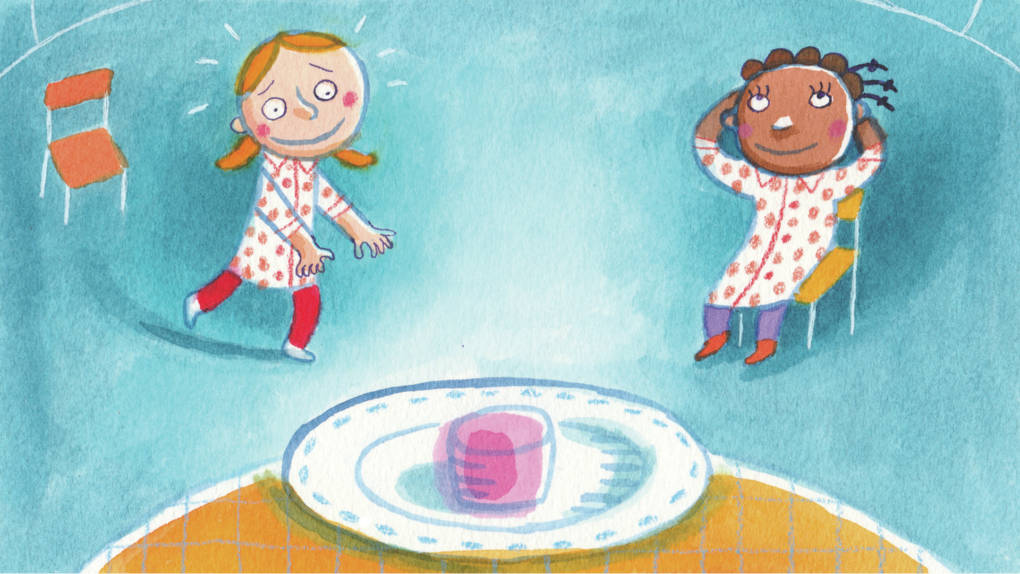
"caption": "German and Cameroonian kids were part of an experiment based on the classic \"marshmallow test\": Put a single treat before a child but tell the child if he or she waits, say, 10 minutes, a second treat will be given.",
"description": null,
"title": "German and Cameroonian kids were part of an experiment based on the classic \"marshmallow test\": Put a single treat before a child but tell the child if he or she waits, say, 10 minutes, a second treat will be given.",
"credit": " Nathalie Dieterle/for NPR",
"status": "inherit",
"isLoading": false,
"fetchFailed": false
},
"mindshift_47758": {
"type": "attachments",
"id": "mindshift_47758",
"meta": {
"index": "attachments_1716263798",
"site": "mindshift",
"id": "47758",
"found": true
},
"parent": 47744,
"imgSizes": {
"small": {
"file": "https://ww2.kqed.org/app/uploads/sites/23/2017/03/Tulips-520x344.jpg",
"width": 520,
"mimeType": "image/jpeg",
"height": 344
},
"twentyfourteen-full-width": {
"file": "https://ww2.kqed.org/app/uploads/sites/23/2017/03/Tulips-1038x576.jpg",
"width": 1038,
"mimeType": "image/jpeg",
"height": 576
},
"thumbnail": {
"file": "https://ww2.kqed.org/app/uploads/sites/23/2017/03/Tulips-160x106.jpg",
"width": 160,
"mimeType": "image/jpeg",
"height": 106
},
"fd-sm": {
"file": "https://ww2.kqed.org/app/uploads/sites/23/2017/03/Tulips-960x636.jpg",
"width": 960,
"mimeType": "image/jpeg",
"height": 636
},
"post-thumbnail": {
"file": "https://ww2.kqed.org/app/uploads/sites/23/2017/03/Tulips-672x372.jpg",
"width": 672,
"mimeType": "image/jpeg",
"height": 372
},
"xsmall": {
"file": "https://ww2.kqed.org/app/uploads/sites/23/2017/03/Tulips-375x248.jpg",
"width": 375,
"mimeType": "image/jpeg",
"height": 248
},
"kqedFullSize": {
"file": "https://ww2.kqed.org/app/uploads/sites/23/2017/03/Tulips-e1489584795823.jpg",
"width": 1920,
"height": 1272
},
"large": {
"file": "https://ww2.kqed.org/app/uploads/sites/23/2017/03/Tulips-1020x676.jpg",
"width": 1020,
"mimeType": "image/jpeg",
"height": 676
},
"xlarge": {
"file": "https://ww2.kqed.org/app/uploads/sites/23/2017/03/Tulips-1180x782.jpg",
"width": 1180,
"mimeType": "image/jpeg",
"height": 782
},
"guest-author-50": {
"file": "https://ww2.kqed.org/app/uploads/sites/23/2017/03/Tulips-50x50.jpg",
"width": 50,
"mimeType": "image/jpeg",
"height": 50
},
"guest-author-96": {
"file": "https://ww2.kqed.org/app/uploads/sites/23/2017/03/Tulips-96x96.jpg",
"width": 96,
"mimeType": "image/jpeg",
"height": 96
},
"medium": {
"file": "https://ww2.kqed.org/app/uploads/sites/23/2017/03/Tulips-800x530.jpg",
"width": 800,
"mimeType": "image/jpeg",
"height": 530
},
"guest-author-64": {
"file": "https://ww2.kqed.org/app/uploads/sites/23/2017/03/Tulips-64x64.jpg",
"width": 64,
"mimeType": "image/jpeg",
"height": 64
},
"guest-author-32": {
"file": "https://ww2.kqed.org/app/uploads/sites/23/2017/03/Tulips-32x32.jpg",
"width": 32,
"mimeType": "image/jpeg",
"height": 32
},
"fd-lrg": {
"file": "https://ww2.kqed.org/app/uploads/sites/23/2017/03/Tulips-1920x1272.jpg",
"width": 1920,
"mimeType": "image/jpeg",
"height": 1272
},
"fd-med": {
"file": "https://ww2.kqed.org/app/uploads/sites/23/2017/03/Tulips-1180x782.jpg",
"width": 1180,
"mimeType": "image/jpeg",
"height": 782
},
"full-width": {
"file": "https://ww2.kqed.org/app/uploads/sites/23/2017/03/Tulips-1920x1272.jpg",
"width": 1920,
"mimeType": "image/jpeg",
"height": 1272
},
"detail": {
"file": "https://ww2.kqed.org/app/uploads/sites/23/2017/03/Tulips-150x150.jpg",
"width": 150,
"mimeType": "image/jpeg",
"height": 150
},
"medium_large": {
"file": "https://ww2.kqed.org/app/uploads/sites/23/2017/03/Tulips-768x509.jpg",
"width": 768,
"mimeType": "image/jpeg",
"height": 509
},
"guest-author-128": {
"file": "https://ww2.kqed.org/app/uploads/sites/23/2017/03/Tulips-128x128.jpg",
"width": 128,
"mimeType": "image/jpeg",
"height": 128
},
"xxsmall": {
"file": "https://ww2.kqed.org/app/uploads/sites/23/2017/03/Tulips-240x159.jpg",
"width": 240,
"mimeType": "image/jpeg",
"height": 159
}
},
"publishDate": 1489584762,
"modified": 1489584787,
"caption": null,
"description": null,
"title": null,
"credit": "iStock/David_Mohn ",
"status": "inherit",
"isLoading": false,
"fetchFailed": false
},
"mindshift_47219": {
"type": "attachments",
"id": "mindshift_47219",
"meta": {
"index": "attachments_1716263798",
"site": "mindshift",
"id": "47219",
"found": true
},
"parent": 47195,
"imgSizes": {
"small": {
"file": "https://ww2.kqed.org/app/uploads/sites/23/2016/12/10-Themes-520x380.jpg",
"width": 520,
"mimeType": "image/jpeg",
"height": 380
},
"twentyfourteen-full-width": {
"file": "https://ww2.kqed.org/app/uploads/sites/23/2016/12/10-Themes-1038x576.jpg",
"width": 1038,
"mimeType": "image/jpeg",
"height": 576
},
"thumbnail": {
"file": "https://ww2.kqed.org/app/uploads/sites/23/2016/12/10-Themes-160x117.jpg",
"width": 160,
"mimeType": "image/jpeg",
"height": 117
},
"fd-sm": {
"file": "https://ww2.kqed.org/app/uploads/sites/23/2016/12/10-Themes-960x701.jpg",
"width": 960,
"mimeType": "image/jpeg",
"height": 701
},
"post-thumbnail": {
"file": "https://ww2.kqed.org/app/uploads/sites/23/2016/12/10-Themes-672x372.jpg",
"width": 672,
"mimeType": "image/jpeg",
"height": 372
},
"xsmall": {
"file": "https://ww2.kqed.org/app/uploads/sites/23/2016/12/10-Themes-375x274.jpg",
"width": 375,
"mimeType": "image/jpeg",
"height": 274
},
"kqedFullSize": {
"file": "https://ww2.kqed.org/app/uploads/sites/23/2016/12/10-Themes.jpg",
"width": 1877,
"height": 1371
},
"large": {
"file": "https://ww2.kqed.org/app/uploads/sites/23/2016/12/10-Themes-1020x745.jpg",
"width": 1020,
"mimeType": "image/jpeg",
"height": 745
},
"xlarge": {
"file": "https://ww2.kqed.org/app/uploads/sites/23/2016/12/10-Themes-1180x862.jpg",
"width": 1180,
"mimeType": "image/jpeg",
"height": 862
},
"guest-author-50": {
"file": "https://ww2.kqed.org/app/uploads/sites/23/2016/12/10-Themes-50x50.jpg",
"width": 50,
"mimeType": "image/jpeg",
"height": 50
},
"guest-author-96": {
"file": "https://ww2.kqed.org/app/uploads/sites/23/2016/12/10-Themes-96x96.jpg",
"width": 96,
"mimeType": "image/jpeg",
"height": 96
},
"medium": {
"file": "https://ww2.kqed.org/app/uploads/sites/23/2016/12/10-Themes-800x584.jpg",
"width": 800,
"mimeType": "image/jpeg",
"height": 584
},
"guest-author-64": {
"file": "https://ww2.kqed.org/app/uploads/sites/23/2016/12/10-Themes-64x64.jpg",
"width": 64,
"mimeType": "image/jpeg",
"height": 64
},
"guest-author-32": {
"file": "https://ww2.kqed.org/app/uploads/sites/23/2016/12/10-Themes-32x32.jpg",
"width": 32,
"mimeType": "image/jpeg",
"height": 32
},
"fd-med": {
"file": "https://ww2.kqed.org/app/uploads/sites/23/2016/12/10-Themes-1180x862.jpg",
"width": 1180,
"mimeType": "image/jpeg",
"height": 862
},
"detail": {
"file": "https://ww2.kqed.org/app/uploads/sites/23/2016/12/10-Themes-150x150.jpg",
"width": 150,
"mimeType": "image/jpeg",
"height": 150
},
"medium_large": {
"file": "https://ww2.kqed.org/app/uploads/sites/23/2016/12/10-Themes-768x561.jpg",
"width": 768,
"mimeType": "image/jpeg",
"height": 561
},
"guest-author-128": {
"file": "https://ww2.kqed.org/app/uploads/sites/23/2016/12/10-Themes-128x128.jpg",
"width": 128,
"mimeType": "image/jpeg",
"height": 128
},
"xxsmall": {
"file": "https://ww2.kqed.org/app/uploads/sites/23/2016/12/10-Themes-240x175.jpg",
"width": 240,
"mimeType": "image/jpeg",
"height": 175
}
},
"publishDate": 1482846925,
"modified": 1482846944,
"caption": null,
"description": null,
"title": "10-themes",
"credit": "iStock/DGLimages",
"status": "inherit",
"isLoading": false,
"fetchFailed": false
},
"mindshift_43360": {
"type": "attachments",
"id": "mindshift_43360",
"meta": {
"index": "attachments_1716263798",
"site": "mindshift",
"id": "43360",
"found": true
},
"parent": 43326,
"imgSizes": {
"twentyfourteen-full-width": {
"file": "https://ww2.kqed.org/app/uploads/sites/23/2016/01/self-control-1038x576.jpg",
"width": 1038,
"mimeType": "image/jpeg",
"height": 576
},
"thumbnail": {
"file": "https://ww2.kqed.org/app/uploads/sites/23/2016/01/self-control-400x225.jpg",
"width": 400,
"mimeType": "image/jpeg",
"height": 225
},
"fd-sm": {
"file": "https://ww2.kqed.org/app/uploads/sites/23/2016/01/self-control-960x540.jpg",
"width": 960,
"mimeType": "image/jpeg",
"height": 540
},
"post-thumbnail": {
"file": "https://ww2.kqed.org/app/uploads/sites/23/2016/01/self-control-672x372.jpg",
"width": 672,
"mimeType": "image/jpeg",
"height": 372
},
"kqedFullSize": {
"file": "https://ww2.kqed.org/app/uploads/sites/23/2016/01/self-control.jpg",
"width": 1920,
"height": 1080
},
"large": {
"file": "https://ww2.kqed.org/app/uploads/sites/23/2016/01/self-control-1440x810.jpg",
"width": 1440,
"mimeType": "image/jpeg",
"height": 810
},
"guest-author-96": {
"file": "https://ww2.kqed.org/app/uploads/sites/23/2016/01/self-control-96x96.jpg",
"width": 96,
"mimeType": "image/jpeg",
"height": 96
},
"medium": {
"file": "https://ww2.kqed.org/app/uploads/sites/23/2016/01/self-control-800x450.jpg",
"width": 800,
"mimeType": "image/jpeg",
"height": 450
},
"guest-author-64": {
"file": "https://ww2.kqed.org/app/uploads/sites/23/2016/01/self-control-64x64.jpg",
"width": 64,
"mimeType": "image/jpeg",
"height": 64
},
"guest-author-32": {
"file": "https://ww2.kqed.org/app/uploads/sites/23/2016/01/self-control-32x32.jpg",
"width": 32,
"mimeType": "image/jpeg",
"height": 32
},
"cat_post_thumb_sizecategory-posts-2": {
"file": "https://ww2.kqed.org/app/uploads/sites/23/2016/01/self-control-50x50.jpg",
"width": 50,
"mimeType": "image/jpeg",
"height": 50
},
"fd-lrg": {
"file": "https://ww2.kqed.org/app/uploads/sites/23/2016/01/self-control-1920x1080.jpg",
"width": 1920,
"mimeType": "image/jpeg",
"height": 1080
},
"fd-med": {
"file": "https://ww2.kqed.org/app/uploads/sites/23/2016/01/self-control-1180x664.jpg",
"width": 1180,
"mimeType": "image/jpeg",
"height": 664
},
"detail": {
"file": "https://ww2.kqed.org/app/uploads/sites/23/2016/01/self-control-75x75.jpg",
"width": 75,
"mimeType": "image/jpeg",
"height": 75
},
"medium_large": {
"file": "https://ww2.kqed.org/app/uploads/sites/23/2016/01/self-control-768x432.jpg",
"width": 768,
"mimeType": "image/jpeg",
"height": 432
},
"guest-author-128": {
"file": "https://ww2.kqed.org/app/uploads/sites/23/2016/01/self-control-128x128.jpg",
"width": 128,
"mimeType": "image/jpeg",
"height": 128
}
},
"publishDate": 1452504586,
"modified": 1452504592,
"caption": null,
"description": null,
"title": "self-control",
"credit": "iStock",
"status": "inherit",
"isLoading": false,
"fetchFailed": false
}
},
"audioPlayerReducer": {
"postId": "stream_live",
"isPaused": true,
"isPlaying": false,
"pfsActive": false,
"pledgeModalIsOpen": true,
"playerDrawerIsOpen": false,
"liveAudioPlayStartedAt": 0,
"liveAudioPlayContext": ""
},
"authorsReducer": {
"byline_mindshift_51693": {
"type": "authors",
"id": "byline_mindshift_51693",
"meta": {
"override": true
},
"slug": "byline_mindshift_51693",
"name": "Cory Turner",
"isLoading": false
},
"byline_mindshift_48569": {
"type": "authors",
"id": "byline_mindshift_48569",
"meta": {
"override": true
},
"slug": "byline_mindshift_48569",
"name": "Michaeleen Doucleff",
"isLoading": false
},
"katrinaschwartz": {
"type": "authors",
"id": "234",
"meta": {
"index": "authors_1716337520",
"id": "234",
"found": true
},
"name": "Katrina Schwartz",
"firstName": "Katrina",
"lastName": "Schwartz",
"slug": "katrinaschwartz",
"email": "kschwartz@kqed.org",
"display_author_email": false,
"staff_mastheads": [
"news"
],
"title": "Producer",
"bio": "Katrina Schwartz is a journalist based in San Francisco. She's worked at KPCC public radio in LA and has reported on air and online for KQED since 2010. She covered how teaching and learning is changing for MindShift between 2012 and 2020. She is the co-host of the MindShift podcast and now produces KQED's Bay Curious podcast.",
"avatar": "https://secure.gravatar.com/avatar/edb4ee79070447a018538c9aae6eeecf28786515b8a0c30e43b6b7dce5aa44c8?s=600&d=blank&r=g",
"twitter": "kschwart",
"bluesky": null,
"facebook": null,
"instagram": null,
"linkedin": null,
"sites": [
{
"site": "",
"roles": [
"editor"
]
},
{
"site": "news",
"roles": [
"editor"
]
},
{
"site": "mindshift",
"roles": [
"administrator"
]
},
{
"site": "stateofhealth",
"roles": [
"author"
]
},
{
"site": "science",
"roles": [
"editor"
]
}
],
"headData": {
"title": "Katrina Schwartz | KQED",
"description": "Producer",
"ogImgSrc": "https://secure.gravatar.com/avatar/edb4ee79070447a018538c9aae6eeecf28786515b8a0c30e43b6b7dce5aa44c8?s=600&d=blank&r=g",
"twImgSrc": "https://secure.gravatar.com/avatar/edb4ee79070447a018538c9aae6eeecf28786515b8a0c30e43b6b7dce5aa44c8?s=600&d=blank&r=g"
},
"isLoading": false,
"link": "/author/katrinaschwartz"
},
"dfkris": {
"type": "authors",
"id": "11087",
"meta": {
"index": "authors_1716337520",
"id": "11087",
"found": true
},
"name": "Deborah Farmer Kris",
"firstName": "Deborah Farmer",
"lastName": "Kris",
"slug": "dfkris",
"email": "dfkris@gmail.com",
"display_author_email": false,
"staff_mastheads": [],
"title": null,
"bio": "\u003cem>\u003ca href=\"https://twitter.com/@dfkris\">Deborah Farmer Kris\u003c/a> has taught elementary, middle and high school and served as a charter school administrator. She spent a decade as an associate at Boston University’s \u003c/em>\u003cem>\u003ca href=\"http://www.bu.edu/ccsr/about-us/\">Center for Character and Social Responsibility\u003c/a>, \u003c/em>\u003cem>researching, writing, and consulting with schools. She is the mother of two young children. You can follower her on Twitter \u003ca href=\"https://twitter.com/@dfkris\">@dfkris\u003c/a>.\u003c/em>",
"avatar": "https://secure.gravatar.com/avatar/48efe6f17031ed31222b74af9605fe5a?s=600&d=blank&r=g",
"twitter": "dfkris",
"facebook": null,
"instagram": null,
"linkedin": null,
"sites": [
{
"site": "mindshift",
"roles": [
"author"
]
}
],
"headData": {
"title": "Deborah Farmer Kris | KQED",
"description": null,
"ogImgSrc": "https://secure.gravatar.com/avatar/48efe6f17031ed31222b74af9605fe5a?s=600&d=blank&r=g",
"twImgSrc": "https://secure.gravatar.com/avatar/48efe6f17031ed31222b74af9605fe5a?s=600&d=blank&r=g"
},
"isLoading": false,
"link": "/author/dfkris"
}
},
"pagesReducer": {
"mindshift_tag_self-control": {
"type": "terms",
"id": "mindshift_20954",
"meta": {
"index": "terms_1716263798",
"site": "mindshift",
"id": "20954",
"score": 10.407496
},
"featImg": null,
"name": "self-control",
"description": null,
"taxonomy": "tag",
"headData": {
"twImgId": null,
"twTitle": null,
"ogTitle": null,
"ogImgId": null,
"twDescription": null,
"description": null,
"title": "self-control Archives | KQED Mindshift",
"ogDescription": null
},
"ttid": 20226,
"slug": "self-control",
"isLoading": false,
"title": "self-control",
"pageMeta": {
"site": "mindshift",
"WpPageTemplate": "page-topic-editorial",
"currentPage": 1
},
"blocks": [
{
"blockName": "kqed/post-list",
"attrs": {
"layout": "cardArticle2",
"query": "posts/mindshift?tag=self-control",
"seeMore": false,
"paginated": true,
"page": 1
}
},
{
"blockName": "kqed/ad"
}
]
}
},
"pfsSessionReducer": {},
"postsReducer": {
"stream_live": {
"type": "live",
"id": "stream_live",
"audioUrl": "https://hls.kqed.org/hls/kqed_app/playlist.m3u8",
"title": "Live Stream",
"excerpt": "Live Stream information currently unavailable.",
"link": "/radio",
"featImg": "",
"label": {
"name": "KQED Live",
"link": "/"
}
},
"stream_kqedNewscast": {
"type": "posts",
"id": "stream_kqedNewscast",
"audioUrl": "https://www.kqed.org/.stream/anon/radio/RDnews/newscast.mp3?_=1",
"title": "KQED Newscast",
"featImg": "",
"label": {
"name": "88.5 FM",
"link": "/"
}
},
"mindshift_51693": {
"type": "posts",
"id": "mindshift_51693",
"meta": {
"index": "posts_1716263798",
"site": "mindshift",
"id": "51693",
"score": null,
"sort": [
1531976083000
]
},
"parent": 0,
"labelTerm": {
"site": "mindshift"
},
"blocks": [],
"publishDate": 1531976083,
"format": "standard",
"disqusTitle": "Why Stepping Back Can Empower Kids In An Anxious World",
"title": "Why Stepping Back Can Empower Kids In An Anxious World",
"headTitle": "MindShift | KQED News",
"content": "\u003cp>Rates of anxiety and depression among teens in the U.S. have been rising for years. According to \u003ca href=\"https://www.ncbi.nlm.nih.gov/pmc/articles/PMC2946114/\">one study\u003c/a>, nearly one in three adolescents (ages 13-18) now meets the criteria for an anxiety disorder, and in the \u003ca href=\"https://www.npr.org/sections/ed/2018/06/16/620278545/what-teens-really-say-about-sex-drugs-and-sadness\">latest results\u003c/a> from the Centers for Disease Control and Prevention's Youth Risk Behavior Survey, 32 percent of teens reported persistent feelings of sadness or hopelessness.\u003c/p>\n\u003cp>And there's more bad news, grown-ups: The authors of two new parenting books believe you're part of the problem.\u003c/p>\n\u003cp>\"Kids are play-deprived nowadays,\" says Katherine Reynolds Lewis, a journalist, parent, parent-educator and the author of one of those two new books, \u003ca href=\"https://www.npr.org/sections/ed/2018/06/02/611082566/why-children-arent-behaving-and-what-you-can-do-about-it\">\u003cem>The Good News About Bad Behavior\u003c/em>\u003c/a>. And by \"play\" she means play without screens or adults keeping watch.\u003c/p>\n\u003cp>\"Two or three decades ago, children were roaming neighborhoods in mixed-age groups, playing pretty unsupervised,\" Lewis says. And this kind of parent-free play helped them develop important skills they'd use for the rest of their lives. \"They were able to resolve disputes. They planned their time. They managed their games. They had a lot of autonomy, which also feeds self-esteem and mental health.\"\u003c/p>\n\u003cp>These days, though, free play is on the decline, Lewis says, and so are the social and emotional skills that come with it. Part of the problem, according to Lewis, is parents who worry that unsupervised play is just too risky. But the risk is part of the point — for kids \"to have falls and scrapes and tumbles and discover that they're okay. They can survive being hurt.\"\u003c/p>\n\u003cp>[ad fullwidth]\u003c/p>\n\u003cp>In many families, Lewis says, play has also been crowded out by parents' increased focus on schoolwork.\u003c/p>\n\u003cp>William Stixrud is not one of those parents.\u003c/p>\n\u003cp>\"When my kids were in elementary school, I said, 'You know, I'm happy to look at your report card, but I don't care that much. I care much more that you work hard to develop yourself,'\" says Stixrud, a neuropsychologist and co-author of the other new parenting book, \u003ca href=\"https://www.npr.org/sections/ed/2018/02/14/584275859/the-key-to-raising-a-happy-child\">\u003cem>The Self-Driven Child\u003c/em>\u003c/a>.\u003c/p>\n\u003cp>He says academics are important, but that, in most cases, kids should be in the driver's seat, learning to manage their work, their time and, ideally, being able to pursue their own interests. That freedom, Stixrud says, helps them develop internal motivation in a way that rewards and grades just can't.\u003c/p>\n\u003cp>Stixrud's daughter, Jora LaFontaine, who now has a Ph.D. in economics, says she still remembers first grade, when she brought a paper home from school. Her parents were supposed to sign it every day, proving she'd read for fifteen minutes. The first day, though, Jora says her father looked at it, laughed, \"signed every single line on it and said that he did not want to turn reading into homework or a chore.\"\u003c/p>\n\u003cp>When she was an A student in high school, Jora attended a talk her dad gave about why parents shouldn't focus on grades. William Stixrud remembers his daughter pushing back that night in the car.\u003c/p>\n\u003cp>\"Driving home she said, 'You know, I liked the lecture, but I don't really believe that you believe that stuff about the grades,\" Stixrud remembers.\u003c/p>\n\u003cp>\"Most people I tell this to laugh,\" Jora says, laughing herself. \"So, I said to my dad, 'If you don't get [good] grades, you're not gonna get into college. Or at least you won't get into a good college.\"\u003c/p>\n\u003cp>... and if you don't get into a good college, you won't get a good job ...\u003c/p>\n\u003cp>\"So my dad said, 'I will give you a hundred dollars if you're willing to get a C in one of your classes,'\" Jora says.\u003c/p>\n\u003cp>A hundred dollars.\u003c/p>\n\u003cp>Stixrud says, his daughter already took school seriously, and he wanted her to understand that \"one thing that seems like a disaster is just not that big a deal.\"\u003c/p>\n\u003cp>Jora didn't take her father up on his offer, but she says it meant a lot, knowing that the only person really pushing her to succeed ... was her. In that way, she embodies the spirit of both books' message to parents:\u003c/p>\n\u003cp>\u003c/p>\n\u003cp>As Lewis writes, \"to build self-control, we need to stop controlling children.\"\u003c/p>\n\u003cdiv class=\"fullattribution\">Copyright 2018 NPR. To see more, visit http://www.npr.org/.\u003cimg src=\"https://www.google-analytics.com/__utm.gif?utmac=UA-5828686-4&utmdt=Empowering+Kids+In+An+Anxious+World&utme=8(APIKey)9(MDAxOTAwOTE4MDEyMTkxMDAzNjczZDljZA004)\">\u003c/div>\n\n",
"disqusIdentifier": "51693 https://ww2.kqed.org/mindshift/?p=51693",
"disqusUrl": "https://ww2.kqed.org/mindshift/2018/07/18/why-stepping-back-can-empower-kids-in-an-anxious-world/",
"stats": {
"hasVideo": false,
"hasChartOrMap": false,
"hasAudio": false,
"hasPolis": false,
"wordCount": 722,
"hasGoogleForm": false,
"hasGallery": false,
"hasHearkenModule": false,
"iframeSrcs": [],
"paragraphCount": 21
},
"modified": 1531976139,
"excerpt": "Teen depression and anxiety rates have been rising for years, and two new books offer advice to parents and caregivers.",
"headData": {
"twImgId": "",
"twTitle": "",
"ogTitle": "",
"ogImgId": "",
"twDescription": "",
"description": "Teen depression and anxiety rates have been rising for years, and two new books offer advice to parents and caregivers.",
"title": "Why Stepping Back Can Empower Kids In An Anxious World | KQED",
"ogDescription": "",
"schema": {
"@context": "https://schema.org",
"@type": "Article",
"headline": "Why Stepping Back Can Empower Kids In An Anxious World",
"datePublished": "2018-07-18T21:54:43-07:00",
"dateModified": "2018-07-18T21:55:39-07:00",
"image": "https://cdn.kqed.org/wp-content/uploads/2020/02/KQED-OG-Image@1x.png"
}
},
"guestAuthors": [],
"slug": "why-stepping-back-can-empower-kids-in-an-anxious-world",
"status": "publish",
"nprApiLink": "http://api.npr.org/query?id=620074926&apiKey=MDAxOTAwOTE4MDEyMTkxMDAzNjczZDljZA004",
"nprByline": "Cory Turner",
"nprStoryDate": "Wed, 18 Jul 2018 05:09:00 -0400",
"nprLastModifiedDate": "Wed, 18 Jul 2018 12:03:09 -0400",
"nprHtmlLink": "https://www.npr.org/sections/ed/2018/07/18/620074926/empowering-kids-in-an-anxious-world?ft=nprml&f=620074926",
"nprAudio": "https://ondemand.npr.org/anon.npr-mp3/npr/me/2018/07/20180718_me_empowering_kids_in_an_anxious_world.mp3?orgId=1&topicId=1030&d=232&p=3&story=620074926&ft=nprml&f=620074926",
"nprImageAgency": "Angie Wang for NPR",
"nprAudioM3u": "http://api.npr.org/m3u/1630008665-a39a45.m3u?orgId=1&topicId=1030&d=232&p=3&story=620074926&ft=nprml&f=620074926",
"nprStoryId": "620074926",
"nprRetrievedStory": "1",
"nprPubDate": "Wed, 18 Jul 2018 08:04:00 -0400",
"path": "/mindshift/51693/why-stepping-back-can-empower-kids-in-an-anxious-world",
"audioUrl": "https://ondemand.npr.org/anon.npr-mp3/npr/me/2018/07/20180718_me_empowering_kids_in_an_anxious_world.mp3?orgId=1&topicId=1030&d=232&p=3&story=620074926&ft=nprml&f=620074926",
"audioTrackLength": null,
"parsedContent": [
{
"type": "contentString",
"content": "\u003cdiv class=\"post-body\">\u003cp>\u003cp>Rates of anxiety and depression among teens in the U.S. have been rising for years. According to \u003ca href=\"https://www.ncbi.nlm.nih.gov/pmc/articles/PMC2946114/\">one study\u003c/a>, nearly one in three adolescents (ages 13-18) now meets the criteria for an anxiety disorder, and in the \u003ca href=\"https://www.npr.org/sections/ed/2018/06/16/620278545/what-teens-really-say-about-sex-drugs-and-sadness\">latest results\u003c/a> from the Centers for Disease Control and Prevention's Youth Risk Behavior Survey, 32 percent of teens reported persistent feelings of sadness or hopelessness.\u003c/p>\n\u003cp>And there's more bad news, grown-ups: The authors of two new parenting books believe you're part of the problem.\u003c/p>\n\u003cp>\"Kids are play-deprived nowadays,\" says Katherine Reynolds Lewis, a journalist, parent, parent-educator and the author of one of those two new books, \u003ca href=\"https://www.npr.org/sections/ed/2018/06/02/611082566/why-children-arent-behaving-and-what-you-can-do-about-it\">\u003cem>The Good News About Bad Behavior\u003c/em>\u003c/a>. And by \"play\" she means play without screens or adults keeping watch.\u003c/p>\n\u003cp>\"Two or three decades ago, children were roaming neighborhoods in mixed-age groups, playing pretty unsupervised,\" Lewis says. And this kind of parent-free play helped them develop important skills they'd use for the rest of their lives. \"They were able to resolve disputes. They planned their time. They managed their games. They had a lot of autonomy, which also feeds self-esteem and mental health.\"\u003c/p>\n\u003cp>These days, though, free play is on the decline, Lewis says, and so are the social and emotional skills that come with it. Part of the problem, according to Lewis, is parents who worry that unsupervised play is just too risky. But the risk is part of the point — for kids \"to have falls and scrapes and tumbles and discover that they're okay. They can survive being hurt.\"\u003c/p>\n\u003cp>\u003c/p>\u003c/div>",
"attributes": {
"named": {},
"numeric": []
}
},
{
"type": "component",
"content": "",
"name": "ad",
"attributes": {
"named": {
"label": "fullwidth"
},
"numeric": [
"fullwidth"
]
}
},
{
"type": "contentString",
"content": "\u003cdiv class=\"post-body\">\u003cp>\u003c/p>\n\u003cp>In many families, Lewis says, play has also been crowded out by parents' increased focus on schoolwork.\u003c/p>\n\u003cp>William Stixrud is not one of those parents.\u003c/p>\n\u003cp>\"When my kids were in elementary school, I said, 'You know, I'm happy to look at your report card, but I don't care that much. I care much more that you work hard to develop yourself,'\" says Stixrud, a neuropsychologist and co-author of the other new parenting book, \u003ca href=\"https://www.npr.org/sections/ed/2018/02/14/584275859/the-key-to-raising-a-happy-child\">\u003cem>The Self-Driven Child\u003c/em>\u003c/a>.\u003c/p>\n\u003cp>He says academics are important, but that, in most cases, kids should be in the driver's seat, learning to manage their work, their time and, ideally, being able to pursue their own interests. That freedom, Stixrud says, helps them develop internal motivation in a way that rewards and grades just can't.\u003c/p>\n\u003cp>Stixrud's daughter, Jora LaFontaine, who now has a Ph.D. in economics, says she still remembers first grade, when she brought a paper home from school. Her parents were supposed to sign it every day, proving she'd read for fifteen minutes. The first day, though, Jora says her father looked at it, laughed, \"signed every single line on it and said that he did not want to turn reading into homework or a chore.\"\u003c/p>\n\u003cp>When she was an A student in high school, Jora attended a talk her dad gave about why parents shouldn't focus on grades. William Stixrud remembers his daughter pushing back that night in the car.\u003c/p>\n\u003cp>\"Driving home she said, 'You know, I liked the lecture, but I don't really believe that you believe that stuff about the grades,\" Stixrud remembers.\u003c/p>\n\u003cp>\"Most people I tell this to laugh,\" Jora says, laughing herself. \"So, I said to my dad, 'If you don't get [good] grades, you're not gonna get into college. Or at least you won't get into a good college.\"\u003c/p>\n\u003cp>... and if you don't get into a good college, you won't get a good job ...\u003c/p>\n\u003cp>\"So my dad said, 'I will give you a hundred dollars if you're willing to get a C in one of your classes,'\" Jora says.\u003c/p>\n\u003cp>A hundred dollars.\u003c/p>\n\u003cp>Stixrud says, his daughter already took school seriously, and he wanted her to understand that \"one thing that seems like a disaster is just not that big a deal.\"\u003c/p>\n\u003cp>Jora didn't take her father up on his offer, but she says it meant a lot, knowing that the only person really pushing her to succeed ... was her. In that way, she embodies the spirit of both books' message to parents:\u003c/p>\n\u003cp>\u003c/p>\n\u003cp>As Lewis writes, \"to build self-control, we need to stop controlling children.\"\u003c/p>\n\u003cdiv class=\"fullattribution\">Copyright 2018 NPR. To see more, visit http://www.npr.org/.\u003cimg src=\"https://www.google-analytics.com/__utm.gif?utmac=UA-5828686-4&utmdt=Empowering+Kids+In+An+Anxious+World&utme=8(APIKey)9(MDAxOTAwOTE4MDEyMTkxMDAzNjczZDljZA004)\">\u003c/div>\n\n\u003c/div>\u003c/p>",
"attributes": {
"named": {},
"numeric": []
}
}
],
"link": "/mindshift/51693/why-stepping-back-can-empower-kids-in-an-anxious-world",
"authors": [
"byline_mindshift_51693"
],
"categories": [
"mindshift_192"
],
"tags": [
"mindshift_20984",
"mindshift_20589",
"mindshift_20784",
"mindshift_1040",
"mindshift_20865",
"mindshift_20985",
"mindshift_498",
"mindshift_20954"
],
"featImg": "mindshift_51694",
"label": "mindshift"
},
"mindshift_48569": {
"type": "posts",
"id": "mindshift_48569",
"meta": {
"index": "posts_1716263798",
"site": "mindshift",
"id": "48569",
"score": null,
"sort": [
1499236032000
]
},
"parent": 0,
"labelTerm": {
"site": "mindshift"
},
"blocks": [],
"publishDate": 1499236032,
"format": "standard",
"disqusTitle": "Want To Teach Your Kids Self-Control? Learn From A Cameroonian Farmer",
"title": "Want To Teach Your Kids Self-Control? Learn From A Cameroonian Farmer",
"headTitle": "MindShift | KQED News",
"content": "\u003cp>In the the 1960s, a Stanford psychologist ran an experiment to study children's self-control.\u003c/p>\n\u003cp>It's called the marshmallow test. And it's super simple.\u003c/p>\n\u003cp>Kids ages 3 to 5 choose a treat — an Oreo cookie, a pretzel stick or a marshmallow. Then researchers give the child brief instructions: You can eat the treat now, but if you can wait for me to return, you'll get two treats.\u003c/p>\n\u003cp>The researchers leave the room. And the child just has to sit there staring at a marshmallow — and deciding whether to exert self-control or to dig in.\u003c/p>\n\u003cp>Psychologists have performed the experiment many times. In general, fewer than half the kids \"pass\" the test. Most kids can't delay gratification: They gobble up the marshmallow.\u003c/p>\n\u003cp>[ad fullwidth]\u003c/p>\n\u003cp>The researchers followed these kids for decades and \u003ca href=\"http://www.npr.org/sections/health-shots/2016/06/24/481859662/invisibilia-is-your-personality-fixed-or-can-you-change-who-you-are\">found\u003c/a> that those who did wait were more likely to have better SAT scores and better jobs later on in life, the researchers reported.\u003c/p>\n\u003cp>Now for the first time, there's a study reporting on what happens when psychologists give the marshmallow test to kids outside Western culture, specifically 4-year-old children from the ethnic group Nso in Cameroon.\u003c/p>\n\u003cp>\u003cem>\"\u003c/em>The Nso are a community who live off subsistence farming, mainly corn and beans,\" says \u003ca href=\"https://www.psycho.uni-osnabrueck.de/mitarbeiter/blamm\">Bettina Lamm\u003c/a>, a psychologist at the Universitat Osnabruck, who led the study. \"Most of the children live in mud brick houses without water and electricity. They have to work a lot to take care of younger siblings and help their parents on the farm.\"\u003c/p>\n\u003cp>Guess what? These kids rocked the marshmallow test.\u003c/p>\n\u003cp>\"The difference was huge,\" Lamm says. \"The Cameroonian kids really behave very differently, and they were able to wait much better.\"\u003c/p>\n\u003cp>Lamm and her colleagues ran the experiment on nearly 200 Cameroonian and German kids. The Cameroonian kids were offered a puff-puff — a little doughnut popular there.\u003c/p>\n\u003cp>Compared to German children in the experiment, the Cameroonian kids waited, on average, twice as long for the second treat. And way more Cameroonian kids — nearly 70 percent — waited the full 10 minutes to snag the second marshmallow. Only about 30 percent of the German kids could hold out, Lamm and her team \u003ca href=\"https://www.ncbi.nlm.nih.gov/pubmed/28586087\">reported\u003c/a> in the journal \u003cem>Child Development\u003c/em> in early June.\u003c/p>\n\u003cp>Lamm and colleagues watched the kids closely during the experiment and tracked their behavior. The German kids showed way more emotions during the waiting period, she says, especially negative emotions.\u003c/p>\n\u003cp>They whined more, cried more and squirmed more in their seats.\u003c/p>\n\u003cp>\"They were really fighting the waiting period — playing with their fingers, talking to themselves — trying any distraction they can to manage to wait,\" she says.\u003c/p>\n\u003cp>\"In contrast, many of the Cameroonian kids simply sat quietly and waited,\" Lamm says. \"Ten percent of them even fell asleep.\"\u003c/p>\n\u003cp>It's almost like the kids were meditating.\u003c/p>\n\u003cp>Lamm says they don't know exactly why the Cameroonian kids were so good at the marshmallow test. Kid behaviors are complicated and sophisticated. But one reason may be the Nso parenting style, which is completely different than Western parenting.\u003c/p>\n\u003cp>\"Nso children are required very early to control their emotions, especially negative emotions,\" Lamm says. \"Moms tell their children that they don't expect them to cry and that they really want them to learn to control their emotions.\"\u003c/p>\n\u003cp>This parenting style starts very early — when children are newborns.\u003c/p>\n\u003cp>\"The moms breast-feed their babies before they start to cry so they don't need to express any negative emotion,\" Lamm says. \"This emotion is already regulated before it's expressed.\"\u003c/p>\n\u003cp>Western moms spend a lot of time looking at their babies for signals to figure out what their babies need. The Nso moms don't do this.\u003c/p>\n\u003cp>\"They believe they — the moms — know what is good for a baby, and they do what is good for a baby,\" Lamm says. \"They don't need to look for signals from the baby.\"\u003c/p>\n\u003cp>As the children get older, this parenting style continues.\u003c/p>\n\u003cp>\"Kids are really expected to learn to control their needs and not ask for their desires or wishes,\" she says.\u003c/p>\n\u003cp>These moms expect obedience and respect. And the kids are good at adapting to situations where they don't get what they might want, where they have to wait.\u003c/p>\n\u003cp>\"So they learn self-control,\" Lamm says. \"Maybe it's a different type of self-control than Western kids learn. But it's very effective.\"\u003c/p>\n\u003cp>But self-control might not be the whole picture, says \u003ca href=\"http://www2.bcs.rochester.edu/sites/ckidd/\">Celeste Kidd\u003c/a>, a neuroscientist at the University of Rochester.\u003c/p>\n\u003cp>A few years ago, she and her colleagues \u003ca href=\"https://www.ncbi.nlm.nih.gov/pmc/articles/PMC3730121/\">found\u003c/a> evidence that the marshmallow test doesn't involve just self-control. It also measures how much a child trusts his environment — how much the child trusts that the researcher is really going to return with the second marshmallow.\u003c/p>\n\u003cp>\"What also matters is kids' expectations about whether waiting will be worth it or not,\" Kidd says.\u003c/p>\n\u003cp>Because if you think about it, if the child doesn't believe that second marshmallow is actually going to arrive, then it makes sense to eat the first one.\u003c/p>\n\u003cp>\"We have evidence that kids take under consideration the statistical nature of what has happened in the past,\" Kidd says. \"So for example, if a child is living in an environment where there's a lot of uncertainty and instability, then they may think that waiting isn't likely to pay off even though they have the ability to delay gratification.\"\u003c/p>\n\u003cp>\u003c/p>\n\u003cp>Nso parents are quite strict and consistent with their discipline. So, Kidd says, perhaps this consistent parenting boosts the kids' trust in adults — that when the person in charge says they're going to bring a second treat, they likely will.\u003c/p>\n\u003cdiv class=\"fullattribution\">Copyright 2017 NPR. To see more, visit http://www.npr.org/.\u003cimg src=\"https://www.google-analytics.com/__utm.gif?utmac=UA-5828686-4&utmdt=Want+To+Teach+Your+Kids+Self-Control%3F+Ask+A+Cameroonian+Farmer&utme=8(APIKey)9(MDAxOTAwOTE4MDEyMTkxMDAzNjczZDljZA004)\">\u003c/div>\n\n",
"disqusIdentifier": "48569 https://ww2.kqed.org/mindshift/?p=48569",
"disqusUrl": "https://ww2.kqed.org/mindshift/2017/07/04/want-to-teach-your-kids-self-control-learn-from-a-cameroonian-farmer/",
"stats": {
"hasVideo": false,
"hasChartOrMap": false,
"hasAudio": false,
"hasPolis": false,
"wordCount": 971,
"hasGoogleForm": false,
"hasGallery": false,
"hasHearkenModule": false,
"iframeSrcs": [],
"paragraphCount": 35
},
"modified": 1499236032,
"excerpt": "The \"marshmallow test\" is a famous experiment for studying kids' self-control. For the first time, a psychologist gave the test to kids outside Western culture. And they crushed it.",
"headData": {
"twImgId": "",
"twTitle": "",
"ogTitle": "",
"ogImgId": "",
"twDescription": "",
"description": "The "marshmallow test" is a famous experiment for studying kids' self-control. For the first time, a psychologist gave the test to kids outside Western culture. And they crushed it.",
"title": "Want To Teach Your Kids Self-Control? Learn From A Cameroonian Farmer | KQED",
"ogDescription": "",
"schema": {
"@context": "https://schema.org",
"@type": "Article",
"headline": "Want To Teach Your Kids Self-Control? Learn From A Cameroonian Farmer",
"datePublished": "2017-07-04T23:27:12-07:00",
"dateModified": "2017-07-04T23:27:12-07:00",
"image": "https://cdn.kqed.org/wp-content/uploads/2020/02/KQED-OG-Image@1x.png"
}
},
"guestAuthors": [],
"slug": "want-to-teach-your-kids-self-control-learn-from-a-cameroonian-farmer",
"status": "publish",
"nprApiLink": "http://api.npr.org/query?id=534743719&apiKey=MDAxOTAwOTE4MDEyMTkxMDAzNjczZDljZA004",
"nprByline": "Michaeleen Doucleff",
"nprStoryDate": "Mon, 03 Jul 2017 05:01:00 -0400",
"nprLastModifiedDate": "Mon, 03 Jul 2017 16:18:48 -0400",
"nprHtmlLink": "http://www.npr.org/sections/goatsandsoda/2017/07/03/534743719/want-to-teach-your-kids-self-control-ask-a-cameroonian-farmer?ft=nprml&f=534743719",
"nprAudio": "https://ondemand.npr.org/anon.npr-mp3/npr/me/2017/07/20170703_me_want_to_teach_your_kids_self-control_ask_a_cameroonian_farmer.mp3?orgId=1&topicId=1031&d=162&p=3&story=534743719&t=progseg&e=535325003&seg=3&ft=nprml&f=534743719",
"nprImageAgency": "for NPR",
"nprImageCredit": "Nathalie Dieterle",
"nprAudioM3u": "http://api.npr.org/m3u/1535325286-16538d.m3u?orgId=1&topicId=1031&d=162&p=3&story=534743719&t=progseg&e=535325003&seg=3&ft=nprml&f=534743719",
"nprStoryId": "534743719",
"nprRetrievedStory": "1",
"nprPubDate": "Mon, 03 Jul 2017 15:07:00 -0400",
"path": "/mindshift/48569/want-to-teach-your-kids-self-control-learn-from-a-cameroonian-farmer",
"audioUrl": "https://ondemand.npr.org/anon.npr-mp3/npr/me/2017/07/20170703_me_want_to_teach_your_kids_self-control_ask_a_cameroonian_farmer.mp3?orgId=1&topicId=1031&d=162&p=3&story=534743719&t=progseg&e=535325003&seg=3&ft=nprml&f=534743719",
"audioTrackLength": null,
"parsedContent": [
{
"type": "contentString",
"content": "\u003cdiv class=\"post-body\">\u003cp>\u003cp>In the the 1960s, a Stanford psychologist ran an experiment to study children's self-control.\u003c/p>\n\u003cp>It's called the marshmallow test. And it's super simple.\u003c/p>\n\u003cp>Kids ages 3 to 5 choose a treat — an Oreo cookie, a pretzel stick or a marshmallow. Then researchers give the child brief instructions: You can eat the treat now, but if you can wait for me to return, you'll get two treats.\u003c/p>\n\u003cp>The researchers leave the room. And the child just has to sit there staring at a marshmallow — and deciding whether to exert self-control or to dig in.\u003c/p>\n\u003cp>Psychologists have performed the experiment many times. In general, fewer than half the kids \"pass\" the test. Most kids can't delay gratification: They gobble up the marshmallow.\u003c/p>\n\u003cp>\u003c/p>\u003c/div>",
"attributes": {
"named": {},
"numeric": []
}
},
{
"type": "component",
"content": "",
"name": "ad",
"attributes": {
"named": {
"label": "fullwidth"
},
"numeric": [
"fullwidth"
]
}
},
{
"type": "contentString",
"content": "\u003cdiv class=\"post-body\">\u003cp>\u003c/p>\n\u003cp>The researchers followed these kids for decades and \u003ca href=\"http://www.npr.org/sections/health-shots/2016/06/24/481859662/invisibilia-is-your-personality-fixed-or-can-you-change-who-you-are\">found\u003c/a> that those who did wait were more likely to have better SAT scores and better jobs later on in life, the researchers reported.\u003c/p>\n\u003cp>Now for the first time, there's a study reporting on what happens when psychologists give the marshmallow test to kids outside Western culture, specifically 4-year-old children from the ethnic group Nso in Cameroon.\u003c/p>\n\u003cp>\u003cem>\"\u003c/em>The Nso are a community who live off subsistence farming, mainly corn and beans,\" says \u003ca href=\"https://www.psycho.uni-osnabrueck.de/mitarbeiter/blamm\">Bettina Lamm\u003c/a>, a psychologist at the Universitat Osnabruck, who led the study. \"Most of the children live in mud brick houses without water and electricity. They have to work a lot to take care of younger siblings and help their parents on the farm.\"\u003c/p>\n\u003cp>Guess what? These kids rocked the marshmallow test.\u003c/p>\n\u003cp>\"The difference was huge,\" Lamm says. \"The Cameroonian kids really behave very differently, and they were able to wait much better.\"\u003c/p>\n\u003cp>Lamm and her colleagues ran the experiment on nearly 200 Cameroonian and German kids. The Cameroonian kids were offered a puff-puff — a little doughnut popular there.\u003c/p>\n\u003cp>Compared to German children in the experiment, the Cameroonian kids waited, on average, twice as long for the second treat. And way more Cameroonian kids — nearly 70 percent — waited the full 10 minutes to snag the second marshmallow. Only about 30 percent of the German kids could hold out, Lamm and her team \u003ca href=\"https://www.ncbi.nlm.nih.gov/pubmed/28586087\">reported\u003c/a> in the journal \u003cem>Child Development\u003c/em> in early June.\u003c/p>\n\u003cp>Lamm and colleagues watched the kids closely during the experiment and tracked their behavior. The German kids showed way more emotions during the waiting period, she says, especially negative emotions.\u003c/p>\n\u003cp>They whined more, cried more and squirmed more in their seats.\u003c/p>\n\u003cp>\"They were really fighting the waiting period — playing with their fingers, talking to themselves — trying any distraction they can to manage to wait,\" she says.\u003c/p>\n\u003cp>\"In contrast, many of the Cameroonian kids simply sat quietly and waited,\" Lamm says. \"Ten percent of them even fell asleep.\"\u003c/p>\n\u003cp>It's almost like the kids were meditating.\u003c/p>\n\u003cp>Lamm says they don't know exactly why the Cameroonian kids were so good at the marshmallow test. Kid behaviors are complicated and sophisticated. But one reason may be the Nso parenting style, which is completely different than Western parenting.\u003c/p>\n\u003cp>\"Nso children are required very early to control their emotions, especially negative emotions,\" Lamm says. \"Moms tell their children that they don't expect them to cry and that they really want them to learn to control their emotions.\"\u003c/p>\n\u003cp>This parenting style starts very early — when children are newborns.\u003c/p>\n\u003cp>\"The moms breast-feed their babies before they start to cry so they don't need to express any negative emotion,\" Lamm says. \"This emotion is already regulated before it's expressed.\"\u003c/p>\n\u003cp>Western moms spend a lot of time looking at their babies for signals to figure out what their babies need. The Nso moms don't do this.\u003c/p>\n\u003cp>\"They believe they — the moms — know what is good for a baby, and they do what is good for a baby,\" Lamm says. \"They don't need to look for signals from the baby.\"\u003c/p>\n\u003cp>As the children get older, this parenting style continues.\u003c/p>\n\u003cp>\"Kids are really expected to learn to control their needs and not ask for their desires or wishes,\" she says.\u003c/p>\n\u003cp>These moms expect obedience and respect. And the kids are good at adapting to situations where they don't get what they might want, where they have to wait.\u003c/p>\n\u003cp>\"So they learn self-control,\" Lamm says. \"Maybe it's a different type of self-control than Western kids learn. But it's very effective.\"\u003c/p>\n\u003cp>But self-control might not be the whole picture, says \u003ca href=\"http://www2.bcs.rochester.edu/sites/ckidd/\">Celeste Kidd\u003c/a>, a neuroscientist at the University of Rochester.\u003c/p>\n\u003cp>A few years ago, she and her colleagues \u003ca href=\"https://www.ncbi.nlm.nih.gov/pmc/articles/PMC3730121/\">found\u003c/a> evidence that the marshmallow test doesn't involve just self-control. It also measures how much a child trusts his environment — how much the child trusts that the researcher is really going to return with the second marshmallow.\u003c/p>\n\u003cp>\"What also matters is kids' expectations about whether waiting will be worth it or not,\" Kidd says.\u003c/p>\n\u003cp>Because if you think about it, if the child doesn't believe that second marshmallow is actually going to arrive, then it makes sense to eat the first one.\u003c/p>\n\u003cp>\"We have evidence that kids take under consideration the statistical nature of what has happened in the past,\" Kidd says. \"So for example, if a child is living in an environment where there's a lot of uncertainty and instability, then they may think that waiting isn't likely to pay off even though they have the ability to delay gratification.\"\u003c/p>\n\u003cp>\u003c/p>\n\u003cp>Nso parents are quite strict and consistent with their discipline. So, Kidd says, perhaps this consistent parenting boosts the kids' trust in adults — that when the person in charge says they're going to bring a second treat, they likely will.\u003c/p>\n\u003cdiv class=\"fullattribution\">Copyright 2017 NPR. To see more, visit http://www.npr.org/.\u003cimg src=\"https://www.google-analytics.com/__utm.gif?utmac=UA-5828686-4&utmdt=Want+To+Teach+Your+Kids+Self-Control%3F+Ask+A+Cameroonian+Farmer&utme=8(APIKey)9(MDAxOTAwOTE4MDEyMTkxMDAzNjczZDljZA004)\">\u003c/div>\n\n\u003c/div>\u003c/p>",
"attributes": {
"named": {},
"numeric": []
}
}
],
"link": "/mindshift/48569/want-to-teach-your-kids-self-control-learn-from-a-cameroonian-farmer",
"authors": [
"byline_mindshift_48569"
],
"categories": [
"mindshift_192"
],
"tags": [
"mindshift_20784",
"mindshift_1040",
"mindshift_20787",
"mindshift_20867",
"mindshift_20954"
],
"featImg": "mindshift_48570",
"label": "mindshift"
},
"mindshift_47744": {
"type": "posts",
"id": "mindshift_47744",
"meta": {
"index": "posts_1716263798",
"site": "mindshift",
"id": "47744",
"score": null,
"sort": [
1489597010000
]
},
"parent": 0,
"labelTerm": {
"site": "mindshift"
},
"blocks": [],
"publishDate": 1489597010,
"format": "standard",
"disqusTitle": "10 Ways To Help Kids With Learning Differences That Could Benefit All Students",
"title": "10 Ways To Help Kids With Learning Differences That Could Benefit All Students",
"headTitle": "MindShift | KQED News",
"content": "\u003cp class=\"p1\">Schools are typically designed to serve the average student, and those with learning differences -- such as dyslexia or trouble with executive functioning skills -- usually make up a smaller part of the population. Estimates find that \u003ca href=\"https://www.nichd.nih.gov/health/topics/learning/conditioninfo/pages/risk.aspx\">5 to 20 percent\u003c/a> of Americans have learning differences. If struggling students don't find the help they need in school, keeping up with the rest of the class can be an enormous challenge.\u003c/p>\n\u003cp class=\"p1\">\u003ca href=\"https://www.curreyingram.org/\">\u003cspan style=\"font-weight: 400\">Currey Ingram Academy\u003c/span>\u003c/a>\u003cspan style=\"font-weight: 400\"> is an independent school in Nashville developed specifically for kids with learning differences. As a way to spread the word about tactics that have worked at Currey Ingram Academy, head of school Jeffrey Mitchell shared 10 principles the school uses that are “realistic for every school in every context” as they seek to meet the needs of diverse learners. He presented his findings at the \u003ca href=\"http://schedule.sxswedu.com/events/event_PP60296\">SXSWedu\u003c/a> conference in Austin.\u003c/span>\u003c/p>\n\u003cp class=\"p1\">He said that educators might already be applying the following ideas, and some might not work at their school. \"But if you take home one or two or three of these things and tweak what you’re currently doing, I think that the outcome will be positive.”\u003c/p>\n\u003cp class=\"p1\">\u003cb>Be Intentional\u003c/b>\u003c/p>\n\u003cp>\u003cspan style=\"font-weight: 400\">Let the mission of the school -- and your own personal mission -- guide your work, said Mitchell. \u003c/span>\u003cspan style=\"font-weight: 400\">School mission statements should be “understandable, memorable, powerful and simple,” so that teachers and administrators can say with confidence, “I know that, I believe in that, I live that. That’s what we do as a school.” The \u003ca href=\"https://www.curreyingram.org/page/about/mission-history--milestones\">mission\u003c/a> at his school is to create an academy \"\u003c/span>that empowers students with learning differences to achieve their fullest potential.\"\u003c/p>\n\u003cp>[ad fullwidth]\u003c/p>\n\u003cp>\u003cspan style=\"font-weight: 400\">Teachers can also adopt personal mission statements to help guide their planning. For example, when Mitchell was a seventh-grade science teacher, he wanted his students to be able to “ask questions like scientists,” and he infused that idea into each of his units.\u003c/span>\u003c/p>\n\u003cp>\u003cb>Rely on Evidence\u003c/b>\u003c/p>\n\u003cp>\u003cspan style=\"font-weight: 400\">Whether the topic is reading instruction or classroom management, there is rich research available if you take the time to look for it. For example, recent advances in neuroimaging are changing intervention methods for students with dyslexia. Mitchell also pointed to \u003c/span>\u003ca href=\"https://visible-learning.org/2016/04/hattie-ranking-backup-of-138-effects/\">\u003cspan style=\"font-weight: 400\">John Hattie’s\u003c/span>\u003c/a>\u003cspan style=\"font-weight: 400\"> research on 1,200 meta-analyses in an effort to determine the variables that truly impact students' achievement.*\u003c/span>\u003c/p>\n\u003cp>“If something is not working, consult the evidence,” said Mitchell. “Because chances are somebody out there is doing research on it and there’s good evidence to support a practice that you might not know about.”\u003c/p>\n\u003cp>\u003cb>Break Down the Traditional Structure of School\u003c/b>\u003c/p>\n\u003cp>\u003cspan style=\"font-weight: 400\">“I love being an educator,” said Mitchell. “But most everything about the industrial-factory model of school is not ideal for learners.” However, there are ways teachers can work around this structure, such as focusing on the word “variety.”\u003c/span>\u003c/p>\n\u003cp>“When you, as an administrator or teacher, are constructing curriculum, think about variety,\" said Mitchell. He reminds educators that classes will have a variety of learners so it's important to have several offerings. \"Think about multiple-sensory inputs -- let them hear it, let them see it, let them feel it -- and think about multiple instructional forms.” He also said variety is important when assessing student understanding; one form of test or assessment will not adequately reveal every student’s knowledge and skills.\u003c/p>\n\u003cp>\u003cb>Provide Clear Instruction on How to Think \u003c/b>\u003c/p>\n\u003cp>\u003cspan style=\"font-weight: 400\">At Currey Ingram Academy, teachers explicitly teach executive functioning skills to their students. Executive function and self-regulation skills are, according to \u003c/span>\u003ca href=\"http://developingchild.harvard.edu/science/key-concepts/executive-function/\">\u003cspan style=\"font-weight: 400\">Harvard’s Center on the Developing Child\u003c/span>\u003c/a>\u003cspan style=\"font-weight: 400\">, “the mental processes that enable us to plan, focus attention, remember instructions, and juggle multiple tasks successfully.”\u003c/span>\u003c/p>\n\u003cp>\u003cspan style=\"font-weight: 400\">Mitchell shared a strategy used by a third-grade teacher who was giving a short unit test. Immediately prior to the test, she spent 10 minutes reviewing test-taking strategies with her students -- with the test right in front of them. “She reminded them of seemingly simple things like, ‘There are four blanks for question two, and that means four responses are needed.'” After students were done with the test, they engaged in one more learning exercise. “They went over the test again. Not the answers, but the test itself. Did you answer all the questions? Instead of a typically summative learning experience, she made it a formative learning experience.”\u003c/span>\u003c/p>\n\u003cp>\u003cb>Be Mindful of Working Memory Limitations \u003c/b>\u003c/p>\n\u003cp>\u003cspan style=\"font-weight: 400\">Working memory is a brain system that temporarily holds information while you process it. It’s where humans store data, step-by-step instructions, or a list until they don’t need it anymore.\u003c/span>\u003c/p>\n\u003cp>\u003cspan style=\"font-weight: 400\">“The fundamental friction between the human brain and the traditional learning structure of school resides with our relatively poor working memory,” said Mitchell. He believes that sometimes teachers misinterpret a working memory issue as “willful misbehavior.” For example, what an adult might call “difficulty paying attention” may simply be that “there might be too many things for that child [to hold in working memory], especially children with learning differences.” \u003c/span>\u003c/p>\n\u003cp>\u003cspan style=\"font-weight: 400\">Working memory also affects students’ ability to access information, remember instructions, get started on a task and copy information from the board. For some students, “three instructions may be too many. You may need to break it down to one or two.” \u003c/span>\u003c/p>\n\u003cp>\u003cb>Teach Reading Explicitly\u003c/b>\u003c/p>\n\u003cp>Evidence reveals that “explicit, direct instruction works,” said Mitchell, “especially for younger and struggling readers.” There are many evidence-based programs available, but they all contain five strains: phonemic awareness, phonics, fluency, vocabulary and comprehension. But even with a great program, a school must still schedule enough time for students to master these skills, said Mitchell. “You need an hour to an hour and a half every day to make the difference.”\u003c/p>\n\u003cp>\u003cb>Manage Behavior Through Prevention\u003c/b>\u003c/p>\n\u003cp>Mitchell believes that 90 percent of classroom management is prevention: rules, routines, engaging instruction and structure. Rules should be simple, generated by consensus and reviewed regularly. Routines should include regular brain breaks (Mitchell’s teachers use egg timers and take a one-minute “learning break” when it dings), and instruction should use a variety of activities to engage learners. “For the other 10 percent,” said Mitchell, “you need formal, systematic behavior plans and support.”\u003c/p>\n\u003cp>\u003cb>Use Communication to Your Advantage\u003c/b>\u003c/p>\n\u003cp>\u003cspan style=\"font-weight: 400\">Schools “teach families, not just students,” said Mitchell. “If you reach out to your students or parents before they reach out to you, you have built up immense capital.” He recommends that teachers and administrators conduct regular surveys to hear feedback about how things are going in the classroom and at the school. Mitchell has found that his constituents often respond to the surveys with “ ‘thanks for listening to me,’ and that’s probably the most important thing that happens.”\u003c/span>\u003c/p>\n\u003cp>\u003cb>Use Supporting Programs in a Targeted Way\u003c/b>\u003c/p>\n\u003cp>\u003cspan style=\"font-weight: 400\">Strong schools engage in “robust and targeted professional development,” said Mitchell. “By targeted I mean you’ve set a goal as a district, you’ve set a goal as a school, you’ve set a goal as an individual, and you target your professional development based on those goals.” Given the financial constraints every school faces, targeting professional development to goals is the \"most effective way to utilize your finite resources.” \u003c/span>\u003c/p>\n\u003cp>\u003cb>Celebrate and Empower Students \u003c/b>\u003c/p>\n\u003cp>“Systematically, identify and celebrate at least one strength in every student,” said Mitchell. Then, “give each student opportunities to showcase this strength.”\u003c/p>\n\u003cp>Students who enroll in Currey Ingram Academy after attending school in a more traditional environment “come in and they are fragile – they have had little success in the academic setting,” said Mitchell. He hopes that these 10 ideas his school employs can help schools that aren't specifically designed for kids with learning differences better meet the needs of all learners.\u003c/p>\n\u003cp>[ad floatright]\u003c/p>\n\u003cp class=\"p1\">\u003cem>\u003cspan class=\"s1\">*An earlier version of this post confused the number of meta-analyses as the number of studies. We regret this error. \u003c/span>\u003c/em>\u003c/p>\n\n",
"disqusIdentifier": "47744 https://ww2.kqed.org/mindshift/?p=47744",
"disqusUrl": "https://ww2.kqed.org/mindshift/2017/03/15/10-ways-to-help-kids-with-learning-differences-that-could-benefit-all-students/",
"stats": {
"hasVideo": false,
"hasChartOrMap": false,
"hasAudio": false,
"hasPolis": false,
"wordCount": 1389,
"hasGoogleForm": false,
"hasGallery": false,
"hasHearkenModule": false,
"iframeSrcs": [],
"paragraphCount": 28
},
"modified": 1489609197,
"excerpt": "Strategies developed at a school that specializes in learning differences may be helpful to all schools in order to help the variety of learners everywhere.",
"headData": {
"twImgId": "",
"twTitle": "",
"ogTitle": "",
"ogImgId": "",
"twDescription": "",
"description": "Strategies developed at a school that specializes in learning differences may be helpful to all schools in order to help the variety of learners everywhere.",
"title": "10 Ways To Help Kids With Learning Differences That Could Benefit All Students | KQED",
"ogDescription": "",
"schema": {
"@context": "https://schema.org",
"@type": "Article",
"headline": "10 Ways To Help Kids With Learning Differences That Could Benefit All Students",
"datePublished": "2017-03-15T09:56:50-07:00",
"dateModified": "2017-03-15T13:19:57-07:00",
"image": "https://cdn.kqed.org/wp-content/uploads/2020/02/KQED-OG-Image@1x.png"
}
},
"guestAuthors": [],
"slug": "10-ways-to-help-kids-with-learning-differences-that-could-benefit-all-students",
"status": "publish",
"path": "/mindshift/47744/10-ways-to-help-kids-with-learning-differences-that-could-benefit-all-students",
"audioTrackLength": null,
"parsedContent": [
{
"type": "contentString",
"content": "\u003cdiv class=\"post-body\">\u003cp>\u003cp class=\"p1\">Schools are typically designed to serve the average student, and those with learning differences -- such as dyslexia or trouble with executive functioning skills -- usually make up a smaller part of the population. Estimates find that \u003ca href=\"https://www.nichd.nih.gov/health/topics/learning/conditioninfo/pages/risk.aspx\">5 to 20 percent\u003c/a> of Americans have learning differences. If struggling students don't find the help they need in school, keeping up with the rest of the class can be an enormous challenge.\u003c/p>\n\u003cp class=\"p1\">\u003ca href=\"https://www.curreyingram.org/\">\u003cspan style=\"font-weight: 400\">Currey Ingram Academy\u003c/span>\u003c/a>\u003cspan style=\"font-weight: 400\"> is an independent school in Nashville developed specifically for kids with learning differences. As a way to spread the word about tactics that have worked at Currey Ingram Academy, head of school Jeffrey Mitchell shared 10 principles the school uses that are “realistic for every school in every context” as they seek to meet the needs of diverse learners. He presented his findings at the \u003ca href=\"http://schedule.sxswedu.com/events/event_PP60296\">SXSWedu\u003c/a> conference in Austin.\u003c/span>\u003c/p>\n\u003cp class=\"p1\">He said that educators might already be applying the following ideas, and some might not work at their school. \"But if you take home one or two or three of these things and tweak what you’re currently doing, I think that the outcome will be positive.”\u003c/p>\n\u003cp class=\"p1\">\u003cb>Be Intentional\u003c/b>\u003c/p>\n\u003cp>\u003cspan style=\"font-weight: 400\">Let the mission of the school -- and your own personal mission -- guide your work, said Mitchell. \u003c/span>\u003cspan style=\"font-weight: 400\">School mission statements should be “understandable, memorable, powerful and simple,” so that teachers and administrators can say with confidence, “I know that, I believe in that, I live that. That’s what we do as a school.” The \u003ca href=\"https://www.curreyingram.org/page/about/mission-history--milestones\">mission\u003c/a> at his school is to create an academy \"\u003c/span>that empowers students with learning differences to achieve their fullest potential.\"\u003c/p>\n\u003cp>\u003c/p>\u003c/div>",
"attributes": {
"named": {},
"numeric": []
}
},
{
"type": "component",
"content": "",
"name": "ad",
"attributes": {
"named": {
"label": "fullwidth"
},
"numeric": [
"fullwidth"
]
}
},
{
"type": "contentString",
"content": "\u003cdiv class=\"post-body\">\u003cp>\u003c/p>\n\u003cp>\u003cspan style=\"font-weight: 400\">Teachers can also adopt personal mission statements to help guide their planning. For example, when Mitchell was a seventh-grade science teacher, he wanted his students to be able to “ask questions like scientists,” and he infused that idea into each of his units.\u003c/span>\u003c/p>\n\u003cp>\u003cb>Rely on Evidence\u003c/b>\u003c/p>\n\u003cp>\u003cspan style=\"font-weight: 400\">Whether the topic is reading instruction or classroom management, there is rich research available if you take the time to look for it. For example, recent advances in neuroimaging are changing intervention methods for students with dyslexia. Mitchell also pointed to \u003c/span>\u003ca href=\"https://visible-learning.org/2016/04/hattie-ranking-backup-of-138-effects/\">\u003cspan style=\"font-weight: 400\">John Hattie’s\u003c/span>\u003c/a>\u003cspan style=\"font-weight: 400\"> research on 1,200 meta-analyses in an effort to determine the variables that truly impact students' achievement.*\u003c/span>\u003c/p>\n\u003cp>“If something is not working, consult the evidence,” said Mitchell. “Because chances are somebody out there is doing research on it and there’s good evidence to support a practice that you might not know about.”\u003c/p>\n\u003cp>\u003cb>Break Down the Traditional Structure of School\u003c/b>\u003c/p>\n\u003cp>\u003cspan style=\"font-weight: 400\">“I love being an educator,” said Mitchell. “But most everything about the industrial-factory model of school is not ideal for learners.” However, there are ways teachers can work around this structure, such as focusing on the word “variety.”\u003c/span>\u003c/p>\n\u003cp>“When you, as an administrator or teacher, are constructing curriculum, think about variety,\" said Mitchell. He reminds educators that classes will have a variety of learners so it's important to have several offerings. \"Think about multiple-sensory inputs -- let them hear it, let them see it, let them feel it -- and think about multiple instructional forms.” He also said variety is important when assessing student understanding; one form of test or assessment will not adequately reveal every student’s knowledge and skills.\u003c/p>\n\u003cp>\u003cb>Provide Clear Instruction on How to Think \u003c/b>\u003c/p>\n\u003cp>\u003cspan style=\"font-weight: 400\">At Currey Ingram Academy, teachers explicitly teach executive functioning skills to their students. Executive function and self-regulation skills are, according to \u003c/span>\u003ca href=\"http://developingchild.harvard.edu/science/key-concepts/executive-function/\">\u003cspan style=\"font-weight: 400\">Harvard’s Center on the Developing Child\u003c/span>\u003c/a>\u003cspan style=\"font-weight: 400\">, “the mental processes that enable us to plan, focus attention, remember instructions, and juggle multiple tasks successfully.”\u003c/span>\u003c/p>\n\u003cp>\u003cspan style=\"font-weight: 400\">Mitchell shared a strategy used by a third-grade teacher who was giving a short unit test. Immediately prior to the test, she spent 10 minutes reviewing test-taking strategies with her students -- with the test right in front of them. “She reminded them of seemingly simple things like, ‘There are four blanks for question two, and that means four responses are needed.'” After students were done with the test, they engaged in one more learning exercise. “They went over the test again. Not the answers, but the test itself. Did you answer all the questions? Instead of a typically summative learning experience, she made it a formative learning experience.”\u003c/span>\u003c/p>\n\u003cp>\u003cb>Be Mindful of Working Memory Limitations \u003c/b>\u003c/p>\n\u003cp>\u003cspan style=\"font-weight: 400\">Working memory is a brain system that temporarily holds information while you process it. It’s where humans store data, step-by-step instructions, or a list until they don’t need it anymore.\u003c/span>\u003c/p>\n\u003cp>\u003cspan style=\"font-weight: 400\">“The fundamental friction between the human brain and the traditional learning structure of school resides with our relatively poor working memory,” said Mitchell. He believes that sometimes teachers misinterpret a working memory issue as “willful misbehavior.” For example, what an adult might call “difficulty paying attention” may simply be that “there might be too many things for that child [to hold in working memory], especially children with learning differences.” \u003c/span>\u003c/p>\n\u003cp>\u003cspan style=\"font-weight: 400\">Working memory also affects students’ ability to access information, remember instructions, get started on a task and copy information from the board. For some students, “three instructions may be too many. You may need to break it down to one or two.” \u003c/span>\u003c/p>\n\u003cp>\u003cb>Teach Reading Explicitly\u003c/b>\u003c/p>\n\u003cp>Evidence reveals that “explicit, direct instruction works,” said Mitchell, “especially for younger and struggling readers.” There are many evidence-based programs available, but they all contain five strains: phonemic awareness, phonics, fluency, vocabulary and comprehension. But even with a great program, a school must still schedule enough time for students to master these skills, said Mitchell. “You need an hour to an hour and a half every day to make the difference.”\u003c/p>\n\u003cp>\u003cb>Manage Behavior Through Prevention\u003c/b>\u003c/p>\n\u003cp>Mitchell believes that 90 percent of classroom management is prevention: rules, routines, engaging instruction and structure. Rules should be simple, generated by consensus and reviewed regularly. Routines should include regular brain breaks (Mitchell’s teachers use egg timers and take a one-minute “learning break” when it dings), and instruction should use a variety of activities to engage learners. “For the other 10 percent,” said Mitchell, “you need formal, systematic behavior plans and support.”\u003c/p>\n\u003cp>\u003cb>Use Communication to Your Advantage\u003c/b>\u003c/p>\n\u003cp>\u003cspan style=\"font-weight: 400\">Schools “teach families, not just students,” said Mitchell. “If you reach out to your students or parents before they reach out to you, you have built up immense capital.” He recommends that teachers and administrators conduct regular surveys to hear feedback about how things are going in the classroom and at the school. Mitchell has found that his constituents often respond to the surveys with “ ‘thanks for listening to me,’ and that’s probably the most important thing that happens.”\u003c/span>\u003c/p>\n\u003cp>\u003cb>Use Supporting Programs in a Targeted Way\u003c/b>\u003c/p>\n\u003cp>\u003cspan style=\"font-weight: 400\">Strong schools engage in “robust and targeted professional development,” said Mitchell. “By targeted I mean you’ve set a goal as a district, you’ve set a goal as a school, you’ve set a goal as an individual, and you target your professional development based on those goals.” Given the financial constraints every school faces, targeting professional development to goals is the \"most effective way to utilize your finite resources.” \u003c/span>\u003c/p>\n\u003cp>\u003cb>Celebrate and Empower Students \u003c/b>\u003c/p>\n\u003cp>“Systematically, identify and celebrate at least one strength in every student,” said Mitchell. Then, “give each student opportunities to showcase this strength.”\u003c/p>\n\u003cp>Students who enroll in Currey Ingram Academy after attending school in a more traditional environment “come in and they are fragile – they have had little success in the academic setting,” said Mitchell. He hopes that these 10 ideas his school employs can help schools that aren't specifically designed for kids with learning differences better meet the needs of all learners.\u003c/p>\n\u003cp>\u003c/p>\u003c/div>",
"attributes": {
"named": {},
"numeric": []
}
},
{
"type": "component",
"content": "",
"name": "ad",
"attributes": {
"named": {
"label": "floatright"
},
"numeric": [
"floatright"
]
}
},
{
"type": "contentString",
"content": "\u003cdiv class=\"post-body\">\u003cp>\u003c/p>\n\u003cp class=\"p1\">\u003cem>\u003cspan class=\"s1\">*An earlier version of this post confused the number of meta-analyses as the number of studies. We regret this error. \u003c/span>\u003c/em>\u003c/p>\n\n\u003c/div>\u003c/p>",
"attributes": {
"named": {},
"numeric": []
}
}
],
"link": "/mindshift/47744/10-ways-to-help-kids-with-learning-differences-that-could-benefit-all-students",
"authors": [
"11087"
],
"categories": [
"mindshift_192"
],
"tags": [
"mindshift_20955",
"mindshift_20784",
"mindshift_1040",
"mindshift_21073",
"mindshift_163",
"mindshift_20790",
"mindshift_20954"
],
"featImg": "mindshift_47758",
"label": "mindshift"
},
"mindshift_47195": {
"type": "posts",
"id": "mindshift_47195",
"meta": {
"index": "posts_1716263798",
"site": "mindshift",
"id": "47195",
"score": null,
"sort": [
1482847467000
]
},
"parent": 0,
"labelTerm": {
"site": "mindshift"
},
"blocks": [],
"publishDate": 1482847467,
"format": "standard",
"disqusTitle": "Top Issues Capturing the Minds of Educators and Parents This Year",
"title": "Top Issues Capturing the Minds of Educators and Parents This Year",
"headTitle": "MindShift | KQED News",
"content": "\u003cp>Every year there are some topics and conversations that grab readers’ attention more than others. In 2016, MindShift readers engaged most often and deeply with stories about the tricky job of motivating learners, especially when circumstances like poverty, learning differences and trauma complicate classroom dynamics. Educators are looking for ways to reach all facets of the complicated learners that sit in their classrooms, diving deeply into research about self-control, mindfulness programs and teaching strategies to give students structures for their thinking. And, since educating a child is a partnership between schools, families and communities, many classroom teachers and parents alike are increasingly concerned about the role parents play in nurturing and supporting students.\u003c/p>\n\u003cp>\u003cstrong>MOTIVATION AND ENGAGEMENT\u003c/strong>\u003c/p>\n\u003cp>Motivating students is a perennially difficult aspect of teaching, so it’s no wonder that there is robust interest in the \u003ca href=\"https://ww2.kqed.org/mindshift/2016/03/04/how-to-turn-on-the-part-of-your-brain-that-controls-motivation/\" target=\"_blank\">neuroscience behind motivation\u003c/a>. Researchers found that when test subjects could see how their brains were reacting to different motivational strategies on MRI images, they got better using successful approaches. But they also found it exhausting. While not yet applicable to the classroom setting, this neuroscience does offer educators insights into strategies that did and didn’t work, as well as how tiring the process can be.\u003c/p>\n\u003cp>On a more practical note, an article featuring \u003ca href=\"https://ww2.kqed.org/mindshift/2016/03/03/20-strategies-for-motivating-reluctant-learners/\" target=\"_blank\">20 tips to engage even the most seemingly reluctant\u003c/a> students also grabbed readers’ attention. No teaching approach is going to reach every student, so teachers need lots of strategies. When teachers have many ways to present information, to offer varying points of entry, and know how to demonstrate concepts from multiple viewpoints, they can better serve the different needs of their students.\u003c/p>\n\u003cp>\u003cstrong>SELF-REGULATION AND TRAUMA\u003c/strong>\u003c/p>\n\u003cp>[ad fullwidth]\u003c/p>\n\u003cp>Increasingly, teachers are being asked to do far more than deliver content, and that shift requires a new set of strategies and a compassionate approach to the job. Often educators are looking for guidance on how they can help kids improve self-control and behavior, as well as address their social and emotional needs.\u003c/p>\n\u003cp>Managing the behavior of 30 kids in an enclosed space is one of the most difficult aspects of teaching, so it’s no surprise that no teacher knows exactly how to respond to every situation. Yet acting out is a form of communication that can easily be misinterpreted as intentional disobedience or malice. That’s why \u003ca href=\"https://ww2.kqed.org/mindshift/2016/04/21/20-tips-to-help-de-escalate-interactions-with-anxious-or-defiant-students/\" target=\"_blank\">tips to de-escalate situations\u003c/a> with anxious or defiant students, presented by an experienced behavior analyst, was so helpful to educators.\u003c/p>\n\u003cp>Similarly, more and more educators are beginning to realize how much trauma their students have endured and how their behavior is often a symptom of those experiences. Educators are gravitating to workshops on \u003ca href=\"https://ww2.kqed.org/mindshift/2016/06/06/how-trauma-informed-teaching-builds-a-sense-of-safety-and-care/\" target=\"_blank\">how to teach with a trauma-informed lens\u003c/a>, and are seeking support as they deal with the taxing work of educating children who are suffering intensely.\u003c/p>\n\u003cp>One school turned to a \u003ca href=\"https://ww2.kqed.org/mindshift/2016/03/30/what-changes-when-a-school-embraces-mindfulness/\" target=\"_blank\">program that combines mindfulness and education about the brain\u003c/a> to deal with residual trauma from a school fire, as well as the daily trauma of poverty that many students experience. The program has helped shift the culture of the school into a more positive place for students and staff with mindfulness baked into most school processes.\u003c/p>\n\u003cp>Early research on mindfulness has found that practices like focusing on one’s breath or intentionally showing gratitude can positively influence executive functioning skills that are also crucial for focusing in class, organizing work and many other cognitive functions. The importance of \u003ca href=\"https://ww2.kqed.org/mindshift/2016/01/11/research-based-strategies-to-help-children-develop-self-control/\" target=\"_blank\">self-control on life outcomes\u003c/a> has been well documented by psychologists, research that educators are now taking advantage of in classrooms.\u003c/p>\n\u003cp>\u003cstrong>DEEPENING TEACHING PRACTICE\u003c/strong>\u003c/p>\n\u003cp>Alongside discussions about how to instill character, improve school climate and motivate students to do their best work, educators are also continually trying to hone their craft, learning from research about the most effective ways to pull the best thinking out of every child. Often the articles that stimulate the most excitement and debate are not about specific curriculum or tools, but instead grapple with how to improve students’ metacognition. Researchers at Harvard have studied educators who focus on “teaching for understanding” for several years and have narrowed in on some \u003ca href=\"https://ww2.kqed.org/mindshift/2016/03/31/when-kids-have-structure-for-thinking-better-learning-emerges/\" target=\"_blank\">practices that help improve the depth of student thinking\u003c/a>.\u003c/p>\n\u003cp>In math classrooms a similar discussion is raging, with many math teachers looking for strategies to provide multiple entry points into the underlying conceptual topics in the curriculum. At the same time, most math curricula are stuffed with so many standards that teachers struggle to cover them all well. Math teachers are balancing trying to both prepare students for tests and give them the \u003ca href=\"https://ww2.kqed.org/mindshift/2016/04/13/why-kids-should-keep-using-theirs-fingers-to-do-math/\" target=\"_blank\">space and time to explore the foundations of math\u003c/a>, a key practice to future math success.\u003c/p>\n\u003cp>\u003cstrong>CAN PARENTS BE TOO INVOLVED?\u003c/strong>\u003c/p>\n\u003cp>Parents are crucial partners for teachers in the academic and social development of children. Many parents take that responsibility seriously, reading up on how they can prepare their kids for academic success \u003ca href=\"https://ww2.kqed.org/mindshift/2016/07/06/how-to-raise-brilliant-children-according-to-science/\" target=\"_blank\">through the myriad of small interactions that happen daily\u003c/a>. But the obsession with doing everything right is taking a toll on parents and may not be that great for kids either.\u003c/p>\n\u003cp>Teachers at the K-12 and university level are beginning to notice a worrying trend of overinvolvement from parents -- while well-intended, it is actually depriving kids of crucial learning experiences. Parents, too, are noticing this tendency in themselves and are \u003ca href=\"https://ww2.kqed.org/mindshift/2016/01/05/overparenting-5-recovery-steps-from-a-former-stanford-dean/\" target=\"_blank\">trying to pull back\u003c/a>, with varying levels of success.\u003c/p>\n\u003cp>\u003c/p>\n\u003cp>Reporting about education so often comes down to examining how humans interact with one another. Many of the themes that caught MindShift readers’ attention this year deal with how a bureaucratic system filled with well-intentioned people can nurture the whole child, paying attention to their academic minds, of course, but also recognizing that success in life rests on so much more. The trajectory of a life is a complicated interplay of opportunity, psychology, mentors and skills. The parents and teachers that help young people down this path have a very difficult job, but it can ultimately be one of the most rewarding ones, too.\u003c/p>\n\n",
"disqusIdentifier": "47195 http://ww2.kqed.org/mindshift/?p=47195",
"disqusUrl": "https://ww2.kqed.org/mindshift/2016/12/27/ten-issues-capturing-the-minds-of-educators-and-parents-this-year/",
"stats": {
"hasVideo": false,
"hasChartOrMap": false,
"hasAudio": false,
"hasPolis": false,
"wordCount": 1012,
"hasGoogleForm": false,
"hasGallery": false,
"hasHearkenModule": false,
"iframeSrcs": [],
"paragraphCount": 19
},
"modified": 1482858144,
"excerpt": "Student motivation, self-regulation and trauma are just a few of the topics that MindShift readers were especially interested in during 2016. Teachers also wanted to know how to improve the depth of student thinking and parents sought information on how to improve their involvement with their kids. ",
"headData": {
"twImgId": "",
"twTitle": "",
"ogTitle": "",
"ogImgId": "",
"twDescription": "",
"description": "Student motivation, self-regulation and trauma are just a few of the topics that MindShift readers were especially interested in during 2016. Teachers also wanted to know how to improve the depth of student thinking and parents sought information on how to improve their involvement with their kids. ",
"title": "Top Issues Capturing the Minds of Educators and Parents This Year | KQED",
"ogDescription": "",
"schema": {
"@context": "https://schema.org",
"@type": "Article",
"headline": "Top Issues Capturing the Minds of Educators and Parents This Year",
"datePublished": "2016-12-27T06:04:27-08:00",
"dateModified": "2016-12-27T09:02:24-08:00",
"image": "https://cdn.kqed.org/wp-content/uploads/2020/02/KQED-OG-Image@1x.png"
}
},
"guestAuthors": [],
"slug": "ten-issues-capturing-the-minds-of-educators-and-parents-this-year",
"status": "publish",
"path": "/mindshift/47195/ten-issues-capturing-the-minds-of-educators-and-parents-this-year",
"audioTrackLength": null,
"parsedContent": [
{
"type": "contentString",
"content": "\u003cdiv class=\"post-body\">\u003cp>\u003cp>Every year there are some topics and conversations that grab readers’ attention more than others. In 2016, MindShift readers engaged most often and deeply with stories about the tricky job of motivating learners, especially when circumstances like poverty, learning differences and trauma complicate classroom dynamics. Educators are looking for ways to reach all facets of the complicated learners that sit in their classrooms, diving deeply into research about self-control, mindfulness programs and teaching strategies to give students structures for their thinking. And, since educating a child is a partnership between schools, families and communities, many classroom teachers and parents alike are increasingly concerned about the role parents play in nurturing and supporting students.\u003c/p>\n\u003cp>\u003cstrong>MOTIVATION AND ENGAGEMENT\u003c/strong>\u003c/p>\n\u003cp>Motivating students is a perennially difficult aspect of teaching, so it’s no wonder that there is robust interest in the \u003ca href=\"https://ww2.kqed.org/mindshift/2016/03/04/how-to-turn-on-the-part-of-your-brain-that-controls-motivation/\" target=\"_blank\">neuroscience behind motivation\u003c/a>. Researchers found that when test subjects could see how their brains were reacting to different motivational strategies on MRI images, they got better using successful approaches. But they also found it exhausting. While not yet applicable to the classroom setting, this neuroscience does offer educators insights into strategies that did and didn’t work, as well as how tiring the process can be.\u003c/p>\n\u003cp>On a more practical note, an article featuring \u003ca href=\"https://ww2.kqed.org/mindshift/2016/03/03/20-strategies-for-motivating-reluctant-learners/\" target=\"_blank\">20 tips to engage even the most seemingly reluctant\u003c/a> students also grabbed readers’ attention. No teaching approach is going to reach every student, so teachers need lots of strategies. When teachers have many ways to present information, to offer varying points of entry, and know how to demonstrate concepts from multiple viewpoints, they can better serve the different needs of their students.\u003c/p>\n\u003cp>\u003cstrong>SELF-REGULATION AND TRAUMA\u003c/strong>\u003c/p>\n\u003cp>\u003c/p>\u003c/div>",
"attributes": {
"named": {},
"numeric": []
}
},
{
"type": "component",
"content": "",
"name": "ad",
"attributes": {
"named": {
"label": "fullwidth"
},
"numeric": [
"fullwidth"
]
}
},
{
"type": "contentString",
"content": "\u003cdiv class=\"post-body\">\u003cp>\u003c/p>\n\u003cp>Increasingly, teachers are being asked to do far more than deliver content, and that shift requires a new set of strategies and a compassionate approach to the job. Often educators are looking for guidance on how they can help kids improve self-control and behavior, as well as address their social and emotional needs.\u003c/p>\n\u003cp>Managing the behavior of 30 kids in an enclosed space is one of the most difficult aspects of teaching, so it’s no surprise that no teacher knows exactly how to respond to every situation. Yet acting out is a form of communication that can easily be misinterpreted as intentional disobedience or malice. That’s why \u003ca href=\"https://ww2.kqed.org/mindshift/2016/04/21/20-tips-to-help-de-escalate-interactions-with-anxious-or-defiant-students/\" target=\"_blank\">tips to de-escalate situations\u003c/a> with anxious or defiant students, presented by an experienced behavior analyst, was so helpful to educators.\u003c/p>\n\u003cp>Similarly, more and more educators are beginning to realize how much trauma their students have endured and how their behavior is often a symptom of those experiences. Educators are gravitating to workshops on \u003ca href=\"https://ww2.kqed.org/mindshift/2016/06/06/how-trauma-informed-teaching-builds-a-sense-of-safety-and-care/\" target=\"_blank\">how to teach with a trauma-informed lens\u003c/a>, and are seeking support as they deal with the taxing work of educating children who are suffering intensely.\u003c/p>\n\u003cp>One school turned to a \u003ca href=\"https://ww2.kqed.org/mindshift/2016/03/30/what-changes-when-a-school-embraces-mindfulness/\" target=\"_blank\">program that combines mindfulness and education about the brain\u003c/a> to deal with residual trauma from a school fire, as well as the daily trauma of poverty that many students experience. The program has helped shift the culture of the school into a more positive place for students and staff with mindfulness baked into most school processes.\u003c/p>\n\u003cp>Early research on mindfulness has found that practices like focusing on one’s breath or intentionally showing gratitude can positively influence executive functioning skills that are also crucial for focusing in class, organizing work and many other cognitive functions. The importance of \u003ca href=\"https://ww2.kqed.org/mindshift/2016/01/11/research-based-strategies-to-help-children-develop-self-control/\" target=\"_blank\">self-control on life outcomes\u003c/a> has been well documented by psychologists, research that educators are now taking advantage of in classrooms.\u003c/p>\n\u003cp>\u003cstrong>DEEPENING TEACHING PRACTICE\u003c/strong>\u003c/p>\n\u003cp>Alongside discussions about how to instill character, improve school climate and motivate students to do their best work, educators are also continually trying to hone their craft, learning from research about the most effective ways to pull the best thinking out of every child. Often the articles that stimulate the most excitement and debate are not about specific curriculum or tools, but instead grapple with how to improve students’ metacognition. Researchers at Harvard have studied educators who focus on “teaching for understanding” for several years and have narrowed in on some \u003ca href=\"https://ww2.kqed.org/mindshift/2016/03/31/when-kids-have-structure-for-thinking-better-learning-emerges/\" target=\"_blank\">practices that help improve the depth of student thinking\u003c/a>.\u003c/p>\n\u003cp>In math classrooms a similar discussion is raging, with many math teachers looking for strategies to provide multiple entry points into the underlying conceptual topics in the curriculum. At the same time, most math curricula are stuffed with so many standards that teachers struggle to cover them all well. Math teachers are balancing trying to both prepare students for tests and give them the \u003ca href=\"https://ww2.kqed.org/mindshift/2016/04/13/why-kids-should-keep-using-theirs-fingers-to-do-math/\" target=\"_blank\">space and time to explore the foundations of math\u003c/a>, a key practice to future math success.\u003c/p>\n\u003cp>\u003cstrong>CAN PARENTS BE TOO INVOLVED?\u003c/strong>\u003c/p>\n\u003cp>Parents are crucial partners for teachers in the academic and social development of children. Many parents take that responsibility seriously, reading up on how they can prepare their kids for academic success \u003ca href=\"https://ww2.kqed.org/mindshift/2016/07/06/how-to-raise-brilliant-children-according-to-science/\" target=\"_blank\">through the myriad of small interactions that happen daily\u003c/a>. But the obsession with doing everything right is taking a toll on parents and may not be that great for kids either.\u003c/p>\n\u003cp>Teachers at the K-12 and university level are beginning to notice a worrying trend of overinvolvement from parents -- while well-intended, it is actually depriving kids of crucial learning experiences. Parents, too, are noticing this tendency in themselves and are \u003ca href=\"https://ww2.kqed.org/mindshift/2016/01/05/overparenting-5-recovery-steps-from-a-former-stanford-dean/\" target=\"_blank\">trying to pull back\u003c/a>, with varying levels of success.\u003c/p>\n\u003cp>\u003c/p>\n\u003cp>Reporting about education so often comes down to examining how humans interact with one another. Many of the themes that caught MindShift readers’ attention this year deal with how a bureaucratic system filled with well-intentioned people can nurture the whole child, paying attention to their academic minds, of course, but also recognizing that success in life rests on so much more. The trajectory of a life is a complicated interplay of opportunity, psychology, mentors and skills. The parents and teachers that help young people down this path have a very difficult job, but it can ultimately be one of the most rewarding ones, too.\u003c/p>\n\n\u003c/div>\u003c/p>",
"attributes": {
"named": {},
"numeric": []
}
}
],
"link": "/mindshift/47195/ten-issues-capturing-the-minds-of-educators-and-parents-this-year",
"authors": [
"234"
],
"categories": [
"mindshift_192"
],
"tags": [
"mindshift_20784",
"mindshift_1040",
"mindshift_392",
"mindshift_841",
"mindshift_20985",
"mindshift_20870",
"mindshift_20954",
"mindshift_20999"
],
"featImg": "mindshift_47219",
"label": "mindshift"
},
"mindshift_43326": {
"type": "posts",
"id": "mindshift_43326",
"meta": {
"index": "posts_1716263798",
"site": "mindshift",
"id": "43326",
"score": null,
"sort": [
1452504878000
]
},
"parent": 0,
"labelTerm": {
"site": "mindshift"
},
"blocks": [],
"publishDate": 1452504878,
"format": "standard",
"disqusTitle": "Research-based Strategies to Help Children Develop Self-Control",
"title": "Research-based Strategies to Help Children Develop Self-Control",
"headTitle": "MindShift | KQED News",
"content": "\u003cp>It all started when psychology professor \u003ca href=\"http://www.columbia.edu/cu/psychology/indiv_pages/mischel/Walter_Mischel.html\" target=\"_blank\">Walter Mischel\u003c/a> was watching his four closely-spaced daughters growing up. He realized he had no idea what was going on in their brains that made it possible for a child who at one moment had no impulse control and just a few months later could inhibit her emotions, wait for things and have conversations. He became curious about how children develop these skills, which led to the famous marshmallow experiment conducted at the Bing Nursery School on Stanford’s campus, where Mischel was a professor.\u003c/p>\n\u003cp>That study has become famous over the last 50 years, leading to many hilarious \u003ca href=\"https://www.youtube.com/results?search_query=marshmallow+test\" target=\"_blank\">YouTube videos\u003c/a> (none of which are the original test subjects) and a lifetime’s work examining how various strategies can help both adults and children learn to delay gratification.\u003c/p>\n\u003cp>In the original marshmallow study, researchers spent time building up trust and rapport with their 4-year-old subjects before starting the experiment. The researcher then told the child that she was going to leave him in the room with a treat (cookie, pretzel or marshmallow) and if he waited to eat it until she returned, she would give him two marshmallows. Alternatively, the child could put an end to his misery by ringing the bell, at which point the researcher would return, but the child would get only the one treat. Mischel and his colleagues followed the test subjects over the next 50 years and found that those who were able to wait fared better on a variety of indices, including \u003ca href=\"http://www.newyorker.com/magazine/2009/05/18/dont-2\" target=\"_blank\">higher SAT scores\u003c/a>, better ability to cope with stress and a lower body mass index.\u003c/p>\n\u003caside class=\"pullquote alignright\">'To even want to delay gratification requires a trust expectation that's often not there for kids for whom self-control and delayed gratification is most difficult.'\u003c/aside>\n\u003cp>“One of the biggest determinators of choices of that kind is trust,” Mischel said at a Learning and the Brain conference in Boston.\u003c/p>\n\u003cp>He is now a psychology professor at Columbia University. Critics of his work often point out that children living in low-income communities, many of whom have experienced discrimination or disrespect from society, \u003ca href=\"http://www.sciencedirect.com/science/article/pii/S0010027712001849\" target=\"_blank\">have no reason to trust those in positions of authority\u003c/a>. Those kids might scarf down the marshmallow, not because they have no self-control but because they have no reason to believe the researcher is telling the truth about a second marshmallow.\u003c/p>\n\u003cp>[ad fullwidth]\u003c/p>\n\u003cp>Mischel agrees that the importance of a trusting relationship between the adult and child is often overlooked in reporting about his research. He began studying that aspect \u003ca href=\"http://www.bloomberg.com/bw/articles/2012-10-17/what-does-the-marshmallow-test-actually-test\" target=\"_blank\">at the very beginning of this work\u003c/a>.\u003c/p>\n\u003cp>“To even want to delay gratification requires a trust expectation that’s often not there for kids for whom self-control and delayed gratification is most difficult,” Mischel said. For children whose worlds are unstable and unpredictable, the marshmallow test may be testing belief in authority as much as self-control.\u003c/p>\n\u003cp>\u003c!-- iframe plugin v.4.3 wordpress.org/plugins/iframe/ -->\u003cbr>\n\u003ciframe width=\"480\" height=\"360\" src=\"https://www.youtube.com/embed/G7LN96jEXHc\" frameborder=\"0\" scrolling=\"yes\" class=\"iframe-class\">\u003c/iframe>\u003c/p>\n\u003cp>But aside from the specifics of the marshmallow test, lots of research has shown the value of self-control to positive life outcomes. That’s why Mischel is trying to focus the conversation on strategies educators and parents can use to help kids build self-control.\u003c/p>\n\u003cp>“The value of self-control has been measured in lots of longitudinal studies,” said \u003ca href=\"https://psy.fsu.edu/faculty/baumeister.dp.html\" target=\"_blank\">Roy Baumeister\u003c/a>, a psychologist at Florida State University who studies self-control and helped debunk an earlier theory that self-esteem was the foundation of academic success.\u003c/p>\n\u003cp>Self-control is the ability to override thoughts, impulses and emotions, and people who have it tend to do better in school and work. Baumeister said studies have shown people with high levels of self-control have better relationships, are happier, have less stress, are in better physical health, have better mental health and live longer.\u003c/p>\n\u003cp>Baumeister’s work has also helped demonstrate that self-control is like a muscle -- it can be strengthened with exercise, but \u003ca href=\"http://www.nytimes.com/2011/08/21/magazine/do-you-suffer-from-decision-fatigue.html?pagewanted=all&_r=0\" target=\"_blank\">it also tires\u003c/a>. “You have one resource, willpower, and you can expend it on different things,” Baumeister said at a Learning and the Brain conference.\u003c/p>\n\u003cp>So if a child uses up all his willpower controlling his emotions, he may be too depleted to show a lot of self-control at performing tasks. Additionally, making decisions and compromising use the same reserves of willpower. When people are depleted, they are more likely to default to old behaviors, less likely to compromise, more likely to follow impulses and less likely to trust others.\u003c/p>\n\u003cp>Knowing how important self-control is for positive outcomes, but recognizing that many children are experiencing several demands for their self-control at all times, how can educators help students build up their self-control muscles so they don’t tire as quickly?\u003cbr>\n\u003cstrong>\u003cbr>\nSTRATEGIES TO DELAY GRATIFICATION\u003c/strong>\u003c/p>\n\u003cp>Mischel says that his studies of tactics used by 4- and 5-year-olds hold true for older people as well. One of the biggest ones is self-distraction. During the marshmallow test, kids sit in that room by themselves with the coveted marshmallow in front of them, and they sing to themselves or imagine they are somewhere else.\u003c/p>\n\u003caside class=\"pullquote alignleft\">'The critical thing is to make delayed consequences more visible, more complete, more consequential, and to make the immediate rewards less hot.'\u003c/aside>\n\u003cp>“It’s purposeful self-distraction with executive function,” Mischel said. “They have the goal in mind. They are actively inhibiting the responses. They are preventing hands from reaching out to take it.”\u003c/p>\n\u003cp>Another common strategy kids use is self-distancing. Mischel described one boy who picked up the bell he would use to call the researcher back into the room and slowly, very carefully, moved it to the edge of the table as far from him as possible. Other kids pretended the marshmallow was a picture, instead of real food, making it seem less attractive. Mischel even worked with \"Sesame Street\" on a Cookie Monster skit that would show young kids that it pays to wait.\u003c/p>\n\u003cp>\u003c!-- iframe plugin v.4.3 wordpress.org/plugins/iframe/ -->\u003cbr>\n\u003ciframe width=\"640\" height=\"360\" src=\"https://www.youtube.com/embed/XsC2W587_Fc\" frameborder=\"0\" scrolling=\"yes\" class=\"iframe-class\">\u003c/iframe>\u003c/p>\n\u003cp>While the original marshmallow test has come \u003ca href=\"http://www.thedailybeast.com/articles/2010/02/19/just-let-them-eat-the-marshmallow.html\" target=\"_blank\">under fire\u003c/a> for its small size and homogenous makeup (all the kids were either children of Stanford faculty or graduate students), Mischel has continued delayed gratification studies with students in the South Bronx with similar results. He said the keys are to keep the goal in mind, to suppress responses and to monitor progress toward the goal.\u003c/p>\n\u003cp>All humans have what Mischel calls a “hot system” and a “cool system,” both of which are crucially important. The hot system is where the fight-or-flight syndrome comes from. It is emotional, simple, stress-induced, reflexive, fast, centered in the amygdala and draws on the limbic system. It’s fundamental to survival and it develops early. When the hot system goes up, the cool system goes down. Mischel said most kids living in difficult situations are forced into using their “hot system” most of the time.\u003c/p>\n\u003cp>The cool system is cognitive, complex, reflective and slow. It is based in the frontal lobe and hippocampus and develops later. It is attenuated by stress and is crucial to self-control. The two systems work at opposite purposes, but both are important to survival and success.\u003c/p>\n\u003cp>When it comes to helping students delay gratification and thus work on self-control, Mischel said his experiments show “you have to cool the now and heat the later.” In other words, things that are immediate stimulate the hot system, but delayed gratification requires the cool system. So, when trying to get a student to see the benefit of working hard all the way through school so he or she can get into college, educators have to help students see that delayed reward as “hot.”\u003c/p>\n\u003cp>“The critical thing is to make delayed consequences more visible, more complete, more consequential and to make the immediate rewards less hot,” Mischel said. When kids are stressed out, it’s much more difficult for them to keep long-term goals in mind because they are constantly activating their “hot” or stress-induced system.\u003c/p>\n\u003cp>Mischel has \u003ca href=\"http://www.newyorker.com/science/maria-konnikova/struggles-psychologist-studying-self-control\" target=\"_blank\">personal experience with the strategies he recommends\u003c/a>. He used to smoke three packs of cigarettes a day and often a pipe at night. He knew that smoking was bad for him, but that wasn’t enough to make the consequences feel real. One day he saw a man in the Stanford hospital getting ready for radiation. “That image is what allowed me to make the delayed consequences hot,” Mischel said. “Every time I reached for the cigarette, I remembered that image.” And he was able to quit smoking using that very personal image to help him delay gratification.\u003c/p>\n\u003cp>Mischel suggests that to help students develop self-control, educators could spend a little time helping kids identify their own hot spots and developing strategies to mediate them. For example, if a student knows that texts from friends distract him from homework, then he’ll turn off his phone when he’s trying to focus. It’s a pre-determined “if/then” plan based on specific trigger points. But to make that plan, students have to know what the “if” is.\u003c/p>\n\u003cp>“The research makes it very clear that the human brain is far more educable than previously thought,” Mischel said. He sees this kind of individual mapping as a key to developing emotional intelligence and ultimately as a route to much more freedom, choice and agency. Rather than having instinct drive decisions, kids can learn to make the decisions they believe will benefit them in the long term.\u003c/p>\n\u003cp>“We don’t want to train our children to be without hot emotionality, we just want them to be in control,” Mischel said.\u003c/p>\n\u003cp>Young people are actually getting better at delaying gratification and self-control, Mischel said. He points out that just as intelligence has been increasing over the past 60 years, so, too, have these other characteristics. He attributes the change to technology, and is particularly excited about \u003ca href=\"http://ww2.kqed.org/mindshift/2014/05/16/social-and-emotional-benefits-of-video-games-metacognition-and-relationships/\" target=\"_blank\">video games\u003c/a>, which he says require setting a goal, inhibiting interfering responses and using attention-control mechanisms to reach that goal.\u003c/p>\n\u003cp>“It may be a distraction from doing their arithmetic, but the games themselves can be enormously useful tools in enhancing executive function,” Mischel said.\u003c/p>\n\u003cp>[ad floatright]\u003c/p>\n\u003cp>Ultimately, he believes if educators can find productive ways to use his research in classrooms, they will also improve student motivation, which can’t be detached from the idea of student efficacy in meeting goals.\u003c/p>\n\n",
"disqusIdentifier": "43326 http://ww2.kqed.org/mindshift/?p=43326",
"disqusUrl": "https://ww2.kqed.org/mindshift/2016/01/11/research-based-strategies-to-help-children-develop-self-control/",
"stats": {
"hasVideo": true,
"hasChartOrMap": true,
"hasAudio": false,
"hasPolis": false,
"wordCount": 1775,
"hasGoogleForm": false,
"hasGallery": false,
"hasHearkenModule": false,
"iframeSrcs": [
"https://www.youtube.com/embed/G7LN96jEXHc",
"https://www.youtube.com/embed/XsC2W587_Fc"
],
"paragraphCount": 32
},
"modified": 1452504878,
"excerpt": "Self-control has been connected to positive outcomes for kids later in life. Walter Mischel outlines strategies educators can use to help kids grow this skill. ",
"headData": {
"twImgId": "",
"twTitle": "",
"ogTitle": "",
"ogImgId": "",
"twDescription": "",
"description": "Self-control has been connected to positive outcomes for kids later in life. Walter Mischel outlines strategies educators can use to help kids grow this skill. ",
"title": "Research-based Strategies to Help Children Develop Self-Control | KQED",
"ogDescription": "",
"schema": {
"@context": "https://schema.org",
"@type": "Article",
"headline": "Research-based Strategies to Help Children Develop Self-Control",
"datePublished": "2016-01-11T01:34:38-08:00",
"dateModified": "2016-01-11T01:34:38-08:00",
"image": "https://cdn.kqed.org/wp-content/uploads/2020/02/KQED-OG-Image@1x.png"
}
},
"guestAuthors": [],
"slug": "research-based-strategies-to-help-children-develop-self-control",
"status": "publish",
"path": "/mindshift/43326/research-based-strategies-to-help-children-develop-self-control",
"audioTrackLength": null,
"parsedContent": [
{
"type": "contentString",
"content": "\u003cdiv class=\"post-body\">\u003cp>\u003cp>It all started when psychology professor \u003ca href=\"http://www.columbia.edu/cu/psychology/indiv_pages/mischel/Walter_Mischel.html\" target=\"_blank\">Walter Mischel\u003c/a> was watching his four closely-spaced daughters growing up. He realized he had no idea what was going on in their brains that made it possible for a child who at one moment had no impulse control and just a few months later could inhibit her emotions, wait for things and have conversations. He became curious about how children develop these skills, which led to the famous marshmallow experiment conducted at the Bing Nursery School on Stanford’s campus, where Mischel was a professor.\u003c/p>\n\u003cp>That study has become famous over the last 50 years, leading to many hilarious \u003ca href=\"https://www.youtube.com/results?search_query=marshmallow+test\" target=\"_blank\">YouTube videos\u003c/a> (none of which are the original test subjects) and a lifetime’s work examining how various strategies can help both adults and children learn to delay gratification.\u003c/p>\n\u003cp>In the original marshmallow study, researchers spent time building up trust and rapport with their 4-year-old subjects before starting the experiment. The researcher then told the child that she was going to leave him in the room with a treat (cookie, pretzel or marshmallow) and if he waited to eat it until she returned, she would give him two marshmallows. Alternatively, the child could put an end to his misery by ringing the bell, at which point the researcher would return, but the child would get only the one treat. Mischel and his colleagues followed the test subjects over the next 50 years and found that those who were able to wait fared better on a variety of indices, including \u003ca href=\"http://www.newyorker.com/magazine/2009/05/18/dont-2\" target=\"_blank\">higher SAT scores\u003c/a>, better ability to cope with stress and a lower body mass index.\u003c/p>\n\u003caside class=\"pullquote alignright\">'To even want to delay gratification requires a trust expectation that's often not there for kids for whom self-control and delayed gratification is most difficult.'\u003c/aside>\n\u003cp>“One of the biggest determinators of choices of that kind is trust,” Mischel said at a Learning and the Brain conference in Boston.\u003c/p>\n\u003cp>He is now a psychology professor at Columbia University. Critics of his work often point out that children living in low-income communities, many of whom have experienced discrimination or disrespect from society, \u003ca href=\"http://www.sciencedirect.com/science/article/pii/S0010027712001849\" target=\"_blank\">have no reason to trust those in positions of authority\u003c/a>. Those kids might scarf down the marshmallow, not because they have no self-control but because they have no reason to believe the researcher is telling the truth about a second marshmallow.\u003c/p>\n\u003cp>\u003c/p>\u003c/div>",
"attributes": {
"named": {},
"numeric": []
}
},
{
"type": "component",
"content": "",
"name": "ad",
"attributes": {
"named": {
"label": "fullwidth"
},
"numeric": [
"fullwidth"
]
}
},
{
"type": "contentString",
"content": "\u003cdiv class=\"post-body\">\u003cp>\u003c/p>\n\u003cp>Mischel agrees that the importance of a trusting relationship between the adult and child is often overlooked in reporting about his research. He began studying that aspect \u003ca href=\"http://www.bloomberg.com/bw/articles/2012-10-17/what-does-the-marshmallow-test-actually-test\" target=\"_blank\">at the very beginning of this work\u003c/a>.\u003c/p>\n\u003cp>“To even want to delay gratification requires a trust expectation that’s often not there for kids for whom self-control and delayed gratification is most difficult,” Mischel said. For children whose worlds are unstable and unpredictable, the marshmallow test may be testing belief in authority as much as self-control.\u003c/p>\n\u003cp>\u003c!-- iframe plugin v.4.3 wordpress.org/plugins/iframe/ -->\u003cbr>\n\u003ciframe width=\"480\" height=\"360\" src=\"https://www.youtube.com/embed/G7LN96jEXHc\" frameborder=\"0\" scrolling=\"yes\" class=\"iframe-class\">\u003c/iframe>\u003c/p>\n\u003cp>But aside from the specifics of the marshmallow test, lots of research has shown the value of self-control to positive life outcomes. That’s why Mischel is trying to focus the conversation on strategies educators and parents can use to help kids build self-control.\u003c/p>\n\u003cp>“The value of self-control has been measured in lots of longitudinal studies,” said \u003ca href=\"https://psy.fsu.edu/faculty/baumeister.dp.html\" target=\"_blank\">Roy Baumeister\u003c/a>, a psychologist at Florida State University who studies self-control and helped debunk an earlier theory that self-esteem was the foundation of academic success.\u003c/p>\n\u003cp>Self-control is the ability to override thoughts, impulses and emotions, and people who have it tend to do better in school and work. Baumeister said studies have shown people with high levels of self-control have better relationships, are happier, have less stress, are in better physical health, have better mental health and live longer.\u003c/p>\n\u003cp>Baumeister’s work has also helped demonstrate that self-control is like a muscle -- it can be strengthened with exercise, but \u003ca href=\"http://www.nytimes.com/2011/08/21/magazine/do-you-suffer-from-decision-fatigue.html?pagewanted=all&_r=0\" target=\"_blank\">it also tires\u003c/a>. “You have one resource, willpower, and you can expend it on different things,” Baumeister said at a Learning and the Brain conference.\u003c/p>\n\u003cp>So if a child uses up all his willpower controlling his emotions, he may be too depleted to show a lot of self-control at performing tasks. Additionally, making decisions and compromising use the same reserves of willpower. When people are depleted, they are more likely to default to old behaviors, less likely to compromise, more likely to follow impulses and less likely to trust others.\u003c/p>\n\u003cp>Knowing how important self-control is for positive outcomes, but recognizing that many children are experiencing several demands for their self-control at all times, how can educators help students build up their self-control muscles so they don’t tire as quickly?\u003cbr>\n\u003cstrong>\u003cbr>\nSTRATEGIES TO DELAY GRATIFICATION\u003c/strong>\u003c/p>\n\u003cp>Mischel says that his studies of tactics used by 4- and 5-year-olds hold true for older people as well. One of the biggest ones is self-distraction. During the marshmallow test, kids sit in that room by themselves with the coveted marshmallow in front of them, and they sing to themselves or imagine they are somewhere else.\u003c/p>\n\u003caside class=\"pullquote alignleft\">'The critical thing is to make delayed consequences more visible, more complete, more consequential, and to make the immediate rewards less hot.'\u003c/aside>\n\u003cp>“It’s purposeful self-distraction with executive function,” Mischel said. “They have the goal in mind. They are actively inhibiting the responses. They are preventing hands from reaching out to take it.”\u003c/p>\n\u003cp>Another common strategy kids use is self-distancing. Mischel described one boy who picked up the bell he would use to call the researcher back into the room and slowly, very carefully, moved it to the edge of the table as far from him as possible. Other kids pretended the marshmallow was a picture, instead of real food, making it seem less attractive. Mischel even worked with \"Sesame Street\" on a Cookie Monster skit that would show young kids that it pays to wait.\u003c/p>\n\u003cp>\u003c!-- iframe plugin v.4.3 wordpress.org/plugins/iframe/ -->\u003cbr>\n\u003ciframe width=\"640\" height=\"360\" src=\"https://www.youtube.com/embed/XsC2W587_Fc\" frameborder=\"0\" scrolling=\"yes\" class=\"iframe-class\">\u003c/iframe>\u003c/p>\n\u003cp>While the original marshmallow test has come \u003ca href=\"http://www.thedailybeast.com/articles/2010/02/19/just-let-them-eat-the-marshmallow.html\" target=\"_blank\">under fire\u003c/a> for its small size and homogenous makeup (all the kids were either children of Stanford faculty or graduate students), Mischel has continued delayed gratification studies with students in the South Bronx with similar results. He said the keys are to keep the goal in mind, to suppress responses and to monitor progress toward the goal.\u003c/p>\n\u003cp>All humans have what Mischel calls a “hot system” and a “cool system,” both of which are crucially important. The hot system is where the fight-or-flight syndrome comes from. It is emotional, simple, stress-induced, reflexive, fast, centered in the amygdala and draws on the limbic system. It’s fundamental to survival and it develops early. When the hot system goes up, the cool system goes down. Mischel said most kids living in difficult situations are forced into using their “hot system” most of the time.\u003c/p>\n\u003cp>The cool system is cognitive, complex, reflective and slow. It is based in the frontal lobe and hippocampus and develops later. It is attenuated by stress and is crucial to self-control. The two systems work at opposite purposes, but both are important to survival and success.\u003c/p>\n\u003cp>When it comes to helping students delay gratification and thus work on self-control, Mischel said his experiments show “you have to cool the now and heat the later.” In other words, things that are immediate stimulate the hot system, but delayed gratification requires the cool system. So, when trying to get a student to see the benefit of working hard all the way through school so he or she can get into college, educators have to help students see that delayed reward as “hot.”\u003c/p>\n\u003cp>“The critical thing is to make delayed consequences more visible, more complete, more consequential and to make the immediate rewards less hot,” Mischel said. When kids are stressed out, it’s much more difficult for them to keep long-term goals in mind because they are constantly activating their “hot” or stress-induced system.\u003c/p>\n\u003cp>Mischel has \u003ca href=\"http://www.newyorker.com/science/maria-konnikova/struggles-psychologist-studying-self-control\" target=\"_blank\">personal experience with the strategies he recommends\u003c/a>. He used to smoke three packs of cigarettes a day and often a pipe at night. He knew that smoking was bad for him, but that wasn’t enough to make the consequences feel real. One day he saw a man in the Stanford hospital getting ready for radiation. “That image is what allowed me to make the delayed consequences hot,” Mischel said. “Every time I reached for the cigarette, I remembered that image.” And he was able to quit smoking using that very personal image to help him delay gratification.\u003c/p>\n\u003cp>Mischel suggests that to help students develop self-control, educators could spend a little time helping kids identify their own hot spots and developing strategies to mediate them. For example, if a student knows that texts from friends distract him from homework, then he’ll turn off his phone when he’s trying to focus. It’s a pre-determined “if/then” plan based on specific trigger points. But to make that plan, students have to know what the “if” is.\u003c/p>\n\u003cp>“The research makes it very clear that the human brain is far more educable than previously thought,” Mischel said. He sees this kind of individual mapping as a key to developing emotional intelligence and ultimately as a route to much more freedom, choice and agency. Rather than having instinct drive decisions, kids can learn to make the decisions they believe will benefit them in the long term.\u003c/p>\n\u003cp>“We don’t want to train our children to be without hot emotionality, we just want them to be in control,” Mischel said.\u003c/p>\n\u003cp>Young people are actually getting better at delaying gratification and self-control, Mischel said. He points out that just as intelligence has been increasing over the past 60 years, so, too, have these other characteristics. He attributes the change to technology, and is particularly excited about \u003ca href=\"http://ww2.kqed.org/mindshift/2014/05/16/social-and-emotional-benefits-of-video-games-metacognition-and-relationships/\" target=\"_blank\">video games\u003c/a>, which he says require setting a goal, inhibiting interfering responses and using attention-control mechanisms to reach that goal.\u003c/p>\n\u003cp>“It may be a distraction from doing their arithmetic, but the games themselves can be enormously useful tools in enhancing executive function,” Mischel said.\u003c/p>\n\u003cp>\u003c/p>\u003c/div>",
"attributes": {
"named": {},
"numeric": []
}
},
{
"type": "component",
"content": "",
"name": "ad",
"attributes": {
"named": {
"label": "floatright"
},
"numeric": [
"floatright"
]
}
},
{
"type": "contentString",
"content": "\u003cdiv class=\"post-body\">\u003cp>\u003c/p>\n\u003cp>Ultimately, he believes if educators can find productive ways to use his research in classrooms, they will also improve student motivation, which can’t be detached from the idea of student efficacy in meeting goals.\u003c/p>\n\n\u003c/div>\u003c/p>",
"attributes": {
"named": {},
"numeric": []
}
}
],
"link": "/mindshift/43326/research-based-strategies-to-help-children-develop-self-control",
"authors": [
"234"
],
"categories": [
"mindshift_192",
"mindshift_193"
],
"tags": [
"mindshift_20955",
"mindshift_20784",
"mindshift_1040",
"mindshift_20787",
"mindshift_46",
"mindshift_20954",
"mindshift_20956"
],
"featImg": "mindshift_43360",
"label": "mindshift"
}
},
"podcastsReducer": {
"isFetching": false,
"fetchFailed": false,
"hasFetched": false,
"podcasts": {}
},
"radioProgramsReducer": {
"isFetching": false,
"fetchFailed": false,
"hasFetched": false,
"radioPrograms": {}
},
"radioSearchSegmentsReducer": {},
"programsReducer": {
"all-things-considered": {
"id": "all-things-considered",
"title": "All Things Considered",
"info": "Every weekday, \u003cem>All Things Considered\u003c/em> hosts Robert Siegel, Audie Cornish, Ari Shapiro, and Kelly McEvers present the program's trademark mix of news, interviews, commentaries, reviews, and offbeat features. Michel Martin hosts on the weekends.",
"airtime": "MON-FRI 1pm-2pm, 4:30pm-6:30pm\u003cbr />SAT-SUN 5pm-6pm",
"imageSrc": "https://cdn.kqed.org/wp-content/uploads/2024/04/All-Things-Considered-Podcast-Tile-360x360-1.jpg",
"officialWebsiteLink": "https://www.npr.org/programs/all-things-considered/",
"meta": {
"site": "news",
"source": "npr"
},
"link": "/radio/program/all-things-considered"
},
"american-suburb-podcast": {
"id": "american-suburb-podcast",
"title": "American Suburb: The Podcast",
"tagline": "The flip side of gentrification, told through one town",
"info": "Gentrification is changing cities across America, forcing people from neighborhoods they have long called home. Call them the displaced. Now those priced out of the Bay Area are looking for a better life in an unlikely place. American Suburb follows this migration to one California town along the Delta, 45 miles from San Francisco. But is this once sleepy suburb ready for them?",
"imageSrc": "https://cdn.kqed.org/wp-content/uploads/2024/04/American-Suburb-Podcast-Tile-703x703-1.jpg",
"officialWebsiteLink": "/news/series/american-suburb-podcast",
"meta": {
"site": "news",
"source": "kqed",
"order": 19
},
"link": "/news/series/american-suburb-podcast/",
"subscribe": {
"npr": "https://rpb3r.app.goo.gl/RBrW",
"apple": "https://itunes.apple.com/WebObjects/MZStore.woa/wa/viewPodcast?mt=2&id=1287748328",
"tuneIn": "https://tunein.com/radio/American-Suburb-p1086805/",
"rss": "https://ww2.kqed.org/news/series/american-suburb-podcast/feed/podcast",
"google": "https://podcasts.google.com/feed/aHR0cHM6Ly9mZWVkcy5tZWdhcGhvbmUuZm0vS1FJTkMzMDExODgxNjA5"
}
},
"baycurious": {
"id": "baycurious",
"title": "Bay Curious",
"tagline": "Exploring the Bay Area, one question at a time",
"info": "KQED’s new podcast, Bay Curious, gets to the bottom of the mysteries — both profound and peculiar — that give the Bay Area its unique identity. And we’ll do it with your help! You ask the questions. You decide what Bay Curious investigates. And you join us on the journey to find the answers.",
"imageSrc": "https://cdn.kqed.org/wp-content/uploads/2024/04/Bay-Curious-Podcast-Tile-703x703-1.jpg",
"imageAlt": "KQED Bay Curious",
"officialWebsiteLink": "/news/series/baycurious",
"meta": {
"site": "news",
"source": "kqed",
"order": 3
},
"link": "/podcasts/baycurious",
"subscribe": {
"apple": "https://podcasts.apple.com/us/podcast/bay-curious/id1172473406",
"npr": "https://www.npr.org/podcasts/500557090/bay-curious",
"rss": "https://ww2.kqed.org/news/category/bay-curious-podcast/feed/podcast",
"amazon": "https://music.amazon.com/podcasts/9a90d476-aa04-455d-9a4c-0871ed6216d4/bay-curious",
"stitcher": "https://www.stitcher.com/podcast/kqed/bay-curious",
"spotify": "https://open.spotify.com/show/6O76IdmhixfijmhTZLIJ8k"
}
},
"bbc-world-service": {
"id": "bbc-world-service",
"title": "BBC World Service",
"info": "The day's top stories from BBC News compiled twice daily in the week, once at weekends.",
"airtime": "MON-FRI 9pm-10pm, TUE-FRI 1am-2am",
"imageSrc": "https://cdn.kqed.org/wp-content/uploads/2024/04/BBC-World-Service-Podcast-Tile-360x360-1.jpg",
"officialWebsiteLink": "https://www.bbc.co.uk/sounds/play/live:bbc_world_service",
"meta": {
"site": "news",
"source": "BBC World Service"
},
"link": "/radio/program/bbc-world-service",
"subscribe": {
"apple": "https://itunes.apple.com/us/podcast/global-news-podcast/id135067274?mt=2",
"tuneIn": "https://tunein.com/radio/BBC-World-Service-p455581/",
"rss": "https://podcasts.files.bbci.co.uk/p02nq0gn.rss"
}
},
"californiareport": {
"id": "californiareport",
"title": "The California Report",
"tagline": "California, day by day",
"info": "KQED’s statewide radio news program providing daily coverage of issues, trends and public policy decisions.",
"imageSrc": "https://cdn.kqed.org/wp-content/uploads/2024/04/The-California-Report-Podcast-Tile-703x703-1.jpg",
"imageAlt": "KQED The California Report",
"officialWebsiteLink": "/californiareport",
"meta": {
"site": "news",
"source": "kqed",
"order": 8
},
"link": "/californiareport",
"subscribe": {
"apple": "https://podcasts.apple.com/us/podcast/kqeds-the-california-report/id79681292",
"amazon": "https://music.amazon.com/podcasts/26099305-72af-4542-9dde-ac1807fe36d5/kqed-s-the-california-report",
"npr": "https://www.npr.org/podcasts/432285393/the-california-report",
"stitcher": "https://www.stitcher.com/podcast/kqedfm-kqeds-the-california-report-podcast-8838",
"rss": "https://ww2.kqed.org/news/tag/tcram/feed/podcast"
}
},
"californiareportmagazine": {
"id": "californiareportmagazine",
"title": "The California Report Magazine",
"tagline": "Your state, your stories",
"info": "Every week, The California Report Magazine takes you on a road trip for the ears: to visit the places and meet the people who make California unique. The in-depth storytelling podcast from the California Report.",
"airtime": "FRI 4:30pm-5pm, 6:30pm-7pm, 11pm-11:30pm",
"imageSrc": "https://cdn.kqed.org/wp-content/uploads/2024/04/The-California-Report-Magazine-Podcast-Tile-703x703-1.jpg",
"imageAlt": "KQED The California Report Magazine",
"officialWebsiteLink": "/californiareportmagazine",
"meta": {
"site": "news",
"source": "kqed",
"order": 10
},
"link": "/californiareportmagazine",
"subscribe": {
"apple": "https://podcasts.apple.com/us/podcast/the-california-report-magazine/id1314750545",
"google": "https://podcasts.google.com/feed/aHR0cHM6Ly9mZWVkcy5tZWdhcGhvbmUuZm0vS1FJTkM3NjkwNjk1OTAz",
"npr": "https://www.npr.org/podcasts/564733126/the-california-report-magazine",
"stitcher": "https://www.stitcher.com/podcast/kqed/the-california-report-magazine",
"rss": "https://ww2.kqed.org/news/tag/tcrmag/feed/podcast"
}
},
"city-arts": {
"id": "city-arts",
"title": "City Arts & Lectures",
"info": "A one-hour radio program to hear celebrated writers, artists and thinkers address contemporary ideas and values, often discussing the creative process. Please note: tapes or transcripts are not available",
"imageSrc": "https://ww2.kqed.org/radio/wp-content/uploads/sites/50/2018/05/cityartsandlecture-300x300.jpg",
"officialWebsiteLink": "https://www.cityarts.net/",
"airtime": "SUN 1pm-2pm, TUE 10pm, WED 1am",
"meta": {
"site": "news",
"source": "City Arts & Lectures"
},
"link": "https://www.cityarts.net",
"subscribe": {
"tuneIn": "https://tunein.com/radio/City-Arts-and-Lectures-p692/",
"rss": "https://www.cityarts.net/feed/"
}
},
"closealltabs": {
"id": "closealltabs",
"title": "Close All Tabs",
"tagline": "Your irreverent guide to the trends redefining our world",
"info": "Close All Tabs breaks down how digital culture shapes our world through thoughtful insights and irreverent humor.",
"imageSrc": "https://cdn.kqed.org/wp-content/uploads/2025/02/CAT_2_Tile-scaled.jpg",
"imageAlt": "KQED Close All Tabs",
"officialWebsiteLink": "/podcasts/closealltabs",
"meta": {
"site": "news",
"source": "kqed",
"order": 1
},
"link": "/podcasts/closealltabs",
"subscribe": {
"apple": "https://podcasts.apple.com/us/podcast/close-all-tabs/id214663465",
"rss": "https://feeds.megaphone.fm/KQINC6993880386",
"amazon": "https://music.amazon.com/podcasts/92d9d4ac-67a3-4eed-b10a-fb45d45b1ef2/close-all-tabs",
"spotify": "https://open.spotify.com/show/6LAJFHnGK1pYXYzv6SIol6?si=deb0cae19813417c"
}
},
"code-switch-life-kit": {
"id": "code-switch-life-kit",
"title": "Code Switch / Life Kit",
"info": "\u003cem>Code Switch\u003c/em>, which listeners will hear in the first part of the hour, has fearless and much-needed conversations about race. Hosted by journalists of color, the show tackles the subject of race head-on, exploring how it impacts every part of society — from politics and pop culture to history, sports and more.\u003cbr />\u003cbr />\u003cem>Life Kit\u003c/em>, which will be in the second part of the hour, guides you through spaces and feelings no one prepares you for — from finances to mental health, from workplace microaggressions to imposter syndrome, from relationships to parenting. The show features experts with real world experience and shares their knowledge. Because everyone needs a little help being human.\u003cbr />\u003cbr />\u003ca href=\"https://www.npr.org/podcasts/510312/codeswitch\">\u003cem>Code Switch\u003c/em> offical site and podcast\u003c/a>\u003cbr />\u003ca href=\"https://www.npr.org/lifekit\">\u003cem>Life Kit\u003c/em> offical site and podcast\u003c/a>\u003cbr />",
"airtime": "SUN 9pm-10pm",
"imageSrc": "https://cdn.kqed.org/wp-content/uploads/2024/04/Code-Switch-Life-Kit-Podcast-Tile-360x360-1.jpg",
"meta": {
"site": "radio",
"source": "npr"
},
"link": "/radio/program/code-switch-life-kit",
"subscribe": {
"apple": "https://podcasts.apple.com/podcast/1112190608?mt=2&at=11l79Y&ct=nprdirectory",
"google": "https://podcasts.google.com/feed/aHR0cHM6Ly93d3cubnByLm9yZy9yc3MvcG9kY2FzdC5waHA_aWQ9NTEwMzEy",
"spotify": "https://open.spotify.com/show/3bExJ9JQpkwNhoHvaIIuyV",
"rss": "https://feeds.npr.org/510312/podcast.xml"
}
},
"commonwealth-club": {
"id": "commonwealth-club",
"title": "Commonwealth Club of California Podcast",
"info": "The Commonwealth Club of California is the nation's oldest and largest public affairs forum. As a non-partisan forum, The Club brings to the public airwaves diverse viewpoints on important topics. The Club's weekly radio broadcast - the oldest in the U.S., dating back to 1924 - is carried across the nation on public radio stations and is now podcasting. Our website archive features audio of our recent programs, as well as selected speeches from our long and distinguished history. This podcast feed is usually updated twice a week and is always un-edited.",
"airtime": "THU 10pm, FRI 1am",
"imageSrc": "https://cdn.kqed.org/wp-content/uploads/2024/04/Commonwealth-Club-Podcast-Tile-360x360-1.jpg",
"officialWebsiteLink": "https://www.commonwealthclub.org/podcasts",
"meta": {
"site": "news",
"source": "Commonwealth Club of California"
},
"link": "/radio/program/commonwealth-club",
"subscribe": {
"apple": "https://itunes.apple.com/us/podcast/commonwealth-club-of-california-podcast/id976334034?mt=2",
"google": "https://podcasts.google.com/feed/aHR0cDovL3d3dy5jb21tb253ZWFsdGhjbHViLm9yZy9hdWRpby9wb2RjYXN0L3dlZWtseS54bWw",
"tuneIn": "https://tunein.com/radio/Commonwealth-Club-of-California-p1060/"
}
},
"forum": {
"id": "forum",
"title": "Forum",
"tagline": "The conversation starts here",
"info": "KQED’s live call-in program discussing local, state, national and international issues, as well as in-depth interviews.",
"airtime": "MON-FRI 9am-11am, 10pm-11pm",
"imageSrc": "https://cdn.kqed.org/wp-content/uploads/2024/04/Forum-Podcast-Tile-703x703-1.jpg",
"imageAlt": "KQED Forum with Mina Kim and Alexis Madrigal",
"officialWebsiteLink": "/forum",
"meta": {
"site": "news",
"source": "kqed",
"order": 9
},
"link": "/forum",
"subscribe": {
"apple": "https://podcasts.apple.com/us/podcast/kqeds-forum/id73329719",
"google": "https://podcasts.google.com/feed/aHR0cHM6Ly9mZWVkcy5tZWdhcGhvbmUuZm0vS1FJTkM5NTU3MzgxNjMz",
"npr": "https://www.npr.org/podcasts/432307980/forum",
"stitcher": "https://www.stitcher.com/podcast/kqedfm-kqeds-forum-podcast",
"rss": "https://feeds.megaphone.fm/KQINC9557381633"
}
},
"freakonomics-radio": {
"id": "freakonomics-radio",
"title": "Freakonomics Radio",
"info": "Freakonomics Radio is a one-hour award-winning podcast and public-radio project hosted by Stephen Dubner, with co-author Steve Levitt as a regular guest. It is produced in partnership with WNYC.",
"imageSrc": "https://ww2.kqed.org/news/wp-content/uploads/sites/10/2018/05/freakonomicsRadio.png",
"officialWebsiteLink": "http://freakonomics.com/",
"airtime": "SUN 1am-2am, SAT 3pm-4pm",
"meta": {
"site": "radio",
"source": "WNYC"
},
"link": "/radio/program/freakonomics-radio",
"subscribe": {
"npr": "https://rpb3r.app.goo.gl/4s8b",
"apple": "https://itunes.apple.com/us/podcast/freakonomics-radio/id354668519",
"tuneIn": "https://tunein.com/podcasts/WNYC-Podcasts/Freakonomics-Radio-p272293/",
"rss": "https://feeds.feedburner.com/freakonomicsradio"
}
},
"fresh-air": {
"id": "fresh-air",
"title": "Fresh Air",
"info": "Hosted by Terry Gross, \u003cem>Fresh Air from WHYY\u003c/em> is the Peabody Award-winning weekday magazine of contemporary arts and issues. One of public radio's most popular programs, Fresh Air features intimate conversations with today's biggest luminaries.",
"airtime": "MON-FRI 7pm-8pm",
"imageSrc": "https://cdn.kqed.org/wp-content/uploads/2024/04/Fresh-Air-Podcast-Tile-360x360-1.jpg",
"officialWebsiteLink": "https://www.npr.org/programs/fresh-air/",
"meta": {
"site": "radio",
"source": "npr"
},
"link": "/radio/program/fresh-air",
"subscribe": {
"npr": "https://rpb3r.app.goo.gl/4s8b",
"apple": "https://itunes.apple.com/WebObjects/MZStore.woa/wa/viewPodcast?s=143441&mt=2&id=214089682&at=11l79Y&ct=nprdirectory",
"tuneIn": "https://tunein.com/radio/Fresh-Air-p17/",
"rss": "https://feeds.npr.org/381444908/podcast.xml"
}
},
"here-and-now": {
"id": "here-and-now",
"title": "Here & Now",
"info": "A live production of NPR and WBUR Boston, in collaboration with stations across the country, Here & Now reflects the fluid world of news as it's happening in the middle of the day, with timely, in-depth news, interviews and conversation. Hosted by Robin Young, Jeremy Hobson and Tonya Mosley.",
"airtime": "MON-THU 11am-12pm",
"imageSrc": "https://cdn.kqed.org/wp-content/uploads/2024/04/Here-And-Now-Podcast-Tile-360x360-1.jpg",
"officialWebsiteLink": "http://www.wbur.org/hereandnow",
"meta": {
"site": "news",
"source": "npr"
},
"link": "/radio/program/here-and-now",
"subsdcribe": {
"apple": "https://itunes.apple.com/WebObjects/MZStore.woa/wa/viewPodcast?mt=2&id=426698661",
"tuneIn": "https://tunein.com/radio/Here--Now-p211/",
"rss": "https://feeds.npr.org/510051/podcast.xml"
}
},
"hidden-brain": {
"id": "hidden-brain",
"title": "Hidden Brain",
"info": "Shankar Vedantam uses science and storytelling to reveal the unconscious patterns that drive human behavior, shape our choices and direct our relationships.",
"imageSrc": "https://ww2.kqed.org/radio/wp-content/uploads/sites/50/2018/05/hiddenbrain.jpg",
"officialWebsiteLink": "https://www.npr.org/series/423302056/hidden-brain",
"airtime": "SUN 7pm-8pm",
"meta": {
"site": "news",
"source": "NPR"
},
"link": "/radio/program/hidden-brain",
"subscribe": {
"apple": "https://itunes.apple.com/us/podcast/hidden-brain/id1028908750?mt=2",
"tuneIn": "https://tunein.com/podcasts/Science-Podcasts/Hidden-Brain-p787503/",
"rss": "https://feeds.npr.org/510308/podcast.xml"
}
},
"how-i-built-this": {
"id": "how-i-built-this",
"title": "How I Built This with Guy Raz",
"info": "Guy Raz dives into the stories behind some of the world's best known companies. How I Built This weaves a narrative journey about innovators, entrepreneurs and idealists—and the movements they built.",
"imageSrc": "https://ww2.kqed.org/news/wp-content/uploads/sites/10/2018/05/howIBuiltThis.png",
"officialWebsiteLink": "https://www.npr.org/podcasts/510313/how-i-built-this",
"airtime": "SUN 7:30pm-8pm",
"meta": {
"site": "news",
"source": "npr"
},
"link": "/radio/program/how-i-built-this",
"subscribe": {
"npr": "https://rpb3r.app.goo.gl/3zxy",
"apple": "https://itunes.apple.com/us/podcast/how-i-built-this-with-guy-raz/id1150510297?mt=2",
"tuneIn": "https://tunein.com/podcasts/Arts--Culture-Podcasts/How-I-Built-This-p910896/",
"rss": "https://feeds.npr.org/510313/podcast.xml"
}
},
"hyphenacion": {
"id": "hyphenacion",
"title": "Hyphenación",
"tagline": "Where conversation and cultura meet",
"info": "What kind of no sabo word is Hyphenación? For us, it’s about living within a hyphenation. Like being a third-gen Mexican-American from the Texas border now living that Bay Area Chicano life. Like Xorje! Each week we bring together a couple of hyphenated Latinos to talk all about personal life choices: family, careers, relationships, belonging … everything is on the table. ",
"imageSrc": "https://cdn.kqed.org/wp-content/uploads/2025/03/Hyphenacion_FinalAssets_PodcastTile.png",
"imageAlt": "KQED Hyphenación",
"officialWebsiteLink": "/podcasts/hyphenacion",
"meta": {
"site": "news",
"source": "kqed",
"order": 15
},
"link": "/podcasts/hyphenacion",
"subscribe": {
"apple": "https://podcasts.apple.com/us/podcast/hyphenaci%C3%B3n/id1191591838",
"spotify": "https://open.spotify.com/show/2p3Fifq96nw9BPcmFdIq0o?si=39209f7b25774f38",
"youtube": "https://www.youtube.com/c/kqedarts",
"amazon": "https://music.amazon.com/podcasts/6c3dd23c-93fb-4aab-97ba-1725fa6315f1/hyphenaci%C3%B3n",
"rss": "https://feeds.megaphone.fm/KQINC2275451163"
}
},
"jerrybrown": {
"id": "jerrybrown",
"title": "The Political Mind of Jerry Brown",
"tagline": "Lessons from a lifetime in politics",
"info": "The Political Mind of Jerry Brown brings listeners the wisdom of the former Governor, Mayor, and presidential candidate. Scott Shafer interviewed Brown for more than 40 hours, covering the former governor's life and half-century in the political game – and Brown has some lessons he'd like to share. ",
"imageSrc": "https://cdn.kqed.org/wp-content/uploads/2024/04/The-Political-Mind-of-Jerry-Brown-Podcast-Tile-703x703-1.jpg",
"imageAlt": "KQED The Political Mind of Jerry Brown",
"officialWebsiteLink": "/podcasts/jerrybrown",
"meta": {
"site": "news",
"source": "kqed",
"order": 18
},
"link": "/podcasts/jerrybrown",
"subscribe": {
"npr": "https://www.npr.org/podcasts/790253322/the-political-mind-of-jerry-brown",
"apple": "https://itunes.apple.com/us/podcast/id1492194549",
"rss": "https://ww2.kqed.org/news/series/jerrybrown/feed/podcast/",
"tuneIn": "http://tun.in/pjGcK",
"stitcher": "https://www.stitcher.com/podcast/kqed/the-political-mind-of-jerry-brown",
"spotify": "https://open.spotify.com/show/54C1dmuyFyKMFttY6X2j6r?si=K8SgRCoISNK6ZbjpXrX5-w",
"amazon": "https://music.amazon.com/podcasts/44420f75-3b0e-4301-ab3b-16da6b09e543/the-political-mind-of-jerry-brown"
}
},
"latino-usa": {
"id": "latino-usa",
"title": "Latino USA",
"airtime": "MON 1am-2am, SUN 6pm-7pm",
"info": "Latino USA, the radio journal of news and culture, is the only national, English-language radio program produced from a Latino perspective.",
"imageSrc": "https://ww2.kqed.org/radio/wp-content/uploads/sites/50/2018/04/latinoUsa.jpg",
"officialWebsiteLink": "http://latinousa.org/",
"meta": {
"site": "news",
"source": "npr"
},
"link": "/radio/program/latino-usa",
"subscribe": {
"npr": "https://rpb3r.app.goo.gl/xtTd",
"apple": "https://itunes.apple.com/WebObjects/MZStore.woa/wa/viewPodcast?s=143441&mt=2&id=79681317&at=11l79Y&ct=nprdirectory",
"tuneIn": "https://tunein.com/radio/Latino-USA-p621/",
"rss": "https://feeds.npr.org/510016/podcast.xml"
}
},
"marketplace": {
"id": "marketplace",
"title": "Marketplace",
"info": "Our flagship program, helmed by Kai Ryssdal, examines what the day in money delivered, through stories, conversations, newsworthy numbers and more. Updated Monday through Friday at about 3:30 p.m. PT.",
"airtime": "MON-FRI 4pm-4:30pm, MON-WED 6:30pm-7pm",
"imageSrc": "https://cdn.kqed.org/wp-content/uploads/2024/04/Marketplace-Podcast-Tile-360x360-1.jpg",
"officialWebsiteLink": "https://www.marketplace.org/",
"meta": {
"site": "news",
"source": "American Public Media"
},
"link": "/radio/program/marketplace",
"subscribe": {
"apple": "https://itunes.apple.com/WebObjects/MZStore.woa/wa/viewPodcast?s=143441&mt=2&id=201853034&at=11l79Y&ct=nprdirectory",
"tuneIn": "https://tunein.com/radio/APM-Marketplace-p88/",
"rss": "https://feeds.publicradio.org/public_feeds/marketplace-pm/rss/rss"
}
},
"masters-of-scale": {
"id": "masters-of-scale",
"title": "Masters of Scale",
"info": "Masters of Scale is an original podcast in which LinkedIn co-founder and Greylock Partner Reid Hoffman sets out to describe and prove theories that explain how great entrepreneurs take their companies from zero to a gazillion in ingenious fashion.",
"airtime": "Every other Wednesday June 12 through October 16 at 8pm (repeats Thursdays at 2am)",
"imageSrc": "https://cdn.kqed.org/wp-content/uploads/2024/04/Masters-of-Scale-Podcast-Tile-360x360-1.jpg",
"officialWebsiteLink": "https://mastersofscale.com/",
"meta": {
"site": "radio",
"source": "WaitWhat"
},
"link": "/radio/program/masters-of-scale",
"subscribe": {
"apple": "http://mastersofscale.app.link/",
"rss": "https://rss.art19.com/masters-of-scale"
}
},
"mindshift": {
"id": "mindshift",
"title": "MindShift",
"tagline": "A podcast about the future of learning and how we raise our kids",
"info": "The MindShift podcast explores the innovations in education that are shaping how kids learn. Hosts Ki Sung and Katrina Schwartz introduce listeners to educators, researchers, parents and students who are developing effective ways to improve how kids learn. We cover topics like how fed-up administrators are developing surprising tactics to deal with classroom disruptions; how listening to podcasts are helping kids develop reading skills; the consequences of overparenting; and why interdisciplinary learning can engage students on all ends of the traditional achievement spectrum. This podcast is part of the MindShift education site, a division of KQED News. KQED is an NPR/PBS member station based in San Francisco. You can also visit the MindShift website for episodes and supplemental blog posts or tweet us \u003ca href=\"https://twitter.com/MindShiftKQED\">@MindShiftKQED\u003c/a> or visit us at \u003ca href=\"/mindshift\">MindShift.KQED.org\u003c/a>",
"imageSrc": "https://cdn.kqed.org/wp-content/uploads/2024/04/Mindshift-Podcast-Tile-703x703-1.jpg",
"imageAlt": "KQED MindShift: How We Will Learn",
"officialWebsiteLink": "/mindshift/",
"meta": {
"site": "news",
"source": "kqed",
"order": 12
},
"link": "/podcasts/mindshift",
"subscribe": {
"apple": "https://podcasts.apple.com/us/podcast/mindshift-podcast/id1078765985",
"google": "https://podcasts.google.com/feed/aHR0cHM6Ly9mZWVkcy5tZWdhcGhvbmUuZm0vS1FJTkM1NzY0NjAwNDI5",
"npr": "https://www.npr.org/podcasts/464615685/mind-shift-podcast",
"stitcher": "https://www.stitcher.com/podcast/kqed/stories-teachers-share",
"spotify": "https://open.spotify.com/show/0MxSpNYZKNprFLCl7eEtyx"
}
},
"morning-edition": {
"id": "morning-edition",
"title": "Morning Edition",
"info": "\u003cem>Morning Edition\u003c/em> takes listeners around the country and the world with multi-faceted stories and commentaries every weekday. Hosts Steve Inskeep, David Greene and Rachel Martin bring you the latest breaking news and features to prepare you for the day.",
"airtime": "MON-FRI 3am-9am",
"imageSrc": "https://cdn.kqed.org/wp-content/uploads/2024/04/Morning-Edition-Podcast-Tile-360x360-1.jpg",
"officialWebsiteLink": "https://www.npr.org/programs/morning-edition/",
"meta": {
"site": "news",
"source": "npr"
},
"link": "/radio/program/morning-edition"
},
"onourwatch": {
"id": "onourwatch",
"title": "On Our Watch",
"tagline": "Deeply-reported investigative journalism",
"info": "For decades, the process for how police police themselves has been inconsistent – if not opaque. In some states, like California, these proceedings were completely hidden. After a new police transparency law unsealed scores of internal affairs files, our reporters set out to examine these cases and the shadow world of police discipline. On Our Watch brings listeners into the rooms where officers are questioned and witnesses are interrogated to find out who this system is really protecting. Is it the officers, or the public they've sworn to serve?",
"imageSrc": "https://cdn.kqed.org/wp-content/uploads/2024/04/On-Our-Watch-Podcast-Tile-703x703-1.jpg",
"imageAlt": "On Our Watch from NPR and KQED",
"officialWebsiteLink": "/podcasts/onourwatch",
"meta": {
"site": "news",
"source": "kqed",
"order": 11
},
"link": "/podcasts/onourwatch",
"subscribe": {
"apple": "https://podcasts.apple.com/podcast/id1567098962",
"google": "https://podcasts.google.com/feed/aHR0cHM6Ly9mZWVkcy5ucHIub3JnLzUxMDM2MC9wb2RjYXN0LnhtbD9zYz1nb29nbGVwb2RjYXN0cw",
"npr": "https://rpb3r.app.goo.gl/onourwatch",
"spotify": "https://open.spotify.com/show/0OLWoyizopu6tY1XiuX70x",
"tuneIn": "https://tunein.com/radio/On-Our-Watch-p1436229/",
"stitcher": "https://www.stitcher.com/show/on-our-watch",
"rss": "https://feeds.npr.org/510360/podcast.xml"
}
},
"on-the-media": {
"id": "on-the-media",
"title": "On The Media",
"info": "Our weekly podcast explores how the media 'sausage' is made, casts an incisive eye on fluctuations in the marketplace of ideas, and examines threats to the freedom of information and expression in America and abroad. For one hour a week, the show tries to lift the veil from the process of \"making media,\" especially news media, because it's through that lens that we see the world and the world sees us",
"airtime": "SUN 2pm-3pm, MON 12am-1am",
"imageSrc": "https://ww2.kqed.org/radio/wp-content/uploads/sites/50/2018/04/onTheMedia.png",
"officialWebsiteLink": "https://www.wnycstudios.org/shows/otm",
"meta": {
"site": "news",
"source": "wnyc"
},
"link": "/radio/program/on-the-media",
"subscribe": {
"apple": "https://itunes.apple.com/us/podcast/on-the-media/id73330715?mt=2",
"tuneIn": "https://tunein.com/radio/On-the-Media-p69/",
"rss": "http://feeds.wnyc.org/onthemedia"
}
},
"pbs-newshour": {
"id": "pbs-newshour",
"title": "PBS NewsHour",
"info": "Analysis, background reports and updates from the PBS NewsHour putting today's news in context.",
"airtime": "MON-FRI 3pm-4pm",
"imageSrc": "https://cdn.kqed.org/wp-content/uploads/2024/04/PBS-News-Hour-Podcast-Tile-360x360-1.jpg",
"officialWebsiteLink": "https://www.pbs.org/newshour/",
"meta": {
"site": "news",
"source": "pbs"
},
"link": "/radio/program/pbs-newshour",
"subscribe": {
"apple": "https://itunes.apple.com/us/podcast/pbs-newshour-full-show/id394432287?mt=2",
"tuneIn": "https://tunein.com/radio/PBS-NewsHour---Full-Show-p425698/",
"rss": "https://www.pbs.org/newshour/feeds/rss/podcasts/show"
}
},
"perspectives": {
"id": "perspectives",
"title": "Perspectives",
"tagline": "KQED's series of daily listener commentaries since 1991",
"info": "KQED's series of daily listener commentaries since 1991.",
"imageSrc": "https://cdn.kqed.org/wp-content/uploads/2025/01/Perspectives_Tile_Final.jpg",
"imageAlt": "KQED Perspectives",
"officialWebsiteLink": "/perspectives/",
"meta": {
"site": "radio",
"source": "kqed",
"order": 14
},
"link": "/perspectives",
"subscribe": {
"apple": "https://podcasts.apple.com/us/podcast/id73801135",
"npr": "https://www.npr.org/podcasts/432309616/perspectives",
"rss": "https://ww2.kqed.org/perspectives/category/perspectives/feed/",
"google": "https://podcasts.google.com/feed/aHR0cHM6Ly93dzIua3FlZC5vcmcvcGVyc3BlY3RpdmVzL2NhdGVnb3J5L3BlcnNwZWN0aXZlcy9mZWVkLw"
}
},
"planet-money": {
"id": "planet-money",
"title": "Planet Money",
"info": "The economy explained. Imagine you could call up a friend and say, Meet me at the bar and tell me what's going on with the economy. Now imagine that's actually a fun evening.",
"airtime": "SUN 3pm-4pm",
"imageSrc": "https://ww2.kqed.org/radio/wp-content/uploads/sites/50/2018/04/planetmoney.jpg",
"officialWebsiteLink": "https://www.npr.org/sections/money/",
"meta": {
"site": "news",
"source": "npr"
},
"link": "/radio/program/planet-money",
"subscribe": {
"npr": "https://rpb3r.app.goo.gl/M4f5",
"apple": "https://itunes.apple.com/us/podcast/planet-money/id290783428?mt=2",
"tuneIn": "https://tunein.com/podcasts/Business--Economics-Podcasts/Planet-Money-p164680/",
"rss": "https://feeds.npr.org/510289/podcast.xml"
}
},
"politicalbreakdown": {
"id": "politicalbreakdown",
"title": "Political Breakdown",
"tagline": "Politics from a personal perspective",
"info": "Political Breakdown is a new series that explores the political intersection of California and the nation. Each week hosts Scott Shafer and Marisa Lagos are joined with a new special guest to unpack politics -- with personality — and offer an insider’s glimpse at how politics happens.",
"airtime": "THU 6:30pm-7pm",
"imageSrc": "https://cdn.kqed.org/wp-content/uploads/2024/04/Political-Breakdown-2024-Podcast-Tile-703x703-1.jpg",
"imageAlt": "KQED Political Breakdown",
"officialWebsiteLink": "/podcasts/politicalbreakdown",
"meta": {
"site": "radio",
"source": "kqed",
"order": 5
},
"link": "/podcasts/politicalbreakdown",
"subscribe": {
"apple": "https://podcasts.apple.com/us/podcast/political-breakdown/id1327641087",
"amazon": "https://music.amazon.com/podcasts/e0c2d153-ad36-4c8d-901d-f1da6a724824/political-breakdown",
"npr": "https://www.npr.org/podcasts/572155894/political-breakdown",
"stitcher": "https://www.stitcher.com/podcast/kqed/political-breakdown",
"spotify": "https://open.spotify.com/show/07RVyIjIdk2WDuVehvBMoN",
"rss": "https://ww2.kqed.org/news/tag/political-breakdown/feed/podcast"
}
},
"possible": {
"id": "possible",
"title": "Possible",
"info": "Possible is hosted by entrepreneur Reid Hoffman and writer Aria Finger. Together in Possible, Hoffman and Finger lead enlightening discussions about building a brighter collective future. The show features interviews with visionary guests like Trevor Noah, Sam Altman and Janette Sadik-Khan. Possible paints an optimistic portrait of the world we can create through science, policy, business, art and our shared humanity. It asks: What if everything goes right for once? How can we get there? Each episode also includes a short fiction story generated by advanced AI GPT-4, serving as a thought-provoking springboard to speculate how humanity could leverage technology for good.",
"airtime": "SUN 2pm",
"imageSrc": "https://cdn.kqed.org/wp-content/uploads/2024/04/Possible-Podcast-Tile-360x360-1.jpg",
"officialWebsiteLink": "https://www.possible.fm/",
"meta": {
"site": "news",
"source": "Possible"
},
"link": "/radio/program/possible",
"subscribe": {
"apple": "https://podcasts.apple.com/us/podcast/possible/id1677184070",
"spotify": "https://open.spotify.com/show/730YpdUSNlMyPQwNnyjp4k"
}
},
"pri-the-world": {
"id": "pri-the-world",
"title": "PRI's The World: Latest Edition",
"info": "Each weekday, host Marco Werman and his team of producers bring you the world's most interesting stories in an hour of radio that reminds us just how small our planet really is.",
"airtime": "MON-FRI 2pm-3pm",
"imageSrc": "https://cdn.kqed.org/wp-content/uploads/2024/04/The-World-Podcast-Tile-360x360-1.jpg",
"officialWebsiteLink": "https://www.pri.org/programs/the-world",
"meta": {
"site": "news",
"source": "PRI"
},
"link": "/radio/program/pri-the-world",
"subscribe": {
"apple": "https://itunes.apple.com/us/podcast/pris-the-world-latest-edition/id278196007?mt=2",
"tuneIn": "https://tunein.com/podcasts/News--Politics-Podcasts/PRIs-The-World-p24/",
"rss": "http://feeds.feedburner.com/pri/theworld"
}
},
"radiolab": {
"id": "radiolab",
"title": "Radiolab",
"info": "A two-time Peabody Award-winner, Radiolab is an investigation told through sounds and stories, and centered around one big idea. In the Radiolab world, information sounds like music and science and culture collide. Hosted by Jad Abumrad and Robert Krulwich, the show is designed for listeners who demand skepticism, but appreciate wonder. WNYC Studios is the producer of other leading podcasts including Freakonomics Radio, Death, Sex & Money, On the Media and many more.",
"airtime": "SUN 12am-1am, SAT 2pm-3pm",
"imageSrc": "https://ww2.kqed.org/radio/wp-content/uploads/sites/50/2018/04/radiolab1400.png",
"officialWebsiteLink": "https://www.wnycstudios.org/shows/radiolab/",
"meta": {
"site": "science",
"source": "WNYC"
},
"link": "/radio/program/radiolab",
"subscribe": {
"apple": "https://itunes.apple.com/us/podcast/radiolab/id152249110?mt=2",
"tuneIn": "https://tunein.com/radio/RadioLab-p68032/",
"rss": "https://feeds.wnyc.org/radiolab"
}
},
"reveal": {
"id": "reveal",
"title": "Reveal",
"info": "Created by The Center for Investigative Reporting and PRX, Reveal is public radios first one-hour weekly radio show and podcast dedicated to investigative reporting. Credible, fact based and without a partisan agenda, Reveal combines the power and artistry of driveway moment storytelling with data-rich reporting on critically important issues. The result is stories that inform and inspire, arming our listeners with information to right injustices, hold the powerful accountable and improve lives.Reveal is hosted by Al Letson and showcases the award-winning work of CIR and newsrooms large and small across the nation. In a radio and podcast market crowded with choices, Reveal focuses on important and often surprising stories that illuminate the world for our listeners.",
"airtime": "SAT 4pm-5pm",
"imageSrc": "https://ww2.kqed.org/radio/wp-content/uploads/sites/50/2018/04/reveal300px.png",
"officialWebsiteLink": "https://www.revealnews.org/episodes/",
"meta": {
"site": "news",
"source": "npr"
},
"link": "/radio/program/reveal",
"subscribe": {
"apple": "https://itunes.apple.com/us/podcast/reveal/id886009669",
"tuneIn": "https://tunein.com/radio/Reveal-p679597/",
"rss": "http://feeds.revealradio.org/revealpodcast"
}
},
"rightnowish": {
"id": "rightnowish",
"title": "Rightnowish",
"tagline": "Art is where you find it",
"info": "Rightnowish digs into life in the Bay Area right now… ish. Journalist Pendarvis Harshaw takes us to galleries painted on the sides of liquor stores in West Oakland. We'll dance in warehouses in the Bayview, make smoothies with kids in South Berkeley, and listen to classical music in a 1984 Cutlass Supreme in Richmond. Every week, Pen talks to movers and shakers about how the Bay Area shapes what they create, and how they shape the place we call home.",
"imageSrc": "https://cdn.kqed.org/wp-content/uploads/2024/04/Rightnowish-Podcast-Tile-500x500-1.jpg",
"imageAlt": "KQED Rightnowish with Pendarvis Harshaw",
"officialWebsiteLink": "/podcasts/rightnowish",
"meta": {
"site": "arts",
"source": "kqed",
"order": 16
},
"link": "/podcasts/rightnowish",
"subscribe": {
"npr": "https://www.npr.org/podcasts/721590300/rightnowish",
"rss": "https://ww2.kqed.org/arts/programs/rightnowish/feed/podcast",
"apple": "https://podcasts.apple.com/us/podcast/rightnowish/id1482187648",
"stitcher": "https://www.stitcher.com/podcast/kqed/rightnowish",
"google": "https://podcasts.google.com/feed/aHR0cHM6Ly9mZWVkcy5tZWdhcGhvbmUuZm0vS1FJTkMxMjU5MTY3NDc4",
"spotify": "https://open.spotify.com/show/7kEJuafTzTVan7B78ttz1I"
}
},
"science-friday": {
"id": "science-friday",
"title": "Science Friday",
"info": "Science Friday is a weekly science talk show, broadcast live over public radio stations nationwide. Each week, the show focuses on science topics that are in the news and tries to bring an educated, balanced discussion to bear on the scientific issues at hand. Panels of expert guests join host Ira Flatow, a veteran science journalist, to discuss science and to take questions from listeners during the call-in portion of the program.",
"airtime": "FRI 11am-1pm",
"imageSrc": "https://cdn.kqed.org/wp-content/uploads/2024/04/Science-Friday-Podcast-Tile-360x360-1.jpg",
"officialWebsiteLink": "https://www.wnycstudios.org/shows/science-friday",
"meta": {
"site": "news",
"source": "npr"
},
"link": "/radio/program/science-friday",
"subscribe": {
"apple": "https://itunes.apple.com/WebObjects/MZStore.woa/wa/viewPodcast?s=143441&mt=2&id=73329284&at=11l79Y&ct=nprdirectory",
"tuneIn": "https://tunein.com/radio/Science-Friday-p394/",
"rss": "http://feeds.wnyc.org/science-friday"
}
},
"snap-judgment": {
"id": "snap-judgment",
"title": "Snap Judgment",
"tagline": "Real stories with killer beats",
"info": "The Snap Judgment radio show and podcast mixes real stories with killer beats to produce cinematic, dramatic radio. Snap's musical brand of storytelling dares listeners to see the world through the eyes of another. This is storytelling... with a BEAT!! Snap first aired on public radio stations nationwide in July 2010. Today, Snap Judgment airs on over 450 public radio stations and is brought to the airwaves by KQED & PRX.",
"airtime": "SAT 1pm-2pm, 9pm-10pm",
"imageSrc": "https://cdn.kqed.org/wp-content/uploads/2024/05/Snap-Judgment-Podcast-Tile-703x703-1.jpg",
"imageAlt": "KQED Snap Judgment",
"officialWebsiteLink": "https://snapjudgment.org",
"meta": {
"site": "arts",
"source": "kqed",
"order": 4
},
"link": "https://snapjudgment.org",
"subscribe": {
"apple": "https://podcasts.apple.com/us/podcast/snap-judgment/id283657561",
"npr": "https://www.npr.org/podcasts/449018144/snap-judgment",
"stitcher": "https://www.pandora.com/podcast/snap-judgment/PC:241?source=stitcher-sunset",
"spotify": "https://open.spotify.com/show/3Cct7ZWmxHNAtLgBTqjC5v",
"rss": "https://snap.feed.snapjudgment.org/"
}
},
"soldout": {
"id": "soldout",
"title": "SOLD OUT: Rethinking Housing in America",
"tagline": "A new future for housing",
"info": "Sold Out: Rethinking Housing in America",
"imageSrc": "https://cdn.kqed.org/wp-content/uploads/2024/04/Sold-Out-Podcast-Tile-703x703-1.jpg",
"imageAlt": "KQED Sold Out: Rethinking Housing in America",
"officialWebsiteLink": "/podcasts/soldout",
"meta": {
"site": "news",
"source": "kqed",
"order": 13
},
"link": "/podcasts/soldout",
"subscribe": {
"npr": "https://www.npr.org/podcasts/911586047/s-o-l-d-o-u-t-a-new-future-for-housing",
"apple": "https://podcasts.apple.com/us/podcast/introducing-sold-out-rethinking-housing-in-america/id1531354937",
"rss": "https://feeds.megaphone.fm/soldout",
"spotify": "https://open.spotify.com/show/38dTBSk2ISFoPiyYNoKn1X",
"stitcher": "https://www.stitcher.com/podcast/kqed/sold-out-rethinking-housing-in-america",
"tunein": "https://tunein.com/radio/SOLD-OUT-Rethinking-Housing-in-America-p1365871/"
}
},
"spooked": {
"id": "spooked",
"title": "Spooked",
"tagline": "True-life supernatural stories",
"info": "",
"imageSrc": "https://cdn.kqed.org/wp-content/uploads/2024/10/Spooked-Podcast-Tile-703x703-1.jpg",
"imageAlt": "KQED Spooked",
"officialWebsiteLink": "https://spookedpodcast.org/",
"meta": {
"site": "news",
"source": "kqed",
"order": 7
},
"link": "https://spookedpodcast.org/",
"subscribe": {
"apple": "https://podcasts.apple.com/us/podcast/spooked/id1279361017",
"npr": "https://www.npr.org/podcasts/549547848/snap-judgment-presents-spooked",
"spotify": "https://open.spotify.com/show/76571Rfl3m7PLJQZKQIGCT",
"rss": "https://feeds.simplecast.com/TBotaapn"
}
},
"tech-nation": {
"id": "tech-nation",
"title": "Tech Nation Radio Podcast",
"info": "Tech Nation is a weekly public radio program, hosted by Dr. Moira Gunn. Founded in 1993, it has grown from a simple interview show to a multi-faceted production, featuring conversations with noted technology and science leaders, and a weekly science and technology-related commentary.",
"airtime": "FRI 10pm",
"imageSrc": "https://cdn.kqed.org/wp-content/uploads/2024/04/Tech-Nation-Radio-Podcast-Tile-360x360-1.jpg",
"officialWebsiteLink": "http://technation.podomatic.com/",
"meta": {
"site": "science",
"source": "Tech Nation Media"
},
"link": "/radio/program/tech-nation",
"subscribe": {
"rss": "https://technation.podomatic.com/rss2.xml"
}
},
"ted-radio-hour": {
"id": "ted-radio-hour",
"title": "TED Radio Hour",
"info": "The TED Radio Hour is a journey through fascinating ideas, astonishing inventions, fresh approaches to old problems, and new ways to think and create.",
"airtime": "SUN 3pm-4pm, SAT 10pm-11pm",
"imageSrc": "https://ww2.kqed.org/radio/wp-content/uploads/sites/50/2018/04/tedRadioHour.jpg",
"officialWebsiteLink": "https://www.npr.org/programs/ted-radio-hour/?showDate=2018-06-22",
"meta": {
"site": "news",
"source": "npr"
},
"link": "/radio/program/ted-radio-hour",
"subscribe": {
"npr": "https://rpb3r.app.goo.gl/8vsS",
"apple": "https://itunes.apple.com/WebObjects/MZStore.woa/wa/viewPodcast?s=143441&mt=2&id=523121474&at=11l79Y&ct=nprdirectory",
"tuneIn": "https://tunein.com/radio/TED-Radio-Hour-p418021/",
"rss": "https://feeds.npr.org/510298/podcast.xml"
}
},
"thebay": {
"id": "thebay",
"title": "The Bay",
"tagline": "Local news to keep you rooted",
"info": "Host Devin Katayama walks you through the biggest story of the day with reporters and newsmakers.",
"imageSrc": "https://cdn.kqed.org/wp-content/uploads/2024/04/The-Bay-Podcast-Tile-703x703-1.jpg",
"imageAlt": "KQED The Bay",
"officialWebsiteLink": "/podcasts/thebay",
"meta": {
"site": "radio",
"source": "kqed",
"order": 2
},
"link": "/podcasts/thebay",
"subscribe": {
"apple": "https://podcasts.apple.com/us/podcast/the-bay/id1350043452",
"amazon": "https://music.amazon.com/podcasts/d800ea4c-7a2c-42f2-b861-edaf78a5db0b/the-bay",
"npr": "https://www.npr.org/podcasts/586725995/the-bay",
"stitcher": "https://www.stitcher.com/podcast/kqed/the-bay",
"spotify": "https://open.spotify.com/show/4BIKBKIujizLHlIlBNaAqQ",
"rss": "https://feeds.megaphone.fm/KQINC8259786327"
}
},
"thelatest": {
"id": "thelatest",
"title": "The Latest",
"tagline": "Trusted local news in real time",
"info": "",
"imageSrc": "https://cdn.kqed.org/wp-content/uploads/2025/05/The-Latest-2025-Podcast-Tile-703x703-1.jpg",
"imageAlt": "KQED The Latest",
"officialWebsiteLink": "/thelatest",
"meta": {
"site": "news",
"source": "kqed",
"order": 6
},
"link": "/thelatest",
"subscribe": {
"apple": "https://podcasts.apple.com/us/podcast/the-latest-from-kqed/id1197721799",
"npr": "https://www.npr.org/podcasts/1257949365/the-latest-from-k-q-e-d",
"spotify": "https://open.spotify.com/show/5KIIXMgM9GTi5AepwOYvIZ?si=bd3053fec7244dba",
"rss": "https://feeds.megaphone.fm/KQINC9137121918"
}
},
"theleap": {
"id": "theleap",
"title": "The Leap",
"tagline": "What if you closed your eyes, and jumped?",
"info": "Stories about people making dramatic, risky changes, told by award-winning public radio reporter Judy Campbell.",
"imageSrc": "https://cdn.kqed.org/wp-content/uploads/2024/04/The-Leap-Podcast-Tile-703x703-1.jpg",
"imageAlt": "KQED The Leap",
"officialWebsiteLink": "/podcasts/theleap",
"meta": {
"site": "news",
"source": "kqed",
"order": 17
},
"link": "/podcasts/theleap",
"subscribe": {
"apple": "https://podcasts.apple.com/us/podcast/the-leap/id1046668171",
"npr": "https://www.npr.org/podcasts/447248267/the-leap",
"stitcher": "https://www.stitcher.com/podcast/kqed/the-leap",
"spotify": "https://open.spotify.com/show/3sSlVHHzU0ytLwuGs1SD1U",
"rss": "https://ww2.kqed.org/news/programs/the-leap/feed/podcast"
}
},
"the-moth-radio-hour": {
"id": "the-moth-radio-hour",
"title": "The Moth Radio Hour",
"info": "Since its launch in 1997, The Moth has presented thousands of true stories, told live and without notes, to standing-room-only crowds worldwide. Moth storytellers stand alone, under a spotlight, with only a microphone and a roomful of strangers. The storyteller and the audience embark on a high-wire act of shared experience which is both terrifying and exhilarating. Since 2008, The Moth podcast has featured many of our favorite stories told live on Moth stages around the country. For information on all of our programs and live events, visit themoth.org.",
"airtime": "SAT 8pm-9pm and SUN 11am-12pm",
"imageSrc": "https://ww2.kqed.org/radio/wp-content/uploads/sites/50/2018/04/theMoth.jpg",
"officialWebsiteLink": "https://themoth.org/",
"meta": {
"site": "arts",
"source": "prx"
},
"link": "/radio/program/the-moth-radio-hour",
"subscribe": {
"apple": "https://itunes.apple.com/us/podcast/the-moth-podcast/id275699983?mt=2",
"tuneIn": "https://tunein.com/radio/The-Moth-p273888/",
"rss": "http://feeds.themoth.org/themothpodcast"
}
},
"the-new-yorker-radio-hour": {
"id": "the-new-yorker-radio-hour",
"title": "The New Yorker Radio Hour",
"info": "The New Yorker Radio Hour is a weekly program presented by the magazine's editor, David Remnick, and produced by WNYC Studios and The New Yorker. Each episode features a diverse mix of interviews, profiles, storytelling, and an occasional burst of humor inspired by the magazine, and shaped by its writers, artists, and editors. This isn't a radio version of a magazine, but something all its own, reflecting the rich possibilities of audio storytelling and conversation. Theme music for the show was composed and performed by Merrill Garbus of tUnE-YArDs.",
"airtime": "SAT 10am-11am",
"imageSrc": "https://cdn.kqed.org/wp-content/uploads/2024/04/The-New-Yorker-Podcast-Tile-360x360-1.jpg",
"officialWebsiteLink": "https://www.wnycstudios.org/shows/tnyradiohour",
"meta": {
"site": "arts",
"source": "WNYC"
},
"link": "/radio/program/the-new-yorker-radio-hour",
"subscribe": {
"apple": "https://itunes.apple.com/us/podcast/id1050430296",
"tuneIn": "https://tunein.com/podcasts/WNYC-Podcasts/New-Yorker-Radio-Hour-p803804/",
"rss": "https://feeds.feedburner.com/newyorkerradiohour"
}
},
"the-sam-sanders-show": {
"id": "the-sam-sanders-show",
"title": "The Sam Sanders Show",
"info": "One of public radio's most dynamic voices, Sam Sanders helped launch The NPR Politics Podcast and hosted NPR's hit show It's Been A Minute. Now, the award-winning host returns with something brand new, The Sam Sanders Show. Every week, Sam Sanders and friends dig into the culture that shapes our lives: what's driving the biggest trends, how artists really think, and even the memes you can't stop scrolling past. Sam is beloved for his way of unpacking the world and bringing you up close to fresh currents and engaging conversations. The Sam Sanders Show is smart, funny and always a good time.",
"airtime": "FRI 12-1pm AND SAT 11am-12pm",
"imageSrc": "https://cdn.kqed.org/wp-content/uploads/2025/11/The-Sam-Sanders-Show-Podcast-Tile-400x400-1.jpg",
"officialWebsiteLink": "https://www.kcrw.com/shows/the-sam-sanders-show/latest",
"meta": {
"site": "arts",
"source": "KCRW"
},
"link": "https://www.kcrw.com/shows/the-sam-sanders-show/latest",
"subscribe": {
"rss": "https://feed.cdnstream1.com/zjb/feed/download/ac/28/59/ac28594c-e1d0-4231-8728-61865cdc80e8.xml"
}
},
"the-splendid-table": {
"id": "the-splendid-table",
"title": "The Splendid Table",
"info": "\u003cem>The Splendid Table\u003c/em> hosts our nation's conversations about cooking, sustainability and food culture.",
"imageSrc": "https://cdn.kqed.org/wp-content/uploads/2024/04/The-Splendid-Table-Podcast-Tile-360x360-1.jpg",
"officialWebsiteLink": "https://www.splendidtable.org/",
"airtime": "SUN 10-11 pm",
"meta": {
"site": "radio",
"source": "npr"
},
"link": "/radio/program/the-splendid-table"
},
"this-american-life": {
"id": "this-american-life",
"title": "This American Life",
"info": "This American Life is a weekly public radio show, heard by 2.2 million people on more than 500 stations. Another 2.5 million people download the weekly podcast. It is hosted by Ira Glass, produced in collaboration with Chicago Public Media, delivered to stations by PRX The Public Radio Exchange, and has won all of the major broadcasting awards.",
"airtime": "SAT 12pm-1pm, 7pm-8pm",
"imageSrc": "https://ww2.kqed.org/radio/wp-content/uploads/sites/50/2018/04/thisAmericanLife.png",
"officialWebsiteLink": "https://www.thisamericanlife.org/",
"meta": {
"site": "news",
"source": "wbez"
},
"link": "/radio/program/this-american-life",
"subscribe": {
"apple": "https://itunes.apple.com/WebObjects/MZStore.woa/wa/viewPodcast?s=143441&mt=2&id=201671138&at=11l79Y&ct=nprdirectory",
"rss": "https://www.thisamericanlife.org/podcast/rss.xml"
}
},
"tinydeskradio": {
"id": "tinydeskradio",
"title": "Tiny Desk Radio",
"info": "We're bringing the best of Tiny Desk to the airwaves, only on public radio.",
"airtime": "SUN 8pm and SAT 9pm",
"imageSrc": "https://cdn.kqed.org/wp-content/uploads/2025/04/300x300-For-Member-Station-Logo-Tiny-Desk-Radio-@2x.png",
"officialWebsiteLink": "https://www.npr.org/series/g-s1-52030/tiny-desk-radio",
"meta": {
"site": "news",
"source": "npr"
},
"link": "/radio/program/tinydeskradio",
"subscribe": {
"rss": "https://feeds.npr.org/g-s1-52030/rss.xml"
}
},
"wait-wait-dont-tell-me": {
"id": "wait-wait-dont-tell-me",
"title": "Wait Wait... Don't Tell Me!",
"info": "Peter Sagal and Bill Kurtis host the weekly NPR News quiz show alongside some of the best and brightest news and entertainment personalities.",
"airtime": "SUN 10am-11am, SAT 11am-12pm, SAT 6pm-7pm",
"imageSrc": "https://cdn.kqed.org/wp-content/uploads/2024/04/Wait-Wait-Podcast-Tile-300x300-1.jpg",
"officialWebsiteLink": "https://www.npr.org/programs/wait-wait-dont-tell-me/",
"meta": {
"site": "news",
"source": "npr"
},
"link": "/radio/program/wait-wait-dont-tell-me",
"subscribe": {
"npr": "https://rpb3r.app.goo.gl/Xogv",
"apple": "https://itunes.apple.com/WebObjects/MZStore.woa/wa/viewPodcast?s=143441&mt=2&id=121493804&at=11l79Y&ct=nprdirectory",
"tuneIn": "https://tunein.com/radio/Wait-Wait-Dont-Tell-Me-p46/",
"rss": "https://feeds.npr.org/344098539/podcast.xml"
}
},
"weekend-edition-saturday": {
"id": "weekend-edition-saturday",
"title": "Weekend Edition Saturday",
"info": "Weekend Edition Saturday wraps up the week's news and offers a mix of analysis and features on a wide range of topics, including arts, sports, entertainment, and human interest stories. The two-hour program is hosted by NPR's Peabody Award-winning Scott Simon.",
"airtime": "SAT 5am-10am",
"imageSrc": "https://cdn.kqed.org/wp-content/uploads/2024/04/Weekend-Edition-Podcast-Tile-360x360-1.jpg",
"officialWebsiteLink": "https://www.npr.org/programs/weekend-edition-saturday/",
"meta": {
"site": "news",
"source": "npr"
},
"link": "/radio/program/weekend-edition-saturday"
},
"weekend-edition-sunday": {
"id": "weekend-edition-sunday",
"title": "Weekend Edition Sunday",
"info": "Weekend Edition Sunday features interviews with newsmakers, artists, scientists, politicians, musicians, writers, theologians and historians. The program has covered news events from Nelson Mandela's 1990 release from a South African prison to the capture of Saddam Hussein.",
"airtime": "SUN 5am-10am",
"imageSrc": "https://cdn.kqed.org/wp-content/uploads/2024/04/Weekend-Edition-Podcast-Tile-360x360-1.jpg",
"officialWebsiteLink": "https://www.npr.org/programs/weekend-edition-sunday/",
"meta": {
"site": "news",
"source": "npr"
},
"link": "/radio/program/weekend-edition-sunday"
}
},
"racesReducer": {},
"racesGenElectionReducer": {},
"racesGenElection2026Reducer": {},
"racesGeneralEl2026Reducer": {},
"radioSchedulesReducer": {},
"listsReducer": {
"posts/mindshift?tag=self-control": {
"isFetching": false,
"latestQuery": {
"from": 0,
"size": 12
},
"vitalsOnly": false,
"totalRequested": 5,
"isLoading": false,
"isLoadingMore": true,
"total": {
"value": 5,
"relation": "eq"
},
"items": [
"mindshift_51693",
"mindshift_48569",
"mindshift_47744",
"mindshift_47195",
"mindshift_43326"
],
"complete": true
}
},
"recallGuideReducer": {
"intros": {},
"policy": {},
"candidates": {}
},
"savedArticleReducer": {
"articles": [],
"status": {}
},
"newslettersReducer": {
"isFetching": false,
"fetchFailed": false,
"hasFetched": false,
"newsletters": {},
"isSubscribing": false,
"isUnsubscribing": false,
"subscribedNewsletters": {}
},
"termsReducer": {
"about": {
"name": "About",
"type": "terms",
"id": "about",
"slug": "about",
"link": "/about",
"taxonomy": "site"
},
"arts": {
"name": "Arts & Culture",
"grouping": [
"arts",
"pop",
"trulyca"
],
"description": "KQED Arts provides daily in-depth coverage of the Bay Area's music, art, film, performing arts, literature and arts news, as well as cultural commentary and criticism.",
"type": "terms",
"id": "arts",
"slug": "arts",
"link": "/arts",
"taxonomy": "site"
},
"artschool": {
"name": "Art School",
"parent": "arts",
"type": "terms",
"id": "artschool",
"slug": "artschool",
"link": "/artschool",
"taxonomy": "site"
},
"bayareabites": {
"name": "KQED food",
"grouping": [
"food",
"bayareabites",
"checkplease"
],
"parent": "food",
"type": "terms",
"id": "bayareabites",
"slug": "bayareabites",
"link": "/food",
"taxonomy": "site"
},
"bayareahiphop": {
"name": "Bay Area Hiphop",
"type": "terms",
"id": "bayareahiphop",
"slug": "bayareahiphop",
"link": "/bayareahiphop",
"taxonomy": "site"
},
"campaign21": {
"name": "Campaign 21",
"type": "terms",
"id": "campaign21",
"slug": "campaign21",
"link": "/campaign21",
"taxonomy": "site"
},
"careers": {
"name": "Careers",
"type": "terms",
"id": "careers",
"slug": "careers",
"link": "/careers",
"taxonomy": "site"
},
"checkplease": {
"name": "KQED food",
"grouping": [
"food",
"bayareabites",
"checkplease"
],
"parent": "food",
"type": "terms",
"id": "checkplease",
"slug": "checkplease",
"link": "/food",
"taxonomy": "site"
},
"education": {
"name": "Education",
"grouping": [
"education"
],
"type": "terms",
"id": "education",
"slug": "education",
"link": "/education",
"taxonomy": "site"
},
"elections": {
"name": "Elections",
"type": "terms",
"id": "elections",
"slug": "elections",
"link": "/elections",
"taxonomy": "site"
},
"events": {
"name": "Events",
"type": "terms",
"id": "events",
"slug": "events",
"link": "/events",
"taxonomy": "site"
},
"event": {
"name": "Event",
"alias": "events",
"type": "terms",
"id": "event",
"slug": "event",
"link": "/event",
"taxonomy": "site"
},
"filmschoolshorts": {
"name": "Film School Shorts",
"type": "terms",
"id": "filmschoolshorts",
"slug": "filmschoolshorts",
"link": "/filmschoolshorts",
"taxonomy": "site"
},
"food": {
"name": "KQED food",
"grouping": [
"food",
"bayareabites",
"checkplease"
],
"type": "terms",
"id": "food",
"slug": "food",
"link": "/food",
"taxonomy": "site"
},
"forum": {
"name": "Forum",
"relatedContentQuery": "posts/forum?",
"parent": "news",
"type": "terms",
"id": "forum",
"slug": "forum",
"link": "/forum",
"taxonomy": "site"
},
"futureofyou": {
"name": "Future of You",
"grouping": [
"science",
"futureofyou"
],
"parent": "science",
"type": "terms",
"id": "futureofyou",
"slug": "futureofyou",
"link": "/futureofyou",
"taxonomy": "site"
},
"jpepinheart": {
"name": "KQED food",
"relatedContentQuery": "posts/food,bayareabites,checkplease",
"parent": "food",
"type": "terms",
"id": "jpepinheart",
"slug": "jpepinheart",
"link": "/food",
"taxonomy": "site"
},
"liveblog": {
"name": "Live Blog",
"type": "terms",
"id": "liveblog",
"slug": "liveblog",
"link": "/liveblog",
"taxonomy": "site"
},
"livetv": {
"name": "Live TV",
"parent": "tv",
"type": "terms",
"id": "livetv",
"slug": "livetv",
"link": "/livetv",
"taxonomy": "site"
},
"lowdown": {
"name": "The Lowdown",
"relatedContentQuery": "posts/lowdown?",
"parent": "news",
"type": "terms",
"id": "lowdown",
"slug": "lowdown",
"link": "/lowdown",
"taxonomy": "site"
},
"mindshift": {
"name": "Mindshift",
"parent": "news",
"description": "MindShift explores the future of education by highlighting the innovative – and sometimes counterintuitive – ways educators and parents are helping all children succeed.",
"type": "terms",
"id": "mindshift",
"slug": "mindshift",
"link": "/mindshift",
"taxonomy": "site"
},
"news": {
"name": "News",
"grouping": [
"news",
"forum"
],
"type": "terms",
"id": "news",
"slug": "news",
"link": "/news",
"taxonomy": "site"
},
"newsletters": {
"name": "newsletters",
"type": "terms",
"id": "newsletters",
"slug": "newsletters",
"link": "/newsletters",
"taxonomy": "site"
},
"perspectives": {
"name": "Perspectives",
"parent": "radio",
"type": "terms",
"id": "perspectives",
"slug": "perspectives",
"link": "/perspectives",
"taxonomy": "site"
},
"podcasts": {
"name": "Podcasts",
"type": "terms",
"id": "podcasts",
"slug": "podcasts",
"link": "/podcasts",
"taxonomy": "site"
},
"pop": {
"name": "Pop",
"parent": "arts",
"type": "terms",
"id": "pop",
"slug": "pop",
"link": "/pop",
"taxonomy": "site"
},
"pressroom": {
"name": "Pressroom",
"type": "terms",
"id": "pressroom",
"slug": "pressroom",
"link": "/pressroom",
"taxonomy": "site"
},
"quest": {
"name": "Quest",
"parent": "science",
"type": "terms",
"id": "quest",
"slug": "quest",
"link": "/quest",
"taxonomy": "site"
},
"radio": {
"name": "Radio",
"grouping": [
"forum",
"perspectives"
],
"description": "Listen to KQED Public Radio – home of Forum and The California Report – on 88.5 FM in San Francisco, 89.3 FM in Sacramento, 88.3 FM in Santa Rosa and 88.1 FM in Martinez.",
"type": "terms",
"id": "radio",
"slug": "radio",
"link": "/radio",
"taxonomy": "site"
},
"root": {
"name": "KQED",
"image": "https://ww2.kqed.org/app/uploads/2020/02/KQED-OG-Image@1x.png",
"imageWidth": 1200,
"imageHeight": 630,
"headData": {
"title": "KQED | News, Radio, Podcasts, TV | Public Media for Northern California",
"description": "KQED provides public radio, television, and independent reporting on issues that matter to the Bay Area. We’re the NPR and PBS member station for Northern California."
},
"type": "terms",
"id": "root",
"slug": "root",
"link": "/root",
"taxonomy": "site"
},
"science": {
"name": "Science",
"grouping": [
"science",
"futureofyou"
],
"description": "KQED Science brings you award-winning science and environment coverage from the Bay Area and beyond.",
"type": "terms",
"id": "science",
"slug": "science",
"link": "/science",
"taxonomy": "site"
},
"stateofhealth": {
"name": "State of Health",
"parent": "science",
"type": "terms",
"id": "stateofhealth",
"slug": "stateofhealth",
"link": "/stateofhealth",
"taxonomy": "site"
},
"support": {
"name": "Support",
"type": "terms",
"id": "support",
"slug": "support",
"link": "/support",
"taxonomy": "site"
},
"thedolist": {
"name": "The Do List",
"parent": "arts",
"type": "terms",
"id": "thedolist",
"slug": "thedolist",
"link": "/thedolist",
"taxonomy": "site"
},
"trulyca": {
"name": "Truly CA",
"grouping": [
"arts",
"pop",
"trulyca"
],
"parent": "arts",
"type": "terms",
"id": "trulyca",
"slug": "trulyca",
"link": "/trulyca",
"taxonomy": "site"
},
"tv": {
"name": "TV",
"type": "terms",
"id": "tv",
"slug": "tv",
"link": "/tv",
"taxonomy": "site"
},
"voterguide": {
"name": "Voter Guide",
"parent": "elections",
"alias": "elections",
"type": "terms",
"id": "voterguide",
"slug": "voterguide",
"link": "/voterguide",
"taxonomy": "site"
},
"guiaelectoral": {
"name": "Guia Electoral",
"parent": "elections",
"alias": "elections",
"type": "terms",
"id": "guiaelectoral",
"slug": "guiaelectoral",
"link": "/guiaelectoral",
"taxonomy": "site"
},
"mindshift_tag_self-control": {
"isLoading": true
},
"mindshift_20954": {
"type": "terms",
"id": "mindshift_20954",
"meta": {
"index": "terms_1716263798",
"site": "mindshift",
"id": "20954",
"found": true
},
"relationships": {},
"featImg": null,
"name": "self-control",
"description": null,
"taxonomy": "tag",
"headData": {
"twImgId": null,
"twTitle": null,
"ogTitle": null,
"ogImgId": null,
"twDescription": null,
"description": null,
"title": "self-control Archives | KQED Mindshift",
"ogDescription": null
},
"ttid": 20226,
"slug": "self-control",
"isLoading": false,
"link": "/mindshift/tag/self-control"
},
"mindshift_192": {
"type": "terms",
"id": "mindshift_192",
"meta": {
"index": "terms_1716263798",
"site": "mindshift",
"id": "192",
"found": true
},
"relationships": {},
"featImg": null,
"name": "Big Ideas",
"description": "The latest findings from experts in the field related to the future of learning.",
"taxonomy": "category",
"headData": {
"twImgId": null,
"twTitle": null,
"ogTitle": null,
"ogImgId": null,
"twDescription": null,
"description": "The latest findings from experts in the field related to the future of learning.",
"title": "Big Ideas Archives | KQED Mindshift",
"ogDescription": null
},
"ttid": 192,
"slug": "big-ideas",
"isLoading": false,
"link": "/mindshift/category/big-ideas"
},
"mindshift_20984": {
"type": "terms",
"id": "mindshift_20984",
"meta": {
"index": "terms_1716263798",
"site": "mindshift",
"id": "20984",
"found": true
},
"relationships": {},
"featImg": null,
"name": "agency",
"description": null,
"taxonomy": "tag",
"headData": {
"twImgId": null,
"twTitle": null,
"ogTitle": null,
"ogImgId": null,
"twDescription": null,
"description": null,
"title": "agency Archives | KQED Mindshift",
"ogDescription": null
},
"ttid": 20256,
"slug": "agency",
"isLoading": false,
"link": "/mindshift/tag/agency"
},
"mindshift_20589": {
"type": "terms",
"id": "mindshift_20589",
"meta": {
"index": "terms_1716263798",
"site": "mindshift",
"id": "20589",
"found": true
},
"relationships": {},
"featImg": null,
"name": "anxiety",
"description": null,
"taxonomy": "tag",
"headData": {
"twImgId": null,
"twTitle": null,
"ogTitle": null,
"ogImgId": null,
"twDescription": null,
"description": null,
"title": "anxiety Archives | KQED Mindshift",
"ogDescription": null
},
"ttid": 19866,
"slug": "anxiety",
"isLoading": false,
"link": "/mindshift/tag/anxiety"
},
"mindshift_20784": {
"type": "terms",
"id": "mindshift_20784",
"meta": {
"index": "terms_1716263798",
"site": "mindshift",
"id": "20784",
"found": true
},
"relationships": {},
"featImg": null,
"name": "featured",
"description": null,
"taxonomy": "tag",
"headData": {
"twImgId": null,
"twTitle": null,
"ogTitle": null,
"ogImgId": null,
"twDescription": null,
"description": null,
"title": "featured Archives | KQED Mindshift",
"ogDescription": null
},
"ttid": 20061,
"slug": "featured",
"isLoading": false,
"link": "/mindshift/tag/featured"
},
"mindshift_1040": {
"type": "terms",
"id": "mindshift_1040",
"meta": {
"index": "terms_1716263798",
"site": "mindshift",
"id": "1040",
"found": true
},
"relationships": {},
"featImg": null,
"name": "full-image",
"description": null,
"taxonomy": "tag",
"headData": {
"twImgId": null,
"twTitle": null,
"ogTitle": null,
"ogImgId": null,
"twDescription": null,
"description": null,
"title": "full-image Archives | KQED Mindshift",
"ogDescription": null
},
"ttid": 1045,
"slug": "full-image",
"isLoading": false,
"link": "/mindshift/tag/full-image"
},
"mindshift_20865": {
"type": "terms",
"id": "mindshift_20865",
"meta": {
"index": "terms_1716263798",
"site": "mindshift",
"id": "20865",
"found": true
},
"relationships": {},
"featImg": null,
"name": "mental health",
"description": null,
"taxonomy": "tag",
"headData": {
"twImgId": null,
"twTitle": null,
"ogTitle": null,
"ogImgId": null,
"twDescription": null,
"description": null,
"title": "mental health Archives - KQED Mindshift",
"ogDescription": null
},
"ttid": 20143,
"slug": "mental-health",
"isLoading": false,
"link": "/mindshift/tag/mental-health"
},
"mindshift_20985": {
"type": "terms",
"id": "mindshift_20985",
"meta": {
"index": "terms_1716263798",
"site": "mindshift",
"id": "20985",
"found": true
},
"relationships": {},
"featImg": null,
"name": "motivation",
"description": null,
"taxonomy": "tag",
"headData": {
"twImgId": null,
"twTitle": null,
"ogTitle": null,
"ogImgId": null,
"twDescription": null,
"description": null,
"title": "motivation Archives | KQED Mindshift",
"ogDescription": null
},
"ttid": 20257,
"slug": "motivation",
"isLoading": false,
"link": "/mindshift/tag/motivation"
},
"mindshift_498": {
"type": "terms",
"id": "mindshift_498",
"meta": {
"index": "terms_1716263798",
"site": "mindshift",
"id": "498",
"found": true
},
"relationships": {},
"featImg": null,
"name": "play",
"description": null,
"taxonomy": "tag",
"headData": {
"twImgId": null,
"twTitle": null,
"ogTitle": null,
"ogImgId": null,
"twDescription": null,
"description": null,
"title": "play Archives | KQED Mindshift",
"ogDescription": null
},
"ttid": 501,
"slug": "play",
"isLoading": false,
"link": "/mindshift/tag/play"
},
"mindshift_20787": {
"type": "terms",
"id": "mindshift_20787",
"meta": {
"index": "terms_1716263798",
"site": "mindshift",
"id": "20787",
"found": true
},
"relationships": {},
"featImg": null,
"name": "marshmallow test",
"description": null,
"taxonomy": "tag",
"headData": {
"twImgId": null,
"twTitle": null,
"ogTitle": null,
"ogImgId": null,
"twDescription": null,
"description": null,
"title": "marshmallow test Archives | KQED Mindshift",
"ogDescription": null
},
"ttid": 20064,
"slug": "marshmallow-test",
"isLoading": false,
"link": "/mindshift/tag/marshmallow-test"
},
"mindshift_20867": {
"type": "terms",
"id": "mindshift_20867",
"meta": {
"index": "terms_1716263798",
"site": "mindshift",
"id": "20867",
"found": true
},
"relationships": {},
"featImg": null,
"name": "non-cognitive skills",
"description": null,
"taxonomy": "tag",
"headData": {
"twImgId": null,
"twTitle": null,
"ogTitle": null,
"ogImgId": null,
"twDescription": null,
"description": null,
"title": "non-cognitive skills Archives | KQED Mindshift",
"ogDescription": null
},
"ttid": 20145,
"slug": "non-cognitive-skills",
"isLoading": false,
"link": "/mindshift/tag/non-cognitive-skills"
},
"mindshift_20955": {
"type": "terms",
"id": "mindshift_20955",
"meta": {
"index": "terms_1716263798",
"site": "mindshift",
"id": "20955",
"found": true
},
"relationships": {},
"featImg": null,
"name": "executive function",
"description": null,
"taxonomy": "tag",
"headData": {
"twImgId": null,
"twTitle": null,
"ogTitle": null,
"ogImgId": null,
"twDescription": null,
"description": null,
"title": "executive function Archives | KQED Mindshift",
"ogDescription": null
},
"ttid": 20227,
"slug": "executive-function",
"isLoading": false,
"link": "/mindshift/tag/executive-function"
},
"mindshift_21073": {
"type": "terms",
"id": "mindshift_21073",
"meta": {
"index": "terms_1716263798",
"site": "mindshift",
"id": "21073",
"found": true
},
"relationships": {},
"featImg": null,
"name": "learning differences",
"description": null,
"taxonomy": "tag",
"headData": {
"twImgId": null,
"twTitle": null,
"ogTitle": null,
"ogImgId": null,
"twDescription": null,
"description": null,
"title": "learning differences Archives | KQED Mindshift",
"ogDescription": null
},
"ttid": 20345,
"slug": "learning-differences",
"isLoading": false,
"link": "/mindshift/tag/learning-differences"
},
"mindshift_163": {
"type": "terms",
"id": "mindshift_163",
"meta": {
"index": "terms_1716263798",
"site": "mindshift",
"id": "163",
"found": true
},
"relationships": {},
"featImg": null,
"name": "learning disabilities",
"description": null,
"taxonomy": "tag",
"headData": {
"twImgId": null,
"twTitle": null,
"ogTitle": null,
"ogImgId": null,
"twDescription": null,
"description": null,
"title": "learning disabilities Archives | KQED Mindshift",
"ogDescription": null
},
"ttid": 163,
"slug": "learning-disabilities",
"isLoading": false,
"link": "/mindshift/tag/learning-disabilities"
},
"mindshift_20790": {
"type": "terms",
"id": "mindshift_20790",
"meta": {
"index": "terms_1716263798",
"site": "mindshift",
"id": "20790",
"found": true
},
"relationships": {},
"featImg": null,
"name": "metacognition",
"description": null,
"taxonomy": "tag",
"headData": {
"twImgId": null,
"twTitle": null,
"ogTitle": null,
"ogImgId": null,
"twDescription": null,
"description": null,
"title": "metacognition Archives | KQED Mindshift",
"ogDescription": null
},
"ttid": 20067,
"slug": "metacognition",
"isLoading": false,
"link": "/mindshift/tag/metacognition"
},
"mindshift_392": {
"type": "terms",
"id": "mindshift_392",
"meta": {
"index": "terms_1716263798",
"site": "mindshift",
"id": "392",
"found": true
},
"relationships": {},
"featImg": null,
"name": "math",
"description": null,
"taxonomy": "tag",
"headData": {
"twImgId": null,
"twTitle": null,
"ogTitle": null,
"ogImgId": null,
"twDescription": null,
"description": null,
"title": "math Archives - KQED Mindshift",
"ogDescription": null
},
"ttid": 393,
"slug": "math",
"isLoading": false,
"link": "/mindshift/tag/math"
},
"mindshift_841": {
"type": "terms",
"id": "mindshift_841",
"meta": {
"index": "terms_1716263798",
"site": "mindshift",
"id": "841",
"found": true
},
"relationships": {},
"featImg": null,
"name": "mindfulness",
"description": null,
"taxonomy": "tag",
"headData": {
"twImgId": null,
"twTitle": null,
"ogTitle": null,
"ogImgId": null,
"twDescription": null,
"description": null,
"title": "mindfulness Archives - KQED Mindshift",
"ogDescription": null
},
"ttid": 844,
"slug": "mindfulness",
"isLoading": false,
"link": "/mindshift/tag/mindfulness"
},
"mindshift_20870": {
"type": "terms",
"id": "mindshift_20870",
"meta": {
"index": "terms_1716263798",
"site": "mindshift",
"id": "20870",
"found": true
},
"relationships": {},
"featImg": null,
"name": "overparenting",
"description": null,
"taxonomy": "tag",
"headData": {
"twImgId": null,
"twTitle": null,
"ogTitle": null,
"ogImgId": null,
"twDescription": null,
"description": null,
"title": "overparenting Archives | KQED Mindshift",
"ogDescription": null
},
"ttid": 20148,
"slug": "overparenting",
"isLoading": false,
"link": "/mindshift/tag/overparenting"
},
"mindshift_20999": {
"type": "terms",
"id": "mindshift_20999",
"meta": {
"index": "terms_1716263798",
"site": "mindshift",
"id": "20999",
"found": true
},
"relationships": {},
"featImg": null,
"name": "trauma-informed teaching",
"description": null,
"taxonomy": "tag",
"headData": {
"twImgId": null,
"twTitle": null,
"ogTitle": null,
"ogImgId": null,
"twDescription": null,
"description": null,
"title": "trauma-informed teaching Archives | KQED Mindshift",
"ogDescription": null
},
"ttid": 20271,
"slug": "trauma-informed-teaching",
"isLoading": false,
"link": "/mindshift/tag/trauma-informed-teaching"
},
"mindshift_193": {
"type": "terms",
"id": "mindshift_193",
"meta": {
"index": "terms_1716263798",
"site": "mindshift",
"id": "193",
"found": true
},
"relationships": {},
"featImg": null,
"name": "Teaching Strategies",
"description": "Innovative ideas - projects, processes, curricula, and more - that are transforming how we teach and learn.",
"taxonomy": "category",
"headData": {
"twImgId": null,
"twTitle": null,
"ogTitle": null,
"ogImgId": null,
"twDescription": null,
"description": "Innovative ideas - projects, processes, curricula, and more - that are transforming how we teach and learn.",
"title": "Teaching Strategies Archives | KQED Mindshift",
"ogDescription": null
},
"ttid": 193,
"slug": "teaching-strategies",
"isLoading": false,
"link": "/mindshift/category/teaching-strategies"
},
"mindshift_46": {
"type": "terms",
"id": "mindshift_46",
"meta": {
"index": "terms_1716263798",
"site": "mindshift",
"id": "46",
"found": true
},
"relationships": {},
"featImg": null,
"name": "Neuroscience",
"description": null,
"taxonomy": "tag",
"headData": {
"twImgId": null,
"twTitle": null,
"ogTitle": null,
"ogImgId": null,
"twDescription": null,
"description": null,
"title": "Neuroscience Archives | KQED Mindshift",
"ogDescription": null
},
"ttid": 46,
"slug": "neuroscience",
"isLoading": false,
"link": "/mindshift/tag/neuroscience"
},
"mindshift_20956": {
"type": "terms",
"id": "mindshift_20956",
"meta": {
"index": "terms_1716263798",
"site": "mindshift",
"id": "20956",
"found": true
},
"relationships": {},
"featImg": null,
"name": "Walter Mischel",
"description": null,
"taxonomy": "tag",
"headData": {
"twImgId": null,
"twTitle": null,
"ogTitle": null,
"ogImgId": null,
"twDescription": null,
"description": null,
"title": "Walter Mischel Archives | KQED Mindshift",
"ogDescription": null
},
"ttid": 20228,
"slug": "walter-mischel",
"isLoading": false,
"link": "/mindshift/tag/walter-mischel"
}
},
"userPermissionsReducer": {
"wpLoggedIn": false
},
"eventsReducer": {},
"fssReducer": {},
"tvDailyScheduleReducer": {},
"tvWeeklyScheduleReducer": {},
"tvPrimetimeScheduleReducer": {},
"tvMonthlyScheduleReducer": {},
"userAccountReducer": {
"user": {
"email": null,
"emailStatus": "EMAIL_UNVALIDATED",
"loggedStatus": "LOGGED_OUT",
"loggingChecked": false,
"articles": [],
"firstName": null,
"lastName": null,
"phoneNumber": null,
"fetchingMembership": false,
"membershipError": false,
"memberships": [
{
"id": null,
"startDate": null,
"firstName": null,
"lastName": null,
"familyNumber": null,
"memberNumber": null,
"memberSince": null,
"expirationDate": null,
"pfsEligible": false,
"isSustaining": false,
"membershipLevel": "Prospect",
"membershipStatus": "Non Member",
"lastGiftDate": null,
"renewalDate": null,
"lastDonationAmount": null
}
]
},
"authModal": {
"isOpen": false,
"view": "LANDING_VIEW"
},
"error": null
},
"youthMediaReducer": {},
"checkPleaseReducer": {
"filterData": {
"region": {
"key": "Restaurant Region",
"filters": [
"Any Region"
]
},
"cuisine": {
"key": "Restaurant Cuisine",
"filters": [
"Any Cuisine"
]
}
},
"restaurantDataById": {},
"restaurantIdsSorted": [],
"error": null
},
"userAgentReducer": {
"userAgent": "Mozilla/5.0 AppleWebKit/537.36 (KHTML, like Gecko; compatible; ClaudeBot/1.0; +claudebot@anthropic.com)",
"isBot": true
},
"requestOutcomesReducer": {
"notFound": []
},
"navPromosReducer": {
"isFetching": false,
"fetchFailed": false,
"hasFetched": true,
"promos": {
"news": {
"name": "2026 Voter Guide",
"link": "/voterguide",
"imageURL": "https://cdn.kqed.org/wp-content/uploads/2026/10/Nav-News-Nov2026ElectionCoverage@2x-7bd4aad4.png",
"description": "Get informed in minutes with our Voter Guide for California’s November 3 election."
},
"podcasts-radio": {},
"video-tv": {},
"events": {},
"support": {}
}
}
}