window.__IS_SSR__=true
window.__INITIAL_STATE__={
"attachmentsReducer": {
"audio_0": {
"type": "attachments",
"id": "audio_0",
"imgSizes": {
"kqedFullSize": {
"file": "https://ww2.kqed.org/news/wp-content/themes/KQED-unified/img/audio_bgs/background0.jpg"
}
}
},
"audio_1": {
"type": "attachments",
"id": "audio_1",
"imgSizes": {
"kqedFullSize": {
"file": "https://ww2.kqed.org/news/wp-content/themes/KQED-unified/img/audio_bgs/background1.jpg"
}
}
},
"audio_2": {
"type": "attachments",
"id": "audio_2",
"imgSizes": {
"kqedFullSize": {
"file": "https://ww2.kqed.org/news/wp-content/themes/KQED-unified/img/audio_bgs/background2.jpg"
}
}
},
"audio_3": {
"type": "attachments",
"id": "audio_3",
"imgSizes": {
"kqedFullSize": {
"file": "https://ww2.kqed.org/news/wp-content/themes/KQED-unified/img/audio_bgs/background3.jpg"
}
}
},
"audio_4": {
"type": "attachments",
"id": "audio_4",
"imgSizes": {
"kqedFullSize": {
"file": "https://ww2.kqed.org/news/wp-content/themes/KQED-unified/img/audio_bgs/background4.jpg"
}
}
},
"placeholder": {
"type": "attachments",
"id": "placeholder",
"imgSizes": {
"thumbnail": {
"file": "https://cdn.kqed.org/wp-content/uploads/2024/12/KQED-Default-Image-816638274-2000x1333-1-160x107.jpg",
"width": 160,
"height": 107,
"mimeType": "image/jpeg"
},
"medium": {
"file": "https://cdn.kqed.org/wp-content/uploads/2024/12/KQED-Default-Image-816638274-2000x1333-1-800x533.jpg",
"width": 800,
"height": 533,
"mimeType": "image/jpeg"
},
"medium_large": {
"file": "https://cdn.kqed.org/wp-content/uploads/2024/12/KQED-Default-Image-816638274-2000x1333-1-768x512.jpg",
"width": 768,
"height": 512,
"mimeType": "image/jpeg"
},
"large": {
"file": "https://cdn.kqed.org/wp-content/uploads/2024/12/KQED-Default-Image-816638274-2000x1333-1-1020x680.jpg",
"width": 1020,
"height": 680,
"mimeType": "image/jpeg"
},
"1536x1536": {
"file": "https://cdn.kqed.org/wp-content/uploads/2024/12/KQED-Default-Image-816638274-2000x1333-1-1536x1024.jpg",
"width": 1536,
"height": 1024,
"mimeType": "image/jpeg"
},
"fd-lrg": {
"file": "https://cdn.kqed.org/wp-content/uploads/2024/12/KQED-Default-Image-816638274-2000x1333-1-1536x1024.jpg",
"width": 1536,
"height": 1024,
"mimeType": "image/jpeg"
},
"fd-med": {
"file": "https://cdn.kqed.org/wp-content/uploads/2024/12/KQED-Default-Image-816638274-2000x1333-1-1020x680.jpg",
"width": 1020,
"height": 680,
"mimeType": "image/jpeg"
},
"fd-sm": {
"file": "https://cdn.kqed.org/wp-content/uploads/2024/12/KQED-Default-Image-816638274-2000x1333-1-800x533.jpg",
"width": 800,
"height": 533,
"mimeType": "image/jpeg"
},
"post-thumbnail": {
"file": "https://cdn.kqed.org/wp-content/uploads/2024/12/KQED-Default-Image-816638274-2000x1333-1-672x372.jpg",
"width": 672,
"height": 372,
"mimeType": "image/jpeg"
},
"twentyfourteen-full-width": {
"file": "https://cdn.kqed.org/wp-content/uploads/2024/12/KQED-Default-Image-816638274-2000x1333-1-1038x576.jpg",
"width": 1038,
"height": 576,
"mimeType": "image/jpeg"
},
"xxsmall": {
"file": "https://cdn.kqed.org/wp-content/uploads/2024/12/KQED-Default-Image-816638274-2000x1333-1-160x107.jpg",
"width": 160,
"height": 107,
"mimeType": "image/jpeg"
},
"xsmall": {
"file": "https://cdn.kqed.org/wp-content/uploads/2024/12/KQED-Default-Image-816638274-2000x1333-1-672x372.jpg",
"width": 672,
"height": 372,
"mimeType": "image/jpeg"
},
"small": {
"file": "https://cdn.kqed.org/wp-content/uploads/2024/12/KQED-Default-Image-816638274-2000x1333-1-672x372.jpg",
"width": 672,
"height": 372,
"mimeType": "image/jpeg"
},
"xlarge": {
"file": "https://cdn.kqed.org/wp-content/uploads/2024/12/KQED-Default-Image-816638274-2000x1333-1-1020x680.jpg",
"width": 1020,
"height": 680,
"mimeType": "image/jpeg"
},
"full-width": {
"file": "https://cdn.kqed.org/wp-content/uploads/2024/12/KQED-Default-Image-816638274-2000x1333-1-1920x1280.jpg",
"width": 1920,
"height": 1280,
"mimeType": "image/jpeg"
},
"guest-author-32": {
"file": "https://cdn.kqed.org/wp-content/uploads/2025/01/KQED-Default-Image-816638274-1333x1333-1-160x160.jpg",
"width": 32,
"height": 32,
"mimeType": "image/jpeg"
},
"guest-author-50": {
"file": "https://cdn.kqed.org/wp-content/uploads/2025/01/KQED-Default-Image-816638274-1333x1333-1-160x160.jpg",
"width": 50,
"height": 50,
"mimeType": "image/jpeg"
},
"guest-author-64": {
"file": "https://cdn.kqed.org/wp-content/uploads/2025/01/KQED-Default-Image-816638274-1333x1333-1-160x160.jpg",
"width": 64,
"height": 64,
"mimeType": "image/jpeg"
},
"guest-author-96": {
"file": "https://cdn.kqed.org/wp-content/uploads/2025/01/KQED-Default-Image-816638274-1333x1333-1-160x160.jpg",
"width": 96,
"height": 96,
"mimeType": "image/jpeg"
},
"guest-author-128": {
"file": "https://cdn.kqed.org/wp-content/uploads/2025/01/KQED-Default-Image-816638274-1333x1333-1-160x160.jpg",
"width": 128,
"height": 128,
"mimeType": "image/jpeg"
},
"detail": {
"file": "https://cdn.kqed.org/wp-content/uploads/2025/01/KQED-Default-Image-816638274-1333x1333-1-160x160.jpg",
"width": 160,
"height": 160,
"mimeType": "image/jpeg"
},
"kqedFullSize": {
"file": "https://cdn.kqed.org/wp-content/uploads/2024/12/KQED-Default-Image-816638274-2000x1333-1.jpg",
"width": 2000,
"height": 1333
}
}
},
"mindshift_54768": {
"type": "attachments",
"id": "mindshift_54768",
"meta": {
"index": "attachments_1716263798",
"site": "mindshift",
"id": "54768",
"found": true
},
"parent": 54767,
"imgSizes": {
"twentyfourteen-full-width": {
"file": "https://ww2.kqed.org/app/uploads/sites/23/2019/11/sad_boy-1_custom-8b3f83842e4cdbef24e3e7b4490a59fde442296d-1038x576.jpg",
"width": 1038,
"mimeType": "image/jpeg",
"height": 576
},
"thumbnail": {
"file": "https://ww2.kqed.org/app/uploads/sites/23/2019/11/sad_boy-1_custom-8b3f83842e4cdbef24e3e7b4490a59fde442296d-160x107.jpg",
"width": 160,
"mimeType": "image/jpeg",
"height": 107
},
"post-thumbnail": {
"file": "https://ww2.kqed.org/app/uploads/sites/23/2019/11/sad_boy-1_custom-8b3f83842e4cdbef24e3e7b4490a59fde442296d-672x372.jpg",
"width": 672,
"mimeType": "image/jpeg",
"height": 372
},
"kqedFullSize": {
"file": "https://ww2.kqed.org/app/uploads/sites/23/2019/11/sad_boy-1_custom-8b3f83842e4cdbef24e3e7b4490a59fde442296d-e1573107281370.jpg",
"width": 1920,
"height": 1279
},
"large": {
"file": "https://ww2.kqed.org/app/uploads/sites/23/2019/11/sad_boy-1_custom-8b3f83842e4cdbef24e3e7b4490a59fde442296d-1020x679.jpg",
"width": 1020,
"mimeType": "image/jpeg",
"height": 679
},
"complete_open_graph": {
"file": "https://ww2.kqed.org/app/uploads/sites/23/2019/11/sad_boy-1_custom-8b3f83842e4cdbef24e3e7b4490a59fde442296d-1200x799.jpg",
"width": 1200,
"mimeType": "image/jpeg",
"height": 799
},
"full-width": {
"file": "https://ww2.kqed.org/app/uploads/sites/23/2019/11/sad_boy-1_custom-8b3f83842e4cdbef24e3e7b4490a59fde442296d-1920x1279.jpg",
"width": 1920,
"mimeType": "image/jpeg",
"height": 1279
},
"medium": {
"file": "https://ww2.kqed.org/app/uploads/sites/23/2019/11/sad_boy-1_custom-8b3f83842e4cdbef24e3e7b4490a59fde442296d-800x533.jpg",
"width": 800,
"mimeType": "image/jpeg",
"height": 533
},
"medium_large": {
"file": "https://ww2.kqed.org/app/uploads/sites/23/2019/11/sad_boy-1_custom-8b3f83842e4cdbef24e3e7b4490a59fde442296d-768x511.jpg",
"width": 768,
"mimeType": "image/jpeg",
"height": 511
}
},
"publishDate": 1573066105,
"modified": 1573107314,
"caption": "Childhood trauma can lead to long-term health problems. More should be done to prevent it, says the CDC.",
"description": "Childhood trauma can lead to long-term health problems. More should be done to prevent it, says the CDC.",
"title": "Childhood trauma can lead to long-term health problems. More should be done to prevent it, says the CDC.",
"credit": "mrs/Getty Images",
"status": "inherit",
"isLoading": false,
"fetchFailed": false
},
"mindshift_54300": {
"type": "attachments",
"id": "mindshift_54300",
"meta": {
"index": "attachments_1716263798",
"site": "mindshift",
"id": "54300",
"found": true
},
"parent": 54286,
"imgSizes": {
"twentyfourteen-full-width": {
"file": "https://ww2.kqed.org/app/uploads/sites/23/2019/08/Amadou-Diallo-Diallo_91230-1038x576.jpg",
"width": 1038,
"mimeType": "image/jpeg",
"height": 576
},
"thumbnail": {
"file": "https://ww2.kqed.org/app/uploads/sites/23/2019/08/Amadou-Diallo-Diallo_91230-160x120.jpg",
"width": 160,
"mimeType": "image/jpeg",
"height": 120
},
"post-thumbnail": {
"file": "https://ww2.kqed.org/app/uploads/sites/23/2019/08/Amadou-Diallo-Diallo_91230-672x372.jpg",
"width": 672,
"mimeType": "image/jpeg",
"height": 372
},
"kqedFullSize": {
"file": "https://ww2.kqed.org/app/uploads/sites/23/2019/08/Amadou-Diallo-Diallo_91230-e1567489621975.jpg",
"width": 1800,
"height": 1350
},
"large": {
"file": "https://ww2.kqed.org/app/uploads/sites/23/2019/08/Amadou-Diallo-Diallo_91230-1020x765.jpg",
"width": 1020,
"mimeType": "image/jpeg",
"height": 765
},
"complete_open_graph": {
"file": "https://ww2.kqed.org/app/uploads/sites/23/2019/08/Amadou-Diallo-Diallo_91230-1200x900.jpg",
"width": 1200,
"mimeType": "image/jpeg",
"height": 900
},
"medium": {
"file": "https://ww2.kqed.org/app/uploads/sites/23/2019/08/Amadou-Diallo-Diallo_91230-800x600.jpg",
"width": 800,
"mimeType": "image/jpeg",
"height": 600
},
"medium_large": {
"file": "https://ww2.kqed.org/app/uploads/sites/23/2019/08/Amadou-Diallo-Diallo_91230-768x576.jpg",
"width": 768,
"mimeType": "image/jpeg",
"height": 576
}
},
"publishDate": 1567488572,
"modified": 1567489657,
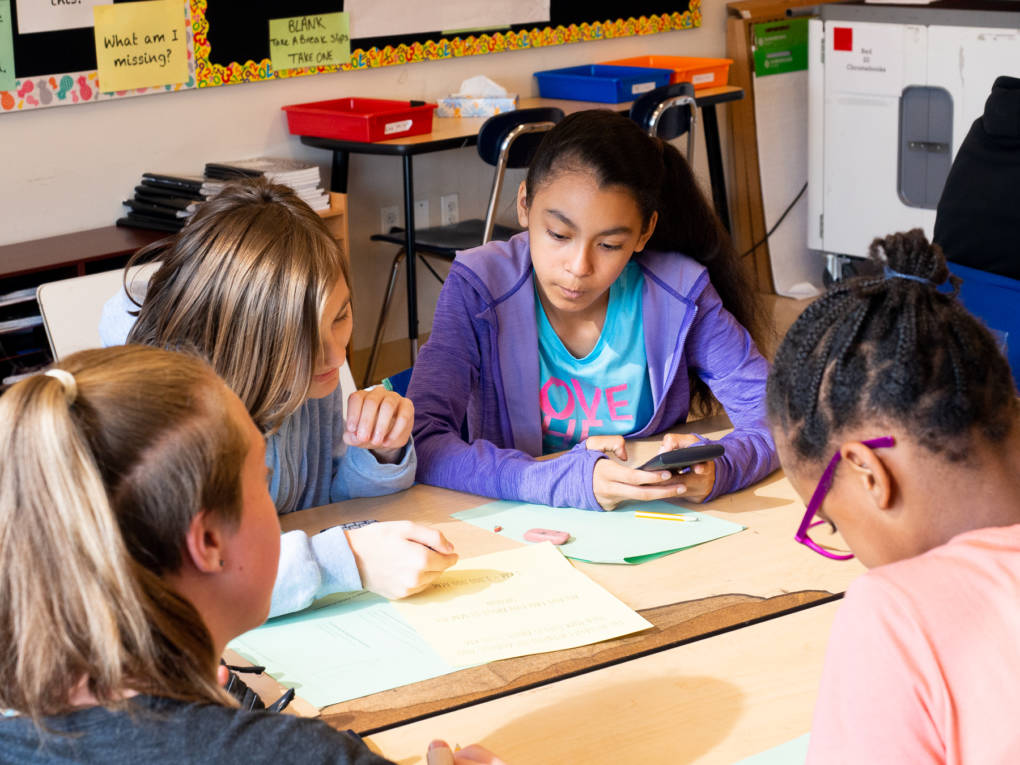
"caption": "Sixth graders at Capital City Public Charter School work collaboratively on a math problem. ",
"description": null,
"title": "Samantha Clarke 6th grade math and science class",
"credit": "Amadou Diallo for The Hechinger Report",
"status": "inherit",
"isLoading": false,
"fetchFailed": false
},
"mindshift_54086": {
"type": "attachments",
"id": "mindshift_54086",
"meta": {
"index": "attachments_1716263798",
"site": "mindshift",
"id": "54086",
"found": true
},
"parent": 54082,
"imgSizes": {
"twentyfourteen-full-width": {
"file": "https://ww2.kqed.org/app/uploads/sites/23/2019/08/rural-health-mcgregor-20_enl-315a3aae66e426edf8d42f613eca86cf1c178bd8-1038x576.jpg",
"width": 1038,
"mimeType": "image/jpeg",
"height": 576
},
"thumbnail": {
"file": "https://ww2.kqed.org/app/uploads/sites/23/2019/08/rural-health-mcgregor-20_enl-315a3aae66e426edf8d42f613eca86cf1c178bd8-160x107.jpg",
"width": 160,
"mimeType": "image/jpeg",
"height": 107
},
"post-thumbnail": {
"file": "https://ww2.kqed.org/app/uploads/sites/23/2019/08/rural-health-mcgregor-20_enl-315a3aae66e426edf8d42f613eca86cf1c178bd8-672x372.jpg",
"width": 672,
"mimeType": "image/jpeg",
"height": 372
},
"kqedFullSize": {
"file": "https://ww2.kqed.org/app/uploads/sites/23/2019/08/rural-health-mcgregor-20_enl-315a3aae66e426edf8d42f613eca86cf1c178bd8.jpg",
"width": 2000,
"height": 1333
},
"large": {
"file": "https://ww2.kqed.org/app/uploads/sites/23/2019/08/rural-health-mcgregor-20_enl-315a3aae66e426edf8d42f613eca86cf1c178bd8-1020x680.jpg",
"width": 1020,
"mimeType": "image/jpeg",
"height": 680
},
"complete_open_graph": {
"file": "https://ww2.kqed.org/app/uploads/sites/23/2019/08/rural-health-mcgregor-20_enl-315a3aae66e426edf8d42f613eca86cf1c178bd8-1200x800.jpg",
"width": 1200,
"mimeType": "image/jpeg",
"height": 800
},
"full-width": {
"file": "https://ww2.kqed.org/app/uploads/sites/23/2019/08/rural-health-mcgregor-20_enl-315a3aae66e426edf8d42f613eca86cf1c178bd8-1920x1280.jpg",
"width": 1920,
"mimeType": "image/jpeg",
"height": 1280
},
"medium": {
"file": "https://ww2.kqed.org/app/uploads/sites/23/2019/08/rural-health-mcgregor-20_enl-315a3aae66e426edf8d42f613eca86cf1c178bd8-800x533.jpg",
"width": 800,
"mimeType": "image/jpeg",
"height": 533
},
"medium_large": {
"file": "https://ww2.kqed.org/app/uploads/sites/23/2019/08/rural-health-mcgregor-20_enl-315a3aae66e426edf8d42f613eca86cf1c178bd8-768x512.jpg",
"width": 768,
"mimeType": "image/jpeg",
"height": 512
}
},
"publishDate": 1565235068,
"modified": 1565269106,
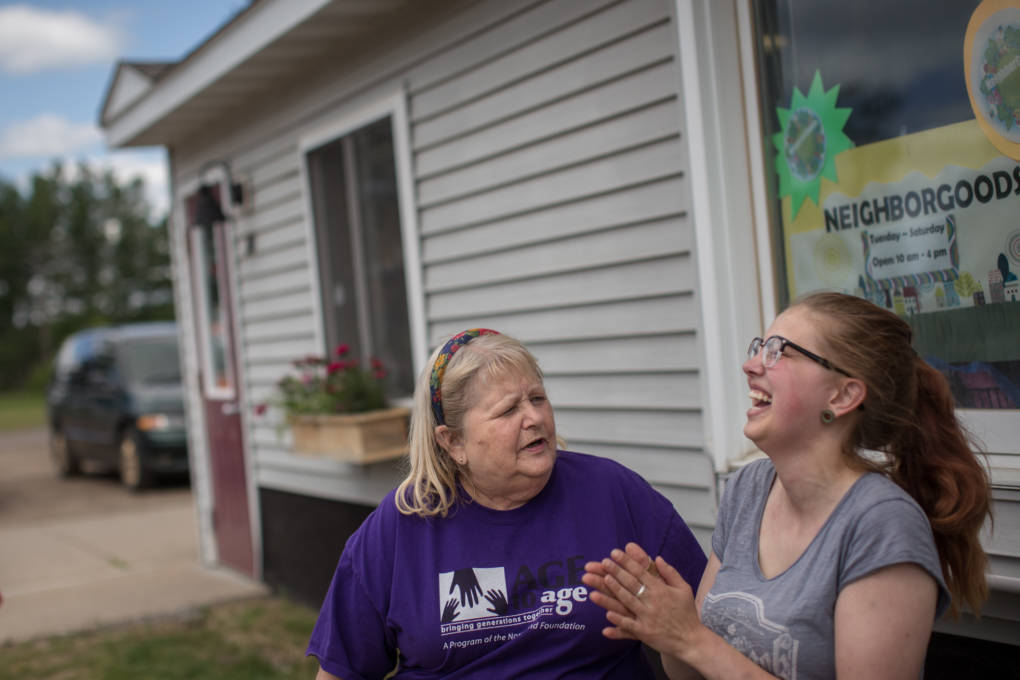
"caption": "Barbara Coplan and Annastazia Vierkandt catch up outside the Kids Plus office. Vierkandt calls Coplan her second mother. They have remained in touch over the years.\n",
"description": "Coplan and Vierkandt catch up outside the Kids Plus office. Vierkandt calls Coplan her second mother. They have remained in touch over the years.",
"title": "Coplan and Vierkandt catch up outside the Kids Plus office. Vierkandt calls Coplan her second mother. They have remained in touch over the years.",
"credit": "Meredith Rizzo/NPR",
"status": "inherit",
"isLoading": false,
"fetchFailed": false
},
"mindshift_53760": {
"type": "attachments",
"id": "mindshift_53760",
"meta": {
"index": "attachments_1716263798",
"site": "mindshift",
"id": "53760",
"found": true
},
"parent": 53092,
"imgSizes": {
"twentyfourteen-full-width": {
"file": "https://ww2.kqed.org/app/uploads/sites/23/2019/02/Edutopia-1-1038x576.png",
"width": 1038,
"mimeType": "image/png",
"height": 576
},
"thumbnail": {
"file": "https://ww2.kqed.org/app/uploads/sites/23/2019/02/Edutopia-1-160x108.png",
"width": 160,
"mimeType": "image/png",
"height": 108
},
"post-thumbnail": {
"file": "https://ww2.kqed.org/app/uploads/sites/23/2019/02/Edutopia-1-672x372.png",
"width": 672,
"mimeType": "image/png",
"height": 372
},
"kqedFullSize": {
"file": "https://ww2.kqed.org/app/uploads/sites/23/2019/02/Edutopia-1.png",
"width": 1920,
"height": 1301
},
"large": {
"file": "https://ww2.kqed.org/app/uploads/sites/23/2019/02/Edutopia-1-1020x691.png",
"width": 1020,
"mimeType": "image/png",
"height": 691
},
"complete_open_graph": {
"file": "https://ww2.kqed.org/app/uploads/sites/23/2019/02/Edutopia-1-1200x813.png",
"width": 1200,
"mimeType": "image/png",
"height": 813
},
"full-width": {
"file": "https://ww2.kqed.org/app/uploads/sites/23/2019/02/Edutopia-1-1920x1301.png",
"width": 1920,
"mimeType": "image/png",
"height": 1301
},
"medium": {
"file": "https://ww2.kqed.org/app/uploads/sites/23/2019/02/Edutopia-1-800x542.png",
"width": 800,
"mimeType": "image/png",
"height": 542
},
"medium_large": {
"file": "https://ww2.kqed.org/app/uploads/sites/23/2019/02/Edutopia-1-768x520.png",
"width": 768,
"mimeType": "image/png",
"height": 520
}
},
"publishDate": 1559539261,
"modified": 1559539423,
"caption": null,
"description": null,
"title": "Edutopia",
"credit": "\u003ca href=\"https://www.edutopia.org/video/getting-started-trauma-informed-practices\">Edutopia\u003c/a> ",
"status": "inherit",
"isLoading": false,
"fetchFailed": false
},
"mindshift_53096": {
"type": "attachments",
"id": "mindshift_53096",
"meta": {
"index": "attachments_1716263798",
"site": "mindshift",
"id": "53096",
"found": true
},
"parent": 53091,
"imgSizes": {
"thumbnail": {
"file": "https://ww2.kqed.org/app/uploads/sites/23/2019/02/greet1-160x78.jpg",
"width": 160,
"mimeType": "image/jpeg",
"height": 78
},
"post-thumbnail": {
"file": "https://ww2.kqed.org/app/uploads/sites/23/2019/02/greet1-672x372.jpg",
"width": 672,
"mimeType": "image/jpeg",
"height": 372
},
"kqedFullSize": {
"file": "https://ww2.kqed.org/app/uploads/sites/23/2019/02/greet1.jpg",
"width": 870,
"height": 425
},
"guest-author-50": {
"file": "https://ww2.kqed.org/app/uploads/sites/23/2019/02/greet1-50x50.jpg",
"width": 50,
"mimeType": "image/jpeg",
"height": 50
},
"guest-author-96": {
"file": "https://ww2.kqed.org/app/uploads/sites/23/2019/02/greet1-96x96.jpg",
"width": 96,
"mimeType": "image/jpeg",
"height": 96
},
"medium": {
"file": "https://ww2.kqed.org/app/uploads/sites/23/2019/02/greet1-800x391.jpg",
"width": 800,
"mimeType": "image/jpeg",
"height": 391
},
"guest-author-64": {
"file": "https://ww2.kqed.org/app/uploads/sites/23/2019/02/greet1-64x64.jpg",
"width": 64,
"mimeType": "image/jpeg",
"height": 64
},
"detail": {
"file": "https://ww2.kqed.org/app/uploads/sites/23/2019/02/greet1-150x150.jpg",
"width": 150,
"mimeType": "image/jpeg",
"height": 150
},
"guest-author-32": {
"file": "https://ww2.kqed.org/app/uploads/sites/23/2019/02/greet1-32x32.jpg",
"width": 32,
"mimeType": "image/jpeg",
"height": 32
},
"medium_large": {
"file": "https://ww2.kqed.org/app/uploads/sites/23/2019/02/greet1-768x375.jpg",
"width": 768,
"mimeType": "image/jpeg",
"height": 375
},
"guest-author-128": {
"file": "https://ww2.kqed.org/app/uploads/sites/23/2019/02/greet1-128x128.jpg",
"width": 128,
"mimeType": "image/jpeg",
"height": 128
}
},
"publishDate": 1550710222,
"modified": 1550710304,
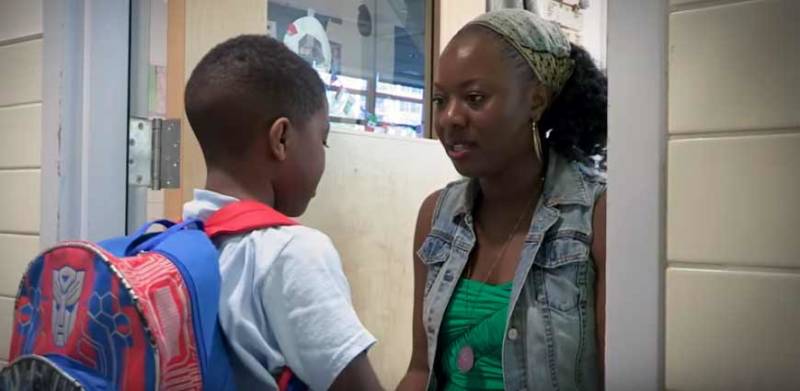
"caption": "Kindergarten teacher Falon Turner greets every student at the door when they enter for the day. She uses that time to check in and make them feel seen.",
"description": "Kindergarten teacher Falon Turner greets every student at the door when they enter for the day. She uses that time to check in and make them feel seen.",
"title": "greet1",
"credit": "\u003ca href=\"https://www.edutopia.org/video/making-connections-greetings-door\">Edutopia\u003c/a>",
"status": "inherit",
"isLoading": false,
"fetchFailed": false
},
"mindshift_52362": {
"type": "attachments",
"id": "mindshift_52362",
"meta": {
"index": "attachments_1716263798",
"site": "mindshift",
"id": "52362",
"found": true
},
"parent": 52361,
"imgSizes": {
"small": {
"file": "https://ww2.kqed.org/app/uploads/sites/23/2018/10/mental-health-team_wide-c99648f255295f828a784a22bdb5774bb58a0ec9-520x292.jpg",
"width": 520,
"mimeType": "image/jpeg",
"height": 292
},
"twentyfourteen-full-width": {
"file": "https://ww2.kqed.org/app/uploads/sites/23/2018/10/mental-health-team_wide-c99648f255295f828a784a22bdb5774bb58a0ec9-1038x576.jpg",
"width": 1038,
"mimeType": "image/jpeg",
"height": 576
},
"thumbnail": {
"file": "https://ww2.kqed.org/app/uploads/sites/23/2018/10/mental-health-team_wide-c99648f255295f828a784a22bdb5774bb58a0ec9-160x90.jpg",
"width": 160,
"mimeType": "image/jpeg",
"height": 90
},
"fd-sm": {
"file": "https://ww2.kqed.org/app/uploads/sites/23/2018/10/mental-health-team_wide-c99648f255295f828a784a22bdb5774bb58a0ec9-960x540.jpg",
"width": 960,
"mimeType": "image/jpeg",
"height": 540
},
"post-thumbnail": {
"file": "https://ww2.kqed.org/app/uploads/sites/23/2018/10/mental-health-team_wide-c99648f255295f828a784a22bdb5774bb58a0ec9-672x372.jpg",
"width": 672,
"mimeType": "image/jpeg",
"height": 372
},
"xsmall": {
"file": "https://ww2.kqed.org/app/uploads/sites/23/2018/10/mental-health-team_wide-c99648f255295f828a784a22bdb5774bb58a0ec9-375x211.jpg",
"width": 375,
"mimeType": "image/jpeg",
"height": 211
},
"kqedFullSize": {
"file": "https://ww2.kqed.org/app/uploads/sites/23/2018/10/mental-health-team_wide-c99648f255295f828a784a22bdb5774bb58a0ec9-e1540229742197.jpg",
"width": 1920,
"height": 1080
},
"large": {
"file": "https://ww2.kqed.org/app/uploads/sites/23/2018/10/mental-health-team_wide-c99648f255295f828a784a22bdb5774bb58a0ec9-1020x574.jpg",
"width": 1020,
"mimeType": "image/jpeg",
"height": 574
},
"xlarge": {
"file": "https://ww2.kqed.org/app/uploads/sites/23/2018/10/mental-health-team_wide-c99648f255295f828a784a22bdb5774bb58a0ec9-1180x664.jpg",
"width": 1180,
"mimeType": "image/jpeg",
"height": 664
},
"complete_open_graph": {
"file": "https://ww2.kqed.org/app/uploads/sites/23/2018/10/mental-health-team_wide-c99648f255295f828a784a22bdb5774bb58a0ec9-1200x675.jpg",
"width": 1200,
"mimeType": "image/jpeg",
"height": 675
},
"guest-author-50": {
"file": "https://ww2.kqed.org/app/uploads/sites/23/2018/10/mental-health-team_wide-c99648f255295f828a784a22bdb5774bb58a0ec9-50x50.jpg",
"width": 50,
"mimeType": "image/jpeg",
"height": 50
},
"guest-author-96": {
"file": "https://ww2.kqed.org/app/uploads/sites/23/2018/10/mental-health-team_wide-c99648f255295f828a784a22bdb5774bb58a0ec9-96x96.jpg",
"width": 96,
"mimeType": "image/jpeg",
"height": 96
},
"medium": {
"file": "https://ww2.kqed.org/app/uploads/sites/23/2018/10/mental-health-team_wide-c99648f255295f828a784a22bdb5774bb58a0ec9-800x450.jpg",
"width": 800,
"mimeType": "image/jpeg",
"height": 450
},
"guest-author-64": {
"file": "https://ww2.kqed.org/app/uploads/sites/23/2018/10/mental-health-team_wide-c99648f255295f828a784a22bdb5774bb58a0ec9-64x64.jpg",
"width": 64,
"mimeType": "image/jpeg",
"height": 64
},
"guest-author-32": {
"file": "https://ww2.kqed.org/app/uploads/sites/23/2018/10/mental-health-team_wide-c99648f255295f828a784a22bdb5774bb58a0ec9-32x32.jpg",
"width": 32,
"mimeType": "image/jpeg",
"height": 32
},
"fd-lrg": {
"file": "https://ww2.kqed.org/app/uploads/sites/23/2018/10/mental-health-team_wide-c99648f255295f828a784a22bdb5774bb58a0ec9-1920x1080.jpg",
"width": 1920,
"mimeType": "image/jpeg",
"height": 1080
},
"fd-med": {
"file": "https://ww2.kqed.org/app/uploads/sites/23/2018/10/mental-health-team_wide-c99648f255295f828a784a22bdb5774bb58a0ec9-1180x664.jpg",
"width": 1180,
"mimeType": "image/jpeg",
"height": 664
},
"full-width": {
"file": "https://ww2.kqed.org/app/uploads/sites/23/2018/10/mental-health-team_wide-c99648f255295f828a784a22bdb5774bb58a0ec9-1920x1080.jpg",
"width": 1920,
"mimeType": "image/jpeg",
"height": 1080
},
"detail": {
"file": "https://ww2.kqed.org/app/uploads/sites/23/2018/10/mental-health-team_wide-c99648f255295f828a784a22bdb5774bb58a0ec9-150x150.jpg",
"width": 150,
"mimeType": "image/jpeg",
"height": 150
},
"medium_large": {
"file": "https://ww2.kqed.org/app/uploads/sites/23/2018/10/mental-health-team_wide-c99648f255295f828a784a22bdb5774bb58a0ec9-768x432.jpg",
"width": 768,
"mimeType": "image/jpeg",
"height": 432
},
"guest-author-128": {
"file": "https://ww2.kqed.org/app/uploads/sites/23/2018/10/mental-health-team_wide-c99648f255295f828a784a22bdb5774bb58a0ec9-128x128.jpg",
"width": 128,
"mimeType": "image/jpeg",
"height": 128
},
"xxsmall": {
"file": "https://ww2.kqed.org/app/uploads/sites/23/2018/10/mental-health-team_wide-c99648f255295f828a784a22bdb5774bb58a0ec9-240x135.jpg",
"width": 240,
"mimeType": "image/jpeg",
"height": 135
}
},
"publishDate": 1540229659,
"modified": 1540229734,
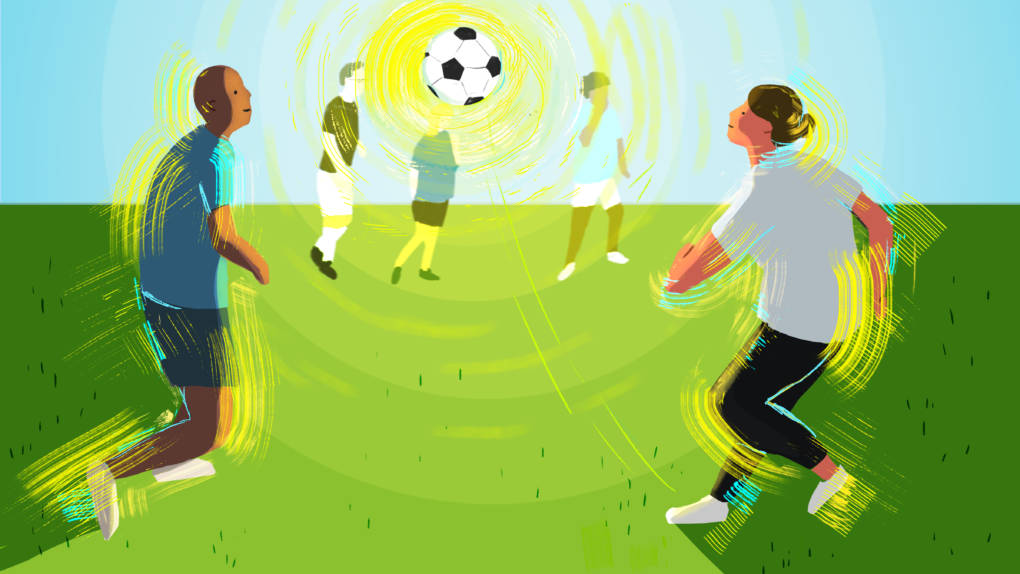
"caption": "Research suggests team sports can help ease panic attacks, sleep or mood disorders more than other types of exercise.",
"description": null,
"title": "Research suggests team sports can help ease panic attacks, sleep or mood disorders more than other types of exercise.",
"credit": "Maria Fabrizio for NPR",
"status": "inherit",
"isLoading": false,
"fetchFailed": false
},
"mindshift_52221": {
"type": "attachments",
"id": "mindshift_52221",
"meta": {
"index": "attachments_1716263798",
"site": "mindshift",
"id": "52221",
"found": true
},
"parent": 52220,
"imgSizes": {
"small": {
"file": "https://ww2.kqed.org/app/uploads/sites/23/2018/09/gettyimages-1027172010_custom-5304261037064bfb0f7d9bc2ba3b4690f45e3a1b-520x344.jpg",
"width": 520,
"mimeType": "image/jpeg",
"height": 344
},
"twentyfourteen-full-width": {
"file": "https://ww2.kqed.org/app/uploads/sites/23/2018/09/gettyimages-1027172010_custom-5304261037064bfb0f7d9bc2ba3b4690f45e3a1b-1038x576.jpg",
"width": 1038,
"mimeType": "image/jpeg",
"height": 576
},
"thumbnail": {
"file": "https://ww2.kqed.org/app/uploads/sites/23/2018/09/gettyimages-1027172010_custom-5304261037064bfb0f7d9bc2ba3b4690f45e3a1b-160x106.jpg",
"width": 160,
"mimeType": "image/jpeg",
"height": 106
},
"fd-sm": {
"file": "https://ww2.kqed.org/app/uploads/sites/23/2018/09/gettyimages-1027172010_custom-5304261037064bfb0f7d9bc2ba3b4690f45e3a1b-960x634.jpg",
"width": 960,
"mimeType": "image/jpeg",
"height": 634
},
"post-thumbnail": {
"file": "https://ww2.kqed.org/app/uploads/sites/23/2018/09/gettyimages-1027172010_custom-5304261037064bfb0f7d9bc2ba3b4690f45e3a1b-672x372.jpg",
"width": 672,
"mimeType": "image/jpeg",
"height": 372
},
"xsmall": {
"file": "https://ww2.kqed.org/app/uploads/sites/23/2018/09/gettyimages-1027172010_custom-5304261037064bfb0f7d9bc2ba3b4690f45e3a1b-375x248.jpg",
"width": 375,
"mimeType": "image/jpeg",
"height": 248
},
"kqedFullSize": {
"file": "https://ww2.kqed.org/app/uploads/sites/23/2018/09/gettyimages-1027172010_custom-5304261037064bfb0f7d9bc2ba3b4690f45e3a1b-e1537545807299.jpg",
"width": 1920,
"height": 1268
},
"large": {
"file": "https://ww2.kqed.org/app/uploads/sites/23/2018/09/gettyimages-1027172010_custom-5304261037064bfb0f7d9bc2ba3b4690f45e3a1b-1020x674.jpg",
"width": 1020,
"mimeType": "image/jpeg",
"height": 674
},
"xlarge": {
"file": "https://ww2.kqed.org/app/uploads/sites/23/2018/09/gettyimages-1027172010_custom-5304261037064bfb0f7d9bc2ba3b4690f45e3a1b-1180x780.jpg",
"width": 1180,
"mimeType": "image/jpeg",
"height": 780
},
"complete_open_graph": {
"file": "https://ww2.kqed.org/app/uploads/sites/23/2018/09/gettyimages-1027172010_custom-5304261037064bfb0f7d9bc2ba3b4690f45e3a1b-1200x793.jpg",
"width": 1200,
"mimeType": "image/jpeg",
"height": 793
},
"guest-author-50": {
"file": "https://ww2.kqed.org/app/uploads/sites/23/2018/09/gettyimages-1027172010_custom-5304261037064bfb0f7d9bc2ba3b4690f45e3a1b-50x50.jpg",
"width": 50,
"mimeType": "image/jpeg",
"height": 50
},
"guest-author-96": {
"file": "https://ww2.kqed.org/app/uploads/sites/23/2018/09/gettyimages-1027172010_custom-5304261037064bfb0f7d9bc2ba3b4690f45e3a1b-96x96.jpg",
"width": 96,
"mimeType": "image/jpeg",
"height": 96
},
"medium": {
"file": "https://ww2.kqed.org/app/uploads/sites/23/2018/09/gettyimages-1027172010_custom-5304261037064bfb0f7d9bc2ba3b4690f45e3a1b-800x529.jpg",
"width": 800,
"mimeType": "image/jpeg",
"height": 529
},
"guest-author-64": {
"file": "https://ww2.kqed.org/app/uploads/sites/23/2018/09/gettyimages-1027172010_custom-5304261037064bfb0f7d9bc2ba3b4690f45e3a1b-64x64.jpg",
"width": 64,
"mimeType": "image/jpeg",
"height": 64
},
"guest-author-32": {
"file": "https://ww2.kqed.org/app/uploads/sites/23/2018/09/gettyimages-1027172010_custom-5304261037064bfb0f7d9bc2ba3b4690f45e3a1b-32x32.jpg",
"width": 32,
"mimeType": "image/jpeg",
"height": 32
},
"fd-lrg": {
"file": "https://ww2.kqed.org/app/uploads/sites/23/2018/09/gettyimages-1027172010_custom-5304261037064bfb0f7d9bc2ba3b4690f45e3a1b-1920x1268.jpg",
"width": 1920,
"mimeType": "image/jpeg",
"height": 1268
},
"fd-med": {
"file": "https://ww2.kqed.org/app/uploads/sites/23/2018/09/gettyimages-1027172010_custom-5304261037064bfb0f7d9bc2ba3b4690f45e3a1b-1180x780.jpg",
"width": 1180,
"mimeType": "image/jpeg",
"height": 780
},
"full-width": {
"file": "https://ww2.kqed.org/app/uploads/sites/23/2018/09/gettyimages-1027172010_custom-5304261037064bfb0f7d9bc2ba3b4690f45e3a1b-1920x1268.jpg",
"width": 1920,
"mimeType": "image/jpeg",
"height": 1268
},
"detail": {
"file": "https://ww2.kqed.org/app/uploads/sites/23/2018/09/gettyimages-1027172010_custom-5304261037064bfb0f7d9bc2ba3b4690f45e3a1b-150x150.jpg",
"width": 150,
"mimeType": "image/jpeg",
"height": 150
},
"medium_large": {
"file": "https://ww2.kqed.org/app/uploads/sites/23/2018/09/gettyimages-1027172010_custom-5304261037064bfb0f7d9bc2ba3b4690f45e3a1b-768x507.jpg",
"width": 768,
"mimeType": "image/jpeg",
"height": 507
},
"guest-author-128": {
"file": "https://ww2.kqed.org/app/uploads/sites/23/2018/09/gettyimages-1027172010_custom-5304261037064bfb0f7d9bc2ba3b4690f45e3a1b-128x128.jpg",
"width": 128,
"mimeType": "image/jpeg",
"height": 128
},
"xxsmall": {
"file": "https://ww2.kqed.org/app/uploads/sites/23/2018/09/gettyimages-1027172010_custom-5304261037064bfb0f7d9bc2ba3b4690f45e3a1b-240x159.jpg",
"width": 240,
"mimeType": "image/jpeg",
"height": 159
}
},
"publishDate": 1537545758,
"modified": 1537545816,
"caption": null,
"description": "Supreme Court nominee Judge Brett Kavanaugh during the second day of his Supreme Court confirmation hearing on Capitol Hill",
"title": "Supreme Court nominee Judge Brett Kavanaugh during the second day of his Supreme Court confirmation hearing on Capitol Hill.",
"credit": "Win McNamee / Getty Images",
"status": "inherit",
"isLoading": false,
"fetchFailed": false
},
"mindshift_51940": {
"type": "attachments",
"id": "mindshift_51940",
"meta": {
"index": "attachments_1716263798",
"site": "mindshift",
"id": "51940",
"found": true
},
"parent": 51937,
"imgSizes": {
"small": {
"file": "https://ww2.kqed.org/app/uploads/sites/23/2018/08/Wessling2-520x291.png",
"width": 520,
"mimeType": "image/png",
"height": 291
},
"thumbnail": {
"file": "https://ww2.kqed.org/app/uploads/sites/23/2018/08/Wessling2-160x90.png",
"width": 160,
"mimeType": "image/png",
"height": 90
},
"post-thumbnail": {
"file": "https://ww2.kqed.org/app/uploads/sites/23/2018/08/Wessling2-672x372.png",
"width": 672,
"mimeType": "image/png",
"height": 372
},
"xsmall": {
"file": "https://ww2.kqed.org/app/uploads/sites/23/2018/08/Wessling2-375x210.png",
"width": 375,
"mimeType": "image/png",
"height": 210
},
"kqedFullSize": {
"file": "https://ww2.kqed.org/app/uploads/sites/23/2018/08/Wessling2.png",
"width": 957,
"height": 536
},
"guest-author-50": {
"file": "https://ww2.kqed.org/app/uploads/sites/23/2018/08/Wessling2-50x50.png",
"width": 50,
"mimeType": "image/png",
"height": 50
},
"guest-author-96": {
"file": "https://ww2.kqed.org/app/uploads/sites/23/2018/08/Wessling2-96x96.png",
"width": 96,
"mimeType": "image/png",
"height": 96
},
"medium": {
"file": "https://ww2.kqed.org/app/uploads/sites/23/2018/08/Wessling2-800x448.png",
"width": 800,
"mimeType": "image/png",
"height": 448
},
"guest-author-64": {
"file": "https://ww2.kqed.org/app/uploads/sites/23/2018/08/Wessling2-64x64.png",
"width": 64,
"mimeType": "image/png",
"height": 64
},
"guest-author-32": {
"file": "https://ww2.kqed.org/app/uploads/sites/23/2018/08/Wessling2-32x32.png",
"width": 32,
"mimeType": "image/png",
"height": 32
},
"detail": {
"file": "https://ww2.kqed.org/app/uploads/sites/23/2018/08/Wessling2-150x150.png",
"width": 150,
"mimeType": "image/png",
"height": 150
},
"medium_large": {
"file": "https://ww2.kqed.org/app/uploads/sites/23/2018/08/Wessling2-768x430.png",
"width": 768,
"mimeType": "image/png",
"height": 430
},
"guest-author-128": {
"file": "https://ww2.kqed.org/app/uploads/sites/23/2018/08/Wessling2-128x128.png",
"width": 128,
"mimeType": "image/png",
"height": 128
},
"xxsmall": {
"file": "https://ww2.kqed.org/app/uploads/sites/23/2018/08/Wessling2-240x134.png",
"width": 240,
"mimeType": "image/png",
"height": 134
}
},
"publishDate": 1534805639,
"modified": 1534805670,
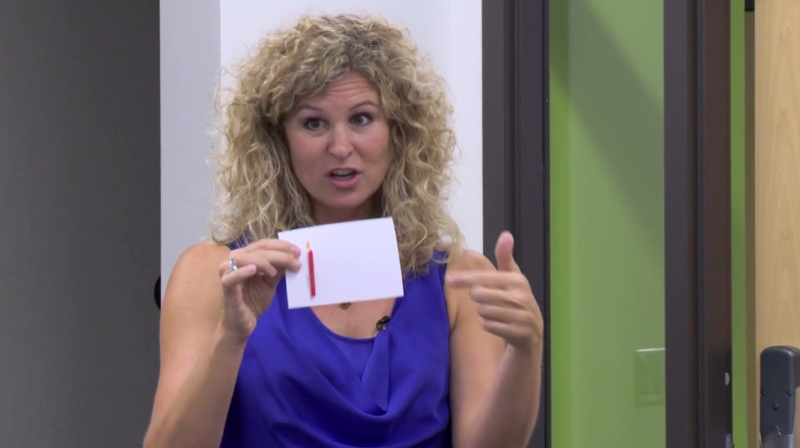
"caption": "English teacher Sarah Brown Wessling likes to start school off by asking students their wish for the year.",
"description": "English teacher Sarah Brown Wessling likes to start school off by asking students their wish for the year.",
"title": "Wessling2",
"credit": "\u003ca href=\"https://www.teachingchannel.org/video/first-day-high-school-goals\">Teaching Channel\u003c/a>",
"status": "inherit",
"isLoading": false,
"fetchFailed": false
},
"mindshift_51945": {
"type": "attachments",
"id": "mindshift_51945",
"meta": {
"index": "attachments_1716263798",
"site": "mindshift",
"id": "51945",
"found": true
},
"parent": 51943,
"imgSizes": {
"small": {
"file": "https://ww2.kqed.org/app/uploads/sites/23/2018/08/students-work-together-520x291.png",
"width": 520,
"mimeType": "image/png",
"height": 291
},
"thumbnail": {
"file": "https://ww2.kqed.org/app/uploads/sites/23/2018/08/students-work-together-160x90.png",
"width": 160,
"mimeType": "image/png",
"height": 90
},
"post-thumbnail": {
"file": "https://ww2.kqed.org/app/uploads/sites/23/2018/08/students-work-together-672x372.png",
"width": 672,
"mimeType": "image/png",
"height": 372
},
"xsmall": {
"file": "https://ww2.kqed.org/app/uploads/sites/23/2018/08/students-work-together-375x210.png",
"width": 375,
"mimeType": "image/png",
"height": 210
},
"kqedFullSize": {
"file": "https://ww2.kqed.org/app/uploads/sites/23/2018/08/students-work-together.png",
"width": 950,
"height": 532
},
"guest-author-50": {
"file": "https://ww2.kqed.org/app/uploads/sites/23/2018/08/students-work-together-50x50.png",
"width": 50,
"mimeType": "image/png",
"height": 50
},
"guest-author-96": {
"file": "https://ww2.kqed.org/app/uploads/sites/23/2018/08/students-work-together-96x96.png",
"width": 96,
"mimeType": "image/png",
"height": 96
},
"medium": {
"file": "https://ww2.kqed.org/app/uploads/sites/23/2018/08/students-work-together-800x448.png",
"width": 800,
"mimeType": "image/png",
"height": 448
},
"guest-author-64": {
"file": "https://ww2.kqed.org/app/uploads/sites/23/2018/08/students-work-together-64x64.png",
"width": 64,
"mimeType": "image/png",
"height": 64
},
"guest-author-32": {
"file": "https://ww2.kqed.org/app/uploads/sites/23/2018/08/students-work-together-32x32.png",
"width": 32,
"mimeType": "image/png",
"height": 32
},
"detail": {
"file": "https://ww2.kqed.org/app/uploads/sites/23/2018/08/students-work-together-150x150.png",
"width": 150,
"mimeType": "image/png",
"height": 150
},
"medium_large": {
"file": "https://ww2.kqed.org/app/uploads/sites/23/2018/08/students-work-together-768x430.png",
"width": 768,
"mimeType": "image/png",
"height": 430
},
"guest-author-128": {
"file": "https://ww2.kqed.org/app/uploads/sites/23/2018/08/students-work-together-128x128.png",
"width": 128,
"mimeType": "image/png",
"height": 128
},
"xxsmall": {
"file": "https://ww2.kqed.org/app/uploads/sites/23/2018/08/students-work-together-240x134.png",
"width": 240,
"mimeType": "image/png",
"height": 134
}
},
"publishDate": 1534808031,
"modified": 1534808110,
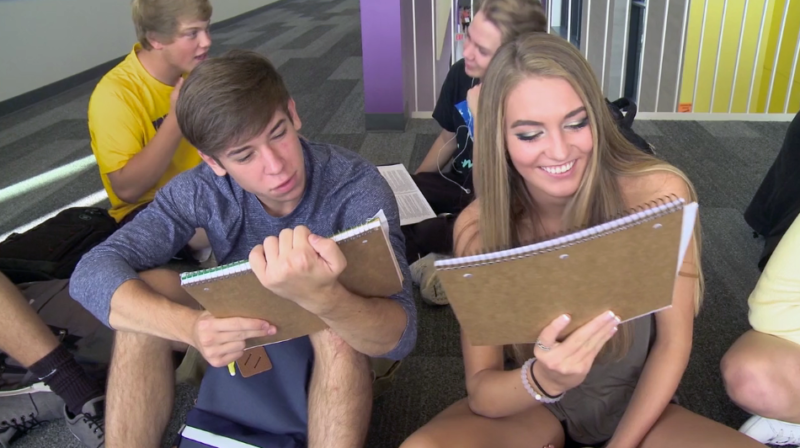
"caption": "Rather than going over the syllabus, rules and expectations for the class on the first day of school, Wessling asks students to engage in a complex learning task.",
"description": "Rather than going over the syllabus, rules and expectations for the class on the first day of school, Wessling asks students to engage in a complex learning task.",
"title": "students work together",
"credit": "\u003ca href=\"https://www.teachingchannel.org/video/first-day-school-high-school-lesson\">Teaching Channel\u003c/a>",
"status": "inherit",
"isLoading": false,
"fetchFailed": false
}
},
"audioPlayerReducer": {
"postId": "stream_live",
"isPaused": true,
"isPlaying": false,
"pfsActive": false,
"pledgeModalIsOpen": true,
"playerDrawerIsOpen": false,
"liveAudioPlayStartedAt": 0,
"liveAudioPlayContext": ""
},
"authorsReducer": {
"byline_mindshift_54767": {
"type": "authors",
"id": "byline_mindshift_54767",
"meta": {
"override": true
},
"slug": "byline_mindshift_54767",
"name": "Rhitu Chatterjee",
"isLoading": false
},
"byline_mindshift_54286": {
"type": "authors",
"id": "byline_mindshift_54286",
"meta": {
"override": true
},
"slug": "byline_mindshift_54286",
"name": "\u003ca href=\"https://hechingerreport.org/\">Amadou Diallo, The Hechinger Report\u003c/a>",
"isLoading": false
},
"byline_mindshift_54082": {
"type": "authors",
"id": "byline_mindshift_54082",
"meta": {
"override": true
},
"slug": "byline_mindshift_54082",
"name": "Rhitu Chatterjee",
"isLoading": false
},
"byline_mindshift_52361": {
"type": "authors",
"id": "byline_mindshift_52361",
"meta": {
"override": true
},
"slug": "byline_mindshift_52361",
"name": "Sasa Woodruff",
"isLoading": false
},
"byline_mindshift_52220": {
"type": "authors",
"id": "byline_mindshift_52220",
"meta": {
"override": true
},
"slug": "byline_mindshift_52220",
"name": "Anya Kamenetz",
"isLoading": false
},
"katrinaschwartz": {
"type": "authors",
"id": "234",
"meta": {
"index": "authors_1716337520",
"id": "234",
"found": true
},
"name": "Katrina Schwartz",
"firstName": "Katrina",
"lastName": "Schwartz",
"slug": "katrinaschwartz",
"email": "kschwartz@kqed.org",
"display_author_email": false,
"staff_mastheads": [
"news"
],
"title": "Producer",
"bio": "Katrina Schwartz is a journalist based in San Francisco. She's worked at KPCC public radio in LA and has reported on air and online for KQED since 2010. She covered how teaching and learning is changing for MindShift between 2012 and 2020. She is the co-host of the MindShift podcast and now produces KQED's Bay Curious podcast.",
"avatar": "https://secure.gravatar.com/avatar/edb4ee79070447a018538c9aae6eeecf28786515b8a0c30e43b6b7dce5aa44c8?s=600&d=blank&r=g",
"twitter": "kschwart",
"bluesky": null,
"facebook": null,
"instagram": null,
"linkedin": null,
"sites": [
{
"site": "",
"roles": [
"editor"
]
},
{
"site": "news",
"roles": [
"editor"
]
},
{
"site": "mindshift",
"roles": [
"administrator"
]
},
{
"site": "stateofhealth",
"roles": [
"author"
]
},
{
"site": "science",
"roles": [
"editor"
]
}
],
"headData": {
"title": "Katrina Schwartz | KQED",
"description": "Producer",
"ogImgSrc": "https://secure.gravatar.com/avatar/edb4ee79070447a018538c9aae6eeecf28786515b8a0c30e43b6b7dce5aa44c8?s=600&d=blank&r=g",
"twImgSrc": "https://secure.gravatar.com/avatar/edb4ee79070447a018538c9aae6eeecf28786515b8a0c30e43b6b7dce5aa44c8?s=600&d=blank&r=g"
},
"isLoading": false,
"link": "/author/katrinaschwartz"
}
},
"pagesReducer": {
"mindshift_tag_relationships": {
"type": "terms",
"id": "mindshift_21213",
"meta": {
"index": "terms_1716263798",
"site": "mindshift",
"id": "21213",
"score": 8.937703
},
"featImg": null,
"name": "relationships",
"description": null,
"taxonomy": "tag",
"headData": {
"twImgId": null,
"twTitle": null,
"ogTitle": null,
"ogImgId": null,
"twDescription": null,
"description": null,
"title": "relationships Archives - KQED Mindshift",
"ogDescription": null
},
"ttid": 20485,
"slug": "relationships",
"isLoading": false,
"title": "relationships",
"pageMeta": {
"site": "mindshift",
"WpPageTemplate": "page-topic-editorial",
"currentPage": 6
},
"blocks": [
{
"blockName": "kqed/post-list",
"attrs": {
"layout": "cardArticle2",
"query": "posts/mindshift?tag=relationships",
"seeMore": false,
"paginated": true,
"page": 6
}
},
{
"blockName": "kqed/ad"
}
]
}
},
"pfsSessionReducer": {},
"postsReducer": {
"stream_live": {
"type": "live",
"id": "stream_live",
"audioUrl": "https://streams.kqed.org/kqedradio",
"title": "Live Stream",
"excerpt": "Live Stream information currently unavailable.",
"link": "/radio",
"featImg": "",
"label": {
"name": "KQED Live",
"link": "/"
}
},
"stream_kqedNewscast": {
"type": "posts",
"id": "stream_kqedNewscast",
"audioUrl": "https://www.kqed.org/.stream/anon/radio/RDnews/newscast.mp3?_=1",
"title": "KQED Newscast",
"featImg": "",
"label": {
"name": "88.5 FM",
"link": "/"
}
},
"mindshift_54767": {
"type": "posts",
"id": "mindshift_54767",
"meta": {
"index": "posts_1716263798",
"site": "mindshift",
"id": "54767",
"score": null,
"sort": [
1573107409000
]
},
"parent": 0,
"labelTerm": {
"site": "mindshift"
},
"blocks": [],
"publishDate": 1573107409,
"format": "standard",
"disqusTitle": "Childhood Trauma Is A Public Health Issue And We Can Do More To Prevent It",
"title": "Childhood Trauma Is A Public Health Issue And We Can Do More To Prevent It",
"headTitle": "MindShift | KQED News",
"content": "\u003cp>Childhood trauma causes serious health repercussions throughout life and is a public health issue that calls for concerted prevention efforts. That's the takeaway of a report published Tuesday from the Centers for Disease Control and Prevention.\u003c/p>\n\u003cp>Experiencing traumatic things as a child puts you at risk for lifelong health effects, according to a body of research. The CDC's new report confirms this, finding that Americans who had experienced adverse childhood experiences, or ACEs, were at higher risk of dying from five of the \u003ca href=\"https://www.cdc.gov/nchs/products/databriefs/db328.htm\">top 10 leading causes of death\u003c/a>.\u003c/p>\n\u003cp>And those who had been through more bad experiences — such as abuse or neglect, witnessing violence at home or growing up in a family with mental health or substance abuse problems — were at an even higher risk.\u003c/p>\n\u003cp>One in six people across the United States has experienced four or more kinds of adverse childhood experiences, according to the report.\u003c/p>\n\u003cp>That's why it's important to prevent adverse childhood experiences and lessen their impact on individuals, said the CDC's principal deputy director, Dr. Anne Schuchat, at a teleconference Tuesday. \"Preventing ACEs can help children and adults thrive and has the potential to substantially lower the risk for conditions like asthma, cancer, depressive disorder and diabetes,\" she said.\u003c/p>\n\u003cp>[ad fullwidth]\u003c/p>\n\u003cp>The new report presents the CDC's first estimate of how many Americans are affected by adverse childhood experiences, as well as the potential benefits of preventing these kinds of traumas.\u003c/p>\n\u003cp>Using data from a survey of more than 144,000 adults from 25 states, the report found that about 60% of Americans experience at least one adverse experience during childhood. And 15.6% experienced four or more different types. Women, American Indian and Alaskan Natives, and African Americans have a higher risk of experiencing four or more types of childhood traumas.\u003c/p>\n\u003cp>The effects add up. \"The more types of ACEs a person has, the higher their risk for negative outcomes, which will limit their opportunities their whole life,\" said Schuchat.\u003c/p>\n\u003cp>But these health outcomes are preventable, according to the report. Preventing childhood trauma could potentially prevent 1.9 million cases of coronary heart disease, the leading killer in this country. Similarly, it could prevent 2.5 million cases of obesity or overweight and 21 million cases of depression.\u003c/p>\n\u003cp>Trauma in childhood can also affect a person's social well-being, Schuchat added. \"ACEs also negatively affect life opportunities, like completing high school or future employment,\" she said. \"Preventing ACEs could have kept up to 1.5 million students from dropping out of school.\"\u003c/p>\n\u003cp>Studies have shown that there are ways to prevent childhood trauma and mitigate its effects when it does happen. And the CDC has previously\u003ca href=\"https://www.cdc.gov/violenceprevention/pdf/preventingACES-508.pdf\"> compiled a list of approaches\u003c/a> proven to be effective.\u003c/p>\n\u003cp>The agency points to the need for efforts at every level: state, community, family and individual.\u003c/p>\n\u003cp>Schuchat noted that positive childhood experiences and relationships \u003ca href=\"https://www.npr.org/sections/health-shots/2019/09/09/759031061/positive-childhood-experiences-may-buffer-against-health-effects-of-adverse-ones\">are known to buffer against \u003c/a>the stress of trauma and strengthen resilience. \"It might be a parent, it might be a teacher, it might be a neighbor, but having a stable, reliable person in your life can help you at that individual level with resilience,\" said Schuchat. \"That stability and nurturing will help you when you have a stress or a difficult problem [because you] have an outlet and a reliable way to process it and seek help if you need to.\"\u003c/p>\n\u003cp>Mentoring programs that \u003ca href=\"https://www.npr.org/sections/health-shots/2019/08/07/747072351/bringing-together-young-and-old-to-ease-the-isolation-of-rural-life\">connect children with caring adults\u003c/a> at school, or in the community, have been shown to support children through difficulties in their lives.\u003c/p>\n\u003cp>In fact, supportive, nurturing relationships and environments for both children and families are at the heart of prevention, according to the report, which describes six approaches to prevention. Those approaches include strengthening economic support for families, helping parents and youth better handle stress, as well as improved access to \u003ca href=\"https://www.aap.org/en-us/advocacy-and-policy/aap-health-initiatives/healthy-foster-care-america/Pages/Trauma-Guide.aspx\">primary care to screen, identify and address childhood trauma\u003c/a> when it occurs.\u003c/p>\n\u003cp>Physicians have an important role in mitigating the effects of childhood trauma, Schuchat noted. \"Clinicians are busy and may or may not incorporate ACEs into their practice, but we think it's very important that they do.\"\u003c/p>\n\u003cp>For example, pediatricians can screen parents and children for childhood trauma and practice trauma-informed care, so as to address the potential health effects of trauma.\u003c/p>\n\u003cp>\"There are various programs that can be used in primary care offices or [by] pediatricians,\" said James Mercy, the director of the CDC's division of violence prevention, and an author of the new report. \"These provide ways that these offices can organize their efforts around identifying and intervening around child maltreatment and other adversity.\"\u003c/p>\n\u003cp>The \u003ca href=\"http://www.aceresponse.org/give_your_support/ACEs-in-Healthcare-_26_68_sb.htm\">Safe Environment for Every Kid (SEEK)\u003c/a> model, for example, has been shown to be effective in giving clinicians tools to reduce child maltreatment, he said.\u003c/p>\n\u003cp>\u003c/p>\n\u003cp>Everyone has a role to play in prevention, Schuchat said. \"Parents, families, neighborhoods, schools, spiritual communities, businesses and government\" can all help.\u003c/p>\n\u003cdiv class=\"fullattribution\">Copyright 2019 NPR. To see more, visit https://www.npr.org.\u003cimg src=\"https://www.google-analytics.com/__utm.gif?utmac=UA-5828686-4&utmdt=CDC%3A+Childhood+Trauma+Is+A+Public+Health+Issue+And+We+Can+Do+More+To+Prevent+It&utme=8(APIKey)9(MDAxOTAwOTE4MDEyMTkxMDAzNjczZDljZA004)\">\u003c/div>\n\n",
"disqusIdentifier": "54767 https://ww2.kqed.org/mindshift/?p=54767",
"disqusUrl": "https://ww2.kqed.org/mindshift/2019/11/06/childhood-trauma-is-a-public-health-issue-and-we-can-do-more-to-prevent-it/",
"stats": {
"hasVideo": false,
"hasChartOrMap": false,
"hasAudio": false,
"hasPolis": false,
"wordCount": 829,
"hasGoogleForm": false,
"hasGallery": false,
"hasHearkenModule": false,
"iframeSrcs": [],
"paragraphCount": 22
},
"modified": 1573107409,
"excerpt": "What happens to you in childhood can affect your health for a lifetime. New data show a link between childhood trauma and disease later in life. Prevention is critical, public health experts say.",
"headData": {
"twImgId": "",
"twTitle": "",
"ogTitle": "",
"ogImgId": "",
"twDescription": "",
"description": "What happens to you in childhood can affect your health for a lifetime. New data show a link between childhood trauma and disease later in life. Prevention is critical, public health experts say.",
"title": "Childhood Trauma Is A Public Health Issue And We Can Do More To Prevent It | KQED",
"ogDescription": "",
"schema": {
"@context": "https://schema.org",
"@type": "Article",
"headline": "Childhood Trauma Is A Public Health Issue And We Can Do More To Prevent It",
"datePublished": "2019-11-06T22:16:49-08:00",
"dateModified": "2019-11-06T22:16:49-08:00",
"image": "https://cdn.kqed.org/wp-content/uploads/2020/02/KQED-OG-Image@1x.png"
}
},
"guestAuthors": [],
"slug": "childhood-trauma-is-a-public-health-issue-and-we-can-do-more-to-prevent-it",
"status": "publish",
"nprApiLink": "http://api.npr.org/query?id=776550377&apiKey=MDAxOTAwOTE4MDEyMTkxMDAzNjczZDljZA004",
"nprByline": "Rhitu Chatterjee",
"nprStoryDate": "Tue, 05 Nov 2019 18:17:59 -0500",
"nprLastModifiedDate": "Wed, 06 Nov 2019 10:41:13 -0500",
"nprHtmlLink": "https://www.npr.org/sections/health-shots/2019/11/05/776550377/cdc-childhood-trauma-is-a-public-health-issue-and-we-can-do-more-prevent-it?ft=nprml&f=776550377",
"nprImageAgency": "Getty Images",
"nprImageCredit": "mrs",
"nprStoryId": "776550377",
"nprRetrievedStory": "1",
"nprPubDate": "Wed, 06 Nov 2019 10:41:00 -0500",
"path": "/mindshift/54767/childhood-trauma-is-a-public-health-issue-and-we-can-do-more-to-prevent-it",
"audioTrackLength": null,
"parsedContent": [
{
"type": "contentString",
"content": "\u003cdiv class=\"post-body\">\u003cp>\u003cp>Childhood trauma causes serious health repercussions throughout life and is a public health issue that calls for concerted prevention efforts. That's the takeaway of a report published Tuesday from the Centers for Disease Control and Prevention.\u003c/p>\n\u003cp>Experiencing traumatic things as a child puts you at risk for lifelong health effects, according to a body of research. The CDC's new report confirms this, finding that Americans who had experienced adverse childhood experiences, or ACEs, were at higher risk of dying from five of the \u003ca href=\"https://www.cdc.gov/nchs/products/databriefs/db328.htm\">top 10 leading causes of death\u003c/a>.\u003c/p>\n\u003cp>And those who had been through more bad experiences — such as abuse or neglect, witnessing violence at home or growing up in a family with mental health or substance abuse problems — were at an even higher risk.\u003c/p>\n\u003cp>One in six people across the United States has experienced four or more kinds of adverse childhood experiences, according to the report.\u003c/p>\n\u003cp>That's why it's important to prevent adverse childhood experiences and lessen their impact on individuals, said the CDC's principal deputy director, Dr. Anne Schuchat, at a teleconference Tuesday. \"Preventing ACEs can help children and adults thrive and has the potential to substantially lower the risk for conditions like asthma, cancer, depressive disorder and diabetes,\" she said.\u003c/p>\n\u003cp>\u003c/p>\u003c/div>",
"attributes": {
"named": {},
"numeric": []
}
},
{
"type": "component",
"content": "",
"name": "ad",
"attributes": {
"named": {
"label": "fullwidth"
},
"numeric": [
"fullwidth"
]
}
},
{
"type": "contentString",
"content": "\u003cdiv class=\"post-body\">\u003cp>\u003c/p>\n\u003cp>The new report presents the CDC's first estimate of how many Americans are affected by adverse childhood experiences, as well as the potential benefits of preventing these kinds of traumas.\u003c/p>\n\u003cp>Using data from a survey of more than 144,000 adults from 25 states, the report found that about 60% of Americans experience at least one adverse experience during childhood. And 15.6% experienced four or more different types. Women, American Indian and Alaskan Natives, and African Americans have a higher risk of experiencing four or more types of childhood traumas.\u003c/p>\n\u003cp>The effects add up. \"The more types of ACEs a person has, the higher their risk for negative outcomes, which will limit their opportunities their whole life,\" said Schuchat.\u003c/p>\n\u003cp>But these health outcomes are preventable, according to the report. Preventing childhood trauma could potentially prevent 1.9 million cases of coronary heart disease, the leading killer in this country. Similarly, it could prevent 2.5 million cases of obesity or overweight and 21 million cases of depression.\u003c/p>\n\u003cp>Trauma in childhood can also affect a person's social well-being, Schuchat added. \"ACEs also negatively affect life opportunities, like completing high school or future employment,\" she said. \"Preventing ACEs could have kept up to 1.5 million students from dropping out of school.\"\u003c/p>\n\u003cp>Studies have shown that there are ways to prevent childhood trauma and mitigate its effects when it does happen. And the CDC has previously\u003ca href=\"https://www.cdc.gov/violenceprevention/pdf/preventingACES-508.pdf\"> compiled a list of approaches\u003c/a> proven to be effective.\u003c/p>\n\u003cp>The agency points to the need for efforts at every level: state, community, family and individual.\u003c/p>\n\u003cp>Schuchat noted that positive childhood experiences and relationships \u003ca href=\"https://www.npr.org/sections/health-shots/2019/09/09/759031061/positive-childhood-experiences-may-buffer-against-health-effects-of-adverse-ones\">are known to buffer against \u003c/a>the stress of trauma and strengthen resilience. \"It might be a parent, it might be a teacher, it might be a neighbor, but having a stable, reliable person in your life can help you at that individual level with resilience,\" said Schuchat. \"That stability and nurturing will help you when you have a stress or a difficult problem [because you] have an outlet and a reliable way to process it and seek help if you need to.\"\u003c/p>\n\u003cp>Mentoring programs that \u003ca href=\"https://www.npr.org/sections/health-shots/2019/08/07/747072351/bringing-together-young-and-old-to-ease-the-isolation-of-rural-life\">connect children with caring adults\u003c/a> at school, or in the community, have been shown to support children through difficulties in their lives.\u003c/p>\n\u003cp>In fact, supportive, nurturing relationships and environments for both children and families are at the heart of prevention, according to the report, which describes six approaches to prevention. Those approaches include strengthening economic support for families, helping parents and youth better handle stress, as well as improved access to \u003ca href=\"https://www.aap.org/en-us/advocacy-and-policy/aap-health-initiatives/healthy-foster-care-america/Pages/Trauma-Guide.aspx\">primary care to screen, identify and address childhood trauma\u003c/a> when it occurs.\u003c/p>\n\u003cp>Physicians have an important role in mitigating the effects of childhood trauma, Schuchat noted. \"Clinicians are busy and may or may not incorporate ACEs into their practice, but we think it's very important that they do.\"\u003c/p>\n\u003cp>For example, pediatricians can screen parents and children for childhood trauma and practice trauma-informed care, so as to address the potential health effects of trauma.\u003c/p>\n\u003cp>\"There are various programs that can be used in primary care offices or [by] pediatricians,\" said James Mercy, the director of the CDC's division of violence prevention, and an author of the new report. \"These provide ways that these offices can organize their efforts around identifying and intervening around child maltreatment and other adversity.\"\u003c/p>\n\u003cp>The \u003ca href=\"http://www.aceresponse.org/give_your_support/ACEs-in-Healthcare-_26_68_sb.htm\">Safe Environment for Every Kid (SEEK)\u003c/a> model, for example, has been shown to be effective in giving clinicians tools to reduce child maltreatment, he said.\u003c/p>\n\u003cp>\u003c/p>\n\u003cp>Everyone has a role to play in prevention, Schuchat said. \"Parents, families, neighborhoods, schools, spiritual communities, businesses and government\" can all help.\u003c/p>\n\u003cdiv class=\"fullattribution\">Copyright 2019 NPR. To see more, visit https://www.npr.org.\u003cimg src=\"https://www.google-analytics.com/__utm.gif?utmac=UA-5828686-4&utmdt=CDC%3A+Childhood+Trauma+Is+A+Public+Health+Issue+And+We+Can+Do+More+To+Prevent+It&utme=8(APIKey)9(MDAxOTAwOTE4MDEyMTkxMDAzNjczZDljZA004)\">\u003c/div>\n\n\u003c/div>\u003c/p>",
"attributes": {
"named": {},
"numeric": []
}
}
],
"link": "/mindshift/54767/childhood-trauma-is-a-public-health-issue-and-we-can-do-more-to-prevent-it",
"authors": [
"byline_mindshift_54767"
],
"categories": [
"mindshift_194",
"mindshift_21280"
],
"tags": [
"mindshift_21143",
"mindshift_21229",
"mindshift_20784",
"mindshift_1040",
"mindshift_20865",
"mindshift_20568",
"mindshift_21213",
"mindshift_21038",
"mindshift_21307"
],
"featImg": "mindshift_54768",
"label": "mindshift"
},
"mindshift_54286": {
"type": "posts",
"id": "mindshift_54286",
"meta": {
"index": "posts_1716263798",
"site": "mindshift",
"id": "54286",
"score": null,
"sort": [
1567490928000
]
},
"parent": 0,
"labelTerm": {
"site": "mindshift"
},
"blocks": [],
"publishDate": 1567490928,
"format": "standard",
"disqusTitle": "How A School Prioritizes Character as Much as Academics",
"title": "How A School Prioritizes Character as Much as Academics",
"headTitle": "MindShift | KQED News",
"content": "\u003cp>\u003cem>This story about \u003c/em>\u003ca href=\"https://hechingerreport.org/a-school-where-character-matters-as-much-as-academics/\">\u003cem>social emotional skills\u003c/em>\u003c/a>\u003cem> was produced by \u003c/em>\u003ca href=\"https://hechingerreport.org/\">The Hechinger Report\u003c/a>\u003cem>, a nonprofit, independent news organization focused on inequality and innovation in education. Sign up for the\u003c/em>\u003ca href=\"https://us2.list-manage.com/subscribe?u=66c306eebb323868c3ce353c1&id=d3ee4c3e04\"> \u003cem>Hechinger newsletter\u003c/em>\u003c/a>\u003cem>.\u003c/em>\u003c/p>\n\u003cp>WASHINGTON — It was late May in a conference room at Capital City Public Charter School and Nia Reese, an eighth grader dressed in a business suit, guided her audience through a PowerPoint presentation. She talked about her academic achievements, then segued to a project on gun violence and its toll on teenagers in her community.\u003c/p>\n\u003cp>“A struggle I had,” she said, her voice suddenly shaking, “was taking an emotional risk and talking about things I don’t usually talk about: how gun violence has affected people that I love.”\u003c/p>\n\u003cp>Nia took a moment to compose herself. She was halfway through the 40-minute talk. Her objective? To persuade a three-person panel of educators and community members that she was ready to graduate to Capital City’s high school program in the fall.\u003c/p>\n\u003cfigure id=\"attachment_54296\" class=\"wp-caption alignnone\" style=\"max-width: 1800px\">\u003cimg class=\"size-full wp-image-54296\" src=\"https://ww2.kqed.org/mindshift/wp-content/uploads/sites/23/2019/08/Amadou-Diallo-Diallo_91328.jpg\" alt=\"\" width=\"1800\" height=\"1350\" srcset=\"https://ww2.kqed.org/app/uploads/sites/23/2019/08/Amadou-Diallo-Diallo_91328.jpg 1800w, https://ww2.kqed.org/app/uploads/sites/23/2019/08/Amadou-Diallo-Diallo_91328-160x120.jpg 160w, https://ww2.kqed.org/app/uploads/sites/23/2019/08/Amadou-Diallo-Diallo_91328-800x600.jpg 800w, https://ww2.kqed.org/app/uploads/sites/23/2019/08/Amadou-Diallo-Diallo_91328-768x576.jpg 768w, https://ww2.kqed.org/app/uploads/sites/23/2019/08/Amadou-Diallo-Diallo_91328-1020x765.jpg 1020w, https://ww2.kqed.org/app/uploads/sites/23/2019/08/Amadou-Diallo-Diallo_91328-1200x900.jpg 1200w\" sizes=\"(max-width: 1800px) 100vw, 1800px\">\u003cfigcaption class=\"wp-caption-text\">At Capital City Public Charter School, eighth grader Nia Reese delivers a 40-minute presentation aimed at convincing panelists that she is prepared to move on to the campus’ high school. \u003ccite>(Amadou Diallo for The Hechinger Report)\u003c/cite>\u003c/figcaption>\u003c/figure>\n\u003cp>Nia is a good student with solid academic grades. But at this school, that’s not enough. The presentation, for which she spent months preparing, is required of all eighth graders who wish to continue on to the campus’ high school. While Capital City takes pride in preparing students academically for that next step, teachers and staff place an emphasis on ensuring that these young people are emotionally ready as well — with the social skills, like strength of character, resilience and integrity, needed to succeed.\u003c/p>\n\u003cp>[ad fullwidth]\u003c/p>\n\u003cp>Spurred by brain research that has shown a \u003ca href=\"https://onlinelibrary.wiley.com/doi/abs/10.1111/j.1467-8624.2004.00679.x\">strong connection\u003c/a> between the social and emotional skills of students and their cognitive development, more schools across the country are emphasizing “soft skills” such as communication, collaboration, self-awareness and problem-solving as part of a trend known as social and emotional learning, or SEL.\u003c/p>\n\u003cp>The obstacles to implementing SEL are significant. It requires resources and training at a time when many districts are struggling to \u003ca href=\"https://hechingerreport.org/how-does-underfunding-actually-affect-schools-four-questions-with-greene-county-superintendent-richard-fleming/\">provide the basics\u003c/a>. There are critics who contend that instilling social values in students is the purview of parents not schools, and others who fear that SEL could easily be used as yet another way to punish low-income students of color who don’t conform to behavioral norms.\u003c/p>\n\u003cp>Another big challenge is \u003ca href=\"https://hechingerreport.org/new-advances-measuring-social-emotional-learning/\">determining\u003c/a> how to measure social and emotional development in the first place. Unlike algebra or world history, there is no bubble sheet by which to judge students’ soft skills, let alone evaluate their growth over time. And even if there were standardized measures for traits like integrity and compassion, whose cultural norms should be used to judge the results?\u003c/p>\n\u003cp>Capital City is often cited by advocates of social and emotional learning for its commitment to putting these skills on a par with homework and exam scores. In addition to traditional academic grades, student report cards include marks from 1 to 4 on qualities such as organization, timeliness and accountability. While distilling character-based attributes to number grades has its skeptics, Capital City officials said the approach not only helps students gauge their progress, but signals just how important these skills are to their futures. Increasingly, it is these social and emotional skills — like perseverance and collaboration — that are seen as key to success in college and the workplace. Yet many employers say \u003ca href=\"https://www.bna.com/uploadedFiles/BNA_V2/Micro_Sites/2018/Future_of_Work/Workday%20Bloomberg%20Build-Tomorrow-Talent_FINAL.pdf\">graduates lack\u003c/a> these skills.\u003c/p>\n\u003cp>“We don’t question why students come to school to learn academics,” said Laina Cox, Capital City’s middle school principal. “And I see SEL the exact same way.”\u003c/p>\n\u003cfigure id=\"attachment_54301\" class=\"wp-caption alignnone\" style=\"max-width: 1800px\">\u003cimg class=\"size-full wp-image-54301\" src=\"https://ww2.kqed.org/mindshift/wp-content/uploads/sites/23/2019/08/Amadou-Diallo-Diallo_91211-e1567489609300.jpg\" alt=\"\" width=\"1800\" height=\"1350\">\u003cfigcaption class=\"wp-caption-text\">Samantha Clark teaches a sixth-grade combined math and science class at Capital City Public Charter School. \u003ccite>(Amadou Diallo for The Hechinger Report)\u003c/cite>\u003c/figcaption>\u003c/figure>\n\u003cp>Students talk about this so-called “character data” on a regular basis: in parent conferences, with their teachers, and during schoolwide “equity days,” where students discuss topics like religion and sexual orientation and participate in activities designed to build compassion and empathy. For Nia, the portfolio presentation represented a high-stakes opportunity to demonstrate her own character. She was being evaluated not only on her achievements over the last three years, but on her ability to communicate them effectively and put them in the context of her personal growth. Students who fail to receive a positive evaluation are given detailed feedback on where they need to improve and an opportunity to present again.\u003c/p>\n\u003cp>At Capital City, a 19-year old school in northwest D.C., social and emotional learning is woven into daily interactions between adults and students and integrated into classroom content. After completing a challenging science project, for example, students might be given the opportunity to reflect on not just the academic material, but on how they adopted strategies of perseverance or problem-solving to overcome obstacles that arose along the way.\u003c/p>\n\u003cp>Students hone public speaking and communication skills by regularly presenting their work. Feedback, whether from teachers or peers, is viewed as a crucial learning tool. Students describe the process of rewriting and revising as a prerequisite for submitting high-quality work. When reflecting on their time at Capital City, many students are quick to link outcomes like good grades to personal characteristics of persistence, self-confidence and the ability to manage their time wisely.\u003c/p>\n\u003cp>In addition to their academic classes, students have a daily advisory class (led by one of their current teachers) in groups limited to no more than 10. The advisory class is designed as a space where students are encouraged to discuss whatever’s on their minds — not just academic issues, but personal issues too. Sharing their stories, and listening to the experiences of their peers, can help build a level of trust and respect that teachers say is key to allowing students thrive both socially and academically.\u003c/p>\n\u003cp>“I got a bunch of friends who go to schools around the neighborhood and it’s like you go to school, you get your grades, alright we’re done for the day,” said Daniel Escobar, a 2019 graduate who plans to attend Washington Adventist University in the fall. “Capital City finds a way to make sure everyone feels safe, emotionally and also academically.”\u003c/p>\n\u003cp>“Without the social-emotional part I would have dropped out,” said 18-year-old Kimberly Hernandez, class of 2019. “In my family, a lot of people don’t really graduate from high school. There were various times at Capital City where I was just like, ‘Man I wanna drop out. It’s getting really hard.’ The students here, the teachers, the staff itself they were just like you have to stay, you have to work harder. I’m really proud of myself because I didn’t think I was going to make it this far in the first place.”\u003c/p>\n\u003cfigure id=\"attachment_54295\" class=\"wp-caption alignnone\" style=\"max-width: 1800px\">\u003cimg class=\"size-full wp-image-54295\" src=\"https://ww2.kqed.org/mindshift/wp-content/uploads/sites/23/2019/08/Amadou-Diallo-Diallo_91336.jpg\" alt=\"\" width=\"1800\" height=\"1350\" srcset=\"https://ww2.kqed.org/app/uploads/sites/23/2019/08/Amadou-Diallo-Diallo_91336.jpg 1800w, https://ww2.kqed.org/app/uploads/sites/23/2019/08/Amadou-Diallo-Diallo_91336-160x120.jpg 160w, https://ww2.kqed.org/app/uploads/sites/23/2019/08/Amadou-Diallo-Diallo_91336-800x600.jpg 800w, https://ww2.kqed.org/app/uploads/sites/23/2019/08/Amadou-Diallo-Diallo_91336-768x576.jpg 768w, https://ww2.kqed.org/app/uploads/sites/23/2019/08/Amadou-Diallo-Diallo_91336-1020x765.jpg 1020w, https://ww2.kqed.org/app/uploads/sites/23/2019/08/Amadou-Diallo-Diallo_91336-1200x900.jpg 1200w\" sizes=\"(max-width: 1800px) 100vw, 1800px\">\u003cfigcaption class=\"wp-caption-text\">Students at Capital City Public Charter School tend to one of the campus’ community gardens. \u003ccite>(Amadou Diallo for The Hechinger Report)\u003c/cite>\u003c/figcaption>\u003c/figure>\n\u003cp>In the majority black and Latino pre-K-12 school of roughly 1,000 students, 74 percent of whom come from low-income households, 100 percent of graduating seniors are accepted to college, officials said. The four- and five-year high school graduation rates of 86 percent and 98 percent, respectively, \u003ca href=\"https://dcschoolreportcard.org/schools/108-1207/graduation-rate\">exceed city averages\u003c/a>, as does attendance in both the \u003ca href=\"https://dcschoolreportcard.org/schools/108-0182/attendance\">middle school\u003c/a> and \u003ca href=\"https://dcschoolreportcard.org/schools/108-1207/attendance\">high school\u003c/a>.\u003c/p>\n\u003cp>\u003ca href=\"https://dcschoolreportcard.org/schools/108-0182/student-achievement?lang=en\">Middle school performance\u003c/a> on standardized tests, however, isn’t notably higher than city averages in English and dips below them in math. And within the school there remains a significant achievement gap, with black and Latino students scoring three times lower than their white classmates in English and five times lower in math. School leaders acknowledge that there is still plenty of work to be done, but argue for longer-term measures of success.\u003c/p>\n\u003cp>“I’m not saying test scores should be out the door,” said Cox. “What I’m saying is they shouldn’t be the only way we are judging our kids.”\u003c/p>\n\u003cp>To that end, Capital City’s high school counselors have made tracking students after graduation a priority. The results they cite are promising. Of its first class of seniors in 2012, 45 percent received a college degree within six years, according to documents provided by the school, far above the \u003ca href=\"https://collegeforamerica.org/college-completion-low-income-students/\">14 percent nationwide\u003c/a> average for low-income students. School leaders say their near-term goal is to increase that number to 60 percent, in line with the national average for all students. For subsequent graduating classes, the school’s latest figures indicate that 71 percent of students are still enrolled in college.\u003c/p>\n\u003cp>As social and emotional learning spreads, schools are increasingly wrestling with questions of assessment — how to quantify student performance in areas like self-awareness and problem-solving. Capital City’s approach of attaching grades to social and emotional skills on student report cards \u003ca href=\"https://www.edweek.org/ew/articles/2017/05/31/is-your-child-showing-grit-school-report.html\">isn’t unique\u003c/a>. Elementary schoolers in San Francisco Public Schools, for example, \u003ca href=\"http://www.sfusd.edu/en/news/media-coverage/2016-media-coverage-archive/11/new-report-cards-in-sf-a-f-grades-get-an-o-for-obsolete.html\">receive number grades\u003c/a> in areas like regulating their emotions and managing challenging situations. In Montgomery County, Maryland, \u003ca href=\"https://www.montgomeryschoolsmd.org/uploadedFiles/info/grading/SBRC_2018_2019_Gr3.pdf\">report cards specify\u003c/a> whether elementary school students “collaborate with others” and demonstrate “motivation and persistence.”\u003c/p>\n\u003cp>But there is disagreement, even among SEL proponents, not only over how to measure social and emotional learning, but \u003ca href=\"https://blogs.edweek.org/edweek/rulesforengagement/2015/05/grit_accountability_noncognitive_skills_duckworth_yeager.html\">whether to do it in the first place\u003c/a>. Methods for assessing SEL are only just emerging. Putting teachers in charge of deciding which students are socially competent raises concerns that educators’ unconscious biases could creep into the evaluation process, disproportionately penalizing students of color. Experts stress that grades should be used not as an end unto themselves, but as tool for helping students improve.\u003c/p>\n\u003cp>“It is useful to get a baseline understanding of where students are on things we want them to learn,” said Robert Jagers, vice president of research at CASEL, a nonprofit that advocates for social and emotional learning. But, he added, “[social and emotional] competencies are hard to measure.” Researchers like himself, he said, are “concerned about their use for high-stakes purposes” such as school accountability and funding.\u003c/p>\n\u003cfigure id=\"attachment_54302\" class=\"wp-caption alignnone\" style=\"max-width: 1800px\">\u003cimg class=\"size-full wp-image-54302\" src=\"https://ww2.kqed.org/mindshift/wp-content/uploads/sites/23/2019/08/Amadou-Diallo-Diallo_91183-e1567489544615.jpg\" alt=\"\" width=\"1800\" height=\"1350\">\u003cfigcaption class=\"wp-caption-text\">Capital City Public Charter School serves students throughout the Washington, D.C. area. A majority of the school’s students live in low-income households. \u003ccite>(Amadou Diallo for The Hechinger Report)\u003c/cite>\u003c/figcaption>\u003c/figure>\n\u003cp>Schools that do evaluate these skills need to consider including input beyond that of the classroom teacher, said Jagers. Students, parents and outside evaluators should also have a voice in whether the school is providing a safe and welcoming environment, through surveys and other tools. Done right, he said, social and emotional instruction will help elevate student performance in academic areas.\u003c/p>\n\u003cp>Hayden Frederick-Clarke, director of cultural proficiency at Boston Public Schools, likewise stressed that schools need to be careful about imposing the cultural norms of white teachers onto students from other backgrounds. Otherwise, he said, social and emotional learning can turn into “acculturation and assimilation activities.”\u003c/p>\n\u003cp>Capital City educators said they take steps to ensure that their process is fair and geared toward helping students improve. Students are measured on traits like reflection and accountability in the context of their academic work, school officials said. A research-heavy science project that involves numerous revisions and multiple draft deadlines, for example, provides an opportunity for a student to demonstrate organization and punctuality skills. A group project that ends in a class presentation will call upon a student’s communication abilities.\u003c/p>\n\u003cp>Students also discuss “character data” on more subjective qualities like integrity and character, but they don’t receive grades in these areas. The focus is on more concrete qualities like organization and timeliness in the context of their academic studies.\u003c/p>\n\u003cp>Administrators added the program places an emphasis on ensuring that the school’s teachers, many of whom are white, understand the importance of culturally responsive teaching. They receive professional training on race and implicit bias and participate in regular, often candid conversations about these topics with their colleagues. Teachers are also hired based in part on their understanding of, and commitment to, the school’s approach to social and emotional learning, said Cox.\u003c/p>\n\u003cp>“When I interviewed here,” said Lapeta Solomon, an English teacher who just finished her third year at the school, “I came in the door and I saw people laughing, I saw people talking to little kids, I saw people smiling, I saw people giving hugs. I knew this was for me. I called my partner and I was like ‘I’m home.’”\u003c/p>\n\u003cfigure id=\"attachment_54297\" class=\"wp-caption alignnone\" style=\"max-width: 1800px\">\u003cimg class=\"size-full wp-image-54297\" src=\"https://ww2.kqed.org/mindshift/wp-content/uploads/sites/23/2019/08/Amadou-Diallo-Diallo_91283.jpg\" alt=\"\" width=\"1800\" height=\"1350\" srcset=\"https://ww2.kqed.org/app/uploads/sites/23/2019/08/Amadou-Diallo-Diallo_91283.jpg 1800w, https://ww2.kqed.org/app/uploads/sites/23/2019/08/Amadou-Diallo-Diallo_91283-160x120.jpg 160w, https://ww2.kqed.org/app/uploads/sites/23/2019/08/Amadou-Diallo-Diallo_91283-800x600.jpg 800w, https://ww2.kqed.org/app/uploads/sites/23/2019/08/Amadou-Diallo-Diallo_91283-768x576.jpg 768w, https://ww2.kqed.org/app/uploads/sites/23/2019/08/Amadou-Diallo-Diallo_91283-1020x765.jpg 1020w, https://ww2.kqed.org/app/uploads/sites/23/2019/08/Amadou-Diallo-Diallo_91283-1200x900.jpg 1200w\" sizes=\"(max-width: 1800px) 100vw, 1800px\">\u003cfigcaption class=\"wp-caption-text\">Marnier Robinson's portfolio presentation. \u003ccite>(Amadou Diallo for The Hechinger Report)\u003c/cite>\u003c/figcaption>\u003c/figure>\n\u003cp>She and others noted that Capital City’s approach is not easy to replicate. The school serves grades pre-K to 12, providing a cohesive educational experience. And because Capital City is a lottery school, many of its students gain admission aided by a high level of parental involvement. Teachers also cited the autonomy they are given and their freedom from the strictures of teach-to-the-test mandates many said they’ve experienced at previous schools. Above all, however, the school’s educators cited the importance of creating mutual trust and respect between teachers and students.\u003c/p>\n\u003cp>The trust helped carry Nia, the eighth grader, through the jitters of her presentation day. As she wrapped up her portfolio presentation and listened to feedback from the panel, the atmosphere was more reminiscent of a PhD presentation than the conclusion of middle school. Afterward, Nia said she felt relieved to have the experience behind her but added that the months of preparation reminded her just how much she’s grown since arriving as a fifth grader.\u003c/p>\n\u003cp>“I’ve become more confident,” she said. Her experiences at Capital City, Nia said, would help carry her to high school and beyond.\u003c/p>\n\u003cp>\u003cem>This story about \u003c/em>\u003ca href=\"https://hechingerreport.org/a-school-where-character-matters-as-much-as-academics/\">\u003cem>social emotional skills\u003c/em>\u003c/a>\u003cem> was produced by \u003c/em>\u003ca href=\"https://hechingerreport.org/\">The Hechinger Report\u003c/a>\u003cem>, a nonprofit, independent news organization focused on inequality and innovation in education. Sign up for the\u003c/em>\u003ca href=\"https://us2.list-manage.com/subscribe?u=66c306eebb323868c3ce353c1&id=d3ee4c3e04\"> \u003cem>Hechinger newsletter\u003c/em>\u003c/a>\u003cem>.\u003c/em>\u003c/p>\n\u003cp>\u003cem> \u003c/em>\u003c/p>\n\u003cp>[ad floatright]\u003c/p>\n\u003cp> \u003c/p>\n\n",
"disqusIdentifier": "54286 https://ww2.kqed.org/mindshift/?p=54286",
"disqusUrl": "https://ww2.kqed.org/mindshift/2019/09/02/how-a-school-prioritizes-character-as-much-as-academics/",
"stats": {
"hasVideo": false,
"hasChartOrMap": false,
"hasAudio": false,
"hasPolis": false,
"wordCount": 2410,
"hasGoogleForm": false,
"hasGallery": false,
"hasHearkenModule": false,
"iframeSrcs": [],
"paragraphCount": 35
},
"modified": 1567532699,
"excerpt": "Capital City Public Charter School considers its students’ social and emotional development — their persistence, collaboration and integrity — to be just as important as their academic work. One way the school sends that message to young people is by grading them on their progress in areas like punctuality, timeliness and accountability, and discussing their “character data” in meetings with students and parents.",
"headData": {
"twImgId": "",
"twTitle": "",
"ogTitle": "",
"ogImgId": "",
"twDescription": "",
"description": "Capital City Public Charter School considers its students’ social and emotional development — their persistence, collaboration and integrity — to be just as important as their academic work. One way the school sends that message to young people is by grading them on their progress in areas like punctuality, timeliness and accountability, and discussing their “character data” in meetings with students and parents.",
"title": "How A School Prioritizes Character as Much as Academics | KQED",
"ogDescription": "",
"schema": {
"@context": "https://schema.org",
"@type": "Article",
"headline": "How A School Prioritizes Character as Much as Academics",
"datePublished": "2019-09-02T23:08:48-07:00",
"dateModified": "2019-09-03T10:44:59-07:00",
"image": "https://cdn.kqed.org/wp-content/uploads/2020/02/KQED-OG-Image@1x.png"
}
},
"guestAuthors": [],
"slug": "how-a-school-prioritizes-character-as-much-as-academics",
"status": "publish",
"nprByline": "\u003ca href=\"https://hechingerreport.org/\">Amadou Diallo, The Hechinger Report\u003c/a>",
"path": "/mindshift/54286/how-a-school-prioritizes-character-as-much-as-academics",
"audioTrackLength": null,
"parsedContent": [
{
"type": "contentString",
"content": "\u003cdiv class=\"post-body\">\u003cp>\u003cp>\u003cem>This story about \u003c/em>\u003ca href=\"https://hechingerreport.org/a-school-where-character-matters-as-much-as-academics/\">\u003cem>social emotional skills\u003c/em>\u003c/a>\u003cem> was produced by \u003c/em>\u003ca href=\"https://hechingerreport.org/\">The Hechinger Report\u003c/a>\u003cem>, a nonprofit, independent news organization focused on inequality and innovation in education. Sign up for the\u003c/em>\u003ca href=\"https://us2.list-manage.com/subscribe?u=66c306eebb323868c3ce353c1&id=d3ee4c3e04\"> \u003cem>Hechinger newsletter\u003c/em>\u003c/a>\u003cem>.\u003c/em>\u003c/p>\n\u003cp>WASHINGTON — It was late May in a conference room at Capital City Public Charter School and Nia Reese, an eighth grader dressed in a business suit, guided her audience through a PowerPoint presentation. She talked about her academic achievements, then segued to a project on gun violence and its toll on teenagers in her community.\u003c/p>\n\u003cp>“A struggle I had,” she said, her voice suddenly shaking, “was taking an emotional risk and talking about things I don’t usually talk about: how gun violence has affected people that I love.”\u003c/p>\n\u003cp>Nia took a moment to compose herself. She was halfway through the 40-minute talk. Her objective? To persuade a three-person panel of educators and community members that she was ready to graduate to Capital City’s high school program in the fall.\u003c/p>\n\u003cfigure id=\"attachment_54296\" class=\"wp-caption alignnone\" style=\"max-width: 1800px\">\u003cimg class=\"size-full wp-image-54296\" src=\"https://ww2.kqed.org/mindshift/wp-content/uploads/sites/23/2019/08/Amadou-Diallo-Diallo_91328.jpg\" alt=\"\" width=\"1800\" height=\"1350\" srcset=\"https://ww2.kqed.org/app/uploads/sites/23/2019/08/Amadou-Diallo-Diallo_91328.jpg 1800w, https://ww2.kqed.org/app/uploads/sites/23/2019/08/Amadou-Diallo-Diallo_91328-160x120.jpg 160w, https://ww2.kqed.org/app/uploads/sites/23/2019/08/Amadou-Diallo-Diallo_91328-800x600.jpg 800w, https://ww2.kqed.org/app/uploads/sites/23/2019/08/Amadou-Diallo-Diallo_91328-768x576.jpg 768w, https://ww2.kqed.org/app/uploads/sites/23/2019/08/Amadou-Diallo-Diallo_91328-1020x765.jpg 1020w, https://ww2.kqed.org/app/uploads/sites/23/2019/08/Amadou-Diallo-Diallo_91328-1200x900.jpg 1200w\" sizes=\"(max-width: 1800px) 100vw, 1800px\">\u003cfigcaption class=\"wp-caption-text\">At Capital City Public Charter School, eighth grader Nia Reese delivers a 40-minute presentation aimed at convincing panelists that she is prepared to move on to the campus’ high school. \u003ccite>(Amadou Diallo for The Hechinger Report)\u003c/cite>\u003c/figcaption>\u003c/figure>\n\u003cp>Nia is a good student with solid academic grades. But at this school, that’s not enough. The presentation, for which she spent months preparing, is required of all eighth graders who wish to continue on to the campus’ high school. While Capital City takes pride in preparing students academically for that next step, teachers and staff place an emphasis on ensuring that these young people are emotionally ready as well — with the social skills, like strength of character, resilience and integrity, needed to succeed.\u003c/p>\n\u003cp>\u003c/p>\u003c/div>",
"attributes": {
"named": {},
"numeric": []
}
},
{
"type": "component",
"content": "",
"name": "ad",
"attributes": {
"named": {
"label": "fullwidth"
},
"numeric": [
"fullwidth"
]
}
},
{
"type": "contentString",
"content": "\u003cdiv class=\"post-body\">\u003cp>\u003c/p>\n\u003cp>Spurred by brain research that has shown a \u003ca href=\"https://onlinelibrary.wiley.com/doi/abs/10.1111/j.1467-8624.2004.00679.x\">strong connection\u003c/a> between the social and emotional skills of students and their cognitive development, more schools across the country are emphasizing “soft skills” such as communication, collaboration, self-awareness and problem-solving as part of a trend known as social and emotional learning, or SEL.\u003c/p>\n\u003cp>The obstacles to implementing SEL are significant. It requires resources and training at a time when many districts are struggling to \u003ca href=\"https://hechingerreport.org/how-does-underfunding-actually-affect-schools-four-questions-with-greene-county-superintendent-richard-fleming/\">provide the basics\u003c/a>. There are critics who contend that instilling social values in students is the purview of parents not schools, and others who fear that SEL could easily be used as yet another way to punish low-income students of color who don’t conform to behavioral norms.\u003c/p>\n\u003cp>Another big challenge is \u003ca href=\"https://hechingerreport.org/new-advances-measuring-social-emotional-learning/\">determining\u003c/a> how to measure social and emotional development in the first place. Unlike algebra or world history, there is no bubble sheet by which to judge students’ soft skills, let alone evaluate their growth over time. And even if there were standardized measures for traits like integrity and compassion, whose cultural norms should be used to judge the results?\u003c/p>\n\u003cp>Capital City is often cited by advocates of social and emotional learning for its commitment to putting these skills on a par with homework and exam scores. In addition to traditional academic grades, student report cards include marks from 1 to 4 on qualities such as organization, timeliness and accountability. While distilling character-based attributes to number grades has its skeptics, Capital City officials said the approach not only helps students gauge their progress, but signals just how important these skills are to their futures. Increasingly, it is these social and emotional skills — like perseverance and collaboration — that are seen as key to success in college and the workplace. Yet many employers say \u003ca href=\"https://www.bna.com/uploadedFiles/BNA_V2/Micro_Sites/2018/Future_of_Work/Workday%20Bloomberg%20Build-Tomorrow-Talent_FINAL.pdf\">graduates lack\u003c/a> these skills.\u003c/p>\n\u003cp>“We don’t question why students come to school to learn academics,” said Laina Cox, Capital City’s middle school principal. “And I see SEL the exact same way.”\u003c/p>\n\u003cfigure id=\"attachment_54301\" class=\"wp-caption alignnone\" style=\"max-width: 1800px\">\u003cimg class=\"size-full wp-image-54301\" src=\"https://ww2.kqed.org/mindshift/wp-content/uploads/sites/23/2019/08/Amadou-Diallo-Diallo_91211-e1567489609300.jpg\" alt=\"\" width=\"1800\" height=\"1350\">\u003cfigcaption class=\"wp-caption-text\">Samantha Clark teaches a sixth-grade combined math and science class at Capital City Public Charter School. \u003ccite>(Amadou Diallo for The Hechinger Report)\u003c/cite>\u003c/figcaption>\u003c/figure>\n\u003cp>Students talk about this so-called “character data” on a regular basis: in parent conferences, with their teachers, and during schoolwide “equity days,” where students discuss topics like religion and sexual orientation and participate in activities designed to build compassion and empathy. For Nia, the portfolio presentation represented a high-stakes opportunity to demonstrate her own character. She was being evaluated not only on her achievements over the last three years, but on her ability to communicate them effectively and put them in the context of her personal growth. Students who fail to receive a positive evaluation are given detailed feedback on where they need to improve and an opportunity to present again.\u003c/p>\n\u003cp>At Capital City, a 19-year old school in northwest D.C., social and emotional learning is woven into daily interactions between adults and students and integrated into classroom content. After completing a challenging science project, for example, students might be given the opportunity to reflect on not just the academic material, but on how they adopted strategies of perseverance or problem-solving to overcome obstacles that arose along the way.\u003c/p>\n\u003cp>Students hone public speaking and communication skills by regularly presenting their work. Feedback, whether from teachers or peers, is viewed as a crucial learning tool. Students describe the process of rewriting and revising as a prerequisite for submitting high-quality work. When reflecting on their time at Capital City, many students are quick to link outcomes like good grades to personal characteristics of persistence, self-confidence and the ability to manage their time wisely.\u003c/p>\n\u003cp>In addition to their academic classes, students have a daily advisory class (led by one of their current teachers) in groups limited to no more than 10. The advisory class is designed as a space where students are encouraged to discuss whatever’s on their minds — not just academic issues, but personal issues too. Sharing their stories, and listening to the experiences of their peers, can help build a level of trust and respect that teachers say is key to allowing students thrive both socially and academically.\u003c/p>\n\u003cp>“I got a bunch of friends who go to schools around the neighborhood and it’s like you go to school, you get your grades, alright we’re done for the day,” said Daniel Escobar, a 2019 graduate who plans to attend Washington Adventist University in the fall. “Capital City finds a way to make sure everyone feels safe, emotionally and also academically.”\u003c/p>\n\u003cp>“Without the social-emotional part I would have dropped out,” said 18-year-old Kimberly Hernandez, class of 2019. “In my family, a lot of people don’t really graduate from high school. There were various times at Capital City where I was just like, ‘Man I wanna drop out. It’s getting really hard.’ The students here, the teachers, the staff itself they were just like you have to stay, you have to work harder. I’m really proud of myself because I didn’t think I was going to make it this far in the first place.”\u003c/p>\n\u003cfigure id=\"attachment_54295\" class=\"wp-caption alignnone\" style=\"max-width: 1800px\">\u003cimg class=\"size-full wp-image-54295\" src=\"https://ww2.kqed.org/mindshift/wp-content/uploads/sites/23/2019/08/Amadou-Diallo-Diallo_91336.jpg\" alt=\"\" width=\"1800\" height=\"1350\" srcset=\"https://ww2.kqed.org/app/uploads/sites/23/2019/08/Amadou-Diallo-Diallo_91336.jpg 1800w, https://ww2.kqed.org/app/uploads/sites/23/2019/08/Amadou-Diallo-Diallo_91336-160x120.jpg 160w, https://ww2.kqed.org/app/uploads/sites/23/2019/08/Amadou-Diallo-Diallo_91336-800x600.jpg 800w, https://ww2.kqed.org/app/uploads/sites/23/2019/08/Amadou-Diallo-Diallo_91336-768x576.jpg 768w, https://ww2.kqed.org/app/uploads/sites/23/2019/08/Amadou-Diallo-Diallo_91336-1020x765.jpg 1020w, https://ww2.kqed.org/app/uploads/sites/23/2019/08/Amadou-Diallo-Diallo_91336-1200x900.jpg 1200w\" sizes=\"(max-width: 1800px) 100vw, 1800px\">\u003cfigcaption class=\"wp-caption-text\">Students at Capital City Public Charter School tend to one of the campus’ community gardens. \u003ccite>(Amadou Diallo for The Hechinger Report)\u003c/cite>\u003c/figcaption>\u003c/figure>\n\u003cp>In the majority black and Latino pre-K-12 school of roughly 1,000 students, 74 percent of whom come from low-income households, 100 percent of graduating seniors are accepted to college, officials said. The four- and five-year high school graduation rates of 86 percent and 98 percent, respectively, \u003ca href=\"https://dcschoolreportcard.org/schools/108-1207/graduation-rate\">exceed city averages\u003c/a>, as does attendance in both the \u003ca href=\"https://dcschoolreportcard.org/schools/108-0182/attendance\">middle school\u003c/a> and \u003ca href=\"https://dcschoolreportcard.org/schools/108-1207/attendance\">high school\u003c/a>.\u003c/p>\n\u003cp>\u003ca href=\"https://dcschoolreportcard.org/schools/108-0182/student-achievement?lang=en\">Middle school performance\u003c/a> on standardized tests, however, isn’t notably higher than city averages in English and dips below them in math. And within the school there remains a significant achievement gap, with black and Latino students scoring three times lower than their white classmates in English and five times lower in math. School leaders acknowledge that there is still plenty of work to be done, but argue for longer-term measures of success.\u003c/p>\n\u003cp>“I’m not saying test scores should be out the door,” said Cox. “What I’m saying is they shouldn’t be the only way we are judging our kids.”\u003c/p>\n\u003cp>To that end, Capital City’s high school counselors have made tracking students after graduation a priority. The results they cite are promising. Of its first class of seniors in 2012, 45 percent received a college degree within six years, according to documents provided by the school, far above the \u003ca href=\"https://collegeforamerica.org/college-completion-low-income-students/\">14 percent nationwide\u003c/a> average for low-income students. School leaders say their near-term goal is to increase that number to 60 percent, in line with the national average for all students. For subsequent graduating classes, the school’s latest figures indicate that 71 percent of students are still enrolled in college.\u003c/p>\n\u003cp>As social and emotional learning spreads, schools are increasingly wrestling with questions of assessment — how to quantify student performance in areas like self-awareness and problem-solving. Capital City’s approach of attaching grades to social and emotional skills on student report cards \u003ca href=\"https://www.edweek.org/ew/articles/2017/05/31/is-your-child-showing-grit-school-report.html\">isn’t unique\u003c/a>. Elementary schoolers in San Francisco Public Schools, for example, \u003ca href=\"http://www.sfusd.edu/en/news/media-coverage/2016-media-coverage-archive/11/new-report-cards-in-sf-a-f-grades-get-an-o-for-obsolete.html\">receive number grades\u003c/a> in areas like regulating their emotions and managing challenging situations. In Montgomery County, Maryland, \u003ca href=\"https://www.montgomeryschoolsmd.org/uploadedFiles/info/grading/SBRC_2018_2019_Gr3.pdf\">report cards specify\u003c/a> whether elementary school students “collaborate with others” and demonstrate “motivation and persistence.”\u003c/p>\n\u003cp>But there is disagreement, even among SEL proponents, not only over how to measure social and emotional learning, but \u003ca href=\"https://blogs.edweek.org/edweek/rulesforengagement/2015/05/grit_accountability_noncognitive_skills_duckworth_yeager.html\">whether to do it in the first place\u003c/a>. Methods for assessing SEL are only just emerging. Putting teachers in charge of deciding which students are socially competent raises concerns that educators’ unconscious biases could creep into the evaluation process, disproportionately penalizing students of color. Experts stress that grades should be used not as an end unto themselves, but as tool for helping students improve.\u003c/p>\n\u003cp>“It is useful to get a baseline understanding of where students are on things we want them to learn,” said Robert Jagers, vice president of research at CASEL, a nonprofit that advocates for social and emotional learning. But, he added, “[social and emotional] competencies are hard to measure.” Researchers like himself, he said, are “concerned about their use for high-stakes purposes” such as school accountability and funding.\u003c/p>\n\u003cfigure id=\"attachment_54302\" class=\"wp-caption alignnone\" style=\"max-width: 1800px\">\u003cimg class=\"size-full wp-image-54302\" src=\"https://ww2.kqed.org/mindshift/wp-content/uploads/sites/23/2019/08/Amadou-Diallo-Diallo_91183-e1567489544615.jpg\" alt=\"\" width=\"1800\" height=\"1350\">\u003cfigcaption class=\"wp-caption-text\">Capital City Public Charter School serves students throughout the Washington, D.C. area. A majority of the school’s students live in low-income households. \u003ccite>(Amadou Diallo for The Hechinger Report)\u003c/cite>\u003c/figcaption>\u003c/figure>\n\u003cp>Schools that do evaluate these skills need to consider including input beyond that of the classroom teacher, said Jagers. Students, parents and outside evaluators should also have a voice in whether the school is providing a safe and welcoming environment, through surveys and other tools. Done right, he said, social and emotional instruction will help elevate student performance in academic areas.\u003c/p>\n\u003cp>Hayden Frederick-Clarke, director of cultural proficiency at Boston Public Schools, likewise stressed that schools need to be careful about imposing the cultural norms of white teachers onto students from other backgrounds. Otherwise, he said, social and emotional learning can turn into “acculturation and assimilation activities.”\u003c/p>\n\u003cp>Capital City educators said they take steps to ensure that their process is fair and geared toward helping students improve. Students are measured on traits like reflection and accountability in the context of their academic work, school officials said. A research-heavy science project that involves numerous revisions and multiple draft deadlines, for example, provides an opportunity for a student to demonstrate organization and punctuality skills. A group project that ends in a class presentation will call upon a student’s communication abilities.\u003c/p>\n\u003cp>Students also discuss “character data” on more subjective qualities like integrity and character, but they don’t receive grades in these areas. The focus is on more concrete qualities like organization and timeliness in the context of their academic studies.\u003c/p>\n\u003cp>Administrators added the program places an emphasis on ensuring that the school’s teachers, many of whom are white, understand the importance of culturally responsive teaching. They receive professional training on race and implicit bias and participate in regular, often candid conversations about these topics with their colleagues. Teachers are also hired based in part on their understanding of, and commitment to, the school’s approach to social and emotional learning, said Cox.\u003c/p>\n\u003cp>“When I interviewed here,” said Lapeta Solomon, an English teacher who just finished her third year at the school, “I came in the door and I saw people laughing, I saw people talking to little kids, I saw people smiling, I saw people giving hugs. I knew this was for me. I called my partner and I was like ‘I’m home.’”\u003c/p>\n\u003cfigure id=\"attachment_54297\" class=\"wp-caption alignnone\" style=\"max-width: 1800px\">\u003cimg class=\"size-full wp-image-54297\" src=\"https://ww2.kqed.org/mindshift/wp-content/uploads/sites/23/2019/08/Amadou-Diallo-Diallo_91283.jpg\" alt=\"\" width=\"1800\" height=\"1350\" srcset=\"https://ww2.kqed.org/app/uploads/sites/23/2019/08/Amadou-Diallo-Diallo_91283.jpg 1800w, https://ww2.kqed.org/app/uploads/sites/23/2019/08/Amadou-Diallo-Diallo_91283-160x120.jpg 160w, https://ww2.kqed.org/app/uploads/sites/23/2019/08/Amadou-Diallo-Diallo_91283-800x600.jpg 800w, https://ww2.kqed.org/app/uploads/sites/23/2019/08/Amadou-Diallo-Diallo_91283-768x576.jpg 768w, https://ww2.kqed.org/app/uploads/sites/23/2019/08/Amadou-Diallo-Diallo_91283-1020x765.jpg 1020w, https://ww2.kqed.org/app/uploads/sites/23/2019/08/Amadou-Diallo-Diallo_91283-1200x900.jpg 1200w\" sizes=\"(max-width: 1800px) 100vw, 1800px\">\u003cfigcaption class=\"wp-caption-text\">Marnier Robinson's portfolio presentation. \u003ccite>(Amadou Diallo for The Hechinger Report)\u003c/cite>\u003c/figcaption>\u003c/figure>\n\u003cp>She and others noted that Capital City’s approach is not easy to replicate. The school serves grades pre-K to 12, providing a cohesive educational experience. And because Capital City is a lottery school, many of its students gain admission aided by a high level of parental involvement. Teachers also cited the autonomy they are given and their freedom from the strictures of teach-to-the-test mandates many said they’ve experienced at previous schools. Above all, however, the school’s educators cited the importance of creating mutual trust and respect between teachers and students.\u003c/p>\n\u003cp>The trust helped carry Nia, the eighth grader, through the jitters of her presentation day. As she wrapped up her portfolio presentation and listened to feedback from the panel, the atmosphere was more reminiscent of a PhD presentation than the conclusion of middle school. Afterward, Nia said she felt relieved to have the experience behind her but added that the months of preparation reminded her just how much she’s grown since arriving as a fifth grader.\u003c/p>\n\u003cp>“I’ve become more confident,” she said. Her experiences at Capital City, Nia said, would help carry her to high school and beyond.\u003c/p>\n\u003cp>\u003cem>This story about \u003c/em>\u003ca href=\"https://hechingerreport.org/a-school-where-character-matters-as-much-as-academics/\">\u003cem>social emotional skills\u003c/em>\u003c/a>\u003cem> was produced by \u003c/em>\u003ca href=\"https://hechingerreport.org/\">The Hechinger Report\u003c/a>\u003cem>, a nonprofit, independent news organization focused on inequality and innovation in education. Sign up for the\u003c/em>\u003ca href=\"https://us2.list-manage.com/subscribe?u=66c306eebb323868c3ce353c1&id=d3ee4c3e04\"> \u003cem>Hechinger newsletter\u003c/em>\u003c/a>\u003cem>.\u003c/em>\u003c/p>\n\u003cp>\u003cem> \u003c/em>\u003c/p>\n\u003cp>\u003c/p>\u003c/div>",
"attributes": {
"named": {},
"numeric": []
}
},
{
"type": "component",
"content": "",
"name": "ad",
"attributes": {
"named": {
"label": "floatright"
},
"numeric": [
"floatright"
]
}
},
{
"type": "contentString",
"content": "\u003cdiv class=\"post-body\">\u003cp>\u003c/p>\n\u003cp> \u003c/p>\n\n\u003c/div>\u003c/p>",
"attributes": {
"named": {},
"numeric": []
}
}
],
"link": "/mindshift/54286/how-a-school-prioritizes-character-as-much-as-academics",
"authors": [
"byline_mindshift_54286"
],
"categories": [
"mindshift_1"
],
"tags": [
"mindshift_942",
"mindshift_20649",
"mindshift_1028",
"mindshift_21036",
"mindshift_20867",
"mindshift_21213",
"mindshift_943"
],
"featImg": "mindshift_54300",
"label": "mindshift"
},
"mindshift_54082": {
"type": "posts",
"id": "mindshift_54082",
"meta": {
"index": "posts_1716263798",
"site": "mindshift",
"id": "54082",
"score": null,
"sort": [
1565269938000
]
},
"parent": 0,
"labelTerm": {
"site": "mindshift"
},
"blocks": [],
"publishDate": 1565269938,
"format": "standard",
"disqusTitle": "Bringing Together Young And Old To Ease The Isolation Of Rural Life",
"title": "Bringing Together Young And Old To Ease The Isolation Of Rural Life",
"headTitle": "MindShift | KQED News",
"content": "\u003cp>Priscilla Bogema lives in a rural town called McGregor, Minn., in a part of the state that has more trees and lakes than people.\u003c/p>\n\u003cp>She came here about 20 years ago seeking solitude during a major crisis in her life. She had just gotten divorced and was dealing with some health problems. \"So I came to a place where nobody could see me,\" she says.\u003c/p>\n\u003cp>Now, Bogema is in her 60s, frail and mostly confined to her house. Her arthritis and other health problems have limited her mobility. She struggles with the upkeep of her home and yard. She drives into town once a week for groceries and a movie with other seniors. But she doesn't have close friends she sees regularly and her children and grandchildren only visit once every few months.\u003c/p>\n\u003cp>The solitude she once sought is no longer as comforting. \"It can get lonely, very lonely,\" she says.\u003c/p>\n\u003cp>According to a recent poll by NPR, the Robert Wood Johnson Foundation and the Harvard T.H. Chan School of Public Health, Bogema is one of about 2.5 million rural residents (about 7% of the total rural population) who say they have no friends or family nearby to rely on. An additional 14 million (about 39%) say they only have a few people. Like Bogema, many feel isolated.\u003c/p>\n\u003cfigure id=\"attachment_54104\" class=\"wp-caption alignnone\" style=\"max-width: 1920px\">\u003cimg class=\"size-full wp-image-54104\" src=\"https://ww2.kqed.org/mindshift/wp-content/uploads/sites/23/2019/08/rural-health-mcgregor-18_enl-1e6c34c52073035cbd581b0929629582028c01b8-1-e1565235566501.jpg\" alt=\"\" width=\"1920\" height=\"1280\">\u003cfigcaption class=\"wp-caption-text\">McGregor, Minn., is one of 18 communities in north-eastern part of the state that is participating in a program that addresses loneliness and social isolation by connecting the young with the old. \u003ccite>(Meredith Rizzo/NPR)\u003c/cite>\u003c/figcaption>\u003c/figure>\n\u003cp>People in rural areas report \"feeling lonely or left out,\" says Carrie Henning-Smith, the deputy director of the \u003ca href=\"https://www.ruralhealthresearch.org/centers/minnesota\">University of Minnesota Rural Health Research Center\u003c/a> and one of the authors of a recent \u003ca href=\"https://www.ncbi.nlm.nih.gov/pubmed/30609155\">study \u003c/a>on rural isolation, despite the fact that rural communities often have \u003ca href=\"https://www.npr.org/sections/health-shots/2019/05/21/725059882/poll-many-rural-americans-struggle-with-financial-insecurity-access-to-health-ca\">stronger social networks than urban ones\u003c/a>. She notes that many communities have become more socially isolated in recent years as rural economies have declined and young people moved away.\u003c/p>\n\u003cp>[ad fullwidth]\u003c/p>\n\u003cp>Social isolation is increasingly recognized as a \u003ca href=\"https://academic.oup.com/ppar/article/27/4/127/4782506\">public health issue\u003c/a>. Studies show that isolation and loneliness puts people at a higher risk of long term\u003ca href=\"https://heart.bmj.com/content/heartjnl/102/13/1009.full.pdf\"> physical\u003c/a> and \u003ca href=\"https://www.ncbi.nlm.nih.gov/pmc/articles/PMC4225959/\">mental health problems\u003c/a>, including \u003ca href=\"https://journals.plos.org/plosmedicine/article?id=10.1371/journal.pmed.1000316\">premature mortality\u003c/a>. And Henning-Smith's preliminary research suggests that in rural areas, isolation can reduce people's ability to meet daily needs, like access to health care and food.\u003c/p>\n\u003cp>A group in northeastern Minnesota is tackling this problem in a novel way: They're trying to reconnect a fragmented social fabric by bringing together generations to support each other — kids and the elderly.\u003c/p>\n\u003cp>McGregor is one of 18 rural communities running the program, called\u003ca href=\"https://northlandfdn.org/news/publications/age2age-outcomes-2013.pdf\"> AGE to age\u003c/a>. It connects more than 4,000 youth with almost 2,500 older adults annually.\u003c/p>\n\u003cp>The initiative is not just geared to help the elderly — the support runs both ways. It also helps children and young people in these communities feel more supported, giving them work experience and mentors. Children and seniors work on projects together — the kind of activity varies from community to community, and can range anywhere from participating in a reading club, to building and maintaining a community garden, to helping local food pantries, to working on art projects. Along the way, they develop meaningful relationships that can last beyond the program.\u003c/p>\n\u003cfigure id=\"attachment_54105\" class=\"wp-caption alignnone\" style=\"max-width: 1920px\">\u003cimg class=\"size-full wp-image-54105\" src=\"https://ww2.kqed.org/mindshift/wp-content/uploads/sites/23/2019/08/rural-health-mcgregor-19_enl-a69e86f0a4679c4995ecb002de8680906bf7bc4c-1-e1565235619118.jpg\" alt=\"\" width=\"1920\" height=\"1282\">\u003cfigcaption class=\"wp-caption-text\">Daryl Doering (center) of Kids Plus explains how certain yard tools work to volunteers Amelia Seybold (left) and Jason Ponthieux during a popsicle break at Barbara Coplan's house. Kids Plus connects kids with adults and seniors to foster relationships in the community. \u003ccite>(Meredith Rizzo/NPR)\u003c/cite>\u003c/figcaption>\u003c/figure>\n\u003cp>Cheryl Meld is the director of\u003ca href=\"https://www.facebook.com/KidsPlusOfMcGregor/\"> Kids Plus\u003c/a>, a local McGregor group that runs the AGE to age program in this community. She hopes it can help give the town a different future. \"I would like to see a more connected community, and one that sustains those connections,\" she says.\u003c/p>\n\u003cp>The initiative is \"truly unique,\" says \u003ca href=\"https://www.linkedin.com/in/carterflorence\">Carter Florence\u003c/a>, senior director of strategy at \u003ca href=\"https://www.mealsonwheelsamerica.org/\">Meals on Wheels America\u003c/a>, who grew up in rural Appalachia, in Hazard, Ky., and has spent much of her career working in rural areas. Many places around the country, she says, \"are trying to support community connections and grow the close-knitness of their communities,\" she says. But most of these efforts are small-scale, she adds.\u003c/p>\n\u003cp>\"Having such a big program covering such a wide area, that is really intentionally focused on the intergenerational connectedness is unique,\" agrees Henning-Smith.\u003c/p>\n\u003cp>\u003cstrong>A once-bustling town empties out\u003c/strong>\u003c/p>\n\u003cp>Social isolation and loneliness weren't always a problem in McGregor and neighboring towns, says Meld, who grew up in the next town over, Tamarac. These were once thriving, connected communities, she says.\u003c/p>\n\u003cp>\"There were large families,\" she says. \"There were a lot of people doing things together, and a real sense of neighbors and neighborhoods.\"\u003c/p>\n\u003cp>McGregor once had a bustling downtown, full of stores, bars and restaurants. People shopped and socialized there, running into each other and stopping by each other's homes, Meld remembers. But that started to change a couple of decades ago, she says, when the local economy began to decline.\u003c/p>\n\u003cfigure id=\"attachment_54106\" class=\"wp-caption alignnone\" style=\"max-width: 2000px\">\u003cimg class=\"size-full wp-image-54106\" src=\"https://ww2.kqed.org/mindshift/wp-content/uploads/sites/23/2019/08/rural-health-mcgregor-4_enl-70857a2ab1322c1add85b0b687292c1d1ba6ba56-1.jpg\" alt=\"\" width=\"2000\" height=\"1333\" srcset=\"https://ww2.kqed.org/app/uploads/sites/23/2019/08/rural-health-mcgregor-4_enl-70857a2ab1322c1add85b0b687292c1d1ba6ba56-1.jpg 2000w, https://ww2.kqed.org/app/uploads/sites/23/2019/08/rural-health-mcgregor-4_enl-70857a2ab1322c1add85b0b687292c1d1ba6ba56-1-160x107.jpg 160w, https://ww2.kqed.org/app/uploads/sites/23/2019/08/rural-health-mcgregor-4_enl-70857a2ab1322c1add85b0b687292c1d1ba6ba56-1-800x533.jpg 800w, https://ww2.kqed.org/app/uploads/sites/23/2019/08/rural-health-mcgregor-4_enl-70857a2ab1322c1add85b0b687292c1d1ba6ba56-1-768x512.jpg 768w, https://ww2.kqed.org/app/uploads/sites/23/2019/08/rural-health-mcgregor-4_enl-70857a2ab1322c1add85b0b687292c1d1ba6ba56-1-1020x680.jpg 1020w, https://ww2.kqed.org/app/uploads/sites/23/2019/08/rural-health-mcgregor-4_enl-70857a2ab1322c1add85b0b687292c1d1ba6ba56-1-1200x800.jpg 1200w\" sizes=\"(max-width: 2000px) 100vw, 2000px\">\u003cfigcaption class=\"wp-caption-text\">McGregor was once a vibrant community, but around two decades ago, the local economy declined and people began to move away in search of other opportunities. Those changes affected the social fabric of the town. \u003ccite>(Meredith Rizzo/NPR)\u003c/cite>\u003c/figcaption>\u003c/figure>\n\u003cp>Stores like Walmart and Costco arrived, pushing out local businesses. Minnesota's timber industry, a big source of employment, began to struggle. And family farms did too, as the farms became less profitable and young people moved away looking for other careers.\u003c/p>\n\u003cp>\"So we lost the sense of generational businesses and families living here,\" says Meld.\u003c/p>\n\u003cp>Today, downtown McGregor is eerily quiet, with only a handful of businesses, such as a car repair shop, a bowling alley, a health center, a church, and a funeral home.\u003c/p>\n\u003cp>\"People don't just get together or drop by for a visit [anymore],\" Meld says. \"You don't see kids playing pick up games, you don't see them get together to play a game of softball.\"\u003c/p>\n\u003cfigure id=\"attachment_54114\" class=\"wp-caption alignnone\" style=\"max-width: 700px\">\u003cimg class=\"size-full wp-image-54114\" src=\"https://ww2.kqed.org/mindshift/wp-content/uploads/sites/23/2019/08/rural-health-mcgregor-23_custom-059c149a2da74483b8cc5eb70414df48b2e9d65a-s700-c85.jpg\" alt=\"\" width=\"700\" height=\"466\" srcset=\"https://ww2.kqed.org/app/uploads/sites/23/2019/08/rural-health-mcgregor-23_custom-059c149a2da74483b8cc5eb70414df48b2e9d65a-s700-c85.jpg 700w, https://ww2.kqed.org/app/uploads/sites/23/2019/08/rural-health-mcgregor-23_custom-059c149a2da74483b8cc5eb70414df48b2e9d65a-s700-c85-160x107.jpg 160w\" sizes=\"(max-width: 700px) 100vw, 700px\">\u003cfigcaption class=\"wp-caption-text\">Cheryl Meld, who grew up in the town adjacent to McGregor and now runs the Kids Plus and the AGE to age program, says that as local businesses closed, families had to work harder to make ends meet. \u003ccite>(Meredith Rizzo/NPR)\u003c/cite>\u003c/figcaption>\u003c/figure>\n\u003cp>The recent poll by NPR, Harvard and the Robert Wood Johnson Foundation found that low income contributes to isolation. The poll found a higher proportion — about three in ten — of rural adults in households earning less than $25,000 a year say they always or often feel lonely and isolated from others, compared to those who earn more money. Previously published studies show that poverty is associated with a greater experience of social isolation.\u003c/p>\n\u003cp>The economic decline has affected the well-being of the entire community, Meld says. Older adults are increasingly aging in isolation. And young and middle aged people are having to work harder to make ends meet.\u003c/p>\n\u003cfigure id=\"attachment_54115\" class=\"wp-caption alignnone\" style=\"max-width: 600px\">\u003cimg class=\"size-full wp-image-54115\" src=\"https://ww2.kqed.org/mindshift/wp-content/uploads/sites/23/2019/08/fallback.png\" alt=\"\" width=\"600\" height=\"813\" srcset=\"https://ww2.kqed.org/app/uploads/sites/23/2019/08/fallback.png 600w, https://ww2.kqed.org/app/uploads/sites/23/2019/08/fallback-160x217.png 160w\" sizes=\"(max-width: 600px) 100vw, 600px\">\u003cfigcaption class=\"wp-caption-text\">Source: NPR/Robert Wood Johnson Foundation/Harvard T.H. Chan School of Public Health \"Life in Rural America — Part II\" survey of 1,405 adults living in the rural United States, conducted Jan. 1-March 2. The margin of error for the full sample is +/- 3.5 percentage points. For purposes of this poll, \"rural\" was defined as areas that are not part of a Metropolitan Statistical Area, as used in the 2016 National Exit Poll. \u003ccite>(Alyson Hurt/NPR)\u003c/cite>\u003c/figcaption>\u003c/figure>\n\u003cp>Poverty and social isolation have contributed to rising addiction rates in the community, says Meld.\u003c/p>\n\u003cp>All this has led to children growing up in difficult family circumstances, with hardly any opportunities to escape their realities.\u003c/p>\n\u003cp>\"If you talk with kids, they'll tell you their parents are separated or divorced or going through some kind of substance [abuse] issue, and that's commonplace\" Meld says. \"The reality of their life is a lot of disruption, a lot of sadness, a lot of kids filling adult roles in their family's lives, helping raise their siblings.\"\u003c/p>\n\u003cp>\u003cstrong>Supporting vulnerable children\u003c/strong>\u003c/p>\n\u003cp>AGE to age program leaders in each community make an effort to engage the most vulnerable kids, says Lynn Haglin, director at the \u003ca href=\"https://northlandfdn.org/\">Northland Foundation,\u003c/a> a Minnesota foundation which started the AGE to age program and funds it.\u003c/p>\n\u003cp>Without help, many kids — \"children in the shadows,\" as she calls them — end up struggling on their own, Haglin says. These are \"young people that kind of move through school very quietly and they just don't have those moments where they are made to feel like, 'Wow you are really something you really have a lot to offer,' \" says Haglin.\u003c/p>\n\u003cfigure id=\"attachment_54091\" class=\"wp-caption alignnone\" style=\"max-width: 1920px\">\u003cimg class=\"size-full wp-image-54091\" src=\"https://ww2.kqed.org/mindshift/wp-content/uploads/sites/23/2019/08/rural-health-mcgregor-6_enl-990a58a90fcc99f00f7e05bad369700ecca263c6-e1565236026924.jpg\" alt=\"\" width=\"1920\" height=\"1280\">\u003cfigcaption class=\"wp-caption-text\">Annastazia Vierkandt is now raising her two sons Hamilton (center) and Jack in McGregor, where she grew up. When she was in the seventh grade, she signed up with the AGE to age program and met Coplan, who became a mentor to her. \u003ccite>(Meredith Rizzo/NPR)\u003c/cite>\u003c/figcaption>\u003c/figure>\n\u003cp>Annastazia Vierkandt, now 20 years old, mostly grew up in McGregor. She says the Kids Plus AGE to Age program was a lifeline for her.\u003c/p>\n\u003cp>When she was a kid, she and her family rarely saw their neighbors or friends. She had three siblings and three half-siblings but they were on their own a lot.\u003c/p>\n\u003cp>\"Being the oldest sister, I was just expected to take care of the kids,\" she says. \"My mom wouldn't go out and play with them or anything like that. Sometimes, we'd just be inside playing, and she'd be inside in her room, or sitting on her phone.\"\u003c/p>\n\u003cp>Her father lived in another town, and her step father worked long hours. Vierkandt spent much of her childhood feeling alone.\u003c/p>\n\u003cfigure id=\"attachment_54101\" class=\"wp-caption alignnone\" style=\"max-width: 1920px\">\u003cimg class=\"size-full wp-image-54101\" src=\"https://ww2.kqed.org/mindshift/wp-content/uploads/sites/23/2019/08/rural-health-mcgregor-26_enl-9a1f119bd915ad7b9394f698560b584cd18c21f9-1-e1565236113402.jpg\" alt=\"\" width=\"1920\" height=\"1282\">\u003cfigcaption class=\"wp-caption-text\">Vierkandt says growing up, there wasn't a lot for kids to do. \"If you're not in school doing stuff, you're going to hang out with the wrong people and end up doing the wrong things. And I've seen people do that,\" she says, referring to drugs and alcohol use, which is a problem in the community. \"That's not where I wanted to be.\" \u003ccite>(Meredith Rizzo/NPR)\u003c/cite>\u003c/figcaption>\u003c/figure>\n\u003cp>Studies show that social isolation puts people at risk of a range of physical and mental health problems. And by the time Vierkandt was about 12 years old, she began to struggle with anxiety and depression.\u003c/p>\n\u003cp>Then, in seventh grade, she signed up to work with Kids Plus and met Barbara Coplan, who remembers her when they first met.\u003c/p>\n\u003cp>\"A very bubbly happy girl, but she would be stressed and inward,\" Coplan, who is now 70. \"And she needed some encouragement to be Anna, because Anna's a really cool person!\"\u003c/p>\n\u003cp>The two of them would meet up after school and head out into the community to work on various projects — helping out at community meals, a soup kitchen, a bake sale, a flower sale.\u003c/p>\n\u003cp>\"Anything that they did, I was usually there, because I didn't want to be at home,\" Vierkandt says.\u003c/p>\n\u003cfigure id=\"attachment_54099\" class=\"wp-caption alignnone\" style=\"max-width: 1920px\">\u003cimg class=\"size-full wp-image-54099\" src=\"https://ww2.kqed.org/mindshift/wp-content/uploads/sites/23/2019/08/rural-health-mcgregor-7_enl-85616f224a63666988f2fc31b23db6f9ba58b567-1-e1565236160541.jpg\" alt=\"\" width=\"1920\" height=\"1279\">\u003cfigcaption class=\"wp-caption-text\">Vierkandt says she appreciated her mentor Coplan's support and guidance during difficult years. \"For the older generation, they've lived life. They can tell you 'Oh that doesn't matter,'\" she says. \u003ccite>(Meredith Rizzo/NPR)\u003c/cite>\u003c/figcaption>\u003c/figure>\n\u003cp>As she got to know Coplan better, Vierkandt started to open up to her about her home life, Coplan recalls. And Vierkandt was also anxious about a lot of things and afraid to talk to people.\u003c/p>\n\u003cp>Coplan, who has worked with over 50 children through the program over the years, realized that Vierkandt didn't have much support from the adults in her life. \"It's hard for the kids to fight when they feel like they don't have the support they need,\" she says.\u003c/p>\n\u003cp>So she began to give Vierkandt lots of encouragement to come out of her shell.\u003c/p>\n\u003cp>She says she would say to her: \"Hey, you're a great person! You talk to people, and communicate with them like you want. You're loving, you understand things. And if they don't want to talk to you, what's the worst that can happen? They'll say get away from me, OK!\"\u003c/p>\n\u003cp>Coplan was a positive role model, says Vierkandt. \"If I got frustrated or didn't understand how to do something, she was very patient and able to explain it in a way that would help me understand,\" she says.\u003c/p>\n\u003cp>The relationship, she says, helped her get through some difficult years, and helped her stay away from drugs, which is what a lot of kids she knew were doing.\u003c/p>\n\u003cfigure id=\"attachment_54116\" class=\"wp-caption alignnone\" style=\"max-width: 1300px\">\u003cimg class=\"size-full wp-image-54116\" src=\"https://ww2.kqed.org/mindshift/wp-content/uploads/sites/23/2019/08/rural-health-mcgregor-22-x_custom-a3d8b11f415b12a78465bce7c97f86fe1fc6aa84-s1300-c85.jpg\" alt=\"\" width=\"1300\" height=\"431\" srcset=\"https://ww2.kqed.org/app/uploads/sites/23/2019/08/rural-health-mcgregor-22-x_custom-a3d8b11f415b12a78465bce7c97f86fe1fc6aa84-s1300-c85.jpg 1300w, https://ww2.kqed.org/app/uploads/sites/23/2019/08/rural-health-mcgregor-22-x_custom-a3d8b11f415b12a78465bce7c97f86fe1fc6aa84-s1300-c85-160x53.jpg 160w, https://ww2.kqed.org/app/uploads/sites/23/2019/08/rural-health-mcgregor-22-x_custom-a3d8b11f415b12a78465bce7c97f86fe1fc6aa84-s1300-c85-800x265.jpg 800w, https://ww2.kqed.org/app/uploads/sites/23/2019/08/rural-health-mcgregor-22-x_custom-a3d8b11f415b12a78465bce7c97f86fe1fc6aa84-s1300-c85-768x255.jpg 768w, https://ww2.kqed.org/app/uploads/sites/23/2019/08/rural-health-mcgregor-22-x_custom-a3d8b11f415b12a78465bce7c97f86fe1fc6aa84-s1300-c85-1020x338.jpg 1020w, https://ww2.kqed.org/app/uploads/sites/23/2019/08/rural-health-mcgregor-22-x_custom-a3d8b11f415b12a78465bce7c97f86fe1fc6aa84-s1300-c85-1200x398.jpg 1200w\" sizes=\"(max-width: 1300px) 100vw, 1300px\">\u003cfigcaption class=\"wp-caption-text\">Doering, Seybold and Ponthieux, all with Kids Plus, clean up a flower bed in Coplan's yard. Coplan has worked with over 50 kids in the program. As her health declined in recent years, she turned to the community's children for help with maintaining her house and yard. \u003ccite>(Meredith Rizzo/NPR)\u003c/cite>\u003c/figcaption>\u003c/figure>\n\u003cp>Connecting kids with an older adult is a way to give them the support of a mentor and a chance to feel like a valued member of the community, says Haglin.\u003c/p>\n\u003cp>\"It's really quite powerful, the impact [of having a] caring adult who takes an interest in this child who is struggling a little bit, who just needs that one-on-one to give them that lift or boost they need,\" she says.\u003c/p>\n\u003cp>Previous studies in other communities show that an older mentor can help children in all kinds of ways, like improving their \u003ca href=\"https://onlinelibrary.wiley.com/doi/10.1111/josh.12735\">academic performance,\u003c/a> increasing their awareness and self-confidence and even \u003ca href=\"https://journals.sagepub.com/doi/abs/10.1177/0743554896111007\">reducing their risk\u003c/a> of drug use.\u003c/p>\n\u003cp>Surveys by the Northland Foundation show that 85% of children and youth participating in AGE to age across Northeastern Minnesota say they have created new friendships with their peers and adults, says Haglin. And all the adults who participate in the program say it has increased interactions between older adults and youth in their community.\u003c/p>\n\u003cp>And for the older adults, says Meld, the chance to help kids gives them a sense of purpose.\u003c/p>\n\u003cp>\"Ninety five percent of older adults report a renewed sense of purpose and community connection,\" says Haglin. \"And 94% of older adults report decreased feelings of isolation.\"\u003c/p>\n\u003cp>\u003cstrong>'Lifesavers'\u003c/strong>\u003c/p>\n\u003cp>It's a bright but cool summer morning and Bogema is dressed in a sweatshirt and jeans. She is expecting a group from Kids Plus to help her with some yard work. \"I'm dressed to work in the yard today,\" she says with a smile. \"Even if I don't pull weeds, I'm ready to go.\"\u003c/p>\n\u003cfigure id=\"attachment_54110\" class=\"wp-caption alignnone\" style=\"max-width: 998px\">\u003cimg class=\"size-full wp-image-54110\" src=\"https://ww2.kqed.org/mindshift/wp-content/uploads/sites/23/2019/08/rural-health-mcgregor-11x_enl-19164188d4630f03d8e9b3bd501a8aeb3614dd45-1.jpg\" alt=\"\" width=\"998\" height=\"747\" srcset=\"https://ww2.kqed.org/app/uploads/sites/23/2019/08/rural-health-mcgregor-11x_enl-19164188d4630f03d8e9b3bd501a8aeb3614dd45-1.jpg 998w, https://ww2.kqed.org/app/uploads/sites/23/2019/08/rural-health-mcgregor-11x_enl-19164188d4630f03d8e9b3bd501a8aeb3614dd45-1-160x120.jpg 160w, https://ww2.kqed.org/app/uploads/sites/23/2019/08/rural-health-mcgregor-11x_enl-19164188d4630f03d8e9b3bd501a8aeb3614dd45-1-800x599.jpg 800w, https://ww2.kqed.org/app/uploads/sites/23/2019/08/rural-health-mcgregor-11x_enl-19164188d4630f03d8e9b3bd501a8aeb3614dd45-1-768x575.jpg 768w\" sizes=\"(max-width: 998px) 100vw, 998px\">\u003cfigcaption class=\"wp-caption-text\">Bogema greets Darian Morgart (left) and Mason Jokamaki, both from Kids Plus who arrived to rake her yard, along with Lisa Belinger, an employee of Kids Plus. \u003ccite>(Meredith Rizzo/NPR)\u003c/cite>\u003c/figcaption>\u003c/figure>\n\u003cp>Soon, a team of three — Lisa Belinger, an employee with\u003ca href=\"https://www.facebook.com/KidsPlusOfMcGregor/\"> Kids Plus\u003c/a>, and two 14 year-old boys, named Mason Jokamaki and Darian Morgart — arrive at Bogema's.\u003c/p>\n\u003cp>Bogema takes them to her garage so they can grab some rakes, and the team gets to work raking her yard.\u003c/p>\n\u003cfigure id=\"attachment_54111\" class=\"wp-caption alignnone\" style=\"max-width: 1920px\">\u003cimg class=\"size-full wp-image-54111\" src=\"https://ww2.kqed.org/mindshift/wp-content/uploads/sites/23/2019/08/rural-health-mcgregor-5_enl-30ab49275caf817201ee106a72255232d5a63c4e-1-e1565236442365.jpg\" alt=\"\" width=\"1920\" height=\"1280\">\u003cfigcaption class=\"wp-caption-text\">Morgart (left) says he joined the Kids Plus program as a way to see friends like Jokamaki during a time of the year when they wouldn't normally see each other. And, he says, it's a way to meet older people in the community \u003ccite>(Meredith Rizzo/NPR)\u003c/cite>\u003c/figcaption>\u003c/figure>\n\u003cp>\"Oh gosh you guys, thank you!\" says Bogema. \"Lifesavers!\"\u003c/p>\n\u003cp>Not only is she grateful for their help, she also appreciates their company. Their presence, the sound of their voices — talking and joking with each other — comfort her, she says: \"It's like I'm not alone.\"\u003c/p>\n\u003cp>The program has made her feel more plugged into the community. In fact, this year, she signed up to volunteer herself. Starting this fall, she will join the group's Reading Pals program, where seniors read to children and help them improve their reading skills.\u003c/p>\n\u003cfigure id=\"attachment_54112\" class=\"wp-caption alignnone\" style=\"max-width: 1920px\">\u003cimg class=\"size-full wp-image-54112\" src=\"https://ww2.kqed.org/mindshift/wp-content/uploads/sites/23/2019/08/rural-health-mcgregor-13x_enl-4a291011b65b7220adb6384c5ebe740703ef24b0-1-e1565236528618.jpg\" alt=\"\" width=\"1920\" height=\"881\">\u003cfigcaption class=\"wp-caption-text\">Bogema says that the AGE to age program has made her feel more connected to the community. She says just hearing the sounds of kids talking in her yard makes her feel better. \"It's like I'm not alone,\" she says. \u003ccite>(Meredith Rizzo/NPR)\u003c/cite>\u003c/figcaption>\u003c/figure>\n\u003cp>As for 14-year-old Morgart who's helping Bogema rake her yard, he says he decided to work with Kids Plus \"just to hang out in the summer [with friends], because other than that we don't hang out normally.\"\u003c/p>\n\u003cp>People live far away from each other, so without a ride from a parent, seeing friends outside of school isn't easy, he says.\u003c/p>\n\u003cp>His friend Jokamaki says he likes working with his friend. \"It doesn't feel like work. It feels like fun,\" he says.\u003c/p>\n\u003cp>The program also makes them feel more connected to other people in the town. \"If I'm doing something for other people ... and then, I see them further down the line, like somewhere else, then they recognize me and I recognize them,\" says Morgart. \"It's just nice.\"\u003c/p>\n\u003cp>And those community connections can last well beyond the program, as they did for Anna Vierkandt.\u003c/p>\n\u003cp>Today, Vierkandt is happily married with two children. She is no longer in contact with her own mother, but thinks of her AGE to age mentor Coplan as her second mother and continues to stay in touch with her. Coplan was the first person she texted with pictures after she gave birth to her son earlier this year.\u003c/p>\n\u003cp>Coplan and the program changed her life, says Vierkandt, by giving her \"a sense of purpose and belonging.\"\u003c/p>\n\u003cp>[ad floatright]\u003c/p>\n\u003cp>The program benefits the entire community, says Coplan. \"Because all it does is pull everybody together.\"\u003c/p>\n\u003cfigure id=\"attachment_54117\" class=\"wp-caption alignnone\" style=\"max-width: 1300px\">\u003cimg class=\"size-full wp-image-54117\" src=\"https://ww2.kqed.org/mindshift/wp-content/uploads/sites/23/2019/08/rural-health-mcgregor-25x_custom-8fead743d14afffe05a90af9534813f174c5f86e-s1300-c85.jpg\" alt=\"\" width=\"1300\" height=\"866\" srcset=\"https://ww2.kqed.org/app/uploads/sites/23/2019/08/rural-health-mcgregor-25x_custom-8fead743d14afffe05a90af9534813f174c5f86e-s1300-c85.jpg 1300w, https://ww2.kqed.org/app/uploads/sites/23/2019/08/rural-health-mcgregor-25x_custom-8fead743d14afffe05a90af9534813f174c5f86e-s1300-c85-160x107.jpg 160w, https://ww2.kqed.org/app/uploads/sites/23/2019/08/rural-health-mcgregor-25x_custom-8fead743d14afffe05a90af9534813f174c5f86e-s1300-c85-800x533.jpg 800w, https://ww2.kqed.org/app/uploads/sites/23/2019/08/rural-health-mcgregor-25x_custom-8fead743d14afffe05a90af9534813f174c5f86e-s1300-c85-768x512.jpg 768w, https://ww2.kqed.org/app/uploads/sites/23/2019/08/rural-health-mcgregor-25x_custom-8fead743d14afffe05a90af9534813f174c5f86e-s1300-c85-1020x679.jpg 1020w, https://ww2.kqed.org/app/uploads/sites/23/2019/08/rural-health-mcgregor-25x_custom-8fead743d14afffe05a90af9534813f174c5f86e-s1300-c85-1200x799.jpg 1200w\" sizes=\"(max-width: 1300px) 100vw, 1300px\">\u003cfigcaption class=\"wp-caption-text\">Vierkandt says the program has taught her empathy and compassion. \"That's just kind of how I live my life now,\" she says. \u003ccite>(Meredith Rizzo/NPR)\u003c/cite>\u003c/figcaption>\u003c/figure>\n\u003cdiv class=\"fullattribution\">Copyright 2019 NPR. To see more, visit https://www.npr.org.\u003cimg src=\"https://www.google-analytics.com/__utm.gif?utmac=UA-5828686-4&utmdt=Bringing+Together+Young+And+Old+To+Ease+The+Isolation+Of+Rural+Life&utme=8(APIKey)9(MDAxOTAwOTE4MDEyMTkxMDAzNjczZDljZA004)\">\u003c/div>\n\n",
"disqusIdentifier": "54082 https://ww2.kqed.org/mindshift/?p=54082",
"disqusUrl": "https://ww2.kqed.org/mindshift/2019/08/08/bringing-together-young-and-old-to-ease-the-isolation-of-rural-life/",
"stats": {
"hasVideo": false,
"hasChartOrMap": false,
"hasAudio": false,
"hasPolis": false,
"wordCount": 2968,
"hasGoogleForm": false,
"hasGallery": false,
"hasHearkenModule": false,
"iframeSrcs": [],
"paragraphCount": 67
},
"modified": 1565270023,
"excerpt": "In rural communities, loneliness and lack of social connection are taking a toll on the elderly and young alike. One group in Minnesota is trying to solve the problem by connecting the generations. ",
"headData": {
"twImgId": "",
"twTitle": "",
"ogTitle": "",
"ogImgId": "",
"twDescription": "",
"description": "In rural communities, loneliness and lack of social connection are taking a toll on the elderly and young alike. One group in Minnesota is trying to solve the problem by connecting the generations. ",
"title": "Bringing Together Young And Old To Ease The Isolation Of Rural Life | KQED",
"ogDescription": "",
"schema": {
"@context": "https://schema.org",
"@type": "Article",
"headline": "Bringing Together Young And Old To Ease The Isolation Of Rural Life",
"datePublished": "2019-08-08T06:12:18-07:00",
"dateModified": "2019-08-08T06:13:43-07:00",
"image": "https://cdn.kqed.org/wp-content/uploads/2020/02/KQED-OG-Image@1x.png"
}
},
"guestAuthors": [],
"slug": "bringing-together-young-and-old-to-ease-the-isolation-of-rural-life",
"status": "publish",
"nprByline": "Rhitu Chatterjee",
"nprImageAgency": "Meredith Rizzo/NPR",
"path": "/mindshift/54082/bringing-together-young-and-old-to-ease-the-isolation-of-rural-life",
"audioTrackLength": null,
"parsedContent": [
{
"type": "contentString",
"content": "\u003cdiv class=\"post-body\">\u003cp>\u003cp>Priscilla Bogema lives in a rural town called McGregor, Minn., in a part of the state that has more trees and lakes than people.\u003c/p>\n\u003cp>She came here about 20 years ago seeking solitude during a major crisis in her life. She had just gotten divorced and was dealing with some health problems. \"So I came to a place where nobody could see me,\" she says.\u003c/p>\n\u003cp>Now, Bogema is in her 60s, frail and mostly confined to her house. Her arthritis and other health problems have limited her mobility. She struggles with the upkeep of her home and yard. She drives into town once a week for groceries and a movie with other seniors. But she doesn't have close friends she sees regularly and her children and grandchildren only visit once every few months.\u003c/p>\n\u003cp>The solitude she once sought is no longer as comforting. \"It can get lonely, very lonely,\" she says.\u003c/p>\n\u003cp>According to a recent poll by NPR, the Robert Wood Johnson Foundation and the Harvard T.H. Chan School of Public Health, Bogema is one of about 2.5 million rural residents (about 7% of the total rural population) who say they have no friends or family nearby to rely on. An additional 14 million (about 39%) say they only have a few people. Like Bogema, many feel isolated.\u003c/p>\n\u003cfigure id=\"attachment_54104\" class=\"wp-caption alignnone\" style=\"max-width: 1920px\">\u003cimg class=\"size-full wp-image-54104\" src=\"https://ww2.kqed.org/mindshift/wp-content/uploads/sites/23/2019/08/rural-health-mcgregor-18_enl-1e6c34c52073035cbd581b0929629582028c01b8-1-e1565235566501.jpg\" alt=\"\" width=\"1920\" height=\"1280\">\u003cfigcaption class=\"wp-caption-text\">McGregor, Minn., is one of 18 communities in north-eastern part of the state that is participating in a program that addresses loneliness and social isolation by connecting the young with the old. \u003ccite>(Meredith Rizzo/NPR)\u003c/cite>\u003c/figcaption>\u003c/figure>\n\u003cp>People in rural areas report \"feeling lonely or left out,\" says Carrie Henning-Smith, the deputy director of the \u003ca href=\"https://www.ruralhealthresearch.org/centers/minnesota\">University of Minnesota Rural Health Research Center\u003c/a> and one of the authors of a recent \u003ca href=\"https://www.ncbi.nlm.nih.gov/pubmed/30609155\">study \u003c/a>on rural isolation, despite the fact that rural communities often have \u003ca href=\"https://www.npr.org/sections/health-shots/2019/05/21/725059882/poll-many-rural-americans-struggle-with-financial-insecurity-access-to-health-ca\">stronger social networks than urban ones\u003c/a>. She notes that many communities have become more socially isolated in recent years as rural economies have declined and young people moved away.\u003c/p>\n\u003cp>\u003c/p>\u003c/div>",
"attributes": {
"named": {},
"numeric": []
}
},
{
"type": "component",
"content": "",
"name": "ad",
"attributes": {
"named": {
"label": "fullwidth"
},
"numeric": [
"fullwidth"
]
}
},
{
"type": "contentString",
"content": "\u003cdiv class=\"post-body\">\u003cp>\u003c/p>\n\u003cp>Social isolation is increasingly recognized as a \u003ca href=\"https://academic.oup.com/ppar/article/27/4/127/4782506\">public health issue\u003c/a>. Studies show that isolation and loneliness puts people at a higher risk of long term\u003ca href=\"https://heart.bmj.com/content/heartjnl/102/13/1009.full.pdf\"> physical\u003c/a> and \u003ca href=\"https://www.ncbi.nlm.nih.gov/pmc/articles/PMC4225959/\">mental health problems\u003c/a>, including \u003ca href=\"https://journals.plos.org/plosmedicine/article?id=10.1371/journal.pmed.1000316\">premature mortality\u003c/a>. And Henning-Smith's preliminary research suggests that in rural areas, isolation can reduce people's ability to meet daily needs, like access to health care and food.\u003c/p>\n\u003cp>A group in northeastern Minnesota is tackling this problem in a novel way: They're trying to reconnect a fragmented social fabric by bringing together generations to support each other — kids and the elderly.\u003c/p>\n\u003cp>McGregor is one of 18 rural communities running the program, called\u003ca href=\"https://northlandfdn.org/news/publications/age2age-outcomes-2013.pdf\"> AGE to age\u003c/a>. It connects more than 4,000 youth with almost 2,500 older adults annually.\u003c/p>\n\u003cp>The initiative is not just geared to help the elderly — the support runs both ways. It also helps children and young people in these communities feel more supported, giving them work experience and mentors. Children and seniors work on projects together — the kind of activity varies from community to community, and can range anywhere from participating in a reading club, to building and maintaining a community garden, to helping local food pantries, to working on art projects. Along the way, they develop meaningful relationships that can last beyond the program.\u003c/p>\n\u003cfigure id=\"attachment_54105\" class=\"wp-caption alignnone\" style=\"max-width: 1920px\">\u003cimg class=\"size-full wp-image-54105\" src=\"https://ww2.kqed.org/mindshift/wp-content/uploads/sites/23/2019/08/rural-health-mcgregor-19_enl-a69e86f0a4679c4995ecb002de8680906bf7bc4c-1-e1565235619118.jpg\" alt=\"\" width=\"1920\" height=\"1282\">\u003cfigcaption class=\"wp-caption-text\">Daryl Doering (center) of Kids Plus explains how certain yard tools work to volunteers Amelia Seybold (left) and Jason Ponthieux during a popsicle break at Barbara Coplan's house. Kids Plus connects kids with adults and seniors to foster relationships in the community. \u003ccite>(Meredith Rizzo/NPR)\u003c/cite>\u003c/figcaption>\u003c/figure>\n\u003cp>Cheryl Meld is the director of\u003ca href=\"https://www.facebook.com/KidsPlusOfMcGregor/\"> Kids Plus\u003c/a>, a local McGregor group that runs the AGE to age program in this community. She hopes it can help give the town a different future. \"I would like to see a more connected community, and one that sustains those connections,\" she says.\u003c/p>\n\u003cp>The initiative is \"truly unique,\" says \u003ca href=\"https://www.linkedin.com/in/carterflorence\">Carter Florence\u003c/a>, senior director of strategy at \u003ca href=\"https://www.mealsonwheelsamerica.org/\">Meals on Wheels America\u003c/a>, who grew up in rural Appalachia, in Hazard, Ky., and has spent much of her career working in rural areas. Many places around the country, she says, \"are trying to support community connections and grow the close-knitness of their communities,\" she says. But most of these efforts are small-scale, she adds.\u003c/p>\n\u003cp>\"Having such a big program covering such a wide area, that is really intentionally focused on the intergenerational connectedness is unique,\" agrees Henning-Smith.\u003c/p>\n\u003cp>\u003cstrong>A once-bustling town empties out\u003c/strong>\u003c/p>\n\u003cp>Social isolation and loneliness weren't always a problem in McGregor and neighboring towns, says Meld, who grew up in the next town over, Tamarac. These were once thriving, connected communities, she says.\u003c/p>\n\u003cp>\"There were large families,\" she says. \"There were a lot of people doing things together, and a real sense of neighbors and neighborhoods.\"\u003c/p>\n\u003cp>McGregor once had a bustling downtown, full of stores, bars and restaurants. People shopped and socialized there, running into each other and stopping by each other's homes, Meld remembers. But that started to change a couple of decades ago, she says, when the local economy began to decline.\u003c/p>\n\u003cfigure id=\"attachment_54106\" class=\"wp-caption alignnone\" style=\"max-width: 2000px\">\u003cimg class=\"size-full wp-image-54106\" src=\"https://ww2.kqed.org/mindshift/wp-content/uploads/sites/23/2019/08/rural-health-mcgregor-4_enl-70857a2ab1322c1add85b0b687292c1d1ba6ba56-1.jpg\" alt=\"\" width=\"2000\" height=\"1333\" srcset=\"https://ww2.kqed.org/app/uploads/sites/23/2019/08/rural-health-mcgregor-4_enl-70857a2ab1322c1add85b0b687292c1d1ba6ba56-1.jpg 2000w, https://ww2.kqed.org/app/uploads/sites/23/2019/08/rural-health-mcgregor-4_enl-70857a2ab1322c1add85b0b687292c1d1ba6ba56-1-160x107.jpg 160w, https://ww2.kqed.org/app/uploads/sites/23/2019/08/rural-health-mcgregor-4_enl-70857a2ab1322c1add85b0b687292c1d1ba6ba56-1-800x533.jpg 800w, https://ww2.kqed.org/app/uploads/sites/23/2019/08/rural-health-mcgregor-4_enl-70857a2ab1322c1add85b0b687292c1d1ba6ba56-1-768x512.jpg 768w, https://ww2.kqed.org/app/uploads/sites/23/2019/08/rural-health-mcgregor-4_enl-70857a2ab1322c1add85b0b687292c1d1ba6ba56-1-1020x680.jpg 1020w, https://ww2.kqed.org/app/uploads/sites/23/2019/08/rural-health-mcgregor-4_enl-70857a2ab1322c1add85b0b687292c1d1ba6ba56-1-1200x800.jpg 1200w\" sizes=\"(max-width: 2000px) 100vw, 2000px\">\u003cfigcaption class=\"wp-caption-text\">McGregor was once a vibrant community, but around two decades ago, the local economy declined and people began to move away in search of other opportunities. Those changes affected the social fabric of the town. \u003ccite>(Meredith Rizzo/NPR)\u003c/cite>\u003c/figcaption>\u003c/figure>\n\u003cp>Stores like Walmart and Costco arrived, pushing out local businesses. Minnesota's timber industry, a big source of employment, began to struggle. And family farms did too, as the farms became less profitable and young people moved away looking for other careers.\u003c/p>\n\u003cp>\"So we lost the sense of generational businesses and families living here,\" says Meld.\u003c/p>\n\u003cp>Today, downtown McGregor is eerily quiet, with only a handful of businesses, such as a car repair shop, a bowling alley, a health center, a church, and a funeral home.\u003c/p>\n\u003cp>\"People don't just get together or drop by for a visit [anymore],\" Meld says. \"You don't see kids playing pick up games, you don't see them get together to play a game of softball.\"\u003c/p>\n\u003cfigure id=\"attachment_54114\" class=\"wp-caption alignnone\" style=\"max-width: 700px\">\u003cimg class=\"size-full wp-image-54114\" src=\"https://ww2.kqed.org/mindshift/wp-content/uploads/sites/23/2019/08/rural-health-mcgregor-23_custom-059c149a2da74483b8cc5eb70414df48b2e9d65a-s700-c85.jpg\" alt=\"\" width=\"700\" height=\"466\" srcset=\"https://ww2.kqed.org/app/uploads/sites/23/2019/08/rural-health-mcgregor-23_custom-059c149a2da74483b8cc5eb70414df48b2e9d65a-s700-c85.jpg 700w, https://ww2.kqed.org/app/uploads/sites/23/2019/08/rural-health-mcgregor-23_custom-059c149a2da74483b8cc5eb70414df48b2e9d65a-s700-c85-160x107.jpg 160w\" sizes=\"(max-width: 700px) 100vw, 700px\">\u003cfigcaption class=\"wp-caption-text\">Cheryl Meld, who grew up in the town adjacent to McGregor and now runs the Kids Plus and the AGE to age program, says that as local businesses closed, families had to work harder to make ends meet. \u003ccite>(Meredith Rizzo/NPR)\u003c/cite>\u003c/figcaption>\u003c/figure>\n\u003cp>The recent poll by NPR, Harvard and the Robert Wood Johnson Foundation found that low income contributes to isolation. The poll found a higher proportion — about three in ten — of rural adults in households earning less than $25,000 a year say they always or often feel lonely and isolated from others, compared to those who earn more money. Previously published studies show that poverty is associated with a greater experience of social isolation.\u003c/p>\n\u003cp>The economic decline has affected the well-being of the entire community, Meld says. Older adults are increasingly aging in isolation. And young and middle aged people are having to work harder to make ends meet.\u003c/p>\n\u003cfigure id=\"attachment_54115\" class=\"wp-caption alignnone\" style=\"max-width: 600px\">\u003cimg class=\"size-full wp-image-54115\" src=\"https://ww2.kqed.org/mindshift/wp-content/uploads/sites/23/2019/08/fallback.png\" alt=\"\" width=\"600\" height=\"813\" srcset=\"https://ww2.kqed.org/app/uploads/sites/23/2019/08/fallback.png 600w, https://ww2.kqed.org/app/uploads/sites/23/2019/08/fallback-160x217.png 160w\" sizes=\"(max-width: 600px) 100vw, 600px\">\u003cfigcaption class=\"wp-caption-text\">Source: NPR/Robert Wood Johnson Foundation/Harvard T.H. Chan School of Public Health \"Life in Rural America — Part II\" survey of 1,405 adults living in the rural United States, conducted Jan. 1-March 2. The margin of error for the full sample is +/- 3.5 percentage points. For purposes of this poll, \"rural\" was defined as areas that are not part of a Metropolitan Statistical Area, as used in the 2016 National Exit Poll. \u003ccite>(Alyson Hurt/NPR)\u003c/cite>\u003c/figcaption>\u003c/figure>\n\u003cp>Poverty and social isolation have contributed to rising addiction rates in the community, says Meld.\u003c/p>\n\u003cp>All this has led to children growing up in difficult family circumstances, with hardly any opportunities to escape their realities.\u003c/p>\n\u003cp>\"If you talk with kids, they'll tell you their parents are separated or divorced or going through some kind of substance [abuse] issue, and that's commonplace\" Meld says. \"The reality of their life is a lot of disruption, a lot of sadness, a lot of kids filling adult roles in their family's lives, helping raise their siblings.\"\u003c/p>\n\u003cp>\u003cstrong>Supporting vulnerable children\u003c/strong>\u003c/p>\n\u003cp>AGE to age program leaders in each community make an effort to engage the most vulnerable kids, says Lynn Haglin, director at the \u003ca href=\"https://northlandfdn.org/\">Northland Foundation,\u003c/a> a Minnesota foundation which started the AGE to age program and funds it.\u003c/p>\n\u003cp>Without help, many kids — \"children in the shadows,\" as she calls them — end up struggling on their own, Haglin says. These are \"young people that kind of move through school very quietly and they just don't have those moments where they are made to feel like, 'Wow you are really something you really have a lot to offer,' \" says Haglin.\u003c/p>\n\u003cfigure id=\"attachment_54091\" class=\"wp-caption alignnone\" style=\"max-width: 1920px\">\u003cimg class=\"size-full wp-image-54091\" src=\"https://ww2.kqed.org/mindshift/wp-content/uploads/sites/23/2019/08/rural-health-mcgregor-6_enl-990a58a90fcc99f00f7e05bad369700ecca263c6-e1565236026924.jpg\" alt=\"\" width=\"1920\" height=\"1280\">\u003cfigcaption class=\"wp-caption-text\">Annastazia Vierkandt is now raising her two sons Hamilton (center) and Jack in McGregor, where she grew up. When she was in the seventh grade, she signed up with the AGE to age program and met Coplan, who became a mentor to her. \u003ccite>(Meredith Rizzo/NPR)\u003c/cite>\u003c/figcaption>\u003c/figure>\n\u003cp>Annastazia Vierkandt, now 20 years old, mostly grew up in McGregor. She says the Kids Plus AGE to Age program was a lifeline for her.\u003c/p>\n\u003cp>When she was a kid, she and her family rarely saw their neighbors or friends. She had three siblings and three half-siblings but they were on their own a lot.\u003c/p>\n\u003cp>\"Being the oldest sister, I was just expected to take care of the kids,\" she says. \"My mom wouldn't go out and play with them or anything like that. Sometimes, we'd just be inside playing, and she'd be inside in her room, or sitting on her phone.\"\u003c/p>\n\u003cp>Her father lived in another town, and her step father worked long hours. Vierkandt spent much of her childhood feeling alone.\u003c/p>\n\u003cfigure id=\"attachment_54101\" class=\"wp-caption alignnone\" style=\"max-width: 1920px\">\u003cimg class=\"size-full wp-image-54101\" src=\"https://ww2.kqed.org/mindshift/wp-content/uploads/sites/23/2019/08/rural-health-mcgregor-26_enl-9a1f119bd915ad7b9394f698560b584cd18c21f9-1-e1565236113402.jpg\" alt=\"\" width=\"1920\" height=\"1282\">\u003cfigcaption class=\"wp-caption-text\">Vierkandt says growing up, there wasn't a lot for kids to do. \"If you're not in school doing stuff, you're going to hang out with the wrong people and end up doing the wrong things. And I've seen people do that,\" she says, referring to drugs and alcohol use, which is a problem in the community. \"That's not where I wanted to be.\" \u003ccite>(Meredith Rizzo/NPR)\u003c/cite>\u003c/figcaption>\u003c/figure>\n\u003cp>Studies show that social isolation puts people at risk of a range of physical and mental health problems. And by the time Vierkandt was about 12 years old, she began to struggle with anxiety and depression.\u003c/p>\n\u003cp>Then, in seventh grade, she signed up to work with Kids Plus and met Barbara Coplan, who remembers her when they first met.\u003c/p>\n\u003cp>\"A very bubbly happy girl, but she would be stressed and inward,\" Coplan, who is now 70. \"And she needed some encouragement to be Anna, because Anna's a really cool person!\"\u003c/p>\n\u003cp>The two of them would meet up after school and head out into the community to work on various projects — helping out at community meals, a soup kitchen, a bake sale, a flower sale.\u003c/p>\n\u003cp>\"Anything that they did, I was usually there, because I didn't want to be at home,\" Vierkandt says.\u003c/p>\n\u003cfigure id=\"attachment_54099\" class=\"wp-caption alignnone\" style=\"max-width: 1920px\">\u003cimg class=\"size-full wp-image-54099\" src=\"https://ww2.kqed.org/mindshift/wp-content/uploads/sites/23/2019/08/rural-health-mcgregor-7_enl-85616f224a63666988f2fc31b23db6f9ba58b567-1-e1565236160541.jpg\" alt=\"\" width=\"1920\" height=\"1279\">\u003cfigcaption class=\"wp-caption-text\">Vierkandt says she appreciated her mentor Coplan's support and guidance during difficult years. \"For the older generation, they've lived life. They can tell you 'Oh that doesn't matter,'\" she says. \u003ccite>(Meredith Rizzo/NPR)\u003c/cite>\u003c/figcaption>\u003c/figure>\n\u003cp>As she got to know Coplan better, Vierkandt started to open up to her about her home life, Coplan recalls. And Vierkandt was also anxious about a lot of things and afraid to talk to people.\u003c/p>\n\u003cp>Coplan, who has worked with over 50 children through the program over the years, realized that Vierkandt didn't have much support from the adults in her life. \"It's hard for the kids to fight when they feel like they don't have the support they need,\" she says.\u003c/p>\n\u003cp>So she began to give Vierkandt lots of encouragement to come out of her shell.\u003c/p>\n\u003cp>She says she would say to her: \"Hey, you're a great person! You talk to people, and communicate with them like you want. You're loving, you understand things. And if they don't want to talk to you, what's the worst that can happen? They'll say get away from me, OK!\"\u003c/p>\n\u003cp>Coplan was a positive role model, says Vierkandt. \"If I got frustrated or didn't understand how to do something, she was very patient and able to explain it in a way that would help me understand,\" she says.\u003c/p>\n\u003cp>The relationship, she says, helped her get through some difficult years, and helped her stay away from drugs, which is what a lot of kids she knew were doing.\u003c/p>\n\u003cfigure id=\"attachment_54116\" class=\"wp-caption alignnone\" style=\"max-width: 1300px\">\u003cimg class=\"size-full wp-image-54116\" src=\"https://ww2.kqed.org/mindshift/wp-content/uploads/sites/23/2019/08/rural-health-mcgregor-22-x_custom-a3d8b11f415b12a78465bce7c97f86fe1fc6aa84-s1300-c85.jpg\" alt=\"\" width=\"1300\" height=\"431\" srcset=\"https://ww2.kqed.org/app/uploads/sites/23/2019/08/rural-health-mcgregor-22-x_custom-a3d8b11f415b12a78465bce7c97f86fe1fc6aa84-s1300-c85.jpg 1300w, https://ww2.kqed.org/app/uploads/sites/23/2019/08/rural-health-mcgregor-22-x_custom-a3d8b11f415b12a78465bce7c97f86fe1fc6aa84-s1300-c85-160x53.jpg 160w, https://ww2.kqed.org/app/uploads/sites/23/2019/08/rural-health-mcgregor-22-x_custom-a3d8b11f415b12a78465bce7c97f86fe1fc6aa84-s1300-c85-800x265.jpg 800w, https://ww2.kqed.org/app/uploads/sites/23/2019/08/rural-health-mcgregor-22-x_custom-a3d8b11f415b12a78465bce7c97f86fe1fc6aa84-s1300-c85-768x255.jpg 768w, https://ww2.kqed.org/app/uploads/sites/23/2019/08/rural-health-mcgregor-22-x_custom-a3d8b11f415b12a78465bce7c97f86fe1fc6aa84-s1300-c85-1020x338.jpg 1020w, https://ww2.kqed.org/app/uploads/sites/23/2019/08/rural-health-mcgregor-22-x_custom-a3d8b11f415b12a78465bce7c97f86fe1fc6aa84-s1300-c85-1200x398.jpg 1200w\" sizes=\"(max-width: 1300px) 100vw, 1300px\">\u003cfigcaption class=\"wp-caption-text\">Doering, Seybold and Ponthieux, all with Kids Plus, clean up a flower bed in Coplan's yard. Coplan has worked with over 50 kids in the program. As her health declined in recent years, she turned to the community's children for help with maintaining her house and yard. \u003ccite>(Meredith Rizzo/NPR)\u003c/cite>\u003c/figcaption>\u003c/figure>\n\u003cp>Connecting kids with an older adult is a way to give them the support of a mentor and a chance to feel like a valued member of the community, says Haglin.\u003c/p>\n\u003cp>\"It's really quite powerful, the impact [of having a] caring adult who takes an interest in this child who is struggling a little bit, who just needs that one-on-one to give them that lift or boost they need,\" she says.\u003c/p>\n\u003cp>Previous studies in other communities show that an older mentor can help children in all kinds of ways, like improving their \u003ca href=\"https://onlinelibrary.wiley.com/doi/10.1111/josh.12735\">academic performance,\u003c/a> increasing their awareness and self-confidence and even \u003ca href=\"https://journals.sagepub.com/doi/abs/10.1177/0743554896111007\">reducing their risk\u003c/a> of drug use.\u003c/p>\n\u003cp>Surveys by the Northland Foundation show that 85% of children and youth participating in AGE to age across Northeastern Minnesota say they have created new friendships with their peers and adults, says Haglin. And all the adults who participate in the program say it has increased interactions between older adults and youth in their community.\u003c/p>\n\u003cp>And for the older adults, says Meld, the chance to help kids gives them a sense of purpose.\u003c/p>\n\u003cp>\"Ninety five percent of older adults report a renewed sense of purpose and community connection,\" says Haglin. \"And 94% of older adults report decreased feelings of isolation.\"\u003c/p>\n\u003cp>\u003cstrong>'Lifesavers'\u003c/strong>\u003c/p>\n\u003cp>It's a bright but cool summer morning and Bogema is dressed in a sweatshirt and jeans. She is expecting a group from Kids Plus to help her with some yard work. \"I'm dressed to work in the yard today,\" she says with a smile. \"Even if I don't pull weeds, I'm ready to go.\"\u003c/p>\n\u003cfigure id=\"attachment_54110\" class=\"wp-caption alignnone\" style=\"max-width: 998px\">\u003cimg class=\"size-full wp-image-54110\" src=\"https://ww2.kqed.org/mindshift/wp-content/uploads/sites/23/2019/08/rural-health-mcgregor-11x_enl-19164188d4630f03d8e9b3bd501a8aeb3614dd45-1.jpg\" alt=\"\" width=\"998\" height=\"747\" srcset=\"https://ww2.kqed.org/app/uploads/sites/23/2019/08/rural-health-mcgregor-11x_enl-19164188d4630f03d8e9b3bd501a8aeb3614dd45-1.jpg 998w, https://ww2.kqed.org/app/uploads/sites/23/2019/08/rural-health-mcgregor-11x_enl-19164188d4630f03d8e9b3bd501a8aeb3614dd45-1-160x120.jpg 160w, https://ww2.kqed.org/app/uploads/sites/23/2019/08/rural-health-mcgregor-11x_enl-19164188d4630f03d8e9b3bd501a8aeb3614dd45-1-800x599.jpg 800w, https://ww2.kqed.org/app/uploads/sites/23/2019/08/rural-health-mcgregor-11x_enl-19164188d4630f03d8e9b3bd501a8aeb3614dd45-1-768x575.jpg 768w\" sizes=\"(max-width: 998px) 100vw, 998px\">\u003cfigcaption class=\"wp-caption-text\">Bogema greets Darian Morgart (left) and Mason Jokamaki, both from Kids Plus who arrived to rake her yard, along with Lisa Belinger, an employee of Kids Plus. \u003ccite>(Meredith Rizzo/NPR)\u003c/cite>\u003c/figcaption>\u003c/figure>\n\u003cp>Soon, a team of three — Lisa Belinger, an employee with\u003ca href=\"https://www.facebook.com/KidsPlusOfMcGregor/\"> Kids Plus\u003c/a>, and two 14 year-old boys, named Mason Jokamaki and Darian Morgart — arrive at Bogema's.\u003c/p>\n\u003cp>Bogema takes them to her garage so they can grab some rakes, and the team gets to work raking her yard.\u003c/p>\n\u003cfigure id=\"attachment_54111\" class=\"wp-caption alignnone\" style=\"max-width: 1920px\">\u003cimg class=\"size-full wp-image-54111\" src=\"https://ww2.kqed.org/mindshift/wp-content/uploads/sites/23/2019/08/rural-health-mcgregor-5_enl-30ab49275caf817201ee106a72255232d5a63c4e-1-e1565236442365.jpg\" alt=\"\" width=\"1920\" height=\"1280\">\u003cfigcaption class=\"wp-caption-text\">Morgart (left) says he joined the Kids Plus program as a way to see friends like Jokamaki during a time of the year when they wouldn't normally see each other. And, he says, it's a way to meet older people in the community \u003ccite>(Meredith Rizzo/NPR)\u003c/cite>\u003c/figcaption>\u003c/figure>\n\u003cp>\"Oh gosh you guys, thank you!\" says Bogema. \"Lifesavers!\"\u003c/p>\n\u003cp>Not only is she grateful for their help, she also appreciates their company. Their presence, the sound of their voices — talking and joking with each other — comfort her, she says: \"It's like I'm not alone.\"\u003c/p>\n\u003cp>The program has made her feel more plugged into the community. In fact, this year, she signed up to volunteer herself. Starting this fall, she will join the group's Reading Pals program, where seniors read to children and help them improve their reading skills.\u003c/p>\n\u003cfigure id=\"attachment_54112\" class=\"wp-caption alignnone\" style=\"max-width: 1920px\">\u003cimg class=\"size-full wp-image-54112\" src=\"https://ww2.kqed.org/mindshift/wp-content/uploads/sites/23/2019/08/rural-health-mcgregor-13x_enl-4a291011b65b7220adb6384c5ebe740703ef24b0-1-e1565236528618.jpg\" alt=\"\" width=\"1920\" height=\"881\">\u003cfigcaption class=\"wp-caption-text\">Bogema says that the AGE to age program has made her feel more connected to the community. She says just hearing the sounds of kids talking in her yard makes her feel better. \"It's like I'm not alone,\" she says. \u003ccite>(Meredith Rizzo/NPR)\u003c/cite>\u003c/figcaption>\u003c/figure>\n\u003cp>As for 14-year-old Morgart who's helping Bogema rake her yard, he says he decided to work with Kids Plus \"just to hang out in the summer [with friends], because other than that we don't hang out normally.\"\u003c/p>\n\u003cp>People live far away from each other, so without a ride from a parent, seeing friends outside of school isn't easy, he says.\u003c/p>\n\u003cp>His friend Jokamaki says he likes working with his friend. \"It doesn't feel like work. It feels like fun,\" he says.\u003c/p>\n\u003cp>The program also makes them feel more connected to other people in the town. \"If I'm doing something for other people ... and then, I see them further down the line, like somewhere else, then they recognize me and I recognize them,\" says Morgart. \"It's just nice.\"\u003c/p>\n\u003cp>And those community connections can last well beyond the program, as they did for Anna Vierkandt.\u003c/p>\n\u003cp>Today, Vierkandt is happily married with two children. She is no longer in contact with her own mother, but thinks of her AGE to age mentor Coplan as her second mother and continues to stay in touch with her. Coplan was the first person she texted with pictures after she gave birth to her son earlier this year.\u003c/p>\n\u003cp>Coplan and the program changed her life, says Vierkandt, by giving her \"a sense of purpose and belonging.\"\u003c/p>\n\u003cp>\u003c/p>\u003c/div>",
"attributes": {
"named": {},
"numeric": []
}
},
{
"type": "component",
"content": "",
"name": "ad",
"attributes": {
"named": {
"label": "floatright"
},
"numeric": [
"floatright"
]
}
},
{
"type": "contentString",
"content": "\u003cdiv class=\"post-body\">\u003cp>\u003c/p>\n\u003cp>The program benefits the entire community, says Coplan. \"Because all it does is pull everybody together.\"\u003c/p>\n\u003cfigure id=\"attachment_54117\" class=\"wp-caption alignnone\" style=\"max-width: 1300px\">\u003cimg class=\"size-full wp-image-54117\" src=\"https://ww2.kqed.org/mindshift/wp-content/uploads/sites/23/2019/08/rural-health-mcgregor-25x_custom-8fead743d14afffe05a90af9534813f174c5f86e-s1300-c85.jpg\" alt=\"\" width=\"1300\" height=\"866\" srcset=\"https://ww2.kqed.org/app/uploads/sites/23/2019/08/rural-health-mcgregor-25x_custom-8fead743d14afffe05a90af9534813f174c5f86e-s1300-c85.jpg 1300w, https://ww2.kqed.org/app/uploads/sites/23/2019/08/rural-health-mcgregor-25x_custom-8fead743d14afffe05a90af9534813f174c5f86e-s1300-c85-160x107.jpg 160w, https://ww2.kqed.org/app/uploads/sites/23/2019/08/rural-health-mcgregor-25x_custom-8fead743d14afffe05a90af9534813f174c5f86e-s1300-c85-800x533.jpg 800w, https://ww2.kqed.org/app/uploads/sites/23/2019/08/rural-health-mcgregor-25x_custom-8fead743d14afffe05a90af9534813f174c5f86e-s1300-c85-768x512.jpg 768w, https://ww2.kqed.org/app/uploads/sites/23/2019/08/rural-health-mcgregor-25x_custom-8fead743d14afffe05a90af9534813f174c5f86e-s1300-c85-1020x679.jpg 1020w, https://ww2.kqed.org/app/uploads/sites/23/2019/08/rural-health-mcgregor-25x_custom-8fead743d14afffe05a90af9534813f174c5f86e-s1300-c85-1200x799.jpg 1200w\" sizes=\"(max-width: 1300px) 100vw, 1300px\">\u003cfigcaption class=\"wp-caption-text\">Vierkandt says the program has taught her empathy and compassion. \"That's just kind of how I live my life now,\" she says. \u003ccite>(Meredith Rizzo/NPR)\u003c/cite>\u003c/figcaption>\u003c/figure>\n\u003cdiv class=\"fullattribution\">Copyright 2019 NPR. To see more, visit https://www.npr.org.\u003cimg src=\"https://www.google-analytics.com/__utm.gif?utmac=UA-5828686-4&utmdt=Bringing+Together+Young+And+Old+To+Ease+The+Isolation+Of+Rural+Life&utme=8(APIKey)9(MDAxOTAwOTE4MDEyMTkxMDAzNjczZDljZA004)\">\u003c/div>\n\n\u003c/div>\u003c/p>",
"attributes": {
"named": {},
"numeric": []
}
}
],
"link": "/mindshift/54082/bringing-together-young-and-old-to-ease-the-isolation-of-rural-life",
"authors": [
"byline_mindshift_54082"
],
"categories": [
"mindshift_192"
],
"tags": [
"mindshift_20784",
"mindshift_1040",
"mindshift_21010",
"mindshift_21213",
"mindshift_20627",
"mindshift_223"
],
"featImg": "mindshift_54086",
"label": "mindshift"
},
"mindshift_53092": {
"type": "posts",
"id": "mindshift_53092",
"meta": {
"index": "posts_1716263798",
"site": "mindshift",
"id": "53092",
"score": null,
"sort": [
1559539865000
]
},
"parent": 0,
"labelTerm": {
"site": "mindshift"
},
"blocks": [],
"publishDate": 1559539865,
"format": "standard",
"disqusTitle": "Strategies Schools Can Use To Become More Trauma-Informed",
"title": "Strategies Schools Can Use To Become More Trauma-Informed",
"headTitle": "MindShift | KQED News",
"content": "\u003cp>Many teachers are \u003ca href=\"https://www.kqed.org/mindshift/52566/how-to-build-a-trauma-sensitive-classroom-where-all-learners-feel-safe\" target=\"_blank\" rel=\"noopener\">working to modify their classrooms and schools\u003c/a> to offer a more supportive environment for students who have experienced trauma in their lives. They're taking heed of \u003ca href=\"https://www.kqed.org/mindshift/49894/how-trauma-abuse-and-neglect-in-childhood-connects-to-serious-diseases-in-adults\" target=\"_blank\" rel=\"noopener\">research showing\u003c/a> that adverse childhood experiences like poverty, neglect, and exposure to violence affect children's brains and may have a negative impact on learning and behavior.\u003c/p>\n\u003cp>\"For me being trauma-informed has so much to do with mindset, accepting that different people come into a school setting with incredibly varied life experiences,\" said Lindsey Minder, a second grade teacher profiled in an \u003ca href=\"https://www.edutopia.org/video/getting-started-trauma-informed-practices\" target=\"_blank\" rel=\"noopener\">Edutopia video \u003c/a>introducing trauma-informed practices. \"Some of those life experiences may be traumatic. And the way in which that plays out in my particular classroom could look a number of ways. And by me having that lens it makes it less about are they doing 'the right thing' or the 'wrong thing' and more about, 'where is that behavior coming from? Why is that happening?'\"\u003c/p>\n\u003cp>While dealing with all the issues kids bring to school can be overwhelming for teachers, the upside is that they are \u003ca href=\"https://www.kqed.org/mindshift/46613/how-to-develop-mindsets-for-compassion-and-caring-in-students\" target=\"_blank\" rel=\"noopener\">well positioned to make a big impact\u003c/a> on students' lives. Positive relationships with caring adults can help buffer students from the effects of trauma and chronic stress, making trauma-informed schools \"healing places.\"\u003c/p>\n\u003cp>\u003c!-- iframe plugin v.4.3 wordpress.org/plugins/iframe/ -->\u003cbr>\n\u003ciframe width=\"640\" height=\"360\" src=\"https://www.youtube.com/embed/eWIV3wWygS4\" frameborder=\"0\" allow=\"accelerometer; autoplay; encrypted-media; gyroscope; picture-in-picture\" scrolling=\"yes\" class=\"iframe-class\">\u003c/iframe>\u003c/p>\n\u003cp>\"If you're fearful, if you're anxious, if you're distracted about something that's happened to you, you literally can't learn. Your brain shuts down,\" said Dr. Linda Darling-Hammond, president and CEO of the \u003ca href=\"https://learningpolicyinstitute.org/\" target=\"_blank\" rel=\"noopener\">Learning Policy Institute\u003c/a>. \"So it's essential to give kids social and emotional tools that allow students to recover from the challenges that they have experienced. Take actual classroom time to work on the building blocks of how to perceive your emotions, how to talk about them, how to get along with other people, how to take a moment and become calm when you need to, how to express your needs so that others can meet them.\"\u003c/p>\n\u003cp>[ad fullwidth]\u003c/p>\n\u003cp>One strategy to intentionally support students who need a little extra in these areas is \u003ca href=\"https://www.edutopia.org/video/cultivating-trust-one-one-time\" target=\"_blank\" rel=\"noopener\">one-on-one time\u003c/a> with a staff mentor. Providing a regular, relaxed environment for the student to check in with the same adult helps them build trust and opens the door for more learning. The key is for these meetings to be consistent and to happen even if the student hasn't behaved well.\u003c/p>\n\u003cp>\u003c!-- iframe plugin v.4.3 wordpress.org/plugins/iframe/ -->\u003cbr>\n\u003ciframe width=\"560\" height=\"315\" src=\"https://www.youtube.com/embed/9kGBdjv8V3k\" frameborder=\"0\" allow=\"accelerometer; autoplay; encrypted-media; gyroscope; picture-in-picture\" scrolling=\"yes\" class=\"iframe-class\">\u003c/iframe>\u003c/p>\n\u003cp>\u003ca href=\"https://www.edutopia.org/video/knowing-every-child-through-index-card-rosters\" target=\"_blank\" rel=\"noopener\">Another strategy\u003c/a> schools use to make sure students aren't falling through the cracks is to \u003ca href=\"https://www.kqed.org/mindshift/52000/what-makes-the-barr-program-effective-in-helping-ninth-graders-in-virtually-every-type-of-school\" target=\"_blank\" rel=\"noopener\">meet in teams to discuss students\u003c/a>. These meetings offer a picture of students across learning environments and allow teachers to share where a student is struggling as well as where she shines. It's also a chance to recognize positive behavior and growth in students so they are pushed and recognized as well.\u003c/p>\n\u003cp>\"It's great when you can figure out that there's a link between their academics and maybe a behavior,\" said Bobby Shaddox, a social studies teacher at King Middle School in Portland, Maine.\u003c/p>\n\u003cp>\u003c!-- iframe plugin v.4.3 wordpress.org/plugins/iframe/ -->\u003cbr>\n\u003ciframe width=\"640\" height=\"360\" src=\"https://www.youtube.com/embed/OzZZewlt4AQ\" frameborder=\"0\" allow=\"accelerometer; autoplay; encrypted-media; gyroscope; picture-in-picture\" scrolling=\"yes\" class=\"iframe-class\">\u003c/iframe>\u003c/p>\n\u003cp>\"We don't only want to be talking about the kids that disrupt a class, which is very often the case,\" said Dr. Pamela Cantor, founder and senior science advisor for \u003ca href=\"https://www.turnaroundusa.org/\" target=\"_blank\" rel=\"noopener\">Turnaround For Children\u003c/a>. \"We want to talk about every child and be able to see what every child needs.\"\u003c/p>\n\u003cp>\u003c/p>\n\u003cp>A formalized teacher practice like this one, with norms that assume the best in students, help school staff work as a team to support students, no matter their needs. Everyone will experience adversity at some point in their life, so while these strategies may be particularly important for students struggling right now, they're also supporting children who will need these skills later in life.\u003c/p>\n\n",
"disqusIdentifier": "53092 https://ww2.kqed.org/mindshift/?p=53092",
"disqusUrl": "https://ww2.kqed.org/mindshift/2019/06/02/strategies-schools-can-use-to-become-more-trauma-informed/",
"stats": {
"hasVideo": true,
"hasChartOrMap": true,
"hasAudio": false,
"hasPolis": false,
"wordCount": 617,
"hasGoogleForm": false,
"hasGallery": false,
"hasHearkenModule": false,
"iframeSrcs": [
"https://www.youtube.com/embed/eWIV3wWygS4",
"https://www.youtube.com/embed/9kGBdjv8V3k",
"https://www.youtube.com/embed/OzZZewlt4AQ"
],
"paragraphCount": 14
},
"modified": 1559539865,
"excerpt": "Becoming a trauma-informed school means recognizing students come to school with a variety of experiences, some of which will negatively affect their learning and behavior. These strategies can help build relationships and trust with all students.",
"headData": {
"twImgId": "",
"twTitle": "",
"ogTitle": "",
"ogImgId": "",
"twDescription": "",
"description": "Becoming a trauma-informed school means recognizing students come to school with a variety of experiences, some of which will negatively affect their learning and behavior. These strategies can help build relationships and trust with all students.",
"title": "Strategies Schools Can Use To Become More Trauma-Informed | KQED",
"ogDescription": "",
"schema": {
"@context": "https://schema.org",
"@type": "Article",
"headline": "Strategies Schools Can Use To Become More Trauma-Informed",
"datePublished": "2019-06-02T22:31:05-07:00",
"dateModified": "2019-06-02T22:31:05-07:00",
"image": "https://cdn.kqed.org/wp-content/uploads/2020/02/KQED-OG-Image@1x.png"
}
},
"guestAuthors": [],
"slug": "strategies-schools-can-use-to-become-more-trauma-informed",
"status": "publish",
"path": "/mindshift/53092/strategies-schools-can-use-to-become-more-trauma-informed",
"audioTrackLength": null,
"parsedContent": [
{
"type": "contentString",
"content": "\u003cdiv class=\"post-body\">\u003cp>\u003cp>Many teachers are \u003ca href=\"https://www.kqed.org/mindshift/52566/how-to-build-a-trauma-sensitive-classroom-where-all-learners-feel-safe\" target=\"_blank\" rel=\"noopener\">working to modify their classrooms and schools\u003c/a> to offer a more supportive environment for students who have experienced trauma in their lives. They're taking heed of \u003ca href=\"https://www.kqed.org/mindshift/49894/how-trauma-abuse-and-neglect-in-childhood-connects-to-serious-diseases-in-adults\" target=\"_blank\" rel=\"noopener\">research showing\u003c/a> that adverse childhood experiences like poverty, neglect, and exposure to violence affect children's brains and may have a negative impact on learning and behavior.\u003c/p>\n\u003cp>\"For me being trauma-informed has so much to do with mindset, accepting that different people come into a school setting with incredibly varied life experiences,\" said Lindsey Minder, a second grade teacher profiled in an \u003ca href=\"https://www.edutopia.org/video/getting-started-trauma-informed-practices\" target=\"_blank\" rel=\"noopener\">Edutopia video \u003c/a>introducing trauma-informed practices. \"Some of those life experiences may be traumatic. And the way in which that plays out in my particular classroom could look a number of ways. And by me having that lens it makes it less about are they doing 'the right thing' or the 'wrong thing' and more about, 'where is that behavior coming from? Why is that happening?'\"\u003c/p>\n\u003cp>While dealing with all the issues kids bring to school can be overwhelming for teachers, the upside is that they are \u003ca href=\"https://www.kqed.org/mindshift/46613/how-to-develop-mindsets-for-compassion-and-caring-in-students\" target=\"_blank\" rel=\"noopener\">well positioned to make a big impact\u003c/a> on students' lives. Positive relationships with caring adults can help buffer students from the effects of trauma and chronic stress, making trauma-informed schools \"healing places.\"\u003c/p>\n\u003cp>\u003c!-- iframe plugin v.4.3 wordpress.org/plugins/iframe/ -->\u003cbr>\n\u003ciframe width=\"640\" height=\"360\" src=\"https://www.youtube.com/embed/eWIV3wWygS4\" frameborder=\"0\" allow=\"accelerometer; autoplay; encrypted-media; gyroscope; picture-in-picture\" scrolling=\"yes\" class=\"iframe-class\">\u003c/iframe>\u003c/p>\n\u003cp>\"If you're fearful, if you're anxious, if you're distracted about something that's happened to you, you literally can't learn. Your brain shuts down,\" said Dr. Linda Darling-Hammond, president and CEO of the \u003ca href=\"https://learningpolicyinstitute.org/\" target=\"_blank\" rel=\"noopener\">Learning Policy Institute\u003c/a>. \"So it's essential to give kids social and emotional tools that allow students to recover from the challenges that they have experienced. Take actual classroom time to work on the building blocks of how to perceive your emotions, how to talk about them, how to get along with other people, how to take a moment and become calm when you need to, how to express your needs so that others can meet them.\"\u003c/p>\n\u003cp>\u003c/p>\u003c/div>",
"attributes": {
"named": {},
"numeric": []
}
},
{
"type": "component",
"content": "",
"name": "ad",
"attributes": {
"named": {
"label": "fullwidth"
},
"numeric": [
"fullwidth"
]
}
},
{
"type": "contentString",
"content": "\u003cdiv class=\"post-body\">\u003cp>\u003c/p>\n\u003cp>One strategy to intentionally support students who need a little extra in these areas is \u003ca href=\"https://www.edutopia.org/video/cultivating-trust-one-one-time\" target=\"_blank\" rel=\"noopener\">one-on-one time\u003c/a> with a staff mentor. Providing a regular, relaxed environment for the student to check in with the same adult helps them build trust and opens the door for more learning. The key is for these meetings to be consistent and to happen even if the student hasn't behaved well.\u003c/p>\n\u003cp>\u003c!-- iframe plugin v.4.3 wordpress.org/plugins/iframe/ -->\u003cbr>\n\u003ciframe width=\"560\" height=\"315\" src=\"https://www.youtube.com/embed/9kGBdjv8V3k\" frameborder=\"0\" allow=\"accelerometer; autoplay; encrypted-media; gyroscope; picture-in-picture\" scrolling=\"yes\" class=\"iframe-class\">\u003c/iframe>\u003c/p>\n\u003cp>\u003ca href=\"https://www.edutopia.org/video/knowing-every-child-through-index-card-rosters\" target=\"_blank\" rel=\"noopener\">Another strategy\u003c/a> schools use to make sure students aren't falling through the cracks is to \u003ca href=\"https://www.kqed.org/mindshift/52000/what-makes-the-barr-program-effective-in-helping-ninth-graders-in-virtually-every-type-of-school\" target=\"_blank\" rel=\"noopener\">meet in teams to discuss students\u003c/a>. These meetings offer a picture of students across learning environments and allow teachers to share where a student is struggling as well as where she shines. It's also a chance to recognize positive behavior and growth in students so they are pushed and recognized as well.\u003c/p>\n\u003cp>\"It's great when you can figure out that there's a link between their academics and maybe a behavior,\" said Bobby Shaddox, a social studies teacher at King Middle School in Portland, Maine.\u003c/p>\n\u003cp>\u003c!-- iframe plugin v.4.3 wordpress.org/plugins/iframe/ -->\u003cbr>\n\u003ciframe width=\"640\" height=\"360\" src=\"https://www.youtube.com/embed/OzZZewlt4AQ\" frameborder=\"0\" allow=\"accelerometer; autoplay; encrypted-media; gyroscope; picture-in-picture\" scrolling=\"yes\" class=\"iframe-class\">\u003c/iframe>\u003c/p>\n\u003cp>\"We don't only want to be talking about the kids that disrupt a class, which is very often the case,\" said Dr. Pamela Cantor, founder and senior science advisor for \u003ca href=\"https://www.turnaroundusa.org/\" target=\"_blank\" rel=\"noopener\">Turnaround For Children\u003c/a>. \"We want to talk about every child and be able to see what every child needs.\"\u003c/p>\n\u003cp>\u003c/p>\n\u003cp>A formalized teacher practice like this one, with norms that assume the best in students, help school staff work as a team to support students, no matter their needs. Everyone will experience adversity at some point in their life, so while these strategies may be particularly important for students struggling right now, they're also supporting children who will need these skills later in life.\u003c/p>\n\n\u003c/div>\u003c/p>",
"attributes": {
"named": {},
"numeric": []
}
}
],
"link": "/mindshift/53092/strategies-schools-can-use-to-become-more-trauma-informed",
"authors": [
"234"
],
"categories": [
"mindshift_193"
],
"tags": [
"mindshift_21143",
"mindshift_21229",
"mindshift_20784",
"mindshift_1040",
"mindshift_21010",
"mindshift_21213",
"mindshift_20713",
"mindshift_20999"
],
"featImg": "mindshift_53760",
"label": "mindshift"
},
"mindshift_53091": {
"type": "posts",
"id": "mindshift_53091",
"meta": {
"index": "posts_1716263798",
"site": "mindshift",
"id": "53091",
"score": null,
"sort": [
1553151173000
]
},
"parent": 0,
"labelTerm": {
"site": "mindshift"
},
"blocks": [],
"publishDate": 1553151173,
"format": "standard",
"disqusTitle": "Why Schools Should Be Organized To Prioritize Relationships",
"title": "Why Schools Should Be Organized To Prioritize Relationships",
"headTitle": "MindShift | KQED News",
"content": "\u003cp>Over many years researchers in the learning sciences, psychology, anthropology and neuroscience have learned a lot about how humans learn. One of the key properties is malleability. The brain changes in response to relationships and experiences, continuing to develop through young adulthood. And while the children in any class will develop differently based on their experiences, the brain will grow and change with the right inputs.\u003c/p>\n\u003cp>\"What's most interesting is a child can become a productive and engaged learner from any starting point, as long as we intentionally build those skills,\" said Dr. Pamela Cantor, founder and senior science advisor of \u003ca href=\"https://www.turnaroundusa.org/\" target=\"_blank\" rel=\"noopener\">Turnaround for Children\u003c/a>, in an \u003ca href=\"https://www.edutopia.org/article/bringing-science-learning-classrooms\" target=\"_blank\" rel=\"noopener\">Edutopia video \u003c/a>on bring learning sciences into the classroom.\u003c/p>\n\u003cp>Strong relationships can prime a person to learn. And for those who have \u003ca href=\"https://www.kqed.org/mindshift/49894/how-trauma-abuse-and-neglect-in-childhood-connects-to-serious-diseases-in-adults\" target=\"_blank\" rel=\"noopener\">adverse childhood experiences\u003c/a>, strong relationships can mitigate the negative effects of trauma. Schools \u003ca href=\"https://www.kqed.org/mindshift/52413/how-teachers-designed-a-school-centered-on-caring-relationships\" target=\"_blank\" rel=\"noopener\">organized with relationships\u003c/a> as a priority can benefit children in many ways. In this \u003ca href=\"https://www.edutopia.org/video/power-relationships-schools\" target=\"_blank\" rel=\"noopener\">Edutopia video\u003c/a>, teachers share how they make time and mental space to connect with students.\u003c/p>\n\u003cp>\u003c!-- iframe plugin v.4.3 wordpress.org/plugins/iframe/ -->\u003cbr>\n\u003ciframe width=\"640\" height=\"360\" src=\"https://www.youtube.com/embed/kzvm1m8zq5g\" frameborder=\"0\" allow=\"accelerometer; autoplay; encrypted-media; gyroscope; picture-in-picture\" scrolling=\"yes\" class=\"iframe-class\">\u003c/iframe>\u003c/p>\n\u003cp>\"I prioritize relationship building, because getting to know them is the best part of the job,\" said English language arts teacher Catherine Paul.\u003c/p>\n\u003cp>[ad fullwidth]\u003c/p>\n\u003cp>But it isn't always easy to show up in the vulnerable, open ways that lead to authentic connections with kids.\u003c/p>\n\u003cp>\"It starts from so much honesty and transparency with kids. It's really easy to strive to be this like idealized, always ready to go, elementary school teacher. And that's not real, and that's not human,\" said teacher Lindsey Minder. \"My students connect most with me when they see that I also struggle, and I also have challenges. It takes a lot of vulnerability on my part.\"\u003c/p>\n\u003cp>One easy way to start the day with connection is to greet students at the door.\u003c/p>\n\u003cp>\"During that time I'm just trying to connect with them, help them with their transition from home to school, and just kinda take a pulse check on where they are,\" said Falon Turner, a kindergarten teacher at Van Ness Elementary School.\u003c/p>\n\u003cp>\u003c!-- iframe plugin v.4.3 wordpress.org/plugins/iframe/ -->\u003cbr>\n\u003ciframe width=\"640\" height=\"360\" src=\"https://www.youtube.com/embed/GVAKBnXIGxA\" frameborder=\"0\" allow=\"accelerometer; autoplay; encrypted-media; gyroscope; picture-in-picture\" scrolling=\"yes\" class=\"iframe-class\">\u003c/iframe>\u003c/p>\n\u003cp>\u003c/p>\n\u003cp>It's an intentional way to look each child in the eyes every morning and let them know that who they are, how they feel and what they bring to the classroom matters.\u003c/p>\n\n",
"disqusIdentifier": "53091 https://ww2.kqed.org/mindshift/?p=53091",
"disqusUrl": "https://ww2.kqed.org/mindshift/2019/03/20/why-schools-should-be-organized-to-prioritize-relationships/",
"stats": {
"hasVideo": true,
"hasChartOrMap": true,
"hasAudio": false,
"hasPolis": false,
"wordCount": 380,
"hasGoogleForm": false,
"hasGallery": false,
"hasHearkenModule": false,
"iframeSrcs": [
"https://www.youtube.com/embed/kzvm1m8zq5g",
"https://www.youtube.com/embed/GVAKBnXIGxA"
],
"paragraphCount": 13
},
"modified": 1553231546,
"excerpt": "Research shows that when teachers forge strong relationships with students they learn better.",
"headData": {
"twImgId": "",
"twTitle": "",
"ogTitle": "",
"ogImgId": "",
"twDescription": "",
"description": "Research shows that when teachers forge strong relationships with students they learn better.",
"title": "Why Schools Should Be Organized To Prioritize Relationships | KQED",
"ogDescription": "",
"schema": {
"@context": "https://schema.org",
"@type": "Article",
"headline": "Why Schools Should Be Organized To Prioritize Relationships",
"datePublished": "2019-03-20T23:52:53-07:00",
"dateModified": "2019-03-21T22:12:26-07:00",
"image": "https://cdn.kqed.org/wp-content/uploads/2020/02/KQED-OG-Image@1x.png"
}
},
"guestAuthors": [],
"slug": "why-schools-should-be-organized-to-prioritize-relationships",
"status": "publish",
"path": "/mindshift/53091/why-schools-should-be-organized-to-prioritize-relationships",
"audioTrackLength": null,
"parsedContent": [
{
"type": "contentString",
"content": "\u003cdiv class=\"post-body\">\u003cp>\u003cp>Over many years researchers in the learning sciences, psychology, anthropology and neuroscience have learned a lot about how humans learn. One of the key properties is malleability. The brain changes in response to relationships and experiences, continuing to develop through young adulthood. And while the children in any class will develop differently based on their experiences, the brain will grow and change with the right inputs.\u003c/p>\n\u003cp>\"What's most interesting is a child can become a productive and engaged learner from any starting point, as long as we intentionally build those skills,\" said Dr. Pamela Cantor, founder and senior science advisor of \u003ca href=\"https://www.turnaroundusa.org/\" target=\"_blank\" rel=\"noopener\">Turnaround for Children\u003c/a>, in an \u003ca href=\"https://www.edutopia.org/article/bringing-science-learning-classrooms\" target=\"_blank\" rel=\"noopener\">Edutopia video \u003c/a>on bring learning sciences into the classroom.\u003c/p>\n\u003cp>Strong relationships can prime a person to learn. And for those who have \u003ca href=\"https://www.kqed.org/mindshift/49894/how-trauma-abuse-and-neglect-in-childhood-connects-to-serious-diseases-in-adults\" target=\"_blank\" rel=\"noopener\">adverse childhood experiences\u003c/a>, strong relationships can mitigate the negative effects of trauma. Schools \u003ca href=\"https://www.kqed.org/mindshift/52413/how-teachers-designed-a-school-centered-on-caring-relationships\" target=\"_blank\" rel=\"noopener\">organized with relationships\u003c/a> as a priority can benefit children in many ways. In this \u003ca href=\"https://www.edutopia.org/video/power-relationships-schools\" target=\"_blank\" rel=\"noopener\">Edutopia video\u003c/a>, teachers share how they make time and mental space to connect with students.\u003c/p>\n\u003cp>\u003c!-- iframe plugin v.4.3 wordpress.org/plugins/iframe/ -->\u003cbr>\n\u003ciframe width=\"640\" height=\"360\" src=\"https://www.youtube.com/embed/kzvm1m8zq5g\" frameborder=\"0\" allow=\"accelerometer; autoplay; encrypted-media; gyroscope; picture-in-picture\" scrolling=\"yes\" class=\"iframe-class\">\u003c/iframe>\u003c/p>\n\u003cp>\"I prioritize relationship building, because getting to know them is the best part of the job,\" said English language arts teacher Catherine Paul.\u003c/p>\n\u003cp>\u003c/p>\u003c/div>",
"attributes": {
"named": {},
"numeric": []
}
},
{
"type": "component",
"content": "",
"name": "ad",
"attributes": {
"named": {
"label": "fullwidth"
},
"numeric": [
"fullwidth"
]
}
},
{
"type": "contentString",
"content": "\u003cdiv class=\"post-body\">\u003cp>\u003c/p>\n\u003cp>But it isn't always easy to show up in the vulnerable, open ways that lead to authentic connections with kids.\u003c/p>\n\u003cp>\"It starts from so much honesty and transparency with kids. It's really easy to strive to be this like idealized, always ready to go, elementary school teacher. And that's not real, and that's not human,\" said teacher Lindsey Minder. \"My students connect most with me when they see that I also struggle, and I also have challenges. It takes a lot of vulnerability on my part.\"\u003c/p>\n\u003cp>One easy way to start the day with connection is to greet students at the door.\u003c/p>\n\u003cp>\"During that time I'm just trying to connect with them, help them with their transition from home to school, and just kinda take a pulse check on where they are,\" said Falon Turner, a kindergarten teacher at Van Ness Elementary School.\u003c/p>\n\u003cp>\u003c!-- iframe plugin v.4.3 wordpress.org/plugins/iframe/ -->\u003cbr>\n\u003ciframe width=\"640\" height=\"360\" src=\"https://www.youtube.com/embed/GVAKBnXIGxA\" frameborder=\"0\" allow=\"accelerometer; autoplay; encrypted-media; gyroscope; picture-in-picture\" scrolling=\"yes\" class=\"iframe-class\">\u003c/iframe>\u003c/p>\n\u003cp>\u003c/p>\n\u003cp>It's an intentional way to look each child in the eyes every morning and let them know that who they are, how they feel and what they bring to the classroom matters.\u003c/p>\n\n\u003c/div>\u003c/p>",
"attributes": {
"named": {},
"numeric": []
}
}
],
"link": "/mindshift/53091/why-schools-should-be-organized-to-prioritize-relationships",
"authors": [
"234"
],
"categories": [
"mindshift_193"
],
"tags": [
"mindshift_21143",
"mindshift_20784",
"mindshift_1040",
"mindshift_21213"
],
"featImg": "mindshift_53096",
"label": "mindshift"
},
"mindshift_52361": {
"type": "posts",
"id": "mindshift_52361",
"meta": {
"index": "posts_1716263798",
"site": "mindshift",
"id": "52361",
"score": null,
"sort": [
1540275565000
]
},
"parent": 0,
"labelTerm": {
"site": "mindshift"
},
"blocks": [],
"publishDate": 1540275565,
"format": "standard",
"disqusTitle": "To Boost Mental Health, Try Team Sports or Group Exercise",
"title": "To Boost Mental Health, Try Team Sports or Group Exercise",
"headTitle": "MindShift | KQED News",
"content": "\u003cp>Ryan \"China\" \u003ca href=\"https://adaa.org/living-with-anxiety/personal-stories/becoming-change\">McCarney\u003c/a> has played sports his entire life, but sometimes he has to force himself to show up on the field to play pick-up soccer with his friends.\u003c/p>\n\u003cp>\"I'm dreading and I'm anticipating the worst. But I do it anyway. And then, it's a euphoric sensation when you're done with it because you end up having a great time,\" says McCarney.\u003c/p>\n\u003cp>McCarney was just 22 when he had his first panic attack. As a college and professional baseball player, he says getting help was stigmatized. It took him six years to get professional support. He still struggles with depression and social anxiety, but says exercising helps him — especially when it's with his teammates.\u003c/p>\n\u003cp>Research shows exercise can ease things like panic attacks or mood and sleep disorders, and a recent \u003ca href=\"https://www.thelancet.com/journals/lanpsy/article/PIIS2215-0366(18)30227-X/fulltext\">study\u003c/a> in the journal, Lancet Psychiatry, found that popular team sports may have a slight edge over the other forms of physical activity.\u003c/p>\n\u003cp>The researchers analyzed CDC survey data from 1.2 million adults and found — across age, gender, education status and income — people who exercised reported fewer days of bad mental health than those who didn't. And those who played team sports reported the fewest.\u003c/p>\n\u003cp>[ad fullwidth]\u003c/p>\n\u003cp>One of the study's authors, \u003ca href=\"https://medicine.yale.edu/people/search/adam_chekroud-1.profile\">Adam Chekroud\u003c/a>, an assistant adjunct professor at Yale's School of Medicine, thinks team activity could add another layer of relief for sufferers of mental illness.\u003c/p>\n\u003cp>He says there are biological, cognitive and social aspects to mental illness.\u003c/p>\n\u003cp>\"Some sports might just be hitting on more of those elements than other sports,\" he says. \"If you just run on a treadmill for example, it's clear that you're getting that biological stimulation. But perhaps there are other elements of depression that you're not going to be tapping into.\"\u003c/p>\n\u003cp>Now, this study only shows an association between group exercise and improved mental health, and can't prove that the one causes the other. But, given what is known about depression in particular, it adds up, says Jack Raglin, a professor in the department of kinesiology in the School of Public Health at Indiana University, Bloomington.\u003c/p>\n\u003cp>People who are depressed often isolate themselves, he says, so exercising in a group setting, \"can help alleviate symptoms and deal with this very pernicious symptom of depression.\"\u003c/p>\n\u003cp>Group exercise or team sports might also have an edge over other forms of exercise because they add an element of accountability, says Raglin. He did a study finding that couples who started an exercise program together had a lower dropout rate than those who started one on their own.\u003c/p>\n\u003cp>The study showed that \"very simple forms of social support can be beneficial,\" he says.\u003c/p>\n\u003cp>Scientists don't know the exact mechanism that makes exercise elevate mood and decrease anxiety, but there is \u003ca href=\"https://www.apa.org/monitor/2011/12/exercise.aspx\">a body of research\u003c/a> to show that it does work on the short and long term.\u003c/p>\n\u003cp>\"If you conceptualize exercise as a pill it means, well it's a rather small pill and easy to take and easy to tolerate,\" says Raglin.\u003c/p>\n\u003cp>One limitation of the \u003cem>Lancet Psychiatry\u003c/em> study is the data is based on patients self-reporting their symptoms. Dr. Antonia Baum, a psychiatrist and the past president of the \u003ca href=\"https://sportspsychiatry.org/\">International Society for Sports Psychiatry\u003c/a> says patients don't always give an accurate picture of their mental health. She says the study is an important step in this research field, but the conclusions shouldn't be taken as scientific gospel.\u003c/p>\n\u003cp>\"We are animals. We are meant to move and if we don't, a lot of systems slow down, including our mood and cognition,\" says Baum. \"So it makes intuitive sense that exercise is beneficial, but it's nice to try to start to wrap our arms around being able to quantify and qualify that in some ways.\"\u003c/p>\n\u003cp>Baum says she works with each of her patients to incorporate exercise into their lives. And she says this study will be a good jumping off point for more research on team sports and mental illness.\u003c/p>\n\u003cp>But, Baum and other researchers say getting someone who is depressed to start exercising is easier said than done.\u003c/p>\n\u003cp>\"It's all well and good to conclude that exercise whether it's done as a solo or a group pursuit is beneficial, but to get patients to do it is another matter and when you have a depressed patient motivation is often lacking,\" she says.\u003c/p>\n\u003cp>Chekroud says getting patients in general to stick to any kind of therapy is challenging.\u003c/p>\n\u003cp>\"It's not just exercises that people stop doing, they also stop taking medications. They stopped showing up for therapy,\" he says. \"Adherence is a big problem in health care right now,\"\u003c/p>\n\u003cp>He says the study's findings could lead to more tools to help people reduce the overall burden of mental illness, now the leading contributor to the \u003ca href=\"http://www.who.int/news-room/fact-sheets/detail/depression\">global burden of disability\u003c/a>.\u003c/p>\n\u003cp>\"The field is really crying out for things that we can do to help people with mental health issues,\" says Chekroud.\u003c/p>\n\u003cp>For McCarney, team sports have helped him get a handle on his symptoms, he says. Before social gatherings, he often feels claustrophobic and panicked, but when he works through the anxiety and gets onto the field, he says it's always worth it.\u003c/p>\n\u003cp>\"It just gets you around people which I think is another huge thing when you're trying to maybe break out of a depressive cycle,\" he says.\u003c/p>\n\u003ch3>\u003cstrong>How to get started\u003c/strong>\u003c/h3>\n\u003cp>For some people, the idea of joining a team or any kind of group fitness activity is terrifying. Here are a few tips for getting started.\u003c/p>\n\u003cp>\u003cstrong>Find a sports ambassador. \u003c/strong>Raglin recommends finding a \"sports ambassador,\" a friend who can connect you with a group sport or activity. The friend can get you up to speed on the sport and what's expected of you. Team sports may feel like a leap of faith, says Baum. But, she says the rewards are worth it. \"It's like playing in an orchestra — the sum being greater than the parts — truly thrilling when it all comes together,\" she says.\u003c/p>\n\u003cp>\u003cstrong>Match your skill level.\u003c/strong> It's not hard to find amateur sports teams to join, on sites like meetup.com. A lot of workplaces also have team sport activities, but Raglin says you make sure the skill level is right for you. You're more likely to have a good experience and want to go back. \"There is nothing worse than being on a team where the skill or intensity of the players is way above or below your own level or the level of competition you were looking for,\" Raglin says.\u003c/p>\n\u003cp>\u003cstrong>Join a run or bike club.\u003c/strong> If you're not into team games, go to your local run shop or bike shop to find run communities, bike clubs or community rides to join. Raglin recommends the \u003ca href=\"https://november-project.com\">November Project\u003c/a>, which is a free fitness program with chapters in major cities around the world that hosts workouts.\u003c/p>\n\u003cp>\u003cstrong>Put money on the line.\u003c/strong> If you really aren't into team activities, Baum says getting a personal trainer or signing up for a gym can \"help add a social element, and that all important accountability.\"\u003c/p>\n\u003cp>\u003cstrong>Try the obvious thing first.\u003c/strong> Baum says to look at the activities you've done throughout your life and think about which ones worked best for you. She says she sometimes takes her patients running or walking with her for a therapy session to start modeling the types of exercises that could work for them.\u003c/p>\n\u003chr>\n\u003cp>[ad floatright]\u003c/p>\n\u003cp>\u003cem>Sasa Woodruff is a freelance radio reporter and producer based in Los Angeles.\u003c/em>\u003c/p>\n\u003cdiv class=\"fullattribution\">Copyright 2018 NPR. To see more, visit http://www.npr.org/.\u003cimg src=\"https://www.google-analytics.com/__utm.gif?utmac=UA-5828686-4&utmdt=A+New+Prescription+For+Depression%3A+Join+A+Team+And+Get+Sweaty&utme=8(APIKey)9(MDAxOTAwOTE4MDEyMTkxMDAzNjczZDljZA004)\">\u003c/div>\n\n",
"disqusIdentifier": "52361 https://ww2.kqed.org/mindshift/?p=52361",
"disqusUrl": "https://ww2.kqed.org/mindshift/2018/10/22/to-boost-mental-health-try-team-sports-or-group-exercise/",
"stats": {
"hasVideo": false,
"hasChartOrMap": false,
"hasAudio": false,
"hasPolis": false,
"wordCount": 1288,
"hasGoogleForm": false,
"hasGallery": false,
"hasHearkenModule": false,
"iframeSrcs": [],
"paragraphCount": 34
},
"modified": 1540362097,
"excerpt": "Most people who struggle with depression and anxiety have heard that exercise is a mood-booster. But exercising with friends, especially playing a team sport may help even more.",
"headData": {
"twImgId": "",
"twTitle": "",
"ogTitle": "",
"ogImgId": "",
"twDescription": "",
"description": "Most people who struggle with depression and anxiety have heard that exercise is a mood-booster. But exercising with friends, especially playing a team sport may help even more.",
"title": "To Boost Mental Health, Try Team Sports or Group Exercise | KQED",
"ogDescription": "",
"schema": {
"@context": "https://schema.org",
"@type": "Article",
"headline": "To Boost Mental Health, Try Team Sports or Group Exercise",
"datePublished": "2018-10-22T23:19:25-07:00",
"dateModified": "2018-10-23T23:21:37-07:00",
"image": "https://cdn.kqed.org/wp-content/uploads/2020/02/KQED-OG-Image@1x.png"
}
},
"guestAuthors": [],
"slug": "to-boost-mental-health-try-team-sports-or-group-exercise",
"status": "publish",
"nprApiLink": "http://api.npr.org/query?id=656594050&apiKey=MDAxOTAwOTE4MDEyMTkxMDAzNjczZDljZA004",
"nprByline": "Sasa Woodruff",
"nprStoryDate": "Mon, 22 Oct 2018 04:47:00 -0400",
"nprLastModifiedDate": "Mon, 22 Oct 2018 05:44:00 -0400",
"nprHtmlLink": "https://www.npr.org/sections/health-shots/2018/10/22/656594050/a-new-prescription-for-depression-join-a-team-and-get-sweaty?ft=nprml&f=656594050",
"nprAudio": "https://ondemand.npr.org/anon.npr-mp3/npr/me/2018/10/20181022_me_a_new_prescription_for_depression_join_a_team_and_get_sweaty.mp3?orgId=1&topicId=1128&d=215&p=3&story=656594050&ft=nprml&f=656594050",
"audioTrackLength": 216,
"nprImageAgency": "Maria Fabrizio for NPR",
"nprAudioM3u": "http://api.npr.org/m3u/1659416519-5c5312.m3u?orgId=1&topicId=1128&d=215&p=3&story=656594050&ft=nprml&f=656594050",
"nprStoryId": "656594050",
"nprRetrievedStory": "1",
"nprPubDate": "Mon, 22 Oct 2018 07:51:00 -0400",
"path": "/mindshift/52361/to-boost-mental-health-try-team-sports-or-group-exercise",
"audioUrl": "https://ondemand.npr.org/anon.npr-mp3/npr/me/2018/10/20181022_me_a_new_prescription_for_depression_join_a_team_and_get_sweaty.mp3?orgId=1&topicId=1128&d=215&p=3&story=656594050&ft=nprml&f=656594050",
"parsedContent": [
{
"type": "contentString",
"content": "\u003cdiv class=\"post-body\">\u003cp>\u003cp>Ryan \"China\" \u003ca href=\"https://adaa.org/living-with-anxiety/personal-stories/becoming-change\">McCarney\u003c/a> has played sports his entire life, but sometimes he has to force himself to show up on the field to play pick-up soccer with his friends.\u003c/p>\n\u003cp>\"I'm dreading and I'm anticipating the worst. But I do it anyway. And then, it's a euphoric sensation when you're done with it because you end up having a great time,\" says McCarney.\u003c/p>\n\u003cp>McCarney was just 22 when he had his first panic attack. As a college and professional baseball player, he says getting help was stigmatized. It took him six years to get professional support. He still struggles with depression and social anxiety, but says exercising helps him — especially when it's with his teammates.\u003c/p>\n\u003cp>Research shows exercise can ease things like panic attacks or mood and sleep disorders, and a recent \u003ca href=\"https://www.thelancet.com/journals/lanpsy/article/PIIS2215-0366(18)30227-X/fulltext\">study\u003c/a> in the journal, Lancet Psychiatry, found that popular team sports may have a slight edge over the other forms of physical activity.\u003c/p>\n\u003cp>The researchers analyzed CDC survey data from 1.2 million adults and found — across age, gender, education status and income — people who exercised reported fewer days of bad mental health than those who didn't. And those who played team sports reported the fewest.\u003c/p>\n\u003cp>\u003c/p>\u003c/div>",
"attributes": {
"named": {},
"numeric": []
}
},
{
"type": "component",
"content": "",
"name": "ad",
"attributes": {
"named": {
"label": "fullwidth"
},
"numeric": [
"fullwidth"
]
}
},
{
"type": "contentString",
"content": "\u003cdiv class=\"post-body\">\u003cp>\u003c/p>\n\u003cp>One of the study's authors, \u003ca href=\"https://medicine.yale.edu/people/search/adam_chekroud-1.profile\">Adam Chekroud\u003c/a>, an assistant adjunct professor at Yale's School of Medicine, thinks team activity could add another layer of relief for sufferers of mental illness.\u003c/p>\n\u003cp>He says there are biological, cognitive and social aspects to mental illness.\u003c/p>\n\u003cp>\"Some sports might just be hitting on more of those elements than other sports,\" he says. \"If you just run on a treadmill for example, it's clear that you're getting that biological stimulation. But perhaps there are other elements of depression that you're not going to be tapping into.\"\u003c/p>\n\u003cp>Now, this study only shows an association between group exercise and improved mental health, and can't prove that the one causes the other. But, given what is known about depression in particular, it adds up, says Jack Raglin, a professor in the department of kinesiology in the School of Public Health at Indiana University, Bloomington.\u003c/p>\n\u003cp>People who are depressed often isolate themselves, he says, so exercising in a group setting, \"can help alleviate symptoms and deal with this very pernicious symptom of depression.\"\u003c/p>\n\u003cp>Group exercise or team sports might also have an edge over other forms of exercise because they add an element of accountability, says Raglin. He did a study finding that couples who started an exercise program together had a lower dropout rate than those who started one on their own.\u003c/p>\n\u003cp>The study showed that \"very simple forms of social support can be beneficial,\" he says.\u003c/p>\n\u003cp>Scientists don't know the exact mechanism that makes exercise elevate mood and decrease anxiety, but there is \u003ca href=\"https://www.apa.org/monitor/2011/12/exercise.aspx\">a body of research\u003c/a> to show that it does work on the short and long term.\u003c/p>\n\u003cp>\"If you conceptualize exercise as a pill it means, well it's a rather small pill and easy to take and easy to tolerate,\" says Raglin.\u003c/p>\n\u003cp>One limitation of the \u003cem>Lancet Psychiatry\u003c/em> study is the data is based on patients self-reporting their symptoms. Dr. Antonia Baum, a psychiatrist and the past president of the \u003ca href=\"https://sportspsychiatry.org/\">International Society for Sports Psychiatry\u003c/a> says patients don't always give an accurate picture of their mental health. She says the study is an important step in this research field, but the conclusions shouldn't be taken as scientific gospel.\u003c/p>\n\u003cp>\"We are animals. We are meant to move and if we don't, a lot of systems slow down, including our mood and cognition,\" says Baum. \"So it makes intuitive sense that exercise is beneficial, but it's nice to try to start to wrap our arms around being able to quantify and qualify that in some ways.\"\u003c/p>\n\u003cp>Baum says she works with each of her patients to incorporate exercise into their lives. And she says this study will be a good jumping off point for more research on team sports and mental illness.\u003c/p>\n\u003cp>But, Baum and other researchers say getting someone who is depressed to start exercising is easier said than done.\u003c/p>\n\u003cp>\"It's all well and good to conclude that exercise whether it's done as a solo or a group pursuit is beneficial, but to get patients to do it is another matter and when you have a depressed patient motivation is often lacking,\" she says.\u003c/p>\n\u003cp>Chekroud says getting patients in general to stick to any kind of therapy is challenging.\u003c/p>\n\u003cp>\"It's not just exercises that people stop doing, they also stop taking medications. They stopped showing up for therapy,\" he says. \"Adherence is a big problem in health care right now,\"\u003c/p>\n\u003cp>He says the study's findings could lead to more tools to help people reduce the overall burden of mental illness, now the leading contributor to the \u003ca href=\"http://www.who.int/news-room/fact-sheets/detail/depression\">global burden of disability\u003c/a>.\u003c/p>\n\u003cp>\"The field is really crying out for things that we can do to help people with mental health issues,\" says Chekroud.\u003c/p>\n\u003cp>For McCarney, team sports have helped him get a handle on his symptoms, he says. Before social gatherings, he often feels claustrophobic and panicked, but when he works through the anxiety and gets onto the field, he says it's always worth it.\u003c/p>\n\u003cp>\"It just gets you around people which I think is another huge thing when you're trying to maybe break out of a depressive cycle,\" he says.\u003c/p>\n\u003ch3>\u003cstrong>How to get started\u003c/strong>\u003c/h3>\n\u003cp>For some people, the idea of joining a team or any kind of group fitness activity is terrifying. Here are a few tips for getting started.\u003c/p>\n\u003cp>\u003cstrong>Find a sports ambassador. \u003c/strong>Raglin recommends finding a \"sports ambassador,\" a friend who can connect you with a group sport or activity. The friend can get you up to speed on the sport and what's expected of you. Team sports may feel like a leap of faith, says Baum. But, she says the rewards are worth it. \"It's like playing in an orchestra — the sum being greater than the parts — truly thrilling when it all comes together,\" she says.\u003c/p>\n\u003cp>\u003cstrong>Match your skill level.\u003c/strong> It's not hard to find amateur sports teams to join, on sites like meetup.com. A lot of workplaces also have team sport activities, but Raglin says you make sure the skill level is right for you. You're more likely to have a good experience and want to go back. \"There is nothing worse than being on a team where the skill or intensity of the players is way above or below your own level or the level of competition you were looking for,\" Raglin says.\u003c/p>\n\u003cp>\u003cstrong>Join a run or bike club.\u003c/strong> If you're not into team games, go to your local run shop or bike shop to find run communities, bike clubs or community rides to join. Raglin recommends the \u003ca href=\"https://november-project.com\">November Project\u003c/a>, which is a free fitness program with chapters in major cities around the world that hosts workouts.\u003c/p>\n\u003cp>\u003cstrong>Put money on the line.\u003c/strong> If you really aren't into team activities, Baum says getting a personal trainer or signing up for a gym can \"help add a social element, and that all important accountability.\"\u003c/p>\n\u003cp>\u003cstrong>Try the obvious thing first.\u003c/strong> Baum says to look at the activities you've done throughout your life and think about which ones worked best for you. She says she sometimes takes her patients running or walking with her for a therapy session to start modeling the types of exercises that could work for them.\u003c/p>\n\u003chr>\n\u003cp>\u003c/p>\u003c/div>",
"attributes": {
"named": {},
"numeric": []
}
},
{
"type": "component",
"content": "",
"name": "ad",
"attributes": {
"named": {
"label": "floatright"
},
"numeric": [
"floatright"
]
}
},
{
"type": "contentString",
"content": "\u003cdiv class=\"post-body\">\u003cp>\u003c/p>\n\u003cp>\u003cem>Sasa Woodruff is a freelance radio reporter and producer based in Los Angeles.\u003c/em>\u003c/p>\n\u003cdiv class=\"fullattribution\">Copyright 2018 NPR. To see more, visit http://www.npr.org/.\u003cimg src=\"https://www.google-analytics.com/__utm.gif?utmac=UA-5828686-4&utmdt=A+New+Prescription+For+Depression%3A+Join+A+Team+And+Get+Sweaty&utme=8(APIKey)9(MDAxOTAwOTE4MDEyMTkxMDAzNjczZDljZA004)\">\u003c/div>\n\n\u003c/div>\u003c/p>",
"attributes": {
"named": {},
"numeric": []
}
}
],
"link": "/mindshift/52361/to-boost-mental-health-try-team-sports-or-group-exercise",
"authors": [
"byline_mindshift_52361"
],
"categories": [
"mindshift_192"
],
"tags": [
"mindshift_20694",
"mindshift_20784",
"mindshift_1040",
"mindshift_20865",
"mindshift_21213"
],
"featImg": "mindshift_52362",
"label": "mindshift"
},
"mindshift_52220": {
"type": "posts",
"id": "mindshift_52220",
"meta": {
"index": "posts_1716263798",
"site": "mindshift",
"id": "52220",
"score": null,
"sort": [
1537545843000
]
},
"parent": 0,
"labelTerm": {
"site": "mindshift"
},
"blocks": [],
"publishDate": 1537545843,
"format": "standard",
"disqusTitle": "How To Talk To Young People About The Kavanaugh Story",
"title": "How To Talk To Young People About The Kavanaugh Story",
"headTitle": "MindShift | KQED News",
"content": "\u003cp>Young people around the country are among those joining the debate over Christine Blasey Ford's accusation of sexual assault against Judge Brett Kavanaugh in 1982, when both were teenagers.\u003c/p>\n\u003cp>What are teens learning from all this? And how should adults be handling this conversation?\u003c/p>\n\u003cp>One night during the summer of 2017, a teenager named Francesca in Virginia was assaulted by a classmate: \"I was pinned down and he fondled my breasts and sexually assaulted me.\" We're only using her first name because she's 15 years old.\u003c/p>\n\u003cp>Francesca says she struggled at first with coming forward, but eventually became an activist and public speaker on consent and survivors' rights.\u003c/p>\n\u003cp>Jules Spector, meanwhile, is an 18-year-old graduate of a private high school in Brooklyn, now taking a gap year before attending Wellesley College.\u003c/p>\n\u003cp>[ad fullwidth]\u003c/p>\n\u003cp>Spector is also a survivor of sexual assault, and it took her years to come forward. She says she's willing to use her full name because she is a feminist activist who feels the importance of raising public awareness.\u003c/p>\n\u003cp>The accusations against Judge Kavanaugh have reminded her of parties she's attended, and boys she knew in high school.\u003c/p>\n\u003cp>\"A lot of boys that I've grown up around have the thought that they can do anything,\" Spector says. \"And these decisions that they make, whether inebriated or not, won't follow them later in life because they can just forget about the horrors that they caused people and move on with their lives and become successful.\u003cem>\" \u003c/em>\u003c/p>\n\u003cp>She says she admires Christine Blasey Ford for confronting the issue.\u003c/p>\n\u003cp>\"The amount of strength it takes to come forward is unparalleled. And no one does it for attention, because it's the most painful thing you could possibly do, but also the strongest thing you could possibly do.\"\u003c/p>\n\u003cp>For too many young people like Spector and Francesca listening to the news right now, they're not learning about sexual violation — because that's already happened, if not to them then to someone they know.\u003c/p>\n\u003cp>What they \u003cem>are\u003c/em> learning, educators say, is whether the adults in power will take these claims seriously, and whether speaking up results in harsher consequences for survivors or for those accused.\u003c/p>\n\u003cp>So how are we supposed to talk to our children about all this? Here's some guidance from experts:\u003c/p>\n\u003cp>\u003cstrong>1. It's your job. \u003c/strong>\u003c/p>\n\u003cp>\"As parents, you are the primary sexuality educator of your children — whether you're saying anything or not,\" says Debra Hauser, the president of Advocates for Youth, a national nonprofit that works for honest sexual health education. Francesca works with the organization.\u003c/p>\n\u003cp>When something like this is in the news, as it has been all too often lately, Hauser adds, it's \"a great teachable moment.\" Talking about a situation that doesn't personally affect your kids or someone they know can be a less threatening way to open up the topic.\u003c/p>\n\u003cp>\u003cstrong>2. It's not too soon.\u003c/strong>\u003c/p>\n\u003cp>Hauser says conversations about consent and bodily autonomy can — and should — predate any discussion of the mechanics of sex.\u003c/p>\n\u003cp>\"You see two 4- or 5-year-olds, where one wants to borrow the other one's crayon and they just grab it,\" she explains. \"And the response that you have is, 'You have to ask for it. And if that other child says no, you have to respect that and find another way to get a crayon.' That's the very beginning of consent education right there.\"\u003c/p>\n\u003cp>\u003cstrong>3. Give them the information.\u003c/strong>\u003c/p>\n\u003cp>Karen Rayne is a sex educator with a nonprofit called UnHushed. She also has a daughter in middle school and one in high school. She says giving kids the facts they need is especially crucial for younger teens. \"They're going to hear whispers and not really have access to full information or the skill set to find that information.\"\u003c/p>\n\u003cp>\u003cstrong>4. Be the \"askable\" parent.\u003c/strong>\u003c/p>\n\u003cp>In other words, Hauser explains, be the one that your children can come to with questions. She says that, by bringing up tough topics even when they make you uncomfortable, you increase the likelihood that your child will do the same.\u003c/p>\n\u003cp>Francesca says she confided first in her friends about her assault. It took her awhile to share the story with her mother.\u003c/p>\n\u003cp>\"My mom was surprised and very upset as any mother would be, but she was very very helpful,\" Francesca says. Her mother, sadly, had her own experience of sexual violence to draw on. \"She knew the process and the importance of reporting the crime to the police.\"\u003c/p>\n\u003cp>\u003cstrong>5. Or designate someone else they can talk with.\u003c/strong>\u003c/p>\n\u003cp>Each year, on their birthdays, Hauser would tell each of her children (who are now grown) to name a trusted adult outside of the family to share hard things with. Things they might be tempted to keep secret because of a fear of punishment, a fear of disappointing a parent, or for any other reason.\u003c/p>\n\u003cp>\" 'Let's agree on a couple other adults that you respect that you could go and talk to,' \" she told them. \" 'And we'll go together and tell them that we have this agreement.' \"\u003c/p>\n\u003cp>\u003cstrong>6. Talk to potential perpetrators, not just potential survivors.\u003c/strong>\u003c/p>\n\u003cp>When talking about sexual assault and consent, we often focus on victims, and primarily on girls.\u003c/p>\n\u003cp>But, \"it's the people who are doing the sexual assaulting that need a different kind of education and a different kind of support starting from a very young age,\" says Rayne. \"About things like [what to do] when they're attracted to someone or interested in someone and that person rejects them\u003cem>.\" \u003c/em>\u003c/p>\n\u003cp>With the right education, says Rayne, a young man might be able to say, \" 'Oh, you know what? I've been drinking too much and I feel like my capacity to make wise decisions is failing me.' Or, 'Hey, you know, when someone's trying to push me off of them, that's something that I should take as a cue to get off.' \"\u003c/p>\n\u003cp>Hauser says the landscape of consent is shifting for this generation, and not only with the #MeToo movement. Guidance issued under President Obama has led to \u003ca href=\"https://www.npr.org/2014/08/12/339822696/how-campus-sexual-assaults-came-to-command-new-attention\">a greater emphasis on sexual misconduct \u003c/a>prevention and enforcement on campuses under Title IX. And, several states are working towards adding consent to their high school sex education standards.\u003c/p>\n\u003cp>[ad floatright]\u003c/p>\n\u003cp>But, Hauser and Rayne say, there's a lot more work to do.\u003c/p>\n\u003cdiv class=\"fullattribution\">Copyright 2018 NPR. To see more, visit http://www.npr.org/.\u003cimg src=\"https://www.google-analytics.com/__utm.gif?utmac=UA-5828686-4&utmdt=How+To+Talk+To+Young+People+About+The+Kavanaugh+Story&utme=8(APIKey)9(MDAxOTAwOTE4MDEyMTkxMDAzNjczZDljZA004)\">\u003c/div>\n\n",
"disqusIdentifier": "52220 https://ww2.kqed.org/mindshift/?p=52220",
"disqusUrl": "https://ww2.kqed.org/mindshift/2018/09/21/how-to-talk-to-young-people-about-the-kavanaugh-story/",
"stats": {
"hasVideo": false,
"hasChartOrMap": false,
"hasAudio": false,
"hasPolis": false,
"wordCount": 1086,
"hasGoogleForm": false,
"hasGallery": false,
"hasHearkenModule": false,
"iframeSrcs": [],
"paragraphCount": 36
},
"modified": 1537545843,
"excerpt": "In the age of #MeToo, experts say parents are the primary educators about consent, and the current debate offers a teachable moment.",
"headData": {
"twImgId": "",
"twTitle": "",
"ogTitle": "",
"ogImgId": "",
"twDescription": "",
"description": "In the age of #MeToo, experts say parents are the primary educators about consent, and the current debate offers a teachable moment.",
"title": "How To Talk To Young People About The Kavanaugh Story | KQED",
"ogDescription": "",
"schema": {
"@context": "https://schema.org",
"@type": "Article",
"headline": "How To Talk To Young People About The Kavanaugh Story",
"datePublished": "2018-09-21T09:04:03-07:00",
"dateModified": "2018-09-21T09:04:03-07:00",
"image": "https://cdn.kqed.org/wp-content/uploads/2020/02/KQED-OG-Image@1x.png"
}
},
"guestAuthors": [],
"slug": "how-to-talk-to-young-people-about-the-kavanaugh-story",
"status": "publish",
"nprApiLink": "http://api.npr.org/query?id=650039170&apiKey=MDAxOTAwOTE4MDEyMTkxMDAzNjczZDljZA004",
"nprByline": "Anya Kamenetz",
"nprStoryDate": "Fri, 21 Sep 2018 05:02:00 -0400",
"nprLastModifiedDate": "Fri, 21 Sep 2018 06:54:54 -0400",
"nprHtmlLink": "https://www.npr.org/2018/09/21/650039170/how-to-talk-to-young-people-about-the-kavanaugh-story?ft=nprml&f=650039170",
"nprAudio": "https://ondemand.npr.org/anon.npr-mp3/npr/me/2018/09/20180921_me_how_to_talk_to_young_people_about_the_kavanaugh_story.mp3?orgId=1&topicId=1013&d=201&p=3&story=650039170&ft=nprml&f=650039170",
"audioTrackLength": 202,
"nprImageAgency": "Win McNamee / Getty Images",
"nprAudioM3u": "http://api.npr.org/m3u/1650341741-562649.m3u?orgId=1&topicId=1013&d=201&p=3&story=650039170&ft=nprml&f=650039170",
"nprStoryId": "650039170",
"nprRetrievedStory": "1",
"nprPubDate": "Fri, 21 Sep 2018 10:49:00 -0400",
"path": "/mindshift/52220/how-to-talk-to-young-people-about-the-kavanaugh-story",
"audioUrl": "https://ondemand.npr.org/anon.npr-mp3/npr/me/2018/09/20180921_me_how_to_talk_to_young_people_about_the_kavanaugh_story.mp3?orgId=1&topicId=1013&d=201&p=3&story=650039170&ft=nprml&f=650039170",
"parsedContent": [
{
"type": "contentString",
"content": "\u003cdiv class=\"post-body\">\u003cp>\u003cp>Young people around the country are among those joining the debate over Christine Blasey Ford's accusation of sexual assault against Judge Brett Kavanaugh in 1982, when both were teenagers.\u003c/p>\n\u003cp>What are teens learning from all this? And how should adults be handling this conversation?\u003c/p>\n\u003cp>One night during the summer of 2017, a teenager named Francesca in Virginia was assaulted by a classmate: \"I was pinned down and he fondled my breasts and sexually assaulted me.\" We're only using her first name because she's 15 years old.\u003c/p>\n\u003cp>Francesca says she struggled at first with coming forward, but eventually became an activist and public speaker on consent and survivors' rights.\u003c/p>\n\u003cp>Jules Spector, meanwhile, is an 18-year-old graduate of a private high school in Brooklyn, now taking a gap year before attending Wellesley College.\u003c/p>\n\u003cp>\u003c/p>\u003c/div>",
"attributes": {
"named": {},
"numeric": []
}
},
{
"type": "component",
"content": "",
"name": "ad",
"attributes": {
"named": {
"label": "fullwidth"
},
"numeric": [
"fullwidth"
]
}
},
{
"type": "contentString",
"content": "\u003cdiv class=\"post-body\">\u003cp>\u003c/p>\n\u003cp>Spector is also a survivor of sexual assault, and it took her years to come forward. She says she's willing to use her full name because she is a feminist activist who feels the importance of raising public awareness.\u003c/p>\n\u003cp>The accusations against Judge Kavanaugh have reminded her of parties she's attended, and boys she knew in high school.\u003c/p>\n\u003cp>\"A lot of boys that I've grown up around have the thought that they can do anything,\" Spector says. \"And these decisions that they make, whether inebriated or not, won't follow them later in life because they can just forget about the horrors that they caused people and move on with their lives and become successful.\u003cem>\" \u003c/em>\u003c/p>\n\u003cp>She says she admires Christine Blasey Ford for confronting the issue.\u003c/p>\n\u003cp>\"The amount of strength it takes to come forward is unparalleled. And no one does it for attention, because it's the most painful thing you could possibly do, but also the strongest thing you could possibly do.\"\u003c/p>\n\u003cp>For too many young people like Spector and Francesca listening to the news right now, they're not learning about sexual violation — because that's already happened, if not to them then to someone they know.\u003c/p>\n\u003cp>What they \u003cem>are\u003c/em> learning, educators say, is whether the adults in power will take these claims seriously, and whether speaking up results in harsher consequences for survivors or for those accused.\u003c/p>\n\u003cp>So how are we supposed to talk to our children about all this? Here's some guidance from experts:\u003c/p>\n\u003cp>\u003cstrong>1. It's your job. \u003c/strong>\u003c/p>\n\u003cp>\"As parents, you are the primary sexuality educator of your children — whether you're saying anything or not,\" says Debra Hauser, the president of Advocates for Youth, a national nonprofit that works for honest sexual health education. Francesca works with the organization.\u003c/p>\n\u003cp>When something like this is in the news, as it has been all too often lately, Hauser adds, it's \"a great teachable moment.\" Talking about a situation that doesn't personally affect your kids or someone they know can be a less threatening way to open up the topic.\u003c/p>\n\u003cp>\u003cstrong>2. It's not too soon.\u003c/strong>\u003c/p>\n\u003cp>Hauser says conversations about consent and bodily autonomy can — and should — predate any discussion of the mechanics of sex.\u003c/p>\n\u003cp>\"You see two 4- or 5-year-olds, where one wants to borrow the other one's crayon and they just grab it,\" she explains. \"And the response that you have is, 'You have to ask for it. And if that other child says no, you have to respect that and find another way to get a crayon.' That's the very beginning of consent education right there.\"\u003c/p>\n\u003cp>\u003cstrong>3. Give them the information.\u003c/strong>\u003c/p>\n\u003cp>Karen Rayne is a sex educator with a nonprofit called UnHushed. She also has a daughter in middle school and one in high school. She says giving kids the facts they need is especially crucial for younger teens. \"They're going to hear whispers and not really have access to full information or the skill set to find that information.\"\u003c/p>\n\u003cp>\u003cstrong>4. Be the \"askable\" parent.\u003c/strong>\u003c/p>\n\u003cp>In other words, Hauser explains, be the one that your children can come to with questions. She says that, by bringing up tough topics even when they make you uncomfortable, you increase the likelihood that your child will do the same.\u003c/p>\n\u003cp>Francesca says she confided first in her friends about her assault. It took her awhile to share the story with her mother.\u003c/p>\n\u003cp>\"My mom was surprised and very upset as any mother would be, but she was very very helpful,\" Francesca says. Her mother, sadly, had her own experience of sexual violence to draw on. \"She knew the process and the importance of reporting the crime to the police.\"\u003c/p>\n\u003cp>\u003cstrong>5. Or designate someone else they can talk with.\u003c/strong>\u003c/p>\n\u003cp>Each year, on their birthdays, Hauser would tell each of her children (who are now grown) to name a trusted adult outside of the family to share hard things with. Things they might be tempted to keep secret because of a fear of punishment, a fear of disappointing a parent, or for any other reason.\u003c/p>\n\u003cp>\" 'Let's agree on a couple other adults that you respect that you could go and talk to,' \" she told them. \" 'And we'll go together and tell them that we have this agreement.' \"\u003c/p>\n\u003cp>\u003cstrong>6. Talk to potential perpetrators, not just potential survivors.\u003c/strong>\u003c/p>\n\u003cp>When talking about sexual assault and consent, we often focus on victims, and primarily on girls.\u003c/p>\n\u003cp>But, \"it's the people who are doing the sexual assaulting that need a different kind of education and a different kind of support starting from a very young age,\" says Rayne. \"About things like [what to do] when they're attracted to someone or interested in someone and that person rejects them\u003cem>.\" \u003c/em>\u003c/p>\n\u003cp>With the right education, says Rayne, a young man might be able to say, \" 'Oh, you know what? I've been drinking too much and I feel like my capacity to make wise decisions is failing me.' Or, 'Hey, you know, when someone's trying to push me off of them, that's something that I should take as a cue to get off.' \"\u003c/p>\n\u003cp>Hauser says the landscape of consent is shifting for this generation, and not only with the #MeToo movement. Guidance issued under President Obama has led to \u003ca href=\"https://www.npr.org/2014/08/12/339822696/how-campus-sexual-assaults-came-to-command-new-attention\">a greater emphasis on sexual misconduct \u003c/a>prevention and enforcement on campuses under Title IX. And, several states are working towards adding consent to their high school sex education standards.\u003c/p>\n\u003cp>\u003c/p>\u003c/div>",
"attributes": {
"named": {},
"numeric": []
}
},
{
"type": "component",
"content": "",
"name": "ad",
"attributes": {
"named": {
"label": "floatright"
},
"numeric": [
"floatright"
]
}
},
{
"type": "contentString",
"content": "\u003cdiv class=\"post-body\">\u003cp>\u003c/p>\n\u003cp>But, Hauser and Rayne say, there's a lot more work to do.\u003c/p>\n\u003cdiv class=\"fullattribution\">Copyright 2018 NPR. To see more, visit http://www.npr.org/.\u003cimg src=\"https://www.google-analytics.com/__utm.gif?utmac=UA-5828686-4&utmdt=How+To+Talk+To+Young+People+About+The+Kavanaugh+Story&utme=8(APIKey)9(MDAxOTAwOTE4MDEyMTkxMDAzNjczZDljZA004)\">\u003c/div>\n\n\u003c/div>\u003c/p>",
"attributes": {
"named": {},
"numeric": []
}
}
],
"link": "/mindshift/52220/how-to-talk-to-young-people-about-the-kavanaugh-story",
"authors": [
"byline_mindshift_52220"
],
"categories": [
"mindshift_194"
],
"tags": [
"mindshift_21213",
"mindshift_20963"
],
"featImg": "mindshift_52221",
"label": "mindshift"
},
"mindshift_51937": {
"type": "posts",
"id": "mindshift_51937",
"meta": {
"index": "posts_1716263798",
"site": "mindshift",
"id": "51937",
"score": null,
"sort": [
1535524274000
]
},
"parent": 0,
"labelTerm": {
"site": "mindshift"
},
"blocks": [],
"publishDate": 1535524274,
"format": "standard",
"disqusTitle": "Starting A New School Year With Connection and Looking Forward",
"title": "Starting A New School Year With Connection and Looking Forward",
"headTitle": "MindShift | KQED News",
"content": "\u003cp>The start of school is full of preparations, back-to-school shopping, and jitters for both teachers and students. The first day of school is important -- it's when first impressions are made and when teachers have an opportunity to start connecting with students without any preconceived notions about their academics or behavior.\u003c/p>\n\u003cp>At Johnston High School in Iowa, English teacher Sarah Brown Wessling only gets 10 minutes with her students on the first day. She knows she needs to make them count, so she has three objectives:\u003c/p>\n\u003cp>1. Connect with them\u003cbr>\n2. Start putting names to faces\u003cbr>\n3. Get them to start thinking forward\u003c/p>\n\u003cp>\"When I am being really honest with students about why I love this work, it's really easy to cross this line into relying on too much emotion,\" Wessling says in a \u003ca href=\"https://www.teachingchannel.org/video/first-day-high-school-goals\" target=\"_blank\" rel=\"noopener\">Teaching Channel\u003c/a> video. \"So I think it's really important to be genuine and to be honest, but not feel like you have to disclose everything in order for it to be effective.\"\u003c/p>\n\u003cp>She does want students to have a memorable experience in this first meeting. \"My hope is that they leave with a feeling, and that feeling they can then start to connect to our space.\"\u003c/p>\n\u003cp>[ad fullwidth]\u003c/p>\n\u003cp>[vimeo 277501050 w=640 h=360]\u003c/p>\n\u003cp>Wessling, the \u003ca href=\"https://ccsso.org/teachers/sarah-brown-wessling\">2010 National Teacher of the Year\u003c/a>, also likes to think about who her students will be before she even meets them. \u003ca href=\"https://www.teachingchannel.org/video/pledge-to-students\" target=\"_blank\" rel=\"noopener\">She writes a pledge to them\u003c/a>, which she hands out early in the school year.\u003c/p>\n\u003cp>\"I've had students who've gone through the class come back and tell me how much that note caught their attention, that they were supposed to open up this envelope and inside was this letter to them, \" Wessling said.\u003c/p>\n\u003cp>[vimeo 277528356 w=640 h=360]\u003c/p>\n\u003cp>\u003c/p>\n\u003cp>How do you use the first crucial minutes with a new group of students?\u003c/p>\n\n",
"disqusIdentifier": "51937 https://ww2.kqed.org/mindshift/?p=51937",
"disqusUrl": "https://ww2.kqed.org/mindshift/2018/08/28/starting-a-new-school-year-with-connection-and-looking-forward/",
"stats": {
"hasVideo": true,
"hasChartOrMap": false,
"hasAudio": false,
"hasPolis": false,
"wordCount": 310,
"hasGoogleForm": false,
"hasGallery": false,
"hasHearkenModule": false,
"iframeSrcs": [],
"paragraphCount": 12
},
"modified": 1535524274,
"excerpt": "The first few days of school are a crucial time to start building relationships and setting expectations for the rest of the year.",
"headData": {
"twImgId": "",
"twTitle": "",
"ogTitle": "",
"ogImgId": "",
"twDescription": "",
"description": "The first few days of school are a crucial time to start building relationships and setting expectations for the rest of the year.",
"title": "Starting A New School Year With Connection and Looking Forward | KQED",
"ogDescription": "",
"schema": {
"@context": "https://schema.org",
"@type": "Article",
"headline": "Starting A New School Year With Connection and Looking Forward",
"datePublished": "2018-08-28T23:31:14-07:00",
"dateModified": "2018-08-28T23:31:14-07:00",
"image": "https://cdn.kqed.org/wp-content/uploads/2020/02/KQED-OG-Image@1x.png"
}
},
"guestAuthors": [],
"slug": "starting-a-new-school-year-with-connection-and-looking-forward",
"status": "publish",
"path": "/mindshift/51937/starting-a-new-school-year-with-connection-and-looking-forward",
"audioTrackLength": null,
"parsedContent": [
{
"type": "contentString",
"content": "\u003cdiv class=\"post-body\">\u003cp>\u003cp>The start of school is full of preparations, back-to-school shopping, and jitters for both teachers and students. The first day of school is important -- it's when first impressions are made and when teachers have an opportunity to start connecting with students without any preconceived notions about their academics or behavior.\u003c/p>\n\u003cp>At Johnston High School in Iowa, English teacher Sarah Brown Wessling only gets 10 minutes with her students on the first day. She knows she needs to make them count, so she has three objectives:\u003c/p>\n\u003cp>1. Connect with them\u003cbr>\n2. Start putting names to faces\u003cbr>\n3. Get them to start thinking forward\u003c/p>\n\u003cp>\"When I am being really honest with students about why I love this work, it's really easy to cross this line into relying on too much emotion,\" Wessling says in a \u003ca href=\"https://www.teachingchannel.org/video/first-day-high-school-goals\" target=\"_blank\" rel=\"noopener\">Teaching Channel\u003c/a> video. \"So I think it's really important to be genuine and to be honest, but not feel like you have to disclose everything in order for it to be effective.\"\u003c/p>\n\u003cp>She does want students to have a memorable experience in this first meeting. \"My hope is that they leave with a feeling, and that feeling they can then start to connect to our space.\"\u003c/p>\n\u003cp>\u003c/p>\u003c/div>",
"attributes": {
"named": {},
"numeric": []
}
},
{
"type": "component",
"content": "",
"name": "ad",
"attributes": {
"named": {
"label": "fullwidth"
},
"numeric": [
"fullwidth"
]
}
},
{
"type": "contentString",
"content": "\u003cdiv class=\"post-body\">\u003cp>\u003c/p>\n\u003cp>\u003c/p>\u003c/div>",
"attributes": {
"named": {},
"numeric": []
}
},
{
"type": "component",
"content": "",
"name": "vimeo",
"attributes": {
"named": {
"w": "640",
"h": "360",
"label": "277501050"
},
"numeric": [
"277501050"
]
}
},
{
"type": "contentString",
"content": "\u003cdiv class=\"post-body\">\u003cp>\u003c/p>\n\u003cp>Wessling, the \u003ca href=\"https://ccsso.org/teachers/sarah-brown-wessling\">2010 National Teacher of the Year\u003c/a>, also likes to think about who her students will be before she even meets them. \u003ca href=\"https://www.teachingchannel.org/video/pledge-to-students\" target=\"_blank\" rel=\"noopener\">She writes a pledge to them\u003c/a>, which she hands out early in the school year.\u003c/p>\n\u003cp>\"I've had students who've gone through the class come back and tell me how much that note caught their attention, that they were supposed to open up this envelope and inside was this letter to them, \" Wessling said.\u003c/p>\n\u003cp>\u003c/p>\u003c/div>",
"attributes": {
"named": {},
"numeric": []
}
},
{
"type": "component",
"content": "",
"name": "vimeo",
"attributes": {
"named": {
"w": "640",
"h": "360",
"label": "277528356"
},
"numeric": [
"277528356"
]
}
},
{
"type": "contentString",
"content": "\u003cdiv class=\"post-body\">\u003cp>\u003c/p>\n\u003cp>\u003c/p>\n\u003cp>How do you use the first crucial minutes with a new group of students?\u003c/p>\n\n\u003c/div>\u003c/p>",
"attributes": {
"named": {},
"numeric": []
}
}
],
"link": "/mindshift/51937/starting-a-new-school-year-with-connection-and-looking-forward",
"authors": [
"234"
],
"categories": [
"mindshift_193"
],
"tags": [
"mindshift_20738",
"mindshift_20784",
"mindshift_1040",
"mindshift_21213",
"mindshift_20652"
],
"featImg": "mindshift_51940",
"label": "mindshift"
},
"mindshift_51943": {
"type": "posts",
"id": "mindshift_51943",
"meta": {
"index": "posts_1716263798",
"site": "mindshift",
"id": "51943",
"score": null,
"sort": [
1535347223000
]
},
"parent": 0,
"labelTerm": {
"site": "mindshift"
},
"blocks": [],
"publishDate": 1535347223,
"format": "standard",
"disqusTitle": "Leading With Learning On The First Day Of School To Build Class Culture",
"title": "Leading With Learning On The First Day Of School To Build Class Culture",
"headTitle": "MindShift | KQED News",
"content": "\u003cp>High school English teacher Sarah Brown Wessling admits that she used to think about the first day of school as the time to lay out class rules and expectations. But after years of teaching, she has come to a different understanding about the best way to use this crucial time.\u003c/p>\n\u003cp>\"Over time, I've realized I want them to walk away with an experience where they understand what learning is going to feel like in this space together,\" Wessling said in a \u003ca href=\"https://www.teachingchannel.org/video/first-day-school-high-school-lesson\" target=\"_blank\" rel=\"noopener\">Teaching Channel video\u003c/a>. \"So I've given myself this challenge to teach on the first day.\"\u003c/p>\n\u003cp>She gives students three clues and asks them to tell her what the class is going to be all about. During the class period, students share ideas with one another in pairs, but also to the whole group. Wessling takes them through Plato's \"Allegory of the Cave,\" reading it out loud to them because she knows tone and inflection make a difference for comprehension with text this difficult. As they slowly move through the text, she models some of the habits of good readers.\u003c/p>\n\u003cp>\"Plato is perfect for complex work, but I also know if I were to say go read this tough essay on your own and then tell me what it's all about, that it would be counterproductive,\" Wessling said. \"It really has to be a community effort because that's part of what I want them to understand about who we're going to be as learners.\"\u003c/p>\n\u003cp>Wessling has learned that starting with real learning on the first day, does a lot more to set the tone for the year than a laundry list of rules. She's demonstrating right away what it looks like to be part of a community of learners.\u003c/p>\n\u003cp>[ad fullwidth]\u003c/p>\n\u003cp>\"When I think of my overarching goal of leading with learning instead of presenting a lesson, I think that this particular lesson really helps to achieve that because it creates an opportunity for us to do work together. Students aren't sitting and getting. They're talking to each other; they're listening; they're writing; they're reading; they're doing so many of the skills that we know they're going to have to do throughout the entire course.\"\u003c/p>\n\u003cp>[vimeo 277505749 w=640 h=360]\u003c/p>\n\u003cp>What may not have been clear from that video is that Johnston High is in its first year in a new building where teachers \u003ca href=\"https://www.teachingchannel.org/video/floating-teachers\" target=\"_blank\" rel=\"noopener\">roam between classrooms\u003c/a>, sharing space. This was an adjustment for Wessling, who had taught in her own classroom for 19 years. She had to think carefully about how to transport the materials and tools she finds most important between classrooms, as well as shift her mindset about what it means to be a learning community.\u003c/p>\n\u003cp>\"I don't want to be defined by a traditional classroom anymore,\" Wessling said. \"We will be a class and we will be a community wherever we're at. And that the people are far more important than the walls that will define us.\"\u003c/p>\n\u003cp>\u003c/p>\n\u003cp>[vimeo 277524516 w=640 h=360]\u003c/p>\n\n",
"disqusIdentifier": "51943 https://ww2.kqed.org/mindshift/?p=51943",
"disqusUrl": "https://ww2.kqed.org/mindshift/2018/08/26/leading-with-learning-on-the-first-day-of-school-to-build-class-culture/",
"stats": {
"hasVideo": true,
"hasChartOrMap": false,
"hasAudio": false,
"hasPolis": false,
"wordCount": 514,
"hasGoogleForm": false,
"hasGallery": false,
"hasHearkenModule": false,
"iframeSrcs": [],
"paragraphCount": 12
},
"modified": 1535347223,
"excerpt": "English teacher Sarah Brown Wessling has found that jumping right into a complex lesson on the first day -- instead of going through a list of rules -- sets the tone for what it means to learn in community.",
"headData": {
"twImgId": "",
"twTitle": "",
"ogTitle": "",
"ogImgId": "",
"twDescription": "",
"description": "English teacher Sarah Brown Wessling has found that jumping right into a complex lesson on the first day -- instead of going through a list of rules -- sets the tone for what it means to learn in community.",
"title": "Leading With Learning On The First Day Of School To Build Class Culture | KQED",
"ogDescription": "",
"schema": {
"@context": "https://schema.org",
"@type": "Article",
"headline": "Leading With Learning On The First Day Of School To Build Class Culture",
"datePublished": "2018-08-26T22:20:23-07:00",
"dateModified": "2018-08-26T22:20:23-07:00",
"image": "https://cdn.kqed.org/wp-content/uploads/2020/02/KQED-OG-Image@1x.png"
}
},
"guestAuthors": [],
"slug": "leading-with-learning-on-the-first-day-of-school-to-build-class-culture",
"status": "publish",
"path": "/mindshift/51943/leading-with-learning-on-the-first-day-of-school-to-build-class-culture",
"audioTrackLength": null,
"parsedContent": [
{
"type": "contentString",
"content": "\u003cdiv class=\"post-body\">\u003cp>\u003cp>High school English teacher Sarah Brown Wessling admits that she used to think about the first day of school as the time to lay out class rules and expectations. But after years of teaching, she has come to a different understanding about the best way to use this crucial time.\u003c/p>\n\u003cp>\"Over time, I've realized I want them to walk away with an experience where they understand what learning is going to feel like in this space together,\" Wessling said in a \u003ca href=\"https://www.teachingchannel.org/video/first-day-school-high-school-lesson\" target=\"_blank\" rel=\"noopener\">Teaching Channel video\u003c/a>. \"So I've given myself this challenge to teach on the first day.\"\u003c/p>\n\u003cp>She gives students three clues and asks them to tell her what the class is going to be all about. During the class period, students share ideas with one another in pairs, but also to the whole group. Wessling takes them through Plato's \"Allegory of the Cave,\" reading it out loud to them because she knows tone and inflection make a difference for comprehension with text this difficult. As they slowly move through the text, she models some of the habits of good readers.\u003c/p>\n\u003cp>\"Plato is perfect for complex work, but I also know if I were to say go read this tough essay on your own and then tell me what it's all about, that it would be counterproductive,\" Wessling said. \"It really has to be a community effort because that's part of what I want them to understand about who we're going to be as learners.\"\u003c/p>\n\u003cp>Wessling has learned that starting with real learning on the first day, does a lot more to set the tone for the year than a laundry list of rules. She's demonstrating right away what it looks like to be part of a community of learners.\u003c/p>\n\u003cp>\u003c/p>\u003c/div>",
"attributes": {
"named": {},
"numeric": []
}
},
{
"type": "component",
"content": "",
"name": "ad",
"attributes": {
"named": {
"label": "fullwidth"
},
"numeric": [
"fullwidth"
]
}
},
{
"type": "contentString",
"content": "\u003cdiv class=\"post-body\">\u003cp>\u003c/p>\n\u003cp>\"When I think of my overarching goal of leading with learning instead of presenting a lesson, I think that this particular lesson really helps to achieve that because it creates an opportunity for us to do work together. Students aren't sitting and getting. They're talking to each other; they're listening; they're writing; they're reading; they're doing so many of the skills that we know they're going to have to do throughout the entire course.\"\u003c/p>\n\u003cp>\u003c/p>\u003c/div>",
"attributes": {
"named": {},
"numeric": []
}
},
{
"type": "component",
"content": "",
"name": "vimeo",
"attributes": {
"named": {
"w": "640",
"h": "360",
"label": "277505749"
},
"numeric": [
"277505749"
]
}
},
{
"type": "contentString",
"content": "\u003cdiv class=\"post-body\">\u003cp>\u003c/p>\n\u003cp>What may not have been clear from that video is that Johnston High is in its first year in a new building where teachers \u003ca href=\"https://www.teachingchannel.org/video/floating-teachers\" target=\"_blank\" rel=\"noopener\">roam between classrooms\u003c/a>, sharing space. This was an adjustment for Wessling, who had taught in her own classroom for 19 years. She had to think carefully about how to transport the materials and tools she finds most important between classrooms, as well as shift her mindset about what it means to be a learning community.\u003c/p>\n\u003cp>\"I don't want to be defined by a traditional classroom anymore,\" Wessling said. \"We will be a class and we will be a community wherever we're at. And that the people are far more important than the walls that will define us.\"\u003c/p>\n\u003cp>\u003c/p>\n\u003cp>\u003c/p>\u003c/div>",
"attributes": {
"named": {},
"numeric": []
}
},
{
"type": "component",
"content": "",
"name": "vimeo",
"attributes": {
"named": {
"w": "640",
"h": "360",
"label": "277524516"
},
"numeric": [
"277524516"
]
}
},
{
"type": "contentString",
"content": "\u003cdiv class=\"post-body\">\u003cp>\u003c/p>\n\n\u003c/div>\u003c/p>",
"attributes": {
"named": {},
"numeric": []
}
}
],
"link": "/mindshift/51943/leading-with-learning-on-the-first-day-of-school-to-build-class-culture",
"authors": [
"234"
],
"categories": [
"mindshift_193"
],
"tags": [
"mindshift_20738",
"mindshift_20646",
"mindshift_20784",
"mindshift_1040",
"mindshift_21213",
"mindshift_20652"
],
"featImg": "mindshift_51945",
"label": "mindshift"
}
},
"podcastsReducer": {
"isFetching": false,
"fetchFailed": false,
"hasFetched": false,
"podcasts": {}
},
"radioProgramsReducer": {
"isFetching": false,
"fetchFailed": false,
"hasFetched": false,
"radioPrograms": {}
},
"radioSearchSegmentsReducer": {},
"programsReducer": {
"all-things-considered": {
"id": "all-things-considered",
"title": "All Things Considered",
"info": "Every weekday, \u003cem>All Things Considered\u003c/em> hosts Robert Siegel, Audie Cornish, Ari Shapiro, and Kelly McEvers present the program's trademark mix of news, interviews, commentaries, reviews, and offbeat features. Michel Martin hosts on the weekends.",
"airtime": "MON-FRI 1pm-2pm, 4:30pm-6:30pm\u003cbr />SAT-SUN 5pm-6pm",
"imageSrc": "https://cdn.kqed.org/wp-content/uploads/2024/04/All-Things-Considered-Podcast-Tile-360x360-1.jpg",
"officialWebsiteLink": "https://www.npr.org/programs/all-things-considered/",
"meta": {
"site": "news",
"source": "npr"
},
"link": "/radio/program/all-things-considered"
},
"american-suburb-podcast": {
"id": "american-suburb-podcast",
"title": "American Suburb: The Podcast",
"tagline": "The flip side of gentrification, told through one town",
"info": "Gentrification is changing cities across America, forcing people from neighborhoods they have long called home. Call them the displaced. Now those priced out of the Bay Area are looking for a better life in an unlikely place. American Suburb follows this migration to one California town along the Delta, 45 miles from San Francisco. But is this once sleepy suburb ready for them?",
"imageSrc": "https://cdn.kqed.org/wp-content/uploads/2024/04/American-Suburb-Podcast-Tile-703x703-1.jpg",
"officialWebsiteLink": "/news/series/american-suburb-podcast",
"meta": {
"site": "news",
"source": "kqed",
"order": 19
},
"link": "/news/series/american-suburb-podcast/",
"subscribe": {
"npr": "https://rpb3r.app.goo.gl/RBrW",
"apple": "https://itunes.apple.com/WebObjects/MZStore.woa/wa/viewPodcast?mt=2&id=1287748328",
"tuneIn": "https://tunein.com/radio/American-Suburb-p1086805/",
"rss": "https://ww2.kqed.org/news/series/american-suburb-podcast/feed/podcast",
"google": "https://podcasts.google.com/feed/aHR0cHM6Ly9mZWVkcy5tZWdhcGhvbmUuZm0vS1FJTkMzMDExODgxNjA5"
}
},
"baycurious": {
"id": "baycurious",
"title": "Bay Curious",
"tagline": "Exploring the Bay Area, one question at a time",
"info": "KQED’s new podcast, Bay Curious, gets to the bottom of the mysteries — both profound and peculiar — that give the Bay Area its unique identity. And we’ll do it with your help! You ask the questions. You decide what Bay Curious investigates. And you join us on the journey to find the answers.",
"imageSrc": "https://cdn.kqed.org/wp-content/uploads/2024/04/Bay-Curious-Podcast-Tile-703x703-1.jpg",
"imageAlt": "KQED Bay Curious",
"officialWebsiteLink": "/news/series/baycurious",
"meta": {
"site": "news",
"source": "kqed",
"order": 3
},
"link": "/podcasts/baycurious",
"subscribe": {
"apple": "https://podcasts.apple.com/us/podcast/bay-curious/id1172473406",
"npr": "https://www.npr.org/podcasts/500557090/bay-curious",
"rss": "https://ww2.kqed.org/news/category/bay-curious-podcast/feed/podcast",
"amazon": "https://music.amazon.com/podcasts/9a90d476-aa04-455d-9a4c-0871ed6216d4/bay-curious",
"stitcher": "https://www.stitcher.com/podcast/kqed/bay-curious",
"spotify": "https://open.spotify.com/show/6O76IdmhixfijmhTZLIJ8k"
}
},
"bbc-world-service": {
"id": "bbc-world-service",
"title": "BBC World Service",
"info": "The day's top stories from BBC News compiled twice daily in the week, once at weekends.",
"airtime": "MON-FRI 9pm-10pm, TUE-FRI 1am-2am",
"imageSrc": "https://cdn.kqed.org/wp-content/uploads/2024/04/BBC-World-Service-Podcast-Tile-360x360-1.jpg",
"officialWebsiteLink": "https://www.bbc.co.uk/sounds/play/live:bbc_world_service",
"meta": {
"site": "news",
"source": "BBC World Service"
},
"link": "/radio/program/bbc-world-service",
"subscribe": {
"apple": "https://itunes.apple.com/us/podcast/global-news-podcast/id135067274?mt=2",
"tuneIn": "https://tunein.com/radio/BBC-World-Service-p455581/",
"rss": "https://podcasts.files.bbci.co.uk/p02nq0gn.rss"
}
},
"californiareport": {
"id": "californiareport",
"title": "The California Report",
"tagline": "California, day by day",
"info": "KQED’s statewide radio news program providing daily coverage of issues, trends and public policy decisions.",
"imageSrc": "https://cdn.kqed.org/wp-content/uploads/2024/04/The-California-Report-Podcast-Tile-703x703-1.jpg",
"imageAlt": "KQED The California Report",
"officialWebsiteLink": "/californiareport",
"meta": {
"site": "news",
"source": "kqed",
"order": 8
},
"link": "/californiareport",
"subscribe": {
"apple": "https://podcasts.apple.com/us/podcast/kqeds-the-california-report/id79681292",
"amazon": "https://music.amazon.com/podcasts/26099305-72af-4542-9dde-ac1807fe36d5/kqed-s-the-california-report",
"npr": "https://www.npr.org/podcasts/432285393/the-california-report",
"stitcher": "https://www.stitcher.com/podcast/kqedfm-kqeds-the-california-report-podcast-8838",
"rss": "https://ww2.kqed.org/news/tag/tcram/feed/podcast"
}
},
"californiareportmagazine": {
"id": "californiareportmagazine",
"title": "The California Report Magazine",
"tagline": "Your state, your stories",
"info": "Every week, The California Report Magazine takes you on a road trip for the ears: to visit the places and meet the people who make California unique. The in-depth storytelling podcast from the California Report.",
"airtime": "FRI 4:30pm-5pm, 6:30pm-7pm, 11pm-11:30pm",
"imageSrc": "https://cdn.kqed.org/wp-content/uploads/2024/04/The-California-Report-Magazine-Podcast-Tile-703x703-1.jpg",
"imageAlt": "KQED The California Report Magazine",
"officialWebsiteLink": "/californiareportmagazine",
"meta": {
"site": "news",
"source": "kqed",
"order": 10
},
"link": "/californiareportmagazine",
"subscribe": {
"apple": "https://podcasts.apple.com/us/podcast/the-california-report-magazine/id1314750545",
"google": "https://podcasts.google.com/feed/aHR0cHM6Ly9mZWVkcy5tZWdhcGhvbmUuZm0vS1FJTkM3NjkwNjk1OTAz",
"npr": "https://www.npr.org/podcasts/564733126/the-california-report-magazine",
"stitcher": "https://www.stitcher.com/podcast/kqed/the-california-report-magazine",
"rss": "https://ww2.kqed.org/news/tag/tcrmag/feed/podcast"
}
},
"city-arts": {
"id": "city-arts",
"title": "City Arts & Lectures",
"info": "A one-hour radio program to hear celebrated writers, artists and thinkers address contemporary ideas and values, often discussing the creative process. Please note: tapes or transcripts are not available",
"imageSrc": "https://ww2.kqed.org/radio/wp-content/uploads/sites/50/2018/05/cityartsandlecture-300x300.jpg",
"officialWebsiteLink": "https://www.cityarts.net/",
"airtime": "SUN 1pm-2pm, TUE 10pm, WED 1am",
"meta": {
"site": "news",
"source": "City Arts & Lectures"
},
"link": "https://www.cityarts.net",
"subscribe": {
"tuneIn": "https://tunein.com/radio/City-Arts-and-Lectures-p692/",
"rss": "https://www.cityarts.net/feed/"
}
},
"closealltabs": {
"id": "closealltabs",
"title": "Close All Tabs",
"tagline": "Your irreverent guide to the trends redefining our world",
"info": "Close All Tabs breaks down how digital culture shapes our world through thoughtful insights and irreverent humor.",
"imageSrc": "https://cdn.kqed.org/wp-content/uploads/2025/02/CAT_2_Tile-scaled.jpg",
"imageAlt": "KQED Close All Tabs",
"officialWebsiteLink": "/podcasts/closealltabs",
"meta": {
"site": "news",
"source": "kqed",
"order": 1
},
"link": "/podcasts/closealltabs",
"subscribe": {
"apple": "https://podcasts.apple.com/us/podcast/close-all-tabs/id214663465",
"rss": "https://feeds.megaphone.fm/KQINC6993880386",
"amazon": "https://music.amazon.com/podcasts/92d9d4ac-67a3-4eed-b10a-fb45d45b1ef2/close-all-tabs",
"spotify": "https://open.spotify.com/show/6LAJFHnGK1pYXYzv6SIol6?si=deb0cae19813417c"
}
},
"code-switch-life-kit": {
"id": "code-switch-life-kit",
"title": "Code Switch / Life Kit",
"info": "\u003cem>Code Switch\u003c/em>, which listeners will hear in the first part of the hour, has fearless and much-needed conversations about race. Hosted by journalists of color, the show tackles the subject of race head-on, exploring how it impacts every part of society — from politics and pop culture to history, sports and more.\u003cbr />\u003cbr />\u003cem>Life Kit\u003c/em>, which will be in the second part of the hour, guides you through spaces and feelings no one prepares you for — from finances to mental health, from workplace microaggressions to imposter syndrome, from relationships to parenting. The show features experts with real world experience and shares their knowledge. Because everyone needs a little help being human.\u003cbr />\u003cbr />\u003ca href=\"https://www.npr.org/podcasts/510312/codeswitch\">\u003cem>Code Switch\u003c/em> offical site and podcast\u003c/a>\u003cbr />\u003ca href=\"https://www.npr.org/lifekit\">\u003cem>Life Kit\u003c/em> offical site and podcast\u003c/a>\u003cbr />",
"airtime": "SUN 9pm-10pm",
"imageSrc": "https://cdn.kqed.org/wp-content/uploads/2024/04/Code-Switch-Life-Kit-Podcast-Tile-360x360-1.jpg",
"meta": {
"site": "radio",
"source": "npr"
},
"link": "/radio/program/code-switch-life-kit",
"subscribe": {
"apple": "https://podcasts.apple.com/podcast/1112190608?mt=2&at=11l79Y&ct=nprdirectory",
"google": "https://podcasts.google.com/feed/aHR0cHM6Ly93d3cubnByLm9yZy9yc3MvcG9kY2FzdC5waHA_aWQ9NTEwMzEy",
"spotify": "https://open.spotify.com/show/3bExJ9JQpkwNhoHvaIIuyV",
"rss": "https://feeds.npr.org/510312/podcast.xml"
}
},
"commonwealth-club": {
"id": "commonwealth-club",
"title": "Commonwealth Club of California Podcast",
"info": "The Commonwealth Club of California is the nation's oldest and largest public affairs forum. As a non-partisan forum, The Club brings to the public airwaves diverse viewpoints on important topics. The Club's weekly radio broadcast - the oldest in the U.S., dating back to 1924 - is carried across the nation on public radio stations and is now podcasting. Our website archive features audio of our recent programs, as well as selected speeches from our long and distinguished history. This podcast feed is usually updated twice a week and is always un-edited.",
"airtime": "THU 10pm, FRI 1am",
"imageSrc": "https://cdn.kqed.org/wp-content/uploads/2024/04/Commonwealth-Club-Podcast-Tile-360x360-1.jpg",
"officialWebsiteLink": "https://www.commonwealthclub.org/podcasts",
"meta": {
"site": "news",
"source": "Commonwealth Club of California"
},
"link": "/radio/program/commonwealth-club",
"subscribe": {
"apple": "https://itunes.apple.com/us/podcast/commonwealth-club-of-california-podcast/id976334034?mt=2",
"google": "https://podcasts.google.com/feed/aHR0cDovL3d3dy5jb21tb253ZWFsdGhjbHViLm9yZy9hdWRpby9wb2RjYXN0L3dlZWtseS54bWw",
"tuneIn": "https://tunein.com/radio/Commonwealth-Club-of-California-p1060/"
}
},
"forum": {
"id": "forum",
"title": "Forum",
"tagline": "The conversation starts here",
"info": "KQED’s live call-in program discussing local, state, national and international issues, as well as in-depth interviews.",
"airtime": "MON-FRI 9am-11am, 10pm-11pm",
"imageSrc": "https://cdn.kqed.org/wp-content/uploads/2024/04/Forum-Podcast-Tile-703x703-1.jpg",
"imageAlt": "KQED Forum with Mina Kim and Alexis Madrigal",
"officialWebsiteLink": "/forum",
"meta": {
"site": "news",
"source": "kqed",
"order": 9
},
"link": "/forum",
"subscribe": {
"apple": "https://podcasts.apple.com/us/podcast/kqeds-forum/id73329719",
"google": "https://podcasts.google.com/feed/aHR0cHM6Ly9mZWVkcy5tZWdhcGhvbmUuZm0vS1FJTkM5NTU3MzgxNjMz",
"npr": "https://www.npr.org/podcasts/432307980/forum",
"stitcher": "https://www.stitcher.com/podcast/kqedfm-kqeds-forum-podcast",
"rss": "https://feeds.megaphone.fm/KQINC9557381633"
}
},
"freakonomics-radio": {
"id": "freakonomics-radio",
"title": "Freakonomics Radio",
"info": "Freakonomics Radio is a one-hour award-winning podcast and public-radio project hosted by Stephen Dubner, with co-author Steve Levitt as a regular guest. It is produced in partnership with WNYC.",
"imageSrc": "https://ww2.kqed.org/news/wp-content/uploads/sites/10/2018/05/freakonomicsRadio.png",
"officialWebsiteLink": "http://freakonomics.com/",
"airtime": "SUN 1am-2am, SAT 3pm-4pm",
"meta": {
"site": "radio",
"source": "WNYC"
},
"link": "/radio/program/freakonomics-radio",
"subscribe": {
"npr": "https://rpb3r.app.goo.gl/4s8b",
"apple": "https://itunes.apple.com/us/podcast/freakonomics-radio/id354668519",
"tuneIn": "https://tunein.com/podcasts/WNYC-Podcasts/Freakonomics-Radio-p272293/",
"rss": "https://feeds.feedburner.com/freakonomicsradio"
}
},
"fresh-air": {
"id": "fresh-air",
"title": "Fresh Air",
"info": "Hosted by Terry Gross, \u003cem>Fresh Air from WHYY\u003c/em> is the Peabody Award-winning weekday magazine of contemporary arts and issues. One of public radio's most popular programs, Fresh Air features intimate conversations with today's biggest luminaries.",
"airtime": "MON-FRI 7pm-8pm",
"imageSrc": "https://cdn.kqed.org/wp-content/uploads/2024/04/Fresh-Air-Podcast-Tile-360x360-1.jpg",
"officialWebsiteLink": "https://www.npr.org/programs/fresh-air/",
"meta": {
"site": "radio",
"source": "npr"
},
"link": "/radio/program/fresh-air",
"subscribe": {
"npr": "https://rpb3r.app.goo.gl/4s8b",
"apple": "https://itunes.apple.com/WebObjects/MZStore.woa/wa/viewPodcast?s=143441&mt=2&id=214089682&at=11l79Y&ct=nprdirectory",
"tuneIn": "https://tunein.com/radio/Fresh-Air-p17/",
"rss": "https://feeds.npr.org/381444908/podcast.xml"
}
},
"here-and-now": {
"id": "here-and-now",
"title": "Here & Now",
"info": "A live production of NPR and WBUR Boston, in collaboration with stations across the country, Here & Now reflects the fluid world of news as it's happening in the middle of the day, with timely, in-depth news, interviews and conversation. Hosted by Robin Young, Jeremy Hobson and Tonya Mosley.",
"airtime": "MON-THU 11am-12pm",
"imageSrc": "https://cdn.kqed.org/wp-content/uploads/2024/04/Here-And-Now-Podcast-Tile-360x360-1.jpg",
"officialWebsiteLink": "http://www.wbur.org/hereandnow",
"meta": {
"site": "news",
"source": "npr"
},
"link": "/radio/program/here-and-now",
"subsdcribe": {
"apple": "https://itunes.apple.com/WebObjects/MZStore.woa/wa/viewPodcast?mt=2&id=426698661",
"tuneIn": "https://tunein.com/radio/Here--Now-p211/",
"rss": "https://feeds.npr.org/510051/podcast.xml"
}
},
"hidden-brain": {
"id": "hidden-brain",
"title": "Hidden Brain",
"info": "Shankar Vedantam uses science and storytelling to reveal the unconscious patterns that drive human behavior, shape our choices and direct our relationships.",
"imageSrc": "https://ww2.kqed.org/radio/wp-content/uploads/sites/50/2018/05/hiddenbrain.jpg",
"officialWebsiteLink": "https://www.npr.org/series/423302056/hidden-brain",
"airtime": "SUN 7pm-8pm",
"meta": {
"site": "news",
"source": "NPR"
},
"link": "/radio/program/hidden-brain",
"subscribe": {
"apple": "https://itunes.apple.com/us/podcast/hidden-brain/id1028908750?mt=2",
"tuneIn": "https://tunein.com/podcasts/Science-Podcasts/Hidden-Brain-p787503/",
"rss": "https://feeds.npr.org/510308/podcast.xml"
}
},
"how-i-built-this": {
"id": "how-i-built-this",
"title": "How I Built This with Guy Raz",
"info": "Guy Raz dives into the stories behind some of the world's best known companies. How I Built This weaves a narrative journey about innovators, entrepreneurs and idealists—and the movements they built.",
"imageSrc": "https://ww2.kqed.org/news/wp-content/uploads/sites/10/2018/05/howIBuiltThis.png",
"officialWebsiteLink": "https://www.npr.org/podcasts/510313/how-i-built-this",
"airtime": "SUN 7:30pm-8pm",
"meta": {
"site": "news",
"source": "npr"
},
"link": "/radio/program/how-i-built-this",
"subscribe": {
"npr": "https://rpb3r.app.goo.gl/3zxy",
"apple": "https://itunes.apple.com/us/podcast/how-i-built-this-with-guy-raz/id1150510297?mt=2",
"tuneIn": "https://tunein.com/podcasts/Arts--Culture-Podcasts/How-I-Built-This-p910896/",
"rss": "https://feeds.npr.org/510313/podcast.xml"
}
},
"hyphenacion": {
"id": "hyphenacion",
"title": "Hyphenación",
"tagline": "Where conversation and cultura meet",
"info": "What kind of no sabo word is Hyphenación? For us, it’s about living within a hyphenation. Like being a third-gen Mexican-American from the Texas border now living that Bay Area Chicano life. Like Xorje! Each week we bring together a couple of hyphenated Latinos to talk all about personal life choices: family, careers, relationships, belonging … everything is on the table. ",
"imageSrc": "https://cdn.kqed.org/wp-content/uploads/2025/03/Hyphenacion_FinalAssets_PodcastTile.png",
"imageAlt": "KQED Hyphenación",
"officialWebsiteLink": "/podcasts/hyphenacion",
"meta": {
"site": "news",
"source": "kqed",
"order": 15
},
"link": "/podcasts/hyphenacion",
"subscribe": {
"apple": "https://podcasts.apple.com/us/podcast/hyphenaci%C3%B3n/id1191591838",
"spotify": "https://open.spotify.com/show/2p3Fifq96nw9BPcmFdIq0o?si=39209f7b25774f38",
"youtube": "https://www.youtube.com/c/kqedarts",
"amazon": "https://music.amazon.com/podcasts/6c3dd23c-93fb-4aab-97ba-1725fa6315f1/hyphenaci%C3%B3n",
"rss": "https://feeds.megaphone.fm/KQINC2275451163"
}
},
"jerrybrown": {
"id": "jerrybrown",
"title": "The Political Mind of Jerry Brown",
"tagline": "Lessons from a lifetime in politics",
"info": "The Political Mind of Jerry Brown brings listeners the wisdom of the former Governor, Mayor, and presidential candidate. Scott Shafer interviewed Brown for more than 40 hours, covering the former governor's life and half-century in the political game – and Brown has some lessons he'd like to share. ",
"imageSrc": "https://cdn.kqed.org/wp-content/uploads/2024/04/The-Political-Mind-of-Jerry-Brown-Podcast-Tile-703x703-1.jpg",
"imageAlt": "KQED The Political Mind of Jerry Brown",
"officialWebsiteLink": "/podcasts/jerrybrown",
"meta": {
"site": "news",
"source": "kqed",
"order": 18
},
"link": "/podcasts/jerrybrown",
"subscribe": {
"npr": "https://www.npr.org/podcasts/790253322/the-political-mind-of-jerry-brown",
"apple": "https://itunes.apple.com/us/podcast/id1492194549",
"rss": "https://ww2.kqed.org/news/series/jerrybrown/feed/podcast/",
"tuneIn": "http://tun.in/pjGcK",
"stitcher": "https://www.stitcher.com/podcast/kqed/the-political-mind-of-jerry-brown",
"spotify": "https://open.spotify.com/show/54C1dmuyFyKMFttY6X2j6r?si=K8SgRCoISNK6ZbjpXrX5-w",
"amazon": "https://music.amazon.com/podcasts/44420f75-3b0e-4301-ab3b-16da6b09e543/the-political-mind-of-jerry-brown"
}
},
"latino-usa": {
"id": "latino-usa",
"title": "Latino USA",
"airtime": "MON 1am-2am, SUN 6pm-7pm",
"info": "Latino USA, the radio journal of news and culture, is the only national, English-language radio program produced from a Latino perspective.",
"imageSrc": "https://ww2.kqed.org/radio/wp-content/uploads/sites/50/2018/04/latinoUsa.jpg",
"officialWebsiteLink": "http://latinousa.org/",
"meta": {
"site": "news",
"source": "npr"
},
"link": "/radio/program/latino-usa",
"subscribe": {
"npr": "https://rpb3r.app.goo.gl/xtTd",
"apple": "https://itunes.apple.com/WebObjects/MZStore.woa/wa/viewPodcast?s=143441&mt=2&id=79681317&at=11l79Y&ct=nprdirectory",
"tuneIn": "https://tunein.com/radio/Latino-USA-p621/",
"rss": "https://feeds.npr.org/510016/podcast.xml"
}
},
"marketplace": {
"id": "marketplace",
"title": "Marketplace",
"info": "Our flagship program, helmed by Kai Ryssdal, examines what the day in money delivered, through stories, conversations, newsworthy numbers and more. Updated Monday through Friday at about 3:30 p.m. PT.",
"airtime": "MON-FRI 4pm-4:30pm, MON-WED 6:30pm-7pm",
"imageSrc": "https://cdn.kqed.org/wp-content/uploads/2024/04/Marketplace-Podcast-Tile-360x360-1.jpg",
"officialWebsiteLink": "https://www.marketplace.org/",
"meta": {
"site": "news",
"source": "American Public Media"
},
"link": "/radio/program/marketplace",
"subscribe": {
"apple": "https://itunes.apple.com/WebObjects/MZStore.woa/wa/viewPodcast?s=143441&mt=2&id=201853034&at=11l79Y&ct=nprdirectory",
"tuneIn": "https://tunein.com/radio/APM-Marketplace-p88/",
"rss": "https://feeds.publicradio.org/public_feeds/marketplace-pm/rss/rss"
}
},
"masters-of-scale": {
"id": "masters-of-scale",
"title": "Masters of Scale",
"info": "Masters of Scale is an original podcast in which LinkedIn co-founder and Greylock Partner Reid Hoffman sets out to describe and prove theories that explain how great entrepreneurs take their companies from zero to a gazillion in ingenious fashion.",
"airtime": "Every other Wednesday June 12 through October 16 at 8pm (repeats Thursdays at 2am)",
"imageSrc": "https://cdn.kqed.org/wp-content/uploads/2024/04/Masters-of-Scale-Podcast-Tile-360x360-1.jpg",
"officialWebsiteLink": "https://mastersofscale.com/",
"meta": {
"site": "radio",
"source": "WaitWhat"
},
"link": "/radio/program/masters-of-scale",
"subscribe": {
"apple": "http://mastersofscale.app.link/",
"rss": "https://rss.art19.com/masters-of-scale"
}
},
"mindshift": {
"id": "mindshift",
"title": "MindShift",
"tagline": "A podcast about the future of learning and how we raise our kids",
"info": "The MindShift podcast explores the innovations in education that are shaping how kids learn. Hosts Ki Sung and Katrina Schwartz introduce listeners to educators, researchers, parents and students who are developing effective ways to improve how kids learn. We cover topics like how fed-up administrators are developing surprising tactics to deal with classroom disruptions; how listening to podcasts are helping kids develop reading skills; the consequences of overparenting; and why interdisciplinary learning can engage students on all ends of the traditional achievement spectrum. This podcast is part of the MindShift education site, a division of KQED News. KQED is an NPR/PBS member station based in San Francisco. You can also visit the MindShift website for episodes and supplemental blog posts or tweet us \u003ca href=\"https://twitter.com/MindShiftKQED\">@MindShiftKQED\u003c/a> or visit us at \u003ca href=\"/mindshift\">MindShift.KQED.org\u003c/a>",
"imageSrc": "https://cdn.kqed.org/wp-content/uploads/2024/04/Mindshift-Podcast-Tile-703x703-1.jpg",
"imageAlt": "KQED MindShift: How We Will Learn",
"officialWebsiteLink": "/mindshift/",
"meta": {
"site": "news",
"source": "kqed",
"order": 12
},
"link": "/podcasts/mindshift",
"subscribe": {
"apple": "https://podcasts.apple.com/us/podcast/mindshift-podcast/id1078765985",
"google": "https://podcasts.google.com/feed/aHR0cHM6Ly9mZWVkcy5tZWdhcGhvbmUuZm0vS1FJTkM1NzY0NjAwNDI5",
"npr": "https://www.npr.org/podcasts/464615685/mind-shift-podcast",
"stitcher": "https://www.stitcher.com/podcast/kqed/stories-teachers-share",
"spotify": "https://open.spotify.com/show/0MxSpNYZKNprFLCl7eEtyx"
}
},
"morning-edition": {
"id": "morning-edition",
"title": "Morning Edition",
"info": "\u003cem>Morning Edition\u003c/em> takes listeners around the country and the world with multi-faceted stories and commentaries every weekday. Hosts Steve Inskeep, David Greene and Rachel Martin bring you the latest breaking news and features to prepare you for the day.",
"airtime": "MON-FRI 3am-9am",
"imageSrc": "https://cdn.kqed.org/wp-content/uploads/2024/04/Morning-Edition-Podcast-Tile-360x360-1.jpg",
"officialWebsiteLink": "https://www.npr.org/programs/morning-edition/",
"meta": {
"site": "news",
"source": "npr"
},
"link": "/radio/program/morning-edition"
},
"onourwatch": {
"id": "onourwatch",
"title": "On Our Watch",
"tagline": "Deeply-reported investigative journalism",
"info": "For decades, the process for how police police themselves has been inconsistent – if not opaque. In some states, like California, these proceedings were completely hidden. After a new police transparency law unsealed scores of internal affairs files, our reporters set out to examine these cases and the shadow world of police discipline. On Our Watch brings listeners into the rooms where officers are questioned and witnesses are interrogated to find out who this system is really protecting. Is it the officers, or the public they've sworn to serve?",
"imageSrc": "https://cdn.kqed.org/wp-content/uploads/2024/04/On-Our-Watch-Podcast-Tile-703x703-1.jpg",
"imageAlt": "On Our Watch from NPR and KQED",
"officialWebsiteLink": "/podcasts/onourwatch",
"meta": {
"site": "news",
"source": "kqed",
"order": 11
},
"link": "/podcasts/onourwatch",
"subscribe": {
"apple": "https://podcasts.apple.com/podcast/id1567098962",
"google": "https://podcasts.google.com/feed/aHR0cHM6Ly9mZWVkcy5ucHIub3JnLzUxMDM2MC9wb2RjYXN0LnhtbD9zYz1nb29nbGVwb2RjYXN0cw",
"npr": "https://rpb3r.app.goo.gl/onourwatch",
"spotify": "https://open.spotify.com/show/0OLWoyizopu6tY1XiuX70x",
"tuneIn": "https://tunein.com/radio/On-Our-Watch-p1436229/",
"stitcher": "https://www.stitcher.com/show/on-our-watch",
"rss": "https://feeds.npr.org/510360/podcast.xml"
}
},
"on-the-media": {
"id": "on-the-media",
"title": "On The Media",
"info": "Our weekly podcast explores how the media 'sausage' is made, casts an incisive eye on fluctuations in the marketplace of ideas, and examines threats to the freedom of information and expression in America and abroad. For one hour a week, the show tries to lift the veil from the process of \"making media,\" especially news media, because it's through that lens that we see the world and the world sees us",
"airtime": "SUN 2pm-3pm, MON 12am-1am",
"imageSrc": "https://ww2.kqed.org/radio/wp-content/uploads/sites/50/2018/04/onTheMedia.png",
"officialWebsiteLink": "https://www.wnycstudios.org/shows/otm",
"meta": {
"site": "news",
"source": "wnyc"
},
"link": "/radio/program/on-the-media",
"subscribe": {
"apple": "https://itunes.apple.com/us/podcast/on-the-media/id73330715?mt=2",
"tuneIn": "https://tunein.com/radio/On-the-Media-p69/",
"rss": "http://feeds.wnyc.org/onthemedia"
}
},
"pbs-newshour": {
"id": "pbs-newshour",
"title": "PBS NewsHour",
"info": "Analysis, background reports and updates from the PBS NewsHour putting today's news in context.",
"airtime": "MON-FRI 3pm-4pm",
"imageSrc": "https://cdn.kqed.org/wp-content/uploads/2024/04/PBS-News-Hour-Podcast-Tile-360x360-1.jpg",
"officialWebsiteLink": "https://www.pbs.org/newshour/",
"meta": {
"site": "news",
"source": "pbs"
},
"link": "/radio/program/pbs-newshour",
"subscribe": {
"apple": "https://itunes.apple.com/us/podcast/pbs-newshour-full-show/id394432287?mt=2",
"tuneIn": "https://tunein.com/radio/PBS-NewsHour---Full-Show-p425698/",
"rss": "https://www.pbs.org/newshour/feeds/rss/podcasts/show"
}
},
"perspectives": {
"id": "perspectives",
"title": "Perspectives",
"tagline": "KQED's series of daily listener commentaries since 1991",
"info": "KQED's series of daily listener commentaries since 1991.",
"imageSrc": "https://cdn.kqed.org/wp-content/uploads/2025/01/Perspectives_Tile_Final.jpg",
"imageAlt": "KQED Perspectives",
"officialWebsiteLink": "/perspectives/",
"meta": {
"site": "radio",
"source": "kqed",
"order": 14
},
"link": "/perspectives",
"subscribe": {
"apple": "https://podcasts.apple.com/us/podcast/id73801135",
"npr": "https://www.npr.org/podcasts/432309616/perspectives",
"rss": "https://ww2.kqed.org/perspectives/category/perspectives/feed/",
"google": "https://podcasts.google.com/feed/aHR0cHM6Ly93dzIua3FlZC5vcmcvcGVyc3BlY3RpdmVzL2NhdGVnb3J5L3BlcnNwZWN0aXZlcy9mZWVkLw"
}
},
"planet-money": {
"id": "planet-money",
"title": "Planet Money",
"info": "The economy explained. Imagine you could call up a friend and say, Meet me at the bar and tell me what's going on with the economy. Now imagine that's actually a fun evening.",
"airtime": "SUN 3pm-4pm",
"imageSrc": "https://ww2.kqed.org/radio/wp-content/uploads/sites/50/2018/04/planetmoney.jpg",
"officialWebsiteLink": "https://www.npr.org/sections/money/",
"meta": {
"site": "news",
"source": "npr"
},
"link": "/radio/program/planet-money",
"subscribe": {
"npr": "https://rpb3r.app.goo.gl/M4f5",
"apple": "https://itunes.apple.com/us/podcast/planet-money/id290783428?mt=2",
"tuneIn": "https://tunein.com/podcasts/Business--Economics-Podcasts/Planet-Money-p164680/",
"rss": "https://feeds.npr.org/510289/podcast.xml"
}
},
"politicalbreakdown": {
"id": "politicalbreakdown",
"title": "Political Breakdown",
"tagline": "Politics from a personal perspective",
"info": "Political Breakdown is a new series that explores the political intersection of California and the nation. Each week hosts Scott Shafer and Marisa Lagos are joined with a new special guest to unpack politics -- with personality — and offer an insider’s glimpse at how politics happens.",
"airtime": "THU 6:30pm-7pm",
"imageSrc": "https://cdn.kqed.org/wp-content/uploads/2024/04/Political-Breakdown-2024-Podcast-Tile-703x703-1.jpg",
"imageAlt": "KQED Political Breakdown",
"officialWebsiteLink": "/podcasts/politicalbreakdown",
"meta": {
"site": "radio",
"source": "kqed",
"order": 5
},
"link": "/podcasts/politicalbreakdown",
"subscribe": {
"apple": "https://podcasts.apple.com/us/podcast/political-breakdown/id1327641087",
"amazon": "https://music.amazon.com/podcasts/e0c2d153-ad36-4c8d-901d-f1da6a724824/political-breakdown",
"npr": "https://www.npr.org/podcasts/572155894/political-breakdown",
"stitcher": "https://www.stitcher.com/podcast/kqed/political-breakdown",
"spotify": "https://open.spotify.com/show/07RVyIjIdk2WDuVehvBMoN",
"rss": "https://ww2.kqed.org/news/tag/political-breakdown/feed/podcast"
}
},
"possible": {
"id": "possible",
"title": "Possible",
"info": "Possible is hosted by entrepreneur Reid Hoffman and writer Aria Finger. Together in Possible, Hoffman and Finger lead enlightening discussions about building a brighter collective future. The show features interviews with visionary guests like Trevor Noah, Sam Altman and Janette Sadik-Khan. Possible paints an optimistic portrait of the world we can create through science, policy, business, art and our shared humanity. It asks: What if everything goes right for once? How can we get there? Each episode also includes a short fiction story generated by advanced AI GPT-4, serving as a thought-provoking springboard to speculate how humanity could leverage technology for good.",
"airtime": "SUN 2pm",
"imageSrc": "https://cdn.kqed.org/wp-content/uploads/2024/04/Possible-Podcast-Tile-360x360-1.jpg",
"officialWebsiteLink": "https://www.possible.fm/",
"meta": {
"site": "news",
"source": "Possible"
},
"link": "/radio/program/possible",
"subscribe": {
"apple": "https://podcasts.apple.com/us/podcast/possible/id1677184070",
"spotify": "https://open.spotify.com/show/730YpdUSNlMyPQwNnyjp4k"
}
},
"pri-the-world": {
"id": "pri-the-world",
"title": "PRI's The World: Latest Edition",
"info": "Each weekday, host Marco Werman and his team of producers bring you the world's most interesting stories in an hour of radio that reminds us just how small our planet really is.",
"airtime": "MON-FRI 2pm-3pm",
"imageSrc": "https://cdn.kqed.org/wp-content/uploads/2024/04/The-World-Podcast-Tile-360x360-1.jpg",
"officialWebsiteLink": "https://www.pri.org/programs/the-world",
"meta": {
"site": "news",
"source": "PRI"
},
"link": "/radio/program/pri-the-world",
"subscribe": {
"apple": "https://itunes.apple.com/us/podcast/pris-the-world-latest-edition/id278196007?mt=2",
"tuneIn": "https://tunein.com/podcasts/News--Politics-Podcasts/PRIs-The-World-p24/",
"rss": "http://feeds.feedburner.com/pri/theworld"
}
},
"radiolab": {
"id": "radiolab",
"title": "Radiolab",
"info": "A two-time Peabody Award-winner, Radiolab is an investigation told through sounds and stories, and centered around one big idea. In the Radiolab world, information sounds like music and science and culture collide. Hosted by Jad Abumrad and Robert Krulwich, the show is designed for listeners who demand skepticism, but appreciate wonder. WNYC Studios is the producer of other leading podcasts including Freakonomics Radio, Death, Sex & Money, On the Media and many more.",
"airtime": "SUN 12am-1am, SAT 2pm-3pm",
"imageSrc": "https://ww2.kqed.org/radio/wp-content/uploads/sites/50/2018/04/radiolab1400.png",
"officialWebsiteLink": "https://www.wnycstudios.org/shows/radiolab/",
"meta": {
"site": "science",
"source": "WNYC"
},
"link": "/radio/program/radiolab",
"subscribe": {
"apple": "https://itunes.apple.com/us/podcast/radiolab/id152249110?mt=2",
"tuneIn": "https://tunein.com/radio/RadioLab-p68032/",
"rss": "https://feeds.wnyc.org/radiolab"
}
},
"reveal": {
"id": "reveal",
"title": "Reveal",
"info": "Created by The Center for Investigative Reporting and PRX, Reveal is public radios first one-hour weekly radio show and podcast dedicated to investigative reporting. Credible, fact based and without a partisan agenda, Reveal combines the power and artistry of driveway moment storytelling with data-rich reporting on critically important issues. The result is stories that inform and inspire, arming our listeners with information to right injustices, hold the powerful accountable and improve lives.Reveal is hosted by Al Letson and showcases the award-winning work of CIR and newsrooms large and small across the nation. In a radio and podcast market crowded with choices, Reveal focuses on important and often surprising stories that illuminate the world for our listeners.",
"airtime": "SAT 4pm-5pm",
"imageSrc": "https://ww2.kqed.org/radio/wp-content/uploads/sites/50/2018/04/reveal300px.png",
"officialWebsiteLink": "https://www.revealnews.org/episodes/",
"meta": {
"site": "news",
"source": "npr"
},
"link": "/radio/program/reveal",
"subscribe": {
"apple": "https://itunes.apple.com/us/podcast/reveal/id886009669",
"tuneIn": "https://tunein.com/radio/Reveal-p679597/",
"rss": "http://feeds.revealradio.org/revealpodcast"
}
},
"rightnowish": {
"id": "rightnowish",
"title": "Rightnowish",
"tagline": "Art is where you find it",
"info": "Rightnowish digs into life in the Bay Area right now… ish. Journalist Pendarvis Harshaw takes us to galleries painted on the sides of liquor stores in West Oakland. We'll dance in warehouses in the Bayview, make smoothies with kids in South Berkeley, and listen to classical music in a 1984 Cutlass Supreme in Richmond. Every week, Pen talks to movers and shakers about how the Bay Area shapes what they create, and how they shape the place we call home.",
"imageSrc": "https://cdn.kqed.org/wp-content/uploads/2024/04/Rightnowish-Podcast-Tile-500x500-1.jpg",
"imageAlt": "KQED Rightnowish with Pendarvis Harshaw",
"officialWebsiteLink": "/podcasts/rightnowish",
"meta": {
"site": "arts",
"source": "kqed",
"order": 16
},
"link": "/podcasts/rightnowish",
"subscribe": {
"npr": "https://www.npr.org/podcasts/721590300/rightnowish",
"rss": "https://ww2.kqed.org/arts/programs/rightnowish/feed/podcast",
"apple": "https://podcasts.apple.com/us/podcast/rightnowish/id1482187648",
"stitcher": "https://www.stitcher.com/podcast/kqed/rightnowish",
"google": "https://podcasts.google.com/feed/aHR0cHM6Ly9mZWVkcy5tZWdhcGhvbmUuZm0vS1FJTkMxMjU5MTY3NDc4",
"spotify": "https://open.spotify.com/show/7kEJuafTzTVan7B78ttz1I"
}
},
"science-friday": {
"id": "science-friday",
"title": "Science Friday",
"info": "Science Friday is a weekly science talk show, broadcast live over public radio stations nationwide. Each week, the show focuses on science topics that are in the news and tries to bring an educated, balanced discussion to bear on the scientific issues at hand. Panels of expert guests join host Ira Flatow, a veteran science journalist, to discuss science and to take questions from listeners during the call-in portion of the program.",
"airtime": "FRI 11am-1pm",
"imageSrc": "https://cdn.kqed.org/wp-content/uploads/2024/04/Science-Friday-Podcast-Tile-360x360-1.jpg",
"officialWebsiteLink": "https://www.wnycstudios.org/shows/science-friday",
"meta": {
"site": "news",
"source": "npr"
},
"link": "/radio/program/science-friday",
"subscribe": {
"apple": "https://itunes.apple.com/WebObjects/MZStore.woa/wa/viewPodcast?s=143441&mt=2&id=73329284&at=11l79Y&ct=nprdirectory",
"tuneIn": "https://tunein.com/radio/Science-Friday-p394/",
"rss": "http://feeds.wnyc.org/science-friday"
}
},
"snap-judgment": {
"id": "snap-judgment",
"title": "Snap Judgment",
"tagline": "Real stories with killer beats",
"info": "The Snap Judgment radio show and podcast mixes real stories with killer beats to produce cinematic, dramatic radio. Snap's musical brand of storytelling dares listeners to see the world through the eyes of another. This is storytelling... with a BEAT!! Snap first aired on public radio stations nationwide in July 2010. Today, Snap Judgment airs on over 450 public radio stations and is brought to the airwaves by KQED & PRX.",
"airtime": "SAT 1pm-2pm, 9pm-10pm",
"imageSrc": "https://cdn.kqed.org/wp-content/uploads/2024/05/Snap-Judgment-Podcast-Tile-703x703-1.jpg",
"imageAlt": "KQED Snap Judgment",
"officialWebsiteLink": "https://snapjudgment.org",
"meta": {
"site": "arts",
"source": "kqed",
"order": 4
},
"link": "https://snapjudgment.org",
"subscribe": {
"apple": "https://podcasts.apple.com/us/podcast/snap-judgment/id283657561",
"npr": "https://www.npr.org/podcasts/449018144/snap-judgment",
"stitcher": "https://www.pandora.com/podcast/snap-judgment/PC:241?source=stitcher-sunset",
"spotify": "https://open.spotify.com/show/3Cct7ZWmxHNAtLgBTqjC5v",
"rss": "https://snap.feed.snapjudgment.org/"
}
},
"soldout": {
"id": "soldout",
"title": "SOLD OUT: Rethinking Housing in America",
"tagline": "A new future for housing",
"info": "Sold Out: Rethinking Housing in America",
"imageSrc": "https://cdn.kqed.org/wp-content/uploads/2024/04/Sold-Out-Podcast-Tile-703x703-1.jpg",
"imageAlt": "KQED Sold Out: Rethinking Housing in America",
"officialWebsiteLink": "/podcasts/soldout",
"meta": {
"site": "news",
"source": "kqed",
"order": 13
},
"link": "/podcasts/soldout",
"subscribe": {
"npr": "https://www.npr.org/podcasts/911586047/s-o-l-d-o-u-t-a-new-future-for-housing",
"apple": "https://podcasts.apple.com/us/podcast/introducing-sold-out-rethinking-housing-in-america/id1531354937",
"rss": "https://feeds.megaphone.fm/soldout",
"spotify": "https://open.spotify.com/show/38dTBSk2ISFoPiyYNoKn1X",
"stitcher": "https://www.stitcher.com/podcast/kqed/sold-out-rethinking-housing-in-america",
"tunein": "https://tunein.com/radio/SOLD-OUT-Rethinking-Housing-in-America-p1365871/"
}
},
"spooked": {
"id": "spooked",
"title": "Spooked",
"tagline": "True-life supernatural stories",
"info": "",
"imageSrc": "https://cdn.kqed.org/wp-content/uploads/2024/10/Spooked-Podcast-Tile-703x703-1.jpg",
"imageAlt": "KQED Spooked",
"officialWebsiteLink": "https://spookedpodcast.org/",
"meta": {
"site": "news",
"source": "kqed",
"order": 7
},
"link": "https://spookedpodcast.org/",
"subscribe": {
"apple": "https://podcasts.apple.com/us/podcast/spooked/id1279361017",
"npr": "https://www.npr.org/podcasts/549547848/snap-judgment-presents-spooked",
"spotify": "https://open.spotify.com/show/76571Rfl3m7PLJQZKQIGCT",
"rss": "https://feeds.simplecast.com/TBotaapn"
}
},
"tech-nation": {
"id": "tech-nation",
"title": "Tech Nation Radio Podcast",
"info": "Tech Nation is a weekly public radio program, hosted by Dr. Moira Gunn. Founded in 1993, it has grown from a simple interview show to a multi-faceted production, featuring conversations with noted technology and science leaders, and a weekly science and technology-related commentary.",
"airtime": "FRI 10pm",
"imageSrc": "https://cdn.kqed.org/wp-content/uploads/2024/04/Tech-Nation-Radio-Podcast-Tile-360x360-1.jpg",
"officialWebsiteLink": "http://technation.podomatic.com/",
"meta": {
"site": "science",
"source": "Tech Nation Media"
},
"link": "/radio/program/tech-nation",
"subscribe": {
"rss": "https://technation.podomatic.com/rss2.xml"
}
},
"ted-radio-hour": {
"id": "ted-radio-hour",
"title": "TED Radio Hour",
"info": "The TED Radio Hour is a journey through fascinating ideas, astonishing inventions, fresh approaches to old problems, and new ways to think and create.",
"airtime": "SUN 3pm-4pm, SAT 10pm-11pm",
"imageSrc": "https://ww2.kqed.org/radio/wp-content/uploads/sites/50/2018/04/tedRadioHour.jpg",
"officialWebsiteLink": "https://www.npr.org/programs/ted-radio-hour/?showDate=2018-06-22",
"meta": {
"site": "news",
"source": "npr"
},
"link": "/radio/program/ted-radio-hour",
"subscribe": {
"npr": "https://rpb3r.app.goo.gl/8vsS",
"apple": "https://itunes.apple.com/WebObjects/MZStore.woa/wa/viewPodcast?s=143441&mt=2&id=523121474&at=11l79Y&ct=nprdirectory",
"tuneIn": "https://tunein.com/radio/TED-Radio-Hour-p418021/",
"rss": "https://feeds.npr.org/510298/podcast.xml"
}
},
"thebay": {
"id": "thebay",
"title": "The Bay",
"tagline": "Local news to keep you rooted",
"info": "Host Devin Katayama walks you through the biggest story of the day with reporters and newsmakers.",
"imageSrc": "https://cdn.kqed.org/wp-content/uploads/2024/04/The-Bay-Podcast-Tile-703x703-1.jpg",
"imageAlt": "KQED The Bay",
"officialWebsiteLink": "/podcasts/thebay",
"meta": {
"site": "radio",
"source": "kqed",
"order": 2
},
"link": "/podcasts/thebay",
"subscribe": {
"apple": "https://podcasts.apple.com/us/podcast/the-bay/id1350043452",
"amazon": "https://music.amazon.com/podcasts/d800ea4c-7a2c-42f2-b861-edaf78a5db0b/the-bay",
"npr": "https://www.npr.org/podcasts/586725995/the-bay",
"stitcher": "https://www.stitcher.com/podcast/kqed/the-bay",
"spotify": "https://open.spotify.com/show/4BIKBKIujizLHlIlBNaAqQ",
"rss": "https://feeds.megaphone.fm/KQINC8259786327"
}
},
"thelatest": {
"id": "thelatest",
"title": "The Latest",
"tagline": "Trusted local news in real time",
"info": "",
"imageSrc": "https://cdn.kqed.org/wp-content/uploads/2025/05/The-Latest-2025-Podcast-Tile-703x703-1.jpg",
"imageAlt": "KQED The Latest",
"officialWebsiteLink": "/thelatest",
"meta": {
"site": "news",
"source": "kqed",
"order": 6
},
"link": "/thelatest",
"subscribe": {
"apple": "https://podcasts.apple.com/us/podcast/the-latest-from-kqed/id1197721799",
"npr": "https://www.npr.org/podcasts/1257949365/the-latest-from-k-q-e-d",
"spotify": "https://open.spotify.com/show/5KIIXMgM9GTi5AepwOYvIZ?si=bd3053fec7244dba",
"rss": "https://feeds.megaphone.fm/KQINC9137121918"
}
},
"theleap": {
"id": "theleap",
"title": "The Leap",
"tagline": "What if you closed your eyes, and jumped?",
"info": "Stories about people making dramatic, risky changes, told by award-winning public radio reporter Judy Campbell.",
"imageSrc": "https://cdn.kqed.org/wp-content/uploads/2024/04/The-Leap-Podcast-Tile-703x703-1.jpg",
"imageAlt": "KQED The Leap",
"officialWebsiteLink": "/podcasts/theleap",
"meta": {
"site": "news",
"source": "kqed",
"order": 17
},
"link": "/podcasts/theleap",
"subscribe": {
"apple": "https://podcasts.apple.com/us/podcast/the-leap/id1046668171",
"npr": "https://www.npr.org/podcasts/447248267/the-leap",
"stitcher": "https://www.stitcher.com/podcast/kqed/the-leap",
"spotify": "https://open.spotify.com/show/3sSlVHHzU0ytLwuGs1SD1U",
"rss": "https://ww2.kqed.org/news/programs/the-leap/feed/podcast"
}
},
"the-moth-radio-hour": {
"id": "the-moth-radio-hour",
"title": "The Moth Radio Hour",
"info": "Since its launch in 1997, The Moth has presented thousands of true stories, told live and without notes, to standing-room-only crowds worldwide. Moth storytellers stand alone, under a spotlight, with only a microphone and a roomful of strangers. The storyteller and the audience embark on a high-wire act of shared experience which is both terrifying and exhilarating. Since 2008, The Moth podcast has featured many of our favorite stories told live on Moth stages around the country. For information on all of our programs and live events, visit themoth.org.",
"airtime": "SAT 8pm-9pm and SUN 11am-12pm",
"imageSrc": "https://ww2.kqed.org/radio/wp-content/uploads/sites/50/2018/04/theMoth.jpg",
"officialWebsiteLink": "https://themoth.org/",
"meta": {
"site": "arts",
"source": "prx"
},
"link": "/radio/program/the-moth-radio-hour",
"subscribe": {
"apple": "https://itunes.apple.com/us/podcast/the-moth-podcast/id275699983?mt=2",
"tuneIn": "https://tunein.com/radio/The-Moth-p273888/",
"rss": "http://feeds.themoth.org/themothpodcast"
}
},
"the-new-yorker-radio-hour": {
"id": "the-new-yorker-radio-hour",
"title": "The New Yorker Radio Hour",
"info": "The New Yorker Radio Hour is a weekly program presented by the magazine's editor, David Remnick, and produced by WNYC Studios and The New Yorker. Each episode features a diverse mix of interviews, profiles, storytelling, and an occasional burst of humor inspired by the magazine, and shaped by its writers, artists, and editors. This isn't a radio version of a magazine, but something all its own, reflecting the rich possibilities of audio storytelling and conversation. Theme music for the show was composed and performed by Merrill Garbus of tUnE-YArDs.",
"airtime": "SAT 10am-11am",
"imageSrc": "https://cdn.kqed.org/wp-content/uploads/2024/04/The-New-Yorker-Podcast-Tile-360x360-1.jpg",
"officialWebsiteLink": "https://www.wnycstudios.org/shows/tnyradiohour",
"meta": {
"site": "arts",
"source": "WNYC"
},
"link": "/radio/program/the-new-yorker-radio-hour",
"subscribe": {
"apple": "https://itunes.apple.com/us/podcast/id1050430296",
"tuneIn": "https://tunein.com/podcasts/WNYC-Podcasts/New-Yorker-Radio-Hour-p803804/",
"rss": "https://feeds.feedburner.com/newyorkerradiohour"
}
},
"the-sam-sanders-show": {
"id": "the-sam-sanders-show",
"title": "The Sam Sanders Show",
"info": "One of public radio's most dynamic voices, Sam Sanders helped launch The NPR Politics Podcast and hosted NPR's hit show It's Been A Minute. Now, the award-winning host returns with something brand new, The Sam Sanders Show. Every week, Sam Sanders and friends dig into the culture that shapes our lives: what's driving the biggest trends, how artists really think, and even the memes you can't stop scrolling past. Sam is beloved for his way of unpacking the world and bringing you up close to fresh currents and engaging conversations. The Sam Sanders Show is smart, funny and always a good time.",
"airtime": "FRI 12-1pm AND SAT 11am-12pm",
"imageSrc": "https://cdn.kqed.org/wp-content/uploads/2025/11/The-Sam-Sanders-Show-Podcast-Tile-400x400-1.jpg",
"officialWebsiteLink": "https://www.kcrw.com/shows/the-sam-sanders-show/latest",
"meta": {
"site": "arts",
"source": "KCRW"
},
"link": "https://www.kcrw.com/shows/the-sam-sanders-show/latest",
"subscribe": {
"rss": "https://feed.cdnstream1.com/zjb/feed/download/ac/28/59/ac28594c-e1d0-4231-8728-61865cdc80e8.xml"
}
},
"the-splendid-table": {
"id": "the-splendid-table",
"title": "The Splendid Table",
"info": "\u003cem>The Splendid Table\u003c/em> hosts our nation's conversations about cooking, sustainability and food culture.",
"imageSrc": "https://cdn.kqed.org/wp-content/uploads/2024/04/The-Splendid-Table-Podcast-Tile-360x360-1.jpg",
"officialWebsiteLink": "https://www.splendidtable.org/",
"airtime": "SUN 10-11 pm",
"meta": {
"site": "radio",
"source": "npr"
},
"link": "/radio/program/the-splendid-table"
},
"this-american-life": {
"id": "this-american-life",
"title": "This American Life",
"info": "This American Life is a weekly public radio show, heard by 2.2 million people on more than 500 stations. Another 2.5 million people download the weekly podcast. It is hosted by Ira Glass, produced in collaboration with Chicago Public Media, delivered to stations by PRX The Public Radio Exchange, and has won all of the major broadcasting awards.",
"airtime": "SAT 12pm-1pm, 7pm-8pm",
"imageSrc": "https://ww2.kqed.org/radio/wp-content/uploads/sites/50/2018/04/thisAmericanLife.png",
"officialWebsiteLink": "https://www.thisamericanlife.org/",
"meta": {
"site": "news",
"source": "wbez"
},
"link": "/radio/program/this-american-life",
"subscribe": {
"apple": "https://itunes.apple.com/WebObjects/MZStore.woa/wa/viewPodcast?s=143441&mt=2&id=201671138&at=11l79Y&ct=nprdirectory",
"rss": "https://www.thisamericanlife.org/podcast/rss.xml"
}
},
"tinydeskradio": {
"id": "tinydeskradio",
"title": "Tiny Desk Radio",
"info": "We're bringing the best of Tiny Desk to the airwaves, only on public radio.",
"airtime": "SUN 8pm and SAT 9pm",
"imageSrc": "https://cdn.kqed.org/wp-content/uploads/2025/04/300x300-For-Member-Station-Logo-Tiny-Desk-Radio-@2x.png",
"officialWebsiteLink": "https://www.npr.org/series/g-s1-52030/tiny-desk-radio",
"meta": {
"site": "news",
"source": "npr"
},
"link": "/radio/program/tinydeskradio",
"subscribe": {
"rss": "https://feeds.npr.org/g-s1-52030/rss.xml"
}
},
"wait-wait-dont-tell-me": {
"id": "wait-wait-dont-tell-me",
"title": "Wait Wait... Don't Tell Me!",
"info": "Peter Sagal and Bill Kurtis host the weekly NPR News quiz show alongside some of the best and brightest news and entertainment personalities.",
"airtime": "SUN 10am-11am, SAT 11am-12pm, SAT 6pm-7pm",
"imageSrc": "https://cdn.kqed.org/wp-content/uploads/2024/04/Wait-Wait-Podcast-Tile-300x300-1.jpg",
"officialWebsiteLink": "https://www.npr.org/programs/wait-wait-dont-tell-me/",
"meta": {
"site": "news",
"source": "npr"
},
"link": "/radio/program/wait-wait-dont-tell-me",
"subscribe": {
"npr": "https://rpb3r.app.goo.gl/Xogv",
"apple": "https://itunes.apple.com/WebObjects/MZStore.woa/wa/viewPodcast?s=143441&mt=2&id=121493804&at=11l79Y&ct=nprdirectory",
"tuneIn": "https://tunein.com/radio/Wait-Wait-Dont-Tell-Me-p46/",
"rss": "https://feeds.npr.org/344098539/podcast.xml"
}
},
"weekend-edition-saturday": {
"id": "weekend-edition-saturday",
"title": "Weekend Edition Saturday",
"info": "Weekend Edition Saturday wraps up the week's news and offers a mix of analysis and features on a wide range of topics, including arts, sports, entertainment, and human interest stories. The two-hour program is hosted by NPR's Peabody Award-winning Scott Simon.",
"airtime": "SAT 5am-10am",
"imageSrc": "https://cdn.kqed.org/wp-content/uploads/2024/04/Weekend-Edition-Podcast-Tile-360x360-1.jpg",
"officialWebsiteLink": "https://www.npr.org/programs/weekend-edition-saturday/",
"meta": {
"site": "news",
"source": "npr"
},
"link": "/radio/program/weekend-edition-saturday"
},
"weekend-edition-sunday": {
"id": "weekend-edition-sunday",
"title": "Weekend Edition Sunday",
"info": "Weekend Edition Sunday features interviews with newsmakers, artists, scientists, politicians, musicians, writers, theologians and historians. The program has covered news events from Nelson Mandela's 1990 release from a South African prison to the capture of Saddam Hussein.",
"airtime": "SUN 5am-10am",
"imageSrc": "https://cdn.kqed.org/wp-content/uploads/2024/04/Weekend-Edition-Podcast-Tile-360x360-1.jpg",
"officialWebsiteLink": "https://www.npr.org/programs/weekend-edition-sunday/",
"meta": {
"site": "news",
"source": "npr"
},
"link": "/radio/program/weekend-edition-sunday"
}
},
"racesReducer": {},
"racesGenElectionReducer": {},
"racesGenElection2026Reducer": {},
"radioSchedulesReducer": {},
"listsReducer": {
"posts/mindshift?tag=relationships": {
"isFetching": false,
"latestQuery": {
"from": 60,
"size": 12
},
"vitalsOnly": false,
"totalRequested": 9,
"isLoading": false,
"isLoadingMore": true,
"total": {
"value": 69,
"relation": "eq"
},
"items": [
"mindshift_54767",
"mindshift_54286",
"mindshift_54082",
"mindshift_53092",
"mindshift_53091",
"mindshift_52361",
"mindshift_52220",
"mindshift_51937",
"mindshift_51943"
],
"complete": true
}
},
"recallGuideReducer": {
"intros": {},
"policy": {},
"candidates": {}
},
"savedArticleReducer": {
"articles": [],
"status": {}
},
"newslettersReducer": {
"isFetching": false,
"fetchFailed": false,
"hasFetched": false,
"newsletters": {},
"isSubscribing": false,
"isUnsubscribing": false,
"subscribedNewsletters": {}
},
"termsReducer": {
"about": {
"name": "About",
"type": "terms",
"id": "about",
"slug": "about",
"link": "/about",
"taxonomy": "site"
},
"arts": {
"name": "Arts & Culture",
"grouping": [
"arts",
"pop",
"trulyca"
],
"description": "KQED Arts provides daily in-depth coverage of the Bay Area's music, art, film, performing arts, literature and arts news, as well as cultural commentary and criticism.",
"type": "terms",
"id": "arts",
"slug": "arts",
"link": "/arts",
"taxonomy": "site"
},
"artschool": {
"name": "Art School",
"parent": "arts",
"type": "terms",
"id": "artschool",
"slug": "artschool",
"link": "/artschool",
"taxonomy": "site"
},
"bayareabites": {
"name": "KQED food",
"grouping": [
"food",
"bayareabites",
"checkplease"
],
"parent": "food",
"type": "terms",
"id": "bayareabites",
"slug": "bayareabites",
"link": "/food",
"taxonomy": "site"
},
"bayareahiphop": {
"name": "Bay Area Hiphop",
"type": "terms",
"id": "bayareahiphop",
"slug": "bayareahiphop",
"link": "/bayareahiphop",
"taxonomy": "site"
},
"campaign21": {
"name": "Campaign 21",
"type": "terms",
"id": "campaign21",
"slug": "campaign21",
"link": "/campaign21",
"taxonomy": "site"
},
"careers": {
"name": "Careers",
"type": "terms",
"id": "careers",
"slug": "careers",
"link": "/careers",
"taxonomy": "site"
},
"checkplease": {
"name": "KQED food",
"grouping": [
"food",
"bayareabites",
"checkplease"
],
"parent": "food",
"type": "terms",
"id": "checkplease",
"slug": "checkplease",
"link": "/food",
"taxonomy": "site"
},
"education": {
"name": "Education",
"grouping": [
"education"
],
"type": "terms",
"id": "education",
"slug": "education",
"link": "/education",
"taxonomy": "site"
},
"elections": {
"name": "Elections",
"type": "terms",
"id": "elections",
"slug": "elections",
"link": "/elections",
"taxonomy": "site"
},
"events": {
"name": "Events",
"type": "terms",
"id": "events",
"slug": "events",
"link": "/events",
"taxonomy": "site"
},
"event": {
"name": "Event",
"alias": "events",
"type": "terms",
"id": "event",
"slug": "event",
"link": "/event",
"taxonomy": "site"
},
"filmschoolshorts": {
"name": "Film School Shorts",
"type": "terms",
"id": "filmschoolshorts",
"slug": "filmschoolshorts",
"link": "/filmschoolshorts",
"taxonomy": "site"
},
"food": {
"name": "KQED food",
"grouping": [
"food",
"bayareabites",
"checkplease"
],
"type": "terms",
"id": "food",
"slug": "food",
"link": "/food",
"taxonomy": "site"
},
"forum": {
"name": "Forum",
"relatedContentQuery": "posts/forum?",
"parent": "news",
"type": "terms",
"id": "forum",
"slug": "forum",
"link": "/forum",
"taxonomy": "site"
},
"futureofyou": {
"name": "Future of You",
"grouping": [
"science",
"futureofyou"
],
"parent": "science",
"type": "terms",
"id": "futureofyou",
"slug": "futureofyou",
"link": "/futureofyou",
"taxonomy": "site"
},
"jpepinheart": {
"name": "KQED food",
"relatedContentQuery": "posts/food,bayareabites,checkplease",
"parent": "food",
"type": "terms",
"id": "jpepinheart",
"slug": "jpepinheart",
"link": "/food",
"taxonomy": "site"
},
"liveblog": {
"name": "Live Blog",
"type": "terms",
"id": "liveblog",
"slug": "liveblog",
"link": "/liveblog",
"taxonomy": "site"
},
"livetv": {
"name": "Live TV",
"parent": "tv",
"type": "terms",
"id": "livetv",
"slug": "livetv",
"link": "/livetv",
"taxonomy": "site"
},
"lowdown": {
"name": "The Lowdown",
"relatedContentQuery": "posts/lowdown?",
"parent": "news",
"type": "terms",
"id": "lowdown",
"slug": "lowdown",
"link": "/lowdown",
"taxonomy": "site"
},
"mindshift": {
"name": "Mindshift",
"parent": "news",
"description": "MindShift explores the future of education by highlighting the innovative – and sometimes counterintuitive – ways educators and parents are helping all children succeed.",
"type": "terms",
"id": "mindshift",
"slug": "mindshift",
"link": "/mindshift",
"taxonomy": "site"
},
"news": {
"name": "News",
"grouping": [
"news",
"forum"
],
"type": "terms",
"id": "news",
"slug": "news",
"link": "/news",
"taxonomy": "site"
},
"newsletters": {
"name": "newsletters",
"type": "terms",
"id": "newsletters",
"slug": "newsletters",
"link": "/newsletters",
"taxonomy": "site"
},
"perspectives": {
"name": "Perspectives",
"parent": "radio",
"type": "terms",
"id": "perspectives",
"slug": "perspectives",
"link": "/perspectives",
"taxonomy": "site"
},
"podcasts": {
"name": "Podcasts",
"type": "terms",
"id": "podcasts",
"slug": "podcasts",
"link": "/podcasts",
"taxonomy": "site"
},
"pop": {
"name": "Pop",
"parent": "arts",
"type": "terms",
"id": "pop",
"slug": "pop",
"link": "/pop",
"taxonomy": "site"
},
"pressroom": {
"name": "Pressroom",
"type": "terms",
"id": "pressroom",
"slug": "pressroom",
"link": "/pressroom",
"taxonomy": "site"
},
"quest": {
"name": "Quest",
"parent": "science",
"type": "terms",
"id": "quest",
"slug": "quest",
"link": "/quest",
"taxonomy": "site"
},
"radio": {
"name": "Radio",
"grouping": [
"forum",
"perspectives"
],
"description": "Listen to KQED Public Radio – home of Forum and The California Report – on 88.5 FM in San Francisco, 89.3 FM in Sacramento, 88.3 FM in Santa Rosa and 88.1 FM in Martinez.",
"type": "terms",
"id": "radio",
"slug": "radio",
"link": "/radio",
"taxonomy": "site"
},
"root": {
"name": "KQED",
"image": "https://ww2.kqed.org/app/uploads/2020/02/KQED-OG-Image@1x.png",
"imageWidth": 1200,
"imageHeight": 630,
"headData": {
"title": "KQED | News, Radio, Podcasts, TV | Public Media for Northern California",
"description": "KQED provides public radio, television, and independent reporting on issues that matter to the Bay Area. We’re the NPR and PBS member station for Northern California."
},
"type": "terms",
"id": "root",
"slug": "root",
"link": "/root",
"taxonomy": "site"
},
"science": {
"name": "Science",
"grouping": [
"science",
"futureofyou"
],
"description": "KQED Science brings you award-winning science and environment coverage from the Bay Area and beyond.",
"type": "terms",
"id": "science",
"slug": "science",
"link": "/science",
"taxonomy": "site"
},
"stateofhealth": {
"name": "State of Health",
"parent": "science",
"type": "terms",
"id": "stateofhealth",
"slug": "stateofhealth",
"link": "/stateofhealth",
"taxonomy": "site"
},
"support": {
"name": "Support",
"type": "terms",
"id": "support",
"slug": "support",
"link": "/support",
"taxonomy": "site"
},
"thedolist": {
"name": "The Do List",
"parent": "arts",
"type": "terms",
"id": "thedolist",
"slug": "thedolist",
"link": "/thedolist",
"taxonomy": "site"
},
"trulyca": {
"name": "Truly CA",
"grouping": [
"arts",
"pop",
"trulyca"
],
"parent": "arts",
"type": "terms",
"id": "trulyca",
"slug": "trulyca",
"link": "/trulyca",
"taxonomy": "site"
},
"tv": {
"name": "TV",
"type": "terms",
"id": "tv",
"slug": "tv",
"link": "/tv",
"taxonomy": "site"
},
"voterguide": {
"name": "Voter Guide",
"parent": "elections",
"alias": "elections",
"type": "terms",
"id": "voterguide",
"slug": "voterguide",
"link": "/voterguide",
"taxonomy": "site"
},
"guiaelectoral": {
"name": "Guia Electoral",
"parent": "elections",
"alias": "elections",
"type": "terms",
"id": "guiaelectoral",
"slug": "guiaelectoral",
"link": "/guiaelectoral",
"taxonomy": "site"
},
"mindshift_tag_relationships": {
"isLoading": true
},
"mindshift_21213": {
"type": "terms",
"id": "mindshift_21213",
"meta": {
"index": "terms_1716263798",
"site": "mindshift",
"id": "21213",
"found": true
},
"relationships": {},
"featImg": null,
"name": "relationships",
"description": null,
"taxonomy": "tag",
"headData": {
"twImgId": null,
"twTitle": null,
"ogTitle": null,
"ogImgId": null,
"twDescription": null,
"description": null,
"title": "relationships Archives - KQED Mindshift",
"ogDescription": null
},
"ttid": 20485,
"slug": "relationships",
"isLoading": false,
"link": "/mindshift/tag/relationships"
},
"mindshift_194": {
"type": "terms",
"id": "mindshift_194",
"meta": {
"index": "terms_1716263798",
"site": "mindshift",
"id": "194",
"found": true
},
"relationships": {},
"featImg": null,
"name": "Culture",
"description": "How trends in technology – social networks, Internet privacy, cyberbullying – influence education.",
"taxonomy": "category",
"headData": {
"twImgId": null,
"twTitle": null,
"ogTitle": null,
"ogImgId": null,
"twDescription": null,
"description": "How trends in technology – social networks, Internet privacy, cyberbullying – influence education.",
"title": "Culture Archives | KQED Mindshift",
"ogDescription": null
},
"ttid": 194,
"slug": "culture",
"isLoading": false,
"link": "/mindshift/category/culture"
},
"mindshift_21280": {
"type": "terms",
"id": "mindshift_21280",
"meta": {
"index": "terms_1716263798",
"site": "mindshift",
"id": "21280",
"found": true
},
"relationships": {},
"featImg": null,
"name": "Mental Health",
"description": null,
"taxonomy": "category",
"headData": {
"twImgId": null,
"twTitle": null,
"ogTitle": null,
"ogImgId": null,
"twDescription": null,
"description": null,
"title": "Mental Health Archives | KQED Mindshift",
"ogDescription": null
},
"ttid": 20552,
"slug": "mental-health",
"isLoading": false,
"link": "/mindshift/category/mental-health"
},
"mindshift_21143": {
"type": "terms",
"id": "mindshift_21143",
"meta": {
"index": "terms_1716263798",
"site": "mindshift",
"id": "21143",
"found": true
},
"relationships": {},
"featImg": null,
"name": "adverse childhood experiences",
"description": null,
"taxonomy": "tag",
"headData": {
"twImgId": null,
"twTitle": null,
"ogTitle": null,
"ogImgId": null,
"twDescription": null,
"description": null,
"title": "adverse childhood experiences Archives | KQED Mindshift",
"ogDescription": null
},
"ttid": 20415,
"slug": "adverse-childhood-experiences",
"isLoading": false,
"link": "/mindshift/tag/adverse-childhood-experiences"
},
"mindshift_21229": {
"type": "terms",
"id": "mindshift_21229",
"meta": {
"index": "terms_1716263798",
"site": "mindshift",
"id": "21229",
"found": true
},
"relationships": {},
"featImg": null,
"name": "adverse community experiences",
"description": null,
"taxonomy": "tag",
"headData": {
"twImgId": null,
"twTitle": null,
"ogTitle": null,
"ogImgId": null,
"twDescription": null,
"description": null,
"title": "adverse community experiences Archives | KQED Mindshift",
"ogDescription": null
},
"ttid": 20501,
"slug": "adverse-community-experiences",
"isLoading": false,
"link": "/mindshift/tag/adverse-community-experiences"
},
"mindshift_20784": {
"type": "terms",
"id": "mindshift_20784",
"meta": {
"index": "terms_1716263798",
"site": "mindshift",
"id": "20784",
"found": true
},
"relationships": {},
"featImg": null,
"name": "featured",
"description": null,
"taxonomy": "tag",
"headData": {
"twImgId": null,
"twTitle": null,
"ogTitle": null,
"ogImgId": null,
"twDescription": null,
"description": null,
"title": "featured Archives | KQED Mindshift",
"ogDescription": null
},
"ttid": 20061,
"slug": "featured",
"isLoading": false,
"link": "/mindshift/tag/featured"
},
"mindshift_1040": {
"type": "terms",
"id": "mindshift_1040",
"meta": {
"index": "terms_1716263798",
"site": "mindshift",
"id": "1040",
"found": true
},
"relationships": {},
"featImg": null,
"name": "full-image",
"description": null,
"taxonomy": "tag",
"headData": {
"twImgId": null,
"twTitle": null,
"ogTitle": null,
"ogImgId": null,
"twDescription": null,
"description": null,
"title": "full-image Archives | KQED Mindshift",
"ogDescription": null
},
"ttid": 1045,
"slug": "full-image",
"isLoading": false,
"link": "/mindshift/tag/full-image"
},
"mindshift_20865": {
"type": "terms",
"id": "mindshift_20865",
"meta": {
"index": "terms_1716263798",
"site": "mindshift",
"id": "20865",
"found": true
},
"relationships": {},
"featImg": null,
"name": "mental health",
"description": null,
"taxonomy": "tag",
"headData": {
"twImgId": null,
"twTitle": null,
"ogTitle": null,
"ogImgId": null,
"twDescription": null,
"description": null,
"title": "mental health Archives - KQED Mindshift",
"ogDescription": null
},
"ttid": 20143,
"slug": "mental-health",
"isLoading": false,
"link": "/mindshift/tag/mental-health"
},
"mindshift_20568": {
"type": "terms",
"id": "mindshift_20568",
"meta": {
"index": "terms_1716263798",
"site": "mindshift",
"id": "20568",
"found": true
},
"relationships": {},
"featImg": null,
"name": "parenting",
"description": null,
"taxonomy": "tag",
"headData": {
"twImgId": null,
"twTitle": null,
"ogTitle": null,
"ogImgId": null,
"twDescription": null,
"description": null,
"title": "parenting Archives - KQED Mindshift",
"ogDescription": null
},
"ttid": 19845,
"slug": "parenting",
"isLoading": false,
"link": "/mindshift/tag/parenting"
},
"mindshift_21038": {
"type": "terms",
"id": "mindshift_21038",
"meta": {
"index": "terms_1716263798",
"site": "mindshift",
"id": "21038",
"found": true
},
"relationships": {},
"featImg": null,
"name": "resilience",
"description": null,
"taxonomy": "tag",
"headData": {
"twImgId": null,
"twTitle": null,
"ogTitle": null,
"ogImgId": null,
"twDescription": null,
"description": null,
"title": "resilience Archives | KQED Mindshift",
"ogDescription": null
},
"ttid": 20310,
"slug": "resilience",
"isLoading": false,
"link": "/mindshift/tag/resilience"
},
"mindshift_21307": {
"type": "terms",
"id": "mindshift_21307",
"meta": {
"index": "terms_1716263798",
"site": "mindshift",
"id": "21307",
"found": true
},
"relationships": {},
"featImg": null,
"name": "Safe Environment for Every Kid",
"description": null,
"taxonomy": "tag",
"headData": {
"twImgId": null,
"twTitle": null,
"ogTitle": null,
"ogImgId": null,
"twDescription": null,
"description": null,
"title": "Safe Environment for Every Kid Archives | KQED Mindshift",
"ogDescription": null
},
"ttid": 20579,
"slug": "safe-environment-for-every-kid",
"isLoading": false,
"link": "/mindshift/tag/safe-environment-for-every-kid"
},
"mindshift_1": {
"type": "terms",
"id": "mindshift_1",
"meta": {
"index": "terms_1716263798",
"site": "mindshift",
"id": "1",
"found": true
},
"relationships": {},
"featImg": null,
"name": "Uncategorized",
"description": null,
"taxonomy": "category",
"headData": {
"twImgId": null,
"twTitle": null,
"ogTitle": null,
"ogImgId": null,
"twDescription": null,
"description": null,
"title": "Uncategorized Archives | KQED Mindshift",
"ogDescription": null
},
"ttid": 1,
"slug": "uncategorized",
"isLoading": false,
"link": "/mindshift/category/uncategorized"
},
"mindshift_942": {
"type": "terms",
"id": "mindshift_942",
"meta": {
"index": "terms_1716263798",
"site": "mindshift",
"id": "942",
"found": true
},
"relationships": {},
"featImg": null,
"name": "CASEL",
"description": null,
"taxonomy": "tag",
"headData": {
"twImgId": null,
"twTitle": null,
"ogTitle": null,
"ogImgId": null,
"twDescription": null,
"description": null,
"title": "CASEL Archives | KQED Mindshift",
"ogDescription": null
},
"ttid": 947,
"slug": "casel",
"isLoading": false,
"link": "/mindshift/tag/casel"
},
"mindshift_20649": {
"type": "terms",
"id": "mindshift_20649",
"meta": {
"index": "terms_1716263798",
"site": "mindshift",
"id": "20649",
"found": true
},
"relationships": {},
"featImg": null,
"name": "character",
"description": null,
"taxonomy": "tag",
"headData": {
"twImgId": null,
"twTitle": null,
"ogTitle": null,
"ogImgId": null,
"twDescription": null,
"description": null,
"title": "character Archives | KQED Mindshift",
"ogDescription": null
},
"ttid": 19926,
"slug": "character",
"isLoading": false,
"link": "/mindshift/tag/character"
},
"mindshift_1028": {
"type": "terms",
"id": "mindshift_1028",
"meta": {
"index": "terms_1716263798",
"site": "mindshift",
"id": "1028",
"found": true
},
"relationships": {},
"featImg": null,
"name": "collaboration",
"description": null,
"taxonomy": "tag",
"headData": {
"twImgId": null,
"twTitle": null,
"ogTitle": null,
"ogImgId": null,
"twDescription": null,
"description": null,
"title": "collaboration Archives | KQED Mindshift",
"ogDescription": null
},
"ttid": 1033,
"slug": "collaboration",
"isLoading": false,
"link": "/mindshift/tag/collaboration"
},
"mindshift_21036": {
"type": "terms",
"id": "mindshift_21036",
"meta": {
"index": "terms_1716263798",
"site": "mindshift",
"id": "21036",
"found": true
},
"relationships": {},
"featImg": null,
"name": "communication",
"description": null,
"taxonomy": "tag",
"headData": {
"twImgId": null,
"twTitle": null,
"ogTitle": null,
"ogImgId": null,
"twDescription": null,
"description": null,
"title": "communication Archives | KQED Mindshift",
"ogDescription": null
},
"ttid": 20308,
"slug": "communication",
"isLoading": false,
"link": "/mindshift/tag/communication"
},
"mindshift_20867": {
"type": "terms",
"id": "mindshift_20867",
"meta": {
"index": "terms_1716263798",
"site": "mindshift",
"id": "20867",
"found": true
},
"relationships": {},
"featImg": null,
"name": "non-cognitive skills",
"description": null,
"taxonomy": "tag",
"headData": {
"twImgId": null,
"twTitle": null,
"ogTitle": null,
"ogImgId": null,
"twDescription": null,
"description": null,
"title": "non-cognitive skills Archives | KQED Mindshift",
"ogDescription": null
},
"ttid": 20145,
"slug": "non-cognitive-skills",
"isLoading": false,
"link": "/mindshift/tag/non-cognitive-skills"
},
"mindshift_943": {
"type": "terms",
"id": "mindshift_943",
"meta": {
"index": "terms_1716263798",
"site": "mindshift",
"id": "943",
"found": true
},
"relationships": {},
"featImg": null,
"name": "social emotional learning",
"description": null,
"taxonomy": "tag",
"headData": {
"twImgId": null,
"twTitle": null,
"ogTitle": null,
"ogImgId": null,
"twDescription": null,
"description": null,
"title": "social emotional learning Archives - KQED Mindshift",
"ogDescription": null
},
"ttid": 948,
"slug": "social-emotional-learning",
"isLoading": false,
"link": "/mindshift/tag/social-emotional-learning"
},
"mindshift_192": {
"type": "terms",
"id": "mindshift_192",
"meta": {
"index": "terms_1716263798",
"site": "mindshift",
"id": "192",
"found": true
},
"relationships": {},
"featImg": null,
"name": "Big Ideas",
"description": "The latest findings from experts in the field related to the future of learning.",
"taxonomy": "category",
"headData": {
"twImgId": null,
"twTitle": null,
"ogTitle": null,
"ogImgId": null,
"twDescription": null,
"description": "The latest findings from experts in the field related to the future of learning.",
"title": "Big Ideas Archives | KQED Mindshift",
"ogDescription": null
},
"ttid": 192,
"slug": "big-ideas",
"isLoading": false,
"link": "/mindshift/category/big-ideas"
},
"mindshift_21010": {
"type": "terms",
"id": "mindshift_21010",
"meta": {
"index": "terms_1716263798",
"site": "mindshift",
"id": "21010",
"found": true
},
"relationships": {},
"featImg": null,
"name": "mentorship",
"description": null,
"taxonomy": "tag",
"headData": {
"twImgId": null,
"twTitle": null,
"ogTitle": null,
"ogImgId": null,
"twDescription": null,
"description": null,
"title": "mentorship Archives | KQED Mindshift",
"ogDescription": null
},
"ttid": 20282,
"slug": "mentorship",
"isLoading": false,
"link": "/mindshift/tag/mentorship"
},
"mindshift_20627": {
"type": "terms",
"id": "mindshift_20627",
"meta": {
"index": "terms_1716263798",
"site": "mindshift",
"id": "20627",
"found": true
},
"relationships": {},
"featImg": null,
"name": "rural schools",
"description": null,
"taxonomy": "tag",
"headData": {
"twImgId": null,
"twTitle": null,
"ogTitle": null,
"ogImgId": null,
"twDescription": null,
"description": null,
"title": "rural schools Archives | KQED Mindshift",
"ogDescription": null
},
"ttid": 19904,
"slug": "rural-schools",
"isLoading": false,
"link": "/mindshift/tag/rural-schools"
},
"mindshift_223": {
"type": "terms",
"id": "mindshift_223",
"meta": {
"index": "terms_1716263798",
"site": "mindshift",
"id": "223",
"found": true
},
"relationships": {},
"featImg": null,
"name": "social networking",
"description": null,
"taxonomy": "tag",
"headData": {
"twImgId": null,
"twTitle": null,
"ogTitle": null,
"ogImgId": null,
"twDescription": null,
"description": null,
"title": "social networking Archives | KQED Mindshift",
"ogDescription": null
},
"ttid": 223,
"slug": "social-networking",
"isLoading": false,
"link": "/mindshift/tag/social-networking"
},
"mindshift_193": {
"type": "terms",
"id": "mindshift_193",
"meta": {
"index": "terms_1716263798",
"site": "mindshift",
"id": "193",
"found": true
},
"relationships": {},
"featImg": null,
"name": "Teaching Strategies",
"description": "Innovative ideas - projects, processes, curricula, and more - that are transforming how we teach and learn.",
"taxonomy": "category",
"headData": {
"twImgId": null,
"twTitle": null,
"ogTitle": null,
"ogImgId": null,
"twDescription": null,
"description": "Innovative ideas - projects, processes, curricula, and more - that are transforming how we teach and learn.",
"title": "Teaching Strategies Archives | KQED Mindshift",
"ogDescription": null
},
"ttid": 193,
"slug": "teaching-strategies",
"isLoading": false,
"link": "/mindshift/category/teaching-strategies"
},
"mindshift_20713": {
"type": "terms",
"id": "mindshift_20713",
"meta": {
"index": "terms_1716263798",
"site": "mindshift",
"id": "20713",
"found": true
},
"relationships": {},
"featImg": null,
"name": "science of learning",
"description": null,
"taxonomy": "tag",
"headData": {
"twImgId": null,
"twTitle": null,
"ogTitle": null,
"ogImgId": null,
"twDescription": null,
"description": null,
"title": "science of learning Archives | KQED Mindshift",
"ogDescription": null
},
"ttid": 19990,
"slug": "science-of-learning",
"isLoading": false,
"link": "/mindshift/tag/science-of-learning"
},
"mindshift_20999": {
"type": "terms",
"id": "mindshift_20999",
"meta": {
"index": "terms_1716263798",
"site": "mindshift",
"id": "20999",
"found": true
},
"relationships": {},
"featImg": null,
"name": "trauma-informed teaching",
"description": null,
"taxonomy": "tag",
"headData": {
"twImgId": null,
"twTitle": null,
"ogTitle": null,
"ogImgId": null,
"twDescription": null,
"description": null,
"title": "trauma-informed teaching Archives | KQED Mindshift",
"ogDescription": null
},
"ttid": 20271,
"slug": "trauma-informed-teaching",
"isLoading": false,
"link": "/mindshift/tag/trauma-informed-teaching"
},
"mindshift_20694": {
"type": "terms",
"id": "mindshift_20694",
"meta": {
"index": "terms_1716263798",
"site": "mindshift",
"id": "20694",
"found": true
},
"relationships": {},
"featImg": null,
"name": "exercise",
"description": null,
"taxonomy": "tag",
"headData": {
"twImgId": null,
"twTitle": null,
"ogTitle": null,
"ogImgId": null,
"twDescription": null,
"description": null,
"title": "exercise Archives | KQED Mindshift",
"ogDescription": null
},
"ttid": 19971,
"slug": "exercise",
"isLoading": false,
"link": "/mindshift/tag/exercise"
},
"mindshift_20963": {
"type": "terms",
"id": "mindshift_20963",
"meta": {
"index": "terms_1716263798",
"site": "mindshift",
"id": "20963",
"found": true
},
"relationships": {},
"featImg": null,
"name": "sex education",
"description": null,
"taxonomy": "tag",
"headData": {
"twImgId": null,
"twTitle": null,
"ogTitle": null,
"ogImgId": null,
"twDescription": null,
"description": null,
"title": "sex education Archives | KQED Mindshift",
"ogDescription": null
},
"ttid": 20235,
"slug": "sex-education",
"isLoading": false,
"link": "/mindshift/tag/sex-education"
},
"mindshift_20738": {
"type": "terms",
"id": "mindshift_20738",
"meta": {
"index": "terms_1716263798",
"site": "mindshift",
"id": "20738",
"found": true
},
"relationships": {},
"featImg": null,
"name": "back-to-school",
"description": null,
"taxonomy": "tag",
"headData": {
"twImgId": null,
"twTitle": null,
"ogTitle": null,
"ogImgId": null,
"twDescription": null,
"description": null,
"title": "back-to-school Archives | KQED Mindshift",
"ogDescription": null
},
"ttid": 20015,
"slug": "back-to-school-2",
"isLoading": false,
"link": "/mindshift/tag/back-to-school-2"
},
"mindshift_20652": {
"type": "terms",
"id": "mindshift_20652",
"meta": {
"index": "terms_1716263798",
"site": "mindshift",
"id": "20652",
"found": true
},
"relationships": {},
"featImg": null,
"name": "Teaching Channel",
"description": null,
"taxonomy": "tag",
"headData": {
"twImgId": null,
"twTitle": null,
"ogTitle": null,
"ogImgId": null,
"twDescription": null,
"description": null,
"title": "Teaching Channel Archives | KQED Mindshift",
"ogDescription": null
},
"ttid": 19929,
"slug": "teaching-channel",
"isLoading": false,
"link": "/mindshift/tag/teaching-channel"
},
"mindshift_20646": {
"type": "terms",
"id": "mindshift_20646",
"meta": {
"index": "terms_1716263798",
"site": "mindshift",
"id": "20646",
"found": true
},
"relationships": {},
"featImg": null,
"name": "English Language Arts",
"description": null,
"taxonomy": "tag",
"headData": {
"twImgId": null,
"twTitle": null,
"ogTitle": null,
"ogImgId": null,
"twDescription": null,
"description": null,
"title": "English Language Arts Archives | KQED Mindshift",
"ogDescription": null
},
"ttid": 19923,
"slug": "english-language-arts",
"isLoading": false,
"link": "/mindshift/tag/english-language-arts"
}
},
"userPermissionsReducer": {
"wpLoggedIn": false
},
"eventsReducer": {},
"fssReducer": {},
"tvDailyScheduleReducer": {},
"tvWeeklyScheduleReducer": {},
"tvPrimetimeScheduleReducer": {},
"tvMonthlyScheduleReducer": {},
"userAccountReducer": {
"user": {
"email": null,
"emailStatus": "EMAIL_UNVALIDATED",
"loggedStatus": "LOGGED_OUT",
"loggingChecked": false,
"articles": [],
"firstName": null,
"lastName": null,
"phoneNumber": null,
"fetchingMembership": false,
"membershipError": false,
"memberships": [
{
"id": null,
"startDate": null,
"firstName": null,
"lastName": null,
"familyNumber": null,
"memberNumber": null,
"memberSince": null,
"expirationDate": null,
"pfsEligible": false,
"isSustaining": false,
"membershipLevel": "Prospect",
"membershipStatus": "Non Member",
"lastGiftDate": null,
"renewalDate": null,
"lastDonationAmount": null
}
]
},
"authModal": {
"isOpen": false,
"view": "LANDING_VIEW"
},
"error": null
},
"youthMediaReducer": {},
"checkPleaseReducer": {
"filterData": {
"region": {
"key": "Restaurant Region",
"filters": [
"Any Region"
]
},
"cuisine": {
"key": "Restaurant Cuisine",
"filters": [
"Any Cuisine"
]
}
},
"restaurantDataById": {},
"restaurantIdsSorted": [],
"error": null
},
"userAgentReducer": {
"userAgent": "Mozilla/5.0 AppleWebKit/537.36 (KHTML, like Gecko; compatible; ClaudeBot/1.0; +claudebot@anthropic.com)",
"isBot": true
},
"requestOutcomesReducer": {
"notFound": []
}
}