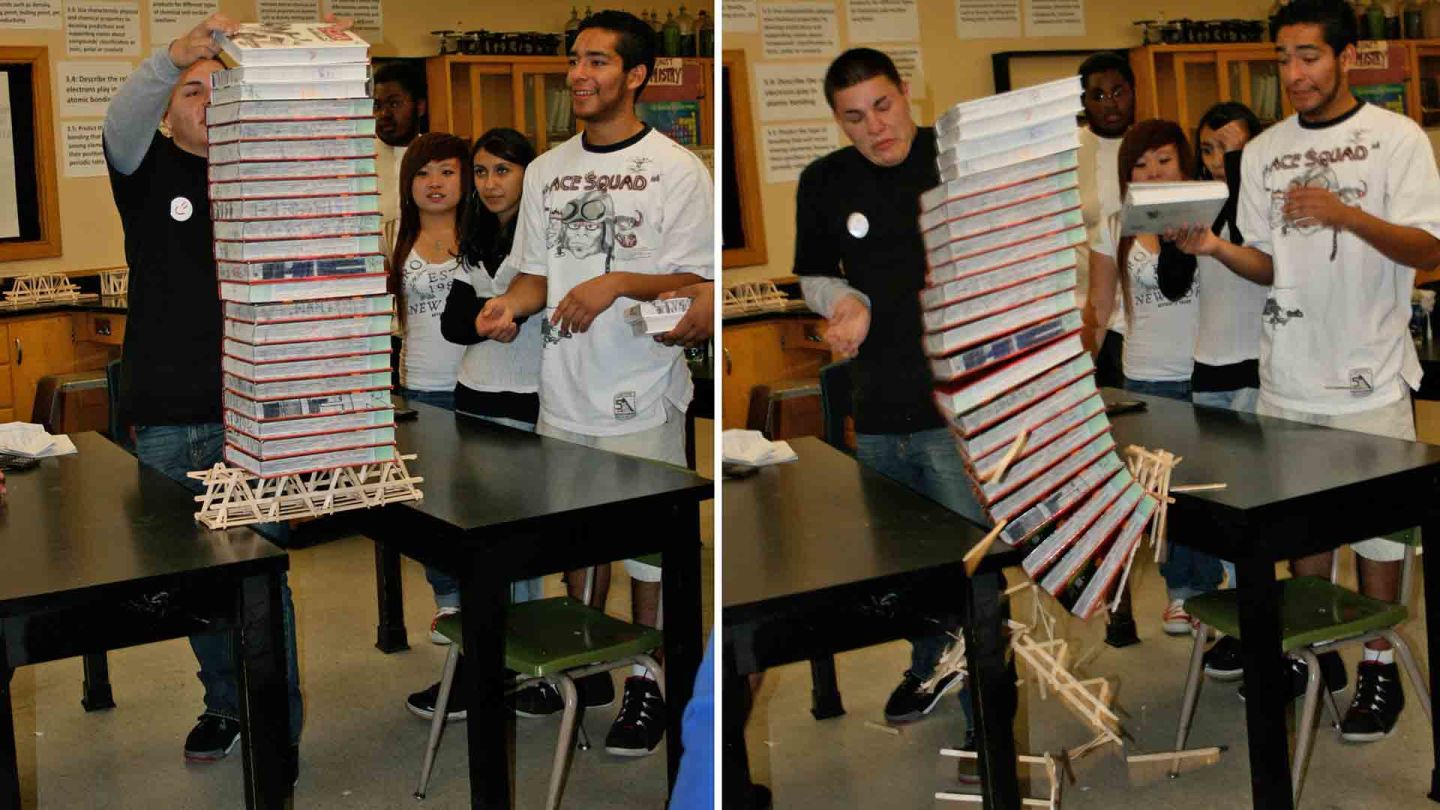
Should Parents Not Say 'I'm So Proud of You' or 'Good Job'?
Carol Dweck Explains The 'False' Growth Mindset That Worries Her
What do Students Lose by Being Perfect? Valuable Failure
Preschoolers and Praise: What Kinds of Messages Help Kids Grow?
Major support for MindShift comes from
Player sponsored by
window.__IS_SSR__=true
window.__INITIAL_STATE__={
"attachmentsReducer": {
"audio_0": {
"type": "attachments",
"id": "audio_0",
"imgSizes": {
"kqedFullSize": {
"file": "https://ww2.kqed.org/news/wp-content/themes/KQED-unified/img/audio_bgs/background0.jpg"
}
}
},
"audio_1": {
"type": "attachments",
"id": "audio_1",
"imgSizes": {
"kqedFullSize": {
"file": "https://ww2.kqed.org/news/wp-content/themes/KQED-unified/img/audio_bgs/background1.jpg"
}
}
},
"audio_2": {
"type": "attachments",
"id": "audio_2",
"imgSizes": {
"kqedFullSize": {
"file": "https://ww2.kqed.org/news/wp-content/themes/KQED-unified/img/audio_bgs/background2.jpg"
}
}
},
"audio_3": {
"type": "attachments",
"id": "audio_3",
"imgSizes": {
"kqedFullSize": {
"file": "https://ww2.kqed.org/news/wp-content/themes/KQED-unified/img/audio_bgs/background3.jpg"
}
}
},
"audio_4": {
"type": "attachments",
"id": "audio_4",
"imgSizes": {
"kqedFullSize": {
"file": "https://ww2.kqed.org/news/wp-content/themes/KQED-unified/img/audio_bgs/background4.jpg"
}
}
},
"placeholder": {
"type": "attachments",
"id": "placeholder",
"imgSizes": {
"thumbnail": {
"file": "https://cdn.kqed.org/wp-content/uploads/2024/12/KQED-Default-Image-816638274-2000x1333-1-160x107.jpg",
"width": 160,
"height": 107,
"mimeType": "image/jpeg"
},
"medium": {
"file": "https://cdn.kqed.org/wp-content/uploads/2024/12/KQED-Default-Image-816638274-2000x1333-1-800x533.jpg",
"width": 800,
"height": 533,
"mimeType": "image/jpeg"
},
"medium_large": {
"file": "https://cdn.kqed.org/wp-content/uploads/2024/12/KQED-Default-Image-816638274-2000x1333-1-768x512.jpg",
"width": 768,
"height": 512,
"mimeType": "image/jpeg"
},
"large": {
"file": "https://cdn.kqed.org/wp-content/uploads/2024/12/KQED-Default-Image-816638274-2000x1333-1-1020x680.jpg",
"width": 1020,
"height": 680,
"mimeType": "image/jpeg"
},
"1536x1536": {
"file": "https://cdn.kqed.org/wp-content/uploads/2024/12/KQED-Default-Image-816638274-2000x1333-1-1536x1024.jpg",
"width": 1536,
"height": 1024,
"mimeType": "image/jpeg"
},
"fd-lrg": {
"file": "https://cdn.kqed.org/wp-content/uploads/2024/12/KQED-Default-Image-816638274-2000x1333-1-1536x1024.jpg",
"width": 1536,
"height": 1024,
"mimeType": "image/jpeg"
},
"fd-med": {
"file": "https://cdn.kqed.org/wp-content/uploads/2024/12/KQED-Default-Image-816638274-2000x1333-1-1020x680.jpg",
"width": 1020,
"height": 680,
"mimeType": "image/jpeg"
},
"fd-sm": {
"file": "https://cdn.kqed.org/wp-content/uploads/2024/12/KQED-Default-Image-816638274-2000x1333-1-800x533.jpg",
"width": 800,
"height": 533,
"mimeType": "image/jpeg"
},
"post-thumbnail": {
"file": "https://cdn.kqed.org/wp-content/uploads/2024/12/KQED-Default-Image-816638274-2000x1333-1-672x372.jpg",
"width": 672,
"height": 372,
"mimeType": "image/jpeg"
},
"twentyfourteen-full-width": {
"file": "https://cdn.kqed.org/wp-content/uploads/2024/12/KQED-Default-Image-816638274-2000x1333-1-1038x576.jpg",
"width": 1038,
"height": 576,
"mimeType": "image/jpeg"
},
"xxsmall": {
"file": "https://cdn.kqed.org/wp-content/uploads/2024/12/KQED-Default-Image-816638274-2000x1333-1-160x107.jpg",
"width": 160,
"height": 107,
"mimeType": "image/jpeg"
},
"xsmall": {
"file": "https://cdn.kqed.org/wp-content/uploads/2024/12/KQED-Default-Image-816638274-2000x1333-1-672x372.jpg",
"width": 672,
"height": 372,
"mimeType": "image/jpeg"
},
"small": {
"file": "https://cdn.kqed.org/wp-content/uploads/2024/12/KQED-Default-Image-816638274-2000x1333-1-672x372.jpg",
"width": 672,
"height": 372,
"mimeType": "image/jpeg"
},
"xlarge": {
"file": "https://cdn.kqed.org/wp-content/uploads/2024/12/KQED-Default-Image-816638274-2000x1333-1-1020x680.jpg",
"width": 1020,
"height": 680,
"mimeType": "image/jpeg"
},
"full-width": {
"file": "https://cdn.kqed.org/wp-content/uploads/2024/12/KQED-Default-Image-816638274-2000x1333-1-1920x1280.jpg",
"width": 1920,
"height": 1280,
"mimeType": "image/jpeg"
},
"guest-author-32": {
"file": "https://cdn.kqed.org/wp-content/uploads/2025/01/KQED-Default-Image-816638274-1333x1333-1-160x160.jpg",
"width": 32,
"height": 32,
"mimeType": "image/jpeg"
},
"guest-author-50": {
"file": "https://cdn.kqed.org/wp-content/uploads/2025/01/KQED-Default-Image-816638274-1333x1333-1-160x160.jpg",
"width": 50,
"height": 50,
"mimeType": "image/jpeg"
},
"guest-author-64": {
"file": "https://cdn.kqed.org/wp-content/uploads/2025/01/KQED-Default-Image-816638274-1333x1333-1-160x160.jpg",
"width": 64,
"height": 64,
"mimeType": "image/jpeg"
},
"guest-author-96": {
"file": "https://cdn.kqed.org/wp-content/uploads/2025/01/KQED-Default-Image-816638274-1333x1333-1-160x160.jpg",
"width": 96,
"height": 96,
"mimeType": "image/jpeg"
},
"guest-author-128": {
"file": "https://cdn.kqed.org/wp-content/uploads/2025/01/KQED-Default-Image-816638274-1333x1333-1-160x160.jpg",
"width": 128,
"height": 128,
"mimeType": "image/jpeg"
},
"detail": {
"file": "https://cdn.kqed.org/wp-content/uploads/2025/01/KQED-Default-Image-816638274-1333x1333-1-160x160.jpg",
"width": 160,
"height": 160,
"mimeType": "image/jpeg"
},
"kqedFullSize": {
"file": "https://cdn.kqed.org/wp-content/uploads/2024/12/KQED-Default-Image-816638274-2000x1333-1.jpg",
"width": 2000,
"height": 1333
}
}
},
"mindshift_64902": {
"type": "attachments",
"id": "mindshift_64902",
"meta": {
"index": "attachments_1716263798",
"site": "mindshift",
"id": "64902",
"found": true
},
"title": null,
"publishDate": 1729755164,
"status": "inherit",
"parent": 64898,
"modified": 1729755202,
"caption": null,
"credit": "fizkes/iStock",
"altTag": "Excited mother high-fives her child",
"description": null,
"imgSizes": {
"medium": {
"file": "https://cdn.kqed.org/wp-content/uploads/sites/23/2024/10/GettyImages-1305169691-800x533.jpg",
"width": 800,
"height": 533,
"mimeType": "image/jpeg"
},
"large": {
"file": "https://cdn.kqed.org/wp-content/uploads/sites/23/2024/10/GettyImages-1305169691-1020x680.jpg",
"width": 1020,
"height": 680,
"mimeType": "image/jpeg"
},
"thumbnail": {
"file": "https://cdn.kqed.org/wp-content/uploads/sites/23/2024/10/GettyImages-1305169691-160x107.jpg",
"width": 160,
"height": 107,
"mimeType": "image/jpeg"
},
"medium_large": {
"file": "https://cdn.kqed.org/wp-content/uploads/sites/23/2024/10/GettyImages-1305169691-768x512.jpg",
"width": 768,
"height": 512,
"mimeType": "image/jpeg"
},
"1536x1536": {
"file": "https://cdn.kqed.org/wp-content/uploads/sites/23/2024/10/GettyImages-1305169691-1536x1024.jpg",
"width": 1536,
"height": 1024,
"mimeType": "image/jpeg"
},
"2048x2048": {
"file": "https://cdn.kqed.org/wp-content/uploads/sites/23/2024/10/GettyImages-1305169691-2048x1365.jpg",
"width": 2048,
"height": 1365,
"mimeType": "image/jpeg"
},
"post-thumbnail": {
"file": "https://cdn.kqed.org/wp-content/uploads/sites/23/2024/10/GettyImages-1305169691-672x372.jpg",
"width": 672,
"height": 372,
"mimeType": "image/jpeg"
},
"twentyfourteen-full-width": {
"file": "https://cdn.kqed.org/wp-content/uploads/sites/23/2024/10/GettyImages-1305169691-1038x576.jpg",
"width": 1038,
"height": 576,
"mimeType": "image/jpeg"
},
"full-width": {
"file": "https://cdn.kqed.org/wp-content/uploads/sites/23/2024/10/GettyImages-1305169691-1920x1280.jpg",
"width": 1920,
"height": 1280,
"mimeType": "image/jpeg"
},
"kqedFullSize": {
"file": "https://cdn.kqed.org/wp-content/uploads/sites/23/2024/10/GettyImages-1305169691.jpg",
"width": 2121,
"height": 1414
}
},
"isLoading": false,
"fetchFailed": false
},
"mindshift_47164": {
"type": "attachments",
"id": "mindshift_47164",
"meta": {
"index": "attachments_1716263798",
"site": "mindshift",
"id": "47164",
"found": true
},
"parent": 47160,
"imgSizes": {
"small": {
"file": "https://ww2.kqed.org/app/uploads/sites/23/2016/12/brain-drawing-520x293.gif",
"width": 520,
"mimeType": "image/gif",
"height": 293
},
"twentyfourteen-full-width": {
"file": "https://ww2.kqed.org/app/uploads/sites/23/2016/12/brain-drawing-1038x576.gif",
"width": 1038,
"mimeType": "image/gif",
"height": 576
},
"thumbnail": {
"file": "https://ww2.kqed.org/app/uploads/sites/23/2016/12/brain-drawing-160x90.gif",
"width": 160,
"mimeType": "image/gif",
"height": 90
},
"fd-sm": {
"file": "https://ww2.kqed.org/app/uploads/sites/23/2016/12/brain-drawing-960x540.gif",
"width": 960,
"mimeType": "image/gif",
"height": 540
},
"post-thumbnail": {
"file": "https://ww2.kqed.org/app/uploads/sites/23/2016/12/brain-drawing-672x372.gif",
"width": 672,
"mimeType": "image/gif",
"height": 372
},
"xsmall": {
"file": "https://ww2.kqed.org/app/uploads/sites/23/2016/12/brain-drawing-375x211.gif",
"width": 375,
"mimeType": "image/gif",
"height": 211
},
"kqedFullSize": {
"file": "https://ww2.kqed.org/app/uploads/sites/23/2016/12/brain-drawing.gif",
"width": 1500,
"height": 844
},
"large": {
"file": "https://ww2.kqed.org/app/uploads/sites/23/2016/12/brain-drawing-1020x574.gif",
"width": 1020,
"mimeType": "image/gif",
"height": 574
},
"xlarge": {
"file": "https://ww2.kqed.org/app/uploads/sites/23/2016/12/brain-drawing-1180x664.gif",
"width": 1180,
"mimeType": "image/gif",
"height": 664
},
"guest-author-50": {
"file": "https://ww2.kqed.org/app/uploads/sites/23/2016/12/brain-drawing-50x50.gif",
"width": 50,
"mimeType": "image/gif",
"height": 50
},
"guest-author-96": {
"file": "https://ww2.kqed.org/app/uploads/sites/23/2016/12/brain-drawing-96x96.gif",
"width": 96,
"mimeType": "image/gif",
"height": 96
},
"medium": {
"file": "https://ww2.kqed.org/app/uploads/sites/23/2016/12/brain-drawing-800x450.gif",
"width": 800,
"mimeType": "image/gif",
"height": 450
},
"guest-author-64": {
"file": "https://ww2.kqed.org/app/uploads/sites/23/2016/12/brain-drawing-64x64.gif",
"width": 64,
"mimeType": "image/gif",
"height": 64
},
"guest-author-32": {
"file": "https://ww2.kqed.org/app/uploads/sites/23/2016/12/brain-drawing-32x32.gif",
"width": 32,
"mimeType": "image/gif",
"height": 32
},
"fd-med": {
"file": "https://ww2.kqed.org/app/uploads/sites/23/2016/12/brain-drawing-1180x664.gif",
"width": 1180,
"mimeType": "image/gif",
"height": 664
},
"detail": {
"file": "https://ww2.kqed.org/app/uploads/sites/23/2016/12/brain-drawing-150x150.gif",
"width": 150,
"mimeType": "image/gif",
"height": 150
},
"medium_large": {
"file": "https://ww2.kqed.org/app/uploads/sites/23/2016/12/brain-drawing-768x432.gif",
"width": 768,
"mimeType": "image/gif",
"height": 432
},
"guest-author-128": {
"file": "https://ww2.kqed.org/app/uploads/sites/23/2016/12/brain-drawing-128x128.gif",
"width": 128,
"mimeType": "image/gif",
"height": 128
},
"xxsmall": {
"file": "https://ww2.kqed.org/app/uploads/sites/23/2016/12/brain-drawing-240x135.gif",
"width": 240,
"mimeType": "image/gif",
"height": 135
}
},
"publishDate": 1481917790,
"modified": 1481917872,
"caption": null,
"description": null,
"title": "brain-drawing",
"credit": "Abhijit Bhaduri/\u003ca href=\"https://www.flickr.com/photos/53272102@N06/27648314436/in/photolist-J8bQCu-7Dvjs2-5z9F41-83eNFU-dvy2Lf-dzaRhj-dcVGb3-gayZDq-645D1o-6do3r1-jypVk8-wTEZDo-61eaPC-xbQUur-aDNE65-5vGNkE-5pUBZM-dPuvJT-bPewqD-bSucN-GCePiF-pRf9pH-qDbwbV-G9PtQ-9UwYp-7TpcFC-8nuU6d-Y6ff-acSW1K-bs3gLL-6zHHi9-788nce-8JhBkW-c9MAKN-4LR19b-qcDjt-8MkSZC-cVJN4-4LLPwc-3nF1wQ-2DYfmw-8AtdcS-4XECzP-FtM5-CStwax-ayHjjj-8BTLT1-ihD6Dc-jE3SCJ-784H9C\">Flickr\u003c/a>",
"status": "inherit",
"isLoading": false,
"fetchFailed": false
},
"mindshift_41601": {
"type": "attachments",
"id": "mindshift_41601",
"meta": {
"index": "attachments_1716263798",
"site": "mindshift",
"id": "41601",
"found": true
},
"parent": 41560,
"imgSizes": {
"twentyfourteen-full-width": {
"file": "https://ww2.kqed.org/app/uploads/sites/23/2015/08/Failure-Breaking-Bridge-Kari-1038x576.jpg",
"width": 1038,
"mimeType": "image/jpeg",
"height": 576
},
"thumbnail": {
"file": "https://ww2.kqed.org/app/uploads/sites/23/2015/08/Failure-Breaking-Bridge-Kari-400x225.jpg",
"width": 400,
"mimeType": "image/jpeg",
"height": 225
},
"fd-sm": {
"file": "https://ww2.kqed.org/app/uploads/sites/23/2015/08/Failure-Breaking-Bridge-Kari-960x540.jpg",
"width": 960,
"mimeType": "image/jpeg",
"height": 540
},
"post-thumbnail": {
"file": "https://ww2.kqed.org/app/uploads/sites/23/2015/08/Failure-Breaking-Bridge-Kari-672x372.jpg",
"width": 672,
"mimeType": "image/jpeg",
"height": 372
},
"kqedFullSize": {
"file": "https://ww2.kqed.org/app/uploads/sites/23/2015/08/Failure-Breaking-Bridge-Kari.jpg",
"width": 1920,
"height": 1080
},
"large": {
"file": "https://ww2.kqed.org/app/uploads/sites/23/2015/08/Failure-Breaking-Bridge-Kari-1440x810.jpg",
"width": 1440,
"mimeType": "image/jpeg",
"height": 810
},
"guest-author-96": {
"file": "https://ww2.kqed.org/app/uploads/sites/23/2015/08/Failure-Breaking-Bridge-Kari-96x96.jpg",
"width": 96,
"mimeType": "image/jpeg",
"height": 96
},
"medium": {
"file": "https://ww2.kqed.org/app/uploads/sites/23/2015/08/Failure-Breaking-Bridge-Kari-800x450.jpg",
"width": 800,
"mimeType": "image/jpeg",
"height": 450
},
"guest-author-64": {
"file": "https://ww2.kqed.org/app/uploads/sites/23/2015/08/Failure-Breaking-Bridge-Kari-64x64.jpg",
"width": 64,
"mimeType": "image/jpeg",
"height": 64
},
"guest-author-32": {
"file": "https://ww2.kqed.org/app/uploads/sites/23/2015/08/Failure-Breaking-Bridge-Kari-32x32.jpg",
"width": 32,
"mimeType": "image/jpeg",
"height": 32
},
"cat_post_thumb_sizecategory-posts-2": {
"file": "https://ww2.kqed.org/app/uploads/sites/23/2015/08/Failure-Breaking-Bridge-Kari-50x50.jpg",
"width": 50,
"mimeType": "image/jpeg",
"height": 50
},
"fd-lrg": {
"file": "https://ww2.kqed.org/app/uploads/sites/23/2015/08/Failure-Breaking-Bridge-Kari-1920x1080.jpg",
"width": 1920,
"mimeType": "image/jpeg",
"height": 1080
},
"fd-med": {
"file": "https://ww2.kqed.org/app/uploads/sites/23/2015/08/Failure-Breaking-Bridge-Kari-1180x664.jpg",
"width": 1180,
"mimeType": "image/jpeg",
"height": 664
},
"detail": {
"file": "https://ww2.kqed.org/app/uploads/sites/23/2015/08/Failure-Breaking-Bridge-Kari-75x75.jpg",
"width": 75,
"mimeType": "image/jpeg",
"height": 75
},
"guest-author-128": {
"file": "https://ww2.kqed.org/app/uploads/sites/23/2015/08/Failure-Breaking-Bridge-Kari-128x128.jpg",
"width": 128,
"mimeType": "image/jpeg",
"height": 128
}
},
"publishDate": 1439336171,
"modified": 1439336237,
"caption": null,
"description": null,
"title": "Failure-Breaking-Bridge Kari",
"credit": "Kari/Flickr",
"status": "inherit",
"isLoading": false,
"fetchFailed": false
},
"mindshift_40792": {
"type": "attachments",
"id": "mindshift_40792",
"meta": {
"index": "attachments_1716263798",
"site": "mindshift",
"id": "40792",
"found": true
},
"parent": 40369,
"imgSizes": {
"twentyfourteen-full-width": {
"file": "https://ww2.kqed.org/app/uploads/sites/23/2015/06/Bike-1038x576.jpg",
"width": 1038,
"mimeType": "image/jpeg",
"height": 576
},
"thumbnail": {
"file": "https://ww2.kqed.org/app/uploads/sites/23/2015/06/Bike-400x225.jpg",
"width": 400,
"mimeType": "image/jpeg",
"height": 225
},
"fd-sm": {
"file": "https://ww2.kqed.org/app/uploads/sites/23/2015/06/Bike-960x540.jpg",
"width": 960,
"mimeType": "image/jpeg",
"height": 540
},
"post-thumbnail": {
"file": "https://ww2.kqed.org/app/uploads/sites/23/2015/06/Bike-672x372.jpg",
"width": 672,
"mimeType": "image/jpeg",
"height": 372
},
"kqedFullSize": {
"file": "https://ww2.kqed.org/app/uploads/sites/23/2015/06/Bike.jpg",
"width": 1920,
"height": 1080
},
"large": {
"file": "https://ww2.kqed.org/app/uploads/sites/23/2015/06/Bike-1440x810.jpg",
"width": 1440,
"mimeType": "image/jpeg",
"height": 810
},
"guest-author-96": {
"file": "https://ww2.kqed.org/app/uploads/sites/23/2015/06/Bike-96x96.jpg",
"width": 96,
"mimeType": "image/jpeg",
"height": 96
},
"medium": {
"file": "https://ww2.kqed.org/app/uploads/sites/23/2015/06/Bike-800x450.jpg",
"width": 800,
"mimeType": "image/jpeg",
"height": 450
},
"guest-author-64": {
"file": "https://ww2.kqed.org/app/uploads/sites/23/2015/06/Bike-64x64.jpg",
"width": 64,
"mimeType": "image/jpeg",
"height": 64
},
"guest-author-32": {
"file": "https://ww2.kqed.org/app/uploads/sites/23/2015/06/Bike-32x32.jpg",
"width": 32,
"mimeType": "image/jpeg",
"height": 32
},
"cat_post_thumb_sizecategory-posts-2": {
"file": "https://ww2.kqed.org/app/uploads/sites/23/2015/06/Bike-50x50.jpg",
"width": 50,
"mimeType": "image/jpeg",
"height": 50
},
"fd-med": {
"file": "https://ww2.kqed.org/app/uploads/sites/23/2015/06/Bike-1180x664.jpg",
"width": 1180,
"mimeType": "image/jpeg",
"height": 664
},
"detail": {
"file": "https://ww2.kqed.org/app/uploads/sites/23/2015/06/Bike-75x75.jpg",
"width": 75,
"mimeType": "image/jpeg",
"height": 75
},
"guest-author-128": {
"file": "https://ww2.kqed.org/app/uploads/sites/23/2015/06/Bike-128x128.jpg",
"width": 128,
"mimeType": "image/jpeg",
"height": 128
}
},
"publishDate": 1433940771,
"modified": 1433940778,
"caption": null,
"description": null,
"title": "Bike",
"credit": "Getty Images",
"status": "inherit",
"isLoading": false,
"fetchFailed": false
}
},
"audioPlayerReducer": {
"postId": "stream_live",
"isPaused": true,
"isPlaying": false,
"pfsActive": false,
"pledgeModalIsOpen": true,
"playerDrawerIsOpen": false,
"liveAudioPlayStartedAt": 0,
"liveAudioPlayContext": ""
},
"authorsReducer": {
"byline_mindshift_64898": {
"type": "authors",
"id": "byline_mindshift_64898",
"meta": {
"override": true
},
"slug": "byline_mindshift_64898",
"name": "Cara Goodwin, \u003ca href=\"https://parentingtranslator.org\">The Parenting Translator\u003c/a>",
"isLoading": false
},
"hollykorbey": {
"type": "authors",
"id": "4445",
"meta": {
"index": "authors_1716337520",
"id": "4445",
"found": true
},
"name": "Holly Korbey",
"firstName": "Holly",
"lastName": "Korbey",
"slug": "hollykorbey",
"email": "holly@hollykorbey.com",
"display_author_email": false,
"staff_mastheads": [],
"title": null,
"bio": "Holly Korbey's work on parenting and education has appeared in The New York Times, The Atlantic, Babble, Brain, Child Magazine, and others. She lives in Nashville with her family. Follow her on Twitter: @HKorbey",
"avatar": "https://secure.gravatar.com/avatar/f385f7a3b90e52ecd5e85c24fbd0a363?s=600&d=blank&r=g",
"twitter": null,
"facebook": null,
"instagram": null,
"linkedin": null,
"sites": [
{
"site": "mindshift",
"roles": [
"contributor"
]
}
],
"headData": {
"title": "Holly Korbey | KQED",
"description": null,
"ogImgSrc": "https://secure.gravatar.com/avatar/f385f7a3b90e52ecd5e85c24fbd0a363?s=600&d=blank&r=g",
"twImgSrc": "https://secure.gravatar.com/avatar/f385f7a3b90e52ecd5e85c24fbd0a363?s=600&d=blank&r=g"
},
"isLoading": false,
"link": "/author/hollykorbey"
},
"dfkris": {
"type": "authors",
"id": "11087",
"meta": {
"index": "authors_1716337520",
"id": "11087",
"found": true
},
"name": "Deborah Farmer Kris",
"firstName": "Deborah Farmer",
"lastName": "Kris",
"slug": "dfkris",
"email": "dfkris@gmail.com",
"display_author_email": false,
"staff_mastheads": [],
"title": null,
"bio": "\u003cem>\u003ca href=\"https://twitter.com/@dfkris\">Deborah Farmer Kris\u003c/a> has taught elementary, middle and high school and served as a charter school administrator. She spent a decade as an associate at Boston University’s \u003c/em>\u003cem>\u003ca href=\"http://www.bu.edu/ccsr/about-us/\">Center for Character and Social Responsibility\u003c/a>, \u003c/em>\u003cem>researching, writing, and consulting with schools. She is the mother of two young children. You can follower her on Twitter \u003ca href=\"https://twitter.com/@dfkris\">@dfkris\u003c/a>.\u003c/em>",
"avatar": "https://secure.gravatar.com/avatar/48efe6f17031ed31222b74af9605fe5a?s=600&d=blank&r=g",
"twitter": "dfkris",
"facebook": null,
"instagram": null,
"linkedin": null,
"sites": [
{
"site": "mindshift",
"roles": [
"author"
]
}
],
"headData": {
"title": "Deborah Farmer Kris | KQED",
"description": null,
"ogImgSrc": "https://secure.gravatar.com/avatar/48efe6f17031ed31222b74af9605fe5a?s=600&d=blank&r=g",
"twImgSrc": "https://secure.gravatar.com/avatar/48efe6f17031ed31222b74af9605fe5a?s=600&d=blank&r=g"
},
"isLoading": false,
"link": "/author/dfkris"
}
},
"pagesReducer": {
"mindshift_tag_process-praise": {
"type": "terms",
"id": "mindshift_20872",
"meta": {
"index": "terms_1716263798",
"site": "mindshift",
"id": "20872",
"score": 10.406791
},
"featImg": null,
"name": "process praise",
"description": null,
"taxonomy": "tag",
"headData": {
"twImgId": null,
"twTitle": null,
"ogTitle": null,
"ogImgId": null,
"twDescription": null,
"description": null,
"title": "process praise Archives | KQED Mindshift",
"ogDescription": null
},
"ttid": 20150,
"slug": "process-praise",
"isLoading": false,
"title": "process praise",
"pageMeta": {
"site": "mindshift",
"WpPageTemplate": "page-topic-editorial",
"currentPage": 1
},
"blocks": [
{
"blockName": "kqed/post-list",
"attrs": {
"layout": "cardArticle2",
"query": "posts/mindshift?tag=process-praise",
"seeMore": false,
"paginated": true,
"page": 1
}
},
{
"blockName": "kqed/ad"
}
]
}
},
"pfsSessionReducer": {},
"postsReducer": {
"stream_live": {
"type": "live",
"id": "stream_live",
"audioUrl": "https://hls.kqed.org/hls/kqed_app/playlist.m3u8",
"title": "Live Stream",
"excerpt": "Live Stream information currently unavailable.",
"link": "/radio",
"featImg": "",
"label": {
"name": "KQED Live",
"link": "/"
}
},
"stream_kqedNewscast": {
"type": "posts",
"id": "stream_kqedNewscast",
"audioUrl": "https://www.kqed.org/.stream/anon/radio/RDnews/newscast.mp3?_=1",
"title": "KQED Newscast",
"featImg": "",
"label": {
"name": "88.5 FM",
"link": "/"
}
},
"mindshift_64898": {
"type": "posts",
"id": "mindshift_64898",
"meta": {
"index": "posts_1716263798",
"site": "mindshift",
"id": "64898",
"score": null,
"sort": [
1729764226000
]
},
"guestAuthors": [],
"slug": "should-parents-not-say-im-so-proud-of-you-or-good-job",
"title": "Should Parents Not Say 'I'm So Proud of You' or 'Good Job'?",
"publishDate": 1729764226,
"format": "standard",
"headTitle": "Should Parents Not Say ‘I’m So Proud of You’ or ‘Good Job’? | KQED",
"labelTerm": {
"site": "mindshift"
},
"content": "\u003cp>Most loving parents feel a natural desire to praise their children. Yet, there seems to be a backlash against praise recently, particularly on social media. One of my favorite comedians, Taylor Wolfe, highlighted the anti-praise movement in a viral reel titled “Teaching My Boomer Mom About Millennial Parenting” (watch \u003ca href=\"https://www.instagram.com/reel/DAWXzhYSck5/?utm_source=ig_web_copy_link&igsh=MzRlODBiNWFlZA==\">here\u003c/a> if you haven’t already). In this video, she instructs her mother not to say “Good job” or “I’m so proud of you” — a request that her mother clearly finds ridiculous. This video is relatable in part because it showcases the confusion we all feel around praise.\u003c/p>\n\u003cp>For those of us who grew up in the \u003ca href=\"https://www.thecut.com/2017/05/self-esteem-grit-do-they-really-help.html\">“self-esteem craze” of the 90’s\u003c/a>, it is hard to understand what could be wrong with a seemingly benign and loving phrase like “I’m so proud of you.” Enter gentle parenting influencers. Gentle parenting advocates would argue this type of praise will cause children to become overly dependent on validation from others and ultimately reduce their internal motivation to engage in the behavior.\u003c/p>\n\u003cp>So what does the research actually find about praising children? Is it an effective way to encourage children \u003cem>or\u003c/em> will it make children overly dependent on the approval of others and lacking in internal motivation? Will phrases like “I’m proud of you” and “Good job” really turn your children into \u003ca href=\"https://www.alfiekohn.org/article/five-reasons-stop-saying-good-job/\">“praise junkies”\u003c/a>?\u003c/p>\n\u003ch2>\u003cstrong>The Research on Praise\u003c/strong>\u003c/h2>\n\u003cp>First, it is important to mention that there is isn’t anything inherently wrong with praise. Praise has long been a tool encouraged by psychologists and included in most \u003ca href=\"https://journals.plos.org/plosone/article?id=10.1371/journal.pone.0204929\">evidence-based parenting programs\u003c/a>. Most psychologists and researchers consider praise an essential part of positive parenting. Research also suggests that praise generally has a positive impact on children, as praise has been associated with improved \u003ca href=\"https://doi.apa.org/doiLanding?doi=10.1037%2Fdev0000444\">academic performance\u003c/a>, increased likelihood of \u003ca href=\"https://www.eva.mpg.de/documents/Wiley-Blackwell/Ulber_Extrinsic_ChildDev_2016_2327864.pdf\">engaging in kind and helpful behavior\u003c/a> and \u003ca href=\"https://www.jstage.jst.go.jp/article/jea/advpub/0/advpub_JE20090168/_pdf\">enhanced social competence\u003c/a>. Praise from parents is even associated with \u003ca href=\"https://journals.plos.org/plosone/article?id=10.1371/journal.pone.0154220\">increased brain matter\u003c/a> in an area of the brain associated with empathy, conscientiousness and open-mindedness. We also don’t have any evidence that praise in general decreases intrinsic motivation and we actually have \u003ca href=\"https://www.eva.mpg.de/documents/Wiley-Blackwell/Ulber_Extrinsic_ChildDev_2016_2327864.pdf\">evidence that praise may increase intrinsic motivation.\u003c/a>Yet, \u003ca href=\"https://srcd.onlinelibrary.wiley.com/doi/abs/10.1111/cdev.12064\">research\u003c/a> does find that \u003cem>how\u003c/em> you praise your child matters and that some types of praise may be better than other types of praise. Fortunately, research gives us some guidance here.\u003c/p>\n\u003ch2>\u003cstrong>How To Praise Your Child\u003c/strong>\u003c/h2>\n\u003cp>So how exactly should you praise your children? Research provides the following tips:\u003c/p>\n\u003col>\n\u003cli>\u003cstrong> Praise the process, not the person. \u003c/strong>Praise your child’s effort, strategy and process, rather than praising traits that they cannot change as easily (such as intelligence, athleticism or beauty). \u003ca href=\"https://www.researchgate.net/profile/Andrei-Cimpian/publication/6360300_Subtle_Linguistic_Cues_Affect_Children%27s_Motivation/links/5e9ccd4d299bf13079aa3266/Subtle-Linguistic-Cues-Affect-Childrens-Motivation.pdf\">Research\u003c/a> finds that “process praise” (translation: praising effort, strategy and process) enhances children’s internal motivation and persistence in the face of challenge. “Person praise” (translation: praising fixed traits associated with the person such as “you are so smart/nice/beautiful”) tends to make children\u003ca href=\"https://www.researchgate.net/profile/Bradley-Morris/publication/44694663_Good_job_you%27re_so_smart_The_effects_of_inconsistency_of_praise_type_on_young_children%27s_motivation/links/5a2745fe4585155dd42419c2/Good-job-youre-so-smart-The-effects-of-inconsistency-of-praise-type-on-young-childrens-motivation.pdf\"> fixate more on their mistakes\u003c/a>, \u003ca href=\"https://link.springer.com/article/10.3758/s13423-012-0294-y\">give up more easily\u003c/a> and \u003ca href=\"http://people.uncw.edu/hungerforda/Infancy/PDF/Person%20versus%20process%20praise%20and%20criticism.pdf\">blame themselves\u003c/a>. Why does this happen? Imagine if your parents have always told you how smart you are and then you just cannot understand algebra. You might assume that your parents are wrong and you actually aren’t “smart” and decide there is no point in even trying because you are either “smart” or “not smart”— it’s a fixed trait that you can’t change. You might also feel less inclined to challenge yourself (because what if you fail and are no longer considered “smart”) and you may be more likely to cheat to prove you are “smart.” The pressure to achieve feels both overwhelming and out of your control. However, if your parents mostly praised you for how hard you worked in math, you would likely simply work harder if you did not understand algebra, entirely avoiding the intense pressure and existential crisis of no longer being “smart.”\u003c/li>\n\u003cli>\u003cstrong> Use supportive rather than controlling praise. \u003c/strong>\u003ca href=\"http://home.ubalt.edu/ntygmitc/642/Articles%20syllabus/Deci%20Koestner%20Ryan%20meta%20IM%20psy%20bull%2099.pdf\">Research\u003c/a> suggests that you should avoid using praise that aims to control your child’s behavior because this type of praise \u003cem>does\u003c/em> seem to decrease intrinsic motivation. In other words, the goal of your praise should not be to try to pressure your child into doing what you want them to do. For example, rather than saying, “You are so good at science. You should be a doctor like me when you grow up,” say, “It seems like you really enjoy science and really work hard to understand it.” Be careful of any praise that uses the word “should” or may make your child feel pressured.\u003c/li>\n\u003cli>\u003cstrong> Avoid using praise that compares your child to other children. \u003c/strong>When you use praise to compare your child to other children, it seems to \u003ca href=\"https://www.tandfonline.com/doi/abs/10.1080/15298860500280223\">enhance performance\u003c/a> in the short term, \u003cem>but\u003c/em> in the long-term this practice may lead your children to judge their performance \u003ca href=\"https://citeseerx.ist.psu.edu/viewdoc/download?doi=10.1.1.469.2099&rep=rep1&type=pdf\">only in relation to other people\u003c/a> rather than meeting their own goals or enjoying it themselves. For example, rather than praising your child for being the best soccer player on their team, focus on their own performance. You want to be particularly careful about not comparing your child to their siblings with your praise (such as, “You are such a better listener than your brother”), since \u003ca href=\"https://www.ncbi.nlm.nih.gov/pmc/articles/PMC6298862/\">research\u003c/a> finds that sibling comparisons are linked to behavior problems.\u003c/li>\n\u003cli>\u003cstrong> Use specific rather than general praise. \u003c/strong>\u003ca href=\"http://search.ebscohost.com/login.aspx?direct=true&profile=ehost&scope=site&authtype=crawler&jrnl=10742956&AN=72084567&h=ohKN3AWW8XkZii0vGQc9mhTKvIBkrKNo348mYG0eFOLrCHEtrADZN1lLNAMZXzpR16pGXZAlWpZe9cjjMRRTIQ%3D%3D&crl=c\">Research\u003c/a> finds that praise with specific information helps children to learn how to improve their behavior in the future. For example, “good job putting your toys back in the bin when you were done using them” helps children to learn a specific expectation. If you simply say “good job” after your child cleans up their toys, they may not know what you are referring to. However, it is also important to mention that a \u003ca href=\"https://www.frontiersin.org/articles/10.3389/fpsyg.2014.00928/full\">recent study\u003c/a> found that even general and vague praise (“Yea” in this study) may not undermine persistence or make kids view themselves more negatively. The only concern with this type of general praise is that it may not give children an idea of how to improve in the future.\u003c/li>\n\u003cli>\u003cstrong> Use gestures as praise. \u003c/strong>Research also suggests that parents may want to use gestures (high fives, thumbs up) to encourage their children occasionally. \u003ca href=\"https://www.frontiersin.org/articles/10.3389/fpsyg.2014.00928/full\">Research\u003c/a> finds that gestures may even be very effective in improving children’s self-evaluation, that is their own judgement of how they did and how they feel about it.\u003c/li>\n\u003cli>\u003cstrong> Combine praise with positive attention. \u003c/strong>Try to use praise with positive attention or a positive nonverbal response (hug, smile, pat or another type of physical affection). Research finds that this may be the \u003ca href=\"http://parented.wdfiles.com/local--files/discipline/Effect%20of%20Praise,%20Reprimand%20on%20Compliance.pdf\">most effective in improving children’s behavior.\u003c/a>\u003c/li>\n\u003cli>\u003cstrong> Be sincere with your praise. \u003c/strong>This last tip may be the most important. \u003ca href=\"https://journals.sagepub.com/doi/abs/10.1177/1948550616683020\">Research\u003c/a> suggests that when children sense that their parents are either over-praising or under-praising their performance, they are more likely to experience depression and lower academic performance. \u003ca href=\"https://doi.apa.org/doiLanding?doi=10.1037%2Fa0031917\">Research\u003c/a> also finds that overly effusive praise (such as, “That is the most beautiful drawing I have ever seen”) is associated with children developing low self-esteem, avoiding challenges and becoming overly dependent on praise.\u003c/li>\n\u003c/ol>\n\u003ch2>\u003cstrong>So Can You Say “I’m So Proud of You”? \u003c/strong>\u003c/h2>\n\u003cp>There is no research that specifically examines the impact of telling your children “I’m so proud of you” or even research comparing phrases that focus on the child’s self-evaluation versus the adult’s evaluation (such as saying “You seem so happy with this artwork” versus “I think your artwork is so beautiful”) so it is hard to make a specific recommendation about this phrase. However, based on the research that we do have, there doesn’t seem to be anything wrong with saying “I’m proud of you.” However, research would suggest that you might want to make sure that you are specific (“I’m proud of you for trying so hard to make the team”), that you are not focusing on fixed traits (“I’m proud of you for helping others” versus “I’m proud of you for being a helper”) and that you aren’t being controlling or pressuring (“I’m so proud that you are finally getting A’s in math”).\u003c/p>\n\u003ch2>\u003cstrong>What About “Good Job”?\u003c/strong>\u003c/h2>\n\u003cp>Again, there is no research looking specifically at the phrase “good job.” Based on the research we do have, “good job” does not seem to be harmful but may not be specific enough. If your child doesn’t know what you are referring to, they may misinterpret or discredit your praise. In addition, “good job” is often used in an insincere way. I am imagining a scenario where your child insists that you watch them do hundreds of handstands in the pool and for each one you say “good job” without even looking up from your phone. It is easy to see how this experience would cheapen the experience of praise for children.\u003c/p>\n\u003ch2>\u003cstrong>What Happens If You Don’t Praise Perfectly? \u003c/strong>\u003c/h2>\n\u003cp>After reading all of this research, you may be feeling overwhelmed by all of these “praise rules” or guilty about the times you haven’t followed these guidelines. But don’t stress— you don’t have to do this perfectly (and literally no parent ever has)! Just aim for following these rules as often as you can. \u003ca href=\"https://www.sciencedirect.com/science/article/pii/S0022096510000755\">Research\u003c/a> finds that as long as most of the praise that children hear (at least three out of four times) is the praise supported by research, children show increased persistence and improved self-evaluation. This suggests that even if you forget these rules 1 out of 4 times, there is no reason to worry. So when you slip up and call your child “smart” or give them an insincere “good job” (and trust me— we have \u003cem>all\u003c/em> done it), your child will be just fine.\u003c/p>\n\u003ch2>\u003cstrong>Some Examples of The Type of Praise You Should Use\u003c/strong>\u003c/h2>\n\u003cp>I can see how hard you worked on that\u003c/p>\n\u003cp>[ad fullwidth]\u003c/p>\n\u003cp>I’m so proud of you for making a good choice even when it felt hard for you\u003c/p>\n\u003cp>Thank you for helping me\u003c/p>\n\u003cp>That was so creative\u003c/p>\n\u003cp>I love how you are sharing with your brother\u003c/p>\n\u003ch2>\u003cstrong>Some Examples of The Type of Praise You Should Try to Avoid\u003c/strong>\u003c/h2>\n\u003cp>You’re so smart\u003c/p>\n\u003cp>You are the best player on the team\u003c/p>\n\u003cp>You’re such a good boy/girl\u003c/p>\n\u003cp>You are the best helper/listener\u003c/p>\n\u003cp>Great job sharing with your brother. You should act like this everyday. It would make my life so much easier.\u003c/p>\n\u003ch2>\u003cstrong>Overall Translation\u003c/strong>\u003c/h2>\n\u003cp>In summary, praise enhances motivation and perseverance and improves behavior when it is sincere, suggests that the child has control over improving the outcome, is supportive rather than controlling, encourages internal motivation, does not compare the child to others and is specific and accurate. There is nothing wrong with saying “I’m so proud of you” or “Good job”— just try to make sure you are being sincere and specific when you use these phrases. Above all, as long as your praise is sincere, don’t overthink it. It’s the children whose parents never praise them who really struggle, not the children whose parents are worried about praising them in the “right” way.\u003c/p>\n\u003cp>[ad floatright]\u003c/p>\n\u003cp>\u003ci>Cara Goodwin, PhD, is a licensed psychologist, a mother of four and the founder of \u003ca href=\"https://parentingtranslator.substack.com/\" target=\"_blank\" rel=\"noopener\">Parenting Translator\u003c/a>, a nonprofit newsletter that turns scientific research into information that is accurate, relevant and useful for parents.\u003c/i>\u003c/p>\n\n",
"blocks": [],
"excerpt": "The rise of gentle parenting has drawn attention to helpful ways to praise children. ",
"status": "publish",
"parent": 0,
"modified": 1729786037,
"stats": {
"hasAudio": false,
"hasVideo": false,
"hasChartOrMap": false,
"iframeSrcs": [],
"hasGoogleForm": false,
"hasGallery": false,
"hasHearkenModule": false,
"hasPolis": false,
"paragraphCount": 22,
"wordCount": 2021
},
"headData": {
"title": "Should Parents Not Say 'I'm So Proud of You' or 'Good Job'? | KQED",
"description": "The rise of gentle parenting has drawn attention to helpful ways to praise children. ",
"ogTitle": "",
"ogDescription": "",
"ogImgId": "",
"twTitle": "",
"twDescription": "",
"twImgId": "",
"schema": {
"@context": "https://schema.org",
"@type": "Article",
"headline": "Should Parents Not Say 'I'm So Proud of You' or 'Good Job'?",
"datePublished": "2024-10-24T03:03:46-07:00",
"dateModified": "2024-10-24T09:07:17-07:00",
"image": "https://cdn.kqed.org/wp-content/uploads/2020/02/KQED-OG-Image@1x.png"
}
},
"sticky": false,
"nprByline": "Cara Goodwin, \u003ca href=\"https://parentingtranslator.org\">The Parenting Translator\u003c/a>",
"nprStoryId": "kqed-64898",
"excludeFromSiteSearch": "Include",
"showOnAuthorArchivePages": "No",
"articleAge": "0",
"path": "/mindshift/64898/should-parents-not-say-im-so-proud-of-you-or-good-job",
"audioTrackLength": null,
"parsedContent": [
{
"type": "contentString",
"content": "\u003cdiv class=\"post-body\">\u003cp>\u003cp>Most loving parents feel a natural desire to praise their children. Yet, there seems to be a backlash against praise recently, particularly on social media. One of my favorite comedians, Taylor Wolfe, highlighted the anti-praise movement in a viral reel titled “Teaching My Boomer Mom About Millennial Parenting” (watch \u003ca href=\"https://www.instagram.com/reel/DAWXzhYSck5/?utm_source=ig_web_copy_link&igsh=MzRlODBiNWFlZA==\">here\u003c/a> if you haven’t already). In this video, she instructs her mother not to say “Good job” or “I’m so proud of you” — a request that her mother clearly finds ridiculous. This video is relatable in part because it showcases the confusion we all feel around praise.\u003c/p>\n\u003cp>For those of us who grew up in the \u003ca href=\"https://www.thecut.com/2017/05/self-esteem-grit-do-they-really-help.html\">“self-esteem craze” of the 90’s\u003c/a>, it is hard to understand what could be wrong with a seemingly benign and loving phrase like “I’m so proud of you.” Enter gentle parenting influencers. Gentle parenting advocates would argue this type of praise will cause children to become overly dependent on validation from others and ultimately reduce their internal motivation to engage in the behavior.\u003c/p>\n\u003cp>So what does the research actually find about praising children? Is it an effective way to encourage children \u003cem>or\u003c/em> will it make children overly dependent on the approval of others and lacking in internal motivation? Will phrases like “I’m proud of you” and “Good job” really turn your children into \u003ca href=\"https://www.alfiekohn.org/article/five-reasons-stop-saying-good-job/\">“praise junkies”\u003c/a>?\u003c/p>\n\u003ch2>\u003cstrong>The Research on Praise\u003c/strong>\u003c/h2>\n\u003cp>First, it is important to mention that there is isn’t anything inherently wrong with praise. Praise has long been a tool encouraged by psychologists and included in most \u003ca href=\"https://journals.plos.org/plosone/article?id=10.1371/journal.pone.0204929\">evidence-based parenting programs\u003c/a>. Most psychologists and researchers consider praise an essential part of positive parenting. Research also suggests that praise generally has a positive impact on children, as praise has been associated with improved \u003ca href=\"https://doi.apa.org/doiLanding?doi=10.1037%2Fdev0000444\">academic performance\u003c/a>, increased likelihood of \u003ca href=\"https://www.eva.mpg.de/documents/Wiley-Blackwell/Ulber_Extrinsic_ChildDev_2016_2327864.pdf\">engaging in kind and helpful behavior\u003c/a> and \u003ca href=\"https://www.jstage.jst.go.jp/article/jea/advpub/0/advpub_JE20090168/_pdf\">enhanced social competence\u003c/a>. Praise from parents is even associated with \u003ca href=\"https://journals.plos.org/plosone/article?id=10.1371/journal.pone.0154220\">increased brain matter\u003c/a> in an area of the brain associated with empathy, conscientiousness and open-mindedness. We also don’t have any evidence that praise in general decreases intrinsic motivation and we actually have \u003ca href=\"https://www.eva.mpg.de/documents/Wiley-Blackwell/Ulber_Extrinsic_ChildDev_2016_2327864.pdf\">evidence that praise may increase intrinsic motivation.\u003c/a>Yet, \u003ca href=\"https://srcd.onlinelibrary.wiley.com/doi/abs/10.1111/cdev.12064\">research\u003c/a> does find that \u003cem>how\u003c/em> you praise your child matters and that some types of praise may be better than other types of praise. Fortunately, research gives us some guidance here.\u003c/p>\n\u003ch2>\u003cstrong>How To Praise Your Child\u003c/strong>\u003c/h2>\n\u003cp>So how exactly should you praise your children? Research provides the following tips:\u003c/p>\n\u003col>\n\u003cli>\u003cstrong> Praise the process, not the person. \u003c/strong>Praise your child’s effort, strategy and process, rather than praising traits that they cannot change as easily (such as intelligence, athleticism or beauty). \u003ca href=\"https://www.researchgate.net/profile/Andrei-Cimpian/publication/6360300_Subtle_Linguistic_Cues_Affect_Children%27s_Motivation/links/5e9ccd4d299bf13079aa3266/Subtle-Linguistic-Cues-Affect-Childrens-Motivation.pdf\">Research\u003c/a> finds that “process praise” (translation: praising effort, strategy and process) enhances children’s internal motivation and persistence in the face of challenge. “Person praise” (translation: praising fixed traits associated with the person such as “you are so smart/nice/beautiful”) tends to make children\u003ca href=\"https://www.researchgate.net/profile/Bradley-Morris/publication/44694663_Good_job_you%27re_so_smart_The_effects_of_inconsistency_of_praise_type_on_young_children%27s_motivation/links/5a2745fe4585155dd42419c2/Good-job-youre-so-smart-The-effects-of-inconsistency-of-praise-type-on-young-childrens-motivation.pdf\"> fixate more on their mistakes\u003c/a>, \u003ca href=\"https://link.springer.com/article/10.3758/s13423-012-0294-y\">give up more easily\u003c/a> and \u003ca href=\"http://people.uncw.edu/hungerforda/Infancy/PDF/Person%20versus%20process%20praise%20and%20criticism.pdf\">blame themselves\u003c/a>. Why does this happen? Imagine if your parents have always told you how smart you are and then you just cannot understand algebra. You might assume that your parents are wrong and you actually aren’t “smart” and decide there is no point in even trying because you are either “smart” or “not smart”— it’s a fixed trait that you can’t change. You might also feel less inclined to challenge yourself (because what if you fail and are no longer considered “smart”) and you may be more likely to cheat to prove you are “smart.” The pressure to achieve feels both overwhelming and out of your control. However, if your parents mostly praised you for how hard you worked in math, you would likely simply work harder if you did not understand algebra, entirely avoiding the intense pressure and existential crisis of no longer being “smart.”\u003c/li>\n\u003cli>\u003cstrong> Use supportive rather than controlling praise. \u003c/strong>\u003ca href=\"http://home.ubalt.edu/ntygmitc/642/Articles%20syllabus/Deci%20Koestner%20Ryan%20meta%20IM%20psy%20bull%2099.pdf\">Research\u003c/a> suggests that you should avoid using praise that aims to control your child’s behavior because this type of praise \u003cem>does\u003c/em> seem to decrease intrinsic motivation. In other words, the goal of your praise should not be to try to pressure your child into doing what you want them to do. For example, rather than saying, “You are so good at science. You should be a doctor like me when you grow up,” say, “It seems like you really enjoy science and really work hard to understand it.” Be careful of any praise that uses the word “should” or may make your child feel pressured.\u003c/li>\n\u003cli>\u003cstrong> Avoid using praise that compares your child to other children. \u003c/strong>When you use praise to compare your child to other children, it seems to \u003ca href=\"https://www.tandfonline.com/doi/abs/10.1080/15298860500280223\">enhance performance\u003c/a> in the short term, \u003cem>but\u003c/em> in the long-term this practice may lead your children to judge their performance \u003ca href=\"https://citeseerx.ist.psu.edu/viewdoc/download?doi=10.1.1.469.2099&rep=rep1&type=pdf\">only in relation to other people\u003c/a> rather than meeting their own goals or enjoying it themselves. For example, rather than praising your child for being the best soccer player on their team, focus on their own performance. You want to be particularly careful about not comparing your child to their siblings with your praise (such as, “You are such a better listener than your brother”), since \u003ca href=\"https://www.ncbi.nlm.nih.gov/pmc/articles/PMC6298862/\">research\u003c/a> finds that sibling comparisons are linked to behavior problems.\u003c/li>\n\u003cli>\u003cstrong> Use specific rather than general praise. \u003c/strong>\u003ca href=\"http://search.ebscohost.com/login.aspx?direct=true&profile=ehost&scope=site&authtype=crawler&jrnl=10742956&AN=72084567&h=ohKN3AWW8XkZii0vGQc9mhTKvIBkrKNo348mYG0eFOLrCHEtrADZN1lLNAMZXzpR16pGXZAlWpZe9cjjMRRTIQ%3D%3D&crl=c\">Research\u003c/a> finds that praise with specific information helps children to learn how to improve their behavior in the future. For example, “good job putting your toys back in the bin when you were done using them” helps children to learn a specific expectation. If you simply say “good job” after your child cleans up their toys, they may not know what you are referring to. However, it is also important to mention that a \u003ca href=\"https://www.frontiersin.org/articles/10.3389/fpsyg.2014.00928/full\">recent study\u003c/a> found that even general and vague praise (“Yea” in this study) may not undermine persistence or make kids view themselves more negatively. The only concern with this type of general praise is that it may not give children an idea of how to improve in the future.\u003c/li>\n\u003cli>\u003cstrong> Use gestures as praise. \u003c/strong>Research also suggests that parents may want to use gestures (high fives, thumbs up) to encourage their children occasionally. \u003ca href=\"https://www.frontiersin.org/articles/10.3389/fpsyg.2014.00928/full\">Research\u003c/a> finds that gestures may even be very effective in improving children’s self-evaluation, that is their own judgement of how they did and how they feel about it.\u003c/li>\n\u003cli>\u003cstrong> Combine praise with positive attention. \u003c/strong>Try to use praise with positive attention or a positive nonverbal response (hug, smile, pat or another type of physical affection). Research finds that this may be the \u003ca href=\"http://parented.wdfiles.com/local--files/discipline/Effect%20of%20Praise,%20Reprimand%20on%20Compliance.pdf\">most effective in improving children’s behavior.\u003c/a>\u003c/li>\n\u003cli>\u003cstrong> Be sincere with your praise. \u003c/strong>This last tip may be the most important. \u003ca href=\"https://journals.sagepub.com/doi/abs/10.1177/1948550616683020\">Research\u003c/a> suggests that when children sense that their parents are either over-praising or under-praising their performance, they are more likely to experience depression and lower academic performance. \u003ca href=\"https://doi.apa.org/doiLanding?doi=10.1037%2Fa0031917\">Research\u003c/a> also finds that overly effusive praise (such as, “That is the most beautiful drawing I have ever seen”) is associated with children developing low self-esteem, avoiding challenges and becoming overly dependent on praise.\u003c/li>\n\u003c/ol>\n\u003ch2>\u003cstrong>So Can You Say “I’m So Proud of You”? \u003c/strong>\u003c/h2>\n\u003cp>There is no research that specifically examines the impact of telling your children “I’m so proud of you” or even research comparing phrases that focus on the child’s self-evaluation versus the adult’s evaluation (such as saying “You seem so happy with this artwork” versus “I think your artwork is so beautiful”) so it is hard to make a specific recommendation about this phrase. However, based on the research that we do have, there doesn’t seem to be anything wrong with saying “I’m proud of you.” However, research would suggest that you might want to make sure that you are specific (“I’m proud of you for trying so hard to make the team”), that you are not focusing on fixed traits (“I’m proud of you for helping others” versus “I’m proud of you for being a helper”) and that you aren’t being controlling or pressuring (“I’m so proud that you are finally getting A’s in math”).\u003c/p>\n\u003ch2>\u003cstrong>What About “Good Job”?\u003c/strong>\u003c/h2>\n\u003cp>Again, there is no research looking specifically at the phrase “good job.” Based on the research we do have, “good job” does not seem to be harmful but may not be specific enough. If your child doesn’t know what you are referring to, they may misinterpret or discredit your praise. In addition, “good job” is often used in an insincere way. I am imagining a scenario where your child insists that you watch them do hundreds of handstands in the pool and for each one you say “good job” without even looking up from your phone. It is easy to see how this experience would cheapen the experience of praise for children.\u003c/p>\n\u003ch2>\u003cstrong>What Happens If You Don’t Praise Perfectly? \u003c/strong>\u003c/h2>\n\u003cp>After reading all of this research, you may be feeling overwhelmed by all of these “praise rules” or guilty about the times you haven’t followed these guidelines. But don’t stress— you don’t have to do this perfectly (and literally no parent ever has)! Just aim for following these rules as often as you can. \u003ca href=\"https://www.sciencedirect.com/science/article/pii/S0022096510000755\">Research\u003c/a> finds that as long as most of the praise that children hear (at least three out of four times) is the praise supported by research, children show increased persistence and improved self-evaluation. This suggests that even if you forget these rules 1 out of 4 times, there is no reason to worry. So when you slip up and call your child “smart” or give them an insincere “good job” (and trust me— we have \u003cem>all\u003c/em> done it), your child will be just fine.\u003c/p>\n\u003ch2>\u003cstrong>Some Examples of The Type of Praise You Should Use\u003c/strong>\u003c/h2>\n\u003cp>I can see how hard you worked on that\u003c/p>\n\u003cp>\u003c/p>\u003c/div>",
"attributes": {
"named": {},
"numeric": []
}
},
{
"type": "component",
"content": "",
"name": "ad",
"attributes": {
"named": {
"label": "fullwidth"
},
"numeric": [
"fullwidth"
]
}
},
{
"type": "contentString",
"content": "\u003cdiv class=\"post-body\">\u003cp>\u003c/p>\n\u003cp>I’m so proud of you for making a good choice even when it felt hard for you\u003c/p>\n\u003cp>Thank you for helping me\u003c/p>\n\u003cp>That was so creative\u003c/p>\n\u003cp>I love how you are sharing with your brother\u003c/p>\n\u003ch2>\u003cstrong>Some Examples of The Type of Praise You Should Try to Avoid\u003c/strong>\u003c/h2>\n\u003cp>You’re so smart\u003c/p>\n\u003cp>You are the best player on the team\u003c/p>\n\u003cp>You’re such a good boy/girl\u003c/p>\n\u003cp>You are the best helper/listener\u003c/p>\n\u003cp>Great job sharing with your brother. You should act like this everyday. It would make my life so much easier.\u003c/p>\n\u003ch2>\u003cstrong>Overall Translation\u003c/strong>\u003c/h2>\n\u003cp>In summary, praise enhances motivation and perseverance and improves behavior when it is sincere, suggests that the child has control over improving the outcome, is supportive rather than controlling, encourages internal motivation, does not compare the child to others and is specific and accurate. There is nothing wrong with saying “I’m so proud of you” or “Good job”— just try to make sure you are being sincere and specific when you use these phrases. Above all, as long as your praise is sincere, don’t overthink it. It’s the children whose parents never praise them who really struggle, not the children whose parents are worried about praising them in the “right” way.\u003c/p>\n\u003cp>\u003c/p>\u003c/div>",
"attributes": {
"named": {},
"numeric": []
}
},
{
"type": "component",
"content": "",
"name": "ad",
"attributes": {
"named": {
"label": "floatright"
},
"numeric": [
"floatright"
]
}
},
{
"type": "contentString",
"content": "\u003cdiv class=\"post-body\">\u003cp>\u003c/p>\n\u003cp>\u003ci>Cara Goodwin, PhD, is a licensed psychologist, a mother of four and the founder of \u003ca href=\"https://parentingtranslator.substack.com/\" target=\"_blank\" rel=\"noopener\">Parenting Translator\u003c/a>, a nonprofit newsletter that turns scientific research into information that is accurate, relevant and useful for parents.\u003c/i>\u003c/p>\n\n\u003c/div>\u003c/p>",
"attributes": {
"named": {},
"numeric": []
}
}
],
"link": "/mindshift/64898/should-parents-not-say-im-so-proud-of-you-or-good-job",
"authors": [
"byline_mindshift_64898"
],
"categories": [
"mindshift_21385"
],
"tags": [
"mindshift_21588",
"mindshift_20512",
"mindshift_20772",
"mindshift_20660",
"mindshift_20872"
],
"featImg": "mindshift_64902",
"label": "mindshift"
},
"mindshift_47160": {
"type": "posts",
"id": "mindshift_47160",
"meta": {
"index": "posts_1716263798",
"site": "mindshift",
"id": "47160",
"score": null,
"sort": [
1481918832000
]
},
"parent": 0,
"labelTerm": {
"site": "mindshift"
},
"blocks": [],
"publishDate": 1481918832,
"format": "standard",
"disqusTitle": "Carol Dweck Explains The 'False' Growth Mindset That Worries Her",
"title": "Carol Dweck Explains The 'False' Growth Mindset That Worries Her",
"headTitle": "MindShift | KQED News",
"content": "\u003cp>Carol Dweck has become the closest thing to an education celebrity because of her work on \u003ca href=\"https://ww2.kqed.org/mindshift/tag/growth-mindset/\" target=\"_blank\">growth mindset\u003c/a>. Her research shows that children who have a growth mindset welcome challenges as opportunities to improve, believing that their abilities can change with focused effort. Kids with fixed mindsets, on the other hand, believe they have a finite amount of talent that can't be altered and shy away from challenges that might reveal their inabilities.\u003c/p>\n\u003cp>Dweck believes educators flocked to her work because many were tired of drilling kids for high-stakes tests and recognized that student motivation and love for learning was being lost in the process. But Dweck is worried that as her research became more popular, many people \u003ca href=\"https://ww2.kqed.org/mindshift/2015/11/16/growth-mindset-clearing-up-some-common-confusions/\" target=\"_blank\">oversimplified its message\u003c/a>.\u003c/p>\n\u003cp>In an interview with \u003ca href=\"https://www.theatlantic.com/education/archive/2016/12/how-praise-became-a-consolation-prize/510845/\">\u003cspan style=\"text-decoration: underline\">The Atlantic\u003c/span>\u003c/a>, Dweck explained to reporter Christine Gross-Loh all the ways she sees growth mindset being misappropriated. She says often teachers and parents aren't willing to take the longer, more difficult path of helping students identify strategies and connect success to those strategies. Instead, her complicated psychological research has gotten boiled down to, \"praise the effort, not the outcome.\" Dweck also explained what she means by a \"false\" growth mindset:\u003c/p>\n\u003cblockquote>\u003cp>False growth mindset is saying you have growth mindset when you don't really have it or you don’t really understand [what it is]. It’s also false in the sense that nobody has a growth mindset in everything all the time. Everyone is a mixture of fixed and growth mindsets. You could have a predominant growth mindset in an area but there can still be things that trigger you into a fixed mindset trait. Something really challenging and outside your comfort zone can trigger it, or, if you encounter someone who is much better than you at something you pride yourself on, you can think “Oh, that person has ability, not me.” So I think we all, students and adults, have to look for our fixed-mindset triggers and understand when we are falling into that mindset.\u003c/p>\n\u003cp>I think a lot of what happened [with false growth mindset among educators] is that instead of taking this long and difficult journey, where you work on understanding your triggers, working with them, and over time being able to stay in a growth mindset more and more, many educators just said, “Oh yeah, I have a growth mindset” because either they know it’s the right mindset to have or they understood it in a way that made it seem easy.\u003c/p>\u003c/blockquote>\n\u003cp>The interview is full of tips for parents and educators, including the differences between young children and older ones.\u003c/p>\n\u003cp>https://www.theatlantic.com/education/archive/2016/12/how-praise-became-a-consolation-prize/510845/\u003c/p>\n\u003cp>[ad fullwidth]\u003c/p>\u003cp>\u003c/p>\n",
"disqusIdentifier": "47160 http://ww2.kqed.org/mindshift/?p=47160",
"disqusUrl": "https://ww2.kqed.org/mindshift/2016/12/16/carol-dweck-explains-the-false-growth-mindset-that-worries-her/",
"stats": {
"hasVideo": false,
"hasChartOrMap": false,
"hasAudio": false,
"hasPolis": false,
"wordCount": 466,
"hasGoogleForm": false,
"hasGallery": false,
"hasHearkenModule": false,
"iframeSrcs": [],
"paragraphCount": 8
},
"modified": 1481934591,
"excerpt": "The woman behind growth mindset wants to set the record straight on what her research is really asking parents and educators to do.",
"headData": {
"twImgId": "",
"twTitle": "",
"ogTitle": "",
"ogImgId": "",
"twDescription": "",
"description": "The woman behind growth mindset wants to set the record straight on what her research is really asking parents and educators to do.",
"title": "Carol Dweck Explains The 'False' Growth Mindset That Worries Her | KQED",
"ogDescription": "",
"schema": {
"@context": "https://schema.org",
"@type": "Article",
"headline": "Carol Dweck Explains The 'False' Growth Mindset That Worries Her",
"datePublished": "2016-12-16T12:07:12-08:00",
"dateModified": "2016-12-16T16:29:51-08:00",
"image": "https://cdn.kqed.org/wp-content/uploads/2020/02/KQED-OG-Image@1x.png"
}
},
"guestAuthors": [],
"slug": "carol-dweck-explains-the-false-growth-mindset-that-worries-her",
"status": "publish",
"path": "/mindshift/47160/carol-dweck-explains-the-false-growth-mindset-that-worries-her",
"audioTrackLength": null,
"parsedContent": [
{
"type": "contentString",
"content": "\u003cdiv class=\"post-body\">\u003cp>\u003cp>Carol Dweck has become the closest thing to an education celebrity because of her work on \u003ca href=\"https://ww2.kqed.org/mindshift/tag/growth-mindset/\" target=\"_blank\">growth mindset\u003c/a>. Her research shows that children who have a growth mindset welcome challenges as opportunities to improve, believing that their abilities can change with focused effort. Kids with fixed mindsets, on the other hand, believe they have a finite amount of talent that can't be altered and shy away from challenges that might reveal their inabilities.\u003c/p>\n\u003cp>Dweck believes educators flocked to her work because many were tired of drilling kids for high-stakes tests and recognized that student motivation and love for learning was being lost in the process. But Dweck is worried that as her research became more popular, many people \u003ca href=\"https://ww2.kqed.org/mindshift/2015/11/16/growth-mindset-clearing-up-some-common-confusions/\" target=\"_blank\">oversimplified its message\u003c/a>.\u003c/p>\n\u003cp>In an interview with \u003ca href=\"https://www.theatlantic.com/education/archive/2016/12/how-praise-became-a-consolation-prize/510845/\">\u003cspan style=\"text-decoration: underline\">The Atlantic\u003c/span>\u003c/a>, Dweck explained to reporter Christine Gross-Loh all the ways she sees growth mindset being misappropriated. She says often teachers and parents aren't willing to take the longer, more difficult path of helping students identify strategies and connect success to those strategies. Instead, her complicated psychological research has gotten boiled down to, \"praise the effort, not the outcome.\" Dweck also explained what she means by a \"false\" growth mindset:\u003c/p>\n\u003cblockquote>\u003cp>False growth mindset is saying you have growth mindset when you don't really have it or you don’t really understand [what it is]. It’s also false in the sense that nobody has a growth mindset in everything all the time. Everyone is a mixture of fixed and growth mindsets. You could have a predominant growth mindset in an area but there can still be things that trigger you into a fixed mindset trait. Something really challenging and outside your comfort zone can trigger it, or, if you encounter someone who is much better than you at something you pride yourself on, you can think “Oh, that person has ability, not me.” So I think we all, students and adults, have to look for our fixed-mindset triggers and understand when we are falling into that mindset.\u003c/p>\n\u003cp>I think a lot of what happened [with false growth mindset among educators] is that instead of taking this long and difficult journey, where you work on understanding your triggers, working with them, and over time being able to stay in a growth mindset more and more, many educators just said, “Oh yeah, I have a growth mindset” because either they know it’s the right mindset to have or they understood it in a way that made it seem easy.\u003c/p>\u003c/blockquote>\n\u003cp>The interview is full of tips for parents and educators, including the differences between young children and older ones.\u003c/p>\n\u003cp>https://www.theatlantic.com/education/archive/2016/12/how-praise-became-a-consolation-prize/510845/\u003c/p>\n\u003cp>\u003c/p>\u003c/div>",
"attributes": {
"named": {},
"numeric": []
}
},
{
"type": "component",
"content": "",
"name": "ad",
"attributes": {
"named": {
"label": "fullwidth"
},
"numeric": [
"fullwidth"
]
}
},
{
"type": "contentString",
"content": "\u003cdiv class=\"post-body\">\u003cp>\u003c/p>\u003cp>\u003c/p>\n\u003c/div>\u003c/p>",
"attributes": {
"named": {},
"numeric": []
}
}
],
"link": "/mindshift/47160/carol-dweck-explains-the-false-growth-mindset-that-worries-her",
"authors": [
"4354"
],
"categories": [
"mindshift_20827"
],
"tags": [
"mindshift_796",
"mindshift_20784",
"mindshift_1040",
"mindshift_20512",
"mindshift_20660",
"mindshift_20872"
],
"featImg": "mindshift_47164",
"label": "mindshift"
},
"mindshift_41560": {
"type": "posts",
"id": "mindshift_41560",
"meta": {
"index": "posts_1716263798",
"site": "mindshift",
"id": "41560",
"score": null,
"sort": [
1439381747000
]
},
"parent": 0,
"labelTerm": {
"site": "mindshift"
},
"blocks": [],
"publishDate": 1439381747,
"format": "standard",
"disqusTitle": "What do Students Lose by Being Perfect? Valuable Failure",
"title": "What do Students Lose by Being Perfect? Valuable Failure",
"headTitle": "MindShift | KQED News",
"content": "\u003cp>In the first pages of \u003ci>\u003ca href=\"http://www.amazon.com/Being-Wrong-Adventures-Margin-Error/dp/0061176052\">Being Wrong\u003c/a>\u003c/i>, Kathryn Schulz writes, “In our collective imagination, error is associated not just with shame and stupidity but also with ignorance, indolence, psychopathology, and moral degeneracy.” This cultural terror of messing up, combined with modern modes of parenting and schooling obsessed with narrow versions of academic and career “success,” are making students more than risk-averse.\u003c/p>\n\u003cp>Books like \u003ci>\u003ca href=\"http://ww2.kqed.org/mindshift/2015/06/09/what-overparenting-looks-like-from-a-stanford-deans-perspective/\">How to Raise an Adult\u003c/a>\u003c/i> and \u003ci>\u003ca href=\"http://www.amazon.com/Teach-Your-Children-Well-Envelopes/dp/0062196847\">Teach Your Children Well\u003c/a>\u003c/i> say kids are coming to college “underconstructed,” at best unsure of who they are and where they fit, at worst anxious and depressed, because their parents have protected them from the uncomfortable and unacceptable state of being wrong. Focused on getting the grades or winning the game and excused from helping out around the house, these children have internalized the pressure, and it’s morphed into a monster that paralyzes kids in their ability to take risks, screw up, find out the consequences and learn from their \u003ca href=\"http://ww2.kqed.org/mindshift/2012/11/15/struggle-means-learning-difference-in-eastern-and-western-cultures/\">mistakes\u003c/a>.\u003c/p>\n\u003cp>Parent and educator Jessica Lahey, author of the new book \u003ca href=\"http://www.amazon.com/Gift-Failure-Parents-Children-Succeed/dp/0062299239/ref=sr_1_1?s=books&ie=UTF8&qid=1439224300&sr=1-1&keywords=the+gift+of+failure+jessica+lahey\">\u003ci>The Gift of Failure\u003c/i>\u003c/a>, wants parents (and teachers) to back off. She said it’s time for adults to do the responsible thing and let the children fail. Trying something and failing, she writes, is how children learn and make discoveries about themselves and the world around them. This applies to unloading the dishwasher as well as the science fair. Becoming autonomous gives children pride in themselves and their abilities, and makes them independent thinkers and doers who can cope with the ups and downs of life.\u003c/p>\n\u003caside class=\"pullquote alignleft\">Stop bringing forgotten homework to school, Lahey tells the parents of her students.\u003c/aside>\n\u003cp>But it will be messy, and adults should expect as much. To Lahey’s credit,\u003ci> The Gift of Failure\u003c/i> defiantly rejects the binary choices of either \u003ca href=\"http://www.nytimes.com/2015/06/21/books/review/how-to-raise-an-adult-by-julie-lythcott-haims.html?_r=0\">“triumphant or bumbling adulthood”\u003c/a> as end goals, and sees growing up as a series of peaks and valleys with lots of time to figure things out in between. Instead, she offers practical advice, steeped in the latest research, on how to let kids find their own way as parents and teachers guide them, the key word being \u003ci>guide \u003c/i>-- not instruct, dictate, or enable. Giving kids autonomy may or may not make them a big “success,” but the research supports that it will make kids happier, less anxious and depressed, and more fulfilled to work towards agency in their own lives.\u003c/p>\n\u003cp>Lahey taught middle school for more than a dozen years, and said that in that period of time, she watched as kids went from cautious to take risks to too terrified to even make a move -- write a sentence, for example -- without considering what people might think or how it would affect their grade.\u003c/p>\n\u003cp>[ad fullwidth]\u003c/p>\n\u003cp>“The thing I began to notice was not the fear of an ‘F’, it was the fear of any mistake,” she said. “It’s not that students couldn’t get to a final draft, they couldn’t get even their ideas down. From a teacher’s point of view, that’s a nightmare! If they can’t take a risk, then certainly they aren’t raising their hand with an I-wanna-try-this-idea-out kind of thing.”\u003c/p>\n\u003cp>Many educators already know this, but what to do about it? Educators can play a crucial part in helping kids to get comfortable with failure, which Lahey calls “autonomy-supportive teaching” and goes hand-in-hand with “autonomy-supportive parenting.” She says there are ways educators can encourage parents to let go, and here are a few:\u003c/p>\n\u003cp>\u003cb>Encourage parents to think of raising a child as a long-haul job\u003c/b>\u003c/p>\n\u003cp>Stop bringing forgotten homework to school, Lahey tells the parents of her students. And stop stressing over how your daughter will do on next week’s quiz: instead, focus on what your daughter can learn if she does it all herself, without nagging and pestering and pressure. If she does indeed fail the quiz, she may be forced to ask herself what went wrong, and what she could do better next time. Parenting is a long-haul job, Lahey says, and parents and teachers need to think more about what’s going to make kids happy in the long term. In the case of the quiz, the short-term goal is getting an ‘A,’ but the long-term goal of self-sufficiency eclipses that minor ‘A’ by a long shot.\u003c/p>\n\u003cp>“It’s so freeing!” she said. “You can stop worrying about the stupid details of the moment-to-moment junk, and start focusing on the big things. Just think about where your kid was one year ago today. They’re amazing!” Lahey said she’s not sure if adults just forget, or worry that’s not true. She suspects, though, that parents don’t see the amazing growth in kids because they aren’t given the opportunity to show it very often.\u003c/p>\n\u003cp>\u003cb>Focus on Process Instead of Product \u003c/b>\u003c/p>\n\u003cp>Lahey confesses this is a tricky balance, especially since schools today are inherently -- almost obsessively -- focused on product (and may inadvertently be contributing to parents’ anxieties over academic success). But there are ways to get around that, she says.\u003c/p>\n\u003cp>Adjust expectations (and grades) to make room for real student work. In the book, Lahey asks a kindergarten teacher what her kids can do that their parents don’t think they can. She responds: “Everything!” In autonomy-supportive teaching, work that students plan and orchestrate themselves will look like -- well, like a kid did it. That means no more science projects worthy of their own Nobel. “Teachers need to move their expectations as well. Our lines for where grades should be have creeped up anyway, based on our expectations for what the product should look like. Our expectations have been skewed by the work of the parents.”\u003c/p>\n\u003cp>Lahey knows that teachers love to hear that a parent has decided to make the child more responsible for his own learning: “If you tell your teacher you’re making the move to more autonomy-supportive parenting, and to please hold your child to consequences without letting the kid off the hook? If you ask the teacher to help you through this -- that this is the only way your child is going to learn? Just knowing when a parent is interested in supporting a student’s voice and ability to speak up for themselves: a teacher will kiss you on the lips for that!”\u003c/p>\n\u003cp>[contextly_sidebar id=\"DJ4nI5CFNffHsL1nodUM2J6ruHQWatwL\"]\u003c/p>\n\u003cp>\u003cb>Back away from the parent portal\u003c/b>\u003c/p>\n\u003cp>One of the biggest pitfalls to autonomy-supportive parenting, Lahey says, are the parent portal websites, with access to up-to-the-minute feedback about scores and grades. Lahey and her husband decided to forgo the parent portal for their older child. They handed the password over to their son, telling him he’d need to let them know if he was in academic trouble. Some of her friends were shocked, “as if we were defaulting on our parental duty,” she writes. “I disagree. Checking in on children’s grades is a type of surveillance, which is one of the forms of control and is often mentioned in the research as an enemy of autonomy and intrinsic motivation.”\u003c/p>\n\u003cp>For parents who decide to forego the parent portal (or only check it occasionally), Lahey recommends sending a note to teachers about the decision, explaining that your student is now responsible for her own communication information.\u003c/p>\n\u003cp>\u003cb>Consider the Fear of Failure May Affect More Kids Than You Think\u003c/b>\u003c/p>\n\u003cp>Some educators have called out the rash of overparenting books as only written for a few upper-class parents; some have called The Overstressed American Child\u003ca href=\"http://www.usnews.com/opinion/knowledge-bank/2015/07/31/the-overstressed-american-student-is-a-myth\"> “a myth.”\u003c/a> Many students are well-acquainted with failure, both their own personal shortcomings as well as the systemic failures of their schools and homes. While Lahey openly admits that \u003cem>The Gift of Failure\u003c/em> doesn’t apply to everyone, she cautions that it’s not just the 1% who are terrified of their kids failing: “What I did find out by talking to teachers, is that it’s far more pervasive than we thought,” Lahey said. “We’re talking about a big chunk, a lot of middle class kids are getting the same kind of pressure,” as kids at the top. Many times, she said, the pressure’s even greater if a family doesn’t have the means to pay for college -- especially when it comes to sports and scholarships.\u003c/p>\n\u003cp>\u003cb>Fear of failure destroys the love of learning\u003c/b>\u003c/p>\n\u003cp>In chapter 2, Lahey relates the story of one of her students, capable and intelligent Marianna, who has “sacrificed her natural curiosity and and love of learning at the altar of achievement, and it’s our fault.”\u003c/p>\n\u003cp>\u003ci>We taught her that her potential is tied to her intellect, and her intellect is more important than her character. We taught her to protect her academic and extracurricular perfection at all costs and that it’s better to quit when things get challenging rather than risk marring that perfection.\u003c/i>\u003c/p>\n\u003cp>\u003ci>Above all else, we have taught her to fear failure, and that fear has destroyed her love of learning.\u003c/i>\u003c/p>\n\u003cp>[ad floatright]\u003c/p>\n\u003cp>And this is the real shame: fear of failure taints the waters of learning, keeping kids from taking risks. Making failure normal -- even celebrated -- Lahey contends, may be uncomfortable in the short-term, but in the long haul makes for happier, more confident kids.\u003c/p>\n\n",
"disqusIdentifier": "41560 http://ww2.kqed.org/mindshift/?p=41560",
"disqusUrl": "https://ww2.kqed.org/mindshift/2015/08/12/what-do-students-lose-by-being-perfect-valuable-failure/",
"stats": {
"hasVideo": false,
"hasChartOrMap": false,
"hasAudio": false,
"hasPolis": false,
"wordCount": 1646,
"hasGoogleForm": false,
"hasGallery": false,
"hasHearkenModule": false,
"iframeSrcs": [],
"paragraphCount": 27
},
"modified": 1439399213,
"excerpt": "The drive to perfection has made children risk averse for fear of failure. Parents and teachers can work together to give kids more autonomy and opportunities for agency. ",
"headData": {
"twImgId": "",
"twTitle": "",
"ogTitle": "",
"ogImgId": "",
"twDescription": "",
"description": "The drive to perfection has made children risk averse for fear of failure. Parents and teachers can work together to give kids more autonomy and opportunities for agency. ",
"title": "What do Students Lose by Being Perfect? Valuable Failure | KQED",
"ogDescription": "",
"schema": {
"@context": "https://schema.org",
"@type": "Article",
"headline": "What do Students Lose by Being Perfect? Valuable Failure",
"datePublished": "2015-08-12T05:15:47-07:00",
"dateModified": "2015-08-12T10:06:53-07:00",
"image": "https://cdn.kqed.org/wp-content/uploads/2020/02/KQED-OG-Image@1x.png"
}
},
"guestAuthors": [],
"slug": "what-do-students-lose-by-being-perfect-valuable-failure",
"status": "publish",
"path": "/mindshift/41560/what-do-students-lose-by-being-perfect-valuable-failure",
"audioTrackLength": null,
"parsedContent": [
{
"type": "contentString",
"content": "\u003cdiv class=\"post-body\">\u003cp>\u003cp>In the first pages of \u003ci>\u003ca href=\"http://www.amazon.com/Being-Wrong-Adventures-Margin-Error/dp/0061176052\">Being Wrong\u003c/a>\u003c/i>, Kathryn Schulz writes, “In our collective imagination, error is associated not just with shame and stupidity but also with ignorance, indolence, psychopathology, and moral degeneracy.” This cultural terror of messing up, combined with modern modes of parenting and schooling obsessed with narrow versions of academic and career “success,” are making students more than risk-averse.\u003c/p>\n\u003cp>Books like \u003ci>\u003ca href=\"http://ww2.kqed.org/mindshift/2015/06/09/what-overparenting-looks-like-from-a-stanford-deans-perspective/\">How to Raise an Adult\u003c/a>\u003c/i> and \u003ci>\u003ca href=\"http://www.amazon.com/Teach-Your-Children-Well-Envelopes/dp/0062196847\">Teach Your Children Well\u003c/a>\u003c/i> say kids are coming to college “underconstructed,” at best unsure of who they are and where they fit, at worst anxious and depressed, because their parents have protected them from the uncomfortable and unacceptable state of being wrong. Focused on getting the grades or winning the game and excused from helping out around the house, these children have internalized the pressure, and it’s morphed into a monster that paralyzes kids in their ability to take risks, screw up, find out the consequences and learn from their \u003ca href=\"http://ww2.kqed.org/mindshift/2012/11/15/struggle-means-learning-difference-in-eastern-and-western-cultures/\">mistakes\u003c/a>.\u003c/p>\n\u003cp>Parent and educator Jessica Lahey, author of the new book \u003ca href=\"http://www.amazon.com/Gift-Failure-Parents-Children-Succeed/dp/0062299239/ref=sr_1_1?s=books&ie=UTF8&qid=1439224300&sr=1-1&keywords=the+gift+of+failure+jessica+lahey\">\u003ci>The Gift of Failure\u003c/i>\u003c/a>, wants parents (and teachers) to back off. She said it’s time for adults to do the responsible thing and let the children fail. Trying something and failing, she writes, is how children learn and make discoveries about themselves and the world around them. This applies to unloading the dishwasher as well as the science fair. Becoming autonomous gives children pride in themselves and their abilities, and makes them independent thinkers and doers who can cope with the ups and downs of life.\u003c/p>\n\u003caside class=\"pullquote alignleft\">Stop bringing forgotten homework to school, Lahey tells the parents of her students.\u003c/aside>\n\u003cp>But it will be messy, and adults should expect as much. To Lahey’s credit,\u003ci> The Gift of Failure\u003c/i> defiantly rejects the binary choices of either \u003ca href=\"http://www.nytimes.com/2015/06/21/books/review/how-to-raise-an-adult-by-julie-lythcott-haims.html?_r=0\">“triumphant or bumbling adulthood”\u003c/a> as end goals, and sees growing up as a series of peaks and valleys with lots of time to figure things out in between. Instead, she offers practical advice, steeped in the latest research, on how to let kids find their own way as parents and teachers guide them, the key word being \u003ci>guide \u003c/i>-- not instruct, dictate, or enable. Giving kids autonomy may or may not make them a big “success,” but the research supports that it will make kids happier, less anxious and depressed, and more fulfilled to work towards agency in their own lives.\u003c/p>\n\u003cp>Lahey taught middle school for more than a dozen years, and said that in that period of time, she watched as kids went from cautious to take risks to too terrified to even make a move -- write a sentence, for example -- without considering what people might think or how it would affect their grade.\u003c/p>\n\u003cp>\u003c/p>\u003c/div>",
"attributes": {
"named": {},
"numeric": []
}
},
{
"type": "component",
"content": "",
"name": "ad",
"attributes": {
"named": {
"label": "fullwidth"
},
"numeric": [
"fullwidth"
]
}
},
{
"type": "contentString",
"content": "\u003cdiv class=\"post-body\">\u003cp>\u003c/p>\n\u003cp>“The thing I began to notice was not the fear of an ‘F’, it was the fear of any mistake,” she said. “It’s not that students couldn’t get to a final draft, they couldn’t get even their ideas down. From a teacher’s point of view, that’s a nightmare! If they can’t take a risk, then certainly they aren’t raising their hand with an I-wanna-try-this-idea-out kind of thing.”\u003c/p>\n\u003cp>Many educators already know this, but what to do about it? Educators can play a crucial part in helping kids to get comfortable with failure, which Lahey calls “autonomy-supportive teaching” and goes hand-in-hand with “autonomy-supportive parenting.” She says there are ways educators can encourage parents to let go, and here are a few:\u003c/p>\n\u003cp>\u003cb>Encourage parents to think of raising a child as a long-haul job\u003c/b>\u003c/p>\n\u003cp>Stop bringing forgotten homework to school, Lahey tells the parents of her students. And stop stressing over how your daughter will do on next week’s quiz: instead, focus on what your daughter can learn if she does it all herself, without nagging and pestering and pressure. If she does indeed fail the quiz, she may be forced to ask herself what went wrong, and what she could do better next time. Parenting is a long-haul job, Lahey says, and parents and teachers need to think more about what’s going to make kids happy in the long term. In the case of the quiz, the short-term goal is getting an ‘A,’ but the long-term goal of self-sufficiency eclipses that minor ‘A’ by a long shot.\u003c/p>\n\u003cp>“It’s so freeing!” she said. “You can stop worrying about the stupid details of the moment-to-moment junk, and start focusing on the big things. Just think about where your kid was one year ago today. They’re amazing!” Lahey said she’s not sure if adults just forget, or worry that’s not true. She suspects, though, that parents don’t see the amazing growth in kids because they aren’t given the opportunity to show it very often.\u003c/p>\n\u003cp>\u003cb>Focus on Process Instead of Product \u003c/b>\u003c/p>\n\u003cp>Lahey confesses this is a tricky balance, especially since schools today are inherently -- almost obsessively -- focused on product (and may inadvertently be contributing to parents’ anxieties over academic success). But there are ways to get around that, she says.\u003c/p>\n\u003cp>Adjust expectations (and grades) to make room for real student work. In the book, Lahey asks a kindergarten teacher what her kids can do that their parents don’t think they can. She responds: “Everything!” In autonomy-supportive teaching, work that students plan and orchestrate themselves will look like -- well, like a kid did it. That means no more science projects worthy of their own Nobel. “Teachers need to move their expectations as well. Our lines for where grades should be have creeped up anyway, based on our expectations for what the product should look like. Our expectations have been skewed by the work of the parents.”\u003c/p>\n\u003cp>Lahey knows that teachers love to hear that a parent has decided to make the child more responsible for his own learning: “If you tell your teacher you’re making the move to more autonomy-supportive parenting, and to please hold your child to consequences without letting the kid off the hook? If you ask the teacher to help you through this -- that this is the only way your child is going to learn? Just knowing when a parent is interested in supporting a student’s voice and ability to speak up for themselves: a teacher will kiss you on the lips for that!”\u003c/p>\n\u003cp>\u003c/p>\u003cp>\u003c/p>\u003cp>\u003c/p>\n\u003cp>\u003cb>Back away from the parent portal\u003c/b>\u003c/p>\n\u003cp>One of the biggest pitfalls to autonomy-supportive parenting, Lahey says, are the parent portal websites, with access to up-to-the-minute feedback about scores and grades. Lahey and her husband decided to forgo the parent portal for their older child. They handed the password over to their son, telling him he’d need to let them know if he was in academic trouble. Some of her friends were shocked, “as if we were defaulting on our parental duty,” she writes. “I disagree. Checking in on children’s grades is a type of surveillance, which is one of the forms of control and is often mentioned in the research as an enemy of autonomy and intrinsic motivation.”\u003c/p>\n\u003cp>For parents who decide to forego the parent portal (or only check it occasionally), Lahey recommends sending a note to teachers about the decision, explaining that your student is now responsible for her own communication information.\u003c/p>\n\u003cp>\u003cb>Consider the Fear of Failure May Affect More Kids Than You Think\u003c/b>\u003c/p>\n\u003cp>Some educators have called out the rash of overparenting books as only written for a few upper-class parents; some have called The Overstressed American Child\u003ca href=\"http://www.usnews.com/opinion/knowledge-bank/2015/07/31/the-overstressed-american-student-is-a-myth\"> “a myth.”\u003c/a> Many students are well-acquainted with failure, both their own personal shortcomings as well as the systemic failures of their schools and homes. While Lahey openly admits that \u003cem>The Gift of Failure\u003c/em> doesn’t apply to everyone, she cautions that it’s not just the 1% who are terrified of their kids failing: “What I did find out by talking to teachers, is that it’s far more pervasive than we thought,” Lahey said. “We’re talking about a big chunk, a lot of middle class kids are getting the same kind of pressure,” as kids at the top. Many times, she said, the pressure’s even greater if a family doesn’t have the means to pay for college -- especially when it comes to sports and scholarships.\u003c/p>\n\u003cp>\u003cb>Fear of failure destroys the love of learning\u003c/b>\u003c/p>\n\u003cp>In chapter 2, Lahey relates the story of one of her students, capable and intelligent Marianna, who has “sacrificed her natural curiosity and and love of learning at the altar of achievement, and it’s our fault.”\u003c/p>\n\u003cp>\u003ci>We taught her that her potential is tied to her intellect, and her intellect is more important than her character. We taught her to protect her academic and extracurricular perfection at all costs and that it’s better to quit when things get challenging rather than risk marring that perfection.\u003c/i>\u003c/p>\n\u003cp>\u003ci>Above all else, we have taught her to fear failure, and that fear has destroyed her love of learning.\u003c/i>\u003c/p>\n\u003cp>\u003c/p>\u003c/div>",
"attributes": {
"named": {},
"numeric": []
}
},
{
"type": "component",
"content": "",
"name": "ad",
"attributes": {
"named": {
"label": "floatright"
},
"numeric": [
"floatright"
]
}
},
{
"type": "contentString",
"content": "\u003cdiv class=\"post-body\">\u003cp>\u003c/p>\n\u003cp>And this is the real shame: fear of failure taints the waters of learning, keeping kids from taking risks. Making failure normal -- even celebrated -- Lahey contends, may be uncomfortable in the short-term, but in the long haul makes for happier, more confident kids.\u003c/p>\n\n\u003c/div>\u003c/p>",
"attributes": {
"named": {},
"numeric": []
}
}
],
"link": "/mindshift/41560/what-do-students-lose-by-being-perfect-valuable-failure",
"authors": [
"4445"
],
"categories": [
"mindshift_193"
],
"tags": [
"mindshift_20892",
"mindshift_20784",
"mindshift_1040",
"mindshift_20867",
"mindshift_20870",
"mindshift_20872"
],
"featImg": "mindshift_41601",
"label": "mindshift"
},
"mindshift_40369": {
"type": "posts",
"id": "mindshift_40369",
"meta": {
"index": "posts_1716263798",
"site": "mindshift",
"id": "40369",
"score": null,
"sort": [
1433942007000
]
},
"parent": 0,
"labelTerm": {
"site": "mindshift"
},
"blocks": [],
"publishDate": 1433942007,
"format": "standard",
"disqusTitle": "Preschoolers and Praise: What Kinds of Messages Help Kids Grow?",
"title": "Preschoolers and Praise: What Kinds of Messages Help Kids Grow?",
"headTitle": "MindShift | KQED News",
"content": "\u003cp>\u003cb>\u003c/b>A three-year-old dressed in a superhero cape collapses in a corner and yells, “I can’t put on my shoes! I can’t!” A four-year-old proudly sets the table “all by myself,” only to fall apart when a glass of water tips over.\u003c/p>\n\u003cp>Preschool children are in the early stages of developing their \u003ca href=\"http://www.education.com/reference/article/development-concept-self-preschoolers/\">self concept\u003c/a> -- their mental picture of who they are, what they can do, and who they are capable of becoming. During this pivotal time, the language parents and educators use with preschoolers -- particularly when they face challenges or struggle to learn new skills -- can help them shape a healthy mental model of how people learn and grow.\u003c/p>\n\u003cp>As children get older, many come to view intelligence as a \u003ca href=\"http://news.stanford.edu/pr/2007/pr-dweck-020707.html\">fixed trait\u003c/a> that cannot be altered. Contrast this with what’s known as a “\u003ca href=\"http://mindsetonline.com/\">growth mindset\u003c/a>,” which views intelligence as malleable and responsive to effort. Most parents “are crushed when they see kids give up and say things like, ‘I'm just not good at this. I can't do it,’\" says Dr. Carissa Romero, director of programs at Stanford University’s Project for Education Research That Scales (PERTS). \"Conversely, we're amazed by kids who are willing to struggle until they get it.\"\u003c/p>\n\u003caside class=\"pullquote alignleft\">“If you help students understand that their actions lead to success, when they face a setback, they'll realize their actions can help them overcome that setback.”\u003c/aside>\n\u003cp>These parents are responding to a real concern. Research shows that students who adopt a growth mindset\u003ca href=\"http://news.stanford.edu/news/2015/april/dweck-kids-potential-042915.html\"> thrive on challenges,\u003c/a> show resilience in the face of obstacles, and view failure as part of the learning process. According to Romero, “Mindsets sit at top of a cascade of \u003ca href=\"http://ww2.kqed.org/mindshift/2014/09/15/measuring-self-control-a-marshmallow-test-for-the-digital-age/\">non-cognitive factors\u003c/a> predicting student success.”\u003c/p>\n\u003cp>The good news is that mindsets are malleable -- and preschool years offer a rich developmental window for parents and caregivers interested in nurturing a growth mindset in children.\u003c/p>\n\u003cp>[ad fullwidth]\u003c/p>\n\u003cp>\u003cb>Replace Generic Praise with Process Praise\u003c/b>\u003c/p>\n\u003cp>Generic praise is easy to give -- Great job! Wow! Nice! -- but these statements lack instructional value. In contrast, descriptive statements -- also called “process praise” or “non-generic praise” -- share specific observations about children’s choices and efforts. They are \u003ci>teaching statements\u003c/i> because they provide information children can use in the future. The trick, says Romero, is to help kids tie their success to the strategies and steps they are taking.\u003c/p>\n\u003cp>According \u003ca href=\"https://goldin-meadow-lab.uchicago.edu/sites/goldin-meadow-lab.uchicago.edu/files/uploads/PDFs/2013%20gunderson%20praise%20paper.pdf\">one study\u003c/a>, the type of language parents used with their one-to-three year olds was predictive of their motivational framework five years later. The most effective praise emphasized one of three things: a child’s effort, a child’s strategies, or a child’s actions.\u003c/p>\n\u003cp>[contextly_sidebar id=\"1O7lezUXi52re1ut0GtZmqHLkzJHiMZu\"]\u003c/p>\n\u003cp>Romero, one of the paper’s authors, said, “This was a really exciting study for parents. Their own language when they are talking to their kids makes a profound difference, despite the different messages they get from everyone else once they enter school. Positive messages from caregiver, alone, can be predictive.”\u003c/p>\n\u003cp>Romero urges parents to focus on what they notice. For very young children, it can start simple. Try replacing “Good job” with “Good job sharing with your sister”; or replacing “Nice picture” with \"I like how you use blue and yellow in this picture.\"\u003c/p>\n\u003cp>“Process praise ties children's actions to their success,” says Romero. “If you help students understand that their actions lead to success, when they face a setback, they'll realize their actions can help them overcome that setback.”\u003c/p>\n\u003cp>\u003cb>Harness the Power of “Yet”\u003c/b>\u003c/p>\n\u003cp>As preschoolers become more \u003ca href=\"http://www.scholastic.com/teachers/article/ages-stages-nuturing-young-children39s-independence\">independent\u003c/a>, they often toggle between the frustration of “I can’t do it!” and the excitement of “I did it myself!” When parents hear, “I can’t!” they can help the child reflect on the greater possibilities with language like this: “You can’t do it \u003ci>yet\u003c/i>. You are still learning. But keep trying.” In other words, adding the word “yet” reframes the sentence away from present frustration and toward future possibility.\u003c/p>\n\u003cp>Research on the power of yet -- while still in progress -- holds promise, says Romero. In a recent TED talk, Dr.\u003ca href=\"https://www.ted.com/talks/carol_dweck_the_power_of_believing_that_you_can_improve/transcript?language=en\"> Carol Dweck\u003c/a>, the Stanford professor who pioneered research in growth mindset, described how emphasizing the word “yet” helps children see themselves on a learning curve: “Just the words ‘yet’ or ‘not yet,’ we're finding, give kids greater confidence, give them a path into the future that creates greater persistence.” Last fall, Sesame Street picked on this theme, teaming with Janelle Monae to produce the song \u003ca href=\"https://www.youtube.com/watch?v=XLeUvZvuvAs\">“The Power of Yet.”\u003c/a>\u003c/p>\n\u003cp>https://www.youtube.com/watch?v=XLeUvZvuvAs\u003c/p>\n\u003cp>\u003cb>Tell Stories of Resilience\u003c/b>\u003c/p>\n\u003cp>Storytelling is a powerful vehicle for shaping children’s understanding of how the world works. According to one \u003ca href=\"http://www.nytimes.com/2013/03/17/fashion/the-family-stories-that-bind-us-this-life.html\">study\u003c/a>, children who hear stories about how family members and ancestors overcame obstacles are more resilient in the face of challenges. The study’s authors note that the most helpful narratives are oscillating, reflecting life’s ups and downs, and ultimately reminding children that “they belong to something bigger than themselves.”\u003c/p>\n\u003cp>In a similar vein, parents and educators can remind children of their own stories of perseverance -- specific moments when the child worked hard to learn something new or overcome an obstacle. These might range from learning how to ride a bike to sticking with a difficult puzzle to adjusting to a new sibling.\u003c/p>\n\u003cp>\u003c/p>\n\u003cp>The language we use helps shape young children’s understanding of themselves and their abilities. As Romero notes, \"I think all parents want their kids to grow up to be resilient adults who persevere in the face of challenges and don't let their failures define them. A growth mindset orients people towards learning over performance. It helps children develop into lifelong learners who take on challenges and learn from them rather than crumble in the face of them. This ultimately leads to more success in school and in life.”\u003c/p>\n\n",
"disqusIdentifier": "40369 http://ww2.kqed.org/mindshift/?p=40369",
"disqusUrl": "https://ww2.kqed.org/mindshift/2015/06/10/preschoolers-and-praise-messages-that-can-help-kids-grow/",
"stats": {
"hasVideo": true,
"hasChartOrMap": false,
"hasAudio": false,
"hasPolis": false,
"wordCount": 1055,
"hasGoogleForm": false,
"hasGallery": false,
"hasHearkenModule": false,
"iframeSrcs": [],
"paragraphCount": 21
},
"modified": 1443081199,
"excerpt": "The messages parents and educators convey to preschoolers can help strengthen kids for obstacles throughout life.",
"headData": {
"twImgId": "",
"twTitle": "",
"ogTitle": "",
"ogImgId": "",
"twDescription": "",
"description": "The messages parents and educators convey to preschoolers can help strengthen kids for obstacles throughout life.",
"title": "Preschoolers and Praise: What Kinds of Messages Help Kids Grow? | KQED",
"ogDescription": "",
"schema": {
"@context": "https://schema.org",
"@type": "Article",
"headline": "Preschoolers and Praise: What Kinds of Messages Help Kids Grow?",
"datePublished": "2015-06-10T06:13:27-07:00",
"dateModified": "2015-09-24T00:53:19-07:00",
"image": "https://cdn.kqed.org/wp-content/uploads/2020/02/KQED-OG-Image@1x.png"
}
},
"guestAuthors": [],
"slug": "preschoolers-and-praise-messages-that-can-help-kids-grow",
"status": "publish",
"path": "/mindshift/40369/preschoolers-and-praise-messages-that-can-help-kids-grow",
"audioTrackLength": null,
"parsedContent": [
{
"type": "contentString",
"content": "\u003cdiv class=\"post-body\">\u003cp>\u003cp>\u003cb>\u003c/b>A three-year-old dressed in a superhero cape collapses in a corner and yells, “I can’t put on my shoes! I can’t!” A four-year-old proudly sets the table “all by myself,” only to fall apart when a glass of water tips over.\u003c/p>\n\u003cp>Preschool children are in the early stages of developing their \u003ca href=\"http://www.education.com/reference/article/development-concept-self-preschoolers/\">self concept\u003c/a> -- their mental picture of who they are, what they can do, and who they are capable of becoming. During this pivotal time, the language parents and educators use with preschoolers -- particularly when they face challenges or struggle to learn new skills -- can help them shape a healthy mental model of how people learn and grow.\u003c/p>\n\u003cp>As children get older, many come to view intelligence as a \u003ca href=\"http://news.stanford.edu/pr/2007/pr-dweck-020707.html\">fixed trait\u003c/a> that cannot be altered. Contrast this with what’s known as a “\u003ca href=\"http://mindsetonline.com/\">growth mindset\u003c/a>,” which views intelligence as malleable and responsive to effort. Most parents “are crushed when they see kids give up and say things like, ‘I'm just not good at this. I can't do it,’\" says Dr. Carissa Romero, director of programs at Stanford University’s Project for Education Research That Scales (PERTS). \"Conversely, we're amazed by kids who are willing to struggle until they get it.\"\u003c/p>\n\u003caside class=\"pullquote alignleft\">“If you help students understand that their actions lead to success, when they face a setback, they'll realize their actions can help them overcome that setback.”\u003c/aside>\n\u003cp>These parents are responding to a real concern. Research shows that students who adopt a growth mindset\u003ca href=\"http://news.stanford.edu/news/2015/april/dweck-kids-potential-042915.html\"> thrive on challenges,\u003c/a> show resilience in the face of obstacles, and view failure as part of the learning process. According to Romero, “Mindsets sit at top of a cascade of \u003ca href=\"http://ww2.kqed.org/mindshift/2014/09/15/measuring-self-control-a-marshmallow-test-for-the-digital-age/\">non-cognitive factors\u003c/a> predicting student success.”\u003c/p>\n\u003cp>The good news is that mindsets are malleable -- and preschool years offer a rich developmental window for parents and caregivers interested in nurturing a growth mindset in children.\u003c/p>\n\u003cp>\u003c/p>\u003c/div>",
"attributes": {
"named": {},
"numeric": []
}
},
{
"type": "component",
"content": "",
"name": "ad",
"attributes": {
"named": {
"label": "fullwidth"
},
"numeric": [
"fullwidth"
]
}
},
{
"type": "contentString",
"content": "\u003cdiv class=\"post-body\">\u003cp>\u003c/p>\n\u003cp>\u003cb>Replace Generic Praise with Process Praise\u003c/b>\u003c/p>\n\u003cp>Generic praise is easy to give -- Great job! Wow! Nice! -- but these statements lack instructional value. In contrast, descriptive statements -- also called “process praise” or “non-generic praise” -- share specific observations about children’s choices and efforts. They are \u003ci>teaching statements\u003c/i> because they provide information children can use in the future. The trick, says Romero, is to help kids tie their success to the strategies and steps they are taking.\u003c/p>\n\u003cp>According \u003ca href=\"https://goldin-meadow-lab.uchicago.edu/sites/goldin-meadow-lab.uchicago.edu/files/uploads/PDFs/2013%20gunderson%20praise%20paper.pdf\">one study\u003c/a>, the type of language parents used with their one-to-three year olds was predictive of their motivational framework five years later. The most effective praise emphasized one of three things: a child’s effort, a child’s strategies, or a child’s actions.\u003c/p>\n\u003cp>\u003c/p>\u003cp>\u003c/p>\u003cp>\u003c/p>\n\u003cp>Romero, one of the paper’s authors, said, “This was a really exciting study for parents. Their own language when they are talking to their kids makes a profound difference, despite the different messages they get from everyone else once they enter school. Positive messages from caregiver, alone, can be predictive.”\u003c/p>\n\u003cp>Romero urges parents to focus on what they notice. For very young children, it can start simple. Try replacing “Good job” with “Good job sharing with your sister”; or replacing “Nice picture” with \"I like how you use blue and yellow in this picture.\"\u003c/p>\n\u003cp>“Process praise ties children's actions to their success,” says Romero. “If you help students understand that their actions lead to success, when they face a setback, they'll realize their actions can help them overcome that setback.”\u003c/p>\n\u003cp>\u003cb>Harness the Power of “Yet”\u003c/b>\u003c/p>\n\u003cp>As preschoolers become more \u003ca href=\"http://www.scholastic.com/teachers/article/ages-stages-nuturing-young-children39s-independence\">independent\u003c/a>, they often toggle between the frustration of “I can’t do it!” and the excitement of “I did it myself!” When parents hear, “I can’t!” they can help the child reflect on the greater possibilities with language like this: “You can’t do it \u003ci>yet\u003c/i>. You are still learning. But keep trying.” In other words, adding the word “yet” reframes the sentence away from present frustration and toward future possibility.\u003c/p>\n\u003cp>Research on the power of yet -- while still in progress -- holds promise, says Romero. In a recent TED talk, Dr.\u003ca href=\"https://www.ted.com/talks/carol_dweck_the_power_of_believing_that_you_can_improve/transcript?language=en\"> Carol Dweck\u003c/a>, the Stanford professor who pioneered research in growth mindset, described how emphasizing the word “yet” helps children see themselves on a learning curve: “Just the words ‘yet’ or ‘not yet,’ we're finding, give kids greater confidence, give them a path into the future that creates greater persistence.” Last fall, Sesame Street picked on this theme, teaming with Janelle Monae to produce the song \u003ca href=\"https://www.youtube.com/watch?v=XLeUvZvuvAs\">“The Power of Yet.”\u003c/a>\u003c/p>\u003c/p>\u003cp>\u003cspan class='utils-parseShortcode-shortcodes-__youtubeShortcode__embedYoutube'>\n \u003cspan class='utils-parseShortcode-shortcodes-__youtubeShortcode__embedYoutubeInside'>\n \u003ciframe\n loading='lazy'\n class='utils-parseShortcode-shortcodes-__youtubeShortcode__youtubePlayer'\n type='text/html'\n src='//www.youtube.com/embed/XLeUvZvuvAs'\n title='//www.youtube.com/embed/XLeUvZvuvAs'\n allowfullscreen='true'\n style='border:0;'>\u003c/iframe>\n \u003c/span>\n \u003c/span>\u003c/p>\u003cp>\u003cp>\u003cb>Tell Stories of Resilience\u003c/b>\u003c/p>\n\u003cp>Storytelling is a powerful vehicle for shaping children’s understanding of how the world works. According to one \u003ca href=\"http://www.nytimes.com/2013/03/17/fashion/the-family-stories-that-bind-us-this-life.html\">study\u003c/a>, children who hear stories about how family members and ancestors overcame obstacles are more resilient in the face of challenges. The study’s authors note that the most helpful narratives are oscillating, reflecting life’s ups and downs, and ultimately reminding children that “they belong to something bigger than themselves.”\u003c/p>\n\u003cp>In a similar vein, parents and educators can remind children of their own stories of perseverance -- specific moments when the child worked hard to learn something new or overcome an obstacle. These might range from learning how to ride a bike to sticking with a difficult puzzle to adjusting to a new sibling.\u003c/p>\n\u003cp>\u003c/p>\n\u003cp>The language we use helps shape young children’s understanding of themselves and their abilities. As Romero notes, \"I think all parents want their kids to grow up to be resilient adults who persevere in the face of challenges and don't let their failures define them. A growth mindset orients people towards learning over performance. It helps children develop into lifelong learners who take on challenges and learn from them rather than crumble in the face of them. This ultimately leads to more success in school and in life.”\u003c/p>\n\n\u003c/div>\u003c/p>",
"attributes": {
"named": {},
"numeric": []
}
}
],
"link": "/mindshift/40369/preschoolers-and-praise-messages-that-can-help-kids-grow",
"authors": [
"11087"
],
"categories": [
"mindshift_192"
],
"tags": [
"mindshift_20784",
"mindshift_1040",
"mindshift_20512",
"mindshift_20867",
"mindshift_20872"
],
"featImg": "mindshift_40792",
"label": "mindshift"
}
},
"podcastsReducer": {
"isFetching": false,
"fetchFailed": false,
"hasFetched": false,
"podcasts": {}
},
"radioProgramsReducer": {
"isFetching": false,
"fetchFailed": false,
"hasFetched": false,
"radioPrograms": {}
},
"radioSearchSegmentsReducer": {},
"programsReducer": {
"all-things-considered": {
"id": "all-things-considered",
"title": "All Things Considered",
"info": "Every weekday, \u003cem>All Things Considered\u003c/em> hosts Robert Siegel, Audie Cornish, Ari Shapiro, and Kelly McEvers present the program's trademark mix of news, interviews, commentaries, reviews, and offbeat features. Michel Martin hosts on the weekends.",
"airtime": "MON-FRI 1pm-2pm, 4:30pm-6:30pm\u003cbr />SAT-SUN 5pm-6pm",
"imageSrc": "https://cdn.kqed.org/wp-content/uploads/2024/04/All-Things-Considered-Podcast-Tile-360x360-1.jpg",
"officialWebsiteLink": "https://www.npr.org/programs/all-things-considered/",
"meta": {
"site": "news",
"source": "npr"
},
"link": "/radio/program/all-things-considered"
},
"american-suburb-podcast": {
"id": "american-suburb-podcast",
"title": "American Suburb: The Podcast",
"tagline": "The flip side of gentrification, told through one town",
"info": "Gentrification is changing cities across America, forcing people from neighborhoods they have long called home. Call them the displaced. Now those priced out of the Bay Area are looking for a better life in an unlikely place. American Suburb follows this migration to one California town along the Delta, 45 miles from San Francisco. But is this once sleepy suburb ready for them?",
"imageSrc": "https://cdn.kqed.org/wp-content/uploads/2024/04/American-Suburb-Podcast-Tile-703x703-1.jpg",
"officialWebsiteLink": "/news/series/american-suburb-podcast",
"meta": {
"site": "news",
"source": "kqed",
"order": 19
},
"link": "/news/series/american-suburb-podcast/",
"subscribe": {
"npr": "https://rpb3r.app.goo.gl/RBrW",
"apple": "https://itunes.apple.com/WebObjects/MZStore.woa/wa/viewPodcast?mt=2&id=1287748328",
"tuneIn": "https://tunein.com/radio/American-Suburb-p1086805/",
"rss": "https://ww2.kqed.org/news/series/american-suburb-podcast/feed/podcast",
"google": "https://podcasts.google.com/feed/aHR0cHM6Ly9mZWVkcy5tZWdhcGhvbmUuZm0vS1FJTkMzMDExODgxNjA5"
}
},
"baycurious": {
"id": "baycurious",
"title": "Bay Curious",
"tagline": "Exploring the Bay Area, one question at a time",
"info": "KQED’s new podcast, Bay Curious, gets to the bottom of the mysteries — both profound and peculiar — that give the Bay Area its unique identity. And we’ll do it with your help! You ask the questions. You decide what Bay Curious investigates. And you join us on the journey to find the answers.",
"imageSrc": "https://cdn.kqed.org/wp-content/uploads/2024/04/Bay-Curious-Podcast-Tile-703x703-1.jpg",
"imageAlt": "KQED Bay Curious",
"officialWebsiteLink": "/news/series/baycurious",
"meta": {
"site": "news",
"source": "kqed",
"order": 3
},
"link": "/podcasts/baycurious",
"subscribe": {
"apple": "https://podcasts.apple.com/us/podcast/bay-curious/id1172473406",
"npr": "https://www.npr.org/podcasts/500557090/bay-curious",
"rss": "https://ww2.kqed.org/news/category/bay-curious-podcast/feed/podcast",
"amazon": "https://music.amazon.com/podcasts/9a90d476-aa04-455d-9a4c-0871ed6216d4/bay-curious",
"stitcher": "https://www.stitcher.com/podcast/kqed/bay-curious",
"spotify": "https://open.spotify.com/show/6O76IdmhixfijmhTZLIJ8k"
}
},
"bbc-world-service": {
"id": "bbc-world-service",
"title": "BBC World Service",
"info": "The day's top stories from BBC News compiled twice daily in the week, once at weekends.",
"airtime": "MON-FRI 9pm-10pm, TUE-FRI 1am-2am",
"imageSrc": "https://cdn.kqed.org/wp-content/uploads/2024/04/BBC-World-Service-Podcast-Tile-360x360-1.jpg",
"officialWebsiteLink": "https://www.bbc.co.uk/sounds/play/live:bbc_world_service",
"meta": {
"site": "news",
"source": "BBC World Service"
},
"link": "/radio/program/bbc-world-service",
"subscribe": {
"apple": "https://itunes.apple.com/us/podcast/global-news-podcast/id135067274?mt=2",
"tuneIn": "https://tunein.com/radio/BBC-World-Service-p455581/",
"rss": "https://podcasts.files.bbci.co.uk/p02nq0gn.rss"
}
},
"californiareport": {
"id": "californiareport",
"title": "The California Report",
"tagline": "California, day by day",
"info": "KQED’s statewide radio news program providing daily coverage of issues, trends and public policy decisions.",
"imageSrc": "https://cdn.kqed.org/wp-content/uploads/2024/04/The-California-Report-Podcast-Tile-703x703-1.jpg",
"imageAlt": "KQED The California Report",
"officialWebsiteLink": "/californiareport",
"meta": {
"site": "news",
"source": "kqed",
"order": 8
},
"link": "/californiareport",
"subscribe": {
"apple": "https://podcasts.apple.com/us/podcast/kqeds-the-california-report/id79681292",
"amazon": "https://music.amazon.com/podcasts/26099305-72af-4542-9dde-ac1807fe36d5/kqed-s-the-california-report",
"npr": "https://www.npr.org/podcasts/432285393/the-california-report",
"stitcher": "https://www.stitcher.com/podcast/kqedfm-kqeds-the-california-report-podcast-8838",
"rss": "https://ww2.kqed.org/news/tag/tcram/feed/podcast"
}
},
"californiareportmagazine": {
"id": "californiareportmagazine",
"title": "The California Report Magazine",
"tagline": "Your state, your stories",
"info": "Every week, The California Report Magazine takes you on a road trip for the ears: to visit the places and meet the people who make California unique. The in-depth storytelling podcast from the California Report.",
"airtime": "FRI 4:30pm-5pm, 6:30pm-7pm, 11pm-11:30pm",
"imageSrc": "https://cdn.kqed.org/wp-content/uploads/2024/04/The-California-Report-Magazine-Podcast-Tile-703x703-1.jpg",
"imageAlt": "KQED The California Report Magazine",
"officialWebsiteLink": "/californiareportmagazine",
"meta": {
"site": "news",
"source": "kqed",
"order": 10
},
"link": "/californiareportmagazine",
"subscribe": {
"apple": "https://podcasts.apple.com/us/podcast/the-california-report-magazine/id1314750545",
"google": "https://podcasts.google.com/feed/aHR0cHM6Ly9mZWVkcy5tZWdhcGhvbmUuZm0vS1FJTkM3NjkwNjk1OTAz",
"npr": "https://www.npr.org/podcasts/564733126/the-california-report-magazine",
"stitcher": "https://www.stitcher.com/podcast/kqed/the-california-report-magazine",
"rss": "https://ww2.kqed.org/news/tag/tcrmag/feed/podcast"
}
},
"city-arts": {
"id": "city-arts",
"title": "City Arts & Lectures",
"info": "A one-hour radio program to hear celebrated writers, artists and thinkers address contemporary ideas and values, often discussing the creative process. Please note: tapes or transcripts are not available",
"imageSrc": "https://ww2.kqed.org/radio/wp-content/uploads/sites/50/2018/05/cityartsandlecture-300x300.jpg",
"officialWebsiteLink": "https://www.cityarts.net/",
"airtime": "SUN 1pm-2pm, TUE 10pm, WED 1am",
"meta": {
"site": "news",
"source": "City Arts & Lectures"
},
"link": "https://www.cityarts.net",
"subscribe": {
"tuneIn": "https://tunein.com/radio/City-Arts-and-Lectures-p692/",
"rss": "https://www.cityarts.net/feed/"
}
},
"closealltabs": {
"id": "closealltabs",
"title": "Close All Tabs",
"tagline": "Your irreverent guide to the trends redefining our world",
"info": "Close All Tabs breaks down how digital culture shapes our world through thoughtful insights and irreverent humor.",
"imageSrc": "https://cdn.kqed.org/wp-content/uploads/2025/02/CAT_2_Tile-scaled.jpg",
"imageAlt": "KQED Close All Tabs",
"officialWebsiteLink": "/podcasts/closealltabs",
"meta": {
"site": "news",
"source": "kqed",
"order": 1
},
"link": "/podcasts/closealltabs",
"subscribe": {
"apple": "https://podcasts.apple.com/us/podcast/close-all-tabs/id214663465",
"rss": "https://feeds.megaphone.fm/KQINC6993880386",
"amazon": "https://music.amazon.com/podcasts/92d9d4ac-67a3-4eed-b10a-fb45d45b1ef2/close-all-tabs",
"spotify": "https://open.spotify.com/show/6LAJFHnGK1pYXYzv6SIol6?si=deb0cae19813417c"
}
},
"code-switch-life-kit": {
"id": "code-switch-life-kit",
"title": "Code Switch / Life Kit",
"info": "\u003cem>Code Switch\u003c/em>, which listeners will hear in the first part of the hour, has fearless and much-needed conversations about race. Hosted by journalists of color, the show tackles the subject of race head-on, exploring how it impacts every part of society — from politics and pop culture to history, sports and more.\u003cbr />\u003cbr />\u003cem>Life Kit\u003c/em>, which will be in the second part of the hour, guides you through spaces and feelings no one prepares you for — from finances to mental health, from workplace microaggressions to imposter syndrome, from relationships to parenting. The show features experts with real world experience and shares their knowledge. Because everyone needs a little help being human.\u003cbr />\u003cbr />\u003ca href=\"https://www.npr.org/podcasts/510312/codeswitch\">\u003cem>Code Switch\u003c/em> offical site and podcast\u003c/a>\u003cbr />\u003ca href=\"https://www.npr.org/lifekit\">\u003cem>Life Kit\u003c/em> offical site and podcast\u003c/a>\u003cbr />",
"airtime": "SUN 9pm-10pm",
"imageSrc": "https://cdn.kqed.org/wp-content/uploads/2024/04/Code-Switch-Life-Kit-Podcast-Tile-360x360-1.jpg",
"meta": {
"site": "radio",
"source": "npr"
},
"link": "/radio/program/code-switch-life-kit",
"subscribe": {
"apple": "https://podcasts.apple.com/podcast/1112190608?mt=2&at=11l79Y&ct=nprdirectory",
"google": "https://podcasts.google.com/feed/aHR0cHM6Ly93d3cubnByLm9yZy9yc3MvcG9kY2FzdC5waHA_aWQ9NTEwMzEy",
"spotify": "https://open.spotify.com/show/3bExJ9JQpkwNhoHvaIIuyV",
"rss": "https://feeds.npr.org/510312/podcast.xml"
}
},
"commonwealth-club": {
"id": "commonwealth-club",
"title": "Commonwealth Club of California Podcast",
"info": "The Commonwealth Club of California is the nation's oldest and largest public affairs forum. As a non-partisan forum, The Club brings to the public airwaves diverse viewpoints on important topics. The Club's weekly radio broadcast - the oldest in the U.S., dating back to 1924 - is carried across the nation on public radio stations and is now podcasting. Our website archive features audio of our recent programs, as well as selected speeches from our long and distinguished history. This podcast feed is usually updated twice a week and is always un-edited.",
"airtime": "THU 10pm, FRI 1am",
"imageSrc": "https://cdn.kqed.org/wp-content/uploads/2024/04/Commonwealth-Club-Podcast-Tile-360x360-1.jpg",
"officialWebsiteLink": "https://www.commonwealthclub.org/podcasts",
"meta": {
"site": "news",
"source": "Commonwealth Club of California"
},
"link": "/radio/program/commonwealth-club",
"subscribe": {
"apple": "https://itunes.apple.com/us/podcast/commonwealth-club-of-california-podcast/id976334034?mt=2",
"google": "https://podcasts.google.com/feed/aHR0cDovL3d3dy5jb21tb253ZWFsdGhjbHViLm9yZy9hdWRpby9wb2RjYXN0L3dlZWtseS54bWw",
"tuneIn": "https://tunein.com/radio/Commonwealth-Club-of-California-p1060/"
}
},
"forum": {
"id": "forum",
"title": "Forum",
"tagline": "The conversation starts here",
"info": "KQED’s live call-in program discussing local, state, national and international issues, as well as in-depth interviews.",
"airtime": "MON-FRI 9am-11am, 10pm-11pm",
"imageSrc": "https://cdn.kqed.org/wp-content/uploads/2024/04/Forum-Podcast-Tile-703x703-1.jpg",
"imageAlt": "KQED Forum with Mina Kim and Alexis Madrigal",
"officialWebsiteLink": "/forum",
"meta": {
"site": "news",
"source": "kqed",
"order": 9
},
"link": "/forum",
"subscribe": {
"apple": "https://podcasts.apple.com/us/podcast/kqeds-forum/id73329719",
"google": "https://podcasts.google.com/feed/aHR0cHM6Ly9mZWVkcy5tZWdhcGhvbmUuZm0vS1FJTkM5NTU3MzgxNjMz",
"npr": "https://www.npr.org/podcasts/432307980/forum",
"stitcher": "https://www.stitcher.com/podcast/kqedfm-kqeds-forum-podcast",
"rss": "https://feeds.megaphone.fm/KQINC9557381633"
}
},
"freakonomics-radio": {
"id": "freakonomics-radio",
"title": "Freakonomics Radio",
"info": "Freakonomics Radio is a one-hour award-winning podcast and public-radio project hosted by Stephen Dubner, with co-author Steve Levitt as a regular guest. It is produced in partnership with WNYC.",
"imageSrc": "https://ww2.kqed.org/news/wp-content/uploads/sites/10/2018/05/freakonomicsRadio.png",
"officialWebsiteLink": "http://freakonomics.com/",
"airtime": "SUN 1am-2am, SAT 3pm-4pm",
"meta": {
"site": "radio",
"source": "WNYC"
},
"link": "/radio/program/freakonomics-radio",
"subscribe": {
"npr": "https://rpb3r.app.goo.gl/4s8b",
"apple": "https://itunes.apple.com/us/podcast/freakonomics-radio/id354668519",
"tuneIn": "https://tunein.com/podcasts/WNYC-Podcasts/Freakonomics-Radio-p272293/",
"rss": "https://feeds.feedburner.com/freakonomicsradio"
}
},
"fresh-air": {
"id": "fresh-air",
"title": "Fresh Air",
"info": "Hosted by Terry Gross, \u003cem>Fresh Air from WHYY\u003c/em> is the Peabody Award-winning weekday magazine of contemporary arts and issues. One of public radio's most popular programs, Fresh Air features intimate conversations with today's biggest luminaries.",
"airtime": "MON-FRI 7pm-8pm",
"imageSrc": "https://cdn.kqed.org/wp-content/uploads/2024/04/Fresh-Air-Podcast-Tile-360x360-1.jpg",
"officialWebsiteLink": "https://www.npr.org/programs/fresh-air/",
"meta": {
"site": "radio",
"source": "npr"
},
"link": "/radio/program/fresh-air",
"subscribe": {
"npr": "https://rpb3r.app.goo.gl/4s8b",
"apple": "https://itunes.apple.com/WebObjects/MZStore.woa/wa/viewPodcast?s=143441&mt=2&id=214089682&at=11l79Y&ct=nprdirectory",
"tuneIn": "https://tunein.com/radio/Fresh-Air-p17/",
"rss": "https://feeds.npr.org/381444908/podcast.xml"
}
},
"here-and-now": {
"id": "here-and-now",
"title": "Here & Now",
"info": "A live production of NPR and WBUR Boston, in collaboration with stations across the country, Here & Now reflects the fluid world of news as it's happening in the middle of the day, with timely, in-depth news, interviews and conversation. Hosted by Robin Young, Jeremy Hobson and Tonya Mosley.",
"airtime": "MON-THU 11am-12pm",
"imageSrc": "https://cdn.kqed.org/wp-content/uploads/2024/04/Here-And-Now-Podcast-Tile-360x360-1.jpg",
"officialWebsiteLink": "http://www.wbur.org/hereandnow",
"meta": {
"site": "news",
"source": "npr"
},
"link": "/radio/program/here-and-now",
"subsdcribe": {
"apple": "https://itunes.apple.com/WebObjects/MZStore.woa/wa/viewPodcast?mt=2&id=426698661",
"tuneIn": "https://tunein.com/radio/Here--Now-p211/",
"rss": "https://feeds.npr.org/510051/podcast.xml"
}
},
"hidden-brain": {
"id": "hidden-brain",
"title": "Hidden Brain",
"info": "Shankar Vedantam uses science and storytelling to reveal the unconscious patterns that drive human behavior, shape our choices and direct our relationships.",
"imageSrc": "https://ww2.kqed.org/radio/wp-content/uploads/sites/50/2018/05/hiddenbrain.jpg",
"officialWebsiteLink": "https://www.npr.org/series/423302056/hidden-brain",
"airtime": "SUN 7pm-8pm",
"meta": {
"site": "news",
"source": "NPR"
},
"link": "/radio/program/hidden-brain",
"subscribe": {
"apple": "https://itunes.apple.com/us/podcast/hidden-brain/id1028908750?mt=2",
"tuneIn": "https://tunein.com/podcasts/Science-Podcasts/Hidden-Brain-p787503/",
"rss": "https://feeds.npr.org/510308/podcast.xml"
}
},
"how-i-built-this": {
"id": "how-i-built-this",
"title": "How I Built This with Guy Raz",
"info": "Guy Raz dives into the stories behind some of the world's best known companies. How I Built This weaves a narrative journey about innovators, entrepreneurs and idealists—and the movements they built.",
"imageSrc": "https://ww2.kqed.org/news/wp-content/uploads/sites/10/2018/05/howIBuiltThis.png",
"officialWebsiteLink": "https://www.npr.org/podcasts/510313/how-i-built-this",
"airtime": "SUN 7:30pm-8pm",
"meta": {
"site": "news",
"source": "npr"
},
"link": "/radio/program/how-i-built-this",
"subscribe": {
"npr": "https://rpb3r.app.goo.gl/3zxy",
"apple": "https://itunes.apple.com/us/podcast/how-i-built-this-with-guy-raz/id1150510297?mt=2",
"tuneIn": "https://tunein.com/podcasts/Arts--Culture-Podcasts/How-I-Built-This-p910896/",
"rss": "https://feeds.npr.org/510313/podcast.xml"
}
},
"hyphenacion": {
"id": "hyphenacion",
"title": "Hyphenación",
"tagline": "Where conversation and cultura meet",
"info": "What kind of no sabo word is Hyphenación? For us, it’s about living within a hyphenation. Like being a third-gen Mexican-American from the Texas border now living that Bay Area Chicano life. Like Xorje! Each week we bring together a couple of hyphenated Latinos to talk all about personal life choices: family, careers, relationships, belonging … everything is on the table. ",
"imageSrc": "https://cdn.kqed.org/wp-content/uploads/2025/03/Hyphenacion_FinalAssets_PodcastTile.png",
"imageAlt": "KQED Hyphenación",
"officialWebsiteLink": "/podcasts/hyphenacion",
"meta": {
"site": "news",
"source": "kqed",
"order": 15
},
"link": "/podcasts/hyphenacion",
"subscribe": {
"apple": "https://podcasts.apple.com/us/podcast/hyphenaci%C3%B3n/id1191591838",
"spotify": "https://open.spotify.com/show/2p3Fifq96nw9BPcmFdIq0o?si=39209f7b25774f38",
"youtube": "https://www.youtube.com/c/kqedarts",
"amazon": "https://music.amazon.com/podcasts/6c3dd23c-93fb-4aab-97ba-1725fa6315f1/hyphenaci%C3%B3n",
"rss": "https://feeds.megaphone.fm/KQINC2275451163"
}
},
"jerrybrown": {
"id": "jerrybrown",
"title": "The Political Mind of Jerry Brown",
"tagline": "Lessons from a lifetime in politics",
"info": "The Political Mind of Jerry Brown brings listeners the wisdom of the former Governor, Mayor, and presidential candidate. Scott Shafer interviewed Brown for more than 40 hours, covering the former governor's life and half-century in the political game – and Brown has some lessons he'd like to share. ",
"imageSrc": "https://cdn.kqed.org/wp-content/uploads/2024/04/The-Political-Mind-of-Jerry-Brown-Podcast-Tile-703x703-1.jpg",
"imageAlt": "KQED The Political Mind of Jerry Brown",
"officialWebsiteLink": "/podcasts/jerrybrown",
"meta": {
"site": "news",
"source": "kqed",
"order": 18
},
"link": "/podcasts/jerrybrown",
"subscribe": {
"npr": "https://www.npr.org/podcasts/790253322/the-political-mind-of-jerry-brown",
"apple": "https://itunes.apple.com/us/podcast/id1492194549",
"rss": "https://ww2.kqed.org/news/series/jerrybrown/feed/podcast/",
"tuneIn": "http://tun.in/pjGcK",
"stitcher": "https://www.stitcher.com/podcast/kqed/the-political-mind-of-jerry-brown",
"spotify": "https://open.spotify.com/show/54C1dmuyFyKMFttY6X2j6r?si=K8SgRCoISNK6ZbjpXrX5-w",
"amazon": "https://music.amazon.com/podcasts/44420f75-3b0e-4301-ab3b-16da6b09e543/the-political-mind-of-jerry-brown"
}
},
"latino-usa": {
"id": "latino-usa",
"title": "Latino USA",
"airtime": "MON 1am-2am, SUN 6pm-7pm",
"info": "Latino USA, the radio journal of news and culture, is the only national, English-language radio program produced from a Latino perspective.",
"imageSrc": "https://ww2.kqed.org/radio/wp-content/uploads/sites/50/2018/04/latinoUsa.jpg",
"officialWebsiteLink": "http://latinousa.org/",
"meta": {
"site": "news",
"source": "npr"
},
"link": "/radio/program/latino-usa",
"subscribe": {
"npr": "https://rpb3r.app.goo.gl/xtTd",
"apple": "https://itunes.apple.com/WebObjects/MZStore.woa/wa/viewPodcast?s=143441&mt=2&id=79681317&at=11l79Y&ct=nprdirectory",
"tuneIn": "https://tunein.com/radio/Latino-USA-p621/",
"rss": "https://feeds.npr.org/510016/podcast.xml"
}
},
"marketplace": {
"id": "marketplace",
"title": "Marketplace",
"info": "Our flagship program, helmed by Kai Ryssdal, examines what the day in money delivered, through stories, conversations, newsworthy numbers and more. Updated Monday through Friday at about 3:30 p.m. PT.",
"airtime": "MON-FRI 4pm-4:30pm, MON-WED 6:30pm-7pm",
"imageSrc": "https://cdn.kqed.org/wp-content/uploads/2024/04/Marketplace-Podcast-Tile-360x360-1.jpg",
"officialWebsiteLink": "https://www.marketplace.org/",
"meta": {
"site": "news",
"source": "American Public Media"
},
"link": "/radio/program/marketplace",
"subscribe": {
"apple": "https://itunes.apple.com/WebObjects/MZStore.woa/wa/viewPodcast?s=143441&mt=2&id=201853034&at=11l79Y&ct=nprdirectory",
"tuneIn": "https://tunein.com/radio/APM-Marketplace-p88/",
"rss": "https://feeds.publicradio.org/public_feeds/marketplace-pm/rss/rss"
}
},
"masters-of-scale": {
"id": "masters-of-scale",
"title": "Masters of Scale",
"info": "Masters of Scale is an original podcast in which LinkedIn co-founder and Greylock Partner Reid Hoffman sets out to describe and prove theories that explain how great entrepreneurs take their companies from zero to a gazillion in ingenious fashion.",
"airtime": "Every other Wednesday June 12 through October 16 at 8pm (repeats Thursdays at 2am)",
"imageSrc": "https://cdn.kqed.org/wp-content/uploads/2024/04/Masters-of-Scale-Podcast-Tile-360x360-1.jpg",
"officialWebsiteLink": "https://mastersofscale.com/",
"meta": {
"site": "radio",
"source": "WaitWhat"
},
"link": "/radio/program/masters-of-scale",
"subscribe": {
"apple": "http://mastersofscale.app.link/",
"rss": "https://rss.art19.com/masters-of-scale"
}
},
"mindshift": {
"id": "mindshift",
"title": "MindShift",
"tagline": "A podcast about the future of learning and how we raise our kids",
"info": "The MindShift podcast explores the innovations in education that are shaping how kids learn. Hosts Ki Sung and Katrina Schwartz introduce listeners to educators, researchers, parents and students who are developing effective ways to improve how kids learn. We cover topics like how fed-up administrators are developing surprising tactics to deal with classroom disruptions; how listening to podcasts are helping kids develop reading skills; the consequences of overparenting; and why interdisciplinary learning can engage students on all ends of the traditional achievement spectrum. This podcast is part of the MindShift education site, a division of KQED News. KQED is an NPR/PBS member station based in San Francisco. You can also visit the MindShift website for episodes and supplemental blog posts or tweet us \u003ca href=\"https://twitter.com/MindShiftKQED\">@MindShiftKQED\u003c/a> or visit us at \u003ca href=\"/mindshift\">MindShift.KQED.org\u003c/a>",
"imageSrc": "https://cdn.kqed.org/wp-content/uploads/2024/04/Mindshift-Podcast-Tile-703x703-1.jpg",
"imageAlt": "KQED MindShift: How We Will Learn",
"officialWebsiteLink": "/mindshift/",
"meta": {
"site": "news",
"source": "kqed",
"order": 12
},
"link": "/podcasts/mindshift",
"subscribe": {
"apple": "https://podcasts.apple.com/us/podcast/mindshift-podcast/id1078765985",
"google": "https://podcasts.google.com/feed/aHR0cHM6Ly9mZWVkcy5tZWdhcGhvbmUuZm0vS1FJTkM1NzY0NjAwNDI5",
"npr": "https://www.npr.org/podcasts/464615685/mind-shift-podcast",
"stitcher": "https://www.stitcher.com/podcast/kqed/stories-teachers-share",
"spotify": "https://open.spotify.com/show/0MxSpNYZKNprFLCl7eEtyx"
}
},
"morning-edition": {
"id": "morning-edition",
"title": "Morning Edition",
"info": "\u003cem>Morning Edition\u003c/em> takes listeners around the country and the world with multi-faceted stories and commentaries every weekday. Hosts Steve Inskeep, David Greene and Rachel Martin bring you the latest breaking news and features to prepare you for the day.",
"airtime": "MON-FRI 3am-9am",
"imageSrc": "https://cdn.kqed.org/wp-content/uploads/2024/04/Morning-Edition-Podcast-Tile-360x360-1.jpg",
"officialWebsiteLink": "https://www.npr.org/programs/morning-edition/",
"meta": {
"site": "news",
"source": "npr"
},
"link": "/radio/program/morning-edition"
},
"onourwatch": {
"id": "onourwatch",
"title": "On Our Watch",
"tagline": "Deeply-reported investigative journalism",
"info": "For decades, the process for how police police themselves has been inconsistent – if not opaque. In some states, like California, these proceedings were completely hidden. After a new police transparency law unsealed scores of internal affairs files, our reporters set out to examine these cases and the shadow world of police discipline. On Our Watch brings listeners into the rooms where officers are questioned and witnesses are interrogated to find out who this system is really protecting. Is it the officers, or the public they've sworn to serve?",
"imageSrc": "https://cdn.kqed.org/wp-content/uploads/2024/04/On-Our-Watch-Podcast-Tile-703x703-1.jpg",
"imageAlt": "On Our Watch from NPR and KQED",
"officialWebsiteLink": "/podcasts/onourwatch",
"meta": {
"site": "news",
"source": "kqed",
"order": 11
},
"link": "/podcasts/onourwatch",
"subscribe": {
"apple": "https://podcasts.apple.com/podcast/id1567098962",
"google": "https://podcasts.google.com/feed/aHR0cHM6Ly9mZWVkcy5ucHIub3JnLzUxMDM2MC9wb2RjYXN0LnhtbD9zYz1nb29nbGVwb2RjYXN0cw",
"npr": "https://rpb3r.app.goo.gl/onourwatch",
"spotify": "https://open.spotify.com/show/0OLWoyizopu6tY1XiuX70x",
"tuneIn": "https://tunein.com/radio/On-Our-Watch-p1436229/",
"stitcher": "https://www.stitcher.com/show/on-our-watch",
"rss": "https://feeds.npr.org/510360/podcast.xml"
}
},
"on-the-media": {
"id": "on-the-media",
"title": "On The Media",
"info": "Our weekly podcast explores how the media 'sausage' is made, casts an incisive eye on fluctuations in the marketplace of ideas, and examines threats to the freedom of information and expression in America and abroad. For one hour a week, the show tries to lift the veil from the process of \"making media,\" especially news media, because it's through that lens that we see the world and the world sees us",
"airtime": "SUN 2pm-3pm, MON 12am-1am",
"imageSrc": "https://ww2.kqed.org/radio/wp-content/uploads/sites/50/2018/04/onTheMedia.png",
"officialWebsiteLink": "https://www.wnycstudios.org/shows/otm",
"meta": {
"site": "news",
"source": "wnyc"
},
"link": "/radio/program/on-the-media",
"subscribe": {
"apple": "https://itunes.apple.com/us/podcast/on-the-media/id73330715?mt=2",
"tuneIn": "https://tunein.com/radio/On-the-Media-p69/",
"rss": "http://feeds.wnyc.org/onthemedia"
}
},
"pbs-newshour": {
"id": "pbs-newshour",
"title": "PBS NewsHour",
"info": "Analysis, background reports and updates from the PBS NewsHour putting today's news in context.",
"airtime": "MON-FRI 3pm-4pm",
"imageSrc": "https://cdn.kqed.org/wp-content/uploads/2024/04/PBS-News-Hour-Podcast-Tile-360x360-1.jpg",
"officialWebsiteLink": "https://www.pbs.org/newshour/",
"meta": {
"site": "news",
"source": "pbs"
},
"link": "/radio/program/pbs-newshour",
"subscribe": {
"apple": "https://itunes.apple.com/us/podcast/pbs-newshour-full-show/id394432287?mt=2",
"tuneIn": "https://tunein.com/radio/PBS-NewsHour---Full-Show-p425698/",
"rss": "https://www.pbs.org/newshour/feeds/rss/podcasts/show"
}
},
"perspectives": {
"id": "perspectives",
"title": "Perspectives",
"tagline": "KQED's series of daily listener commentaries since 1991",
"info": "KQED's series of daily listener commentaries since 1991.",
"imageSrc": "https://cdn.kqed.org/wp-content/uploads/2025/01/Perspectives_Tile_Final.jpg",
"imageAlt": "KQED Perspectives",
"officialWebsiteLink": "/perspectives/",
"meta": {
"site": "radio",
"source": "kqed",
"order": 14
},
"link": "/perspectives",
"subscribe": {
"apple": "https://podcasts.apple.com/us/podcast/id73801135",
"npr": "https://www.npr.org/podcasts/432309616/perspectives",
"rss": "https://ww2.kqed.org/perspectives/category/perspectives/feed/",
"google": "https://podcasts.google.com/feed/aHR0cHM6Ly93dzIua3FlZC5vcmcvcGVyc3BlY3RpdmVzL2NhdGVnb3J5L3BlcnNwZWN0aXZlcy9mZWVkLw"
}
},
"planet-money": {
"id": "planet-money",
"title": "Planet Money",
"info": "The economy explained. Imagine you could call up a friend and say, Meet me at the bar and tell me what's going on with the economy. Now imagine that's actually a fun evening.",
"airtime": "SUN 3pm-4pm",
"imageSrc": "https://ww2.kqed.org/radio/wp-content/uploads/sites/50/2018/04/planetmoney.jpg",
"officialWebsiteLink": "https://www.npr.org/sections/money/",
"meta": {
"site": "news",
"source": "npr"
},
"link": "/radio/program/planet-money",
"subscribe": {
"npr": "https://rpb3r.app.goo.gl/M4f5",
"apple": "https://itunes.apple.com/us/podcast/planet-money/id290783428?mt=2",
"tuneIn": "https://tunein.com/podcasts/Business--Economics-Podcasts/Planet-Money-p164680/",
"rss": "https://feeds.npr.org/510289/podcast.xml"
}
},
"politicalbreakdown": {
"id": "politicalbreakdown",
"title": "Political Breakdown",
"tagline": "Politics from a personal perspective",
"info": "Political Breakdown is a new series that explores the political intersection of California and the nation. Each week hosts Scott Shafer and Marisa Lagos are joined with a new special guest to unpack politics -- with personality — and offer an insider’s glimpse at how politics happens.",
"airtime": "THU 6:30pm-7pm",
"imageSrc": "https://cdn.kqed.org/wp-content/uploads/2024/04/Political-Breakdown-2024-Podcast-Tile-703x703-1.jpg",
"imageAlt": "KQED Political Breakdown",
"officialWebsiteLink": "/podcasts/politicalbreakdown",
"meta": {
"site": "radio",
"source": "kqed",
"order": 5
},
"link": "/podcasts/politicalbreakdown",
"subscribe": {
"apple": "https://podcasts.apple.com/us/podcast/political-breakdown/id1327641087",
"amazon": "https://music.amazon.com/podcasts/e0c2d153-ad36-4c8d-901d-f1da6a724824/political-breakdown",
"npr": "https://www.npr.org/podcasts/572155894/political-breakdown",
"stitcher": "https://www.stitcher.com/podcast/kqed/political-breakdown",
"spotify": "https://open.spotify.com/show/07RVyIjIdk2WDuVehvBMoN",
"rss": "https://ww2.kqed.org/news/tag/political-breakdown/feed/podcast"
}
},
"possible": {
"id": "possible",
"title": "Possible",
"info": "Possible is hosted by entrepreneur Reid Hoffman and writer Aria Finger. Together in Possible, Hoffman and Finger lead enlightening discussions about building a brighter collective future. The show features interviews with visionary guests like Trevor Noah, Sam Altman and Janette Sadik-Khan. Possible paints an optimistic portrait of the world we can create through science, policy, business, art and our shared humanity. It asks: What if everything goes right for once? How can we get there? Each episode also includes a short fiction story generated by advanced AI GPT-4, serving as a thought-provoking springboard to speculate how humanity could leverage technology for good.",
"airtime": "SUN 2pm",
"imageSrc": "https://cdn.kqed.org/wp-content/uploads/2024/04/Possible-Podcast-Tile-360x360-1.jpg",
"officialWebsiteLink": "https://www.possible.fm/",
"meta": {
"site": "news",
"source": "Possible"
},
"link": "/radio/program/possible",
"subscribe": {
"apple": "https://podcasts.apple.com/us/podcast/possible/id1677184070",
"spotify": "https://open.spotify.com/show/730YpdUSNlMyPQwNnyjp4k"
}
},
"pri-the-world": {
"id": "pri-the-world",
"title": "PRI's The World: Latest Edition",
"info": "Each weekday, host Marco Werman and his team of producers bring you the world's most interesting stories in an hour of radio that reminds us just how small our planet really is.",
"airtime": "MON-FRI 2pm-3pm",
"imageSrc": "https://cdn.kqed.org/wp-content/uploads/2024/04/The-World-Podcast-Tile-360x360-1.jpg",
"officialWebsiteLink": "https://www.pri.org/programs/the-world",
"meta": {
"site": "news",
"source": "PRI"
},
"link": "/radio/program/pri-the-world",
"subscribe": {
"apple": "https://itunes.apple.com/us/podcast/pris-the-world-latest-edition/id278196007?mt=2",
"tuneIn": "https://tunein.com/podcasts/News--Politics-Podcasts/PRIs-The-World-p24/",
"rss": "http://feeds.feedburner.com/pri/theworld"
}
},
"radiolab": {
"id": "radiolab",
"title": "Radiolab",
"info": "A two-time Peabody Award-winner, Radiolab is an investigation told through sounds and stories, and centered around one big idea. In the Radiolab world, information sounds like music and science and culture collide. Hosted by Jad Abumrad and Robert Krulwich, the show is designed for listeners who demand skepticism, but appreciate wonder. WNYC Studios is the producer of other leading podcasts including Freakonomics Radio, Death, Sex & Money, On the Media and many more.",
"airtime": "SUN 12am-1am, SAT 2pm-3pm",
"imageSrc": "https://ww2.kqed.org/radio/wp-content/uploads/sites/50/2018/04/radiolab1400.png",
"officialWebsiteLink": "https://www.wnycstudios.org/shows/radiolab/",
"meta": {
"site": "science",
"source": "WNYC"
},
"link": "/radio/program/radiolab",
"subscribe": {
"apple": "https://itunes.apple.com/us/podcast/radiolab/id152249110?mt=2",
"tuneIn": "https://tunein.com/radio/RadioLab-p68032/",
"rss": "https://feeds.wnyc.org/radiolab"
}
},
"reveal": {
"id": "reveal",
"title": "Reveal",
"info": "Created by The Center for Investigative Reporting and PRX, Reveal is public radios first one-hour weekly radio show and podcast dedicated to investigative reporting. Credible, fact based and without a partisan agenda, Reveal combines the power and artistry of driveway moment storytelling with data-rich reporting on critically important issues. The result is stories that inform and inspire, arming our listeners with information to right injustices, hold the powerful accountable and improve lives.Reveal is hosted by Al Letson and showcases the award-winning work of CIR and newsrooms large and small across the nation. In a radio and podcast market crowded with choices, Reveal focuses on important and often surprising stories that illuminate the world for our listeners.",
"airtime": "SAT 4pm-5pm",
"imageSrc": "https://ww2.kqed.org/radio/wp-content/uploads/sites/50/2018/04/reveal300px.png",
"officialWebsiteLink": "https://www.revealnews.org/episodes/",
"meta": {
"site": "news",
"source": "npr"
},
"link": "/radio/program/reveal",
"subscribe": {
"apple": "https://itunes.apple.com/us/podcast/reveal/id886009669",
"tuneIn": "https://tunein.com/radio/Reveal-p679597/",
"rss": "http://feeds.revealradio.org/revealpodcast"
}
},
"rightnowish": {
"id": "rightnowish",
"title": "Rightnowish",
"tagline": "Art is where you find it",
"info": "Rightnowish digs into life in the Bay Area right now… ish. Journalist Pendarvis Harshaw takes us to galleries painted on the sides of liquor stores in West Oakland. We'll dance in warehouses in the Bayview, make smoothies with kids in South Berkeley, and listen to classical music in a 1984 Cutlass Supreme in Richmond. Every week, Pen talks to movers and shakers about how the Bay Area shapes what they create, and how they shape the place we call home.",
"imageSrc": "https://cdn.kqed.org/wp-content/uploads/2024/04/Rightnowish-Podcast-Tile-500x500-1.jpg",
"imageAlt": "KQED Rightnowish with Pendarvis Harshaw",
"officialWebsiteLink": "/podcasts/rightnowish",
"meta": {
"site": "arts",
"source": "kqed",
"order": 16
},
"link": "/podcasts/rightnowish",
"subscribe": {
"npr": "https://www.npr.org/podcasts/721590300/rightnowish",
"rss": "https://ww2.kqed.org/arts/programs/rightnowish/feed/podcast",
"apple": "https://podcasts.apple.com/us/podcast/rightnowish/id1482187648",
"stitcher": "https://www.stitcher.com/podcast/kqed/rightnowish",
"google": "https://podcasts.google.com/feed/aHR0cHM6Ly9mZWVkcy5tZWdhcGhvbmUuZm0vS1FJTkMxMjU5MTY3NDc4",
"spotify": "https://open.spotify.com/show/7kEJuafTzTVan7B78ttz1I"
}
},
"science-friday": {
"id": "science-friday",
"title": "Science Friday",
"info": "Science Friday is a weekly science talk show, broadcast live over public radio stations nationwide. Each week, the show focuses on science topics that are in the news and tries to bring an educated, balanced discussion to bear on the scientific issues at hand. Panels of expert guests join host Ira Flatow, a veteran science journalist, to discuss science and to take questions from listeners during the call-in portion of the program.",
"airtime": "FRI 11am-1pm",
"imageSrc": "https://cdn.kqed.org/wp-content/uploads/2024/04/Science-Friday-Podcast-Tile-360x360-1.jpg",
"officialWebsiteLink": "https://www.wnycstudios.org/shows/science-friday",
"meta": {
"site": "news",
"source": "npr"
},
"link": "/radio/program/science-friday",
"subscribe": {
"apple": "https://itunes.apple.com/WebObjects/MZStore.woa/wa/viewPodcast?s=143441&mt=2&id=73329284&at=11l79Y&ct=nprdirectory",
"tuneIn": "https://tunein.com/radio/Science-Friday-p394/",
"rss": "http://feeds.wnyc.org/science-friday"
}
},
"snap-judgment": {
"id": "snap-judgment",
"title": "Snap Judgment",
"tagline": "Real stories with killer beats",
"info": "The Snap Judgment radio show and podcast mixes real stories with killer beats to produce cinematic, dramatic radio. Snap's musical brand of storytelling dares listeners to see the world through the eyes of another. This is storytelling... with a BEAT!! Snap first aired on public radio stations nationwide in July 2010. Today, Snap Judgment airs on over 450 public radio stations and is brought to the airwaves by KQED & PRX.",
"airtime": "SAT 1pm-2pm, 9pm-10pm",
"imageSrc": "https://cdn.kqed.org/wp-content/uploads/2024/05/Snap-Judgment-Podcast-Tile-703x703-1.jpg",
"imageAlt": "KQED Snap Judgment",
"officialWebsiteLink": "https://snapjudgment.org",
"meta": {
"site": "arts",
"source": "kqed",
"order": 4
},
"link": "https://snapjudgment.org",
"subscribe": {
"apple": "https://podcasts.apple.com/us/podcast/snap-judgment/id283657561",
"npr": "https://www.npr.org/podcasts/449018144/snap-judgment",
"stitcher": "https://www.pandora.com/podcast/snap-judgment/PC:241?source=stitcher-sunset",
"spotify": "https://open.spotify.com/show/3Cct7ZWmxHNAtLgBTqjC5v",
"rss": "https://snap.feed.snapjudgment.org/"
}
},
"soldout": {
"id": "soldout",
"title": "SOLD OUT: Rethinking Housing in America",
"tagline": "A new future for housing",
"info": "Sold Out: Rethinking Housing in America",
"imageSrc": "https://cdn.kqed.org/wp-content/uploads/2024/04/Sold-Out-Podcast-Tile-703x703-1.jpg",
"imageAlt": "KQED Sold Out: Rethinking Housing in America",
"officialWebsiteLink": "/podcasts/soldout",
"meta": {
"site": "news",
"source": "kqed",
"order": 13
},
"link": "/podcasts/soldout",
"subscribe": {
"npr": "https://www.npr.org/podcasts/911586047/s-o-l-d-o-u-t-a-new-future-for-housing",
"apple": "https://podcasts.apple.com/us/podcast/introducing-sold-out-rethinking-housing-in-america/id1531354937",
"rss": "https://feeds.megaphone.fm/soldout",
"spotify": "https://open.spotify.com/show/38dTBSk2ISFoPiyYNoKn1X",
"stitcher": "https://www.stitcher.com/podcast/kqed/sold-out-rethinking-housing-in-america",
"tunein": "https://tunein.com/radio/SOLD-OUT-Rethinking-Housing-in-America-p1365871/"
}
},
"spooked": {
"id": "spooked",
"title": "Spooked",
"tagline": "True-life supernatural stories",
"info": "",
"imageSrc": "https://cdn.kqed.org/wp-content/uploads/2024/10/Spooked-Podcast-Tile-703x703-1.jpg",
"imageAlt": "KQED Spooked",
"officialWebsiteLink": "https://spookedpodcast.org/",
"meta": {
"site": "news",
"source": "kqed",
"order": 7
},
"link": "https://spookedpodcast.org/",
"subscribe": {
"apple": "https://podcasts.apple.com/us/podcast/spooked/id1279361017",
"npr": "https://www.npr.org/podcasts/549547848/snap-judgment-presents-spooked",
"spotify": "https://open.spotify.com/show/76571Rfl3m7PLJQZKQIGCT",
"rss": "https://feeds.simplecast.com/TBotaapn"
}
},
"tech-nation": {
"id": "tech-nation",
"title": "Tech Nation Radio Podcast",
"info": "Tech Nation is a weekly public radio program, hosted by Dr. Moira Gunn. Founded in 1993, it has grown from a simple interview show to a multi-faceted production, featuring conversations with noted technology and science leaders, and a weekly science and technology-related commentary.",
"airtime": "FRI 10pm",
"imageSrc": "https://cdn.kqed.org/wp-content/uploads/2024/04/Tech-Nation-Radio-Podcast-Tile-360x360-1.jpg",
"officialWebsiteLink": "http://technation.podomatic.com/",
"meta": {
"site": "science",
"source": "Tech Nation Media"
},
"link": "/radio/program/tech-nation",
"subscribe": {
"rss": "https://technation.podomatic.com/rss2.xml"
}
},
"ted-radio-hour": {
"id": "ted-radio-hour",
"title": "TED Radio Hour",
"info": "The TED Radio Hour is a journey through fascinating ideas, astonishing inventions, fresh approaches to old problems, and new ways to think and create.",
"airtime": "SUN 3pm-4pm, SAT 10pm-11pm",
"imageSrc": "https://ww2.kqed.org/radio/wp-content/uploads/sites/50/2018/04/tedRadioHour.jpg",
"officialWebsiteLink": "https://www.npr.org/programs/ted-radio-hour/?showDate=2018-06-22",
"meta": {
"site": "news",
"source": "npr"
},
"link": "/radio/program/ted-radio-hour",
"subscribe": {
"npr": "https://rpb3r.app.goo.gl/8vsS",
"apple": "https://itunes.apple.com/WebObjects/MZStore.woa/wa/viewPodcast?s=143441&mt=2&id=523121474&at=11l79Y&ct=nprdirectory",
"tuneIn": "https://tunein.com/radio/TED-Radio-Hour-p418021/",
"rss": "https://feeds.npr.org/510298/podcast.xml"
}
},
"thebay": {
"id": "thebay",
"title": "The Bay",
"tagline": "Local news to keep you rooted",
"info": "Host Devin Katayama walks you through the biggest story of the day with reporters and newsmakers.",
"imageSrc": "https://cdn.kqed.org/wp-content/uploads/2024/04/The-Bay-Podcast-Tile-703x703-1.jpg",
"imageAlt": "KQED The Bay",
"officialWebsiteLink": "/podcasts/thebay",
"meta": {
"site": "radio",
"source": "kqed",
"order": 2
},
"link": "/podcasts/thebay",
"subscribe": {
"apple": "https://podcasts.apple.com/us/podcast/the-bay/id1350043452",
"amazon": "https://music.amazon.com/podcasts/d800ea4c-7a2c-42f2-b861-edaf78a5db0b/the-bay",
"npr": "https://www.npr.org/podcasts/586725995/the-bay",
"stitcher": "https://www.stitcher.com/podcast/kqed/the-bay",
"spotify": "https://open.spotify.com/show/4BIKBKIujizLHlIlBNaAqQ",
"rss": "https://feeds.megaphone.fm/KQINC8259786327"
}
},
"thelatest": {
"id": "thelatest",
"title": "The Latest",
"tagline": "Trusted local news in real time",
"info": "",
"imageSrc": "https://cdn.kqed.org/wp-content/uploads/2025/05/The-Latest-2025-Podcast-Tile-703x703-1.jpg",
"imageAlt": "KQED The Latest",
"officialWebsiteLink": "/thelatest",
"meta": {
"site": "news",
"source": "kqed",
"order": 6
},
"link": "/thelatest",
"subscribe": {
"apple": "https://podcasts.apple.com/us/podcast/the-latest-from-kqed/id1197721799",
"npr": "https://www.npr.org/podcasts/1257949365/the-latest-from-k-q-e-d",
"spotify": "https://open.spotify.com/show/5KIIXMgM9GTi5AepwOYvIZ?si=bd3053fec7244dba",
"rss": "https://feeds.megaphone.fm/KQINC9137121918"
}
},
"theleap": {
"id": "theleap",
"title": "The Leap",
"tagline": "What if you closed your eyes, and jumped?",
"info": "Stories about people making dramatic, risky changes, told by award-winning public radio reporter Judy Campbell.",
"imageSrc": "https://cdn.kqed.org/wp-content/uploads/2024/04/The-Leap-Podcast-Tile-703x703-1.jpg",
"imageAlt": "KQED The Leap",
"officialWebsiteLink": "/podcasts/theleap",
"meta": {
"site": "news",
"source": "kqed",
"order": 17
},
"link": "/podcasts/theleap",
"subscribe": {
"apple": "https://podcasts.apple.com/us/podcast/the-leap/id1046668171",
"npr": "https://www.npr.org/podcasts/447248267/the-leap",
"stitcher": "https://www.stitcher.com/podcast/kqed/the-leap",
"spotify": "https://open.spotify.com/show/3sSlVHHzU0ytLwuGs1SD1U",
"rss": "https://ww2.kqed.org/news/programs/the-leap/feed/podcast"
}
},
"the-moth-radio-hour": {
"id": "the-moth-radio-hour",
"title": "The Moth Radio Hour",
"info": "Since its launch in 1997, The Moth has presented thousands of true stories, told live and without notes, to standing-room-only crowds worldwide. Moth storytellers stand alone, under a spotlight, with only a microphone and a roomful of strangers. The storyteller and the audience embark on a high-wire act of shared experience which is both terrifying and exhilarating. Since 2008, The Moth podcast has featured many of our favorite stories told live on Moth stages around the country. For information on all of our programs and live events, visit themoth.org.",
"airtime": "SAT 8pm-9pm and SUN 11am-12pm",
"imageSrc": "https://ww2.kqed.org/radio/wp-content/uploads/sites/50/2018/04/theMoth.jpg",
"officialWebsiteLink": "https://themoth.org/",
"meta": {
"site": "arts",
"source": "prx"
},
"link": "/radio/program/the-moth-radio-hour",
"subscribe": {
"apple": "https://itunes.apple.com/us/podcast/the-moth-podcast/id275699983?mt=2",
"tuneIn": "https://tunein.com/radio/The-Moth-p273888/",
"rss": "http://feeds.themoth.org/themothpodcast"
}
},
"the-new-yorker-radio-hour": {
"id": "the-new-yorker-radio-hour",
"title": "The New Yorker Radio Hour",
"info": "The New Yorker Radio Hour is a weekly program presented by the magazine's editor, David Remnick, and produced by WNYC Studios and The New Yorker. Each episode features a diverse mix of interviews, profiles, storytelling, and an occasional burst of humor inspired by the magazine, and shaped by its writers, artists, and editors. This isn't a radio version of a magazine, but something all its own, reflecting the rich possibilities of audio storytelling and conversation. Theme music for the show was composed and performed by Merrill Garbus of tUnE-YArDs.",
"airtime": "SAT 10am-11am",
"imageSrc": "https://cdn.kqed.org/wp-content/uploads/2024/04/The-New-Yorker-Podcast-Tile-360x360-1.jpg",
"officialWebsiteLink": "https://www.wnycstudios.org/shows/tnyradiohour",
"meta": {
"site": "arts",
"source": "WNYC"
},
"link": "/radio/program/the-new-yorker-radio-hour",
"subscribe": {
"apple": "https://itunes.apple.com/us/podcast/id1050430296",
"tuneIn": "https://tunein.com/podcasts/WNYC-Podcasts/New-Yorker-Radio-Hour-p803804/",
"rss": "https://feeds.feedburner.com/newyorkerradiohour"
}
},
"the-sam-sanders-show": {
"id": "the-sam-sanders-show",
"title": "The Sam Sanders Show",
"info": "One of public radio's most dynamic voices, Sam Sanders helped launch The NPR Politics Podcast and hosted NPR's hit show It's Been A Minute. Now, the award-winning host returns with something brand new, The Sam Sanders Show. Every week, Sam Sanders and friends dig into the culture that shapes our lives: what's driving the biggest trends, how artists really think, and even the memes you can't stop scrolling past. Sam is beloved for his way of unpacking the world and bringing you up close to fresh currents and engaging conversations. The Sam Sanders Show is smart, funny and always a good time.",
"airtime": "FRI 12-1pm AND SAT 11am-12pm",
"imageSrc": "https://cdn.kqed.org/wp-content/uploads/2025/11/The-Sam-Sanders-Show-Podcast-Tile-400x400-1.jpg",
"officialWebsiteLink": "https://www.kcrw.com/shows/the-sam-sanders-show/latest",
"meta": {
"site": "arts",
"source": "KCRW"
},
"link": "https://www.kcrw.com/shows/the-sam-sanders-show/latest",
"subscribe": {
"rss": "https://feed.cdnstream1.com/zjb/feed/download/ac/28/59/ac28594c-e1d0-4231-8728-61865cdc80e8.xml"
}
},
"the-splendid-table": {
"id": "the-splendid-table",
"title": "The Splendid Table",
"info": "\u003cem>The Splendid Table\u003c/em> hosts our nation's conversations about cooking, sustainability and food culture.",
"imageSrc": "https://cdn.kqed.org/wp-content/uploads/2024/04/The-Splendid-Table-Podcast-Tile-360x360-1.jpg",
"officialWebsiteLink": "https://www.splendidtable.org/",
"airtime": "SUN 10-11 pm",
"meta": {
"site": "radio",
"source": "npr"
},
"link": "/radio/program/the-splendid-table"
},
"this-american-life": {
"id": "this-american-life",
"title": "This American Life",
"info": "This American Life is a weekly public radio show, heard by 2.2 million people on more than 500 stations. Another 2.5 million people download the weekly podcast. It is hosted by Ira Glass, produced in collaboration with Chicago Public Media, delivered to stations by PRX The Public Radio Exchange, and has won all of the major broadcasting awards.",
"airtime": "SAT 12pm-1pm, 7pm-8pm",
"imageSrc": "https://ww2.kqed.org/radio/wp-content/uploads/sites/50/2018/04/thisAmericanLife.png",
"officialWebsiteLink": "https://www.thisamericanlife.org/",
"meta": {
"site": "news",
"source": "wbez"
},
"link": "/radio/program/this-american-life",
"subscribe": {
"apple": "https://itunes.apple.com/WebObjects/MZStore.woa/wa/viewPodcast?s=143441&mt=2&id=201671138&at=11l79Y&ct=nprdirectory",
"rss": "https://www.thisamericanlife.org/podcast/rss.xml"
}
},
"tinydeskradio": {
"id": "tinydeskradio",
"title": "Tiny Desk Radio",
"info": "We're bringing the best of Tiny Desk to the airwaves, only on public radio.",
"airtime": "SUN 8pm and SAT 9pm",
"imageSrc": "https://cdn.kqed.org/wp-content/uploads/2025/04/300x300-For-Member-Station-Logo-Tiny-Desk-Radio-@2x.png",
"officialWebsiteLink": "https://www.npr.org/series/g-s1-52030/tiny-desk-radio",
"meta": {
"site": "news",
"source": "npr"
},
"link": "/radio/program/tinydeskradio",
"subscribe": {
"rss": "https://feeds.npr.org/g-s1-52030/rss.xml"
}
},
"wait-wait-dont-tell-me": {
"id": "wait-wait-dont-tell-me",
"title": "Wait Wait... Don't Tell Me!",
"info": "Peter Sagal and Bill Kurtis host the weekly NPR News quiz show alongside some of the best and brightest news and entertainment personalities.",
"airtime": "SUN 10am-11am, SAT 11am-12pm, SAT 6pm-7pm",
"imageSrc": "https://cdn.kqed.org/wp-content/uploads/2024/04/Wait-Wait-Podcast-Tile-300x300-1.jpg",
"officialWebsiteLink": "https://www.npr.org/programs/wait-wait-dont-tell-me/",
"meta": {
"site": "news",
"source": "npr"
},
"link": "/radio/program/wait-wait-dont-tell-me",
"subscribe": {
"npr": "https://rpb3r.app.goo.gl/Xogv",
"apple": "https://itunes.apple.com/WebObjects/MZStore.woa/wa/viewPodcast?s=143441&mt=2&id=121493804&at=11l79Y&ct=nprdirectory",
"tuneIn": "https://tunein.com/radio/Wait-Wait-Dont-Tell-Me-p46/",
"rss": "https://feeds.npr.org/344098539/podcast.xml"
}
},
"weekend-edition-saturday": {
"id": "weekend-edition-saturday",
"title": "Weekend Edition Saturday",
"info": "Weekend Edition Saturday wraps up the week's news and offers a mix of analysis and features on a wide range of topics, including arts, sports, entertainment, and human interest stories. The two-hour program is hosted by NPR's Peabody Award-winning Scott Simon.",
"airtime": "SAT 5am-10am",
"imageSrc": "https://cdn.kqed.org/wp-content/uploads/2024/04/Weekend-Edition-Podcast-Tile-360x360-1.jpg",
"officialWebsiteLink": "https://www.npr.org/programs/weekend-edition-saturday/",
"meta": {
"site": "news",
"source": "npr"
},
"link": "/radio/program/weekend-edition-saturday"
},
"weekend-edition-sunday": {
"id": "weekend-edition-sunday",
"title": "Weekend Edition Sunday",
"info": "Weekend Edition Sunday features interviews with newsmakers, artists, scientists, politicians, musicians, writers, theologians and historians. The program has covered news events from Nelson Mandela's 1990 release from a South African prison to the capture of Saddam Hussein.",
"airtime": "SUN 5am-10am",
"imageSrc": "https://cdn.kqed.org/wp-content/uploads/2024/04/Weekend-Edition-Podcast-Tile-360x360-1.jpg",
"officialWebsiteLink": "https://www.npr.org/programs/weekend-edition-sunday/",
"meta": {
"site": "news",
"source": "npr"
},
"link": "/radio/program/weekend-edition-sunday"
}
},
"racesReducer": {},
"racesGenElectionReducer": {},
"racesGenElection2026Reducer": {},
"racesGenElection2026PresidentialReducer": {},
"radioSchedulesReducer": {},
"listsReducer": {
"posts/mindshift?tag=process-praise": {
"isFetching": false,
"latestQuery": {
"from": 0,
"size": 12
},
"vitalsOnly": false,
"totalRequested": 4,
"isLoading": false,
"isLoadingMore": true,
"total": {
"value": 4,
"relation": "eq"
},
"items": [
"mindshift_64898",
"mindshift_47160",
"mindshift_41560",
"mindshift_40369"
],
"complete": true
}
},
"recallGuideReducer": {
"intros": {},
"policy": {},
"candidates": {}
},
"savedArticleReducer": {
"articles": [],
"status": {}
},
"newslettersReducer": {
"isFetching": false,
"fetchFailed": false,
"hasFetched": false,
"newsletters": {},
"isSubscribing": false,
"isUnsubscribing": false,
"subscribedNewsletters": {}
},
"termsReducer": {
"about": {
"name": "About",
"type": "terms",
"id": "about",
"slug": "about",
"link": "/about",
"taxonomy": "site"
},
"arts": {
"name": "Arts & Culture",
"grouping": [
"arts",
"pop",
"trulyca"
],
"description": "KQED Arts provides daily in-depth coverage of the Bay Area's music, art, film, performing arts, literature and arts news, as well as cultural commentary and criticism.",
"type": "terms",
"id": "arts",
"slug": "arts",
"link": "/arts",
"taxonomy": "site"
},
"artschool": {
"name": "Art School",
"parent": "arts",
"type": "terms",
"id": "artschool",
"slug": "artschool",
"link": "/artschool",
"taxonomy": "site"
},
"bayareabites": {
"name": "KQED food",
"grouping": [
"food",
"bayareabites",
"checkplease"
],
"parent": "food",
"type": "terms",
"id": "bayareabites",
"slug": "bayareabites",
"link": "/food",
"taxonomy": "site"
},
"bayareahiphop": {
"name": "Bay Area Hiphop",
"type": "terms",
"id": "bayareahiphop",
"slug": "bayareahiphop",
"link": "/bayareahiphop",
"taxonomy": "site"
},
"campaign21": {
"name": "Campaign 21",
"type": "terms",
"id": "campaign21",
"slug": "campaign21",
"link": "/campaign21",
"taxonomy": "site"
},
"careers": {
"name": "Careers",
"type": "terms",
"id": "careers",
"slug": "careers",
"link": "/careers",
"taxonomy": "site"
},
"checkplease": {
"name": "KQED food",
"grouping": [
"food",
"bayareabites",
"checkplease"
],
"parent": "food",
"type": "terms",
"id": "checkplease",
"slug": "checkplease",
"link": "/food",
"taxonomy": "site"
},
"education": {
"name": "Education",
"grouping": [
"education"
],
"type": "terms",
"id": "education",
"slug": "education",
"link": "/education",
"taxonomy": "site"
},
"elections": {
"name": "Elections",
"type": "terms",
"id": "elections",
"slug": "elections",
"link": "/elections",
"taxonomy": "site"
},
"events": {
"name": "Events",
"type": "terms",
"id": "events",
"slug": "events",
"link": "/events",
"taxonomy": "site"
},
"event": {
"name": "Event",
"alias": "events",
"type": "terms",
"id": "event",
"slug": "event",
"link": "/event",
"taxonomy": "site"
},
"filmschoolshorts": {
"name": "Film School Shorts",
"type": "terms",
"id": "filmschoolshorts",
"slug": "filmschoolshorts",
"link": "/filmschoolshorts",
"taxonomy": "site"
},
"food": {
"name": "KQED food",
"grouping": [
"food",
"bayareabites",
"checkplease"
],
"type": "terms",
"id": "food",
"slug": "food",
"link": "/food",
"taxonomy": "site"
},
"forum": {
"name": "Forum",
"relatedContentQuery": "posts/forum?",
"parent": "news",
"type": "terms",
"id": "forum",
"slug": "forum",
"link": "/forum",
"taxonomy": "site"
},
"futureofyou": {
"name": "Future of You",
"grouping": [
"science",
"futureofyou"
],
"parent": "science",
"type": "terms",
"id": "futureofyou",
"slug": "futureofyou",
"link": "/futureofyou",
"taxonomy": "site"
},
"jpepinheart": {
"name": "KQED food",
"relatedContentQuery": "posts/food,bayareabites,checkplease",
"parent": "food",
"type": "terms",
"id": "jpepinheart",
"slug": "jpepinheart",
"link": "/food",
"taxonomy": "site"
},
"liveblog": {
"name": "Live Blog",
"type": "terms",
"id": "liveblog",
"slug": "liveblog",
"link": "/liveblog",
"taxonomy": "site"
},
"livetv": {
"name": "Live TV",
"parent": "tv",
"type": "terms",
"id": "livetv",
"slug": "livetv",
"link": "/livetv",
"taxonomy": "site"
},
"lowdown": {
"name": "The Lowdown",
"relatedContentQuery": "posts/lowdown?",
"parent": "news",
"type": "terms",
"id": "lowdown",
"slug": "lowdown",
"link": "/lowdown",
"taxonomy": "site"
},
"mindshift": {
"name": "Mindshift",
"parent": "news",
"description": "MindShift explores the future of education by highlighting the innovative – and sometimes counterintuitive – ways educators and parents are helping all children succeed.",
"type": "terms",
"id": "mindshift",
"slug": "mindshift",
"link": "/mindshift",
"taxonomy": "site"
},
"news": {
"name": "News",
"grouping": [
"news",
"forum"
],
"type": "terms",
"id": "news",
"slug": "news",
"link": "/news",
"taxonomy": "site"
},
"newsletters": {
"name": "newsletters",
"type": "terms",
"id": "newsletters",
"slug": "newsletters",
"link": "/newsletters",
"taxonomy": "site"
},
"perspectives": {
"name": "Perspectives",
"parent": "radio",
"type": "terms",
"id": "perspectives",
"slug": "perspectives",
"link": "/perspectives",
"taxonomy": "site"
},
"podcasts": {
"name": "Podcasts",
"type": "terms",
"id": "podcasts",
"slug": "podcasts",
"link": "/podcasts",
"taxonomy": "site"
},
"pop": {
"name": "Pop",
"parent": "arts",
"type": "terms",
"id": "pop",
"slug": "pop",
"link": "/pop",
"taxonomy": "site"
},
"pressroom": {
"name": "Pressroom",
"type": "terms",
"id": "pressroom",
"slug": "pressroom",
"link": "/pressroom",
"taxonomy": "site"
},
"quest": {
"name": "Quest",
"parent": "science",
"type": "terms",
"id": "quest",
"slug": "quest",
"link": "/quest",
"taxonomy": "site"
},
"radio": {
"name": "Radio",
"grouping": [
"forum",
"perspectives"
],
"description": "Listen to KQED Public Radio – home of Forum and The California Report – on 88.5 FM in San Francisco, 89.3 FM in Sacramento, 88.3 FM in Santa Rosa and 88.1 FM in Martinez.",
"type": "terms",
"id": "radio",
"slug": "radio",
"link": "/radio",
"taxonomy": "site"
},
"root": {
"name": "KQED",
"image": "https://ww2.kqed.org/app/uploads/2020/02/KQED-OG-Image@1x.png",
"imageWidth": 1200,
"imageHeight": 630,
"headData": {
"title": "KQED | News, Radio, Podcasts, TV | Public Media for Northern California",
"description": "KQED provides public radio, television, and independent reporting on issues that matter to the Bay Area. We’re the NPR and PBS member station for Northern California."
},
"type": "terms",
"id": "root",
"slug": "root",
"link": "/root",
"taxonomy": "site"
},
"science": {
"name": "Science",
"grouping": [
"science",
"futureofyou"
],
"description": "KQED Science brings you award-winning science and environment coverage from the Bay Area and beyond.",
"type": "terms",
"id": "science",
"slug": "science",
"link": "/science",
"taxonomy": "site"
},
"stateofhealth": {
"name": "State of Health",
"parent": "science",
"type": "terms",
"id": "stateofhealth",
"slug": "stateofhealth",
"link": "/stateofhealth",
"taxonomy": "site"
},
"support": {
"name": "Support",
"type": "terms",
"id": "support",
"slug": "support",
"link": "/support",
"taxonomy": "site"
},
"thedolist": {
"name": "The Do List",
"parent": "arts",
"type": "terms",
"id": "thedolist",
"slug": "thedolist",
"link": "/thedolist",
"taxonomy": "site"
},
"trulyca": {
"name": "Truly CA",
"grouping": [
"arts",
"pop",
"trulyca"
],
"parent": "arts",
"type": "terms",
"id": "trulyca",
"slug": "trulyca",
"link": "/trulyca",
"taxonomy": "site"
},
"tv": {
"name": "TV",
"type": "terms",
"id": "tv",
"slug": "tv",
"link": "/tv",
"taxonomy": "site"
},
"voterguide": {
"name": "Voter Guide",
"parent": "elections",
"alias": "elections",
"type": "terms",
"id": "voterguide",
"slug": "voterguide",
"link": "/voterguide",
"taxonomy": "site"
},
"guiaelectoral": {
"name": "Guia Electoral",
"parent": "elections",
"alias": "elections",
"type": "terms",
"id": "guiaelectoral",
"slug": "guiaelectoral",
"link": "/guiaelectoral",
"taxonomy": "site"
},
"mindshift_tag_process-praise": {
"isLoading": true
},
"mindshift_20872": {
"type": "terms",
"id": "mindshift_20872",
"meta": {
"index": "terms_1716263798",
"site": "mindshift",
"id": "20872",
"found": true
},
"relationships": {},
"featImg": null,
"name": "process praise",
"description": null,
"taxonomy": "tag",
"headData": {
"twImgId": null,
"twTitle": null,
"ogTitle": null,
"ogImgId": null,
"twDescription": null,
"description": null,
"title": "process praise Archives | KQED Mindshift",
"ogDescription": null
},
"ttid": 20150,
"slug": "process-praise",
"isLoading": false,
"link": "/mindshift/tag/process-praise"
},
"mindshift_21385": {
"type": "terms",
"id": "mindshift_21385",
"meta": {
"index": "terms_1716263798",
"site": "mindshift",
"id": "21385",
"found": true
},
"relationships": {},
"featImg": null,
"name": "Parenting",
"description": null,
"taxonomy": "category",
"headData": {
"twImgId": null,
"twTitle": null,
"ogTitle": null,
"ogImgId": null,
"twDescription": null,
"description": null,
"title": "Parenting Archives | KQED Mindshift",
"ogDescription": null
},
"ttid": 20657,
"slug": "parenting",
"isLoading": false,
"link": "/mindshift/category/parenting"
},
"mindshift_21588": {
"type": "terms",
"id": "mindshift_21588",
"meta": {
"index": "terms_1716263798",
"site": "mindshift",
"id": "21588",
"found": true
},
"relationships": {},
"featImg": null,
"name": "gentle parenting",
"description": null,
"taxonomy": "tag",
"headData": {
"twImgId": null,
"twTitle": null,
"ogTitle": null,
"ogImgId": null,
"twDescription": null,
"description": null,
"title": "gentle parenting Archives - KQED Mindshift",
"ogDescription": null
},
"ttid": 20860,
"slug": "gentle-parenting",
"isLoading": false,
"link": "/mindshift/tag/gentle-parenting"
},
"mindshift_20512": {
"type": "terms",
"id": "mindshift_20512",
"meta": {
"index": "terms_1716263798",
"site": "mindshift",
"id": "20512",
"found": true
},
"relationships": {},
"featImg": null,
"name": "growth mindset",
"description": null,
"taxonomy": "tag",
"headData": {
"twImgId": null,
"twTitle": null,
"ogTitle": null,
"ogImgId": null,
"twDescription": null,
"description": null,
"title": "growth mindset Archives - KQED Mindshift",
"ogDescription": null
},
"ttid": 19789,
"slug": "growth-mindset",
"isLoading": false,
"link": "/mindshift/tag/growth-mindset"
},
"mindshift_20772": {
"type": "terms",
"id": "mindshift_20772",
"meta": {
"index": "terms_1716263798",
"site": "mindshift",
"id": "20772",
"found": true
},
"relationships": {},
"featImg": null,
"name": "intrinsic motivation",
"description": null,
"taxonomy": "tag",
"headData": {
"twImgId": null,
"twTitle": null,
"ogTitle": null,
"ogImgId": null,
"twDescription": null,
"description": null,
"title": "intrinsic motivation Archives | KQED Mindshift",
"ogDescription": null
},
"ttid": 20049,
"slug": "intrinsic-motivation",
"isLoading": false,
"link": "/mindshift/tag/intrinsic-motivation"
},
"mindshift_20660": {
"type": "terms",
"id": "mindshift_20660",
"meta": {
"index": "terms_1716263798",
"site": "mindshift",
"id": "20660",
"found": true
},
"relationships": {},
"featImg": null,
"name": "praise",
"description": null,
"taxonomy": "tag",
"headData": {
"twImgId": null,
"twTitle": null,
"ogTitle": null,
"ogImgId": null,
"twDescription": null,
"description": null,
"title": "praise Archives | KQED Mindshift",
"ogDescription": null
},
"ttid": 19937,
"slug": "praise",
"isLoading": false,
"link": "/mindshift/tag/praise"
},
"mindshift_20827": {
"type": "terms",
"id": "mindshift_20827",
"meta": {
"index": "terms_1716263798",
"site": "mindshift",
"id": "20827",
"found": true
},
"relationships": {},
"featImg": null,
"name": "Motivation",
"description": null,
"taxonomy": "category",
"headData": {
"twImgId": null,
"twTitle": null,
"ogTitle": null,
"ogImgId": null,
"twDescription": null,
"description": null,
"title": "Motivation Archives | KQED Mindshift",
"ogDescription": null
},
"ttid": 20105,
"slug": "motivation",
"isLoading": false,
"link": "/mindshift/category/motivation"
},
"mindshift_796": {
"type": "terms",
"id": "mindshift_796",
"meta": {
"index": "terms_1716263798",
"site": "mindshift",
"id": "796",
"found": true
},
"relationships": {},
"featImg": null,
"name": "Carol Dweck",
"description": null,
"taxonomy": "tag",
"headData": {
"twImgId": null,
"twTitle": null,
"ogTitle": null,
"ogImgId": null,
"twDescription": null,
"description": null,
"title": "Carol Dweck Archives | KQED Mindshift",
"ogDescription": null
},
"ttid": 799,
"slug": "carol-dweck",
"isLoading": false,
"link": "/mindshift/tag/carol-dweck"
},
"mindshift_20784": {
"type": "terms",
"id": "mindshift_20784",
"meta": {
"index": "terms_1716263798",
"site": "mindshift",
"id": "20784",
"found": true
},
"relationships": {},
"featImg": null,
"name": "featured",
"description": null,
"taxonomy": "tag",
"headData": {
"twImgId": null,
"twTitle": null,
"ogTitle": null,
"ogImgId": null,
"twDescription": null,
"description": null,
"title": "featured Archives | KQED Mindshift",
"ogDescription": null
},
"ttid": 20061,
"slug": "featured",
"isLoading": false,
"link": "/mindshift/tag/featured"
},
"mindshift_1040": {
"type": "terms",
"id": "mindshift_1040",
"meta": {
"index": "terms_1716263798",
"site": "mindshift",
"id": "1040",
"found": true
},
"relationships": {},
"featImg": null,
"name": "full-image",
"description": null,
"taxonomy": "tag",
"headData": {
"twImgId": null,
"twTitle": null,
"ogTitle": null,
"ogImgId": null,
"twDescription": null,
"description": null,
"title": "full-image Archives | KQED Mindshift",
"ogDescription": null
},
"ttid": 1045,
"slug": "full-image",
"isLoading": false,
"link": "/mindshift/tag/full-image"
},
"mindshift_193": {
"type": "terms",
"id": "mindshift_193",
"meta": {
"index": "terms_1716263798",
"site": "mindshift",
"id": "193",
"found": true
},
"relationships": {},
"featImg": null,
"name": "Teaching Strategies",
"description": "Innovative ideas - projects, processes, curricula, and more - that are transforming how we teach and learn.",
"taxonomy": "category",
"headData": {
"twImgId": null,
"twTitle": null,
"ogTitle": null,
"ogImgId": null,
"twDescription": null,
"description": "Innovative ideas - projects, processes, curricula, and more - that are transforming how we teach and learn.",
"title": "Teaching Strategies Archives | KQED Mindshift",
"ogDescription": null
},
"ttid": 193,
"slug": "teaching-strategies",
"isLoading": false,
"link": "/mindshift/category/teaching-strategies"
},
"mindshift_20892": {
"type": "terms",
"id": "mindshift_20892",
"meta": {
"index": "terms_1716263798",
"site": "mindshift",
"id": "20892",
"found": true
},
"relationships": {},
"featImg": null,
"name": "autonomy",
"description": null,
"taxonomy": "tag",
"headData": {
"twImgId": null,
"twTitle": null,
"ogTitle": null,
"ogImgId": null,
"twDescription": null,
"description": null,
"title": "autonomy Archives | KQED Mindshift",
"ogDescription": null
},
"ttid": 20170,
"slug": "autonomy",
"isLoading": false,
"link": "/mindshift/tag/autonomy"
},
"mindshift_20867": {
"type": "terms",
"id": "mindshift_20867",
"meta": {
"index": "terms_1716263798",
"site": "mindshift",
"id": "20867",
"found": true
},
"relationships": {},
"featImg": null,
"name": "non-cognitive skills",
"description": null,
"taxonomy": "tag",
"headData": {
"twImgId": null,
"twTitle": null,
"ogTitle": null,
"ogImgId": null,
"twDescription": null,
"description": null,
"title": "non-cognitive skills Archives | KQED Mindshift",
"ogDescription": null
},
"ttid": 20145,
"slug": "non-cognitive-skills",
"isLoading": false,
"link": "/mindshift/tag/non-cognitive-skills"
},
"mindshift_20870": {
"type": "terms",
"id": "mindshift_20870",
"meta": {
"index": "terms_1716263798",
"site": "mindshift",
"id": "20870",
"found": true
},
"relationships": {},
"featImg": null,
"name": "overparenting",
"description": null,
"taxonomy": "tag",
"headData": {
"twImgId": null,
"twTitle": null,
"ogTitle": null,
"ogImgId": null,
"twDescription": null,
"description": null,
"title": "overparenting Archives | KQED Mindshift",
"ogDescription": null
},
"ttid": 20148,
"slug": "overparenting",
"isLoading": false,
"link": "/mindshift/tag/overparenting"
},
"mindshift_192": {
"type": "terms",
"id": "mindshift_192",
"meta": {
"index": "terms_1716263798",
"site": "mindshift",
"id": "192",
"found": true
},
"relationships": {},
"featImg": null,
"name": "Big Ideas",
"description": "The latest findings from experts in the field related to the future of learning.",
"taxonomy": "category",
"headData": {
"twImgId": null,
"twTitle": null,
"ogTitle": null,
"ogImgId": null,
"twDescription": null,
"description": "The latest findings from experts in the field related to the future of learning.",
"title": "Big Ideas Archives | KQED Mindshift",
"ogDescription": null
},
"ttid": 192,
"slug": "big-ideas",
"isLoading": false,
"link": "/mindshift/category/big-ideas"
}
},
"userPermissionsReducer": {
"wpLoggedIn": false
},
"eventsReducer": {},
"fssReducer": {},
"tvDailyScheduleReducer": {},
"tvWeeklyScheduleReducer": {},
"tvPrimetimeScheduleReducer": {},
"tvMonthlyScheduleReducer": {},
"userAccountReducer": {
"user": {
"email": null,
"emailStatus": "EMAIL_UNVALIDATED",
"loggedStatus": "LOGGED_OUT",
"loggingChecked": false,
"articles": [],
"firstName": null,
"lastName": null,
"phoneNumber": null,
"fetchingMembership": false,
"membershipError": false,
"memberships": [
{
"id": null,
"startDate": null,
"firstName": null,
"lastName": null,
"familyNumber": null,
"memberNumber": null,
"memberSince": null,
"expirationDate": null,
"pfsEligible": false,
"isSustaining": false,
"membershipLevel": "Prospect",
"membershipStatus": "Non Member",
"lastGiftDate": null,
"renewalDate": null,
"lastDonationAmount": null
}
]
},
"authModal": {
"isOpen": false,
"view": "LANDING_VIEW"
},
"error": null
},
"youthMediaReducer": {},
"checkPleaseReducer": {
"filterData": {
"region": {
"key": "Restaurant Region",
"filters": [
"Any Region"
]
},
"cuisine": {
"key": "Restaurant Cuisine",
"filters": [
"Any Cuisine"
]
}
},
"restaurantDataById": {},
"restaurantIdsSorted": [],
"error": null
},
"userAgentReducer": {
"userAgent": "Mozilla/5.0 AppleWebKit/537.36 (KHTML, like Gecko; compatible; ClaudeBot/1.0; +claudebot@anthropic.com)",
"isBot": true
},
"requestOutcomesReducer": {
"notFound": []
},
"navPromosReducer": {
"isFetching": false,
"fetchFailed": false,
"hasFetched": true,
"promos": {
"news": {
"name": "2026 Voter Guide",
"link": "/voterguide",
"imageURL": "https://cdn.kqed.org/wp-content/uploads/2026/10/Nav-News-Nov2026ElectionCoverage@2x-7bd4aad4.png",
"description": "Get informed in minutes with our Voter Guide for California’s November 3 election."
},
"podcasts-radio": {},
"video-tv": {},
"events": {},
"support": {}
}
}
}