window.__IS_SSR__=true
window.__INITIAL_STATE__={
"attachmentsReducer": {
"audio_0": {
"type": "attachments",
"id": "audio_0",
"imgSizes": {
"kqedFullSize": {
"file": "https://ww2.kqed.org/news/wp-content/themes/KQED-unified/img/audio_bgs/background0.jpg"
}
}
},
"audio_1": {
"type": "attachments",
"id": "audio_1",
"imgSizes": {
"kqedFullSize": {
"file": "https://ww2.kqed.org/news/wp-content/themes/KQED-unified/img/audio_bgs/background1.jpg"
}
}
},
"audio_2": {
"type": "attachments",
"id": "audio_2",
"imgSizes": {
"kqedFullSize": {
"file": "https://ww2.kqed.org/news/wp-content/themes/KQED-unified/img/audio_bgs/background2.jpg"
}
}
},
"audio_3": {
"type": "attachments",
"id": "audio_3",
"imgSizes": {
"kqedFullSize": {
"file": "https://ww2.kqed.org/news/wp-content/themes/KQED-unified/img/audio_bgs/background3.jpg"
}
}
},
"audio_4": {
"type": "attachments",
"id": "audio_4",
"imgSizes": {
"kqedFullSize": {
"file": "https://ww2.kqed.org/news/wp-content/themes/KQED-unified/img/audio_bgs/background4.jpg"
}
}
},
"placeholder": {
"type": "attachments",
"id": "placeholder",
"imgSizes": {
"thumbnail": {
"file": "https://cdn.kqed.org/wp-content/uploads/2024/12/KQED-Default-Image-816638274-2000x1333-1-160x107.jpg",
"width": 160,
"height": 107,
"mimeType": "image/jpeg"
},
"medium": {
"file": "https://cdn.kqed.org/wp-content/uploads/2024/12/KQED-Default-Image-816638274-2000x1333-1-800x533.jpg",
"width": 800,
"height": 533,
"mimeType": "image/jpeg"
},
"medium_large": {
"file": "https://cdn.kqed.org/wp-content/uploads/2024/12/KQED-Default-Image-816638274-2000x1333-1-768x512.jpg",
"width": 768,
"height": 512,
"mimeType": "image/jpeg"
},
"large": {
"file": "https://cdn.kqed.org/wp-content/uploads/2024/12/KQED-Default-Image-816638274-2000x1333-1-1020x680.jpg",
"width": 1020,
"height": 680,
"mimeType": "image/jpeg"
},
"1536x1536": {
"file": "https://cdn.kqed.org/wp-content/uploads/2024/12/KQED-Default-Image-816638274-2000x1333-1-1536x1024.jpg",
"width": 1536,
"height": 1024,
"mimeType": "image/jpeg"
},
"fd-lrg": {
"file": "https://cdn.kqed.org/wp-content/uploads/2024/12/KQED-Default-Image-816638274-2000x1333-1-1536x1024.jpg",
"width": 1536,
"height": 1024,
"mimeType": "image/jpeg"
},
"fd-med": {
"file": "https://cdn.kqed.org/wp-content/uploads/2024/12/KQED-Default-Image-816638274-2000x1333-1-1020x680.jpg",
"width": 1020,
"height": 680,
"mimeType": "image/jpeg"
},
"fd-sm": {
"file": "https://cdn.kqed.org/wp-content/uploads/2024/12/KQED-Default-Image-816638274-2000x1333-1-800x533.jpg",
"width": 800,
"height": 533,
"mimeType": "image/jpeg"
},
"post-thumbnail": {
"file": "https://cdn.kqed.org/wp-content/uploads/2024/12/KQED-Default-Image-816638274-2000x1333-1-672x372.jpg",
"width": 672,
"height": 372,
"mimeType": "image/jpeg"
},
"twentyfourteen-full-width": {
"file": "https://cdn.kqed.org/wp-content/uploads/2024/12/KQED-Default-Image-816638274-2000x1333-1-1038x576.jpg",
"width": 1038,
"height": 576,
"mimeType": "image/jpeg"
},
"xxsmall": {
"file": "https://cdn.kqed.org/wp-content/uploads/2024/12/KQED-Default-Image-816638274-2000x1333-1-160x107.jpg",
"width": 160,
"height": 107,
"mimeType": "image/jpeg"
},
"xsmall": {
"file": "https://cdn.kqed.org/wp-content/uploads/2024/12/KQED-Default-Image-816638274-2000x1333-1-672x372.jpg",
"width": 672,
"height": 372,
"mimeType": "image/jpeg"
},
"small": {
"file": "https://cdn.kqed.org/wp-content/uploads/2024/12/KQED-Default-Image-816638274-2000x1333-1-672x372.jpg",
"width": 672,
"height": 372,
"mimeType": "image/jpeg"
},
"xlarge": {
"file": "https://cdn.kqed.org/wp-content/uploads/2024/12/KQED-Default-Image-816638274-2000x1333-1-1020x680.jpg",
"width": 1020,
"height": 680,
"mimeType": "image/jpeg"
},
"full-width": {
"file": "https://cdn.kqed.org/wp-content/uploads/2024/12/KQED-Default-Image-816638274-2000x1333-1-1920x1280.jpg",
"width": 1920,
"height": 1280,
"mimeType": "image/jpeg"
},
"guest-author-32": {
"file": "https://cdn.kqed.org/wp-content/uploads/2025/01/KQED-Default-Image-816638274-1333x1333-1-160x160.jpg",
"width": 32,
"height": 32,
"mimeType": "image/jpeg"
},
"guest-author-50": {
"file": "https://cdn.kqed.org/wp-content/uploads/2025/01/KQED-Default-Image-816638274-1333x1333-1-160x160.jpg",
"width": 50,
"height": 50,
"mimeType": "image/jpeg"
},
"guest-author-64": {
"file": "https://cdn.kqed.org/wp-content/uploads/2025/01/KQED-Default-Image-816638274-1333x1333-1-160x160.jpg",
"width": 64,
"height": 64,
"mimeType": "image/jpeg"
},
"guest-author-96": {
"file": "https://cdn.kqed.org/wp-content/uploads/2025/01/KQED-Default-Image-816638274-1333x1333-1-160x160.jpg",
"width": 96,
"height": 96,
"mimeType": "image/jpeg"
},
"guest-author-128": {
"file": "https://cdn.kqed.org/wp-content/uploads/2025/01/KQED-Default-Image-816638274-1333x1333-1-160x160.jpg",
"width": 128,
"height": 128,
"mimeType": "image/jpeg"
},
"detail": {
"file": "https://cdn.kqed.org/wp-content/uploads/2025/01/KQED-Default-Image-816638274-1333x1333-1-160x160.jpg",
"width": 160,
"height": 160,
"mimeType": "image/jpeg"
},
"kqedFullSize": {
"file": "https://cdn.kqed.org/wp-content/uploads/2024/12/KQED-Default-Image-816638274-2000x1333-1.jpg",
"width": 2000,
"height": 1333
}
}
},
"mindshift_7087": {
"type": "attachments",
"id": "mindshift_7087",
"meta": {
"index": "attachments_1716263798",
"site": "mindshift",
"id": "7087",
"found": true
},
"parent": 7085,
"imgSizes": {
"twentyfourteen-full-width": {
"file": "https://ww2.kqed.org/app/uploads/sites/23/2011/01/11_1.21_Ipad_Algebra_0075-1038x576.jpg",
"width": 1038,
"mimeType": "image/jpeg",
"height": 576
},
"thumbnail": {
"file": "https://ww2.kqed.org/app/uploads/sites/23/2011/01/11_1.21_Ipad_Algebra_0075-400x266.jpg",
"width": 400,
"mimeType": "image/jpeg",
"height": 266
},
"fd-sm": {
"file": "https://ww2.kqed.org/app/uploads/sites/23/2011/01/11_1.21_Ipad_Algebra_0075-320x213.jpg",
"width": 320,
"mimeType": "image/jpeg",
"height": 213
},
"post-thumbnail": {
"file": "https://ww2.kqed.org/app/uploads/sites/23/2011/01/11_1.21_Ipad_Algebra_0075-672x372.jpg",
"width": 672,
"mimeType": "image/jpeg",
"height": 372
},
"kqedFullSize": {
"file": "https://ww2.kqed.org/app/uploads/sites/23/2011/01/11_1.21_Ipad_Algebra_0075.jpg",
"width": 1440,
"height": 958
},
"large": {
"file": "https://ww2.kqed.org/app/uploads/sites/23/2011/01/11_1.21_Ipad_Algebra_0075-1440x958.jpg",
"width": 1440,
"mimeType": "image/jpeg",
"height": 958
},
"guest-author-96": {
"file": "https://ww2.kqed.org/app/uploads/sites/23/2011/01/11_1.21_Ipad_Algebra_0075-96x96.jpg",
"width": 96,
"mimeType": "image/jpeg",
"height": 96
},
"medium": {
"file": "https://ww2.kqed.org/app/uploads/sites/23/2011/01/11_1.21_Ipad_Algebra_0075-800x532.jpg",
"width": 800,
"mimeType": "image/jpeg",
"height": 532
},
"guest-author-64": {
"file": "https://ww2.kqed.org/app/uploads/sites/23/2011/01/11_1.21_Ipad_Algebra_0075-64x64.jpg",
"width": 64,
"mimeType": "image/jpeg",
"height": 64
},
"guest-author-32": {
"file": "https://ww2.kqed.org/app/uploads/sites/23/2011/01/11_1.21_Ipad_Algebra_0075-32x32.jpg",
"width": 32,
"mimeType": "image/jpeg",
"height": 32
},
"fd-lrg": {
"file": "https://ww2.kqed.org/app/uploads/sites/23/2011/01/11_1.21_Ipad_Algebra_0075-1180x785.jpg",
"width": 1180,
"mimeType": "image/jpeg",
"height": 785
},
"fd-med": {
"file": "https://ww2.kqed.org/app/uploads/sites/23/2011/01/11_1.21_Ipad_Algebra_0075-768x511.jpg",
"width": 768,
"mimeType": "image/jpeg",
"height": 511
},
"detail": {
"file": "https://ww2.kqed.org/app/uploads/sites/23/2011/01/11_1.21_Ipad_Algebra_0075-75x75.jpg",
"width": 75,
"mimeType": "image/jpeg",
"height": 75
},
"guest-author-128": {
"file": "https://ww2.kqed.org/app/uploads/sites/23/2011/01/11_1.21_Ipad_Algebra_0075-128x128.jpg",
"width": 128,
"mimeType": "image/jpeg",
"height": 128
}
},
"publishDate": 1296075587,
"modified": 1296075587,
"caption": null,
"description": null,
"title": "11_1.21_Ipad_Algebra_0075",
"credit": null,
"status": "inherit",
"isLoading": false,
"fetchFailed": false
},
"mindshift_6960": {
"type": "attachments",
"id": "mindshift_6960",
"meta": {
"index": "attachments_1716263798",
"site": "mindshift",
"id": "6960",
"found": true
},
"parent": 6953,
"imgSizes": {
"thumbnail": {
"file": "https://ww2.kqed.org/app/uploads/sites/23/2011/01/Students-with-iPad1-400x268.jpg",
"width": 400,
"mimeType": "image/jpeg",
"height": 268
},
"fd-sm": {
"file": "https://ww2.kqed.org/app/uploads/sites/23/2011/01/Students-with-iPad1-320x214.jpg",
"width": 320,
"mimeType": "image/jpeg",
"height": 214
},
"post-thumbnail": {
"file": "https://ww2.kqed.org/app/uploads/sites/23/2011/01/Students-with-iPad1-672x372.jpg",
"width": 672,
"mimeType": "image/jpeg",
"height": 372
},
"kqedFullSize": {
"file": "https://ww2.kqed.org/app/uploads/sites/23/2011/01/Students-with-iPad1.jpg",
"width": 800,
"height": 536
},
"fd-med": {
"file": "https://ww2.kqed.org/app/uploads/sites/23/2011/01/Students-with-iPad1-768x515.jpg",
"width": 768,
"mimeType": "image/jpeg",
"height": 515
},
"guest-author-96": {
"file": "https://ww2.kqed.org/app/uploads/sites/23/2011/01/Students-with-iPad1-96x96.jpg",
"width": 96,
"mimeType": "image/jpeg",
"height": 96
},
"medium": {
"file": "https://ww2.kqed.org/app/uploads/sites/23/2011/01/Students-with-iPad1-800x536.jpg",
"width": 800,
"mimeType": "image/jpeg",
"height": 536
},
"guest-author-64": {
"file": "https://ww2.kqed.org/app/uploads/sites/23/2011/01/Students-with-iPad1-64x64.jpg",
"width": 64,
"mimeType": "image/jpeg",
"height": 64
},
"detail": {
"file": "https://ww2.kqed.org/app/uploads/sites/23/2011/01/Students-with-iPad1-75x75.jpg",
"width": 75,
"mimeType": "image/jpeg",
"height": 75
},
"guest-author-32": {
"file": "https://ww2.kqed.org/app/uploads/sites/23/2011/01/Students-with-iPad1-32x32.jpg",
"width": 32,
"mimeType": "image/jpeg",
"height": 32
},
"guest-author-128": {
"file": "https://ww2.kqed.org/app/uploads/sites/23/2011/01/Students-with-iPad1-128x128.jpg",
"width": 128,
"mimeType": "image/jpeg",
"height": 128
}
},
"publishDate": 1295658975,
"modified": 1295658975,
"caption": null,
"description": "Students are introduced to IPADS at Amelia Earhart Middle School, September 8, 2010.",
"title": "Students with iPad",
"credit": null,
"status": "inherit",
"isLoading": false,
"fetchFailed": false
},
"mindshift_6946": {
"type": "attachments",
"id": "mindshift_6946",
"meta": {
"index": "attachments_1716263798",
"site": "mindshift",
"id": "6946",
"found": true
},
"parent": 6830,
"imgSizes": {
"thumbnail": {
"file": "https://ww2.kqed.org/app/uploads/sites/23/2011/01/Screen-shot-2011-01-21-at-3.57.26-PM-400x310.png",
"width": 400,
"mimeType": "image/png",
"height": 310
},
"fd-sm": {
"file": "https://ww2.kqed.org/app/uploads/sites/23/2011/01/Screen-shot-2011-01-21-at-3.57.26-PM-320x248.png",
"width": 320,
"mimeType": "image/png",
"height": 248
},
"kqedFullSize": {
"file": "https://ww2.kqed.org/app/uploads/sites/23/2011/01/Screen-shot-2011-01-21-at-3.57.26-PM.png",
"width": 475,
"height": 368
},
"guest-author-96": {
"file": "https://ww2.kqed.org/app/uploads/sites/23/2011/01/Screen-shot-2011-01-21-at-3.57.26-PM-96x96.png",
"width": 96,
"mimeType": "image/png",
"height": 96
},
"guest-author-64": {
"file": "https://ww2.kqed.org/app/uploads/sites/23/2011/01/Screen-shot-2011-01-21-at-3.57.26-PM-64x64.png",
"width": 64,
"mimeType": "image/png",
"height": 64
},
"detail": {
"file": "https://ww2.kqed.org/app/uploads/sites/23/2011/01/Screen-shot-2011-01-21-at-3.57.26-PM-75x75.png",
"width": 75,
"mimeType": "image/png",
"height": 75
},
"guest-author-32": {
"file": "https://ww2.kqed.org/app/uploads/sites/23/2011/01/Screen-shot-2011-01-21-at-3.57.26-PM-32x32.png",
"width": 32,
"mimeType": "image/png",
"height": 32
},
"guest-author-128": {
"file": "https://ww2.kqed.org/app/uploads/sites/23/2011/01/Screen-shot-2011-01-21-at-3.57.26-PM-128x128.png",
"width": 128,
"mimeType": "image/png",
"height": 128
}
},
"publishDate": 1295654369,
"modified": 1295654369,
"caption": null,
"description": null,
"title": "Screen shot 2011-01-21 at 3.57.26 PM",
"credit": null,
"status": "inherit",
"isLoading": false,
"fetchFailed": false
},
"mindshift_6865": {
"type": "attachments",
"id": "mindshift_6865",
"meta": {
"index": "attachments_1716263798",
"site": "mindshift",
"id": "6865",
"found": true
},
"parent": 6832,
"imgSizes": {
"twentyfourteen-full-width": {
"file": "https://ww2.kqed.org/app/uploads/sites/23/2011/01/photo-1038x576.jpg",
"width": 1038,
"mimeType": "image/jpeg",
"height": 576
},
"thumbnail": {
"file": "https://ww2.kqed.org/app/uploads/sites/23/2011/01/photo-400x299.jpg",
"width": 400,
"mimeType": "image/jpeg",
"height": 299
},
"fd-sm": {
"file": "https://ww2.kqed.org/app/uploads/sites/23/2011/01/photo-320x239.jpg",
"width": 320,
"mimeType": "image/jpeg",
"height": 239
},
"post-thumbnail": {
"file": "https://ww2.kqed.org/app/uploads/sites/23/2011/01/photo-672x372.jpg",
"width": 672,
"mimeType": "image/jpeg",
"height": 372
},
"kqedFullSize": {
"file": "https://ww2.kqed.org/app/uploads/sites/23/2011/01/photo.jpg",
"width": 1296,
"height": 968
},
"guest-author-96": {
"file": "https://ww2.kqed.org/app/uploads/sites/23/2011/01/photo-96x96.jpg",
"width": 96,
"mimeType": "image/jpeg",
"height": 96
},
"medium": {
"file": "https://ww2.kqed.org/app/uploads/sites/23/2011/01/photo-800x598.jpg",
"width": 800,
"mimeType": "image/jpeg",
"height": 598
},
"guest-author-64": {
"file": "https://ww2.kqed.org/app/uploads/sites/23/2011/01/photo-64x64.jpg",
"width": 64,
"mimeType": "image/jpeg",
"height": 64
},
"guest-author-32": {
"file": "https://ww2.kqed.org/app/uploads/sites/23/2011/01/photo-32x32.jpg",
"width": 32,
"mimeType": "image/jpeg",
"height": 32
},
"fd-lrg": {
"file": "https://ww2.kqed.org/app/uploads/sites/23/2011/01/photo-1180x881.jpg",
"width": 1180,
"mimeType": "image/jpeg",
"height": 881
},
"fd-med": {
"file": "https://ww2.kqed.org/app/uploads/sites/23/2011/01/photo-768x574.jpg",
"width": 768,
"mimeType": "image/jpeg",
"height": 574
},
"detail": {
"file": "https://ww2.kqed.org/app/uploads/sites/23/2011/01/photo-75x75.jpg",
"width": 75,
"mimeType": "image/jpeg",
"height": 75
},
"guest-author-128": {
"file": "https://ww2.kqed.org/app/uploads/sites/23/2011/01/photo-128x128.jpg",
"width": 128,
"mimeType": "image/jpeg",
"height": 128
}
},
"publishDate": 1295635997,
"modified": 1295635997,
"caption": null,
"description": null,
"title": "photo",
"credit": null,
"status": "inherit",
"isLoading": false,
"fetchFailed": false
},
"mindshift_6819": {
"type": "attachments",
"id": "mindshift_6819",
"meta": {
"index": "attachments_1716263798",
"site": "mindshift",
"id": "6819",
"found": true
},
"parent": 6712,
"imgSizes": {
"thumbnail": {
"file": "https://ww2.kqed.org/app/uploads/sites/23/2011/01/Students-with-iPad-400x268.jpg",
"width": 400,
"mimeType": "image/jpeg",
"height": 268
},
"fd-sm": {
"file": "https://ww2.kqed.org/app/uploads/sites/23/2011/01/Students-with-iPad-320x214.jpg",
"width": 320,
"mimeType": "image/jpeg",
"height": 214
},
"post-thumbnail": {
"file": "https://ww2.kqed.org/app/uploads/sites/23/2011/01/Students-with-iPad-672x372.jpg",
"width": 672,
"mimeType": "image/jpeg",
"height": 372
},
"kqedFullSize": {
"file": "https://ww2.kqed.org/app/uploads/sites/23/2011/01/Students-with-iPad.jpg",
"width": 800,
"height": 536
},
"fd-med": {
"file": "https://ww2.kqed.org/app/uploads/sites/23/2011/01/Students-with-iPad-768x515.jpg",
"width": 768,
"mimeType": "image/jpeg",
"height": 515
},
"guest-author-96": {
"file": "https://ww2.kqed.org/app/uploads/sites/23/2011/01/Students-with-iPad-96x96.jpg",
"width": 96,
"mimeType": "image/jpeg",
"height": 96
},
"medium": {
"file": "https://ww2.kqed.org/app/uploads/sites/23/2011/01/Students-with-iPad-800x536.jpg",
"width": 800,
"mimeType": "image/jpeg",
"height": 536
},
"guest-author-64": {
"file": "https://ww2.kqed.org/app/uploads/sites/23/2011/01/Students-with-iPad-64x64.jpg",
"width": 64,
"mimeType": "image/jpeg",
"height": 64
},
"detail": {
"file": "https://ww2.kqed.org/app/uploads/sites/23/2011/01/Students-with-iPad-75x75.jpg",
"width": 75,
"mimeType": "image/jpeg",
"height": 75
},
"guest-author-32": {
"file": "https://ww2.kqed.org/app/uploads/sites/23/2011/01/Students-with-iPad-32x32.jpg",
"width": 32,
"mimeType": "image/jpeg",
"height": 32
},
"guest-author-128": {
"file": "https://ww2.kqed.org/app/uploads/sites/23/2011/01/Students-with-iPad-128x128.jpg",
"width": 128,
"mimeType": "image/jpeg",
"height": 128
}
},
"publishDate": 1295568753,
"modified": 1295568753,
"caption": null,
"description": "Students are introduced to IPADS at Amelia Earhart Middle School, September 8, 2010.",
"title": "Students with iPad",
"credit": null,
"status": "inherit",
"isLoading": false,
"fetchFailed": false
},
"mindshift_6668": {
"type": "attachments",
"id": "mindshift_6668",
"meta": {
"index": "attachments_1716263798",
"site": "mindshift",
"id": "6668",
"found": true
},
"parent": 6652,
"imgSizes": {
"thumbnail": {
"file": "https://ww2.kqed.org/app/uploads/sites/23/2011/01/product_screen7-400x179.jpg",
"width": 400,
"mimeType": "image/jpeg",
"height": 179
},
"fd-sm": {
"file": "https://ww2.kqed.org/app/uploads/sites/23/2011/01/product_screen7-320x143.jpg",
"width": 320,
"mimeType": "image/jpeg",
"height": 143
},
"kqedFullSize": {
"file": "https://ww2.kqed.org/app/uploads/sites/23/2011/01/product_screen7.jpg",
"width": 634,
"height": 284
},
"guest-author-96": {
"file": "https://ww2.kqed.org/app/uploads/sites/23/2011/01/product_screen7-96x96.jpg",
"width": 96,
"mimeType": "image/jpeg",
"height": 96
},
"guest-author-64": {
"file": "https://ww2.kqed.org/app/uploads/sites/23/2011/01/product_screen7-64x64.jpg",
"width": 64,
"mimeType": "image/jpeg",
"height": 64
},
"detail": {
"file": "https://ww2.kqed.org/app/uploads/sites/23/2011/01/product_screen7-75x75.jpg",
"width": 75,
"mimeType": "image/jpeg",
"height": 75
},
"guest-author-32": {
"file": "https://ww2.kqed.org/app/uploads/sites/23/2011/01/product_screen7-32x32.jpg",
"width": 32,
"mimeType": "image/jpeg",
"height": 32
},
"guest-author-128": {
"file": "https://ww2.kqed.org/app/uploads/sites/23/2011/01/product_screen7-128x128.jpg",
"width": 128,
"mimeType": "image/jpeg",
"height": 128
}
},
"publishDate": 1295467130,
"modified": 1295467130,
"caption": null,
"description": null,
"title": "product_screen7",
"credit": null,
"status": "inherit",
"isLoading": false,
"fetchFailed": false
},
"mindshift_6639": {
"type": "attachments",
"id": "mindshift_6639",
"meta": {
"index": "attachments_1716263798",
"site": "mindshift",
"id": "6639",
"found": true
},
"parent": 6630,
"imgSizes": {
"thumbnail": {
"file": "https://ww2.kqed.org/app/uploads/sites/23/2011/01/ipad-400x266.jpg",
"width": 400,
"mimeType": "image/jpeg",
"height": 266
},
"fd-sm": {
"file": "https://ww2.kqed.org/app/uploads/sites/23/2011/01/ipad-320x213.jpg",
"width": 320,
"mimeType": "image/jpeg",
"height": 213
},
"kqedFullSize": {
"file": "https://ww2.kqed.org/app/uploads/sites/23/2011/01/ipad.jpg",
"width": 500,
"height": 333
},
"guest-author-96": {
"file": "https://ww2.kqed.org/app/uploads/sites/23/2011/01/ipad-96x96.jpg",
"width": 96,
"mimeType": "image/jpeg",
"height": 96
},
"guest-author-64": {
"file": "https://ww2.kqed.org/app/uploads/sites/23/2011/01/ipad-64x64.jpg",
"width": 64,
"mimeType": "image/jpeg",
"height": 64
},
"detail": {
"file": "https://ww2.kqed.org/app/uploads/sites/23/2011/01/ipad-75x75.jpg",
"width": 75,
"mimeType": "image/jpeg",
"height": 75
},
"guest-author-32": {
"file": "https://ww2.kqed.org/app/uploads/sites/23/2011/01/ipad-32x32.jpg",
"width": 32,
"mimeType": "image/jpeg",
"height": 32
},
"guest-author-128": {
"file": "https://ww2.kqed.org/app/uploads/sites/23/2011/01/ipad-128x128.jpg",
"width": 128,
"mimeType": "image/jpeg",
"height": 128
}
},
"publishDate": 1295400318,
"modified": 1295400318,
"caption": null,
"description": null,
"title": "iPad on Tanmay's jeans",
"credit": null,
"status": "inherit",
"isLoading": false,
"fetchFailed": false
},
"mindshift_6161": {
"type": "attachments",
"id": "mindshift_6161",
"meta": {
"index": "attachments_1716263798",
"site": "mindshift",
"id": "6161",
"found": true
},
"parent": 6157,
"imgSizes": {
"kqedFullSize": {
"file": "https://ww2.kqed.org/app/uploads/sites/23/2011/01/Original-Nomad.jpg",
"width": 311,
"height": 287
},
"guest-author-96": {
"file": "https://ww2.kqed.org/app/uploads/sites/23/2011/01/Original-Nomad-96x96.jpg",
"width": 96,
"mimeType": "image/jpeg",
"height": 96
},
"guest-author-64": {
"file": "https://ww2.kqed.org/app/uploads/sites/23/2011/01/Original-Nomad-64x64.jpg",
"width": 64,
"mimeType": "image/jpeg",
"height": 64
},
"detail": {
"file": "https://ww2.kqed.org/app/uploads/sites/23/2011/01/Original-Nomad-75x75.jpg",
"width": 75,
"mimeType": "image/jpeg",
"height": 75
},
"guest-author-32": {
"file": "https://ww2.kqed.org/app/uploads/sites/23/2011/01/Original-Nomad-32x32.jpg",
"width": 32,
"mimeType": "image/jpeg",
"height": 32
},
"guest-author-128": {
"file": "https://ww2.kqed.org/app/uploads/sites/23/2011/01/Original-Nomad-128x128.jpg",
"width": 128,
"mimeType": "image/jpeg",
"height": 128
}
},
"publishDate": 1294356990,
"modified": 1294356990,
"caption": null,
"description": null,
"title": "Original Nomad",
"credit": null,
"status": "inherit",
"isLoading": false,
"fetchFailed": false
},
"mindshift_5206": {
"type": "attachments",
"id": "mindshift_5206",
"meta": {
"index": "attachments_1716263798",
"site": "mindshift",
"id": "5206",
"found": true
},
"parent": 5197,
"imgSizes": {
"thumbnail": {
"file": "https://ww2.kqed.org/app/uploads/sites/23/2010/12/apps-400x400.jpg",
"width": 400,
"mimeType": "image/jpeg",
"height": 400
},
"fd-sm": {
"file": "https://ww2.kqed.org/app/uploads/sites/23/2010/12/apps-320x320.jpg",
"width": 320,
"mimeType": "image/jpeg",
"height": 320
},
"post-thumbnail": {
"file": "https://ww2.kqed.org/app/uploads/sites/23/2010/12/apps-421x372.jpg",
"width": 421,
"mimeType": "image/jpeg",
"height": 372
},
"kqedFullSize": {
"file": "https://ww2.kqed.org/app/uploads/sites/23/2010/12/apps.jpg",
"width": 421,
"height": 421
},
"guest-author-96": {
"file": "https://ww2.kqed.org/app/uploads/sites/23/2010/12/apps-96x96.jpg",
"width": 96,
"mimeType": "image/jpeg",
"height": 96
},
"guest-author-64": {
"file": "https://ww2.kqed.org/app/uploads/sites/23/2010/12/apps-64x64.jpg",
"width": 64,
"mimeType": "image/jpeg",
"height": 64
},
"detail": {
"file": "https://ww2.kqed.org/app/uploads/sites/23/2010/12/apps-75x75.jpg",
"width": 75,
"mimeType": "image/jpeg",
"height": 75
},
"guest-author-32": {
"file": "https://ww2.kqed.org/app/uploads/sites/23/2010/12/apps-32x32.jpg",
"width": 32,
"mimeType": "image/jpeg",
"height": 32
},
"guest-author-128": {
"file": "https://ww2.kqed.org/app/uploads/sites/23/2010/12/apps-128x128.jpg",
"width": 128,
"mimeType": "image/jpeg",
"height": 128
}
},
"publishDate": 1292288378,
"modified": 1292288378,
"caption": null,
"description": null,
"title": "apps",
"credit": null,
"status": "inherit",
"isLoading": false,
"fetchFailed": false
},
"mindshift_5180": {
"type": "attachments",
"id": "mindshift_5180",
"meta": {
"index": "attachments_1716263798",
"site": "mindshift",
"id": "5180",
"found": true
},
"parent": 5172,
"imgSizes": {
"thumbnail": {
"file": "https://ww2.kqed.org/app/uploads/sites/23/2010/12/soopahgrover-400x266.jpg",
"width": 400,
"mimeType": "image/jpeg",
"height": 266
},
"fd-sm": {
"file": "https://ww2.kqed.org/app/uploads/sites/23/2010/12/soopahgrover-320x213.jpg",
"width": 320,
"mimeType": "image/jpeg",
"height": 213
},
"kqedFullSize": {
"file": "https://ww2.kqed.org/app/uploads/sites/23/2010/12/soopahgrover.jpg",
"width": 500,
"height": 333
},
"guest-author-96": {
"file": "https://ww2.kqed.org/app/uploads/sites/23/2010/12/soopahgrover-96x96.jpg",
"width": 96,
"mimeType": "image/jpeg",
"height": 96
},
"guest-author-64": {
"file": "https://ww2.kqed.org/app/uploads/sites/23/2010/12/soopahgrover-64x64.jpg",
"width": 64,
"mimeType": "image/jpeg",
"height": 64
},
"detail": {
"file": "https://ww2.kqed.org/app/uploads/sites/23/2010/12/soopahgrover-75x75.jpg",
"width": 75,
"mimeType": "image/jpeg",
"height": 75
},
"guest-author-32": {
"file": "https://ww2.kqed.org/app/uploads/sites/23/2010/12/soopahgrover-32x32.jpg",
"width": 32,
"mimeType": "image/jpeg",
"height": 32
},
"guest-author-128": {
"file": "https://ww2.kqed.org/app/uploads/sites/23/2010/12/soopahgrover-128x128.jpg",
"width": 128,
"mimeType": "image/jpeg",
"height": 128
}
},
"publishDate": 1292280510,
"modified": 1292280510,
"caption": null,
"description": null,
"title": "IMGP4394",
"credit": null,
"status": "inherit",
"isLoading": false,
"fetchFailed": false
}
},
"audioPlayerReducer": {
"postId": "stream_live",
"isPaused": true,
"isPlaying": false,
"pfsActive": false,
"pledgeModalIsOpen": true,
"playerDrawerIsOpen": false,
"liveAudioPlayStartedAt": 0,
"liveAudioPlayContext": ""
},
"authorsReducer": {
"tbarseghian": {
"type": "authors",
"id": "180",
"meta": {
"index": "authors_1716337520",
"id": "180",
"found": true
},
"name": "Tina Barseghian",
"firstName": "Tina",
"lastName": "Barseghian",
"slug": "tbarseghian",
"email": "tbarseghian@kqed.org",
"display_author_email": false,
"staff_mastheads": [],
"title": null,
"bio": null,
"avatar": "https://secure.gravatar.com/avatar/de7e6ced1239b7018fe4d2b61f723c90?s=600&d=blank&r=g",
"twitter": null,
"facebook": null,
"instagram": null,
"linkedin": null,
"sites": [
{
"site": "styleguide",
"roles": [
"contributor"
]
},
{
"site": "news",
"roles": [
"subscriber"
]
},
{
"site": "mindshift",
"roles": [
"subscriber"
]
},
{
"site": "bayareabites",
"roles": [
"subscriber"
]
}
],
"headData": {
"title": "Tina Barseghian | KQED",
"description": null,
"ogImgSrc": "https://secure.gravatar.com/avatar/de7e6ced1239b7018fe4d2b61f723c90?s=600&d=blank&r=g",
"twImgSrc": "https://secure.gravatar.com/avatar/de7e6ced1239b7018fe4d2b61f723c90?s=600&d=blank&r=g"
},
"isLoading": false,
"link": "/author/tbarseghian"
}
},
"pagesReducer": {
"mindshift_tag_ipad": {
"type": "terms",
"id": "mindshift_81",
"meta": {
"index": "terms_1716263798",
"site": "mindshift",
"id": "81",
"score": 8.941444
},
"featImg": null,
"name": "iPad",
"description": null,
"taxonomy": "tag",
"headData": {
"twImgId": null,
"twTitle": null,
"ogTitle": null,
"ogImgId": null,
"twDescription": null,
"description": null,
"title": "iPad Archives | KQED Mindshift",
"ogDescription": null
},
"ttid": 81,
"slug": "ipad",
"isLoading": false,
"title": "iPad",
"pageMeta": {
"site": "mindshift",
"WpPageTemplate": "page-topic-editorial",
"currentPage": 6
},
"blocks": [
{
"blockName": "kqed/post-list",
"attrs": {
"layout": "cardArticle2",
"query": "posts/mindshift?tag=ipad",
"seeMore": false,
"paginated": true,
"page": 6
}
},
{
"blockName": "kqed/ad"
}
]
}
},
"pfsSessionReducer": {},
"postsReducer": {
"stream_live": {
"type": "live",
"id": "stream_live",
"audioUrl": "https://hls.kqed.org/hls/kqed_app/playlist.m3u8",
"title": "Live Stream",
"excerpt": "Live Stream information currently unavailable.",
"link": "/radio",
"featImg": "",
"label": {
"name": "KQED Live",
"link": "/"
}
},
"stream_kqedNewscast": {
"type": "posts",
"id": "stream_kqedNewscast",
"audioUrl": "https://www.kqed.org/.stream/anon/radio/RDnews/newscast.mp3?_=1",
"title": "KQED Newscast",
"featImg": "",
"label": {
"name": "88.5 FM",
"link": "/"
}
},
"mindshift_7085": {
"type": "posts",
"id": "mindshift_7085",
"meta": {
"index": "posts_1716263798",
"site": "mindshift",
"id": "7085",
"score": null,
"sort": [
1296076493000
]
},
"parent": 0,
"labelTerm": {
"site": "mindshift"
},
"blocks": [],
"publishDate": 1296076493,
"format": "aside",
"disqusTitle": "A Day in the Life of the iPad Classroom",
"title": "A Day in the Life of the iPad Classroom",
"headTitle": "MindShift | KQED News",
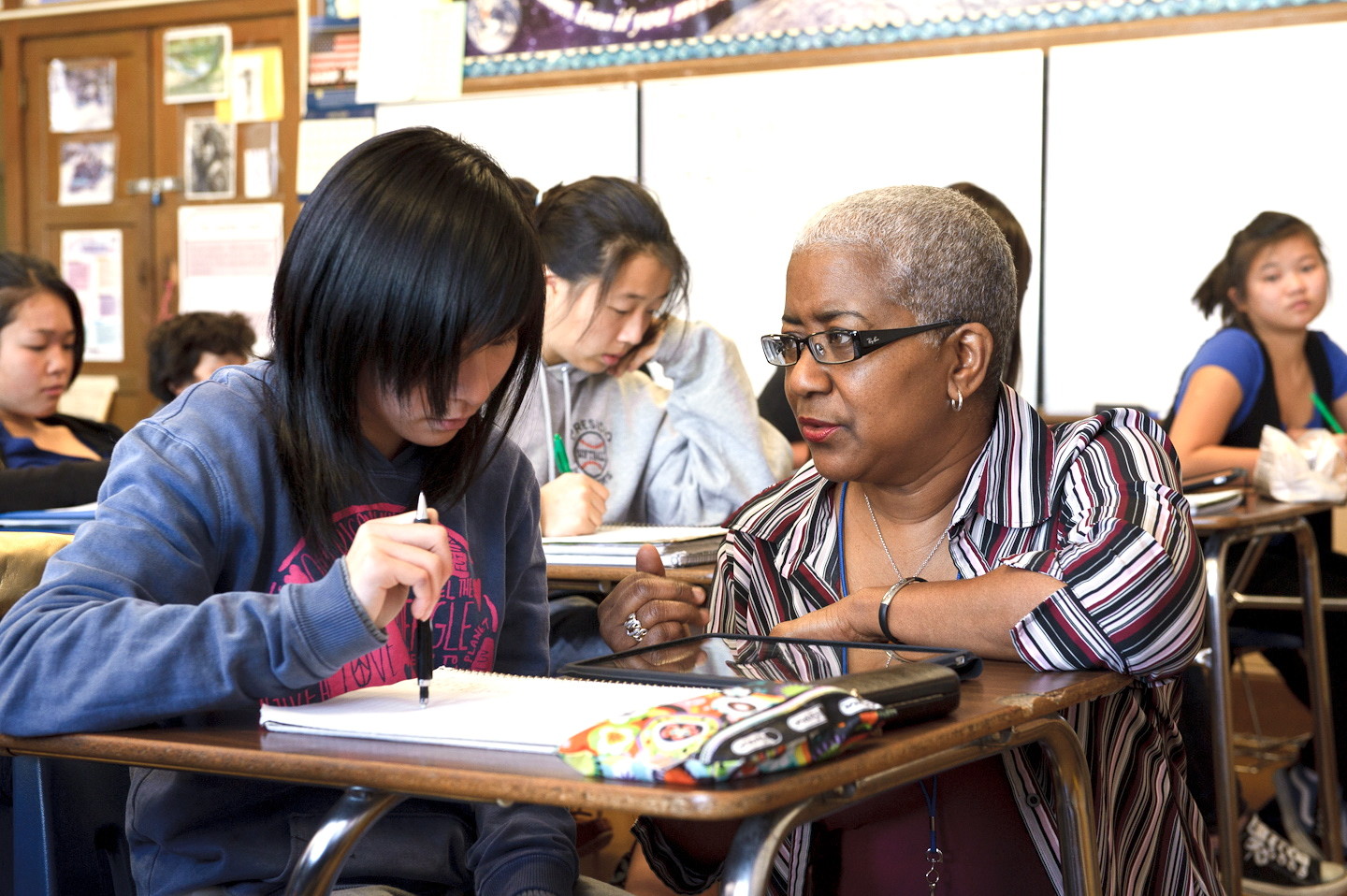
"content": "\u003cdiv id=\"attachment_7087\" class=\"module image aligncenter mceTemp mceIEcenter\" style=\"width: 620px\">\u003cem>\u003cem>\u003ca href=\"http://ww2.kqed.org/mindshift/2011/01/a-day-in-the-life-of-the-ipad-classroom/11_1-21_ipad_algebra_0075/\" rel=\"attachment wp-att-7087\">\u003cimg class=\"size-large wp-image-7087\" title=\"11_1.21_Ipad_Algebra_0075\" src=\"http://ww2.kqed.org/mindshift/wp-content/uploads/sites/23/2011/01/11_1.21_Ipad_Algebra_0075-620x412.jpg\" alt=\"\" width=\"620\" height=\"412\">\u003c/a>\n\u003cp class=\"caption\">\n\u003c/p>\u003cp>\u003c/p>\u003c/em>\u003c/em>\n\u003cp class=\"credit\">\u003cem>\u003cem>Lenny Gonzalez\u003c/em>\u003c/em>\u003c/p>\n\u003cp>Halfway through a year-long pilot study using iPads instead of textbooks, a San Francisco eighth-grade algebra class is showing signs of every teacher’s dream: the spark of engagement in her students’ eyes.\u003c/p>\n\u003cp>Jeannetta Mitchell, a veteran teacher of 20 years, is encouraged by what she sees so far. “This is not a magic wand,” she says. “This just makes it more fun for them to learn. Nobody’s just sitting there writing down the answer, saying I don’t know how I got there. They know how they got there.”\u003c/p>\n\u003cp>During my visit to her class last Friday, it was apparent that \u003cem>she\u003c/em> was a big part of the reason they understood those problems. Mitchell walked up and down the aisles of the class for the entire duration of the period, asking questions, offering explanations, and giving one-on-one help when it was needed.\u003c/p>\n\u003cp>The students never had a chance to tune her out – they were constantly being asked to participate one way or another, whether it was working out problems on the whiteboard (not interactive), watching instructional videos on the iPad, or working in groups.\u003c/p>\n\u003cp> \u003c/p>\n\u003caside class=\"pullquote alignleft\">If the goal of learning is to figure out the “how” and not just the correct answer, then the gadget is doing its job.\u003c/aside>\n\u003cp>The class at Presidio Middle School is part of a \u003ca href=\"http://ww2.kqed.org/mindshift/2011/01/a-new-tool-in-the-classroom-grabs-the-spotlight/\">study of a 1,000 California students\u003c/a>, 400 of who are learning algebra with iPads. The pilot program for the iPad algebra application was developed by textbook publisher Houghton Mifflin Harcourt, and follows the traditional textbook page by page.\u003c/p>\n\u003cp>But one of the differences between the book and the app is that students can watch videos of instructors explaining each problem as many times as they need in order to understand.\u003c/p>\n\u003cp>“That’s one of the best things about the iPad as opposed to the book,” Mitchell says. “It shows \u003cem>how\u003c/em> to solve. The textbook just has answers in the back, no explanations as to how to get there.”\u003c!--more-->\u003c/p>\n\u003cp>If the goal of learning is to figure out the “how” and not just the correct answer, then the gadget is doing its job. “Students don’t really look at it as it’s solving the problem for them. They really want to understand. Kids really do want to learn, and this just makes it more fun for them to learn,” Mitchell says.\u003c/p>\n\u003cp>\u003cstrong>TESTING, TESTING \u003c/strong>\u003c/p>\n\u003cp>Mitchell admits that when the pilot first launched, test scores for the class using the iPad were actually lower than those using the traditional textbook.\u003c/p>\n\u003cp>“I had a conversation with the class explaining to them that the iPad was not the panacea of all ills. It wasn’t going to do everything for them, that they still had to think,” she says. “You have to be engaged. It’s not giving you the answers; it’s helping you get the answers.”\u003c/p>\n\u003cfigure id=\"attachment_7092\" class=\"wp-caption alignright\" style=\"max-width: 300px\">\u003ca href=\"http://ww2.kqed.org/mindshift/2011/01/a-day-in-the-life-of-the-ipad-classroom/11_1-21_ipad_algebra_0252/\" rel=\"attachment wp-att-7092\">\u003cimg class=\"size-medium wp-image-7092\" title=\"11_1.21_Ipad_Algebra_0252\" src=\"http://ww2.kqed.org/mindshift/wp-content/uploads/sites/23/2011/01/11_1.21_Ipad_Algebra_0252-300x199.jpg\" alt=\"\" width=\"300\" height=\"199\">\u003c/a>\u003cfigcaption class=\"wp-caption-text\"> \u003c/figcaption>\u003c/figure>\n\u003cp>Each class in the pilot program is figuring out its own way of getting the best out of the iPad, and in Mitchell’s case, the videos have been key.\u003c/p>\n\u003cp>“I’ve used the videos in class a lot more and I’ve noticed that the grades have gotten a lot better since I told them to use what’s available,” Mitchell says. “You cannot convince any school any district to use this device if you’re not utilizing all the capabilities it has for you.”\u003c/p>\n\u003cp>So have the grades improved?\u003c/p>\n\u003cp>“Yes, there’s not a discrepancy between” the class using the iPad and their textbook using counterparts. Her hope, though, is that the iPad class scores will surpass the print book class scores. “One of the things about the iPad -- it’s a great tool, but it’s like anything, if you don’t use the tool you’re not going to get anything accomplished,” she says.\u003c/p>\n\u003cp>But even more importantly than scores, Mitchell has noticed that some students who’d showed no interest in math in the past are hooked. “I have students who are participating in this class who did not participate in their previous math classes, so it does engage them,” she says. “Is it going to make them all brainiacs and straight A students? No it’s not going to do that. But it will keep them engaged.”\u003c/p>\n\u003cp>\u003cstrong>WHAT DO STUDENTS THINK?\u003c/strong>\u003c/p>\n\u003cp>Kyle Lee:\u003c/p>\n\u003cp>“Sometimes I don’t understand the step by step the teacher gives me, but I watch the videos over and over again, and I can get it when I need the help.\u003c/p>\n\u003cp>Jeffrey Fun:\u003c/p>\n\u003cp>“With video, it’s a lot faster. You can access videos a lot faster than going on the Web and signing into accounts. And sometimes [the videos] say something extra, so I’d learn something more than just the textbook. “\u003c/p>\n\u003cp>Kate Nakano:\u003c/p>\n\u003cp>“With a book, [if I got stuck on a problem] I would just skip it, and wait to figure out what’s happening in class for [the teacher] to explain. But now I can go back and look at examples. It’s actually more fun than a book.”\u003c/p>\n\u003cp>\u003cstrong>AND WHAT OF THE TEACHER?\u003c/strong>\u003c/p>\n\u003cfigure id=\"attachment_7093\" class=\"wp-caption left\" style=\"max-width: 300px\">\u003ca href=\"http://ww2.kqed.org/mindshift/2011/01/a-day-in-the-life-of-the-ipad-classroom/11_1-21_ipad_algebra_0052/\" rel=\"attachment wp-att-7093\">\u003cimg class=\"size-medium wp-image-7093\" title=\"11_1.21_Ipad_Algebra_0052\" src=\"http://ww2.kqed.org/mindshift/wp-content/uploads/sites/23/2011/01/11_1.21_Ipad_Algebra_0052-300x199.jpg\" alt=\"\" width=\"300\" height=\"199\">\u003c/a>\u003cfigcaption class=\"wp-caption-text\"> \u003c/figcaption>\u003c/figure>\n\u003cp>For those who fear that teachers will be left out of the equation, Mitchell firmly maintains that will not be the case. At least not at this point.\u003c/p>\n\u003cp>“Anyone who thinks that the iPad or online textbook is going to replace them, they don’t have to worry about that,” she says. “Only the classroom teacher can see the disconnect, the child that has the question but isn’t asking. You have to be involved. I as a teacher cannot sit down while I’m teaching. You have to move around and keep students engaged. There’s no doubt in my mind that if I left the room they would not be testing as well as they are. They need a teacher.”\u003c/p>\n\u003ch5>\u003cem>\u003ca href=\"http://ww2.kqed.org/mindshift/slideshow/a-look-inside-the-ipad-classroom/\">See the slideshow\u003c/a> of the class in session.\u003c/em>\u003c/h5>\n\u003c/div>\u003cp>[ad fullwidth]\u003c/p>\u003cp>\u003c/p>\n",
"disqusIdentifier": "7085 http://blogs.kqed.org/mindshift/?p=7085",
"disqusUrl": "https://ww2.kqed.org/mindshift/2011/01/26/a-day-in-the-life-of-the-ipad-classroom/",
"stats": {
"hasVideo": false,
"hasChartOrMap": false,
"hasAudio": false,
"hasPolis": false,
"wordCount": 1053,
"hasGoogleForm": false,
"hasGallery": false,
"hasHearkenModule": false,
"iframeSrcs": [],
"paragraphCount": 29
},
"modified": 1386206219,
"excerpt": null,
"headData": {
"twImgId": "",
"twTitle": "",
"ogTitle": "",
"ogImgId": "",
"twDescription": "",
"description": "Lenny Gonzalez Halfway through a year-long pilot study using iPads instead of textbooks, a San Francisco eighth-grade algebra class is showing signs of every teacher’s dream: the spark of engagement in her students’ eyes. Jeannetta Mitchell, a veteran teacher of 20 years, is encouraged by what she sees so far. “This is not a magic",
"title": "A Day in the Life of the iPad Classroom | KQED",
"ogDescription": "",
"schema": {
"@context": "https://schema.org",
"@type": "Article",
"headline": "A Day in the Life of the iPad Classroom",
"datePublished": "2011-01-26T13:14:53-08:00",
"dateModified": "2013-12-04T17:16:59-08:00",
"image": "https://cdn.kqed.org/wp-content/uploads/2020/02/KQED-OG-Image@1x.png"
}
},
"guestAuthors": [],
"slug": "a-day-in-the-life-of-the-ipad-classroom",
"status": "publish",
"path": "/mindshift/7085/a-day-in-the-life-of-the-ipad-classroom",
"audioTrackLength": null,
"parsedContent": [
{
"type": "contentString",
"content": "\u003cdiv class=\"post-body\">\u003cp>\u003cdiv id=\"attachment_7087\" class=\"module image aligncenter mceTemp mceIEcenter\" style=\"width: 620px\">\u003cem>\u003cem>\u003ca href=\"http://ww2.kqed.org/mindshift/2011/01/a-day-in-the-life-of-the-ipad-classroom/11_1-21_ipad_algebra_0075/\" rel=\"attachment wp-att-7087\">\u003cimg class=\"size-large wp-image-7087\" title=\"11_1.21_Ipad_Algebra_0075\" src=\"http://ww2.kqed.org/mindshift/wp-content/uploads/sites/23/2011/01/11_1.21_Ipad_Algebra_0075-620x412.jpg\" alt=\"\" width=\"620\" height=\"412\">\u003c/a>\n\u003cp class=\"caption\">\n\u003c/p>\u003cp>\u003c/p>\u003c/em>\u003c/em>\n\u003cp class=\"credit\">\u003cem>\u003cem>Lenny Gonzalez\u003c/em>\u003c/em>\u003c/p>\n\u003cp>Halfway through a year-long pilot study using iPads instead of textbooks, a San Francisco eighth-grade algebra class is showing signs of every teacher’s dream: the spark of engagement in her students’ eyes.\u003c/p>\n\u003cp>Jeannetta Mitchell, a veteran teacher of 20 years, is encouraged by what she sees so far. “This is not a magic wand,” she says. “This just makes it more fun for them to learn. Nobody’s just sitting there writing down the answer, saying I don’t know how I got there. They know how they got there.”\u003c/p>\n\u003cp>During my visit to her class last Friday, it was apparent that \u003cem>she\u003c/em> was a big part of the reason they understood those problems. Mitchell walked up and down the aisles of the class for the entire duration of the period, asking questions, offering explanations, and giving one-on-one help when it was needed.\u003c/p>\n\u003cp>The students never had a chance to tune her out – they were constantly being asked to participate one way or another, whether it was working out problems on the whiteboard (not interactive), watching instructional videos on the iPad, or working in groups.\u003c/p>\n\u003cp> \u003c/p>\n\u003caside class=\"pullquote alignleft\">If the goal of learning is to figure out the “how” and not just the correct answer, then the gadget is doing its job.\u003c/aside>\n\u003cp>The class at Presidio Middle School is part of a \u003ca href=\"http://ww2.kqed.org/mindshift/2011/01/a-new-tool-in-the-classroom-grabs-the-spotlight/\">study of a 1,000 California students\u003c/a>, 400 of who are learning algebra with iPads. The pilot program for the iPad algebra application was developed by textbook publisher Houghton Mifflin Harcourt, and follows the traditional textbook page by page.\u003c/p>\n\u003cp>But one of the differences between the book and the app is that students can watch videos of instructors explaining each problem as many times as they need in order to understand.\u003c/p>\n\u003cp>“That’s one of the best things about the iPad as opposed to the book,” Mitchell says. “It shows \u003cem>how\u003c/em> to solve. The textbook just has answers in the back, no explanations as to how to get there.”\u003c!--more-->\u003c/p>\n\u003cp>If the goal of learning is to figure out the “how” and not just the correct answer, then the gadget is doing its job. “Students don’t really look at it as it’s solving the problem for them. They really want to understand. Kids really do want to learn, and this just makes it more fun for them to learn,” Mitchell says.\u003c/p>\n\u003cp>\u003cstrong>TESTING, TESTING \u003c/strong>\u003c/p>\n\u003cp>Mitchell admits that when the pilot first launched, test scores for the class using the iPad were actually lower than those using the traditional textbook.\u003c/p>\n\u003cp>“I had a conversation with the class explaining to them that the iPad was not the panacea of all ills. It wasn’t going to do everything for them, that they still had to think,” she says. “You have to be engaged. It’s not giving you the answers; it’s helping you get the answers.”\u003c/p>\n\u003cfigure id=\"attachment_7092\" class=\"wp-caption alignright\" style=\"max-width: 300px\">\u003ca href=\"http://ww2.kqed.org/mindshift/2011/01/a-day-in-the-life-of-the-ipad-classroom/11_1-21_ipad_algebra_0252/\" rel=\"attachment wp-att-7092\">\u003cimg class=\"size-medium wp-image-7092\" title=\"11_1.21_Ipad_Algebra_0252\" src=\"http://ww2.kqed.org/mindshift/wp-content/uploads/sites/23/2011/01/11_1.21_Ipad_Algebra_0252-300x199.jpg\" alt=\"\" width=\"300\" height=\"199\">\u003c/a>\u003cfigcaption class=\"wp-caption-text\"> \u003c/figcaption>\u003c/figure>\n\u003cp>Each class in the pilot program is figuring out its own way of getting the best out of the iPad, and in Mitchell’s case, the videos have been key.\u003c/p>\n\u003cp>“I’ve used the videos in class a lot more and I’ve noticed that the grades have gotten a lot better since I told them to use what’s available,” Mitchell says. “You cannot convince any school any district to use this device if you’re not utilizing all the capabilities it has for you.”\u003c/p>\n\u003cp>So have the grades improved?\u003c/p>\n\u003cp>“Yes, there’s not a discrepancy between” the class using the iPad and their textbook using counterparts. Her hope, though, is that the iPad class scores will surpass the print book class scores. “One of the things about the iPad -- it’s a great tool, but it’s like anything, if you don’t use the tool you’re not going to get anything accomplished,” she says.\u003c/p>\n\u003cp>But even more importantly than scores, Mitchell has noticed that some students who’d showed no interest in math in the past are hooked. “I have students who are participating in this class who did not participate in their previous math classes, so it does engage them,” she says. “Is it going to make them all brainiacs and straight A students? No it’s not going to do that. But it will keep them engaged.”\u003c/p>\n\u003cp>\u003cstrong>WHAT DO STUDENTS THINK?\u003c/strong>\u003c/p>\n\u003cp>Kyle Lee:\u003c/p>\n\u003cp>“Sometimes I don’t understand the step by step the teacher gives me, but I watch the videos over and over again, and I can get it when I need the help.\u003c/p>\n\u003cp>Jeffrey Fun:\u003c/p>\n\u003cp>“With video, it’s a lot faster. You can access videos a lot faster than going on the Web and signing into accounts. And sometimes [the videos] say something extra, so I’d learn something more than just the textbook. “\u003c/p>\n\u003cp>Kate Nakano:\u003c/p>\n\u003cp>“With a book, [if I got stuck on a problem] I would just skip it, and wait to figure out what’s happening in class for [the teacher] to explain. But now I can go back and look at examples. It’s actually more fun than a book.”\u003c/p>\n\u003cp>\u003cstrong>AND WHAT OF THE TEACHER?\u003c/strong>\u003c/p>\n\u003cfigure id=\"attachment_7093\" class=\"wp-caption left\" style=\"max-width: 300px\">\u003ca href=\"http://ww2.kqed.org/mindshift/2011/01/a-day-in-the-life-of-the-ipad-classroom/11_1-21_ipad_algebra_0052/\" rel=\"attachment wp-att-7093\">\u003cimg class=\"size-medium wp-image-7093\" title=\"11_1.21_Ipad_Algebra_0052\" src=\"http://ww2.kqed.org/mindshift/wp-content/uploads/sites/23/2011/01/11_1.21_Ipad_Algebra_0052-300x199.jpg\" alt=\"\" width=\"300\" height=\"199\">\u003c/a>\u003cfigcaption class=\"wp-caption-text\"> \u003c/figcaption>\u003c/figure>\n\u003cp>For those who fear that teachers will be left out of the equation, Mitchell firmly maintains that will not be the case. At least not at this point.\u003c/p>\n\u003cp>“Anyone who thinks that the iPad or online textbook is going to replace them, they don’t have to worry about that,” she says. “Only the classroom teacher can see the disconnect, the child that has the question but isn’t asking. You have to be involved. I as a teacher cannot sit down while I’m teaching. You have to move around and keep students engaged. There’s no doubt in my mind that if I left the room they would not be testing as well as they are. They need a teacher.”\u003c/p>\n\u003ch5>\u003cem>\u003ca href=\"http://ww2.kqed.org/mindshift/slideshow/a-look-inside-the-ipad-classroom/\">See the slideshow\u003c/a> of the class in session.\u003c/em>\u003c/h5>\n\u003c/div>\u003cp>\u003c/p>\u003c/div>",
"attributes": {
"named": {},
"numeric": []
}
},
{
"type": "component",
"content": "",
"name": "ad",
"attributes": {
"named": {
"label": "fullwidth"
},
"numeric": [
"fullwidth"
]
}
},
{
"type": "contentString",
"content": "\u003cdiv class=\"post-body\">\u003cp>\u003c/p>\u003cp>\u003c/p>\n\u003c/div>\u003c/p>",
"attributes": {
"named": {},
"numeric": []
}
}
],
"link": "/mindshift/7085/a-day-in-the-life-of-the-ipad-classroom",
"authors": [
"180"
],
"categories": [
"mindshift_192",
"mindshift_195",
"mindshift_193"
],
"tags": [
"mindshift_275",
"mindshift_274",
"mindshift_81"
],
"featImg": "mindshift_7087",
"label": "mindshift"
},
"mindshift_6953": {
"type": "posts",
"id": "mindshift_6953",
"meta": {
"index": "posts_1716263798",
"site": "mindshift",
"id": "6953",
"score": null,
"sort": [
1295659539000
]
},
"parent": 0,
"labelTerm": {
"site": "mindshift"
},
"blocks": [],
"publishDate": 1295659539,
"format": "aside",
"disqusTitle": "A New Tool in the Classroom Grabs the Spotlight",
"title": "A New Tool in the Classroom Grabs the Spotlight",
"headTitle": "MindShift | KQED News",
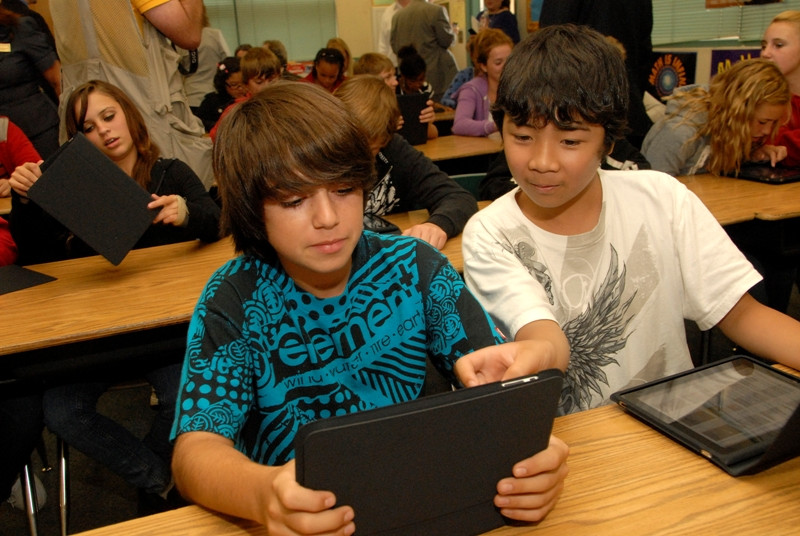
"content": "\u003cp>\u003ca rel=\"attachment wp-att-6960\" href=\"http://ww2.kqed.org/mindshift/2011/01/a-new-tool-in-the-classroom-grabs-the-spotlight/students-with-ipad-2/\">\u003cimg class=\"size-large wp-image-6960\" title=\"Students with iPad\" src=\"http://ww2.kqed.org/mindshift/wp-content/uploads/sites/23/2011/01/Students-with-iPad1-620x415.jpg\" alt=\"\" width=\"620\" height=\"415\">\u003c/a>\u003c/p>\n\u003cp>It's easy to figure out why a 13-year-old's eyes would light up if you give her an iPad. Think of all the possibilities: YouTube! Movies! Music! Angry Birds!\u003c/p>\n\u003cp>But what about algebra? Would she be as excited about learning the quadratic equation just because it's presented on a shiny tablet? Turns out that -- at least for the first few months of the class -- it does significantly boost the kid's interest in the subject.\u003c/p>\n\u003cp>One of the country's biggest textbook publishers, Houghton Mifflin Harcourt is banking on it. In \u003ca href=\"http://ww2.kqed.org/mindshift/2011/01/algebra-meet-the-ipad-a-year-long-study-explores-learning/\">my interview this week with John Sipe\u003c/a>, HMH senior vice president and national sales manager, a few theories about the company's\u003ca href=\"http://www.hmheducation.com/fuse/algebra1/pilot-2.php\"> Fuse pilot program\u003c/a> are coming into focus.\u003c/p>\n\u003cp>1) \u003cstrong>Convenience is crucial.\u003c/strong> A 300-page textbook is replaced by a 10-inch tall, 1.5-pound sleek tablet that features all the same content, plus interactive tests, writing pad, calculator, hundreds of videos, and access to a world of information. \"With a textbook, if you want to learn more about one of the examples, you have to stop looking in your book and go online to our website and navigate that particular section and view our video there. Instead, on the iPad, you simply click on 'view video' and up comes our professor, Dr. Edward Burger,\" Sipe said.\u003c/p>\n\u003cp>[ad fullwidth]\u003c/p>\n\u003cp>2) \u003cstrong>Kids still need their teacher. \u003c/strong>In the eight-grade classroom I visited today at Presidio Middle School in San Francisco, the teacher played an integral role in the classroom. She asked the class questions, had students come up to the board to solve equations, and worked alongside them as they watched videos. As \u003ca href=\"http://ww2.kqed.org/mindshift/2011/01/algebra-meet-the-ipad-part-ii/\">Sipe put it\u003c/a>: \"Let students cover the basics on their own, and let teachers delve into enrichment and individualized learning. That’s what the good teachers are telling me.\"\u003c/p>\n\u003cp>3) \u003cstrong>Learning happens outside the class.\u003c/strong> Whether they're working out algebra problems on their iPad or \u003ca href=\"../2010/12/salman-khan-teaches-the-world-one-youtube-video-at-a-time/\">watching a video tutorial on the Khan Academy website, \u003c/a>or trying new math apps on their own at home, mobile devices are making it possible and irrefutably convenient and easy to learn anywhere, anytime. And kids are taking advantage of it. The one who figures out how to get the best content to learners will be the winner in this rapidly changing world.\u003c/p>\n\u003cp>\u003c!--more-->\u003c/p>\n\u003cp>4)\u003cstrong> Kids love learning by watching videos\u003c/strong>. With one-touch access to a video of an instructor explaining a problem, students are able to absorb the information in one more way, in addition to listening to their teacher or working out a problem on their own. And that seems to really help their learning process.\u003c/p>\n\u003cp>\u003c/p>\n\u003cp>Next week, I'll report back on my visit to one of the pilot classrooms.\u003c/p>\n\n",
"disqusIdentifier": "6953 http://blogs.kqed.org/mindshift/?p=6953",
"disqusUrl": "https://ww2.kqed.org/mindshift/2011/01/21/a-new-tool-in-the-classroom-grabs-the-spotlight/",
"stats": {
"hasVideo": false,
"hasChartOrMap": false,
"hasAudio": false,
"hasPolis": false,
"wordCount": 460,
"hasGoogleForm": false,
"hasGallery": false,
"hasHearkenModule": false,
"iframeSrcs": [],
"paragraphCount": 12
},
"modified": 1295659543,
"excerpt": null,
"headData": {
"twImgId": "",
"twTitle": "",
"ogTitle": "",
"ogImgId": "",
"twDescription": "",
"description": "It's easy to figure out why a 13-year-old's eyes would light up if you give her an iPad. Think of all the possibilities: YouTube! Movies! Music! Angry Birds! But what about algebra? Would she be as excited about learning the quadratic equation just because it's presented on a shiny tablet? Turns out that -- at",
"title": "A New Tool in the Classroom Grabs the Spotlight | KQED",
"ogDescription": "",
"schema": {
"@context": "https://schema.org",
"@type": "Article",
"headline": "A New Tool in the Classroom Grabs the Spotlight",
"datePublished": "2011-01-21T17:25:39-08:00",
"dateModified": "2011-01-21T17:25:43-08:00",
"image": "https://cdn.kqed.org/wp-content/uploads/2020/02/KQED-OG-Image@1x.png"
}
},
"guestAuthors": [],
"slug": "a-new-tool-in-the-classroom-grabs-the-spotlight",
"status": "publish",
"path": "/mindshift/6953/a-new-tool-in-the-classroom-grabs-the-spotlight",
"audioTrackLength": null,
"parsedContent": [
{
"type": "contentString",
"content": "\u003cdiv class=\"post-body\">\u003cp>\u003cp>\u003ca rel=\"attachment wp-att-6960\" href=\"http://ww2.kqed.org/mindshift/2011/01/a-new-tool-in-the-classroom-grabs-the-spotlight/students-with-ipad-2/\">\u003cimg class=\"size-large wp-image-6960\" title=\"Students with iPad\" src=\"http://ww2.kqed.org/mindshift/wp-content/uploads/sites/23/2011/01/Students-with-iPad1-620x415.jpg\" alt=\"\" width=\"620\" height=\"415\">\u003c/a>\u003c/p>\n\u003cp>It's easy to figure out why a 13-year-old's eyes would light up if you give her an iPad. Think of all the possibilities: YouTube! Movies! Music! Angry Birds!\u003c/p>\n\u003cp>But what about algebra? Would she be as excited about learning the quadratic equation just because it's presented on a shiny tablet? Turns out that -- at least for the first few months of the class -- it does significantly boost the kid's interest in the subject.\u003c/p>\n\u003cp>One of the country's biggest textbook publishers, Houghton Mifflin Harcourt is banking on it. In \u003ca href=\"http://ww2.kqed.org/mindshift/2011/01/algebra-meet-the-ipad-a-year-long-study-explores-learning/\">my interview this week with John Sipe\u003c/a>, HMH senior vice president and national sales manager, a few theories about the company's\u003ca href=\"http://www.hmheducation.com/fuse/algebra1/pilot-2.php\"> Fuse pilot program\u003c/a> are coming into focus.\u003c/p>\n\u003cp>1) \u003cstrong>Convenience is crucial.\u003c/strong> A 300-page textbook is replaced by a 10-inch tall, 1.5-pound sleek tablet that features all the same content, plus interactive tests, writing pad, calculator, hundreds of videos, and access to a world of information. \"With a textbook, if you want to learn more about one of the examples, you have to stop looking in your book and go online to our website and navigate that particular section and view our video there. Instead, on the iPad, you simply click on 'view video' and up comes our professor, Dr. Edward Burger,\" Sipe said.\u003c/p>\n\u003cp>\u003c/p>\u003c/div>",
"attributes": {
"named": {},
"numeric": []
}
},
{
"type": "component",
"content": "",
"name": "ad",
"attributes": {
"named": {
"label": "fullwidth"
},
"numeric": [
"fullwidth"
]
}
},
{
"type": "contentString",
"content": "\u003cdiv class=\"post-body\">\u003cp>\u003c/p>\n\u003cp>2) \u003cstrong>Kids still need their teacher. \u003c/strong>In the eight-grade classroom I visited today at Presidio Middle School in San Francisco, the teacher played an integral role in the classroom. She asked the class questions, had students come up to the board to solve equations, and worked alongside them as they watched videos. As \u003ca href=\"http://ww2.kqed.org/mindshift/2011/01/algebra-meet-the-ipad-part-ii/\">Sipe put it\u003c/a>: \"Let students cover the basics on their own, and let teachers delve into enrichment and individualized learning. That’s what the good teachers are telling me.\"\u003c/p>\n\u003cp>3) \u003cstrong>Learning happens outside the class.\u003c/strong> Whether they're working out algebra problems on their iPad or \u003ca href=\"../2010/12/salman-khan-teaches-the-world-one-youtube-video-at-a-time/\">watching a video tutorial on the Khan Academy website, \u003c/a>or trying new math apps on their own at home, mobile devices are making it possible and irrefutably convenient and easy to learn anywhere, anytime. And kids are taking advantage of it. The one who figures out how to get the best content to learners will be the winner in this rapidly changing world.\u003c/p>\n\u003cp>\u003c!--more-->\u003c/p>\n\u003cp>4)\u003cstrong> Kids love learning by watching videos\u003c/strong>. With one-touch access to a video of an instructor explaining a problem, students are able to absorb the information in one more way, in addition to listening to their teacher or working out a problem on their own. And that seems to really help their learning process.\u003c/p>\n\u003cp>\u003c/p>\n\u003cp>Next week, I'll report back on my visit to one of the pilot classrooms.\u003c/p>\n\n\u003c/div>\u003c/p>",
"attributes": {
"named": {},
"numeric": []
}
}
],
"link": "/mindshift/6953/a-new-tool-in-the-classroom-grabs-the-spotlight",
"authors": [
"180"
],
"categories": [
"mindshift_192",
"mindshift_195"
],
"tags": [
"mindshift_275",
"mindshift_274",
"mindshift_81"
],
"featImg": "mindshift_6960",
"label": "mindshift"
},
"mindshift_6830": {
"type": "posts",
"id": "mindshift_6830",
"meta": {
"index": "posts_1716263798",
"site": "mindshift",
"id": "6830",
"score": null,
"sort": [
1295650830000
]
},
"parent": 0,
"labelTerm": {
"site": "mindshift"
},
"blocks": [],
"publishDate": 1295650830,
"format": "aside",
"disqusTitle": "What's the Value of Digital Storytelling?",
"title": "What's the Value of Digital Storytelling?",
"headTitle": "MindShift | KQED News",
"content": "\u003cp>\u003cem> \u003c/em>\u003c/p>\n\u003cp>\u003cimg class=\"size-medium wp-image-6946\" title=\"Screen shot 2011-01-21 at 3.57.26 PM\" src=\"http://ww2.kqed.org/mindshift/wp-content/uploads/sites/23/2011/01/Screen-shot-2011-01-21-at-3.57.26-PM-300x232.png\" alt=\"\" width=\"300\" height=\"232\">\u003c/p>\n\u003cp>\u003cem>The ToonTastic app is clearly fun, as I described in the \u003ca href=\"http://ww2.kqed.org/mindshift/2011/01/digital-storytelling-comes-to-life-on-the-ipad/\">previous post\u003c/a>. But is there an educational element to this kind of digital storytelling? What do kids learn when they piece together a plot hatched from their own imagination? I asked Andy Russell, the app's co-creator, to tell us more. Andy is a graduate of Learning Design programs at Stanford and Northwestern and has worked for companies like Hasbro and Sony PlayStation to design playful learning experiences for kids.\u003c/em>\u003c/p>\n\u003cp>\u003cem>\u003cstrong>Q. Why do you think story-telling is important in a child's education?\u003c/strong>\u003c/em>\u003c/p>\n\u003cp>As educators, we’re challenged to create new opportunities for kids to become producers of creative ideas and not just consumers – and storytelling is a common and underlying theme in most, if not all, creative work. Toontastic enables kids to craft and share their own cartoons, but the core lessons of Character, Setting, Emotion, and Narrative Arc apply to many other mediums from creative writing to filmmaking, music, and art.\u003c/p>\n\u003caside class=\"pullquote alignleft\">\"My favorite cartoons are those with custom drawn characters and backgrounds and we’ll be doing our best to encourage original artwork through the online community.\"\u003c/aside>\n\u003cp>Our first goal is to help kids become better storytellers. Beyond that, however, we see play as a tool for kids to learn about the world around them. Imaginative play is a social laboratory where kids learn by trying on, testing out, and adapting new ideas just as they might costumes – an experimental theater for practicing the many roles and rules that young children are learning every day. As many parents can attest, it’s not uncommon to see one day’s “real-world” lessons being practiced in the next day’s dress-up session. With that in mind, our ultimate goal is to leverage those stories as lessons themselves – to create a global storytelling network for kids, by kids, where children can share their stories online and learn about the world around them through cartoons made by other kids just like them.\u003c/p>\n\u003cp>[ad fullwidth]\u003c/p>\n\u003cp>\u003cem>\u003cstrong>Q. How does Toontastic leverage those storytelling skills?\u003c/strong>\u003c/em>\u003c/p>\n\u003cp>\u003cstrong> \u003c/strong>\u003c/p>\n\u003cp>Toontastic is a constructionist learning tool that empowers kids to create their own cartoons while introducing and guiding key storytelling concepts along the way. Many Constructionist learning tools like \u003ca href=\"http://scratch.mit.edu/\">Scratch\u003c/a> and Logo enable kids to express themselves through computer programming. We like to think of Toontastic as Scratch for storytelling – swapping out formal logic for story structure (Characters, Setting, Story Events, and Narrative Arc) – the “code” of storytelling.\u003cbr>\n\u003c!--more-->\u003c/p>\n\u003cp>\u003cem>\u003cstrong>Q. What were some key features that you had to include for this to be a success for you? Was there anything you wish you could add to the app, but couldn't?\u003c/strong>\u003c/em>\u003c/p>\n\u003cp>I like to think of Toontastic as a springboard for \u003ca href=\"http://toontube.launchpadtoys.com/\">ToonTube\u003c/a>, our online storytelling network. There are a lot of storybook and animation tools out there, but very few offer a community space to share your stories and, as a result, they lack the feedback loop necessary to experiment, learn, and as Papert would say, “debug” your ideas.\u003c/p>\n\u003cp>It would have been easy to release V1 of Toontastic as just an iPad app, but we felt that the website and the online network were critical to our learning goals. With that said, the website is still very much a work in progress and we’ll be adding all sorts of new feedback features to the cartoon pages so that kids can critique, review, and offer suggestions about each others’ work.\u003c/p>\n\u003cp>With time, we’ll also be introducing new characters and settings. Given our affection for LEGOs, we started with the basics (pirates and castle) and will be adding more themes as we go. In time, we’re looking forward to branching out beyond the classic genres into abstract characters and perhaps even historical figures. With that said, I must say that my favorite cartoons are those with custom drawn characters and backgrounds and we’ll be doing our best to encourage original artwork through the online community.\u003c/p>\n\u003cp>\u003cem>\u003cstrong>Q. Is there an adaptive aspect of the app, for those who have mastered certain skills in storytelling to be able to progress to a next level? If not, is it something you've planned?\u003c/strong>\u003c/em>\u003c/p>\n\u003cp>\u003cstrong> \u003c/strong>\u003c/p>\n\u003cp>I spent a number of years working in the toy industry where they call great toys “Grow With Me Toys.” I’ll use LEGOs as an example: Kids start at a young age with the basic construction of Duplos, move up over time to more advanced modeling and storytelling with space and pirate playsets before eventually graduating to Mindstorms and computer programming. The basic mechanic of snapping bricks together stays the same, but the play patterns and learning goals evolve over time with the child’s skills and interests.\u003c/p>\n\u003cfigure id=\"attachment_6947\" class=\"wp-caption left\" style=\"max-width: 300px\">\u003ca rel=\"attachment wp-att-6947\" href=\"http://ww2.kqed.org/mindshift/2011/01/whats-the-value-of-digital-storytelling/screen-shot-2011-01-21-at-3-58-49-pm/\">\u003cimg class=\"size-medium wp-image-6947\" title=\"Screen-shot-2011-01-21-at-3.58.49-PM\" src=\"http://ww2.kqed.org/mindshift/wp-content/uploads/sites/23/2011/01/Screen-shot-2011-01-21-at-3.58.49-PM-300x210.png\" alt=\"\" width=\"300\" height=\"210\">\u003c/a>\u003cfigcaption class=\"wp-caption-text\">Toontastic\u003c/figcaption>\u003c/figure>\n\u003cp>I like to think that Toontastic has many of the same qualities. Younger users can jump right in with the animation tool to make their own cartoons and, over time, come to appreciate and learn the more nuanced lessons of Narrative Arc and Emotional Energy. The app doesn’t adapt per se, but instead rewards the child for quality cartoons through our Merit Badge system where kids nominate themselves and earn badges in categories ranging from “Love Story” to “Family Road Trip.”\u003c/p>\n\u003cp>\u003cem>\u003cstrong>Q. Why is music important in story telling?\u003c/strong>\u003c/em>\u003c/p>\n\u003cp>From a young age, we’re all taught to think of a story as a beginning, a middle, and an end, but a good story is much more than a simple narrative sequence. A good story is a carefully structured series of events that sweeps the viewer through a rollercoaster of emotions. Of course, there are many ways to express those emotions, but Toontastic uses background music to set the mood of each scene.\u003c/p>\n\u003cp>The Music Page blends the work of Robert McKee (USC Film Professor) and Gerrod Parrott (Georgetown Psychology Professor), breaking down the scale of human emotion into 6 core emotions (friendly, happy, surprised, frustrated, sad, and nervous) and three tiers of energy (low, medium, and high). Choosing “Friendly” sets your background music to Gershwin’s Rhapsody in Blue, while bumping the emotional energy up a level to “Loving” changes it to Pachelbel’s Canon. Cranking your scene all the way to High Energy would in turn change the energy to “Passionate” and set your music to a thunderous operatic from Carmen.\u003c/p>\n\u003cp>[ad floatright]\u003c/p>\n\u003cp>Though there are many ways to convey emotion and empathy, we’ve found that this template helps to contextualize abstract emotions and provide a discernible structure to kids’ Story Arcs.\u003c/p>\n\u003ch5>\u003cem>Toontastic was released this week on the iTunes App Store for $2.99.\u003c/em>\u003c/h5>\n\n",
"disqusIdentifier": "6830 http://blogs.kqed.org/mindshift/?p=6830",
"disqusUrl": "https://ww2.kqed.org/mindshift/2011/01/21/whats-the-value-of-digital-storytelling/",
"stats": {
"hasVideo": false,
"hasChartOrMap": false,
"hasAudio": false,
"hasPolis": false,
"wordCount": 1138,
"hasGoogleForm": false,
"hasGallery": false,
"hasHearkenModule": false,
"iframeSrcs": [],
"paragraphCount": 23
},
"modified": 1295671462,
"excerpt": null,
"headData": {
"twImgId": "",
"twTitle": "",
"ogTitle": "",
"ogImgId": "",
"twDescription": "",
"description": "The ToonTastic app is clearly fun, as I described in the previous post. But is there an educational element to this kind of digital storytelling? What do kids learn when they piece together a plot hatched from their own imagination? I asked Andy Russell, the app's co-creator, to tell us more. Andy is a graduate",
"title": "What's the Value of Digital Storytelling? | KQED",
"ogDescription": "",
"schema": {
"@context": "https://schema.org",
"@type": "Article",
"headline": "What's the Value of Digital Storytelling?",
"datePublished": "2011-01-21T15:00:30-08:00",
"dateModified": "2011-01-21T20:44:22-08:00",
"image": "https://cdn.kqed.org/wp-content/uploads/2020/02/KQED-OG-Image@1x.png"
}
},
"guestAuthors": [],
"slug": "whats-the-value-of-digital-storytelling",
"status": "publish",
"path": "/mindshift/6830/whats-the-value-of-digital-storytelling",
"audioTrackLength": null,
"parsedContent": [
{
"type": "contentString",
"content": "\u003cdiv class=\"post-body\">\u003cp>\u003cp>\u003cem> \u003c/em>\u003c/p>\n\u003cp>\u003cimg class=\"size-medium wp-image-6946\" title=\"Screen shot 2011-01-21 at 3.57.26 PM\" src=\"http://ww2.kqed.org/mindshift/wp-content/uploads/sites/23/2011/01/Screen-shot-2011-01-21-at-3.57.26-PM-300x232.png\" alt=\"\" width=\"300\" height=\"232\">\u003c/p>\n\u003cp>\u003cem>The ToonTastic app is clearly fun, as I described in the \u003ca href=\"http://ww2.kqed.org/mindshift/2011/01/digital-storytelling-comes-to-life-on-the-ipad/\">previous post\u003c/a>. But is there an educational element to this kind of digital storytelling? What do kids learn when they piece together a plot hatched from their own imagination? I asked Andy Russell, the app's co-creator, to tell us more. Andy is a graduate of Learning Design programs at Stanford and Northwestern and has worked for companies like Hasbro and Sony PlayStation to design playful learning experiences for kids.\u003c/em>\u003c/p>\n\u003cp>\u003cem>\u003cstrong>Q. Why do you think story-telling is important in a child's education?\u003c/strong>\u003c/em>\u003c/p>\n\u003cp>As educators, we’re challenged to create new opportunities for kids to become producers of creative ideas and not just consumers – and storytelling is a common and underlying theme in most, if not all, creative work. Toontastic enables kids to craft and share their own cartoons, but the core lessons of Character, Setting, Emotion, and Narrative Arc apply to many other mediums from creative writing to filmmaking, music, and art.\u003c/p>\n\u003caside class=\"pullquote alignleft\">\"My favorite cartoons are those with custom drawn characters and backgrounds and we’ll be doing our best to encourage original artwork through the online community.\"\u003c/aside>\n\u003cp>Our first goal is to help kids become better storytellers. Beyond that, however, we see play as a tool for kids to learn about the world around them. Imaginative play is a social laboratory where kids learn by trying on, testing out, and adapting new ideas just as they might costumes – an experimental theater for practicing the many roles and rules that young children are learning every day. As many parents can attest, it’s not uncommon to see one day’s “real-world” lessons being practiced in the next day’s dress-up session. With that in mind, our ultimate goal is to leverage those stories as lessons themselves – to create a global storytelling network for kids, by kids, where children can share their stories online and learn about the world around them through cartoons made by other kids just like them.\u003c/p>\n\u003cp>\u003c/p>\u003c/div>",
"attributes": {
"named": {},
"numeric": []
}
},
{
"type": "component",
"content": "",
"name": "ad",
"attributes": {
"named": {
"label": "fullwidth"
},
"numeric": [
"fullwidth"
]
}
},
{
"type": "contentString",
"content": "\u003cdiv class=\"post-body\">\u003cp>\u003c/p>\n\u003cp>\u003cem>\u003cstrong>Q. How does Toontastic leverage those storytelling skills?\u003c/strong>\u003c/em>\u003c/p>\n\u003cp>\u003cstrong> \u003c/strong>\u003c/p>\n\u003cp>Toontastic is a constructionist learning tool that empowers kids to create their own cartoons while introducing and guiding key storytelling concepts along the way. Many Constructionist learning tools like \u003ca href=\"http://scratch.mit.edu/\">Scratch\u003c/a> and Logo enable kids to express themselves through computer programming. We like to think of Toontastic as Scratch for storytelling – swapping out formal logic for story structure (Characters, Setting, Story Events, and Narrative Arc) – the “code” of storytelling.\u003cbr>\n\u003c!--more-->\u003c/p>\n\u003cp>\u003cem>\u003cstrong>Q. What were some key features that you had to include for this to be a success for you? Was there anything you wish you could add to the app, but couldn't?\u003c/strong>\u003c/em>\u003c/p>\n\u003cp>I like to think of Toontastic as a springboard for \u003ca href=\"http://toontube.launchpadtoys.com/\">ToonTube\u003c/a>, our online storytelling network. There are a lot of storybook and animation tools out there, but very few offer a community space to share your stories and, as a result, they lack the feedback loop necessary to experiment, learn, and as Papert would say, “debug” your ideas.\u003c/p>\n\u003cp>It would have been easy to release V1 of Toontastic as just an iPad app, but we felt that the website and the online network were critical to our learning goals. With that said, the website is still very much a work in progress and we’ll be adding all sorts of new feedback features to the cartoon pages so that kids can critique, review, and offer suggestions about each others’ work.\u003c/p>\n\u003cp>With time, we’ll also be introducing new characters and settings. Given our affection for LEGOs, we started with the basics (pirates and castle) and will be adding more themes as we go. In time, we’re looking forward to branching out beyond the classic genres into abstract characters and perhaps even historical figures. With that said, I must say that my favorite cartoons are those with custom drawn characters and backgrounds and we’ll be doing our best to encourage original artwork through the online community.\u003c/p>\n\u003cp>\u003cem>\u003cstrong>Q. Is there an adaptive aspect of the app, for those who have mastered certain skills in storytelling to be able to progress to a next level? If not, is it something you've planned?\u003c/strong>\u003c/em>\u003c/p>\n\u003cp>\u003cstrong> \u003c/strong>\u003c/p>\n\u003cp>I spent a number of years working in the toy industry where they call great toys “Grow With Me Toys.” I’ll use LEGOs as an example: Kids start at a young age with the basic construction of Duplos, move up over time to more advanced modeling and storytelling with space and pirate playsets before eventually graduating to Mindstorms and computer programming. The basic mechanic of snapping bricks together stays the same, but the play patterns and learning goals evolve over time with the child’s skills and interests.\u003c/p>\n\u003cfigure id=\"attachment_6947\" class=\"wp-caption left\" style=\"max-width: 300px\">\u003ca rel=\"attachment wp-att-6947\" href=\"http://ww2.kqed.org/mindshift/2011/01/whats-the-value-of-digital-storytelling/screen-shot-2011-01-21-at-3-58-49-pm/\">\u003cimg class=\"size-medium wp-image-6947\" title=\"Screen-shot-2011-01-21-at-3.58.49-PM\" src=\"http://ww2.kqed.org/mindshift/wp-content/uploads/sites/23/2011/01/Screen-shot-2011-01-21-at-3.58.49-PM-300x210.png\" alt=\"\" width=\"300\" height=\"210\">\u003c/a>\u003cfigcaption class=\"wp-caption-text\">Toontastic\u003c/figcaption>\u003c/figure>\n\u003cp>I like to think that Toontastic has many of the same qualities. Younger users can jump right in with the animation tool to make their own cartoons and, over time, come to appreciate and learn the more nuanced lessons of Narrative Arc and Emotional Energy. The app doesn’t adapt per se, but instead rewards the child for quality cartoons through our Merit Badge system where kids nominate themselves and earn badges in categories ranging from “Love Story” to “Family Road Trip.”\u003c/p>\n\u003cp>\u003cem>\u003cstrong>Q. Why is music important in story telling?\u003c/strong>\u003c/em>\u003c/p>\n\u003cp>From a young age, we’re all taught to think of a story as a beginning, a middle, and an end, but a good story is much more than a simple narrative sequence. A good story is a carefully structured series of events that sweeps the viewer through a rollercoaster of emotions. Of course, there are many ways to express those emotions, but Toontastic uses background music to set the mood of each scene.\u003c/p>\n\u003cp>The Music Page blends the work of Robert McKee (USC Film Professor) and Gerrod Parrott (Georgetown Psychology Professor), breaking down the scale of human emotion into 6 core emotions (friendly, happy, surprised, frustrated, sad, and nervous) and three tiers of energy (low, medium, and high). Choosing “Friendly” sets your background music to Gershwin’s Rhapsody in Blue, while bumping the emotional energy up a level to “Loving” changes it to Pachelbel’s Canon. Cranking your scene all the way to High Energy would in turn change the energy to “Passionate” and set your music to a thunderous operatic from Carmen.\u003c/p>\n\u003cp>\u003c/p>\u003c/div>",
"attributes": {
"named": {},
"numeric": []
}
},
{
"type": "component",
"content": "",
"name": "ad",
"attributes": {
"named": {
"label": "floatright"
},
"numeric": [
"floatright"
]
}
},
{
"type": "contentString",
"content": "\u003cdiv class=\"post-body\">\u003cp>\u003c/p>\n\u003cp>Though there are many ways to convey emotion and empathy, we’ve found that this template helps to contextualize abstract emotions and provide a discernible structure to kids’ Story Arcs.\u003c/p>\n\u003ch5>\u003cem>Toontastic was released this week on the iTunes App Store for $2.99.\u003c/em>\u003c/h5>\n\n\u003c/div>\u003c/p>",
"attributes": {
"named": {},
"numeric": []
}
}
],
"link": "/mindshift/6830/whats-the-value-of-digital-storytelling",
"authors": [
"180"
],
"categories": [
"mindshift_195"
],
"tags": [
"mindshift_234",
"mindshift_186",
"mindshift_81",
"mindshift_283"
],
"featImg": "mindshift_6946",
"label": "mindshift"
},
"mindshift_6832": {
"type": "posts",
"id": "mindshift_6832",
"meta": {
"index": "posts_1716263798",
"site": "mindshift",
"id": "6832",
"score": null,
"sort": [
1295640065000
]
},
"parent": 0,
"labelTerm": {
"site": "mindshift"
},
"blocks": [],
"publishDate": 1295640065,
"format": "aside",
"disqusTitle": "Digital Storytelling Comes to Life on the iPad",
"title": "Digital Storytelling Comes to Life on the iPad",
"headTitle": "MindShift | KQED News",
"content": "\u003cfigure id=\"attachment_6950\" class=\"wp-caption left\" style=\"max-width: 300px\">\u003cimg class=\"size-medium wp-image-6950\" title=\"Screen shot 2011-01-21 at 3.58.49 PM\" src=\"http://ww2.kqed.org/mindshift/wp-content/uploads/sites/23/2011/01/Screen-shot-2011-01-21-at-3.58.49-PM1-300x210.png\" alt=\"\" width=\"300\" height=\"210\">\u003cfigcaption class=\"wp-caption-text\"> \u003c/figcaption>\u003c/figure>\n\u003cp>Until such time when Facebook and texting take over their lives, pretend play-acting and storytelling take up most of kids' play time and mental space. At least for my seven-year-old daughter, that's still the case.\u003c/p>\n\u003cp>So when I was asked to review the \u003ca href=\"http://launchpadtoys.com/toontastic/\">Toontastic app\u003c/a> for the iPad by one of its creators, Andy Russell, I was happy to oblige. And so was Lucy.\u003c/p>\n\u003cp>Negotiating the app is as intuitive as could be. A voice takes you through the whole process in creating five different scenes: the setup, conflict, challenge, climax, and resolution, and she explains what each scene means. The setup, for instance, introduces the characters and story setting, the climax helps the main character solve the problem, and the resolution shows that the problem has been settled.\u003c/p>\n\u003cp>For each scene, the creator can choose from a variety of different backdrops -- everything from a dragon's field with a mysterious nest of golden eggs, to pirate ships, to a castle gate, to a shipwreck.\u003c/p>\n\u003caside class=\"pullquote alignleft\">I could see the wheels in her brain turning as she came up with the different plot lines. Her ideas became more sophisticated, the setup of each scene more strategic.\u003c/aside>\n\u003cp>Now it's time to choose characters. Is your story set in medieval times with a knight clad in armor, a queen, and a set of dungeon keys? Or would you prefer to have a peg-legged, one-eyed sword-wielding pirate with his trusty pet monkey duel a golden-bearded, hook-armed villain? Throw in a blue dragon, a red-headed princess, a pink octopus, a harp, and a scuba diver, and you've got the makings of a gripping play.\u003c/p>\n\u003cp>[ad fullwidth]\u003c/p>\n\u003cp>But here's the best part: if you don't want any of those choices, you can create your own backdrop and characters on a sketchpad. In the spirit of a true DIY play, anything goes.\u003c/p>\n\u003cp>Once the character and backdrop are in place, it's time to record the scene. Click on \"start animation\" and the app records your voice as you narrate the plot while you move your characters around back and forth on the scene.\u003cbr>\n\u003c!--more-->\u003c/p>\n\u003cp>What's a good story without the right music to set the mood? For each of the five scenes, the storyteller can choose from three different scores. Do you want to create a joyous mood, or one that conveys anger, or fright?\u003c/p>\n\u003cp>With each of the five scenes, the storyteller goes through the same process -- choosing characters, backdrops, and music -- until the resolution. When you're done, write the movie title, your name as the director, and you're done. You can see the entire story played out, scene after scene, with your own recorded voice and character movement. And if you're ready for the world to see your work, you can upload it to \u003ca href=\"http://www.youtube.com/user/toontasticapp\">YouTube\u003c/a> directly from the app.\u003c/p>\n\u003ch5>Play Put to Work\u003c/h5>\n\u003cp>\u003ca rel=\"attachment wp-att-6865\" href=\"http://ww2.kqed.org/mindshift/2011/01/digital-storytelling-comes-to-life-on-the-ipad/photo-8/\">\u003cimg class=\"alignright size-medium wp-image-6865\" title=\"photo\" src=\"http://ww2.kqed.org/mindshift/wp-content/uploads/sites/23/2011/01/photo-300x224.jpg\" alt=\"\" width=\"300\" height=\"224\">\u003c/a>From the time Lucy got her hands on the app, she was hooked. She played for at least an hour that day, making half a dozen of her own films. And a few weeks later, it's the app she asks to play with the most.\u003c/p>\n\u003cp>Though I was crushed that her first story told the tale of a princess saved by a knight (what about all our talks about empowered female characters?) each of her stories reflected more of her own quirky personality: \"Party it Up,\"\"Monkeys are Funny,\" \"Lulu the Treasure Hunter.\"\u003c/p>\n\u003cp>I could see the wheels in her brain turning as she came up with the different plot lines. Her ideas became more sophisticated, the setup of each scene more strategic.\u003c/p>\n\u003cp>If \u003ca href=\"http://ww2.kqed.org/mindshift/2010/12/the-future-of-mobile-learning-apps/\">mobile apps\u003c/a> are meant to be quick shots of fun learning tools, \u003ca href=\"http://itunes.apple.com/us/app/toontastic/id404693282?mt=8\">Toontastic\u003c/a> might be the exception. Lucy has spent a lot of time on this one. That's not to say that she's stopped drawing and creating her own books -- she still does that. But this app is another viable outlet for her artistic expression.\u003c/p>\n\u003cp>\u003c/p>\n\u003cp>In my \u003ca href=\"http://ww2.kqed.org/mindshift/2011/01/whats-the-value-of-digital-storytelling/\">next post\u003c/a>, Andy Russell will talk about the value of storytelling as a learning tool.\u003c/p>\n\n",
"disqusIdentifier": "6832 http://blogs.kqed.org/mindshift/?p=6832",
"disqusUrl": "https://ww2.kqed.org/mindshift/2011/01/21/digital-storytelling-comes-to-life-on-the-ipad/",
"stats": {
"hasVideo": false,
"hasChartOrMap": false,
"hasAudio": false,
"hasPolis": false,
"wordCount": 685,
"hasGoogleForm": false,
"hasGallery": false,
"hasHearkenModule": false,
"iframeSrcs": [],
"paragraphCount": 16
},
"modified": 1295654774,
"excerpt": null,
"headData": {
"twImgId": "",
"twTitle": "",
"ogTitle": "",
"ogImgId": "",
"twDescription": "",
"description": "Until such time when Facebook and texting take over their lives, pretend play-acting and storytelling take up most of kids' play time and mental space. At least for my seven-year-old daughter, that's still the case. So when I was asked to review the Toontastic app for the iPad by one of its creators, Andy Russell,",
"title": "Digital Storytelling Comes to Life on the iPad | KQED",
"ogDescription": "",
"schema": {
"@context": "https://schema.org",
"@type": "Article",
"headline": "Digital Storytelling Comes to Life on the iPad",
"datePublished": "2011-01-21T12:01:05-08:00",
"dateModified": "2011-01-21T16:06:14-08:00",
"image": "https://cdn.kqed.org/wp-content/uploads/2020/02/KQED-OG-Image@1x.png"
}
},
"guestAuthors": [],
"slug": "digital-storytelling-comes-to-life-on-the-ipad",
"status": "publish",
"path": "/mindshift/6832/digital-storytelling-comes-to-life-on-the-ipad",
"audioTrackLength": null,
"parsedContent": [
{
"type": "contentString",
"content": "\u003cdiv class=\"post-body\">\u003cp>\u003cfigure id=\"attachment_6950\" class=\"wp-caption left\" style=\"max-width: 300px\">\u003cimg class=\"size-medium wp-image-6950\" title=\"Screen shot 2011-01-21 at 3.58.49 PM\" src=\"http://ww2.kqed.org/mindshift/wp-content/uploads/sites/23/2011/01/Screen-shot-2011-01-21-at-3.58.49-PM1-300x210.png\" alt=\"\" width=\"300\" height=\"210\">\u003cfigcaption class=\"wp-caption-text\"> \u003c/figcaption>\u003c/figure>\n\u003cp>Until such time when Facebook and texting take over their lives, pretend play-acting and storytelling take up most of kids' play time and mental space. At least for my seven-year-old daughter, that's still the case.\u003c/p>\n\u003cp>So when I was asked to review the \u003ca href=\"http://launchpadtoys.com/toontastic/\">Toontastic app\u003c/a> for the iPad by one of its creators, Andy Russell, I was happy to oblige. And so was Lucy.\u003c/p>\n\u003cp>Negotiating the app is as intuitive as could be. A voice takes you through the whole process in creating five different scenes: the setup, conflict, challenge, climax, and resolution, and she explains what each scene means. The setup, for instance, introduces the characters and story setting, the climax helps the main character solve the problem, and the resolution shows that the problem has been settled.\u003c/p>\n\u003cp>For each scene, the creator can choose from a variety of different backdrops -- everything from a dragon's field with a mysterious nest of golden eggs, to pirate ships, to a castle gate, to a shipwreck.\u003c/p>\n\u003caside class=\"pullquote alignleft\">I could see the wheels in her brain turning as she came up with the different plot lines. Her ideas became more sophisticated, the setup of each scene more strategic.\u003c/aside>\n\u003cp>Now it's time to choose characters. Is your story set in medieval times with a knight clad in armor, a queen, and a set of dungeon keys? Or would you prefer to have a peg-legged, one-eyed sword-wielding pirate with his trusty pet monkey duel a golden-bearded, hook-armed villain? Throw in a blue dragon, a red-headed princess, a pink octopus, a harp, and a scuba diver, and you've got the makings of a gripping play.\u003c/p>\n\u003cp>\u003c/p>\u003c/div>",
"attributes": {
"named": {},
"numeric": []
}
},
{
"type": "component",
"content": "",
"name": "ad",
"attributes": {
"named": {
"label": "fullwidth"
},
"numeric": [
"fullwidth"
]
}
},
{
"type": "contentString",
"content": "\u003cdiv class=\"post-body\">\u003cp>\u003c/p>\n\u003cp>But here's the best part: if you don't want any of those choices, you can create your own backdrop and characters on a sketchpad. In the spirit of a true DIY play, anything goes.\u003c/p>\n\u003cp>Once the character and backdrop are in place, it's time to record the scene. Click on \"start animation\" and the app records your voice as you narrate the plot while you move your characters around back and forth on the scene.\u003cbr>\n\u003c!--more-->\u003c/p>\n\u003cp>What's a good story without the right music to set the mood? For each of the five scenes, the storyteller can choose from three different scores. Do you want to create a joyous mood, or one that conveys anger, or fright?\u003c/p>\n\u003cp>With each of the five scenes, the storyteller goes through the same process -- choosing characters, backdrops, and music -- until the resolution. When you're done, write the movie title, your name as the director, and you're done. You can see the entire story played out, scene after scene, with your own recorded voice and character movement. And if you're ready for the world to see your work, you can upload it to \u003ca href=\"http://www.youtube.com/user/toontasticapp\">YouTube\u003c/a> directly from the app.\u003c/p>\n\u003ch5>Play Put to Work\u003c/h5>\n\u003cp>\u003ca rel=\"attachment wp-att-6865\" href=\"http://ww2.kqed.org/mindshift/2011/01/digital-storytelling-comes-to-life-on-the-ipad/photo-8/\">\u003cimg class=\"alignright size-medium wp-image-6865\" title=\"photo\" src=\"http://ww2.kqed.org/mindshift/wp-content/uploads/sites/23/2011/01/photo-300x224.jpg\" alt=\"\" width=\"300\" height=\"224\">\u003c/a>From the time Lucy got her hands on the app, she was hooked. She played for at least an hour that day, making half a dozen of her own films. And a few weeks later, it's the app she asks to play with the most.\u003c/p>\n\u003cp>Though I was crushed that her first story told the tale of a princess saved by a knight (what about all our talks about empowered female characters?) each of her stories reflected more of her own quirky personality: \"Party it Up,\"\"Monkeys are Funny,\" \"Lulu the Treasure Hunter.\"\u003c/p>\n\u003cp>I could see the wheels in her brain turning as she came up with the different plot lines. Her ideas became more sophisticated, the setup of each scene more strategic.\u003c/p>\n\u003cp>If \u003ca href=\"http://ww2.kqed.org/mindshift/2010/12/the-future-of-mobile-learning-apps/\">mobile apps\u003c/a> are meant to be quick shots of fun learning tools, \u003ca href=\"http://itunes.apple.com/us/app/toontastic/id404693282?mt=8\">Toontastic\u003c/a> might be the exception. Lucy has spent a lot of time on this one. That's not to say that she's stopped drawing and creating her own books -- she still does that. But this app is another viable outlet for her artistic expression.\u003c/p>\n\u003cp>\u003c/p>\n\u003cp>In my \u003ca href=\"http://ww2.kqed.org/mindshift/2011/01/whats-the-value-of-digital-storytelling/\">next post\u003c/a>, Andy Russell will talk about the value of storytelling as a learning tool.\u003c/p>\n\n\u003c/div>\u003c/p>",
"attributes": {
"named": {},
"numeric": []
}
}
],
"link": "/mindshift/6832/digital-storytelling-comes-to-life-on-the-ipad",
"authors": [
"180"
],
"categories": [
"mindshift_195"
],
"tags": [
"mindshift_234",
"mindshift_284",
"mindshift_81",
"mindshift_283"
],
"featImg": "mindshift_6865",
"label": "mindshift"
},
"mindshift_6712": {
"type": "posts",
"id": "mindshift_6712",
"meta": {
"index": "posts_1716263798",
"site": "mindshift",
"id": "6712",
"score": null,
"sort": [
1295553740000
]
},
"parent": 0,
"labelTerm": {
"site": "mindshift"
},
"blocks": [],
"publishDate": 1295553740,
"format": "aside",
"disqusTitle": "Algebra, Meet the iPad: Part II ",
"title": "Algebra, Meet the iPad: Part II ",
"headTitle": "MindShift | KQED News",
"content": "\u003cp>\u003cimg class=\"size-large wp-image-6668\" style=\"border: none;\" title=\"product_screen7\" src=\"http://ww2.kqed.org/mindshift/wp-content/uploads/sites/23/2011/01/product_screen7-620x277.jpg\" alt=\"HMH Fuse\" width=\"620\" height=\"277\">\u003c/p>\n\u003ch5>\u003cem>The iPad's impact on the role of the teacher, paid content versus free online and open-source content, and the learning process.\u003c/em>\u003c/h5>\n\u003cp>\u003cem>\u003cbr>\n\u003c/em>\u003c/p>\n\u003cp>Will eighth-graders who use the iPad to learn algebra do better than their textbook-using counterparts? That's what publisher \u003ca href=\"http://www.hmheducation.com/fuse/algebra1/pilot-2.php\">Houghton Mifflin Harcourt's Fuse\u003c/a> pilot program will determine at the end of the school year. In \u003ca href=\"http://ww2.kqed.org/mindshift/2011/01/algebra-meet-the-ipad-a-year-long-study-explores-learning/\">yesterday's post\u003c/a>, HMH's John Sipe talked about how anecdotal surveys, halfway through the study, have shown higher engagement level and interest in algebra, partly due to the convenience of having all the content on the app. But how much of that engagement is related to the novelty of using the gadget has not been determined, he says.\u003c/p>\n\u003cp>Here's the rest of our interview.\u003c/p>\n\u003cp>\u003cem>\u003cstrong>Q. Do you have any information you can share about grades so far?\u003c/strong>\u003c/em>\u003c/p>\n\u003cp>[ad fullwidth]\u003c/p>\n\u003cp>No, because the study’s still underway. But what we’ve heard from teachers is very encouraging. We’ve been able to see students' time on task, how long they were working on each problem, what they clicked on, what they avoided, which problems they got right and wrong. We have a lot of data that helps us to understand where students are spending their time, and where we need to spend our time as instructors.\u003c/p>\n\u003caside class=\"pullquote alignleft\">I could see a day when the links to the Khan Academy live right in our app, right alongside our videos.\u003c/aside>\n\u003cp>What I suspect is going to happen is that the performance between the print version and app version is going to be similar. But I do think we’ll see better performance with the app in terms of time spent on each task. So far anecdotally kids are spending more time actually involved in doing algebra in the classroom using the iPad, and that’s going to be key – because their engagement and interest is sustained. They’re going to be watching more videos because they’re more convenient to watch. They’re doing more of the practice problems because they’re more engaged in doing so because the “check your understanding” is right there and they don’t have to go look in another place.\u003c/p>\n\u003cp>\u003cem>\u003cstrong>Q. Did you train teachers on how to use the app?\u003c/strong>\u003c/em>\u003c/p>\n\u003cp>\u003cstrong> \u003c/strong>\u003c/p>\n\u003cp>Interestingly enough, the device is so easy to use, we didn’t have to spend a whole lot of time on training the teachers, because remember, this is just a student app. The teachers are still using their teachers' guide from print textbooks. This is just how the student accesses content. So the student is not issued a book, just an iPad, and all their content exists on the iPad. They use it on the bus, at home with their families, they bring it back to school and use it in class.\u003c!--more-->\u003c/p>\n\u003cp>\u003cstrong>\u003cem>\u003c/em>\u003c/strong>\u003c/p>\n\u003cdiv id=\"attachment_6819\" class=\"module image left mceTemp\" style=\"width: 300px;\">\u003cstrong>\u003cem>\u003ca rel=\"attachment wp-att-6819\" href=\"http://ww2.kqed.org/mindshift/2011/01/algebra-meet-the-ipad-part-ii/students-with-ipad/\">\u003cimg class=\"size-medium wp-image-6819\" title=\"Students with iPad\" src=\"http://ww2.kqed.org/mindshift/wp-content/uploads/sites/23/2011/01/Students-with-iPad-300x201.jpg\" alt=\"\" width=\"300\" height=\"201\">\u003c/a>\u003c/em>\u003c/strong>\n\u003cp class=\"credit\">\u003cstrong>\u003cem>HMH\u003c/em>\u003c/strong>\u003c/p>\n\u003cp class=\"caption\">\n\u003c/p>\u003c/div>\n\u003cp>Q. I've heard from educators that they're worried about being replaced by these gadgets. And a lot of educators complain about not being trained properly in how to use the new technologies in order to be valuable to their students' learning process.\u003cstrong>\u003cbr>\n\u003c/strong>\u003c/p>\n\u003cp>Not only will teachers not be replaced, it helps elevate their positions in student learning. These videos and many of the aspects of the apps actually do the “heavy lifting” for teachers. Traditional algorithms are presented in these videos using traditional instruction. So teachers don’t have to “waste their time” on some of these things that they’ve always had to do. They can spend much more time on individualized learning, identifying specific student needs. Let students cover the basics, if you will, on their own, and let teachers delve into enrichment and individualized learning. That’s what the good teachers are telling me.\u003c/p>\n\u003cp>I did hear from a couple teachers as we were doing the training, sort of as anecdotes when they first got this, “Oh my god, what’s \u003cem>my\u003c/em> job?” And that’s obviously a natural first reaction, but when you start spending time with it, you realize this can actually make you a better teacher.\u003c/p>\n\u003cp>\u003cem>\u003cstrong>Q. Will this app be available to the public?\u003c/strong>\u003c/em>\u003c/p>\n\u003cp>We’re submitting it to Apple as we speak. It will be commercially available probably in the next few weeks.\u003c/p>\n\u003cp>We’re trying to make this a way for teachers and school districts to save money. The app will cost substantially less than the student book. There will be a day before we know it when students will be carrying around an iPad instead of four or five 700-page books.\u003c/p>\n\u003cp>\u003cem>\u003cstrong>Q. How will an app like this compete with something like the videos on the \u003ca href=\"http://ww2.kqed.org/mindshift/2010/12/salman-khan-teaches-the-world-one-youtube-video-at-a-time/\">Khan Academy\u003c/a>, which are free for anyone to view?\u003c/strong>\u003c/em>\u003c/p>\n\u003cp>The Khan Academy is fantastic. Khan does fantastic work, and there are tremendous videos there. The thing that we can do that open source has a hard time doing is both vetting this with authors like Dr. Ed Burger, and also bringing it all to one place and making sure it aligns with state and local standards. We play the role of vetting and assuring that content has met all the pedagogical and other requirements that are critical and required for good content.\u003c/p>\n\u003cp>That said, I could see a day when the links to the Khan Academy live right in our app, right alongside our videos. Sort of like, \"Here’s our video of the quadratic equation, and if you’d like to see the video from Khan Academy’s, here it is.\" So again, it makes the learning happen all in one place.\u003c/p>\n\u003cp>\u003cem>\u003cstrong>Q. You've given 400 iPads to students for this study. Will you be taking them back after the pilot is over?\u003c/strong>\u003c/em>\u003c/p>\n\u003cp>That's to be determined. We’re developing other apps, Algebra II and Geometry, which are on the way. So it’s an item to be discussed.\u003c/p>\n\u003cp>\u003cem>\u003cstrong>Q. What’s the next step?\u003c/strong>\u003c/em>\u003c/p>\n\u003cp>We’ll see how this goes. We are the largest educational publisher in the U.S. and have the most titles in print and the biggest market share. We knew it was incredibly important for us to learn everything we could learn on how to deliver content in new ways. And this is one of the many new ways.\u003c/p>\n\u003cp>[ad floatright]\u003c/p>\n\u003cp>Our role in education is changing rapidly. With the amount of content available online, and with the amount of open source content, it helps inspire us to continually innovate and try new things in new ways.\u003c/p>\n\u003cblockquote>\u003cp>I'll be reporting more on the program after my visit with Presidio Middle School tomorrow in San Francisco, one of the participating pilot schools. In the meantime, you can \u003ca href=\"http://www.scpr.org/programs/madeleine-brand/2011/01/07/algebra-homework-theres-an-app-for-that/\">hear a report\u003c/a> about the HMH Fuse project at a Los Angeles school.\u003c/p>\u003c/blockquote>\n\n",
"disqusIdentifier": "6712 http://blogs.kqed.org/mindshift/?p=6712",
"disqusUrl": "https://ww2.kqed.org/mindshift/2011/01/20/algebra-meet-the-ipad-part-ii/",
"stats": {
"hasVideo": false,
"hasChartOrMap": false,
"hasAudio": false,
"hasPolis": false,
"wordCount": 1150,
"hasGoogleForm": false,
"hasGallery": false,
"hasHearkenModule": false,
"iframeSrcs": [],
"paragraphCount": 28
},
"modified": 1295568811,
"excerpt": null,
"headData": {
"twImgId": "",
"twTitle": "",
"ogTitle": "",
"ogImgId": "",
"twDescription": "",
"description": "The iPad's impact on the role of the teacher, paid content versus free online and open-source content, and the learning process. Will eighth-graders who use the iPad to learn algebra do better than their textbook-using counterparts? That's what publisher Houghton Mifflin Harcourt's Fuse pilot program will determine at the end of the school year. In",
"title": "Algebra, Meet the iPad: Part II | KQED",
"ogDescription": "",
"schema": {
"@context": "https://schema.org",
"@type": "Article",
"headline": "Algebra, Meet the iPad: Part II ",
"datePublished": "2011-01-20T12:02:20-08:00",
"dateModified": "2011-01-20T16:13:31-08:00",
"image": "https://cdn.kqed.org/wp-content/uploads/2020/02/KQED-OG-Image@1x.png"
}
},
"guestAuthors": [],
"slug": "algebra-meet-the-ipad-part-ii",
"status": "publish",
"path": "/mindshift/6712/algebra-meet-the-ipad-part-ii",
"audioTrackLength": null,
"parsedContent": [
{
"type": "contentString",
"content": "\u003cdiv class=\"post-body\">\u003cp>\u003cp>\u003cimg class=\"size-large wp-image-6668\" style=\"border: none;\" title=\"product_screen7\" src=\"http://ww2.kqed.org/mindshift/wp-content/uploads/sites/23/2011/01/product_screen7-620x277.jpg\" alt=\"HMH Fuse\" width=\"620\" height=\"277\">\u003c/p>\n\u003ch5>\u003cem>The iPad's impact on the role of the teacher, paid content versus free online and open-source content, and the learning process.\u003c/em>\u003c/h5>\n\u003cp>\u003cem>\u003cbr>\n\u003c/em>\u003c/p>\n\u003cp>Will eighth-graders who use the iPad to learn algebra do better than their textbook-using counterparts? That's what publisher \u003ca href=\"http://www.hmheducation.com/fuse/algebra1/pilot-2.php\">Houghton Mifflin Harcourt's Fuse\u003c/a> pilot program will determine at the end of the school year. In \u003ca href=\"http://ww2.kqed.org/mindshift/2011/01/algebra-meet-the-ipad-a-year-long-study-explores-learning/\">yesterday's post\u003c/a>, HMH's John Sipe talked about how anecdotal surveys, halfway through the study, have shown higher engagement level and interest in algebra, partly due to the convenience of having all the content on the app. But how much of that engagement is related to the novelty of using the gadget has not been determined, he says.\u003c/p>\n\u003cp>Here's the rest of our interview.\u003c/p>\n\u003cp>\u003cem>\u003cstrong>Q. Do you have any information you can share about grades so far?\u003c/strong>\u003c/em>\u003c/p>\n\u003cp>\u003c/p>\u003c/div>",
"attributes": {
"named": {},
"numeric": []
}
},
{
"type": "component",
"content": "",
"name": "ad",
"attributes": {
"named": {
"label": "fullwidth"
},
"numeric": [
"fullwidth"
]
}
},
{
"type": "contentString",
"content": "\u003cdiv class=\"post-body\">\u003cp>\u003c/p>\n\u003cp>No, because the study’s still underway. But what we’ve heard from teachers is very encouraging. We’ve been able to see students' time on task, how long they were working on each problem, what they clicked on, what they avoided, which problems they got right and wrong. We have a lot of data that helps us to understand where students are spending their time, and where we need to spend our time as instructors.\u003c/p>\n\u003caside class=\"pullquote alignleft\">I could see a day when the links to the Khan Academy live right in our app, right alongside our videos.\u003c/aside>\n\u003cp>What I suspect is going to happen is that the performance between the print version and app version is going to be similar. But I do think we’ll see better performance with the app in terms of time spent on each task. So far anecdotally kids are spending more time actually involved in doing algebra in the classroom using the iPad, and that’s going to be key – because their engagement and interest is sustained. They’re going to be watching more videos because they’re more convenient to watch. They’re doing more of the practice problems because they’re more engaged in doing so because the “check your understanding” is right there and they don’t have to go look in another place.\u003c/p>\n\u003cp>\u003cem>\u003cstrong>Q. Did you train teachers on how to use the app?\u003c/strong>\u003c/em>\u003c/p>\n\u003cp>\u003cstrong> \u003c/strong>\u003c/p>\n\u003cp>Interestingly enough, the device is so easy to use, we didn’t have to spend a whole lot of time on training the teachers, because remember, this is just a student app. The teachers are still using their teachers' guide from print textbooks. This is just how the student accesses content. So the student is not issued a book, just an iPad, and all their content exists on the iPad. They use it on the bus, at home with their families, they bring it back to school and use it in class.\u003c!--more-->\u003c/p>\n\u003cp>\u003cstrong>\u003cem>\u003c/em>\u003c/strong>\u003c/p>\n\u003cdiv id=\"attachment_6819\" class=\"module image left mceTemp\" style=\"width: 300px;\">\u003cstrong>\u003cem>\u003ca rel=\"attachment wp-att-6819\" href=\"http://ww2.kqed.org/mindshift/2011/01/algebra-meet-the-ipad-part-ii/students-with-ipad/\">\u003cimg class=\"size-medium wp-image-6819\" title=\"Students with iPad\" src=\"http://ww2.kqed.org/mindshift/wp-content/uploads/sites/23/2011/01/Students-with-iPad-300x201.jpg\" alt=\"\" width=\"300\" height=\"201\">\u003c/a>\u003c/em>\u003c/strong>\n\u003cp class=\"credit\">\u003cstrong>\u003cem>HMH\u003c/em>\u003c/strong>\u003c/p>\n\u003cp class=\"caption\">\n\u003c/p>\u003c/div>\n\u003cp>Q. I've heard from educators that they're worried about being replaced by these gadgets. And a lot of educators complain about not being trained properly in how to use the new technologies in order to be valuable to their students' learning process.\u003cstrong>\u003cbr>\n\u003c/strong>\u003c/p>\n\u003cp>Not only will teachers not be replaced, it helps elevate their positions in student learning. These videos and many of the aspects of the apps actually do the “heavy lifting” for teachers. Traditional algorithms are presented in these videos using traditional instruction. So teachers don’t have to “waste their time” on some of these things that they’ve always had to do. They can spend much more time on individualized learning, identifying specific student needs. Let students cover the basics, if you will, on their own, and let teachers delve into enrichment and individualized learning. That’s what the good teachers are telling me.\u003c/p>\n\u003cp>I did hear from a couple teachers as we were doing the training, sort of as anecdotes when they first got this, “Oh my god, what’s \u003cem>my\u003c/em> job?” And that’s obviously a natural first reaction, but when you start spending time with it, you realize this can actually make you a better teacher.\u003c/p>\n\u003cp>\u003cem>\u003cstrong>Q. Will this app be available to the public?\u003c/strong>\u003c/em>\u003c/p>\n\u003cp>We’re submitting it to Apple as we speak. It will be commercially available probably in the next few weeks.\u003c/p>\n\u003cp>We’re trying to make this a way for teachers and school districts to save money. The app will cost substantially less than the student book. There will be a day before we know it when students will be carrying around an iPad instead of four or five 700-page books.\u003c/p>\n\u003cp>\u003cem>\u003cstrong>Q. How will an app like this compete with something like the videos on the \u003ca href=\"http://ww2.kqed.org/mindshift/2010/12/salman-khan-teaches-the-world-one-youtube-video-at-a-time/\">Khan Academy\u003c/a>, which are free for anyone to view?\u003c/strong>\u003c/em>\u003c/p>\n\u003cp>The Khan Academy is fantastic. Khan does fantastic work, and there are tremendous videos there. The thing that we can do that open source has a hard time doing is both vetting this with authors like Dr. Ed Burger, and also bringing it all to one place and making sure it aligns with state and local standards. We play the role of vetting and assuring that content has met all the pedagogical and other requirements that are critical and required for good content.\u003c/p>\n\u003cp>That said, I could see a day when the links to the Khan Academy live right in our app, right alongside our videos. Sort of like, \"Here’s our video of the quadratic equation, and if you’d like to see the video from Khan Academy’s, here it is.\" So again, it makes the learning happen all in one place.\u003c/p>\n\u003cp>\u003cem>\u003cstrong>Q. You've given 400 iPads to students for this study. Will you be taking them back after the pilot is over?\u003c/strong>\u003c/em>\u003c/p>\n\u003cp>That's to be determined. We’re developing other apps, Algebra II and Geometry, which are on the way. So it’s an item to be discussed.\u003c/p>\n\u003cp>\u003cem>\u003cstrong>Q. What’s the next step?\u003c/strong>\u003c/em>\u003c/p>\n\u003cp>We’ll see how this goes. We are the largest educational publisher in the U.S. and have the most titles in print and the biggest market share. We knew it was incredibly important for us to learn everything we could learn on how to deliver content in new ways. And this is one of the many new ways.\u003c/p>\n\u003cp>\u003c/p>\u003c/div>",
"attributes": {
"named": {},
"numeric": []
}
},
{
"type": "component",
"content": "",
"name": "ad",
"attributes": {
"named": {
"label": "floatright"
},
"numeric": [
"floatright"
]
}
},
{
"type": "contentString",
"content": "\u003cdiv class=\"post-body\">\u003cp>\u003c/p>\n\u003cp>Our role in education is changing rapidly. With the amount of content available online, and with the amount of open source content, it helps inspire us to continually innovate and try new things in new ways.\u003c/p>\n\u003cblockquote>\u003cp>I'll be reporting more on the program after my visit with Presidio Middle School tomorrow in San Francisco, one of the participating pilot schools. In the meantime, you can \u003ca href=\"http://www.scpr.org/programs/madeleine-brand/2011/01/07/algebra-homework-theres-an-app-for-that/\">hear a report\u003c/a> about the HMH Fuse project at a Los Angeles school.\u003c/p>\u003c/blockquote>\n\n\u003c/div>\u003c/p>",
"attributes": {
"named": {},
"numeric": []
}
}
],
"link": "/mindshift/6712/algebra-meet-the-ipad-part-ii",
"authors": [
"180"
],
"categories": [
"mindshift_192",
"mindshift_193"
],
"tags": [
"mindshift_33",
"mindshift_198",
"mindshift_275",
"mindshift_274",
"mindshift_124",
"mindshift_81",
"mindshift_65"
],
"featImg": "mindshift_6819",
"label": "mindshift"
},
"mindshift_6652": {
"type": "posts",
"id": "mindshift_6652",
"meta": {
"index": "posts_1716263798",
"site": "mindshift",
"id": "6652",
"score": null,
"sort": [
1295467566000
]
},
"parent": 0,
"labelTerm": {
"site": "mindshift"
},
"blocks": [],
"publishDate": 1295467566,
"format": "aside",
"disqusTitle": "Algebra, Meet the iPad: A Year-Long Study Explores Learning With the Tablet",
"title": "Algebra, Meet the iPad: A Year-Long Study Explores Learning With the Tablet",
"headTitle": "MindShift | KQED News",
"content": "\u003cp>\u003cimg class=\"size-large wp-image-6668\" style=\"border: none;\" title=\"product_screen7\" src=\"http://ww2.kqed.org/mindshift/wp-content/uploads/sites/23/2011/01/product_screen7-620x277.jpg\" alt=\"HMH Fuse\" width=\"620\" height=\"277\">\u003c/p>\n\u003cp>Whether or not the iPad is the Holy Grail in education has yet to be determined. But when one of the biggest textbook publishers in the world invests in a pilot program specifically for the Apple tablet, it's a good indication that, at the very least, it's on the short list.\u003c/p>\n\u003cp>Since last fall, 400 California middle school students have been using the iPad to learn Algebra with \u003ca href=\"http://www.hmheducation.com/fuse/algebra1/pilot-2.php\">Houghton Mifflin Harcourt's Fuse program\u003c/a>. This first app, \u003cem>Holt McDougal Algebra 1, \u003c/em>is an interactive version of the textbook, and with it, students get feedback on practice questions, they can write and save notes, receive guided instruction, and access video lessons.\u003c/p>\n\u003cp>\"We like to say that the course is 're-imagined,'\" said John Sipe, senior vice president, national sales manager at HMH. \"It’s a lot more than just adaptation. We know that it’s a more iterative process than a revolutionary process in moving things to mobile delivery to a place like iPad.\"\u003c/p>\n\u003cp>The pilot study, which includes a total of 1,000 students -- 600 receiving the same instruction with traditional textbooks, without iPads -- will go through to the end of the school year, after which, the research firm \u003ca href=\"http://www.empiricaleducation.com/\">Empirical Education\u003c/a>, will evaluate and deliver results by the summer.\u003c/p>\n\u003cp>[ad fullwidth]\u003c/p>\n\u003cp>Here's the first part of my interview with John Sipe.\u003c/p>\n\u003cp>\u003cstrong>\u003cem>Q. Will HMH create apps for other devices, too, or just the iPad?\u003c/em>\u003cbr>\n\u003c/strong>\u003c/p>\n\u003cp>Right now, the apps are developed exclusively for the iPad. It was the first device that we could take full advantage of. It can support multimedia components, the multi-touch environment. And it's the first device that realized the vision that we’ve all had for a student learning device, a tablet.\u003c/p>\n\u003cp>But that said, we do have to be where schools are. So if tomorrow, dozens of school districts decided to adopt the Motorola Zoom Android-powered tablet, we’d be forced to take a hard look at porting our app over to Android. Many big app providers produce an Android version as well.\u003cbr>\n\u003c!--more-->\u003c/p>\n\u003cp>\u003cem>\u003cstrong>Q. Do you think the iPad will be a game-changer in education, or is it the beginning of what’s about to come?\u003c/strong>\u003c/em>\u003c/p>\n\u003cp>The iPad is a beautiful, remarkable device. That’s why there’s so much attention around it. It's not Apple’s first time to attempt a device of this kind. Think back to the Newton. It didn’t succeed because a lot of things that people wanted to do, it couldn’t quite do right. And this is the first device that is able to do everything right that people have asked, not withstanding the discussion around Flash.\u003c/p>\n\u003caside class=\"pullquote alignleft\">\"Engagement is much higher, as is their interest and motivation.\"\u003c/aside>\n\u003cp>It’s an exciting device and a fantastic device to consume content. Is this THE device for education? That remains to be seen. Right now educators are telling us that it’s very expensive. And they’re right. As we’ve seen with all technology, price comes down very quickly, so it’ll be interesting to watch whether Apple decides to go after a more aggressively priced solution. Look what happened to their music offerings. Look at the Shuffle, for example, which costs $49, if I’m not mistaken. Prices change, they come down quickly. There are many folks out there who understand the importance of producing inexpensive tablets.\u003c/p>\n\u003cp>Is this THE device or is this the first device? It’s hard to say. But what we can certainly say firmly is that it’s the best thing to have come along so far. The reason we did this test is to learn as a content provider, how do we take a really well-designed, high-functioning mobile device and re-imagine curriculum, students interacting with learning in their own way. And that’s the exciting part of what we’ve done and what we’re trying to do.\u003c/p>\n\u003cp>\u003cem>\u003cstrong>Q. How will the iPad-taught class different from a traditional algebra class?\u003c/strong>\u003c/em>\u003c/p>\n\u003cp>What we’ve seen in practice is the fact that it’s bringing everything to one place that’s making it exciting. The convenience factor, the simplicity factor -- that’s revolutionary. For example, if you’re working through a lesson, there are three or four algorithms presented. With a textbook, if you want to learn more about one of the examples, you have to stop looking in your book and go online to our website and navigate that particular section and view our video there.\u003c/p>\n\u003cp>Instead, on the iPad, you simply click on “view video” and up comes our professor, Dr. Edward Burger, the Bill Nye of math education. Students have written to him saying he’s changed their opinion of what math is. So to have him right there, you can see how it’s natural for students to tap “view video,” as opposed to setting their book down and going to the computer.\u003c/p>\n\u003cp>Another example is, when students are working on a problem, they can simply click on “check answer,” and up comes, “that’s correct, and here’s why,” or “that’s incorrect, and here’s why.” As opposed to when they’re working on paper or even online, those pieces are a little more drawn out.\u003c/p>\n\u003cp>\u003cem>\u003cstrong> \u003c/strong>\u003c/em>\u003c/p>\n\u003cdiv id=\"attachment_6639\" class=\"module image right mceTemp\" style=\"width: 140px;\">\u003cem>\u003cstrong>\u003cem>\u003cstrong>\u003ca rel=\"attachment wp-att-6639\" href=\"http://ww2.kqed.org/mindshift/2011/01/learning-algebra-with-the-ipad/ipad-on-tanmays-jeans-4/\">\u003cimg class=\"size-thumbnail wp-image-6639\" title=\"iPad on Tanmay's jeans\" src=\"http://ww2.kqed.org/mindshift/wp-content/uploads/sites/23/2011/01/ipad-140x140.jpg\" alt=\"\" width=\"140\" height=\"140\">\u003c/a>\u003c/strong>\u003c/em>\u003c/strong>\u003c/em>\n\u003cp class=\"credit\">\u003cem>\u003cstrong>\u003cem>\u003cstrong>Chirantan Patnaik\u003c/strong>\u003c/em>\u003c/strong>\u003c/em>\u003c/p>\n\u003cp class=\"caption\">\n\u003c/p>\u003c/div>\n\u003cp>\u003cem>\u003cstrong>Q. Is there an adaptive aspect to this app, where students can progress to another level?\u003c/strong>\u003c/em>\u003c/p>\n\u003cp>\u003cstrong> \u003c/strong>\u003c/p>\n\u003cp>Right now, this follows identically to the student textbook. It’s adaptive only inasmuch as when the student takes an “are you ready quiz” before a chapter, students can see for themselves how they did in each of the subsections of the test, as can the teacher. Everything the student does in the device from a quizzing and assessment standpoint flows back to the teacher wirelessly. The app sends the data back to the instructor, what section they did well on, what they didn’t do well on. So a teacher has a lot more real-time data on student instruction. But as far as adaptive, actually changing the instruction, no the app doesn’t do that yet. But certainly the technology is out there. A different conversation happens then in terms of your goals.\u003c/p>\n\u003cp>\u003cem>\u003cstrong>Q. I guess what I’m trying to get at is whether this is actually changing the way kids learn.\u003c/strong>\u003c/em>\u003c/p>\n\u003cp>What we’ve seen is that students are going ahead more often, and going back more often, and they’re able to do it themselves. The other exciting thing we’re seeing is that when parents are working with students, and want to brush up on these kinds of things, for example the quadratic equation, they can watch the videos themselves and quickly refresh their knowledge.\u003c/p>\n\u003cp>The teachers who are teaching the 400 students in the study group right away say engagement is much higher, as is their interest and motivation. So their perception of math and algebra learning is much better based on anecdotal research we’ve gotten so far.\u003c/p>\n\u003cp>That was our belief when we launched this, but we won’t have any real data until summer. But what we’ve seen in focus groups and interviews with instructors is that engagement is way up.\u003c/p>\n\u003cp>\u003cem>\u003cstrong>Q. Which begs the question, is it the actual gadget they’re interested in, or the content? \u003c/strong>\u003c/em>\u003c/p>\n\u003cp>[ad floatright]\u003c/p>\n\u003cp>Great question. We know it’ll be both. But what’s the dividing line?\u003c/p>\n\u003ch5>\u003cem>More with John Sipe tomorrow.\u003c/em>\u003c/h5>\n\n",
"disqusIdentifier": "6652 http://blogs.kqed.org/mindshift/?p=6652",
"disqusUrl": "https://ww2.kqed.org/mindshift/2011/01/19/algebra-meet-the-ipad-a-year-long-study-explores-learning/",
"stats": {
"hasVideo": false,
"hasChartOrMap": false,
"hasAudio": false,
"hasPolis": false,
"wordCount": 1294,
"hasGoogleForm": false,
"hasGallery": false,
"hasHearkenModule": false,
"iframeSrcs": [],
"paragraphCount": 29
},
"modified": 1295563603,
"excerpt": null,
"headData": {
"twImgId": "",
"twTitle": "",
"ogTitle": "",
"ogImgId": "",
"twDescription": "",
"description": "Whether or not the iPad is the Holy Grail in education has yet to be determined. But when one of the biggest textbook publishers in the world invests in a pilot program specifically for the Apple tablet, it's a good indication that, at the very least, it's on the short list. Since last fall, 400",
"title": "Algebra, Meet the iPad: A Year-Long Study Explores Learning With the Tablet | KQED",
"ogDescription": "",
"schema": {
"@context": "https://schema.org",
"@type": "Article",
"headline": "Algebra, Meet the iPad: A Year-Long Study Explores Learning With the Tablet",
"datePublished": "2011-01-19T12:06:06-08:00",
"dateModified": "2011-01-20T14:46:43-08:00",
"image": "https://cdn.kqed.org/wp-content/uploads/2020/02/KQED-OG-Image@1x.png"
}
},
"guestAuthors": [],
"slug": "algebra-meet-the-ipad-a-year-long-study-explores-learning",
"status": "publish",
"path": "/mindshift/6652/algebra-meet-the-ipad-a-year-long-study-explores-learning",
"audioTrackLength": null,
"parsedContent": [
{
"type": "contentString",
"content": "\u003cdiv class=\"post-body\">\u003cp>\u003cp>\u003cimg class=\"size-large wp-image-6668\" style=\"border: none;\" title=\"product_screen7\" src=\"http://ww2.kqed.org/mindshift/wp-content/uploads/sites/23/2011/01/product_screen7-620x277.jpg\" alt=\"HMH Fuse\" width=\"620\" height=\"277\">\u003c/p>\n\u003cp>Whether or not the iPad is the Holy Grail in education has yet to be determined. But when one of the biggest textbook publishers in the world invests in a pilot program specifically for the Apple tablet, it's a good indication that, at the very least, it's on the short list.\u003c/p>\n\u003cp>Since last fall, 400 California middle school students have been using the iPad to learn Algebra with \u003ca href=\"http://www.hmheducation.com/fuse/algebra1/pilot-2.php\">Houghton Mifflin Harcourt's Fuse program\u003c/a>. This first app, \u003cem>Holt McDougal Algebra 1, \u003c/em>is an interactive version of the textbook, and with it, students get feedback on practice questions, they can write and save notes, receive guided instruction, and access video lessons.\u003c/p>\n\u003cp>\"We like to say that the course is 're-imagined,'\" said John Sipe, senior vice president, national sales manager at HMH. \"It’s a lot more than just adaptation. We know that it’s a more iterative process than a revolutionary process in moving things to mobile delivery to a place like iPad.\"\u003c/p>\n\u003cp>The pilot study, which includes a total of 1,000 students -- 600 receiving the same instruction with traditional textbooks, without iPads -- will go through to the end of the school year, after which, the research firm \u003ca href=\"http://www.empiricaleducation.com/\">Empirical Education\u003c/a>, will evaluate and deliver results by the summer.\u003c/p>\n\u003cp>\u003c/p>\u003c/div>",
"attributes": {
"named": {},
"numeric": []
}
},
{
"type": "component",
"content": "",
"name": "ad",
"attributes": {
"named": {
"label": "fullwidth"
},
"numeric": [
"fullwidth"
]
}
},
{
"type": "contentString",
"content": "\u003cdiv class=\"post-body\">\u003cp>\u003c/p>\n\u003cp>Here's the first part of my interview with John Sipe.\u003c/p>\n\u003cp>\u003cstrong>\u003cem>Q. Will HMH create apps for other devices, too, or just the iPad?\u003c/em>\u003cbr>\n\u003c/strong>\u003c/p>\n\u003cp>Right now, the apps are developed exclusively for the iPad. It was the first device that we could take full advantage of. It can support multimedia components, the multi-touch environment. And it's the first device that realized the vision that we’ve all had for a student learning device, a tablet.\u003c/p>\n\u003cp>But that said, we do have to be where schools are. So if tomorrow, dozens of school districts decided to adopt the Motorola Zoom Android-powered tablet, we’d be forced to take a hard look at porting our app over to Android. Many big app providers produce an Android version as well.\u003cbr>\n\u003c!--more-->\u003c/p>\n\u003cp>\u003cem>\u003cstrong>Q. Do you think the iPad will be a game-changer in education, or is it the beginning of what’s about to come?\u003c/strong>\u003c/em>\u003c/p>\n\u003cp>The iPad is a beautiful, remarkable device. That’s why there’s so much attention around it. It's not Apple’s first time to attempt a device of this kind. Think back to the Newton. It didn’t succeed because a lot of things that people wanted to do, it couldn’t quite do right. And this is the first device that is able to do everything right that people have asked, not withstanding the discussion around Flash.\u003c/p>\n\u003caside class=\"pullquote alignleft\">\"Engagement is much higher, as is their interest and motivation.\"\u003c/aside>\n\u003cp>It’s an exciting device and a fantastic device to consume content. Is this THE device for education? That remains to be seen. Right now educators are telling us that it’s very expensive. And they’re right. As we’ve seen with all technology, price comes down very quickly, so it’ll be interesting to watch whether Apple decides to go after a more aggressively priced solution. Look what happened to their music offerings. Look at the Shuffle, for example, which costs $49, if I’m not mistaken. Prices change, they come down quickly. There are many folks out there who understand the importance of producing inexpensive tablets.\u003c/p>\n\u003cp>Is this THE device or is this the first device? It’s hard to say. But what we can certainly say firmly is that it’s the best thing to have come along so far. The reason we did this test is to learn as a content provider, how do we take a really well-designed, high-functioning mobile device and re-imagine curriculum, students interacting with learning in their own way. And that’s the exciting part of what we’ve done and what we’re trying to do.\u003c/p>\n\u003cp>\u003cem>\u003cstrong>Q. How will the iPad-taught class different from a traditional algebra class?\u003c/strong>\u003c/em>\u003c/p>\n\u003cp>What we’ve seen in practice is the fact that it’s bringing everything to one place that’s making it exciting. The convenience factor, the simplicity factor -- that’s revolutionary. For example, if you’re working through a lesson, there are three or four algorithms presented. With a textbook, if you want to learn more about one of the examples, you have to stop looking in your book and go online to our website and navigate that particular section and view our video there.\u003c/p>\n\u003cp>Instead, on the iPad, you simply click on “view video” and up comes our professor, Dr. Edward Burger, the Bill Nye of math education. Students have written to him saying he’s changed their opinion of what math is. So to have him right there, you can see how it’s natural for students to tap “view video,” as opposed to setting their book down and going to the computer.\u003c/p>\n\u003cp>Another example is, when students are working on a problem, they can simply click on “check answer,” and up comes, “that’s correct, and here’s why,” or “that’s incorrect, and here’s why.” As opposed to when they’re working on paper or even online, those pieces are a little more drawn out.\u003c/p>\n\u003cp>\u003cem>\u003cstrong> \u003c/strong>\u003c/em>\u003c/p>\n\u003cdiv id=\"attachment_6639\" class=\"module image right mceTemp\" style=\"width: 140px;\">\u003cem>\u003cstrong>\u003cem>\u003cstrong>\u003ca rel=\"attachment wp-att-6639\" href=\"http://ww2.kqed.org/mindshift/2011/01/learning-algebra-with-the-ipad/ipad-on-tanmays-jeans-4/\">\u003cimg class=\"size-thumbnail wp-image-6639\" title=\"iPad on Tanmay's jeans\" src=\"http://ww2.kqed.org/mindshift/wp-content/uploads/sites/23/2011/01/ipad-140x140.jpg\" alt=\"\" width=\"140\" height=\"140\">\u003c/a>\u003c/strong>\u003c/em>\u003c/strong>\u003c/em>\n\u003cp class=\"credit\">\u003cem>\u003cstrong>\u003cem>\u003cstrong>Chirantan Patnaik\u003c/strong>\u003c/em>\u003c/strong>\u003c/em>\u003c/p>\n\u003cp class=\"caption\">\n\u003c/p>\u003c/div>\n\u003cp>\u003cem>\u003cstrong>Q. Is there an adaptive aspect to this app, where students can progress to another level?\u003c/strong>\u003c/em>\u003c/p>\n\u003cp>\u003cstrong> \u003c/strong>\u003c/p>\n\u003cp>Right now, this follows identically to the student textbook. It’s adaptive only inasmuch as when the student takes an “are you ready quiz” before a chapter, students can see for themselves how they did in each of the subsections of the test, as can the teacher. Everything the student does in the device from a quizzing and assessment standpoint flows back to the teacher wirelessly. The app sends the data back to the instructor, what section they did well on, what they didn’t do well on. So a teacher has a lot more real-time data on student instruction. But as far as adaptive, actually changing the instruction, no the app doesn’t do that yet. But certainly the technology is out there. A different conversation happens then in terms of your goals.\u003c/p>\n\u003cp>\u003cem>\u003cstrong>Q. I guess what I’m trying to get at is whether this is actually changing the way kids learn.\u003c/strong>\u003c/em>\u003c/p>\n\u003cp>What we’ve seen is that students are going ahead more often, and going back more often, and they’re able to do it themselves. The other exciting thing we’re seeing is that when parents are working with students, and want to brush up on these kinds of things, for example the quadratic equation, they can watch the videos themselves and quickly refresh their knowledge.\u003c/p>\n\u003cp>The teachers who are teaching the 400 students in the study group right away say engagement is much higher, as is their interest and motivation. So their perception of math and algebra learning is much better based on anecdotal research we’ve gotten so far.\u003c/p>\n\u003cp>That was our belief when we launched this, but we won’t have any real data until summer. But what we’ve seen in focus groups and interviews with instructors is that engagement is way up.\u003c/p>\n\u003cp>\u003cem>\u003cstrong>Q. Which begs the question, is it the actual gadget they’re interested in, or the content? \u003c/strong>\u003c/em>\u003c/p>\n\u003cp>\u003c/p>\u003c/div>",
"attributes": {
"named": {},
"numeric": []
}
},
{
"type": "component",
"content": "",
"name": "ad",
"attributes": {
"named": {
"label": "floatright"
},
"numeric": [
"floatright"
]
}
},
{
"type": "contentString",
"content": "\u003cdiv class=\"post-body\">\u003cp>\u003c/p>\n\u003cp>Great question. We know it’ll be both. But what’s the dividing line?\u003c/p>\n\u003ch5>\u003cem>More with John Sipe tomorrow.\u003c/em>\u003c/h5>\n\n\u003c/div>\u003c/p>",
"attributes": {
"named": {},
"numeric": []
}
}
],
"link": "/mindshift/6652/algebra-meet-the-ipad-a-year-long-study-explores-learning",
"authors": [
"180"
],
"categories": [
"mindshift_192",
"mindshift_195",
"mindshift_193"
],
"tags": [
"mindshift_275",
"mindshift_274",
"mindshift_81"
],
"featImg": "mindshift_6668",
"label": "mindshift"
},
"mindshift_6630": {
"type": "posts",
"id": "mindshift_6630",
"meta": {
"index": "posts_1716263798",
"site": "mindshift",
"id": "6630",
"score": null,
"sort": [
1295400989000
]
},
"parent": 0,
"labelTerm": {
"site": "mindshift"
},
"blocks": [],
"publishDate": 1295400989,
"format": "aside",
"disqusTitle": "Learning Algebra with the iPad",
"title": "Learning Algebra with the iPad",
"headTitle": "MindShift | KQED News",
"content": "\u003ch5>\n\u003c/h5>\u003cp>\u003ca href=\"http://www.flickr.com/photos/neuralchaos/4566931407/sizes/m/in/photostream/\">\u003cimg class=\"size-medium wp-image-6639\" title=\"iPad on Tanmay's jeans\" src=\"http://ww2.kqed.org/mindshift/wp-content/uploads/sites/23/2011/01/ipad-300x199.jpg\" alt=\"\" width=\"300\" height=\"199\">\u003c/a>\u003c/p>\n\u003cp>\"Is this \u003cem>\u003cstrong>the\u003c/strong>\u003c/em> device or is this the \u003cstrong>first\u003c/strong> device? It’s hard to say. But what we can certainly say firmly is that it’s the best thing to have come along so far. The reason we did this test is to learn as a content provider, how do we take a really well-designed, high-functioning mobile device and re-imagine curriculum, students interacting with learning in their own way? And that’s the exciting part with what we’ve done and what we’re trying to do.\"\n\u003c/p>\u003cp>- John Sipe, Jr. Senior Vice President, National Sales Manager, Houghton Mifflin Harcourt, on the company's year-long pilot program with the iPad algebra curriculum. I'll be posting the interview in its entirety over the next couple of days.\u003c/p>\n\u003cp>[ad fullwidth]\u003c/p>\u003cp>\u003c/p>\n",
"disqusIdentifier": "6630 http://blogs.kqed.org/mindshift/?p=6630",
"disqusUrl": "https://ww2.kqed.org/mindshift/2011/01/18/learning-algebra-with-the-ipad/",
"stats": {
"hasVideo": false,
"hasChartOrMap": false,
"hasAudio": false,
"hasPolis": false,
"wordCount": 137,
"hasGoogleForm": false,
"hasGallery": false,
"hasHearkenModule": false,
"iframeSrcs": [],
"paragraphCount": 5
},
"modified": 1295462004,
"excerpt": null,
"headData": {
"twImgId": "",
"twTitle": "",
"ogTitle": "",
"ogImgId": "",
"twDescription": "",
"description": ""Is this the device or is this the first device? It’s hard to say. But what we can certainly say firmly is that it’s the best thing to have come along so far. The reason we did this test is to learn as a content provider, how do we take a really well-designed, high-functioning mobile",
"title": "Learning Algebra with the iPad | KQED",
"ogDescription": "",
"schema": {
"@context": "https://schema.org",
"@type": "Article",
"headline": "Learning Algebra with the iPad",
"datePublished": "2011-01-18T17:36:29-08:00",
"dateModified": "2011-01-19T10:33:24-08:00",
"image": "https://cdn.kqed.org/wp-content/uploads/2020/02/KQED-OG-Image@1x.png"
}
},
"guestAuthors": [],
"slug": "learning-algebra-with-the-ipad",
"status": "publish",
"path": "/mindshift/6630/learning-algebra-with-the-ipad",
"audioTrackLength": null,
"parsedContent": [
{
"type": "contentString",
"content": "\u003cdiv class=\"post-body\">\u003cp>\u003ch5>\n\u003c/h5>\u003cp>\u003ca href=\"http://www.flickr.com/photos/neuralchaos/4566931407/sizes/m/in/photostream/\">\u003cimg class=\"size-medium wp-image-6639\" title=\"iPad on Tanmay's jeans\" src=\"http://ww2.kqed.org/mindshift/wp-content/uploads/sites/23/2011/01/ipad-300x199.jpg\" alt=\"\" width=\"300\" height=\"199\">\u003c/a>\u003c/p>\n\u003cp>\"Is this \u003cem>\u003cstrong>the\u003c/strong>\u003c/em> device or is this the \u003cstrong>first\u003c/strong> device? It’s hard to say. But what we can certainly say firmly is that it’s the best thing to have come along so far. The reason we did this test is to learn as a content provider, how do we take a really well-designed, high-functioning mobile device and re-imagine curriculum, students interacting with learning in their own way? And that’s the exciting part with what we’ve done and what we’re trying to do.\"\n\u003c/p>\u003cp>- John Sipe, Jr. Senior Vice President, National Sales Manager, Houghton Mifflin Harcourt, on the company's year-long pilot program with the iPad algebra curriculum. I'll be posting the interview in its entirety over the next couple of days.\u003c/p>\n\u003cp>\u003c/p>\u003c/div>",
"attributes": {
"named": {},
"numeric": []
}
},
{
"type": "component",
"content": "",
"name": "ad",
"attributes": {
"named": {
"label": "fullwidth"
},
"numeric": [
"fullwidth"
]
}
},
{
"type": "contentString",
"content": "\u003cdiv class=\"post-body\">\u003cp>\u003c/p>\u003cp>\u003c/p>\n\u003c/div>\u003c/p>",
"attributes": {
"named": {},
"numeric": []
}
}
],
"link": "/mindshift/6630/learning-algebra-with-the-ipad",
"authors": [
"180"
],
"categories": [
"mindshift_195"
],
"tags": [
"mindshift_276",
"mindshift_275",
"mindshift_274",
"mindshift_81"
],
"featImg": "mindshift_6639",
"label": "mindshift"
},
"mindshift_6330": {
"type": "posts",
"id": "mindshift_6330",
"meta": {
"index": "posts_1716263798",
"site": "mindshift",
"id": "6330",
"score": null,
"sort": [
1294776770000
]
},
"parent": 0,
"labelTerm": {
"site": "mindshift"
},
"blocks": [],
"publishDate": 1294776770,
"format": "aside",
"disqusTitle": "One Teacher's Rave Reviews of the iPad",
"title": "One Teacher's Rave Reviews of the iPad",
"headTitle": "MindShift | KQED News",
"content": "\u003cp>It's way too early to know whether the iPad will have an effect on the education system as a whole. We need time to study its impact on how students learn. But anecdotal evidence from teachers so far is encouraging.\u003c/p>\n\u003cp>See what \u003ca href=\"http://www.macworld.com/article/157013/2011/01/ipadintheschool.html\">Frasier Speirs \u003c/a>from Cedars School of Excellence has to say about deploying 115 iPads in school.\u003c/p>\n\u003cblockquote>\u003cp>The biggest early change has been in teaching art. Apps like \u003ca href=\"http://www.macworld.com/appguide/app.html?id=458359&expand=false\">Brushes\u003c/a>, \u003ca href=\"http://www.macworld.com/appguide/app.html?id=460473&expand=false\">MoodBoard Pro\u003c/a>, and \u003ca href=\"http://www.macworld.com/appguide/app.html?id=318252&expand=false\">Photoshop Express\u003c/a> help children experiment with art and build confidence. Children are often reluctant to try new things in art class for fear of getting something wrong. With the freedom to simply try things, with the safety of unlimited undo, their creativity has opened up dramatically. Similarly, in English our teachers are now having to teach the art of keeping to a word limit because children are producing longer and better pieces of writing than ever before.\u003c/p>\n\u003cp>Are there things we wish the iPad did better? Of course. Is there another computing device that meets our needs more fully? Not right now. The iPad has transformed our school, and we have only begun to find out what’s possible.\u003c/p>\u003c/blockquote>\n\u003cp>I'd love to hear from other educators or parents the specifics on how they're seeing students' learning process changing.\u003c/p>\n\u003cp>[Via Scott McLeod's\u003ca href=\"http://www.minddump.org/taking-the-ipad-away-would-now-completely-bre?utm_source=feedburner&utm_medium=feed&utm_campaign=Feed%3A+mcleodminddump+%28Mind+Dump%29&utm_content=Google+Reader\"> Mind Dump\u003c/a>.]\u003c/p>\n\u003cp>[ad fullwidth]\u003c/p>\u003cp>\u003c/p>\n",
"disqusIdentifier": "6330 http://blogs.kqed.org/mindshift/?p=6330",
"disqusUrl": "https://ww2.kqed.org/mindshift/2011/01/11/6330/",
"stats": {
"hasVideo": false,
"hasChartOrMap": false,
"hasAudio": false,
"hasPolis": false,
"wordCount": 223,
"hasGoogleForm": false,
"hasGallery": false,
"hasHearkenModule": false,
"iframeSrcs": [],
"paragraphCount": 8
},
"modified": 1294776808,
"excerpt": null,
"headData": {
"twImgId": "",
"twTitle": "",
"ogTitle": "",
"ogImgId": "",
"twDescription": "",
"description": "It's way too early to know whether the iPad will have an effect on the education system as a whole. We need time to study its impact on how students learn. But anecdotal evidence from teachers so far is encouraging. See what Frasier Speirs from Cedars School of Excellence has to say about deploying 115",
"title": "One Teacher's Rave Reviews of the iPad | KQED",
"ogDescription": "",
"schema": {
"@context": "https://schema.org",
"@type": "Article",
"headline": "One Teacher's Rave Reviews of the iPad",
"datePublished": "2011-01-11T12:12:50-08:00",
"dateModified": "2011-01-11T12:13:28-08:00",
"image": "https://cdn.kqed.org/wp-content/uploads/2020/02/KQED-OG-Image@1x.png"
}
},
"guestAuthors": [],
"slug": "6330",
"status": "publish",
"path": "/mindshift/6330/6330",
"audioTrackLength": null,
"parsedContent": [
{
"type": "contentString",
"content": "\u003cdiv class=\"post-body\">\u003cp>\u003cp>It's way too early to know whether the iPad will have an effect on the education system as a whole. We need time to study its impact on how students learn. But anecdotal evidence from teachers so far is encouraging.\u003c/p>\n\u003cp>See what \u003ca href=\"http://www.macworld.com/article/157013/2011/01/ipadintheschool.html\">Frasier Speirs \u003c/a>from Cedars School of Excellence has to say about deploying 115 iPads in school.\u003c/p>\n\u003cblockquote>\u003cp>The biggest early change has been in teaching art. Apps like \u003ca href=\"http://www.macworld.com/appguide/app.html?id=458359&expand=false\">Brushes\u003c/a>, \u003ca href=\"http://www.macworld.com/appguide/app.html?id=460473&expand=false\">MoodBoard Pro\u003c/a>, and \u003ca href=\"http://www.macworld.com/appguide/app.html?id=318252&expand=false\">Photoshop Express\u003c/a> help children experiment with art and build confidence. Children are often reluctant to try new things in art class for fear of getting something wrong. With the freedom to simply try things, with the safety of unlimited undo, their creativity has opened up dramatically. Similarly, in English our teachers are now having to teach the art of keeping to a word limit because children are producing longer and better pieces of writing than ever before.\u003c/p>\n\u003cp>Are there things we wish the iPad did better? Of course. Is there another computing device that meets our needs more fully? Not right now. The iPad has transformed our school, and we have only begun to find out what’s possible.\u003c/p>\u003c/blockquote>\n\u003cp>I'd love to hear from other educators or parents the specifics on how they're seeing students' learning process changing.\u003c/p>\n\u003cp>[Via Scott McLeod's\u003ca href=\"http://www.minddump.org/taking-the-ipad-away-would-now-completely-bre?utm_source=feedburner&utm_medium=feed&utm_campaign=Feed%3A+mcleodminddump+%28Mind+Dump%29&utm_content=Google+Reader\"> Mind Dump\u003c/a>.]\u003c/p>\n\u003cp>\u003c/p>\u003c/div>",
"attributes": {
"named": {},
"numeric": []
}
},
{
"type": "component",
"content": "",
"name": "ad",
"attributes": {
"named": {
"label": "fullwidth"
},
"numeric": [
"fullwidth"
]
}
},
{
"type": "contentString",
"content": "\u003cdiv class=\"post-body\">\u003cp>\u003c/p>\u003cp>\u003c/p>\n\u003c/div>\u003c/p>",
"attributes": {
"named": {},
"numeric": []
}
}
],
"link": "/mindshift/6330/6330",
"authors": [
"180"
],
"categories": [
"mindshift_195",
"mindshift_193"
],
"tags": [
"mindshift_81"
],
"label": "mindshift"
},
"mindshift_6157": {
"type": "posts",
"id": "mindshift_6157",
"meta": {
"index": "posts_1716263798",
"site": "mindshift",
"id": "6157",
"score": null,
"sort": [
1294357187000
]
},
"parent": 0,
"labelTerm": {
"site": "mindshift"
},
"blocks": [],
"publishDate": 1294357187,
"format": "aside",
"disqusTitle": "Why the iPad is More Than a Fleeting Gizmo",
"title": "Why the iPad is More Than a Fleeting Gizmo",
"headTitle": "MindShift | KQED News",
"content": "\u003cfigure id=\"attachment_6161\" class=\"wp-caption alignright\" style=\"max-width: 300px\">\u003ca href=\"http://www.flickr.com/photos/simonmonk/5093350446/sizes/m/in/photostream/\">\u003cimg class=\"size-medium wp-image-6161\" title=\"Original Nomad\" src=\"http://ww2.kqed.org/mindshift/wp-content/uploads/sites/23/2011/01/Original-Nomad-300x276.jpg\" alt=\"\" width=\"300\" height=\"276\">\u003c/a>\u003cfigcaption class=\"wp-caption-text\"> \u003c/figcaption>\u003c/figure>\n\u003cp>A choice few paragraphs from a \u003ca href=\"http://www.philly.com/philly/education/Schools_test_iPads_in_classrooms.html\">comprehensive article in The San Jose Mercury News \u003c/a>about the use of iPads in California schools hit on the true merits: allowing learners to \u003cstrong>own and connect\u003c/strong> with the content they're learning, and for educators to customize the curriculum to their specific needs.\u003c/p>\n\u003cblockquote>\u003cp>- Hillbrook English teacher Tom Bonoma hopes he never has to go back to teaching the old way. \"The iPad has really been a game-changer,\" he said. \"It allows us to do a lot of things in real time that weren't possible before.\" During a class discussion of \"A Raisin in the Sun,\" a play about a struggling black family set in post-war Chicago, students used Animation Creator HD to record their interpretations of a scene.\u003c/p>\n\u003cp>- During a recent Hillbrook history class, students fetched files on the achievements of ancient Mesopotamians, wrote several paragraphs about them on the Pages app, inserted photographs from Geo Photo Explorer, then e-mailed their work to teacher Christina Pak. She projected results onto an interactive \"smart board\" for discussion. You can almost imagine Elroy Jetson asking her a question by instant message.\u003c/p>\n\u003cp>- Educators cling to the hope that they will be able to buy selected chapters of textbooks for use on the tablets, the way music fans pick individual songs on iTunes.\u003c/p>\u003c/blockquote>\n\u003cp>[ad fullwidth]\u003c/p>\u003cp>\u003c/p>\n",
"disqusIdentifier": "6157 http://blogs.kqed.org/mindshift/?p=6157",
"disqusUrl": "https://ww2.kqed.org/mindshift/2011/01/06/why-the-ipad-is-more-than-a-fleeting-gizmo/",
"stats": {
"hasVideo": false,
"hasChartOrMap": false,
"hasAudio": false,
"hasPolis": false,
"wordCount": 222,
"hasGoogleForm": false,
"hasGallery": false,
"hasHearkenModule": false,
"iframeSrcs": [],
"paragraphCount": 6
},
"modified": 1294357187,
"excerpt": null,
"headData": {
"twImgId": "",
"twTitle": "",
"ogTitle": "",
"ogImgId": "",
"twDescription": "",
"description": "A choice few paragraphs from a comprehensive article in The San Jose Mercury News about the use of iPads in California schools hit on the true merits: allowing learners to own and connect with the content they're learning, and for educators to customize the curriculum to their specific needs. - Hillbrook English teacher Tom Bonoma",
"title": "Why the iPad is More Than a Fleeting Gizmo | KQED",
"ogDescription": "",
"schema": {
"@context": "https://schema.org",
"@type": "Article",
"headline": "Why the iPad is More Than a Fleeting Gizmo",
"datePublished": "2011-01-06T15:39:47-08:00",
"dateModified": "2011-01-06T15:39:47-08:00",
"image": "https://cdn.kqed.org/wp-content/uploads/2020/02/KQED-OG-Image@1x.png"
}
},
"guestAuthors": [],
"slug": "why-the-ipad-is-more-than-a-fleeting-gizmo",
"status": "publish",
"path": "/mindshift/6157/why-the-ipad-is-more-than-a-fleeting-gizmo",
"audioTrackLength": null,
"parsedContent": [
{
"type": "contentString",
"content": "\u003cdiv class=\"post-body\">\u003cp>\u003cfigure id=\"attachment_6161\" class=\"wp-caption alignright\" style=\"max-width: 300px\">\u003ca href=\"http://www.flickr.com/photos/simonmonk/5093350446/sizes/m/in/photostream/\">\u003cimg class=\"size-medium wp-image-6161\" title=\"Original Nomad\" src=\"http://ww2.kqed.org/mindshift/wp-content/uploads/sites/23/2011/01/Original-Nomad-300x276.jpg\" alt=\"\" width=\"300\" height=\"276\">\u003c/a>\u003cfigcaption class=\"wp-caption-text\"> \u003c/figcaption>\u003c/figure>\n\u003cp>A choice few paragraphs from a \u003ca href=\"http://www.philly.com/philly/education/Schools_test_iPads_in_classrooms.html\">comprehensive article in The San Jose Mercury News \u003c/a>about the use of iPads in California schools hit on the true merits: allowing learners to \u003cstrong>own and connect\u003c/strong> with the content they're learning, and for educators to customize the curriculum to their specific needs.\u003c/p>\n\u003cblockquote>\u003cp>- Hillbrook English teacher Tom Bonoma hopes he never has to go back to teaching the old way. \"The iPad has really been a game-changer,\" he said. \"It allows us to do a lot of things in real time that weren't possible before.\" During a class discussion of \"A Raisin in the Sun,\" a play about a struggling black family set in post-war Chicago, students used Animation Creator HD to record their interpretations of a scene.\u003c/p>\n\u003cp>- During a recent Hillbrook history class, students fetched files on the achievements of ancient Mesopotamians, wrote several paragraphs about them on the Pages app, inserted photographs from Geo Photo Explorer, then e-mailed their work to teacher Christina Pak. She projected results onto an interactive \"smart board\" for discussion. You can almost imagine Elroy Jetson asking her a question by instant message.\u003c/p>\n\u003cp>- Educators cling to the hope that they will be able to buy selected chapters of textbooks for use on the tablets, the way music fans pick individual songs on iTunes.\u003c/p>\u003c/blockquote>\n\u003cp>\u003c/p>\u003c/div>",
"attributes": {
"named": {},
"numeric": []
}
},
{
"type": "component",
"content": "",
"name": "ad",
"attributes": {
"named": {
"label": "fullwidth"
},
"numeric": [
"fullwidth"
]
}
},
{
"type": "contentString",
"content": "\u003cdiv class=\"post-body\">\u003cp>\u003c/p>\u003cp>\u003c/p>\n\u003c/div>\u003c/p>",
"attributes": {
"named": {},
"numeric": []
}
}
],
"link": "/mindshift/6157/why-the-ipad-is-more-than-a-fleeting-gizmo",
"authors": [
"180"
],
"categories": [
"mindshift_1"
],
"tags": [
"mindshift_81"
],
"featImg": "mindshift_6161",
"label": "mindshift"
},
"mindshift_5948": {
"type": "posts",
"id": "mindshift_5948",
"meta": {
"index": "posts_1716263798",
"site": "mindshift",
"id": "5948",
"score": null,
"sort": [
1294083042000
]
},
"parent": 0,
"labelTerm": {
"site": "mindshift"
},
"blocks": [],
"publishDate": 1294083042,
"format": "aside",
"disqusTitle": "A Few More Top 10 Lists in Education",
"title": "A Few More Top 10 Lists in Education",
"headTitle": "MindShift | KQED News",
"content": "\u003cp>It's no surprise that the iPad tops E-School News' \"\u003ca href=\"http://www.eschoolnews.com/2011/01/03/the-10-biggest-ed-tech-stories-of-2010/?\">Top 10 Biggest Ed-Tech Stories for 2010\u003c/a>.\"\u003c/p>\n\u003cp>The touch-screen tablet has made a news splash for engaging learners of all ages by bringing to life everything from\u003ca href=\"http://ww2.kqed.org/mindshift/2010/12/classic-childrens-stories-come-alive-on-the-ipad/\"> children's fairytales\u003c/a> to \u003ca href=\"http://ww2.kqed.org/mindshift/2010/10/motion-math-app-for-kids/\">math\u003c/a> and \u003ca href=\"http://ww2.kqed.org/mindshift/2010/09/digital-textbooks-movement-like-the-pharmaceutical-market/\">science\u003c/a>.\u003c/p>\n\u003cp>Other top hits on the list: online privacy, the \u003ca href=\"http://ww2.kqed.org/mindshift/tag/karen-cator/?order=asc\">National Education Technology Plan\u003c/a>, schools' use of cell phones.\u003c/p>\n\u003cp>While we're still assessing education trends, check out the San Francisco Chronicle's \u003ca href=\"http://www.sfgate.com/cgi-bin/blogs/rnorton/detail?entry_id=80163\">top education stories of the decade\u003c/a>. Writer Rachel Norton includes the rise of autism, technology advances (and stalls), Geoffrey Canada's \"whatever it takes\" movement, and charter school momentum on her list.\u003c/p>\n\u003cp>[ad fullwidth]\u003c/p>\u003cp>\u003c/p>\n",
"disqusIdentifier": "5948 http://blogs.kqed.org/mindshift/?p=5948",
"disqusUrl": "https://ww2.kqed.org/mindshift/2011/01/03/top-trends-in-education-technology-in-2010/",
"stats": {
"hasVideo": false,
"hasChartOrMap": false,
"hasAudio": false,
"hasPolis": false,
"wordCount": 113,
"hasGoogleForm": false,
"hasGallery": false,
"hasHearkenModule": false,
"iframeSrcs": [],
"paragraphCount": 6
},
"modified": 1294082609,
"excerpt": null,
"headData": {
"twImgId": "",
"twTitle": "",
"ogTitle": "",
"ogImgId": "",
"twDescription": "",
"description": "It's no surprise that the iPad tops E-School News' "Top 10 Biggest Ed-Tech Stories for 2010." The touch-screen tablet has made a news splash for engaging learners of all ages by bringing to life everything from children's fairytales to math and science. Other top hits on the list: online privacy, the National Education Technology Plan,",
"title": "A Few More Top 10 Lists in Education | KQED",
"ogDescription": "",
"schema": {
"@context": "https://schema.org",
"@type": "Article",
"headline": "A Few More Top 10 Lists in Education",
"datePublished": "2011-01-03T11:30:42-08:00",
"dateModified": "2011-01-03T11:23:29-08:00",
"image": "https://cdn.kqed.org/wp-content/uploads/2020/02/KQED-OG-Image@1x.png"
}
},
"guestAuthors": [],
"slug": "top-trends-in-education-technology-in-2010",
"status": "publish",
"path": "/mindshift/5948/top-trends-in-education-technology-in-2010",
"audioTrackLength": null,
"parsedContent": [
{
"type": "contentString",
"content": "\u003cdiv class=\"post-body\">\u003cp>\u003cp>It's no surprise that the iPad tops E-School News' \"\u003ca href=\"http://www.eschoolnews.com/2011/01/03/the-10-biggest-ed-tech-stories-of-2010/?\">Top 10 Biggest Ed-Tech Stories for 2010\u003c/a>.\"\u003c/p>\n\u003cp>The touch-screen tablet has made a news splash for engaging learners of all ages by bringing to life everything from\u003ca href=\"http://ww2.kqed.org/mindshift/2010/12/classic-childrens-stories-come-alive-on-the-ipad/\"> children's fairytales\u003c/a> to \u003ca href=\"http://ww2.kqed.org/mindshift/2010/10/motion-math-app-for-kids/\">math\u003c/a> and \u003ca href=\"http://ww2.kqed.org/mindshift/2010/09/digital-textbooks-movement-like-the-pharmaceutical-market/\">science\u003c/a>.\u003c/p>\n\u003cp>Other top hits on the list: online privacy, the \u003ca href=\"http://ww2.kqed.org/mindshift/tag/karen-cator/?order=asc\">National Education Technology Plan\u003c/a>, schools' use of cell phones.\u003c/p>\n\u003cp>While we're still assessing education trends, check out the San Francisco Chronicle's \u003ca href=\"http://www.sfgate.com/cgi-bin/blogs/rnorton/detail?entry_id=80163\">top education stories of the decade\u003c/a>. Writer Rachel Norton includes the rise of autism, technology advances (and stalls), Geoffrey Canada's \"whatever it takes\" movement, and charter school momentum on her list.\u003c/p>\n\u003cp>\u003c/p>\u003c/div>",
"attributes": {
"named": {},
"numeric": []
}
},
{
"type": "component",
"content": "",
"name": "ad",
"attributes": {
"named": {
"label": "fullwidth"
},
"numeric": [
"fullwidth"
]
}
},
{
"type": "contentString",
"content": "\u003cdiv class=\"post-body\">\u003cp>\u003c/p>\u003cp>\u003c/p>\n\u003c/div>\u003c/p>",
"attributes": {
"named": {},
"numeric": []
}
}
],
"link": "/mindshift/5948/top-trends-in-education-technology-in-2010",
"authors": [
"180"
],
"categories": [
"mindshift_195"
],
"tags": [
"mindshift_81"
],
"label": "mindshift"
},
"mindshift_5197": {
"type": "posts",
"id": "mindshift_5197",
"meta": {
"index": "posts_1716263798",
"site": "mindshift",
"id": "5197",
"score": null,
"sort": [
1292348762000
]
},
"parent": 0,
"labelTerm": {
"site": "mindshift"
},
"blocks": [],
"publishDate": 1292348762,
"format": "aside",
"disqusTitle": "The Future of Mobile Learning Apps",
"title": "The Future of Mobile Learning Apps",
"headTitle": "MindShift | KQED News",
"content": "\u003cp>\u003ca rel=\"attachment wp-att-5206\" href=\"http://ww2.kqed.org/mindshift/2010/12/the-future-of-mobile-learning-apps/apps/\">\u003cimg class=\"size-medium wp-image-5206 alignleft\" title=\"apps\" src=\"http://ww2.kqed.org/mindshift/wp-content/uploads/sites/23/2010/12/apps-300x300.jpg\" alt=\"\" width=\"300\" height=\"300\">\u003c/a>\u003c/p>\n\u003cp>The mobile app world is changing constantly, as are learning theories around them. For more context on the Cooney Center's study \"\u003ca href=\"http://www.joanganzcooneycenter.org/Reports-27.html\">Is There an App for That?\u003c/a>\" here's my Q&A with \u003ca href=\"http://ww2.kqed.org/mindshift/tag/michael-levine/\">Dr. Michael Levine\u003c/a>, executive director of the Center, Dr. Cynthia Chiong, the report's lead author, and co-author Carly Shuler.\u003c/p>\n\u003cp>\u003cstrong>How does this report change the thinking around mobile learning apps? \u003c/strong>\u003c/p>\n\u003cp>Before the report, we thought of the mobile device as simply another platform for educational applications, only more mobile. But we discovered that the unique affordances of the mobile device is actually going to shift how technology is used in educational settings. This breakthrough has potential to address long standing concerns with young children using media. 1) The average session is short - this calls for a different kind of application. Kids probably aren't going to watch a 30-minute show on a phone or spend an hour playing a game like they might on a computer or video game console. This may help to allay concerns of too much screen time for kids. 2) The touch screen allows for more active involvement. This can help to address concerns of passive learning (like watching a show).\u003c/p>\n\u003cp>\u003cstrong>Should parents feel guilty about allowing their kids to use their mobile phones for games? \u003c/strong>\u003c/p>\n\u003cp>[ad fullwidth]\u003c/p>\n\u003cp>No. Kids see their parents using mobile phones all the time. It is only natural for them to want to use them too. And from the data in our study it looks like many parents are letting their children use them responsibly - with restrictions and in moderation. We recommend a balanced media diet that consists of content that is fun, educational, and doesn't take up too much time in a given day. \u003c!--more-->\u003c/p>\n\u003cp>However there is reason to worry that such vigilance will erode over time and we would be quite concerned if young children, especially preschoolers began to dramatically increase their mobile screen time\u003c/p>\n\u003cp>\u003cstrong>Based on the design principles the study lists, are there any mobile apps you'd recommend to parents now, even if they're not fully \"there\" yet? The study mentions \u003ca href=\"http://itunes.apple.com/us/app/martha-speaks-dog-party/id343675996?mt=8\" target=\"_blank\">Martha Speaks\u003c/a> and \u003ca href=\"http://itunes.apple.com/us/app/super-why/id357422351?mt=8\">Superwhy\u003c/a>, but any others that might not be PBS-related?\u003c/strong>\u003c/p>\n\u003cp>There are dozens of fun and educational new app's for elementary age children. Two that we have looked at closely are \u003ca href=\"http://itunes.apple.com/us/app/project-noah/id351012414?mt=8\">Project NOAH\u003c/a>, a citizen science app that allows children to collect real time data on their favorite animals, flowers and other organisms. A second one is \u003ca href=\"http://ww2.kqed.org/mindshift/2010/10/motion-math-app-for-kids/\">Motion Math\u003c/a>, which teaches fractions to children.\u003c/p>\n\u003cp>\u003cstrong>Were you surprised at the finding in the study that \"there is reason to believe that children currently may not play with an app for long enough to learn much\"?\u003c/strong>\u003c/p>\n\u003cp>Not surprising at all. Researchers and designers are just at the beginning of their work on mobile apps and there isn't yet an established \"mobile theory of learning.\" The shortened sessions we observed will probably be an important factor for designing educational apps. It's especially not surprising when you think about the context that children are most often playing with apps - in the car and on the go.\u003c/p>\n\u003cp>\u003cstrong>What are the most important factors of a great educational app?\u003c/strong>\u003c/p>\n\u003cp>At least for right now, mobile apps are meant as supplemental and informal - so make it fun! We also value the intergenerational potential for the apps to help start rich conversations among adults and their children. They should be based on pedagogy and we should continue to do more research in the area.\u003c/p>\n\u003cp>\u003cstrong>Why is adaptive technology important in these apps? Are you seeing any encouraging products in the market that truly qualify as such?\u003c/strong>\u003c/p>\n\u003caside class=\"pullquote alignleft\">The shortened sessions we observed will probably be an important factor for designing educational apps.\u003c/aside>\n\u003cp>Students learn and progress at different paces. It is important to be able to target specific skills at an individual level. Adaptive technology makes it easier to pinpoint those specific skills and also monitor individual student progress. Thus, adaptive technology is often seen in relation to assessment measures. The leader in creating adaptive mobile learning tools in classrooms for young children is \u003ca href=\"http://www.wgen.net\">Wireless Generation\u003c/a>. Another group well worth watching is the work of the \u003ca href=\"http://www.innovationsforlearning.org/about_teachermate.php\">Teacher Mate technology\u003c/a>.\u003c/p>\n\u003cp>\u003cstrong>How can parents differentiate between legitimate educational apps and those that just claim they are?\u003c/strong>\u003c/p>\n\u003cp>This is a significant gap in this rapidly emerging field, and one of the main recommendations that our report makes: App developers’ claims of educational impact are largely unsubstantiated and should be based on specific evidence. Parents need more information from consumer groups and educators on how mobile devices can and should be used as learning tools.\u003c/p>\n\u003cp>1) Go to trusted sources--groups such as \u003ca href=\"http://www.commonsensemedia.org\" target=\"_blank\">Common Sense Media\u003c/a> and \u003ca href=\"http://childrenstech.com/\" target=\"_blank\">Children's Technology Review\u003c/a> are establishing criteria to judge just how effective, age appropriate and well-designed apps are.\u003c/p>\n\u003cp>2) Most products that have research backing the content will have those research studies available on their website.\u003c/p>\n\u003cp>\u003cstrong>How can the educational community make sure that kids from under-served communities have the same access to these educational materials?\u003cbr>\n\u003c/strong>\u003c/p>\n\u003cp>We know that the average smart phone buyer - at least for iphones - is skewed towards higher income individuals. But reports still show that more lower income families own a new smart phone than a new computer. Smart phones are cheaper. Perhaps smart phones are a good way to start bridging that gap.\u003c/p>\n\u003cp>\u003c/p>\n\u003cp>Ideally, these devices will begin to get integrated into the education system through public funding and other grants, taking the expense away from the consumer. However, at this point examples of such are few and far between.\u003c/p>\n\n",
"disqusIdentifier": "5197 http://blogs.kqed.org/mindshift/?p=5197",
"disqusUrl": "https://ww2.kqed.org/mindshift/2010/12/14/the-future-of-mobile-learning-apps/",
"stats": {
"hasVideo": false,
"hasChartOrMap": false,
"hasAudio": false,
"hasPolis": false,
"wordCount": 937,
"hasGoogleForm": false,
"hasGallery": false,
"hasHearkenModule": false,
"iframeSrcs": [],
"paragraphCount": 24
},
"modified": 1293144648,
"excerpt": null,
"headData": {
"twImgId": "",
"twTitle": "",
"ogTitle": "",
"ogImgId": "",
"twDescription": "",
"description": "The mobile app world is changing constantly, as are learning theories around them. For more context on the Cooney Center's study "Is There an App for That?" here's my Q&A with Dr. Michael Levine, executive director of the Center, Dr. Cynthia Chiong, the report's lead author, and co-author Carly Shuler. How does this report change",
"title": "The Future of Mobile Learning Apps | KQED",
"ogDescription": "",
"schema": {
"@context": "https://schema.org",
"@type": "Article",
"headline": "The Future of Mobile Learning Apps",
"datePublished": "2010-12-14T09:46:02-08:00",
"dateModified": "2010-12-23T14:50:48-08:00",
"image": "https://cdn.kqed.org/wp-content/uploads/2020/02/KQED-OG-Image@1x.png"
}
},
"guestAuthors": [],
"slug": "the-future-of-mobile-learning-apps",
"status": "publish",
"path": "/mindshift/5197/the-future-of-mobile-learning-apps",
"audioTrackLength": null,
"parsedContent": [
{
"type": "contentString",
"content": "\u003cdiv class=\"post-body\">\u003cp>\u003cp>\u003ca rel=\"attachment wp-att-5206\" href=\"http://ww2.kqed.org/mindshift/2010/12/the-future-of-mobile-learning-apps/apps/\">\u003cimg class=\"size-medium wp-image-5206 alignleft\" title=\"apps\" src=\"http://ww2.kqed.org/mindshift/wp-content/uploads/sites/23/2010/12/apps-300x300.jpg\" alt=\"\" width=\"300\" height=\"300\">\u003c/a>\u003c/p>\n\u003cp>The mobile app world is changing constantly, as are learning theories around them. For more context on the Cooney Center's study \"\u003ca href=\"http://www.joanganzcooneycenter.org/Reports-27.html\">Is There an App for That?\u003c/a>\" here's my Q&A with \u003ca href=\"http://ww2.kqed.org/mindshift/tag/michael-levine/\">Dr. Michael Levine\u003c/a>, executive director of the Center, Dr. Cynthia Chiong, the report's lead author, and co-author Carly Shuler.\u003c/p>\n\u003cp>\u003cstrong>How does this report change the thinking around mobile learning apps? \u003c/strong>\u003c/p>\n\u003cp>Before the report, we thought of the mobile device as simply another platform for educational applications, only more mobile. But we discovered that the unique affordances of the mobile device is actually going to shift how technology is used in educational settings. This breakthrough has potential to address long standing concerns with young children using media. 1) The average session is short - this calls for a different kind of application. Kids probably aren't going to watch a 30-minute show on a phone or spend an hour playing a game like they might on a computer or video game console. This may help to allay concerns of too much screen time for kids. 2) The touch screen allows for more active involvement. This can help to address concerns of passive learning (like watching a show).\u003c/p>\n\u003cp>\u003cstrong>Should parents feel guilty about allowing their kids to use their mobile phones for games? \u003c/strong>\u003c/p>\n\u003cp>\u003c/p>\u003c/div>",
"attributes": {
"named": {},
"numeric": []
}
},
{
"type": "component",
"content": "",
"name": "ad",
"attributes": {
"named": {
"label": "fullwidth"
},
"numeric": [
"fullwidth"
]
}
},
{
"type": "contentString",
"content": "\u003cdiv class=\"post-body\">\u003cp>\u003c/p>\n\u003cp>No. Kids see their parents using mobile phones all the time. It is only natural for them to want to use them too. And from the data in our study it looks like many parents are letting their children use them responsibly - with restrictions and in moderation. We recommend a balanced media diet that consists of content that is fun, educational, and doesn't take up too much time in a given day. \u003c!--more-->\u003c/p>\n\u003cp>However there is reason to worry that such vigilance will erode over time and we would be quite concerned if young children, especially preschoolers began to dramatically increase their mobile screen time\u003c/p>\n\u003cp>\u003cstrong>Based on the design principles the study lists, are there any mobile apps you'd recommend to parents now, even if they're not fully \"there\" yet? The study mentions \u003ca href=\"http://itunes.apple.com/us/app/martha-speaks-dog-party/id343675996?mt=8\" target=\"_blank\">Martha Speaks\u003c/a> and \u003ca href=\"http://itunes.apple.com/us/app/super-why/id357422351?mt=8\">Superwhy\u003c/a>, but any others that might not be PBS-related?\u003c/strong>\u003c/p>\n\u003cp>There are dozens of fun and educational new app's for elementary age children. Two that we have looked at closely are \u003ca href=\"http://itunes.apple.com/us/app/project-noah/id351012414?mt=8\">Project NOAH\u003c/a>, a citizen science app that allows children to collect real time data on their favorite animals, flowers and other organisms. A second one is \u003ca href=\"http://ww2.kqed.org/mindshift/2010/10/motion-math-app-for-kids/\">Motion Math\u003c/a>, which teaches fractions to children.\u003c/p>\n\u003cp>\u003cstrong>Were you surprised at the finding in the study that \"there is reason to believe that children currently may not play with an app for long enough to learn much\"?\u003c/strong>\u003c/p>\n\u003cp>Not surprising at all. Researchers and designers are just at the beginning of their work on mobile apps and there isn't yet an established \"mobile theory of learning.\" The shortened sessions we observed will probably be an important factor for designing educational apps. It's especially not surprising when you think about the context that children are most often playing with apps - in the car and on the go.\u003c/p>\n\u003cp>\u003cstrong>What are the most important factors of a great educational app?\u003c/strong>\u003c/p>\n\u003cp>At least for right now, mobile apps are meant as supplemental and informal - so make it fun! We also value the intergenerational potential for the apps to help start rich conversations among adults and their children. They should be based on pedagogy and we should continue to do more research in the area.\u003c/p>\n\u003cp>\u003cstrong>Why is adaptive technology important in these apps? Are you seeing any encouraging products in the market that truly qualify as such?\u003c/strong>\u003c/p>\n\u003caside class=\"pullquote alignleft\">The shortened sessions we observed will probably be an important factor for designing educational apps.\u003c/aside>\n\u003cp>Students learn and progress at different paces. It is important to be able to target specific skills at an individual level. Adaptive technology makes it easier to pinpoint those specific skills and also monitor individual student progress. Thus, adaptive technology is often seen in relation to assessment measures. The leader in creating adaptive mobile learning tools in classrooms for young children is \u003ca href=\"http://www.wgen.net\">Wireless Generation\u003c/a>. Another group well worth watching is the work of the \u003ca href=\"http://www.innovationsforlearning.org/about_teachermate.php\">Teacher Mate technology\u003c/a>.\u003c/p>\n\u003cp>\u003cstrong>How can parents differentiate between legitimate educational apps and those that just claim they are?\u003c/strong>\u003c/p>\n\u003cp>This is a significant gap in this rapidly emerging field, and one of the main recommendations that our report makes: App developers’ claims of educational impact are largely unsubstantiated and should be based on specific evidence. Parents need more information from consumer groups and educators on how mobile devices can and should be used as learning tools.\u003c/p>\n\u003cp>1) Go to trusted sources--groups such as \u003ca href=\"http://www.commonsensemedia.org\" target=\"_blank\">Common Sense Media\u003c/a> and \u003ca href=\"http://childrenstech.com/\" target=\"_blank\">Children's Technology Review\u003c/a> are establishing criteria to judge just how effective, age appropriate and well-designed apps are.\u003c/p>\n\u003cp>2) Most products that have research backing the content will have those research studies available on their website.\u003c/p>\n\u003cp>\u003cstrong>How can the educational community make sure that kids from under-served communities have the same access to these educational materials?\u003cbr>\n\u003c/strong>\u003c/p>\n\u003cp>We know that the average smart phone buyer - at least for iphones - is skewed towards higher income individuals. But reports still show that more lower income families own a new smart phone than a new computer. Smart phones are cheaper. Perhaps smart phones are a good way to start bridging that gap.\u003c/p>\n\u003cp>\u003c/p>\n\u003cp>Ideally, these devices will begin to get integrated into the education system through public funding and other grants, taking the expense away from the consumer. However, at this point examples of such are few and far between.\u003c/p>\n\n\u003c/div>\u003c/p>",
"attributes": {
"named": {},
"numeric": []
}
}
],
"link": "/mindshift/5197/the-future-of-mobile-learning-apps",
"authors": [
"180"
],
"categories": [
"mindshift_192",
"mindshift_193"
],
"tags": [
"mindshift_134",
"mindshift_81",
"mindshift_213",
"mindshift_187"
],
"featImg": "mindshift_5206",
"label": "mindshift"
},
"mindshift_5172": {
"type": "posts",
"id": "mindshift_5172",
"meta": {
"index": "posts_1716263798",
"site": "mindshift",
"id": "5172",
"score": null,
"sort": [
1292281113000
]
},
"parent": 0,
"labelTerm": {
"site": "mindshift"
},
"blocks": [],
"publishDate": 1292281113,
"format": "aside",
"disqusTitle": "7 Important Traits of a Great Mobile Learning App",
"title": "7 Important Traits of a Great Mobile Learning App",
"headTitle": "MindShift | KQED News",
"content": "\u003cfigure id=\"attachment_5180\" class=\"wp-caption center\" style=\"max-width: 500px\">\u003ca rel=\"attachment wp-att-5180\" href=\"http://ww2.kqed.org/mindshift/2010/12/7-important-traits-of-a-great-mobile-learning-app/imgp4394/\">\u003cimg class=\"size-full wp-image-5180\" title=\"IMGP4394\" src=\"http://ww2.kqed.org/mindshift/wp-content/uploads/sites/23/2010/12/soopahgrover.jpg\" alt=\"\" width=\"500\" height=\"333\" srcset=\"https://ww2.kqed.org/app/uploads/sites/23/2010/12/soopahgrover.jpg 500w, https://ww2.kqed.org/app/uploads/sites/23/2010/12/soopahgrover-400x266.jpg 400w, https://ww2.kqed.org/app/uploads/sites/23/2010/12/soopahgrover-320x213.jpg 320w\" sizes=\"(max-width: 500px) 100vw, 500px\">\u003c/a>\u003cfigcaption class=\"wp-caption-text\"> \u003c/figcaption>\u003c/figure>\n\u003cp>Parents shouldn't feel guilty about letting their kids play games on their mobile phones -- especially if they're educational ones. That's one of the main conclusions in the recent study released by the \u003ca href=\"http://www.joanganzcooneycenter.org/Reports-27.html\">Joan Ganz Cooney Center, \"Learning, Is There an App for That\u003c/a>?\"\u003c/p>\n\u003cp>The report uses information from three quantitative and observational studies conducted by the Center in conjunction with PBS Kids, Sesame Workshop, Hotspex Survey Research and Rockman, to document for the first time the design, development and research issues related to the use of educational apps for young children's (preschool and primary age) learning.\u003c/p>\n\u003cp>Most parents know to moderate the amount of time kids spend with the gadgets, and with the help of these kinds of studies, can readily find out which have protein and which are just empty calories.\u003c/p>\n\u003cp>The best learning apps have the following attributes:\u003c/p>\n\u003cp>1) They're interactive. Touchscreens beg for touching.\u003c!--more-->\u003c/p>\n\u003cp>[ad fullwidth]\u003c/p>\n\u003cp>2) They're designed for shorter playtimes.\u003c/p>\n\u003cp>3) They're focused narrowly by age and relevant to what they're learning and their motor skills.\u003c/p>\n\u003cp>4) They're fun, engaging children by making them laugh -- but too too much.\u003c/p>\n\u003cp>5) They're inter-generational, allowing a way to involve parents.\u003c/p>\n\u003cp>6) They're modifiable, giving kids options to personalize.\u003c/p>\n\u003cp>7) They have built-in goals, to keep kids coming back with incentives.\u003c/p>\n\u003cp>As a parent, I was heartened to learn that parental involvement is important, too.\u003c/p>\n\u003cblockquote>\u003cp>Having a parent as a playmate, especially for the younger kids,seemed to motivate children to keep playing. Adult playmates provided scaffolding and extra prompts to help their children understand the material. They also helped to reinforce the materials in activities undertaken outside of the app.\u003c/p>\u003c/blockquote>\n\u003cp>The study concludes overall that when they're designed well, children can learn a lot from educational apps.\u003c/p>\n\u003cp>As the report states: \"The challenge now is how to carefully target pressing educational needs tied to literacy, numeracy, and scientific inquiry in the early years, consider the distinct potential of mobile apps, and confidently respond, 'Hey, there is an app for that!\"\u003c/p>\n\u003cp>\u003c/p>\n\u003cp>In my next post, we'll hear from the studies' authors about its implications.\u003c/p>\n\n",
"disqusIdentifier": "5172 http://blogs.kqed.org/mindshift/?p=5172",
"disqusUrl": "https://ww2.kqed.org/mindshift/2010/12/13/7-important-traits-of-a-great-mobile-learning-app/",
"stats": {
"hasVideo": false,
"hasChartOrMap": false,
"hasAudio": false,
"hasPolis": false,
"wordCount": 361,
"hasGoogleForm": false,
"hasGallery": false,
"hasHearkenModule": false,
"iframeSrcs": [],
"paragraphCount": 18
},
"modified": 1292348709,
"excerpt": null,
"headData": {
"twImgId": "",
"twTitle": "",
"ogTitle": "",
"ogImgId": "",
"twDescription": "",
"description": "Parents shouldn't feel guilty about letting their kids play games on their mobile phones -- especially if they're educational ones. That's one of the main conclusions in the recent study released by the Joan Ganz Cooney Center, "Learning, Is There an App for That?" The report uses information from three quantitative and observational studies conducted",
"title": "7 Important Traits of a Great Mobile Learning App | KQED",
"ogDescription": "",
"schema": {
"@context": "https://schema.org",
"@type": "Article",
"headline": "7 Important Traits of a Great Mobile Learning App",
"datePublished": "2010-12-13T14:58:33-08:00",
"dateModified": "2010-12-14T09:45:09-08:00",
"image": "https://cdn.kqed.org/wp-content/uploads/2020/02/KQED-OG-Image@1x.png"
}
},
"guestAuthors": [],
"slug": "7-important-traits-of-a-great-mobile-learning-app",
"status": "publish",
"path": "/mindshift/5172/7-important-traits-of-a-great-mobile-learning-app",
"audioTrackLength": null,
"parsedContent": [
{
"type": "contentString",
"content": "\u003cdiv class=\"post-body\">\u003cp>\u003cfigure id=\"attachment_5180\" class=\"wp-caption center\" style=\"max-width: 500px\">\u003ca rel=\"attachment wp-att-5180\" href=\"http://ww2.kqed.org/mindshift/2010/12/7-important-traits-of-a-great-mobile-learning-app/imgp4394/\">\u003cimg class=\"size-full wp-image-5180\" title=\"IMGP4394\" src=\"http://ww2.kqed.org/mindshift/wp-content/uploads/sites/23/2010/12/soopahgrover.jpg\" alt=\"\" width=\"500\" height=\"333\" srcset=\"https://ww2.kqed.org/app/uploads/sites/23/2010/12/soopahgrover.jpg 500w, https://ww2.kqed.org/app/uploads/sites/23/2010/12/soopahgrover-400x266.jpg 400w, https://ww2.kqed.org/app/uploads/sites/23/2010/12/soopahgrover-320x213.jpg 320w\" sizes=\"(max-width: 500px) 100vw, 500px\">\u003c/a>\u003cfigcaption class=\"wp-caption-text\"> \u003c/figcaption>\u003c/figure>\n\u003cp>Parents shouldn't feel guilty about letting their kids play games on their mobile phones -- especially if they're educational ones. That's one of the main conclusions in the recent study released by the \u003ca href=\"http://www.joanganzcooneycenter.org/Reports-27.html\">Joan Ganz Cooney Center, \"Learning, Is There an App for That\u003c/a>?\"\u003c/p>\n\u003cp>The report uses information from three quantitative and observational studies conducted by the Center in conjunction with PBS Kids, Sesame Workshop, Hotspex Survey Research and Rockman, to document for the first time the design, development and research issues related to the use of educational apps for young children's (preschool and primary age) learning.\u003c/p>\n\u003cp>Most parents know to moderate the amount of time kids spend with the gadgets, and with the help of these kinds of studies, can readily find out which have protein and which are just empty calories.\u003c/p>\n\u003cp>The best learning apps have the following attributes:\u003c/p>\n\u003cp>1) They're interactive. Touchscreens beg for touching.\u003c!--more-->\u003c/p>\n\u003cp>\u003c/p>\u003c/div>",
"attributes": {
"named": {},
"numeric": []
}
},
{
"type": "component",
"content": "",
"name": "ad",
"attributes": {
"named": {
"label": "fullwidth"
},
"numeric": [
"fullwidth"
]
}
},
{
"type": "contentString",
"content": "\u003cdiv class=\"post-body\">\u003cp>\u003c/p>\n\u003cp>2) They're designed for shorter playtimes.\u003c/p>\n\u003cp>3) They're focused narrowly by age and relevant to what they're learning and their motor skills.\u003c/p>\n\u003cp>4) They're fun, engaging children by making them laugh -- but too too much.\u003c/p>\n\u003cp>5) They're inter-generational, allowing a way to involve parents.\u003c/p>\n\u003cp>6) They're modifiable, giving kids options to personalize.\u003c/p>\n\u003cp>7) They have built-in goals, to keep kids coming back with incentives.\u003c/p>\n\u003cp>As a parent, I was heartened to learn that parental involvement is important, too.\u003c/p>\n\u003cblockquote>\u003cp>Having a parent as a playmate, especially for the younger kids,seemed to motivate children to keep playing. Adult playmates provided scaffolding and extra prompts to help their children understand the material. They also helped to reinforce the materials in activities undertaken outside of the app.\u003c/p>\u003c/blockquote>\n\u003cp>The study concludes overall that when they're designed well, children can learn a lot from educational apps.\u003c/p>\n\u003cp>As the report states: \"The challenge now is how to carefully target pressing educational needs tied to literacy, numeracy, and scientific inquiry in the early years, consider the distinct potential of mobile apps, and confidently respond, 'Hey, there is an app for that!\"\u003c/p>\n\u003cp>\u003c/p>\n\u003cp>In my next post, we'll hear from the studies' authors about its implications.\u003c/p>\n\n\u003c/div>\u003c/p>",
"attributes": {
"named": {},
"numeric": []
}
}
],
"link": "/mindshift/5172/7-important-traits-of-a-great-mobile-learning-app",
"authors": [
"180"
],
"categories": [
"mindshift_193"
],
"tags": [
"mindshift_134",
"mindshift_81",
"mindshift_213",
"mindshift_187"
],
"featImg": "mindshift_5180",
"label": "mindshift"
}
},
"podcastsReducer": {
"isFetching": false,
"fetchFailed": false,
"hasFetched": false,
"podcasts": {}
},
"radioProgramsReducer": {
"isFetching": false,
"fetchFailed": false,
"hasFetched": false,
"radioPrograms": {}
},
"radioSearchSegmentsReducer": {},
"programsReducer": {
"all-things-considered": {
"id": "all-things-considered",
"title": "All Things Considered",
"info": "Every weekday, \u003cem>All Things Considered\u003c/em> hosts Robert Siegel, Audie Cornish, Ari Shapiro, and Kelly McEvers present the program's trademark mix of news, interviews, commentaries, reviews, and offbeat features. Michel Martin hosts on the weekends.",
"airtime": "MON-FRI 1pm-2pm, 4:30pm-6:30pm\u003cbr />SAT-SUN 5pm-6pm",
"imageSrc": "https://cdn.kqed.org/wp-content/uploads/2024/04/All-Things-Considered-Podcast-Tile-360x360-1.jpg",
"officialWebsiteLink": "https://www.npr.org/programs/all-things-considered/",
"meta": {
"site": "news",
"source": "npr"
},
"link": "/radio/program/all-things-considered"
},
"american-suburb-podcast": {
"id": "american-suburb-podcast",
"title": "American Suburb: The Podcast",
"tagline": "The flip side of gentrification, told through one town",
"info": "Gentrification is changing cities across America, forcing people from neighborhoods they have long called home. Call them the displaced. Now those priced out of the Bay Area are looking for a better life in an unlikely place. American Suburb follows this migration to one California town along the Delta, 45 miles from San Francisco. But is this once sleepy suburb ready for them?",
"imageSrc": "https://cdn.kqed.org/wp-content/uploads/2024/04/American-Suburb-Podcast-Tile-703x703-1.jpg",
"officialWebsiteLink": "/news/series/american-suburb-podcast",
"meta": {
"site": "news",
"source": "kqed",
"order": 19
},
"link": "/news/series/american-suburb-podcast/",
"subscribe": {
"npr": "https://rpb3r.app.goo.gl/RBrW",
"apple": "https://itunes.apple.com/WebObjects/MZStore.woa/wa/viewPodcast?mt=2&id=1287748328",
"tuneIn": "https://tunein.com/radio/American-Suburb-p1086805/",
"rss": "https://ww2.kqed.org/news/series/american-suburb-podcast/feed/podcast",
"google": "https://podcasts.google.com/feed/aHR0cHM6Ly9mZWVkcy5tZWdhcGhvbmUuZm0vS1FJTkMzMDExODgxNjA5"
}
},
"baycurious": {
"id": "baycurious",
"title": "Bay Curious",
"tagline": "Exploring the Bay Area, one question at a time",
"info": "KQED’s new podcast, Bay Curious, gets to the bottom of the mysteries — both profound and peculiar — that give the Bay Area its unique identity. And we’ll do it with your help! You ask the questions. You decide what Bay Curious investigates. And you join us on the journey to find the answers.",
"imageSrc": "https://cdn.kqed.org/wp-content/uploads/2024/04/Bay-Curious-Podcast-Tile-703x703-1.jpg",
"imageAlt": "KQED Bay Curious",
"officialWebsiteLink": "/news/series/baycurious",
"meta": {
"site": "news",
"source": "kqed",
"order": 3
},
"link": "/podcasts/baycurious",
"subscribe": {
"apple": "https://podcasts.apple.com/us/podcast/bay-curious/id1172473406",
"npr": "https://www.npr.org/podcasts/500557090/bay-curious",
"rss": "https://ww2.kqed.org/news/category/bay-curious-podcast/feed/podcast",
"amazon": "https://music.amazon.com/podcasts/9a90d476-aa04-455d-9a4c-0871ed6216d4/bay-curious",
"stitcher": "https://www.stitcher.com/podcast/kqed/bay-curious",
"spotify": "https://open.spotify.com/show/6O76IdmhixfijmhTZLIJ8k"
}
},
"bbc-world-service": {
"id": "bbc-world-service",
"title": "BBC World Service",
"info": "The day's top stories from BBC News compiled twice daily in the week, once at weekends.",
"airtime": "MON-FRI 9pm-10pm, TUE-FRI 1am-2am",
"imageSrc": "https://cdn.kqed.org/wp-content/uploads/2024/04/BBC-World-Service-Podcast-Tile-360x360-1.jpg",
"officialWebsiteLink": "https://www.bbc.co.uk/sounds/play/live:bbc_world_service",
"meta": {
"site": "news",
"source": "BBC World Service"
},
"link": "/radio/program/bbc-world-service",
"subscribe": {
"apple": "https://itunes.apple.com/us/podcast/global-news-podcast/id135067274?mt=2",
"tuneIn": "https://tunein.com/radio/BBC-World-Service-p455581/",
"rss": "https://podcasts.files.bbci.co.uk/p02nq0gn.rss"
}
},
"californiareport": {
"id": "californiareport",
"title": "The California Report",
"tagline": "California, day by day",
"info": "KQED’s statewide radio news program providing daily coverage of issues, trends and public policy decisions.",
"imageSrc": "https://cdn.kqed.org/wp-content/uploads/2024/04/The-California-Report-Podcast-Tile-703x703-1.jpg",
"imageAlt": "KQED The California Report",
"officialWebsiteLink": "/californiareport",
"meta": {
"site": "news",
"source": "kqed",
"order": 8
},
"link": "/californiareport",
"subscribe": {
"apple": "https://podcasts.apple.com/us/podcast/kqeds-the-california-report/id79681292",
"amazon": "https://music.amazon.com/podcasts/26099305-72af-4542-9dde-ac1807fe36d5/kqed-s-the-california-report",
"npr": "https://www.npr.org/podcasts/432285393/the-california-report",
"stitcher": "https://www.stitcher.com/podcast/kqedfm-kqeds-the-california-report-podcast-8838",
"rss": "https://ww2.kqed.org/news/tag/tcram/feed/podcast"
}
},
"californiareportmagazine": {
"id": "californiareportmagazine",
"title": "The California Report Magazine",
"tagline": "Your state, your stories",
"info": "Every week, The California Report Magazine takes you on a road trip for the ears: to visit the places and meet the people who make California unique. The in-depth storytelling podcast from the California Report.",
"airtime": "FRI 4:30pm-5pm, 6:30pm-7pm, 11pm-11:30pm",
"imageSrc": "https://cdn.kqed.org/wp-content/uploads/2024/04/The-California-Report-Magazine-Podcast-Tile-703x703-1.jpg",
"imageAlt": "KQED The California Report Magazine",
"officialWebsiteLink": "/californiareportmagazine",
"meta": {
"site": "news",
"source": "kqed",
"order": 10
},
"link": "/californiareportmagazine",
"subscribe": {
"apple": "https://podcasts.apple.com/us/podcast/the-california-report-magazine/id1314750545",
"google": "https://podcasts.google.com/feed/aHR0cHM6Ly9mZWVkcy5tZWdhcGhvbmUuZm0vS1FJTkM3NjkwNjk1OTAz",
"npr": "https://www.npr.org/podcasts/564733126/the-california-report-magazine",
"stitcher": "https://www.stitcher.com/podcast/kqed/the-california-report-magazine",
"rss": "https://ww2.kqed.org/news/tag/tcrmag/feed/podcast"
}
},
"city-arts": {
"id": "city-arts",
"title": "City Arts & Lectures",
"info": "A one-hour radio program to hear celebrated writers, artists and thinkers address contemporary ideas and values, often discussing the creative process. Please note: tapes or transcripts are not available",
"imageSrc": "https://ww2.kqed.org/radio/wp-content/uploads/sites/50/2018/05/cityartsandlecture-300x300.jpg",
"officialWebsiteLink": "https://www.cityarts.net/",
"airtime": "SUN 1pm-2pm, TUE 10pm, WED 1am",
"meta": {
"site": "news",
"source": "City Arts & Lectures"
},
"link": "https://www.cityarts.net",
"subscribe": {
"tuneIn": "https://tunein.com/radio/City-Arts-and-Lectures-p692/",
"rss": "https://www.cityarts.net/feed/"
}
},
"closealltabs": {
"id": "closealltabs",
"title": "Close All Tabs",
"tagline": "Your irreverent guide to the trends redefining our world",
"info": "Close All Tabs breaks down how digital culture shapes our world through thoughtful insights and irreverent humor.",
"imageSrc": "https://cdn.kqed.org/wp-content/uploads/2025/02/CAT_2_Tile-scaled.jpg",
"imageAlt": "KQED Close All Tabs",
"officialWebsiteLink": "/podcasts/closealltabs",
"meta": {
"site": "news",
"source": "kqed",
"order": 1
},
"link": "/podcasts/closealltabs",
"subscribe": {
"apple": "https://podcasts.apple.com/us/podcast/close-all-tabs/id214663465",
"rss": "https://feeds.megaphone.fm/KQINC6993880386",
"amazon": "https://music.amazon.com/podcasts/92d9d4ac-67a3-4eed-b10a-fb45d45b1ef2/close-all-tabs",
"spotify": "https://open.spotify.com/show/6LAJFHnGK1pYXYzv6SIol6?si=deb0cae19813417c"
}
},
"code-switch-life-kit": {
"id": "code-switch-life-kit",
"title": "Code Switch / Life Kit",
"info": "\u003cem>Code Switch\u003c/em>, which listeners will hear in the first part of the hour, has fearless and much-needed conversations about race. Hosted by journalists of color, the show tackles the subject of race head-on, exploring how it impacts every part of society — from politics and pop culture to history, sports and more.\u003cbr />\u003cbr />\u003cem>Life Kit\u003c/em>, which will be in the second part of the hour, guides you through spaces and feelings no one prepares you for — from finances to mental health, from workplace microaggressions to imposter syndrome, from relationships to parenting. The show features experts with real world experience and shares their knowledge. Because everyone needs a little help being human.\u003cbr />\u003cbr />\u003ca href=\"https://www.npr.org/podcasts/510312/codeswitch\">\u003cem>Code Switch\u003c/em> offical site and podcast\u003c/a>\u003cbr />\u003ca href=\"https://www.npr.org/lifekit\">\u003cem>Life Kit\u003c/em> offical site and podcast\u003c/a>\u003cbr />",
"airtime": "SUN 9pm-10pm",
"imageSrc": "https://cdn.kqed.org/wp-content/uploads/2024/04/Code-Switch-Life-Kit-Podcast-Tile-360x360-1.jpg",
"meta": {
"site": "radio",
"source": "npr"
},
"link": "/radio/program/code-switch-life-kit",
"subscribe": {
"apple": "https://podcasts.apple.com/podcast/1112190608?mt=2&at=11l79Y&ct=nprdirectory",
"google": "https://podcasts.google.com/feed/aHR0cHM6Ly93d3cubnByLm9yZy9yc3MvcG9kY2FzdC5waHA_aWQ9NTEwMzEy",
"spotify": "https://open.spotify.com/show/3bExJ9JQpkwNhoHvaIIuyV",
"rss": "https://feeds.npr.org/510312/podcast.xml"
}
},
"commonwealth-club": {
"id": "commonwealth-club",
"title": "Commonwealth Club of California Podcast",
"info": "The Commonwealth Club of California is the nation's oldest and largest public affairs forum. As a non-partisan forum, The Club brings to the public airwaves diverse viewpoints on important topics. The Club's weekly radio broadcast - the oldest in the U.S., dating back to 1924 - is carried across the nation on public radio stations and is now podcasting. Our website archive features audio of our recent programs, as well as selected speeches from our long and distinguished history. This podcast feed is usually updated twice a week and is always un-edited.",
"airtime": "THU 10pm, FRI 1am",
"imageSrc": "https://cdn.kqed.org/wp-content/uploads/2024/04/Commonwealth-Club-Podcast-Tile-360x360-1.jpg",
"officialWebsiteLink": "https://www.commonwealthclub.org/podcasts",
"meta": {
"site": "news",
"source": "Commonwealth Club of California"
},
"link": "/radio/program/commonwealth-club",
"subscribe": {
"apple": "https://itunes.apple.com/us/podcast/commonwealth-club-of-california-podcast/id976334034?mt=2",
"google": "https://podcasts.google.com/feed/aHR0cDovL3d3dy5jb21tb253ZWFsdGhjbHViLm9yZy9hdWRpby9wb2RjYXN0L3dlZWtseS54bWw",
"tuneIn": "https://tunein.com/radio/Commonwealth-Club-of-California-p1060/"
}
},
"forum": {
"id": "forum",
"title": "Forum",
"tagline": "The conversation starts here",
"info": "KQED’s live call-in program discussing local, state, national and international issues, as well as in-depth interviews.",
"airtime": "MON-FRI 9am-11am, 10pm-11pm",
"imageSrc": "https://cdn.kqed.org/wp-content/uploads/2024/04/Forum-Podcast-Tile-703x703-1.jpg",
"imageAlt": "KQED Forum with Mina Kim and Alexis Madrigal",
"officialWebsiteLink": "/forum",
"meta": {
"site": "news",
"source": "kqed",
"order": 9
},
"link": "/forum",
"subscribe": {
"apple": "https://podcasts.apple.com/us/podcast/kqeds-forum/id73329719",
"google": "https://podcasts.google.com/feed/aHR0cHM6Ly9mZWVkcy5tZWdhcGhvbmUuZm0vS1FJTkM5NTU3MzgxNjMz",
"npr": "https://www.npr.org/podcasts/432307980/forum",
"stitcher": "https://www.stitcher.com/podcast/kqedfm-kqeds-forum-podcast",
"rss": "https://feeds.megaphone.fm/KQINC9557381633"
}
},
"freakonomics-radio": {
"id": "freakonomics-radio",
"title": "Freakonomics Radio",
"info": "Freakonomics Radio is a one-hour award-winning podcast and public-radio project hosted by Stephen Dubner, with co-author Steve Levitt as a regular guest. It is produced in partnership with WNYC.",
"imageSrc": "https://ww2.kqed.org/news/wp-content/uploads/sites/10/2018/05/freakonomicsRadio.png",
"officialWebsiteLink": "http://freakonomics.com/",
"airtime": "SUN 1am-2am, SAT 3pm-4pm",
"meta": {
"site": "radio",
"source": "WNYC"
},
"link": "/radio/program/freakonomics-radio",
"subscribe": {
"npr": "https://rpb3r.app.goo.gl/4s8b",
"apple": "https://itunes.apple.com/us/podcast/freakonomics-radio/id354668519",
"tuneIn": "https://tunein.com/podcasts/WNYC-Podcasts/Freakonomics-Radio-p272293/",
"rss": "https://feeds.feedburner.com/freakonomicsradio"
}
},
"fresh-air": {
"id": "fresh-air",
"title": "Fresh Air",
"info": "Hosted by Terry Gross, \u003cem>Fresh Air from WHYY\u003c/em> is the Peabody Award-winning weekday magazine of contemporary arts and issues. One of public radio's most popular programs, Fresh Air features intimate conversations with today's biggest luminaries.",
"airtime": "MON-FRI 7pm-8pm",
"imageSrc": "https://cdn.kqed.org/wp-content/uploads/2024/04/Fresh-Air-Podcast-Tile-360x360-1.jpg",
"officialWebsiteLink": "https://www.npr.org/programs/fresh-air/",
"meta": {
"site": "radio",
"source": "npr"
},
"link": "/radio/program/fresh-air",
"subscribe": {
"npr": "https://rpb3r.app.goo.gl/4s8b",
"apple": "https://itunes.apple.com/WebObjects/MZStore.woa/wa/viewPodcast?s=143441&mt=2&id=214089682&at=11l79Y&ct=nprdirectory",
"tuneIn": "https://tunein.com/radio/Fresh-Air-p17/",
"rss": "https://feeds.npr.org/381444908/podcast.xml"
}
},
"here-and-now": {
"id": "here-and-now",
"title": "Here & Now",
"info": "A live production of NPR and WBUR Boston, in collaboration with stations across the country, Here & Now reflects the fluid world of news as it's happening in the middle of the day, with timely, in-depth news, interviews and conversation. Hosted by Robin Young, Jeremy Hobson and Tonya Mosley.",
"airtime": "MON-THU 11am-12pm",
"imageSrc": "https://cdn.kqed.org/wp-content/uploads/2024/04/Here-And-Now-Podcast-Tile-360x360-1.jpg",
"officialWebsiteLink": "http://www.wbur.org/hereandnow",
"meta": {
"site": "news",
"source": "npr"
},
"link": "/radio/program/here-and-now",
"subsdcribe": {
"apple": "https://itunes.apple.com/WebObjects/MZStore.woa/wa/viewPodcast?mt=2&id=426698661",
"tuneIn": "https://tunein.com/radio/Here--Now-p211/",
"rss": "https://feeds.npr.org/510051/podcast.xml"
}
},
"hidden-brain": {
"id": "hidden-brain",
"title": "Hidden Brain",
"info": "Shankar Vedantam uses science and storytelling to reveal the unconscious patterns that drive human behavior, shape our choices and direct our relationships.",
"imageSrc": "https://ww2.kqed.org/radio/wp-content/uploads/sites/50/2018/05/hiddenbrain.jpg",
"officialWebsiteLink": "https://www.npr.org/series/423302056/hidden-brain",
"airtime": "SUN 7pm-8pm",
"meta": {
"site": "news",
"source": "NPR"
},
"link": "/radio/program/hidden-brain",
"subscribe": {
"apple": "https://itunes.apple.com/us/podcast/hidden-brain/id1028908750?mt=2",
"tuneIn": "https://tunein.com/podcasts/Science-Podcasts/Hidden-Brain-p787503/",
"rss": "https://feeds.npr.org/510308/podcast.xml"
}
},
"how-i-built-this": {
"id": "how-i-built-this",
"title": "How I Built This with Guy Raz",
"info": "Guy Raz dives into the stories behind some of the world's best known companies. How I Built This weaves a narrative journey about innovators, entrepreneurs and idealists—and the movements they built.",
"imageSrc": "https://ww2.kqed.org/news/wp-content/uploads/sites/10/2018/05/howIBuiltThis.png",
"officialWebsiteLink": "https://www.npr.org/podcasts/510313/how-i-built-this",
"airtime": "SUN 7:30pm-8pm",
"meta": {
"site": "news",
"source": "npr"
},
"link": "/radio/program/how-i-built-this",
"subscribe": {
"npr": "https://rpb3r.app.goo.gl/3zxy",
"apple": "https://itunes.apple.com/us/podcast/how-i-built-this-with-guy-raz/id1150510297?mt=2",
"tuneIn": "https://tunein.com/podcasts/Arts--Culture-Podcasts/How-I-Built-This-p910896/",
"rss": "https://feeds.npr.org/510313/podcast.xml"
}
},
"hyphenacion": {
"id": "hyphenacion",
"title": "Hyphenación",
"tagline": "Where conversation and cultura meet",
"info": "What kind of no sabo word is Hyphenación? For us, it’s about living within a hyphenation. Like being a third-gen Mexican-American from the Texas border now living that Bay Area Chicano life. Like Xorje! Each week we bring together a couple of hyphenated Latinos to talk all about personal life choices: family, careers, relationships, belonging … everything is on the table. ",
"imageSrc": "https://cdn.kqed.org/wp-content/uploads/2025/03/Hyphenacion_FinalAssets_PodcastTile.png",
"imageAlt": "KQED Hyphenación",
"officialWebsiteLink": "/podcasts/hyphenacion",
"meta": {
"site": "news",
"source": "kqed",
"order": 15
},
"link": "/podcasts/hyphenacion",
"subscribe": {
"apple": "https://podcasts.apple.com/us/podcast/hyphenaci%C3%B3n/id1191591838",
"spotify": "https://open.spotify.com/show/2p3Fifq96nw9BPcmFdIq0o?si=39209f7b25774f38",
"youtube": "https://www.youtube.com/c/kqedarts",
"amazon": "https://music.amazon.com/podcasts/6c3dd23c-93fb-4aab-97ba-1725fa6315f1/hyphenaci%C3%B3n",
"rss": "https://feeds.megaphone.fm/KQINC2275451163"
}
},
"jerrybrown": {
"id": "jerrybrown",
"title": "The Political Mind of Jerry Brown",
"tagline": "Lessons from a lifetime in politics",
"info": "The Political Mind of Jerry Brown brings listeners the wisdom of the former Governor, Mayor, and presidential candidate. Scott Shafer interviewed Brown for more than 40 hours, covering the former governor's life and half-century in the political game – and Brown has some lessons he'd like to share. ",
"imageSrc": "https://cdn.kqed.org/wp-content/uploads/2024/04/The-Political-Mind-of-Jerry-Brown-Podcast-Tile-703x703-1.jpg",
"imageAlt": "KQED The Political Mind of Jerry Brown",
"officialWebsiteLink": "/podcasts/jerrybrown",
"meta": {
"site": "news",
"source": "kqed",
"order": 18
},
"link": "/podcasts/jerrybrown",
"subscribe": {
"npr": "https://www.npr.org/podcasts/790253322/the-political-mind-of-jerry-brown",
"apple": "https://itunes.apple.com/us/podcast/id1492194549",
"rss": "https://ww2.kqed.org/news/series/jerrybrown/feed/podcast/",
"tuneIn": "http://tun.in/pjGcK",
"stitcher": "https://www.stitcher.com/podcast/kqed/the-political-mind-of-jerry-brown",
"spotify": "https://open.spotify.com/show/54C1dmuyFyKMFttY6X2j6r?si=K8SgRCoISNK6ZbjpXrX5-w",
"amazon": "https://music.amazon.com/podcasts/44420f75-3b0e-4301-ab3b-16da6b09e543/the-political-mind-of-jerry-brown"
}
},
"latino-usa": {
"id": "latino-usa",
"title": "Latino USA",
"airtime": "MON 1am-2am, SUN 6pm-7pm",
"info": "Latino USA, the radio journal of news and culture, is the only national, English-language radio program produced from a Latino perspective.",
"imageSrc": "https://ww2.kqed.org/radio/wp-content/uploads/sites/50/2018/04/latinoUsa.jpg",
"officialWebsiteLink": "http://latinousa.org/",
"meta": {
"site": "news",
"source": "npr"
},
"link": "/radio/program/latino-usa",
"subscribe": {
"npr": "https://rpb3r.app.goo.gl/xtTd",
"apple": "https://itunes.apple.com/WebObjects/MZStore.woa/wa/viewPodcast?s=143441&mt=2&id=79681317&at=11l79Y&ct=nprdirectory",
"tuneIn": "https://tunein.com/radio/Latino-USA-p621/",
"rss": "https://feeds.npr.org/510016/podcast.xml"
}
},
"marketplace": {
"id": "marketplace",
"title": "Marketplace",
"info": "Our flagship program, helmed by Kai Ryssdal, examines what the day in money delivered, through stories, conversations, newsworthy numbers and more. Updated Monday through Friday at about 3:30 p.m. PT.",
"airtime": "MON-FRI 4pm-4:30pm, MON-WED 6:30pm-7pm",
"imageSrc": "https://cdn.kqed.org/wp-content/uploads/2024/04/Marketplace-Podcast-Tile-360x360-1.jpg",
"officialWebsiteLink": "https://www.marketplace.org/",
"meta": {
"site": "news",
"source": "American Public Media"
},
"link": "/radio/program/marketplace",
"subscribe": {
"apple": "https://itunes.apple.com/WebObjects/MZStore.woa/wa/viewPodcast?s=143441&mt=2&id=201853034&at=11l79Y&ct=nprdirectory",
"tuneIn": "https://tunein.com/radio/APM-Marketplace-p88/",
"rss": "https://feeds.publicradio.org/public_feeds/marketplace-pm/rss/rss"
}
},
"masters-of-scale": {
"id": "masters-of-scale",
"title": "Masters of Scale",
"info": "Masters of Scale is an original podcast in which LinkedIn co-founder and Greylock Partner Reid Hoffman sets out to describe and prove theories that explain how great entrepreneurs take their companies from zero to a gazillion in ingenious fashion.",
"airtime": "Every other Wednesday June 12 through October 16 at 8pm (repeats Thursdays at 2am)",
"imageSrc": "https://cdn.kqed.org/wp-content/uploads/2024/04/Masters-of-Scale-Podcast-Tile-360x360-1.jpg",
"officialWebsiteLink": "https://mastersofscale.com/",
"meta": {
"site": "radio",
"source": "WaitWhat"
},
"link": "/radio/program/masters-of-scale",
"subscribe": {
"apple": "http://mastersofscale.app.link/",
"rss": "https://rss.art19.com/masters-of-scale"
}
},
"mindshift": {
"id": "mindshift",
"title": "MindShift",
"tagline": "A podcast about the future of learning and how we raise our kids",
"info": "The MindShift podcast explores the innovations in education that are shaping how kids learn. Hosts Ki Sung and Katrina Schwartz introduce listeners to educators, researchers, parents and students who are developing effective ways to improve how kids learn. We cover topics like how fed-up administrators are developing surprising tactics to deal with classroom disruptions; how listening to podcasts are helping kids develop reading skills; the consequences of overparenting; and why interdisciplinary learning can engage students on all ends of the traditional achievement spectrum. This podcast is part of the MindShift education site, a division of KQED News. KQED is an NPR/PBS member station based in San Francisco. You can also visit the MindShift website for episodes and supplemental blog posts or tweet us \u003ca href=\"https://twitter.com/MindShiftKQED\">@MindShiftKQED\u003c/a> or visit us at \u003ca href=\"/mindshift\">MindShift.KQED.org\u003c/a>",
"imageSrc": "https://cdn.kqed.org/wp-content/uploads/2024/04/Mindshift-Podcast-Tile-703x703-1.jpg",
"imageAlt": "KQED MindShift: How We Will Learn",
"officialWebsiteLink": "/mindshift/",
"meta": {
"site": "news",
"source": "kqed",
"order": 12
},
"link": "/podcasts/mindshift",
"subscribe": {
"apple": "https://podcasts.apple.com/us/podcast/mindshift-podcast/id1078765985",
"google": "https://podcasts.google.com/feed/aHR0cHM6Ly9mZWVkcy5tZWdhcGhvbmUuZm0vS1FJTkM1NzY0NjAwNDI5",
"npr": "https://www.npr.org/podcasts/464615685/mind-shift-podcast",
"stitcher": "https://www.stitcher.com/podcast/kqed/stories-teachers-share",
"spotify": "https://open.spotify.com/show/0MxSpNYZKNprFLCl7eEtyx"
}
},
"morning-edition": {
"id": "morning-edition",
"title": "Morning Edition",
"info": "\u003cem>Morning Edition\u003c/em> takes listeners around the country and the world with multi-faceted stories and commentaries every weekday. Hosts Steve Inskeep, David Greene and Rachel Martin bring you the latest breaking news and features to prepare you for the day.",
"airtime": "MON-FRI 3am-9am",
"imageSrc": "https://cdn.kqed.org/wp-content/uploads/2024/04/Morning-Edition-Podcast-Tile-360x360-1.jpg",
"officialWebsiteLink": "https://www.npr.org/programs/morning-edition/",
"meta": {
"site": "news",
"source": "npr"
},
"link": "/radio/program/morning-edition"
},
"onourwatch": {
"id": "onourwatch",
"title": "On Our Watch",
"tagline": "Deeply-reported investigative journalism",
"info": "For decades, the process for how police police themselves has been inconsistent – if not opaque. In some states, like California, these proceedings were completely hidden. After a new police transparency law unsealed scores of internal affairs files, our reporters set out to examine these cases and the shadow world of police discipline. On Our Watch brings listeners into the rooms where officers are questioned and witnesses are interrogated to find out who this system is really protecting. Is it the officers, or the public they've sworn to serve?",
"imageSrc": "https://cdn.kqed.org/wp-content/uploads/2024/04/On-Our-Watch-Podcast-Tile-703x703-1.jpg",
"imageAlt": "On Our Watch from NPR and KQED",
"officialWebsiteLink": "/podcasts/onourwatch",
"meta": {
"site": "news",
"source": "kqed",
"order": 11
},
"link": "/podcasts/onourwatch",
"subscribe": {
"apple": "https://podcasts.apple.com/podcast/id1567098962",
"google": "https://podcasts.google.com/feed/aHR0cHM6Ly9mZWVkcy5ucHIub3JnLzUxMDM2MC9wb2RjYXN0LnhtbD9zYz1nb29nbGVwb2RjYXN0cw",
"npr": "https://rpb3r.app.goo.gl/onourwatch",
"spotify": "https://open.spotify.com/show/0OLWoyizopu6tY1XiuX70x",
"tuneIn": "https://tunein.com/radio/On-Our-Watch-p1436229/",
"stitcher": "https://www.stitcher.com/show/on-our-watch",
"rss": "https://feeds.npr.org/510360/podcast.xml"
}
},
"on-the-media": {
"id": "on-the-media",
"title": "On The Media",
"info": "Our weekly podcast explores how the media 'sausage' is made, casts an incisive eye on fluctuations in the marketplace of ideas, and examines threats to the freedom of information and expression in America and abroad. For one hour a week, the show tries to lift the veil from the process of \"making media,\" especially news media, because it's through that lens that we see the world and the world sees us",
"airtime": "SUN 2pm-3pm, MON 12am-1am",
"imageSrc": "https://ww2.kqed.org/radio/wp-content/uploads/sites/50/2018/04/onTheMedia.png",
"officialWebsiteLink": "https://www.wnycstudios.org/shows/otm",
"meta": {
"site": "news",
"source": "wnyc"
},
"link": "/radio/program/on-the-media",
"subscribe": {
"apple": "https://itunes.apple.com/us/podcast/on-the-media/id73330715?mt=2",
"tuneIn": "https://tunein.com/radio/On-the-Media-p69/",
"rss": "http://feeds.wnyc.org/onthemedia"
}
},
"pbs-newshour": {
"id": "pbs-newshour",
"title": "PBS NewsHour",
"info": "Analysis, background reports and updates from the PBS NewsHour putting today's news in context.",
"airtime": "MON-FRI 3pm-4pm",
"imageSrc": "https://cdn.kqed.org/wp-content/uploads/2024/04/PBS-News-Hour-Podcast-Tile-360x360-1.jpg",
"officialWebsiteLink": "https://www.pbs.org/newshour/",
"meta": {
"site": "news",
"source": "pbs"
},
"link": "/radio/program/pbs-newshour",
"subscribe": {
"apple": "https://itunes.apple.com/us/podcast/pbs-newshour-full-show/id394432287?mt=2",
"tuneIn": "https://tunein.com/radio/PBS-NewsHour---Full-Show-p425698/",
"rss": "https://www.pbs.org/newshour/feeds/rss/podcasts/show"
}
},
"perspectives": {
"id": "perspectives",
"title": "Perspectives",
"tagline": "KQED's series of daily listener commentaries since 1991",
"info": "KQED's series of daily listener commentaries since 1991.",
"imageSrc": "https://cdn.kqed.org/wp-content/uploads/2025/01/Perspectives_Tile_Final.jpg",
"imageAlt": "KQED Perspectives",
"officialWebsiteLink": "/perspectives/",
"meta": {
"site": "radio",
"source": "kqed",
"order": 14
},
"link": "/perspectives",
"subscribe": {
"apple": "https://podcasts.apple.com/us/podcast/id73801135",
"npr": "https://www.npr.org/podcasts/432309616/perspectives",
"rss": "https://ww2.kqed.org/perspectives/category/perspectives/feed/",
"google": "https://podcasts.google.com/feed/aHR0cHM6Ly93dzIua3FlZC5vcmcvcGVyc3BlY3RpdmVzL2NhdGVnb3J5L3BlcnNwZWN0aXZlcy9mZWVkLw"
}
},
"planet-money": {
"id": "planet-money",
"title": "Planet Money",
"info": "The economy explained. Imagine you could call up a friend and say, Meet me at the bar and tell me what's going on with the economy. Now imagine that's actually a fun evening.",
"airtime": "SUN 3pm-4pm",
"imageSrc": "https://ww2.kqed.org/radio/wp-content/uploads/sites/50/2018/04/planetmoney.jpg",
"officialWebsiteLink": "https://www.npr.org/sections/money/",
"meta": {
"site": "news",
"source": "npr"
},
"link": "/radio/program/planet-money",
"subscribe": {
"npr": "https://rpb3r.app.goo.gl/M4f5",
"apple": "https://itunes.apple.com/us/podcast/planet-money/id290783428?mt=2",
"tuneIn": "https://tunein.com/podcasts/Business--Economics-Podcasts/Planet-Money-p164680/",
"rss": "https://feeds.npr.org/510289/podcast.xml"
}
},
"politicalbreakdown": {
"id": "politicalbreakdown",
"title": "Political Breakdown",
"tagline": "Politics from a personal perspective",
"info": "Political Breakdown is a new series that explores the political intersection of California and the nation. Each week hosts Scott Shafer and Marisa Lagos are joined with a new special guest to unpack politics -- with personality — and offer an insider’s glimpse at how politics happens.",
"airtime": "THU 6:30pm-7pm",
"imageSrc": "https://cdn.kqed.org/wp-content/uploads/2024/04/Political-Breakdown-2024-Podcast-Tile-703x703-1.jpg",
"imageAlt": "KQED Political Breakdown",
"officialWebsiteLink": "/podcasts/politicalbreakdown",
"meta": {
"site": "radio",
"source": "kqed",
"order": 5
},
"link": "/podcasts/politicalbreakdown",
"subscribe": {
"apple": "https://podcasts.apple.com/us/podcast/political-breakdown/id1327641087",
"amazon": "https://music.amazon.com/podcasts/e0c2d153-ad36-4c8d-901d-f1da6a724824/political-breakdown",
"npr": "https://www.npr.org/podcasts/572155894/political-breakdown",
"stitcher": "https://www.stitcher.com/podcast/kqed/political-breakdown",
"spotify": "https://open.spotify.com/show/07RVyIjIdk2WDuVehvBMoN",
"rss": "https://ww2.kqed.org/news/tag/political-breakdown/feed/podcast"
}
},
"possible": {
"id": "possible",
"title": "Possible",
"info": "Possible is hosted by entrepreneur Reid Hoffman and writer Aria Finger. Together in Possible, Hoffman and Finger lead enlightening discussions about building a brighter collective future. The show features interviews with visionary guests like Trevor Noah, Sam Altman and Janette Sadik-Khan. Possible paints an optimistic portrait of the world we can create through science, policy, business, art and our shared humanity. It asks: What if everything goes right for once? How can we get there? Each episode also includes a short fiction story generated by advanced AI GPT-4, serving as a thought-provoking springboard to speculate how humanity could leverage technology for good.",
"airtime": "SUN 2pm",
"imageSrc": "https://cdn.kqed.org/wp-content/uploads/2024/04/Possible-Podcast-Tile-360x360-1.jpg",
"officialWebsiteLink": "https://www.possible.fm/",
"meta": {
"site": "news",
"source": "Possible"
},
"link": "/radio/program/possible",
"subscribe": {
"apple": "https://podcasts.apple.com/us/podcast/possible/id1677184070",
"spotify": "https://open.spotify.com/show/730YpdUSNlMyPQwNnyjp4k"
}
},
"pri-the-world": {
"id": "pri-the-world",
"title": "PRI's The World: Latest Edition",
"info": "Each weekday, host Marco Werman and his team of producers bring you the world's most interesting stories in an hour of radio that reminds us just how small our planet really is.",
"airtime": "MON-FRI 2pm-3pm",
"imageSrc": "https://cdn.kqed.org/wp-content/uploads/2024/04/The-World-Podcast-Tile-360x360-1.jpg",
"officialWebsiteLink": "https://www.pri.org/programs/the-world",
"meta": {
"site": "news",
"source": "PRI"
},
"link": "/radio/program/pri-the-world",
"subscribe": {
"apple": "https://itunes.apple.com/us/podcast/pris-the-world-latest-edition/id278196007?mt=2",
"tuneIn": "https://tunein.com/podcasts/News--Politics-Podcasts/PRIs-The-World-p24/",
"rss": "http://feeds.feedburner.com/pri/theworld"
}
},
"radiolab": {
"id": "radiolab",
"title": "Radiolab",
"info": "A two-time Peabody Award-winner, Radiolab is an investigation told through sounds and stories, and centered around one big idea. In the Radiolab world, information sounds like music and science and culture collide. Hosted by Jad Abumrad and Robert Krulwich, the show is designed for listeners who demand skepticism, but appreciate wonder. WNYC Studios is the producer of other leading podcasts including Freakonomics Radio, Death, Sex & Money, On the Media and many more.",
"airtime": "SUN 12am-1am, SAT 2pm-3pm",
"imageSrc": "https://ww2.kqed.org/radio/wp-content/uploads/sites/50/2018/04/radiolab1400.png",
"officialWebsiteLink": "https://www.wnycstudios.org/shows/radiolab/",
"meta": {
"site": "science",
"source": "WNYC"
},
"link": "/radio/program/radiolab",
"subscribe": {
"apple": "https://itunes.apple.com/us/podcast/radiolab/id152249110?mt=2",
"tuneIn": "https://tunein.com/radio/RadioLab-p68032/",
"rss": "https://feeds.wnyc.org/radiolab"
}
},
"reveal": {
"id": "reveal",
"title": "Reveal",
"info": "Created by The Center for Investigative Reporting and PRX, Reveal is public radios first one-hour weekly radio show and podcast dedicated to investigative reporting. Credible, fact based and without a partisan agenda, Reveal combines the power and artistry of driveway moment storytelling with data-rich reporting on critically important issues. The result is stories that inform and inspire, arming our listeners with information to right injustices, hold the powerful accountable and improve lives.Reveal is hosted by Al Letson and showcases the award-winning work of CIR and newsrooms large and small across the nation. In a radio and podcast market crowded with choices, Reveal focuses on important and often surprising stories that illuminate the world for our listeners.",
"airtime": "SAT 4pm-5pm",
"imageSrc": "https://ww2.kqed.org/radio/wp-content/uploads/sites/50/2018/04/reveal300px.png",
"officialWebsiteLink": "https://www.revealnews.org/episodes/",
"meta": {
"site": "news",
"source": "npr"
},
"link": "/radio/program/reveal",
"subscribe": {
"apple": "https://itunes.apple.com/us/podcast/reveal/id886009669",
"tuneIn": "https://tunein.com/radio/Reveal-p679597/",
"rss": "http://feeds.revealradio.org/revealpodcast"
}
},
"rightnowish": {
"id": "rightnowish",
"title": "Rightnowish",
"tagline": "Art is where you find it",
"info": "Rightnowish digs into life in the Bay Area right now… ish. Journalist Pendarvis Harshaw takes us to galleries painted on the sides of liquor stores in West Oakland. We'll dance in warehouses in the Bayview, make smoothies with kids in South Berkeley, and listen to classical music in a 1984 Cutlass Supreme in Richmond. Every week, Pen talks to movers and shakers about how the Bay Area shapes what they create, and how they shape the place we call home.",
"imageSrc": "https://cdn.kqed.org/wp-content/uploads/2024/04/Rightnowish-Podcast-Tile-500x500-1.jpg",
"imageAlt": "KQED Rightnowish with Pendarvis Harshaw",
"officialWebsiteLink": "/podcasts/rightnowish",
"meta": {
"site": "arts",
"source": "kqed",
"order": 16
},
"link": "/podcasts/rightnowish",
"subscribe": {
"npr": "https://www.npr.org/podcasts/721590300/rightnowish",
"rss": "https://ww2.kqed.org/arts/programs/rightnowish/feed/podcast",
"apple": "https://podcasts.apple.com/us/podcast/rightnowish/id1482187648",
"stitcher": "https://www.stitcher.com/podcast/kqed/rightnowish",
"google": "https://podcasts.google.com/feed/aHR0cHM6Ly9mZWVkcy5tZWdhcGhvbmUuZm0vS1FJTkMxMjU5MTY3NDc4",
"spotify": "https://open.spotify.com/show/7kEJuafTzTVan7B78ttz1I"
}
},
"science-friday": {
"id": "science-friday",
"title": "Science Friday",
"info": "Science Friday is a weekly science talk show, broadcast live over public radio stations nationwide. Each week, the show focuses on science topics that are in the news and tries to bring an educated, balanced discussion to bear on the scientific issues at hand. Panels of expert guests join host Ira Flatow, a veteran science journalist, to discuss science and to take questions from listeners during the call-in portion of the program.",
"airtime": "FRI 11am-1pm",
"imageSrc": "https://cdn.kqed.org/wp-content/uploads/2024/04/Science-Friday-Podcast-Tile-360x360-1.jpg",
"officialWebsiteLink": "https://www.wnycstudios.org/shows/science-friday",
"meta": {
"site": "news",
"source": "npr"
},
"link": "/radio/program/science-friday",
"subscribe": {
"apple": "https://itunes.apple.com/WebObjects/MZStore.woa/wa/viewPodcast?s=143441&mt=2&id=73329284&at=11l79Y&ct=nprdirectory",
"tuneIn": "https://tunein.com/radio/Science-Friday-p394/",
"rss": "http://feeds.wnyc.org/science-friday"
}
},
"snap-judgment": {
"id": "snap-judgment",
"title": "Snap Judgment",
"tagline": "Real stories with killer beats",
"info": "The Snap Judgment radio show and podcast mixes real stories with killer beats to produce cinematic, dramatic radio. Snap's musical brand of storytelling dares listeners to see the world through the eyes of another. This is storytelling... with a BEAT!! Snap first aired on public radio stations nationwide in July 2010. Today, Snap Judgment airs on over 450 public radio stations and is brought to the airwaves by KQED & PRX.",
"airtime": "SAT 1pm-2pm, 9pm-10pm",
"imageSrc": "https://cdn.kqed.org/wp-content/uploads/2024/05/Snap-Judgment-Podcast-Tile-703x703-1.jpg",
"imageAlt": "KQED Snap Judgment",
"officialWebsiteLink": "https://snapjudgment.org",
"meta": {
"site": "arts",
"source": "kqed",
"order": 4
},
"link": "https://snapjudgment.org",
"subscribe": {
"apple": "https://podcasts.apple.com/us/podcast/snap-judgment/id283657561",
"npr": "https://www.npr.org/podcasts/449018144/snap-judgment",
"stitcher": "https://www.pandora.com/podcast/snap-judgment/PC:241?source=stitcher-sunset",
"spotify": "https://open.spotify.com/show/3Cct7ZWmxHNAtLgBTqjC5v",
"rss": "https://snap.feed.snapjudgment.org/"
}
},
"soldout": {
"id": "soldout",
"title": "SOLD OUT: Rethinking Housing in America",
"tagline": "A new future for housing",
"info": "Sold Out: Rethinking Housing in America",
"imageSrc": "https://cdn.kqed.org/wp-content/uploads/2024/04/Sold-Out-Podcast-Tile-703x703-1.jpg",
"imageAlt": "KQED Sold Out: Rethinking Housing in America",
"officialWebsiteLink": "/podcasts/soldout",
"meta": {
"site": "news",
"source": "kqed",
"order": 13
},
"link": "/podcasts/soldout",
"subscribe": {
"npr": "https://www.npr.org/podcasts/911586047/s-o-l-d-o-u-t-a-new-future-for-housing",
"apple": "https://podcasts.apple.com/us/podcast/introducing-sold-out-rethinking-housing-in-america/id1531354937",
"rss": "https://feeds.megaphone.fm/soldout",
"spotify": "https://open.spotify.com/show/38dTBSk2ISFoPiyYNoKn1X",
"stitcher": "https://www.stitcher.com/podcast/kqed/sold-out-rethinking-housing-in-america",
"tunein": "https://tunein.com/radio/SOLD-OUT-Rethinking-Housing-in-America-p1365871/"
}
},
"spooked": {
"id": "spooked",
"title": "Spooked",
"tagline": "True-life supernatural stories",
"info": "",
"imageSrc": "https://cdn.kqed.org/wp-content/uploads/2024/10/Spooked-Podcast-Tile-703x703-1.jpg",
"imageAlt": "KQED Spooked",
"officialWebsiteLink": "https://spookedpodcast.org/",
"meta": {
"site": "news",
"source": "kqed",
"order": 7
},
"link": "https://spookedpodcast.org/",
"subscribe": {
"apple": "https://podcasts.apple.com/us/podcast/spooked/id1279361017",
"npr": "https://www.npr.org/podcasts/549547848/snap-judgment-presents-spooked",
"spotify": "https://open.spotify.com/show/76571Rfl3m7PLJQZKQIGCT",
"rss": "https://feeds.simplecast.com/TBotaapn"
}
},
"tech-nation": {
"id": "tech-nation",
"title": "Tech Nation Radio Podcast",
"info": "Tech Nation is a weekly public radio program, hosted by Dr. Moira Gunn. Founded in 1993, it has grown from a simple interview show to a multi-faceted production, featuring conversations with noted technology and science leaders, and a weekly science and technology-related commentary.",
"airtime": "FRI 10pm",
"imageSrc": "https://cdn.kqed.org/wp-content/uploads/2024/04/Tech-Nation-Radio-Podcast-Tile-360x360-1.jpg",
"officialWebsiteLink": "http://technation.podomatic.com/",
"meta": {
"site": "science",
"source": "Tech Nation Media"
},
"link": "/radio/program/tech-nation",
"subscribe": {
"rss": "https://technation.podomatic.com/rss2.xml"
}
},
"ted-radio-hour": {
"id": "ted-radio-hour",
"title": "TED Radio Hour",
"info": "The TED Radio Hour is a journey through fascinating ideas, astonishing inventions, fresh approaches to old problems, and new ways to think and create.",
"airtime": "SUN 3pm-4pm, SAT 10pm-11pm",
"imageSrc": "https://ww2.kqed.org/radio/wp-content/uploads/sites/50/2018/04/tedRadioHour.jpg",
"officialWebsiteLink": "https://www.npr.org/programs/ted-radio-hour/?showDate=2018-06-22",
"meta": {
"site": "news",
"source": "npr"
},
"link": "/radio/program/ted-radio-hour",
"subscribe": {
"npr": "https://rpb3r.app.goo.gl/8vsS",
"apple": "https://itunes.apple.com/WebObjects/MZStore.woa/wa/viewPodcast?s=143441&mt=2&id=523121474&at=11l79Y&ct=nprdirectory",
"tuneIn": "https://tunein.com/radio/TED-Radio-Hour-p418021/",
"rss": "https://feeds.npr.org/510298/podcast.xml"
}
},
"thebay": {
"id": "thebay",
"title": "The Bay",
"tagline": "Local news to keep you rooted",
"info": "Host Devin Katayama walks you through the biggest story of the day with reporters and newsmakers.",
"imageSrc": "https://cdn.kqed.org/wp-content/uploads/2024/04/The-Bay-Podcast-Tile-703x703-1.jpg",
"imageAlt": "KQED The Bay",
"officialWebsiteLink": "/podcasts/thebay",
"meta": {
"site": "radio",
"source": "kqed",
"order": 2
},
"link": "/podcasts/thebay",
"subscribe": {
"apple": "https://podcasts.apple.com/us/podcast/the-bay/id1350043452",
"amazon": "https://music.amazon.com/podcasts/d800ea4c-7a2c-42f2-b861-edaf78a5db0b/the-bay",
"npr": "https://www.npr.org/podcasts/586725995/the-bay",
"stitcher": "https://www.stitcher.com/podcast/kqed/the-bay",
"spotify": "https://open.spotify.com/show/4BIKBKIujizLHlIlBNaAqQ",
"rss": "https://feeds.megaphone.fm/KQINC8259786327"
}
},
"thelatest": {
"id": "thelatest",
"title": "The Latest",
"tagline": "Trusted local news in real time",
"info": "",
"imageSrc": "https://cdn.kqed.org/wp-content/uploads/2025/05/The-Latest-2025-Podcast-Tile-703x703-1.jpg",
"imageAlt": "KQED The Latest",
"officialWebsiteLink": "/thelatest",
"meta": {
"site": "news",
"source": "kqed",
"order": 6
},
"link": "/thelatest",
"subscribe": {
"apple": "https://podcasts.apple.com/us/podcast/the-latest-from-kqed/id1197721799",
"npr": "https://www.npr.org/podcasts/1257949365/the-latest-from-k-q-e-d",
"spotify": "https://open.spotify.com/show/5KIIXMgM9GTi5AepwOYvIZ?si=bd3053fec7244dba",
"rss": "https://feeds.megaphone.fm/KQINC9137121918"
}
},
"theleap": {
"id": "theleap",
"title": "The Leap",
"tagline": "What if you closed your eyes, and jumped?",
"info": "Stories about people making dramatic, risky changes, told by award-winning public radio reporter Judy Campbell.",
"imageSrc": "https://cdn.kqed.org/wp-content/uploads/2024/04/The-Leap-Podcast-Tile-703x703-1.jpg",
"imageAlt": "KQED The Leap",
"officialWebsiteLink": "/podcasts/theleap",
"meta": {
"site": "news",
"source": "kqed",
"order": 17
},
"link": "/podcasts/theleap",
"subscribe": {
"apple": "https://podcasts.apple.com/us/podcast/the-leap/id1046668171",
"npr": "https://www.npr.org/podcasts/447248267/the-leap",
"stitcher": "https://www.stitcher.com/podcast/kqed/the-leap",
"spotify": "https://open.spotify.com/show/3sSlVHHzU0ytLwuGs1SD1U",
"rss": "https://ww2.kqed.org/news/programs/the-leap/feed/podcast"
}
},
"the-moth-radio-hour": {
"id": "the-moth-radio-hour",
"title": "The Moth Radio Hour",
"info": "Since its launch in 1997, The Moth has presented thousands of true stories, told live and without notes, to standing-room-only crowds worldwide. Moth storytellers stand alone, under a spotlight, with only a microphone and a roomful of strangers. The storyteller and the audience embark on a high-wire act of shared experience which is both terrifying and exhilarating. Since 2008, The Moth podcast has featured many of our favorite stories told live on Moth stages around the country. For information on all of our programs and live events, visit themoth.org.",
"airtime": "SAT 8pm-9pm and SUN 11am-12pm",
"imageSrc": "https://ww2.kqed.org/radio/wp-content/uploads/sites/50/2018/04/theMoth.jpg",
"officialWebsiteLink": "https://themoth.org/",
"meta": {
"site": "arts",
"source": "prx"
},
"link": "/radio/program/the-moth-radio-hour",
"subscribe": {
"apple": "https://itunes.apple.com/us/podcast/the-moth-podcast/id275699983?mt=2",
"tuneIn": "https://tunein.com/radio/The-Moth-p273888/",
"rss": "http://feeds.themoth.org/themothpodcast"
}
},
"the-new-yorker-radio-hour": {
"id": "the-new-yorker-radio-hour",
"title": "The New Yorker Radio Hour",
"info": "The New Yorker Radio Hour is a weekly program presented by the magazine's editor, David Remnick, and produced by WNYC Studios and The New Yorker. Each episode features a diverse mix of interviews, profiles, storytelling, and an occasional burst of humor inspired by the magazine, and shaped by its writers, artists, and editors. This isn't a radio version of a magazine, but something all its own, reflecting the rich possibilities of audio storytelling and conversation. Theme music for the show was composed and performed by Merrill Garbus of tUnE-YArDs.",
"airtime": "SAT 10am-11am",
"imageSrc": "https://cdn.kqed.org/wp-content/uploads/2024/04/The-New-Yorker-Podcast-Tile-360x360-1.jpg",
"officialWebsiteLink": "https://www.wnycstudios.org/shows/tnyradiohour",
"meta": {
"site": "arts",
"source": "WNYC"
},
"link": "/radio/program/the-new-yorker-radio-hour",
"subscribe": {
"apple": "https://itunes.apple.com/us/podcast/id1050430296",
"tuneIn": "https://tunein.com/podcasts/WNYC-Podcasts/New-Yorker-Radio-Hour-p803804/",
"rss": "https://feeds.feedburner.com/newyorkerradiohour"
}
},
"the-sam-sanders-show": {
"id": "the-sam-sanders-show",
"title": "The Sam Sanders Show",
"info": "One of public radio's most dynamic voices, Sam Sanders helped launch The NPR Politics Podcast and hosted NPR's hit show It's Been A Minute. Now, the award-winning host returns with something brand new, The Sam Sanders Show. Every week, Sam Sanders and friends dig into the culture that shapes our lives: what's driving the biggest trends, how artists really think, and even the memes you can't stop scrolling past. Sam is beloved for his way of unpacking the world and bringing you up close to fresh currents and engaging conversations. The Sam Sanders Show is smart, funny and always a good time.",
"airtime": "FRI 12-1pm AND SAT 11am-12pm",
"imageSrc": "https://cdn.kqed.org/wp-content/uploads/2025/11/The-Sam-Sanders-Show-Podcast-Tile-400x400-1.jpg",
"officialWebsiteLink": "https://www.kcrw.com/shows/the-sam-sanders-show/latest",
"meta": {
"site": "arts",
"source": "KCRW"
},
"link": "https://www.kcrw.com/shows/the-sam-sanders-show/latest",
"subscribe": {
"rss": "https://feed.cdnstream1.com/zjb/feed/download/ac/28/59/ac28594c-e1d0-4231-8728-61865cdc80e8.xml"
}
},
"the-splendid-table": {
"id": "the-splendid-table",
"title": "The Splendid Table",
"info": "\u003cem>The Splendid Table\u003c/em> hosts our nation's conversations about cooking, sustainability and food culture.",
"imageSrc": "https://cdn.kqed.org/wp-content/uploads/2024/04/The-Splendid-Table-Podcast-Tile-360x360-1.jpg",
"officialWebsiteLink": "https://www.splendidtable.org/",
"airtime": "SUN 10-11 pm",
"meta": {
"site": "radio",
"source": "npr"
},
"link": "/radio/program/the-splendid-table"
},
"this-american-life": {
"id": "this-american-life",
"title": "This American Life",
"info": "This American Life is a weekly public radio show, heard by 2.2 million people on more than 500 stations. Another 2.5 million people download the weekly podcast. It is hosted by Ira Glass, produced in collaboration with Chicago Public Media, delivered to stations by PRX The Public Radio Exchange, and has won all of the major broadcasting awards.",
"airtime": "SAT 12pm-1pm, 7pm-8pm",
"imageSrc": "https://ww2.kqed.org/radio/wp-content/uploads/sites/50/2018/04/thisAmericanLife.png",
"officialWebsiteLink": "https://www.thisamericanlife.org/",
"meta": {
"site": "news",
"source": "wbez"
},
"link": "/radio/program/this-american-life",
"subscribe": {
"apple": "https://itunes.apple.com/WebObjects/MZStore.woa/wa/viewPodcast?s=143441&mt=2&id=201671138&at=11l79Y&ct=nprdirectory",
"rss": "https://www.thisamericanlife.org/podcast/rss.xml"
}
},
"tinydeskradio": {
"id": "tinydeskradio",
"title": "Tiny Desk Radio",
"info": "We're bringing the best of Tiny Desk to the airwaves, only on public radio.",
"airtime": "SUN 8pm and SAT 9pm",
"imageSrc": "https://cdn.kqed.org/wp-content/uploads/2025/04/300x300-For-Member-Station-Logo-Tiny-Desk-Radio-@2x.png",
"officialWebsiteLink": "https://www.npr.org/series/g-s1-52030/tiny-desk-radio",
"meta": {
"site": "news",
"source": "npr"
},
"link": "/radio/program/tinydeskradio",
"subscribe": {
"rss": "https://feeds.npr.org/g-s1-52030/rss.xml"
}
},
"wait-wait-dont-tell-me": {
"id": "wait-wait-dont-tell-me",
"title": "Wait Wait... Don't Tell Me!",
"info": "Peter Sagal and Bill Kurtis host the weekly NPR News quiz show alongside some of the best and brightest news and entertainment personalities.",
"airtime": "SUN 10am-11am, SAT 11am-12pm, SAT 6pm-7pm",
"imageSrc": "https://cdn.kqed.org/wp-content/uploads/2024/04/Wait-Wait-Podcast-Tile-300x300-1.jpg",
"officialWebsiteLink": "https://www.npr.org/programs/wait-wait-dont-tell-me/",
"meta": {
"site": "news",
"source": "npr"
},
"link": "/radio/program/wait-wait-dont-tell-me",
"subscribe": {
"npr": "https://rpb3r.app.goo.gl/Xogv",
"apple": "https://itunes.apple.com/WebObjects/MZStore.woa/wa/viewPodcast?s=143441&mt=2&id=121493804&at=11l79Y&ct=nprdirectory",
"tuneIn": "https://tunein.com/radio/Wait-Wait-Dont-Tell-Me-p46/",
"rss": "https://feeds.npr.org/344098539/podcast.xml"
}
},
"weekend-edition-saturday": {
"id": "weekend-edition-saturday",
"title": "Weekend Edition Saturday",
"info": "Weekend Edition Saturday wraps up the week's news and offers a mix of analysis and features on a wide range of topics, including arts, sports, entertainment, and human interest stories. The two-hour program is hosted by NPR's Peabody Award-winning Scott Simon.",
"airtime": "SAT 5am-10am",
"imageSrc": "https://cdn.kqed.org/wp-content/uploads/2024/04/Weekend-Edition-Podcast-Tile-360x360-1.jpg",
"officialWebsiteLink": "https://www.npr.org/programs/weekend-edition-saturday/",
"meta": {
"site": "news",
"source": "npr"
},
"link": "/radio/program/weekend-edition-saturday"
},
"weekend-edition-sunday": {
"id": "weekend-edition-sunday",
"title": "Weekend Edition Sunday",
"info": "Weekend Edition Sunday features interviews with newsmakers, artists, scientists, politicians, musicians, writers, theologians and historians. The program has covered news events from Nelson Mandela's 1990 release from a South African prison to the capture of Saddam Hussein.",
"airtime": "SUN 5am-10am",
"imageSrc": "https://cdn.kqed.org/wp-content/uploads/2024/04/Weekend-Edition-Podcast-Tile-360x360-1.jpg",
"officialWebsiteLink": "https://www.npr.org/programs/weekend-edition-sunday/",
"meta": {
"site": "news",
"source": "npr"
},
"link": "/radio/program/weekend-edition-sunday"
}
},
"racesReducer": {},
"racesGenElectionReducer": {},
"racesGenElection2026Reducer": {},
"racesGeneralEl2026Reducer": {},
"radioSchedulesReducer": {},
"listsReducer": {
"posts/mindshift?tag=ipad": {
"isFetching": false,
"latestQuery": {
"from": 60,
"size": 12
},
"vitalsOnly": false,
"totalRequested": 12,
"isLoading": false,
"isLoadingMore": true,
"total": {
"value": 82,
"relation": "eq"
},
"items": [
"mindshift_7085",
"mindshift_6953",
"mindshift_6830",
"mindshift_6832",
"mindshift_6712",
"mindshift_6652",
"mindshift_6630",
"mindshift_6330",
"mindshift_6157",
"mindshift_5948",
"mindshift_5197",
"mindshift_5172"
],
"complete": true
}
},
"recallGuideReducer": {
"intros": {},
"policy": {},
"candidates": {}
},
"savedArticleReducer": {
"articles": [],
"status": {}
},
"newslettersReducer": {
"isFetching": false,
"fetchFailed": false,
"hasFetched": false,
"newsletters": {},
"isSubscribing": false,
"isUnsubscribing": false,
"subscribedNewsletters": {}
},
"termsReducer": {
"about": {
"name": "About",
"type": "terms",
"id": "about",
"slug": "about",
"link": "/about",
"taxonomy": "site"
},
"arts": {
"name": "Arts & Culture",
"grouping": [
"arts",
"pop",
"trulyca"
],
"description": "KQED Arts provides daily in-depth coverage of the Bay Area's music, art, film, performing arts, literature and arts news, as well as cultural commentary and criticism.",
"type": "terms",
"id": "arts",
"slug": "arts",
"link": "/arts",
"taxonomy": "site"
},
"artschool": {
"name": "Art School",
"parent": "arts",
"type": "terms",
"id": "artschool",
"slug": "artschool",
"link": "/artschool",
"taxonomy": "site"
},
"bayareabites": {
"name": "KQED food",
"grouping": [
"food",
"bayareabites",
"checkplease"
],
"parent": "food",
"type": "terms",
"id": "bayareabites",
"slug": "bayareabites",
"link": "/food",
"taxonomy": "site"
},
"bayareahiphop": {
"name": "Bay Area Hiphop",
"type": "terms",
"id": "bayareahiphop",
"slug": "bayareahiphop",
"link": "/bayareahiphop",
"taxonomy": "site"
},
"campaign21": {
"name": "Campaign 21",
"type": "terms",
"id": "campaign21",
"slug": "campaign21",
"link": "/campaign21",
"taxonomy": "site"
},
"careers": {
"name": "Careers",
"type": "terms",
"id": "careers",
"slug": "careers",
"link": "/careers",
"taxonomy": "site"
},
"checkplease": {
"name": "KQED food",
"grouping": [
"food",
"bayareabites",
"checkplease"
],
"parent": "food",
"type": "terms",
"id": "checkplease",
"slug": "checkplease",
"link": "/food",
"taxonomy": "site"
},
"education": {
"name": "Education",
"grouping": [
"education"
],
"type": "terms",
"id": "education",
"slug": "education",
"link": "/education",
"taxonomy": "site"
},
"elections": {
"name": "Elections",
"type": "terms",
"id": "elections",
"slug": "elections",
"link": "/elections",
"taxonomy": "site"
},
"events": {
"name": "Events",
"type": "terms",
"id": "events",
"slug": "events",
"link": "/events",
"taxonomy": "site"
},
"event": {
"name": "Event",
"alias": "events",
"type": "terms",
"id": "event",
"slug": "event",
"link": "/event",
"taxonomy": "site"
},
"filmschoolshorts": {
"name": "Film School Shorts",
"type": "terms",
"id": "filmschoolshorts",
"slug": "filmschoolshorts",
"link": "/filmschoolshorts",
"taxonomy": "site"
},
"food": {
"name": "KQED food",
"grouping": [
"food",
"bayareabites",
"checkplease"
],
"type": "terms",
"id": "food",
"slug": "food",
"link": "/food",
"taxonomy": "site"
},
"forum": {
"name": "Forum",
"relatedContentQuery": "posts/forum?",
"parent": "news",
"type": "terms",
"id": "forum",
"slug": "forum",
"link": "/forum",
"taxonomy": "site"
},
"futureofyou": {
"name": "Future of You",
"grouping": [
"science",
"futureofyou"
],
"parent": "science",
"type": "terms",
"id": "futureofyou",
"slug": "futureofyou",
"link": "/futureofyou",
"taxonomy": "site"
},
"jpepinheart": {
"name": "KQED food",
"relatedContentQuery": "posts/food,bayareabites,checkplease",
"parent": "food",
"type": "terms",
"id": "jpepinheart",
"slug": "jpepinheart",
"link": "/food",
"taxonomy": "site"
},
"liveblog": {
"name": "Live Blog",
"type": "terms",
"id": "liveblog",
"slug": "liveblog",
"link": "/liveblog",
"taxonomy": "site"
},
"livetv": {
"name": "Live TV",
"parent": "tv",
"type": "terms",
"id": "livetv",
"slug": "livetv",
"link": "/livetv",
"taxonomy": "site"
},
"lowdown": {
"name": "The Lowdown",
"relatedContentQuery": "posts/lowdown?",
"parent": "news",
"type": "terms",
"id": "lowdown",
"slug": "lowdown",
"link": "/lowdown",
"taxonomy": "site"
},
"mindshift": {
"name": "Mindshift",
"parent": "news",
"description": "MindShift explores the future of education by highlighting the innovative – and sometimes counterintuitive – ways educators and parents are helping all children succeed.",
"type": "terms",
"id": "mindshift",
"slug": "mindshift",
"link": "/mindshift",
"taxonomy": "site"
},
"news": {
"name": "News",
"grouping": [
"news",
"forum"
],
"type": "terms",
"id": "news",
"slug": "news",
"link": "/news",
"taxonomy": "site"
},
"newsletters": {
"name": "newsletters",
"type": "terms",
"id": "newsletters",
"slug": "newsletters",
"link": "/newsletters",
"taxonomy": "site"
},
"perspectives": {
"name": "Perspectives",
"parent": "radio",
"type": "terms",
"id": "perspectives",
"slug": "perspectives",
"link": "/perspectives",
"taxonomy": "site"
},
"podcasts": {
"name": "Podcasts",
"type": "terms",
"id": "podcasts",
"slug": "podcasts",
"link": "/podcasts",
"taxonomy": "site"
},
"pop": {
"name": "Pop",
"parent": "arts",
"type": "terms",
"id": "pop",
"slug": "pop",
"link": "/pop",
"taxonomy": "site"
},
"pressroom": {
"name": "Pressroom",
"type": "terms",
"id": "pressroom",
"slug": "pressroom",
"link": "/pressroom",
"taxonomy": "site"
},
"quest": {
"name": "Quest",
"parent": "science",
"type": "terms",
"id": "quest",
"slug": "quest",
"link": "/quest",
"taxonomy": "site"
},
"radio": {
"name": "Radio",
"grouping": [
"forum",
"perspectives"
],
"description": "Listen to KQED Public Radio – home of Forum and The California Report – on 88.5 FM in San Francisco, 89.3 FM in Sacramento, 88.3 FM in Santa Rosa and 88.1 FM in Martinez.",
"type": "terms",
"id": "radio",
"slug": "radio",
"link": "/radio",
"taxonomy": "site"
},
"root": {
"name": "KQED",
"image": "https://ww2.kqed.org/app/uploads/2020/02/KQED-OG-Image@1x.png",
"imageWidth": 1200,
"imageHeight": 630,
"headData": {
"title": "KQED | News, Radio, Podcasts, TV | Public Media for Northern California",
"description": "KQED provides public radio, television, and independent reporting on issues that matter to the Bay Area. We’re the NPR and PBS member station for Northern California."
},
"type": "terms",
"id": "root",
"slug": "root",
"link": "/root",
"taxonomy": "site"
},
"science": {
"name": "Science",
"grouping": [
"science",
"futureofyou"
],
"description": "KQED Science brings you award-winning science and environment coverage from the Bay Area and beyond.",
"type": "terms",
"id": "science",
"slug": "science",
"link": "/science",
"taxonomy": "site"
},
"stateofhealth": {
"name": "State of Health",
"parent": "science",
"type": "terms",
"id": "stateofhealth",
"slug": "stateofhealth",
"link": "/stateofhealth",
"taxonomy": "site"
},
"support": {
"name": "Support",
"type": "terms",
"id": "support",
"slug": "support",
"link": "/support",
"taxonomy": "site"
},
"thedolist": {
"name": "The Do List",
"parent": "arts",
"type": "terms",
"id": "thedolist",
"slug": "thedolist",
"link": "/thedolist",
"taxonomy": "site"
},
"trulyca": {
"name": "Truly CA",
"grouping": [
"arts",
"pop",
"trulyca"
],
"parent": "arts",
"type": "terms",
"id": "trulyca",
"slug": "trulyca",
"link": "/trulyca",
"taxonomy": "site"
},
"tv": {
"name": "TV",
"type": "terms",
"id": "tv",
"slug": "tv",
"link": "/tv",
"taxonomy": "site"
},
"voterguide": {
"name": "Voter Guide",
"parent": "elections",
"alias": "elections",
"type": "terms",
"id": "voterguide",
"slug": "voterguide",
"link": "/voterguide",
"taxonomy": "site"
},
"guiaelectoral": {
"name": "Guia Electoral",
"parent": "elections",
"alias": "elections",
"type": "terms",
"id": "guiaelectoral",
"slug": "guiaelectoral",
"link": "/guiaelectoral",
"taxonomy": "site"
},
"mindshift_tag_ipad": {
"isLoading": true
},
"mindshift_81": {
"type": "terms",
"id": "mindshift_81",
"meta": {
"index": "terms_1716263798",
"site": "mindshift",
"id": "81",
"found": true
},
"relationships": {},
"featImg": null,
"name": "iPad",
"description": null,
"taxonomy": "tag",
"headData": {
"twImgId": null,
"twTitle": null,
"ogTitle": null,
"ogImgId": null,
"twDescription": null,
"description": null,
"title": "iPad Archives | KQED Mindshift",
"ogDescription": null
},
"ttid": 81,
"slug": "ipad",
"isLoading": false,
"link": "/mindshift/tag/ipad"
},
"mindshift_192": {
"type": "terms",
"id": "mindshift_192",
"meta": {
"index": "terms_1716263798",
"site": "mindshift",
"id": "192",
"found": true
},
"relationships": {},
"featImg": null,
"name": "Big Ideas",
"description": "The latest findings from experts in the field related to the future of learning.",
"taxonomy": "category",
"headData": {
"twImgId": null,
"twTitle": null,
"ogTitle": null,
"ogImgId": null,
"twDescription": null,
"description": "The latest findings from experts in the field related to the future of learning.",
"title": "Big Ideas Archives | KQED Mindshift",
"ogDescription": null
},
"ttid": 192,
"slug": "big-ideas",
"isLoading": false,
"link": "/mindshift/category/big-ideas"
},
"mindshift_195": {
"type": "terms",
"id": "mindshift_195",
"meta": {
"index": "terms_1716263798",
"site": "mindshift",
"id": "195",
"found": true
},
"relationships": {},
"featImg": null,
"name": "Digital Tools",
"description": "How devices, software, and the Internet are changing the classroom dynamic.",
"taxonomy": "category",
"headData": {
"twImgId": null,
"twTitle": null,
"ogTitle": null,
"ogImgId": null,
"twDescription": null,
"description": "How devices, software, and the Internet are changing the classroom dynamic.",
"title": "Digital Tools Archives | KQED Mindshift",
"ogDescription": null
},
"ttid": 195,
"slug": "digital-tools",
"isLoading": false,
"link": "/mindshift/category/digital-tools"
},
"mindshift_193": {
"type": "terms",
"id": "mindshift_193",
"meta": {
"index": "terms_1716263798",
"site": "mindshift",
"id": "193",
"found": true
},
"relationships": {},
"featImg": null,
"name": "Teaching Strategies",
"description": "Innovative ideas - projects, processes, curricula, and more - that are transforming how we teach and learn.",
"taxonomy": "category",
"headData": {
"twImgId": null,
"twTitle": null,
"ogTitle": null,
"ogImgId": null,
"twDescription": null,
"description": "Innovative ideas - projects, processes, curricula, and more - that are transforming how we teach and learn.",
"title": "Teaching Strategies Archives | KQED Mindshift",
"ogDescription": null
},
"ttid": 193,
"slug": "teaching-strategies",
"isLoading": false,
"link": "/mindshift/category/teaching-strategies"
},
"mindshift_275": {
"type": "terms",
"id": "mindshift_275",
"meta": {
"index": "terms_1716263798",
"site": "mindshift",
"id": "275",
"found": true
},
"relationships": {},
"featImg": null,
"name": "HMH-Fuse Pilot Study",
"description": "What happens when an eighth-grade algebra class replaces textbooks with iPads?",
"taxonomy": "tag",
"headData": {
"twImgId": null,
"twTitle": null,
"ogTitle": null,
"ogImgId": null,
"twDescription": null,
"description": "What happens when an eighth-grade algebra class replaces textbooks with iPads?",
"title": "HMH-Fuse Pilot Study Archives | KQED Mindshift",
"ogDescription": null
},
"ttid": 276,
"slug": "hmh-fuse-pilot-study",
"isLoading": false,
"link": "/mindshift/tag/hmh-fuse-pilot-study"
},
"mindshift_274": {
"type": "terms",
"id": "mindshift_274",
"meta": {
"index": "terms_1716263798",
"site": "mindshift",
"id": "274",
"found": true
},
"relationships": {},
"featImg": null,
"name": "Houghton Mifflin Harcourt",
"description": null,
"taxonomy": "tag",
"headData": {
"twImgId": null,
"twTitle": null,
"ogTitle": null,
"ogImgId": null,
"twDescription": null,
"description": null,
"title": "Houghton Mifflin Harcourt Archives | KQED Mindshift",
"ogDescription": null
},
"ttid": 275,
"slug": "houghton-mifflin-harcourt",
"isLoading": false,
"link": "/mindshift/tag/houghton-mifflin-harcourt"
},
"mindshift_234": {
"type": "terms",
"id": "mindshift_234",
"meta": {
"index": "terms_1716263798",
"site": "mindshift",
"id": "234",
"found": true
},
"relationships": {},
"featImg": null,
"name": "app",
"description": null,
"taxonomy": "tag",
"headData": {
"twImgId": null,
"twTitle": null,
"ogTitle": null,
"ogImgId": null,
"twDescription": null,
"description": null,
"title": "app Archives | KQED Mindshift",
"ogDescription": null
},
"ttid": 234,
"slug": "app",
"isLoading": false,
"link": "/mindshift/tag/app"
},
"mindshift_186": {
"type": "terms",
"id": "mindshift_186",
"meta": {
"index": "terms_1716263798",
"site": "mindshift",
"id": "186",
"found": true
},
"relationships": {},
"featImg": null,
"name": "digital storytelling",
"description": null,
"taxonomy": "tag",
"headData": {
"twImgId": null,
"twTitle": null,
"ogTitle": null,
"ogImgId": null,
"twDescription": null,
"description": null,
"title": "digital storytelling Archives | KQED Mindshift",
"ogDescription": null
},
"ttid": 186,
"slug": "digital-storytelling",
"isLoading": false,
"link": "/mindshift/tag/digital-storytelling"
},
"mindshift_283": {
"type": "terms",
"id": "mindshift_283",
"meta": {
"index": "terms_1716263798",
"site": "mindshift",
"id": "283",
"found": true
},
"relationships": {},
"featImg": null,
"name": "Toontastic",
"description": null,
"taxonomy": "tag",
"headData": {
"twImgId": null,
"twTitle": null,
"ogTitle": null,
"ogImgId": null,
"twDescription": null,
"description": null,
"title": "Toontastic Archives | KQED Mindshift",
"ogDescription": null
},
"ttid": 284,
"slug": "toontastic",
"isLoading": false,
"link": "/mindshift/tag/toontastic"
},
"mindshift_284": {
"type": "terms",
"id": "mindshift_284",
"meta": {
"index": "terms_1716263798",
"site": "mindshift",
"id": "284",
"found": true
},
"relationships": {},
"featImg": null,
"name": "digital story telling",
"description": null,
"taxonomy": "tag",
"headData": {
"twImgId": null,
"twTitle": null,
"ogTitle": null,
"ogImgId": null,
"twDescription": null,
"description": null,
"title": "digital story telling Archives | KQED Mindshift",
"ogDescription": null
},
"ttid": 285,
"slug": "digital-story-telling",
"isLoading": false,
"link": "/mindshift/tag/digital-story-telling"
},
"mindshift_33": {
"type": "terms",
"id": "mindshift_33",
"meta": {
"index": "terms_1716263798",
"site": "mindshift",
"id": "33",
"found": true
},
"relationships": {},
"featImg": null,
"name": "digital textbooks",
"description": null,
"taxonomy": "tag",
"headData": {
"twImgId": null,
"twTitle": null,
"ogTitle": null,
"ogImgId": null,
"twDescription": null,
"description": null,
"title": "digital textbooks Archives | KQED Mindshift",
"ogDescription": null
},
"ttid": 33,
"slug": "digital-textbooks",
"isLoading": false,
"link": "/mindshift/tag/digital-textbooks"
},
"mindshift_198": {
"type": "terms",
"id": "mindshift_198",
"meta": {
"index": "terms_1716263798",
"site": "mindshift",
"id": "198",
"found": true
},
"relationships": {},
"featImg": null,
"name": "e-readers",
"description": null,
"taxonomy": "tag",
"headData": {
"twImgId": null,
"twTitle": null,
"ogTitle": null,
"ogImgId": null,
"twDescription": null,
"description": null,
"title": "e-readers Archives | KQED Mindshift",
"ogDescription": null
},
"ttid": 198,
"slug": "e-readers",
"isLoading": false,
"link": "/mindshift/tag/e-readers"
},
"mindshift_124": {
"type": "terms",
"id": "mindshift_124",
"meta": {
"index": "terms_1716263798",
"site": "mindshift",
"id": "124",
"found": true
},
"relationships": {},
"featImg": null,
"name": "individualized learning",
"description": null,
"taxonomy": "tag",
"headData": {
"twImgId": null,
"twTitle": null,
"ogTitle": null,
"ogImgId": null,
"twDescription": null,
"description": null,
"title": "individualized learning Archives | KQED Mindshift",
"ogDescription": null
},
"ttid": 124,
"slug": "individualized-learning",
"isLoading": false,
"link": "/mindshift/tag/individualized-learning"
},
"mindshift_65": {
"type": "terms",
"id": "mindshift_65",
"meta": {
"index": "terms_1716263798",
"site": "mindshift",
"id": "65",
"found": true
},
"relationships": {},
"featImg": null,
"name": "Technology in Schools",
"description": null,
"taxonomy": "tag",
"headData": {
"twImgId": null,
"twTitle": null,
"ogTitle": null,
"ogImgId": null,
"twDescription": null,
"description": null,
"title": "Technology in Schools Archives - KQED Mindshift",
"ogDescription": null
},
"ttid": 65,
"slug": "technology-in-schools",
"isLoading": false,
"link": "/mindshift/tag/technology-in-schools"
},
"mindshift_276": {
"type": "terms",
"id": "mindshift_276",
"meta": {
"index": "terms_1716263798",
"site": "mindshift",
"id": "276",
"found": true
},
"relationships": {},
"featImg": null,
"name": "algebra",
"description": null,
"taxonomy": "tag",
"headData": {
"twImgId": null,
"twTitle": null,
"ogTitle": null,
"ogImgId": null,
"twDescription": null,
"description": null,
"title": "algebra Archives | KQED Mindshift",
"ogDescription": null
},
"ttid": 277,
"slug": "algebra",
"isLoading": false,
"link": "/mindshift/tag/algebra"
},
"mindshift_1": {
"type": "terms",
"id": "mindshift_1",
"meta": {
"index": "terms_1716263798",
"site": "mindshift",
"id": "1",
"found": true
},
"relationships": {},
"featImg": null,
"name": "Uncategorized",
"description": null,
"taxonomy": "category",
"headData": {
"twImgId": null,
"twTitle": null,
"ogTitle": null,
"ogImgId": null,
"twDescription": null,
"description": null,
"title": "Uncategorized Archives | KQED Mindshift",
"ogDescription": null
},
"ttid": 1,
"slug": "uncategorized",
"isLoading": false,
"link": "/mindshift/category/uncategorized"
},
"mindshift_134": {
"type": "terms",
"id": "mindshift_134",
"meta": {
"index": "terms_1716263798",
"site": "mindshift",
"id": "134",
"found": true
},
"relationships": {},
"featImg": null,
"name": "apps",
"description": null,
"taxonomy": "tag",
"headData": {
"twImgId": null,
"twTitle": null,
"ogTitle": null,
"ogImgId": null,
"twDescription": null,
"description": null,
"title": "apps Archives | KQED Mindshift",
"ogDescription": null
},
"ttid": 134,
"slug": "apps",
"isLoading": false,
"link": "/mindshift/tag/apps"
},
"mindshift_213": {
"type": "terms",
"id": "mindshift_213",
"meta": {
"index": "terms_1716263798",
"site": "mindshift",
"id": "213",
"found": true
},
"relationships": {},
"featImg": null,
"name": "iphone",
"description": null,
"taxonomy": "tag",
"headData": {
"twImgId": null,
"twTitle": null,
"ogTitle": null,
"ogImgId": null,
"twDescription": null,
"description": null,
"title": "iphone Archives | KQED Mindshift",
"ogDescription": null
},
"ttid": 213,
"slug": "iphone",
"isLoading": false,
"link": "/mindshift/tag/iphone"
},
"mindshift_187": {
"type": "terms",
"id": "mindshift_187",
"meta": {
"index": "terms_1716263798",
"site": "mindshift",
"id": "187",
"found": true
},
"relationships": {},
"featImg": null,
"name": "Mobile Learning",
"description": null,
"taxonomy": "tag",
"headData": {
"twImgId": null,
"twTitle": null,
"ogTitle": null,
"ogImgId": null,
"twDescription": null,
"description": null,
"title": "Mobile Learning Archives | KQED Mindshift",
"ogDescription": null
},
"ttid": 187,
"slug": "mobile-learning",
"isLoading": false,
"link": "/mindshift/tag/mobile-learning"
}
},
"userPermissionsReducer": {
"wpLoggedIn": false
},
"eventsReducer": {},
"fssReducer": {},
"tvDailyScheduleReducer": {},
"tvWeeklyScheduleReducer": {},
"tvPrimetimeScheduleReducer": {},
"tvMonthlyScheduleReducer": {},
"userAccountReducer": {
"user": {
"email": null,
"emailStatus": "EMAIL_UNVALIDATED",
"loggedStatus": "LOGGED_OUT",
"loggingChecked": false,
"articles": [],
"firstName": null,
"lastName": null,
"phoneNumber": null,
"fetchingMembership": false,
"membershipError": false,
"memberships": [
{
"id": null,
"startDate": null,
"firstName": null,
"lastName": null,
"familyNumber": null,
"memberNumber": null,
"memberSince": null,
"expirationDate": null,
"pfsEligible": false,
"isSustaining": false,
"membershipLevel": "Prospect",
"membershipStatus": "Non Member",
"lastGiftDate": null,
"renewalDate": null,
"lastDonationAmount": null
}
]
},
"authModal": {
"isOpen": false,
"view": "LANDING_VIEW"
},
"error": null
},
"youthMediaReducer": {},
"checkPleaseReducer": {
"filterData": {
"region": {
"key": "Restaurant Region",
"filters": [
"Any Region"
]
},
"cuisine": {
"key": "Restaurant Cuisine",
"filters": [
"Any Cuisine"
]
}
},
"restaurantDataById": {},
"restaurantIdsSorted": [],
"error": null
},
"userAgentReducer": {
"userAgent": "Mozilla/5.0 AppleWebKit/537.36 (KHTML, like Gecko; compatible; ClaudeBot/1.0; +claudebot@anthropic.com)",
"isBot": true
},
"requestOutcomesReducer": {
"notFound": []
},
"navPromosReducer": {
"isFetching": false,
"fetchFailed": false,
"hasFetched": true,
"promos": {
"news": {},
"podcasts-radio": {},
"video-tv": {},
"events": {},
"support": {
"name": "Shop exclusive Bay Area offers",
"link": "https://shop.kqed.org/",
"imageURL": "https://cdn.kqed.org/wp-content/uploads/2026/11/Nav-Support-KQED-Marketplace@2x-e29b8111.png",
"description": "100% of net proceeds go to support KQED’s mission."
}
}
}
}