window.__IS_SSR__=true
window.__INITIAL_STATE__={
"attachmentsReducer": {
"audio_0": {
"type": "attachments",
"id": "audio_0",
"imgSizes": {
"kqedFullSize": {
"file": "https://ww2.kqed.org/news/wp-content/themes/KQED-unified/img/audio_bgs/background0.jpg"
}
}
},
"audio_1": {
"type": "attachments",
"id": "audio_1",
"imgSizes": {
"kqedFullSize": {
"file": "https://ww2.kqed.org/news/wp-content/themes/KQED-unified/img/audio_bgs/background1.jpg"
}
}
},
"audio_2": {
"type": "attachments",
"id": "audio_2",
"imgSizes": {
"kqedFullSize": {
"file": "https://ww2.kqed.org/news/wp-content/themes/KQED-unified/img/audio_bgs/background2.jpg"
}
}
},
"audio_3": {
"type": "attachments",
"id": "audio_3",
"imgSizes": {
"kqedFullSize": {
"file": "https://ww2.kqed.org/news/wp-content/themes/KQED-unified/img/audio_bgs/background3.jpg"
}
}
},
"audio_4": {
"type": "attachments",
"id": "audio_4",
"imgSizes": {
"kqedFullSize": {
"file": "https://ww2.kqed.org/news/wp-content/themes/KQED-unified/img/audio_bgs/background4.jpg"
}
}
},
"placeholder": {
"type": "attachments",
"id": "placeholder",
"imgSizes": {
"thumbnail": {
"file": "https://cdn.kqed.org/wp-content/uploads/2024/12/KQED-Default-Image-816638274-2000x1333-1-160x107.jpg",
"width": 160,
"height": 107,
"mimeType": "image/jpeg"
},
"medium": {
"file": "https://cdn.kqed.org/wp-content/uploads/2024/12/KQED-Default-Image-816638274-2000x1333-1-800x533.jpg",
"width": 800,
"height": 533,
"mimeType": "image/jpeg"
},
"medium_large": {
"file": "https://cdn.kqed.org/wp-content/uploads/2024/12/KQED-Default-Image-816638274-2000x1333-1-768x512.jpg",
"width": 768,
"height": 512,
"mimeType": "image/jpeg"
},
"large": {
"file": "https://cdn.kqed.org/wp-content/uploads/2024/12/KQED-Default-Image-816638274-2000x1333-1-1020x680.jpg",
"width": 1020,
"height": 680,
"mimeType": "image/jpeg"
},
"1536x1536": {
"file": "https://cdn.kqed.org/wp-content/uploads/2024/12/KQED-Default-Image-816638274-2000x1333-1-1536x1024.jpg",
"width": 1536,
"height": 1024,
"mimeType": "image/jpeg"
},
"fd-lrg": {
"file": "https://cdn.kqed.org/wp-content/uploads/2024/12/KQED-Default-Image-816638274-2000x1333-1-1536x1024.jpg",
"width": 1536,
"height": 1024,
"mimeType": "image/jpeg"
},
"fd-med": {
"file": "https://cdn.kqed.org/wp-content/uploads/2024/12/KQED-Default-Image-816638274-2000x1333-1-1020x680.jpg",
"width": 1020,
"height": 680,
"mimeType": "image/jpeg"
},
"fd-sm": {
"file": "https://cdn.kqed.org/wp-content/uploads/2024/12/KQED-Default-Image-816638274-2000x1333-1-800x533.jpg",
"width": 800,
"height": 533,
"mimeType": "image/jpeg"
},
"post-thumbnail": {
"file": "https://cdn.kqed.org/wp-content/uploads/2024/12/KQED-Default-Image-816638274-2000x1333-1-672x372.jpg",
"width": 672,
"height": 372,
"mimeType": "image/jpeg"
},
"twentyfourteen-full-width": {
"file": "https://cdn.kqed.org/wp-content/uploads/2024/12/KQED-Default-Image-816638274-2000x1333-1-1038x576.jpg",
"width": 1038,
"height": 576,
"mimeType": "image/jpeg"
},
"xxsmall": {
"file": "https://cdn.kqed.org/wp-content/uploads/2024/12/KQED-Default-Image-816638274-2000x1333-1-160x107.jpg",
"width": 160,
"height": 107,
"mimeType": "image/jpeg"
},
"xsmall": {
"file": "https://cdn.kqed.org/wp-content/uploads/2024/12/KQED-Default-Image-816638274-2000x1333-1-672x372.jpg",
"width": 672,
"height": 372,
"mimeType": "image/jpeg"
},
"small": {
"file": "https://cdn.kqed.org/wp-content/uploads/2024/12/KQED-Default-Image-816638274-2000x1333-1-672x372.jpg",
"width": 672,
"height": 372,
"mimeType": "image/jpeg"
},
"xlarge": {
"file": "https://cdn.kqed.org/wp-content/uploads/2024/12/KQED-Default-Image-816638274-2000x1333-1-1020x680.jpg",
"width": 1020,
"height": 680,
"mimeType": "image/jpeg"
},
"full-width": {
"file": "https://cdn.kqed.org/wp-content/uploads/2024/12/KQED-Default-Image-816638274-2000x1333-1-1920x1280.jpg",
"width": 1920,
"height": 1280,
"mimeType": "image/jpeg"
},
"guest-author-32": {
"file": "https://cdn.kqed.org/wp-content/uploads/2025/01/KQED-Default-Image-816638274-1333x1333-1-160x160.jpg",
"width": 32,
"height": 32,
"mimeType": "image/jpeg"
},
"guest-author-50": {
"file": "https://cdn.kqed.org/wp-content/uploads/2025/01/KQED-Default-Image-816638274-1333x1333-1-160x160.jpg",
"width": 50,
"height": 50,
"mimeType": "image/jpeg"
},
"guest-author-64": {
"file": "https://cdn.kqed.org/wp-content/uploads/2025/01/KQED-Default-Image-816638274-1333x1333-1-160x160.jpg",
"width": 64,
"height": 64,
"mimeType": "image/jpeg"
},
"guest-author-96": {
"file": "https://cdn.kqed.org/wp-content/uploads/2025/01/KQED-Default-Image-816638274-1333x1333-1-160x160.jpg",
"width": 96,
"height": 96,
"mimeType": "image/jpeg"
},
"guest-author-128": {
"file": "https://cdn.kqed.org/wp-content/uploads/2025/01/KQED-Default-Image-816638274-1333x1333-1-160x160.jpg",
"width": 128,
"height": 128,
"mimeType": "image/jpeg"
},
"detail": {
"file": "https://cdn.kqed.org/wp-content/uploads/2025/01/KQED-Default-Image-816638274-1333x1333-1-160x160.jpg",
"width": 160,
"height": 160,
"mimeType": "image/jpeg"
},
"kqedFullSize": {
"file": "https://cdn.kqed.org/wp-content/uploads/2024/12/KQED-Default-Image-816638274-2000x1333-1.jpg",
"width": 2000,
"height": 1333
}
}
},
"mindshift_51478": {
"type": "attachments",
"id": "mindshift_51478",
"meta": {
"index": "attachments_1716263798",
"site": "mindshift",
"id": "51478",
"found": true
},
"parent": 51477,
"imgSizes": {
"small": {
"file": "https://ww2.kqed.org/app/uploads/sites/23/2018/06/npr-ai-teaching-artwork-100-v2_wide-4127b946a35a52501b820fd107adb886d7e6c9ee-520x292.jpg",
"width": 520,
"mimeType": "image/jpeg",
"height": 292
},
"twentyfourteen-full-width": {
"file": "https://ww2.kqed.org/app/uploads/sites/23/2018/06/npr-ai-teaching-artwork-100-v2_wide-4127b946a35a52501b820fd107adb886d7e6c9ee-1038x576.jpg",
"width": 1038,
"mimeType": "image/jpeg",
"height": 576
},
"thumbnail": {
"file": "https://ww2.kqed.org/app/uploads/sites/23/2018/06/npr-ai-teaching-artwork-100-v2_wide-4127b946a35a52501b820fd107adb886d7e6c9ee-160x90.jpg",
"width": 160,
"mimeType": "image/jpeg",
"height": 90
},
"fd-sm": {
"file": "https://ww2.kqed.org/app/uploads/sites/23/2018/06/npr-ai-teaching-artwork-100-v2_wide-4127b946a35a52501b820fd107adb886d7e6c9ee-960x540.jpg",
"width": 960,
"mimeType": "image/jpeg",
"height": 540
},
"post-thumbnail": {
"file": "https://ww2.kqed.org/app/uploads/sites/23/2018/06/npr-ai-teaching-artwork-100-v2_wide-4127b946a35a52501b820fd107adb886d7e6c9ee-672x372.jpg",
"width": 672,
"mimeType": "image/jpeg",
"height": 372
},
"xsmall": {
"file": "https://ww2.kqed.org/app/uploads/sites/23/2018/06/npr-ai-teaching-artwork-100-v2_wide-4127b946a35a52501b820fd107adb886d7e6c9ee-375x211.jpg",
"width": 375,
"mimeType": "image/jpeg",
"height": 211
},
"kqedFullSize": {
"file": "https://ww2.kqed.org/app/uploads/sites/23/2018/06/npr-ai-teaching-artwork-100-v2_wide-4127b946a35a52501b820fd107adb886d7e6c9ee-e1529413968209.jpg",
"width": 1920,
"height": 1080
},
"large": {
"file": "https://ww2.kqed.org/app/uploads/sites/23/2018/06/npr-ai-teaching-artwork-100-v2_wide-4127b946a35a52501b820fd107adb886d7e6c9ee-1020x574.jpg",
"width": 1020,
"mimeType": "image/jpeg",
"height": 574
},
"xlarge": {
"file": "https://ww2.kqed.org/app/uploads/sites/23/2018/06/npr-ai-teaching-artwork-100-v2_wide-4127b946a35a52501b820fd107adb886d7e6c9ee-1180x664.jpg",
"width": 1180,
"mimeType": "image/jpeg",
"height": 664
},
"complete_open_graph": {
"file": "https://ww2.kqed.org/app/uploads/sites/23/2018/06/npr-ai-teaching-artwork-100-v2_wide-4127b946a35a52501b820fd107adb886d7e6c9ee-1200x675.jpg",
"width": 1200,
"mimeType": "image/jpeg",
"height": 675
},
"guest-author-50": {
"file": "https://ww2.kqed.org/app/uploads/sites/23/2018/06/npr-ai-teaching-artwork-100-v2_wide-4127b946a35a52501b820fd107adb886d7e6c9ee-50x50.jpg",
"width": 50,
"mimeType": "image/jpeg",
"height": 50
},
"guest-author-96": {
"file": "https://ww2.kqed.org/app/uploads/sites/23/2018/06/npr-ai-teaching-artwork-100-v2_wide-4127b946a35a52501b820fd107adb886d7e6c9ee-96x96.jpg",
"width": 96,
"mimeType": "image/jpeg",
"height": 96
},
"medium": {
"file": "https://ww2.kqed.org/app/uploads/sites/23/2018/06/npr-ai-teaching-artwork-100-v2_wide-4127b946a35a52501b820fd107adb886d7e6c9ee-800x450.jpg",
"width": 800,
"mimeType": "image/jpeg",
"height": 450
},
"guest-author-64": {
"file": "https://ww2.kqed.org/app/uploads/sites/23/2018/06/npr-ai-teaching-artwork-100-v2_wide-4127b946a35a52501b820fd107adb886d7e6c9ee-64x64.jpg",
"width": 64,
"mimeType": "image/jpeg",
"height": 64
},
"guest-author-32": {
"file": "https://ww2.kqed.org/app/uploads/sites/23/2018/06/npr-ai-teaching-artwork-100-v2_wide-4127b946a35a52501b820fd107adb886d7e6c9ee-32x32.jpg",
"width": 32,
"mimeType": "image/jpeg",
"height": 32
},
"fd-lrg": {
"file": "https://ww2.kqed.org/app/uploads/sites/23/2018/06/npr-ai-teaching-artwork-100-v2_wide-4127b946a35a52501b820fd107adb886d7e6c9ee-1920x1080.jpg",
"width": 1920,
"mimeType": "image/jpeg",
"height": 1080
},
"fd-med": {
"file": "https://ww2.kqed.org/app/uploads/sites/23/2018/06/npr-ai-teaching-artwork-100-v2_wide-4127b946a35a52501b820fd107adb886d7e6c9ee-1180x664.jpg",
"width": 1180,
"mimeType": "image/jpeg",
"height": 664
},
"full-width": {
"file": "https://ww2.kqed.org/app/uploads/sites/23/2018/06/npr-ai-teaching-artwork-100-v2_wide-4127b946a35a52501b820fd107adb886d7e6c9ee-1920x1080.jpg",
"width": 1920,
"mimeType": "image/jpeg",
"height": 1080
},
"detail": {
"file": "https://ww2.kqed.org/app/uploads/sites/23/2018/06/npr-ai-teaching-artwork-100-v2_wide-4127b946a35a52501b820fd107adb886d7e6c9ee-150x150.jpg",
"width": 150,
"mimeType": "image/jpeg",
"height": 150
},
"medium_large": {
"file": "https://ww2.kqed.org/app/uploads/sites/23/2018/06/npr-ai-teaching-artwork-100-v2_wide-4127b946a35a52501b820fd107adb886d7e6c9ee-768x432.jpg",
"width": 768,
"mimeType": "image/jpeg",
"height": 432
},
"guest-author-128": {
"file": "https://ww2.kqed.org/app/uploads/sites/23/2018/06/npr-ai-teaching-artwork-100-v2_wide-4127b946a35a52501b820fd107adb886d7e6c9ee-128x128.jpg",
"width": 128,
"mimeType": "image/jpeg",
"height": 128
},
"xxsmall": {
"file": "https://ww2.kqed.org/app/uploads/sites/23/2018/06/npr-ai-teaching-artwork-100-v2_wide-4127b946a35a52501b820fd107adb886d7e6c9ee-240x135.jpg",
"width": 240,
"mimeType": "image/jpeg",
"height": 135
}
},
"publishDate": 1529413832,
"modified": 1529413983,
"caption": "About 15,000 high school students worked with CollegePoint advisers this year to pick a college.",
"description": null,
"title": "About 15,000 high school students worked with CollegePoint advisers this year to pick a college.",
"credit": "Sam Rowe for NPR",
"status": "inherit",
"isLoading": false,
"fetchFailed": false
},
"mindshift_51368": {
"type": "attachments",
"id": "mindshift_51368",
"meta": {
"index": "attachments_1716263798",
"site": "mindshift",
"id": "51368",
"found": true
},
"parent": 51364,
"imgSizes": {
"small": {
"file": "https://ww2.kqed.org/app/uploads/sites/23/2018/06/Joanne-Jacobs-CarlosDrill3-520x390.jpg",
"width": 520,
"mimeType": "image/jpeg",
"height": 390
},
"twentyfourteen-full-width": {
"file": "https://ww2.kqed.org/app/uploads/sites/23/2018/06/Joanne-Jacobs-CarlosDrill3-1038x576.jpg",
"width": 1038,
"mimeType": "image/jpeg",
"height": 576
},
"thumbnail": {
"file": "https://ww2.kqed.org/app/uploads/sites/23/2018/06/Joanne-Jacobs-CarlosDrill3-160x120.jpg",
"width": 160,
"mimeType": "image/jpeg",
"height": 120
},
"fd-sm": {
"file": "https://ww2.kqed.org/app/uploads/sites/23/2018/06/Joanne-Jacobs-CarlosDrill3-960x720.jpg",
"width": 960,
"mimeType": "image/jpeg",
"height": 720
},
"post-thumbnail": {
"file": "https://ww2.kqed.org/app/uploads/sites/23/2018/06/Joanne-Jacobs-CarlosDrill3-672x372.jpg",
"width": 672,
"mimeType": "image/jpeg",
"height": 372
},
"xsmall": {
"file": "https://ww2.kqed.org/app/uploads/sites/23/2018/06/Joanne-Jacobs-CarlosDrill3-375x281.jpg",
"width": 375,
"mimeType": "image/jpeg",
"height": 281
},
"kqedFullSize": {
"file": "https://ww2.kqed.org/app/uploads/sites/23/2018/06/Joanne-Jacobs-CarlosDrill3-e1528355219574.jpg",
"width": 1920,
"height": 1440
},
"large": {
"file": "https://ww2.kqed.org/app/uploads/sites/23/2018/06/Joanne-Jacobs-CarlosDrill3-1020x765.jpg",
"width": 1020,
"mimeType": "image/jpeg",
"height": 765
},
"xlarge": {
"file": "https://ww2.kqed.org/app/uploads/sites/23/2018/06/Joanne-Jacobs-CarlosDrill3-1180x885.jpg",
"width": 1180,
"mimeType": "image/jpeg",
"height": 885
},
"complete_open_graph": {
"file": "https://ww2.kqed.org/app/uploads/sites/23/2018/06/Joanne-Jacobs-CarlosDrill3-1200x900.jpg",
"width": 1200,
"mimeType": "image/jpeg",
"height": 900
},
"guest-author-50": {
"file": "https://ww2.kqed.org/app/uploads/sites/23/2018/06/Joanne-Jacobs-CarlosDrill3-50x50.jpg",
"width": 50,
"mimeType": "image/jpeg",
"height": 50
},
"guest-author-96": {
"file": "https://ww2.kqed.org/app/uploads/sites/23/2018/06/Joanne-Jacobs-CarlosDrill3-96x96.jpg",
"width": 96,
"mimeType": "image/jpeg",
"height": 96
},
"medium": {
"file": "https://ww2.kqed.org/app/uploads/sites/23/2018/06/Joanne-Jacobs-CarlosDrill3-800x600.jpg",
"width": 800,
"mimeType": "image/jpeg",
"height": 600
},
"guest-author-64": {
"file": "https://ww2.kqed.org/app/uploads/sites/23/2018/06/Joanne-Jacobs-CarlosDrill3-64x64.jpg",
"width": 64,
"mimeType": "image/jpeg",
"height": 64
},
"guest-author-32": {
"file": "https://ww2.kqed.org/app/uploads/sites/23/2018/06/Joanne-Jacobs-CarlosDrill3-32x32.jpg",
"width": 32,
"mimeType": "image/jpeg",
"height": 32
},
"fd-lrg": {
"file": "https://ww2.kqed.org/app/uploads/sites/23/2018/06/Joanne-Jacobs-CarlosDrill3-1920x1440.jpg",
"width": 1920,
"mimeType": "image/jpeg",
"height": 1440
},
"fd-med": {
"file": "https://ww2.kqed.org/app/uploads/sites/23/2018/06/Joanne-Jacobs-CarlosDrill3-1180x885.jpg",
"width": 1180,
"mimeType": "image/jpeg",
"height": 885
},
"full-width": {
"file": "https://ww2.kqed.org/app/uploads/sites/23/2018/06/Joanne-Jacobs-CarlosDrill3-1920x1440.jpg",
"width": 1920,
"mimeType": "image/jpeg",
"height": 1440
},
"detail": {
"file": "https://ww2.kqed.org/app/uploads/sites/23/2018/06/Joanne-Jacobs-CarlosDrill3-150x150.jpg",
"width": 150,
"mimeType": "image/jpeg",
"height": 150
},
"medium_large": {
"file": "https://ww2.kqed.org/app/uploads/sites/23/2018/06/Joanne-Jacobs-CarlosDrill3-768x576.jpg",
"width": 768,
"mimeType": "image/jpeg",
"height": 576
},
"guest-author-128": {
"file": "https://ww2.kqed.org/app/uploads/sites/23/2018/06/Joanne-Jacobs-CarlosDrill3-128x128.jpg",
"width": 128,
"mimeType": "image/jpeg",
"height": 128
},
"xxsmall": {
"file": "https://ww2.kqed.org/app/uploads/sites/23/2018/06/Joanne-Jacobs-CarlosDrill3-240x180.jpg",
"width": 240,
"mimeType": "image/jpeg",
"height": 180
}
},
"publishDate": 1528355038,
"modified": 1528355253,
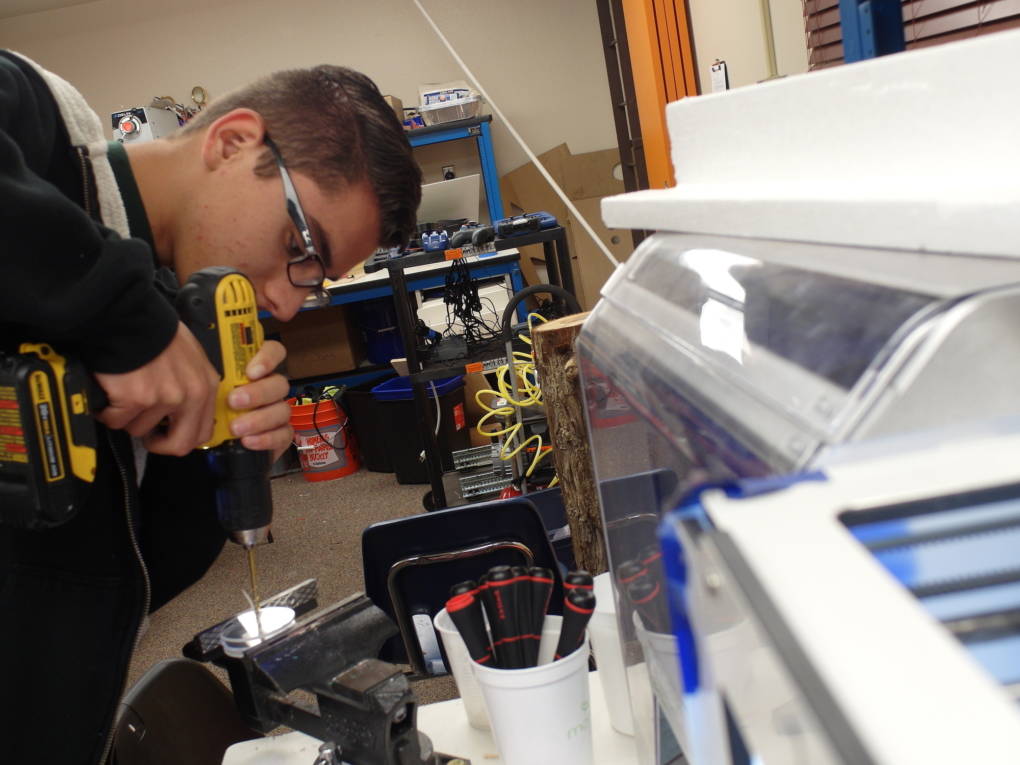
"caption": "Carlos Huerta, a DCP Alum Rock High sophomore, works on a “drop-and-dash” robot for the Silicon Valley Tech Challenge. ",
"description": null,
"title": "Joanne Jacobs - CarlosDrill3",
"credit": "Joanne Jacobs for The Hechinger Report",
"status": "inherit",
"isLoading": false,
"fetchFailed": false
},
"mindshift_51090": {
"type": "attachments",
"id": "mindshift_51090",
"meta": {
"index": "attachments_1716263798",
"site": "mindshift",
"id": "51090",
"found": true
},
"parent": 51089,
"imgSizes": {
"small": {
"file": "https://ww2.kqed.org/app/uploads/sites/23/2018/04/npr-apr18-college-final-v2_custom-7c7f7da745fd427469784db04bf52b4b04fe9783-520x325.jpg",
"width": 520,
"mimeType": "image/jpeg",
"height": 325
},
"twentyfourteen-full-width": {
"file": "https://ww2.kqed.org/app/uploads/sites/23/2018/04/npr-apr18-college-final-v2_custom-7c7f7da745fd427469784db04bf52b4b04fe9783-1038x576.jpg",
"width": 1038,
"mimeType": "image/jpeg",
"height": 576
},
"thumbnail": {
"file": "https://ww2.kqed.org/app/uploads/sites/23/2018/04/npr-apr18-college-final-v2_custom-7c7f7da745fd427469784db04bf52b4b04fe9783-160x100.jpg",
"width": 160,
"mimeType": "image/jpeg",
"height": 100
},
"fd-sm": {
"file": "https://ww2.kqed.org/app/uploads/sites/23/2018/04/npr-apr18-college-final-v2_custom-7c7f7da745fd427469784db04bf52b4b04fe9783-960x599.jpg",
"width": 960,
"mimeType": "image/jpeg",
"height": 599
},
"post-thumbnail": {
"file": "https://ww2.kqed.org/app/uploads/sites/23/2018/04/npr-apr18-college-final-v2_custom-7c7f7da745fd427469784db04bf52b4b04fe9783-672x372.jpg",
"width": 672,
"mimeType": "image/jpeg",
"height": 372
},
"xsmall": {
"file": "https://ww2.kqed.org/app/uploads/sites/23/2018/04/npr-apr18-college-final-v2_custom-7c7f7da745fd427469784db04bf52b4b04fe9783-375x234.jpg",
"width": 375,
"mimeType": "image/jpeg",
"height": 234
},
"kqedFullSize": {
"file": "https://ww2.kqed.org/app/uploads/sites/23/2018/04/npr-apr18-college-final-v2_custom-7c7f7da745fd427469784db04bf52b4b04fe9783.jpg",
"width": 3200,
"height": 1997
},
"large": {
"file": "https://ww2.kqed.org/app/uploads/sites/23/2018/04/npr-apr18-college-final-v2_custom-7c7f7da745fd427469784db04bf52b4b04fe9783-1020x637.jpg",
"width": 1020,
"mimeType": "image/jpeg",
"height": 637
},
"xlarge": {
"file": "https://ww2.kqed.org/app/uploads/sites/23/2018/04/npr-apr18-college-final-v2_custom-7c7f7da745fd427469784db04bf52b4b04fe9783-1180x736.jpg",
"width": 1180,
"mimeType": "image/jpeg",
"height": 736
},
"complete_open_graph": {
"file": "https://ww2.kqed.org/app/uploads/sites/23/2018/04/npr-apr18-college-final-v2_custom-7c7f7da745fd427469784db04bf52b4b04fe9783-1200x749.jpg",
"width": 1200,
"mimeType": "image/jpeg",
"height": 749
},
"guest-author-50": {
"file": "https://ww2.kqed.org/app/uploads/sites/23/2018/04/npr-apr18-college-final-v2_custom-7c7f7da745fd427469784db04bf52b4b04fe9783-50x50.jpg",
"width": 50,
"mimeType": "image/jpeg",
"height": 50
},
"guest-author-96": {
"file": "https://ww2.kqed.org/app/uploads/sites/23/2018/04/npr-apr18-college-final-v2_custom-7c7f7da745fd427469784db04bf52b4b04fe9783-96x96.jpg",
"width": 96,
"mimeType": "image/jpeg",
"height": 96
},
"medium": {
"file": "https://ww2.kqed.org/app/uploads/sites/23/2018/04/npr-apr18-college-final-v2_custom-7c7f7da745fd427469784db04bf52b4b04fe9783-800x499.jpg",
"width": 800,
"mimeType": "image/jpeg",
"height": 499
},
"guest-author-64": {
"file": "https://ww2.kqed.org/app/uploads/sites/23/2018/04/npr-apr18-college-final-v2_custom-7c7f7da745fd427469784db04bf52b4b04fe9783-64x64.jpg",
"width": 64,
"mimeType": "image/jpeg",
"height": 64
},
"guest-author-32": {
"file": "https://ww2.kqed.org/app/uploads/sites/23/2018/04/npr-apr18-college-final-v2_custom-7c7f7da745fd427469784db04bf52b4b04fe9783-32x32.jpg",
"width": 32,
"mimeType": "image/jpeg",
"height": 32
},
"fd-lrg": {
"file": "https://ww2.kqed.org/app/uploads/sites/23/2018/04/npr-apr18-college-final-v2_custom-7c7f7da745fd427469784db04bf52b4b04fe9783-1920x1198.jpg",
"width": 1920,
"mimeType": "image/jpeg",
"height": 1198
},
"fd-med": {
"file": "https://ww2.kqed.org/app/uploads/sites/23/2018/04/npr-apr18-college-final-v2_custom-7c7f7da745fd427469784db04bf52b4b04fe9783-1180x736.jpg",
"width": 1180,
"mimeType": "image/jpeg",
"height": 736
},
"full-width": {
"file": "https://ww2.kqed.org/app/uploads/sites/23/2018/04/npr-apr18-college-final-v2_custom-7c7f7da745fd427469784db04bf52b4b04fe9783-1920x1198.jpg",
"width": 1920,
"mimeType": "image/jpeg",
"height": 1198
},
"detail": {
"file": "https://ww2.kqed.org/app/uploads/sites/23/2018/04/npr-apr18-college-final-v2_custom-7c7f7da745fd427469784db04bf52b4b04fe9783-150x150.jpg",
"width": 150,
"mimeType": "image/jpeg",
"height": 150
},
"medium_large": {
"file": "https://ww2.kqed.org/app/uploads/sites/23/2018/04/npr-apr18-college-final-v2_custom-7c7f7da745fd427469784db04bf52b4b04fe9783-768x479.jpg",
"width": 768,
"mimeType": "image/jpeg",
"height": 479
},
"guest-author-128": {
"file": "https://ww2.kqed.org/app/uploads/sites/23/2018/04/npr-apr18-college-final-v2_custom-7c7f7da745fd427469784db04bf52b4b04fe9783-128x128.jpg",
"width": 128,
"mimeType": "image/jpeg",
"height": 128
},
"xxsmall": {
"file": "https://ww2.kqed.org/app/uploads/sites/23/2018/04/npr-apr18-college-final-v2_custom-7c7f7da745fd427469784db04bf52b4b04fe9783-240x150.jpg",
"width": 240,
"mimeType": "image/jpeg",
"height": 150
}
},
"publishDate": 1524078566,
"modified": 1524079195,
"caption": null,
"description": "Door to knowledg",
"title": "Door to knowledge",
"credit": "Jeannie Phan for NPR",
"status": "inherit",
"isLoading": false,
"fetchFailed": false
},
"mindshift_51097": {
"type": "attachments",
"id": "mindshift_51097",
"meta": {
"index": "attachments_1716263798",
"site": "mindshift",
"id": "51097",
"found": true
},
"parent": 51096,
"imgSizes": {
"small": {
"file": "https://ww2.kqed.org/app/uploads/sites/23/2018/04/npr_vivianshih_lowincome2_slide-031746040d07a6bbc7e07bc6fa957a353cb888a7-520x347.jpe",
"width": 520,
"mimeType": "image/jpeg",
"height": 347
},
"twentyfourteen-full-width": {
"file": "https://ww2.kqed.org/app/uploads/sites/23/2018/04/npr_vivianshih_lowincome2_slide-031746040d07a6bbc7e07bc6fa957a353cb888a7-1038x576.jpe",
"width": 1038,
"mimeType": "image/jpeg",
"height": 576
},
"thumbnail": {
"file": "https://ww2.kqed.org/app/uploads/sites/23/2018/04/npr_vivianshih_lowincome2_slide-031746040d07a6bbc7e07bc6fa957a353cb888a7-160x107.jpe",
"width": 160,
"mimeType": "image/jpeg",
"height": 107
},
"fd-sm": {
"file": "https://ww2.kqed.org/app/uploads/sites/23/2018/04/npr_vivianshih_lowincome2_slide-031746040d07a6bbc7e07bc6fa957a353cb888a7-960x640.jpe",
"width": 960,
"mimeType": "image/jpeg",
"height": 640
},
"post-thumbnail": {
"file": "https://ww2.kqed.org/app/uploads/sites/23/2018/04/npr_vivianshih_lowincome2_slide-031746040d07a6bbc7e07bc6fa957a353cb888a7-672x372.jpe",
"width": 672,
"mimeType": "image/jpeg",
"height": 372
},
"xsmall": {
"file": "https://ww2.kqed.org/app/uploads/sites/23/2018/04/npr_vivianshih_lowincome2_slide-031746040d07a6bbc7e07bc6fa957a353cb888a7-375x250.jpe",
"width": 375,
"mimeType": "image/jpeg",
"height": 250
},
"kqedFullSize": {
"file": "https://ww2.kqed.org/app/uploads/sites/23/2018/04/npr_vivianshih_lowincome2_slide-031746040d07a6bbc7e07bc6fa957a353cb888a7.jpe",
"width": 2996,
"height": 1997
},
"large": {
"file": "https://ww2.kqed.org/app/uploads/sites/23/2018/04/npr_vivianshih_lowincome2_slide-031746040d07a6bbc7e07bc6fa957a353cb888a7-1020x680.jpe",
"width": 1020,
"mimeType": "image/jpeg",
"height": 680
},
"xlarge": {
"file": "https://ww2.kqed.org/app/uploads/sites/23/2018/04/npr_vivianshih_lowincome2_slide-031746040d07a6bbc7e07bc6fa957a353cb888a7-1180x787.jpe",
"width": 1180,
"mimeType": "image/jpeg",
"height": 787
},
"complete_open_graph": {
"file": "https://ww2.kqed.org/app/uploads/sites/23/2018/04/npr_vivianshih_lowincome2_slide-031746040d07a6bbc7e07bc6fa957a353cb888a7-1200x800.jpe",
"width": 1200,
"mimeType": "image/jpeg",
"height": 800
},
"guest-author-50": {
"file": "https://ww2.kqed.org/app/uploads/sites/23/2018/04/npr_vivianshih_lowincome2_slide-031746040d07a6bbc7e07bc6fa957a353cb888a7-50x50.jpe",
"width": 50,
"mimeType": "image/jpeg",
"height": 50
},
"guest-author-96": {
"file": "https://ww2.kqed.org/app/uploads/sites/23/2018/04/npr_vivianshih_lowincome2_slide-031746040d07a6bbc7e07bc6fa957a353cb888a7-96x96.jpe",
"width": 96,
"mimeType": "image/jpeg",
"height": 96
},
"medium": {
"file": "https://ww2.kqed.org/app/uploads/sites/23/2018/04/npr_vivianshih_lowincome2_slide-031746040d07a6bbc7e07bc6fa957a353cb888a7-800x533.jpe",
"width": 800,
"mimeType": "image/jpeg",
"height": 533
},
"guest-author-64": {
"file": "https://ww2.kqed.org/app/uploads/sites/23/2018/04/npr_vivianshih_lowincome2_slide-031746040d07a6bbc7e07bc6fa957a353cb888a7-64x64.jpe",
"width": 64,
"mimeType": "image/jpeg",
"height": 64
},
"guest-author-32": {
"file": "https://ww2.kqed.org/app/uploads/sites/23/2018/04/npr_vivianshih_lowincome2_slide-031746040d07a6bbc7e07bc6fa957a353cb888a7-32x32.jpe",
"width": 32,
"mimeType": "image/jpeg",
"height": 32
},
"fd-lrg": {
"file": "https://ww2.kqed.org/app/uploads/sites/23/2018/04/npr_vivianshih_lowincome2_slide-031746040d07a6bbc7e07bc6fa957a353cb888a7-1920x1280.jpe",
"width": 1920,
"mimeType": "image/jpeg",
"height": 1280
},
"fd-med": {
"file": "https://ww2.kqed.org/app/uploads/sites/23/2018/04/npr_vivianshih_lowincome2_slide-031746040d07a6bbc7e07bc6fa957a353cb888a7-1180x787.jpe",
"width": 1180,
"mimeType": "image/jpeg",
"height": 787
},
"full-width": {
"file": "https://ww2.kqed.org/app/uploads/sites/23/2018/04/npr_vivianshih_lowincome2_slide-031746040d07a6bbc7e07bc6fa957a353cb888a7-1920x1280.jpe",
"width": 1920,
"mimeType": "image/jpeg",
"height": 1280
},
"detail": {
"file": "https://ww2.kqed.org/app/uploads/sites/23/2018/04/npr_vivianshih_lowincome2_slide-031746040d07a6bbc7e07bc6fa957a353cb888a7-150x150.jpe",
"width": 150,
"mimeType": "image/jpeg",
"height": 150
},
"medium_large": {
"file": "https://ww2.kqed.org/app/uploads/sites/23/2018/04/npr_vivianshih_lowincome2_slide-031746040d07a6bbc7e07bc6fa957a353cb888a7-768x512.jpe",
"width": 768,
"mimeType": "image/jpeg",
"height": 512
},
"guest-author-128": {
"file": "https://ww2.kqed.org/app/uploads/sites/23/2018/04/npr_vivianshih_lowincome2_slide-031746040d07a6bbc7e07bc6fa957a353cb888a7-128x128.jpe",
"width": 128,
"mimeType": "image/jpeg",
"height": 128
},
"xxsmall": {
"file": "https://ww2.kqed.org/app/uploads/sites/23/2018/04/npr_vivianshih_lowincome2_slide-031746040d07a6bbc7e07bc6fa957a353cb888a7-240x160.jpe",
"width": 240,
"mimeType": "image/jpeg",
"height": 160
}
},
"publishDate": 1524079408,
"modified": 1524079438,
"caption": null,
"description": "college access",
"title": "college access",
"credit": "Vivian Shih for NPR",
"status": "inherit",
"isLoading": false,
"fetchFailed": false
},
"mindshift_50992": {
"type": "attachments",
"id": "mindshift_50992",
"meta": {
"index": "attachments_1716263798",
"site": "mindshift",
"id": "50992",
"found": true
},
"parent": 50991,
"imgSizes": {
"small": {
"file": "https://ww2.kqed.org/app/uploads/sites/23/2018/04/robdobi_npr_aa_custom-19f9458a931b11d89bb4a6ac32d0e0997c2f42c8-520x347.jpe",
"width": 520,
"mimeType": "image/jpeg",
"height": 347
},
"twentyfourteen-full-width": {
"file": "https://ww2.kqed.org/app/uploads/sites/23/2018/04/robdobi_npr_aa_custom-19f9458a931b11d89bb4a6ac32d0e0997c2f42c8-1038x576.jpe",
"width": 1038,
"mimeType": "image/jpeg",
"height": 576
},
"thumbnail": {
"file": "https://ww2.kqed.org/app/uploads/sites/23/2018/04/robdobi_npr_aa_custom-19f9458a931b11d89bb4a6ac32d0e0997c2f42c8-160x107.jpe",
"width": 160,
"mimeType": "image/jpeg",
"height": 107
},
"fd-sm": {
"file": "https://ww2.kqed.org/app/uploads/sites/23/2018/04/robdobi_npr_aa_custom-19f9458a931b11d89bb4a6ac32d0e0997c2f42c8-960x640.jpe",
"width": 960,
"mimeType": "image/jpeg",
"height": 640
},
"post-thumbnail": {
"file": "https://ww2.kqed.org/app/uploads/sites/23/2018/04/robdobi_npr_aa_custom-19f9458a931b11d89bb4a6ac32d0e0997c2f42c8-672x372.jpe",
"width": 672,
"mimeType": "image/jpeg",
"height": 372
},
"xsmall": {
"file": "https://ww2.kqed.org/app/uploads/sites/23/2018/04/robdobi_npr_aa_custom-19f9458a931b11d89bb4a6ac32d0e0997c2f42c8-375x250.jpe",
"width": 375,
"mimeType": "image/jpeg",
"height": 250
},
"kqedFullSize": {
"file": "https://ww2.kqed.org/app/uploads/sites/23/2018/04/robdobi_npr_aa_custom-19f9458a931b11d89bb4a6ac32d0e0997c2f42c8-e1523028535820.jpe",
"width": 1920,
"height": 1280
},
"large": {
"file": "https://ww2.kqed.org/app/uploads/sites/23/2018/04/robdobi_npr_aa_custom-19f9458a931b11d89bb4a6ac32d0e0997c2f42c8-1020x680.jpe",
"width": 1020,
"mimeType": "image/jpeg",
"height": 680
},
"xlarge": {
"file": "https://ww2.kqed.org/app/uploads/sites/23/2018/04/robdobi_npr_aa_custom-19f9458a931b11d89bb4a6ac32d0e0997c2f42c8-1180x787.jpe",
"width": 1180,
"mimeType": "image/jpeg",
"height": 787
},
"guest-author-50": {
"file": "https://ww2.kqed.org/app/uploads/sites/23/2018/04/robdobi_npr_aa_custom-19f9458a931b11d89bb4a6ac32d0e0997c2f42c8-50x50.jpe",
"width": 50,
"mimeType": "image/jpeg",
"height": 50
},
"guest-author-96": {
"file": "https://ww2.kqed.org/app/uploads/sites/23/2018/04/robdobi_npr_aa_custom-19f9458a931b11d89bb4a6ac32d0e0997c2f42c8-96x96.jpe",
"width": 96,
"mimeType": "image/jpeg",
"height": 96
},
"medium": {
"file": "https://ww2.kqed.org/app/uploads/sites/23/2018/04/robdobi_npr_aa_custom-19f9458a931b11d89bb4a6ac32d0e0997c2f42c8-800x533.jpe",
"width": 800,
"mimeType": "image/jpeg",
"height": 533
},
"guest-author-64": {
"file": "https://ww2.kqed.org/app/uploads/sites/23/2018/04/robdobi_npr_aa_custom-19f9458a931b11d89bb4a6ac32d0e0997c2f42c8-64x64.jpe",
"width": 64,
"mimeType": "image/jpeg",
"height": 64
},
"guest-author-32": {
"file": "https://ww2.kqed.org/app/uploads/sites/23/2018/04/robdobi_npr_aa_custom-19f9458a931b11d89bb4a6ac32d0e0997c2f42c8-32x32.jpe",
"width": 32,
"mimeType": "image/jpeg",
"height": 32
},
"fd-lrg": {
"file": "https://ww2.kqed.org/app/uploads/sites/23/2018/04/robdobi_npr_aa_custom-19f9458a931b11d89bb4a6ac32d0e0997c2f42c8-1920x1280.jpe",
"width": 1920,
"mimeType": "image/jpeg",
"height": 1280
},
"fd-med": {
"file": "https://ww2.kqed.org/app/uploads/sites/23/2018/04/robdobi_npr_aa_custom-19f9458a931b11d89bb4a6ac32d0e0997c2f42c8-1180x787.jpe",
"width": 1180,
"mimeType": "image/jpeg",
"height": 787
},
"full-width": {
"file": "https://ww2.kqed.org/app/uploads/sites/23/2018/04/robdobi_npr_aa_custom-19f9458a931b11d89bb4a6ac32d0e0997c2f42c8-1920x1280.jpe",
"width": 1920,
"mimeType": "image/jpeg",
"height": 1280
},
"detail": {
"file": "https://ww2.kqed.org/app/uploads/sites/23/2018/04/robdobi_npr_aa_custom-19f9458a931b11d89bb4a6ac32d0e0997c2f42c8-150x150.jpe",
"width": 150,
"mimeType": "image/jpeg",
"height": 150
},
"medium_large": {
"file": "https://ww2.kqed.org/app/uploads/sites/23/2018/04/robdobi_npr_aa_custom-19f9458a931b11d89bb4a6ac32d0e0997c2f42c8-768x512.jpe",
"width": 768,
"mimeType": "image/jpeg",
"height": 512
},
"guest-author-128": {
"file": "https://ww2.kqed.org/app/uploads/sites/23/2018/04/robdobi_npr_aa_custom-19f9458a931b11d89bb4a6ac32d0e0997c2f42c8-128x128.jpe",
"width": 128,
"mimeType": "image/jpeg",
"height": 128
},
"xxsmall": {
"file": "https://ww2.kqed.org/app/uploads/sites/23/2018/04/robdobi_npr_aa_custom-19f9458a931b11d89bb4a6ac32d0e0997c2f42c8-240x160.jpe",
"width": 240,
"mimeType": "image/jpeg",
"height": 160
}
},
"publishDate": 1523028507,
"modified": 1523028548,
"caption": null,
"description": "Narrow door to college",
"title": "Narrow door to college",
"credit": "Rob Dobi for NPR",
"status": "inherit",
"isLoading": false,
"fetchFailed": false
},
"mindshift_49208": {
"type": "attachments",
"id": "mindshift_49208",
"meta": {
"index": "attachments_1716263798",
"site": "mindshift",
"id": "49208",
"found": true
},
"parent": 49207,
"imgSizes": {
"small": {
"file": "https://ww2.kqed.org/app/uploads/sites/23/2017/09/sam_rowe_slide-e6d8d91af10a225a09d64f407ff4f15246b34004-520x347.jpg",
"width": 520,
"mimeType": "image/jpeg",
"height": 347
},
"twentyfourteen-full-width": {
"file": "https://ww2.kqed.org/app/uploads/sites/23/2017/09/sam_rowe_slide-e6d8d91af10a225a09d64f407ff4f15246b34004-1038x576.jpg",
"width": 1038,
"mimeType": "image/jpeg",
"height": 576
},
"thumbnail": {
"file": "https://ww2.kqed.org/app/uploads/sites/23/2017/09/sam_rowe_slide-e6d8d91af10a225a09d64f407ff4f15246b34004-160x107.jpg",
"width": 160,
"mimeType": "image/jpeg",
"height": 107
},
"fd-sm": {
"file": "https://ww2.kqed.org/app/uploads/sites/23/2017/09/sam_rowe_slide-e6d8d91af10a225a09d64f407ff4f15246b34004-960x640.jpg",
"width": 960,
"mimeType": "image/jpeg",
"height": 640
},
"post-thumbnail": {
"file": "https://ww2.kqed.org/app/uploads/sites/23/2017/09/sam_rowe_slide-e6d8d91af10a225a09d64f407ff4f15246b34004-672x372.jpg",
"width": 672,
"mimeType": "image/jpeg",
"height": 372
},
"xsmall": {
"file": "https://ww2.kqed.org/app/uploads/sites/23/2017/09/sam_rowe_slide-e6d8d91af10a225a09d64f407ff4f15246b34004-375x250.jpg",
"width": 375,
"mimeType": "image/jpeg",
"height": 250
},
"kqedFullSize": {
"file": "https://ww2.kqed.org/app/uploads/sites/23/2017/09/sam_rowe_slide-e6d8d91af10a225a09d64f407ff4f15246b34004.jpg",
"width": 2997,
"height": 1998
},
"large": {
"file": "https://ww2.kqed.org/app/uploads/sites/23/2017/09/sam_rowe_slide-e6d8d91af10a225a09d64f407ff4f15246b34004-1020x680.jpg",
"width": 1020,
"mimeType": "image/jpeg",
"height": 680
},
"xlarge": {
"file": "https://ww2.kqed.org/app/uploads/sites/23/2017/09/sam_rowe_slide-e6d8d91af10a225a09d64f407ff4f15246b34004-1180x787.jpg",
"width": 1180,
"mimeType": "image/jpeg",
"height": 787
},
"guest-author-50": {
"file": "https://ww2.kqed.org/app/uploads/sites/23/2017/09/sam_rowe_slide-e6d8d91af10a225a09d64f407ff4f15246b34004-50x50.jpg",
"width": 50,
"mimeType": "image/jpeg",
"height": 50
},
"guest-author-96": {
"file": "https://ww2.kqed.org/app/uploads/sites/23/2017/09/sam_rowe_slide-e6d8d91af10a225a09d64f407ff4f15246b34004-96x96.jpg",
"width": 96,
"mimeType": "image/jpeg",
"height": 96
},
"medium": {
"file": "https://ww2.kqed.org/app/uploads/sites/23/2017/09/sam_rowe_slide-e6d8d91af10a225a09d64f407ff4f15246b34004-800x533.jpg",
"width": 800,
"mimeType": "image/jpeg",
"height": 533
},
"guest-author-64": {
"file": "https://ww2.kqed.org/app/uploads/sites/23/2017/09/sam_rowe_slide-e6d8d91af10a225a09d64f407ff4f15246b34004-64x64.jpg",
"width": 64,
"mimeType": "image/jpeg",
"height": 64
},
"guest-author-32": {
"file": "https://ww2.kqed.org/app/uploads/sites/23/2017/09/sam_rowe_slide-e6d8d91af10a225a09d64f407ff4f15246b34004-32x32.jpg",
"width": 32,
"mimeType": "image/jpeg",
"height": 32
},
"fd-lrg": {
"file": "https://ww2.kqed.org/app/uploads/sites/23/2017/09/sam_rowe_slide-e6d8d91af10a225a09d64f407ff4f15246b34004-1920x1280.jpg",
"width": 1920,
"mimeType": "image/jpeg",
"height": 1280
},
"fd-med": {
"file": "https://ww2.kqed.org/app/uploads/sites/23/2017/09/sam_rowe_slide-e6d8d91af10a225a09d64f407ff4f15246b34004-1180x787.jpg",
"width": 1180,
"mimeType": "image/jpeg",
"height": 787
},
"full-width": {
"file": "https://ww2.kqed.org/app/uploads/sites/23/2017/09/sam_rowe_slide-e6d8d91af10a225a09d64f407ff4f15246b34004-1920x1280.jpg",
"width": 1920,
"mimeType": "image/jpeg",
"height": 1280
},
"detail": {
"file": "https://ww2.kqed.org/app/uploads/sites/23/2017/09/sam_rowe_slide-e6d8d91af10a225a09d64f407ff4f15246b34004-150x150.jpg",
"width": 150,
"mimeType": "image/jpeg",
"height": 150
},
"medium_large": {
"file": "https://ww2.kqed.org/app/uploads/sites/23/2017/09/sam_rowe_slide-e6d8d91af10a225a09d64f407ff4f15246b34004-768x512.jpg",
"width": 768,
"mimeType": "image/jpeg",
"height": 512
},
"guest-author-128": {
"file": "https://ww2.kqed.org/app/uploads/sites/23/2017/09/sam_rowe_slide-e6d8d91af10a225a09d64f407ff4f15246b34004-128x128.jpg",
"width": 128,
"mimeType": "image/jpeg",
"height": 128
},
"xxsmall": {
"file": "https://ww2.kqed.org/app/uploads/sites/23/2017/09/sam_rowe_slide-e6d8d91af10a225a09d64f407ff4f15246b34004-240x160.jpg",
"width": 240,
"mimeType": "image/jpeg",
"height": 160
}
},
"publishDate": 1505303678,
"modified": 1505303678,
"caption": null,
"description": "Student connecting dots of constellations in the sky",
"title": "Student connecting dots of constellations in the sky",
"credit": null,
"status": "inherit",
"isLoading": false,
"fetchFailed": false
},
"mindshift_49178": {
"type": "attachments",
"id": "mindshift_49178",
"meta": {
"index": "attachments_1716263798",
"site": "mindshift",
"id": "49178",
"found": true
},
"parent": 49177,
"imgSizes": {
"small": {
"file": "https://ww2.kqed.org/app/uploads/sites/23/2017/09/npr_final2_3_custom-a7570222896f6461b8c99a67ce4ce5b34794005f-520x341.jpg",
"width": 520,
"mimeType": "image/jpeg",
"height": 341
},
"twentyfourteen-full-width": {
"file": "https://ww2.kqed.org/app/uploads/sites/23/2017/09/npr_final2_3_custom-a7570222896f6461b8c99a67ce4ce5b34794005f-1038x576.jpg",
"width": 1038,
"mimeType": "image/jpeg",
"height": 576
},
"thumbnail": {
"file": "https://ww2.kqed.org/app/uploads/sites/23/2017/09/npr_final2_3_custom-a7570222896f6461b8c99a67ce4ce5b34794005f-160x105.jpg",
"width": 160,
"mimeType": "image/jpeg",
"height": 105
},
"fd-sm": {
"file": "https://ww2.kqed.org/app/uploads/sites/23/2017/09/npr_final2_3_custom-a7570222896f6461b8c99a67ce4ce5b34794005f-960x629.jpg",
"width": 960,
"mimeType": "image/jpeg",
"height": 629
},
"post-thumbnail": {
"file": "https://ww2.kqed.org/app/uploads/sites/23/2017/09/npr_final2_3_custom-a7570222896f6461b8c99a67ce4ce5b34794005f-672x372.jpg",
"width": 672,
"mimeType": "image/jpeg",
"height": 372
},
"xsmall": {
"file": "https://ww2.kqed.org/app/uploads/sites/23/2017/09/npr_final2_3_custom-a7570222896f6461b8c99a67ce4ce5b34794005f-375x246.jpg",
"width": 375,
"mimeType": "image/jpeg",
"height": 246
},
"kqedFullSize": {
"file": "https://ww2.kqed.org/app/uploads/sites/23/2017/09/npr_final2_3_custom-a7570222896f6461b8c99a67ce4ce5b34794005f-e1504785507185.jpg",
"width": 1920,
"height": 1259
},
"large": {
"file": "https://ww2.kqed.org/app/uploads/sites/23/2017/09/npr_final2_3_custom-a7570222896f6461b8c99a67ce4ce5b34794005f-1020x669.jpg",
"width": 1020,
"mimeType": "image/jpeg",
"height": 669
},
"xlarge": {
"file": "https://ww2.kqed.org/app/uploads/sites/23/2017/09/npr_final2_3_custom-a7570222896f6461b8c99a67ce4ce5b34794005f-1180x774.jpg",
"width": 1180,
"mimeType": "image/jpeg",
"height": 774
},
"guest-author-50": {
"file": "https://ww2.kqed.org/app/uploads/sites/23/2017/09/npr_final2_3_custom-a7570222896f6461b8c99a67ce4ce5b34794005f-50x50.jpg",
"width": 50,
"mimeType": "image/jpeg",
"height": 50
},
"guest-author-96": {
"file": "https://ww2.kqed.org/app/uploads/sites/23/2017/09/npr_final2_3_custom-a7570222896f6461b8c99a67ce4ce5b34794005f-96x96.jpg",
"width": 96,
"mimeType": "image/jpeg",
"height": 96
},
"medium": {
"file": "https://ww2.kqed.org/app/uploads/sites/23/2017/09/npr_final2_3_custom-a7570222896f6461b8c99a67ce4ce5b34794005f-800x525.jpg",
"width": 800,
"mimeType": "image/jpeg",
"height": 525
},
"guest-author-64": {
"file": "https://ww2.kqed.org/app/uploads/sites/23/2017/09/npr_final2_3_custom-a7570222896f6461b8c99a67ce4ce5b34794005f-64x64.jpg",
"width": 64,
"mimeType": "image/jpeg",
"height": 64
},
"guest-author-32": {
"file": "https://ww2.kqed.org/app/uploads/sites/23/2017/09/npr_final2_3_custom-a7570222896f6461b8c99a67ce4ce5b34794005f-32x32.jpg",
"width": 32,
"mimeType": "image/jpeg",
"height": 32
},
"fd-lrg": {
"file": "https://ww2.kqed.org/app/uploads/sites/23/2017/09/npr_final2_3_custom-a7570222896f6461b8c99a67ce4ce5b34794005f-1920x1259.jpg",
"width": 1920,
"mimeType": "image/jpeg",
"height": 1259
},
"fd-med": {
"file": "https://ww2.kqed.org/app/uploads/sites/23/2017/09/npr_final2_3_custom-a7570222896f6461b8c99a67ce4ce5b34794005f-1180x774.jpg",
"width": 1180,
"mimeType": "image/jpeg",
"height": 774
},
"full-width": {
"file": "https://ww2.kqed.org/app/uploads/sites/23/2017/09/npr_final2_3_custom-a7570222896f6461b8c99a67ce4ce5b34794005f-1920x1259.jpg",
"width": 1920,
"mimeType": "image/jpeg",
"height": 1259
},
"detail": {
"file": "https://ww2.kqed.org/app/uploads/sites/23/2017/09/npr_final2_3_custom-a7570222896f6461b8c99a67ce4ce5b34794005f-150x150.jpg",
"width": 150,
"mimeType": "image/jpeg",
"height": 150
},
"medium_large": {
"file": "https://ww2.kqed.org/app/uploads/sites/23/2017/09/npr_final2_3_custom-a7570222896f6461b8c99a67ce4ce5b34794005f-768x504.jpg",
"width": 768,
"mimeType": "image/jpeg",
"height": 504
},
"guest-author-128": {
"file": "https://ww2.kqed.org/app/uploads/sites/23/2017/09/npr_final2_3_custom-a7570222896f6461b8c99a67ce4ce5b34794005f-128x128.jpg",
"width": 128,
"mimeType": "image/jpeg",
"height": 128
},
"xxsmall": {
"file": "https://ww2.kqed.org/app/uploads/sites/23/2017/09/npr_final2_3_custom-a7570222896f6461b8c99a67ce4ce5b34794005f-240x157.jpg",
"width": 240,
"mimeType": "image/jpeg",
"height": 157
}
},
"publishDate": 1504785487,
"modified": 1504785521,
"caption": "Many students worry about the cost of college and end up not going freshman year.",
"description": "Many students worry about the cost of college and end up not going freshman year.",
"title": "Many students worry about the cost of college and end up not going freshman year.",
"credit": "Sam Octigan for NPR",
"status": "inherit",
"isLoading": false,
"fetchFailed": false
},
"mindshift_48522": {
"type": "attachments",
"id": "mindshift_48522",
"meta": {
"index": "attachments_1716263798",
"site": "mindshift",
"id": "48522",
"found": true
},
"parent": 48476,
"imgSizes": {
"small": {
"file": "https://ww2.kqed.org/app/uploads/sites/23/2017/06/DVX-520x293.jpg",
"width": 520,
"mimeType": "image/jpeg",
"height": 293
},
"twentyfourteen-full-width": {
"file": "https://ww2.kqed.org/app/uploads/sites/23/2017/06/DVX-1038x576.jpg",
"width": 1038,
"mimeType": "image/jpeg",
"height": 576
},
"thumbnail": {
"file": "https://ww2.kqed.org/app/uploads/sites/23/2017/06/DVX-160x90.jpg",
"width": 160,
"mimeType": "image/jpeg",
"height": 90
},
"fd-sm": {
"file": "https://ww2.kqed.org/app/uploads/sites/23/2017/06/DVX-960x540.jpg",
"width": 960,
"mimeType": "image/jpeg",
"height": 540
},
"post-thumbnail": {
"file": "https://ww2.kqed.org/app/uploads/sites/23/2017/06/DVX-672x372.jpg",
"width": 672,
"mimeType": "image/jpeg",
"height": 372
},
"xsmall": {
"file": "https://ww2.kqed.org/app/uploads/sites/23/2017/06/DVX-375x211.jpg",
"width": 375,
"mimeType": "image/jpeg",
"height": 211
},
"kqedFullSize": {
"file": "https://ww2.kqed.org/app/uploads/sites/23/2017/06/DVX-e1498463611624.jpg",
"width": 1920,
"height": 1080
},
"large": {
"file": "https://ww2.kqed.org/app/uploads/sites/23/2017/06/DVX-1020x574.jpg",
"width": 1020,
"mimeType": "image/jpeg",
"height": 574
},
"xlarge": {
"file": "https://ww2.kqed.org/app/uploads/sites/23/2017/06/DVX-1180x664.jpg",
"width": 1180,
"mimeType": "image/jpeg",
"height": 664
},
"guest-author-50": {
"file": "https://ww2.kqed.org/app/uploads/sites/23/2017/06/DVX-50x50.jpg",
"width": 50,
"mimeType": "image/jpeg",
"height": 50
},
"guest-author-96": {
"file": "https://ww2.kqed.org/app/uploads/sites/23/2017/06/DVX-96x96.jpg",
"width": 96,
"mimeType": "image/jpeg",
"height": 96
},
"medium": {
"file": "https://ww2.kqed.org/app/uploads/sites/23/2017/06/DVX-800x450.jpg",
"width": 800,
"mimeType": "image/jpeg",
"height": 450
},
"guest-author-64": {
"file": "https://ww2.kqed.org/app/uploads/sites/23/2017/06/DVX-64x64.jpg",
"width": 64,
"mimeType": "image/jpeg",
"height": 64
},
"guest-author-32": {
"file": "https://ww2.kqed.org/app/uploads/sites/23/2017/06/DVX-32x32.jpg",
"width": 32,
"mimeType": "image/jpeg",
"height": 32
},
"fd-lrg": {
"file": "https://ww2.kqed.org/app/uploads/sites/23/2017/06/DVX-1920x1080.jpg",
"width": 1920,
"mimeType": "image/jpeg",
"height": 1080
},
"fd-med": {
"file": "https://ww2.kqed.org/app/uploads/sites/23/2017/06/DVX-1180x664.jpg",
"width": 1180,
"mimeType": "image/jpeg",
"height": 664
},
"full-width": {
"file": "https://ww2.kqed.org/app/uploads/sites/23/2017/06/DVX-1920x1080.jpg",
"width": 1920,
"mimeType": "image/jpeg",
"height": 1080
},
"detail": {
"file": "https://ww2.kqed.org/app/uploads/sites/23/2017/06/DVX-150x150.jpg",
"width": 150,
"mimeType": "image/jpeg",
"height": 150
},
"medium_large": {
"file": "https://ww2.kqed.org/app/uploads/sites/23/2017/06/DVX-768x432.jpg",
"width": 768,
"mimeType": "image/jpeg",
"height": 432
},
"guest-author-128": {
"file": "https://ww2.kqed.org/app/uploads/sites/23/2017/06/DVX-128x128.jpg",
"width": 128,
"mimeType": "image/jpeg",
"height": 128
},
"xxsmall": {
"file": "https://ww2.kqed.org/app/uploads/sites/23/2017/06/DVX-240x135.jpg",
"width": 240,
"mimeType": "image/jpeg",
"height": 135
}
},
"publishDate": 1498463582,
"modified": 1498463633,
"caption": "DVX student Jessica was struggling with a concept so she hopped on Skype with one of her DVX coaches, Mary Chan. ",
"description": null,
"title": "DVX",
"credit": "Courtesy DVX",
"status": "inherit",
"isLoading": false,
"fetchFailed": false
},
"mindshift_48325": {
"type": "attachments",
"id": "mindshift_48325",
"meta": {
"index": "attachments_1716263798",
"site": "mindshift",
"id": "48325",
"found": true
},
"parent": 48324,
"imgSizes": {
"small": {
"file": "https://ww2.kqed.org/app/uploads/sites/23/2017/05/istock-623607760_custom-9b035925b20cbab4ac85f214135a636d9c80c42f-520x346.jpg",
"width": 520,
"mimeType": "image/jpeg",
"height": 346
},
"twentyfourteen-full-width": {
"file": "https://ww2.kqed.org/app/uploads/sites/23/2017/05/istock-623607760_custom-9b035925b20cbab4ac85f214135a636d9c80c42f-1038x576.jpg",
"width": 1038,
"mimeType": "image/jpeg",
"height": 576
},
"thumbnail": {
"file": "https://ww2.kqed.org/app/uploads/sites/23/2017/05/istock-623607760_custom-9b035925b20cbab4ac85f214135a636d9c80c42f-160x107.jpg",
"width": 160,
"mimeType": "image/jpeg",
"height": 107
},
"fd-sm": {
"file": "https://ww2.kqed.org/app/uploads/sites/23/2017/05/istock-623607760_custom-9b035925b20cbab4ac85f214135a636d9c80c42f-960x639.jpg",
"width": 960,
"mimeType": "image/jpeg",
"height": 639
},
"post-thumbnail": {
"file": "https://ww2.kqed.org/app/uploads/sites/23/2017/05/istock-623607760_custom-9b035925b20cbab4ac85f214135a636d9c80c42f-672x372.jpg",
"width": 672,
"mimeType": "image/jpeg",
"height": 372
},
"xsmall": {
"file": "https://ww2.kqed.org/app/uploads/sites/23/2017/05/istock-623607760_custom-9b035925b20cbab4ac85f214135a636d9c80c42f-375x250.jpg",
"width": 375,
"mimeType": "image/jpeg",
"height": 250
},
"kqedFullSize": {
"file": "https://ww2.kqed.org/app/uploads/sites/23/2017/05/istock-623607760_custom-9b035925b20cbab4ac85f214135a636d9c80c42f-e1496130142407.jpg",
"width": 1920,
"height": 1279
},
"large": {
"file": "https://ww2.kqed.org/app/uploads/sites/23/2017/05/istock-623607760_custom-9b035925b20cbab4ac85f214135a636d9c80c42f-1020x679.jpg",
"width": 1020,
"mimeType": "image/jpeg",
"height": 679
},
"xlarge": {
"file": "https://ww2.kqed.org/app/uploads/sites/23/2017/05/istock-623607760_custom-9b035925b20cbab4ac85f214135a636d9c80c42f-1180x786.jpg",
"width": 1180,
"mimeType": "image/jpeg",
"height": 786
},
"guest-author-50": {
"file": "https://ww2.kqed.org/app/uploads/sites/23/2017/05/istock-623607760_custom-9b035925b20cbab4ac85f214135a636d9c80c42f-50x50.jpg",
"width": 50,
"mimeType": "image/jpeg",
"height": 50
},
"guest-author-96": {
"file": "https://ww2.kqed.org/app/uploads/sites/23/2017/05/istock-623607760_custom-9b035925b20cbab4ac85f214135a636d9c80c42f-96x96.jpg",
"width": 96,
"mimeType": "image/jpeg",
"height": 96
},
"medium": {
"file": "https://ww2.kqed.org/app/uploads/sites/23/2017/05/istock-623607760_custom-9b035925b20cbab4ac85f214135a636d9c80c42f-800x533.jpg",
"width": 800,
"mimeType": "image/jpeg",
"height": 533
},
"guest-author-64": {
"file": "https://ww2.kqed.org/app/uploads/sites/23/2017/05/istock-623607760_custom-9b035925b20cbab4ac85f214135a636d9c80c42f-64x64.jpg",
"width": 64,
"mimeType": "image/jpeg",
"height": 64
},
"guest-author-32": {
"file": "https://ww2.kqed.org/app/uploads/sites/23/2017/05/istock-623607760_custom-9b035925b20cbab4ac85f214135a636d9c80c42f-32x32.jpg",
"width": 32,
"mimeType": "image/jpeg",
"height": 32
},
"fd-lrg": {
"file": "https://ww2.kqed.org/app/uploads/sites/23/2017/05/istock-623607760_custom-9b035925b20cbab4ac85f214135a636d9c80c42f-1920x1279.jpg",
"width": 1920,
"mimeType": "image/jpeg",
"height": 1279
},
"fd-med": {
"file": "https://ww2.kqed.org/app/uploads/sites/23/2017/05/istock-623607760_custom-9b035925b20cbab4ac85f214135a636d9c80c42f-1180x786.jpg",
"width": 1180,
"mimeType": "image/jpeg",
"height": 786
},
"full-width": {
"file": "https://ww2.kqed.org/app/uploads/sites/23/2017/05/istock-623607760_custom-9b035925b20cbab4ac85f214135a636d9c80c42f-1920x1279.jpg",
"width": 1920,
"mimeType": "image/jpeg",
"height": 1279
},
"detail": {
"file": "https://ww2.kqed.org/app/uploads/sites/23/2017/05/istock-623607760_custom-9b035925b20cbab4ac85f214135a636d9c80c42f-150x150.jpg",
"width": 150,
"mimeType": "image/jpeg",
"height": 150
},
"medium_large": {
"file": "https://ww2.kqed.org/app/uploads/sites/23/2017/05/istock-623607760_custom-9b035925b20cbab4ac85f214135a636d9c80c42f-768x511.jpg",
"width": 768,
"mimeType": "image/jpeg",
"height": 511
},
"guest-author-128": {
"file": "https://ww2.kqed.org/app/uploads/sites/23/2017/05/istock-623607760_custom-9b035925b20cbab4ac85f214135a636d9c80c42f-128x128.jpg",
"width": 128,
"mimeType": "image/jpeg",
"height": 128
},
"xxsmall": {
"file": "https://ww2.kqed.org/app/uploads/sites/23/2017/05/istock-623607760_custom-9b035925b20cbab4ac85f214135a636d9c80c42f-240x160.jpg",
"width": 240,
"mimeType": "image/jpeg",
"height": 160
}
},
"publishDate": 1496130101,
"modified": 1496130161,
"caption": "In a recent study from National Center for Education Statistics found even after controlling for academic achievement in high school, black and Latino students attend selective institutions at far lower rates and drop out of college more often.",
"description": null,
"title": "In a recent study from National Center for Education Statistics found even after controlling for academic achievement in high school, black and Latino students attend selective institutions at far lower rates and drop out of college more often.",
"credit": "Cesar Okada/Getty Images/iStockphoto",
"status": "inherit",
"isLoading": false,
"fetchFailed": false
},
"mindshift_46887": {
"type": "attachments",
"id": "mindshift_46887",
"meta": {
"index": "attachments_1716263798",
"site": "mindshift",
"id": "46887",
"found": true
},
"parent": 46886,
"imgSizes": {
"small": {
"file": "https://ww2.kqed.org/app/uploads/sites/23/2016/11/friendships-and-networks_slide-b99708536e6a59696c659750c843fc0f6516818f-520x347.jpg",
"width": 520,
"mimeType": "image/jpeg",
"height": 347
},
"twentyfourteen-full-width": {
"file": "https://ww2.kqed.org/app/uploads/sites/23/2016/11/friendships-and-networks_slide-b99708536e6a59696c659750c843fc0f6516818f-1038x576.jpg",
"width": 1038,
"mimeType": "image/jpeg",
"height": 576
},
"thumbnail": {
"file": "https://ww2.kqed.org/app/uploads/sites/23/2016/11/friendships-and-networks_slide-b99708536e6a59696c659750c843fc0f6516818f-160x107.jpg",
"width": 160,
"mimeType": "image/jpeg",
"height": 107
},
"fd-sm": {
"file": "https://ww2.kqed.org/app/uploads/sites/23/2016/11/friendships-and-networks_slide-b99708536e6a59696c659750c843fc0f6516818f-960x640.jpg",
"width": 960,
"mimeType": "image/jpeg",
"height": 640
},
"post-thumbnail": {
"file": "https://ww2.kqed.org/app/uploads/sites/23/2016/11/friendships-and-networks_slide-b99708536e6a59696c659750c843fc0f6516818f-672x372.jpg",
"width": 672,
"mimeType": "image/jpeg",
"height": 372
},
"xsmall": {
"file": "https://ww2.kqed.org/app/uploads/sites/23/2016/11/friendships-and-networks_slide-b99708536e6a59696c659750c843fc0f6516818f-375x250.jpg",
"width": 375,
"mimeType": "image/jpeg",
"height": 250
},
"kqedFullSize": {
"file": "https://ww2.kqed.org/app/uploads/sites/23/2016/11/friendships-and-networks_slide-b99708536e6a59696c659750c843fc0f6516818f-e1478190353671.jpg",
"width": 1920,
"height": 1280
},
"large": {
"file": "https://ww2.kqed.org/app/uploads/sites/23/2016/11/friendships-and-networks_slide-b99708536e6a59696c659750c843fc0f6516818f-1020x680.jpg",
"width": 1020,
"mimeType": "image/jpeg",
"height": 680
},
"xlarge": {
"file": "https://ww2.kqed.org/app/uploads/sites/23/2016/11/friendships-and-networks_slide-b99708536e6a59696c659750c843fc0f6516818f-1180x787.jpg",
"width": 1180,
"mimeType": "image/jpeg",
"height": 787
},
"guest-author-50": {
"file": "https://ww2.kqed.org/app/uploads/sites/23/2016/11/friendships-and-networks_slide-b99708536e6a59696c659750c843fc0f6516818f-50x50.jpg",
"width": 50,
"mimeType": "image/jpeg",
"height": 50
},
"guest-author-96": {
"file": "https://ww2.kqed.org/app/uploads/sites/23/2016/11/friendships-and-networks_slide-b99708536e6a59696c659750c843fc0f6516818f-96x96.jpg",
"width": 96,
"mimeType": "image/jpeg",
"height": 96
},
"medium": {
"file": "https://ww2.kqed.org/app/uploads/sites/23/2016/11/friendships-and-networks_slide-b99708536e6a59696c659750c843fc0f6516818f-800x533.jpg",
"width": 800,
"mimeType": "image/jpeg",
"height": 533
},
"guest-author-64": {
"file": "https://ww2.kqed.org/app/uploads/sites/23/2016/11/friendships-and-networks_slide-b99708536e6a59696c659750c843fc0f6516818f-64x64.jpg",
"width": 64,
"mimeType": "image/jpeg",
"height": 64
},
"guest-author-32": {
"file": "https://ww2.kqed.org/app/uploads/sites/23/2016/11/friendships-and-networks_slide-b99708536e6a59696c659750c843fc0f6516818f-32x32.jpg",
"width": 32,
"mimeType": "image/jpeg",
"height": 32
},
"fd-lrg": {
"file": "https://ww2.kqed.org/app/uploads/sites/23/2016/11/friendships-and-networks_slide-b99708536e6a59696c659750c843fc0f6516818f-1920x1280.jpg",
"width": 1920,
"mimeType": "image/jpeg",
"height": 1280
},
"fd-med": {
"file": "https://ww2.kqed.org/app/uploads/sites/23/2016/11/friendships-and-networks_slide-b99708536e6a59696c659750c843fc0f6516818f-1180x787.jpg",
"width": 1180,
"mimeType": "image/jpeg",
"height": 787
},
"full-width": {
"file": "https://ww2.kqed.org/app/uploads/sites/23/2016/11/friendships-and-networks_slide-b99708536e6a59696c659750c843fc0f6516818f-1920x1280.jpg",
"width": 1920,
"mimeType": "image/jpeg",
"height": 1280
},
"detail": {
"file": "https://ww2.kqed.org/app/uploads/sites/23/2016/11/friendships-and-networks_slide-b99708536e6a59696c659750c843fc0f6516818f-150x150.jpg",
"width": 150,
"mimeType": "image/jpeg",
"height": 150
},
"medium_large": {
"file": "https://ww2.kqed.org/app/uploads/sites/23/2016/11/friendships-and-networks_slide-b99708536e6a59696c659750c843fc0f6516818f-768x512.jpg",
"width": 768,
"mimeType": "image/jpeg",
"height": 512
},
"guest-author-128": {
"file": "https://ww2.kqed.org/app/uploads/sites/23/2016/11/friendships-and-networks_slide-b99708536e6a59696c659750c843fc0f6516818f-128x128.jpg",
"width": 128,
"mimeType": "image/jpeg",
"height": 128
},
"xxsmall": {
"file": "https://ww2.kqed.org/app/uploads/sites/23/2016/11/friendships-and-networks_slide-b99708536e6a59696c659750c843fc0f6516818f-240x160.jpg",
"width": 240,
"mimeType": "image/jpeg",
"height": 160
}
},
"publishDate": 1478190269,
"modified": 1478190537,
"caption": "A new study finds friendships and networks can affect your success in school.",
"description": null,
"title": "A new study finds friendships and networks can affect your success in school.",
"credit": "NPR/LA Johnson",
"status": "inherit",
"isLoading": false,
"fetchFailed": false
},
"mindshift_46396": {
"type": "attachments",
"id": "mindshift_46396",
"meta": {
"index": "attachments_1716263798",
"site": "mindshift",
"id": "46396",
"found": true
},
"parent": 46309,
"imgSizes": {
"twentyfourteen-full-width": {
"file": "https://ww2.kqed.org/app/uploads/sites/23/2016/09/CU-1038x576.png",
"width": 1038,
"mimeType": "image/png",
"height": 576
},
"thumbnail": {
"file": "https://ww2.kqed.org/app/uploads/sites/23/2016/09/CU-400x225.png",
"width": 400,
"mimeType": "image/png",
"height": 225
},
"fd-sm": {
"file": "https://ww2.kqed.org/app/uploads/sites/23/2016/09/CU-960x540.png",
"width": 960,
"mimeType": "image/png",
"height": 540
},
"post-thumbnail": {
"file": "https://ww2.kqed.org/app/uploads/sites/23/2016/09/CU-672x372.png",
"width": 672,
"mimeType": "image/png",
"height": 372
},
"kqedFullSize": {
"file": "https://ww2.kqed.org/app/uploads/sites/23/2016/09/CU.png",
"width": 1920,
"height": 1080
},
"large": {
"file": "https://ww2.kqed.org/app/uploads/sites/23/2016/09/CU-1440x810.png",
"width": 1440,
"mimeType": "image/png",
"height": 810
},
"guest-author-50": {
"file": "https://ww2.kqed.org/app/uploads/sites/23/2016/09/CU-50x50.png",
"width": 50,
"mimeType": "image/png",
"height": 50
},
"guest-author-96": {
"file": "https://ww2.kqed.org/app/uploads/sites/23/2016/09/CU-96x96.png",
"width": 96,
"mimeType": "image/png",
"height": 96
},
"medium": {
"file": "https://ww2.kqed.org/app/uploads/sites/23/2016/09/CU-800x450.png",
"width": 800,
"mimeType": "image/png",
"height": 450
},
"guest-author-64": {
"file": "https://ww2.kqed.org/app/uploads/sites/23/2016/09/CU-64x64.png",
"width": 64,
"mimeType": "image/png",
"height": 64
},
"guest-author-32": {
"file": "https://ww2.kqed.org/app/uploads/sites/23/2016/09/CU-32x32.png",
"width": 32,
"mimeType": "image/png",
"height": 32
},
"cat_post_thumb_sizecategory-posts-2": {
"file": "https://ww2.kqed.org/app/uploads/sites/23/2016/09/CU-50x50.png",
"width": 50,
"mimeType": "image/png",
"height": 50
},
"fd-lrg": {
"file": "https://ww2.kqed.org/app/uploads/sites/23/2016/09/CU-1920x1080.png",
"width": 1920,
"mimeType": "image/png",
"height": 1080
},
"fd-med": {
"file": "https://ww2.kqed.org/app/uploads/sites/23/2016/09/CU-1180x664.png",
"width": 1180,
"mimeType": "image/png",
"height": 664
},
"detail": {
"file": "https://ww2.kqed.org/app/uploads/sites/23/2016/09/CU-150x150.png",
"width": 150,
"mimeType": "image/png",
"height": 150
},
"medium_large": {
"file": "https://ww2.kqed.org/app/uploads/sites/23/2016/09/CU-768x432.png",
"width": 768,
"mimeType": "image/png",
"height": 432
},
"guest-author-128": {
"file": "https://ww2.kqed.org/app/uploads/sites/23/2016/09/CU-128x128.png",
"width": 128,
"mimeType": "image/png",
"height": 128
}
},
"publishDate": 1474314921,
"modified": 1474315021,
"caption": "Anjel Newmann, a College Unbound student, speaks up during a weekly seminar.",
"description": null,
"title": "CU",
"credit": "Tracy Money/College Unbound",
"status": "inherit",
"isLoading": false,
"fetchFailed": false
},
"mindshift_44213": {
"type": "attachments",
"id": "mindshift_44213",
"meta": {
"index": "attachments_1716263798",
"site": "mindshift",
"id": "44213",
"found": true
},
"parent": 44131,
"imgSizes": {
"twentyfourteen-full-width": {
"file": "https://ww2.kqed.org/app/uploads/sites/23/2016/03/Devices-1038x576.jpg",
"width": 1038,
"mimeType": "image/jpeg",
"height": 576
},
"thumbnail": {
"file": "https://ww2.kqed.org/app/uploads/sites/23/2016/03/Devices-400x225.jpg",
"width": 400,
"mimeType": "image/jpeg",
"height": 225
},
"fd-sm": {
"file": "https://ww2.kqed.org/app/uploads/sites/23/2016/03/Devices-960x539.jpg",
"width": 960,
"mimeType": "image/jpeg",
"height": 539
},
"post-thumbnail": {
"file": "https://ww2.kqed.org/app/uploads/sites/23/2016/03/Devices-672x372.jpg",
"width": 672,
"mimeType": "image/jpeg",
"height": 372
},
"kqedFullSize": {
"file": "https://ww2.kqed.org/app/uploads/sites/23/2016/03/Devices.jpg",
"width": 1920,
"height": 1078
},
"large": {
"file": "https://ww2.kqed.org/app/uploads/sites/23/2016/03/Devices-1440x809.jpg",
"width": 1440,
"mimeType": "image/jpeg",
"height": 809
},
"guest-author-96": {
"file": "https://ww2.kqed.org/app/uploads/sites/23/2016/03/Devices-96x96.jpg",
"width": 96,
"mimeType": "image/jpeg",
"height": 96
},
"medium": {
"file": "https://ww2.kqed.org/app/uploads/sites/23/2016/03/Devices-800x449.jpg",
"width": 800,
"mimeType": "image/jpeg",
"height": 449
},
"guest-author-64": {
"file": "https://ww2.kqed.org/app/uploads/sites/23/2016/03/Devices-64x64.jpg",
"width": 64,
"mimeType": "image/jpeg",
"height": 64
},
"guest-author-32": {
"file": "https://ww2.kqed.org/app/uploads/sites/23/2016/03/Devices-32x32.jpg",
"width": 32,
"mimeType": "image/jpeg",
"height": 32
},
"cat_post_thumb_sizecategory-posts-2": {
"file": "https://ww2.kqed.org/app/uploads/sites/23/2016/03/Devices-50x50.jpg",
"width": 50,
"mimeType": "image/jpeg",
"height": 50
},
"fd-lrg": {
"file": "https://ww2.kqed.org/app/uploads/sites/23/2016/03/Devices-1920x1078.jpg",
"width": 1920,
"mimeType": "image/jpeg",
"height": 1078
},
"fd-med": {
"file": "https://ww2.kqed.org/app/uploads/sites/23/2016/03/Devices-1180x663.jpg",
"width": 1180,
"mimeType": "image/jpeg",
"height": 663
},
"detail": {
"file": "https://ww2.kqed.org/app/uploads/sites/23/2016/03/Devices-75x75.jpg",
"width": 75,
"mimeType": "image/jpeg",
"height": 75
},
"medium_large": {
"file": "https://ww2.kqed.org/app/uploads/sites/23/2016/03/Devices-768x431.jpg",
"width": 768,
"mimeType": "image/jpeg",
"height": 431
},
"guest-author-128": {
"file": "https://ww2.kqed.org/app/uploads/sites/23/2016/03/Devices-128x128.jpg",
"width": 128,
"mimeType": "image/jpeg",
"height": 128
}
},
"publishDate": 1457421968,
"modified": 1457421968,
"caption": null,
"description": null,
"title": "Devices",
"credit": null,
"status": "inherit",
"isLoading": false,
"fetchFailed": false
}
},
"audioPlayerReducer": {
"postId": "stream_live",
"isPaused": true,
"isPlaying": false,
"pfsActive": false,
"pledgeModalIsOpen": true,
"playerDrawerIsOpen": false,
"liveAudioPlayStartedAt": 0,
"liveAudioPlayContext": ""
},
"authorsReducer": {
"byline_mindshift_51477": {
"type": "authors",
"id": "byline_mindshift_51477",
"meta": {
"override": true
},
"slug": "byline_mindshift_51477",
"name": "Elissa Nadworny",
"isLoading": false
},
"byline_mindshift_51364": {
"type": "authors",
"id": "byline_mindshift_51364",
"meta": {
"override": true
},
"slug": "byline_mindshift_51364",
"name": "\u003ca href=\"http://hechingerreport.org/\">Joanne Jacobs, The Hechinger Report\u003c/a>",
"isLoading": false
},
"byline_mindshift_51089": {
"type": "authors",
"id": "byline_mindshift_51089",
"meta": {
"override": true
},
"slug": "byline_mindshift_51089",
"name": "Anya Kamenetz",
"isLoading": false
},
"byline_mindshift_51096": {
"type": "authors",
"id": "byline_mindshift_51096",
"meta": {
"override": true
},
"slug": "byline_mindshift_51096",
"name": "Elissa Nadworny",
"isLoading": false
},
"byline_mindshift_50991": {
"type": "authors",
"id": "byline_mindshift_50991",
"meta": {
"override": true
},
"slug": "byline_mindshift_50991",
"name": "Clare Lombardo and Elissa Nadworny",
"isLoading": false
},
"byline_mindshift_49207": {
"type": "authors",
"id": "byline_mindshift_49207",
"meta": {
"override": true
},
"slug": "byline_mindshift_49207",
"name": "Anya Kamenetz",
"isLoading": false
},
"byline_mindshift_49177": {
"type": "authors",
"id": "byline_mindshift_49177",
"meta": {
"override": true
},
"slug": "byline_mindshift_49177",
"name": "Elissa Nadworny",
"isLoading": false
},
"byline_mindshift_48324": {
"type": "authors",
"id": "byline_mindshift_48324",
"meta": {
"override": true
},
"slug": "byline_mindshift_48324",
"name": "Melissa Hung",
"isLoading": false
},
"byline_mindshift_46886": {
"type": "authors",
"id": "byline_mindshift_46886",
"meta": {
"override": true
},
"slug": "byline_mindshift_46886",
"name": "Anya Kamenetz",
"isLoading": false
},
"katrinaschwartz": {
"type": "authors",
"id": "234",
"meta": {
"index": "authors_1716337520",
"id": "234",
"found": true
},
"name": "Katrina Schwartz",
"firstName": "Katrina",
"lastName": "Schwartz",
"slug": "katrinaschwartz",
"email": "kschwartz@kqed.org",
"display_author_email": false,
"staff_mastheads": [
"news"
],
"title": "Producer",
"bio": "Katrina Schwartz is a journalist based in San Francisco. She's worked at KPCC public radio in LA and has reported on air and online for KQED since 2010. She covered how teaching and learning is changing for MindShift between 2012 and 2020. She is the co-host of the MindShift podcast and now produces KQED's Bay Curious podcast.",
"avatar": "https://secure.gravatar.com/avatar/edb4ee79070447a018538c9aae6eeecf28786515b8a0c30e43b6b7dce5aa44c8?s=600&d=blank&r=g",
"twitter": "kschwart",
"bluesky": null,
"facebook": null,
"instagram": null,
"linkedin": null,
"sites": [
{
"site": "",
"roles": [
"editor"
]
},
{
"site": "news",
"roles": [
"editor"
]
},
{
"site": "mindshift",
"roles": [
"administrator"
]
},
{
"site": "stateofhealth",
"roles": [
"author"
]
},
{
"site": "science",
"roles": [
"editor"
]
}
],
"headData": {
"title": "Katrina Schwartz | KQED",
"description": "Producer",
"ogImgSrc": "https://secure.gravatar.com/avatar/edb4ee79070447a018538c9aae6eeecf28786515b8a0c30e43b6b7dce5aa44c8?s=600&d=blank&r=g",
"twImgSrc": "https://secure.gravatar.com/avatar/edb4ee79070447a018538c9aae6eeecf28786515b8a0c30e43b6b7dce5aa44c8?s=600&d=blank&r=g"
},
"isLoading": false,
"link": "/author/katrinaschwartz"
},
"hollykorbey": {
"type": "authors",
"id": "4445",
"meta": {
"index": "authors_1716337520",
"id": "4445",
"found": true
},
"name": "Holly Korbey",
"firstName": "Holly",
"lastName": "Korbey",
"slug": "hollykorbey",
"email": "holly@hollykorbey.com",
"display_author_email": false,
"staff_mastheads": [],
"title": null,
"bio": "Holly Korbey's work on parenting and education has appeared in The New York Times, The Atlantic, Babble, Brain, Child Magazine, and others. She lives in Nashville with her family. Follow her on Twitter: @HKorbey",
"avatar": "https://secure.gravatar.com/avatar/f385f7a3b90e52ecd5e85c24fbd0a363?s=600&d=blank&r=g",
"twitter": null,
"facebook": null,
"instagram": null,
"linkedin": null,
"sites": [
{
"site": "mindshift",
"roles": [
"contributor"
]
}
],
"headData": {
"title": "Holly Korbey | KQED",
"description": null,
"ogImgSrc": "https://secure.gravatar.com/avatar/f385f7a3b90e52ecd5e85c24fbd0a363?s=600&d=blank&r=g",
"twImgSrc": "https://secure.gravatar.com/avatar/f385f7a3b90e52ecd5e85c24fbd0a363?s=600&d=blank&r=g"
},
"isLoading": false,
"link": "/author/hollykorbey"
}
},
"pagesReducer": {
"mindshift_tag_higher-education": {
"type": "terms",
"id": "mindshift_68",
"meta": {
"index": "terms_1716263798",
"site": "mindshift",
"id": "68",
"score": 9.108498
},
"featImg": null,
"name": "Higher Education",
"description": null,
"taxonomy": "tag",
"headData": {
"twImgId": null,
"twTitle": null,
"ogTitle": null,
"ogImgId": null,
"twDescription": null,
"description": null,
"title": "Higher Education Archives - KQED Mindshift",
"ogDescription": null
},
"ttid": 68,
"slug": "higher-education",
"isLoading": false,
"title": "Higher Education",
"pageMeta": {
"site": "mindshift",
"WpPageTemplate": "page-topic-editorial",
"currentPage": 5
},
"blocks": [
{
"blockName": "kqed/post-list",
"attrs": {
"layout": "cardArticle2",
"query": "posts/mindshift?tag=higher-education",
"seeMore": false,
"paginated": true,
"page": 5
}
},
{
"blockName": "kqed/ad"
}
]
}
},
"pfsSessionReducer": {},
"postsReducer": {
"stream_live": {
"type": "live",
"id": "stream_live",
"audioUrl": "https://hls.kqed.org/hls/kqed_app/playlist.m3u8",
"title": "Live Stream",
"excerpt": "Live Stream information currently unavailable.",
"link": "/radio",
"featImg": "",
"label": {
"name": "KQED Live",
"link": "/"
}
},
"stream_kqedNewscast": {
"type": "posts",
"id": "stream_kqedNewscast",
"audioUrl": "https://www.kqed.org/.stream/anon/radio/RDnews/newscast.mp3?_=1",
"title": "KQED Newscast",
"featImg": "",
"label": {
"name": "88.5 FM",
"link": "/"
}
},
"mindshift_51477": {
"type": "posts",
"id": "mindshift_51477",
"meta": {
"index": "posts_1716263798",
"site": "mindshift",
"id": "51477",
"score": null,
"sort": [
1529413940000
]
},
"parent": 0,
"labelTerm": {
"site": "mindshift"
},
"blocks": [],
"publishDate": 1529413940,
"format": "standard",
"disqusTitle": "How Advisers Connect Via Tech to Help Low-Income Students Apply To College",
"title": "How Advisers Connect Via Tech to Help Low-Income Students Apply To College",
"headTitle": "MindShift | KQED News",
"content": "\u003cp>Our\u003cem> Take A Number series is exploring problems around the world through the lens of a single number. \u003c/em>\u003c/p>\n\u003cp>Some high school students think of applying to colleges as a full-time job. There are essays and tests, loads of financial documents to assemble and calculations to make. After all that, of course, comes a big decision — one of the biggest of their young lives.\u003c/p>\n\u003cp>For top students who come from low-income families, the challenge is particularly difficult.\u003c/p>\n\u003cp>Research shows that \u003ca href=\"https://www.npr.org/sections/ed/2017/08/17/542575305/high-achieving-low-income-students-where-elite-colleges-are-falling-short\">1 in 4 juggle all of that\u003c/a> — the writing, the studying, the researching and applying — completely on their own. One approach to make this whole process easier? Pair students up with someone who can help, a mentor or adviser, virtually.\u003c/p>\n\u003cp>That's the idea behind CollegePoint, an initiative funded by Bloomberg Philanthropies. Here's how it works: When a high school student with a GPA of 3.5 or higher takes a standardized test — the PSAT, SAT or ACT — and they do well (scoring in the 90th percentile), and their families make less than $80,000 a year, they get an e-mail from the program offering them a free virtual adviser.\u003c/p>\n\u003cp>[ad fullwidth]\u003c/p>\n\u003cp>Each year, about 75,000 students meet the above criteria. Partnering with four non-profits who are doing similar work in the college advising space — Matriculate, College Advising Corps, College Possible, and ScholarMatch — CollegePoint was able to work with 15,000 students planning to attend college this fall. The organization plans to more than double that next year.\u003c/p>\n\u003cp>It doesn't matter where you live: High school students have access to an adviser whenever they need — via text, Facebook messenger, email, Skype, Google Docs or the tried-and-true telephone call.\u003c/p>\n\u003cp>That's the method Johnny Dang, a high school senior in Austin, Texas, prefers. Last school year, every couple of weeks, he'd spread out his notebooks on his bed, and dial Theresa Heitz, a 24-year-old college adviser based in Minnesota, for a long-distance phone chat.\u003c/p>\n\u003cp>After a brief hello, \"I was thinking maybe we could just, like, dive in,\" says Heitz, \"and you could kind of walk me through what you're thinking right now.\"\u003c/p>\n\u003cp>This will turn out to be a big night for Johnny, and we'll come back to that phone call in a bit. All over the country, advisers like Theresa are doing this — listening, guiding and answering students' many questions. The goal: help gifted students go to schools that match their intellectual ability.\u003c/p>\n\u003cp>\u003cstrong>Applying to the\u003c/strong>\u003cstrong> right\u003c/strong>\u003cstrong> schools\u003c/strong>\u003c/p>\n\u003cp>Connor Rechtzigel, an adviser in Minnesota based in the Twin Cities, sees his most important role in the fall — when students are figuring out what schools to apply to.\u003c/p>\n\u003cp>\"It's just sort of combating stereotypes or kind of dispelling some myths,\" he says.\u003c/p>\n\u003cp>Things like, yes, you can study science at a liberal arts school or, no, the state school isn't always the cheapest option. Research shows that low-income students are \u003ca href=\"https://www.theatlantic.com/education/archive/2018/04/when-disadvantaged-students-overlook-elite-colleges/558371/\">far more likely to undermatch\u003c/a> — to apply and attend schools that aren't as challenging or competitive. In part because they don't think they have what it takes to get it and because many don't even know what schools are out there.\u003c/p>\n\u003cp>\"A lot of students think that there is no middle between your state flagship institution and the Ivy League,\" Rechtzigel says.\u003c/p>\n\u003cp>In East Orange, N.J., where high school senior Justice Benjamin grew up, students really only know the New Jersey and Pennsylvania schools, he says. Justice is the first in his family to apply to college and, before he started working with Rechtzigel, \"I was just thinking whatever college accepts me, for the most money I can get — scholarship or whatever it is — I'm going there.\"\u003c/p>\n\u003cp>After he talked with Rechtzigel and his own high school counselor, he started thinking about all of their questions: What's your ideal learning experience? Do you want a large school? A small school? Do you like a big college town? Do you want to go to school in the city?\u003c/p>\n\u003cp>He narrowed in on smaller schools where he could study environmental science. His final choice: Skidmore College in upstate New York. He says he felt empowered by the process.\u003c/p>\n\u003cp>\"You don't have to choose, like, whatever comes to you. You get your own choice.\"\u003c/p>\n\u003cp>\u003cstrong>Let's talk about money\u003c/strong>\u003c/p>\n\u003cp>Figuring out how to pay for college is a major part of what CollegePoint advisers do.\u003c/p>\n\u003cp>\"For a big chunk of my job, I feel like a financial adviser,\" explains Kate Nakhle, an adviser in North Carolina. She is working with McKenna Hensley, a high school senior in Ohio.\u003c/p>\n\u003cp>\"McKenna and I, we spend a lot of time comparing and analyzing her financial-aid award letters,\" Nakhle says.\u003c/p>\n\u003cp>McKenna got into nine schools, so there are a lot of those letters. McKenna's dad did go to college, but when I ask her if that made it easier, she laughs. \"Listen. My dad went to college in the '80s,\" she says. \"I could not rely on him for an answer to a question that I had.\"\u003c/p>\n\u003cp>For all those award letters, Kate used a spreadsheet on Google — many advisers use some version of this — where McKenna could enter in all her college costs then compare. And that spreadsheet, she says, it made her decision much more clear.\u003c/p>\n\u003cp>\"It makes a difference when you're paying yourself,\" explains McKenna, who isn't getting extra financial help from her family. \"You have to be extra careful.\"\u003c/p>\n\u003cp>When she did her final calculations, The Ohio State University offered an option where she pays nothing. Staying in-state wasn't her first choice, but it's the best option for her.\u003c/p>\n\u003cp>That wasn't quite what she'd expected, though. \"I just always wanted to have that out-of-state experience ... spread my wings!\"\u003c/p>\n\u003cp>But, McKenna adds, she's the kind of girl that can be amazing anywhere.\u003c/p>\n\u003cp>\u003cstrong>The final decision\u003c/strong>\u003c/p>\n\u003cp>Johnny Dang, the senior in Texas on that evening phone call, says he wasn't totally lost when he started applying to colleges. \"I did my research and I knew how to approach college,\" he explains. \"I wasn't a student who identified as 'I don't know what to do.' \"\u003c/p>\n\u003cp>He's the child of two Vietnamese immigrants, and he goes to a public magnet school that does offer good supports for students applying to college. So when he got the notice saying he'd qualified for a CollegePoint adviser, he thought, 'Nah, I don't need special help.'\u003c/p>\n\u003cp>He already knew a few people who went to Rice University, a small private research school in Houston. It's close to home, has excellent science programs. It was his top choice. But eventually, his adviser, Theresa Heitz, gained his trust.\u003c/p>\n\u003cp>\"Having Theresa there was just really reassuring,\" he says. \"I think it was good, like, mentally to have a person say, 'yes, you are doing this correctly.' \"\u003c/p>\n\u003cp>Theresa helped him craft his college essay about the TV show \u003cem>Golden Girls\u003c/em> and its influence on young Johnny. He decided to apply for some Ivy League schools and, in early April, the letters came. He'd made it into an Ivy: the University of Pennsylvania. He also got into Rice. Which is why now, on this Tuesday night chat, they're talking about one of the biggest decisions in Johnny's life.\u003c/p>\n\u003cp>As they chat, both Johnny and Theresa are logged into a shared Google document: A Rice vs. Penn pro-and-con list.\u003c/p>\n\u003cp>They go down the list. Academics are both strong. Penn has an excellent medical school — Johnny is interested in medicine — but Rice has the Texas Medical Center. Penn is giving Johnny more money. But with Rice, his parents say, they can make the finances work. One minute, Johnny is convinced he'll go to Rice. It's smaller, feels more residential and it's only a few hours away from his parents' house. But then there's Penn, a school he didn't even know he would dream about.\u003c/p>\n\u003cp>There is one thing he keeps coming back to. A house on Penn's campus called the Kelly Writers House. A space for writers — poetry, creative writing, etc. Johnny can see himself in this house. Talking classes, writing, critiquing other students' work. Plus, his classmates are pressuring him to pick the Ivy.\u003c/p>\n\u003cp>\"A lot of my friends are just making it sound like if I [don't choose] UPenn that's the equivalent of just going to community college or dropping out,\" he tells Theresa on the phone.\u003c/p>\n\u003cp>She knows the pressure he's under. \"It's hard to say, 'don't listen to them,' \" Theresa says with a laugh, \"But the prestige factor, like all of that stuff, sort of neutralizes once you actually step on campus, and then your real experience begins.\"\u003c/p>\n\u003cp>Theresa pauses, aware, perhaps, of her influence at this moment.\u003c/p>\n\u003cp>\"Just so you know, I hope you don't feel like I'm trying to sway you one way or another. I do understand that the Ivy pull is really strong, and I just don't want you to feel like you have an obligation to go to Penn just because you got in. Like, you should feel very proud.\"\u003c/p>\n\u003cp>And then, an hour into the call, it happens. Johnny makes up his mind:\u003c/p>\n\u003cp>\"I think you just convinced me to go to Rice.\"\u003c/p>\n\u003cp>\"I think you convinced yourself!\"\u003c/p>\n\u003cp>That was the end of April. Weeks later, I followed up with Johnny. On decision day, did his choice to go to Rice stick?\u003c/p>\n\u003cp>\"My dad went to bed, and then he gave me the credit card and he was like, 'whenever you're ready,' \" recalls Johnny. \"I logged into the Rice application portal, said 'yes' and paid the deposit.\"\u003c/p>\n\u003cp>I ask him, now that it's all over, how does it feel?\u003c/p>\n\u003cp>\"It feels amazing,\" he says, \"it feels wonderful.\"\u003c/p>\n\u003cp>[ad floatright]\u003c/p>\n\u003cp>Johnny will start orientation, called O-Week at Rice, in August.\u003c/p>\n\u003cdiv class=\"fullattribution\">Copyright 2018 NPR. To see more, visit http://www.npr.org/.\u003cimg src=\"https://www.google-analytics.com/__utm.gif?utmac=UA-5828686-4&utmdt=How+Virtual+Advisers+Help+Low-Income+Students+Apply+To+College&utme=8(APIKey)9(MDAxOTAwOTE4MDEyMTkxMDAzNjczZDljZA004)\">\u003c/div>\n\n",
"disqusIdentifier": "51477 https://ww2.kqed.org/mindshift/?p=51477",
"disqusUrl": "https://ww2.kqed.org/mindshift/2018/06/19/how-virtual-advisers-help-low-income-students-apply-to-college/",
"stats": {
"hasVideo": false,
"hasChartOrMap": false,
"hasAudio": false,
"hasPolis": false,
"wordCount": 1705,
"hasGoogleForm": false,
"hasGallery": false,
"hasHearkenModule": false,
"iframeSrcs": [],
"paragraphCount": 52
},
"modified": 1529414758,
"excerpt": "Nearly one-fourth of high-achieving students from low-income families apply to college completely on their own. One approach to make the experience better? Pair students up with a virtual adviser.",
"headData": {
"twImgId": "",
"twTitle": "",
"ogTitle": "",
"ogImgId": "",
"twDescription": "",
"description": "Nearly one-fourth of high-achieving students from low-income families apply to college completely on their own. One approach to make the experience better? Pair students up with a virtual adviser.",
"title": "How Advisers Connect Via Tech to Help Low-Income Students Apply To College | KQED",
"ogDescription": "",
"schema": {
"@context": "https://schema.org",
"@type": "Article",
"headline": "How Advisers Connect Via Tech to Help Low-Income Students Apply To College",
"datePublished": "2018-06-19T06:12:20-07:00",
"dateModified": "2018-06-19T06:25:58-07:00",
"image": "https://cdn.kqed.org/wp-content/uploads/2020/02/KQED-OG-Image@1x.png"
}
},
"guestAuthors": [],
"slug": "how-virtual-advisers-help-low-income-students-apply-to-college",
"status": "publish",
"nprApiLink": "http://api.npr.org/query?id=605213056&apiKey=MDAxOTAwOTE4MDEyMTkxMDAzNjczZDljZA004",
"nprByline": "Elissa Nadworny",
"nprStoryDate": "Tue, 19 Jun 2018 05:00:19 -0400",
"nprLastModifiedDate": "Tue, 19 Jun 2018 05:00:19 -0400",
"nprHtmlLink": "https://www.npr.org/sections/ed/2018/06/19/605213056/how-virtual-advisers-help-low-income-students-apply-to-college?ft=nprml&f=605213056",
"nprAudio": "https://ondemand.npr.org/anon.npr-mp3/npr/wesun/2018/06/20180617_wesun_college_point.mp3?orgId=1&topicId=1013&aggIds=572289240&d=501&story=605213056&ft=nprml&f=605213056",
"nprImageAgency": "Sam Rowe for NPR",
"nprAudioM3u": "http://api.npr.org/m3u/1621005215-284849.m3u?orgId=1&topicId=1013&aggIds=572289240&d=501&story=605213056&ft=nprml&f=605213056",
"nprStoryId": "605213056",
"nprRetrievedStory": "1",
"nprPubDate": "Tue, 19 Jun 2018 05:00:00 -0400",
"path": "/mindshift/51477/how-virtual-advisers-help-low-income-students-apply-to-college",
"audioUrl": "https://ondemand.npr.org/anon.npr-mp3/npr/wesun/2018/06/20180617_wesun_college_point.mp3?orgId=1&topicId=1013&aggIds=572289240&d=501&story=605213056&ft=nprml&f=605213056",
"audioTrackLength": null,
"parsedContent": [
{
"type": "contentString",
"content": "\u003cdiv class=\"post-body\">\u003cp>\u003cp>Our\u003cem> Take A Number series is exploring problems around the world through the lens of a single number. \u003c/em>\u003c/p>\n\u003cp>Some high school students think of applying to colleges as a full-time job. There are essays and tests, loads of financial documents to assemble and calculations to make. After all that, of course, comes a big decision — one of the biggest of their young lives.\u003c/p>\n\u003cp>For top students who come from low-income families, the challenge is particularly difficult.\u003c/p>\n\u003cp>Research shows that \u003ca href=\"https://www.npr.org/sections/ed/2017/08/17/542575305/high-achieving-low-income-students-where-elite-colleges-are-falling-short\">1 in 4 juggle all of that\u003c/a> — the writing, the studying, the researching and applying — completely on their own. One approach to make this whole process easier? Pair students up with someone who can help, a mentor or adviser, virtually.\u003c/p>\n\u003cp>That's the idea behind CollegePoint, an initiative funded by Bloomberg Philanthropies. Here's how it works: When a high school student with a GPA of 3.5 or higher takes a standardized test — the PSAT, SAT or ACT — and they do well (scoring in the 90th percentile), and their families make less than $80,000 a year, they get an e-mail from the program offering them a free virtual adviser.\u003c/p>\n\u003cp>\u003c/p>\u003c/div>",
"attributes": {
"named": {},
"numeric": []
}
},
{
"type": "component",
"content": "",
"name": "ad",
"attributes": {
"named": {
"label": "fullwidth"
},
"numeric": [
"fullwidth"
]
}
},
{
"type": "contentString",
"content": "\u003cdiv class=\"post-body\">\u003cp>\u003c/p>\n\u003cp>Each year, about 75,000 students meet the above criteria. Partnering with four non-profits who are doing similar work in the college advising space — Matriculate, College Advising Corps, College Possible, and ScholarMatch — CollegePoint was able to work with 15,000 students planning to attend college this fall. The organization plans to more than double that next year.\u003c/p>\n\u003cp>It doesn't matter where you live: High school students have access to an adviser whenever they need — via text, Facebook messenger, email, Skype, Google Docs or the tried-and-true telephone call.\u003c/p>\n\u003cp>That's the method Johnny Dang, a high school senior in Austin, Texas, prefers. Last school year, every couple of weeks, he'd spread out his notebooks on his bed, and dial Theresa Heitz, a 24-year-old college adviser based in Minnesota, for a long-distance phone chat.\u003c/p>\n\u003cp>After a brief hello, \"I was thinking maybe we could just, like, dive in,\" says Heitz, \"and you could kind of walk me through what you're thinking right now.\"\u003c/p>\n\u003cp>This will turn out to be a big night for Johnny, and we'll come back to that phone call in a bit. All over the country, advisers like Theresa are doing this — listening, guiding and answering students' many questions. The goal: help gifted students go to schools that match their intellectual ability.\u003c/p>\n\u003cp>\u003cstrong>Applying to the\u003c/strong>\u003cstrong> right\u003c/strong>\u003cstrong> schools\u003c/strong>\u003c/p>\n\u003cp>Connor Rechtzigel, an adviser in Minnesota based in the Twin Cities, sees his most important role in the fall — when students are figuring out what schools to apply to.\u003c/p>\n\u003cp>\"It's just sort of combating stereotypes or kind of dispelling some myths,\" he says.\u003c/p>\n\u003cp>Things like, yes, you can study science at a liberal arts school or, no, the state school isn't always the cheapest option. Research shows that low-income students are \u003ca href=\"https://www.theatlantic.com/education/archive/2018/04/when-disadvantaged-students-overlook-elite-colleges/558371/\">far more likely to undermatch\u003c/a> — to apply and attend schools that aren't as challenging or competitive. In part because they don't think they have what it takes to get it and because many don't even know what schools are out there.\u003c/p>\n\u003cp>\"A lot of students think that there is no middle between your state flagship institution and the Ivy League,\" Rechtzigel says.\u003c/p>\n\u003cp>In East Orange, N.J., where high school senior Justice Benjamin grew up, students really only know the New Jersey and Pennsylvania schools, he says. Justice is the first in his family to apply to college and, before he started working with Rechtzigel, \"I was just thinking whatever college accepts me, for the most money I can get — scholarship or whatever it is — I'm going there.\"\u003c/p>\n\u003cp>After he talked with Rechtzigel and his own high school counselor, he started thinking about all of their questions: What's your ideal learning experience? Do you want a large school? A small school? Do you like a big college town? Do you want to go to school in the city?\u003c/p>\n\u003cp>He narrowed in on smaller schools where he could study environmental science. His final choice: Skidmore College in upstate New York. He says he felt empowered by the process.\u003c/p>\n\u003cp>\"You don't have to choose, like, whatever comes to you. You get your own choice.\"\u003c/p>\n\u003cp>\u003cstrong>Let's talk about money\u003c/strong>\u003c/p>\n\u003cp>Figuring out how to pay for college is a major part of what CollegePoint advisers do.\u003c/p>\n\u003cp>\"For a big chunk of my job, I feel like a financial adviser,\" explains Kate Nakhle, an adviser in North Carolina. She is working with McKenna Hensley, a high school senior in Ohio.\u003c/p>\n\u003cp>\"McKenna and I, we spend a lot of time comparing and analyzing her financial-aid award letters,\" Nakhle says.\u003c/p>\n\u003cp>McKenna got into nine schools, so there are a lot of those letters. McKenna's dad did go to college, but when I ask her if that made it easier, she laughs. \"Listen. My dad went to college in the '80s,\" she says. \"I could not rely on him for an answer to a question that I had.\"\u003c/p>\n\u003cp>For all those award letters, Kate used a spreadsheet on Google — many advisers use some version of this — where McKenna could enter in all her college costs then compare. And that spreadsheet, she says, it made her decision much more clear.\u003c/p>\n\u003cp>\"It makes a difference when you're paying yourself,\" explains McKenna, who isn't getting extra financial help from her family. \"You have to be extra careful.\"\u003c/p>\n\u003cp>When she did her final calculations, The Ohio State University offered an option where she pays nothing. Staying in-state wasn't her first choice, but it's the best option for her.\u003c/p>\n\u003cp>That wasn't quite what she'd expected, though. \"I just always wanted to have that out-of-state experience ... spread my wings!\"\u003c/p>\n\u003cp>But, McKenna adds, she's the kind of girl that can be amazing anywhere.\u003c/p>\n\u003cp>\u003cstrong>The final decision\u003c/strong>\u003c/p>\n\u003cp>Johnny Dang, the senior in Texas on that evening phone call, says he wasn't totally lost when he started applying to colleges. \"I did my research and I knew how to approach college,\" he explains. \"I wasn't a student who identified as 'I don't know what to do.' \"\u003c/p>\n\u003cp>He's the child of two Vietnamese immigrants, and he goes to a public magnet school that does offer good supports for students applying to college. So when he got the notice saying he'd qualified for a CollegePoint adviser, he thought, 'Nah, I don't need special help.'\u003c/p>\n\u003cp>He already knew a few people who went to Rice University, a small private research school in Houston. It's close to home, has excellent science programs. It was his top choice. But eventually, his adviser, Theresa Heitz, gained his trust.\u003c/p>\n\u003cp>\"Having Theresa there was just really reassuring,\" he says. \"I think it was good, like, mentally to have a person say, 'yes, you are doing this correctly.' \"\u003c/p>\n\u003cp>Theresa helped him craft his college essay about the TV show \u003cem>Golden Girls\u003c/em> and its influence on young Johnny. He decided to apply for some Ivy League schools and, in early April, the letters came. He'd made it into an Ivy: the University of Pennsylvania. He also got into Rice. Which is why now, on this Tuesday night chat, they're talking about one of the biggest decisions in Johnny's life.\u003c/p>\n\u003cp>As they chat, both Johnny and Theresa are logged into a shared Google document: A Rice vs. Penn pro-and-con list.\u003c/p>\n\u003cp>They go down the list. Academics are both strong. Penn has an excellent medical school — Johnny is interested in medicine — but Rice has the Texas Medical Center. Penn is giving Johnny more money. But with Rice, his parents say, they can make the finances work. One minute, Johnny is convinced he'll go to Rice. It's smaller, feels more residential and it's only a few hours away from his parents' house. But then there's Penn, a school he didn't even know he would dream about.\u003c/p>\n\u003cp>There is one thing he keeps coming back to. A house on Penn's campus called the Kelly Writers House. A space for writers — poetry, creative writing, etc. Johnny can see himself in this house. Talking classes, writing, critiquing other students' work. Plus, his classmates are pressuring him to pick the Ivy.\u003c/p>\n\u003cp>\"A lot of my friends are just making it sound like if I [don't choose] UPenn that's the equivalent of just going to community college or dropping out,\" he tells Theresa on the phone.\u003c/p>\n\u003cp>She knows the pressure he's under. \"It's hard to say, 'don't listen to them,' \" Theresa says with a laugh, \"But the prestige factor, like all of that stuff, sort of neutralizes once you actually step on campus, and then your real experience begins.\"\u003c/p>\n\u003cp>Theresa pauses, aware, perhaps, of her influence at this moment.\u003c/p>\n\u003cp>\"Just so you know, I hope you don't feel like I'm trying to sway you one way or another. I do understand that the Ivy pull is really strong, and I just don't want you to feel like you have an obligation to go to Penn just because you got in. Like, you should feel very proud.\"\u003c/p>\n\u003cp>And then, an hour into the call, it happens. Johnny makes up his mind:\u003c/p>\n\u003cp>\"I think you just convinced me to go to Rice.\"\u003c/p>\n\u003cp>\"I think you convinced yourself!\"\u003c/p>\n\u003cp>That was the end of April. Weeks later, I followed up with Johnny. On decision day, did his choice to go to Rice stick?\u003c/p>\n\u003cp>\"My dad went to bed, and then he gave me the credit card and he was like, 'whenever you're ready,' \" recalls Johnny. \"I logged into the Rice application portal, said 'yes' and paid the deposit.\"\u003c/p>\n\u003cp>I ask him, now that it's all over, how does it feel?\u003c/p>\n\u003cp>\"It feels amazing,\" he says, \"it feels wonderful.\"\u003c/p>\n\u003cp>\u003c/p>\u003c/div>",
"attributes": {
"named": {},
"numeric": []
}
},
{
"type": "component",
"content": "",
"name": "ad",
"attributes": {
"named": {
"label": "floatright"
},
"numeric": [
"floatright"
]
}
},
{
"type": "contentString",
"content": "\u003cdiv class=\"post-body\">\u003cp>\u003c/p>\n\u003cp>Johnny will start orientation, called O-Week at Rice, in August.\u003c/p>\n\u003cdiv class=\"fullattribution\">Copyright 2018 NPR. To see more, visit http://www.npr.org/.\u003cimg src=\"https://www.google-analytics.com/__utm.gif?utmac=UA-5828686-4&utmdt=How+Virtual+Advisers+Help+Low-Income+Students+Apply+To+College&utme=8(APIKey)9(MDAxOTAwOTE4MDEyMTkxMDAzNjczZDljZA004)\">\u003c/div>\n\n\u003c/div>\u003c/p>",
"attributes": {
"named": {},
"numeric": []
}
}
],
"link": "/mindshift/51477/how-virtual-advisers-help-low-income-students-apply-to-college",
"authors": [
"byline_mindshift_51477"
],
"categories": [
"mindshift_192",
"mindshift_195"
],
"tags": [
"mindshift_20784",
"mindshift_1040",
"mindshift_68",
"mindshift_607"
],
"featImg": "mindshift_51478",
"label": "mindshift"
},
"mindshift_51364": {
"type": "posts",
"id": "mindshift_51364",
"meta": {
"index": "posts_1716263798",
"site": "mindshift",
"id": "51364",
"score": null,
"sort": [
1528356491000
]
},
"parent": 0,
"labelTerm": {
"site": "mindshift"
},
"blocks": [],
"publishDate": 1528356491,
"format": "standard",
"disqusTitle": "How Internships Connect First Generation College Bound Students to STEM Careers",
"title": "How Internships Connect First Generation College Bound Students to STEM Careers",
"headTitle": "MindShift | KQED News",
"content": "\u003cp>\u003cem>This story on \u003c/em>\u003ca href=\"http://hechingerreport.org/how-silicon-valley-schools-are-trying-to-boost-lower-income-students-into-high-tech-jobs/\">\u003cem>STEM education\u003c/em>\u003c/a>\u003cem> was produced by \u003c/em>\u003ca href=\"http://hechingerreport.org/content/common-core-can-help-english-learners-california-new-study-says_17439/hechingerreport.org\">The Hechinger Report\u003c/a>\u003cem>, a nonprofit, independent news organization focused on inequality and innovation in education. Read more about\u003c/em> \u003ca href=\"http://hechingerreport.org/category/higher_ed/\">\u003cem>higher education\u003c/em>\u003c/a>\u003cem>.\u003c/em>\u003c/p>\n\u003cp>SAN JOSE, Calif. — It was not an ordinary lunch period at Downtown College Prep Alum Rock High. Berenice Espino and her \u003ca href=\"http://www.thequestinstitute.com/ISS/\">Quest for Space\u003c/a> teammates had gathered in the engineering classroom to watch as\u003ca href=\"https://www.youtube.com/watch?v=C8TbJd4-2_M&feature=youtu.be\"> a SpaceX rocket\u003c/a> was launched into the atmosphere heading for the International Space Station, carrying onboard a science experiment they’d designed. NASA astronauts would test the device, which analyzes the effects of weightlessness on cooling and heating systems, and send data back to the students.\u003c/p>\n\u003cp>The launch marked the latest effort by the 5-year-old charter school, to expose students to the skills they’ll need to access high-tech jobs. The day after the launch, for example, Espino and classmate Jaime Sanchez were learning Python programming through Udacity, an online education platform that offers “nanodegrees.” Other students in their engineering class were constructing a robot for the Dell-sponsored Silicon Valley Tech Challenge and designing a “tiny house” to shelter a homeless person.\u003c/p>\n\u003cp>Most students at the high school, on San Jose’s East Side in the southern end of Silicon Valley, are from Mexican immigrant families. Nearly all will be the first in their families to go to college; some will be the first to complete high school. Espino’s mother works as a cook. Sanchez’s father is a landscaper; his stepfather, a construction worker.\u003c/p>\n\u003cp>The kids who grow up in Silicon Valley’s Latino neighborhoods, the children of groundskeepers, janitors, cooks and construction workers, rarely get a shot at high-paying, high-tech jobs. Just 4.7 percent of the Valley’s tech professionals are Latino and 2.2 percent are African-American, according to 2015 data from the American Community Survey. By contrast, 57 percent are foreign born, with many coming from India and China, a local industry group estimates.\u003c/p>\n\u003cp>[ad fullwidth]\u003c/p>\n\u003cp>Across California, Latino and black students, many from low-income families, earn lower scores on state exams than white or Asian students and are far less likely to take the advanced math and science classes that prepare students for high-tech majors and careers. Bay Area nonprofits are working with schools to improve math proficiency. For example, the Silicon Valley Education Foundation’s summer program, Elevate Math, is raising algebra readiness, a critical first step on the STEM success track.\u003c/p>\n\u003cp>However, educators realize that getting students on track academically isn’t enough. They’re also trying to make working-class students aware of the high-tech career opportunities just a few miles up the road.\u003c/p>\n\u003cp>“Half our kids don’t know what’s out there or what it means to be an engineer,” said Chris Funk, superintendent of the East Side Union High School District, which serves San Jose’s majority Latino and Vietnamese immigrant neighborhoods. “They drive past the tech buildings, but they don’t know what’s going on inside.”\u003c/p>\n\u003cfigure id=\"attachment_51367\" class=\"wp-caption alignnone\" style=\"max-width: 1920px\">\u003cimg class=\"size-full wp-image-51367\" src=\"https://ww2.kqed.org/mindshift/wp-content/uploads/sites/23/2018/06/Joanne-Jacobs-JosueDrillPress-e1528356154218.jpg\" alt=\"\" width=\"1920\" height=\"1440\">\u003cfigcaption class=\"wp-caption-text\">Using a drill press in the engineering lab of his San Jose high school, Josue Valverde Ortiz makes wheels for a robot that will compete in the Silicon Valley Tech Challenge. “We don’t have much of a budget, so we use what we have,” he says. \u003ccite>(Joanne Jacobs for The Hechinger Report)\u003c/cite>\u003c/figcaption>\u003c/figure>\n\u003cp>Fifteen miles north of Funk’s office is Google’s headquarters, known as the Googleplex, in Mountain View, once a blue-collar town. The children of immigrant laborers attend high schools alongside the children of “tech titans” in the Mountain View-Los Altos district, says Darya Larizadeh.\u003c/p>\n\u003cp>She leads a two-year-old district program designed to expose lower-income students to professional careers. Pathways, Exposure, Academic Connection, Knowledge (PEAK) takes students to local companies such as Google and Facebook, as well as to hospitals, law firms and other businesses. It also organizes weeklong internships and job shadowing during school breaks. “Our goal is for them to see tech as something they could choose,” says Larizadeh.\u003c/p>\n\u003cp>Other Bay Area districts also see the need to connect first-generation, college-bound students to careers. In the last five years, San Francisco Unified, Oakland Unified, East Side, San Jose Unified, plus smaller districts and charters, have partnered with the nonprofit \u003ca href=\"http://www.genesysworks.org/\">Genesys Works\u003c/a> to place 12th-graders in nine-month internships at high-tech and other companies.\u003c/p>\n\u003cp>During the summer before the students’ senior year, Genesys Works trains them in technical skills, such as information technology, as well as soft skills, like writing professional e-mails, handling feedback and networking. Once school starts, students spend their mornings in class and their afternoons at work, averaging 20 hours a week at $13 to $15 an hour*. Nearly all enroll in college, says Peter Katz, executive director of Genesys Works - Bay Area.\u003c/p>\n\u003cp>The program, founded in Houston in 2002, plans to train and place 150 interns in the Bay Area this fall. Most come from non-white, lower-income families and will be first-generation college students, says Katz.\u003c/p>\n\u003cfigure id=\"attachment_51366\" class=\"wp-caption alignright\" style=\"max-width: 300px\">\u003cimg class=\"wp-image-51366\" src=\"https://ww2.kqed.org/mindshift/wp-content/uploads/sites/23/2018/06/JoanneJacobs3-e1528355909519.jpg\" alt=\"\" width=\"300\" height=\"352\" srcset=\"https://ww2.kqed.org/app/uploads/sites/23/2018/06/JoanneJacobs3-e1528355909519.jpg 1175w, https://ww2.kqed.org/app/uploads/sites/23/2018/06/JoanneJacobs3-e1528355909519-160x188.jpg 160w, https://ww2.kqed.org/app/uploads/sites/23/2018/06/JoanneJacobs3-e1528355909519-800x940.jpg 800w, https://ww2.kqed.org/app/uploads/sites/23/2018/06/JoanneJacobs3-e1528355909519-768x902.jpg 768w, https://ww2.kqed.org/app/uploads/sites/23/2018/06/JoanneJacobs3-e1528355909519-1020x1198.jpg 1020w, https://ww2.kqed.org/app/uploads/sites/23/2018/06/JoanneJacobs3-e1528355909519-1022x1200.jpg 1022w, https://ww2.kqed.org/app/uploads/sites/23/2018/06/JoanneJacobs3-e1528355909519-960x1127.jpg 960w, https://ww2.kqed.org/app/uploads/sites/23/2018/06/JoanneJacobs3-e1528355909519-240x282.jpg 240w, https://ww2.kqed.org/app/uploads/sites/23/2018/06/JoanneJacobs3-e1528355909519-375x440.jpg 375w, https://ww2.kqed.org/app/uploads/sites/23/2018/06/JoanneJacobs3-e1528355909519-520x611.jpg 520w\" sizes=\"(max-width: 300px) 100vw, 300px\">\u003cfigcaption class=\"wp-caption-text\">As a high schooler, Kateryn Raymundo interned at Salesforce, a tech company, through the nonprofit Genesys Works. She now attends San Francisco State and hopes to have a career in marketing. \u003ccite>(Photo courtesy of Pedro Raymundo)\u003c/cite>\u003c/figcaption>\u003c/figure>\n\u003cp>Kateryn Raymundo, who emigrated with her family from Guatemala when she was eight, was in the first group of interns five years ago. A student at George Washington High, a large public school in San Francisco, she wanted to go to college but had little sense of what her career options might be. “I didn’t know what was out there,” she recalls. Her father, a welder, and her mother, a hotel housekeeper, didn’t finish middle school.\u003c/p>\n\u003cp>Genesys Works found Raymundo an internship in customer support at SalesForce, a cloud computing company, then helped her apply to college. Four years later, she’s completing a marketing degree at San Francisco State while working full-time at SalesForce as a data analyst. She’s built “an awesome network,” she says, which she hopes will help her land a marketing job when she graduates this December.\u003c/p>\n\u003cp>While DCP Alum Rock’s first graduating class is finishing their first year of college, graduates of its sister school near downtown San Jose, DCP El Primero High, have been moving on to higher education for over a decade: The first class graduated in 2004. Those who earn in-demand tech degrees tend to do well, said Edgar Chavez, college success director for the Downtown College Prep charter network, which also includes two middle schools. However, many students major in the social sciences in college, then struggle to find professional jobs. To help college graduates launch careers, DCP now provides career counseling — and sometimes internships. Chavez is pushing every student to complete a summer internship in college — or earlier.\u003c/p>\n\u003cp>Patricia Villegas, a 2004 graduate, is helping alumni with resumes, interviews and advice. A staffing agency employee, she recruits contract workers for Google. To land even a temporary job there, applicants need a four-year degree, software skills and real-world experience, she says. “Internships are super, super important.”\u003c/p>\n\u003cp>At DCP Alum Rock, students get plenty of hands-on experience. The school’s engineering program started in 2014, when Principal Terri Furton realized math teacher Luis Ruelas had, in her words, a love for “what you can do with math.” Together they adopted the \u003ca href=\"https://www.pltw.org/\">Project Lead the Way\u003c/a> curriculum, an instructional approach that encourages students to identify community problems and design solutions.\u003c/p>\n\u003cp>That first year, with California gripped by an historic drought, an Alum Rock team designed a gray-water recycling system that was a national winner in a Samsung-sponsored contest. The award money covered the costs of outfitting the lab. “We didn’t think we could beat teams from the rich schools,” recalls Jaime Sanchez, Espino’s Python partner. “But we did.”\u003c/p>\n\u003cp>More recently, when the city of San Jose announced a design contest for “tiny houses” for the homeless, Ruelas’ students went to work on a plan, crowd-funding money to pay for materials. Faced with neighborhood resistance, the city downscaled the project and canceled the contest. Undaunted, the students plan to build the house in the fall and find a place for it, perhaps at a church.\u003c/p>\n\u003cp>“Even achievers don’t see engineering as an option,” says Ruelas, a Mexican immigrant who struggled to learn English so he could earn a materials science degree at San Jose State. When students try it, they’re hooked, he says.\u003c/p>\n\u003cp>Today, 55 percent of DCP Alum Rock students take engineering or computer science, including a lab where they work on projects for competitions in robotics, rocketry and engineering. The school also offers a \u003ca href=\"https://build.org/\">BUILD\u003c/a> \u003ca href=\"https://build.org/\">entrepreneurship class\u003c/a> where students develop product ideas and pitch them to Silicon Valley professionals. For a U.N.-sponsored conference for high schoolers in New York City, DCP Alum Rock pupils collaborated with students in Jiangsu, China, via video chat, to design a way to cool homes and filter air without electricity.\u003c/p>\n\u003cp>Like other Bay Area schools, DCP is also emphasizing internships and similar experiences that expose students to professional careers, says Kelly Neal, who manages partnerships for DCP. This year, four DCP students are interning through Genesys Works, at Service Now, a cloud computing company, and at Silicon Valley Bank. Others have worked with researchers at Stanford, Berkeley and other university labs. This summer, for the first time, nine students will study abroad.\u003c/p>\n\u003cp>“It’s beneficial to realize that not everybody looks like them and to have that experience before they go to college,” says Neal.\u003c/p>\n\u003cp>Espino, who watched her science project launch into space, will study software engineering at the University of California at Merced starting this fall. \u003ca href=\"https://www.collegefactual.com/colleges/university-of-california-merced/student-life/diversity/\">While nearly half of the university’s student body is Latino\u003c/a>, she doesn’t expect to see many first-generation Latinas in her engineering and computer science classes. That doesn’t faze her.\u003c/p>\n\u003cp>On launch day, her computer-science teacher, John Benoit, a former Intel engineer, gave the rocketry team patches commemorating the flight. He told the students, “That’s how rocket scientists brag.” As “lead scientist” with her school team, Espino had earned her flight patch.\u003c/p>\n\u003cp>*\u003cem>Correction: This version of the story updates the hourly wage of interns who participate in Genesys Works programs.\u003c/em>\u003c/p>\n\u003cp>[ad floatright]\u003c/p>\n\u003cp>\u003cem>This story on \u003c/em>\u003ca href=\"http://hechingerreport.org/how-silicon-valley-schools-are-trying-to-boost-lower-income-students-into-high-tech-jobs/\">\u003cem>STEM education\u003c/em>\u003c/a>\u003cem> was produced by \u003c/em>\u003ca href=\"http://hechingerreport.org/content/common-core-can-help-english-learners-california-new-study-says_17439/hechingerreport.org\">The Hechinger Report\u003c/a>\u003cem>, a nonprofit, independent news organization focused on inequality and innovation in education. Read more about\u003c/em> \u003ca href=\"http://hechingerreport.org/category/higher_ed/\">\u003cem>higher education\u003c/em>\u003c/a>\u003cem>.\u003c/em>\u003c/p>\n\n",
"disqusIdentifier": "51364 https://ww2.kqed.org/mindshift/?p=51364",
"disqusUrl": "https://ww2.kqed.org/mindshift/2018/06/07/how-internships-connect-first-generation-college-bound-students-to-stem-careers/",
"stats": {
"hasVideo": false,
"hasChartOrMap": false,
"hasAudio": false,
"hasPolis": false,
"wordCount": 1825,
"hasGoogleForm": false,
"hasGallery": false,
"hasHearkenModule": false,
"iframeSrcs": [],
"paragraphCount": 30
},
"modified": 1528397364,
"excerpt": "Internships, contests and engineering coursework give teens from the area’s majority-Latino high schools an entree to STEM careers\r\n",
"headData": {
"twImgId": "",
"twTitle": "",
"ogTitle": "",
"ogImgId": "",
"twDescription": "",
"description": "Internships, contests and engineering coursework give teens from the area’s majority-Latino high schools an entree to STEM careers\r\n",
"title": "How Internships Connect First Generation College Bound Students to STEM Careers | KQED",
"ogDescription": "",
"schema": {
"@context": "https://schema.org",
"@type": "Article",
"headline": "How Internships Connect First Generation College Bound Students to STEM Careers",
"datePublished": "2018-06-07T00:28:11-07:00",
"dateModified": "2018-06-07T11:49:24-07:00",
"image": "https://cdn.kqed.org/wp-content/uploads/2020/02/KQED-OG-Image@1x.png"
}
},
"guestAuthors": [],
"slug": "how-internships-connect-first-generation-college-bound-students-to-stem-careers",
"status": "publish",
"nprByline": "\u003ca href=\"http://hechingerreport.org/\">Joanne Jacobs, The Hechinger Report\u003c/a>",
"path": "/mindshift/51364/how-internships-connect-first-generation-college-bound-students-to-stem-careers",
"audioTrackLength": null,
"parsedContent": [
{
"type": "contentString",
"content": "\u003cdiv class=\"post-body\">\u003cp>\u003cp>\u003cem>This story on \u003c/em>\u003ca href=\"http://hechingerreport.org/how-silicon-valley-schools-are-trying-to-boost-lower-income-students-into-high-tech-jobs/\">\u003cem>STEM education\u003c/em>\u003c/a>\u003cem> was produced by \u003c/em>\u003ca href=\"http://hechingerreport.org/content/common-core-can-help-english-learners-california-new-study-says_17439/hechingerreport.org\">The Hechinger Report\u003c/a>\u003cem>, a nonprofit, independent news organization focused on inequality and innovation in education. Read more about\u003c/em> \u003ca href=\"http://hechingerreport.org/category/higher_ed/\">\u003cem>higher education\u003c/em>\u003c/a>\u003cem>.\u003c/em>\u003c/p>\n\u003cp>SAN JOSE, Calif. — It was not an ordinary lunch period at Downtown College Prep Alum Rock High. Berenice Espino and her \u003ca href=\"http://www.thequestinstitute.com/ISS/\">Quest for Space\u003c/a> teammates had gathered in the engineering classroom to watch as\u003ca href=\"https://www.youtube.com/watch?v=C8TbJd4-2_M&feature=youtu.be\"> a SpaceX rocket\u003c/a> was launched into the atmosphere heading for the International Space Station, carrying onboard a science experiment they’d designed. NASA astronauts would test the device, which analyzes the effects of weightlessness on cooling and heating systems, and send data back to the students.\u003c/p>\n\u003cp>The launch marked the latest effort by the 5-year-old charter school, to expose students to the skills they’ll need to access high-tech jobs. The day after the launch, for example, Espino and classmate Jaime Sanchez were learning Python programming through Udacity, an online education platform that offers “nanodegrees.” Other students in their engineering class were constructing a robot for the Dell-sponsored Silicon Valley Tech Challenge and designing a “tiny house” to shelter a homeless person.\u003c/p>\n\u003cp>Most students at the high school, on San Jose’s East Side in the southern end of Silicon Valley, are from Mexican immigrant families. Nearly all will be the first in their families to go to college; some will be the first to complete high school. Espino’s mother works as a cook. Sanchez’s father is a landscaper; his stepfather, a construction worker.\u003c/p>\n\u003cp>The kids who grow up in Silicon Valley’s Latino neighborhoods, the children of groundskeepers, janitors, cooks and construction workers, rarely get a shot at high-paying, high-tech jobs. Just 4.7 percent of the Valley’s tech professionals are Latino and 2.2 percent are African-American, according to 2015 data from the American Community Survey. By contrast, 57 percent are foreign born, with many coming from India and China, a local industry group estimates.\u003c/p>\n\u003cp>\u003c/p>\u003c/div>",
"attributes": {
"named": {},
"numeric": []
}
},
{
"type": "component",
"content": "",
"name": "ad",
"attributes": {
"named": {
"label": "fullwidth"
},
"numeric": [
"fullwidth"
]
}
},
{
"type": "contentString",
"content": "\u003cdiv class=\"post-body\">\u003cp>\u003c/p>\n\u003cp>Across California, Latino and black students, many from low-income families, earn lower scores on state exams than white or Asian students and are far less likely to take the advanced math and science classes that prepare students for high-tech majors and careers. Bay Area nonprofits are working with schools to improve math proficiency. For example, the Silicon Valley Education Foundation’s summer program, Elevate Math, is raising algebra readiness, a critical first step on the STEM success track.\u003c/p>\n\u003cp>However, educators realize that getting students on track academically isn’t enough. They’re also trying to make working-class students aware of the high-tech career opportunities just a few miles up the road.\u003c/p>\n\u003cp>“Half our kids don’t know what’s out there or what it means to be an engineer,” said Chris Funk, superintendent of the East Side Union High School District, which serves San Jose’s majority Latino and Vietnamese immigrant neighborhoods. “They drive past the tech buildings, but they don’t know what’s going on inside.”\u003c/p>\n\u003cfigure id=\"attachment_51367\" class=\"wp-caption alignnone\" style=\"max-width: 1920px\">\u003cimg class=\"size-full wp-image-51367\" src=\"https://ww2.kqed.org/mindshift/wp-content/uploads/sites/23/2018/06/Joanne-Jacobs-JosueDrillPress-e1528356154218.jpg\" alt=\"\" width=\"1920\" height=\"1440\">\u003cfigcaption class=\"wp-caption-text\">Using a drill press in the engineering lab of his San Jose high school, Josue Valverde Ortiz makes wheels for a robot that will compete in the Silicon Valley Tech Challenge. “We don’t have much of a budget, so we use what we have,” he says. \u003ccite>(Joanne Jacobs for The Hechinger Report)\u003c/cite>\u003c/figcaption>\u003c/figure>\n\u003cp>Fifteen miles north of Funk’s office is Google’s headquarters, known as the Googleplex, in Mountain View, once a blue-collar town. The children of immigrant laborers attend high schools alongside the children of “tech titans” in the Mountain View-Los Altos district, says Darya Larizadeh.\u003c/p>\n\u003cp>She leads a two-year-old district program designed to expose lower-income students to professional careers. Pathways, Exposure, Academic Connection, Knowledge (PEAK) takes students to local companies such as Google and Facebook, as well as to hospitals, law firms and other businesses. It also organizes weeklong internships and job shadowing during school breaks. “Our goal is for them to see tech as something they could choose,” says Larizadeh.\u003c/p>\n\u003cp>Other Bay Area districts also see the need to connect first-generation, college-bound students to careers. In the last five years, San Francisco Unified, Oakland Unified, East Side, San Jose Unified, plus smaller districts and charters, have partnered with the nonprofit \u003ca href=\"http://www.genesysworks.org/\">Genesys Works\u003c/a> to place 12th-graders in nine-month internships at high-tech and other companies.\u003c/p>\n\u003cp>During the summer before the students’ senior year, Genesys Works trains them in technical skills, such as information technology, as well as soft skills, like writing professional e-mails, handling feedback and networking. Once school starts, students spend their mornings in class and their afternoons at work, averaging 20 hours a week at $13 to $15 an hour*. Nearly all enroll in college, says Peter Katz, executive director of Genesys Works - Bay Area.\u003c/p>\n\u003cp>The program, founded in Houston in 2002, plans to train and place 150 interns in the Bay Area this fall. Most come from non-white, lower-income families and will be first-generation college students, says Katz.\u003c/p>\n\u003cfigure id=\"attachment_51366\" class=\"wp-caption alignright\" style=\"max-width: 300px\">\u003cimg class=\"wp-image-51366\" src=\"https://ww2.kqed.org/mindshift/wp-content/uploads/sites/23/2018/06/JoanneJacobs3-e1528355909519.jpg\" alt=\"\" width=\"300\" height=\"352\" srcset=\"https://ww2.kqed.org/app/uploads/sites/23/2018/06/JoanneJacobs3-e1528355909519.jpg 1175w, https://ww2.kqed.org/app/uploads/sites/23/2018/06/JoanneJacobs3-e1528355909519-160x188.jpg 160w, https://ww2.kqed.org/app/uploads/sites/23/2018/06/JoanneJacobs3-e1528355909519-800x940.jpg 800w, https://ww2.kqed.org/app/uploads/sites/23/2018/06/JoanneJacobs3-e1528355909519-768x902.jpg 768w, https://ww2.kqed.org/app/uploads/sites/23/2018/06/JoanneJacobs3-e1528355909519-1020x1198.jpg 1020w, https://ww2.kqed.org/app/uploads/sites/23/2018/06/JoanneJacobs3-e1528355909519-1022x1200.jpg 1022w, https://ww2.kqed.org/app/uploads/sites/23/2018/06/JoanneJacobs3-e1528355909519-960x1127.jpg 960w, https://ww2.kqed.org/app/uploads/sites/23/2018/06/JoanneJacobs3-e1528355909519-240x282.jpg 240w, https://ww2.kqed.org/app/uploads/sites/23/2018/06/JoanneJacobs3-e1528355909519-375x440.jpg 375w, https://ww2.kqed.org/app/uploads/sites/23/2018/06/JoanneJacobs3-e1528355909519-520x611.jpg 520w\" sizes=\"(max-width: 300px) 100vw, 300px\">\u003cfigcaption class=\"wp-caption-text\">As a high schooler, Kateryn Raymundo interned at Salesforce, a tech company, through the nonprofit Genesys Works. She now attends San Francisco State and hopes to have a career in marketing. \u003ccite>(Photo courtesy of Pedro Raymundo)\u003c/cite>\u003c/figcaption>\u003c/figure>\n\u003cp>Kateryn Raymundo, who emigrated with her family from Guatemala when she was eight, was in the first group of interns five years ago. A student at George Washington High, a large public school in San Francisco, she wanted to go to college but had little sense of what her career options might be. “I didn’t know what was out there,” she recalls. Her father, a welder, and her mother, a hotel housekeeper, didn’t finish middle school.\u003c/p>\n\u003cp>Genesys Works found Raymundo an internship in customer support at SalesForce, a cloud computing company, then helped her apply to college. Four years later, she’s completing a marketing degree at San Francisco State while working full-time at SalesForce as a data analyst. She’s built “an awesome network,” she says, which she hopes will help her land a marketing job when she graduates this December.\u003c/p>\n\u003cp>While DCP Alum Rock’s first graduating class is finishing their first year of college, graduates of its sister school near downtown San Jose, DCP El Primero High, have been moving on to higher education for over a decade: The first class graduated in 2004. Those who earn in-demand tech degrees tend to do well, said Edgar Chavez, college success director for the Downtown College Prep charter network, which also includes two middle schools. However, many students major in the social sciences in college, then struggle to find professional jobs. To help college graduates launch careers, DCP now provides career counseling — and sometimes internships. Chavez is pushing every student to complete a summer internship in college — or earlier.\u003c/p>\n\u003cp>Patricia Villegas, a 2004 graduate, is helping alumni with resumes, interviews and advice. A staffing agency employee, she recruits contract workers for Google. To land even a temporary job there, applicants need a four-year degree, software skills and real-world experience, she says. “Internships are super, super important.”\u003c/p>\n\u003cp>At DCP Alum Rock, students get plenty of hands-on experience. The school’s engineering program started in 2014, when Principal Terri Furton realized math teacher Luis Ruelas had, in her words, a love for “what you can do with math.” Together they adopted the \u003ca href=\"https://www.pltw.org/\">Project Lead the Way\u003c/a> curriculum, an instructional approach that encourages students to identify community problems and design solutions.\u003c/p>\n\u003cp>That first year, with California gripped by an historic drought, an Alum Rock team designed a gray-water recycling system that was a national winner in a Samsung-sponsored contest. The award money covered the costs of outfitting the lab. “We didn’t think we could beat teams from the rich schools,” recalls Jaime Sanchez, Espino’s Python partner. “But we did.”\u003c/p>\n\u003cp>More recently, when the city of San Jose announced a design contest for “tiny houses” for the homeless, Ruelas’ students went to work on a plan, crowd-funding money to pay for materials. Faced with neighborhood resistance, the city downscaled the project and canceled the contest. Undaunted, the students plan to build the house in the fall and find a place for it, perhaps at a church.\u003c/p>\n\u003cp>“Even achievers don’t see engineering as an option,” says Ruelas, a Mexican immigrant who struggled to learn English so he could earn a materials science degree at San Jose State. When students try it, they’re hooked, he says.\u003c/p>\n\u003cp>Today, 55 percent of DCP Alum Rock students take engineering or computer science, including a lab where they work on projects for competitions in robotics, rocketry and engineering. The school also offers a \u003ca href=\"https://build.org/\">BUILD\u003c/a> \u003ca href=\"https://build.org/\">entrepreneurship class\u003c/a> where students develop product ideas and pitch them to Silicon Valley professionals. For a U.N.-sponsored conference for high schoolers in New York City, DCP Alum Rock pupils collaborated with students in Jiangsu, China, via video chat, to design a way to cool homes and filter air without electricity.\u003c/p>\n\u003cp>Like other Bay Area schools, DCP is also emphasizing internships and similar experiences that expose students to professional careers, says Kelly Neal, who manages partnerships for DCP. This year, four DCP students are interning through Genesys Works, at Service Now, a cloud computing company, and at Silicon Valley Bank. Others have worked with researchers at Stanford, Berkeley and other university labs. This summer, for the first time, nine students will study abroad.\u003c/p>\n\u003cp>“It’s beneficial to realize that not everybody looks like them and to have that experience before they go to college,” says Neal.\u003c/p>\n\u003cp>Espino, who watched her science project launch into space, will study software engineering at the University of California at Merced starting this fall. \u003ca href=\"https://www.collegefactual.com/colleges/university-of-california-merced/student-life/diversity/\">While nearly half of the university’s student body is Latino\u003c/a>, she doesn’t expect to see many first-generation Latinas in her engineering and computer science classes. That doesn’t faze her.\u003c/p>\n\u003cp>On launch day, her computer-science teacher, John Benoit, a former Intel engineer, gave the rocketry team patches commemorating the flight. He told the students, “That’s how rocket scientists brag.” As “lead scientist” with her school team, Espino had earned her flight patch.\u003c/p>\n\u003cp>*\u003cem>Correction: This version of the story updates the hourly wage of interns who participate in Genesys Works programs.\u003c/em>\u003c/p>\n\u003cp>\u003c/p>\u003c/div>",
"attributes": {
"named": {},
"numeric": []
}
},
{
"type": "component",
"content": "",
"name": "ad",
"attributes": {
"named": {
"label": "floatright"
},
"numeric": [
"floatright"
]
}
},
{
"type": "contentString",
"content": "\u003cdiv class=\"post-body\">\u003cp>\u003c/p>\n\u003cp>\u003cem>This story on \u003c/em>\u003ca href=\"http://hechingerreport.org/how-silicon-valley-schools-are-trying-to-boost-lower-income-students-into-high-tech-jobs/\">\u003cem>STEM education\u003c/em>\u003c/a>\u003cem> was produced by \u003c/em>\u003ca href=\"http://hechingerreport.org/content/common-core-can-help-english-learners-california-new-study-says_17439/hechingerreport.org\">The Hechinger Report\u003c/a>\u003cem>, a nonprofit, independent news organization focused on inequality and innovation in education. Read more about\u003c/em> \u003ca href=\"http://hechingerreport.org/category/higher_ed/\">\u003cem>higher education\u003c/em>\u003c/a>\u003cem>.\u003c/em>\u003c/p>\n\n\u003c/div>\u003c/p>",
"attributes": {
"named": {},
"numeric": []
}
}
],
"link": "/mindshift/51364/how-internships-connect-first-generation-college-bound-students-to-stem-careers",
"authors": [
"byline_mindshift_51364"
],
"categories": [
"mindshift_192"
],
"tags": [
"mindshift_20701",
"mindshift_20784",
"mindshift_1040",
"mindshift_310",
"mindshift_68",
"mindshift_20848",
"mindshift_391"
],
"featImg": "mindshift_51368",
"label": "mindshift"
},
"mindshift_51089": {
"type": "posts",
"id": "mindshift_51089",
"meta": {
"index": "posts_1716263798",
"site": "mindshift",
"id": "51089",
"score": null,
"sort": [
1524120648000
]
},
"parent": 0,
"labelTerm": {
"site": "mindshift"
},
"blocks": [],
"publishDate": 1524120648,
"format": "standard",
"disqusTitle": "How Universities Can Rethink Support For Growing Number Of Adult Learners",
"title": "How Universities Can Rethink Support For Growing Number Of Adult Learners",
"headTitle": "MindShift | KQED News",
"content": "\u003cp>More than 2 out of 3 college students today are not coming straight out of high school. Half are financially independent from their parents, and 1 in 4 are parents themselves.\u003c/p>\n\u003cp>David Scobey says that, as an American studies and history professor at the University of Michigan for decades, he was \"clueless\" about the needs of these adult students.\u003c/p>\n\u003cp>But then, in 2010, he became a dean at The New School, a private college in New York City, heading a division that included a bachelor's degree program designed specifically for adults and transfer students.\u003c/p>\n\u003cp>\"Those students schooled me about their needs and how poorly they were supported by higher ed,\" he says. \"I was inspired by their resilience.\"\u003c/p>\n\u003cp>You'll hear a reasonable amount of discussion about \"new traditional\" students today. But the common assumption — in Washington at least — seems to be that they require more vocational education to fill a \"skills gap,\" particularly in STEM or technical fields. Or that they need quicker, cheaper paths to a degree.\u003c/p>\n\u003cp>[ad fullwidth]\u003c/p>\n\u003cp>Scobey's prescription is different. Since 2014, when he left The New School, he has been listening to adult learners to find out their aspirations. And what they've told him is that they tend to thrive on the same kinds of high-quality learning opportunities that all college students do: small seminars, capstone projects, internships, a broad liberal arts curriculum.\u003c/p>\n\u003cp>He argues that teaching adults this way might be the most practical approach, and that they are actually less expensive to serve than traditional students.\u003c/p>\n\u003cp>Now Scobey is helping to convene a national network of innovative colleges, both new and old, that serve adult learners with much success: He calls it the Great Colleges for the New Majority.\u003c/p>\n\u003cp>He spoke via email to NPR about where adult learners fit into \"the democratic mission of higher education,\" and he included quotes from his ongoing interviews with some of these learners themselves. Our conversation has been edited for length and clarity.\u003c/p>\n\u003cp>\u003cstrong>President Trump doesn't talk much about higher education, but when he does he endorses \u003c/strong>\u003ca href=\"http://freebeacon.com/politics/devos-apprenticeships-vocational-education-top-trump-priority/\">\u003cstrong>vocational education.\u003c/strong>\u003c/a>\u003cstrong> In the \u003c/strong>\u003ca href=\"https://content.govdelivery.com/accounts/USED/bulletins/1d5ca64\">\u003cstrong>words of Education Secretary Betsy DeVos\u003c/strong>\u003c/a>\u003cstrong>, the field needs to evolve toward \"industry-recognized certificates, two-year degrees, stackable credits, credentials and licensures, badges, micro-degrees, apprenticeships.\"\u003c/strong>\u003c/p>\n\u003cp>\u003cstrong>What's wrong with this thinking in your mind? What's missing? \u003c/strong>\u003c/p>\n\u003cp>You've asked a complicated question here. Let me break it down into a couple of answers.\u003c/p>\n\u003cp>The first thing wrong with this thinking is that it prioritizes the (immediate, changing) needs of the labor market over the needs and aspirations of adult students themselves. But if you ask incoming adult community college students about their educational aspirations, more than 70 percent want to get a bachelor's or beyond.\u003c/p>\n\u003cp>But even setting aside the question of students' aspirations, something else is wrong with the \"skills gap\" model of workforce training.\u003c/p>\n\u003cp>The problem finding good hires is actually a jumble of different realities. In some sectors (for instance, advanced, digitally driven manufacturing), innovation has outpaced training, and there is truly a shortage of technically skilled workers. Higher ed needs to work with employers and government in these targeted sectors to fill a real \"skills gap.\"\u003c/p>\n\u003cp>In other sectors, employers complain they can't find workers with communications, problem-solving and other soft skills. The solution to that is more liberal learning, not more technical workforce training.\u003c/p>\n\u003cp>In still other sectors, employers can't meet their needs because of wage stagnation, part-timing, abusive scheduling and other workplace problems. Their \"skills\" gap is actually a \"wage and workplace gap.\"\u003c/p>\n\u003cp>And lurking over all of this is the ongoing juggernaut of automation. Many of the jobs for which workplace training programs prepare adults will disappear in the next five to 10 years. Employers will replace them as soon as it makes financial sense.\u003c/p>\n\u003cp>Often workers and adult learners understand this perfectly. One UAW veteran told me — after attaining his bachelor's — that most of the retraining programs were a scam: \"They train union members for fewer and fewer jobs. A couple years later, it's the same thing all over again.\"\u003c/p>\n\u003cp>\u003cstrong>You talk about a \"narrative of personal transformation\" that's important to these students. Why?\u003c/strong>\u003c/p>\n\u003cp>As I noted above, job security and economic success are key goals of college for nearly all students, young and old. But students also see college as a journey of personal growth, a way of laying claim to their lives.\u003c/p>\n\u003cp>For most nontraditional students, this dimension of \"self-authoring\" (in the words of psychologist Marcia Baxter Magolda) is not less crucial, but even more. They often feel that they have failed in some way the customary narrative of high-school-to-college that defines successful adulthood.\u003c/p>\n\u003cp>\"I always felt less-than,\" I was told by Wendy, a returning student in Washington State and a staffer at a wildlife center. \"I feel like an impostor. Coming here has helped me find my voice. It helps me move through the world.\"\u003c/p>\n\u003cp>Melissa, a graduate of an adult bachelor's program in Rhode Island, also stresses the journey of personal transformation: \"As a kid, no one ever even mentioned college in my world,\" she told me in an interview.\u003c/p>\n\u003cblockquote>\u003cp>\"... now I had my bachelor's degree, and it was like, 'Wow. Wait a minute. I have arrived.' But then I thought like, 'What did I arrive to?' This has been a lifelong journey for me. It was, like, to meet a long-term goal, that had never happened to me before.\"\u003c/p>\u003c/blockquote>\n\u003cp>\u003cstrong>What reasons do people give for returning to college or beginning as an adult?\u003c/strong>\u003c/p>\n\u003cp>Adult learners are incredibly diverse: the Iraq War veteran, the office worker breaking through a glass ceiling, the 20-something barista or construction worker who wasn't ready for college the first time. The reasons they give are often a complicated mix.\u003c/p>\n\u003cp>Dorian, another Washington State adult student, told me:\u003c/p>\n\u003cblockquote>\u003cp>\"I came back to college because I felt like an angry underling. I had a good job, but I didn't get respect at work. I felt slapped, like I didn't amount to anything without that piece of paper. So I returned to school because of career goals. But my parents are gone, and I also came back for them.\"\u003c/p>\u003c/blockquote>\n\u003cp>Policy-makers often try to separate out these motivations and prioritize the economic ones: \"So I returned to school because of career goals.\" But what matters is precisely the jumbled, human mixture of motives.\u003c/p>\n\u003cp>\u003cstrong>Many of these narratives also have a redemptive arc. Talk about what some of the students you've spoken with have told you about the obstacles they have overcome to give college another try.\u003c/strong>\u003c/p>\n\u003cp>Let me briefly describe some of The New School students who cured me of my cluelessness about the nontraditional majority. There was Mui Ying, a 30-something from a Chinese immigrant family: She paid the rent as a technician for a pharmaceutical lab, but she had started a swimwear design business on the side, selling out of her car trunk while she finished school.\u003c/p>\n\u003cp>There was Dave, an African-American veteran who got a business degree in community college but was committed to getting a liberal-arts BA. Jamara was a mom, a server at a restaurant and an aspiring spoken-word poet.\u003c/p>\n\u003cp>The obstacles they face are as diverse as their lives. But here's one key way of understanding what they share: Adult, nontraditional students have to fit their studies into complex lives with multiple roles and stressors, rather than being able to organize their work and social life around a central role as a college student.\u003c/p>\n\u003cp>\u003cstrong>What are \"Great Colleges for the New Majority\"? What do they have in common? \u003c/strong>\u003c/p>\n\u003cp>The Great Colleges For the New Majority is a self-selected network of adult-serving bachelor's programs. They often have graduation rates of 80 percent or more. Their curricula have a wide range of structures, but all of them offer an education that is transformative, that enables students to lay claim to their own lives and define their own journey. All of them are characterized by cultures of strong support — both the \"vertical support\" of mentors, advisers and teachers, and the \"horizontal support\" of strong peer community.\u003c/p>\n\u003cp>\u003cstrong>Why is that horizontal support so important? \u003c/strong>\u003c/p>\n\u003cp>As I have learned in my research and teaching, peer support turns out to be part of the secret sauce for adult success. The programs in the Great Colleges Network tend to nurture cultures of sustained peer-to-peer help; students simply won't let each other fail. This is a component of adult college-going that mass online completion colleges have trouble replicating. It's one reason for their lower rates of completion.\u003c/p>\n\u003cp>\u003cstrong>What about the argument that colleges can't afford to invest this much in adult learners? \u003c/strong>\u003c/p>\n\u003cp>Short answer No. 1: Adult learners are actually less expensive to educate, because they don't need many of the resources that late-adolescent, residential students require. Adults don't need more resources; they need colleges and universities to redesign their resources in ways that meet adult students in their lives — for instance, by offering more flexible academic calendars.\u003c/p>\n\u003cp>Short answer No. 2: Colleges understand that they cannot afford \u003cem>not\u003c/em> to invest in adult learners. Neither higher ed, nor the job market, nor our democracy can succeed if we don't do a better job of offering great, transformative opportunities to the millions of adults in college and the millions who seek to return to college.\u003c/p>\n\u003cp>[ad floatright]\u003c/p>\n\u003cp>Short answer No. 3: Let's not lowball the investment in adult students with cheap-and-dirty workforce training. Adult learners shouldn't be pushed to attain a credential simply to fulfill short-term labor market gaps or to boost policy-makers' completion goals. They should be educated because they deserve a great education.\u003c/p>\n\u003cdiv class=\"fullattribution\">Copyright 2018 NPR. To see more, visit http://www.npr.org/.\u003cimg src=\"https://www.google-analytics.com/__utm.gif?utmac=UA-5828686-4&utmdt=What+Adult+Learners+Really+Need+%28Hint%3A+It%27s+Not+Just+Job+Skills%29&utme=8(APIKey)9(MDAxOTAwOTE4MDEyMTkxMDAzNjczZDljZA004)\">\u003c/div>\n\n",
"disqusIdentifier": "51089 https://ww2.kqed.org/mindshift/?p=51089",
"disqusUrl": "https://ww2.kqed.org/mindshift/2018/04/18/how-universities-can-rethink-support-for-growing-number-of-adult-learners/",
"stats": {
"hasVideo": false,
"hasChartOrMap": false,
"hasAudio": false,
"hasPolis": false,
"wordCount": 1662,
"hasGoogleForm": false,
"hasGallery": false,
"hasHearkenModule": false,
"iframeSrcs": [],
"paragraphCount": 44
},
"modified": 1524120648,
"excerpt": "The focus shouldn't be \"quick-and-dirty\" paths to a degree, argues one scholar and activist, but deep learning experiences and strong support.",
"headData": {
"twImgId": "",
"twTitle": "",
"ogTitle": "",
"ogImgId": "",
"twDescription": "",
"description": "The focus shouldn't be "quick-and-dirty" paths to a degree, argues one scholar and activist, but deep learning experiences and strong support.",
"title": "How Universities Can Rethink Support For Growing Number Of Adult Learners | KQED",
"ogDescription": "",
"schema": {
"@context": "https://schema.org",
"@type": "Article",
"headline": "How Universities Can Rethink Support For Growing Number Of Adult Learners",
"datePublished": "2018-04-18T23:50:48-07:00",
"dateModified": "2018-04-18T23:50:48-07:00",
"image": "https://cdn.kqed.org/wp-content/uploads/2020/02/KQED-OG-Image@1x.png"
}
},
"guestAuthors": [],
"slug": "how-universities-can-rethink-support-for-growing-number-of-adult-learners",
"status": "publish",
"nprApiLink": "http://api.npr.org/query?id=600855667&apiKey=MDAxOTAwOTE4MDEyMTkxMDAzNjczZDljZA004",
"nprByline": "Anya Kamenetz",
"nprStoryDate": "Wed, 18 Apr 2018 06:36:29 -0400",
"nprLastModifiedDate": "Wed, 18 Apr 2018 11:55:19 -0400",
"nprHtmlLink": "https://www.npr.org/sections/ed/2018/04/18/600855667/what-adult-learners-really-need-hint-its-not-just-job-skills?ft=nprml&f=600855667",
"nprImageAgency": "Jeannie Phan for NPR",
"nprStoryId": "600855667",
"nprRetrievedStory": "1",
"nprPubDate": "Wed, 18 Apr 2018 11:55:00 -0400",
"path": "/mindshift/51089/how-universities-can-rethink-support-for-growing-number-of-adult-learners",
"audioTrackLength": null,
"parsedContent": [
{
"type": "contentString",
"content": "\u003cdiv class=\"post-body\">\u003cp>\u003cp>More than 2 out of 3 college students today are not coming straight out of high school. Half are financially independent from their parents, and 1 in 4 are parents themselves.\u003c/p>\n\u003cp>David Scobey says that, as an American studies and history professor at the University of Michigan for decades, he was \"clueless\" about the needs of these adult students.\u003c/p>\n\u003cp>But then, in 2010, he became a dean at The New School, a private college in New York City, heading a division that included a bachelor's degree program designed specifically for adults and transfer students.\u003c/p>\n\u003cp>\"Those students schooled me about their needs and how poorly they were supported by higher ed,\" he says. \"I was inspired by their resilience.\"\u003c/p>\n\u003cp>You'll hear a reasonable amount of discussion about \"new traditional\" students today. But the common assumption — in Washington at least — seems to be that they require more vocational education to fill a \"skills gap,\" particularly in STEM or technical fields. Or that they need quicker, cheaper paths to a degree.\u003c/p>\n\u003cp>\u003c/p>\u003c/div>",
"attributes": {
"named": {},
"numeric": []
}
},
{
"type": "component",
"content": "",
"name": "ad",
"attributes": {
"named": {
"label": "fullwidth"
},
"numeric": [
"fullwidth"
]
}
},
{
"type": "contentString",
"content": "\u003cdiv class=\"post-body\">\u003cp>\u003c/p>\n\u003cp>Scobey's prescription is different. Since 2014, when he left The New School, he has been listening to adult learners to find out their aspirations. And what they've told him is that they tend to thrive on the same kinds of high-quality learning opportunities that all college students do: small seminars, capstone projects, internships, a broad liberal arts curriculum.\u003c/p>\n\u003cp>He argues that teaching adults this way might be the most practical approach, and that they are actually less expensive to serve than traditional students.\u003c/p>\n\u003cp>Now Scobey is helping to convene a national network of innovative colleges, both new and old, that serve adult learners with much success: He calls it the Great Colleges for the New Majority.\u003c/p>\n\u003cp>He spoke via email to NPR about where adult learners fit into \"the democratic mission of higher education,\" and he included quotes from his ongoing interviews with some of these learners themselves. Our conversation has been edited for length and clarity.\u003c/p>\n\u003cp>\u003cstrong>President Trump doesn't talk much about higher education, but when he does he endorses \u003c/strong>\u003ca href=\"http://freebeacon.com/politics/devos-apprenticeships-vocational-education-top-trump-priority/\">\u003cstrong>vocational education.\u003c/strong>\u003c/a>\u003cstrong> In the \u003c/strong>\u003ca href=\"https://content.govdelivery.com/accounts/USED/bulletins/1d5ca64\">\u003cstrong>words of Education Secretary Betsy DeVos\u003c/strong>\u003c/a>\u003cstrong>, the field needs to evolve toward \"industry-recognized certificates, two-year degrees, stackable credits, credentials and licensures, badges, micro-degrees, apprenticeships.\"\u003c/strong>\u003c/p>\n\u003cp>\u003cstrong>What's wrong with this thinking in your mind? What's missing? \u003c/strong>\u003c/p>\n\u003cp>You've asked a complicated question here. Let me break it down into a couple of answers.\u003c/p>\n\u003cp>The first thing wrong with this thinking is that it prioritizes the (immediate, changing) needs of the labor market over the needs and aspirations of adult students themselves. But if you ask incoming adult community college students about their educational aspirations, more than 70 percent want to get a bachelor's or beyond.\u003c/p>\n\u003cp>But even setting aside the question of students' aspirations, something else is wrong with the \"skills gap\" model of workforce training.\u003c/p>\n\u003cp>The problem finding good hires is actually a jumble of different realities. In some sectors (for instance, advanced, digitally driven manufacturing), innovation has outpaced training, and there is truly a shortage of technically skilled workers. Higher ed needs to work with employers and government in these targeted sectors to fill a real \"skills gap.\"\u003c/p>\n\u003cp>In other sectors, employers complain they can't find workers with communications, problem-solving and other soft skills. The solution to that is more liberal learning, not more technical workforce training.\u003c/p>\n\u003cp>In still other sectors, employers can't meet their needs because of wage stagnation, part-timing, abusive scheduling and other workplace problems. Their \"skills\" gap is actually a \"wage and workplace gap.\"\u003c/p>\n\u003cp>And lurking over all of this is the ongoing juggernaut of automation. Many of the jobs for which workplace training programs prepare adults will disappear in the next five to 10 years. Employers will replace them as soon as it makes financial sense.\u003c/p>\n\u003cp>Often workers and adult learners understand this perfectly. One UAW veteran told me — after attaining his bachelor's — that most of the retraining programs were a scam: \"They train union members for fewer and fewer jobs. A couple years later, it's the same thing all over again.\"\u003c/p>\n\u003cp>\u003cstrong>You talk about a \"narrative of personal transformation\" that's important to these students. Why?\u003c/strong>\u003c/p>\n\u003cp>As I noted above, job security and economic success are key goals of college for nearly all students, young and old. But students also see college as a journey of personal growth, a way of laying claim to their lives.\u003c/p>\n\u003cp>For most nontraditional students, this dimension of \"self-authoring\" (in the words of psychologist Marcia Baxter Magolda) is not less crucial, but even more. They often feel that they have failed in some way the customary narrative of high-school-to-college that defines successful adulthood.\u003c/p>\n\u003cp>\"I always felt less-than,\" I was told by Wendy, a returning student in Washington State and a staffer at a wildlife center. \"I feel like an impostor. Coming here has helped me find my voice. It helps me move through the world.\"\u003c/p>\n\u003cp>Melissa, a graduate of an adult bachelor's program in Rhode Island, also stresses the journey of personal transformation: \"As a kid, no one ever even mentioned college in my world,\" she told me in an interview.\u003c/p>\n\u003cblockquote>\u003cp>\"... now I had my bachelor's degree, and it was like, 'Wow. Wait a minute. I have arrived.' But then I thought like, 'What did I arrive to?' This has been a lifelong journey for me. It was, like, to meet a long-term goal, that had never happened to me before.\"\u003c/p>\u003c/blockquote>\n\u003cp>\u003cstrong>What reasons do people give for returning to college or beginning as an adult?\u003c/strong>\u003c/p>\n\u003cp>Adult learners are incredibly diverse: the Iraq War veteran, the office worker breaking through a glass ceiling, the 20-something barista or construction worker who wasn't ready for college the first time. The reasons they give are often a complicated mix.\u003c/p>\n\u003cp>Dorian, another Washington State adult student, told me:\u003c/p>\n\u003cblockquote>\u003cp>\"I came back to college because I felt like an angry underling. I had a good job, but I didn't get respect at work. I felt slapped, like I didn't amount to anything without that piece of paper. So I returned to school because of career goals. But my parents are gone, and I also came back for them.\"\u003c/p>\u003c/blockquote>\n\u003cp>Policy-makers often try to separate out these motivations and prioritize the economic ones: \"So I returned to school because of career goals.\" But what matters is precisely the jumbled, human mixture of motives.\u003c/p>\n\u003cp>\u003cstrong>Many of these narratives also have a redemptive arc. Talk about what some of the students you've spoken with have told you about the obstacles they have overcome to give college another try.\u003c/strong>\u003c/p>\n\u003cp>Let me briefly describe some of The New School students who cured me of my cluelessness about the nontraditional majority. There was Mui Ying, a 30-something from a Chinese immigrant family: She paid the rent as a technician for a pharmaceutical lab, but she had started a swimwear design business on the side, selling out of her car trunk while she finished school.\u003c/p>\n\u003cp>There was Dave, an African-American veteran who got a business degree in community college but was committed to getting a liberal-arts BA. Jamara was a mom, a server at a restaurant and an aspiring spoken-word poet.\u003c/p>\n\u003cp>The obstacles they face are as diverse as their lives. But here's one key way of understanding what they share: Adult, nontraditional students have to fit their studies into complex lives with multiple roles and stressors, rather than being able to organize their work and social life around a central role as a college student.\u003c/p>\n\u003cp>\u003cstrong>What are \"Great Colleges for the New Majority\"? What do they have in common? \u003c/strong>\u003c/p>\n\u003cp>The Great Colleges For the New Majority is a self-selected network of adult-serving bachelor's programs. They often have graduation rates of 80 percent or more. Their curricula have a wide range of structures, but all of them offer an education that is transformative, that enables students to lay claim to their own lives and define their own journey. All of them are characterized by cultures of strong support — both the \"vertical support\" of mentors, advisers and teachers, and the \"horizontal support\" of strong peer community.\u003c/p>\n\u003cp>\u003cstrong>Why is that horizontal support so important? \u003c/strong>\u003c/p>\n\u003cp>As I have learned in my research and teaching, peer support turns out to be part of the secret sauce for adult success. The programs in the Great Colleges Network tend to nurture cultures of sustained peer-to-peer help; students simply won't let each other fail. This is a component of adult college-going that mass online completion colleges have trouble replicating. It's one reason for their lower rates of completion.\u003c/p>\n\u003cp>\u003cstrong>What about the argument that colleges can't afford to invest this much in adult learners? \u003c/strong>\u003c/p>\n\u003cp>Short answer No. 1: Adult learners are actually less expensive to educate, because they don't need many of the resources that late-adolescent, residential students require. Adults don't need more resources; they need colleges and universities to redesign their resources in ways that meet adult students in their lives — for instance, by offering more flexible academic calendars.\u003c/p>\n\u003cp>Short answer No. 2: Colleges understand that they cannot afford \u003cem>not\u003c/em> to invest in adult learners. Neither higher ed, nor the job market, nor our democracy can succeed if we don't do a better job of offering great, transformative opportunities to the millions of adults in college and the millions who seek to return to college.\u003c/p>\n\u003cp>\u003c/p>\u003c/div>",
"attributes": {
"named": {},
"numeric": []
}
},
{
"type": "component",
"content": "",
"name": "ad",
"attributes": {
"named": {
"label": "floatright"
},
"numeric": [
"floatright"
]
}
},
{
"type": "contentString",
"content": "\u003cdiv class=\"post-body\">\u003cp>\u003c/p>\n\u003cp>Short answer No. 3: Let's not lowball the investment in adult students with cheap-and-dirty workforce training. Adult learners shouldn't be pushed to attain a credential simply to fulfill short-term labor market gaps or to boost policy-makers' completion goals. They should be educated because they deserve a great education.\u003c/p>\n\u003cdiv class=\"fullattribution\">Copyright 2018 NPR. To see more, visit http://www.npr.org/.\u003cimg src=\"https://www.google-analytics.com/__utm.gif?utmac=UA-5828686-4&utmdt=What+Adult+Learners+Really+Need+%28Hint%3A+It%27s+Not+Just+Job+Skills%29&utme=8(APIKey)9(MDAxOTAwOTE4MDEyMTkxMDAzNjczZDljZA004)\">\u003c/div>\n\n\u003c/div>\u003c/p>",
"attributes": {
"named": {},
"numeric": []
}
}
],
"link": "/mindshift/51089/how-universities-can-rethink-support-for-growing-number-of-adult-learners",
"authors": [
"byline_mindshift_51089"
],
"categories": [
"mindshift_192"
],
"tags": [
"mindshift_37",
"mindshift_20966",
"mindshift_20784",
"mindshift_1040",
"mindshift_68"
],
"featImg": "mindshift_51090",
"label": "mindshift"
},
"mindshift_51096": {
"type": "posts",
"id": "mindshift_51096",
"meta": {
"index": "posts_1716263798",
"site": "mindshift",
"id": "51096",
"score": null,
"sort": [
1524084550000
]
},
"parent": 0,
"labelTerm": {
"site": "mindshift"
},
"blocks": [],
"publishDate": 1524084550,
"format": "standard",
"disqusTitle": "100 Top Colleges Vow To Enroll More Low-Income Students",
"title": "100 Top Colleges Vow To Enroll More Low-Income Students",
"headTitle": "MindShift | KQED News",
"content": "\u003cp>College access and affordability: It's a common topic in higher education — because college is the one place that can really be a catapult when it comes to moving up the economic ladder.\u003c/p>\n\u003cp>And yet, research has shown \u003ca href=\"https://www.npr.org/sections/ed/2017/08/17/542575305/high-achieving-low-income-students-where-elite-colleges-are-falling-short\">that just 3 percent\u003c/a> of high-achieving, low-income students attend America's most selective colleges. And, it's not that these students just aren't there — every year tens of thousands of top students who don't come from wealthy families never even apply to elite colleges.\u003c/p>\n\u003cp>Universities are taking note — and banding together under something called the American Talent Initiative — a network backed by Bloomberg Philanthropies, the Aspen Institute and the research firm Ithaka S+R.\u003c/p>\n\u003cp>To join the club, schools have to graduate 70 percent of their students in six years — a qualification that leaves just under 300 schools in the U.S. eligible. Nearly a third of those schools — exactly 100 — have signed on.\u003c/p>\n\u003cp>Their goal? Enroll 50,000 additional low- and moderate-income students by 2025.\u003c/p>\n\u003cp>[ad fullwidth]\u003c/p>\n\u003cp>Each school has its own goals, too — many want to increase the number of Pell Grant students on campus, others aim to improve graduation rates — but they're all on board to share strategies, learn from each other's missteps and provide data to monitor their progress.\u003c/p>\n\u003cp>I spoke with four university leaders about this initiative: Michael Drake, the president at The Ohio State University; Biddy Martin, president of Amherst College in Massachusetts; Mark Schlissel, the president of the University of Michigan; and Rebecca Blank, chancellor of the University of Wisconsin-Madison. Our conversations have been edited for length and clarity.\u003c/p>\n\u003cp>\u003cstrong>What's the impetus for you to be a part of this?\u003c/strong>\u003c/p>\n\u003cp>\u003cstrong>Blank:\u003c/strong> This is really important. We need to make sure that we are accessible to all students. The symbolism of that is as important as the actuality of what we are doing.\u003c/p>\n\u003cp>\u003cstrong>Schlissel:\u003c/strong> We [Michigan] are a public university. And to me, that means we have to serve and capture the talent from the full breadth of the public. To be honest, we've done a poor job of identifying and recruiting students from the lower half of the income spectrum in my home state of Michigan. Only 10 or 15 percent of our in-state students are from the lower 50 percent of the economic spectrum. I'm 100 percent convinced that talent is distributed uniformly across society. There's no data to suggest that if you happen to be born into a less well-to-do family you are somehow less intelligent. The challenge for us is to recruit them and make it financially viable for them.\u003c/p>\n\u003cp>\u003cstrong>Drake:\u003c/strong> The students exist. The pool is ready for us. And as I talked with presidents and chancellors of other schools, I actually found we had research and energy from colleagues to do something about it.\u003c/p>\n\u003cp>\u003cstrong>Why is it necessary to do this together, across the higher education system? \u003c/strong>\u003c/p>\n\u003cp>\u003cstrong>Martin:\u003c/strong> The size and scale of an Amherst can be an advantage. But, obviously, Amherst and other liberal arts colleges can't do this alone. Our great flagship campuses graduate by far the great majority of students with college degrees in this country and also do the majority of the research that has been an engine of growth and well-being for the country for so long.\u003c/p>\n\u003cp>\u003cstrong>Schlissel:\u003c/strong> We can all hear one another's ideas and the different challenges we're trying to meet. And although we're different types of institutions, we share the best practices. I've presented what we've done, and a lot of other schools are excited about it.\u003c/p>\n\u003cp>\u003cstrong>Drake:\u003c/strong> We'll learn the most effective things and the most impactful things on an ongoing basis from each other. So this is an initiative where people come together and share their best practices with the hope that the rest of the members of the initiative will be able to copy and make good use of them.\u003c/p>\n\u003cp>\u003cstrong>Blank:\u003c/strong> It's always more fun to work with a whole club of other schools.\u003c/p>\n\u003cp>\u003cstrong>Are there other schools you've been watching? Things you've seen that you want to adapt for your schools? \u003c/strong>\u003c/p>\n\u003cp>\u003cstrong>Martin:\u003c/strong> We're looking at what Princeton is doing in their summer bridge programs for students from low-income backgrounds and first-generation students. Last year I visited the University of Maryland, Baltimore County. I like the idea of borrowing from all kinds of institutions.\u003c/p>\n\u003cp>\u003cstrong>Schlissel:\u003c/strong> One thing Princeton is doing is they're starting to take transfer students. So that's something they hadn't done before.\u003c/p>\n\u003cp>\u003cstrong>Drake\u003c/strong>: I heard from the University of Michigan that they follow up on their outreach to students from low-income communities and high schools. In addition to letters and emails, they were following up with phone calls and invitations and other secondary levels of recruitment that seemed to be very effective; more effective than just sending a letter. The University of Washington is focusing on their students who began at a different campus. They are featuring speakers who transfer to their school and we're planning to do that this year at Ohio State.\u003c/p>\n\u003cp>\u003cstrong>As enrollment shifts and changes, do institutions have to change their culture, and how they go about doing things on campus? \u003c/strong>\u003c/p>\n\u003cp>\u003cstrong>Martin:\u003c/strong> I think the institutions have to let themselves be changed by the student bodies we have. There's also a whole set of ways — including curriculum pedagogy and cultural dimensions of the place — that change as the student body changes and that is a really wonderful and fascinating process to watch and to have some responsibility for ensuring that goes well.\u003c/p>\n\u003cp>\u003cstrong>Schlissel: \u003c/strong>We need to use our current students as a focus group and ask them, you know, what was on their minds as they were looking at their futures and how did they decide or to think about college or work. We do this in an unorganized way. So for example even as the president of a big organization I have office hours for students to sign up to come and see me.\u003c/p>\n\u003cp>\u003cstrong>One way schools in the initiative are attracting low-income students is to offer free tuition to students with families that make under a certain threshold. For Michigan, it's $65,000, for University of Wisconsin-Madison it's $56,000.\u003c/strong>\u003c/p>\n\u003cp>\u003cstrong>Blank:\u003c/strong> It's a message to low-income families who are hearing, \"College is expensive. You don't want to take out loans. It's terrible.\" Often if you're a first-generation student, no one's gone to college. You're thinking it's just not for you. We want to get the message out: If you are able to get into UW-Madison, we will work with you to make sure you can afford it. It's really about making it clear that we're affordable to low-income and moderate-income students.\u003c/p>\n\u003cp>\u003cstrong>Schlissel:\u003c/strong> Half the families in my state are below that level. And to me, attracting students from that part of the socioeconomic spectrum is part of diversity on campus. The hard part is convincing a person that they could actually afford to go to a highly selective college like the University of Michigan. This is the branding of our financial aid. Instead of saying \"need-based,\" we say \"free tuition.\" I'm happy to do that.\u003c/p>\n\u003cp>\u003cstrong>Drake:\u003c/strong> It's really making sure that talented young people understand that there are opportunities available for them. So our initiative to offer free tuition to Pell Grant students is meant to both be simple for people to understand, and that by covering the cost of tuition we decrease the cost of going to college. And so these students can leave with less debt.\u003c/p>\n\u003cp>\u003cstrong>Even after students enroll, there's often huge wealth disparity on campus.\u003c/strong>\u003c/p>\n\u003cp>\u003cstrong>Schlissel:\u003c/strong> Students arrive on campuses with all different levels of wealth. Some kids get to take ski trips on three-day weekends and can fly out to Colorado with their family. And other students, you know, don't really even have a home to go back to. And that's a broad spectrum and yet they're all being educated side-by-side. So you can imagine the social model, when you're confronted with peers with tremendously different capacities, is challenging. So that's another thing we have to work to support.\u003c/p>\n\u003cp>\u003cstrong>Martin: \u003c/strong>I've spent a lot of time thinking about how to identify what I call opportunity gaps that arise and become apparent once you have a student body from such a wide range of backgrounds. Maybe one of the most obvious, but also significant, would be internships. But it's also the case when it comes to travel, or when it comes to anything additional that students and faculty decide would be advantageous. We have to make sure that it's possible for all of our students to take part.\u003c/p>\n\u003cp>\u003cstrong>So does it all come back to money?\u003c/strong>\u003c/p>\n\u003cp>\u003cstrong>Martin: \u003c/strong>I mean, there's no question that Amherst is able to do what we have done and continue to do because of our endowment. For schools with smaller endowments, it's harder. Different choices have to be made. You're going to sacrifice other things in order to put resources toward this effort. It's always a matter of trade-offs — like making need-based aid a higher priority.\u003c/p>\n\u003cp>\u003cstrong>Schlissel:\u003c/strong> It's also about support. A community that doesn't often send their kids to selective colleges, these students need some transition support. They need closer mentoring and advising. They need some community building activities. They need to find a sense of place. And after a year or so, they do as well as any other student admitted to Michigan. But they just need some transition support.\u003c/p>\n\u003cp>\u003cstrong>Drake:\u003c/strong> Retention is a big part of this. We have early outreach advising, particularly when students show signs early on of tripping up in ways that we know are likely to predict the lack of success later on. We don't wait until a student gets a bad grade in a class or drops a class before we intervene.\u003c/p>\n\u003cp>Friends from Georgia State found many students who were poor seniors were very close to graduation but couldn't register because of a financial hold on their records. It might be something small; a few hundred dollars for instance. So they gave completion grants [that were] available to students who in the past maybe would have had to drop out to work for a while, getting some money and then re-enrolling. We've done the same and have significantly increased our number of these completion grants in the last year.\u003c/p>\n\u003cp>[ad floatright]\u003c/p>\n\u003cp> \u003c/p>\n\u003cdiv class=\"fullattribution\">Copyright 2018 NPR. To see more, visit http://www.npr.org/.\u003cimg src=\"https://www.google-analytics.com/__utm.gif?utmac=UA-5828686-4&utmdt=100+Top+Colleges+Vow+To+Enroll+More+Low-Income+Students&utme=8(APIKey)9(MDAxOTAwOTE4MDEyMTkxMDAzNjczZDljZA004)\">\u003c/div>\n\n",
"disqusIdentifier": "51096 https://ww2.kqed.org/mindshift/?p=51096",
"disqusUrl": "https://ww2.kqed.org/mindshift/2018/04/18/100-top-colleges-vow-to-enroll-more-low-income-students/",
"stats": {
"hasVideo": false,
"hasChartOrMap": false,
"hasAudio": false,
"hasPolis": false,
"wordCount": 1811,
"hasGoogleForm": false,
"hasGallery": false,
"hasHearkenModule": false,
"iframeSrcs": [],
"paragraphCount": 37
},
"modified": 1524084550,
"excerpt": "As more schools band together to commit to recruiting and graduating 50,000 more low-income students, four college president discuss what it will take to get there.",
"headData": {
"twImgId": "",
"twTitle": "",
"ogTitle": "",
"ogImgId": "",
"twDescription": "",
"description": "As more schools band together to commit to recruiting and graduating 50,000 more low-income students, four college president discuss what it will take to get there.",
"title": "100 Top Colleges Vow To Enroll More Low-Income Students | KQED",
"ogDescription": "",
"schema": {
"@context": "https://schema.org",
"@type": "Article",
"headline": "100 Top Colleges Vow To Enroll More Low-Income Students",
"datePublished": "2018-04-18T13:49:10-07:00",
"dateModified": "2018-04-18T13:49:10-07:00",
"image": "https://cdn.kqed.org/wp-content/uploads/2020/02/KQED-OG-Image@1x.png"
}
},
"guestAuthors": [],
"slug": "100-top-colleges-vow-to-enroll-more-low-income-students",
"status": "publish",
"nprApiLink": "http://api.npr.org/query?id=602260480&apiKey=MDAxOTAwOTE4MDEyMTkxMDAzNjczZDljZA004",
"nprByline": "Elissa Nadworny",
"nprStoryDate": "Wed, 18 Apr 2018 14:34:22 -0400",
"nprLastModifiedDate": "Wed, 18 Apr 2018 14:34:22 -0400",
"nprHtmlLink": "https://www.npr.org/sections/ed/2018/04/18/602260480/100-top-colleges-vow-to-enroll-more-low-income-students?ft=nprml&f=602260480",
"nprImageAgency": "Vivian Shih for NPR",
"nprStoryId": "602260480",
"nprRetrievedStory": "1",
"nprPubDate": "Wed, 18 Apr 2018 14:34:00 -0400",
"path": "/mindshift/51096/100-top-colleges-vow-to-enroll-more-low-income-students",
"audioTrackLength": null,
"parsedContent": [
{
"type": "contentString",
"content": "\u003cdiv class=\"post-body\">\u003cp>\u003cp>College access and affordability: It's a common topic in higher education — because college is the one place that can really be a catapult when it comes to moving up the economic ladder.\u003c/p>\n\u003cp>And yet, research has shown \u003ca href=\"https://www.npr.org/sections/ed/2017/08/17/542575305/high-achieving-low-income-students-where-elite-colleges-are-falling-short\">that just 3 percent\u003c/a> of high-achieving, low-income students attend America's most selective colleges. And, it's not that these students just aren't there — every year tens of thousands of top students who don't come from wealthy families never even apply to elite colleges.\u003c/p>\n\u003cp>Universities are taking note — and banding together under something called the American Talent Initiative — a network backed by Bloomberg Philanthropies, the Aspen Institute and the research firm Ithaka S+R.\u003c/p>\n\u003cp>To join the club, schools have to graduate 70 percent of their students in six years — a qualification that leaves just under 300 schools in the U.S. eligible. Nearly a third of those schools — exactly 100 — have signed on.\u003c/p>\n\u003cp>Their goal? Enroll 50,000 additional low- and moderate-income students by 2025.\u003c/p>\n\u003cp>\u003c/p>\u003c/div>",
"attributes": {
"named": {},
"numeric": []
}
},
{
"type": "component",
"content": "",
"name": "ad",
"attributes": {
"named": {
"label": "fullwidth"
},
"numeric": [
"fullwidth"
]
}
},
{
"type": "contentString",
"content": "\u003cdiv class=\"post-body\">\u003cp>\u003c/p>\n\u003cp>Each school has its own goals, too — many want to increase the number of Pell Grant students on campus, others aim to improve graduation rates — but they're all on board to share strategies, learn from each other's missteps and provide data to monitor their progress.\u003c/p>\n\u003cp>I spoke with four university leaders about this initiative: Michael Drake, the president at The Ohio State University; Biddy Martin, president of Amherst College in Massachusetts; Mark Schlissel, the president of the University of Michigan; and Rebecca Blank, chancellor of the University of Wisconsin-Madison. Our conversations have been edited for length and clarity.\u003c/p>\n\u003cp>\u003cstrong>What's the impetus for you to be a part of this?\u003c/strong>\u003c/p>\n\u003cp>\u003cstrong>Blank:\u003c/strong> This is really important. We need to make sure that we are accessible to all students. The symbolism of that is as important as the actuality of what we are doing.\u003c/p>\n\u003cp>\u003cstrong>Schlissel:\u003c/strong> We [Michigan] are a public university. And to me, that means we have to serve and capture the talent from the full breadth of the public. To be honest, we've done a poor job of identifying and recruiting students from the lower half of the income spectrum in my home state of Michigan. Only 10 or 15 percent of our in-state students are from the lower 50 percent of the economic spectrum. I'm 100 percent convinced that talent is distributed uniformly across society. There's no data to suggest that if you happen to be born into a less well-to-do family you are somehow less intelligent. The challenge for us is to recruit them and make it financially viable for them.\u003c/p>\n\u003cp>\u003cstrong>Drake:\u003c/strong> The students exist. The pool is ready for us. And as I talked with presidents and chancellors of other schools, I actually found we had research and energy from colleagues to do something about it.\u003c/p>\n\u003cp>\u003cstrong>Why is it necessary to do this together, across the higher education system? \u003c/strong>\u003c/p>\n\u003cp>\u003cstrong>Martin:\u003c/strong> The size and scale of an Amherst can be an advantage. But, obviously, Amherst and other liberal arts colleges can't do this alone. Our great flagship campuses graduate by far the great majority of students with college degrees in this country and also do the majority of the research that has been an engine of growth and well-being for the country for so long.\u003c/p>\n\u003cp>\u003cstrong>Schlissel:\u003c/strong> We can all hear one another's ideas and the different challenges we're trying to meet. And although we're different types of institutions, we share the best practices. I've presented what we've done, and a lot of other schools are excited about it.\u003c/p>\n\u003cp>\u003cstrong>Drake:\u003c/strong> We'll learn the most effective things and the most impactful things on an ongoing basis from each other. So this is an initiative where people come together and share their best practices with the hope that the rest of the members of the initiative will be able to copy and make good use of them.\u003c/p>\n\u003cp>\u003cstrong>Blank:\u003c/strong> It's always more fun to work with a whole club of other schools.\u003c/p>\n\u003cp>\u003cstrong>Are there other schools you've been watching? Things you've seen that you want to adapt for your schools? \u003c/strong>\u003c/p>\n\u003cp>\u003cstrong>Martin:\u003c/strong> We're looking at what Princeton is doing in their summer bridge programs for students from low-income backgrounds and first-generation students. Last year I visited the University of Maryland, Baltimore County. I like the idea of borrowing from all kinds of institutions.\u003c/p>\n\u003cp>\u003cstrong>Schlissel:\u003c/strong> One thing Princeton is doing is they're starting to take transfer students. So that's something they hadn't done before.\u003c/p>\n\u003cp>\u003cstrong>Drake\u003c/strong>: I heard from the University of Michigan that they follow up on their outreach to students from low-income communities and high schools. In addition to letters and emails, they were following up with phone calls and invitations and other secondary levels of recruitment that seemed to be very effective; more effective than just sending a letter. The University of Washington is focusing on their students who began at a different campus. They are featuring speakers who transfer to their school and we're planning to do that this year at Ohio State.\u003c/p>\n\u003cp>\u003cstrong>As enrollment shifts and changes, do institutions have to change their culture, and how they go about doing things on campus? \u003c/strong>\u003c/p>\n\u003cp>\u003cstrong>Martin:\u003c/strong> I think the institutions have to let themselves be changed by the student bodies we have. There's also a whole set of ways — including curriculum pedagogy and cultural dimensions of the place — that change as the student body changes and that is a really wonderful and fascinating process to watch and to have some responsibility for ensuring that goes well.\u003c/p>\n\u003cp>\u003cstrong>Schlissel: \u003c/strong>We need to use our current students as a focus group and ask them, you know, what was on their minds as they were looking at their futures and how did they decide or to think about college or work. We do this in an unorganized way. So for example even as the president of a big organization I have office hours for students to sign up to come and see me.\u003c/p>\n\u003cp>\u003cstrong>One way schools in the initiative are attracting low-income students is to offer free tuition to students with families that make under a certain threshold. For Michigan, it's $65,000, for University of Wisconsin-Madison it's $56,000.\u003c/strong>\u003c/p>\n\u003cp>\u003cstrong>Blank:\u003c/strong> It's a message to low-income families who are hearing, \"College is expensive. You don't want to take out loans. It's terrible.\" Often if you're a first-generation student, no one's gone to college. You're thinking it's just not for you. We want to get the message out: If you are able to get into UW-Madison, we will work with you to make sure you can afford it. It's really about making it clear that we're affordable to low-income and moderate-income students.\u003c/p>\n\u003cp>\u003cstrong>Schlissel:\u003c/strong> Half the families in my state are below that level. And to me, attracting students from that part of the socioeconomic spectrum is part of diversity on campus. The hard part is convincing a person that they could actually afford to go to a highly selective college like the University of Michigan. This is the branding of our financial aid. Instead of saying \"need-based,\" we say \"free tuition.\" I'm happy to do that.\u003c/p>\n\u003cp>\u003cstrong>Drake:\u003c/strong> It's really making sure that talented young people understand that there are opportunities available for them. So our initiative to offer free tuition to Pell Grant students is meant to both be simple for people to understand, and that by covering the cost of tuition we decrease the cost of going to college. And so these students can leave with less debt.\u003c/p>\n\u003cp>\u003cstrong>Even after students enroll, there's often huge wealth disparity on campus.\u003c/strong>\u003c/p>\n\u003cp>\u003cstrong>Schlissel:\u003c/strong> Students arrive on campuses with all different levels of wealth. Some kids get to take ski trips on three-day weekends and can fly out to Colorado with their family. And other students, you know, don't really even have a home to go back to. And that's a broad spectrum and yet they're all being educated side-by-side. So you can imagine the social model, when you're confronted with peers with tremendously different capacities, is challenging. So that's another thing we have to work to support.\u003c/p>\n\u003cp>\u003cstrong>Martin: \u003c/strong>I've spent a lot of time thinking about how to identify what I call opportunity gaps that arise and become apparent once you have a student body from such a wide range of backgrounds. Maybe one of the most obvious, but also significant, would be internships. But it's also the case when it comes to travel, or when it comes to anything additional that students and faculty decide would be advantageous. We have to make sure that it's possible for all of our students to take part.\u003c/p>\n\u003cp>\u003cstrong>So does it all come back to money?\u003c/strong>\u003c/p>\n\u003cp>\u003cstrong>Martin: \u003c/strong>I mean, there's no question that Amherst is able to do what we have done and continue to do because of our endowment. For schools with smaller endowments, it's harder. Different choices have to be made. You're going to sacrifice other things in order to put resources toward this effort. It's always a matter of trade-offs — like making need-based aid a higher priority.\u003c/p>\n\u003cp>\u003cstrong>Schlissel:\u003c/strong> It's also about support. A community that doesn't often send their kids to selective colleges, these students need some transition support. They need closer mentoring and advising. They need some community building activities. They need to find a sense of place. And after a year or so, they do as well as any other student admitted to Michigan. But they just need some transition support.\u003c/p>\n\u003cp>\u003cstrong>Drake:\u003c/strong> Retention is a big part of this. We have early outreach advising, particularly when students show signs early on of tripping up in ways that we know are likely to predict the lack of success later on. We don't wait until a student gets a bad grade in a class or drops a class before we intervene.\u003c/p>\n\u003cp>Friends from Georgia State found many students who were poor seniors were very close to graduation but couldn't register because of a financial hold on their records. It might be something small; a few hundred dollars for instance. So they gave completion grants [that were] available to students who in the past maybe would have had to drop out to work for a while, getting some money and then re-enrolling. We've done the same and have significantly increased our number of these completion grants in the last year.\u003c/p>\n\u003cp>\u003c/p>\u003c/div>",
"attributes": {
"named": {},
"numeric": []
}
},
{
"type": "component",
"content": "",
"name": "ad",
"attributes": {
"named": {
"label": "floatright"
},
"numeric": [
"floatright"
]
}
},
{
"type": "contentString",
"content": "\u003cdiv class=\"post-body\">\u003cp>\u003c/p>\n\u003cp> \u003c/p>\n\u003cdiv class=\"fullattribution\">Copyright 2018 NPR. To see more, visit http://www.npr.org/.\u003cimg src=\"https://www.google-analytics.com/__utm.gif?utmac=UA-5828686-4&utmdt=100+Top+Colleges+Vow+To+Enroll+More+Low-Income+Students&utme=8(APIKey)9(MDAxOTAwOTE4MDEyMTkxMDAzNjczZDljZA004)\">\u003c/div>\n\n\u003c/div>\u003c/p>",
"attributes": {
"named": {},
"numeric": []
}
}
],
"link": "/mindshift/51096/100-top-colleges-vow-to-enroll-more-low-income-students",
"authors": [
"byline_mindshift_51096"
],
"categories": [
"mindshift_194"
],
"tags": [
"mindshift_20610",
"mindshift_1040",
"mindshift_68"
],
"featImg": "mindshift_51097",
"label": "mindshift"
},
"mindshift_50991": {
"type": "posts",
"id": "mindshift_50991",
"meta": {
"index": "posts_1716263798",
"site": "mindshift",
"id": "50991",
"score": null,
"sort": [
1523028618000
]
},
"parent": 0,
"labelTerm": {
"site": "mindshift"
},
"blocks": [],
"publishDate": 1523028618,
"format": "standard",
"disqusTitle": "College Waitlists Often Waste Would-Be Students' Time",
"title": "College Waitlists Often Waste Would-Be Students' Time",
"headTitle": "MindShift | KQED News",
"content": "\u003cp>\"\u003cem>Does being waitlisted count as half an acceptance??\"\u003c/em>\u003c/p>\n\u003cp>\"\u003cem>Literally got waitlisted everywhere\"\u003c/em>\u003c/p>\n\u003cp>\"\u003cem>Being waitlisted from your top choice is the worst feeling\"\u003c/em>\u003c/p>\n\u003cp>\"\u003cem>What should one do when waitlisted at their top choice school? Asking for a friend.\"\u003c/em>\u003c/p>\n\u003cp>\u003cem> \"All these waitlisted \u003c/em>\u003ca href=\"http://www.vulture.com/2018/01/lady-bird-did-she-make-the-right-college-choice.html\">\u003cem>got me feelin like Ladybird.\u003c/em>\u003c/a>\u003cem>\" \u003c/em>\u003c/p>\n\u003cp>[ad fullwidth]\u003c/p>\n\u003cp>Those are just some of the thoughts that high school seniors have tweeted in the past few weeks. They've opened their mail — or, more likely, an online portal — to finally hear decisions from colleges. But many didn't get one. The number of students placed on college waiting lists has climbed in recent years, leaving students hoping for the best — even when they might not have any reason to hope at all.\u003c/p>\n\u003cp>\"Many students ... think they're very close to getting in, and that there's considerable hope for them to be admitted to the college,\" says Cristiana Quinn, a private college admissions counselor in Rhode Island.\u003c/p>\n\u003cp>That's not the case. In the spring of 2017, Dartmouth College, a small ivy league school in New Hampshire, offered 2,021 waitlist spots to applicants. Of the 1,345 who chose to stay on the waitlist, not a single person got in. The University of Michigan offered 11,127 potential freshman a place on their waitlist that spring — 4,124 students accepted spots on the list, and 470 eventually got in.\u003c/p>\n\u003cp>The odds aren't as slim elsewhere: At the University of Wisconsin–Eau Claire, 100 of the 450 students on the waitlist were accepted in 2017. And some schools, like North Carolina A&T State University and the University of Alabama, don't use a waitlist at all. According to 2017 numbers from the National Association of College Admission Counseling, \u003ca href=\"https://www.nacacnet.org/news%E2%80%94publications/publications/state-of-college-admission/soca-download/\">about 40 percent of colleges use waitlists.\u003c/a>\u003c/p>\n\u003cp>The schools that do make applicants wait for a final decision do so to keep their options open, says Quinn, who works with students and families during the college application process.\u003c/p>\n\u003cp>\"They want to have a very large pool to choose from — so that, for instance, if they don't have a student from South Dakota, they can pull one from South Dakota. If they don't have a student who plays the oboe, they can pick an oboe player, and on and on,\" she says. When schools keep their admission rates low, it impacts school rankings and reputation — plus, intentional or not, the more students who \u003cem>almost\u003c/em> get in are now thinking, talking and tweeting about them.\u003c/p>\n\u003cp>Quinn recently penned an open letter to college admissions officers on a private email list of admissions professionals.\u003c/p>\n\u003cp>\"I beg you to stop the insanity,\" she wrote. \"Stop what you are doing to kids and parents and move to a modicum of reality next year when you create your waiting lists.\" She says all of her students awaiting spring decisions were wait-listed at at least one school — and many of them were wait-listed at many. That hasn't happened in the past.\u003c/p>\n\u003cp>\"[Students] are not fully exploring the colleges where they have been accepted,\" she says. Instead, they hold out hope for the colleges where they've been wait-listed. For low-income students, who depend on aid for tuition assistance, holding out for an offer becomes unrealistic because colleges often have little if any financial aid left over by the time they turn to the waiting list.\u003c/p>\n\u003cp>So what should students do once they've been wait-listed?\u003c/p>\n\u003cp>Quinn encourages students she works with to write letters of continued interest to colleges — and to apply to other schools with rolling deadlines and openings.\u003c/p>\n\u003cp>\u003c/p>\n\u003cp>\"All is not lost,\" she tells them.\u003c/p>\n\u003cdiv class=\"fullattribution\">Copyright 2018 NPR. To see more, visit http://www.npr.org/.\u003cimg src=\"https://www.google-analytics.com/__utm.gif?utmac=UA-5828686-4&utmdt=College+Waitlists+Often+Waste+Would-Be+Students%27+Time+&utme=8(APIKey)9(MDAxOTAwOTE4MDEyMTkxMDAzNjczZDljZA004)\">\u003c/div>\n\n",
"disqusIdentifier": "50991 https://ww2.kqed.org/mindshift/?p=50991",
"disqusUrl": "https://ww2.kqed.org/mindshift/2018/04/06/college-waitlists-often-waste-would-be-students-time/",
"stats": {
"hasVideo": false,
"hasChartOrMap": false,
"hasAudio": false,
"hasPolis": false,
"wordCount": 627,
"hasGoogleForm": false,
"hasGallery": false,
"hasHearkenModule": false,
"iframeSrcs": [],
"paragraphCount": 19
},
"modified": 1523028618,
"excerpt": "College waitlists are growing. For many students, they offer hope of admission. That's not always the case.",
"headData": {
"twImgId": "",
"twTitle": "",
"ogTitle": "",
"ogImgId": "",
"twDescription": "",
"description": "College waitlists are growing. For many students, they offer hope of admission. That's not always the case.",
"title": "College Waitlists Often Waste Would-Be Students' Time | KQED",
"ogDescription": "",
"schema": {
"@context": "https://schema.org",
"@type": "Article",
"headline": "College Waitlists Often Waste Would-Be Students' Time",
"datePublished": "2018-04-06T08:30:18-07:00",
"dateModified": "2018-04-06T08:30:18-07:00",
"image": "https://cdn.kqed.org/wp-content/uploads/2020/02/KQED-OG-Image@1x.png"
}
},
"guestAuthors": [],
"slug": "college-waitlists-often-waste-would-be-students-time",
"status": "publish",
"nprApiLink": "http://api.npr.org/query?id=599755974&apiKey=MDAxOTAwOTE4MDEyMTkxMDAzNjczZDljZA004",
"nprByline": "Clare Lombardo and Elissa Nadworny",
"nprStoryDate": "Thu, 05 Apr 2018 17:32:00 -0400",
"nprLastModifiedDate": "Thu, 05 Apr 2018 18:05:50 -0400",
"nprHtmlLink": "https://www.npr.org/sections/ed/2018/04/05/599755974/college-waitlists-often-waste-would-be-students-time?ft=nprml&f=599755974",
"nprAudio": "https://ondemand.npr.org/anon.npr-mp3/npr/atc/2018/04/20180405_atc_the_college_waitlist_a_distraction_for_students_and_their_parents_.mp3?orgId=1&topicId=1013&d=250&p=2&story=599755974&ft=nprml&f=599755974",
"nprImageAgency": "Rob Dobi for NPR",
"nprAudioM3u": "http://api.npr.org/m3u/1599895291-0c7a3a.m3u?orgId=1&topicId=1013&d=250&p=2&story=599755974&ft=nprml&f=599755974",
"nprStoryId": "599755974",
"nprRetrievedStory": "1",
"nprPubDate": "Thu, 05 Apr 2018 20:15:00 -0400",
"path": "/mindshift/50991/college-waitlists-often-waste-would-be-students-time",
"audioUrl": "https://ondemand.npr.org/anon.npr-mp3/npr/atc/2018/04/20180405_atc_the_college_waitlist_a_distraction_for_students_and_their_parents_.mp3?orgId=1&topicId=1013&d=250&p=2&story=599755974&ft=nprml&f=599755974",
"audioTrackLength": null,
"parsedContent": [
{
"type": "contentString",
"content": "\u003cdiv class=\"post-body\">\u003cp>\u003cp>\"\u003cem>Does being waitlisted count as half an acceptance??\"\u003c/em>\u003c/p>\n\u003cp>\"\u003cem>Literally got waitlisted everywhere\"\u003c/em>\u003c/p>\n\u003cp>\"\u003cem>Being waitlisted from your top choice is the worst feeling\"\u003c/em>\u003c/p>\n\u003cp>\"\u003cem>What should one do when waitlisted at their top choice school? Asking for a friend.\"\u003c/em>\u003c/p>\n\u003cp>\u003cem> \"All these waitlisted \u003c/em>\u003ca href=\"http://www.vulture.com/2018/01/lady-bird-did-she-make-the-right-college-choice.html\">\u003cem>got me feelin like Ladybird.\u003c/em>\u003c/a>\u003cem>\" \u003c/em>\u003c/p>\n\u003cp>\u003c/p>\u003c/div>",
"attributes": {
"named": {},
"numeric": []
}
},
{
"type": "component",
"content": "",
"name": "ad",
"attributes": {
"named": {
"label": "fullwidth"
},
"numeric": [
"fullwidth"
]
}
},
{
"type": "contentString",
"content": "\u003cdiv class=\"post-body\">\u003cp>\u003c/p>\n\u003cp>Those are just some of the thoughts that high school seniors have tweeted in the past few weeks. They've opened their mail — or, more likely, an online portal — to finally hear decisions from colleges. But many didn't get one. The number of students placed on college waiting lists has climbed in recent years, leaving students hoping for the best — even when they might not have any reason to hope at all.\u003c/p>\n\u003cp>\"Many students ... think they're very close to getting in, and that there's considerable hope for them to be admitted to the college,\" says Cristiana Quinn, a private college admissions counselor in Rhode Island.\u003c/p>\n\u003cp>That's not the case. In the spring of 2017, Dartmouth College, a small ivy league school in New Hampshire, offered 2,021 waitlist spots to applicants. Of the 1,345 who chose to stay on the waitlist, not a single person got in. The University of Michigan offered 11,127 potential freshman a place on their waitlist that spring — 4,124 students accepted spots on the list, and 470 eventually got in.\u003c/p>\n\u003cp>The odds aren't as slim elsewhere: At the University of Wisconsin–Eau Claire, 100 of the 450 students on the waitlist were accepted in 2017. And some schools, like North Carolina A&T State University and the University of Alabama, don't use a waitlist at all. According to 2017 numbers from the National Association of College Admission Counseling, \u003ca href=\"https://www.nacacnet.org/news%E2%80%94publications/publications/state-of-college-admission/soca-download/\">about 40 percent of colleges use waitlists.\u003c/a>\u003c/p>\n\u003cp>The schools that do make applicants wait for a final decision do so to keep their options open, says Quinn, who works with students and families during the college application process.\u003c/p>\n\u003cp>\"They want to have a very large pool to choose from — so that, for instance, if they don't have a student from South Dakota, they can pull one from South Dakota. If they don't have a student who plays the oboe, they can pick an oboe player, and on and on,\" she says. When schools keep their admission rates low, it impacts school rankings and reputation — plus, intentional or not, the more students who \u003cem>almost\u003c/em> get in are now thinking, talking and tweeting about them.\u003c/p>\n\u003cp>Quinn recently penned an open letter to college admissions officers on a private email list of admissions professionals.\u003c/p>\n\u003cp>\"I beg you to stop the insanity,\" she wrote. \"Stop what you are doing to kids and parents and move to a modicum of reality next year when you create your waiting lists.\" She says all of her students awaiting spring decisions were wait-listed at at least one school — and many of them were wait-listed at many. That hasn't happened in the past.\u003c/p>\n\u003cp>\"[Students] are not fully exploring the colleges where they have been accepted,\" she says. Instead, they hold out hope for the colleges where they've been wait-listed. For low-income students, who depend on aid for tuition assistance, holding out for an offer becomes unrealistic because colleges often have little if any financial aid left over by the time they turn to the waiting list.\u003c/p>\n\u003cp>So what should students do once they've been wait-listed?\u003c/p>\n\u003cp>Quinn encourages students she works with to write letters of continued interest to colleges — and to apply to other schools with rolling deadlines and openings.\u003c/p>\n\u003cp>\u003c/p>\n\u003cp>\"All is not lost,\" she tells them.\u003c/p>\n\u003cdiv class=\"fullattribution\">Copyright 2018 NPR. To see more, visit http://www.npr.org/.\u003cimg src=\"https://www.google-analytics.com/__utm.gif?utmac=UA-5828686-4&utmdt=College+Waitlists+Often+Waste+Would-Be+Students%27+Time+&utme=8(APIKey)9(MDAxOTAwOTE4MDEyMTkxMDAzNjczZDljZA004)\">\u003c/div>\n\n\u003c/div>\u003c/p>",
"attributes": {
"named": {},
"numeric": []
}
}
],
"link": "/mindshift/50991/college-waitlists-often-waste-would-be-students-time",
"authors": [
"byline_mindshift_50991"
],
"categories": [
"mindshift_192"
],
"tags": [
"mindshift_20733",
"mindshift_20784",
"mindshift_1040",
"mindshift_68"
],
"featImg": "mindshift_50992",
"label": "mindshift"
},
"mindshift_49207": {
"type": "posts",
"id": "mindshift_49207",
"meta": {
"index": "posts_1716263798",
"site": "mindshift",
"id": "49207",
"score": null,
"sort": [
1505303915000
]
},
"parent": 0,
"labelTerm": {
"site": "mindshift"
},
"blocks": [],
"publishDate": 1505303915,
"format": "standard",
"disqusTitle": "A Future-Forward Look At Higher Ed",
"title": "A Future-Forward Look At Higher Ed",
"headTitle": "MindShift | KQED News",
"content": "\u003cp>\"What would it mean to redesign higher education for the intellectual space travel students need to thrive in the world we live in now?\"\u003c/p>\n\u003cp>That's one of the provocative questions that opens Cathy Davidson's latest book, \u003cem>The New Education\u003c/em>. And unlike some of the journalists and business figures who have taken previous swings at that pinata, Davidson has a full career of research and practice to inform her abundance of answers.\u003c/p>\n\u003cp>Davidson spent more than two decades as a professor at Duke University. She taught English and humanities, but with the advent of the internet, she saw the need for a new kind of interdisciplinary and student-centered learning. She opened up her classrooms, beginning in simple ways, to try to get more people to participate and collaborate — while lecturing less. She's even been known to interrupt her own keynote addresses to get people in the audience talking to each other.\u003c/p>\n\u003cp>In 1998 she became the university's Vice Provost of Interdisciplinary Studies. And in 2002, Davidson cofounded the \u003ca href=\"https://www.hastac.org/about/history\" target=\"_blank\" rel=\"noopener noreferrer\">Humanities, Arts, Science, and Technology Alliance and Collaboratory\u003c/a>, which has grown to an international network of more than 15,000 scholars, artists and technologists working on teaching, learning, technology, innovation and much more.\u003c/p>\n\u003cfigure id=\"attachment_49209\" class=\"wp-caption alignright\" style=\"max-width: 200px\">\u003cimg class=\"size-full wp-image-49209\" src=\"https://ww2.kqed.org/mindshift/wp-content/uploads/sites/23/2017/09/davidson-cathy-the-news-and-observer-john-rottet-_custom-e17f8f3620e473cd3126bdb6e8ad363d6b48c15f.jpg\" alt=\"\" width=\"200\" height=\"274\" srcset=\"https://ww2.kqed.org/app/uploads/sites/23/2017/09/davidson-cathy-the-news-and-observer-john-rottet-_custom-e17f8f3620e473cd3126bdb6e8ad363d6b48c15f.jpg 200w, https://ww2.kqed.org/app/uploads/sites/23/2017/09/davidson-cathy-the-news-and-observer-john-rottet-_custom-e17f8f3620e473cd3126bdb6e8ad363d6b48c15f-160x219.jpg 160w\" sizes=\"(max-width: 200px) 100vw, 200px\">\u003cfigcaption class=\"wp-caption-text\">Cultural historian and technologist Cathy Davidson finds the seeds of necessary innovation in unexpected places, like her home institution, the City University of New York. \u003ccite>(John Rottet/Courtesy of Hachette Book Group)\u003c/cite>\u003c/figcaption>\u003c/figure>\n\u003cp>\u003cem>The New Education's\u003c/em> title is taken \u003ca href=\"https://www.theatlantic.com/magazine/archive/1869/02/the-new-education/309049/\">from Charles Eliot,\u003c/a> Harvard University's president for 40 years, beginning in 1869. He is credited for laying the framework that we now recognize as fundamental to formal education, such as credit hours, majors and distribution requirements.\u003c/p>\n\u003cp>[ad fullwidth]\u003c/p>\n\u003cp>It's time to rethink all of that, Davidson argues. And, the examples are already out there.\u003c/p>\n\u003cp>Our conversation has been edited for length and clarity.\u003c/p>\n\u003cp>\u003cstrong>What led you to write this book now? \u003c/strong>\u003c/p>\n\u003cp>I've probably been thinking about it for about 20 years — getting more and more agitated and feeling like so much of what people say about higher ed is governed by that less-than-1 percent of students who go to the most elite private institutions. We have to break that apart and realize there are different goals for different institutions.\u003c/p>\n\u003cp>\u003cstrong>You put your money where your mouth is by leaving one of those elite institutions, Duke, for the City University of New York Graduate Center, where you direct something called the Futures Initiative. Tell me why? \u003c/strong>\u003c/p>\n\u003cp>First of all, it's the largest public urban institutional system in the country. And it's kind of a metaphor for all of higher education. Some of the CUNY campuses have acceptance rates and test scores on a par with NYU down the street, where the tuition is $50,000, not $6,000.\u003c/p>\n\u003cp>And, quoting Gail Mellow, the president of LaGuardia Community College: Our mission is to reach the top 100 percent. And if you think that's easier than reaching the top 4 percent, you're far off.\u003c/p>\n\u003cp>We have to constantly think, who are we meeting and how are we finding those people? A sex worker, a gang member, someone getting out of prison, someone with severe handicaps, an elderly person retraining, immigrants who don't speak English as a first language.\u003c/p>\n\u003cp>It's an amazing system to be part of. I'm often frustrated, I often feel like a failure, but I've never met more inspiring students, teachers or administrators.\u003c/p>\n\u003cp>I have students who walk two hours one way to get to a class, and back two hours for a minimum-wage job. And do that every day because they don't want to take money for MetroCards.\u003c/p>\n\u003cp>\u003cstrong>So speaking of money, you talk about when you were in the hospital with a health crisis, and got in a conversation with the doctors who saved your life about their crushing medical school debt. And essentially you say that if we are going to bring down the cost of college for students, we need to spend more money. Is that likely? \u003c/strong>\u003c/p>\n\u003cp>I think one reason college costs so much is because we've tacitly said college is for the 1 percent or 10 or 20 percent. I do think we have to do better at targeting money to the classroom.\u003c/p>\n\u003cp>In the best of all possible worlds, I want free tuition to everybody. In reality, I think a more calibrated solution is better. That's why I talk about the system in Australia [\u003ca href=\"https://www.theatlantic.com/education/archive/2016/03/australia-college-payment-model-exposes-shortcomings-of-new-american-version/473919/\" target=\"_blank\" rel=\"noopener noreferrer\">where you pay nothing up front and repay a percentage based on income\u003c/a>].\u003c/p>\n\u003cp>\u003cstrong>\u003ca href=\"http://www.npr.org/books/titles/547292607/the-new-education-how-to-revolutionize-the-university-to-prepare-students-for-a-\">\u003cimg class=\"alignright size-thumbnail wp-image-49212\" src=\"https://ww2.kqed.org/mindshift/wp-content/uploads/sites/23/2017/09/The-New-Education-160x248.jpg\" alt=\"\" width=\"160\" height=\"248\" srcset=\"https://ww2.kqed.org/app/uploads/sites/23/2017/09/The-New-Education-160x248.jpg 160w, https://ww2.kqed.org/app/uploads/sites/23/2017/09/The-New-Education.jpg 200w\" sizes=\"(max-width: 160px) 100vw, 160px\">\u003c/a>You write,\u003c/strong> \u003cstrong>\"The new twenty-first-century education makes the academic periphery the core.\" What does this mean? \u003c/strong>\u003c/p>\n\u003cp>The basic structure of academe is the major. But the major is what's most ossified — the least likely to be a good match for anything out in the real world. Back in the late 1990s at Duke, I tried to get our computer science program to do something about the web. They said no, this isn't computer science. So I created something now called Information Science + Studies.\u003c/p>\n\u003cp>At every university there are cool professors doing amazing work antithetical to their real work — and overseeing collaborations too big for any one person. But rarely is it the major. It's often electives or a certificate.\u003c/p>\n\u003cp>This, plus experiential learning, community-based learning, co-curricular, study abroad programs, independent research projects and capstones ...\u003c/p>\n\u003cp>All those things on the outside are what people really remember.\u003c/p>\n\u003cp>\u003cstrong>You include a list of tips at the back of the book — for students, on getting the most out of their college experience, and for professors and teachers, on making their classes more participatory and more of a level playing field for people of all gender identities and minorities. What are you hoping that people will take away from this book? \u003c/strong>\u003c/p>\n\u003cp>That there are things you can do tomorrow that will make an instant difference in how your students learn. And, if you do this, it will make you feel less impotent.\u003c/p>\n\u003cp>It's an Occupy or Indivisible approach.\u003c/p>\n\u003cp>And the same thing for administrators and accreditors. They don't want to be bureaucrats who are just doing evil.\u003c/p>\n\u003cp>[ad floatright]\u003c/p>\n\u003cp>I wish every person who reads this felt like it was their job to make a change in their classroom tomorrow.\u003c/p>\n\u003cdiv class=\"fullattribution\">Copyright 2017 NPR. To see more, visit http://www.npr.org/.\u003cimg src=\"https://www.google-analytics.com/__utm.gif?utmac=UA-5828686-4&utmdt=A+Future-Forward+Look+At+Higher+Ed&utme=8(APIKey)9(MDAxOTAwOTE4MDEyMTkxMDAzNjczZDljZA004)\">\u003c/div>\n\n",
"disqusIdentifier": "49207 https://ww2.kqed.org/mindshift/?p=49207",
"disqusUrl": "https://ww2.kqed.org/mindshift/2017/09/13/a-future-forward-look-at-higher-ed/",
"stats": {
"hasVideo": false,
"hasChartOrMap": false,
"hasAudio": false,
"hasPolis": false,
"wordCount": 1074,
"hasGoogleForm": false,
"hasGallery": false,
"hasHearkenModule": false,
"iframeSrcs": [],
"paragraphCount": 30
},
"modified": 1505303915,
"excerpt": "Cathy Davidson is a historian of technology who finds the seeds of necessary innovation in unexpected places, like her home institution, the City University of New York.",
"headData": {
"twImgId": "",
"twTitle": "",
"ogTitle": "",
"ogImgId": "",
"twDescription": "",
"description": "Cathy Davidson is a historian of technology who finds the seeds of necessary innovation in unexpected places, like her home institution, the City University of New York.",
"title": "A Future-Forward Look At Higher Ed | KQED",
"ogDescription": "",
"schema": {
"@context": "https://schema.org",
"@type": "Article",
"headline": "A Future-Forward Look At Higher Ed",
"datePublished": "2017-09-13T04:58:35-07:00",
"dateModified": "2017-09-13T04:58:35-07:00",
"image": "https://cdn.kqed.org/wp-content/uploads/2020/02/KQED-OG-Image@1x.png"
}
},
"guestAuthors": [],
"slug": "a-future-forward-look-at-higher-ed",
"status": "publish",
"nprApiLink": "http://api.npr.org/query?id=547037211&apiKey=MDAxOTAwOTE4MDEyMTkxMDAzNjczZDljZA004",
"nprByline": "Anya Kamenetz",
"nprStoryDate": "Wed, 13 Sep 2017 06:01:26 -0400",
"nprLastModifiedDate": "Wed, 13 Sep 2017 06:01:26 -0400",
"nprHtmlLink": "http://www.npr.org/sections/ed/2017/09/13/547037211/a-future-forward-look-at-higher-ed?ft=nprml&f=547037211",
"nprImageAgency": "Sam Rowe for NPR",
"nprStoryId": "547037211",
"nprRetrievedStory": "1",
"nprPubDate": "Wed, 13 Sep 2017 06:01:00 -0400",
"path": "/mindshift/49207/a-future-forward-look-at-higher-ed",
"audioTrackLength": null,
"parsedContent": [
{
"type": "contentString",
"content": "\u003cdiv class=\"post-body\">\u003cp>\u003cp>\"What would it mean to redesign higher education for the intellectual space travel students need to thrive in the world we live in now?\"\u003c/p>\n\u003cp>That's one of the provocative questions that opens Cathy Davidson's latest book, \u003cem>The New Education\u003c/em>. And unlike some of the journalists and business figures who have taken previous swings at that pinata, Davidson has a full career of research and practice to inform her abundance of answers.\u003c/p>\n\u003cp>Davidson spent more than two decades as a professor at Duke University. She taught English and humanities, but with the advent of the internet, she saw the need for a new kind of interdisciplinary and student-centered learning. She opened up her classrooms, beginning in simple ways, to try to get more people to participate and collaborate — while lecturing less. She's even been known to interrupt her own keynote addresses to get people in the audience talking to each other.\u003c/p>\n\u003cp>In 1998 she became the university's Vice Provost of Interdisciplinary Studies. And in 2002, Davidson cofounded the \u003ca href=\"https://www.hastac.org/about/history\" target=\"_blank\" rel=\"noopener noreferrer\">Humanities, Arts, Science, and Technology Alliance and Collaboratory\u003c/a>, which has grown to an international network of more than 15,000 scholars, artists and technologists working on teaching, learning, technology, innovation and much more.\u003c/p>\n\u003cfigure id=\"attachment_49209\" class=\"wp-caption alignright\" style=\"max-width: 200px\">\u003cimg class=\"size-full wp-image-49209\" src=\"https://ww2.kqed.org/mindshift/wp-content/uploads/sites/23/2017/09/davidson-cathy-the-news-and-observer-john-rottet-_custom-e17f8f3620e473cd3126bdb6e8ad363d6b48c15f.jpg\" alt=\"\" width=\"200\" height=\"274\" srcset=\"https://ww2.kqed.org/app/uploads/sites/23/2017/09/davidson-cathy-the-news-and-observer-john-rottet-_custom-e17f8f3620e473cd3126bdb6e8ad363d6b48c15f.jpg 200w, https://ww2.kqed.org/app/uploads/sites/23/2017/09/davidson-cathy-the-news-and-observer-john-rottet-_custom-e17f8f3620e473cd3126bdb6e8ad363d6b48c15f-160x219.jpg 160w\" sizes=\"(max-width: 200px) 100vw, 200px\">\u003cfigcaption class=\"wp-caption-text\">Cultural historian and technologist Cathy Davidson finds the seeds of necessary innovation in unexpected places, like her home institution, the City University of New York. \u003ccite>(John Rottet/Courtesy of Hachette Book Group)\u003c/cite>\u003c/figcaption>\u003c/figure>\n\u003cp>\u003cem>The New Education's\u003c/em> title is taken \u003ca href=\"https://www.theatlantic.com/magazine/archive/1869/02/the-new-education/309049/\">from Charles Eliot,\u003c/a> Harvard University's president for 40 years, beginning in 1869. He is credited for laying the framework that we now recognize as fundamental to formal education, such as credit hours, majors and distribution requirements.\u003c/p>\n\u003cp>\u003c/p>\u003c/div>",
"attributes": {
"named": {},
"numeric": []
}
},
{
"type": "component",
"content": "",
"name": "ad",
"attributes": {
"named": {
"label": "fullwidth"
},
"numeric": [
"fullwidth"
]
}
},
{
"type": "contentString",
"content": "\u003cdiv class=\"post-body\">\u003cp>\u003c/p>\n\u003cp>It's time to rethink all of that, Davidson argues. And, the examples are already out there.\u003c/p>\n\u003cp>Our conversation has been edited for length and clarity.\u003c/p>\n\u003cp>\u003cstrong>What led you to write this book now? \u003c/strong>\u003c/p>\n\u003cp>I've probably been thinking about it for about 20 years — getting more and more agitated and feeling like so much of what people say about higher ed is governed by that less-than-1 percent of students who go to the most elite private institutions. We have to break that apart and realize there are different goals for different institutions.\u003c/p>\n\u003cp>\u003cstrong>You put your money where your mouth is by leaving one of those elite institutions, Duke, for the City University of New York Graduate Center, where you direct something called the Futures Initiative. Tell me why? \u003c/strong>\u003c/p>\n\u003cp>First of all, it's the largest public urban institutional system in the country. And it's kind of a metaphor for all of higher education. Some of the CUNY campuses have acceptance rates and test scores on a par with NYU down the street, where the tuition is $50,000, not $6,000.\u003c/p>\n\u003cp>And, quoting Gail Mellow, the president of LaGuardia Community College: Our mission is to reach the top 100 percent. And if you think that's easier than reaching the top 4 percent, you're far off.\u003c/p>\n\u003cp>We have to constantly think, who are we meeting and how are we finding those people? A sex worker, a gang member, someone getting out of prison, someone with severe handicaps, an elderly person retraining, immigrants who don't speak English as a first language.\u003c/p>\n\u003cp>It's an amazing system to be part of. I'm often frustrated, I often feel like a failure, but I've never met more inspiring students, teachers or administrators.\u003c/p>\n\u003cp>I have students who walk two hours one way to get to a class, and back two hours for a minimum-wage job. And do that every day because they don't want to take money for MetroCards.\u003c/p>\n\u003cp>\u003cstrong>So speaking of money, you talk about when you were in the hospital with a health crisis, and got in a conversation with the doctors who saved your life about their crushing medical school debt. And essentially you say that if we are going to bring down the cost of college for students, we need to spend more money. Is that likely? \u003c/strong>\u003c/p>\n\u003cp>I think one reason college costs so much is because we've tacitly said college is for the 1 percent or 10 or 20 percent. I do think we have to do better at targeting money to the classroom.\u003c/p>\n\u003cp>In the best of all possible worlds, I want free tuition to everybody. In reality, I think a more calibrated solution is better. That's why I talk about the system in Australia [\u003ca href=\"https://www.theatlantic.com/education/archive/2016/03/australia-college-payment-model-exposes-shortcomings-of-new-american-version/473919/\" target=\"_blank\" rel=\"noopener noreferrer\">where you pay nothing up front and repay a percentage based on income\u003c/a>].\u003c/p>\n\u003cp>\u003cstrong>\u003ca href=\"http://www.npr.org/books/titles/547292607/the-new-education-how-to-revolutionize-the-university-to-prepare-students-for-a-\">\u003cimg class=\"alignright size-thumbnail wp-image-49212\" src=\"https://ww2.kqed.org/mindshift/wp-content/uploads/sites/23/2017/09/The-New-Education-160x248.jpg\" alt=\"\" width=\"160\" height=\"248\" srcset=\"https://ww2.kqed.org/app/uploads/sites/23/2017/09/The-New-Education-160x248.jpg 160w, https://ww2.kqed.org/app/uploads/sites/23/2017/09/The-New-Education.jpg 200w\" sizes=\"(max-width: 160px) 100vw, 160px\">\u003c/a>You write,\u003c/strong> \u003cstrong>\"The new twenty-first-century education makes the academic periphery the core.\" What does this mean? \u003c/strong>\u003c/p>\n\u003cp>The basic structure of academe is the major. But the major is what's most ossified — the least likely to be a good match for anything out in the real world. Back in the late 1990s at Duke, I tried to get our computer science program to do something about the web. They said no, this isn't computer science. So I created something now called Information Science + Studies.\u003c/p>\n\u003cp>At every university there are cool professors doing amazing work antithetical to their real work — and overseeing collaborations too big for any one person. But rarely is it the major. It's often electives or a certificate.\u003c/p>\n\u003cp>This, plus experiential learning, community-based learning, co-curricular, study abroad programs, independent research projects and capstones ...\u003c/p>\n\u003cp>All those things on the outside are what people really remember.\u003c/p>\n\u003cp>\u003cstrong>You include a list of tips at the back of the book — for students, on getting the most out of their college experience, and for professors and teachers, on making their classes more participatory and more of a level playing field for people of all gender identities and minorities. What are you hoping that people will take away from this book? \u003c/strong>\u003c/p>\n\u003cp>That there are things you can do tomorrow that will make an instant difference in how your students learn. And, if you do this, it will make you feel less impotent.\u003c/p>\n\u003cp>It's an Occupy or Indivisible approach.\u003c/p>\n\u003cp>And the same thing for administrators and accreditors. They don't want to be bureaucrats who are just doing evil.\u003c/p>\n\u003cp>\u003c/p>\u003c/div>",
"attributes": {
"named": {},
"numeric": []
}
},
{
"type": "component",
"content": "",
"name": "ad",
"attributes": {
"named": {
"label": "floatright"
},
"numeric": [
"floatright"
]
}
},
{
"type": "contentString",
"content": "\u003cdiv class=\"post-body\">\u003cp>\u003c/p>\n\u003cp>I wish every person who reads this felt like it was their job to make a change in their classroom tomorrow.\u003c/p>\n\u003cdiv class=\"fullattribution\">Copyright 2017 NPR. To see more, visit http://www.npr.org/.\u003cimg src=\"https://www.google-analytics.com/__utm.gif?utmac=UA-5828686-4&utmdt=A+Future-Forward+Look+At+Higher+Ed&utme=8(APIKey)9(MDAxOTAwOTE4MDEyMTkxMDAzNjczZDljZA004)\">\u003c/div>\n\n\u003c/div>\u003c/p>",
"attributes": {
"named": {},
"numeric": []
}
}
],
"link": "/mindshift/49207/a-future-forward-look-at-higher-ed",
"authors": [
"byline_mindshift_49207"
],
"categories": [
"mindshift_192"
],
"tags": [
"mindshift_20784",
"mindshift_1040",
"mindshift_68"
],
"featImg": "mindshift_49208",
"label": "mindshift"
},
"mindshift_49177": {
"type": "posts",
"id": "mindshift_49177",
"meta": {
"index": "posts_1716263798",
"site": "mindshift",
"id": "49177",
"score": null,
"sort": [
1504785724000
]
},
"parent": 0,
"labelTerm": {
"site": "mindshift"
},
"blocks": [],
"publishDate": 1504785724,
"format": "standard",
"disqusTitle": "In The Weeks Before Starting College, Money Worries Aplenty",
"title": "In The Weeks Before Starting College, Money Worries Aplenty",
"headTitle": "MindShift | KQED News",
"content": "\u003cp>During the last few weeks of August, Torri Hayslett's room at McKinley Technology High School feels more like an accountant's office than a college adviser's.\u003c/p>\n\u003cp>\"Thirty-one thousand dollars minus $4,000, minus $2,500,\" she says, saying the numbers out loud before punching them into the calculator. She's sitting with one of her students, who recently graduated from McKinley. They're looking over her first college bill.\u003c/p>\n\u003cp>\"Does the $9,000 include the $3,000?\" Hayslett asks. \"I think that is including,\" the student responds. \"Again, I do not know a lot of logistics right now.\"\u003c/p>\n\u003cp>Hayslett works as a college and career manager, helping nearly 150 seniors at this public high school in Washington, D.C. Nearly 40 percent of McKinley's students come from low-income families.\u003c/p>\n\u003cp>She says this is what happens in July and August: Seniors who've already graduated come to her office (or call or text) trying to get a handle on all these numbers.\u003c/p>\n\u003cp>[ad fullwidth]\u003c/p>\n\u003cp>Many of the students who shuffle into her office ended the school year in celebration. They're going to college! The schools they've picked were pinned up on bulletin boards in the hall; some students even made the local news.\u003c/p>\n\u003cp>And then summer rolls around, bringing with it one big question: Can I actually afford this?\u003c/p>\n\u003cp>\"It still doesn't become a reality until they see those numbers on a piece of paper and it doesn't balance out,\" says Hayslett.\u003c/p>\n\u003cp>This last-minute money scramble is one of the main reasons that nearly a third of low-income students with college-going plans never start freshman year.\u003c/p>\n\u003cp>This past spring, every graduating member of the senior class at McKinley Tech was accepted to college, Hayslett tells me. But she works year-round, so her work didn't stop after graduation. She knows that only about 75 percent of those students will start classes in the fall.\u003c/p>\n\u003cp>Over the summer weeks, I visited Hayslett several times in her office. I saw her solve a range of problems: A homeless student was short several thousand dollars and hadn't yet received housing on campus. Hayslett borrowed a car and drove the student an hour north to Baltimore in order to talk face-to-face with the director of financial aid. While they were there, she helped secure the extra money he needed — plus a year-round dorm, so he won't have to sleep on someone's couch over winter break.\u003c/p>\n\u003cp>Another student's gap — about $6,000 — was filled when Hayslett ran into a local dentist when she was out with some friends. It turned out that one of his employees was that student's mom. The dentist made the connection and asked how the student's college plans were going. When Hayslett mentioned they were applying for last-minute scholarships, the dentist offered to help. He's now paying that $6,000.\u003c/p>\n\u003cp>Sometimes, Hayslett will pay the difference herself. When a student needed just $250 for a housing deposit, she covered it.\u003c/p>\n\u003cp>\"I know I can't do that for every student,\" she says, \"but sometimes it can just make such a big difference.\" She also gets her friends and family to chip in. \"I'm not above asking anyone for college money for these students,\" she says. That includes local celebrities. This year, she helped students needing college money write personal letters, which she mailed to anyone she could find addresses for, including actress Taraji P. Henson.\u003c/p>\n\u003cp>One of her students, Damoni Tolson, planned on going to Johnson & Wales University, a private college in Florida. Ever since he was a kid, he'd wanted to make his way to Florida — he'd gotten a good scholarship in March. (Later it would turn out that he'd gotten the highest amount of scholarship money the school could give, because Johnson & Wales doesn't give full-rides.)\u003c/p>\n\u003cp>And yet, in the last week of August, he was still about $12,000 short. His mom was having trouble getting a loan. And so, with the days counting down, he found himself in Hayslett's office, facing a tough decision.\u003c/p>\n\u003cp>Hayslett turns to Damoni, cutting right to it: Do you want to consider going to another school?\u003c/p>\n\u003cp>\"We can see,\" he says, looking down at his feet. \"I don't really want to switch this decision this late in, but if the loan doesn't go through, I don't really have any other options.\"\u003c/p>\n\u003cp>Most students in Damoni's position have limited options. They can sit out for a semester, while they get finances in order. Or they can see if they can get in somewhere else.\u003c/p>\n\u003cp>Often, spots at local community colleges are still available, and some state programs have rolling admission. Though for both options, much of the scholarship money has already been given out to other students.\u003c/p>\n\u003cp>It can be really disheartening, says Shaquinah Wright, who oversees College Bridge, \u003ca href=\"http://caranyc.org/programs/college-bridge/\">a program in New York City that pairs current college students\u003c/a> with high school seniors in order to support them through the college process.\u003c/p>\n\u003cp>\"These are young people who haven't figured it all out, and they're not supposed to,\" she says. \"The finish line keeps getting further and further away.\"\u003c/p>\n\u003cp>Experts say there are things that can help: High school students can select smarter college choices. Colleges and universities can send clearer financial-award letters. And high schools can support students over the summer with year-round college counselors, like Torri Hayslett.\u003c/p>\n\u003cp>Damoni has some advice for current seniors, too: \"When you're applying to schools, make sure you have an idea of what you're willing to spend,\" he says. \"Come up with a plan with your parents, to make sure everything is good financially, so when the time comes, you're not forced into anything.\"\u003c/p>\n\u003cp>\u003c/p>\n\u003cp>He never made it down to Florida. Instead, he got a football scholarship from St. Augustine's University, a historically black college in North Carolina. He's relieved everything worked out — and pretty excited that his football-playing days aren't over.\u003c/p>\n\u003cdiv class=\"fullattribution\">Copyright 2017 NPR. To see more, visit http://www.npr.org/.\u003cimg src=\"https://www.google-analytics.com/__utm.gif?utmac=UA-5828686-4&utmdt=In+The+Weeks+Before+Freshman+Year%2C+Money+Worries+Aplenty&utme=8(APIKey)9(MDAxOTAwOTE4MDEyMTkxMDAzNjczZDljZA004)\">\u003c/div>\n\n",
"disqusIdentifier": "49177 https://ww2.kqed.org/mindshift/?p=49177",
"disqusUrl": "https://ww2.kqed.org/mindshift/2017/09/07/in-the-weeks-before-start-of-college-money-worries-aplenty/",
"stats": {
"hasVideo": false,
"hasChartOrMap": false,
"hasAudio": false,
"hasPolis": false,
"wordCount": 1039,
"hasGoogleForm": false,
"hasGallery": false,
"hasHearkenModule": false,
"iframeSrcs": [],
"paragraphCount": 27
},
"modified": 1504785766,
"excerpt": "Students often struggle over the summer to make their bills balance out, and it's one of the main reasons that nearly a third of low-income students with college going plans don't show up in the fall.",
"headData": {
"twImgId": "",
"twTitle": "",
"ogTitle": "",
"ogImgId": "",
"twDescription": "",
"description": "Students often struggle over the summer to make their bills balance out, and it's one of the main reasons that nearly a third of low-income students with college going plans don't show up in the fall.",
"title": "In The Weeks Before Starting College, Money Worries Aplenty | KQED",
"ogDescription": "",
"schema": {
"@context": "https://schema.org",
"@type": "Article",
"headline": "In The Weeks Before Starting College, Money Worries Aplenty",
"datePublished": "2017-09-07T05:02:04-07:00",
"dateModified": "2017-09-07T05:02:46-07:00",
"image": "https://cdn.kqed.org/wp-content/uploads/2020/02/KQED-OG-Image@1x.png"
}
},
"guestAuthors": [],
"slug": "in-the-weeks-before-start-of-college-money-worries-aplenty",
"status": "publish",
"nprApiLink": "http://api.npr.org/query?id=542574774&apiKey=MDAxOTAwOTE4MDEyMTkxMDAzNjczZDljZA004",
"nprByline": "Elissa Nadworny",
"nprStoryDate": "Thu, 07 Sep 2017 04:44:00 -0400",
"nprLastModifiedDate": "Thu, 07 Sep 2017 06:00:13 -0400",
"nprHtmlLink": "http://www.npr.org/sections/ed/2017/09/07/542574774/in-the-weeks-before-freshman-year-money-worries-aplenty?ft=nprml&f=542574774",
"nprAudio": "https://ondemand.npr.org/anon.npr-mp3/npr/me/2017/09/20170907_me_in_the_weeks_before_freshman_year_money_worries_a_plenty.mp3?orgId=1&topicId=1013&d=224&p=3&story=542574774&t=progseg&e=549097919&seg=15&ft=nprml&f=542574774",
"nprImageAgency": "Sam Octigan for NPR",
"nprAudioM3u": "http://api.npr.org/m3u/1549098334-b53aa9.m3u?orgId=1&topicId=1013&d=224&p=3&story=542574774&t=progseg&e=549097919&seg=15&ft=nprml&f=542574774",
"nprStoryId": "542574774",
"nprRetrievedStory": "1",
"nprPubDate": "Thu, 07 Sep 2017 07:51:00 -0400",
"path": "/mindshift/49177/in-the-weeks-before-start-of-college-money-worries-aplenty",
"audioUrl": "https://ondemand.npr.org/anon.npr-mp3/npr/me/2017/09/20170907_me_in_the_weeks_before_freshman_year_money_worries_a_plenty.mp3?orgId=1&topicId=1013&d=224&p=3&story=542574774&t=progseg&e=549097919&seg=15&ft=nprml&f=542574774",
"audioTrackLength": null,
"parsedContent": [
{
"type": "contentString",
"content": "\u003cdiv class=\"post-body\">\u003cp>\u003cp>During the last few weeks of August, Torri Hayslett's room at McKinley Technology High School feels more like an accountant's office than a college adviser's.\u003c/p>\n\u003cp>\"Thirty-one thousand dollars minus $4,000, minus $2,500,\" she says, saying the numbers out loud before punching them into the calculator. She's sitting with one of her students, who recently graduated from McKinley. They're looking over her first college bill.\u003c/p>\n\u003cp>\"Does the $9,000 include the $3,000?\" Hayslett asks. \"I think that is including,\" the student responds. \"Again, I do not know a lot of logistics right now.\"\u003c/p>\n\u003cp>Hayslett works as a college and career manager, helping nearly 150 seniors at this public high school in Washington, D.C. Nearly 40 percent of McKinley's students come from low-income families.\u003c/p>\n\u003cp>She says this is what happens in July and August: Seniors who've already graduated come to her office (or call or text) trying to get a handle on all these numbers.\u003c/p>\n\u003cp>\u003c/p>\u003c/div>",
"attributes": {
"named": {},
"numeric": []
}
},
{
"type": "component",
"content": "",
"name": "ad",
"attributes": {
"named": {
"label": "fullwidth"
},
"numeric": [
"fullwidth"
]
}
},
{
"type": "contentString",
"content": "\u003cdiv class=\"post-body\">\u003cp>\u003c/p>\n\u003cp>Many of the students who shuffle into her office ended the school year in celebration. They're going to college! The schools they've picked were pinned up on bulletin boards in the hall; some students even made the local news.\u003c/p>\n\u003cp>And then summer rolls around, bringing with it one big question: Can I actually afford this?\u003c/p>\n\u003cp>\"It still doesn't become a reality until they see those numbers on a piece of paper and it doesn't balance out,\" says Hayslett.\u003c/p>\n\u003cp>This last-minute money scramble is one of the main reasons that nearly a third of low-income students with college-going plans never start freshman year.\u003c/p>\n\u003cp>This past spring, every graduating member of the senior class at McKinley Tech was accepted to college, Hayslett tells me. But she works year-round, so her work didn't stop after graduation. She knows that only about 75 percent of those students will start classes in the fall.\u003c/p>\n\u003cp>Over the summer weeks, I visited Hayslett several times in her office. I saw her solve a range of problems: A homeless student was short several thousand dollars and hadn't yet received housing on campus. Hayslett borrowed a car and drove the student an hour north to Baltimore in order to talk face-to-face with the director of financial aid. While they were there, she helped secure the extra money he needed — plus a year-round dorm, so he won't have to sleep on someone's couch over winter break.\u003c/p>\n\u003cp>Another student's gap — about $6,000 — was filled when Hayslett ran into a local dentist when she was out with some friends. It turned out that one of his employees was that student's mom. The dentist made the connection and asked how the student's college plans were going. When Hayslett mentioned they were applying for last-minute scholarships, the dentist offered to help. He's now paying that $6,000.\u003c/p>\n\u003cp>Sometimes, Hayslett will pay the difference herself. When a student needed just $250 for a housing deposit, she covered it.\u003c/p>\n\u003cp>\"I know I can't do that for every student,\" she says, \"but sometimes it can just make such a big difference.\" She also gets her friends and family to chip in. \"I'm not above asking anyone for college money for these students,\" she says. That includes local celebrities. This year, she helped students needing college money write personal letters, which she mailed to anyone she could find addresses for, including actress Taraji P. Henson.\u003c/p>\n\u003cp>One of her students, Damoni Tolson, planned on going to Johnson & Wales University, a private college in Florida. Ever since he was a kid, he'd wanted to make his way to Florida — he'd gotten a good scholarship in March. (Later it would turn out that he'd gotten the highest amount of scholarship money the school could give, because Johnson & Wales doesn't give full-rides.)\u003c/p>\n\u003cp>And yet, in the last week of August, he was still about $12,000 short. His mom was having trouble getting a loan. And so, with the days counting down, he found himself in Hayslett's office, facing a tough decision.\u003c/p>\n\u003cp>Hayslett turns to Damoni, cutting right to it: Do you want to consider going to another school?\u003c/p>\n\u003cp>\"We can see,\" he says, looking down at his feet. \"I don't really want to switch this decision this late in, but if the loan doesn't go through, I don't really have any other options.\"\u003c/p>\n\u003cp>Most students in Damoni's position have limited options. They can sit out for a semester, while they get finances in order. Or they can see if they can get in somewhere else.\u003c/p>\n\u003cp>Often, spots at local community colleges are still available, and some state programs have rolling admission. Though for both options, much of the scholarship money has already been given out to other students.\u003c/p>\n\u003cp>It can be really disheartening, says Shaquinah Wright, who oversees College Bridge, \u003ca href=\"http://caranyc.org/programs/college-bridge/\">a program in New York City that pairs current college students\u003c/a> with high school seniors in order to support them through the college process.\u003c/p>\n\u003cp>\"These are young people who haven't figured it all out, and they're not supposed to,\" she says. \"The finish line keeps getting further and further away.\"\u003c/p>\n\u003cp>Experts say there are things that can help: High school students can select smarter college choices. Colleges and universities can send clearer financial-award letters. And high schools can support students over the summer with year-round college counselors, like Torri Hayslett.\u003c/p>\n\u003cp>Damoni has some advice for current seniors, too: \"When you're applying to schools, make sure you have an idea of what you're willing to spend,\" he says. \"Come up with a plan with your parents, to make sure everything is good financially, so when the time comes, you're not forced into anything.\"\u003c/p>\n\u003cp>\u003c/p>\n\u003cp>He never made it down to Florida. Instead, he got a football scholarship from St. Augustine's University, a historically black college in North Carolina. He's relieved everything worked out — and pretty excited that his football-playing days aren't over.\u003c/p>\n\u003cdiv class=\"fullattribution\">Copyright 2017 NPR. To see more, visit http://www.npr.org/.\u003cimg src=\"https://www.google-analytics.com/__utm.gif?utmac=UA-5828686-4&utmdt=In+The+Weeks+Before+Freshman+Year%2C+Money+Worries+Aplenty&utme=8(APIKey)9(MDAxOTAwOTE4MDEyMTkxMDAzNjczZDljZA004)\">\u003c/div>\n\n\u003c/div>\u003c/p>",
"attributes": {
"named": {},
"numeric": []
}
}
],
"link": "/mindshift/49177/in-the-weeks-before-start-of-college-money-worries-aplenty",
"authors": [
"byline_mindshift_49177"
],
"categories": [
"mindshift_192"
],
"tags": [
"mindshift_20784",
"mindshift_1040",
"mindshift_68",
"mindshift_21135"
],
"featImg": "mindshift_49178",
"label": "mindshift"
},
"mindshift_48476": {
"type": "posts",
"id": "mindshift_48476",
"meta": {
"index": "posts_1716263798",
"site": "mindshift",
"id": "48476",
"score": null,
"sort": [
1498463189000
]
},
"parent": 0,
"labelTerm": {
"site": "mindshift"
},
"blocks": [],
"publishDate": 1498463189,
"format": "standard",
"disqusTitle": "How Extra Year of High School Can Set Students Up for College Success",
"title": "How Extra Year of High School Can Set Students Up for College Success",
"headTitle": "MindShift | KQED News",
"content": "\u003cp>When Ricky Sierra graduated from Da Vinci Design High School in Wiseburn, California near Los Angeles, she was excited to be attending Sonoma State University. She had considered completing her general education requirements at a community college closer to home, but was eager to get settled at a four-year university. Just one semester later she found herself unhappy and wanting to leave school.\u003c/p>\n\u003cp>“I didn’t really feel comfortable there and I didn’t really feel like I fit in with the rest of the students,” Sierra said. “It was just a really big adjustment for me.” She didn’t like her large lecture classes where the professor didn’t know who she was, and she found learning out of a textbook difficult since her high school had focused on hands-on learning. Sierra identifies as Mexican-American and she felt out of place among the student body, \u003ca href=\"https://www.sonoma.edu/about/facts\">half\u003c/a> of whom are white. That feeling was exacerbated by the presidential election. Sierra said people were rude to her. “I could feel the tension,” she said.\u003c/p>\n\u003cp>Sierra thought at least she’d be able to make friends with her suitemates, but even there she had bad luck. Her two roommates were best friends from childhood and already had a big group of friends they’d known in high school. Pretty much everything about school felt alienating and intimidating to her.\u003c/p>\n\u003cp>“I didn’t even know what to expect,” Sierra said. “It was just a big transition that I think I wasn’t ready for it at the time.” She took a leave of absence at the end of the semester and returned home not sure what she would do next. That’s when she heard about the Da Vinci Extension (DVX) program run by the same charter network as her high school. They offer a thirteenth year to students who aren’t ready for college for a variety of reasons, supporting them through college level work with some extra supports.\u003c/p>\n\u003cp>\u003cstrong>DA VINCI EXTENSION\u003c/strong>\u003c/p>\n\u003cp>[ad fullwidth]\u003c/p>\n\u003cp>\u003ca href=\"http://www.davincischools.org/\" target=\"_blank\" rel=\"noopener noreferrer\">Da Vinci Schools\u003c/a> run a K-8 and four high schools in the Wiseburn Unified School District. Their mission focuses on personalized learning, but not necessarily through technology, although that’s part of their approach. “Students are treated as individuals and we create plans specifically for each student that matches their goals and needs,” said Kim Merritt, the director of Da Vinci Extension. The K-12 schools use project-based learning, community partners and internships to help offer students from varied backgrounds a well-rounded education.\u003c/p>\n\u003cp>Despite some success with this model, Da Vinci leaders were concerned that some students still weren’t persisting through college. “We found that even though our kids were doing much better than the national average, there were still a substantial number of students who weren’t making it through college,” Merritt said.\u003c/p>\n\u003cp>\u003c!-- iframe plugin v.4.3 wordpress.org/plugins/iframe/ -->\u003cbr>\n\u003ciframe width=\"640\" height=\"360\" src=\"https://www.youtube.com/embed/L9mmYgOEn48\" frameborder=\"0\" scrolling=\"yes\" class=\"iframe-class\">\u003c/iframe>\u003c/p>\n\u003cp>When asked why they dropped out, students gave a range of answers. They often felt disconnected from the schools they went to, had trouble getting the classes they needed, and didn’t feel prepared socially or emotionally to find their own way in strange settings.\u003c/p>\n\u003cp>“Sometimes even something like breaking up with a boyfriend also meant dropping out of college,” Merritt said. “They didn’t have the tools to handle something big all at the same time.”\u003c/p>\n\u003cp>Da Vinci launched the Extension program with the intention of addressing the big barriers students reported: access to classes, coaching, and the need to work. The program partners with UCLA Extension, \u003ca href=\"http://collegeforamerica.org/adult-education-degree-programs/\" target=\"_blank\" rel=\"noopener noreferrer\">Southern New Hampshire University\u003c/a>, and El Camino Community College to offer general education requirements with a mixture of online and in-person classes. Students are responsible for the coursework, but they can get extra coaching and support from Da Vinci staff.\u003c/p>\n\u003cp>Sierra said she goes into the Da Vinci building twice a week to do her online courses so she can get help from friends and coaches. These mentors also help students navigate the transfer process to other universities and help them learn skills that will be helpful when they’re on their own in college. For example, mentors show students how to break down a college syllabus. Together they write down important deadlines and dates in their calendars so they know exactly how much work is expected of them and when.\u003c/p>\n\u003cp>“Kids go from a world where every moment is scaffolded with bells, and then they go to a place with zero scaffolds,” Merritt said, describing the transition from high school to college. DVX tries to ease that transition with specific skills and by offering students the emotional support they need to take on new challenges. When something goes wrong in a class or some other unexpected bump in the road trips them up, they can talk to someone they trust.\u003c/p>\n\u003cp>“Often times all it takes is a conversation,” Merritt said. Students’ parents want their kids to succeed, but they may not know how to help them navigate bureaucracies or have the perspective to help them reframe problems. Merritt said it’s common for students to feel like the work is too hard, but when she talks through the issue with them it turns out the real problem is time management. Often with a little support overwhelmed students begin to see solutions to challenges that felt insurmountable.\u003c/p>\n\u003cp>Academic support is also a big part of the program. “The majority of our students would have had to take remedial classes,” Merritt said. “But UCLA and Southern New Hampshire let us do just-in-time supports.” Many students go off to college only to learn that they can’t take any credit-bearing classes until they pass a set of remedial math and English classes meant to \u003ca href=\"https://www.washingtonpost.com/news/grade-point/wp/2016/04/06/remedial-classes-have-become-a-hidden-cost-of-college/?utm_term=.c03d0c9757aa\" target=\"_blank\" rel=\"noopener noreferrer\">get them up to college level\u003c/a>. And too often they end up dropping out, frustrated that they couldn’t ever take classes in their intended majors. In the DVX program, students take the college level math and English courses, but get \u003ca href=\"https://edsource.org/2017/california-colleges-transform-remedial-courses-to-raise-graduation-rates/583334?utm_source=newsletter-621-17&utm_medium=email\" target=\"_blank\" rel=\"noopener noreferrer\">extra support to remediate skills they lack.\u003c/a>\u003c/p>\n\u003cp>Work is another big barrier for many students trying to pay their way through college. DVX has partnered with nonprofits and companies in the area to offer paid internships to students in areas that interest them. This serves two purposes: students make money, but they also get to explore jobs in an area of interest.\u003c/p>\n\u003cp>\u003c!-- iframe plugin v.4.3 wordpress.org/plugins/iframe/ -->\u003cbr>\n\u003ciframe width=\"640\" height=\"360\" src=\"https://www.youtube.com/embed/zwKU1xqrGmw\" frameborder=\"0\" scrolling=\"yes\" class=\"iframe-class\">\u003c/iframe>\u003c/p>\n\u003cp>“We actually believe that sometimes the best thing you can learn in your freshman year of college is what you don’t want to do,” Merritt said. The internships allow students to do real work that matters to the company, while exploring various aspects of what that company does.\u003c/p>\n\u003cp>Anthony Quinonez thought he wanted to study architecture when he graduated from high school. He applied to \u003ca href=\"https://www.pomona.edu/\" target=\"_blank\" rel=\"noopener noreferrer\">Pomona\u003c/a> and \u003ca href=\"https://woodbury.edu/\" target=\"_blank\" rel=\"noopener noreferrer\">Woodbury\u003c/a> for architecture school and was very close to accepting a spot at Woodbury when he went on a tour of the school. His guide recommended he live on campus because architecture students are known for working long into the night on the elaborate projects they’re assigned. On-campus housing was a cost Quinonez hadn’t factored into his calculations and he ultimately decided he couldn’t afford the school after all. He decided to start getting his credits with DVX while he planned his next move.\u003c/p>\n\u003cp>Quinonez got an internship with \u003ca href=\"https://www.gensler.com/\" target=\"_blank\" rel=\"noopener noreferrer\">Gensler Architects\u003c/a>, a global firm that gave him an inside look at what it would be like to pursue architecture. While working there three days a week, Quinonez did stints in various departments and discovered that he likes accounting much better than architecture.\u003c/p>\n\u003cp>“I can’t imagine going to Woodbury and changing my mind on architecture,” he said. “It would have already been too late because I’d have some debt.” His Gensler job also motivated him to keep up with the political science and communications classes he was taking with UCLA. Quinonez says he used to be one of those students who didn’t see the real-world value in things he did at school, but when his communication class required public speaking, he saw how that would help him present his ideas better at Gensler. He liked the trust his mentor put in him and took pride in doing his work well. “I was actually surprised that they emailed my school about the jobs I was doing there and they were impressed with what I was doing. That was also really cool.” Quinonez is headed to Cal State Northridge in the fall.\u003c/p>\n\u003cp>\u003cstrong>WHO ATTENDS DVX?\u003c/strong>\u003c/p>\n\u003cp>When Da Vinci launched DVX Merritt said they targeted students planning to attend community college who had barely finished high school. They figured this group would need the most support. But the number and variety of students that wanted to join the program surprised her. A straight-A student chose to participate because a parent was in the hospital, while others were drawn to free college credits or the internship opportunity. The program started with 35 kids the first year and increased to 70 in the second. Some students have already transferred to Cal State or UC schools and are doing well.\u003c/p>\n\u003cp>“The majority of the students are kind of the middle of the road students,” Merritt said. They have a lot of potential, but were never grabbed by school and didn’t do their homework so they barely got by. In addition to the academic and emotional support from DVX coaches, students also take adulting classes. They learn things like how to reach out to potential mentors, the art of the thank you letter, and the difference between connections and friends.\u003c/p>\n\u003cp>Da Vinci is not the only charter network or high school to recognize that even when students are prepared academically for college they don’t always complete their degrees. The Knowledge Is Power Program (KIPP) is perhaps most well-known for publishing \u003ca href=\"http://www.kipp.org/wp-content/uploads/2016/09/CollegeCompletionReport.pdf\" target=\"_blank\" rel=\"noopener noreferrer\">a report\u003c/a> showing that their graduates have much lower college persistence rates than they want. KIPP is trying to address that gap with the \u003ca href=\"http://www.kipp.org/approach/kipp-through-college/\" target=\"_blank\" rel=\"noopener noreferrer\">KIPP Through College Program\u003c/a>, which provides Kippsters in college with a mentor. But that model takes more resources than a small network like Da Vinci can afford.\u003c/p>\n\u003cp>[ad floatright]\u003c/p>\n\u003cp>The DVX program will be self-sustaining when it reaches 100 students. Kids in the program have technically opted for a fifth year of high school study, so Da Vinci receives state money based on average daily attendance. Additionally, partners like Gensler, Belkin and 72andSunny pay for student labor (DVX receives two dollars per hour worked in addition to the salary the student makes). The money partners contributes to DVX helps pay for mentoring and other services. The program is free to students.\u003c/p>\n\n",
"disqusIdentifier": "48476 https://ww2.kqed.org/mindshift/?p=48476",
"disqusUrl": "https://ww2.kqed.org/mindshift/2017/06/26/how-extra-year-of-high-school-can-set-students-up-for-college-success/",
"stats": {
"hasVideo": true,
"hasChartOrMap": true,
"hasAudio": false,
"hasPolis": false,
"wordCount": 1834,
"hasGoogleForm": false,
"hasGallery": false,
"hasHearkenModule": false,
"iframeSrcs": [
"https://www.youtube.com/embed/L9mmYgOEn48",
"https://www.youtube.com/embed/zwKU1xqrGmw"
],
"paragraphCount": 28
},
"modified": 1498489152,
"excerpt": "Many first generation college students struggle to adjust to life and academics away from home. Da Vinci Schools offers a 13th year to help students make the transition successfully.",
"headData": {
"twImgId": "",
"twTitle": "",
"ogTitle": "",
"ogImgId": "",
"twDescription": "",
"description": "Many first generation college students struggle to adjust to life and academics away from home. Da Vinci Schools offers a 13th year to help students make the transition successfully.",
"title": "How Extra Year of High School Can Set Students Up for College Success | KQED",
"ogDescription": "",
"schema": {
"@context": "https://schema.org",
"@type": "Article",
"headline": "How Extra Year of High School Can Set Students Up for College Success",
"datePublished": "2017-06-26T00:46:29-07:00",
"dateModified": "2017-06-26T07:59:12-07:00",
"image": "https://cdn.kqed.org/wp-content/uploads/2020/02/KQED-OG-Image@1x.png"
}
},
"guestAuthors": [],
"slug": "how-extra-year-of-high-school-can-set-students-up-for-college-success",
"status": "publish",
"path": "/mindshift/48476/how-extra-year-of-high-school-can-set-students-up-for-college-success",
"audioTrackLength": null,
"parsedContent": [
{
"type": "contentString",
"content": "\u003cdiv class=\"post-body\">\u003cp>\u003cp>When Ricky Sierra graduated from Da Vinci Design High School in Wiseburn, California near Los Angeles, she was excited to be attending Sonoma State University. She had considered completing her general education requirements at a community college closer to home, but was eager to get settled at a four-year university. Just one semester later she found herself unhappy and wanting to leave school.\u003c/p>\n\u003cp>“I didn’t really feel comfortable there and I didn’t really feel like I fit in with the rest of the students,” Sierra said. “It was just a really big adjustment for me.” She didn’t like her large lecture classes where the professor didn’t know who she was, and she found learning out of a textbook difficult since her high school had focused on hands-on learning. Sierra identifies as Mexican-American and she felt out of place among the student body, \u003ca href=\"https://www.sonoma.edu/about/facts\">half\u003c/a> of whom are white. That feeling was exacerbated by the presidential election. Sierra said people were rude to her. “I could feel the tension,” she said.\u003c/p>\n\u003cp>Sierra thought at least she’d be able to make friends with her suitemates, but even there she had bad luck. Her two roommates were best friends from childhood and already had a big group of friends they’d known in high school. Pretty much everything about school felt alienating and intimidating to her.\u003c/p>\n\u003cp>“I didn’t even know what to expect,” Sierra said. “It was just a big transition that I think I wasn’t ready for it at the time.” She took a leave of absence at the end of the semester and returned home not sure what she would do next. That’s when she heard about the Da Vinci Extension (DVX) program run by the same charter network as her high school. They offer a thirteenth year to students who aren’t ready for college for a variety of reasons, supporting them through college level work with some extra supports.\u003c/p>\n\u003cp>\u003cstrong>DA VINCI EXTENSION\u003c/strong>\u003c/p>\n\u003cp>\u003c/p>\u003c/div>",
"attributes": {
"named": {},
"numeric": []
}
},
{
"type": "component",
"content": "",
"name": "ad",
"attributes": {
"named": {
"label": "fullwidth"
},
"numeric": [
"fullwidth"
]
}
},
{
"type": "contentString",
"content": "\u003cdiv class=\"post-body\">\u003cp>\u003c/p>\n\u003cp>\u003ca href=\"http://www.davincischools.org/\" target=\"_blank\" rel=\"noopener noreferrer\">Da Vinci Schools\u003c/a> run a K-8 and four high schools in the Wiseburn Unified School District. Their mission focuses on personalized learning, but not necessarily through technology, although that’s part of their approach. “Students are treated as individuals and we create plans specifically for each student that matches their goals and needs,” said Kim Merritt, the director of Da Vinci Extension. The K-12 schools use project-based learning, community partners and internships to help offer students from varied backgrounds a well-rounded education.\u003c/p>\n\u003cp>Despite some success with this model, Da Vinci leaders were concerned that some students still weren’t persisting through college. “We found that even though our kids were doing much better than the national average, there were still a substantial number of students who weren’t making it through college,” Merritt said.\u003c/p>\n\u003cp>\u003c!-- iframe plugin v.4.3 wordpress.org/plugins/iframe/ -->\u003cbr>\n\u003ciframe width=\"640\" height=\"360\" src=\"https://www.youtube.com/embed/L9mmYgOEn48\" frameborder=\"0\" scrolling=\"yes\" class=\"iframe-class\">\u003c/iframe>\u003c/p>\n\u003cp>When asked why they dropped out, students gave a range of answers. They often felt disconnected from the schools they went to, had trouble getting the classes they needed, and didn’t feel prepared socially or emotionally to find their own way in strange settings.\u003c/p>\n\u003cp>“Sometimes even something like breaking up with a boyfriend also meant dropping out of college,” Merritt said. “They didn’t have the tools to handle something big all at the same time.”\u003c/p>\n\u003cp>Da Vinci launched the Extension program with the intention of addressing the big barriers students reported: access to classes, coaching, and the need to work. The program partners with UCLA Extension, \u003ca href=\"http://collegeforamerica.org/adult-education-degree-programs/\" target=\"_blank\" rel=\"noopener noreferrer\">Southern New Hampshire University\u003c/a>, and El Camino Community College to offer general education requirements with a mixture of online and in-person classes. Students are responsible for the coursework, but they can get extra coaching and support from Da Vinci staff.\u003c/p>\n\u003cp>Sierra said she goes into the Da Vinci building twice a week to do her online courses so she can get help from friends and coaches. These mentors also help students navigate the transfer process to other universities and help them learn skills that will be helpful when they’re on their own in college. For example, mentors show students how to break down a college syllabus. Together they write down important deadlines and dates in their calendars so they know exactly how much work is expected of them and when.\u003c/p>\n\u003cp>“Kids go from a world where every moment is scaffolded with bells, and then they go to a place with zero scaffolds,” Merritt said, describing the transition from high school to college. DVX tries to ease that transition with specific skills and by offering students the emotional support they need to take on new challenges. When something goes wrong in a class or some other unexpected bump in the road trips them up, they can talk to someone they trust.\u003c/p>\n\u003cp>“Often times all it takes is a conversation,” Merritt said. Students’ parents want their kids to succeed, but they may not know how to help them navigate bureaucracies or have the perspective to help them reframe problems. Merritt said it’s common for students to feel like the work is too hard, but when she talks through the issue with them it turns out the real problem is time management. Often with a little support overwhelmed students begin to see solutions to challenges that felt insurmountable.\u003c/p>\n\u003cp>Academic support is also a big part of the program. “The majority of our students would have had to take remedial classes,” Merritt said. “But UCLA and Southern New Hampshire let us do just-in-time supports.” Many students go off to college only to learn that they can’t take any credit-bearing classes until they pass a set of remedial math and English classes meant to \u003ca href=\"https://www.washingtonpost.com/news/grade-point/wp/2016/04/06/remedial-classes-have-become-a-hidden-cost-of-college/?utm_term=.c03d0c9757aa\" target=\"_blank\" rel=\"noopener noreferrer\">get them up to college level\u003c/a>. And too often they end up dropping out, frustrated that they couldn’t ever take classes in their intended majors. In the DVX program, students take the college level math and English courses, but get \u003ca href=\"https://edsource.org/2017/california-colleges-transform-remedial-courses-to-raise-graduation-rates/583334?utm_source=newsletter-621-17&utm_medium=email\" target=\"_blank\" rel=\"noopener noreferrer\">extra support to remediate skills they lack.\u003c/a>\u003c/p>\n\u003cp>Work is another big barrier for many students trying to pay their way through college. DVX has partnered with nonprofits and companies in the area to offer paid internships to students in areas that interest them. This serves two purposes: students make money, but they also get to explore jobs in an area of interest.\u003c/p>\n\u003cp>\u003c!-- iframe plugin v.4.3 wordpress.org/plugins/iframe/ -->\u003cbr>\n\u003ciframe width=\"640\" height=\"360\" src=\"https://www.youtube.com/embed/zwKU1xqrGmw\" frameborder=\"0\" scrolling=\"yes\" class=\"iframe-class\">\u003c/iframe>\u003c/p>\n\u003cp>“We actually believe that sometimes the best thing you can learn in your freshman year of college is what you don’t want to do,” Merritt said. The internships allow students to do real work that matters to the company, while exploring various aspects of what that company does.\u003c/p>\n\u003cp>Anthony Quinonez thought he wanted to study architecture when he graduated from high school. He applied to \u003ca href=\"https://www.pomona.edu/\" target=\"_blank\" rel=\"noopener noreferrer\">Pomona\u003c/a> and \u003ca href=\"https://woodbury.edu/\" target=\"_blank\" rel=\"noopener noreferrer\">Woodbury\u003c/a> for architecture school and was very close to accepting a spot at Woodbury when he went on a tour of the school. His guide recommended he live on campus because architecture students are known for working long into the night on the elaborate projects they’re assigned. On-campus housing was a cost Quinonez hadn’t factored into his calculations and he ultimately decided he couldn’t afford the school after all. He decided to start getting his credits with DVX while he planned his next move.\u003c/p>\n\u003cp>Quinonez got an internship with \u003ca href=\"https://www.gensler.com/\" target=\"_blank\" rel=\"noopener noreferrer\">Gensler Architects\u003c/a>, a global firm that gave him an inside look at what it would be like to pursue architecture. While working there three days a week, Quinonez did stints in various departments and discovered that he likes accounting much better than architecture.\u003c/p>\n\u003cp>“I can’t imagine going to Woodbury and changing my mind on architecture,” he said. “It would have already been too late because I’d have some debt.” His Gensler job also motivated him to keep up with the political science and communications classes he was taking with UCLA. Quinonez says he used to be one of those students who didn’t see the real-world value in things he did at school, but when his communication class required public speaking, he saw how that would help him present his ideas better at Gensler. He liked the trust his mentor put in him and took pride in doing his work well. “I was actually surprised that they emailed my school about the jobs I was doing there and they were impressed with what I was doing. That was also really cool.” Quinonez is headed to Cal State Northridge in the fall.\u003c/p>\n\u003cp>\u003cstrong>WHO ATTENDS DVX?\u003c/strong>\u003c/p>\n\u003cp>When Da Vinci launched DVX Merritt said they targeted students planning to attend community college who had barely finished high school. They figured this group would need the most support. But the number and variety of students that wanted to join the program surprised her. A straight-A student chose to participate because a parent was in the hospital, while others were drawn to free college credits or the internship opportunity. The program started with 35 kids the first year and increased to 70 in the second. Some students have already transferred to Cal State or UC schools and are doing well.\u003c/p>\n\u003cp>“The majority of the students are kind of the middle of the road students,” Merritt said. They have a lot of potential, but were never grabbed by school and didn’t do their homework so they barely got by. In addition to the academic and emotional support from DVX coaches, students also take adulting classes. They learn things like how to reach out to potential mentors, the art of the thank you letter, and the difference between connections and friends.\u003c/p>\n\u003cp>Da Vinci is not the only charter network or high school to recognize that even when students are prepared academically for college they don’t always complete their degrees. The Knowledge Is Power Program (KIPP) is perhaps most well-known for publishing \u003ca href=\"http://www.kipp.org/wp-content/uploads/2016/09/CollegeCompletionReport.pdf\" target=\"_blank\" rel=\"noopener noreferrer\">a report\u003c/a> showing that their graduates have much lower college persistence rates than they want. KIPP is trying to address that gap with the \u003ca href=\"http://www.kipp.org/approach/kipp-through-college/\" target=\"_blank\" rel=\"noopener noreferrer\">KIPP Through College Program\u003c/a>, which provides Kippsters in college with a mentor. But that model takes more resources than a small network like Da Vinci can afford.\u003c/p>\n\u003cp>\u003c/p>\u003c/div>",
"attributes": {
"named": {},
"numeric": []
}
},
{
"type": "component",
"content": "",
"name": "ad",
"attributes": {
"named": {
"label": "floatright"
},
"numeric": [
"floatright"
]
}
},
{
"type": "contentString",
"content": "\u003cdiv class=\"post-body\">\u003cp>\u003c/p>\n\u003cp>The DVX program will be self-sustaining when it reaches 100 students. Kids in the program have technically opted for a fifth year of high school study, so Da Vinci receives state money based on average daily attendance. Additionally, partners like Gensler, Belkin and 72andSunny pay for student labor (DVX receives two dollars per hour worked in addition to the salary the student makes). The money partners contributes to DVX helps pay for mentoring and other services. The program is free to students.\u003c/p>\n\n\u003c/div>\u003c/p>",
"attributes": {
"named": {},
"numeric": []
}
}
],
"link": "/mindshift/48476/how-extra-year-of-high-school-can-set-students-up-for-college-success",
"authors": [
"234"
],
"categories": [
"mindshift_193"
],
"tags": [
"mindshift_21108",
"mindshift_21109",
"mindshift_20784",
"mindshift_1040",
"mindshift_146",
"mindshift_68"
],
"featImg": "mindshift_48522",
"label": "mindshift"
},
"mindshift_48324": {
"type": "posts",
"id": "mindshift_48324",
"meta": {
"index": "posts_1716263798",
"site": "mindshift",
"id": "48324",
"score": null,
"sort": [
1495626235000
]
},
"parent": 0,
"labelTerm": {
"site": "mindshift"
},
"blocks": [],
"publishDate": 1495626235,
"format": "standard",
"disqusTitle": "Why Colleges Already Face Race-Related Challenges In Serving Future Students",
"title": "Why Colleges Already Face Race-Related Challenges In Serving Future Students",
"headTitle": "MindShift | KQED News",
"content": "\u003cp>Today, more Americans graduate high school and go on to college than ever before. But as the country becomes more diverse — the Census Bureau expects that by 2020 \u003ca href=\"http://www.npr.org/sections/thetwo-way/2015/03/04/390672196/for-u-s-children-minorities-will-be-the-majority-by-2020-census-says\">more than half of the nation's children will be part of a minority race or ethnic group\u003c/a> — are colleges and universities ready to serve them?\u003c/p>\n\u003cp>\"If you look at the past 50, almost 60 years, you see we have made a lot of progress as a country in terms of high school seniors deciding to go to college in the 1.5 years after graduating,\" says Andrew Nichols, director of higher education research and data analytics at the Education Trust, a nonprofit. \"And that isn't just white students. It's also for black and Latinos. You're seeing that increase for everybody.\"\u003c/p>\n\u003cp>\u003ca href=\"https://nces.ed.gov/programs/digest/d16/tables/dt16_302.10.asp\">The National Center for Education Statistics\u003c/a> reports that in 2015, 88 percent of seniors – nearly 3 million students – graduated high school. By the following October, 69 percent of them – or more than 2 million people – were enrolled in college.\u003c/p>\n\u003cp>But where are they attending? And do they graduate?\u003c/p>\n\u003cp>\"There's a great deal of stratification in terms of where students are enrolling,\" says Mamie Voight, vice president of policy research at the Institute for Higher Education Policy. \"African American, Hispanic, and low-income students tend to be more highly concentrated in community colleges and in for-profit colleges more so than their classmates.\"\u003c/p>\n\u003cp>[ad fullwidth]\u003c/p>\n\u003cp>The same is true for Asian Americans, says Robert Teranishi, a professor of education at UCLA and the director of the National Commission on Asian American and Pacific Islander Research in Education (CARE). The largest concentration of Asian-American students – about half – attends community colleges, he says. It's also where enrollment of Asian Americans is increasing the fastest.\u003c/p>\n\u003cp>But because community colleges have low six-year graduation rates (39 percent according to a \u003ca href=\"http://www.aacc.nche.edu/Publications/Reports/Documents/CCEnrollment_2015.pdf\">report\u003c/a> by the American Association of Community Colleges), this means that few of those students will actually earn degrees. \"The problem is there's not a lot of expansion in higher education,\" Teranishi says. As a result, some students end up in subpar schools where they may never earn a degree. \"A lot of students are relegated to two-years or they're ending up in four-year institutions that are not doing a good job at helping students succeed and earn a degree,\" he says. \"They're being set up in a bad situation.\"\u003c/p>\n\u003cp>Meanwhile, the nation's selective institutions — the Ivy Leagues and flagship public universities — are becoming even more selective, and remaining mostly white. According to the 2013 report \u003ca href=\"https://cew.georgetown.edu/cew-reports/separate-unequal/\">\"Separate & Unequal\"\u003c/a> from the Georgetown Center for Higher Education and the Workforce, since 1995, 80 percent of America's white college students have enrolled in the country's 468 most well-funded, selective four-year colleges and universities. These schools spend two to nearly five times as much per student as do the 3,250 less resourced, open-access colleges (which do not require applications) where students of color are concentrated.\u003c/p>\n\u003cp>The study also found that while inequalities of race and class overlap quite a bit, race has a distinctive negative effect. Even after controlling for academic achievement in high school, black and Latino students attend selective institutions at far lower rates and drop out of college more often.\u003c/p>\n\u003cp>As a result, whites have higher graduation rates and are more likely to attain advanced degrees and higher future earnings, even among equally qualified students. Anthony Carnevale, the director of the center and one of the authors of the report, \u003ca href=\"http://www.npr.org/templates/story/story.php?storyId=207292637\">told NPR in 2013\u003c/a> that, \"We found ... that while more and more minorities are going on to college, that the system itself was becoming even more unequal. That is, we were getting more and more access, and access was bringing more and more inequality, and the inequality mattered.\"\u003c/p>\n\u003cp>For Asian Americans, a false perception persists that they're universally high achieving. Teranishi says that they're treated as a homogenous group even though there are many ethnic subgroups, and that there's not enough data tracking subgroups. A \u003ca href=\"http://care.gseis.ucla.edu/wp-content/uploads/2015/08/2011_CARE_Report.pdf\">2011 report by CARE\u003c/a> found that up to two-third of Southeast Asians and Pacific Islanders in the United States don't have any form of post-secondary education and that for the ones who do enter college, half drop out.\u003c/p>\n\u003cp>\"They're generally overlooked and underserved when it comes to college opportunity programs, college access, or even student services or programs on campus,\" Teranishi says. \"And really, it's rooted in this model-minority myth. There's not a lot of understanding about their actual experiences or outcomes.\"\u003c/p>\n\u003cp>Yet the model-minority myth persists. A \u003ca href=\"http://www.npr.org/sections/codeswitch/2014/11/20/365547463/new-affirmative-action-cases-say-policies-hurt-asian-americans\">2014 lawsuit\u003c/a> alleging that Harvard discriminates against Asian Americans draws on that stereotype. \"I think there's been some false advertising and alternative facts, if you will, \u003ca href=\"http://www.npr.org/sections/codeswitch/2017/04/19/523563345/a-theory-to-better-understand-diversity-and-who-really-benefits\">around the implications of the consideration of race\u003c/a> for blacks and Latinos and Native Americans for other students of color. There's a lot of false narrative in terms of it harming the Asian American population,\" says Lorelle Espinosa of the Center for Policy, Research and Strategy at the American Council on Education (ACE). Espinosa also questions who was behind the lawsuit, referring to Edward Blum, a conservative legal strategist.\u003c/p>\n\u003cp>Teranishi finds it disconcerting that \u003ca href=\"http://www.npr.org/sections/codeswitch/2017/04/19/524571669/model-minority-myth-again-used-as-a-racial-wedge-between-asians-and-blacks\">Asian Americans are used as a wedge group against other people of color\u003c/a> and says these claims of discrimination have scant evidence. \"It's not like Harvard can admit every student who is in the top of their class with a 4.0 GPA or who has a perfect SAT. That outnumbers the number of students Harvard admits each year. There's a lot more criteria involved in the selection process,\" he says.\u003c/p>\n\u003cp>\"The other thing that concerns me is that this narrative ... removes Asian Americans from the broader discourse about the importance of diversity and equity in higher education. So that's concerning because Asian Americans, like other students, they benefit from being exposed to students of other racial backgrounds.\"\u003c/p>\n\u003cp>Several studies have shown that diverse student bodies benefit students of all races by improving intellectual engagement, citizenship, and \u003ca href=\"http://journals.sagepub.com/doi/abs/10.3102/0034654309352495\">cognitive skills\u003c/a>. The positive effects stay with them even \u003ca href=\"http://muse.jhu.edu/article/458112\">after they graduate college\u003c/a>.\u003c/p>\n\u003cp>Andrew Nichols of the Education Trust says it's important to look at selective institutions, not just because of opportunities for success and upward economic mobility for individual students, but also because many leaders come from these schools.\u003c/p>\n\u003cp>\"If our leaders are going to come from those places, they are hopefully coming from an environment that's diverse that may inform their opinions, which may end up being practice or policy in government or major companies in the future,\" he says. \"That's why it's important to continue to talk about some of these highly selective schools even though they're a small percentage of the larger system here in higher ed.\"\u003c/p>\n\u003cp>There was a time — in the late 1800s — when there wasn't even a college application because college was for the privileged few who could afford it. Once private colleges opened their doors to public-school students, demand outstripped supply, and the \u003ca href=\"http://www.nytimes.com/2013/11/10/magazine/who-made-that-college-application.html\">college application was born\u003c/a>. Columbia University unveiled the first college application in 1919. It was eight pages. In 1926, the SAT exam was introduced.\u003c/p>\n\u003cp>Today, we are in a period of holistic admissions, not just for undergraduate admissions, but also for graduate schools and medical schools. In addition to test scores and academic metrics, an individual's experiences, talents, and interests are also taken into account. Ironically, this emphasis on a \"well-rounded\" student was developed as a sly way for elite colleges to reduce the number of Jewish students, who aced test-based admissions and surged in numbers on college campuses in the early 1900s. By 1922, they made up more than a fifth of Harvard's freshman class, and elite schools began asking applicants to submit photos, write personal essays, list extracurricular activities, state their religious preference, and sit for interviews, according to Jerome Karabel's book \u003cem>The Chosen\u003c/em>. Legacy admissions — which give preference to the children of alumni — were also introduced during this time.\u003c/p>\n\u003cp>With a large gap that still exists between underrepresented students of color and whites, 60 percent of the most selective institutions — those that admit 40 percent or fewer applicants — consider race in admissions, says a \u003ca href=\"http://www.acenet.edu/news-room/Pages/Race-Class-and-College-Access-Achieving-Diversity-in-a-Shifting-Legal-Landscape.aspx\">2015 report\u003c/a> from ACE.\u003c/p>\n\u003cp>However, some experts lament that race is not discussed as explicitly as it was during the era of affirmative action. Barmak Nassirian of the American Association of State Colleges and Universities says that legal challenges to affirmative action have eroded the explicit understanding of race as a vital factor in college admissions. \"You were looking at numbers and quotas and an understanding that you needed to redress past discrimination partially by giving the aggrieved populations a leg up,\" he says.\u003c/p>\n\u003cp>In 1978, the Supreme Court banned racial quotas in Regents of University of California v. Bakke. But it also stated that schools could consider race to be one of several factors in college admissions in order to achieve diverse student bodies. After the Bakke case, the language around race became murkier, Nassirian says.\u003c/p>\n\u003cp>\"We even lost the vocabulary of articulating the issue and began to segue from 'racial justice' to 'diversity.' You were no longer speaking with the clarity of conscience that says, 'You know, as a nation, historically, we committed genocide against Native Americans. That was a bad thing to do. The ones who made it deserve special consideration.' ... And we began to speak in the happier language of today, 'Oh it's Noah's Ark. Two of every kind.'\"\u003c/p>\n\u003cp>Some have suggested that income is a better way to ensure that underrepresented students of all races gain access to college. \"That cadre of thinkers pins it to upward mobility for all, as opposed to strictly considering race,\" says Espinosa, one of the authors of the ACE study. She points out that in states where considerations of race were banned in admissions (there are eight), immediately after those decisions were implemented, enrollment of underrepresented minority groups fell significantly. \"The data out there bears out that if you do truly want racial diversity, you really do have to consider race.\"\u003c/p>\n\u003cp>To improve outcomes for underrepresented students, institutions need to make it a priority at the top with presidents, provosts, and deans, Nichols says. \"We're really pushing the idea that the decisions that institutions make on a day-to-day basis and the priority of student success is a significant player in the outcomes that they have. It's not necessarily simply just a byproduct of the students you enroll, which is often times what campus leaders will tell you,\" he says, referring to schools that say some of their students aren't college ready.\u003c/p>\n\u003cp>While it's true that students from under-resourced high schools may not be as academically prepared as their peers, institutions can make up for that, Nichols says. The Education Trust runs a \u003ca href=\"http://www.collegeresults.org/\">website\u003c/a> that compares schools with similar profiles and has found that some are better at graduating students of color and low-income students. A recent \u003ca href=\"https://edtrust.org/resource/blackstudentsuccess/\">Education Trust study\u003c/a> analyzed graduation rates of black students at 676 schools, identifying those that performed well, and those that did not, at closing the achievement gap.\u003c/p>\n\u003cp>\"Some institutions need to be less concerned about students being college ready and they need to be more concerned about being student ready,\" Nichols says. \"When they're student ready, they're able to really put forward a suite of interventions that can make it easier for students to navigate the system and get out of there with an degree in a timely fashion.\"\u003c/p>\n\u003cp>Yvonne Romero Da Silva, director of admissions at the University of Pennsylvania, agrees. She points to the GI Bill after World War II as an example of how higher education institutions can support students with academic gaps. \"A large number of these veterans maybe had not even finished high school or had the requisite courses that you might expect at a college or university. And yet colleges and universities did what they could to really support them.\"\u003c/p>\n\u003cp>One way of closing the gap is to be intentional about recruiting from minority and low-income communities. University of Pennsylvania partners with organizations like QuestBridge and A Better Chance to recruit underrepresented students and make sure the message gets out that they are committed to supporting families with financial need. Once students arrive on campus, they find that the university has cultural resource centers to support them, including an LGBT center, a women's center, and cultural houses for students of various racial backgrounds.\u003c/p>\n\u003cp>Another feature of schools that are successful at closing the achievement gap is that they consistently review data to identify and address issues hindering their students, Nichols said. Mamie Voight from the Institute for Higher Education Policy points to Florida State University as a good example. Its 2014 overall graduation rate was 79 percent. Among white, Asian American, Native American, and Latino students, there was no gap in the graduation rate. Black students had just a 1 percent gap.\u003c/p>\n\u003cp>Florida State University has a team that meets weekly to review data. One trend the team noticed was that Latinas were not graduating at as high a rate as others, even though they had good grades. By talking to students, the school discovered that these students were being called home several hours away for family responsibilities and could not always get back to campus. So they would drop out for a short period and re-enroll, or not come back at all. To serve these students, Florida State contracted with a bus company to come to school on Friday afternoons and return to campus on Sunday evenings.\u003c/p>\n\u003cp>[ad floatright]\u003c/p>\n\u003cp>Successful institutions \"talk about using data, not just looking at 6-year graduation rates,\" Voight says. \"They do look at those, but they're also looking at data in more real time and in more fine grain ways to understand who is succeeding and who is not, and where there may be some institutional barriers that are preventing students from ultimately succeeding.\"\u003c/p>\n\u003cdiv class=\"fullattribution\">Copyright 2017 NPR. To see more, visit http://www.npr.org/.\u003cimg src=\"https://www.google-analytics.com/__utm.gif?utmac=UA-5828686-4&utmdt=Why+Colleges+Already+Face+Race-Related+Challenges+In+Serving+Future+Students&utme=8(APIKey)9(MDAxOTAwOTE4MDEyMTkxMDAzNjczZDljZA004)\">\u003c/div>\n\n",
"disqusIdentifier": "48324 https://ww2.kqed.org/mindshift/?p=48324",
"disqusUrl": "https://ww2.kqed.org/mindshift/2017/05/24/why-colleges-already-face-race-related-challenges-in-serving-future-students/",
"stats": {
"hasVideo": false,
"hasChartOrMap": false,
"hasAudio": false,
"hasPolis": false,
"wordCount": 2385,
"hasGoogleForm": false,
"hasGallery": false,
"hasHearkenModule": false,
"iframeSrcs": [],
"paragraphCount": 35
},
"modified": 1496130253,
"excerpt": "By 2020 more than half of children in the U.S. will be part of an ethnic or racial minority. Colleges and universities are figuring out how to prepare for them.",
"headData": {
"twImgId": "",
"twTitle": "",
"ogTitle": "",
"ogImgId": "",
"twDescription": "",
"description": "By 2020 more than half of children in the U.S. will be part of an ethnic or racial minority. Colleges and universities are figuring out how to prepare for them.",
"title": "Why Colleges Already Face Race-Related Challenges In Serving Future Students | KQED",
"ogDescription": "",
"schema": {
"@context": "https://schema.org",
"@type": "Article",
"headline": "Why Colleges Already Face Race-Related Challenges In Serving Future Students",
"datePublished": "2017-05-24T04:43:55-07:00",
"dateModified": "2017-05-30T00:44:13-07:00",
"image": "https://cdn.kqed.org/wp-content/uploads/2020/02/KQED-OG-Image@1x.png"
}
},
"guestAuthors": [],
"slug": "why-colleges-already-face-race-related-challenges-in-serving-future-students",
"status": "publish",
"nprApiLink": "http://api.npr.org/query?id=467199006&apiKey=MDAxOTAwOTE4MDEyMTkxMDAzNjczZDljZA004",
"nprByline": "Melissa Hung",
"nprStoryDate": "Wed, 24 May 2017 04:01:02 -0400",
"nprLastModifiedDate": "Wed, 24 May 2017 04:01:02 -0400",
"nprHtmlLink": "http://www.npr.org/sections/codeswitch/2017/05/24/467199006/why-colleges-already-face-race-related-challenges-in-serving-future-students?ft=nprml&f=467199006",
"nprImageAgency": "Getty Images/iStockphoto",
"nprImageCredit": "Cesar Okada",
"nprStoryId": "467199006",
"nprRetrievedStory": "1",
"nprPubDate": "Wed, 24 May 2017 04:01:00 -0400",
"path": "/mindshift/48324/why-colleges-already-face-race-related-challenges-in-serving-future-students",
"audioTrackLength": null,
"parsedContent": [
{
"type": "contentString",
"content": "\u003cdiv class=\"post-body\">\u003cp>\u003cp>Today, more Americans graduate high school and go on to college than ever before. But as the country becomes more diverse — the Census Bureau expects that by 2020 \u003ca href=\"http://www.npr.org/sections/thetwo-way/2015/03/04/390672196/for-u-s-children-minorities-will-be-the-majority-by-2020-census-says\">more than half of the nation's children will be part of a minority race or ethnic group\u003c/a> — are colleges and universities ready to serve them?\u003c/p>\n\u003cp>\"If you look at the past 50, almost 60 years, you see we have made a lot of progress as a country in terms of high school seniors deciding to go to college in the 1.5 years after graduating,\" says Andrew Nichols, director of higher education research and data analytics at the Education Trust, a nonprofit. \"And that isn't just white students. It's also for black and Latinos. You're seeing that increase for everybody.\"\u003c/p>\n\u003cp>\u003ca href=\"https://nces.ed.gov/programs/digest/d16/tables/dt16_302.10.asp\">The National Center for Education Statistics\u003c/a> reports that in 2015, 88 percent of seniors – nearly 3 million students – graduated high school. By the following October, 69 percent of them – or more than 2 million people – were enrolled in college.\u003c/p>\n\u003cp>But where are they attending? And do they graduate?\u003c/p>\n\u003cp>\"There's a great deal of stratification in terms of where students are enrolling,\" says Mamie Voight, vice president of policy research at the Institute for Higher Education Policy. \"African American, Hispanic, and low-income students tend to be more highly concentrated in community colleges and in for-profit colleges more so than their classmates.\"\u003c/p>\n\u003cp>\u003c/p>\u003c/div>",
"attributes": {
"named": {},
"numeric": []
}
},
{
"type": "component",
"content": "",
"name": "ad",
"attributes": {
"named": {
"label": "fullwidth"
},
"numeric": [
"fullwidth"
]
}
},
{
"type": "contentString",
"content": "\u003cdiv class=\"post-body\">\u003cp>\u003c/p>\n\u003cp>The same is true for Asian Americans, says Robert Teranishi, a professor of education at UCLA and the director of the National Commission on Asian American and Pacific Islander Research in Education (CARE). The largest concentration of Asian-American students – about half – attends community colleges, he says. It's also where enrollment of Asian Americans is increasing the fastest.\u003c/p>\n\u003cp>But because community colleges have low six-year graduation rates (39 percent according to a \u003ca href=\"http://www.aacc.nche.edu/Publications/Reports/Documents/CCEnrollment_2015.pdf\">report\u003c/a> by the American Association of Community Colleges), this means that few of those students will actually earn degrees. \"The problem is there's not a lot of expansion in higher education,\" Teranishi says. As a result, some students end up in subpar schools where they may never earn a degree. \"A lot of students are relegated to two-years or they're ending up in four-year institutions that are not doing a good job at helping students succeed and earn a degree,\" he says. \"They're being set up in a bad situation.\"\u003c/p>\n\u003cp>Meanwhile, the nation's selective institutions — the Ivy Leagues and flagship public universities — are becoming even more selective, and remaining mostly white. According to the 2013 report \u003ca href=\"https://cew.georgetown.edu/cew-reports/separate-unequal/\">\"Separate & Unequal\"\u003c/a> from the Georgetown Center for Higher Education and the Workforce, since 1995, 80 percent of America's white college students have enrolled in the country's 468 most well-funded, selective four-year colleges and universities. These schools spend two to nearly five times as much per student as do the 3,250 less resourced, open-access colleges (which do not require applications) where students of color are concentrated.\u003c/p>\n\u003cp>The study also found that while inequalities of race and class overlap quite a bit, race has a distinctive negative effect. Even after controlling for academic achievement in high school, black and Latino students attend selective institutions at far lower rates and drop out of college more often.\u003c/p>\n\u003cp>As a result, whites have higher graduation rates and are more likely to attain advanced degrees and higher future earnings, even among equally qualified students. Anthony Carnevale, the director of the center and one of the authors of the report, \u003ca href=\"http://www.npr.org/templates/story/story.php?storyId=207292637\">told NPR in 2013\u003c/a> that, \"We found ... that while more and more minorities are going on to college, that the system itself was becoming even more unequal. That is, we were getting more and more access, and access was bringing more and more inequality, and the inequality mattered.\"\u003c/p>\n\u003cp>For Asian Americans, a false perception persists that they're universally high achieving. Teranishi says that they're treated as a homogenous group even though there are many ethnic subgroups, and that there's not enough data tracking subgroups. A \u003ca href=\"http://care.gseis.ucla.edu/wp-content/uploads/2015/08/2011_CARE_Report.pdf\">2011 report by CARE\u003c/a> found that up to two-third of Southeast Asians and Pacific Islanders in the United States don't have any form of post-secondary education and that for the ones who do enter college, half drop out.\u003c/p>\n\u003cp>\"They're generally overlooked and underserved when it comes to college opportunity programs, college access, or even student services or programs on campus,\" Teranishi says. \"And really, it's rooted in this model-minority myth. There's not a lot of understanding about their actual experiences or outcomes.\"\u003c/p>\n\u003cp>Yet the model-minority myth persists. A \u003ca href=\"http://www.npr.org/sections/codeswitch/2014/11/20/365547463/new-affirmative-action-cases-say-policies-hurt-asian-americans\">2014 lawsuit\u003c/a> alleging that Harvard discriminates against Asian Americans draws on that stereotype. \"I think there's been some false advertising and alternative facts, if you will, \u003ca href=\"http://www.npr.org/sections/codeswitch/2017/04/19/523563345/a-theory-to-better-understand-diversity-and-who-really-benefits\">around the implications of the consideration of race\u003c/a> for blacks and Latinos and Native Americans for other students of color. There's a lot of false narrative in terms of it harming the Asian American population,\" says Lorelle Espinosa of the Center for Policy, Research and Strategy at the American Council on Education (ACE). Espinosa also questions who was behind the lawsuit, referring to Edward Blum, a conservative legal strategist.\u003c/p>\n\u003cp>Teranishi finds it disconcerting that \u003ca href=\"http://www.npr.org/sections/codeswitch/2017/04/19/524571669/model-minority-myth-again-used-as-a-racial-wedge-between-asians-and-blacks\">Asian Americans are used as a wedge group against other people of color\u003c/a> and says these claims of discrimination have scant evidence. \"It's not like Harvard can admit every student who is in the top of their class with a 4.0 GPA or who has a perfect SAT. That outnumbers the number of students Harvard admits each year. There's a lot more criteria involved in the selection process,\" he says.\u003c/p>\n\u003cp>\"The other thing that concerns me is that this narrative ... removes Asian Americans from the broader discourse about the importance of diversity and equity in higher education. So that's concerning because Asian Americans, like other students, they benefit from being exposed to students of other racial backgrounds.\"\u003c/p>\n\u003cp>Several studies have shown that diverse student bodies benefit students of all races by improving intellectual engagement, citizenship, and \u003ca href=\"http://journals.sagepub.com/doi/abs/10.3102/0034654309352495\">cognitive skills\u003c/a>. The positive effects stay with them even \u003ca href=\"http://muse.jhu.edu/article/458112\">after they graduate college\u003c/a>.\u003c/p>\n\u003cp>Andrew Nichols of the Education Trust says it's important to look at selective institutions, not just because of opportunities for success and upward economic mobility for individual students, but also because many leaders come from these schools.\u003c/p>\n\u003cp>\"If our leaders are going to come from those places, they are hopefully coming from an environment that's diverse that may inform their opinions, which may end up being practice or policy in government or major companies in the future,\" he says. \"That's why it's important to continue to talk about some of these highly selective schools even though they're a small percentage of the larger system here in higher ed.\"\u003c/p>\n\u003cp>There was a time — in the late 1800s — when there wasn't even a college application because college was for the privileged few who could afford it. Once private colleges opened their doors to public-school students, demand outstripped supply, and the \u003ca href=\"http://www.nytimes.com/2013/11/10/magazine/who-made-that-college-application.html\">college application was born\u003c/a>. Columbia University unveiled the first college application in 1919. It was eight pages. In 1926, the SAT exam was introduced.\u003c/p>\n\u003cp>Today, we are in a period of holistic admissions, not just for undergraduate admissions, but also for graduate schools and medical schools. In addition to test scores and academic metrics, an individual's experiences, talents, and interests are also taken into account. Ironically, this emphasis on a \"well-rounded\" student was developed as a sly way for elite colleges to reduce the number of Jewish students, who aced test-based admissions and surged in numbers on college campuses in the early 1900s. By 1922, they made up more than a fifth of Harvard's freshman class, and elite schools began asking applicants to submit photos, write personal essays, list extracurricular activities, state their religious preference, and sit for interviews, according to Jerome Karabel's book \u003cem>The Chosen\u003c/em>. Legacy admissions — which give preference to the children of alumni — were also introduced during this time.\u003c/p>\n\u003cp>With a large gap that still exists between underrepresented students of color and whites, 60 percent of the most selective institutions — those that admit 40 percent or fewer applicants — consider race in admissions, says a \u003ca href=\"http://www.acenet.edu/news-room/Pages/Race-Class-and-College-Access-Achieving-Diversity-in-a-Shifting-Legal-Landscape.aspx\">2015 report\u003c/a> from ACE.\u003c/p>\n\u003cp>However, some experts lament that race is not discussed as explicitly as it was during the era of affirmative action. Barmak Nassirian of the American Association of State Colleges and Universities says that legal challenges to affirmative action have eroded the explicit understanding of race as a vital factor in college admissions. \"You were looking at numbers and quotas and an understanding that you needed to redress past discrimination partially by giving the aggrieved populations a leg up,\" he says.\u003c/p>\n\u003cp>In 1978, the Supreme Court banned racial quotas in Regents of University of California v. Bakke. But it also stated that schools could consider race to be one of several factors in college admissions in order to achieve diverse student bodies. After the Bakke case, the language around race became murkier, Nassirian says.\u003c/p>\n\u003cp>\"We even lost the vocabulary of articulating the issue and began to segue from 'racial justice' to 'diversity.' You were no longer speaking with the clarity of conscience that says, 'You know, as a nation, historically, we committed genocide against Native Americans. That was a bad thing to do. The ones who made it deserve special consideration.' ... And we began to speak in the happier language of today, 'Oh it's Noah's Ark. Two of every kind.'\"\u003c/p>\n\u003cp>Some have suggested that income is a better way to ensure that underrepresented students of all races gain access to college. \"That cadre of thinkers pins it to upward mobility for all, as opposed to strictly considering race,\" says Espinosa, one of the authors of the ACE study. She points out that in states where considerations of race were banned in admissions (there are eight), immediately after those decisions were implemented, enrollment of underrepresented minority groups fell significantly. \"The data out there bears out that if you do truly want racial diversity, you really do have to consider race.\"\u003c/p>\n\u003cp>To improve outcomes for underrepresented students, institutions need to make it a priority at the top with presidents, provosts, and deans, Nichols says. \"We're really pushing the idea that the decisions that institutions make on a day-to-day basis and the priority of student success is a significant player in the outcomes that they have. It's not necessarily simply just a byproduct of the students you enroll, which is often times what campus leaders will tell you,\" he says, referring to schools that say some of their students aren't college ready.\u003c/p>\n\u003cp>While it's true that students from under-resourced high schools may not be as academically prepared as their peers, institutions can make up for that, Nichols says. The Education Trust runs a \u003ca href=\"http://www.collegeresults.org/\">website\u003c/a> that compares schools with similar profiles and has found that some are better at graduating students of color and low-income students. A recent \u003ca href=\"https://edtrust.org/resource/blackstudentsuccess/\">Education Trust study\u003c/a> analyzed graduation rates of black students at 676 schools, identifying those that performed well, and those that did not, at closing the achievement gap.\u003c/p>\n\u003cp>\"Some institutions need to be less concerned about students being college ready and they need to be more concerned about being student ready,\" Nichols says. \"When they're student ready, they're able to really put forward a suite of interventions that can make it easier for students to navigate the system and get out of there with an degree in a timely fashion.\"\u003c/p>\n\u003cp>Yvonne Romero Da Silva, director of admissions at the University of Pennsylvania, agrees. She points to the GI Bill after World War II as an example of how higher education institutions can support students with academic gaps. \"A large number of these veterans maybe had not even finished high school or had the requisite courses that you might expect at a college or university. And yet colleges and universities did what they could to really support them.\"\u003c/p>\n\u003cp>One way of closing the gap is to be intentional about recruiting from minority and low-income communities. University of Pennsylvania partners with organizations like QuestBridge and A Better Chance to recruit underrepresented students and make sure the message gets out that they are committed to supporting families with financial need. Once students arrive on campus, they find that the university has cultural resource centers to support them, including an LGBT center, a women's center, and cultural houses for students of various racial backgrounds.\u003c/p>\n\u003cp>Another feature of schools that are successful at closing the achievement gap is that they consistently review data to identify and address issues hindering their students, Nichols said. Mamie Voight from the Institute for Higher Education Policy points to Florida State University as a good example. Its 2014 overall graduation rate was 79 percent. Among white, Asian American, Native American, and Latino students, there was no gap in the graduation rate. Black students had just a 1 percent gap.\u003c/p>\n\u003cp>Florida State University has a team that meets weekly to review data. One trend the team noticed was that Latinas were not graduating at as high a rate as others, even though they had good grades. By talking to students, the school discovered that these students were being called home several hours away for family responsibilities and could not always get back to campus. So they would drop out for a short period and re-enroll, or not come back at all. To serve these students, Florida State contracted with a bus company to come to school on Friday afternoons and return to campus on Sunday evenings.\u003c/p>\n\u003cp>\u003c/p>\u003c/div>",
"attributes": {
"named": {},
"numeric": []
}
},
{
"type": "component",
"content": "",
"name": "ad",
"attributes": {
"named": {
"label": "floatright"
},
"numeric": [
"floatright"
]
}
},
{
"type": "contentString",
"content": "\u003cdiv class=\"post-body\">\u003cp>\u003c/p>\n\u003cp>Successful institutions \"talk about using data, not just looking at 6-year graduation rates,\" Voight says. \"They do look at those, but they're also looking at data in more real time and in more fine grain ways to understand who is succeeding and who is not, and where there may be some institutional barriers that are preventing students from ultimately succeeding.\"\u003c/p>\n\u003cdiv class=\"fullattribution\">Copyright 2017 NPR. To see more, visit http://www.npr.org/.\u003cimg src=\"https://www.google-analytics.com/__utm.gif?utmac=UA-5828686-4&utmdt=Why+Colleges+Already+Face+Race-Related+Challenges+In+Serving+Future+Students&utme=8(APIKey)9(MDAxOTAwOTE4MDEyMTkxMDAzNjczZDljZA004)\">\u003c/div>\n\n\u003c/div>\u003c/p>",
"attributes": {
"named": {},
"numeric": []
}
}
],
"link": "/mindshift/48324/why-colleges-already-face-race-related-challenges-in-serving-future-students",
"authors": [
"byline_mindshift_48324"
],
"categories": [
"mindshift_192"
],
"tags": [
"mindshift_20733",
"mindshift_20966",
"mindshift_20610",
"mindshift_20701",
"mindshift_20784",
"mindshift_1040",
"mindshift_68"
],
"featImg": "mindshift_48325",
"label": "mindshift"
},
"mindshift_46886": {
"type": "posts",
"id": "mindshift_46886",
"meta": {
"index": "posts_1716263798",
"site": "mindshift",
"id": "46886",
"score": null,
"sort": [
1478192608000
]
},
"parent": 0,
"labelTerm": {
"site": "mindshift"
},
"blocks": [],
"publishDate": 1478192608,
"format": "standard",
"disqusTitle": "3 Types of College Friendships That Matter For Student Success",
"title": "3 Types of College Friendships That Matter For Student Success",
"headTitle": "MindShift | KQED News",
"content": "\u003cp>Like many people, I absolutely cherish the close friendships I forged in college, nearly \u003cem>mumble-mumble\u003c/em> years ago. But we rarely think about how these friendships might affect the path to graduation. If anything, students are typically advised to avoid social distractions and keep their eyes on the academic prize instead.\u003c/p>\n\u003cp>A \u003ca href=\"http://press.uchicago.edu/ucp/books/book/chicago/C/bo24731955.html\">new book\u003c/a> from a researcher at Dartmouth College puts a new spin on that idea, mapping out the ways differently structured social networks affect students' experiences for good and for ill.\u003c/p>\n\u003cp>Janice McCabe, an associate professor of sociology, interviewed a diverse group of 67 undergraduates at a large Midwestern public university (unnamed to protect student privacy.) She asked them to name their friends, which ranged from 3 to 60 individuals, and then she painstakingly mapped out the web of connections that made up each person's friend network.\u003c/p>\n\u003cp>Her conclusion? \"It's important to realize that friends can have academic as well as social benefits.\" And the type of network you have matters a lot.\u003c/p>\n\u003cp>McCabe found that students' networks fell into three basic types. \"Tight-knitters\" had a single cluster of friends who all knew each other and did seemingly everything together. They often described those friends as like \"home\" or like \"family.\" Their social network resembles a ball of yarn.\u003c/p>\n\u003cfigure id=\"attachment_46894\" class=\"wp-caption alignnone\" style=\"max-width: 400px\">\u003cimg class=\"size-full wp-image-46894\" src=\"http://ww2.kqed.org/mindshift/wp-content/uploads/sites/23/2016/11/Tight-Knitters.jpg\" alt='\"Tight-knitters\" had a close group of friends who were \"like family.\" ' width=\"400\" height=\"215\" srcset=\"https://ww2.kqed.org/app/uploads/sites/23/2016/11/Tight-Knitters.jpg 400w, https://ww2.kqed.org/app/uploads/sites/23/2016/11/Tight-Knitters-160x86.jpg 160w, https://ww2.kqed.org/app/uploads/sites/23/2016/11/Tight-Knitters-240x129.jpg 240w, https://ww2.kqed.org/app/uploads/sites/23/2016/11/Tight-Knitters-375x202.jpg 375w\" sizes=\"(max-width: 400px) 100vw, 400px\">\u003cfigcaption class=\"wp-caption-text\">\"Tight-knitters\" had a close group of friends who were \"like family.\" \u003ccite>(Janice McCabe)\u003c/cite>\u003c/figcaption>\u003c/figure>\n\u003cp>\"Compartmentalizers\" had between two and four unrelated clusters of friends: say, one group of fellow engineering majors, another from the swim team. With two clusters, their pattern looks like a bow tie.\u003c/p>\n\u003cfigure id=\"attachment_46889\" class=\"wp-caption alignnone\" style=\"max-width: 1692px\">\u003cimg class=\"size-full wp-image-46889\" src=\"http://ww2.kqed.org/mindshift/wp-content/uploads/sites/23/2016/11/fig2_betsy_wide-8ab8eac6ab006a03249595e15c4306893147e5a5.jpg\" alt='\"Compartmentalizers\" had between two and four separate clusters of friends.' width=\"1692\" height=\"951\" srcset=\"https://ww2.kqed.org/app/uploads/sites/23/2016/11/fig2_betsy_wide-8ab8eac6ab006a03249595e15c4306893147e5a5.jpg 1692w, https://ww2.kqed.org/app/uploads/sites/23/2016/11/fig2_betsy_wide-8ab8eac6ab006a03249595e15c4306893147e5a5-160x90.jpg 160w, https://ww2.kqed.org/app/uploads/sites/23/2016/11/fig2_betsy_wide-8ab8eac6ab006a03249595e15c4306893147e5a5-800x450.jpg 800w, https://ww2.kqed.org/app/uploads/sites/23/2016/11/fig2_betsy_wide-8ab8eac6ab006a03249595e15c4306893147e5a5-768x432.jpg 768w, https://ww2.kqed.org/app/uploads/sites/23/2016/11/fig2_betsy_wide-8ab8eac6ab006a03249595e15c4306893147e5a5-1020x573.jpg 1020w, https://ww2.kqed.org/app/uploads/sites/23/2016/11/fig2_betsy_wide-8ab8eac6ab006a03249595e15c4306893147e5a5-1180x663.jpg 1180w, https://ww2.kqed.org/app/uploads/sites/23/2016/11/fig2_betsy_wide-8ab8eac6ab006a03249595e15c4306893147e5a5-960x540.jpg 960w, https://ww2.kqed.org/app/uploads/sites/23/2016/11/fig2_betsy_wide-8ab8eac6ab006a03249595e15c4306893147e5a5-240x135.jpg 240w, https://ww2.kqed.org/app/uploads/sites/23/2016/11/fig2_betsy_wide-8ab8eac6ab006a03249595e15c4306893147e5a5-375x211.jpg 375w, https://ww2.kqed.org/app/uploads/sites/23/2016/11/fig2_betsy_wide-8ab8eac6ab006a03249595e15c4306893147e5a5-520x292.jpg 520w\" sizes=\"(max-width: 1692px) 100vw, 1692px\">\u003cfigcaption class=\"wp-caption-text\">\"Compartmentalizers\" had between two and four separate clusters of friends. \u003ccite>(Janice McCabe)\u003c/cite>\u003c/figcaption>\u003c/figure>\n\u003cp>And \"Samplers\" had one-on-one friendships with individuals who didn't necessarily know one another. Their networks looked like a hub-and-spoke system, or a daisy.\u003c/p>\n\u003cfigure id=\"attachment_46895\" class=\"wp-caption alignnone\" style=\"max-width: 400px\">\u003cimg class=\"size-full wp-image-46895\" src=\"http://ww2.kqed.org/mindshift/wp-content/uploads/sites/23/2016/11/Samplers.jpg\" alt='\"Samplers\" had lots of one-on-one friendships and reported feeling isolated. ' width=\"400\" height=\"225\" srcset=\"https://ww2.kqed.org/app/uploads/sites/23/2016/11/Samplers.jpg 400w, https://ww2.kqed.org/app/uploads/sites/23/2016/11/Samplers-160x90.jpg 160w, https://ww2.kqed.org/app/uploads/sites/23/2016/11/Samplers-240x135.jpg 240w, https://ww2.kqed.org/app/uploads/sites/23/2016/11/Samplers-375x211.jpg 375w\" sizes=\"(max-width: 400px) 100vw, 400px\">\u003cfigcaption class=\"wp-caption-text\">\"Samplers\" had lots of one-on-one friendships and reported feeling isolated. \u003ccite>(Janice McCabe)\u003c/cite>\u003c/figcaption>\u003c/figure>\n\u003cp>The tight-knitters named an average of 13 friends. Many of these students spoke about how important it was to have friends who could provide \"intense social support that got them through difficult experiences,\" says McCabe.\u003c/p>\n\u003cp>[ad fullwidth]\u003c/p>\n\u003cp>The sample size is too small to be definitive about cause, but McCabe found that about half the tight-knitters seemed to be part of groups that \"dragged them down\" academically. The other half performed above average, seemingly part of groups that \"dragged each other up.\"\u003c/p>\n\u003cp>To put it another way, among the students who said their close group of friends provided academic motivation and support, every one of them graduated. Among the ones who said they lacked this support and their friends distracted them from schoolwork, only half managed to graduate within six years. \"It really happened both ways,\" McCabe said.\u003c/p>\n\u003cp>Compartmentalizers had at least one group of friends that was more academically oriented, and one that was more social. This pattern was common among students from more privileged backgrounds, who tended to do well in college. When they were juggling more than two clusters, though, they reported being spread thin socially. Many had one \"academic\" cluster and another who helped reinforce a sense of belonging on campus.\u003c/p>\n\u003cp>Samplers reported having about the same number of friends as compartmentalizers, about 20. But these students said their friendships were arranged differently, as a collection of one-on-one relationships. Samplers were successful academically, but they were more likely to report being \"very lonely,\" and socially isolated, says McCabe.\u003c/p>\n\u003cp>Basing her study on in-depth interviews, McCabe discovered that above all, students seek a good balance between their academic and social lives. The lines may often blur, but that can be to the good: Students check in with friends when they have a paper due, they study together and quiz each other, and they help each other blow off steam when the work is done.\u003c/p>\n\u003cp>\u003c/p>\n\u003cp>Instead of looking at proxy measures, like involvement in extracurriculars, she suggests that administrators could get a better view of how to help students succeed by understanding all the roles strong friendships play. \"They can be ties keeping students in and committed and helping them do well and helping them feel like a whole person too.\"\u003c/p>\n\u003cdiv class=\"fullattribution\">Copyright 2016 NPR. To see more, visit http://www.npr.org/.\u003cimg src=\"http://www.google-analytics.com/__utm.gif?utmac=UA-5828686-4&utmdt=How+College+Friendships+May+Affect+Student+Success&utme=8(APIKey)9(MDAxOTAwOTE4MDEyMTkxMDAzNjczZDljZA004)\">\u003c/div>\n\n",
"disqusIdentifier": "46886 http://ww2.kqed.org/mindshift/?p=46886",
"disqusUrl": "https://ww2.kqed.org/mindshift/2016/11/03/3-types-of-college-friendships-that-matter-for-student-success/",
"stats": {
"hasVideo": false,
"hasChartOrMap": false,
"hasAudio": false,
"hasPolis": false,
"wordCount": 703,
"hasGoogleForm": false,
"hasGallery": false,
"hasHearkenModule": false,
"iframeSrcs": [],
"paragraphCount": 16
},
"modified": 1478192608,
"excerpt": "A new study and book finds friends can \"drag you up\" or \"drag you down.\"",
"headData": {
"twImgId": "",
"twTitle": "",
"ogTitle": "",
"ogImgId": "",
"twDescription": "",
"description": "A new study and book finds friends can "drag you up" or "drag you down."",
"title": "3 Types of College Friendships That Matter For Student Success | KQED",
"ogDescription": "",
"schema": {
"@context": "https://schema.org",
"@type": "Article",
"headline": "3 Types of College Friendships That Matter For Student Success",
"datePublished": "2016-11-03T10:03:28-07:00",
"dateModified": "2016-11-03T10:03:28-07:00",
"image": "https://cdn.kqed.org/wp-content/uploads/2020/02/KQED-OG-Image@1x.png"
}
},
"guestAuthors": [],
"slug": "3-types-of-college-friendships-that-matter-for-student-success",
"status": "publish",
"nprApiLink": "http://api.npr.org/query?id=499351266&apiKey=MDAxOTAwOTE4MDEyMTkxMDAzNjczZDljZA004",
"nprByline": "Anya Kamenetz",
"nprStoryDate": "Wed, 02 Nov 2016 06:01:25 -0400",
"nprLastModifiedDate": "Wed, 02 Nov 2016 06:01:25 -0400",
"nprHtmlLink": "http://www.npr.org/sections/ed/2016/11/02/499351266/how-college-friendships-may-affect-student-success?ft=nprml&f=499351266",
"nprImageAgency": "NPR",
"nprImageCredit": "LA Johnson",
"nprStoryId": "499351266",
"nprRetrievedStory": "1",
"nprPubDate": "Wed, 02 Nov 2016 06:01:00 -0400",
"path": "/mindshift/46886/3-types-of-college-friendships-that-matter-for-student-success",
"audioTrackLength": null,
"parsedContent": [
{
"type": "contentString",
"content": "\u003cdiv class=\"post-body\">\u003cp>\u003cp>Like many people, I absolutely cherish the close friendships I forged in college, nearly \u003cem>mumble-mumble\u003c/em> years ago. But we rarely think about how these friendships might affect the path to graduation. If anything, students are typically advised to avoid social distractions and keep their eyes on the academic prize instead.\u003c/p>\n\u003cp>A \u003ca href=\"http://press.uchicago.edu/ucp/books/book/chicago/C/bo24731955.html\">new book\u003c/a> from a researcher at Dartmouth College puts a new spin on that idea, mapping out the ways differently structured social networks affect students' experiences for good and for ill.\u003c/p>\n\u003cp>Janice McCabe, an associate professor of sociology, interviewed a diverse group of 67 undergraduates at a large Midwestern public university (unnamed to protect student privacy.) She asked them to name their friends, which ranged from 3 to 60 individuals, and then she painstakingly mapped out the web of connections that made up each person's friend network.\u003c/p>\n\u003cp>Her conclusion? \"It's important to realize that friends can have academic as well as social benefits.\" And the type of network you have matters a lot.\u003c/p>\n\u003cp>McCabe found that students' networks fell into three basic types. \"Tight-knitters\" had a single cluster of friends who all knew each other and did seemingly everything together. They often described those friends as like \"home\" or like \"family.\" Their social network resembles a ball of yarn.\u003c/p>\n\u003cfigure id=\"attachment_46894\" class=\"wp-caption alignnone\" style=\"max-width: 400px\">\u003cimg class=\"size-full wp-image-46894\" src=\"http://ww2.kqed.org/mindshift/wp-content/uploads/sites/23/2016/11/Tight-Knitters.jpg\" alt='\"Tight-knitters\" had a close group of friends who were \"like family.\" ' width=\"400\" height=\"215\" srcset=\"https://ww2.kqed.org/app/uploads/sites/23/2016/11/Tight-Knitters.jpg 400w, https://ww2.kqed.org/app/uploads/sites/23/2016/11/Tight-Knitters-160x86.jpg 160w, https://ww2.kqed.org/app/uploads/sites/23/2016/11/Tight-Knitters-240x129.jpg 240w, https://ww2.kqed.org/app/uploads/sites/23/2016/11/Tight-Knitters-375x202.jpg 375w\" sizes=\"(max-width: 400px) 100vw, 400px\">\u003cfigcaption class=\"wp-caption-text\">\"Tight-knitters\" had a close group of friends who were \"like family.\" \u003ccite>(Janice McCabe)\u003c/cite>\u003c/figcaption>\u003c/figure>\n\u003cp>\"Compartmentalizers\" had between two and four unrelated clusters of friends: say, one group of fellow engineering majors, another from the swim team. With two clusters, their pattern looks like a bow tie.\u003c/p>\n\u003cfigure id=\"attachment_46889\" class=\"wp-caption alignnone\" style=\"max-width: 1692px\">\u003cimg class=\"size-full wp-image-46889\" src=\"http://ww2.kqed.org/mindshift/wp-content/uploads/sites/23/2016/11/fig2_betsy_wide-8ab8eac6ab006a03249595e15c4306893147e5a5.jpg\" alt='\"Compartmentalizers\" had between two and four separate clusters of friends.' width=\"1692\" height=\"951\" srcset=\"https://ww2.kqed.org/app/uploads/sites/23/2016/11/fig2_betsy_wide-8ab8eac6ab006a03249595e15c4306893147e5a5.jpg 1692w, https://ww2.kqed.org/app/uploads/sites/23/2016/11/fig2_betsy_wide-8ab8eac6ab006a03249595e15c4306893147e5a5-160x90.jpg 160w, https://ww2.kqed.org/app/uploads/sites/23/2016/11/fig2_betsy_wide-8ab8eac6ab006a03249595e15c4306893147e5a5-800x450.jpg 800w, https://ww2.kqed.org/app/uploads/sites/23/2016/11/fig2_betsy_wide-8ab8eac6ab006a03249595e15c4306893147e5a5-768x432.jpg 768w, https://ww2.kqed.org/app/uploads/sites/23/2016/11/fig2_betsy_wide-8ab8eac6ab006a03249595e15c4306893147e5a5-1020x573.jpg 1020w, https://ww2.kqed.org/app/uploads/sites/23/2016/11/fig2_betsy_wide-8ab8eac6ab006a03249595e15c4306893147e5a5-1180x663.jpg 1180w, https://ww2.kqed.org/app/uploads/sites/23/2016/11/fig2_betsy_wide-8ab8eac6ab006a03249595e15c4306893147e5a5-960x540.jpg 960w, https://ww2.kqed.org/app/uploads/sites/23/2016/11/fig2_betsy_wide-8ab8eac6ab006a03249595e15c4306893147e5a5-240x135.jpg 240w, https://ww2.kqed.org/app/uploads/sites/23/2016/11/fig2_betsy_wide-8ab8eac6ab006a03249595e15c4306893147e5a5-375x211.jpg 375w, https://ww2.kqed.org/app/uploads/sites/23/2016/11/fig2_betsy_wide-8ab8eac6ab006a03249595e15c4306893147e5a5-520x292.jpg 520w\" sizes=\"(max-width: 1692px) 100vw, 1692px\">\u003cfigcaption class=\"wp-caption-text\">\"Compartmentalizers\" had between two and four separate clusters of friends. \u003ccite>(Janice McCabe)\u003c/cite>\u003c/figcaption>\u003c/figure>\n\u003cp>And \"Samplers\" had one-on-one friendships with individuals who didn't necessarily know one another. Their networks looked like a hub-and-spoke system, or a daisy.\u003c/p>\n\u003cfigure id=\"attachment_46895\" class=\"wp-caption alignnone\" style=\"max-width: 400px\">\u003cimg class=\"size-full wp-image-46895\" src=\"http://ww2.kqed.org/mindshift/wp-content/uploads/sites/23/2016/11/Samplers.jpg\" alt='\"Samplers\" had lots of one-on-one friendships and reported feeling isolated. ' width=\"400\" height=\"225\" srcset=\"https://ww2.kqed.org/app/uploads/sites/23/2016/11/Samplers.jpg 400w, https://ww2.kqed.org/app/uploads/sites/23/2016/11/Samplers-160x90.jpg 160w, https://ww2.kqed.org/app/uploads/sites/23/2016/11/Samplers-240x135.jpg 240w, https://ww2.kqed.org/app/uploads/sites/23/2016/11/Samplers-375x211.jpg 375w\" sizes=\"(max-width: 400px) 100vw, 400px\">\u003cfigcaption class=\"wp-caption-text\">\"Samplers\" had lots of one-on-one friendships and reported feeling isolated. \u003ccite>(Janice McCabe)\u003c/cite>\u003c/figcaption>\u003c/figure>\n\u003cp>The tight-knitters named an average of 13 friends. Many of these students spoke about how important it was to have friends who could provide \"intense social support that got them through difficult experiences,\" says McCabe.\u003c/p>\n\u003cp>\u003c/p>\u003c/div>",
"attributes": {
"named": {},
"numeric": []
}
},
{
"type": "component",
"content": "",
"name": "ad",
"attributes": {
"named": {
"label": "fullwidth"
},
"numeric": [
"fullwidth"
]
}
},
{
"type": "contentString",
"content": "\u003cdiv class=\"post-body\">\u003cp>\u003c/p>\n\u003cp>The sample size is too small to be definitive about cause, but McCabe found that about half the tight-knitters seemed to be part of groups that \"dragged them down\" academically. The other half performed above average, seemingly part of groups that \"dragged each other up.\"\u003c/p>\n\u003cp>To put it another way, among the students who said their close group of friends provided academic motivation and support, every one of them graduated. Among the ones who said they lacked this support and their friends distracted them from schoolwork, only half managed to graduate within six years. \"It really happened both ways,\" McCabe said.\u003c/p>\n\u003cp>Compartmentalizers had at least one group of friends that was more academically oriented, and one that was more social. This pattern was common among students from more privileged backgrounds, who tended to do well in college. When they were juggling more than two clusters, though, they reported being spread thin socially. Many had one \"academic\" cluster and another who helped reinforce a sense of belonging on campus.\u003c/p>\n\u003cp>Samplers reported having about the same number of friends as compartmentalizers, about 20. But these students said their friendships were arranged differently, as a collection of one-on-one relationships. Samplers were successful academically, but they were more likely to report being \"very lonely,\" and socially isolated, says McCabe.\u003c/p>\n\u003cp>Basing her study on in-depth interviews, McCabe discovered that above all, students seek a good balance between their academic and social lives. The lines may often blur, but that can be to the good: Students check in with friends when they have a paper due, they study together and quiz each other, and they help each other blow off steam when the work is done.\u003c/p>\n\u003cp>\u003c/p>\n\u003cp>Instead of looking at proxy measures, like involvement in extracurriculars, she suggests that administrators could get a better view of how to help students succeed by understanding all the roles strong friendships play. \"They can be ties keeping students in and committed and helping them do well and helping them feel like a whole person too.\"\u003c/p>\n\u003cdiv class=\"fullattribution\">Copyright 2016 NPR. To see more, visit http://www.npr.org/.\u003cimg src=\"http://www.google-analytics.com/__utm.gif?utmac=UA-5828686-4&utmdt=How+College+Friendships+May+Affect+Student+Success&utme=8(APIKey)9(MDAxOTAwOTE4MDEyMTkxMDAzNjczZDljZA004)\">\u003c/div>\n\n\u003c/div>\u003c/p>",
"attributes": {
"named": {},
"numeric": []
}
}
],
"link": "/mindshift/46886/3-types-of-college-friendships-that-matter-for-student-success",
"authors": [
"byline_mindshift_46886"
],
"categories": [
"mindshift_192"
],
"tags": [
"mindshift_20784",
"mindshift_1040",
"mindshift_68",
"mindshift_943",
"mindshift_223"
],
"featImg": "mindshift_46887",
"label": "mindshift"
},
"mindshift_46309": {
"type": "posts",
"id": "mindshift_46309",
"meta": {
"index": "posts_1716263798",
"site": "mindshift",
"id": "46309",
"score": null,
"sort": [
1477483459000
]
},
"parent": 0,
"labelTerm": {
"site": "mindshift"
},
"blocks": [],
"publishDate": 1477483459,
"format": "standard",
"disqusTitle": "Making College A Powerful Experience For the Most Marginalized",
"title": "Making College A Powerful Experience For the Most Marginalized",
"headTitle": "MindShift | KQED News",
"content": "\u003cp>Often times people who drop out of college do so not because the academics are too difficult, but because they are managing \u003ca href=\"https://ww2.kqed.org/mindshift/2016/06/27/why-community-college-completion-is-often-a-long-and-winding-road/\">the rest of their lives at the same time\u003c/a> and require more support than most institutions of higher education offer students. Childcare, work, documentation status, and the \u003ca href=\"https://ww2.kqed.org/mindshift/2016/07/13/belonging-and-believing-transforming-remedial-math-at-community-colleges/\">many “hoops” \u003c/a>students have to jump through to get a college degree are often some of the biggest barriers.\u003c/p>\n\u003cp>The founders of \u003ca href=\"http://www.collegeunbound.org/\">College Unbound\u003c/a>, an accredited college program, started out with the dream of creating a college experience that supports kids from low-income backgrounds to succeed; a program based on the principles of Big Picture Learning, where academics are connected to students’ passions and the real world of work and mentors. But they ended up discovering an adult population of learners driven to get a degree by life experiences, but scarred by attempts to navigate higher education.\u003c/p>\n\u003cp>“Several students have had deeply traumatic experiences with higher ed,” said Adam Bush, Provost of College Unbound. “They’ve been made to feel that they can’t succeed in higher ed. It’s not a safe space where they’re made to feel like a participant in their learning.”\u003c/p>\n\u003caside class=\"pullquote alignright\">'I think that because the learning is so much about what my project is, and that's how I want to spend the rest of my life, I'm completely invested.'\u003ccite>Erroll Lomba, College Unbound student\u003c/cite>\u003c/aside>\n\u003cp>That is certainly the case for Erroll Lomba who grew up in a family that valued college deeply. When he graduated high school in the 1990s his teachers told him he would probably struggle in college because they hadn’t prepared him well for the amount of writing that would be required of him. He spent the next several years bouncing between different colleges, in classes that were over his head, not sure how to ask for help, and struggling to pay for books and other expenses on a limited financial aid package.\u003c/p>\n\u003cp>Lomba continued to take college classes at institutions including Brown University, University of Rhode Island, and Rhode Island College over the next ten years, but said his “heart and focus” were somewhere else. Meanwhile, he’d accumulated debt by trying to struggle through while working and raising a family. He decided to focus on what he loved doing, working with youth, and spent twenty years doing that successfully. But when he negotiated for raises or asked for promotions his bosses always used his lack of a college degree to pay him less, despite years of experience and a track record of success.\u003c/p>\n\u003cp>[ad fullwidth]\u003c/p>\n\u003cp>“Hearing someone say that you’re not worthy, as indirectly as it is said, that’s really tough to overcome,” Lomba said. He knew he needed to get over his fear of writing and get a degree, but he was terrified of more failure in the traditional university setting. When he heard about College Unbound he was hopeful that school could be different.\u003c/p>\n\u003cfigure id=\"attachment_46398\" class=\"wp-caption aligncenter\" style=\"max-width: 1920px\">\u003cimg class=\"size-full wp-image-46398\" src=\"http://ww2.kqed.org/mindshift/wp-content/uploads/sites/23/2016/09/CU2.png\" alt=\"The first College Unbound class.\" width=\"1920\" height=\"1080\" srcset=\"https://ww2.kqed.org/app/uploads/sites/23/2016/09/CU2.png 1920w, https://ww2.kqed.org/app/uploads/sites/23/2016/09/CU2-400x225.png 400w, https://ww2.kqed.org/app/uploads/sites/23/2016/09/CU2-800x450.png 800w, https://ww2.kqed.org/app/uploads/sites/23/2016/09/CU2-768x432.png 768w, https://ww2.kqed.org/app/uploads/sites/23/2016/09/CU2-1440x810.png 1440w, https://ww2.kqed.org/app/uploads/sites/23/2016/09/CU2-1180x664.png 1180w, https://ww2.kqed.org/app/uploads/sites/23/2016/09/CU2-960x540.png 960w\" sizes=\"(max-width: 1920px) 100vw, 1920px\">\u003cfigcaption class=\"wp-caption-text\">The first College Unbound class. \u003ccite>(Tracy Money/College Unbound)\u003c/cite>\u003c/figcaption>\u003c/figure>\n\u003cp>“It’s been an awesome process and the way that the classes are structured is so different,” Lomba said. The cohort of 16 students meet once a week for three hours to discuss readings and how their individual projects connect to the theories they’re learning. Any time they meet in person the school provides childcare and food to make sure everyone can come. In between those meetings, students are working full time, but are also expected to complete between 20 and 30 hours of work at home. They document work experiences related to school, post writings and the readings, and upload everything to an online platform. There students are expected to engage with one another’s ideas by commenting and sharing relevant readings. Students also have a mentor, who checks in with them and helps them stay on track.\u003c/p>\n\u003cp>Lomba had taken courses at four different universities before College Unbound and feels he has finally found a style of learning that works for him. “The way these classes work and the way that we learn is by far superior to all of those because it’s all about these professors asking us great questions,” he said. Students are constantly filtering the readings through their own experiences of work and life, adding context and relevance to the learning experience. Each student applied with a project in mind related to their passions. Lomba is working on a media company he started several years ago that helps marginalized people and organizations serving them tell moving stories well.\u003c/p>\n\u003cp>“I think that because the learning is so much about what my project is, and that’s how I want to spend the rest of my life, I’m completely invested,” Lomba said. He hasn’t had the motivation problems he experienced with other college courses because everything he’s working on helps him in his real life. It’s a little like a business school student who enters with a company proposal in mind; every assignment meant as practice gets that student closer to a viable product. And College Unbound students are finding overlaps in their projects. Some in the group have independently started a WhatsApp group to continue conversations about school and work beyond the classroom.\u003c/p>\n\u003cp>\u003cstrong>COMPETENCY BASED LEARNING\u003c/strong>\u003c/p>\n\u003cp>Many adults returning to school have to start from square one. Any classes they took in previous attempts at university have expired and their work and life experiences don’t count towards formal academic credit. College Unbound is trying to upend that model by giving credit to students who can demonstrate they know something, regardless of how they learned about it. The program has been working with the nonprofit \u003ca href=\"http://www.cael.org/\">Council for Adult Experiential Learning (CAEL)\u003c/a> to verify the learning experiences of its students through interviews.\u003c/p>\n\u003cp>“It’s kind of a proud moment for a lot of us,” said Joyce Aboutaan, a student with two children who never thought she’d make it back to school. “I think we spend a lot of time shaming ourselves and feeling like it’s not enough.” She said her interview with CAEL felt like an empowering reflection of all that her many jobs and her life as a mother and community member have taught her.\u003c/p>\n\u003cp>“I’m somebody who has spent tons of years interning and volunteering and not getting paid and now I’m having this opportunity to get credit,” said Lauren Roy, another College Unbound student. Roy attended \u003ca href=\"http://www.themethighschool.org/\">The Metropolitan Regional Career and Technical Center \u003c/a>(better known as The MET high school), so had already come to terms with a less traditional type of education.\u003c/p>\n\u003cp>When she was 16 Roy's home life became unstable and she needed to move out. She ended up living with a mentor she had met through her high school internship at a law office, a woman who is still one of her best friends and staunchest supporters. After high school Roy tried to work full time and go to community college full time, but she was miserable. She was doing fine in her classes, but she wasn’t interested in them. With any spare time she tried to pursue her real passion of working with victims of sexual assault through volunteer activities. College Unbound has allowed her to pursue a degree while doing the work she cares about.\u003c/p>\n\u003cfigure id=\"attachment_46400\" class=\"wp-caption aligncenter\" style=\"max-width: 1920px\">\u003cimg class=\"size-full wp-image-46400\" src=\"http://ww2.kqed.org/mindshift/wp-content/uploads/sites/23/2016/09/CU3.png\" alt=\"College Unbound students discuss the week's readings.\" width=\"1920\" height=\"1080\" srcset=\"https://ww2.kqed.org/app/uploads/sites/23/2016/09/CU3.png 1920w, https://ww2.kqed.org/app/uploads/sites/23/2016/09/CU3-400x225.png 400w, https://ww2.kqed.org/app/uploads/sites/23/2016/09/CU3-800x450.png 800w, https://ww2.kqed.org/app/uploads/sites/23/2016/09/CU3-768x432.png 768w, https://ww2.kqed.org/app/uploads/sites/23/2016/09/CU3-1440x810.png 1440w, https://ww2.kqed.org/app/uploads/sites/23/2016/09/CU3-1180x664.png 1180w, https://ww2.kqed.org/app/uploads/sites/23/2016/09/CU3-960x540.png 960w\" sizes=\"(max-width: 1920px) 100vw, 1920px\">\u003cfigcaption class=\"wp-caption-text\">College Unbound students discuss the week's readings. \u003ccite>(Tracy Money/College Unbound)\u003c/cite>\u003c/figcaption>\u003c/figure>\n\u003cp>Roy loves that her course work directly relates to her project -- creating a zine written by and for women who have experienced sexual trauma. She wants the zine to be a resource to teenagers in every child advocacy agency in Rhode Island.\u003c/p>\n\u003cp>“[College Unbound is] literally here to fit around my life and not make it feel so disjointed,” Roy said. “And that’s how regular college felt to me.” In a class called “Contextualizing Work” students were asked to create foundational documents for their projects that laid out the mission, vision, desires, needs and a timeline. Roy is a person with lots of energy and passion, but a tendency to skip from one idea to another. Her class assignments forced her to take deliberate steps forward to complete her project.\u003c/p>\n\u003cp>“This is the first time I’ve ever been in the process of actually completing a project,” Roy said. She’s excited by the leadership and organizational skills she has learned, including how to manage the group of women she’s working with to create the zine.\u003c/p>\n\u003cp>\u003cstrong>REFRAMING THE COLLEGE EXPERIENCE\u003c/strong>\u003c/p>\n\u003cp>While College Unbound is certainly untraditional and a departure from traditional higher education models, it’s also rigorous and has been \u003ca href=\"http://www.npr.org/sections/ed/2015/05/27/408793531/a-new-kind-of-college-wins-state-approval-in-rhode-island\">designated an official degree-granting postsecondary option \u003c/a>by the Rhode Island Council on Postsecondary Education. Before it gained that official recognition, the program operated through a \u003ca href=\"http://www.collegeunbound.org/apps/pages/index.jsp?uREC_ID=385185&type=d&pREC_ID=875633\">partnership with Charter Oak State College\u003c/a>, an online public college. Students received credit from Charter Oaks, but the program was completely designed by College Unbound. The program is intentionally designed to work with the complicated needs of adult learners, and part of that is intentionally making courses sound less formal, even though the expectations are still high.\u003c/p>\n\u003cp>“The courses are named goofy things for a reason,” Bush said. He doesn’t want them to sound like scary college classes that these students already have too much experience failing. Instead classes are called things like “Introduction to Organizational Leadership and Change,” “Writing for Change,” “Contextualizing Work,” or “Reframing Failure.” The courses are taught by professors, and are planned with same rigor as other college courses. “Those first four classes created critical discussions for students to build the habits to succeed,” Bush said.\u003c/p>\n\u003caside class=\"alignleft\">\n\u003ch3>A Sampling of Required Reading for \"Contextualizing Work\" Course:\u003c/h3>\n\u003cul>\n\u003cli>\u003ci>\u003ca href=\"http://www.temple.edu/tempress/titles/1278_reg.html\" target=\"_blank\">Building America: The Democratic Promise of Public Work\u003c/a>\u003c/i>\u003c/li>\n\u003cli>\u003ca href=\"http://qix.sagepub.com/content/19/8/552.abstract\" target=\"_blank\">\"Activist Educational Research\"\u003c/a>\u003c/li>\n\u003cli>\"\u003ca href=\"https://www.researchgate.net/publication/254703924_Autoethnography_Personal_Narrative_Reflexivity_Researcher_as_Subject\" target=\"_blank\">Autoethnography, Personal Narrative, Reflexivity: Researcher as Subject\u003c/a>\"\u003c/li>\n\u003cli>\u003ca href=\"http://www.cengage.com/search/productOverview.do?N=16+4294963536&Ntk=P_EPI&Ntt=136824759214537028510266955641249067806&Ntx=mode%2Bmatchallpartial\">\u003ci>Primer for Critiquing Social Research: A Student Guide\u003c/i>\u003c/a>\u003c/li>\n\u003cli>\u003ca href=\"http://digilib.bc.edu/reserves/sc735/dods/sc73510.pdf\">“Ethnography and Ethnographic Representation”\u003c/a>\u003c/li>\n\u003c/ul>\n\u003c/aside>\n\u003cp>Some required readings from “Reframing Failure” include \u003ca href=\"https://www.dukeupress.edu/the-queer-art-of-failure\">\u003cem>The Queer Art of Failure\u003c/em>\u003c/a> and \u003ca href=\"http://www.susansontag.com/SusanSontag/books/againstInterpretation.shtml\">\u003cem>Against Interpretation and Other Essays\u003c/em>\u003c/a> among others. Students are also expected to find, write about and share relevant readings connected to their individual topics.\u003c/p>\n\u003cp>“It turns out to be way more personalized than any other college class,” said \u003ca href=\"http://www.bigpicture.org/apps/pages/index.jsp?uREC_ID=584289&type=u&pREC_ID=915338\">Dennis Littky\u003c/a>, the program’s founder. Littky doesn’t believe the current university system serves many students well. Too many low-income and non-white students drop out because the environment doesn’t support their needs.\u003c/p>\n\u003cp>“Everyone says students must be college ready. I say, colleges must be student ready,” Littky said. And, while College Unbound is still a small program, it’s helping to prove that when the right supports are present and students have a strong learning community based around things they are passionate about even the most marginalized succeed.\u003c/p>\n\u003cp>“They don’t want to see us fail,” said Zuli Vidal, a College Unbound student who tried hard to get a higher education even after becoming a teen mom, but who ultimately quit to support her kids. “They want to see us succeed. And they’re willing to really sit with us and figure it out.”\u003c/p>\n\u003cp>While some of the College Unbound program is online, it’s very different from the self-paced, hands off model of more well known e-learning programs. Littky doesn’t see those online learning as a solution for marginalized students.\u003c/p>\n\u003cp>“I think it’s horrible and the poorer you are the more horrible it is,” Littky said. “People say online is flexible and that’s what’s good about it. But it’s only flexible in two areas: time and speed.” The style of teaching and the material is the same. In his view, it’s hard enough for students to motivate themselves to learn something they aren’t interested in when there’s a living, breathing professor to disappoint, and much harder to push through the material on their own.\u003c/p>\n\u003cp>But, he does understand that for people with busy lives meeting in person three times a week is a hardship. That’s why the online portion of the College Unbound work is more of a digital portfolio than a content delivery system. Students will retain access to the materials on their personal sites long after the course ends or they graduate. It’s a repository of their work, documentation of their learning on the job or outside of class, and a community for collaboration.\u003c/p>\n\u003cp>“You can even forget it’s online in some ways,” Littky said. “We’re using online for convenience and to share.” Students seem to like the online portion for exactly that reason. They have personalized their digital portfolios, like a personal webpage or a Facebook profile, and can regularly share ideas about one another’s projects.\u003c/p>\n\u003cp>Lauren Roy believes College Unbound will soon catch on for many more people. She looks around the room at the cohort of people she’s learning with and is amazed at how diverse their experiences of life and education have been, and yet they all needed a program like College Unbound. “I always say that College Unbound is radical because it gives the most marginalized people access to a degree,” Roy said. She believes her own education has been enriched because of learning alongside those with very different experiences than her own.\u003c/p>\n\u003cp>[ad floatright]\u003c/p>\n\u003cp>Roy has wanted to be a lawyer since high school and she still wants that, but she needed an undergraduate degree to get there. She achieved at a high level in traditional college, but hated it. Now, she knows college doesn’t have to be something boring she forces herself to get through for the piece of paper at the end.\u003c/p>\n\n",
"disqusIdentifier": "46309 http://ww2.kqed.org/mindshift/?p=46309",
"disqusUrl": "https://ww2.kqed.org/mindshift/2016/10/26/making-college-a-powerful-experience-for-the-most-marginalized/",
"stats": {
"hasVideo": false,
"hasChartOrMap": false,
"hasAudio": false,
"hasPolis": false,
"wordCount": 2387,
"hasGoogleForm": false,
"hasGallery": false,
"hasHearkenModule": false,
"iframeSrcs": [],
"paragraphCount": 32
},
"modified": 1477585859,
"excerpt": "College can be a struggle for those raising a family, working full-time or lacking support systems. College Unbound helps its students by rethinking what it takes to pursue higher education. ",
"headData": {
"twImgId": "",
"twTitle": "",
"ogTitle": "",
"ogImgId": "",
"twDescription": "",
"description": "College can be a struggle for those raising a family, working full-time or lacking support systems. College Unbound helps its students by rethinking what it takes to pursue higher education. ",
"title": "Making College A Powerful Experience For the Most Marginalized | KQED",
"ogDescription": "",
"schema": {
"@context": "https://schema.org",
"@type": "Article",
"headline": "Making College A Powerful Experience For the Most Marginalized",
"datePublished": "2016-10-26T05:04:19-07:00",
"dateModified": "2016-10-27T09:30:59-07:00",
"image": "https://cdn.kqed.org/wp-content/uploads/2020/02/KQED-OG-Image@1x.png"
}
},
"guestAuthors": [],
"slug": "making-college-a-powerful-experience-for-the-most-marginalized",
"status": "publish",
"path": "/mindshift/46309/making-college-a-powerful-experience-for-the-most-marginalized",
"audioTrackLength": null,
"parsedContent": [
{
"type": "contentString",
"content": "\u003cdiv class=\"post-body\">\u003cp>\u003cp>Often times people who drop out of college do so not because the academics are too difficult, but because they are managing \u003ca href=\"https://ww2.kqed.org/mindshift/2016/06/27/why-community-college-completion-is-often-a-long-and-winding-road/\">the rest of their lives at the same time\u003c/a> and require more support than most institutions of higher education offer students. Childcare, work, documentation status, and the \u003ca href=\"https://ww2.kqed.org/mindshift/2016/07/13/belonging-and-believing-transforming-remedial-math-at-community-colleges/\">many “hoops” \u003c/a>students have to jump through to get a college degree are often some of the biggest barriers.\u003c/p>\n\u003cp>The founders of \u003ca href=\"http://www.collegeunbound.org/\">College Unbound\u003c/a>, an accredited college program, started out with the dream of creating a college experience that supports kids from low-income backgrounds to succeed; a program based on the principles of Big Picture Learning, where academics are connected to students’ passions and the real world of work and mentors. But they ended up discovering an adult population of learners driven to get a degree by life experiences, but scarred by attempts to navigate higher education.\u003c/p>\n\u003cp>“Several students have had deeply traumatic experiences with higher ed,” said Adam Bush, Provost of College Unbound. “They’ve been made to feel that they can’t succeed in higher ed. It’s not a safe space where they’re made to feel like a participant in their learning.”\u003c/p>\n\u003caside class=\"pullquote alignright\">'I think that because the learning is so much about what my project is, and that's how I want to spend the rest of my life, I'm completely invested.'\u003ccite>Erroll Lomba, College Unbound student\u003c/cite>\u003c/aside>\n\u003cp>That is certainly the case for Erroll Lomba who grew up in a family that valued college deeply. When he graduated high school in the 1990s his teachers told him he would probably struggle in college because they hadn’t prepared him well for the amount of writing that would be required of him. He spent the next several years bouncing between different colleges, in classes that were over his head, not sure how to ask for help, and struggling to pay for books and other expenses on a limited financial aid package.\u003c/p>\n\u003cp>Lomba continued to take college classes at institutions including Brown University, University of Rhode Island, and Rhode Island College over the next ten years, but said his “heart and focus” were somewhere else. Meanwhile, he’d accumulated debt by trying to struggle through while working and raising a family. He decided to focus on what he loved doing, working with youth, and spent twenty years doing that successfully. But when he negotiated for raises or asked for promotions his bosses always used his lack of a college degree to pay him less, despite years of experience and a track record of success.\u003c/p>\n\u003cp>\u003c/p>\u003c/div>",
"attributes": {
"named": {},
"numeric": []
}
},
{
"type": "component",
"content": "",
"name": "ad",
"attributes": {
"named": {
"label": "fullwidth"
},
"numeric": [
"fullwidth"
]
}
},
{
"type": "contentString",
"content": "\u003cdiv class=\"post-body\">\u003cp>\u003c/p>\n\u003cp>“Hearing someone say that you’re not worthy, as indirectly as it is said, that’s really tough to overcome,” Lomba said. He knew he needed to get over his fear of writing and get a degree, but he was terrified of more failure in the traditional university setting. When he heard about College Unbound he was hopeful that school could be different.\u003c/p>\n\u003cfigure id=\"attachment_46398\" class=\"wp-caption aligncenter\" style=\"max-width: 1920px\">\u003cimg class=\"size-full wp-image-46398\" src=\"http://ww2.kqed.org/mindshift/wp-content/uploads/sites/23/2016/09/CU2.png\" alt=\"The first College Unbound class.\" width=\"1920\" height=\"1080\" srcset=\"https://ww2.kqed.org/app/uploads/sites/23/2016/09/CU2.png 1920w, https://ww2.kqed.org/app/uploads/sites/23/2016/09/CU2-400x225.png 400w, https://ww2.kqed.org/app/uploads/sites/23/2016/09/CU2-800x450.png 800w, https://ww2.kqed.org/app/uploads/sites/23/2016/09/CU2-768x432.png 768w, https://ww2.kqed.org/app/uploads/sites/23/2016/09/CU2-1440x810.png 1440w, https://ww2.kqed.org/app/uploads/sites/23/2016/09/CU2-1180x664.png 1180w, https://ww2.kqed.org/app/uploads/sites/23/2016/09/CU2-960x540.png 960w\" sizes=\"(max-width: 1920px) 100vw, 1920px\">\u003cfigcaption class=\"wp-caption-text\">The first College Unbound class. \u003ccite>(Tracy Money/College Unbound)\u003c/cite>\u003c/figcaption>\u003c/figure>\n\u003cp>“It’s been an awesome process and the way that the classes are structured is so different,” Lomba said. The cohort of 16 students meet once a week for three hours to discuss readings and how their individual projects connect to the theories they’re learning. Any time they meet in person the school provides childcare and food to make sure everyone can come. In between those meetings, students are working full time, but are also expected to complete between 20 and 30 hours of work at home. They document work experiences related to school, post writings and the readings, and upload everything to an online platform. There students are expected to engage with one another’s ideas by commenting and sharing relevant readings. Students also have a mentor, who checks in with them and helps them stay on track.\u003c/p>\n\u003cp>Lomba had taken courses at four different universities before College Unbound and feels he has finally found a style of learning that works for him. “The way these classes work and the way that we learn is by far superior to all of those because it’s all about these professors asking us great questions,” he said. Students are constantly filtering the readings through their own experiences of work and life, adding context and relevance to the learning experience. Each student applied with a project in mind related to their passions. Lomba is working on a media company he started several years ago that helps marginalized people and organizations serving them tell moving stories well.\u003c/p>\n\u003cp>“I think that because the learning is so much about what my project is, and that’s how I want to spend the rest of my life, I’m completely invested,” Lomba said. He hasn’t had the motivation problems he experienced with other college courses because everything he’s working on helps him in his real life. It’s a little like a business school student who enters with a company proposal in mind; every assignment meant as practice gets that student closer to a viable product. And College Unbound students are finding overlaps in their projects. Some in the group have independently started a WhatsApp group to continue conversations about school and work beyond the classroom.\u003c/p>\n\u003cp>\u003cstrong>COMPETENCY BASED LEARNING\u003c/strong>\u003c/p>\n\u003cp>Many adults returning to school have to start from square one. Any classes they took in previous attempts at university have expired and their work and life experiences don’t count towards formal academic credit. College Unbound is trying to upend that model by giving credit to students who can demonstrate they know something, regardless of how they learned about it. The program has been working with the nonprofit \u003ca href=\"http://www.cael.org/\">Council for Adult Experiential Learning (CAEL)\u003c/a> to verify the learning experiences of its students through interviews.\u003c/p>\n\u003cp>“It’s kind of a proud moment for a lot of us,” said Joyce Aboutaan, a student with two children who never thought she’d make it back to school. “I think we spend a lot of time shaming ourselves and feeling like it’s not enough.” She said her interview with CAEL felt like an empowering reflection of all that her many jobs and her life as a mother and community member have taught her.\u003c/p>\n\u003cp>“I’m somebody who has spent tons of years interning and volunteering and not getting paid and now I’m having this opportunity to get credit,” said Lauren Roy, another College Unbound student. Roy attended \u003ca href=\"http://www.themethighschool.org/\">The Metropolitan Regional Career and Technical Center \u003c/a>(better known as The MET high school), so had already come to terms with a less traditional type of education.\u003c/p>\n\u003cp>When she was 16 Roy's home life became unstable and she needed to move out. She ended up living with a mentor she had met through her high school internship at a law office, a woman who is still one of her best friends and staunchest supporters. After high school Roy tried to work full time and go to community college full time, but she was miserable. She was doing fine in her classes, but she wasn’t interested in them. With any spare time she tried to pursue her real passion of working with victims of sexual assault through volunteer activities. College Unbound has allowed her to pursue a degree while doing the work she cares about.\u003c/p>\n\u003cfigure id=\"attachment_46400\" class=\"wp-caption aligncenter\" style=\"max-width: 1920px\">\u003cimg class=\"size-full wp-image-46400\" src=\"http://ww2.kqed.org/mindshift/wp-content/uploads/sites/23/2016/09/CU3.png\" alt=\"College Unbound students discuss the week's readings.\" width=\"1920\" height=\"1080\" srcset=\"https://ww2.kqed.org/app/uploads/sites/23/2016/09/CU3.png 1920w, https://ww2.kqed.org/app/uploads/sites/23/2016/09/CU3-400x225.png 400w, https://ww2.kqed.org/app/uploads/sites/23/2016/09/CU3-800x450.png 800w, https://ww2.kqed.org/app/uploads/sites/23/2016/09/CU3-768x432.png 768w, https://ww2.kqed.org/app/uploads/sites/23/2016/09/CU3-1440x810.png 1440w, https://ww2.kqed.org/app/uploads/sites/23/2016/09/CU3-1180x664.png 1180w, https://ww2.kqed.org/app/uploads/sites/23/2016/09/CU3-960x540.png 960w\" sizes=\"(max-width: 1920px) 100vw, 1920px\">\u003cfigcaption class=\"wp-caption-text\">College Unbound students discuss the week's readings. \u003ccite>(Tracy Money/College Unbound)\u003c/cite>\u003c/figcaption>\u003c/figure>\n\u003cp>Roy loves that her course work directly relates to her project -- creating a zine written by and for women who have experienced sexual trauma. She wants the zine to be a resource to teenagers in every child advocacy agency in Rhode Island.\u003c/p>\n\u003cp>“[College Unbound is] literally here to fit around my life and not make it feel so disjointed,” Roy said. “And that’s how regular college felt to me.” In a class called “Contextualizing Work” students were asked to create foundational documents for their projects that laid out the mission, vision, desires, needs and a timeline. Roy is a person with lots of energy and passion, but a tendency to skip from one idea to another. Her class assignments forced her to take deliberate steps forward to complete her project.\u003c/p>\n\u003cp>“This is the first time I’ve ever been in the process of actually completing a project,” Roy said. She’s excited by the leadership and organizational skills she has learned, including how to manage the group of women she’s working with to create the zine.\u003c/p>\n\u003cp>\u003cstrong>REFRAMING THE COLLEGE EXPERIENCE\u003c/strong>\u003c/p>\n\u003cp>While College Unbound is certainly untraditional and a departure from traditional higher education models, it’s also rigorous and has been \u003ca href=\"http://www.npr.org/sections/ed/2015/05/27/408793531/a-new-kind-of-college-wins-state-approval-in-rhode-island\">designated an official degree-granting postsecondary option \u003c/a>by the Rhode Island Council on Postsecondary Education. Before it gained that official recognition, the program operated through a \u003ca href=\"http://www.collegeunbound.org/apps/pages/index.jsp?uREC_ID=385185&type=d&pREC_ID=875633\">partnership with Charter Oak State College\u003c/a>, an online public college. Students received credit from Charter Oaks, but the program was completely designed by College Unbound. The program is intentionally designed to work with the complicated needs of adult learners, and part of that is intentionally making courses sound less formal, even though the expectations are still high.\u003c/p>\n\u003cp>“The courses are named goofy things for a reason,” Bush said. He doesn’t want them to sound like scary college classes that these students already have too much experience failing. Instead classes are called things like “Introduction to Organizational Leadership and Change,” “Writing for Change,” “Contextualizing Work,” or “Reframing Failure.” The courses are taught by professors, and are planned with same rigor as other college courses. “Those first four classes created critical discussions for students to build the habits to succeed,” Bush said.\u003c/p>\n\u003caside class=\"alignleft\">\n\u003ch3>A Sampling of Required Reading for \"Contextualizing Work\" Course:\u003c/h3>\n\u003cul>\n\u003cli>\u003ci>\u003ca href=\"http://www.temple.edu/tempress/titles/1278_reg.html\" target=\"_blank\">Building America: The Democratic Promise of Public Work\u003c/a>\u003c/i>\u003c/li>\n\u003cli>\u003ca href=\"http://qix.sagepub.com/content/19/8/552.abstract\" target=\"_blank\">\"Activist Educational Research\"\u003c/a>\u003c/li>\n\u003cli>\"\u003ca href=\"https://www.researchgate.net/publication/254703924_Autoethnography_Personal_Narrative_Reflexivity_Researcher_as_Subject\" target=\"_blank\">Autoethnography, Personal Narrative, Reflexivity: Researcher as Subject\u003c/a>\"\u003c/li>\n\u003cli>\u003ca href=\"http://www.cengage.com/search/productOverview.do?N=16+4294963536&Ntk=P_EPI&Ntt=136824759214537028510266955641249067806&Ntx=mode%2Bmatchallpartial\">\u003ci>Primer for Critiquing Social Research: A Student Guide\u003c/i>\u003c/a>\u003c/li>\n\u003cli>\u003ca href=\"http://digilib.bc.edu/reserves/sc735/dods/sc73510.pdf\">“Ethnography and Ethnographic Representation”\u003c/a>\u003c/li>\n\u003c/ul>\n\u003c/aside>\n\u003cp>Some required readings from “Reframing Failure” include \u003ca href=\"https://www.dukeupress.edu/the-queer-art-of-failure\">\u003cem>The Queer Art of Failure\u003c/em>\u003c/a> and \u003ca href=\"http://www.susansontag.com/SusanSontag/books/againstInterpretation.shtml\">\u003cem>Against Interpretation and Other Essays\u003c/em>\u003c/a> among others. Students are also expected to find, write about and share relevant readings connected to their individual topics.\u003c/p>\n\u003cp>“It turns out to be way more personalized than any other college class,” said \u003ca href=\"http://www.bigpicture.org/apps/pages/index.jsp?uREC_ID=584289&type=u&pREC_ID=915338\">Dennis Littky\u003c/a>, the program’s founder. Littky doesn’t believe the current university system serves many students well. Too many low-income and non-white students drop out because the environment doesn’t support their needs.\u003c/p>\n\u003cp>“Everyone says students must be college ready. I say, colleges must be student ready,” Littky said. And, while College Unbound is still a small program, it’s helping to prove that when the right supports are present and students have a strong learning community based around things they are passionate about even the most marginalized succeed.\u003c/p>\n\u003cp>“They don’t want to see us fail,” said Zuli Vidal, a College Unbound student who tried hard to get a higher education even after becoming a teen mom, but who ultimately quit to support her kids. “They want to see us succeed. And they’re willing to really sit with us and figure it out.”\u003c/p>\n\u003cp>While some of the College Unbound program is online, it’s very different from the self-paced, hands off model of more well known e-learning programs. Littky doesn’t see those online learning as a solution for marginalized students.\u003c/p>\n\u003cp>“I think it’s horrible and the poorer you are the more horrible it is,” Littky said. “People say online is flexible and that’s what’s good about it. But it’s only flexible in two areas: time and speed.” The style of teaching and the material is the same. In his view, it’s hard enough for students to motivate themselves to learn something they aren’t interested in when there’s a living, breathing professor to disappoint, and much harder to push through the material on their own.\u003c/p>\n\u003cp>But, he does understand that for people with busy lives meeting in person three times a week is a hardship. That’s why the online portion of the College Unbound work is more of a digital portfolio than a content delivery system. Students will retain access to the materials on their personal sites long after the course ends or they graduate. It’s a repository of their work, documentation of their learning on the job or outside of class, and a community for collaboration.\u003c/p>\n\u003cp>“You can even forget it’s online in some ways,” Littky said. “We’re using online for convenience and to share.” Students seem to like the online portion for exactly that reason. They have personalized their digital portfolios, like a personal webpage or a Facebook profile, and can regularly share ideas about one another’s projects.\u003c/p>\n\u003cp>Lauren Roy believes College Unbound will soon catch on for many more people. She looks around the room at the cohort of people she’s learning with and is amazed at how diverse their experiences of life and education have been, and yet they all needed a program like College Unbound. “I always say that College Unbound is radical because it gives the most marginalized people access to a degree,” Roy said. She believes her own education has been enriched because of learning alongside those with very different experiences than her own.\u003c/p>\n\u003cp>\u003c/p>\u003c/div>",
"attributes": {
"named": {},
"numeric": []
}
},
{
"type": "component",
"content": "",
"name": "ad",
"attributes": {
"named": {
"label": "floatright"
},
"numeric": [
"floatright"
]
}
},
{
"type": "contentString",
"content": "\u003cdiv class=\"post-body\">\u003cp>\u003c/p>\n\u003cp>Roy has wanted to be a lawyer since high school and she still wants that, but she needed an undergraduate degree to get there. She achieved at a high level in traditional college, but hated it. Now, she knows college doesn’t have to be something boring she forces herself to get through for the piece of paper at the end.\u003c/p>\n\n\u003c/div>\u003c/p>",
"attributes": {
"named": {},
"numeric": []
}
}
],
"link": "/mindshift/46309/making-college-a-powerful-experience-for-the-most-marginalized",
"authors": [
"234"
],
"categories": [
"mindshift_192"
],
"tags": [
"mindshift_20891",
"mindshift_21032",
"mindshift_20784",
"mindshift_1040",
"mindshift_68",
"mindshift_623"
],
"featImg": "mindshift_46396",
"label": "mindshift"
},
"mindshift_44131": {
"type": "posts",
"id": "mindshift_44131",
"meta": {
"index": "posts_1716263798",
"site": "mindshift",
"id": "44131",
"score": null,
"sort": [
1458713008000
]
},
"parent": 0,
"labelTerm": {
"site": "mindshift"
},
"blocks": [],
"publishDate": 1458713008,
"format": "standard",
"disqusTitle": "What Will Digital Portfolios Mean for College-Bound Students?",
"title": "What Will Digital Portfolios Mean for College-Bound Students?",
"headTitle": "MindShift | KQED News",
"content": "\u003cp>Sometime during the first few weeks of school at Montgomery Bell Academy, an independent, all-boys college preparatory school in Nashville, Tennessee, college counselor Ginny Maddux gathers all the ninth-graders in the auditorium to talk about college. The freshmen are each given a piece of paper and asked to make a list of every college and university they can think of; once finished, they make it into a paper airplane. Maddux then asks the boys to stand up, count to five and try their best to fly their paper airplanes all the way to the auditorium’s stage.\u003c/p>\n\u003cp>She tells them to keep in mind that some of the airplanes may not make it on the first try, and will need a little help to get all the way to the stage. In this way, she tells them, flying your paper airplane to the stage is a lot like getting into college: “For some of you, it sailed right down here and it seemed a bit seamless. Some of you needed help on how to make an airplane, some of you needed help getting your plane down here, but you all chipped in and different people helped you make that happen.”\u003c/p>\n\u003cp class=\"p1\">Maddux, who has been in the business of college admissions, either at the university or high school level, for 25 years, said that at Montgomery Bell, that’s about as far as they go with beginning to prepare freshmen for college. She even goes so far as to say they encourage most students [and subsequently, their parents] to purposefully \u003ci>not\u003c/i> begin obsessing about college too much until the beginning of the junior year, when they ramp up the process with college visits and forming lists of possible candidates.\u003c/p>\n\u003cp class=\"p1\">But, Maddux points out, this delay comes with an implicit understanding that parents, in sending their child to an exclusive private school, already assume their kids are going to college. In that way, it gives them some room to breathe: They can concentrate on learning what high school is all about, and have a little time to mature and grow before entering what Maddux (and others) call “the arms race” of college admissions.\u003c/p>\n\u003cp class=\"p1\">Not all students have this luxury, however, which in part is what prompted the \u003ca href=\"http://www.coalitionforcollegeaccess.org/\">Coalition for Access, Affordability and Success’s\u003c/a> new free online application and \u003ca href=\"http://ww2.kqed.org/mindshift/2016/03/07/how-can-the-college-admissions-process-be-improved/\">digital locker\u003c/a>. The digital platform, which will be available beginning in April of this year,\u003cspan class=\"Apple-converted-space\"> \u003c/span>allows all high schoolers, even freshmen and sophomores, to begin storing their projects, papers and even video footage for possible inclusion in future college applications through a “digital locker,” or storage, available in the app.\u003c/p>\n\u003cp>[ad fullwidth]\u003c/p>\n\u003cp class=\"p1\">\u003cstrong>THE NINTH GRADE\u003c/strong>\u003c/p>\n\u003cp class=\"p1\">The earlier that kids begin planning their college application, the better, and that’s the reason the digital locker can be used as early as ninth grade, according to University of Chicago Deputy Dean of Admissions Veronica Hauad, speaking for the coalition, which is made up of more than 80 top public and private universities and colleges (including the Ivies and distinguished research universities).\u003c/p>\n\u003cp class=\"p1\">She said that even if nothing from the first couple of years of high school is actually ever used in final college applications, the practice of putting quality work into digital storage “gets them thinking critically” about college.\u003c/p>\n\u003cp class=\"p1\">“I hate to say it, because I know there will be people who disagree, but I think it’s never too early,” she said. “The kids just a few blocks from us [at University of Chicago] have never seen what a college looks like, they don’t know what college means. I’m sorry, I think for underrepresented students, it’s never too early to build college-going culture and have exposure to the process. It actually reduces stress if, little by little, you learn [how to build your college resume], rather than waiting until the last couple of weeks to learn how to do everything. I think it’s a great thing.”\u003c/p>\n\u003cp class=\"p1\">To that end, part of the coalitions’s mission is to “level the playing field” for underserved students who may not have thought they had a shot at a big-name expensive school like the University of Chicago. Hauad hopes the coalition will help to change all that: With the free, easy application, free digital storage and collaboration platform that allows mentors or parents to help with the application, they hope to attract students who, for one reason or another, may have been too intimidated to apply before.\u003c/p>\n\u003cp class=\"p1\">“It’s not the polish — that’s great if you’ve had the privilege to produce something with that level of polish, a paper or a video, you’ve got great test scores,” she said. “But we’re not just looking for polish. We’re looking for really interesting, hard-working kids. And that comes with any level of sophistication. And I think that will be easy to tell, whether it’s through a coalition application or any application platform.”\u003c/p>\n\u003cp class=\"p1\">Students can already create profiles using Google Drive or LinkedIn, but startups are also hoping to help students present their whole self — not just their grades and test scores — to admissions officers digitally. Silicon Valley startup \u003ca href=\"http://https://www.zeemee.com/\">ZeeMee\u003c/a> has created a free app that provides a way for students to create a positive online identity to share with colleges, promising to “bring their story to life.” The ZeeMee profile page, which includes details like a student’s interests, passions, family background and a video, can then be added to the Common App or embedded in a university’s application.\u003c/p>\n\u003cp>https://www.youtube.com/watch?v=hligWNniHQA\u003c/p>\n\u003cp class=\"p1\">Co-founders Adam Metcalf and Juan Jaysingh said ZeeMee is being used in more than 10,000 high schools in 100 countries, and has partnered with more than 200 colleges and universities that will embed ZeeMee into their applications beginning this fall.\u003c/p>\n\u003cp class=\"p1\">“It doesn’t matter where they come from — private school, public school, charter school, underserved communities — we know they [students] all have a story. But more importantly, they have a smartphone,” said Jaysingh.\u003c/p>\n\u003cp class=\"p1\">Photo and video provide a more complete version of a person, and students feel they're \"more than a piece of paper.\" He thinks that ZeeMee will help level the playing field for students by allowing admissions officers to get a more complete understanding of an applicant by seeing her face, and hearing about her likes and dislikes, passions and her goals directly, instead of through an essay or SAT score.\u003c/p>\n\u003cp class=\"p1\">Metcalf and Jaysingh agree that today’s high schoolers, who have grown up with Instagram and Facebook, are comfortable with making videos of themselves, and are probably much less likely to be camera-shy or not know how to present themselves well. Videos range from well-curated montages of sports and dance concerts put to music to a teen simply talking straight to the camera in his basement.\u003c/p>\n\u003cp class=\"p1\">“There are kids who are very sophisticated or speak really well on camera,” said Jaysingh. “Then there are kids who are literally — one kid was sitting in his basement with a hood on and said, ‘Hey, I’m Joe, I’m here because I need to do my ZeeMee,’ and the admissions people actually liked it, because he was being himself.”\u003cspan class=\"Apple-converted-space\"> \u003c/span>Videos can show students engaging in their favorite activity, highlighting performances in sports or music or theater, or just talking straight to the camera about their lives, interests and goals.\u003c/p>\n\u003cp class=\"p1\">Metcalf and Jaysingh don’t see ZeeMee as contributing to self-curation or “selfie culture,” but as a way for a student to stand out to admissions officers in a crowded field of applicants. They’ve also built a K-12 curriculum for teachers and counselors, a mini-course that shows high schoolers the importance of leaving a positive and real online identity not just for college counselors, but also future employers.\u003c/p>\n\u003cp class=\"p1\">“The people who are in admissions, they do this for a living, and they can read students,” said Jaysingh. “And a kid who is real comes across clearly to them. Is this a perfect solution? No. But at least it pushes the needle toward leveling the playing field.”\u003c/p>\n\u003cp class=\"p1\">\u003cstrong>RETHINKING DIGITAL PORTFOLIOS\u003c/strong>\u003c/p>\n\u003cp class=\"p1\">But what if adults need to take a harder look at how online portfolios will be used in order to extract their maximum benefit? MIT education technology researcher Justin Reich said that the way to make the digital locker most useful is to first ask some hard questions. \"I think it’s a terrific idea, but I think there are some good questions about ownership and data control that comes up, like, who owns the locker? Who has control over it, how much autonomy will students have? If the system goes bankrupt, who owns the stuff? How do we get it out if we want to put it into other systems?\"\u003c/p>\n\u003cp class=\"p1\">Reich also said that in order to truly change college admissions, more work will need to be done by teachers and schools to think in advance about what the goals of the digital locker are, and how to change current work--assignments, curriculum, and grades, for example--to meet the new challenges of an online portfolio. \"For an idea like this to really take off, there needs to be some kind of coherent conversation between departments, between grade level teams, academies and schools, to say, how do we as adults help think about what we want? How do we help students create this representation of themselves and their work?\" he said. \"They would have to be thinking differently about assignments, submissions, thinking differently about grades and how they curate and reflect upon their work. If there’s not some sort of pedagogical and curricular change that’s going along with the technology, it’s pretty unlikely that merely the existence of a startup or a nonprofit, or a new thing in and of itself is going to make a whole lot of difference for student learning outcomes, or college chances.\"\u003c/p>\n\u003cp class=\"p1\">Carter Maggipinto, a high school senior at public Hillsboro High School in Nashville, started seriously thinking about college during his junior year. Since he knew he wanted to study film production and cinematography, and knew that he wanted to go to the best possible place his family could afford, he applied to four schools: School of Visual Arts, Brooklyn College, Pratt Institute and Middle Tennessee State University. Since three of the four schools required a portfolio for art majors, Maggipinto spent the first part of his senior year scrambling to gather footage of the films he’d made and art projects he’d finished to send along with his application.\u003c/p>\n\u003cp class=\"p1\">A digital locker to store it all at the beginning of high school, he admitted, would have been much easier. “I would love the digital locker,” he said, “because it’s also able to show the progression of your artistic ability over four years.”\u003c/p>\n\u003cp class=\"p1\">Maggipinto admits that he’s not sure how many kids he knows who would have been thinking about their portfolios or college applications at age 14 or 15, but he was. If he’d had a digital locker choice available to him — especially if he had someone to remind him to place his videos and artwork in it from time to time — he would have used it.\u003c/p>\n\u003cp class=\"p1\">\u003cstrong>KNOWING SELF-WORTH\u003c/strong>\u003c/p>\n\u003cp class=\"p1\">Digital portfolios are a great idea, said teacher \u003ca href=\"http://www.jessicalahey.com/the-gift-of-failure/\">Jessica Lahey\u003c/a>, author of \"The Gift of Failure,\" when they’re used in the right way — to create meaningful work, ideas and creations.\u003c/p>\n\u003cp class=\"p1\">“As with all things educational, the tool is not in and of itself dangerous or valuable,” she said via email. “Teachers who encourage kids to collect and build on ideas over time, because it’s fun to watch books or pictures or film projects or paintings develop and improve with practice, have the potential to boost creativity and learning. Teachers who encourage kids to build a portfolio solely for college admissions risk cultivating myopia and narcissism, as well as a kid who is overly focused on other people’s assessment of his or her self-worth.”\u003c/p>\n\u003cp class=\"p1\">College counselor Ginny Maddux, who has seen thousands of students go to college over her two decades of experience, said she sometimes worries that technologies like the digital locker may raise the stakes for admissions unnecessarily. Some students may feel pressured to contribute flawless finished products at a time when they were still largely exploring who they are.\u003c/p>\n\u003cp>[ad floatright]\u003c/p>\n\u003cp class=\"p1\">“If we’re fully formed at 18, then who are we going to be when we’re 26? I appreciate the schools where they care about the kids, and they’re not looking for fully formed human beings at the age of 18. Because none of us are fully formed at the age of 18, no matter where you go.”\u003c/p>\n\n",
"disqusIdentifier": "44131 http://ww2.kqed.org/mindshift/?p=44131",
"disqusUrl": "https://ww2.kqed.org/mindshift/2016/03/22/what-will-digital-portfolios-mean-for-college-bound-students/",
"stats": {
"hasVideo": true,
"hasChartOrMap": false,
"hasAudio": false,
"hasPolis": false,
"wordCount": 2233,
"hasGoogleForm": false,
"hasGallery": false,
"hasHearkenModule": false,
"iframeSrcs": [],
"paragraphCount": 4
},
"modified": 1458713357,
"excerpt": "The Coalition for Access, Affordability and Success is offering a digital locker for college admissions that students can contribute to as early as ninth grade. ",
"headData": {
"twImgId": "",
"twTitle": "",
"ogTitle": "",
"ogImgId": "",
"twDescription": "",
"description": "The Coalition for Access, Affordability and Success is offering a digital locker for college admissions that students can contribute to as early as ninth grade. ",
"title": "What Will Digital Portfolios Mean for College-Bound Students? | KQED",
"ogDescription": "",
"schema": {
"@context": "https://schema.org",
"@type": "Article",
"headline": "What Will Digital Portfolios Mean for College-Bound Students?",
"datePublished": "2016-03-22T23:03:28-07:00",
"dateModified": "2016-03-22T23:09:17-07:00",
"image": "https://cdn.kqed.org/wp-content/uploads/2020/02/KQED-OG-Image@1x.png"
}
},
"guestAuthors": [],
"slug": "what-will-digital-portfolios-mean-for-college-bound-students",
"status": "publish",
"path": "/mindshift/44131/what-will-digital-portfolios-mean-for-college-bound-students",
"audioTrackLength": null,
"parsedContent": [
{
"type": "contentString",
"content": "\u003cdiv class=\"post-body\">\u003cp>\u003cp>Sometime during the first few weeks of school at Montgomery Bell Academy, an independent, all-boys college preparatory school in Nashville, Tennessee, college counselor Ginny Maddux gathers all the ninth-graders in the auditorium to talk about college. The freshmen are each given a piece of paper and asked to make a list of every college and university they can think of; once finished, they make it into a paper airplane. Maddux then asks the boys to stand up, count to five and try their best to fly their paper airplanes all the way to the auditorium’s stage.\u003c/p>\n\u003cp>She tells them to keep in mind that some of the airplanes may not make it on the first try, and will need a little help to get all the way to the stage. In this way, she tells them, flying your paper airplane to the stage is a lot like getting into college: “For some of you, it sailed right down here and it seemed a bit seamless. Some of you needed help on how to make an airplane, some of you needed help getting your plane down here, but you all chipped in and different people helped you make that happen.”\u003c/p>\n\u003cp class=\"p1\">Maddux, who has been in the business of college admissions, either at the university or high school level, for 25 years, said that at Montgomery Bell, that’s about as far as they go with beginning to prepare freshmen for college. She even goes so far as to say they encourage most students [and subsequently, their parents] to purposefully \u003ci>not\u003c/i> begin obsessing about college too much until the beginning of the junior year, when they ramp up the process with college visits and forming lists of possible candidates.\u003c/p>\n\u003cp class=\"p1\">But, Maddux points out, this delay comes with an implicit understanding that parents, in sending their child to an exclusive private school, already assume their kids are going to college. In that way, it gives them some room to breathe: They can concentrate on learning what high school is all about, and have a little time to mature and grow before entering what Maddux (and others) call “the arms race” of college admissions.\u003c/p>\n\u003cp class=\"p1\">Not all students have this luxury, however, which in part is what prompted the \u003ca href=\"http://www.coalitionforcollegeaccess.org/\">Coalition for Access, Affordability and Success’s\u003c/a> new free online application and \u003ca href=\"http://ww2.kqed.org/mindshift/2016/03/07/how-can-the-college-admissions-process-be-improved/\">digital locker\u003c/a>. The digital platform, which will be available beginning in April of this year,\u003cspan class=\"Apple-converted-space\"> \u003c/span>allows all high schoolers, even freshmen and sophomores, to begin storing their projects, papers and even video footage for possible inclusion in future college applications through a “digital locker,” or storage, available in the app.\u003c/p>\n\u003cp>\u003c/p>\u003c/div>",
"attributes": {
"named": {},
"numeric": []
}
},
{
"type": "component",
"content": "",
"name": "ad",
"attributes": {
"named": {
"label": "fullwidth"
},
"numeric": [
"fullwidth"
]
}
},
{
"type": "contentString",
"content": "\u003cdiv class=\"post-body\">\u003cp>\u003c/p>\n\u003cp class=\"p1\">\u003cstrong>THE NINTH GRADE\u003c/strong>\u003c/p>\n\u003cp class=\"p1\">The earlier that kids begin planning their college application, the better, and that’s the reason the digital locker can be used as early as ninth grade, according to University of Chicago Deputy Dean of Admissions Veronica Hauad, speaking for the coalition, which is made up of more than 80 top public and private universities and colleges (including the Ivies and distinguished research universities).\u003c/p>\n\u003cp class=\"p1\">She said that even if nothing from the first couple of years of high school is actually ever used in final college applications, the practice of putting quality work into digital storage “gets them thinking critically” about college.\u003c/p>\n\u003cp class=\"p1\">“I hate to say it, because I know there will be people who disagree, but I think it’s never too early,” she said. “The kids just a few blocks from us [at University of Chicago] have never seen what a college looks like, they don’t know what college means. I’m sorry, I think for underrepresented students, it’s never too early to build college-going culture and have exposure to the process. It actually reduces stress if, little by little, you learn [how to build your college resume], rather than waiting until the last couple of weeks to learn how to do everything. I think it’s a great thing.”\u003c/p>\n\u003cp class=\"p1\">To that end, part of the coalitions’s mission is to “level the playing field” for underserved students who may not have thought they had a shot at a big-name expensive school like the University of Chicago. Hauad hopes the coalition will help to change all that: With the free, easy application, free digital storage and collaboration platform that allows mentors or parents to help with the application, they hope to attract students who, for one reason or another, may have been too intimidated to apply before.\u003c/p>\n\u003cp class=\"p1\">“It’s not the polish — that’s great if you’ve had the privilege to produce something with that level of polish, a paper or a video, you’ve got great test scores,” she said. “But we’re not just looking for polish. We’re looking for really interesting, hard-working kids. And that comes with any level of sophistication. And I think that will be easy to tell, whether it’s through a coalition application or any application platform.”\u003c/p>\n\u003cp class=\"p1\">Students can already create profiles using Google Drive or LinkedIn, but startups are also hoping to help students present their whole self — not just their grades and test scores — to admissions officers digitally. Silicon Valley startup \u003ca href=\"http://https://www.zeemee.com/\">ZeeMee\u003c/a> has created a free app that provides a way for students to create a positive online identity to share with colleges, promising to “bring their story to life.” The ZeeMee profile page, which includes details like a student’s interests, passions, family background and a video, can then be added to the Common App or embedded in a university’s application.\u003c/p>\u003c/p>\u003cp>\u003cspan class='utils-parseShortcode-shortcodes-__youtubeShortcode__embedYoutube'>\n \u003cspan class='utils-parseShortcode-shortcodes-__youtubeShortcode__embedYoutubeInside'>\n \u003ciframe\n loading='lazy'\n class='utils-parseShortcode-shortcodes-__youtubeShortcode__youtubePlayer'\n type='text/html'\n src='//www.youtube.com/embed/hligWNniHQA'\n title='//www.youtube.com/embed/hligWNniHQA'\n allowfullscreen='true'\n style='border:0;'>\u003c/iframe>\n \u003c/span>\n \u003c/span>\u003c/p>\u003cp>\u003cp class=\"p1\">Co-founders Adam Metcalf and Juan Jaysingh said ZeeMee is being used in more than 10,000 high schools in 100 countries, and has partnered with more than 200 colleges and universities that will embed ZeeMee into their applications beginning this fall.\u003c/p>\n\u003cp class=\"p1\">“It doesn’t matter where they come from — private school, public school, charter school, underserved communities — we know they [students] all have a story. But more importantly, they have a smartphone,” said Jaysingh.\u003c/p>\n\u003cp class=\"p1\">Photo and video provide a more complete version of a person, and students feel they're \"more than a piece of paper.\" He thinks that ZeeMee will help level the playing field for students by allowing admissions officers to get a more complete understanding of an applicant by seeing her face, and hearing about her likes and dislikes, passions and her goals directly, instead of through an essay or SAT score.\u003c/p>\n\u003cp class=\"p1\">Metcalf and Jaysingh agree that today’s high schoolers, who have grown up with Instagram and Facebook, are comfortable with making videos of themselves, and are probably much less likely to be camera-shy or not know how to present themselves well. Videos range from well-curated montages of sports and dance concerts put to music to a teen simply talking straight to the camera in his basement.\u003c/p>\n\u003cp class=\"p1\">“There are kids who are very sophisticated or speak really well on camera,” said Jaysingh. “Then there are kids who are literally — one kid was sitting in his basement with a hood on and said, ‘Hey, I’m Joe, I’m here because I need to do my ZeeMee,’ and the admissions people actually liked it, because he was being himself.”\u003cspan class=\"Apple-converted-space\"> \u003c/span>Videos can show students engaging in their favorite activity, highlighting performances in sports or music or theater, or just talking straight to the camera about their lives, interests and goals.\u003c/p>\n\u003cp class=\"p1\">Metcalf and Jaysingh don’t see ZeeMee as contributing to self-curation or “selfie culture,” but as a way for a student to stand out to admissions officers in a crowded field of applicants. They’ve also built a K-12 curriculum for teachers and counselors, a mini-course that shows high schoolers the importance of leaving a positive and real online identity not just for college counselors, but also future employers.\u003c/p>\n\u003cp class=\"p1\">“The people who are in admissions, they do this for a living, and they can read students,” said Jaysingh. “And a kid who is real comes across clearly to them. Is this a perfect solution? No. But at least it pushes the needle toward leveling the playing field.”\u003c/p>\n\u003cp class=\"p1\">\u003cstrong>RETHINKING DIGITAL PORTFOLIOS\u003c/strong>\u003c/p>\n\u003cp class=\"p1\">But what if adults need to take a harder look at how online portfolios will be used in order to extract their maximum benefit? MIT education technology researcher Justin Reich said that the way to make the digital locker most useful is to first ask some hard questions. \"I think it’s a terrific idea, but I think there are some good questions about ownership and data control that comes up, like, who owns the locker? Who has control over it, how much autonomy will students have? If the system goes bankrupt, who owns the stuff? How do we get it out if we want to put it into other systems?\"\u003c/p>\n\u003cp class=\"p1\">Reich also said that in order to truly change college admissions, more work will need to be done by teachers and schools to think in advance about what the goals of the digital locker are, and how to change current work--assignments, curriculum, and grades, for example--to meet the new challenges of an online portfolio. \"For an idea like this to really take off, there needs to be some kind of coherent conversation between departments, between grade level teams, academies and schools, to say, how do we as adults help think about what we want? How do we help students create this representation of themselves and their work?\" he said. \"They would have to be thinking differently about assignments, submissions, thinking differently about grades and how they curate and reflect upon their work. If there’s not some sort of pedagogical and curricular change that’s going along with the technology, it’s pretty unlikely that merely the existence of a startup or a nonprofit, or a new thing in and of itself is going to make a whole lot of difference for student learning outcomes, or college chances.\"\u003c/p>\n\u003cp class=\"p1\">Carter Maggipinto, a high school senior at public Hillsboro High School in Nashville, started seriously thinking about college during his junior year. Since he knew he wanted to study film production and cinematography, and knew that he wanted to go to the best possible place his family could afford, he applied to four schools: School of Visual Arts, Brooklyn College, Pratt Institute and Middle Tennessee State University. Since three of the four schools required a portfolio for art majors, Maggipinto spent the first part of his senior year scrambling to gather footage of the films he’d made and art projects he’d finished to send along with his application.\u003c/p>\n\u003cp class=\"p1\">A digital locker to store it all at the beginning of high school, he admitted, would have been much easier. “I would love the digital locker,” he said, “because it’s also able to show the progression of your artistic ability over four years.”\u003c/p>\n\u003cp class=\"p1\">Maggipinto admits that he’s not sure how many kids he knows who would have been thinking about their portfolios or college applications at age 14 or 15, but he was. If he’d had a digital locker choice available to him — especially if he had someone to remind him to place his videos and artwork in it from time to time — he would have used it.\u003c/p>\n\u003cp class=\"p1\">\u003cstrong>KNOWING SELF-WORTH\u003c/strong>\u003c/p>\n\u003cp class=\"p1\">Digital portfolios are a great idea, said teacher \u003ca href=\"http://www.jessicalahey.com/the-gift-of-failure/\">Jessica Lahey\u003c/a>, author of \"The Gift of Failure,\" when they’re used in the right way — to create meaningful work, ideas and creations.\u003c/p>\n\u003cp class=\"p1\">“As with all things educational, the tool is not in and of itself dangerous or valuable,” she said via email. “Teachers who encourage kids to collect and build on ideas over time, because it’s fun to watch books or pictures or film projects or paintings develop and improve with practice, have the potential to boost creativity and learning. Teachers who encourage kids to build a portfolio solely for college admissions risk cultivating myopia and narcissism, as well as a kid who is overly focused on other people’s assessment of his or her self-worth.”\u003c/p>\n\u003cp class=\"p1\">College counselor Ginny Maddux, who has seen thousands of students go to college over her two decades of experience, said she sometimes worries that technologies like the digital locker may raise the stakes for admissions unnecessarily. Some students may feel pressured to contribute flawless finished products at a time when they were still largely exploring who they are.\u003c/p>\n\u003cp>\u003c/p>\u003c/div>",
"attributes": {
"named": {},
"numeric": []
}
},
{
"type": "component",
"content": "",
"name": "ad",
"attributes": {
"named": {
"label": "floatright"
},
"numeric": [
"floatright"
]
}
},
{
"type": "contentString",
"content": "\u003cdiv class=\"post-body\">\u003cp>\u003c/p>\n\u003cp class=\"p1\">“If we’re fully formed at 18, then who are we going to be when we’re 26? I appreciate the schools where they care about the kids, and they’re not looking for fully formed human beings at the age of 18. Because none of us are fully formed at the age of 18, no matter where you go.”\u003c/p>\n\n\u003c/div>\u003c/p>",
"attributes": {
"named": {},
"numeric": []
}
}
],
"link": "/mindshift/44131/what-will-digital-portfolios-mean-for-college-bound-students",
"authors": [
"4445"
],
"categories": [
"mindshift_195"
],
"tags": [
"mindshift_20733",
"mindshift_785",
"mindshift_20784",
"mindshift_1040",
"mindshift_68",
"mindshift_20877"
],
"featImg": "mindshift_44213",
"label": "mindshift"
}
},
"podcastsReducer": {
"isFetching": false,
"fetchFailed": false,
"hasFetched": false,
"podcasts": {}
},
"radioProgramsReducer": {
"isFetching": false,
"fetchFailed": false,
"hasFetched": false,
"radioPrograms": {}
},
"radioSearchSegmentsReducer": {},
"programsReducer": {
"all-things-considered": {
"id": "all-things-considered",
"title": "All Things Considered",
"info": "Every weekday, \u003cem>All Things Considered\u003c/em> hosts Robert Siegel, Audie Cornish, Ari Shapiro, and Kelly McEvers present the program's trademark mix of news, interviews, commentaries, reviews, and offbeat features. Michel Martin hosts on the weekends.",
"airtime": "MON-FRI 1pm-2pm, 4:30pm-6:30pm\u003cbr />SAT-SUN 5pm-6pm",
"imageSrc": "https://cdn.kqed.org/wp-content/uploads/2024/04/All-Things-Considered-Podcast-Tile-360x360-1.jpg",
"officialWebsiteLink": "https://www.npr.org/programs/all-things-considered/",
"meta": {
"site": "news",
"source": "npr"
},
"link": "/radio/program/all-things-considered"
},
"american-suburb-podcast": {
"id": "american-suburb-podcast",
"title": "American Suburb: The Podcast",
"tagline": "The flip side of gentrification, told through one town",
"info": "Gentrification is changing cities across America, forcing people from neighborhoods they have long called home. Call them the displaced. Now those priced out of the Bay Area are looking for a better life in an unlikely place. American Suburb follows this migration to one California town along the Delta, 45 miles from San Francisco. But is this once sleepy suburb ready for them?",
"imageSrc": "https://cdn.kqed.org/wp-content/uploads/2024/04/American-Suburb-Podcast-Tile-703x703-1.jpg",
"officialWebsiteLink": "/news/series/american-suburb-podcast",
"meta": {
"site": "news",
"source": "kqed",
"order": 19
},
"link": "/news/series/american-suburb-podcast/",
"subscribe": {
"npr": "https://rpb3r.app.goo.gl/RBrW",
"apple": "https://itunes.apple.com/WebObjects/MZStore.woa/wa/viewPodcast?mt=2&id=1287748328",
"tuneIn": "https://tunein.com/radio/American-Suburb-p1086805/",
"rss": "https://ww2.kqed.org/news/series/american-suburb-podcast/feed/podcast",
"google": "https://podcasts.google.com/feed/aHR0cHM6Ly9mZWVkcy5tZWdhcGhvbmUuZm0vS1FJTkMzMDExODgxNjA5"
}
},
"baycurious": {
"id": "baycurious",
"title": "Bay Curious",
"tagline": "Exploring the Bay Area, one question at a time",
"info": "KQED’s new podcast, Bay Curious, gets to the bottom of the mysteries — both profound and peculiar — that give the Bay Area its unique identity. And we’ll do it with your help! You ask the questions. You decide what Bay Curious investigates. And you join us on the journey to find the answers.",
"imageSrc": "https://cdn.kqed.org/wp-content/uploads/2024/04/Bay-Curious-Podcast-Tile-703x703-1.jpg",
"imageAlt": "KQED Bay Curious",
"officialWebsiteLink": "/news/series/baycurious",
"meta": {
"site": "news",
"source": "kqed",
"order": 3
},
"link": "/podcasts/baycurious",
"subscribe": {
"apple": "https://podcasts.apple.com/us/podcast/bay-curious/id1172473406",
"npr": "https://www.npr.org/podcasts/500557090/bay-curious",
"rss": "https://ww2.kqed.org/news/category/bay-curious-podcast/feed/podcast",
"amazon": "https://music.amazon.com/podcasts/9a90d476-aa04-455d-9a4c-0871ed6216d4/bay-curious",
"stitcher": "https://www.stitcher.com/podcast/kqed/bay-curious",
"spotify": "https://open.spotify.com/show/6O76IdmhixfijmhTZLIJ8k"
}
},
"bbc-world-service": {
"id": "bbc-world-service",
"title": "BBC World Service",
"info": "The day's top stories from BBC News compiled twice daily in the week, once at weekends.",
"airtime": "MON-FRI 9pm-10pm, TUE-FRI 1am-2am",
"imageSrc": "https://cdn.kqed.org/wp-content/uploads/2024/04/BBC-World-Service-Podcast-Tile-360x360-1.jpg",
"officialWebsiteLink": "https://www.bbc.co.uk/sounds/play/live:bbc_world_service",
"meta": {
"site": "news",
"source": "BBC World Service"
},
"link": "/radio/program/bbc-world-service",
"subscribe": {
"apple": "https://itunes.apple.com/us/podcast/global-news-podcast/id135067274?mt=2",
"tuneIn": "https://tunein.com/radio/BBC-World-Service-p455581/",
"rss": "https://podcasts.files.bbci.co.uk/p02nq0gn.rss"
}
},
"californiareport": {
"id": "californiareport",
"title": "The California Report",
"tagline": "California, day by day",
"info": "KQED’s statewide radio news program providing daily coverage of issues, trends and public policy decisions.",
"imageSrc": "https://cdn.kqed.org/wp-content/uploads/2024/04/The-California-Report-Podcast-Tile-703x703-1.jpg",
"imageAlt": "KQED The California Report",
"officialWebsiteLink": "/californiareport",
"meta": {
"site": "news",
"source": "kqed",
"order": 8
},
"link": "/californiareport",
"subscribe": {
"apple": "https://podcasts.apple.com/us/podcast/kqeds-the-california-report/id79681292",
"amazon": "https://music.amazon.com/podcasts/26099305-72af-4542-9dde-ac1807fe36d5/kqed-s-the-california-report",
"npr": "https://www.npr.org/podcasts/432285393/the-california-report",
"stitcher": "https://www.stitcher.com/podcast/kqedfm-kqeds-the-california-report-podcast-8838",
"rss": "https://ww2.kqed.org/news/tag/tcram/feed/podcast"
}
},
"californiareportmagazine": {
"id": "californiareportmagazine",
"title": "The California Report Magazine",
"tagline": "Your state, your stories",
"info": "Every week, The California Report Magazine takes you on a road trip for the ears: to visit the places and meet the people who make California unique. The in-depth storytelling podcast from the California Report.",
"airtime": "FRI 4:30pm-5pm, 6:30pm-7pm, 11pm-11:30pm",
"imageSrc": "https://cdn.kqed.org/wp-content/uploads/2024/04/The-California-Report-Magazine-Podcast-Tile-703x703-1.jpg",
"imageAlt": "KQED The California Report Magazine",
"officialWebsiteLink": "/californiareportmagazine",
"meta": {
"site": "news",
"source": "kqed",
"order": 10
},
"link": "/californiareportmagazine",
"subscribe": {
"apple": "https://podcasts.apple.com/us/podcast/the-california-report-magazine/id1314750545",
"google": "https://podcasts.google.com/feed/aHR0cHM6Ly9mZWVkcy5tZWdhcGhvbmUuZm0vS1FJTkM3NjkwNjk1OTAz",
"npr": "https://www.npr.org/podcasts/564733126/the-california-report-magazine",
"stitcher": "https://www.stitcher.com/podcast/kqed/the-california-report-magazine",
"rss": "https://ww2.kqed.org/news/tag/tcrmag/feed/podcast"
}
},
"city-arts": {
"id": "city-arts",
"title": "City Arts & Lectures",
"info": "A one-hour radio program to hear celebrated writers, artists and thinkers address contemporary ideas and values, often discussing the creative process. Please note: tapes or transcripts are not available",
"imageSrc": "https://ww2.kqed.org/radio/wp-content/uploads/sites/50/2018/05/cityartsandlecture-300x300.jpg",
"officialWebsiteLink": "https://www.cityarts.net/",
"airtime": "SUN 1pm-2pm, TUE 10pm, WED 1am",
"meta": {
"site": "news",
"source": "City Arts & Lectures"
},
"link": "https://www.cityarts.net",
"subscribe": {
"tuneIn": "https://tunein.com/radio/City-Arts-and-Lectures-p692/",
"rss": "https://www.cityarts.net/feed/"
}
},
"closealltabs": {
"id": "closealltabs",
"title": "Close All Tabs",
"tagline": "Your irreverent guide to the trends redefining our world",
"info": "Close All Tabs breaks down how digital culture shapes our world through thoughtful insights and irreverent humor.",
"imageSrc": "https://cdn.kqed.org/wp-content/uploads/2025/02/CAT_2_Tile-scaled.jpg",
"imageAlt": "KQED Close All Tabs",
"officialWebsiteLink": "/podcasts/closealltabs",
"meta": {
"site": "news",
"source": "kqed",
"order": 1
},
"link": "/podcasts/closealltabs",
"subscribe": {
"apple": "https://podcasts.apple.com/us/podcast/close-all-tabs/id214663465",
"rss": "https://feeds.megaphone.fm/KQINC6993880386",
"amazon": "https://music.amazon.com/podcasts/92d9d4ac-67a3-4eed-b10a-fb45d45b1ef2/close-all-tabs",
"spotify": "https://open.spotify.com/show/6LAJFHnGK1pYXYzv6SIol6?si=deb0cae19813417c"
}
},
"code-switch-life-kit": {
"id": "code-switch-life-kit",
"title": "Code Switch / Life Kit",
"info": "\u003cem>Code Switch\u003c/em>, which listeners will hear in the first part of the hour, has fearless and much-needed conversations about race. Hosted by journalists of color, the show tackles the subject of race head-on, exploring how it impacts every part of society — from politics and pop culture to history, sports and more.\u003cbr />\u003cbr />\u003cem>Life Kit\u003c/em>, which will be in the second part of the hour, guides you through spaces and feelings no one prepares you for — from finances to mental health, from workplace microaggressions to imposter syndrome, from relationships to parenting. The show features experts with real world experience and shares their knowledge. Because everyone needs a little help being human.\u003cbr />\u003cbr />\u003ca href=\"https://www.npr.org/podcasts/510312/codeswitch\">\u003cem>Code Switch\u003c/em> offical site and podcast\u003c/a>\u003cbr />\u003ca href=\"https://www.npr.org/lifekit\">\u003cem>Life Kit\u003c/em> offical site and podcast\u003c/a>\u003cbr />",
"airtime": "SUN 9pm-10pm",
"imageSrc": "https://cdn.kqed.org/wp-content/uploads/2024/04/Code-Switch-Life-Kit-Podcast-Tile-360x360-1.jpg",
"meta": {
"site": "radio",
"source": "npr"
},
"link": "/radio/program/code-switch-life-kit",
"subscribe": {
"apple": "https://podcasts.apple.com/podcast/1112190608?mt=2&at=11l79Y&ct=nprdirectory",
"google": "https://podcasts.google.com/feed/aHR0cHM6Ly93d3cubnByLm9yZy9yc3MvcG9kY2FzdC5waHA_aWQ9NTEwMzEy",
"spotify": "https://open.spotify.com/show/3bExJ9JQpkwNhoHvaIIuyV",
"rss": "https://feeds.npr.org/510312/podcast.xml"
}
},
"commonwealth-club": {
"id": "commonwealth-club",
"title": "Commonwealth Club of California Podcast",
"info": "The Commonwealth Club of California is the nation's oldest and largest public affairs forum. As a non-partisan forum, The Club brings to the public airwaves diverse viewpoints on important topics. The Club's weekly radio broadcast - the oldest in the U.S., dating back to 1924 - is carried across the nation on public radio stations and is now podcasting. Our website archive features audio of our recent programs, as well as selected speeches from our long and distinguished history. This podcast feed is usually updated twice a week and is always un-edited.",
"airtime": "THU 10pm, FRI 1am",
"imageSrc": "https://cdn.kqed.org/wp-content/uploads/2024/04/Commonwealth-Club-Podcast-Tile-360x360-1.jpg",
"officialWebsiteLink": "https://www.commonwealthclub.org/podcasts",
"meta": {
"site": "news",
"source": "Commonwealth Club of California"
},
"link": "/radio/program/commonwealth-club",
"subscribe": {
"apple": "https://itunes.apple.com/us/podcast/commonwealth-club-of-california-podcast/id976334034?mt=2",
"google": "https://podcasts.google.com/feed/aHR0cDovL3d3dy5jb21tb253ZWFsdGhjbHViLm9yZy9hdWRpby9wb2RjYXN0L3dlZWtseS54bWw",
"tuneIn": "https://tunein.com/radio/Commonwealth-Club-of-California-p1060/"
}
},
"forum": {
"id": "forum",
"title": "Forum",
"tagline": "The conversation starts here",
"info": "KQED’s live call-in program discussing local, state, national and international issues, as well as in-depth interviews.",
"airtime": "MON-FRI 9am-11am, 10pm-11pm",
"imageSrc": "https://cdn.kqed.org/wp-content/uploads/2024/04/Forum-Podcast-Tile-703x703-1.jpg",
"imageAlt": "KQED Forum with Mina Kim and Alexis Madrigal",
"officialWebsiteLink": "/forum",
"meta": {
"site": "news",
"source": "kqed",
"order": 9
},
"link": "/forum",
"subscribe": {
"apple": "https://podcasts.apple.com/us/podcast/kqeds-forum/id73329719",
"google": "https://podcasts.google.com/feed/aHR0cHM6Ly9mZWVkcy5tZWdhcGhvbmUuZm0vS1FJTkM5NTU3MzgxNjMz",
"npr": "https://www.npr.org/podcasts/432307980/forum",
"stitcher": "https://www.stitcher.com/podcast/kqedfm-kqeds-forum-podcast",
"rss": "https://feeds.megaphone.fm/KQINC9557381633"
}
},
"freakonomics-radio": {
"id": "freakonomics-radio",
"title": "Freakonomics Radio",
"info": "Freakonomics Radio is a one-hour award-winning podcast and public-radio project hosted by Stephen Dubner, with co-author Steve Levitt as a regular guest. It is produced in partnership with WNYC.",
"imageSrc": "https://ww2.kqed.org/news/wp-content/uploads/sites/10/2018/05/freakonomicsRadio.png",
"officialWebsiteLink": "http://freakonomics.com/",
"airtime": "SUN 1am-2am, SAT 3pm-4pm",
"meta": {
"site": "radio",
"source": "WNYC"
},
"link": "/radio/program/freakonomics-radio",
"subscribe": {
"npr": "https://rpb3r.app.goo.gl/4s8b",
"apple": "https://itunes.apple.com/us/podcast/freakonomics-radio/id354668519",
"tuneIn": "https://tunein.com/podcasts/WNYC-Podcasts/Freakonomics-Radio-p272293/",
"rss": "https://feeds.feedburner.com/freakonomicsradio"
}
},
"fresh-air": {
"id": "fresh-air",
"title": "Fresh Air",
"info": "Hosted by Terry Gross, \u003cem>Fresh Air from WHYY\u003c/em> is the Peabody Award-winning weekday magazine of contemporary arts and issues. One of public radio's most popular programs, Fresh Air features intimate conversations with today's biggest luminaries.",
"airtime": "MON-FRI 7pm-8pm",
"imageSrc": "https://cdn.kqed.org/wp-content/uploads/2024/04/Fresh-Air-Podcast-Tile-360x360-1.jpg",
"officialWebsiteLink": "https://www.npr.org/programs/fresh-air/",
"meta": {
"site": "radio",
"source": "npr"
},
"link": "/radio/program/fresh-air",
"subscribe": {
"npr": "https://rpb3r.app.goo.gl/4s8b",
"apple": "https://itunes.apple.com/WebObjects/MZStore.woa/wa/viewPodcast?s=143441&mt=2&id=214089682&at=11l79Y&ct=nprdirectory",
"tuneIn": "https://tunein.com/radio/Fresh-Air-p17/",
"rss": "https://feeds.npr.org/381444908/podcast.xml"
}
},
"here-and-now": {
"id": "here-and-now",
"title": "Here & Now",
"info": "A live production of NPR and WBUR Boston, in collaboration with stations across the country, Here & Now reflects the fluid world of news as it's happening in the middle of the day, with timely, in-depth news, interviews and conversation. Hosted by Robin Young, Jeremy Hobson and Tonya Mosley.",
"airtime": "MON-THU 11am-12pm",
"imageSrc": "https://cdn.kqed.org/wp-content/uploads/2024/04/Here-And-Now-Podcast-Tile-360x360-1.jpg",
"officialWebsiteLink": "http://www.wbur.org/hereandnow",
"meta": {
"site": "news",
"source": "npr"
},
"link": "/radio/program/here-and-now",
"subsdcribe": {
"apple": "https://itunes.apple.com/WebObjects/MZStore.woa/wa/viewPodcast?mt=2&id=426698661",
"tuneIn": "https://tunein.com/radio/Here--Now-p211/",
"rss": "https://feeds.npr.org/510051/podcast.xml"
}
},
"hidden-brain": {
"id": "hidden-brain",
"title": "Hidden Brain",
"info": "Shankar Vedantam uses science and storytelling to reveal the unconscious patterns that drive human behavior, shape our choices and direct our relationships.",
"imageSrc": "https://ww2.kqed.org/radio/wp-content/uploads/sites/50/2018/05/hiddenbrain.jpg",
"officialWebsiteLink": "https://www.npr.org/series/423302056/hidden-brain",
"airtime": "SUN 7pm-8pm",
"meta": {
"site": "news",
"source": "NPR"
},
"link": "/radio/program/hidden-brain",
"subscribe": {
"apple": "https://itunes.apple.com/us/podcast/hidden-brain/id1028908750?mt=2",
"tuneIn": "https://tunein.com/podcasts/Science-Podcasts/Hidden-Brain-p787503/",
"rss": "https://feeds.npr.org/510308/podcast.xml"
}
},
"how-i-built-this": {
"id": "how-i-built-this",
"title": "How I Built This with Guy Raz",
"info": "Guy Raz dives into the stories behind some of the world's best known companies. How I Built This weaves a narrative journey about innovators, entrepreneurs and idealists—and the movements they built.",
"imageSrc": "https://ww2.kqed.org/news/wp-content/uploads/sites/10/2018/05/howIBuiltThis.png",
"officialWebsiteLink": "https://www.npr.org/podcasts/510313/how-i-built-this",
"airtime": "SUN 7:30pm-8pm",
"meta": {
"site": "news",
"source": "npr"
},
"link": "/radio/program/how-i-built-this",
"subscribe": {
"npr": "https://rpb3r.app.goo.gl/3zxy",
"apple": "https://itunes.apple.com/us/podcast/how-i-built-this-with-guy-raz/id1150510297?mt=2",
"tuneIn": "https://tunein.com/podcasts/Arts--Culture-Podcasts/How-I-Built-This-p910896/",
"rss": "https://feeds.npr.org/510313/podcast.xml"
}
},
"hyphenacion": {
"id": "hyphenacion",
"title": "Hyphenación",
"tagline": "Where conversation and cultura meet",
"info": "What kind of no sabo word is Hyphenación? For us, it’s about living within a hyphenation. Like being a third-gen Mexican-American from the Texas border now living that Bay Area Chicano life. Like Xorje! Each week we bring together a couple of hyphenated Latinos to talk all about personal life choices: family, careers, relationships, belonging … everything is on the table. ",
"imageSrc": "https://cdn.kqed.org/wp-content/uploads/2025/03/Hyphenacion_FinalAssets_PodcastTile.png",
"imageAlt": "KQED Hyphenación",
"officialWebsiteLink": "/podcasts/hyphenacion",
"meta": {
"site": "news",
"source": "kqed",
"order": 15
},
"link": "/podcasts/hyphenacion",
"subscribe": {
"apple": "https://podcasts.apple.com/us/podcast/hyphenaci%C3%B3n/id1191591838",
"spotify": "https://open.spotify.com/show/2p3Fifq96nw9BPcmFdIq0o?si=39209f7b25774f38",
"youtube": "https://www.youtube.com/c/kqedarts",
"amazon": "https://music.amazon.com/podcasts/6c3dd23c-93fb-4aab-97ba-1725fa6315f1/hyphenaci%C3%B3n",
"rss": "https://feeds.megaphone.fm/KQINC2275451163"
}
},
"jerrybrown": {
"id": "jerrybrown",
"title": "The Political Mind of Jerry Brown",
"tagline": "Lessons from a lifetime in politics",
"info": "The Political Mind of Jerry Brown brings listeners the wisdom of the former Governor, Mayor, and presidential candidate. Scott Shafer interviewed Brown for more than 40 hours, covering the former governor's life and half-century in the political game – and Brown has some lessons he'd like to share. ",
"imageSrc": "https://cdn.kqed.org/wp-content/uploads/2024/04/The-Political-Mind-of-Jerry-Brown-Podcast-Tile-703x703-1.jpg",
"imageAlt": "KQED The Political Mind of Jerry Brown",
"officialWebsiteLink": "/podcasts/jerrybrown",
"meta": {
"site": "news",
"source": "kqed",
"order": 18
},
"link": "/podcasts/jerrybrown",
"subscribe": {
"npr": "https://www.npr.org/podcasts/790253322/the-political-mind-of-jerry-brown",
"apple": "https://itunes.apple.com/us/podcast/id1492194549",
"rss": "https://ww2.kqed.org/news/series/jerrybrown/feed/podcast/",
"tuneIn": "http://tun.in/pjGcK",
"stitcher": "https://www.stitcher.com/podcast/kqed/the-political-mind-of-jerry-brown",
"spotify": "https://open.spotify.com/show/54C1dmuyFyKMFttY6X2j6r?si=K8SgRCoISNK6ZbjpXrX5-w",
"amazon": "https://music.amazon.com/podcasts/44420f75-3b0e-4301-ab3b-16da6b09e543/the-political-mind-of-jerry-brown"
}
},
"latino-usa": {
"id": "latino-usa",
"title": "Latino USA",
"airtime": "MON 1am-2am, SUN 6pm-7pm",
"info": "Latino USA, the radio journal of news and culture, is the only national, English-language radio program produced from a Latino perspective.",
"imageSrc": "https://ww2.kqed.org/radio/wp-content/uploads/sites/50/2018/04/latinoUsa.jpg",
"officialWebsiteLink": "http://latinousa.org/",
"meta": {
"site": "news",
"source": "npr"
},
"link": "/radio/program/latino-usa",
"subscribe": {
"npr": "https://rpb3r.app.goo.gl/xtTd",
"apple": "https://itunes.apple.com/WebObjects/MZStore.woa/wa/viewPodcast?s=143441&mt=2&id=79681317&at=11l79Y&ct=nprdirectory",
"tuneIn": "https://tunein.com/radio/Latino-USA-p621/",
"rss": "https://feeds.npr.org/510016/podcast.xml"
}
},
"marketplace": {
"id": "marketplace",
"title": "Marketplace",
"info": "Our flagship program, helmed by Kai Ryssdal, examines what the day in money delivered, through stories, conversations, newsworthy numbers and more. Updated Monday through Friday at about 3:30 p.m. PT.",
"airtime": "MON-FRI 4pm-4:30pm, MON-WED 6:30pm-7pm",
"imageSrc": "https://cdn.kqed.org/wp-content/uploads/2024/04/Marketplace-Podcast-Tile-360x360-1.jpg",
"officialWebsiteLink": "https://www.marketplace.org/",
"meta": {
"site": "news",
"source": "American Public Media"
},
"link": "/radio/program/marketplace",
"subscribe": {
"apple": "https://itunes.apple.com/WebObjects/MZStore.woa/wa/viewPodcast?s=143441&mt=2&id=201853034&at=11l79Y&ct=nprdirectory",
"tuneIn": "https://tunein.com/radio/APM-Marketplace-p88/",
"rss": "https://feeds.publicradio.org/public_feeds/marketplace-pm/rss/rss"
}
},
"masters-of-scale": {
"id": "masters-of-scale",
"title": "Masters of Scale",
"info": "Masters of Scale is an original podcast in which LinkedIn co-founder and Greylock Partner Reid Hoffman sets out to describe and prove theories that explain how great entrepreneurs take their companies from zero to a gazillion in ingenious fashion.",
"airtime": "Every other Wednesday June 12 through October 16 at 8pm (repeats Thursdays at 2am)",
"imageSrc": "https://cdn.kqed.org/wp-content/uploads/2024/04/Masters-of-Scale-Podcast-Tile-360x360-1.jpg",
"officialWebsiteLink": "https://mastersofscale.com/",
"meta": {
"site": "radio",
"source": "WaitWhat"
},
"link": "/radio/program/masters-of-scale",
"subscribe": {
"apple": "http://mastersofscale.app.link/",
"rss": "https://rss.art19.com/masters-of-scale"
}
},
"mindshift": {
"id": "mindshift",
"title": "MindShift",
"tagline": "A podcast about the future of learning and how we raise our kids",
"info": "The MindShift podcast explores the innovations in education that are shaping how kids learn. Hosts Ki Sung and Katrina Schwartz introduce listeners to educators, researchers, parents and students who are developing effective ways to improve how kids learn. We cover topics like how fed-up administrators are developing surprising tactics to deal with classroom disruptions; how listening to podcasts are helping kids develop reading skills; the consequences of overparenting; and why interdisciplinary learning can engage students on all ends of the traditional achievement spectrum. This podcast is part of the MindShift education site, a division of KQED News. KQED is an NPR/PBS member station based in San Francisco. You can also visit the MindShift website for episodes and supplemental blog posts or tweet us \u003ca href=\"https://twitter.com/MindShiftKQED\">@MindShiftKQED\u003c/a> or visit us at \u003ca href=\"/mindshift\">MindShift.KQED.org\u003c/a>",
"imageSrc": "https://cdn.kqed.org/wp-content/uploads/2024/04/Mindshift-Podcast-Tile-703x703-1.jpg",
"imageAlt": "KQED MindShift: How We Will Learn",
"officialWebsiteLink": "/mindshift/",
"meta": {
"site": "news",
"source": "kqed",
"order": 12
},
"link": "/podcasts/mindshift",
"subscribe": {
"apple": "https://podcasts.apple.com/us/podcast/mindshift-podcast/id1078765985",
"google": "https://podcasts.google.com/feed/aHR0cHM6Ly9mZWVkcy5tZWdhcGhvbmUuZm0vS1FJTkM1NzY0NjAwNDI5",
"npr": "https://www.npr.org/podcasts/464615685/mind-shift-podcast",
"stitcher": "https://www.stitcher.com/podcast/kqed/stories-teachers-share",
"spotify": "https://open.spotify.com/show/0MxSpNYZKNprFLCl7eEtyx"
}
},
"morning-edition": {
"id": "morning-edition",
"title": "Morning Edition",
"info": "\u003cem>Morning Edition\u003c/em> takes listeners around the country and the world with multi-faceted stories and commentaries every weekday. Hosts Steve Inskeep, David Greene and Rachel Martin bring you the latest breaking news and features to prepare you for the day.",
"airtime": "MON-FRI 3am-9am",
"imageSrc": "https://cdn.kqed.org/wp-content/uploads/2024/04/Morning-Edition-Podcast-Tile-360x360-1.jpg",
"officialWebsiteLink": "https://www.npr.org/programs/morning-edition/",
"meta": {
"site": "news",
"source": "npr"
},
"link": "/radio/program/morning-edition"
},
"onourwatch": {
"id": "onourwatch",
"title": "On Our Watch",
"tagline": "Deeply-reported investigative journalism",
"info": "For decades, the process for how police police themselves has been inconsistent – if not opaque. In some states, like California, these proceedings were completely hidden. After a new police transparency law unsealed scores of internal affairs files, our reporters set out to examine these cases and the shadow world of police discipline. On Our Watch brings listeners into the rooms where officers are questioned and witnesses are interrogated to find out who this system is really protecting. Is it the officers, or the public they've sworn to serve?",
"imageSrc": "https://cdn.kqed.org/wp-content/uploads/2024/04/On-Our-Watch-Podcast-Tile-703x703-1.jpg",
"imageAlt": "On Our Watch from NPR and KQED",
"officialWebsiteLink": "/podcasts/onourwatch",
"meta": {
"site": "news",
"source": "kqed",
"order": 11
},
"link": "/podcasts/onourwatch",
"subscribe": {
"apple": "https://podcasts.apple.com/podcast/id1567098962",
"google": "https://podcasts.google.com/feed/aHR0cHM6Ly9mZWVkcy5ucHIub3JnLzUxMDM2MC9wb2RjYXN0LnhtbD9zYz1nb29nbGVwb2RjYXN0cw",
"npr": "https://rpb3r.app.goo.gl/onourwatch",
"spotify": "https://open.spotify.com/show/0OLWoyizopu6tY1XiuX70x",
"tuneIn": "https://tunein.com/radio/On-Our-Watch-p1436229/",
"stitcher": "https://www.stitcher.com/show/on-our-watch",
"rss": "https://feeds.npr.org/510360/podcast.xml"
}
},
"on-the-media": {
"id": "on-the-media",
"title": "On The Media",
"info": "Our weekly podcast explores how the media 'sausage' is made, casts an incisive eye on fluctuations in the marketplace of ideas, and examines threats to the freedom of information and expression in America and abroad. For one hour a week, the show tries to lift the veil from the process of \"making media,\" especially news media, because it's through that lens that we see the world and the world sees us",
"airtime": "SUN 2pm-3pm, MON 12am-1am",
"imageSrc": "https://ww2.kqed.org/radio/wp-content/uploads/sites/50/2018/04/onTheMedia.png",
"officialWebsiteLink": "https://www.wnycstudios.org/shows/otm",
"meta": {
"site": "news",
"source": "wnyc"
},
"link": "/radio/program/on-the-media",
"subscribe": {
"apple": "https://itunes.apple.com/us/podcast/on-the-media/id73330715?mt=2",
"tuneIn": "https://tunein.com/radio/On-the-Media-p69/",
"rss": "http://feeds.wnyc.org/onthemedia"
}
},
"pbs-newshour": {
"id": "pbs-newshour",
"title": "PBS NewsHour",
"info": "Analysis, background reports and updates from the PBS NewsHour putting today's news in context.",
"airtime": "MON-FRI 3pm-4pm",
"imageSrc": "https://cdn.kqed.org/wp-content/uploads/2024/04/PBS-News-Hour-Podcast-Tile-360x360-1.jpg",
"officialWebsiteLink": "https://www.pbs.org/newshour/",
"meta": {
"site": "news",
"source": "pbs"
},
"link": "/radio/program/pbs-newshour",
"subscribe": {
"apple": "https://itunes.apple.com/us/podcast/pbs-newshour-full-show/id394432287?mt=2",
"tuneIn": "https://tunein.com/radio/PBS-NewsHour---Full-Show-p425698/",
"rss": "https://www.pbs.org/newshour/feeds/rss/podcasts/show"
}
},
"perspectives": {
"id": "perspectives",
"title": "Perspectives",
"tagline": "KQED's series of daily listener commentaries since 1991",
"info": "KQED's series of daily listener commentaries since 1991.",
"imageSrc": "https://cdn.kqed.org/wp-content/uploads/2025/01/Perspectives_Tile_Final.jpg",
"imageAlt": "KQED Perspectives",
"officialWebsiteLink": "/perspectives/",
"meta": {
"site": "radio",
"source": "kqed",
"order": 14
},
"link": "/perspectives",
"subscribe": {
"apple": "https://podcasts.apple.com/us/podcast/id73801135",
"npr": "https://www.npr.org/podcasts/432309616/perspectives",
"rss": "https://ww2.kqed.org/perspectives/category/perspectives/feed/",
"google": "https://podcasts.google.com/feed/aHR0cHM6Ly93dzIua3FlZC5vcmcvcGVyc3BlY3RpdmVzL2NhdGVnb3J5L3BlcnNwZWN0aXZlcy9mZWVkLw"
}
},
"planet-money": {
"id": "planet-money",
"title": "Planet Money",
"info": "The economy explained. Imagine you could call up a friend and say, Meet me at the bar and tell me what's going on with the economy. Now imagine that's actually a fun evening.",
"airtime": "SUN 3pm-4pm",
"imageSrc": "https://ww2.kqed.org/radio/wp-content/uploads/sites/50/2018/04/planetmoney.jpg",
"officialWebsiteLink": "https://www.npr.org/sections/money/",
"meta": {
"site": "news",
"source": "npr"
},
"link": "/radio/program/planet-money",
"subscribe": {
"npr": "https://rpb3r.app.goo.gl/M4f5",
"apple": "https://itunes.apple.com/us/podcast/planet-money/id290783428?mt=2",
"tuneIn": "https://tunein.com/podcasts/Business--Economics-Podcasts/Planet-Money-p164680/",
"rss": "https://feeds.npr.org/510289/podcast.xml"
}
},
"politicalbreakdown": {
"id": "politicalbreakdown",
"title": "Political Breakdown",
"tagline": "Politics from a personal perspective",
"info": "Political Breakdown is a new series that explores the political intersection of California and the nation. Each week hosts Scott Shafer and Marisa Lagos are joined with a new special guest to unpack politics -- with personality — and offer an insider’s glimpse at how politics happens.",
"airtime": "THU 6:30pm-7pm",
"imageSrc": "https://cdn.kqed.org/wp-content/uploads/2024/04/Political-Breakdown-2024-Podcast-Tile-703x703-1.jpg",
"imageAlt": "KQED Political Breakdown",
"officialWebsiteLink": "/podcasts/politicalbreakdown",
"meta": {
"site": "radio",
"source": "kqed",
"order": 5
},
"link": "/podcasts/politicalbreakdown",
"subscribe": {
"apple": "https://podcasts.apple.com/us/podcast/political-breakdown/id1327641087",
"amazon": "https://music.amazon.com/podcasts/e0c2d153-ad36-4c8d-901d-f1da6a724824/political-breakdown",
"npr": "https://www.npr.org/podcasts/572155894/political-breakdown",
"stitcher": "https://www.stitcher.com/podcast/kqed/political-breakdown",
"spotify": "https://open.spotify.com/show/07RVyIjIdk2WDuVehvBMoN",
"rss": "https://ww2.kqed.org/news/tag/political-breakdown/feed/podcast"
}
},
"possible": {
"id": "possible",
"title": "Possible",
"info": "Possible is hosted by entrepreneur Reid Hoffman and writer Aria Finger. Together in Possible, Hoffman and Finger lead enlightening discussions about building a brighter collective future. The show features interviews with visionary guests like Trevor Noah, Sam Altman and Janette Sadik-Khan. Possible paints an optimistic portrait of the world we can create through science, policy, business, art and our shared humanity. It asks: What if everything goes right for once? How can we get there? Each episode also includes a short fiction story generated by advanced AI GPT-4, serving as a thought-provoking springboard to speculate how humanity could leverage technology for good.",
"airtime": "SUN 2pm",
"imageSrc": "https://cdn.kqed.org/wp-content/uploads/2024/04/Possible-Podcast-Tile-360x360-1.jpg",
"officialWebsiteLink": "https://www.possible.fm/",
"meta": {
"site": "news",
"source": "Possible"
},
"link": "/radio/program/possible",
"subscribe": {
"apple": "https://podcasts.apple.com/us/podcast/possible/id1677184070",
"spotify": "https://open.spotify.com/show/730YpdUSNlMyPQwNnyjp4k"
}
},
"pri-the-world": {
"id": "pri-the-world",
"title": "PRI's The World: Latest Edition",
"info": "Each weekday, host Marco Werman and his team of producers bring you the world's most interesting stories in an hour of radio that reminds us just how small our planet really is.",
"airtime": "MON-FRI 2pm-3pm",
"imageSrc": "https://cdn.kqed.org/wp-content/uploads/2024/04/The-World-Podcast-Tile-360x360-1.jpg",
"officialWebsiteLink": "https://www.pri.org/programs/the-world",
"meta": {
"site": "news",
"source": "PRI"
},
"link": "/radio/program/pri-the-world",
"subscribe": {
"apple": "https://itunes.apple.com/us/podcast/pris-the-world-latest-edition/id278196007?mt=2",
"tuneIn": "https://tunein.com/podcasts/News--Politics-Podcasts/PRIs-The-World-p24/",
"rss": "http://feeds.feedburner.com/pri/theworld"
}
},
"radiolab": {
"id": "radiolab",
"title": "Radiolab",
"info": "A two-time Peabody Award-winner, Radiolab is an investigation told through sounds and stories, and centered around one big idea. In the Radiolab world, information sounds like music and science and culture collide. Hosted by Jad Abumrad and Robert Krulwich, the show is designed for listeners who demand skepticism, but appreciate wonder. WNYC Studios is the producer of other leading podcasts including Freakonomics Radio, Death, Sex & Money, On the Media and many more.",
"airtime": "SUN 12am-1am, SAT 2pm-3pm",
"imageSrc": "https://ww2.kqed.org/radio/wp-content/uploads/sites/50/2018/04/radiolab1400.png",
"officialWebsiteLink": "https://www.wnycstudios.org/shows/radiolab/",
"meta": {
"site": "science",
"source": "WNYC"
},
"link": "/radio/program/radiolab",
"subscribe": {
"apple": "https://itunes.apple.com/us/podcast/radiolab/id152249110?mt=2",
"tuneIn": "https://tunein.com/radio/RadioLab-p68032/",
"rss": "https://feeds.wnyc.org/radiolab"
}
},
"reveal": {
"id": "reveal",
"title": "Reveal",
"info": "Created by The Center for Investigative Reporting and PRX, Reveal is public radios first one-hour weekly radio show and podcast dedicated to investigative reporting. Credible, fact based and without a partisan agenda, Reveal combines the power and artistry of driveway moment storytelling with data-rich reporting on critically important issues. The result is stories that inform and inspire, arming our listeners with information to right injustices, hold the powerful accountable and improve lives.Reveal is hosted by Al Letson and showcases the award-winning work of CIR and newsrooms large and small across the nation. In a radio and podcast market crowded with choices, Reveal focuses on important and often surprising stories that illuminate the world for our listeners.",
"airtime": "SAT 4pm-5pm",
"imageSrc": "https://ww2.kqed.org/radio/wp-content/uploads/sites/50/2018/04/reveal300px.png",
"officialWebsiteLink": "https://www.revealnews.org/episodes/",
"meta": {
"site": "news",
"source": "npr"
},
"link": "/radio/program/reveal",
"subscribe": {
"apple": "https://itunes.apple.com/us/podcast/reveal/id886009669",
"tuneIn": "https://tunein.com/radio/Reveal-p679597/",
"rss": "http://feeds.revealradio.org/revealpodcast"
}
},
"rightnowish": {
"id": "rightnowish",
"title": "Rightnowish",
"tagline": "Art is where you find it",
"info": "Rightnowish digs into life in the Bay Area right now… ish. Journalist Pendarvis Harshaw takes us to galleries painted on the sides of liquor stores in West Oakland. We'll dance in warehouses in the Bayview, make smoothies with kids in South Berkeley, and listen to classical music in a 1984 Cutlass Supreme in Richmond. Every week, Pen talks to movers and shakers about how the Bay Area shapes what they create, and how they shape the place we call home.",
"imageSrc": "https://cdn.kqed.org/wp-content/uploads/2024/04/Rightnowish-Podcast-Tile-500x500-1.jpg",
"imageAlt": "KQED Rightnowish with Pendarvis Harshaw",
"officialWebsiteLink": "/podcasts/rightnowish",
"meta": {
"site": "arts",
"source": "kqed",
"order": 16
},
"link": "/podcasts/rightnowish",
"subscribe": {
"npr": "https://www.npr.org/podcasts/721590300/rightnowish",
"rss": "https://ww2.kqed.org/arts/programs/rightnowish/feed/podcast",
"apple": "https://podcasts.apple.com/us/podcast/rightnowish/id1482187648",
"stitcher": "https://www.stitcher.com/podcast/kqed/rightnowish",
"google": "https://podcasts.google.com/feed/aHR0cHM6Ly9mZWVkcy5tZWdhcGhvbmUuZm0vS1FJTkMxMjU5MTY3NDc4",
"spotify": "https://open.spotify.com/show/7kEJuafTzTVan7B78ttz1I"
}
},
"science-friday": {
"id": "science-friday",
"title": "Science Friday",
"info": "Science Friday is a weekly science talk show, broadcast live over public radio stations nationwide. Each week, the show focuses on science topics that are in the news and tries to bring an educated, balanced discussion to bear on the scientific issues at hand. Panels of expert guests join host Ira Flatow, a veteran science journalist, to discuss science and to take questions from listeners during the call-in portion of the program.",
"airtime": "FRI 11am-1pm",
"imageSrc": "https://cdn.kqed.org/wp-content/uploads/2024/04/Science-Friday-Podcast-Tile-360x360-1.jpg",
"officialWebsiteLink": "https://www.wnycstudios.org/shows/science-friday",
"meta": {
"site": "news",
"source": "npr"
},
"link": "/radio/program/science-friday",
"subscribe": {
"apple": "https://itunes.apple.com/WebObjects/MZStore.woa/wa/viewPodcast?s=143441&mt=2&id=73329284&at=11l79Y&ct=nprdirectory",
"tuneIn": "https://tunein.com/radio/Science-Friday-p394/",
"rss": "http://feeds.wnyc.org/science-friday"
}
},
"snap-judgment": {
"id": "snap-judgment",
"title": "Snap Judgment",
"tagline": "Real stories with killer beats",
"info": "The Snap Judgment radio show and podcast mixes real stories with killer beats to produce cinematic, dramatic radio. Snap's musical brand of storytelling dares listeners to see the world through the eyes of another. This is storytelling... with a BEAT!! Snap first aired on public radio stations nationwide in July 2010. Today, Snap Judgment airs on over 450 public radio stations and is brought to the airwaves by KQED & PRX.",
"airtime": "SAT 1pm-2pm, 9pm-10pm",
"imageSrc": "https://cdn.kqed.org/wp-content/uploads/2024/05/Snap-Judgment-Podcast-Tile-703x703-1.jpg",
"imageAlt": "KQED Snap Judgment",
"officialWebsiteLink": "https://snapjudgment.org",
"meta": {
"site": "arts",
"source": "kqed",
"order": 4
},
"link": "https://snapjudgment.org",
"subscribe": {
"apple": "https://podcasts.apple.com/us/podcast/snap-judgment/id283657561",
"npr": "https://www.npr.org/podcasts/449018144/snap-judgment",
"stitcher": "https://www.pandora.com/podcast/snap-judgment/PC:241?source=stitcher-sunset",
"spotify": "https://open.spotify.com/show/3Cct7ZWmxHNAtLgBTqjC5v",
"rss": "https://snap.feed.snapjudgment.org/"
}
},
"soldout": {
"id": "soldout",
"title": "SOLD OUT: Rethinking Housing in America",
"tagline": "A new future for housing",
"info": "Sold Out: Rethinking Housing in America",
"imageSrc": "https://cdn.kqed.org/wp-content/uploads/2024/04/Sold-Out-Podcast-Tile-703x703-1.jpg",
"imageAlt": "KQED Sold Out: Rethinking Housing in America",
"officialWebsiteLink": "/podcasts/soldout",
"meta": {
"site": "news",
"source": "kqed",
"order": 13
},
"link": "/podcasts/soldout",
"subscribe": {
"npr": "https://www.npr.org/podcasts/911586047/s-o-l-d-o-u-t-a-new-future-for-housing",
"apple": "https://podcasts.apple.com/us/podcast/introducing-sold-out-rethinking-housing-in-america/id1531354937",
"rss": "https://feeds.megaphone.fm/soldout",
"spotify": "https://open.spotify.com/show/38dTBSk2ISFoPiyYNoKn1X",
"stitcher": "https://www.stitcher.com/podcast/kqed/sold-out-rethinking-housing-in-america",
"tunein": "https://tunein.com/radio/SOLD-OUT-Rethinking-Housing-in-America-p1365871/"
}
},
"spooked": {
"id": "spooked",
"title": "Spooked",
"tagline": "True-life supernatural stories",
"info": "",
"imageSrc": "https://cdn.kqed.org/wp-content/uploads/2024/10/Spooked-Podcast-Tile-703x703-1.jpg",
"imageAlt": "KQED Spooked",
"officialWebsiteLink": "https://spookedpodcast.org/",
"meta": {
"site": "news",
"source": "kqed",
"order": 7
},
"link": "https://spookedpodcast.org/",
"subscribe": {
"apple": "https://podcasts.apple.com/us/podcast/spooked/id1279361017",
"npr": "https://www.npr.org/podcasts/549547848/snap-judgment-presents-spooked",
"spotify": "https://open.spotify.com/show/76571Rfl3m7PLJQZKQIGCT",
"rss": "https://feeds.simplecast.com/TBotaapn"
}
},
"tech-nation": {
"id": "tech-nation",
"title": "Tech Nation Radio Podcast",
"info": "Tech Nation is a weekly public radio program, hosted by Dr. Moira Gunn. Founded in 1993, it has grown from a simple interview show to a multi-faceted production, featuring conversations with noted technology and science leaders, and a weekly science and technology-related commentary.",
"airtime": "FRI 10pm",
"imageSrc": "https://cdn.kqed.org/wp-content/uploads/2024/04/Tech-Nation-Radio-Podcast-Tile-360x360-1.jpg",
"officialWebsiteLink": "http://technation.podomatic.com/",
"meta": {
"site": "science",
"source": "Tech Nation Media"
},
"link": "/radio/program/tech-nation",
"subscribe": {
"rss": "https://technation.podomatic.com/rss2.xml"
}
},
"ted-radio-hour": {
"id": "ted-radio-hour",
"title": "TED Radio Hour",
"info": "The TED Radio Hour is a journey through fascinating ideas, astonishing inventions, fresh approaches to old problems, and new ways to think and create.",
"airtime": "SUN 3pm-4pm, SAT 10pm-11pm",
"imageSrc": "https://ww2.kqed.org/radio/wp-content/uploads/sites/50/2018/04/tedRadioHour.jpg",
"officialWebsiteLink": "https://www.npr.org/programs/ted-radio-hour/?showDate=2018-06-22",
"meta": {
"site": "news",
"source": "npr"
},
"link": "/radio/program/ted-radio-hour",
"subscribe": {
"npr": "https://rpb3r.app.goo.gl/8vsS",
"apple": "https://itunes.apple.com/WebObjects/MZStore.woa/wa/viewPodcast?s=143441&mt=2&id=523121474&at=11l79Y&ct=nprdirectory",
"tuneIn": "https://tunein.com/radio/TED-Radio-Hour-p418021/",
"rss": "https://feeds.npr.org/510298/podcast.xml"
}
},
"thebay": {
"id": "thebay",
"title": "The Bay",
"tagline": "Local news to keep you rooted",
"info": "Host Devin Katayama walks you through the biggest story of the day with reporters and newsmakers.",
"imageSrc": "https://cdn.kqed.org/wp-content/uploads/2024/04/The-Bay-Podcast-Tile-703x703-1.jpg",
"imageAlt": "KQED The Bay",
"officialWebsiteLink": "/podcasts/thebay",
"meta": {
"site": "radio",
"source": "kqed",
"order": 2
},
"link": "/podcasts/thebay",
"subscribe": {
"apple": "https://podcasts.apple.com/us/podcast/the-bay/id1350043452",
"amazon": "https://music.amazon.com/podcasts/d800ea4c-7a2c-42f2-b861-edaf78a5db0b/the-bay",
"npr": "https://www.npr.org/podcasts/586725995/the-bay",
"stitcher": "https://www.stitcher.com/podcast/kqed/the-bay",
"spotify": "https://open.spotify.com/show/4BIKBKIujizLHlIlBNaAqQ",
"rss": "https://feeds.megaphone.fm/KQINC8259786327"
}
},
"thelatest": {
"id": "thelatest",
"title": "The Latest",
"tagline": "Trusted local news in real time",
"info": "",
"imageSrc": "https://cdn.kqed.org/wp-content/uploads/2025/05/The-Latest-2025-Podcast-Tile-703x703-1.jpg",
"imageAlt": "KQED The Latest",
"officialWebsiteLink": "/thelatest",
"meta": {
"site": "news",
"source": "kqed",
"order": 6
},
"link": "/thelatest",
"subscribe": {
"apple": "https://podcasts.apple.com/us/podcast/the-latest-from-kqed/id1197721799",
"npr": "https://www.npr.org/podcasts/1257949365/the-latest-from-k-q-e-d",
"spotify": "https://open.spotify.com/show/5KIIXMgM9GTi5AepwOYvIZ?si=bd3053fec7244dba",
"rss": "https://feeds.megaphone.fm/KQINC9137121918"
}
},
"theleap": {
"id": "theleap",
"title": "The Leap",
"tagline": "What if you closed your eyes, and jumped?",
"info": "Stories about people making dramatic, risky changes, told by award-winning public radio reporter Judy Campbell.",
"imageSrc": "https://cdn.kqed.org/wp-content/uploads/2024/04/The-Leap-Podcast-Tile-703x703-1.jpg",
"imageAlt": "KQED The Leap",
"officialWebsiteLink": "/podcasts/theleap",
"meta": {
"site": "news",
"source": "kqed",
"order": 17
},
"link": "/podcasts/theleap",
"subscribe": {
"apple": "https://podcasts.apple.com/us/podcast/the-leap/id1046668171",
"npr": "https://www.npr.org/podcasts/447248267/the-leap",
"stitcher": "https://www.stitcher.com/podcast/kqed/the-leap",
"spotify": "https://open.spotify.com/show/3sSlVHHzU0ytLwuGs1SD1U",
"rss": "https://ww2.kqed.org/news/programs/the-leap/feed/podcast"
}
},
"the-moth-radio-hour": {
"id": "the-moth-radio-hour",
"title": "The Moth Radio Hour",
"info": "Since its launch in 1997, The Moth has presented thousands of true stories, told live and without notes, to standing-room-only crowds worldwide. Moth storytellers stand alone, under a spotlight, with only a microphone and a roomful of strangers. The storyteller and the audience embark on a high-wire act of shared experience which is both terrifying and exhilarating. Since 2008, The Moth podcast has featured many of our favorite stories told live on Moth stages around the country. For information on all of our programs and live events, visit themoth.org.",
"airtime": "SAT 8pm-9pm and SUN 11am-12pm",
"imageSrc": "https://ww2.kqed.org/radio/wp-content/uploads/sites/50/2018/04/theMoth.jpg",
"officialWebsiteLink": "https://themoth.org/",
"meta": {
"site": "arts",
"source": "prx"
},
"link": "/radio/program/the-moth-radio-hour",
"subscribe": {
"apple": "https://itunes.apple.com/us/podcast/the-moth-podcast/id275699983?mt=2",
"tuneIn": "https://tunein.com/radio/The-Moth-p273888/",
"rss": "http://feeds.themoth.org/themothpodcast"
}
},
"the-new-yorker-radio-hour": {
"id": "the-new-yorker-radio-hour",
"title": "The New Yorker Radio Hour",
"info": "The New Yorker Radio Hour is a weekly program presented by the magazine's editor, David Remnick, and produced by WNYC Studios and The New Yorker. Each episode features a diverse mix of interviews, profiles, storytelling, and an occasional burst of humor inspired by the magazine, and shaped by its writers, artists, and editors. This isn't a radio version of a magazine, but something all its own, reflecting the rich possibilities of audio storytelling and conversation. Theme music for the show was composed and performed by Merrill Garbus of tUnE-YArDs.",
"airtime": "SAT 10am-11am",
"imageSrc": "https://cdn.kqed.org/wp-content/uploads/2024/04/The-New-Yorker-Podcast-Tile-360x360-1.jpg",
"officialWebsiteLink": "https://www.wnycstudios.org/shows/tnyradiohour",
"meta": {
"site": "arts",
"source": "WNYC"
},
"link": "/radio/program/the-new-yorker-radio-hour",
"subscribe": {
"apple": "https://itunes.apple.com/us/podcast/id1050430296",
"tuneIn": "https://tunein.com/podcasts/WNYC-Podcasts/New-Yorker-Radio-Hour-p803804/",
"rss": "https://feeds.feedburner.com/newyorkerradiohour"
}
},
"the-sam-sanders-show": {
"id": "the-sam-sanders-show",
"title": "The Sam Sanders Show",
"info": "One of public radio's most dynamic voices, Sam Sanders helped launch The NPR Politics Podcast and hosted NPR's hit show It's Been A Minute. Now, the award-winning host returns with something brand new, The Sam Sanders Show. Every week, Sam Sanders and friends dig into the culture that shapes our lives: what's driving the biggest trends, how artists really think, and even the memes you can't stop scrolling past. Sam is beloved for his way of unpacking the world and bringing you up close to fresh currents and engaging conversations. The Sam Sanders Show is smart, funny and always a good time.",
"airtime": "FRI 12-1pm AND SAT 11am-12pm",
"imageSrc": "https://cdn.kqed.org/wp-content/uploads/2025/11/The-Sam-Sanders-Show-Podcast-Tile-400x400-1.jpg",
"officialWebsiteLink": "https://www.kcrw.com/shows/the-sam-sanders-show/latest",
"meta": {
"site": "arts",
"source": "KCRW"
},
"link": "https://www.kcrw.com/shows/the-sam-sanders-show/latest",
"subscribe": {
"rss": "https://feed.cdnstream1.com/zjb/feed/download/ac/28/59/ac28594c-e1d0-4231-8728-61865cdc80e8.xml"
}
},
"the-splendid-table": {
"id": "the-splendid-table",
"title": "The Splendid Table",
"info": "\u003cem>The Splendid Table\u003c/em> hosts our nation's conversations about cooking, sustainability and food culture.",
"imageSrc": "https://cdn.kqed.org/wp-content/uploads/2024/04/The-Splendid-Table-Podcast-Tile-360x360-1.jpg",
"officialWebsiteLink": "https://www.splendidtable.org/",
"airtime": "SUN 10-11 pm",
"meta": {
"site": "radio",
"source": "npr"
},
"link": "/radio/program/the-splendid-table"
},
"this-american-life": {
"id": "this-american-life",
"title": "This American Life",
"info": "This American Life is a weekly public radio show, heard by 2.2 million people on more than 500 stations. Another 2.5 million people download the weekly podcast. It is hosted by Ira Glass, produced in collaboration with Chicago Public Media, delivered to stations by PRX The Public Radio Exchange, and has won all of the major broadcasting awards.",
"airtime": "SAT 12pm-1pm, 7pm-8pm",
"imageSrc": "https://ww2.kqed.org/radio/wp-content/uploads/sites/50/2018/04/thisAmericanLife.png",
"officialWebsiteLink": "https://www.thisamericanlife.org/",
"meta": {
"site": "news",
"source": "wbez"
},
"link": "/radio/program/this-american-life",
"subscribe": {
"apple": "https://itunes.apple.com/WebObjects/MZStore.woa/wa/viewPodcast?s=143441&mt=2&id=201671138&at=11l79Y&ct=nprdirectory",
"rss": "https://www.thisamericanlife.org/podcast/rss.xml"
}
},
"tinydeskradio": {
"id": "tinydeskradio",
"title": "Tiny Desk Radio",
"info": "We're bringing the best of Tiny Desk to the airwaves, only on public radio.",
"airtime": "SUN 8pm and SAT 9pm",
"imageSrc": "https://cdn.kqed.org/wp-content/uploads/2025/04/300x300-For-Member-Station-Logo-Tiny-Desk-Radio-@2x.png",
"officialWebsiteLink": "https://www.npr.org/series/g-s1-52030/tiny-desk-radio",
"meta": {
"site": "news",
"source": "npr"
},
"link": "/radio/program/tinydeskradio",
"subscribe": {
"rss": "https://feeds.npr.org/g-s1-52030/rss.xml"
}
},
"wait-wait-dont-tell-me": {
"id": "wait-wait-dont-tell-me",
"title": "Wait Wait... Don't Tell Me!",
"info": "Peter Sagal and Bill Kurtis host the weekly NPR News quiz show alongside some of the best and brightest news and entertainment personalities.",
"airtime": "SUN 10am-11am, SAT 11am-12pm, SAT 6pm-7pm",
"imageSrc": "https://cdn.kqed.org/wp-content/uploads/2024/04/Wait-Wait-Podcast-Tile-300x300-1.jpg",
"officialWebsiteLink": "https://www.npr.org/programs/wait-wait-dont-tell-me/",
"meta": {
"site": "news",
"source": "npr"
},
"link": "/radio/program/wait-wait-dont-tell-me",
"subscribe": {
"npr": "https://rpb3r.app.goo.gl/Xogv",
"apple": "https://itunes.apple.com/WebObjects/MZStore.woa/wa/viewPodcast?s=143441&mt=2&id=121493804&at=11l79Y&ct=nprdirectory",
"tuneIn": "https://tunein.com/radio/Wait-Wait-Dont-Tell-Me-p46/",
"rss": "https://feeds.npr.org/344098539/podcast.xml"
}
},
"weekend-edition-saturday": {
"id": "weekend-edition-saturday",
"title": "Weekend Edition Saturday",
"info": "Weekend Edition Saturday wraps up the week's news and offers a mix of analysis and features on a wide range of topics, including arts, sports, entertainment, and human interest stories. The two-hour program is hosted by NPR's Peabody Award-winning Scott Simon.",
"airtime": "SAT 5am-10am",
"imageSrc": "https://cdn.kqed.org/wp-content/uploads/2024/04/Weekend-Edition-Podcast-Tile-360x360-1.jpg",
"officialWebsiteLink": "https://www.npr.org/programs/weekend-edition-saturday/",
"meta": {
"site": "news",
"source": "npr"
},
"link": "/radio/program/weekend-edition-saturday"
},
"weekend-edition-sunday": {
"id": "weekend-edition-sunday",
"title": "Weekend Edition Sunday",
"info": "Weekend Edition Sunday features interviews with newsmakers, artists, scientists, politicians, musicians, writers, theologians and historians. The program has covered news events from Nelson Mandela's 1990 release from a South African prison to the capture of Saddam Hussein.",
"airtime": "SUN 5am-10am",
"imageSrc": "https://cdn.kqed.org/wp-content/uploads/2024/04/Weekend-Edition-Podcast-Tile-360x360-1.jpg",
"officialWebsiteLink": "https://www.npr.org/programs/weekend-edition-sunday/",
"meta": {
"site": "news",
"source": "npr"
},
"link": "/radio/program/weekend-edition-sunday"
}
},
"racesReducer": {},
"racesGenElectionReducer": {},
"racesGenElection2026Reducer": {},
"racesGeneralEl2026Reducer": {},
"radioSchedulesReducer": {},
"listsReducer": {
"posts/mindshift?tag=higher-education": {
"isFetching": false,
"latestQuery": {
"from": 48,
"size": 12
},
"vitalsOnly": false,
"totalRequested": 12,
"isLoading": false,
"isLoadingMore": true,
"total": {
"value": 143,
"relation": "eq"
},
"items": [
"mindshift_51477",
"mindshift_51364",
"mindshift_51089",
"mindshift_51096",
"mindshift_50991",
"mindshift_49207",
"mindshift_49177",
"mindshift_48476",
"mindshift_48324",
"mindshift_46886",
"mindshift_46309",
"mindshift_44131"
],
"complete": true
}
},
"recallGuideReducer": {
"intros": {},
"policy": {},
"candidates": {}
},
"savedArticleReducer": {
"articles": [],
"status": {}
},
"newslettersReducer": {
"isFetching": false,
"fetchFailed": false,
"hasFetched": false,
"newsletters": {},
"isSubscribing": false,
"isUnsubscribing": false,
"subscribedNewsletters": {}
},
"termsReducer": {
"about": {
"name": "About",
"type": "terms",
"id": "about",
"slug": "about",
"link": "/about",
"taxonomy": "site"
},
"arts": {
"name": "Arts & Culture",
"grouping": [
"arts",
"pop",
"trulyca"
],
"description": "KQED Arts provides daily in-depth coverage of the Bay Area's music, art, film, performing arts, literature and arts news, as well as cultural commentary and criticism.",
"type": "terms",
"id": "arts",
"slug": "arts",
"link": "/arts",
"taxonomy": "site"
},
"artschool": {
"name": "Art School",
"parent": "arts",
"type": "terms",
"id": "artschool",
"slug": "artschool",
"link": "/artschool",
"taxonomy": "site"
},
"bayareabites": {
"name": "KQED food",
"grouping": [
"food",
"bayareabites",
"checkplease"
],
"parent": "food",
"type": "terms",
"id": "bayareabites",
"slug": "bayareabites",
"link": "/food",
"taxonomy": "site"
},
"bayareahiphop": {
"name": "Bay Area Hiphop",
"type": "terms",
"id": "bayareahiphop",
"slug": "bayareahiphop",
"link": "/bayareahiphop",
"taxonomy": "site"
},
"campaign21": {
"name": "Campaign 21",
"type": "terms",
"id": "campaign21",
"slug": "campaign21",
"link": "/campaign21",
"taxonomy": "site"
},
"careers": {
"name": "Careers",
"type": "terms",
"id": "careers",
"slug": "careers",
"link": "/careers",
"taxonomy": "site"
},
"checkplease": {
"name": "KQED food",
"grouping": [
"food",
"bayareabites",
"checkplease"
],
"parent": "food",
"type": "terms",
"id": "checkplease",
"slug": "checkplease",
"link": "/food",
"taxonomy": "site"
},
"education": {
"name": "Education",
"grouping": [
"education"
],
"type": "terms",
"id": "education",
"slug": "education",
"link": "/education",
"taxonomy": "site"
},
"elections": {
"name": "Elections",
"type": "terms",
"id": "elections",
"slug": "elections",
"link": "/elections",
"taxonomy": "site"
},
"events": {
"name": "Events",
"type": "terms",
"id": "events",
"slug": "events",
"link": "/events",
"taxonomy": "site"
},
"event": {
"name": "Event",
"alias": "events",
"type": "terms",
"id": "event",
"slug": "event",
"link": "/event",
"taxonomy": "site"
},
"filmschoolshorts": {
"name": "Film School Shorts",
"type": "terms",
"id": "filmschoolshorts",
"slug": "filmschoolshorts",
"link": "/filmschoolshorts",
"taxonomy": "site"
},
"food": {
"name": "KQED food",
"grouping": [
"food",
"bayareabites",
"checkplease"
],
"type": "terms",
"id": "food",
"slug": "food",
"link": "/food",
"taxonomy": "site"
},
"forum": {
"name": "Forum",
"relatedContentQuery": "posts/forum?",
"parent": "news",
"type": "terms",
"id": "forum",
"slug": "forum",
"link": "/forum",
"taxonomy": "site"
},
"futureofyou": {
"name": "Future of You",
"grouping": [
"science",
"futureofyou"
],
"parent": "science",
"type": "terms",
"id": "futureofyou",
"slug": "futureofyou",
"link": "/futureofyou",
"taxonomy": "site"
},
"jpepinheart": {
"name": "KQED food",
"relatedContentQuery": "posts/food,bayareabites,checkplease",
"parent": "food",
"type": "terms",
"id": "jpepinheart",
"slug": "jpepinheart",
"link": "/food",
"taxonomy": "site"
},
"liveblog": {
"name": "Live Blog",
"type": "terms",
"id": "liveblog",
"slug": "liveblog",
"link": "/liveblog",
"taxonomy": "site"
},
"livetv": {
"name": "Live TV",
"parent": "tv",
"type": "terms",
"id": "livetv",
"slug": "livetv",
"link": "/livetv",
"taxonomy": "site"
},
"lowdown": {
"name": "The Lowdown",
"relatedContentQuery": "posts/lowdown?",
"parent": "news",
"type": "terms",
"id": "lowdown",
"slug": "lowdown",
"link": "/lowdown",
"taxonomy": "site"
},
"mindshift": {
"name": "Mindshift",
"parent": "news",
"description": "MindShift explores the future of education by highlighting the innovative – and sometimes counterintuitive – ways educators and parents are helping all children succeed.",
"type": "terms",
"id": "mindshift",
"slug": "mindshift",
"link": "/mindshift",
"taxonomy": "site"
},
"news": {
"name": "News",
"grouping": [
"news",
"forum"
],
"type": "terms",
"id": "news",
"slug": "news",
"link": "/news",
"taxonomy": "site"
},
"newsletters": {
"name": "newsletters",
"type": "terms",
"id": "newsletters",
"slug": "newsletters",
"link": "/newsletters",
"taxonomy": "site"
},
"perspectives": {
"name": "Perspectives",
"parent": "radio",
"type": "terms",
"id": "perspectives",
"slug": "perspectives",
"link": "/perspectives",
"taxonomy": "site"
},
"podcasts": {
"name": "Podcasts",
"type": "terms",
"id": "podcasts",
"slug": "podcasts",
"link": "/podcasts",
"taxonomy": "site"
},
"pop": {
"name": "Pop",
"parent": "arts",
"type": "terms",
"id": "pop",
"slug": "pop",
"link": "/pop",
"taxonomy": "site"
},
"pressroom": {
"name": "Pressroom",
"type": "terms",
"id": "pressroom",
"slug": "pressroom",
"link": "/pressroom",
"taxonomy": "site"
},
"quest": {
"name": "Quest",
"parent": "science",
"type": "terms",
"id": "quest",
"slug": "quest",
"link": "/quest",
"taxonomy": "site"
},
"radio": {
"name": "Radio",
"grouping": [
"forum",
"perspectives"
],
"description": "Listen to KQED Public Radio – home of Forum and The California Report – on 88.5 FM in San Francisco, 89.3 FM in Sacramento, 88.3 FM in Santa Rosa and 88.1 FM in Martinez.",
"type": "terms",
"id": "radio",
"slug": "radio",
"link": "/radio",
"taxonomy": "site"
},
"root": {
"name": "KQED",
"image": "https://ww2.kqed.org/app/uploads/2020/02/KQED-OG-Image@1x.png",
"imageWidth": 1200,
"imageHeight": 630,
"headData": {
"title": "KQED | News, Radio, Podcasts, TV | Public Media for Northern California",
"description": "KQED provides public radio, television, and independent reporting on issues that matter to the Bay Area. We’re the NPR and PBS member station for Northern California."
},
"type": "terms",
"id": "root",
"slug": "root",
"link": "/root",
"taxonomy": "site"
},
"science": {
"name": "Science",
"grouping": [
"science",
"futureofyou"
],
"description": "KQED Science brings you award-winning science and environment coverage from the Bay Area and beyond.",
"type": "terms",
"id": "science",
"slug": "science",
"link": "/science",
"taxonomy": "site"
},
"stateofhealth": {
"name": "State of Health",
"parent": "science",
"type": "terms",
"id": "stateofhealth",
"slug": "stateofhealth",
"link": "/stateofhealth",
"taxonomy": "site"
},
"support": {
"name": "Support",
"type": "terms",
"id": "support",
"slug": "support",
"link": "/support",
"taxonomy": "site"
},
"thedolist": {
"name": "The Do List",
"parent": "arts",
"type": "terms",
"id": "thedolist",
"slug": "thedolist",
"link": "/thedolist",
"taxonomy": "site"
},
"trulyca": {
"name": "Truly CA",
"grouping": [
"arts",
"pop",
"trulyca"
],
"parent": "arts",
"type": "terms",
"id": "trulyca",
"slug": "trulyca",
"link": "/trulyca",
"taxonomy": "site"
},
"tv": {
"name": "TV",
"type": "terms",
"id": "tv",
"slug": "tv",
"link": "/tv",
"taxonomy": "site"
},
"voterguide": {
"name": "Voter Guide",
"parent": "elections",
"alias": "elections",
"type": "terms",
"id": "voterguide",
"slug": "voterguide",
"link": "/voterguide",
"taxonomy": "site"
},
"guiaelectoral": {
"name": "Guia Electoral",
"parent": "elections",
"alias": "elections",
"type": "terms",
"id": "guiaelectoral",
"slug": "guiaelectoral",
"link": "/guiaelectoral",
"taxonomy": "site"
},
"mindshift_tag_higher-education": {
"isLoading": true
},
"mindshift_68": {
"type": "terms",
"id": "mindshift_68",
"meta": {
"index": "terms_1716263798",
"site": "mindshift",
"id": "68",
"found": true
},
"relationships": {},
"featImg": null,
"name": "Higher Education",
"description": null,
"taxonomy": "tag",
"headData": {
"twImgId": null,
"twTitle": null,
"ogTitle": null,
"ogImgId": null,
"twDescription": null,
"description": null,
"title": "Higher Education Archives - KQED Mindshift",
"ogDescription": null
},
"ttid": 68,
"slug": "higher-education",
"isLoading": false,
"link": "/mindshift/tag/higher-education"
},
"mindshift_192": {
"type": "terms",
"id": "mindshift_192",
"meta": {
"index": "terms_1716263798",
"site": "mindshift",
"id": "192",
"found": true
},
"relationships": {},
"featImg": null,
"name": "Big Ideas",
"description": "The latest findings from experts in the field related to the future of learning.",
"taxonomy": "category",
"headData": {
"twImgId": null,
"twTitle": null,
"ogTitle": null,
"ogImgId": null,
"twDescription": null,
"description": "The latest findings from experts in the field related to the future of learning.",
"title": "Big Ideas Archives | KQED Mindshift",
"ogDescription": null
},
"ttid": 192,
"slug": "big-ideas",
"isLoading": false,
"link": "/mindshift/category/big-ideas"
},
"mindshift_195": {
"type": "terms",
"id": "mindshift_195",
"meta": {
"index": "terms_1716263798",
"site": "mindshift",
"id": "195",
"found": true
},
"relationships": {},
"featImg": null,
"name": "Digital Tools",
"description": "How devices, software, and the Internet are changing the classroom dynamic.",
"taxonomy": "category",
"headData": {
"twImgId": null,
"twTitle": null,
"ogTitle": null,
"ogImgId": null,
"twDescription": null,
"description": "How devices, software, and the Internet are changing the classroom dynamic.",
"title": "Digital Tools Archives | KQED Mindshift",
"ogDescription": null
},
"ttid": 195,
"slug": "digital-tools",
"isLoading": false,
"link": "/mindshift/category/digital-tools"
},
"mindshift_20784": {
"type": "terms",
"id": "mindshift_20784",
"meta": {
"index": "terms_1716263798",
"site": "mindshift",
"id": "20784",
"found": true
},
"relationships": {},
"featImg": null,
"name": "featured",
"description": null,
"taxonomy": "tag",
"headData": {
"twImgId": null,
"twTitle": null,
"ogTitle": null,
"ogImgId": null,
"twDescription": null,
"description": null,
"title": "featured Archives | KQED Mindshift",
"ogDescription": null
},
"ttid": 20061,
"slug": "featured",
"isLoading": false,
"link": "/mindshift/tag/featured"
},
"mindshift_1040": {
"type": "terms",
"id": "mindshift_1040",
"meta": {
"index": "terms_1716263798",
"site": "mindshift",
"id": "1040",
"found": true
},
"relationships": {},
"featImg": null,
"name": "full-image",
"description": null,
"taxonomy": "tag",
"headData": {
"twImgId": null,
"twTitle": null,
"ogTitle": null,
"ogImgId": null,
"twDescription": null,
"description": null,
"title": "full-image Archives | KQED Mindshift",
"ogDescription": null
},
"ttid": 1045,
"slug": "full-image",
"isLoading": false,
"link": "/mindshift/tag/full-image"
},
"mindshift_607": {
"type": "terms",
"id": "mindshift_607",
"meta": {
"index": "terms_1716263798",
"site": "mindshift",
"id": "607",
"found": true
},
"relationships": {},
"featImg": null,
"name": "online mentoring",
"description": null,
"taxonomy": "tag",
"headData": {
"twImgId": null,
"twTitle": null,
"ogTitle": null,
"ogImgId": null,
"twDescription": null,
"description": null,
"title": "online mentoring Archives | KQED Mindshift",
"ogDescription": null
},
"ttid": 610,
"slug": "online-mentoring",
"isLoading": false,
"link": "/mindshift/tag/online-mentoring"
},
"mindshift_20701": {
"type": "terms",
"id": "mindshift_20701",
"meta": {
"index": "terms_1716263798",
"site": "mindshift",
"id": "20701",
"found": true
},
"relationships": {},
"featImg": null,
"name": "equity",
"description": null,
"taxonomy": "tag",
"headData": {
"twImgId": null,
"twTitle": null,
"ogTitle": null,
"ogImgId": null,
"twDescription": null,
"description": null,
"title": "equity Archives - KQED Mindshift",
"ogDescription": null
},
"ttid": 19978,
"slug": "equity",
"isLoading": false,
"link": "/mindshift/tag/equity"
},
"mindshift_310": {
"type": "terms",
"id": "mindshift_310",
"meta": {
"index": "terms_1716263798",
"site": "mindshift",
"id": "310",
"found": true
},
"relationships": {},
"featImg": null,
"name": "Hechinger",
"description": null,
"taxonomy": "tag",
"headData": {
"twImgId": null,
"twTitle": null,
"ogTitle": null,
"ogImgId": null,
"twDescription": null,
"description": null,
"title": "Hechinger Archives | KQED Mindshift",
"ogDescription": null
},
"ttid": 311,
"slug": "hechinger",
"isLoading": false,
"link": "/mindshift/tag/hechinger"
},
"mindshift_20848": {
"type": "terms",
"id": "mindshift_20848",
"meta": {
"index": "terms_1716263798",
"site": "mindshift",
"id": "20848",
"found": true
},
"relationships": {},
"featImg": null,
"name": "internship",
"description": null,
"taxonomy": "tag",
"headData": {
"twImgId": null,
"twTitle": null,
"ogTitle": null,
"ogImgId": null,
"twDescription": null,
"description": null,
"title": "internship Archives | KQED Mindshift",
"ogDescription": null
},
"ttid": 20126,
"slug": "internship",
"isLoading": false,
"link": "/mindshift/tag/internship"
},
"mindshift_391": {
"type": "terms",
"id": "mindshift_391",
"meta": {
"index": "terms_1716263798",
"site": "mindshift",
"id": "391",
"found": true
},
"relationships": {},
"featImg": null,
"name": "STEM education",
"description": null,
"taxonomy": "tag",
"headData": {
"twImgId": null,
"twTitle": null,
"ogTitle": null,
"ogImgId": null,
"twDescription": null,
"description": null,
"title": "STEM education Archives | KQED Mindshift",
"ogDescription": null
},
"ttid": 392,
"slug": "stem-education",
"isLoading": false,
"link": "/mindshift/tag/stem-education"
},
"mindshift_37": {
"type": "terms",
"id": "mindshift_37",
"meta": {
"index": "terms_1716263798",
"site": "mindshift",
"id": "37",
"found": true
},
"relationships": {},
"featImg": null,
"name": "Adult education",
"description": null,
"taxonomy": "tag",
"headData": {
"twImgId": null,
"twTitle": null,
"ogTitle": null,
"ogImgId": null,
"twDescription": null,
"description": null,
"title": "Adult education Archives | KQED Mindshift",
"ogDescription": null
},
"ttid": 37,
"slug": "adult-education",
"isLoading": false,
"link": "/mindshift/tag/adult-education"
},
"mindshift_20966": {
"type": "terms",
"id": "mindshift_20966",
"meta": {
"index": "terms_1716263798",
"site": "mindshift",
"id": "20966",
"found": true
},
"relationships": {},
"featImg": null,
"name": "community college",
"description": null,
"taxonomy": "tag",
"headData": {
"twImgId": null,
"twTitle": null,
"ogTitle": null,
"ogImgId": null,
"twDescription": null,
"description": null,
"title": "community college Archives | KQED Mindshift",
"ogDescription": null
},
"ttid": 20238,
"slug": "community-college",
"isLoading": false,
"link": "/mindshift/tag/community-college"
},
"mindshift_194": {
"type": "terms",
"id": "mindshift_194",
"meta": {
"index": "terms_1716263798",
"site": "mindshift",
"id": "194",
"found": true
},
"relationships": {},
"featImg": null,
"name": "Culture",
"description": "How trends in technology – social networks, Internet privacy, cyberbullying – influence education.",
"taxonomy": "category",
"headData": {
"twImgId": null,
"twTitle": null,
"ogTitle": null,
"ogImgId": null,
"twDescription": null,
"description": "How trends in technology – social networks, Internet privacy, cyberbullying – influence education.",
"title": "Culture Archives | KQED Mindshift",
"ogDescription": null
},
"ttid": 194,
"slug": "culture",
"isLoading": false,
"link": "/mindshift/category/culture"
},
"mindshift_20610": {
"type": "terms",
"id": "mindshift_20610",
"meta": {
"index": "terms_1716263798",
"site": "mindshift",
"id": "20610",
"found": true
},
"relationships": {},
"featImg": null,
"name": "diversity",
"description": null,
"taxonomy": "tag",
"headData": {
"twImgId": null,
"twTitle": null,
"ogTitle": null,
"ogImgId": null,
"twDescription": null,
"description": null,
"title": "diversity Archives | KQED Mindshift",
"ogDescription": null
},
"ttid": 19887,
"slug": "diversity",
"isLoading": false,
"link": "/mindshift/tag/diversity"
},
"mindshift_20733": {
"type": "terms",
"id": "mindshift_20733",
"meta": {
"index": "terms_1716263798",
"site": "mindshift",
"id": "20733",
"found": true
},
"relationships": {},
"featImg": null,
"name": "college applications",
"description": null,
"taxonomy": "tag",
"headData": {
"twImgId": null,
"twTitle": null,
"ogTitle": null,
"ogImgId": null,
"twDescription": null,
"description": null,
"title": "college applications Archives | KQED Mindshift",
"ogDescription": null
},
"ttid": 20010,
"slug": "college-applications",
"isLoading": false,
"link": "/mindshift/tag/college-applications"
},
"mindshift_21135": {
"type": "terms",
"id": "mindshift_21135",
"meta": {
"index": "terms_1716263798",
"site": "mindshift",
"id": "21135",
"found": true
},
"relationships": {},
"featImg": null,
"name": "summer melt",
"description": null,
"taxonomy": "tag",
"headData": {
"twImgId": null,
"twTitle": null,
"ogTitle": null,
"ogImgId": null,
"twDescription": null,
"description": null,
"title": "summer melt Archives | KQED Mindshift",
"ogDescription": null
},
"ttid": 20407,
"slug": "summer-melt",
"isLoading": false,
"link": "/mindshift/tag/summer-melt"
},
"mindshift_193": {
"type": "terms",
"id": "mindshift_193",
"meta": {
"index": "terms_1716263798",
"site": "mindshift",
"id": "193",
"found": true
},
"relationships": {},
"featImg": null,
"name": "Teaching Strategies",
"description": "Innovative ideas - projects, processes, curricula, and more - that are transforming how we teach and learn.",
"taxonomy": "category",
"headData": {
"twImgId": null,
"twTitle": null,
"ogTitle": null,
"ogImgId": null,
"twDescription": null,
"description": "Innovative ideas - projects, processes, curricula, and more - that are transforming how we teach and learn.",
"title": "Teaching Strategies Archives | KQED Mindshift",
"ogDescription": null
},
"ttid": 193,
"slug": "teaching-strategies",
"isLoading": false,
"link": "/mindshift/category/teaching-strategies"
},
"mindshift_21108": {
"type": "terms",
"id": "mindshift_21108",
"meta": {
"index": "terms_1716263798",
"site": "mindshift",
"id": "21108",
"found": true
},
"relationships": {},
"featImg": null,
"name": "13th year",
"description": null,
"taxonomy": "tag",
"headData": {
"twImgId": null,
"twTitle": null,
"ogTitle": null,
"ogImgId": null,
"twDescription": null,
"description": null,
"title": "13th year Archives | KQED Mindshift",
"ogDescription": null
},
"ttid": 20380,
"slug": "13th-year",
"isLoading": false,
"link": "/mindshift/tag/13th-year"
},
"mindshift_21109": {
"type": "terms",
"id": "mindshift_21109",
"meta": {
"index": "terms_1716263798",
"site": "mindshift",
"id": "21109",
"found": true
},
"relationships": {},
"featImg": null,
"name": "college persistence",
"description": null,
"taxonomy": "tag",
"headData": {
"twImgId": null,
"twTitle": null,
"ogTitle": null,
"ogImgId": null,
"twDescription": null,
"description": null,
"title": "college persistence Archives | KQED Mindshift",
"ogDescription": null
},
"ttid": 20381,
"slug": "college-persistence",
"isLoading": false,
"link": "/mindshift/tag/college-persistence"
},
"mindshift_146": {
"type": "terms",
"id": "mindshift_146",
"meta": {
"index": "terms_1716263798",
"site": "mindshift",
"id": "146",
"found": true
},
"relationships": {},
"featImg": null,
"name": "High School",
"description": null,
"taxonomy": "tag",
"headData": {
"twImgId": null,
"twTitle": null,
"ogTitle": null,
"ogImgId": null,
"twDescription": null,
"description": null,
"title": "High School Archives | KQED Mindshift",
"ogDescription": null
},
"ttid": 146,
"slug": "high-school",
"isLoading": false,
"link": "/mindshift/tag/high-school"
},
"mindshift_943": {
"type": "terms",
"id": "mindshift_943",
"meta": {
"index": "terms_1716263798",
"site": "mindshift",
"id": "943",
"found": true
},
"relationships": {},
"featImg": null,
"name": "social emotional learning",
"description": null,
"taxonomy": "tag",
"headData": {
"twImgId": null,
"twTitle": null,
"ogTitle": null,
"ogImgId": null,
"twDescription": null,
"description": null,
"title": "social emotional learning Archives - KQED Mindshift",
"ogDescription": null
},
"ttid": 948,
"slug": "social-emotional-learning",
"isLoading": false,
"link": "/mindshift/tag/social-emotional-learning"
},
"mindshift_223": {
"type": "terms",
"id": "mindshift_223",
"meta": {
"index": "terms_1716263798",
"site": "mindshift",
"id": "223",
"found": true
},
"relationships": {},
"featImg": null,
"name": "social networking",
"description": null,
"taxonomy": "tag",
"headData": {
"twImgId": null,
"twTitle": null,
"ogTitle": null,
"ogImgId": null,
"twDescription": null,
"description": null,
"title": "social networking Archives | KQED Mindshift",
"ogDescription": null
},
"ttid": 223,
"slug": "social-networking",
"isLoading": false,
"link": "/mindshift/tag/social-networking"
},
"mindshift_20891": {
"type": "terms",
"id": "mindshift_20891",
"meta": {
"index": "terms_1716263798",
"site": "mindshift",
"id": "20891",
"found": true
},
"relationships": {},
"featImg": null,
"name": "Big Picture Learning",
"description": null,
"taxonomy": "tag",
"headData": {
"twImgId": null,
"twTitle": null,
"ogTitle": null,
"ogImgId": null,
"twDescription": null,
"description": null,
"title": "Big Picture Learning Archives | KQED Mindshift",
"ogDescription": null
},
"ttid": 20169,
"slug": "big-picture-learning",
"isLoading": false,
"link": "/mindshift/tag/big-picture-learning"
},
"mindshift_21032": {
"type": "terms",
"id": "mindshift_21032",
"meta": {
"index": "terms_1716263798",
"site": "mindshift",
"id": "21032",
"found": true
},
"relationships": {},
"featImg": null,
"name": "College Unbound",
"description": null,
"taxonomy": "tag",
"headData": {
"twImgId": null,
"twTitle": null,
"ogTitle": null,
"ogImgId": null,
"twDescription": null,
"description": null,
"title": "College Unbound Archives | KQED Mindshift",
"ogDescription": null
},
"ttid": 20304,
"slug": "college-unbound",
"isLoading": false,
"link": "/mindshift/tag/college-unbound"
},
"mindshift_623": {
"type": "terms",
"id": "mindshift_623",
"meta": {
"index": "terms_1716263798",
"site": "mindshift",
"id": "623",
"found": true
},
"relationships": {},
"featImg": null,
"name": "passion-based learning",
"description": null,
"taxonomy": "tag",
"headData": {
"twImgId": null,
"twTitle": null,
"ogTitle": null,
"ogImgId": null,
"twDescription": null,
"description": null,
"title": "passion-based learning Archives | KQED Mindshift",
"ogDescription": null
},
"ttid": 626,
"slug": "passion-based-learning",
"isLoading": false,
"link": "/mindshift/tag/passion-based-learning"
},
"mindshift_785": {
"type": "terms",
"id": "mindshift_785",
"meta": {
"index": "terms_1716263798",
"site": "mindshift",
"id": "785",
"found": true
},
"relationships": {},
"featImg": null,
"name": "digital portfolio",
"description": null,
"taxonomy": "tag",
"headData": {
"twImgId": null,
"twTitle": null,
"ogTitle": null,
"ogImgId": null,
"twDescription": null,
"description": null,
"title": "digital portfolio Archives | KQED Mindshift",
"ogDescription": null
},
"ttid": 788,
"slug": "digital-portfolio",
"isLoading": false,
"link": "/mindshift/tag/digital-portfolio"
},
"mindshift_20877": {
"type": "terms",
"id": "mindshift_20877",
"meta": {
"index": "terms_1716263798",
"site": "mindshift",
"id": "20877",
"found": true
},
"relationships": {},
"featImg": null,
"name": "Ninth Grade",
"description": null,
"taxonomy": "tag",
"headData": {
"twImgId": null,
"twTitle": null,
"ogTitle": null,
"ogImgId": null,
"twDescription": null,
"description": null,
"title": "Ninth Grade Archives | KQED Mindshift",
"ogDescription": null
},
"ttid": 20155,
"slug": "ninth-grade",
"isLoading": false,
"link": "/mindshift/tag/ninth-grade"
}
},
"userPermissionsReducer": {
"wpLoggedIn": false
},
"eventsReducer": {},
"fssReducer": {},
"tvDailyScheduleReducer": {},
"tvWeeklyScheduleReducer": {},
"tvPrimetimeScheduleReducer": {},
"tvMonthlyScheduleReducer": {},
"userAccountReducer": {
"user": {
"email": null,
"emailStatus": "EMAIL_UNVALIDATED",
"loggedStatus": "LOGGED_OUT",
"loggingChecked": false,
"articles": [],
"firstName": null,
"lastName": null,
"phoneNumber": null,
"fetchingMembership": false,
"membershipError": false,
"memberships": [
{
"id": null,
"startDate": null,
"firstName": null,
"lastName": null,
"familyNumber": null,
"memberNumber": null,
"memberSince": null,
"expirationDate": null,
"pfsEligible": false,
"isSustaining": false,
"membershipLevel": "Prospect",
"membershipStatus": "Non Member",
"lastGiftDate": null,
"renewalDate": null,
"lastDonationAmount": null
}
]
},
"authModal": {
"isOpen": false,
"view": "LANDING_VIEW"
},
"error": null
},
"youthMediaReducer": {},
"checkPleaseReducer": {
"filterData": {
"region": {
"key": "Restaurant Region",
"filters": [
"Any Region"
]
},
"cuisine": {
"key": "Restaurant Cuisine",
"filters": [
"Any Cuisine"
]
}
},
"restaurantDataById": {},
"restaurantIdsSorted": [],
"error": null
},
"userAgentReducer": {
"userAgent": "Mozilla/5.0 AppleWebKit/537.36 (KHTML, like Gecko; compatible; ClaudeBot/1.0; +claudebot@anthropic.com)",
"isBot": true
},
"requestOutcomesReducer": {
"notFound": []
},
"navPromosReducer": {
"isFetching": false,
"fetchFailed": false,
"hasFetched": true,
"promos": {
"news": {},
"podcasts-radio": {},
"video-tv": {},
"events": {},
"support": {
"name": "Shop exclusive Bay Area offers",
"link": "https://shop.kqed.org/",
"imageURL": "https://cdn.kqed.org/wp-content/uploads/2026/11/Nav-Support-KQED-Marketplace@2x-e29b8111.png",
"description": "100% of net proceeds go to support KQED’s mission."
}
}
}
}