window.__IS_SSR__=true
window.__INITIAL_STATE__={
"attachmentsReducer": {
"audio_0": {
"type": "attachments",
"id": "audio_0",
"imgSizes": {
"kqedFullSize": {
"file": "https://ww2.kqed.org/news/wp-content/themes/KQED-unified/img/audio_bgs/background0.jpg"
}
}
},
"audio_1": {
"type": "attachments",
"id": "audio_1",
"imgSizes": {
"kqedFullSize": {
"file": "https://ww2.kqed.org/news/wp-content/themes/KQED-unified/img/audio_bgs/background1.jpg"
}
}
},
"audio_2": {
"type": "attachments",
"id": "audio_2",
"imgSizes": {
"kqedFullSize": {
"file": "https://ww2.kqed.org/news/wp-content/themes/KQED-unified/img/audio_bgs/background2.jpg"
}
}
},
"audio_3": {
"type": "attachments",
"id": "audio_3",
"imgSizes": {
"kqedFullSize": {
"file": "https://ww2.kqed.org/news/wp-content/themes/KQED-unified/img/audio_bgs/background3.jpg"
}
}
},
"audio_4": {
"type": "attachments",
"id": "audio_4",
"imgSizes": {
"kqedFullSize": {
"file": "https://ww2.kqed.org/news/wp-content/themes/KQED-unified/img/audio_bgs/background4.jpg"
}
}
},
"placeholder": {
"type": "attachments",
"id": "placeholder",
"imgSizes": {
"thumbnail": {
"file": "https://cdn.kqed.org/wp-content/uploads/2024/12/KQED-Default-Image-816638274-2000x1333-1-160x107.jpg",
"width": 160,
"height": 107,
"mimeType": "image/jpeg"
},
"medium": {
"file": "https://cdn.kqed.org/wp-content/uploads/2024/12/KQED-Default-Image-816638274-2000x1333-1-800x533.jpg",
"width": 800,
"height": 533,
"mimeType": "image/jpeg"
},
"medium_large": {
"file": "https://cdn.kqed.org/wp-content/uploads/2024/12/KQED-Default-Image-816638274-2000x1333-1-768x512.jpg",
"width": 768,
"height": 512,
"mimeType": "image/jpeg"
},
"large": {
"file": "https://cdn.kqed.org/wp-content/uploads/2024/12/KQED-Default-Image-816638274-2000x1333-1-1020x680.jpg",
"width": 1020,
"height": 680,
"mimeType": "image/jpeg"
},
"1536x1536": {
"file": "https://cdn.kqed.org/wp-content/uploads/2024/12/KQED-Default-Image-816638274-2000x1333-1-1536x1024.jpg",
"width": 1536,
"height": 1024,
"mimeType": "image/jpeg"
},
"fd-lrg": {
"file": "https://cdn.kqed.org/wp-content/uploads/2024/12/KQED-Default-Image-816638274-2000x1333-1-1536x1024.jpg",
"width": 1536,
"height": 1024,
"mimeType": "image/jpeg"
},
"fd-med": {
"file": "https://cdn.kqed.org/wp-content/uploads/2024/12/KQED-Default-Image-816638274-2000x1333-1-1020x680.jpg",
"width": 1020,
"height": 680,
"mimeType": "image/jpeg"
},
"fd-sm": {
"file": "https://cdn.kqed.org/wp-content/uploads/2024/12/KQED-Default-Image-816638274-2000x1333-1-800x533.jpg",
"width": 800,
"height": 533,
"mimeType": "image/jpeg"
},
"post-thumbnail": {
"file": "https://cdn.kqed.org/wp-content/uploads/2024/12/KQED-Default-Image-816638274-2000x1333-1-672x372.jpg",
"width": 672,
"height": 372,
"mimeType": "image/jpeg"
},
"twentyfourteen-full-width": {
"file": "https://cdn.kqed.org/wp-content/uploads/2024/12/KQED-Default-Image-816638274-2000x1333-1-1038x576.jpg",
"width": 1038,
"height": 576,
"mimeType": "image/jpeg"
},
"xxsmall": {
"file": "https://cdn.kqed.org/wp-content/uploads/2024/12/KQED-Default-Image-816638274-2000x1333-1-160x107.jpg",
"width": 160,
"height": 107,
"mimeType": "image/jpeg"
},
"xsmall": {
"file": "https://cdn.kqed.org/wp-content/uploads/2024/12/KQED-Default-Image-816638274-2000x1333-1-672x372.jpg",
"width": 672,
"height": 372,
"mimeType": "image/jpeg"
},
"small": {
"file": "https://cdn.kqed.org/wp-content/uploads/2024/12/KQED-Default-Image-816638274-2000x1333-1-672x372.jpg",
"width": 672,
"height": 372,
"mimeType": "image/jpeg"
},
"xlarge": {
"file": "https://cdn.kqed.org/wp-content/uploads/2024/12/KQED-Default-Image-816638274-2000x1333-1-1020x680.jpg",
"width": 1020,
"height": 680,
"mimeType": "image/jpeg"
},
"full-width": {
"file": "https://cdn.kqed.org/wp-content/uploads/2024/12/KQED-Default-Image-816638274-2000x1333-1-1920x1280.jpg",
"width": 1920,
"height": 1280,
"mimeType": "image/jpeg"
},
"guest-author-32": {
"file": "https://cdn.kqed.org/wp-content/uploads/2025/01/KQED-Default-Image-816638274-1333x1333-1-160x160.jpg",
"width": 32,
"height": 32,
"mimeType": "image/jpeg"
},
"guest-author-50": {
"file": "https://cdn.kqed.org/wp-content/uploads/2025/01/KQED-Default-Image-816638274-1333x1333-1-160x160.jpg",
"width": 50,
"height": 50,
"mimeType": "image/jpeg"
},
"guest-author-64": {
"file": "https://cdn.kqed.org/wp-content/uploads/2025/01/KQED-Default-Image-816638274-1333x1333-1-160x160.jpg",
"width": 64,
"height": 64,
"mimeType": "image/jpeg"
},
"guest-author-96": {
"file": "https://cdn.kqed.org/wp-content/uploads/2025/01/KQED-Default-Image-816638274-1333x1333-1-160x160.jpg",
"width": 96,
"height": 96,
"mimeType": "image/jpeg"
},
"guest-author-128": {
"file": "https://cdn.kqed.org/wp-content/uploads/2025/01/KQED-Default-Image-816638274-1333x1333-1-160x160.jpg",
"width": 128,
"height": 128,
"mimeType": "image/jpeg"
},
"detail": {
"file": "https://cdn.kqed.org/wp-content/uploads/2025/01/KQED-Default-Image-816638274-1333x1333-1-160x160.jpg",
"width": 160,
"height": 160,
"mimeType": "image/jpeg"
},
"kqedFullSize": {
"file": "https://cdn.kqed.org/wp-content/uploads/2024/12/KQED-Default-Image-816638274-2000x1333-1.jpg",
"width": 2000,
"height": 1333
}
}
},
"mindshift_55109": {
"type": "attachments",
"id": "mindshift_55109",
"meta": {
"index": "attachments_1716263798",
"site": "mindshift",
"id": "55109",
"found": true
},
"parent": 55108,
"imgSizes": {
"twentyfourteen-full-width": {
"file": "https://ww2.kqed.org/app/uploads/sites/23/2019/12/npr-finalmikedriver-final4-082a7531cd9a466343e8d83d3dea80f9228d2a75-1038x576.jpg",
"width": 1038,
"mimeType": "image/jpeg",
"height": 576
},
"thumbnail": {
"file": "https://ww2.kqed.org/app/uploads/sites/23/2019/12/npr-finalmikedriver-final4-082a7531cd9a466343e8d83d3dea80f9228d2a75-160x120.jpg",
"width": 160,
"mimeType": "image/jpeg",
"height": 120
},
"post-thumbnail": {
"file": "https://ww2.kqed.org/app/uploads/sites/23/2019/12/npr-finalmikedriver-final4-082a7531cd9a466343e8d83d3dea80f9228d2a75-672x372.jpg",
"width": 672,
"mimeType": "image/jpeg",
"height": 372
},
"kqedFullSize": {
"file": "https://ww2.kqed.org/app/uploads/sites/23/2019/12/npr-finalmikedriver-final4-082a7531cd9a466343e8d83d3dea80f9228d2a75-e1578036395108.jpg",
"width": 1920,
"height": 1440
},
"large": {
"file": "https://ww2.kqed.org/app/uploads/sites/23/2019/12/npr-finalmikedriver-final4-082a7531cd9a466343e8d83d3dea80f9228d2a75-1020x765.jpg",
"width": 1020,
"mimeType": "image/jpeg",
"height": 765
},
"complete_open_graph": {
"file": "https://ww2.kqed.org/app/uploads/sites/23/2019/12/npr-finalmikedriver-final4-082a7531cd9a466343e8d83d3dea80f9228d2a75-1200x900.jpg",
"width": 1200,
"mimeType": "image/jpeg",
"height": 900
},
"full-width": {
"file": "https://ww2.kqed.org/app/uploads/sites/23/2019/12/npr-finalmikedriver-final4-082a7531cd9a466343e8d83d3dea80f9228d2a75-1920x1440.jpg",
"width": 1920,
"mimeType": "image/jpeg",
"height": 1440
},
"medium": {
"file": "https://ww2.kqed.org/app/uploads/sites/23/2019/12/npr-finalmikedriver-final4-082a7531cd9a466343e8d83d3dea80f9228d2a75-800x600.jpg",
"width": 800,
"mimeType": "image/jpeg",
"height": 600
},
"medium_large": {
"file": "https://ww2.kqed.org/app/uploads/sites/23/2019/12/npr-finalmikedriver-final4-082a7531cd9a466343e8d83d3dea80f9228d2a75-768x576.jpg",
"width": 768,
"mimeType": "image/jpeg",
"height": 576
}
},
"publishDate": 1578036325,
"modified": 1578036422,
"caption": "We all struggle with healthy habits — including experts. They just have science-tested tips to get them back on track.",
"description": "We all struggle with healthy habits — including experts. They just have science-tested tips to get them back on track.",
"title": "We all struggle with healthy habits — including experts. They just have science-tested tips to get them back on track.",
"credit": "Michael Driver for NPR",
"status": "inherit",
"isLoading": false,
"fetchFailed": false
},
"mindshift_55104": {
"type": "attachments",
"id": "mindshift_55104",
"meta": {
"index": "attachments_1716263798",
"site": "mindshift",
"id": "55104",
"found": true
},
"parent": 55098,
"imgSizes": {
"twentyfourteen-full-width": {
"file": "https://ww2.kqed.org/app/uploads/sites/23/2019/12/fugees-yoga-960x600-c-default-960x576.png",
"width": 960,
"mimeType": "image/png",
"height": 576
},
"thumbnail": {
"file": "https://ww2.kqed.org/app/uploads/sites/23/2019/12/fugees-yoga-960x600-c-default-160x100.png",
"width": 160,
"mimeType": "image/png",
"height": 100
},
"post-thumbnail": {
"file": "https://ww2.kqed.org/app/uploads/sites/23/2019/12/fugees-yoga-960x600-c-default-672x372.png",
"width": 672,
"mimeType": "image/png",
"height": 372
},
"kqedFullSize": {
"file": "https://ww2.kqed.org/app/uploads/sites/23/2019/12/fugees-yoga-960x600-c-default.png",
"width": 960,
"height": 600
},
"medium": {
"file": "https://ww2.kqed.org/app/uploads/sites/23/2019/12/fugees-yoga-960x600-c-default-800x500.png",
"width": 800,
"mimeType": "image/png",
"height": 500
},
"medium_large": {
"file": "https://ww2.kqed.org/app/uploads/sites/23/2019/12/fugees-yoga-960x600-c-default-768x480.png",
"width": 768,
"mimeType": "image/png",
"height": 480
}
},
"publishDate": 1577116097,
"modified": 1577116147,
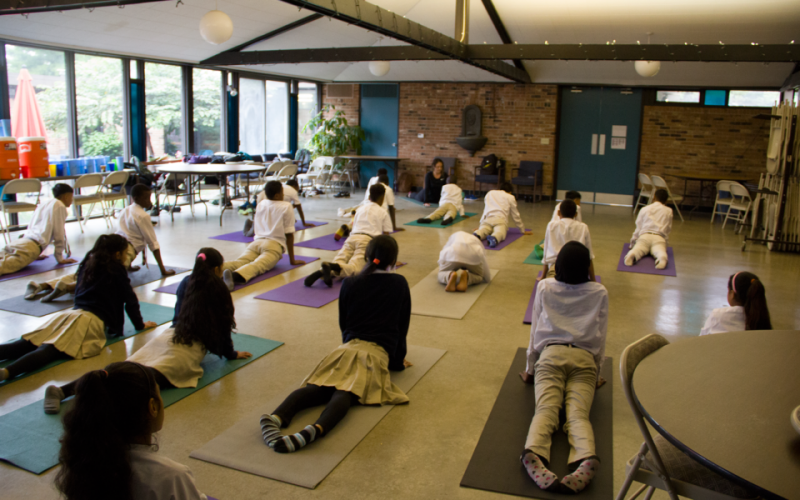
"caption": "At Fugees Academy, the day begins with yoga. The exercises help students stay focused and cope with past trauma. ",
"description": null,
"title": "fugees-yoga-960x600-c-default",
"credit": "Aaricka Washington/The Hechinger Report",
"status": "inherit",
"isLoading": false,
"fetchFailed": false
},
"mindshift_55091": {
"type": "attachments",
"id": "mindshift_55091",
"meta": {
"index": "attachments_1716263798",
"site": "mindshift",
"id": "55091",
"found": true
},
"parent": 54999,
"imgSizes": {
"twentyfourteen-full-width": {
"file": "https://ww2.kqed.org/app/uploads/sites/23/2019/12/D18_224_016-1038x576.jpg",
"width": 1038,
"mimeType": "image/jpeg",
"height": 576
},
"thumbnail": {
"file": "https://ww2.kqed.org/app/uploads/sites/23/2019/12/D18_224_016-160x107.jpg",
"width": 160,
"mimeType": "image/jpeg",
"height": 107
},
"post-thumbnail": {
"file": "https://ww2.kqed.org/app/uploads/sites/23/2019/12/D18_224_016-672x372.jpg",
"width": 672,
"mimeType": "image/jpeg",
"height": 372
},
"kqedFullSize": {
"file": "https://ww2.kqed.org/app/uploads/sites/23/2019/12/D18_224_016-e1576741233589.jpg",
"width": 1920,
"height": 1280
},
"large": {
"file": "https://ww2.kqed.org/app/uploads/sites/23/2019/12/D18_224_016-1020x680.jpg",
"width": 1020,
"mimeType": "image/jpeg",
"height": 680
},
"complete_open_graph": {
"file": "https://ww2.kqed.org/app/uploads/sites/23/2019/12/D18_224_016-1200x800.jpg",
"width": 1200,
"mimeType": "image/jpeg",
"height": 800
},
"full-width": {
"file": "https://ww2.kqed.org/app/uploads/sites/23/2019/12/D18_224_016-1920x1280.jpg",
"width": 1920,
"mimeType": "image/jpeg",
"height": 1280
},
"medium": {
"file": "https://ww2.kqed.org/app/uploads/sites/23/2019/12/D18_224_016-800x533.jpg",
"width": 800,
"mimeType": "image/jpeg",
"height": 533
},
"medium_large": {
"file": "https://ww2.kqed.org/app/uploads/sites/23/2019/12/D18_224_016-768x512.jpg",
"width": 768,
"mimeType": "image/jpeg",
"height": 512
}
},
"publishDate": 1576741197,
"modified": 1576742106,
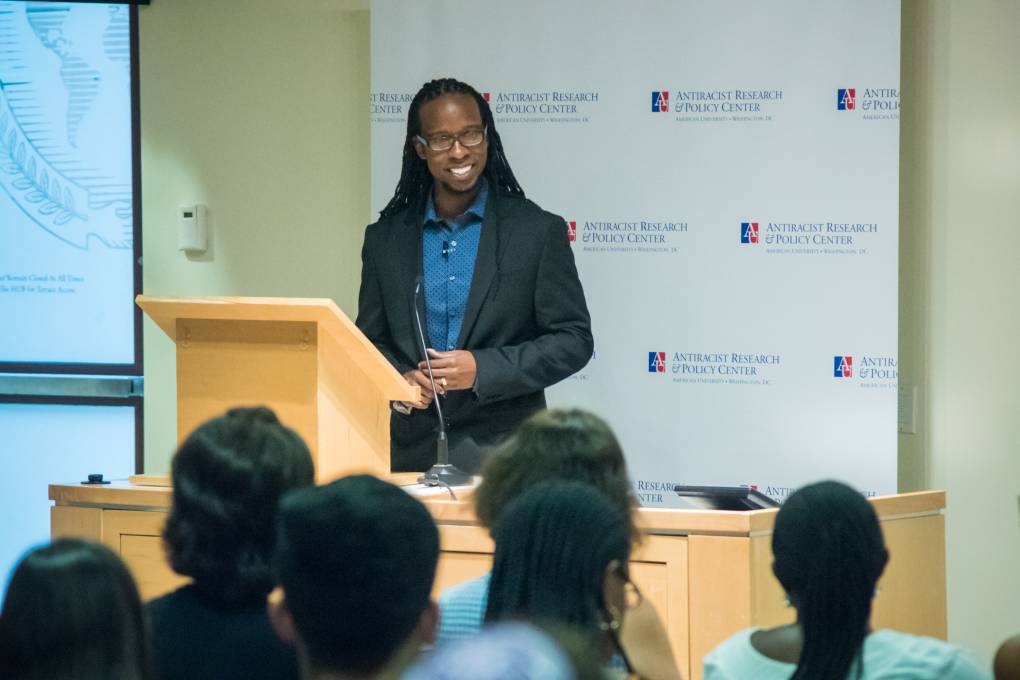
"caption": "Ibram X. Kendi, Director of the Antiracist Research & Policy Center at American University. He is author of \"How to Be An Antiracist.\"",
"description": null,
"title": "D18_224_016",
"credit": "Courtesy of American University",
"status": "inherit",
"isLoading": false,
"fetchFailed": false
},
"mindshift_55064": {
"type": "attachments",
"id": "mindshift_55064",
"meta": {
"index": "attachments_1716263798",
"site": "mindshift",
"id": "55064",
"found": true
},
"parent": 55063,
"imgSizes": {
"twentyfourteen-full-width": {
"file": "https://ww2.kqed.org/app/uploads/sites/23/2019/12/mjensen-npr_enrollment-less_custom-c450187fdc4e7635260074138df7ca69cec8d8a3-1038x576.jpg",
"width": 1038,
"mimeType": "image/jpeg",
"height": 576
},
"thumbnail": {
"file": "https://ww2.kqed.org/app/uploads/sites/23/2019/12/mjensen-npr_enrollment-less_custom-c450187fdc4e7635260074138df7ca69cec8d8a3-160x100.jpg",
"width": 160,
"mimeType": "image/jpeg",
"height": 100
},
"post-thumbnail": {
"file": "https://ww2.kqed.org/app/uploads/sites/23/2019/12/mjensen-npr_enrollment-less_custom-c450187fdc4e7635260074138df7ca69cec8d8a3-672x372.jpg",
"width": 672,
"mimeType": "image/jpeg",
"height": 372
},
"kqedFullSize": {
"file": "https://ww2.kqed.org/app/uploads/sites/23/2019/12/mjensen-npr_enrollment-less_custom-c450187fdc4e7635260074138df7ca69cec8d8a3-e1576565603504.jpg",
"width": 1920,
"height": 1198
},
"large": {
"file": "https://ww2.kqed.org/app/uploads/sites/23/2019/12/mjensen-npr_enrollment-less_custom-c450187fdc4e7635260074138df7ca69cec8d8a3-1020x637.jpg",
"width": 1020,
"mimeType": "image/jpeg",
"height": 637
},
"complete_open_graph": {
"file": "https://ww2.kqed.org/app/uploads/sites/23/2019/12/mjensen-npr_enrollment-less_custom-c450187fdc4e7635260074138df7ca69cec8d8a3-1200x749.jpg",
"width": 1200,
"mimeType": "image/jpeg",
"height": 749
},
"full-width": {
"file": "https://ww2.kqed.org/app/uploads/sites/23/2019/12/mjensen-npr_enrollment-less_custom-c450187fdc4e7635260074138df7ca69cec8d8a3-1920x1198.jpg",
"width": 1920,
"mimeType": "image/jpeg",
"height": 1198
},
"medium": {
"file": "https://ww2.kqed.org/app/uploads/sites/23/2019/12/mjensen-npr_enrollment-less_custom-c450187fdc4e7635260074138df7ca69cec8d8a3-800x499.jpg",
"width": 800,
"mimeType": "image/jpeg",
"height": 499
},
"medium_large": {
"file": "https://ww2.kqed.org/app/uploads/sites/23/2019/12/mjensen-npr_enrollment-less_custom-c450187fdc4e7635260074138df7ca69cec8d8a3-768x479.jpg",
"width": 768,
"mimeType": "image/jpeg",
"height": 479
}
},
"publishDate": 1576565568,
"modified": 1576565625,
"caption": "Fewer college students",
"description": "Meredith Jensen for NPR",
"title": "Meredith Jensen for NPR",
"credit": "Credit: Meredith Jensen for NPR",
"status": "inherit",
"isLoading": false,
"fetchFailed": false
},
"mindshift_55056": {
"type": "attachments",
"id": "mindshift_55056",
"meta": {
"index": "attachments_1716263798",
"site": "mindshift",
"id": "55056",
"found": true
},
"parent": 55052,
"imgSizes": {
"twentyfourteen-full-width": {
"file": "https://ww2.kqed.org/app/uploads/sites/23/2019/12/iStock-820815104-1038x576.jpg",
"width": 1038,
"mimeType": "image/jpeg",
"height": 576
},
"thumbnail": {
"file": "https://ww2.kqed.org/app/uploads/sites/23/2019/12/iStock-820815104-160x161.jpg",
"width": 160,
"mimeType": "image/jpeg",
"height": 161
},
"post-thumbnail": {
"file": "https://ww2.kqed.org/app/uploads/sites/23/2019/12/iStock-820815104-672x372.jpg",
"width": 672,
"mimeType": "image/jpeg",
"height": 372
},
"kqedFullSize": {
"file": "https://ww2.kqed.org/app/uploads/sites/23/2019/12/iStock-820815104.jpg",
"width": 1725,
"height": 1738
},
"large": {
"file": "https://ww2.kqed.org/app/uploads/sites/23/2019/12/iStock-820815104-1020x1028.jpg",
"width": 1020,
"mimeType": "image/jpeg",
"height": 1028
},
"complete_open_graph": {
"file": "https://ww2.kqed.org/app/uploads/sites/23/2019/12/iStock-820815104-1191x1200.jpg",
"width": 1191,
"mimeType": "image/jpeg",
"height": 1200
},
"medium": {
"file": "https://ww2.kqed.org/app/uploads/sites/23/2019/12/iStock-820815104-800x806.jpg",
"width": 800,
"mimeType": "image/jpeg",
"height": 806
},
"medium_large": {
"file": "https://ww2.kqed.org/app/uploads/sites/23/2019/12/iStock-820815104-768x774.jpg",
"width": 768,
"mimeType": "image/jpeg",
"height": 774
}
},
"publishDate": 1576480836,
"modified": 1576480934,
"caption": "Hand Drawn Brain Lightning Bolts. Vector illustration",
"description": null,
"title": "Hand Drawn Brain Lightning Bolts. Vector",
"credit": "idimair/iStock",
"status": "inherit",
"isLoading": false,
"fetchFailed": false
},
"mindshift_55032": {
"type": "attachments",
"id": "mindshift_55032",
"meta": {
"index": "attachments_1716263798",
"site": "mindshift",
"id": "55032",
"found": true
},
"parent": 55031,
"imgSizes": {
"twentyfourteen-full-width": {
"file": "https://ww2.kqed.org/app/uploads/sites/23/2019/12/20191104_dull_videogame-50_custom-b2c497eebbf403f5121ee90a6e26d29fb7785b30-1038x576.jpg",
"width": 1038,
"mimeType": "image/jpeg",
"height": 576
},
"thumbnail": {
"file": "https://ww2.kqed.org/app/uploads/sites/23/2019/12/20191104_dull_videogame-50_custom-b2c497eebbf403f5121ee90a6e26d29fb7785b30-160x107.jpg",
"width": 160,
"mimeType": "image/jpeg",
"height": 107
},
"post-thumbnail": {
"file": "https://ww2.kqed.org/app/uploads/sites/23/2019/12/20191104_dull_videogame-50_custom-b2c497eebbf403f5121ee90a6e26d29fb7785b30-672x372.jpg",
"width": 672,
"mimeType": "image/jpeg",
"height": 372
},
"kqedFullSize": {
"file": "https://ww2.kqed.org/app/uploads/sites/23/2019/12/20191104_dull_videogame-50_custom-b2c497eebbf403f5121ee90a6e26d29fb7785b30-e1576134907292.jpg",
"width": 1920,
"height": 1279
},
"large": {
"file": "https://ww2.kqed.org/app/uploads/sites/23/2019/12/20191104_dull_videogame-50_custom-b2c497eebbf403f5121ee90a6e26d29fb7785b30-1020x679.jpg",
"width": 1020,
"mimeType": "image/jpeg",
"height": 679
},
"complete_open_graph": {
"file": "https://ww2.kqed.org/app/uploads/sites/23/2019/12/20191104_dull_videogame-50_custom-b2c497eebbf403f5121ee90a6e26d29fb7785b30-1200x799.jpg",
"width": 1200,
"mimeType": "image/jpeg",
"height": 799
},
"full-width": {
"file": "https://ww2.kqed.org/app/uploads/sites/23/2019/12/20191104_dull_videogame-50_custom-b2c497eebbf403f5121ee90a6e26d29fb7785b30-1920x1279.jpg",
"width": 1920,
"mimeType": "image/jpeg",
"height": 1279
},
"medium": {
"file": "https://ww2.kqed.org/app/uploads/sites/23/2019/12/20191104_dull_videogame-50_custom-b2c497eebbf403f5121ee90a6e26d29fb7785b30-800x533.jpg",
"width": 800,
"mimeType": "image/jpeg",
"height": 533
},
"medium_large": {
"file": "https://ww2.kqed.org/app/uploads/sites/23/2019/12/20191104_dull_videogame-50_custom-b2c497eebbf403f5121ee90a6e26d29fb7785b30-768x511.jpg",
"width": 768,
"mimeType": "image/jpeg",
"height": 511
}
},
"publishDate": 1576134801,
"modified": 1576134926,
"caption": "Lual Mayen, CEO of Junub Games, says that before he taught himself how to code at a refugee camp, \"I never thought video games were made by people. I thought they just fall from heaven.\"\n",
"description": null,
"title": "Lual Mayen, CEO of Junub Games, says that before he taught himself how to code at a refugee camp, \"I never thought video games were made by people. I thought they just fall from heaven.\"",
"credit": "Catie Dull/NPR",
"status": "inherit",
"isLoading": false,
"fetchFailed": false
},
"mindshift_55008": {
"type": "attachments",
"id": "mindshift_55008",
"meta": {
"index": "attachments_1716263798",
"site": "mindshift",
"id": "55008",
"found": true
},
"parent": 55006,
"imgSizes": {
"twentyfourteen-full-width": {
"file": "https://ww2.kqed.org/app/uploads/sites/23/2019/12/40048940305_073d5c5ab7_k-1038x576.jpg",
"width": 1038,
"mimeType": "image/jpeg",
"height": 576
},
"thumbnail": {
"file": "https://ww2.kqed.org/app/uploads/sites/23/2019/12/40048940305_073d5c5ab7_k-160x107.jpg",
"width": 160,
"mimeType": "image/jpeg",
"height": 107
},
"post-thumbnail": {
"file": "https://ww2.kqed.org/app/uploads/sites/23/2019/12/40048940305_073d5c5ab7_k-672x372.jpg",
"width": 672,
"mimeType": "image/jpeg",
"height": 372
},
"kqedFullSize": {
"file": "https://ww2.kqed.org/app/uploads/sites/23/2019/12/40048940305_073d5c5ab7_k-e1575968864915.jpg",
"width": 1920,
"height": 1282
},
"large": {
"file": "https://ww2.kqed.org/app/uploads/sites/23/2019/12/40048940305_073d5c5ab7_k-1020x681.jpg",
"width": 1020,
"mimeType": "image/jpeg",
"height": 681
},
"complete_open_graph": {
"file": "https://ww2.kqed.org/app/uploads/sites/23/2019/12/40048940305_073d5c5ab7_k-1200x801.jpg",
"width": 1200,
"mimeType": "image/jpeg",
"height": 801
},
"full-width": {
"file": "https://ww2.kqed.org/app/uploads/sites/23/2019/12/40048940305_073d5c5ab7_k-1920x1282.jpg",
"width": 1920,
"mimeType": "image/jpeg",
"height": 1282
},
"medium": {
"file": "https://ww2.kqed.org/app/uploads/sites/23/2019/12/40048940305_073d5c5ab7_k-800x534.jpg",
"width": 800,
"mimeType": "image/jpeg",
"height": 534
},
"medium_large": {
"file": "https://ww2.kqed.org/app/uploads/sites/23/2019/12/40048940305_073d5c5ab7_k-768x513.jpg",
"width": 768,
"mimeType": "image/jpeg",
"height": 513
}
},
"publishDate": 1575967493,
"modified": 1575968856,
"caption": null,
"description": null,
"title": null,
"credit": "\u003ca href=\"https://www.flickr.com/photos/_maekke_/40048940305/in/photolist-241ZhEM-SGtEWU-G4vUWF-NePqC3-Hz7sWD-NADqWH-NADqHX-G8SCYA-CS5C2r-RiL9ym-S84Dnn-rNVsDb-sipuiQ-DxwnDP-pCsVyQ-rsJvpG-AM1fSR-24FrwJp-qVshzX-e5tdzr-4NY4Uv-Cm7sCE-rsCtZf-jFafQm-D1HfCJ-GtN2ko-QSrEnG-dVkn23-LP1X3V-Yt5NZi-AUexc1-bivq8K-BEcWEK-pTJn1y-XYigti-B6qQow-M8FqB7-Gx852q-rsJvBf-bBtR8B-dUZVWx-zJtKeV-CjKxat-7zLguB-naA2GR-Q4cqWq-Zz3f7R-ncWre6-BZ1eYv-qS3ck3\">Flickr/Markus Meier\u003c/a>",
"status": "inherit",
"isLoading": false,
"fetchFailed": false
},
"mindshift_55005": {
"type": "attachments",
"id": "mindshift_55005",
"meta": {
"index": "attachments_1716263798",
"site": "mindshift",
"id": "55005",
"found": true
},
"parent": 54980,
"imgSizes": {
"twentyfourteen-full-width": {
"file": "https://ww2.kqed.org/app/uploads/sites/23/2019/12/iStock-1131999993-1038x576.jpg",
"width": 1038,
"mimeType": "image/jpeg",
"height": 576
},
"thumbnail": {
"file": "https://ww2.kqed.org/app/uploads/sites/23/2019/12/iStock-1131999993-160x111.jpg",
"width": 160,
"mimeType": "image/jpeg",
"height": 111
},
"post-thumbnail": {
"file": "https://ww2.kqed.org/app/uploads/sites/23/2019/12/iStock-1131999993-672x372.jpg",
"width": 672,
"mimeType": "image/jpeg",
"height": 372
},
"kqedFullSize": {
"file": "https://ww2.kqed.org/app/uploads/sites/23/2019/12/iStock-1131999993-e1575877161101.jpg",
"width": 1920,
"height": 1336
},
"large": {
"file": "https://ww2.kqed.org/app/uploads/sites/23/2019/12/iStock-1131999993-1020x710.jpg",
"width": 1020,
"mimeType": "image/jpeg",
"height": 710
},
"complete_open_graph": {
"file": "https://ww2.kqed.org/app/uploads/sites/23/2019/12/iStock-1131999993-1200x835.jpg",
"width": 1200,
"mimeType": "image/jpeg",
"height": 835
},
"full-width": {
"file": "https://ww2.kqed.org/app/uploads/sites/23/2019/12/iStock-1131999993-1920x1336.jpg",
"width": 1920,
"mimeType": "image/jpeg",
"height": 1336
},
"medium": {
"file": "https://ww2.kqed.org/app/uploads/sites/23/2019/12/iStock-1131999993-800x557.jpg",
"width": 800,
"mimeType": "image/jpeg",
"height": 557
},
"medium_large": {
"file": "https://ww2.kqed.org/app/uploads/sites/23/2019/12/iStock-1131999993-768x534.jpg",
"width": 768,
"mimeType": "image/jpeg",
"height": 534
}
},
"publishDate": 1575877143,
"modified": 1575877178,
"caption": null,
"description": null,
"title": "iStock-1131999993",
"credit": "photographer/iStock",
"status": "inherit",
"isLoading": false,
"fetchFailed": false
},
"mindshift_54975": {
"type": "attachments",
"id": "mindshift_54975",
"meta": {
"index": "attachments_1716263798",
"site": "mindshift",
"id": "54975",
"found": true
},
"parent": 54968,
"imgSizes": {
"twentyfourteen-full-width": {
"file": "https://ww2.kqed.org/app/uploads/sites/23/2019/12/iStock-677080112-e1575442864539-1038x576.jpg",
"width": 1038,
"mimeType": "image/jpeg",
"height": 576
},
"thumbnail": {
"file": "https://ww2.kqed.org/app/uploads/sites/23/2019/12/iStock-677080112-e1575442864539-160x117.jpg",
"width": 160,
"mimeType": "image/jpeg",
"height": 117
},
"post-thumbnail": {
"file": "https://ww2.kqed.org/app/uploads/sites/23/2019/12/iStock-677080112-e1575442864539-672x372.jpg",
"width": 672,
"mimeType": "image/jpeg",
"height": 372
},
"kqedFullSize": {
"file": "https://ww2.kqed.org/app/uploads/sites/23/2019/12/iStock-677080112-e1575442864539.jpg",
"width": 1732,
"height": 1268
},
"large": {
"file": "https://ww2.kqed.org/app/uploads/sites/23/2019/12/iStock-677080112-e1575442864539-1020x747.jpg",
"width": 1020,
"mimeType": "image/jpeg",
"height": 747
},
"complete_open_graph": {
"file": "https://ww2.kqed.org/app/uploads/sites/23/2019/12/iStock-677080112-e1575442864539-1200x879.jpg",
"width": 1200,
"mimeType": "image/jpeg",
"height": 879
},
"medium": {
"file": "https://ww2.kqed.org/app/uploads/sites/23/2019/12/iStock-677080112-e1575442864539-800x586.jpg",
"width": 800,
"mimeType": "image/jpeg",
"height": 586
},
"medium_large": {
"file": "https://ww2.kqed.org/app/uploads/sites/23/2019/12/iStock-677080112-e1575442864539-768x562.jpg",
"width": 768,
"mimeType": "image/jpeg",
"height": 562
}
},
"publishDate": 1575410439,
"modified": 1575442955,
"caption": null,
"description": null,
"title": null,
"credit": "frimages/iStock",
"status": "inherit",
"isLoading": false,
"fetchFailed": false
},
"mindshift_54963": {
"type": "attachments",
"id": "mindshift_54963",
"meta": {
"index": "attachments_1716263798",
"site": "mindshift",
"id": "54963",
"found": true
},
"parent": 54962,
"imgSizes": {
"twentyfourteen-full-width": {
"file": "https://ww2.kqed.org/app/uploads/sites/23/2019/11/jacquiline_alantara_spanglish_wide-58d1d4c5553c8190d8a707f7a798223b274a3d18-1038x576.jpg",
"width": 1038,
"mimeType": "image/jpeg",
"height": 576
},
"thumbnail": {
"file": "https://ww2.kqed.org/app/uploads/sites/23/2019/11/jacquiline_alantara_spanglish_wide-58d1d4c5553c8190d8a707f7a798223b274a3d18-160x90.jpg",
"width": 160,
"mimeType": "image/jpeg",
"height": 90
},
"post-thumbnail": {
"file": "https://ww2.kqed.org/app/uploads/sites/23/2019/11/jacquiline_alantara_spanglish_wide-58d1d4c5553c8190d8a707f7a798223b274a3d18-672x372.jpg",
"width": 672,
"mimeType": "image/jpeg",
"height": 372
},
"kqedFullSize": {
"file": "https://ww2.kqed.org/app/uploads/sites/23/2019/11/jacquiline_alantara_spanglish_wide-58d1d4c5553c8190d8a707f7a798223b274a3d18-e1575273057821.jpg",
"width": 1920,
"height": 1080
},
"large": {
"file": "https://ww2.kqed.org/app/uploads/sites/23/2019/11/jacquiline_alantara_spanglish_wide-58d1d4c5553c8190d8a707f7a798223b274a3d18-1020x574.jpg",
"width": 1020,
"mimeType": "image/jpeg",
"height": 574
},
"complete_open_graph": {
"file": "https://ww2.kqed.org/app/uploads/sites/23/2019/11/jacquiline_alantara_spanglish_wide-58d1d4c5553c8190d8a707f7a798223b274a3d18-1200x675.jpg",
"width": 1200,
"mimeType": "image/jpeg",
"height": 675
},
"full-width": {
"file": "https://ww2.kqed.org/app/uploads/sites/23/2019/11/jacquiline_alantara_spanglish_wide-58d1d4c5553c8190d8a707f7a798223b274a3d18-1920x1080.jpg",
"width": 1920,
"mimeType": "image/jpeg",
"height": 1080
},
"medium": {
"file": "https://ww2.kqed.org/app/uploads/sites/23/2019/11/jacquiline_alantara_spanglish_wide-58d1d4c5553c8190d8a707f7a798223b274a3d18-800x450.jpg",
"width": 800,
"mimeType": "image/jpeg",
"height": 450
},
"medium_large": {
"file": "https://ww2.kqed.org/app/uploads/sites/23/2019/11/jacquiline_alantara_spanglish_wide-58d1d4c5553c8190d8a707f7a798223b274a3d18-768x432.jpg",
"width": 768,
"mimeType": "image/jpeg",
"height": 432
}
},
"publishDate": 1575273022,
"modified": 1575273070,
"caption": null,
"description": "Spanglish",
"title": "Spanglish",
"credit": "Jacqueline Alcántara for NPR",
"status": "inherit",
"isLoading": false,
"fetchFailed": false
},
"mindshift_49712": {
"type": "attachments",
"id": "mindshift_49712",
"meta": {
"index": "attachments_1716263798",
"site": "mindshift",
"id": "49712",
"found": true
},
"parent": 49697,
"imgSizes": {
"small": {
"file": "https://ww2.kqed.org/app/uploads/sites/23/2017/11/Brains-520x307.png",
"width": 520,
"mimeType": "image/png",
"height": 307
},
"twentyfourteen-full-width": {
"file": "https://ww2.kqed.org/app/uploads/sites/23/2017/11/Brains-1038x576.png",
"width": 1038,
"mimeType": "image/png",
"height": 576
},
"thumbnail": {
"file": "https://ww2.kqed.org/app/uploads/sites/23/2017/11/Brains-160x95.png",
"width": 160,
"mimeType": "image/png",
"height": 95
},
"fd-sm": {
"file": "https://ww2.kqed.org/app/uploads/sites/23/2017/11/Brains-960x567.png",
"width": 960,
"mimeType": "image/png",
"height": 567
},
"post-thumbnail": {
"file": "https://ww2.kqed.org/app/uploads/sites/23/2017/11/Brains-672x372.png",
"width": 672,
"mimeType": "image/png",
"height": 372
},
"xsmall": {
"file": "https://ww2.kqed.org/app/uploads/sites/23/2017/11/Brains-375x222.png",
"width": 375,
"mimeType": "image/png",
"height": 222
},
"kqedFullSize": {
"file": "https://ww2.kqed.org/app/uploads/sites/23/2017/11/Brains-e1574841521741.png",
"width": 1920,
"height": 1134
},
"large": {
"file": "https://ww2.kqed.org/app/uploads/sites/23/2017/11/Brains-1020x603.png",
"width": 1020,
"mimeType": "image/png",
"height": 603
},
"xlarge": {
"file": "https://ww2.kqed.org/app/uploads/sites/23/2017/11/Brains-1180x697.png",
"width": 1180,
"mimeType": "image/png",
"height": 697
},
"guest-author-50": {
"file": "https://ww2.kqed.org/app/uploads/sites/23/2017/11/Brains-50x50.png",
"width": 50,
"mimeType": "image/png",
"height": 50
},
"guest-author-96": {
"file": "https://ww2.kqed.org/app/uploads/sites/23/2017/11/Brains-96x96.png",
"width": 96,
"mimeType": "image/png",
"height": 96
},
"medium": {
"file": "https://ww2.kqed.org/app/uploads/sites/23/2017/11/Brains-800x473.png",
"width": 800,
"mimeType": "image/png",
"height": 473
},
"guest-author-64": {
"file": "https://ww2.kqed.org/app/uploads/sites/23/2017/11/Brains-64x64.png",
"width": 64,
"mimeType": "image/png",
"height": 64
},
"guest-author-32": {
"file": "https://ww2.kqed.org/app/uploads/sites/23/2017/11/Brains-32x32.png",
"width": 32,
"mimeType": "image/png",
"height": 32
},
"fd-lrg": {
"file": "https://ww2.kqed.org/app/uploads/sites/23/2017/11/Brains-1920x1134.png",
"width": 1920,
"mimeType": "image/png",
"height": 1134
},
"fd-med": {
"file": "https://ww2.kqed.org/app/uploads/sites/23/2017/11/Brains-1180x697.png",
"width": 1180,
"mimeType": "image/png",
"height": 697
},
"full-width": {
"file": "https://ww2.kqed.org/app/uploads/sites/23/2017/11/Brains-1920x1134.png",
"width": 1920,
"mimeType": "image/png",
"height": 1134
},
"detail": {
"file": "https://ww2.kqed.org/app/uploads/sites/23/2017/11/Brains-150x150.png",
"width": 150,
"mimeType": "image/png",
"height": 150
},
"medium_large": {
"file": "https://ww2.kqed.org/app/uploads/sites/23/2017/11/Brains-768x454.png",
"width": 768,
"mimeType": "image/png",
"height": 454
},
"guest-author-128": {
"file": "https://ww2.kqed.org/app/uploads/sites/23/2017/11/Brains-128x128.png",
"width": 128,
"mimeType": "image/png",
"height": 128
},
"xxsmall": {
"file": "https://ww2.kqed.org/app/uploads/sites/23/2017/11/Brains-240x142.png",
"width": 240,
"mimeType": "image/png",
"height": 142
}
},
"publishDate": 1510770688,
"modified": 1510770749,
"caption": null,
"description": null,
"title": "Brains",
"credit": "iStock/melazerg",
"status": "inherit",
"isLoading": false,
"fetchFailed": false
},
"mindshift_54913": {
"type": "attachments",
"id": "mindshift_54913",
"meta": {
"index": "attachments_1716263798",
"site": "mindshift",
"id": "54913",
"found": true
},
"parent": 54907,
"imgSizes": {
"twentyfourteen-full-width": {
"file": "https://ww2.kqed.org/app/uploads/sites/23/2019/11/Danielle-Dreilinger-tower-e1574783369633-1038x576.jpg",
"width": 1038,
"mimeType": "image/jpeg",
"height": 576
},
"thumbnail": {
"file": "https://ww2.kqed.org/app/uploads/sites/23/2019/11/Danielle-Dreilinger-tower-e1574783369633-160x155.jpg",
"width": 160,
"mimeType": "image/jpeg",
"height": 155
},
"post-thumbnail": {
"file": "https://ww2.kqed.org/app/uploads/sites/23/2019/11/Danielle-Dreilinger-tower-e1574783369633-672x372.jpg",
"width": 672,
"mimeType": "image/jpeg",
"height": 372
},
"kqedFullSize": {
"file": "https://ww2.kqed.org/app/uploads/sites/23/2019/11/Danielle-Dreilinger-tower-e1574783369633.jpg",
"width": 1921,
"height": 1862
},
"large": {
"file": "https://ww2.kqed.org/app/uploads/sites/23/2019/11/Danielle-Dreilinger-tower-e1574783369633-1020x989.jpg",
"width": 1020,
"mimeType": "image/jpeg",
"height": 989
},
"complete_open_graph": {
"file": "https://ww2.kqed.org/app/uploads/sites/23/2019/11/Danielle-Dreilinger-tower-e1574783369633-1200x1163.jpg",
"width": 1200,
"mimeType": "image/jpeg",
"height": 1163
},
"full-width": {
"file": "https://ww2.kqed.org/app/uploads/sites/23/2019/11/Danielle-Dreilinger-tower-e1574783369633-1920x1861.jpg",
"width": 1920,
"mimeType": "image/jpeg",
"height": 1861
},
"medium": {
"file": "https://ww2.kqed.org/app/uploads/sites/23/2019/11/Danielle-Dreilinger-tower-e1574783369633-800x775.jpg",
"width": 800,
"mimeType": "image/jpeg",
"height": 775
},
"medium_large": {
"file": "https://ww2.kqed.org/app/uploads/sites/23/2019/11/Danielle-Dreilinger-tower-e1574783369633-768x744.jpg",
"width": 768,
"mimeType": "image/jpeg",
"height": 744
}
},
"publishDate": 1574782963,
"modified": 1574783105,
"caption": "Attendees at the National Association for Gifted Children convention, mostly teachers and administrators of gifted education programs, work on an engineering project given to Minnesota first graders to let them demonstrate creative thinking, logical reasoning and other behaviors that might mean they’d benefit from gifted services. ",
"description": null,
"title": "Danielle Dreilinger - tower",
"credit": "Danielle Dreilinger for The Hechinger Report",
"status": "inherit",
"isLoading": false,
"fetchFailed": false
}
},
"audioPlayerReducer": {
"postId": "stream_live",
"isPaused": true,
"isPlaying": false,
"pfsActive": false,
"pledgeModalIsOpen": true,
"playerDrawerIsOpen": false,
"liveAudioPlayStartedAt": 0,
"liveAudioPlayContext": ""
},
"authorsReducer": {
"byline_mindshift_55108": {
"type": "authors",
"id": "byline_mindshift_55108",
"meta": {
"override": true
},
"slug": "byline_mindshift_55108",
"name": "Emily Vaughn and L. Carol Ritchie",
"isLoading": false
},
"byline_mindshift_55098": {
"type": "authors",
"id": "byline_mindshift_55098",
"meta": {
"override": true
},
"slug": "byline_mindshift_55098",
"name": "\u003ca href=\"https://hechingerreport.org/\">Aaricka Washington, The Hechinger Report\u003c/a>",
"isLoading": false
},
"byline_mindshift_55063": {
"type": "authors",
"id": "byline_mindshift_55063",
"meta": {
"override": true
},
"slug": "byline_mindshift_55063",
"name": "Elissa Nadworny and Max Larkin",
"isLoading": false
},
"byline_mindshift_55052": {
"type": "authors",
"id": "byline_mindshift_55052",
"meta": {
"override": true
},
"slug": "byline_mindshift_55052",
"name": "\u003ca href=\"https://www.gse.harvard.edu/news/uk/19/12/novice-expert-shift\">Emily Boudreau, Usable Knowledge\u003c/a>",
"isLoading": false
},
"byline_mindshift_55031": {
"type": "authors",
"id": "byline_mindshift_55031",
"meta": {
"override": true
},
"slug": "byline_mindshift_55031",
"name": "Emily Vaughn",
"isLoading": false
},
"byline_mindshift_55006": {
"type": "authors",
"id": "byline_mindshift_55006",
"meta": {
"override": true
},
"slug": "byline_mindshift_55006",
"name": "\u003ca href=\"https://hechingerreport.org/\">By Tara García Mathewson, The Hechinger Report\u003c/a>",
"isLoading": false
},
"byline_mindshift_54962": {
"type": "authors",
"id": "byline_mindshift_54962",
"meta": {
"override": true
},
"slug": "byline_mindshift_54962",
"name": "Camille Phillips",
"isLoading": false
},
"byline_mindshift_54907": {
"type": "authors",
"id": "byline_mindshift_54907",
"meta": {
"override": true
},
"slug": "byline_mindshift_54907",
"name": "\u003ca href=\"https://hechingerreport.org/up-to-3-6-million-students-should-be-labeled-gifted-but-arent/\">Danielle Dreilinger, The Hechinger Report\u003c/a>",
"isLoading": false
},
"katrinaschwartz": {
"type": "authors",
"id": "234",
"meta": {
"index": "authors_1716337520",
"id": "234",
"found": true
},
"name": "Katrina Schwartz",
"firstName": "Katrina",
"lastName": "Schwartz",
"slug": "katrinaschwartz",
"email": "kschwartz@kqed.org",
"display_author_email": false,
"staff_mastheads": [
"news"
],
"title": "Producer",
"bio": "Katrina Schwartz is a journalist based in San Francisco. She's worked at KPCC public radio in LA and has reported on air and online for KQED since 2010. She covered how teaching and learning is changing for MindShift between 2012 and 2020. She is the co-host of the MindShift podcast and now produces KQED's Bay Curious podcast.",
"avatar": "https://secure.gravatar.com/avatar/edb4ee79070447a018538c9aae6eeecf28786515b8a0c30e43b6b7dce5aa44c8?s=600&d=blank&r=g",
"twitter": "kschwart",
"bluesky": null,
"facebook": null,
"instagram": null,
"linkedin": null,
"sites": [
{
"site": "",
"roles": [
"editor"
]
},
{
"site": "news",
"roles": [
"editor"
]
},
{
"site": "mindshift",
"roles": [
"administrator"
]
},
{
"site": "stateofhealth",
"roles": [
"author"
]
},
{
"site": "science",
"roles": [
"editor"
]
}
],
"headData": {
"title": "Katrina Schwartz | KQED",
"description": "Producer",
"ogImgSrc": "https://secure.gravatar.com/avatar/edb4ee79070447a018538c9aae6eeecf28786515b8a0c30e43b6b7dce5aa44c8?s=600&d=blank&r=g",
"twImgSrc": "https://secure.gravatar.com/avatar/edb4ee79070447a018538c9aae6eeecf28786515b8a0c30e43b6b7dce5aa44c8?s=600&d=blank&r=g"
},
"isLoading": false,
"link": "/author/katrinaschwartz"
},
"hollykorbey": {
"type": "authors",
"id": "4445",
"meta": {
"index": "authors_1716337520",
"id": "4445",
"found": true
},
"name": "Holly Korbey",
"firstName": "Holly",
"lastName": "Korbey",
"slug": "hollykorbey",
"email": "holly@hollykorbey.com",
"display_author_email": false,
"staff_mastheads": [],
"title": null,
"bio": "Holly Korbey's work on parenting and education has appeared in The New York Times, The Atlantic, Babble, Brain, Child Magazine, and others. She lives in Nashville with her family. Follow her on Twitter: @HKorbey",
"avatar": "https://secure.gravatar.com/avatar/f385f7a3b90e52ecd5e85c24fbd0a363?s=600&d=blank&r=g",
"twitter": null,
"facebook": null,
"instagram": null,
"linkedin": null,
"sites": [
{
"site": "mindshift",
"roles": [
"contributor"
]
}
],
"headData": {
"title": "Holly Korbey | KQED",
"description": null,
"ogImgSrc": "https://secure.gravatar.com/avatar/f385f7a3b90e52ecd5e85c24fbd0a363?s=600&d=blank&r=g",
"twImgSrc": "https://secure.gravatar.com/avatar/f385f7a3b90e52ecd5e85c24fbd0a363?s=600&d=blank&r=g"
},
"isLoading": false,
"link": "/author/hollykorbey"
},
"kdnewhouse": {
"type": "authors",
"id": "11487",
"meta": {
"index": "authors_1716337520",
"id": "11487",
"found": true
},
"name": "Kara Newhouse",
"firstName": "Kara",
"lastName": "Newhouse",
"slug": "kdnewhouse",
"email": "knewhouse@kqed.org",
"display_author_email": false,
"staff_mastheads": [],
"title": "MindShift Editor",
"bio": null,
"avatar": "https://secure.gravatar.com/avatar/3dceed6fb271527113abfa9a8e9df34e?s=600&d=blank&r=g",
"twitter": null,
"facebook": null,
"instagram": null,
"linkedin": null,
"sites": [
{
"site": "",
"roles": [
"editor"
]
},
{
"site": "mindshift",
"roles": []
}
],
"headData": {
"title": "Kara Newhouse | KQED",
"description": "MindShift Editor",
"ogImgSrc": "https://secure.gravatar.com/avatar/3dceed6fb271527113abfa9a8e9df34e?s=600&d=blank&r=g",
"twImgSrc": "https://secure.gravatar.com/avatar/3dceed6fb271527113abfa9a8e9df34e?s=600&d=blank&r=g"
},
"isLoading": false,
"link": "/author/kdnewhouse"
}
},
"pagesReducer": {
"mindshift_tag_featured": {
"type": "terms",
"id": "mindshift_20784",
"meta": {
"index": "terms_1716263798",
"site": "mindshift",
"id": "20784",
"score": 7.6562667
},
"featImg": null,
"name": "featured",
"description": null,
"taxonomy": "tag",
"headData": {
"twImgId": null,
"twTitle": null,
"ogTitle": null,
"ogImgId": null,
"twDescription": null,
"description": null,
"title": "featured Archives | KQED Mindshift",
"ogDescription": null
},
"ttid": 20061,
"slug": "featured",
"isLoading": false,
"title": "featured",
"pageMeta": {
"site": "mindshift",
"WpPageTemplate": "page-topic-editorial",
"currentPage": 9
},
"blocks": [
{
"blockName": "kqed/post-list",
"attrs": {
"layout": "cardArticle2",
"query": "posts/mindshift?tag=featured",
"seeMore": false,
"paginated": true,
"page": 9
}
},
{
"blockName": "kqed/ad"
}
]
}
},
"pfsSessionReducer": {},
"postsReducer": {
"stream_live": {
"type": "live",
"id": "stream_live",
"audioUrl": "https://hls.kqed.org/hls/kqed_app/playlist.m3u8",
"title": "Live Stream",
"excerpt": "Live Stream information currently unavailable.",
"link": "/radio",
"featImg": "",
"label": {
"name": "KQED Live",
"link": "/"
}
},
"stream_kqedNewscast": {
"type": "posts",
"id": "stream_kqedNewscast",
"audioUrl": "https://www.kqed.org/.stream/anon/radio/RDnews/newscast.mp3?_=1",
"title": "KQED Newscast",
"featImg": "",
"label": {
"name": "88.5 FM",
"link": "/"
}
},
"mindshift_55108": {
"type": "posts",
"id": "mindshift_55108",
"meta": {
"index": "posts_1716263798",
"site": "mindshift",
"id": "55108",
"score": null,
"sort": [
1578036741000
]
},
"parent": 0,
"labelTerm": {
"site": "mindshift"
},
"blocks": [],
"publishDate": 1578036741,
"format": "standard",
"disqusTitle": "Start Fresh: 6 Tips For Emotional Well-Being",
"title": "Start Fresh: 6 Tips For Emotional Well-Being",
"headTitle": "MindShift | KQED News",
"content": "\u003cp>As a college student, \u003ca href=\"https://oid.wharton.upenn.edu/profile/kmilkman/\">Katy Milkman\u003c/a> played tennis and loved going to the gym. But when she started graduate school, her exercise routine started to flunk.\u003c/p>\n\u003cp>\"At the end of a long day of classes, I was exhausted,\" Milkman says. \"Frankly, the last thing I wanted to do was drag myself to the gym. What I really wanted to do was watch TV or read Harry Potter.\"\u003c/p>\n\u003cp>What got her back to regular workouts was something she calls \"temptation bundling.\" She resolved to indulge in her love of wizard-lit only while at the gym, by listening to audiobooks with earbuds.\u003c/p>\n\u003cp>Milkman, now a professor at the Wharton School of Business who specializes in human decision-making, says that when it comes to making a behavioral change, the trick is to \u003ca href=\"https://www.npr.org/sections/health-shots/2019/08/16/747332849/fresh-starts-guilty-pleasures-and-other-pro-tips-for-sticking-to-good-habits?utm_source=npr_newsletter&utm_medium=email&utm_content=20191228&utm_term=4309970&utm_campaign=health&utm_id=6480438&orgid=305&utm_source=npr_newsletter&utm_medium=email&utm_content=20191229&utm_term=4310790&utm_campaign=health&utm_id=20963634&orgid=151\">pair the thing you dread with something you love\u003c/a>.\u003c/p>\n\u003cp>Looking for more tips like these to make your New Year's resolution stick? Whatever your goals, we have insights that can make it a little easier for you to achieve them. Here are six \"life recipes\" for good mental health from research that NPR reporters covered this year:\u003c/p>\n\u003cfigure id=\"attachment_55110\" class=\"wp-caption alignnone\" style=\"max-width: 1920px\">\u003cimg class=\"size-full wp-image-55110\" src=\"https://ww2.kqed.org/app/uploads/sites/23/2019/12/caretaker-self-care_wide-4adce35da6f48000f25dceb19d7b18cef4715092-e1578036474716.jpe\" alt=\"\" width=\"1920\" height=\"1080\">\u003cfigcaption class=\"wp-caption-text\">Stressed-out family caregivers who were taught how to reframe negative thoughts and focus on positive experiences actually reduced their anxiety and depression, a study found. \u003ccite>(Cornelia Li for NPR)\u003c/cite>\u003c/figcaption>\u003c/figure>\n\u003cp>\u003cstrong>Cultivate joy \u003c/strong>\u003c/p>\n\u003cp>[ad fullwidth]\u003c/p>\n\u003cp>Feeling stressed? Just \u003ca href=\"https://www.npr.org/sections/health-shots/2019/05/05/719780061/from-gloom-to-gratitude-8-skills-to-cultivate-joy\">eight techniques — a \"buffet of life skills\" — can make a significant improvement in well-being\u003c/a>, say scientists who taught the techniques to caregivers of people with dementia. After learning techniques such as how to keep a gratitude journal, for example, and how to quickly reframe negative experiences in a positive light — these family caregivers reported impressive decreases in both stress and anxiety.\u003c/p>\n\u003cp>\u003cstrong>Prepare to fail. It's part of succeeding\u003c/strong>\u003c/p>\n\u003cp>If you're trying to get a new routine to stick — whether it's getting more exercise, eating less sugar or learning to play the ukulele — scholars who study human behavior say \u003ca href=\"https://www.npr.org/sections/health-shots/2019/08/16/747332849/fresh-starts-guilty-pleasures-and-other-pro-tips-for-sticking-to-good-habits\">the key is to accept failure as a part of the process\u003c/a>. Expect that at some point you will mess up. And when that happens, don't give in to the \"what-the-heck\" effect — the feeling that since you've missed one session, your whole plan is a bust. Just get back to taking steps toward your goal, and don't beat yourself up.\u003c/p>\n\u003cp>\u003cstrong>Help an anxious partner the right way\u003c/strong>\u003c/p>\n\u003cp>You can \u003ca href=\"https://www.npr.org/sections/health-shots/2019/07/24/744465884/how-to-help-your-anxious-partner-and-yourself\">support a partner who has an anxiety disorder\u003c/a> without sinking yourself, say therapists: First, don't try to fix things immediately. Instead, acknowledge your loved one's perspective. \"You can move to logic, but not before the person feels like they're not being judged and ... misunderstood,\" says licensed psychologist Carolyn Daitch. Learning how to gently maintain boundaries is important, too.\u003c/p>\n\u003cp>\u003cimg class=\"alignnone size-full wp-image-55112\" src=\"https://ww2.kqed.org/app/uploads/sites/23/2020/01/anger_animation-e1578036649558.jpg\" alt=\"\" width=\"1920\" height=\"1080\">\u003c/p>\n\u003cp>\u003cstrong>Feeling extra angry? Get checked out for depression\u003c/strong>\u003c/p>\n\u003cp>Many patients — and doctors — associate depression with feelings of hopelessness, sadness and lack of motivation. But a growing number of psychiatrists say\u003ca href=\"https://www.npr.org/sections/health-shots/2019/02/04/689747637/if-youre-often-angry-or-irritable-you-may-be-depressed\"> depression is also behind some hypercritical tendencies and outbursts of anger\u003c/a>. The good news: This sort of irritability is responsive to counseling and medication.\u003c/p>\n\u003cp>\u003cstrong>Redefine exercise: Move a little bit, often\u003c/strong>\u003c/p>\n\u003cp>Maria Godoy, one of NPR's editors, learned to love exercise when she realized every little bit counts. \"I reframed what I thought of as exercise,\" she says. Vacuuming with gusto, taking the stairs — these\u003ca href=\"https://www.npr.org/sections/health-shots/2019/01/14/684118974/from-couch-potato-to-fitness-buff-how-i-learned-to-love-exercise\"> little bursts of movement throughout the day add up\u003c/a>, like pennies in a piggy bank.\u003c/p>\n\u003cp>\u003cstrong>Take a minute today to consider your life's purpose\u003c/strong>\u003c/p>\n\u003cp>\u003c/p>\n\u003cp>Having a purpose in life seems to have a more powerful impact on decreasing a person's risk of premature death than exercising regularly, quitting smoking or curbing your alcohol intake, research suggests. Maybe you find greatest meaning in guarding the environment, raising good children, making music or touching lives through your volunteer work. It doesn't seem to matter what your life's purpose is, a growing body of research suggests. \u003ca href=\"https://www.npr.org/sections/health-shots/2019/05/25/726695968/whats-your-purpose-finding-a-sense-of-meaning-in-life-is-linked-to-health\">What matters is that you feel you have one\u003c/a>.\u003c/p>\n\u003cdiv class=\"fullattribution\">Copyright 2020 NPR. To see more, visit https://www.npr.org.\u003cimg src=\"https://www.google-analytics.com/__utm.gif?utmac=UA-5828686-4&utmdt=Start+Fresh%3A+6+Tips+For+Emotional+Well-Being+In+2020&utme=8(APIKey)9(MDAxOTAwOTE4MDEyMTkxMDAzNjczZDljZA004)\">\u003c/div>\n\n",
"disqusIdentifier": "55108 https://ww2.kqed.org/mindshift/?p=55108",
"disqusUrl": "https://ww2.kqed.org/mindshift/2020/01/02/start-fresh-6-tips-for-emotional-well-being/",
"stats": {
"hasVideo": false,
"hasChartOrMap": false,
"hasAudio": false,
"hasPolis": false,
"wordCount": 687,
"hasGoogleForm": false,
"hasGallery": false,
"hasHearkenModule": false,
"iframeSrcs": [],
"paragraphCount": 20
},
"modified": 1578036828,
"excerpt": "Joy can be cultivated. Hostility often masks depression. As one year ends and another begins, these six insights and tips from psychologists offer hope for a good new year.",
"headData": {
"twImgId": "",
"twTitle": "",
"ogTitle": "",
"ogImgId": "",
"twDescription": "",
"description": "Joy can be cultivated. Hostility often masks depression. As one year ends and another begins, these six insights and tips from psychologists offer hope for a good new year.",
"title": "Start Fresh: 6 Tips For Emotional Well-Being | KQED",
"ogDescription": "",
"schema": {
"@context": "https://schema.org",
"@type": "Article",
"headline": "Start Fresh: 6 Tips For Emotional Well-Being",
"datePublished": "2020-01-02T23:32:21-08:00",
"dateModified": "2020-01-02T23:33:48-08:00",
"image": "https://cdn.kqed.org/wp-content/uploads/2020/02/KQED-OG-Image@1x.png"
}
},
"guestAuthors": [],
"slug": "start-fresh-6-tips-for-emotional-well-being",
"status": "publish",
"nprApiLink": "http://api.npr.org/query?id=792505428&apiKey=MDAxOTAwOTE4MDEyMTkxMDAzNjczZDljZA004",
"nprByline": "Emily Vaughn and L. Carol Ritchie",
"nprStoryDate": "Tue, 31 Dec 2019 10:26:10 -0500",
"nprLastModifiedDate": "Thu, 02 Jan 2020 13:00:45 -0500",
"nprHtmlLink": "https://www.npr.org/sections/health-shots/2019/12/31/792505428/start-fresh-6-tips-for-mental-health-in-2020?ft=nprml&f=792505428",
"nprImageAgency": "Michael Driver for NPR",
"nprStoryId": "792505428",
"nprRetrievedStory": "1",
"nprPubDate": "Thu, 02 Jan 2020 13:00:00 -0500",
"path": "/mindshift/55108/start-fresh-6-tips-for-emotional-well-being",
"audioTrackLength": null,
"parsedContent": [
{
"type": "contentString",
"content": "\u003cdiv class=\"post-body\">\u003cp>\u003cp>As a college student, \u003ca href=\"https://oid.wharton.upenn.edu/profile/kmilkman/\">Katy Milkman\u003c/a> played tennis and loved going to the gym. But when she started graduate school, her exercise routine started to flunk.\u003c/p>\n\u003cp>\"At the end of a long day of classes, I was exhausted,\" Milkman says. \"Frankly, the last thing I wanted to do was drag myself to the gym. What I really wanted to do was watch TV or read Harry Potter.\"\u003c/p>\n\u003cp>What got her back to regular workouts was something she calls \"temptation bundling.\" She resolved to indulge in her love of wizard-lit only while at the gym, by listening to audiobooks with earbuds.\u003c/p>\n\u003cp>Milkman, now a professor at the Wharton School of Business who specializes in human decision-making, says that when it comes to making a behavioral change, the trick is to \u003ca href=\"https://www.npr.org/sections/health-shots/2019/08/16/747332849/fresh-starts-guilty-pleasures-and-other-pro-tips-for-sticking-to-good-habits?utm_source=npr_newsletter&utm_medium=email&utm_content=20191228&utm_term=4309970&utm_campaign=health&utm_id=6480438&orgid=305&utm_source=npr_newsletter&utm_medium=email&utm_content=20191229&utm_term=4310790&utm_campaign=health&utm_id=20963634&orgid=151\">pair the thing you dread with something you love\u003c/a>.\u003c/p>\n\u003cp>Looking for more tips like these to make your New Year's resolution stick? Whatever your goals, we have insights that can make it a little easier for you to achieve them. Here are six \"life recipes\" for good mental health from research that NPR reporters covered this year:\u003c/p>\n\u003cfigure id=\"attachment_55110\" class=\"wp-caption alignnone\" style=\"max-width: 1920px\">\u003cimg class=\"size-full wp-image-55110\" src=\"https://ww2.kqed.org/app/uploads/sites/23/2019/12/caretaker-self-care_wide-4adce35da6f48000f25dceb19d7b18cef4715092-e1578036474716.jpe\" alt=\"\" width=\"1920\" height=\"1080\">\u003cfigcaption class=\"wp-caption-text\">Stressed-out family caregivers who were taught how to reframe negative thoughts and focus on positive experiences actually reduced their anxiety and depression, a study found. \u003ccite>(Cornelia Li for NPR)\u003c/cite>\u003c/figcaption>\u003c/figure>\n\u003cp>\u003cstrong>Cultivate joy \u003c/strong>\u003c/p>\n\u003cp>\u003c/p>\u003c/div>",
"attributes": {
"named": {},
"numeric": []
}
},
{
"type": "component",
"content": "",
"name": "ad",
"attributes": {
"named": {
"label": "fullwidth"
},
"numeric": [
"fullwidth"
]
}
},
{
"type": "contentString",
"content": "\u003cdiv class=\"post-body\">\u003cp>\u003c/p>\n\u003cp>Feeling stressed? Just \u003ca href=\"https://www.npr.org/sections/health-shots/2019/05/05/719780061/from-gloom-to-gratitude-8-skills-to-cultivate-joy\">eight techniques — a \"buffet of life skills\" — can make a significant improvement in well-being\u003c/a>, say scientists who taught the techniques to caregivers of people with dementia. After learning techniques such as how to keep a gratitude journal, for example, and how to quickly reframe negative experiences in a positive light — these family caregivers reported impressive decreases in both stress and anxiety.\u003c/p>\n\u003cp>\u003cstrong>Prepare to fail. It's part of succeeding\u003c/strong>\u003c/p>\n\u003cp>If you're trying to get a new routine to stick — whether it's getting more exercise, eating less sugar or learning to play the ukulele — scholars who study human behavior say \u003ca href=\"https://www.npr.org/sections/health-shots/2019/08/16/747332849/fresh-starts-guilty-pleasures-and-other-pro-tips-for-sticking-to-good-habits\">the key is to accept failure as a part of the process\u003c/a>. Expect that at some point you will mess up. And when that happens, don't give in to the \"what-the-heck\" effect — the feeling that since you've missed one session, your whole plan is a bust. Just get back to taking steps toward your goal, and don't beat yourself up.\u003c/p>\n\u003cp>\u003cstrong>Help an anxious partner the right way\u003c/strong>\u003c/p>\n\u003cp>You can \u003ca href=\"https://www.npr.org/sections/health-shots/2019/07/24/744465884/how-to-help-your-anxious-partner-and-yourself\">support a partner who has an anxiety disorder\u003c/a> without sinking yourself, say therapists: First, don't try to fix things immediately. Instead, acknowledge your loved one's perspective. \"You can move to logic, but not before the person feels like they're not being judged and ... misunderstood,\" says licensed psychologist Carolyn Daitch. Learning how to gently maintain boundaries is important, too.\u003c/p>\n\u003cp>\u003cimg class=\"alignnone size-full wp-image-55112\" src=\"https://ww2.kqed.org/app/uploads/sites/23/2020/01/anger_animation-e1578036649558.jpg\" alt=\"\" width=\"1920\" height=\"1080\">\u003c/p>\n\u003cp>\u003cstrong>Feeling extra angry? Get checked out for depression\u003c/strong>\u003c/p>\n\u003cp>Many patients — and doctors — associate depression with feelings of hopelessness, sadness and lack of motivation. But a growing number of psychiatrists say\u003ca href=\"https://www.npr.org/sections/health-shots/2019/02/04/689747637/if-youre-often-angry-or-irritable-you-may-be-depressed\"> depression is also behind some hypercritical tendencies and outbursts of anger\u003c/a>. The good news: This sort of irritability is responsive to counseling and medication.\u003c/p>\n\u003cp>\u003cstrong>Redefine exercise: Move a little bit, often\u003c/strong>\u003c/p>\n\u003cp>Maria Godoy, one of NPR's editors, learned to love exercise when she realized every little bit counts. \"I reframed what I thought of as exercise,\" she says. Vacuuming with gusto, taking the stairs — these\u003ca href=\"https://www.npr.org/sections/health-shots/2019/01/14/684118974/from-couch-potato-to-fitness-buff-how-i-learned-to-love-exercise\"> little bursts of movement throughout the day add up\u003c/a>, like pennies in a piggy bank.\u003c/p>\n\u003cp>\u003cstrong>Take a minute today to consider your life's purpose\u003c/strong>\u003c/p>\n\u003cp>\u003c/p>\n\u003cp>Having a purpose in life seems to have a more powerful impact on decreasing a person's risk of premature death than exercising regularly, quitting smoking or curbing your alcohol intake, research suggests. Maybe you find greatest meaning in guarding the environment, raising good children, making music or touching lives through your volunteer work. It doesn't seem to matter what your life's purpose is, a growing body of research suggests. \u003ca href=\"https://www.npr.org/sections/health-shots/2019/05/25/726695968/whats-your-purpose-finding-a-sense-of-meaning-in-life-is-linked-to-health\">What matters is that you feel you have one\u003c/a>.\u003c/p>\n\u003cdiv class=\"fullattribution\">Copyright 2020 NPR. To see more, visit https://www.npr.org.\u003cimg src=\"https://www.google-analytics.com/__utm.gif?utmac=UA-5828686-4&utmdt=Start+Fresh%3A+6+Tips+For+Emotional+Well-Being+In+2020&utme=8(APIKey)9(MDAxOTAwOTE4MDEyMTkxMDAzNjczZDljZA004)\">\u003c/div>\n\n\u003c/div>\u003c/p>",
"attributes": {
"named": {},
"numeric": []
}
}
],
"link": "/mindshift/55108/start-fresh-6-tips-for-emotional-well-being",
"authors": [
"byline_mindshift_55108"
],
"categories": [
"mindshift_192"
],
"tags": [
"mindshift_20589",
"mindshift_20784",
"mindshift_1040",
"mindshift_21324",
"mindshift_20865",
"mindshift_20987",
"mindshift_21092",
"mindshift_943"
],
"featImg": "mindshift_55109",
"label": "mindshift"
},
"mindshift_55098": {
"type": "posts",
"id": "mindshift_55098",
"meta": {
"index": "posts_1716263798",
"site": "mindshift",
"id": "55098",
"score": null,
"sort": [
1577116726000
]
},
"parent": 0,
"labelTerm": {
"site": "mindshift"
},
"blocks": [],
"publishDate": 1577116726,
"format": "standard",
"disqusTitle": "School Network Takes Turbocharged Approach to Education for Refugee Students",
"title": "School Network Takes Turbocharged Approach to Education for Refugee Students",
"headTitle": "MindShift | KQED News",
"content": "\u003cp>\u003cem>This story about\u003c/em> \u003cem>Fugees Academy was produced by \u003c/em>\u003ca href=\"http://hechingerreport.org/\">\u003cem>The Hechinger Report\u003c/em>\u003c/a>\u003cem>, a nonprofit, independent news organization focused on inequality and innovation in education. Sign up for \u003c/em>\u003ca href=\"http://eepurl.com/c36ixT\">\u003cem>Hechinger’s newsletter\u003c/em>\u003c/a>\u003cem>.\u003c/em>\u003c/p>\n\u003cp>COLUMBUS, Ohio — Mariam was on a roll. A bubbly sixth grader in a bright pink hijab, she sat in a semi-circle with her four classmates, trying to identify as many words with a long “a” vowel sound as she could.\u003c/p>\n\u003cp>“Rake,” she said.\u003c/p>\n\u003cp>“Rake — perfect,” Sharon George, her teacher, said encouragingly. “So, take your yellow marker and highlight the ‘a’ in rake.”\u003c/p>\n\u003cp>The English language, George told her students, is hard. The rules of pronunciation and grammar are complicated and full of exceptions. It can be difficult for students who’ve grown up in the United States — let alone those who’ve only just arrived after having their learning disrupted by war and conflict.\u003c/p>\n\u003cp>[ad fullwidth]\u003c/p>\n\u003cp>The students in George’s class are all refugees. Mariam came to the United States from Sudan. Her classmates are from Somalia, Syria, Burundi and Nepal. They have chosen this school, Fugees Academy, for its explicit focus on serving young refugee students and helping them through high school and into college.\u003c/p>\n\u003cp>Fugees Academy is perhaps the only school in the nation to enroll refugee students exclusively. It was founded on the belief that these learners need more focused attention than they often receive in traditional public schools, and that they need to go back to basics to learn English. Fugees (its name is a play on “refugees”) tries to squeeze in many of the elements of a K-8 curriculum into three years of middle school, helping students learn two to three years of the English language in one. The school also places an emphasis on helping students overcome trauma they may have faced on their journey to the United States.\u003c/p>\n\u003cfigure id=\"attachment_55101\" class=\"wp-caption alignnone\" style=\"max-width: 500px\">\u003cimg class=\"size-full wp-image-55101\" src=\"https://ww2.kqed.org/app/uploads/sites/23/2019/12/fugees-art-500x0-c-default.png\" alt=\"\" width=\"500\" height=\"333\" srcset=\"https://ww2.kqed.org/app/uploads/sites/23/2019/12/fugees-art-500x0-c-default.png 500w, https://ww2.kqed.org/app/uploads/sites/23/2019/12/fugees-art-500x0-c-default-160x107.png 160w\" sizes=\"(max-width: 500px) 100vw, 500px\">\u003cfigcaption class=\"wp-caption-text\">Arts are a central focus of the curriculum at the Fugees Academy, a school network serving refugees. \u003ccite>(Aaricka Washington/The Hechinger Report)\u003c/cite>\u003c/figcaption>\u003c/figure>\n\u003cp>The academy is tiny but growing. Its original Atlanta campus has 89 students and there are 42 at a new school in Columbus, Ohio, which opened last year. Two additional schools are in the works. Early results are encouraging: The Atlanta high school’s graduation rate is 92 percent and 74 percent of graduates have gone on to college, according to Luma Mufleh, its founder. And yet, the school is expanding at a moment when the political climate in the United States has grown increasingly hostile to refugees, adding to the social and emotional challenges of its students and elevating the need for the non-academic work the school specializes in.\u003c/p>\n\u003cp>“We do a lot of work of explaining what they are hearing and seeing and reassuring them that this country does want them and the bulk of America believes in them, but sometimes it’s hard,” Mufleh said.\u003c/p>\n\u003cp>Mufleh, whose mother was a Syrian refugee, grew up in Jordan, and moved to the United States for college in the early 1990s. In 2004, while working as a café owner near Atlanta, she stumbled on a group of boys playing soccer. She learned that they’d moved to the U.S. from countries like Afghanistan and Liberia. She began coaching them, founding a soccer program. Later, when she discovered that some of the boys were receiving good grades in school even though they couldn’t read English, she decided to start a school as well.\u003c/p>\n\u003cfigure id=\"attachment_55102\" class=\"wp-caption alignnone\" style=\"max-width: 500px\">\u003cimg class=\"size-full wp-image-55102\" src=\"https://ww2.kqed.org/app/uploads/sites/23/2019/12/Fugees-hall-500x0-c-default.png\" alt=\"\" width=\"500\" height=\"333\" srcset=\"https://ww2.kqed.org/app/uploads/sites/23/2019/12/Fugees-hall-500x0-c-default.png 500w, https://ww2.kqed.org/app/uploads/sites/23/2019/12/Fugees-hall-500x0-c-default-160x107.png 160w\" sizes=\"(max-width: 500px) 100vw, 500px\">\u003cfigcaption class=\"wp-caption-text\">The Fugees’ Columbus school opened last year for sixth graders. By 2020, the school network will have a total of four schools. \u003ccite>(Aaricka Washington/The Hechinger Report)\u003c/cite>\u003c/figcaption>\u003c/figure>\n\u003cp>With help from private donors, she opened her first school in 2007 in the Atlanta suburbs. Serving grades 6 through 12, the private institution graduated 22 students in its first four years. Last year, Mufleh opened the Columbus school, offering classes for sixth grade only. The school will add a grade each year, with the goal of eventually growing to three times the size of the Atlanta school. Mufleh hopes to add a third school in Cleveland, Ohio in 2020; a second Georgia school recently won approval from the state. The newer schools are set up as public charter schools; the Ohio institutions will be funded primarily by a state voucher program.\u003c/p>\n\u003cp>Vouchers and charter schools are controversial because they draw money away from the traditional public school system, which educates the vast majority of U.S. students. But Mufleh said the private and charter models offer far more flexibility. Traditional public schools, for example, cannot focus exclusively on refugees, because they are not allowed to ask students about their immigration status over concerns it could lead to discrimination, said Julie Sugarman, a senior policy analyst at the nonprofit Migration Policy Institute.\u003c/p>\n\u003cp>Schools that cater to special populations like refugees can also educate students at grade levels that are years behind their age. Mufleh said that approach is key to helping refugee students achieve academically. Often, when refugee students arrive in the United States, they are placed temporarily in “newcomer centers” where they learn alongside similarly situated students for a period of time. Within six months or so, they are moved to regular classes. But the students are grouped by age, not by their skill-level, and teachers don’t have the time to help them catch up in English and other areas, Mufleh said.\u003c/p>\n\u003cp>Emily Futransky, chief academic officer of Fugees Family, the nonprofit that runs the academy, tries to identify instructional methods to help the school meet the educational needs of young refugees. Finding a curriculum that addresses the students’ skill level while acknowledging their age can be difficult. For example, the school uses phonics, an approach often geared toward elementary schoolers, to teach sixth graders to read. Futransky said the school has received pushback for her use of the early elementary method, which helps kids connect sounds to letters.\u003c/p>\n\u003cp>One source of criticism has come from the education company responsible for the phonics curriculum, Wilson Language Training’s Fundations, Futransky said. But she and her colleagues say the school has evidence that older kids can benefit from the K-3 program, too. “We meet the students where they are at,” said Mufleh, who noted that she’s seen kids who weren’t reading at age 11 or 12 advance several grade levels in a year. (In an email, Angela Penfold, senior director of strategic program development at Wilson, said, “The school will know best what is needed to teach its unique student population.”)\u003c/p>\n\u003cfigure id=\"attachment_55100\" class=\"wp-caption alignnone\" style=\"max-width: 1920px\">\u003cimg class=\"size-full wp-image-55100\" src=\"https://ww2.kqed.org/app/uploads/sites/23/2019/12/Sharon-George.jpg\" alt=\"\" width=\"1920\" height=\"1280\" srcset=\"https://ww2.kqed.org/app/uploads/sites/23/2019/12/Sharon-George.jpg 1920w, https://ww2.kqed.org/app/uploads/sites/23/2019/12/Sharon-George-160x107.jpg 160w, https://ww2.kqed.org/app/uploads/sites/23/2019/12/Sharon-George-800x533.jpg 800w, https://ww2.kqed.org/app/uploads/sites/23/2019/12/Sharon-George-768x512.jpg 768w, https://ww2.kqed.org/app/uploads/sites/23/2019/12/Sharon-George-1020x680.jpg 1020w, https://ww2.kqed.org/app/uploads/sites/23/2019/12/Sharon-George-1200x800.jpg 1200w\" sizes=\"(max-width: 1920px) 100vw, 1920px\">\u003cfigcaption class=\"wp-caption-text\">Sharon George has taught English for 19 years. At Fugees, she uses phonics to help English language learners grasp the basics in order to catch up to their peers. \u003ccite>(Aaricka Washington/The Hechinger Report)\u003c/cite>\u003c/figcaption>\u003c/figure>\n\u003cp>Sugarman said that the newcomer centers vary in quality, like all schools and programs. And she said that grouping refugee kids in their own school may be necessary, even though it could exacerbate their separation from other students. “We have such a shortage of teachers who understand how to do English language learner instruction that incorporates language development into academic content development,” she said. “I am more concerned with kids getting appropriate instruction, especially at the beginner levels, than I am about the fact that they’re being segregated.”\u003c/p>\n\u003cp>On a recent weekday, three staff members greeted students at the front doors of St. Andrew Presbyterian Church, the one-story building that houses the Fugees school. After saying hello to their teachers, the students hustled through the building’s brown doors and into the cafeteria where they ate breakfast and lined up according to their “house,” akin to an advisory group.\u003c/p>\n\u003cp>The school day runs from 8 a.m. to 6 p.m. It starts with yoga and ends with soccer practice and after-school tutoring. Fugees Academy runs year-round, with six weeks of summer programming. The idea is to pack in as much as possible so students have the opportunity to catch up with — and outpace — their peers.\u003c/p>\n\u003cp>Lewis Makor, 27, is the school’s co-leader for the Columbus campus. A Sudanese refugee with a calm, warm disposition, he was among the first six students to attend the Atlanta school when it opened in 2007. Back then, Fugees only offered classes for middle school students, so after he finished eighth grade, Makor attended high school at his neighborhood public school. He went to college for two years, but dropped out and struggled to hold a job. Mufleh called him last year and told him she needed his help for the new school.\u003c/p>\n\u003cp>Mufleh said she makes a point of hiring Fugees graduates and other refugees. She wants students to be able to see people who look like them in positions of authority. About 30 percent of Fugees’ employees are foreign-born.\u003c/p>\n\u003cp>One recent weekday in Columbus, students twisted into different positions as Kassandra Young, the school’s yoga instructor, led them through each move, reminding them to inhale and exhale. Yoga gives students time for self-reflection, which is vital for students who’ve faced trauma, she explained.\u003c/p>\n\u003cp>In arts class, teachers encourage students to present their projects and critique each other’s work. That helps students develop communication skills and the ability to interact with each other, teachers here said. Fugees Academy also helps celebrate students’ cultural identities by holding monthly potlucks and integrating books from different cultures into the curriculum (students are reading Middle Eastern and South Korean versions of Little Red Riding Hood, for example). Accents are celebrated rather than being seen as something to poke fun at. Each afternoon students gather in the cafeteria for “accountability time,” where they share news about the day and process what’s gone right and wrong.\u003c/p>\n\u003cp>“Academic achievement is important for us, but it’s also about belonging and integration and our students making sense of this new country,” said Mufleh.\u003c/p>\n\u003cp>Each summer, Mufleh and her staff make a push to recruit new students. They go into neighborhoods and knock on doors. Some of the students they enroll have just arrived from abroad, while others have spent years in U.S. schools.\u003c/p>\n\u003cp>Manjil, a 13-year-old from Nepal, enrolled in Fugees Academy after three years at a traditional public school that focuses on English language learners. When he started at Fugees, he was still reading at roughly a kindergarten level.\u003c/p>\n\u003cp>He said he didn’t take his classes seriously and often got in trouble. At first, he got in trouble at the academy, too. Once he threw wet toilet paper at a teacher.\u003c/p>\n\u003cp>“When I first came to school, I was frustrated,” he said. “School was like a joke to me.”\u003c/p>\n\u003cp>But Manjil said he gradually grew more motivated. He began to embrace the responsibilities the school gives it students, such as helping tidy classrooms and the school grounds. Now, he even enjoys helping his mom clean their house, he said.\u003c/p>\n\u003cp>The Trump administration’s anti-refugee policies have complicated the work of the school and the lives of its students. Since 2016, the government has drastically reduced the number of refugees resettled in the United States. That year, the United States admitted nearly 85,000 refugees; \u003ca href=\"https://www.washingtonpost.com/politics/trump-administration-proposes-slashing-refugee-limit-for-the-third-consecutive-year-to-a-historic-low-of-18000/2019/09/26/3a554a60-e0a4-11e9-be96-6adb81821e90_story.html\">next year it will admit 18,000\u003c/a>, an historic low.\u003c/p>\n\u003cp>Mufleh said she is optimistic that those cuts won’t dim the school’s future. Atlanta, Columbus and Cleveland all have significant refugee populations and are expected to remain hubs for resettlement, she said.\u003c/p>\n\u003cp>But many Fugees Academy students are painfully aware of the anti-refugee sentiment that often bubbles up, particularly on social media. Mufleh recalled a student texting her a picture of a flyer circulating online that threatened harm to Muslims.\u003c/p>\n\u003cp>“It’s tough on our staff and our faculty and team that are on the frontlines; they bear the brunt of that,” said Mufleh. “You have to stay in control most of the time and present the united front and not fly off the handle on what’s going on.”\u003c/p>\n\u003cp>It’s grown harder to gain the trust of parents, too, school leaders said. That’s where the employees’ diversity comes into play: Often staff can speak directly with prospective parents in their native tongues and help them feel comfortable. According to Mufleh, just 15 percent of students’ parents have finished middle school.\u003c/p>\n\u003cp>In George’s sixth grade classroom, students finished up their phonics lesson. George has taught English for 19 years in public schools. Never has she been so mindful of just how fast her students need to learn and how far they need to go, she said.\u003c/p>\n\u003cp>“Every minute,” she said, “has to count.”\u003c/p>\n\u003cp>[ad floatright]\u003c/p>\n\u003cp>\u003cem>This story about\u003c/em> \u003cem>\u003ca href=\"https://hechingerreport.org/school-network-takes-turbocharged-approach-to-education-for-refugee-students/\">Fugees Academy\u003c/a> was produced by \u003c/em>\u003ca href=\"http://hechingerreport.org/\">\u003cem>The Hechinger Report\u003c/em>\u003c/a>\u003cem>, a nonprofit, independent news organization focused on inequality and innovation in education. Sign up for \u003c/em>\u003ca href=\"http://eepurl.com/c36ixT\">\u003cem>Hechinger’s newsletter\u003c/em>\u003c/a>\u003cem>.\u003c/em>\u003c/p>\n\n",
"disqusIdentifier": "55098 https://ww2.kqed.org/mindshift/?p=55098",
"disqusUrl": "https://ww2.kqed.org/mindshift/2019/12/23/school-network-takes-turbocharged-approach-to-education-for-refugee-students/",
"stats": {
"hasVideo": false,
"hasChartOrMap": false,
"hasAudio": false,
"hasPolis": false,
"wordCount": 2216,
"hasGoogleForm": false,
"hasGallery": false,
"hasHearkenModule": false,
"iframeSrcs": [],
"paragraphCount": 38
},
"modified": 1577116726,
"excerpt": "Fugees Academy, perhaps the nation’s only school to serve refugees exclusively, tries to pack three years of English into one. The school only serves refugees and it does so by helping students return to the basics of learning English and by focusing on students’ social and emotional needs.\r\n\r\n ",
"headData": {
"twImgId": "",
"twTitle": "",
"ogTitle": "",
"ogImgId": "",
"twDescription": "",
"description": "Fugees Academy, perhaps the nation’s only school to serve refugees exclusively, tries to pack three years of English into one. The school only serves refugees and it does so by helping students return to the basics of learning English and by focusing on students’ social and emotional needs.\r\n\r\n ",
"title": "School Network Takes Turbocharged Approach to Education for Refugee Students | KQED",
"ogDescription": "",
"schema": {
"@context": "https://schema.org",
"@type": "Article",
"headline": "School Network Takes Turbocharged Approach to Education for Refugee Students",
"datePublished": "2019-12-23T07:58:46-08:00",
"dateModified": "2019-12-23T07:58:46-08:00",
"image": "https://cdn.kqed.org/wp-content/uploads/2020/02/KQED-OG-Image@1x.png"
}
},
"guestAuthors": [],
"slug": "school-network-takes-turbocharged-approach-to-education-for-refugee-students",
"status": "publish",
"nprByline": "\u003ca href=\"https://hechingerreport.org/\">Aaricka Washington, The Hechinger Report\u003c/a>",
"path": "/mindshift/55098/school-network-takes-turbocharged-approach-to-education-for-refugee-students",
"audioTrackLength": null,
"parsedContent": [
{
"type": "contentString",
"content": "\u003cdiv class=\"post-body\">\u003cp>\u003cp>\u003cem>This story about\u003c/em> \u003cem>Fugees Academy was produced by \u003c/em>\u003ca href=\"http://hechingerreport.org/\">\u003cem>The Hechinger Report\u003c/em>\u003c/a>\u003cem>, a nonprofit, independent news organization focused on inequality and innovation in education. Sign up for \u003c/em>\u003ca href=\"http://eepurl.com/c36ixT\">\u003cem>Hechinger’s newsletter\u003c/em>\u003c/a>\u003cem>.\u003c/em>\u003c/p>\n\u003cp>COLUMBUS, Ohio — Mariam was on a roll. A bubbly sixth grader in a bright pink hijab, she sat in a semi-circle with her four classmates, trying to identify as many words with a long “a” vowel sound as she could.\u003c/p>\n\u003cp>“Rake,” she said.\u003c/p>\n\u003cp>“Rake — perfect,” Sharon George, her teacher, said encouragingly. “So, take your yellow marker and highlight the ‘a’ in rake.”\u003c/p>\n\u003cp>The English language, George told her students, is hard. The rules of pronunciation and grammar are complicated and full of exceptions. It can be difficult for students who’ve grown up in the United States — let alone those who’ve only just arrived after having their learning disrupted by war and conflict.\u003c/p>\n\u003cp>\u003c/p>\u003c/div>",
"attributes": {
"named": {},
"numeric": []
}
},
{
"type": "component",
"content": "",
"name": "ad",
"attributes": {
"named": {
"label": "fullwidth"
},
"numeric": [
"fullwidth"
]
}
},
{
"type": "contentString",
"content": "\u003cdiv class=\"post-body\">\u003cp>\u003c/p>\n\u003cp>The students in George’s class are all refugees. Mariam came to the United States from Sudan. Her classmates are from Somalia, Syria, Burundi and Nepal. They have chosen this school, Fugees Academy, for its explicit focus on serving young refugee students and helping them through high school and into college.\u003c/p>\n\u003cp>Fugees Academy is perhaps the only school in the nation to enroll refugee students exclusively. It was founded on the belief that these learners need more focused attention than they often receive in traditional public schools, and that they need to go back to basics to learn English. Fugees (its name is a play on “refugees”) tries to squeeze in many of the elements of a K-8 curriculum into three years of middle school, helping students learn two to three years of the English language in one. The school also places an emphasis on helping students overcome trauma they may have faced on their journey to the United States.\u003c/p>\n\u003cfigure id=\"attachment_55101\" class=\"wp-caption alignnone\" style=\"max-width: 500px\">\u003cimg class=\"size-full wp-image-55101\" src=\"https://ww2.kqed.org/app/uploads/sites/23/2019/12/fugees-art-500x0-c-default.png\" alt=\"\" width=\"500\" height=\"333\" srcset=\"https://ww2.kqed.org/app/uploads/sites/23/2019/12/fugees-art-500x0-c-default.png 500w, https://ww2.kqed.org/app/uploads/sites/23/2019/12/fugees-art-500x0-c-default-160x107.png 160w\" sizes=\"(max-width: 500px) 100vw, 500px\">\u003cfigcaption class=\"wp-caption-text\">Arts are a central focus of the curriculum at the Fugees Academy, a school network serving refugees. \u003ccite>(Aaricka Washington/The Hechinger Report)\u003c/cite>\u003c/figcaption>\u003c/figure>\n\u003cp>The academy is tiny but growing. Its original Atlanta campus has 89 students and there are 42 at a new school in Columbus, Ohio, which opened last year. Two additional schools are in the works. Early results are encouraging: The Atlanta high school’s graduation rate is 92 percent and 74 percent of graduates have gone on to college, according to Luma Mufleh, its founder. And yet, the school is expanding at a moment when the political climate in the United States has grown increasingly hostile to refugees, adding to the social and emotional challenges of its students and elevating the need for the non-academic work the school specializes in.\u003c/p>\n\u003cp>“We do a lot of work of explaining what they are hearing and seeing and reassuring them that this country does want them and the bulk of America believes in them, but sometimes it’s hard,” Mufleh said.\u003c/p>\n\u003cp>Mufleh, whose mother was a Syrian refugee, grew up in Jordan, and moved to the United States for college in the early 1990s. In 2004, while working as a café owner near Atlanta, she stumbled on a group of boys playing soccer. She learned that they’d moved to the U.S. from countries like Afghanistan and Liberia. She began coaching them, founding a soccer program. Later, when she discovered that some of the boys were receiving good grades in school even though they couldn’t read English, she decided to start a school as well.\u003c/p>\n\u003cfigure id=\"attachment_55102\" class=\"wp-caption alignnone\" style=\"max-width: 500px\">\u003cimg class=\"size-full wp-image-55102\" src=\"https://ww2.kqed.org/app/uploads/sites/23/2019/12/Fugees-hall-500x0-c-default.png\" alt=\"\" width=\"500\" height=\"333\" srcset=\"https://ww2.kqed.org/app/uploads/sites/23/2019/12/Fugees-hall-500x0-c-default.png 500w, https://ww2.kqed.org/app/uploads/sites/23/2019/12/Fugees-hall-500x0-c-default-160x107.png 160w\" sizes=\"(max-width: 500px) 100vw, 500px\">\u003cfigcaption class=\"wp-caption-text\">The Fugees’ Columbus school opened last year for sixth graders. By 2020, the school network will have a total of four schools. \u003ccite>(Aaricka Washington/The Hechinger Report)\u003c/cite>\u003c/figcaption>\u003c/figure>\n\u003cp>With help from private donors, she opened her first school in 2007 in the Atlanta suburbs. Serving grades 6 through 12, the private institution graduated 22 students in its first four years. Last year, Mufleh opened the Columbus school, offering classes for sixth grade only. The school will add a grade each year, with the goal of eventually growing to three times the size of the Atlanta school. Mufleh hopes to add a third school in Cleveland, Ohio in 2020; a second Georgia school recently won approval from the state. The newer schools are set up as public charter schools; the Ohio institutions will be funded primarily by a state voucher program.\u003c/p>\n\u003cp>Vouchers and charter schools are controversial because they draw money away from the traditional public school system, which educates the vast majority of U.S. students. But Mufleh said the private and charter models offer far more flexibility. Traditional public schools, for example, cannot focus exclusively on refugees, because they are not allowed to ask students about their immigration status over concerns it could lead to discrimination, said Julie Sugarman, a senior policy analyst at the nonprofit Migration Policy Institute.\u003c/p>\n\u003cp>Schools that cater to special populations like refugees can also educate students at grade levels that are years behind their age. Mufleh said that approach is key to helping refugee students achieve academically. Often, when refugee students arrive in the United States, they are placed temporarily in “newcomer centers” where they learn alongside similarly situated students for a period of time. Within six months or so, they are moved to regular classes. But the students are grouped by age, not by their skill-level, and teachers don’t have the time to help them catch up in English and other areas, Mufleh said.\u003c/p>\n\u003cp>Emily Futransky, chief academic officer of Fugees Family, the nonprofit that runs the academy, tries to identify instructional methods to help the school meet the educational needs of young refugees. Finding a curriculum that addresses the students’ skill level while acknowledging their age can be difficult. For example, the school uses phonics, an approach often geared toward elementary schoolers, to teach sixth graders to read. Futransky said the school has received pushback for her use of the early elementary method, which helps kids connect sounds to letters.\u003c/p>\n\u003cp>One source of criticism has come from the education company responsible for the phonics curriculum, Wilson Language Training’s Fundations, Futransky said. But she and her colleagues say the school has evidence that older kids can benefit from the K-3 program, too. “We meet the students where they are at,” said Mufleh, who noted that she’s seen kids who weren’t reading at age 11 or 12 advance several grade levels in a year. (In an email, Angela Penfold, senior director of strategic program development at Wilson, said, “The school will know best what is needed to teach its unique student population.”)\u003c/p>\n\u003cfigure id=\"attachment_55100\" class=\"wp-caption alignnone\" style=\"max-width: 1920px\">\u003cimg class=\"size-full wp-image-55100\" src=\"https://ww2.kqed.org/app/uploads/sites/23/2019/12/Sharon-George.jpg\" alt=\"\" width=\"1920\" height=\"1280\" srcset=\"https://ww2.kqed.org/app/uploads/sites/23/2019/12/Sharon-George.jpg 1920w, https://ww2.kqed.org/app/uploads/sites/23/2019/12/Sharon-George-160x107.jpg 160w, https://ww2.kqed.org/app/uploads/sites/23/2019/12/Sharon-George-800x533.jpg 800w, https://ww2.kqed.org/app/uploads/sites/23/2019/12/Sharon-George-768x512.jpg 768w, https://ww2.kqed.org/app/uploads/sites/23/2019/12/Sharon-George-1020x680.jpg 1020w, https://ww2.kqed.org/app/uploads/sites/23/2019/12/Sharon-George-1200x800.jpg 1200w\" sizes=\"(max-width: 1920px) 100vw, 1920px\">\u003cfigcaption class=\"wp-caption-text\">Sharon George has taught English for 19 years. At Fugees, she uses phonics to help English language learners grasp the basics in order to catch up to their peers. \u003ccite>(Aaricka Washington/The Hechinger Report)\u003c/cite>\u003c/figcaption>\u003c/figure>\n\u003cp>Sugarman said that the newcomer centers vary in quality, like all schools and programs. And she said that grouping refugee kids in their own school may be necessary, even though it could exacerbate their separation from other students. “We have such a shortage of teachers who understand how to do English language learner instruction that incorporates language development into academic content development,” she said. “I am more concerned with kids getting appropriate instruction, especially at the beginner levels, than I am about the fact that they’re being segregated.”\u003c/p>\n\u003cp>On a recent weekday, three staff members greeted students at the front doors of St. Andrew Presbyterian Church, the one-story building that houses the Fugees school. After saying hello to their teachers, the students hustled through the building’s brown doors and into the cafeteria where they ate breakfast and lined up according to their “house,” akin to an advisory group.\u003c/p>\n\u003cp>The school day runs from 8 a.m. to 6 p.m. It starts with yoga and ends with soccer practice and after-school tutoring. Fugees Academy runs year-round, with six weeks of summer programming. The idea is to pack in as much as possible so students have the opportunity to catch up with — and outpace — their peers.\u003c/p>\n\u003cp>Lewis Makor, 27, is the school’s co-leader for the Columbus campus. A Sudanese refugee with a calm, warm disposition, he was among the first six students to attend the Atlanta school when it opened in 2007. Back then, Fugees only offered classes for middle school students, so after he finished eighth grade, Makor attended high school at his neighborhood public school. He went to college for two years, but dropped out and struggled to hold a job. Mufleh called him last year and told him she needed his help for the new school.\u003c/p>\n\u003cp>Mufleh said she makes a point of hiring Fugees graduates and other refugees. She wants students to be able to see people who look like them in positions of authority. About 30 percent of Fugees’ employees are foreign-born.\u003c/p>\n\u003cp>One recent weekday in Columbus, students twisted into different positions as Kassandra Young, the school’s yoga instructor, led them through each move, reminding them to inhale and exhale. Yoga gives students time for self-reflection, which is vital for students who’ve faced trauma, she explained.\u003c/p>\n\u003cp>In arts class, teachers encourage students to present their projects and critique each other’s work. That helps students develop communication skills and the ability to interact with each other, teachers here said. Fugees Academy also helps celebrate students’ cultural identities by holding monthly potlucks and integrating books from different cultures into the curriculum (students are reading Middle Eastern and South Korean versions of Little Red Riding Hood, for example). Accents are celebrated rather than being seen as something to poke fun at. Each afternoon students gather in the cafeteria for “accountability time,” where they share news about the day and process what’s gone right and wrong.\u003c/p>\n\u003cp>“Academic achievement is important for us, but it’s also about belonging and integration and our students making sense of this new country,” said Mufleh.\u003c/p>\n\u003cp>Each summer, Mufleh and her staff make a push to recruit new students. They go into neighborhoods and knock on doors. Some of the students they enroll have just arrived from abroad, while others have spent years in U.S. schools.\u003c/p>\n\u003cp>Manjil, a 13-year-old from Nepal, enrolled in Fugees Academy after three years at a traditional public school that focuses on English language learners. When he started at Fugees, he was still reading at roughly a kindergarten level.\u003c/p>\n\u003cp>He said he didn’t take his classes seriously and often got in trouble. At first, he got in trouble at the academy, too. Once he threw wet toilet paper at a teacher.\u003c/p>\n\u003cp>“When I first came to school, I was frustrated,” he said. “School was like a joke to me.”\u003c/p>\n\u003cp>But Manjil said he gradually grew more motivated. He began to embrace the responsibilities the school gives it students, such as helping tidy classrooms and the school grounds. Now, he even enjoys helping his mom clean their house, he said.\u003c/p>\n\u003cp>The Trump administration’s anti-refugee policies have complicated the work of the school and the lives of its students. Since 2016, the government has drastically reduced the number of refugees resettled in the United States. That year, the United States admitted nearly 85,000 refugees; \u003ca href=\"https://www.washingtonpost.com/politics/trump-administration-proposes-slashing-refugee-limit-for-the-third-consecutive-year-to-a-historic-low-of-18000/2019/09/26/3a554a60-e0a4-11e9-be96-6adb81821e90_story.html\">next year it will admit 18,000\u003c/a>, an historic low.\u003c/p>\n\u003cp>Mufleh said she is optimistic that those cuts won’t dim the school’s future. Atlanta, Columbus and Cleveland all have significant refugee populations and are expected to remain hubs for resettlement, she said.\u003c/p>\n\u003cp>But many Fugees Academy students are painfully aware of the anti-refugee sentiment that often bubbles up, particularly on social media. Mufleh recalled a student texting her a picture of a flyer circulating online that threatened harm to Muslims.\u003c/p>\n\u003cp>“It’s tough on our staff and our faculty and team that are on the frontlines; they bear the brunt of that,” said Mufleh. “You have to stay in control most of the time and present the united front and not fly off the handle on what’s going on.”\u003c/p>\n\u003cp>It’s grown harder to gain the trust of parents, too, school leaders said. That’s where the employees’ diversity comes into play: Often staff can speak directly with prospective parents in their native tongues and help them feel comfortable. According to Mufleh, just 15 percent of students’ parents have finished middle school.\u003c/p>\n\u003cp>In George’s sixth grade classroom, students finished up their phonics lesson. George has taught English for 19 years in public schools. Never has she been so mindful of just how fast her students need to learn and how far they need to go, she said.\u003c/p>\n\u003cp>“Every minute,” she said, “has to count.”\u003c/p>\n\u003cp>\u003c/p>\u003c/div>",
"attributes": {
"named": {},
"numeric": []
}
},
{
"type": "component",
"content": "",
"name": "ad",
"attributes": {
"named": {
"label": "floatright"
},
"numeric": [
"floatright"
]
}
},
{
"type": "contentString",
"content": "\u003cdiv class=\"post-body\">\u003cp>\u003c/p>\n\u003cp>\u003cem>This story about\u003c/em> \u003cem>\u003ca href=\"https://hechingerreport.org/school-network-takes-turbocharged-approach-to-education-for-refugee-students/\">Fugees Academy\u003c/a> was produced by \u003c/em>\u003ca href=\"http://hechingerreport.org/\">\u003cem>The Hechinger Report\u003c/em>\u003c/a>\u003cem>, a nonprofit, independent news organization focused on inequality and innovation in education. Sign up for \u003c/em>\u003ca href=\"http://eepurl.com/c36ixT\">\u003cem>Hechinger’s newsletter\u003c/em>\u003c/a>\u003cem>.\u003c/em>\u003c/p>\n\n\u003c/div>\u003c/p>",
"attributes": {
"named": {},
"numeric": []
}
}
],
"link": "/mindshift/55098/school-network-takes-turbocharged-approach-to-education-for-refugee-students",
"authors": [
"byline_mindshift_55098"
],
"categories": [
"mindshift_192"
],
"tags": [
"mindshift_20851",
"mindshift_20784",
"mindshift_1040",
"mindshift_21323"
],
"featImg": "mindshift_55104",
"label": "mindshift"
},
"mindshift_54999": {
"type": "posts",
"id": "mindshift_54999",
"meta": {
"index": "posts_1716263798",
"site": "mindshift",
"id": "54999",
"score": null,
"sort": [
1576742311000
]
},
"parent": 0,
"labelTerm": {
"site": "mindshift"
},
"blocks": [],
"publishDate": 1576742311,
"format": "standard",
"title": "How Ibram X. Kendi's Definition of Antiracism Applies to Schools",
"headTitle": "How Ibram X. Kendi’s Definition of Antiracism Applies to Schools | KQED",
"content": "\u003cp>Americans of all backgrounds are increasingly aware of how race affects every part of life in this country. Conversations about how to address racial injustice and how to create equitable systems are happening in many industries, including education. Political conversations, increased representation of diverse voices, and data showing inequality in many areas of society are all creating a moment in which many educators are examining their practices and the policies at their schools with the intention of improving outcomes for all students. But confronting racism is hard, and many people don’t want to think about how racism plays out in their own lives.\u003c/p>\n\u003cp>A common refrain on MindShift articles that describe how \u003ca href=\"https://www.kqed.org/mindshift/53512/how-schools-can-help-teachers-understand-and-address-racial-bias\">schools are trying to address bias among teachers\u003c/a>, that \u003ca href=\"https://www.kqed.org/mindshift/54150/teaching-6-year-olds-about-privilege-and-power\">highlight a teacher’s efforts\u003c/a> to be more culturally competent, or that cite research showing the \u003ca href=\"https://www.kqed.org/mindshift/47991/why-having-one-black-teacher-could-help-keep-black-students-in-school\">impact teachers of color have on their students\u003c/a>, is to implore that not everything is about race. Many people who comment say it’s more productive to focus on the individuals sitting in class, on helping them take personal responsibility for their lives, than to focus on big systemic issues like racism.\u003c/p>\n\u003cp>Many people wonder: If we talk about race all the time, aren’t we just exacerbating tensions? Wouldn’t it be better to treat everyone equally and move on?\u003c/p>\n\u003cp>As a race theory scholar,\u003ca href=\"https://www.ibramxkendi.com/\"> Ibram X. Kendi\u003c/a> hears this argument a lot. When it comes up, he uses his cancer analogy. Kendi was diagnosed with stage 4 colon cancer, which he has been fighting for the past two years. As he received treatment, he couldn’t help noticing the commonalities between cancer and racism — they are both metastatic.\u003c/p>\n\u003cp>“It has literally spread to every part of our body politic,” Professor Kendi said on \u003ca href=\"https://www.kqed.org/forum/2010101873264/ibram-x-kendi-explains-how-to-be-an-antiracist\">KQED’s Forum program\u003c/a>. Thinking about racism as a cancer makes the argument, “If we don’t talk about it, it will go away,” seem ridiculous.\u003c/p>\n\u003cp>[ad fullwidth]\u003c/p>\n\u003cp>“In no other capacity is a problem solved by not talking about it,” Kendi said. “And yes, it’s extremely hard to treat racism. It’s extremely painful. Just like it’s extremely hard to treat cancer.”\u003c/p>\n\u003cp>He argues that, like his cancer, racism exists in every part of the American system. The country was founded upon racism and its effects can be seen in everything from housing to economic inequality to education. He says the “treatment” for racism is similar to the one he received for cancer. Scan the body to see where the tumors (or racist policies) are, surgically remove them, then flood the whole body with medicine to make sure even the invisible tumors are treated. That systemic treatment prevents a recurrence of the cancer. Then watch the body closely for signs of new tumors and treat quickly if there are signs the cancer is returning.\u003c/p>\n\u003cp>“Americans want to heal America of racism without pain. That’s impossible,” Kendi said. He fought his cancer diagnosis despite feeling despair. Now Americans must fight racism by becoming what he terms “antiracists.”\u003c/p>\n\u003cp>His contribution to the current conversation around racism is a deceptively simple one.\u003c/p>\n\u003cp>“I define an antiracist as someone who is expressing an antiracist idea or supporting an antiracist policy with their actions,” Kendi said. “And I define an antiracist idea as any idea that says the racial groups are equal.”\u003c/p>\n\u003cp>In \u003cem>How to Be An Antiracist, \u003c/em>Kendi writes:\u003c/p>\n\u003cblockquote>\u003cp>“To be antiracist is to think nothing is behaviorally wrong or right — inferior or superior — with any of the racial groups. Whenever the antiracist sees individuals behaving positively or negatively, the antiracist sees exactly that: individuals behaving positively or negatively, not representatives of whole races. To be antiracist is to deracialize behavior, to remove the tattooed stereotype from every racialized body. Behavior is something humans do, not races do.”\u003c/p>\u003c/blockquote>\n\u003cp>In this sense Kendi seems to agree with teachers who prefer to focus on helping the individual students in front of them, no matter who they are. But, he doesn’t let people off the hook so easily. Becoming antiracist requires every individual to choose every day to think, act and advocate for equality, which will require changing systems and policies that may have gone unexamined for a long time.\u003c/p>\n\u003cp>In a \u003ca href=\"https://twitter.com/triciaebarvia/status/1193712623226933248\">Twitter thread\u003c/a>, high school English teacher and \u003ca href=\"https://disrupttexts.org/about/\">a founder\u003c/a> of the \u003ca href=\"https://disrupttexts.org/lets-get-to-work/\">#DisruptTexts\u003c/a> Twitter chat and movement Tricia Ebarvia distilled the central argument of \u003cem>How To Be An Antiracist\u003c/em> and its application to education. Ebarvia writes:\u003c/p>\n\u003cblockquote>\u003cp>We usually think that racist ideas lead to racist actions.\u003c/p>\n\u003cp>But according to Kendi, racist policies came before racist ideas.\u003c/p>\n\u003cp>Those in power act out of self-interest. Thus, they enact racist policies (slavery, immigration, redlining) to maintain that power…\u003c/p>\n\u003cp>These policies then result in racial inequities (lack of wealth or education)…\u003c/p>\n\u003cp>Which lead to the development of racist ideas by others who see these inequities and need a reason to justify why these inequities exist (example: [Black, Indigenous, People of Color] must be “less than’).\u003c/p>\u003c/blockquote>\n\u003cp>Educational achievement is a good example of the destructive cycle Kendi describes and that Ebarvia synthesizes so neatly. Kendi reminds readers that the standardized IQ test was a tool \u003ca href=\"/Users/KSCHWA~1/AppData/Local/Temp/galton-1869-genius-v3.pdf\">developed by eugenicists\u003c/a> in the early 20th century. Even the definition of intelligence, and \u003ca href=\"http://www.nea.org/home/73288.htm\">the tests and assumptions\u003c/a> based upon that definition, exist within a \u003ca href=\"/Users/KSCHWA~1/AppData/Local/Temp/THE_MEASUREMENT_OF_INTELLIGENCE.pdf\">racialized context\u003c/a>.\u003c/p>\n\u003cp>Kendi lays out how racist ideas and policies are perpetuated in education: Achievement in this country is based on test scores, and since white and Asian students get higher test scores on average than their black and Latinx peers, they are considered to be achieving on a higher level. And then because we connect achievement to intelligence, we think that white and Asian students are intellectually superior to black and Latinx ones. People who think this way then point to the test scores as empirical evidence of their claim.\u003c/p>\n\u003cp>“We’re fundamentally saying that the problem is the test takers, as opposed to the test,” Kendi said about that argument. “And we’re completely ignoring things like the multibillion-dollar test prep industry that’s concentrated in white and Asian neighborhoods. We’re completely ignoring the massive amount of disparities between schools in terms of resources. And that’s why more and more educational scholars are talking about the opportunity gap instead of the achievement gap.”\u003c/p>\n\u003cp>Tricia Ebarvia sees the interplay between racist policies and the ideas in the curriculum that schools teach. \u003ca href=\"https://twitter.com/triciaebarvia/status/1193712623226933248\">Ebarvia tweets\u003c/a>:\u003c/p>\n\u003cblockquote>\u003cp>How books became “canonized” is directly related to racialized power.\u003c/p>\n\u003cp>Those in power—predominantly White men who had access to and control of the academy—enacted policies to maintain their power, just as almost any dominant power does.\u003c/p>\u003c/blockquote>\n\u003cp>She goes on to explain that those policies kept women and people of color out of spaces of intellectual and creative power. And because they were not there, racist ideas sprung up to explain their absence.\u003c/p>\n\u003cblockquote>\u003cp>Women & BIPOC must be “less than”: not “literary” or “rigorous” enough.\u003c/p>\n\u003cp>This racist, sexist thinking is just used to justify the absence of women & BIPOC writers.\u003c/p>\n\u003cp>This viewpoint is ignorant of the racist, sexist powers and policies that excluded them in the first place.\u003c/p>\n\u003cp>Fast-forward and teachers and students socialized in this “canon” of work have internalized these racist, sexist ideas about what constitutes “literary value” — and they reproduce it in curricular choices, year after year.\u003c/p>\u003c/blockquote>\n\u003cp>For Ebarvia, Kendi’s emphasis on racist policies provides the key to moving forward. She points out curriculum is policy, and it’s an easy place for teachers to start acting like antiracists.\u003c/p>\n\u003ch2>\u003cstrong>HOW TO BE AN ANTIRACIST\u003c/strong>\u003c/h2>\n\u003cp>For Kendi, there’s no middle ground. Actions, ideas and policies are either racist or not. He points to the fact that racist has a dictionary definition, one that should be applied evenly to anyone, of any race, who expresses racist ideas or who supports racist policies.\u003c/p>\n\u003cp>He contends that white supremacists have won the rhetorical battle by successfully positioning the term “racist” as a personal attack, that being racist makes you a bad person.\u003c/p>\n\u003cp>“We should not be saying this is who a person is,” Kendi said. “We should be saying this is what a person is doing in the moment. And the reason that’s critical is because when you study the history of racist ideas and antiracist ideas, you find the same person saying both racist and antiracist ideas in the same book, in the same speech, in the same article. So then, how would you define that person in a general sense?”\u003c/p>\n\u003cp>Kendi holds himself to this same standard. He admits that when he was younger he professed racist views. In high school, he gave a speech condemning black youth for not valuing education, for getting pregnant and not making something of themselves.\u003c/p>\n\u003cp>“I reproduced these ideas and spent my senior year thinking the problem was black people — as a black person — as opposed to racism.”\u003c/p>\n\u003cp>He continued to believe that black people were the problem when he got to college, where he saw white police officers and poll workers preventing black people from voting in the 2000 election. That made him think there was something wrong with both black people and white people.\u003c/p>\n\u003cp>“But eventually, I began to see that the problem wasn’t actually a group of people. The problem was racist power and policy,” Kendi said.\u003c/p>\n\u003cp>He’d like to move the conversation about racism away from being perpetrator and intent-focused to being victim and outcome-focused. He’s less concerned about who is saying the racist comment than on the fact that the comment is being made at all.\u003c/p>\n\u003cp>“When we stop being so intent- and perpetrator-focused, and start being more outcome- and victim-centered, then we are able to decenter whiteness,” Kendi said. “Then we are able to put the victims of racism at the center of our analysis.”\u003c/p>\n\u003cp>It boils down to this: If one thinks the fundamental racist problem in society is “those bad people,” then one can essentially do nothing. But if racism is bad policies, then “you need a collective effort to change those policies.”\u003c/p>\n\u003cp>“Once we get over our denial, and once we admit the ways in which we’ve consumed racist ideas, then we next try to adopt antiracist ideas,” Kendi said. “There’s nothing wrong with any racial groups.”\u003c/p>\n\u003cp>[ad floatright]\u003c/p>\n\u003cp>A crucial point he makes in \u003cem>How to Be An Antiracist\u003c/em> is that eradicating racism requires action. By eliminating the space between racist and antiracist, he’s calling on everyone who considers themselves to be antiracist to back up those ideas with actions that change policy. For educators, that means taking a hard look at the policies and systems that perpetuate the decades-long opportunity gap that exists for different groups of students.\u003c/p>\n\n",
"stats": {
"hasVideo": false,
"hasChartOrMap": false,
"hasAudio": false,
"hasPolis": false,
"wordCount": 1886,
"hasGoogleForm": false,
"hasGallery": false,
"hasHearkenModule": false,
"iframeSrcs": [],
"paragraphCount": 45
},
"modified": 1702043085,
"excerpt": "Ibram X. Kendi urges every American, including teachers, to think about how they can be antiracist in their ideas, actions and advocacy for policies.",
"headData": {
"twImgId": "",
"twTitle": "",
"ogTitle": "",
"ogImgId": "",
"twDescription": "",
"description": "Ibram X. Kendi urges every American, including teachers, to think about how they can be antiracist in their ideas, actions and advocacy for policies.",
"title": "How Ibram X. Kendi's Definition of Antiracism Applies to Schools | KQED",
"ogDescription": "",
"schema": {
"@context": "https://schema.org",
"@type": "Article",
"headline": "How Ibram X. Kendi's Definition of Antiracism Applies to Schools",
"datePublished": "2019-12-18T23:58:31-08:00",
"dateModified": "2023-12-08T05:44:45-08:00",
"image": "https://cdn.kqed.org/wp-content/uploads/2020/02/KQED-OG-Image@1x.png"
}
},
"guestAuthors": [],
"slug": "how-ibram-x-kendis-definition-of-antiracism-applies-to-schools",
"status": "publish",
"sticky": false,
"path": "/mindshift/54999/how-ibram-x-kendis-definition-of-antiracism-applies-to-schools",
"audioTrackLength": null,
"parsedContent": [
{
"type": "contentString",
"content": "\u003cdiv class=\"post-body\">\u003cp>\u003cp>Americans of all backgrounds are increasingly aware of how race affects every part of life in this country. Conversations about how to address racial injustice and how to create equitable systems are happening in many industries, including education. Political conversations, increased representation of diverse voices, and data showing inequality in many areas of society are all creating a moment in which many educators are examining their practices and the policies at their schools with the intention of improving outcomes for all students. But confronting racism is hard, and many people don’t want to think about how racism plays out in their own lives.\u003c/p>\n\u003cp>A common refrain on MindShift articles that describe how \u003ca href=\"https://www.kqed.org/mindshift/53512/how-schools-can-help-teachers-understand-and-address-racial-bias\">schools are trying to address bias among teachers\u003c/a>, that \u003ca href=\"https://www.kqed.org/mindshift/54150/teaching-6-year-olds-about-privilege-and-power\">highlight a teacher’s efforts\u003c/a> to be more culturally competent, or that cite research showing the \u003ca href=\"https://www.kqed.org/mindshift/47991/why-having-one-black-teacher-could-help-keep-black-students-in-school\">impact teachers of color have on their students\u003c/a>, is to implore that not everything is about race. Many people who comment say it’s more productive to focus on the individuals sitting in class, on helping them take personal responsibility for their lives, than to focus on big systemic issues like racism.\u003c/p>\n\u003cp>Many people wonder: If we talk about race all the time, aren’t we just exacerbating tensions? Wouldn’t it be better to treat everyone equally and move on?\u003c/p>\n\u003cp>As a race theory scholar,\u003ca href=\"https://www.ibramxkendi.com/\"> Ibram X. Kendi\u003c/a> hears this argument a lot. When it comes up, he uses his cancer analogy. Kendi was diagnosed with stage 4 colon cancer, which he has been fighting for the past two years. As he received treatment, he couldn’t help noticing the commonalities between cancer and racism — they are both metastatic.\u003c/p>\n\u003cp>“It has literally spread to every part of our body politic,” Professor Kendi said on \u003ca href=\"https://www.kqed.org/forum/2010101873264/ibram-x-kendi-explains-how-to-be-an-antiracist\">KQED’s Forum program\u003c/a>. Thinking about racism as a cancer makes the argument, “If we don’t talk about it, it will go away,” seem ridiculous.\u003c/p>\n\u003cp>\u003c/p>\u003c/div>",
"attributes": {
"named": {},
"numeric": []
}
},
{
"type": "component",
"content": "",
"name": "ad",
"attributes": {
"named": {
"label": "fullwidth"
},
"numeric": [
"fullwidth"
]
}
},
{
"type": "contentString",
"content": "\u003cdiv class=\"post-body\">\u003cp>\u003c/p>\n\u003cp>“In no other capacity is a problem solved by not talking about it,” Kendi said. “And yes, it’s extremely hard to treat racism. It’s extremely painful. Just like it’s extremely hard to treat cancer.”\u003c/p>\n\u003cp>He argues that, like his cancer, racism exists in every part of the American system. The country was founded upon racism and its effects can be seen in everything from housing to economic inequality to education. He says the “treatment” for racism is similar to the one he received for cancer. Scan the body to see where the tumors (or racist policies) are, surgically remove them, then flood the whole body with medicine to make sure even the invisible tumors are treated. That systemic treatment prevents a recurrence of the cancer. Then watch the body closely for signs of new tumors and treat quickly if there are signs the cancer is returning.\u003c/p>\n\u003cp>“Americans want to heal America of racism without pain. That’s impossible,” Kendi said. He fought his cancer diagnosis despite feeling despair. Now Americans must fight racism by becoming what he terms “antiracists.”\u003c/p>\n\u003cp>His contribution to the current conversation around racism is a deceptively simple one.\u003c/p>\n\u003cp>“I define an antiracist as someone who is expressing an antiracist idea or supporting an antiracist policy with their actions,” Kendi said. “And I define an antiracist idea as any idea that says the racial groups are equal.”\u003c/p>\n\u003cp>In \u003cem>How to Be An Antiracist, \u003c/em>Kendi writes:\u003c/p>\n\u003cblockquote>\u003cp>“To be antiracist is to think nothing is behaviorally wrong or right — inferior or superior — with any of the racial groups. Whenever the antiracist sees individuals behaving positively or negatively, the antiracist sees exactly that: individuals behaving positively or negatively, not representatives of whole races. To be antiracist is to deracialize behavior, to remove the tattooed stereotype from every racialized body. Behavior is something humans do, not races do.”\u003c/p>\u003c/blockquote>\n\u003cp>In this sense Kendi seems to agree with teachers who prefer to focus on helping the individual students in front of them, no matter who they are. But, he doesn’t let people off the hook so easily. Becoming antiracist requires every individual to choose every day to think, act and advocate for equality, which will require changing systems and policies that may have gone unexamined for a long time.\u003c/p>\n\u003cp>In a \u003ca href=\"https://twitter.com/triciaebarvia/status/1193712623226933248\">Twitter thread\u003c/a>, high school English teacher and \u003ca href=\"https://disrupttexts.org/about/\">a founder\u003c/a> of the \u003ca href=\"https://disrupttexts.org/lets-get-to-work/\">#DisruptTexts\u003c/a> Twitter chat and movement Tricia Ebarvia distilled the central argument of \u003cem>How To Be An Antiracist\u003c/em> and its application to education. Ebarvia writes:\u003c/p>\n\u003cblockquote>\u003cp>We usually think that racist ideas lead to racist actions.\u003c/p>\n\u003cp>But according to Kendi, racist policies came before racist ideas.\u003c/p>\n\u003cp>Those in power act out of self-interest. Thus, they enact racist policies (slavery, immigration, redlining) to maintain that power…\u003c/p>\n\u003cp>These policies then result in racial inequities (lack of wealth or education)…\u003c/p>\n\u003cp>Which lead to the development of racist ideas by others who see these inequities and need a reason to justify why these inequities exist (example: [Black, Indigenous, People of Color] must be “less than’).\u003c/p>\u003c/blockquote>\n\u003cp>Educational achievement is a good example of the destructive cycle Kendi describes and that Ebarvia synthesizes so neatly. Kendi reminds readers that the standardized IQ test was a tool \u003ca href=\"/Users/KSCHWA~1/AppData/Local/Temp/galton-1869-genius-v3.pdf\">developed by eugenicists\u003c/a> in the early 20th century. Even the definition of intelligence, and \u003ca href=\"http://www.nea.org/home/73288.htm\">the tests and assumptions\u003c/a> based upon that definition, exist within a \u003ca href=\"/Users/KSCHWA~1/AppData/Local/Temp/THE_MEASUREMENT_OF_INTELLIGENCE.pdf\">racialized context\u003c/a>.\u003c/p>\n\u003cp>Kendi lays out how racist ideas and policies are perpetuated in education: Achievement in this country is based on test scores, and since white and Asian students get higher test scores on average than their black and Latinx peers, they are considered to be achieving on a higher level. And then because we connect achievement to intelligence, we think that white and Asian students are intellectually superior to black and Latinx ones. People who think this way then point to the test scores as empirical evidence of their claim.\u003c/p>\n\u003cp>“We’re fundamentally saying that the problem is the test takers, as opposed to the test,” Kendi said about that argument. “And we’re completely ignoring things like the multibillion-dollar test prep industry that’s concentrated in white and Asian neighborhoods. We’re completely ignoring the massive amount of disparities between schools in terms of resources. And that’s why more and more educational scholars are talking about the opportunity gap instead of the achievement gap.”\u003c/p>\n\u003cp>Tricia Ebarvia sees the interplay between racist policies and the ideas in the curriculum that schools teach. \u003ca href=\"https://twitter.com/triciaebarvia/status/1193712623226933248\">Ebarvia tweets\u003c/a>:\u003c/p>\n\u003cblockquote>\u003cp>How books became “canonized” is directly related to racialized power.\u003c/p>\n\u003cp>Those in power—predominantly White men who had access to and control of the academy—enacted policies to maintain their power, just as almost any dominant power does.\u003c/p>\u003c/blockquote>\n\u003cp>She goes on to explain that those policies kept women and people of color out of spaces of intellectual and creative power. And because they were not there, racist ideas sprung up to explain their absence.\u003c/p>\n\u003cblockquote>\u003cp>Women & BIPOC must be “less than”: not “literary” or “rigorous” enough.\u003c/p>\n\u003cp>This racist, sexist thinking is just used to justify the absence of women & BIPOC writers.\u003c/p>\n\u003cp>This viewpoint is ignorant of the racist, sexist powers and policies that excluded them in the first place.\u003c/p>\n\u003cp>Fast-forward and teachers and students socialized in this “canon” of work have internalized these racist, sexist ideas about what constitutes “literary value” — and they reproduce it in curricular choices, year after year.\u003c/p>\u003c/blockquote>\n\u003cp>For Ebarvia, Kendi’s emphasis on racist policies provides the key to moving forward. She points out curriculum is policy, and it’s an easy place for teachers to start acting like antiracists.\u003c/p>\n\u003ch2>\u003cstrong>HOW TO BE AN ANTIRACIST\u003c/strong>\u003c/h2>\n\u003cp>For Kendi, there’s no middle ground. Actions, ideas and policies are either racist or not. He points to the fact that racist has a dictionary definition, one that should be applied evenly to anyone, of any race, who expresses racist ideas or who supports racist policies.\u003c/p>\n\u003cp>He contends that white supremacists have won the rhetorical battle by successfully positioning the term “racist” as a personal attack, that being racist makes you a bad person.\u003c/p>\n\u003cp>“We should not be saying this is who a person is,” Kendi said. “We should be saying this is what a person is doing in the moment. And the reason that’s critical is because when you study the history of racist ideas and antiracist ideas, you find the same person saying both racist and antiracist ideas in the same book, in the same speech, in the same article. So then, how would you define that person in a general sense?”\u003c/p>\n\u003cp>Kendi holds himself to this same standard. He admits that when he was younger he professed racist views. In high school, he gave a speech condemning black youth for not valuing education, for getting pregnant and not making something of themselves.\u003c/p>\n\u003cp>“I reproduced these ideas and spent my senior year thinking the problem was black people — as a black person — as opposed to racism.”\u003c/p>\n\u003cp>He continued to believe that black people were the problem when he got to college, where he saw white police officers and poll workers preventing black people from voting in the 2000 election. That made him think there was something wrong with both black people and white people.\u003c/p>\n\u003cp>“But eventually, I began to see that the problem wasn’t actually a group of people. The problem was racist power and policy,” Kendi said.\u003c/p>\n\u003cp>He’d like to move the conversation about racism away from being perpetrator and intent-focused to being victim and outcome-focused. He’s less concerned about who is saying the racist comment than on the fact that the comment is being made at all.\u003c/p>\n\u003cp>“When we stop being so intent- and perpetrator-focused, and start being more outcome- and victim-centered, then we are able to decenter whiteness,” Kendi said. “Then we are able to put the victims of racism at the center of our analysis.”\u003c/p>\n\u003cp>It boils down to this: If one thinks the fundamental racist problem in society is “those bad people,” then one can essentially do nothing. But if racism is bad policies, then “you need a collective effort to change those policies.”\u003c/p>\n\u003cp>“Once we get over our denial, and once we admit the ways in which we’ve consumed racist ideas, then we next try to adopt antiracist ideas,” Kendi said. “There’s nothing wrong with any racial groups.”\u003c/p>\n\u003cp>\u003c/p>\u003c/div>",
"attributes": {
"named": {},
"numeric": []
}
},
{
"type": "component",
"content": "",
"name": "ad",
"attributes": {
"named": {
"label": "floatright"
},
"numeric": [
"floatright"
]
}
},
{
"type": "contentString",
"content": "\u003cdiv class=\"post-body\">\u003cp>\u003c/p>\n\u003cp>A crucial point he makes in \u003cem>How to Be An Antiracist\u003c/em> is that eradicating racism requires action. By eliminating the space between racist and antiracist, he’s calling on everyone who considers themselves to be antiracist to back up those ideas with actions that change policy. For educators, that means taking a hard look at the policies and systems that perpetuate the decades-long opportunity gap that exists for different groups of students.\u003c/p>\n\n\u003c/div>\u003c/p>",
"attributes": {
"named": {},
"numeric": []
}
}
],
"link": "/mindshift/54999/how-ibram-x-kendis-definition-of-antiracism-applies-to-schools",
"authors": [
"234"
],
"categories": [
"mindshift_192"
],
"tags": [
"mindshift_21319",
"mindshift_21322",
"mindshift_20818",
"mindshift_21321",
"mindshift_20701",
"mindshift_20784",
"mindshift_1040",
"mindshift_21863",
"mindshift_21317",
"mindshift_21860"
],
"featImg": "mindshift_55091",
"label": "mindshift"
},
"mindshift_55063": {
"type": "posts",
"id": "mindshift_55063",
"meta": {
"index": "posts_1716263798",
"site": "mindshift",
"id": "55063",
"score": null,
"sort": [
1576566107000
]
},
"parent": 0,
"labelTerm": {
"site": "mindshift"
},
"blocks": [],
"publishDate": 1576566107,
"format": "standard",
"disqusTitle": "Fewer Students Are Going To College. Here's Why That Matters",
"title": "Fewer Students Are Going To College. Here's Why That Matters",
"headTitle": "MindShift | KQED News",
"content": "\u003cp>This fall, there were nearly 250,000 fewer students enrolled in college than a year ago, according to \u003ca href=\"https://www.studentclearinghouse.org/nscblog/fall-enrollments-decline-for-8th-consecutive-year/\">new numbers out Monday\u003c/a> from the National Student Clearinghouse Research Center, which tracks college enrollment by student.\u003c/p>\n\u003cp>\"That's a lot of students that we're losing,\" says Doug Shapiro, who leads the research center at the Clearinghouse.\u003c/p>\n\u003cp>And this year isn't the first time this has happened. Over the past eight years, college enrollment nationwide has fallen about 11%. Every sector — public state schools, community colleges, for-profits and private liberal arts schools — has felt the decline, though it has been especially painful for small private colleges, where, \u003ca href=\"https://www.insidehighered.com/news/2019/01/24/green-mountain-latest-small-college-close\">in some cases, institutions have been forced to close\u003c/a>.\u003c/p>\n\u003cp>\"We're in a crisis right now, and it's a complicated one,\" says Angel Pérez, who oversees enrollment at Trinity College, a small liberal arts school in Hartford, Conn.\u003c/p>\n\u003cp>\u003cimg class=\"alignnone size-full wp-image-55067\" src=\"https://ww2.kqed.org/app/uploads/sites/23/2019/12/Student-Enrollment-1.png\" alt=\"\" width=\"795\" height=\"573\" srcset=\"https://ww2.kqed.org/app/uploads/sites/23/2019/12/Student-Enrollment-1.png 795w, https://ww2.kqed.org/app/uploads/sites/23/2019/12/Student-Enrollment-1-160x115.png 160w, https://ww2.kqed.org/app/uploads/sites/23/2019/12/Student-Enrollment-1-768x554.png 768w\" sizes=\"(max-width: 795px) 100vw, 795px\">\u003c/p>\n\u003cp>[ad fullwidth]\u003c/p>\n\u003cp>\u003ca href=\"https://apps.npr.org/dailygraphics/graphics/student-enrollment-20191209?mode=childlink&utm_source=nprnews&utm_medium=app&utm_campaign=storyredirect\">\u003cstrong>Don't see the graphic above? Click here.\u003c/strong>\u003c/a>\u003c/p>\n\u003ch2>\u003cstrong>Why is this happening?\u003c/strong>\u003c/h2>\n\u003cp>The biggest factor for the years of decline is the strong economy. The last time U.S. college enrollment went up was 2011, at the tail end of the recession. As the economy gets better, unemployment goes down — \u003ca href=\"https://www.bls.gov/news.release/pdf/empsit.pdf\">it's currently at 3.5 %\u003c/a> — and more people leave college, or postpone it, and head to work.\u003c/p>\n\u003cp>When the recession hit a decade ago, the reverse happened: Many people, especially older adults, returned to college. That bump in college enrollment set records, and in some ways the current downturn is simply \"colleges returning to more historic levels of enrollment,\" Shapiro says.\u003c/p>\n\u003cp>U.S. demographics are also shifting. The number of high school graduates is flat — and in some cases declining — because of lower birth rates about 20 years ago. Those numbers are also projected to decline, so the trend of fewer students coming from high school isn't going away anytime soon.\u003c/p>\n\u003cp>And finally, there's the cost of college. \u003ca href=\"https://www.npr.org/2019/11/05/769465302/most-of-the-nations-top-public-universities-aren-t-affordable-for-low-income-stu\">States are putting less money into higher education\u003c/a>, and that's led to an increased reliance on tuition. As tuition goes up, and grants and scholarships don't keep pace, that's pushed the cost of college down to students and their families. Without state investment, institutions are strapped, and so are American families.\u003c/p>\n\u003cp>These factors — and the data that support them — find their way into Pérez's meetings with the budget team at Trinity College. \"Decreasing demographics, a decreasing ability to pay and an increasing lack of desire to pay from the people who can afford it\" are the things that keep him up at night, worrying he may not fill his freshman class.\u003c/p>\n\u003cp>Even families who are able to afford higher education are starting to ask themselves whether the cost is worth it. \"All of it becomes the perfect storm,\" he says.\u003c/p>\n\u003ch2>\u003cstrong>The benefits of a degree\u003c/strong>\u003c/h2>\n\u003cp>A strong economy and soaring college costs have made it even more difficult for colleges to persuade students to enroll.\u003c/p>\n\u003cp>And yet, employers still need skilled workers, whether it's a profession that requires a four-year degree, other jobs that require an associate degree, or skills or trades that need certificates or credentials. If fewer people are getting those credentials, those jobs often sit empty.\u003c/p>\n\u003cp>Community colleges play a large role in \"skilling up,\" offering associate degrees in technical and high-demand fields. But enrollment at community colleges is down about 100,000 students from the fall of 2018.\u003c/p>\n\u003cp>And despite a healthy economy, many of the jobs that are being filled right now are low-wage ones, Shapiro explains. \"Adults are feeling that, as long as they have a job, they don't need to go to college,\" he says. \"And yet many of those jobs today don't really have the career potential or the earnings potential to support a family that they could get if they had a college degree.\"\u003c/p>\n\u003cp>In addition to increased earnings over time, research shows that having a college degree means you are less likely to be unemployed and more likely to weather uncertain economic conditions, such as a recession. So if people are choosing not to go to college right now, there may be consequences down the road.\u003c/p>\n\u003ch2>\u003cstrong>Creative recruitment\u003c/strong>\u003c/h2>\n\u003cp>It's a simple solution: When you don't have enough students, it makes sense to find and recruit some additional students. In the 1970s and '80s, schools faced a similar enrollment crisis. Back then, colleges focused mainly on recruiting women. Today that resource is tapped out: Female students make up more than half of all enrollment.\u003c/p>\n\u003cp>So the question now is, what is the next group of students for recruiters to target? Based on the shifting demographics in public schools, it's likely that Hispanics and first-generation college students are at the top of that list and will make up a greater share of any future increase in enrollment\u003c/p>\n\u003cp>Pine Manor College, a small private college in the Boston area, knows the pain of this enrollment crisis all too well. Because it serves less than 350 students, the college has to fight for each one. Recruitment has become essential to Pine Manor's survival.\u003c/p>\n\u003cp>For years, the college drew many of its students from nearby communities. But as New England graduates fewer high schoolers, Pine Manor has set its sights beyond Boston, by about 2,000 miles. Tom O'Reilly, the college's president, now makes regular recruiting trips to El Paso, Texas.\u003c/p>\n\u003cp>\"We're very intentional about who we're going to serve,\" says O'Reilly, who is specifically looking for students whose parents haven't gone to college.\u003c/p>\n\u003cp>The pitch is not for everyone. While Pine Manor is generous with aid, it's still more expensive than community college. It's also far from home — and often, far from warm.\u003c/p>\n\u003cp>But, so far, O'Reilly says, these trips are paying off. Texans now make up 6% of Pine Manor's enrollment — that's almost two dozen paying students who had probably never heard of, let alone considered, the school until they heard directly from its president.\u003c/p>\n\u003ch2>\u003cstrong>Returning adults \u003c/strong>\u003c/h2>\n\u003cp>While a lot of recruiting focuses on high school students, many colleges might do well to look at another pool of potential students: adults returning to college. New research shows there are about 36 million Americans — mainly adults — \u003ca href=\"https://www.studentclearinghouse.org/blog/nearly-1-million-students-with-some-college-returned-and-earned-a-degree-since-2014/\">who have some college and no degree\u003c/a>. These students offer a huge opportunity for colleges, and in some communities they are far more prevalent than seniors in high school.\u003c/p>\n\u003cp>\"In Michigan, we have about 100,000 high school students, but we have about a million adults with some college and no degree,\" says Erica Orians, \u003ca href=\"https://www.mcca.org/mcca-staff\">who works with community colleges in that state\u003c/a>. That means for every high schooler, there are 10 prospective adult students there.\u003c/p>\n\u003cp>The challenge is that returning adult students are a lot harder to recruit. For high school students, Orians says, \"we know where those people are. High schoolers are a captive audience.\" But when it comes to adults, she says, \"they are everywhere. They are working. They are parents. They are engaged with their community.\"\u003c/p>\n\u003cp>Adults have lives, she says, \"they move, they change their addresses and their phone numbers.\"\u003c/p>\n\u003ch2>\u003cstrong>Change is hard\u003c/strong>\u003c/h2>\n\u003cp>Of course, it's much more complicated than simply recruiting more — or different — students. \"A lot of schools believe, 'If we recruit hard enough, we will get people who want to come,' \" Pérez says. \"I just don't believe that's enough.\"\u003c/p>\n\u003cp>Still, every year, he says, Trinity College — and many others — put more resources into the admissions effort. But the school is also looking at other options, such as \u003ca href=\"https://www.hartfordbusiness.com/article/tech-giant-infosys-to-tap-trinity-colleges-liberal-arts-talent\">exploring partnerships with a global tech \u003c/a>company, bringing in additional revenue by helping train their existing employees in liberal arts.\u003c/p>\n\u003cp>To stave off the enrollment decline, colleges have to get creative, and be open to change. \"Putting an institution's future in the hands of hope,\" Pérez says, \"that's not a good strategy\"\u003c/p>\n\u003cp>One change that may be easier is a greater focus on retaining the students who are already enrolled. It's a lot easier to keep existing students than to find new ones, so more and more schools are investing in helping their current students graduate. They're beefing up support services including counselors, offering detailed plans to help them graduate and using data to flag and ultimately prevent them from dropping out.\u003c/p>\n\u003cp>[ad floatright]\u003c/p>\n\u003cp>And it's paying off. Last week, \u003ca href=\"https://www.studentclearinghouse.org/blog/national-six-year-and-eight-year-college-completion-rates-reach-new-highs-59-7-and-61-8-respectively/\">new numbers on graduation rates\u003c/a> revealed that 60% of students who start college get their degree in six years. That's the highest its been in nearly a decade.\u003c/p>\n\u003cdiv class=\"fullattribution\">Copyright 2019 NPR. To see more, visit https://www.npr.org.\u003cimg src=\"https://www.google-analytics.com/__utm.gif?utmac=UA-5828686-4&utmdt=Fewer+Students+Are+Going+To+College.+Here%27s+Why+That+Matters&utme=8(APIKey)9(MDAxOTAwOTE4MDEyMTkxMDAzNjczZDljZA004)\">\u003c/div>\n\n",
"disqusIdentifier": "55063 https://ww2.kqed.org/mindshift/?p=55063",
"disqusUrl": "https://ww2.kqed.org/mindshift/2019/12/16/fewer-students-are-going-to-college-heres-why-that-matters/",
"stats": {
"hasVideo": false,
"hasChartOrMap": false,
"hasAudio": false,
"hasPolis": false,
"wordCount": 1465,
"hasGoogleForm": false,
"hasGallery": false,
"hasHearkenModule": false,
"iframeSrcs": [],
"paragraphCount": 35
},
"modified": 1576566107,
"excerpt": "College enrollment continues to decline, according to data released Monday. Small colleges have been forced to close; others are getting creative when it comes to finding and keeping students. ",
"headData": {
"twImgId": "",
"twTitle": "",
"ogTitle": "",
"ogImgId": "",
"twDescription": "",
"description": "College enrollment continues to decline, according to data released Monday. Small colleges have been forced to close; others are getting creative when it comes to finding and keeping students. ",
"title": "Fewer Students Are Going To College. Here's Why That Matters | KQED",
"ogDescription": "",
"schema": {
"@context": "https://schema.org",
"@type": "Article",
"headline": "Fewer Students Are Going To College. Here's Why That Matters",
"datePublished": "2019-12-16T23:01:47-08:00",
"dateModified": "2019-12-16T23:01:47-08:00",
"image": "https://cdn.kqed.org/wp-content/uploads/2020/02/KQED-OG-Image@1x.png"
}
},
"guestAuthors": [],
"slug": "fewer-students-are-going-to-college-heres-why-that-matters",
"status": "publish",
"nprApiLink": "http://api.npr.org/query?id=787909495&apiKey=MDAxOTAwOTE4MDEyMTkxMDAzNjczZDljZA004",
"nprByline": "Elissa Nadworny and Max Larkin",
"nprStoryDate": "Mon, 16 Dec 2019 05:00:00 -0500",
"nprLastModifiedDate": "Mon, 16 Dec 2019 15:27:28 -0500",
"nprHtmlLink": "https://www.npr.org/2019/12/16/787909495/fewer-students-are-going-to-college-heres-why-that-matters?ft=nprml&f=787909495",
"nprAudio": "https://ondemand.npr.org/anon.npr-mp3/npr/me/2019/12/20191216_me_fewer_students_are_going_to_college_heres_why_that_matters.mp3?orgId=1&topicId=1013&d=403&p=3&story=787909495&ft=nprml&f=787909495",
"nprImageAgency": "Meredith Jensen for NPR",
"nprAudioM3u": "http://api.npr.org/m3u/1788334229-128d70.m3u?orgId=1&topicId=1013&d=403&p=3&story=787909495&ft=nprml&f=787909495",
"nprStoryId": "787909495",
"nprRetrievedStory": "1",
"nprPubDate": "Mon, 16 Dec 2019 15:27:00 -0500",
"path": "/mindshift/55063/fewer-students-are-going-to-college-heres-why-that-matters",
"audioUrl": "https://ondemand.npr.org/anon.npr-mp3/npr/me/2019/12/20191216_me_fewer_students_are_going_to_college_heres_why_that_matters.mp3?orgId=1&topicId=1013&d=403&p=3&story=787909495&ft=nprml&f=787909495",
"audioTrackLength": null,
"parsedContent": [
{
"type": "contentString",
"content": "\u003cdiv class=\"post-body\">\u003cp>\u003cp>This fall, there were nearly 250,000 fewer students enrolled in college than a year ago, according to \u003ca href=\"https://www.studentclearinghouse.org/nscblog/fall-enrollments-decline-for-8th-consecutive-year/\">new numbers out Monday\u003c/a> from the National Student Clearinghouse Research Center, which tracks college enrollment by student.\u003c/p>\n\u003cp>\"That's a lot of students that we're losing,\" says Doug Shapiro, who leads the research center at the Clearinghouse.\u003c/p>\n\u003cp>And this year isn't the first time this has happened. Over the past eight years, college enrollment nationwide has fallen about 11%. Every sector — public state schools, community colleges, for-profits and private liberal arts schools — has felt the decline, though it has been especially painful for small private colleges, where, \u003ca href=\"https://www.insidehighered.com/news/2019/01/24/green-mountain-latest-small-college-close\">in some cases, institutions have been forced to close\u003c/a>.\u003c/p>\n\u003cp>\"We're in a crisis right now, and it's a complicated one,\" says Angel Pérez, who oversees enrollment at Trinity College, a small liberal arts school in Hartford, Conn.\u003c/p>\n\u003cp>\u003cimg class=\"alignnone size-full wp-image-55067\" src=\"https://ww2.kqed.org/app/uploads/sites/23/2019/12/Student-Enrollment-1.png\" alt=\"\" width=\"795\" height=\"573\" srcset=\"https://ww2.kqed.org/app/uploads/sites/23/2019/12/Student-Enrollment-1.png 795w, https://ww2.kqed.org/app/uploads/sites/23/2019/12/Student-Enrollment-1-160x115.png 160w, https://ww2.kqed.org/app/uploads/sites/23/2019/12/Student-Enrollment-1-768x554.png 768w\" sizes=\"(max-width: 795px) 100vw, 795px\">\u003c/p>\n\u003cp>\u003c/p>\u003c/div>",
"attributes": {
"named": {},
"numeric": []
}
},
{
"type": "component",
"content": "",
"name": "ad",
"attributes": {
"named": {
"label": "fullwidth"
},
"numeric": [
"fullwidth"
]
}
},
{
"type": "contentString",
"content": "\u003cdiv class=\"post-body\">\u003cp>\u003c/p>\n\u003cp>\u003ca href=\"https://apps.npr.org/dailygraphics/graphics/student-enrollment-20191209?mode=childlink&utm_source=nprnews&utm_medium=app&utm_campaign=storyredirect\">\u003cstrong>Don't see the graphic above? Click here.\u003c/strong>\u003c/a>\u003c/p>\n\u003ch2>\u003cstrong>Why is this happening?\u003c/strong>\u003c/h2>\n\u003cp>The biggest factor for the years of decline is the strong economy. The last time U.S. college enrollment went up was 2011, at the tail end of the recession. As the economy gets better, unemployment goes down — \u003ca href=\"https://www.bls.gov/news.release/pdf/empsit.pdf\">it's currently at 3.5 %\u003c/a> — and more people leave college, or postpone it, and head to work.\u003c/p>\n\u003cp>When the recession hit a decade ago, the reverse happened: Many people, especially older adults, returned to college. That bump in college enrollment set records, and in some ways the current downturn is simply \"colleges returning to more historic levels of enrollment,\" Shapiro says.\u003c/p>\n\u003cp>U.S. demographics are also shifting. The number of high school graduates is flat — and in some cases declining — because of lower birth rates about 20 years ago. Those numbers are also projected to decline, so the trend of fewer students coming from high school isn't going away anytime soon.\u003c/p>\n\u003cp>And finally, there's the cost of college. \u003ca href=\"https://www.npr.org/2019/11/05/769465302/most-of-the-nations-top-public-universities-aren-t-affordable-for-low-income-stu\">States are putting less money into higher education\u003c/a>, and that's led to an increased reliance on tuition. As tuition goes up, and grants and scholarships don't keep pace, that's pushed the cost of college down to students and their families. Without state investment, institutions are strapped, and so are American families.\u003c/p>\n\u003cp>These factors — and the data that support them — find their way into Pérez's meetings with the budget team at Trinity College. \"Decreasing demographics, a decreasing ability to pay and an increasing lack of desire to pay from the people who can afford it\" are the things that keep him up at night, worrying he may not fill his freshman class.\u003c/p>\n\u003cp>Even families who are able to afford higher education are starting to ask themselves whether the cost is worth it. \"All of it becomes the perfect storm,\" he says.\u003c/p>\n\u003ch2>\u003cstrong>The benefits of a degree\u003c/strong>\u003c/h2>\n\u003cp>A strong economy and soaring college costs have made it even more difficult for colleges to persuade students to enroll.\u003c/p>\n\u003cp>And yet, employers still need skilled workers, whether it's a profession that requires a four-year degree, other jobs that require an associate degree, or skills or trades that need certificates or credentials. If fewer people are getting those credentials, those jobs often sit empty.\u003c/p>\n\u003cp>Community colleges play a large role in \"skilling up,\" offering associate degrees in technical and high-demand fields. But enrollment at community colleges is down about 100,000 students from the fall of 2018.\u003c/p>\n\u003cp>And despite a healthy economy, many of the jobs that are being filled right now are low-wage ones, Shapiro explains. \"Adults are feeling that, as long as they have a job, they don't need to go to college,\" he says. \"And yet many of those jobs today don't really have the career potential or the earnings potential to support a family that they could get if they had a college degree.\"\u003c/p>\n\u003cp>In addition to increased earnings over time, research shows that having a college degree means you are less likely to be unemployed and more likely to weather uncertain economic conditions, such as a recession. So if people are choosing not to go to college right now, there may be consequences down the road.\u003c/p>\n\u003ch2>\u003cstrong>Creative recruitment\u003c/strong>\u003c/h2>\n\u003cp>It's a simple solution: When you don't have enough students, it makes sense to find and recruit some additional students. In the 1970s and '80s, schools faced a similar enrollment crisis. Back then, colleges focused mainly on recruiting women. Today that resource is tapped out: Female students make up more than half of all enrollment.\u003c/p>\n\u003cp>So the question now is, what is the next group of students for recruiters to target? Based on the shifting demographics in public schools, it's likely that Hispanics and first-generation college students are at the top of that list and will make up a greater share of any future increase in enrollment\u003c/p>\n\u003cp>Pine Manor College, a small private college in the Boston area, knows the pain of this enrollment crisis all too well. Because it serves less than 350 students, the college has to fight for each one. Recruitment has become essential to Pine Manor's survival.\u003c/p>\n\u003cp>For years, the college drew many of its students from nearby communities. But as New England graduates fewer high schoolers, Pine Manor has set its sights beyond Boston, by about 2,000 miles. Tom O'Reilly, the college's president, now makes regular recruiting trips to El Paso, Texas.\u003c/p>\n\u003cp>\"We're very intentional about who we're going to serve,\" says O'Reilly, who is specifically looking for students whose parents haven't gone to college.\u003c/p>\n\u003cp>The pitch is not for everyone. While Pine Manor is generous with aid, it's still more expensive than community college. It's also far from home — and often, far from warm.\u003c/p>\n\u003cp>But, so far, O'Reilly says, these trips are paying off. Texans now make up 6% of Pine Manor's enrollment — that's almost two dozen paying students who had probably never heard of, let alone considered, the school until they heard directly from its president.\u003c/p>\n\u003ch2>\u003cstrong>Returning adults \u003c/strong>\u003c/h2>\n\u003cp>While a lot of recruiting focuses on high school students, many colleges might do well to look at another pool of potential students: adults returning to college. New research shows there are about 36 million Americans — mainly adults — \u003ca href=\"https://www.studentclearinghouse.org/blog/nearly-1-million-students-with-some-college-returned-and-earned-a-degree-since-2014/\">who have some college and no degree\u003c/a>. These students offer a huge opportunity for colleges, and in some communities they are far more prevalent than seniors in high school.\u003c/p>\n\u003cp>\"In Michigan, we have about 100,000 high school students, but we have about a million adults with some college and no degree,\" says Erica Orians, \u003ca href=\"https://www.mcca.org/mcca-staff\">who works with community colleges in that state\u003c/a>. That means for every high schooler, there are 10 prospective adult students there.\u003c/p>\n\u003cp>The challenge is that returning adult students are a lot harder to recruit. For high school students, Orians says, \"we know where those people are. High schoolers are a captive audience.\" But when it comes to adults, she says, \"they are everywhere. They are working. They are parents. They are engaged with their community.\"\u003c/p>\n\u003cp>Adults have lives, she says, \"they move, they change their addresses and their phone numbers.\"\u003c/p>\n\u003ch2>\u003cstrong>Change is hard\u003c/strong>\u003c/h2>\n\u003cp>Of course, it's much more complicated than simply recruiting more — or different — students. \"A lot of schools believe, 'If we recruit hard enough, we will get people who want to come,' \" Pérez says. \"I just don't believe that's enough.\"\u003c/p>\n\u003cp>Still, every year, he says, Trinity College — and many others — put more resources into the admissions effort. But the school is also looking at other options, such as \u003ca href=\"https://www.hartfordbusiness.com/article/tech-giant-infosys-to-tap-trinity-colleges-liberal-arts-talent\">exploring partnerships with a global tech \u003c/a>company, bringing in additional revenue by helping train their existing employees in liberal arts.\u003c/p>\n\u003cp>To stave off the enrollment decline, colleges have to get creative, and be open to change. \"Putting an institution's future in the hands of hope,\" Pérez says, \"that's not a good strategy\"\u003c/p>\n\u003cp>One change that may be easier is a greater focus on retaining the students who are already enrolled. It's a lot easier to keep existing students than to find new ones, so more and more schools are investing in helping their current students graduate. They're beefing up support services including counselors, offering detailed plans to help them graduate and using data to flag and ultimately prevent them from dropping out.\u003c/p>\n\u003cp>\u003c/p>\u003c/div>",
"attributes": {
"named": {},
"numeric": []
}
},
{
"type": "component",
"content": "",
"name": "ad",
"attributes": {
"named": {
"label": "floatright"
},
"numeric": [
"floatright"
]
}
},
{
"type": "contentString",
"content": "\u003cdiv class=\"post-body\">\u003cp>\u003c/p>\n\u003cp>And it's paying off. Last week, \u003ca href=\"https://www.studentclearinghouse.org/blog/national-six-year-and-eight-year-college-completion-rates-reach-new-highs-59-7-and-61-8-respectively/\">new numbers on graduation rates\u003c/a> revealed that 60% of students who start college get their degree in six years. That's the highest its been in nearly a decade.\u003c/p>\n\u003cdiv class=\"fullattribution\">Copyright 2019 NPR. To see more, visit https://www.npr.org.\u003cimg src=\"https://www.google-analytics.com/__utm.gif?utmac=UA-5828686-4&utmdt=Fewer+Students+Are+Going+To+College.+Here%27s+Why+That+Matters&utme=8(APIKey)9(MDAxOTAwOTE4MDEyMTkxMDAzNjczZDljZA004)\">\u003c/div>\n\n\u003c/div>\u003c/p>",
"attributes": {
"named": {},
"numeric": []
}
}
],
"link": "/mindshift/55063/fewer-students-are-going-to-college-heres-why-that-matters",
"authors": [
"byline_mindshift_55063"
],
"categories": [
"mindshift_192"
],
"tags": [
"mindshift_21261",
"mindshift_20733",
"mindshift_20784",
"mindshift_1040"
],
"featImg": "mindshift_55064",
"label": "mindshift"
},
"mindshift_55052": {
"type": "posts",
"id": "mindshift_55052",
"meta": {
"index": "posts_1716263798",
"site": "mindshift",
"id": "55052",
"score": null,
"sort": [
1576481265000
]
},
"parent": 0,
"labelTerm": {
"site": "mindshift"
},
"blocks": [],
"publishDate": 1576481265,
"format": "standard",
"disqusTitle": "Six Thinking Scaffolds That Can Move Students Toward Deeper Levels of Understanding",
"title": "Six Thinking Scaffolds That Can Move Students Toward Deeper Levels of Understanding",
"headTitle": "MindShift | KQED News",
"content": "\u003cdiv class=\"field field-name-field-sub-headline field-type-text field-label-hidden\">\n\u003cdiv class=\"field-items\">\n\u003cdiv>In the field of instructional design, experts have \u003ca id=\"E191\" href=\"https://stanfordreview.org/the-debate-within-the-classroom/\" target=\"_blank\" rel=\"noopener noreferrer\">debated\u003c/a> whether student-led, problem-based approaches — what researchers call “constructivist” approaches — work. In a new study, cognitive scientist \u003ca id=\"E200\" href=\"https://www.gse.harvard.edu/faculty/tina-grotzer\" target=\"_blank\" rel=\"noopener noreferrer\">Tina Grotzer\u003c/a> and her research partners found further evidence of the \u003ca id=\"E206\" href=\"https://eric.ed.gov/?id=EJ732415\" target=\"_blank\" rel=\"noopener noreferrer\">effectiveness\u003c/a> of structured problem-based learning, in which educators can support students in moving from novice toward expert-level understanding.\u003c/div>\n\u003c/div>\n\u003cdiv>\n\u003cp id=\"E218\">Grotzer and a team (Nancy Oriol, Stephanie Kang, Colby Moore Reilly, and Julie Joyal) looked at the \u003ca id=\"E229\" href=\"http://hmsmedscience.org/\" target=\"_blank\" rel=\"noopener noreferrer\">Harvard Medical School MEDscience\u003c/a> curriculum, founded by Oriol, that uses technology-mediated, problem-based learning simulations to enrich the experience of high school biology students.\u003c/p>\n\u003cp id=\"E248\">\u003ca id=\"E249\" href=\"https://www.gse.harvard.edu/news/everyday-heroes-julie-joyal-mowschenson-edm08\" target=\"_blank\" rel=\"noopener noreferrer\">Joyal\u003c/a> — executive director for MEDscience — and the team noticed that as their problem-based curriculum progressed, students changed the way they approached problems. Rather than waiting for the teacher to give them answers, they made hypotheses based on existing knowledge, discussed their thoughts with their teams, and took risks — all signs of deeper-level \u003ca id=\"E264\" href=\"https://www.gse.harvard.edu/news/uk/19/04/teaching-deeper-learning\" target=\"_blank\" rel=\"noopener noreferrer\">learning\u003c/a>.\u003c/p>\n\u003cp id=\"E267\">To study this shift in classroom behavior, Joyal, \u003ca href=\"http://hmsmedscience.org/our-team\">Moore Reilly\u003c/a>, and Grotzer used a sample of 21 students from a range of public and private schools in the Boston. The research team \u003ca id=\"E277\" href=\"https://onlinelibrary.wiley.com/doi/full/10.1111/bjet.12843\" target=\"_blank\" rel=\"noopener noreferrer\">found\u003c/a> that the thinking scaffolds — the prompts and support instructors used to guide students through the curriculum and activities — were instrumental in generating a shift towards more expert-level reasoning.\u003c/p>\n\u003cp id=\"E291\">“We know that experts pay attention to a very different set of patterns than novices often do. Novices get caught up in the surface features and can’t necessarily see the deep principles,” Grotzer says. “It’s really important to think what kind of scaffolding helps people take steps towards greater expertise in their thinking and reasoning.”\u003c/p>\n\u003ch3>Taking Students from Novice to Expert\u003c/h3>\n\u003cp>Here are some takeaways from the study that can be used by educators to help move their students from novice to expert level:\u003c/p>\n\u003cp>\u003cstrong>Prompt students to include context: \u003c/strong>Ask questions that prompt students to include what they know already and emphasize the need to seek out further information or clarification. Get them to take a step back from the problem at hand and make connections. “Having students pause to think about the context of the problem — what they already know about it, what questions they have, and with humility, to consider what they don’t know — helps them to be open to other patterns and possibilities,” Grotzer says.\u003c/p>\n\u003cp>\u003cem>Try: What information led you to that conclusion? Is there anything that you don’t know yet or that you can wonder about?\u003c/em>\u003c/p>\n\u003cp>\u003cstrong>Ask open-ended questions: \u003c/strong>Guide students to reconsider an idea without explicitly correcting them. Generic probes work well but more targeted questions also work. “Students are solving [open-ended] problems the moment they come in [to the MedScience simulation space], and I will say that can be a little uncomfortable at first. It’s stressful being in this situation. But there’s research that [essentially] says if you keep kids on their toes, the information becomes sticky and much more retainable,” Joyal says.\u003c/p>\n\u003cp>\u003cem>Try: What do you mean? Can you say more about that?\u003c/em>\u003c/p>\n\u003cp>\u003cstrong>Help students transfer knowledge and experience: \u003c/strong>Have students think back to past experiences and information sources like classroom learning. Also encourage them to consider what is happening in the present moment. “[This is a] pedagogical move that says all of the information and experience you have is useful and you can bring it bear,” Grotzer says.\u003c/p>\n\u003cp>\u003cem>Try: Is there anything that you already understand that might help you here? \u003c/em>\u003c/p>\n\u003cp>\u003cstrong>Leave room for student ownership:\u003c/strong> Signal that the choices students make are up to them — the role of the teacher is not to make decisions about what to do next or execute. “Instructors model for students what an expert does but not in a way that takes over,” Grotzer says.\u003c/p>\n\u003cp>\u003cem>Try: That’s up to you. I don’t know the patient. How are you going to handle that?\u003c/em>\u003c/p>\n\u003cp>\u003cstrong>Invite and manage risk: \u003c/strong>Allow students to take risks by not immediately dismissing “wrong” answers. This fosters a strong classroom culture where students are willing to try new methods. “When the kids walk in, we tell them ‘This is Harvard Medical School and we have rules. The rules are there are no wrong answers, there’s no raising your hand, and if you have a thought, you’re going to say it out loud,’” Joyal says, noting that these rules set the tone for the learning environment.\u003c/p>\n\u003cp>\u003cem>Try: That’s a good idea worthy of further discussion.\u003c/em>\u003c/p>\n\u003cp>\u003cstrong>Encourage reflection:\u003c/strong> Students need to be reminded that they are not just participants but also learners in this process. “Leaving time for a debrief at the end of each class allows the group to circle back to questions from the class introduction and go deeper,” Says Moore Reilly. Instructors can ask students about their performance, thought process, the outcomes, and their feelings.\u003c/p>\n\u003cp>\u003cem>Try: How did it go for your team? How are you managing your learning?\u003c/em>\u003c/p>\n\u003c/div>\n\u003c/div>\n\u003cp>[ad fullwidth]\u003c/p>\u003cp>\u003c/p>\n",
"disqusIdentifier": "55052 https://ww2.kqed.org/mindshift/?p=55052",
"disqusUrl": "https://ww2.kqed.org/mindshift/2019/12/15/six-thinking-scaffolds-that-can-move-students-toward-deeper-levels-of-understanding/",
"stats": {
"hasVideo": false,
"hasChartOrMap": false,
"hasAudio": false,
"hasPolis": false,
"wordCount": 884,
"hasGoogleForm": false,
"hasGallery": false,
"hasHearkenModule": false,
"iframeSrcs": [],
"paragraphCount": 15
},
"modified": 1576481265,
"excerpt": "A change in a prompt can influence how a student responds thinks. A study found that using a problem-based curriculum can help students develop their own hypotheses and take risks — all signs of deeper-level learning.",
"headData": {
"twImgId": "",
"twTitle": "",
"ogTitle": "",
"ogImgId": "",
"twDescription": "",
"description": "A change in a prompt can influence how a student responds thinks. A study found that using a problem-based curriculum can help students develop their own hypotheses and take risks — all signs of deeper-level learning.",
"title": "Six Thinking Scaffolds That Can Move Students Toward Deeper Levels of Understanding | KQED",
"ogDescription": "",
"schema": {
"@context": "https://schema.org",
"@type": "Article",
"headline": "Six Thinking Scaffolds That Can Move Students Toward Deeper Levels of Understanding",
"datePublished": "2019-12-15T23:27:45-08:00",
"dateModified": "2019-12-15T23:27:45-08:00",
"image": "https://cdn.kqed.org/wp-content/uploads/2020/02/KQED-OG-Image@1x.png"
}
},
"guestAuthors": [],
"slug": "six-thinking-scaffolds-that-can-move-students-toward-deeper-levels-of-understanding",
"status": "publish",
"nprByline": "\u003ca href=\"https://www.gse.harvard.edu/news/uk/19/12/novice-expert-shift\">Emily Boudreau, Usable Knowledge\u003c/a>",
"path": "/mindshift/55052/six-thinking-scaffolds-that-can-move-students-toward-deeper-levels-of-understanding",
"audioTrackLength": null,
"parsedContent": [
{
"type": "contentString",
"content": "\u003cdiv class=\"post-body\">\u003cp>\u003cdiv class=\"field field-name-field-sub-headline field-type-text field-label-hidden\">\n\u003cdiv class=\"field-items\">\n\u003cdiv>In the field of instructional design, experts have \u003ca id=\"E191\" href=\"https://stanfordreview.org/the-debate-within-the-classroom/\" target=\"_blank\" rel=\"noopener noreferrer\">debated\u003c/a> whether student-led, problem-based approaches — what researchers call “constructivist” approaches — work. In a new study, cognitive scientist \u003ca id=\"E200\" href=\"https://www.gse.harvard.edu/faculty/tina-grotzer\" target=\"_blank\" rel=\"noopener noreferrer\">Tina Grotzer\u003c/a> and her research partners found further evidence of the \u003ca id=\"E206\" href=\"https://eric.ed.gov/?id=EJ732415\" target=\"_blank\" rel=\"noopener noreferrer\">effectiveness\u003c/a> of structured problem-based learning, in which educators can support students in moving from novice toward expert-level understanding.\u003c/div>\n\u003c/div>\n\u003cdiv>\n\u003cp id=\"E218\">Grotzer and a team (Nancy Oriol, Stephanie Kang, Colby Moore Reilly, and Julie Joyal) looked at the \u003ca id=\"E229\" href=\"http://hmsmedscience.org/\" target=\"_blank\" rel=\"noopener noreferrer\">Harvard Medical School MEDscience\u003c/a> curriculum, founded by Oriol, that uses technology-mediated, problem-based learning simulations to enrich the experience of high school biology students.\u003c/p>\n\u003cp id=\"E248\">\u003ca id=\"E249\" href=\"https://www.gse.harvard.edu/news/everyday-heroes-julie-joyal-mowschenson-edm08\" target=\"_blank\" rel=\"noopener noreferrer\">Joyal\u003c/a> — executive director for MEDscience — and the team noticed that as their problem-based curriculum progressed, students changed the way they approached problems. Rather than waiting for the teacher to give them answers, they made hypotheses based on existing knowledge, discussed their thoughts with their teams, and took risks — all signs of deeper-level \u003ca id=\"E264\" href=\"https://www.gse.harvard.edu/news/uk/19/04/teaching-deeper-learning\" target=\"_blank\" rel=\"noopener noreferrer\">learning\u003c/a>.\u003c/p>\n\u003cp id=\"E267\">To study this shift in classroom behavior, Joyal, \u003ca href=\"http://hmsmedscience.org/our-team\">Moore Reilly\u003c/a>, and Grotzer used a sample of 21 students from a range of public and private schools in the Boston. The research team \u003ca id=\"E277\" href=\"https://onlinelibrary.wiley.com/doi/full/10.1111/bjet.12843\" target=\"_blank\" rel=\"noopener noreferrer\">found\u003c/a> that the thinking scaffolds — the prompts and support instructors used to guide students through the curriculum and activities — were instrumental in generating a shift towards more expert-level reasoning.\u003c/p>\n\u003cp id=\"E291\">“We know that experts pay attention to a very different set of patterns than novices often do. Novices get caught up in the surface features and can’t necessarily see the deep principles,” Grotzer says. “It’s really important to think what kind of scaffolding helps people take steps towards greater expertise in their thinking and reasoning.”\u003c/p>\n\u003ch3>Taking Students from Novice to Expert\u003c/h3>\n\u003cp>Here are some takeaways from the study that can be used by educators to help move their students from novice to expert level:\u003c/p>\n\u003cp>\u003cstrong>Prompt students to include context: \u003c/strong>Ask questions that prompt students to include what they know already and emphasize the need to seek out further information or clarification. Get them to take a step back from the problem at hand and make connections. “Having students pause to think about the context of the problem — what they already know about it, what questions they have, and with humility, to consider what they don’t know — helps them to be open to other patterns and possibilities,” Grotzer says.\u003c/p>\n\u003cp>\u003cem>Try: What information led you to that conclusion? Is there anything that you don’t know yet or that you can wonder about?\u003c/em>\u003c/p>\n\u003cp>\u003cstrong>Ask open-ended questions: \u003c/strong>Guide students to reconsider an idea without explicitly correcting them. Generic probes work well but more targeted questions also work. “Students are solving [open-ended] problems the moment they come in [to the MedScience simulation space], and I will say that can be a little uncomfortable at first. It’s stressful being in this situation. But there’s research that [essentially] says if you keep kids on their toes, the information becomes sticky and much more retainable,” Joyal says.\u003c/p>\n\u003cp>\u003cem>Try: What do you mean? Can you say more about that?\u003c/em>\u003c/p>\n\u003cp>\u003cstrong>Help students transfer knowledge and experience: \u003c/strong>Have students think back to past experiences and information sources like classroom learning. Also encourage them to consider what is happening in the present moment. “[This is a] pedagogical move that says all of the information and experience you have is useful and you can bring it bear,” Grotzer says.\u003c/p>\n\u003cp>\u003cem>Try: Is there anything that you already understand that might help you here? \u003c/em>\u003c/p>\n\u003cp>\u003cstrong>Leave room for student ownership:\u003c/strong> Signal that the choices students make are up to them — the role of the teacher is not to make decisions about what to do next or execute. “Instructors model for students what an expert does but not in a way that takes over,” Grotzer says.\u003c/p>\n\u003cp>\u003cem>Try: That’s up to you. I don’t know the patient. How are you going to handle that?\u003c/em>\u003c/p>\n\u003cp>\u003cstrong>Invite and manage risk: \u003c/strong>Allow students to take risks by not immediately dismissing “wrong” answers. This fosters a strong classroom culture where students are willing to try new methods. “When the kids walk in, we tell them ‘This is Harvard Medical School and we have rules. The rules are there are no wrong answers, there’s no raising your hand, and if you have a thought, you’re going to say it out loud,’” Joyal says, noting that these rules set the tone for the learning environment.\u003c/p>\n\u003cp>\u003cem>Try: That’s a good idea worthy of further discussion.\u003c/em>\u003c/p>\n\u003cp>\u003cstrong>Encourage reflection:\u003c/strong> Students need to be reminded that they are not just participants but also learners in this process. “Leaving time for a debrief at the end of each class allows the group to circle back to questions from the class introduction and go deeper,” Says Moore Reilly. Instructors can ask students about their performance, thought process, the outcomes, and their feelings.\u003c/p>\n\u003cp>\u003cem>Try: How did it go for your team? How are you managing your learning?\u003c/em>\u003c/p>\n\u003c/div>\n\u003c/div>\n\u003cp>\u003c/p>\u003c/div>",
"attributes": {
"named": {},
"numeric": []
}
},
{
"type": "component",
"content": "",
"name": "ad",
"attributes": {
"named": {
"label": "fullwidth"
},
"numeric": [
"fullwidth"
]
}
},
{
"type": "contentString",
"content": "\u003cdiv class=\"post-body\">\u003cp>\u003c/p>\u003cp>\u003c/p>\n\u003c/div>\u003c/p>",
"attributes": {
"named": {},
"numeric": []
}
}
],
"link": "/mindshift/55052/six-thinking-scaffolds-that-can-move-students-toward-deeper-levels-of-understanding",
"authors": [
"byline_mindshift_55052"
],
"categories": [
"mindshift_193"
],
"tags": [
"mindshift_939",
"mindshift_20784",
"mindshift_1040",
"mindshift_797",
"mindshift_20703",
"mindshift_21320",
"mindshift_20690"
],
"featImg": "mindshift_55056",
"label": "mindshift"
},
"mindshift_55031": {
"type": "posts",
"id": "mindshift_55031",
"meta": {
"index": "posts_1716263798",
"site": "mindshift",
"id": "55031",
"score": null,
"sort": [
1576135407000
]
},
"parent": 0,
"labelTerm": {
"site": "mindshift"
},
"blocks": [],
"publishDate": 1576135407,
"format": "standard",
"disqusTitle": "A Video Game About Conflict Resolution Helps Develop Empathy for Refugees",
"title": "A Video Game About Conflict Resolution Helps Develop Empathy for Refugees",
"headTitle": "MindShift | KQED News",
"content": "\u003cp>Lual Mayen, a video game developer based in Washington, D.C., remembers the first time he saw a computer. He was just a kid at the time. It was 2007, and his family was registering for benefits at a refugee camp in Uganda, where they'd settled after fleeing civil war in South Sudan.\u003c/p>\n\u003cp>He didn't tell anyone at first, but in that moment he knew in his heart that he wanted to learn to code, he says. More than a decade later, Mayen is garnering international recognition from Facebook and the global gaming community for an innovative video game that brings players into the life of a refugee. The latest version of the game — called \"Salaam,\" which means \"peace\" in Arabic — will be released on Thursday.\u003c/p>\n\u003cp>But before that could happen, Mayen had to get his mom to take him seriously.\u003c/p>\n\u003cp>When he eventually confessed his dream to his mother, he says she laughed at him. \"She looked at me like I was crazy. 'What are you going to do with a computer? Who's gonna train you?' But because she was a mother to me, she didn't discourage me.\"\u003c/p>\n\u003cp>Mayen says his mother quietly began putting away part of her earnings from mending clothes for other refugees at the camp. After three years she saved $300 and surprised him with a laptop.\u003c/p>\n\u003cp>[ad fullwidth]\u003c/p>\n\u003cp>Mayen was astonished and grateful for the gift, but he says it also came with a downside. He worried that if he didn't take advantage of her gift, his mother would take his or his brothers' desires less seriously. Also, he wasn't sure where to begin learning to use it.\u003c/p>\n\u003cp>His first hurdle to mastering the computer was simple but significant: finding a place to charge it. He eventually found a generator in a distant part of the refugee camp and says he walked three hours each direction to get there every day.\u003c/p>\n\u003cp>Next, he needed instruction. He couldn't access the Internet, but a friend gave him coding tutorials loaded onto a flash drive. That same friend also gave him a copy of his first video game: Grand Theft Auto.\u003c/p>\n\u003cp>Mayen says he was drawn to the game, which is famously violent, but \"I felt like this is what is actually happening in my country. This is war.\" He started to wonder what if, instead of a game that encourages players to take violent actions, \"I could make the same thing happen, but for peace and conflict resolution?\"\u003c/p>\n\u003cp>That was the inspiration for the mobile phone game, Salaam, which he spent the following months creating. In the game, players take on the identity of a refugee escaping a conflict zone and have to gather resources like food and medicine while running away from violence to stay alive.\u003c/p>\n\u003cfigure id=\"attachment_55033\" class=\"wp-caption alignnone\" style=\"max-width: 1920px\">\u003cimg class=\"size-full wp-image-55033\" src=\"https://ww2.kqed.org/app/uploads/sites/23/2019/12/game_diptych-1_custom-2142cdda5f1e85ab4862af63c1216e17e1da8b32-e1576134958974.jpg\" alt=\"\" width=\"1920\" height=\"1169\">\u003cfigcaption class=\"wp-caption-text\">Screen shots of Salaam. Players gather resources like food and medicine while running away from violence to stay alive. \u003ccite>(Salaam Game)\u003c/cite>\u003c/figcaption>\u003c/figure>\n\u003cp>Mayen shared the game on his Facebook page, and that's when he started attracting international attention. Most notably, more than 26 million people watched via livestream as Mayen was \u003ca href=\"https://www.facebook.com/fbgaminghome/blog/the-game-awards-2018-recognizing-this-years-global-gaming-citizens\">named a Global Gaming Citizen\u003c/a> at the 2018 Game Awards in Los Angeles, for using gaming to promote \"positivity\" and community.\u003c/p>\n\u003cp>Even within that category Mayen is a standout, says Leo Olebe. He's the global director of games partnerships at Facebook, which co-developed the Global Gaming Citizen category for the Game Awards. \"In the games business, it's really easy to fall back on orcs and goblins,\" says Olebe. \"It's really hard to take this throughline of peace and conflict resolution and carry it through everything that you do. And Lual does that. It's mind-blowing stuff.\"\u003c/p>\n\u003cp>Mayen is now focused on bringing Salaam to a larger audience by releasing an enhanced version on Facebook Instant Games, through the company he created, \u003ca href=\"https://junubgames.com/\">Junub Games\u003c/a>. His vision is to use the game to inspire empathy for refugees. And he says he's working on a charitable component so that when players make in-app purchases of extra resources in the game, a portion would go to a grassroots organization at a refugee camp. As people pay to \"stay alive\" a little longer in the game, they're supporting actual refugees' lives.\u003c/p>\n\u003cp>Olebe says so-called \"social impact games\" like Salaam are a category that has the potential to push the industry to expand its definition of success.\u003c/p>\n\u003cp>\"Lual is actually making a difference in this world by inspiring people to be better,\" he says. \"That's a very different and important metric relative to retention rates or lifetime value of a player or other things people talk about more often in the games industry. I don't even know how you place a value on helping somebody better understand the world. He's playing a whole different game altogether.\"\u003c/p>\n\u003cfigure id=\"attachment_55034\" class=\"wp-caption alignnone\" style=\"max-width: 1920px\">\u003cimg class=\"size-full wp-image-55034\" src=\"https://ww2.kqed.org/app/uploads/sites/23/2019/12/20191104_dull_videogame-128-2_custom-a2559173009cbcff5a21ee7c7514f58a78281b2f-e1576135007615.jpg\" alt=\"\" width=\"1920\" height=\"1498\">\u003cfigcaption class=\"wp-caption-text\">South Sudanese refugee Lual Mayen explains his video game during a visit to NPR. \u003ccite>(Catie Dull/NPR)\u003c/cite>\u003c/figcaption>\u003c/figure>\n\u003cp>Games where a player takes on another person's perspective or becomes immersed in a specific environment can be beneficial in building positive interpersonal relationships, according to \u003ca href=\"https://centerhealthyminds.org/about/people/tammi-kral\">Tammi Kral\u003c/a>, a research assistant at the Center for Healthy Minds at University of Wisconsin-Madison who is not affiliated with Junub Games or Salaam. Kral says that as video game developers explore the potential for games to inspire \"prosocial\" behavior, they would do well to collaborate with psychologists and behavioral scientists who understand the impact of games on specific brain networks.\u003c/p>\n\u003cp>The video game also comes at a time when the Trump administration has \u003ca href=\"https://www.npr.org/2019/09/26/764839236/trump-administration-drastically-cuts-number-of-refugees-allowed-to-enter-the-u\">slashed the number of refugees\u003c/a> who will be permitted to resettle in the U.S. in the coming year by nearly half to 18,000 — a record low since the modern refugee program was established in 1980.\u003c/p>\n\u003cp>Building empathy for refugees is especially pressing \"under an administration that overtly expresses anti-immigrant sentiment and promulgates harmful policies against refugees and immigrants,\" says Rachel Landry, acting director of refugee resettlement and asylum policy and advocacy at the \u003ca href=\"https://www.rescue.org/\">International Rescue Committee.\u003c/a>\u003c/p>\n\u003cp>Mayen says Junub plans to premiere the newer, enhanced version of Salaam on December 12 during the livestream of the 2019 Game Awards. He says the main objective of the game remains the same: taking a character from a war-torn environment to a peaceful context that's left intentionally undefined.\u003c/p>\n\u003cp>[ad floatright]\u003c/p>\n\u003cp>\"It's not a country. It's not a camp. It's just a place you can have peace of mind,\" he says. \"It's not about the destination. The main thing is helping people understand the journey of the refugee and to have empathy for what refugees have to go through.\"\u003c/p>\n\u003cdiv class=\"fullattribution\">Copyright 2019 NPR. To see more, visit https://www.npr.org.\u003cimg src=\"https://www.google-analytics.com/__utm.gif?utmac=UA-5828686-4&utmdt=A+Kid+In+A+Refugee+Camp+Thought+Video+Games+Fell+From+Heaven.+Now+He+Makes+Them&utme=8(APIKey)9(MDAxOTAwOTE4MDEyMTkxMDAzNjczZDljZA004)\">\u003c/div>\n\n",
"disqusIdentifier": "55031 https://ww2.kqed.org/mindshift/?p=55031",
"disqusUrl": "https://ww2.kqed.org/mindshift/2019/12/11/a-video-game-about-conflict-resolution-helps-develop-empathy-for-refugees/",
"stats": {
"hasVideo": false,
"hasChartOrMap": false,
"hasAudio": false,
"hasPolis": false,
"wordCount": 1128,
"hasGoogleForm": false,
"hasGallery": false,
"hasHearkenModule": false,
"iframeSrcs": [],
"paragraphCount": 22
},
"modified": 1576135534,
"excerpt": "Lual Mayen grew up in a camp in Uganda. Now he's the award-winning CEO of a game development company in Washington, D.C., that has just released 'Salaam' — a game about refugees and peace.",
"headData": {
"twImgId": "",
"twTitle": "",
"ogTitle": "",
"ogImgId": "",
"twDescription": "",
"description": "Lual Mayen grew up in a camp in Uganda. Now he's the award-winning CEO of a game development company in Washington, D.C., that has just released 'Salaam' — a game about refugees and peace.",
"title": "A Video Game About Conflict Resolution Helps Develop Empathy for Refugees | KQED",
"ogDescription": "",
"schema": {
"@context": "https://schema.org",
"@type": "Article",
"headline": "A Video Game About Conflict Resolution Helps Develop Empathy for Refugees",
"datePublished": "2019-12-11T23:23:27-08:00",
"dateModified": "2019-12-11T23:25:34-08:00",
"image": "https://cdn.kqed.org/wp-content/uploads/2020/02/KQED-OG-Image@1x.png"
}
},
"guestAuthors": [],
"slug": "a-video-game-about-conflict-resolution-helps-develop-empathy-for-refugees",
"status": "publish",
"nprApiLink": "http://api.npr.org/query?id=786740227&apiKey=MDAxOTAwOTE4MDEyMTkxMDAzNjczZDljZA004",
"nprByline": "Emily Vaughn",
"nprStoryDate": "Wed, 11 Dec 2019 12:00:48 -0500",
"nprLastModifiedDate": "Wed, 11 Dec 2019 12:00:48 -0500",
"nprHtmlLink": "https://www.npr.org/sections/goatsandsoda/2019/12/11/786740227/a-kid-in-a-refugee-camp-thought-video-games-fell-from-heaven-now-he-makes-them?ft=nprml&f=786740227",
"nprImageAgency": "NPR",
"nprImageCredit": "Catie Dull",
"nprStoryId": "786740227",
"nprRetrievedStory": "1",
"nprPubDate": "Wed, 11 Dec 2019 12:00:00 -0500",
"path": "/mindshift/55031/a-video-game-about-conflict-resolution-helps-develop-empathy-for-refugees",
"audioTrackLength": null,
"parsedContent": [
{
"type": "contentString",
"content": "\u003cdiv class=\"post-body\">\u003cp>\u003cp>Lual Mayen, a video game developer based in Washington, D.C., remembers the first time he saw a computer. He was just a kid at the time. It was 2007, and his family was registering for benefits at a refugee camp in Uganda, where they'd settled after fleeing civil war in South Sudan.\u003c/p>\n\u003cp>He didn't tell anyone at first, but in that moment he knew in his heart that he wanted to learn to code, he says. More than a decade later, Mayen is garnering international recognition from Facebook and the global gaming community for an innovative video game that brings players into the life of a refugee. The latest version of the game — called \"Salaam,\" which means \"peace\" in Arabic — will be released on Thursday.\u003c/p>\n\u003cp>But before that could happen, Mayen had to get his mom to take him seriously.\u003c/p>\n\u003cp>When he eventually confessed his dream to his mother, he says she laughed at him. \"She looked at me like I was crazy. 'What are you going to do with a computer? Who's gonna train you?' But because she was a mother to me, she didn't discourage me.\"\u003c/p>\n\u003cp>Mayen says his mother quietly began putting away part of her earnings from mending clothes for other refugees at the camp. After three years she saved $300 and surprised him with a laptop.\u003c/p>\n\u003cp>\u003c/p>\u003c/div>",
"attributes": {
"named": {},
"numeric": []
}
},
{
"type": "component",
"content": "",
"name": "ad",
"attributes": {
"named": {
"label": "fullwidth"
},
"numeric": [
"fullwidth"
]
}
},
{
"type": "contentString",
"content": "\u003cdiv class=\"post-body\">\u003cp>\u003c/p>\n\u003cp>Mayen was astonished and grateful for the gift, but he says it also came with a downside. He worried that if he didn't take advantage of her gift, his mother would take his or his brothers' desires less seriously. Also, he wasn't sure where to begin learning to use it.\u003c/p>\n\u003cp>His first hurdle to mastering the computer was simple but significant: finding a place to charge it. He eventually found a generator in a distant part of the refugee camp and says he walked three hours each direction to get there every day.\u003c/p>\n\u003cp>Next, he needed instruction. He couldn't access the Internet, but a friend gave him coding tutorials loaded onto a flash drive. That same friend also gave him a copy of his first video game: Grand Theft Auto.\u003c/p>\n\u003cp>Mayen says he was drawn to the game, which is famously violent, but \"I felt like this is what is actually happening in my country. This is war.\" He started to wonder what if, instead of a game that encourages players to take violent actions, \"I could make the same thing happen, but for peace and conflict resolution?\"\u003c/p>\n\u003cp>That was the inspiration for the mobile phone game, Salaam, which he spent the following months creating. In the game, players take on the identity of a refugee escaping a conflict zone and have to gather resources like food and medicine while running away from violence to stay alive.\u003c/p>\n\u003cfigure id=\"attachment_55033\" class=\"wp-caption alignnone\" style=\"max-width: 1920px\">\u003cimg class=\"size-full wp-image-55033\" src=\"https://ww2.kqed.org/app/uploads/sites/23/2019/12/game_diptych-1_custom-2142cdda5f1e85ab4862af63c1216e17e1da8b32-e1576134958974.jpg\" alt=\"\" width=\"1920\" height=\"1169\">\u003cfigcaption class=\"wp-caption-text\">Screen shots of Salaam. Players gather resources like food and medicine while running away from violence to stay alive. \u003ccite>(Salaam Game)\u003c/cite>\u003c/figcaption>\u003c/figure>\n\u003cp>Mayen shared the game on his Facebook page, and that's when he started attracting international attention. Most notably, more than 26 million people watched via livestream as Mayen was \u003ca href=\"https://www.facebook.com/fbgaminghome/blog/the-game-awards-2018-recognizing-this-years-global-gaming-citizens\">named a Global Gaming Citizen\u003c/a> at the 2018 Game Awards in Los Angeles, for using gaming to promote \"positivity\" and community.\u003c/p>\n\u003cp>Even within that category Mayen is a standout, says Leo Olebe. He's the global director of games partnerships at Facebook, which co-developed the Global Gaming Citizen category for the Game Awards. \"In the games business, it's really easy to fall back on orcs and goblins,\" says Olebe. \"It's really hard to take this throughline of peace and conflict resolution and carry it through everything that you do. And Lual does that. It's mind-blowing stuff.\"\u003c/p>\n\u003cp>Mayen is now focused on bringing Salaam to a larger audience by releasing an enhanced version on Facebook Instant Games, through the company he created, \u003ca href=\"https://junubgames.com/\">Junub Games\u003c/a>. His vision is to use the game to inspire empathy for refugees. And he says he's working on a charitable component so that when players make in-app purchases of extra resources in the game, a portion would go to a grassroots organization at a refugee camp. As people pay to \"stay alive\" a little longer in the game, they're supporting actual refugees' lives.\u003c/p>\n\u003cp>Olebe says so-called \"social impact games\" like Salaam are a category that has the potential to push the industry to expand its definition of success.\u003c/p>\n\u003cp>\"Lual is actually making a difference in this world by inspiring people to be better,\" he says. \"That's a very different and important metric relative to retention rates or lifetime value of a player or other things people talk about more often in the games industry. I don't even know how you place a value on helping somebody better understand the world. He's playing a whole different game altogether.\"\u003c/p>\n\u003cfigure id=\"attachment_55034\" class=\"wp-caption alignnone\" style=\"max-width: 1920px\">\u003cimg class=\"size-full wp-image-55034\" src=\"https://ww2.kqed.org/app/uploads/sites/23/2019/12/20191104_dull_videogame-128-2_custom-a2559173009cbcff5a21ee7c7514f58a78281b2f-e1576135007615.jpg\" alt=\"\" width=\"1920\" height=\"1498\">\u003cfigcaption class=\"wp-caption-text\">South Sudanese refugee Lual Mayen explains his video game during a visit to NPR. \u003ccite>(Catie Dull/NPR)\u003c/cite>\u003c/figcaption>\u003c/figure>\n\u003cp>Games where a player takes on another person's perspective or becomes immersed in a specific environment can be beneficial in building positive interpersonal relationships, according to \u003ca href=\"https://centerhealthyminds.org/about/people/tammi-kral\">Tammi Kral\u003c/a>, a research assistant at the Center for Healthy Minds at University of Wisconsin-Madison who is not affiliated with Junub Games or Salaam. Kral says that as video game developers explore the potential for games to inspire \"prosocial\" behavior, they would do well to collaborate with psychologists and behavioral scientists who understand the impact of games on specific brain networks.\u003c/p>\n\u003cp>The video game also comes at a time when the Trump administration has \u003ca href=\"https://www.npr.org/2019/09/26/764839236/trump-administration-drastically-cuts-number-of-refugees-allowed-to-enter-the-u\">slashed the number of refugees\u003c/a> who will be permitted to resettle in the U.S. in the coming year by nearly half to 18,000 — a record low since the modern refugee program was established in 1980.\u003c/p>\n\u003cp>Building empathy for refugees is especially pressing \"under an administration that overtly expresses anti-immigrant sentiment and promulgates harmful policies against refugees and immigrants,\" says Rachel Landry, acting director of refugee resettlement and asylum policy and advocacy at the \u003ca href=\"https://www.rescue.org/\">International Rescue Committee.\u003c/a>\u003c/p>\n\u003cp>Mayen says Junub plans to premiere the newer, enhanced version of Salaam on December 12 during the livestream of the 2019 Game Awards. He says the main objective of the game remains the same: taking a character from a war-torn environment to a peaceful context that's left intentionally undefined.\u003c/p>\n\u003cp>\u003c/p>\u003c/div>",
"attributes": {
"named": {},
"numeric": []
}
},
{
"type": "component",
"content": "",
"name": "ad",
"attributes": {
"named": {
"label": "floatright"
},
"numeric": [
"floatright"
]
}
},
{
"type": "contentString",
"content": "\u003cdiv class=\"post-body\">\u003cp>\u003c/p>\n\u003cp>\"It's not a country. It's not a camp. It's just a place you can have peace of mind,\" he says. \"It's not about the destination. The main thing is helping people understand the journey of the refugee and to have empathy for what refugees have to go through.\"\u003c/p>\n\u003cdiv class=\"fullattribution\">Copyright 2019 NPR. To see more, visit https://www.npr.org.\u003cimg src=\"https://www.google-analytics.com/__utm.gif?utmac=UA-5828686-4&utmdt=A+Kid+In+A+Refugee+Camp+Thought+Video+Games+Fell+From+Heaven.+Now+He+Makes+Them&utme=8(APIKey)9(MDAxOTAwOTE4MDEyMTkxMDAzNjczZDljZA004)\">\u003c/div>\n\n\u003c/div>\u003c/p>",
"attributes": {
"named": {},
"numeric": []
}
}
],
"link": "/mindshift/55031/a-video-game-about-conflict-resolution-helps-develop-empathy-for-refugees",
"authors": [
"byline_mindshift_55031"
],
"categories": [
"mindshift_192"
],
"tags": [
"mindshift_20699",
"mindshift_20701",
"mindshift_20784",
"mindshift_1040",
"mindshift_282",
"mindshift_548",
"mindshift_20655",
"mindshift_943"
],
"featImg": "mindshift_55032",
"label": "mindshift"
},
"mindshift_55006": {
"type": "posts",
"id": "mindshift_55006",
"meta": {
"index": "posts_1716263798",
"site": "mindshift",
"id": "55006",
"score": null,
"sort": [
1575968823000
]
},
"parent": 0,
"labelTerm": {
"site": "mindshift"
},
"blocks": [],
"publishDate": 1575968823,
"format": "standard",
"disqusTitle": "The Teacher’s Role in Finland's Phenomenon-based Learning",
"title": "The Teacher’s Role in Finland's Phenomenon-based Learning",
"headTitle": "MindShift | KQED News",
"content": "\u003cp>At the Hiidenkivi Comprehensive School near Helsinki, Finland, students don’t spend all their time learning what other people have discovered. They set out to discover new things on their own.\u003c/p>\n\u003cp>The students do this through nine-week long, interdisciplinary projects that the Finnish call “phenomenon-based learning,” a term coined by the country’s National Agency for Education.\u003c/p>\n\u003cp>Phenomenon-based learning is a lot like project-based learning, a more familiar term in the United States. Both prioritize hands-on activities that give students control over the direction of the project and both emphasize assignments that relate to the real world. They also emphasize student mastery of transferrable skills rather than a narrow set of facts identified by teachers. This gives kids more freedom to explore topics they find most interesting within a broad project theme. But in Finland, phenomenon-based learning is nonnegotiably interdisciplinary, something that can get left out of projects in the U.S. And it must be driven by students’ own questions about the world, something central to another “PBL,” problem-based learning.\u003c/p>\n\u003cp>Petteri Elo has taught at the Hiidenkivi Comprehensive School for over 12 years. He described how phenomenon-based learning works at his school during the recent Global Education Symposium in Cambridge, Massachusetts, organized by EF Educational Tours. While Finland’s education agency requires all schools to offer at least one extended phenomenon-based learning activity each year, schools and individual teachers get wide latitude to do so as they wish. At Hiidenkivi, students in grades one* through nine tackle two nine-week-long assignments per year that cross four academic subject areas each. Students recently explored topics within “sustainable development” across physics, chemistry, geography and math. In geography, for example, they focused on the Arctic and global warming; in math they practiced statistics.\u003c/p>\n\u003cp>Elo is a champion of phenomenon-based learning and its value to students. But some of his colleagues took a while to adopt his enthusiasm. After the elementary grades, when teachers specialize in individual subjects, it can be complicated to coordinate an interdisciplinary project. Many of Elo’s colleagues also struggled to understand their role in a learning process that is supposed to be student-centered.\u003c/p>\n\u003cp>[ad fullwidth]\u003c/p>\n\u003cp>“When you say that phenomenon-based learning has to be student-centered, teachers think I can’t do anything, I just have to step back and let the students do their thing,” Elo said.\u003c/p>\n\u003cp>He hasn’t found that to be true.\u003c/p>\n\u003cp>Teachers have to make sure students know the foundational knowledge they need on a given topic to even consider developing a research question within it. They need to teach students how to craft appropriate research questions that can lead to interesting and engaging, and hopefully even original, research opportunities. And they need to pause the student-directed investigations to teach and model the skills students should be using on their own along the way.\u003c/p>\n\u003cp>Elo finds he constantly shifts from a more traditional direct-instruction approach to a hands-off one depending on what students need. Importantly, this back-and-forth ensures students get instruction on given skills or content right when they need to incorporate it into their projects. Before they would interview a professor via a video call, Elo would help them prepare good questions, for example, then leave them to run the interview on their own.\u003c/p>\n\u003cp>This system makes everything they learn more relevant to the students, a core goal of phenomenon-based learning in the first place.\u003c/p>\n\u003cp>“I withdraw when I see the kids don’t need me and they got it,” Elo said. There is still plenty for him to do in the classroom, however. “In my mind, I am teaching and modeling like crazy, but it’s not the content, it’s the skills.”\u003c/p>\n\u003cp>\u003cem>*Clarification: This story was updated to clarify that students in all grades complete phenomenon-based learning assignments.\u003c/em>\u003c/p>\n\u003cp>\u003c/p>\n\u003cp>\u003cem>This story about \u003ca href=\"https://hechingerreport.org/the-teachers-role-in-phenomenon-based-learning/\">phenomenon based learning\u003c/a> was produced by \u003c/em>\u003ca href=\"http://hechingerreport.org/\">\u003cem>The Hechinger Report\u003c/em>\u003c/a>\u003cem>, a nonprofit, independent news organization focused on inequality and innovation in education. Sign up for \u003c/em>\u003ca href=\"http://eepurl.com/c36ixT\">\u003cem>Hechinger’s newsletter\u003c/em>\u003c/a>\u003cem>.\u003c/em>\u003c/p>\n\n",
"disqusIdentifier": "55006 https://ww2.kqed.org/mindshift/?p=55006",
"disqusUrl": "https://ww2.kqed.org/mindshift/2019/12/10/the-teachers-role-in-finlands-phenomenon-based-learning/",
"stats": {
"hasVideo": false,
"hasChartOrMap": false,
"hasAudio": false,
"hasPolis": false,
"wordCount": 706,
"hasGoogleForm": false,
"hasGallery": false,
"hasHearkenModule": false,
"iframeSrcs": [],
"paragraphCount": 15
},
"modified": 1575968872,
"excerpt": "Finland’s version of project-based learning requires teachers to strike a new balance in the classroom. ",
"headData": {
"twImgId": "",
"twTitle": "",
"ogTitle": "",
"ogImgId": "",
"twDescription": "",
"description": "Finland’s version of project-based learning requires teachers to strike a new balance in the classroom. ",
"title": "The Teacher’s Role in Finland's Phenomenon-based Learning | KQED",
"ogDescription": "",
"schema": {
"@context": "https://schema.org",
"@type": "Article",
"headline": "The Teacher’s Role in Finland's Phenomenon-based Learning",
"datePublished": "2019-12-10T01:07:03-08:00",
"dateModified": "2019-12-10T01:07:52-08:00",
"image": "https://cdn.kqed.org/wp-content/uploads/2020/02/KQED-OG-Image@1x.png"
}
},
"guestAuthors": [],
"slug": "the-teachers-role-in-finlands-phenomenon-based-learning",
"status": "publish",
"nprByline": "\u003ca href=\"https://hechingerreport.org/\">By Tara García Mathewson, The Hechinger Report\u003c/a>",
"path": "/mindshift/55006/the-teachers-role-in-finlands-phenomenon-based-learning",
"audioTrackLength": null,
"parsedContent": [
{
"type": "contentString",
"content": "\u003cdiv class=\"post-body\">\u003cp>\u003cp>At the Hiidenkivi Comprehensive School near Helsinki, Finland, students don’t spend all their time learning what other people have discovered. They set out to discover new things on their own.\u003c/p>\n\u003cp>The students do this through nine-week long, interdisciplinary projects that the Finnish call “phenomenon-based learning,” a term coined by the country’s National Agency for Education.\u003c/p>\n\u003cp>Phenomenon-based learning is a lot like project-based learning, a more familiar term in the United States. Both prioritize hands-on activities that give students control over the direction of the project and both emphasize assignments that relate to the real world. They also emphasize student mastery of transferrable skills rather than a narrow set of facts identified by teachers. This gives kids more freedom to explore topics they find most interesting within a broad project theme. But in Finland, phenomenon-based learning is nonnegotiably interdisciplinary, something that can get left out of projects in the U.S. And it must be driven by students’ own questions about the world, something central to another “PBL,” problem-based learning.\u003c/p>\n\u003cp>Petteri Elo has taught at the Hiidenkivi Comprehensive School for over 12 years. He described how phenomenon-based learning works at his school during the recent Global Education Symposium in Cambridge, Massachusetts, organized by EF Educational Tours. While Finland’s education agency requires all schools to offer at least one extended phenomenon-based learning activity each year, schools and individual teachers get wide latitude to do so as they wish. At Hiidenkivi, students in grades one* through nine tackle two nine-week-long assignments per year that cross four academic subject areas each. Students recently explored topics within “sustainable development” across physics, chemistry, geography and math. In geography, for example, they focused on the Arctic and global warming; in math they practiced statistics.\u003c/p>\n\u003cp>Elo is a champion of phenomenon-based learning and its value to students. But some of his colleagues took a while to adopt his enthusiasm. After the elementary grades, when teachers specialize in individual subjects, it can be complicated to coordinate an interdisciplinary project. Many of Elo’s colleagues also struggled to understand their role in a learning process that is supposed to be student-centered.\u003c/p>\n\u003cp>\u003c/p>\u003c/div>",
"attributes": {
"named": {},
"numeric": []
}
},
{
"type": "component",
"content": "",
"name": "ad",
"attributes": {
"named": {
"label": "fullwidth"
},
"numeric": [
"fullwidth"
]
}
},
{
"type": "contentString",
"content": "\u003cdiv class=\"post-body\">\u003cp>\u003c/p>\n\u003cp>“When you say that phenomenon-based learning has to be student-centered, teachers think I can’t do anything, I just have to step back and let the students do their thing,” Elo said.\u003c/p>\n\u003cp>He hasn’t found that to be true.\u003c/p>\n\u003cp>Teachers have to make sure students know the foundational knowledge they need on a given topic to even consider developing a research question within it. They need to teach students how to craft appropriate research questions that can lead to interesting and engaging, and hopefully even original, research opportunities. And they need to pause the student-directed investigations to teach and model the skills students should be using on their own along the way.\u003c/p>\n\u003cp>Elo finds he constantly shifts from a more traditional direct-instruction approach to a hands-off one depending on what students need. Importantly, this back-and-forth ensures students get instruction on given skills or content right when they need to incorporate it into their projects. Before they would interview a professor via a video call, Elo would help them prepare good questions, for example, then leave them to run the interview on their own.\u003c/p>\n\u003cp>This system makes everything they learn more relevant to the students, a core goal of phenomenon-based learning in the first place.\u003c/p>\n\u003cp>“I withdraw when I see the kids don’t need me and they got it,” Elo said. There is still plenty for him to do in the classroom, however. “In my mind, I am teaching and modeling like crazy, but it’s not the content, it’s the skills.”\u003c/p>\n\u003cp>\u003cem>*Clarification: This story was updated to clarify that students in all grades complete phenomenon-based learning assignments.\u003c/em>\u003c/p>\n\u003cp>\u003c/p>\n\u003cp>\u003cem>This story about \u003ca href=\"https://hechingerreport.org/the-teachers-role-in-phenomenon-based-learning/\">phenomenon based learning\u003c/a> was produced by \u003c/em>\u003ca href=\"http://hechingerreport.org/\">\u003cem>The Hechinger Report\u003c/em>\u003c/a>\u003cem>, a nonprofit, independent news organization focused on inequality and innovation in education. Sign up for \u003c/em>\u003ca href=\"http://eepurl.com/c36ixT\">\u003cem>Hechinger’s newsletter\u003c/em>\u003c/a>\u003cem>.\u003c/em>\u003c/p>\n\n\u003c/div>\u003c/p>",
"attributes": {
"named": {},
"numeric": []
}
}
],
"link": "/mindshift/55006/the-teachers-role-in-finlands-phenomenon-based-learning",
"authors": [
"byline_mindshift_55006"
],
"categories": [
"mindshift_192"
],
"tags": [
"mindshift_20784",
"mindshift_799",
"mindshift_1040",
"mindshift_21318",
"mindshift_256"
],
"featImg": "mindshift_55008",
"label": "mindshift"
},
"mindshift_54980": {
"type": "posts",
"id": "mindshift_54980",
"meta": {
"index": "posts_1716263798",
"site": "mindshift",
"id": "54980",
"score": null,
"sort": [
1575877890000
]
},
"parent": 0,
"labelTerm": {
"site": "mindshift"
},
"blocks": [],
"publishDate": 1575877890,
"format": "standard",
"title": "Why Teachers Want Math with More Human Ties",
"headTitle": "Why Teachers Want Math with More Human Ties | KQED",
"content": "\u003cp>Mathematics is created by humans, math teachers are humans and math students are humans. Yet many contemporary math classrooms erase humans from the equation.\u003c/p>\n\u003cp>“Often mathematics is talked about as if it were apolitical, objective, and cold. A sterile textbook, a teacher writing on a chalkboard and rarely turning around,” said \u003ca href=\"https://samjshah.com/about/\">Sam Shah\u003c/a>, a high school math teacher in Brooklyn, New York.\u003c/p>\n\u003cp>For many students, that model of math class is unengaging or \u003ca href=\"https://www.kqed.org/mindshift/52749/how-to-make-sure-your-math-anxiety-doesnt-make-your-kids-hate-math\">anxiety-provoking\u003c/a>. With \u003ca href=\"https://www.usnews.com/news/education-news/articles/2019-10-30/across-the-board-scores-drop-in-math-and-reading-for-us-students\">math scores declining or stagnant\u003c/a> among U.S. fourth- and eighth-graders in the last decade, and the country ranking \u003ca href=\"https://hechingerreport.org/u-s-now-ranks-near-bottom-among-35-industrialized-nations-math/\">near the bottom of industrialized nations\u003c/a> for high school math performance, some educators are looking to reimagine math classrooms as more interactional, humanizing spaces. In August, Shah and \u003ca href=\"https://hemakhodai.com/\">Hema Khodai\u003c/a> — an instructional resource teacher in Mississauga, Ontario — organized the Virtual Conference on Humanizing Mathematics to help shift the paradigm. In a month-long series of \u003ca href=\"https://samjshah.com/humanizing-mathematics-convention-center/\">blog posts\u003c/a> and \u003ca href=\"https://twitter.com/search?q=%23vconhm&src=typed_query\">social media threads\u003c/a>, math educators swapped ideas, reflections and questions about how to bring math to life and put humans — particularly students — at the center.\u003c/p>\n\u003ch2>\u003cb>Making Room for Mistakes\u003c/b>\u003c/h2>\n\u003cp>According to Vanderbilt education \u003ca href=\"https://peabody.vanderbilt.edu/bio/ilana-horn\">researcher Ilana Horn\u003c/a>, a humanizing math classroom is “one where kids can bring their ideas and interact with their ideas about math to be able to make sense of it.” \u003ca href=\"https://www.kqed.org/mindshift/54389/3-ways-to-shape-math-into-a-positive-experience\">Dominant narratives about math\u003c/a> often inhibit those possibilities, and dehumanize math, Horn said in an interview with MindShift. Among those narratives is the belief that speed and accuracy are the hallmarks of math intelligence. To counter that idea, Horn said teachers can point to the history of mathematical advances that resulted from thinking systematically, asking astute questions, looking for patterns and other types of intelligence.\u003c/p>\n\u003cp>Horn also suggested that teachers affirm to students that everyone makes mistakes. When teachers \u003ca href=\"https://amte.net/content/inviting-rough-draft-thinking-humanize-mathematics-classroom-affiliate-webinar\">encourage “rough draft thinking”\u003c/a> in math class, students can \u003ca href=\"https://www.kqed.org/mindshift/53524/how-revising-math-exams-turns-students-into-learners-not-processors\">see math as a process\u003c/a>, not a race to the correct answer. In a \u003ca href=\"https://picrust.wordpress.com/2019/07/29/where-does-chocolate-milk-come-from/\">blog post\u003c/a> for the Virtual Conference on Humanizing Mathematics, teacher \u003ca href=\"https://twitter.com/allison_krasnow\">Allison Krasnow\u003c/a> discussed her 5-year-old son’s idea that chocolate milk comes from brown cows as a playful example of rough draft thinking. Though her elder son quickly dismissed his brother’s conjecture, Krasnow reflected on how the exchange showed her younger child’s developing reasoning skills. Wondering how many such moments she misses with students, Krasnow encouraged teachers to “delight in (rough draft thinking) and know that it’s necessary for deeper understanding of the mathematics we’re learning together.”\u003c/p>\n\u003ch2>\u003cb>Knowing Students as People\u003c/b>\u003c/h2>\n\u003cp>For Khodai, creating humanizing classrooms starts with understanding students as people. “Mathematical identities are developed over time through exposure and experience and it is important for me to know the identity of my learners to best serve them,” she said.\u003c/p>\n\u003cp>[ad fullwidth]\u003c/p>\n\u003cp>Shah said that one way he gets to know his students is \u003ca href=\"https://www.saravanderwerf.com/week-1-day-1-name-tents-with-feedback/\">name tents\u003c/a>, a practice popularized by Minnesota teacher and blogger \u003ca href=\"https://twitter.com/saravdwerf\">Sara VanDerWerf\u003c/a>. During the first week of school, students write comments and questions on the inside of a paper name tent, and the teacher responds daily. Student feedback can range from math-related — “I’m a little overwhelmed because I didn’t retain much from middle school” — to personal information — “I have three cats (three too many).” Some teachers have found the feedback from name tents so helpful they \u003ca href=\"https://marybourassa.blogspot.com/2019/09/keeping-conversation-going.html\">keep the conversations going beyond the first week\u003c/a>. Other ways to \u003ca href=\"http://misscalculate.blogspot.com/2019/08/belongingness.html\">help students feel seen and cared for\u003c/a> throughout the year include cracking jokes, giving authentic compliments, celebrating birthdays and asking non-math questions, wrote virtual conference participant, Illinois teacher \u003ca href=\"https://twitter.com/misscalcul8\">Elissa Miller\u003c/a>.\u003c/p>\n\u003ch2>\u003cb>Understanding the Bigger Picture\u003c/b>\u003c/h2>\n\u003cp>Knowing students also means understanding how race, class and other categories of identity can shape math identities. Several virtual conference participants shared their own backgrounds as examples. In \u003ca href=\"https://teachingwithmath.wordpress.com/2019/08/08/how-i-became-a-doer-of-mathematics/\">a video post\u003c/a>, Florida principal Makeda Brome described how her parents and pop culture figures like \u003ca href=\"https://en.wikipedia.org/wiki/Dwayne_Cleofis_Wayne\">Dwayne Wayne\u003c/a> enabled her to see herself as a “doer of mathematics” early in life. As she advanced in her education, though, she saw fewer and fewer black girls in math, which motivated her to \u003ca href=\"https://mathematicallygiftedandblack.com/rising-stars/\">be an example\u003c/a>.\u003c/p>\n\u003cp>https://www.youtube.com/watch?v=m_Wi_FB71iI\u003c/p>\n\u003cp>For graduate student Usha Shanmugathasan, her family’s status as refugees and her father’s death when she was a child \u003ca href=\"http://hemakhodai.com/Shanmugathasan/\">made math a necessity\u003c/a>. “Now, at the age of 12, I was budgeting, comparing prices and looking for sales, and balancing the cheque book,” Shanmugathasan wrote. “I was learning about integers at school and at home I was helping to figure out how to deal with debt, and how to pay rent and eat on a meager income. This was the dichotomous math of my life.”\u003c/p>\n\u003cp>The mathematical skills and thinking of students from marginalized groups have often been erased by Western schooling, according to University of Illinois professor \u003ca href=\"https://twitter.com/RG1gal\">Rochelle Gutiérrez\u003c/a>. In her \u003ca href=\"http://hemakhodai.com/gutierrez/\">blog post\u003c/a> for the virtual conference, Gutiérrez added the prefix “re-” to the term “humanizing mathematics,” noting that humans have been doing mathematics in “humane (beautiful) ways for centuries/millennia.”\u003c/p>\n\u003cp>She also outlined \u003ca href=\"https://www.youtube.com/watch?v=D266LYIigS0&list=PLHyI3Fbmv0SfUMTemP8HvPQdG5HCbYp-0&index=9&t=0s\">eight dimensions\u003c/a> for rehumanizing mathematics and four questions that educators can use to reimagine their practices:\u003c/p>\n\u003col>\n\u003cli style=\"font-weight: 400\">In mathematics, what feels dehumanizing to my students?\u003c/li>\n\u003cli style=\"font-weight: 400\">In mathematics, what feels dehumanizing to me, other teachers, or families/communities?\u003c/li>\n\u003cli style=\"font-weight: 400\">What might feel more rehumanizing?\u003c/li>\n\u003cli style=\"font-weight: 400\">Who can help me rehumanize this space?\u003c/li>\n\u003c/ol>\n\u003cp>\u003c/p>\n\u003cp>In planning the virtual conference, Shah, the co-organizer, said he had hoped to mine techniques to import into his own classroom. What affected him more, though, were the human stories participants shared and the ways those reminded him of his power and responsibility as a teacher. Math classrooms do not succeed or fail just on curriculum, Shah said, but “on understanding that the room is filled with complex, wonderful individuals who are bringing their whole histories and selves to class each day.”\u003c/p>\n\n",
"stats": {
"hasVideo": true,
"hasChartOrMap": false,
"hasAudio": false,
"hasPolis": false,
"wordCount": 1010,
"hasGoogleForm": false,
"hasGallery": false,
"hasHearkenModule": false,
"iframeSrcs": [],
"paragraphCount": 14
},
"modified": 1695654974,
"excerpt": "Math teachers are trying to shift the lens through which students interact with the subject by prioritizing how math affects people and celebrating what individuals contribute when doing math. ",
"headData": {
"twImgId": "",
"twTitle": "",
"ogTitle": "",
"ogImgId": "",
"twDescription": "",
"description": "Math teachers are trying to shift the lens through which students interact with the subject by prioritizing how math affects people and celebrating what individuals contribute when doing math. ",
"title": "Why Teachers Want Math with More Human Ties | KQED",
"ogDescription": "",
"schema": {
"@context": "https://schema.org",
"@type": "Article",
"headline": "Why Teachers Want Math with More Human Ties",
"datePublished": "2019-12-08T23:51:30-08:00",
"dateModified": "2023-09-25T08:16:14-07:00",
"image": "https://cdn.kqed.org/wp-content/uploads/2020/02/KQED-OG-Image@1x.png"
}
},
"guestAuthors": [],
"slug": "why-teachers-want-math-with-more-human-ties",
"status": "publish",
"excludeFromSiteSearch": "Include",
"articleAge": "0",
"path": "/mindshift/54980/why-teachers-want-math-with-more-human-ties",
"audioTrackLength": null,
"parsedContent": [
{
"type": "contentString",
"content": "\u003cdiv class=\"post-body\">\u003cp>\u003cp>Mathematics is created by humans, math teachers are humans and math students are humans. Yet many contemporary math classrooms erase humans from the equation.\u003c/p>\n\u003cp>“Often mathematics is talked about as if it were apolitical, objective, and cold. A sterile textbook, a teacher writing on a chalkboard and rarely turning around,” said \u003ca href=\"https://samjshah.com/about/\">Sam Shah\u003c/a>, a high school math teacher in Brooklyn, New York.\u003c/p>\n\u003cp>For many students, that model of math class is unengaging or \u003ca href=\"https://www.kqed.org/mindshift/52749/how-to-make-sure-your-math-anxiety-doesnt-make-your-kids-hate-math\">anxiety-provoking\u003c/a>. With \u003ca href=\"https://www.usnews.com/news/education-news/articles/2019-10-30/across-the-board-scores-drop-in-math-and-reading-for-us-students\">math scores declining or stagnant\u003c/a> among U.S. fourth- and eighth-graders in the last decade, and the country ranking \u003ca href=\"https://hechingerreport.org/u-s-now-ranks-near-bottom-among-35-industrialized-nations-math/\">near the bottom of industrialized nations\u003c/a> for high school math performance, some educators are looking to reimagine math classrooms as more interactional, humanizing spaces. In August, Shah and \u003ca href=\"https://hemakhodai.com/\">Hema Khodai\u003c/a> — an instructional resource teacher in Mississauga, Ontario — organized the Virtual Conference on Humanizing Mathematics to help shift the paradigm. In a month-long series of \u003ca href=\"https://samjshah.com/humanizing-mathematics-convention-center/\">blog posts\u003c/a> and \u003ca href=\"https://twitter.com/search?q=%23vconhm&src=typed_query\">social media threads\u003c/a>, math educators swapped ideas, reflections and questions about how to bring math to life and put humans — particularly students — at the center.\u003c/p>\n\u003ch2>\u003cb>Making Room for Mistakes\u003c/b>\u003c/h2>\n\u003cp>According to Vanderbilt education \u003ca href=\"https://peabody.vanderbilt.edu/bio/ilana-horn\">researcher Ilana Horn\u003c/a>, a humanizing math classroom is “one where kids can bring their ideas and interact with their ideas about math to be able to make sense of it.” \u003ca href=\"https://www.kqed.org/mindshift/54389/3-ways-to-shape-math-into-a-positive-experience\">Dominant narratives about math\u003c/a> often inhibit those possibilities, and dehumanize math, Horn said in an interview with MindShift. Among those narratives is the belief that speed and accuracy are the hallmarks of math intelligence. To counter that idea, Horn said teachers can point to the history of mathematical advances that resulted from thinking systematically, asking astute questions, looking for patterns and other types of intelligence.\u003c/p>\n\u003cp>Horn also suggested that teachers affirm to students that everyone makes mistakes. When teachers \u003ca href=\"https://amte.net/content/inviting-rough-draft-thinking-humanize-mathematics-classroom-affiliate-webinar\">encourage “rough draft thinking”\u003c/a> in math class, students can \u003ca href=\"https://www.kqed.org/mindshift/53524/how-revising-math-exams-turns-students-into-learners-not-processors\">see math as a process\u003c/a>, not a race to the correct answer. In a \u003ca href=\"https://picrust.wordpress.com/2019/07/29/where-does-chocolate-milk-come-from/\">blog post\u003c/a> for the Virtual Conference on Humanizing Mathematics, teacher \u003ca href=\"https://twitter.com/allison_krasnow\">Allison Krasnow\u003c/a> discussed her 5-year-old son’s idea that chocolate milk comes from brown cows as a playful example of rough draft thinking. Though her elder son quickly dismissed his brother’s conjecture, Krasnow reflected on how the exchange showed her younger child’s developing reasoning skills. Wondering how many such moments she misses with students, Krasnow encouraged teachers to “delight in (rough draft thinking) and know that it’s necessary for deeper understanding of the mathematics we’re learning together.”\u003c/p>\n\u003ch2>\u003cb>Knowing Students as People\u003c/b>\u003c/h2>\n\u003cp>For Khodai, creating humanizing classrooms starts with understanding students as people. “Mathematical identities are developed over time through exposure and experience and it is important for me to know the identity of my learners to best serve them,” she said.\u003c/p>\n\u003cp>\u003c/p>\u003c/div>",
"attributes": {
"named": {},
"numeric": []
}
},
{
"type": "component",
"content": "",
"name": "ad",
"attributes": {
"named": {
"label": "fullwidth"
},
"numeric": [
"fullwidth"
]
}
},
{
"type": "contentString",
"content": "\u003cdiv class=\"post-body\">\u003cp>\u003c/p>\n\u003cp>Shah said that one way he gets to know his students is \u003ca href=\"https://www.saravanderwerf.com/week-1-day-1-name-tents-with-feedback/\">name tents\u003c/a>, a practice popularized by Minnesota teacher and blogger \u003ca href=\"https://twitter.com/saravdwerf\">Sara VanDerWerf\u003c/a>. During the first week of school, students write comments and questions on the inside of a paper name tent, and the teacher responds daily. Student feedback can range from math-related — “I’m a little overwhelmed because I didn’t retain much from middle school” — to personal information — “I have three cats (three too many).” Some teachers have found the feedback from name tents so helpful they \u003ca href=\"https://marybourassa.blogspot.com/2019/09/keeping-conversation-going.html\">keep the conversations going beyond the first week\u003c/a>. Other ways to \u003ca href=\"http://misscalculate.blogspot.com/2019/08/belongingness.html\">help students feel seen and cared for\u003c/a> throughout the year include cracking jokes, giving authentic compliments, celebrating birthdays and asking non-math questions, wrote virtual conference participant, Illinois teacher \u003ca href=\"https://twitter.com/misscalcul8\">Elissa Miller\u003c/a>.\u003c/p>\n\u003ch2>\u003cb>Understanding the Bigger Picture\u003c/b>\u003c/h2>\n\u003cp>Knowing students also means understanding how race, class and other categories of identity can shape math identities. Several virtual conference participants shared their own backgrounds as examples. In \u003ca href=\"https://teachingwithmath.wordpress.com/2019/08/08/how-i-became-a-doer-of-mathematics/\">a video post\u003c/a>, Florida principal Makeda Brome described how her parents and pop culture figures like \u003ca href=\"https://en.wikipedia.org/wiki/Dwayne_Cleofis_Wayne\">Dwayne Wayne\u003c/a> enabled her to see herself as a “doer of mathematics” early in life. As she advanced in her education, though, she saw fewer and fewer black girls in math, which motivated her to \u003ca href=\"https://mathematicallygiftedandblack.com/rising-stars/\">be an example\u003c/a>.\u003c/p>\u003c/p>\u003cp>\u003cspan class='utils-parseShortcode-shortcodes-__youtubeShortcode__embedYoutube'>\n \u003cspan class='utils-parseShortcode-shortcodes-__youtubeShortcode__embedYoutubeInside'>\n \u003ciframe\n loading='lazy'\n class='utils-parseShortcode-shortcodes-__youtubeShortcode__youtubePlayer'\n type='text/html'\n src='//www.youtube.com/embed/m_Wi_FB71iI'\n title='//www.youtube.com/embed/m_Wi_FB71iI'\n allowfullscreen='true'\n style='border:0;'>\u003c/iframe>\n \u003c/span>\n \u003c/span>\u003c/p>\u003cp>\u003cp>For graduate student Usha Shanmugathasan, her family’s status as refugees and her father’s death when she was a child \u003ca href=\"http://hemakhodai.com/Shanmugathasan/\">made math a necessity\u003c/a>. “Now, at the age of 12, I was budgeting, comparing prices and looking for sales, and balancing the cheque book,” Shanmugathasan wrote. “I was learning about integers at school and at home I was helping to figure out how to deal with debt, and how to pay rent and eat on a meager income. This was the dichotomous math of my life.”\u003c/p>\n\u003cp>The mathematical skills and thinking of students from marginalized groups have often been erased by Western schooling, according to University of Illinois professor \u003ca href=\"https://twitter.com/RG1gal\">Rochelle Gutiérrez\u003c/a>. In her \u003ca href=\"http://hemakhodai.com/gutierrez/\">blog post\u003c/a> for the virtual conference, Gutiérrez added the prefix “re-” to the term “humanizing mathematics,” noting that humans have been doing mathematics in “humane (beautiful) ways for centuries/millennia.”\u003c/p>\n\u003cp>She also outlined \u003ca href=\"https://www.youtube.com/watch?v=D266LYIigS0&list=PLHyI3Fbmv0SfUMTemP8HvPQdG5HCbYp-0&index=9&t=0s\">eight dimensions\u003c/a> for rehumanizing mathematics and four questions that educators can use to reimagine their practices:\u003c/p>\n\u003col>\n\u003cli style=\"font-weight: 400\">In mathematics, what feels dehumanizing to my students?\u003c/li>\n\u003cli style=\"font-weight: 400\">In mathematics, what feels dehumanizing to me, other teachers, or families/communities?\u003c/li>\n\u003cli style=\"font-weight: 400\">What might feel more rehumanizing?\u003c/li>\n\u003cli style=\"font-weight: 400\">Who can help me rehumanize this space?\u003c/li>\n\u003c/ol>\n\u003cp>\u003c/p>\n\u003cp>In planning the virtual conference, Shah, the co-organizer, said he had hoped to mine techniques to import into his own classroom. What affected him more, though, were the human stories participants shared and the ways those reminded him of his power and responsibility as a teacher. Math classrooms do not succeed or fail just on curriculum, Shah said, but “on understanding that the room is filled with complex, wonderful individuals who are bringing their whole histories and selves to class each day.”\u003c/p>\n\n\u003c/div>\u003c/p>",
"attributes": {
"named": {},
"numeric": []
}
}
],
"link": "/mindshift/54980/why-teachers-want-math-with-more-human-ties",
"authors": [
"11487"
],
"categories": [
"mindshift_192",
"mindshift_20874"
],
"tags": [
"mindshift_21316",
"mindshift_20701",
"mindshift_20784",
"mindshift_1040",
"mindshift_21341",
"mindshift_392",
"mindshift_20893",
"mindshift_20813",
"mindshift_21053",
"mindshift_21315"
],
"featImg": "mindshift_55005",
"label": "mindshift"
},
"mindshift_54968": {
"type": "posts",
"id": "mindshift_54968",
"meta": {
"index": "posts_1716263798",
"site": "mindshift",
"id": "54968",
"score": null,
"sort": [
1575443931000
]
},
"parent": 0,
"labelTerm": {
"site": "mindshift"
},
"blocks": [],
"publishDate": 1575443931,
"format": "standard",
"disqusTitle": "How Classroom Political Discussions — Controversies, Too — Prepare Students for Needed Civic Participation",
"title": "How Classroom Political Discussions — Controversies, Too — Prepare Students for Needed Civic Participation",
"headTitle": "MindShift | KQED News",
"content": "\u003cdiv>\n\u003cp>\u003cem>Excerpted from \u003ca href=\"https://www.amazon.com/Building-Better-Citizens-Civics-Education/dp/1475843445\">Building Better Citizens: A New Civics Education for All\u003c/a> by Holly Korbey. \u003c/em>\u003c/p>\n\u003ch2 class=\"p1\">\u003cspan class=\"s1\">A Twenty-first Century Guide to Politics in the Classroom \u003c/span>\u003c/h2>\n\u003cp class=\"p1\">\u003cspan class=\"s1\">In a four-year study of classroom political discussions between 2005 and 2009, Diana Hess, dean of University of Wisconsin–Madison’s School of Education, and Paula McAvoy, assistant professor of Social Studies Education at the North Carolina State University, set out to examine what students learned from classroom political discussions, and whether those experiences influenced their future civic engagement and behavior. In addition, they wanted to study the teachers providing the “high quality” discussions to find out what they were doing right. \u003c/span>\u003c/p>\n\u003cp class=\"p1\">\u003cspan class=\"s1\">In their book about the research, \u003cem>\u003ca href=\"http://thepoliticalclassroom.com/\">The Political Classroom\u003c/a>\u003c/em>, Hess and McAvoy argue that schools, in order to fulfill their democratic mission, should be political (though not partisan). Political classrooms “seek to teach young people to see each other as political equals and to inculcate them into the practice of reason-giving and considering how their views and behaviors affect others.” In political classrooms, students learn how to discuss topics that have multiple, competing views, and practice listening and questioning. \u003c/span>\u003c/p>\n\u003cp class=\"p1\">\u003cspan class=\"s1\">Creating the kind of political classrooms and democratic education that students need has always been difficult, but is now even more so in our current highly polarized climate. McAvoy and Hess note that often teachers choose to avoid having political discussions in classes that are teaching the lessons of politics (like history, government, and civics) because facilitating talks about controversial topics is full of pedagogical challenges—navigating students’ family cultural and religious values, the polarized political climate outside of school, and the fear of parent backlash all make creating a positive environment for political discussions much more difficult. \u003c/span>\u003c/p>\n\u003cp class=\"p1\">\u003cspan class=\"s1\">Teachers are also wary—rightfully—of how their attitudes and personal opinions can influence the developing ideas of impressionable young people, and must also be aware that students have more first amendment rights to free speech than they do as state employees. “Teachers are in a position of authority and can dramatically affect the life prospects of students [who] understandably will self-censor to avoid offending the person who controls their grade,” wrote political science professor Joshua Dunn at University of Colorado Colorado Springs in the upcoming essay collection \u003cem>Talking Out of Turn: Teacher Speech for Hire\u003c/em>. All around, classroom political discussions can be fraught with minefields. \u003c/span>\u003c/p>\n\u003cp class=\"p1\">\u003cspan class=\"s1\">But that shouldn’t discourage teachers from holding political discussions in class. When done well, Hess and McAvoy argue, allowing students to talk to each other about controversial topics has the potential to increase civic knowledge, skills, and dispositions that lead to adult civic engagement. The key to creating a positive environment for discussion, they found, was guidance by a well-prepared and knowledgeable teacher. \u003c/span>\u003c/p>\n\u003ch2 class=\"p1\">\u003cspan class=\"s1\">\u003cb>Best Practice Educators\u003c/b> \u003c/span>\u003c/h2>\n\u003cp class=\"p1\">\u003cspan class=\"s1\">To find out what was happening inside classrooms where students learned the most from discussing controversial topics, McAvoy and Hess studied the work of 35 social studies, history, and government educators, some that used curriculum that focused on deliberation of controversial political issues and some that taught lecture style. Then they compared the two types of teachers to see how they engaged students and what students learned. \u003c/span>\u003c/p>\n\u003cp class=\"p1\">\u003cspan class=\"s1\">All of the teachers they studied had quite a bit of teaching experience, and the majority had degrees in history or political science. Out of this group, the researchers found 10 to 12 teachers they labeled “Best Practice teachers,” who conducted political discussions where students learned a lot and later showed indications of increased civic knowledge and engagement. These Best Practice educators held discussions of controversial topics at least once a week in class, were all politically aware and engaged themselves, and often shared that knowledge and enthusiasm with their students. \u003c/span>\u003c/p>\n\u003cp class=\"p1\">\u003cspan class=\"s1\">McAvoy said in an interview that Best Practice teachers also had a lot of support and professional development to learn how to conduct classroom political discussions. Teachers sometimes assume, McAvoy said, that classroom discussions don’t require much preparation upfront, but the opposite is true. Good discussions have lots of upfront preparation, including the teacher creating discussable questions, students reading something in advance, incorporating discussions into a unit of study, and educators making sure that students are talking to each other, not the teacher. \u003c/span>\u003c/p>\n\u003cp class=\"p1\">\u003cspan class=\"s1\">Surprise discussions sprung on students can go off the rails quickly. “If the Monday morning after the Charlottesville riots a teacher just walks into her classroom and asks the students, ‘Well, what did you guys think of that?’ That’s going to be a disaster,” McAvoy said. An open discussion right after a tragic event, with questions like “how do you feel about this situation?” or “do you have questions?” allows students to process—but it’s not the time to debate free speech, or what to do about monuments. “If you let kids just shoot from the hip, it will be divisive and will allow students to just state their biases and their prejudices without any guidance,” McAvoy notes. Using discussion strategies like role-playing, supporting statements with text and research, and student understanding of knowing how and when they are supposed to participate will make a discussion more productive and effective. \u003c/span>\u003c/p>\n\u003cp class=\"p1\">\u003cspan class=\"s1\">Best Practice teachers also know how to push student thinking, especially if, like many American schools today that are “sorted” into more like-minded groups, the class mostly agrees with one another on certain topics. In their book, McAvoy and Hess describe how social studies teacher Joel Kushner at Academy High School plays “devil’s advocate” to his left-leaning students on topics like abortion, trying to nudge them to understand the pro-life point of view and see there are reasonable competing ideas on both sides of the issue. Kushner said, \u003c/span>\u003c/p>\n\u003cblockquote>\n\u003cp class=\"p1\">\u003cspan class=\"s1\">With abortion, I try to make the arguments as best I can. I divide it up: today is the pro-choice view, today is the pro-life view, and I get the strongest arguments I can. I think Don Marquis has a good secular pro-life argument, and some of my very good students picked up on that. . . . So [some students] in the end were giving a pro-life argument and it was very interesting and got a little heated. So that’s what I do: I make the best arguments that I can, and I actually enjoy it. It’s a challenge for me. \u003c/span>\u003c/p>\n\u003c/blockquote>\n\u003cp class=\"p1\">\u003cspan class=\"s1\">McAvoy and Hess found that students who participated in well-planned, controversial political discussions benefitted in multiple ways. One big benefit was that discussions allowed students to realize, often for the first time, that their peers disagreed with them, a key part of being a citizen in a democracy. The researchers worry that the twenty-first-century polarized climate creates many more like-minded schools in which teachers and students see the world more or less the same way—a big problem for democracy. \u003c/span>\u003c/p>\n\u003cp class=\"p1\">\u003cspan class=\"s1\">For like-minded schools, encouraging discussions about opposing points of view becomes even more important. Students who practiced discussion also became more interested in politics in a social way, and shared political thoughts with family, friends, and coworkers. And perhaps most importantly, students who participated in Best Practice discussions were more likely to display the kind of interest in political activities—from reading the news to listening to people with different views to being more interested in politics in general—that predict future civic and political engagement. \u003c/span>\u003c/p>\n\u003cp class=\"p1\">\u003cspan class=\"s1\">McAvoy and Hess argue strongly for more classes serving a wider range of students to engage in the kind of deliberations that prepare young people for participating in democracy. “Democratic education requires teachers to create a political classroom in which young people develop the skills, knowledge, and dispositions that allow them to collectively make decisions about how we ought to live together,” they wrote.\u003c/span>\u003c/p>\n\u003ch2 class=\"p1\">\u003cspan class=\"s1\">Debate Team for the Twenty-first Century \u003c/span>\u003c/h2>\n\u003cp class=\"p1\">\u003cspan class=\"s1\">In his first years as debate coach, high school English teacher Scott Wunn approached debate team in the same way he did when he coached wrestling: both wrestling and debate were competitions that required intense focus and fierce collective energy in order to win. They appeared to be individual competitions, but couldn’t be further from the truth—both fed off the energy and experience of the whole group. Both required resistance training and development of core skills to succeed. And in order to win a debate or a wrestling match, the opponent must not be ignored or circumvented, but overcome. \u003c/span>\u003c/p>\n\u003cp class=\"p1\">\u003cspan class=\"s1\">But in the 10 years he coached debate at a high school in Des Moines, Iowa, Wunn found the more he immersed himself in the team, the more he learned. Unlike wrestling matches, each academic debate was unique and brought new challenges—how to make a point, a counterpoint, how to support an argument—and Wunn found himself a more well-rounded thinker. His teaching practice improved, and so did his research skills. \u003c/span>\u003c/p>\n\u003cp class=\"p1\">\u003cspan class=\"s1\">\u003ca href=\"https://www.amazon.com/Building-Better-Citizens-Civics-Education/dp/1475843445\">\u003cimg class=\"alignleft size-full wp-image-54971\" src=\"https://ww2.kqed.org/app/uploads/sites/23/2019/12/BBC.jpeg\" alt=\"\" width=\"178\" height=\"283\" srcset=\"https://ww2.kqed.org/app/uploads/sites/23/2019/12/BBC.jpeg 178w, https://ww2.kqed.org/app/uploads/sites/23/2019/12/BBC-160x254.jpeg 160w\" sizes=\"(max-width: 178px) 100vw, 178px\">\u003c/a>Helping students prepare to argue both sides of an assigned topic nuanced his worldview, providing Wunn with what he calls “a stronger understanding of the gray area of life.” Debate and wrestling weren’t as alike as he first thought, and he figured that the skills he was gaining must also be happening with his students. Over the years, a more complex view took shape regarding the skills that debate provided for kids, bigger than simply winning or losing a well-planned argument. Wunn noticed that debaters picked up crucial skills that colleges and businesses alike said they were looking for in young people, like the ability to collaborate with team members and think critically about a topic—often this happened not in the library but on their feet, responding to an opponent during a debate. The twenty-first-century skills making headlines were developed naturally during the process of researching, preparing, and participating in a debate. \u003c/span>\u003c/p>\n\u003cp class=\"p1\">\u003cspan class=\"s1\">In addition, the new millennium brought digital technology to debate topics and gave debaters greater access to information than ever before. Access to the internet made student arguments more nuanced and more complex, the depth of analysis more robust. Information gave students power; debates at the turn of the new century, Wunn said, became much more real, and students found the immediacy of bringing current events scraped off the web into their debates intoxicating.\u003c/span>\u003c/p>\n\u003cp class=\"p1\">\u003cspan class=\"s1\">All of these collective factors put together have ignited a large debate revival, one that’s remodeled itself for the new century. Wunn became executive director of the National Speech and Debate Association in 2003, and began working to transform the association, adding 60,000 students nationwide to the association’s membership as well as adding a popular new category of debate that focuses on issues surrounding current events. \u003c/span>\u003c/p>\n\u003cp class=\"p1\">\u003cspan class=\"s1\">Under Wunn’s direction, an after-school club with a reputation for incubating future Alex P. Keatons—argumentative young men in nubucks and ties, interested in the intricacies of international policy—has opened its once-closed circle to increasing numbers of young women and people of color. The association hosts an annual national tournament with more than 3,000 students participating, and now sponsors a global debate team of 12 high schoolers that travel the world. They’ve qualified for the World Schools Debating Championship, what Wunn called the “Olympics” of debate. \u003c/span>\u003c/p>\n\u003cp class=\"p1\">\u003cspan class=\"s1\">Though Wunn has been working toward debate domination for more than 15 years, he said the biggest surge of interest has come in the last four or five as polarization has increased and political rhetoric in the public eye has gotten more heated. In debate, Wunn noted, debaters must be prepared to argue both sides of an issue in order to win, which he said gives them a piece currently missing from political conversations they might encounter on social media. \u003c/span>\u003c/p>\n\u003cp class=\"p1\">\u003cspan class=\"s1\">More educators have reached out to the group because they’re concerned about civic engagement skills and civil discourse, as well as teaching students the importance of face-to-face communication. It didn’t hurt that Parkland activist David Hogg kept referring to himself as a “debate nerd,” either. Every middle and high school in Broward County, Florida, where Parkland is located, has a debate program, and debate instruction begins in fourth grade. With a new category called Public Forum, Wunn has worked to make debate more classroom-friendly. Teachers can have two teams of two students debate a current event topic such as immigration or health care for 40 minutes and still have time left over for reflection and discussion. \u003c/span>\u003c/p>\n\u003cp class=\"p1\">\u003cspan class=\"s1\">Some have suggested that debate not be relegated to social studies class or an after-school club, but be integrated into every subject. Economist Robert Litan has argued for a “counterintuitive” solution to nationwide polarization and cable TV shouting matches: “debatify” more subjects, and allow students to treat other subjects—science, literature—with the same rigorous research and argumentation practices given to world politics and policies. Litan argues that debate isn’t only fun, but also provides a kind of resilience training for hearing other points of view. \u003c/span>\u003c/p>\n\u003cp class=\"p1\">\u003cspan class=\"s1\">Expanding debate’s reach isn’t easy, as it still remains largely an activity for whiter, wealthier kids. But recent research has shown the promise of debate in urban minority communities; in one 2011 study of the Chicago Urban Debate League, debaters were more likely “to graduate from high school, performed better on the ACT, and showed greater gains in cumulative GPA relative to similar comparison students,” even after researchers controlled for self-selection into the activity. \u003c/span>\u003c/p>\n\u003cp class=\"p1\">\u003cspan class=\"s1\">But Wunn wants to make debate even more inclusive. In Wunn’s perfect world, all young people, no matter their background, would be equipped with the skills debate provides—civil discourse and the ability to see and understand key arguments about both sides of pressing issues. Debaters don’t flinch when information is thrown at them, he said. They know how to use information, how to substantiate their arguments, how to understand the legitimate positions of all sides. To be citizens of the twenty-first century, to have the focus to overcome opponents, to win. Like the verbal version of wrestling—except with more informed citizens and a more equitable democracy as the prize at the end of a match.\u003c/span>\u003c/p>\n\u003c/div>\n\u003cdiv>\u003c/div>\n\u003cdiv>\u003cimg class=\"alignleft size-full wp-image-54970\" src=\"https://ww2.kqed.org/app/uploads/sites/23/2019/12/Holly-Headshot-Select-150dpi-e1575357056430.jpg\" alt=\"\" width=\"250\" height=\"292\">\u003cem>Holly Korbey is an education and parenting journalist and the author of \u003ca href=\"https://www.hollykorbey.com/buildingbettercitizens\">Building Better Citizens\u003c/a>. Her work has appeared in The Washington Post, The New York Times, The Atlantic, The Boston Globe, and others. She is a regular contributor on education for Edutopia and MindShift. Follow her on Twitter \u003ca href=\"https://twitter.com/HKorbey\">@hkorbey. \u003c/a>\u003c/em>\u003c/div>\n\u003cdiv>\u003c/div>\n\u003cdiv>\u003c/div>\n\u003cdiv>\n\u003cdiv>\u003c/div>\n\u003c/div>\n\u003cp>[ad fullwidth]\u003c/p>\u003cp>[ad floatright]\u003c/p>\n",
"disqusIdentifier": "54968 https://ww2.kqed.org/mindshift/?p=54968",
"disqusUrl": "https://ww2.kqed.org/mindshift/2019/12/03/how-classroom-political-discussions-controversies-too-prepare-students-for-needed-civic-participation/",
"stats": {
"hasVideo": false,
"hasChartOrMap": false,
"hasAudio": false,
"hasPolis": false,
"wordCount": 2482,
"hasGoogleForm": false,
"hasGallery": false,
"hasHearkenModule": false,
"iframeSrcs": [],
"paragraphCount": 3
},
"modified": 1575443931,
"excerpt": "Students who participate in well-planned discussions about controversial issues at school are better prepared for civic participation than those who stay unchallenged within echo chambers. ",
"headData": {
"twImgId": "",
"twTitle": "",
"ogTitle": "",
"ogImgId": "",
"twDescription": "",
"description": "Students who participate in well-planned discussions about controversial issues at school are better prepared for civic participation than those who stay unchallenged within echo chambers. ",
"title": "How Classroom Political Discussions — Controversies, Too — Prepare Students for Needed Civic Participation | KQED",
"ogDescription": "",
"schema": {
"@context": "https://schema.org",
"@type": "Article",
"headline": "How Classroom Political Discussions — Controversies, Too — Prepare Students for Needed Civic Participation",
"datePublished": "2019-12-03T23:18:51-08:00",
"dateModified": "2019-12-03T23:18:51-08:00",
"image": "https://cdn.kqed.org/wp-content/uploads/2020/02/KQED-OG-Image@1x.png"
}
},
"guestAuthors": [],
"slug": "how-classroom-political-discussions-controversies-too-prepare-students-for-needed-civic-participation",
"status": "publish",
"path": "/mindshift/54968/how-classroom-political-discussions-controversies-too-prepare-students-for-needed-civic-participation",
"audioTrackLength": null,
"parsedContent": [
{
"type": "contentString",
"content": "\u003cdiv class=\"post-body\">\u003cp>\u003cdiv>\n\u003cp>\u003cem>Excerpted from \u003ca href=\"https://www.amazon.com/Building-Better-Citizens-Civics-Education/dp/1475843445\">Building Better Citizens: A New Civics Education for All\u003c/a> by Holly Korbey. \u003c/em>\u003c/p>\n\u003ch2 class=\"p1\">\u003cspan class=\"s1\">A Twenty-first Century Guide to Politics in the Classroom \u003c/span>\u003c/h2>\n\u003cp class=\"p1\">\u003cspan class=\"s1\">In a four-year study of classroom political discussions between 2005 and 2009, Diana Hess, dean of University of Wisconsin–Madison’s School of Education, and Paula McAvoy, assistant professor of Social Studies Education at the North Carolina State University, set out to examine what students learned from classroom political discussions, and whether those experiences influenced their future civic engagement and behavior. In addition, they wanted to study the teachers providing the “high quality” discussions to find out what they were doing right. \u003c/span>\u003c/p>\n\u003cp class=\"p1\">\u003cspan class=\"s1\">In their book about the research, \u003cem>\u003ca href=\"http://thepoliticalclassroom.com/\">The Political Classroom\u003c/a>\u003c/em>, Hess and McAvoy argue that schools, in order to fulfill their democratic mission, should be political (though not partisan). Political classrooms “seek to teach young people to see each other as political equals and to inculcate them into the practice of reason-giving and considering how their views and behaviors affect others.” In political classrooms, students learn how to discuss topics that have multiple, competing views, and practice listening and questioning. \u003c/span>\u003c/p>\n\u003cp class=\"p1\">\u003cspan class=\"s1\">Creating the kind of political classrooms and democratic education that students need has always been difficult, but is now even more so in our current highly polarized climate. McAvoy and Hess note that often teachers choose to avoid having political discussions in classes that are teaching the lessons of politics (like history, government, and civics) because facilitating talks about controversial topics is full of pedagogical challenges—navigating students’ family cultural and religious values, the polarized political climate outside of school, and the fear of parent backlash all make creating a positive environment for political discussions much more difficult. \u003c/span>\u003c/p>\n\u003cp class=\"p1\">\u003cspan class=\"s1\">Teachers are also wary—rightfully—of how their attitudes and personal opinions can influence the developing ideas of impressionable young people, and must also be aware that students have more first amendment rights to free speech than they do as state employees. “Teachers are in a position of authority and can dramatically affect the life prospects of students [who] understandably will self-censor to avoid offending the person who controls their grade,” wrote political science professor Joshua Dunn at University of Colorado Colorado Springs in the upcoming essay collection \u003cem>Talking Out of Turn: Teacher Speech for Hire\u003c/em>. All around, classroom political discussions can be fraught with minefields. \u003c/span>\u003c/p>\n\u003cp class=\"p1\">\u003cspan class=\"s1\">But that shouldn’t discourage teachers from holding political discussions in class. When done well, Hess and McAvoy argue, allowing students to talk to each other about controversial topics has the potential to increase civic knowledge, skills, and dispositions that lead to adult civic engagement. The key to creating a positive environment for discussion, they found, was guidance by a well-prepared and knowledgeable teacher. \u003c/span>\u003c/p>\n\u003ch2 class=\"p1\">\u003cspan class=\"s1\">\u003cb>Best Practice Educators\u003c/b> \u003c/span>\u003c/h2>\n\u003cp class=\"p1\">\u003cspan class=\"s1\">To find out what was happening inside classrooms where students learned the most from discussing controversial topics, McAvoy and Hess studied the work of 35 social studies, history, and government educators, some that used curriculum that focused on deliberation of controversial political issues and some that taught lecture style. Then they compared the two types of teachers to see how they engaged students and what students learned. \u003c/span>\u003c/p>\n\u003cp class=\"p1\">\u003cspan class=\"s1\">All of the teachers they studied had quite a bit of teaching experience, and the majority had degrees in history or political science. Out of this group, the researchers found 10 to 12 teachers they labeled “Best Practice teachers,” who conducted political discussions where students learned a lot and later showed indications of increased civic knowledge and engagement. These Best Practice educators held discussions of controversial topics at least once a week in class, were all politically aware and engaged themselves, and often shared that knowledge and enthusiasm with their students. \u003c/span>\u003c/p>\n\u003cp class=\"p1\">\u003cspan class=\"s1\">McAvoy said in an interview that Best Practice teachers also had a lot of support and professional development to learn how to conduct classroom political discussions. Teachers sometimes assume, McAvoy said, that classroom discussions don’t require much preparation upfront, but the opposite is true. Good discussions have lots of upfront preparation, including the teacher creating discussable questions, students reading something in advance, incorporating discussions into a unit of study, and educators making sure that students are talking to each other, not the teacher. \u003c/span>\u003c/p>\n\u003cp class=\"p1\">\u003cspan class=\"s1\">Surprise discussions sprung on students can go off the rails quickly. “If the Monday morning after the Charlottesville riots a teacher just walks into her classroom and asks the students, ‘Well, what did you guys think of that?’ That’s going to be a disaster,” McAvoy said. An open discussion right after a tragic event, with questions like “how do you feel about this situation?” or “do you have questions?” allows students to process—but it’s not the time to debate free speech, or what to do about monuments. “If you let kids just shoot from the hip, it will be divisive and will allow students to just state their biases and their prejudices without any guidance,” McAvoy notes. Using discussion strategies like role-playing, supporting statements with text and research, and student understanding of knowing how and when they are supposed to participate will make a discussion more productive and effective. \u003c/span>\u003c/p>\n\u003cp class=\"p1\">\u003cspan class=\"s1\">Best Practice teachers also know how to push student thinking, especially if, like many American schools today that are “sorted” into more like-minded groups, the class mostly agrees with one another on certain topics. In their book, McAvoy and Hess describe how social studies teacher Joel Kushner at Academy High School plays “devil’s advocate” to his left-leaning students on topics like abortion, trying to nudge them to understand the pro-life point of view and see there are reasonable competing ideas on both sides of the issue. Kushner said, \u003c/span>\u003c/p>\n\u003cblockquote>\n\u003cp class=\"p1\">\u003cspan class=\"s1\">With abortion, I try to make the arguments as best I can. I divide it up: today is the pro-choice view, today is the pro-life view, and I get the strongest arguments I can. I think Don Marquis has a good secular pro-life argument, and some of my very good students picked up on that. . . . So [some students] in the end were giving a pro-life argument and it was very interesting and got a little heated. So that’s what I do: I make the best arguments that I can, and I actually enjoy it. It’s a challenge for me. \u003c/span>\u003c/p>\n\u003c/blockquote>\n\u003cp class=\"p1\">\u003cspan class=\"s1\">McAvoy and Hess found that students who participated in well-planned, controversial political discussions benefitted in multiple ways. One big benefit was that discussions allowed students to realize, often for the first time, that their peers disagreed with them, a key part of being a citizen in a democracy. The researchers worry that the twenty-first-century polarized climate creates many more like-minded schools in which teachers and students see the world more or less the same way—a big problem for democracy. \u003c/span>\u003c/p>\n\u003cp class=\"p1\">\u003cspan class=\"s1\">For like-minded schools, encouraging discussions about opposing points of view becomes even more important. Students who practiced discussion also became more interested in politics in a social way, and shared political thoughts with family, friends, and coworkers. And perhaps most importantly, students who participated in Best Practice discussions were more likely to display the kind of interest in political activities—from reading the news to listening to people with different views to being more interested in politics in general—that predict future civic and political engagement. \u003c/span>\u003c/p>\n\u003cp class=\"p1\">\u003cspan class=\"s1\">McAvoy and Hess argue strongly for more classes serving a wider range of students to engage in the kind of deliberations that prepare young people for participating in democracy. “Democratic education requires teachers to create a political classroom in which young people develop the skills, knowledge, and dispositions that allow them to collectively make decisions about how we ought to live together,” they wrote.\u003c/span>\u003c/p>\n\u003ch2 class=\"p1\">\u003cspan class=\"s1\">Debate Team for the Twenty-first Century \u003c/span>\u003c/h2>\n\u003cp class=\"p1\">\u003cspan class=\"s1\">In his first years as debate coach, high school English teacher Scott Wunn approached debate team in the same way he did when he coached wrestling: both wrestling and debate were competitions that required intense focus and fierce collective energy in order to win. They appeared to be individual competitions, but couldn’t be further from the truth—both fed off the energy and experience of the whole group. Both required resistance training and development of core skills to succeed. And in order to win a debate or a wrestling match, the opponent must not be ignored or circumvented, but overcome. \u003c/span>\u003c/p>\n\u003cp class=\"p1\">\u003cspan class=\"s1\">But in the 10 years he coached debate at a high school in Des Moines, Iowa, Wunn found the more he immersed himself in the team, the more he learned. Unlike wrestling matches, each academic debate was unique and brought new challenges—how to make a point, a counterpoint, how to support an argument—and Wunn found himself a more well-rounded thinker. His teaching practice improved, and so did his research skills. \u003c/span>\u003c/p>\n\u003cp class=\"p1\">\u003cspan class=\"s1\">\u003ca href=\"https://www.amazon.com/Building-Better-Citizens-Civics-Education/dp/1475843445\">\u003cimg class=\"alignleft size-full wp-image-54971\" src=\"https://ww2.kqed.org/app/uploads/sites/23/2019/12/BBC.jpeg\" alt=\"\" width=\"178\" height=\"283\" srcset=\"https://ww2.kqed.org/app/uploads/sites/23/2019/12/BBC.jpeg 178w, https://ww2.kqed.org/app/uploads/sites/23/2019/12/BBC-160x254.jpeg 160w\" sizes=\"(max-width: 178px) 100vw, 178px\">\u003c/a>Helping students prepare to argue both sides of an assigned topic nuanced his worldview, providing Wunn with what he calls “a stronger understanding of the gray area of life.” Debate and wrestling weren’t as alike as he first thought, and he figured that the skills he was gaining must also be happening with his students. Over the years, a more complex view took shape regarding the skills that debate provided for kids, bigger than simply winning or losing a well-planned argument. Wunn noticed that debaters picked up crucial skills that colleges and businesses alike said they were looking for in young people, like the ability to collaborate with team members and think critically about a topic—often this happened not in the library but on their feet, responding to an opponent during a debate. The twenty-first-century skills making headlines were developed naturally during the process of researching, preparing, and participating in a debate. \u003c/span>\u003c/p>\n\u003cp class=\"p1\">\u003cspan class=\"s1\">In addition, the new millennium brought digital technology to debate topics and gave debaters greater access to information than ever before. Access to the internet made student arguments more nuanced and more complex, the depth of analysis more robust. Information gave students power; debates at the turn of the new century, Wunn said, became much more real, and students found the immediacy of bringing current events scraped off the web into their debates intoxicating.\u003c/span>\u003c/p>\n\u003cp class=\"p1\">\u003cspan class=\"s1\">All of these collective factors put together have ignited a large debate revival, one that’s remodeled itself for the new century. Wunn became executive director of the National Speech and Debate Association in 2003, and began working to transform the association, adding 60,000 students nationwide to the association’s membership as well as adding a popular new category of debate that focuses on issues surrounding current events. \u003c/span>\u003c/p>\n\u003cp class=\"p1\">\u003cspan class=\"s1\">Under Wunn’s direction, an after-school club with a reputation for incubating future Alex P. Keatons—argumentative young men in nubucks and ties, interested in the intricacies of international policy—has opened its once-closed circle to increasing numbers of young women and people of color. The association hosts an annual national tournament with more than 3,000 students participating, and now sponsors a global debate team of 12 high schoolers that travel the world. They’ve qualified for the World Schools Debating Championship, what Wunn called the “Olympics” of debate. \u003c/span>\u003c/p>\n\u003cp class=\"p1\">\u003cspan class=\"s1\">Though Wunn has been working toward debate domination for more than 15 years, he said the biggest surge of interest has come in the last four or five as polarization has increased and political rhetoric in the public eye has gotten more heated. In debate, Wunn noted, debaters must be prepared to argue both sides of an issue in order to win, which he said gives them a piece currently missing from political conversations they might encounter on social media. \u003c/span>\u003c/p>\n\u003cp class=\"p1\">\u003cspan class=\"s1\">More educators have reached out to the group because they’re concerned about civic engagement skills and civil discourse, as well as teaching students the importance of face-to-face communication. It didn’t hurt that Parkland activist David Hogg kept referring to himself as a “debate nerd,” either. Every middle and high school in Broward County, Florida, where Parkland is located, has a debate program, and debate instruction begins in fourth grade. With a new category called Public Forum, Wunn has worked to make debate more classroom-friendly. Teachers can have two teams of two students debate a current event topic such as immigration or health care for 40 minutes and still have time left over for reflection and discussion. \u003c/span>\u003c/p>\n\u003cp class=\"p1\">\u003cspan class=\"s1\">Some have suggested that debate not be relegated to social studies class or an after-school club, but be integrated into every subject. Economist Robert Litan has argued for a “counterintuitive” solution to nationwide polarization and cable TV shouting matches: “debatify” more subjects, and allow students to treat other subjects—science, literature—with the same rigorous research and argumentation practices given to world politics and policies. Litan argues that debate isn’t only fun, but also provides a kind of resilience training for hearing other points of view. \u003c/span>\u003c/p>\n\u003cp class=\"p1\">\u003cspan class=\"s1\">Expanding debate’s reach isn’t easy, as it still remains largely an activity for whiter, wealthier kids. But recent research has shown the promise of debate in urban minority communities; in one 2011 study of the Chicago Urban Debate League, debaters were more likely “to graduate from high school, performed better on the ACT, and showed greater gains in cumulative GPA relative to similar comparison students,” even after researchers controlled for self-selection into the activity. \u003c/span>\u003c/p>\n\u003cp class=\"p1\">\u003cspan class=\"s1\">But Wunn wants to make debate even more inclusive. In Wunn’s perfect world, all young people, no matter their background, would be equipped with the skills debate provides—civil discourse and the ability to see and understand key arguments about both sides of pressing issues. Debaters don’t flinch when information is thrown at them, he said. They know how to use information, how to substantiate their arguments, how to understand the legitimate positions of all sides. To be citizens of the twenty-first century, to have the focus to overcome opponents, to win. Like the verbal version of wrestling—except with more informed citizens and a more equitable democracy as the prize at the end of a match.\u003c/span>\u003c/p>\n\u003c/div>\n\u003cdiv>\u003c/div>\n\u003cdiv>\u003cimg class=\"alignleft size-full wp-image-54970\" src=\"https://ww2.kqed.org/app/uploads/sites/23/2019/12/Holly-Headshot-Select-150dpi-e1575357056430.jpg\" alt=\"\" width=\"250\" height=\"292\">\u003cem>Holly Korbey is an education and parenting journalist and the author of \u003ca href=\"https://www.hollykorbey.com/buildingbettercitizens\">Building Better Citizens\u003c/a>. Her work has appeared in The Washington Post, The New York Times, The Atlantic, The Boston Globe, and others. She is a regular contributor on education for Edutopia and MindShift. Follow her on Twitter \u003ca href=\"https://twitter.com/HKorbey\">@hkorbey. \u003c/a>\u003c/em>\u003c/div>\n\u003cdiv>\u003c/div>\n\u003cdiv>\u003c/div>\n\u003cdiv>\n\u003cdiv>\u003c/div>\n\u003c/div>\n\u003cp>\u003c/p>\u003c/div>",
"attributes": {
"named": {},
"numeric": []
}
},
{
"type": "component",
"content": "",
"name": "ad",
"attributes": {
"named": {
"label": "fullwidth"
},
"numeric": [
"fullwidth"
]
}
},
{
"type": "contentString",
"content": "\u003cdiv class=\"post-body\">\u003cp>\u003c/p>\u003cp>\u003c/p>\u003c/div>",
"attributes": {
"named": {},
"numeric": []
}
},
{
"type": "component",
"content": "",
"name": "ad",
"attributes": {
"named": {
"label": "floatright"
},
"numeric": [
"floatright"
]
}
},
{
"type": "contentString",
"content": "\u003cdiv class=\"post-body\">\u003cp>\u003c/p>\n\u003c/div>\u003c/p>",
"attributes": {
"named": {},
"numeric": []
}
}
],
"link": "/mindshift/54968/how-classroom-political-discussions-controversies-too-prepare-students-for-needed-civic-participation",
"authors": [
"4445"
],
"categories": [
"mindshift_192",
"mindshift_193"
],
"tags": [
"mindshift_20533",
"mindshift_21233",
"mindshift_20784",
"mindshift_1040",
"mindshift_21022",
"mindshift_21314",
"mindshift_419",
"mindshift_20615"
],
"featImg": "mindshift_54975",
"label": "mindshift"
},
"mindshift_54962": {
"type": "posts",
"id": "mindshift_54962",
"meta": {
"index": "posts_1716263798",
"site": "mindshift",
"id": "54962",
"score": null,
"sort": [
1575186631000
]
},
"parent": 0,
"labelTerm": {
"site": "mindshift"
},
"blocks": [],
"publishDate": 1575186631,
"format": "standard",
"disqusTitle": "These Students Speak Perfect Spanglish — And Now They're Learning To Own It",
"title": "These Students Speak Perfect Spanglish — And Now They're Learning To Own It",
"headTitle": "MindShift | KQED News",
"content": "\u003cp>\u003cem>Porfa please. Pero like. Janguear \u003c/em>(to hang out).\u003c/p>\n\u003cp>These Spanglish phrases are all the results of contact between Spanish and English. In a Texas college classroom, students are learning that Spanglish — a version of Spanish that's influenced by English — is just as valid as any other Spanish dialect.\u003c/p>\n\u003cp>\"What history teaches us is that the only constant is change,\" explains Meghann Peace, who teaches this class primarily in Spanish at St. Mary's University in San Antonio. \"When two or more languages are in constant geographic and social contact, there will always be linguistic consequences.\"\u003c/p>\n\u003cp>And yet Spanglish, or U.S. Spanish, is sometimes looked down upon by native speakers of both languages. Even in a state like Texas, where nearly 30% of the population speaks Spanish at home, there's a perception that it's better to speak \"pure Spanish.\"\u003c/p>\n\u003cp>Peace is teaching her students — who mostly grew up speaking a mix of Spanish and English — to challenge those negative perceptions.\u003c/p>\n\u003cp>[ad fullwidth]\u003c/p>\n\u003cp>\"I think the one that judges me the most is myself,\" says freshman Angie Bravo, 18.\u003c/p>\n\u003cp>Bravo grew up in Laredo, Texas, just across the border from Mexico. Her first language was Spanish, and she wishes she were better at it. But this semester, she's learning there's nothing wrong with the way she speaks the language. It's just a different dialect from the one spoken in Madrid or Mexico City.\u003c/p>\n\u003cp>\u003cstrong>The pressure to be perfect\u003c/strong>\u003c/p>\n\u003cp>U.S. Spanish has been in college course catalogs for several years. According to a 2016 survey from New Mexico State University, more than 40 colleges across the country are teaching about it.\u003c/p>\n\u003cp>Peace asks her students if they ever get negative reactions when they speak U.S. Spanish.\u003c/p>\n\u003cp>Mary Villines, a biology major from the Rio Grande Valley, says she does. She says people who speak only Spanish or English will sometimes assume she doesn't speak their language well and correct her.\u003c/p>\n\u003cp>\"But what bothers me is that they only speak one language,\" Villines explains in Spanish. \"How are you going to correct me when you don't even know what I'm saying?\"\u003c/p>\n\u003cp>Elisha Carrillo, an international and global studies major, also feels the pressure to speak flawlessly.\u003c/p>\n\u003cp>\"I think people get confused because they assume if you're brown, you speak perfect Spanish,\" she says after class. \"People everywhere just expect you to be a certain way because of how you look.\"\u003c/p>\n\u003cp>Carrillo's family has lived in San Antonio for generations. She says her mom and grandma speak Spanish, but they didn't really teach it to her. Instead, Carrillo learned the language in school.\u003c/p>\n\u003cp>\"My grandparents talk a lot about being discriminated in school for speaking Spanish,\" Carrillo says.\u003c/p>\n\u003cp>There's a long history of \"English only\" policies in some American schools, \u003ca href=\"https://www.npr.org/2017/10/20/558739863/the-day-a-texas-school-held-a-funeral-for-the-spanish-language\">including in Texas\u003c/a>.\u003c/p>\n\u003cp>\"I think, just like subconsciously, they think, 'Oh, we're not supposed to speak that.' \"\u003c/p>\n\u003cp>\u003cstrong>\"Should I be Hispanic, or should I be American?\"\u003c/strong>\u003c/p>\n\u003cp>Spanglish isn't the only dialect that has popped up from contact between two languages — there's also \u003ca href=\"https://www.theguardian.com/education/2015/mar/11/a-quick-guide-to-speaking-franglais\">Franglais\u003c/a>, \u003ca href=\"https://files.eric.ed.gov/fulltext/EJ720543.pdf\">Taglish\u003c/a> and \u003ca href=\"http://citeseerx.ist.psu.edu/viewdoc/download?doi=10.1.1.138.5703&rep=rep1&type=pdf\">Portuñol\u003c/a>.\u003c/p>\n\u003cp>And while Spanglish is sometimes thought of as a random mishmash of two languages, Peace tells her class the dialect is actually very systematic. She says its speakers follow both languages' rules when they code-switch.\u003c/p>\n\u003cp>She writes an example on the classroom's whiteboard — the phrase \"a girl who was walking her dog.\" In Spanish, it would be \"una chica que estaba paseando su perro.\" One way to say it in Spanglish: \"una girl que estaba walking her dog.\"\u003c/p>\n\u003cp>Then she gives an example of a sentence that doesn't work as well in Spanglish: \"I already told you the most interesting story.\" In Spanish, it would be, \"Ya te dije la historia más interesante.\" Peace says this one is harder to translate into Spanglish because it has a different sentence structure in Spanish and English.\u003c/p>\n\u003cp>\"Bilingual speakers have to know both languages very, very well in order to code-switch in the same sentence,\" she explains in Spanish.\u003c/p>\n\u003cp>That lesson resonates with Bravo, who grew up near the border.\u003c/p>\n\u003cp>\"It's taught me to be a lot more accepting,\" Bravo says.\u003c/p>\n\u003cp>\"I didn't really take into account the rules that we don't speak about but we understand.\"\u003c/p>\n\u003cp>For Bravo, language is intertwined with identity.\u003c/p>\n\u003cp>\"When I was growing up, I had a lot of issues [around] being Hispanic. I didn't understand, like, what does it mean to be Hispanic? Should I be Hispanic, or should I be American? And so I think it's because I struggled with that that I want to be able to do both,\" Bravo says. \"To be able to speak Spanglish is to be able to say to people that I am Mexican American, and that's OK.\"\u003c/p>\n\u003cp>Peace has one thing to say to those who believe Spanglish is an attack on a \"pure\" language: \"A standard dialect is simply the standard because the people who are in power made it the standard.\"\u003c/p>\n\u003cp>\u003c/p>\n\u003cp>Pure languages, she says, don't exist.\u003c/p>\n\u003cdiv class=\"fullattribution\">Copyright 2019 Texas Public Radio. To see more, visit \u003ca href=\"https://www.tpr.org/\">Texas Public Radio\u003c/a>.\u003cimg src=\"https://www.google-analytics.com/__utm.gif?utmac=UA-5828686-4&utmdt=These+Students+Speak+Perfect+Spanglish+%E2%80%94+And+Now+They%27re+Learning+To+Own+It&utme=8(APIKey)9(MDAxOTAwOTE4MDEyMTkxMDAzNjczZDljZA004)\">\u003c/div>\n\n",
"disqusIdentifier": "54962 https://ww2.kqed.org/mindshift/?p=54962",
"disqusUrl": "https://ww2.kqed.org/mindshift/2019/11/30/these-students-speak-perfect-spanglish-and-now-theyre-learning-to-own-it/",
"stats": {
"hasVideo": false,
"hasChartOrMap": false,
"hasAudio": false,
"hasPolis": false,
"wordCount": 873,
"hasGoogleForm": false,
"hasGallery": false,
"hasHearkenModule": false,
"iframeSrcs": [],
"paragraphCount": 33
},
"modified": 1575273293,
"excerpt": "\"To be able to speak Spanglish is to be able to say to people that I am Mexican American, and that's OK,\" says college freshman Angie Bravo.",
"headData": {
"twImgId": "",
"twTitle": "",
"ogTitle": "",
"ogImgId": "",
"twDescription": "",
"description": ""To be able to speak Spanglish is to be able to say to people that I am Mexican American, and that's OK," says college freshman Angie Bravo.",
"title": "These Students Speak Perfect Spanglish — And Now They're Learning To Own It | KQED",
"ogDescription": "",
"schema": {
"@context": "https://schema.org",
"@type": "Article",
"headline": "These Students Speak Perfect Spanglish — And Now They're Learning To Own It",
"datePublished": "2019-11-30T23:50:31-08:00",
"dateModified": "2019-12-01T23:54:53-08:00",
"image": "https://cdn.kqed.org/wp-content/uploads/2020/02/KQED-OG-Image@1x.png"
}
},
"guestAuthors": [],
"slug": "these-students-speak-perfect-spanglish-and-now-theyre-learning-to-own-it",
"status": "publish",
"nprApiLink": "http://api.npr.org/query?id=775035698&apiKey=MDAxOTAwOTE4MDEyMTkxMDAzNjczZDljZA004",
"nprByline": "Camille Phillips",
"nprStoryDate": "Fri, 29 Nov 2019 11:00:18 -0500",
"nprLastModifiedDate": "Fri, 29 Nov 2019 11:00:18 -0500",
"nprHtmlLink": "https://www.npr.org/2019/11/29/775035698/these-students-speak-perfect-spanglish-and-now-theyre-learning-to-own-it?ft=nprml&f=775035698",
"nprAudio": "https://ondemand.npr.org/anon.npr-mp3/npr/me/2019/10/20191025_me_students_challenge_negative_perceptions_of_spanglish.mp3?orgId=188&topicId=1013&d=210&story=775035698&ft=nprml&f=775035698",
"nprImageAgency": "Jacqueline Alcántara for NPR",
"nprAudioM3u": "http://api.npr.org/m3u/1783472079-dbb37d.m3u?orgId=188&topicId=1013&d=210&story=775035698&ft=nprml&f=775035698",
"nprStoryId": "775035698",
"nprRetrievedStory": "1",
"nprPubDate": "Fri, 29 Nov 2019 11:00:00 -0500",
"path": "/mindshift/54962/these-students-speak-perfect-spanglish-and-now-theyre-learning-to-own-it",
"audioUrl": "https://ondemand.npr.org/anon.npr-mp3/npr/me/2019/10/20191025_me_students_challenge_negative_perceptions_of_spanglish.mp3?orgId=188&topicId=1013&d=210&story=775035698&ft=nprml&f=775035698",
"audioTrackLength": null,
"parsedContent": [
{
"type": "contentString",
"content": "\u003cdiv class=\"post-body\">\u003cp>\u003cp>\u003cem>Porfa please. Pero like. Janguear \u003c/em>(to hang out).\u003c/p>\n\u003cp>These Spanglish phrases are all the results of contact between Spanish and English. In a Texas college classroom, students are learning that Spanglish — a version of Spanish that's influenced by English — is just as valid as any other Spanish dialect.\u003c/p>\n\u003cp>\"What history teaches us is that the only constant is change,\" explains Meghann Peace, who teaches this class primarily in Spanish at St. Mary's University in San Antonio. \"When two or more languages are in constant geographic and social contact, there will always be linguistic consequences.\"\u003c/p>\n\u003cp>And yet Spanglish, or U.S. Spanish, is sometimes looked down upon by native speakers of both languages. Even in a state like Texas, where nearly 30% of the population speaks Spanish at home, there's a perception that it's better to speak \"pure Spanish.\"\u003c/p>\n\u003cp>Peace is teaching her students — who mostly grew up speaking a mix of Spanish and English — to challenge those negative perceptions.\u003c/p>\n\u003cp>\u003c/p>\u003c/div>",
"attributes": {
"named": {},
"numeric": []
}
},
{
"type": "component",
"content": "",
"name": "ad",
"attributes": {
"named": {
"label": "fullwidth"
},
"numeric": [
"fullwidth"
]
}
},
{
"type": "contentString",
"content": "\u003cdiv class=\"post-body\">\u003cp>\u003c/p>\n\u003cp>\"I think the one that judges me the most is myself,\" says freshman Angie Bravo, 18.\u003c/p>\n\u003cp>Bravo grew up in Laredo, Texas, just across the border from Mexico. Her first language was Spanish, and she wishes she were better at it. But this semester, she's learning there's nothing wrong with the way she speaks the language. It's just a different dialect from the one spoken in Madrid or Mexico City.\u003c/p>\n\u003cp>\u003cstrong>The pressure to be perfect\u003c/strong>\u003c/p>\n\u003cp>U.S. Spanish has been in college course catalogs for several years. According to a 2016 survey from New Mexico State University, more than 40 colleges across the country are teaching about it.\u003c/p>\n\u003cp>Peace asks her students if they ever get negative reactions when they speak U.S. Spanish.\u003c/p>\n\u003cp>Mary Villines, a biology major from the Rio Grande Valley, says she does. She says people who speak only Spanish or English will sometimes assume she doesn't speak their language well and correct her.\u003c/p>\n\u003cp>\"But what bothers me is that they only speak one language,\" Villines explains in Spanish. \"How are you going to correct me when you don't even know what I'm saying?\"\u003c/p>\n\u003cp>Elisha Carrillo, an international and global studies major, also feels the pressure to speak flawlessly.\u003c/p>\n\u003cp>\"I think people get confused because they assume if you're brown, you speak perfect Spanish,\" she says after class. \"People everywhere just expect you to be a certain way because of how you look.\"\u003c/p>\n\u003cp>Carrillo's family has lived in San Antonio for generations. She says her mom and grandma speak Spanish, but they didn't really teach it to her. Instead, Carrillo learned the language in school.\u003c/p>\n\u003cp>\"My grandparents talk a lot about being discriminated in school for speaking Spanish,\" Carrillo says.\u003c/p>\n\u003cp>There's a long history of \"English only\" policies in some American schools, \u003ca href=\"https://www.npr.org/2017/10/20/558739863/the-day-a-texas-school-held-a-funeral-for-the-spanish-language\">including in Texas\u003c/a>.\u003c/p>\n\u003cp>\"I think, just like subconsciously, they think, 'Oh, we're not supposed to speak that.' \"\u003c/p>\n\u003cp>\u003cstrong>\"Should I be Hispanic, or should I be American?\"\u003c/strong>\u003c/p>\n\u003cp>Spanglish isn't the only dialect that has popped up from contact between two languages — there's also \u003ca href=\"https://www.theguardian.com/education/2015/mar/11/a-quick-guide-to-speaking-franglais\">Franglais\u003c/a>, \u003ca href=\"https://files.eric.ed.gov/fulltext/EJ720543.pdf\">Taglish\u003c/a> and \u003ca href=\"http://citeseerx.ist.psu.edu/viewdoc/download?doi=10.1.1.138.5703&rep=rep1&type=pdf\">Portuñol\u003c/a>.\u003c/p>\n\u003cp>And while Spanglish is sometimes thought of as a random mishmash of two languages, Peace tells her class the dialect is actually very systematic. She says its speakers follow both languages' rules when they code-switch.\u003c/p>\n\u003cp>She writes an example on the classroom's whiteboard — the phrase \"a girl who was walking her dog.\" In Spanish, it would be \"una chica que estaba paseando su perro.\" One way to say it in Spanglish: \"una girl que estaba walking her dog.\"\u003c/p>\n\u003cp>Then she gives an example of a sentence that doesn't work as well in Spanglish: \"I already told you the most interesting story.\" In Spanish, it would be, \"Ya te dije la historia más interesante.\" Peace says this one is harder to translate into Spanglish because it has a different sentence structure in Spanish and English.\u003c/p>\n\u003cp>\"Bilingual speakers have to know both languages very, very well in order to code-switch in the same sentence,\" she explains in Spanish.\u003c/p>\n\u003cp>That lesson resonates with Bravo, who grew up near the border.\u003c/p>\n\u003cp>\"It's taught me to be a lot more accepting,\" Bravo says.\u003c/p>\n\u003cp>\"I didn't really take into account the rules that we don't speak about but we understand.\"\u003c/p>\n\u003cp>For Bravo, language is intertwined with identity.\u003c/p>\n\u003cp>\"When I was growing up, I had a lot of issues [around] being Hispanic. I didn't understand, like, what does it mean to be Hispanic? Should I be Hispanic, or should I be American? And so I think it's because I struggled with that that I want to be able to do both,\" Bravo says. \"To be able to speak Spanglish is to be able to say to people that I am Mexican American, and that's OK.\"\u003c/p>\n\u003cp>Peace has one thing to say to those who believe Spanglish is an attack on a \"pure\" language: \"A standard dialect is simply the standard because the people who are in power made it the standard.\"\u003c/p>\n\u003cp>\u003c/p>\n\u003cp>Pure languages, she says, don't exist.\u003c/p>\n\u003cdiv class=\"fullattribution\">Copyright 2019 Texas Public Radio. To see more, visit \u003ca href=\"https://www.tpr.org/\">Texas Public Radio\u003c/a>.\u003cimg src=\"https://www.google-analytics.com/__utm.gif?utmac=UA-5828686-4&utmdt=These+Students+Speak+Perfect+Spanglish+%E2%80%94+And+Now+They%27re+Learning+To+Own+It&utme=8(APIKey)9(MDAxOTAwOTE4MDEyMTkxMDAzNjczZDljZA004)\">\u003c/div>\n\n\u003c/div>\u003c/p>",
"attributes": {
"named": {},
"numeric": []
}
}
],
"link": "/mindshift/54962/these-students-speak-perfect-spanglish-and-now-theyre-learning-to-own-it",
"authors": [
"byline_mindshift_54962"
],
"categories": [
"mindshift_192"
],
"tags": [
"mindshift_20851",
"mindshift_20784",
"mindshift_1040",
"mindshift_815",
"mindshift_21312",
"mindshift_21313"
],
"featImg": "mindshift_54963",
"label": "mindshift"
},
"mindshift_54872": {
"type": "posts",
"id": "mindshift_54872",
"meta": {
"index": "posts_1716263798",
"site": "mindshift",
"id": "54872",
"score": null,
"sort": [
1574843329000
]
},
"parent": 0,
"labelTerm": {
"site": "mindshift"
},
"blocks": [],
"publishDate": 1574843329,
"format": "standard",
"disqusTitle": "How Dyslexia is a Different Brain, Not a Disease",
"title": "How Dyslexia is a Different Brain, Not a Disease",
"headTitle": "MindShift | KQED News",
"content": "\u003cp>\u003cem>This is chapter one of the \u003ca href=\"https://www.kqed.org/mindshift/54743/the-mindshift-guide-to-understanding-dyslexia\">MindShift Guide to Understanding Dyslexia\u003c/a>. You can find the remaining chapters and a complete \u003ca href=\"https://kqed-org-assets.s3-us-west-1.amazonaws.com/Mindshift-Guide-to-Understanding-Dyslexia.pdf\">printable\u003c/a> \u003ca href=\"https://kqed-org-assets.s3-us-west-1.amazonaws.com/Mindshift-Guide-to-Understanding-Dyslexia.pdf\">PDF\u003c/a> of the entire guide by clicking \u003ca href=\"https://kqed-org-assets.s3-us-west-1.amazonaws.com/Mindshift-Guide-to-Understanding-Dyslexia.pdf\">here\u003c/a>.\u003c/em>\u003c/p>\n\u003cp>As a frame of reference, the act of reading is a human invention that’s only a few thousand years old. In Europe and the United States, mass literacy—meaning more than 50 percent of the population knows how to read—has only been around for about 150 years. In other areas of the world, such as most of Asia, the Middle East, and Africa, it’s much more recent.\u003c/p>\n\u003ch2>THE READING BRAIN\u003c/h2>\n\u003cp>Because the human brain doesn’t come already wired to read, there is no “reading center” of the brain and there are no “reading genes.” As Proust and the Squid author Maryanne Wolf writes, each individual brain must learn how to read on its own.\u003c/p>\n\u003cp>In learning to read, the brain performs an amazing feat: it creates a specialized circuit that’s just for reading, forging a new circuit by combining parts of the brain that were originally designed to serve other functions, such as retrieving names. This new “reading circuit” combines processes from different areas of the brain and then runs at a speed so fast it’s nearly automatic.\u003c/p>\n\u003cp>But not all brains forge a flowing reading circuit easily. This is the case with dyslexia. Rather than being a disease or a medical condition (the common misperception), dyslexia is a \u003ca href=\"https://www.kqed.org/mindshift/41845/understanding-dyslexia-and-the-reading-brain-in-kids\">different brain organization\u003c/a>—one in which the brain’s reading circuit has been disrupted or re-routed in at least one way, and sometimes in two or three ways. This re-routing slows down critical parts of the reading process:\u003c/p>\n\u003cul>\n\u003cli>attaching the right sound to a letter happens more slowly and\u003c/li>\n\u003cli>forming words or sentences takes longer, then comprehending what was just read also takes longer\u003c/li>\n\u003c/ul>\n\u003cp>Dyslexia can additionally\u003ca href=\"http://dyslexia.yale.edu/resources/educators/instruction/math-memory-challenges/\"> affect memory\u003c/a>, especially working memory, making it harder for students to remember what they just read, or directions and learning sequences. It’s important to note that dyslexia is NOT caused by visual problems, and it isn’t the flipping of letters, or reading letters backwards, or mispronouncing words—and it’s not related to motivation or intelligence. It’s merely the result of a brain with a different organization that makes reading and writing more difficult.\u003c/p>\n\u003ch2>READING CIRCUIT ISSUES\u003c/h2>\n\u003cp>In the dyslexic brain, the reading circuit can be interrupted in several areas and cause problematic development. Because each brain is unique, there isn’t a singular form of dyslexia, but there are common issues:\u003c/p>\n\u003cp>[ad fullwidth]\u003c/p>\n\u003cp>\u003cstrong>ISSUE #1: Phonemic Awareness\u003c/strong> — identifying individual units of sound is a major challenge in the dyslexic brain. There are 44 sounds, or phonemes, in the English language. The main problem for kids with dyslexia is the ability to notice and work with all the sounds, and then be able to match those sounds to the right letters. In younger children, this is why not being able to rhyme words is an important early sign of dyslexia—often dyslexic kids don’t recognize the ways two rhyming words sound alike. English is an irregular language so there are many different combinations of letters that match to phonemes, making reading and spelling really hard for kids with challenges working with and remembering speech sounds.\u003c/p>\n\u003cp>\u003cstrong>ISSUE #2: Fluency, or getting the reading circuit to work together quickly\u003c/strong>, is the second-biggest issue. Even when children can process all the phonemes, they can still have trouble associating the sounds with the right letters, perhaps due to the right hemisphere’s control over the left hemisphere-centered language processing. This makes reading even the simplest words very slow, and then automaticity doesn’t develop properly.\u003c/p>\n\u003cp>\u003cstrong>ISSUE #3: Comprehension\u003c/strong> is the third (but no less crucial) issue in reading. Once letters and sounds are matched together, some children will have trouble putting the words together to form sentences and meaning. Often, this kind of dyslexia doesn’t show up until children are older, around third grade and up, when there is a switch from learning to read to reading to learn.\u003c/p>\n\u003cp>For dyslexics, the work of reading is slow and laborious, so often otherwise bright and intelligent students who haven’t received proper intervention never become fluent readers. Many dyslexic students can get by for years by memorizing words without actually reading them, but by the third or fourth grade, when learning switches from learning to read to reading to learn, struggling students can’t read fast enough to keep up. They often experience repeated failure.\u003c/p>\n\u003cp>Yet, with explicit and systematic specialized instruction specifically for the different brain structure, the reading circuit can be re-trained to work toward fluidity. But first, students, parents, and teachers must understand that the dyslexic’s brain isn’t “broken” or deficient, just organized in a different way.\u003c/p>\n\u003ch2>DO DYSLEXICS HAVE SPECIAL TALENTS?\u003c/h2>\n\u003cp>Special \u003ca href=\"https://www.kqed.org/mindshift/42064/dyslexia-and-the-wider-world-of-creativity-and-talent\">gifts and talents\u003c/a> can emerge from dyslexic brains, and whether this happens because of the unique setup of the dyslexic brain or in spite of it continues to be an ongoing subject of research and discussion.\u003c/p>\n\u003cp>Dyslexics quickly learn that very successful people, some considered geniuses in their field, like Pablo Picasso, Thomas Edison, Steven Spielberg, Octavia Spencer, Erin Brockovich and Nobel Prize-winner Elizabeth Blackburn, also struggled to read and write, and it didn’t affect their ability to achieve.\u003c/p>\n\u003cp>Does the dyslexic brain connote certain talents or even an advantage over a more typical reading brain? Some experts and writers like Malcolm Gladwell even call dyslexia an \u003ca href=\"https://www.dyslexicadvantage.org/\">advantage\u003c/a> or a \u003ca href=\"https://www.forbes.com/sites/knowledgewharton/2013/12/05/272013/#1ea0ee9a470d\">desirable disadvantage\u003c/a>—a disadvantage that ends up being at least partly responsible for a person’s success.\u003c/p>\n\u003cp>But the research behind whether or not dyslexia is an actual advantage, or whether special talents emerge from dyslexic brains, is complex—it’s difficult to tease out causes and correlations.\u003c/p>\n\u003cp>“It’s certainly possible that some dyslexics have special abilities in areas not related to reading, just as other kids could have special abilities in one or two areas but struggle in other areas,” says research scientist and speech-language pathologist Peggy McCardle, former branch chief at the Eunice Kennedy Shriver National Institute of Child Health and Human Development (NICHD), U.S. National Institutes of Health.\u003c/p>\n\u003cp>“We know that there are gifted children in the world, and that some of them are dyslexic. What we don’t know —and to date there is no real evidence of this—is whether the dyslexia and the giftedness or talent are connected, or just happened to co-occur in that person. People are looking at ways to study that, with good research designs and solid methods, but so far it has not been done.”\u003c/p>\n\u003ch2>A FINE LINE\u003c/h2>\n\u003cp>For practitioners who work with dyslexic students, it’s often a fine line between encouraging students to use their nonreading talents to succeed, and for not short-changing themselves on what they are able to do.\u003c/p>\n\u003cp>Dr. Sheryl Rimrodt-Frierson, who runs the pediatric clinic at the Vanderbilt Kennedy Center Reading Clinic, says that reading and writing are still vital skills that need to be addressed, and she’s cautious about dyslexic kids selling themselves short when it comes to academic work. “I will make sure they know there are plenty of good people out there who have done plenty—academic work, medical school, law school.” Rimrodt-Frierson says that kids need to understand there is a world of possibilities.\u003c/p>\n\u003cp>As cognitive neuroscientist Maryanne Wolf writes in her book Proust and the Squid, “The single most important implication of research in dyslexia is not ensuring that we don’t derail the development of a future Leonardo or Edison; it is making sure that we do not miss the potential of any child. Not all children with dyslexia have extraordinary talents, but every one of them has a unique potential that all too often goes unrealized because we don’t know how to tap it.”\u003c/p>\n\u003cp>[ad floatright]\u003c/p>\n\u003cp>\u003cem>This is chapter one of the \u003ca href=\"https://www.kqed.org/mindshift/54743/the-mindshift-guide-to-understanding-dyslexia\">MindShift Guide to Understanding Dyslexia\u003c/a>. You can find the remaining chapters and a complete \u003ca href=\"https://kqed-org-assets.s3-us-west-1.amazonaws.com/Mindshift-Guide-to-Understanding-Dyslexia.pdf\">printable\u003c/a> \u003ca href=\"https://kqed-org-assets.s3-us-west-1.amazonaws.com/Mindshift-Guide-to-Understanding-Dyslexia.pdf\">PDF\u003c/a> of the entire guide by clicking \u003ca href=\"https://kqed-org-assets.s3-us-west-1.amazonaws.com/Mindshift-Guide-to-Understanding-Dyslexia.pdf\">here\u003c/a>.\u003c/em>\u003c/p>\n\n",
"disqusIdentifier": "54872 https://ww2.kqed.org/mindshift/?p=54872",
"disqusUrl": "https://ww2.kqed.org/mindshift/2019/11/27/how-dyslexia-is-a-different-brain-not-a-disease/",
"stats": {
"hasVideo": false,
"hasChartOrMap": false,
"hasAudio": false,
"hasPolis": false,
"wordCount": 1408,
"hasGoogleForm": false,
"hasGallery": false,
"hasHearkenModule": false,
"iframeSrcs": [],
"paragraphCount": 24
},
"modified": 1574843802,
"excerpt": "Students, parents, and teachers must understand that the dyslexic’s brain isn’t “broken” or deficient, just organized in a different way. And there is specialized reading instruction specifically for the different brain structure.",
"headData": {
"twImgId": "",
"twTitle": "",
"ogTitle": "",
"ogImgId": "",
"twDescription": "",
"description": "Students, parents, and teachers must understand that the dyslexic’s brain isn’t “broken” or deficient, just organized in a different way. And there is specialized reading instruction specifically for the different brain structure.",
"title": "How Dyslexia is a Different Brain, Not a Disease | KQED",
"ogDescription": "",
"schema": {
"@context": "https://schema.org",
"@type": "Article",
"headline": "How Dyslexia is a Different Brain, Not a Disease",
"datePublished": "2019-11-27T00:28:49-08:00",
"dateModified": "2019-11-27T00:36:42-08:00",
"image": "https://cdn.kqed.org/wp-content/uploads/2020/02/KQED-OG-Image@1x.png"
}
},
"guestAuthors": [],
"slug": "how-dyslexia-is-a-different-brain-not-a-disease",
"status": "publish",
"path": "/mindshift/54872/how-dyslexia-is-a-different-brain-not-a-disease",
"audioTrackLength": null,
"parsedContent": [
{
"type": "contentString",
"content": "\u003cdiv class=\"post-body\">\u003cp>\u003cp>\u003cem>This is chapter one of the \u003ca href=\"https://www.kqed.org/mindshift/54743/the-mindshift-guide-to-understanding-dyslexia\">MindShift Guide to Understanding Dyslexia\u003c/a>. You can find the remaining chapters and a complete \u003ca href=\"https://kqed-org-assets.s3-us-west-1.amazonaws.com/Mindshift-Guide-to-Understanding-Dyslexia.pdf\">printable\u003c/a> \u003ca href=\"https://kqed-org-assets.s3-us-west-1.amazonaws.com/Mindshift-Guide-to-Understanding-Dyslexia.pdf\">PDF\u003c/a> of the entire guide by clicking \u003ca href=\"https://kqed-org-assets.s3-us-west-1.amazonaws.com/Mindshift-Guide-to-Understanding-Dyslexia.pdf\">here\u003c/a>.\u003c/em>\u003c/p>\n\u003cp>As a frame of reference, the act of reading is a human invention that’s only a few thousand years old. In Europe and the United States, mass literacy—meaning more than 50 percent of the population knows how to read—has only been around for about 150 years. In other areas of the world, such as most of Asia, the Middle East, and Africa, it’s much more recent.\u003c/p>\n\u003ch2>THE READING BRAIN\u003c/h2>\n\u003cp>Because the human brain doesn’t come already wired to read, there is no “reading center” of the brain and there are no “reading genes.” As Proust and the Squid author Maryanne Wolf writes, each individual brain must learn how to read on its own.\u003c/p>\n\u003cp>In learning to read, the brain performs an amazing feat: it creates a specialized circuit that’s just for reading, forging a new circuit by combining parts of the brain that were originally designed to serve other functions, such as retrieving names. This new “reading circuit” combines processes from different areas of the brain and then runs at a speed so fast it’s nearly automatic.\u003c/p>\n\u003cp>But not all brains forge a flowing reading circuit easily. This is the case with dyslexia. Rather than being a disease or a medical condition (the common misperception), dyslexia is a \u003ca href=\"https://www.kqed.org/mindshift/41845/understanding-dyslexia-and-the-reading-brain-in-kids\">different brain organization\u003c/a>—one in which the brain’s reading circuit has been disrupted or re-routed in at least one way, and sometimes in two or three ways. This re-routing slows down critical parts of the reading process:\u003c/p>\n\u003cul>\n\u003cli>attaching the right sound to a letter happens more slowly and\u003c/li>\n\u003cli>forming words or sentences takes longer, then comprehending what was just read also takes longer\u003c/li>\n\u003c/ul>\n\u003cp>Dyslexia can additionally\u003ca href=\"http://dyslexia.yale.edu/resources/educators/instruction/math-memory-challenges/\"> affect memory\u003c/a>, especially working memory, making it harder for students to remember what they just read, or directions and learning sequences. It’s important to note that dyslexia is NOT caused by visual problems, and it isn’t the flipping of letters, or reading letters backwards, or mispronouncing words—and it’s not related to motivation or intelligence. It’s merely the result of a brain with a different organization that makes reading and writing more difficult.\u003c/p>\n\u003ch2>READING CIRCUIT ISSUES\u003c/h2>\n\u003cp>In the dyslexic brain, the reading circuit can be interrupted in several areas and cause problematic development. Because each brain is unique, there isn’t a singular form of dyslexia, but there are common issues:\u003c/p>\n\u003cp>\u003c/p>\u003c/div>",
"attributes": {
"named": {},
"numeric": []
}
},
{
"type": "component",
"content": "",
"name": "ad",
"attributes": {
"named": {
"label": "fullwidth"
},
"numeric": [
"fullwidth"
]
}
},
{
"type": "contentString",
"content": "\u003cdiv class=\"post-body\">\u003cp>\u003c/p>\n\u003cp>\u003cstrong>ISSUE #1: Phonemic Awareness\u003c/strong> — identifying individual units of sound is a major challenge in the dyslexic brain. There are 44 sounds, or phonemes, in the English language. The main problem for kids with dyslexia is the ability to notice and work with all the sounds, and then be able to match those sounds to the right letters. In younger children, this is why not being able to rhyme words is an important early sign of dyslexia—often dyslexic kids don’t recognize the ways two rhyming words sound alike. English is an irregular language so there are many different combinations of letters that match to phonemes, making reading and spelling really hard for kids with challenges working with and remembering speech sounds.\u003c/p>\n\u003cp>\u003cstrong>ISSUE #2: Fluency, or getting the reading circuit to work together quickly\u003c/strong>, is the second-biggest issue. Even when children can process all the phonemes, they can still have trouble associating the sounds with the right letters, perhaps due to the right hemisphere’s control over the left hemisphere-centered language processing. This makes reading even the simplest words very slow, and then automaticity doesn’t develop properly.\u003c/p>\n\u003cp>\u003cstrong>ISSUE #3: Comprehension\u003c/strong> is the third (but no less crucial) issue in reading. Once letters and sounds are matched together, some children will have trouble putting the words together to form sentences and meaning. Often, this kind of dyslexia doesn’t show up until children are older, around third grade and up, when there is a switch from learning to read to reading to learn.\u003c/p>\n\u003cp>For dyslexics, the work of reading is slow and laborious, so often otherwise bright and intelligent students who haven’t received proper intervention never become fluent readers. Many dyslexic students can get by for years by memorizing words without actually reading them, but by the third or fourth grade, when learning switches from learning to read to reading to learn, struggling students can’t read fast enough to keep up. They often experience repeated failure.\u003c/p>\n\u003cp>Yet, with explicit and systematic specialized instruction specifically for the different brain structure, the reading circuit can be re-trained to work toward fluidity. But first, students, parents, and teachers must understand that the dyslexic’s brain isn’t “broken” or deficient, just organized in a different way.\u003c/p>\n\u003ch2>DO DYSLEXICS HAVE SPECIAL TALENTS?\u003c/h2>\n\u003cp>Special \u003ca href=\"https://www.kqed.org/mindshift/42064/dyslexia-and-the-wider-world-of-creativity-and-talent\">gifts and talents\u003c/a> can emerge from dyslexic brains, and whether this happens because of the unique setup of the dyslexic brain or in spite of it continues to be an ongoing subject of research and discussion.\u003c/p>\n\u003cp>Dyslexics quickly learn that very successful people, some considered geniuses in their field, like Pablo Picasso, Thomas Edison, Steven Spielberg, Octavia Spencer, Erin Brockovich and Nobel Prize-winner Elizabeth Blackburn, also struggled to read and write, and it didn’t affect their ability to achieve.\u003c/p>\n\u003cp>Does the dyslexic brain connote certain talents or even an advantage over a more typical reading brain? Some experts and writers like Malcolm Gladwell even call dyslexia an \u003ca href=\"https://www.dyslexicadvantage.org/\">advantage\u003c/a> or a \u003ca href=\"https://www.forbes.com/sites/knowledgewharton/2013/12/05/272013/#1ea0ee9a470d\">desirable disadvantage\u003c/a>—a disadvantage that ends up being at least partly responsible for a person’s success.\u003c/p>\n\u003cp>But the research behind whether or not dyslexia is an actual advantage, or whether special talents emerge from dyslexic brains, is complex—it’s difficult to tease out causes and correlations.\u003c/p>\n\u003cp>“It’s certainly possible that some dyslexics have special abilities in areas not related to reading, just as other kids could have special abilities in one or two areas but struggle in other areas,” says research scientist and speech-language pathologist Peggy McCardle, former branch chief at the Eunice Kennedy Shriver National Institute of Child Health and Human Development (NICHD), U.S. National Institutes of Health.\u003c/p>\n\u003cp>“We know that there are gifted children in the world, and that some of them are dyslexic. What we don’t know —and to date there is no real evidence of this—is whether the dyslexia and the giftedness or talent are connected, or just happened to co-occur in that person. People are looking at ways to study that, with good research designs and solid methods, but so far it has not been done.”\u003c/p>\n\u003ch2>A FINE LINE\u003c/h2>\n\u003cp>For practitioners who work with dyslexic students, it’s often a fine line between encouraging students to use their nonreading talents to succeed, and for not short-changing themselves on what they are able to do.\u003c/p>\n\u003cp>Dr. Sheryl Rimrodt-Frierson, who runs the pediatric clinic at the Vanderbilt Kennedy Center Reading Clinic, says that reading and writing are still vital skills that need to be addressed, and she’s cautious about dyslexic kids selling themselves short when it comes to academic work. “I will make sure they know there are plenty of good people out there who have done plenty—academic work, medical school, law school.” Rimrodt-Frierson says that kids need to understand there is a world of possibilities.\u003c/p>\n\u003cp>As cognitive neuroscientist Maryanne Wolf writes in her book Proust and the Squid, “The single most important implication of research in dyslexia is not ensuring that we don’t derail the development of a future Leonardo or Edison; it is making sure that we do not miss the potential of any child. Not all children with dyslexia have extraordinary talents, but every one of them has a unique potential that all too often goes unrealized because we don’t know how to tap it.”\u003c/p>\n\u003cp>\u003c/p>\u003c/div>",
"attributes": {
"named": {},
"numeric": []
}
},
{
"type": "component",
"content": "",
"name": "ad",
"attributes": {
"named": {
"label": "floatright"
},
"numeric": [
"floatright"
]
}
},
{
"type": "contentString",
"content": "\u003cdiv class=\"post-body\">\u003cp>\u003c/p>\n\u003cp>\u003cem>This is chapter one of the \u003ca href=\"https://www.kqed.org/mindshift/54743/the-mindshift-guide-to-understanding-dyslexia\">MindShift Guide to Understanding Dyslexia\u003c/a>. You can find the remaining chapters and a complete \u003ca href=\"https://kqed-org-assets.s3-us-west-1.amazonaws.com/Mindshift-Guide-to-Understanding-Dyslexia.pdf\">printable\u003c/a> \u003ca href=\"https://kqed-org-assets.s3-us-west-1.amazonaws.com/Mindshift-Guide-to-Understanding-Dyslexia.pdf\">PDF\u003c/a> of the entire guide by clicking \u003ca href=\"https://kqed-org-assets.s3-us-west-1.amazonaws.com/Mindshift-Guide-to-Understanding-Dyslexia.pdf\">here\u003c/a>.\u003c/em>\u003c/p>\n\n\u003c/div>\u003c/p>",
"attributes": {
"named": {},
"numeric": []
}
}
],
"link": "/mindshift/54872/how-dyslexia-is-a-different-brain-not-a-disease",
"authors": [
"4445"
],
"categories": [
"mindshift_193"
],
"tags": [
"mindshift_160",
"mindshift_20784",
"mindshift_1040",
"mindshift_20935",
"mindshift_550",
"mindshift_851"
],
"featImg": "mindshift_49712",
"label": "mindshift"
},
"mindshift_54907": {
"type": "posts",
"id": "mindshift_54907",
"meta": {
"index": "posts_1716263798",
"site": "mindshift",
"id": "54907",
"score": null,
"sort": [
1574783866000
]
},
"parent": 0,
"labelTerm": {
"site": "mindshift"
},
"blocks": [],
"publishDate": 1574783866,
"format": "standard",
"disqusTitle": "Up to 3.6 million Students Should be Labeled Gifted, But Aren’t",
"title": "Up to 3.6 million Students Should be Labeled Gifted, But Aren’t",
"headTitle": "MindShift | KQED News",
"content": "\u003cp>\u003cem>This story about identifying gifted students was produced by \u003c/em>\u003ca href=\"https://hechingerreport.org/up-to-3-6-million-students-should-be-labeled-gifted-but-arent/\">\u003cem>The Hechinger Report\u003c/em>\u003c/a>\u003cem>, a nonprofit, independent news organization focused on inequality and innovation in education. Sign up for \u003c/em>\u003ca href=\"http://eepurl.com/c36ixT\">\u003cem>Hechinger’s newsletter\u003c/em>\u003c/a>\u003cem>.\u003c/em>\u003c/p>\n\u003cp>ALBUQUERQUE, N.M. — As many as 3.6 million gifted children are being overlooked in school — more than the 3.3 million U.S. public school children already labeled as gifted.\u003c/p>\n\u003cp>That’s according to a report from Purdue University’s Gifted Education Research and Resource Institute, GER2I, released this month at the annual convention of the National Association for Gifted Children, or NAGC.\u003c/p>\n\u003cp>Four of 10 children attended public schools where not a single student was identified as gifted, even though most states legally require schools to find and serve gifted children and provide money to do so.\u003c/p>\n\u003cp>There’s “untapped potential around the country,” \u003ca href=\"https://www.education.purdue.edu/geri/new-publications/gifted-education-in-the-united-states/\">the report’s\u003c/a> co-author Gilman Whiting of Vanderbilt University said.\u003c/p>\n\u003cp>[ad fullwidth]\u003c/p>\n\u003cp>The report comes at a time when \u003ca href=\"https://www.nytimes.com/2019/08/26/nyregion/gifted-programs-nyc-desegregation.html\">New York City\u003c/a> and \u003ca href=\"https://www.seattletimes.com/education-lab/faq-whats-next-for-seattle-schools-gifted-programs/\">Seattle\u003c/a> are arguing over proposals to eliminate gifted education altogether due to racial discrimination and inequality in gifted programs.\u003c/p>\n\u003cp>Research has shown for many years that Asian, white and higher-income students are disproportionately likely to be classified as gifted. The GER2I report paints a dismal picture of ongoing inequality in gifted education despite efforts to find more gifted children of color and gifted children from low-income families.\u003c/p>\n\u003cfigure id=\"attachment_54914\" class=\"wp-caption alignnone\" style=\"max-width: 1920px\">\u003cimg class=\"size-full wp-image-54914\" src=\"https://ww2.kqed.org/app/uploads/sites/23/2019/11/Danielle-Dreilinger-volcanoes-erupt-e1574783056265.jpg\" alt=\"\" width=\"1920\" height=\"1525\">\u003cfigcaption class=\"wp-caption-text\">Student work from Lew Wallace Elementary, a small, low-income school in Albuquerque. According to federal data, 74 percent of its students are Latino, 13 percent white, 2.5 percent Asian American and 2.5 percent African American. Of the 21 students classified as gifted, 48 percent are Latino, 33 percent white and 10 percent Asian American; none are African American. \u003ccite>(Danielle Dreilinger for The Hechinger Report)\u003c/cite>\u003c/figcaption>\u003c/figure>\n\u003cp>After analyzing public school civil rights data from the federal Education Department for the 2015-16 school year, the most recent available, researchers were startled to find very few bright spots.\u003c/p>\n\u003cp>“Nothing has actually changed,” GER2I director Marcia Gentry said to a room of educators at the conference. “You came here to be depressed, right?”\u003c/p>\n\u003cp>On average, in the six of 10 schools that have identified gifted children, 10 percent of students were classified as gifted. However, there was a wealth gap: Low-income schools identified 8 percent of their students as gifted, compared to 13 percent of students at wealthier schools, according to the report.\u003c/p>\n\u003cp>Gentry estimated that two- thirds to three-quarters of gifted African American students are overlooked. “We’re losing talent,” she said.\u003c/p>\n\u003cp>Gifted students typically get to jump ahead in lessons, take more challenging classes or participate in enrichment activities, such as engineering or drama. As with special education students, gifted children may attend separate programs, or they may receive services in an ordinary classroom. Some bright students who don’t get extra resources do fine on their own but lose the opportunity to, say, take college math in high school, experts at the conference said. However, some get bored, disengage, underperform and even drop out, or are simply never noticed or encouraged.\u003c/p>\n\u003cp>A majority of states required schools to find gifted children at the time the data was collected. Most, Gentry said, based their definition of giftedness on federal guidelines: “Students, children, or youth who give evidence of high achievement capability in areas such as intellectual, creative, artistic, or leadership capacity, or in specific academic fields, and who need services and activities not ordinarily provided by the school in order to fully develop those capabilities.”\u003c/p>\n\u003cfigure id=\"attachment_54911\" class=\"wp-caption alignnone\" style=\"max-width: 1920px\">\u003cimg class=\"size-full wp-image-54911\" src=\"https://ww2.kqed.org/app/uploads/sites/23/2019/11/Danielle-Dreilinger-master-of-stealth-e1574783164829.jpg\" alt=\"\" width=\"1920\" height=\"2619\">\u003cfigcaption class=\"wp-caption-text\">Student work from Zia Elementary, a low-income Albuquerque school. According to federal data, 54 percent of itse students are Latino, 30 percent white, 3 percent African American and 2 percent Asian American. The gifted enrollment of 59 students is 37 percent Latino, 48 percent white and 3 percent African American; none are Asian American. \u003ccite>(Danielle Dreilinger for The Hechinger Report)\u003c/cite>\u003c/figcaption>\u003c/figure>\n\u003cp>And yet, a child considered gifted at one school might not make the cut in the state next door, or even in a nearby district. State rules and oversight for identifying gifted students vary widely, and education departments generally don’t do a good job of communicating the parameters. This year, Ohio approved \u003ca href=\"http://education.ohio.gov/getattachment/Topics/Common-Application-for-Requests-for-Qualifications/2019-2020-Approved-Assessment-List.pdf.aspx?lang=en-US\">27 different tests\u003c/a> for identifying gifted students. The GER2I report measured access to special gifted services, not the quality of those services.\u003c/p>\n\u003cp>In some states, racial disparities are vast. In Virginia, black students make up one-quarter of public school students, but 11 percent of gifted students. Idaho, Montana, New Hampshire and Wyoming each identified fewer than 35 black children — statewide — as gifted. South Dakota has no state mandate to find or specially educate gifted students. The number of identified gifted students of color there is vanishingly small: Just 31 of the state’s almost 4,000 African American students and 56 of its 15,000 Native students were labeled as gifted. Alaska found only 241 of its almost 31,000 Native students to be gifted. The research team is currently calculating gifted identification among English language learners.\u003c/p>\n\u003cp>Across the board, the share of white and Asian students in gifted education was about the same as, or higher than, their presence in their overall student body. Gentry told the conference attendees that she preferred not to call them “overrepresented” in gifted education but instead to say “well-represented,” because “I don’t want to un-identify kids.”\u003c/p>\n\u003cp>To calculate the number of 3.6 million overlooked students, the researchers first applied the 10 percent average to the roughly 4 of 10 schools that had identified no gifted students at all, Gentry said. Then they adjusted that number for the thousands of Latinx, African American, Native American/Alaska Native and Native Hawaiian/Pacific Islander students who would have been included if they were found to be gifted at the same rate as their white and Asian peers.\u003c/p>\n\u003cp>The NAGC conference had an intense focus on remedying inequality in gifted education. “There is no question that there is a systemic bias within our system,” the association board president Jonathan Plucker said at the opening session, which was titled, “Giftedness Knows No Boundaries.” Dozens of sessions focused on “equity” or “cultural competency” or “underserved populations.”\u003c/p>\n\u003cp>Experts at the conference argued that screening all children for giftedness, not just those whose parents or teachers request it, can ameliorate inequality. They also advised erring on the side of helping more children, not fewer; using tasks and tests that don’t rely on children being good at math or English, to avoid mistaking early academic advantages for an overall ability to learn; and ranking low-income and minority children against their peers, not against an overall, national set of test scores.\u003c/p>\n\u003cp>Gentry said that the inequities are stark, and “I don’t want to whitewash it anymore.” But she believes that gifted education should be fixed, not eliminated, otherwise “maybe we hurt the underrepresented kids the most.”\u003c/p>\n\u003cp>\u003cem>This story about identifying gifted students was produced by \u003c/em>\u003cem>The Hechinger Report\u003c/em>\u003cem>, a nonprofit, independent news organization focused on inequality and innovation in education. Sign up for \u003c/em>\u003ca href=\"http://eepurl.com/c36ixT\">\u003cem>Hechinger’s newsletter\u003c/em>\u003c/a>\u003cem>.\u003c/em>\u003c/p>\n\u003cp>[ad floatright]\u003c/p>\n\u003cp> \u003c/p>\n\n",
"disqusIdentifier": "54907 https://ww2.kqed.org/mindshift/?p=54907",
"disqusUrl": "https://ww2.kqed.org/mindshift/2019/11/26/up-to-3-6-million-students-should-be-labeled-gifted-but-arent/",
"stats": {
"hasVideo": false,
"hasChartOrMap": false,
"hasAudio": false,
"hasPolis": false,
"wordCount": 1232,
"hasGoogleForm": false,
"hasGallery": false,
"hasHearkenModule": false,
"iframeSrcs": [],
"paragraphCount": 23
},
"modified": 1574783866,
"excerpt": "New report argues that schools are overlooking gifted students who would benefit from services, including large numbers of black and Latino students.",
"headData": {
"twImgId": "",
"twTitle": "",
"ogTitle": "",
"ogImgId": "",
"twDescription": "",
"description": "New report argues that schools are overlooking gifted students who would benefit from services, including large numbers of black and Latino students.",
"title": "Up to 3.6 million Students Should be Labeled Gifted, But Aren’t | KQED",
"ogDescription": "",
"schema": {
"@context": "https://schema.org",
"@type": "Article",
"headline": "Up to 3.6 million Students Should be Labeled Gifted, But Aren’t",
"datePublished": "2019-11-26T07:57:46-08:00",
"dateModified": "2019-11-26T07:57:46-08:00",
"image": "https://cdn.kqed.org/wp-content/uploads/2020/02/KQED-OG-Image@1x.png"
}
},
"guestAuthors": [],
"slug": "up-to-3-6-million-students-should-be-labeled-gifted-but-arent",
"status": "publish",
"nprByline": "\u003ca href=\"https://hechingerreport.org/up-to-3-6-million-students-should-be-labeled-gifted-but-arent/\">Danielle Dreilinger, The Hechinger Report\u003c/a>",
"path": "/mindshift/54907/up-to-3-6-million-students-should-be-labeled-gifted-but-arent",
"audioTrackLength": null,
"parsedContent": [
{
"type": "contentString",
"content": "\u003cdiv class=\"post-body\">\u003cp>\u003cp>\u003cem>This story about identifying gifted students was produced by \u003c/em>\u003ca href=\"https://hechingerreport.org/up-to-3-6-million-students-should-be-labeled-gifted-but-arent/\">\u003cem>The Hechinger Report\u003c/em>\u003c/a>\u003cem>, a nonprofit, independent news organization focused on inequality and innovation in education. Sign up for \u003c/em>\u003ca href=\"http://eepurl.com/c36ixT\">\u003cem>Hechinger’s newsletter\u003c/em>\u003c/a>\u003cem>.\u003c/em>\u003c/p>\n\u003cp>ALBUQUERQUE, N.M. — As many as 3.6 million gifted children are being overlooked in school — more than the 3.3 million U.S. public school children already labeled as gifted.\u003c/p>\n\u003cp>That’s according to a report from Purdue University’s Gifted Education Research and Resource Institute, GER2I, released this month at the annual convention of the National Association for Gifted Children, or NAGC.\u003c/p>\n\u003cp>Four of 10 children attended public schools where not a single student was identified as gifted, even though most states legally require schools to find and serve gifted children and provide money to do so.\u003c/p>\n\u003cp>There’s “untapped potential around the country,” \u003ca href=\"https://www.education.purdue.edu/geri/new-publications/gifted-education-in-the-united-states/\">the report’s\u003c/a> co-author Gilman Whiting of Vanderbilt University said.\u003c/p>\n\u003cp>\u003c/p>\u003c/div>",
"attributes": {
"named": {},
"numeric": []
}
},
{
"type": "component",
"content": "",
"name": "ad",
"attributes": {
"named": {
"label": "fullwidth"
},
"numeric": [
"fullwidth"
]
}
},
{
"type": "contentString",
"content": "\u003cdiv class=\"post-body\">\u003cp>\u003c/p>\n\u003cp>The report comes at a time when \u003ca href=\"https://www.nytimes.com/2019/08/26/nyregion/gifted-programs-nyc-desegregation.html\">New York City\u003c/a> and \u003ca href=\"https://www.seattletimes.com/education-lab/faq-whats-next-for-seattle-schools-gifted-programs/\">Seattle\u003c/a> are arguing over proposals to eliminate gifted education altogether due to racial discrimination and inequality in gifted programs.\u003c/p>\n\u003cp>Research has shown for many years that Asian, white and higher-income students are disproportionately likely to be classified as gifted. The GER2I report paints a dismal picture of ongoing inequality in gifted education despite efforts to find more gifted children of color and gifted children from low-income families.\u003c/p>\n\u003cfigure id=\"attachment_54914\" class=\"wp-caption alignnone\" style=\"max-width: 1920px\">\u003cimg class=\"size-full wp-image-54914\" src=\"https://ww2.kqed.org/app/uploads/sites/23/2019/11/Danielle-Dreilinger-volcanoes-erupt-e1574783056265.jpg\" alt=\"\" width=\"1920\" height=\"1525\">\u003cfigcaption class=\"wp-caption-text\">Student work from Lew Wallace Elementary, a small, low-income school in Albuquerque. According to federal data, 74 percent of its students are Latino, 13 percent white, 2.5 percent Asian American and 2.5 percent African American. Of the 21 students classified as gifted, 48 percent are Latino, 33 percent white and 10 percent Asian American; none are African American. \u003ccite>(Danielle Dreilinger for The Hechinger Report)\u003c/cite>\u003c/figcaption>\u003c/figure>\n\u003cp>After analyzing public school civil rights data from the federal Education Department for the 2015-16 school year, the most recent available, researchers were startled to find very few bright spots.\u003c/p>\n\u003cp>“Nothing has actually changed,” GER2I director Marcia Gentry said to a room of educators at the conference. “You came here to be depressed, right?”\u003c/p>\n\u003cp>On average, in the six of 10 schools that have identified gifted children, 10 percent of students were classified as gifted. However, there was a wealth gap: Low-income schools identified 8 percent of their students as gifted, compared to 13 percent of students at wealthier schools, according to the report.\u003c/p>\n\u003cp>Gentry estimated that two- thirds to three-quarters of gifted African American students are overlooked. “We’re losing talent,” she said.\u003c/p>\n\u003cp>Gifted students typically get to jump ahead in lessons, take more challenging classes or participate in enrichment activities, such as engineering or drama. As with special education students, gifted children may attend separate programs, or they may receive services in an ordinary classroom. Some bright students who don’t get extra resources do fine on their own but lose the opportunity to, say, take college math in high school, experts at the conference said. However, some get bored, disengage, underperform and even drop out, or are simply never noticed or encouraged.\u003c/p>\n\u003cp>A majority of states required schools to find gifted children at the time the data was collected. Most, Gentry said, based their definition of giftedness on federal guidelines: “Students, children, or youth who give evidence of high achievement capability in areas such as intellectual, creative, artistic, or leadership capacity, or in specific academic fields, and who need services and activities not ordinarily provided by the school in order to fully develop those capabilities.”\u003c/p>\n\u003cfigure id=\"attachment_54911\" class=\"wp-caption alignnone\" style=\"max-width: 1920px\">\u003cimg class=\"size-full wp-image-54911\" src=\"https://ww2.kqed.org/app/uploads/sites/23/2019/11/Danielle-Dreilinger-master-of-stealth-e1574783164829.jpg\" alt=\"\" width=\"1920\" height=\"2619\">\u003cfigcaption class=\"wp-caption-text\">Student work from Zia Elementary, a low-income Albuquerque school. According to federal data, 54 percent of itse students are Latino, 30 percent white, 3 percent African American and 2 percent Asian American. The gifted enrollment of 59 students is 37 percent Latino, 48 percent white and 3 percent African American; none are Asian American. \u003ccite>(Danielle Dreilinger for The Hechinger Report)\u003c/cite>\u003c/figcaption>\u003c/figure>\n\u003cp>And yet, a child considered gifted at one school might not make the cut in the state next door, or even in a nearby district. State rules and oversight for identifying gifted students vary widely, and education departments generally don’t do a good job of communicating the parameters. This year, Ohio approved \u003ca href=\"http://education.ohio.gov/getattachment/Topics/Common-Application-for-Requests-for-Qualifications/2019-2020-Approved-Assessment-List.pdf.aspx?lang=en-US\">27 different tests\u003c/a> for identifying gifted students. The GER2I report measured access to special gifted services, not the quality of those services.\u003c/p>\n\u003cp>In some states, racial disparities are vast. In Virginia, black students make up one-quarter of public school students, but 11 percent of gifted students. Idaho, Montana, New Hampshire and Wyoming each identified fewer than 35 black children — statewide — as gifted. South Dakota has no state mandate to find or specially educate gifted students. The number of identified gifted students of color there is vanishingly small: Just 31 of the state’s almost 4,000 African American students and 56 of its 15,000 Native students were labeled as gifted. Alaska found only 241 of its almost 31,000 Native students to be gifted. The research team is currently calculating gifted identification among English language learners.\u003c/p>\n\u003cp>Across the board, the share of white and Asian students in gifted education was about the same as, or higher than, their presence in their overall student body. Gentry told the conference attendees that she preferred not to call them “overrepresented” in gifted education but instead to say “well-represented,” because “I don’t want to un-identify kids.”\u003c/p>\n\u003cp>To calculate the number of 3.6 million overlooked students, the researchers first applied the 10 percent average to the roughly 4 of 10 schools that had identified no gifted students at all, Gentry said. Then they adjusted that number for the thousands of Latinx, African American, Native American/Alaska Native and Native Hawaiian/Pacific Islander students who would have been included if they were found to be gifted at the same rate as their white and Asian peers.\u003c/p>\n\u003cp>The NAGC conference had an intense focus on remedying inequality in gifted education. “There is no question that there is a systemic bias within our system,” the association board president Jonathan Plucker said at the opening session, which was titled, “Giftedness Knows No Boundaries.” Dozens of sessions focused on “equity” or “cultural competency” or “underserved populations.”\u003c/p>\n\u003cp>Experts at the conference argued that screening all children for giftedness, not just those whose parents or teachers request it, can ameliorate inequality. They also advised erring on the side of helping more children, not fewer; using tasks and tests that don’t rely on children being good at math or English, to avoid mistaking early academic advantages for an overall ability to learn; and ranking low-income and minority children against their peers, not against an overall, national set of test scores.\u003c/p>\n\u003cp>Gentry said that the inequities are stark, and “I don’t want to whitewash it anymore.” But she believes that gifted education should be fixed, not eliminated, otherwise “maybe we hurt the underrepresented kids the most.”\u003c/p>\n\u003cp>\u003cem>This story about identifying gifted students was produced by \u003c/em>\u003cem>The Hechinger Report\u003c/em>\u003cem>, a nonprofit, independent news organization focused on inequality and innovation in education. Sign up for \u003c/em>\u003ca href=\"http://eepurl.com/c36ixT\">\u003cem>Hechinger’s newsletter\u003c/em>\u003c/a>\u003cem>.\u003c/em>\u003c/p>\n\u003cp>\u003c/p>\u003c/div>",
"attributes": {
"named": {},
"numeric": []
}
},
{
"type": "component",
"content": "",
"name": "ad",
"attributes": {
"named": {
"label": "floatright"
},
"numeric": [
"floatright"
]
}
},
{
"type": "contentString",
"content": "\u003cdiv class=\"post-body\">\u003cp>\u003c/p>\n\u003cp> \u003c/p>\n\n\u003c/div>\u003c/p>",
"attributes": {
"named": {},
"numeric": []
}
}
],
"link": "/mindshift/54907/up-to-3-6-million-students-should-be-labeled-gifted-but-arent",
"authors": [
"byline_mindshift_54907"
],
"categories": [
"mindshift_192"
],
"tags": [
"mindshift_20701",
"mindshift_20784",
"mindshift_1040",
"mindshift_20555",
"mindshift_21284"
],
"featImg": "mindshift_54913",
"label": "mindshift"
}
},
"podcastsReducer": {
"isFetching": false,
"fetchFailed": false,
"hasFetched": false,
"podcasts": {}
},
"radioProgramsReducer": {
"isFetching": false,
"fetchFailed": false,
"hasFetched": false,
"radioPrograms": {}
},
"radioSearchSegmentsReducer": {},
"programsReducer": {
"all-things-considered": {
"id": "all-things-considered",
"title": "All Things Considered",
"info": "Every weekday, \u003cem>All Things Considered\u003c/em> hosts Robert Siegel, Audie Cornish, Ari Shapiro, and Kelly McEvers present the program's trademark mix of news, interviews, commentaries, reviews, and offbeat features. Michel Martin hosts on the weekends.",
"airtime": "MON-FRI 1pm-2pm, 4:30pm-6:30pm\u003cbr />SAT-SUN 5pm-6pm",
"imageSrc": "https://cdn.kqed.org/wp-content/uploads/2024/04/All-Things-Considered-Podcast-Tile-360x360-1.jpg",
"officialWebsiteLink": "https://www.npr.org/programs/all-things-considered/",
"meta": {
"site": "news",
"source": "npr"
},
"link": "/radio/program/all-things-considered"
},
"american-suburb-podcast": {
"id": "american-suburb-podcast",
"title": "American Suburb: The Podcast",
"tagline": "The flip side of gentrification, told through one town",
"info": "Gentrification is changing cities across America, forcing people from neighborhoods they have long called home. Call them the displaced. Now those priced out of the Bay Area are looking for a better life in an unlikely place. American Suburb follows this migration to one California town along the Delta, 45 miles from San Francisco. But is this once sleepy suburb ready for them?",
"imageSrc": "https://cdn.kqed.org/wp-content/uploads/2024/04/American-Suburb-Podcast-Tile-703x703-1.jpg",
"officialWebsiteLink": "/news/series/american-suburb-podcast",
"meta": {
"site": "news",
"source": "kqed",
"order": 19
},
"link": "/news/series/american-suburb-podcast/",
"subscribe": {
"npr": "https://rpb3r.app.goo.gl/RBrW",
"apple": "https://itunes.apple.com/WebObjects/MZStore.woa/wa/viewPodcast?mt=2&id=1287748328",
"tuneIn": "https://tunein.com/radio/American-Suburb-p1086805/",
"rss": "https://ww2.kqed.org/news/series/american-suburb-podcast/feed/podcast",
"google": "https://podcasts.google.com/feed/aHR0cHM6Ly9mZWVkcy5tZWdhcGhvbmUuZm0vS1FJTkMzMDExODgxNjA5"
}
},
"baycurious": {
"id": "baycurious",
"title": "Bay Curious",
"tagline": "Exploring the Bay Area, one question at a time",
"info": "KQED’s new podcast, Bay Curious, gets to the bottom of the mysteries — both profound and peculiar — that give the Bay Area its unique identity. And we’ll do it with your help! You ask the questions. You decide what Bay Curious investigates. And you join us on the journey to find the answers.",
"imageSrc": "https://cdn.kqed.org/wp-content/uploads/2024/04/Bay-Curious-Podcast-Tile-703x703-1.jpg",
"imageAlt": "KQED Bay Curious",
"officialWebsiteLink": "/news/series/baycurious",
"meta": {
"site": "news",
"source": "kqed",
"order": 3
},
"link": "/podcasts/baycurious",
"subscribe": {
"apple": "https://podcasts.apple.com/us/podcast/bay-curious/id1172473406",
"npr": "https://www.npr.org/podcasts/500557090/bay-curious",
"rss": "https://ww2.kqed.org/news/category/bay-curious-podcast/feed/podcast",
"amazon": "https://music.amazon.com/podcasts/9a90d476-aa04-455d-9a4c-0871ed6216d4/bay-curious",
"stitcher": "https://www.stitcher.com/podcast/kqed/bay-curious",
"spotify": "https://open.spotify.com/show/6O76IdmhixfijmhTZLIJ8k"
}
},
"bbc-world-service": {
"id": "bbc-world-service",
"title": "BBC World Service",
"info": "The day's top stories from BBC News compiled twice daily in the week, once at weekends.",
"airtime": "MON-FRI 9pm-10pm, TUE-FRI 1am-2am",
"imageSrc": "https://cdn.kqed.org/wp-content/uploads/2024/04/BBC-World-Service-Podcast-Tile-360x360-1.jpg",
"officialWebsiteLink": "https://www.bbc.co.uk/sounds/play/live:bbc_world_service",
"meta": {
"site": "news",
"source": "BBC World Service"
},
"link": "/radio/program/bbc-world-service",
"subscribe": {
"apple": "https://itunes.apple.com/us/podcast/global-news-podcast/id135067274?mt=2",
"tuneIn": "https://tunein.com/radio/BBC-World-Service-p455581/",
"rss": "https://podcasts.files.bbci.co.uk/p02nq0gn.rss"
}
},
"californiareport": {
"id": "californiareport",
"title": "The California Report",
"tagline": "California, day by day",
"info": "KQED’s statewide radio news program providing daily coverage of issues, trends and public policy decisions.",
"imageSrc": "https://cdn.kqed.org/wp-content/uploads/2024/04/The-California-Report-Podcast-Tile-703x703-1.jpg",
"imageAlt": "KQED The California Report",
"officialWebsiteLink": "/californiareport",
"meta": {
"site": "news",
"source": "kqed",
"order": 8
},
"link": "/californiareport",
"subscribe": {
"apple": "https://podcasts.apple.com/us/podcast/kqeds-the-california-report/id79681292",
"amazon": "https://music.amazon.com/podcasts/26099305-72af-4542-9dde-ac1807fe36d5/kqed-s-the-california-report",
"npr": "https://www.npr.org/podcasts/432285393/the-california-report",
"stitcher": "https://www.stitcher.com/podcast/kqedfm-kqeds-the-california-report-podcast-8838",
"rss": "https://ww2.kqed.org/news/tag/tcram/feed/podcast"
}
},
"californiareportmagazine": {
"id": "californiareportmagazine",
"title": "The California Report Magazine",
"tagline": "Your state, your stories",
"info": "Every week, The California Report Magazine takes you on a road trip for the ears: to visit the places and meet the people who make California unique. The in-depth storytelling podcast from the California Report.",
"airtime": "FRI 4:30pm-5pm, 6:30pm-7pm, 11pm-11:30pm",
"imageSrc": "https://cdn.kqed.org/wp-content/uploads/2024/04/The-California-Report-Magazine-Podcast-Tile-703x703-1.jpg",
"imageAlt": "KQED The California Report Magazine",
"officialWebsiteLink": "/californiareportmagazine",
"meta": {
"site": "news",
"source": "kqed",
"order": 10
},
"link": "/californiareportmagazine",
"subscribe": {
"apple": "https://podcasts.apple.com/us/podcast/the-california-report-magazine/id1314750545",
"google": "https://podcasts.google.com/feed/aHR0cHM6Ly9mZWVkcy5tZWdhcGhvbmUuZm0vS1FJTkM3NjkwNjk1OTAz",
"npr": "https://www.npr.org/podcasts/564733126/the-california-report-magazine",
"stitcher": "https://www.stitcher.com/podcast/kqed/the-california-report-magazine",
"rss": "https://ww2.kqed.org/news/tag/tcrmag/feed/podcast"
}
},
"city-arts": {
"id": "city-arts",
"title": "City Arts & Lectures",
"info": "A one-hour radio program to hear celebrated writers, artists and thinkers address contemporary ideas and values, often discussing the creative process. Please note: tapes or transcripts are not available",
"imageSrc": "https://ww2.kqed.org/radio/wp-content/uploads/sites/50/2018/05/cityartsandlecture-300x300.jpg",
"officialWebsiteLink": "https://www.cityarts.net/",
"airtime": "SUN 1pm-2pm, TUE 10pm, WED 1am",
"meta": {
"site": "news",
"source": "City Arts & Lectures"
},
"link": "https://www.cityarts.net",
"subscribe": {
"tuneIn": "https://tunein.com/radio/City-Arts-and-Lectures-p692/",
"rss": "https://www.cityarts.net/feed/"
}
},
"closealltabs": {
"id": "closealltabs",
"title": "Close All Tabs",
"tagline": "Your irreverent guide to the trends redefining our world",
"info": "Close All Tabs breaks down how digital culture shapes our world through thoughtful insights and irreverent humor.",
"imageSrc": "https://cdn.kqed.org/wp-content/uploads/2025/02/CAT_2_Tile-scaled.jpg",
"imageAlt": "KQED Close All Tabs",
"officialWebsiteLink": "/podcasts/closealltabs",
"meta": {
"site": "news",
"source": "kqed",
"order": 1
},
"link": "/podcasts/closealltabs",
"subscribe": {
"apple": "https://podcasts.apple.com/us/podcast/close-all-tabs/id214663465",
"rss": "https://feeds.megaphone.fm/KQINC6993880386",
"amazon": "https://music.amazon.com/podcasts/92d9d4ac-67a3-4eed-b10a-fb45d45b1ef2/close-all-tabs",
"spotify": "https://open.spotify.com/show/6LAJFHnGK1pYXYzv6SIol6?si=deb0cae19813417c"
}
},
"code-switch-life-kit": {
"id": "code-switch-life-kit",
"title": "Code Switch / Life Kit",
"info": "\u003cem>Code Switch\u003c/em>, which listeners will hear in the first part of the hour, has fearless and much-needed conversations about race. Hosted by journalists of color, the show tackles the subject of race head-on, exploring how it impacts every part of society — from politics and pop culture to history, sports and more.\u003cbr />\u003cbr />\u003cem>Life Kit\u003c/em>, which will be in the second part of the hour, guides you through spaces and feelings no one prepares you for — from finances to mental health, from workplace microaggressions to imposter syndrome, from relationships to parenting. The show features experts with real world experience and shares their knowledge. Because everyone needs a little help being human.\u003cbr />\u003cbr />\u003ca href=\"https://www.npr.org/podcasts/510312/codeswitch\">\u003cem>Code Switch\u003c/em> offical site and podcast\u003c/a>\u003cbr />\u003ca href=\"https://www.npr.org/lifekit\">\u003cem>Life Kit\u003c/em> offical site and podcast\u003c/a>\u003cbr />",
"airtime": "SUN 9pm-10pm",
"imageSrc": "https://cdn.kqed.org/wp-content/uploads/2024/04/Code-Switch-Life-Kit-Podcast-Tile-360x360-1.jpg",
"meta": {
"site": "radio",
"source": "npr"
},
"link": "/radio/program/code-switch-life-kit",
"subscribe": {
"apple": "https://podcasts.apple.com/podcast/1112190608?mt=2&at=11l79Y&ct=nprdirectory",
"google": "https://podcasts.google.com/feed/aHR0cHM6Ly93d3cubnByLm9yZy9yc3MvcG9kY2FzdC5waHA_aWQ9NTEwMzEy",
"spotify": "https://open.spotify.com/show/3bExJ9JQpkwNhoHvaIIuyV",
"rss": "https://feeds.npr.org/510312/podcast.xml"
}
},
"commonwealth-club": {
"id": "commonwealth-club",
"title": "Commonwealth Club of California Podcast",
"info": "The Commonwealth Club of California is the nation's oldest and largest public affairs forum. As a non-partisan forum, The Club brings to the public airwaves diverse viewpoints on important topics. The Club's weekly radio broadcast - the oldest in the U.S., dating back to 1924 - is carried across the nation on public radio stations and is now podcasting. Our website archive features audio of our recent programs, as well as selected speeches from our long and distinguished history. This podcast feed is usually updated twice a week and is always un-edited.",
"airtime": "THU 10pm, FRI 1am",
"imageSrc": "https://cdn.kqed.org/wp-content/uploads/2024/04/Commonwealth-Club-Podcast-Tile-360x360-1.jpg",
"officialWebsiteLink": "https://www.commonwealthclub.org/podcasts",
"meta": {
"site": "news",
"source": "Commonwealth Club of California"
},
"link": "/radio/program/commonwealth-club",
"subscribe": {
"apple": "https://itunes.apple.com/us/podcast/commonwealth-club-of-california-podcast/id976334034?mt=2",
"google": "https://podcasts.google.com/feed/aHR0cDovL3d3dy5jb21tb253ZWFsdGhjbHViLm9yZy9hdWRpby9wb2RjYXN0L3dlZWtseS54bWw",
"tuneIn": "https://tunein.com/radio/Commonwealth-Club-of-California-p1060/"
}
},
"forum": {
"id": "forum",
"title": "Forum",
"tagline": "The conversation starts here",
"info": "KQED’s live call-in program discussing local, state, national and international issues, as well as in-depth interviews.",
"airtime": "MON-FRI 9am-11am, 10pm-11pm",
"imageSrc": "https://cdn.kqed.org/wp-content/uploads/2024/04/Forum-Podcast-Tile-703x703-1.jpg",
"imageAlt": "KQED Forum with Mina Kim and Alexis Madrigal",
"officialWebsiteLink": "/forum",
"meta": {
"site": "news",
"source": "kqed",
"order": 9
},
"link": "/forum",
"subscribe": {
"apple": "https://podcasts.apple.com/us/podcast/kqeds-forum/id73329719",
"google": "https://podcasts.google.com/feed/aHR0cHM6Ly9mZWVkcy5tZWdhcGhvbmUuZm0vS1FJTkM5NTU3MzgxNjMz",
"npr": "https://www.npr.org/podcasts/432307980/forum",
"stitcher": "https://www.stitcher.com/podcast/kqedfm-kqeds-forum-podcast",
"rss": "https://feeds.megaphone.fm/KQINC9557381633"
}
},
"freakonomics-radio": {
"id": "freakonomics-radio",
"title": "Freakonomics Radio",
"info": "Freakonomics Radio is a one-hour award-winning podcast and public-radio project hosted by Stephen Dubner, with co-author Steve Levitt as a regular guest. It is produced in partnership with WNYC.",
"imageSrc": "https://ww2.kqed.org/news/wp-content/uploads/sites/10/2018/05/freakonomicsRadio.png",
"officialWebsiteLink": "http://freakonomics.com/",
"airtime": "SUN 1am-2am, SAT 3pm-4pm",
"meta": {
"site": "radio",
"source": "WNYC"
},
"link": "/radio/program/freakonomics-radio",
"subscribe": {
"npr": "https://rpb3r.app.goo.gl/4s8b",
"apple": "https://itunes.apple.com/us/podcast/freakonomics-radio/id354668519",
"tuneIn": "https://tunein.com/podcasts/WNYC-Podcasts/Freakonomics-Radio-p272293/",
"rss": "https://feeds.feedburner.com/freakonomicsradio"
}
},
"fresh-air": {
"id": "fresh-air",
"title": "Fresh Air",
"info": "Hosted by Terry Gross, \u003cem>Fresh Air from WHYY\u003c/em> is the Peabody Award-winning weekday magazine of contemporary arts and issues. One of public radio's most popular programs, Fresh Air features intimate conversations with today's biggest luminaries.",
"airtime": "MON-FRI 7pm-8pm",
"imageSrc": "https://cdn.kqed.org/wp-content/uploads/2024/04/Fresh-Air-Podcast-Tile-360x360-1.jpg",
"officialWebsiteLink": "https://www.npr.org/programs/fresh-air/",
"meta": {
"site": "radio",
"source": "npr"
},
"link": "/radio/program/fresh-air",
"subscribe": {
"npr": "https://rpb3r.app.goo.gl/4s8b",
"apple": "https://itunes.apple.com/WebObjects/MZStore.woa/wa/viewPodcast?s=143441&mt=2&id=214089682&at=11l79Y&ct=nprdirectory",
"tuneIn": "https://tunein.com/radio/Fresh-Air-p17/",
"rss": "https://feeds.npr.org/381444908/podcast.xml"
}
},
"here-and-now": {
"id": "here-and-now",
"title": "Here & Now",
"info": "A live production of NPR and WBUR Boston, in collaboration with stations across the country, Here & Now reflects the fluid world of news as it's happening in the middle of the day, with timely, in-depth news, interviews and conversation. Hosted by Robin Young, Jeremy Hobson and Tonya Mosley.",
"airtime": "MON-THU 11am-12pm",
"imageSrc": "https://cdn.kqed.org/wp-content/uploads/2024/04/Here-And-Now-Podcast-Tile-360x360-1.jpg",
"officialWebsiteLink": "http://www.wbur.org/hereandnow",
"meta": {
"site": "news",
"source": "npr"
},
"link": "/radio/program/here-and-now",
"subsdcribe": {
"apple": "https://itunes.apple.com/WebObjects/MZStore.woa/wa/viewPodcast?mt=2&id=426698661",
"tuneIn": "https://tunein.com/radio/Here--Now-p211/",
"rss": "https://feeds.npr.org/510051/podcast.xml"
}
},
"hidden-brain": {
"id": "hidden-brain",
"title": "Hidden Brain",
"info": "Shankar Vedantam uses science and storytelling to reveal the unconscious patterns that drive human behavior, shape our choices and direct our relationships.",
"imageSrc": "https://ww2.kqed.org/radio/wp-content/uploads/sites/50/2018/05/hiddenbrain.jpg",
"officialWebsiteLink": "https://www.npr.org/series/423302056/hidden-brain",
"airtime": "SUN 7pm-8pm",
"meta": {
"site": "news",
"source": "NPR"
},
"link": "/radio/program/hidden-brain",
"subscribe": {
"apple": "https://itunes.apple.com/us/podcast/hidden-brain/id1028908750?mt=2",
"tuneIn": "https://tunein.com/podcasts/Science-Podcasts/Hidden-Brain-p787503/",
"rss": "https://feeds.npr.org/510308/podcast.xml"
}
},
"how-i-built-this": {
"id": "how-i-built-this",
"title": "How I Built This with Guy Raz",
"info": "Guy Raz dives into the stories behind some of the world's best known companies. How I Built This weaves a narrative journey about innovators, entrepreneurs and idealists—and the movements they built.",
"imageSrc": "https://ww2.kqed.org/news/wp-content/uploads/sites/10/2018/05/howIBuiltThis.png",
"officialWebsiteLink": "https://www.npr.org/podcasts/510313/how-i-built-this",
"airtime": "SUN 7:30pm-8pm",
"meta": {
"site": "news",
"source": "npr"
},
"link": "/radio/program/how-i-built-this",
"subscribe": {
"npr": "https://rpb3r.app.goo.gl/3zxy",
"apple": "https://itunes.apple.com/us/podcast/how-i-built-this-with-guy-raz/id1150510297?mt=2",
"tuneIn": "https://tunein.com/podcasts/Arts--Culture-Podcasts/How-I-Built-This-p910896/",
"rss": "https://feeds.npr.org/510313/podcast.xml"
}
},
"hyphenacion": {
"id": "hyphenacion",
"title": "Hyphenación",
"tagline": "Where conversation and cultura meet",
"info": "What kind of no sabo word is Hyphenación? For us, it’s about living within a hyphenation. Like being a third-gen Mexican-American from the Texas border now living that Bay Area Chicano life. Like Xorje! Each week we bring together a couple of hyphenated Latinos to talk all about personal life choices: family, careers, relationships, belonging … everything is on the table. ",
"imageSrc": "https://cdn.kqed.org/wp-content/uploads/2025/03/Hyphenacion_FinalAssets_PodcastTile.png",
"imageAlt": "KQED Hyphenación",
"officialWebsiteLink": "/podcasts/hyphenacion",
"meta": {
"site": "news",
"source": "kqed",
"order": 15
},
"link": "/podcasts/hyphenacion",
"subscribe": {
"apple": "https://podcasts.apple.com/us/podcast/hyphenaci%C3%B3n/id1191591838",
"spotify": "https://open.spotify.com/show/2p3Fifq96nw9BPcmFdIq0o?si=39209f7b25774f38",
"youtube": "https://www.youtube.com/c/kqedarts",
"amazon": "https://music.amazon.com/podcasts/6c3dd23c-93fb-4aab-97ba-1725fa6315f1/hyphenaci%C3%B3n",
"rss": "https://feeds.megaphone.fm/KQINC2275451163"
}
},
"jerrybrown": {
"id": "jerrybrown",
"title": "The Political Mind of Jerry Brown",
"tagline": "Lessons from a lifetime in politics",
"info": "The Political Mind of Jerry Brown brings listeners the wisdom of the former Governor, Mayor, and presidential candidate. Scott Shafer interviewed Brown for more than 40 hours, covering the former governor's life and half-century in the political game – and Brown has some lessons he'd like to share. ",
"imageSrc": "https://cdn.kqed.org/wp-content/uploads/2024/04/The-Political-Mind-of-Jerry-Brown-Podcast-Tile-703x703-1.jpg",
"imageAlt": "KQED The Political Mind of Jerry Brown",
"officialWebsiteLink": "/podcasts/jerrybrown",
"meta": {
"site": "news",
"source": "kqed",
"order": 18
},
"link": "/podcasts/jerrybrown",
"subscribe": {
"npr": "https://www.npr.org/podcasts/790253322/the-political-mind-of-jerry-brown",
"apple": "https://itunes.apple.com/us/podcast/id1492194549",
"rss": "https://ww2.kqed.org/news/series/jerrybrown/feed/podcast/",
"tuneIn": "http://tun.in/pjGcK",
"stitcher": "https://www.stitcher.com/podcast/kqed/the-political-mind-of-jerry-brown",
"spotify": "https://open.spotify.com/show/54C1dmuyFyKMFttY6X2j6r?si=K8SgRCoISNK6ZbjpXrX5-w",
"amazon": "https://music.amazon.com/podcasts/44420f75-3b0e-4301-ab3b-16da6b09e543/the-political-mind-of-jerry-brown"
}
},
"latino-usa": {
"id": "latino-usa",
"title": "Latino USA",
"airtime": "MON 1am-2am, SUN 6pm-7pm",
"info": "Latino USA, the radio journal of news and culture, is the only national, English-language radio program produced from a Latino perspective.",
"imageSrc": "https://ww2.kqed.org/radio/wp-content/uploads/sites/50/2018/04/latinoUsa.jpg",
"officialWebsiteLink": "http://latinousa.org/",
"meta": {
"site": "news",
"source": "npr"
},
"link": "/radio/program/latino-usa",
"subscribe": {
"npr": "https://rpb3r.app.goo.gl/xtTd",
"apple": "https://itunes.apple.com/WebObjects/MZStore.woa/wa/viewPodcast?s=143441&mt=2&id=79681317&at=11l79Y&ct=nprdirectory",
"tuneIn": "https://tunein.com/radio/Latino-USA-p621/",
"rss": "https://feeds.npr.org/510016/podcast.xml"
}
},
"marketplace": {
"id": "marketplace",
"title": "Marketplace",
"info": "Our flagship program, helmed by Kai Ryssdal, examines what the day in money delivered, through stories, conversations, newsworthy numbers and more. Updated Monday through Friday at about 3:30 p.m. PT.",
"airtime": "MON-FRI 4pm-4:30pm, MON-WED 6:30pm-7pm",
"imageSrc": "https://cdn.kqed.org/wp-content/uploads/2024/04/Marketplace-Podcast-Tile-360x360-1.jpg",
"officialWebsiteLink": "https://www.marketplace.org/",
"meta": {
"site": "news",
"source": "American Public Media"
},
"link": "/radio/program/marketplace",
"subscribe": {
"apple": "https://itunes.apple.com/WebObjects/MZStore.woa/wa/viewPodcast?s=143441&mt=2&id=201853034&at=11l79Y&ct=nprdirectory",
"tuneIn": "https://tunein.com/radio/APM-Marketplace-p88/",
"rss": "https://feeds.publicradio.org/public_feeds/marketplace-pm/rss/rss"
}
},
"masters-of-scale": {
"id": "masters-of-scale",
"title": "Masters of Scale",
"info": "Masters of Scale is an original podcast in which LinkedIn co-founder and Greylock Partner Reid Hoffman sets out to describe and prove theories that explain how great entrepreneurs take their companies from zero to a gazillion in ingenious fashion.",
"airtime": "Every other Wednesday June 12 through October 16 at 8pm (repeats Thursdays at 2am)",
"imageSrc": "https://cdn.kqed.org/wp-content/uploads/2024/04/Masters-of-Scale-Podcast-Tile-360x360-1.jpg",
"officialWebsiteLink": "https://mastersofscale.com/",
"meta": {
"site": "radio",
"source": "WaitWhat"
},
"link": "/radio/program/masters-of-scale",
"subscribe": {
"apple": "http://mastersofscale.app.link/",
"rss": "https://rss.art19.com/masters-of-scale"
}
},
"mindshift": {
"id": "mindshift",
"title": "MindShift",
"tagline": "A podcast about the future of learning and how we raise our kids",
"info": "The MindShift podcast explores the innovations in education that are shaping how kids learn. Hosts Ki Sung and Katrina Schwartz introduce listeners to educators, researchers, parents and students who are developing effective ways to improve how kids learn. We cover topics like how fed-up administrators are developing surprising tactics to deal with classroom disruptions; how listening to podcasts are helping kids develop reading skills; the consequences of overparenting; and why interdisciplinary learning can engage students on all ends of the traditional achievement spectrum. This podcast is part of the MindShift education site, a division of KQED News. KQED is an NPR/PBS member station based in San Francisco. You can also visit the MindShift website for episodes and supplemental blog posts or tweet us \u003ca href=\"https://twitter.com/MindShiftKQED\">@MindShiftKQED\u003c/a> or visit us at \u003ca href=\"/mindshift\">MindShift.KQED.org\u003c/a>",
"imageSrc": "https://cdn.kqed.org/wp-content/uploads/2024/04/Mindshift-Podcast-Tile-703x703-1.jpg",
"imageAlt": "KQED MindShift: How We Will Learn",
"officialWebsiteLink": "/mindshift/",
"meta": {
"site": "news",
"source": "kqed",
"order": 12
},
"link": "/podcasts/mindshift",
"subscribe": {
"apple": "https://podcasts.apple.com/us/podcast/mindshift-podcast/id1078765985",
"google": "https://podcasts.google.com/feed/aHR0cHM6Ly9mZWVkcy5tZWdhcGhvbmUuZm0vS1FJTkM1NzY0NjAwNDI5",
"npr": "https://www.npr.org/podcasts/464615685/mind-shift-podcast",
"stitcher": "https://www.stitcher.com/podcast/kqed/stories-teachers-share",
"spotify": "https://open.spotify.com/show/0MxSpNYZKNprFLCl7eEtyx"
}
},
"morning-edition": {
"id": "morning-edition",
"title": "Morning Edition",
"info": "\u003cem>Morning Edition\u003c/em> takes listeners around the country and the world with multi-faceted stories and commentaries every weekday. Hosts Steve Inskeep, David Greene and Rachel Martin bring you the latest breaking news and features to prepare you for the day.",
"airtime": "MON-FRI 3am-9am",
"imageSrc": "https://cdn.kqed.org/wp-content/uploads/2024/04/Morning-Edition-Podcast-Tile-360x360-1.jpg",
"officialWebsiteLink": "https://www.npr.org/programs/morning-edition/",
"meta": {
"site": "news",
"source": "npr"
},
"link": "/radio/program/morning-edition"
},
"onourwatch": {
"id": "onourwatch",
"title": "On Our Watch",
"tagline": "Deeply-reported investigative journalism",
"info": "For decades, the process for how police police themselves has been inconsistent – if not opaque. In some states, like California, these proceedings were completely hidden. After a new police transparency law unsealed scores of internal affairs files, our reporters set out to examine these cases and the shadow world of police discipline. On Our Watch brings listeners into the rooms where officers are questioned and witnesses are interrogated to find out who this system is really protecting. Is it the officers, or the public they've sworn to serve?",
"imageSrc": "https://cdn.kqed.org/wp-content/uploads/2024/04/On-Our-Watch-Podcast-Tile-703x703-1.jpg",
"imageAlt": "On Our Watch from NPR and KQED",
"officialWebsiteLink": "/podcasts/onourwatch",
"meta": {
"site": "news",
"source": "kqed",
"order": 11
},
"link": "/podcasts/onourwatch",
"subscribe": {
"apple": "https://podcasts.apple.com/podcast/id1567098962",
"google": "https://podcasts.google.com/feed/aHR0cHM6Ly9mZWVkcy5ucHIub3JnLzUxMDM2MC9wb2RjYXN0LnhtbD9zYz1nb29nbGVwb2RjYXN0cw",
"npr": "https://rpb3r.app.goo.gl/onourwatch",
"spotify": "https://open.spotify.com/show/0OLWoyizopu6tY1XiuX70x",
"tuneIn": "https://tunein.com/radio/On-Our-Watch-p1436229/",
"stitcher": "https://www.stitcher.com/show/on-our-watch",
"rss": "https://feeds.npr.org/510360/podcast.xml"
}
},
"on-the-media": {
"id": "on-the-media",
"title": "On The Media",
"info": "Our weekly podcast explores how the media 'sausage' is made, casts an incisive eye on fluctuations in the marketplace of ideas, and examines threats to the freedom of information and expression in America and abroad. For one hour a week, the show tries to lift the veil from the process of \"making media,\" especially news media, because it's through that lens that we see the world and the world sees us",
"airtime": "SUN 2pm-3pm, MON 12am-1am",
"imageSrc": "https://ww2.kqed.org/radio/wp-content/uploads/sites/50/2018/04/onTheMedia.png",
"officialWebsiteLink": "https://www.wnycstudios.org/shows/otm",
"meta": {
"site": "news",
"source": "wnyc"
},
"link": "/radio/program/on-the-media",
"subscribe": {
"apple": "https://itunes.apple.com/us/podcast/on-the-media/id73330715?mt=2",
"tuneIn": "https://tunein.com/radio/On-the-Media-p69/",
"rss": "http://feeds.wnyc.org/onthemedia"
}
},
"pbs-newshour": {
"id": "pbs-newshour",
"title": "PBS NewsHour",
"info": "Analysis, background reports and updates from the PBS NewsHour putting today's news in context.",
"airtime": "MON-FRI 3pm-4pm",
"imageSrc": "https://cdn.kqed.org/wp-content/uploads/2024/04/PBS-News-Hour-Podcast-Tile-360x360-1.jpg",
"officialWebsiteLink": "https://www.pbs.org/newshour/",
"meta": {
"site": "news",
"source": "pbs"
},
"link": "/radio/program/pbs-newshour",
"subscribe": {
"apple": "https://itunes.apple.com/us/podcast/pbs-newshour-full-show/id394432287?mt=2",
"tuneIn": "https://tunein.com/radio/PBS-NewsHour---Full-Show-p425698/",
"rss": "https://www.pbs.org/newshour/feeds/rss/podcasts/show"
}
},
"perspectives": {
"id": "perspectives",
"title": "Perspectives",
"tagline": "KQED's series of daily listener commentaries since 1991",
"info": "KQED's series of daily listener commentaries since 1991.",
"imageSrc": "https://cdn.kqed.org/wp-content/uploads/2025/01/Perspectives_Tile_Final.jpg",
"imageAlt": "KQED Perspectives",
"officialWebsiteLink": "/perspectives/",
"meta": {
"site": "radio",
"source": "kqed",
"order": 14
},
"link": "/perspectives",
"subscribe": {
"apple": "https://podcasts.apple.com/us/podcast/id73801135",
"npr": "https://www.npr.org/podcasts/432309616/perspectives",
"rss": "https://ww2.kqed.org/perspectives/category/perspectives/feed/",
"google": "https://podcasts.google.com/feed/aHR0cHM6Ly93dzIua3FlZC5vcmcvcGVyc3BlY3RpdmVzL2NhdGVnb3J5L3BlcnNwZWN0aXZlcy9mZWVkLw"
}
},
"planet-money": {
"id": "planet-money",
"title": "Planet Money",
"info": "The economy explained. Imagine you could call up a friend and say, Meet me at the bar and tell me what's going on with the economy. Now imagine that's actually a fun evening.",
"airtime": "SUN 3pm-4pm",
"imageSrc": "https://ww2.kqed.org/radio/wp-content/uploads/sites/50/2018/04/planetmoney.jpg",
"officialWebsiteLink": "https://www.npr.org/sections/money/",
"meta": {
"site": "news",
"source": "npr"
},
"link": "/radio/program/planet-money",
"subscribe": {
"npr": "https://rpb3r.app.goo.gl/M4f5",
"apple": "https://itunes.apple.com/us/podcast/planet-money/id290783428?mt=2",
"tuneIn": "https://tunein.com/podcasts/Business--Economics-Podcasts/Planet-Money-p164680/",
"rss": "https://feeds.npr.org/510289/podcast.xml"
}
},
"politicalbreakdown": {
"id": "politicalbreakdown",
"title": "Political Breakdown",
"tagline": "Politics from a personal perspective",
"info": "Political Breakdown is a new series that explores the political intersection of California and the nation. Each week hosts Scott Shafer and Marisa Lagos are joined with a new special guest to unpack politics -- with personality — and offer an insider’s glimpse at how politics happens.",
"airtime": "THU 6:30pm-7pm",
"imageSrc": "https://cdn.kqed.org/wp-content/uploads/2024/04/Political-Breakdown-2024-Podcast-Tile-703x703-1.jpg",
"imageAlt": "KQED Political Breakdown",
"officialWebsiteLink": "/podcasts/politicalbreakdown",
"meta": {
"site": "radio",
"source": "kqed",
"order": 5
},
"link": "/podcasts/politicalbreakdown",
"subscribe": {
"apple": "https://podcasts.apple.com/us/podcast/political-breakdown/id1327641087",
"amazon": "https://music.amazon.com/podcasts/e0c2d153-ad36-4c8d-901d-f1da6a724824/political-breakdown",
"npr": "https://www.npr.org/podcasts/572155894/political-breakdown",
"stitcher": "https://www.stitcher.com/podcast/kqed/political-breakdown",
"spotify": "https://open.spotify.com/show/07RVyIjIdk2WDuVehvBMoN",
"rss": "https://ww2.kqed.org/news/tag/political-breakdown/feed/podcast"
}
},
"possible": {
"id": "possible",
"title": "Possible",
"info": "Possible is hosted by entrepreneur Reid Hoffman and writer Aria Finger. Together in Possible, Hoffman and Finger lead enlightening discussions about building a brighter collective future. The show features interviews with visionary guests like Trevor Noah, Sam Altman and Janette Sadik-Khan. Possible paints an optimistic portrait of the world we can create through science, policy, business, art and our shared humanity. It asks: What if everything goes right for once? How can we get there? Each episode also includes a short fiction story generated by advanced AI GPT-4, serving as a thought-provoking springboard to speculate how humanity could leverage technology for good.",
"airtime": "SUN 2pm",
"imageSrc": "https://cdn.kqed.org/wp-content/uploads/2024/04/Possible-Podcast-Tile-360x360-1.jpg",
"officialWebsiteLink": "https://www.possible.fm/",
"meta": {
"site": "news",
"source": "Possible"
},
"link": "/radio/program/possible",
"subscribe": {
"apple": "https://podcasts.apple.com/us/podcast/possible/id1677184070",
"spotify": "https://open.spotify.com/show/730YpdUSNlMyPQwNnyjp4k"
}
},
"pri-the-world": {
"id": "pri-the-world",
"title": "PRI's The World: Latest Edition",
"info": "Each weekday, host Marco Werman and his team of producers bring you the world's most interesting stories in an hour of radio that reminds us just how small our planet really is.",
"airtime": "MON-FRI 2pm-3pm",
"imageSrc": "https://cdn.kqed.org/wp-content/uploads/2024/04/The-World-Podcast-Tile-360x360-1.jpg",
"officialWebsiteLink": "https://www.pri.org/programs/the-world",
"meta": {
"site": "news",
"source": "PRI"
},
"link": "/radio/program/pri-the-world",
"subscribe": {
"apple": "https://itunes.apple.com/us/podcast/pris-the-world-latest-edition/id278196007?mt=2",
"tuneIn": "https://tunein.com/podcasts/News--Politics-Podcasts/PRIs-The-World-p24/",
"rss": "http://feeds.feedburner.com/pri/theworld"
}
},
"radiolab": {
"id": "radiolab",
"title": "Radiolab",
"info": "A two-time Peabody Award-winner, Radiolab is an investigation told through sounds and stories, and centered around one big idea. In the Radiolab world, information sounds like music and science and culture collide. Hosted by Jad Abumrad and Robert Krulwich, the show is designed for listeners who demand skepticism, but appreciate wonder. WNYC Studios is the producer of other leading podcasts including Freakonomics Radio, Death, Sex & Money, On the Media and many more.",
"airtime": "SUN 12am-1am, SAT 2pm-3pm",
"imageSrc": "https://ww2.kqed.org/radio/wp-content/uploads/sites/50/2018/04/radiolab1400.png",
"officialWebsiteLink": "https://www.wnycstudios.org/shows/radiolab/",
"meta": {
"site": "science",
"source": "WNYC"
},
"link": "/radio/program/radiolab",
"subscribe": {
"apple": "https://itunes.apple.com/us/podcast/radiolab/id152249110?mt=2",
"tuneIn": "https://tunein.com/radio/RadioLab-p68032/",
"rss": "https://feeds.wnyc.org/radiolab"
}
},
"reveal": {
"id": "reveal",
"title": "Reveal",
"info": "Created by The Center for Investigative Reporting and PRX, Reveal is public radios first one-hour weekly radio show and podcast dedicated to investigative reporting. Credible, fact based and without a partisan agenda, Reveal combines the power and artistry of driveway moment storytelling with data-rich reporting on critically important issues. The result is stories that inform and inspire, arming our listeners with information to right injustices, hold the powerful accountable and improve lives.Reveal is hosted by Al Letson and showcases the award-winning work of CIR and newsrooms large and small across the nation. In a radio and podcast market crowded with choices, Reveal focuses on important and often surprising stories that illuminate the world for our listeners.",
"airtime": "SAT 4pm-5pm",
"imageSrc": "https://ww2.kqed.org/radio/wp-content/uploads/sites/50/2018/04/reveal300px.png",
"officialWebsiteLink": "https://www.revealnews.org/episodes/",
"meta": {
"site": "news",
"source": "npr"
},
"link": "/radio/program/reveal",
"subscribe": {
"apple": "https://itunes.apple.com/us/podcast/reveal/id886009669",
"tuneIn": "https://tunein.com/radio/Reveal-p679597/",
"rss": "http://feeds.revealradio.org/revealpodcast"
}
},
"rightnowish": {
"id": "rightnowish",
"title": "Rightnowish",
"tagline": "Art is where you find it",
"info": "Rightnowish digs into life in the Bay Area right now… ish. Journalist Pendarvis Harshaw takes us to galleries painted on the sides of liquor stores in West Oakland. We'll dance in warehouses in the Bayview, make smoothies with kids in South Berkeley, and listen to classical music in a 1984 Cutlass Supreme in Richmond. Every week, Pen talks to movers and shakers about how the Bay Area shapes what they create, and how they shape the place we call home.",
"imageSrc": "https://cdn.kqed.org/wp-content/uploads/2024/04/Rightnowish-Podcast-Tile-500x500-1.jpg",
"imageAlt": "KQED Rightnowish with Pendarvis Harshaw",
"officialWebsiteLink": "/podcasts/rightnowish",
"meta": {
"site": "arts",
"source": "kqed",
"order": 16
},
"link": "/podcasts/rightnowish",
"subscribe": {
"npr": "https://www.npr.org/podcasts/721590300/rightnowish",
"rss": "https://ww2.kqed.org/arts/programs/rightnowish/feed/podcast",
"apple": "https://podcasts.apple.com/us/podcast/rightnowish/id1482187648",
"stitcher": "https://www.stitcher.com/podcast/kqed/rightnowish",
"google": "https://podcasts.google.com/feed/aHR0cHM6Ly9mZWVkcy5tZWdhcGhvbmUuZm0vS1FJTkMxMjU5MTY3NDc4",
"spotify": "https://open.spotify.com/show/7kEJuafTzTVan7B78ttz1I"
}
},
"science-friday": {
"id": "science-friday",
"title": "Science Friday",
"info": "Science Friday is a weekly science talk show, broadcast live over public radio stations nationwide. Each week, the show focuses on science topics that are in the news and tries to bring an educated, balanced discussion to bear on the scientific issues at hand. Panels of expert guests join host Ira Flatow, a veteran science journalist, to discuss science and to take questions from listeners during the call-in portion of the program.",
"airtime": "FRI 11am-1pm",
"imageSrc": "https://cdn.kqed.org/wp-content/uploads/2024/04/Science-Friday-Podcast-Tile-360x360-1.jpg",
"officialWebsiteLink": "https://www.wnycstudios.org/shows/science-friday",
"meta": {
"site": "news",
"source": "npr"
},
"link": "/radio/program/science-friday",
"subscribe": {
"apple": "https://itunes.apple.com/WebObjects/MZStore.woa/wa/viewPodcast?s=143441&mt=2&id=73329284&at=11l79Y&ct=nprdirectory",
"tuneIn": "https://tunein.com/radio/Science-Friday-p394/",
"rss": "http://feeds.wnyc.org/science-friday"
}
},
"snap-judgment": {
"id": "snap-judgment",
"title": "Snap Judgment",
"tagline": "Real stories with killer beats",
"info": "The Snap Judgment radio show and podcast mixes real stories with killer beats to produce cinematic, dramatic radio. Snap's musical brand of storytelling dares listeners to see the world through the eyes of another. This is storytelling... with a BEAT!! Snap first aired on public radio stations nationwide in July 2010. Today, Snap Judgment airs on over 450 public radio stations and is brought to the airwaves by KQED & PRX.",
"airtime": "SAT 1pm-2pm, 9pm-10pm",
"imageSrc": "https://cdn.kqed.org/wp-content/uploads/2024/05/Snap-Judgment-Podcast-Tile-703x703-1.jpg",
"imageAlt": "KQED Snap Judgment",
"officialWebsiteLink": "https://snapjudgment.org",
"meta": {
"site": "arts",
"source": "kqed",
"order": 4
},
"link": "https://snapjudgment.org",
"subscribe": {
"apple": "https://podcasts.apple.com/us/podcast/snap-judgment/id283657561",
"npr": "https://www.npr.org/podcasts/449018144/snap-judgment",
"stitcher": "https://www.pandora.com/podcast/snap-judgment/PC:241?source=stitcher-sunset",
"spotify": "https://open.spotify.com/show/3Cct7ZWmxHNAtLgBTqjC5v",
"rss": "https://snap.feed.snapjudgment.org/"
}
},
"soldout": {
"id": "soldout",
"title": "SOLD OUT: Rethinking Housing in America",
"tagline": "A new future for housing",
"info": "Sold Out: Rethinking Housing in America",
"imageSrc": "https://cdn.kqed.org/wp-content/uploads/2024/04/Sold-Out-Podcast-Tile-703x703-1.jpg",
"imageAlt": "KQED Sold Out: Rethinking Housing in America",
"officialWebsiteLink": "/podcasts/soldout",
"meta": {
"site": "news",
"source": "kqed",
"order": 13
},
"link": "/podcasts/soldout",
"subscribe": {
"npr": "https://www.npr.org/podcasts/911586047/s-o-l-d-o-u-t-a-new-future-for-housing",
"apple": "https://podcasts.apple.com/us/podcast/introducing-sold-out-rethinking-housing-in-america/id1531354937",
"rss": "https://feeds.megaphone.fm/soldout",
"spotify": "https://open.spotify.com/show/38dTBSk2ISFoPiyYNoKn1X",
"stitcher": "https://www.stitcher.com/podcast/kqed/sold-out-rethinking-housing-in-america",
"tunein": "https://tunein.com/radio/SOLD-OUT-Rethinking-Housing-in-America-p1365871/"
}
},
"spooked": {
"id": "spooked",
"title": "Spooked",
"tagline": "True-life supernatural stories",
"info": "",
"imageSrc": "https://cdn.kqed.org/wp-content/uploads/2024/10/Spooked-Podcast-Tile-703x703-1.jpg",
"imageAlt": "KQED Spooked",
"officialWebsiteLink": "https://spookedpodcast.org/",
"meta": {
"site": "news",
"source": "kqed",
"order": 7
},
"link": "https://spookedpodcast.org/",
"subscribe": {
"apple": "https://podcasts.apple.com/us/podcast/spooked/id1279361017",
"npr": "https://www.npr.org/podcasts/549547848/snap-judgment-presents-spooked",
"spotify": "https://open.spotify.com/show/76571Rfl3m7PLJQZKQIGCT",
"rss": "https://feeds.simplecast.com/TBotaapn"
}
},
"tech-nation": {
"id": "tech-nation",
"title": "Tech Nation Radio Podcast",
"info": "Tech Nation is a weekly public radio program, hosted by Dr. Moira Gunn. Founded in 1993, it has grown from a simple interview show to a multi-faceted production, featuring conversations with noted technology and science leaders, and a weekly science and technology-related commentary.",
"airtime": "FRI 10pm",
"imageSrc": "https://cdn.kqed.org/wp-content/uploads/2024/04/Tech-Nation-Radio-Podcast-Tile-360x360-1.jpg",
"officialWebsiteLink": "http://technation.podomatic.com/",
"meta": {
"site": "science",
"source": "Tech Nation Media"
},
"link": "/radio/program/tech-nation",
"subscribe": {
"rss": "https://technation.podomatic.com/rss2.xml"
}
},
"ted-radio-hour": {
"id": "ted-radio-hour",
"title": "TED Radio Hour",
"info": "The TED Radio Hour is a journey through fascinating ideas, astonishing inventions, fresh approaches to old problems, and new ways to think and create.",
"airtime": "SUN 3pm-4pm, SAT 10pm-11pm",
"imageSrc": "https://ww2.kqed.org/radio/wp-content/uploads/sites/50/2018/04/tedRadioHour.jpg",
"officialWebsiteLink": "https://www.npr.org/programs/ted-radio-hour/?showDate=2018-06-22",
"meta": {
"site": "news",
"source": "npr"
},
"link": "/radio/program/ted-radio-hour",
"subscribe": {
"npr": "https://rpb3r.app.goo.gl/8vsS",
"apple": "https://itunes.apple.com/WebObjects/MZStore.woa/wa/viewPodcast?s=143441&mt=2&id=523121474&at=11l79Y&ct=nprdirectory",
"tuneIn": "https://tunein.com/radio/TED-Radio-Hour-p418021/",
"rss": "https://feeds.npr.org/510298/podcast.xml"
}
},
"thebay": {
"id": "thebay",
"title": "The Bay",
"tagline": "Local news to keep you rooted",
"info": "Host Devin Katayama walks you through the biggest story of the day with reporters and newsmakers.",
"imageSrc": "https://cdn.kqed.org/wp-content/uploads/2024/04/The-Bay-Podcast-Tile-703x703-1.jpg",
"imageAlt": "KQED The Bay",
"officialWebsiteLink": "/podcasts/thebay",
"meta": {
"site": "radio",
"source": "kqed",
"order": 2
},
"link": "/podcasts/thebay",
"subscribe": {
"apple": "https://podcasts.apple.com/us/podcast/the-bay/id1350043452",
"amazon": "https://music.amazon.com/podcasts/d800ea4c-7a2c-42f2-b861-edaf78a5db0b/the-bay",
"npr": "https://www.npr.org/podcasts/586725995/the-bay",
"stitcher": "https://www.stitcher.com/podcast/kqed/the-bay",
"spotify": "https://open.spotify.com/show/4BIKBKIujizLHlIlBNaAqQ",
"rss": "https://feeds.megaphone.fm/KQINC8259786327"
}
},
"thelatest": {
"id": "thelatest",
"title": "The Latest",
"tagline": "Trusted local news in real time",
"info": "",
"imageSrc": "https://cdn.kqed.org/wp-content/uploads/2025/05/The-Latest-2025-Podcast-Tile-703x703-1.jpg",
"imageAlt": "KQED The Latest",
"officialWebsiteLink": "/thelatest",
"meta": {
"site": "news",
"source": "kqed",
"order": 6
},
"link": "/thelatest",
"subscribe": {
"apple": "https://podcasts.apple.com/us/podcast/the-latest-from-kqed/id1197721799",
"npr": "https://www.npr.org/podcasts/1257949365/the-latest-from-k-q-e-d",
"spotify": "https://open.spotify.com/show/5KIIXMgM9GTi5AepwOYvIZ?si=bd3053fec7244dba",
"rss": "https://feeds.megaphone.fm/KQINC9137121918"
}
},
"theleap": {
"id": "theleap",
"title": "The Leap",
"tagline": "What if you closed your eyes, and jumped?",
"info": "Stories about people making dramatic, risky changes, told by award-winning public radio reporter Judy Campbell.",
"imageSrc": "https://cdn.kqed.org/wp-content/uploads/2024/04/The-Leap-Podcast-Tile-703x703-1.jpg",
"imageAlt": "KQED The Leap",
"officialWebsiteLink": "/podcasts/theleap",
"meta": {
"site": "news",
"source": "kqed",
"order": 17
},
"link": "/podcasts/theleap",
"subscribe": {
"apple": "https://podcasts.apple.com/us/podcast/the-leap/id1046668171",
"npr": "https://www.npr.org/podcasts/447248267/the-leap",
"stitcher": "https://www.stitcher.com/podcast/kqed/the-leap",
"spotify": "https://open.spotify.com/show/3sSlVHHzU0ytLwuGs1SD1U",
"rss": "https://ww2.kqed.org/news/programs/the-leap/feed/podcast"
}
},
"the-moth-radio-hour": {
"id": "the-moth-radio-hour",
"title": "The Moth Radio Hour",
"info": "Since its launch in 1997, The Moth has presented thousands of true stories, told live and without notes, to standing-room-only crowds worldwide. Moth storytellers stand alone, under a spotlight, with only a microphone and a roomful of strangers. The storyteller and the audience embark on a high-wire act of shared experience which is both terrifying and exhilarating. Since 2008, The Moth podcast has featured many of our favorite stories told live on Moth stages around the country. For information on all of our programs and live events, visit themoth.org.",
"airtime": "SAT 8pm-9pm and SUN 11am-12pm",
"imageSrc": "https://ww2.kqed.org/radio/wp-content/uploads/sites/50/2018/04/theMoth.jpg",
"officialWebsiteLink": "https://themoth.org/",
"meta": {
"site": "arts",
"source": "prx"
},
"link": "/radio/program/the-moth-radio-hour",
"subscribe": {
"apple": "https://itunes.apple.com/us/podcast/the-moth-podcast/id275699983?mt=2",
"tuneIn": "https://tunein.com/radio/The-Moth-p273888/",
"rss": "http://feeds.themoth.org/themothpodcast"
}
},
"the-new-yorker-radio-hour": {
"id": "the-new-yorker-radio-hour",
"title": "The New Yorker Radio Hour",
"info": "The New Yorker Radio Hour is a weekly program presented by the magazine's editor, David Remnick, and produced by WNYC Studios and The New Yorker. Each episode features a diverse mix of interviews, profiles, storytelling, and an occasional burst of humor inspired by the magazine, and shaped by its writers, artists, and editors. This isn't a radio version of a magazine, but something all its own, reflecting the rich possibilities of audio storytelling and conversation. Theme music for the show was composed and performed by Merrill Garbus of tUnE-YArDs.",
"airtime": "SAT 10am-11am",
"imageSrc": "https://cdn.kqed.org/wp-content/uploads/2024/04/The-New-Yorker-Podcast-Tile-360x360-1.jpg",
"officialWebsiteLink": "https://www.wnycstudios.org/shows/tnyradiohour",
"meta": {
"site": "arts",
"source": "WNYC"
},
"link": "/radio/program/the-new-yorker-radio-hour",
"subscribe": {
"apple": "https://itunes.apple.com/us/podcast/id1050430296",
"tuneIn": "https://tunein.com/podcasts/WNYC-Podcasts/New-Yorker-Radio-Hour-p803804/",
"rss": "https://feeds.feedburner.com/newyorkerradiohour"
}
},
"the-sam-sanders-show": {
"id": "the-sam-sanders-show",
"title": "The Sam Sanders Show",
"info": "One of public radio's most dynamic voices, Sam Sanders helped launch The NPR Politics Podcast and hosted NPR's hit show It's Been A Minute. Now, the award-winning host returns with something brand new, The Sam Sanders Show. Every week, Sam Sanders and friends dig into the culture that shapes our lives: what's driving the biggest trends, how artists really think, and even the memes you can't stop scrolling past. Sam is beloved for his way of unpacking the world and bringing you up close to fresh currents and engaging conversations. The Sam Sanders Show is smart, funny and always a good time.",
"airtime": "FRI 12-1pm AND SAT 11am-12pm",
"imageSrc": "https://cdn.kqed.org/wp-content/uploads/2025/11/The-Sam-Sanders-Show-Podcast-Tile-400x400-1.jpg",
"officialWebsiteLink": "https://www.kcrw.com/shows/the-sam-sanders-show/latest",
"meta": {
"site": "arts",
"source": "KCRW"
},
"link": "https://www.kcrw.com/shows/the-sam-sanders-show/latest",
"subscribe": {
"rss": "https://feed.cdnstream1.com/zjb/feed/download/ac/28/59/ac28594c-e1d0-4231-8728-61865cdc80e8.xml"
}
},
"the-splendid-table": {
"id": "the-splendid-table",
"title": "The Splendid Table",
"info": "\u003cem>The Splendid Table\u003c/em> hosts our nation's conversations about cooking, sustainability and food culture.",
"imageSrc": "https://cdn.kqed.org/wp-content/uploads/2024/04/The-Splendid-Table-Podcast-Tile-360x360-1.jpg",
"officialWebsiteLink": "https://www.splendidtable.org/",
"airtime": "SUN 10-11 pm",
"meta": {
"site": "radio",
"source": "npr"
},
"link": "/radio/program/the-splendid-table"
},
"this-american-life": {
"id": "this-american-life",
"title": "This American Life",
"info": "This American Life is a weekly public radio show, heard by 2.2 million people on more than 500 stations. Another 2.5 million people download the weekly podcast. It is hosted by Ira Glass, produced in collaboration with Chicago Public Media, delivered to stations by PRX The Public Radio Exchange, and has won all of the major broadcasting awards.",
"airtime": "SAT 12pm-1pm, 7pm-8pm",
"imageSrc": "https://ww2.kqed.org/radio/wp-content/uploads/sites/50/2018/04/thisAmericanLife.png",
"officialWebsiteLink": "https://www.thisamericanlife.org/",
"meta": {
"site": "news",
"source": "wbez"
},
"link": "/radio/program/this-american-life",
"subscribe": {
"apple": "https://itunes.apple.com/WebObjects/MZStore.woa/wa/viewPodcast?s=143441&mt=2&id=201671138&at=11l79Y&ct=nprdirectory",
"rss": "https://www.thisamericanlife.org/podcast/rss.xml"
}
},
"tinydeskradio": {
"id": "tinydeskradio",
"title": "Tiny Desk Radio",
"info": "We're bringing the best of Tiny Desk to the airwaves, only on public radio.",
"airtime": "SUN 8pm and SAT 9pm",
"imageSrc": "https://cdn.kqed.org/wp-content/uploads/2025/04/300x300-For-Member-Station-Logo-Tiny-Desk-Radio-@2x.png",
"officialWebsiteLink": "https://www.npr.org/series/g-s1-52030/tiny-desk-radio",
"meta": {
"site": "news",
"source": "npr"
},
"link": "/radio/program/tinydeskradio",
"subscribe": {
"rss": "https://feeds.npr.org/g-s1-52030/rss.xml"
}
},
"wait-wait-dont-tell-me": {
"id": "wait-wait-dont-tell-me",
"title": "Wait Wait... Don't Tell Me!",
"info": "Peter Sagal and Bill Kurtis host the weekly NPR News quiz show alongside some of the best and brightest news and entertainment personalities.",
"airtime": "SUN 10am-11am, SAT 11am-12pm, SAT 6pm-7pm",
"imageSrc": "https://cdn.kqed.org/wp-content/uploads/2024/04/Wait-Wait-Podcast-Tile-300x300-1.jpg",
"officialWebsiteLink": "https://www.npr.org/programs/wait-wait-dont-tell-me/",
"meta": {
"site": "news",
"source": "npr"
},
"link": "/radio/program/wait-wait-dont-tell-me",
"subscribe": {
"npr": "https://rpb3r.app.goo.gl/Xogv",
"apple": "https://itunes.apple.com/WebObjects/MZStore.woa/wa/viewPodcast?s=143441&mt=2&id=121493804&at=11l79Y&ct=nprdirectory",
"tuneIn": "https://tunein.com/radio/Wait-Wait-Dont-Tell-Me-p46/",
"rss": "https://feeds.npr.org/344098539/podcast.xml"
}
},
"weekend-edition-saturday": {
"id": "weekend-edition-saturday",
"title": "Weekend Edition Saturday",
"info": "Weekend Edition Saturday wraps up the week's news and offers a mix of analysis and features on a wide range of topics, including arts, sports, entertainment, and human interest stories. The two-hour program is hosted by NPR's Peabody Award-winning Scott Simon.",
"airtime": "SAT 5am-10am",
"imageSrc": "https://cdn.kqed.org/wp-content/uploads/2024/04/Weekend-Edition-Podcast-Tile-360x360-1.jpg",
"officialWebsiteLink": "https://www.npr.org/programs/weekend-edition-saturday/",
"meta": {
"site": "news",
"source": "npr"
},
"link": "/radio/program/weekend-edition-saturday"
},
"weekend-edition-sunday": {
"id": "weekend-edition-sunday",
"title": "Weekend Edition Sunday",
"info": "Weekend Edition Sunday features interviews with newsmakers, artists, scientists, politicians, musicians, writers, theologians and historians. The program has covered news events from Nelson Mandela's 1990 release from a South African prison to the capture of Saddam Hussein.",
"airtime": "SUN 5am-10am",
"imageSrc": "https://cdn.kqed.org/wp-content/uploads/2024/04/Weekend-Edition-Podcast-Tile-360x360-1.jpg",
"officialWebsiteLink": "https://www.npr.org/programs/weekend-edition-sunday/",
"meta": {
"site": "news",
"source": "npr"
},
"link": "/radio/program/weekend-edition-sunday"
}
},
"racesReducer": {},
"racesGenElectionReducer": {},
"racesGenElection2026Reducer": {},
"racesGeneralEl2026Reducer": {},
"radioSchedulesReducer": {},
"listsReducer": {
"posts/mindshift?tag=featured": {
"isFetching": false,
"latestQuery": {
"from": 96,
"size": 12
},
"vitalsOnly": false,
"totalRequested": 12,
"isLoading": false,
"isLoadingMore": true,
"total": {
"value": 1082,
"relation": "eq"
},
"items": [
"mindshift_55108",
"mindshift_55098",
"mindshift_54999",
"mindshift_55063",
"mindshift_55052",
"mindshift_55031",
"mindshift_55006",
"mindshift_54980",
"mindshift_54968",
"mindshift_54962",
"mindshift_54872",
"mindshift_54907"
],
"complete": true
}
},
"recallGuideReducer": {
"intros": {},
"policy": {},
"candidates": {}
},
"savedArticleReducer": {
"articles": [],
"status": {}
},
"newslettersReducer": {
"isFetching": false,
"fetchFailed": false,
"hasFetched": false,
"newsletters": {},
"isSubscribing": false,
"isUnsubscribing": false,
"subscribedNewsletters": {}
},
"termsReducer": {
"about": {
"name": "About",
"type": "terms",
"id": "about",
"slug": "about",
"link": "/about",
"taxonomy": "site"
},
"arts": {
"name": "Arts & Culture",
"grouping": [
"arts",
"pop",
"trulyca"
],
"description": "KQED Arts provides daily in-depth coverage of the Bay Area's music, art, film, performing arts, literature and arts news, as well as cultural commentary and criticism.",
"type": "terms",
"id": "arts",
"slug": "arts",
"link": "/arts",
"taxonomy": "site"
},
"artschool": {
"name": "Art School",
"parent": "arts",
"type": "terms",
"id": "artschool",
"slug": "artschool",
"link": "/artschool",
"taxonomy": "site"
},
"bayareabites": {
"name": "KQED food",
"grouping": [
"food",
"bayareabites",
"checkplease"
],
"parent": "food",
"type": "terms",
"id": "bayareabites",
"slug": "bayareabites",
"link": "/food",
"taxonomy": "site"
},
"bayareahiphop": {
"name": "Bay Area Hiphop",
"type": "terms",
"id": "bayareahiphop",
"slug": "bayareahiphop",
"link": "/bayareahiphop",
"taxonomy": "site"
},
"campaign21": {
"name": "Campaign 21",
"type": "terms",
"id": "campaign21",
"slug": "campaign21",
"link": "/campaign21",
"taxonomy": "site"
},
"careers": {
"name": "Careers",
"type": "terms",
"id": "careers",
"slug": "careers",
"link": "/careers",
"taxonomy": "site"
},
"checkplease": {
"name": "KQED food",
"grouping": [
"food",
"bayareabites",
"checkplease"
],
"parent": "food",
"type": "terms",
"id": "checkplease",
"slug": "checkplease",
"link": "/food",
"taxonomy": "site"
},
"education": {
"name": "Education",
"grouping": [
"education"
],
"type": "terms",
"id": "education",
"slug": "education",
"link": "/education",
"taxonomy": "site"
},
"elections": {
"name": "Elections",
"type": "terms",
"id": "elections",
"slug": "elections",
"link": "/elections",
"taxonomy": "site"
},
"events": {
"name": "Events",
"type": "terms",
"id": "events",
"slug": "events",
"link": "/events",
"taxonomy": "site"
},
"event": {
"name": "Event",
"alias": "events",
"type": "terms",
"id": "event",
"slug": "event",
"link": "/event",
"taxonomy": "site"
},
"filmschoolshorts": {
"name": "Film School Shorts",
"type": "terms",
"id": "filmschoolshorts",
"slug": "filmschoolshorts",
"link": "/filmschoolshorts",
"taxonomy": "site"
},
"food": {
"name": "KQED food",
"grouping": [
"food",
"bayareabites",
"checkplease"
],
"type": "terms",
"id": "food",
"slug": "food",
"link": "/food",
"taxonomy": "site"
},
"forum": {
"name": "Forum",
"relatedContentQuery": "posts/forum?",
"parent": "news",
"type": "terms",
"id": "forum",
"slug": "forum",
"link": "/forum",
"taxonomy": "site"
},
"futureofyou": {
"name": "Future of You",
"grouping": [
"science",
"futureofyou"
],
"parent": "science",
"type": "terms",
"id": "futureofyou",
"slug": "futureofyou",
"link": "/futureofyou",
"taxonomy": "site"
},
"jpepinheart": {
"name": "KQED food",
"relatedContentQuery": "posts/food,bayareabites,checkplease",
"parent": "food",
"type": "terms",
"id": "jpepinheart",
"slug": "jpepinheart",
"link": "/food",
"taxonomy": "site"
},
"liveblog": {
"name": "Live Blog",
"type": "terms",
"id": "liveblog",
"slug": "liveblog",
"link": "/liveblog",
"taxonomy": "site"
},
"livetv": {
"name": "Live TV",
"parent": "tv",
"type": "terms",
"id": "livetv",
"slug": "livetv",
"link": "/livetv",
"taxonomy": "site"
},
"lowdown": {
"name": "The Lowdown",
"relatedContentQuery": "posts/lowdown?",
"parent": "news",
"type": "terms",
"id": "lowdown",
"slug": "lowdown",
"link": "/lowdown",
"taxonomy": "site"
},
"mindshift": {
"name": "Mindshift",
"parent": "news",
"description": "MindShift explores the future of education by highlighting the innovative – and sometimes counterintuitive – ways educators and parents are helping all children succeed.",
"type": "terms",
"id": "mindshift",
"slug": "mindshift",
"link": "/mindshift",
"taxonomy": "site"
},
"news": {
"name": "News",
"grouping": [
"news",
"forum"
],
"type": "terms",
"id": "news",
"slug": "news",
"link": "/news",
"taxonomy": "site"
},
"newsletters": {
"name": "newsletters",
"type": "terms",
"id": "newsletters",
"slug": "newsletters",
"link": "/newsletters",
"taxonomy": "site"
},
"perspectives": {
"name": "Perspectives",
"parent": "radio",
"type": "terms",
"id": "perspectives",
"slug": "perspectives",
"link": "/perspectives",
"taxonomy": "site"
},
"podcasts": {
"name": "Podcasts",
"type": "terms",
"id": "podcasts",
"slug": "podcasts",
"link": "/podcasts",
"taxonomy": "site"
},
"pop": {
"name": "Pop",
"parent": "arts",
"type": "terms",
"id": "pop",
"slug": "pop",
"link": "/pop",
"taxonomy": "site"
},
"pressroom": {
"name": "Pressroom",
"type": "terms",
"id": "pressroom",
"slug": "pressroom",
"link": "/pressroom",
"taxonomy": "site"
},
"quest": {
"name": "Quest",
"parent": "science",
"type": "terms",
"id": "quest",
"slug": "quest",
"link": "/quest",
"taxonomy": "site"
},
"radio": {
"name": "Radio",
"grouping": [
"forum",
"perspectives"
],
"description": "Listen to KQED Public Radio – home of Forum and The California Report – on 88.5 FM in San Francisco, 89.3 FM in Sacramento, 88.3 FM in Santa Rosa and 88.1 FM in Martinez.",
"type": "terms",
"id": "radio",
"slug": "radio",
"link": "/radio",
"taxonomy": "site"
},
"root": {
"name": "KQED",
"image": "https://ww2.kqed.org/app/uploads/2020/02/KQED-OG-Image@1x.png",
"imageWidth": 1200,
"imageHeight": 630,
"headData": {
"title": "KQED | News, Radio, Podcasts, TV | Public Media for Northern California",
"description": "KQED provides public radio, television, and independent reporting on issues that matter to the Bay Area. We’re the NPR and PBS member station for Northern California."
},
"type": "terms",
"id": "root",
"slug": "root",
"link": "/root",
"taxonomy": "site"
},
"science": {
"name": "Science",
"grouping": [
"science",
"futureofyou"
],
"description": "KQED Science brings you award-winning science and environment coverage from the Bay Area and beyond.",
"type": "terms",
"id": "science",
"slug": "science",
"link": "/science",
"taxonomy": "site"
},
"stateofhealth": {
"name": "State of Health",
"parent": "science",
"type": "terms",
"id": "stateofhealth",
"slug": "stateofhealth",
"link": "/stateofhealth",
"taxonomy": "site"
},
"support": {
"name": "Support",
"type": "terms",
"id": "support",
"slug": "support",
"link": "/support",
"taxonomy": "site"
},
"thedolist": {
"name": "The Do List",
"parent": "arts",
"type": "terms",
"id": "thedolist",
"slug": "thedolist",
"link": "/thedolist",
"taxonomy": "site"
},
"trulyca": {
"name": "Truly CA",
"grouping": [
"arts",
"pop",
"trulyca"
],
"parent": "arts",
"type": "terms",
"id": "trulyca",
"slug": "trulyca",
"link": "/trulyca",
"taxonomy": "site"
},
"tv": {
"name": "TV",
"type": "terms",
"id": "tv",
"slug": "tv",
"link": "/tv",
"taxonomy": "site"
},
"voterguide": {
"name": "Voter Guide",
"parent": "elections",
"alias": "elections",
"type": "terms",
"id": "voterguide",
"slug": "voterguide",
"link": "/voterguide",
"taxonomy": "site"
},
"guiaelectoral": {
"name": "Guia Electoral",
"parent": "elections",
"alias": "elections",
"type": "terms",
"id": "guiaelectoral",
"slug": "guiaelectoral",
"link": "/guiaelectoral",
"taxonomy": "site"
},
"mindshift_tag_featured": {
"isLoading": true
},
"mindshift_20784": {
"type": "terms",
"id": "mindshift_20784",
"meta": {
"index": "terms_1716263798",
"site": "mindshift",
"id": "20784",
"found": true
},
"relationships": {},
"featImg": null,
"name": "featured",
"description": null,
"taxonomy": "tag",
"headData": {
"twImgId": null,
"twTitle": null,
"ogTitle": null,
"ogImgId": null,
"twDescription": null,
"description": null,
"title": "featured Archives | KQED Mindshift",
"ogDescription": null
},
"ttid": 20061,
"slug": "featured",
"isLoading": false,
"link": "/mindshift/tag/featured"
},
"mindshift_192": {
"type": "terms",
"id": "mindshift_192",
"meta": {
"index": "terms_1716263798",
"site": "mindshift",
"id": "192",
"found": true
},
"relationships": {},
"featImg": null,
"name": "Big Ideas",
"description": "The latest findings from experts in the field related to the future of learning.",
"taxonomy": "category",
"headData": {
"twImgId": null,
"twTitle": null,
"ogTitle": null,
"ogImgId": null,
"twDescription": null,
"description": "The latest findings from experts in the field related to the future of learning.",
"title": "Big Ideas Archives | KQED Mindshift",
"ogDescription": null
},
"ttid": 192,
"slug": "big-ideas",
"isLoading": false,
"link": "/mindshift/category/big-ideas"
},
"mindshift_20589": {
"type": "terms",
"id": "mindshift_20589",
"meta": {
"index": "terms_1716263798",
"site": "mindshift",
"id": "20589",
"found": true
},
"relationships": {},
"featImg": null,
"name": "anxiety",
"description": null,
"taxonomy": "tag",
"headData": {
"twImgId": null,
"twTitle": null,
"ogTitle": null,
"ogImgId": null,
"twDescription": null,
"description": null,
"title": "anxiety Archives | KQED Mindshift",
"ogDescription": null
},
"ttid": 19866,
"slug": "anxiety",
"isLoading": false,
"link": "/mindshift/tag/anxiety"
},
"mindshift_1040": {
"type": "terms",
"id": "mindshift_1040",
"meta": {
"index": "terms_1716263798",
"site": "mindshift",
"id": "1040",
"found": true
},
"relationships": {},
"featImg": null,
"name": "full-image",
"description": null,
"taxonomy": "tag",
"headData": {
"twImgId": null,
"twTitle": null,
"ogTitle": null,
"ogImgId": null,
"twDescription": null,
"description": null,
"title": "full-image Archives | KQED Mindshift",
"ogDescription": null
},
"ttid": 1045,
"slug": "full-image",
"isLoading": false,
"link": "/mindshift/tag/full-image"
},
"mindshift_21324": {
"type": "terms",
"id": "mindshift_21324",
"meta": {
"index": "terms_1716263798",
"site": "mindshift",
"id": "21324",
"found": true
},
"relationships": {},
"featImg": null,
"name": "joy",
"description": null,
"taxonomy": "tag",
"headData": {
"twImgId": null,
"twTitle": null,
"ogTitle": null,
"ogImgId": null,
"twDescription": null,
"description": null,
"title": "joy Archives | KQED Mindshift",
"ogDescription": null
},
"ttid": 20596,
"slug": "joy",
"isLoading": false,
"link": "/mindshift/tag/joy"
},
"mindshift_20865": {
"type": "terms",
"id": "mindshift_20865",
"meta": {
"index": "terms_1716263798",
"site": "mindshift",
"id": "20865",
"found": true
},
"relationships": {},
"featImg": null,
"name": "mental health",
"description": null,
"taxonomy": "tag",
"headData": {
"twImgId": null,
"twTitle": null,
"ogTitle": null,
"ogImgId": null,
"twDescription": null,
"description": null,
"title": "mental health Archives - KQED Mindshift",
"ogDescription": null
},
"ttid": 20143,
"slug": "mental-health",
"isLoading": false,
"link": "/mindshift/tag/mental-health"
},
"mindshift_20987": {
"type": "terms",
"id": "mindshift_20987",
"meta": {
"index": "terms_1716263798",
"site": "mindshift",
"id": "20987",
"found": true
},
"relationships": {},
"featImg": null,
"name": "productive failure",
"description": null,
"taxonomy": "tag",
"headData": {
"twImgId": null,
"twTitle": null,
"ogTitle": null,
"ogImgId": null,
"twDescription": null,
"description": null,
"title": "productive failure Archives | KQED Mindshift",
"ogDescription": null
},
"ttid": 20259,
"slug": "productive-failure",
"isLoading": false,
"link": "/mindshift/tag/productive-failure"
},
"mindshift_21092": {
"type": "terms",
"id": "mindshift_21092",
"meta": {
"index": "terms_1716263798",
"site": "mindshift",
"id": "21092",
"found": true
},
"relationships": {},
"featImg": null,
"name": "purpose",
"description": null,
"taxonomy": "tag",
"headData": {
"twImgId": null,
"twTitle": null,
"ogTitle": null,
"ogImgId": null,
"twDescription": null,
"description": null,
"title": "purpose Archives | KQED Mindshift",
"ogDescription": null
},
"ttid": 20364,
"slug": "purpose",
"isLoading": false,
"link": "/mindshift/tag/purpose"
},
"mindshift_943": {
"type": "terms",
"id": "mindshift_943",
"meta": {
"index": "terms_1716263798",
"site": "mindshift",
"id": "943",
"found": true
},
"relationships": {},
"featImg": null,
"name": "social emotional learning",
"description": null,
"taxonomy": "tag",
"headData": {
"twImgId": null,
"twTitle": null,
"ogTitle": null,
"ogImgId": null,
"twDescription": null,
"description": null,
"title": "social emotional learning Archives - KQED Mindshift",
"ogDescription": null
},
"ttid": 948,
"slug": "social-emotional-learning",
"isLoading": false,
"link": "/mindshift/tag/social-emotional-learning"
},
"mindshift_20851": {
"type": "terms",
"id": "mindshift_20851",
"meta": {
"index": "terms_1716263798",
"site": "mindshift",
"id": "20851",
"found": true
},
"relationships": {},
"featImg": null,
"name": "English Language Learners",
"description": null,
"taxonomy": "tag",
"headData": {
"twImgId": null,
"twTitle": null,
"ogTitle": null,
"ogImgId": null,
"twDescription": null,
"description": null,
"title": "English Language Learners Archives | KQED Mindshift",
"ogDescription": null
},
"ttid": 20129,
"slug": "english-language-learners",
"isLoading": false,
"link": "/mindshift/tag/english-language-learners"
},
"mindshift_21323": {
"type": "terms",
"id": "mindshift_21323",
"meta": {
"index": "terms_1716263798",
"site": "mindshift",
"id": "21323",
"found": true
},
"relationships": {},
"featImg": null,
"name": "refugees",
"description": null,
"taxonomy": "tag",
"headData": {
"twImgId": null,
"twTitle": null,
"ogTitle": null,
"ogImgId": null,
"twDescription": null,
"description": null,
"title": "refugees Archives | KQED Mindshift",
"ogDescription": null
},
"ttid": 20595,
"slug": "refugees",
"isLoading": false,
"link": "/mindshift/tag/refugees"
},
"mindshift_21319": {
"type": "terms",
"id": "mindshift_21319",
"meta": {
"index": "terms_1716263798",
"site": "mindshift",
"id": "21319",
"found": true
},
"relationships": {},
"featImg": null,
"name": "#DisruptTexts",
"description": null,
"taxonomy": "tag",
"headData": {
"twImgId": null,
"twTitle": null,
"ogTitle": null,
"ogImgId": null,
"twDescription": null,
"description": null,
"title": "#DisruptTexts Archives | KQED Mindshift",
"ogDescription": null
},
"ttid": 20591,
"slug": "disrupttexts",
"isLoading": false,
"link": "/mindshift/tag/disrupttexts"
},
"mindshift_21322": {
"type": "terms",
"id": "mindshift_21322",
"meta": {
"index": "terms_1716263798",
"site": "mindshift",
"id": "21322",
"found": true
},
"relationships": {},
"featImg": null,
"name": "antiracist",
"description": null,
"taxonomy": "tag",
"headData": {
"twImgId": null,
"twTitle": null,
"ogTitle": null,
"ogImgId": null,
"twDescription": null,
"description": null,
"title": "antiracist Archives | KQED Mindshift",
"ogDescription": null
},
"ttid": 20594,
"slug": "antiracist",
"isLoading": false,
"link": "/mindshift/tag/antiracist"
},
"mindshift_20818": {
"type": "terms",
"id": "mindshift_20818",
"meta": {
"index": "terms_1716263798",
"site": "mindshift",
"id": "20818",
"found": true
},
"relationships": {},
"featImg": null,
"name": "bias",
"description": null,
"taxonomy": "tag",
"headData": {
"twImgId": null,
"twTitle": null,
"ogTitle": null,
"ogImgId": null,
"twDescription": null,
"description": null,
"title": "bias Archives | KQED Mindshift",
"ogDescription": null
},
"ttid": 20095,
"slug": "bias",
"isLoading": false,
"link": "/mindshift/tag/bias"
},
"mindshift_21321": {
"type": "terms",
"id": "mindshift_21321",
"meta": {
"index": "terms_1716263798",
"site": "mindshift",
"id": "21321",
"found": true
},
"relationships": {},
"featImg": null,
"name": "BIPOC",
"description": null,
"taxonomy": "tag",
"headData": {
"twImgId": null,
"twTitle": null,
"ogTitle": null,
"ogImgId": null,
"twDescription": null,
"description": null,
"title": "BIPOC Archives | KQED Mindshift",
"ogDescription": null
},
"ttid": 20593,
"slug": "bipoc",
"isLoading": false,
"link": "/mindshift/tag/bipoc"
},
"mindshift_20701": {
"type": "terms",
"id": "mindshift_20701",
"meta": {
"index": "terms_1716263798",
"site": "mindshift",
"id": "20701",
"found": true
},
"relationships": {},
"featImg": null,
"name": "equity",
"description": null,
"taxonomy": "tag",
"headData": {
"twImgId": null,
"twTitle": null,
"ogTitle": null,
"ogImgId": null,
"twDescription": null,
"description": null,
"title": "equity Archives - KQED Mindshift",
"ogDescription": null
},
"ttid": 19978,
"slug": "equity",
"isLoading": false,
"link": "/mindshift/tag/equity"
},
"mindshift_21863": {
"type": "terms",
"id": "mindshift_21863",
"meta": {
"index": "terms_1716263798",
"site": "mindshift",
"id": "21863",
"found": true
},
"relationships": {},
"featImg": null,
"name": "Ibram X. Kendi",
"description": null,
"taxonomy": "tag",
"headData": {
"twImgId": null,
"twTitle": null,
"ogTitle": null,
"ogImgId": null,
"twDescription": null,
"description": null,
"title": "Ibram X. Kendi Archives - KQED Mindshift",
"ogDescription": null
},
"ttid": 21135,
"slug": "ibram-x-kendi",
"isLoading": false,
"link": "/mindshift/tag/ibram-x-kendi"
},
"mindshift_21317": {
"type": "terms",
"id": "mindshift_21317",
"meta": {
"index": "terms_1716263798",
"site": "mindshift",
"id": "21317",
"found": true
},
"relationships": {},
"featImg": null,
"name": "racism",
"description": null,
"taxonomy": "tag",
"headData": {
"twImgId": null,
"twTitle": null,
"ogTitle": null,
"ogImgId": null,
"twDescription": null,
"description": null,
"title": "racism Archives | KQED Mindshift",
"ogDescription": null
},
"ttid": 20589,
"slug": "racism",
"isLoading": false,
"link": "/mindshift/tag/racism"
},
"mindshift_21860": {
"type": "terms",
"id": "mindshift_21860",
"meta": {
"index": "terms_1716263798",
"site": "mindshift",
"id": "21860",
"found": true
},
"relationships": {},
"featImg": null,
"name": "Tricia Ebarvia",
"description": null,
"taxonomy": "tag",
"headData": {
"twImgId": null,
"twTitle": null,
"ogTitle": null,
"ogImgId": null,
"twDescription": null,
"description": null,
"title": "Tricia Ebarvia Archives - KQED Mindshift",
"ogDescription": null
},
"ttid": 21132,
"slug": "tricia-ebarvia",
"isLoading": false,
"link": "/mindshift/tag/tricia-ebarvia"
},
"mindshift_21261": {
"type": "terms",
"id": "mindshift_21261",
"meta": {
"index": "terms_1716263798",
"site": "mindshift",
"id": "21261",
"found": true
},
"relationships": {},
"featImg": null,
"name": "college",
"description": null,
"taxonomy": "tag",
"headData": {
"twImgId": null,
"twTitle": null,
"ogTitle": null,
"ogImgId": null,
"twDescription": null,
"description": null,
"title": "college Archives | KQED Mindshift",
"ogDescription": null
},
"ttid": 20533,
"slug": "college",
"isLoading": false,
"link": "/mindshift/tag/college"
},
"mindshift_20733": {
"type": "terms",
"id": "mindshift_20733",
"meta": {
"index": "terms_1716263798",
"site": "mindshift",
"id": "20733",
"found": true
},
"relationships": {},
"featImg": null,
"name": "college applications",
"description": null,
"taxonomy": "tag",
"headData": {
"twImgId": null,
"twTitle": null,
"ogTitle": null,
"ogImgId": null,
"twDescription": null,
"description": null,
"title": "college applications Archives | KQED Mindshift",
"ogDescription": null
},
"ttid": 20010,
"slug": "college-applications",
"isLoading": false,
"link": "/mindshift/tag/college-applications"
},
"mindshift_193": {
"type": "terms",
"id": "mindshift_193",
"meta": {
"index": "terms_1716263798",
"site": "mindshift",
"id": "193",
"found": true
},
"relationships": {},
"featImg": null,
"name": "Teaching Strategies",
"description": "Innovative ideas - projects, processes, curricula, and more - that are transforming how we teach and learn.",
"taxonomy": "category",
"headData": {
"twImgId": null,
"twTitle": null,
"ogTitle": null,
"ogImgId": null,
"twDescription": null,
"description": "Innovative ideas - projects, processes, curricula, and more - that are transforming how we teach and learn.",
"title": "Teaching Strategies Archives | KQED Mindshift",
"ogDescription": null
},
"ttid": 193,
"slug": "teaching-strategies",
"isLoading": false,
"link": "/mindshift/category/teaching-strategies"
},
"mindshift_939": {
"type": "terms",
"id": "mindshift_939",
"meta": {
"index": "terms_1716263798",
"site": "mindshift",
"id": "939",
"found": true
},
"relationships": {},
"featImg": null,
"name": "deeper learning",
"description": null,
"taxonomy": "tag",
"headData": {
"twImgId": null,
"twTitle": null,
"ogTitle": null,
"ogImgId": null,
"twDescription": null,
"description": null,
"title": "deeper learning Archives | KQED Mindshift",
"ogDescription": null
},
"ttid": 944,
"slug": "deeper-learning",
"isLoading": false,
"link": "/mindshift/tag/deeper-learning"
},
"mindshift_797": {
"type": "terms",
"id": "mindshift_797",
"meta": {
"index": "terms_1716263798",
"site": "mindshift",
"id": "797",
"found": true
},
"relationships": {},
"featImg": null,
"name": "inquiry learning",
"description": null,
"taxonomy": "tag",
"headData": {
"twImgId": null,
"twTitle": null,
"ogTitle": null,
"ogImgId": null,
"twDescription": null,
"description": null,
"title": "inquiry learning Archives - KQED Mindshift",
"ogDescription": null
},
"ttid": 800,
"slug": "inquiry-learning",
"isLoading": false,
"link": "/mindshift/tag/inquiry-learning"
},
"mindshift_20703": {
"type": "terms",
"id": "mindshift_20703",
"meta": {
"index": "terms_1716263798",
"site": "mindshift",
"id": "20703",
"found": true
},
"relationships": {},
"featImg": null,
"name": "problem solving",
"description": null,
"taxonomy": "tag",
"headData": {
"twImgId": null,
"twTitle": null,
"ogTitle": null,
"ogImgId": null,
"twDescription": null,
"description": null,
"title": "problem solving Archives | KQED Mindshift",
"ogDescription": null
},
"ttid": 19980,
"slug": "problem-solving",
"isLoading": false,
"link": "/mindshift/tag/problem-solving"
},
"mindshift_21320": {
"type": "terms",
"id": "mindshift_21320",
"meta": {
"index": "terms_1716263798",
"site": "mindshift",
"id": "21320",
"found": true
},
"relationships": {},
"featImg": null,
"name": "problem-based learning",
"description": null,
"taxonomy": "tag",
"headData": {
"twImgId": null,
"twTitle": null,
"ogTitle": null,
"ogImgId": null,
"twDescription": null,
"description": null,
"title": "problem-based learning Archives | KQED Mindshift",
"ogDescription": null
},
"ttid": 20592,
"slug": "problem-based-learning",
"isLoading": false,
"link": "/mindshift/tag/problem-based-learning"
},
"mindshift_20690": {
"type": "terms",
"id": "mindshift_20690",
"meta": {
"index": "terms_1716263798",
"site": "mindshift",
"id": "20690",
"found": true
},
"relationships": {},
"featImg": null,
"name": "scaffold",
"description": null,
"taxonomy": "tag",
"headData": {
"twImgId": null,
"twTitle": null,
"ogTitle": null,
"ogImgId": null,
"twDescription": null,
"description": null,
"title": "scaffold Archives | KQED Mindshift",
"ogDescription": null
},
"ttid": 19967,
"slug": "scaffold",
"isLoading": false,
"link": "/mindshift/tag/scaffold"
},
"mindshift_20699": {
"type": "terms",
"id": "mindshift_20699",
"meta": {
"index": "terms_1716263798",
"site": "mindshift",
"id": "20699",
"found": true
},
"relationships": {},
"featImg": null,
"name": "empathy",
"description": null,
"taxonomy": "tag",
"headData": {
"twImgId": null,
"twTitle": null,
"ogTitle": null,
"ogImgId": null,
"twDescription": null,
"description": null,
"title": "empathy Archives | KQED Mindshift",
"ogDescription": null
},
"ttid": 19976,
"slug": "empathy",
"isLoading": false,
"link": "/mindshift/tag/empathy"
},
"mindshift_282": {
"type": "terms",
"id": "mindshift_282",
"meta": {
"index": "terms_1716263798",
"site": "mindshift",
"id": "282",
"found": true
},
"relationships": {},
"featImg": null,
"name": "game design",
"description": null,
"taxonomy": "tag",
"headData": {
"twImgId": null,
"twTitle": null,
"ogTitle": null,
"ogImgId": null,
"twDescription": null,
"description": null,
"title": "game design Archives | KQED Mindshift",
"ogDescription": null
},
"ttid": 283,
"slug": "game-design",
"isLoading": false,
"link": "/mindshift/tag/game-design"
},
"mindshift_548": {
"type": "terms",
"id": "mindshift_548",
"meta": {
"index": "terms_1716263798",
"site": "mindshift",
"id": "548",
"found": true
},
"relationships": {},
"featImg": null,
"name": "game-based learning",
"description": null,
"taxonomy": "tag",
"headData": {
"twImgId": null,
"twTitle": null,
"ogTitle": null,
"ogImgId": null,
"twDescription": null,
"description": null,
"title": "game-based learning Archives | KQED Mindshift",
"ogDescription": null
},
"ttid": 551,
"slug": "game-based-learning",
"isLoading": false,
"link": "/mindshift/tag/game-based-learning"
},
"mindshift_20655": {
"type": "terms",
"id": "mindshift_20655",
"meta": {
"index": "terms_1716263798",
"site": "mindshift",
"id": "20655",
"found": true
},
"relationships": {},
"featImg": null,
"name": "Games and learning",
"description": null,
"taxonomy": "tag",
"headData": {
"twImgId": null,
"twTitle": null,
"ogTitle": null,
"ogImgId": null,
"twDescription": null,
"description": null,
"title": "Games and learning Archives | KQED Mindshift",
"ogDescription": null
},
"ttid": 19932,
"slug": "games-and-learning",
"isLoading": false,
"link": "/mindshift/tag/games-and-learning"
},
"mindshift_799": {
"type": "terms",
"id": "mindshift_799",
"meta": {
"index": "terms_1716263798",
"site": "mindshift",
"id": "799",
"found": true
},
"relationships": {},
"featImg": null,
"name": "Finland",
"description": null,
"taxonomy": "tag",
"headData": {
"twImgId": null,
"twTitle": null,
"ogTitle": null,
"ogImgId": null,
"twDescription": null,
"description": null,
"title": "Finland Archives | KQED Mindshift",
"ogDescription": null
},
"ttid": 802,
"slug": "finland",
"isLoading": false,
"link": "/mindshift/tag/finland"
},
"mindshift_21318": {
"type": "terms",
"id": "mindshift_21318",
"meta": {
"index": "terms_1716263798",
"site": "mindshift",
"id": "21318",
"found": true
},
"relationships": {},
"featImg": null,
"name": "phenomenon-based learning",
"description": null,
"taxonomy": "tag",
"headData": {
"twImgId": null,
"twTitle": null,
"ogTitle": null,
"ogImgId": null,
"twDescription": null,
"description": null,
"title": "phenomenon-based learning Archives | KQED Mindshift",
"ogDescription": null
},
"ttid": 20590,
"slug": "phenomenon-based-learning",
"isLoading": false,
"link": "/mindshift/tag/phenomenon-based-learning"
},
"mindshift_256": {
"type": "terms",
"id": "mindshift_256",
"meta": {
"index": "terms_1716263798",
"site": "mindshift",
"id": "256",
"found": true
},
"relationships": {},
"featImg": null,
"name": "Project Based Learning",
"description": "Educators use Project Based Learning to allow students to make projects as they learn certain subjects.",
"taxonomy": "tag",
"headData": {
"twImgId": null,
"twTitle": null,
"ogTitle": null,
"ogImgId": null,
"twDescription": null,
"description": "Educators use Project Based Learning to allow students to make projects as they learn certain subjects.",
"title": "Project Based Learning Archives - KQED Mindshift",
"ogDescription": null
},
"ttid": 256,
"slug": "project-based-learning",
"isLoading": false,
"link": "/mindshift/tag/project-based-learning"
},
"mindshift_20874": {
"type": "terms",
"id": "mindshift_20874",
"meta": {
"index": "terms_1716263798",
"site": "mindshift",
"id": "20874",
"found": true
},
"relationships": {},
"featImg": null,
"name": "Teenage Years",
"description": null,
"taxonomy": "category",
"headData": {
"twImgId": null,
"twTitle": null,
"ogTitle": null,
"ogImgId": null,
"twDescription": null,
"description": null,
"title": "Teenage Years Archives | KQED Mindshift",
"ogDescription": null
},
"ttid": 20152,
"slug": "teenage-years",
"isLoading": false,
"link": "/mindshift/category/teenage-years"
},
"mindshift_21316": {
"type": "terms",
"id": "mindshift_21316",
"meta": {
"index": "terms_1716263798",
"site": "mindshift",
"id": "21316",
"found": true
},
"relationships": {},
"featImg": null,
"name": "#mtbos",
"description": null,
"taxonomy": "tag",
"headData": {
"twImgId": null,
"twTitle": null,
"ogTitle": null,
"ogImgId": null,
"twDescription": null,
"description": null,
"title": "#mtbos Archives | KQED Mindshift",
"ogDescription": null
},
"ttid": 20588,
"slug": "mtbos",
"isLoading": false,
"link": "/mindshift/tag/mtbos"
},
"mindshift_21341": {
"type": "terms",
"id": "mindshift_21341",
"meta": {
"index": "terms_1716263798",
"site": "mindshift",
"id": "21341",
"found": true
},
"relationships": {},
"featImg": null,
"name": "humanizing math",
"description": null,
"taxonomy": "tag",
"headData": {
"twImgId": null,
"twTitle": null,
"ogTitle": null,
"ogImgId": null,
"twDescription": null,
"description": null,
"title": "humanizing math Archives | KQED Mindshift",
"ogDescription": null
},
"ttid": 20613,
"slug": "humanizing-math",
"isLoading": false,
"link": "/mindshift/tag/humanizing-math"
},
"mindshift_392": {
"type": "terms",
"id": "mindshift_392",
"meta": {
"index": "terms_1716263798",
"site": "mindshift",
"id": "392",
"found": true
},
"relationships": {},
"featImg": null,
"name": "math",
"description": null,
"taxonomy": "tag",
"headData": {
"twImgId": null,
"twTitle": null,
"ogTitle": null,
"ogImgId": null,
"twDescription": null,
"description": null,
"title": "math Archives - KQED Mindshift",
"ogDescription": null
},
"ttid": 393,
"slug": "math",
"isLoading": false,
"link": "/mindshift/tag/math"
},
"mindshift_20893": {
"type": "terms",
"id": "mindshift_20893",
"meta": {
"index": "terms_1716263798",
"site": "mindshift",
"id": "20893",
"found": true
},
"relationships": {},
"featImg": null,
"name": "math anxiety",
"description": null,
"taxonomy": "tag",
"headData": {
"twImgId": null,
"twTitle": null,
"ogTitle": null,
"ogImgId": null,
"twDescription": null,
"description": null,
"title": "math anxiety Archives | KQED Mindshift",
"ogDescription": null
},
"ttid": 20171,
"slug": "math-anxiety",
"isLoading": false,
"link": "/mindshift/tag/math-anxiety"
},
"mindshift_20813": {
"type": "terms",
"id": "mindshift_20813",
"meta": {
"index": "terms_1716263798",
"site": "mindshift",
"id": "20813",
"found": true
},
"relationships": {},
"featImg": null,
"name": "math circles",
"description": null,
"taxonomy": "tag",
"headData": {
"twImgId": null,
"twTitle": null,
"ogTitle": null,
"ogImgId": null,
"twDescription": null,
"description": null,
"title": "math circles Archives | KQED Mindshift",
"ogDescription": null
},
"ttid": 20090,
"slug": "math-circles",
"isLoading": false,
"link": "/mindshift/tag/math-circles"
},
"mindshift_21053": {
"type": "terms",
"id": "mindshift_21053",
"meta": {
"index": "terms_1716263798",
"site": "mindshift",
"id": "21053",
"found": true
},
"relationships": {},
"featImg": null,
"name": "stereotype threat",
"description": null,
"taxonomy": "tag",
"headData": {
"twImgId": null,
"twTitle": null,
"ogTitle": null,
"ogImgId": null,
"twDescription": null,
"description": null,
"title": "stereotype threat Archives | KQED Mindshift",
"ogDescription": null
},
"ttid": 20325,
"slug": "stereotype-threat",
"isLoading": false,
"link": "/mindshift/tag/stereotype-threat"
},
"mindshift_21315": {
"type": "terms",
"id": "mindshift_21315",
"meta": {
"index": "terms_1716263798",
"site": "mindshift",
"id": "21315",
"found": true
},
"relationships": {},
"featImg": null,
"name": "Virtual Conference on Humanizing Mathematics",
"description": null,
"taxonomy": "tag",
"headData": {
"twImgId": null,
"twTitle": null,
"ogTitle": null,
"ogImgId": null,
"twDescription": null,
"description": null,
"title": "Virtual Conference on Humanizing Mathematics Archives | KQED Mindshift",
"ogDescription": null
},
"ttid": 20587,
"slug": "virtual-conference-on-humanizing-mathematics",
"isLoading": false,
"link": "/mindshift/tag/virtual-conference-on-humanizing-mathematics"
},
"mindshift_20533": {
"type": "terms",
"id": "mindshift_20533",
"meta": {
"index": "terms_1716263798",
"site": "mindshift",
"id": "20533",
"found": true
},
"relationships": {},
"featImg": null,
"name": "civics",
"description": null,
"taxonomy": "tag",
"headData": {
"twImgId": null,
"twTitle": null,
"ogTitle": null,
"ogImgId": null,
"twDescription": null,
"description": null,
"title": "civics Archives | KQED Mindshift",
"ogDescription": null
},
"ttid": 19810,
"slug": "civics",
"isLoading": false,
"link": "/mindshift/tag/civics"
},
"mindshift_21233": {
"type": "terms",
"id": "mindshift_21233",
"meta": {
"index": "terms_1716263798",
"site": "mindshift",
"id": "21233",
"found": true
},
"relationships": {},
"featImg": null,
"name": "debate",
"description": null,
"taxonomy": "tag",
"headData": {
"twImgId": null,
"twTitle": null,
"ogTitle": null,
"ogImgId": null,
"twDescription": null,
"description": null,
"title": "debate Archives | KQED Mindshift",
"ogDescription": null
},
"ttid": 20505,
"slug": "debate",
"isLoading": false,
"link": "/mindshift/tag/debate"
},
"mindshift_21022": {
"type": "terms",
"id": "mindshift_21022",
"meta": {
"index": "terms_1716263798",
"site": "mindshift",
"id": "21022",
"found": true
},
"relationships": {},
"featImg": null,
"name": "perspective taking",
"description": null,
"taxonomy": "tag",
"headData": {
"twImgId": null,
"twTitle": null,
"ogTitle": null,
"ogImgId": null,
"twDescription": null,
"description": null,
"title": "perspective taking Archives | KQED Mindshift",
"ogDescription": null
},
"ttid": 20294,
"slug": "perspective-taking",
"isLoading": false,
"link": "/mindshift/tag/perspective-taking"
},
"mindshift_21314": {
"type": "terms",
"id": "mindshift_21314",
"meta": {
"index": "terms_1716263798",
"site": "mindshift",
"id": "21314",
"found": true
},
"relationships": {},
"featImg": null,
"name": "politics",
"description": null,
"taxonomy": "tag",
"headData": {
"twImgId": null,
"twTitle": null,
"ogTitle": null,
"ogImgId": null,
"twDescription": null,
"description": null,
"title": "politics Archives | KQED Mindshift",
"ogDescription": null
},
"ttid": 20586,
"slug": "politics",
"isLoading": false,
"link": "/mindshift/tag/politics"
},
"mindshift_419": {
"type": "terms",
"id": "mindshift_419",
"meta": {
"index": "terms_1716263798",
"site": "mindshift",
"id": "419",
"found": true
},
"relationships": {},
"featImg": null,
"name": "social learning",
"description": null,
"taxonomy": "tag",
"headData": {
"twImgId": null,
"twTitle": null,
"ogTitle": null,
"ogImgId": null,
"twDescription": null,
"description": null,
"title": "social learning Archives | KQED Mindshift",
"ogDescription": null
},
"ttid": 420,
"slug": "social-learning",
"isLoading": false,
"link": "/mindshift/tag/social-learning"
},
"mindshift_20615": {
"type": "terms",
"id": "mindshift_20615",
"meta": {
"index": "terms_1716263798",
"site": "mindshift",
"id": "20615",
"found": true
},
"relationships": {},
"featImg": null,
"name": "social studies",
"description": null,
"taxonomy": "tag",
"headData": {
"twImgId": null,
"twTitle": null,
"ogTitle": null,
"ogImgId": null,
"twDescription": null,
"description": null,
"title": "social studies Archives | KQED Mindshift",
"ogDescription": null
},
"ttid": 19892,
"slug": "social-studies",
"isLoading": false,
"link": "/mindshift/tag/social-studies"
},
"mindshift_815": {
"type": "terms",
"id": "mindshift_815",
"meta": {
"index": "terms_1716263798",
"site": "mindshift",
"id": "815",
"found": true
},
"relationships": {},
"featImg": null,
"name": "language learning",
"description": null,
"taxonomy": "tag",
"headData": {
"twImgId": null,
"twTitle": null,
"ogTitle": null,
"ogImgId": null,
"twDescription": null,
"description": null,
"title": "language learning Archives | KQED Mindshift",
"ogDescription": null
},
"ttid": 818,
"slug": "language-learning",
"isLoading": false,
"link": "/mindshift/tag/language-learning"
},
"mindshift_21312": {
"type": "terms",
"id": "mindshift_21312",
"meta": {
"index": "terms_1716263798",
"site": "mindshift",
"id": "21312",
"found": true
},
"relationships": {},
"featImg": null,
"name": "Spanglish",
"description": null,
"taxonomy": "tag",
"headData": {
"twImgId": null,
"twTitle": null,
"ogTitle": null,
"ogImgId": null,
"twDescription": null,
"description": null,
"title": "Spanglish Archives | KQED Mindshift",
"ogDescription": null
},
"ttid": 20584,
"slug": "spanglish",
"isLoading": false,
"link": "/mindshift/tag/spanglish"
},
"mindshift_21313": {
"type": "terms",
"id": "mindshift_21313",
"meta": {
"index": "terms_1716263798",
"site": "mindshift",
"id": "21313",
"found": true
},
"relationships": {},
"featImg": null,
"name": "Spanish",
"description": null,
"taxonomy": "tag",
"headData": {
"twImgId": null,
"twTitle": null,
"ogTitle": null,
"ogImgId": null,
"twDescription": null,
"description": null,
"title": "Spanish Archives | KQED Mindshift",
"ogDescription": null
},
"ttid": 20585,
"slug": "spanish",
"isLoading": false,
"link": "/mindshift/tag/spanish"
},
"mindshift_160": {
"type": "terms",
"id": "mindshift_160",
"meta": {
"index": "terms_1716263798",
"site": "mindshift",
"id": "160",
"found": true
},
"relationships": {},
"featImg": null,
"name": "dyslexia",
"description": null,
"taxonomy": "tag",
"headData": {
"twImgId": null,
"twTitle": null,
"ogTitle": null,
"ogImgId": null,
"twDescription": null,
"description": null,
"title": "dyslexia Archives | KQED Mindshift",
"ogDescription": null
},
"ttid": 160,
"slug": "dyslexia",
"isLoading": false,
"link": "/mindshift/tag/dyslexia"
},
"mindshift_20935": {
"type": "terms",
"id": "mindshift_20935",
"meta": {
"index": "terms_1716263798",
"site": "mindshift",
"id": "20935",
"found": true
},
"relationships": {},
"featImg": null,
"name": "individualized education program",
"description": null,
"taxonomy": "tag",
"headData": {
"twImgId": null,
"twTitle": null,
"ogTitle": null,
"ogImgId": null,
"twDescription": null,
"description": null,
"title": "individualized education program Archives | KQED Mindshift",
"ogDescription": null
},
"ttid": 20207,
"slug": "individualized-education-program",
"isLoading": false,
"link": "/mindshift/tag/individualized-education-program"
},
"mindshift_550": {
"type": "terms",
"id": "mindshift_550",
"meta": {
"index": "terms_1716263798",
"site": "mindshift",
"id": "550",
"found": true
},
"relationships": {},
"featImg": null,
"name": "Reading",
"description": null,
"taxonomy": "tag",
"headData": {
"twImgId": null,
"twTitle": null,
"ogTitle": null,
"ogImgId": null,
"twDescription": null,
"description": null,
"title": "Reading Archives | KQED Mindshift",
"ogDescription": null
},
"ttid": 553,
"slug": "reading",
"isLoading": false,
"link": "/mindshift/tag/reading"
},
"mindshift_851": {
"type": "terms",
"id": "mindshift_851",
"meta": {
"index": "terms_1716263798",
"site": "mindshift",
"id": "851",
"found": true
},
"relationships": {},
"featImg": null,
"name": "writing",
"description": null,
"taxonomy": "tag",
"headData": {
"twImgId": null,
"twTitle": null,
"ogTitle": null,
"ogImgId": null,
"twDescription": null,
"description": null,
"title": "writing Archives | KQED Mindshift",
"ogDescription": null
},
"ttid": 854,
"slug": "writing",
"isLoading": false,
"link": "/mindshift/tag/writing"
},
"mindshift_20555": {
"type": "terms",
"id": "mindshift_20555",
"meta": {
"index": "terms_1716263798",
"site": "mindshift",
"id": "20555",
"found": true
},
"relationships": {},
"featImg": null,
"name": "gifted and talented",
"description": null,
"taxonomy": "tag",
"headData": {
"twImgId": null,
"twTitle": null,
"ogTitle": null,
"ogImgId": null,
"twDescription": null,
"description": null,
"title": "gifted and talented Archives | KQED Mindshift",
"ogDescription": null
},
"ttid": 19832,
"slug": "gifted-and-talented",
"isLoading": false,
"link": "/mindshift/tag/gifted-and-talented"
},
"mindshift_21284": {
"type": "terms",
"id": "mindshift_21284",
"meta": {
"index": "terms_1716263798",
"site": "mindshift",
"id": "21284",
"found": true
},
"relationships": {},
"featImg": null,
"name": "race",
"description": null,
"taxonomy": "tag",
"headData": {
"twImgId": null,
"twTitle": null,
"ogTitle": null,
"ogImgId": null,
"twDescription": null,
"description": null,
"title": "race Archives | KQED Mindshift",
"ogDescription": null
},
"ttid": 20556,
"slug": "race",
"isLoading": false,
"link": "/mindshift/tag/race"
}
},
"userPermissionsReducer": {
"wpLoggedIn": false
},
"eventsReducer": {},
"fssReducer": {},
"tvDailyScheduleReducer": {},
"tvWeeklyScheduleReducer": {},
"tvPrimetimeScheduleReducer": {},
"tvMonthlyScheduleReducer": {},
"userAccountReducer": {
"user": {
"email": null,
"emailStatus": "EMAIL_UNVALIDATED",
"loggedStatus": "LOGGED_OUT",
"loggingChecked": false,
"articles": [],
"firstName": null,
"lastName": null,
"phoneNumber": null,
"fetchingMembership": false,
"membershipError": false,
"memberships": [
{
"id": null,
"startDate": null,
"firstName": null,
"lastName": null,
"familyNumber": null,
"memberNumber": null,
"memberSince": null,
"expirationDate": null,
"pfsEligible": false,
"isSustaining": false,
"membershipLevel": "Prospect",
"membershipStatus": "Non Member",
"lastGiftDate": null,
"renewalDate": null,
"lastDonationAmount": null
}
]
},
"authModal": {
"isOpen": false,
"view": "LANDING_VIEW"
},
"error": null
},
"youthMediaReducer": {},
"checkPleaseReducer": {
"filterData": {
"region": {
"key": "Restaurant Region",
"filters": [
"Any Region"
]
},
"cuisine": {
"key": "Restaurant Cuisine",
"filters": [
"Any Cuisine"
]
}
},
"restaurantDataById": {},
"restaurantIdsSorted": [],
"error": null
},
"userAgentReducer": {
"userAgent": "Mozilla/5.0 AppleWebKit/537.36 (KHTML, like Gecko; compatible; ClaudeBot/1.0; +claudebot@anthropic.com)",
"isBot": true
},
"requestOutcomesReducer": {
"notFound": []
},
"navPromosReducer": {
"isFetching": false,
"fetchFailed": false,
"hasFetched": true,
"promos": {
"news": {},
"podcasts-radio": {},
"video-tv": {},
"events": {},
"support": {
"name": "Shop exclusive Bay Area offers",
"link": "https://shop.kqed.org/",
"imageURL": "https://cdn.kqed.org/wp-content/uploads/2026/11/Nav-Support-KQED-Marketplace@2x-e29b8111.png",
"description": "100% of net proceeds go to support KQED’s mission."
}
}
}
}