window.__IS_SSR__=true
window.__INITIAL_STATE__={
"attachmentsReducer": {
"audio_0": {
"type": "attachments",
"id": "audio_0",
"imgSizes": {
"kqedFullSize": {
"file": "https://ww2.kqed.org/news/wp-content/themes/KQED-unified/img/audio_bgs/background0.jpg"
}
}
},
"audio_1": {
"type": "attachments",
"id": "audio_1",
"imgSizes": {
"kqedFullSize": {
"file": "https://ww2.kqed.org/news/wp-content/themes/KQED-unified/img/audio_bgs/background1.jpg"
}
}
},
"audio_2": {
"type": "attachments",
"id": "audio_2",
"imgSizes": {
"kqedFullSize": {
"file": "https://ww2.kqed.org/news/wp-content/themes/KQED-unified/img/audio_bgs/background2.jpg"
}
}
},
"audio_3": {
"type": "attachments",
"id": "audio_3",
"imgSizes": {
"kqedFullSize": {
"file": "https://ww2.kqed.org/news/wp-content/themes/KQED-unified/img/audio_bgs/background3.jpg"
}
}
},
"audio_4": {
"type": "attachments",
"id": "audio_4",
"imgSizes": {
"kqedFullSize": {
"file": "https://ww2.kqed.org/news/wp-content/themes/KQED-unified/img/audio_bgs/background4.jpg"
}
}
},
"placeholder": {
"type": "attachments",
"id": "placeholder",
"imgSizes": {
"thumbnail": {
"file": "https://cdn.kqed.org/wp-content/uploads/2024/12/KQED-Default-Image-816638274-2000x1333-1-160x107.jpg",
"width": 160,
"height": 107,
"mimeType": "image/jpeg"
},
"medium": {
"file": "https://cdn.kqed.org/wp-content/uploads/2024/12/KQED-Default-Image-816638274-2000x1333-1-800x533.jpg",
"width": 800,
"height": 533,
"mimeType": "image/jpeg"
},
"medium_large": {
"file": "https://cdn.kqed.org/wp-content/uploads/2024/12/KQED-Default-Image-816638274-2000x1333-1-768x512.jpg",
"width": 768,
"height": 512,
"mimeType": "image/jpeg"
},
"large": {
"file": "https://cdn.kqed.org/wp-content/uploads/2024/12/KQED-Default-Image-816638274-2000x1333-1-1020x680.jpg",
"width": 1020,
"height": 680,
"mimeType": "image/jpeg"
},
"1536x1536": {
"file": "https://cdn.kqed.org/wp-content/uploads/2024/12/KQED-Default-Image-816638274-2000x1333-1-1536x1024.jpg",
"width": 1536,
"height": 1024,
"mimeType": "image/jpeg"
},
"fd-lrg": {
"file": "https://cdn.kqed.org/wp-content/uploads/2024/12/KQED-Default-Image-816638274-2000x1333-1-1536x1024.jpg",
"width": 1536,
"height": 1024,
"mimeType": "image/jpeg"
},
"fd-med": {
"file": "https://cdn.kqed.org/wp-content/uploads/2024/12/KQED-Default-Image-816638274-2000x1333-1-1020x680.jpg",
"width": 1020,
"height": 680,
"mimeType": "image/jpeg"
},
"fd-sm": {
"file": "https://cdn.kqed.org/wp-content/uploads/2024/12/KQED-Default-Image-816638274-2000x1333-1-800x533.jpg",
"width": 800,
"height": 533,
"mimeType": "image/jpeg"
},
"post-thumbnail": {
"file": "https://cdn.kqed.org/wp-content/uploads/2024/12/KQED-Default-Image-816638274-2000x1333-1-672x372.jpg",
"width": 672,
"height": 372,
"mimeType": "image/jpeg"
},
"twentyfourteen-full-width": {
"file": "https://cdn.kqed.org/wp-content/uploads/2024/12/KQED-Default-Image-816638274-2000x1333-1-1038x576.jpg",
"width": 1038,
"height": 576,
"mimeType": "image/jpeg"
},
"xxsmall": {
"file": "https://cdn.kqed.org/wp-content/uploads/2024/12/KQED-Default-Image-816638274-2000x1333-1-160x107.jpg",
"width": 160,
"height": 107,
"mimeType": "image/jpeg"
},
"xsmall": {
"file": "https://cdn.kqed.org/wp-content/uploads/2024/12/KQED-Default-Image-816638274-2000x1333-1-672x372.jpg",
"width": 672,
"height": 372,
"mimeType": "image/jpeg"
},
"small": {
"file": "https://cdn.kqed.org/wp-content/uploads/2024/12/KQED-Default-Image-816638274-2000x1333-1-672x372.jpg",
"width": 672,
"height": 372,
"mimeType": "image/jpeg"
},
"xlarge": {
"file": "https://cdn.kqed.org/wp-content/uploads/2024/12/KQED-Default-Image-816638274-2000x1333-1-1020x680.jpg",
"width": 1020,
"height": 680,
"mimeType": "image/jpeg"
},
"full-width": {
"file": "https://cdn.kqed.org/wp-content/uploads/2024/12/KQED-Default-Image-816638274-2000x1333-1-1920x1280.jpg",
"width": 1920,
"height": 1280,
"mimeType": "image/jpeg"
},
"guest-author-32": {
"file": "https://cdn.kqed.org/wp-content/uploads/2025/01/KQED-Default-Image-816638274-1333x1333-1-160x160.jpg",
"width": 32,
"height": 32,
"mimeType": "image/jpeg"
},
"guest-author-50": {
"file": "https://cdn.kqed.org/wp-content/uploads/2025/01/KQED-Default-Image-816638274-1333x1333-1-160x160.jpg",
"width": 50,
"height": 50,
"mimeType": "image/jpeg"
},
"guest-author-64": {
"file": "https://cdn.kqed.org/wp-content/uploads/2025/01/KQED-Default-Image-816638274-1333x1333-1-160x160.jpg",
"width": 64,
"height": 64,
"mimeType": "image/jpeg"
},
"guest-author-96": {
"file": "https://cdn.kqed.org/wp-content/uploads/2025/01/KQED-Default-Image-816638274-1333x1333-1-160x160.jpg",
"width": 96,
"height": 96,
"mimeType": "image/jpeg"
},
"guest-author-128": {
"file": "https://cdn.kqed.org/wp-content/uploads/2025/01/KQED-Default-Image-816638274-1333x1333-1-160x160.jpg",
"width": 128,
"height": 128,
"mimeType": "image/jpeg"
},
"detail": {
"file": "https://cdn.kqed.org/wp-content/uploads/2025/01/KQED-Default-Image-816638274-1333x1333-1-160x160.jpg",
"width": 160,
"height": 160,
"mimeType": "image/jpeg"
},
"kqedFullSize": {
"file": "https://cdn.kqed.org/wp-content/uploads/2024/12/KQED-Default-Image-816638274-2000x1333-1.jpg",
"width": 2000,
"height": 1333
}
}
},
"mindshift_55380": {
"type": "attachments",
"id": "mindshift_55380",
"meta": {
"index": "attachments_1716263798",
"site": "mindshift",
"id": "55380",
"found": true
},
"parent": 55377,
"imgSizes": {
"twentyfourteen-full-width": {
"file": "https://ww2.kqed.org/app/uploads/sites/23/2020/02/iStock-489269709-1038x576.jpg",
"width": 1038,
"mimeType": "image/jpeg",
"height": 576
},
"thumbnail": {
"file": "https://ww2.kqed.org/app/uploads/sites/23/2020/02/iStock-489269709-160x107.jpg",
"width": 160,
"mimeType": "image/jpeg",
"height": 107
},
"post-thumbnail": {
"file": "https://ww2.kqed.org/app/uploads/sites/23/2020/02/iStock-489269709-672x372.jpg",
"width": 672,
"mimeType": "image/jpeg",
"height": 372
},
"kqedFullSize": {
"file": "https://ww2.kqed.org/app/uploads/sites/23/2020/02/iStock-489269709-e1582530729834.jpg",
"width": 1920,
"height": 1280
},
"large": {
"file": "https://ww2.kqed.org/app/uploads/sites/23/2020/02/iStock-489269709-1020x680.jpg",
"width": 1020,
"mimeType": "image/jpeg",
"height": 680
},
"full-width": {
"file": "https://ww2.kqed.org/app/uploads/sites/23/2020/02/iStock-489269709-1920x1280.jpg",
"width": 1920,
"mimeType": "image/jpeg",
"height": 1280
},
"medium": {
"file": "https://ww2.kqed.org/app/uploads/sites/23/2020/02/iStock-489269709-800x533.jpg",
"width": 800,
"mimeType": "image/jpeg",
"height": 533
},
"medium_large": {
"file": "https://ww2.kqed.org/app/uploads/sites/23/2020/02/iStock-489269709-768x512.jpg",
"width": 768,
"mimeType": "image/jpeg",
"height": 512
}
},
"publishDate": 1582530714,
"modified": 1582530745,
"caption": null,
"description": null,
"title": "iStock-489269709",
"credit": "monkeybusinessimages/iStock",
"status": "inherit",
"isLoading": false,
"fetchFailed": false
},
"mindshift_55354": {
"type": "attachments",
"id": "mindshift_55354",
"meta": {
"index": "attachments_1716263798",
"site": "mindshift",
"id": "55354",
"found": true
},
"parent": 55327,
"imgSizes": {
"twentyfourteen-full-width": {
"file": "https://ww2.kqed.org/app/uploads/sites/23/2020/02/pbl-math-1038x576.jpg",
"width": 1038,
"mimeType": "image/jpeg",
"height": 576
},
"thumbnail": {
"file": "https://ww2.kqed.org/app/uploads/sites/23/2020/02/pbl-math-160x90.jpg",
"width": 160,
"mimeType": "image/jpeg",
"height": 90
},
"post-thumbnail": {
"file": "https://ww2.kqed.org/app/uploads/sites/23/2020/02/pbl-math-672x372.jpg",
"width": 672,
"mimeType": "image/jpeg",
"height": 372
},
"kqedFullSize": {
"file": "https://ww2.kqed.org/app/uploads/sites/23/2020/02/pbl-math.jpg",
"width": 1920,
"height": 1080
},
"large": {
"file": "https://ww2.kqed.org/app/uploads/sites/23/2020/02/pbl-math-1020x574.jpg",
"width": 1020,
"mimeType": "image/jpeg",
"height": 574
},
"full-width": {
"file": "https://ww2.kqed.org/app/uploads/sites/23/2020/02/pbl-math-1920x1080.jpg",
"width": 1920,
"mimeType": "image/jpeg",
"height": 1080
},
"medium": {
"file": "https://ww2.kqed.org/app/uploads/sites/23/2020/02/pbl-math-800x450.jpg",
"width": 800,
"mimeType": "image/jpeg",
"height": 450
},
"medium_large": {
"file": "https://ww2.kqed.org/app/uploads/sites/23/2020/02/pbl-math-768x432.jpg",
"width": 768,
"mimeType": "image/jpeg",
"height": 432
}
},
"publishDate": 1582078959,
"modified": 1582079282,
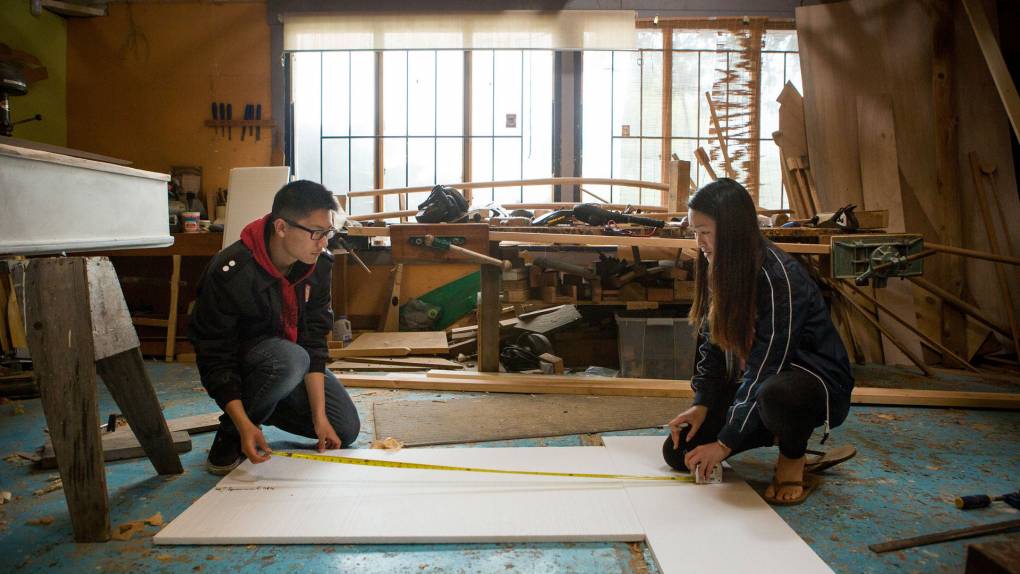
"caption": "Students measure pieces of Styrofoam to fit a boat they are building.",
"description": "Students measure pieces of Styrofoam to fit a boat they are building.",
"title": "pbl-math",
"credit": "\u003ca href=\"https://www.flickr.com/photos/all4ed/36106846690/\">Courtesy of Allison Shelley/The Verbatim Agency for American Education: Images of Teachers and Students in Action\u003c/a>",
"status": "inherit",
"isLoading": false,
"fetchFailed": false
},
"mindshift_55363": {
"type": "attachments",
"id": "mindshift_55363",
"meta": {
"index": "attachments_1716263798",
"site": "mindshift",
"id": "55363",
"found": true
},
"parent": 55329,
"imgSizes": {
"twentyfourteen-full-width": {
"file": "https://ww2.kqed.org/app/uploads/sites/23/2020/02/inclusion-math-tiles-1038x576.jpg",
"width": 1038,
"mimeType": "image/jpeg",
"height": 576
},
"thumbnail": {
"file": "https://ww2.kqed.org/app/uploads/sites/23/2020/02/inclusion-math-tiles-160x90.jpg",
"width": 160,
"mimeType": "image/jpeg",
"height": 90
},
"post-thumbnail": {
"file": "https://ww2.kqed.org/app/uploads/sites/23/2020/02/inclusion-math-tiles-672x372.jpg",
"width": 672,
"mimeType": "image/jpeg",
"height": 372
},
"kqedFullSize": {
"file": "https://ww2.kqed.org/app/uploads/sites/23/2020/02/inclusion-math-tiles.jpg",
"width": 2048,
"height": 1152
},
"large": {
"file": "https://ww2.kqed.org/app/uploads/sites/23/2020/02/inclusion-math-tiles-1020x574.jpg",
"width": 1020,
"mimeType": "image/jpeg",
"height": 574
},
"full-width": {
"file": "https://ww2.kqed.org/app/uploads/sites/23/2020/02/inclusion-math-tiles-1920x1080.jpg",
"width": 1920,
"mimeType": "image/jpeg",
"height": 1080
},
"medium": {
"file": "https://ww2.kqed.org/app/uploads/sites/23/2020/02/inclusion-math-tiles-800x450.jpg",
"width": 800,
"mimeType": "image/jpeg",
"height": 450
},
"medium_large": {
"file": "https://ww2.kqed.org/app/uploads/sites/23/2020/02/inclusion-math-tiles-768x432.jpg",
"width": 768,
"mimeType": "image/jpeg",
"height": 432
}
},
"publishDate": 1582155040,
"modified": 1582155132,
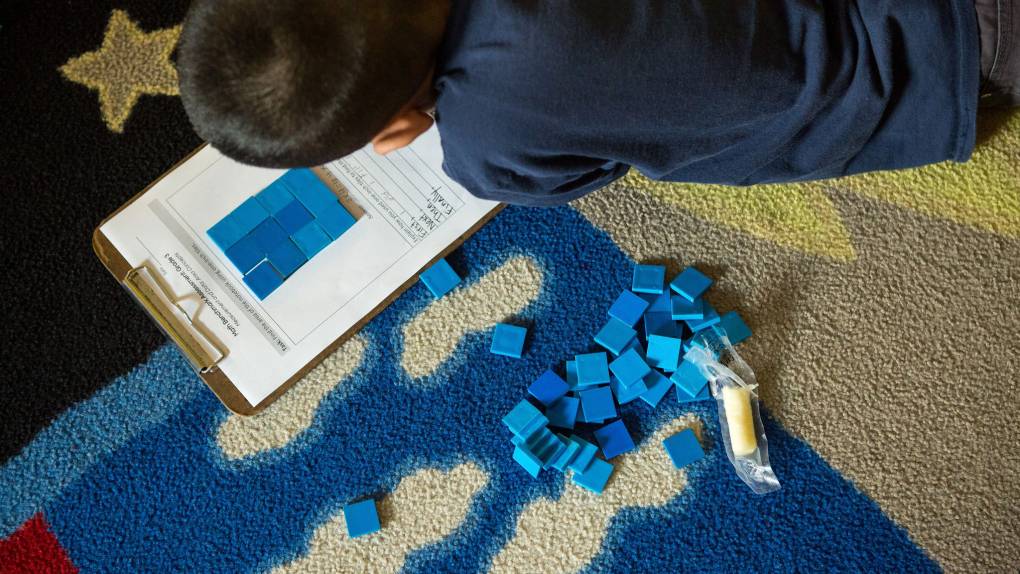
"caption": "Close-up of student working on assignment with tiles.",
"description": "Close-up of student working on assignment with tiles.",
"title": "inclusion-math-tiles",
"credit": "\u003ca href=\"https://www.flickr.com/photos/all4ed/35667750334/in/album-72157687475899455/\">Courtesy of Allison Shelley/The Verbatim Agency for American Education: Images of Teachers and Students in Action\u003c/a>",
"status": "inherit",
"isLoading": false,
"fetchFailed": false
},
"mindshift_55335": {
"type": "attachments",
"id": "mindshift_55335",
"meta": {
"index": "attachments_1716263798",
"site": "mindshift",
"id": "55335",
"found": true
},
"parent": 55333,
"imgSizes": {
"twentyfourteen-full-width": {
"file": "https://ww2.kqed.org/app/uploads/sites/23/2020/02/20200125_132333-1038x576.jpg",
"width": 1038,
"mimeType": "image/jpeg",
"height": 576
},
"thumbnail": {
"file": "https://ww2.kqed.org/app/uploads/sites/23/2020/02/20200125_132333-160x90.jpg",
"width": 160,
"mimeType": "image/jpeg",
"height": 90
},
"post-thumbnail": {
"file": "https://ww2.kqed.org/app/uploads/sites/23/2020/02/20200125_132333-672x372.jpg",
"width": 672,
"mimeType": "image/jpeg",
"height": 372
},
"kqedFullSize": {
"file": "https://ww2.kqed.org/app/uploads/sites/23/2020/02/20200125_132333-e1582014199924.jpg",
"width": 1920,
"height": 1080
},
"large": {
"file": "https://ww2.kqed.org/app/uploads/sites/23/2020/02/20200125_132333-1020x574.jpg",
"width": 1020,
"mimeType": "image/jpeg",
"height": 574
},
"full-width": {
"file": "https://ww2.kqed.org/app/uploads/sites/23/2020/02/20200125_132333-1920x1080.jpg",
"width": 1920,
"mimeType": "image/jpeg",
"height": 1080
},
"medium": {
"file": "https://ww2.kqed.org/app/uploads/sites/23/2020/02/20200125_132333-800x450.jpg",
"width": 800,
"mimeType": "image/jpeg",
"height": 450
},
"medium_large": {
"file": "https://ww2.kqed.org/app/uploads/sites/23/2020/02/20200125_132333-768x432.jpg",
"width": 768,
"mimeType": "image/jpeg",
"height": 432
}
},
"publishDate": 1582014172,
"modified": 1582014219,
"caption": "Science teachers use strings and a rubber band to stack cups in an exercise focused on communication and teamwork at EduCon 2020.",
"description": null,
"title": "20200125_132333",
"credit": "Kara Newhouse",
"status": "inherit",
"isLoading": false,
"fetchFailed": false
},
"mindshift_55359": {
"type": "attachments",
"id": "mindshift_55359",
"meta": {
"index": "attachments_1716263798",
"site": "mindshift",
"id": "55359",
"found": true
},
"parent": 55358,
"imgSizes": {
"twentyfourteen-full-width": {
"file": "https://ww2.kqed.org/app/uploads/sites/23/2020/02/students-make-magazine-for-congress-jessica-bakeman-wlrn-1dbc360cff641555ca812c33b78dc65c11a40908-1038x576.jpg",
"width": 1038,
"mimeType": "image/jpeg",
"height": 576
},
"thumbnail": {
"file": "https://ww2.kqed.org/app/uploads/sites/23/2020/02/students-make-magazine-for-congress-jessica-bakeman-wlrn-1dbc360cff641555ca812c33b78dc65c11a40908-160x120.jpg",
"width": 160,
"mimeType": "image/jpeg",
"height": 120
},
"post-thumbnail": {
"file": "https://ww2.kqed.org/app/uploads/sites/23/2020/02/students-make-magazine-for-congress-jessica-bakeman-wlrn-1dbc360cff641555ca812c33b78dc65c11a40908-672x372.jpg",
"width": 672,
"mimeType": "image/jpeg",
"height": 372
},
"kqedFullSize": {
"file": "https://ww2.kqed.org/app/uploads/sites/23/2020/02/students-make-magazine-for-congress-jessica-bakeman-wlrn-1dbc360cff641555ca812c33b78dc65c11a40908-e1582093943291.jpg",
"width": 1920,
"height": 1440
},
"large": {
"file": "https://ww2.kqed.org/app/uploads/sites/23/2020/02/students-make-magazine-for-congress-jessica-bakeman-wlrn-1dbc360cff641555ca812c33b78dc65c11a40908-1020x765.jpg",
"width": 1020,
"mimeType": "image/jpeg",
"height": 765
},
"full-width": {
"file": "https://ww2.kqed.org/app/uploads/sites/23/2020/02/students-make-magazine-for-congress-jessica-bakeman-wlrn-1dbc360cff641555ca812c33b78dc65c11a40908-1920x1440.jpg",
"width": 1920,
"mimeType": "image/jpeg",
"height": 1440
},
"medium": {
"file": "https://ww2.kqed.org/app/uploads/sites/23/2020/02/students-make-magazine-for-congress-jessica-bakeman-wlrn-1dbc360cff641555ca812c33b78dc65c11a40908-800x600.jpg",
"width": 800,
"mimeType": "image/jpeg",
"height": 600
},
"medium_large": {
"file": "https://ww2.kqed.org/app/uploads/sites/23/2020/02/students-make-magazine-for-congress-jessica-bakeman-wlrn-1dbc360cff641555ca812c33b78dc65c11a40908-768x576.jpg",
"width": 768,
"mimeType": "image/jpeg",
"height": 576
}
},
"publishDate": 1582093750,
"modified": 1582093996,
"caption": "Middle school students at Everglades K-8 Center in Miami are working on a magazine about mass shootings and hope to distribute it to every member of Congress.",
"description": "Middle school students at Everglades K-8 Center in Miami are working on a magazine about mass shootings and hope to distribute it to every member of Congress.",
"title": "Middle school students at Everglades K-8 Center in Miami are working on a magazine about mass shootings and hope to distribute it to every member of Congress.",
"credit": "Jessica Bakeman /WLRN ",
"status": "inherit",
"isLoading": false,
"fetchFailed": false
},
"mindshift_55322": {
"type": "attachments",
"id": "mindshift_55322",
"meta": {
"index": "attachments_1716263798",
"site": "mindshift",
"id": "55322",
"found": true
},
"parent": 55318,
"imgSizes": {
"twentyfourteen-full-width": {
"file": "https://ww2.kqed.org/app/uploads/sites/23/2020/02/iStock-1163192821-1038x576.jpg",
"width": 1038,
"mimeType": "image/jpeg",
"height": 576
},
"thumbnail": {
"file": "https://ww2.kqed.org/app/uploads/sites/23/2020/02/iStock-1163192821-160x107.jpg",
"width": 160,
"mimeType": "image/jpeg",
"height": 107
},
"post-thumbnail": {
"file": "https://ww2.kqed.org/app/uploads/sites/23/2020/02/iStock-1163192821-672x372.jpg",
"width": 672,
"mimeType": "image/jpeg",
"height": 372
},
"kqedFullSize": {
"file": "https://ww2.kqed.org/app/uploads/sites/23/2020/02/iStock-1163192821-e1581666652569.jpg",
"width": 1920,
"height": 1280
},
"large": {
"file": "https://ww2.kqed.org/app/uploads/sites/23/2020/02/iStock-1163192821-1020x680.jpg",
"width": 1020,
"mimeType": "image/jpeg",
"height": 680
},
"full-width": {
"file": "https://ww2.kqed.org/app/uploads/sites/23/2020/02/iStock-1163192821-1920x1280.jpg",
"width": 1920,
"mimeType": "image/jpeg",
"height": 1280
},
"medium": {
"file": "https://ww2.kqed.org/app/uploads/sites/23/2020/02/iStock-1163192821-800x533.jpg",
"width": 800,
"mimeType": "image/jpeg",
"height": 533
},
"medium_large": {
"file": "https://ww2.kqed.org/app/uploads/sites/23/2020/02/iStock-1163192821-768x512.jpg",
"width": 768,
"mimeType": "image/jpeg",
"height": 512
}
},
"publishDate": 1581666623,
"modified": 1581666647,
"caption": null,
"description": null,
"title": "iStock-1163192821",
"credit": "Sneksy/iStock",
"status": "inherit",
"isLoading": false,
"fetchFailed": false
},
"mindshift_55314": {
"type": "attachments",
"id": "mindshift_55314",
"meta": {
"index": "attachments_1716263798",
"site": "mindshift",
"id": "55314",
"found": true
},
"parent": 55313,
"imgSizes": {
"twentyfourteen-full-width": {
"file": "https://ww2.kqed.org/app/uploads/sites/23/2020/02/image-from-ios-5-_custom-4cda9d201660ff81baf20bab71de2673b5ca2bcf-1038x576.jpg",
"width": 1038,
"mimeType": "image/jpeg",
"height": 576
},
"thumbnail": {
"file": "https://ww2.kqed.org/app/uploads/sites/23/2020/02/image-from-ios-5-_custom-4cda9d201660ff81baf20bab71de2673b5ca2bcf-160x107.jpg",
"width": 160,
"mimeType": "image/jpeg",
"height": 107
},
"post-thumbnail": {
"file": "https://ww2.kqed.org/app/uploads/sites/23/2020/02/image-from-ios-5-_custom-4cda9d201660ff81baf20bab71de2673b5ca2bcf-672x372.jpg",
"width": 672,
"mimeType": "image/jpeg",
"height": 372
},
"kqedFullSize": {
"file": "https://ww2.kqed.org/app/uploads/sites/23/2020/02/image-from-ios-5-_custom-4cda9d201660ff81baf20bab71de2673b5ca2bcf-e1581492409729.jpg",
"width": 1920,
"height": 1279
},
"large": {
"file": "https://ww2.kqed.org/app/uploads/sites/23/2020/02/image-from-ios-5-_custom-4cda9d201660ff81baf20bab71de2673b5ca2bcf-1020x679.jpg",
"width": 1020,
"mimeType": "image/jpeg",
"height": 679
},
"full-width": {
"file": "https://ww2.kqed.org/app/uploads/sites/23/2020/02/image-from-ios-5-_custom-4cda9d201660ff81baf20bab71de2673b5ca2bcf-1920x1279.jpg",
"width": 1920,
"mimeType": "image/jpeg",
"height": 1279
},
"medium": {
"file": "https://ww2.kqed.org/app/uploads/sites/23/2020/02/image-from-ios-5-_custom-4cda9d201660ff81baf20bab71de2673b5ca2bcf-800x533.jpg",
"width": 800,
"mimeType": "image/jpeg",
"height": 533
},
"medium_large": {
"file": "https://ww2.kqed.org/app/uploads/sites/23/2020/02/image-from-ios-5-_custom-4cda9d201660ff81baf20bab71de2673b5ca2bcf-768x511.jpg",
"width": 768,
"mimeType": "image/jpeg",
"height": 511
}
},
"publishDate": 1581492376,
"modified": 1581492404,
"caption": null,
"description": "Active shooter drills",
"title": "Active shooter drills",
"credit": "Dion MBD for NPR",
"status": "inherit",
"isLoading": false,
"fetchFailed": false
},
"mindshift_55298": {
"type": "attachments",
"id": "mindshift_55298",
"meta": {
"index": "attachments_1716263798",
"site": "mindshift",
"id": "55298",
"found": true
},
"parent": 55297,
"imgSizes": {
"twentyfourteen-full-width": {
"file": "https://ww2.kqed.org/app/uploads/sites/23/2020/02/theoldtruck-dac06c55db9025eed4eae17f5eeaf65c10e4b74e-1008x576.jpg",
"width": 1008,
"mimeType": "image/jpeg",
"height": 576
},
"thumbnail": {
"file": "https://ww2.kqed.org/app/uploads/sites/23/2020/02/theoldtruck-dac06c55db9025eed4eae17f5eeaf65c10e4b74e-160x120.jpg",
"width": 160,
"mimeType": "image/jpeg",
"height": 120
},
"post-thumbnail": {
"file": "https://ww2.kqed.org/app/uploads/sites/23/2020/02/theoldtruck-dac06c55db9025eed4eae17f5eeaf65c10e4b74e-672x372.jpg",
"width": 672,
"mimeType": "image/jpeg",
"height": 372
},
"kqedFullSize": {
"file": "https://ww2.kqed.org/app/uploads/sites/23/2020/02/theoldtruck-dac06c55db9025eed4eae17f5eeaf65c10e4b74e.jpg",
"width": 1008,
"height": 756
},
"medium": {
"file": "https://ww2.kqed.org/app/uploads/sites/23/2020/02/theoldtruck-dac06c55db9025eed4eae17f5eeaf65c10e4b74e-800x600.jpg",
"width": 800,
"mimeType": "image/jpeg",
"height": 600
},
"medium_large": {
"file": "https://ww2.kqed.org/app/uploads/sites/23/2020/02/theoldtruck-dac06c55db9025eed4eae17f5eeaf65c10e4b74e-768x576.jpg",
"width": 768,
"mimeType": "image/jpeg",
"height": 576
}
},
"publishDate": 1581405963,
"modified": 1581405963,
"caption": null,
"description": "\u003cem>The Old Truck\u003c/em>",
"title": "The Old Truck",
"credit": null,
"status": "inherit",
"isLoading": false,
"fetchFailed": false
},
"mindshift_55292": {
"type": "attachments",
"id": "mindshift_55292",
"meta": {
"index": "attachments_1716263798",
"site": "mindshift",
"id": "55292",
"found": true
},
"parent": 55286,
"imgSizes": {
"twentyfourteen-full-width": {
"file": "https://ww2.kqed.org/app/uploads/sites/23/2020/02/iStock-1192254942-1038x576.jpg",
"width": 1038,
"mimeType": "image/jpeg",
"height": 576
},
"thumbnail": {
"file": "https://ww2.kqed.org/app/uploads/sites/23/2020/02/iStock-1192254942-160x120.jpg",
"width": 160,
"mimeType": "image/jpeg",
"height": 120
},
"post-thumbnail": {
"file": "https://ww2.kqed.org/app/uploads/sites/23/2020/02/iStock-1192254942-672x372.jpg",
"width": 672,
"mimeType": "image/jpeg",
"height": 372
},
"kqedFullSize": {
"file": "https://ww2.kqed.org/app/uploads/sites/23/2020/02/iStock-1192254942-e1581320069698.jpg",
"width": 1920,
"height": 1440
},
"large": {
"file": "https://ww2.kqed.org/app/uploads/sites/23/2020/02/iStock-1192254942-1020x765.jpg",
"width": 1020,
"mimeType": "image/jpeg",
"height": 765
},
"full-width": {
"file": "https://ww2.kqed.org/app/uploads/sites/23/2020/02/iStock-1192254942-1920x1440.jpg",
"width": 1920,
"mimeType": "image/jpeg",
"height": 1440
},
"medium": {
"file": "https://ww2.kqed.org/app/uploads/sites/23/2020/02/iStock-1192254942-800x600.jpg",
"width": 800,
"mimeType": "image/jpeg",
"height": 600
},
"medium_large": {
"file": "https://ww2.kqed.org/app/uploads/sites/23/2020/02/iStock-1192254942-768x576.jpg",
"width": 768,
"mimeType": "image/jpeg",
"height": 576
}
},
"publishDate": 1581320039,
"modified": 1581320062,
"caption": null,
"description": null,
"title": "iStock-1192254942",
"credit": "iStock/Ponomariova_Maria",
"status": "inherit",
"isLoading": false,
"fetchFailed": false
},
"mindshift_55281": {
"type": "attachments",
"id": "mindshift_55281",
"meta": {
"index": "attachments_1716263798",
"site": "mindshift",
"id": "55281",
"found": true
},
"parent": 53553,
"imgSizes": {
"twentyfourteen-full-width": {
"file": "https://ww2.kqed.org/app/uploads/sites/23/2020/02/2212063669_8999014e2d_k-1038x576.jpg",
"width": 1038,
"mimeType": "image/jpeg",
"height": 576
},
"thumbnail": {
"file": "https://ww2.kqed.org/app/uploads/sites/23/2020/02/2212063669_8999014e2d_k-160x115.jpg",
"width": 160,
"mimeType": "image/jpeg",
"height": 115
},
"post-thumbnail": {
"file": "https://ww2.kqed.org/app/uploads/sites/23/2020/02/2212063669_8999014e2d_k-672x372.jpg",
"width": 672,
"mimeType": "image/jpeg",
"height": 372
},
"kqedFullSize": {
"file": "https://ww2.kqed.org/app/uploads/sites/23/2020/02/2212063669_8999014e2d_k-e1580974643102.jpg",
"width": 1920,
"height": 1378
},
"large": {
"file": "https://ww2.kqed.org/app/uploads/sites/23/2020/02/2212063669_8999014e2d_k-1020x732.jpg",
"width": 1020,
"mimeType": "image/jpeg",
"height": 732
},
"full-width": {
"file": "https://ww2.kqed.org/app/uploads/sites/23/2020/02/2212063669_8999014e2d_k-1920x1378.jpg",
"width": 1920,
"mimeType": "image/jpeg",
"height": 1378
},
"medium": {
"file": "https://ww2.kqed.org/app/uploads/sites/23/2020/02/2212063669_8999014e2d_k-800x574.jpg",
"width": 800,
"mimeType": "image/jpeg",
"height": 574
},
"medium_large": {
"file": "https://ww2.kqed.org/app/uploads/sites/23/2020/02/2212063669_8999014e2d_k-768x551.jpg",
"width": 768,
"mimeType": "image/jpeg",
"height": 551
}
},
"publishDate": 1580974619,
"modified": 1580974638,
"caption": null,
"description": null,
"title": "2212063669_8999014e2d_k",
"credit": "\u003ca href “https://www.flickr.com/photos/loresjoberg/2212063669/in/photolist-4ntpsM-9bTjQd-6jVWRU-8YpQ1R-84gRmk-8YsRLf-7PTZMv-9bTg3S-8Urpw8-bnUnf7-9bTfYG-84gRca-2hPGvvL-9bQbET-7HiQ9v-gmf1AA-9R6bYe-4pB7q6-7HnK75-2hPkQ7Y-8rFmE1-8HbXez-8HbXhH-4xGXBs-6TPAe5-8Hf5P3-79wHGo-8rCgzV-7BEpJR-84gRe4-8HbXfv-8UuuE3-8xwhk5-6g6w2Q-86wiY6-8vKECN-8w7Q3W-8UrpxD-9F5DVy-mqWqjJ-9ysCYs-8vGCQ4-b5jHGV-8Hf5Sw-e6d9L2-9hgV6f-8zpupc-8zpujX-2hPvWho-4pQVMp”>Flickr/Lore Sjoberg \u003c/a>",
"status": "inherit",
"isLoading": false,
"fetchFailed": false
},
"mindshift_55275": {
"type": "attachments",
"id": "mindshift_55275",
"meta": {
"index": "attachments_1716263798",
"site": "mindshift",
"id": "55275",
"found": true
},
"parent": 55274,
"imgSizes": {
"twentyfourteen-full-width": {
"file": "https://ww2.kqed.org/app/uploads/sites/23/2020/02/myelin-1_custom-db279cc0913b7b3ce6d1f2325a5a6287c53540b6-1038x576.jpg",
"width": 1038,
"mimeType": "image/jpeg",
"height": 576
},
"thumbnail": {
"file": "https://ww2.kqed.org/app/uploads/sites/23/2020/02/myelin-1_custom-db279cc0913b7b3ce6d1f2325a5a6287c53540b6-160x119.jpg",
"width": 160,
"mimeType": "image/jpeg",
"height": 119
},
"post-thumbnail": {
"file": "https://ww2.kqed.org/app/uploads/sites/23/2020/02/myelin-1_custom-db279cc0913b7b3ce6d1f2325a5a6287c53540b6-672x372.jpg",
"width": 672,
"mimeType": "image/jpeg",
"height": 372
},
"kqedFullSize": {
"file": "https://ww2.kqed.org/app/uploads/sites/23/2020/02/myelin-1_custom-db279cc0913b7b3ce6d1f2325a5a6287c53540b6-e1580799987173.jpg",
"width": 1920,
"height": 1432
},
"large": {
"file": "https://ww2.kqed.org/app/uploads/sites/23/2020/02/myelin-1_custom-db279cc0913b7b3ce6d1f2325a5a6287c53540b6-1020x761.jpg",
"width": 1020,
"mimeType": "image/jpeg",
"height": 761
},
"full-width": {
"file": "https://ww2.kqed.org/app/uploads/sites/23/2020/02/myelin-1_custom-db279cc0913b7b3ce6d1f2325a5a6287c53540b6-1920x1432.jpg",
"width": 1920,
"mimeType": "image/jpeg",
"height": 1432
},
"medium": {
"file": "https://ww2.kqed.org/app/uploads/sites/23/2020/02/myelin-1_custom-db279cc0913b7b3ce6d1f2325a5a6287c53540b6-800x597.jpg",
"width": 800,
"mimeType": "image/jpeg",
"height": 597
},
"medium_large": {
"file": "https://ww2.kqed.org/app/uploads/sites/23/2020/02/myelin-1_custom-db279cc0913b7b3ce6d1f2325a5a6287c53540b6-768x573.jpg",
"width": 768,
"mimeType": "image/jpeg",
"height": 573
}
},
"publishDate": 1580799862,
"modified": 1580800006,
"caption": "This image from an electron microscope shows a cross-sectional view of an oligodendrocyte (blue) among nerve fibers coated with myelin (dark red). In models of autism spectrum disorder, oligodendrocytes appear to create too much or too little myelin.\n",
"description": "This image from an electron microscope shows a cross-sectional view of an oligodendrocyte (blue) among nerve fibers coated with myelin (dark red). In models of autism spectrum disorder, oligodendrocytes appear to create too much or too little myelin.",
"title": "This image from an electron microscope shows a cross-sectional view of an oligodendrocyte (blue) among nerve fibers coated with myelin (dark red). In models of autism spectrum disorder, oligodendrocytes appear to create too much or too little myelin.",
"credit": "Jose Luis Calvo/Science Source",
"status": "inherit",
"isLoading": false,
"fetchFailed": false
},
"mindshift_55087": {
"type": "attachments",
"id": "mindshift_55087",
"meta": {
"index": "attachments_1716263798",
"site": "mindshift",
"id": "55087",
"found": true
},
"parent": 55081,
"imgSizes": {
"twentyfourteen-full-width": {
"file": "https://ww2.kqed.org/app/uploads/sites/23/2019/12/creative-teachers-coding-1038x576.jpg",
"width": 1038,
"mimeType": "image/jpeg",
"height": 576
},
"thumbnail": {
"file": "https://ww2.kqed.org/app/uploads/sites/23/2019/12/creative-teachers-coding-160x118.jpg",
"width": 160,
"mimeType": "image/jpeg",
"height": 118
},
"post-thumbnail": {
"file": "https://ww2.kqed.org/app/uploads/sites/23/2019/12/creative-teachers-coding-672x372.jpg",
"width": 672,
"mimeType": "image/jpeg",
"height": 372
},
"kqedFullSize": {
"file": "https://ww2.kqed.org/app/uploads/sites/23/2019/12/creative-teachers-coding-e1580714165315.jpg",
"width": 1920,
"height": 1420
},
"large": {
"file": "https://ww2.kqed.org/app/uploads/sites/23/2019/12/creative-teachers-coding-1020x754.jpg",
"width": 1020,
"mimeType": "image/jpeg",
"height": 754
},
"complete_open_graph": {
"file": "https://ww2.kqed.org/app/uploads/sites/23/2019/12/creative-teachers-coding-1200x887.jpg",
"width": 1200,
"mimeType": "image/jpeg",
"height": 887
},
"full-width": {
"file": "https://ww2.kqed.org/app/uploads/sites/23/2019/12/creative-teachers-coding-1920x1420.jpg",
"width": 1920,
"mimeType": "image/jpeg",
"height": 1420
},
"medium": {
"file": "https://ww2.kqed.org/app/uploads/sites/23/2019/12/creative-teachers-coding-800x591.jpg",
"width": 800,
"mimeType": "image/jpeg",
"height": 591
},
"medium_large": {
"file": "https://ww2.kqed.org/app/uploads/sites/23/2019/12/creative-teachers-coding-768x568.jpg",
"width": 768,
"mimeType": "image/jpeg",
"height": 568
}
},
"publishDate": 1576630232,
"modified": 1576630315,
"caption": "Karen Brennan makes the case that when teachers discover their own creativity they're more able to protect space for student creativity in their classrooms.",
"description": "Karen Brennan makes the case that when teachers discover their own creativity they're more able to protect space for student creativity in their classrooms.",
"title": "creative-teachers-coding",
"credit": "iStock/luckyvector",
"status": "inherit",
"isLoading": false,
"fetchFailed": false
}
},
"audioPlayerReducer": {
"postId": "stream_live",
"isPaused": true,
"isPlaying": false,
"pfsActive": false,
"pledgeModalIsOpen": true,
"playerDrawerIsOpen": false,
"liveAudioPlayStartedAt": 0,
"liveAudioPlayContext": ""
},
"authorsReducer": {
"byline_mindshift_55377": {
"type": "authors",
"id": "byline_mindshift_55377",
"meta": {
"override": true
},
"slug": "byline_mindshift_55377",
"name": "Elena Renken",
"isLoading": false
},
"byline_mindshift_55329": {
"type": "authors",
"id": "byline_mindshift_55329",
"meta": {
"override": true
},
"slug": "byline_mindshift_55329",
"name": "Melanie Asmar, Chalkbeat Colorado",
"isLoading": false
},
"byline_mindshift_55358": {
"type": "authors",
"id": "byline_mindshift_55358",
"meta": {
"override": true
},
"slug": "byline_mindshift_55358",
"name": "Jessica Bakeman",
"isLoading": false
},
"byline_mindshift_55313": {
"type": "authors",
"id": "byline_mindshift_55313",
"meta": {
"override": true
},
"slug": "byline_mindshift_55313",
"name": "Anya Kamenetz",
"isLoading": false
},
"byline_mindshift_55297": {
"type": "authors",
"id": "byline_mindshift_55297",
"meta": {
"override": true
},
"slug": "byline_mindshift_55297",
"name": "Samantha Balaban",
"isLoading": false
},
"byline_mindshift_55286": {
"type": "authors",
"id": "byline_mindshift_55286",
"meta": {
"override": true
},
"slug": "byline_mindshift_55286",
"name": "\u003ca href=\"https://hechingerreport.org/\">Alfonso Serrano, The Hechinger Report\u003c/a>",
"isLoading": false
},
"byline_mindshift_55274": {
"type": "authors",
"id": "byline_mindshift_55274",
"meta": {
"override": true
},
"slug": "byline_mindshift_55274",
"name": "Jon Hamilton",
"isLoading": false
},
"katrinaschwartz": {
"type": "authors",
"id": "234",
"meta": {
"index": "authors_1716337520",
"id": "234",
"found": true
},
"name": "Katrina Schwartz",
"firstName": "Katrina",
"lastName": "Schwartz",
"slug": "katrinaschwartz",
"email": "kschwartz@kqed.org",
"display_author_email": false,
"staff_mastheads": [
"news"
],
"title": "Producer",
"bio": "Katrina Schwartz is a journalist based in San Francisco. She's worked at KPCC public radio in LA and has reported on air and online for KQED since 2010. She covered how teaching and learning is changing for MindShift between 2012 and 2020. She is the co-host of the MindShift podcast and now produces KQED's Bay Curious podcast.",
"avatar": "https://secure.gravatar.com/avatar/edb4ee79070447a018538c9aae6eeecf28786515b8a0c30e43b6b7dce5aa44c8?s=600&d=blank&r=g",
"twitter": "kschwart",
"bluesky": null,
"facebook": null,
"instagram": null,
"linkedin": null,
"sites": [
{
"site": "",
"roles": [
"editor"
]
},
{
"site": "news",
"roles": [
"editor"
]
},
{
"site": "mindshift",
"roles": [
"administrator"
]
},
{
"site": "stateofhealth",
"roles": [
"author"
]
},
{
"site": "science",
"roles": [
"editor"
]
}
],
"headData": {
"title": "Katrina Schwartz | KQED",
"description": "Producer",
"ogImgSrc": "https://secure.gravatar.com/avatar/edb4ee79070447a018538c9aae6eeecf28786515b8a0c30e43b6b7dce5aa44c8?s=600&d=blank&r=g",
"twImgSrc": "https://secure.gravatar.com/avatar/edb4ee79070447a018538c9aae6eeecf28786515b8a0c30e43b6b7dce5aa44c8?s=600&d=blank&r=g"
},
"isLoading": false,
"link": "/author/katrinaschwartz"
},
"hollykorbey": {
"type": "authors",
"id": "4445",
"meta": {
"index": "authors_1716337520",
"id": "4445",
"found": true
},
"name": "Holly Korbey",
"firstName": "Holly",
"lastName": "Korbey",
"slug": "hollykorbey",
"email": "holly@hollykorbey.com",
"display_author_email": false,
"staff_mastheads": [],
"title": null,
"bio": "Holly Korbey's work on parenting and education has appeared in The New York Times, The Atlantic, Babble, Brain, Child Magazine, and others. She lives in Nashville with her family. Follow her on Twitter: @HKorbey",
"avatar": "https://secure.gravatar.com/avatar/f385f7a3b90e52ecd5e85c24fbd0a363?s=600&d=blank&r=g",
"twitter": null,
"facebook": null,
"instagram": null,
"linkedin": null,
"sites": [
{
"site": "mindshift",
"roles": [
"contributor"
]
}
],
"headData": {
"title": "Holly Korbey | KQED",
"description": null,
"ogImgSrc": "https://secure.gravatar.com/avatar/f385f7a3b90e52ecd5e85c24fbd0a363?s=600&d=blank&r=g",
"twImgSrc": "https://secure.gravatar.com/avatar/f385f7a3b90e52ecd5e85c24fbd0a363?s=600&d=blank&r=g"
},
"isLoading": false,
"link": "/author/hollykorbey"
},
"pauldarvasi": {
"type": "authors",
"id": "11107",
"meta": {
"index": "authors_1716337520",
"id": "11107",
"found": true
},
"name": "Paul Darvasi",
"firstName": "Paul",
"lastName": "Darvasi",
"slug": "pauldarvasi",
"email": "pauldarvasi@gmail.com",
"display_author_email": false,
"staff_mastheads": [],
"title": null,
"bio": "Paul Darvasi is an experienced educator whose research, speaking and writing explore the intersections of learning, technology, narrative and games. You can follow him on Twitter:\u003ca href=\"https://twitter.com/PaulDarvasi\"> @pauldarvasi\u003c/a>",
"avatar": "https://secure.gravatar.com/avatar/df387897a1bf0cd4b720b8175112731a?s=600&d=blank&r=g",
"twitter": "pauldarvasi",
"facebook": null,
"instagram": null,
"linkedin": null,
"sites": [
{
"site": "mindshift",
"roles": [
"contributor"
]
}
],
"headData": {
"title": "Paul Darvasi | KQED",
"description": null,
"ogImgSrc": "https://secure.gravatar.com/avatar/df387897a1bf0cd4b720b8175112731a?s=600&d=blank&r=g",
"twImgSrc": "https://secure.gravatar.com/avatar/df387897a1bf0cd4b720b8175112731a?s=600&d=blank&r=g"
},
"isLoading": false,
"link": "/author/pauldarvasi"
},
"kdnewhouse": {
"type": "authors",
"id": "11487",
"meta": {
"index": "authors_1716337520",
"id": "11487",
"found": true
},
"name": "Kara Newhouse",
"firstName": "Kara",
"lastName": "Newhouse",
"slug": "kdnewhouse",
"email": "knewhouse@kqed.org",
"display_author_email": false,
"staff_mastheads": [],
"title": "MindShift Editor",
"bio": null,
"avatar": "https://secure.gravatar.com/avatar/3dceed6fb271527113abfa9a8e9df34e?s=600&d=blank&r=g",
"twitter": null,
"facebook": null,
"instagram": null,
"linkedin": null,
"sites": [
{
"site": "",
"roles": [
"editor"
]
},
{
"site": "mindshift",
"roles": []
}
],
"headData": {
"title": "Kara Newhouse | KQED",
"description": "MindShift Editor",
"ogImgSrc": "https://secure.gravatar.com/avatar/3dceed6fb271527113abfa9a8e9df34e?s=600&d=blank&r=g",
"twImgSrc": "https://secure.gravatar.com/avatar/3dceed6fb271527113abfa9a8e9df34e?s=600&d=blank&r=g"
},
"isLoading": false,
"link": "/author/kdnewhouse"
}
},
"pagesReducer": {
"mindshift_tag_featured": {
"type": "terms",
"id": "mindshift_20784",
"meta": {
"index": "terms_1716263798",
"site": "mindshift",
"id": "20784",
"score": 7.6562457
},
"featImg": null,
"name": "featured",
"description": null,
"taxonomy": "tag",
"headData": {
"twImgId": null,
"twTitle": null,
"ogTitle": null,
"ogImgId": null,
"twDescription": null,
"description": null,
"title": "featured Archives | KQED Mindshift",
"ogDescription": null
},
"ttid": 20061,
"slug": "featured",
"isLoading": false,
"title": "featured",
"pageMeta": {
"site": "mindshift",
"WpPageTemplate": "page-topic-editorial",
"currentPage": 7
},
"blocks": [
{
"blockName": "kqed/post-list",
"attrs": {
"layout": "cardArticle2",
"query": "posts/mindshift?tag=featured",
"seeMore": false,
"paginated": true,
"page": 7
}
},
{
"blockName": "kqed/ad"
}
]
}
},
"pfsSessionReducer": {},
"postsReducer": {
"stream_live": {
"type": "live",
"id": "stream_live",
"audioUrl": "https://hls.kqed.org/hls/kqed_app/playlist.m3u8",
"title": "Live Stream",
"excerpt": "Live Stream information currently unavailable.",
"link": "/radio",
"featImg": "",
"label": {
"name": "KQED Live",
"link": "/"
}
},
"stream_kqedNewscast": {
"type": "posts",
"id": "stream_kqedNewscast",
"audioUrl": "https://www.kqed.org/.stream/anon/radio/RDnews/newscast.mp3?_=1",
"title": "KQED Newscast",
"featImg": "",
"label": {
"name": "88.5 FM",
"link": "/"
}
},
"mindshift_55377": {
"type": "posts",
"id": "mindshift_55377",
"meta": {
"index": "posts_1716263798",
"site": "mindshift",
"id": "55377",
"score": null,
"sort": [
1582531144000
]
},
"parent": 0,
"labelTerm": {
"site": "mindshift"
},
"blocks": [],
"publishDate": 1582531144,
"format": "standard",
"disqusTitle": "Why Making Time for Friends is Good for Your Health",
"title": "Why Making Time for Friends is Good for Your Health",
"headTitle": "MindShift | KQED News",
"content": "\u003cp>Lydia Denworth wants you to make more time for your friends.\u003c/p>\n\u003cp>We don't fully appreciate our friendships, says the science writer and author of the new book \u003cem>Friendship: The Evolution, Biology, and Extraordinary Power of Life's Fundamental Bond.\u003c/em> If we did, we'd take cultivating those intimate bonds as seriously as working out or eating well. Because, she writes, a new field of science is revealing that social connections play a vital role in our health.\u003c/p>\n\u003cp>On average, people have only four very close relationships, Denworth finds, and very few people can sustain more than six. But the effect of these few core relationships extends beyond our social lives, influencing our health on the cellular level — from our immune system to our cardiovascular system.\u003c/p>\n\u003cp>Denworth spoke with NPR about the science of friendship and its underestimated value to kids and adults and even for other species like sheep and fish. (Although she's frequently asked about human-animal friendships, Denworth sticks to bonds within one species in the book.)\u003c/p>\n\u003cp>\u003cem>This interview has been edited for clarity and length.\u003c/em>\u003c/p>\n\u003cp>[ad fullwidth]\u003c/p>\n\u003cp>\u003cstrong>What is most misunderstood about friendships?\u003c/strong>\u003c/p>\n\u003cp>Very few people understand that your social relationships can actually change your health. They can change your cardiovascular system, your immune system, how you sleep, your cognitive health. How could this thing that exists entirely outside the body affect whether you're likely to catch a virus? And yet that's exactly what we now know that social connection does. We thought of loneliness as this difficult emotion, but just an emotion. And we think of friends as this lovely thing — but it is actually a matter of life and death. And there's this evolutionary drive to connect. People think all the time about competition and survival of the fittest, but really it's survival of the friendliest.\u003c/p>\n\u003cp>\u003cstrong>Is friendship just something humans do, or do we see it in other species?\u003c/strong>\u003c/p>\n\u003cp>What has been surprising to evolutionary biologists is just how much friendship exists across species. They have found something that looks like friendship in dolphins, and elephants, and horses, and zebras, and hyenas and all kinds of species. Even fish — their brains respond to familiar fish versus strange fish in ways that look a lot like what goes on in our brains. Understanding that tells you there's this much larger story than just human culture. And that's what people thought friendship was: a product of human culture and language. But now we understand that it is universal.\u003c/p>\n\u003cp>\u003cstrong>Are bonds with friends different from bonds with romantic or sexual partners? Or bonds with family?\u003c/strong>\u003c/p>\n\u003cp>I don't actually think that it's all that unique. We generally think of friends as people we don't have sex with and to whom we're not related. But the truth is that in this new science and in fact the way we live our lives, those lines are blurred. I think of friendship now as a template for all your relationships, because if you think about the sort of basic definition of friendship — it makes you feel good, it's positive, a long-lasting stable relationship, and it has some cooperation and reciprocity to it — that's what you want to be striving for in your closest relationships. And that can be with your spouse or your sibling or a relative, but not always. What matters is the quality of the bond, not its origin.\u003c/p>\n\u003cp>\u003cstrong>Does gender play a role in friendships? \u003c/strong>\u003c/p>\n\u003cp>The standard line is that women do friendship face-to-face and men do it side by side, meaning women spend their time talking and men do things together. And there's truth to that, but when you ask men how much they value friendship, their answers are the same, for the most part. The similarities are greater than the differences between men and women.\u003c/p>\n\u003cp>\u003cstrong>One of your chapters focuses on the social aspect of middle school. How did researching that affect your thinking as a parent?\u003c/strong>\u003c/p>\n\u003cp>The middle school thing, it's such a crucible. And it really is true: Middle school is about lunch. Most parents thinking about their kids going into middle school, they do know that socially it can be a very difficult time, but they don't necessarily think about how that plays out in the course of a day. [Realizing] that crystallized to me this idea that friendship really, really matters in kids' lives, and we are falling down on the job, as parents and teachers, if we aren't fully understanding that. Things that I might have said no to before, I am more likely to say yes to now, if it means that my kids are going to be with their good friends.\u003c/p>\n\u003cp>\u003cstrong>Is social media helping or hurting our friendships?\u003c/strong>\u003c/p>\n\u003cp>Friendship is alive and well in the age of social media. In terms of relationships and connectivity and networks, it's a positive. The place where it is hard on relationships is when you're face-to-face and instead of looking at your friends, you're looking at your phone. Looking at a person face-to-face, in person, your brain responds differently even if you look at that same person on a screen, and certainly if you're online and not looking at their face. There's all this talk about the word \"friend\" being devalued by things like Facebook using [the term], but I don't really think that's true. We know who our really good friends are, whether we're online with them or offline.\u003c/p>\n\u003cp>\u003cstrong>Do you see friendship taken for granted in the world around you?\u003c/strong>\u003c/p>\n\u003cp>I do. Friendship is so familiar that we think we know all about it, but we don't fully appreciate it. We think it's pleasurable and fun, but friends are often the first thing to go when you're busy. Or you fall in love and ditch your friends. I was guilty myself of passing a friend on the street corner here in Brooklyn and saying, \"Let's definitely get together,\" and then not. We are so achievement driven in so much of what we do. I think it's healthy to be reminded that time with other people really matters.\u003c/p>\n\u003cp>\u003cstrong>How did writing this book make you think differently about your own friendships?\u003c/strong>\u003c/p>\n\u003cp>It's made me prioritize them more. The message is not that I want people to think of friendship as another chore. I am hoping that people feel this is giving them permission to make friends a priority. To spend time with their friends and to know that when they do, they're doing something good for their own health and for their friends' health, and I've taken that to heart.\u003c/p>\n\u003cp>[ad floatright]\u003c/p>\n\u003cp>\u003cem>Elena Renken is an intern on the NPR science desk.\u003c/em>\u003c/p>\n\u003cdiv class=\"fullattribution\">Copyright 2020 NPR. To see more, visit https://www.npr.org.\u003cimg src=\"https://www.google-analytics.com/__utm.gif?utmac=UA-5828686-4&utmdt=Survival+Of+The+Friendliest%3A+How+Our+Close+Friendships+Help+Us+Thrive&utme=8(APIKey)9(MDAxOTAwOTE4MDEyMTkxMDAzNjczZDljZA004)\">\u003c/div>\n\n",
"disqusIdentifier": "55377 https://ww2.kqed.org/mindshift/?p=55377",
"disqusUrl": "https://ww2.kqed.org/mindshift/2020/02/23/why-making-time-for-friends-is-good-for-your-health/",
"stats": {
"hasVideo": false,
"hasChartOrMap": false,
"hasAudio": false,
"hasPolis": false,
"wordCount": 1158,
"hasGoogleForm": false,
"hasGallery": false,
"hasHearkenModule": false,
"iframeSrcs": [],
"paragraphCount": 24
},
"modified": 1582531144,
"excerpt": "In her new book, Lydia Denworth makes the case for the vital necessity of friendship, tracing its effects on your genes, on your brain and even on animals like sheep and fish.",
"headData": {
"twImgId": "",
"twTitle": "",
"ogTitle": "",
"ogImgId": "",
"twDescription": "",
"description": "In her new book, Lydia Denworth makes the case for the vital necessity of friendship, tracing its effects on your genes, on your brain and even on animals like sheep and fish.",
"title": "Why Making Time for Friends is Good for Your Health | KQED",
"ogDescription": "",
"schema": {
"@context": "https://schema.org",
"@type": "Article",
"headline": "Why Making Time for Friends is Good for Your Health",
"datePublished": "2020-02-23T23:59:04-08:00",
"dateModified": "2020-02-23T23:59:04-08:00",
"image": "https://cdn.kqed.org/wp-content/uploads/2020/02/KQED-OG-Image@1x.png"
}
},
"guestAuthors": [],
"slug": "why-making-time-for-friends-is-good-for-your-health",
"status": "publish",
"nprApiLink": "http://api.npr.org/query?id=807742275&apiKey=MDAxOTAwOTE4MDEyMTkxMDAzNjczZDljZA004",
"nprByline": "Elena Renken",
"nprStoryDate": "Sat, 22 Feb 2020 07:01:03 -0500",
"nprLastModifiedDate": "Sat, 22 Feb 2020 07:01:03 -0500",
"nprHtmlLink": "https://www.npr.org/sections/health-shots/2020/02/22/807742275/survival-of-the-friendliest-how-our-close-friendships-help-us-thrive?ft=nprml&f=807742275",
"nprImageAgency": "EyeEm/Getty Images",
"nprImageCredit": "Muaz Bin Saat",
"nprStoryId": "807742275",
"nprRetrievedStory": "1",
"nprPubDate": "Sat, 22 Feb 2020 07:01:00 -0500",
"path": "/mindshift/55377/why-making-time-for-friends-is-good-for-your-health",
"audioTrackLength": null,
"parsedContent": [
{
"type": "contentString",
"content": "\u003cdiv class=\"post-body\">\u003cp>\u003cp>Lydia Denworth wants you to make more time for your friends.\u003c/p>\n\u003cp>We don't fully appreciate our friendships, says the science writer and author of the new book \u003cem>Friendship: The Evolution, Biology, and Extraordinary Power of Life's Fundamental Bond.\u003c/em> If we did, we'd take cultivating those intimate bonds as seriously as working out or eating well. Because, she writes, a new field of science is revealing that social connections play a vital role in our health.\u003c/p>\n\u003cp>On average, people have only four very close relationships, Denworth finds, and very few people can sustain more than six. But the effect of these few core relationships extends beyond our social lives, influencing our health on the cellular level — from our immune system to our cardiovascular system.\u003c/p>\n\u003cp>Denworth spoke with NPR about the science of friendship and its underestimated value to kids and adults and even for other species like sheep and fish. (Although she's frequently asked about human-animal friendships, Denworth sticks to bonds within one species in the book.)\u003c/p>\n\u003cp>\u003cem>This interview has been edited for clarity and length.\u003c/em>\u003c/p>\n\u003cp>\u003c/p>\u003c/div>",
"attributes": {
"named": {},
"numeric": []
}
},
{
"type": "component",
"content": "",
"name": "ad",
"attributes": {
"named": {
"label": "fullwidth"
},
"numeric": [
"fullwidth"
]
}
},
{
"type": "contentString",
"content": "\u003cdiv class=\"post-body\">\u003cp>\u003c/p>\n\u003cp>\u003cstrong>What is most misunderstood about friendships?\u003c/strong>\u003c/p>\n\u003cp>Very few people understand that your social relationships can actually change your health. They can change your cardiovascular system, your immune system, how you sleep, your cognitive health. How could this thing that exists entirely outside the body affect whether you're likely to catch a virus? And yet that's exactly what we now know that social connection does. We thought of loneliness as this difficult emotion, but just an emotion. And we think of friends as this lovely thing — but it is actually a matter of life and death. And there's this evolutionary drive to connect. People think all the time about competition and survival of the fittest, but really it's survival of the friendliest.\u003c/p>\n\u003cp>\u003cstrong>Is friendship just something humans do, or do we see it in other species?\u003c/strong>\u003c/p>\n\u003cp>What has been surprising to evolutionary biologists is just how much friendship exists across species. They have found something that looks like friendship in dolphins, and elephants, and horses, and zebras, and hyenas and all kinds of species. Even fish — their brains respond to familiar fish versus strange fish in ways that look a lot like what goes on in our brains. Understanding that tells you there's this much larger story than just human culture. And that's what people thought friendship was: a product of human culture and language. But now we understand that it is universal.\u003c/p>\n\u003cp>\u003cstrong>Are bonds with friends different from bonds with romantic or sexual partners? Or bonds with family?\u003c/strong>\u003c/p>\n\u003cp>I don't actually think that it's all that unique. We generally think of friends as people we don't have sex with and to whom we're not related. But the truth is that in this new science and in fact the way we live our lives, those lines are blurred. I think of friendship now as a template for all your relationships, because if you think about the sort of basic definition of friendship — it makes you feel good, it's positive, a long-lasting stable relationship, and it has some cooperation and reciprocity to it — that's what you want to be striving for in your closest relationships. And that can be with your spouse or your sibling or a relative, but not always. What matters is the quality of the bond, not its origin.\u003c/p>\n\u003cp>\u003cstrong>Does gender play a role in friendships? \u003c/strong>\u003c/p>\n\u003cp>The standard line is that women do friendship face-to-face and men do it side by side, meaning women spend their time talking and men do things together. And there's truth to that, but when you ask men how much they value friendship, their answers are the same, for the most part. The similarities are greater than the differences between men and women.\u003c/p>\n\u003cp>\u003cstrong>One of your chapters focuses on the social aspect of middle school. How did researching that affect your thinking as a parent?\u003c/strong>\u003c/p>\n\u003cp>The middle school thing, it's such a crucible. And it really is true: Middle school is about lunch. Most parents thinking about their kids going into middle school, they do know that socially it can be a very difficult time, but they don't necessarily think about how that plays out in the course of a day. [Realizing] that crystallized to me this idea that friendship really, really matters in kids' lives, and we are falling down on the job, as parents and teachers, if we aren't fully understanding that. Things that I might have said no to before, I am more likely to say yes to now, if it means that my kids are going to be with their good friends.\u003c/p>\n\u003cp>\u003cstrong>Is social media helping or hurting our friendships?\u003c/strong>\u003c/p>\n\u003cp>Friendship is alive and well in the age of social media. In terms of relationships and connectivity and networks, it's a positive. The place where it is hard on relationships is when you're face-to-face and instead of looking at your friends, you're looking at your phone. Looking at a person face-to-face, in person, your brain responds differently even if you look at that same person on a screen, and certainly if you're online and not looking at their face. There's all this talk about the word \"friend\" being devalued by things like Facebook using [the term], but I don't really think that's true. We know who our really good friends are, whether we're online with them or offline.\u003c/p>\n\u003cp>\u003cstrong>Do you see friendship taken for granted in the world around you?\u003c/strong>\u003c/p>\n\u003cp>I do. Friendship is so familiar that we think we know all about it, but we don't fully appreciate it. We think it's pleasurable and fun, but friends are often the first thing to go when you're busy. Or you fall in love and ditch your friends. I was guilty myself of passing a friend on the street corner here in Brooklyn and saying, \"Let's definitely get together,\" and then not. We are so achievement driven in so much of what we do. I think it's healthy to be reminded that time with other people really matters.\u003c/p>\n\u003cp>\u003cstrong>How did writing this book make you think differently about your own friendships?\u003c/strong>\u003c/p>\n\u003cp>It's made me prioritize them more. The message is not that I want people to think of friendship as another chore. I am hoping that people feel this is giving them permission to make friends a priority. To spend time with their friends and to know that when they do, they're doing something good for their own health and for their friends' health, and I've taken that to heart.\u003c/p>\n\u003cp>\u003c/p>\u003c/div>",
"attributes": {
"named": {},
"numeric": []
}
},
{
"type": "component",
"content": "",
"name": "ad",
"attributes": {
"named": {
"label": "floatright"
},
"numeric": [
"floatright"
]
}
},
{
"type": "contentString",
"content": "\u003cdiv class=\"post-body\">\u003cp>\u003c/p>\n\u003cp>\u003cem>Elena Renken is an intern on the NPR science desk.\u003c/em>\u003c/p>\n\u003cdiv class=\"fullattribution\">Copyright 2020 NPR. To see more, visit https://www.npr.org.\u003cimg src=\"https://www.google-analytics.com/__utm.gif?utmac=UA-5828686-4&utmdt=Survival+Of+The+Friendliest%3A+How+Our+Close+Friendships+Help+Us+Thrive&utme=8(APIKey)9(MDAxOTAwOTE4MDEyMTkxMDAzNjczZDljZA004)\">\u003c/div>\n\n\u003c/div>\u003c/p>",
"attributes": {
"named": {},
"numeric": []
}
}
],
"link": "/mindshift/55377/why-making-time-for-friends-is-good-for-your-health",
"authors": [
"byline_mindshift_55377"
],
"categories": [
"mindshift_192"
],
"tags": [
"mindshift_20784",
"mindshift_21336",
"mindshift_1040",
"mindshift_20865",
"mindshift_943"
],
"featImg": "mindshift_55380",
"label": "mindshift"
},
"mindshift_55327": {
"type": "posts",
"id": "mindshift_55327",
"meta": {
"index": "posts_1716263798",
"site": "mindshift",
"id": "55327",
"score": null,
"sort": [
1582265844000
]
},
"parent": 0,
"labelTerm": {
"site": "mindshift"
},
"blocks": [],
"publishDate": 1582265844,
"format": "standard",
"disqusTitle": "How Hands-On Projects Can Deepen Math Learning for Teens",
"title": "How Hands-On Projects Can Deepen Math Learning for Teens",
"headTitle": "MindShift | KQED News",
"content": "\u003cp class=\"p4\">\u003cspan class=\"s1\">On math worksheets, numbers are usually neat and tidy. In the real world, not so much. Whether it’s polling data, analysis of investment options or calculations for timed traffic lights, real-world math can be messy. “If you give those kinds of numbers in homework you’re a mean teacher,” said teacher Victor Hernández. Fortunately, he doesn’t have to worry about that complaint much. Hernández works at \u003ca href=\"https://scienceleadership.org/\">\u003cspan class=\"s2\">Science Leadership Academy\u003c/span>\u003c/a>, a public magnet school in Philadelphia, where students gather and apply real data to hands-on projects throughout the curriculum. In January, Hernández and two colleagues shared some of the benefits of \u003ca href=\"https://www.kqed.org/mindshift/tag/project-based-learning\">\u003cspan class=\"s2\">project-based learning\u003c/span>\u003c/a> with math teachers attending EduCon 2020, SLA’s annual school innovation conference.\u003c/span>\u003c/p>\n\u003cp class=\"p4\">\u003cspan class=\"s1\">In addition to incorporating real data, applied projects can bring meaning to the \u003ca href=\"https://www.kqed.org/mindshift/48014/how-schools-can-help-students-develop-a-greater-sense-of-purpose\">\u003cspan class=\"s2\">purpose\u003c/span>\u003c/a> of math. SLA teacher Jonathan Estey said that authenticity is often lacking for students. If you ask a struggling math student how many quarters make 75 cents, he noted, “they’ll know it, because they have to use money.” Similarly, by \u003ca href=\"https://drive.google.com/file/d/0B1etwTlTzTXCRkIxUFptZ1J0eTg/view\">\u003cspan class=\"s2\">building a catapult\u003c/span>\u003c/a> or \u003ca href=\"https://docs.google.com/document/d/1CDfjV8nglz3KhP-7SG7XLsz1VzdpOkeDtsdBgix-kZ8/edit\">\u003cspan class=\"s2\">telling a story with equations\u003c/span>\u003c/a>, students can see how their calculation and formulas translate to contexts beyond a whiteboard. That authenticity yields stronger engagement, especially when projects allow teenagers to connect to their interests. “Even when students complain about the amount of work, it’s a lot more motivating for them to believe they have something to say at the end of a math project,” said Estey.\u003c/span>\u003c/p>\n\u003cp class=\"p2\">\u003cspan class=\"s1\"> Along with authentic applications and higher engagement comes deeper understanding of math concepts. Take interquartile range, for example. In a typical textbook problem, the data set is small enough to simply count to find quartiles. In a \u003ca href=\"https://docs.google.com/document/d/1lkNjGjgRkMq33mZrD8ZfQRDJzvMqRmewe-Ez_CYHb_0/edit\">\u003cspan class=\"s2\">polling project\u003c/span>\u003c/a> this year, Estey’s classes collected data from more than 100 SLA students. Thus, when determining interquartile range, students needed to use computation to identify quartiles. That required a more clear understanding of the concept, and it also resulted in greater accuracy, Estey said.\u003c/span>\u003c/p>\n\u003cp class=\"p4\">\u003cspan class=\"s1\">Another benefit, according to Hernández, is that students gain knowledge that would not be part of a traditional unit. He discussed a project in which students, working in pairs, \u003ca href=\"https://drive.google.com/file/d/1ETZG0BkQQNO3vgQckRpz90JNgWmas13-/view\">\u003cspan class=\"s2\">created personal financial plans\u003c/span>\u003c/a> for one another’s post-secondary plans. Their predictions required an understanding of exponential functions, but they also learned, for example, the difference between subsidized and unsubsidized loans. As Hernández and Estey shared these and other \u003ca href=\"https://docs.google.com/spreadsheets/d/1aN7Rlk6Aamqy5JlAuVC19P35lhi-IC3v7yaeM-lgB-o/edit?usp=sharing\">\u003cspan class=\"s2\">examples\u003c/span>\u003c/a> from their classrooms, they offered \u003ca href=\"https://www.kqed.org/mindshift/50530/the-six-must-have-elements-of-high-quality-project-based-learning\">\u003cspan class=\"s2\">tips on project-based learning\u003c/span>\u003c/a> for other math educators.\u003c/span>\u003c/p>\n\u003ch2 class=\"p5\">\u003cspan class=\"s1\">\u003cb>Tips for Project-Based Learning in Math\u003c/b>\u003c/span>\u003c/h2>\n\u003cp>\u003ci>\u003c/i>\u003cspan class=\"s1\">\u003cstrong>1. Know your students. \u003c/strong>\u003c/span>\u003cspan class=\"s1\">A few years ago, Estey developed a project that required students to compare costs and carbon footprints of conventional and alternative energy sources. He said the project would have worked great when he taught in Hood River, Oregon, but he realized it was a bad fit in Philadelphia after spending more time teaching what a wood stove is than teaching math. By contrast, a project that \u003ca href=\"https://docs.google.com/document/d/1RPxYpOu9Wlbay-sd82Dj5pooxSXQkcEzHIuevDKa97I/edit\">\u003cspan class=\"s2\">examines inequality through ratios and proportions\u003c/span>\u003c/a> works well at SLA because students are \u003ca href=\"https://www.kqed.org/mindshift/53955/where-did-all-these-teen-activists-come-from\">\u003cspan class=\"s2\">passionate about social justice\u003c/span>\u003c/a>. “They get to tailor it to whichever cause they care about, and because they’re invested in having this message, they’re invested in getting the math right,” said Estey.\u003c/span>\u003cspan class=\"s3\">\u003cb>\u003ci>\u003cbr>\n\u003c/i>\u003c/b>\u003c/span>\u003ci>\u003c/i>\u003ci>\u003c/i>\u003ci>\u003c/i>\u003c/p>\n\u003cp>[ad fullwidth]\u003c/p>\n\u003cp>\u003cspan class=\"s1\">\u003cstrong>2.\u003c/strong> \u003cstrong>Avoid group grades.\u003c/strong> Many adults and kids can recall working on a class project where some people pulled more of the weight than others. Although project-based learning often involves teamwork, the SLA math teachers said they do not assign group grades. \u003c/span>\u003cspan class=\"s3\">\u003cb>\u003cbr>\n\u003c/b>\u003c/span>\u003c/p>\n\u003cp class=\"p6\">\u003cspan class=\"s1\">They grade students on five domains for each project: design, knowledge, application, presentation and process. While the first three domains relate more to the actual math, the final two relate to how well the student \u003ca href=\"https://www.kqed.org/mindshift/53524/how-revising-math-exams-turns-students-into-learners-not-processors\">\u003cspan class=\"s2\">explained the work\u003c/span>\u003c/a>, how they collaborated with teammates and whether they kept up with the project in and out of class. A student might have strong math skills but wait till the last minute to complete a project, for example. Another might follow all the right steps but commit calculation errors. The first student would receive higher marks in “knowledge,” while the second would earn higher marks in “process.”\u003c/span>\u003c/p>\n\u003cp>\u003ci>\u003c/i>\u003cspan class=\"s1\">\u003cstrong>3. Prepare students to work outside of class.\u003c/strong> Project-based learning does not mean that students are always doing hands-on activities in class. “If it’s a project that’s extended over two weeks, no way are we suspending instruction for two weeks,” said Estey. An SLA student at the EduCon session explained that in the “nitty gritty part of a project,” a teacher might start class by addressing questions that have been coming up, but mostly they’re working on projects after school or during free periods. Hernández said he uses nightly checkpoints to ensure projects are progressing, and Estey said that with freshmen he works hard to ensure that they seek additional support when needed because they’re accustomed to getting by on in-class work in middle school.\u003ci>\u003cbr>\n\u003c/i>\u003c/span>\u003c/p>\n\u003cp>\u003cspan class=\"s1\">\u003cstrong>4. Keep it simple.\u003c/strong> Hernández and Estey said their biggest challenges with project-based learning have come from making projects too complex. For example, in previous years, Estey’s students chose different topics for the polling project, which meant 30 different surveys were flying around. This year, they all focused on one topic — building issues at the school — and proposed various questions to ask their peers. Estey culled the questions to avoid repetition and ensure they would yield usable data.“Every year I ask myself how I can make this simpler,” he said.\u003c/span>\u003cspan class=\"s3\">\u003cb>\u003ci>\u003cbr>\n\u003c/i>\u003c/b>\u003c/span>\u003c/p>\n\u003cp>\u003c/p>\n\u003cp class=\"p7\">\u003cspan class=\"s1\">\u003cstrong>5. Don’t be afraid of what’s unfamiliar.\u003c/strong> EduCon participants said that some teachers are afraid to try project-based learning because it’s not the way they were taught. Hernández said that need not be a barrier. His job interview at SLA required him to plan a hands-on student project, so he gave it a go. “I would be bored if I taught the way I was taught,” he said.\u003c/span>\u003c/p>\n\n",
"disqusIdentifier": "55327 https://ww2.kqed.org/mindshift/?p=55327",
"disqusUrl": "https://ww2.kqed.org/mindshift/2020/02/20/how-hands-on-projects-can-deepen-math-learning-for-teens/",
"stats": {
"hasVideo": false,
"hasChartOrMap": false,
"hasAudio": false,
"hasPolis": false,
"wordCount": 1040,
"hasGoogleForm": false,
"hasGallery": false,
"hasHearkenModule": false,
"iframeSrcs": [],
"paragraphCount": 6
},
"modified": 1582311952,
"excerpt": "When students build a catapult or tell a story with equations they can see how their calculation and formulas translate to contexts beyond a whiteboard.",
"headData": {
"twImgId": "",
"twTitle": "",
"ogTitle": "",
"ogImgId": "",
"twDescription": "",
"description": "When students build a catapult or tell a story with equations they can see how their calculation and formulas translate to contexts beyond a whiteboard.",
"title": "How Hands-On Projects Can Deepen Math Learning for Teens | KQED",
"ogDescription": "",
"schema": {
"@context": "https://schema.org",
"@type": "Article",
"headline": "How Hands-On Projects Can Deepen Math Learning for Teens",
"datePublished": "2020-02-20T22:17:24-08:00",
"dateModified": "2020-02-21T11:05:52-08:00",
"image": "https://cdn.kqed.org/wp-content/uploads/2020/02/KQED-OG-Image@1x.png"
}
},
"guestAuthors": [],
"slug": "how-hands-on-projects-can-deepen-math-learning-for-teens",
"status": "publish",
"path": "/mindshift/55327/how-hands-on-projects-can-deepen-math-learning-for-teens",
"audioTrackLength": null,
"parsedContent": [
{
"type": "contentString",
"content": "\u003cdiv class=\"post-body\">\u003cp>\u003cp class=\"p4\">\u003cspan class=\"s1\">On math worksheets, numbers are usually neat and tidy. In the real world, not so much. Whether it’s polling data, analysis of investment options or calculations for timed traffic lights, real-world math can be messy. “If you give those kinds of numbers in homework you’re a mean teacher,” said teacher Victor Hernández. Fortunately, he doesn’t have to worry about that complaint much. Hernández works at \u003ca href=\"https://scienceleadership.org/\">\u003cspan class=\"s2\">Science Leadership Academy\u003c/span>\u003c/a>, a public magnet school in Philadelphia, where students gather and apply real data to hands-on projects throughout the curriculum. In January, Hernández and two colleagues shared some of the benefits of \u003ca href=\"https://www.kqed.org/mindshift/tag/project-based-learning\">\u003cspan class=\"s2\">project-based learning\u003c/span>\u003c/a> with math teachers attending EduCon 2020, SLA’s annual school innovation conference.\u003c/span>\u003c/p>\n\u003cp class=\"p4\">\u003cspan class=\"s1\">In addition to incorporating real data, applied projects can bring meaning to the \u003ca href=\"https://www.kqed.org/mindshift/48014/how-schools-can-help-students-develop-a-greater-sense-of-purpose\">\u003cspan class=\"s2\">purpose\u003c/span>\u003c/a> of math. SLA teacher Jonathan Estey said that authenticity is often lacking for students. If you ask a struggling math student how many quarters make 75 cents, he noted, “they’ll know it, because they have to use money.” Similarly, by \u003ca href=\"https://drive.google.com/file/d/0B1etwTlTzTXCRkIxUFptZ1J0eTg/view\">\u003cspan class=\"s2\">building a catapult\u003c/span>\u003c/a> or \u003ca href=\"https://docs.google.com/document/d/1CDfjV8nglz3KhP-7SG7XLsz1VzdpOkeDtsdBgix-kZ8/edit\">\u003cspan class=\"s2\">telling a story with equations\u003c/span>\u003c/a>, students can see how their calculation and formulas translate to contexts beyond a whiteboard. That authenticity yields stronger engagement, especially when projects allow teenagers to connect to their interests. “Even when students complain about the amount of work, it’s a lot more motivating for them to believe they have something to say at the end of a math project,” said Estey.\u003c/span>\u003c/p>\n\u003cp class=\"p2\">\u003cspan class=\"s1\"> Along with authentic applications and higher engagement comes deeper understanding of math concepts. Take interquartile range, for example. In a typical textbook problem, the data set is small enough to simply count to find quartiles. In a \u003ca href=\"https://docs.google.com/document/d/1lkNjGjgRkMq33mZrD8ZfQRDJzvMqRmewe-Ez_CYHb_0/edit\">\u003cspan class=\"s2\">polling project\u003c/span>\u003c/a> this year, Estey’s classes collected data from more than 100 SLA students. Thus, when determining interquartile range, students needed to use computation to identify quartiles. That required a more clear understanding of the concept, and it also resulted in greater accuracy, Estey said.\u003c/span>\u003c/p>\n\u003cp class=\"p4\">\u003cspan class=\"s1\">Another benefit, according to Hernández, is that students gain knowledge that would not be part of a traditional unit. He discussed a project in which students, working in pairs, \u003ca href=\"https://drive.google.com/file/d/1ETZG0BkQQNO3vgQckRpz90JNgWmas13-/view\">\u003cspan class=\"s2\">created personal financial plans\u003c/span>\u003c/a> for one another’s post-secondary plans. Their predictions required an understanding of exponential functions, but they also learned, for example, the difference between subsidized and unsubsidized loans. As Hernández and Estey shared these and other \u003ca href=\"https://docs.google.com/spreadsheets/d/1aN7Rlk6Aamqy5JlAuVC19P35lhi-IC3v7yaeM-lgB-o/edit?usp=sharing\">\u003cspan class=\"s2\">examples\u003c/span>\u003c/a> from their classrooms, they offered \u003ca href=\"https://www.kqed.org/mindshift/50530/the-six-must-have-elements-of-high-quality-project-based-learning\">\u003cspan class=\"s2\">tips on project-based learning\u003c/span>\u003c/a> for other math educators.\u003c/span>\u003c/p>\n\u003ch2 class=\"p5\">\u003cspan class=\"s1\">\u003cb>Tips for Project-Based Learning in Math\u003c/b>\u003c/span>\u003c/h2>\n\u003cp>\u003ci>\u003c/i>\u003cspan class=\"s1\">\u003cstrong>1. Know your students. \u003c/strong>\u003c/span>\u003cspan class=\"s1\">A few years ago, Estey developed a project that required students to compare costs and carbon footprints of conventional and alternative energy sources. He said the project would have worked great when he taught in Hood River, Oregon, but he realized it was a bad fit in Philadelphia after spending more time teaching what a wood stove is than teaching math. By contrast, a project that \u003ca href=\"https://docs.google.com/document/d/1RPxYpOu9Wlbay-sd82Dj5pooxSXQkcEzHIuevDKa97I/edit\">\u003cspan class=\"s2\">examines inequality through ratios and proportions\u003c/span>\u003c/a> works well at SLA because students are \u003ca href=\"https://www.kqed.org/mindshift/53955/where-did-all-these-teen-activists-come-from\">\u003cspan class=\"s2\">passionate about social justice\u003c/span>\u003c/a>. “They get to tailor it to whichever cause they care about, and because they’re invested in having this message, they’re invested in getting the math right,” said Estey.\u003c/span>\u003cspan class=\"s3\">\u003cb>\u003ci>\u003cbr>\n\u003c/i>\u003c/b>\u003c/span>\u003ci>\u003c/i>\u003ci>\u003c/i>\u003ci>\u003c/i>\u003c/p>\n\u003cp>\u003c/p>\u003c/div>",
"attributes": {
"named": {},
"numeric": []
}
},
{
"type": "component",
"content": "",
"name": "ad",
"attributes": {
"named": {
"label": "fullwidth"
},
"numeric": [
"fullwidth"
]
}
},
{
"type": "contentString",
"content": "\u003cdiv class=\"post-body\">\u003cp>\u003c/p>\n\u003cp>\u003cspan class=\"s1\">\u003cstrong>2.\u003c/strong> \u003cstrong>Avoid group grades.\u003c/strong> Many adults and kids can recall working on a class project where some people pulled more of the weight than others. Although project-based learning often involves teamwork, the SLA math teachers said they do not assign group grades. \u003c/span>\u003cspan class=\"s3\">\u003cb>\u003cbr>\n\u003c/b>\u003c/span>\u003c/p>\n\u003cp class=\"p6\">\u003cspan class=\"s1\">They grade students on five domains for each project: design, knowledge, application, presentation and process. While the first three domains relate more to the actual math, the final two relate to how well the student \u003ca href=\"https://www.kqed.org/mindshift/53524/how-revising-math-exams-turns-students-into-learners-not-processors\">\u003cspan class=\"s2\">explained the work\u003c/span>\u003c/a>, how they collaborated with teammates and whether they kept up with the project in and out of class. A student might have strong math skills but wait till the last minute to complete a project, for example. Another might follow all the right steps but commit calculation errors. The first student would receive higher marks in “knowledge,” while the second would earn higher marks in “process.”\u003c/span>\u003c/p>\n\u003cp>\u003ci>\u003c/i>\u003cspan class=\"s1\">\u003cstrong>3. Prepare students to work outside of class.\u003c/strong> Project-based learning does not mean that students are always doing hands-on activities in class. “If it’s a project that’s extended over two weeks, no way are we suspending instruction for two weeks,” said Estey. An SLA student at the EduCon session explained that in the “nitty gritty part of a project,” a teacher might start class by addressing questions that have been coming up, but mostly they’re working on projects after school or during free periods. Hernández said he uses nightly checkpoints to ensure projects are progressing, and Estey said that with freshmen he works hard to ensure that they seek additional support when needed because they’re accustomed to getting by on in-class work in middle school.\u003ci>\u003cbr>\n\u003c/i>\u003c/span>\u003c/p>\n\u003cp>\u003cspan class=\"s1\">\u003cstrong>4. Keep it simple.\u003c/strong> Hernández and Estey said their biggest challenges with project-based learning have come from making projects too complex. For example, in previous years, Estey’s students chose different topics for the polling project, which meant 30 different surveys were flying around. This year, they all focused on one topic — building issues at the school — and proposed various questions to ask their peers. Estey culled the questions to avoid repetition and ensure they would yield usable data.“Every year I ask myself how I can make this simpler,” he said.\u003c/span>\u003cspan class=\"s3\">\u003cb>\u003ci>\u003cbr>\n\u003c/i>\u003c/b>\u003c/span>\u003c/p>\n\u003cp>\u003c/p>\n\u003cp class=\"p7\">\u003cspan class=\"s1\">\u003cstrong>5. Don’t be afraid of what’s unfamiliar.\u003c/strong> EduCon participants said that some teachers are afraid to try project-based learning because it’s not the way they were taught. Hernández said that need not be a barrier. His job interview at SLA required him to plan a hands-on student project, so he gave it a go. “I would be bored if I taught the way I was taught,” he said.\u003c/span>\u003c/p>\n\n\u003c/div>\u003c/p>",
"attributes": {
"named": {},
"numeric": []
}
}
],
"link": "/mindshift/55327/how-hands-on-projects-can-deepen-math-learning-for-teens",
"authors": [
"11487"
],
"categories": [
"mindshift_193"
],
"tags": [
"mindshift_997",
"mindshift_20784",
"mindshift_1040",
"mindshift_20762",
"mindshift_392",
"mindshift_20893",
"mindshift_256",
"mindshift_956",
"mindshift_21159"
],
"featImg": "mindshift_55354",
"label": "mindshift"
},
"mindshift_55329": {
"type": "posts",
"id": "mindshift_55329",
"meta": {
"index": "posts_1716263798",
"site": "mindshift",
"id": "55329",
"score": null,
"sort": [
1582181843000
]
},
"parent": 0,
"labelTerm": {
"site": "mindshift"
},
"blocks": [],
"publishDate": 1582181843,
"format": "standard",
"title": "How These Denver Schools Include Students with Disabilities, and Why More Could Follow",
"headTitle": "How These Denver Schools Include Students with Disabilities, and Why More Could Follow | KQED",
"content": "\u003cp>\u003cem>Originally posted on \u003ca href=\"https://chalkbeat.org/posts/co/2020/02/06/denver-public-schools-inclusion-students-with-disabilities/?utm_source=republish&utm_medium=web&utm_campaign=republish\">Chalkbeat\u003c/a> by Melanie Asmar on February 6, 2020\u003c/em>\u003c/p>\n\u003cp>Principal Blake Hammond slips into the back of a quiet fifth-grade classroom.\u003c/p>\n\u003cp>“Second row in,” he whispers. “He’s one of our kids.”\u003c/p>\n\u003cp>The boy is sitting next to an aide, a blank worksheet on his desk. The teacher is in the middle of a writing lesson. “What’s the difference,” she asks the class, “between revising and editing?”\u003c/p>\n\u003cp>The boy in the second row stands up. He walks to the front of the classroom and stops in front of the board so that his head and shoulders are blocking his classmates’ view. He’s there to fish around in a small blue bucket filled with sharpened No. 2 pencils. The pencils, pointed upward like flowers in a flower pot, rattle against the sides of the bucket.\u003c/p>\n\u003cp>[ad fullwidth]\u003c/p>\n\u003cp>Class continues. Students don’t complain that they can’t see the board. The teacher doesn’t tell the boy to sit down. Raised voices, the principal whispers, are a trigger for the boy, who before coming to Denver’s Green Valley Elementary was in a separate program for students with emotional disabilities. After about a minute and a half of softly jangling the pencils, the boy picks one. He calmly returns to his seat — and with his new pencil, begins his worksheet.\u003c/p>\n\u003cp>This is what inclusive practices look like at a Denver elementary school that is educating students with disabilities in general education classrooms, as opposed to separate special education classrooms, nearly all of the time. Denver Public Schools wants to move all of its schools in the same direction.\u003c/p>\n\u003ch3>A districtwide goal\u003c/h3>\n\u003cp>In June, the school board passed \u003ca href=\"https://go.boarddocs.com/co/dpsk12/Board.nsf/files/BD4VUF826E1D/%24file/Board%20Resolution%20Inclusion_61219.pdf\" target=\"_blank\" rel=\"noopener noreferrer\">a resolution\u003c/a> committing the district to becoming “a model … in the nation” for inclusive practices. The resolution was inspired by a task force of parents, educators, and advocates. Their overarching \u003ca href=\"https://chalkbeat.org/posts/co/2019/03/18/improving-special-education-denver-task-force-suggests-more-screening-less-segregation/\" target=\"_blank\" rel=\"noopener noreferrer\">recommendation\u003c/a>: Stop segregating students with disabilities when research shows including them benefits all students.\u003c/p>\n\u003cp>But Denver, like most districts, has a long way to go to get there. Only about 65% of the more than 10,000 Denver students identified as having a disability are included in the general education classroom more than 80% of the time, according to district data.\u003c/p>\n\u003cp>The district uses what it calls “center programs” to serve students with significant cognitive and emotional disabilities. The centers are separate classrooms, staffed by special education teachers and aides, where students do most of their learning. They may join their peers for lunch or recess, or for non-academic subjects like art. If they’re strong in math, they might go to the general education classroom for math lessons, but return to the center for reading.\u003c/p>\n\u003cp>A growing chorus of voices in Denver wants to blow up that model. District officials want to improve \u003ca href=\"https://chalkbeat.org/posts/co/2018/04/26/only-33-black-students-with-disabilities-in-denver-met-expectations-on-state-tests/\" target=\"_blank\" rel=\"noopener noreferrer\">startlingly low test scores\u003c/a> for students with disabilities. A majority of parents of students with disabilities said in a survey they want their child to spend more time in the general education classroom.\u003c/p>\n\u003cp>“If they’re just visiting classrooms once in a while for the projects people think they can handle, they will always be just outsiders looking in,” said Taryn Omran, whose 6-year-old daughter Maayan has Down syndrome and attends Willow Elementary, an exemplar for inclusive practices.\u003c/p>\n\u003cp>There was no public opposition to the resolution calling for Denver to become a national model for inclusion. But principals at schools experienced with it say some teachers initially worried if they’d be able to serve all students, especially those whose behavior could be disruptive.\u003c/p>\n\u003cp>“They were unaware and uneasy about, ‘How am I going to support a student of this severe need?’” said Hammond of Green Valley Elementary. “We had a conversation with staff the next year to say, ‘This is where we’re moving. If you want to be on board, stay with us. If it’s not something you’re interested in, there are other opportunities out there we can help you find.’”\u003c/p>\n\u003cp>Now, three years in, Hammond said the staff is committed. That was driven home recently, he said, when he heard a second-grade teacher say about one of her students with significant disabilities, “That’s my baby.” Hammond said it brought tears to his eyes.\u003c/p>\n\u003cp>“What a world we would be in if every person thought about kids as, ‘That’s my baby,’” he said. “If you take that mindset into the work that we do, there is no other way but inclusion.”\u003c/p>\n\u003ch3>The ‘why’ and the ‘how’\u003c/h3>\n\u003cp>Special Education Director Robert Frantum-Allen is tasked with shepherding the change at the district level. He is a former Denver teacher of the deaf and hard of hearing, and he has a disability — dyslexia — himself. He thinks most educators believe in inclusion, at least in theory.\u003c/p>\n\u003cp>“I think the community is compelled to understand the ‘why,’” Frantum-Allen said. “Where they struggle is ‘how.’ How do I do this when we have high-stakes testing?…How do we have diverse learners in classrooms and be able to meet the rigorous standards out there?”\u003c/p>\n\u003cp>Rather than starting with a mandate that all schools adopt inclusive practices immediately, Frantum-Allen is focusing this year on changing educators’ mindsets.\u003c/p>\n\u003cp>Over the summer, the district trained all principals on the basics of inclusive practices. Principals also completed a self-evaluation and chose one or two goals to work toward. This semester, principals will read a book on inclusive practices and discuss it.\u003c/p>\n\u003cp>“Some schools might perceive that they can’t serve these kids,” Frantum-Allen said. In those cases, the student is transferred from their neighborhood school to a school with a center program, which might require a long bus ride and separate the student from siblings.\u003c/p>\n\u003cp>“We want the attitude or belief to be, ‘We’re going to try everything we can to keep them at this school before we make an attempt to move them,’” Frantum-Allen said.\u003c/p>\n\u003ch3>Exemplar schools\u003c/h3>\n\u003cp>A handful of schools are already doing that. They include Green Valley and Willow, both in northeast Denver. (Willow was formerly called High Tech Elementary.) Rather than having a center program that serves students with one type of disability, such as autism, the schools take a “cross-categorical” approach to serve students with a range of disabilities. Every student is rostered to a general education classroom, where they spend as much of their day as possible.\u003c/p>\n\u003cp>“It’s an expectation they participate in everything,” said Hammond.\u003c/p>\n\u003cp>Green Valley made the switch to inclusive practices after the elementary school, the city’s biggest and perennially bursting at the seams, ran out of room for its center program. The school didn’t want to lose those students, so it began exploring what it would take to keep them.\u003c/p>\n\u003cp>By contrast, Willow was fully inclusive from the start. It opened in 2014 to serve a growing neighborhood, and its founding principal, Amy Gile, is a former special education teacher. She knew how isolating special education could be, and she didn’t want that for her school.\u003c/p>\n\u003cp>“In my previous experience, we’d have a mindset of, ‘We will include students with significant disabilities when they show us they’re ready for that,’” Gile said. “It seemed to me to perpetuate some of the isolation. … We’ve reached a place where that’s not happening.”\u003c/p>\n\u003cp>Willow has two classrooms that in a typical school would be set aside for center programming. But they’re not used that way. One is full of gym and play equipment, including a trampoline, a giant swing, and kid-sized tents filled with stuffed animals. Any student, whether they have a disability or not, can go there with an adult if they need a break.\u003c/p>\n\u003cp>The other is used by teachers to meet with students in small groups. The school has an innovative practice called “walk to read,” wherein every student, across grade levels, gets up and walks to a small group for instruction based on their academic level. The idea is to reduce the stigma of students with disabilities being the ones to leave the classroom for extra help.\u003c/p>\n\u003cp>Willow aims to further reduce that stigma by having special education teachers co-teach math lessons alongside classroom teachers, rather than focus on helping a single student.\u003c/p>\n\u003cp>“I’ve been in places in the past where it’s like, ‘You’re Amy’s teacher. You’re here for Amy,’” said Janis Dickman, who started at Willow as a special education teacher and is now the school’s director of culture. When a special education teacher shows up under the co-teaching model, she said, “it’s like ‘You’re here because it’s math time and you teach math.’”\u003c/p>\n\u003ch3>‘He’s going to be OK’\u003c/h3>\n\u003cp>Parents of students with disabilities appreciate Willow’s approach. Sharon Alvarez’s son Maurice has been at Willow since it opened. Alvarez adopted Maurice out of foster care when he was 3, and she said he’s always struggled with anger and impulse control.\u003c/p>\n\u003cp>He went to a different Denver public school for preschool, but Alvarez said that school told her it wouldn’t be able to handle Maurice in the more academic setting of kindergarten. A district administrator told Alvarez about Willow, and because the school was still under construction, Alvarez met Gile at a Starbucks. Gile, she said, told her she’d love to have Maurice.\u003c/p>\n\u003cp>And Maurice has thrived there, Alvarez said. While he still struggles with impulse control, he’s improving all the time. He has teachers he connects with, and friends who don’t ostracize him.\u003c/p>\n\u003cp>“He was a child that most people would have never let in their school because he’d be so out of control,” Alvarez said. At Willow, she said, “they’d just call me and we’d work through it. I’d be so upset, thinking they’re going to kick him out. They’ve never done that.\u003c/p>\n\u003cp>“They’ve always made me feel that he’s going to be OK.”\u003c/p>\n\u003cp>[ad floatright]\u003c/p>\n\u003cp>\u003cem>\u003ca href=\"https://chalkbeat.org\">Chalkbeat\u003c/a> is a nonprofit news site covering educational change in public schools.\u003c/em>\u003c/p>\n\n",
"stats": {
"hasVideo": false,
"hasChartOrMap": false,
"hasAudio": false,
"hasPolis": false,
"wordCount": 1815,
"hasGoogleForm": false,
"hasGallery": false,
"hasHearkenModule": false,
"iframeSrcs": [],
"paragraphCount": 39
},
"modified": 1707838649,
"excerpt": "Rather than having a center program that serves students with one type of disability, such as autism, every student is rostered to a general education classroom, where they spend as much of their day as possible.",
"headData": {
"twImgId": "",
"twTitle": "",
"ogTitle": "",
"ogImgId": "",
"twDescription": "",
"description": "Rather than having a center program that serves students with one type of disability, such as autism, every student is rostered to a general education classroom, where they spend as much of their day as possible.",
"title": "How These Denver Schools Include Students with Disabilities, and Why More Could Follow | KQED",
"ogDescription": "",
"schema": {
"@context": "https://schema.org",
"@type": "Article",
"headline": "How These Denver Schools Include Students with Disabilities, and Why More Could Follow",
"datePublished": "2020-02-19T22:57:23-08:00",
"dateModified": "2024-02-13T07:37:29-08:00",
"image": "https://cdn.kqed.org/wp-content/uploads/2020/02/KQED-OG-Image@1x.png"
}
},
"guestAuthors": [],
"slug": "how-these-denver-schools-include-students-with-disabilities-and-why-more-could-follow",
"status": "publish",
"nprByline": "Melanie Asmar, Chalkbeat Colorado",
"excludeFromSiteSearch": "Include",
"sticky": false,
"showOnAuthorArchivePages": "No",
"articleAge": "0",
"path": "/mindshift/55329/how-these-denver-schools-include-students-with-disabilities-and-why-more-could-follow",
"audioTrackLength": null,
"parsedContent": [
{
"type": "contentString",
"content": "\u003cdiv class=\"post-body\">\u003cp>\u003cp>\u003cem>Originally posted on \u003ca href=\"https://chalkbeat.org/posts/co/2020/02/06/denver-public-schools-inclusion-students-with-disabilities/?utm_source=republish&utm_medium=web&utm_campaign=republish\">Chalkbeat\u003c/a> by Melanie Asmar on February 6, 2020\u003c/em>\u003c/p>\n\u003cp>Principal Blake Hammond slips into the back of a quiet fifth-grade classroom.\u003c/p>\n\u003cp>“Second row in,” he whispers. “He’s one of our kids.”\u003c/p>\n\u003cp>The boy is sitting next to an aide, a blank worksheet on his desk. The teacher is in the middle of a writing lesson. “What’s the difference,” she asks the class, “between revising and editing?”\u003c/p>\n\u003cp>The boy in the second row stands up. He walks to the front of the classroom and stops in front of the board so that his head and shoulders are blocking his classmates’ view. He’s there to fish around in a small blue bucket filled with sharpened No. 2 pencils. The pencils, pointed upward like flowers in a flower pot, rattle against the sides of the bucket.\u003c/p>\n\u003cp>\u003c/p>\u003c/div>",
"attributes": {
"named": {},
"numeric": []
}
},
{
"type": "component",
"content": "",
"name": "ad",
"attributes": {
"named": {
"label": "fullwidth"
},
"numeric": [
"fullwidth"
]
}
},
{
"type": "contentString",
"content": "\u003cdiv class=\"post-body\">\u003cp>\u003c/p>\n\u003cp>Class continues. Students don’t complain that they can’t see the board. The teacher doesn’t tell the boy to sit down. Raised voices, the principal whispers, are a trigger for the boy, who before coming to Denver’s Green Valley Elementary was in a separate program for students with emotional disabilities. After about a minute and a half of softly jangling the pencils, the boy picks one. He calmly returns to his seat — and with his new pencil, begins his worksheet.\u003c/p>\n\u003cp>This is what inclusive practices look like at a Denver elementary school that is educating students with disabilities in general education classrooms, as opposed to separate special education classrooms, nearly all of the time. Denver Public Schools wants to move all of its schools in the same direction.\u003c/p>\n\u003ch3>A districtwide goal\u003c/h3>\n\u003cp>In June, the school board passed \u003ca href=\"https://go.boarddocs.com/co/dpsk12/Board.nsf/files/BD4VUF826E1D/%24file/Board%20Resolution%20Inclusion_61219.pdf\" target=\"_blank\" rel=\"noopener noreferrer\">a resolution\u003c/a> committing the district to becoming “a model … in the nation” for inclusive practices. The resolution was inspired by a task force of parents, educators, and advocates. Their overarching \u003ca href=\"https://chalkbeat.org/posts/co/2019/03/18/improving-special-education-denver-task-force-suggests-more-screening-less-segregation/\" target=\"_blank\" rel=\"noopener noreferrer\">recommendation\u003c/a>: Stop segregating students with disabilities when research shows including them benefits all students.\u003c/p>\n\u003cp>But Denver, like most districts, has a long way to go to get there. Only about 65% of the more than 10,000 Denver students identified as having a disability are included in the general education classroom more than 80% of the time, according to district data.\u003c/p>\n\u003cp>The district uses what it calls “center programs” to serve students with significant cognitive and emotional disabilities. The centers are separate classrooms, staffed by special education teachers and aides, where students do most of their learning. They may join their peers for lunch or recess, or for non-academic subjects like art. If they’re strong in math, they might go to the general education classroom for math lessons, but return to the center for reading.\u003c/p>\n\u003cp>A growing chorus of voices in Denver wants to blow up that model. District officials want to improve \u003ca href=\"https://chalkbeat.org/posts/co/2018/04/26/only-33-black-students-with-disabilities-in-denver-met-expectations-on-state-tests/\" target=\"_blank\" rel=\"noopener noreferrer\">startlingly low test scores\u003c/a> for students with disabilities. A majority of parents of students with disabilities said in a survey they want their child to spend more time in the general education classroom.\u003c/p>\n\u003cp>“If they’re just visiting classrooms once in a while for the projects people think they can handle, they will always be just outsiders looking in,” said Taryn Omran, whose 6-year-old daughter Maayan has Down syndrome and attends Willow Elementary, an exemplar for inclusive practices.\u003c/p>\n\u003cp>There was no public opposition to the resolution calling for Denver to become a national model for inclusion. But principals at schools experienced with it say some teachers initially worried if they’d be able to serve all students, especially those whose behavior could be disruptive.\u003c/p>\n\u003cp>“They were unaware and uneasy about, ‘How am I going to support a student of this severe need?’” said Hammond of Green Valley Elementary. “We had a conversation with staff the next year to say, ‘This is where we’re moving. If you want to be on board, stay with us. If it’s not something you’re interested in, there are other opportunities out there we can help you find.’”\u003c/p>\n\u003cp>Now, three years in, Hammond said the staff is committed. That was driven home recently, he said, when he heard a second-grade teacher say about one of her students with significant disabilities, “That’s my baby.” Hammond said it brought tears to his eyes.\u003c/p>\n\u003cp>“What a world we would be in if every person thought about kids as, ‘That’s my baby,’” he said. “If you take that mindset into the work that we do, there is no other way but inclusion.”\u003c/p>\n\u003ch3>The ‘why’ and the ‘how’\u003c/h3>\n\u003cp>Special Education Director Robert Frantum-Allen is tasked with shepherding the change at the district level. He is a former Denver teacher of the deaf and hard of hearing, and he has a disability — dyslexia — himself. He thinks most educators believe in inclusion, at least in theory.\u003c/p>\n\u003cp>“I think the community is compelled to understand the ‘why,’” Frantum-Allen said. “Where they struggle is ‘how.’ How do I do this when we have high-stakes testing?…How do we have diverse learners in classrooms and be able to meet the rigorous standards out there?”\u003c/p>\n\u003cp>Rather than starting with a mandate that all schools adopt inclusive practices immediately, Frantum-Allen is focusing this year on changing educators’ mindsets.\u003c/p>\n\u003cp>Over the summer, the district trained all principals on the basics of inclusive practices. Principals also completed a self-evaluation and chose one or two goals to work toward. This semester, principals will read a book on inclusive practices and discuss it.\u003c/p>\n\u003cp>“Some schools might perceive that they can’t serve these kids,” Frantum-Allen said. In those cases, the student is transferred from their neighborhood school to a school with a center program, which might require a long bus ride and separate the student from siblings.\u003c/p>\n\u003cp>“We want the attitude or belief to be, ‘We’re going to try everything we can to keep them at this school before we make an attempt to move them,’” Frantum-Allen said.\u003c/p>\n\u003ch3>Exemplar schools\u003c/h3>\n\u003cp>A handful of schools are already doing that. They include Green Valley and Willow, both in northeast Denver. (Willow was formerly called High Tech Elementary.) Rather than having a center program that serves students with one type of disability, such as autism, the schools take a “cross-categorical” approach to serve students with a range of disabilities. Every student is rostered to a general education classroom, where they spend as much of their day as possible.\u003c/p>\n\u003cp>“It’s an expectation they participate in everything,” said Hammond.\u003c/p>\n\u003cp>Green Valley made the switch to inclusive practices after the elementary school, the city’s biggest and perennially bursting at the seams, ran out of room for its center program. The school didn’t want to lose those students, so it began exploring what it would take to keep them.\u003c/p>\n\u003cp>By contrast, Willow was fully inclusive from the start. It opened in 2014 to serve a growing neighborhood, and its founding principal, Amy Gile, is a former special education teacher. She knew how isolating special education could be, and she didn’t want that for her school.\u003c/p>\n\u003cp>“In my previous experience, we’d have a mindset of, ‘We will include students with significant disabilities when they show us they’re ready for that,’” Gile said. “It seemed to me to perpetuate some of the isolation. … We’ve reached a place where that’s not happening.”\u003c/p>\n\u003cp>Willow has two classrooms that in a typical school would be set aside for center programming. But they’re not used that way. One is full of gym and play equipment, including a trampoline, a giant swing, and kid-sized tents filled with stuffed animals. Any student, whether they have a disability or not, can go there with an adult if they need a break.\u003c/p>\n\u003cp>The other is used by teachers to meet with students in small groups. The school has an innovative practice called “walk to read,” wherein every student, across grade levels, gets up and walks to a small group for instruction based on their academic level. The idea is to reduce the stigma of students with disabilities being the ones to leave the classroom for extra help.\u003c/p>\n\u003cp>Willow aims to further reduce that stigma by having special education teachers co-teach math lessons alongside classroom teachers, rather than focus on helping a single student.\u003c/p>\n\u003cp>“I’ve been in places in the past where it’s like, ‘You’re Amy’s teacher. You’re here for Amy,’” said Janis Dickman, who started at Willow as a special education teacher and is now the school’s director of culture. When a special education teacher shows up under the co-teaching model, she said, “it’s like ‘You’re here because it’s math time and you teach math.’”\u003c/p>\n\u003ch3>‘He’s going to be OK’\u003c/h3>\n\u003cp>Parents of students with disabilities appreciate Willow’s approach. Sharon Alvarez’s son Maurice has been at Willow since it opened. Alvarez adopted Maurice out of foster care when he was 3, and she said he’s always struggled with anger and impulse control.\u003c/p>\n\u003cp>He went to a different Denver public school for preschool, but Alvarez said that school told her it wouldn’t be able to handle Maurice in the more academic setting of kindergarten. A district administrator told Alvarez about Willow, and because the school was still under construction, Alvarez met Gile at a Starbucks. Gile, she said, told her she’d love to have Maurice.\u003c/p>\n\u003cp>And Maurice has thrived there, Alvarez said. While he still struggles with impulse control, he’s improving all the time. He has teachers he connects with, and friends who don’t ostracize him.\u003c/p>\n\u003cp>“He was a child that most people would have never let in their school because he’d be so out of control,” Alvarez said. At Willow, she said, “they’d just call me and we’d work through it. I’d be so upset, thinking they’re going to kick him out. They’ve never done that.\u003c/p>\n\u003cp>“They’ve always made me feel that he’s going to be OK.”\u003c/p>\n\u003cp>\u003c/p>\u003c/div>",
"attributes": {
"named": {},
"numeric": []
}
},
{
"type": "component",
"content": "",
"name": "ad",
"attributes": {
"named": {
"label": "floatright"
},
"numeric": [
"floatright"
]
}
},
{
"type": "contentString",
"content": "\u003cdiv class=\"post-body\">\u003cp>\u003c/p>\n\u003cp>\u003cem>\u003ca href=\"https://chalkbeat.org\">Chalkbeat\u003c/a> is a nonprofit news site covering educational change in public schools.\u003c/em>\u003c/p>\n\n\u003c/div>\u003c/p>",
"attributes": {
"named": {},
"numeric": []
}
}
],
"link": "/mindshift/55329/how-these-denver-schools-include-students-with-disabilities-and-why-more-could-follow",
"authors": [
"byline_mindshift_55329"
],
"categories": [
"mindshift_193"
],
"tags": [
"mindshift_20784",
"mindshift_1040",
"mindshift_21223",
"mindshift_20934",
"mindshift_20933"
],
"featImg": "mindshift_55363",
"label": "mindshift"
},
"mindshift_55333": {
"type": "posts",
"id": "mindshift_55333",
"meta": {
"index": "posts_1716263798",
"site": "mindshift",
"id": "55333",
"score": null,
"sort": [
1582017101000
]
},
"parent": 0,
"labelTerm": {
"site": "mindshift"
},
"blocks": [],
"publishDate": 1582017101,
"format": "standard",
"disqusTitle": "Three Steps for Strengthening Communication and Resilience in Science Class",
"title": "Three Steps for Strengthening Communication and Resilience in Science Class",
"headTitle": "MindShift | KQED News",
"content": "\u003cp>\u003cspan style=\"font-weight: 400\">Debbie Barkley held her string tightly and directed the teachers around her to tug theirs downward as they maneuvered a rubber band around the sides of a red Solo cup. “This is so frustrating,” Barkley said when one of the cups fell over, not for the first time. “My fifth graders would be yelling at each other at this point.” A few minutes later, when the group succeeded in stacking several cups in a prescribed arrangement, teacher Ami Patel-Hopkins, exclaimed, “Oh, I love my group!”\u003c/span>\u003c/p>\n\u003cp>\u003cspan style=\"font-weight: 400\">That range of emotions is what \u003c/span>\u003ca href=\"https://www.tsaientificmethod.com/\">\u003cspan style=\"font-weight: 400\">Kathleen Tsai\u003c/span>\u003c/a>\u003cspan style=\"font-weight: 400\">, a chemistry teacher who facilitated the exercise, expected. “It’s frustrating but then you have a sense of fulfillment,” she said during a group reflection at \u003c/span>\u003ca href=\"http://2020.educon.org/\">\u003cspan style=\"font-weight: 400\">EduCon 2020\u003c/span>\u003c/a>\u003cspan style=\"font-weight: 400\">, a school innovation conference. “The amount of frustration I feel when I do this is the same as my students feel when they’re doing algebra. I’m sweating when I’m stacking cups; they’re sweating when they’re doing homework.”\u003c/span>\u003c/p>\n\u003cp>\u003cspan style=\"font-weight: 400\">Empathizing with students’ emotional experiences was a central component of the workshop that Tsai led on \u003c/span>\u003ca href=\"https://www.kqed.org/mindshift/tag/resilience\">\u003cspan style=\"font-weight: 400\">cultivating resilience\u003c/span>\u003c/a>\u003cspan style=\"font-weight: 400\"> in \u003c/span>\u003ca href=\"https://www.kqed.org/mindshift/tag/science\">\u003cspan style=\"font-weight: 400\">science class\u003c/span>\u003c/a>\u003cspan style=\"font-weight: 400\">. Educators have increasingly focused on the role of \u003c/span>\u003ca href=\"https://www.kqed.org/mindshift/48984/what-do-we-mean-when-we-say-social-and-emotional-skills\">\u003cspan style=\"font-weight: 400\">social and emotional learning\u003c/span>\u003c/a>\u003cspan style=\"font-weight: 400\"> in \u003c/span>\u003ca href=\"https://www.kqed.org/mindshift/49870/setting-school-culture-with-social-and-emotional-learning-routines\">\u003cspan style=\"font-weight: 400\">school culture\u003c/span>\u003c/a>\u003cspan style=\"font-weight: 400\"> and \u003c/span>\u003ca href=\"https://www.kqed.org/mindshift/54878/how-strengthening-relationships-with-boys-can-help-them-learn\">\u003cspan style=\"font-weight: 400\">student success\u003c/span>\u003c/a>\u003cspan style=\"font-weight: 400\">, but participants at Tsai’s session said the opportunities to teach such skills arise more naturally in humanities courses. At the same time, they agreed that collaboration and the ability to \u003c/span>\u003ca href=\"https://www.kqed.org/mindshift/44870/how-teens-benefit-from-reading-about-the-struggles-of-scientists\">\u003cspan style=\"font-weight: 400\">persist through failure\u003c/span>\u003c/a>\u003cspan style=\"font-weight: 400\"> are critical in science. Through Tsai’s exercises and reflections on their classroom experiences, the group discussed how to strengthen communication and build resilience among their students. \u003c/span>\u003c/p>\n\u003ch1>\u003cb>Start Early\u003c/b>\u003c/h1>\n\u003cp>\u003cspan style=\"font-weight: 400\">Devoting time early in the year to cooperative games allows students to practice healthy communication and conflict resolution before academic content is in the mix. Tsai, who teaches at \u003c/span>\u003ca href=\"https://slabeeber.org/\">\u003cspan style=\"font-weight: 400\">Science Leadership Academy Beeber\u003c/span>\u003c/a>\u003cspan style=\"font-weight: 400\"> — a \u003c/span>\u003ca href=\"https://www.kqed.org/mindshift/tag/project-based-learning\">\u003cspan style=\"font-weight: 400\">project-based learning\u003c/span>\u003c/a>\u003cspan style=\"font-weight: 400\"> school — does the cups activity with her students in the first week of class. By trying it themselves, the EduCon participants experienced some of the emotions that students might during group work. In the discussion, one teacher said she found having clear roles helpful as problems arose. (Before the activity began, group members elected to be communications manager, resource manager, task manager or group manager. Tsai provided explicit descriptions for each role.)\u003c/span>\u003c/p>\n\u003cp>\u003cspan style=\"font-weight: 400\">Tsai pointed out that when one of the groups asked for tips, she told them to figure it out, rather than giving them the answers. Whether with cups or lab work, students often hate that response, Tsai said, and several teachers shouted “yes!” in agreement. Overcoming such hurdles in a low-stakes cooperative game creates a foundation of resilience that can be strengthened as students face similar challenges when science content and grades are involved.\u003c/span>\u003c/p>\n\u003cp>[ad fullwidth]\u003c/p>\n\u003cp>\u003cspan style=\"font-weight: 400\">The group discussion, too, was a model for classrooms. As one teacher noted, talking about what behaviors were productive and unproductive in the cups game helped him reflect on how he reacted to the exercise and his teammates. Tsai suggested some “actionable norms” that can come from student discussions about cooperative games: work persistently, take risks and communicate productively.\u003c/span>\u003c/p>\n\u003ch1>\u003cb>Build Emotional Vocabulary\u003c/b>\u003c/h1>\n\u003cp>\u003cspan style=\"font-weight: 400\">Tsai said her first year of teaching was \u003c/span>\u003ca href=\"https://www.kqed.org/mindshift/53640/12-ways-teachers-can-build-resilience-so-they-can-make-systemic-change\">\u003cspan style=\"font-weight: 400\">emotionally challenging\u003c/span>\u003c/a>\u003cspan style=\"font-weight: 400\">. She eventually realized this was unsurprising, since she was surrounded by \u003c/span>\u003ca href=\"https://www.kqed.org/mindshift/49829/how-schools-can-help-students-manage-and-mitigate-anxiety\">\u003cspan style=\"font-weight: 400\">emotional teenagers\u003c/span>\u003c/a>\u003cspan style=\"font-weight: 400\"> every day. “Students say things like ‘I can’t do this,’ ‘I give up,’ ‘I hate this/I hate you,’” Tsai said. “What they really mean is ‘I’m frustrated.’”\u003c/span>\u003c/p>\n\u003cp>\u003cspan style=\"font-weight: 400\">During the EduCon session, teachers did a \u003c/span>\u003ca href=\"http://www.theteachertoolkit.com/index.php/tool/gallery-walk\">\u003cspan style=\"font-weight: 400\">gallery walk\u003c/span>\u003c/a>\u003cspan style=\"font-weight: 400\"> focused on statements about vulnerability, shame and courage. When teachers can get in touch with those three emotions themselves, she said, they are \u003c/span>\u003ca href=\"https://www.kqed.org/mindshift/54853/why-its-imperative-we-all-learn-to-be-emotion-scientists\">\u003cspan style=\"font-weight: 400\">better equipped to help students navigate them\u003c/span>\u003c/a>\u003cspan style=\"font-weight: 400\">. Tsai has begun talking directly about those feelings with her students. \u003c/span>\u003c/p>\n\u003cfigure id=\"attachment_55338\" class=\"wp-caption alignnone\" style=\"max-width: 1920px\">\u003cimg class=\"size-full wp-image-55338\" src=\"https://ww2.kqed.org/app/uploads/sites/23/2020/02/20200125_135518-e1582014784823.jpg\" alt=\"\" width=\"1920\" height=\"1080\">\u003cfigcaption class=\"wp-caption-text\">\u003cspan style=\"font-weight: 400\">In an EduCon 2020 session on social emotional learning in science, teachers did a gallery walk examining statements about vulnerability, shame and courage. \u003c/span>They reflected on a quote by Brené Brown: \"We don't have to do all of it alone. We were never meant to.\" \u003ccite>(Kara Newhouse)\u003c/cite>\u003c/figcaption>\u003c/figure>\n\u003cp>\u003cspan style=\"font-weight: 400\">The gallery walk quotes came from researcher \u003c/span>\u003ca href=\"https://brenebrown.com/\">\u003cspan style=\"font-weight: 400\">Brené Brown\u003c/span>\u003c/a>\u003cspan style=\"font-weight: 400\">, whose books and talks have helped Tsai develop emotional vocabulary for herself and her students. Different resources might resonate for other teachers. “Think about what the students struggle with,” Tsai said. “How do you help yourself with that?” That’s a good starting point.\u003c/span>\u003cspan style=\"font-weight: 400\"> \u003c/span>\u003c/p>\n\u003ch1>\u003cb>Practice/Repeat\u003c/b>\u003c/h1>\n\u003cp>\u003cspan style=\"font-weight: 400\">As with other types of learning, social emotional learning is not a one-and-done process. Tsai creates opportunities to practice social and emotional skills throughout the curriculum. On her blog, she recently shared an activity for \u003c/span>\u003ca href=\"https://www.tsaientificmethod.com/blog/teaching-active-listening-for-richer-conversations\">\u003cspan style=\"font-weight: 400\">teaching active listening skills\u003c/span>\u003c/a>\u003cspan style=\"font-weight: 400\">. After Tsai modeled active listening and provided sentence starters, her students tried it out with topics they chose. Eventually, they progressed to a topic relevant to their studies — gene therapy and bioethics. Tsai wrote that she used to hate class discussions “because the students never actually listened to each other,” but at the end of these conversations her students reported feeling engaged and challenged.\u003c/span>\u003c/p>\n\u003cp>\u003cspan style=\"font-weight: 400\">Ami Patel-Hopkins, who teaches at Science Leadership Academy Middle School, shared that she uses neuroscience to connect social and emotional skills to science content. By teaching about parts of the brain associated with emotional responses, she increases students’ awareness of what might be \u003c/span>\u003ca href=\"https://www.kqed.org/mindshift/51237/why-teens-should-understand-their-own-brains-and-why-their-teachers-should-too\">\u003cspan style=\"font-weight: 400\">happening in their own brains\u003c/span>\u003c/a>\u003cspan style=\"font-weight: 400\"> and bodies in stressful moments. She said she peppers her classes with relevant reminders, such as “Use your prefrontal cortex!” when a task requires thoughtful decision-making.\u003c/span>\u003c/p>\n\u003cfigure id=\"attachment_55339\" class=\"wp-caption alignnone\" style=\"max-width: 1920px\">\u003cimg class=\"size-full wp-image-55339\" src=\"https://ww2.kqed.org/app/uploads/sites/23/2020/02/20200125_142236-e1582015093318.jpg\" alt=\"\" width=\"1920\" height=\"1263\">\u003cfigcaption class=\"wp-caption-text\">Teacher Kathleen Tsai discusses the role of vulnerability, shame and courage in student experiences of science class. \u003ccite>(Kara Newhouse)\u003c/cite>\u003c/figcaption>\u003c/figure>\n\u003cp>\u003c/p>\n\u003cp>\u003cspan style=\"font-weight: 400\">Other teachers at Tsai’s session agreed that building social and emotional skills in science class will require repetition and practice in different contexts throughout the year. They ended the workshop by offering six-word summaries of their takeaways, including:\u003c/span>\u003c/p>\n\u003cul>\n\u003cli style=\"font-weight: 400\">\u003cspan style=\"font-weight: 400\">“You should model for your students.”\u003c/span>\u003c/li>\n\u003cli style=\"font-weight: 400\">\u003cspan style=\"font-weight: 400\">“It’s a mitzvah to be corrected.”\u003c/span>\u003c/li>\n\u003cli style=\"font-weight: 400\">\u003cspan style=\"font-weight: 400\">“Emotions underpin all academic work, period.”\u003c/span>\u003c/li>\n\u003c/ul>\n\n",
"disqusIdentifier": "55333 https://ww2.kqed.org/mindshift/?p=55333",
"disqusUrl": "https://ww2.kqed.org/mindshift/2020/02/18/three-steps-for-strengthening-communication-and-resilience-in-science-class/",
"stats": {
"hasVideo": false,
"hasChartOrMap": false,
"hasAudio": false,
"hasPolis": false,
"wordCount": 1042,
"hasGoogleForm": false,
"hasGallery": false,
"hasHearkenModule": false,
"iframeSrcs": [],
"paragraphCount": 14
},
"modified": 1582017101,
"excerpt": "By experiencing some of the more frustrating aspects of group work, teachers can better identify what students need in order to feel ready to work with others. ",
"headData": {
"twImgId": "",
"twTitle": "",
"ogTitle": "",
"ogImgId": "",
"twDescription": "",
"description": "By experiencing some of the more frustrating aspects of group work, teachers can better identify what students need in order to feel ready to work with others. ",
"title": "Three Steps for Strengthening Communication and Resilience in Science Class | KQED",
"ogDescription": "",
"schema": {
"@context": "https://schema.org",
"@type": "Article",
"headline": "Three Steps for Strengthening Communication and Resilience in Science Class",
"datePublished": "2020-02-18T01:11:41-08:00",
"dateModified": "2020-02-18T01:11:41-08:00",
"image": "https://cdn.kqed.org/wp-content/uploads/2020/02/KQED-OG-Image@1x.png"
}
},
"guestAuthors": [],
"slug": "three-steps-for-strengthening-communication-and-resilience-in-science-class",
"status": "publish",
"path": "/mindshift/55333/three-steps-for-strengthening-communication-and-resilience-in-science-class",
"audioTrackLength": null,
"parsedContent": [
{
"type": "contentString",
"content": "\u003cdiv class=\"post-body\">\u003cp>\u003cp>\u003cspan style=\"font-weight: 400\">Debbie Barkley held her string tightly and directed the teachers around her to tug theirs downward as they maneuvered a rubber band around the sides of a red Solo cup. “This is so frustrating,” Barkley said when one of the cups fell over, not for the first time. “My fifth graders would be yelling at each other at this point.” A few minutes later, when the group succeeded in stacking several cups in a prescribed arrangement, teacher Ami Patel-Hopkins, exclaimed, “Oh, I love my group!”\u003c/span>\u003c/p>\n\u003cp>\u003cspan style=\"font-weight: 400\">That range of emotions is what \u003c/span>\u003ca href=\"https://www.tsaientificmethod.com/\">\u003cspan style=\"font-weight: 400\">Kathleen Tsai\u003c/span>\u003c/a>\u003cspan style=\"font-weight: 400\">, a chemistry teacher who facilitated the exercise, expected. “It’s frustrating but then you have a sense of fulfillment,” she said during a group reflection at \u003c/span>\u003ca href=\"http://2020.educon.org/\">\u003cspan style=\"font-weight: 400\">EduCon 2020\u003c/span>\u003c/a>\u003cspan style=\"font-weight: 400\">, a school innovation conference. “The amount of frustration I feel when I do this is the same as my students feel when they’re doing algebra. I’m sweating when I’m stacking cups; they’re sweating when they’re doing homework.”\u003c/span>\u003c/p>\n\u003cp>\u003cspan style=\"font-weight: 400\">Empathizing with students’ emotional experiences was a central component of the workshop that Tsai led on \u003c/span>\u003ca href=\"https://www.kqed.org/mindshift/tag/resilience\">\u003cspan style=\"font-weight: 400\">cultivating resilience\u003c/span>\u003c/a>\u003cspan style=\"font-weight: 400\"> in \u003c/span>\u003ca href=\"https://www.kqed.org/mindshift/tag/science\">\u003cspan style=\"font-weight: 400\">science class\u003c/span>\u003c/a>\u003cspan style=\"font-weight: 400\">. Educators have increasingly focused on the role of \u003c/span>\u003ca href=\"https://www.kqed.org/mindshift/48984/what-do-we-mean-when-we-say-social-and-emotional-skills\">\u003cspan style=\"font-weight: 400\">social and emotional learning\u003c/span>\u003c/a>\u003cspan style=\"font-weight: 400\"> in \u003c/span>\u003ca href=\"https://www.kqed.org/mindshift/49870/setting-school-culture-with-social-and-emotional-learning-routines\">\u003cspan style=\"font-weight: 400\">school culture\u003c/span>\u003c/a>\u003cspan style=\"font-weight: 400\"> and \u003c/span>\u003ca href=\"https://www.kqed.org/mindshift/54878/how-strengthening-relationships-with-boys-can-help-them-learn\">\u003cspan style=\"font-weight: 400\">student success\u003c/span>\u003c/a>\u003cspan style=\"font-weight: 400\">, but participants at Tsai’s session said the opportunities to teach such skills arise more naturally in humanities courses. At the same time, they agreed that collaboration and the ability to \u003c/span>\u003ca href=\"https://www.kqed.org/mindshift/44870/how-teens-benefit-from-reading-about-the-struggles-of-scientists\">\u003cspan style=\"font-weight: 400\">persist through failure\u003c/span>\u003c/a>\u003cspan style=\"font-weight: 400\"> are critical in science. Through Tsai’s exercises and reflections on their classroom experiences, the group discussed how to strengthen communication and build resilience among their students. \u003c/span>\u003c/p>\n\u003ch1>\u003cb>Start Early\u003c/b>\u003c/h1>\n\u003cp>\u003cspan style=\"font-weight: 400\">Devoting time early in the year to cooperative games allows students to practice healthy communication and conflict resolution before academic content is in the mix. Tsai, who teaches at \u003c/span>\u003ca href=\"https://slabeeber.org/\">\u003cspan style=\"font-weight: 400\">Science Leadership Academy Beeber\u003c/span>\u003c/a>\u003cspan style=\"font-weight: 400\"> — a \u003c/span>\u003ca href=\"https://www.kqed.org/mindshift/tag/project-based-learning\">\u003cspan style=\"font-weight: 400\">project-based learning\u003c/span>\u003c/a>\u003cspan style=\"font-weight: 400\"> school — does the cups activity with her students in the first week of class. By trying it themselves, the EduCon participants experienced some of the emotions that students might during group work. In the discussion, one teacher said she found having clear roles helpful as problems arose. (Before the activity began, group members elected to be communications manager, resource manager, task manager or group manager. Tsai provided explicit descriptions for each role.)\u003c/span>\u003c/p>\n\u003cp>\u003cspan style=\"font-weight: 400\">Tsai pointed out that when one of the groups asked for tips, she told them to figure it out, rather than giving them the answers. Whether with cups or lab work, students often hate that response, Tsai said, and several teachers shouted “yes!” in agreement. Overcoming such hurdles in a low-stakes cooperative game creates a foundation of resilience that can be strengthened as students face similar challenges when science content and grades are involved.\u003c/span>\u003c/p>\n\u003cp>\u003c/p>\u003c/div>",
"attributes": {
"named": {},
"numeric": []
}
},
{
"type": "component",
"content": "",
"name": "ad",
"attributes": {
"named": {
"label": "fullwidth"
},
"numeric": [
"fullwidth"
]
}
},
{
"type": "contentString",
"content": "\u003cdiv class=\"post-body\">\u003cp>\u003c/p>\n\u003cp>\u003cspan style=\"font-weight: 400\">The group discussion, too, was a model for classrooms. As one teacher noted, talking about what behaviors were productive and unproductive in the cups game helped him reflect on how he reacted to the exercise and his teammates. Tsai suggested some “actionable norms” that can come from student discussions about cooperative games: work persistently, take risks and communicate productively.\u003c/span>\u003c/p>\n\u003ch1>\u003cb>Build Emotional Vocabulary\u003c/b>\u003c/h1>\n\u003cp>\u003cspan style=\"font-weight: 400\">Tsai said her first year of teaching was \u003c/span>\u003ca href=\"https://www.kqed.org/mindshift/53640/12-ways-teachers-can-build-resilience-so-they-can-make-systemic-change\">\u003cspan style=\"font-weight: 400\">emotionally challenging\u003c/span>\u003c/a>\u003cspan style=\"font-weight: 400\">. She eventually realized this was unsurprising, since she was surrounded by \u003c/span>\u003ca href=\"https://www.kqed.org/mindshift/49829/how-schools-can-help-students-manage-and-mitigate-anxiety\">\u003cspan style=\"font-weight: 400\">emotional teenagers\u003c/span>\u003c/a>\u003cspan style=\"font-weight: 400\"> every day. “Students say things like ‘I can’t do this,’ ‘I give up,’ ‘I hate this/I hate you,’” Tsai said. “What they really mean is ‘I’m frustrated.’”\u003c/span>\u003c/p>\n\u003cp>\u003cspan style=\"font-weight: 400\">During the EduCon session, teachers did a \u003c/span>\u003ca href=\"http://www.theteachertoolkit.com/index.php/tool/gallery-walk\">\u003cspan style=\"font-weight: 400\">gallery walk\u003c/span>\u003c/a>\u003cspan style=\"font-weight: 400\"> focused on statements about vulnerability, shame and courage. When teachers can get in touch with those three emotions themselves, she said, they are \u003c/span>\u003ca href=\"https://www.kqed.org/mindshift/54853/why-its-imperative-we-all-learn-to-be-emotion-scientists\">\u003cspan style=\"font-weight: 400\">better equipped to help students navigate them\u003c/span>\u003c/a>\u003cspan style=\"font-weight: 400\">. Tsai has begun talking directly about those feelings with her students. \u003c/span>\u003c/p>\n\u003cfigure id=\"attachment_55338\" class=\"wp-caption alignnone\" style=\"max-width: 1920px\">\u003cimg class=\"size-full wp-image-55338\" src=\"https://ww2.kqed.org/app/uploads/sites/23/2020/02/20200125_135518-e1582014784823.jpg\" alt=\"\" width=\"1920\" height=\"1080\">\u003cfigcaption class=\"wp-caption-text\">\u003cspan style=\"font-weight: 400\">In an EduCon 2020 session on social emotional learning in science, teachers did a gallery walk examining statements about vulnerability, shame and courage. \u003c/span>They reflected on a quote by Brené Brown: \"We don't have to do all of it alone. We were never meant to.\" \u003ccite>(Kara Newhouse)\u003c/cite>\u003c/figcaption>\u003c/figure>\n\u003cp>\u003cspan style=\"font-weight: 400\">The gallery walk quotes came from researcher \u003c/span>\u003ca href=\"https://brenebrown.com/\">\u003cspan style=\"font-weight: 400\">Brené Brown\u003c/span>\u003c/a>\u003cspan style=\"font-weight: 400\">, whose books and talks have helped Tsai develop emotional vocabulary for herself and her students. Different resources might resonate for other teachers. “Think about what the students struggle with,” Tsai said. “How do you help yourself with that?” That’s a good starting point.\u003c/span>\u003cspan style=\"font-weight: 400\"> \u003c/span>\u003c/p>\n\u003ch1>\u003cb>Practice/Repeat\u003c/b>\u003c/h1>\n\u003cp>\u003cspan style=\"font-weight: 400\">As with other types of learning, social emotional learning is not a one-and-done process. Tsai creates opportunities to practice social and emotional skills throughout the curriculum. On her blog, she recently shared an activity for \u003c/span>\u003ca href=\"https://www.tsaientificmethod.com/blog/teaching-active-listening-for-richer-conversations\">\u003cspan style=\"font-weight: 400\">teaching active listening skills\u003c/span>\u003c/a>\u003cspan style=\"font-weight: 400\">. After Tsai modeled active listening and provided sentence starters, her students tried it out with topics they chose. Eventually, they progressed to a topic relevant to their studies — gene therapy and bioethics. Tsai wrote that she used to hate class discussions “because the students never actually listened to each other,” but at the end of these conversations her students reported feeling engaged and challenged.\u003c/span>\u003c/p>\n\u003cp>\u003cspan style=\"font-weight: 400\">Ami Patel-Hopkins, who teaches at Science Leadership Academy Middle School, shared that she uses neuroscience to connect social and emotional skills to science content. By teaching about parts of the brain associated with emotional responses, she increases students’ awareness of what might be \u003c/span>\u003ca href=\"https://www.kqed.org/mindshift/51237/why-teens-should-understand-their-own-brains-and-why-their-teachers-should-too\">\u003cspan style=\"font-weight: 400\">happening in their own brains\u003c/span>\u003c/a>\u003cspan style=\"font-weight: 400\"> and bodies in stressful moments. She said she peppers her classes with relevant reminders, such as “Use your prefrontal cortex!” when a task requires thoughtful decision-making.\u003c/span>\u003c/p>\n\u003cfigure id=\"attachment_55339\" class=\"wp-caption alignnone\" style=\"max-width: 1920px\">\u003cimg class=\"size-full wp-image-55339\" src=\"https://ww2.kqed.org/app/uploads/sites/23/2020/02/20200125_142236-e1582015093318.jpg\" alt=\"\" width=\"1920\" height=\"1263\">\u003cfigcaption class=\"wp-caption-text\">Teacher Kathleen Tsai discusses the role of vulnerability, shame and courage in student experiences of science class. \u003ccite>(Kara Newhouse)\u003c/cite>\u003c/figcaption>\u003c/figure>\n\u003cp>\u003c/p>\n\u003cp>\u003cspan style=\"font-weight: 400\">Other teachers at Tsai’s session agreed that building social and emotional skills in science class will require repetition and practice in different contexts throughout the year. They ended the workshop by offering six-word summaries of their takeaways, including:\u003c/span>\u003c/p>\n\u003cul>\n\u003cli style=\"font-weight: 400\">\u003cspan style=\"font-weight: 400\">“You should model for your students.”\u003c/span>\u003c/li>\n\u003cli style=\"font-weight: 400\">\u003cspan style=\"font-weight: 400\">“It’s a mitzvah to be corrected.”\u003c/span>\u003c/li>\n\u003cli style=\"font-weight: 400\">\u003cspan style=\"font-weight: 400\">“Emotions underpin all academic work, period.”\u003c/span>\u003c/li>\n\u003c/ul>\n\n\u003c/div>\u003c/p>",
"attributes": {
"named": {},
"numeric": []
}
}
],
"link": "/mindshift/55333/three-steps-for-strengthening-communication-and-resilience-in-science-class",
"authors": [
"11487"
],
"categories": [
"mindshift_194"
],
"tags": [
"mindshift_997",
"mindshift_870",
"mindshift_20784",
"mindshift_1040",
"mindshift_20512",
"mindshift_256",
"mindshift_21038",
"mindshift_956",
"mindshift_943",
"mindshift_391"
],
"featImg": "mindshift_55335",
"label": "mindshift"
},
"mindshift_55358": {
"type": "posts",
"id": "mindshift_55358",
"meta": {
"index": "posts_1716263798",
"site": "mindshift",
"id": "55358",
"score": null,
"sort": [
1581748876000
]
},
"parent": 0,
"labelTerm": {
"site": "mindshift"
},
"blocks": [],
"publishDate": 1581748876,
"format": "standard",
"disqusTitle": "Miami Middle School Students Hope Their Magazine Will Help End Gun Violence",
"title": "Miami Middle School Students Hope Their Magazine Will Help End Gun Violence",
"headTitle": "MindShift | KQED News",
"content": "\u003cp>The morning after the Feb. 14, 2018, school shooting in Parkland, Fla., a middle school teacher in nearby Miami stood in front of his speech and debate class and had no idea what to say.\u003c/p>\n\u003cp>\"It's a powerful thing when 13-year-olds and 14-year-olds are looking up to you for an answer to something that you don't have an answer for,\" said Kelsey Major, a teacher at Everglades K-8 Center, a public school about 50 miles south of Marjory Stoneman Douglas High School, where 17 people had been killed in the shooting.\u003c/p>\n\u003cp>\"In speech and debate, I was speechless,\" he said.\u003c/p>\n\u003cp>What started as a loss for words later became a group civics project aimed at ending gun violence.\u003c/p>\n\u003cp>A club made up of about 40 sixth-, seventh- and eighth-graders is now working on its second edition of a magazine designed to persuade federal lawmakers to pass legislation that would help prevent mass shootings. They're pushing for a range of policy changes, including further limits on gun ownership, \"red flag\" laws to keep guns away from potentially dangerous people and greater investment in mental health care in schools.\u003c/p>\n\u003cp>[ad fullwidth]\u003c/p>\n\u003cp>The publication, called \u003cem>First Shot\u003c/em>, features persuasive essays about gun reform policies, short biographies and drawings of victims, data analysis of mass shooting statistics and poetry. This year, the focus is on shootings in \"safe and sacred places,\" such as schools and houses of worship.\u003c/p>\n\u003cp>The group is trying to raise money to print a copy of the magazine for every member of the U.S. House and Senate — all 535 of them.\u003c/p>\n\u003cp>The students are also planning a bus trip in March to deliver the magazines to the local offices of federal lawmakers who represent South Florida. The offices of U.S. Sen. Marco Rubio, a Republican, and Reps. Debbie Mucarsel-Powell and Donna Shalala, both Democrats, are on the students' itinerary, as are state legislators and school board members. The field trip is being funded with a $1,250 grant from The Education Fund, a nonprofit that supports public school teachers in Miami-Dade County.\u003c/p>\n\u003cp>\"Our goal is for all of them to listen to us, the youths, because we are the future,\" said eighth-grader and club member Susana Martinez. \"That's what legislators always say — that we are the future. But what about the now?\"\u003c/p>\n\u003cp>Fellow eighth-grader Angelina Cotnam, who is one of the group's leaders, wrote a harrowing poem for the magazine that depicts a school shooting from the perspective of a student hiding in a classroom.\u003c/p>\n\u003cp>She described kids \"crowd[ing] together like rats\" in corners of classrooms during lockdown drills. She depicted students texting family or friends as they fear for their lives: \u003cem>In the corner, a light shines with a final goodbye.\u003c/em>\u003c/p>\n\u003cp>Angelina said it's scary that adults seem to be helpless when it comes to mass shootings, unable to stop them.\u003c/p>\n\u003cp>\"It's terrible to know every time we have an alarm or a drill — we don't know if it's a drill or not, it could be real — that it could be our last day seeing our friends and our parents and everyone we care for alive,\" she said.\u003c/p>\n\u003cp>Acknowledging that gun violence is an emotionally difficult topic for young people, Major asked a colleague to attend the club's meetings specifically to look after students' mental health. Special education teacher Olga Carballo said she practices mindfulness and leads breathing exercises with students. If she notices students who seem depressed or anxious, she refers them to the school's counselor.\u003c/p>\n\u003cp>\"We would not have even introduced this — this would be inappropriate if students were not being killed in schools,\" Major said. \"But the mere fact that students are being harmed in schools in these mass shootings, and it seems as if very little is being done, we know that the topic is appropriate. But we do take care.\"\u003c/p>\n\u003cp>In the fall, Major gave a presentation to other Miami-Dade teachers about how the magazine project could be replicated and even applied to other issues, like climate change and human trafficking.\u003c/p>\n\u003cp>He said the club doesn't have a specific political agenda, and the student members' views aren't all the same. Some have parents who own guns, while others think the Second Amendment should be scaled back.\u003c/p>\n\u003cp>Sometimes, the students disagree.\u003c/p>\n\u003cp>\"We're humans,\" Major said. \"When the kids get into the partisan debates, we redirect it right back to ... our common goal.\"\u003c/p>\n\u003cp>That's making sure that when students go to school in the morning, they come home safely in the afternoon. That shouldn't be controversial, he said.\u003c/p>\n\u003cp>\u003c/p>\n\u003cp>\"If we can get this generation to be above politics, we can be in a better place,\" he said.\u003c/p>\n\u003cdiv class=\"fullattribution\">Copyright 2020 WLRN 91.3 FM. To see more, visit \u003ca href=\"http://wlrn.org/\">WLRN 91.3 FM\u003c/a>.\u003cimg src=\"https://www.google-analytics.com/__utm.gif?utmac=UA-5828686-4&utmdt=Miami+Middle+School+Students+Hope+Their+Magazine+Will+Help+End+Gun+Violence+&utme=8(APIKey)9(MDAxOTAwOTE4MDEyMTkxMDAzNjczZDljZA004)\">\u003c/div>\n\n",
"disqusIdentifier": "55358 https://ww2.kqed.org/mindshift/?p=55358",
"disqusUrl": "https://ww2.kqed.org/mindshift/2020/02/14/miami-middle-school-students-hope-their-magazine-will-help-end-gun-violence/",
"stats": {
"hasVideo": false,
"hasChartOrMap": false,
"hasAudio": false,
"hasPolis": false,
"wordCount": 820,
"hasGoogleForm": false,
"hasGallery": false,
"hasHearkenModule": false,
"iframeSrcs": [],
"paragraphCount": 23
},
"modified": 1582094521,
"excerpt": "Middle schoolers in Miami are writing poetry and persuasive essays about school safety policies for a student magazine they hope will convince Congress to pass laws to prevent mass shootings.",
"headData": {
"twImgId": "",
"twTitle": "",
"ogTitle": "",
"ogImgId": "",
"twDescription": "",
"description": "Middle schoolers in Miami are writing poetry and persuasive essays about school safety policies for a student magazine they hope will convince Congress to pass laws to prevent mass shootings.",
"title": "Miami Middle School Students Hope Their Magazine Will Help End Gun Violence | KQED",
"ogDescription": "",
"schema": {
"@context": "https://schema.org",
"@type": "Article",
"headline": "Miami Middle School Students Hope Their Magazine Will Help End Gun Violence",
"datePublished": "2020-02-14T22:41:16-08:00",
"dateModified": "2020-02-18T22:42:01-08:00",
"image": "https://cdn.kqed.org/wp-content/uploads/2020/02/KQED-OG-Image@1x.png"
}
},
"guestAuthors": [],
"slug": "miami-middle-school-students-hope-their-magazine-will-help-end-gun-violence",
"status": "publish",
"nprApiLink": "http://api.npr.org/query?id=804823530&apiKey=MDAxOTAwOTE4MDEyMTkxMDAzNjczZDljZA004",
"nprByline": "Jessica Bakeman",
"nprStoryDate": "Fri, 14 Feb 2020 05:00:00 -0500",
"nprLastModifiedDate": "Fri, 14 Feb 2020 11:38:19 -0500",
"nprHtmlLink": "https://www.npr.org/2020/02/14/804823530/miami-middle-school-students-hope-their-magazine-will-help-end-gun-violence?ft=nprml&f=804823530",
"nprAudio": "https://ondemand.npr.org/anon.npr-mp3/npr/me/2020/02/20200214_me_students_publish_magazine_about_mass_shootings.mp3?orgId=481&topicId=1003&d=283&p=3&story=804823530&ft=nprml&f=804823530",
"nprImageAgency": "WLRN",
"nprImageCredit": "Jessica Bakeman ",
"nprAudioM3u": "http://api.npr.org/m3u/1805957139-79a687.m3u?orgId=481&topicId=1003&d=283&p=3&story=804823530&ft=nprml&f=804823530",
"nprStoryId": "804823530",
"nprRetrievedStory": "1",
"nprPubDate": "Fri, 14 Feb 2020 11:38:00 -0500",
"path": "/mindshift/55358/miami-middle-school-students-hope-their-magazine-will-help-end-gun-violence",
"audioUrl": "https://ondemand.npr.org/anon.npr-mp3/npr/me/2020/02/20200214_me_students_publish_magazine_about_mass_shootings.mp3?orgId=481&topicId=1003&d=283&p=3&story=804823530&ft=nprml&f=804823530",
"audioTrackLength": null,
"parsedContent": [
{
"type": "contentString",
"content": "\u003cdiv class=\"post-body\">\u003cp>\u003cp>The morning after the Feb. 14, 2018, school shooting in Parkland, Fla., a middle school teacher in nearby Miami stood in front of his speech and debate class and had no idea what to say.\u003c/p>\n\u003cp>\"It's a powerful thing when 13-year-olds and 14-year-olds are looking up to you for an answer to something that you don't have an answer for,\" said Kelsey Major, a teacher at Everglades K-8 Center, a public school about 50 miles south of Marjory Stoneman Douglas High School, where 17 people had been killed in the shooting.\u003c/p>\n\u003cp>\"In speech and debate, I was speechless,\" he said.\u003c/p>\n\u003cp>What started as a loss for words later became a group civics project aimed at ending gun violence.\u003c/p>\n\u003cp>A club made up of about 40 sixth-, seventh- and eighth-graders is now working on its second edition of a magazine designed to persuade federal lawmakers to pass legislation that would help prevent mass shootings. They're pushing for a range of policy changes, including further limits on gun ownership, \"red flag\" laws to keep guns away from potentially dangerous people and greater investment in mental health care in schools.\u003c/p>\n\u003cp>\u003c/p>\u003c/div>",
"attributes": {
"named": {},
"numeric": []
}
},
{
"type": "component",
"content": "",
"name": "ad",
"attributes": {
"named": {
"label": "fullwidth"
},
"numeric": [
"fullwidth"
]
}
},
{
"type": "contentString",
"content": "\u003cdiv class=\"post-body\">\u003cp>\u003c/p>\n\u003cp>The publication, called \u003cem>First Shot\u003c/em>, features persuasive essays about gun reform policies, short biographies and drawings of victims, data analysis of mass shooting statistics and poetry. This year, the focus is on shootings in \"safe and sacred places,\" such as schools and houses of worship.\u003c/p>\n\u003cp>The group is trying to raise money to print a copy of the magazine for every member of the U.S. House and Senate — all 535 of them.\u003c/p>\n\u003cp>The students are also planning a bus trip in March to deliver the magazines to the local offices of federal lawmakers who represent South Florida. The offices of U.S. Sen. Marco Rubio, a Republican, and Reps. Debbie Mucarsel-Powell and Donna Shalala, both Democrats, are on the students' itinerary, as are state legislators and school board members. The field trip is being funded with a $1,250 grant from The Education Fund, a nonprofit that supports public school teachers in Miami-Dade County.\u003c/p>\n\u003cp>\"Our goal is for all of them to listen to us, the youths, because we are the future,\" said eighth-grader and club member Susana Martinez. \"That's what legislators always say — that we are the future. But what about the now?\"\u003c/p>\n\u003cp>Fellow eighth-grader Angelina Cotnam, who is one of the group's leaders, wrote a harrowing poem for the magazine that depicts a school shooting from the perspective of a student hiding in a classroom.\u003c/p>\n\u003cp>She described kids \"crowd[ing] together like rats\" in corners of classrooms during lockdown drills. She depicted students texting family or friends as they fear for their lives: \u003cem>In the corner, a light shines with a final goodbye.\u003c/em>\u003c/p>\n\u003cp>Angelina said it's scary that adults seem to be helpless when it comes to mass shootings, unable to stop them.\u003c/p>\n\u003cp>\"It's terrible to know every time we have an alarm or a drill — we don't know if it's a drill or not, it could be real — that it could be our last day seeing our friends and our parents and everyone we care for alive,\" she said.\u003c/p>\n\u003cp>Acknowledging that gun violence is an emotionally difficult topic for young people, Major asked a colleague to attend the club's meetings specifically to look after students' mental health. Special education teacher Olga Carballo said she practices mindfulness and leads breathing exercises with students. If she notices students who seem depressed or anxious, she refers them to the school's counselor.\u003c/p>\n\u003cp>\"We would not have even introduced this — this would be inappropriate if students were not being killed in schools,\" Major said. \"But the mere fact that students are being harmed in schools in these mass shootings, and it seems as if very little is being done, we know that the topic is appropriate. But we do take care.\"\u003c/p>\n\u003cp>In the fall, Major gave a presentation to other Miami-Dade teachers about how the magazine project could be replicated and even applied to other issues, like climate change and human trafficking.\u003c/p>\n\u003cp>He said the club doesn't have a specific political agenda, and the student members' views aren't all the same. Some have parents who own guns, while others think the Second Amendment should be scaled back.\u003c/p>\n\u003cp>Sometimes, the students disagree.\u003c/p>\n\u003cp>\"We're humans,\" Major said. \"When the kids get into the partisan debates, we redirect it right back to ... our common goal.\"\u003c/p>\n\u003cp>That's making sure that when students go to school in the morning, they come home safely in the afternoon. That shouldn't be controversial, he said.\u003c/p>\n\u003cp>\u003c/p>\n\u003cp>\"If we can get this generation to be above politics, we can be in a better place,\" he said.\u003c/p>\n\u003cdiv class=\"fullattribution\">Copyright 2020 WLRN 91.3 FM. To see more, visit \u003ca href=\"http://wlrn.org/\">WLRN 91.3 FM\u003c/a>.\u003cimg src=\"https://www.google-analytics.com/__utm.gif?utmac=UA-5828686-4&utmdt=Miami+Middle+School+Students+Hope+Their+Magazine+Will+Help+End+Gun+Violence+&utme=8(APIKey)9(MDAxOTAwOTE4MDEyMTkxMDAzNjczZDljZA004)\">\u003c/div>\n\n\u003c/div>\u003c/p>",
"attributes": {
"named": {},
"numeric": []
}
}
],
"link": "/mindshift/55358/miami-middle-school-students-hope-their-magazine-will-help-end-gun-violence",
"authors": [
"byline_mindshift_55358"
],
"categories": [
"mindshift_194"
],
"tags": [
"mindshift_20769",
"mindshift_20784",
"mindshift_1040"
],
"featImg": "mindshift_55359",
"label": "mindshift"
},
"mindshift_55318": {
"type": "posts",
"id": "mindshift_55318",
"meta": {
"index": "posts_1716263798",
"site": "mindshift",
"id": "55318",
"score": null,
"sort": [
1581669253000
]
},
"parent": 0,
"labelTerm": {
"site": "mindshift"
},
"blocks": [],
"publishDate": 1581669253,
"format": "standard",
"disqusTitle": "How More Teachers are Being Trained in the Science of Reading",
"title": "How More Teachers are Being Trained in the Science of Reading",
"headTitle": "MindShift | KQED News",
"content": "\u003cp>\u003cspan style=\"font-weight: 400\">Hannah Hughes is playing a game with a group of second graders at Johnson Elementary School in Kingsport, Tennessee, who are still working on their reading skills. Hughes shows the group the word “bright,” but then takes a card and covers up the letter “b.” \u003c/span>\u003c/p>\n\u003cp>\u003cspan style=\"font-weight: 400\">“What does the word say now?” she asks. “Right!” Students shout. For students still sounding out words letter by letter, learning this skill, called \u003c/span>\u003ci>\u003cspan style=\"font-weight: 400\">chunking,\u003c/span>\u003c/i>\u003cspan style=\"font-weight: 400\"> helps kids practice combining letters and sounds together to make reading words more efficient. \u003c/span>\u003c/p>\n\u003cp>\u003cspan style=\"font-weight: 400\">Hughes, a first-year teacher, said she learned how to teach this important decoding skill to help struggling readers in her pre-service training. In her undergraduate studies at Eastern Tennessee State University, early elementary reading courses focused on science-based reading methods like chunking. And a new report suggests that her students’ future reading success might rely, in part, to that training. \u003c/span>\u003c/p>\n\u003cp>\u003cspan style=\"font-weight: 400\">According to the \u003c/span>\u003ca href=\"https://www.nctq.org/publications/2020-Teacher-Prep-Review:-Program-Performance-in-Early-Reading-Instruction\">\u003cspan style=\"font-weight: 400\">“Teacher Prep Review: Program Performance in Early Reading Instruction,” \u003c/span>\u003c/a>\u003cspan style=\"font-weight: 400\">released by the National Council on Teacher Quality (NCTQ), teacher preparation programs are catching up to the scientific evidence on how the brain learns to read. The teacher preparation research group reports that in 2019, more than half of teacher training programs now teach the “Science of Reading,” compared to 35% just a few years ago, in 2013. \u003c/span>\u003c/p>\n\u003cp>\u003cspan style=\"font-weight: 400\">In order to earn an “A” grade from NCTQ, programs had to show that they thoroughly and explicitly covered what’s commonly called the “five pillars” of learning to read—phonemic awareness, phonics, fluency, vocabulary, and comprehension. Textbooks had to be aligned with the science of reading; discussion and lecture had to include “explicit and repeated” instruction in the five components. And teachers needed to be able to display their mastery of the concepts, not just through assignments and tests, but also through practice teaching them in classrooms. \u003c/span>\u003c/p>\n\u003cp>[ad fullwidth]\u003c/p>\n\u003cp>\u003cspan style=\"font-weight: 400\">NCTQ considered fifteen programs as exceptional, ones that ranged from Arkansas Tech University, the University of Florida, to two programs in Utah and Mississippi, respectively. They found that undergraduate university education programs were more likely to offer scientific-based courses, with 57% earning an “A” or “B” rating. Graduate programs lagged behind with 33% earning a top mark.\u003c/span>\u003c/p>\n\u003cp>\u003cspan style=\"font-weight: 400\">While NCTQ is encouraged by the uptick in evidence-backed reading programs, president Kate Walsh said she hopes that news of the report puts pressure on even more to join them. \u003c/span>\u003c/p>\n\u003cp>\u003cspan style=\"font-weight: 400\">“Getting programs to the halfway mark means that half of all programs \u003c/span>\u003ci>\u003cspan style=\"font-weight: 400\">aren’t\u003c/span>\u003c/i>\u003cspan style=\"font-weight: 400\"> doing this,” she said. “We hope that by the next time we release new findings, we will make much more significant progress.” \u003c/span>\u003c/p>\n\u003ch2>\u003cb>How the brain learns to read\u003c/b>\u003c/h2>\n\u003cp>\u003cspan style=\"font-weight: 400\">The report outlines the importance of providing teachers who teach reading with the understanding of how the brain learns to read. Learning to read is a function of spoken language, in which the brain connects the speech sounds of spoken language to the visual written “code” of letters and words. When a child learns to read, according to \u003c/span>\u003ca href=\"https://blog.learnfasthq.com/how-the-brain-learns-to-read-professor-stanislaus-dehaene\">\u003cspan style=\"font-weight: 400\">cognitive scientist Stanislas Dehaene\u003c/span>\u003c/a>\u003cspan style=\"font-weight: 400\">, author of \u003c/span>\u003ci>\u003cspan style=\"font-weight: 400\">Reading and the Brain\u003c/span>\u003c/i>\u003cspan style=\"font-weight: 400\">, the brain essentially creates an “interface between your vision system in your brain and your spoken language system.” \u003c/span>\u003c/p>\n\u003cp>\u003cspan style=\"font-weight: 400\">Creating this “interface” involves making the connections between the speech sounds (that she already knows from spoken language) and the sounds that letters and letter combinations make. Though some children make those connections without much help, most kids need explicit instruction in \u003c/span>\u003ca href=\"https://www.apmreports.org/story/2018/09/10/hard-words-why-american-kids-arent-being-taught-to-read\">\u003ci>\u003cspan style=\"font-weight: 400\">phonics\u003c/span>\u003c/i>\u003c/a>\u003cspan style=\"font-weight: 400\"> to learn the relationship between spoken language sounds and written letters and words. \u003c/span>\u003c/p>\n\u003cp>\u003cspan style=\"font-weight: 400\">But for decades, most classrooms haven’t focused on phonemic awareness (the ability to hear, recognize and apply the individual units of sound in speech) and phonics (connecting sounds to letters) as the first crucial step in learning to read. Instead, teachers were teaching reading based on philosophies they learned in their training programs, most commonly called “whole language” and “balanced literacy.” \u003c/span>\u003c/p>\n\u003cp>\u003cspan style=\"font-weight: 400\">And it turns out most teachers are teaching reading this way. Of the 674 K-2 and special education elementary teachers surveyed by the \u003c/span>\u003ca href=\"https://www.edweek.org/media/ed%20week%20reading%20instruction%20survey%20report-final%201.24.20.pdf\">\u003cspan style=\"font-weight: 400\">EdWeek Research Center\u003c/span>\u003c/a>\u003cspan style=\"font-weight: 400\">, 72 percent said their schools use balanced literacy. While phonics is a part of balanced literacy programs, the report found that balanced literacy “has been criticized for paying insufficient attention to explicit, systematic instruction” of phonics. \u003c/span>\u003c/p>\n\u003cp>\u003cspan style=\"font-weight: 400\">These philosophies, unsupported by scientific evidence on how the brain learns to read, emphasized that kids didn’t really need much phonics if they had plenty of good books to read. They argued that there are several strategies that kids can rely on if they come to a word they don’t know--like looking at the pictures or re-reading the sentence and guess what word made sense. If children had lots of exposure to printed words, they asserted, the rest would take care of itself. \u003c/span>\u003c/p>\n\u003cp>\u003cspan style=\"font-weight: 400\">But for many children those methods don't work, because the brain needs explicit instruction to learn the sound/letter connections to read words correctly. National reading scores reflect this disconnect. The most recent \u003c/span>\u003ca href=\"https://www.nytimes.com/2019/10/30/us/reading-scores-national-exam.html\">\u003cspan style=\"font-weight: 400\">national reading scores\u003c/span>\u003c/a>\u003cspan style=\"font-weight: 400\"> from 2019 show that overall reading proficiency dropped, and essentially two-thirds of American kids cannot read at a proficient level.\u003c/span>\u003c/p>\n\u003cp>\u003cspan style=\"font-weight: 400\">“Surrounding kids with good books is a great idea,” reports journalist Emily Hanford in her documentary “\u003c/span>\u003ca href=\"https://www.apmreports.org/story/2018/09/10/hard-words-why-american-kids-arent-being-taught-to-read\">\u003cspan style=\"font-weight: 400\">Hard Words\u003c/span>\u003c/a>\u003cspan style=\"font-weight: 400\">,” “but it's not the same as teaching children to read.”\u003c/span>\u003c/p>\n\u003ch2>\u003cb>Training teachers before they head into classrooms\u003c/b>\u003c/h2>\n\u003cp>\u003cspan style=\"font-weight: 400\">Though how the brain learns to read has been well-established in the scientific community for years and is backed by thousands of studies, many teacher preparation programs don’t include the mountain of research on reading instruction in their programs. Sometimes they have actively \u003c/span>\u003ca href=\"http://blogs.edweek.org/teachers/teaching_now/2019/12/richard_allington_denies_dyslexia_exists_says_shoot_whoever_wrote_law.html?override=web\">\u003cspan style=\"font-weight: 400\">resisted it.\u003c/span>\u003c/a>\u003c/p>\n\u003cp>\u003cspan style=\"font-weight: 400\">But recent attention from frustrated parent groups and the media has put the spotlight on asking why so many young American readers struggle, and has put pressure on teacher prep programs to re-evaluate how they prepare teachers heading into classrooms. \u003c/span>\u003c/p>\n\u003cp>\u003cspan style=\"font-weight: 400\">Both NCTQ and universities recognize the role that teacher training plays in ensuring teachers are equipped with knowledge of the science. \u003c/span>\u003c/p>\n\u003cp>\u003cspan style=\"font-weight: 400\">Eastern Tennessee State University, in Johnson City, Tennessee, where Hughes graduated in 2019, earned NCTQ’s highest grade—an A+. But that’s due to completely revamping their reading courses in 2015. Karen Keith, who became the elementary education department’s chair that same year, said she and her team quickly realized that their reading courses needed a reboot.\u003c/span>\u003c/p>\n\u003cp>\u003cspan style=\"font-weight: 400\">They replaced existing courses they felt weren’t serving students with evidence-based reading courses. For example, Keith said a course that taught undergrads how to write about general issues in education was replaced with a “foundations of literacy” course. The foundations course provided students with a deep dive into the brain science and the five pillars of reading. Then they created a second course that built on the foundations course, on how to use assessment data and differentiated instruction to target students who were struggling. \u003c/span>\u003c/p>\n\u003cp>\u003cspan style=\"font-weight: 400\">Teachers-in-training then have a chance to practice what they’ve learned at the on-campus lab school, as well as out in the field through student teaching. Hughes was placed in a fourth grade class for her student teaching, helping struggling readers. “We can learn definitions all day, but putting it into practice is the hard part,” Hughes said. “There are so many needs, which is challenging. But then it’s so rewarding when students are using the strategies you’ve taught them.” \u003c/span>\u003c/p>\n\u003cp>\u003cspan style=\"font-weight: 400\">Education school leaders recognize how aligning teacher practice with methods backed by scientific research might start to crack the fortress of American illiteracy that many view as a crisis.\u003c/span>\u003c/p>\n\u003cp>\u003cspan style=\"font-weight: 400\">“It’s a very clear cycle,” said Merideth Van Namen, the Chair of Teacher Education, Leadership, and Research at Delta State University in Cleveland, Mississippi, which also earned an A+ rating in the NCTQ report. “If we are better preparing teacher candidates when they enter the field, it’s assumed that then they would better prepare those students to be fluent readers.” \u003c/span>\u003c/p>\n\u003ch2>\u003cb>Could teacher training change how many American kids are able to read well?\u003c/b>\u003cspan style=\"font-weight: 400\"> \u003c/span>\u003c/h2>\n\u003cp>\u003cspan style=\"font-weight: 400\">For many years, Mississippi ranked at the bottom of national rankings for state education, but the most recent \u003c/span>\u003ca href=\"https://www.mdek12.org/OSA/NAEP\">\u003cspan style=\"font-weight: 400\">National Assessment of Educational Progress\u003c/span>\u003c/a>\u003cspan style=\"font-weight: 400\"> test scores showed that Mississippi was the only state to make big reading gains. \u003c/span>\u003c/p>\n\u003cp>\u003cspan style=\"font-weight: 400\">Some \u003c/span>\u003ca href=\"https://www.nytimes.com/2019/12/05/opinion/mississippi-schools-naep.html\">\u003cspan style=\"font-weight: 400\">have speculated\u003c/span>\u003c/a>\u003cspan style=\"font-weight: 400\"> that Mississippi’s big gains in reading are connected to a reboot of their teacher training programs. The NCTQ report rewards two Mississippi schools, Delta State University and the University of Mississippi, with an “A+” rating, and two more get an “A.” \u003c/span>\u003c/p>\n\u003cp>\u003cspan style=\"font-weight: 400\">Van Namen said the university has had a long legacy of teaching the science of reading, even when it wasn’t popular to do so. But they recently strengthened the program that was already working, and have helped lead a statewide effort to get every Mississippi teacher trained. \u003c/span>\u003c/p>\n\u003cp>\u003cspan style=\"font-weight: 400\">“For the past several years, Mississippi institutions have collaborated through many efforts to enhance teacher preparation in the area of early literacy,” as well, Van Namen said. “No one is working in isolation, and that’s a likely factor [for the statewide gains]. We are all going in the same direction.” \u003c/span>\u003c/p>\n\u003cp>\u003cspan style=\"font-weight: 400\">While NCTQ’s rising numbers show promise, some teacher educators are skeptical about measuring something as broad and unruly as how teacher training translates into student achievement.\u003c/span>\u003c/p>\n\u003cp>\u003cspan style=\"font-weight: 400\">Researchers have been trying to untie that knot for years, said Nathan Stevenson, assistant professor of special education at Kent State University. Though research points to which instructional practices and strategies raise achievement, there are still many questions on how to scale them effectively. \u003c/span>\u003c/p>\n\u003cp>\u003cspan style=\"font-weight: 400\">“So then when you step back another level and say, how are we going to rank institutions that are producing these teachers that are trying to affect change for students?” Stevenson said, “You add a layer of complexity. We already didn’t have a clean way to investigate these problems, not to mention doing it on a national scale. It's hard to capture what’s really going on.”\u003c/span>\u003c/p>\n\u003cp>\u003cspan style=\"font-weight: 400\">Teachers themselves seem to recognize that, even with good training, reaching individual students who struggle to read isn’t easy. Hannah Hughes feels confident in her understanding of reading, but her students come to school with their own challenges. She has noticed, she said, that her struggling readers often don’t read outside of school or are dealing with issues related to poverty—something over which she has little control. \u003c/span>\u003c/p>\n\u003cp>\u003cspan style=\"font-weight: 400\">Yet Hughes’s training provided her with enough background knowledge to address some of those reading challenges, and she said her students have seen growth so far this year. Some of her “bubble kids”—students reading well who still need help with specific deficits— started the year at 40 words per minute and are now reading about 70 words per minute. \u003c/span>\u003c/p>\n\u003cp>\u003cspan style=\"font-weight: 400\">Karen Keith feels hopeful that the work that the university has put into giving teachers science-backed reading instruction methods will transform students’ lives. \u003c/span>\u003c/p>\n\u003cp>[ad floatright]\u003c/p>\n\u003cp>\u003cspan style=\"font-weight: 400\">“I convey this to faculty all the time,” Keith said. “What you are doing is changing the lives of the people of this region and beyond.” \u003c/span>\u003c/p>\n\n",
"disqusIdentifier": "55318 https://ww2.kqed.org/mindshift/?p=55318",
"disqusUrl": "https://ww2.kqed.org/mindshift/2020/02/14/how-more-teachers-are-being-trained-in-the-science-of-reading/",
"stats": {
"hasVideo": false,
"hasChartOrMap": false,
"hasAudio": false,
"hasPolis": false,
"wordCount": 1964,
"hasGoogleForm": false,
"hasGallery": false,
"hasHearkenModule": false,
"iframeSrcs": [],
"paragraphCount": 36
},
"modified": 1581702981,
"excerpt": "Will the gains in teacher training outlined in a new report translate into more American kids learning to read? ",
"headData": {
"twImgId": "",
"twTitle": "",
"ogTitle": "",
"ogImgId": "",
"twDescription": "",
"description": "Will the gains in teacher training outlined in a new report translate into more American kids learning to read? ",
"title": "How More Teachers are Being Trained in the Science of Reading | KQED",
"ogDescription": "",
"schema": {
"@context": "https://schema.org",
"@type": "Article",
"headline": "How More Teachers are Being Trained in the Science of Reading",
"datePublished": "2020-02-14T00:34:13-08:00",
"dateModified": "2020-02-14T09:56:21-08:00",
"image": "https://cdn.kqed.org/wp-content/uploads/2020/02/KQED-OG-Image@1x.png"
}
},
"guestAuthors": [],
"slug": "how-more-teachers-are-being-trained-in-the-science-of-reading",
"status": "publish",
"path": "/mindshift/55318/how-more-teachers-are-being-trained-in-the-science-of-reading",
"audioTrackLength": null,
"parsedContent": [
{
"type": "contentString",
"content": "\u003cdiv class=\"post-body\">\u003cp>\u003cp>\u003cspan style=\"font-weight: 400\">Hannah Hughes is playing a game with a group of second graders at Johnson Elementary School in Kingsport, Tennessee, who are still working on their reading skills. Hughes shows the group the word “bright,” but then takes a card and covers up the letter “b.” \u003c/span>\u003c/p>\n\u003cp>\u003cspan style=\"font-weight: 400\">“What does the word say now?” she asks. “Right!” Students shout. For students still sounding out words letter by letter, learning this skill, called \u003c/span>\u003ci>\u003cspan style=\"font-weight: 400\">chunking,\u003c/span>\u003c/i>\u003cspan style=\"font-weight: 400\"> helps kids practice combining letters and sounds together to make reading words more efficient. \u003c/span>\u003c/p>\n\u003cp>\u003cspan style=\"font-weight: 400\">Hughes, a first-year teacher, said she learned how to teach this important decoding skill to help struggling readers in her pre-service training. In her undergraduate studies at Eastern Tennessee State University, early elementary reading courses focused on science-based reading methods like chunking. And a new report suggests that her students’ future reading success might rely, in part, to that training. \u003c/span>\u003c/p>\n\u003cp>\u003cspan style=\"font-weight: 400\">According to the \u003c/span>\u003ca href=\"https://www.nctq.org/publications/2020-Teacher-Prep-Review:-Program-Performance-in-Early-Reading-Instruction\">\u003cspan style=\"font-weight: 400\">“Teacher Prep Review: Program Performance in Early Reading Instruction,” \u003c/span>\u003c/a>\u003cspan style=\"font-weight: 400\">released by the National Council on Teacher Quality (NCTQ), teacher preparation programs are catching up to the scientific evidence on how the brain learns to read. The teacher preparation research group reports that in 2019, more than half of teacher training programs now teach the “Science of Reading,” compared to 35% just a few years ago, in 2013. \u003c/span>\u003c/p>\n\u003cp>\u003cspan style=\"font-weight: 400\">In order to earn an “A” grade from NCTQ, programs had to show that they thoroughly and explicitly covered what’s commonly called the “five pillars” of learning to read—phonemic awareness, phonics, fluency, vocabulary, and comprehension. Textbooks had to be aligned with the science of reading; discussion and lecture had to include “explicit and repeated” instruction in the five components. And teachers needed to be able to display their mastery of the concepts, not just through assignments and tests, but also through practice teaching them in classrooms. \u003c/span>\u003c/p>\n\u003cp>\u003c/p>\u003c/div>",
"attributes": {
"named": {},
"numeric": []
}
},
{
"type": "component",
"content": "",
"name": "ad",
"attributes": {
"named": {
"label": "fullwidth"
},
"numeric": [
"fullwidth"
]
}
},
{
"type": "contentString",
"content": "\u003cdiv class=\"post-body\">\u003cp>\u003c/p>\n\u003cp>\u003cspan style=\"font-weight: 400\">NCTQ considered fifteen programs as exceptional, ones that ranged from Arkansas Tech University, the University of Florida, to two programs in Utah and Mississippi, respectively. They found that undergraduate university education programs were more likely to offer scientific-based courses, with 57% earning an “A” or “B” rating. Graduate programs lagged behind with 33% earning a top mark.\u003c/span>\u003c/p>\n\u003cp>\u003cspan style=\"font-weight: 400\">While NCTQ is encouraged by the uptick in evidence-backed reading programs, president Kate Walsh said she hopes that news of the report puts pressure on even more to join them. \u003c/span>\u003c/p>\n\u003cp>\u003cspan style=\"font-weight: 400\">“Getting programs to the halfway mark means that half of all programs \u003c/span>\u003ci>\u003cspan style=\"font-weight: 400\">aren’t\u003c/span>\u003c/i>\u003cspan style=\"font-weight: 400\"> doing this,” she said. “We hope that by the next time we release new findings, we will make much more significant progress.” \u003c/span>\u003c/p>\n\u003ch2>\u003cb>How the brain learns to read\u003c/b>\u003c/h2>\n\u003cp>\u003cspan style=\"font-weight: 400\">The report outlines the importance of providing teachers who teach reading with the understanding of how the brain learns to read. Learning to read is a function of spoken language, in which the brain connects the speech sounds of spoken language to the visual written “code” of letters and words. When a child learns to read, according to \u003c/span>\u003ca href=\"https://blog.learnfasthq.com/how-the-brain-learns-to-read-professor-stanislaus-dehaene\">\u003cspan style=\"font-weight: 400\">cognitive scientist Stanislas Dehaene\u003c/span>\u003c/a>\u003cspan style=\"font-weight: 400\">, author of \u003c/span>\u003ci>\u003cspan style=\"font-weight: 400\">Reading and the Brain\u003c/span>\u003c/i>\u003cspan style=\"font-weight: 400\">, the brain essentially creates an “interface between your vision system in your brain and your spoken language system.” \u003c/span>\u003c/p>\n\u003cp>\u003cspan style=\"font-weight: 400\">Creating this “interface” involves making the connections between the speech sounds (that she already knows from spoken language) and the sounds that letters and letter combinations make. Though some children make those connections without much help, most kids need explicit instruction in \u003c/span>\u003ca href=\"https://www.apmreports.org/story/2018/09/10/hard-words-why-american-kids-arent-being-taught-to-read\">\u003ci>\u003cspan style=\"font-weight: 400\">phonics\u003c/span>\u003c/i>\u003c/a>\u003cspan style=\"font-weight: 400\"> to learn the relationship between spoken language sounds and written letters and words. \u003c/span>\u003c/p>\n\u003cp>\u003cspan style=\"font-weight: 400\">But for decades, most classrooms haven’t focused on phonemic awareness (the ability to hear, recognize and apply the individual units of sound in speech) and phonics (connecting sounds to letters) as the first crucial step in learning to read. Instead, teachers were teaching reading based on philosophies they learned in their training programs, most commonly called “whole language” and “balanced literacy.” \u003c/span>\u003c/p>\n\u003cp>\u003cspan style=\"font-weight: 400\">And it turns out most teachers are teaching reading this way. Of the 674 K-2 and special education elementary teachers surveyed by the \u003c/span>\u003ca href=\"https://www.edweek.org/media/ed%20week%20reading%20instruction%20survey%20report-final%201.24.20.pdf\">\u003cspan style=\"font-weight: 400\">EdWeek Research Center\u003c/span>\u003c/a>\u003cspan style=\"font-weight: 400\">, 72 percent said their schools use balanced literacy. While phonics is a part of balanced literacy programs, the report found that balanced literacy “has been criticized for paying insufficient attention to explicit, systematic instruction” of phonics. \u003c/span>\u003c/p>\n\u003cp>\u003cspan style=\"font-weight: 400\">These philosophies, unsupported by scientific evidence on how the brain learns to read, emphasized that kids didn’t really need much phonics if they had plenty of good books to read. They argued that there are several strategies that kids can rely on if they come to a word they don’t know--like looking at the pictures or re-reading the sentence and guess what word made sense. If children had lots of exposure to printed words, they asserted, the rest would take care of itself. \u003c/span>\u003c/p>\n\u003cp>\u003cspan style=\"font-weight: 400\">But for many children those methods don't work, because the brain needs explicit instruction to learn the sound/letter connections to read words correctly. National reading scores reflect this disconnect. The most recent \u003c/span>\u003ca href=\"https://www.nytimes.com/2019/10/30/us/reading-scores-national-exam.html\">\u003cspan style=\"font-weight: 400\">national reading scores\u003c/span>\u003c/a>\u003cspan style=\"font-weight: 400\"> from 2019 show that overall reading proficiency dropped, and essentially two-thirds of American kids cannot read at a proficient level.\u003c/span>\u003c/p>\n\u003cp>\u003cspan style=\"font-weight: 400\">“Surrounding kids with good books is a great idea,” reports journalist Emily Hanford in her documentary “\u003c/span>\u003ca href=\"https://www.apmreports.org/story/2018/09/10/hard-words-why-american-kids-arent-being-taught-to-read\">\u003cspan style=\"font-weight: 400\">Hard Words\u003c/span>\u003c/a>\u003cspan style=\"font-weight: 400\">,” “but it's not the same as teaching children to read.”\u003c/span>\u003c/p>\n\u003ch2>\u003cb>Training teachers before they head into classrooms\u003c/b>\u003c/h2>\n\u003cp>\u003cspan style=\"font-weight: 400\">Though how the brain learns to read has been well-established in the scientific community for years and is backed by thousands of studies, many teacher preparation programs don’t include the mountain of research on reading instruction in their programs. Sometimes they have actively \u003c/span>\u003ca href=\"http://blogs.edweek.org/teachers/teaching_now/2019/12/richard_allington_denies_dyslexia_exists_says_shoot_whoever_wrote_law.html?override=web\">\u003cspan style=\"font-weight: 400\">resisted it.\u003c/span>\u003c/a>\u003c/p>\n\u003cp>\u003cspan style=\"font-weight: 400\">But recent attention from frustrated parent groups and the media has put the spotlight on asking why so many young American readers struggle, and has put pressure on teacher prep programs to re-evaluate how they prepare teachers heading into classrooms. \u003c/span>\u003c/p>\n\u003cp>\u003cspan style=\"font-weight: 400\">Both NCTQ and universities recognize the role that teacher training plays in ensuring teachers are equipped with knowledge of the science. \u003c/span>\u003c/p>\n\u003cp>\u003cspan style=\"font-weight: 400\">Eastern Tennessee State University, in Johnson City, Tennessee, where Hughes graduated in 2019, earned NCTQ’s highest grade—an A+. But that’s due to completely revamping their reading courses in 2015. Karen Keith, who became the elementary education department’s chair that same year, said she and her team quickly realized that their reading courses needed a reboot.\u003c/span>\u003c/p>\n\u003cp>\u003cspan style=\"font-weight: 400\">They replaced existing courses they felt weren’t serving students with evidence-based reading courses. For example, Keith said a course that taught undergrads how to write about general issues in education was replaced with a “foundations of literacy” course. The foundations course provided students with a deep dive into the brain science and the five pillars of reading. Then they created a second course that built on the foundations course, on how to use assessment data and differentiated instruction to target students who were struggling. \u003c/span>\u003c/p>\n\u003cp>\u003cspan style=\"font-weight: 400\">Teachers-in-training then have a chance to practice what they’ve learned at the on-campus lab school, as well as out in the field through student teaching. Hughes was placed in a fourth grade class for her student teaching, helping struggling readers. “We can learn definitions all day, but putting it into practice is the hard part,” Hughes said. “There are so many needs, which is challenging. But then it’s so rewarding when students are using the strategies you’ve taught them.” \u003c/span>\u003c/p>\n\u003cp>\u003cspan style=\"font-weight: 400\">Education school leaders recognize how aligning teacher practice with methods backed by scientific research might start to crack the fortress of American illiteracy that many view as a crisis.\u003c/span>\u003c/p>\n\u003cp>\u003cspan style=\"font-weight: 400\">“It’s a very clear cycle,” said Merideth Van Namen, the Chair of Teacher Education, Leadership, and Research at Delta State University in Cleveland, Mississippi, which also earned an A+ rating in the NCTQ report. “If we are better preparing teacher candidates when they enter the field, it’s assumed that then they would better prepare those students to be fluent readers.” \u003c/span>\u003c/p>\n\u003ch2>\u003cb>Could teacher training change how many American kids are able to read well?\u003c/b>\u003cspan style=\"font-weight: 400\"> \u003c/span>\u003c/h2>\n\u003cp>\u003cspan style=\"font-weight: 400\">For many years, Mississippi ranked at the bottom of national rankings for state education, but the most recent \u003c/span>\u003ca href=\"https://www.mdek12.org/OSA/NAEP\">\u003cspan style=\"font-weight: 400\">National Assessment of Educational Progress\u003c/span>\u003c/a>\u003cspan style=\"font-weight: 400\"> test scores showed that Mississippi was the only state to make big reading gains. \u003c/span>\u003c/p>\n\u003cp>\u003cspan style=\"font-weight: 400\">Some \u003c/span>\u003ca href=\"https://www.nytimes.com/2019/12/05/opinion/mississippi-schools-naep.html\">\u003cspan style=\"font-weight: 400\">have speculated\u003c/span>\u003c/a>\u003cspan style=\"font-weight: 400\"> that Mississippi’s big gains in reading are connected to a reboot of their teacher training programs. The NCTQ report rewards two Mississippi schools, Delta State University and the University of Mississippi, with an “A+” rating, and two more get an “A.” \u003c/span>\u003c/p>\n\u003cp>\u003cspan style=\"font-weight: 400\">Van Namen said the university has had a long legacy of teaching the science of reading, even when it wasn’t popular to do so. But they recently strengthened the program that was already working, and have helped lead a statewide effort to get every Mississippi teacher trained. \u003c/span>\u003c/p>\n\u003cp>\u003cspan style=\"font-weight: 400\">“For the past several years, Mississippi institutions have collaborated through many efforts to enhance teacher preparation in the area of early literacy,” as well, Van Namen said. “No one is working in isolation, and that’s a likely factor [for the statewide gains]. We are all going in the same direction.” \u003c/span>\u003c/p>\n\u003cp>\u003cspan style=\"font-weight: 400\">While NCTQ’s rising numbers show promise, some teacher educators are skeptical about measuring something as broad and unruly as how teacher training translates into student achievement.\u003c/span>\u003c/p>\n\u003cp>\u003cspan style=\"font-weight: 400\">Researchers have been trying to untie that knot for years, said Nathan Stevenson, assistant professor of special education at Kent State University. Though research points to which instructional practices and strategies raise achievement, there are still many questions on how to scale them effectively. \u003c/span>\u003c/p>\n\u003cp>\u003cspan style=\"font-weight: 400\">“So then when you step back another level and say, how are we going to rank institutions that are producing these teachers that are trying to affect change for students?” Stevenson said, “You add a layer of complexity. We already didn’t have a clean way to investigate these problems, not to mention doing it on a national scale. It's hard to capture what’s really going on.”\u003c/span>\u003c/p>\n\u003cp>\u003cspan style=\"font-weight: 400\">Teachers themselves seem to recognize that, even with good training, reaching individual students who struggle to read isn’t easy. Hannah Hughes feels confident in her understanding of reading, but her students come to school with their own challenges. She has noticed, she said, that her struggling readers often don’t read outside of school or are dealing with issues related to poverty—something over which she has little control. \u003c/span>\u003c/p>\n\u003cp>\u003cspan style=\"font-weight: 400\">Yet Hughes’s training provided her with enough background knowledge to address some of those reading challenges, and she said her students have seen growth so far this year. Some of her “bubble kids”—students reading well who still need help with specific deficits— started the year at 40 words per minute and are now reading about 70 words per minute. \u003c/span>\u003c/p>\n\u003cp>\u003cspan style=\"font-weight: 400\">Karen Keith feels hopeful that the work that the university has put into giving teachers science-backed reading instruction methods will transform students’ lives. \u003c/span>\u003c/p>\n\u003cp>\u003c/p>\u003c/div>",
"attributes": {
"named": {},
"numeric": []
}
},
{
"type": "component",
"content": "",
"name": "ad",
"attributes": {
"named": {
"label": "floatright"
},
"numeric": [
"floatright"
]
}
},
{
"type": "contentString",
"content": "\u003cdiv class=\"post-body\">\u003cp>\u003c/p>\n\u003cp>\u003cspan style=\"font-weight: 400\">“I convey this to faculty all the time,” Keith said. “What you are doing is changing the lives of the people of this region and beyond.” \u003c/span>\u003c/p>\n\n\u003c/div>\u003c/p>",
"attributes": {
"named": {},
"numeric": []
}
}
],
"link": "/mindshift/55318/how-more-teachers-are-being-trained-in-the-science-of-reading",
"authors": [
"4445"
],
"categories": [
"mindshift_193"
],
"tags": [
"mindshift_20784",
"mindshift_1040",
"mindshift_21335",
"mindshift_21241",
"mindshift_550",
"mindshift_21128",
"mindshift_21254"
],
"featImg": "mindshift_55322",
"label": "mindshift"
},
"mindshift_55313": {
"type": "posts",
"id": "mindshift_55313",
"meta": {
"index": "posts_1716263798",
"site": "mindshift",
"id": "55313",
"score": null,
"sort": [
1581492477000
]
},
"parent": 0,
"labelTerm": {
"site": "mindshift"
},
"blocks": [],
"publishDate": 1581492477,
"format": "standard",
"disqusTitle": "2 Big Teachers Unions Call For Rethinking Student Involvement In Lockdown Drills",
"title": "2 Big Teachers Unions Call For Rethinking Student Involvement In Lockdown Drills",
"headTitle": "MindShift | KQED News",
"content": "\u003cp>Ryan Pascal, a 17-year-old student at Palos Verdes High School near Los Angeles, says when her school holds active shooter drills, it's \"chaos.\" The first time it happened, not long after the shooting at Marjory Stoneman Douglas High School in Parkland, Fla., in 2018, rumors started flying over Snapchat and text that the school was really under attack.\u003c/p>\n\u003cp>\"We had some students trying to stack up desks to blockade the door. We had some students sort of joking around because they weren't sure how to handle this. There are other students who are very, very afraid.\"\u003c/p>\n\u003cp>On top of all the other stresses of high school, she says, some students are now on constant alert: \"When the little bell before an announcement happens, or when the fire alarm goes off, you can see this fear in students' faces as they wonder, is this going to be a lockdown? Is this a drill? What's happening? There's so much anxiety just by a little trigger like that.\"\u003c/p>\n\u003cp>About 95% of American public schools conduct some form of regular active shooter safety drill — sometimes called a lockdown or active threat drill — \u003ca href=\"https://nces.ed.gov/pubs2019/2019047.pdf\">according to the National Center for Education Statistics\u003c/a>. But concerns are growing that these drills have not been proven effective in preventing violence and that they may even traumatize some students.\u003c/p>\n\u003cp>Now the advocacy group Everytown For Gun Safety is joining with the American Federation of Teachers and the National Education Association — the nation's largest education unions, with several million members — in calling for schools to reassess the use of lockdown drills.\u003c/p>\n\u003cp>[ad fullwidth]\u003c/p>\n\u003cp>In a \u003ca href=\"https://everytownresearch.org/school-safety-drills/\">white paper out Tuesday\u003c/a>, the groups say they do not recommend active shooter training for students. And if schools do choose to do these drills with students, they shouldn't be unnecessarily realistic and schools should give plenty of warning. Plus, they should be done with age-appropriateness and sensitivity toward children with special needs or those who have experienced trauma.\u003c/p>\n\u003cp>The group Moms Demand Action for Gun Safety in America, part of Everytown, focuses on raising awareness about gun violence. But founder Shannon Watts said she was increasingly hearing from parents whose children were terrified by active shooter drills. So, she started to look at \u003ca href=\"https://www.npr.org/2019/11/10/778015261/experts-worry-active-shooter-drills-in-schools-could-be-traumatic-for-students\">emerging evidence\u003c/a> that \"these drills cause trauma, whether it's anxiety or depression, sleeplessness, worsening school performance in kids.\" There are reports, Watts says, of drills getting \"over the top\" with things like teachers being shot with pellet guns. \"When we have a fire drill in a school, we don't set a fire in the hallway.\"\u003c/p>\n\u003cp>Randi Weingarten, the president of the American Federation of Teachers, says making schools \"safe and welcoming\" is her membership's \"No. 1 priority.\"\u003c/p>\n\u003cp>\"Those terrifying and traumatizing drills — they have no basis in fact and they harm more than they have ever helped.\"\u003c/p>\n\u003cp>In a \u003ca href=\"https://www.liebertpub.com/doi/10.1089/vio.2018.0044\">2019 research paper\u003c/a>, James H. Price and Jagdish Khubchandani found a lack of empirical evidence in favor of active shooter drills and other \"hardening\" measures used in schools. Partly this is because gun violence in school \u003ca href=\"https://www.npr.org/sections/ed/2018/08/27/640323347/the-school-shootings-that-werent\">remains very rare\u003c/a>.\u003c/p>\n\u003cp>And yet, the school security industry is worth \u003ca href=\"https://www.the74million.org/article/inside-the-3-billion-school-security-industry-companies-market-sophisticated-technology-to-harden-campuses-but-will-it-make-us-safe/\">a reported $3 billion\u003c/a>. Guy Grace with the Partner Alliance for Safer Schools, an educator and industry partnership, insists that twice a year active shooter drills for students are an important piece of violence prevention.\u003c/p>\n\u003cp>\"It's not about scaring kids or scaring staff. It's about empowering staff and being able to respond to a multitude of situations.\"\u003c/p>\n\u003cp>But he agrees that drills should not simulate violence — and that they should never be unannounced.\u003c/p>\n\u003cp>\"You should not do drills without a warning. It shouldn't be all pure chaos.\"\u003c/p>\n\u003cp>Shannon Watts says there are steps that schools can take to prevent gun violence, and they don't necessarily start with active shooter drills. Her organization \u003ca href=\"https://everytownresearch.org/reports/keeping-our-schools-safe-a-plan-to-stop-mass-shootings-and-end-all-gun-violence-in-american-schools/\">wants schools to focus instead \u003c/a>on prevention through threat assessment and expanded mental health services, \u003ca href=\"https://www.npr.org/2019/11/27/782902802/active-shooter-drills-may-not-stop-a-school-shooting-but-this-method-could\">as recommended by the U.S. Secret Service\u003c/a>, as well as by spreading the word about secure gun storage at home.\u003c/p>\n\u003cp>\"Schools are a very important place to talk about gun violence prevention,\" Watts tells NPR, \"because about 4.6 million children in this country have easy access to guns that are not secure, meaning they're loaded, they're unlocked, they're easily accessible.\"\u003c/p>\n\u003cp>Guns at home should be the focus, Watts says, because studies show most school shooters accessed firearms from the home of family, friends or relatives. And conversely, schools remain some of the very safest places for kids, who are most likely to encounter gun violence — though still rarely — in domestic situations.\u003c/p>\n\u003cp>Moms Demand Action worked with teachers unions on the \u003ca href=\"https://momsdemandaction.org/california-moms-demand-action-everytown-applaud-passage-of-resolution-to-require-los-angeles-public-schools-to-send-information-home-about-responsible-firearms-storage/\">passage of a resolution\u003c/a> that requires Los Angeles Unified School District, the second-largest in the country, to send home a letter for parents to read and sign about their responsibilities on gun storage.\u003c/p>\n\u003cp>Abbey Clements was a second-grade teacher at Sandy Hook Elementary School in 2012 when a shooter killed 26 people, including 20 students. She is an AFT member and an activist with Everytown. She says her district in Newtown, Conn., where she still teaches, doesn't use lockdown drills as part of their security measures today.\u003c/p>\n\u003cp>\u003c/p>\n\u003cp>Instead, her district focuses on training staff to keep kids safe. And, she says, \"If that is good enough for Newtown, shouldn't that be good enough for all districts across the country?\"\u003c/p>\n\u003cdiv class=\"fullattribution\">Copyright 2020 NPR. To see more, visit https://www.npr.org.\u003cimg src=\"https://www.google-analytics.com/__utm.gif?utmac=UA-5828686-4&utmdt=2+Big+Teachers+Unions+Call+For+Rethinking+Student+Involvement+In+Lockdown+Drills&utme=8(APIKey)9(MDAxOTAwOTE4MDEyMTkxMDAzNjczZDljZA004)\">\u003c/div>\n\n",
"disqusIdentifier": "55313 https://ww2.kqed.org/mindshift/?p=55313",
"disqusUrl": "https://ww2.kqed.org/mindshift/2020/02/11/2-big-teachers-unions-call-for-rethinking-student-involvement-in-lockdown-drills/",
"stats": {
"hasVideo": false,
"hasChartOrMap": false,
"hasAudio": false,
"hasPolis": false,
"wordCount": 924,
"hasGoogleForm": false,
"hasGallery": false,
"hasHearkenModule": false,
"iframeSrcs": [],
"paragraphCount": 22
},
"modified": 1581492477,
"excerpt": "About 95% of American public schools have adopted some form of active shooter drills. But there's little proof they're effective — and there's growing concern they can traumatize children.",
"headData": {
"twImgId": "",
"twTitle": "",
"ogTitle": "",
"ogImgId": "",
"twDescription": "",
"description": "About 95% of American public schools have adopted some form of active shooter drills. But there's little proof they're effective — and there's growing concern they can traumatize children.",
"title": "2 Big Teachers Unions Call For Rethinking Student Involvement In Lockdown Drills | KQED",
"ogDescription": "",
"schema": {
"@context": "https://schema.org",
"@type": "Article",
"headline": "2 Big Teachers Unions Call For Rethinking Student Involvement In Lockdown Drills",
"datePublished": "2020-02-11T23:27:57-08:00",
"dateModified": "2020-02-11T23:27:57-08:00",
"image": "https://cdn.kqed.org/wp-content/uploads/2020/02/KQED-OG-Image@1x.png"
}
},
"guestAuthors": [],
"slug": "2-big-teachers-unions-call-for-rethinking-student-involvement-in-lockdown-drills",
"status": "publish",
"nprApiLink": "http://api.npr.org/query?id=804468827&apiKey=MDAxOTAwOTE4MDEyMTkxMDAzNjczZDljZA004",
"nprByline": "Anya Kamenetz",
"nprStoryDate": "Tue, 11 Feb 2020 05:02:00 -0500",
"nprLastModifiedDate": "Tue, 11 Feb 2020 18:49:13 -0500",
"nprHtmlLink": "https://www.npr.org/2020/02/11/804468827/2-big-teachers-unions-call-for-rethinking-student-involvement-in-lockdown-drills?ft=nprml&f=804468827",
"nprAudio": "https://ondemand.npr.org/anon.npr-mp3/npr/me/2020/02/20200211_me_2_big_teachers_unions_call_for_rethinking_student_involvement_in_lockdown_drills.mp3?orgId=1&topicId=1013&d=176&p=3&story=804468827&ft=nprml&f=804468827",
"nprImageAgency": "Dion MBD for NPR",
"nprAudioM3u": "http://api.npr.org/m3u/1804750406-282c83.m3u?orgId=1&topicId=1013&d=176&p=3&story=804468827&ft=nprml&f=804468827",
"nprStoryId": "804468827",
"nprRetrievedStory": "1",
"nprPubDate": "Tue, 11 Feb 2020 12:16:00 -0500",
"path": "/mindshift/55313/2-big-teachers-unions-call-for-rethinking-student-involvement-in-lockdown-drills",
"audioUrl": "https://ondemand.npr.org/anon.npr-mp3/npr/me/2020/02/20200211_me_2_big_teachers_unions_call_for_rethinking_student_involvement_in_lockdown_drills.mp3?orgId=1&topicId=1013&d=176&p=3&story=804468827&ft=nprml&f=804468827",
"audioTrackLength": null,
"parsedContent": [
{
"type": "contentString",
"content": "\u003cdiv class=\"post-body\">\u003cp>\u003cp>Ryan Pascal, a 17-year-old student at Palos Verdes High School near Los Angeles, says when her school holds active shooter drills, it's \"chaos.\" The first time it happened, not long after the shooting at Marjory Stoneman Douglas High School in Parkland, Fla., in 2018, rumors started flying over Snapchat and text that the school was really under attack.\u003c/p>\n\u003cp>\"We had some students trying to stack up desks to blockade the door. We had some students sort of joking around because they weren't sure how to handle this. There are other students who are very, very afraid.\"\u003c/p>\n\u003cp>On top of all the other stresses of high school, she says, some students are now on constant alert: \"When the little bell before an announcement happens, or when the fire alarm goes off, you can see this fear in students' faces as they wonder, is this going to be a lockdown? Is this a drill? What's happening? There's so much anxiety just by a little trigger like that.\"\u003c/p>\n\u003cp>About 95% of American public schools conduct some form of regular active shooter safety drill — sometimes called a lockdown or active threat drill — \u003ca href=\"https://nces.ed.gov/pubs2019/2019047.pdf\">according to the National Center for Education Statistics\u003c/a>. But concerns are growing that these drills have not been proven effective in preventing violence and that they may even traumatize some students.\u003c/p>\n\u003cp>Now the advocacy group Everytown For Gun Safety is joining with the American Federation of Teachers and the National Education Association — the nation's largest education unions, with several million members — in calling for schools to reassess the use of lockdown drills.\u003c/p>\n\u003cp>\u003c/p>\u003c/div>",
"attributes": {
"named": {},
"numeric": []
}
},
{
"type": "component",
"content": "",
"name": "ad",
"attributes": {
"named": {
"label": "fullwidth"
},
"numeric": [
"fullwidth"
]
}
},
{
"type": "contentString",
"content": "\u003cdiv class=\"post-body\">\u003cp>\u003c/p>\n\u003cp>In a \u003ca href=\"https://everytownresearch.org/school-safety-drills/\">white paper out Tuesday\u003c/a>, the groups say they do not recommend active shooter training for students. And if schools do choose to do these drills with students, they shouldn't be unnecessarily realistic and schools should give plenty of warning. Plus, they should be done with age-appropriateness and sensitivity toward children with special needs or those who have experienced trauma.\u003c/p>\n\u003cp>The group Moms Demand Action for Gun Safety in America, part of Everytown, focuses on raising awareness about gun violence. But founder Shannon Watts said she was increasingly hearing from parents whose children were terrified by active shooter drills. So, she started to look at \u003ca href=\"https://www.npr.org/2019/11/10/778015261/experts-worry-active-shooter-drills-in-schools-could-be-traumatic-for-students\">emerging evidence\u003c/a> that \"these drills cause trauma, whether it's anxiety or depression, sleeplessness, worsening school performance in kids.\" There are reports, Watts says, of drills getting \"over the top\" with things like teachers being shot with pellet guns. \"When we have a fire drill in a school, we don't set a fire in the hallway.\"\u003c/p>\n\u003cp>Randi Weingarten, the president of the American Federation of Teachers, says making schools \"safe and welcoming\" is her membership's \"No. 1 priority.\"\u003c/p>\n\u003cp>\"Those terrifying and traumatizing drills — they have no basis in fact and they harm more than they have ever helped.\"\u003c/p>\n\u003cp>In a \u003ca href=\"https://www.liebertpub.com/doi/10.1089/vio.2018.0044\">2019 research paper\u003c/a>, James H. Price and Jagdish Khubchandani found a lack of empirical evidence in favor of active shooter drills and other \"hardening\" measures used in schools. Partly this is because gun violence in school \u003ca href=\"https://www.npr.org/sections/ed/2018/08/27/640323347/the-school-shootings-that-werent\">remains very rare\u003c/a>.\u003c/p>\n\u003cp>And yet, the school security industry is worth \u003ca href=\"https://www.the74million.org/article/inside-the-3-billion-school-security-industry-companies-market-sophisticated-technology-to-harden-campuses-but-will-it-make-us-safe/\">a reported $3 billion\u003c/a>. Guy Grace with the Partner Alliance for Safer Schools, an educator and industry partnership, insists that twice a year active shooter drills for students are an important piece of violence prevention.\u003c/p>\n\u003cp>\"It's not about scaring kids or scaring staff. It's about empowering staff and being able to respond to a multitude of situations.\"\u003c/p>\n\u003cp>But he agrees that drills should not simulate violence — and that they should never be unannounced.\u003c/p>\n\u003cp>\"You should not do drills without a warning. It shouldn't be all pure chaos.\"\u003c/p>\n\u003cp>Shannon Watts says there are steps that schools can take to prevent gun violence, and they don't necessarily start with active shooter drills. Her organization \u003ca href=\"https://everytownresearch.org/reports/keeping-our-schools-safe-a-plan-to-stop-mass-shootings-and-end-all-gun-violence-in-american-schools/\">wants schools to focus instead \u003c/a>on prevention through threat assessment and expanded mental health services, \u003ca href=\"https://www.npr.org/2019/11/27/782902802/active-shooter-drills-may-not-stop-a-school-shooting-but-this-method-could\">as recommended by the U.S. Secret Service\u003c/a>, as well as by spreading the word about secure gun storage at home.\u003c/p>\n\u003cp>\"Schools are a very important place to talk about gun violence prevention,\" Watts tells NPR, \"because about 4.6 million children in this country have easy access to guns that are not secure, meaning they're loaded, they're unlocked, they're easily accessible.\"\u003c/p>\n\u003cp>Guns at home should be the focus, Watts says, because studies show most school shooters accessed firearms from the home of family, friends or relatives. And conversely, schools remain some of the very safest places for kids, who are most likely to encounter gun violence — though still rarely — in domestic situations.\u003c/p>\n\u003cp>Moms Demand Action worked with teachers unions on the \u003ca href=\"https://momsdemandaction.org/california-moms-demand-action-everytown-applaud-passage-of-resolution-to-require-los-angeles-public-schools-to-send-information-home-about-responsible-firearms-storage/\">passage of a resolution\u003c/a> that requires Los Angeles Unified School District, the second-largest in the country, to send home a letter for parents to read and sign about their responsibilities on gun storage.\u003c/p>\n\u003cp>Abbey Clements was a second-grade teacher at Sandy Hook Elementary School in 2012 when a shooter killed 26 people, including 20 students. She is an AFT member and an activist with Everytown. She says her district in Newtown, Conn., where she still teaches, doesn't use lockdown drills as part of their security measures today.\u003c/p>\n\u003cp>\u003c/p>\n\u003cp>Instead, her district focuses on training staff to keep kids safe. And, she says, \"If that is good enough for Newtown, shouldn't that be good enough for all districts across the country?\"\u003c/p>\n\u003cdiv class=\"fullattribution\">Copyright 2020 NPR. To see more, visit https://www.npr.org.\u003cimg src=\"https://www.google-analytics.com/__utm.gif?utmac=UA-5828686-4&utmdt=2+Big+Teachers+Unions+Call+For+Rethinking+Student+Involvement+In+Lockdown+Drills&utme=8(APIKey)9(MDAxOTAwOTE4MDEyMTkxMDAzNjczZDljZA004)\">\u003c/div>\n\n\u003c/div>\u003c/p>",
"attributes": {
"named": {},
"numeric": []
}
}
],
"link": "/mindshift/55313/2-big-teachers-unions-call-for-rethinking-student-involvement-in-lockdown-drills",
"authors": [
"byline_mindshift_55313"
],
"categories": [
"mindshift_192"
],
"tags": [
"mindshift_21333",
"mindshift_20784",
"mindshift_1040",
"mindshift_20865"
],
"featImg": "mindshift_55314",
"label": "mindshift"
},
"mindshift_55297": {
"type": "posts",
"id": "mindshift_55297",
"meta": {
"index": "posts_1716263798",
"site": "mindshift",
"id": "55297",
"score": null,
"sort": [
1581406957000
]
},
"parent": 0,
"labelTerm": {
"site": "mindshift"
},
"blocks": [],
"publishDate": 1581406957,
"format": "standard",
"disqusTitle": "Who Inspired the Backstory for 'The Old Truck'?",
"title": "Who Inspired the Backstory for 'The Old Truck'?",
"headTitle": "MindShift | KQED News",
"content": "\u003cp>\u003ca href=\"https://thepumphreybrothers.com/about\">Jarrett and Jerome Pumphrey\u003c/a> have been \"making stuff\" together since they were kids. They grew up in a family of four brothers, and from a young age, Jarrett says, he and Jerome \"just clicked.\"\u003c/p>\n\u003cp>Their latest project is a particularly special one, because it's the first time they've created a book that they \u003cem>both\u003c/em> authored and illustrated. Inspiration for \u003ca href=\"https://www.npr.org/books/titles/801212311/the-old-truck\">\u003cem>The Old Truck\u003c/em>\u003c/a> came when Jerome was driving through central Texas, on his way to visit Jarrett. As he passed farm after farm, he saw old, aging trucks sitting out in the fields.\u003c/p>\n\u003cp>\"It's such an iconic image,\" Jerome says. \"But it makes you wonder: What's the story that could be behind that truck or the family that lives there?\"\u003c/p>\n\u003cfigure id=\"attachment_55299\" class=\"wp-caption alignnone\" style=\"max-width: 1920px\">\u003cimg class=\"size-full wp-image-55299\" src=\"https://ww2.kqed.org/app/uploads/sites/23/2020/02/oldtruck_txt_spreads_npr_page_1_custom-9f6d4a0935bd4dd358d332f6bfb432a5ad38316e-e1581406083628.jpg\" alt=\"\" width=\"1920\" height=\"1166\">\u003cfigcaption class=\"wp-caption-text\">\"On a small farm, an old truck worked hard.\" \u003ccite>(Norton Young Readers)\u003c/cite>\u003c/figcaption>\u003c/figure>\n\u003cp>So the brothers decided to write and illustrate a story about a family and a farm — all centered around a pickup truck that more or less stays in one place throughout the book. Around the truck, seasons change, years pass, and before long, the little girl from the beginning of the story has taken over the family farm.\u003c/p>\n\u003cp>Making every spread feel different was \"a bit challenging\" Jerome says. But by placing the truck consistent across every page, he and Jarrett \"were reinforcing the idea of the truck being a permanent part of life on the farm and in the girl's life.\"\u003c/p>\n\u003cp>[ad fullwidth]\u003c/p>\n\u003cp>\u003cimg class=\"alignright size-full wp-image-55306\" src=\"https://ww2.kqed.org/app/uploads/sites/23/2020/02/oldtruck_txt_spreads_npr_page_2_custom-407fff05950c7e056835c2afdef0adefb1f607a0-s1200-c85.jpg\" alt=\"\" width=\"1200\" height=\"723\" srcset=\"https://ww2.kqed.org/app/uploads/sites/23/2020/02/oldtruck_txt_spreads_npr_page_2_custom-407fff05950c7e056835c2afdef0adefb1f607a0-s1200-c85.jpg 1200w, https://ww2.kqed.org/app/uploads/sites/23/2020/02/oldtruck_txt_spreads_npr_page_2_custom-407fff05950c7e056835c2afdef0adefb1f607a0-s1200-c85-160x96.jpg 160w, https://ww2.kqed.org/app/uploads/sites/23/2020/02/oldtruck_txt_spreads_npr_page_2_custom-407fff05950c7e056835c2afdef0adefb1f607a0-s1200-c85-800x482.jpg 800w, https://ww2.kqed.org/app/uploads/sites/23/2020/02/oldtruck_txt_spreads_npr_page_2_custom-407fff05950c7e056835c2afdef0adefb1f607a0-s1200-c85-768x463.jpg 768w, https://ww2.kqed.org/app/uploads/sites/23/2020/02/oldtruck_txt_spreads_npr_page_2_custom-407fff05950c7e056835c2afdef0adefb1f607a0-s1200-c85-1020x615.jpg 1020w\" sizes=\"(max-width: 1200px) 100vw, 1200px\">\u003c/p>\n\u003cp>The brothers handmade more than 250 stamps to create the artwork in the book. \"We set up these rules like: We wouldn't use the same stamp on the same spread multiple times.\" Jarrett explains. The goal was to \"make sure that each spread was unique and special.\"\u003c/p>\n\u003cfigure id=\"attachment_55301\" class=\"wp-caption alignright\" style=\"max-width: 250px\">\u003cimg class=\"wp-image-55301 size-full\" src=\"https://ww2.kqed.org/app/uploads/sites/23/2020/02/process-2_enl-58adcbfee95f1a6f60b2effcc5dcf98e1d57a45b-e1581406288977.png\" alt=\"\" width=\"250\" height=\"250\">\u003cfigcaption class=\"wp-caption-text\">The Pumphreys handmade more than 250 stamps to illustrate the book. \"We wanted to create something that would feel timeless,\" Jerome says. Norton Young Readers\u003c/figcaption>\u003c/figure>\n\u003cp>They'd work together at Jarrett's house — he and Jerome now live five minutes apart in Austin, Texas. \"We do have disagreements — obviously we're brothers and we don't see eye to eye on everything — but for the most part ... we can find a place where it just clicks,\" Jarrett says.\u003c/p>\n\u003cp>It helps that they've \"been making stuff together for a really long time,\" Jarrett says — and that their family history offers them shared points of reference and inspiration.\u003c/p>\n\u003cp>\"We had all these women in our lives growing up — our mom, our grandmothers, our great grandmother ... strong women who really showed us what it was like to persist,\" Jarrett explains.\u003c/p>\n\u003cp>\u003cimg class=\"alignnone size-full wp-image-55307\" src=\"https://ww2.kqed.org/app/uploads/sites/23/2020/02/oldtruck_txt_spreads_npr_page_3_custom-865421e0fe207bf480fb0f6c29680f0bbf6658c0-s1200-c85.jpg\" alt=\"\" width=\"1200\" height=\"726\" srcset=\"https://ww2.kqed.org/app/uploads/sites/23/2020/02/oldtruck_txt_spreads_npr_page_3_custom-865421e0fe207bf480fb0f6c29680f0bbf6658c0-s1200-c85.jpg 1200w, https://ww2.kqed.org/app/uploads/sites/23/2020/02/oldtruck_txt_spreads_npr_page_3_custom-865421e0fe207bf480fb0f6c29680f0bbf6658c0-s1200-c85-160x97.jpg 160w, https://ww2.kqed.org/app/uploads/sites/23/2020/02/oldtruck_txt_spreads_npr_page_3_custom-865421e0fe207bf480fb0f6c29680f0bbf6658c0-s1200-c85-800x484.jpg 800w, https://ww2.kqed.org/app/uploads/sites/23/2020/02/oldtruck_txt_spreads_npr_page_3_custom-865421e0fe207bf480fb0f6c29680f0bbf6658c0-s1200-c85-768x465.jpg 768w, https://ww2.kqed.org/app/uploads/sites/23/2020/02/oldtruck_txt_spreads_npr_page_3_custom-865421e0fe207bf480fb0f6c29680f0bbf6658c0-s1200-c85-1020x617.jpg 1020w\" sizes=\"(max-width: 1200px) 100vw, 1200px\">\u003c/p>\n\u003cp>Both of their grandmothers worked for the U.S. Post Office in the segregated South. \"They were black women working in a place that was dominated by males, so they were putting up with a \u003cem>lot,\u003c/em>\" Jarrett says.\u003c/p>\n\u003cp>One of their great grandmothers picked cotton and saved and saved until she could finally purchase her own farm in Louisiana — and the family still owns it. \"She said: Never sell that property because she picked a lot of cotton to pay for that. ...\" Jerome recalls. \"I really respect that and would like to accomplish some things in my life that I can look back on and be really proud of.\"\u003c/p>\n\u003cfigure id=\"attachment_55303\" class=\"wp-caption alignright\" style=\"max-width: 250px\">\u003cimg class=\"size-full wp-image-55303\" src=\"https://ww2.kqed.org/app/uploads/sites/23/2020/02/theoldtruck_irl_enl-3b54fb4e9c85b8b92eefde3ba4d692bd734e8f63-e1581406400718.png\" alt=\"\" width=\"250\" height=\"250\">\u003cfigcaption class=\"wp-caption-text\">Jarrett Pumphrey is now the proud owner of his own old truck — a 1956 Ford F100. You can \u003ca href=\"//thepumphreybrothers.com/the-old-truck-irl%E2%80%9D\">follow his progress restoring it here\u003c/a>. \u003ccite>(Norton Young Readers)\u003c/cite>\u003c/figcaption>\u003c/figure>\n\u003cp>Jarrett says his great grandmother's tenacity is something he was lucky to have learned growing up, and he hopes to pass it on to his own children: \"Stick to it, work hard, get what you want to get, and do what you want to do,\" he says.\u003c/p>\n\u003cp>And speaking of getting what you want to get ... after the brothers finished working on the book, Jarrett was inspired to go out and get his \u003cem>own \u003c/em>old truck. \"It's a 1956 Ford F100,\" he says. \"I started working on it right away — I stripped it down. It's all the way down to the frame now. ... It's a lot harder in real life to restore a truck than it was in the book.\"\u003c/p>\n\u003cp>Jarrett's hoping to get his truck up and running by the summer. He wants to drive it around to local schools, where he and Jerome will be sharing the story of \u003cem>The Old Truck\u003c/em> — about family, farm life, hard work, and persistence — to a new generation of kids.\u003c/p>\n\u003cp>\u003cimg class=\"alignnone size-full wp-image-55308\" src=\"https://ww2.kqed.org/app/uploads/sites/23/2020/02/oldtruck_txt_spreads_npr_page_4_custom-fd0ff99d6eb6a6f582b2a982dc778bb881b44660-s1200-c85.jpg\" alt=\"\" width=\"1200\" height=\"721\" srcset=\"https://ww2.kqed.org/app/uploads/sites/23/2020/02/oldtruck_txt_spreads_npr_page_4_custom-fd0ff99d6eb6a6f582b2a982dc778bb881b44660-s1200-c85.jpg 1200w, https://ww2.kqed.org/app/uploads/sites/23/2020/02/oldtruck_txt_spreads_npr_page_4_custom-fd0ff99d6eb6a6f582b2a982dc778bb881b44660-s1200-c85-160x96.jpg 160w, https://ww2.kqed.org/app/uploads/sites/23/2020/02/oldtruck_txt_spreads_npr_page_4_custom-fd0ff99d6eb6a6f582b2a982dc778bb881b44660-s1200-c85-800x481.jpg 800w, https://ww2.kqed.org/app/uploads/sites/23/2020/02/oldtruck_txt_spreads_npr_page_4_custom-fd0ff99d6eb6a6f582b2a982dc778bb881b44660-s1200-c85-768x461.jpg 768w, https://ww2.kqed.org/app/uploads/sites/23/2020/02/oldtruck_txt_spreads_npr_page_4_custom-fd0ff99d6eb6a6f582b2a982dc778bb881b44660-s1200-c85-1020x613.jpg 1020w\" sizes=\"(max-width: 1200px) 100vw, 1200px\">\u003c/p>\n\u003cp>\u003c/p>\n\u003cp>\u003cem>Barrie Hardymon edited this interview for broadcast. Beth Novey adapted it for the Web.\u003c/em>\u003c/p>\n\u003cdiv class=\"fullattribution\">Copyright 2020 NPR. To see more, visit https://www.npr.org.\u003cimg src=\"https://www.google-analytics.com/__utm.gif?utmac=UA-5828686-4&utmdt=Ever+Wonder+About+That+%27Old+Truck%27%3F+2+Brothers+Wrote+Its+Backstory&utme=8(APIKey)9(MDAxOTAwOTE4MDEyMTkxMDAzNjczZDljZA004)\">\u003c/div>\n\n",
"disqusIdentifier": "55297 https://ww2.kqed.org/mindshift/?p=55297",
"disqusUrl": "https://ww2.kqed.org/mindshift/2020/02/10/who-inspired-the-backstory-for-the-old-truck/",
"stats": {
"hasVideo": false,
"hasChartOrMap": false,
"hasAudio": false,
"hasPolis": false,
"wordCount": 771,
"hasGoogleForm": false,
"hasGallery": false,
"hasHearkenModule": false,
"iframeSrcs": [],
"paragraphCount": 20
},
"modified": 1581406957,
"excerpt": "Jerome and Jarrett Pumphrey have worked together on creative projects since they were kids. Their new book — illustrated with 250+ stamps — is about family, farm life, determination and hard work.",
"headData": {
"twImgId": "",
"twTitle": "",
"ogTitle": "",
"ogImgId": "",
"twDescription": "",
"description": "Jerome and Jarrett Pumphrey have worked together on creative projects since they were kids. Their new book — illustrated with 250+ stamps — is about family, farm life, determination and hard work.",
"title": "Who Inspired the Backstory for 'The Old Truck'? | KQED",
"ogDescription": "",
"schema": {
"@context": "https://schema.org",
"@type": "Article",
"headline": "Who Inspired the Backstory for 'The Old Truck'?",
"datePublished": "2020-02-10T23:42:37-08:00",
"dateModified": "2020-02-10T23:42:37-08:00",
"image": "https://cdn.kqed.org/wp-content/uploads/2020/02/KQED-OG-Image@1x.png"
}
},
"guestAuthors": [],
"slug": "who-inspired-the-backstory-for-the-old-truck",
"status": "publish",
"nprApiLink": "http://api.npr.org/query?id=801206134&apiKey=MDAxOTAwOTE4MDEyMTkxMDAzNjczZDljZA004",
"nprByline": "Samantha Balaban",
"nprStoryDate": "Sun, 09 Feb 2020 08:01:00 -0500",
"nprLastModifiedDate": "Sun, 09 Feb 2020 08:28:55 -0500",
"nprHtmlLink": "https://www.npr.org/2020/02/09/801206134/ever-wonder-about-that-old-truck-2-brothers-wrote-its-backstory?ft=nprml&f=801206134",
"nprAudio": "https://ondemand.npr.org/anon.npr-mp3/npr/wesun/2020/02/20200209_wesun_ever_wonder_about_that_old_truck_2_brothers_wrote_its_backstory.mp3?orgId=1&topicId=1033&aggIds=787467815&d=318&p=10&story=801206134&ft=nprml&f=801206134",
"nprImageAgency": "Norton Young Readers",
"nprAudioM3u": "http://api.npr.org/m3u/1804232567-a48275.m3u?orgId=1&topicId=1033&aggIds=787467815&d=318&p=10&story=801206134&ft=nprml&f=801206134",
"nprStoryId": "801206134",
"nprRetrievedStory": "1",
"nprPubDate": "Sun, 09 Feb 2020 08:01:00 -0500",
"path": "/mindshift/55297/who-inspired-the-backstory-for-the-old-truck",
"audioUrl": "https://ondemand.npr.org/anon.npr-mp3/npr/wesun/2020/02/20200209_wesun_ever_wonder_about_that_old_truck_2_brothers_wrote_its_backstory.mp3?orgId=1&topicId=1033&aggIds=787467815&d=318&p=10&story=801206134&ft=nprml&f=801206134",
"audioTrackLength": null,
"parsedContent": [
{
"type": "contentString",
"content": "\u003cdiv class=\"post-body\">\u003cp>\u003cp>\u003ca href=\"https://thepumphreybrothers.com/about\">Jarrett and Jerome Pumphrey\u003c/a> have been \"making stuff\" together since they were kids. They grew up in a family of four brothers, and from a young age, Jarrett says, he and Jerome \"just clicked.\"\u003c/p>\n\u003cp>Their latest project is a particularly special one, because it's the first time they've created a book that they \u003cem>both\u003c/em> authored and illustrated. Inspiration for \u003ca href=\"https://www.npr.org/books/titles/801212311/the-old-truck\">\u003cem>The Old Truck\u003c/em>\u003c/a> came when Jerome was driving through central Texas, on his way to visit Jarrett. As he passed farm after farm, he saw old, aging trucks sitting out in the fields.\u003c/p>\n\u003cp>\"It's such an iconic image,\" Jerome says. \"But it makes you wonder: What's the story that could be behind that truck or the family that lives there?\"\u003c/p>\n\u003cfigure id=\"attachment_55299\" class=\"wp-caption alignnone\" style=\"max-width: 1920px\">\u003cimg class=\"size-full wp-image-55299\" src=\"https://ww2.kqed.org/app/uploads/sites/23/2020/02/oldtruck_txt_spreads_npr_page_1_custom-9f6d4a0935bd4dd358d332f6bfb432a5ad38316e-e1581406083628.jpg\" alt=\"\" width=\"1920\" height=\"1166\">\u003cfigcaption class=\"wp-caption-text\">\"On a small farm, an old truck worked hard.\" \u003ccite>(Norton Young Readers)\u003c/cite>\u003c/figcaption>\u003c/figure>\n\u003cp>So the brothers decided to write and illustrate a story about a family and a farm — all centered around a pickup truck that more or less stays in one place throughout the book. Around the truck, seasons change, years pass, and before long, the little girl from the beginning of the story has taken over the family farm.\u003c/p>\n\u003cp>Making every spread feel different was \"a bit challenging\" Jerome says. But by placing the truck consistent across every page, he and Jarrett \"were reinforcing the idea of the truck being a permanent part of life on the farm and in the girl's life.\"\u003c/p>\n\u003cp>\u003c/p>\u003c/div>",
"attributes": {
"named": {},
"numeric": []
}
},
{
"type": "component",
"content": "",
"name": "ad",
"attributes": {
"named": {
"label": "fullwidth"
},
"numeric": [
"fullwidth"
]
}
},
{
"type": "contentString",
"content": "\u003cdiv class=\"post-body\">\u003cp>\u003c/p>\n\u003cp>\u003cimg class=\"alignright size-full wp-image-55306\" src=\"https://ww2.kqed.org/app/uploads/sites/23/2020/02/oldtruck_txt_spreads_npr_page_2_custom-407fff05950c7e056835c2afdef0adefb1f607a0-s1200-c85.jpg\" alt=\"\" width=\"1200\" height=\"723\" srcset=\"https://ww2.kqed.org/app/uploads/sites/23/2020/02/oldtruck_txt_spreads_npr_page_2_custom-407fff05950c7e056835c2afdef0adefb1f607a0-s1200-c85.jpg 1200w, https://ww2.kqed.org/app/uploads/sites/23/2020/02/oldtruck_txt_spreads_npr_page_2_custom-407fff05950c7e056835c2afdef0adefb1f607a0-s1200-c85-160x96.jpg 160w, https://ww2.kqed.org/app/uploads/sites/23/2020/02/oldtruck_txt_spreads_npr_page_2_custom-407fff05950c7e056835c2afdef0adefb1f607a0-s1200-c85-800x482.jpg 800w, https://ww2.kqed.org/app/uploads/sites/23/2020/02/oldtruck_txt_spreads_npr_page_2_custom-407fff05950c7e056835c2afdef0adefb1f607a0-s1200-c85-768x463.jpg 768w, https://ww2.kqed.org/app/uploads/sites/23/2020/02/oldtruck_txt_spreads_npr_page_2_custom-407fff05950c7e056835c2afdef0adefb1f607a0-s1200-c85-1020x615.jpg 1020w\" sizes=\"(max-width: 1200px) 100vw, 1200px\">\u003c/p>\n\u003cp>The brothers handmade more than 250 stamps to create the artwork in the book. \"We set up these rules like: We wouldn't use the same stamp on the same spread multiple times.\" Jarrett explains. The goal was to \"make sure that each spread was unique and special.\"\u003c/p>\n\u003cfigure id=\"attachment_55301\" class=\"wp-caption alignright\" style=\"max-width: 250px\">\u003cimg class=\"wp-image-55301 size-full\" src=\"https://ww2.kqed.org/app/uploads/sites/23/2020/02/process-2_enl-58adcbfee95f1a6f60b2effcc5dcf98e1d57a45b-e1581406288977.png\" alt=\"\" width=\"250\" height=\"250\">\u003cfigcaption class=\"wp-caption-text\">The Pumphreys handmade more than 250 stamps to illustrate the book. \"We wanted to create something that would feel timeless,\" Jerome says. Norton Young Readers\u003c/figcaption>\u003c/figure>\n\u003cp>They'd work together at Jarrett's house — he and Jerome now live five minutes apart in Austin, Texas. \"We do have disagreements — obviously we're brothers and we don't see eye to eye on everything — but for the most part ... we can find a place where it just clicks,\" Jarrett says.\u003c/p>\n\u003cp>It helps that they've \"been making stuff together for a really long time,\" Jarrett says — and that their family history offers them shared points of reference and inspiration.\u003c/p>\n\u003cp>\"We had all these women in our lives growing up — our mom, our grandmothers, our great grandmother ... strong women who really showed us what it was like to persist,\" Jarrett explains.\u003c/p>\n\u003cp>\u003cimg class=\"alignnone size-full wp-image-55307\" src=\"https://ww2.kqed.org/app/uploads/sites/23/2020/02/oldtruck_txt_spreads_npr_page_3_custom-865421e0fe207bf480fb0f6c29680f0bbf6658c0-s1200-c85.jpg\" alt=\"\" width=\"1200\" height=\"726\" srcset=\"https://ww2.kqed.org/app/uploads/sites/23/2020/02/oldtruck_txt_spreads_npr_page_3_custom-865421e0fe207bf480fb0f6c29680f0bbf6658c0-s1200-c85.jpg 1200w, https://ww2.kqed.org/app/uploads/sites/23/2020/02/oldtruck_txt_spreads_npr_page_3_custom-865421e0fe207bf480fb0f6c29680f0bbf6658c0-s1200-c85-160x97.jpg 160w, https://ww2.kqed.org/app/uploads/sites/23/2020/02/oldtruck_txt_spreads_npr_page_3_custom-865421e0fe207bf480fb0f6c29680f0bbf6658c0-s1200-c85-800x484.jpg 800w, https://ww2.kqed.org/app/uploads/sites/23/2020/02/oldtruck_txt_spreads_npr_page_3_custom-865421e0fe207bf480fb0f6c29680f0bbf6658c0-s1200-c85-768x465.jpg 768w, https://ww2.kqed.org/app/uploads/sites/23/2020/02/oldtruck_txt_spreads_npr_page_3_custom-865421e0fe207bf480fb0f6c29680f0bbf6658c0-s1200-c85-1020x617.jpg 1020w\" sizes=\"(max-width: 1200px) 100vw, 1200px\">\u003c/p>\n\u003cp>Both of their grandmothers worked for the U.S. Post Office in the segregated South. \"They were black women working in a place that was dominated by males, so they were putting up with a \u003cem>lot,\u003c/em>\" Jarrett says.\u003c/p>\n\u003cp>One of their great grandmothers picked cotton and saved and saved until she could finally purchase her own farm in Louisiana — and the family still owns it. \"She said: Never sell that property because she picked a lot of cotton to pay for that. ...\" Jerome recalls. \"I really respect that and would like to accomplish some things in my life that I can look back on and be really proud of.\"\u003c/p>\n\u003cfigure id=\"attachment_55303\" class=\"wp-caption alignright\" style=\"max-width: 250px\">\u003cimg class=\"size-full wp-image-55303\" src=\"https://ww2.kqed.org/app/uploads/sites/23/2020/02/theoldtruck_irl_enl-3b54fb4e9c85b8b92eefde3ba4d692bd734e8f63-e1581406400718.png\" alt=\"\" width=\"250\" height=\"250\">\u003cfigcaption class=\"wp-caption-text\">Jarrett Pumphrey is now the proud owner of his own old truck — a 1956 Ford F100. You can \u003ca href=\"//thepumphreybrothers.com/the-old-truck-irl%E2%80%9D\">follow his progress restoring it here\u003c/a>. \u003ccite>(Norton Young Readers)\u003c/cite>\u003c/figcaption>\u003c/figure>\n\u003cp>Jarrett says his great grandmother's tenacity is something he was lucky to have learned growing up, and he hopes to pass it on to his own children: \"Stick to it, work hard, get what you want to get, and do what you want to do,\" he says.\u003c/p>\n\u003cp>And speaking of getting what you want to get ... after the brothers finished working on the book, Jarrett was inspired to go out and get his \u003cem>own \u003c/em>old truck. \"It's a 1956 Ford F100,\" he says. \"I started working on it right away — I stripped it down. It's all the way down to the frame now. ... It's a lot harder in real life to restore a truck than it was in the book.\"\u003c/p>\n\u003cp>Jarrett's hoping to get his truck up and running by the summer. He wants to drive it around to local schools, where he and Jerome will be sharing the story of \u003cem>The Old Truck\u003c/em> — about family, farm life, hard work, and persistence — to a new generation of kids.\u003c/p>\n\u003cp>\u003cimg class=\"alignnone size-full wp-image-55308\" src=\"https://ww2.kqed.org/app/uploads/sites/23/2020/02/oldtruck_txt_spreads_npr_page_4_custom-fd0ff99d6eb6a6f582b2a982dc778bb881b44660-s1200-c85.jpg\" alt=\"\" width=\"1200\" height=\"721\" srcset=\"https://ww2.kqed.org/app/uploads/sites/23/2020/02/oldtruck_txt_spreads_npr_page_4_custom-fd0ff99d6eb6a6f582b2a982dc778bb881b44660-s1200-c85.jpg 1200w, https://ww2.kqed.org/app/uploads/sites/23/2020/02/oldtruck_txt_spreads_npr_page_4_custom-fd0ff99d6eb6a6f582b2a982dc778bb881b44660-s1200-c85-160x96.jpg 160w, https://ww2.kqed.org/app/uploads/sites/23/2020/02/oldtruck_txt_spreads_npr_page_4_custom-fd0ff99d6eb6a6f582b2a982dc778bb881b44660-s1200-c85-800x481.jpg 800w, https://ww2.kqed.org/app/uploads/sites/23/2020/02/oldtruck_txt_spreads_npr_page_4_custom-fd0ff99d6eb6a6f582b2a982dc778bb881b44660-s1200-c85-768x461.jpg 768w, https://ww2.kqed.org/app/uploads/sites/23/2020/02/oldtruck_txt_spreads_npr_page_4_custom-fd0ff99d6eb6a6f582b2a982dc778bb881b44660-s1200-c85-1020x613.jpg 1020w\" sizes=\"(max-width: 1200px) 100vw, 1200px\">\u003c/p>\n\u003cp>\u003c/p>\n\u003cp>\u003cem>Barrie Hardymon edited this interview for broadcast. Beth Novey adapted it for the Web.\u003c/em>\u003c/p>\n\u003cdiv class=\"fullattribution\">Copyright 2020 NPR. To see more, visit https://www.npr.org.\u003cimg src=\"https://www.google-analytics.com/__utm.gif?utmac=UA-5828686-4&utmdt=Ever+Wonder+About+That+%27Old+Truck%27%3F+2+Brothers+Wrote+Its+Backstory&utme=8(APIKey)9(MDAxOTAwOTE4MDEyMTkxMDAzNjczZDljZA004)\">\u003c/div>\n\n\u003c/div>\u003c/p>",
"attributes": {
"named": {},
"numeric": []
}
}
],
"link": "/mindshift/55297/who-inspired-the-backstory-for-the-old-truck",
"authors": [
"byline_mindshift_55297"
],
"categories": [
"mindshift_194"
],
"tags": [
"mindshift_972",
"mindshift_20784",
"mindshift_1040",
"mindshift_21332",
"mindshift_20564",
"mindshift_550"
],
"featImg": "mindshift_55298",
"label": "mindshift"
},
"mindshift_55286": {
"type": "posts",
"id": "mindshift_55286",
"meta": {
"index": "posts_1716263798",
"site": "mindshift",
"id": "55286",
"score": null,
"sort": [
1581320137000
]
},
"parent": 0,
"labelTerm": {
"site": "mindshift"
},
"blocks": [],
"publishDate": 1581320137,
"format": "standard",
"disqusTitle": "How a Program Can Help Students Re-enter School After a Mental Health Crisis",
"title": "How a Program Can Help Students Re-enter School After a Mental Health Crisis",
"headTitle": "MindShift | KQED News",
"content": "\u003cdiv class=\"article-hdr-h\">\u003c/div>\n\u003cdiv class=\"article-hdr-meta\">\n\u003cdiv class=\"article-hdr-meta-inner\">CAMBRIDGE, Mass. — Ava had always felt comfortable at the small, private K-8 school she attended just north of Boston. But in high school everything changed.\u003c/div>\n\u003c/div>\n\u003cp>Ava first began to experience anxiety and depression after her parents divorced, when she was still in grade school. These problems increased as she entered her teen years, and became even more severe in ninth grade, when she enrolled at Cambridge Rindge & Latin School, a vast campus with nearly 2,000 students. Faced with large, noisy classrooms, Ava froze with fear. By her sophomore year, she felt unable to cope. When her mother dropped her off one morning, Ava looked out at the school building, but couldn’t open the car door to go inside.\u003c/p>\n\u003cp>She began to miss two or three days of school a week. In April of that year, she stopped attending altogether.\u003c/p>\n\u003cp>“Some days I couldn’t even get out of bed,” said Ava, who is 17 with light auburn hair. “I’d find anything to hold on to physically, so I wouldn’t have to move.” (The last names of students featured in this story have been withheld to protect their privacy.)\u003c/p>\n\u003cp>Ava’s physician suggested she look into BRYT, or Bridge for Resilient Youth in Transition, which helps students return to school after extended mental health-related absences. Ava, now a junior, was skeptical at first. But eventually she agreed to transition back to school while spending one period a day in the program’s dedicated classroom, where she received emotional and psychological support and assistance catching up on the schoolwork she’d missed.\u003c/p>\n\u003cp>Ava was fortunate. As many as one in five children need help with a mental health condition such as anxiety or depression. These students often have trouble processing information or focusing, which can contribute to a cycle of increased anxiety, dropping grades and missed school, say experts. Yet schools typically lack the money and staff to help students cope with what experts describe as a mental health epidemic. One study found that nearly \u003ca href=\"https://www.ncbi.nlm.nih.gov/pubmed/12202276\">80 percent\u003c/a> of students failed to receive the mental health care they needed, and more than 50 percent of students ages 14 and older with emotional and behavioral disabilities drop out of school.\u003c/p>\n\u003cp>[ad fullwidth]\u003c/p>\n\u003cp>“Districts that are less resourced might be sharing one psychologist for the entire school district, or one psychologist who is responsible for 3,000 kids,” said Kelly Vaillancourt Strobach, policy director for the National Association of School Psychologists (NASP). “When you have these shortage of these professionals, you’re really only able to serve those kids who are in extreme crisis.”\u003c/p>\n\u003cfigure id=\"attachment_55289\" class=\"wp-caption alignnone\" style=\"max-width: 500px\">\u003cimg class=\"size-full wp-image-55289\" src=\"https://ww2.kqed.org/app/uploads/sites/23/2020/02/Alfonso-Serrano-Serrano-missing-school-mental-health-5-e1580748498474-500x0-c-default.jpg\" alt=\"\" width=\"500\" height=\"667\" srcset=\"https://ww2.kqed.org/app/uploads/sites/23/2020/02/Alfonso-Serrano-Serrano-missing-school-mental-health-5-e1580748498474-500x0-c-default.jpg 500w, https://ww2.kqed.org/app/uploads/sites/23/2020/02/Alfonso-Serrano-Serrano-missing-school-mental-health-5-e1580748498474-500x0-c-default-160x213.jpg 160w\" sizes=\"(max-width: 500px) 100vw, 500px\">\u003cfigcaption class=\"wp-caption-text\">Art work by Tashin, a junior at Rindge & Latin High School and BRYT alum. \u003ccite>(Alfonso Serrano for The Hechinger Report)\u003c/cite>\u003c/figcaption>\u003c/figure>\n\u003cp>Absent a national blueprint for helping students cope with mental health conditions, states are scrambling to identify potential prototypes. The BRYT program, which was founded and pioneered in a Boston-area school in 2004 by the nonprofit Brookline Center for Community Mental Health, has emerged as a successful model for helping kids re-enter school after a mental health crisis.* The Brookline Center works with school districts to help them plan and implement BRYT programs, which are staffed by school employees. Although the center doesn’t finance programs, it helps schools identify potential sources of funding.\u003c/p>\n\u003cp>Ninety percent of students in BRYT remain on track to graduate, and their attendance rates have increased from 52 percent before participation to above 80 percent after. The program itself is expanding. BRYT’s director, Paul Hyry-Dermith, said 137 schools in Massachusetts now employ the program and pilots are starting to roll out in Rhode Island, New York and New Hampshire. Partnerships are also in the works with school districts in Washington state and Oregon.\u003c/p>\n\u003cp>At Cambridge Rindge & Latin, an ethnically diverse school that in 2018 sent 82 percent of its graduates to college, the BRYT classroom is tucked at the end of a quiet hallway. Blue parchment covers the fluorescent ceiling lights, showering the space in a balmy azure. A walnut-stained rocking chair with an embroidered cushion that reads “Be Kind” rests in one corner. In another corner, a noise machine beckons for attention before it’s soon forgotten.\u003c/p>\n\u003cp>Eleven students spend one assigned period a day here, where they chat with counselors, prepare for and work on homework assignments with the program’s academic liaison, or simply rest and relax. Students are also welcome in the room any time they feel overwhelmed.\u003c/p>\n\u003cp>“Many of the kids in our program are coming out of a psychiatric hospitalization,” said Ashley Sitkin, BRYT clinician/program leader at Rindge & Latin. “Some of the kids haven’t been hospitalized but they’ve missed a lot of school because they’ve gotten stuck in this avoidance cycle, which is really common for kids who struggle with anxiety and depression.”\u003c/p>\n\u003cp>At Rindge & Latin, Sitkin and her colleague, academic coordinator Nkrumah Jones, disrupt that cycle with a three-to-four-month reintegration plan that includes emotional support and mental care coordination. That includes a clinical diagnosis of students before they enter the program, and constant contact with outside health providers who also provide each student with care. Sitkin and her staff also reach out to parents and keep them informed. Academic coordination is crucial, too. Both BRYT coordinators and teachers acknowledge it is unrealistic to expect students who miss weeks of school to make up all class work, so care coordinators serve as a liaison between student and teacher, indentifying key assignments and ironing out a make-up plan.\u003c/p>\n\u003cp>Eli, a trans student at Rindge & Latin, began to battle with depression in eighth grade, a condition that worsened the following year when he entered high school. By his sophomore year, therapy and medication proved fruitless. Eli stopped going to school. He checked into a psychiatric hospital, an experience that his mother said replenished Eli’s hope and helped him kick his meds. But the thought of returning to school tormented Eli. Unable to walk into the building, he met Sitkin and Jones at the school door before being escorted to the safe space.\u003c/p>\n\u003cp>“I was dealing with pretty severe anxiety and depression. I would miss school, which would make me more stressed, which meant I would want to miss more school,” said Eli. Before participating in BRYT, Eli, now a senior, would attend just three or four classes a day, he said. Gradually, with help from Sitkin, he returned to classes full time. “I was behind on school work before I left, so the academic coordination, having someone else deal with my teachers, was really, really helpful.”\u003c/p>\n\u003cp>At Rindge & Latin, the mental health challenges students contend with have become more severe in recent years. Student suicide is a growing worry. Several students attempted suicide this semester, teachers and staff said. “I had a student today tell me she’s feeling very suicidal,” said Sitkin.\u003c/p>\n\u003cp>That’s part of a national trend. The suicide rate for children and young adults, ages 10 to 24, rose by \u003ca href=\"https://www.cdc.gov/nchs/data/databriefs/db352-h.pdf\">56 percent\u003c/a> from 2007 and 2017 and is now the second leading cause of death among teenagers, according to the Department of Health and Human Services. Some \u003ca href=\"https://www.cdc.gov/nchs/data/databriefs/db352-h.pdf\">3,000 high school students\u003c/a> across the U.S. attempt suicide every day.\u003c/p>\n\u003cp>Duncan MacLaury, a history teacher in his fourth year at Rindge & Latin, said he often sees students struggling with depression and suicidal ideation. Ibrahim Dagher, who teaches Arabic at the school, also sees the symptoms, though often they are hard to detect.\u003c/p>\n\u003cp>“I have a student who has been through a very traumatic experience,” said Dagher. “She attempted suicide this year, and I had no idea, meaning I saw no signs. She was present in class the day of, so that really shocked me.”\u003c/p>\n\u003cfigure id=\"attachment_55288\" class=\"wp-caption alignnone\" style=\"max-width: 500px\">\u003cimg class=\"size-full wp-image-55288\" src=\"https://ww2.kqed.org/app/uploads/sites/23/2020/02/Alfonso-Serrano-Serrano-missing-school-mental-health-4-e1580748487797-500x0-c-default.jpg\" alt=\"\" width=\"500\" height=\"667\" srcset=\"https://ww2.kqed.org/app/uploads/sites/23/2020/02/Alfonso-Serrano-Serrano-missing-school-mental-health-4-e1580748487797-500x0-c-default.jpg 500w, https://ww2.kqed.org/app/uploads/sites/23/2020/02/Alfonso-Serrano-Serrano-missing-school-mental-health-4-e1580748487797-500x0-c-default-160x213.jpg 160w\" sizes=\"(max-width: 500px) 100vw, 500px\">\u003cfigcaption class=\"wp-caption-text\">Art work in the BRYT room at the Rindge & Latin School in Cambridge. \u003ccite>(Alfonso Serrano for The Hechinger Report)\u003c/cite>\u003c/figcaption>\u003c/figure>\n\u003cp>Experts point to the increased use of smart phones and social media as the likely culprit for the spike in teen suicide over the last decade. New technology keeps kids in front of screens instead of interacting face-to-face with their peers, they say, which leads to increased isolation. It can also expose them to feelings of insecurity and to cyber harassment and bullying.\u003c/p>\n\u003cp>Social media helped exacerbate emotional problems for Tashin, 17, a junior at Rindge & Latin. She first started experiencing anxiety after exposure to family violence, but her slide into depression hastened when she was in eighth grade, after students began to bully her online. They would create group chats on Instagram mocking her and then send posts her way. The social bullying continued when Tashin was a sophomore at Rindge & Latin, and she began to miss school. Shortly afterward, she entered a hospital after she began to cut herself.\u003c/p>\n\u003cp>“That has stayed with me,” said Tashin, now a junior and a BRYT alum, of the social media bullying. “A lot of people told me I wouldn’t get anywhere in life.”\u003c/p>\n\u003cp>Dorchester, just south of Boston, wallows in hardship. The per capita income is just \u003ca href=\"https://www.dotnews.com/2019/data-illustrate-growing-city\">$26,292\u003c/a>, the second lowest in the Boston area, and almost more than $10,000 less than the city average. Just \u003ca href=\"https://www.point2homes.com/US/Neighborhood/MA/Boston/Dorchester-Demographics.html\">14 percent\u003c/a> of residents hold bachelor’s degrees. The 460 students at Boston Arts Academy reflect these economic burdens: Two thirds come from economically disadvantaged families, and one third entered ninth grade reading below grade level.\u003c/p>\n\u003cp>Students at the Academy, the Boston school system’s only public high school for the arts, carry the weight of stress and community violence, said Charmain Jackman, the school’s dean of Health & Wellness. Students embody these stressors with increased levels of depression and trauma. Thought disorders like schizophrenia and delusional disorder are also up here, all made worse, said Jackman, by the recent death of a beloved teacher.\u003c/p>\n\u003cp>That has placed pressure on the school’s mental health services, and its Bridge program, which is similar to the BRYT model used at Rindge & Latin. Besides helping students reenter school after mental health-related absences, the program, started in 2014, focuses on what directors call pre-emptive help. If program coordinators notice a student becoming high risk — excessive absences or tardiness —they will intervene.\u003c/p>\n\u003cp>The dedicated classroom here is tiny, a roughly 12- by 15-foot room crammed with a few 5-foot-long desks and two computers. A tack board welcomes the program’s nine participants and helps coordinators keep track of student comings and goings.\u003c/p>\n\u003cp>Despite its narrow confines, the room served as a home for Dashawn, a senior here, at a time he desperately needed shelter. As a sophomore, Dashawn lost his father. Devastated family members went their separate ways. Dashawn’s mother slid into depression, exacerbated by her inability to afford the rent after her husband’s death; she moved to Georgia to start a new life. Penniless and alone, Dashawn drifted from friend’s house to friend’s house. Inevitably, he was asked to leave after a few weeks. He slept in hallways at times.\u003c/p>\n\u003cp>“Outside it’s like, ‘Damn, where am I going to sleep tonight?’” said Dashawn, now 19. “Coming to school is the part where, ‘OK, you’re good for now.’”\u003c/p>\n\u003cp>Dashawn credits Bridge with giving him a space where he could be vulnerable and let his emotions out. Sarah Nichols, coordinator of the Bridge program, and Jackman helped just by being there and reassuring him he could get through a rough patch in his life, he said. The program also helped him communicate with his teachers and make up assignments. Program coordinators gave him gift cards for food and helped him fill out applications for housing. But they also gave him a space to sit down and gather his thoughts.\u003c/p>\n\u003cp>“I’ve had tensions with teachers because they think, ‘Oh, you’re not working, your quality is not good enough,’” said Dashawn, who now lives with an uncle in a stable setting.\u003c/p>\n\u003cp>“It’s hard to meet these expectations when you’re going through a lot outside of school,” he said, crediting Bridge with helping him sprout into adulthood. “I’m starting to walk now, and I’m just thankful.”\u003c/p>\n\u003cp>Boston Arts Academy does not have the resources that Rindge & Latin enjoys. Students shuffle through dim corridors. The school’s makeshift library spills from one dedicated classroom into an adjacent hallway. Substance abuse is up among students, 90 percent of whom are people of color, mostly Latino and black. Jackman, who said her mornings are filled with “back-to-back” students, described the Academy as an urban school with a lot of stress and few resources.\u003c/p>\n\u003cp>“Every school personnel I’ve spoken to have talked about increased stress and anxiety of students in general,” said Jackman. “It’s relentless right now.”\u003c/p>\n\u003cp>But staff at both schools said one of their biggest frustrations is that, although anxiety is widespread, they only have time for the students with the most acute problems.\u003c/p>\n\u003cp>“Early intervention is much more effective than waiting until a kid is in a crisis, and that’s what happens in a lot of schools that don’t have these adequate members of mental health staff,” said Vaillancourt Strobach of the National Association of School Psychologists. “There is an entire population of students who really aren’t getting the care that they need, or it’s putting the responsibility on the community, where there is also a significant shortage.”\u003c/p>\n\u003cp>Sitkin at Rindge & Latin emphasized that BRYT is a short-term stabilization model. She agrees with Vaillancourt Strobach — schools need to be better equipped to help students cope with social-emotional issues when they’re younger, before the problems grow. Only focusing on students in crisis is unsustainable, she said.\u003c/p>\n\u003cp>Sitkin, referring to herself, said, “Ten Ashleys can help 100 more students, but it’s not going to solve the problem. But how do we help the majority of students who also have struggles? There is always going to be those students.”\u003c/p>\n\u003cp>But for struggling students like Ava at Rindge & Latin, the help they receive at school can alter the course of their lives.\u003c/p>\n\u003cp>“BRYT is a miracle worker in a way. I wasn’t going to finish high school,” said Ava. “It’s about getting out of the car. It’s about being here and being OK.”\u003c/p>\n\u003cp>\u003cem>*Correction: This sentence has been updated to correct the name of the Brookline Center for Community Mental Health and the number of schools in which it was started.\u003c/em>\u003c/p>\n\u003cp>\u003cem>This story about \u003ca href=\"https://hechingerreport.org/schools-struggle-to-help-students-return-to-class-after-a-mental-health-crisis/\">mental health in schools\u003c/a> was produced by \u003c/em>\u003ca href=\"http://hechingerreport.org/\">The Hechinger Report\u003c/a>\u003cem>, a nonprofit, independent news organization focused on inequality and innovation in education. Sign up for the \u003c/em>\u003ca href=\"http://hechingerreport.us2.list-manage1.com/subscribe?u=66c306eebb323868c3ce353c1&id=d3ee4c3e04\">\u003cem>Hechinger newsletter\u003c/em>\u003c/a>\u003cem>.\u003c/em>\u003c/p>\n\u003cp>[ad floatright]\u003c/p>\n\u003cp>\u003cem>If you or someone you know may be considering suicide, contact the National Suicide Prevention Lifeline at 1-800-273-8255 (En Español: 1-888-628-9454; Deaf and Hard of Hearing: 1-800-799-4889) or the Crisis Text Line by texting HOME to 741741.\u003c/em>\u003c/p>\n\n",
"disqusIdentifier": "55286 https://ww2.kqed.org/mindshift/?p=55286",
"disqusUrl": "https://ww2.kqed.org/mindshift/2020/02/09/how-a-program-can-help-kids-re-enter-school-after-a-mental-health-crisis/",
"stats": {
"hasVideo": false,
"hasChartOrMap": false,
"hasAudio": false,
"hasPolis": false,
"wordCount": 2637,
"hasGoogleForm": false,
"hasGallery": false,
"hasHearkenModule": false,
"iframeSrcs": [],
"paragraphCount": 43
},
"modified": 1581320651,
"excerpt": "More kids are missing school because of anxiety and depression. A Massachusetts program is trying to disrupt that cycle by helping kids transition back to school. ",
"headData": {
"twImgId": "",
"twTitle": "",
"ogTitle": "",
"ogImgId": "",
"twDescription": "",
"description": "More kids are missing school because of anxiety and depression. A Massachusetts program is trying to disrupt that cycle by helping kids transition back to school. ",
"title": "How a Program Can Help Students Re-enter School After a Mental Health Crisis | KQED",
"ogDescription": "",
"schema": {
"@context": "https://schema.org",
"@type": "Article",
"headline": "How a Program Can Help Students Re-enter School After a Mental Health Crisis",
"datePublished": "2020-02-09T23:35:37-08:00",
"dateModified": "2020-02-09T23:44:11-08:00",
"image": "https://cdn.kqed.org/wp-content/uploads/2020/02/KQED-OG-Image@1x.png"
}
},
"guestAuthors": [],
"slug": "how-a-program-can-help-kids-re-enter-school-after-a-mental-health-crisis",
"status": "publish",
"nprByline": "\u003ca href=\"https://hechingerreport.org/\">Alfonso Serrano, The Hechinger Report\u003c/a>",
"path": "/mindshift/55286/how-a-program-can-help-kids-re-enter-school-after-a-mental-health-crisis",
"audioTrackLength": null,
"parsedContent": [
{
"type": "contentString",
"content": "\u003cdiv class=\"post-body\">\u003cp>\u003cdiv class=\"article-hdr-h\">\u003c/div>\n\u003cdiv class=\"article-hdr-meta\">\n\u003cdiv class=\"article-hdr-meta-inner\">CAMBRIDGE, Mass. — Ava had always felt comfortable at the small, private K-8 school she attended just north of Boston. But in high school everything changed.\u003c/div>\n\u003c/div>\n\u003cp>Ava first began to experience anxiety and depression after her parents divorced, when she was still in grade school. These problems increased as she entered her teen years, and became even more severe in ninth grade, when she enrolled at Cambridge Rindge & Latin School, a vast campus with nearly 2,000 students. Faced with large, noisy classrooms, Ava froze with fear. By her sophomore year, she felt unable to cope. When her mother dropped her off one morning, Ava looked out at the school building, but couldn’t open the car door to go inside.\u003c/p>\n\u003cp>She began to miss two or three days of school a week. In April of that year, she stopped attending altogether.\u003c/p>\n\u003cp>“Some days I couldn’t even get out of bed,” said Ava, who is 17 with light auburn hair. “I’d find anything to hold on to physically, so I wouldn’t have to move.” (The last names of students featured in this story have been withheld to protect their privacy.)\u003c/p>\n\u003cp>Ava’s physician suggested she look into BRYT, or Bridge for Resilient Youth in Transition, which helps students return to school after extended mental health-related absences. Ava, now a junior, was skeptical at first. But eventually she agreed to transition back to school while spending one period a day in the program’s dedicated classroom, where she received emotional and psychological support and assistance catching up on the schoolwork she’d missed.\u003c/p>\n\u003cp>Ava was fortunate. As many as one in five children need help with a mental health condition such as anxiety or depression. These students often have trouble processing information or focusing, which can contribute to a cycle of increased anxiety, dropping grades and missed school, say experts. Yet schools typically lack the money and staff to help students cope with what experts describe as a mental health epidemic. One study found that nearly \u003ca href=\"https://www.ncbi.nlm.nih.gov/pubmed/12202276\">80 percent\u003c/a> of students failed to receive the mental health care they needed, and more than 50 percent of students ages 14 and older with emotional and behavioral disabilities drop out of school.\u003c/p>\n\u003cp>\u003c/p>\u003c/div>",
"attributes": {
"named": {},
"numeric": []
}
},
{
"type": "component",
"content": "",
"name": "ad",
"attributes": {
"named": {
"label": "fullwidth"
},
"numeric": [
"fullwidth"
]
}
},
{
"type": "contentString",
"content": "\u003cdiv class=\"post-body\">\u003cp>\u003c/p>\n\u003cp>“Districts that are less resourced might be sharing one psychologist for the entire school district, or one psychologist who is responsible for 3,000 kids,” said Kelly Vaillancourt Strobach, policy director for the National Association of School Psychologists (NASP). “When you have these shortage of these professionals, you’re really only able to serve those kids who are in extreme crisis.”\u003c/p>\n\u003cfigure id=\"attachment_55289\" class=\"wp-caption alignnone\" style=\"max-width: 500px\">\u003cimg class=\"size-full wp-image-55289\" src=\"https://ww2.kqed.org/app/uploads/sites/23/2020/02/Alfonso-Serrano-Serrano-missing-school-mental-health-5-e1580748498474-500x0-c-default.jpg\" alt=\"\" width=\"500\" height=\"667\" srcset=\"https://ww2.kqed.org/app/uploads/sites/23/2020/02/Alfonso-Serrano-Serrano-missing-school-mental-health-5-e1580748498474-500x0-c-default.jpg 500w, https://ww2.kqed.org/app/uploads/sites/23/2020/02/Alfonso-Serrano-Serrano-missing-school-mental-health-5-e1580748498474-500x0-c-default-160x213.jpg 160w\" sizes=\"(max-width: 500px) 100vw, 500px\">\u003cfigcaption class=\"wp-caption-text\">Art work by Tashin, a junior at Rindge & Latin High School and BRYT alum. \u003ccite>(Alfonso Serrano for The Hechinger Report)\u003c/cite>\u003c/figcaption>\u003c/figure>\n\u003cp>Absent a national blueprint for helping students cope with mental health conditions, states are scrambling to identify potential prototypes. The BRYT program, which was founded and pioneered in a Boston-area school in 2004 by the nonprofit Brookline Center for Community Mental Health, has emerged as a successful model for helping kids re-enter school after a mental health crisis.* The Brookline Center works with school districts to help them plan and implement BRYT programs, which are staffed by school employees. Although the center doesn’t finance programs, it helps schools identify potential sources of funding.\u003c/p>\n\u003cp>Ninety percent of students in BRYT remain on track to graduate, and their attendance rates have increased from 52 percent before participation to above 80 percent after. The program itself is expanding. BRYT’s director, Paul Hyry-Dermith, said 137 schools in Massachusetts now employ the program and pilots are starting to roll out in Rhode Island, New York and New Hampshire. Partnerships are also in the works with school districts in Washington state and Oregon.\u003c/p>\n\u003cp>At Cambridge Rindge & Latin, an ethnically diverse school that in 2018 sent 82 percent of its graduates to college, the BRYT classroom is tucked at the end of a quiet hallway. Blue parchment covers the fluorescent ceiling lights, showering the space in a balmy azure. A walnut-stained rocking chair with an embroidered cushion that reads “Be Kind” rests in one corner. In another corner, a noise machine beckons for attention before it’s soon forgotten.\u003c/p>\n\u003cp>Eleven students spend one assigned period a day here, where they chat with counselors, prepare for and work on homework assignments with the program’s academic liaison, or simply rest and relax. Students are also welcome in the room any time they feel overwhelmed.\u003c/p>\n\u003cp>“Many of the kids in our program are coming out of a psychiatric hospitalization,” said Ashley Sitkin, BRYT clinician/program leader at Rindge & Latin. “Some of the kids haven’t been hospitalized but they’ve missed a lot of school because they’ve gotten stuck in this avoidance cycle, which is really common for kids who struggle with anxiety and depression.”\u003c/p>\n\u003cp>At Rindge & Latin, Sitkin and her colleague, academic coordinator Nkrumah Jones, disrupt that cycle with a three-to-four-month reintegration plan that includes emotional support and mental care coordination. That includes a clinical diagnosis of students before they enter the program, and constant contact with outside health providers who also provide each student with care. Sitkin and her staff also reach out to parents and keep them informed. Academic coordination is crucial, too. Both BRYT coordinators and teachers acknowledge it is unrealistic to expect students who miss weeks of school to make up all class work, so care coordinators serve as a liaison between student and teacher, indentifying key assignments and ironing out a make-up plan.\u003c/p>\n\u003cp>Eli, a trans student at Rindge & Latin, began to battle with depression in eighth grade, a condition that worsened the following year when he entered high school. By his sophomore year, therapy and medication proved fruitless. Eli stopped going to school. He checked into a psychiatric hospital, an experience that his mother said replenished Eli’s hope and helped him kick his meds. But the thought of returning to school tormented Eli. Unable to walk into the building, he met Sitkin and Jones at the school door before being escorted to the safe space.\u003c/p>\n\u003cp>“I was dealing with pretty severe anxiety and depression. I would miss school, which would make me more stressed, which meant I would want to miss more school,” said Eli. Before participating in BRYT, Eli, now a senior, would attend just three or four classes a day, he said. Gradually, with help from Sitkin, he returned to classes full time. “I was behind on school work before I left, so the academic coordination, having someone else deal with my teachers, was really, really helpful.”\u003c/p>\n\u003cp>At Rindge & Latin, the mental health challenges students contend with have become more severe in recent years. Student suicide is a growing worry. Several students attempted suicide this semester, teachers and staff said. “I had a student today tell me she’s feeling very suicidal,” said Sitkin.\u003c/p>\n\u003cp>That’s part of a national trend. The suicide rate for children and young adults, ages 10 to 24, rose by \u003ca href=\"https://www.cdc.gov/nchs/data/databriefs/db352-h.pdf\">56 percent\u003c/a> from 2007 and 2017 and is now the second leading cause of death among teenagers, according to the Department of Health and Human Services. Some \u003ca href=\"https://www.cdc.gov/nchs/data/databriefs/db352-h.pdf\">3,000 high school students\u003c/a> across the U.S. attempt suicide every day.\u003c/p>\n\u003cp>Duncan MacLaury, a history teacher in his fourth year at Rindge & Latin, said he often sees students struggling with depression and suicidal ideation. Ibrahim Dagher, who teaches Arabic at the school, also sees the symptoms, though often they are hard to detect.\u003c/p>\n\u003cp>“I have a student who has been through a very traumatic experience,” said Dagher. “She attempted suicide this year, and I had no idea, meaning I saw no signs. She was present in class the day of, so that really shocked me.”\u003c/p>\n\u003cfigure id=\"attachment_55288\" class=\"wp-caption alignnone\" style=\"max-width: 500px\">\u003cimg class=\"size-full wp-image-55288\" src=\"https://ww2.kqed.org/app/uploads/sites/23/2020/02/Alfonso-Serrano-Serrano-missing-school-mental-health-4-e1580748487797-500x0-c-default.jpg\" alt=\"\" width=\"500\" height=\"667\" srcset=\"https://ww2.kqed.org/app/uploads/sites/23/2020/02/Alfonso-Serrano-Serrano-missing-school-mental-health-4-e1580748487797-500x0-c-default.jpg 500w, https://ww2.kqed.org/app/uploads/sites/23/2020/02/Alfonso-Serrano-Serrano-missing-school-mental-health-4-e1580748487797-500x0-c-default-160x213.jpg 160w\" sizes=\"(max-width: 500px) 100vw, 500px\">\u003cfigcaption class=\"wp-caption-text\">Art work in the BRYT room at the Rindge & Latin School in Cambridge. \u003ccite>(Alfonso Serrano for The Hechinger Report)\u003c/cite>\u003c/figcaption>\u003c/figure>\n\u003cp>Experts point to the increased use of smart phones and social media as the likely culprit for the spike in teen suicide over the last decade. New technology keeps kids in front of screens instead of interacting face-to-face with their peers, they say, which leads to increased isolation. It can also expose them to feelings of insecurity and to cyber harassment and bullying.\u003c/p>\n\u003cp>Social media helped exacerbate emotional problems for Tashin, 17, a junior at Rindge & Latin. She first started experiencing anxiety after exposure to family violence, but her slide into depression hastened when she was in eighth grade, after students began to bully her online. They would create group chats on Instagram mocking her and then send posts her way. The social bullying continued when Tashin was a sophomore at Rindge & Latin, and she began to miss school. Shortly afterward, she entered a hospital after she began to cut herself.\u003c/p>\n\u003cp>“That has stayed with me,” said Tashin, now a junior and a BRYT alum, of the social media bullying. “A lot of people told me I wouldn’t get anywhere in life.”\u003c/p>\n\u003cp>Dorchester, just south of Boston, wallows in hardship. The per capita income is just \u003ca href=\"https://www.dotnews.com/2019/data-illustrate-growing-city\">$26,292\u003c/a>, the second lowest in the Boston area, and almost more than $10,000 less than the city average. Just \u003ca href=\"https://www.point2homes.com/US/Neighborhood/MA/Boston/Dorchester-Demographics.html\">14 percent\u003c/a> of residents hold bachelor’s degrees. The 460 students at Boston Arts Academy reflect these economic burdens: Two thirds come from economically disadvantaged families, and one third entered ninth grade reading below grade level.\u003c/p>\n\u003cp>Students at the Academy, the Boston school system’s only public high school for the arts, carry the weight of stress and community violence, said Charmain Jackman, the school’s dean of Health & Wellness. Students embody these stressors with increased levels of depression and trauma. Thought disorders like schizophrenia and delusional disorder are also up here, all made worse, said Jackman, by the recent death of a beloved teacher.\u003c/p>\n\u003cp>That has placed pressure on the school’s mental health services, and its Bridge program, which is similar to the BRYT model used at Rindge & Latin. Besides helping students reenter school after mental health-related absences, the program, started in 2014, focuses on what directors call pre-emptive help. If program coordinators notice a student becoming high risk — excessive absences or tardiness —they will intervene.\u003c/p>\n\u003cp>The dedicated classroom here is tiny, a roughly 12- by 15-foot room crammed with a few 5-foot-long desks and two computers. A tack board welcomes the program’s nine participants and helps coordinators keep track of student comings and goings.\u003c/p>\n\u003cp>Despite its narrow confines, the room served as a home for Dashawn, a senior here, at a time he desperately needed shelter. As a sophomore, Dashawn lost his father. Devastated family members went their separate ways. Dashawn’s mother slid into depression, exacerbated by her inability to afford the rent after her husband’s death; she moved to Georgia to start a new life. Penniless and alone, Dashawn drifted from friend’s house to friend’s house. Inevitably, he was asked to leave after a few weeks. He slept in hallways at times.\u003c/p>\n\u003cp>“Outside it’s like, ‘Damn, where am I going to sleep tonight?’” said Dashawn, now 19. “Coming to school is the part where, ‘OK, you’re good for now.’”\u003c/p>\n\u003cp>Dashawn credits Bridge with giving him a space where he could be vulnerable and let his emotions out. Sarah Nichols, coordinator of the Bridge program, and Jackman helped just by being there and reassuring him he could get through a rough patch in his life, he said. The program also helped him communicate with his teachers and make up assignments. Program coordinators gave him gift cards for food and helped him fill out applications for housing. But they also gave him a space to sit down and gather his thoughts.\u003c/p>\n\u003cp>“I’ve had tensions with teachers because they think, ‘Oh, you’re not working, your quality is not good enough,’” said Dashawn, who now lives with an uncle in a stable setting.\u003c/p>\n\u003cp>“It’s hard to meet these expectations when you’re going through a lot outside of school,” he said, crediting Bridge with helping him sprout into adulthood. “I’m starting to walk now, and I’m just thankful.”\u003c/p>\n\u003cp>Boston Arts Academy does not have the resources that Rindge & Latin enjoys. Students shuffle through dim corridors. The school’s makeshift library spills from one dedicated classroom into an adjacent hallway. Substance abuse is up among students, 90 percent of whom are people of color, mostly Latino and black. Jackman, who said her mornings are filled with “back-to-back” students, described the Academy as an urban school with a lot of stress and few resources.\u003c/p>\n\u003cp>“Every school personnel I’ve spoken to have talked about increased stress and anxiety of students in general,” said Jackman. “It’s relentless right now.”\u003c/p>\n\u003cp>But staff at both schools said one of their biggest frustrations is that, although anxiety is widespread, they only have time for the students with the most acute problems.\u003c/p>\n\u003cp>“Early intervention is much more effective than waiting until a kid is in a crisis, and that’s what happens in a lot of schools that don’t have these adequate members of mental health staff,” said Vaillancourt Strobach of the National Association of School Psychologists. “There is an entire population of students who really aren’t getting the care that they need, or it’s putting the responsibility on the community, where there is also a significant shortage.”\u003c/p>\n\u003cp>Sitkin at Rindge & Latin emphasized that BRYT is a short-term stabilization model. She agrees with Vaillancourt Strobach — schools need to be better equipped to help students cope with social-emotional issues when they’re younger, before the problems grow. Only focusing on students in crisis is unsustainable, she said.\u003c/p>\n\u003cp>Sitkin, referring to herself, said, “Ten Ashleys can help 100 more students, but it’s not going to solve the problem. But how do we help the majority of students who also have struggles? There is always going to be those students.”\u003c/p>\n\u003cp>But for struggling students like Ava at Rindge & Latin, the help they receive at school can alter the course of their lives.\u003c/p>\n\u003cp>“BRYT is a miracle worker in a way. I wasn’t going to finish high school,” said Ava. “It’s about getting out of the car. It’s about being here and being OK.”\u003c/p>\n\u003cp>\u003cem>*Correction: This sentence has been updated to correct the name of the Brookline Center for Community Mental Health and the number of schools in which it was started.\u003c/em>\u003c/p>\n\u003cp>\u003cem>This story about \u003ca href=\"https://hechingerreport.org/schools-struggle-to-help-students-return-to-class-after-a-mental-health-crisis/\">mental health in schools\u003c/a> was produced by \u003c/em>\u003ca href=\"http://hechingerreport.org/\">The Hechinger Report\u003c/a>\u003cem>, a nonprofit, independent news organization focused on inequality and innovation in education. Sign up for the \u003c/em>\u003ca href=\"http://hechingerreport.us2.list-manage1.com/subscribe?u=66c306eebb323868c3ce353c1&id=d3ee4c3e04\">\u003cem>Hechinger newsletter\u003c/em>\u003c/a>\u003cem>.\u003c/em>\u003c/p>\n\u003cp>\u003c/p>\u003c/div>",
"attributes": {
"named": {},
"numeric": []
}
},
{
"type": "component",
"content": "",
"name": "ad",
"attributes": {
"named": {
"label": "floatright"
},
"numeric": [
"floatright"
]
}
},
{
"type": "contentString",
"content": "\u003cdiv class=\"post-body\">\u003cp>\u003c/p>\n\u003cp>\u003cem>If you or someone you know may be considering suicide, contact the National Suicide Prevention Lifeline at 1-800-273-8255 (En Español: 1-888-628-9454; Deaf and Hard of Hearing: 1-800-799-4889) or the Crisis Text Line by texting HOME to 741741.\u003c/em>\u003c/p>\n\n\u003c/div>\u003c/p>",
"attributes": {
"named": {},
"numeric": []
}
}
],
"link": "/mindshift/55286/how-a-program-can-help-kids-re-enter-school-after-a-mental-health-crisis",
"authors": [
"byline_mindshift_55286"
],
"categories": [
"mindshift_21280"
],
"tags": [
"mindshift_20589",
"mindshift_21070",
"mindshift_20784",
"mindshift_1040",
"mindshift_20865"
],
"featImg": "mindshift_55292",
"label": "mindshift"
},
"mindshift_53553": {
"type": "posts",
"id": "mindshift_53553",
"meta": {
"index": "posts_1716263798",
"site": "mindshift",
"id": "53553",
"score": null,
"sort": [
1580976895000
]
},
"parent": 0,
"labelTerm": {
"site": "mindshift"
},
"blocks": [],
"publishDate": 1580976895,
"format": "standard",
"disqusTitle": "Five Best Practices Teachers Can Learn from Dungeon Masters",
"title": "Five Best Practices Teachers Can Learn from Dungeon Masters",
"headTitle": "MindShift | KQED News",
"content": "\u003cp>“Being a good teacher is exactly like being a good Dungeon Master, but with far more pressure,” said Kade Wells, who uses \u003cem>Dungeons & Dragons\u003c/em> with his high school students. As a preservice teacher he was struck by how much lesson planning felt like preparing for a \u003cem>D&D\u003c/em> campaign and, ever since, he’s plotted his classes with a Dungeon Master’s cunning.\u003c/p>\n\u003cp>The Dungeon Master (DM) is the popular role-playing game’s chief storyteller and referee. A DM designs and administers the medieval fantasy world where a party of player-adventurers quest for loot and glory. It’s a big job: they plan and narrate the story, enforce rules, settle disputes, draft floor plans and accommodate players’ whims. Like teachers, DMs aim to guide, challenge and engage.\u003c/p>\n\u003cp>This series has looked at how \u003cem>Dungeons & Dragons\u003c/em> and similar role-playing games (RPGs) have been used for learning. Be it in classrooms or afterschool clubs, \u003cem>D&D\u003c/em> has been used to\u003ca href=\"https://www.kqed.org/mindshift/51787/leveraging-the-lore-of-dungeons-and-dragons-to-motivate-students-to-read-and-write\"> support literacy\u003c/a>, \u003ca href=\"https://www.kqed.org/mindshift/51784/how-dungeons-dragons-can-help-kids-develop-social-emotional-learning-skills\">s\u003c/a>\u003ca href=\"https://www.kqed.org/mindshift/51784/how-dungeons-dragons-can-help-kids-develop-social-emotional-learning-skills\">ocial emotional development\u003c/a>, \u003ca href=\"https://www.kqed.org/mindshift/51790/how-dungeons-dragons-primes-students-for-interdisciplinary-learning-including-stem\">interdisciplinary studies\u003c/a> and to inspire teachers to structure their \u003ca href=\"https://www.kqed.org/mindshift/53071/how-schools-spark-excitement-for-learning-with-role-playing-games\">classes as games\u003c/a>. In all of these cases, teachers and professors channeled their inner Dungeon Master to reimagine how learning takes place in their classes and schools.\u003c/p>\n\u003cp>But what, specifically, are the Dungeon Master skills that can lead to fruitful implementations in education?\u003c/p>\n\u003cp>What follows are five DM practices that are compatible with teaching and learning objectives. Their application, whether with games or otherwise, can help make classes more fun, challenging, socially cohesive, personalized and, yes, epic.\u003c/p>\n\u003ch2>\u003cstrong>1. DESIGN FOR EXPERIENCE\u003c/strong>\u003c/h2>\n\u003cp>When it comes to preparing a successful class or planning a good game, design is king. A Dungeon Master’s focus on player-centred experiences can yield big learning dividends when applied to instructional design, which is why many educators who integrate RPGs in their practice plunder the DM’s bag of tricks for inspiration and ideas to power-up their lessons.\u003c/p>\n\u003cp>[ad fullwidth]\u003c/p>\n\u003cp>Sarah Roman, who uses \u003cem>D&D\u003c/em> with high school English students, draws parallels between the work of DMs and teachers.\u003c/p>\n\u003cfigure id=\"attachment_52305\" class=\"wp-caption alignright\" style=\"max-width: 640px\">\u003cimg class=\"wp-image-52305 size-large\" src=\"https://ww2.kqed.org/app/uploads/sites/23/2018/10/39198010181_c92257f585_k-1020x1530.jpg\" alt=\"\" width=\"640\" height=\"960\" srcset=\"https://ww2.kqed.org/app/uploads/sites/23/2018/10/39198010181_c92257f585_k-1020x1530.jpg 1020w, https://ww2.kqed.org/app/uploads/sites/23/2018/10/39198010181_c92257f585_k-160x240.jpg 160w, https://ww2.kqed.org/app/uploads/sites/23/2018/10/39198010181_c92257f585_k-800x1200.jpg 800w, https://ww2.kqed.org/app/uploads/sites/23/2018/10/39198010181_c92257f585_k-768x1152.jpg 768w, https://ww2.kqed.org/app/uploads/sites/23/2018/10/39198010181_c92257f585_k-1180x1770.jpg 1180w, https://ww2.kqed.org/app/uploads/sites/23/2018/10/39198010181_c92257f585_k-960x1440.jpg 960w, https://ww2.kqed.org/app/uploads/sites/23/2018/10/39198010181_c92257f585_k-240x360.jpg 240w, https://ww2.kqed.org/app/uploads/sites/23/2018/10/39198010181_c92257f585_k-375x563.jpg 375w, https://ww2.kqed.org/app/uploads/sites/23/2018/10/39198010181_c92257f585_k-520x780.jpg 520w, https://ww2.kqed.org/app/uploads/sites/23/2018/10/39198010181_c92257f585_k.jpg 1365w\" sizes=\"(max-width: 640px) 100vw, 640px\">\u003cfigcaption class=\"wp-caption-text\">Sarah Roman teaching students how to play Dungeons & Dragons. \u003ccite>(New Jersey Education Association)\u003c/cite>\u003c/figcaption>\u003c/figure>\n\u003cp>“You essentially progress with the same practices and ideas for getting a group of people to come together to work towards a common goal,” said Roman. “You set aside time to craft a campaign (lessons), put in roadblocks and problems (individual lessons), craft puzzles and dungeons that scale in difficulty (tests), all while making sure to understand the people with whom you’re working. In both cases, you become the leader and entryway to a world that they’ve never experienced.”\u003c/p>\n\u003cp>Michael Matera, who runs his middle-school \u003ca href=\"https://www.kqed.org/mindshift/53071/how-schools-spark-excitement-for-learning-with-role-playing-games\">social studies classes as games\u003c/a> synthesizes lesson planning with game design.\u003c/p>\n\u003cp>“When you think about the central points to building a good game, they share many with the core strategies for building successful instruction,” said Matera. “By creating an experience, we as the game designers for our classroom worlds venture into their worlds as students. Our efforts to design a great game are well returned by students who will work hard within the game environment.”\u003c/p>\n\u003cp>Matera designs for experience, an approach that aligns with \u003ca href=\"http://sydney.edu.au/education_social_work/learning_teaching/ict/theory/constructivism.shtml\">constructivist learning theories\u003c/a> that maintain that students learn better by \u003cem>doing\u003c/em> rather than as passive recipients of information. Dungeon Masters only design for experience, and educators who want to do the same can tap into their extensive resource toolbox for ideas and inspiration. There are virtually endless \u003ca href=\"https://en.wikipedia.org/wiki/Dungeon_Master%27s_Guide\">guides\u003c/a>, \u003ca href=\"https://en.wikipedia.org/wiki/Dungeon_Master%27s_Design_Kit\">manuals\u003c/a>, \u003ca href=\"http://www.dndadventure.com/dnda_dm_resources.html\">sheets and tables\u003c/a>, \u003ca href=\"https://geekdad.com/2016/02/easy-dungeon-master-preparation/\">blogs\u003c/a>, \u003ca href=\"https://geekandsundry.com/7-helpful-apps-for-dungeon-masters/\">apps\u003c/a>, \u003ca href=\"http://themagictreerpg.blogspot.com/2008/10/gms-ten-commandments.html\">commandments\u003c/a>, \u003ca href=\"http://themagictreerpg.blogspot.com/2008/10/gms-ten-commandments.html\">websites\u003c/a> and even a \u003ca href=\"http://dnd.wizards.com/articles/features/dm-support-group\">support group\u003c/a> to help DMs produce exciting experiences.\u003c/p>\n\u003cp>University of Connecticut assistant professor \u003ca href=\"https://education.uconn.edu/person/stephen-slota/\">Stephen Slota\u003c/a> encourages teachers to not only pick and glean from DMs, but from the wider design universe at large, whether video games, gardening or architecture. “Don’t reinvent the wheel,” said Slota. “If a design strategy exists and has been used in another realm but not yours, repurpose it - with appropriate attribution, of course. No one will worry that it’s been done before as long as the design works.”\u003c/p>\n\u003ch2>2. WRAP IT IN A STORY\u003c/h2>\n\u003cp>Stories shape our self-perception, help us organize knowledge and make sense of a chaotic world. From the tribal campfire to Netflix binges, stories and storytelling are intimately bound with human culture and society. A story’s narrative patterns and ability to arouse emotions make them ideal memory aids, which is why \u003ca href=\"https://www.nyu.edu/faculty/teaching-and-learning-resources/strategies-for-teaching-with-tech/storytelling-teching-and-learning.html\">stories and learning have been intertwined\u003c/a> throughout human history.\u003c/p>\n\u003cp>A Dungeon Master conjures a living world through narratives, and teachers who follow suit can also make learning more meaningful and memorable. When using \u003cem>D&D\u003c/em> or other RPGs \u003ca href=\"https://www.kqed.org/mindshift/51781/hacking-the-education-narrative-with-dungeons-dragons\">in their classes\u003c/a>, or investing courses with \u003ca href=\"https://www.kqed.org/mindshift/51787/leveraging-the-lore-of-dungeons-and-dragons-to-motivate-students-to-read-and-write\">thematic narratives\u003c/a>, teachers should not only seek to \u003ca href=\"https://www.edutopia.org/blog/storytelling-in-the-classroom-matters-matthew-friday\">leverage the power of story\u003c/a>, but can also recruit students in the storytelling process.\u003c/p>\n\u003cp>Famed Dungeon Master Matthew Mercer explains, the DM’s job is not just to tell a good story, but to lead a collaborative storytelling experience. “A Dungeon Master creates and directs a story for your friends to live and play in, and working with their ideas, collaborates with them in real time to write the next chapter together,” said Mercer, the star of \u003ca href=\"https://critrole.com/shows/critical-role/\">Critical Role\u003c/a>, which streams celebrity D&D campaigns. “Consider narratives that emphasize relationship and enable them to put their skills and teamwork together to surmount a challenge and really appreciate each other.”\u003c/p>\n\u003cp>But where do these stories come from? What if the creative well is dry?\u003c/p>\n\u003cp>“Steal relentlessly,” advises \u003ca href=\"https://kotaku.com/how-to-be-a-great-dungeon-master-1766262559\">Kotaku’s\u003c/a> Tim Colwill. “Steal from TV and movies. Steal from books and comics. Steal from another D&D game you watched on Twitch. I am deadly serious and it will make you a better Dungeon Master [and teacher] if you do this.”\u003c/p>\n\u003ch2>\u003cstrong>3. OFFER CHOICE\u003c/strong>\u003c/h2>\n\u003cp>Like classrooms, games operate with rules and constraints but, within those boundaries, they afford players interactivity and choice. In fact, \u003cem>The Guardian\u003c/em>’s Keith Stuart \u003ca href=\"https://www.theguardian.com/technology/2015/oct/16/video-games-power-agency-control\">argues that choice\u003c/a> may be the single biggest factor producing enjoyment in video games. We like to feel like masters of our destiny, and meaningful choices produce a sense of control that increases the likelihood of becoming invested in an experience. The absence of choice, however, can lead to the opposite.\u003c/p>\n\u003cp>“When a DM is the only one who makes decisions, we call it railroading and it’s no fun for anyone but the DM. Games are about meaningful choices,” said Scott Price at the \u003cspan class=\"s1\">Connected Learning Summit in 2018 when he was the director of product at BrainPOP. He said it's important to \u003c/span>include agency when designing a compelling experience.\u003cspan class=\"s1\"> “Good role-playing game experiences are player-driven, individualized, adaptive, meaningful and contextualized,” he said and stressed that the qualities that make a successful game also make a great class.\u003c/span>\u003c/p>\n\u003cp>It’s not a revelation that students are engaged by choice, as it’s the magic ingredient in approaches like inquiry-based learning, project-based learning, passion projects, genius hours and learning pathways. However, to offer choice, educators must be willing to give up some control.\u003c/p>\n\u003cp>“When I finally started and let go of control and many of the anticipated outcomes, I quickly realized how the students can really drive the learning in a powerful and fun way,\" said Steve Isaacs, who offers his middle-school game design students branching quests that allow them to choose \u003ca href=\"https://www.kqed.org/mindshift/53071/how-schools-spark-excitement-for-learning-with-role-playing-games\">personal learning paths\u003c/a>. \"Giving choice allowed me to step back and support students rather than ‘teach’.”\u003c/p>\n\u003cp>When choices and options are built into the curriculum, whether in homework, assignments, classroom roles, or even assessment, students can enjoy a more personalized and meaningful learning experience.\u003c/p>\n\u003cp>https://www.youtube.com/watch?v=2PEt5RdNHNw&feature=youtu.be\u003c/p>\n\u003ch2>\u003cstrong>4. REWARD RISK AND NORMALIZE FAILURE \u003c/strong>\u003c/h2>\n\u003cp>For a while now, the edusphere has been buzzing about the importance of inviting risks and embracing failure. In reality, many schools are competitive systems that rewards success and, especially when grades and standardized tests are involved, leave little allowance for meaningful failure.\u003c/p>\n\u003cp>Many games let players safely fail and try again, and encourage progression through risk-taking and iterative cycles of trial and error. Gamers naturally apply and practice a \u003ca href=\"http://nytimesineducation.com/spotlight/facing-failure-and-breeding-success/\">growth mindset\u003c/a> because they must constantly adjust their play tactics in response to mistakes and setbacks.\u003c/p>\n\u003cp>Using games and making classes more game-like can help educators genuinely embrace risk and failure. Michael Matera, for example, found that using\u003ca href=\"https://www.kqed.org/mindshift/53071/how-schools-spark-excitement-for-learning-with-role-playing-games\"> RPG elements\u003c/a> cultivates a forgiving classroom culture that embraces risk-taking.\u003c/p>\n\u003cp>“I am constantly amazed at how they thrive in my risk-rich classroom environment. As these are not graded in the traditional sense students can take a risk, tackle new challenges and grow as a learners,” said Matera.“When we are empowered as learners, as gamers, we win. Maybe not the game, but the war over wisdom. We learn from our failures, and when we are empowered, are able to pick ourselves up to learn even more.”\u003c/p>\n\u003cp>It’s also important to remember that game designers don’t build risk and failure into their games to edify and educate - they just know that overcoming adversity can be a lot of fun. A prize is all the more valuable for the obstacles surpassed to attain it, so a good DM aims for the Goldilocks sweet spot between too hard and too easy, where advancement is possible but challenging. This design principle coincides with Vygotsky’s \u003ca href=\"https://www.simplypsychology.org/Zone-of-Proximal-Development.html\">zone of proximal development\u003c/a>, thus synthesizing best practices for entertainment and learning.\u003c/p>\n\u003cp>But it’s not just the students who should take risks. Using a game in a class or, even more daunting, turning a class into a game also involves risk for the instructor. What if it’s boring? What if it doesn’t work? What if they hate it? It takes moxie, but educators can grow from silencing the voices of doubt and model risk taking for their students.\u003c/p>\n\u003cp>“Just know that the students often love you and are very willing to try new things,” said Roman. “Sometimes it won’t work or you’ll have days where it seems difficult due to timing and preparedness. They’ll see that you’re putting in effort into something new and they appreciate that regardless of the outcome.”\u003c/p>\n\u003ch2>\u003cstrong>5. PROVOKE EMOTIONS\u003c/strong>\u003c/h2>\n\u003cp>The \u003ca href=\"https://www.kqed.org/mindshift/51784/how-dungeons-dragons-can-help-kids-develop-social-emotional-learning-skills\">social and emotional benefits\u003c/a> of playing \u003cem>Dungeons & Dragons\u003c/em> were addressed in an earlier installment in this series, but games can also produce memorable emotional moments within the safety of the magic circle of play.\u003c/p>\n\u003cp>Trent Hergenrader, a professor at the Rochester Institute of Technology, describes how RPGs produce powerful emotions in his creative writing classes.\u003c/p>\n\u003cp>“We reach a momentous point in the story that requires a dice roll. Every time, the room goes quiet as the player shakes the dice in their hands and then release them, clattering on the table. I swear, the whole room sucks in a breath as we all lean in to see the result and, success or failure, there’s an explosion of hooting, hollering, laughing, groaning. In those moments, no one in that room would want to be anywhere else in the world, it’s that good. And of course that energy then translates into their work,” said Hergenrader.\u003c/p>\n\u003cp>Cheers, laughter, anticipation and surprise can all help in the absorption of knowledge and may be essential ingredients to create an experience that students will never forget.\u003c/p>\n\u003ch2>\u003cstrong>The Benevolent Subversions of the Chaotic Good\u003c/strong>\u003c/h2>\n\u003cp>The educators who have experimented with \u003cem>D&D\u003c/em> in their practice are also players who have experienced the force of shaping and reshaping stories. Whether deliberately or inadvertently, they use the power learned in the realms of fantasy to hack an all too real educational narrative. In \u003cem>Dungeons & Dragons\u003c/em> parlance, their race is Human, their class is Pedagog, and their moral alignment is clearly Chaotic Good, whose description in the \u003ca href=\"http://dnd.wizards.com/products/tabletop-games/rpg-products/rpg_playershandbook\">\u003cem>Player’s Handbook\u003c/em>\u003c/a> is eerily suitable:\u003c/p>\n\u003cblockquote>\u003cp>\u003cem>A chaotic good character does what is necessary to bring about change for the better, disdains bureaucratic organizations that get in the way of social improvement, and places a high value on personal freedom, not only for oneself, but for others as well.\u003c/em>\u003c/p>\u003c/blockquote>\n\u003cp>\u003cem>Dungeons & Dragons \u003c/em>is a salient example of an imaginative and timely intervention, but sword-and-sorcery is not for everybody. The plasticity of RPG systems allows for the implementation of any theme or setting, and students can be recruited to help design the games around a specific topic. Also, teachers are not only using RPGs in their classes, but turning their \u003ca href=\"https://www.kqed.org/mindshift/53071/how-schools-spark-excitement-for-learning-with-role-playing-games\">classes into role-playing games\u003c/a> which further challenges the status quo of our education system.\u003c/p>\n\u003cp>[ad floatright]\u003c/p>\n\u003cp>Ultimately, whether using games, RPGs, or any other initiatives, teachers have an unprecedented opportunity to exercise and model creativity, passion, problem-solving and courage to re-author their personal and institutional narratives. Armed with these mildly subversive but benevolent grassroots interventions they can rewrite the story of student, teacher and school as a legendary epic for the ages, and perhaps save the world along the way.\u003c/p>\n\n",
"disqusIdentifier": "53553 https://ww2.kqed.org/mindshift/?p=53553",
"disqusUrl": "https://ww2.kqed.org/mindshift/2020/02/06/five-best-practices-teachers-can-learn-from-dungeon-masters/",
"stats": {
"hasVideo": true,
"hasChartOrMap": false,
"hasAudio": false,
"hasPolis": false,
"wordCount": 2232,
"hasGoogleForm": false,
"hasGallery": false,
"hasHearkenModule": false,
"iframeSrcs": [],
"paragraphCount": 39
},
"modified": 1581103181,
"excerpt": "Being a great Dungeons & Dragons Dungeon Master has a lot of parallels to being a great teacher. That's why the role-playing game can be an effective teaching tool in the classroom.",
"headData": {
"twImgId": "",
"twTitle": "",
"ogTitle": "",
"ogImgId": "",
"twDescription": "",
"description": "Being a great Dungeons & Dragons Dungeon Master has a lot of parallels to being a great teacher. That's why the role-playing game can be an effective teaching tool in the classroom.",
"title": "Five Best Practices Teachers Can Learn from Dungeon Masters |",
"ogDescription": "",
"schema": {
"@context": "https://schema.org",
"@type": "Article",
"headline": "Five Best Practices Teachers Can Learn from Dungeon Masters",
"datePublished": "2020-02-06T00:14:55-08:00",
"dateModified": "2020-02-07T11:19:41-08:00",
"image": "https://cdn.kqed.org/wp-content/uploads/2020/02/KQED-OG-Image@1x.png"
}
},
"guestAuthors": [],
"slug": "five-best-practices-teachers-can-learn-from-dungeon-masters",
"status": "publish",
"path": "/mindshift/53553/five-best-practices-teachers-can-learn-from-dungeon-masters",
"audioTrackLength": null,
"parsedContent": [
{
"type": "contentString",
"content": "\u003cdiv class=\"post-body\">\u003cp>\u003cp>“Being a good teacher is exactly like being a good Dungeon Master, but with far more pressure,” said Kade Wells, who uses \u003cem>Dungeons & Dragons\u003c/em> with his high school students. As a preservice teacher he was struck by how much lesson planning felt like preparing for a \u003cem>D&D\u003c/em> campaign and, ever since, he’s plotted his classes with a Dungeon Master’s cunning.\u003c/p>\n\u003cp>The Dungeon Master (DM) is the popular role-playing game’s chief storyteller and referee. A DM designs and administers the medieval fantasy world where a party of player-adventurers quest for loot and glory. It’s a big job: they plan and narrate the story, enforce rules, settle disputes, draft floor plans and accommodate players’ whims. Like teachers, DMs aim to guide, challenge and engage.\u003c/p>\n\u003cp>This series has looked at how \u003cem>Dungeons & Dragons\u003c/em> and similar role-playing games (RPGs) have been used for learning. Be it in classrooms or afterschool clubs, \u003cem>D&D\u003c/em> has been used to\u003ca href=\"https://www.kqed.org/mindshift/51787/leveraging-the-lore-of-dungeons-and-dragons-to-motivate-students-to-read-and-write\"> support literacy\u003c/a>, \u003ca href=\"https://www.kqed.org/mindshift/51784/how-dungeons-dragons-can-help-kids-develop-social-emotional-learning-skills\">s\u003c/a>\u003ca href=\"https://www.kqed.org/mindshift/51784/how-dungeons-dragons-can-help-kids-develop-social-emotional-learning-skills\">ocial emotional development\u003c/a>, \u003ca href=\"https://www.kqed.org/mindshift/51790/how-dungeons-dragons-primes-students-for-interdisciplinary-learning-including-stem\">interdisciplinary studies\u003c/a> and to inspire teachers to structure their \u003ca href=\"https://www.kqed.org/mindshift/53071/how-schools-spark-excitement-for-learning-with-role-playing-games\">classes as games\u003c/a>. In all of these cases, teachers and professors channeled their inner Dungeon Master to reimagine how learning takes place in their classes and schools.\u003c/p>\n\u003cp>But what, specifically, are the Dungeon Master skills that can lead to fruitful implementations in education?\u003c/p>\n\u003cp>What follows are five DM practices that are compatible with teaching and learning objectives. Their application, whether with games or otherwise, can help make classes more fun, challenging, socially cohesive, personalized and, yes, epic.\u003c/p>\n\u003ch2>\u003cstrong>1. DESIGN FOR EXPERIENCE\u003c/strong>\u003c/h2>\n\u003cp>When it comes to preparing a successful class or planning a good game, design is king. A Dungeon Master’s focus on player-centred experiences can yield big learning dividends when applied to instructional design, which is why many educators who integrate RPGs in their practice plunder the DM’s bag of tricks for inspiration and ideas to power-up their lessons.\u003c/p>\n\u003cp>\u003c/p>\u003c/div>",
"attributes": {
"named": {},
"numeric": []
}
},
{
"type": "component",
"content": "",
"name": "ad",
"attributes": {
"named": {
"label": "fullwidth"
},
"numeric": [
"fullwidth"
]
}
},
{
"type": "contentString",
"content": "\u003cdiv class=\"post-body\">\u003cp>\u003c/p>\n\u003cp>Sarah Roman, who uses \u003cem>D&D\u003c/em> with high school English students, draws parallels between the work of DMs and teachers.\u003c/p>\n\u003cfigure id=\"attachment_52305\" class=\"wp-caption alignright\" style=\"max-width: 640px\">\u003cimg class=\"wp-image-52305 size-large\" src=\"https://ww2.kqed.org/app/uploads/sites/23/2018/10/39198010181_c92257f585_k-1020x1530.jpg\" alt=\"\" width=\"640\" height=\"960\" srcset=\"https://ww2.kqed.org/app/uploads/sites/23/2018/10/39198010181_c92257f585_k-1020x1530.jpg 1020w, https://ww2.kqed.org/app/uploads/sites/23/2018/10/39198010181_c92257f585_k-160x240.jpg 160w, https://ww2.kqed.org/app/uploads/sites/23/2018/10/39198010181_c92257f585_k-800x1200.jpg 800w, https://ww2.kqed.org/app/uploads/sites/23/2018/10/39198010181_c92257f585_k-768x1152.jpg 768w, https://ww2.kqed.org/app/uploads/sites/23/2018/10/39198010181_c92257f585_k-1180x1770.jpg 1180w, https://ww2.kqed.org/app/uploads/sites/23/2018/10/39198010181_c92257f585_k-960x1440.jpg 960w, https://ww2.kqed.org/app/uploads/sites/23/2018/10/39198010181_c92257f585_k-240x360.jpg 240w, https://ww2.kqed.org/app/uploads/sites/23/2018/10/39198010181_c92257f585_k-375x563.jpg 375w, https://ww2.kqed.org/app/uploads/sites/23/2018/10/39198010181_c92257f585_k-520x780.jpg 520w, https://ww2.kqed.org/app/uploads/sites/23/2018/10/39198010181_c92257f585_k.jpg 1365w\" sizes=\"(max-width: 640px) 100vw, 640px\">\u003cfigcaption class=\"wp-caption-text\">Sarah Roman teaching students how to play Dungeons & Dragons. \u003ccite>(New Jersey Education Association)\u003c/cite>\u003c/figcaption>\u003c/figure>\n\u003cp>“You essentially progress with the same practices and ideas for getting a group of people to come together to work towards a common goal,” said Roman. “You set aside time to craft a campaign (lessons), put in roadblocks and problems (individual lessons), craft puzzles and dungeons that scale in difficulty (tests), all while making sure to understand the people with whom you’re working. In both cases, you become the leader and entryway to a world that they’ve never experienced.”\u003c/p>\n\u003cp>Michael Matera, who runs his middle-school \u003ca href=\"https://www.kqed.org/mindshift/53071/how-schools-spark-excitement-for-learning-with-role-playing-games\">social studies classes as games\u003c/a> synthesizes lesson planning with game design.\u003c/p>\n\u003cp>“When you think about the central points to building a good game, they share many with the core strategies for building successful instruction,” said Matera. “By creating an experience, we as the game designers for our classroom worlds venture into their worlds as students. Our efforts to design a great game are well returned by students who will work hard within the game environment.”\u003c/p>\n\u003cp>Matera designs for experience, an approach that aligns with \u003ca href=\"http://sydney.edu.au/education_social_work/learning_teaching/ict/theory/constructivism.shtml\">constructivist learning theories\u003c/a> that maintain that students learn better by \u003cem>doing\u003c/em> rather than as passive recipients of information. Dungeon Masters only design for experience, and educators who want to do the same can tap into their extensive resource toolbox for ideas and inspiration. There are virtually endless \u003ca href=\"https://en.wikipedia.org/wiki/Dungeon_Master%27s_Guide\">guides\u003c/a>, \u003ca href=\"https://en.wikipedia.org/wiki/Dungeon_Master%27s_Design_Kit\">manuals\u003c/a>, \u003ca href=\"http://www.dndadventure.com/dnda_dm_resources.html\">sheets and tables\u003c/a>, \u003ca href=\"https://geekdad.com/2016/02/easy-dungeon-master-preparation/\">blogs\u003c/a>, \u003ca href=\"https://geekandsundry.com/7-helpful-apps-for-dungeon-masters/\">apps\u003c/a>, \u003ca href=\"http://themagictreerpg.blogspot.com/2008/10/gms-ten-commandments.html\">commandments\u003c/a>, \u003ca href=\"http://themagictreerpg.blogspot.com/2008/10/gms-ten-commandments.html\">websites\u003c/a> and even a \u003ca href=\"http://dnd.wizards.com/articles/features/dm-support-group\">support group\u003c/a> to help DMs produce exciting experiences.\u003c/p>\n\u003cp>University of Connecticut assistant professor \u003ca href=\"https://education.uconn.edu/person/stephen-slota/\">Stephen Slota\u003c/a> encourages teachers to not only pick and glean from DMs, but from the wider design universe at large, whether video games, gardening or architecture. “Don’t reinvent the wheel,” said Slota. “If a design strategy exists and has been used in another realm but not yours, repurpose it - with appropriate attribution, of course. No one will worry that it’s been done before as long as the design works.”\u003c/p>\n\u003ch2>2. WRAP IT IN A STORY\u003c/h2>\n\u003cp>Stories shape our self-perception, help us organize knowledge and make sense of a chaotic world. From the tribal campfire to Netflix binges, stories and storytelling are intimately bound with human culture and society. A story’s narrative patterns and ability to arouse emotions make them ideal memory aids, which is why \u003ca href=\"https://www.nyu.edu/faculty/teaching-and-learning-resources/strategies-for-teaching-with-tech/storytelling-teching-and-learning.html\">stories and learning have been intertwined\u003c/a> throughout human history.\u003c/p>\n\u003cp>A Dungeon Master conjures a living world through narratives, and teachers who follow suit can also make learning more meaningful and memorable. When using \u003cem>D&D\u003c/em> or other RPGs \u003ca href=\"https://www.kqed.org/mindshift/51781/hacking-the-education-narrative-with-dungeons-dragons\">in their classes\u003c/a>, or investing courses with \u003ca href=\"https://www.kqed.org/mindshift/51787/leveraging-the-lore-of-dungeons-and-dragons-to-motivate-students-to-read-and-write\">thematic narratives\u003c/a>, teachers should not only seek to \u003ca href=\"https://www.edutopia.org/blog/storytelling-in-the-classroom-matters-matthew-friday\">leverage the power of story\u003c/a>, but can also recruit students in the storytelling process.\u003c/p>\n\u003cp>Famed Dungeon Master Matthew Mercer explains, the DM’s job is not just to tell a good story, but to lead a collaborative storytelling experience. “A Dungeon Master creates and directs a story for your friends to live and play in, and working with their ideas, collaborates with them in real time to write the next chapter together,” said Mercer, the star of \u003ca href=\"https://critrole.com/shows/critical-role/\">Critical Role\u003c/a>, which streams celebrity D&D campaigns. “Consider narratives that emphasize relationship and enable them to put their skills and teamwork together to surmount a challenge and really appreciate each other.”\u003c/p>\n\u003cp>But where do these stories come from? What if the creative well is dry?\u003c/p>\n\u003cp>“Steal relentlessly,” advises \u003ca href=\"https://kotaku.com/how-to-be-a-great-dungeon-master-1766262559\">Kotaku’s\u003c/a> Tim Colwill. “Steal from TV and movies. Steal from books and comics. Steal from another D&D game you watched on Twitch. I am deadly serious and it will make you a better Dungeon Master [and teacher] if you do this.”\u003c/p>\n\u003ch2>\u003cstrong>3. OFFER CHOICE\u003c/strong>\u003c/h2>\n\u003cp>Like classrooms, games operate with rules and constraints but, within those boundaries, they afford players interactivity and choice. In fact, \u003cem>The Guardian\u003c/em>’s Keith Stuart \u003ca href=\"https://www.theguardian.com/technology/2015/oct/16/video-games-power-agency-control\">argues that choice\u003c/a> may be the single biggest factor producing enjoyment in video games. We like to feel like masters of our destiny, and meaningful choices produce a sense of control that increases the likelihood of becoming invested in an experience. The absence of choice, however, can lead to the opposite.\u003c/p>\n\u003cp>“When a DM is the only one who makes decisions, we call it railroading and it’s no fun for anyone but the DM. Games are about meaningful choices,” said Scott Price at the \u003cspan class=\"s1\">Connected Learning Summit in 2018 when he was the director of product at BrainPOP. He said it's important to \u003c/span>include agency when designing a compelling experience.\u003cspan class=\"s1\"> “Good role-playing game experiences are player-driven, individualized, adaptive, meaningful and contextualized,” he said and stressed that the qualities that make a successful game also make a great class.\u003c/span>\u003c/p>\n\u003cp>It’s not a revelation that students are engaged by choice, as it’s the magic ingredient in approaches like inquiry-based learning, project-based learning, passion projects, genius hours and learning pathways. However, to offer choice, educators must be willing to give up some control.\u003c/p>\n\u003cp>“When I finally started and let go of control and many of the anticipated outcomes, I quickly realized how the students can really drive the learning in a powerful and fun way,\" said Steve Isaacs, who offers his middle-school game design students branching quests that allow them to choose \u003ca href=\"https://www.kqed.org/mindshift/53071/how-schools-spark-excitement-for-learning-with-role-playing-games\">personal learning paths\u003c/a>. \"Giving choice allowed me to step back and support students rather than ‘teach’.”\u003c/p>\n\u003cp>When choices and options are built into the curriculum, whether in homework, assignments, classroom roles, or even assessment, students can enjoy a more personalized and meaningful learning experience.\u003c/p>\u003c/p>\u003cp>\u003cspan class='utils-parseShortcode-shortcodes-__youtubeShortcode__embedYoutube'>\n \u003cspan class='utils-parseShortcode-shortcodes-__youtubeShortcode__embedYoutubeInside'>\n \u003ciframe\n loading='lazy'\n class='utils-parseShortcode-shortcodes-__youtubeShortcode__youtubePlayer'\n type='text/html'\n src='//www.youtube.com/embed/2PEt5RdNHNw'\n title='//www.youtube.com/embed/2PEt5RdNHNw'\n allowfullscreen='true'\n style='border:0;'>\u003c/iframe>\n \u003c/span>\n \u003c/span>\u003c/p>\u003cp>\u003ch2>\u003cstrong>4. REWARD RISK AND NORMALIZE FAILURE \u003c/strong>\u003c/h2>\n\u003cp>For a while now, the edusphere has been buzzing about the importance of inviting risks and embracing failure. In reality, many schools are competitive systems that rewards success and, especially when grades and standardized tests are involved, leave little allowance for meaningful failure.\u003c/p>\n\u003cp>Many games let players safely fail and try again, and encourage progression through risk-taking and iterative cycles of trial and error. Gamers naturally apply and practice a \u003ca href=\"http://nytimesineducation.com/spotlight/facing-failure-and-breeding-success/\">growth mindset\u003c/a> because they must constantly adjust their play tactics in response to mistakes and setbacks.\u003c/p>\n\u003cp>Using games and making classes more game-like can help educators genuinely embrace risk and failure. Michael Matera, for example, found that using\u003ca href=\"https://www.kqed.org/mindshift/53071/how-schools-spark-excitement-for-learning-with-role-playing-games\"> RPG elements\u003c/a> cultivates a forgiving classroom culture that embraces risk-taking.\u003c/p>\n\u003cp>“I am constantly amazed at how they thrive in my risk-rich classroom environment. As these are not graded in the traditional sense students can take a risk, tackle new challenges and grow as a learners,” said Matera.“When we are empowered as learners, as gamers, we win. Maybe not the game, but the war over wisdom. We learn from our failures, and when we are empowered, are able to pick ourselves up to learn even more.”\u003c/p>\n\u003cp>It’s also important to remember that game designers don’t build risk and failure into their games to edify and educate - they just know that overcoming adversity can be a lot of fun. A prize is all the more valuable for the obstacles surpassed to attain it, so a good DM aims for the Goldilocks sweet spot between too hard and too easy, where advancement is possible but challenging. This design principle coincides with Vygotsky’s \u003ca href=\"https://www.simplypsychology.org/Zone-of-Proximal-Development.html\">zone of proximal development\u003c/a>, thus synthesizing best practices for entertainment and learning.\u003c/p>\n\u003cp>But it’s not just the students who should take risks. Using a game in a class or, even more daunting, turning a class into a game also involves risk for the instructor. What if it’s boring? What if it doesn’t work? What if they hate it? It takes moxie, but educators can grow from silencing the voices of doubt and model risk taking for their students.\u003c/p>\n\u003cp>“Just know that the students often love you and are very willing to try new things,” said Roman. “Sometimes it won’t work or you’ll have days where it seems difficult due to timing and preparedness. They’ll see that you’re putting in effort into something new and they appreciate that regardless of the outcome.”\u003c/p>\n\u003ch2>\u003cstrong>5. PROVOKE EMOTIONS\u003c/strong>\u003c/h2>\n\u003cp>The \u003ca href=\"https://www.kqed.org/mindshift/51784/how-dungeons-dragons-can-help-kids-develop-social-emotional-learning-skills\">social and emotional benefits\u003c/a> of playing \u003cem>Dungeons & Dragons\u003c/em> were addressed in an earlier installment in this series, but games can also produce memorable emotional moments within the safety of the magic circle of play.\u003c/p>\n\u003cp>Trent Hergenrader, a professor at the Rochester Institute of Technology, describes how RPGs produce powerful emotions in his creative writing classes.\u003c/p>\n\u003cp>“We reach a momentous point in the story that requires a dice roll. Every time, the room goes quiet as the player shakes the dice in their hands and then release them, clattering on the table. I swear, the whole room sucks in a breath as we all lean in to see the result and, success or failure, there’s an explosion of hooting, hollering, laughing, groaning. In those moments, no one in that room would want to be anywhere else in the world, it’s that good. And of course that energy then translates into their work,” said Hergenrader.\u003c/p>\n\u003cp>Cheers, laughter, anticipation and surprise can all help in the absorption of knowledge and may be essential ingredients to create an experience that students will never forget.\u003c/p>\n\u003ch2>\u003cstrong>The Benevolent Subversions of the Chaotic Good\u003c/strong>\u003c/h2>\n\u003cp>The educators who have experimented with \u003cem>D&D\u003c/em> in their practice are also players who have experienced the force of shaping and reshaping stories. Whether deliberately or inadvertently, they use the power learned in the realms of fantasy to hack an all too real educational narrative. In \u003cem>Dungeons & Dragons\u003c/em> parlance, their race is Human, their class is Pedagog, and their moral alignment is clearly Chaotic Good, whose description in the \u003ca href=\"http://dnd.wizards.com/products/tabletop-games/rpg-products/rpg_playershandbook\">\u003cem>Player’s Handbook\u003c/em>\u003c/a> is eerily suitable:\u003c/p>\n\u003cblockquote>\u003cp>\u003cem>A chaotic good character does what is necessary to bring about change for the better, disdains bureaucratic organizations that get in the way of social improvement, and places a high value on personal freedom, not only for oneself, but for others as well.\u003c/em>\u003c/p>\u003c/blockquote>\n\u003cp>\u003cem>Dungeons & Dragons \u003c/em>is a salient example of an imaginative and timely intervention, but sword-and-sorcery is not for everybody. The plasticity of RPG systems allows for the implementation of any theme or setting, and students can be recruited to help design the games around a specific topic. Also, teachers are not only using RPGs in their classes, but turning their \u003ca href=\"https://www.kqed.org/mindshift/53071/how-schools-spark-excitement-for-learning-with-role-playing-games\">classes into role-playing games\u003c/a> which further challenges the status quo of our education system.\u003c/p>\n\u003cp>\u003c/p>\u003c/div>",
"attributes": {
"named": {},
"numeric": []
}
},
{
"type": "component",
"content": "",
"name": "ad",
"attributes": {
"named": {
"label": "floatright"
},
"numeric": [
"floatright"
]
}
},
{
"type": "contentString",
"content": "\u003cdiv class=\"post-body\">\u003cp>\u003c/p>\n\u003cp>Ultimately, whether using games, RPGs, or any other initiatives, teachers have an unprecedented opportunity to exercise and model creativity, passion, problem-solving and courage to re-author their personal and institutional narratives. Armed with these mildly subversive but benevolent grassroots interventions they can rewrite the story of student, teacher and school as a legendary epic for the ages, and perhaps save the world along the way.\u003c/p>\n\n\u003c/div>\u003c/p>",
"attributes": {
"named": {},
"numeric": []
}
}
],
"link": "/mindshift/53553/five-best-practices-teachers-can-learn-from-dungeon-masters",
"authors": [
"11107"
],
"categories": [
"mindshift_193"
],
"tags": [
"mindshift_21211",
"mindshift_20784",
"mindshift_1040",
"mindshift_20790",
"mindshift_20774",
"mindshift_943",
"mindshift_21166",
"mindshift_20931"
],
"featImg": "mindshift_55281",
"label": "mindshift"
},
"mindshift_55274": {
"type": "posts",
"id": "mindshift_55274",
"meta": {
"index": "posts_1716263798",
"site": "mindshift",
"id": "55274",
"score": null,
"sort": [
1580800095000
]
},
"parent": 0,
"labelTerm": {
"site": "mindshift"
},
"blocks": [],
"publishDate": 1580800095,
"format": "standard",
"disqusTitle": "Researchers Link Autism To A System That Insulates Brain Wiring",
"title": "Researchers Link Autism To A System That Insulates Brain Wiring",
"headTitle": "MindShift | KQED News",
"content": "\u003cp>Scientists have found a clue to how autism spectrum disorder disrupts the brain's information highways.\u003c/p>\n\u003cp>The problem involves cells that help keep the traffic of signals moving smoothly through brain circuits, a team \u003ca href=\"https://www.nature.com/articles/s41593-019-0578-x\">reported\u003c/a> Monday in the journal \u003cem>Nature Neuroscience\u003c/em>.\u003c/p>\n\u003cp>The team found that in both mouse and human brains affected by autism, there's an abnormality in cells that produce a substance called myelin.\u003c/p>\n\u003cp>That's a problem because myelin provides the \"insulation\" for brain circuits, allowing them to quickly and reliably carry electrical signals from one area to another. And having either too little or too much of this myelin coating can result in a wide range of neurological problems.\u003c/p>\n\u003cp>For example, \u003ca href=\"https://www.nationalmssociety.org/What-is-MS/MS-FAQ-s\">multiple sclerosis\u003c/a> occurs when the myelin around nerve fibers is damaged. The results, which vary from person to person, can affect not only the signals that control muscles, but also the ones involved in learning and thinking.\u003c/p>\n\u003cp>[ad fullwidth]\u003c/p>\n\u003cp>The finding could help explain why autism spectrum disorders include such a wide range of social and behavioral features, says \u003ca href=\"https://www.libd.org/team/brady-maher\">Brady Maher\u003c/a>, a lead investigator at the Lieber Institute for Brain Development and an associate professor in the psychiatry department at Johns Hopkins School of Medicine.\u003c/p>\n\u003cp>\"Myelination could be a problem that ties all of these autism spectrum disorders together,\" Maher says. And if that's true, he says, it might be possible to prevent or even reverse the symptoms using drugs that affect myelination.\u003c/p>\n\u003cp>\"If we get to these kids really early, we might be able to change their developmental trajectory and improve their outcomes,\" Maher says.\u003c/p>\n\u003cp>\"It's possible to make these cells healthier,\" adds \u003ca href=\"https://www.libd.org/team/Daniel-Weinberger/\">Dr. Daniel Weinberger\u003c/a>, director of the Lieber Institute and a professor at Johns Hopkins. \"And it's never been a target of treatment in autism.\"\u003c/p>\n\u003cp>The study adds to the evidence that myelination problems are present in \"several developmental disorders and in particular in autism,\" says \u003ca href=\"https://medicine.yale.edu/profile/flora_vaccarino/\">Dr. Flora Vaccarino\u003c/a>, a professor in the neuroscience department at Yale who was not involved in the research.\u003c/p>\n\u003cp>It also shows how one faulty regulatory system in the brain can lead to either too much myelination and too little, she says. And that may help explain why people with autism spectrum disorders may have brains that are either unusually large or unusually small.\u003c/p>\n\u003cp>Researchers involved in the study came upon the myelination problem while looking for something else.\u003c/p>\n\u003cp>They were studying brain cells in mice with a gene mutation that causes \u003ca href=\"https://ghr.nlm.nih.gov/condition/pitt-hopkins-syndrome\">Pitt-Hopkins syndrome\u003c/a>, which can include features of autism spectrum disorder. \"We saw a signature that suggested there might be something wrong with myelination,\" Maher says. \"So that was pretty surprising to us.\"\u003c/p>\n\u003cp>More experiments confirmed that \"there was a clear deficit,\" in the cells that control myelination, which are called oligodendrocytes, he says. This was true not only in mice with the Pitt-Hopkins syndrome, but in other mouse models of autism, too.\u003c/p>\n\u003cp>Next, a biostatistics expert named \u003ca href=\"https://www.libd.org/team/andrew-jaffe/\">Andrew Jaffe\u003c/a> looked at a genetic analysis of brain tissue from people with autism who had died. And that experiment also found problems with the system that controls myelination.\u003c/p>\n\u003cp>To fully understand what's going on though, the problem needs to be studied in developing brain tissue, Vaccarino says.\u003c/p>\n\u003cp>That should be possible, she says, using tiny clusters of human brain cells called \u003ca href=\"https://www.npr.org/sections/health-shots/2017/04/26/525705550/minibrains-in-a-dish-shed-a-little-light-on-autism-and-epilepsy\">brain organoids\u003c/a>, which can be grown in a petri dish. Vaccarino's lab has created brain organoids from the cells of people with autism spectrum disorder, which might reveal how the myelination problems begin, she says.\u003c/p>\n\u003cp>Brain myelination \"really does not start in earnest until the first year or two of life,\" Weinberger says. \"And this is around the time that autism is first apparent.\"\u003c/p>\n\u003cp>\u003c/p>\n\u003cp>That might eventually mean a treatment that corrected a problem with myelination could help children who are diagnosed early in life, he says. Several such treatments are being developed to treat people with multiple sclerosis, a disease that erodes myelin.\u003c/p>\n\u003cdiv class=\"fullattribution\">Copyright 2020 NPR. To see more, visit https://www.npr.org.\u003cimg src=\"https://www.google-analytics.com/__utm.gif?utmac=UA-5828686-4&utmdt=Researchers+Link+Autism+To+A+System+That+Insulates+Brain+Wiring&utme=8(APIKey)9(MDAxOTAwOTE4MDEyMTkxMDAzNjczZDljZA004)\">\u003c/div>\n\n",
"disqusIdentifier": "55274 https://ww2.kqed.org/mindshift/?p=55274",
"disqusUrl": "https://ww2.kqed.org/mindshift/2020/02/03/researchers-link-autism-to-a-system-that-insulates-brain-wiring/",
"stats": {
"hasVideo": false,
"hasChartOrMap": false,
"hasAudio": false,
"hasPolis": false,
"wordCount": 666,
"hasGoogleForm": false,
"hasGallery": false,
"hasHearkenModule": false,
"iframeSrcs": [],
"paragraphCount": 21
},
"modified": 1580800095,
"excerpt": "Brains affected by autism appear to share a problem with cells that make myelin, the insulating coating surrounding nerve fibers that controls the speed at which the fibers convey electrical signals.",
"headData": {
"twImgId": "",
"twTitle": "",
"ogTitle": "",
"ogImgId": "",
"twDescription": "",
"description": "Brains affected by autism appear to share a problem with cells that make myelin, the insulating coating surrounding nerve fibers that controls the speed at which the fibers convey electrical signals.",
"title": "Researchers Link Autism To A System That Insulates Brain Wiring | KQED",
"ogDescription": "",
"schema": {
"@context": "https://schema.org",
"@type": "Article",
"headline": "Researchers Link Autism To A System That Insulates Brain Wiring",
"datePublished": "2020-02-03T23:08:15-08:00",
"dateModified": "2020-02-03T23:08:15-08:00",
"image": "https://cdn.kqed.org/wp-content/uploads/2020/02/KQED-OG-Image@1x.png"
}
},
"guestAuthors": [],
"slug": "researchers-link-autism-to-a-system-that-insulates-brain-wiring",
"status": "publish",
"nprApiLink": "http://api.npr.org/query?id=802215344&apiKey=MDAxOTAwOTE4MDEyMTkxMDAzNjczZDljZA004",
"nprByline": "Jon Hamilton",
"nprStoryDate": "Mon, 03 Feb 2020 17:34:00 -0500",
"nprLastModifiedDate": "Mon, 03 Feb 2020 17:45:45 -0500",
"nprHtmlLink": "https://www.npr.org/sections/health-shots/2020/02/03/802215344/researchers-link-autism-to-a-system-that-insulates-brain-wiring?ft=nprml&f=802215344",
"nprImageAgency": "Science Source",
"nprImageCredit": "Jose Luis Calvo",
"nprStoryId": "802215344",
"nprRetrievedStory": "1",
"nprPubDate": "Mon, 03 Feb 2020 17:45:00 -0500",
"path": "/mindshift/55274/researchers-link-autism-to-a-system-that-insulates-brain-wiring",
"audioTrackLength": null,
"parsedContent": [
{
"type": "contentString",
"content": "\u003cdiv class=\"post-body\">\u003cp>\u003cp>Scientists have found a clue to how autism spectrum disorder disrupts the brain's information highways.\u003c/p>\n\u003cp>The problem involves cells that help keep the traffic of signals moving smoothly through brain circuits, a team \u003ca href=\"https://www.nature.com/articles/s41593-019-0578-x\">reported\u003c/a> Monday in the journal \u003cem>Nature Neuroscience\u003c/em>.\u003c/p>\n\u003cp>The team found that in both mouse and human brains affected by autism, there's an abnormality in cells that produce a substance called myelin.\u003c/p>\n\u003cp>That's a problem because myelin provides the \"insulation\" for brain circuits, allowing them to quickly and reliably carry electrical signals from one area to another. And having either too little or too much of this myelin coating can result in a wide range of neurological problems.\u003c/p>\n\u003cp>For example, \u003ca href=\"https://www.nationalmssociety.org/What-is-MS/MS-FAQ-s\">multiple sclerosis\u003c/a> occurs when the myelin around nerve fibers is damaged. The results, which vary from person to person, can affect not only the signals that control muscles, but also the ones involved in learning and thinking.\u003c/p>\n\u003cp>\u003c/p>\u003c/div>",
"attributes": {
"named": {},
"numeric": []
}
},
{
"type": "component",
"content": "",
"name": "ad",
"attributes": {
"named": {
"label": "fullwidth"
},
"numeric": [
"fullwidth"
]
}
},
{
"type": "contentString",
"content": "\u003cdiv class=\"post-body\">\u003cp>\u003c/p>\n\u003cp>The finding could help explain why autism spectrum disorders include such a wide range of social and behavioral features, says \u003ca href=\"https://www.libd.org/team/brady-maher\">Brady Maher\u003c/a>, a lead investigator at the Lieber Institute for Brain Development and an associate professor in the psychiatry department at Johns Hopkins School of Medicine.\u003c/p>\n\u003cp>\"Myelination could be a problem that ties all of these autism spectrum disorders together,\" Maher says. And if that's true, he says, it might be possible to prevent or even reverse the symptoms using drugs that affect myelination.\u003c/p>\n\u003cp>\"If we get to these kids really early, we might be able to change their developmental trajectory and improve their outcomes,\" Maher says.\u003c/p>\n\u003cp>\"It's possible to make these cells healthier,\" adds \u003ca href=\"https://www.libd.org/team/Daniel-Weinberger/\">Dr. Daniel Weinberger\u003c/a>, director of the Lieber Institute and a professor at Johns Hopkins. \"And it's never been a target of treatment in autism.\"\u003c/p>\n\u003cp>The study adds to the evidence that myelination problems are present in \"several developmental disorders and in particular in autism,\" says \u003ca href=\"https://medicine.yale.edu/profile/flora_vaccarino/\">Dr. Flora Vaccarino\u003c/a>, a professor in the neuroscience department at Yale who was not involved in the research.\u003c/p>\n\u003cp>It also shows how one faulty regulatory system in the brain can lead to either too much myelination and too little, she says. And that may help explain why people with autism spectrum disorders may have brains that are either unusually large or unusually small.\u003c/p>\n\u003cp>Researchers involved in the study came upon the myelination problem while looking for something else.\u003c/p>\n\u003cp>They were studying brain cells in mice with a gene mutation that causes \u003ca href=\"https://ghr.nlm.nih.gov/condition/pitt-hopkins-syndrome\">Pitt-Hopkins syndrome\u003c/a>, which can include features of autism spectrum disorder. \"We saw a signature that suggested there might be something wrong with myelination,\" Maher says. \"So that was pretty surprising to us.\"\u003c/p>\n\u003cp>More experiments confirmed that \"there was a clear deficit,\" in the cells that control myelination, which are called oligodendrocytes, he says. This was true not only in mice with the Pitt-Hopkins syndrome, but in other mouse models of autism, too.\u003c/p>\n\u003cp>Next, a biostatistics expert named \u003ca href=\"https://www.libd.org/team/andrew-jaffe/\">Andrew Jaffe\u003c/a> looked at a genetic analysis of brain tissue from people with autism who had died. And that experiment also found problems with the system that controls myelination.\u003c/p>\n\u003cp>To fully understand what's going on though, the problem needs to be studied in developing brain tissue, Vaccarino says.\u003c/p>\n\u003cp>That should be possible, she says, using tiny clusters of human brain cells called \u003ca href=\"https://www.npr.org/sections/health-shots/2017/04/26/525705550/minibrains-in-a-dish-shed-a-little-light-on-autism-and-epilepsy\">brain organoids\u003c/a>, which can be grown in a petri dish. Vaccarino's lab has created brain organoids from the cells of people with autism spectrum disorder, which might reveal how the myelination problems begin, she says.\u003c/p>\n\u003cp>Brain myelination \"really does not start in earnest until the first year or two of life,\" Weinberger says. \"And this is around the time that autism is first apparent.\"\u003c/p>\n\u003cp>\u003c/p>\n\u003cp>That might eventually mean a treatment that corrected a problem with myelination could help children who are diagnosed early in life, he says. Several such treatments are being developed to treat people with multiple sclerosis, a disease that erodes myelin.\u003c/p>\n\u003cdiv class=\"fullattribution\">Copyright 2020 NPR. To see more, visit https://www.npr.org.\u003cimg src=\"https://www.google-analytics.com/__utm.gif?utmac=UA-5828686-4&utmdt=Researchers+Link+Autism+To+A+System+That+Insulates+Brain+Wiring&utme=8(APIKey)9(MDAxOTAwOTE4MDEyMTkxMDAzNjczZDljZA004)\">\u003c/div>\n\n\u003c/div>\u003c/p>",
"attributes": {
"named": {},
"numeric": []
}
}
],
"link": "/mindshift/55274/researchers-link-autism-to-a-system-that-insulates-brain-wiring",
"authors": [
"byline_mindshift_55274"
],
"categories": [
"mindshift_192"
],
"tags": [
"mindshift_184",
"mindshift_767",
"mindshift_20720",
"mindshift_20784",
"mindshift_1040",
"mindshift_46"
],
"featImg": "mindshift_55275",
"label": "mindshift"
},
"mindshift_55081": {
"type": "posts",
"id": "mindshift_55081",
"meta": {
"index": "posts_1716263798",
"site": "mindshift",
"id": "55081",
"score": null,
"sort": [
1580714244000
]
},
"parent": 0,
"labelTerm": {
"site": "mindshift"
},
"blocks": [],
"publishDate": 1580714244,
"format": "standard",
"disqusTitle": "When Teachers Make Room For Their Own Curiosity They Defend It For Children",
"title": "When Teachers Make Room For Their Own Curiosity They Defend It For Children",
"headTitle": "MindShift | KQED News",
"content": "\u003cp>\u003ca href=\"https://scholar.harvard.edu/kbrennan/home\">Dr. Karen Brennan\u003c/a> has long been fascinated by learning environments that encourage kids to be curious. She’s spent her career thinking about how students develop \u003ca href=\"http://scratched.gse.harvard.edu/guide/\">computational thinking\u003c/a>, and what makes a learning environment fertile for kids to show their ingenuity. She developed \u003ca href=\"https://scratched.gse.harvard.edu/\">ScratchEd\u003c/a>, an online platform to support educators using Scratch in their classrooms, and has studied elements of effective teaching through \u003ca href=\"https://www.media.mit.edu/groups/lifelong-kindergarten/overview/\">MIT Media Lab's Lifelong Kindergarten\u003c/a> research group. Now she's a faculty member at the Harvard Graduate School of Education, leading the \u003ca href=\"http://creativecomputing.gse.harvard.edu/\">Creative Computing Lab.\u003c/a>\u003c/p>\n\u003cp>Since Scratch launched 12 years ago, users have created 43 million projects. That’s a lot of creativity on display. From studying the way kids use the platform, as well as effective classrooms, Brennan has seen four crucial ingredients to curiosity:\u003c/p>\n\u003cul>\n\u003cli>Pursue a question that matters to the learner\u003c/li>\n\u003cli>Create different representations of an evolving understanding\u003c/li>\n\u003cli>Participate in a community of learners\u003c/li>\n\u003cli>Constantly reflect on the learning\u003c/li>\n\u003c/ul>\n\u003cp>\u003ca href=\"https://www.kqed.org/mindshift/48684/mits-scratch-program-is-evolving-for-greater-more-mobile-creativity\">Scratch is an interactive community\u003c/a> where kids can use evolving programming skills to showcase their creativity. But not every child has access to Scratch or to environments that foster this type of curiosity and independence. That’s where teachers come in.\u003c/p>\n\u003cblockquote class=\"twitter-tweet\" data-theme=\"light\">\n\u003cp dir=\"ltr\" lang=\"en\">Great keynote by \u003ca href=\"https://twitter.com/karen_brennan?ref_src=twsrc%5Etfw\">@karen_brennan\u003c/a> and engaging conversations! \u003ca href=\"https://twitter.com/hashtag/BLC19?src=hash&ref_src=twsrc%5Etfw\">#BLC19\u003c/a> \u003ca href=\"https://twitter.com/PeelSchools?ref_src=twsrc%5Etfw\">@PeelSchools\u003c/a> \u003ca href=\"https://twitter.com/hashtag/boston?src=hash&ref_src=twsrc%5Etfw\">#boston\u003c/a> \u003ca href=\"https://t.co/QS04qRcmAO\">pic.twitter.com/QS04qRcmAO\u003c/a>\u003c/p>\n\u003cp>— J Varriano (@j_varriano) \u003ca href=\"https://twitter.com/j_varriano/status/1151498071454486530?ref_src=twsrc%5Etfw\">July 17, 2019\u003c/a>\u003c/p>\u003c/blockquote>\n\u003cp>“The role of the teacher is essential if we really want to make this learning accessible to everyone,” Brennan said at the \u003ca href=\"https://novemberlearning.com/education-conference/\">Building Learning Communities\u003c/a> conference. She cited a seminal book on teaching by Neil Postman and Charles Weingartner, \u003cem>\u003ca href=\"https://www.amazon.com/Teaching-Subversive-Activity-Neil-Postman/dp/0385290098\">Teaching as a Subversive Activity\u003c/a>\u003c/em>:\u003c/p>\n\u003cblockquote>\u003cp>\"There can be no significant innovation in education that does not have at its center the attitudes of teachers, and it is an illusion to think otherwise. The beliefs, feelings, and assumptions of teachers are the air of a learning environment; they determine the quality of life within it.\"\u003c/p>\u003c/blockquote>\n\u003cp>Given the critical role teachers play in creating spaces where curiosity thrives, Brennan has spent years observing skilled teachers as they do the work. She noticed that in the most creative, curiosity-filled classrooms teachers actively design opportunities to:\u003c/p>\n\u003cul>\n\u003cli>Cultivate curiosity – Are young people designing questions, asking questions?\u003c/li>\n\u003cli>Create – This could take many forms.\u003c/li>\n\u003cli>Collaborate – Learn from and with others\u003c/li>\n\u003cli>Contemplate – \"We know there's no learning without reflection,\" Brennan said. \"What are the opportunities to think about their thinking?\"\u003c/li>\n\u003c/ul>\n\u003cp>But it’s much easier to list elements of a creative classroom than to deal with the common roadblocks to creating that space. Brennan put forward three scenarios in which a teacher encounters a stumbling block, as well as some strategies teachers she has worked with used to get past them.\u003c/p>\n\u003cp>[ad fullwidth]\u003c/p>\n\u003cp>\u003cstrong>\u003ca href=\"https://padlet.com/karen_brennan/BLC1\">Case Study #1\u003c/a>: \u003c/strong>\u003cbr>\n\u003cem>\u003cbr>\nAngela has just introduced her class of 7th-grade students to Scratch, offering them a brief introduction to how Scratch works and then inviting them to create an interactive book report based on something they have read this year. She expects the project to take several days and is excited to see which books her students will choose and how they will bring them to life with Scratch. At the end of the first day, Angela tours the classroom to see how projects are progressing. She talks with a student who has stopped working on their project and is playing a game. When she asks how things are going, the student—who has created a somewhat minimal project—proclaims, “I’m finished!” What advice would you give Angela?\u003c/em>\u003c/p>\n\u003cp>Asking the simple question: \"And what else could you do?\" had impressive effects in the classrooms Brennan observed. It was the nudge students needed to think more expansively.\u003c/p>\n\u003cp>\"That simple act of intervening with a question led to much more detail in the project,\" Brennan said. \"Suddenly you've got interactive sound, lightning bolts, a 'Fancy mode.'\"\u003c/p>\n\u003cp>Another technique successful teachers employed was to \u003ca href=\"https://hbr.org/2016/12/embracing-bad-ideas-to-get-to-good-ideas\">offer bad ideas\u003c/a>. The teacher offers the worst ideas they can think of to the student, paradoxically sparking more ingenuity.\u003c/p>\n\u003cp>\"What was so interesting about this strategy is it connects to business literature that bad ideas lead to good ideas,\" Brennan said.\u003c/p>\n\u003cp>\u003cstrong>\u003ca href=\"https://padlet.com/karen_brennan/BLC2\">Case Study #2\u003c/a>: \u003c/strong>\u003c/p>\n\u003cp>\u003cem>Guillermo has recently started teaching his first high school computer science course: a visual-arts-based introduction to programming with the Processing language. He has enjoyed preparing for the course, learning programming as he goes, and wants his students to enjoy the same type of creative exploration. Each day, Guillermo introduces a new concept and the students create self-directed projects based on the concept. As the course progresses and the concepts become more complicated, his students have an increasing number of questions—questions that he sometimes does not know how to answer. He is committed to open-ended work, but is anxious about not being able to help all students. What advice would you give Guillermo?\u003c/em>\u003c/p>\n\u003cp>This scenario is all too common in classrooms, especially when a teacher is new to a course. And it often makes many educators nervous. But it’s also the perfect opportunity to go on a learning journey together, modeling how to find quality resources and information when stuck.\u003c/p>\n\u003cp>Brennan’s research showed two strategies in particular helped with this type of situation. First, have students help one another. It takes the pressure off of the teacher as the \"one who knows,\" and encourages collaboration, communication and creativity among peers. One way to do this might be with snowball sharing, soliciting ideas on the problem from peers.\u003c/p>\n\u003cp>The second strategy that worked was \"midnight notes,\" stickies left on projects that pointed to a resource or idea that would further the project. This worked especially well when students were encouraged to leave midnight notes on one another's projects.\u003c/p>\n\u003cp>In the last scenario, a grade three teacher was having difficulty getting students to incorporate feedback into their projects.\u003c/p>\n\u003cp>Brennan’s research found that when students have an \u003ca href=\"https://www.kqed.org/mindshift/50443/whats-so-different-about-high-tech-high-anyway\">authentic audience\u003c/a> for their work they were more likely to incorporate feedback. One teacher developed a “works in progress showcase” just before the end of the project, when parents, community members and administration came into the classroom and talked with students about their projects. Afterwards, the students still had time to change their projects based on their interactions and feedback.\u003c/p>\n\u003cp>Other teachers gave each student a list of questions to reflect on in whatever modality they chose: writing, drawing, making a video. This helped them keep a running journal of how their learning was progressing.\u003c/p>\n\u003cblockquote class=\"twitter-tweet\">\n\u003cp dir=\"ltr\" lang=\"en\">Reflecting on \u003ca href=\"https://twitter.com/karen_brennan?ref_src=twsrc%5Etfw\">@karen_brennan\u003c/a>'s \u003ca href=\"https://twitter.com/hashtag/BLC19?src=hash&ref_src=twsrc%5Etfw\">#BLC19\u003c/a> keynote. One of my favorite things Karen said: \"Designing for students' curiosity depends on you designing for *your own* curiosity!\" I think this freedom to explore/implement/assess/iterate is one of my favorite things about being a teacher. \u003ca href=\"https://t.co/tePyhp7U53\">pic.twitter.com/tePyhp7U53\u003c/a>\u003c/p>\n\u003cp>— Stacey Roshan (@buddyxo) \u003ca href=\"https://twitter.com/buddyxo/status/1153011734044708865?ref_src=twsrc%5Etfw\">July 21, 2019\u003c/a>\u003c/p>\u003c/blockquote>\n\u003cp>Brennan believes \u003ca href=\"https://www.kqed.org/mindshift/34481/can-creativity-truly-be-fostered-in-classrooms-of-today\">fostering creativity\u003c/a> is an important goal in classrooms. Along with other researchers and economic analysts, she sees \u003ca href=\"https://www.kqed.org/mindshift/36412/employers-challenge-to-educators-make-school-relevant-to-students-lives\">the world changing\u003c/a>, requiring more flexible thinking, ingenuity, communication and collaboration skills. She also understands how mandates and required curricula can work against creativity, which is why she urges teachers who want to see more creative thinking in their students to first start with themselves.\u003c/p>\n\u003cp>“You need to design opportunities for yourself or for the teachers you support,” Brennan said, because without curiosity in teachers’ lives, it’s difficult to create that type of environment for students. In fact, her last recommendation to the teachers gathered at BLC quoted a teacher from the Bronx who said:\u003c/p>\n\u003cp>[ad floatright]\u003c/p>\n\u003cp>“Find your own voice, find your own path, find your own creativity. And then be willing to stand up and defend it for students.”\u003c/p>\n\n",
"disqusIdentifier": "55081 https://ww2.kqed.org/mindshift/?p=55081",
"disqusUrl": "https://ww2.kqed.org/mindshift/2020/02/02/when-teachers-make-room-for-their-own-curiosity-they-defend-it-for-children/",
"stats": {
"hasVideo": false,
"hasChartOrMap": false,
"hasAudio": false,
"hasPolis": false,
"wordCount": 1294,
"hasGoogleForm": false,
"hasGallery": false,
"hasHearkenModule": false,
"iframeSrcs": [],
"paragraphCount": 27
},
"modified": 1580744705,
"excerpt": "Harvard professor Dr. Karen Brennan makes the case that when teachers cultivate their own creativity they're more able to protect spaces in their classrooms for student creativity.",
"headData": {
"twImgId": "",
"twTitle": "",
"ogTitle": "",
"ogImgId": "",
"twDescription": "",
"description": "Harvard professor Dr. Karen Brennan makes the case that when teachers cultivate their own creativity they're more able to protect spaces in their classrooms for student creativity.",
"title": "When Teachers Make Room For Their Own Curiosity They Defend It For Children | KQED",
"ogDescription": "",
"schema": {
"@context": "https://schema.org",
"@type": "Article",
"headline": "When Teachers Make Room For Their Own Curiosity They Defend It For Children",
"datePublished": "2020-02-02T23:17:24-08:00",
"dateModified": "2020-02-03T07:45:05-08:00",
"image": "https://cdn.kqed.org/wp-content/uploads/2020/02/KQED-OG-Image@1x.png"
}
},
"guestAuthors": [],
"slug": "when-teachers-make-room-for-their-own-curiosity-they-defend-it-for-children",
"status": "publish",
"path": "/mindshift/55081/when-teachers-make-room-for-their-own-curiosity-they-defend-it-for-children",
"audioTrackLength": null,
"parsedContent": [
{
"type": "contentString",
"content": "\u003cdiv class=\"post-body\">\u003cp>\u003cp>\u003ca href=\"https://scholar.harvard.edu/kbrennan/home\">Dr. Karen Brennan\u003c/a> has long been fascinated by learning environments that encourage kids to be curious. She’s spent her career thinking about how students develop \u003ca href=\"http://scratched.gse.harvard.edu/guide/\">computational thinking\u003c/a>, and what makes a learning environment fertile for kids to show their ingenuity. She developed \u003ca href=\"https://scratched.gse.harvard.edu/\">ScratchEd\u003c/a>, an online platform to support educators using Scratch in their classrooms, and has studied elements of effective teaching through \u003ca href=\"https://www.media.mit.edu/groups/lifelong-kindergarten/overview/\">MIT Media Lab's Lifelong Kindergarten\u003c/a> research group. Now she's a faculty member at the Harvard Graduate School of Education, leading the \u003ca href=\"http://creativecomputing.gse.harvard.edu/\">Creative Computing Lab.\u003c/a>\u003c/p>\n\u003cp>Since Scratch launched 12 years ago, users have created 43 million projects. That’s a lot of creativity on display. From studying the way kids use the platform, as well as effective classrooms, Brennan has seen four crucial ingredients to curiosity:\u003c/p>\n\u003cul>\n\u003cli>Pursue a question that matters to the learner\u003c/li>\n\u003cli>Create different representations of an evolving understanding\u003c/li>\n\u003cli>Participate in a community of learners\u003c/li>\n\u003cli>Constantly reflect on the learning\u003c/li>\n\u003c/ul>\n\u003cp>\u003ca href=\"https://www.kqed.org/mindshift/48684/mits-scratch-program-is-evolving-for-greater-more-mobile-creativity\">Scratch is an interactive community\u003c/a> where kids can use evolving programming skills to showcase their creativity. But not every child has access to Scratch or to environments that foster this type of curiosity and independence. That’s where teachers come in.\u003c/p>\n\u003cblockquote class=\"twitter-tweet\" data-theme=\"light\">\n\u003cp dir=\"ltr\" lang=\"en\">Great keynote by \u003ca href=\"https://twitter.com/karen_brennan?ref_src=twsrc%5Etfw\">@karen_brennan\u003c/a> and engaging conversations! \u003ca href=\"https://twitter.com/hashtag/BLC19?src=hash&ref_src=twsrc%5Etfw\">#BLC19\u003c/a> \u003ca href=\"https://twitter.com/PeelSchools?ref_src=twsrc%5Etfw\">@PeelSchools\u003c/a> \u003ca href=\"https://twitter.com/hashtag/boston?src=hash&ref_src=twsrc%5Etfw\">#boston\u003c/a> \u003ca href=\"https://t.co/QS04qRcmAO\">pic.twitter.com/QS04qRcmAO\u003c/a>\u003c/p>\n\u003cp>— J Varriano (@j_varriano) \u003ca href=\"https://twitter.com/j_varriano/status/1151498071454486530?ref_src=twsrc%5Etfw\">July 17, 2019\u003c/a>\u003c/p>\u003c/blockquote>\n\u003cp>“The role of the teacher is essential if we really want to make this learning accessible to everyone,” Brennan said at the \u003ca href=\"https://novemberlearning.com/education-conference/\">Building Learning Communities\u003c/a> conference. She cited a seminal book on teaching by Neil Postman and Charles Weingartner, \u003cem>\u003ca href=\"https://www.amazon.com/Teaching-Subversive-Activity-Neil-Postman/dp/0385290098\">Teaching as a Subversive Activity\u003c/a>\u003c/em>:\u003c/p>\n\u003cblockquote>\u003cp>\"There can be no significant innovation in education that does not have at its center the attitudes of teachers, and it is an illusion to think otherwise. The beliefs, feelings, and assumptions of teachers are the air of a learning environment; they determine the quality of life within it.\"\u003c/p>\u003c/blockquote>\n\u003cp>Given the critical role teachers play in creating spaces where curiosity thrives, Brennan has spent years observing skilled teachers as they do the work. She noticed that in the most creative, curiosity-filled classrooms teachers actively design opportunities to:\u003c/p>\n\u003cul>\n\u003cli>Cultivate curiosity – Are young people designing questions, asking questions?\u003c/li>\n\u003cli>Create – This could take many forms.\u003c/li>\n\u003cli>Collaborate – Learn from and with others\u003c/li>\n\u003cli>Contemplate – \"We know there's no learning without reflection,\" Brennan said. \"What are the opportunities to think about their thinking?\"\u003c/li>\n\u003c/ul>\n\u003cp>But it’s much easier to list elements of a creative classroom than to deal with the common roadblocks to creating that space. Brennan put forward three scenarios in which a teacher encounters a stumbling block, as well as some strategies teachers she has worked with used to get past them.\u003c/p>\n\u003cp>\u003c/p>\u003c/div>",
"attributes": {
"named": {},
"numeric": []
}
},
{
"type": "component",
"content": "",
"name": "ad",
"attributes": {
"named": {
"label": "fullwidth"
},
"numeric": [
"fullwidth"
]
}
},
{
"type": "contentString",
"content": "\u003cdiv class=\"post-body\">\u003cp>\u003c/p>\n\u003cp>\u003cstrong>\u003ca href=\"https://padlet.com/karen_brennan/BLC1\">Case Study #1\u003c/a>: \u003c/strong>\u003cbr>\n\u003cem>\u003cbr>\nAngela has just introduced her class of 7th-grade students to Scratch, offering them a brief introduction to how Scratch works and then inviting them to create an interactive book report based on something they have read this year. She expects the project to take several days and is excited to see which books her students will choose and how they will bring them to life with Scratch. At the end of the first day, Angela tours the classroom to see how projects are progressing. She talks with a student who has stopped working on their project and is playing a game. When she asks how things are going, the student—who has created a somewhat minimal project—proclaims, “I’m finished!” What advice would you give Angela?\u003c/em>\u003c/p>\n\u003cp>Asking the simple question: \"And what else could you do?\" had impressive effects in the classrooms Brennan observed. It was the nudge students needed to think more expansively.\u003c/p>\n\u003cp>\"That simple act of intervening with a question led to much more detail in the project,\" Brennan said. \"Suddenly you've got interactive sound, lightning bolts, a 'Fancy mode.'\"\u003c/p>\n\u003cp>Another technique successful teachers employed was to \u003ca href=\"https://hbr.org/2016/12/embracing-bad-ideas-to-get-to-good-ideas\">offer bad ideas\u003c/a>. The teacher offers the worst ideas they can think of to the student, paradoxically sparking more ingenuity.\u003c/p>\n\u003cp>\"What was so interesting about this strategy is it connects to business literature that bad ideas lead to good ideas,\" Brennan said.\u003c/p>\n\u003cp>\u003cstrong>\u003ca href=\"https://padlet.com/karen_brennan/BLC2\">Case Study #2\u003c/a>: \u003c/strong>\u003c/p>\n\u003cp>\u003cem>Guillermo has recently started teaching his first high school computer science course: a visual-arts-based introduction to programming with the Processing language. He has enjoyed preparing for the course, learning programming as he goes, and wants his students to enjoy the same type of creative exploration. Each day, Guillermo introduces a new concept and the students create self-directed projects based on the concept. As the course progresses and the concepts become more complicated, his students have an increasing number of questions—questions that he sometimes does not know how to answer. He is committed to open-ended work, but is anxious about not being able to help all students. What advice would you give Guillermo?\u003c/em>\u003c/p>\n\u003cp>This scenario is all too common in classrooms, especially when a teacher is new to a course. And it often makes many educators nervous. But it’s also the perfect opportunity to go on a learning journey together, modeling how to find quality resources and information when stuck.\u003c/p>\n\u003cp>Brennan’s research showed two strategies in particular helped with this type of situation. First, have students help one another. It takes the pressure off of the teacher as the \"one who knows,\" and encourages collaboration, communication and creativity among peers. One way to do this might be with snowball sharing, soliciting ideas on the problem from peers.\u003c/p>\n\u003cp>The second strategy that worked was \"midnight notes,\" stickies left on projects that pointed to a resource or idea that would further the project. This worked especially well when students were encouraged to leave midnight notes on one another's projects.\u003c/p>\n\u003cp>In the last scenario, a grade three teacher was having difficulty getting students to incorporate feedback into their projects.\u003c/p>\n\u003cp>Brennan’s research found that when students have an \u003ca href=\"https://www.kqed.org/mindshift/50443/whats-so-different-about-high-tech-high-anyway\">authentic audience\u003c/a> for their work they were more likely to incorporate feedback. One teacher developed a “works in progress showcase” just before the end of the project, when parents, community members and administration came into the classroom and talked with students about their projects. Afterwards, the students still had time to change their projects based on their interactions and feedback.\u003c/p>\n\u003cp>Other teachers gave each student a list of questions to reflect on in whatever modality they chose: writing, drawing, making a video. This helped them keep a running journal of how their learning was progressing.\u003c/p>\n\u003cblockquote class=\"twitter-tweet\">\n\u003cp dir=\"ltr\" lang=\"en\">Reflecting on \u003ca href=\"https://twitter.com/karen_brennan?ref_src=twsrc%5Etfw\">@karen_brennan\u003c/a>'s \u003ca href=\"https://twitter.com/hashtag/BLC19?src=hash&ref_src=twsrc%5Etfw\">#BLC19\u003c/a> keynote. One of my favorite things Karen said: \"Designing for students' curiosity depends on you designing for *your own* curiosity!\" I think this freedom to explore/implement/assess/iterate is one of my favorite things about being a teacher. \u003ca href=\"https://t.co/tePyhp7U53\">pic.twitter.com/tePyhp7U53\u003c/a>\u003c/p>\n\u003cp>— Stacey Roshan (@buddyxo) \u003ca href=\"https://twitter.com/buddyxo/status/1153011734044708865?ref_src=twsrc%5Etfw\">July 21, 2019\u003c/a>\u003c/p>\u003c/blockquote>\n\u003cp>Brennan believes \u003ca href=\"https://www.kqed.org/mindshift/34481/can-creativity-truly-be-fostered-in-classrooms-of-today\">fostering creativity\u003c/a> is an important goal in classrooms. Along with other researchers and economic analysts, she sees \u003ca href=\"https://www.kqed.org/mindshift/36412/employers-challenge-to-educators-make-school-relevant-to-students-lives\">the world changing\u003c/a>, requiring more flexible thinking, ingenuity, communication and collaboration skills. She also understands how mandates and required curricula can work against creativity, which is why she urges teachers who want to see more creative thinking in their students to first start with themselves.\u003c/p>\n\u003cp>“You need to design opportunities for yourself or for the teachers you support,” Brennan said, because without curiosity in teachers’ lives, it’s difficult to create that type of environment for students. In fact, her last recommendation to the teachers gathered at BLC quoted a teacher from the Bronx who said:\u003c/p>\n\u003cp>\u003c/p>\u003c/div>",
"attributes": {
"named": {},
"numeric": []
}
},
{
"type": "component",
"content": "",
"name": "ad",
"attributes": {
"named": {
"label": "floatright"
},
"numeric": [
"floatright"
]
}
},
{
"type": "contentString",
"content": "\u003cdiv class=\"post-body\">\u003cp>\u003c/p>\n\u003cp>“Find your own voice, find your own path, find your own creativity. And then be willing to stand up and defend it for students.”\u003c/p>\n\n\u003c/div>\u003c/p>",
"attributes": {
"named": {},
"numeric": []
}
}
],
"link": "/mindshift/55081/when-teachers-make-room-for-their-own-curiosity-they-defend-it-for-children",
"authors": [
"234"
],
"categories": [
"mindshift_193"
],
"tags": [
"mindshift_20730",
"mindshift_862",
"mindshift_20784",
"mindshift_1040",
"mindshift_556",
"mindshift_500"
],
"featImg": "mindshift_55087",
"label": "mindshift"
}
},
"podcastsReducer": {
"isFetching": false,
"fetchFailed": false,
"hasFetched": false,
"podcasts": {}
},
"radioProgramsReducer": {
"isFetching": false,
"fetchFailed": false,
"hasFetched": false,
"radioPrograms": {}
},
"radioSearchSegmentsReducer": {},
"programsReducer": {
"all-things-considered": {
"id": "all-things-considered",
"title": "All Things Considered",
"info": "Every weekday, \u003cem>All Things Considered\u003c/em> hosts Robert Siegel, Audie Cornish, Ari Shapiro, and Kelly McEvers present the program's trademark mix of news, interviews, commentaries, reviews, and offbeat features. Michel Martin hosts on the weekends.",
"airtime": "MON-FRI 1pm-2pm, 4:30pm-6:30pm\u003cbr />SAT-SUN 5pm-6pm",
"imageSrc": "https://cdn.kqed.org/wp-content/uploads/2024/04/All-Things-Considered-Podcast-Tile-360x360-1.jpg",
"officialWebsiteLink": "https://www.npr.org/programs/all-things-considered/",
"meta": {
"site": "news",
"source": "npr"
},
"link": "/radio/program/all-things-considered"
},
"american-suburb-podcast": {
"id": "american-suburb-podcast",
"title": "American Suburb: The Podcast",
"tagline": "The flip side of gentrification, told through one town",
"info": "Gentrification is changing cities across America, forcing people from neighborhoods they have long called home. Call them the displaced. Now those priced out of the Bay Area are looking for a better life in an unlikely place. American Suburb follows this migration to one California town along the Delta, 45 miles from San Francisco. But is this once sleepy suburb ready for them?",
"imageSrc": "https://cdn.kqed.org/wp-content/uploads/2024/04/American-Suburb-Podcast-Tile-703x703-1.jpg",
"officialWebsiteLink": "/news/series/american-suburb-podcast",
"meta": {
"site": "news",
"source": "kqed",
"order": 19
},
"link": "/news/series/american-suburb-podcast/",
"subscribe": {
"npr": "https://rpb3r.app.goo.gl/RBrW",
"apple": "https://itunes.apple.com/WebObjects/MZStore.woa/wa/viewPodcast?mt=2&id=1287748328",
"tuneIn": "https://tunein.com/radio/American-Suburb-p1086805/",
"rss": "https://ww2.kqed.org/news/series/american-suburb-podcast/feed/podcast",
"google": "https://podcasts.google.com/feed/aHR0cHM6Ly9mZWVkcy5tZWdhcGhvbmUuZm0vS1FJTkMzMDExODgxNjA5"
}
},
"baycurious": {
"id": "baycurious",
"title": "Bay Curious",
"tagline": "Exploring the Bay Area, one question at a time",
"info": "KQED’s new podcast, Bay Curious, gets to the bottom of the mysteries — both profound and peculiar — that give the Bay Area its unique identity. And we’ll do it with your help! You ask the questions. You decide what Bay Curious investigates. And you join us on the journey to find the answers.",
"imageSrc": "https://cdn.kqed.org/wp-content/uploads/2024/04/Bay-Curious-Podcast-Tile-703x703-1.jpg",
"imageAlt": "KQED Bay Curious",
"officialWebsiteLink": "/news/series/baycurious",
"meta": {
"site": "news",
"source": "kqed",
"order": 3
},
"link": "/podcasts/baycurious",
"subscribe": {
"apple": "https://podcasts.apple.com/us/podcast/bay-curious/id1172473406",
"npr": "https://www.npr.org/podcasts/500557090/bay-curious",
"rss": "https://ww2.kqed.org/news/category/bay-curious-podcast/feed/podcast",
"amazon": "https://music.amazon.com/podcasts/9a90d476-aa04-455d-9a4c-0871ed6216d4/bay-curious",
"stitcher": "https://www.stitcher.com/podcast/kqed/bay-curious",
"spotify": "https://open.spotify.com/show/6O76IdmhixfijmhTZLIJ8k"
}
},
"bbc-world-service": {
"id": "bbc-world-service",
"title": "BBC World Service",
"info": "The day's top stories from BBC News compiled twice daily in the week, once at weekends.",
"airtime": "MON-FRI 9pm-10pm, TUE-FRI 1am-2am",
"imageSrc": "https://cdn.kqed.org/wp-content/uploads/2024/04/BBC-World-Service-Podcast-Tile-360x360-1.jpg",
"officialWebsiteLink": "https://www.bbc.co.uk/sounds/play/live:bbc_world_service",
"meta": {
"site": "news",
"source": "BBC World Service"
},
"link": "/radio/program/bbc-world-service",
"subscribe": {
"apple": "https://itunes.apple.com/us/podcast/global-news-podcast/id135067274?mt=2",
"tuneIn": "https://tunein.com/radio/BBC-World-Service-p455581/",
"rss": "https://podcasts.files.bbci.co.uk/p02nq0gn.rss"
}
},
"californiareport": {
"id": "californiareport",
"title": "The California Report",
"tagline": "California, day by day",
"info": "KQED’s statewide radio news program providing daily coverage of issues, trends and public policy decisions.",
"imageSrc": "https://cdn.kqed.org/wp-content/uploads/2024/04/The-California-Report-Podcast-Tile-703x703-1.jpg",
"imageAlt": "KQED The California Report",
"officialWebsiteLink": "/californiareport",
"meta": {
"site": "news",
"source": "kqed",
"order": 8
},
"link": "/californiareport",
"subscribe": {
"apple": "https://podcasts.apple.com/us/podcast/kqeds-the-california-report/id79681292",
"amazon": "https://music.amazon.com/podcasts/26099305-72af-4542-9dde-ac1807fe36d5/kqed-s-the-california-report",
"npr": "https://www.npr.org/podcasts/432285393/the-california-report",
"stitcher": "https://www.stitcher.com/podcast/kqedfm-kqeds-the-california-report-podcast-8838",
"rss": "https://ww2.kqed.org/news/tag/tcram/feed/podcast"
}
},
"californiareportmagazine": {
"id": "californiareportmagazine",
"title": "The California Report Magazine",
"tagline": "Your state, your stories",
"info": "Every week, The California Report Magazine takes you on a road trip for the ears: to visit the places and meet the people who make California unique. The in-depth storytelling podcast from the California Report.",
"airtime": "FRI 4:30pm-5pm, 6:30pm-7pm, 11pm-11:30pm",
"imageSrc": "https://cdn.kqed.org/wp-content/uploads/2024/04/The-California-Report-Magazine-Podcast-Tile-703x703-1.jpg",
"imageAlt": "KQED The California Report Magazine",
"officialWebsiteLink": "/californiareportmagazine",
"meta": {
"site": "news",
"source": "kqed",
"order": 10
},
"link": "/californiareportmagazine",
"subscribe": {
"apple": "https://podcasts.apple.com/us/podcast/the-california-report-magazine/id1314750545",
"google": "https://podcasts.google.com/feed/aHR0cHM6Ly9mZWVkcy5tZWdhcGhvbmUuZm0vS1FJTkM3NjkwNjk1OTAz",
"npr": "https://www.npr.org/podcasts/564733126/the-california-report-magazine",
"stitcher": "https://www.stitcher.com/podcast/kqed/the-california-report-magazine",
"rss": "https://ww2.kqed.org/news/tag/tcrmag/feed/podcast"
}
},
"city-arts": {
"id": "city-arts",
"title": "City Arts & Lectures",
"info": "A one-hour radio program to hear celebrated writers, artists and thinkers address contemporary ideas and values, often discussing the creative process. Please note: tapes or transcripts are not available",
"imageSrc": "https://ww2.kqed.org/radio/wp-content/uploads/sites/50/2018/05/cityartsandlecture-300x300.jpg",
"officialWebsiteLink": "https://www.cityarts.net/",
"airtime": "SUN 1pm-2pm, TUE 10pm, WED 1am",
"meta": {
"site": "news",
"source": "City Arts & Lectures"
},
"link": "https://www.cityarts.net",
"subscribe": {
"tuneIn": "https://tunein.com/radio/City-Arts-and-Lectures-p692/",
"rss": "https://www.cityarts.net/feed/"
}
},
"closealltabs": {
"id": "closealltabs",
"title": "Close All Tabs",
"tagline": "Your irreverent guide to the trends redefining our world",
"info": "Close All Tabs breaks down how digital culture shapes our world through thoughtful insights and irreverent humor.",
"imageSrc": "https://cdn.kqed.org/wp-content/uploads/2025/02/CAT_2_Tile-scaled.jpg",
"imageAlt": "KQED Close All Tabs",
"officialWebsiteLink": "/podcasts/closealltabs",
"meta": {
"site": "news",
"source": "kqed",
"order": 1
},
"link": "/podcasts/closealltabs",
"subscribe": {
"apple": "https://podcasts.apple.com/us/podcast/close-all-tabs/id214663465",
"rss": "https://feeds.megaphone.fm/KQINC6993880386",
"amazon": "https://music.amazon.com/podcasts/92d9d4ac-67a3-4eed-b10a-fb45d45b1ef2/close-all-tabs",
"spotify": "https://open.spotify.com/show/6LAJFHnGK1pYXYzv6SIol6?si=deb0cae19813417c"
}
},
"code-switch-life-kit": {
"id": "code-switch-life-kit",
"title": "Code Switch / Life Kit",
"info": "\u003cem>Code Switch\u003c/em>, which listeners will hear in the first part of the hour, has fearless and much-needed conversations about race. Hosted by journalists of color, the show tackles the subject of race head-on, exploring how it impacts every part of society — from politics and pop culture to history, sports and more.\u003cbr />\u003cbr />\u003cem>Life Kit\u003c/em>, which will be in the second part of the hour, guides you through spaces and feelings no one prepares you for — from finances to mental health, from workplace microaggressions to imposter syndrome, from relationships to parenting. The show features experts with real world experience and shares their knowledge. Because everyone needs a little help being human.\u003cbr />\u003cbr />\u003ca href=\"https://www.npr.org/podcasts/510312/codeswitch\">\u003cem>Code Switch\u003c/em> offical site and podcast\u003c/a>\u003cbr />\u003ca href=\"https://www.npr.org/lifekit\">\u003cem>Life Kit\u003c/em> offical site and podcast\u003c/a>\u003cbr />",
"airtime": "SUN 9pm-10pm",
"imageSrc": "https://cdn.kqed.org/wp-content/uploads/2024/04/Code-Switch-Life-Kit-Podcast-Tile-360x360-1.jpg",
"meta": {
"site": "radio",
"source": "npr"
},
"link": "/radio/program/code-switch-life-kit",
"subscribe": {
"apple": "https://podcasts.apple.com/podcast/1112190608?mt=2&at=11l79Y&ct=nprdirectory",
"google": "https://podcasts.google.com/feed/aHR0cHM6Ly93d3cubnByLm9yZy9yc3MvcG9kY2FzdC5waHA_aWQ9NTEwMzEy",
"spotify": "https://open.spotify.com/show/3bExJ9JQpkwNhoHvaIIuyV",
"rss": "https://feeds.npr.org/510312/podcast.xml"
}
},
"commonwealth-club": {
"id": "commonwealth-club",
"title": "Commonwealth Club of California Podcast",
"info": "The Commonwealth Club of California is the nation's oldest and largest public affairs forum. As a non-partisan forum, The Club brings to the public airwaves diverse viewpoints on important topics. The Club's weekly radio broadcast - the oldest in the U.S., dating back to 1924 - is carried across the nation on public radio stations and is now podcasting. Our website archive features audio of our recent programs, as well as selected speeches from our long and distinguished history. This podcast feed is usually updated twice a week and is always un-edited.",
"airtime": "THU 10pm, FRI 1am",
"imageSrc": "https://cdn.kqed.org/wp-content/uploads/2024/04/Commonwealth-Club-Podcast-Tile-360x360-1.jpg",
"officialWebsiteLink": "https://www.commonwealthclub.org/podcasts",
"meta": {
"site": "news",
"source": "Commonwealth Club of California"
},
"link": "/radio/program/commonwealth-club",
"subscribe": {
"apple": "https://itunes.apple.com/us/podcast/commonwealth-club-of-california-podcast/id976334034?mt=2",
"google": "https://podcasts.google.com/feed/aHR0cDovL3d3dy5jb21tb253ZWFsdGhjbHViLm9yZy9hdWRpby9wb2RjYXN0L3dlZWtseS54bWw",
"tuneIn": "https://tunein.com/radio/Commonwealth-Club-of-California-p1060/"
}
},
"forum": {
"id": "forum",
"title": "Forum",
"tagline": "The conversation starts here",
"info": "KQED’s live call-in program discussing local, state, national and international issues, as well as in-depth interviews.",
"airtime": "MON-FRI 9am-11am, 10pm-11pm",
"imageSrc": "https://cdn.kqed.org/wp-content/uploads/2024/04/Forum-Podcast-Tile-703x703-1.jpg",
"imageAlt": "KQED Forum with Mina Kim and Alexis Madrigal",
"officialWebsiteLink": "/forum",
"meta": {
"site": "news",
"source": "kqed",
"order": 9
},
"link": "/forum",
"subscribe": {
"apple": "https://podcasts.apple.com/us/podcast/kqeds-forum/id73329719",
"google": "https://podcasts.google.com/feed/aHR0cHM6Ly9mZWVkcy5tZWdhcGhvbmUuZm0vS1FJTkM5NTU3MzgxNjMz",
"npr": "https://www.npr.org/podcasts/432307980/forum",
"stitcher": "https://www.stitcher.com/podcast/kqedfm-kqeds-forum-podcast",
"rss": "https://feeds.megaphone.fm/KQINC9557381633"
}
},
"freakonomics-radio": {
"id": "freakonomics-radio",
"title": "Freakonomics Radio",
"info": "Freakonomics Radio is a one-hour award-winning podcast and public-radio project hosted by Stephen Dubner, with co-author Steve Levitt as a regular guest. It is produced in partnership with WNYC.",
"imageSrc": "https://ww2.kqed.org/news/wp-content/uploads/sites/10/2018/05/freakonomicsRadio.png",
"officialWebsiteLink": "http://freakonomics.com/",
"airtime": "SUN 1am-2am, SAT 3pm-4pm",
"meta": {
"site": "radio",
"source": "WNYC"
},
"link": "/radio/program/freakonomics-radio",
"subscribe": {
"npr": "https://rpb3r.app.goo.gl/4s8b",
"apple": "https://itunes.apple.com/us/podcast/freakonomics-radio/id354668519",
"tuneIn": "https://tunein.com/podcasts/WNYC-Podcasts/Freakonomics-Radio-p272293/",
"rss": "https://feeds.feedburner.com/freakonomicsradio"
}
},
"fresh-air": {
"id": "fresh-air",
"title": "Fresh Air",
"info": "Hosted by Terry Gross, \u003cem>Fresh Air from WHYY\u003c/em> is the Peabody Award-winning weekday magazine of contemporary arts and issues. One of public radio's most popular programs, Fresh Air features intimate conversations with today's biggest luminaries.",
"airtime": "MON-FRI 7pm-8pm",
"imageSrc": "https://cdn.kqed.org/wp-content/uploads/2024/04/Fresh-Air-Podcast-Tile-360x360-1.jpg",
"officialWebsiteLink": "https://www.npr.org/programs/fresh-air/",
"meta": {
"site": "radio",
"source": "npr"
},
"link": "/radio/program/fresh-air",
"subscribe": {
"npr": "https://rpb3r.app.goo.gl/4s8b",
"apple": "https://itunes.apple.com/WebObjects/MZStore.woa/wa/viewPodcast?s=143441&mt=2&id=214089682&at=11l79Y&ct=nprdirectory",
"tuneIn": "https://tunein.com/radio/Fresh-Air-p17/",
"rss": "https://feeds.npr.org/381444908/podcast.xml"
}
},
"here-and-now": {
"id": "here-and-now",
"title": "Here & Now",
"info": "A live production of NPR and WBUR Boston, in collaboration with stations across the country, Here & Now reflects the fluid world of news as it's happening in the middle of the day, with timely, in-depth news, interviews and conversation. Hosted by Robin Young, Jeremy Hobson and Tonya Mosley.",
"airtime": "MON-THU 11am-12pm",
"imageSrc": "https://cdn.kqed.org/wp-content/uploads/2024/04/Here-And-Now-Podcast-Tile-360x360-1.jpg",
"officialWebsiteLink": "http://www.wbur.org/hereandnow",
"meta": {
"site": "news",
"source": "npr"
},
"link": "/radio/program/here-and-now",
"subsdcribe": {
"apple": "https://itunes.apple.com/WebObjects/MZStore.woa/wa/viewPodcast?mt=2&id=426698661",
"tuneIn": "https://tunein.com/radio/Here--Now-p211/",
"rss": "https://feeds.npr.org/510051/podcast.xml"
}
},
"hidden-brain": {
"id": "hidden-brain",
"title": "Hidden Brain",
"info": "Shankar Vedantam uses science and storytelling to reveal the unconscious patterns that drive human behavior, shape our choices and direct our relationships.",
"imageSrc": "https://ww2.kqed.org/radio/wp-content/uploads/sites/50/2018/05/hiddenbrain.jpg",
"officialWebsiteLink": "https://www.npr.org/series/423302056/hidden-brain",
"airtime": "SUN 7pm-8pm",
"meta": {
"site": "news",
"source": "NPR"
},
"link": "/radio/program/hidden-brain",
"subscribe": {
"apple": "https://itunes.apple.com/us/podcast/hidden-brain/id1028908750?mt=2",
"tuneIn": "https://tunein.com/podcasts/Science-Podcasts/Hidden-Brain-p787503/",
"rss": "https://feeds.npr.org/510308/podcast.xml"
}
},
"how-i-built-this": {
"id": "how-i-built-this",
"title": "How I Built This with Guy Raz",
"info": "Guy Raz dives into the stories behind some of the world's best known companies. How I Built This weaves a narrative journey about innovators, entrepreneurs and idealists—and the movements they built.",
"imageSrc": "https://ww2.kqed.org/news/wp-content/uploads/sites/10/2018/05/howIBuiltThis.png",
"officialWebsiteLink": "https://www.npr.org/podcasts/510313/how-i-built-this",
"airtime": "SUN 7:30pm-8pm",
"meta": {
"site": "news",
"source": "npr"
},
"link": "/radio/program/how-i-built-this",
"subscribe": {
"npr": "https://rpb3r.app.goo.gl/3zxy",
"apple": "https://itunes.apple.com/us/podcast/how-i-built-this-with-guy-raz/id1150510297?mt=2",
"tuneIn": "https://tunein.com/podcasts/Arts--Culture-Podcasts/How-I-Built-This-p910896/",
"rss": "https://feeds.npr.org/510313/podcast.xml"
}
},
"hyphenacion": {
"id": "hyphenacion",
"title": "Hyphenación",
"tagline": "Where conversation and cultura meet",
"info": "What kind of no sabo word is Hyphenación? For us, it’s about living within a hyphenation. Like being a third-gen Mexican-American from the Texas border now living that Bay Area Chicano life. Like Xorje! Each week we bring together a couple of hyphenated Latinos to talk all about personal life choices: family, careers, relationships, belonging … everything is on the table. ",
"imageSrc": "https://cdn.kqed.org/wp-content/uploads/2025/03/Hyphenacion_FinalAssets_PodcastTile.png",
"imageAlt": "KQED Hyphenación",
"officialWebsiteLink": "/podcasts/hyphenacion",
"meta": {
"site": "news",
"source": "kqed",
"order": 15
},
"link": "/podcasts/hyphenacion",
"subscribe": {
"apple": "https://podcasts.apple.com/us/podcast/hyphenaci%C3%B3n/id1191591838",
"spotify": "https://open.spotify.com/show/2p3Fifq96nw9BPcmFdIq0o?si=39209f7b25774f38",
"youtube": "https://www.youtube.com/c/kqedarts",
"amazon": "https://music.amazon.com/podcasts/6c3dd23c-93fb-4aab-97ba-1725fa6315f1/hyphenaci%C3%B3n",
"rss": "https://feeds.megaphone.fm/KQINC2275451163"
}
},
"jerrybrown": {
"id": "jerrybrown",
"title": "The Political Mind of Jerry Brown",
"tagline": "Lessons from a lifetime in politics",
"info": "The Political Mind of Jerry Brown brings listeners the wisdom of the former Governor, Mayor, and presidential candidate. Scott Shafer interviewed Brown for more than 40 hours, covering the former governor's life and half-century in the political game – and Brown has some lessons he'd like to share. ",
"imageSrc": "https://cdn.kqed.org/wp-content/uploads/2024/04/The-Political-Mind-of-Jerry-Brown-Podcast-Tile-703x703-1.jpg",
"imageAlt": "KQED The Political Mind of Jerry Brown",
"officialWebsiteLink": "/podcasts/jerrybrown",
"meta": {
"site": "news",
"source": "kqed",
"order": 18
},
"link": "/podcasts/jerrybrown",
"subscribe": {
"npr": "https://www.npr.org/podcasts/790253322/the-political-mind-of-jerry-brown",
"apple": "https://itunes.apple.com/us/podcast/id1492194549",
"rss": "https://ww2.kqed.org/news/series/jerrybrown/feed/podcast/",
"tuneIn": "http://tun.in/pjGcK",
"stitcher": "https://www.stitcher.com/podcast/kqed/the-political-mind-of-jerry-brown",
"spotify": "https://open.spotify.com/show/54C1dmuyFyKMFttY6X2j6r?si=K8SgRCoISNK6ZbjpXrX5-w",
"amazon": "https://music.amazon.com/podcasts/44420f75-3b0e-4301-ab3b-16da6b09e543/the-political-mind-of-jerry-brown"
}
},
"latino-usa": {
"id": "latino-usa",
"title": "Latino USA",
"airtime": "MON 1am-2am, SUN 6pm-7pm",
"info": "Latino USA, the radio journal of news and culture, is the only national, English-language radio program produced from a Latino perspective.",
"imageSrc": "https://ww2.kqed.org/radio/wp-content/uploads/sites/50/2018/04/latinoUsa.jpg",
"officialWebsiteLink": "http://latinousa.org/",
"meta": {
"site": "news",
"source": "npr"
},
"link": "/radio/program/latino-usa",
"subscribe": {
"npr": "https://rpb3r.app.goo.gl/xtTd",
"apple": "https://itunes.apple.com/WebObjects/MZStore.woa/wa/viewPodcast?s=143441&mt=2&id=79681317&at=11l79Y&ct=nprdirectory",
"tuneIn": "https://tunein.com/radio/Latino-USA-p621/",
"rss": "https://feeds.npr.org/510016/podcast.xml"
}
},
"marketplace": {
"id": "marketplace",
"title": "Marketplace",
"info": "Our flagship program, helmed by Kai Ryssdal, examines what the day in money delivered, through stories, conversations, newsworthy numbers and more. Updated Monday through Friday at about 3:30 p.m. PT.",
"airtime": "MON-FRI 4pm-4:30pm, MON-WED 6:30pm-7pm",
"imageSrc": "https://cdn.kqed.org/wp-content/uploads/2024/04/Marketplace-Podcast-Tile-360x360-1.jpg",
"officialWebsiteLink": "https://www.marketplace.org/",
"meta": {
"site": "news",
"source": "American Public Media"
},
"link": "/radio/program/marketplace",
"subscribe": {
"apple": "https://itunes.apple.com/WebObjects/MZStore.woa/wa/viewPodcast?s=143441&mt=2&id=201853034&at=11l79Y&ct=nprdirectory",
"tuneIn": "https://tunein.com/radio/APM-Marketplace-p88/",
"rss": "https://feeds.publicradio.org/public_feeds/marketplace-pm/rss/rss"
}
},
"masters-of-scale": {
"id": "masters-of-scale",
"title": "Masters of Scale",
"info": "Masters of Scale is an original podcast in which LinkedIn co-founder and Greylock Partner Reid Hoffman sets out to describe and prove theories that explain how great entrepreneurs take their companies from zero to a gazillion in ingenious fashion.",
"airtime": "Every other Wednesday June 12 through October 16 at 8pm (repeats Thursdays at 2am)",
"imageSrc": "https://cdn.kqed.org/wp-content/uploads/2024/04/Masters-of-Scale-Podcast-Tile-360x360-1.jpg",
"officialWebsiteLink": "https://mastersofscale.com/",
"meta": {
"site": "radio",
"source": "WaitWhat"
},
"link": "/radio/program/masters-of-scale",
"subscribe": {
"apple": "http://mastersofscale.app.link/",
"rss": "https://rss.art19.com/masters-of-scale"
}
},
"mindshift": {
"id": "mindshift",
"title": "MindShift",
"tagline": "A podcast about the future of learning and how we raise our kids",
"info": "The MindShift podcast explores the innovations in education that are shaping how kids learn. Hosts Ki Sung and Katrina Schwartz introduce listeners to educators, researchers, parents and students who are developing effective ways to improve how kids learn. We cover topics like how fed-up administrators are developing surprising tactics to deal with classroom disruptions; how listening to podcasts are helping kids develop reading skills; the consequences of overparenting; and why interdisciplinary learning can engage students on all ends of the traditional achievement spectrum. This podcast is part of the MindShift education site, a division of KQED News. KQED is an NPR/PBS member station based in San Francisco. You can also visit the MindShift website for episodes and supplemental blog posts or tweet us \u003ca href=\"https://twitter.com/MindShiftKQED\">@MindShiftKQED\u003c/a> or visit us at \u003ca href=\"/mindshift\">MindShift.KQED.org\u003c/a>",
"imageSrc": "https://cdn.kqed.org/wp-content/uploads/2024/04/Mindshift-Podcast-Tile-703x703-1.jpg",
"imageAlt": "KQED MindShift: How We Will Learn",
"officialWebsiteLink": "/mindshift/",
"meta": {
"site": "news",
"source": "kqed",
"order": 12
},
"link": "/podcasts/mindshift",
"subscribe": {
"apple": "https://podcasts.apple.com/us/podcast/mindshift-podcast/id1078765985",
"google": "https://podcasts.google.com/feed/aHR0cHM6Ly9mZWVkcy5tZWdhcGhvbmUuZm0vS1FJTkM1NzY0NjAwNDI5",
"npr": "https://www.npr.org/podcasts/464615685/mind-shift-podcast",
"stitcher": "https://www.stitcher.com/podcast/kqed/stories-teachers-share",
"spotify": "https://open.spotify.com/show/0MxSpNYZKNprFLCl7eEtyx"
}
},
"morning-edition": {
"id": "morning-edition",
"title": "Morning Edition",
"info": "\u003cem>Morning Edition\u003c/em> takes listeners around the country and the world with multi-faceted stories and commentaries every weekday. Hosts Steve Inskeep, David Greene and Rachel Martin bring you the latest breaking news and features to prepare you for the day.",
"airtime": "MON-FRI 3am-9am",
"imageSrc": "https://cdn.kqed.org/wp-content/uploads/2024/04/Morning-Edition-Podcast-Tile-360x360-1.jpg",
"officialWebsiteLink": "https://www.npr.org/programs/morning-edition/",
"meta": {
"site": "news",
"source": "npr"
},
"link": "/radio/program/morning-edition"
},
"onourwatch": {
"id": "onourwatch",
"title": "On Our Watch",
"tagline": "Deeply-reported investigative journalism",
"info": "For decades, the process for how police police themselves has been inconsistent – if not opaque. In some states, like California, these proceedings were completely hidden. After a new police transparency law unsealed scores of internal affairs files, our reporters set out to examine these cases and the shadow world of police discipline. On Our Watch brings listeners into the rooms where officers are questioned and witnesses are interrogated to find out who this system is really protecting. Is it the officers, or the public they've sworn to serve?",
"imageSrc": "https://cdn.kqed.org/wp-content/uploads/2024/04/On-Our-Watch-Podcast-Tile-703x703-1.jpg",
"imageAlt": "On Our Watch from NPR and KQED",
"officialWebsiteLink": "/podcasts/onourwatch",
"meta": {
"site": "news",
"source": "kqed",
"order": 11
},
"link": "/podcasts/onourwatch",
"subscribe": {
"apple": "https://podcasts.apple.com/podcast/id1567098962",
"google": "https://podcasts.google.com/feed/aHR0cHM6Ly9mZWVkcy5ucHIub3JnLzUxMDM2MC9wb2RjYXN0LnhtbD9zYz1nb29nbGVwb2RjYXN0cw",
"npr": "https://rpb3r.app.goo.gl/onourwatch",
"spotify": "https://open.spotify.com/show/0OLWoyizopu6tY1XiuX70x",
"tuneIn": "https://tunein.com/radio/On-Our-Watch-p1436229/",
"stitcher": "https://www.stitcher.com/show/on-our-watch",
"rss": "https://feeds.npr.org/510360/podcast.xml"
}
},
"on-the-media": {
"id": "on-the-media",
"title": "On The Media",
"info": "Our weekly podcast explores how the media 'sausage' is made, casts an incisive eye on fluctuations in the marketplace of ideas, and examines threats to the freedom of information and expression in America and abroad. For one hour a week, the show tries to lift the veil from the process of \"making media,\" especially news media, because it's through that lens that we see the world and the world sees us",
"airtime": "SUN 2pm-3pm, MON 12am-1am",
"imageSrc": "https://ww2.kqed.org/radio/wp-content/uploads/sites/50/2018/04/onTheMedia.png",
"officialWebsiteLink": "https://www.wnycstudios.org/shows/otm",
"meta": {
"site": "news",
"source": "wnyc"
},
"link": "/radio/program/on-the-media",
"subscribe": {
"apple": "https://itunes.apple.com/us/podcast/on-the-media/id73330715?mt=2",
"tuneIn": "https://tunein.com/radio/On-the-Media-p69/",
"rss": "http://feeds.wnyc.org/onthemedia"
}
},
"pbs-newshour": {
"id": "pbs-newshour",
"title": "PBS NewsHour",
"info": "Analysis, background reports and updates from the PBS NewsHour putting today's news in context.",
"airtime": "MON-FRI 3pm-4pm",
"imageSrc": "https://cdn.kqed.org/wp-content/uploads/2024/04/PBS-News-Hour-Podcast-Tile-360x360-1.jpg",
"officialWebsiteLink": "https://www.pbs.org/newshour/",
"meta": {
"site": "news",
"source": "pbs"
},
"link": "/radio/program/pbs-newshour",
"subscribe": {
"apple": "https://itunes.apple.com/us/podcast/pbs-newshour-full-show/id394432287?mt=2",
"tuneIn": "https://tunein.com/radio/PBS-NewsHour---Full-Show-p425698/",
"rss": "https://www.pbs.org/newshour/feeds/rss/podcasts/show"
}
},
"perspectives": {
"id": "perspectives",
"title": "Perspectives",
"tagline": "KQED's series of daily listener commentaries since 1991",
"info": "KQED's series of daily listener commentaries since 1991.",
"imageSrc": "https://cdn.kqed.org/wp-content/uploads/2025/01/Perspectives_Tile_Final.jpg",
"imageAlt": "KQED Perspectives",
"officialWebsiteLink": "/perspectives/",
"meta": {
"site": "radio",
"source": "kqed",
"order": 14
},
"link": "/perspectives",
"subscribe": {
"apple": "https://podcasts.apple.com/us/podcast/id73801135",
"npr": "https://www.npr.org/podcasts/432309616/perspectives",
"rss": "https://ww2.kqed.org/perspectives/category/perspectives/feed/",
"google": "https://podcasts.google.com/feed/aHR0cHM6Ly93dzIua3FlZC5vcmcvcGVyc3BlY3RpdmVzL2NhdGVnb3J5L3BlcnNwZWN0aXZlcy9mZWVkLw"
}
},
"planet-money": {
"id": "planet-money",
"title": "Planet Money",
"info": "The economy explained. Imagine you could call up a friend and say, Meet me at the bar and tell me what's going on with the economy. Now imagine that's actually a fun evening.",
"airtime": "SUN 3pm-4pm",
"imageSrc": "https://ww2.kqed.org/radio/wp-content/uploads/sites/50/2018/04/planetmoney.jpg",
"officialWebsiteLink": "https://www.npr.org/sections/money/",
"meta": {
"site": "news",
"source": "npr"
},
"link": "/radio/program/planet-money",
"subscribe": {
"npr": "https://rpb3r.app.goo.gl/M4f5",
"apple": "https://itunes.apple.com/us/podcast/planet-money/id290783428?mt=2",
"tuneIn": "https://tunein.com/podcasts/Business--Economics-Podcasts/Planet-Money-p164680/",
"rss": "https://feeds.npr.org/510289/podcast.xml"
}
},
"politicalbreakdown": {
"id": "politicalbreakdown",
"title": "Political Breakdown",
"tagline": "Politics from a personal perspective",
"info": "Political Breakdown is a new series that explores the political intersection of California and the nation. Each week hosts Scott Shafer and Marisa Lagos are joined with a new special guest to unpack politics -- with personality — and offer an insider’s glimpse at how politics happens.",
"airtime": "THU 6:30pm-7pm",
"imageSrc": "https://cdn.kqed.org/wp-content/uploads/2024/04/Political-Breakdown-2024-Podcast-Tile-703x703-1.jpg",
"imageAlt": "KQED Political Breakdown",
"officialWebsiteLink": "/podcasts/politicalbreakdown",
"meta": {
"site": "radio",
"source": "kqed",
"order": 5
},
"link": "/podcasts/politicalbreakdown",
"subscribe": {
"apple": "https://podcasts.apple.com/us/podcast/political-breakdown/id1327641087",
"amazon": "https://music.amazon.com/podcasts/e0c2d153-ad36-4c8d-901d-f1da6a724824/political-breakdown",
"npr": "https://www.npr.org/podcasts/572155894/political-breakdown",
"stitcher": "https://www.stitcher.com/podcast/kqed/political-breakdown",
"spotify": "https://open.spotify.com/show/07RVyIjIdk2WDuVehvBMoN",
"rss": "https://ww2.kqed.org/news/tag/political-breakdown/feed/podcast"
}
},
"possible": {
"id": "possible",
"title": "Possible",
"info": "Possible is hosted by entrepreneur Reid Hoffman and writer Aria Finger. Together in Possible, Hoffman and Finger lead enlightening discussions about building a brighter collective future. The show features interviews with visionary guests like Trevor Noah, Sam Altman and Janette Sadik-Khan. Possible paints an optimistic portrait of the world we can create through science, policy, business, art and our shared humanity. It asks: What if everything goes right for once? How can we get there? Each episode also includes a short fiction story generated by advanced AI GPT-4, serving as a thought-provoking springboard to speculate how humanity could leverage technology for good.",
"airtime": "SUN 2pm",
"imageSrc": "https://cdn.kqed.org/wp-content/uploads/2024/04/Possible-Podcast-Tile-360x360-1.jpg",
"officialWebsiteLink": "https://www.possible.fm/",
"meta": {
"site": "news",
"source": "Possible"
},
"link": "/radio/program/possible",
"subscribe": {
"apple": "https://podcasts.apple.com/us/podcast/possible/id1677184070",
"spotify": "https://open.spotify.com/show/730YpdUSNlMyPQwNnyjp4k"
}
},
"pri-the-world": {
"id": "pri-the-world",
"title": "PRI's The World: Latest Edition",
"info": "Each weekday, host Marco Werman and his team of producers bring you the world's most interesting stories in an hour of radio that reminds us just how small our planet really is.",
"airtime": "MON-FRI 2pm-3pm",
"imageSrc": "https://cdn.kqed.org/wp-content/uploads/2024/04/The-World-Podcast-Tile-360x360-1.jpg",
"officialWebsiteLink": "https://www.pri.org/programs/the-world",
"meta": {
"site": "news",
"source": "PRI"
},
"link": "/radio/program/pri-the-world",
"subscribe": {
"apple": "https://itunes.apple.com/us/podcast/pris-the-world-latest-edition/id278196007?mt=2",
"tuneIn": "https://tunein.com/podcasts/News--Politics-Podcasts/PRIs-The-World-p24/",
"rss": "http://feeds.feedburner.com/pri/theworld"
}
},
"radiolab": {
"id": "radiolab",
"title": "Radiolab",
"info": "A two-time Peabody Award-winner, Radiolab is an investigation told through sounds and stories, and centered around one big idea. In the Radiolab world, information sounds like music and science and culture collide. Hosted by Jad Abumrad and Robert Krulwich, the show is designed for listeners who demand skepticism, but appreciate wonder. WNYC Studios is the producer of other leading podcasts including Freakonomics Radio, Death, Sex & Money, On the Media and many more.",
"airtime": "SUN 12am-1am, SAT 2pm-3pm",
"imageSrc": "https://ww2.kqed.org/radio/wp-content/uploads/sites/50/2018/04/radiolab1400.png",
"officialWebsiteLink": "https://www.wnycstudios.org/shows/radiolab/",
"meta": {
"site": "science",
"source": "WNYC"
},
"link": "/radio/program/radiolab",
"subscribe": {
"apple": "https://itunes.apple.com/us/podcast/radiolab/id152249110?mt=2",
"tuneIn": "https://tunein.com/radio/RadioLab-p68032/",
"rss": "https://feeds.wnyc.org/radiolab"
}
},
"reveal": {
"id": "reveal",
"title": "Reveal",
"info": "Created by The Center for Investigative Reporting and PRX, Reveal is public radios first one-hour weekly radio show and podcast dedicated to investigative reporting. Credible, fact based and without a partisan agenda, Reveal combines the power and artistry of driveway moment storytelling with data-rich reporting on critically important issues. The result is stories that inform and inspire, arming our listeners with information to right injustices, hold the powerful accountable and improve lives.Reveal is hosted by Al Letson and showcases the award-winning work of CIR and newsrooms large and small across the nation. In a radio and podcast market crowded with choices, Reveal focuses on important and often surprising stories that illuminate the world for our listeners.",
"airtime": "SAT 4pm-5pm",
"imageSrc": "https://ww2.kqed.org/radio/wp-content/uploads/sites/50/2018/04/reveal300px.png",
"officialWebsiteLink": "https://www.revealnews.org/episodes/",
"meta": {
"site": "news",
"source": "npr"
},
"link": "/radio/program/reveal",
"subscribe": {
"apple": "https://itunes.apple.com/us/podcast/reveal/id886009669",
"tuneIn": "https://tunein.com/radio/Reveal-p679597/",
"rss": "http://feeds.revealradio.org/revealpodcast"
}
},
"rightnowish": {
"id": "rightnowish",
"title": "Rightnowish",
"tagline": "Art is where you find it",
"info": "Rightnowish digs into life in the Bay Area right now… ish. Journalist Pendarvis Harshaw takes us to galleries painted on the sides of liquor stores in West Oakland. We'll dance in warehouses in the Bayview, make smoothies with kids in South Berkeley, and listen to classical music in a 1984 Cutlass Supreme in Richmond. Every week, Pen talks to movers and shakers about how the Bay Area shapes what they create, and how they shape the place we call home.",
"imageSrc": "https://cdn.kqed.org/wp-content/uploads/2024/04/Rightnowish-Podcast-Tile-500x500-1.jpg",
"imageAlt": "KQED Rightnowish with Pendarvis Harshaw",
"officialWebsiteLink": "/podcasts/rightnowish",
"meta": {
"site": "arts",
"source": "kqed",
"order": 16
},
"link": "/podcasts/rightnowish",
"subscribe": {
"npr": "https://www.npr.org/podcasts/721590300/rightnowish",
"rss": "https://ww2.kqed.org/arts/programs/rightnowish/feed/podcast",
"apple": "https://podcasts.apple.com/us/podcast/rightnowish/id1482187648",
"stitcher": "https://www.stitcher.com/podcast/kqed/rightnowish",
"google": "https://podcasts.google.com/feed/aHR0cHM6Ly9mZWVkcy5tZWdhcGhvbmUuZm0vS1FJTkMxMjU5MTY3NDc4",
"spotify": "https://open.spotify.com/show/7kEJuafTzTVan7B78ttz1I"
}
},
"science-friday": {
"id": "science-friday",
"title": "Science Friday",
"info": "Science Friday is a weekly science talk show, broadcast live over public radio stations nationwide. Each week, the show focuses on science topics that are in the news and tries to bring an educated, balanced discussion to bear on the scientific issues at hand. Panels of expert guests join host Ira Flatow, a veteran science journalist, to discuss science and to take questions from listeners during the call-in portion of the program.",
"airtime": "FRI 11am-1pm",
"imageSrc": "https://cdn.kqed.org/wp-content/uploads/2024/04/Science-Friday-Podcast-Tile-360x360-1.jpg",
"officialWebsiteLink": "https://www.wnycstudios.org/shows/science-friday",
"meta": {
"site": "news",
"source": "npr"
},
"link": "/radio/program/science-friday",
"subscribe": {
"apple": "https://itunes.apple.com/WebObjects/MZStore.woa/wa/viewPodcast?s=143441&mt=2&id=73329284&at=11l79Y&ct=nprdirectory",
"tuneIn": "https://tunein.com/radio/Science-Friday-p394/",
"rss": "http://feeds.wnyc.org/science-friday"
}
},
"snap-judgment": {
"id": "snap-judgment",
"title": "Snap Judgment",
"tagline": "Real stories with killer beats",
"info": "The Snap Judgment radio show and podcast mixes real stories with killer beats to produce cinematic, dramatic radio. Snap's musical brand of storytelling dares listeners to see the world through the eyes of another. This is storytelling... with a BEAT!! Snap first aired on public radio stations nationwide in July 2010. Today, Snap Judgment airs on over 450 public radio stations and is brought to the airwaves by KQED & PRX.",
"airtime": "SAT 1pm-2pm, 9pm-10pm",
"imageSrc": "https://cdn.kqed.org/wp-content/uploads/2024/05/Snap-Judgment-Podcast-Tile-703x703-1.jpg",
"imageAlt": "KQED Snap Judgment",
"officialWebsiteLink": "https://snapjudgment.org",
"meta": {
"site": "arts",
"source": "kqed",
"order": 4
},
"link": "https://snapjudgment.org",
"subscribe": {
"apple": "https://podcasts.apple.com/us/podcast/snap-judgment/id283657561",
"npr": "https://www.npr.org/podcasts/449018144/snap-judgment",
"stitcher": "https://www.pandora.com/podcast/snap-judgment/PC:241?source=stitcher-sunset",
"spotify": "https://open.spotify.com/show/3Cct7ZWmxHNAtLgBTqjC5v",
"rss": "https://snap.feed.snapjudgment.org/"
}
},
"soldout": {
"id": "soldout",
"title": "SOLD OUT: Rethinking Housing in America",
"tagline": "A new future for housing",
"info": "Sold Out: Rethinking Housing in America",
"imageSrc": "https://cdn.kqed.org/wp-content/uploads/2024/04/Sold-Out-Podcast-Tile-703x703-1.jpg",
"imageAlt": "KQED Sold Out: Rethinking Housing in America",
"officialWebsiteLink": "/podcasts/soldout",
"meta": {
"site": "news",
"source": "kqed",
"order": 13
},
"link": "/podcasts/soldout",
"subscribe": {
"npr": "https://www.npr.org/podcasts/911586047/s-o-l-d-o-u-t-a-new-future-for-housing",
"apple": "https://podcasts.apple.com/us/podcast/introducing-sold-out-rethinking-housing-in-america/id1531354937",
"rss": "https://feeds.megaphone.fm/soldout",
"spotify": "https://open.spotify.com/show/38dTBSk2ISFoPiyYNoKn1X",
"stitcher": "https://www.stitcher.com/podcast/kqed/sold-out-rethinking-housing-in-america",
"tunein": "https://tunein.com/radio/SOLD-OUT-Rethinking-Housing-in-America-p1365871/"
}
},
"spooked": {
"id": "spooked",
"title": "Spooked",
"tagline": "True-life supernatural stories",
"info": "",
"imageSrc": "https://cdn.kqed.org/wp-content/uploads/2024/10/Spooked-Podcast-Tile-703x703-1.jpg",
"imageAlt": "KQED Spooked",
"officialWebsiteLink": "https://spookedpodcast.org/",
"meta": {
"site": "news",
"source": "kqed",
"order": 7
},
"link": "https://spookedpodcast.org/",
"subscribe": {
"apple": "https://podcasts.apple.com/us/podcast/spooked/id1279361017",
"npr": "https://www.npr.org/podcasts/549547848/snap-judgment-presents-spooked",
"spotify": "https://open.spotify.com/show/76571Rfl3m7PLJQZKQIGCT",
"rss": "https://feeds.simplecast.com/TBotaapn"
}
},
"tech-nation": {
"id": "tech-nation",
"title": "Tech Nation Radio Podcast",
"info": "Tech Nation is a weekly public radio program, hosted by Dr. Moira Gunn. Founded in 1993, it has grown from a simple interview show to a multi-faceted production, featuring conversations with noted technology and science leaders, and a weekly science and technology-related commentary.",
"airtime": "FRI 10pm",
"imageSrc": "https://cdn.kqed.org/wp-content/uploads/2024/04/Tech-Nation-Radio-Podcast-Tile-360x360-1.jpg",
"officialWebsiteLink": "http://technation.podomatic.com/",
"meta": {
"site": "science",
"source": "Tech Nation Media"
},
"link": "/radio/program/tech-nation",
"subscribe": {
"rss": "https://technation.podomatic.com/rss2.xml"
}
},
"ted-radio-hour": {
"id": "ted-radio-hour",
"title": "TED Radio Hour",
"info": "The TED Radio Hour is a journey through fascinating ideas, astonishing inventions, fresh approaches to old problems, and new ways to think and create.",
"airtime": "SUN 3pm-4pm, SAT 10pm-11pm",
"imageSrc": "https://ww2.kqed.org/radio/wp-content/uploads/sites/50/2018/04/tedRadioHour.jpg",
"officialWebsiteLink": "https://www.npr.org/programs/ted-radio-hour/?showDate=2018-06-22",
"meta": {
"site": "news",
"source": "npr"
},
"link": "/radio/program/ted-radio-hour",
"subscribe": {
"npr": "https://rpb3r.app.goo.gl/8vsS",
"apple": "https://itunes.apple.com/WebObjects/MZStore.woa/wa/viewPodcast?s=143441&mt=2&id=523121474&at=11l79Y&ct=nprdirectory",
"tuneIn": "https://tunein.com/radio/TED-Radio-Hour-p418021/",
"rss": "https://feeds.npr.org/510298/podcast.xml"
}
},
"thebay": {
"id": "thebay",
"title": "The Bay",
"tagline": "Local news to keep you rooted",
"info": "Host Devin Katayama walks you through the biggest story of the day with reporters and newsmakers.",
"imageSrc": "https://cdn.kqed.org/wp-content/uploads/2024/04/The-Bay-Podcast-Tile-703x703-1.jpg",
"imageAlt": "KQED The Bay",
"officialWebsiteLink": "/podcasts/thebay",
"meta": {
"site": "radio",
"source": "kqed",
"order": 2
},
"link": "/podcasts/thebay",
"subscribe": {
"apple": "https://podcasts.apple.com/us/podcast/the-bay/id1350043452",
"amazon": "https://music.amazon.com/podcasts/d800ea4c-7a2c-42f2-b861-edaf78a5db0b/the-bay",
"npr": "https://www.npr.org/podcasts/586725995/the-bay",
"stitcher": "https://www.stitcher.com/podcast/kqed/the-bay",
"spotify": "https://open.spotify.com/show/4BIKBKIujizLHlIlBNaAqQ",
"rss": "https://feeds.megaphone.fm/KQINC8259786327"
}
},
"thelatest": {
"id": "thelatest",
"title": "The Latest",
"tagline": "Trusted local news in real time",
"info": "",
"imageSrc": "https://cdn.kqed.org/wp-content/uploads/2025/05/The-Latest-2025-Podcast-Tile-703x703-1.jpg",
"imageAlt": "KQED The Latest",
"officialWebsiteLink": "/thelatest",
"meta": {
"site": "news",
"source": "kqed",
"order": 6
},
"link": "/thelatest",
"subscribe": {
"apple": "https://podcasts.apple.com/us/podcast/the-latest-from-kqed/id1197721799",
"npr": "https://www.npr.org/podcasts/1257949365/the-latest-from-k-q-e-d",
"spotify": "https://open.spotify.com/show/5KIIXMgM9GTi5AepwOYvIZ?si=bd3053fec7244dba",
"rss": "https://feeds.megaphone.fm/KQINC9137121918"
}
},
"theleap": {
"id": "theleap",
"title": "The Leap",
"tagline": "What if you closed your eyes, and jumped?",
"info": "Stories about people making dramatic, risky changes, told by award-winning public radio reporter Judy Campbell.",
"imageSrc": "https://cdn.kqed.org/wp-content/uploads/2024/04/The-Leap-Podcast-Tile-703x703-1.jpg",
"imageAlt": "KQED The Leap",
"officialWebsiteLink": "/podcasts/theleap",
"meta": {
"site": "news",
"source": "kqed",
"order": 17
},
"link": "/podcasts/theleap",
"subscribe": {
"apple": "https://podcasts.apple.com/us/podcast/the-leap/id1046668171",
"npr": "https://www.npr.org/podcasts/447248267/the-leap",
"stitcher": "https://www.stitcher.com/podcast/kqed/the-leap",
"spotify": "https://open.spotify.com/show/3sSlVHHzU0ytLwuGs1SD1U",
"rss": "https://ww2.kqed.org/news/programs/the-leap/feed/podcast"
}
},
"the-moth-radio-hour": {
"id": "the-moth-radio-hour",
"title": "The Moth Radio Hour",
"info": "Since its launch in 1997, The Moth has presented thousands of true stories, told live and without notes, to standing-room-only crowds worldwide. Moth storytellers stand alone, under a spotlight, with only a microphone and a roomful of strangers. The storyteller and the audience embark on a high-wire act of shared experience which is both terrifying and exhilarating. Since 2008, The Moth podcast has featured many of our favorite stories told live on Moth stages around the country. For information on all of our programs and live events, visit themoth.org.",
"airtime": "SAT 8pm-9pm and SUN 11am-12pm",
"imageSrc": "https://ww2.kqed.org/radio/wp-content/uploads/sites/50/2018/04/theMoth.jpg",
"officialWebsiteLink": "https://themoth.org/",
"meta": {
"site": "arts",
"source": "prx"
},
"link": "/radio/program/the-moth-radio-hour",
"subscribe": {
"apple": "https://itunes.apple.com/us/podcast/the-moth-podcast/id275699983?mt=2",
"tuneIn": "https://tunein.com/radio/The-Moth-p273888/",
"rss": "http://feeds.themoth.org/themothpodcast"
}
},
"the-new-yorker-radio-hour": {
"id": "the-new-yorker-radio-hour",
"title": "The New Yorker Radio Hour",
"info": "The New Yorker Radio Hour is a weekly program presented by the magazine's editor, David Remnick, and produced by WNYC Studios and The New Yorker. Each episode features a diverse mix of interviews, profiles, storytelling, and an occasional burst of humor inspired by the magazine, and shaped by its writers, artists, and editors. This isn't a radio version of a magazine, but something all its own, reflecting the rich possibilities of audio storytelling and conversation. Theme music for the show was composed and performed by Merrill Garbus of tUnE-YArDs.",
"airtime": "SAT 10am-11am",
"imageSrc": "https://cdn.kqed.org/wp-content/uploads/2024/04/The-New-Yorker-Podcast-Tile-360x360-1.jpg",
"officialWebsiteLink": "https://www.wnycstudios.org/shows/tnyradiohour",
"meta": {
"site": "arts",
"source": "WNYC"
},
"link": "/radio/program/the-new-yorker-radio-hour",
"subscribe": {
"apple": "https://itunes.apple.com/us/podcast/id1050430296",
"tuneIn": "https://tunein.com/podcasts/WNYC-Podcasts/New-Yorker-Radio-Hour-p803804/",
"rss": "https://feeds.feedburner.com/newyorkerradiohour"
}
},
"the-sam-sanders-show": {
"id": "the-sam-sanders-show",
"title": "The Sam Sanders Show",
"info": "One of public radio's most dynamic voices, Sam Sanders helped launch The NPR Politics Podcast and hosted NPR's hit show It's Been A Minute. Now, the award-winning host returns with something brand new, The Sam Sanders Show. Every week, Sam Sanders and friends dig into the culture that shapes our lives: what's driving the biggest trends, how artists really think, and even the memes you can't stop scrolling past. Sam is beloved for his way of unpacking the world and bringing you up close to fresh currents and engaging conversations. The Sam Sanders Show is smart, funny and always a good time.",
"airtime": "FRI 12-1pm AND SAT 11am-12pm",
"imageSrc": "https://cdn.kqed.org/wp-content/uploads/2025/11/The-Sam-Sanders-Show-Podcast-Tile-400x400-1.jpg",
"officialWebsiteLink": "https://www.kcrw.com/shows/the-sam-sanders-show/latest",
"meta": {
"site": "arts",
"source": "KCRW"
},
"link": "https://www.kcrw.com/shows/the-sam-sanders-show/latest",
"subscribe": {
"rss": "https://feed.cdnstream1.com/zjb/feed/download/ac/28/59/ac28594c-e1d0-4231-8728-61865cdc80e8.xml"
}
},
"the-splendid-table": {
"id": "the-splendid-table",
"title": "The Splendid Table",
"info": "\u003cem>The Splendid Table\u003c/em> hosts our nation's conversations about cooking, sustainability and food culture.",
"imageSrc": "https://cdn.kqed.org/wp-content/uploads/2024/04/The-Splendid-Table-Podcast-Tile-360x360-1.jpg",
"officialWebsiteLink": "https://www.splendidtable.org/",
"airtime": "SUN 10-11 pm",
"meta": {
"site": "radio",
"source": "npr"
},
"link": "/radio/program/the-splendid-table"
},
"this-american-life": {
"id": "this-american-life",
"title": "This American Life",
"info": "This American Life is a weekly public radio show, heard by 2.2 million people on more than 500 stations. Another 2.5 million people download the weekly podcast. It is hosted by Ira Glass, produced in collaboration with Chicago Public Media, delivered to stations by PRX The Public Radio Exchange, and has won all of the major broadcasting awards.",
"airtime": "SAT 12pm-1pm, 7pm-8pm",
"imageSrc": "https://ww2.kqed.org/radio/wp-content/uploads/sites/50/2018/04/thisAmericanLife.png",
"officialWebsiteLink": "https://www.thisamericanlife.org/",
"meta": {
"site": "news",
"source": "wbez"
},
"link": "/radio/program/this-american-life",
"subscribe": {
"apple": "https://itunes.apple.com/WebObjects/MZStore.woa/wa/viewPodcast?s=143441&mt=2&id=201671138&at=11l79Y&ct=nprdirectory",
"rss": "https://www.thisamericanlife.org/podcast/rss.xml"
}
},
"tinydeskradio": {
"id": "tinydeskradio",
"title": "Tiny Desk Radio",
"info": "We're bringing the best of Tiny Desk to the airwaves, only on public radio.",
"airtime": "SUN 8pm and SAT 9pm",
"imageSrc": "https://cdn.kqed.org/wp-content/uploads/2025/04/300x300-For-Member-Station-Logo-Tiny-Desk-Radio-@2x.png",
"officialWebsiteLink": "https://www.npr.org/series/g-s1-52030/tiny-desk-radio",
"meta": {
"site": "news",
"source": "npr"
},
"link": "/radio/program/tinydeskradio",
"subscribe": {
"rss": "https://feeds.npr.org/g-s1-52030/rss.xml"
}
},
"wait-wait-dont-tell-me": {
"id": "wait-wait-dont-tell-me",
"title": "Wait Wait... Don't Tell Me!",
"info": "Peter Sagal and Bill Kurtis host the weekly NPR News quiz show alongside some of the best and brightest news and entertainment personalities.",
"airtime": "SUN 10am-11am, SAT 11am-12pm, SAT 6pm-7pm",
"imageSrc": "https://cdn.kqed.org/wp-content/uploads/2024/04/Wait-Wait-Podcast-Tile-300x300-1.jpg",
"officialWebsiteLink": "https://www.npr.org/programs/wait-wait-dont-tell-me/",
"meta": {
"site": "news",
"source": "npr"
},
"link": "/radio/program/wait-wait-dont-tell-me",
"subscribe": {
"npr": "https://rpb3r.app.goo.gl/Xogv",
"apple": "https://itunes.apple.com/WebObjects/MZStore.woa/wa/viewPodcast?s=143441&mt=2&id=121493804&at=11l79Y&ct=nprdirectory",
"tuneIn": "https://tunein.com/radio/Wait-Wait-Dont-Tell-Me-p46/",
"rss": "https://feeds.npr.org/344098539/podcast.xml"
}
},
"weekend-edition-saturday": {
"id": "weekend-edition-saturday",
"title": "Weekend Edition Saturday",
"info": "Weekend Edition Saturday wraps up the week's news and offers a mix of analysis and features on a wide range of topics, including arts, sports, entertainment, and human interest stories. The two-hour program is hosted by NPR's Peabody Award-winning Scott Simon.",
"airtime": "SAT 5am-10am",
"imageSrc": "https://cdn.kqed.org/wp-content/uploads/2024/04/Weekend-Edition-Podcast-Tile-360x360-1.jpg",
"officialWebsiteLink": "https://www.npr.org/programs/weekend-edition-saturday/",
"meta": {
"site": "news",
"source": "npr"
},
"link": "/radio/program/weekend-edition-saturday"
},
"weekend-edition-sunday": {
"id": "weekend-edition-sunday",
"title": "Weekend Edition Sunday",
"info": "Weekend Edition Sunday features interviews with newsmakers, artists, scientists, politicians, musicians, writers, theologians and historians. The program has covered news events from Nelson Mandela's 1990 release from a South African prison to the capture of Saddam Hussein.",
"airtime": "SUN 5am-10am",
"imageSrc": "https://cdn.kqed.org/wp-content/uploads/2024/04/Weekend-Edition-Podcast-Tile-360x360-1.jpg",
"officialWebsiteLink": "https://www.npr.org/programs/weekend-edition-sunday/",
"meta": {
"site": "news",
"source": "npr"
},
"link": "/radio/program/weekend-edition-sunday"
}
},
"racesReducer": {},
"racesGenElectionReducer": {},
"racesGenElection2026Reducer": {},
"racesGeneralEl2026Reducer": {},
"radioSchedulesReducer": {},
"listsReducer": {
"posts/mindshift?tag=featured": {
"isFetching": false,
"latestQuery": {
"from": 72,
"size": 12
},
"vitalsOnly": false,
"totalRequested": 12,
"isLoading": false,
"isLoadingMore": true,
"total": {
"value": 1082,
"relation": "eq"
},
"items": [
"mindshift_55377",
"mindshift_55327",
"mindshift_55329",
"mindshift_55333",
"mindshift_55358",
"mindshift_55318",
"mindshift_55313",
"mindshift_55297",
"mindshift_55286",
"mindshift_53553",
"mindshift_55274",
"mindshift_55081"
],
"complete": true
}
},
"recallGuideReducer": {
"intros": {},
"policy": {},
"candidates": {}
},
"savedArticleReducer": {
"articles": [],
"status": {}
},
"newslettersReducer": {
"isFetching": false,
"fetchFailed": false,
"hasFetched": false,
"newsletters": {},
"isSubscribing": false,
"isUnsubscribing": false,
"subscribedNewsletters": {}
},
"termsReducer": {
"about": {
"name": "About",
"type": "terms",
"id": "about",
"slug": "about",
"link": "/about",
"taxonomy": "site"
},
"arts": {
"name": "Arts & Culture",
"grouping": [
"arts",
"pop",
"trulyca"
],
"description": "KQED Arts provides daily in-depth coverage of the Bay Area's music, art, film, performing arts, literature and arts news, as well as cultural commentary and criticism.",
"type": "terms",
"id": "arts",
"slug": "arts",
"link": "/arts",
"taxonomy": "site"
},
"artschool": {
"name": "Art School",
"parent": "arts",
"type": "terms",
"id": "artschool",
"slug": "artschool",
"link": "/artschool",
"taxonomy": "site"
},
"bayareabites": {
"name": "KQED food",
"grouping": [
"food",
"bayareabites",
"checkplease"
],
"parent": "food",
"type": "terms",
"id": "bayareabites",
"slug": "bayareabites",
"link": "/food",
"taxonomy": "site"
},
"bayareahiphop": {
"name": "Bay Area Hiphop",
"type": "terms",
"id": "bayareahiphop",
"slug": "bayareahiphop",
"link": "/bayareahiphop",
"taxonomy": "site"
},
"campaign21": {
"name": "Campaign 21",
"type": "terms",
"id": "campaign21",
"slug": "campaign21",
"link": "/campaign21",
"taxonomy": "site"
},
"careers": {
"name": "Careers",
"type": "terms",
"id": "careers",
"slug": "careers",
"link": "/careers",
"taxonomy": "site"
},
"checkplease": {
"name": "KQED food",
"grouping": [
"food",
"bayareabites",
"checkplease"
],
"parent": "food",
"type": "terms",
"id": "checkplease",
"slug": "checkplease",
"link": "/food",
"taxonomy": "site"
},
"education": {
"name": "Education",
"grouping": [
"education"
],
"type": "terms",
"id": "education",
"slug": "education",
"link": "/education",
"taxonomy": "site"
},
"elections": {
"name": "Elections",
"type": "terms",
"id": "elections",
"slug": "elections",
"link": "/elections",
"taxonomy": "site"
},
"events": {
"name": "Events",
"type": "terms",
"id": "events",
"slug": "events",
"link": "/events",
"taxonomy": "site"
},
"event": {
"name": "Event",
"alias": "events",
"type": "terms",
"id": "event",
"slug": "event",
"link": "/event",
"taxonomy": "site"
},
"filmschoolshorts": {
"name": "Film School Shorts",
"type": "terms",
"id": "filmschoolshorts",
"slug": "filmschoolshorts",
"link": "/filmschoolshorts",
"taxonomy": "site"
},
"food": {
"name": "KQED food",
"grouping": [
"food",
"bayareabites",
"checkplease"
],
"type": "terms",
"id": "food",
"slug": "food",
"link": "/food",
"taxonomy": "site"
},
"forum": {
"name": "Forum",
"relatedContentQuery": "posts/forum?",
"parent": "news",
"type": "terms",
"id": "forum",
"slug": "forum",
"link": "/forum",
"taxonomy": "site"
},
"futureofyou": {
"name": "Future of You",
"grouping": [
"science",
"futureofyou"
],
"parent": "science",
"type": "terms",
"id": "futureofyou",
"slug": "futureofyou",
"link": "/futureofyou",
"taxonomy": "site"
},
"jpepinheart": {
"name": "KQED food",
"relatedContentQuery": "posts/food,bayareabites,checkplease",
"parent": "food",
"type": "terms",
"id": "jpepinheart",
"slug": "jpepinheart",
"link": "/food",
"taxonomy": "site"
},
"liveblog": {
"name": "Live Blog",
"type": "terms",
"id": "liveblog",
"slug": "liveblog",
"link": "/liveblog",
"taxonomy": "site"
},
"livetv": {
"name": "Live TV",
"parent": "tv",
"type": "terms",
"id": "livetv",
"slug": "livetv",
"link": "/livetv",
"taxonomy": "site"
},
"lowdown": {
"name": "The Lowdown",
"relatedContentQuery": "posts/lowdown?",
"parent": "news",
"type": "terms",
"id": "lowdown",
"slug": "lowdown",
"link": "/lowdown",
"taxonomy": "site"
},
"mindshift": {
"name": "Mindshift",
"parent": "news",
"description": "MindShift explores the future of education by highlighting the innovative – and sometimes counterintuitive – ways educators and parents are helping all children succeed.",
"type": "terms",
"id": "mindshift",
"slug": "mindshift",
"link": "/mindshift",
"taxonomy": "site"
},
"news": {
"name": "News",
"grouping": [
"news",
"forum"
],
"type": "terms",
"id": "news",
"slug": "news",
"link": "/news",
"taxonomy": "site"
},
"newsletters": {
"name": "newsletters",
"type": "terms",
"id": "newsletters",
"slug": "newsletters",
"link": "/newsletters",
"taxonomy": "site"
},
"perspectives": {
"name": "Perspectives",
"parent": "radio",
"type": "terms",
"id": "perspectives",
"slug": "perspectives",
"link": "/perspectives",
"taxonomy": "site"
},
"podcasts": {
"name": "Podcasts",
"type": "terms",
"id": "podcasts",
"slug": "podcasts",
"link": "/podcasts",
"taxonomy": "site"
},
"pop": {
"name": "Pop",
"parent": "arts",
"type": "terms",
"id": "pop",
"slug": "pop",
"link": "/pop",
"taxonomy": "site"
},
"pressroom": {
"name": "Pressroom",
"type": "terms",
"id": "pressroom",
"slug": "pressroom",
"link": "/pressroom",
"taxonomy": "site"
},
"quest": {
"name": "Quest",
"parent": "science",
"type": "terms",
"id": "quest",
"slug": "quest",
"link": "/quest",
"taxonomy": "site"
},
"radio": {
"name": "Radio",
"grouping": [
"forum",
"perspectives"
],
"description": "Listen to KQED Public Radio – home of Forum and The California Report – on 88.5 FM in San Francisco, 89.3 FM in Sacramento, 88.3 FM in Santa Rosa and 88.1 FM in Martinez.",
"type": "terms",
"id": "radio",
"slug": "radio",
"link": "/radio",
"taxonomy": "site"
},
"root": {
"name": "KQED",
"image": "https://ww2.kqed.org/app/uploads/2020/02/KQED-OG-Image@1x.png",
"imageWidth": 1200,
"imageHeight": 630,
"headData": {
"title": "KQED | News, Radio, Podcasts, TV | Public Media for Northern California",
"description": "KQED provides public radio, television, and independent reporting on issues that matter to the Bay Area. We’re the NPR and PBS member station for Northern California."
},
"type": "terms",
"id": "root",
"slug": "root",
"link": "/root",
"taxonomy": "site"
},
"science": {
"name": "Science",
"grouping": [
"science",
"futureofyou"
],
"description": "KQED Science brings you award-winning science and environment coverage from the Bay Area and beyond.",
"type": "terms",
"id": "science",
"slug": "science",
"link": "/science",
"taxonomy": "site"
},
"stateofhealth": {
"name": "State of Health",
"parent": "science",
"type": "terms",
"id": "stateofhealth",
"slug": "stateofhealth",
"link": "/stateofhealth",
"taxonomy": "site"
},
"support": {
"name": "Support",
"type": "terms",
"id": "support",
"slug": "support",
"link": "/support",
"taxonomy": "site"
},
"thedolist": {
"name": "The Do List",
"parent": "arts",
"type": "terms",
"id": "thedolist",
"slug": "thedolist",
"link": "/thedolist",
"taxonomy": "site"
},
"trulyca": {
"name": "Truly CA",
"grouping": [
"arts",
"pop",
"trulyca"
],
"parent": "arts",
"type": "terms",
"id": "trulyca",
"slug": "trulyca",
"link": "/trulyca",
"taxonomy": "site"
},
"tv": {
"name": "TV",
"type": "terms",
"id": "tv",
"slug": "tv",
"link": "/tv",
"taxonomy": "site"
},
"voterguide": {
"name": "Voter Guide",
"parent": "elections",
"alias": "elections",
"type": "terms",
"id": "voterguide",
"slug": "voterguide",
"link": "/voterguide",
"taxonomy": "site"
},
"guiaelectoral": {
"name": "Guia Electoral",
"parent": "elections",
"alias": "elections",
"type": "terms",
"id": "guiaelectoral",
"slug": "guiaelectoral",
"link": "/guiaelectoral",
"taxonomy": "site"
},
"mindshift_tag_featured": {
"isLoading": true
},
"mindshift_20784": {
"type": "terms",
"id": "mindshift_20784",
"meta": {
"index": "terms_1716263798",
"site": "mindshift",
"id": "20784",
"found": true
},
"relationships": {},
"featImg": null,
"name": "featured",
"description": null,
"taxonomy": "tag",
"headData": {
"twImgId": null,
"twTitle": null,
"ogTitle": null,
"ogImgId": null,
"twDescription": null,
"description": null,
"title": "featured Archives | KQED Mindshift",
"ogDescription": null
},
"ttid": 20061,
"slug": "featured",
"isLoading": false,
"link": "/mindshift/tag/featured"
},
"mindshift_192": {
"type": "terms",
"id": "mindshift_192",
"meta": {
"index": "terms_1716263798",
"site": "mindshift",
"id": "192",
"found": true
},
"relationships": {},
"featImg": null,
"name": "Big Ideas",
"description": "The latest findings from experts in the field related to the future of learning.",
"taxonomy": "category",
"headData": {
"twImgId": null,
"twTitle": null,
"ogTitle": null,
"ogImgId": null,
"twDescription": null,
"description": "The latest findings from experts in the field related to the future of learning.",
"title": "Big Ideas Archives | KQED Mindshift",
"ogDescription": null
},
"ttid": 192,
"slug": "big-ideas",
"isLoading": false,
"link": "/mindshift/category/big-ideas"
},
"mindshift_21336": {
"type": "terms",
"id": "mindshift_21336",
"meta": {
"index": "terms_1716263798",
"site": "mindshift",
"id": "21336",
"found": true
},
"relationships": {},
"featImg": null,
"name": "friendships",
"description": null,
"taxonomy": "tag",
"headData": {
"twImgId": null,
"twTitle": null,
"ogTitle": null,
"ogImgId": null,
"twDescription": null,
"description": null,
"title": "friendships Archives - KQED Mindshift",
"ogDescription": null
},
"ttid": 20608,
"slug": "friendships",
"isLoading": false,
"link": "/mindshift/tag/friendships"
},
"mindshift_1040": {
"type": "terms",
"id": "mindshift_1040",
"meta": {
"index": "terms_1716263798",
"site": "mindshift",
"id": "1040",
"found": true
},
"relationships": {},
"featImg": null,
"name": "full-image",
"description": null,
"taxonomy": "tag",
"headData": {
"twImgId": null,
"twTitle": null,
"ogTitle": null,
"ogImgId": null,
"twDescription": null,
"description": null,
"title": "full-image Archives | KQED Mindshift",
"ogDescription": null
},
"ttid": 1045,
"slug": "full-image",
"isLoading": false,
"link": "/mindshift/tag/full-image"
},
"mindshift_20865": {
"type": "terms",
"id": "mindshift_20865",
"meta": {
"index": "terms_1716263798",
"site": "mindshift",
"id": "20865",
"found": true
},
"relationships": {},
"featImg": null,
"name": "mental health",
"description": null,
"taxonomy": "tag",
"headData": {
"twImgId": null,
"twTitle": null,
"ogTitle": null,
"ogImgId": null,
"twDescription": null,
"description": null,
"title": "mental health Archives - KQED Mindshift",
"ogDescription": null
},
"ttid": 20143,
"slug": "mental-health",
"isLoading": false,
"link": "/mindshift/tag/mental-health"
},
"mindshift_943": {
"type": "terms",
"id": "mindshift_943",
"meta": {
"index": "terms_1716263798",
"site": "mindshift",
"id": "943",
"found": true
},
"relationships": {},
"featImg": null,
"name": "social emotional learning",
"description": null,
"taxonomy": "tag",
"headData": {
"twImgId": null,
"twTitle": null,
"ogTitle": null,
"ogImgId": null,
"twDescription": null,
"description": null,
"title": "social emotional learning Archives - KQED Mindshift",
"ogDescription": null
},
"ttid": 948,
"slug": "social-emotional-learning",
"isLoading": false,
"link": "/mindshift/tag/social-emotional-learning"
},
"mindshift_193": {
"type": "terms",
"id": "mindshift_193",
"meta": {
"index": "terms_1716263798",
"site": "mindshift",
"id": "193",
"found": true
},
"relationships": {},
"featImg": null,
"name": "Teaching Strategies",
"description": "Innovative ideas - projects, processes, curricula, and more - that are transforming how we teach and learn.",
"taxonomy": "category",
"headData": {
"twImgId": null,
"twTitle": null,
"ogTitle": null,
"ogImgId": null,
"twDescription": null,
"description": "Innovative ideas - projects, processes, curricula, and more - that are transforming how we teach and learn.",
"title": "Teaching Strategies Archives | KQED Mindshift",
"ogDescription": null
},
"ttid": 193,
"slug": "teaching-strategies",
"isLoading": false,
"link": "/mindshift/category/teaching-strategies"
},
"mindshift_997": {
"type": "terms",
"id": "mindshift_997",
"meta": {
"index": "terms_1716263798",
"site": "mindshift",
"id": "997",
"found": true
},
"relationships": {},
"featImg": null,
"name": "Educon",
"description": null,
"taxonomy": "tag",
"headData": {
"twImgId": null,
"twTitle": null,
"ogTitle": null,
"ogImgId": null,
"twDescription": null,
"description": null,
"title": "Educon Archives | KQED Mindshift",
"ogDescription": null
},
"ttid": 1002,
"slug": "educon",
"isLoading": false,
"link": "/mindshift/tag/educon"
},
"mindshift_20762": {
"type": "terms",
"id": "mindshift_20762",
"meta": {
"index": "terms_1716263798",
"site": "mindshift",
"id": "20762",
"found": true
},
"relationships": {},
"featImg": null,
"name": "group learning",
"description": null,
"taxonomy": "tag",
"headData": {
"twImgId": null,
"twTitle": null,
"ogTitle": null,
"ogImgId": null,
"twDescription": null,
"description": null,
"title": "group learning Archives | KQED Mindshift",
"ogDescription": null
},
"ttid": 20039,
"slug": "group-learning",
"isLoading": false,
"link": "/mindshift/tag/group-learning"
},
"mindshift_392": {
"type": "terms",
"id": "mindshift_392",
"meta": {
"index": "terms_1716263798",
"site": "mindshift",
"id": "392",
"found": true
},
"relationships": {},
"featImg": null,
"name": "math",
"description": null,
"taxonomy": "tag",
"headData": {
"twImgId": null,
"twTitle": null,
"ogTitle": null,
"ogImgId": null,
"twDescription": null,
"description": null,
"title": "math Archives - KQED Mindshift",
"ogDescription": null
},
"ttid": 393,
"slug": "math",
"isLoading": false,
"link": "/mindshift/tag/math"
},
"mindshift_20893": {
"type": "terms",
"id": "mindshift_20893",
"meta": {
"index": "terms_1716263798",
"site": "mindshift",
"id": "20893",
"found": true
},
"relationships": {},
"featImg": null,
"name": "math anxiety",
"description": null,
"taxonomy": "tag",
"headData": {
"twImgId": null,
"twTitle": null,
"ogTitle": null,
"ogImgId": null,
"twDescription": null,
"description": null,
"title": "math anxiety Archives | KQED Mindshift",
"ogDescription": null
},
"ttid": 20171,
"slug": "math-anxiety",
"isLoading": false,
"link": "/mindshift/tag/math-anxiety"
},
"mindshift_256": {
"type": "terms",
"id": "mindshift_256",
"meta": {
"index": "terms_1716263798",
"site": "mindshift",
"id": "256",
"found": true
},
"relationships": {},
"featImg": null,
"name": "Project Based Learning",
"description": "Educators use Project Based Learning to allow students to make projects as they learn certain subjects.",
"taxonomy": "tag",
"headData": {
"twImgId": null,
"twTitle": null,
"ogTitle": null,
"ogImgId": null,
"twDescription": null,
"description": "Educators use Project Based Learning to allow students to make projects as they learn certain subjects.",
"title": "Project Based Learning Archives - KQED Mindshift",
"ogDescription": null
},
"ttid": 256,
"slug": "project-based-learning",
"isLoading": false,
"link": "/mindshift/tag/project-based-learning"
},
"mindshift_956": {
"type": "terms",
"id": "mindshift_956",
"meta": {
"index": "terms_1716263798",
"site": "mindshift",
"id": "956",
"found": true
},
"relationships": {},
"featImg": null,
"name": "Science Leadership Academy",
"description": null,
"taxonomy": "tag",
"headData": {
"twImgId": null,
"twTitle": null,
"ogTitle": null,
"ogImgId": null,
"twDescription": null,
"description": null,
"title": "Science Leadership Academy Archives | KQED Mindshift",
"ogDescription": null
},
"ttid": 961,
"slug": "science-leadership-academy",
"isLoading": false,
"link": "/mindshift/tag/science-leadership-academy"
},
"mindshift_21159": {
"type": "terms",
"id": "mindshift_21159",
"meta": {
"index": "terms_1716263798",
"site": "mindshift",
"id": "21159",
"found": true
},
"relationships": {},
"featImg": null,
"name": "teenage brain",
"description": null,
"taxonomy": "tag",
"headData": {
"twImgId": null,
"twTitle": null,
"ogTitle": null,
"ogImgId": null,
"twDescription": null,
"description": null,
"title": "teenage brain Archives | KQED Mindshift",
"ogDescription": null
},
"ttid": 20431,
"slug": "teenage-brain",
"isLoading": false,
"link": "/mindshift/tag/teenage-brain"
},
"mindshift_21223": {
"type": "terms",
"id": "mindshift_21223",
"meta": {
"index": "terms_1716263798",
"site": "mindshift",
"id": "21223",
"found": true
},
"relationships": {},
"featImg": null,
"name": "inclusion",
"description": null,
"taxonomy": "tag",
"headData": {
"twImgId": null,
"twTitle": null,
"ogTitle": null,
"ogImgId": null,
"twDescription": null,
"description": null,
"title": "inclusion Archives | KQED Mindshift",
"ogDescription": null
},
"ttid": 20495,
"slug": "inclusion",
"isLoading": false,
"link": "/mindshift/tag/inclusion"
},
"mindshift_20934": {
"type": "terms",
"id": "mindshift_20934",
"meta": {
"index": "terms_1716263798",
"site": "mindshift",
"id": "20934",
"found": true
},
"relationships": {},
"featImg": null,
"name": "special education",
"description": null,
"taxonomy": "tag",
"headData": {
"twImgId": null,
"twTitle": null,
"ogTitle": null,
"ogImgId": null,
"twDescription": null,
"description": null,
"title": "special education Archives | KQED Mindshift",
"ogDescription": null
},
"ttid": 20206,
"slug": "special-education",
"isLoading": false,
"link": "/mindshift/tag/special-education"
},
"mindshift_20933": {
"type": "terms",
"id": "mindshift_20933",
"meta": {
"index": "terms_1716263798",
"site": "mindshift",
"id": "20933",
"found": true
},
"relationships": {},
"featImg": null,
"name": "special needs",
"description": null,
"taxonomy": "tag",
"headData": {
"twImgId": null,
"twTitle": null,
"ogTitle": null,
"ogImgId": null,
"twDescription": null,
"description": null,
"title": "special needs Archives | KQED Mindshift",
"ogDescription": null
},
"ttid": 20205,
"slug": "special-needs",
"isLoading": false,
"link": "/mindshift/tag/special-needs"
},
"mindshift_194": {
"type": "terms",
"id": "mindshift_194",
"meta": {
"index": "terms_1716263798",
"site": "mindshift",
"id": "194",
"found": true
},
"relationships": {},
"featImg": null,
"name": "Culture",
"description": "How trends in technology – social networks, Internet privacy, cyberbullying – influence education.",
"taxonomy": "category",
"headData": {
"twImgId": null,
"twTitle": null,
"ogTitle": null,
"ogImgId": null,
"twDescription": null,
"description": "How trends in technology – social networks, Internet privacy, cyberbullying – influence education.",
"title": "Culture Archives | KQED Mindshift",
"ogDescription": null
},
"ttid": 194,
"slug": "culture",
"isLoading": false,
"link": "/mindshift/category/culture"
},
"mindshift_870": {
"type": "terms",
"id": "mindshift_870",
"meta": {
"index": "terms_1716263798",
"site": "mindshift",
"id": "870",
"found": true
},
"relationships": {},
"featImg": null,
"name": "Failure",
"description": null,
"taxonomy": "tag",
"headData": {
"twImgId": null,
"twTitle": null,
"ogTitle": null,
"ogImgId": null,
"twDescription": null,
"description": null,
"title": "Failure Archives | KQED Mindshift",
"ogDescription": null
},
"ttid": 873,
"slug": "failure",
"isLoading": false,
"link": "/mindshift/tag/failure"
},
"mindshift_20512": {
"type": "terms",
"id": "mindshift_20512",
"meta": {
"index": "terms_1716263798",
"site": "mindshift",
"id": "20512",
"found": true
},
"relationships": {},
"featImg": null,
"name": "growth mindset",
"description": null,
"taxonomy": "tag",
"headData": {
"twImgId": null,
"twTitle": null,
"ogTitle": null,
"ogImgId": null,
"twDescription": null,
"description": null,
"title": "growth mindset Archives - KQED Mindshift",
"ogDescription": null
},
"ttid": 19789,
"slug": "growth-mindset",
"isLoading": false,
"link": "/mindshift/tag/growth-mindset"
},
"mindshift_21038": {
"type": "terms",
"id": "mindshift_21038",
"meta": {
"index": "terms_1716263798",
"site": "mindshift",
"id": "21038",
"found": true
},
"relationships": {},
"featImg": null,
"name": "resilience",
"description": null,
"taxonomy": "tag",
"headData": {
"twImgId": null,
"twTitle": null,
"ogTitle": null,
"ogImgId": null,
"twDescription": null,
"description": null,
"title": "resilience Archives | KQED Mindshift",
"ogDescription": null
},
"ttid": 20310,
"slug": "resilience",
"isLoading": false,
"link": "/mindshift/tag/resilience"
},
"mindshift_391": {
"type": "terms",
"id": "mindshift_391",
"meta": {
"index": "terms_1716263798",
"site": "mindshift",
"id": "391",
"found": true
},
"relationships": {},
"featImg": null,
"name": "STEM education",
"description": null,
"taxonomy": "tag",
"headData": {
"twImgId": null,
"twTitle": null,
"ogTitle": null,
"ogImgId": null,
"twDescription": null,
"description": null,
"title": "STEM education Archives | KQED Mindshift",
"ogDescription": null
},
"ttid": 392,
"slug": "stem-education",
"isLoading": false,
"link": "/mindshift/tag/stem-education"
},
"mindshift_20769": {
"type": "terms",
"id": "mindshift_20769",
"meta": {
"index": "terms_1716263798",
"site": "mindshift",
"id": "20769",
"found": true
},
"relationships": {},
"featImg": null,
"name": "#stuvoice",
"description": null,
"taxonomy": "tag",
"headData": {
"twImgId": null,
"twTitle": null,
"ogTitle": null,
"ogImgId": null,
"twDescription": null,
"description": null,
"title": "#stuvoice Archives | KQED Mindshift",
"ogDescription": null
},
"ttid": 20046,
"slug": "stuvoice",
"isLoading": false,
"link": "/mindshift/tag/stuvoice"
},
"mindshift_21335": {
"type": "terms",
"id": "mindshift_21335",
"meta": {
"index": "terms_1716263798",
"site": "mindshift",
"id": "21335",
"found": true
},
"relationships": {},
"featImg": null,
"name": "phonemic awareness",
"description": null,
"taxonomy": "tag",
"headData": {
"twImgId": null,
"twTitle": null,
"ogTitle": null,
"ogImgId": null,
"twDescription": null,
"description": null,
"title": "phonemic awareness Archives | KQED Mindshift",
"ogDescription": null
},
"ttid": 20607,
"slug": "phonemic-awareness",
"isLoading": false,
"link": "/mindshift/tag/phonemic-awareness"
},
"mindshift_21241": {
"type": "terms",
"id": "mindshift_21241",
"meta": {
"index": "terms_1716263798",
"site": "mindshift",
"id": "21241",
"found": true
},
"relationships": {},
"featImg": null,
"name": "phonics",
"description": null,
"taxonomy": "tag",
"headData": {
"twImgId": null,
"twTitle": null,
"ogTitle": null,
"ogImgId": null,
"twDescription": null,
"description": null,
"title": "phonics Archives | KQED Mindshift",
"ogDescription": null
},
"ttid": 20513,
"slug": "phonics",
"isLoading": false,
"link": "/mindshift/tag/phonics"
},
"mindshift_550": {
"type": "terms",
"id": "mindshift_550",
"meta": {
"index": "terms_1716263798",
"site": "mindshift",
"id": "550",
"found": true
},
"relationships": {},
"featImg": null,
"name": "Reading",
"description": null,
"taxonomy": "tag",
"headData": {
"twImgId": null,
"twTitle": null,
"ogTitle": null,
"ogImgId": null,
"twDescription": null,
"description": null,
"title": "Reading Archives | KQED Mindshift",
"ogDescription": null
},
"ttid": 553,
"slug": "reading",
"isLoading": false,
"link": "/mindshift/tag/reading"
},
"mindshift_21128": {
"type": "terms",
"id": "mindshift_21128",
"meta": {
"index": "terms_1716263798",
"site": "mindshift",
"id": "21128",
"found": true
},
"relationships": {},
"featImg": null,
"name": "reading comprehension",
"description": null,
"taxonomy": "tag",
"headData": {
"twImgId": null,
"twTitle": null,
"ogTitle": null,
"ogImgId": null,
"twDescription": null,
"description": null,
"title": "reading comprehension Archives | KQED Mindshift",
"ogDescription": null
},
"ttid": 20400,
"slug": "reading-comprehension",
"isLoading": false,
"link": "/mindshift/tag/reading-comprehension"
},
"mindshift_21254": {
"type": "terms",
"id": "mindshift_21254",
"meta": {
"index": "terms_1716263798",
"site": "mindshift",
"id": "21254",
"found": true
},
"relationships": {},
"featImg": null,
"name": "reading proficiency",
"description": null,
"taxonomy": "tag",
"headData": {
"twImgId": null,
"twTitle": null,
"ogTitle": null,
"ogImgId": null,
"twDescription": null,
"description": null,
"title": "reading proficiency Archives | KQED Mindshift",
"ogDescription": null
},
"ttid": 20526,
"slug": "reading-proficiency",
"isLoading": false,
"link": "/mindshift/tag/reading-proficiency"
},
"mindshift_21333": {
"type": "terms",
"id": "mindshift_21333",
"meta": {
"index": "terms_1716263798",
"site": "mindshift",
"id": "21333",
"found": true
},
"relationships": {},
"featImg": null,
"name": "active shooter drills",
"description": null,
"taxonomy": "tag",
"headData": {
"twImgId": null,
"twTitle": null,
"ogTitle": null,
"ogImgId": null,
"twDescription": null,
"description": null,
"title": "active shooter drills Archives | KQED Mindshift",
"ogDescription": null
},
"ttid": 20605,
"slug": "active-shooter-drills",
"isLoading": false,
"link": "/mindshift/tag/active-shooter-drills"
},
"mindshift_972": {
"type": "terms",
"id": "mindshift_972",
"meta": {
"index": "terms_1716263798",
"site": "mindshift",
"id": "972",
"found": true
},
"relationships": {},
"featImg": null,
"name": "books",
"description": null,
"taxonomy": "tag",
"headData": {
"twImgId": null,
"twTitle": null,
"ogTitle": null,
"ogImgId": null,
"twDescription": null,
"description": null,
"title": "books Archives | KQED Mindshift",
"ogDescription": null
},
"ttid": 977,
"slug": "books",
"isLoading": false,
"link": "/mindshift/tag/books"
},
"mindshift_21332": {
"type": "terms",
"id": "mindshift_21332",
"meta": {
"index": "terms_1716263798",
"site": "mindshift",
"id": "21332",
"found": true
},
"relationships": {},
"featImg": null,
"name": "Jarrett and Jerome Pumphrey",
"description": null,
"taxonomy": "tag",
"headData": {
"twImgId": null,
"twTitle": null,
"ogTitle": null,
"ogImgId": null,
"twDescription": null,
"description": null,
"title": "Jarrett and Jerome Pumphrey Archives | KQED Mindshift",
"ogDescription": null
},
"ttid": 20604,
"slug": "jarrett-and-jerome-pumphrey",
"isLoading": false,
"link": "/mindshift/tag/jarrett-and-jerome-pumphrey"
},
"mindshift_20564": {
"type": "terms",
"id": "mindshift_20564",
"meta": {
"index": "terms_1716263798",
"site": "mindshift",
"id": "20564",
"found": true
},
"relationships": {},
"featImg": null,
"name": "literature",
"description": null,
"taxonomy": "tag",
"headData": {
"twImgId": null,
"twTitle": null,
"ogTitle": null,
"ogImgId": null,
"twDescription": null,
"description": null,
"title": "literature Archives | KQED Mindshift",
"ogDescription": null
},
"ttid": 19841,
"slug": "literature",
"isLoading": false,
"link": "/mindshift/tag/literature"
},
"mindshift_21280": {
"type": "terms",
"id": "mindshift_21280",
"meta": {
"index": "terms_1716263798",
"site": "mindshift",
"id": "21280",
"found": true
},
"relationships": {},
"featImg": null,
"name": "Mental Health",
"description": null,
"taxonomy": "category",
"headData": {
"twImgId": null,
"twTitle": null,
"ogTitle": null,
"ogImgId": null,
"twDescription": null,
"description": null,
"title": "Mental Health Archives | KQED Mindshift",
"ogDescription": null
},
"ttid": 20552,
"slug": "mental-health",
"isLoading": false,
"link": "/mindshift/category/mental-health"
},
"mindshift_20589": {
"type": "terms",
"id": "mindshift_20589",
"meta": {
"index": "terms_1716263798",
"site": "mindshift",
"id": "20589",
"found": true
},
"relationships": {},
"featImg": null,
"name": "anxiety",
"description": null,
"taxonomy": "tag",
"headData": {
"twImgId": null,
"twTitle": null,
"ogTitle": null,
"ogImgId": null,
"twDescription": null,
"description": null,
"title": "anxiety Archives | KQED Mindshift",
"ogDescription": null
},
"ttid": 19866,
"slug": "anxiety",
"isLoading": false,
"link": "/mindshift/tag/anxiety"
},
"mindshift_21070": {
"type": "terms",
"id": "mindshift_21070",
"meta": {
"index": "terms_1716263798",
"site": "mindshift",
"id": "21070",
"found": true
},
"relationships": {},
"featImg": null,
"name": "depression",
"description": null,
"taxonomy": "tag",
"headData": {
"twImgId": null,
"twTitle": null,
"ogTitle": null,
"ogImgId": null,
"twDescription": null,
"description": null,
"title": "depression Archives | KQED Mindshift",
"ogDescription": null
},
"ttid": 20342,
"slug": "depression",
"isLoading": false,
"link": "/mindshift/tag/depression"
},
"mindshift_21211": {
"type": "terms",
"id": "mindshift_21211",
"meta": {
"index": "terms_1716263798",
"site": "mindshift",
"id": "21211",
"found": true
},
"relationships": {},
"featImg": null,
"name": "Dungeons & Dragons",
"description": null,
"taxonomy": "tag",
"headData": {
"twImgId": null,
"twTitle": null,
"ogTitle": null,
"ogImgId": null,
"twDescription": null,
"description": null,
"title": "Dungeons & Dragons Archives | KQED Mindshift",
"ogDescription": null
},
"ttid": 20483,
"slug": "dungeons-dragons",
"isLoading": false,
"link": "/mindshift/tag/dungeons-dragons"
},
"mindshift_20790": {
"type": "terms",
"id": "mindshift_20790",
"meta": {
"index": "terms_1716263798",
"site": "mindshift",
"id": "20790",
"found": true
},
"relationships": {},
"featImg": null,
"name": "metacognition",
"description": null,
"taxonomy": "tag",
"headData": {
"twImgId": null,
"twTitle": null,
"ogTitle": null,
"ogImgId": null,
"twDescription": null,
"description": null,
"title": "metacognition Archives | KQED Mindshift",
"ogDescription": null
},
"ttid": 20067,
"slug": "metacognition",
"isLoading": false,
"link": "/mindshift/tag/metacognition"
},
"mindshift_20774": {
"type": "terms",
"id": "mindshift_20774",
"meta": {
"index": "terms_1716263798",
"site": "mindshift",
"id": "20774",
"found": true
},
"relationships": {},
"featImg": null,
"name": "role-playing games",
"description": null,
"taxonomy": "tag",
"headData": {
"twImgId": null,
"twTitle": null,
"ogTitle": null,
"ogImgId": null,
"twDescription": null,
"description": null,
"title": "role-playing games Archives | KQED Mindshift",
"ogDescription": null
},
"ttid": 20051,
"slug": "role-playing-games",
"isLoading": false,
"link": "/mindshift/tag/role-playing-games"
},
"mindshift_21166": {
"type": "terms",
"id": "mindshift_21166",
"meta": {
"index": "terms_1716263798",
"site": "mindshift",
"id": "21166",
"found": true
},
"relationships": {},
"featImg": null,
"name": "storytelling",
"description": null,
"taxonomy": "tag",
"headData": {
"twImgId": null,
"twTitle": null,
"ogTitle": null,
"ogImgId": null,
"twDescription": null,
"description": null,
"title": "storytelling Archives | KQED Mindshift",
"ogDescription": null
},
"ttid": 20438,
"slug": "storytelling",
"isLoading": false,
"link": "/mindshift/tag/storytelling"
},
"mindshift_20931": {
"type": "terms",
"id": "mindshift_20931",
"meta": {
"index": "terms_1716263798",
"site": "mindshift",
"id": "20931",
"found": true
},
"relationships": {},
"featImg": null,
"name": "tabletop role-playing games",
"description": null,
"taxonomy": "tag",
"headData": {
"twImgId": null,
"twTitle": null,
"ogTitle": null,
"ogImgId": null,
"twDescription": null,
"description": null,
"title": "tabletop role-playing games Archives | KQED Mindshift",
"ogDescription": null
},
"ttid": 20203,
"slug": "tabletop-role-playing-games",
"isLoading": false,
"link": "/mindshift/tag/tabletop-role-playing-games"
},
"mindshift_184": {
"type": "terms",
"id": "mindshift_184",
"meta": {
"index": "terms_1716263798",
"site": "mindshift",
"id": "184",
"found": true
},
"relationships": {},
"featImg": null,
"name": "autism",
"description": null,
"taxonomy": "tag",
"headData": {
"twImgId": null,
"twTitle": null,
"ogTitle": null,
"ogImgId": null,
"twDescription": null,
"description": null,
"title": "autism Archives | KQED Mindshift",
"ogDescription": null
},
"ttid": 184,
"slug": "autism",
"isLoading": false,
"link": "/mindshift/tag/autism"
},
"mindshift_767": {
"type": "terms",
"id": "mindshift_767",
"meta": {
"index": "terms_1716263798",
"site": "mindshift",
"id": "767",
"found": true
},
"relationships": {},
"featImg": null,
"name": "brain research",
"description": null,
"taxonomy": "tag",
"headData": {
"twImgId": null,
"twTitle": null,
"ogTitle": null,
"ogImgId": null,
"twDescription": null,
"description": null,
"title": "brain research Archives | KQED Mindshift",
"ogDescription": null
},
"ttid": 770,
"slug": "brain-research",
"isLoading": false,
"link": "/mindshift/tag/brain-research"
},
"mindshift_20720": {
"type": "terms",
"id": "mindshift_20720",
"meta": {
"index": "terms_1716263798",
"site": "mindshift",
"id": "20720",
"found": true
},
"relationships": {},
"featImg": null,
"name": "early childhood education",
"description": null,
"taxonomy": "tag",
"headData": {
"twImgId": null,
"twTitle": null,
"ogTitle": null,
"ogImgId": null,
"twDescription": null,
"description": null,
"title": "early childhood education Archives | KQED Mindshift",
"ogDescription": null
},
"ttid": 19997,
"slug": "early-childhood-education",
"isLoading": false,
"link": "/mindshift/tag/early-childhood-education"
},
"mindshift_46": {
"type": "terms",
"id": "mindshift_46",
"meta": {
"index": "terms_1716263798",
"site": "mindshift",
"id": "46",
"found": true
},
"relationships": {},
"featImg": null,
"name": "Neuroscience",
"description": null,
"taxonomy": "tag",
"headData": {
"twImgId": null,
"twTitle": null,
"ogTitle": null,
"ogImgId": null,
"twDescription": null,
"description": null,
"title": "Neuroscience Archives | KQED Mindshift",
"ogDescription": null
},
"ttid": 46,
"slug": "neuroscience",
"isLoading": false,
"link": "/mindshift/tag/neuroscience"
},
"mindshift_20730": {
"type": "terms",
"id": "mindshift_20730",
"meta": {
"index": "terms_1716263798",
"site": "mindshift",
"id": "20730",
"found": true
},
"relationships": {},
"featImg": null,
"name": "computational thinking",
"description": null,
"taxonomy": "tag",
"headData": {
"twImgId": null,
"twTitle": null,
"ogTitle": null,
"ogImgId": null,
"twDescription": null,
"description": null,
"title": "computational thinking Archives | KQED Mindshift",
"ogDescription": null
},
"ttid": 20007,
"slug": "computational-thinking",
"isLoading": false,
"link": "/mindshift/tag/computational-thinking"
},
"mindshift_862": {
"type": "terms",
"id": "mindshift_862",
"meta": {
"index": "terms_1716263798",
"site": "mindshift",
"id": "862",
"found": true
},
"relationships": {},
"featImg": null,
"name": "creativity",
"description": null,
"taxonomy": "tag",
"headData": {
"twImgId": null,
"twTitle": null,
"ogTitle": null,
"ogImgId": null,
"twDescription": null,
"description": null,
"title": "creativity Archives | KQED Mindshift",
"ogDescription": null
},
"ttid": 865,
"slug": "creativity",
"isLoading": false,
"link": "/mindshift/tag/creativity"
},
"mindshift_556": {
"type": "terms",
"id": "mindshift_556",
"meta": {
"index": "terms_1716263798",
"site": "mindshift",
"id": "556",
"found": true
},
"relationships": {},
"featImg": null,
"name": "MIT",
"description": null,
"taxonomy": "tag",
"headData": {
"twImgId": null,
"twTitle": null,
"ogTitle": null,
"ogImgId": null,
"twDescription": null,
"description": null,
"title": "MIT Archives | KQED Mindshift",
"ogDescription": null
},
"ttid": 559,
"slug": "mit",
"isLoading": false,
"link": "/mindshift/tag/mit"
},
"mindshift_500": {
"type": "terms",
"id": "mindshift_500",
"meta": {
"index": "terms_1716263798",
"site": "mindshift",
"id": "500",
"found": true
},
"relationships": {},
"featImg": null,
"name": "Scratch",
"description": null,
"taxonomy": "tag",
"headData": {
"twImgId": null,
"twTitle": null,
"ogTitle": null,
"ogImgId": null,
"twDescription": null,
"description": null,
"title": "Scratch Archives | KQED Mindshift",
"ogDescription": null
},
"ttid": 503,
"slug": "scratch",
"isLoading": false,
"link": "/mindshift/tag/scratch"
}
},
"userPermissionsReducer": {
"wpLoggedIn": false
},
"eventsReducer": {},
"fssReducer": {},
"tvDailyScheduleReducer": {},
"tvWeeklyScheduleReducer": {},
"tvPrimetimeScheduleReducer": {},
"tvMonthlyScheduleReducer": {},
"userAccountReducer": {
"user": {
"email": null,
"emailStatus": "EMAIL_UNVALIDATED",
"loggedStatus": "LOGGED_OUT",
"loggingChecked": false,
"articles": [],
"firstName": null,
"lastName": null,
"phoneNumber": null,
"fetchingMembership": false,
"membershipError": false,
"memberships": [
{
"id": null,
"startDate": null,
"firstName": null,
"lastName": null,
"familyNumber": null,
"memberNumber": null,
"memberSince": null,
"expirationDate": null,
"pfsEligible": false,
"isSustaining": false,
"membershipLevel": "Prospect",
"membershipStatus": "Non Member",
"lastGiftDate": null,
"renewalDate": null,
"lastDonationAmount": null
}
]
},
"authModal": {
"isOpen": false,
"view": "LANDING_VIEW"
},
"error": null
},
"youthMediaReducer": {},
"checkPleaseReducer": {
"filterData": {
"region": {
"key": "Restaurant Region",
"filters": [
"Any Region"
]
},
"cuisine": {
"key": "Restaurant Cuisine",
"filters": [
"Any Cuisine"
]
}
},
"restaurantDataById": {},
"restaurantIdsSorted": [],
"error": null
},
"userAgentReducer": {
"userAgent": "Mozilla/5.0 AppleWebKit/537.36 (KHTML, like Gecko; compatible; ClaudeBot/1.0; +claudebot@anthropic.com)",
"isBot": true
},
"requestOutcomesReducer": {
"notFound": []
},
"navPromosReducer": {
"isFetching": false,
"fetchFailed": false,
"hasFetched": true,
"promos": {
"news": {},
"podcasts-radio": {},
"video-tv": {},
"events": {},
"support": {
"name": "Shop exclusive Bay Area offers",
"link": "https://shop.kqed.org/",
"imageURL": "https://cdn.kqed.org/wp-content/uploads/2026/11/Nav-Support-KQED-Marketplace@2x-e29b8111.png",
"description": "100% of net proceeds go to support KQED’s mission."
}
}
}
}