window.__IS_SSR__=true
window.__INITIAL_STATE__={
"attachmentsReducer": {
"audio_0": {
"type": "attachments",
"id": "audio_0",
"imgSizes": {
"kqedFullSize": {
"file": "https://ww2.kqed.org/news/wp-content/themes/KQED-unified/img/audio_bgs/background0.jpg"
}
}
},
"audio_1": {
"type": "attachments",
"id": "audio_1",
"imgSizes": {
"kqedFullSize": {
"file": "https://ww2.kqed.org/news/wp-content/themes/KQED-unified/img/audio_bgs/background1.jpg"
}
}
},
"audio_2": {
"type": "attachments",
"id": "audio_2",
"imgSizes": {
"kqedFullSize": {
"file": "https://ww2.kqed.org/news/wp-content/themes/KQED-unified/img/audio_bgs/background2.jpg"
}
}
},
"audio_3": {
"type": "attachments",
"id": "audio_3",
"imgSizes": {
"kqedFullSize": {
"file": "https://ww2.kqed.org/news/wp-content/themes/KQED-unified/img/audio_bgs/background3.jpg"
}
}
},
"audio_4": {
"type": "attachments",
"id": "audio_4",
"imgSizes": {
"kqedFullSize": {
"file": "https://ww2.kqed.org/news/wp-content/themes/KQED-unified/img/audio_bgs/background4.jpg"
}
}
},
"placeholder": {
"type": "attachments",
"id": "placeholder",
"imgSizes": {
"thumbnail": {
"file": "https://cdn.kqed.org/wp-content/uploads/2024/12/KQED-Default-Image-816638274-2000x1333-1-160x107.jpg",
"width": 160,
"height": 107,
"mimeType": "image/jpeg"
},
"medium": {
"file": "https://cdn.kqed.org/wp-content/uploads/2024/12/KQED-Default-Image-816638274-2000x1333-1-800x533.jpg",
"width": 800,
"height": 533,
"mimeType": "image/jpeg"
},
"medium_large": {
"file": "https://cdn.kqed.org/wp-content/uploads/2024/12/KQED-Default-Image-816638274-2000x1333-1-768x512.jpg",
"width": 768,
"height": 512,
"mimeType": "image/jpeg"
},
"large": {
"file": "https://cdn.kqed.org/wp-content/uploads/2024/12/KQED-Default-Image-816638274-2000x1333-1-1020x680.jpg",
"width": 1020,
"height": 680,
"mimeType": "image/jpeg"
},
"1536x1536": {
"file": "https://cdn.kqed.org/wp-content/uploads/2024/12/KQED-Default-Image-816638274-2000x1333-1-1536x1024.jpg",
"width": 1536,
"height": 1024,
"mimeType": "image/jpeg"
},
"fd-lrg": {
"file": "https://cdn.kqed.org/wp-content/uploads/2024/12/KQED-Default-Image-816638274-2000x1333-1-1536x1024.jpg",
"width": 1536,
"height": 1024,
"mimeType": "image/jpeg"
},
"fd-med": {
"file": "https://cdn.kqed.org/wp-content/uploads/2024/12/KQED-Default-Image-816638274-2000x1333-1-1020x680.jpg",
"width": 1020,
"height": 680,
"mimeType": "image/jpeg"
},
"fd-sm": {
"file": "https://cdn.kqed.org/wp-content/uploads/2024/12/KQED-Default-Image-816638274-2000x1333-1-800x533.jpg",
"width": 800,
"height": 533,
"mimeType": "image/jpeg"
},
"post-thumbnail": {
"file": "https://cdn.kqed.org/wp-content/uploads/2024/12/KQED-Default-Image-816638274-2000x1333-1-672x372.jpg",
"width": 672,
"height": 372,
"mimeType": "image/jpeg"
},
"twentyfourteen-full-width": {
"file": "https://cdn.kqed.org/wp-content/uploads/2024/12/KQED-Default-Image-816638274-2000x1333-1-1038x576.jpg",
"width": 1038,
"height": 576,
"mimeType": "image/jpeg"
},
"xxsmall": {
"file": "https://cdn.kqed.org/wp-content/uploads/2024/12/KQED-Default-Image-816638274-2000x1333-1-160x107.jpg",
"width": 160,
"height": 107,
"mimeType": "image/jpeg"
},
"xsmall": {
"file": "https://cdn.kqed.org/wp-content/uploads/2024/12/KQED-Default-Image-816638274-2000x1333-1-672x372.jpg",
"width": 672,
"height": 372,
"mimeType": "image/jpeg"
},
"small": {
"file": "https://cdn.kqed.org/wp-content/uploads/2024/12/KQED-Default-Image-816638274-2000x1333-1-672x372.jpg",
"width": 672,
"height": 372,
"mimeType": "image/jpeg"
},
"xlarge": {
"file": "https://cdn.kqed.org/wp-content/uploads/2024/12/KQED-Default-Image-816638274-2000x1333-1-1020x680.jpg",
"width": 1020,
"height": 680,
"mimeType": "image/jpeg"
},
"full-width": {
"file": "https://cdn.kqed.org/wp-content/uploads/2024/12/KQED-Default-Image-816638274-2000x1333-1-1920x1280.jpg",
"width": 1920,
"height": 1280,
"mimeType": "image/jpeg"
},
"guest-author-32": {
"file": "https://cdn.kqed.org/wp-content/uploads/2025/01/KQED-Default-Image-816638274-1333x1333-1-160x160.jpg",
"width": 32,
"height": 32,
"mimeType": "image/jpeg"
},
"guest-author-50": {
"file": "https://cdn.kqed.org/wp-content/uploads/2025/01/KQED-Default-Image-816638274-1333x1333-1-160x160.jpg",
"width": 50,
"height": 50,
"mimeType": "image/jpeg"
},
"guest-author-64": {
"file": "https://cdn.kqed.org/wp-content/uploads/2025/01/KQED-Default-Image-816638274-1333x1333-1-160x160.jpg",
"width": 64,
"height": 64,
"mimeType": "image/jpeg"
},
"guest-author-96": {
"file": "https://cdn.kqed.org/wp-content/uploads/2025/01/KQED-Default-Image-816638274-1333x1333-1-160x160.jpg",
"width": 96,
"height": 96,
"mimeType": "image/jpeg"
},
"guest-author-128": {
"file": "https://cdn.kqed.org/wp-content/uploads/2025/01/KQED-Default-Image-816638274-1333x1333-1-160x160.jpg",
"width": 128,
"height": 128,
"mimeType": "image/jpeg"
},
"detail": {
"file": "https://cdn.kqed.org/wp-content/uploads/2025/01/KQED-Default-Image-816638274-1333x1333-1-160x160.jpg",
"width": 160,
"height": 160,
"mimeType": "image/jpeg"
},
"kqedFullSize": {
"file": "https://cdn.kqed.org/wp-content/uploads/2024/12/KQED-Default-Image-816638274-2000x1333-1.jpg",
"width": 2000,
"height": 1333
}
}
},
"mindshift_45515": {
"type": "attachments",
"id": "mindshift_45515",
"meta": {
"index": "attachments_1716263798",
"site": "mindshift",
"id": "45515",
"found": true
},
"parent": 42949,
"imgSizes": {
"thumbnail": {
"file": "https://ww2.kqed.org/app/uploads/sites/23/2016/06/Ray_Salazar_Sandy-400x273.jpg",
"width": 400,
"mimeType": "image/jpeg",
"height": 273
},
"post-thumbnail": {
"file": "https://ww2.kqed.org/app/uploads/sites/23/2016/06/Ray_Salazar_Sandy-610x372.jpg",
"width": 610,
"mimeType": "image/jpeg",
"height": 372
},
"kqedFullSize": {
"file": "https://ww2.kqed.org/app/uploads/sites/23/2016/06/Ray_Salazar_Sandy.jpg",
"width": 610,
"height": 417
},
"cat_post_thumb_sizecategory-posts-2": {
"file": "https://ww2.kqed.org/app/uploads/sites/23/2016/06/Ray_Salazar_Sandy-50x50.jpg",
"width": 50,
"mimeType": "image/jpeg",
"height": 50
},
"guest-author-50": {
"file": "https://ww2.kqed.org/app/uploads/sites/23/2016/06/Ray_Salazar_Sandy-50x50.jpg",
"width": 50,
"mimeType": "image/jpeg",
"height": 50
},
"guest-author-96": {
"file": "https://ww2.kqed.org/app/uploads/sites/23/2016/06/Ray_Salazar_Sandy-96x96.jpg",
"width": 96,
"mimeType": "image/jpeg",
"height": 96
},
"guest-author-64": {
"file": "https://ww2.kqed.org/app/uploads/sites/23/2016/06/Ray_Salazar_Sandy-64x64.jpg",
"width": 64,
"mimeType": "image/jpeg",
"height": 64
},
"detail": {
"file": "https://ww2.kqed.org/app/uploads/sites/23/2016/06/Ray_Salazar_Sandy-150x150.jpg",
"width": 150,
"mimeType": "image/jpeg",
"height": 150
},
"guest-author-32": {
"file": "https://ww2.kqed.org/app/uploads/sites/23/2016/06/Ray_Salazar_Sandy-32x32.jpg",
"width": 32,
"mimeType": "image/jpeg",
"height": 32
},
"guest-author-128": {
"file": "https://ww2.kqed.org/app/uploads/sites/23/2016/06/Ray_Salazar_Sandy-128x128.jpg",
"width": 128,
"mimeType": "image/jpeg",
"height": 128
}
},
"publishDate": 1466143701,
"modified": 1466143718,
"caption": "Ray Salazar",
"description": null,
"title": "Ray_Salazar_Sandy",
"credit": "Sandra Steinbrecher",
"status": "inherit",
"isLoading": false,
"fetchFailed": false
},
"mindshift_45465": {
"type": "attachments",
"id": "mindshift_45465",
"meta": {
"index": "attachments_1716263798",
"site": "mindshift",
"id": "45465",
"found": true
},
"parent": 45453,
"imgSizes": {
"twentyfourteen-full-width": {
"file": "https://ww2.kqed.org/app/uploads/sites/23/2016/06/Kris-color-corrected-1038x576.jpg",
"width": 1038,
"mimeType": "image/jpeg",
"height": 576
},
"thumbnail": {
"file": "https://ww2.kqed.org/app/uploads/sites/23/2016/06/Kris-color-corrected-400x260.jpg",
"width": 400,
"mimeType": "image/jpeg",
"height": 260
},
"fd-sm": {
"file": "https://ww2.kqed.org/app/uploads/sites/23/2016/06/Kris-color-corrected-960x623.jpg",
"width": 960,
"mimeType": "image/jpeg",
"height": 623
},
"post-thumbnail": {
"file": "https://ww2.kqed.org/app/uploads/sites/23/2016/06/Kris-color-corrected-672x372.jpg",
"width": 672,
"mimeType": "image/jpeg",
"height": 372
},
"kqedFullSize": {
"file": "https://ww2.kqed.org/app/uploads/sites/23/2016/06/Kris-color-corrected.jpg",
"width": 2000,
"height": 1298
},
"large": {
"file": "https://ww2.kqed.org/app/uploads/sites/23/2016/06/Kris-color-corrected-1440x935.jpg",
"width": 1440,
"mimeType": "image/jpeg",
"height": 935
},
"guest-author-50": {
"file": "https://ww2.kqed.org/app/uploads/sites/23/2016/06/Kris-color-corrected-50x50.jpg",
"width": 50,
"mimeType": "image/jpeg",
"height": 50
},
"guest-author-96": {
"file": "https://ww2.kqed.org/app/uploads/sites/23/2016/06/Kris-color-corrected-96x96.jpg",
"width": 96,
"mimeType": "image/jpeg",
"height": 96
},
"medium": {
"file": "https://ww2.kqed.org/app/uploads/sites/23/2016/06/Kris-color-corrected-800x519.jpg",
"width": 800,
"mimeType": "image/jpeg",
"height": 519
},
"guest-author-64": {
"file": "https://ww2.kqed.org/app/uploads/sites/23/2016/06/Kris-color-corrected-64x64.jpg",
"width": 64,
"mimeType": "image/jpeg",
"height": 64
},
"guest-author-32": {
"file": "https://ww2.kqed.org/app/uploads/sites/23/2016/06/Kris-color-corrected-32x32.jpg",
"width": 32,
"mimeType": "image/jpeg",
"height": 32
},
"cat_post_thumb_sizecategory-posts-2": {
"file": "https://ww2.kqed.org/app/uploads/sites/23/2016/06/Kris-color-corrected-50x50.jpg",
"width": 50,
"mimeType": "image/jpeg",
"height": 50
},
"fd-lrg": {
"file": "https://ww2.kqed.org/app/uploads/sites/23/2016/06/Kris-color-corrected-1920x1246.jpg",
"width": 1920,
"mimeType": "image/jpeg",
"height": 1246
},
"fd-med": {
"file": "https://ww2.kqed.org/app/uploads/sites/23/2016/06/Kris-color-corrected-1180x766.jpg",
"width": 1180,
"mimeType": "image/jpeg",
"height": 766
},
"detail": {
"file": "https://ww2.kqed.org/app/uploads/sites/23/2016/06/Kris-color-corrected-150x150.jpg",
"width": 150,
"mimeType": "image/jpeg",
"height": 150
},
"medium_large": {
"file": "https://ww2.kqed.org/app/uploads/sites/23/2016/06/Kris-color-corrected-768x498.jpg",
"width": 768,
"mimeType": "image/jpeg",
"height": 498
},
"guest-author-128": {
"file": "https://ww2.kqed.org/app/uploads/sites/23/2016/06/Kris-color-corrected-128x128.jpg",
"width": 128,
"mimeType": "image/jpeg",
"height": 128
}
},
"publishDate": 1465932566,
"modified": 1465932624,
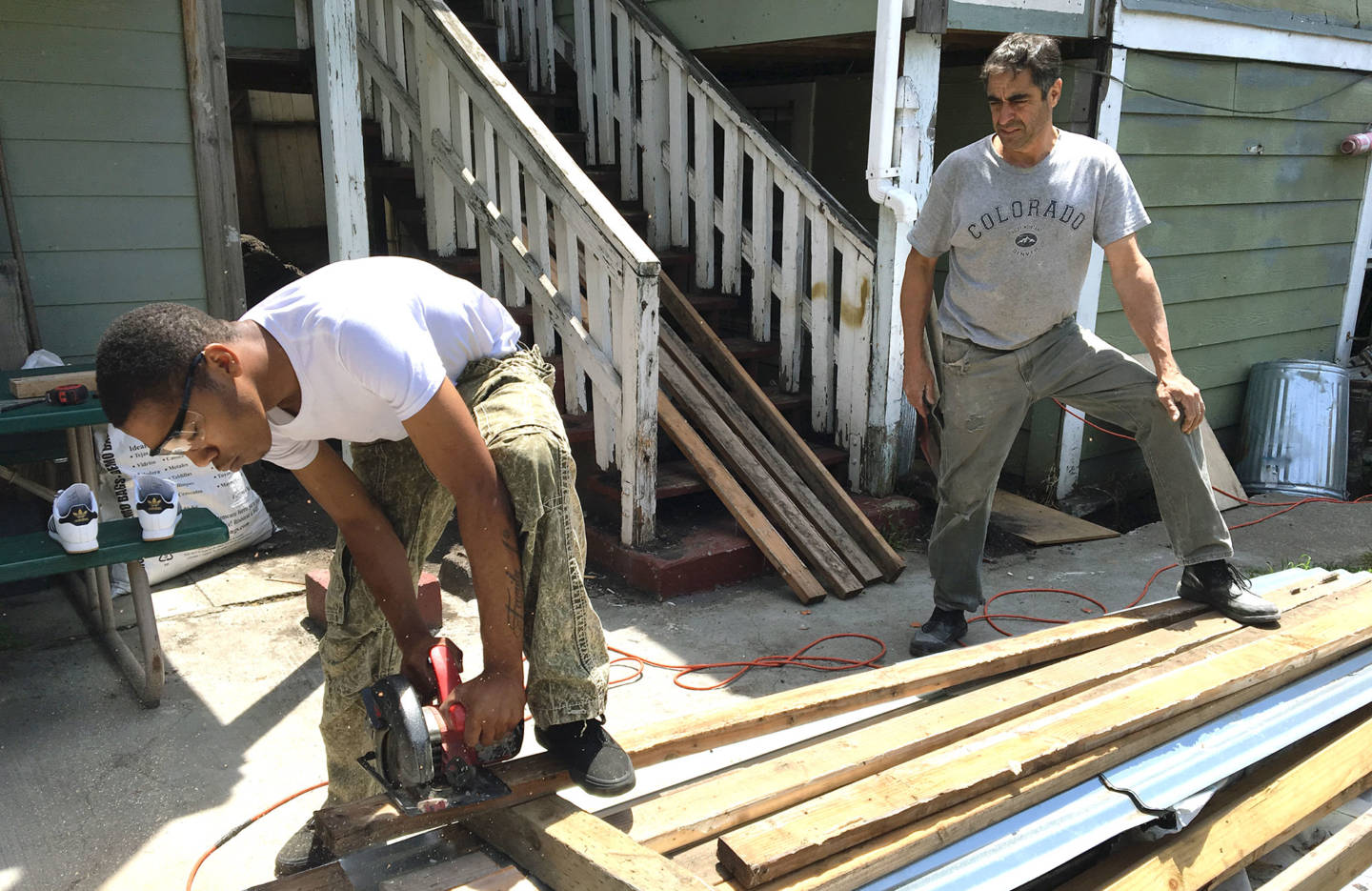
"caption": "Kris McCoy works with his mentor Murray Rubenzahl to cut wood they will use to frame a closet.",
"description": "Kris McCoy works with his mentor Murray Rubenzahl to cut wood they will use to frame a closet.",
"title": "Kris-color-corrected",
"credit": "Katrina Schwartz",
"status": "inherit",
"isLoading": false,
"fetchFailed": false
},
"mindshift_45479": {
"type": "attachments",
"id": "mindshift_45479",
"meta": {
"index": "attachments_1716263798",
"site": "mindshift",
"id": "45479",
"found": true
},
"parent": 45422,
"imgSizes": {
"twentyfourteen-full-width": {
"file": "https://ww2.kqed.org/app/uploads/sites/23/2016/06/Gootee-Journal-entry-1-1038x576.jpg",
"width": 1038,
"mimeType": "image/jpeg",
"height": 576
},
"thumbnail": {
"file": "https://ww2.kqed.org/app/uploads/sites/23/2016/06/Gootee-Journal-entry-1-400x225.jpg",
"width": 400,
"mimeType": "image/jpeg",
"height": 225
},
"fd-sm": {
"file": "https://ww2.kqed.org/app/uploads/sites/23/2016/06/Gootee-Journal-entry-1-960x540.jpg",
"width": 960,
"mimeType": "image/jpeg",
"height": 540
},
"post-thumbnail": {
"file": "https://ww2.kqed.org/app/uploads/sites/23/2016/06/Gootee-Journal-entry-1-672x372.jpg",
"width": 672,
"mimeType": "image/jpeg",
"height": 372
},
"kqedFullSize": {
"file": "https://ww2.kqed.org/app/uploads/sites/23/2016/06/Gootee-Journal-entry-1.jpg",
"width": 1920,
"height": 1080
},
"large": {
"file": "https://ww2.kqed.org/app/uploads/sites/23/2016/06/Gootee-Journal-entry-1-1440x810.jpg",
"width": 1440,
"mimeType": "image/jpeg",
"height": 810
},
"guest-author-50": {
"file": "https://ww2.kqed.org/app/uploads/sites/23/2016/06/Gootee-Journal-entry-1-50x50.jpg",
"width": 50,
"mimeType": "image/jpeg",
"height": 50
},
"guest-author-96": {
"file": "https://ww2.kqed.org/app/uploads/sites/23/2016/06/Gootee-Journal-entry-1-96x96.jpg",
"width": 96,
"mimeType": "image/jpeg",
"height": 96
},
"medium": {
"file": "https://ww2.kqed.org/app/uploads/sites/23/2016/06/Gootee-Journal-entry-1-800x450.jpg",
"width": 800,
"mimeType": "image/jpeg",
"height": 450
},
"guest-author-64": {
"file": "https://ww2.kqed.org/app/uploads/sites/23/2016/06/Gootee-Journal-entry-1-64x64.jpg",
"width": 64,
"mimeType": "image/jpeg",
"height": 64
},
"guest-author-32": {
"file": "https://ww2.kqed.org/app/uploads/sites/23/2016/06/Gootee-Journal-entry-1-32x32.jpg",
"width": 32,
"mimeType": "image/jpeg",
"height": 32
},
"cat_post_thumb_sizecategory-posts-2": {
"file": "https://ww2.kqed.org/app/uploads/sites/23/2016/06/Gootee-Journal-entry-1-50x50.jpg",
"width": 50,
"mimeType": "image/jpeg",
"height": 50
},
"fd-lrg": {
"file": "https://ww2.kqed.org/app/uploads/sites/23/2016/06/Gootee-Journal-entry-1-1920x1080.jpg",
"width": 1920,
"mimeType": "image/jpeg",
"height": 1080
},
"fd-med": {
"file": "https://ww2.kqed.org/app/uploads/sites/23/2016/06/Gootee-Journal-entry-1-1180x664.jpg",
"width": 1180,
"mimeType": "image/jpeg",
"height": 664
},
"detail": {
"file": "https://ww2.kqed.org/app/uploads/sites/23/2016/06/Gootee-Journal-entry-1-150x150.jpg",
"width": 150,
"mimeType": "image/jpeg",
"height": 150
},
"medium_large": {
"file": "https://ww2.kqed.org/app/uploads/sites/23/2016/06/Gootee-Journal-entry-1-768x432.jpg",
"width": 768,
"mimeType": "image/jpeg",
"height": 432
},
"guest-author-128": {
"file": "https://ww2.kqed.org/app/uploads/sites/23/2016/06/Gootee-Journal-entry-1-128x128.jpg",
"width": 128,
"mimeType": "image/jpeg",
"height": 128
}
},
"publishDate": 1465972725,
"modified": 1465973366,
"caption": "Journal entry by Georgia Gootee alongside photos from 1996.",
"description": null,
"title": "Gootee-Journal-entry-1",
"credit": "Courtesy of Georgia Gootee",
"status": "inherit",
"isLoading": false,
"fetchFailed": false
},
"mindshift_45350": {
"type": "attachments",
"id": "mindshift_45350",
"meta": {
"index": "attachments_1716263798",
"site": "mindshift",
"id": "45350",
"found": true
},
"parent": 45338,
"imgSizes": {
"twentyfourteen-full-width": {
"file": "https://ww2.kqed.org/app/uploads/sites/23/2016/06/3Act21920x1080-1038x576.jpg",
"width": 1038,
"mimeType": "image/jpeg",
"height": 576
},
"thumbnail": {
"file": "https://ww2.kqed.org/app/uploads/sites/23/2016/06/3Act21920x1080-400x225.jpg",
"width": 400,
"mimeType": "image/jpeg",
"height": 225
},
"fd-sm": {
"file": "https://ww2.kqed.org/app/uploads/sites/23/2016/06/3Act21920x1080-960x540.jpg",
"width": 960,
"mimeType": "image/jpeg",
"height": 540
},
"post-thumbnail": {
"file": "https://ww2.kqed.org/app/uploads/sites/23/2016/06/3Act21920x1080-672x372.jpg",
"width": 672,
"mimeType": "image/jpeg",
"height": 372
},
"kqedFullSize": {
"file": "https://ww2.kqed.org/app/uploads/sites/23/2016/06/3Act21920x1080.jpg",
"width": 1920,
"height": 1080
},
"large": {
"file": "https://ww2.kqed.org/app/uploads/sites/23/2016/06/3Act21920x1080-1440x810.jpg",
"width": 1440,
"mimeType": "image/jpeg",
"height": 810
},
"guest-author-50": {
"file": "https://ww2.kqed.org/app/uploads/sites/23/2016/06/3Act21920x1080-50x50.jpg",
"width": 50,
"mimeType": "image/jpeg",
"height": 50
},
"guest-author-96": {
"file": "https://ww2.kqed.org/app/uploads/sites/23/2016/06/3Act21920x1080-96x96.jpg",
"width": 96,
"mimeType": "image/jpeg",
"height": 96
},
"medium": {
"file": "https://ww2.kqed.org/app/uploads/sites/23/2016/06/3Act21920x1080-800x450.jpg",
"width": 800,
"mimeType": "image/jpeg",
"height": 450
},
"guest-author-64": {
"file": "https://ww2.kqed.org/app/uploads/sites/23/2016/06/3Act21920x1080-64x64.jpg",
"width": 64,
"mimeType": "image/jpeg",
"height": 64
},
"guest-author-32": {
"file": "https://ww2.kqed.org/app/uploads/sites/23/2016/06/3Act21920x1080-32x32.jpg",
"width": 32,
"mimeType": "image/jpeg",
"height": 32
},
"cat_post_thumb_sizecategory-posts-2": {
"file": "https://ww2.kqed.org/app/uploads/sites/23/2016/06/3Act21920x1080-50x50.jpg",
"width": 50,
"mimeType": "image/jpeg",
"height": 50
},
"fd-lrg": {
"file": "https://ww2.kqed.org/app/uploads/sites/23/2016/06/3Act21920x1080-1920x1080.jpg",
"width": 1920,
"mimeType": "image/jpeg",
"height": 1080
},
"fd-med": {
"file": "https://ww2.kqed.org/app/uploads/sites/23/2016/06/3Act21920x1080-1180x664.jpg",
"width": 1180,
"mimeType": "image/jpeg",
"height": 664
},
"detail": {
"file": "https://ww2.kqed.org/app/uploads/sites/23/2016/06/3Act21920x1080-150x150.jpg",
"width": 150,
"mimeType": "image/jpeg",
"height": 150
},
"medium_large": {
"file": "https://ww2.kqed.org/app/uploads/sites/23/2016/06/3Act21920x1080-768x432.jpg",
"width": 768,
"mimeType": "image/jpeg",
"height": 432
},
"guest-author-128": {
"file": "https://ww2.kqed.org/app/uploads/sites/23/2016/06/3Act21920x1080-128x128.jpg",
"width": 128,
"mimeType": "image/jpeg",
"height": 128
}
},
"publishDate": 1464903303,
"modified": 1464903372,
"caption": "A student explains how he solved a subtraction problem.",
"description": null,
"title": "3Act21920x1080",
"credit": "\u003ca href=\"https://www.teachingchannel.org/videos/teaching-subtraction-problems-nsf\">Teaching Channel\u003c/a>",
"status": "inherit",
"isLoading": false,
"fetchFailed": false
},
"mindshift_45435": {
"type": "attachments",
"id": "mindshift_45435",
"meta": {
"index": "attachments_1716263798",
"site": "mindshift",
"id": "45435",
"found": true
},
"parent": 45432,
"imgSizes": {
"twentyfourteen-full-width": {
"file": "https://ww2.kqed.org/app/uploads/sites/23/2016/06/Hana-VR-1038x576.jpg",
"width": 1038,
"mimeType": "image/jpeg",
"height": 576
},
"thumbnail": {
"file": "https://ww2.kqed.org/app/uploads/sites/23/2016/06/Hana-VR-400x225.jpg",
"width": 400,
"mimeType": "image/jpeg",
"height": 225
},
"fd-sm": {
"file": "https://ww2.kqed.org/app/uploads/sites/23/2016/06/Hana-VR-960x540.jpg",
"width": 960,
"mimeType": "image/jpeg",
"height": 540
},
"post-thumbnail": {
"file": "https://ww2.kqed.org/app/uploads/sites/23/2016/06/Hana-VR-672x372.jpg",
"width": 672,
"mimeType": "image/jpeg",
"height": 372
},
"kqedFullSize": {
"file": "https://ww2.kqed.org/app/uploads/sites/23/2016/06/Hana-VR.jpg",
"width": 1920,
"height": 1080
},
"large": {
"file": "https://ww2.kqed.org/app/uploads/sites/23/2016/06/Hana-VR-1440x810.jpg",
"width": 1440,
"mimeType": "image/jpeg",
"height": 810
},
"guest-author-50": {
"file": "https://ww2.kqed.org/app/uploads/sites/23/2016/06/Hana-VR-50x50.jpg",
"width": 50,
"mimeType": "image/jpeg",
"height": 50
},
"guest-author-96": {
"file": "https://ww2.kqed.org/app/uploads/sites/23/2016/06/Hana-VR-96x96.jpg",
"width": 96,
"mimeType": "image/jpeg",
"height": 96
},
"medium": {
"file": "https://ww2.kqed.org/app/uploads/sites/23/2016/06/Hana-VR-800x450.jpg",
"width": 800,
"mimeType": "image/jpeg",
"height": 450
},
"guest-author-64": {
"file": "https://ww2.kqed.org/app/uploads/sites/23/2016/06/Hana-VR-64x64.jpg",
"width": 64,
"mimeType": "image/jpeg",
"height": 64
},
"guest-author-32": {
"file": "https://ww2.kqed.org/app/uploads/sites/23/2016/06/Hana-VR-32x32.jpg",
"width": 32,
"mimeType": "image/jpeg",
"height": 32
},
"cat_post_thumb_sizecategory-posts-2": {
"file": "https://ww2.kqed.org/app/uploads/sites/23/2016/06/Hana-VR-50x50.jpg",
"width": 50,
"mimeType": "image/jpeg",
"height": 50
},
"fd-lrg": {
"file": "https://ww2.kqed.org/app/uploads/sites/23/2016/06/Hana-VR-1920x1080.jpg",
"width": 1920,
"mimeType": "image/jpeg",
"height": 1080
},
"fd-med": {
"file": "https://ww2.kqed.org/app/uploads/sites/23/2016/06/Hana-VR-1180x664.jpg",
"width": 1180,
"mimeType": "image/jpeg",
"height": 664
},
"detail": {
"file": "https://ww2.kqed.org/app/uploads/sites/23/2016/06/Hana-VR-150x150.jpg",
"width": 150,
"mimeType": "image/jpeg",
"height": 150
},
"medium_large": {
"file": "https://ww2.kqed.org/app/uploads/sites/23/2016/06/Hana-VR-768x432.jpg",
"width": 768,
"mimeType": "image/jpeg",
"height": 432
},
"guest-author-128": {
"file": "https://ww2.kqed.org/app/uploads/sites/23/2016/06/Hana-VR-128x128.jpg",
"width": 128,
"mimeType": "image/jpeg",
"height": 128
}
},
"publishDate": 1465565321,
"modified": 1465565449,
"caption": null,
"description": null,
"title": "Hana-VR",
"credit": "Screen grab from \u003ca href=\"https://www.youtube.com/watch?v=ecavbpCuvkI\">NYT\u003c/a> ",
"status": "inherit",
"isLoading": false,
"fetchFailed": false
},
"mindshift_45429": {
"type": "attachments",
"id": "mindshift_45429",
"meta": {
"index": "attachments_1716263798",
"site": "mindshift",
"id": "45429",
"found": true
},
"parent": 45366,
"imgSizes": {
"twentyfourteen-full-width": {
"file": "https://ww2.kqed.org/app/uploads/sites/23/2016/06/iStock_88339575_LARGE-1038x576.jpg",
"width": 1038,
"mimeType": "image/jpeg",
"height": 576
},
"thumbnail": {
"file": "https://ww2.kqed.org/app/uploads/sites/23/2016/06/iStock_88339575_LARGE-400x243.jpg",
"width": 400,
"mimeType": "image/jpeg",
"height": 243
},
"fd-sm": {
"file": "https://ww2.kqed.org/app/uploads/sites/23/2016/06/iStock_88339575_LARGE-960x582.jpg",
"width": 960,
"mimeType": "image/jpeg",
"height": 582
},
"post-thumbnail": {
"file": "https://ww2.kqed.org/app/uploads/sites/23/2016/06/iStock_88339575_LARGE-672x372.jpg",
"width": 672,
"mimeType": "image/jpeg",
"height": 372
},
"kqedFullSize": {
"file": "https://ww2.kqed.org/app/uploads/sites/23/2016/06/iStock_88339575_LARGE-e1465456294261.jpg",
"width": 1920,
"height": 1164
},
"large": {
"file": "https://ww2.kqed.org/app/uploads/sites/23/2016/06/iStock_88339575_LARGE-1440x873.jpg",
"width": 1440,
"mimeType": "image/jpeg",
"height": 873
},
"guest-author-50": {
"file": "https://ww2.kqed.org/app/uploads/sites/23/2016/06/iStock_88339575_LARGE-50x50.jpg",
"width": 50,
"mimeType": "image/jpeg",
"height": 50
},
"guest-author-96": {
"file": "https://ww2.kqed.org/app/uploads/sites/23/2016/06/iStock_88339575_LARGE-96x96.jpg",
"width": 96,
"mimeType": "image/jpeg",
"height": 96
},
"medium": {
"file": "https://ww2.kqed.org/app/uploads/sites/23/2016/06/iStock_88339575_LARGE-800x485.jpg",
"width": 800,
"mimeType": "image/jpeg",
"height": 485
},
"guest-author-64": {
"file": "https://ww2.kqed.org/app/uploads/sites/23/2016/06/iStock_88339575_LARGE-64x64.jpg",
"width": 64,
"mimeType": "image/jpeg",
"height": 64
},
"guest-author-32": {
"file": "https://ww2.kqed.org/app/uploads/sites/23/2016/06/iStock_88339575_LARGE-32x32.jpg",
"width": 32,
"mimeType": "image/jpeg",
"height": 32
},
"cat_post_thumb_sizecategory-posts-2": {
"file": "https://ww2.kqed.org/app/uploads/sites/23/2016/06/iStock_88339575_LARGE-50x50.jpg",
"width": 50,
"mimeType": "image/jpeg",
"height": 50
},
"fd-lrg": {
"file": "https://ww2.kqed.org/app/uploads/sites/23/2016/06/iStock_88339575_LARGE-1920x1164.jpg",
"width": 1920,
"mimeType": "image/jpeg",
"height": 1164
},
"fd-med": {
"file": "https://ww2.kqed.org/app/uploads/sites/23/2016/06/iStock_88339575_LARGE-1180x716.jpg",
"width": 1180,
"mimeType": "image/jpeg",
"height": 716
},
"detail": {
"file": "https://ww2.kqed.org/app/uploads/sites/23/2016/06/iStock_88339575_LARGE-150x150.jpg",
"width": 150,
"mimeType": "image/jpeg",
"height": 150
},
"medium_large": {
"file": "https://ww2.kqed.org/app/uploads/sites/23/2016/06/iStock_88339575_LARGE-768x466.jpg",
"width": 768,
"mimeType": "image/jpeg",
"height": 466
},
"guest-author-128": {
"file": "https://ww2.kqed.org/app/uploads/sites/23/2016/06/iStock_88339575_LARGE-128x128.jpg",
"width": 128,
"mimeType": "image/jpeg",
"height": 128
}
},
"publishDate": 1465456277,
"modified": 1465456329,
"caption": null,
"description": null,
"title": "Multicolored flags against the blue sky with traces from planes",
"credit": "iStock",
"status": "inherit",
"isLoading": false,
"fetchFailed": false
},
"mindshift_45414": {
"type": "attachments",
"id": "mindshift_45414",
"meta": {
"index": "attachments_1716263798",
"site": "mindshift",
"id": "45414",
"found": true
},
"parent": 45288,
"imgSizes": {
"twentyfourteen-full-width": {
"file": "https://ww2.kqed.org/app/uploads/sites/23/2016/06/15786066716_69a126469d_k-1038x576.jpg",
"width": 1038,
"mimeType": "image/jpeg",
"height": 576
},
"thumbnail": {
"file": "https://ww2.kqed.org/app/uploads/sites/23/2016/06/15786066716_69a126469d_k-400x300.jpg",
"width": 400,
"mimeType": "image/jpeg",
"height": 300
},
"fd-sm": {
"file": "https://ww2.kqed.org/app/uploads/sites/23/2016/06/15786066716_69a126469d_k-960x720.jpg",
"width": 960,
"mimeType": "image/jpeg",
"height": 720
},
"post-thumbnail": {
"file": "https://ww2.kqed.org/app/uploads/sites/23/2016/06/15786066716_69a126469d_k-672x372.jpg",
"width": 672,
"mimeType": "image/jpeg",
"height": 372
},
"kqedFullSize": {
"file": "https://ww2.kqed.org/app/uploads/sites/23/2016/06/15786066716_69a126469d_k-e1465334566409.jpg",
"width": 1920,
"height": 1440
},
"large": {
"file": "https://ww2.kqed.org/app/uploads/sites/23/2016/06/15786066716_69a126469d_k-1440x1080.jpg",
"width": 1440,
"mimeType": "image/jpeg",
"height": 1080
},
"guest-author-50": {
"file": "https://ww2.kqed.org/app/uploads/sites/23/2016/06/15786066716_69a126469d_k-50x50.jpg",
"width": 50,
"mimeType": "image/jpeg",
"height": 50
},
"guest-author-96": {
"file": "https://ww2.kqed.org/app/uploads/sites/23/2016/06/15786066716_69a126469d_k-96x96.jpg",
"width": 96,
"mimeType": "image/jpeg",
"height": 96
},
"medium": {
"file": "https://ww2.kqed.org/app/uploads/sites/23/2016/06/15786066716_69a126469d_k-800x600.jpg",
"width": 800,
"mimeType": "image/jpeg",
"height": 600
},
"guest-author-64": {
"file": "https://ww2.kqed.org/app/uploads/sites/23/2016/06/15786066716_69a126469d_k-64x64.jpg",
"width": 64,
"mimeType": "image/jpeg",
"height": 64
},
"guest-author-32": {
"file": "https://ww2.kqed.org/app/uploads/sites/23/2016/06/15786066716_69a126469d_k-32x32.jpg",
"width": 32,
"mimeType": "image/jpeg",
"height": 32
},
"cat_post_thumb_sizecategory-posts-2": {
"file": "https://ww2.kqed.org/app/uploads/sites/23/2016/06/15786066716_69a126469d_k-50x50.jpg",
"width": 50,
"mimeType": "image/jpeg",
"height": 50
},
"fd-lrg": {
"file": "https://ww2.kqed.org/app/uploads/sites/23/2016/06/15786066716_69a126469d_k-1920x1440.jpg",
"width": 1920,
"mimeType": "image/jpeg",
"height": 1440
},
"fd-med": {
"file": "https://ww2.kqed.org/app/uploads/sites/23/2016/06/15786066716_69a126469d_k-1180x885.jpg",
"width": 1180,
"mimeType": "image/jpeg",
"height": 885
},
"detail": {
"file": "https://ww2.kqed.org/app/uploads/sites/23/2016/06/15786066716_69a126469d_k-150x150.jpg",
"width": 150,
"mimeType": "image/jpeg",
"height": 150
},
"medium_large": {
"file": "https://ww2.kqed.org/app/uploads/sites/23/2016/06/15786066716_69a126469d_k-768x576.jpg",
"width": 768,
"mimeType": "image/jpeg",
"height": 576
},
"guest-author-128": {
"file": "https://ww2.kqed.org/app/uploads/sites/23/2016/06/15786066716_69a126469d_k-128x128.jpg",
"width": 128,
"mimeType": "image/jpeg",
"height": 128
}
},
"publishDate": 1465334549,
"modified": 1465387514,
"caption": null,
"description": "\u003ca href=\"https://www.flickr.com/photos/fdecomite/15786066716/in/photolist-q3XHE5-8YpWXA-o3eX9-6hxfRo-W4kvt-4PsS9i-636LJe-acpY9G-6hsP66-7wjyVH-7FEZAr-6UuyVh-6WyNaH-axWeXw-8YmRt8-9cakzv-aEkT38-eZH4vF-98xrMb-6hwND5-e3zVxj-ikLvaj-7vBn3V-8YmTTD-636LJX-9ywQRn-psSMpr-fWExJH-7FEZvr-4rVUeS-9c1yZA-omLnNJ-bJDq3-aokvAz-9vwgg5-5YReqT-edqBrQ-6eDUNQ-5uQA7s-fWCCvd-ee5SkA-jFX4p1-9QCLJP-E4mi3-d3nuH3-axREKQ-bc8Gy4-dkJtin-7As5JZ-79vzpK\">Flickr/fdecomite\u003c/a>\n",
"title": "15786066716_69a126469d_k",
"credit": "\u003ca href=\"https://www.flickr.com/photos/fdecomite/15786066716/in/photolist-q3XHE5-8YpWXA-o3eX9-6hxfRo-W4kvt-4PsS9i-636LJe-acpY9G-6hsP66-7wjyVH-7FEZAr-6UuyVh-6WyNaH-axWeXw-8YmRt8-9cakzv-aEkT38-eZH4vF-98xrMb-6hwND5-e3zVxj-ikLvaj-7vBn3V-8YmTTD-636LJX-9ywQRn-psSMpr-fWExJH-7FEZvr-4rVUeS-9c1yZA-omLnNJ-bJDq3-aokvAz-9vwgg5-5YReqT-edqBrQ-6eDUNQ-5uQA7s-fWCCvd-ee5SkA-jFX4p1-9QCLJP-E4mi3-d3nuH3-axREKQ-bc8Gy4-dkJtin-7As5JZ-79vzpK\">Flickr/fdecomite\u003c/a>",
"status": "inherit",
"isLoading": false,
"fetchFailed": false
},
"mindshift_45402": {
"type": "attachments",
"id": "mindshift_45402",
"meta": {
"index": "attachments_1716263798",
"site": "mindshift",
"id": "45402",
"found": true
},
"parent": 45396,
"imgSizes": {
"twentyfourteen-full-width": {
"file": "https://ww2.kqed.org/app/uploads/sites/23/2016/06/16221900249_e1c3182bba_o-1024x576.jpg",
"width": 1024,
"mimeType": "image/jpeg",
"height": 576
},
"thumbnail": {
"file": "https://ww2.kqed.org/app/uploads/sites/23/2016/06/16221900249_e1c3182bba_o-400x267.jpg",
"width": 400,
"mimeType": "image/jpeg",
"height": 267
},
"fd-sm": {
"file": "https://ww2.kqed.org/app/uploads/sites/23/2016/06/16221900249_e1c3182bba_o-960x640.jpg",
"width": 960,
"mimeType": "image/jpeg",
"height": 640
},
"post-thumbnail": {
"file": "https://ww2.kqed.org/app/uploads/sites/23/2016/06/16221900249_e1c3182bba_o-672x372.jpg",
"width": 672,
"mimeType": "image/jpeg",
"height": 372
},
"kqedFullSize": {
"file": "https://ww2.kqed.org/app/uploads/sites/23/2016/06/16221900249_e1c3182bba_o.jpg",
"width": 1024,
"height": 683
},
"guest-author-50": {
"file": "https://ww2.kqed.org/app/uploads/sites/23/2016/06/16221900249_e1c3182bba_o-50x50.jpg",
"width": 50,
"mimeType": "image/jpeg",
"height": 50
},
"guest-author-96": {
"file": "https://ww2.kqed.org/app/uploads/sites/23/2016/06/16221900249_e1c3182bba_o-96x96.jpg",
"width": 96,
"mimeType": "image/jpeg",
"height": 96
},
"medium": {
"file": "https://ww2.kqed.org/app/uploads/sites/23/2016/06/16221900249_e1c3182bba_o-800x534.jpg",
"width": 800,
"mimeType": "image/jpeg",
"height": 534
},
"guest-author-64": {
"file": "https://ww2.kqed.org/app/uploads/sites/23/2016/06/16221900249_e1c3182bba_o-64x64.jpg",
"width": 64,
"mimeType": "image/jpeg",
"height": 64
},
"guest-author-32": {
"file": "https://ww2.kqed.org/app/uploads/sites/23/2016/06/16221900249_e1c3182bba_o-32x32.jpg",
"width": 32,
"mimeType": "image/jpeg",
"height": 32
},
"cat_post_thumb_sizecategory-posts-2": {
"file": "https://ww2.kqed.org/app/uploads/sites/23/2016/06/16221900249_e1c3182bba_o-50x50.jpg",
"width": 50,
"mimeType": "image/jpeg",
"height": 50
},
"detail": {
"file": "https://ww2.kqed.org/app/uploads/sites/23/2016/06/16221900249_e1c3182bba_o-150x150.jpg",
"width": 150,
"mimeType": "image/jpeg",
"height": 150
},
"medium_large": {
"file": "https://ww2.kqed.org/app/uploads/sites/23/2016/06/16221900249_e1c3182bba_o-768x512.jpg",
"width": 768,
"mimeType": "image/jpeg",
"height": 512
},
"guest-author-128": {
"file": "https://ww2.kqed.org/app/uploads/sites/23/2016/06/16221900249_e1c3182bba_o-128x128.jpg",
"width": 128,
"mimeType": "image/jpeg",
"height": 128
}
},
"publishDate": 1465237577,
"modified": 1465237583,
"caption": null,
"description": null,
"title": "16221900249_e1c3182bba_o",
"credit": "\u003ca href=\"https://www.flickr.com/photos/skrubu/16221900249/in/photostream/\">Flickr/Pekka Nikrus\u003c/a>",
"status": "inherit",
"isLoading": false,
"fetchFailed": false
},
"mindshift_45392": {
"type": "attachments",
"id": "mindshift_45392",
"meta": {
"index": "attachments_1716263798",
"site": "mindshift",
"id": "45392",
"found": true
},
"parent": 45322,
"imgSizes": {
"twentyfourteen-full-width": {
"file": "https://ww2.kqed.org/app/uploads/sites/23/2016/06/Trauma-1038x576.jpg",
"width": 1038,
"mimeType": "image/jpeg",
"height": 576
},
"thumbnail": {
"file": "https://ww2.kqed.org/app/uploads/sites/23/2016/06/Trauma-400x225.jpg",
"width": 400,
"mimeType": "image/jpeg",
"height": 225
},
"fd-sm": {
"file": "https://ww2.kqed.org/app/uploads/sites/23/2016/06/Trauma-960x540.jpg",
"width": 960,
"mimeType": "image/jpeg",
"height": 540
},
"post-thumbnail": {
"file": "https://ww2.kqed.org/app/uploads/sites/23/2016/06/Trauma-672x372.jpg",
"width": 672,
"mimeType": "image/jpeg",
"height": 372
},
"kqedFullSize": {
"file": "https://ww2.kqed.org/app/uploads/sites/23/2016/06/Trauma.jpg",
"width": 1920,
"height": 1080
},
"large": {
"file": "https://ww2.kqed.org/app/uploads/sites/23/2016/06/Trauma-1440x810.jpg",
"width": 1440,
"mimeType": "image/jpeg",
"height": 810
},
"guest-author-50": {
"file": "https://ww2.kqed.org/app/uploads/sites/23/2016/06/Trauma-50x50.jpg",
"width": 50,
"mimeType": "image/jpeg",
"height": 50
},
"guest-author-96": {
"file": "https://ww2.kqed.org/app/uploads/sites/23/2016/06/Trauma-96x96.jpg",
"width": 96,
"mimeType": "image/jpeg",
"height": 96
},
"medium": {
"file": "https://ww2.kqed.org/app/uploads/sites/23/2016/06/Trauma-800x450.jpg",
"width": 800,
"mimeType": "image/jpeg",
"height": 450
},
"guest-author-64": {
"file": "https://ww2.kqed.org/app/uploads/sites/23/2016/06/Trauma-64x64.jpg",
"width": 64,
"mimeType": "image/jpeg",
"height": 64
},
"guest-author-32": {
"file": "https://ww2.kqed.org/app/uploads/sites/23/2016/06/Trauma-32x32.jpg",
"width": 32,
"mimeType": "image/jpeg",
"height": 32
},
"cat_post_thumb_sizecategory-posts-2": {
"file": "https://ww2.kqed.org/app/uploads/sites/23/2016/06/Trauma-50x50.jpg",
"width": 50,
"mimeType": "image/jpeg",
"height": 50
},
"fd-lrg": {
"file": "https://ww2.kqed.org/app/uploads/sites/23/2016/06/Trauma-1920x1080.jpg",
"width": 1920,
"mimeType": "image/jpeg",
"height": 1080
},
"fd-med": {
"file": "https://ww2.kqed.org/app/uploads/sites/23/2016/06/Trauma-1180x664.jpg",
"width": 1180,
"mimeType": "image/jpeg",
"height": 664
},
"detail": {
"file": "https://ww2.kqed.org/app/uploads/sites/23/2016/06/Trauma-150x150.jpg",
"width": 150,
"mimeType": "image/jpeg",
"height": 150
},
"medium_large": {
"file": "https://ww2.kqed.org/app/uploads/sites/23/2016/06/Trauma-768x432.jpg",
"width": 768,
"mimeType": "image/jpeg",
"height": 432
},
"guest-author-128": {
"file": "https://ww2.kqed.org/app/uploads/sites/23/2016/06/Trauma-128x128.jpg",
"width": 128,
"mimeType": "image/jpeg",
"height": 128
}
},
"publishDate": 1465198209,
"modified": 1465198219,
"caption": null,
"description": null,
"title": "Trauma",
"credit": "iStock",
"status": "inherit",
"isLoading": false,
"fetchFailed": false
},
"mindshift_45361": {
"type": "attachments",
"id": "mindshift_45361",
"meta": {
"index": "attachments_1716263798",
"site": "mindshift",
"id": "45361",
"found": true
},
"parent": 45320,
"imgSizes": {
"twentyfourteen-full-width": {
"file": "https://ww2.kqed.org/app/uploads/sites/23/2016/06/Poe-1038x576.jpg",
"width": 1038,
"mimeType": "image/jpeg",
"height": 576
},
"thumbnail": {
"file": "https://ww2.kqed.org/app/uploads/sites/23/2016/06/Poe-400x225.jpg",
"width": 400,
"mimeType": "image/jpeg",
"height": 225
},
"fd-sm": {
"file": "https://ww2.kqed.org/app/uploads/sites/23/2016/06/Poe-960x540.jpg",
"width": 960,
"mimeType": "image/jpeg",
"height": 540
},
"post-thumbnail": {
"file": "https://ww2.kqed.org/app/uploads/sites/23/2016/06/Poe-672x372.jpg",
"width": 672,
"mimeType": "image/jpeg",
"height": 372
},
"kqedFullSize": {
"file": "https://ww2.kqed.org/app/uploads/sites/23/2016/06/Poe.jpg",
"width": 1920,
"height": 1080
},
"large": {
"file": "https://ww2.kqed.org/app/uploads/sites/23/2016/06/Poe-1440x810.jpg",
"width": 1440,
"mimeType": "image/jpeg",
"height": 810
},
"guest-author-50": {
"file": "https://ww2.kqed.org/app/uploads/sites/23/2016/06/Poe-50x50.jpg",
"width": 50,
"mimeType": "image/jpeg",
"height": 50
},
"guest-author-96": {
"file": "https://ww2.kqed.org/app/uploads/sites/23/2016/06/Poe-96x96.jpg",
"width": 96,
"mimeType": "image/jpeg",
"height": 96
},
"medium": {
"file": "https://ww2.kqed.org/app/uploads/sites/23/2016/06/Poe-800x450.jpg",
"width": 800,
"mimeType": "image/jpeg",
"height": 450
},
"guest-author-64": {
"file": "https://ww2.kqed.org/app/uploads/sites/23/2016/06/Poe-64x64.jpg",
"width": 64,
"mimeType": "image/jpeg",
"height": 64
},
"guest-author-32": {
"file": "https://ww2.kqed.org/app/uploads/sites/23/2016/06/Poe-32x32.jpg",
"width": 32,
"mimeType": "image/jpeg",
"height": 32
},
"cat_post_thumb_sizecategory-posts-2": {
"file": "https://ww2.kqed.org/app/uploads/sites/23/2016/06/Poe-50x50.jpg",
"width": 50,
"mimeType": "image/jpeg",
"height": 50
},
"fd-lrg": {
"file": "https://ww2.kqed.org/app/uploads/sites/23/2016/06/Poe-1920x1080.jpg",
"width": 1920,
"mimeType": "image/jpeg",
"height": 1080
},
"fd-med": {
"file": "https://ww2.kqed.org/app/uploads/sites/23/2016/06/Poe-1180x664.jpg",
"width": 1180,
"mimeType": "image/jpeg",
"height": 664
},
"detail": {
"file": "https://ww2.kqed.org/app/uploads/sites/23/2016/06/Poe-150x150.jpg",
"width": 150,
"mimeType": "image/jpeg",
"height": 150
},
"medium_large": {
"file": "https://ww2.kqed.org/app/uploads/sites/23/2016/06/Poe-768x432.jpg",
"width": 768,
"mimeType": "image/jpeg",
"height": 432
},
"guest-author-128": {
"file": "https://ww2.kqed.org/app/uploads/sites/23/2016/06/Poe-128x128.jpg",
"width": 128,
"mimeType": "image/jpeg",
"height": 128
}
},
"publishDate": 1464939374,
"modified": 1464940692,
"caption": null,
"description": null,
"title": "Poe",
"credit": "Screen grab of \"The Tell-Tale Heart\" by EK Theater. Digital puppeteers sit in front of the screen, performing the story. ",
"status": "inherit",
"isLoading": false,
"fetchFailed": false
},
"mindshift_45332": {
"type": "attachments",
"id": "mindshift_45332",
"meta": {
"index": "attachments_1716263798",
"site": "mindshift",
"id": "45332",
"found": true
},
"parent": 45331,
"imgSizes": {
"twentyfourteen-full-width": {
"file": "https://ww2.kqed.org/app/uploads/sites/23/2016/06/talent-comic-1_custom-b4eb4b706ad5d09847aa6d262ec43258bf7c97e5-1038x576.jpg",
"width": 1038,
"mimeType": "image/jpeg",
"height": 576
},
"thumbnail": {
"file": "https://ww2.kqed.org/app/uploads/sites/23/2016/06/talent-comic-1_custom-b4eb4b706ad5d09847aa6d262ec43258bf7c97e5-400x408.jpg",
"width": 400,
"mimeType": "image/jpeg",
"height": 408
},
"fd-sm": {
"file": "https://ww2.kqed.org/app/uploads/sites/23/2016/06/talent-comic-1_custom-b4eb4b706ad5d09847aa6d262ec43258bf7c97e5-960x980.jpg",
"width": 960,
"mimeType": "image/jpeg",
"height": 980
},
"post-thumbnail": {
"file": "https://ww2.kqed.org/app/uploads/sites/23/2016/06/talent-comic-1_custom-b4eb4b706ad5d09847aa6d262ec43258bf7c97e5-672x372.jpg",
"width": 672,
"mimeType": "image/jpeg",
"height": 372
},
"kqedFullSize": {
"file": "https://ww2.kqed.org/app/uploads/sites/23/2016/06/talent-comic-1_custom-b4eb4b706ad5d09847aa6d262ec43258bf7c97e5-e1464823510625.jpg",
"width": 1920,
"height": 1959
},
"large": {
"file": "https://ww2.kqed.org/app/uploads/sites/23/2016/06/talent-comic-1_custom-b4eb4b706ad5d09847aa6d262ec43258bf7c97e5-1440x1470.jpg",
"width": 1440,
"mimeType": "image/jpeg",
"height": 1470
},
"guest-author-50": {
"file": "https://ww2.kqed.org/app/uploads/sites/23/2016/06/talent-comic-1_custom-b4eb4b706ad5d09847aa6d262ec43258bf7c97e5-50x50.jpg",
"width": 50,
"mimeType": "image/jpeg",
"height": 50
},
"guest-author-96": {
"file": "https://ww2.kqed.org/app/uploads/sites/23/2016/06/talent-comic-1_custom-b4eb4b706ad5d09847aa6d262ec43258bf7c97e5-96x96.jpg",
"width": 96,
"mimeType": "image/jpeg",
"height": 96
},
"medium": {
"file": "https://ww2.kqed.org/app/uploads/sites/23/2016/06/talent-comic-1_custom-b4eb4b706ad5d09847aa6d262ec43258bf7c97e5-800x816.jpg",
"width": 800,
"mimeType": "image/jpeg",
"height": 816
},
"guest-author-64": {
"file": "https://ww2.kqed.org/app/uploads/sites/23/2016/06/talent-comic-1_custom-b4eb4b706ad5d09847aa6d262ec43258bf7c97e5-64x64.jpg",
"width": 64,
"mimeType": "image/jpeg",
"height": 64
},
"guest-author-32": {
"file": "https://ww2.kqed.org/app/uploads/sites/23/2016/06/talent-comic-1_custom-b4eb4b706ad5d09847aa6d262ec43258bf7c97e5-32x32.jpg",
"width": 32,
"mimeType": "image/jpeg",
"height": 32
},
"cat_post_thumb_sizecategory-posts-2": {
"file": "https://ww2.kqed.org/app/uploads/sites/23/2016/06/talent-comic-1_custom-b4eb4b706ad5d09847aa6d262ec43258bf7c97e5-50x50.jpg",
"width": 50,
"mimeType": "image/jpeg",
"height": 50
},
"fd-lrg": {
"file": "https://ww2.kqed.org/app/uploads/sites/23/2016/06/talent-comic-1_custom-b4eb4b706ad5d09847aa6d262ec43258bf7c97e5-1920x1959.jpg",
"width": 1920,
"mimeType": "image/jpeg",
"height": 1959
},
"fd-med": {
"file": "https://ww2.kqed.org/app/uploads/sites/23/2016/06/talent-comic-1_custom-b4eb4b706ad5d09847aa6d262ec43258bf7c97e5-1180x1204.jpg",
"width": 1180,
"mimeType": "image/jpeg",
"height": 1204
},
"detail": {
"file": "https://ww2.kqed.org/app/uploads/sites/23/2016/06/talent-comic-1_custom-b4eb4b706ad5d09847aa6d262ec43258bf7c97e5-150x150.jpg",
"width": 150,
"mimeType": "image/jpeg",
"height": 150
},
"medium_large": {
"file": "https://ww2.kqed.org/app/uploads/sites/23/2016/06/talent-comic-1_custom-b4eb4b706ad5d09847aa6d262ec43258bf7c97e5-768x784.jpg",
"width": 768,
"mimeType": "image/jpeg",
"height": 784
},
"guest-author-128": {
"file": "https://ww2.kqed.org/app/uploads/sites/23/2016/06/talent-comic-1_custom-b4eb4b706ad5d09847aa6d262ec43258bf7c97e5-128x128.jpg",
"width": 128,
"mimeType": "image/jpeg",
"height": 128
}
},
"publishDate": 1464821755,
"modified": 1464823501,
"caption": null,
"description": "\"Talent\" comic by LA Johnson",
"title": "\"Talent\" comic by LA Johnson",
"credit": "LA Johnson/NPR",
"status": "inherit",
"isLoading": false,
"fetchFailed": false
},
"mindshift_45318": {
"type": "attachments",
"id": "mindshift_45318",
"meta": {
"index": "attachments_1716263798",
"site": "mindshift",
"id": "45318",
"found": true
},
"parent": 45294,
"imgSizes": {
"twentyfourteen-full-width": {
"file": "https://ww2.kqed.org/app/uploads/sites/23/2016/05/Mindfulness-1038x576.jpg",
"width": 1038,
"mimeType": "image/jpeg",
"height": 576
},
"thumbnail": {
"file": "https://ww2.kqed.org/app/uploads/sites/23/2016/05/Mindfulness-400x225.jpg",
"width": 400,
"mimeType": "image/jpeg",
"height": 225
},
"fd-sm": {
"file": "https://ww2.kqed.org/app/uploads/sites/23/2016/05/Mindfulness-960x540.jpg",
"width": 960,
"mimeType": "image/jpeg",
"height": 540
},
"post-thumbnail": {
"file": "https://ww2.kqed.org/app/uploads/sites/23/2016/05/Mindfulness-672x372.jpg",
"width": 672,
"mimeType": "image/jpeg",
"height": 372
},
"kqedFullSize": {
"file": "https://ww2.kqed.org/app/uploads/sites/23/2016/05/Mindfulness.jpg",
"width": 1920,
"height": 1080
},
"large": {
"file": "https://ww2.kqed.org/app/uploads/sites/23/2016/05/Mindfulness-1440x810.jpg",
"width": 1440,
"mimeType": "image/jpeg",
"height": 810
},
"guest-author-50": {
"file": "https://ww2.kqed.org/app/uploads/sites/23/2016/05/Mindfulness-50x50.jpg",
"width": 50,
"mimeType": "image/jpeg",
"height": 50
},
"guest-author-96": {
"file": "https://ww2.kqed.org/app/uploads/sites/23/2016/05/Mindfulness-96x96.jpg",
"width": 96,
"mimeType": "image/jpeg",
"height": 96
},
"medium": {
"file": "https://ww2.kqed.org/app/uploads/sites/23/2016/05/Mindfulness-800x450.jpg",
"width": 800,
"mimeType": "image/jpeg",
"height": 450
},
"guest-author-64": {
"file": "https://ww2.kqed.org/app/uploads/sites/23/2016/05/Mindfulness-64x64.jpg",
"width": 64,
"mimeType": "image/jpeg",
"height": 64
},
"guest-author-32": {
"file": "https://ww2.kqed.org/app/uploads/sites/23/2016/05/Mindfulness-32x32.jpg",
"width": 32,
"mimeType": "image/jpeg",
"height": 32
},
"cat_post_thumb_sizecategory-posts-2": {
"file": "https://ww2.kqed.org/app/uploads/sites/23/2016/05/Mindfulness-50x50.jpg",
"width": 50,
"mimeType": "image/jpeg",
"height": 50
},
"fd-lrg": {
"file": "https://ww2.kqed.org/app/uploads/sites/23/2016/05/Mindfulness-1920x1080.jpg",
"width": 1920,
"mimeType": "image/jpeg",
"height": 1080
},
"fd-med": {
"file": "https://ww2.kqed.org/app/uploads/sites/23/2016/05/Mindfulness-1180x664.jpg",
"width": 1180,
"mimeType": "image/jpeg",
"height": 664
},
"detail": {
"file": "https://ww2.kqed.org/app/uploads/sites/23/2016/05/Mindfulness-150x150.jpg",
"width": 150,
"mimeType": "image/jpeg",
"height": 150
},
"medium_large": {
"file": "https://ww2.kqed.org/app/uploads/sites/23/2016/05/Mindfulness-768x432.jpg",
"width": 768,
"mimeType": "image/jpeg",
"height": 432
},
"guest-author-128": {
"file": "https://ww2.kqed.org/app/uploads/sites/23/2016/05/Mindfulness-128x128.jpg",
"width": 128,
"mimeType": "image/jpeg",
"height": 128
}
},
"publishDate": 1464764683,
"modified": 1464764690,
"caption": null,
"description": null,
"title": "Mindfulness",
"credit": "iStock",
"status": "inherit",
"isLoading": false,
"fetchFailed": false
}
},
"audioPlayerReducer": {
"postId": "stream_live",
"isPaused": true,
"isPlaying": false,
"pfsActive": false,
"pledgeModalIsOpen": true,
"playerDrawerIsOpen": false,
"liveAudioPlayStartedAt": 0,
"liveAudioPlayContext": ""
},
"authorsReducer": {
"byline_mindshift_45432": {
"type": "authors",
"id": "byline_mindshift_45432",
"meta": {
"override": true
},
"slug": "byline_mindshift_45432",
"name": "By Jeffrey Knutson, \u003ca href=\"https://www.graphite.org/\">Common Sense Graphite\u003c/a>",
"isLoading": false
},
"byline_mindshift_45396": {
"type": "authors",
"id": "byline_mindshift_45396",
"meta": {
"override": true
},
"slug": "byline_mindshift_45396",
"name": "Anya Kamenetz",
"isLoading": false
},
"byline_mindshift_45331": {
"type": "authors",
"id": "byline_mindshift_45331",
"meta": {
"override": true
},
"slug": "byline_mindshift_45331",
"name": "Cory Turner",
"isLoading": false
},
"katrinaschwartz": {
"type": "authors",
"id": "234",
"meta": {
"index": "authors_1716337520",
"id": "234",
"found": true
},
"name": "Katrina Schwartz",
"firstName": "Katrina",
"lastName": "Schwartz",
"slug": "katrinaschwartz",
"email": "kschwartz@kqed.org",
"display_author_email": false,
"staff_mastheads": [
"news"
],
"title": "Producer",
"bio": "Katrina Schwartz is a journalist based in San Francisco. She's worked at KPCC public radio in LA and has reported on air and online for KQED since 2010. She covered how teaching and learning is changing for MindShift between 2012 and 2020. She is the co-host of the MindShift podcast and now produces KQED's Bay Curious podcast.",
"avatar": "https://secure.gravatar.com/avatar/edb4ee79070447a018538c9aae6eeecf28786515b8a0c30e43b6b7dce5aa44c8?s=600&d=blank&r=g",
"twitter": "kschwart",
"bluesky": null,
"facebook": null,
"instagram": null,
"linkedin": null,
"sites": [
{
"site": "",
"roles": [
"editor"
]
},
{
"site": "news",
"roles": [
"editor"
]
},
{
"site": "mindshift",
"roles": [
"administrator"
]
},
{
"site": "stateofhealth",
"roles": [
"author"
]
},
{
"site": "science",
"roles": [
"editor"
]
}
],
"headData": {
"title": "Katrina Schwartz | KQED",
"description": "Producer",
"ogImgSrc": "https://secure.gravatar.com/avatar/edb4ee79070447a018538c9aae6eeecf28786515b8a0c30e43b6b7dce5aa44c8?s=600&d=blank&r=g",
"twImgSrc": "https://secure.gravatar.com/avatar/edb4ee79070447a018538c9aae6eeecf28786515b8a0c30e43b6b7dce5aa44c8?s=600&d=blank&r=g"
},
"isLoading": false,
"link": "/author/katrinaschwartz"
},
"hollykorbey": {
"type": "authors",
"id": "4445",
"meta": {
"index": "authors_1716337520",
"id": "4445",
"found": true
},
"name": "Holly Korbey",
"firstName": "Holly",
"lastName": "Korbey",
"slug": "hollykorbey",
"email": "holly@hollykorbey.com",
"display_author_email": false,
"staff_mastheads": [],
"title": null,
"bio": "Holly Korbey's work on parenting and education has appeared in The New York Times, The Atlantic, Babble, Brain, Child Magazine, and others. She lives in Nashville with her family. Follow her on Twitter: @HKorbey",
"avatar": "https://secure.gravatar.com/avatar/f385f7a3b90e52ecd5e85c24fbd0a363?s=600&d=blank&r=g",
"twitter": null,
"facebook": null,
"instagram": null,
"linkedin": null,
"sites": [
{
"site": "mindshift",
"roles": [
"contributor"
]
}
],
"headData": {
"title": "Holly Korbey | KQED",
"description": null,
"ogImgSrc": "https://secure.gravatar.com/avatar/f385f7a3b90e52ecd5e85c24fbd0a363?s=600&d=blank&r=g",
"twImgSrc": "https://secure.gravatar.com/avatar/f385f7a3b90e52ecd5e85c24fbd0a363?s=600&d=blank&r=g"
},
"isLoading": false,
"link": "/author/hollykorbey"
},
"lindaflan": {
"type": "authors",
"id": "4613",
"meta": {
"index": "authors_1716337520",
"id": "4613",
"found": true
},
"name": "Linda Flanagan",
"firstName": "Linda",
"lastName": "Flanagan",
"slug": "lindaflan",
"email": "lindaflan@comcast.net",
"display_author_email": false,
"staff_mastheads": [],
"title": null,
"bio": "Linda Flanagan is a freelance writer, researcher, and editor. Her work has appeared in The Atlantic, The Wall St. Journal, Newsweek, Running Times, and Mind/Shift, and she blogs regularly for the Huffington Post. Linda writes about education, culture, athletics, youth sports, mental health, politics, college admissions, and other curiosities. She also reviews books and conducts interviews.",
"avatar": "https://secure.gravatar.com/avatar/6bca04c0736bf5eaea80654019de688f?s=600&d=blank&r=g",
"twitter": "LindaFlanagan2",
"facebook": null,
"instagram": null,
"linkedin": null,
"sites": [
{
"site": "mindshift",
"roles": [
"contributor"
]
}
],
"headData": {
"title": "Linda Flanagan | KQED",
"description": null,
"ogImgSrc": "https://secure.gravatar.com/avatar/6bca04c0736bf5eaea80654019de688f?s=600&d=blank&r=g",
"twImgSrc": "https://secure.gravatar.com/avatar/6bca04c0736bf5eaea80654019de688f?s=600&d=blank&r=g"
},
"isLoading": false,
"link": "/author/lindaflan"
},
"pauldarvasi": {
"type": "authors",
"id": "11107",
"meta": {
"index": "authors_1716337520",
"id": "11107",
"found": true
},
"name": "Paul Darvasi",
"firstName": "Paul",
"lastName": "Darvasi",
"slug": "pauldarvasi",
"email": "pauldarvasi@gmail.com",
"display_author_email": false,
"staff_mastheads": [],
"title": null,
"bio": "Paul Darvasi is an experienced educator whose research, speaking and writing explore the intersections of learning, technology, narrative and games. You can follow him on Twitter:\u003ca href=\"https://twitter.com/PaulDarvasi\"> @pauldarvasi\u003c/a>",
"avatar": "https://secure.gravatar.com/avatar/df387897a1bf0cd4b720b8175112731a?s=600&d=blank&r=g",
"twitter": "pauldarvasi",
"facebook": null,
"instagram": null,
"linkedin": null,
"sites": [
{
"site": "mindshift",
"roles": [
"contributor"
]
}
],
"headData": {
"title": "Paul Darvasi | KQED",
"description": null,
"ogImgSrc": "https://secure.gravatar.com/avatar/df387897a1bf0cd4b720b8175112731a?s=600&d=blank&r=g",
"twImgSrc": "https://secure.gravatar.com/avatar/df387897a1bf0cd4b720b8175112731a?s=600&d=blank&r=g"
},
"isLoading": false,
"link": "/author/pauldarvasi"
}
},
"pagesReducer": {
"mindshift_tag_featured": {
"type": "terms",
"id": "mindshift_20784",
"meta": {
"index": "terms_1716263798",
"site": "mindshift",
"id": "20784",
"score": 7.6563077
},
"featImg": null,
"name": "featured",
"description": null,
"taxonomy": "tag",
"headData": {
"twImgId": null,
"twTitle": null,
"ogTitle": null,
"ogImgId": null,
"twDescription": null,
"description": null,
"title": "featured Archives | KQED Mindshift",
"ogDescription": null
},
"ttid": 20061,
"slug": "featured",
"isLoading": false,
"title": "featured",
"pageMeta": {
"site": "mindshift",
"WpPageTemplate": "page-topic-editorial",
"currentPage": 62
},
"blocks": [
{
"blockName": "kqed/post-list",
"attrs": {
"layout": "cardArticle2",
"query": "posts/mindshift?tag=featured",
"seeMore": false,
"paginated": true,
"page": 62
}
},
{
"blockName": "kqed/ad"
}
]
}
},
"pfsSessionReducer": {},
"postsReducer": {
"stream_live": {
"type": "live",
"id": "stream_live",
"audioUrl": "https://hls.kqed.org/hls/kqed_app/playlist.m3u8",
"title": "Live Stream",
"excerpt": "Live Stream information currently unavailable.",
"link": "/radio",
"featImg": "",
"label": {
"name": "KQED Live",
"link": "/"
}
},
"stream_kqedNewscast": {
"type": "posts",
"id": "stream_kqedNewscast",
"audioUrl": "https://www.kqed.org/.stream/anon/radio/RDnews/newscast.mp3?_=1",
"title": "KQED Newscast",
"featImg": "",
"label": {
"name": "88.5 FM",
"link": "/"
}
},
"mindshift_42949": {
"type": "posts",
"id": "mindshift_42949",
"meta": {
"index": "posts_1716263798",
"site": "mindshift",
"id": "42949",
"score": null,
"sort": [
1466149344000
]
},
"parent": 0,
"labelTerm": {
"site": "mindshift"
},
"blocks": [],
"publishDate": 1466149344,
"format": "standard",
"disqusTitle": "Books Teachers Share: Ray Salazar and The Alchemist",
"title": "Books Teachers Share: Ray Salazar and The Alchemist",
"headTitle": "MindShift | KQED News",
"content": "\u003cp>Educator and \u003ca href=\"http://www.chicagonow.com/white-rhino/\">blogger\u003c/a> Ray Salazar, who teaches junior and senior AP English in Chicago Public Schools on the Southwest side, said a book that has been significant to his teaching was \u003ca href=\"https://www.goodreads.com/book/show/865.The_Alchemist\">\u003cem>The Alchemist\u003c/em>\u003c/a>, by Brazilian writer Paolo Coelho. The short novel, which has been hailed as a favorite from Former President Bill Clinton to movie star Will Smith, is the fable of Andalusian shepherd boy Santiago, who embarks on a far-flung journey in search of Egyptian treasure after a powerful dream. Along the way, Santiago encounters spiritual messengers in the form of different characters, and meets an alchemist, who becomes his teacher.\u003c/p>\n\u003cp>Salazar recently told MindShift why \u003cem>The Alchemist\u003c/em> had such a big impact on him, and ideas from the book influence how he talks to students, and how he sees himself as a teacher. The conversation has been edited for clarity and length.\u003c/p>\n\u003cfigure id=\"attachment_42971\" class=\"wp-caption alignright\" style=\"max-width: 250px\">\u003cimg class=\"wp-image-42971 size-full\" src=\"http://ww2.kqed.org/mindshift/wp-content/uploads/sites/23/2015/12/Ray-Salazar-book-e1449083952478.jpg\" alt=\"Ray-Salazar-book\" width=\"250\" height=\"333\">\u003cfigcaption class=\"wp-caption-text\">Courtesy of Ray Salazar \u003ccite>(Courtesy of Ray Salazar)\u003c/cite>\u003c/figcaption>\u003c/figure>\n\u003cp>Salazar: \u003cem>The Alchemist\u003c/em> is a book of fiction. It’s about a shepherd boy who has this recurring dream about treasure at the foot of the Egyptian pyramids. And on that journey, things happen: he gets robbed, he’s going to get a job at a crystal shop, he moves along with some caravan, and then he falls in love at an oasis. He eventually meets an alchemist, and this alchemist starts talking to him about pursuing a personal legend, and he says that every person, every thing in the universe has the power to transform itself into something greater, and that’s our responsibility in life. So Santiago continues on his journey, and he realizes that his personal legend does not lie at the foot of the pyramids—the dream was just to encourage him so he could take that risk, and eventually find the true meaning in his life.\u003c/p>\n\u003cp>I found \u003cem>The Alchemist\u003c/em> about 18 years ago in a bookstore, back when there were still bookstores, and to be honest with you, I picked up the book because it had a pretty cover. It was unlike anything I’d ever read. I liked the whole spirituality of it, but it wasn’t religious; I liked his whole idea of this kid with big dreams—that kind of reminded me of being a kid with big dreams. I just got hooked into the story. [At the time] I’d been a teacher for two years, and I worked really hard to get that degree, and I was starting to see more and more how teaching is incredibly difficult, and I started to wonder if I’d made the wrong decision, if I should have been a lawyer like I’d originally wanted when I was 15 years old. The book gave me the vocabulary to figure out how to listen for my dream—how we have to have a dream, and if we don’t have a dream, we have to listen, and listen to our instincts, and listen to the signs that the universe does send to us, so that we can figure out what that dream is, so that we have a purpose in life.\u003c/p>\n\u003cp>\u003ca href=\"http://ww2.kqed.org/mindshift/tag/books-teachers-share/\">\u003cimg class=\"alignleft wp-image-45517 size-full\" src=\"http://ww2.kqed.org/mindshift/wp-content/uploads/sites/23/2016/06/BooksTeachersShare_header.png\" alt=\"BooksTeachersShare_header\" width=\"800\" height=\"150\" srcset=\"https://ww2.kqed.org/app/uploads/sites/23/2016/06/BooksTeachersShare_header.png 800w, https://ww2.kqed.org/app/uploads/sites/23/2016/06/BooksTeachersShare_header-400x75.png 400w, https://ww2.kqed.org/app/uploads/sites/23/2016/06/BooksTeachersShare_header-768x144.png 768w\" sizes=\"(max-width: 800px) 100vw, 800px\">\u003c/a>\u003c/p>\n\u003cp>[ad fullwidth]\u003c/p>\n\u003cp>So after reading this book, I started to have a new perspective. And I think \u003cem>The Alchemist\u003c/em> was a book that helped me re-adjust my perspective on life, and always always, as difficult as it is, to find the good things in every situation I’m in.\u003c/p>\n\u003cp>Here is one of my favorite passages: \u003cem>“What you still need to know is this: before a dream is realized, the Soul of the World tests everything that was learned along the way. It does this not because it is evil, but so that we can, in addition to realizing our dreams, master the lessons we’ve learned as we’ve moved toward that dream. That’s the point at which, as we say in the language of the desert, one ‘dies of thirst just when the palm trees have appeared on the horizon. Every search begins with beginner’s luck. And every search ends with the victor’s being severely tested.”\u003c/em>\u003c/p>\n\u003cfigure id=\"attachment_42972\" class=\"wp-caption alignright\" style=\"max-width: 250px\">\u003cimg class=\"wp-image-42972 size-full\" src=\"http://ww2.kqed.org/mindshift/wp-content/uploads/sites/23/2015/12/Ray-Salazar-book-2-e1449084055193.jpg\" alt=\"Ray Salazar book 2\" width=\"250\" height=\"333\">\u003cfigcaption class=\"wp-caption-text\">Courtesy of Ray Salazar \u003ccite>(Courtesy of Ray Salazar )\u003c/cite>\u003c/figcaption>\u003c/figure>\n\u003cp>I think I’ve learned as a teacher, as a parent, as a writer, I think I’ve learned to listen to my instinct. And more importantly, to overcome self-doubt. I’ve learned how to think about using that self-doubt to become a better person. I definitely make mistakes, and I try more and more to consciously learn from those mistakes. I really do believe that there’s more goodness in the universe than there is bad, and I do believe that the goodness of the universe speaks to us. And every time I start to think about leaving teaching again— I left teaching for three years—I think about it and think, I’m done, I always get a type of sign, something happens that sends me the message that I am exactly where I need to be, and I don’t need to be anywhere else.* I truly chalk that up to the goodness of the universe, saying, stay where you are.\u003c/p>\n\u003cp>One of the qualities I have tried to develop over the years is to be less stubborn, and to be more patient, and I think that this book, and the philosophy of this book, has helped me understand why patience is such a valuable quality, and why an open mind is essential for our success. And we have to listen to ourselves and our instincts, but we need to make sure we have to find people who believe in us and who care about us, and what they have to tell us, too, and that’s what we have to do, find people who believe us. And sometimes not all situations turn out the way you want, but [in the book] Santiago definitely listens to what the people around him tell him, and he makes decisions based on that.\u003c/p>\n\u003cp>[ad floatright]\u003c/p>\n\u003cp>\u003cem>*An earlier version of this post incorrectly stated the amount of time Salazar was away from teaching. We regret this error.\u003c/em>\u003c/p>\n\n",
"disqusIdentifier": "42949 http://ww2.kqed.org/mindshift/?p=42949",
"disqusUrl": "https://ww2.kqed.org/mindshift/2016/06/17/books-teachers-share-ray-salazar-and-the-alchemist/",
"stats": {
"hasVideo": false,
"hasChartOrMap": false,
"hasAudio": false,
"hasPolis": false,
"wordCount": 1056,
"hasGoogleForm": false,
"hasGallery": false,
"hasHearkenModule": false,
"iframeSrcs": [],
"paragraphCount": 12
},
"modified": 1466715870,
"excerpt": "There are some books that can transform how a teacher sees himself. For English teacher Ray Salazar, that book is \"The Alchemist.\"",
"headData": {
"twImgId": "",
"twTitle": "",
"ogTitle": "",
"ogImgId": "",
"twDescription": "",
"description": "There are some books that can transform how a teacher sees himself. For English teacher Ray Salazar, that book is "The Alchemist."",
"title": "Books Teachers Share: Ray Salazar and The Alchemist | KQED",
"ogDescription": "",
"schema": {
"@context": "https://schema.org",
"@type": "Article",
"headline": "Books Teachers Share: Ray Salazar and The Alchemist",
"datePublished": "2016-06-17T00:42:24-07:00",
"dateModified": "2016-06-23T14:04:30-07:00",
"image": "https://cdn.kqed.org/wp-content/uploads/2020/02/KQED-OG-Image@1x.png"
}
},
"guestAuthors": [],
"slug": "books-teachers-share-ray-salazar-and-the-alchemist",
"status": "publish",
"path": "/mindshift/42949/books-teachers-share-ray-salazar-and-the-alchemist",
"audioTrackLength": null,
"parsedContent": [
{
"type": "contentString",
"content": "\u003cdiv class=\"post-body\">\u003cp>\u003cp>Educator and \u003ca href=\"http://www.chicagonow.com/white-rhino/\">blogger\u003c/a> Ray Salazar, who teaches junior and senior AP English in Chicago Public Schools on the Southwest side, said a book that has been significant to his teaching was \u003ca href=\"https://www.goodreads.com/book/show/865.The_Alchemist\">\u003cem>The Alchemist\u003c/em>\u003c/a>, by Brazilian writer Paolo Coelho. The short novel, which has been hailed as a favorite from Former President Bill Clinton to movie star Will Smith, is the fable of Andalusian shepherd boy Santiago, who embarks on a far-flung journey in search of Egyptian treasure after a powerful dream. Along the way, Santiago encounters spiritual messengers in the form of different characters, and meets an alchemist, who becomes his teacher.\u003c/p>\n\u003cp>Salazar recently told MindShift why \u003cem>The Alchemist\u003c/em> had such a big impact on him, and ideas from the book influence how he talks to students, and how he sees himself as a teacher. The conversation has been edited for clarity and length.\u003c/p>\n\u003cfigure id=\"attachment_42971\" class=\"wp-caption alignright\" style=\"max-width: 250px\">\u003cimg class=\"wp-image-42971 size-full\" src=\"http://ww2.kqed.org/mindshift/wp-content/uploads/sites/23/2015/12/Ray-Salazar-book-e1449083952478.jpg\" alt=\"Ray-Salazar-book\" width=\"250\" height=\"333\">\u003cfigcaption class=\"wp-caption-text\">Courtesy of Ray Salazar \u003ccite>(Courtesy of Ray Salazar)\u003c/cite>\u003c/figcaption>\u003c/figure>\n\u003cp>Salazar: \u003cem>The Alchemist\u003c/em> is a book of fiction. It’s about a shepherd boy who has this recurring dream about treasure at the foot of the Egyptian pyramids. And on that journey, things happen: he gets robbed, he’s going to get a job at a crystal shop, he moves along with some caravan, and then he falls in love at an oasis. He eventually meets an alchemist, and this alchemist starts talking to him about pursuing a personal legend, and he says that every person, every thing in the universe has the power to transform itself into something greater, and that’s our responsibility in life. So Santiago continues on his journey, and he realizes that his personal legend does not lie at the foot of the pyramids—the dream was just to encourage him so he could take that risk, and eventually find the true meaning in his life.\u003c/p>\n\u003cp>I found \u003cem>The Alchemist\u003c/em> about 18 years ago in a bookstore, back when there were still bookstores, and to be honest with you, I picked up the book because it had a pretty cover. It was unlike anything I’d ever read. I liked the whole spirituality of it, but it wasn’t religious; I liked his whole idea of this kid with big dreams—that kind of reminded me of being a kid with big dreams. I just got hooked into the story. [At the time] I’d been a teacher for two years, and I worked really hard to get that degree, and I was starting to see more and more how teaching is incredibly difficult, and I started to wonder if I’d made the wrong decision, if I should have been a lawyer like I’d originally wanted when I was 15 years old. The book gave me the vocabulary to figure out how to listen for my dream—how we have to have a dream, and if we don’t have a dream, we have to listen, and listen to our instincts, and listen to the signs that the universe does send to us, so that we can figure out what that dream is, so that we have a purpose in life.\u003c/p>\n\u003cp>\u003ca href=\"http://ww2.kqed.org/mindshift/tag/books-teachers-share/\">\u003cimg class=\"alignleft wp-image-45517 size-full\" src=\"http://ww2.kqed.org/mindshift/wp-content/uploads/sites/23/2016/06/BooksTeachersShare_header.png\" alt=\"BooksTeachersShare_header\" width=\"800\" height=\"150\" srcset=\"https://ww2.kqed.org/app/uploads/sites/23/2016/06/BooksTeachersShare_header.png 800w, https://ww2.kqed.org/app/uploads/sites/23/2016/06/BooksTeachersShare_header-400x75.png 400w, https://ww2.kqed.org/app/uploads/sites/23/2016/06/BooksTeachersShare_header-768x144.png 768w\" sizes=\"(max-width: 800px) 100vw, 800px\">\u003c/a>\u003c/p>\n\u003cp>\u003c/p>\u003c/div>",
"attributes": {
"named": {},
"numeric": []
}
},
{
"type": "component",
"content": "",
"name": "ad",
"attributes": {
"named": {
"label": "fullwidth"
},
"numeric": [
"fullwidth"
]
}
},
{
"type": "contentString",
"content": "\u003cdiv class=\"post-body\">\u003cp>\u003c/p>\n\u003cp>So after reading this book, I started to have a new perspective. And I think \u003cem>The Alchemist\u003c/em> was a book that helped me re-adjust my perspective on life, and always always, as difficult as it is, to find the good things in every situation I’m in.\u003c/p>\n\u003cp>Here is one of my favorite passages: \u003cem>“What you still need to know is this: before a dream is realized, the Soul of the World tests everything that was learned along the way. It does this not because it is evil, but so that we can, in addition to realizing our dreams, master the lessons we’ve learned as we’ve moved toward that dream. That’s the point at which, as we say in the language of the desert, one ‘dies of thirst just when the palm trees have appeared on the horizon. Every search begins with beginner’s luck. And every search ends with the victor’s being severely tested.”\u003c/em>\u003c/p>\n\u003cfigure id=\"attachment_42972\" class=\"wp-caption alignright\" style=\"max-width: 250px\">\u003cimg class=\"wp-image-42972 size-full\" src=\"http://ww2.kqed.org/mindshift/wp-content/uploads/sites/23/2015/12/Ray-Salazar-book-2-e1449084055193.jpg\" alt=\"Ray Salazar book 2\" width=\"250\" height=\"333\">\u003cfigcaption class=\"wp-caption-text\">Courtesy of Ray Salazar \u003ccite>(Courtesy of Ray Salazar )\u003c/cite>\u003c/figcaption>\u003c/figure>\n\u003cp>I think I’ve learned as a teacher, as a parent, as a writer, I think I’ve learned to listen to my instinct. And more importantly, to overcome self-doubt. I’ve learned how to think about using that self-doubt to become a better person. I definitely make mistakes, and I try more and more to consciously learn from those mistakes. I really do believe that there’s more goodness in the universe than there is bad, and I do believe that the goodness of the universe speaks to us. And every time I start to think about leaving teaching again— I left teaching for three years—I think about it and think, I’m done, I always get a type of sign, something happens that sends me the message that I am exactly where I need to be, and I don’t need to be anywhere else.* I truly chalk that up to the goodness of the universe, saying, stay where you are.\u003c/p>\n\u003cp>One of the qualities I have tried to develop over the years is to be less stubborn, and to be more patient, and I think that this book, and the philosophy of this book, has helped me understand why patience is such a valuable quality, and why an open mind is essential for our success. And we have to listen to ourselves and our instincts, but we need to make sure we have to find people who believe in us and who care about us, and what they have to tell us, too, and that’s what we have to do, find people who believe us. And sometimes not all situations turn out the way you want, but [in the book] Santiago definitely listens to what the people around him tell him, and he makes decisions based on that.\u003c/p>\n\u003cp>\u003c/p>\u003c/div>",
"attributes": {
"named": {},
"numeric": []
}
},
{
"type": "component",
"content": "",
"name": "ad",
"attributes": {
"named": {
"label": "floatright"
},
"numeric": [
"floatright"
]
}
},
{
"type": "contentString",
"content": "\u003cdiv class=\"post-body\">\u003cp>\u003c/p>\n\u003cp>\u003cem>*An earlier version of this post incorrectly stated the amount of time Salazar was away from teaching. We regret this error.\u003c/em>\u003c/p>\n\n\u003c/div>\u003c/p>",
"attributes": {
"named": {},
"numeric": []
}
}
],
"link": "/mindshift/42949/books-teachers-share-ray-salazar-and-the-alchemist",
"authors": [
"4445"
],
"categories": [
"mindshift_193"
],
"tags": [
"mindshift_972",
"mindshift_21003",
"mindshift_20784",
"mindshift_1040"
],
"featImg": "mindshift_45515",
"label": "mindshift"
},
"mindshift_45453": {
"type": "posts",
"id": "mindshift_45453",
"meta": {
"index": "posts_1716263798",
"site": "mindshift",
"id": "45453",
"score": null,
"sort": [
1466062401000
]
},
"parent": 0,
"labelTerm": {
"site": "mindshift"
},
"blocks": [],
"publishDate": 1466062401,
"format": "standard",
"disqusTitle": "Interests-to-Internships: When Students Take the Lead in Learning",
"title": "Interests-to-Internships: When Students Take the Lead in Learning",
"headTitle": "MindShift | KQED News",
"content": "\u003cp>College and career readiness is a ubiquitous education catch-phrase, but in reality many high schools focus primarily on the “college” side of the equation. In part, that’s because \u003ca href=\"http://www.frbsf.org/economic-research/publications/economic-letter/2014/may/is-college-worth-it-education-tuition-wages/\" target=\"_blank\">research has shown\u003c/a> that young adults who graduate with college degrees tend to have better job prospects and earning potential throughout their lives, and educators rightly want to ensure that all students are able to take advantage of those opportunities. But what about the kids who just aren’t interested in college? And, even if kids do want to go to college, what might be lost in the development of a whole person when teenagers are asked to focus solely on traditional academics?\u003c/p>\n\u003cp>\u003ca href=\"http://www.theatlantic.com/business/archive/2015/09/vocational-education-high-school-philadelphia/407212/\" target=\"_blank\">Various school models\u003c/a> have tried to integrate more hands-on learning into the traditional school day, including schools in the \u003ca href=\"http://www.bigpicture.org/apps/pages/index.jsp?uREC_ID=389353&type=d&pREC_ID=902235\" target=\"_blank\">Big Picture Learning\u003c/a> network. One such school in Oakland, \u003ca href=\"http://www.ousd.org/metwest\" target=\"_blank\">MetWest High School\u003c/a>, aims to help high school students explore their passions outside of school and bring that learning and experience back into the academic setting. MetWest focuses on relationships, relevance and rigor, in that order.\u003c/p>\n\u003cp>[soundcloud url=\"https://api.soundcloud.com/tracks/269457498\" params=\"color=ff5500&inverse=false&auto_play=false&show_user=true\" width=\"100%\" height=\"20\" iframe=\"true\" /]\u003c/p>\n\u003cfigure id=\"attachment_45513\" class=\"wp-caption aligncenter\" style=\"max-width: 640px\">\u003cimg class=\"size-large wp-image-45513\" src=\"http://ww2.kqed.org/mindshift/wp-content/uploads/sites/23/2016/06/Kris-portrait-1440x989.jpg\" alt=\"Kris McCoy.\" width=\"640\" height=\"440\" srcset=\"https://ww2.kqed.org/app/uploads/sites/23/2016/06/Kris-portrait-1440x989.jpg 1440w, https://ww2.kqed.org/app/uploads/sites/23/2016/06/Kris-portrait-400x275.jpg 400w, https://ww2.kqed.org/app/uploads/sites/23/2016/06/Kris-portrait-800x550.jpg 800w, https://ww2.kqed.org/app/uploads/sites/23/2016/06/Kris-portrait-768x528.jpg 768w, https://ww2.kqed.org/app/uploads/sites/23/2016/06/Kris-portrait-1180x811.jpg 1180w, https://ww2.kqed.org/app/uploads/sites/23/2016/06/Kris-portrait-960x660.jpg 960w\" sizes=\"(max-width: 640px) 100vw, 640px\">\u003cfigcaption class=\"wp-caption-text\">Kris McCoy. \u003ccite>(Katrina Schwartz)\u003c/cite>\u003c/figcaption>\u003c/figure>\n\u003cp>A cornerstone of \u003ca href=\"http://ww2.kqed.org/mindshift/2015/12/08/is-the-public-system-scared-to-put-students-at-the-center-of-education/\" target=\"_blank\">Big Picture Learning model\u003c/a> is that teenagers need to begin building networks and discovering their passions in the real world, \u003ca href=\"http://ww2.kqed.org/mindshift/2014/03/07/the-value-of-interships-a-dose-of-the-real-world-in-high-school/\" target=\"_blank\">through internships\u003c/a>. Students spend two days each week with a mentor at a business or organization that interests them. During the first several weeks of school, students research opportunities, set up meetings with potential work sites, travel to meet potential mentors, and work to make a good impression. For school leaders, this entire process is valuable for young people who are about to embark into the world and be treated as adults.\u003c/p>\n\u003cp>\"As a young person approaches adulthood they should spend more time out in the real world,” said Greg Cluster, MetWest’s internship coordinator and assistant principal. The MetWest internship model gives students an opportunity to connect with adults outside their families and neighborhoods, building the kind of network that can help them with college recommendations, future jobs, and practical advice.\u003c/p>\n\u003cfigure id=\"attachment_45501\" class=\"wp-caption aligncenter\" style=\"max-width: 640px\">\u003cimg class=\"size-large wp-image-45501\" src=\"http://ww2.kqed.org/mindshift/wp-content/uploads/sites/23/2016/06/kris-in-car-1440x1080.jpg\" alt=\"Kris uses specialized equipment to look at information on a car's computer.\" width=\"640\" height=\"480\" srcset=\"https://ww2.kqed.org/app/uploads/sites/23/2016/06/kris-in-car-1440x1080.jpg 1440w, https://ww2.kqed.org/app/uploads/sites/23/2016/06/kris-in-car-400x300.jpg 400w, https://ww2.kqed.org/app/uploads/sites/23/2016/06/kris-in-car-800x600.jpg 800w, https://ww2.kqed.org/app/uploads/sites/23/2016/06/kris-in-car-768x576.jpg 768w, https://ww2.kqed.org/app/uploads/sites/23/2016/06/kris-in-car-1180x885.jpg 1180w, https://ww2.kqed.org/app/uploads/sites/23/2016/06/kris-in-car-960x720.jpg 960w\" sizes=\"(max-width: 640px) 100vw, 640px\">\u003cfigcaption class=\"wp-caption-text\">Kris uses specialized equipment to look at information on a car's computer. \u003ccite>(Katrina Schwartz)\u003c/cite>\u003c/figcaption>\u003c/figure>\n\u003cp>MetWest's individualized approach has made a huge difference for Kris McCoy. McCoy had struggled in school and was involved in an armed robbery part-way through his eighth grade year. He served time in juvenile hall for that offense. He also got into several fights his first year at MetWest.\u003c/p>\n\u003cp>[ad fullwidth]\u003c/p>\n\u003cp>“He came with an ankle bracelet, and with visits from his parole officer,” said McCoy's teacher, Shannon Carey. “And needing to be the alpha male and needing to show MetWest who he was and that he shouldn’t be messed with. He was way more concerned with that than he was with his academics or his future career.”\u003c/p>\n\u003cp>If the internships are a big draw to this high school, the close-knit relationships are what make the program work. Advisors like Carey each have a cohort of 20 students that they follow throughout four years of high school. Carey gets to know each student and their families well along the way. She also teaches English and social studies to that group, often weaving students’ personal interests into \u003ca href=\"http://ww2.kqed.org/mindshift/2015/11/04/talk-to-teachers-students-share-how-and-why-theyd-change-education/\" target=\"_blank\">the assignments\u003c/a> and offering a lot of choice within the whole group instruction.\u003c/p>\n\u003cp>The school practices a restorative justice approach to discipline, which Carey says she was using a lot that first year. She kept a plant in the middle of the room because she and her students were circling up so often. In those circles they would talk about how to repair the many instances of harm that were happening. “He would have been kicked out of another high school if he had been fighting the way he had been when he first arrived here,” Carey said.\u003c/p>\n\u003cfigure id=\"attachment_45491\" class=\"wp-caption aligncenter\" style=\"max-width: 640px\">\u003cimg class=\"size-large wp-image-45491\" src=\"http://ww2.kqed.org/mindshift/wp-content/uploads/sites/23/2016/06/Kris-work-on-car-1440x1080.jpg\" alt=\"Kris examines a car at L&L Auto Shop.\" width=\"640\" height=\"480\" srcset=\"https://ww2.kqed.org/app/uploads/sites/23/2016/06/Kris-work-on-car-1440x1080.jpg 1440w, https://ww2.kqed.org/app/uploads/sites/23/2016/06/Kris-work-on-car-400x300.jpg 400w, https://ww2.kqed.org/app/uploads/sites/23/2016/06/Kris-work-on-car-800x600.jpg 800w, https://ww2.kqed.org/app/uploads/sites/23/2016/06/Kris-work-on-car-768x576.jpg 768w, https://ww2.kqed.org/app/uploads/sites/23/2016/06/Kris-work-on-car-1180x885.jpg 1180w, https://ww2.kqed.org/app/uploads/sites/23/2016/06/Kris-work-on-car-960x720.jpg 960w\" sizes=\"(max-width: 640px) 100vw, 640px\">\u003cfigcaption class=\"wp-caption-text\">Kris examines a car at L&L Auto Shop. \u003ccite>(Katrina Schwartz)\u003c/cite>\u003c/figcaption>\u003c/figure>\n\u003cp>Instead, McCoy began to trust Carey, something she says is very important for him to learn. He found himself an internship at an auto repair shop. His boss, Edward Lam, gave him a chance when no one else would, and treated him like an employee, while teaching him ever more complicated mechanical skills. In consultation with McCoy’s family, Carey decided to allow him to stay at that internship for several years, a fairly uncommon practice at MetWest.\u003c/p>\n\u003cp>“For students, like Kris, who really struggle with positive adult relationships, I see no reason to interrupt that relationship,” Carey said. “He can go deep in the content and he can go really deep in the really caring, trusting, loving relationship with adult men in his life.”\u003c/p>\n\u003cp>Tragically, Lam died suddenly in December of McCoy’s junior year. McCoy was devastated. “If it wasn’t for that shop I wouldn’t be alive,” McCoy said. “That shop kept me off the streets, it kept me out of jail. It gave me something to do with all my craft and my skills.”\u003c/p>\n\u003cp>McCoy said everything started to go downhill after Lam’s death. He began skipping school and his grades were slipping. He got into an altercation with a neighbor that forced him to move in with his grandparents to get out of the neighborhood.\u003c/p>\n\u003cfigure id=\"attachment_45468\" class=\"wp-caption aligncenter\" style=\"max-width: 640px\">\u003cimg class=\"size-large wp-image-45468\" src=\"http://ww2.kqed.org/mindshift/wp-content/uploads/sites/23/2016/06/Kris-framing-1440x1080.jpg\" alt=\"Rubenzahl helps McCoy put the finishing touches on the framing for a closet they are building.\" width=\"640\" height=\"480\" srcset=\"https://ww2.kqed.org/app/uploads/sites/23/2016/06/Kris-framing-1440x1080.jpg 1440w, https://ww2.kqed.org/app/uploads/sites/23/2016/06/Kris-framing-400x300.jpg 400w, https://ww2.kqed.org/app/uploads/sites/23/2016/06/Kris-framing-800x600.jpg 800w, https://ww2.kqed.org/app/uploads/sites/23/2016/06/Kris-framing-768x576.jpg 768w, https://ww2.kqed.org/app/uploads/sites/23/2016/06/Kris-framing-1180x885.jpg 1180w, https://ww2.kqed.org/app/uploads/sites/23/2016/06/Kris-framing-960x720.jpg 960w\" sizes=\"(max-width: 640px) 100vw, 640px\">\u003cfigcaption class=\"wp-caption-text\">Rubenzahl helps McCoy put the finishing touches on the framing for a closet they are building. \u003ccite>(Katrina Schwartz)\u003c/cite>\u003c/figcaption>\u003c/figure>\n\u003cp>During this rough patch, McCoy started doing odd jobs for money with his neighbor, Murray Rubenzahl, who runs a contracting and rental business. Eventually, Rubenzahl became McCoy’s new mentor. They bond over a shared love of dirt bikes, but Rubenzahl takes his role as mentor seriously. He’s careful to lead by example, and doesn’t miss a chance to help McCoy see how his actions, like being late to work, affect the business.\u003c/p>\n\u003cp>“His presence here did push me to another level, “ Rubenzahl said. He’s excited to share his knowledge and skills with McCoy, and genuinely enjoys his company. “It’s something I’ve always been looking for, but was always too busy to set it up,” he said.\u003c/p>\n\u003cp>Rubenzahl is now part of McCoy’s “village,” the community of people who care deeply about his safety and happiness. Through those rough months after Lam’s death, no one gave up on McCoy, a fact not lost on him.\u003c/p>\n\u003cp>“MetWest has love for me,” he said. “They give me chances because they know I’m worth it. It was a point in my life when I was doubting myself.”\u003c/p>\n\u003cp>His teacher, Shannon Carey, has been patient, but firm with McCoy throughout this period. She reminded him of her expectations, but supported him with extensions on work and access to tutors. She knows how much the men at the auto shop meant to him, but doesn’t regret that the internship ultimately led to more loss in his life. She says it’s better for him to experience that with the support of the school than on his own.\u003c/p>\n\u003cp>“Just because a student appears to be backtracking or has lapses of reason or lapses in their school work that does not mean they aren’t progressing,” Carey said. She described the learning path as one of loop-de-loops, not a straight course. “It’s completely normal and needs to be supported, and attention needs to be brought to it, but there should be no faith lost or anger drummed up. That’s just the way it is for teens.”\u003c/p>\n\u003cp>\u003cstrong>Pursuing Interests\u003c/strong>\u003c/p>\n\u003cp>For some kids, connecting with people for internships is easy because they already have a deep passion for something. MetWest senior Ivan Reyes has loved fashion since he was eight and told his mom to stop dressing him. In his first three years at MetWest, he interned at a screen printing shop to learn how to design and print his own shirts, became proficient in the software Adobe Illustrator, and then worked at a local small business, where he learned the practical side of being an entrepreneur.\u003c/p>\n\u003cp>Reyes has his own clothing line, which he’s been able to display at the shop where he interned. The first time someone bought one of his shirts, he felt extremely motivated to continue improving his design skills so he could make new and better clothes. He likes MetWest because he can pursue his passion as part of school.\u003c/p>\n\u003cp>\u003c!-- iframe plugin v.4.3 wordpress.org/plugins/iframe/ -->\u003cbr>\n\u003ciframe width=\"640\" height=\"360\" src=\"https://www.youtube.com/embed/gfvOOm0e_0Q?rel=0\" frameborder=\"0\" scrolling=\"yes\" class=\"iframe-class\">\u003c/iframe>\u003c/p>\n\u003cp>“It would have been harder for me to get started because I wouldn’t have the school day to learn how to screen print and use Illustrator,” Reyes said. He’s also taking a community college class on apparel design and fashion history, which has helped him broaden his ideas about the kind of clothes he wants to design. And in his history classes at MetWest, his teacher, Shannon Carey is looking for ways to connect American history to the clothes of the time as a way to engage Reyes in the class.\u003c/p>\n\u003cp>Not all kids are as passionate about one thing as Reyes. Interest discovery and support are a big part of the first month of school for exactly that reason. Organizations and businesses visit the school to try and interest students in an internship and advisors work hard to help students figure out what they might like to work on for the year. Sometimes they visit students’ homes and talk with their parents about past interests that might be latent. Other times they help students recognize a passion that arises through class discussion.\u003c/p>\n\u003caside class=\"pullquote alignleft\">'Just because a student appears to be backtracking or has lapses of reason or lapses in their school work that does not mean they aren't progressing.'\u003ccite>Shannon Carey, MetWest teacher\u003c/cite>\u003c/aside>\n\u003cp>“I’m thinking about probably working with kids, or something to do with art, I’m still thinking about it,” said Alpha Cisse at the start of his junior year. Cisse has dabbled in several areas for his internships. He worked at a local TV station, learning the basics of animation and video production. Then he worked at a local screen printing shop. He didn’t have a great experience there, but he learned some valuable lessons he’s applying to his next internship. He’s not going to leave the search to the last minute, and he's learned to ask more specific questions about what will be expected of him so he knows if it’s something he wants to do or not.\u003c/p>\n\u003cp>“Picking something you really enjoy and are passionate about makes the experience much better,” Cisse said. Between his sophomore and junior years Cisse participated in a coding bootcamp called \u003ca href=\"http://www.hackthehood.org/\">Hack The Hood\u003c/a>, where he learned to make websites. He’s now using the network he created through that program to find an internship he’ll be excited to do.\u003c/p>\n\u003cp>“Interests are there, but in order to act on them you have to be able to name them,” Cluster said. Many students end up working on issues that affect their lives or their family personally. Students have worked on education reform, diabetes care, and with social justice organizations. Often times the internship program is the reason students wanted to attend MetWest.\u003c/p>\n\u003cp>\u003cstrong>DRAWBACKS TO THE MODEL\u003c/strong>\u003c/p>\n\u003cp>While MetWest’s small size makes it possible for teachers to have these intense relationships with students, it can also be limiting. The school hasn’t been able to innovate in its science and math programs in the same way that it has for English and social studies. Those classes still look fairly traditional, although the school leadership is willing to be flexible if students can find courses outside of school that could meet a requirement. For advanced classes most students attend Laney College, which is just next door.\u003c/p>\n\u003cp>There’s also the risk that after experiencing such a close-knit, supportive high school community students will feel lost when they graduate. Carey worries about that sometimes, but she’s doing her best to prepare her students by doing deep inquiry about what they want their future lives to look like and how they plan to get there.\u003c/p>\n\u003cp>[ad floatright]\u003c/p>\n\u003cp>“I have come to the belief that having the experience of being in a loving and caring community, while it might be jarring outside of it, really builds you up in a way that will bloom later,” Carey said. When students first leave MetWest, it might feel like jumping into a cold ocean, but Carey hopes while they are at the school they are learning the skills to recreate that type of community wherever they go.\u003c/p>\n\n",
"disqusIdentifier": "45453 http://ww2.kqed.org/mindshift/?p=45453",
"disqusUrl": "https://ww2.kqed.org/mindshift/2016/06/16/interests-to-internships-when-students-take-the-lead-in-learning/",
"stats": {
"hasVideo": true,
"hasChartOrMap": true,
"hasAudio": false,
"hasPolis": false,
"wordCount": 2189,
"hasGoogleForm": false,
"hasGallery": false,
"hasHearkenModule": false,
"iframeSrcs": [
"https://www.youtube.com/embed/gfvOOm0e_0Q"
],
"paragraphCount": 34
},
"modified": 1492623846,
"excerpt": "Internships chosen by students are one way to bring real-world relevance back to the classroom.",
"headData": {
"twImgId": "",
"twTitle": "",
"ogTitle": "",
"ogImgId": "",
"twDescription": "",
"description": "Internships chosen by students are one way to bring real-world relevance back to the classroom.",
"title": "Interests-to-Internships: When Students Take the Lead in Learning | KQED",
"ogDescription": "",
"schema": {
"@context": "https://schema.org",
"@type": "Article",
"headline": "Interests-to-Internships: When Students Take the Lead in Learning",
"datePublished": "2016-06-16T00:33:21-07:00",
"dateModified": "2017-04-19T10:44:06-07:00",
"image": "https://cdn.kqed.org/wp-content/uploads/2020/02/KQED-OG-Image@1x.png"
}
},
"guestAuthors": [],
"slug": "interests-to-internships-when-students-take-the-lead-in-learning",
"status": "publish",
"path": "/mindshift/45453/interests-to-internships-when-students-take-the-lead-in-learning",
"audioTrackLength": null,
"parsedContent": [
{
"type": "contentString",
"content": "\u003cdiv class=\"post-body\">\u003cp>\u003cp>College and career readiness is a ubiquitous education catch-phrase, but in reality many high schools focus primarily on the “college” side of the equation. In part, that’s because \u003ca href=\"http://www.frbsf.org/economic-research/publications/economic-letter/2014/may/is-college-worth-it-education-tuition-wages/\" target=\"_blank\">research has shown\u003c/a> that young adults who graduate with college degrees tend to have better job prospects and earning potential throughout their lives, and educators rightly want to ensure that all students are able to take advantage of those opportunities. But what about the kids who just aren’t interested in college? And, even if kids do want to go to college, what might be lost in the development of a whole person when teenagers are asked to focus solely on traditional academics?\u003c/p>\n\u003cp>\u003ca href=\"http://www.theatlantic.com/business/archive/2015/09/vocational-education-high-school-philadelphia/407212/\" target=\"_blank\">Various school models\u003c/a> have tried to integrate more hands-on learning into the traditional school day, including schools in the \u003ca href=\"http://www.bigpicture.org/apps/pages/index.jsp?uREC_ID=389353&type=d&pREC_ID=902235\" target=\"_blank\">Big Picture Learning\u003c/a> network. One such school in Oakland, \u003ca href=\"http://www.ousd.org/metwest\" target=\"_blank\">MetWest High School\u003c/a>, aims to help high school students explore their passions outside of school and bring that learning and experience back into the academic setting. MetWest focuses on relationships, relevance and rigor, in that order.\u003c/p>\n\u003cp>\u003c/p>\u003cp>\u003cdiv class='utils-parseShortcode-shortcodes-__shortcodes__shortcodeWrapper'>\n \u003ciframe width='100%' height='20'\n scrolling='no' frameborder='no'\n src='https://w.soundcloud.com/player/?url=https://api.soundcloud.com/tracks/269457498&visual=true&color=ff5500&inverse=false&auto_play=false&show_user=true'\n title='https://api.soundcloud.com/tracks/269457498'>\n \u003c/iframe>\n \u003c/div>\u003c/p>\u003cp>\u003c/p>\n\u003cfigure id=\"attachment_45513\" class=\"wp-caption aligncenter\" style=\"max-width: 640px\">\u003cimg class=\"size-large wp-image-45513\" src=\"http://ww2.kqed.org/mindshift/wp-content/uploads/sites/23/2016/06/Kris-portrait-1440x989.jpg\" alt=\"Kris McCoy.\" width=\"640\" height=\"440\" srcset=\"https://ww2.kqed.org/app/uploads/sites/23/2016/06/Kris-portrait-1440x989.jpg 1440w, https://ww2.kqed.org/app/uploads/sites/23/2016/06/Kris-portrait-400x275.jpg 400w, https://ww2.kqed.org/app/uploads/sites/23/2016/06/Kris-portrait-800x550.jpg 800w, https://ww2.kqed.org/app/uploads/sites/23/2016/06/Kris-portrait-768x528.jpg 768w, https://ww2.kqed.org/app/uploads/sites/23/2016/06/Kris-portrait-1180x811.jpg 1180w, https://ww2.kqed.org/app/uploads/sites/23/2016/06/Kris-portrait-960x660.jpg 960w\" sizes=\"(max-width: 640px) 100vw, 640px\">\u003cfigcaption class=\"wp-caption-text\">Kris McCoy. \u003ccite>(Katrina Schwartz)\u003c/cite>\u003c/figcaption>\u003c/figure>\n\u003cp>A cornerstone of \u003ca href=\"http://ww2.kqed.org/mindshift/2015/12/08/is-the-public-system-scared-to-put-students-at-the-center-of-education/\" target=\"_blank\">Big Picture Learning model\u003c/a> is that teenagers need to begin building networks and discovering their passions in the real world, \u003ca href=\"http://ww2.kqed.org/mindshift/2014/03/07/the-value-of-interships-a-dose-of-the-real-world-in-high-school/\" target=\"_blank\">through internships\u003c/a>. Students spend two days each week with a mentor at a business or organization that interests them. During the first several weeks of school, students research opportunities, set up meetings with potential work sites, travel to meet potential mentors, and work to make a good impression. For school leaders, this entire process is valuable for young people who are about to embark into the world and be treated as adults.\u003c/p>\n\u003cp>\"As a young person approaches adulthood they should spend more time out in the real world,” said Greg Cluster, MetWest’s internship coordinator and assistant principal. The MetWest internship model gives students an opportunity to connect with adults outside their families and neighborhoods, building the kind of network that can help them with college recommendations, future jobs, and practical advice.\u003c/p>\n\u003cfigure id=\"attachment_45501\" class=\"wp-caption aligncenter\" style=\"max-width: 640px\">\u003cimg class=\"size-large wp-image-45501\" src=\"http://ww2.kqed.org/mindshift/wp-content/uploads/sites/23/2016/06/kris-in-car-1440x1080.jpg\" alt=\"Kris uses specialized equipment to look at information on a car's computer.\" width=\"640\" height=\"480\" srcset=\"https://ww2.kqed.org/app/uploads/sites/23/2016/06/kris-in-car-1440x1080.jpg 1440w, https://ww2.kqed.org/app/uploads/sites/23/2016/06/kris-in-car-400x300.jpg 400w, https://ww2.kqed.org/app/uploads/sites/23/2016/06/kris-in-car-800x600.jpg 800w, https://ww2.kqed.org/app/uploads/sites/23/2016/06/kris-in-car-768x576.jpg 768w, https://ww2.kqed.org/app/uploads/sites/23/2016/06/kris-in-car-1180x885.jpg 1180w, https://ww2.kqed.org/app/uploads/sites/23/2016/06/kris-in-car-960x720.jpg 960w\" sizes=\"(max-width: 640px) 100vw, 640px\">\u003cfigcaption class=\"wp-caption-text\">Kris uses specialized equipment to look at information on a car's computer. \u003ccite>(Katrina Schwartz)\u003c/cite>\u003c/figcaption>\u003c/figure>\n\u003cp>MetWest's individualized approach has made a huge difference for Kris McCoy. McCoy had struggled in school and was involved in an armed robbery part-way through his eighth grade year. He served time in juvenile hall for that offense. He also got into several fights his first year at MetWest.\u003c/p>\n\u003cp>\u003c/p>\u003c/div>",
"attributes": {
"named": {},
"numeric": []
}
},
{
"type": "component",
"content": "",
"name": "ad",
"attributes": {
"named": {
"label": "fullwidth"
},
"numeric": [
"fullwidth"
]
}
},
{
"type": "contentString",
"content": "\u003cdiv class=\"post-body\">\u003cp>\u003c/p>\n\u003cp>“He came with an ankle bracelet, and with visits from his parole officer,” said McCoy's teacher, Shannon Carey. “And needing to be the alpha male and needing to show MetWest who he was and that he shouldn’t be messed with. He was way more concerned with that than he was with his academics or his future career.”\u003c/p>\n\u003cp>If the internships are a big draw to this high school, the close-knit relationships are what make the program work. Advisors like Carey each have a cohort of 20 students that they follow throughout four years of high school. Carey gets to know each student and their families well along the way. She also teaches English and social studies to that group, often weaving students’ personal interests into \u003ca href=\"http://ww2.kqed.org/mindshift/2015/11/04/talk-to-teachers-students-share-how-and-why-theyd-change-education/\" target=\"_blank\">the assignments\u003c/a> and offering a lot of choice within the whole group instruction.\u003c/p>\n\u003cp>The school practices a restorative justice approach to discipline, which Carey says she was using a lot that first year. She kept a plant in the middle of the room because she and her students were circling up so often. In those circles they would talk about how to repair the many instances of harm that were happening. “He would have been kicked out of another high school if he had been fighting the way he had been when he first arrived here,” Carey said.\u003c/p>\n\u003cfigure id=\"attachment_45491\" class=\"wp-caption aligncenter\" style=\"max-width: 640px\">\u003cimg class=\"size-large wp-image-45491\" src=\"http://ww2.kqed.org/mindshift/wp-content/uploads/sites/23/2016/06/Kris-work-on-car-1440x1080.jpg\" alt=\"Kris examines a car at L&L Auto Shop.\" width=\"640\" height=\"480\" srcset=\"https://ww2.kqed.org/app/uploads/sites/23/2016/06/Kris-work-on-car-1440x1080.jpg 1440w, https://ww2.kqed.org/app/uploads/sites/23/2016/06/Kris-work-on-car-400x300.jpg 400w, https://ww2.kqed.org/app/uploads/sites/23/2016/06/Kris-work-on-car-800x600.jpg 800w, https://ww2.kqed.org/app/uploads/sites/23/2016/06/Kris-work-on-car-768x576.jpg 768w, https://ww2.kqed.org/app/uploads/sites/23/2016/06/Kris-work-on-car-1180x885.jpg 1180w, https://ww2.kqed.org/app/uploads/sites/23/2016/06/Kris-work-on-car-960x720.jpg 960w\" sizes=\"(max-width: 640px) 100vw, 640px\">\u003cfigcaption class=\"wp-caption-text\">Kris examines a car at L&L Auto Shop. \u003ccite>(Katrina Schwartz)\u003c/cite>\u003c/figcaption>\u003c/figure>\n\u003cp>Instead, McCoy began to trust Carey, something she says is very important for him to learn. He found himself an internship at an auto repair shop. His boss, Edward Lam, gave him a chance when no one else would, and treated him like an employee, while teaching him ever more complicated mechanical skills. In consultation with McCoy’s family, Carey decided to allow him to stay at that internship for several years, a fairly uncommon practice at MetWest.\u003c/p>\n\u003cp>“For students, like Kris, who really struggle with positive adult relationships, I see no reason to interrupt that relationship,” Carey said. “He can go deep in the content and he can go really deep in the really caring, trusting, loving relationship with adult men in his life.”\u003c/p>\n\u003cp>Tragically, Lam died suddenly in December of McCoy’s junior year. McCoy was devastated. “If it wasn’t for that shop I wouldn’t be alive,” McCoy said. “That shop kept me off the streets, it kept me out of jail. It gave me something to do with all my craft and my skills.”\u003c/p>\n\u003cp>McCoy said everything started to go downhill after Lam’s death. He began skipping school and his grades were slipping. He got into an altercation with a neighbor that forced him to move in with his grandparents to get out of the neighborhood.\u003c/p>\n\u003cfigure id=\"attachment_45468\" class=\"wp-caption aligncenter\" style=\"max-width: 640px\">\u003cimg class=\"size-large wp-image-45468\" src=\"http://ww2.kqed.org/mindshift/wp-content/uploads/sites/23/2016/06/Kris-framing-1440x1080.jpg\" alt=\"Rubenzahl helps McCoy put the finishing touches on the framing for a closet they are building.\" width=\"640\" height=\"480\" srcset=\"https://ww2.kqed.org/app/uploads/sites/23/2016/06/Kris-framing-1440x1080.jpg 1440w, https://ww2.kqed.org/app/uploads/sites/23/2016/06/Kris-framing-400x300.jpg 400w, https://ww2.kqed.org/app/uploads/sites/23/2016/06/Kris-framing-800x600.jpg 800w, https://ww2.kqed.org/app/uploads/sites/23/2016/06/Kris-framing-768x576.jpg 768w, https://ww2.kqed.org/app/uploads/sites/23/2016/06/Kris-framing-1180x885.jpg 1180w, https://ww2.kqed.org/app/uploads/sites/23/2016/06/Kris-framing-960x720.jpg 960w\" sizes=\"(max-width: 640px) 100vw, 640px\">\u003cfigcaption class=\"wp-caption-text\">Rubenzahl helps McCoy put the finishing touches on the framing for a closet they are building. \u003ccite>(Katrina Schwartz)\u003c/cite>\u003c/figcaption>\u003c/figure>\n\u003cp>During this rough patch, McCoy started doing odd jobs for money with his neighbor, Murray Rubenzahl, who runs a contracting and rental business. Eventually, Rubenzahl became McCoy’s new mentor. They bond over a shared love of dirt bikes, but Rubenzahl takes his role as mentor seriously. He’s careful to lead by example, and doesn’t miss a chance to help McCoy see how his actions, like being late to work, affect the business.\u003c/p>\n\u003cp>“His presence here did push me to another level, “ Rubenzahl said. He’s excited to share his knowledge and skills with McCoy, and genuinely enjoys his company. “It’s something I’ve always been looking for, but was always too busy to set it up,” he said.\u003c/p>\n\u003cp>Rubenzahl is now part of McCoy’s “village,” the community of people who care deeply about his safety and happiness. Through those rough months after Lam’s death, no one gave up on McCoy, a fact not lost on him.\u003c/p>\n\u003cp>“MetWest has love for me,” he said. “They give me chances because they know I’m worth it. It was a point in my life when I was doubting myself.”\u003c/p>\n\u003cp>His teacher, Shannon Carey, has been patient, but firm with McCoy throughout this period. She reminded him of her expectations, but supported him with extensions on work and access to tutors. She knows how much the men at the auto shop meant to him, but doesn’t regret that the internship ultimately led to more loss in his life. She says it’s better for him to experience that with the support of the school than on his own.\u003c/p>\n\u003cp>“Just because a student appears to be backtracking or has lapses of reason or lapses in their school work that does not mean they aren’t progressing,” Carey said. She described the learning path as one of loop-de-loops, not a straight course. “It’s completely normal and needs to be supported, and attention needs to be brought to it, but there should be no faith lost or anger drummed up. That’s just the way it is for teens.”\u003c/p>\n\u003cp>\u003cstrong>Pursuing Interests\u003c/strong>\u003c/p>\n\u003cp>For some kids, connecting with people for internships is easy because they already have a deep passion for something. MetWest senior Ivan Reyes has loved fashion since he was eight and told his mom to stop dressing him. In his first three years at MetWest, he interned at a screen printing shop to learn how to design and print his own shirts, became proficient in the software Adobe Illustrator, and then worked at a local small business, where he learned the practical side of being an entrepreneur.\u003c/p>\n\u003cp>Reyes has his own clothing line, which he’s been able to display at the shop where he interned. The first time someone bought one of his shirts, he felt extremely motivated to continue improving his design skills so he could make new and better clothes. He likes MetWest because he can pursue his passion as part of school.\u003c/p>\n\u003cp>\u003c!-- iframe plugin v.4.3 wordpress.org/plugins/iframe/ -->\u003cbr>\n\u003ciframe width=\"640\" height=\"360\" src=\"https://www.youtube.com/embed/gfvOOm0e_0Q?rel=0\" frameborder=\"0\" scrolling=\"yes\" class=\"iframe-class\">\u003c/iframe>\u003c/p>\n\u003cp>“It would have been harder for me to get started because I wouldn’t have the school day to learn how to screen print and use Illustrator,” Reyes said. He’s also taking a community college class on apparel design and fashion history, which has helped him broaden his ideas about the kind of clothes he wants to design. And in his history classes at MetWest, his teacher, Shannon Carey is looking for ways to connect American history to the clothes of the time as a way to engage Reyes in the class.\u003c/p>\n\u003cp>Not all kids are as passionate about one thing as Reyes. Interest discovery and support are a big part of the first month of school for exactly that reason. Organizations and businesses visit the school to try and interest students in an internship and advisors work hard to help students figure out what they might like to work on for the year. Sometimes they visit students’ homes and talk with their parents about past interests that might be latent. Other times they help students recognize a passion that arises through class discussion.\u003c/p>\n\u003caside class=\"pullquote alignleft\">'Just because a student appears to be backtracking or has lapses of reason or lapses in their school work that does not mean they aren't progressing.'\u003ccite>Shannon Carey, MetWest teacher\u003c/cite>\u003c/aside>\n\u003cp>“I’m thinking about probably working with kids, or something to do with art, I’m still thinking about it,” said Alpha Cisse at the start of his junior year. Cisse has dabbled in several areas for his internships. He worked at a local TV station, learning the basics of animation and video production. Then he worked at a local screen printing shop. He didn’t have a great experience there, but he learned some valuable lessons he’s applying to his next internship. He’s not going to leave the search to the last minute, and he's learned to ask more specific questions about what will be expected of him so he knows if it’s something he wants to do or not.\u003c/p>\n\u003cp>“Picking something you really enjoy and are passionate about makes the experience much better,” Cisse said. Between his sophomore and junior years Cisse participated in a coding bootcamp called \u003ca href=\"http://www.hackthehood.org/\">Hack The Hood\u003c/a>, where he learned to make websites. He’s now using the network he created through that program to find an internship he’ll be excited to do.\u003c/p>\n\u003cp>“Interests are there, but in order to act on them you have to be able to name them,” Cluster said. Many students end up working on issues that affect their lives or their family personally. Students have worked on education reform, diabetes care, and with social justice organizations. Often times the internship program is the reason students wanted to attend MetWest.\u003c/p>\n\u003cp>\u003cstrong>DRAWBACKS TO THE MODEL\u003c/strong>\u003c/p>\n\u003cp>While MetWest’s small size makes it possible for teachers to have these intense relationships with students, it can also be limiting. The school hasn’t been able to innovate in its science and math programs in the same way that it has for English and social studies. Those classes still look fairly traditional, although the school leadership is willing to be flexible if students can find courses outside of school that could meet a requirement. For advanced classes most students attend Laney College, which is just next door.\u003c/p>\n\u003cp>There’s also the risk that after experiencing such a close-knit, supportive high school community students will feel lost when they graduate. Carey worries about that sometimes, but she’s doing her best to prepare her students by doing deep inquiry about what they want their future lives to look like and how they plan to get there.\u003c/p>\n\u003cp>\u003c/p>\u003c/div>",
"attributes": {
"named": {},
"numeric": []
}
},
{
"type": "component",
"content": "",
"name": "ad",
"attributes": {
"named": {
"label": "floatright"
},
"numeric": [
"floatright"
]
}
},
{
"type": "contentString",
"content": "\u003cdiv class=\"post-body\">\u003cp>\u003c/p>\n\u003cp>“I have come to the belief that having the experience of being in a loving and caring community, while it might be jarring outside of it, really builds you up in a way that will bloom later,” Carey said. When students first leave MetWest, it might feel like jumping into a cold ocean, but Carey hopes while they are at the school they are learning the skills to recreate that type of community wherever they go.\u003c/p>\n\n\u003c/div>\u003c/p>",
"attributes": {
"named": {},
"numeric": []
}
}
],
"link": "/mindshift/45453/interests-to-internships-when-students-take-the-lead-in-learning",
"authors": [
"234"
],
"categories": [
"mindshift_194",
"mindshift_193"
],
"tags": [
"mindshift_21089",
"mindshift_20891",
"mindshift_20784",
"mindshift_1040",
"mindshift_20848",
"mindshift_20923"
],
"featImg": "mindshift_45465",
"label": "mindshift"
},
"mindshift_45422": {
"type": "posts",
"id": "mindshift_45422",
"meta": {
"index": "posts_1716263798",
"site": "mindshift",
"id": "45422",
"score": null,
"sort": [
1465992935000
]
},
"parent": 0,
"labelTerm": {
"site": "mindshift"
},
"blocks": [],
"publishDate": 1465992935,
"format": "standard",
"disqusTitle": "Reflecting on Adolescence: How Stories Can Inspire Teen Empathy",
"title": "Reflecting on Adolescence: How Stories Can Inspire Teen Empathy",
"headTitle": "MindShift | KQED News",
"content": "\u003cp>When Georgia Gootee examines the journals she wrote as a 15-year-old, she sympathizes with her younger flailing self. “You can read through these journals and tell that at some points I'm just so terrified that it'll never come together, I'll never find my place in the world, I'll never feel loved or love anyone myself,” the 26-year-old teacher told me. At the same time, Gootee can chuckle at the overwrought nature of her youthful preoccupations. “It’s a weird duality,” she said.\u003c/p>\n\u003cp>Gootee knows this material is funny because she heard the audience laugh when she read excerpts from her teenage journal at a Mortified performance in Portland last year. Mortified shows, as they’re called, feature adults reading aloud and on stage from their adolescent diaries. Like Gootee, readers typically share their most embarrassing and wrenching youthful stories on a variety of subjects: crushes, body image, self-esteem, divorce. Sharing these intensely private excerpts provokes laughter and connection between the audience and reader.\u003c/p>\n\u003cp>Mortified is the brainchild of self-described “angstologist” David Nadelberg, a writer and storyteller who stumbled on the idea of adults reading aloud from their adolescent journals after he shared a hilariously passionate and juvenile love letter with friends, and witnessed their positive reaction. Mortified was launched in Los Angeles 14 years ago, and now 20 cities around the world host their own live shows. The Mortified “movement” has grown to include \u003ca href=\"http://getmortified.com/podcast/\">podcasts\u003c/a>, the film \u003ca href=\"http://getmortified.com/film/\">Mortified Nation\u003c/a>, a couple of \u003ca href=\"http://getmortified.com/beyond-the-stage-2/books/\">anthologies\u003c/a> of stories and a \u003ca href=\"http://www.sundance.tv/series/the-mortified-sessions\">Sundance TV series\u003c/a>.\u003c/p>\n\u003cp>\u003cstrong>Mortified in Schools\u003c/strong>\u003c/p>\n\u003cp>Some Mortified fans, Gootee included, have found another medium for these deeply personal stories: the classroom.\u003c/p>\n\u003cp>[ad fullwidth]\u003c/p>\n\u003cp>Gootee teaches teenagers at the\u003ca href=\"http://youthprogress.org/\"> Youth Progress Learning Center\u003c/a> in Portland, which provides services for kids who have experienced abandonment, delinquency, and other serious challenges. She began to use podcasts of Mortified shows with students as a way to offer them perspective on their own difficult lives. “These kids really struggle with empathy sometimes, and they think no one could ever understand how they’re feeling right now,” Gootee said. In her sessions on mindfulness, she invites kids to bring their pillows and blankets into class and to spread out around (and under) the long conference table, while she tunes in to a Mortified podcast. The first story students heard, told by an older woman about her quaint-seeming struggles with a long-ago high school boyfriend, enchanted the students. Gootee selected the podcast—called \u003ca href=\"http://getmortified.com/podcast/\">Why Do I Date A**holes\u003c/a>?—because she knew the girls would be able to relate to young love. Not only did they chortle over the woman’s familiar mishaps, they also opened up about their own romantic challenges. “It started a casual discussion about what in their lives they could look back at and smile or laugh, despite it hurting originally,” Gootee said.\u003c/p>\n\u003cfigure id=\"attachment_45478\" class=\"wp-caption alignnone\" style=\"max-width: 1920px\">\u003cimg class=\"size-full wp-image-45478\" src=\"http://ww2.kqed.org/mindshift/wp-content/uploads/sites/23/2016/06/Gootee-Journal-Collection.jpg\" alt=\"Childhood journals\" width=\"1920\" height=\"1080\" srcset=\"https://ww2.kqed.org/app/uploads/sites/23/2016/06/Gootee-Journal-Collection.jpg 1920w, https://ww2.kqed.org/app/uploads/sites/23/2016/06/Gootee-Journal-Collection-400x225.jpg 400w, https://ww2.kqed.org/app/uploads/sites/23/2016/06/Gootee-Journal-Collection-800x450.jpg 800w, https://ww2.kqed.org/app/uploads/sites/23/2016/06/Gootee-Journal-Collection-768x432.jpg 768w, https://ww2.kqed.org/app/uploads/sites/23/2016/06/Gootee-Journal-Collection-1440x810.jpg 1440w, https://ww2.kqed.org/app/uploads/sites/23/2016/06/Gootee-Journal-Collection-1180x664.jpg 1180w, https://ww2.kqed.org/app/uploads/sites/23/2016/06/Gootee-Journal-Collection-960x540.jpg 960w\" sizes=\"(max-width: 1920px) 100vw, 1920px\">\u003cfigcaption class=\"wp-caption-text\">Teenage journals \u003ccite>(Courtesy of Georgia Gootee)\u003c/cite>\u003c/figcaption>\u003c/figure>\n\u003cp>Frank Mathews, a veteran social studies teacher at Wilson High School in Portland, also includes Mortified in the classroom. A part-time producer for Mortified, he has intimate knowledge of the show’s content, as well as access to the scripts. Mathews often summarizes the stories he’s heard, and shares excerpts from the readings with the juniors and seniors in his psychology class. Students pounced when he began to talk about his part-time work. “They were obsessed with wanting to know more,” he said. Mathews recently shared parts of #4 \u003ca href=\"https://soundcloud.com/themortifiedpodcast/04-jimmy-throw-in-the-towel/sets\">Jimmy: Throw in the Towel\u003c/a> about a boy’s coming out experience. “The 'coming out' ones always seem very relatable in Psychology because it deals so directly with their identity,” Mathews explained. Another podcast that works with kids is \u003ca href=\"http://www.stitcher.com/podcast/get-mortified/e/54-dont-fck-with-emiko-43270300\">#54 Don’t F*ck with Emiko\u003c/a>, he added, because it grapples with addiction.\u003c/p>\n\u003cp>\u003cstrong>The Benefits of Journal Writing \u003c/strong>\u003c/p>\n\u003cp>Both Mathews and Gootee also draw on Mortified to encourage journal-writing among their students. Having endured adolescence with the help of her private diary, Gootee teaches her students to write as an emotional outlet. Mathews, who laments his own failure to record his teenage worries, tells his students that keeping a journal will allow them to write their own history and document their life. “This is a unique moment of your life, and you’ll appreciate the document,” Mathews tells his high school students. Plus, he says, in ten years they can do their own Mortified show.\u003c/p>\n\u003cp>Sarabeth Leitch, a writing teacher in Portland, says that Mortified has inspired her to assign more personal writing with her freshmen and sophomores. While she hasn’t played a Mortified podcast to her students, she talks about the show and reminds them to hold on to their journals so they can observe, at some later date, their personal growth.\u003c/p>\n\u003cp>https://soundcloud.com/themortifiedpodcast/15-tynan-peace-one-luv\u003c/p>\n\u003cp>The Mortified podcast \u003ca href=\"http://mortified.prx.org/2015/05/15-tynan-peace-one-luv/\">15 Tynan: Peace! One Luv,\u003c/a>” is especially powerful, Leitch said. “It has really mixed up the way I think about writing prompts, and it reminds me what sorts of things are most important to youth: their style, their joys, their voice,” she said. Once relying just on literature as a writing prompt, she now assigns more personal narratives; for example, she asks students to write about their personal experiences as a way to clear their minds. At the end of the school year, Leitch will return the assignments so students can read their earlier writings and perhaps gain a little perspective.\u003c/p>\n\u003cp>For college professor Alina Miller-Padilla, Mortified provides a wholly different learning opportunity. Miller-Padilla taught a class at Oregon State University on Writing for the Media Professional, and used the Mortified documentary and podcasts as illustrations of superior storytelling. “We focused on how they were saying what they were saying, and on the connection between the storyteller and the audience,” Miller-Padilla said. College students enjoy studying it, she said, because of the human experience it captures. “It’s funny, heartbreaking, and light-hearted, it runs the gamut, and we can all relate to it,” she said.\u003c/p>\n\u003cp>\u003cstrong>Some Words of Caution \u003c/strong>\u003c/p>\n\u003cp>Many Mortified narratives dwell on provocative subjects that some schools and parents might consider indelicate for teenagers. Also challenging, and what keeps podcast enthusiast \u003ca href=\"http://ww2.kqed.org/mindshift/2016/03/18/why-listening-to-podcasts-helps-kids-improve-reading-skills/\">Michael Godsey \u003c/a>from teaching with Mortified, is the fear that teenagers might interpret adults laughing at distant adolescent pain as trivializing.\u003c/p>\n\u003cp>Padilla-Miller believes that even the more salacious Mortified stories can work with high school kids if teachers prepare their students ahead of time. Classes on cultural studies, social studies, media and culture are natural audiences for the stories. “It can be a powerful tool if you lay down the foundation to talk about race, class, sexuality and storytelling,” Padilla-Miller said. And screening what students hear, as Mathews does, sidesteps the problem. Though the racy nature of the stories initially attracts students, Mathews said, it’s the poignancy of the narratives that keeps kids engaged. As well, the stories reinforce to young adults that revealing vulnerability is a mark of courage, not weakness. “The heart of Mortified is vulnerability, which is also the heart of relating to people,” he said.\u003c/p>\n\u003cp>Mathews believes that exposure to Mortified, even in expurgated form, helps kids develop some perspective on their own outsized worries. Rather than minimize teenage misery, Mortified reveals its universality—and survivability. “Learning that other people go through this difficult phase,” he said, “is the biggest gift of the Mortified podcasts.”\u003c/p>\n\u003cp>\u003cstrong>What Teachers Gain\u003c/strong>\u003c/p>\n\u003cp>Teachers who endeavor to use these podcasts in class learn a bit themselves. Just listening to Mortified helps ground teachers in the reality of teenage life. While adults might be ruminating about common core requirements and testing schedules, teenagers fixate on petty slights and fears of social isolation. Hearing Mortified podcasts reminds teachers that “kids aren’t thinking about the curriculum,” Mathews said. When teachers show some awareness of teenage worries, he added, students engage more in class. For her part, Sarabeth Leitch listens to Mortified to immerse herself in the high school mentality, and trains teachers using Mortified methods. All teachers should listen to an occasional podcast, she said. “Attending Mortified and hearing story after story truly reminded me of that coming-of-age experience,” she said. “It’s such a call to action to remember the human experience.” This summer, she intends to share original, embarrassing memorabilia from her youth with incoming teachers, and invite them to do the same.\u003c/p>\n\u003cp>https://www.youtube.com/watch?v=QoxKZhmWLrw&app=desktop\u003c/p>\n\u003cp>When Gootee pored through old journals to prepare for her Mortified show, some of it still felt raw. As a teenager, she considered herself desperately unappealing, a total loser, a girl without confidantes—and bound to fail. But when grown-up Georgia got on stage and shared her ancient worries with the audience, she felt healed by the crowd’s bellowing support. “I was gloriously wrong—and I hope to prove myself wrong for decades to come,” she said.\u003c/p>\n\u003cp>How did Gootee’s students, who recently watched a video of her performance, react to the \u003ca href=\"https://m.youtube.com/watch?v=QoxKZhmWLrw\">show\u003c/a>? “While watching they tried very hard to not laugh, but I managed to get a few giggles out of them,” she said.\u003c/p>\n\u003cp>\u003cstrong>Mortified at Home\u003c/strong>\u003c/p>\n\u003cfigure id=\"attachment_45476\" class=\"wp-caption alignright\" style=\"max-width: 240px\">\u003cimg class=\"size-full wp-image-45476\" src=\"http://ww2.kqed.org/mindshift/wp-content/uploads/sites/23/2016/06/Jolivet-1-e1465972881332.jpeg\" alt=\"Pages of Dana Jolivet's teenage journal read on stage at a Mortified show. \" width=\"240\" height=\"320\">\u003cfigcaption class=\"wp-caption-text\">Pages of Dana Jolivet's teenage journal read on stage at a Mortified show. \u003ccite>(Courtesy of Dana Jolivet)\u003c/cite>\u003c/figcaption>\u003c/figure>\n\u003cp>Dana Jolivet, a recruiter and mother of two who lives in Portland, listened to Mortified podcasts with her teenage daughter Dora on the drives to and from school. Jolivet thought the stories might ease the strain her family was under. “It was cathartic for both of us,” she said. A dutiful diarist when she was a teenager, Jolivet read from her own youthful journals at a Mortified show in May, while her daughter sat in the audience. Jolivet and two others that evening shared their teenage wish to kill themselves.\u003c/p>\n\u003cp>“I thought I was alone,” Jolivet said about her long-ago suicidal thinking. Hearing other adults share the same story from their youth “lit a lightbulb for me,” she said. “We were all going through the same thing,” she added. Jolivet wanted her daughter to understand that\u003c/p>\n\u003cfigure id=\"attachment_45476\" class=\"wp-caption alignright\" style=\"max-width: 240px\">\u003cimg class=\"size-full wp-image-45476\" src=\"http://ww2.kqed.org/mindshift/wp-content/uploads/sites/23/2016/06/Jolivet-1-e1465972881332.jpeg\" alt=\"Pages of Dana Jolivet's teenage journal read on stage at a Mortified show. \" width=\"240\" height=\"320\">\u003cfigcaption class=\"wp-caption-text\">Pages of Dana Jolivet's teenage journal read on stage at a Mortified show. \u003ccite>(Courtesy of Dana Jolivet)\u003c/cite>\u003c/figcaption>\u003c/figure>\n\u003cp>the agonies of growing up are often fleeting, and that what seems overwhelming and tragic when you’re young can be transcended with time. “It was good for her to hear, and for her to hear other people talk about the exact same stuff,” Jolivet said. “It hits home that things aren’t as serious as you think they are just then,” she added.\u003c/p>\n\u003cp>[ad floatright]\u003c/p>\n\u003cp>Dora seemed to agree. “I went through a really hard time when I was 13,” she said. Now 15, she understands that she’s not freakish or alone with her troubles. It helps “to not have to learn that at 46, but when you’re going through it,” she added. Dora is close to her mother, and able to talk openly about her worries. But for kids who lack that kind of intimacy with a parent, they might find an outlet in Mortified, she added. “The podcasts are great,” she said. “It’s not exactly a conversation, but you can definitely find someone going through the exact same thing as you are,” she said.\u003c/p>\n\u003cfigure id=\"attachment_45480\" class=\"wp-caption alignnone\" style=\"max-width: 1280px\">\u003cimg class=\"size-full wp-image-45480\" src=\"http://ww2.kqed.org/mindshift/wp-content/uploads/sites/23/2016/06/Dana-and-Dora-e1465973021568.jpeg\" alt=\"Dora and Dana Jolivet.\" width=\"1280\" height=\"960\" srcset=\"https://ww2.kqed.org/app/uploads/sites/23/2016/06/Dana-and-Dora-e1465973021568.jpeg 1280w, https://ww2.kqed.org/app/uploads/sites/23/2016/06/Dana-and-Dora-e1465973021568-400x300.jpeg 400w, https://ww2.kqed.org/app/uploads/sites/23/2016/06/Dana-and-Dora-e1465973021568-800x600.jpeg 800w, https://ww2.kqed.org/app/uploads/sites/23/2016/06/Dana-and-Dora-e1465973021568-768x576.jpeg 768w, https://ww2.kqed.org/app/uploads/sites/23/2016/06/Dana-and-Dora-e1465973021568-1180x885.jpeg 1180w, https://ww2.kqed.org/app/uploads/sites/23/2016/06/Dana-and-Dora-e1465973021568-960x720.jpeg 960w\" sizes=\"(max-width: 1280px) 100vw, 1280px\">\u003cfigcaption class=\"wp-caption-text\">Dora and Dana Jolivet \u003ccite>(Courtesy of Dana Jolivet)\u003c/cite>\u003c/figcaption>\u003c/figure>\n\n",
"disqusIdentifier": "45422 http://ww2.kqed.org/mindshift/?p=45422",
"disqusUrl": "https://ww2.kqed.org/mindshift/2016/06/15/mortified-how-sharing-childhood-journals-can-help-teens-feel-more-understood/",
"stats": {
"hasVideo": true,
"hasChartOrMap": false,
"hasAudio": true,
"hasPolis": false,
"wordCount": 1988,
"hasGoogleForm": false,
"hasGallery": false,
"hasHearkenModule": false,
"iframeSrcs": [],
"paragraphCount": 27
},
"modified": 1466023595,
"excerpt": "A program that features adults reading from journals they wrote as teens and adolescents is helping some teachers empathize with teenagers who might be going through similar issues. ",
"headData": {
"twImgId": "",
"twTitle": "",
"ogTitle": "",
"ogImgId": "",
"twDescription": "",
"description": "A program that features adults reading from journals they wrote as teens and adolescents is helping some teachers empathize with teenagers who might be going through similar issues. ",
"title": "Reflecting on Adolescence: How Stories Can Inspire Teen Empathy | KQED",
"ogDescription": "",
"schema": {
"@context": "https://schema.org",
"@type": "Article",
"headline": "Reflecting on Adolescence: How Stories Can Inspire Teen Empathy",
"datePublished": "2016-06-15T05:15:35-07:00",
"dateModified": "2016-06-15T13:46:35-07:00",
"image": "https://cdn.kqed.org/wp-content/uploads/2020/02/KQED-OG-Image@1x.png"
}
},
"guestAuthors": [],
"slug": "mortified-how-sharing-childhood-journals-can-help-teens-feel-more-understood",
"status": "publish",
"path": "/mindshift/45422/mortified-how-sharing-childhood-journals-can-help-teens-feel-more-understood",
"audioTrackLength": null,
"parsedContent": [
{
"type": "contentString",
"content": "\u003cdiv class=\"post-body\">\u003cp>\u003cp>When Georgia Gootee examines the journals she wrote as a 15-year-old, she sympathizes with her younger flailing self. “You can read through these journals and tell that at some points I'm just so terrified that it'll never come together, I'll never find my place in the world, I'll never feel loved or love anyone myself,” the 26-year-old teacher told me. At the same time, Gootee can chuckle at the overwrought nature of her youthful preoccupations. “It’s a weird duality,” she said.\u003c/p>\n\u003cp>Gootee knows this material is funny because she heard the audience laugh when she read excerpts from her teenage journal at a Mortified performance in Portland last year. Mortified shows, as they’re called, feature adults reading aloud and on stage from their adolescent diaries. Like Gootee, readers typically share their most embarrassing and wrenching youthful stories on a variety of subjects: crushes, body image, self-esteem, divorce. Sharing these intensely private excerpts provokes laughter and connection between the audience and reader.\u003c/p>\n\u003cp>Mortified is the brainchild of self-described “angstologist” David Nadelberg, a writer and storyteller who stumbled on the idea of adults reading aloud from their adolescent journals after he shared a hilariously passionate and juvenile love letter with friends, and witnessed their positive reaction. Mortified was launched in Los Angeles 14 years ago, and now 20 cities around the world host their own live shows. The Mortified “movement” has grown to include \u003ca href=\"http://getmortified.com/podcast/\">podcasts\u003c/a>, the film \u003ca href=\"http://getmortified.com/film/\">Mortified Nation\u003c/a>, a couple of \u003ca href=\"http://getmortified.com/beyond-the-stage-2/books/\">anthologies\u003c/a> of stories and a \u003ca href=\"http://www.sundance.tv/series/the-mortified-sessions\">Sundance TV series\u003c/a>.\u003c/p>\n\u003cp>\u003cstrong>Mortified in Schools\u003c/strong>\u003c/p>\n\u003cp>Some Mortified fans, Gootee included, have found another medium for these deeply personal stories: the classroom.\u003c/p>\n\u003cp>\u003c/p>\u003c/div>",
"attributes": {
"named": {},
"numeric": []
}
},
{
"type": "component",
"content": "",
"name": "ad",
"attributes": {
"named": {
"label": "fullwidth"
},
"numeric": [
"fullwidth"
]
}
},
{
"type": "contentString",
"content": "\u003cdiv class=\"post-body\">\u003cp>\u003c/p>\n\u003cp>Gootee teaches teenagers at the\u003ca href=\"http://youthprogress.org/\"> Youth Progress Learning Center\u003c/a> in Portland, which provides services for kids who have experienced abandonment, delinquency, and other serious challenges. She began to use podcasts of Mortified shows with students as a way to offer them perspective on their own difficult lives. “These kids really struggle with empathy sometimes, and they think no one could ever understand how they’re feeling right now,” Gootee said. In her sessions on mindfulness, she invites kids to bring their pillows and blankets into class and to spread out around (and under) the long conference table, while she tunes in to a Mortified podcast. The first story students heard, told by an older woman about her quaint-seeming struggles with a long-ago high school boyfriend, enchanted the students. Gootee selected the podcast—called \u003ca href=\"http://getmortified.com/podcast/\">Why Do I Date A**holes\u003c/a>?—because she knew the girls would be able to relate to young love. Not only did they chortle over the woman’s familiar mishaps, they also opened up about their own romantic challenges. “It started a casual discussion about what in their lives they could look back at and smile or laugh, despite it hurting originally,” Gootee said.\u003c/p>\n\u003cfigure id=\"attachment_45478\" class=\"wp-caption alignnone\" style=\"max-width: 1920px\">\u003cimg class=\"size-full wp-image-45478\" src=\"http://ww2.kqed.org/mindshift/wp-content/uploads/sites/23/2016/06/Gootee-Journal-Collection.jpg\" alt=\"Childhood journals\" width=\"1920\" height=\"1080\" srcset=\"https://ww2.kqed.org/app/uploads/sites/23/2016/06/Gootee-Journal-Collection.jpg 1920w, https://ww2.kqed.org/app/uploads/sites/23/2016/06/Gootee-Journal-Collection-400x225.jpg 400w, https://ww2.kqed.org/app/uploads/sites/23/2016/06/Gootee-Journal-Collection-800x450.jpg 800w, https://ww2.kqed.org/app/uploads/sites/23/2016/06/Gootee-Journal-Collection-768x432.jpg 768w, https://ww2.kqed.org/app/uploads/sites/23/2016/06/Gootee-Journal-Collection-1440x810.jpg 1440w, https://ww2.kqed.org/app/uploads/sites/23/2016/06/Gootee-Journal-Collection-1180x664.jpg 1180w, https://ww2.kqed.org/app/uploads/sites/23/2016/06/Gootee-Journal-Collection-960x540.jpg 960w\" sizes=\"(max-width: 1920px) 100vw, 1920px\">\u003cfigcaption class=\"wp-caption-text\">Teenage journals \u003ccite>(Courtesy of Georgia Gootee)\u003c/cite>\u003c/figcaption>\u003c/figure>\n\u003cp>Frank Mathews, a veteran social studies teacher at Wilson High School in Portland, also includes Mortified in the classroom. A part-time producer for Mortified, he has intimate knowledge of the show’s content, as well as access to the scripts. Mathews often summarizes the stories he’s heard, and shares excerpts from the readings with the juniors and seniors in his psychology class. Students pounced when he began to talk about his part-time work. “They were obsessed with wanting to know more,” he said. Mathews recently shared parts of #4 \u003ca href=\"https://soundcloud.com/themortifiedpodcast/04-jimmy-throw-in-the-towel/sets\">Jimmy: Throw in the Towel\u003c/a> about a boy’s coming out experience. “The 'coming out' ones always seem very relatable in Psychology because it deals so directly with their identity,” Mathews explained. Another podcast that works with kids is \u003ca href=\"http://www.stitcher.com/podcast/get-mortified/e/54-dont-fck-with-emiko-43270300\">#54 Don’t F*ck with Emiko\u003c/a>, he added, because it grapples with addiction.\u003c/p>\n\u003cp>\u003cstrong>The Benefits of Journal Writing \u003c/strong>\u003c/p>\n\u003cp>Both Mathews and Gootee also draw on Mortified to encourage journal-writing among their students. Having endured adolescence with the help of her private diary, Gootee teaches her students to write as an emotional outlet. Mathews, who laments his own failure to record his teenage worries, tells his students that keeping a journal will allow them to write their own history and document their life. “This is a unique moment of your life, and you’ll appreciate the document,” Mathews tells his high school students. Plus, he says, in ten years they can do their own Mortified show.\u003c/p>\n\u003cp>Sarabeth Leitch, a writing teacher in Portland, says that Mortified has inspired her to assign more personal writing with her freshmen and sophomores. While she hasn’t played a Mortified podcast to her students, she talks about the show and reminds them to hold on to their journals so they can observe, at some later date, their personal growth.\u003c/p>\n\u003cp>https://soundcloud.com/themortifiedpodcast/15-tynan-peace-one-luv\u003c/p>\n\u003cp>The Mortified podcast \u003ca href=\"http://mortified.prx.org/2015/05/15-tynan-peace-one-luv/\">15 Tynan: Peace! One Luv,\u003c/a>” is especially powerful, Leitch said. “It has really mixed up the way I think about writing prompts, and it reminds me what sorts of things are most important to youth: their style, their joys, their voice,” she said. Once relying just on literature as a writing prompt, she now assigns more personal narratives; for example, she asks students to write about their personal experiences as a way to clear their minds. At the end of the school year, Leitch will return the assignments so students can read their earlier writings and perhaps gain a little perspective.\u003c/p>\n\u003cp>For college professor Alina Miller-Padilla, Mortified provides a wholly different learning opportunity. Miller-Padilla taught a class at Oregon State University on Writing for the Media Professional, and used the Mortified documentary and podcasts as illustrations of superior storytelling. “We focused on how they were saying what they were saying, and on the connection between the storyteller and the audience,” Miller-Padilla said. College students enjoy studying it, she said, because of the human experience it captures. “It’s funny, heartbreaking, and light-hearted, it runs the gamut, and we can all relate to it,” she said.\u003c/p>\n\u003cp>\u003cstrong>Some Words of Caution \u003c/strong>\u003c/p>\n\u003cp>Many Mortified narratives dwell on provocative subjects that some schools and parents might consider indelicate for teenagers. Also challenging, and what keeps podcast enthusiast \u003ca href=\"http://ww2.kqed.org/mindshift/2016/03/18/why-listening-to-podcasts-helps-kids-improve-reading-skills/\">Michael Godsey \u003c/a>from teaching with Mortified, is the fear that teenagers might interpret adults laughing at distant adolescent pain as trivializing.\u003c/p>\n\u003cp>Padilla-Miller believes that even the more salacious Mortified stories can work with high school kids if teachers prepare their students ahead of time. Classes on cultural studies, social studies, media and culture are natural audiences for the stories. “It can be a powerful tool if you lay down the foundation to talk about race, class, sexuality and storytelling,” Padilla-Miller said. And screening what students hear, as Mathews does, sidesteps the problem. Though the racy nature of the stories initially attracts students, Mathews said, it’s the poignancy of the narratives that keeps kids engaged. As well, the stories reinforce to young adults that revealing vulnerability is a mark of courage, not weakness. “The heart of Mortified is vulnerability, which is also the heart of relating to people,” he said.\u003c/p>\n\u003cp>Mathews believes that exposure to Mortified, even in expurgated form, helps kids develop some perspective on their own outsized worries. Rather than minimize teenage misery, Mortified reveals its universality—and survivability. “Learning that other people go through this difficult phase,” he said, “is the biggest gift of the Mortified podcasts.”\u003c/p>\n\u003cp>\u003cstrong>What Teachers Gain\u003c/strong>\u003c/p>\n\u003cp>Teachers who endeavor to use these podcasts in class learn a bit themselves. Just listening to Mortified helps ground teachers in the reality of teenage life. While adults might be ruminating about common core requirements and testing schedules, teenagers fixate on petty slights and fears of social isolation. Hearing Mortified podcasts reminds teachers that “kids aren’t thinking about the curriculum,” Mathews said. When teachers show some awareness of teenage worries, he added, students engage more in class. For her part, Sarabeth Leitch listens to Mortified to immerse herself in the high school mentality, and trains teachers using Mortified methods. All teachers should listen to an occasional podcast, she said. “Attending Mortified and hearing story after story truly reminded me of that coming-of-age experience,” she said. “It’s such a call to action to remember the human experience.” This summer, she intends to share original, embarrassing memorabilia from her youth with incoming teachers, and invite them to do the same.\u003c/p>\u003c/p>\u003cp>\u003cspan class='utils-parseShortcode-shortcodes-__youtubeShortcode__embedYoutube'>\n \u003cspan class='utils-parseShortcode-shortcodes-__youtubeShortcode__embedYoutubeInside'>\n \u003ciframe\n loading='lazy'\n class='utils-parseShortcode-shortcodes-__youtubeShortcode__youtubePlayer'\n type='text/html'\n src='//www.youtube.com/embed/QoxKZhmWLrw'\n title='//www.youtube.com/embed/QoxKZhmWLrw'\n allowfullscreen='true'\n style='border:0;'>\u003c/iframe>\n \u003c/span>\n \u003c/span>\u003c/p>\u003cp>\u003cp>When Gootee pored through old journals to prepare for her Mortified show, some of it still felt raw. As a teenager, she considered herself desperately unappealing, a total loser, a girl without confidantes—and bound to fail. But when grown-up Georgia got on stage and shared her ancient worries with the audience, she felt healed by the crowd’s bellowing support. “I was gloriously wrong—and I hope to prove myself wrong for decades to come,” she said.\u003c/p>\n\u003cp>How did Gootee’s students, who recently watched a video of her performance, react to the \u003ca href=\"https://m.youtube.com/watch?v=QoxKZhmWLrw\">show\u003c/a>? “While watching they tried very hard to not laugh, but I managed to get a few giggles out of them,” she said.\u003c/p>\n\u003cp>\u003cstrong>Mortified at Home\u003c/strong>\u003c/p>\n\u003cfigure id=\"attachment_45476\" class=\"wp-caption alignright\" style=\"max-width: 240px\">\u003cimg class=\"size-full wp-image-45476\" src=\"http://ww2.kqed.org/mindshift/wp-content/uploads/sites/23/2016/06/Jolivet-1-e1465972881332.jpeg\" alt=\"Pages of Dana Jolivet's teenage journal read on stage at a Mortified show. \" width=\"240\" height=\"320\">\u003cfigcaption class=\"wp-caption-text\">Pages of Dana Jolivet's teenage journal read on stage at a Mortified show. \u003ccite>(Courtesy of Dana Jolivet)\u003c/cite>\u003c/figcaption>\u003c/figure>\n\u003cp>Dana Jolivet, a recruiter and mother of two who lives in Portland, listened to Mortified podcasts with her teenage daughter Dora on the drives to and from school. Jolivet thought the stories might ease the strain her family was under. “It was cathartic for both of us,” she said. A dutiful diarist when she was a teenager, Jolivet read from her own youthful journals at a Mortified show in May, while her daughter sat in the audience. Jolivet and two others that evening shared their teenage wish to kill themselves.\u003c/p>\n\u003cp>“I thought I was alone,” Jolivet said about her long-ago suicidal thinking. Hearing other adults share the same story from their youth “lit a lightbulb for me,” she said. “We were all going through the same thing,” she added. Jolivet wanted her daughter to understand that\u003c/p>\n\u003cfigure id=\"attachment_45476\" class=\"wp-caption alignright\" style=\"max-width: 240px\">\u003cimg class=\"size-full wp-image-45476\" src=\"http://ww2.kqed.org/mindshift/wp-content/uploads/sites/23/2016/06/Jolivet-1-e1465972881332.jpeg\" alt=\"Pages of Dana Jolivet's teenage journal read on stage at a Mortified show. \" width=\"240\" height=\"320\">\u003cfigcaption class=\"wp-caption-text\">Pages of Dana Jolivet's teenage journal read on stage at a Mortified show. \u003ccite>(Courtesy of Dana Jolivet)\u003c/cite>\u003c/figcaption>\u003c/figure>\n\u003cp>the agonies of growing up are often fleeting, and that what seems overwhelming and tragic when you’re young can be transcended with time. “It was good for her to hear, and for her to hear other people talk about the exact same stuff,” Jolivet said. “It hits home that things aren’t as serious as you think they are just then,” she added.\u003c/p>\n\u003cp>\u003c/p>\u003c/div>",
"attributes": {
"named": {},
"numeric": []
}
},
{
"type": "component",
"content": "",
"name": "ad",
"attributes": {
"named": {
"label": "floatright"
},
"numeric": [
"floatright"
]
}
},
{
"type": "contentString",
"content": "\u003cdiv class=\"post-body\">\u003cp>\u003c/p>\n\u003cp>Dora seemed to agree. “I went through a really hard time when I was 13,” she said. Now 15, she understands that she’s not freakish or alone with her troubles. It helps “to not have to learn that at 46, but when you’re going through it,” she added. Dora is close to her mother, and able to talk openly about her worries. But for kids who lack that kind of intimacy with a parent, they might find an outlet in Mortified, she added. “The podcasts are great,” she said. “It’s not exactly a conversation, but you can definitely find someone going through the exact same thing as you are,” she said.\u003c/p>\n\u003cfigure id=\"attachment_45480\" class=\"wp-caption alignnone\" style=\"max-width: 1280px\">\u003cimg class=\"size-full wp-image-45480\" src=\"http://ww2.kqed.org/mindshift/wp-content/uploads/sites/23/2016/06/Dana-and-Dora-e1465973021568.jpeg\" alt=\"Dora and Dana Jolivet.\" width=\"1280\" height=\"960\" srcset=\"https://ww2.kqed.org/app/uploads/sites/23/2016/06/Dana-and-Dora-e1465973021568.jpeg 1280w, https://ww2.kqed.org/app/uploads/sites/23/2016/06/Dana-and-Dora-e1465973021568-400x300.jpeg 400w, https://ww2.kqed.org/app/uploads/sites/23/2016/06/Dana-and-Dora-e1465973021568-800x600.jpeg 800w, https://ww2.kqed.org/app/uploads/sites/23/2016/06/Dana-and-Dora-e1465973021568-768x576.jpeg 768w, https://ww2.kqed.org/app/uploads/sites/23/2016/06/Dana-and-Dora-e1465973021568-1180x885.jpeg 1180w, https://ww2.kqed.org/app/uploads/sites/23/2016/06/Dana-and-Dora-e1465973021568-960x720.jpeg 960w\" sizes=\"(max-width: 1280px) 100vw, 1280px\">\u003cfigcaption class=\"wp-caption-text\">Dora and Dana Jolivet \u003ccite>(Courtesy of Dana Jolivet)\u003c/cite>\u003c/figcaption>\u003c/figure>\n\n\u003c/div>\u003c/p>",
"attributes": {
"named": {},
"numeric": []
}
}
],
"link": "/mindshift/45422/mortified-how-sharing-childhood-journals-can-help-teens-feel-more-understood",
"authors": [
"4613"
],
"categories": [
"mindshift_195",
"mindshift_20874"
],
"tags": [
"mindshift_20784",
"mindshift_1040",
"mindshift_74",
"mindshift_1038"
],
"featImg": "mindshift_45479",
"label": "mindshift"
},
"mindshift_45338": {
"type": "posts",
"id": "mindshift_45338",
"meta": {
"index": "posts_1716263798",
"site": "mindshift",
"id": "45338",
"score": null,
"sort": [
1465802206000
]
},
"parent": 0,
"labelTerm": {
"site": "mindshift"
},
"blocks": [],
"publishDate": 1465802206,
"format": "standard",
"disqusTitle": "How High-Interest Examples of Math Prime Student Curiosity",
"title": "How High-Interest Examples of Math Prime Student Curiosity",
"headTitle": "MindShift | KQED News",
"content": "\u003cp>Getting students excited and authentically curious about a math task takes more than presenting a word problem. Some teachers are finding that a short, high-interest video or other piece of media that raises questions in kids' minds is the best way to prime them to dive deeply into problem solving.\u003c/p>\n\u003cp>In this \u003ca href=\"https://www.teachingchannel.org/videos/teaching-subtraction-problems-nsf\" target=\"_blank\">Teaching Channel video\u003c/a> of Sarah Dietz' second grade class, she uses a video clip about cookie monster to grab her students' interest and get them questioning. The video presents a puzzle to students and Dietz makes sure to draw out their questions, honing in on the common theme (and the lesson for the day) based on their authentic questions. She's also asking them to \u003ca href=\"https://ww2.kqed.org/mindshift/2015/10/19/how-can-we-teach-math-to-encourage-patient-problem-solving/\" target=\"_blank\">decide what information they need\u003c/a> to solve their question, an important part of math in the real world that is often left out of traditional textbook problems. Then, she gives them time to work through the question they've posed using a model of the cookie package and their knowledge of various subtraction strategies.\u003c/p>\n\u003cp class=\"p1\">“To [the students], it’s not a math lesson; it’s a puzzle that needs to be solved,\" said Dietz. \"It’s a problem they want to work out.”\u003c/p>\n\u003cp>When students share their answers at the end, Dietz asks them to use their work to explain their thinking and she leaves enough time for multiple examples of different strategies. Emphasizing that there are many acceptable ways to solve a problem can help students remain open to struggle and figuring things out in the ways that make sense to them.\u003c/p>\n\u003cp>In another \u003ca href=\"https://www.teachingchannel.org/videos/kindergarten-math-addition-nsf\" target=\"_blank\">Teaching Channel video \u003c/a>about this three-step process called \"Three-Act Tasks,\" kindergarten teacher Kristin Alfonso says: \"I love that Three-Act Tasks are usually just difficult enough that even if kids can figure out really quickly on the carpet, they still have to go back to their tables and show us, and be able to prove their thinking to us.\"\u003c/p>\n\u003cp>[ad fullwidth]\u003c/p>\n\u003cp>\u003c!-- iframe plugin v.4.3 wordpress.org/plugins/iframe/ -->\u003cbr>\n\u003ciframe src=\"https://player.vimeo.com/video/168841943\" width=\"640\" height=\"360\" frameborder=\"0\" scrolling=\"yes\" class=\"iframe-class\">\u003c/iframe>\u003c/p>\n\u003cp>\u003c/p>\n\u003cp>Three-Act Tasks: Modeling Subtraction from \u003ca href=\"https://vimeo.com/user11426713\">Teaching Channel\u003c/a> on \u003ca href=\"https://vimeo.com\">Vimeo\u003c/a>.\u003c/p>\n\n",
"disqusIdentifier": "45338 http://ww2.kqed.org/mindshift/?p=45338",
"disqusUrl": "https://ww2.kqed.org/mindshift/2016/06/13/how-high-interest-examples-of-math-prime-student-curiosity/",
"stats": {
"hasVideo": true,
"hasChartOrMap": true,
"hasAudio": false,
"hasPolis": false,
"wordCount": 342,
"hasGoogleForm": false,
"hasGallery": false,
"hasHearkenModule": false,
"iframeSrcs": [
"https://player.vimeo.com/video/168841943"
],
"paragraphCount": 8
},
"modified": 1465802206,
"excerpt": "Connecting math to real world models can help make the learning more concrete and engaging for students.",
"headData": {
"twImgId": "",
"twTitle": "",
"ogTitle": "",
"ogImgId": "",
"twDescription": "",
"description": "Connecting math to real world models can help make the learning more concrete and engaging for students.",
"title": "How High-Interest Examples of Math Prime Student Curiosity | KQED",
"ogDescription": "",
"schema": {
"@context": "https://schema.org",
"@type": "Article",
"headline": "How High-Interest Examples of Math Prime Student Curiosity",
"datePublished": "2016-06-13T00:16:46-07:00",
"dateModified": "2016-06-13T00:16:46-07:00",
"image": "https://cdn.kqed.org/wp-content/uploads/2020/02/KQED-OG-Image@1x.png"
}
},
"guestAuthors": [],
"slug": "how-high-interest-examples-of-math-prime-student-curiosity",
"status": "publish",
"path": "/mindshift/45338/how-high-interest-examples-of-math-prime-student-curiosity",
"audioTrackLength": null,
"parsedContent": [
{
"type": "contentString",
"content": "\u003cdiv class=\"post-body\">\u003cp>\u003cp>Getting students excited and authentically curious about a math task takes more than presenting a word problem. Some teachers are finding that a short, high-interest video or other piece of media that raises questions in kids' minds is the best way to prime them to dive deeply into problem solving.\u003c/p>\n\u003cp>In this \u003ca href=\"https://www.teachingchannel.org/videos/teaching-subtraction-problems-nsf\" target=\"_blank\">Teaching Channel video\u003c/a> of Sarah Dietz' second grade class, she uses a video clip about cookie monster to grab her students' interest and get them questioning. The video presents a puzzle to students and Dietz makes sure to draw out their questions, honing in on the common theme (and the lesson for the day) based on their authentic questions. She's also asking them to \u003ca href=\"https://ww2.kqed.org/mindshift/2015/10/19/how-can-we-teach-math-to-encourage-patient-problem-solving/\" target=\"_blank\">decide what information they need\u003c/a> to solve their question, an important part of math in the real world that is often left out of traditional textbook problems. Then, she gives them time to work through the question they've posed using a model of the cookie package and their knowledge of various subtraction strategies.\u003c/p>\n\u003cp class=\"p1\">“To [the students], it’s not a math lesson; it’s a puzzle that needs to be solved,\" said Dietz. \"It’s a problem they want to work out.”\u003c/p>\n\u003cp>When students share their answers at the end, Dietz asks them to use their work to explain their thinking and she leaves enough time for multiple examples of different strategies. Emphasizing that there are many acceptable ways to solve a problem can help students remain open to struggle and figuring things out in the ways that make sense to them.\u003c/p>\n\u003cp>In another \u003ca href=\"https://www.teachingchannel.org/videos/kindergarten-math-addition-nsf\" target=\"_blank\">Teaching Channel video \u003c/a>about this three-step process called \"Three-Act Tasks,\" kindergarten teacher Kristin Alfonso says: \"I love that Three-Act Tasks are usually just difficult enough that even if kids can figure out really quickly on the carpet, they still have to go back to their tables and show us, and be able to prove their thinking to us.\"\u003c/p>\n\u003cp>\u003c/p>\u003c/div>",
"attributes": {
"named": {},
"numeric": []
}
},
{
"type": "component",
"content": "",
"name": "ad",
"attributes": {
"named": {
"label": "fullwidth"
},
"numeric": [
"fullwidth"
]
}
},
{
"type": "contentString",
"content": "\u003cdiv class=\"post-body\">\u003cp>\u003c/p>\n\u003cp>\u003c!-- iframe plugin v.4.3 wordpress.org/plugins/iframe/ -->\u003cbr>\n\u003ciframe src=\"https://player.vimeo.com/video/168841943\" width=\"640\" height=\"360\" frameborder=\"0\" scrolling=\"yes\" class=\"iframe-class\">\u003c/iframe>\u003c/p>\n\u003cp>\u003c/p>\n\u003cp>Three-Act Tasks: Modeling Subtraction from \u003ca href=\"https://vimeo.com/user11426713\">Teaching Channel\u003c/a> on \u003ca href=\"https://vimeo.com\">Vimeo\u003c/a>.\u003c/p>\n\n\u003c/div>\u003c/p>",
"attributes": {
"named": {},
"numeric": []
}
}
],
"link": "/mindshift/45338/how-high-interest-examples-of-math-prime-student-curiosity",
"authors": [
"234"
],
"categories": [
"mindshift_193"
],
"tags": [
"mindshift_20784",
"mindshift_1040",
"mindshift_797",
"mindshift_392",
"mindshift_20652"
],
"featImg": "mindshift_45350",
"label": "mindshift"
},
"mindshift_45432": {
"type": "posts",
"id": "mindshift_45432",
"meta": {
"index": "posts_1716263798",
"site": "mindshift",
"id": "45432",
"score": null,
"sort": [
1465565529000
]
},
"parent": 0,
"labelTerm": {
"site": "mindshift"
},
"blocks": [],
"publishDate": 1465565529,
"format": "standard",
"disqusTitle": "3 Free Virtual and Augmented Reality Apps for the Classroom",
"title": "3 Free Virtual and Augmented Reality Apps for the Classroom",
"headTitle": "MindShift | KQED News",
"content": "\u003cp>\u003cspan style=\"font-weight: 400\">Virtual reality (VR) and augmented reality (AR) have never been more accessible for teachers and students. Of course, the technology isn't perfect yet, and the content offerings can be hit or miss. But, considering how many students carry smartphones, and with \u003c/span>\u003ca href=\"https://vr.google.com/cardboard/get-cardboard/\">\u003cspan style=\"font-weight: 400\">cardboard-style VR viewers starting at about $15\u003c/span>\u003c/a>\u003cspan style=\"font-weight: 400\">, it’s easier than ever to give kids immersive VR and AR experiences in class.\u003c/span>\u003c/p>\n\u003cp>\u003cspan style=\"font-weight: 400\">In education, it’s easy to think of VR as more of a tool for training (think flight simulators), but the \u003c/span>\u003cspan style=\"font-weight: 400\">real\u003c/span>\u003cspan style=\"font-weight: 400\"> learning potential lies more in its ability foster empathy in students. Walking in someone else’s shoes has always been a valuable exercise, even if it’s a bit abstract for kids. VR has the potential to bridge this gap in ways it’s hard to do otherwise. Even with a cardboard viewer and a set of earbuds, the level of immersion is significant.\u003c/span>\u003c/p>\n\u003cp>\u003cspan style=\"font-weight: 400\">Where VR brings the world \u003c/span>\u003cspan style=\"font-weight: 400\">into\u003c/span>\u003cspan style=\"font-weight: 400\"> our classrooms, I think of AR as extending elements of our classrooms outward. Like a lens, or filter of sorts, AR apps can add layers of context and depth where typical classroom materials might run short. Using either of these technologies -- VR or AR -- at just the right teachable moment can create a powerful, even moving, experience for students. Here are three free apps to get you started:\u003c/span>\u003c/p>\n\u003cp>https://www.youtube.com/watch?v=ecavbpCuvkI\u003c/p>\n\u003cp>\u003ca href=\"https://www.graphite.org/app/nyt-vr-virtual-reality-stories-from-the-nytimes\">\u003cspan style=\"font-weight: 400\">\u003cstrong>NYTVR - Virtual Reality Stories from the New York Times\u003cbr>\n\u003c/strong>\u003c/span>\u003c/a>A lot of cardboard-based VR apps today feel kind of experimental, and NYTVR is no different. Some of the videos are really just advertisements; others seem unnecessary. But a handful stand out as beacons of what great VR for education should become. Among these you’ll find “The Displaced” an emotionally moving and deftly produced VR montage exploring the lives of three children affected by recent wars. Other selections include an up-close look at the 2016 campaign trail and an underwater doc on the language of dolphins. You can watch with or without a cardboard viewer.\u003c/p>\n\u003cp>[ad fullwidth]\u003c/p>\n\u003cp> \u003c/p>\n\u003cp>https://www.youtube.com/watch?v=1PP3Q3dyA7A\u003c/p>\n\u003cp>\u003ca href=\"https://www.graphite.org/app/aurasma\">\u003cspan style=\"font-weight: 400\">\u003cstrong>Aurasma\u003c/strong>\u003cbr>\n\u003c/span>\u003c/a>\u003cspan style=\"font-weight: 400\">While not specifically for education, Aurasma offers an easy, classroom-friendly AR solution. Just upload a “trigger” (any recognizable image or icon in your classroom), and a corresponding “overlay” (a link, video, animation, etc.). As students aim their device’s camera at various triggers they’ll see the overlays you’ve curated. With a bit of prep work, you can give students a thoughtful mashup of learning content that helps extend the activity beyond the classroom.\u003c/span>\u003c/p>\n\u003cp> \u003c/p>\n\u003cp>https://www.youtube.com/watch?v=2kpFr0XFgFA\u003c/p>\n\u003cp>\u003cstrong>\u003ca href=\"https://www.graphite.org/app/elements-4d-by-daqri\">Elements 4D by DAQRI\u003cbr>\n\u003c/a>\u003c/strong>\u003cspan style=\"font-weight: 400\">Science-specific AR apps are fairly common, but Elements 4D may be the most unique. A chemistry app to help students learn about \u003c/span>\u003cspan style=\"font-weight: 400\">elements and their chemical reactions, w\u003c/span>\u003cspan style=\"font-weight: 400\">hat’s different here comes in the form of templates for DIY, print-and-fold paper dice. Each side is printed with the symbol for one of 36 elements. Just roll the dice, then — using a device’s camera — watch an augmented, animated version of the compound that’s created and its chemical equation.\u003c/span>\u003c/p>\n\u003cp>\u003c/p>\n\u003cp>\u003cem>Jeffrey Knutson is senior manager, education content at \u003ca href=\"https://www.commonsensemedia.org/educators/%20?utm_campaign=GraphiteMindshift%20&utm_medium=blogpost&utm_source=mindshift\">Common Sense\u003c/a>, a nonprofit organization, and creator of \u003ca href=\"https://www.graphite.org/%20?utm_campaign=GraphiteMindshift%20&utm_medium=blogpost&utm_source=mindshift\">Graphite\u003c/a>, a free service that helps educators find the best ed-tech tools, learn best practices for teaching with ed tech, and connect with expert educators. Go to \u003ca href=\"https://www.graphite.org/%20?utm_campaign=GraphiteMindshift%20&utm_medium=blogpost&utm_source=mindshift\">Graphite\u003c/a> to read full reviews of digital tools and see how teachers use them for learning in class.\u003c/em>\u003c/p>\n\n",
"disqusIdentifier": "45432 http://ww2.kqed.org/mindshift/?p=45432",
"disqusUrl": "https://ww2.kqed.org/mindshift/2016/06/10/3-free-virtual-and-augmented-reality-apps-for-the-classroom/",
"stats": {
"hasVideo": true,
"hasChartOrMap": false,
"hasAudio": false,
"hasPolis": false,
"wordCount": 604,
"hasGoogleForm": false,
"hasGallery": false,
"hasHearkenModule": false,
"iframeSrcs": [],
"paragraphCount": 9
},
"modified": 1465565597,
"excerpt": "Using virtual or augmented reality at just the right teachable moment can create a powerful, even moving, experience for students.",
"headData": {
"twImgId": "",
"twTitle": "",
"ogTitle": "",
"ogImgId": "",
"twDescription": "",
"description": "Using virtual or augmented reality at just the right teachable moment can create a powerful, even moving, experience for students.",
"title": "3 Free Virtual and Augmented Reality Apps for the Classroom | KQED",
"ogDescription": "",
"schema": {
"@context": "https://schema.org",
"@type": "Article",
"headline": "3 Free Virtual and Augmented Reality Apps for the Classroom",
"datePublished": "2016-06-10T06:32:09-07:00",
"dateModified": "2016-06-10T06:33:17-07:00",
"image": "https://cdn.kqed.org/wp-content/uploads/2020/02/KQED-OG-Image@1x.png"
}
},
"guestAuthors": [],
"slug": "3-free-virtual-and-augmented-reality-apps-for-the-classroom",
"status": "publish",
"nprByline": "By Jeffrey Knutson, \u003ca href=\"https://www.graphite.org/\">Common Sense Graphite\u003c/a>",
"path": "/mindshift/45432/3-free-virtual-and-augmented-reality-apps-for-the-classroom",
"audioTrackLength": null,
"parsedContent": [
{
"type": "contentString",
"content": "\u003cdiv class=\"post-body\">\u003cp>\u003cp>\u003cspan style=\"font-weight: 400\">Virtual reality (VR) and augmented reality (AR) have never been more accessible for teachers and students. Of course, the technology isn't perfect yet, and the content offerings can be hit or miss. But, considering how many students carry smartphones, and with \u003c/span>\u003ca href=\"https://vr.google.com/cardboard/get-cardboard/\">\u003cspan style=\"font-weight: 400\">cardboard-style VR viewers starting at about $15\u003c/span>\u003c/a>\u003cspan style=\"font-weight: 400\">, it’s easier than ever to give kids immersive VR and AR experiences in class.\u003c/span>\u003c/p>\n\u003cp>\u003cspan style=\"font-weight: 400\">In education, it’s easy to think of VR as more of a tool for training (think flight simulators), but the \u003c/span>\u003cspan style=\"font-weight: 400\">real\u003c/span>\u003cspan style=\"font-weight: 400\"> learning potential lies more in its ability foster empathy in students. Walking in someone else’s shoes has always been a valuable exercise, even if it’s a bit abstract for kids. VR has the potential to bridge this gap in ways it’s hard to do otherwise. Even with a cardboard viewer and a set of earbuds, the level of immersion is significant.\u003c/span>\u003c/p>\n\u003cp>\u003cspan style=\"font-weight: 400\">Where VR brings the world \u003c/span>\u003cspan style=\"font-weight: 400\">into\u003c/span>\u003cspan style=\"font-weight: 400\"> our classrooms, I think of AR as extending elements of our classrooms outward. Like a lens, or filter of sorts, AR apps can add layers of context and depth where typical classroom materials might run short. Using either of these technologies -- VR or AR -- at just the right teachable moment can create a powerful, even moving, experience for students. Here are three free apps to get you started:\u003c/span>\u003c/p>\u003c/p>\u003cp>\u003cspan class='utils-parseShortcode-shortcodes-__youtubeShortcode__embedYoutube'>\n \u003cspan class='utils-parseShortcode-shortcodes-__youtubeShortcode__embedYoutubeInside'>\n \u003ciframe\n loading='lazy'\n class='utils-parseShortcode-shortcodes-__youtubeShortcode__youtubePlayer'\n type='text/html'\n src='//www.youtube.com/embed/ecavbpCuvkI'\n title='//www.youtube.com/embed/ecavbpCuvkI'\n allowfullscreen='true'\n style='border:0;'>\u003c/iframe>\n \u003c/span>\n \u003c/span>\u003c/p>\u003cp>\u003cp>\u003ca href=\"https://www.graphite.org/app/nyt-vr-virtual-reality-stories-from-the-nytimes\">\u003cspan style=\"font-weight: 400\">\u003cstrong>NYTVR - Virtual Reality Stories from the New York Times\u003cbr>\n\u003c/strong>\u003c/span>\u003c/a>A lot of cardboard-based VR apps today feel kind of experimental, and NYTVR is no different. Some of the videos are really just advertisements; others seem unnecessary. But a handful stand out as beacons of what great VR for education should become. Among these you’ll find “The Displaced” an emotionally moving and deftly produced VR montage exploring the lives of three children affected by recent wars. Other selections include an up-close look at the 2016 campaign trail and an underwater doc on the language of dolphins. You can watch with or without a cardboard viewer.\u003c/p>\n\u003cp>\u003c/p>\u003c/div>",
"attributes": {
"named": {},
"numeric": []
}
},
{
"type": "component",
"content": "",
"name": "ad",
"attributes": {
"named": {
"label": "fullwidth"
},
"numeric": [
"fullwidth"
]
}
},
{
"type": "contentString",
"content": "\u003cdiv class=\"post-body\">\u003cp>\u003c/p>\n\u003cp> \u003c/p>\u003c/p>\u003cp>\u003cspan class='utils-parseShortcode-shortcodes-__youtubeShortcode__embedYoutube'>\n \u003cspan class='utils-parseShortcode-shortcodes-__youtubeShortcode__embedYoutubeInside'>\n \u003ciframe\n loading='lazy'\n class='utils-parseShortcode-shortcodes-__youtubeShortcode__youtubePlayer'\n type='text/html'\n src='//www.youtube.com/embed/1PP3Q3dyA7A'\n title='//www.youtube.com/embed/1PP3Q3dyA7A'\n allowfullscreen='true'\n style='border:0;'>\u003c/iframe>\n \u003c/span>\n \u003c/span>\u003c/p>\u003cp>\u003cp>\u003ca href=\"https://www.graphite.org/app/aurasma\">\u003cspan style=\"font-weight: 400\">\u003cstrong>Aurasma\u003c/strong>\u003cbr>\n\u003c/span>\u003c/a>\u003cspan style=\"font-weight: 400\">While not specifically for education, Aurasma offers an easy, classroom-friendly AR solution. Just upload a “trigger” (any recognizable image or icon in your classroom), and a corresponding “overlay” (a link, video, animation, etc.). As students aim their device’s camera at various triggers they’ll see the overlays you’ve curated. With a bit of prep work, you can give students a thoughtful mashup of learning content that helps extend the activity beyond the classroom.\u003c/span>\u003c/p>\n\u003cp> \u003c/p>\u003c/p>\u003cp>\u003cspan class='utils-parseShortcode-shortcodes-__youtubeShortcode__embedYoutube'>\n \u003cspan class='utils-parseShortcode-shortcodes-__youtubeShortcode__embedYoutubeInside'>\n \u003ciframe\n loading='lazy'\n class='utils-parseShortcode-shortcodes-__youtubeShortcode__youtubePlayer'\n type='text/html'\n src='//www.youtube.com/embed/2kpFr0XFgFA'\n title='//www.youtube.com/embed/2kpFr0XFgFA'\n allowfullscreen='true'\n style='border:0;'>\u003c/iframe>\n \u003c/span>\n \u003c/span>\u003c/p>\u003cp>\u003cp>\u003cstrong>\u003ca href=\"https://www.graphite.org/app/elements-4d-by-daqri\">Elements 4D by DAQRI\u003cbr>\n\u003c/a>\u003c/strong>\u003cspan style=\"font-weight: 400\">Science-specific AR apps are fairly common, but Elements 4D may be the most unique. A chemistry app to help students learn about \u003c/span>\u003cspan style=\"font-weight: 400\">elements and their chemical reactions, w\u003c/span>\u003cspan style=\"font-weight: 400\">hat’s different here comes in the form of templates for DIY, print-and-fold paper dice. Each side is printed with the symbol for one of 36 elements. Just roll the dice, then — using a device’s camera — watch an augmented, animated version of the compound that’s created and its chemical equation.\u003c/span>\u003c/p>\n\u003cp>\u003c/p>\n\u003cp>\u003cem>Jeffrey Knutson is senior manager, education content at \u003ca href=\"https://www.commonsensemedia.org/educators/%20?utm_campaign=GraphiteMindshift%20&utm_medium=blogpost&utm_source=mindshift\">Common Sense\u003c/a>, a nonprofit organization, and creator of \u003ca href=\"https://www.graphite.org/%20?utm_campaign=GraphiteMindshift%20&utm_medium=blogpost&utm_source=mindshift\">Graphite\u003c/a>, a free service that helps educators find the best ed-tech tools, learn best practices for teaching with ed tech, and connect with expert educators. Go to \u003ca href=\"https://www.graphite.org/%20?utm_campaign=GraphiteMindshift%20&utm_medium=blogpost&utm_source=mindshift\">Graphite\u003c/a> to read full reviews of digital tools and see how teachers use them for learning in class.\u003c/em>\u003c/p>\n\n\u003c/div>\u003c/p>",
"attributes": {
"named": {},
"numeric": []
}
}
],
"link": "/mindshift/45432/3-free-virtual-and-augmented-reality-apps-for-the-classroom",
"authors": [
"byline_mindshift_45432"
],
"categories": [
"mindshift_195"
],
"tags": [
"mindshift_335",
"mindshift_20912",
"mindshift_20784",
"mindshift_1040",
"mindshift_20913",
"mindshift_21004"
],
"featImg": "mindshift_45435",
"label": "mindshift"
},
"mindshift_45366": {
"type": "posts",
"id": "mindshift_45366",
"meta": {
"index": "posts_1716263798",
"site": "mindshift",
"id": "45366",
"score": null,
"sort": [
1465456658000
]
},
"parent": 0,
"labelTerm": {
"site": "mindshift"
},
"blocks": [],
"publishDate": 1465456658,
"format": "standard",
"disqusTitle": "Why Character Can’t Be Taught Like The Pythagorean Theorem",
"title": "Why Character Can’t Be Taught Like The Pythagorean Theorem",
"headTitle": "MindShift | KQED News",
"content": "\u003cp class=\"p1\">\u003cstrong>By Paul Tough\u003c/strong>\u003c/p>\n\u003cp class=\"p2\">Because noncognitive qualities like grit, curiosity, self-control, optimism, and conscientiousness are often described, with some accuracy, as skills, educators eager to develop these qualities in their students quite naturally tend to treat them like the skills that we already know how to teach: reading, calculating, analyzing, and so on. And as the value of noncognitive skills has become more widely acknowledged, demand has grown for a curriculum or a textbook or a teaching strategy to guide us in helping students develop these skills. If we can all agree on the most effective way to teach the Pythagorean theorem, can’t we also agree on the best way to teach grit? In practice, though, it hasn’t been so simple. Some schools have developed comprehensive approaches to teaching character strengths, and in classrooms across the country, teachers are talking to their students more than ever about qualities like grit and perseverance. But in my reporting for How Children Succeed, I noticed a strange paradox: Many of the educators I encountered who seemed best able to engender noncognitive abilities in their students never said a word about these skills in the classroom.\u003c/p>\n\u003cp class=\"p2\">Take Elizabeth Spiegel, the chess instructor I profiled at length in How Children Succeed. She teaches chess at Intermediate School 318, a traditional, non-magnet public school in Brooklyn that enrolls mostly low-income students of color. As I described in the book, she turned the I.S. 318 chess team into a competitive powerhouse, one that regularly beats better-funded private school teams and wins national championships. It was clear to me, watching her work, that she was teaching her students something more than chess knowledge; she was also conveying to them a sense of belonging and self-confidence and purpose. And among the skills her students were mastering were many that looked exactly like what other educators called character: the students persisted at difficult tasks, overcoming great obstacles; they handled frustration and loss and failure with aplomb and resilience; they devoted themselves to long-term goals that often seemed impossibly distant.\u003c/p>\n\u003cp class=\"p2\">And yet, in all the time I spent watching her teach, I never once heard Elizabeth Spiegel use words like grit or character or self-control. She talked to her students only about chess. She didn’t even really give them pep talks or motivational speeches. Instead, her main pedagogical technique was to intensely analyze their games with them, talking frankly and in detail about the mistakes they had made, helping them see what they could have done differently. Something in her careful and close attention to her students’ work changed not only their chess ability but also their approach to life.\u003c/p>\n\u003cp class=\"p2\">Or take Lanita Reed. She was one of the best teachers of character I met — yet not only did she not talk much about character, she wasn’t even a teacher. She was a hairdresser who owned her own salon, called Gifted Hanz, on the South Side of Chicago, and she worked part-time as a mentor for a group called Youth Advocate Programs, which had been hired by the Chicago schools department to provide intensive mentoring services to students who had been identified as being most at risk of committing or being a victim of gun violence. When I met Reed, she was working with a 17-year-old girl named Keitha Jones, whose childhood had been extremely difficult and painful and who expressed her frustration and anger by starting a fistfight, nearly every morning, with the first student at her high school who looked at her the wrong way.\u003c/p>\n\u003cp>[ad fullwidth]\u003c/p>\n\u003cp class=\"p2\">Over the course of several months, Reed spent hours talking with Keitha — at her salon, at fast-food restaurants, at bowling alleys — listening to her troubles and giving her big-sisterly advice. Reed was a fantastic mentor, empathetic and kind but no softy. While she bonded and sympathized with Keitha over the ways Keitha had been mistreated, she also made sure Keitha understood that transforming her life was going to take a lot of hard work. With Reed’s support, Keitha changed in exactly the way character-focused educators would hope: She became more persistent, more resilient, more optimistic, more self-controlled, more willing to forgo short-term gratification for a chance at long-term happiness. And it happened without any explicit talk about noncognitive skills or character strengths.\u003c/p>\n\u003cfigure id=\"attachment_45367\" class=\"wp-caption alignleft\" style=\"max-width: 250px\">\u003cimg class=\"size-full wp-image-45367\" src=\"http://ww2.kqed.org/mindshift/wp-content/uploads/sites/23/2016/06/PaulTough-c-Paul-Terefenko-The-Lavin-Agency-2-e1464977915366.jpg\" alt=\"Author Paul Tough\" width=\"250\" height=\"292\">\u003cfigcaption class=\"wp-caption-text\">Author Paul Tough \u003ccite>(Paul Terefenko/The Lavin Agency)\u003c/cite>\u003c/figcaption>\u003c/figure>\n\u003cp class=\"p2\">Though I observed this phenomenon during my reporting, it was only later, after the book was published, that I began to ask whether the teaching paradigm might be the wrong one to use when it comes to helping young people develop noncognitive strengths. Maybe you can’t teach character the way you teach math. It seems axiomatic that you can’t teach the quadratic equation without actually talking about the quadratic equation, and yet it was clear from my reporting that you could make students more self-controlled without ever talking to them about the virtue of self-control. It was also clear that certain pedagogical techniques that work well in math or history are ineffective when it comes to character strengths. No child ever learned curiosity by filling out curiosity worksheets; hearing lectures on perseverance doesn’t seem to have much impact on the extent to which young people persevere.\u003c/p>\n\u003cp class=\"p2\">This dawning understanding led me to some new questions: What if noncognitive capacities are categorically different than cognitive skills? What if they are not primarily the result of training and practice? And what if the process of developing them doesn’t actually look anything like the process of learning stuff like reading and writing and math?\u003c/p>\n\u003cp class=\"p2\">\u003cimg class=\"alignleft wp-image-45371 size-full\" src=\"http://ww2.kqed.org/mindshift/wp-content/uploads/sites/23/2016/06/9780544935280_hres-e1464978368196.jpg\" alt=\"How Children Succeed: What Works and Why\" width=\"250\" height=\"378\">Rather than consider noncognitive capacities as skills to be taught, I came to conclude, it’s more accurate and useful to look at them as products of a child’s environment. There is certainly strong evidence that this is true in early childhood; we have in recent years learned a great deal about the effects that adverse environments have on children’s early development. And there is growing evidence that even in middle and high school, children’s noncognitive capacities are primarily a reflection of the environments in which they are embedded, including, centrally, their school environment.\u003c/p>\n\u003cp class=\"p2\">This is big news for those of us who are trying to figure out how to help kids develop these abilities — and, more broadly, it’s important news for those of us seeking to shrink class-based achievement gaps and provide broader avenues of opportunity for children growing up in adversity. If we want to improve a child’s grit or resilience or self-control, it turns out that the place to begin is not with the child himself. What we need to change first, it seems, is his environment.\u003c/p>\n\u003cp>[ad floatright]\u003c/p>\n\u003cp class=\"p2\">\u003cem>Excerpted from the book \"\u003ca href=\"http://www.paultough.com/\">Helping Children Succeed: What Works and Why\u003c/a>\" by Paul Tough. He is also the author of \"\u003ca href=\"http://www.paultough.com/the-books/how-children-succeed/\">How Children Succeed: Grit, Curiosity, and the Hidden Power of Character\u003c/a>\" and \"\u003ca href=\"http://www.paultough.com/the-books/whatever-it-takes/\">Whatever It Takes: Geoffrey Canada's Quest to Change Harlem and America\u003c/a>.\"\u003c/em>\u003c/p>\n\n",
"disqusIdentifier": "45366 http://ww2.kqed.org/mindshift/?p=45366",
"disqusUrl": "https://ww2.kqed.org/mindshift/2016/06/09/why-character-cant-be-taught-like-the-pythagorean-theorem/",
"stats": {
"hasVideo": false,
"hasChartOrMap": false,
"hasAudio": false,
"hasPolis": false,
"wordCount": 1301,
"hasGoogleForm": false,
"hasGallery": false,
"hasHearkenModule": false,
"iframeSrcs": [],
"paragraphCount": 2
},
"modified": 1465456658,
"excerpt": "Can character be taught to kids? Author Paul Tough writes about how kids develop character through relationships with caring adults instead of through formal lessons. ",
"headData": {
"twImgId": "",
"twTitle": "",
"ogTitle": "",
"ogImgId": "",
"twDescription": "",
"description": "Can character be taught to kids? Author Paul Tough writes about how kids develop character through relationships with caring adults instead of through formal lessons. ",
"title": "Why Character Can’t Be Taught Like The Pythagorean Theorem | KQED",
"ogDescription": "",
"schema": {
"@context": "https://schema.org",
"@type": "Article",
"headline": "Why Character Can’t Be Taught Like The Pythagorean Theorem",
"datePublished": "2016-06-09T00:17:38-07:00",
"dateModified": "2016-06-09T00:17:38-07:00",
"image": "https://cdn.kqed.org/wp-content/uploads/2020/02/KQED-OG-Image@1x.png"
}
},
"guestAuthors": [],
"slug": "why-character-cant-be-taught-like-the-pythagorean-theorem",
"status": "publish",
"path": "/mindshift/45366/why-character-cant-be-taught-like-the-pythagorean-theorem",
"audioTrackLength": null,
"parsedContent": [
{
"type": "contentString",
"content": "\u003cdiv class=\"post-body\">\u003cp>\u003cp class=\"p1\">\u003cstrong>By Paul Tough\u003c/strong>\u003c/p>\n\u003cp class=\"p2\">Because noncognitive qualities like grit, curiosity, self-control, optimism, and conscientiousness are often described, with some accuracy, as skills, educators eager to develop these qualities in their students quite naturally tend to treat them like the skills that we already know how to teach: reading, calculating, analyzing, and so on. And as the value of noncognitive skills has become more widely acknowledged, demand has grown for a curriculum or a textbook or a teaching strategy to guide us in helping students develop these skills. If we can all agree on the most effective way to teach the Pythagorean theorem, can’t we also agree on the best way to teach grit? In practice, though, it hasn’t been so simple. Some schools have developed comprehensive approaches to teaching character strengths, and in classrooms across the country, teachers are talking to their students more than ever about qualities like grit and perseverance. But in my reporting for How Children Succeed, I noticed a strange paradox: Many of the educators I encountered who seemed best able to engender noncognitive abilities in their students never said a word about these skills in the classroom.\u003c/p>\n\u003cp class=\"p2\">Take Elizabeth Spiegel, the chess instructor I profiled at length in How Children Succeed. She teaches chess at Intermediate School 318, a traditional, non-magnet public school in Brooklyn that enrolls mostly low-income students of color. As I described in the book, she turned the I.S. 318 chess team into a competitive powerhouse, one that regularly beats better-funded private school teams and wins national championships. It was clear to me, watching her work, that she was teaching her students something more than chess knowledge; she was also conveying to them a sense of belonging and self-confidence and purpose. And among the skills her students were mastering were many that looked exactly like what other educators called character: the students persisted at difficult tasks, overcoming great obstacles; they handled frustration and loss and failure with aplomb and resilience; they devoted themselves to long-term goals that often seemed impossibly distant.\u003c/p>\n\u003cp class=\"p2\">And yet, in all the time I spent watching her teach, I never once heard Elizabeth Spiegel use words like grit or character or self-control. She talked to her students only about chess. She didn’t even really give them pep talks or motivational speeches. Instead, her main pedagogical technique was to intensely analyze their games with them, talking frankly and in detail about the mistakes they had made, helping them see what they could have done differently. Something in her careful and close attention to her students’ work changed not only their chess ability but also their approach to life.\u003c/p>\n\u003cp class=\"p2\">Or take Lanita Reed. She was one of the best teachers of character I met — yet not only did she not talk much about character, she wasn’t even a teacher. She was a hairdresser who owned her own salon, called Gifted Hanz, on the South Side of Chicago, and she worked part-time as a mentor for a group called Youth Advocate Programs, which had been hired by the Chicago schools department to provide intensive mentoring services to students who had been identified as being most at risk of committing or being a victim of gun violence. When I met Reed, she was working with a 17-year-old girl named Keitha Jones, whose childhood had been extremely difficult and painful and who expressed her frustration and anger by starting a fistfight, nearly every morning, with the first student at her high school who looked at her the wrong way.\u003c/p>\n\u003cp>\u003c/p>\u003c/div>",
"attributes": {
"named": {},
"numeric": []
}
},
{
"type": "component",
"content": "",
"name": "ad",
"attributes": {
"named": {
"label": "fullwidth"
},
"numeric": [
"fullwidth"
]
}
},
{
"type": "contentString",
"content": "\u003cdiv class=\"post-body\">\u003cp>\u003c/p>\n\u003cp class=\"p2\">Over the course of several months, Reed spent hours talking with Keitha — at her salon, at fast-food restaurants, at bowling alleys — listening to her troubles and giving her big-sisterly advice. Reed was a fantastic mentor, empathetic and kind but no softy. While she bonded and sympathized with Keitha over the ways Keitha had been mistreated, she also made sure Keitha understood that transforming her life was going to take a lot of hard work. With Reed’s support, Keitha changed in exactly the way character-focused educators would hope: She became more persistent, more resilient, more optimistic, more self-controlled, more willing to forgo short-term gratification for a chance at long-term happiness. And it happened without any explicit talk about noncognitive skills or character strengths.\u003c/p>\n\u003cfigure id=\"attachment_45367\" class=\"wp-caption alignleft\" style=\"max-width: 250px\">\u003cimg class=\"size-full wp-image-45367\" src=\"http://ww2.kqed.org/mindshift/wp-content/uploads/sites/23/2016/06/PaulTough-c-Paul-Terefenko-The-Lavin-Agency-2-e1464977915366.jpg\" alt=\"Author Paul Tough\" width=\"250\" height=\"292\">\u003cfigcaption class=\"wp-caption-text\">Author Paul Tough \u003ccite>(Paul Terefenko/The Lavin Agency)\u003c/cite>\u003c/figcaption>\u003c/figure>\n\u003cp class=\"p2\">Though I observed this phenomenon during my reporting, it was only later, after the book was published, that I began to ask whether the teaching paradigm might be the wrong one to use when it comes to helping young people develop noncognitive strengths. Maybe you can’t teach character the way you teach math. It seems axiomatic that you can’t teach the quadratic equation without actually talking about the quadratic equation, and yet it was clear from my reporting that you could make students more self-controlled without ever talking to them about the virtue of self-control. It was also clear that certain pedagogical techniques that work well in math or history are ineffective when it comes to character strengths. No child ever learned curiosity by filling out curiosity worksheets; hearing lectures on perseverance doesn’t seem to have much impact on the extent to which young people persevere.\u003c/p>\n\u003cp class=\"p2\">This dawning understanding led me to some new questions: What if noncognitive capacities are categorically different than cognitive skills? What if they are not primarily the result of training and practice? And what if the process of developing them doesn’t actually look anything like the process of learning stuff like reading and writing and math?\u003c/p>\n\u003cp class=\"p2\">\u003cimg class=\"alignleft wp-image-45371 size-full\" src=\"http://ww2.kqed.org/mindshift/wp-content/uploads/sites/23/2016/06/9780544935280_hres-e1464978368196.jpg\" alt=\"How Children Succeed: What Works and Why\" width=\"250\" height=\"378\">Rather than consider noncognitive capacities as skills to be taught, I came to conclude, it’s more accurate and useful to look at them as products of a child’s environment. There is certainly strong evidence that this is true in early childhood; we have in recent years learned a great deal about the effects that adverse environments have on children’s early development. And there is growing evidence that even in middle and high school, children’s noncognitive capacities are primarily a reflection of the environments in which they are embedded, including, centrally, their school environment.\u003c/p>\n\u003cp class=\"p2\">This is big news for those of us who are trying to figure out how to help kids develop these abilities — and, more broadly, it’s important news for those of us seeking to shrink class-based achievement gaps and provide broader avenues of opportunity for children growing up in adversity. If we want to improve a child’s grit or resilience or self-control, it turns out that the place to begin is not with the child himself. What we need to change first, it seems, is his environment.\u003c/p>\n\u003cp>\u003c/p>\u003c/div>",
"attributes": {
"named": {},
"numeric": []
}
},
{
"type": "component",
"content": "",
"name": "ad",
"attributes": {
"named": {
"label": "floatright"
},
"numeric": [
"floatright"
]
}
},
{
"type": "contentString",
"content": "\u003cdiv class=\"post-body\">\u003cp>\u003c/p>\n\u003cp class=\"p2\">\u003cem>Excerpted from the book \"\u003ca href=\"http://www.paultough.com/\">Helping Children Succeed: What Works and Why\u003c/a>\" by Paul Tough. He is also the author of \"\u003ca href=\"http://www.paultough.com/the-books/how-children-succeed/\">How Children Succeed: Grit, Curiosity, and the Hidden Power of Character\u003c/a>\" and \"\u003ca href=\"http://www.paultough.com/the-books/whatever-it-takes/\">Whatever It Takes: Geoffrey Canada's Quest to Change Harlem and America\u003c/a>.\"\u003c/em>\u003c/p>\n\n\u003c/div>\u003c/p>",
"attributes": {
"named": {},
"numeric": []
}
}
],
"link": "/mindshift/45366/why-character-cant-be-taught-like-the-pythagorean-theorem",
"authors": [
"4354"
],
"categories": [
"mindshift_20827"
],
"tags": [
"mindshift_20650",
"mindshift_20784",
"mindshift_1040",
"mindshift_945",
"mindshift_20512",
"mindshift_20867",
"mindshift_910"
],
"featImg": "mindshift_45429",
"label": "mindshift"
},
"mindshift_45288": {
"type": "posts",
"id": "mindshift_45288",
"meta": {
"index": "posts_1716263798",
"site": "mindshift",
"id": "45288",
"score": null,
"sort": [
1465387291000
]
},
"parent": 0,
"labelTerm": {
"site": "mindshift"
},
"blocks": [],
"publishDate": 1465387291,
"format": "standard",
"disqusTitle": "Five Classroom Dimensions That Show Deep Math Learning Is Happening",
"title": "Five Classroom Dimensions That Show Deep Math Learning Is Happening",
"headTitle": "MindShift | KQED News",
"content": "\u003cp>Mia Buljan remembers the specific moment eight years ago when she realized she had to give kids more space to grapple with a problem on their own. She was filming a student working on a math problem with her iPhone (something she does regularly so she can review her strategies and plan next steps). “At that time I thought my job was to be super helpful,” she said, “like ask some pointed questions, or give some suggestions of where he might go next.”\u003c/p>\n\u003cp>But before she could help the student, her attention was called away by a disturbance on the other side of the room among her 34 students. When she turned back to the struggling student, he had solved his issue. Buljan hadn’t moved the camera the whole time, so she captured him figuring it out on his own.\u003c/p>\n\u003cp>“The whole time I was distracted and not talking to him at all, he was thinking and redesigning his problem,” Buljan said. At that moment she knew she needed to stop talking so much. She still provides support, but she’s changed the kinds of questions she asks. She used to ask what she calls “funneling questions,” prompts that lead the student where she wanted them to go, like, “what comes next.” Now she tries to ask focusing questions like, “how do we get started?” Or, “who do you know who’s already good at this that you could ask?”\u003c/p>\n\u003cp>“I have watched so much wrong counting it hurts,” Buljan said. “The urge to fix their thinking is so strong, but I just changed my own mindset for creating space for them to think.” She’s learned to think of this approach as “going at the pace of the learning,” a phrase she heard from Akiko Takahashi, an expert in \u003ca href=\"http://ww2.kqed.org/mindshift/tag/lesson-study/\">lesson study\u003c/a>.\u003c/p>\n\u003cp>Buljan no longer rushes to cover everything in the pacing guide. Instead, she spends as long as is necessary on the most fundamental structures of math, making sure students know those really well. By her logic, going slower at the beginning is more efficient because her students learn concepts like subtraction well once, rather than having to learn it again in third, fourth and fifth grade.\u003c/p>\n\u003cp>[ad fullwidth]\u003c/p>\n\u003cp>She applies the \u003ca href=\"http://map.mathshell.org/trumath.php\">Teaching For Robust Understanding of Mathematics (TRU)\u003c/a> framework in her classroom. TRU could feel like another “new” math program, but it’s actually a simple way to remember the things many good teachers already know. TRU is five basic dimensions that will sound familiar to most teachers: content, cognitive demand, equitable access to content, agency, authority and identity, and uses of assessment.\u003c/p>\n\u003cp>“I’ve organized things that the whole field knows, so that there’s a small enough number of things to keep in mind,” said \u003ca href=\"https://gse.berkeley.edu/people/alan-h-schoenfeld\">Alan Schoenfeld\u003c/a>, University of California Berkeley professor of education and mathematics, and the person behind the TRU framework. “The main virtue of TRU is not that I’m telling you anything new.”\u003c/p>\n\u003cfigure id=\"attachment_45291\" class=\"wp-caption aligncenter\" style=\"max-width: 1234px\">\u003ca href=\"http://map.mathshell.org/trumath.php\">\u003cimg class=\"size-full wp-image-45291\" src=\"http://ww2.kqed.org/mindshift/wp-content/uploads/sites/23/2016/05/Screen-shot-2016-05-27-at-1.24.19-PM.png\" alt=\"The five dimensions of the TRU math framework.\" width=\"1234\" height=\"365\" srcset=\"https://ww2.kqed.org/app/uploads/sites/23/2016/05/Screen-shot-2016-05-27-at-1.24.19-PM.png 1234w, https://ww2.kqed.org/app/uploads/sites/23/2016/05/Screen-shot-2016-05-27-at-1.24.19-PM-400x118.png 400w, https://ww2.kqed.org/app/uploads/sites/23/2016/05/Screen-shot-2016-05-27-at-1.24.19-PM-800x237.png 800w, https://ww2.kqed.org/app/uploads/sites/23/2016/05/Screen-shot-2016-05-27-at-1.24.19-PM-768x227.png 768w, https://ww2.kqed.org/app/uploads/sites/23/2016/05/Screen-shot-2016-05-27-at-1.24.19-PM-1180x349.png 1180w, https://ww2.kqed.org/app/uploads/sites/23/2016/05/Screen-shot-2016-05-27-at-1.24.19-PM-960x284.png 960w\" sizes=\"(max-width: 1234px) 100vw, 1234px\">\u003c/a>\u003cfigcaption class=\"wp-caption-text\">The five dimensions of the TRU math framework. \u003ccite>(Mathematics Assessment Project)\u003c/cite>\u003c/figcaption>\u003c/figure>\n\u003cp>The TRU Framework focuses on how students experience the math, not on what the teacher is doing. “Our framework says you should really be focusing on, 'What does it feel like to be a student in that classroom?” Schoenfeld said. “What’s the experience from the point of view of the student? Because that’s what shapes who the student becomes.” And how a student feels about him or herself has everything to do with motivation, persistence and agency.\u003c/p>\n\u003cp>When Schoenfeld introduces the TRU Framework to teachers, he often shows three classroom videos and asks educators to make a list of all the behaviors they see happening. As a group they then categorize those observations into the five framework dimensions. In this way, teachers co-construct an outline of important elements in a classroom and can see that when they are present rigorous learning is happening.\u003c/p>\n\u003cp>“They provide a straightforward way to focus on and reflect on practice in a way that will really make a difference,” Schoenfeld said.\u003c/p>\n\u003cp>\u003cstrong>TEACHING WITH TRU\u003c/strong>\u003c/p>\n\u003cp>Buljan teaches second grade at Glassbrook Elementary school in Hayward, California. She’s been using the TRU framework for several years and finds it particularly helpful when her students are having difficulty with a concept. Thinking through the TRU framework lens helps her step back and focus on aspects like agency and authority.\u003c/p>\n\u003cp>For example, if two students get different answers, she might talk about the idea of proof, asking them to convince one another of their right answer. “That’s some of the richest growth, when they’re able to have that conversation,” Buljan said. Approaching their learning impasse through the TRU dimension of authority helped her to structure students’ conversations differently. Focusing on authority and agency in that moment led to student growth.\u003c/p>\n\u003cp>“You don’t ever just use one [element of the framework],” Buljan said. She has found the idea of cognitive demand particularly helpful in her diverse classroom, where students speak 11 different languages, and 90 percent qualify for free or reduced priced lunch. Buljan says teachers have a tendency to provide too much support to English language learners in their attempt to help them access the content.\u003c/p>\n\u003cp>“The danger we get into is you can scaffold so much that you pull the thinking out of it,” Buljan said. “So the trick is, how do we create access into certain kinds of problems, but still make it about the kids doing the proof and doing the thinking themselves?”\u003c/p>\n\u003cp>The TRU framework has kept Buljan focused on creating cognitive demand for all her students, regardless of language barriers or prior knowledge. She does that largely by focusing on the structure of problems, as opposed to one specific standard in the second grade curriculum. She wants her students to deeply understand fundamental mathematical structures like place value, or how to group and ungroup numbers, so she tries not to give students “rules” that will help with one kind of problem, but later could lead to confusion.\u003c/p>\n\u003cp>Subtraction is a good example. Some teachers tell students the “rule” is to always subtract the smaller number from the larger number. But that rule gets subverted when students start doing multidigit subtraction and they see each column of numbers as a free floating problem detached from the idea of place value.\u003c/p>\n\u003cp>Instead, Buljan gives students a lot of thinking time. “It is brutal,” she said. “Sticking with second graders long enough for them to push through all that confusion and get to a place where all those underlying structures are part of who they are is tough.” But, it’s also rewarding. When her students hit challenging problems, she tells them if it was easy, they would already know it. “They totally get it,\" Buljan said. \"They will say things like, ‘I’m really learning now,’”\u003c/p>\n\u003cp>Teaching with the TRU framework has also prompted Buljan to think creatively about how structures she uses for English instruction could be applied to math. She joked that in second grade, no one really cares about math, it’s all about reading, so there’s a lot of professional development around reading strategies. Buljan has adapted many of them for math.\u003c/p>\n\u003cp>For example, she’s applied writers and readers workshop to math workshop. She usually introduces a topic quickly, gives kids 30 minutes to think through the problem together, and then she does a quick wrap-up. There’s very little direct instruction in her math teaching. She also has adapted the idea of a “mentor text,” or in math a “mentor problem.”\u003c/p>\n\u003cp>“When you teach reading there’s this idea that I’m not teaching you to read this book, I’m using this text to teach you a strategy that you can use to read any book,” Buljan said. She’s used that same idea to teach kids math problem solving. She’s not teaching them how to do a certain type of problem, she’s trying to teach how this problem can help her students solve any problem. Instead of teaching rules of adding and subtracting, as a class students focus on describing the parts of the problem, what’s happening in the problem and how to talk about patterns in math.\u003c/p>\n\u003cp>Buljan said her second graders work on just six problems for half the year. The quantities will change and the items being added or subtracted change, but essentially the problem is the same. Within that familiarity, students are identifying parts of the number sentence, using location and quantity to describe patterns, determining what type of problem it is and moving forward with various strategies, but it all feels safe. And for second graders, small changes in the problem feel big - going from adding apples to adding stickers makes it a whole new problem, Buljan said.\u003c/p>\n\u003cp>To meet the equitable access to content part of the TRU framework for her many English language learners, Buljan has modified the common practice of using sentence frames. She felt a typical sentence frame like “ I thought __ because __” funneled student thinking too much. So now she just gives sentence stems like, “I noticed,” to help model how students can have an academic conversation. She then monitors how they are using those stems and gives immediate feedback.\u003c/p>\n\u003cp>\u003cstrong>COACHING FOR TRU\u003c/strong>\u003c/p>\n\u003cp>David Foster from the \u003ca href=\"http://www.svmimac.org/\" target=\"_blank\">Silicon Valley Mathematics Initiative\u003c/a> shot\u003ca href=\"http://www.insidemathematics.org/classroom-videos/building-classroom-climates-for-mathematical-learning/elementary/engaging-in-mathematical-discourse/reflection-we-dont-agree-so-we-think-this-has-two-answers\" target=\"_blank\"> videos\u003c/a> from the first several weeks of Buljan’s class and the last several weeks of class to show how she works to develop her students’ language, conversation ability, and classroom culture. Foster has been coaching math teachers for decades and he likes the TRU framework because it distills all the research into five easy-to-understand and recognize dimensions. He finds teachers often struggle to get kids to work productively in groups because they haven’t spent time at the beginning of the year developing a class culture of trust and collaboration. And they often aren’t giving students a \u003ca href=\"http://map.mathshell.org/tasks.php\" target=\"_blank\">worthwhile task\u003c/a> that’s worth discussing in the first place. He says if teachers pull a problem out of the textbook only one in 90 times will it be a worthwhile problem.\u003c/p>\n\u003cp>Foster says many of the structures Buljan used intuitively are great strategies to home in on questions of equity, agency, authority and cognitive demand. Sentence frames help students get into the habit of defending their thinking with evidence. Number talks help teachers pinpoint exactly where student misperceptions lie and are a venue for students to practice talking about math. Roles and norms can help ensure every group member has an equitable role.\u003c/p>\n\u003cp>Good teachers are doing these things already. Foster has seen very effective math classrooms in almost every school he enters. His work is to help all math teachers improve the quality of their teaching, something everyone needs. He finds the teachers who are most effective in this process are the ones who are never completely satisfied. They are the ones who leave at the end of the day worrying about how to reach the one kid who is still struggling. That hunger to improve is a huge part of becoming more effective.\u003c/p>\n\u003cp>\u003cstrong>OAKLAND STUDY\u003c/strong>\u003c/p>\n\u003cp>Alan Schoenfeld, in collaboration with colleagues at the University of Michigan, recently received a \u003ca href=\"http://ats.berkeley.edu/\" target=\"_blank\">National Science Foundation grant\u003c/a> to develop tools to coach math teachers in effective classroom practices. Schoenfeld is focusing his side of the work on high school teachers in Oakland using TRU along with lesson study. The central office math coaches have found the framework useful as a point of departure for \u003ca href=\"http://map.mathshell.org/trumath/trumath_conversation_guide_alpha.pdf\" target=\"_blank\">conversations with teachers\u003c/a>.\u003c/p>\n\u003cp>“It creates a structure for someone to give feedback and engage in reflecting with that teacher on something the teacher is interested in working on,” said Barbara Shreve, Oakland Unified’s Secondary Math Coordinator. She’s also found it helps administrators on classroom rounds focus in on what they’re seeing.\u003c/p>\n\u003cp>“There have not been a huge number of spaces where teachers get to talk together about the meat of what happens day-to-day in the classroom,” Shreve said. She hopes conversations centered around TRU will give everyone the same point of departure and a useful language to move towards solutions. “Success is going to look like having a much more common language for talking about the successes and challenges we’re experiencing as educators,” she said.\u003c/p>\n\u003cp>Schoenfeld, for his part, hopes to use the research period to develop a set of tools that could help other districts conduct coaching and professional development around the five dimensions of TRU. In previous research funded by the Bill & Melinda Gates Foundation and \u003ca href=\"https://www.cse.ucla.edu/products/reports/R845.pdf\" target=\"_blank\">verified by independent evaluators\u003c/a> at \u003ca href=\"http://www.cse.ucla.edu/\" target=\"_blank\">UCLA’s National Center for Research on Evaluation, Standards, and Student Testing (CRESST)\u003c/a>, Schoenfeld found that teachers who were trained on the TRU framework and used it in their classrooms saw on average an improvement in student understanding that correlates to 4.6 months of additional learning.\u003c/p>\n\u003cp>[ad floatright]\u003c/p>\n\u003cp>\"We documented changes in the teacher's behavior over time because of the lessons and the support,” Schoenfeld said. Teachers stopped telling students what to do and instead got students to work the problems out for themselves. The structure of lessons forced teachers to teach differently. Schoenfeld hopes that if he can develop an effective toolkit, more districts can easily scale up their work on TRU.\u003c/p>\n\n",
"disqusIdentifier": "45288 http://ww2.kqed.org/mindshift/?p=45288",
"disqusUrl": "https://ww2.kqed.org/mindshift/2016/06/08/five-classroom-dimensions-that-show-deep-math-learning-is-happening/",
"stats": {
"hasVideo": false,
"hasChartOrMap": false,
"hasAudio": false,
"hasPolis": false,
"wordCount": 2333,
"hasGoogleForm": false,
"hasGallery": false,
"hasHearkenModule": false,
"iframeSrcs": [],
"paragraphCount": 35
},
"modified": 1465387518,
"excerpt": "Narrowing down essential elements of teaching math to five dimensions can help teachers provide students the agency they need to be competent learners. ",
"headData": {
"twImgId": "",
"twTitle": "",
"ogTitle": "",
"ogImgId": "",
"twDescription": "",
"description": "Narrowing down essential elements of teaching math to five dimensions can help teachers provide students the agency they need to be competent learners. ",
"title": "Five Classroom Dimensions That Show Deep Math Learning Is Happening | KQED",
"ogDescription": "",
"schema": {
"@context": "https://schema.org",
"@type": "Article",
"headline": "Five Classroom Dimensions That Show Deep Math Learning Is Happening",
"datePublished": "2016-06-08T05:01:31-07:00",
"dateModified": "2016-06-08T05:05:18-07:00",
"image": "https://cdn.kqed.org/wp-content/uploads/2020/02/KQED-OG-Image@1x.png"
}
},
"guestAuthors": [],
"slug": "five-classroom-dimensions-that-show-deep-math-learning-is-happening",
"status": "publish",
"path": "/mindshift/45288/five-classroom-dimensions-that-show-deep-math-learning-is-happening",
"audioTrackLength": null,
"parsedContent": [
{
"type": "contentString",
"content": "\u003cdiv class=\"post-body\">\u003cp>\u003cp>Mia Buljan remembers the specific moment eight years ago when she realized she had to give kids more space to grapple with a problem on their own. She was filming a student working on a math problem with her iPhone (something she does regularly so she can review her strategies and plan next steps). “At that time I thought my job was to be super helpful,” she said, “like ask some pointed questions, or give some suggestions of where he might go next.”\u003c/p>\n\u003cp>But before she could help the student, her attention was called away by a disturbance on the other side of the room among her 34 students. When she turned back to the struggling student, he had solved his issue. Buljan hadn’t moved the camera the whole time, so she captured him figuring it out on his own.\u003c/p>\n\u003cp>“The whole time I was distracted and not talking to him at all, he was thinking and redesigning his problem,” Buljan said. At that moment she knew she needed to stop talking so much. She still provides support, but she’s changed the kinds of questions she asks. She used to ask what she calls “funneling questions,” prompts that lead the student where she wanted them to go, like, “what comes next.” Now she tries to ask focusing questions like, “how do we get started?” Or, “who do you know who’s already good at this that you could ask?”\u003c/p>\n\u003cp>“I have watched so much wrong counting it hurts,” Buljan said. “The urge to fix their thinking is so strong, but I just changed my own mindset for creating space for them to think.” She’s learned to think of this approach as “going at the pace of the learning,” a phrase she heard from Akiko Takahashi, an expert in \u003ca href=\"http://ww2.kqed.org/mindshift/tag/lesson-study/\">lesson study\u003c/a>.\u003c/p>\n\u003cp>Buljan no longer rushes to cover everything in the pacing guide. Instead, she spends as long as is necessary on the most fundamental structures of math, making sure students know those really well. By her logic, going slower at the beginning is more efficient because her students learn concepts like subtraction well once, rather than having to learn it again in third, fourth and fifth grade.\u003c/p>\n\u003cp>\u003c/p>\u003c/div>",
"attributes": {
"named": {},
"numeric": []
}
},
{
"type": "component",
"content": "",
"name": "ad",
"attributes": {
"named": {
"label": "fullwidth"
},
"numeric": [
"fullwidth"
]
}
},
{
"type": "contentString",
"content": "\u003cdiv class=\"post-body\">\u003cp>\u003c/p>\n\u003cp>She applies the \u003ca href=\"http://map.mathshell.org/trumath.php\">Teaching For Robust Understanding of Mathematics (TRU)\u003c/a> framework in her classroom. TRU could feel like another “new” math program, but it’s actually a simple way to remember the things many good teachers already know. TRU is five basic dimensions that will sound familiar to most teachers: content, cognitive demand, equitable access to content, agency, authority and identity, and uses of assessment.\u003c/p>\n\u003cp>“I’ve organized things that the whole field knows, so that there’s a small enough number of things to keep in mind,” said \u003ca href=\"https://gse.berkeley.edu/people/alan-h-schoenfeld\">Alan Schoenfeld\u003c/a>, University of California Berkeley professor of education and mathematics, and the person behind the TRU framework. “The main virtue of TRU is not that I’m telling you anything new.”\u003c/p>\n\u003cfigure id=\"attachment_45291\" class=\"wp-caption aligncenter\" style=\"max-width: 1234px\">\u003ca href=\"http://map.mathshell.org/trumath.php\">\u003cimg class=\"size-full wp-image-45291\" src=\"http://ww2.kqed.org/mindshift/wp-content/uploads/sites/23/2016/05/Screen-shot-2016-05-27-at-1.24.19-PM.png\" alt=\"The five dimensions of the TRU math framework.\" width=\"1234\" height=\"365\" srcset=\"https://ww2.kqed.org/app/uploads/sites/23/2016/05/Screen-shot-2016-05-27-at-1.24.19-PM.png 1234w, https://ww2.kqed.org/app/uploads/sites/23/2016/05/Screen-shot-2016-05-27-at-1.24.19-PM-400x118.png 400w, https://ww2.kqed.org/app/uploads/sites/23/2016/05/Screen-shot-2016-05-27-at-1.24.19-PM-800x237.png 800w, https://ww2.kqed.org/app/uploads/sites/23/2016/05/Screen-shot-2016-05-27-at-1.24.19-PM-768x227.png 768w, https://ww2.kqed.org/app/uploads/sites/23/2016/05/Screen-shot-2016-05-27-at-1.24.19-PM-1180x349.png 1180w, https://ww2.kqed.org/app/uploads/sites/23/2016/05/Screen-shot-2016-05-27-at-1.24.19-PM-960x284.png 960w\" sizes=\"(max-width: 1234px) 100vw, 1234px\">\u003c/a>\u003cfigcaption class=\"wp-caption-text\">The five dimensions of the TRU math framework. \u003ccite>(Mathematics Assessment Project)\u003c/cite>\u003c/figcaption>\u003c/figure>\n\u003cp>The TRU Framework focuses on how students experience the math, not on what the teacher is doing. “Our framework says you should really be focusing on, 'What does it feel like to be a student in that classroom?” Schoenfeld said. “What’s the experience from the point of view of the student? Because that’s what shapes who the student becomes.” And how a student feels about him or herself has everything to do with motivation, persistence and agency.\u003c/p>\n\u003cp>When Schoenfeld introduces the TRU Framework to teachers, he often shows three classroom videos and asks educators to make a list of all the behaviors they see happening. As a group they then categorize those observations into the five framework dimensions. In this way, teachers co-construct an outline of important elements in a classroom and can see that when they are present rigorous learning is happening.\u003c/p>\n\u003cp>“They provide a straightforward way to focus on and reflect on practice in a way that will really make a difference,” Schoenfeld said.\u003c/p>\n\u003cp>\u003cstrong>TEACHING WITH TRU\u003c/strong>\u003c/p>\n\u003cp>Buljan teaches second grade at Glassbrook Elementary school in Hayward, California. She’s been using the TRU framework for several years and finds it particularly helpful when her students are having difficulty with a concept. Thinking through the TRU framework lens helps her step back and focus on aspects like agency and authority.\u003c/p>\n\u003cp>For example, if two students get different answers, she might talk about the idea of proof, asking them to convince one another of their right answer. “That’s some of the richest growth, when they’re able to have that conversation,” Buljan said. Approaching their learning impasse through the TRU dimension of authority helped her to structure students’ conversations differently. Focusing on authority and agency in that moment led to student growth.\u003c/p>\n\u003cp>“You don’t ever just use one [element of the framework],” Buljan said. She has found the idea of cognitive demand particularly helpful in her diverse classroom, where students speak 11 different languages, and 90 percent qualify for free or reduced priced lunch. Buljan says teachers have a tendency to provide too much support to English language learners in their attempt to help them access the content.\u003c/p>\n\u003cp>“The danger we get into is you can scaffold so much that you pull the thinking out of it,” Buljan said. “So the trick is, how do we create access into certain kinds of problems, but still make it about the kids doing the proof and doing the thinking themselves?”\u003c/p>\n\u003cp>The TRU framework has kept Buljan focused on creating cognitive demand for all her students, regardless of language barriers or prior knowledge. She does that largely by focusing on the structure of problems, as opposed to one specific standard in the second grade curriculum. She wants her students to deeply understand fundamental mathematical structures like place value, or how to group and ungroup numbers, so she tries not to give students “rules” that will help with one kind of problem, but later could lead to confusion.\u003c/p>\n\u003cp>Subtraction is a good example. Some teachers tell students the “rule” is to always subtract the smaller number from the larger number. But that rule gets subverted when students start doing multidigit subtraction and they see each column of numbers as a free floating problem detached from the idea of place value.\u003c/p>\n\u003cp>Instead, Buljan gives students a lot of thinking time. “It is brutal,” she said. “Sticking with second graders long enough for them to push through all that confusion and get to a place where all those underlying structures are part of who they are is tough.” But, it’s also rewarding. When her students hit challenging problems, she tells them if it was easy, they would already know it. “They totally get it,\" Buljan said. \"They will say things like, ‘I’m really learning now,’”\u003c/p>\n\u003cp>Teaching with the TRU framework has also prompted Buljan to think creatively about how structures she uses for English instruction could be applied to math. She joked that in second grade, no one really cares about math, it’s all about reading, so there’s a lot of professional development around reading strategies. Buljan has adapted many of them for math.\u003c/p>\n\u003cp>For example, she’s applied writers and readers workshop to math workshop. She usually introduces a topic quickly, gives kids 30 minutes to think through the problem together, and then she does a quick wrap-up. There’s very little direct instruction in her math teaching. She also has adapted the idea of a “mentor text,” or in math a “mentor problem.”\u003c/p>\n\u003cp>“When you teach reading there’s this idea that I’m not teaching you to read this book, I’m using this text to teach you a strategy that you can use to read any book,” Buljan said. She’s used that same idea to teach kids math problem solving. She’s not teaching them how to do a certain type of problem, she’s trying to teach how this problem can help her students solve any problem. Instead of teaching rules of adding and subtracting, as a class students focus on describing the parts of the problem, what’s happening in the problem and how to talk about patterns in math.\u003c/p>\n\u003cp>Buljan said her second graders work on just six problems for half the year. The quantities will change and the items being added or subtracted change, but essentially the problem is the same. Within that familiarity, students are identifying parts of the number sentence, using location and quantity to describe patterns, determining what type of problem it is and moving forward with various strategies, but it all feels safe. And for second graders, small changes in the problem feel big - going from adding apples to adding stickers makes it a whole new problem, Buljan said.\u003c/p>\n\u003cp>To meet the equitable access to content part of the TRU framework for her many English language learners, Buljan has modified the common practice of using sentence frames. She felt a typical sentence frame like “ I thought __ because __” funneled student thinking too much. So now she just gives sentence stems like, “I noticed,” to help model how students can have an academic conversation. She then monitors how they are using those stems and gives immediate feedback.\u003c/p>\n\u003cp>\u003cstrong>COACHING FOR TRU\u003c/strong>\u003c/p>\n\u003cp>David Foster from the \u003ca href=\"http://www.svmimac.org/\" target=\"_blank\">Silicon Valley Mathematics Initiative\u003c/a> shot\u003ca href=\"http://www.insidemathematics.org/classroom-videos/building-classroom-climates-for-mathematical-learning/elementary/engaging-in-mathematical-discourse/reflection-we-dont-agree-so-we-think-this-has-two-answers\" target=\"_blank\"> videos\u003c/a> from the first several weeks of Buljan’s class and the last several weeks of class to show how she works to develop her students’ language, conversation ability, and classroom culture. Foster has been coaching math teachers for decades and he likes the TRU framework because it distills all the research into five easy-to-understand and recognize dimensions. He finds teachers often struggle to get kids to work productively in groups because they haven’t spent time at the beginning of the year developing a class culture of trust and collaboration. And they often aren’t giving students a \u003ca href=\"http://map.mathshell.org/tasks.php\" target=\"_blank\">worthwhile task\u003c/a> that’s worth discussing in the first place. He says if teachers pull a problem out of the textbook only one in 90 times will it be a worthwhile problem.\u003c/p>\n\u003cp>Foster says many of the structures Buljan used intuitively are great strategies to home in on questions of equity, agency, authority and cognitive demand. Sentence frames help students get into the habit of defending their thinking with evidence. Number talks help teachers pinpoint exactly where student misperceptions lie and are a venue for students to practice talking about math. Roles and norms can help ensure every group member has an equitable role.\u003c/p>\n\u003cp>Good teachers are doing these things already. Foster has seen very effective math classrooms in almost every school he enters. His work is to help all math teachers improve the quality of their teaching, something everyone needs. He finds the teachers who are most effective in this process are the ones who are never completely satisfied. They are the ones who leave at the end of the day worrying about how to reach the one kid who is still struggling. That hunger to improve is a huge part of becoming more effective.\u003c/p>\n\u003cp>\u003cstrong>OAKLAND STUDY\u003c/strong>\u003c/p>\n\u003cp>Alan Schoenfeld, in collaboration with colleagues at the University of Michigan, recently received a \u003ca href=\"http://ats.berkeley.edu/\" target=\"_blank\">National Science Foundation grant\u003c/a> to develop tools to coach math teachers in effective classroom practices. Schoenfeld is focusing his side of the work on high school teachers in Oakland using TRU along with lesson study. The central office math coaches have found the framework useful as a point of departure for \u003ca href=\"http://map.mathshell.org/trumath/trumath_conversation_guide_alpha.pdf\" target=\"_blank\">conversations with teachers\u003c/a>.\u003c/p>\n\u003cp>“It creates a structure for someone to give feedback and engage in reflecting with that teacher on something the teacher is interested in working on,” said Barbara Shreve, Oakland Unified’s Secondary Math Coordinator. She’s also found it helps administrators on classroom rounds focus in on what they’re seeing.\u003c/p>\n\u003cp>“There have not been a huge number of spaces where teachers get to talk together about the meat of what happens day-to-day in the classroom,” Shreve said. She hopes conversations centered around TRU will give everyone the same point of departure and a useful language to move towards solutions. “Success is going to look like having a much more common language for talking about the successes and challenges we’re experiencing as educators,” she said.\u003c/p>\n\u003cp>Schoenfeld, for his part, hopes to use the research period to develop a set of tools that could help other districts conduct coaching and professional development around the five dimensions of TRU. In previous research funded by the Bill & Melinda Gates Foundation and \u003ca href=\"https://www.cse.ucla.edu/products/reports/R845.pdf\" target=\"_blank\">verified by independent evaluators\u003c/a> at \u003ca href=\"http://www.cse.ucla.edu/\" target=\"_blank\">UCLA’s National Center for Research on Evaluation, Standards, and Student Testing (CRESST)\u003c/a>, Schoenfeld found that teachers who were trained on the TRU framework and used it in their classrooms saw on average an improvement in student understanding that correlates to 4.6 months of additional learning.\u003c/p>\n\u003cp>\u003c/p>\u003c/div>",
"attributes": {
"named": {},
"numeric": []
}
},
{
"type": "component",
"content": "",
"name": "ad",
"attributes": {
"named": {
"label": "floatright"
},
"numeric": [
"floatright"
]
}
},
{
"type": "contentString",
"content": "\u003cdiv class=\"post-body\">\u003cp>\u003c/p>\n\u003cp>\"We documented changes in the teacher's behavior over time because of the lessons and the support,” Schoenfeld said. Teachers stopped telling students what to do and instead got students to work the problems out for themselves. The structure of lessons forced teachers to teach differently. Schoenfeld hopes that if he can develop an effective toolkit, more districts can easily scale up their work on TRU.\u003c/p>\n\n\u003c/div>\u003c/p>",
"attributes": {
"named": {},
"numeric": []
}
}
],
"link": "/mindshift/45288/five-classroom-dimensions-that-show-deep-math-learning-is-happening",
"authors": [
"234"
],
"categories": [
"mindshift_193"
],
"tags": [
"mindshift_20784",
"mindshift_1040",
"mindshift_20911",
"mindshift_392",
"mindshift_20998"
],
"featImg": "mindshift_45414",
"label": "mindshift"
},
"mindshift_45396": {
"type": "posts",
"id": "mindshift_45396",
"meta": {
"index": "posts_1716263798",
"site": "mindshift",
"id": "45396",
"score": null,
"sort": [
1465284098000
]
},
"parent": 0,
"labelTerm": {
"site": "mindshift"
},
"blocks": [],
"publishDate": 1465284098,
"format": "standard",
"disqusTitle": "What's At Risk When Schools Focus Too Much on Student Data?",
"title": "What's At Risk When Schools Focus Too Much on Student Data?",
"headTitle": "MindShift | KQED News",
"content": "\u003cp>Have you ever seen a school data wall?\u003c/p>\n\u003cp>In a struggling Newark, N.J., public school, I've seen bulletin boards showing the test scores of each grade compared with state averages. And in one in affluent Silicon Valley, I've seen smartboards that track individual students' math responses in real time.\u003c/p>\n\u003cp>These kinds of public displays send a message: This school cares about student performance by the numbers.\u003c/p>\n\u003cp>You've probably heard about the positive side of all that data gathering and sharing. Like this story we ran just last week about \u003ca href=\"http://www.npr.org/sections/ed/2016/05/30/477506418/what-one-districts-data-mining-did-for-chronic-absence\">a district that used data as the catalyst to conquer chronic absences\u003c/a>.\u003c/p>\n\u003cp>But as \"data-driven\" education becomes more popular, critics are also raising a range of concerns.\u003c/p>\n\u003cp>[ad fullwidth]\u003c/p>\n\u003cp>The U.S. Department of Education has increasingly encouraged and funded states to collect and analyze information about students: grades, state test scores, attendance, behavior, lateness, graduation rates and school climate measures like surveys of student engagement.\u003c/p>\n\u003cp>In its recent announcement of new regulations, the department emphasizes \"\u003ca href=\"http://www2.ed.gov/policy/elsec/leg/essa/nprmaccountabilitychart52016.pdf\">ensuring the use of multiple measures of school success based on academic outcomes, student progress, and school quality\u003c/a>.\"\u003c/p>\n\u003cp>The education technology industry, meanwhile, keeps making it easier for teachers to record and share information on students. Check out the \"dashboards\" inside programs like Google Apps for Education, or freestanding gradebook apps like JumpRope, or ClassDojo, focused on behavior.\u003c/p>\n\u003cp>Software also collects information on students all by itself. \u003ca href=\"http://www.npr.org/sections/ed/2015/10/13/437265231/meet-the-mind-reading-robo-tutor-in-the-sky\">Jose Ferreira, CEO of Knewton\u003c/a>, said in a 2012 speech that his \"adaptive learning\" platform, used by 10 million students globally, collects 5 to 10 million data points per student per day — down to how many seconds it takes you to answer that algebra problem.\u003c/p>\n\u003cp>\"We literally have more data about our students than any company has about anybody else about anything,\" Ferreira said. \u003ca href=\"http://nepc.colorado.edu/publication/schoolhouse-commercialism-2015\">\"And it's not even close.\"\u003c/a>\u003c/p>\n\u003cp>The argument in favor of all this is that the more we know about how students are doing, the better we can target instruction and other interventions. And sharing that information with parents and the community at large is crucial. It can motivate big changes. It's to serve equity and uphold civil rights, say the latest Ed Department regulations, that states must \"provide clear and transparent information on critical measures of school quality and equity to parents and community members.\"\u003c/p>\n\u003cp>But we're also starting to hear more about what might be lost when schools focus too much on data. Here are five arguments against the excesses of data-driven instruction.\u003c/p>\n\u003cp>\u003cstrong>1) Motivation\u003c/strong>\u003c/p>\n\u003cp>A body of psychology research shows that merely being reminded of one's group identity, or that a certain test has shown differences in performance between, say, women and men, can be enough to depress outcomes on that test for the affected group. This is known as \u003ca href=\"http://www.apa.org/research/action/stereotype.aspx\">stereotype threat\u003c/a>.\u003c/p>\n\u003cp>In a highly data-driven classroom, students who struggle may be made acutely aware, to the percentile, of how far behind the average they are. This could be enough to trigger stereotype threat, depressing performance still more. Or, it could create negative feelings about school, \u003ca href=\"http://www.npr.org/sections/ed/2016/05/24/478239416/helping-children-succeed-starts-at-birth-heres-how-to-do-it\">threatening students' sense of belonging, which is key to academic motivation\u003c/a>.\u003c/p>\n\u003cp>And what about the students who are leading the dashboard, collecting badges, prizes or virtual stickers? These kinds of extrinsic rewards could depress their interest in an activity for its own sake, \u003ca href=\"http://selfdeterminationtheory.org/SDT/documents/2001_DeciKoestnerRyan.pdf\">researchers have found\u003c/a>.\u003c/p>\n\u003cp>\u003cstrong> 2) Helicoptering\u003c/strong>\u003c/p>\n\u003cp>In the '80s, my parents dropped me off at school and hoped for the best. They may have gotten a call from the teacher if something was wrong; otherwise, no news was good news until the first report card.\u003c/p>\n\u003cp>Today, parents increasingly are receiving \u003ca href=\"https://www.classdojo.com/#LearnMore\">daily text messages\u003c/a> with photos and videos from the classroom. And some software systems let them log on and see exactly how Jasper or Alaia are performing, assignment by assignment, even down to the number of minutes spent reading or practicing Spanish.\u003c/p>\n\u003cp>All this info could be a great way for parents to partner in their kids' education. It could also enable or even encourage a new level of educational helicopter parenting.\u003c/p>\n\u003cp>A style of overly involved \"intrusive parenting\" \u003ca href=\"http://www.slate.com/articles/double_x/doublex/2015/07/helicopter_parenting_is_increasingly_correlated_with_college_age_depression.html\">has been associated in studies with increased levels of anxiety and depression when students reach college\u003c/a>. \"Parent portals as utilized in K-12 education are doing significant harm to student development,\" argues college instructor John Warner in a recent piece for \u003ca href=\"https://www.insidehighered.com/blogs/just-visiting/shut-down-parent-portals-dangers-real-time-data#_ftnref\">Inside Higher Ed\u003c/a>\u003cem>. \u003c/em>\u003c/p>\n\u003cp>\u003cstrong>3) Commercial Monitoring and Marketing\u003c/strong>\u003c/p>\n\u003cp>Have you ever been served an ad in the middle of your English homework? The \u003ca href=\"http://nepc.colorado.edu/publication/schoolhouse-commercialism-2015\">National Education Policy Center\u003c/a> releases annual reports on commercialization and marketing in public schools. In its most recent report in May, researchers there raised concerns about targeted marketing to students using computers for schoolwork and homework.\u003c/p>\n\u003cp>\u003ca href=\"http://www.siia.net/blog/index/Post/66600/Myths-in-Student-Privacy-and-Advertising\">Companies like Google pledge not to track\u003c/a> the content of schoolwork for the purposes of advertising. But in reality these boundaries can be a lot more porous. For example, a high school student profiled in the NEPC report often consulted commercial programs like \u003ca href=\"http://www.dictionary.com/\">dictionary.com\u003c/a> and \u003ca href=\"http://www.sparknotes.com/\">Sparknotes\u003c/a>: \"Once when she had been looking at shoes, she mentioned, an ad for shoes appeared in the middle of a Sparknotes chapter summary.\"\u003c/p>\n\u003cp>The authors of the NEPC report observed:\u003c/p>\n\u003cp>\"Schools have proven to be a soft target for data gathering and marketing. Not only are they eager to adopt technology that promises better learning, but their lack of resources makes them susceptible to offers of free technology, free programs and activities, free educational materials, and help with fundraising.\"\u003c/p>\n\u003cp>\u003cstrong>4) Missing What Data Can't Capture\u003c/strong>\u003c/p>\n\u003cp>Computer systems are most comfortable recording and analyzing quantifiable, structured data. The number of absences in a semester, say; or a three-digit score on a multiple-choice test that can be graded by machine, where every question has just one right answer.\u003c/p>\n\u003cp>But what about a semester-long group project where one student overcame her natural tendency to procrastinate, excelled in the design and construction of Odysseus's ship out of cardboard, but then plagiarized part of the explanatory text? What about a student who manages \"only\" 10 absences despite changing living situations three times during the semester? Can dashboards reflect these complexities?\u003c/p>\n\u003cp>\u003cstrong>5) Exposing Students' \"Permanent Records\"\u003c/strong>\u003c/p>\n\u003cp>In the past few years \u003ca href=\"http://www.ncsl.org/research/financial-services-and-commerce/use-of-credit-info-in-employ-2013-legis.aspx\">several states have passed laws\u003c/a> banning employers from looking at the credit reports of job applicants. Employers want people who are reliable and responsible. But privacy advocates argue that a past medical issue or even a bankruptcy shouldn't unfairly dun a person who needs a fresh start.\u003c/p>\n\u003cp>Similarly, for young people who get in trouble with the law, there is a procedure for sealing juvenile records, because it's understood that even grave mistakes shouldn't haunt young people forever.\u003c/p>\n\u003cp>Educational transcripts, unlike credit reports or juvenile court records, are currently considered fair game for gatekeepers like colleges and employers. These records, though, are getting much more detailed.\u003c/p>\n\u003cp>Arguably, they more closely resemble credit reports, court records or even psychological dossiers.\u003c/p>\n\u003cp>ClassDojo, for example, reports on students' \"Perseverance,\" \"Teamwork,\" \"Leadership,\" \"Resourcefulness\" and \"Curiosity.\" That kind of information in the past would come, if at all, from carefully curated recommendation letters.\u003c/p>\n\u003cp>[ad floatright]\u003c/p>\n\u003cp>It's certainly imaginable that both colleges and employers will want to see this info now that it's available in a broader, more accessible format. Should they have access to it? Only if it's beneficial or if it's damaging as well? Who decides?\u003c/p>\n\u003cdiv class=\"fullattribution\">Copyright 2016 NPR. To see more, visit http://www.npr.org/.\u003cimg src=\"http://www.google-analytics.com/__utm.gif?utmac=UA-5828686-4&utmdt=5+Doubts+About+Data-Driven+Schools&utme=8(APIKey)9(MDAxOTAwOTE4MDEyMTkxMDAzNjczZDljZA004)\">\u003c/div>\n\n",
"disqusIdentifier": "45396 http://ww2.kqed.org/mindshift/?p=45396",
"disqusUrl": "https://ww2.kqed.org/mindshift/2016/06/07/whats-at-risk-when-schools-focus-too-much-on-student-data/",
"stats": {
"hasVideo": false,
"hasChartOrMap": false,
"hasAudio": false,
"hasPolis": false,
"wordCount": 1244,
"hasGoogleForm": false,
"hasGallery": false,
"hasHearkenModule": false,
"iframeSrcs": [],
"paragraphCount": 38
},
"modified": 1465284098,
"excerpt": "Schools are measuring students in multiple ways — sometimes making that information public. The potential pitfalls are multiplying, too.",
"headData": {
"twImgId": "",
"twTitle": "",
"ogTitle": "",
"ogImgId": "",
"twDescription": "",
"description": "Schools are measuring students in multiple ways — sometimes making that information public. The potential pitfalls are multiplying, too.",
"title": "What's At Risk When Schools Focus Too Much on Student Data? | KQED",
"ogDescription": "",
"schema": {
"@context": "https://schema.org",
"@type": "Article",
"headline": "What's At Risk When Schools Focus Too Much on Student Data?",
"datePublished": "2016-06-07T00:21:38-07:00",
"dateModified": "2016-06-07T00:21:38-07:00",
"image": "https://cdn.kqed.org/wp-content/uploads/2020/02/KQED-OG-Image@1x.png"
}
},
"guestAuthors": [],
"slug": "whats-at-risk-when-schools-focus-too-much-on-student-data",
"status": "publish",
"nprApiLink": "http://api.npr.org/query?id=480029234&apiKey=MDAxOTAwOTE4MDEyMTkxMDAzNjczZDljZA004",
"nprByline": "Anya Kamenetz",
"nprStoryDate": "Fri, 03 Jun 2016 06:00:00 -0400",
"nprLastModifiedDate": "Fri, 03 Jun 2016 11:11:44 -0400",
"nprHtmlLink": "http://www.npr.org/sections/ed/2016/06/03/480029234/5-doubts-about-data-driven-schools?ft=nprml&f=480029234",
"nprImageAgency": "Getty Images/Ikon Images",
"nprImageCredit": "Jamie Jones",
"nprStoryId": "480029234",
"nprRetrievedStory": "1",
"nprPubDate": "Fri, 03 Jun 2016 11:11:00 -0400",
"path": "/mindshift/45396/whats-at-risk-when-schools-focus-too-much-on-student-data",
"audioTrackLength": null,
"parsedContent": [
{
"type": "contentString",
"content": "\u003cdiv class=\"post-body\">\u003cp>\u003cp>Have you ever seen a school data wall?\u003c/p>\n\u003cp>In a struggling Newark, N.J., public school, I've seen bulletin boards showing the test scores of each grade compared with state averages. And in one in affluent Silicon Valley, I've seen smartboards that track individual students' math responses in real time.\u003c/p>\n\u003cp>These kinds of public displays send a message: This school cares about student performance by the numbers.\u003c/p>\n\u003cp>You've probably heard about the positive side of all that data gathering and sharing. Like this story we ran just last week about \u003ca href=\"http://www.npr.org/sections/ed/2016/05/30/477506418/what-one-districts-data-mining-did-for-chronic-absence\">a district that used data as the catalyst to conquer chronic absences\u003c/a>.\u003c/p>\n\u003cp>But as \"data-driven\" education becomes more popular, critics are also raising a range of concerns.\u003c/p>\n\u003cp>\u003c/p>\u003c/div>",
"attributes": {
"named": {},
"numeric": []
}
},
{
"type": "component",
"content": "",
"name": "ad",
"attributes": {
"named": {
"label": "fullwidth"
},
"numeric": [
"fullwidth"
]
}
},
{
"type": "contentString",
"content": "\u003cdiv class=\"post-body\">\u003cp>\u003c/p>\n\u003cp>The U.S. Department of Education has increasingly encouraged and funded states to collect and analyze information about students: grades, state test scores, attendance, behavior, lateness, graduation rates and school climate measures like surveys of student engagement.\u003c/p>\n\u003cp>In its recent announcement of new regulations, the department emphasizes \"\u003ca href=\"http://www2.ed.gov/policy/elsec/leg/essa/nprmaccountabilitychart52016.pdf\">ensuring the use of multiple measures of school success based on academic outcomes, student progress, and school quality\u003c/a>.\"\u003c/p>\n\u003cp>The education technology industry, meanwhile, keeps making it easier for teachers to record and share information on students. Check out the \"dashboards\" inside programs like Google Apps for Education, or freestanding gradebook apps like JumpRope, or ClassDojo, focused on behavior.\u003c/p>\n\u003cp>Software also collects information on students all by itself. \u003ca href=\"http://www.npr.org/sections/ed/2015/10/13/437265231/meet-the-mind-reading-robo-tutor-in-the-sky\">Jose Ferreira, CEO of Knewton\u003c/a>, said in a 2012 speech that his \"adaptive learning\" platform, used by 10 million students globally, collects 5 to 10 million data points per student per day — down to how many seconds it takes you to answer that algebra problem.\u003c/p>\n\u003cp>\"We literally have more data about our students than any company has about anybody else about anything,\" Ferreira said. \u003ca href=\"http://nepc.colorado.edu/publication/schoolhouse-commercialism-2015\">\"And it's not even close.\"\u003c/a>\u003c/p>\n\u003cp>The argument in favor of all this is that the more we know about how students are doing, the better we can target instruction and other interventions. And sharing that information with parents and the community at large is crucial. It can motivate big changes. It's to serve equity and uphold civil rights, say the latest Ed Department regulations, that states must \"provide clear and transparent information on critical measures of school quality and equity to parents and community members.\"\u003c/p>\n\u003cp>But we're also starting to hear more about what might be lost when schools focus too much on data. Here are five arguments against the excesses of data-driven instruction.\u003c/p>\n\u003cp>\u003cstrong>1) Motivation\u003c/strong>\u003c/p>\n\u003cp>A body of psychology research shows that merely being reminded of one's group identity, or that a certain test has shown differences in performance between, say, women and men, can be enough to depress outcomes on that test for the affected group. This is known as \u003ca href=\"http://www.apa.org/research/action/stereotype.aspx\">stereotype threat\u003c/a>.\u003c/p>\n\u003cp>In a highly data-driven classroom, students who struggle may be made acutely aware, to the percentile, of how far behind the average they are. This could be enough to trigger stereotype threat, depressing performance still more. Or, it could create negative feelings about school, \u003ca href=\"http://www.npr.org/sections/ed/2016/05/24/478239416/helping-children-succeed-starts-at-birth-heres-how-to-do-it\">threatening students' sense of belonging, which is key to academic motivation\u003c/a>.\u003c/p>\n\u003cp>And what about the students who are leading the dashboard, collecting badges, prizes or virtual stickers? These kinds of extrinsic rewards could depress their interest in an activity for its own sake, \u003ca href=\"http://selfdeterminationtheory.org/SDT/documents/2001_DeciKoestnerRyan.pdf\">researchers have found\u003c/a>.\u003c/p>\n\u003cp>\u003cstrong> 2) Helicoptering\u003c/strong>\u003c/p>\n\u003cp>In the '80s, my parents dropped me off at school and hoped for the best. They may have gotten a call from the teacher if something was wrong; otherwise, no news was good news until the first report card.\u003c/p>\n\u003cp>Today, parents increasingly are receiving \u003ca href=\"https://www.classdojo.com/#LearnMore\">daily text messages\u003c/a> with photos and videos from the classroom. And some software systems let them log on and see exactly how Jasper or Alaia are performing, assignment by assignment, even down to the number of minutes spent reading or practicing Spanish.\u003c/p>\n\u003cp>All this info could be a great way for parents to partner in their kids' education. It could also enable or even encourage a new level of educational helicopter parenting.\u003c/p>\n\u003cp>A style of overly involved \"intrusive parenting\" \u003ca href=\"http://www.slate.com/articles/double_x/doublex/2015/07/helicopter_parenting_is_increasingly_correlated_with_college_age_depression.html\">has been associated in studies with increased levels of anxiety and depression when students reach college\u003c/a>. \"Parent portals as utilized in K-12 education are doing significant harm to student development,\" argues college instructor John Warner in a recent piece for \u003ca href=\"https://www.insidehighered.com/blogs/just-visiting/shut-down-parent-portals-dangers-real-time-data#_ftnref\">Inside Higher Ed\u003c/a>\u003cem>. \u003c/em>\u003c/p>\n\u003cp>\u003cstrong>3) Commercial Monitoring and Marketing\u003c/strong>\u003c/p>\n\u003cp>Have you ever been served an ad in the middle of your English homework? The \u003ca href=\"http://nepc.colorado.edu/publication/schoolhouse-commercialism-2015\">National Education Policy Center\u003c/a> releases annual reports on commercialization and marketing in public schools. In its most recent report in May, researchers there raised concerns about targeted marketing to students using computers for schoolwork and homework.\u003c/p>\n\u003cp>\u003ca href=\"http://www.siia.net/blog/index/Post/66600/Myths-in-Student-Privacy-and-Advertising\">Companies like Google pledge not to track\u003c/a> the content of schoolwork for the purposes of advertising. But in reality these boundaries can be a lot more porous. For example, a high school student profiled in the NEPC report often consulted commercial programs like \u003ca href=\"http://www.dictionary.com/\">dictionary.com\u003c/a> and \u003ca href=\"http://www.sparknotes.com/\">Sparknotes\u003c/a>: \"Once when she had been looking at shoes, she mentioned, an ad for shoes appeared in the middle of a Sparknotes chapter summary.\"\u003c/p>\n\u003cp>The authors of the NEPC report observed:\u003c/p>\n\u003cp>\"Schools have proven to be a soft target for data gathering and marketing. Not only are they eager to adopt technology that promises better learning, but their lack of resources makes them susceptible to offers of free technology, free programs and activities, free educational materials, and help with fundraising.\"\u003c/p>\n\u003cp>\u003cstrong>4) Missing What Data Can't Capture\u003c/strong>\u003c/p>\n\u003cp>Computer systems are most comfortable recording and analyzing quantifiable, structured data. The number of absences in a semester, say; or a three-digit score on a multiple-choice test that can be graded by machine, where every question has just one right answer.\u003c/p>\n\u003cp>But what about a semester-long group project where one student overcame her natural tendency to procrastinate, excelled in the design and construction of Odysseus's ship out of cardboard, but then plagiarized part of the explanatory text? What about a student who manages \"only\" 10 absences despite changing living situations three times during the semester? Can dashboards reflect these complexities?\u003c/p>\n\u003cp>\u003cstrong>5) Exposing Students' \"Permanent Records\"\u003c/strong>\u003c/p>\n\u003cp>In the past few years \u003ca href=\"http://www.ncsl.org/research/financial-services-and-commerce/use-of-credit-info-in-employ-2013-legis.aspx\">several states have passed laws\u003c/a> banning employers from looking at the credit reports of job applicants. Employers want people who are reliable and responsible. But privacy advocates argue that a past medical issue or even a bankruptcy shouldn't unfairly dun a person who needs a fresh start.\u003c/p>\n\u003cp>Similarly, for young people who get in trouble with the law, there is a procedure for sealing juvenile records, because it's understood that even grave mistakes shouldn't haunt young people forever.\u003c/p>\n\u003cp>Educational transcripts, unlike credit reports or juvenile court records, are currently considered fair game for gatekeepers like colleges and employers. These records, though, are getting much more detailed.\u003c/p>\n\u003cp>Arguably, they more closely resemble credit reports, court records or even psychological dossiers.\u003c/p>\n\u003cp>ClassDojo, for example, reports on students' \"Perseverance,\" \"Teamwork,\" \"Leadership,\" \"Resourcefulness\" and \"Curiosity.\" That kind of information in the past would come, if at all, from carefully curated recommendation letters.\u003c/p>\n\u003cp>\u003c/p>\u003c/div>",
"attributes": {
"named": {},
"numeric": []
}
},
{
"type": "component",
"content": "",
"name": "ad",
"attributes": {
"named": {
"label": "floatright"
},
"numeric": [
"floatright"
]
}
},
{
"type": "contentString",
"content": "\u003cdiv class=\"post-body\">\u003cp>\u003c/p>\n\u003cp>It's certainly imaginable that both colleges and employers will want to see this info now that it's available in a broader, more accessible format. Should they have access to it? Only if it's beneficial or if it's damaging as well? Who decides?\u003c/p>\n\u003cdiv class=\"fullattribution\">Copyright 2016 NPR. To see more, visit http://www.npr.org/.\u003cimg src=\"http://www.google-analytics.com/__utm.gif?utmac=UA-5828686-4&utmdt=5+Doubts+About+Data-Driven+Schools&utme=8(APIKey)9(MDAxOTAwOTE4MDEyMTkxMDAzNjczZDljZA004)\">\u003c/div>\n\n\u003c/div>\u003c/p>",
"attributes": {
"named": {},
"numeric": []
}
}
],
"link": "/mindshift/45396/whats-at-risk-when-schools-focus-too-much-on-student-data",
"authors": [
"byline_mindshift_45396"
],
"categories": [
"mindshift_195"
],
"tags": [
"mindshift_561",
"mindshift_631",
"mindshift_20784",
"mindshift_1040",
"mindshift_20985",
"mindshift_117",
"mindshift_20898"
],
"featImg": "mindshift_45402",
"label": "mindshift"
},
"mindshift_45322": {
"type": "posts",
"id": "mindshift_45322",
"meta": {
"index": "posts_1716263798",
"site": "mindshift",
"id": "45322",
"score": null,
"sort": [
1465199113000
]
},
"parent": 0,
"labelTerm": {
"site": "mindshift"
},
"blocks": [],
"publishDate": 1465199113,
"format": "standard",
"disqusTitle": "How Trauma-Informed Teaching Builds A Sense of Safety And Care",
"title": "How Trauma-Informed Teaching Builds A Sense of Safety And Care",
"headTitle": "MindShift | KQED News",
"content": "\u003cp>Third grade teacher Anita Parameswaran is no stranger to students who have experienced trauma. She has taught kids who have experienced the effects of abuse, neglect and divorce. She had one student experience a huge setback when he learned his father was arrested and sent to jail. The student then became violent, throwing things, and hurting other students, according to Parameswaran.\u003c/p>\n\u003cp>Her main goal quickly became trying to keep him in class, whether or not he was able to engage fully in the activities. She would set short term goals, like focusing for 15 minutes. She tried to make his day feel very predictable, so he knew what was coming every ten minutes. These were some of the steps suggested by a program called \u003ca href=\"http://www.senecafoa.org/unconditional-education\" target=\"_blank\">Unconditional Education\u003c/a>, run by Seneca Family of Agencies, a non-profit focused on the mental health and well-being of children. They work with Parameswaran and staff at Daniel Webster Elementary in San Francisco.\u003c/p>\n\u003cp>“It was really rough when he first learned about his father, but since then we’ve made strides,” Parameswaran said.\u003c/p>\n\u003caside class=\"pullquote alignright\">'They need that strong relational attachment with their teacher and that's how you can feel secure and safe at school.'\u003c/aside>\n\u003cp>The program works with schools to train teachers about the effects of trauma on the brain and behavior of children. Trainers ask teachers to examine their own triggers and reactions to students, equipping them to disprove beliefs children have about safety and the trustworthiness of adults. They brainstorm strategies for particular students and support teachers as they try to implement them. They help teachers working with high-needs students practice self-care and voice their own frustration and anger about the situation.\u003c/p>\n\u003cp>Teachers across the country face similar issues when trying to teach students who have experienced extreme trauma or even the day-to-day stress of poverty. When a student becomes too much for a teacher to handle, it’s common practice to send that child out of the classroom to a wellness center or to the principal’s office. And once those patterns start forming, the student is much more likely to fall behind in academics, to be diagnosed with learning disabilities or emotional disorders, and down the line, to end up in prison. Schools are trying many things to disrupt that cycle, including training teachers in trauma-informed practices.\u003c/p>\n\u003cp>[ad fullwidth]\u003c/p>\n\u003cp>“These trainings bring you back to what’s happening; it helps you understand the psychological background of what the students are going through and what we can do in the classroom,” Parameswaran said. She says it’s easy to become negative about a student and his prospects when confronted with the same challenging behavior day after day. The Unconditional Education coach has helped Parameswaran to frame feedback positively, to work on building relationships with difficult students outside of academics, and generally to serve as a reminder that a student’s trauma isn’t his fault. She’s found specific strategies, like goal setting with a “check-in check-out” system, has helped many of her students.\u003c/p>\n\u003cp>Learning about how trauma works and how a teacher’s interactions with a student can reinforce his or her view of the world, has helped Parameswaran to focus on what she can control -- her own reactions. She’s more aware of her own triggers and why student behavior worsens when she reacts the way they expect.\u003c/p>\n\u003cp>\u003cstrong>UNCONDITIONAL EDUCATION PROGRAM\u003c/strong>\u003c/p>\n\u003cp>Seneca’s work in education started in the limited capacity of running “\u003ca href=\"http://www.senecafoa.org/nps\" target=\"_blank\">nonpublic schools\u003c/a>,” residential programs for kids with the most severe mental health and behavior challenges. But by the time a child is referred to this type of specialized program, he or she has already had a lot of negative experiences in school. The Unconditional Education program was born out of a desire to work with public schools to create a sustainable whole-school approach to trauma that could become part of the school culture. The goal is to train teachers and administrators in a clinical understanding of trauma and help them develop individual interventions to keep students learning.\u003c/p>\n\u003cp>“The majority of kids walking through the door have had some kind of [trauma] experience and they’re bringing that with them,” said Jenny Ventura, who is charge of implementing and assessing the Unconditional Education program. Most schools cobble together some psychological services for kids who qualify for Medicaid, but that often means pulling a kid out of class for an hour once a week. Meanwhile, the student interacts with his or her teacher close to 30 hours each week. Seneca wanted to help teachers become the first responders to trauma in their classrooms, a task made difficult because many students have specific traumas around safety and attachment to adults.\u003c/p>\n\u003cp>“They need that strong relational attachment with their teacher and that’s how you can feel secure and safe at school,” said Robin Detterman, who directs all school-based Seneca partnerships. “It leaves [them] free to take risks.”\u003c/p>\n\u003cp>Often helping teachers to take a trauma-informed approach to students whose behavior triggers their frustration and anger means supporting teachers first. Seneca trainers try to create a safe space for teachers to talk about behavior frustrations in constructive ways. Trainers recognize that without an outlet for those emotions teachers internalize all the hard and frustrating moments, making it harder to respond next time and contributing to burnout.\u003c/p>\n\u003cp>In a typical training, teachers first identify strengths in their students. “I always start with student strengths because I want to be able to remember that this is a three dimensional student,” said Robyn Ganeles, who leads trauma-informed trainings for Seneca. It’s easy to forget about a student’s strengths when the focus is on behavior problems, but Ganeles said in general teachers are very able to identify those strengths when asked. Then teachers \u003ca href=\"http://senecafoa.org/sites/default/files/publication_files/IWM%20Worksheet.pdf\" target=\"_blank\">write down specific behaviors\u003c/a> they can observe. The idea is to keep judgement out of this section and only note behaviors.\u003c/p>\n\u003cp>Ganeles also asks teachers to reflect on what these behaviors bring up for them. They talk through how behaviors can lead to assumptions about the student or the family. Ganeles wants teachers to be brave and really talk through these feelings, a support she says many other mental health professionals get regularly, but that is missing from teaching. “They definitely are on the front line and they don’t have the time or the space to work through these things,” she said. A really common feeling is that the student is manipulative, that she could control her behavior if she wanted.\u003c/p>\n\u003cp>Next, teachers examine what the child’s behavior is inviting them to do. “Understanding how a child is inviting us to respond to their behaviors gives us a window into what their internal working model might be,” Ganeles said. For example, if the child is threatening to throw a chair at his teacher, he could be inviting either a flight or fight response. He’s inviting a power struggle or abandonment. “We might hypothesize that this kid might not trust that people are going to meet his needs,” Ganeles said.\u003c/p>\n\u003cp>At this point it’s important to separate the function of the behavior from the invitation to respond. Teachers are often familiar with behavioral theory and see bad behavior as attention-seeking. That phrase has now become a judgmental term, when really it’s more akin to the proximity seeking that babies do. Maybe the child believes the only way to get someone to care is to yell and scream.\u003c/p>\n\u003cp>All these prior steps will help teachers identify the student’s “internal working model,” their beliefs about how they interact with the world. “People don’t think of those things as an integral part of a behavior plan, but it really is because it’s addressing the underlying thoughts and expectations the kids have that reinforce the behaviors we’re trying to minimize,” Ganeles said.\u003c/p>\n\u003cp>Once a teacher has a hypothesis about what the behavior says about how a child believes he fits into the world, she can take a disconfirming stance. If the behavior is saying adults aren’t trustworthy, an individualized intervention might be to greet the child at the door every day, providing consistency. Or if a student doesn’t think anyone cares about her unless she’s making a disturbance, a teacher might develop a small signal for the student to let her know she’s seen.\u003c/p>\n\u003cp>“Anyone interacting with a kid has the potential to provide a disconfirming stance,” Ganeles said. That’s why Unconditional Education trainers welcome all adults in the building to join these trauma-informed workshops. It might be an afterschool teacher or a janitor who ends up sending a message to the child that helps him see the world differently.\u003c/p>\n\u003cp>“The interventions need to be individualized and come from a place of empathy,” Ganeles said.\u003c/p>\n\u003cp>\u003cstrong>RESULTS\u003c/strong>\u003c/p>\n\u003cp>Seneca is interested to know if the focus on creating an entire school community focused on safety and care using a trauma-informed lens will make measurable impacts on student learning in English and math and on indicators like attendance and suspensions/expulsions. The organization hired \u003ca href=\"https://www.sri.com/research-development/education-learning\" target=\"_blank\">SRI\u003c/a>, a third-party evaluator, to measure impact on five pilot schools in Oakland and two in San Francisco after the first year of implementation.\u003c/p>\n\u003cp>While reversing the effects of trauma and low achievement take time, the \u003ca href=\"http://www.senecafoa.org/Investing_in_Innovation\">SRI report\u003c/a> found promising results. The data only takes into account the five Oakland schools because of consent rules within San Francisco Unified that resulted in small sample sizes. However, Oakland schools saw moderate positive effects on math achievement overall and positive effects in every category for Latino students. African American students saw small or moderate positive effects on mathematics, attendance and suspension rates. Special education students saw large effects in mathematics and small to moderate effects in reading, attendance and suspensions.\u003c/p>\n\u003cp>Anecdotally, Anita Parameswaran says things have improved between the first year of implementation and second year at Webster. The first year was mostly about getting teacher buy-in, but when they started to see the positive impact of Unconditional Education interventions and support, most were eager to participate. It also helped that the school administration prioritized the program, made it the focus of professional development and built capacity within the building to continue the work.\u003c/p>\n\u003cp>The goal of the program is to train teachers and administrators on trauma-informed approaches and help build supportive structures within the school in three years. After that the Unconditional Education coaches will move on to do the same with other schools. Some structures include a culture and climate committee focused on site-wide system changes. At Webster, this committee was first led by the Unconditional Education coach, but now is co-facilitated by school staff.\u003c/p>\n\u003cp>[ad floatright]\u003c/p>\n\u003cp>Staff at participating schools are also trying to \u003ca href=\"http://senecafoa.org/school-assessment-model\" target=\"_blank\">evaluate themselves \u003c/a>on how well they are implementing the tiered approach (similar to Response to Intervention). They write an annual implementation plan each summer to identify areas of focus for the upcoming year, and they do data review meetings, where educators who work with a specific student all get together to talk about successful interventions and how these are moving the student towards a sustainable transformation.\u003c/p>\n\n",
"disqusIdentifier": "45322 http://ww2.kqed.org/mindshift/?p=45322",
"disqusUrl": "https://ww2.kqed.org/mindshift/2016/06/06/how-trauma-informed-teaching-builds-a-sense-of-safety-and-care/",
"stats": {
"hasVideo": false,
"hasChartOrMap": false,
"hasAudio": false,
"hasPolis": false,
"wordCount": 1934,
"hasGoogleForm": false,
"hasGallery": false,
"hasHearkenModule": false,
"iframeSrcs": [],
"paragraphCount": 28
},
"modified": 1492624296,
"excerpt": "Recognizing that trauma and poverty are often the causes of behavioral challenges, some schools are teaming up with social workers to provide a trauma-informed approach.",
"headData": {
"twImgId": "",
"twTitle": "",
"ogTitle": "",
"ogImgId": "",
"twDescription": "",
"description": "Recognizing that trauma and poverty are often the causes of behavioral challenges, some schools are teaming up with social workers to provide a trauma-informed approach.",
"title": "How Trauma-Informed Teaching Builds A Sense of Safety And Care | KQED",
"ogDescription": "",
"schema": {
"@context": "https://schema.org",
"@type": "Article",
"headline": "How Trauma-Informed Teaching Builds A Sense of Safety And Care",
"datePublished": "2016-06-06T00:45:13-07:00",
"dateModified": "2017-04-19T10:51:36-07:00",
"image": "https://cdn.kqed.org/wp-content/uploads/2020/02/KQED-OG-Image@1x.png"
}
},
"guestAuthors": [],
"slug": "how-trauma-informed-teaching-builds-a-sense-of-safety-and-care",
"status": "publish",
"path": "/mindshift/45322/how-trauma-informed-teaching-builds-a-sense-of-safety-and-care",
"audioTrackLength": null,
"parsedContent": [
{
"type": "contentString",
"content": "\u003cdiv class=\"post-body\">\u003cp>\u003cp>Third grade teacher Anita Parameswaran is no stranger to students who have experienced trauma. She has taught kids who have experienced the effects of abuse, neglect and divorce. She had one student experience a huge setback when he learned his father was arrested and sent to jail. The student then became violent, throwing things, and hurting other students, according to Parameswaran.\u003c/p>\n\u003cp>Her main goal quickly became trying to keep him in class, whether or not he was able to engage fully in the activities. She would set short term goals, like focusing for 15 minutes. She tried to make his day feel very predictable, so he knew what was coming every ten minutes. These were some of the steps suggested by a program called \u003ca href=\"http://www.senecafoa.org/unconditional-education\" target=\"_blank\">Unconditional Education\u003c/a>, run by Seneca Family of Agencies, a non-profit focused on the mental health and well-being of children. They work with Parameswaran and staff at Daniel Webster Elementary in San Francisco.\u003c/p>\n\u003cp>“It was really rough when he first learned about his father, but since then we’ve made strides,” Parameswaran said.\u003c/p>\n\u003caside class=\"pullquote alignright\">'They need that strong relational attachment with their teacher and that's how you can feel secure and safe at school.'\u003c/aside>\n\u003cp>The program works with schools to train teachers about the effects of trauma on the brain and behavior of children. Trainers ask teachers to examine their own triggers and reactions to students, equipping them to disprove beliefs children have about safety and the trustworthiness of adults. They brainstorm strategies for particular students and support teachers as they try to implement them. They help teachers working with high-needs students practice self-care and voice their own frustration and anger about the situation.\u003c/p>\n\u003cp>Teachers across the country face similar issues when trying to teach students who have experienced extreme trauma or even the day-to-day stress of poverty. When a student becomes too much for a teacher to handle, it’s common practice to send that child out of the classroom to a wellness center or to the principal’s office. And once those patterns start forming, the student is much more likely to fall behind in academics, to be diagnosed with learning disabilities or emotional disorders, and down the line, to end up in prison. Schools are trying many things to disrupt that cycle, including training teachers in trauma-informed practices.\u003c/p>\n\u003cp>\u003c/p>\u003c/div>",
"attributes": {
"named": {},
"numeric": []
}
},
{
"type": "component",
"content": "",
"name": "ad",
"attributes": {
"named": {
"label": "fullwidth"
},
"numeric": [
"fullwidth"
]
}
},
{
"type": "contentString",
"content": "\u003cdiv class=\"post-body\">\u003cp>\u003c/p>\n\u003cp>“These trainings bring you back to what’s happening; it helps you understand the psychological background of what the students are going through and what we can do in the classroom,” Parameswaran said. She says it’s easy to become negative about a student and his prospects when confronted with the same challenging behavior day after day. The Unconditional Education coach has helped Parameswaran to frame feedback positively, to work on building relationships with difficult students outside of academics, and generally to serve as a reminder that a student’s trauma isn’t his fault. She’s found specific strategies, like goal setting with a “check-in check-out” system, has helped many of her students.\u003c/p>\n\u003cp>Learning about how trauma works and how a teacher’s interactions with a student can reinforce his or her view of the world, has helped Parameswaran to focus on what she can control -- her own reactions. She’s more aware of her own triggers and why student behavior worsens when she reacts the way they expect.\u003c/p>\n\u003cp>\u003cstrong>UNCONDITIONAL EDUCATION PROGRAM\u003c/strong>\u003c/p>\n\u003cp>Seneca’s work in education started in the limited capacity of running “\u003ca href=\"http://www.senecafoa.org/nps\" target=\"_blank\">nonpublic schools\u003c/a>,” residential programs for kids with the most severe mental health and behavior challenges. But by the time a child is referred to this type of specialized program, he or she has already had a lot of negative experiences in school. The Unconditional Education program was born out of a desire to work with public schools to create a sustainable whole-school approach to trauma that could become part of the school culture. The goal is to train teachers and administrators in a clinical understanding of trauma and help them develop individual interventions to keep students learning.\u003c/p>\n\u003cp>“The majority of kids walking through the door have had some kind of [trauma] experience and they’re bringing that with them,” said Jenny Ventura, who is charge of implementing and assessing the Unconditional Education program. Most schools cobble together some psychological services for kids who qualify for Medicaid, but that often means pulling a kid out of class for an hour once a week. Meanwhile, the student interacts with his or her teacher close to 30 hours each week. Seneca wanted to help teachers become the first responders to trauma in their classrooms, a task made difficult because many students have specific traumas around safety and attachment to adults.\u003c/p>\n\u003cp>“They need that strong relational attachment with their teacher and that’s how you can feel secure and safe at school,” said Robin Detterman, who directs all school-based Seneca partnerships. “It leaves [them] free to take risks.”\u003c/p>\n\u003cp>Often helping teachers to take a trauma-informed approach to students whose behavior triggers their frustration and anger means supporting teachers first. Seneca trainers try to create a safe space for teachers to talk about behavior frustrations in constructive ways. Trainers recognize that without an outlet for those emotions teachers internalize all the hard and frustrating moments, making it harder to respond next time and contributing to burnout.\u003c/p>\n\u003cp>In a typical training, teachers first identify strengths in their students. “I always start with student strengths because I want to be able to remember that this is a three dimensional student,” said Robyn Ganeles, who leads trauma-informed trainings for Seneca. It’s easy to forget about a student’s strengths when the focus is on behavior problems, but Ganeles said in general teachers are very able to identify those strengths when asked. Then teachers \u003ca href=\"http://senecafoa.org/sites/default/files/publication_files/IWM%20Worksheet.pdf\" target=\"_blank\">write down specific behaviors\u003c/a> they can observe. The idea is to keep judgement out of this section and only note behaviors.\u003c/p>\n\u003cp>Ganeles also asks teachers to reflect on what these behaviors bring up for them. They talk through how behaviors can lead to assumptions about the student or the family. Ganeles wants teachers to be brave and really talk through these feelings, a support she says many other mental health professionals get regularly, but that is missing from teaching. “They definitely are on the front line and they don’t have the time or the space to work through these things,” she said. A really common feeling is that the student is manipulative, that she could control her behavior if she wanted.\u003c/p>\n\u003cp>Next, teachers examine what the child’s behavior is inviting them to do. “Understanding how a child is inviting us to respond to their behaviors gives us a window into what their internal working model might be,” Ganeles said. For example, if the child is threatening to throw a chair at his teacher, he could be inviting either a flight or fight response. He’s inviting a power struggle or abandonment. “We might hypothesize that this kid might not trust that people are going to meet his needs,” Ganeles said.\u003c/p>\n\u003cp>At this point it’s important to separate the function of the behavior from the invitation to respond. Teachers are often familiar with behavioral theory and see bad behavior as attention-seeking. That phrase has now become a judgmental term, when really it’s more akin to the proximity seeking that babies do. Maybe the child believes the only way to get someone to care is to yell and scream.\u003c/p>\n\u003cp>All these prior steps will help teachers identify the student’s “internal working model,” their beliefs about how they interact with the world. “People don’t think of those things as an integral part of a behavior plan, but it really is because it’s addressing the underlying thoughts and expectations the kids have that reinforce the behaviors we’re trying to minimize,” Ganeles said.\u003c/p>\n\u003cp>Once a teacher has a hypothesis about what the behavior says about how a child believes he fits into the world, she can take a disconfirming stance. If the behavior is saying adults aren’t trustworthy, an individualized intervention might be to greet the child at the door every day, providing consistency. Or if a student doesn’t think anyone cares about her unless she’s making a disturbance, a teacher might develop a small signal for the student to let her know she’s seen.\u003c/p>\n\u003cp>“Anyone interacting with a kid has the potential to provide a disconfirming stance,” Ganeles said. That’s why Unconditional Education trainers welcome all adults in the building to join these trauma-informed workshops. It might be an afterschool teacher or a janitor who ends up sending a message to the child that helps him see the world differently.\u003c/p>\n\u003cp>“The interventions need to be individualized and come from a place of empathy,” Ganeles said.\u003c/p>\n\u003cp>\u003cstrong>RESULTS\u003c/strong>\u003c/p>\n\u003cp>Seneca is interested to know if the focus on creating an entire school community focused on safety and care using a trauma-informed lens will make measurable impacts on student learning in English and math and on indicators like attendance and suspensions/expulsions. The organization hired \u003ca href=\"https://www.sri.com/research-development/education-learning\" target=\"_blank\">SRI\u003c/a>, a third-party evaluator, to measure impact on five pilot schools in Oakland and two in San Francisco after the first year of implementation.\u003c/p>\n\u003cp>While reversing the effects of trauma and low achievement take time, the \u003ca href=\"http://www.senecafoa.org/Investing_in_Innovation\">SRI report\u003c/a> found promising results. The data only takes into account the five Oakland schools because of consent rules within San Francisco Unified that resulted in small sample sizes. However, Oakland schools saw moderate positive effects on math achievement overall and positive effects in every category for Latino students. African American students saw small or moderate positive effects on mathematics, attendance and suspension rates. Special education students saw large effects in mathematics and small to moderate effects in reading, attendance and suspensions.\u003c/p>\n\u003cp>Anecdotally, Anita Parameswaran says things have improved between the first year of implementation and second year at Webster. The first year was mostly about getting teacher buy-in, but when they started to see the positive impact of Unconditional Education interventions and support, most were eager to participate. It also helped that the school administration prioritized the program, made it the focus of professional development and built capacity within the building to continue the work.\u003c/p>\n\u003cp>The goal of the program is to train teachers and administrators on trauma-informed approaches and help build supportive structures within the school in three years. After that the Unconditional Education coaches will move on to do the same with other schools. Some structures include a culture and climate committee focused on site-wide system changes. At Webster, this committee was first led by the Unconditional Education coach, but now is co-facilitated by school staff.\u003c/p>\n\u003cp>\u003c/p>\u003c/div>",
"attributes": {
"named": {},
"numeric": []
}
},
{
"type": "component",
"content": "",
"name": "ad",
"attributes": {
"named": {
"label": "floatright"
},
"numeric": [
"floatright"
]
}
},
{
"type": "contentString",
"content": "\u003cdiv class=\"post-body\">\u003cp>\u003c/p>\n\u003cp>Staff at participating schools are also trying to \u003ca href=\"http://senecafoa.org/school-assessment-model\" target=\"_blank\">evaluate themselves \u003c/a>on how well they are implementing the tiered approach (similar to Response to Intervention). They write an annual implementation plan each summer to identify areas of focus for the upcoming year, and they do data review meetings, where educators who work with a specific student all get together to talk about successful interventions and how these are moving the student towards a sustainable transformation.\u003c/p>\n\n\u003c/div>\u003c/p>",
"attributes": {
"named": {},
"numeric": []
}
}
],
"link": "/mindshift/45322/how-trauma-informed-teaching-builds-a-sense-of-safety-and-care",
"authors": [
"234"
],
"categories": [
"mindshift_192"
],
"tags": [
"mindshift_21089",
"mindshift_20784",
"mindshift_1040",
"mindshift_21002",
"mindshift_943",
"mindshift_20999",
"mindshift_21000"
],
"featImg": "mindshift_45392",
"label": "mindshift"
},
"mindshift_45320": {
"type": "posts",
"id": "mindshift_45320",
"meta": {
"index": "posts_1716263798",
"site": "mindshift",
"id": "45320",
"score": null,
"sort": [
1464942768000
]
},
"parent": 0,
"labelTerm": {
"site": "mindshift"
},
"blocks": [],
"publishDate": 1464942768,
"format": "standard",
"disqusTitle": "How Video Game Theatre Sparks New Life into the Classics",
"title": "How Video Game Theatre Sparks New Life into the Classics",
"headTitle": "MindShift | KQED News",
"content": "\u003cp>The classics may seem like an endangered species in K-12 curriculums as they become increasingly incompatible with a wired generation accustomed to novelty, online interaction and instant gratification. Teens who now spend up to \u003ca href=\"https://www.commonsensemedia.org/about-us/news/press-releases/landmark-report-us-teens-use-an-average-of-nine-hours-of-media-per-day\">nine hours a day\u003c/a> consuming digital media prize all things “epic,” except an epic itself.\u003c/p>\n\u003cp>Who has time for Homer and Virgil’s dusty old words when the siren song of notifications beckon? A modern tragedy? Drama teacher and theater director Eddie Kim proves that it doesn’t have to be an either/or proposition. Kim and his students at the Pierrepont School in Connecticut marry the classical past and the digital now with mesmerizing performances that combine traditional literature, experimental theater and video games. Welcome to the world of \u003ca href=\"http://www.ektheater.com/#/grand-theft-ovid-2/\">\u003cem>Grand Theft Ovid\u003c/em>\u003c/a>.\u003c/p>\n\u003cp>Kim knew he was onto something when a noisy and restless high school audience was reduced to rapt silence by his company’s performance of the myth of Niobe from Ovid’s \u003cem>Metamorphoses\u003c/em>. The tragic tale of a mother whose children are murdered by vengeful gods is certainly Netflix-worthy material, but what really struck a chord with the students was that it was staged on \u003cem>Halo: Reach\u003c/em>, part of the blockbuster sci-fi video game franchise.\u003c/p>\n\u003cp>Students narrate dialogue from classic works to scenes of video games as avatars move through the action. The director decides which game scene will project on the main screen.\u003c/p>\n\u003cp>Although the action takes place on a large screen, the flesh and blood performers and technical crew are also part of the show. Digital puppeteers, voice actors and technicians sit below the screen in a highly visible row of glowing computer terminals and game consoles, speaking lines, moving characters and managing the sounds and transitions. Kim’s decision to keep the performers and their computers exposed to the audience is a deliberate nod to traditional Japanese Bunraku puppetry and the writings of Bertolt Brecht.\u003c/p>\n\u003cp>[ad fullwidth]\u003c/p>\n\u003cp>Experiencing a classical myth expressed as a video game resonated with the youthful audience, underscoring the value of articulating the past in a relevant and contemporary format, according to Kim. “[Students] did not seem interested in us, in what we were doing, or in Ovid,\" he said. As the story unfolded, the audience became more interested. \"The mood changed dramatically.”\u003c/p>\n\u003cp>https://www.youtube.com/watch?v=Obh5IMU6euY\u003c/p>\n\u003cp>Kim and his students formed the \u003ca href=\"http://www.ektheater.com/\">EK Theater\u003c/a> company, whose tagline compactly sums their vision: \u003cem>retelling classical stories through video games\u003c/em>. Although based out of a school, EK Theater operates like a professional company. Kim and his students build the productions from the ground up, tour and perform in venues like the \u003ca href=\"http://bricktheater.com/\">Brick Theater\u003c/a> in Brooklyn and Harvard’s \u003ca href=\"http://americanrepertorytheater.org/\">American Repertory Theater (ART)\u003c/a>. The company’s eclectic repertoire includes Poe’s \u003cem>The Tell-Tale Heart\u003c/em>, Shakespeare’s \u003cem>Romeo and Juliet\u003c/em>, an ancient Arabic fairytale and stories from Livy’s \u003cem>Ab Urbe Condita\u003c/em>, which depicts the mythical founding of Rome. Middle and high school students in the company must meet the technical, artistic and logistical demands of a seasoned theater crowd. “My experiences taught me that you actually can take an idea, make it real and see people respond to it, ” said Connor Sedlacek, an alumnus of Kim’s troupe and the Pierrepont School, who now studies Classics at NYU Gallatin School of Individualized Studies and produces his own video game theater productions. He said the production helps underscore the importance of including hands-on, \u003ca href=\"http://ww2.kqed.org/mindshift/2014/03/07/the-value-of-interships-a-dose-of-the-real-world-in-high-school/\">experiential learning opportunities\u003c/a> in schools.\u003c/p>\n\u003cp>The shows are praised for their fidelity to the classical source texts, which is in part a credit to the students who translated many of the works from the original Latin. “For \u003cem>Grand Theft Ovid 2\u003c/em>, some Pierrepont students and I worked as a committee to produce our own Latin-to-English translation of the relevant parts of \u003cem>The Metamorphoses\u003c/em>,” remembers Sedlacek. “Translating by committee is actually a very effective method, but things did get very heated about certain word-choices. Making a translation intended for an audience is very different from making one for your Latin class: you become a lot more invested in your choices, because you really want it to interest people.”\u003c/p>\n\u003cp>“Where adults might see our work as being innovative and technical, kids see it quite differently,” Kim said. “They see it as being an accessible art form. They have their own stories to tell, and they can see themselves doing what we do.”\u003c/p>\n\u003cp>Part theater, part machinima, part puppet show, Kim first conceived the hybrid art form in 2007 for The Tiny Theater Festival, where participants were restricted to perform 10-minute segments in 6-foot cubes. “It was while trying to figure out how I could present a piece in such a small space that the idea of using video games first occurred to me,” says Kim. “By projecting the MMORPG [massive multiplayer online role-playing game], \u003cem>World of Warcraft\u003c/em>, to a screen mounted at the back of the cube, I could present an entire world for the audience.” He enlisted two students to help him and successfully produced W.B. Yeats’ \u003cem>Cathleen ni Houlihan\u003c/em> on the ultra-popular online game. And in that 6-foot cube, a new art form was born.\u003c/p>\n\u003cp>Harvard University comparative literature professor David Damrosch believes that new media, like video games, are the “new material conditions” by which stories are being told, and warrant the same degree of serious critical consideration as their print-based predecessors. “The study of classic literary texts is [not] fated to whither away,” writes Damrosch in \u003cem>Geopoetics: World Literature and the Global Mediascape\u003c/em>. “Literary studies can thrive in the newly expansive media environment, bringing new audiences to our favorite authors.” Rather than resist or compete with new media, Kim’s approach reconciles past and present. It’s worth remembering that many of the stories from antiquity were originally transmitted orally, and were only later committed to the new technology of writing. Similarly, these enduring narratives can now be communicated through video games, a central (perhaps \u003cem>the\u003c/em> central) source of storytelling in contemporary culture.\u003c/p>\n\u003cp>https://www.youtube.com/watch?v=sYmTTOVBWLQ\u003c/p>\n\u003cp>Despite his devotion to the classics, Sedlacek emphasizes the importance in letting them find new forms. “I don’t think it helps to act as if the classics occupy a sacred space isolated from the rest of culture. It’s better to allow these texts to be played with, to put them into conversation with the other media that make up our world.” He describes video game puppetry as a “postmodern mashup of old and new, high and low. Video games lend flair and fun, the stories lend wisdom and gravity. Together, they give the audience a chance to appreciate both for the unique feelings and thoughts they can evoke in us.”\u003c/p>\n\u003cp>But what is lost? Is acting by means of an avatar really acting? Does a repurposed video game lend the same gravity as a traditional stage performance? Sedlacek sees it as a series of trade-offs. “When we do theater in the game, we are acting in the same way that flesh-and-blood thespians do. We gesture, we pause dramatically, we try to elicit a response using our digital bodies. Each game offers its own possibilities for representation, possibilities that are very different from that which reality offers us.”\u003c/p>\n\u003cp>In the epilogue of his bestselling \u003cem>The Game Believes in You\u003c/em>, USA Today reporter Greg Toppo also attests to the power of this type of hybrid performance. He praises \u003cem>The Surface: The World Above\u003c/em>, a Mozart inspired opera produced entirely on \u003cem>Minecraf\u003c/em>t, the popular world building video game. Toppo was moved by the piece and described this fusion of high art and video games as “the most promising application of games and learning that I’ve seen.”\u003c/p>\n\u003cp>Kim’s work is a model of how educators can creatively blend the traditional and progressive, past and future, digital and analog to produce a meaningful and persistent learning experience. Most importantly, this type of synthesis empowers students to articulate their condition by leveraging their passions and interests. As Toppo notes, it is critical for teachers to understand the real world their students live in, and bring that world to the classroom. “This is cutting-edge technology applied to something totally new and strange and beautiful,” writes Toppo. “It offers kids a chance to create something no one has ever seen, something keyed to their passions but with an eye towards broadening them. They start with one foot in a familiar world and end up somewhere new and different.”\u003c/p>\n\u003cp>More on EK Theater by Ars Technica:\u003c/p>\n\u003cp>https://www.youtube.com/watch?v=O-svKi7k0EU\u003c/p>\n\u003cp>[ad floatright]\u003c/p>\n\u003cp> \u003c/p>\n\n",
"disqusIdentifier": "45320 http://ww2.kqed.org/mindshift/?p=45320",
"disqusUrl": "https://ww2.kqed.org/mindshift/2016/06/03/how-video-game-theatre-sparks-new-life-into-the-classics/",
"stats": {
"hasVideo": true,
"hasChartOrMap": false,
"hasAudio": false,
"hasPolis": false,
"wordCount": 1496,
"hasGoogleForm": false,
"hasGallery": false,
"hasHearkenModule": false,
"iframeSrcs": [],
"paragraphCount": 18
},
"modified": 1464942768,
"excerpt": "Teens set classic works to video games to create next-level theater. ",
"headData": {
"twImgId": "",
"twTitle": "",
"ogTitle": "",
"ogImgId": "",
"twDescription": "",
"description": "Teens set classic works to video games to create next-level theater. ",
"title": "How Video Game Theatre Sparks New Life into the Classics | KQED",
"ogDescription": "",
"schema": {
"@context": "https://schema.org",
"@type": "Article",
"headline": "How Video Game Theatre Sparks New Life into the Classics",
"datePublished": "2016-06-03T01:32:48-07:00",
"dateModified": "2016-06-03T01:32:48-07:00",
"image": "https://cdn.kqed.org/wp-content/uploads/2020/02/KQED-OG-Image@1x.png"
}
},
"guestAuthors": [],
"slug": "how-video-game-theatre-sparks-new-life-into-the-classics",
"status": "publish",
"path": "/mindshift/45320/how-video-game-theatre-sparks-new-life-into-the-classics",
"audioTrackLength": null,
"parsedContent": [
{
"type": "contentString",
"content": "\u003cdiv class=\"post-body\">\u003cp>\u003cp>The classics may seem like an endangered species in K-12 curriculums as they become increasingly incompatible with a wired generation accustomed to novelty, online interaction and instant gratification. Teens who now spend up to \u003ca href=\"https://www.commonsensemedia.org/about-us/news/press-releases/landmark-report-us-teens-use-an-average-of-nine-hours-of-media-per-day\">nine hours a day\u003c/a> consuming digital media prize all things “epic,” except an epic itself.\u003c/p>\n\u003cp>Who has time for Homer and Virgil’s dusty old words when the siren song of notifications beckon? A modern tragedy? Drama teacher and theater director Eddie Kim proves that it doesn’t have to be an either/or proposition. Kim and his students at the Pierrepont School in Connecticut marry the classical past and the digital now with mesmerizing performances that combine traditional literature, experimental theater and video games. Welcome to the world of \u003ca href=\"http://www.ektheater.com/#/grand-theft-ovid-2/\">\u003cem>Grand Theft Ovid\u003c/em>\u003c/a>.\u003c/p>\n\u003cp>Kim knew he was onto something when a noisy and restless high school audience was reduced to rapt silence by his company’s performance of the myth of Niobe from Ovid’s \u003cem>Metamorphoses\u003c/em>. The tragic tale of a mother whose children are murdered by vengeful gods is certainly Netflix-worthy material, but what really struck a chord with the students was that it was staged on \u003cem>Halo: Reach\u003c/em>, part of the blockbuster sci-fi video game franchise.\u003c/p>\n\u003cp>Students narrate dialogue from classic works to scenes of video games as avatars move through the action. The director decides which game scene will project on the main screen.\u003c/p>\n\u003cp>Although the action takes place on a large screen, the flesh and blood performers and technical crew are also part of the show. Digital puppeteers, voice actors and technicians sit below the screen in a highly visible row of glowing computer terminals and game consoles, speaking lines, moving characters and managing the sounds and transitions. Kim’s decision to keep the performers and their computers exposed to the audience is a deliberate nod to traditional Japanese Bunraku puppetry and the writings of Bertolt Brecht.\u003c/p>\n\u003cp>\u003c/p>\u003c/div>",
"attributes": {
"named": {},
"numeric": []
}
},
{
"type": "component",
"content": "",
"name": "ad",
"attributes": {
"named": {
"label": "fullwidth"
},
"numeric": [
"fullwidth"
]
}
},
{
"type": "contentString",
"content": "\u003cdiv class=\"post-body\">\u003cp>\u003c/p>\n\u003cp>Experiencing a classical myth expressed as a video game resonated with the youthful audience, underscoring the value of articulating the past in a relevant and contemporary format, according to Kim. “[Students] did not seem interested in us, in what we were doing, or in Ovid,\" he said. As the story unfolded, the audience became more interested. \"The mood changed dramatically.”\u003c/p>\u003c/p>\u003cp>\u003cspan class='utils-parseShortcode-shortcodes-__youtubeShortcode__embedYoutube'>\n \u003cspan class='utils-parseShortcode-shortcodes-__youtubeShortcode__embedYoutubeInside'>\n \u003ciframe\n loading='lazy'\n class='utils-parseShortcode-shortcodes-__youtubeShortcode__youtubePlayer'\n type='text/html'\n src='//www.youtube.com/embed/Obh5IMU6euY'\n title='//www.youtube.com/embed/Obh5IMU6euY'\n allowfullscreen='true'\n style='border:0;'>\u003c/iframe>\n \u003c/span>\n \u003c/span>\u003c/p>\u003cp>\u003cp>Kim and his students formed the \u003ca href=\"http://www.ektheater.com/\">EK Theater\u003c/a> company, whose tagline compactly sums their vision: \u003cem>retelling classical stories through video games\u003c/em>. Although based out of a school, EK Theater operates like a professional company. Kim and his students build the productions from the ground up, tour and perform in venues like the \u003ca href=\"http://bricktheater.com/\">Brick Theater\u003c/a> in Brooklyn and Harvard’s \u003ca href=\"http://americanrepertorytheater.org/\">American Repertory Theater (ART)\u003c/a>. The company’s eclectic repertoire includes Poe’s \u003cem>The Tell-Tale Heart\u003c/em>, Shakespeare’s \u003cem>Romeo and Juliet\u003c/em>, an ancient Arabic fairytale and stories from Livy’s \u003cem>Ab Urbe Condita\u003c/em>, which depicts the mythical founding of Rome. Middle and high school students in the company must meet the technical, artistic and logistical demands of a seasoned theater crowd. “My experiences taught me that you actually can take an idea, make it real and see people respond to it, ” said Connor Sedlacek, an alumnus of Kim’s troupe and the Pierrepont School, who now studies Classics at NYU Gallatin School of Individualized Studies and produces his own video game theater productions. He said the production helps underscore the importance of including hands-on, \u003ca href=\"http://ww2.kqed.org/mindshift/2014/03/07/the-value-of-interships-a-dose-of-the-real-world-in-high-school/\">experiential learning opportunities\u003c/a> in schools.\u003c/p>\n\u003cp>The shows are praised for their fidelity to the classical source texts, which is in part a credit to the students who translated many of the works from the original Latin. “For \u003cem>Grand Theft Ovid 2\u003c/em>, some Pierrepont students and I worked as a committee to produce our own Latin-to-English translation of the relevant parts of \u003cem>The Metamorphoses\u003c/em>,” remembers Sedlacek. “Translating by committee is actually a very effective method, but things did get very heated about certain word-choices. Making a translation intended for an audience is very different from making one for your Latin class: you become a lot more invested in your choices, because you really want it to interest people.”\u003c/p>\n\u003cp>“Where adults might see our work as being innovative and technical, kids see it quite differently,” Kim said. “They see it as being an accessible art form. They have their own stories to tell, and they can see themselves doing what we do.”\u003c/p>\n\u003cp>Part theater, part machinima, part puppet show, Kim first conceived the hybrid art form in 2007 for The Tiny Theater Festival, where participants were restricted to perform 10-minute segments in 6-foot cubes. “It was while trying to figure out how I could present a piece in such a small space that the idea of using video games first occurred to me,” says Kim. “By projecting the MMORPG [massive multiplayer online role-playing game], \u003cem>World of Warcraft\u003c/em>, to a screen mounted at the back of the cube, I could present an entire world for the audience.” He enlisted two students to help him and successfully produced W.B. Yeats’ \u003cem>Cathleen ni Houlihan\u003c/em> on the ultra-popular online game. And in that 6-foot cube, a new art form was born.\u003c/p>\n\u003cp>Harvard University comparative literature professor David Damrosch believes that new media, like video games, are the “new material conditions” by which stories are being told, and warrant the same degree of serious critical consideration as their print-based predecessors. “The study of classic literary texts is [not] fated to whither away,” writes Damrosch in \u003cem>Geopoetics: World Literature and the Global Mediascape\u003c/em>. “Literary studies can thrive in the newly expansive media environment, bringing new audiences to our favorite authors.” Rather than resist or compete with new media, Kim’s approach reconciles past and present. It’s worth remembering that many of the stories from antiquity were originally transmitted orally, and were only later committed to the new technology of writing. Similarly, these enduring narratives can now be communicated through video games, a central (perhaps \u003cem>the\u003c/em> central) source of storytelling in contemporary culture.\u003c/p>\u003c/p>\u003cp>\u003cspan class='utils-parseShortcode-shortcodes-__youtubeShortcode__embedYoutube'>\n \u003cspan class='utils-parseShortcode-shortcodes-__youtubeShortcode__embedYoutubeInside'>\n \u003ciframe\n loading='lazy'\n class='utils-parseShortcode-shortcodes-__youtubeShortcode__youtubePlayer'\n type='text/html'\n src='//www.youtube.com/embed/sYmTTOVBWLQ'\n title='//www.youtube.com/embed/sYmTTOVBWLQ'\n allowfullscreen='true'\n style='border:0;'>\u003c/iframe>\n \u003c/span>\n \u003c/span>\u003c/p>\u003cp>\u003cp>Despite his devotion to the classics, Sedlacek emphasizes the importance in letting them find new forms. “I don’t think it helps to act as if the classics occupy a sacred space isolated from the rest of culture. It’s better to allow these texts to be played with, to put them into conversation with the other media that make up our world.” He describes video game puppetry as a “postmodern mashup of old and new, high and low. Video games lend flair and fun, the stories lend wisdom and gravity. Together, they give the audience a chance to appreciate both for the unique feelings and thoughts they can evoke in us.”\u003c/p>\n\u003cp>But what is lost? Is acting by means of an avatar really acting? Does a repurposed video game lend the same gravity as a traditional stage performance? Sedlacek sees it as a series of trade-offs. “When we do theater in the game, we are acting in the same way that flesh-and-blood thespians do. We gesture, we pause dramatically, we try to elicit a response using our digital bodies. Each game offers its own possibilities for representation, possibilities that are very different from that which reality offers us.”\u003c/p>\n\u003cp>In the epilogue of his bestselling \u003cem>The Game Believes in You\u003c/em>, USA Today reporter Greg Toppo also attests to the power of this type of hybrid performance. He praises \u003cem>The Surface: The World Above\u003c/em>, a Mozart inspired opera produced entirely on \u003cem>Minecraf\u003c/em>t, the popular world building video game. Toppo was moved by the piece and described this fusion of high art and video games as “the most promising application of games and learning that I’ve seen.”\u003c/p>\n\u003cp>Kim’s work is a model of how educators can creatively blend the traditional and progressive, past and future, digital and analog to produce a meaningful and persistent learning experience. Most importantly, this type of synthesis empowers students to articulate their condition by leveraging their passions and interests. As Toppo notes, it is critical for teachers to understand the real world their students live in, and bring that world to the classroom. “This is cutting-edge technology applied to something totally new and strange and beautiful,” writes Toppo. “It offers kids a chance to create something no one has ever seen, something keyed to their passions but with an eye towards broadening them. They start with one foot in a familiar world and end up somewhere new and different.”\u003c/p>\n\u003cp>More on EK Theater by Ars Technica:\u003c/p>\u003c/p>\u003cp>\u003cspan class='utils-parseShortcode-shortcodes-__youtubeShortcode__embedYoutube'>\n \u003cspan class='utils-parseShortcode-shortcodes-__youtubeShortcode__embedYoutubeInside'>\n \u003ciframe\n loading='lazy'\n class='utils-parseShortcode-shortcodes-__youtubeShortcode__youtubePlayer'\n type='text/html'\n src='//www.youtube.com/embed/O-svKi7k0EU'\n title='//www.youtube.com/embed/O-svKi7k0EU'\n allowfullscreen='true'\n style='border:0;'>\u003c/iframe>\n \u003c/span>\n \u003c/span>\u003c/p>\u003cp>\u003cp>\u003c/p>\u003c/div>",
"attributes": {
"named": {},
"numeric": []
}
},
{
"type": "component",
"content": "",
"name": "ad",
"attributes": {
"named": {
"label": "floatright"
},
"numeric": [
"floatright"
]
}
},
{
"type": "contentString",
"content": "\u003cdiv class=\"post-body\">\u003cp>\u003c/p>\n\u003cp> \u003c/p>\n\n\u003c/div>\u003c/p>",
"attributes": {
"named": {},
"numeric": []
}
}
],
"link": "/mindshift/45320/how-video-game-theatre-sparks-new-life-into-the-classics",
"authors": [
"11107"
],
"categories": [
"mindshift_20579",
"mindshift_195"
],
"tags": [
"mindshift_20646",
"mindshift_20784",
"mindshift_1040",
"mindshift_548",
"mindshift_20774",
"mindshift_114"
],
"featImg": "mindshift_45361",
"label": "mindshift"
},
"mindshift_45331": {
"type": "posts",
"id": "mindshift_45331",
"meta": {
"index": "posts_1716263798",
"site": "mindshift",
"id": "45331",
"score": null,
"sort": [
1464824126000
]
},
"parent": 0,
"labelTerm": {
"site": "mindshift"
},
"blocks": [],
"publishDate": 1464824126,
"format": "standard",
"disqusTitle": "Forget Talent: Why Practice is Key to Most Prodigies’ Success",
"title": "Forget Talent: Why Practice is Key to Most Prodigies’ Success",
"headTitle": "MindShift | KQED News",
"content": "\u003cp>What made Mozart great? Or Bobby Fischer? Or Serena Williams?\u003c/p>\n\u003cp>The answer sits somewhere on the scales of human achievement. On one side: natural talent. On the other: hard work. Many would argue that success hangs in some delicate balance between them. But not Anders Ericsson.\u003c/p>\n\u003cp>Ericsson has spent decades studying the power of practice, and in his new book, \u003cem>Peak: Secrets From The New Science Of Expertise\u003c/em>, co-authored with Robert Pool, he argues that \"talent\" is often a story we tell ourselves to justify our own failure or to protect children from the possibility of failure. He writes:\u003c/p>\n\u003cblockquote>\u003cp>This is the dark side of believing in innate talent. It can beget a tendency to assume that some people have a talent for something and others don't and that you can tell the difference early on. If you believe that, you encourage and support the 'talented' ones and discourage the rest, creating the self-fulfilling prophecy. ... The best way to avoid this is to recognize the potential in all of us — and work to find ways to develop it.\u003c/p>\u003c/blockquote>\n\u003cp>To underscore his point, Ericsson engages in a systematic takedown of the myths of famous prodigies, including Mozart and Paganini.\u003c/p>\n\u003cp>Masters of their crafts? To be sure.\u003c/p>\n\u003cp>[ad fullwidth]\u003c/p>\n\u003cp>Hard workers? Clearly.\u003c/p>\n\u003cp>Naturally gifted? Not so fast.\u003c/p>\n\u003cp>\"I have made it a hobby to investigate the stories of such prodigies,\" Ericsson writes, \"and I can report with confidence that I have never found a convincing case for anyone developing extraordinary abilities without intense, extended practice.\"\u003c/p>\n\u003cp>Because the word \"practice\" is a big tent capable of hiding habits both good and bad, I spoke with Ericsson, who is on the faculty at Florida State University, about what he considers the path to mastering a craft, whether playing tennis or trombone. He calls it \"deliberate practice.\"\u003c/p>\n\u003cp>\u003cstrong>What is the essence of deliberate practice?\u003c/strong>\u003c/p>\n\u003cp>The most optimal way to improve your performance is to find a teacher who has been teaching other people to reach the level of performance that you want to attain. This basically means that teacher will be able to tell you the most effective ways to improve. A good teacher will also be able to find suitable units of improvement, so you don't push yourself more than you can do.\u003c/p>\n\u003cp>Just start out, 15 or 20 minutes [a day]. Especially if you have a mentor and, ideally, a teacher. That teacher will be able to help you set reasonable expectations.\u003c/p>\n\u003cp>\u003cstrong>I need to ask the question that everyone asks you: Is talent a myth?\u003c/strong>\u003c/p>\n\u003cp>The idea that some people are born with gifts is a very counterproductive view — that your task as a high school student or college student is that you're supposed to go around testing things to find your gift. Because I have yet to find anybody who finds their gift.\u003c/p>\n\u003cp>What Robert and I are arguing is that it's much better to think of something you want to attain and then get the help of teachers and parents to start you on the path of creating that. On that path, you may decide you want to go in a different direction. That's fine. But you haven't simply been waiting around for something that would allow you to instantaneously become good because that's never happening. And I think the process of really seeing how you can improve is something that will transfer even if you try to improve in some other domain.\u003c/p>\n\u003cp>\u003cstrong>You talk about how playing a sport or an instrument doesn't mean the player is improving. What is the difference between playing regularly and deliberate practice that leads to improvement?\u003c/strong>\u003c/p>\n\u003cp>My favorite example is: Say you're playing doubles in tennis. And you just miss a backhand volley. Now, the game will just keep on going, and, if the same situation emerges a couple of hours later, you're not likely to do much better.\u003c/p>\n\u003cp>Now try a thought experiment — practicing with a coach. That coach allows you to stand by the net, ready to do your backhand volley — and then makes it increasingly more difficult. Eventually, he forces you to run up to the net to do it and then embed it in regular rallying. You can improve your performance more in those one or two hours with a coach than in 5 to 10 years of regular practice with your friends.\u003c/p>\n\u003cp>\u003cstrong>This is America, and we are obsessed with the stories of child prodigies. Do you believe they're simply kids who've practiced a lot?\u003c/strong>\u003c/p>\n\u003cp>Well, I've been doing research for over 30 years, and I've been looking for cases where somebody discovered that they just had this innate ability to do something really well. And in every example I've studied, once you look closer at what was happening before, you find a series of practice activities, many of them meeting the criteria of deliberate practice.\u003c/p>\n\u003cp>In Mozart's case, most people aren't aware that Mozart's father was a pioneer at designing training for young children to master musical instruments. He worked intensively with Mozart from age 3. So, when Mozart started to perform, he had been in training for several years and was being trained by someone who was very motivated to help his son reach a high level.\u003c/p>\n\u003cp>\u003cstrong>So practice is key to most prodigies' success — but so are parents?\u003c/strong>\u003c/p>\n\u003cp>Exactly. And that is one thing I would recommend to parents — that it is a pretty unique opportunity to be able to spend time with a child developing some kind of activity together. Now, there are abuses, where parents really push their children to perform. But, if you take the view that you're really trying to help the child develop this ability and become increasingly more able to monitor their own learning so they will eventually become independent, that is something that I think would be very beneficial for the parent and the child.\u003c/p>\n\u003cp>\u003cstrong>In education, there is a lot of attention right now around student \"grit\" or resilience. When you look at prodigies, what is it that motivates these kids to work so hard and reach the levels that they do?\u003c/strong>\u003c/p>\n\u003cp>I think there are some recent biographies — of [Andre] \u003ca href=\"http://www.biography.com/people/andre-agassi-9177078\">Agassi \u003c/a>and others — that really show that, in at least a few of these cases, the parents were putting enormous pressure on these children. And I think that is not appropriate.\u003c/p>\n\u003cp>I believe, however, that there is a way of helping a child get enjoyment from the mastery and the development of an ability. And I would argue that the young musicians who are most likely to succeed as adult musicians are the ones who acquire the ability to enjoy their own music-making. So they can sit down and play music for their own enjoyment.\u003c/p>\n\u003cp>\u003cstrong>So, at some point there is a shift, from 'I'm doing this because I am motivated by the approval or disapproval of a parent' to 'Wow, I am very good at this, and I enjoy doing it'?\u003c/strong>\u003c/p>\n\u003cp>When I've been talking to the parents of prodigies, what's interesting is that the kids really enjoy playing in front of audiences. When they perform well, they get a lot of respect and other social benefits that are key to understanding why they're willing to invest [so much practice time]. It's well known that, before a public performance a child is much more motivated to practice and work on things that will translate into a better performance.\u003c/p>\n\u003cp>In all sorts of activities, there are these sources of motivation and enjoyment that, the more a parent or teacher can help them access, that will provide them with the motivation to master something that may be difficult. But it's only a temporary difficulty, and then they will be able to enjoy the fruits of that effort.\u003c/p>\n\u003cp> \u003c/p>\n\u003cp>\u003cstrong>Let's talk about what this means for those of us who, over the years, have convinced ourselves that we're simply not good at something. My editor told me just the other day, 'I'm just not a math person.'\u003c/strong>\u003c/p>\n\u003cp>Let's look at adult activities that are consequential. Say you're starting a new company; being able to make budgets and other things is going to become important to you. When that becomes important, you'll have the motivation and willingness to do the training that will allow you to reach a high level of proficiency.\u003c/p>\n\u003cp>I believe one of the problems with traditional education is that, with certain kinds of math activities it's hard to see how they will actually benefit you as an adult. So, I think education can be transformed into being more skills-based, where students will be able to see how, by learning certain skills, they'll be able to do things that they couldn't do before.\u003c/p>\n\u003cp>\u003cstrong>One lesson of your research seems to be: Schools telling students, \"Take our word for it, you should know this,\" isn't good enough. Because motivation is key to student learning.\u003c/strong>\u003c/p>\n\u003cp>Yes, and once you're repeating facts and procedures, you're not forced to understand and integrate that knowledge in a way that allows you to use it. And I think helping students to see how they can actually use this knowledge in a useful way motivates them to understand it and learn it in a more meaningful way.\u003c/p>\n\u003cp>I remember personally when I was in seventh or eighth grade, I decided I didn't want to memorize things. In history class, that presented problems. The way I solved that was to go to the library and read two or three books on the historical period. That allowed me to answer all the questions without memorizing. I could infer and relate things that were related to me in a meaningful way. That was really important to me.\u003c/p>\n\u003cp>[ad floatright]\u003c/p>\n\u003cp> \u003c/p>\n\u003cdiv class=\"fullattribution\">Copyright 2016 NPR. To see more, visit http://www.npr.org/.\u003cimg src=\"http://www.google-analytics.com/__utm.gif?utmac=UA-5828686-4&utmdt=Practice+Makes+Possible%3A+What+We+Learn+By+Studying+Amazing+Kids&utme=8(APIKey)9(MDAxOTAwOTE4MDEyMTkxMDAzNjczZDljZA004)\">\u003c/div>\n\n",
"disqusIdentifier": "45331 http://ww2.kqed.org/mindshift/?p=45331",
"disqusUrl": "https://ww2.kqed.org/mindshift/2016/06/01/forget-talent-why-practice-is-key-to-most-prodigies-success/",
"stats": {
"hasVideo": false,
"hasChartOrMap": false,
"hasAudio": false,
"hasPolis": false,
"wordCount": 1675,
"hasGoogleForm": false,
"hasGallery": false,
"hasHearkenModule": false,
"iframeSrcs": [],
"paragraphCount": 38
},
"modified": 1464824126,
"excerpt": "In the age-old fight between hard work and talent, researcher Anders Ericsson says it's no contest. Practice wins the day.",
"headData": {
"twImgId": "",
"twTitle": "",
"ogTitle": "",
"ogImgId": "",
"twDescription": "",
"description": "In the age-old fight between hard work and talent, researcher Anders Ericsson says it's no contest. Practice wins the day.",
"title": "Forget Talent: Why Practice is Key to Most Prodigies’ Success | KQED",
"ogDescription": "",
"schema": {
"@context": "https://schema.org",
"@type": "Article",
"headline": "Forget Talent: Why Practice is Key to Most Prodigies’ Success",
"datePublished": "2016-06-01T16:35:26-07:00",
"dateModified": "2016-06-01T16:35:26-07:00",
"image": "https://cdn.kqed.org/wp-content/uploads/2020/02/KQED-OG-Image@1x.png"
}
},
"guestAuthors": [],
"slug": "forget-talent-why-practice-is-key-to-most-prodigies-success",
"status": "publish",
"nprApiLink": "http://api.npr.org/query?id=479335421&apiKey=MDAxOTAwOTE4MDEyMTkxMDAzNjczZDljZA004",
"nprByline": "Cory Turner",
"nprStoryDate": "Wed, 01 Jun 2016 12:00:00 -0400",
"nprLastModifiedDate": "Wed, 01 Jun 2016 18:34:55 -0400",
"nprHtmlLink": "http://www.npr.org/sections/ed/2016/06/01/479335421/practice-makes-possible-what-we-learn-by-studying-amazing-kids?ft=nprml&f=479335421",
"nprAudio": "http://pd.npr.org/anon.npr-mp3/npr/atc/2016/06/20160601_atc_practice_makes_possible_what_we_learn_by_studying_amazing_kids.mp3?orgId=1&topicId=1013&d=246&p=2&story=479335421&t=progseg&e=480251776&seg=4&ft=nprml&f=479335421",
"nprImageAgency": "NPR",
"nprImageCredit": "LA Johnson",
"nprAudioM3u": "http://api.npr.org/m3u/1480335755-9b4bb2.m3u?orgId=1&topicId=1013&d=246&p=2&story=479335421&t=progseg&e=480251776&seg=4&ft=nprml&f=479335421",
"nprStoryId": "479335421",
"nprRetrievedStory": "1",
"nprPubDate": "Wed, 01 Jun 2016 18:34:00 -0400",
"path": "/mindshift/45331/forget-talent-why-practice-is-key-to-most-prodigies-success",
"audioUrl": "http://pd.npr.org/anon.npr-mp3/npr/atc/2016/06/20160601_atc_practice_makes_possible_what_we_learn_by_studying_amazing_kids.mp3?orgId=1&topicId=1013&d=246&p=2&story=479335421&t=progseg&e=480251776&seg=4&ft=nprml&f=479335421",
"audioTrackLength": null,
"parsedContent": [
{
"type": "contentString",
"content": "\u003cdiv class=\"post-body\">\u003cp>\u003cp>What made Mozart great? Or Bobby Fischer? Or Serena Williams?\u003c/p>\n\u003cp>The answer sits somewhere on the scales of human achievement. On one side: natural talent. On the other: hard work. Many would argue that success hangs in some delicate balance between them. But not Anders Ericsson.\u003c/p>\n\u003cp>Ericsson has spent decades studying the power of practice, and in his new book, \u003cem>Peak: Secrets From The New Science Of Expertise\u003c/em>, co-authored with Robert Pool, he argues that \"talent\" is often a story we tell ourselves to justify our own failure or to protect children from the possibility of failure. He writes:\u003c/p>\n\u003cblockquote>\u003cp>This is the dark side of believing in innate talent. It can beget a tendency to assume that some people have a talent for something and others don't and that you can tell the difference early on. If you believe that, you encourage and support the 'talented' ones and discourage the rest, creating the self-fulfilling prophecy. ... The best way to avoid this is to recognize the potential in all of us — and work to find ways to develop it.\u003c/p>\u003c/blockquote>\n\u003cp>To underscore his point, Ericsson engages in a systematic takedown of the myths of famous prodigies, including Mozart and Paganini.\u003c/p>\n\u003cp>Masters of their crafts? To be sure.\u003c/p>\n\u003cp>\u003c/p>\u003c/div>",
"attributes": {
"named": {},
"numeric": []
}
},
{
"type": "component",
"content": "",
"name": "ad",
"attributes": {
"named": {
"label": "fullwidth"
},
"numeric": [
"fullwidth"
]
}
},
{
"type": "contentString",
"content": "\u003cdiv class=\"post-body\">\u003cp>\u003c/p>\n\u003cp>Hard workers? Clearly.\u003c/p>\n\u003cp>Naturally gifted? Not so fast.\u003c/p>\n\u003cp>\"I have made it a hobby to investigate the stories of such prodigies,\" Ericsson writes, \"and I can report with confidence that I have never found a convincing case for anyone developing extraordinary abilities without intense, extended practice.\"\u003c/p>\n\u003cp>Because the word \"practice\" is a big tent capable of hiding habits both good and bad, I spoke with Ericsson, who is on the faculty at Florida State University, about what he considers the path to mastering a craft, whether playing tennis or trombone. He calls it \"deliberate practice.\"\u003c/p>\n\u003cp>\u003cstrong>What is the essence of deliberate practice?\u003c/strong>\u003c/p>\n\u003cp>The most optimal way to improve your performance is to find a teacher who has been teaching other people to reach the level of performance that you want to attain. This basically means that teacher will be able to tell you the most effective ways to improve. A good teacher will also be able to find suitable units of improvement, so you don't push yourself more than you can do.\u003c/p>\n\u003cp>Just start out, 15 or 20 minutes [a day]. Especially if you have a mentor and, ideally, a teacher. That teacher will be able to help you set reasonable expectations.\u003c/p>\n\u003cp>\u003cstrong>I need to ask the question that everyone asks you: Is talent a myth?\u003c/strong>\u003c/p>\n\u003cp>The idea that some people are born with gifts is a very counterproductive view — that your task as a high school student or college student is that you're supposed to go around testing things to find your gift. Because I have yet to find anybody who finds their gift.\u003c/p>\n\u003cp>What Robert and I are arguing is that it's much better to think of something you want to attain and then get the help of teachers and parents to start you on the path of creating that. On that path, you may decide you want to go in a different direction. That's fine. But you haven't simply been waiting around for something that would allow you to instantaneously become good because that's never happening. And I think the process of really seeing how you can improve is something that will transfer even if you try to improve in some other domain.\u003c/p>\n\u003cp>\u003cstrong>You talk about how playing a sport or an instrument doesn't mean the player is improving. What is the difference between playing regularly and deliberate practice that leads to improvement?\u003c/strong>\u003c/p>\n\u003cp>My favorite example is: Say you're playing doubles in tennis. And you just miss a backhand volley. Now, the game will just keep on going, and, if the same situation emerges a couple of hours later, you're not likely to do much better.\u003c/p>\n\u003cp>Now try a thought experiment — practicing with a coach. That coach allows you to stand by the net, ready to do your backhand volley — and then makes it increasingly more difficult. Eventually, he forces you to run up to the net to do it and then embed it in regular rallying. You can improve your performance more in those one or two hours with a coach than in 5 to 10 years of regular practice with your friends.\u003c/p>\n\u003cp>\u003cstrong>This is America, and we are obsessed with the stories of child prodigies. Do you believe they're simply kids who've practiced a lot?\u003c/strong>\u003c/p>\n\u003cp>Well, I've been doing research for over 30 years, and I've been looking for cases where somebody discovered that they just had this innate ability to do something really well. And in every example I've studied, once you look closer at what was happening before, you find a series of practice activities, many of them meeting the criteria of deliberate practice.\u003c/p>\n\u003cp>In Mozart's case, most people aren't aware that Mozart's father was a pioneer at designing training for young children to master musical instruments. He worked intensively with Mozart from age 3. So, when Mozart started to perform, he had been in training for several years and was being trained by someone who was very motivated to help his son reach a high level.\u003c/p>\n\u003cp>\u003cstrong>So practice is key to most prodigies' success — but so are parents?\u003c/strong>\u003c/p>\n\u003cp>Exactly. And that is one thing I would recommend to parents — that it is a pretty unique opportunity to be able to spend time with a child developing some kind of activity together. Now, there are abuses, where parents really push their children to perform. But, if you take the view that you're really trying to help the child develop this ability and become increasingly more able to monitor their own learning so they will eventually become independent, that is something that I think would be very beneficial for the parent and the child.\u003c/p>\n\u003cp>\u003cstrong>In education, there is a lot of attention right now around student \"grit\" or resilience. When you look at prodigies, what is it that motivates these kids to work so hard and reach the levels that they do?\u003c/strong>\u003c/p>\n\u003cp>I think there are some recent biographies — of [Andre] \u003ca href=\"http://www.biography.com/people/andre-agassi-9177078\">Agassi \u003c/a>and others — that really show that, in at least a few of these cases, the parents were putting enormous pressure on these children. And I think that is not appropriate.\u003c/p>\n\u003cp>I believe, however, that there is a way of helping a child get enjoyment from the mastery and the development of an ability. And I would argue that the young musicians who are most likely to succeed as adult musicians are the ones who acquire the ability to enjoy their own music-making. So they can sit down and play music for their own enjoyment.\u003c/p>\n\u003cp>\u003cstrong>So, at some point there is a shift, from 'I'm doing this because I am motivated by the approval or disapproval of a parent' to 'Wow, I am very good at this, and I enjoy doing it'?\u003c/strong>\u003c/p>\n\u003cp>When I've been talking to the parents of prodigies, what's interesting is that the kids really enjoy playing in front of audiences. When they perform well, they get a lot of respect and other social benefits that are key to understanding why they're willing to invest [so much practice time]. It's well known that, before a public performance a child is much more motivated to practice and work on things that will translate into a better performance.\u003c/p>\n\u003cp>In all sorts of activities, there are these sources of motivation and enjoyment that, the more a parent or teacher can help them access, that will provide them with the motivation to master something that may be difficult. But it's only a temporary difficulty, and then they will be able to enjoy the fruits of that effort.\u003c/p>\n\u003cp> \u003c/p>\n\u003cp>\u003cstrong>Let's talk about what this means for those of us who, over the years, have convinced ourselves that we're simply not good at something. My editor told me just the other day, 'I'm just not a math person.'\u003c/strong>\u003c/p>\n\u003cp>Let's look at adult activities that are consequential. Say you're starting a new company; being able to make budgets and other things is going to become important to you. When that becomes important, you'll have the motivation and willingness to do the training that will allow you to reach a high level of proficiency.\u003c/p>\n\u003cp>I believe one of the problems with traditional education is that, with certain kinds of math activities it's hard to see how they will actually benefit you as an adult. So, I think education can be transformed into being more skills-based, where students will be able to see how, by learning certain skills, they'll be able to do things that they couldn't do before.\u003c/p>\n\u003cp>\u003cstrong>One lesson of your research seems to be: Schools telling students, \"Take our word for it, you should know this,\" isn't good enough. Because motivation is key to student learning.\u003c/strong>\u003c/p>\n\u003cp>Yes, and once you're repeating facts and procedures, you're not forced to understand and integrate that knowledge in a way that allows you to use it. And I think helping students to see how they can actually use this knowledge in a useful way motivates them to understand it and learn it in a more meaningful way.\u003c/p>\n\u003cp>I remember personally when I was in seventh or eighth grade, I decided I didn't want to memorize things. In history class, that presented problems. The way I solved that was to go to the library and read two or three books on the historical period. That allowed me to answer all the questions without memorizing. I could infer and relate things that were related to me in a meaningful way. That was really important to me.\u003c/p>\n\u003cp>\u003c/p>\u003c/div>",
"attributes": {
"named": {},
"numeric": []
}
},
{
"type": "component",
"content": "",
"name": "ad",
"attributes": {
"named": {
"label": "floatright"
},
"numeric": [
"floatright"
]
}
},
{
"type": "contentString",
"content": "\u003cdiv class=\"post-body\">\u003cp>\u003c/p>\n\u003cp> \u003c/p>\n\u003cdiv class=\"fullattribution\">Copyright 2016 NPR. To see more, visit http://www.npr.org/.\u003cimg src=\"http://www.google-analytics.com/__utm.gif?utmac=UA-5828686-4&utmdt=Practice+Makes+Possible%3A+What+We+Learn+By+Studying+Amazing+Kids&utme=8(APIKey)9(MDAxOTAwOTE4MDEyMTkxMDAzNjczZDljZA004)\">\u003c/div>\n\n\u003c/div>\u003c/p>",
"attributes": {
"named": {},
"numeric": []
}
}
],
"link": "/mindshift/45331/forget-talent-why-practice-is-key-to-most-prodigies-success",
"authors": [
"byline_mindshift_45331"
],
"categories": [
"mindshift_20827"
],
"tags": [
"mindshift_20784",
"mindshift_1040",
"mindshift_20555",
"mindshift_945",
"mindshift_20512",
"mindshift_20985"
],
"featImg": "mindshift_45332",
"label": "mindshift"
},
"mindshift_45294": {
"type": "posts",
"id": "mindshift_45294",
"meta": {
"index": "posts_1716263798",
"site": "mindshift",
"id": "45294",
"score": null,
"sort": [
1464764890000
]
},
"parent": 0,
"labelTerm": {
"site": "mindshift"
},
"blocks": [],
"publishDate": 1464764890,
"format": "standard",
"disqusTitle": "Can Research Prove Ties Between Mindfulness and Achievement?",
"title": "Can Research Prove Ties Between Mindfulness and Achievement?",
"headTitle": "MindShift | KQED News",
"content": "\u003cp>Researchers are in the first year of a three-year-study on how mindfulness programs affect the academic performance of children in 30 high poverty Chicago schools. The researchers will follow approximately 2,000 students in kindergarten, first and second grade to see how programs meant to teach students calming strategies -- like meditation or mindful drawing -- could help academic achievement.\u003c/p>\n\u003cp>In her \u003ca href=\"http://www.theatlantic.com/education/archive/2016/05/testing-mindfulness-in-the-early-years/483749/\" target=\"_blank\">article in The Atlantic\u003c/a>, Emily Deruy writes professor Amanda Moreno is specifically studying younger students to help bolster the body of research around mindfulness. While the idea has become more popular in recent years, the research on whether the practice improves academic outcomes for young low-income children is less clear. Most research up until now has focused on older students. Deruy writes:\u003c/p>\n\u003cblockquote>\u003cp>Moreno acknowledges that it’s not easy to measure the impact of such abstract ideas as mindfulness or, more broadly, social-emotional learning. But researchers can get at the answer by both testing kids’ math and reading abilities, and by surveying them about their sense of belonging, looking at how teachers handle discipline, how much time students are spending on-task, and assessing executive functioning. That last measure is often done using something called the \u003ca href=\"http://www.nihtoolbox.org/WhatAndWhy/Cognition/Attention/Pages/NIH-Toolbox-Flanker-Inhibitory-Control-and-Attention-Test.aspx\" target=\"_blank\">Flanker test\u003c/a>, which helps give researchers a sense of cognitive flexibility, something Moreno and other researchers think mindfulness has a positive impact on. Moreno and her team also talk to teachers about their ability to teach well to get a sense of whether mindfulness helps prevent burnout, something that is more prevalent in high-poverty schools than at well-resourced schools.\u003c/p>\u003c/blockquote>\n\u003cp>http://www.theatlantic.com/education/archive/2016/05/testing-mindfulness-in-the-early-years/483749/\u003c/p>\n\u003cp>[ad fullwidth]\u003c/p>\u003cp>\u003c/p>\n",
"disqusIdentifier": "45294 http://ww2.kqed.org/mindshift/?p=45294",
"disqusUrl": "https://ww2.kqed.org/mindshift/2016/06/01/can-research-prove-ties-between-mindfulness-and-achievement/",
"stats": {
"hasVideo": false,
"hasChartOrMap": false,
"hasAudio": false,
"hasPolis": false,
"wordCount": 281,
"hasGoogleForm": false,
"hasGallery": false,
"hasHearkenModule": false,
"iframeSrcs": [],
"paragraphCount": 5
},
"modified": 1464764890,
"excerpt": "A large federally funded study aims to understand how mindfulness programs could impact young learners' achievement in high poverty Chicago schools.",
"headData": {
"twImgId": "",
"twTitle": "",
"ogTitle": "",
"ogImgId": "",
"twDescription": "",
"description": "A large federally funded study aims to understand how mindfulness programs could impact young learners' achievement in high poverty Chicago schools.",
"title": "Can Research Prove Ties Between Mindfulness and Achievement? | KQED",
"ogDescription": "",
"schema": {
"@context": "https://schema.org",
"@type": "Article",
"headline": "Can Research Prove Ties Between Mindfulness and Achievement?",
"datePublished": "2016-06-01T00:08:10-07:00",
"dateModified": "2016-06-01T00:08:10-07:00",
"image": "https://cdn.kqed.org/wp-content/uploads/2020/02/KQED-OG-Image@1x.png"
}
},
"guestAuthors": [],
"slug": "can-research-prove-ties-between-mindfulness-and-achievement",
"status": "publish",
"path": "/mindshift/45294/can-research-prove-ties-between-mindfulness-and-achievement",
"audioTrackLength": null,
"parsedContent": [
{
"type": "contentString",
"content": "\u003cdiv class=\"post-body\">\u003cp>\u003cp>Researchers are in the first year of a three-year-study on how mindfulness programs affect the academic performance of children in 30 high poverty Chicago schools. The researchers will follow approximately 2,000 students in kindergarten, first and second grade to see how programs meant to teach students calming strategies -- like meditation or mindful drawing -- could help academic achievement.\u003c/p>\n\u003cp>In her \u003ca href=\"http://www.theatlantic.com/education/archive/2016/05/testing-mindfulness-in-the-early-years/483749/\" target=\"_blank\">article in The Atlantic\u003c/a>, Emily Deruy writes professor Amanda Moreno is specifically studying younger students to help bolster the body of research around mindfulness. While the idea has become more popular in recent years, the research on whether the practice improves academic outcomes for young low-income children is less clear. Most research up until now has focused on older students. Deruy writes:\u003c/p>\n\u003cblockquote>\u003cp>Moreno acknowledges that it’s not easy to measure the impact of such abstract ideas as mindfulness or, more broadly, social-emotional learning. But researchers can get at the answer by both testing kids’ math and reading abilities, and by surveying them about their sense of belonging, looking at how teachers handle discipline, how much time students are spending on-task, and assessing executive functioning. That last measure is often done using something called the \u003ca href=\"http://www.nihtoolbox.org/WhatAndWhy/Cognition/Attention/Pages/NIH-Toolbox-Flanker-Inhibitory-Control-and-Attention-Test.aspx\" target=\"_blank\">Flanker test\u003c/a>, which helps give researchers a sense of cognitive flexibility, something Moreno and other researchers think mindfulness has a positive impact on. Moreno and her team also talk to teachers about their ability to teach well to get a sense of whether mindfulness helps prevent burnout, something that is more prevalent in high-poverty schools than at well-resourced schools.\u003c/p>\u003c/blockquote>\n\u003cp>http://www.theatlantic.com/education/archive/2016/05/testing-mindfulness-in-the-early-years/483749/\u003c/p>\n\u003cp>\u003c/p>\u003c/div>",
"attributes": {
"named": {},
"numeric": []
}
},
{
"type": "component",
"content": "",
"name": "ad",
"attributes": {
"named": {
"label": "fullwidth"
},
"numeric": [
"fullwidth"
]
}
},
{
"type": "contentString",
"content": "\u003cdiv class=\"post-body\">\u003cp>\u003c/p>\u003cp>\u003c/p>\n\u003c/div>\u003c/p>",
"attributes": {
"named": {},
"numeric": []
}
}
],
"link": "/mindshift/45294/can-research-prove-ties-between-mindfulness-and-achievement",
"authors": [
"4354"
],
"categories": [
"mindshift_193"
],
"tags": [
"mindshift_20784",
"mindshift_1040",
"mindshift_841"
],
"featImg": "mindshift_45318",
"label": "mindshift"
}
},
"podcastsReducer": {
"isFetching": false,
"fetchFailed": false,
"hasFetched": false,
"podcasts": {}
},
"radioProgramsReducer": {
"isFetching": false,
"fetchFailed": false,
"hasFetched": false,
"radioPrograms": {}
},
"radioSearchSegmentsReducer": {},
"programsReducer": {
"all-things-considered": {
"id": "all-things-considered",
"title": "All Things Considered",
"info": "Every weekday, \u003cem>All Things Considered\u003c/em> hosts Robert Siegel, Audie Cornish, Ari Shapiro, and Kelly McEvers present the program's trademark mix of news, interviews, commentaries, reviews, and offbeat features. Michel Martin hosts on the weekends.",
"airtime": "MON-FRI 1pm-2pm, 4:30pm-6:30pm\u003cbr />SAT-SUN 5pm-6pm",
"imageSrc": "https://cdn.kqed.org/wp-content/uploads/2024/04/All-Things-Considered-Podcast-Tile-360x360-1.jpg",
"officialWebsiteLink": "https://www.npr.org/programs/all-things-considered/",
"meta": {
"site": "news",
"source": "npr"
},
"link": "/radio/program/all-things-considered"
},
"american-suburb-podcast": {
"id": "american-suburb-podcast",
"title": "American Suburb: The Podcast",
"tagline": "The flip side of gentrification, told through one town",
"info": "Gentrification is changing cities across America, forcing people from neighborhoods they have long called home. Call them the displaced. Now those priced out of the Bay Area are looking for a better life in an unlikely place. American Suburb follows this migration to one California town along the Delta, 45 miles from San Francisco. But is this once sleepy suburb ready for them?",
"imageSrc": "https://cdn.kqed.org/wp-content/uploads/2024/04/American-Suburb-Podcast-Tile-703x703-1.jpg",
"officialWebsiteLink": "/news/series/american-suburb-podcast",
"meta": {
"site": "news",
"source": "kqed",
"order": 19
},
"link": "/news/series/american-suburb-podcast/",
"subscribe": {
"npr": "https://rpb3r.app.goo.gl/RBrW",
"apple": "https://itunes.apple.com/WebObjects/MZStore.woa/wa/viewPodcast?mt=2&id=1287748328",
"tuneIn": "https://tunein.com/radio/American-Suburb-p1086805/",
"rss": "https://ww2.kqed.org/news/series/american-suburb-podcast/feed/podcast",
"google": "https://podcasts.google.com/feed/aHR0cHM6Ly9mZWVkcy5tZWdhcGhvbmUuZm0vS1FJTkMzMDExODgxNjA5"
}
},
"baycurious": {
"id": "baycurious",
"title": "Bay Curious",
"tagline": "Exploring the Bay Area, one question at a time",
"info": "KQED’s new podcast, Bay Curious, gets to the bottom of the mysteries — both profound and peculiar — that give the Bay Area its unique identity. And we’ll do it with your help! You ask the questions. You decide what Bay Curious investigates. And you join us on the journey to find the answers.",
"imageSrc": "https://cdn.kqed.org/wp-content/uploads/2024/04/Bay-Curious-Podcast-Tile-703x703-1.jpg",
"imageAlt": "KQED Bay Curious",
"officialWebsiteLink": "/news/series/baycurious",
"meta": {
"site": "news",
"source": "kqed",
"order": 3
},
"link": "/podcasts/baycurious",
"subscribe": {
"apple": "https://podcasts.apple.com/us/podcast/bay-curious/id1172473406",
"npr": "https://www.npr.org/podcasts/500557090/bay-curious",
"rss": "https://ww2.kqed.org/news/category/bay-curious-podcast/feed/podcast",
"amazon": "https://music.amazon.com/podcasts/9a90d476-aa04-455d-9a4c-0871ed6216d4/bay-curious",
"stitcher": "https://www.stitcher.com/podcast/kqed/bay-curious",
"spotify": "https://open.spotify.com/show/6O76IdmhixfijmhTZLIJ8k"
}
},
"bbc-world-service": {
"id": "bbc-world-service",
"title": "BBC World Service",
"info": "The day's top stories from BBC News compiled twice daily in the week, once at weekends.",
"airtime": "MON-FRI 9pm-10pm, TUE-FRI 1am-2am",
"imageSrc": "https://cdn.kqed.org/wp-content/uploads/2024/04/BBC-World-Service-Podcast-Tile-360x360-1.jpg",
"officialWebsiteLink": "https://www.bbc.co.uk/sounds/play/live:bbc_world_service",
"meta": {
"site": "news",
"source": "BBC World Service"
},
"link": "/radio/program/bbc-world-service",
"subscribe": {
"apple": "https://itunes.apple.com/us/podcast/global-news-podcast/id135067274?mt=2",
"tuneIn": "https://tunein.com/radio/BBC-World-Service-p455581/",
"rss": "https://podcasts.files.bbci.co.uk/p02nq0gn.rss"
}
},
"californiareport": {
"id": "californiareport",
"title": "The California Report",
"tagline": "California, day by day",
"info": "KQED’s statewide radio news program providing daily coverage of issues, trends and public policy decisions.",
"imageSrc": "https://cdn.kqed.org/wp-content/uploads/2024/04/The-California-Report-Podcast-Tile-703x703-1.jpg",
"imageAlt": "KQED The California Report",
"officialWebsiteLink": "/californiareport",
"meta": {
"site": "news",
"source": "kqed",
"order": 8
},
"link": "/californiareport",
"subscribe": {
"apple": "https://podcasts.apple.com/us/podcast/kqeds-the-california-report/id79681292",
"amazon": "https://music.amazon.com/podcasts/26099305-72af-4542-9dde-ac1807fe36d5/kqed-s-the-california-report",
"npr": "https://www.npr.org/podcasts/432285393/the-california-report",
"stitcher": "https://www.stitcher.com/podcast/kqedfm-kqeds-the-california-report-podcast-8838",
"rss": "https://ww2.kqed.org/news/tag/tcram/feed/podcast"
}
},
"californiareportmagazine": {
"id": "californiareportmagazine",
"title": "The California Report Magazine",
"tagline": "Your state, your stories",
"info": "Every week, The California Report Magazine takes you on a road trip for the ears: to visit the places and meet the people who make California unique. The in-depth storytelling podcast from the California Report.",
"airtime": "FRI 4:30pm-5pm, 6:30pm-7pm, 11pm-11:30pm",
"imageSrc": "https://cdn.kqed.org/wp-content/uploads/2024/04/The-California-Report-Magazine-Podcast-Tile-703x703-1.jpg",
"imageAlt": "KQED The California Report Magazine",
"officialWebsiteLink": "/californiareportmagazine",
"meta": {
"site": "news",
"source": "kqed",
"order": 10
},
"link": "/californiareportmagazine",
"subscribe": {
"apple": "https://podcasts.apple.com/us/podcast/the-california-report-magazine/id1314750545",
"google": "https://podcasts.google.com/feed/aHR0cHM6Ly9mZWVkcy5tZWdhcGhvbmUuZm0vS1FJTkM3NjkwNjk1OTAz",
"npr": "https://www.npr.org/podcasts/564733126/the-california-report-magazine",
"stitcher": "https://www.stitcher.com/podcast/kqed/the-california-report-magazine",
"rss": "https://ww2.kqed.org/news/tag/tcrmag/feed/podcast"
}
},
"city-arts": {
"id": "city-arts",
"title": "City Arts & Lectures",
"info": "A one-hour radio program to hear celebrated writers, artists and thinkers address contemporary ideas and values, often discussing the creative process. Please note: tapes or transcripts are not available",
"imageSrc": "https://ww2.kqed.org/radio/wp-content/uploads/sites/50/2018/05/cityartsandlecture-300x300.jpg",
"officialWebsiteLink": "https://www.cityarts.net/",
"airtime": "SUN 1pm-2pm, TUE 10pm, WED 1am",
"meta": {
"site": "news",
"source": "City Arts & Lectures"
},
"link": "https://www.cityarts.net",
"subscribe": {
"tuneIn": "https://tunein.com/radio/City-Arts-and-Lectures-p692/",
"rss": "https://www.cityarts.net/feed/"
}
},
"closealltabs": {
"id": "closealltabs",
"title": "Close All Tabs",
"tagline": "Your irreverent guide to the trends redefining our world",
"info": "Close All Tabs breaks down how digital culture shapes our world through thoughtful insights and irreverent humor.",
"imageSrc": "https://cdn.kqed.org/wp-content/uploads/2025/02/CAT_2_Tile-scaled.jpg",
"imageAlt": "KQED Close All Tabs",
"officialWebsiteLink": "/podcasts/closealltabs",
"meta": {
"site": "news",
"source": "kqed",
"order": 1
},
"link": "/podcasts/closealltabs",
"subscribe": {
"apple": "https://podcasts.apple.com/us/podcast/close-all-tabs/id214663465",
"rss": "https://feeds.megaphone.fm/KQINC6993880386",
"amazon": "https://music.amazon.com/podcasts/92d9d4ac-67a3-4eed-b10a-fb45d45b1ef2/close-all-tabs",
"spotify": "https://open.spotify.com/show/6LAJFHnGK1pYXYzv6SIol6?si=deb0cae19813417c"
}
},
"code-switch-life-kit": {
"id": "code-switch-life-kit",
"title": "Code Switch / Life Kit",
"info": "\u003cem>Code Switch\u003c/em>, which listeners will hear in the first part of the hour, has fearless and much-needed conversations about race. Hosted by journalists of color, the show tackles the subject of race head-on, exploring how it impacts every part of society — from politics and pop culture to history, sports and more.\u003cbr />\u003cbr />\u003cem>Life Kit\u003c/em>, which will be in the second part of the hour, guides you through spaces and feelings no one prepares you for — from finances to mental health, from workplace microaggressions to imposter syndrome, from relationships to parenting. The show features experts with real world experience and shares their knowledge. Because everyone needs a little help being human.\u003cbr />\u003cbr />\u003ca href=\"https://www.npr.org/podcasts/510312/codeswitch\">\u003cem>Code Switch\u003c/em> offical site and podcast\u003c/a>\u003cbr />\u003ca href=\"https://www.npr.org/lifekit\">\u003cem>Life Kit\u003c/em> offical site and podcast\u003c/a>\u003cbr />",
"airtime": "SUN 9pm-10pm",
"imageSrc": "https://cdn.kqed.org/wp-content/uploads/2024/04/Code-Switch-Life-Kit-Podcast-Tile-360x360-1.jpg",
"meta": {
"site": "radio",
"source": "npr"
},
"link": "/radio/program/code-switch-life-kit",
"subscribe": {
"apple": "https://podcasts.apple.com/podcast/1112190608?mt=2&at=11l79Y&ct=nprdirectory",
"google": "https://podcasts.google.com/feed/aHR0cHM6Ly93d3cubnByLm9yZy9yc3MvcG9kY2FzdC5waHA_aWQ9NTEwMzEy",
"spotify": "https://open.spotify.com/show/3bExJ9JQpkwNhoHvaIIuyV",
"rss": "https://feeds.npr.org/510312/podcast.xml"
}
},
"commonwealth-club": {
"id": "commonwealth-club",
"title": "Commonwealth Club of California Podcast",
"info": "The Commonwealth Club of California is the nation's oldest and largest public affairs forum. As a non-partisan forum, The Club brings to the public airwaves diverse viewpoints on important topics. The Club's weekly radio broadcast - the oldest in the U.S., dating back to 1924 - is carried across the nation on public radio stations and is now podcasting. Our website archive features audio of our recent programs, as well as selected speeches from our long and distinguished history. This podcast feed is usually updated twice a week and is always un-edited.",
"airtime": "THU 10pm, FRI 1am",
"imageSrc": "https://cdn.kqed.org/wp-content/uploads/2024/04/Commonwealth-Club-Podcast-Tile-360x360-1.jpg",
"officialWebsiteLink": "https://www.commonwealthclub.org/podcasts",
"meta": {
"site": "news",
"source": "Commonwealth Club of California"
},
"link": "/radio/program/commonwealth-club",
"subscribe": {
"apple": "https://itunes.apple.com/us/podcast/commonwealth-club-of-california-podcast/id976334034?mt=2",
"google": "https://podcasts.google.com/feed/aHR0cDovL3d3dy5jb21tb253ZWFsdGhjbHViLm9yZy9hdWRpby9wb2RjYXN0L3dlZWtseS54bWw",
"tuneIn": "https://tunein.com/radio/Commonwealth-Club-of-California-p1060/"
}
},
"forum": {
"id": "forum",
"title": "Forum",
"tagline": "The conversation starts here",
"info": "KQED’s live call-in program discussing local, state, national and international issues, as well as in-depth interviews.",
"airtime": "MON-FRI 9am-11am, 10pm-11pm",
"imageSrc": "https://cdn.kqed.org/wp-content/uploads/2024/04/Forum-Podcast-Tile-703x703-1.jpg",
"imageAlt": "KQED Forum with Mina Kim and Alexis Madrigal",
"officialWebsiteLink": "/forum",
"meta": {
"site": "news",
"source": "kqed",
"order": 9
},
"link": "/forum",
"subscribe": {
"apple": "https://podcasts.apple.com/us/podcast/kqeds-forum/id73329719",
"google": "https://podcasts.google.com/feed/aHR0cHM6Ly9mZWVkcy5tZWdhcGhvbmUuZm0vS1FJTkM5NTU3MzgxNjMz",
"npr": "https://www.npr.org/podcasts/432307980/forum",
"stitcher": "https://www.stitcher.com/podcast/kqedfm-kqeds-forum-podcast",
"rss": "https://feeds.megaphone.fm/KQINC9557381633"
}
},
"freakonomics-radio": {
"id": "freakonomics-radio",
"title": "Freakonomics Radio",
"info": "Freakonomics Radio is a one-hour award-winning podcast and public-radio project hosted by Stephen Dubner, with co-author Steve Levitt as a regular guest. It is produced in partnership with WNYC.",
"imageSrc": "https://ww2.kqed.org/news/wp-content/uploads/sites/10/2018/05/freakonomicsRadio.png",
"officialWebsiteLink": "http://freakonomics.com/",
"airtime": "SUN 1am-2am, SAT 3pm-4pm",
"meta": {
"site": "radio",
"source": "WNYC"
},
"link": "/radio/program/freakonomics-radio",
"subscribe": {
"npr": "https://rpb3r.app.goo.gl/4s8b",
"apple": "https://itunes.apple.com/us/podcast/freakonomics-radio/id354668519",
"tuneIn": "https://tunein.com/podcasts/WNYC-Podcasts/Freakonomics-Radio-p272293/",
"rss": "https://feeds.feedburner.com/freakonomicsradio"
}
},
"fresh-air": {
"id": "fresh-air",
"title": "Fresh Air",
"info": "Hosted by Terry Gross, \u003cem>Fresh Air from WHYY\u003c/em> is the Peabody Award-winning weekday magazine of contemporary arts and issues. One of public radio's most popular programs, Fresh Air features intimate conversations with today's biggest luminaries.",
"airtime": "MON-FRI 7pm-8pm",
"imageSrc": "https://cdn.kqed.org/wp-content/uploads/2024/04/Fresh-Air-Podcast-Tile-360x360-1.jpg",
"officialWebsiteLink": "https://www.npr.org/programs/fresh-air/",
"meta": {
"site": "radio",
"source": "npr"
},
"link": "/radio/program/fresh-air",
"subscribe": {
"npr": "https://rpb3r.app.goo.gl/4s8b",
"apple": "https://itunes.apple.com/WebObjects/MZStore.woa/wa/viewPodcast?s=143441&mt=2&id=214089682&at=11l79Y&ct=nprdirectory",
"tuneIn": "https://tunein.com/radio/Fresh-Air-p17/",
"rss": "https://feeds.npr.org/381444908/podcast.xml"
}
},
"here-and-now": {
"id": "here-and-now",
"title": "Here & Now",
"info": "A live production of NPR and WBUR Boston, in collaboration with stations across the country, Here & Now reflects the fluid world of news as it's happening in the middle of the day, with timely, in-depth news, interviews and conversation. Hosted by Robin Young, Jeremy Hobson and Tonya Mosley.",
"airtime": "MON-THU 11am-12pm",
"imageSrc": "https://cdn.kqed.org/wp-content/uploads/2024/04/Here-And-Now-Podcast-Tile-360x360-1.jpg",
"officialWebsiteLink": "http://www.wbur.org/hereandnow",
"meta": {
"site": "news",
"source": "npr"
},
"link": "/radio/program/here-and-now",
"subsdcribe": {
"apple": "https://itunes.apple.com/WebObjects/MZStore.woa/wa/viewPodcast?mt=2&id=426698661",
"tuneIn": "https://tunein.com/radio/Here--Now-p211/",
"rss": "https://feeds.npr.org/510051/podcast.xml"
}
},
"hidden-brain": {
"id": "hidden-brain",
"title": "Hidden Brain",
"info": "Shankar Vedantam uses science and storytelling to reveal the unconscious patterns that drive human behavior, shape our choices and direct our relationships.",
"imageSrc": "https://ww2.kqed.org/radio/wp-content/uploads/sites/50/2018/05/hiddenbrain.jpg",
"officialWebsiteLink": "https://www.npr.org/series/423302056/hidden-brain",
"airtime": "SUN 7pm-8pm",
"meta": {
"site": "news",
"source": "NPR"
},
"link": "/radio/program/hidden-brain",
"subscribe": {
"apple": "https://itunes.apple.com/us/podcast/hidden-brain/id1028908750?mt=2",
"tuneIn": "https://tunein.com/podcasts/Science-Podcasts/Hidden-Brain-p787503/",
"rss": "https://feeds.npr.org/510308/podcast.xml"
}
},
"how-i-built-this": {
"id": "how-i-built-this",
"title": "How I Built This with Guy Raz",
"info": "Guy Raz dives into the stories behind some of the world's best known companies. How I Built This weaves a narrative journey about innovators, entrepreneurs and idealists—and the movements they built.",
"imageSrc": "https://ww2.kqed.org/news/wp-content/uploads/sites/10/2018/05/howIBuiltThis.png",
"officialWebsiteLink": "https://www.npr.org/podcasts/510313/how-i-built-this",
"airtime": "SUN 7:30pm-8pm",
"meta": {
"site": "news",
"source": "npr"
},
"link": "/radio/program/how-i-built-this",
"subscribe": {
"npr": "https://rpb3r.app.goo.gl/3zxy",
"apple": "https://itunes.apple.com/us/podcast/how-i-built-this-with-guy-raz/id1150510297?mt=2",
"tuneIn": "https://tunein.com/podcasts/Arts--Culture-Podcasts/How-I-Built-This-p910896/",
"rss": "https://feeds.npr.org/510313/podcast.xml"
}
},
"hyphenacion": {
"id": "hyphenacion",
"title": "Hyphenación",
"tagline": "Where conversation and cultura meet",
"info": "What kind of no sabo word is Hyphenación? For us, it’s about living within a hyphenation. Like being a third-gen Mexican-American from the Texas border now living that Bay Area Chicano life. Like Xorje! Each week we bring together a couple of hyphenated Latinos to talk all about personal life choices: family, careers, relationships, belonging … everything is on the table. ",
"imageSrc": "https://cdn.kqed.org/wp-content/uploads/2025/03/Hyphenacion_FinalAssets_PodcastTile.png",
"imageAlt": "KQED Hyphenación",
"officialWebsiteLink": "/podcasts/hyphenacion",
"meta": {
"site": "news",
"source": "kqed",
"order": 15
},
"link": "/podcasts/hyphenacion",
"subscribe": {
"apple": "https://podcasts.apple.com/us/podcast/hyphenaci%C3%B3n/id1191591838",
"spotify": "https://open.spotify.com/show/2p3Fifq96nw9BPcmFdIq0o?si=39209f7b25774f38",
"youtube": "https://www.youtube.com/c/kqedarts",
"amazon": "https://music.amazon.com/podcasts/6c3dd23c-93fb-4aab-97ba-1725fa6315f1/hyphenaci%C3%B3n",
"rss": "https://feeds.megaphone.fm/KQINC2275451163"
}
},
"jerrybrown": {
"id": "jerrybrown",
"title": "The Political Mind of Jerry Brown",
"tagline": "Lessons from a lifetime in politics",
"info": "The Political Mind of Jerry Brown brings listeners the wisdom of the former Governor, Mayor, and presidential candidate. Scott Shafer interviewed Brown for more than 40 hours, covering the former governor's life and half-century in the political game – and Brown has some lessons he'd like to share. ",
"imageSrc": "https://cdn.kqed.org/wp-content/uploads/2024/04/The-Political-Mind-of-Jerry-Brown-Podcast-Tile-703x703-1.jpg",
"imageAlt": "KQED The Political Mind of Jerry Brown",
"officialWebsiteLink": "/podcasts/jerrybrown",
"meta": {
"site": "news",
"source": "kqed",
"order": 18
},
"link": "/podcasts/jerrybrown",
"subscribe": {
"npr": "https://www.npr.org/podcasts/790253322/the-political-mind-of-jerry-brown",
"apple": "https://itunes.apple.com/us/podcast/id1492194549",
"rss": "https://ww2.kqed.org/news/series/jerrybrown/feed/podcast/",
"tuneIn": "http://tun.in/pjGcK",
"stitcher": "https://www.stitcher.com/podcast/kqed/the-political-mind-of-jerry-brown",
"spotify": "https://open.spotify.com/show/54C1dmuyFyKMFttY6X2j6r?si=K8SgRCoISNK6ZbjpXrX5-w",
"amazon": "https://music.amazon.com/podcasts/44420f75-3b0e-4301-ab3b-16da6b09e543/the-political-mind-of-jerry-brown"
}
},
"latino-usa": {
"id": "latino-usa",
"title": "Latino USA",
"airtime": "MON 1am-2am, SUN 6pm-7pm",
"info": "Latino USA, the radio journal of news and culture, is the only national, English-language radio program produced from a Latino perspective.",
"imageSrc": "https://ww2.kqed.org/radio/wp-content/uploads/sites/50/2018/04/latinoUsa.jpg",
"officialWebsiteLink": "http://latinousa.org/",
"meta": {
"site": "news",
"source": "npr"
},
"link": "/radio/program/latino-usa",
"subscribe": {
"npr": "https://rpb3r.app.goo.gl/xtTd",
"apple": "https://itunes.apple.com/WebObjects/MZStore.woa/wa/viewPodcast?s=143441&mt=2&id=79681317&at=11l79Y&ct=nprdirectory",
"tuneIn": "https://tunein.com/radio/Latino-USA-p621/",
"rss": "https://feeds.npr.org/510016/podcast.xml"
}
},
"marketplace": {
"id": "marketplace",
"title": "Marketplace",
"info": "Our flagship program, helmed by Kai Ryssdal, examines what the day in money delivered, through stories, conversations, newsworthy numbers and more. Updated Monday through Friday at about 3:30 p.m. PT.",
"airtime": "MON-FRI 4pm-4:30pm, MON-WED 6:30pm-7pm",
"imageSrc": "https://cdn.kqed.org/wp-content/uploads/2024/04/Marketplace-Podcast-Tile-360x360-1.jpg",
"officialWebsiteLink": "https://www.marketplace.org/",
"meta": {
"site": "news",
"source": "American Public Media"
},
"link": "/radio/program/marketplace",
"subscribe": {
"apple": "https://itunes.apple.com/WebObjects/MZStore.woa/wa/viewPodcast?s=143441&mt=2&id=201853034&at=11l79Y&ct=nprdirectory",
"tuneIn": "https://tunein.com/radio/APM-Marketplace-p88/",
"rss": "https://feeds.publicradio.org/public_feeds/marketplace-pm/rss/rss"
}
},
"masters-of-scale": {
"id": "masters-of-scale",
"title": "Masters of Scale",
"info": "Masters of Scale is an original podcast in which LinkedIn co-founder and Greylock Partner Reid Hoffman sets out to describe and prove theories that explain how great entrepreneurs take their companies from zero to a gazillion in ingenious fashion.",
"airtime": "Every other Wednesday June 12 through October 16 at 8pm (repeats Thursdays at 2am)",
"imageSrc": "https://cdn.kqed.org/wp-content/uploads/2024/04/Masters-of-Scale-Podcast-Tile-360x360-1.jpg",
"officialWebsiteLink": "https://mastersofscale.com/",
"meta": {
"site": "radio",
"source": "WaitWhat"
},
"link": "/radio/program/masters-of-scale",
"subscribe": {
"apple": "http://mastersofscale.app.link/",
"rss": "https://rss.art19.com/masters-of-scale"
}
},
"mindshift": {
"id": "mindshift",
"title": "MindShift",
"tagline": "A podcast about the future of learning and how we raise our kids",
"info": "The MindShift podcast explores the innovations in education that are shaping how kids learn. Hosts Ki Sung and Katrina Schwartz introduce listeners to educators, researchers, parents and students who are developing effective ways to improve how kids learn. We cover topics like how fed-up administrators are developing surprising tactics to deal with classroom disruptions; how listening to podcasts are helping kids develop reading skills; the consequences of overparenting; and why interdisciplinary learning can engage students on all ends of the traditional achievement spectrum. This podcast is part of the MindShift education site, a division of KQED News. KQED is an NPR/PBS member station based in San Francisco. You can also visit the MindShift website for episodes and supplemental blog posts or tweet us \u003ca href=\"https://twitter.com/MindShiftKQED\">@MindShiftKQED\u003c/a> or visit us at \u003ca href=\"/mindshift\">MindShift.KQED.org\u003c/a>",
"imageSrc": "https://cdn.kqed.org/wp-content/uploads/2024/04/Mindshift-Podcast-Tile-703x703-1.jpg",
"imageAlt": "KQED MindShift: How We Will Learn",
"officialWebsiteLink": "/mindshift/",
"meta": {
"site": "news",
"source": "kqed",
"order": 12
},
"link": "/podcasts/mindshift",
"subscribe": {
"apple": "https://podcasts.apple.com/us/podcast/mindshift-podcast/id1078765985",
"google": "https://podcasts.google.com/feed/aHR0cHM6Ly9mZWVkcy5tZWdhcGhvbmUuZm0vS1FJTkM1NzY0NjAwNDI5",
"npr": "https://www.npr.org/podcasts/464615685/mind-shift-podcast",
"stitcher": "https://www.stitcher.com/podcast/kqed/stories-teachers-share",
"spotify": "https://open.spotify.com/show/0MxSpNYZKNprFLCl7eEtyx"
}
},
"morning-edition": {
"id": "morning-edition",
"title": "Morning Edition",
"info": "\u003cem>Morning Edition\u003c/em> takes listeners around the country and the world with multi-faceted stories and commentaries every weekday. Hosts Steve Inskeep, David Greene and Rachel Martin bring you the latest breaking news and features to prepare you for the day.",
"airtime": "MON-FRI 3am-9am",
"imageSrc": "https://cdn.kqed.org/wp-content/uploads/2024/04/Morning-Edition-Podcast-Tile-360x360-1.jpg",
"officialWebsiteLink": "https://www.npr.org/programs/morning-edition/",
"meta": {
"site": "news",
"source": "npr"
},
"link": "/radio/program/morning-edition"
},
"onourwatch": {
"id": "onourwatch",
"title": "On Our Watch",
"tagline": "Deeply-reported investigative journalism",
"info": "For decades, the process for how police police themselves has been inconsistent – if not opaque. In some states, like California, these proceedings were completely hidden. After a new police transparency law unsealed scores of internal affairs files, our reporters set out to examine these cases and the shadow world of police discipline. On Our Watch brings listeners into the rooms where officers are questioned and witnesses are interrogated to find out who this system is really protecting. Is it the officers, or the public they've sworn to serve?",
"imageSrc": "https://cdn.kqed.org/wp-content/uploads/2024/04/On-Our-Watch-Podcast-Tile-703x703-1.jpg",
"imageAlt": "On Our Watch from NPR and KQED",
"officialWebsiteLink": "/podcasts/onourwatch",
"meta": {
"site": "news",
"source": "kqed",
"order": 11
},
"link": "/podcasts/onourwatch",
"subscribe": {
"apple": "https://podcasts.apple.com/podcast/id1567098962",
"google": "https://podcasts.google.com/feed/aHR0cHM6Ly9mZWVkcy5ucHIub3JnLzUxMDM2MC9wb2RjYXN0LnhtbD9zYz1nb29nbGVwb2RjYXN0cw",
"npr": "https://rpb3r.app.goo.gl/onourwatch",
"spotify": "https://open.spotify.com/show/0OLWoyizopu6tY1XiuX70x",
"tuneIn": "https://tunein.com/radio/On-Our-Watch-p1436229/",
"stitcher": "https://www.stitcher.com/show/on-our-watch",
"rss": "https://feeds.npr.org/510360/podcast.xml"
}
},
"on-the-media": {
"id": "on-the-media",
"title": "On The Media",
"info": "Our weekly podcast explores how the media 'sausage' is made, casts an incisive eye on fluctuations in the marketplace of ideas, and examines threats to the freedom of information and expression in America and abroad. For one hour a week, the show tries to lift the veil from the process of \"making media,\" especially news media, because it's through that lens that we see the world and the world sees us",
"airtime": "SUN 2pm-3pm, MON 12am-1am",
"imageSrc": "https://ww2.kqed.org/radio/wp-content/uploads/sites/50/2018/04/onTheMedia.png",
"officialWebsiteLink": "https://www.wnycstudios.org/shows/otm",
"meta": {
"site": "news",
"source": "wnyc"
},
"link": "/radio/program/on-the-media",
"subscribe": {
"apple": "https://itunes.apple.com/us/podcast/on-the-media/id73330715?mt=2",
"tuneIn": "https://tunein.com/radio/On-the-Media-p69/",
"rss": "http://feeds.wnyc.org/onthemedia"
}
},
"pbs-newshour": {
"id": "pbs-newshour",
"title": "PBS NewsHour",
"info": "Analysis, background reports and updates from the PBS NewsHour putting today's news in context.",
"airtime": "MON-FRI 3pm-4pm",
"imageSrc": "https://cdn.kqed.org/wp-content/uploads/2024/04/PBS-News-Hour-Podcast-Tile-360x360-1.jpg",
"officialWebsiteLink": "https://www.pbs.org/newshour/",
"meta": {
"site": "news",
"source": "pbs"
},
"link": "/radio/program/pbs-newshour",
"subscribe": {
"apple": "https://itunes.apple.com/us/podcast/pbs-newshour-full-show/id394432287?mt=2",
"tuneIn": "https://tunein.com/radio/PBS-NewsHour---Full-Show-p425698/",
"rss": "https://www.pbs.org/newshour/feeds/rss/podcasts/show"
}
},
"perspectives": {
"id": "perspectives",
"title": "Perspectives",
"tagline": "KQED's series of daily listener commentaries since 1991",
"info": "KQED's series of daily listener commentaries since 1991.",
"imageSrc": "https://cdn.kqed.org/wp-content/uploads/2025/01/Perspectives_Tile_Final.jpg",
"imageAlt": "KQED Perspectives",
"officialWebsiteLink": "/perspectives/",
"meta": {
"site": "radio",
"source": "kqed",
"order": 14
},
"link": "/perspectives",
"subscribe": {
"apple": "https://podcasts.apple.com/us/podcast/id73801135",
"npr": "https://www.npr.org/podcasts/432309616/perspectives",
"rss": "https://ww2.kqed.org/perspectives/category/perspectives/feed/",
"google": "https://podcasts.google.com/feed/aHR0cHM6Ly93dzIua3FlZC5vcmcvcGVyc3BlY3RpdmVzL2NhdGVnb3J5L3BlcnNwZWN0aXZlcy9mZWVkLw"
}
},
"planet-money": {
"id": "planet-money",
"title": "Planet Money",
"info": "The economy explained. Imagine you could call up a friend and say, Meet me at the bar and tell me what's going on with the economy. Now imagine that's actually a fun evening.",
"airtime": "SUN 3pm-4pm",
"imageSrc": "https://ww2.kqed.org/radio/wp-content/uploads/sites/50/2018/04/planetmoney.jpg",
"officialWebsiteLink": "https://www.npr.org/sections/money/",
"meta": {
"site": "news",
"source": "npr"
},
"link": "/radio/program/planet-money",
"subscribe": {
"npr": "https://rpb3r.app.goo.gl/M4f5",
"apple": "https://itunes.apple.com/us/podcast/planet-money/id290783428?mt=2",
"tuneIn": "https://tunein.com/podcasts/Business--Economics-Podcasts/Planet-Money-p164680/",
"rss": "https://feeds.npr.org/510289/podcast.xml"
}
},
"politicalbreakdown": {
"id": "politicalbreakdown",
"title": "Political Breakdown",
"tagline": "Politics from a personal perspective",
"info": "Political Breakdown is a new series that explores the political intersection of California and the nation. Each week hosts Scott Shafer and Marisa Lagos are joined with a new special guest to unpack politics -- with personality — and offer an insider’s glimpse at how politics happens.",
"airtime": "THU 6:30pm-7pm",
"imageSrc": "https://cdn.kqed.org/wp-content/uploads/2024/04/Political-Breakdown-2024-Podcast-Tile-703x703-1.jpg",
"imageAlt": "KQED Political Breakdown",
"officialWebsiteLink": "/podcasts/politicalbreakdown",
"meta": {
"site": "radio",
"source": "kqed",
"order": 5
},
"link": "/podcasts/politicalbreakdown",
"subscribe": {
"apple": "https://podcasts.apple.com/us/podcast/political-breakdown/id1327641087",
"amazon": "https://music.amazon.com/podcasts/e0c2d153-ad36-4c8d-901d-f1da6a724824/political-breakdown",
"npr": "https://www.npr.org/podcasts/572155894/political-breakdown",
"stitcher": "https://www.stitcher.com/podcast/kqed/political-breakdown",
"spotify": "https://open.spotify.com/show/07RVyIjIdk2WDuVehvBMoN",
"rss": "https://ww2.kqed.org/news/tag/political-breakdown/feed/podcast"
}
},
"possible": {
"id": "possible",
"title": "Possible",
"info": "Possible is hosted by entrepreneur Reid Hoffman and writer Aria Finger. Together in Possible, Hoffman and Finger lead enlightening discussions about building a brighter collective future. The show features interviews with visionary guests like Trevor Noah, Sam Altman and Janette Sadik-Khan. Possible paints an optimistic portrait of the world we can create through science, policy, business, art and our shared humanity. It asks: What if everything goes right for once? How can we get there? Each episode also includes a short fiction story generated by advanced AI GPT-4, serving as a thought-provoking springboard to speculate how humanity could leverage technology for good.",
"airtime": "SUN 2pm",
"imageSrc": "https://cdn.kqed.org/wp-content/uploads/2024/04/Possible-Podcast-Tile-360x360-1.jpg",
"officialWebsiteLink": "https://www.possible.fm/",
"meta": {
"site": "news",
"source": "Possible"
},
"link": "/radio/program/possible",
"subscribe": {
"apple": "https://podcasts.apple.com/us/podcast/possible/id1677184070",
"spotify": "https://open.spotify.com/show/730YpdUSNlMyPQwNnyjp4k"
}
},
"pri-the-world": {
"id": "pri-the-world",
"title": "PRI's The World: Latest Edition",
"info": "Each weekday, host Marco Werman and his team of producers bring you the world's most interesting stories in an hour of radio that reminds us just how small our planet really is.",
"airtime": "MON-FRI 2pm-3pm",
"imageSrc": "https://cdn.kqed.org/wp-content/uploads/2024/04/The-World-Podcast-Tile-360x360-1.jpg",
"officialWebsiteLink": "https://www.pri.org/programs/the-world",
"meta": {
"site": "news",
"source": "PRI"
},
"link": "/radio/program/pri-the-world",
"subscribe": {
"apple": "https://itunes.apple.com/us/podcast/pris-the-world-latest-edition/id278196007?mt=2",
"tuneIn": "https://tunein.com/podcasts/News--Politics-Podcasts/PRIs-The-World-p24/",
"rss": "http://feeds.feedburner.com/pri/theworld"
}
},
"radiolab": {
"id": "radiolab",
"title": "Radiolab",
"info": "A two-time Peabody Award-winner, Radiolab is an investigation told through sounds and stories, and centered around one big idea. In the Radiolab world, information sounds like music and science and culture collide. Hosted by Jad Abumrad and Robert Krulwich, the show is designed for listeners who demand skepticism, but appreciate wonder. WNYC Studios is the producer of other leading podcasts including Freakonomics Radio, Death, Sex & Money, On the Media and many more.",
"airtime": "SUN 12am-1am, SAT 2pm-3pm",
"imageSrc": "https://ww2.kqed.org/radio/wp-content/uploads/sites/50/2018/04/radiolab1400.png",
"officialWebsiteLink": "https://www.wnycstudios.org/shows/radiolab/",
"meta": {
"site": "science",
"source": "WNYC"
},
"link": "/radio/program/radiolab",
"subscribe": {
"apple": "https://itunes.apple.com/us/podcast/radiolab/id152249110?mt=2",
"tuneIn": "https://tunein.com/radio/RadioLab-p68032/",
"rss": "https://feeds.wnyc.org/radiolab"
}
},
"reveal": {
"id": "reveal",
"title": "Reveal",
"info": "Created by The Center for Investigative Reporting and PRX, Reveal is public radios first one-hour weekly radio show and podcast dedicated to investigative reporting. Credible, fact based and without a partisan agenda, Reveal combines the power and artistry of driveway moment storytelling with data-rich reporting on critically important issues. The result is stories that inform and inspire, arming our listeners with information to right injustices, hold the powerful accountable and improve lives.Reveal is hosted by Al Letson and showcases the award-winning work of CIR and newsrooms large and small across the nation. In a radio and podcast market crowded with choices, Reveal focuses on important and often surprising stories that illuminate the world for our listeners.",
"airtime": "SAT 4pm-5pm",
"imageSrc": "https://ww2.kqed.org/radio/wp-content/uploads/sites/50/2018/04/reveal300px.png",
"officialWebsiteLink": "https://www.revealnews.org/episodes/",
"meta": {
"site": "news",
"source": "npr"
},
"link": "/radio/program/reveal",
"subscribe": {
"apple": "https://itunes.apple.com/us/podcast/reveal/id886009669",
"tuneIn": "https://tunein.com/radio/Reveal-p679597/",
"rss": "http://feeds.revealradio.org/revealpodcast"
}
},
"rightnowish": {
"id": "rightnowish",
"title": "Rightnowish",
"tagline": "Art is where you find it",
"info": "Rightnowish digs into life in the Bay Area right now… ish. Journalist Pendarvis Harshaw takes us to galleries painted on the sides of liquor stores in West Oakland. We'll dance in warehouses in the Bayview, make smoothies with kids in South Berkeley, and listen to classical music in a 1984 Cutlass Supreme in Richmond. Every week, Pen talks to movers and shakers about how the Bay Area shapes what they create, and how they shape the place we call home.",
"imageSrc": "https://cdn.kqed.org/wp-content/uploads/2024/04/Rightnowish-Podcast-Tile-500x500-1.jpg",
"imageAlt": "KQED Rightnowish with Pendarvis Harshaw",
"officialWebsiteLink": "/podcasts/rightnowish",
"meta": {
"site": "arts",
"source": "kqed",
"order": 16
},
"link": "/podcasts/rightnowish",
"subscribe": {
"npr": "https://www.npr.org/podcasts/721590300/rightnowish",
"rss": "https://ww2.kqed.org/arts/programs/rightnowish/feed/podcast",
"apple": "https://podcasts.apple.com/us/podcast/rightnowish/id1482187648",
"stitcher": "https://www.stitcher.com/podcast/kqed/rightnowish",
"google": "https://podcasts.google.com/feed/aHR0cHM6Ly9mZWVkcy5tZWdhcGhvbmUuZm0vS1FJTkMxMjU5MTY3NDc4",
"spotify": "https://open.spotify.com/show/7kEJuafTzTVan7B78ttz1I"
}
},
"science-friday": {
"id": "science-friday",
"title": "Science Friday",
"info": "Science Friday is a weekly science talk show, broadcast live over public radio stations nationwide. Each week, the show focuses on science topics that are in the news and tries to bring an educated, balanced discussion to bear on the scientific issues at hand. Panels of expert guests join host Ira Flatow, a veteran science journalist, to discuss science and to take questions from listeners during the call-in portion of the program.",
"airtime": "FRI 11am-1pm",
"imageSrc": "https://cdn.kqed.org/wp-content/uploads/2024/04/Science-Friday-Podcast-Tile-360x360-1.jpg",
"officialWebsiteLink": "https://www.wnycstudios.org/shows/science-friday",
"meta": {
"site": "news",
"source": "npr"
},
"link": "/radio/program/science-friday",
"subscribe": {
"apple": "https://itunes.apple.com/WebObjects/MZStore.woa/wa/viewPodcast?s=143441&mt=2&id=73329284&at=11l79Y&ct=nprdirectory",
"tuneIn": "https://tunein.com/radio/Science-Friday-p394/",
"rss": "http://feeds.wnyc.org/science-friday"
}
},
"snap-judgment": {
"id": "snap-judgment",
"title": "Snap Judgment",
"tagline": "Real stories with killer beats",
"info": "The Snap Judgment radio show and podcast mixes real stories with killer beats to produce cinematic, dramatic radio. Snap's musical brand of storytelling dares listeners to see the world through the eyes of another. This is storytelling... with a BEAT!! Snap first aired on public radio stations nationwide in July 2010. Today, Snap Judgment airs on over 450 public radio stations and is brought to the airwaves by KQED & PRX.",
"airtime": "SAT 1pm-2pm, 9pm-10pm",
"imageSrc": "https://cdn.kqed.org/wp-content/uploads/2024/05/Snap-Judgment-Podcast-Tile-703x703-1.jpg",
"imageAlt": "KQED Snap Judgment",
"officialWebsiteLink": "https://snapjudgment.org",
"meta": {
"site": "arts",
"source": "kqed",
"order": 4
},
"link": "https://snapjudgment.org",
"subscribe": {
"apple": "https://podcasts.apple.com/us/podcast/snap-judgment/id283657561",
"npr": "https://www.npr.org/podcasts/449018144/snap-judgment",
"stitcher": "https://www.pandora.com/podcast/snap-judgment/PC:241?source=stitcher-sunset",
"spotify": "https://open.spotify.com/show/3Cct7ZWmxHNAtLgBTqjC5v",
"rss": "https://snap.feed.snapjudgment.org/"
}
},
"soldout": {
"id": "soldout",
"title": "SOLD OUT: Rethinking Housing in America",
"tagline": "A new future for housing",
"info": "Sold Out: Rethinking Housing in America",
"imageSrc": "https://cdn.kqed.org/wp-content/uploads/2024/04/Sold-Out-Podcast-Tile-703x703-1.jpg",
"imageAlt": "KQED Sold Out: Rethinking Housing in America",
"officialWebsiteLink": "/podcasts/soldout",
"meta": {
"site": "news",
"source": "kqed",
"order": 13
},
"link": "/podcasts/soldout",
"subscribe": {
"npr": "https://www.npr.org/podcasts/911586047/s-o-l-d-o-u-t-a-new-future-for-housing",
"apple": "https://podcasts.apple.com/us/podcast/introducing-sold-out-rethinking-housing-in-america/id1531354937",
"rss": "https://feeds.megaphone.fm/soldout",
"spotify": "https://open.spotify.com/show/38dTBSk2ISFoPiyYNoKn1X",
"stitcher": "https://www.stitcher.com/podcast/kqed/sold-out-rethinking-housing-in-america",
"tunein": "https://tunein.com/radio/SOLD-OUT-Rethinking-Housing-in-America-p1365871/"
}
},
"spooked": {
"id": "spooked",
"title": "Spooked",
"tagline": "True-life supernatural stories",
"info": "",
"imageSrc": "https://cdn.kqed.org/wp-content/uploads/2024/10/Spooked-Podcast-Tile-703x703-1.jpg",
"imageAlt": "KQED Spooked",
"officialWebsiteLink": "https://spookedpodcast.org/",
"meta": {
"site": "news",
"source": "kqed",
"order": 7
},
"link": "https://spookedpodcast.org/",
"subscribe": {
"apple": "https://podcasts.apple.com/us/podcast/spooked/id1279361017",
"npr": "https://www.npr.org/podcasts/549547848/snap-judgment-presents-spooked",
"spotify": "https://open.spotify.com/show/76571Rfl3m7PLJQZKQIGCT",
"rss": "https://feeds.simplecast.com/TBotaapn"
}
},
"tech-nation": {
"id": "tech-nation",
"title": "Tech Nation Radio Podcast",
"info": "Tech Nation is a weekly public radio program, hosted by Dr. Moira Gunn. Founded in 1993, it has grown from a simple interview show to a multi-faceted production, featuring conversations with noted technology and science leaders, and a weekly science and technology-related commentary.",
"airtime": "FRI 10pm",
"imageSrc": "https://cdn.kqed.org/wp-content/uploads/2024/04/Tech-Nation-Radio-Podcast-Tile-360x360-1.jpg",
"officialWebsiteLink": "http://technation.podomatic.com/",
"meta": {
"site": "science",
"source": "Tech Nation Media"
},
"link": "/radio/program/tech-nation",
"subscribe": {
"rss": "https://technation.podomatic.com/rss2.xml"
}
},
"ted-radio-hour": {
"id": "ted-radio-hour",
"title": "TED Radio Hour",
"info": "The TED Radio Hour is a journey through fascinating ideas, astonishing inventions, fresh approaches to old problems, and new ways to think and create.",
"airtime": "SUN 3pm-4pm, SAT 10pm-11pm",
"imageSrc": "https://ww2.kqed.org/radio/wp-content/uploads/sites/50/2018/04/tedRadioHour.jpg",
"officialWebsiteLink": "https://www.npr.org/programs/ted-radio-hour/?showDate=2018-06-22",
"meta": {
"site": "news",
"source": "npr"
},
"link": "/radio/program/ted-radio-hour",
"subscribe": {
"npr": "https://rpb3r.app.goo.gl/8vsS",
"apple": "https://itunes.apple.com/WebObjects/MZStore.woa/wa/viewPodcast?s=143441&mt=2&id=523121474&at=11l79Y&ct=nprdirectory",
"tuneIn": "https://tunein.com/radio/TED-Radio-Hour-p418021/",
"rss": "https://feeds.npr.org/510298/podcast.xml"
}
},
"thebay": {
"id": "thebay",
"title": "The Bay",
"tagline": "Local news to keep you rooted",
"info": "Host Devin Katayama walks you through the biggest story of the day with reporters and newsmakers.",
"imageSrc": "https://cdn.kqed.org/wp-content/uploads/2024/04/The-Bay-Podcast-Tile-703x703-1.jpg",
"imageAlt": "KQED The Bay",
"officialWebsiteLink": "/podcasts/thebay",
"meta": {
"site": "radio",
"source": "kqed",
"order": 2
},
"link": "/podcasts/thebay",
"subscribe": {
"apple": "https://podcasts.apple.com/us/podcast/the-bay/id1350043452",
"amazon": "https://music.amazon.com/podcasts/d800ea4c-7a2c-42f2-b861-edaf78a5db0b/the-bay",
"npr": "https://www.npr.org/podcasts/586725995/the-bay",
"stitcher": "https://www.stitcher.com/podcast/kqed/the-bay",
"spotify": "https://open.spotify.com/show/4BIKBKIujizLHlIlBNaAqQ",
"rss": "https://feeds.megaphone.fm/KQINC8259786327"
}
},
"thelatest": {
"id": "thelatest",
"title": "The Latest",
"tagline": "Trusted local news in real time",
"info": "",
"imageSrc": "https://cdn.kqed.org/wp-content/uploads/2025/05/The-Latest-2025-Podcast-Tile-703x703-1.jpg",
"imageAlt": "KQED The Latest",
"officialWebsiteLink": "/thelatest",
"meta": {
"site": "news",
"source": "kqed",
"order": 6
},
"link": "/thelatest",
"subscribe": {
"apple": "https://podcasts.apple.com/us/podcast/the-latest-from-kqed/id1197721799",
"npr": "https://www.npr.org/podcasts/1257949365/the-latest-from-k-q-e-d",
"spotify": "https://open.spotify.com/show/5KIIXMgM9GTi5AepwOYvIZ?si=bd3053fec7244dba",
"rss": "https://feeds.megaphone.fm/KQINC9137121918"
}
},
"theleap": {
"id": "theleap",
"title": "The Leap",
"tagline": "What if you closed your eyes, and jumped?",
"info": "Stories about people making dramatic, risky changes, told by award-winning public radio reporter Judy Campbell.",
"imageSrc": "https://cdn.kqed.org/wp-content/uploads/2024/04/The-Leap-Podcast-Tile-703x703-1.jpg",
"imageAlt": "KQED The Leap",
"officialWebsiteLink": "/podcasts/theleap",
"meta": {
"site": "news",
"source": "kqed",
"order": 17
},
"link": "/podcasts/theleap",
"subscribe": {
"apple": "https://podcasts.apple.com/us/podcast/the-leap/id1046668171",
"npr": "https://www.npr.org/podcasts/447248267/the-leap",
"stitcher": "https://www.stitcher.com/podcast/kqed/the-leap",
"spotify": "https://open.spotify.com/show/3sSlVHHzU0ytLwuGs1SD1U",
"rss": "https://ww2.kqed.org/news/programs/the-leap/feed/podcast"
}
},
"the-moth-radio-hour": {
"id": "the-moth-radio-hour",
"title": "The Moth Radio Hour",
"info": "Since its launch in 1997, The Moth has presented thousands of true stories, told live and without notes, to standing-room-only crowds worldwide. Moth storytellers stand alone, under a spotlight, with only a microphone and a roomful of strangers. The storyteller and the audience embark on a high-wire act of shared experience which is both terrifying and exhilarating. Since 2008, The Moth podcast has featured many of our favorite stories told live on Moth stages around the country. For information on all of our programs and live events, visit themoth.org.",
"airtime": "SAT 8pm-9pm and SUN 11am-12pm",
"imageSrc": "https://ww2.kqed.org/radio/wp-content/uploads/sites/50/2018/04/theMoth.jpg",
"officialWebsiteLink": "https://themoth.org/",
"meta": {
"site": "arts",
"source": "prx"
},
"link": "/radio/program/the-moth-radio-hour",
"subscribe": {
"apple": "https://itunes.apple.com/us/podcast/the-moth-podcast/id275699983?mt=2",
"tuneIn": "https://tunein.com/radio/The-Moth-p273888/",
"rss": "http://feeds.themoth.org/themothpodcast"
}
},
"the-new-yorker-radio-hour": {
"id": "the-new-yorker-radio-hour",
"title": "The New Yorker Radio Hour",
"info": "The New Yorker Radio Hour is a weekly program presented by the magazine's editor, David Remnick, and produced by WNYC Studios and The New Yorker. Each episode features a diverse mix of interviews, profiles, storytelling, and an occasional burst of humor inspired by the magazine, and shaped by its writers, artists, and editors. This isn't a radio version of a magazine, but something all its own, reflecting the rich possibilities of audio storytelling and conversation. Theme music for the show was composed and performed by Merrill Garbus of tUnE-YArDs.",
"airtime": "SAT 10am-11am",
"imageSrc": "https://cdn.kqed.org/wp-content/uploads/2024/04/The-New-Yorker-Podcast-Tile-360x360-1.jpg",
"officialWebsiteLink": "https://www.wnycstudios.org/shows/tnyradiohour",
"meta": {
"site": "arts",
"source": "WNYC"
},
"link": "/radio/program/the-new-yorker-radio-hour",
"subscribe": {
"apple": "https://itunes.apple.com/us/podcast/id1050430296",
"tuneIn": "https://tunein.com/podcasts/WNYC-Podcasts/New-Yorker-Radio-Hour-p803804/",
"rss": "https://feeds.feedburner.com/newyorkerradiohour"
}
},
"the-sam-sanders-show": {
"id": "the-sam-sanders-show",
"title": "The Sam Sanders Show",
"info": "One of public radio's most dynamic voices, Sam Sanders helped launch The NPR Politics Podcast and hosted NPR's hit show It's Been A Minute. Now, the award-winning host returns with something brand new, The Sam Sanders Show. Every week, Sam Sanders and friends dig into the culture that shapes our lives: what's driving the biggest trends, how artists really think, and even the memes you can't stop scrolling past. Sam is beloved for his way of unpacking the world and bringing you up close to fresh currents and engaging conversations. The Sam Sanders Show is smart, funny and always a good time.",
"airtime": "FRI 12-1pm AND SAT 11am-12pm",
"imageSrc": "https://cdn.kqed.org/wp-content/uploads/2025/11/The-Sam-Sanders-Show-Podcast-Tile-400x400-1.jpg",
"officialWebsiteLink": "https://www.kcrw.com/shows/the-sam-sanders-show/latest",
"meta": {
"site": "arts",
"source": "KCRW"
},
"link": "https://www.kcrw.com/shows/the-sam-sanders-show/latest",
"subscribe": {
"rss": "https://feed.cdnstream1.com/zjb/feed/download/ac/28/59/ac28594c-e1d0-4231-8728-61865cdc80e8.xml"
}
},
"the-splendid-table": {
"id": "the-splendid-table",
"title": "The Splendid Table",
"info": "\u003cem>The Splendid Table\u003c/em> hosts our nation's conversations about cooking, sustainability and food culture.",
"imageSrc": "https://cdn.kqed.org/wp-content/uploads/2024/04/The-Splendid-Table-Podcast-Tile-360x360-1.jpg",
"officialWebsiteLink": "https://www.splendidtable.org/",
"airtime": "SUN 10-11 pm",
"meta": {
"site": "radio",
"source": "npr"
},
"link": "/radio/program/the-splendid-table"
},
"this-american-life": {
"id": "this-american-life",
"title": "This American Life",
"info": "This American Life is a weekly public radio show, heard by 2.2 million people on more than 500 stations. Another 2.5 million people download the weekly podcast. It is hosted by Ira Glass, produced in collaboration with Chicago Public Media, delivered to stations by PRX The Public Radio Exchange, and has won all of the major broadcasting awards.",
"airtime": "SAT 12pm-1pm, 7pm-8pm",
"imageSrc": "https://ww2.kqed.org/radio/wp-content/uploads/sites/50/2018/04/thisAmericanLife.png",
"officialWebsiteLink": "https://www.thisamericanlife.org/",
"meta": {
"site": "news",
"source": "wbez"
},
"link": "/radio/program/this-american-life",
"subscribe": {
"apple": "https://itunes.apple.com/WebObjects/MZStore.woa/wa/viewPodcast?s=143441&mt=2&id=201671138&at=11l79Y&ct=nprdirectory",
"rss": "https://www.thisamericanlife.org/podcast/rss.xml"
}
},
"tinydeskradio": {
"id": "tinydeskradio",
"title": "Tiny Desk Radio",
"info": "We're bringing the best of Tiny Desk to the airwaves, only on public radio.",
"airtime": "SUN 8pm and SAT 9pm",
"imageSrc": "https://cdn.kqed.org/wp-content/uploads/2025/04/300x300-For-Member-Station-Logo-Tiny-Desk-Radio-@2x.png",
"officialWebsiteLink": "https://www.npr.org/series/g-s1-52030/tiny-desk-radio",
"meta": {
"site": "news",
"source": "npr"
},
"link": "/radio/program/tinydeskradio",
"subscribe": {
"rss": "https://feeds.npr.org/g-s1-52030/rss.xml"
}
},
"wait-wait-dont-tell-me": {
"id": "wait-wait-dont-tell-me",
"title": "Wait Wait... Don't Tell Me!",
"info": "Peter Sagal and Bill Kurtis host the weekly NPR News quiz show alongside some of the best and brightest news and entertainment personalities.",
"airtime": "SUN 10am-11am, SAT 11am-12pm, SAT 6pm-7pm",
"imageSrc": "https://cdn.kqed.org/wp-content/uploads/2024/04/Wait-Wait-Podcast-Tile-300x300-1.jpg",
"officialWebsiteLink": "https://www.npr.org/programs/wait-wait-dont-tell-me/",
"meta": {
"site": "news",
"source": "npr"
},
"link": "/radio/program/wait-wait-dont-tell-me",
"subscribe": {
"npr": "https://rpb3r.app.goo.gl/Xogv",
"apple": "https://itunes.apple.com/WebObjects/MZStore.woa/wa/viewPodcast?s=143441&mt=2&id=121493804&at=11l79Y&ct=nprdirectory",
"tuneIn": "https://tunein.com/radio/Wait-Wait-Dont-Tell-Me-p46/",
"rss": "https://feeds.npr.org/344098539/podcast.xml"
}
},
"weekend-edition-saturday": {
"id": "weekend-edition-saturday",
"title": "Weekend Edition Saturday",
"info": "Weekend Edition Saturday wraps up the week's news and offers a mix of analysis and features on a wide range of topics, including arts, sports, entertainment, and human interest stories. The two-hour program is hosted by NPR's Peabody Award-winning Scott Simon.",
"airtime": "SAT 5am-10am",
"imageSrc": "https://cdn.kqed.org/wp-content/uploads/2024/04/Weekend-Edition-Podcast-Tile-360x360-1.jpg",
"officialWebsiteLink": "https://www.npr.org/programs/weekend-edition-saturday/",
"meta": {
"site": "news",
"source": "npr"
},
"link": "/radio/program/weekend-edition-saturday"
},
"weekend-edition-sunday": {
"id": "weekend-edition-sunday",
"title": "Weekend Edition Sunday",
"info": "Weekend Edition Sunday features interviews with newsmakers, artists, scientists, politicians, musicians, writers, theologians and historians. The program has covered news events from Nelson Mandela's 1990 release from a South African prison to the capture of Saddam Hussein.",
"airtime": "SUN 5am-10am",
"imageSrc": "https://cdn.kqed.org/wp-content/uploads/2024/04/Weekend-Edition-Podcast-Tile-360x360-1.jpg",
"officialWebsiteLink": "https://www.npr.org/programs/weekend-edition-sunday/",
"meta": {
"site": "news",
"source": "npr"
},
"link": "/radio/program/weekend-edition-sunday"
}
},
"racesReducer": {},
"racesGenElectionReducer": {},
"racesGenElection2026Reducer": {},
"racesGeneralEl2026Reducer": {},
"radioSchedulesReducer": {},
"listsReducer": {
"posts/mindshift?tag=featured": {
"isFetching": false,
"latestQuery": {
"from": 732,
"size": 12
},
"vitalsOnly": false,
"totalRequested": 12,
"isLoading": false,
"isLoadingMore": true,
"total": {
"value": 1082,
"relation": "eq"
},
"items": [
"mindshift_42949",
"mindshift_45453",
"mindshift_45422",
"mindshift_45338",
"mindshift_45432",
"mindshift_45366",
"mindshift_45288",
"mindshift_45396",
"mindshift_45322",
"mindshift_45320",
"mindshift_45331",
"mindshift_45294"
],
"complete": true
}
},
"recallGuideReducer": {
"intros": {},
"policy": {},
"candidates": {}
},
"savedArticleReducer": {
"articles": [],
"status": {}
},
"newslettersReducer": {
"isFetching": false,
"fetchFailed": false,
"hasFetched": false,
"newsletters": {},
"isSubscribing": false,
"isUnsubscribing": false,
"subscribedNewsletters": {}
},
"termsReducer": {
"about": {
"name": "About",
"type": "terms",
"id": "about",
"slug": "about",
"link": "/about",
"taxonomy": "site"
},
"arts": {
"name": "Arts & Culture",
"grouping": [
"arts",
"pop",
"trulyca"
],
"description": "KQED Arts provides daily in-depth coverage of the Bay Area's music, art, film, performing arts, literature and arts news, as well as cultural commentary and criticism.",
"type": "terms",
"id": "arts",
"slug": "arts",
"link": "/arts",
"taxonomy": "site"
},
"artschool": {
"name": "Art School",
"parent": "arts",
"type": "terms",
"id": "artschool",
"slug": "artschool",
"link": "/artschool",
"taxonomy": "site"
},
"bayareabites": {
"name": "KQED food",
"grouping": [
"food",
"bayareabites",
"checkplease"
],
"parent": "food",
"type": "terms",
"id": "bayareabites",
"slug": "bayareabites",
"link": "/food",
"taxonomy": "site"
},
"bayareahiphop": {
"name": "Bay Area Hiphop",
"type": "terms",
"id": "bayareahiphop",
"slug": "bayareahiphop",
"link": "/bayareahiphop",
"taxonomy": "site"
},
"campaign21": {
"name": "Campaign 21",
"type": "terms",
"id": "campaign21",
"slug": "campaign21",
"link": "/campaign21",
"taxonomy": "site"
},
"careers": {
"name": "Careers",
"type": "terms",
"id": "careers",
"slug": "careers",
"link": "/careers",
"taxonomy": "site"
},
"checkplease": {
"name": "KQED food",
"grouping": [
"food",
"bayareabites",
"checkplease"
],
"parent": "food",
"type": "terms",
"id": "checkplease",
"slug": "checkplease",
"link": "/food",
"taxonomy": "site"
},
"education": {
"name": "Education",
"grouping": [
"education"
],
"type": "terms",
"id": "education",
"slug": "education",
"link": "/education",
"taxonomy": "site"
},
"elections": {
"name": "Elections",
"type": "terms",
"id": "elections",
"slug": "elections",
"link": "/elections",
"taxonomy": "site"
},
"events": {
"name": "Events",
"type": "terms",
"id": "events",
"slug": "events",
"link": "/events",
"taxonomy": "site"
},
"event": {
"name": "Event",
"alias": "events",
"type": "terms",
"id": "event",
"slug": "event",
"link": "/event",
"taxonomy": "site"
},
"filmschoolshorts": {
"name": "Film School Shorts",
"type": "terms",
"id": "filmschoolshorts",
"slug": "filmschoolshorts",
"link": "/filmschoolshorts",
"taxonomy": "site"
},
"food": {
"name": "KQED food",
"grouping": [
"food",
"bayareabites",
"checkplease"
],
"type": "terms",
"id": "food",
"slug": "food",
"link": "/food",
"taxonomy": "site"
},
"forum": {
"name": "Forum",
"relatedContentQuery": "posts/forum?",
"parent": "news",
"type": "terms",
"id": "forum",
"slug": "forum",
"link": "/forum",
"taxonomy": "site"
},
"futureofyou": {
"name": "Future of You",
"grouping": [
"science",
"futureofyou"
],
"parent": "science",
"type": "terms",
"id": "futureofyou",
"slug": "futureofyou",
"link": "/futureofyou",
"taxonomy": "site"
},
"jpepinheart": {
"name": "KQED food",
"relatedContentQuery": "posts/food,bayareabites,checkplease",
"parent": "food",
"type": "terms",
"id": "jpepinheart",
"slug": "jpepinheart",
"link": "/food",
"taxonomy": "site"
},
"liveblog": {
"name": "Live Blog",
"type": "terms",
"id": "liveblog",
"slug": "liveblog",
"link": "/liveblog",
"taxonomy": "site"
},
"livetv": {
"name": "Live TV",
"parent": "tv",
"type": "terms",
"id": "livetv",
"slug": "livetv",
"link": "/livetv",
"taxonomy": "site"
},
"lowdown": {
"name": "The Lowdown",
"relatedContentQuery": "posts/lowdown?",
"parent": "news",
"type": "terms",
"id": "lowdown",
"slug": "lowdown",
"link": "/lowdown",
"taxonomy": "site"
},
"mindshift": {
"name": "Mindshift",
"parent": "news",
"description": "MindShift explores the future of education by highlighting the innovative – and sometimes counterintuitive – ways educators and parents are helping all children succeed.",
"type": "terms",
"id": "mindshift",
"slug": "mindshift",
"link": "/mindshift",
"taxonomy": "site"
},
"news": {
"name": "News",
"grouping": [
"news",
"forum"
],
"type": "terms",
"id": "news",
"slug": "news",
"link": "/news",
"taxonomy": "site"
},
"newsletters": {
"name": "newsletters",
"type": "terms",
"id": "newsletters",
"slug": "newsletters",
"link": "/newsletters",
"taxonomy": "site"
},
"perspectives": {
"name": "Perspectives",
"parent": "radio",
"type": "terms",
"id": "perspectives",
"slug": "perspectives",
"link": "/perspectives",
"taxonomy": "site"
},
"podcasts": {
"name": "Podcasts",
"type": "terms",
"id": "podcasts",
"slug": "podcasts",
"link": "/podcasts",
"taxonomy": "site"
},
"pop": {
"name": "Pop",
"parent": "arts",
"type": "terms",
"id": "pop",
"slug": "pop",
"link": "/pop",
"taxonomy": "site"
},
"pressroom": {
"name": "Pressroom",
"type": "terms",
"id": "pressroom",
"slug": "pressroom",
"link": "/pressroom",
"taxonomy": "site"
},
"quest": {
"name": "Quest",
"parent": "science",
"type": "terms",
"id": "quest",
"slug": "quest",
"link": "/quest",
"taxonomy": "site"
},
"radio": {
"name": "Radio",
"grouping": [
"forum",
"perspectives"
],
"description": "Listen to KQED Public Radio – home of Forum and The California Report – on 88.5 FM in San Francisco, 89.3 FM in Sacramento, 88.3 FM in Santa Rosa and 88.1 FM in Martinez.",
"type": "terms",
"id": "radio",
"slug": "radio",
"link": "/radio",
"taxonomy": "site"
},
"root": {
"name": "KQED",
"image": "https://ww2.kqed.org/app/uploads/2020/02/KQED-OG-Image@1x.png",
"imageWidth": 1200,
"imageHeight": 630,
"headData": {
"title": "KQED | News, Radio, Podcasts, TV | Public Media for Northern California",
"description": "KQED provides public radio, television, and independent reporting on issues that matter to the Bay Area. We’re the NPR and PBS member station for Northern California."
},
"type": "terms",
"id": "root",
"slug": "root",
"link": "/root",
"taxonomy": "site"
},
"science": {
"name": "Science",
"grouping": [
"science",
"futureofyou"
],
"description": "KQED Science brings you award-winning science and environment coverage from the Bay Area and beyond.",
"type": "terms",
"id": "science",
"slug": "science",
"link": "/science",
"taxonomy": "site"
},
"stateofhealth": {
"name": "State of Health",
"parent": "science",
"type": "terms",
"id": "stateofhealth",
"slug": "stateofhealth",
"link": "/stateofhealth",
"taxonomy": "site"
},
"support": {
"name": "Support",
"type": "terms",
"id": "support",
"slug": "support",
"link": "/support",
"taxonomy": "site"
},
"thedolist": {
"name": "The Do List",
"parent": "arts",
"type": "terms",
"id": "thedolist",
"slug": "thedolist",
"link": "/thedolist",
"taxonomy": "site"
},
"trulyca": {
"name": "Truly CA",
"grouping": [
"arts",
"pop",
"trulyca"
],
"parent": "arts",
"type": "terms",
"id": "trulyca",
"slug": "trulyca",
"link": "/trulyca",
"taxonomy": "site"
},
"tv": {
"name": "TV",
"type": "terms",
"id": "tv",
"slug": "tv",
"link": "/tv",
"taxonomy": "site"
},
"voterguide": {
"name": "Voter Guide",
"parent": "elections",
"alias": "elections",
"type": "terms",
"id": "voterguide",
"slug": "voterguide",
"link": "/voterguide",
"taxonomy": "site"
},
"guiaelectoral": {
"name": "Guia Electoral",
"parent": "elections",
"alias": "elections",
"type": "terms",
"id": "guiaelectoral",
"slug": "guiaelectoral",
"link": "/guiaelectoral",
"taxonomy": "site"
},
"mindshift_tag_featured": {
"isLoading": true
},
"mindshift_20784": {
"type": "terms",
"id": "mindshift_20784",
"meta": {
"index": "terms_1716263798",
"site": "mindshift",
"id": "20784",
"found": true
},
"relationships": {},
"featImg": null,
"name": "featured",
"description": null,
"taxonomy": "tag",
"headData": {
"twImgId": null,
"twTitle": null,
"ogTitle": null,
"ogImgId": null,
"twDescription": null,
"description": null,
"title": "featured Archives | KQED Mindshift",
"ogDescription": null
},
"ttid": 20061,
"slug": "featured",
"isLoading": false,
"link": "/mindshift/tag/featured"
},
"mindshift_193": {
"type": "terms",
"id": "mindshift_193",
"meta": {
"index": "terms_1716263798",
"site": "mindshift",
"id": "193",
"found": true
},
"relationships": {},
"featImg": null,
"name": "Teaching Strategies",
"description": "Innovative ideas - projects, processes, curricula, and more - that are transforming how we teach and learn.",
"taxonomy": "category",
"headData": {
"twImgId": null,
"twTitle": null,
"ogTitle": null,
"ogImgId": null,
"twDescription": null,
"description": "Innovative ideas - projects, processes, curricula, and more - that are transforming how we teach and learn.",
"title": "Teaching Strategies Archives | KQED Mindshift",
"ogDescription": null
},
"ttid": 193,
"slug": "teaching-strategies",
"isLoading": false,
"link": "/mindshift/category/teaching-strategies"
},
"mindshift_972": {
"type": "terms",
"id": "mindshift_972",
"meta": {
"index": "terms_1716263798",
"site": "mindshift",
"id": "972",
"found": true
},
"relationships": {},
"featImg": null,
"name": "books",
"description": null,
"taxonomy": "tag",
"headData": {
"twImgId": null,
"twTitle": null,
"ogTitle": null,
"ogImgId": null,
"twDescription": null,
"description": null,
"title": "books Archives | KQED Mindshift",
"ogDescription": null
},
"ttid": 977,
"slug": "books",
"isLoading": false,
"link": "/mindshift/tag/books"
},
"mindshift_21003": {
"type": "terms",
"id": "mindshift_21003",
"meta": {
"index": "terms_1716263798",
"site": "mindshift",
"id": "21003",
"found": true
},
"relationships": {},
"featImg": null,
"name": "Books Teachers Share",
"description": null,
"taxonomy": "tag",
"headData": {
"twImgId": null,
"twTitle": null,
"ogTitle": null,
"ogImgId": null,
"twDescription": null,
"description": null,
"title": "Books Teachers Share Archives | KQED Mindshift",
"ogDescription": null
},
"ttid": 20275,
"slug": "books-teachers-share",
"isLoading": false,
"link": "/mindshift/tag/books-teachers-share"
},
"mindshift_1040": {
"type": "terms",
"id": "mindshift_1040",
"meta": {
"index": "terms_1716263798",
"site": "mindshift",
"id": "1040",
"found": true
},
"relationships": {},
"featImg": null,
"name": "full-image",
"description": null,
"taxonomy": "tag",
"headData": {
"twImgId": null,
"twTitle": null,
"ogTitle": null,
"ogImgId": null,
"twDescription": null,
"description": null,
"title": "full-image Archives | KQED Mindshift",
"ogDescription": null
},
"ttid": 1045,
"slug": "full-image",
"isLoading": false,
"link": "/mindshift/tag/full-image"
},
"mindshift_194": {
"type": "terms",
"id": "mindshift_194",
"meta": {
"index": "terms_1716263798",
"site": "mindshift",
"id": "194",
"found": true
},
"relationships": {},
"featImg": null,
"name": "Culture",
"description": "How trends in technology – social networks, Internet privacy, cyberbullying – influence education.",
"taxonomy": "category",
"headData": {
"twImgId": null,
"twTitle": null,
"ogTitle": null,
"ogImgId": null,
"twDescription": null,
"description": "How trends in technology – social networks, Internet privacy, cyberbullying – influence education.",
"title": "Culture Archives | KQED Mindshift",
"ogDescription": null
},
"ttid": 194,
"slug": "culture",
"isLoading": false,
"link": "/mindshift/category/culture"
},
"mindshift_21089": {
"type": "terms",
"id": "mindshift_21089",
"meta": {
"index": "terms_1716263798",
"site": "mindshift",
"id": "21089",
"found": true
},
"relationships": {},
"featImg": null,
"name": "Bay Area Teachers",
"description": null,
"taxonomy": "tag",
"headData": {
"twImgId": null,
"twTitle": null,
"ogTitle": null,
"ogImgId": null,
"twDescription": null,
"description": null,
"title": "Bay Area Teachers Archives | KQED Mindshift",
"ogDescription": null
},
"ttid": 20361,
"slug": "bay-area-teachers",
"isLoading": false,
"link": "/mindshift/tag/bay-area-teachers"
},
"mindshift_20891": {
"type": "terms",
"id": "mindshift_20891",
"meta": {
"index": "terms_1716263798",
"site": "mindshift",
"id": "20891",
"found": true
},
"relationships": {},
"featImg": null,
"name": "Big Picture Learning",
"description": null,
"taxonomy": "tag",
"headData": {
"twImgId": null,
"twTitle": null,
"ogTitle": null,
"ogImgId": null,
"twDescription": null,
"description": null,
"title": "Big Picture Learning Archives | KQED Mindshift",
"ogDescription": null
},
"ttid": 20169,
"slug": "big-picture-learning",
"isLoading": false,
"link": "/mindshift/tag/big-picture-learning"
},
"mindshift_20848": {
"type": "terms",
"id": "mindshift_20848",
"meta": {
"index": "terms_1716263798",
"site": "mindshift",
"id": "20848",
"found": true
},
"relationships": {},
"featImg": null,
"name": "internship",
"description": null,
"taxonomy": "tag",
"headData": {
"twImgId": null,
"twTitle": null,
"ogTitle": null,
"ogImgId": null,
"twDescription": null,
"description": null,
"title": "internship Archives | KQED Mindshift",
"ogDescription": null
},
"ttid": 20126,
"slug": "internship",
"isLoading": false,
"link": "/mindshift/tag/internship"
},
"mindshift_20923": {
"type": "terms",
"id": "mindshift_20923",
"meta": {
"index": "terms_1716263798",
"site": "mindshift",
"id": "20923",
"found": true
},
"relationships": {},
"featImg": null,
"name": "MetWest",
"description": null,
"taxonomy": "tag",
"headData": {
"twImgId": null,
"twTitle": null,
"ogTitle": null,
"ogImgId": null,
"twDescription": null,
"description": null,
"title": "MetWest Archives | KQED Mindshift",
"ogDescription": null
},
"ttid": 20195,
"slug": "metwest",
"isLoading": false,
"link": "/mindshift/tag/metwest"
},
"mindshift_195": {
"type": "terms",
"id": "mindshift_195",
"meta": {
"index": "terms_1716263798",
"site": "mindshift",
"id": "195",
"found": true
},
"relationships": {},
"featImg": null,
"name": "Digital Tools",
"description": "How devices, software, and the Internet are changing the classroom dynamic.",
"taxonomy": "category",
"headData": {
"twImgId": null,
"twTitle": null,
"ogTitle": null,
"ogImgId": null,
"twDescription": null,
"description": "How devices, software, and the Internet are changing the classroom dynamic.",
"title": "Digital Tools Archives | KQED Mindshift",
"ogDescription": null
},
"ttid": 195,
"slug": "digital-tools",
"isLoading": false,
"link": "/mindshift/category/digital-tools"
},
"mindshift_20874": {
"type": "terms",
"id": "mindshift_20874",
"meta": {
"index": "terms_1716263798",
"site": "mindshift",
"id": "20874",
"found": true
},
"relationships": {},
"featImg": null,
"name": "Teenage Years",
"description": null,
"taxonomy": "category",
"headData": {
"twImgId": null,
"twTitle": null,
"ogTitle": null,
"ogImgId": null,
"twDescription": null,
"description": null,
"title": "Teenage Years Archives | KQED Mindshift",
"ogDescription": null
},
"ttid": 20152,
"slug": "teenage-years",
"isLoading": false,
"link": "/mindshift/category/teenage-years"
},
"mindshift_74": {
"type": "terms",
"id": "mindshift_74",
"meta": {
"index": "terms_1716263798",
"site": "mindshift",
"id": "74",
"found": true
},
"relationships": {},
"featImg": null,
"name": "Podcasts",
"description": null,
"taxonomy": "tag",
"headData": {
"twImgId": null,
"twTitle": null,
"ogTitle": null,
"ogImgId": null,
"twDescription": null,
"description": null,
"title": "Podcasts Archives | KQED Mindshift",
"ogDescription": null
},
"ttid": 74,
"slug": "podcasts",
"isLoading": false,
"link": "/mindshift/tag/podcasts"
},
"mindshift_1038": {
"type": "terms",
"id": "mindshift_1038",
"meta": {
"index": "terms_1716263798",
"site": "mindshift",
"id": "1038",
"found": true
},
"relationships": {},
"featImg": null,
"name": "teens",
"description": null,
"taxonomy": "tag",
"headData": {
"twImgId": null,
"twTitle": null,
"ogTitle": null,
"ogImgId": null,
"twDescription": null,
"description": null,
"title": "teens Archives | KQED Mindshift",
"ogDescription": null
},
"ttid": 1043,
"slug": "teens",
"isLoading": false,
"link": "/mindshift/tag/teens"
},
"mindshift_797": {
"type": "terms",
"id": "mindshift_797",
"meta": {
"index": "terms_1716263798",
"site": "mindshift",
"id": "797",
"found": true
},
"relationships": {},
"featImg": null,
"name": "inquiry learning",
"description": null,
"taxonomy": "tag",
"headData": {
"twImgId": null,
"twTitle": null,
"ogTitle": null,
"ogImgId": null,
"twDescription": null,
"description": null,
"title": "inquiry learning Archives - KQED Mindshift",
"ogDescription": null
},
"ttid": 800,
"slug": "inquiry-learning",
"isLoading": false,
"link": "/mindshift/tag/inquiry-learning"
},
"mindshift_392": {
"type": "terms",
"id": "mindshift_392",
"meta": {
"index": "terms_1716263798",
"site": "mindshift",
"id": "392",
"found": true
},
"relationships": {},
"featImg": null,
"name": "math",
"description": null,
"taxonomy": "tag",
"headData": {
"twImgId": null,
"twTitle": null,
"ogTitle": null,
"ogImgId": null,
"twDescription": null,
"description": null,
"title": "math Archives - KQED Mindshift",
"ogDescription": null
},
"ttid": 393,
"slug": "math",
"isLoading": false,
"link": "/mindshift/tag/math"
},
"mindshift_20652": {
"type": "terms",
"id": "mindshift_20652",
"meta": {
"index": "terms_1716263798",
"site": "mindshift",
"id": "20652",
"found": true
},
"relationships": {},
"featImg": null,
"name": "Teaching Channel",
"description": null,
"taxonomy": "tag",
"headData": {
"twImgId": null,
"twTitle": null,
"ogTitle": null,
"ogImgId": null,
"twDescription": null,
"description": null,
"title": "Teaching Channel Archives | KQED Mindshift",
"ogDescription": null
},
"ttid": 19929,
"slug": "teaching-channel",
"isLoading": false,
"link": "/mindshift/tag/teaching-channel"
},
"mindshift_335": {
"type": "terms",
"id": "mindshift_335",
"meta": {
"index": "terms_1716263798",
"site": "mindshift",
"id": "335",
"found": true
},
"relationships": {},
"featImg": null,
"name": "Augmented Reality",
"description": null,
"taxonomy": "tag",
"headData": {
"twImgId": null,
"twTitle": null,
"ogTitle": null,
"ogImgId": null,
"twDescription": null,
"description": null,
"title": "Augmented Reality Archives | KQED Mindshift",
"ogDescription": null
},
"ttid": 336,
"slug": "augmented-reality",
"isLoading": false,
"link": "/mindshift/tag/augmented-reality"
},
"mindshift_20912": {
"type": "terms",
"id": "mindshift_20912",
"meta": {
"index": "terms_1716263798",
"site": "mindshift",
"id": "20912",
"found": true
},
"relationships": {},
"featImg": null,
"name": "Common Sense",
"description": null,
"taxonomy": "tag",
"headData": {
"twImgId": null,
"twTitle": null,
"ogTitle": null,
"ogImgId": null,
"twDescription": null,
"description": null,
"title": "Common Sense Archives | KQED Mindshift",
"ogDescription": null
},
"ttid": 20184,
"slug": "common-sense",
"isLoading": false,
"link": "/mindshift/tag/common-sense"
},
"mindshift_20913": {
"type": "terms",
"id": "mindshift_20913",
"meta": {
"index": "terms_1716263798",
"site": "mindshift",
"id": "20913",
"found": true
},
"relationships": {},
"featImg": null,
"name": "Graphite",
"description": null,
"taxonomy": "tag",
"headData": {
"twImgId": null,
"twTitle": null,
"ogTitle": null,
"ogImgId": null,
"twDescription": null,
"description": null,
"title": "Graphite Archives | KQED Mindshift",
"ogDescription": null
},
"ttid": 20185,
"slug": "graphite",
"isLoading": false,
"link": "/mindshift/tag/graphite"
},
"mindshift_21004": {
"type": "terms",
"id": "mindshift_21004",
"meta": {
"index": "terms_1716263798",
"site": "mindshift",
"id": "21004",
"found": true
},
"relationships": {},
"featImg": null,
"name": "virtual reality",
"description": null,
"taxonomy": "tag",
"headData": {
"twImgId": null,
"twTitle": null,
"ogTitle": null,
"ogImgId": null,
"twDescription": null,
"description": null,
"title": "virtual reality Archives | KQED Mindshift",
"ogDescription": null
},
"ttid": 20276,
"slug": "virtual-reality",
"isLoading": false,
"link": "/mindshift/tag/virtual-reality"
},
"mindshift_20827": {
"type": "terms",
"id": "mindshift_20827",
"meta": {
"index": "terms_1716263798",
"site": "mindshift",
"id": "20827",
"found": true
},
"relationships": {},
"featImg": null,
"name": "Motivation",
"description": null,
"taxonomy": "category",
"headData": {
"twImgId": null,
"twTitle": null,
"ogTitle": null,
"ogImgId": null,
"twDescription": null,
"description": null,
"title": "Motivation Archives | KQED Mindshift",
"ogDescription": null
},
"ttid": 20105,
"slug": "motivation",
"isLoading": false,
"link": "/mindshift/category/motivation"
},
"mindshift_20650": {
"type": "terms",
"id": "mindshift_20650",
"meta": {
"index": "terms_1716263798",
"site": "mindshift",
"id": "20650",
"found": true
},
"relationships": {},
"featImg": null,
"name": "academic mindsets",
"description": null,
"taxonomy": "tag",
"headData": {
"twImgId": null,
"twTitle": null,
"ogTitle": null,
"ogImgId": null,
"twDescription": null,
"description": null,
"title": "academic mindsets Archives | KQED Mindshift",
"ogDescription": null
},
"ttid": 19927,
"slug": "academic-mindsets",
"isLoading": false,
"link": "/mindshift/tag/academic-mindsets"
},
"mindshift_945": {
"type": "terms",
"id": "mindshift_945",
"meta": {
"index": "terms_1716263798",
"site": "mindshift",
"id": "945",
"found": true
},
"relationships": {},
"featImg": null,
"name": "grit",
"description": null,
"taxonomy": "tag",
"headData": {
"twImgId": null,
"twTitle": null,
"ogTitle": null,
"ogImgId": null,
"twDescription": null,
"description": null,
"title": "grit Archives | KQED Mindshift",
"ogDescription": null
},
"ttid": 950,
"slug": "grit",
"isLoading": false,
"link": "/mindshift/tag/grit"
},
"mindshift_20512": {
"type": "terms",
"id": "mindshift_20512",
"meta": {
"index": "terms_1716263798",
"site": "mindshift",
"id": "20512",
"found": true
},
"relationships": {},
"featImg": null,
"name": "growth mindset",
"description": null,
"taxonomy": "tag",
"headData": {
"twImgId": null,
"twTitle": null,
"ogTitle": null,
"ogImgId": null,
"twDescription": null,
"description": null,
"title": "growth mindset Archives - KQED Mindshift",
"ogDescription": null
},
"ttid": 19789,
"slug": "growth-mindset",
"isLoading": false,
"link": "/mindshift/tag/growth-mindset"
},
"mindshift_20867": {
"type": "terms",
"id": "mindshift_20867",
"meta": {
"index": "terms_1716263798",
"site": "mindshift",
"id": "20867",
"found": true
},
"relationships": {},
"featImg": null,
"name": "non-cognitive skills",
"description": null,
"taxonomy": "tag",
"headData": {
"twImgId": null,
"twTitle": null,
"ogTitle": null,
"ogImgId": null,
"twDescription": null,
"description": null,
"title": "non-cognitive skills Archives | KQED Mindshift",
"ogDescription": null
},
"ttid": 20145,
"slug": "non-cognitive-skills",
"isLoading": false,
"link": "/mindshift/tag/non-cognitive-skills"
},
"mindshift_910": {
"type": "terms",
"id": "mindshift_910",
"meta": {
"index": "terms_1716263798",
"site": "mindshift",
"id": "910",
"found": true
},
"relationships": {},
"featImg": null,
"name": "Paul Tough",
"description": null,
"taxonomy": "tag",
"headData": {
"twImgId": null,
"twTitle": null,
"ogTitle": null,
"ogImgId": null,
"twDescription": null,
"description": null,
"title": "Paul Tough Archives | KQED Mindshift",
"ogDescription": null
},
"ttid": 914,
"slug": "paul-tough",
"isLoading": false,
"link": "/mindshift/tag/paul-tough"
},
"mindshift_20911": {
"type": "terms",
"id": "mindshift_20911",
"meta": {
"index": "terms_1716263798",
"site": "mindshift",
"id": "20911",
"found": true
},
"relationships": {},
"featImg": null,
"name": "lesson study",
"description": null,
"taxonomy": "tag",
"headData": {
"twImgId": null,
"twTitle": null,
"ogTitle": null,
"ogImgId": null,
"twDescription": null,
"description": null,
"title": "lesson study Archives | KQED Mindshift",
"ogDescription": null
},
"ttid": 20183,
"slug": "lesson-study",
"isLoading": false,
"link": "/mindshift/tag/lesson-study"
},
"mindshift_20998": {
"type": "terms",
"id": "mindshift_20998",
"meta": {
"index": "terms_1716263798",
"site": "mindshift",
"id": "20998",
"found": true
},
"relationships": {},
"featImg": null,
"name": "TRU framework",
"description": null,
"taxonomy": "tag",
"headData": {
"twImgId": null,
"twTitle": null,
"ogTitle": null,
"ogImgId": null,
"twDescription": null,
"description": null,
"title": "TRU framework Archives | KQED Mindshift",
"ogDescription": null
},
"ttid": 20270,
"slug": "tru-framework",
"isLoading": false,
"link": "/mindshift/tag/tru-framework"
},
"mindshift_561": {
"type": "terms",
"id": "mindshift_561",
"meta": {
"index": "terms_1716263798",
"site": "mindshift",
"id": "561",
"found": true
},
"relationships": {},
"featImg": null,
"name": "adaptive technology",
"description": null,
"taxonomy": "tag",
"headData": {
"twImgId": null,
"twTitle": null,
"ogTitle": null,
"ogImgId": null,
"twDescription": null,
"description": null,
"title": "adaptive technology Archives | KQED Mindshift",
"ogDescription": null
},
"ttid": 564,
"slug": "adaptive-technology",
"isLoading": false,
"link": "/mindshift/tag/adaptive-technology"
},
"mindshift_631": {
"type": "terms",
"id": "mindshift_631",
"meta": {
"index": "terms_1716263798",
"site": "mindshift",
"id": "631",
"found": true
},
"relationships": {},
"featImg": null,
"name": "data",
"description": null,
"taxonomy": "tag",
"headData": {
"twImgId": null,
"twTitle": null,
"ogTitle": null,
"ogImgId": null,
"twDescription": null,
"description": null,
"title": "data Archives | KQED Mindshift",
"ogDescription": null
},
"ttid": 634,
"slug": "data",
"isLoading": false,
"link": "/mindshift/tag/data"
},
"mindshift_20985": {
"type": "terms",
"id": "mindshift_20985",
"meta": {
"index": "terms_1716263798",
"site": "mindshift",
"id": "20985",
"found": true
},
"relationships": {},
"featImg": null,
"name": "motivation",
"description": null,
"taxonomy": "tag",
"headData": {
"twImgId": null,
"twTitle": null,
"ogTitle": null,
"ogImgId": null,
"twDescription": null,
"description": null,
"title": "motivation Archives | KQED Mindshift",
"ogDescription": null
},
"ttid": 20257,
"slug": "motivation",
"isLoading": false,
"link": "/mindshift/tag/motivation"
},
"mindshift_117": {
"type": "terms",
"id": "mindshift_117",
"meta": {
"index": "terms_1716263798",
"site": "mindshift",
"id": "117",
"found": true
},
"relationships": {},
"featImg": null,
"name": "privacy",
"description": null,
"taxonomy": "tag",
"headData": {
"twImgId": null,
"twTitle": null,
"ogTitle": null,
"ogImgId": null,
"twDescription": null,
"description": null,
"title": "privacy Archives | KQED Mindshift",
"ogDescription": null
},
"ttid": 117,
"slug": "privacy",
"isLoading": false,
"link": "/mindshift/tag/privacy"
},
"mindshift_20898": {
"type": "terms",
"id": "mindshift_20898",
"meta": {
"index": "terms_1716263798",
"site": "mindshift",
"id": "20898",
"found": true
},
"relationships": {},
"featImg": null,
"name": "student data",
"description": null,
"taxonomy": "tag",
"headData": {
"twImgId": null,
"twTitle": null,
"ogTitle": null,
"ogImgId": null,
"twDescription": null,
"description": null,
"title": "student data Archives | KQED Mindshift",
"ogDescription": null
},
"ttid": 20176,
"slug": "student-data",
"isLoading": false,
"link": "/mindshift/tag/student-data"
},
"mindshift_192": {
"type": "terms",
"id": "mindshift_192",
"meta": {
"index": "terms_1716263798",
"site": "mindshift",
"id": "192",
"found": true
},
"relationships": {},
"featImg": null,
"name": "Big Ideas",
"description": "The latest findings from experts in the field related to the future of learning.",
"taxonomy": "category",
"headData": {
"twImgId": null,
"twTitle": null,
"ogTitle": null,
"ogImgId": null,
"twDescription": null,
"description": "The latest findings from experts in the field related to the future of learning.",
"title": "Big Ideas Archives | KQED Mindshift",
"ogDescription": null
},
"ttid": 192,
"slug": "big-ideas",
"isLoading": false,
"link": "/mindshift/category/big-ideas"
},
"mindshift_21002": {
"type": "terms",
"id": "mindshift_21002",
"meta": {
"index": "terms_1716263798",
"site": "mindshift",
"id": "21002",
"found": true
},
"relationships": {},
"featImg": null,
"name": "Seneca",
"description": null,
"taxonomy": "tag",
"headData": {
"twImgId": null,
"twTitle": null,
"ogTitle": null,
"ogImgId": null,
"twDescription": null,
"description": null,
"title": "Seneca Archives | KQED Mindshift",
"ogDescription": null
},
"ttid": 20274,
"slug": "seneca",
"isLoading": false,
"link": "/mindshift/tag/seneca"
},
"mindshift_943": {
"type": "terms",
"id": "mindshift_943",
"meta": {
"index": "terms_1716263798",
"site": "mindshift",
"id": "943",
"found": true
},
"relationships": {},
"featImg": null,
"name": "social emotional learning",
"description": null,
"taxonomy": "tag",
"headData": {
"twImgId": null,
"twTitle": null,
"ogTitle": null,
"ogImgId": null,
"twDescription": null,
"description": null,
"title": "social emotional learning Archives - KQED Mindshift",
"ogDescription": null
},
"ttid": 948,
"slug": "social-emotional-learning",
"isLoading": false,
"link": "/mindshift/tag/social-emotional-learning"
},
"mindshift_20999": {
"type": "terms",
"id": "mindshift_20999",
"meta": {
"index": "terms_1716263798",
"site": "mindshift",
"id": "20999",
"found": true
},
"relationships": {},
"featImg": null,
"name": "trauma-informed teaching",
"description": null,
"taxonomy": "tag",
"headData": {
"twImgId": null,
"twTitle": null,
"ogTitle": null,
"ogImgId": null,
"twDescription": null,
"description": null,
"title": "trauma-informed teaching Archives | KQED Mindshift",
"ogDescription": null
},
"ttid": 20271,
"slug": "trauma-informed-teaching",
"isLoading": false,
"link": "/mindshift/tag/trauma-informed-teaching"
},
"mindshift_21000": {
"type": "terms",
"id": "mindshift_21000",
"meta": {
"index": "terms_1716263798",
"site": "mindshift",
"id": "21000",
"found": true
},
"relationships": {},
"featImg": null,
"name": "Unconditional Education",
"description": null,
"taxonomy": "tag",
"headData": {
"twImgId": null,
"twTitle": null,
"ogTitle": null,
"ogImgId": null,
"twDescription": null,
"description": null,
"title": "Unconditional Education Archives | KQED Mindshift",
"ogDescription": null
},
"ttid": 20272,
"slug": "unconditional-education",
"isLoading": false,
"link": "/mindshift/tag/unconditional-education"
},
"mindshift_20579": {
"type": "terms",
"id": "mindshift_20579",
"meta": {
"index": "terms_1716263798",
"site": "mindshift",
"id": "20579",
"found": true
},
"relationships": {},
"featImg": null,
"name": "Creativity",
"description": null,
"taxonomy": "category",
"headData": {
"twImgId": null,
"twTitle": null,
"ogTitle": null,
"ogImgId": null,
"twDescription": null,
"description": null,
"title": "Creativity Archives | KQED Mindshift",
"ogDescription": null
},
"ttid": 19856,
"slug": "creativity-3",
"isLoading": false,
"link": "/mindshift/category/creativity-3"
},
"mindshift_20646": {
"type": "terms",
"id": "mindshift_20646",
"meta": {
"index": "terms_1716263798",
"site": "mindshift",
"id": "20646",
"found": true
},
"relationships": {},
"featImg": null,
"name": "English Language Arts",
"description": null,
"taxonomy": "tag",
"headData": {
"twImgId": null,
"twTitle": null,
"ogTitle": null,
"ogImgId": null,
"twDescription": null,
"description": null,
"title": "English Language Arts Archives | KQED Mindshift",
"ogDescription": null
},
"ttid": 19923,
"slug": "english-language-arts",
"isLoading": false,
"link": "/mindshift/tag/english-language-arts"
},
"mindshift_548": {
"type": "terms",
"id": "mindshift_548",
"meta": {
"index": "terms_1716263798",
"site": "mindshift",
"id": "548",
"found": true
},
"relationships": {},
"featImg": null,
"name": "game-based learning",
"description": null,
"taxonomy": "tag",
"headData": {
"twImgId": null,
"twTitle": null,
"ogTitle": null,
"ogImgId": null,
"twDescription": null,
"description": null,
"title": "game-based learning Archives | KQED Mindshift",
"ogDescription": null
},
"ttid": 551,
"slug": "game-based-learning",
"isLoading": false,
"link": "/mindshift/tag/game-based-learning"
},
"mindshift_20774": {
"type": "terms",
"id": "mindshift_20774",
"meta": {
"index": "terms_1716263798",
"site": "mindshift",
"id": "20774",
"found": true
},
"relationships": {},
"featImg": null,
"name": "role-playing games",
"description": null,
"taxonomy": "tag",
"headData": {
"twImgId": null,
"twTitle": null,
"ogTitle": null,
"ogImgId": null,
"twDescription": null,
"description": null,
"title": "role-playing games Archives | KQED Mindshift",
"ogDescription": null
},
"ttid": 20051,
"slug": "role-playing-games",
"isLoading": false,
"link": "/mindshift/tag/role-playing-games"
},
"mindshift_114": {
"type": "terms",
"id": "mindshift_114",
"meta": {
"index": "terms_1716263798",
"site": "mindshift",
"id": "114",
"found": true
},
"relationships": {},
"featImg": null,
"name": "video games",
"description": null,
"taxonomy": "tag",
"headData": {
"twImgId": null,
"twTitle": null,
"ogTitle": null,
"ogImgId": null,
"twDescription": null,
"description": null,
"title": "video games Archives | KQED Mindshift",
"ogDescription": null
},
"ttid": 114,
"slug": "video-games",
"isLoading": false,
"link": "/mindshift/tag/video-games"
},
"mindshift_20555": {
"type": "terms",
"id": "mindshift_20555",
"meta": {
"index": "terms_1716263798",
"site": "mindshift",
"id": "20555",
"found": true
},
"relationships": {},
"featImg": null,
"name": "gifted and talented",
"description": null,
"taxonomy": "tag",
"headData": {
"twImgId": null,
"twTitle": null,
"ogTitle": null,
"ogImgId": null,
"twDescription": null,
"description": null,
"title": "gifted and talented Archives | KQED Mindshift",
"ogDescription": null
},
"ttid": 19832,
"slug": "gifted-and-talented",
"isLoading": false,
"link": "/mindshift/tag/gifted-and-talented"
},
"mindshift_841": {
"type": "terms",
"id": "mindshift_841",
"meta": {
"index": "terms_1716263798",
"site": "mindshift",
"id": "841",
"found": true
},
"relationships": {},
"featImg": null,
"name": "mindfulness",
"description": null,
"taxonomy": "tag",
"headData": {
"twImgId": null,
"twTitle": null,
"ogTitle": null,
"ogImgId": null,
"twDescription": null,
"description": null,
"title": "mindfulness Archives - KQED Mindshift",
"ogDescription": null
},
"ttid": 844,
"slug": "mindfulness",
"isLoading": false,
"link": "/mindshift/tag/mindfulness"
}
},
"userPermissionsReducer": {
"wpLoggedIn": false
},
"eventsReducer": {},
"fssReducer": {},
"tvDailyScheduleReducer": {},
"tvWeeklyScheduleReducer": {},
"tvPrimetimeScheduleReducer": {},
"tvMonthlyScheduleReducer": {},
"userAccountReducer": {
"user": {
"email": null,
"emailStatus": "EMAIL_UNVALIDATED",
"loggedStatus": "LOGGED_OUT",
"loggingChecked": false,
"articles": [],
"firstName": null,
"lastName": null,
"phoneNumber": null,
"fetchingMembership": false,
"membershipError": false,
"memberships": [
{
"id": null,
"startDate": null,
"firstName": null,
"lastName": null,
"familyNumber": null,
"memberNumber": null,
"memberSince": null,
"expirationDate": null,
"pfsEligible": false,
"isSustaining": false,
"membershipLevel": "Prospect",
"membershipStatus": "Non Member",
"lastGiftDate": null,
"renewalDate": null,
"lastDonationAmount": null
}
]
},
"authModal": {
"isOpen": false,
"view": "LANDING_VIEW"
},
"error": null
},
"youthMediaReducer": {},
"checkPleaseReducer": {
"filterData": {
"region": {
"key": "Restaurant Region",
"filters": [
"Any Region"
]
},
"cuisine": {
"key": "Restaurant Cuisine",
"filters": [
"Any Cuisine"
]
}
},
"restaurantDataById": {},
"restaurantIdsSorted": [],
"error": null
},
"userAgentReducer": {
"userAgent": "Mozilla/5.0 AppleWebKit/537.36 (KHTML, like Gecko; compatible; ClaudeBot/1.0; +claudebot@anthropic.com)",
"isBot": true
},
"requestOutcomesReducer": {
"notFound": []
},
"navPromosReducer": {
"isFetching": false,
"fetchFailed": false,
"hasFetched": true,
"promos": {
"news": {},
"podcasts-radio": {},
"video-tv": {},
"events": {},
"support": {
"name": "Shop exclusive Bay Area offers",
"link": "https://shop.kqed.org/",
"imageURL": "https://cdn.kqed.org/wp-content/uploads/2026/11/Nav-Support-KQED-Marketplace@2x-e29b8111.png",
"description": "100% of net proceeds go to support KQED’s mission."
}
}
}
}