window.__IS_SSR__=true
window.__INITIAL_STATE__={
"attachmentsReducer": {
"audio_0": {
"type": "attachments",
"id": "audio_0",
"imgSizes": {
"kqedFullSize": {
"file": "https://ww2.kqed.org/news/wp-content/themes/KQED-unified/img/audio_bgs/background0.jpg"
}
}
},
"audio_1": {
"type": "attachments",
"id": "audio_1",
"imgSizes": {
"kqedFullSize": {
"file": "https://ww2.kqed.org/news/wp-content/themes/KQED-unified/img/audio_bgs/background1.jpg"
}
}
},
"audio_2": {
"type": "attachments",
"id": "audio_2",
"imgSizes": {
"kqedFullSize": {
"file": "https://ww2.kqed.org/news/wp-content/themes/KQED-unified/img/audio_bgs/background2.jpg"
}
}
},
"audio_3": {
"type": "attachments",
"id": "audio_3",
"imgSizes": {
"kqedFullSize": {
"file": "https://ww2.kqed.org/news/wp-content/themes/KQED-unified/img/audio_bgs/background3.jpg"
}
}
},
"audio_4": {
"type": "attachments",
"id": "audio_4",
"imgSizes": {
"kqedFullSize": {
"file": "https://ww2.kqed.org/news/wp-content/themes/KQED-unified/img/audio_bgs/background4.jpg"
}
}
},
"placeholder": {
"type": "attachments",
"id": "placeholder",
"imgSizes": {
"thumbnail": {
"file": "https://cdn.kqed.org/wp-content/uploads/2024/12/KQED-Default-Image-816638274-2000x1333-1-160x107.jpg",
"width": 160,
"height": 107,
"mimeType": "image/jpeg"
},
"medium": {
"file": "https://cdn.kqed.org/wp-content/uploads/2024/12/KQED-Default-Image-816638274-2000x1333-1-800x533.jpg",
"width": 800,
"height": 533,
"mimeType": "image/jpeg"
},
"medium_large": {
"file": "https://cdn.kqed.org/wp-content/uploads/2024/12/KQED-Default-Image-816638274-2000x1333-1-768x512.jpg",
"width": 768,
"height": 512,
"mimeType": "image/jpeg"
},
"large": {
"file": "https://cdn.kqed.org/wp-content/uploads/2024/12/KQED-Default-Image-816638274-2000x1333-1-1020x680.jpg",
"width": 1020,
"height": 680,
"mimeType": "image/jpeg"
},
"1536x1536": {
"file": "https://cdn.kqed.org/wp-content/uploads/2024/12/KQED-Default-Image-816638274-2000x1333-1-1536x1024.jpg",
"width": 1536,
"height": 1024,
"mimeType": "image/jpeg"
},
"fd-lrg": {
"file": "https://cdn.kqed.org/wp-content/uploads/2024/12/KQED-Default-Image-816638274-2000x1333-1-1536x1024.jpg",
"width": 1536,
"height": 1024,
"mimeType": "image/jpeg"
},
"fd-med": {
"file": "https://cdn.kqed.org/wp-content/uploads/2024/12/KQED-Default-Image-816638274-2000x1333-1-1020x680.jpg",
"width": 1020,
"height": 680,
"mimeType": "image/jpeg"
},
"fd-sm": {
"file": "https://cdn.kqed.org/wp-content/uploads/2024/12/KQED-Default-Image-816638274-2000x1333-1-800x533.jpg",
"width": 800,
"height": 533,
"mimeType": "image/jpeg"
},
"post-thumbnail": {
"file": "https://cdn.kqed.org/wp-content/uploads/2024/12/KQED-Default-Image-816638274-2000x1333-1-672x372.jpg",
"width": 672,
"height": 372,
"mimeType": "image/jpeg"
},
"twentyfourteen-full-width": {
"file": "https://cdn.kqed.org/wp-content/uploads/2024/12/KQED-Default-Image-816638274-2000x1333-1-1038x576.jpg",
"width": 1038,
"height": 576,
"mimeType": "image/jpeg"
},
"xxsmall": {
"file": "https://cdn.kqed.org/wp-content/uploads/2024/12/KQED-Default-Image-816638274-2000x1333-1-160x107.jpg",
"width": 160,
"height": 107,
"mimeType": "image/jpeg"
},
"xsmall": {
"file": "https://cdn.kqed.org/wp-content/uploads/2024/12/KQED-Default-Image-816638274-2000x1333-1-672x372.jpg",
"width": 672,
"height": 372,
"mimeType": "image/jpeg"
},
"small": {
"file": "https://cdn.kqed.org/wp-content/uploads/2024/12/KQED-Default-Image-816638274-2000x1333-1-672x372.jpg",
"width": 672,
"height": 372,
"mimeType": "image/jpeg"
},
"xlarge": {
"file": "https://cdn.kqed.org/wp-content/uploads/2024/12/KQED-Default-Image-816638274-2000x1333-1-1020x680.jpg",
"width": 1020,
"height": 680,
"mimeType": "image/jpeg"
},
"full-width": {
"file": "https://cdn.kqed.org/wp-content/uploads/2024/12/KQED-Default-Image-816638274-2000x1333-1-1920x1280.jpg",
"width": 1920,
"height": 1280,
"mimeType": "image/jpeg"
},
"guest-author-32": {
"file": "https://cdn.kqed.org/wp-content/uploads/2025/01/KQED-Default-Image-816638274-1333x1333-1-160x160.jpg",
"width": 32,
"height": 32,
"mimeType": "image/jpeg"
},
"guest-author-50": {
"file": "https://cdn.kqed.org/wp-content/uploads/2025/01/KQED-Default-Image-816638274-1333x1333-1-160x160.jpg",
"width": 50,
"height": 50,
"mimeType": "image/jpeg"
},
"guest-author-64": {
"file": "https://cdn.kqed.org/wp-content/uploads/2025/01/KQED-Default-Image-816638274-1333x1333-1-160x160.jpg",
"width": 64,
"height": 64,
"mimeType": "image/jpeg"
},
"guest-author-96": {
"file": "https://cdn.kqed.org/wp-content/uploads/2025/01/KQED-Default-Image-816638274-1333x1333-1-160x160.jpg",
"width": 96,
"height": 96,
"mimeType": "image/jpeg"
},
"guest-author-128": {
"file": "https://cdn.kqed.org/wp-content/uploads/2025/01/KQED-Default-Image-816638274-1333x1333-1-160x160.jpg",
"width": 128,
"height": 128,
"mimeType": "image/jpeg"
},
"detail": {
"file": "https://cdn.kqed.org/wp-content/uploads/2025/01/KQED-Default-Image-816638274-1333x1333-1-160x160.jpg",
"width": 160,
"height": 160,
"mimeType": "image/jpeg"
},
"kqedFullSize": {
"file": "https://cdn.kqed.org/wp-content/uploads/2024/12/KQED-Default-Image-816638274-2000x1333-1.jpg",
"width": 2000,
"height": 1333
}
}
},
"mindshift_48567": {
"type": "attachments",
"id": "mindshift_48567",
"meta": {
"index": "attachments_1716263798",
"site": "mindshift",
"id": "48567",
"found": true
},
"parent": 48563,
"imgSizes": {
"small": {
"file": "https://ww2.kqed.org/app/uploads/sites/23/2017/07/Connected-Camps-2-520x256.png",
"width": 520,
"mimeType": "image/png",
"height": 256
},
"twentyfourteen-full-width": {
"file": "https://ww2.kqed.org/app/uploads/sites/23/2017/07/Connected-Camps-2-1038x540.png",
"width": 1038,
"mimeType": "image/png",
"height": 540
},
"thumbnail": {
"file": "https://ww2.kqed.org/app/uploads/sites/23/2017/07/Connected-Camps-2-160x79.png",
"width": 160,
"mimeType": "image/png",
"height": 79
},
"fd-sm": {
"file": "https://ww2.kqed.org/app/uploads/sites/23/2017/07/Connected-Camps-2-960x473.png",
"width": 960,
"mimeType": "image/png",
"height": 473
},
"post-thumbnail": {
"file": "https://ww2.kqed.org/app/uploads/sites/23/2017/07/Connected-Camps-2-672x372.png",
"width": 672,
"mimeType": "image/png",
"height": 372
},
"xsmall": {
"file": "https://ww2.kqed.org/app/uploads/sites/23/2017/07/Connected-Camps-2-375x185.png",
"width": 375,
"mimeType": "image/png",
"height": 185
},
"kqedFullSize": {
"file": "https://ww2.kqed.org/app/uploads/sites/23/2017/07/Connected-Camps-2.png",
"width": 1097,
"height": 540
},
"large": {
"file": "https://ww2.kqed.org/app/uploads/sites/23/2017/07/Connected-Camps-2-1020x502.png",
"width": 1020,
"mimeType": "image/png",
"height": 502
},
"guest-author-50": {
"file": "https://ww2.kqed.org/app/uploads/sites/23/2017/07/Connected-Camps-2-50x50.png",
"width": 50,
"mimeType": "image/png",
"height": 50
},
"guest-author-96": {
"file": "https://ww2.kqed.org/app/uploads/sites/23/2017/07/Connected-Camps-2-96x96.png",
"width": 96,
"mimeType": "image/png",
"height": 96
},
"medium": {
"file": "https://ww2.kqed.org/app/uploads/sites/23/2017/07/Connected-Camps-2-800x394.png",
"width": 800,
"mimeType": "image/png",
"height": 394
},
"guest-author-64": {
"file": "https://ww2.kqed.org/app/uploads/sites/23/2017/07/Connected-Camps-2-64x64.png",
"width": 64,
"mimeType": "image/png",
"height": 64
},
"guest-author-32": {
"file": "https://ww2.kqed.org/app/uploads/sites/23/2017/07/Connected-Camps-2-32x32.png",
"width": 32,
"mimeType": "image/png",
"height": 32
},
"detail": {
"file": "https://ww2.kqed.org/app/uploads/sites/23/2017/07/Connected-Camps-2-150x150.png",
"width": 150,
"mimeType": "image/png",
"height": 150
},
"medium_large": {
"file": "https://ww2.kqed.org/app/uploads/sites/23/2017/07/Connected-Camps-2-768x378.png",
"width": 768,
"mimeType": "image/png",
"height": 378
},
"guest-author-128": {
"file": "https://ww2.kqed.org/app/uploads/sites/23/2017/07/Connected-Camps-2-128x128.png",
"width": 128,
"mimeType": "image/png",
"height": 128
},
"xxsmall": {
"file": "https://ww2.kqed.org/app/uploads/sites/23/2017/07/Connected-Camps-2-240x118.png",
"width": 240,
"mimeType": "image/png",
"height": 118
}
},
"publishDate": 1499118007,
"modified": 1499118048,
"caption": null,
"description": null,
"title": "Connected Camps 2",
"credit": "Youtube/Connected Camps",
"status": "inherit",
"isLoading": false,
"fetchFailed": false
},
"mindshift_48570": {
"type": "attachments",
"id": "mindshift_48570",
"meta": {
"index": "attachments_1716263798",
"site": "mindshift",
"id": "48570",
"found": true
},
"parent": 48569,
"imgSizes": {
"small": {
"file": "https://ww2.kqed.org/app/uploads/sites/23/2017/07/marshmallow-test_wide-21b991f41a9582916629240f19e679bbfdb37467-520x293.jpg",
"width": 520,
"mimeType": "image/jpeg",
"height": 293
},
"twentyfourteen-full-width": {
"file": "https://ww2.kqed.org/app/uploads/sites/23/2017/07/marshmallow-test_wide-21b991f41a9582916629240f19e679bbfdb37467-1038x576.jpg",
"width": 1038,
"mimeType": "image/jpeg",
"height": 576
},
"thumbnail": {
"file": "https://ww2.kqed.org/app/uploads/sites/23/2017/07/marshmallow-test_wide-21b991f41a9582916629240f19e679bbfdb37467-160x90.jpg",
"width": 160,
"mimeType": "image/jpeg",
"height": 90
},
"fd-sm": {
"file": "https://ww2.kqed.org/app/uploads/sites/23/2017/07/marshmallow-test_wide-21b991f41a9582916629240f19e679bbfdb37467-960x540.jpg",
"width": 960,
"mimeType": "image/jpeg",
"height": 540
},
"post-thumbnail": {
"file": "https://ww2.kqed.org/app/uploads/sites/23/2017/07/marshmallow-test_wide-21b991f41a9582916629240f19e679bbfdb37467-672x372.jpg",
"width": 672,
"mimeType": "image/jpeg",
"height": 372
},
"xsmall": {
"file": "https://ww2.kqed.org/app/uploads/sites/23/2017/07/marshmallow-test_wide-21b991f41a9582916629240f19e679bbfdb37467-375x211.jpg",
"width": 375,
"mimeType": "image/jpeg",
"height": 211
},
"kqedFullSize": {
"file": "https://ww2.kqed.org/app/uploads/sites/23/2017/07/marshmallow-test_wide-21b991f41a9582916629240f19e679bbfdb37467.jpg",
"width": 1920,
"height": 1080
},
"large": {
"file": "https://ww2.kqed.org/app/uploads/sites/23/2017/07/marshmallow-test_wide-21b991f41a9582916629240f19e679bbfdb37467-1020x574.jpg",
"width": 1020,
"mimeType": "image/jpeg",
"height": 574
},
"xlarge": {
"file": "https://ww2.kqed.org/app/uploads/sites/23/2017/07/marshmallow-test_wide-21b991f41a9582916629240f19e679bbfdb37467-1180x664.jpg",
"width": 1180,
"mimeType": "image/jpeg",
"height": 664
},
"guest-author-50": {
"file": "https://ww2.kqed.org/app/uploads/sites/23/2017/07/marshmallow-test_wide-21b991f41a9582916629240f19e679bbfdb37467-50x50.jpg",
"width": 50,
"mimeType": "image/jpeg",
"height": 50
},
"guest-author-96": {
"file": "https://ww2.kqed.org/app/uploads/sites/23/2017/07/marshmallow-test_wide-21b991f41a9582916629240f19e679bbfdb37467-96x96.jpg",
"width": 96,
"mimeType": "image/jpeg",
"height": 96
},
"medium": {
"file": "https://ww2.kqed.org/app/uploads/sites/23/2017/07/marshmallow-test_wide-21b991f41a9582916629240f19e679bbfdb37467-800x450.jpg",
"width": 800,
"mimeType": "image/jpeg",
"height": 450
},
"guest-author-64": {
"file": "https://ww2.kqed.org/app/uploads/sites/23/2017/07/marshmallow-test_wide-21b991f41a9582916629240f19e679bbfdb37467-64x64.jpg",
"width": 64,
"mimeType": "image/jpeg",
"height": 64
},
"guest-author-32": {
"file": "https://ww2.kqed.org/app/uploads/sites/23/2017/07/marshmallow-test_wide-21b991f41a9582916629240f19e679bbfdb37467-32x32.jpg",
"width": 32,
"mimeType": "image/jpeg",
"height": 32
},
"fd-lrg": {
"file": "https://ww2.kqed.org/app/uploads/sites/23/2017/07/marshmallow-test_wide-21b991f41a9582916629240f19e679bbfdb37467-1920x1080.jpg",
"width": 1920,
"mimeType": "image/jpeg",
"height": 1080
},
"fd-med": {
"file": "https://ww2.kqed.org/app/uploads/sites/23/2017/07/marshmallow-test_wide-21b991f41a9582916629240f19e679bbfdb37467-1180x664.jpg",
"width": 1180,
"mimeType": "image/jpeg",
"height": 664
},
"full-width": {
"file": "https://ww2.kqed.org/app/uploads/sites/23/2017/07/marshmallow-test_wide-21b991f41a9582916629240f19e679bbfdb37467-1920x1080.jpg",
"width": 1920,
"mimeType": "image/jpeg",
"height": 1080
},
"detail": {
"file": "https://ww2.kqed.org/app/uploads/sites/23/2017/07/marshmallow-test_wide-21b991f41a9582916629240f19e679bbfdb37467-150x150.jpg",
"width": 150,
"mimeType": "image/jpeg",
"height": 150
},
"medium_large": {
"file": "https://ww2.kqed.org/app/uploads/sites/23/2017/07/marshmallow-test_wide-21b991f41a9582916629240f19e679bbfdb37467-768x432.jpg",
"width": 768,
"mimeType": "image/jpeg",
"height": 432
},
"guest-author-128": {
"file": "https://ww2.kqed.org/app/uploads/sites/23/2017/07/marshmallow-test_wide-21b991f41a9582916629240f19e679bbfdb37467-128x128.jpg",
"width": 128,
"mimeType": "image/jpeg",
"height": 128
},
"xxsmall": {
"file": "https://ww2.kqed.org/app/uploads/sites/23/2017/07/marshmallow-test_wide-21b991f41a9582916629240f19e679bbfdb37467-240x135.jpg",
"width": 240,
"mimeType": "image/jpeg",
"height": 135
}
},
"publishDate": 1499234610,
"modified": 1499235900,
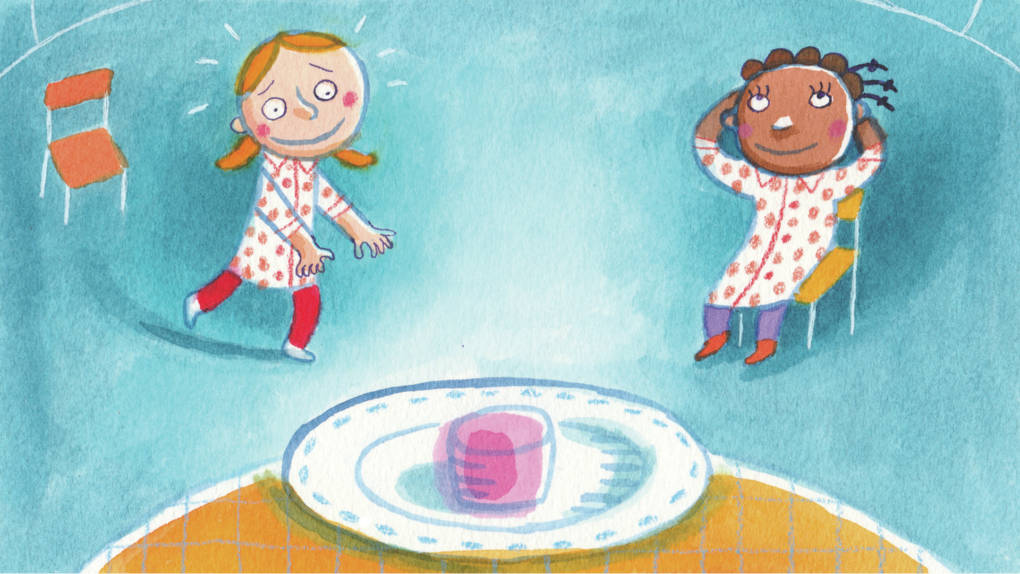
"caption": "German and Cameroonian kids were part of an experiment based on the classic \"marshmallow test\": Put a single treat before a child but tell the child if he or she waits, say, 10 minutes, a second treat will be given.",
"description": null,
"title": "German and Cameroonian kids were part of an experiment based on the classic \"marshmallow test\": Put a single treat before a child but tell the child if he or she waits, say, 10 minutes, a second treat will be given.",
"credit": " Nathalie Dieterle/for NPR",
"status": "inherit",
"isLoading": false,
"fetchFailed": false
},
"mindshift_48554": {
"type": "attachments",
"id": "mindshift_48554",
"meta": {
"index": "attachments_1716263798",
"site": "mindshift",
"id": "48554",
"found": true
},
"parent": 48144,
"imgSizes": {
"small": {
"file": "https://ww2.kqed.org/app/uploads/sites/23/2017/06/Caring-520x337.jpg",
"width": 520,
"mimeType": "image/jpeg",
"height": 337
},
"twentyfourteen-full-width": {
"file": "https://ww2.kqed.org/app/uploads/sites/23/2017/06/Caring-1038x576.jpg",
"width": 1038,
"mimeType": "image/jpeg",
"height": 576
},
"thumbnail": {
"file": "https://ww2.kqed.org/app/uploads/sites/23/2017/06/Caring-160x104.jpg",
"width": 160,
"mimeType": "image/jpeg",
"height": 104
},
"fd-sm": {
"file": "https://ww2.kqed.org/app/uploads/sites/23/2017/06/Caring-960x622.jpg",
"width": 960,
"mimeType": "image/jpeg",
"height": 622
},
"post-thumbnail": {
"file": "https://ww2.kqed.org/app/uploads/sites/23/2017/06/Caring-672x372.jpg",
"width": 672,
"mimeType": "image/jpeg",
"height": 372
},
"xsmall": {
"file": "https://ww2.kqed.org/app/uploads/sites/23/2017/06/Caring-375x243.jpg",
"width": 375,
"mimeType": "image/jpeg",
"height": 243
},
"kqedFullSize": {
"file": "https://ww2.kqed.org/app/uploads/sites/23/2017/06/Caring.jpg",
"width": 1663,
"height": 1077
},
"large": {
"file": "https://ww2.kqed.org/app/uploads/sites/23/2017/06/Caring-1020x661.jpg",
"width": 1020,
"mimeType": "image/jpeg",
"height": 661
},
"xlarge": {
"file": "https://ww2.kqed.org/app/uploads/sites/23/2017/06/Caring-1180x764.jpg",
"width": 1180,
"mimeType": "image/jpeg",
"height": 764
},
"guest-author-50": {
"file": "https://ww2.kqed.org/app/uploads/sites/23/2017/06/Caring-50x50.jpg",
"width": 50,
"mimeType": "image/jpeg",
"height": 50
},
"guest-author-96": {
"file": "https://ww2.kqed.org/app/uploads/sites/23/2017/06/Caring-96x96.jpg",
"width": 96,
"mimeType": "image/jpeg",
"height": 96
},
"medium": {
"file": "https://ww2.kqed.org/app/uploads/sites/23/2017/06/Caring-800x518.jpg",
"width": 800,
"mimeType": "image/jpeg",
"height": 518
},
"guest-author-64": {
"file": "https://ww2.kqed.org/app/uploads/sites/23/2017/06/Caring-64x64.jpg",
"width": 64,
"mimeType": "image/jpeg",
"height": 64
},
"guest-author-32": {
"file": "https://ww2.kqed.org/app/uploads/sites/23/2017/06/Caring-32x32.jpg",
"width": 32,
"mimeType": "image/jpeg",
"height": 32
},
"fd-med": {
"file": "https://ww2.kqed.org/app/uploads/sites/23/2017/06/Caring-1180x764.jpg",
"width": 1180,
"mimeType": "image/jpeg",
"height": 764
},
"detail": {
"file": "https://ww2.kqed.org/app/uploads/sites/23/2017/06/Caring-150x150.jpg",
"width": 150,
"mimeType": "image/jpeg",
"height": 150
},
"medium_large": {
"file": "https://ww2.kqed.org/app/uploads/sites/23/2017/06/Caring-768x497.jpg",
"width": 768,
"mimeType": "image/jpeg",
"height": 497
},
"guest-author-128": {
"file": "https://ww2.kqed.org/app/uploads/sites/23/2017/06/Caring-128x128.jpg",
"width": 128,
"mimeType": "image/jpeg",
"height": 128
},
"xxsmall": {
"file": "https://ww2.kqed.org/app/uploads/sites/23/2017/06/Caring-240x155.jpg",
"width": 240,
"mimeType": "image/jpeg",
"height": 155
}
},
"publishDate": 1498807935,
"modified": 1498807959,
"caption": null,
"description": null,
"title": "Caring",
"credit": "iStock/Kikovic ",
"status": "inherit",
"isLoading": false,
"fetchFailed": false
},
"mindshift_48456": {
"type": "attachments",
"id": "mindshift_48456",
"meta": {
"index": "attachments_1716263798",
"site": "mindshift",
"id": "48456",
"found": true
},
"parent": 48454,
"imgSizes": {
"small": {
"file": "https://ww2.kqed.org/app/uploads/sites/23/2017/06/dad-and-son-520x293.jpg",
"width": 520,
"mimeType": "image/jpeg",
"height": 293
},
"twentyfourteen-full-width": {
"file": "https://ww2.kqed.org/app/uploads/sites/23/2017/06/dad-and-son-1038x576.jpg",
"width": 1038,
"mimeType": "image/jpeg",
"height": 576
},
"thumbnail": {
"file": "https://ww2.kqed.org/app/uploads/sites/23/2017/06/dad-and-son-160x90.jpg",
"width": 160,
"mimeType": "image/jpeg",
"height": 90
},
"fd-sm": {
"file": "https://ww2.kqed.org/app/uploads/sites/23/2017/06/dad-and-son-960x540.jpg",
"width": 960,
"mimeType": "image/jpeg",
"height": 540
},
"post-thumbnail": {
"file": "https://ww2.kqed.org/app/uploads/sites/23/2017/06/dad-and-son-672x372.jpg",
"width": 672,
"mimeType": "image/jpeg",
"height": 372
},
"xsmall": {
"file": "https://ww2.kqed.org/app/uploads/sites/23/2017/06/dad-and-son-375x211.jpg",
"width": 375,
"mimeType": "image/jpeg",
"height": 211
},
"kqedFullSize": {
"file": "https://ww2.kqed.org/app/uploads/sites/23/2017/06/dad-and-son.jpg",
"width": 1920,
"height": 1080
},
"large": {
"file": "https://ww2.kqed.org/app/uploads/sites/23/2017/06/dad-and-son-1020x574.jpg",
"width": 1020,
"mimeType": "image/jpeg",
"height": 574
},
"xlarge": {
"file": "https://ww2.kqed.org/app/uploads/sites/23/2017/06/dad-and-son-1180x664.jpg",
"width": 1180,
"mimeType": "image/jpeg",
"height": 664
},
"guest-author-50": {
"file": "https://ww2.kqed.org/app/uploads/sites/23/2017/06/dad-and-son-50x50.jpg",
"width": 50,
"mimeType": "image/jpeg",
"height": 50
},
"guest-author-96": {
"file": "https://ww2.kqed.org/app/uploads/sites/23/2017/06/dad-and-son-96x96.jpg",
"width": 96,
"mimeType": "image/jpeg",
"height": 96
},
"medium": {
"file": "https://ww2.kqed.org/app/uploads/sites/23/2017/06/dad-and-son-800x450.jpg",
"width": 800,
"mimeType": "image/jpeg",
"height": 450
},
"guest-author-64": {
"file": "https://ww2.kqed.org/app/uploads/sites/23/2017/06/dad-and-son-64x64.jpg",
"width": 64,
"mimeType": "image/jpeg",
"height": 64
},
"guest-author-32": {
"file": "https://ww2.kqed.org/app/uploads/sites/23/2017/06/dad-and-son-32x32.jpg",
"width": 32,
"mimeType": "image/jpeg",
"height": 32
},
"fd-lrg": {
"file": "https://ww2.kqed.org/app/uploads/sites/23/2017/06/dad-and-son-1920x1080.jpg",
"width": 1920,
"mimeType": "image/jpeg",
"height": 1080
},
"fd-med": {
"file": "https://ww2.kqed.org/app/uploads/sites/23/2017/06/dad-and-son-1180x664.jpg",
"width": 1180,
"mimeType": "image/jpeg",
"height": 664
},
"full-width": {
"file": "https://ww2.kqed.org/app/uploads/sites/23/2017/06/dad-and-son-1920x1080.jpg",
"width": 1920,
"mimeType": "image/jpeg",
"height": 1080
},
"detail": {
"file": "https://ww2.kqed.org/app/uploads/sites/23/2017/06/dad-and-son-150x150.jpg",
"width": 150,
"mimeType": "image/jpeg",
"height": 150
},
"medium_large": {
"file": "https://ww2.kqed.org/app/uploads/sites/23/2017/06/dad-and-son-768x432.jpg",
"width": 768,
"mimeType": "image/jpeg",
"height": 432
},
"guest-author-128": {
"file": "https://ww2.kqed.org/app/uploads/sites/23/2017/06/dad-and-son-128x128.jpg",
"width": 128,
"mimeType": "image/jpeg",
"height": 128
},
"xxsmall": {
"file": "https://ww2.kqed.org/app/uploads/sites/23/2017/06/dad-and-son-240x135.jpg",
"width": 240,
"mimeType": "image/jpeg",
"height": 135
}
},
"publishDate": 1497646218,
"modified": 1497646250,
"caption": null,
"description": null,
"title": "dad-and-son",
"credit": "iStock",
"status": "inherit",
"isLoading": false,
"fetchFailed": false
},
"mindshift_48529": {
"type": "attachments",
"id": "mindshift_48529",
"meta": {
"index": "attachments_1716263798",
"site": "mindshift",
"id": "48529",
"found": true
},
"parent": 48526,
"imgSizes": {
"small": {
"file": "https://ww2.kqed.org/app/uploads/sites/23/2017/06/French-Middle-School-Students-2c7489c9f62f58546673bde49ac32c6444d1485d-s800-c85-520x389.jpg",
"width": 520,
"mimeType": "image/jpeg",
"height": 389
},
"twentyfourteen-full-width": {
"file": "https://ww2.kqed.org/app/uploads/sites/23/2017/06/French-Middle-School-Students-2c7489c9f62f58546673bde49ac32c6444d1485d-s800-c85-800x576.jpg",
"width": 800,
"mimeType": "image/jpeg",
"height": 576
},
"thumbnail": {
"file": "https://ww2.kqed.org/app/uploads/sites/23/2017/06/French-Middle-School-Students-2c7489c9f62f58546673bde49ac32c6444d1485d-s800-c85-160x120.jpg",
"width": 160,
"mimeType": "image/jpeg",
"height": 120
},
"post-thumbnail": {
"file": "https://ww2.kqed.org/app/uploads/sites/23/2017/06/French-Middle-School-Students-2c7489c9f62f58546673bde49ac32c6444d1485d-s800-c85-672x372.jpg",
"width": 672,
"mimeType": "image/jpeg",
"height": 372
},
"xsmall": {
"file": "https://ww2.kqed.org/app/uploads/sites/23/2017/06/French-Middle-School-Students-2c7489c9f62f58546673bde49ac32c6444d1485d-s800-c85-375x281.jpg",
"width": 375,
"mimeType": "image/jpeg",
"height": 281
},
"kqedFullSize": {
"file": "https://ww2.kqed.org/app/uploads/sites/23/2017/06/French-Middle-School-Students-2c7489c9f62f58546673bde49ac32c6444d1485d-s800-c85.jpg",
"width": 800,
"height": 599
},
"guest-author-50": {
"file": "https://ww2.kqed.org/app/uploads/sites/23/2017/06/French-Middle-School-Students-2c7489c9f62f58546673bde49ac32c6444d1485d-s800-c85-50x50.jpg",
"width": 50,
"mimeType": "image/jpeg",
"height": 50
},
"guest-author-96": {
"file": "https://ww2.kqed.org/app/uploads/sites/23/2017/06/French-Middle-School-Students-2c7489c9f62f58546673bde49ac32c6444d1485d-s800-c85-96x96.jpg",
"width": 96,
"mimeType": "image/jpeg",
"height": 96
},
"medium": {
"file": "https://ww2.kqed.org/app/uploads/sites/23/2017/06/French-Middle-School-Students-2c7489c9f62f58546673bde49ac32c6444d1485d-s800-c85-800x599.jpg",
"width": 800,
"mimeType": "image/jpeg",
"height": 599
},
"guest-author-64": {
"file": "https://ww2.kqed.org/app/uploads/sites/23/2017/06/French-Middle-School-Students-2c7489c9f62f58546673bde49ac32c6444d1485d-s800-c85-64x64.jpg",
"width": 64,
"mimeType": "image/jpeg",
"height": 64
},
"guest-author-32": {
"file": "https://ww2.kqed.org/app/uploads/sites/23/2017/06/French-Middle-School-Students-2c7489c9f62f58546673bde49ac32c6444d1485d-s800-c85-32x32.jpg",
"width": 32,
"mimeType": "image/jpeg",
"height": 32
},
"detail": {
"file": "https://ww2.kqed.org/app/uploads/sites/23/2017/06/French-Middle-School-Students-2c7489c9f62f58546673bde49ac32c6444d1485d-s800-c85-150x150.jpg",
"width": 150,
"mimeType": "image/jpeg",
"height": 150
},
"medium_large": {
"file": "https://ww2.kqed.org/app/uploads/sites/23/2017/06/French-Middle-School-Students-2c7489c9f62f58546673bde49ac32c6444d1485d-s800-c85-768x575.jpg",
"width": 768,
"mimeType": "image/jpeg",
"height": 575
},
"guest-author-128": {
"file": "https://ww2.kqed.org/app/uploads/sites/23/2017/06/French-Middle-School-Students-2c7489c9f62f58546673bde49ac32c6444d1485d-s800-c85-128x128.jpg",
"width": 128,
"mimeType": "image/jpeg",
"height": 128
},
"xxsmall": {
"file": "https://ww2.kqed.org/app/uploads/sites/23/2017/06/French-Middle-School-Students-2c7489c9f62f58546673bde49ac32c6444d1485d-s800-c85-240x180.jpg",
"width": 240,
"mimeType": "image/jpeg",
"height": 180
}
},
"publishDate": 1498564830,
"modified": 1498564870,
"caption": "Eighth graders Cristian Munoz (left) and Clifton Steward work on their Chromebooks during a language arts class at French Middle School in Topeka, Kan. Both students were eligible to bring the devices home this summer.",
"description": null,
"title": "French Middle School Students-2c7489c9f62f58546673bde49ac32c6444d1485d-s800-c85",
"credit": "Scott Ritter/Courtesy of French Middle School",
"status": "inherit",
"isLoading": false,
"fetchFailed": false
},
"mindshift_48522": {
"type": "attachments",
"id": "mindshift_48522",
"meta": {
"index": "attachments_1716263798",
"site": "mindshift",
"id": "48522",
"found": true
},
"parent": 48476,
"imgSizes": {
"small": {
"file": "https://ww2.kqed.org/app/uploads/sites/23/2017/06/DVX-520x293.jpg",
"width": 520,
"mimeType": "image/jpeg",
"height": 293
},
"twentyfourteen-full-width": {
"file": "https://ww2.kqed.org/app/uploads/sites/23/2017/06/DVX-1038x576.jpg",
"width": 1038,
"mimeType": "image/jpeg",
"height": 576
},
"thumbnail": {
"file": "https://ww2.kqed.org/app/uploads/sites/23/2017/06/DVX-160x90.jpg",
"width": 160,
"mimeType": "image/jpeg",
"height": 90
},
"fd-sm": {
"file": "https://ww2.kqed.org/app/uploads/sites/23/2017/06/DVX-960x540.jpg",
"width": 960,
"mimeType": "image/jpeg",
"height": 540
},
"post-thumbnail": {
"file": "https://ww2.kqed.org/app/uploads/sites/23/2017/06/DVX-672x372.jpg",
"width": 672,
"mimeType": "image/jpeg",
"height": 372
},
"xsmall": {
"file": "https://ww2.kqed.org/app/uploads/sites/23/2017/06/DVX-375x211.jpg",
"width": 375,
"mimeType": "image/jpeg",
"height": 211
},
"kqedFullSize": {
"file": "https://ww2.kqed.org/app/uploads/sites/23/2017/06/DVX-e1498463611624.jpg",
"width": 1920,
"height": 1080
},
"large": {
"file": "https://ww2.kqed.org/app/uploads/sites/23/2017/06/DVX-1020x574.jpg",
"width": 1020,
"mimeType": "image/jpeg",
"height": 574
},
"xlarge": {
"file": "https://ww2.kqed.org/app/uploads/sites/23/2017/06/DVX-1180x664.jpg",
"width": 1180,
"mimeType": "image/jpeg",
"height": 664
},
"guest-author-50": {
"file": "https://ww2.kqed.org/app/uploads/sites/23/2017/06/DVX-50x50.jpg",
"width": 50,
"mimeType": "image/jpeg",
"height": 50
},
"guest-author-96": {
"file": "https://ww2.kqed.org/app/uploads/sites/23/2017/06/DVX-96x96.jpg",
"width": 96,
"mimeType": "image/jpeg",
"height": 96
},
"medium": {
"file": "https://ww2.kqed.org/app/uploads/sites/23/2017/06/DVX-800x450.jpg",
"width": 800,
"mimeType": "image/jpeg",
"height": 450
},
"guest-author-64": {
"file": "https://ww2.kqed.org/app/uploads/sites/23/2017/06/DVX-64x64.jpg",
"width": 64,
"mimeType": "image/jpeg",
"height": 64
},
"guest-author-32": {
"file": "https://ww2.kqed.org/app/uploads/sites/23/2017/06/DVX-32x32.jpg",
"width": 32,
"mimeType": "image/jpeg",
"height": 32
},
"fd-lrg": {
"file": "https://ww2.kqed.org/app/uploads/sites/23/2017/06/DVX-1920x1080.jpg",
"width": 1920,
"mimeType": "image/jpeg",
"height": 1080
},
"fd-med": {
"file": "https://ww2.kqed.org/app/uploads/sites/23/2017/06/DVX-1180x664.jpg",
"width": 1180,
"mimeType": "image/jpeg",
"height": 664
},
"full-width": {
"file": "https://ww2.kqed.org/app/uploads/sites/23/2017/06/DVX-1920x1080.jpg",
"width": 1920,
"mimeType": "image/jpeg",
"height": 1080
},
"detail": {
"file": "https://ww2.kqed.org/app/uploads/sites/23/2017/06/DVX-150x150.jpg",
"width": 150,
"mimeType": "image/jpeg",
"height": 150
},
"medium_large": {
"file": "https://ww2.kqed.org/app/uploads/sites/23/2017/06/DVX-768x432.jpg",
"width": 768,
"mimeType": "image/jpeg",
"height": 432
},
"guest-author-128": {
"file": "https://ww2.kqed.org/app/uploads/sites/23/2017/06/DVX-128x128.jpg",
"width": 128,
"mimeType": "image/jpeg",
"height": 128
},
"xxsmall": {
"file": "https://ww2.kqed.org/app/uploads/sites/23/2017/06/DVX-240x135.jpg",
"width": 240,
"mimeType": "image/jpeg",
"height": 135
}
},
"publishDate": 1498463582,
"modified": 1498463633,
"caption": "DVX student Jessica was struggling with a concept so she hopped on Skype with one of her DVX coaches, Mary Chan. ",
"description": null,
"title": "DVX",
"credit": "Courtesy DVX",
"status": "inherit",
"isLoading": false,
"fetchFailed": false
},
"mindshift_48501": {
"type": "attachments",
"id": "mindshift_48501",
"meta": {
"index": "attachments_1716263798",
"site": "mindshift",
"id": "48501",
"found": true
},
"parent": 48480,
"imgSizes": {
"small": {
"file": "https://ww2.kqed.org/app/uploads/sites/23/2017/06/light-bulbs-520x347.jpg",
"width": 520,
"mimeType": "image/jpeg",
"height": 347
},
"twentyfourteen-full-width": {
"file": "https://ww2.kqed.org/app/uploads/sites/23/2017/06/light-bulbs-1038x576.jpg",
"width": 1038,
"mimeType": "image/jpeg",
"height": 576
},
"thumbnail": {
"file": "https://ww2.kqed.org/app/uploads/sites/23/2017/06/light-bulbs-160x107.jpg",
"width": 160,
"mimeType": "image/jpeg",
"height": 107
},
"fd-sm": {
"file": "https://ww2.kqed.org/app/uploads/sites/23/2017/06/light-bulbs-960x640.jpg",
"width": 960,
"mimeType": "image/jpeg",
"height": 640
},
"post-thumbnail": {
"file": "https://ww2.kqed.org/app/uploads/sites/23/2017/06/light-bulbs-672x372.jpg",
"width": 672,
"mimeType": "image/jpeg",
"height": 372
},
"xsmall": {
"file": "https://ww2.kqed.org/app/uploads/sites/23/2017/06/light-bulbs-375x250.jpg",
"width": 375,
"mimeType": "image/jpeg",
"height": 250
},
"kqedFullSize": {
"file": "https://ww2.kqed.org/app/uploads/sites/23/2017/06/light-bulbs-e1498221357610.jpg",
"width": 1920,
"height": 1280
},
"large": {
"file": "https://ww2.kqed.org/app/uploads/sites/23/2017/06/light-bulbs-1020x680.jpg",
"width": 1020,
"mimeType": "image/jpeg",
"height": 680
},
"xlarge": {
"file": "https://ww2.kqed.org/app/uploads/sites/23/2017/06/light-bulbs-1180x787.jpg",
"width": 1180,
"mimeType": "image/jpeg",
"height": 787
},
"guest-author-50": {
"file": "https://ww2.kqed.org/app/uploads/sites/23/2017/06/light-bulbs-50x50.jpg",
"width": 50,
"mimeType": "image/jpeg",
"height": 50
},
"guest-author-96": {
"file": "https://ww2.kqed.org/app/uploads/sites/23/2017/06/light-bulbs-96x96.jpg",
"width": 96,
"mimeType": "image/jpeg",
"height": 96
},
"medium": {
"file": "https://ww2.kqed.org/app/uploads/sites/23/2017/06/light-bulbs-800x533.jpg",
"width": 800,
"mimeType": "image/jpeg",
"height": 533
},
"guest-author-64": {
"file": "https://ww2.kqed.org/app/uploads/sites/23/2017/06/light-bulbs-64x64.jpg",
"width": 64,
"mimeType": "image/jpeg",
"height": 64
},
"guest-author-32": {
"file": "https://ww2.kqed.org/app/uploads/sites/23/2017/06/light-bulbs-32x32.jpg",
"width": 32,
"mimeType": "image/jpeg",
"height": 32
},
"fd-lrg": {
"file": "https://ww2.kqed.org/app/uploads/sites/23/2017/06/light-bulbs-1920x1280.jpg",
"width": 1920,
"mimeType": "image/jpeg",
"height": 1280
},
"fd-med": {
"file": "https://ww2.kqed.org/app/uploads/sites/23/2017/06/light-bulbs-1180x787.jpg",
"width": 1180,
"mimeType": "image/jpeg",
"height": 787
},
"full-width": {
"file": "https://ww2.kqed.org/app/uploads/sites/23/2017/06/light-bulbs-1920x1280.jpg",
"width": 1920,
"mimeType": "image/jpeg",
"height": 1280
},
"detail": {
"file": "https://ww2.kqed.org/app/uploads/sites/23/2017/06/light-bulbs-150x150.jpg",
"width": 150,
"mimeType": "image/jpeg",
"height": 150
},
"medium_large": {
"file": "https://ww2.kqed.org/app/uploads/sites/23/2017/06/light-bulbs-768x512.jpg",
"width": 768,
"mimeType": "image/jpeg",
"height": 512
},
"guest-author-128": {
"file": "https://ww2.kqed.org/app/uploads/sites/23/2017/06/light-bulbs-128x128.jpg",
"width": 128,
"mimeType": "image/jpeg",
"height": 128
},
"xxsmall": {
"file": "https://ww2.kqed.org/app/uploads/sites/23/2017/06/light-bulbs-240x160.jpg",
"width": 240,
"mimeType": "image/jpeg",
"height": 160
}
},
"publishDate": 1498221313,
"modified": 1498221344,
"caption": null,
"description": null,
"title": "light-bulbs",
"credit": "iStock/phototechno",
"status": "inherit",
"isLoading": false,
"fetchFailed": false
},
"mindshift_48469": {
"type": "attachments",
"id": "mindshift_48469",
"meta": {
"index": "attachments_1716263798",
"site": "mindshift",
"id": "48469",
"found": true
},
"parent": 48468,
"imgSizes": {
"small": {
"file": "https://ww2.kqed.org/app/uploads/sites/23/2017/06/constraints-520x261.png",
"width": 520,
"mimeType": "image/png",
"height": 261
},
"thumbnail": {
"file": "https://ww2.kqed.org/app/uploads/sites/23/2017/06/constraints-160x80.png",
"width": 160,
"mimeType": "image/png",
"height": 80
},
"xsmall": {
"file": "https://ww2.kqed.org/app/uploads/sites/23/2017/06/constraints-375x188.png",
"width": 375,
"mimeType": "image/png",
"height": 188
},
"kqedFullSize": {
"file": "https://ww2.kqed.org/app/uploads/sites/23/2017/06/constraints.png",
"width": 642,
"height": 322
},
"guest-author-50": {
"file": "https://ww2.kqed.org/app/uploads/sites/23/2017/06/constraints-50x50.png",
"width": 50,
"mimeType": "image/png",
"height": 50
},
"guest-author-96": {
"file": "https://ww2.kqed.org/app/uploads/sites/23/2017/06/constraints-96x96.png",
"width": 96,
"mimeType": "image/png",
"height": 96
},
"guest-author-64": {
"file": "https://ww2.kqed.org/app/uploads/sites/23/2017/06/constraints-64x64.png",
"width": 64,
"mimeType": "image/png",
"height": 64
},
"detail": {
"file": "https://ww2.kqed.org/app/uploads/sites/23/2017/06/constraints-150x150.png",
"width": 150,
"mimeType": "image/png",
"height": 150
},
"guest-author-32": {
"file": "https://ww2.kqed.org/app/uploads/sites/23/2017/06/constraints-32x32.png",
"width": 32,
"mimeType": "image/png",
"height": 32
},
"guest-author-128": {
"file": "https://ww2.kqed.org/app/uploads/sites/23/2017/06/constraints-128x128.png",
"width": 128,
"mimeType": "image/png",
"height": 128
},
"xxsmall": {
"file": "https://ww2.kqed.org/app/uploads/sites/23/2017/06/constraints-240x120.png",
"width": 240,
"mimeType": "image/png",
"height": 120
}
},
"publishDate": 1497999332,
"modified": 1497999396,
"caption": null,
"description": null,
"title": "constraints",
"credit": "TED-ED/\u003ca href=\"http://ed.ted.com/lessons/the-power-of-creative-constraints-brandon-rodriguez\">Máté Muszka\u003c/a> ",
"status": "inherit",
"isLoading": false,
"fetchFailed": false
},
"mindshift_48462": {
"type": "attachments",
"id": "mindshift_48462",
"meta": {
"index": "attachments_1716263798",
"site": "mindshift",
"id": "48462",
"found": true
},
"parent": 48407,
"imgSizes": {
"small": {
"file": "https://ww2.kqed.org/app/uploads/sites/23/2017/06/161216_NYC_HS_GRAND_GrowingPains_005-520x347.jpg",
"width": 520,
"mimeType": "image/jpeg",
"height": 347
},
"twentyfourteen-full-width": {
"file": "https://ww2.kqed.org/app/uploads/sites/23/2017/06/161216_NYC_HS_GRAND_GrowingPains_005-1038x576.jpg",
"width": 1038,
"mimeType": "image/jpeg",
"height": 576
},
"thumbnail": {
"file": "https://ww2.kqed.org/app/uploads/sites/23/2017/06/161216_NYC_HS_GRAND_GrowingPains_005-160x107.jpg",
"width": 160,
"mimeType": "image/jpeg",
"height": 107
},
"fd-sm": {
"file": "https://ww2.kqed.org/app/uploads/sites/23/2017/06/161216_NYC_HS_GRAND_GrowingPains_005-960x640.jpg",
"width": 960,
"mimeType": "image/jpeg",
"height": 640
},
"post-thumbnail": {
"file": "https://ww2.kqed.org/app/uploads/sites/23/2017/06/161216_NYC_HS_GRAND_GrowingPains_005-672x372.jpg",
"width": 672,
"mimeType": "image/jpeg",
"height": 372
},
"xsmall": {
"file": "https://ww2.kqed.org/app/uploads/sites/23/2017/06/161216_NYC_HS_GRAND_GrowingPains_005-375x250.jpg",
"width": 375,
"mimeType": "image/jpeg",
"height": 250
},
"kqedFullSize": {
"file": "https://ww2.kqed.org/app/uploads/sites/23/2017/06/161216_NYC_HS_GRAND_GrowingPains_005-e1497857830454.jpg",
"width": 1920,
"height": 1280
},
"large": {
"file": "https://ww2.kqed.org/app/uploads/sites/23/2017/06/161216_NYC_HS_GRAND_GrowingPains_005-1020x680.jpg",
"width": 1020,
"mimeType": "image/jpeg",
"height": 680
},
"xlarge": {
"file": "https://ww2.kqed.org/app/uploads/sites/23/2017/06/161216_NYC_HS_GRAND_GrowingPains_005-1180x787.jpg",
"width": 1180,
"mimeType": "image/jpeg",
"height": 787
},
"guest-author-50": {
"file": "https://ww2.kqed.org/app/uploads/sites/23/2017/06/161216_NYC_HS_GRAND_GrowingPains_005-50x50.jpg",
"width": 50,
"mimeType": "image/jpeg",
"height": 50
},
"guest-author-96": {
"file": "https://ww2.kqed.org/app/uploads/sites/23/2017/06/161216_NYC_HS_GRAND_GrowingPains_005-96x96.jpg",
"width": 96,
"mimeType": "image/jpeg",
"height": 96
},
"medium": {
"file": "https://ww2.kqed.org/app/uploads/sites/23/2017/06/161216_NYC_HS_GRAND_GrowingPains_005-800x533.jpg",
"width": 800,
"mimeType": "image/jpeg",
"height": 533
},
"guest-author-64": {
"file": "https://ww2.kqed.org/app/uploads/sites/23/2017/06/161216_NYC_HS_GRAND_GrowingPains_005-64x64.jpg",
"width": 64,
"mimeType": "image/jpeg",
"height": 64
},
"guest-author-32": {
"file": "https://ww2.kqed.org/app/uploads/sites/23/2017/06/161216_NYC_HS_GRAND_GrowingPains_005-32x32.jpg",
"width": 32,
"mimeType": "image/jpeg",
"height": 32
},
"fd-lrg": {
"file": "https://ww2.kqed.org/app/uploads/sites/23/2017/06/161216_NYC_HS_GRAND_GrowingPains_005-1920x1280.jpg",
"width": 1920,
"mimeType": "image/jpeg",
"height": 1280
},
"fd-med": {
"file": "https://ww2.kqed.org/app/uploads/sites/23/2017/06/161216_NYC_HS_GRAND_GrowingPains_005-1180x787.jpg",
"width": 1180,
"mimeType": "image/jpeg",
"height": 787
},
"full-width": {
"file": "https://ww2.kqed.org/app/uploads/sites/23/2017/06/161216_NYC_HS_GRAND_GrowingPains_005-1920x1280.jpg",
"width": 1920,
"mimeType": "image/jpeg",
"height": 1280
},
"detail": {
"file": "https://ww2.kqed.org/app/uploads/sites/23/2017/06/161216_NYC_HS_GRAND_GrowingPains_005-150x150.jpg",
"width": 150,
"mimeType": "image/jpeg",
"height": 150
},
"medium_large": {
"file": "https://ww2.kqed.org/app/uploads/sites/23/2017/06/161216_NYC_HS_GRAND_GrowingPains_005-768x512.jpg",
"width": 768,
"mimeType": "image/jpeg",
"height": 512
},
"guest-author-128": {
"file": "https://ww2.kqed.org/app/uploads/sites/23/2017/06/161216_NYC_HS_GRAND_GrowingPains_005-128x128.jpg",
"width": 128,
"mimeType": "image/jpeg",
"height": 128
},
"xxsmall": {
"file": "https://ww2.kqed.org/app/uploads/sites/23/2017/06/161216_NYC_HS_GRAND_GrowingPains_005-240x160.jpg",
"width": 240,
"mimeType": "image/jpeg",
"height": 160
}
},
"publishDate": 1497857795,
"modified": 1497857935,
"caption": "Raheem Ragsdale performs his story as part of The Moth's GrandSLAM for high school students.",
"description": null,
"title": "161216_NYC_HS_GRAND_GrowingPains_005",
"credit": "The Moth/Autumn Stein",
"status": "inherit",
"isLoading": false,
"fetchFailed": false
},
"mindshift_48439": {
"type": "attachments",
"id": "mindshift_48439",
"meta": {
"index": "attachments_1716263798",
"site": "mindshift",
"id": "48439",
"found": true
},
"parent": 48430,
"imgSizes": {
"small": {
"file": "https://ww2.kqed.org/app/uploads/sites/23/2017/06/Globe-1-520x389.jpg",
"width": 520,
"mimeType": "image/jpeg",
"height": 389
},
"twentyfourteen-full-width": {
"file": "https://ww2.kqed.org/app/uploads/sites/23/2017/06/Globe-1-1038x576.jpg",
"width": 1038,
"mimeType": "image/jpeg",
"height": 576
},
"thumbnail": {
"file": "https://ww2.kqed.org/app/uploads/sites/23/2017/06/Globe-1-160x120.jpg",
"width": 160,
"mimeType": "image/jpeg",
"height": 120
},
"fd-sm": {
"file": "https://ww2.kqed.org/app/uploads/sites/23/2017/06/Globe-1-960x719.jpg",
"width": 960,
"mimeType": "image/jpeg",
"height": 719
},
"post-thumbnail": {
"file": "https://ww2.kqed.org/app/uploads/sites/23/2017/06/Globe-1-672x372.jpg",
"width": 672,
"mimeType": "image/jpeg",
"height": 372
},
"xsmall": {
"file": "https://ww2.kqed.org/app/uploads/sites/23/2017/06/Globe-1-375x281.jpg",
"width": 375,
"mimeType": "image/jpeg",
"height": 281
},
"kqedFullSize": {
"file": "https://ww2.kqed.org/app/uploads/sites/23/2017/06/Globe-1-e1497542909812.jpg",
"width": 1920,
"height": 1437
},
"large": {
"file": "https://ww2.kqed.org/app/uploads/sites/23/2017/06/Globe-1-1020x764.jpg",
"width": 1020,
"mimeType": "image/jpeg",
"height": 764
},
"xlarge": {
"file": "https://ww2.kqed.org/app/uploads/sites/23/2017/06/Globe-1-1180x883.jpg",
"width": 1180,
"mimeType": "image/jpeg",
"height": 883
},
"guest-author-50": {
"file": "https://ww2.kqed.org/app/uploads/sites/23/2017/06/Globe-1-50x50.jpg",
"width": 50,
"mimeType": "image/jpeg",
"height": 50
},
"guest-author-96": {
"file": "https://ww2.kqed.org/app/uploads/sites/23/2017/06/Globe-1-96x96.jpg",
"width": 96,
"mimeType": "image/jpeg",
"height": 96
},
"medium": {
"file": "https://ww2.kqed.org/app/uploads/sites/23/2017/06/Globe-1-800x599.jpg",
"width": 800,
"mimeType": "image/jpeg",
"height": 599
},
"guest-author-64": {
"file": "https://ww2.kqed.org/app/uploads/sites/23/2017/06/Globe-1-64x64.jpg",
"width": 64,
"mimeType": "image/jpeg",
"height": 64
},
"guest-author-32": {
"file": "https://ww2.kqed.org/app/uploads/sites/23/2017/06/Globe-1-32x32.jpg",
"width": 32,
"mimeType": "image/jpeg",
"height": 32
},
"fd-lrg": {
"file": "https://ww2.kqed.org/app/uploads/sites/23/2017/06/Globe-1-1920x1437.jpg",
"width": 1920,
"mimeType": "image/jpeg",
"height": 1437
},
"fd-med": {
"file": "https://ww2.kqed.org/app/uploads/sites/23/2017/06/Globe-1-1180x883.jpg",
"width": 1180,
"mimeType": "image/jpeg",
"height": 883
},
"full-width": {
"file": "https://ww2.kqed.org/app/uploads/sites/23/2017/06/Globe-1-1920x1437.jpg",
"width": 1920,
"mimeType": "image/jpeg",
"height": 1437
},
"detail": {
"file": "https://ww2.kqed.org/app/uploads/sites/23/2017/06/Globe-1-150x150.jpg",
"width": 150,
"mimeType": "image/jpeg",
"height": 150
},
"medium_large": {
"file": "https://ww2.kqed.org/app/uploads/sites/23/2017/06/Globe-1-768x575.jpg",
"width": 768,
"mimeType": "image/jpeg",
"height": 575
},
"guest-author-128": {
"file": "https://ww2.kqed.org/app/uploads/sites/23/2017/06/Globe-1-128x128.jpg",
"width": 128,
"mimeType": "image/jpeg",
"height": 128
},
"xxsmall": {
"file": "https://ww2.kqed.org/app/uploads/sites/23/2017/06/Globe-1-240x180.jpg",
"width": 240,
"mimeType": "image/jpeg",
"height": 180
}
},
"publishDate": 1497542870,
"modified": 1497542925,
"caption": null,
"description": null,
"title": null,
"credit": "iStock/RomoloTavani ",
"status": "inherit",
"isLoading": false,
"fetchFailed": false
},
"mindshift_48420": {
"type": "attachments",
"id": "mindshift_48420",
"meta": {
"index": "attachments_1716263798",
"site": "mindshift",
"id": "48420",
"found": true
},
"parent": 48112,
"imgSizes": {
"small": {
"file": "https://ww2.kqed.org/app/uploads/sites/23/2017/06/iStock-535450666-520x320.jpg",
"width": 520,
"mimeType": "image/jpeg",
"height": 320
},
"twentyfourteen-full-width": {
"file": "https://ww2.kqed.org/app/uploads/sites/23/2017/06/iStock-535450666-1038x576.jpg",
"width": 1038,
"mimeType": "image/jpeg",
"height": 576
},
"thumbnail": {
"file": "https://ww2.kqed.org/app/uploads/sites/23/2017/06/iStock-535450666-160x98.jpg",
"width": 160,
"mimeType": "image/jpeg",
"height": 98
},
"fd-sm": {
"file": "https://ww2.kqed.org/app/uploads/sites/23/2017/06/iStock-535450666-960x590.jpg",
"width": 960,
"mimeType": "image/jpeg",
"height": 590
},
"post-thumbnail": {
"file": "https://ww2.kqed.org/app/uploads/sites/23/2017/06/iStock-535450666-672x372.jpg",
"width": 672,
"mimeType": "image/jpeg",
"height": 372
},
"xsmall": {
"file": "https://ww2.kqed.org/app/uploads/sites/23/2017/06/iStock-535450666-375x231.jpg",
"width": 375,
"mimeType": "image/jpeg",
"height": 231
},
"kqedFullSize": {
"file": "https://ww2.kqed.org/app/uploads/sites/23/2017/06/iStock-535450666-e1497424522180.jpg",
"width": 1920,
"height": 1181
},
"large": {
"file": "https://ww2.kqed.org/app/uploads/sites/23/2017/06/iStock-535450666-1020x627.jpg",
"width": 1020,
"mimeType": "image/jpeg",
"height": 627
},
"xlarge": {
"file": "https://ww2.kqed.org/app/uploads/sites/23/2017/06/iStock-535450666-1180x726.jpg",
"width": 1180,
"mimeType": "image/jpeg",
"height": 726
},
"guest-author-50": {
"file": "https://ww2.kqed.org/app/uploads/sites/23/2017/06/iStock-535450666-50x50.jpg",
"width": 50,
"mimeType": "image/jpeg",
"height": 50
},
"guest-author-96": {
"file": "https://ww2.kqed.org/app/uploads/sites/23/2017/06/iStock-535450666-96x96.jpg",
"width": 96,
"mimeType": "image/jpeg",
"height": 96
},
"medium": {
"file": "https://ww2.kqed.org/app/uploads/sites/23/2017/06/iStock-535450666-800x492.jpg",
"width": 800,
"mimeType": "image/jpeg",
"height": 492
},
"guest-author-64": {
"file": "https://ww2.kqed.org/app/uploads/sites/23/2017/06/iStock-535450666-64x64.jpg",
"width": 64,
"mimeType": "image/jpeg",
"height": 64
},
"guest-author-32": {
"file": "https://ww2.kqed.org/app/uploads/sites/23/2017/06/iStock-535450666-32x32.jpg",
"width": 32,
"mimeType": "image/jpeg",
"height": 32
},
"fd-lrg": {
"file": "https://ww2.kqed.org/app/uploads/sites/23/2017/06/iStock-535450666-1920x1181.jpg",
"width": 1920,
"mimeType": "image/jpeg",
"height": 1181
},
"fd-med": {
"file": "https://ww2.kqed.org/app/uploads/sites/23/2017/06/iStock-535450666-1180x726.jpg",
"width": 1180,
"mimeType": "image/jpeg",
"height": 726
},
"full-width": {
"file": "https://ww2.kqed.org/app/uploads/sites/23/2017/06/iStock-535450666-1920x1181.jpg",
"width": 1920,
"mimeType": "image/jpeg",
"height": 1181
},
"detail": {
"file": "https://ww2.kqed.org/app/uploads/sites/23/2017/06/iStock-535450666-150x150.jpg",
"width": 150,
"mimeType": "image/jpeg",
"height": 150
},
"medium_large": {
"file": "https://ww2.kqed.org/app/uploads/sites/23/2017/06/iStock-535450666-768x472.jpg",
"width": 768,
"mimeType": "image/jpeg",
"height": 472
},
"guest-author-128": {
"file": "https://ww2.kqed.org/app/uploads/sites/23/2017/06/iStock-535450666-128x128.jpg",
"width": 128,
"mimeType": "image/jpeg",
"height": 128
},
"xxsmall": {
"file": "https://ww2.kqed.org/app/uploads/sites/23/2017/06/iStock-535450666-240x148.jpg",
"width": 240,
"mimeType": "image/jpeg",
"height": 148
}
},
"publishDate": 1497424485,
"modified": 1497424515,
"caption": null,
"description": null,
"title": null,
"credit": "iStock/CherriesJD ",
"status": "inherit",
"isLoading": false,
"fetchFailed": false
},
"mindshift_48402": {
"type": "attachments",
"id": "mindshift_48402",
"meta": {
"index": "attachments_1716263798",
"site": "mindshift",
"id": "48402",
"found": true
},
"parent": 48401,
"imgSizes": {
"small": {
"file": "https://ww2.kqed.org/app/uploads/sites/23/2017/06/k_slattery-brainreconnections_wide-a6f0f13f1bd8c922b53db56aaf20fe63f212ff6d-520x292.jpg",
"width": 520,
"mimeType": "image/jpeg",
"height": 292
},
"twentyfourteen-full-width": {
"file": "https://ww2.kqed.org/app/uploads/sites/23/2017/06/k_slattery-brainreconnections_wide-a6f0f13f1bd8c922b53db56aaf20fe63f212ff6d-1038x576.jpg",
"width": 1038,
"mimeType": "image/jpeg",
"height": 576
},
"thumbnail": {
"file": "https://ww2.kqed.org/app/uploads/sites/23/2017/06/k_slattery-brainreconnections_wide-a6f0f13f1bd8c922b53db56aaf20fe63f212ff6d-160x90.jpg",
"width": 160,
"mimeType": "image/jpeg",
"height": 90
},
"fd-sm": {
"file": "https://ww2.kqed.org/app/uploads/sites/23/2017/06/k_slattery-brainreconnections_wide-a6f0f13f1bd8c922b53db56aaf20fe63f212ff6d-960x540.jpg",
"width": 960,
"mimeType": "image/jpeg",
"height": 540
},
"post-thumbnail": {
"file": "https://ww2.kqed.org/app/uploads/sites/23/2017/06/k_slattery-brainreconnections_wide-a6f0f13f1bd8c922b53db56aaf20fe63f212ff6d-672x372.jpg",
"width": 672,
"mimeType": "image/jpeg",
"height": 372
},
"xsmall": {
"file": "https://ww2.kqed.org/app/uploads/sites/23/2017/06/k_slattery-brainreconnections_wide-a6f0f13f1bd8c922b53db56aaf20fe63f212ff6d-375x211.jpg",
"width": 375,
"mimeType": "image/jpeg",
"height": 211
},
"kqedFullSize": {
"file": "https://ww2.kqed.org/app/uploads/sites/23/2017/06/k_slattery-brainreconnections_wide-a6f0f13f1bd8c922b53db56aaf20fe63f212ff6d-e1497269446575.jpg",
"width": 1920,
"height": 1080
},
"large": {
"file": "https://ww2.kqed.org/app/uploads/sites/23/2017/06/k_slattery-brainreconnections_wide-a6f0f13f1bd8c922b53db56aaf20fe63f212ff6d-1020x574.jpg",
"width": 1020,
"mimeType": "image/jpeg",
"height": 574
},
"xlarge": {
"file": "https://ww2.kqed.org/app/uploads/sites/23/2017/06/k_slattery-brainreconnections_wide-a6f0f13f1bd8c922b53db56aaf20fe63f212ff6d-1180x664.jpg",
"width": 1180,
"mimeType": "image/jpeg",
"height": 664
},
"guest-author-50": {
"file": "https://ww2.kqed.org/app/uploads/sites/23/2017/06/k_slattery-brainreconnections_wide-a6f0f13f1bd8c922b53db56aaf20fe63f212ff6d-50x50.jpg",
"width": 50,
"mimeType": "image/jpeg",
"height": 50
},
"guest-author-96": {
"file": "https://ww2.kqed.org/app/uploads/sites/23/2017/06/k_slattery-brainreconnections_wide-a6f0f13f1bd8c922b53db56aaf20fe63f212ff6d-96x96.jpg",
"width": 96,
"mimeType": "image/jpeg",
"height": 96
},
"medium": {
"file": "https://ww2.kqed.org/app/uploads/sites/23/2017/06/k_slattery-brainreconnections_wide-a6f0f13f1bd8c922b53db56aaf20fe63f212ff6d-800x450.jpg",
"width": 800,
"mimeType": "image/jpeg",
"height": 450
},
"guest-author-64": {
"file": "https://ww2.kqed.org/app/uploads/sites/23/2017/06/k_slattery-brainreconnections_wide-a6f0f13f1bd8c922b53db56aaf20fe63f212ff6d-64x64.jpg",
"width": 64,
"mimeType": "image/jpeg",
"height": 64
},
"guest-author-32": {
"file": "https://ww2.kqed.org/app/uploads/sites/23/2017/06/k_slattery-brainreconnections_wide-a6f0f13f1bd8c922b53db56aaf20fe63f212ff6d-32x32.jpg",
"width": 32,
"mimeType": "image/jpeg",
"height": 32
},
"fd-lrg": {
"file": "https://ww2.kqed.org/app/uploads/sites/23/2017/06/k_slattery-brainreconnections_wide-a6f0f13f1bd8c922b53db56aaf20fe63f212ff6d-1920x1080.jpg",
"width": 1920,
"mimeType": "image/jpeg",
"height": 1080
},
"fd-med": {
"file": "https://ww2.kqed.org/app/uploads/sites/23/2017/06/k_slattery-brainreconnections_wide-a6f0f13f1bd8c922b53db56aaf20fe63f212ff6d-1180x664.jpg",
"width": 1180,
"mimeType": "image/jpeg",
"height": 664
},
"full-width": {
"file": "https://ww2.kqed.org/app/uploads/sites/23/2017/06/k_slattery-brainreconnections_wide-a6f0f13f1bd8c922b53db56aaf20fe63f212ff6d-1920x1080.jpg",
"width": 1920,
"mimeType": "image/jpeg",
"height": 1080
},
"detail": {
"file": "https://ww2.kqed.org/app/uploads/sites/23/2017/06/k_slattery-brainreconnections_wide-a6f0f13f1bd8c922b53db56aaf20fe63f212ff6d-150x150.jpg",
"width": 150,
"mimeType": "image/jpeg",
"height": 150
},
"medium_large": {
"file": "https://ww2.kqed.org/app/uploads/sites/23/2017/06/k_slattery-brainreconnections_wide-a6f0f13f1bd8c922b53db56aaf20fe63f212ff6d-768x432.jpg",
"width": 768,
"mimeType": "image/jpeg",
"height": 432
},
"guest-author-128": {
"file": "https://ww2.kqed.org/app/uploads/sites/23/2017/06/k_slattery-brainreconnections_wide-a6f0f13f1bd8c922b53db56aaf20fe63f212ff6d-128x128.jpg",
"width": 128,
"mimeType": "image/jpeg",
"height": 128
},
"xxsmall": {
"file": "https://ww2.kqed.org/app/uploads/sites/23/2017/06/k_slattery-brainreconnections_wide-a6f0f13f1bd8c922b53db56aaf20fe63f212ff6d-240x135.jpg",
"width": 240,
"mimeType": "image/jpeg",
"height": 135
}
},
"publishDate": 1497268279,
"modified": 1497269466,
"caption": null,
"description": "Creating new brain connections",
"title": "Creating new brain connections",
"credit": "Kaitlin Rose Slattery for NPR",
"status": "inherit",
"isLoading": false,
"fetchFailed": false
}
},
"audioPlayerReducer": {
"postId": "stream_live",
"isPaused": true,
"isPlaying": false,
"pfsActive": false,
"pledgeModalIsOpen": true,
"playerDrawerIsOpen": false,
"liveAudioPlayStartedAt": 0,
"liveAudioPlayContext": ""
},
"authorsReducer": {
"byline_mindshift_48569": {
"type": "authors",
"id": "byline_mindshift_48569",
"meta": {
"override": true
},
"slug": "byline_mindshift_48569",
"name": "Michaeleen Doucleff",
"isLoading": false
},
"byline_mindshift_48526": {
"type": "authors",
"id": "byline_mindshift_48526",
"meta": {
"override": true
},
"slug": "byline_mindshift_48526",
"name": "Mollie Simon",
"isLoading": false
},
"byline_mindshift_48430": {
"type": "authors",
"id": "byline_mindshift_48430",
"meta": {
"override": true
},
"slug": "byline_mindshift_48430",
"name": "\u003ca href “https://www.commonsense.org/education/users/danny-wagner>Danny Wagner, Common Sense Education\u003c/a>",
"isLoading": false
},
"byline_mindshift_48401": {
"type": "authors",
"id": "byline_mindshift_48401",
"meta": {
"override": true
},
"slug": "byline_mindshift_48401",
"name": "Anya Kamenetz",
"isLoading": false
},
"katrinaschwartz": {
"type": "authors",
"id": "234",
"meta": {
"index": "authors_1716337520",
"id": "234",
"found": true
},
"name": "Katrina Schwartz",
"firstName": "Katrina",
"lastName": "Schwartz",
"slug": "katrinaschwartz",
"email": "kschwartz@kqed.org",
"display_author_email": false,
"staff_mastheads": [
"news"
],
"title": "Producer",
"bio": "Katrina Schwartz is a journalist based in San Francisco. She's worked at KPCC public radio in LA and has reported on air and online for KQED since 2010. She covered how teaching and learning is changing for MindShift between 2012 and 2020. She is the co-host of the MindShift podcast and now produces KQED's Bay Curious podcast.",
"avatar": "https://secure.gravatar.com/avatar/edb4ee79070447a018538c9aae6eeecf28786515b8a0c30e43b6b7dce5aa44c8?s=600&d=blank&r=g",
"twitter": "kschwart",
"bluesky": null,
"facebook": null,
"instagram": null,
"linkedin": null,
"sites": [
{
"site": "",
"roles": [
"editor"
]
},
{
"site": "news",
"roles": [
"editor"
]
},
{
"site": "mindshift",
"roles": [
"administrator"
]
},
{
"site": "stateofhealth",
"roles": [
"author"
]
},
{
"site": "science",
"roles": [
"editor"
]
}
],
"headData": {
"title": "Katrina Schwartz | KQED",
"description": "Producer",
"ogImgSrc": "https://secure.gravatar.com/avatar/edb4ee79070447a018538c9aae6eeecf28786515b8a0c30e43b6b7dce5aa44c8?s=600&d=blank&r=g",
"twImgSrc": "https://secure.gravatar.com/avatar/edb4ee79070447a018538c9aae6eeecf28786515b8a0c30e43b6b7dce5aa44c8?s=600&d=blank&r=g"
},
"isLoading": false,
"link": "/author/katrinaschwartz"
},
"lindaflan": {
"type": "authors",
"id": "4613",
"meta": {
"index": "authors_1716337520",
"id": "4613",
"found": true
},
"name": "Linda Flanagan",
"firstName": "Linda",
"lastName": "Flanagan",
"slug": "lindaflan",
"email": "lindaflan@comcast.net",
"display_author_email": false,
"staff_mastheads": [],
"title": null,
"bio": "Linda Flanagan is a freelance writer, researcher, and editor. Her work has appeared in The Atlantic, The Wall St. Journal, Newsweek, Running Times, and Mind/Shift, and she blogs regularly for the Huffington Post. Linda writes about education, culture, athletics, youth sports, mental health, politics, college admissions, and other curiosities. She also reviews books and conducts interviews.",
"avatar": "https://secure.gravatar.com/avatar/6bca04c0736bf5eaea80654019de688f?s=600&d=blank&r=g",
"twitter": "LindaFlanagan2",
"facebook": null,
"instagram": null,
"linkedin": null,
"sites": [
{
"site": "mindshift",
"roles": [
"contributor"
]
}
],
"headData": {
"title": "Linda Flanagan | KQED",
"description": null,
"ogImgSrc": "https://secure.gravatar.com/avatar/6bca04c0736bf5eaea80654019de688f?s=600&d=blank&r=g",
"twImgSrc": "https://secure.gravatar.com/avatar/6bca04c0736bf5eaea80654019de688f?s=600&d=blank&r=g"
},
"isLoading": false,
"link": "/author/lindaflan"
},
"pauldarvasi": {
"type": "authors",
"id": "11107",
"meta": {
"index": "authors_1716337520",
"id": "11107",
"found": true
},
"name": "Paul Darvasi",
"firstName": "Paul",
"lastName": "Darvasi",
"slug": "pauldarvasi",
"email": "pauldarvasi@gmail.com",
"display_author_email": false,
"staff_mastheads": [],
"title": null,
"bio": "Paul Darvasi is an experienced educator whose research, speaking and writing explore the intersections of learning, technology, narrative and games. You can follow him on Twitter:\u003ca href=\"https://twitter.com/PaulDarvasi\"> @pauldarvasi\u003c/a>",
"avatar": "https://secure.gravatar.com/avatar/df387897a1bf0cd4b720b8175112731a?s=600&d=blank&r=g",
"twitter": "pauldarvasi",
"facebook": null,
"instagram": null,
"linkedin": null,
"sites": [
{
"site": "mindshift",
"roles": [
"contributor"
]
}
],
"headData": {
"title": "Paul Darvasi | KQED",
"description": null,
"ogImgSrc": "https://secure.gravatar.com/avatar/df387897a1bf0cd4b720b8175112731a?s=600&d=blank&r=g",
"twImgSrc": "https://secure.gravatar.com/avatar/df387897a1bf0cd4b720b8175112731a?s=600&d=blank&r=g"
},
"isLoading": false,
"link": "/author/pauldarvasi"
},
"lshaffer": {
"type": "authors",
"id": "11330",
"meta": {
"index": "authors_1716337520",
"id": "11330",
"found": true
},
"name": "Leah Shaffer",
"firstName": "Leah",
"lastName": "Shaffer",
"slug": "lshaffer",
"email": "leahabshaffer@gmail.com",
"display_author_email": false,
"staff_mastheads": [],
"title": null,
"bio": null,
"avatar": "https://secure.gravatar.com/avatar/ee7b4bb631d0c035e426aba5e260f9ce?s=600&d=blank&r=g",
"twitter": null,
"facebook": null,
"instagram": null,
"linkedin": null,
"sites": [
{
"site": "mindshift",
"roles": [
"author"
]
}
],
"headData": {
"title": "Leah Shaffer | KQED",
"description": null,
"ogImgSrc": "https://secure.gravatar.com/avatar/ee7b4bb631d0c035e426aba5e260f9ce?s=600&d=blank&r=g",
"twImgSrc": "https://secure.gravatar.com/avatar/ee7b4bb631d0c035e426aba5e260f9ce?s=600&d=blank&r=g"
},
"isLoading": false,
"link": "/author/lshaffer"
}
},
"pagesReducer": {
"mindshift_tag_featured": {
"type": "terms",
"id": "mindshift_20784",
"meta": {
"index": "terms_1716263798",
"site": "mindshift",
"id": "20784",
"score": 7.6563277
},
"featImg": null,
"name": "featured",
"description": null,
"taxonomy": "tag",
"headData": {
"twImgId": null,
"twTitle": null,
"ogTitle": null,
"ogImgId": null,
"twDescription": null,
"description": null,
"title": "featured Archives | KQED Mindshift",
"ogDescription": null
},
"ttid": 20061,
"slug": "featured",
"isLoading": false,
"title": "featured",
"pageMeta": {
"site": "mindshift",
"WpPageTemplate": "page-topic-editorial",
"currentPage": 45
},
"blocks": [
{
"blockName": "kqed/post-list",
"attrs": {
"layout": "cardArticle2",
"query": "posts/mindshift?tag=featured",
"seeMore": false,
"paginated": true,
"page": 45
}
},
{
"blockName": "kqed/ad"
}
]
}
},
"pfsSessionReducer": {},
"postsReducer": {
"stream_live": {
"type": "live",
"id": "stream_live",
"audioUrl": "https://hls.kqed.org/hls/kqed_app/playlist.m3u8",
"title": "Live Stream",
"excerpt": "Live Stream information currently unavailable.",
"link": "/radio",
"featImg": "",
"label": {
"name": "KQED Live",
"link": "/"
}
},
"stream_kqedNewscast": {
"type": "posts",
"id": "stream_kqedNewscast",
"audioUrl": "https://www.kqed.org/.stream/anon/radio/RDnews/newscast.mp3?_=1",
"title": "KQED Newscast",
"featImg": "",
"label": {
"name": "88.5 FM",
"link": "/"
}
},
"mindshift_48563": {
"type": "posts",
"id": "mindshift_48563",
"meta": {
"index": "posts_1716263798",
"site": "mindshift",
"id": "48563",
"score": null,
"sort": [
1499345720000
]
},
"parent": 0,
"labelTerm": {
"site": "mindshift"
},
"blocks": [],
"publishDate": 1499345720,
"format": "standard",
"disqusTitle": "How Online Camps Help Kids Stay Connected to STEM Skills and Mentors Year-Round",
"title": "How Online Camps Help Kids Stay Connected to STEM Skills and Mentors Year-Round",
"headTitle": "MindShift | KQED News",
"content": "\u003cp>Earth’s molten core and the lost city of Atlantis are not traditional summer destinations for kids, but intrepid young campers can now contend with lava or rebuild the underwater metropolis as they learn, play and socialize in the digital realms of virtual camps.\u003c/p>\n\u003cp>California-based \u003ca href=\"https://connectedcamps.com/\">Connected Camps\u003c/a> is part of a \u003ca href=\"https://www.commonsensemedia.org/blog/11-online-summer-camps-to-keep-kids-busy-and-learning-while-schools-out\">growing offering\u003c/a> of online camps that fill a unique niche to complement their traditional pine-and-mortar counterparts. Accessible across the U.S. and around the world, the camp offers programs in engineering, architecture, coding, animation, game design and storytelling, all hosted on custom Minecraft servers or delivered with \u003ca href=\"https://scratch.mit.edu/\">MIT’s Scratch\u003c/a> coding software. Each weeklong program connects kids with fellow campers and expert mentors who support the participants and share their expertise.\u003c/p>\n\u003cp>“We meet kids where they are, where they’re already engaged with social and interest-driven learning,” said \u003ca href=\"https://clrn.dmlhub.net/people/mimi-ito\">Mimi Ito\u003c/a>, a co-founder of Connected Camps and a cultural anthropologist whose research focuses on how young people engage with digital media. “If you’re already messing around with \u003ca href=\"http://minecraft.gamepedia.com/Redstone\">redstone\u003c/a> in Minecraft, this is a pathway for you to learn circuitry and get interested in engineering.”\u003c/p>\n\u003cp>The camp was founded on the principles of \u003ca href=\"https://ww2.kqed.org/mindshift/tag/connected-learning/\">connected learning\u003c/a>, an evidence-based framework developed through the MacArthur Foundation’s Digital Media and Learning Initiative. The work is informed by the \u003ca href=\"https://clrn.dmlhub.net/\">Connected Learning Research Network\u003c/a>, a research, design and implementation hub whose mandate is to advance interdisciplinary work for learning in a connected world. In addition to Ito, Connected Camps was launched by game designer and educator Katie Salen and makerspace whiz Tara Brown, a self-proclaimed trio of “girl geeks” who combine a wealth of experience in learning, technology and academia.\u003c/p>\n\u003cp>“It’s a pretty simple premise,” said Ito. “When you connect to what kids are genuinely interested in and learning is embedded in a meaningful social context, then it's more engaging, resilient and transformative.\" She said kids are already engaged in gaming or online communities, but the team was trying to make the connection to learning opportunities outside school. The camp strives to guide and shape a child’s existing interest to further academic achievement, career potential and civic engagement.\u003c/p>\n\u003cp>[ad fullwidth]\u003c/p>\n\u003cp>“It’s positive and productive -- [my son] learned new concepts, including the election process,\" said Lily Santosa, whose 12-year-old joined the camp all the way from Sydney, Australia. \"It helped him discover his passion for building and creating cool stuff. It also helps him to do research on other challenges that he could do in Minecraft.”\u003c/p>\n\u003cp>https://www.youtube.com/watch?v=6LTMb4KWSq4\u003c/p>\n\u003cp>Connected Camp's approach draws from a deep well of social and student-centered learning theories. It embodies the idea of \u003ca href=\"http://gsi.berkeley.edu/gsi-guide-contents/learning-theory-research/social-constructivism/\">social constructivism\u003c/a>, whose premise is that knowledge is built through social interactions, and its closely allied theory of \u003ca href=\"https://llk.media.mit.edu/courses/readings/Stahl_CSCL.pdf\">computer-supported collaborative learning\u003c/a> (CSCL) that extends the principles of social learning to networked and online environments. Connected Camps designs project-based goals, like colonizing Mars or programming turtles to swim, in safe and familiar digital worlds to encourage campers to collectively solve problems and build knowledge in fun and engaging ways. Salen underscores that the camp’s structure relies on \u003ca href=\"http://www.gallup.com/poll/168848/life-college-matters-life-college.aspx?utm_source=Life%20after%20college&utm_medium=search&utm_campaign=tiles\">research\u003c/a> that finds experiential and project-based learning can lead to long-term interest in technical fields.\u003c/p>\n\u003cp>\u003cstrong>SOCIAL INTERACTIONS IN REAL LIFE \u003c/strong>\u003c/p>\n\u003cp>But how does socializing online compare to real-world, flesh-and-blood interaction? “We think that today’s technology provides a new opportunity for kids to be able to connect and affiliate, but it’s not a model that requires technology,” said Ito. She said that kids are connecting through athletics and other non-digital arts, but connecting online helps kids find the interests and communities that might not be available to them in person.\u003c/p>\n\u003cp>\"The internet provides an opportunity for kids to really find their people, which is especially important for kids who might not be into the handful of offerings that are available in their community,\" said Ito. \"The ability to have more micro-niches to cater to a vast diversity of interests is one of the biggest advantages of online.”\u003c/p>\n\u003cp>A second benefit of online engagement is accessibility and equity. “Many in-person tech or coding summer camps are expensive, boutique programs only available in urban high-tech regions,\" said Salen, whose prolific career includes founding \u003ca href=\"https://www.instituteofplay.org/\">Institute of Play\u003c/a>, the organization behind diverse game-based learning projects like the famed \u003ca href=\"https://ww2.kqed.org/mindshift/2015/08/13/what-do-sixth-graders-say-about-learning-with-games-it-works/\">Quest to Learn\u003c/a> school in New York City and Chicago. \"This means lots of kids can’t attend them. Because our programs are virtual, kids can attend from anywhere they have an internet connection.” Weekly programs start at $69, but the year-round \u003ca href=\"https://connectedcamps.com/minecraft-kid-club\">Kid Club\u003c/a> is free and offers kids access to a Minecraft server and guidance from a counselor.\u003c/p>\n\u003cp>To help bridge \u003ca href=\"https://ww2.kqed.org/mindshift/2016/02/03/whats-lost-when-kids-are-under-connected-to-the-internet/\">the digital divide\u003c/a>, Connected Camps has developed relationships with schools, libraries and community programs to facilitate spaces and computers for kids who may otherwise have trouble accessing the web. Also, unlike other summer activities where kids pursue an interest for the length of the program without structured follow-up, online campers can persist with their passions and build momentum by staying connected to the community year-round.\u003c/p>\n\u003cp>\"Having an online camp is perfect for [my daughter] because she can be at home, her happy place, and still get to do something fun, interactive and learn about something she already loves,\" said Karen Gilbo, who lives outside Washington, D.C., and has enrolled her 12-year-old daughter in several Connected Camp programs over the last two years. Her daughter, who has Asperger’s syndrome, was able to nourish her passions for Minecraft and STEM, while socializing with greater comfort than in her face-to-face interactions.\u003c/p>\n\u003cp>\"We always struggle to get her into summer camps because she requires an aide, which makes her feel really different from the other kids,\" said Gilbo of her daughter. “This is the first time she has ever asked directly to be in a program because she really enjoys the interaction.\" Even though the personal interactions take place online, they don't necessarily stay that way, said Gilbo. \"The only thing [my daughter] has asked is if she can go meet the counselors in person and when can she start being a counselor herself.”\u003c/p>\n\u003cp>https://www.youtube.com/watch?v=U3xs68gMA2U&feature=youtu.be\u003c/p>\n\u003cp>\u003cstrong>LEVELING UP WITH MENTORSHIP\u003c/strong>\u003c/p>\n\u003cp>A hallmark of the Connected Camp experience is the proficiency and guidance offered by the counselors, known as mentors. Mentors are high school and college students who are recruited for their expertise in Minecraft and Scratch. They design and build the custom server spaces, steward the programs and interface with the campers through online and video chats. Camper-to-mentor ratios range from 1:1 to 20:1, depending on the program.\u003c/p>\n\u003cp>“Our model is about interest-driven and affinity-based mentorship, and we believe that kids learn best from slightly older kids who are passionate about the same interest as they are,” said Ito. \u003ca href=\"https://www.theatlantic.com/education/archive/2016/12/why-some-mentors-fail/510467/\">Studies\u003c/a> have found that well-implemented mentorship programs can bestow a broad range of academic, social and emotional benefits, and help better shepherd young people along an often daunting career path.\u003c/p>\n\u003cp>“Because our online mentors love tech \u003cem>and\u003c/em> study game design, interactive design and computer science at universities around the country, they help kids see the different directions an interest in creative coding can go. They offer practical advice, encourage struggling learners and share stories from the trenches,” said Salen.\u003c/p>\n\u003cp>And, in a testament to the holistic power of intergenerational relationships, the mentors themselves also grow from the experience.\u003c/p>\n\u003cp>“\u003ca href=\"https://connectedcamps.com/meet-the-counselors/\">The counselors\u003c/a> also have this transformative experience. For the first time, they’re actually giving and contributing with something where they have more expertise than the adults around the table,” said Ito. “We’ve been very successful at recruiting a diverse range of counselors and placing them in their first jobs after Connected Camps,\" said Ito.\u003c/p>\n\u003cp>\u003cstrong>GIRL POWER\u003c/strong>\u003c/p>\n\u003cp>Connected Camps also furnishes opportunities to tap into girl power. Most programs have a “just for girls” option that is exclusively girl-run and populated. The underrepresentation and exodus of women in STEM fields \u003ca href=\"https://techcrunch.com/2016/04/14/women-in-tech-whats-the-real-problem/\">is well reported\u003c/a>, and a big part of the problem is isolation, sexism and condescension, a problem whose \u003ca href=\"https://girlswhocode.com/about-us/\">roots extend to middle school\u003c/a>. A recent \u003ca href=\"https://www.theatlantic.com/science/archive/2017/05/women-mentors-engineering/527625/\">study\u003c/a> found that female mentorship in engineering helped remedy a condition that “veer[s] towards exclusion and attrition.\u003c/p>\n\u003cp>“These clubs create a space where girls are free to try out skills without boys demonstrating taken-for-granted tech knowledge, and where girls don’t have to demonstrate technological incompetence in front of the boys,” said Jennifer Jenson, a games and gender expert at York University in Toronto. She sees girls-only technology camps and clubs as a big plus. Jenson, who has extensive experience studying and observing school tech clubs in action, notes that in mixed-gender groups, girls tend to disavow their existing knowledge, are more reluctant to raise their hand and are less likely to speak up. Once the girls have had the space and time to consolidate their self-confidence, and level-up their abilities and proficiency, Jenson is in favor of reintegrating the gender groups.\u003c/p>\n\u003cp>[ad floatright]\u003c/p>\n\u003cp>“The format not only cultivates a sense of belonging and confidence, but also allows young women to do it on their own terms,” said Salen. “The girls-only format sets aside some of the more competitive elements of some of the co-ed camps, providing ample opportunity for the girls to connect with others in a highly collaborative setting.”\u003c/p>\n\n",
"disqusIdentifier": "48563 https://ww2.kqed.org/mindshift/?p=48563",
"disqusUrl": "https://ww2.kqed.org/mindshift/2017/07/06/how-online-camps-help-kids-stay-connected-to-stem-skills-and-mentors-year-round/",
"stats": {
"hasVideo": true,
"hasChartOrMap": false,
"hasAudio": false,
"hasPolis": false,
"wordCount": 1655,
"hasGoogleForm": false,
"hasGallery": false,
"hasHearkenModule": false,
"iframeSrcs": [],
"paragraphCount": 26
},
"modified": 1499345851,
"excerpt": "Online camps where kids can play Minecraft and learn coding skills are helping youths stay connected to a community of learners. ",
"headData": {
"twImgId": "",
"twTitle": "",
"ogTitle": "",
"ogImgId": "",
"twDescription": "",
"description": "Online camps where kids can play Minecraft and learn coding skills are helping youths stay connected to a community of learners. ",
"title": "How Online Camps Help Kids Stay Connected to STEM Skills and Mentors Year-Round | KQED",
"ogDescription": "",
"schema": {
"@context": "https://schema.org",
"@type": "Article",
"headline": "How Online Camps Help Kids Stay Connected to STEM Skills and Mentors Year-Round",
"datePublished": "2017-07-06T05:55:20-07:00",
"dateModified": "2017-07-06T05:57:31-07:00",
"image": "https://cdn.kqed.org/wp-content/uploads/2020/02/KQED-OG-Image@1x.png"
}
},
"guestAuthors": [],
"slug": "how-online-camps-help-kids-stay-connected-to-stem-skills-and-mentors-year-round",
"status": "publish",
"path": "/mindshift/48563/how-online-camps-help-kids-stay-connected-to-stem-skills-and-mentors-year-round",
"audioTrackLength": null,
"parsedContent": [
{
"type": "contentString",
"content": "\u003cdiv class=\"post-body\">\u003cp>\u003cp>Earth’s molten core and the lost city of Atlantis are not traditional summer destinations for kids, but intrepid young campers can now contend with lava or rebuild the underwater metropolis as they learn, play and socialize in the digital realms of virtual camps.\u003c/p>\n\u003cp>California-based \u003ca href=\"https://connectedcamps.com/\">Connected Camps\u003c/a> is part of a \u003ca href=\"https://www.commonsensemedia.org/blog/11-online-summer-camps-to-keep-kids-busy-and-learning-while-schools-out\">growing offering\u003c/a> of online camps that fill a unique niche to complement their traditional pine-and-mortar counterparts. Accessible across the U.S. and around the world, the camp offers programs in engineering, architecture, coding, animation, game design and storytelling, all hosted on custom Minecraft servers or delivered with \u003ca href=\"https://scratch.mit.edu/\">MIT’s Scratch\u003c/a> coding software. Each weeklong program connects kids with fellow campers and expert mentors who support the participants and share their expertise.\u003c/p>\n\u003cp>“We meet kids where they are, where they’re already engaged with social and interest-driven learning,” said \u003ca href=\"https://clrn.dmlhub.net/people/mimi-ito\">Mimi Ito\u003c/a>, a co-founder of Connected Camps and a cultural anthropologist whose research focuses on how young people engage with digital media. “If you’re already messing around with \u003ca href=\"http://minecraft.gamepedia.com/Redstone\">redstone\u003c/a> in Minecraft, this is a pathway for you to learn circuitry and get interested in engineering.”\u003c/p>\n\u003cp>The camp was founded on the principles of \u003ca href=\"https://ww2.kqed.org/mindshift/tag/connected-learning/\">connected learning\u003c/a>, an evidence-based framework developed through the MacArthur Foundation’s Digital Media and Learning Initiative. The work is informed by the \u003ca href=\"https://clrn.dmlhub.net/\">Connected Learning Research Network\u003c/a>, a research, design and implementation hub whose mandate is to advance interdisciplinary work for learning in a connected world. In addition to Ito, Connected Camps was launched by game designer and educator Katie Salen and makerspace whiz Tara Brown, a self-proclaimed trio of “girl geeks” who combine a wealth of experience in learning, technology and academia.\u003c/p>\n\u003cp>“It’s a pretty simple premise,” said Ito. “When you connect to what kids are genuinely interested in and learning is embedded in a meaningful social context, then it's more engaging, resilient and transformative.\" She said kids are already engaged in gaming or online communities, but the team was trying to make the connection to learning opportunities outside school. The camp strives to guide and shape a child’s existing interest to further academic achievement, career potential and civic engagement.\u003c/p>\n\u003cp>\u003c/p>\u003c/div>",
"attributes": {
"named": {},
"numeric": []
}
},
{
"type": "component",
"content": "",
"name": "ad",
"attributes": {
"named": {
"label": "fullwidth"
},
"numeric": [
"fullwidth"
]
}
},
{
"type": "contentString",
"content": "\u003cdiv class=\"post-body\">\u003cp>\u003c/p>\n\u003cp>“It’s positive and productive -- [my son] learned new concepts, including the election process,\" said Lily Santosa, whose 12-year-old joined the camp all the way from Sydney, Australia. \"It helped him discover his passion for building and creating cool stuff. It also helps him to do research on other challenges that he could do in Minecraft.”\u003c/p>\u003c/p>\u003cp>\u003cspan class='utils-parseShortcode-shortcodes-__youtubeShortcode__embedYoutube'>\n \u003cspan class='utils-parseShortcode-shortcodes-__youtubeShortcode__embedYoutubeInside'>\n \u003ciframe\n loading='lazy'\n class='utils-parseShortcode-shortcodes-__youtubeShortcode__youtubePlayer'\n type='text/html'\n src='//www.youtube.com/embed/6LTMb4KWSq4'\n title='//www.youtube.com/embed/6LTMb4KWSq4'\n allowfullscreen='true'\n style='border:0;'>\u003c/iframe>\n \u003c/span>\n \u003c/span>\u003c/p>\u003cp>\u003cp>Connected Camp's approach draws from a deep well of social and student-centered learning theories. It embodies the idea of \u003ca href=\"http://gsi.berkeley.edu/gsi-guide-contents/learning-theory-research/social-constructivism/\">social constructivism\u003c/a>, whose premise is that knowledge is built through social interactions, and its closely allied theory of \u003ca href=\"https://llk.media.mit.edu/courses/readings/Stahl_CSCL.pdf\">computer-supported collaborative learning\u003c/a> (CSCL) that extends the principles of social learning to networked and online environments. Connected Camps designs project-based goals, like colonizing Mars or programming turtles to swim, in safe and familiar digital worlds to encourage campers to collectively solve problems and build knowledge in fun and engaging ways. Salen underscores that the camp’s structure relies on \u003ca href=\"http://www.gallup.com/poll/168848/life-college-matters-life-college.aspx?utm_source=Life%20after%20college&utm_medium=search&utm_campaign=tiles\">research\u003c/a> that finds experiential and project-based learning can lead to long-term interest in technical fields.\u003c/p>\n\u003cp>\u003cstrong>SOCIAL INTERACTIONS IN REAL LIFE \u003c/strong>\u003c/p>\n\u003cp>But how does socializing online compare to real-world, flesh-and-blood interaction? “We think that today’s technology provides a new opportunity for kids to be able to connect and affiliate, but it’s not a model that requires technology,” said Ito. She said that kids are connecting through athletics and other non-digital arts, but connecting online helps kids find the interests and communities that might not be available to them in person.\u003c/p>\n\u003cp>\"The internet provides an opportunity for kids to really find their people, which is especially important for kids who might not be into the handful of offerings that are available in their community,\" said Ito. \"The ability to have more micro-niches to cater to a vast diversity of interests is one of the biggest advantages of online.”\u003c/p>\n\u003cp>A second benefit of online engagement is accessibility and equity. “Many in-person tech or coding summer camps are expensive, boutique programs only available in urban high-tech regions,\" said Salen, whose prolific career includes founding \u003ca href=\"https://www.instituteofplay.org/\">Institute of Play\u003c/a>, the organization behind diverse game-based learning projects like the famed \u003ca href=\"https://ww2.kqed.org/mindshift/2015/08/13/what-do-sixth-graders-say-about-learning-with-games-it-works/\">Quest to Learn\u003c/a> school in New York City and Chicago. \"This means lots of kids can’t attend them. Because our programs are virtual, kids can attend from anywhere they have an internet connection.” Weekly programs start at $69, but the year-round \u003ca href=\"https://connectedcamps.com/minecraft-kid-club\">Kid Club\u003c/a> is free and offers kids access to a Minecraft server and guidance from a counselor.\u003c/p>\n\u003cp>To help bridge \u003ca href=\"https://ww2.kqed.org/mindshift/2016/02/03/whats-lost-when-kids-are-under-connected-to-the-internet/\">the digital divide\u003c/a>, Connected Camps has developed relationships with schools, libraries and community programs to facilitate spaces and computers for kids who may otherwise have trouble accessing the web. Also, unlike other summer activities where kids pursue an interest for the length of the program without structured follow-up, online campers can persist with their passions and build momentum by staying connected to the community year-round.\u003c/p>\n\u003cp>\"Having an online camp is perfect for [my daughter] because she can be at home, her happy place, and still get to do something fun, interactive and learn about something she already loves,\" said Karen Gilbo, who lives outside Washington, D.C., and has enrolled her 12-year-old daughter in several Connected Camp programs over the last two years. Her daughter, who has Asperger’s syndrome, was able to nourish her passions for Minecraft and STEM, while socializing with greater comfort than in her face-to-face interactions.\u003c/p>\n\u003cp>\"We always struggle to get her into summer camps because she requires an aide, which makes her feel really different from the other kids,\" said Gilbo of her daughter. “This is the first time she has ever asked directly to be in a program because she really enjoys the interaction.\" Even though the personal interactions take place online, they don't necessarily stay that way, said Gilbo. \"The only thing [my daughter] has asked is if she can go meet the counselors in person and when can she start being a counselor herself.”\u003c/p>\u003c/p>\u003cp>\u003cspan class='utils-parseShortcode-shortcodes-__youtubeShortcode__embedYoutube'>\n \u003cspan class='utils-parseShortcode-shortcodes-__youtubeShortcode__embedYoutubeInside'>\n \u003ciframe\n loading='lazy'\n class='utils-parseShortcode-shortcodes-__youtubeShortcode__youtubePlayer'\n type='text/html'\n src='//www.youtube.com/embed/U3xs68gMA2U'\n title='//www.youtube.com/embed/U3xs68gMA2U'\n allowfullscreen='true'\n style='border:0;'>\u003c/iframe>\n \u003c/span>\n \u003c/span>\u003c/p>\u003cp>\u003cp>\u003cstrong>LEVELING UP WITH MENTORSHIP\u003c/strong>\u003c/p>\n\u003cp>A hallmark of the Connected Camp experience is the proficiency and guidance offered by the counselors, known as mentors. Mentors are high school and college students who are recruited for their expertise in Minecraft and Scratch. They design and build the custom server spaces, steward the programs and interface with the campers through online and video chats. Camper-to-mentor ratios range from 1:1 to 20:1, depending on the program.\u003c/p>\n\u003cp>“Our model is about interest-driven and affinity-based mentorship, and we believe that kids learn best from slightly older kids who are passionate about the same interest as they are,” said Ito. \u003ca href=\"https://www.theatlantic.com/education/archive/2016/12/why-some-mentors-fail/510467/\">Studies\u003c/a> have found that well-implemented mentorship programs can bestow a broad range of academic, social and emotional benefits, and help better shepherd young people along an often daunting career path.\u003c/p>\n\u003cp>“Because our online mentors love tech \u003cem>and\u003c/em> study game design, interactive design and computer science at universities around the country, they help kids see the different directions an interest in creative coding can go. They offer practical advice, encourage struggling learners and share stories from the trenches,” said Salen.\u003c/p>\n\u003cp>And, in a testament to the holistic power of intergenerational relationships, the mentors themselves also grow from the experience.\u003c/p>\n\u003cp>“\u003ca href=\"https://connectedcamps.com/meet-the-counselors/\">The counselors\u003c/a> also have this transformative experience. For the first time, they’re actually giving and contributing with something where they have more expertise than the adults around the table,” said Ito. “We’ve been very successful at recruiting a diverse range of counselors and placing them in their first jobs after Connected Camps,\" said Ito.\u003c/p>\n\u003cp>\u003cstrong>GIRL POWER\u003c/strong>\u003c/p>\n\u003cp>Connected Camps also furnishes opportunities to tap into girl power. Most programs have a “just for girls” option that is exclusively girl-run and populated. The underrepresentation and exodus of women in STEM fields \u003ca href=\"https://techcrunch.com/2016/04/14/women-in-tech-whats-the-real-problem/\">is well reported\u003c/a>, and a big part of the problem is isolation, sexism and condescension, a problem whose \u003ca href=\"https://girlswhocode.com/about-us/\">roots extend to middle school\u003c/a>. A recent \u003ca href=\"https://www.theatlantic.com/science/archive/2017/05/women-mentors-engineering/527625/\">study\u003c/a> found that female mentorship in engineering helped remedy a condition that “veer[s] towards exclusion and attrition.\u003c/p>\n\u003cp>“These clubs create a space where girls are free to try out skills without boys demonstrating taken-for-granted tech knowledge, and where girls don’t have to demonstrate technological incompetence in front of the boys,” said Jennifer Jenson, a games and gender expert at York University in Toronto. She sees girls-only technology camps and clubs as a big plus. Jenson, who has extensive experience studying and observing school tech clubs in action, notes that in mixed-gender groups, girls tend to disavow their existing knowledge, are more reluctant to raise their hand and are less likely to speak up. Once the girls have had the space and time to consolidate their self-confidence, and level-up their abilities and proficiency, Jenson is in favor of reintegrating the gender groups.\u003c/p>\n\u003cp>\u003c/p>\u003c/div>",
"attributes": {
"named": {},
"numeric": []
}
},
{
"type": "component",
"content": "",
"name": "ad",
"attributes": {
"named": {
"label": "floatright"
},
"numeric": [
"floatright"
]
}
},
{
"type": "contentString",
"content": "\u003cdiv class=\"post-body\">\u003cp>\u003c/p>\n\u003cp>“The format not only cultivates a sense of belonging and confidence, but also allows young women to do it on their own terms,” said Salen. “The girls-only format sets aside some of the more competitive elements of some of the co-ed camps, providing ample opportunity for the girls to connect with others in a highly collaborative setting.”\u003c/p>\n\n\u003c/div>\u003c/p>",
"attributes": {
"named": {},
"numeric": []
}
}
],
"link": "/mindshift/48563/how-online-camps-help-kids-stay-connected-to-stem-skills-and-mentors-year-round",
"authors": [
"11107"
],
"categories": [
"mindshift_193"
],
"tags": [
"mindshift_981",
"mindshift_1015",
"mindshift_968",
"mindshift_273",
"mindshift_20784",
"mindshift_1040",
"mindshift_548",
"mindshift_861",
"mindshift_256",
"mindshift_21083"
],
"featImg": "mindshift_48567",
"label": "mindshift"
},
"mindshift_48569": {
"type": "posts",
"id": "mindshift_48569",
"meta": {
"index": "posts_1716263798",
"site": "mindshift",
"id": "48569",
"score": null,
"sort": [
1499236032000
]
},
"parent": 0,
"labelTerm": {
"site": "mindshift"
},
"blocks": [],
"publishDate": 1499236032,
"format": "standard",
"disqusTitle": "Want To Teach Your Kids Self-Control? Learn From A Cameroonian Farmer",
"title": "Want To Teach Your Kids Self-Control? Learn From A Cameroonian Farmer",
"headTitle": "MindShift | KQED News",
"content": "\u003cp>In the the 1960s, a Stanford psychologist ran an experiment to study children's self-control.\u003c/p>\n\u003cp>It's called the marshmallow test. And it's super simple.\u003c/p>\n\u003cp>Kids ages 3 to 5 choose a treat — an Oreo cookie, a pretzel stick or a marshmallow. Then researchers give the child brief instructions: You can eat the treat now, but if you can wait for me to return, you'll get two treats.\u003c/p>\n\u003cp>The researchers leave the room. And the child just has to sit there staring at a marshmallow — and deciding whether to exert self-control or to dig in.\u003c/p>\n\u003cp>Psychologists have performed the experiment many times. In general, fewer than half the kids \"pass\" the test. Most kids can't delay gratification: They gobble up the marshmallow.\u003c/p>\n\u003cp>[ad fullwidth]\u003c/p>\n\u003cp>The researchers followed these kids for decades and \u003ca href=\"http://www.npr.org/sections/health-shots/2016/06/24/481859662/invisibilia-is-your-personality-fixed-or-can-you-change-who-you-are\">found\u003c/a> that those who did wait were more likely to have better SAT scores and better jobs later on in life, the researchers reported.\u003c/p>\n\u003cp>Now for the first time, there's a study reporting on what happens when psychologists give the marshmallow test to kids outside Western culture, specifically 4-year-old children from the ethnic group Nso in Cameroon.\u003c/p>\n\u003cp>\u003cem>\"\u003c/em>The Nso are a community who live off subsistence farming, mainly corn and beans,\" says \u003ca href=\"https://www.psycho.uni-osnabrueck.de/mitarbeiter/blamm\">Bettina Lamm\u003c/a>, a psychologist at the Universitat Osnabruck, who led the study. \"Most of the children live in mud brick houses without water and electricity. They have to work a lot to take care of younger siblings and help their parents on the farm.\"\u003c/p>\n\u003cp>Guess what? These kids rocked the marshmallow test.\u003c/p>\n\u003cp>\"The difference was huge,\" Lamm says. \"The Cameroonian kids really behave very differently, and they were able to wait much better.\"\u003c/p>\n\u003cp>Lamm and her colleagues ran the experiment on nearly 200 Cameroonian and German kids. The Cameroonian kids were offered a puff-puff — a little doughnut popular there.\u003c/p>\n\u003cp>Compared to German children in the experiment, the Cameroonian kids waited, on average, twice as long for the second treat. And way more Cameroonian kids — nearly 70 percent — waited the full 10 minutes to snag the second marshmallow. Only about 30 percent of the German kids could hold out, Lamm and her team \u003ca href=\"https://www.ncbi.nlm.nih.gov/pubmed/28586087\">reported\u003c/a> in the journal \u003cem>Child Development\u003c/em> in early June.\u003c/p>\n\u003cp>Lamm and colleagues watched the kids closely during the experiment and tracked their behavior. The German kids showed way more emotions during the waiting period, she says, especially negative emotions.\u003c/p>\n\u003cp>They whined more, cried more and squirmed more in their seats.\u003c/p>\n\u003cp>\"They were really fighting the waiting period — playing with their fingers, talking to themselves — trying any distraction they can to manage to wait,\" she says.\u003c/p>\n\u003cp>\"In contrast, many of the Cameroonian kids simply sat quietly and waited,\" Lamm says. \"Ten percent of them even fell asleep.\"\u003c/p>\n\u003cp>It's almost like the kids were meditating.\u003c/p>\n\u003cp>Lamm says they don't know exactly why the Cameroonian kids were so good at the marshmallow test. Kid behaviors are complicated and sophisticated. But one reason may be the Nso parenting style, which is completely different than Western parenting.\u003c/p>\n\u003cp>\"Nso children are required very early to control their emotions, especially negative emotions,\" Lamm says. \"Moms tell their children that they don't expect them to cry and that they really want them to learn to control their emotions.\"\u003c/p>\n\u003cp>This parenting style starts very early — when children are newborns.\u003c/p>\n\u003cp>\"The moms breast-feed their babies before they start to cry so they don't need to express any negative emotion,\" Lamm says. \"This emotion is already regulated before it's expressed.\"\u003c/p>\n\u003cp>Western moms spend a lot of time looking at their babies for signals to figure out what their babies need. The Nso moms don't do this.\u003c/p>\n\u003cp>\"They believe they — the moms — know what is good for a baby, and they do what is good for a baby,\" Lamm says. \"They don't need to look for signals from the baby.\"\u003c/p>\n\u003cp>As the children get older, this parenting style continues.\u003c/p>\n\u003cp>\"Kids are really expected to learn to control their needs and not ask for their desires or wishes,\" she says.\u003c/p>\n\u003cp>These moms expect obedience and respect. And the kids are good at adapting to situations where they don't get what they might want, where they have to wait.\u003c/p>\n\u003cp>\"So they learn self-control,\" Lamm says. \"Maybe it's a different type of self-control than Western kids learn. But it's very effective.\"\u003c/p>\n\u003cp>But self-control might not be the whole picture, says \u003ca href=\"http://www2.bcs.rochester.edu/sites/ckidd/\">Celeste Kidd\u003c/a>, a neuroscientist at the University of Rochester.\u003c/p>\n\u003cp>A few years ago, she and her colleagues \u003ca href=\"https://www.ncbi.nlm.nih.gov/pmc/articles/PMC3730121/\">found\u003c/a> evidence that the marshmallow test doesn't involve just self-control. It also measures how much a child trusts his environment — how much the child trusts that the researcher is really going to return with the second marshmallow.\u003c/p>\n\u003cp>\"What also matters is kids' expectations about whether waiting will be worth it or not,\" Kidd says.\u003c/p>\n\u003cp>Because if you think about it, if the child doesn't believe that second marshmallow is actually going to arrive, then it makes sense to eat the first one.\u003c/p>\n\u003cp>\"We have evidence that kids take under consideration the statistical nature of what has happened in the past,\" Kidd says. \"So for example, if a child is living in an environment where there's a lot of uncertainty and instability, then they may think that waiting isn't likely to pay off even though they have the ability to delay gratification.\"\u003c/p>\n\u003cp>\u003c/p>\n\u003cp>Nso parents are quite strict and consistent with their discipline. So, Kidd says, perhaps this consistent parenting boosts the kids' trust in adults — that when the person in charge says they're going to bring a second treat, they likely will.\u003c/p>\n\u003cdiv class=\"fullattribution\">Copyright 2017 NPR. To see more, visit http://www.npr.org/.\u003cimg src=\"https://www.google-analytics.com/__utm.gif?utmac=UA-5828686-4&utmdt=Want+To+Teach+Your+Kids+Self-Control%3F+Ask+A+Cameroonian+Farmer&utme=8(APIKey)9(MDAxOTAwOTE4MDEyMTkxMDAzNjczZDljZA004)\">\u003c/div>\n\n",
"disqusIdentifier": "48569 https://ww2.kqed.org/mindshift/?p=48569",
"disqusUrl": "https://ww2.kqed.org/mindshift/2017/07/04/want-to-teach-your-kids-self-control-learn-from-a-cameroonian-farmer/",
"stats": {
"hasVideo": false,
"hasChartOrMap": false,
"hasAudio": false,
"hasPolis": false,
"wordCount": 971,
"hasGoogleForm": false,
"hasGallery": false,
"hasHearkenModule": false,
"iframeSrcs": [],
"paragraphCount": 35
},
"modified": 1499236032,
"excerpt": "The \"marshmallow test\" is a famous experiment for studying kids' self-control. For the first time, a psychologist gave the test to kids outside Western culture. And they crushed it.",
"headData": {
"twImgId": "",
"twTitle": "",
"ogTitle": "",
"ogImgId": "",
"twDescription": "",
"description": "The "marshmallow test" is a famous experiment for studying kids' self-control. For the first time, a psychologist gave the test to kids outside Western culture. And they crushed it.",
"title": "Want To Teach Your Kids Self-Control? Learn From A Cameroonian Farmer | KQED",
"ogDescription": "",
"schema": {
"@context": "https://schema.org",
"@type": "Article",
"headline": "Want To Teach Your Kids Self-Control? Learn From A Cameroonian Farmer",
"datePublished": "2017-07-04T23:27:12-07:00",
"dateModified": "2017-07-04T23:27:12-07:00",
"image": "https://cdn.kqed.org/wp-content/uploads/2020/02/KQED-OG-Image@1x.png"
}
},
"guestAuthors": [],
"slug": "want-to-teach-your-kids-self-control-learn-from-a-cameroonian-farmer",
"status": "publish",
"nprApiLink": "http://api.npr.org/query?id=534743719&apiKey=MDAxOTAwOTE4MDEyMTkxMDAzNjczZDljZA004",
"nprByline": "Michaeleen Doucleff",
"nprStoryDate": "Mon, 03 Jul 2017 05:01:00 -0400",
"nprLastModifiedDate": "Mon, 03 Jul 2017 16:18:48 -0400",
"nprHtmlLink": "http://www.npr.org/sections/goatsandsoda/2017/07/03/534743719/want-to-teach-your-kids-self-control-ask-a-cameroonian-farmer?ft=nprml&f=534743719",
"nprAudio": "https://ondemand.npr.org/anon.npr-mp3/npr/me/2017/07/20170703_me_want_to_teach_your_kids_self-control_ask_a_cameroonian_farmer.mp3?orgId=1&topicId=1031&d=162&p=3&story=534743719&t=progseg&e=535325003&seg=3&ft=nprml&f=534743719",
"nprImageAgency": "for NPR",
"nprImageCredit": "Nathalie Dieterle",
"nprAudioM3u": "http://api.npr.org/m3u/1535325286-16538d.m3u?orgId=1&topicId=1031&d=162&p=3&story=534743719&t=progseg&e=535325003&seg=3&ft=nprml&f=534743719",
"nprStoryId": "534743719",
"nprRetrievedStory": "1",
"nprPubDate": "Mon, 03 Jul 2017 15:07:00 -0400",
"path": "/mindshift/48569/want-to-teach-your-kids-self-control-learn-from-a-cameroonian-farmer",
"audioUrl": "https://ondemand.npr.org/anon.npr-mp3/npr/me/2017/07/20170703_me_want_to_teach_your_kids_self-control_ask_a_cameroonian_farmer.mp3?orgId=1&topicId=1031&d=162&p=3&story=534743719&t=progseg&e=535325003&seg=3&ft=nprml&f=534743719",
"audioTrackLength": null,
"parsedContent": [
{
"type": "contentString",
"content": "\u003cdiv class=\"post-body\">\u003cp>\u003cp>In the the 1960s, a Stanford psychologist ran an experiment to study children's self-control.\u003c/p>\n\u003cp>It's called the marshmallow test. And it's super simple.\u003c/p>\n\u003cp>Kids ages 3 to 5 choose a treat — an Oreo cookie, a pretzel stick or a marshmallow. Then researchers give the child brief instructions: You can eat the treat now, but if you can wait for me to return, you'll get two treats.\u003c/p>\n\u003cp>The researchers leave the room. And the child just has to sit there staring at a marshmallow — and deciding whether to exert self-control or to dig in.\u003c/p>\n\u003cp>Psychologists have performed the experiment many times. In general, fewer than half the kids \"pass\" the test. Most kids can't delay gratification: They gobble up the marshmallow.\u003c/p>\n\u003cp>\u003c/p>\u003c/div>",
"attributes": {
"named": {},
"numeric": []
}
},
{
"type": "component",
"content": "",
"name": "ad",
"attributes": {
"named": {
"label": "fullwidth"
},
"numeric": [
"fullwidth"
]
}
},
{
"type": "contentString",
"content": "\u003cdiv class=\"post-body\">\u003cp>\u003c/p>\n\u003cp>The researchers followed these kids for decades and \u003ca href=\"http://www.npr.org/sections/health-shots/2016/06/24/481859662/invisibilia-is-your-personality-fixed-or-can-you-change-who-you-are\">found\u003c/a> that those who did wait were more likely to have better SAT scores and better jobs later on in life, the researchers reported.\u003c/p>\n\u003cp>Now for the first time, there's a study reporting on what happens when psychologists give the marshmallow test to kids outside Western culture, specifically 4-year-old children from the ethnic group Nso in Cameroon.\u003c/p>\n\u003cp>\u003cem>\"\u003c/em>The Nso are a community who live off subsistence farming, mainly corn and beans,\" says \u003ca href=\"https://www.psycho.uni-osnabrueck.de/mitarbeiter/blamm\">Bettina Lamm\u003c/a>, a psychologist at the Universitat Osnabruck, who led the study. \"Most of the children live in mud brick houses without water and electricity. They have to work a lot to take care of younger siblings and help their parents on the farm.\"\u003c/p>\n\u003cp>Guess what? These kids rocked the marshmallow test.\u003c/p>\n\u003cp>\"The difference was huge,\" Lamm says. \"The Cameroonian kids really behave very differently, and they were able to wait much better.\"\u003c/p>\n\u003cp>Lamm and her colleagues ran the experiment on nearly 200 Cameroonian and German kids. The Cameroonian kids were offered a puff-puff — a little doughnut popular there.\u003c/p>\n\u003cp>Compared to German children in the experiment, the Cameroonian kids waited, on average, twice as long for the second treat. And way more Cameroonian kids — nearly 70 percent — waited the full 10 minutes to snag the second marshmallow. Only about 30 percent of the German kids could hold out, Lamm and her team \u003ca href=\"https://www.ncbi.nlm.nih.gov/pubmed/28586087\">reported\u003c/a> in the journal \u003cem>Child Development\u003c/em> in early June.\u003c/p>\n\u003cp>Lamm and colleagues watched the kids closely during the experiment and tracked their behavior. The German kids showed way more emotions during the waiting period, she says, especially negative emotions.\u003c/p>\n\u003cp>They whined more, cried more and squirmed more in their seats.\u003c/p>\n\u003cp>\"They were really fighting the waiting period — playing with their fingers, talking to themselves — trying any distraction they can to manage to wait,\" she says.\u003c/p>\n\u003cp>\"In contrast, many of the Cameroonian kids simply sat quietly and waited,\" Lamm says. \"Ten percent of them even fell asleep.\"\u003c/p>\n\u003cp>It's almost like the kids were meditating.\u003c/p>\n\u003cp>Lamm says they don't know exactly why the Cameroonian kids were so good at the marshmallow test. Kid behaviors are complicated and sophisticated. But one reason may be the Nso parenting style, which is completely different than Western parenting.\u003c/p>\n\u003cp>\"Nso children are required very early to control their emotions, especially negative emotions,\" Lamm says. \"Moms tell their children that they don't expect them to cry and that they really want them to learn to control their emotions.\"\u003c/p>\n\u003cp>This parenting style starts very early — when children are newborns.\u003c/p>\n\u003cp>\"The moms breast-feed their babies before they start to cry so they don't need to express any negative emotion,\" Lamm says. \"This emotion is already regulated before it's expressed.\"\u003c/p>\n\u003cp>Western moms spend a lot of time looking at their babies for signals to figure out what their babies need. The Nso moms don't do this.\u003c/p>\n\u003cp>\"They believe they — the moms — know what is good for a baby, and they do what is good for a baby,\" Lamm says. \"They don't need to look for signals from the baby.\"\u003c/p>\n\u003cp>As the children get older, this parenting style continues.\u003c/p>\n\u003cp>\"Kids are really expected to learn to control their needs and not ask for their desires or wishes,\" she says.\u003c/p>\n\u003cp>These moms expect obedience and respect. And the kids are good at adapting to situations where they don't get what they might want, where they have to wait.\u003c/p>\n\u003cp>\"So they learn self-control,\" Lamm says. \"Maybe it's a different type of self-control than Western kids learn. But it's very effective.\"\u003c/p>\n\u003cp>But self-control might not be the whole picture, says \u003ca href=\"http://www2.bcs.rochester.edu/sites/ckidd/\">Celeste Kidd\u003c/a>, a neuroscientist at the University of Rochester.\u003c/p>\n\u003cp>A few years ago, she and her colleagues \u003ca href=\"https://www.ncbi.nlm.nih.gov/pmc/articles/PMC3730121/\">found\u003c/a> evidence that the marshmallow test doesn't involve just self-control. It also measures how much a child trusts his environment — how much the child trusts that the researcher is really going to return with the second marshmallow.\u003c/p>\n\u003cp>\"What also matters is kids' expectations about whether waiting will be worth it or not,\" Kidd says.\u003c/p>\n\u003cp>Because if you think about it, if the child doesn't believe that second marshmallow is actually going to arrive, then it makes sense to eat the first one.\u003c/p>\n\u003cp>\"We have evidence that kids take under consideration the statistical nature of what has happened in the past,\" Kidd says. \"So for example, if a child is living in an environment where there's a lot of uncertainty and instability, then they may think that waiting isn't likely to pay off even though they have the ability to delay gratification.\"\u003c/p>\n\u003cp>\u003c/p>\n\u003cp>Nso parents are quite strict and consistent with their discipline. So, Kidd says, perhaps this consistent parenting boosts the kids' trust in adults — that when the person in charge says they're going to bring a second treat, they likely will.\u003c/p>\n\u003cdiv class=\"fullattribution\">Copyright 2017 NPR. To see more, visit http://www.npr.org/.\u003cimg src=\"https://www.google-analytics.com/__utm.gif?utmac=UA-5828686-4&utmdt=Want+To+Teach+Your+Kids+Self-Control%3F+Ask+A+Cameroonian+Farmer&utme=8(APIKey)9(MDAxOTAwOTE4MDEyMTkxMDAzNjczZDljZA004)\">\u003c/div>\n\n\u003c/div>\u003c/p>",
"attributes": {
"named": {},
"numeric": []
}
}
],
"link": "/mindshift/48569/want-to-teach-your-kids-self-control-learn-from-a-cameroonian-farmer",
"authors": [
"byline_mindshift_48569"
],
"categories": [
"mindshift_192"
],
"tags": [
"mindshift_20784",
"mindshift_1040",
"mindshift_20787",
"mindshift_20867",
"mindshift_20954"
],
"featImg": "mindshift_48570",
"label": "mindshift"
},
"mindshift_48144": {
"type": "posts",
"id": "mindshift_48144",
"meta": {
"index": "posts_1716263798",
"site": "mindshift",
"id": "48144",
"score": null,
"sort": [
1498809339000
]
},
"parent": 0,
"labelTerm": {
"site": "mindshift"
},
"blocks": [],
"publishDate": 1498809339,
"format": "standard",
"disqusTitle": "How to Design a School That Prioritizes Kindness and Caring",
"title": "How to Design a School That Prioritizes Kindness and Caring",
"headTitle": "MindShift | KQED News",
"content": "\u003cp>Countless schools across the nation strive to make character a feature of education. Whether through classes on \u003ca href=\"https://ww2.kqed.org/mindshift/2015/12/17/why-emotional-intelligence-is-vital-to-keep-students-on-track/\">social-emotional learning\u003c/a>, \u003ca href=\"https://ww2.kqed.org/mindshift/2015/02/17/slowing-down-to-learn-mindful-pauses-that-can-help-student-engagement/\">mindfulness\u003c/a> exercises or reminders about the virtues of gratitude, thousands of students are exposed to messages that deplore cheating and bullying and celebrate kindness and consideration. In spite of the lecturing, however, \u003ca href=\"https://charactercounts.org/national-report-card/2012-report-card/\">51 percent\u003c/a> of high school kids owned up to cheating on exams, according to the Josephson Institute. Another \u003ca href=\"http://sites.gse.harvard.edu/sites/default/files/making-caring-common/files/mcc_report_the_children_we_mean_to_raise_0.pdf\">62 percent\u003c/a> believe that teachers value academic achievement over kindness to others.\u003c/p>\n\u003cp>Carrollwood Day School, a private school in Tampa, Florida, set out an ambitious plan to alter those numbers. That effort began in earnest about a year ago, after a handful of guidance counselors attended a conference on kindness put on by Harvard’s \u003ca href=\"https://mcc.gse.harvard.edu/\">Making Caring Common project\u003c/a>; they vowed to bring compassion back to their school.\u003c/p>\n\u003cp>Carrollwood Day had always emphasized character education, but the adult-driven messages, no matter how valid or well-meaning, seemed to be gliding past their intended audience, said Krista Diamond, who attended the event. She and her colleagues began to plan.\u003c/p>\n\u003cfigure id=\"attachment_48539\" class=\"wp-caption alignnone\" style=\"max-width: 1920px\">\u003cimg class=\"size-full wp-image-48539\" src=\"https://ww2.kqed.org/mindshift/wp-content/uploads/sites/23/2017/06/MC3-Agreements-e1498806824473.jpg\" alt=\"\" width=\"1920\" height=\"1440\">\u003cfigcaption class=\"wp-caption-text\">Making Caring Common Committee Agreements \u003ccite>(Courtesy of Krista Diamond)\u003c/cite>\u003c/figcaption>\u003c/figure>\n\u003cp>It was critical to Diamond that these initiatives not resemble a form of character boot camp, with intense immersion for a few days, and then nothing the rest of the year. “You can’t just snap your fingers, and show a video, and it’s done,\" she said. Rather, the school needed to adopt a philosophy of kindness that was “infused and woven through” all school activities. This would take time and flexibility, she said. Also, the initiatives had to seem to come from within, organically, because students would be quick to resist orders from above.\u003c/p>\n\u003cp>They started by announcing the school’s theme for the year: “Carrollwood Day School: Where Caring is Common.” To bring in parents and teachers, they invited both groups to read Michele Borba’s book \u003cem>\u003ca href=\"https://www.goodreads.com/book/show/25814503-unselfie\">UnSelfie\u003c/a>\u003c/em>, which extols the virtues of empathy, and then welcomed Borba in for workshops.\u003c/p>\n\u003cp>[ad fullwidth]\u003c/p>\n\u003cp>Realizing that “great ideas don’t always fly with the high school population,” as she put it, Diamond worked with a small student advisory board to create and implement initiatives. It was a turning point that allowed the school’s character lessons to reflect student needs. “Everything we do now is run through the students; they are our vetting process,” she said. After a popular and thoughtful senior died in the fall, students decided to commemorate his legacy by taking active steps to be empathetic. They called the kindness initiative “Parker’s Promise,” after their late classmate. A quote from his college essay—“The fine line between success and adversity can be changed by just a grin or a little eye twinkle”—became their unofficial rallying cry.\u003c/p>\n\u003cp>\u003cimg class=\"alignnone size-full wp-image-48552\" src=\"https://ww2.kqed.org/mindshift/wp-content/uploads/sites/23/2017/06/CDS-Sign-Life-is-too-short-e1498807218852.jpg\" alt=\"\" width=\"1920\" height=\"1440\">\u003c/p>\n\u003cp>The student advisory board, renamed the Making Character Count Committee, got to work. Once a week, these students gather outside before the opening bell rings and greet everyone coming in with candy, music and a big smile. They hang posters with concrete messages on how to be kind: \"Hold the door,” or “Smile, it makes a difference.” With Diamond’s guidance, the students meet with some of the 25 different advisory groups and lead conversations with students on how to build empathy. They also do a “mix-it-up” exercise, borrowed from Borba’s book, that moves students around in advisory groups to blend grade levels. And to get teacher buy-in, select students attend occasional faculty meetings to share what excites them about their project and how their classmates are responding.\u003c/p>\n\u003cp>Carrollwood Day is one of 70 schools around the country who have partnered with Harvard’s Making Caring Common project to make compassion an expectation of their students. “It’s less a curriculum than attending to little things,” said Richard Weissbourd, who heads the university effort. Simple changes can have an outsized effect. Knowing the names of all the students in school, being generous with “hellos,” and encouraging teachers to greet every student by name in class, for example, are low-burden but powerful exercises, he added.\u003c/p>\n\u003cp>Studies in social-emotional learning show that the most successful “kindness strategies” are short and focused, rooted in relationships, carried out repeatedly, and related to actual events in school, said Luba Feigenberg, who directs research for Making Caring Common project. Teachers need resources and support so that they can act as caring role models for their students, she added.\u003c/p>\n\u003cfigure id=\"attachment_48538\" class=\"wp-caption alignnone\" style=\"max-width: 1920px\">\u003cimg class=\"size-full wp-image-48538\" src=\"https://ww2.kqed.org/mindshift/wp-content/uploads/sites/23/2017/06/Locker-Notes3.jpg\" alt=\"\" width=\"1920\" height=\"1058\" srcset=\"https://ww2.kqed.org/app/uploads/sites/23/2017/06/Locker-Notes3.jpg 1920w, https://ww2.kqed.org/app/uploads/sites/23/2017/06/Locker-Notes3-160x88.jpg 160w, https://ww2.kqed.org/app/uploads/sites/23/2017/06/Locker-Notes3-800x441.jpg 800w, https://ww2.kqed.org/app/uploads/sites/23/2017/06/Locker-Notes3-768x423.jpg 768w, https://ww2.kqed.org/app/uploads/sites/23/2017/06/Locker-Notes3-1020x562.jpg 1020w, https://ww2.kqed.org/app/uploads/sites/23/2017/06/Locker-Notes3-1180x650.jpg 1180w, https://ww2.kqed.org/app/uploads/sites/23/2017/06/Locker-Notes3-960x529.jpg 960w, https://ww2.kqed.org/app/uploads/sites/23/2017/06/Locker-Notes3-240x132.jpg 240w, https://ww2.kqed.org/app/uploads/sites/23/2017/06/Locker-Notes3-375x207.jpg 375w, https://ww2.kqed.org/app/uploads/sites/23/2017/06/Locker-Notes3-520x287.jpg 520w\" sizes=\"(max-width: 1920px) 100vw, 1920px\">\u003cfigcaption class=\"wp-caption-text\">Positive notes on student lockers. \u003ccite>(Courtesy of Krista Diamond)\u003c/cite>\u003c/figcaption>\u003c/figure>\n\u003cp>Two of the most fruitful exercises Carrollwood Day embraced, both borrowed from the Harvard project, were \"\u003ca href=\"http://www.pbs.org/parents/expert-tips-advice/2015/12/expanding-childs-circle-concern/\">Circle of Concern\u003c/a>\" and \"\u003ca href=\"https://mcc.gse.harvard.edu/files/gse-mcc/files/relationship_mapping_pitch_and_guide_0_0.pdf\">Relationship Mapping\u003c/a>.\" In the former, all students were asked to think about who they cared for most, those in their inner circle. Then they were challenged to widen that circle, to consider who was outside and might be welcomed in. The goal was to prompt students to think beyond themselves and their narrow group and to begin to care for others.\u003c/p>\n\u003cp>During the Relationship Mapping exercise, faculty studied the names of all the children in school and sorted them into two groups: students they were concerned about, and those with whom they had relationships. At the end, the exercise uncovered the most vulnerable students: those identified as potentially troubled and lacking a connection with an adult. At the end, these students were paired with a teacher to serve as a mentor. “This was eye-opening for teachers,” Diamond said.\u003c/p>\n\u003cp>After all this, are students at Carrollwood Day any kinder? To be sure, not all kids there come to school beaming, or greet every stranger with a smile. ”Some students don’t see a purpose to it,” said junior Jake Flansberg. But Diamond notices real change. The school spirit society used to whoop it up for sports teams only, but this year distributed chocolate kisses to all students during finals. Over the holidays, an advisory group delivered cards to everyone in school. “We don’t have ways of measuring this. “Diamond said, “But we see evidence that it’s working.”\u003c/p>\n\u003cp>[ad floatright]\u003c/p>\n\u003cp>And some kids agree. Abri Weissman, a senior who heads up the Making Character Count Committee, has seen a ripple effect of kindness spreading through the school, especially during the second semester. Without prompting, friends have told her stories about sweet gestures coming from classmates, none of which originated in her committee. She sees students from different grades opening up to each other, and being friendlier—a result, she believes, of the mix-it-up exercises. The morning music and enthusiastic greetings have had a positive effect, she added. Altogether, “It’s like a kindness virus,” Weissman said.\u003c/p>\n\n",
"disqusIdentifier": "48144 https://ww2.kqed.org/mindshift/?p=48144",
"disqusUrl": "https://ww2.kqed.org/mindshift/2017/06/30/how-to-design-a-school-that-prioritizes-kindness-and-caring/",
"stats": {
"hasVideo": false,
"hasChartOrMap": false,
"hasAudio": false,
"hasPolis": false,
"wordCount": 1164,
"hasGoogleForm": false,
"hasGallery": false,
"hasHearkenModule": false,
"iframeSrcs": [],
"paragraphCount": 16
},
"modified": 1498809339,
"excerpt": "About 70 schools around the country are making a concerted effort to make caring central to school culture through the Making Caring Common project. When teachers give students the lead, spreading a culture of caring is more effective.",
"headData": {
"twImgId": "",
"twTitle": "",
"ogTitle": "",
"ogImgId": "",
"twDescription": "",
"description": "About 70 schools around the country are making a concerted effort to make caring central to school culture through the Making Caring Common project. When teachers give students the lead, spreading a culture of caring is more effective.",
"title": "How to Design a School That Prioritizes Kindness and Caring | KQED",
"ogDescription": "",
"schema": {
"@context": "https://schema.org",
"@type": "Article",
"headline": "How to Design a School That Prioritizes Kindness and Caring",
"datePublished": "2017-06-30T00:55:39-07:00",
"dateModified": "2017-06-30T00:55:39-07:00",
"image": "https://cdn.kqed.org/wp-content/uploads/2020/02/KQED-OG-Image@1x.png"
}
},
"guestAuthors": [],
"slug": "how-to-design-a-school-that-prioritizes-kindness-and-caring",
"status": "publish",
"path": "/mindshift/48144/how-to-design-a-school-that-prioritizes-kindness-and-caring",
"audioTrackLength": null,
"parsedContent": [
{
"type": "contentString",
"content": "\u003cdiv class=\"post-body\">\u003cp>\u003cp>Countless schools across the nation strive to make character a feature of education. Whether through classes on \u003ca href=\"https://ww2.kqed.org/mindshift/2015/12/17/why-emotional-intelligence-is-vital-to-keep-students-on-track/\">social-emotional learning\u003c/a>, \u003ca href=\"https://ww2.kqed.org/mindshift/2015/02/17/slowing-down-to-learn-mindful-pauses-that-can-help-student-engagement/\">mindfulness\u003c/a> exercises or reminders about the virtues of gratitude, thousands of students are exposed to messages that deplore cheating and bullying and celebrate kindness and consideration. In spite of the lecturing, however, \u003ca href=\"https://charactercounts.org/national-report-card/2012-report-card/\">51 percent\u003c/a> of high school kids owned up to cheating on exams, according to the Josephson Institute. Another \u003ca href=\"http://sites.gse.harvard.edu/sites/default/files/making-caring-common/files/mcc_report_the_children_we_mean_to_raise_0.pdf\">62 percent\u003c/a> believe that teachers value academic achievement over kindness to others.\u003c/p>\n\u003cp>Carrollwood Day School, a private school in Tampa, Florida, set out an ambitious plan to alter those numbers. That effort began in earnest about a year ago, after a handful of guidance counselors attended a conference on kindness put on by Harvard’s \u003ca href=\"https://mcc.gse.harvard.edu/\">Making Caring Common project\u003c/a>; they vowed to bring compassion back to their school.\u003c/p>\n\u003cp>Carrollwood Day had always emphasized character education, but the adult-driven messages, no matter how valid or well-meaning, seemed to be gliding past their intended audience, said Krista Diamond, who attended the event. She and her colleagues began to plan.\u003c/p>\n\u003cfigure id=\"attachment_48539\" class=\"wp-caption alignnone\" style=\"max-width: 1920px\">\u003cimg class=\"size-full wp-image-48539\" src=\"https://ww2.kqed.org/mindshift/wp-content/uploads/sites/23/2017/06/MC3-Agreements-e1498806824473.jpg\" alt=\"\" width=\"1920\" height=\"1440\">\u003cfigcaption class=\"wp-caption-text\">Making Caring Common Committee Agreements \u003ccite>(Courtesy of Krista Diamond)\u003c/cite>\u003c/figcaption>\u003c/figure>\n\u003cp>It was critical to Diamond that these initiatives not resemble a form of character boot camp, with intense immersion for a few days, and then nothing the rest of the year. “You can’t just snap your fingers, and show a video, and it’s done,\" she said. Rather, the school needed to adopt a philosophy of kindness that was “infused and woven through” all school activities. This would take time and flexibility, she said. Also, the initiatives had to seem to come from within, organically, because students would be quick to resist orders from above.\u003c/p>\n\u003cp>They started by announcing the school’s theme for the year: “Carrollwood Day School: Where Caring is Common.” To bring in parents and teachers, they invited both groups to read Michele Borba’s book \u003cem>\u003ca href=\"https://www.goodreads.com/book/show/25814503-unselfie\">UnSelfie\u003c/a>\u003c/em>, which extols the virtues of empathy, and then welcomed Borba in for workshops.\u003c/p>\n\u003cp>\u003c/p>\u003c/div>",
"attributes": {
"named": {},
"numeric": []
}
},
{
"type": "component",
"content": "",
"name": "ad",
"attributes": {
"named": {
"label": "fullwidth"
},
"numeric": [
"fullwidth"
]
}
},
{
"type": "contentString",
"content": "\u003cdiv class=\"post-body\">\u003cp>\u003c/p>\n\u003cp>Realizing that “great ideas don’t always fly with the high school population,” as she put it, Diamond worked with a small student advisory board to create and implement initiatives. It was a turning point that allowed the school’s character lessons to reflect student needs. “Everything we do now is run through the students; they are our vetting process,” she said. After a popular and thoughtful senior died in the fall, students decided to commemorate his legacy by taking active steps to be empathetic. They called the kindness initiative “Parker’s Promise,” after their late classmate. A quote from his college essay—“The fine line between success and adversity can be changed by just a grin or a little eye twinkle”—became their unofficial rallying cry.\u003c/p>\n\u003cp>\u003cimg class=\"alignnone size-full wp-image-48552\" src=\"https://ww2.kqed.org/mindshift/wp-content/uploads/sites/23/2017/06/CDS-Sign-Life-is-too-short-e1498807218852.jpg\" alt=\"\" width=\"1920\" height=\"1440\">\u003c/p>\n\u003cp>The student advisory board, renamed the Making Character Count Committee, got to work. Once a week, these students gather outside before the opening bell rings and greet everyone coming in with candy, music and a big smile. They hang posters with concrete messages on how to be kind: \"Hold the door,” or “Smile, it makes a difference.” With Diamond’s guidance, the students meet with some of the 25 different advisory groups and lead conversations with students on how to build empathy. They also do a “mix-it-up” exercise, borrowed from Borba’s book, that moves students around in advisory groups to blend grade levels. And to get teacher buy-in, select students attend occasional faculty meetings to share what excites them about their project and how their classmates are responding.\u003c/p>\n\u003cp>Carrollwood Day is one of 70 schools around the country who have partnered with Harvard’s Making Caring Common project to make compassion an expectation of their students. “It’s less a curriculum than attending to little things,” said Richard Weissbourd, who heads the university effort. Simple changes can have an outsized effect. Knowing the names of all the students in school, being generous with “hellos,” and encouraging teachers to greet every student by name in class, for example, are low-burden but powerful exercises, he added.\u003c/p>\n\u003cp>Studies in social-emotional learning show that the most successful “kindness strategies” are short and focused, rooted in relationships, carried out repeatedly, and related to actual events in school, said Luba Feigenberg, who directs research for Making Caring Common project. Teachers need resources and support so that they can act as caring role models for their students, she added.\u003c/p>\n\u003cfigure id=\"attachment_48538\" class=\"wp-caption alignnone\" style=\"max-width: 1920px\">\u003cimg class=\"size-full wp-image-48538\" src=\"https://ww2.kqed.org/mindshift/wp-content/uploads/sites/23/2017/06/Locker-Notes3.jpg\" alt=\"\" width=\"1920\" height=\"1058\" srcset=\"https://ww2.kqed.org/app/uploads/sites/23/2017/06/Locker-Notes3.jpg 1920w, https://ww2.kqed.org/app/uploads/sites/23/2017/06/Locker-Notes3-160x88.jpg 160w, https://ww2.kqed.org/app/uploads/sites/23/2017/06/Locker-Notes3-800x441.jpg 800w, https://ww2.kqed.org/app/uploads/sites/23/2017/06/Locker-Notes3-768x423.jpg 768w, https://ww2.kqed.org/app/uploads/sites/23/2017/06/Locker-Notes3-1020x562.jpg 1020w, https://ww2.kqed.org/app/uploads/sites/23/2017/06/Locker-Notes3-1180x650.jpg 1180w, https://ww2.kqed.org/app/uploads/sites/23/2017/06/Locker-Notes3-960x529.jpg 960w, https://ww2.kqed.org/app/uploads/sites/23/2017/06/Locker-Notes3-240x132.jpg 240w, https://ww2.kqed.org/app/uploads/sites/23/2017/06/Locker-Notes3-375x207.jpg 375w, https://ww2.kqed.org/app/uploads/sites/23/2017/06/Locker-Notes3-520x287.jpg 520w\" sizes=\"(max-width: 1920px) 100vw, 1920px\">\u003cfigcaption class=\"wp-caption-text\">Positive notes on student lockers. \u003ccite>(Courtesy of Krista Diamond)\u003c/cite>\u003c/figcaption>\u003c/figure>\n\u003cp>Two of the most fruitful exercises Carrollwood Day embraced, both borrowed from the Harvard project, were \"\u003ca href=\"http://www.pbs.org/parents/expert-tips-advice/2015/12/expanding-childs-circle-concern/\">Circle of Concern\u003c/a>\" and \"\u003ca href=\"https://mcc.gse.harvard.edu/files/gse-mcc/files/relationship_mapping_pitch_and_guide_0_0.pdf\">Relationship Mapping\u003c/a>.\" In the former, all students were asked to think about who they cared for most, those in their inner circle. Then they were challenged to widen that circle, to consider who was outside and might be welcomed in. The goal was to prompt students to think beyond themselves and their narrow group and to begin to care for others.\u003c/p>\n\u003cp>During the Relationship Mapping exercise, faculty studied the names of all the children in school and sorted them into two groups: students they were concerned about, and those with whom they had relationships. At the end, the exercise uncovered the most vulnerable students: those identified as potentially troubled and lacking a connection with an adult. At the end, these students were paired with a teacher to serve as a mentor. “This was eye-opening for teachers,” Diamond said.\u003c/p>\n\u003cp>After all this, are students at Carrollwood Day any kinder? To be sure, not all kids there come to school beaming, or greet every stranger with a smile. ”Some students don’t see a purpose to it,” said junior Jake Flansberg. But Diamond notices real change. The school spirit society used to whoop it up for sports teams only, but this year distributed chocolate kisses to all students during finals. Over the holidays, an advisory group delivered cards to everyone in school. “We don’t have ways of measuring this. “Diamond said, “But we see evidence that it’s working.”\u003c/p>\n\u003cp>\u003c/p>\u003c/div>",
"attributes": {
"named": {},
"numeric": []
}
},
{
"type": "component",
"content": "",
"name": "ad",
"attributes": {
"named": {
"label": "floatright"
},
"numeric": [
"floatright"
]
}
},
{
"type": "contentString",
"content": "\u003cdiv class=\"post-body\">\u003cp>\u003c/p>\n\u003cp>And some kids agree. Abri Weissman, a senior who heads up the Making Character Count Committee, has seen a ripple effect of kindness spreading through the school, especially during the second semester. Without prompting, friends have told her stories about sweet gestures coming from classmates, none of which originated in her committee. She sees students from different grades opening up to each other, and being friendlier—a result, she believes, of the mix-it-up exercises. The morning music and enthusiastic greetings have had a positive effect, she added. Altogether, “It’s like a kindness virus,” Weissman said.\u003c/p>\n\n\u003c/div>\u003c/p>",
"attributes": {
"named": {},
"numeric": []
}
}
],
"link": "/mindshift/48144/how-to-design-a-school-that-prioritizes-kindness-and-caring",
"authors": [
"4613"
],
"categories": [
"mindshift_192"
],
"tags": [
"mindshift_20699",
"mindshift_20784",
"mindshift_1040",
"mindshift_819",
"mindshift_21113",
"mindshift_943"
],
"featImg": "mindshift_48554",
"label": "mindshift"
},
"mindshift_48454": {
"type": "posts",
"id": "mindshift_48454",
"meta": {
"index": "posts_1716263798",
"site": "mindshift",
"id": "48454",
"score": null,
"sort": [
1498651876000
]
},
"parent": 0,
"labelTerm": {
"site": "mindshift"
},
"blocks": [],
"publishDate": 1498651876,
"format": "standard",
"disqusTitle": "How The Way We Talk to Boys May Be Stunting Them",
"title": "How The Way We Talk to Boys May Be Stunting Them",
"headTitle": "MindShift | KQED News",
"content": "\u003cp>Over the last several decades researchers have examined the differences in how boys and girls are treated by parents, teachers, employers and society extensively. They've looked at \u003ca href=\"https://ww2.kqed.org/mindshift/2012/07/16/why-stereotyping-threatens-the-influence-of-women-in-science/\" target=\"_blank\" rel=\"noopener noreferrer\">stereotype threat\u003c/a> that can keep women out of fields requiring high levels of science and math; they've dissected \u003ca href=\"https://ww2.kqed.org/mindshift/2013/04/24/giving-good-praise-to-girls-what-messages-stick/\" target=\"_blank\" rel=\"noopener noreferrer\">when and how gendered messages begin\u003c/a>; and have examined the \u003ca href=\"https://ww2.kqed.org/mindshift/2013/05/17/can-a-toy-spark-interest-in-engineering-for-girls/\" target=\"_blank\" rel=\"noopener noreferrer\">toys\u003c/a> that may contribute to the problem. But far less has been researched about how those same issues \u003ca href=\"https://ww2.kqed.org/mindshift/2012/03/09/can-stereotyping-girls-harm-boys-too/\" target=\"_blank\" rel=\"noopener noreferrer\">affect boys\u003c/a>.\u003c/p>\n\u003cp>That's beginning to change and the initial indications are that gender stereotypes show up in how parents speak to their male children, the \u003ca href=\"https://ww2.kqed.org/mindshift/2014/06/25/why-its-imperative-to-teach-empathy-to-boys/\" target=\"_blank\" rel=\"noopener noreferrer\">expectations set for their behavior\u003c/a>, and even the physical support they offer boys. This masculinity research runs in parallel to another set of research showing that the ability to access and \u003ca href=\"https://ww2.kqed.org/mindshift/2017/02/28/emotional-agility-as-a-tool-to-help-teens-manage-their-feelings/\" target=\"_blank\" rel=\"noopener noreferrer\">talk about emotions \u003c/a>makes people more resilient. So why would we deprive our boys of that advantage? In his \u003ca href=\"https://www.nytimes.com/2017/06/15/well/family/talking-to-boys-the-way-we-talk-to-girls.html?rref=collection%2Fsectioncollection%2Fwell-family&action=click&contentCollection=family®ion=rank&module=package&version=highlights&contentPlacement=1&pgtype=sectionfront&_r=0\" target=\"_blank\" rel=\"noopener noreferrer\">New York Times article\u003c/a> Andrew Reiner explains:\u003c/p>\n\u003cblockquote>\u003cp>We tell ourselves we are preparing our sons to fight (literally and figuratively), to compete in a world and economy that’s brutish and callous. The sooner we can groom them for this dystopian future, the better off they’ll be. But the Harvard psychologist Susan David insists the opposite is true: “Research shows that people who suppress emotions have lower-level resilience and emotional health.\"\u003c/p>\n\u003cp>How can we change this? We can start, says Dr. David, by letting boys experience their emotions, all of them, without judgment — or by offering them solutions. This means helping them learn the crucial lessons that “Emotions aren’t good or bad” and that “their emotions aren’t bigger than they are. They aren’t something to fear.\"\u003c/p>\u003c/blockquote>\n\u003cp>https://www.nytimes.com/2017/06/15/well/family/talking-to-boys-the-way-we-talk-to-girls.html?rref=collection%2Fsectioncollection%2Fwell-family&action=click&contentCollection=family®ion=rank&module=package&version=highlights&contentPlacement=1&pgtype=sectionfront&_r=0\u003c/p>\n\u003cp>[ad fullwidth]\u003c/p>\u003cp>\u003c/p>\n",
"disqusIdentifier": "48454 https://ww2.kqed.org/mindshift/?p=48454",
"disqusUrl": "https://ww2.kqed.org/mindshift/2017/06/28/how-the-way-we-talk-to-boys-may-be-stunting-them/",
"stats": {
"hasVideo": false,
"hasChartOrMap": false,
"hasAudio": false,
"hasPolis": false,
"wordCount": 341,
"hasGoogleForm": false,
"hasGallery": false,
"hasHearkenModule": false,
"iframeSrcs": [],
"paragraphCount": 6
},
"modified": 1498651876,
"excerpt": "When adults reinforce stereotypes by communicating differently to boys, the child's emotional health and sense of resilience can suffer. ",
"headData": {
"twImgId": "",
"twTitle": "",
"ogTitle": "",
"ogImgId": "",
"twDescription": "",
"description": "When adults reinforce stereotypes by communicating differently to boys, the child's emotional health and sense of resilience can suffer. ",
"title": "How The Way We Talk to Boys May Be Stunting Them | KQED",
"ogDescription": "",
"schema": {
"@context": "https://schema.org",
"@type": "Article",
"headline": "How The Way We Talk to Boys May Be Stunting Them",
"datePublished": "2017-06-28T05:11:16-07:00",
"dateModified": "2017-06-28T05:11:16-07:00",
"image": "https://cdn.kqed.org/wp-content/uploads/2020/02/KQED-OG-Image@1x.png"
}
},
"guestAuthors": [],
"slug": "how-the-way-we-talk-to-boys-may-be-stunting-them",
"status": "publish",
"path": "/mindshift/48454/how-the-way-we-talk-to-boys-may-be-stunting-them",
"audioTrackLength": null,
"parsedContent": [
{
"type": "contentString",
"content": "\u003cdiv class=\"post-body\">\u003cp>\u003cp>Over the last several decades researchers have examined the differences in how boys and girls are treated by parents, teachers, employers and society extensively. They've looked at \u003ca href=\"https://ww2.kqed.org/mindshift/2012/07/16/why-stereotyping-threatens-the-influence-of-women-in-science/\" target=\"_blank\" rel=\"noopener noreferrer\">stereotype threat\u003c/a> that can keep women out of fields requiring high levels of science and math; they've dissected \u003ca href=\"https://ww2.kqed.org/mindshift/2013/04/24/giving-good-praise-to-girls-what-messages-stick/\" target=\"_blank\" rel=\"noopener noreferrer\">when and how gendered messages begin\u003c/a>; and have examined the \u003ca href=\"https://ww2.kqed.org/mindshift/2013/05/17/can-a-toy-spark-interest-in-engineering-for-girls/\" target=\"_blank\" rel=\"noopener noreferrer\">toys\u003c/a> that may contribute to the problem. But far less has been researched about how those same issues \u003ca href=\"https://ww2.kqed.org/mindshift/2012/03/09/can-stereotyping-girls-harm-boys-too/\" target=\"_blank\" rel=\"noopener noreferrer\">affect boys\u003c/a>.\u003c/p>\n\u003cp>That's beginning to change and the initial indications are that gender stereotypes show up in how parents speak to their male children, the \u003ca href=\"https://ww2.kqed.org/mindshift/2014/06/25/why-its-imperative-to-teach-empathy-to-boys/\" target=\"_blank\" rel=\"noopener noreferrer\">expectations set for their behavior\u003c/a>, and even the physical support they offer boys. This masculinity research runs in parallel to another set of research showing that the ability to access and \u003ca href=\"https://ww2.kqed.org/mindshift/2017/02/28/emotional-agility-as-a-tool-to-help-teens-manage-their-feelings/\" target=\"_blank\" rel=\"noopener noreferrer\">talk about emotions \u003c/a>makes people more resilient. So why would we deprive our boys of that advantage? In his \u003ca href=\"https://www.nytimes.com/2017/06/15/well/family/talking-to-boys-the-way-we-talk-to-girls.html?rref=collection%2Fsectioncollection%2Fwell-family&action=click&contentCollection=family®ion=rank&module=package&version=highlights&contentPlacement=1&pgtype=sectionfront&_r=0\" target=\"_blank\" rel=\"noopener noreferrer\">New York Times article\u003c/a> Andrew Reiner explains:\u003c/p>\n\u003cblockquote>\u003cp>We tell ourselves we are preparing our sons to fight (literally and figuratively), to compete in a world and economy that’s brutish and callous. The sooner we can groom them for this dystopian future, the better off they’ll be. But the Harvard psychologist Susan David insists the opposite is true: “Research shows that people who suppress emotions have lower-level resilience and emotional health.\"\u003c/p>\n\u003cp>How can we change this? We can start, says Dr. David, by letting boys experience their emotions, all of them, without judgment — or by offering them solutions. This means helping them learn the crucial lessons that “Emotions aren’t good or bad” and that “their emotions aren’t bigger than they are. They aren’t something to fear.\"\u003c/p>\u003c/blockquote>\n\u003cp>https://www.nytimes.com/2017/06/15/well/family/talking-to-boys-the-way-we-talk-to-girls.html?rref=collection%2Fsectioncollection%2Fwell-family&action=click&contentCollection=family®ion=rank&module=package&version=highlights&contentPlacement=1&pgtype=sectionfront&_r=0\u003c/p>\n\u003cp>\u003c/p>\u003c/div>",
"attributes": {
"named": {},
"numeric": []
}
},
{
"type": "component",
"content": "",
"name": "ad",
"attributes": {
"named": {
"label": "fullwidth"
},
"numeric": [
"fullwidth"
]
}
},
{
"type": "contentString",
"content": "\u003cdiv class=\"post-body\">\u003cp>\u003c/p>\u003cp>\u003c/p>\n\u003c/div>\u003c/p>",
"attributes": {
"named": {},
"numeric": []
}
}
],
"link": "/mindshift/48454/how-the-way-we-talk-to-boys-may-be-stunting-them",
"authors": [
"234"
],
"categories": [
"mindshift_192"
],
"tags": [
"mindshift_20698",
"mindshift_20784",
"mindshift_1040",
"mindshift_21038",
"mindshift_943",
"mindshift_21053"
],
"featImg": "mindshift_48456",
"label": "mindshift"
},
"mindshift_48526": {
"type": "posts",
"id": "mindshift_48526",
"meta": {
"index": "posts_1716263798",
"site": "mindshift",
"id": "48526",
"score": null,
"sort": [
1498565673000
]
},
"parent": 0,
"labelTerm": {
"site": "mindshift"
},
"blocks": [],
"publishDate": 1498565673,
"format": "standard",
"disqusTitle": "Schools Let Students Take Laptops Home In Hopes Of Curbing 'Summer Slide'",
"title": "Schools Let Students Take Laptops Home In Hopes Of Curbing 'Summer Slide'",
"headTitle": "MindShift | KQED News",
"content": "\u003cp>When principal Kelli Hoffman ran into her students at a McDonald's during summer break, she knew they weren't there for the McNuggets.\u003c/p>\n\u003cp>The two rising eighth-graders at French Middle School had invested in a Coke to unlock a bigger prize: free Wi-Fi. They sat logged into their school-provided Chromebooks studying exercise ideas from their sports coaches.\u003c/p>\n\u003cp>Hoffman's district, Topeka Public Schools in Kansas, is one of a rising number of systems that are letting students take their school-issued devices home over the summer months.\u003c/p>\n\u003cp>\"It has opened up a huge educational resource to our kids who may not have access otherwise,\" Hoffman said.\u003c/p>\n\u003cp>Carrie Grant, who graduated this year from the Lammersville Unified School District in California, said having a device last summer made her life easier. Without the school computer, she wouldn't have had her own laptop to work on.\u003c/p>\n\u003cp>[ad fullwidth]\u003c/p>\n\u003cp>She used it to stay connected with friends through her school's Google Chat system and watched Netflix, but also saved time for academics.\u003c/p>\n\u003cp>\"Because I took summer school it was easier for me to get classes done than it was before, and I used it to apply for scholarships,\" said Grant, who is now choosing between colleges in Texas and Georgia.\u003c/p>\n\u003cp>Some see distributing school laptops as a tool to extend learning during the summer and reduce the disparities between lower and higher income students. At French Middle, nearly \u003ca href=\"https://www.publicschoolreview.com/marjorie-french-middle-school-profile\">60 percent\u003c/a> of students are eligible for free lunch.\u003c/p>\n\u003cp>\"We don't want the haves and have nots,\" said Kristen Landis, the director of technology for the North Penn School District in Pennsylvania, which allows students to take home their Chromebooks.\u003c/p>\n\u003cp>But, there is no research yet to show whether device distribution cuts back on \u003ca href=\"http://www.npr.org/sections/ed/2014/05/30/317360969/free-ways-to-beat-the-summer-slide\">summer slide\u003c/a>, the learning losses most acutely experienced by lower income students during the summer when lessons from the school year are forgotten. And, no one seems to be tracking which schools across the country are implementing the lending programs.\u003c/p>\n\u003cp>\"Summer is the most unequal time in America,\" said Matthew Boulay, the interim CEO of the National Summer Learning Association. \"I think we tend to have this idyllic view of what childhood summers are, but the reality is that for kids living in poverty, summer can be a time of isolation and hunger.\"\u003c/p>\n\u003cp>While some students head off to camps and family vacations, others are left without the resources that accompany a school year, including school lunches, sports teams and a place to go while parents are at work during the day.\u003c/p>\n\u003cp>Schools across the country adopting 1-to-1 device-to-student programs at rapid rates. In 2016 alone, \u003ca href=\"https://www.futuresource-consulting.com/Press-K-12-Education-Market-Qtr4-0317.html\">12.6 million mobile computers\u003c/a> were sold for K-12 classrooms for a few hundred dollars. Some see summer lending as a way to level the playing field for students.\u003c/p>\n\u003cp>\"We had essentially three observations: Parents could use their computers for work, students could keep up with school-related emails and services over the summer and a majority of families who participated described it as a positive experience,\" Ankeny School District Superintendent Bruce Kimpston said of his Iowa district's summer pilot program last year.\u003c/p>\n\u003cp>And the summer months, when there is no one to remind them to charge their computers, can make students more conscious about maintaining the devices.\u003c/p>\n\u003cp>\"It gives students ownership of the device, and they take better care of the device if they have ownership,\" said Greater Clark County Schools Technology Director Brett Clark.\u003c/p>\n\u003cp>The Indiana school system also requires students to be registered for the next school year to get a device for the summer.\u003c/p>\n\u003cp>\"It helps encourage families to register for school, which helps us out because we base our school budget on who is enrolled,\" Clark said.\u003c/p>\n\u003cp>Letting students leave for break with their laptops in hand is not enough to cut back on inequality though, New York University professor \u003ca href=\"http://www.npr.org/2014/12/30/373783189/talk-sing-read-write-play-how-libraries-reach-kids-before-they-can-read\">Susan Neuman\u003c/a> said.\u003c/p>\n\u003cp>\"One thing we too often focus on is the sexy interventions like sending home a mobile device, but those people who haven't had the experience will use them differently,\" she said. \"In low-income groups the kids would use the games and cheap thrills [available via computers], whereas those kids that had been mentored with a parent next to them use it as a prep school in a box.\"\u003c/p>\n\u003cp>Neuman said it's important for schools to provide parents with information on the best way to use the devices. Since not all parents are equally familiar with technology themselves, schools can level the playing field by telling them about good online learning sites and best practices for limiting screen time.\u003c/p>\n\u003cp>She emphasized that technology runs the risk of drawing kids away from their parents instead of bringing them together during the summer.\u003c/p>\n\u003cp>\"Parents in low-income neighborhoods want to learn along with their children and are interested in being part of the digital age,\" she said. \"Kids shouldn't just be given the equipment and told 'go.' They should be given content recommendations along with that.\"\u003c/p>\n\u003cp>Administrators recognize that students aren't necessarily spending their summers number crunching and reading Voltaire.\u003c/p>\n\u003cp>\"Honestly, it doesn't matter,\" said Jennifer Williams, technology director of California's Fullerton Joint Union High School District. \"If they are in summer school of course they will be using them for education. For the others, they will use it for what kids use it for. They will use it for games. If you take too many fun things away, they won't value the device.\"\u003c/p>\n\u003cp>Sean Alen Little, a rising seventh-grader at French Middle, said he will use his computer for his stop-motion projects this summer.\u003c/p>\n\u003cp>\"I hope to write scripts for my movies I make,\" he said.\u003c/p>\n\u003cp>Little's mom said she let her son, who has access to other devices at home, decide whether to opt-in to the summer take-home program.\u003c/p>\n\u003cp>\"I wanted him to take responsibility for it if he chose to keep it over the summer,\" Sanela Hasanovic-Little said.\u003c/p>\n\u003cp>The National Summer Learning Association's Boulay, who has 11- and 14-year-old daughters, said it's important not to make summer learning punitive or mandatory, but instead to see summer as an opportunity to get away from the constraints and norms of what happens during the school year.\u003c/p>\n\u003cp>Jodi Meyer, a parent and teacher in Ankeny, Iowa, said her son's teachers gave him summer exercises to do on the educational site Edmodo. Boulay has his kids log on to Duolingo and Khan Academy each day on break.\u003c/p>\n\u003cfigure id=\"attachment_48530\" class=\"wp-caption alignright\" style=\"max-width: 400px\">\u003cimg class=\"size-full wp-image-48530\" src=\"https://ww2.kqed.org/mindshift/wp-content/uploads/sites/23/2017/06/jodi-meyer2-2b1bb5b57e895a8fbb4681761bf18293e69e0cdb-s400-c85.jpg\" alt=\"\" width=\"400\" height=\"300\" srcset=\"https://ww2.kqed.org/app/uploads/sites/23/2017/06/jodi-meyer2-2b1bb5b57e895a8fbb4681761bf18293e69e0cdb-s400-c85.jpg 400w, https://ww2.kqed.org/app/uploads/sites/23/2017/06/jodi-meyer2-2b1bb5b57e895a8fbb4681761bf18293e69e0cdb-s400-c85-160x120.jpg 160w, https://ww2.kqed.org/app/uploads/sites/23/2017/06/jodi-meyer2-2b1bb5b57e895a8fbb4681761bf18293e69e0cdb-s400-c85-240x180.jpg 240w, https://ww2.kqed.org/app/uploads/sites/23/2017/06/jodi-meyer2-2b1bb5b57e895a8fbb4681761bf18293e69e0cdb-s400-c85-375x281.jpg 375w\" sizes=\"(max-width: 400px) 100vw, 400px\">\u003cfigcaption class=\"wp-caption-text\">Jodi Meyer's daughter Megan, a rising ninth-grader in the Ankeny Community School District in Iowa, works on her school-provided laptop while on summer break. \u003ccite>(Courtesy of Jodi Meyer)\u003c/cite>\u003c/figcaption>\u003c/figure>\n\u003cp>Some school systems are still deciding how to handle student devices when school's out.\u003c/p>\n\u003cp>Administrators and teachers in the Fullerton Joint Union High School District decided there were compelling reasons for students to have the district's new devices and reasons they should be left at school.\u003c/p>\n\u003cp>\"Rather than say one way or the other without data to support either one, we said we will try it in different ways in different schools and see at the end of the summer,\" said Williams, the district's technology director.\u003c/p>\n\u003cp>They let the schools decide whether they wanted to check them in, check them out, or just give them to summer school students.\u003c/p>\n\u003cp>Williams said collecting Chromebooks is not as simple as throwing textbooks on a shelf. The devices have to be stored in air-conditioned rooms and carefully tagged for reissuing.\u003c/p>\n\u003cp>But, checking them out means someone must be available for repairs over the summer.\u003c/p>\n\u003cp>\"We will know at the end of the summer if one was a bad decision. We are hoping that it will be clear what will be the best way to go,\" Williams said.\u003c/p>\n\u003cp>[ad floatright]\u003c/p>\n\u003cp>\u003cem>Mollie Simon is the NPR Business Desk intern.\u003c/em>\u003c/p>\n\u003cdiv class=\"fullattribution\">Copyright 2017 NPR. To see more, visit http://www.npr.org/.\u003cimg src=\"https://www.google-analytics.com/__utm.gif?utmac=UA-5828686-4&utmdt=Schools+Let+Students+Take+Laptops+Home+In+Hopes+Of+Curbing+%27Summer+Slide%27&utme=8(APIKey)9(MDAxOTAwOTE4MDEyMTkxMDAzNjczZDljZA004)\">\u003c/div>\n\n",
"disqusIdentifier": "48526 https://ww2.kqed.org/mindshift/?p=48526",
"disqusUrl": "https://ww2.kqed.org/mindshift/2017/06/27/schools-let-students-take-laptops-home-in-hopes-of-curbing-summer-slide/",
"stats": {
"hasVideo": false,
"hasChartOrMap": false,
"hasAudio": false,
"hasPolis": false,
"wordCount": 1338,
"hasGoogleForm": false,
"hasGallery": false,
"hasHearkenModule": false,
"iframeSrcs": [],
"paragraphCount": 41
},
"modified": 1498565673,
"excerpt": "More districts are letting students take computers home for the summer. Officials hope the devices help fill in learning gaps, but experts say parents must play a role to make the lending effective.",
"headData": {
"twImgId": "",
"twTitle": "",
"ogTitle": "",
"ogImgId": "",
"twDescription": "",
"description": "More districts are letting students take computers home for the summer. Officials hope the devices help fill in learning gaps, but experts say parents must play a role to make the lending effective.",
"title": "Schools Let Students Take Laptops Home In Hopes Of Curbing 'Summer Slide' | KQED",
"ogDescription": "",
"schema": {
"@context": "https://schema.org",
"@type": "Article",
"headline": "Schools Let Students Take Laptops Home In Hopes Of Curbing 'Summer Slide'",
"datePublished": "2017-06-27T05:14:33-07:00",
"dateModified": "2017-06-27T05:14:33-07:00",
"image": "https://cdn.kqed.org/wp-content/uploads/2020/02/KQED-OG-Image@1x.png"
}
},
"guestAuthors": [],
"slug": "schools-let-students-take-laptops-home-in-hopes-of-curbing-summer-slide",
"status": "publish",
"nprApiLink": "http://api.npr.org/query?id=534151564&apiKey=MDAxOTAwOTE4MDEyMTkxMDAzNjczZDljZA004",
"nprByline": "Mollie Simon",
"nprStoryDate": "Sat, 24 Jun 2017 08:01:23 -0400",
"nprLastModifiedDate": "Sat, 24 Jun 2017 08:01:23 -0400",
"nprHtmlLink": "http://www.npr.org/sections/alltechconsidered/2017/06/24/534151564/schools-let-students-take-laptops-home-in-hopes-of-curbing-summer-slide?ft=nprml&f=534151564",
"nprStoryId": "534151564",
"nprRetrievedStory": "1",
"nprPubDate": "Sat, 24 Jun 2017 08:01:00 -0400",
"path": "/mindshift/48526/schools-let-students-take-laptops-home-in-hopes-of-curbing-summer-slide",
"audioTrackLength": null,
"parsedContent": [
{
"type": "contentString",
"content": "\u003cdiv class=\"post-body\">\u003cp>\u003cp>When principal Kelli Hoffman ran into her students at a McDonald's during summer break, she knew they weren't there for the McNuggets.\u003c/p>\n\u003cp>The two rising eighth-graders at French Middle School had invested in a Coke to unlock a bigger prize: free Wi-Fi. They sat logged into their school-provided Chromebooks studying exercise ideas from their sports coaches.\u003c/p>\n\u003cp>Hoffman's district, Topeka Public Schools in Kansas, is one of a rising number of systems that are letting students take their school-issued devices home over the summer months.\u003c/p>\n\u003cp>\"It has opened up a huge educational resource to our kids who may not have access otherwise,\" Hoffman said.\u003c/p>\n\u003cp>Carrie Grant, who graduated this year from the Lammersville Unified School District in California, said having a device last summer made her life easier. Without the school computer, she wouldn't have had her own laptop to work on.\u003c/p>\n\u003cp>\u003c/p>\u003c/div>",
"attributes": {
"named": {},
"numeric": []
}
},
{
"type": "component",
"content": "",
"name": "ad",
"attributes": {
"named": {
"label": "fullwidth"
},
"numeric": [
"fullwidth"
]
}
},
{
"type": "contentString",
"content": "\u003cdiv class=\"post-body\">\u003cp>\u003c/p>\n\u003cp>She used it to stay connected with friends through her school's Google Chat system and watched Netflix, but also saved time for academics.\u003c/p>\n\u003cp>\"Because I took summer school it was easier for me to get classes done than it was before, and I used it to apply for scholarships,\" said Grant, who is now choosing between colleges in Texas and Georgia.\u003c/p>\n\u003cp>Some see distributing school laptops as a tool to extend learning during the summer and reduce the disparities between lower and higher income students. At French Middle, nearly \u003ca href=\"https://www.publicschoolreview.com/marjorie-french-middle-school-profile\">60 percent\u003c/a> of students are eligible for free lunch.\u003c/p>\n\u003cp>\"We don't want the haves and have nots,\" said Kristen Landis, the director of technology for the North Penn School District in Pennsylvania, which allows students to take home their Chromebooks.\u003c/p>\n\u003cp>But, there is no research yet to show whether device distribution cuts back on \u003ca href=\"http://www.npr.org/sections/ed/2014/05/30/317360969/free-ways-to-beat-the-summer-slide\">summer slide\u003c/a>, the learning losses most acutely experienced by lower income students during the summer when lessons from the school year are forgotten. And, no one seems to be tracking which schools across the country are implementing the lending programs.\u003c/p>\n\u003cp>\"Summer is the most unequal time in America,\" said Matthew Boulay, the interim CEO of the National Summer Learning Association. \"I think we tend to have this idyllic view of what childhood summers are, but the reality is that for kids living in poverty, summer can be a time of isolation and hunger.\"\u003c/p>\n\u003cp>While some students head off to camps and family vacations, others are left without the resources that accompany a school year, including school lunches, sports teams and a place to go while parents are at work during the day.\u003c/p>\n\u003cp>Schools across the country adopting 1-to-1 device-to-student programs at rapid rates. In 2016 alone, \u003ca href=\"https://www.futuresource-consulting.com/Press-K-12-Education-Market-Qtr4-0317.html\">12.6 million mobile computers\u003c/a> were sold for K-12 classrooms for a few hundred dollars. Some see summer lending as a way to level the playing field for students.\u003c/p>\n\u003cp>\"We had essentially three observations: Parents could use their computers for work, students could keep up with school-related emails and services over the summer and a majority of families who participated described it as a positive experience,\" Ankeny School District Superintendent Bruce Kimpston said of his Iowa district's summer pilot program last year.\u003c/p>\n\u003cp>And the summer months, when there is no one to remind them to charge their computers, can make students more conscious about maintaining the devices.\u003c/p>\n\u003cp>\"It gives students ownership of the device, and they take better care of the device if they have ownership,\" said Greater Clark County Schools Technology Director Brett Clark.\u003c/p>\n\u003cp>The Indiana school system also requires students to be registered for the next school year to get a device for the summer.\u003c/p>\n\u003cp>\"It helps encourage families to register for school, which helps us out because we base our school budget on who is enrolled,\" Clark said.\u003c/p>\n\u003cp>Letting students leave for break with their laptops in hand is not enough to cut back on inequality though, New York University professor \u003ca href=\"http://www.npr.org/2014/12/30/373783189/talk-sing-read-write-play-how-libraries-reach-kids-before-they-can-read\">Susan Neuman\u003c/a> said.\u003c/p>\n\u003cp>\"One thing we too often focus on is the sexy interventions like sending home a mobile device, but those people who haven't had the experience will use them differently,\" she said. \"In low-income groups the kids would use the games and cheap thrills [available via computers], whereas those kids that had been mentored with a parent next to them use it as a prep school in a box.\"\u003c/p>\n\u003cp>Neuman said it's important for schools to provide parents with information on the best way to use the devices. Since not all parents are equally familiar with technology themselves, schools can level the playing field by telling them about good online learning sites and best practices for limiting screen time.\u003c/p>\n\u003cp>She emphasized that technology runs the risk of drawing kids away from their parents instead of bringing them together during the summer.\u003c/p>\n\u003cp>\"Parents in low-income neighborhoods want to learn along with their children and are interested in being part of the digital age,\" she said. \"Kids shouldn't just be given the equipment and told 'go.' They should be given content recommendations along with that.\"\u003c/p>\n\u003cp>Administrators recognize that students aren't necessarily spending their summers number crunching and reading Voltaire.\u003c/p>\n\u003cp>\"Honestly, it doesn't matter,\" said Jennifer Williams, technology director of California's Fullerton Joint Union High School District. \"If they are in summer school of course they will be using them for education. For the others, they will use it for what kids use it for. They will use it for games. If you take too many fun things away, they won't value the device.\"\u003c/p>\n\u003cp>Sean Alen Little, a rising seventh-grader at French Middle, said he will use his computer for his stop-motion projects this summer.\u003c/p>\n\u003cp>\"I hope to write scripts for my movies I make,\" he said.\u003c/p>\n\u003cp>Little's mom said she let her son, who has access to other devices at home, decide whether to opt-in to the summer take-home program.\u003c/p>\n\u003cp>\"I wanted him to take responsibility for it if he chose to keep it over the summer,\" Sanela Hasanovic-Little said.\u003c/p>\n\u003cp>The National Summer Learning Association's Boulay, who has 11- and 14-year-old daughters, said it's important not to make summer learning punitive or mandatory, but instead to see summer as an opportunity to get away from the constraints and norms of what happens during the school year.\u003c/p>\n\u003cp>Jodi Meyer, a parent and teacher in Ankeny, Iowa, said her son's teachers gave him summer exercises to do on the educational site Edmodo. Boulay has his kids log on to Duolingo and Khan Academy each day on break.\u003c/p>\n\u003cfigure id=\"attachment_48530\" class=\"wp-caption alignright\" style=\"max-width: 400px\">\u003cimg class=\"size-full wp-image-48530\" src=\"https://ww2.kqed.org/mindshift/wp-content/uploads/sites/23/2017/06/jodi-meyer2-2b1bb5b57e895a8fbb4681761bf18293e69e0cdb-s400-c85.jpg\" alt=\"\" width=\"400\" height=\"300\" srcset=\"https://ww2.kqed.org/app/uploads/sites/23/2017/06/jodi-meyer2-2b1bb5b57e895a8fbb4681761bf18293e69e0cdb-s400-c85.jpg 400w, https://ww2.kqed.org/app/uploads/sites/23/2017/06/jodi-meyer2-2b1bb5b57e895a8fbb4681761bf18293e69e0cdb-s400-c85-160x120.jpg 160w, https://ww2.kqed.org/app/uploads/sites/23/2017/06/jodi-meyer2-2b1bb5b57e895a8fbb4681761bf18293e69e0cdb-s400-c85-240x180.jpg 240w, https://ww2.kqed.org/app/uploads/sites/23/2017/06/jodi-meyer2-2b1bb5b57e895a8fbb4681761bf18293e69e0cdb-s400-c85-375x281.jpg 375w\" sizes=\"(max-width: 400px) 100vw, 400px\">\u003cfigcaption class=\"wp-caption-text\">Jodi Meyer's daughter Megan, a rising ninth-grader in the Ankeny Community School District in Iowa, works on her school-provided laptop while on summer break. \u003ccite>(Courtesy of Jodi Meyer)\u003c/cite>\u003c/figcaption>\u003c/figure>\n\u003cp>Some school systems are still deciding how to handle student devices when school's out.\u003c/p>\n\u003cp>Administrators and teachers in the Fullerton Joint Union High School District decided there were compelling reasons for students to have the district's new devices and reasons they should be left at school.\u003c/p>\n\u003cp>\"Rather than say one way or the other without data to support either one, we said we will try it in different ways in different schools and see at the end of the summer,\" said Williams, the district's technology director.\u003c/p>\n\u003cp>They let the schools decide whether they wanted to check them in, check them out, or just give them to summer school students.\u003c/p>\n\u003cp>Williams said collecting Chromebooks is not as simple as throwing textbooks on a shelf. The devices have to be stored in air-conditioned rooms and carefully tagged for reissuing.\u003c/p>\n\u003cp>But, checking them out means someone must be available for repairs over the summer.\u003c/p>\n\u003cp>\"We will know at the end of the summer if one was a bad decision. We are hoping that it will be clear what will be the best way to go,\" Williams said.\u003c/p>\n\u003cp>\u003c/p>\u003c/div>",
"attributes": {
"named": {},
"numeric": []
}
},
{
"type": "component",
"content": "",
"name": "ad",
"attributes": {
"named": {
"label": "floatright"
},
"numeric": [
"floatright"
]
}
},
{
"type": "contentString",
"content": "\u003cdiv class=\"post-body\">\u003cp>\u003c/p>\n\u003cp>\u003cem>Mollie Simon is the NPR Business Desk intern.\u003c/em>\u003c/p>\n\u003cdiv class=\"fullattribution\">Copyright 2017 NPR. To see more, visit http://www.npr.org/.\u003cimg src=\"https://www.google-analytics.com/__utm.gif?utmac=UA-5828686-4&utmdt=Schools+Let+Students+Take+Laptops+Home+In+Hopes+Of+Curbing+%27Summer+Slide%27&utme=8(APIKey)9(MDAxOTAwOTE4MDEyMTkxMDAzNjczZDljZA004)\">\u003c/div>\n\n\u003c/div>\u003c/p>",
"attributes": {
"named": {},
"numeric": []
}
}
],
"link": "/mindshift/48526/schools-let-students-take-laptops-home-in-hopes-of-curbing-summer-slide",
"authors": [
"byline_mindshift_48526"
],
"categories": [
"mindshift_195",
"mindshift_193"
],
"tags": [
"mindshift_20701",
"mindshift_20784",
"mindshift_1040",
"mindshift_750",
"mindshift_514"
],
"featImg": "mindshift_48529",
"label": "mindshift"
},
"mindshift_48476": {
"type": "posts",
"id": "mindshift_48476",
"meta": {
"index": "posts_1716263798",
"site": "mindshift",
"id": "48476",
"score": null,
"sort": [
1498463189000
]
},
"parent": 0,
"labelTerm": {
"site": "mindshift"
},
"blocks": [],
"publishDate": 1498463189,
"format": "standard",
"disqusTitle": "How Extra Year of High School Can Set Students Up for College Success",
"title": "How Extra Year of High School Can Set Students Up for College Success",
"headTitle": "MindShift | KQED News",
"content": "\u003cp>When Ricky Sierra graduated from Da Vinci Design High School in Wiseburn, California near Los Angeles, she was excited to be attending Sonoma State University. She had considered completing her general education requirements at a community college closer to home, but was eager to get settled at a four-year university. Just one semester later she found herself unhappy and wanting to leave school.\u003c/p>\n\u003cp>“I didn’t really feel comfortable there and I didn’t really feel like I fit in with the rest of the students,” Sierra said. “It was just a really big adjustment for me.” She didn’t like her large lecture classes where the professor didn’t know who she was, and she found learning out of a textbook difficult since her high school had focused on hands-on learning. Sierra identifies as Mexican-American and she felt out of place among the student body, \u003ca href=\"https://www.sonoma.edu/about/facts\">half\u003c/a> of whom are white. That feeling was exacerbated by the presidential election. Sierra said people were rude to her. “I could feel the tension,” she said.\u003c/p>\n\u003cp>Sierra thought at least she’d be able to make friends with her suitemates, but even there she had bad luck. Her two roommates were best friends from childhood and already had a big group of friends they’d known in high school. Pretty much everything about school felt alienating and intimidating to her.\u003c/p>\n\u003cp>“I didn’t even know what to expect,” Sierra said. “It was just a big transition that I think I wasn’t ready for it at the time.” She took a leave of absence at the end of the semester and returned home not sure what she would do next. That’s when she heard about the Da Vinci Extension (DVX) program run by the same charter network as her high school. They offer a thirteenth year to students who aren’t ready for college for a variety of reasons, supporting them through college level work with some extra supports.\u003c/p>\n\u003cp>\u003cstrong>DA VINCI EXTENSION\u003c/strong>\u003c/p>\n\u003cp>[ad fullwidth]\u003c/p>\n\u003cp>\u003ca href=\"http://www.davincischools.org/\" target=\"_blank\" rel=\"noopener noreferrer\">Da Vinci Schools\u003c/a> run a K-8 and four high schools in the Wiseburn Unified School District. Their mission focuses on personalized learning, but not necessarily through technology, although that’s part of their approach. “Students are treated as individuals and we create plans specifically for each student that matches their goals and needs,” said Kim Merritt, the director of Da Vinci Extension. The K-12 schools use project-based learning, community partners and internships to help offer students from varied backgrounds a well-rounded education.\u003c/p>\n\u003cp>Despite some success with this model, Da Vinci leaders were concerned that some students still weren’t persisting through college. “We found that even though our kids were doing much better than the national average, there were still a substantial number of students who weren’t making it through college,” Merritt said.\u003c/p>\n\u003cp>\u003c!-- iframe plugin v.4.3 wordpress.org/plugins/iframe/ -->\u003cbr>\n\u003ciframe width=\"640\" height=\"360\" src=\"https://www.youtube.com/embed/L9mmYgOEn48\" frameborder=\"0\" scrolling=\"yes\" class=\"iframe-class\">\u003c/iframe>\u003c/p>\n\u003cp>When asked why they dropped out, students gave a range of answers. They often felt disconnected from the schools they went to, had trouble getting the classes they needed, and didn’t feel prepared socially or emotionally to find their own way in strange settings.\u003c/p>\n\u003cp>“Sometimes even something like breaking up with a boyfriend also meant dropping out of college,” Merritt said. “They didn’t have the tools to handle something big all at the same time.”\u003c/p>\n\u003cp>Da Vinci launched the Extension program with the intention of addressing the big barriers students reported: access to classes, coaching, and the need to work. The program partners with UCLA Extension, \u003ca href=\"http://collegeforamerica.org/adult-education-degree-programs/\" target=\"_blank\" rel=\"noopener noreferrer\">Southern New Hampshire University\u003c/a>, and El Camino Community College to offer general education requirements with a mixture of online and in-person classes. Students are responsible for the coursework, but they can get extra coaching and support from Da Vinci staff.\u003c/p>\n\u003cp>Sierra said she goes into the Da Vinci building twice a week to do her online courses so she can get help from friends and coaches. These mentors also help students navigate the transfer process to other universities and help them learn skills that will be helpful when they’re on their own in college. For example, mentors show students how to break down a college syllabus. Together they write down important deadlines and dates in their calendars so they know exactly how much work is expected of them and when.\u003c/p>\n\u003cp>“Kids go from a world where every moment is scaffolded with bells, and then they go to a place with zero scaffolds,” Merritt said, describing the transition from high school to college. DVX tries to ease that transition with specific skills and by offering students the emotional support they need to take on new challenges. When something goes wrong in a class or some other unexpected bump in the road trips them up, they can talk to someone they trust.\u003c/p>\n\u003cp>“Often times all it takes is a conversation,” Merritt said. Students’ parents want their kids to succeed, but they may not know how to help them navigate bureaucracies or have the perspective to help them reframe problems. Merritt said it’s common for students to feel like the work is too hard, but when she talks through the issue with them it turns out the real problem is time management. Often with a little support overwhelmed students begin to see solutions to challenges that felt insurmountable.\u003c/p>\n\u003cp>Academic support is also a big part of the program. “The majority of our students would have had to take remedial classes,” Merritt said. “But UCLA and Southern New Hampshire let us do just-in-time supports.” Many students go off to college only to learn that they can’t take any credit-bearing classes until they pass a set of remedial math and English classes meant to \u003ca href=\"https://www.washingtonpost.com/news/grade-point/wp/2016/04/06/remedial-classes-have-become-a-hidden-cost-of-college/?utm_term=.c03d0c9757aa\" target=\"_blank\" rel=\"noopener noreferrer\">get them up to college level\u003c/a>. And too often they end up dropping out, frustrated that they couldn’t ever take classes in their intended majors. In the DVX program, students take the college level math and English courses, but get \u003ca href=\"https://edsource.org/2017/california-colleges-transform-remedial-courses-to-raise-graduation-rates/583334?utm_source=newsletter-621-17&utm_medium=email\" target=\"_blank\" rel=\"noopener noreferrer\">extra support to remediate skills they lack.\u003c/a>\u003c/p>\n\u003cp>Work is another big barrier for many students trying to pay their way through college. DVX has partnered with nonprofits and companies in the area to offer paid internships to students in areas that interest them. This serves two purposes: students make money, but they also get to explore jobs in an area of interest.\u003c/p>\n\u003cp>\u003c!-- iframe plugin v.4.3 wordpress.org/plugins/iframe/ -->\u003cbr>\n\u003ciframe width=\"640\" height=\"360\" src=\"https://www.youtube.com/embed/zwKU1xqrGmw\" frameborder=\"0\" scrolling=\"yes\" class=\"iframe-class\">\u003c/iframe>\u003c/p>\n\u003cp>“We actually believe that sometimes the best thing you can learn in your freshman year of college is what you don’t want to do,” Merritt said. The internships allow students to do real work that matters to the company, while exploring various aspects of what that company does.\u003c/p>\n\u003cp>Anthony Quinonez thought he wanted to study architecture when he graduated from high school. He applied to \u003ca href=\"https://www.pomona.edu/\" target=\"_blank\" rel=\"noopener noreferrer\">Pomona\u003c/a> and \u003ca href=\"https://woodbury.edu/\" target=\"_blank\" rel=\"noopener noreferrer\">Woodbury\u003c/a> for architecture school and was very close to accepting a spot at Woodbury when he went on a tour of the school. His guide recommended he live on campus because architecture students are known for working long into the night on the elaborate projects they’re assigned. On-campus housing was a cost Quinonez hadn’t factored into his calculations and he ultimately decided he couldn’t afford the school after all. He decided to start getting his credits with DVX while he planned his next move.\u003c/p>\n\u003cp>Quinonez got an internship with \u003ca href=\"https://www.gensler.com/\" target=\"_blank\" rel=\"noopener noreferrer\">Gensler Architects\u003c/a>, a global firm that gave him an inside look at what it would be like to pursue architecture. While working there three days a week, Quinonez did stints in various departments and discovered that he likes accounting much better than architecture.\u003c/p>\n\u003cp>“I can’t imagine going to Woodbury and changing my mind on architecture,” he said. “It would have already been too late because I’d have some debt.” His Gensler job also motivated him to keep up with the political science and communications classes he was taking with UCLA. Quinonez says he used to be one of those students who didn’t see the real-world value in things he did at school, but when his communication class required public speaking, he saw how that would help him present his ideas better at Gensler. He liked the trust his mentor put in him and took pride in doing his work well. “I was actually surprised that they emailed my school about the jobs I was doing there and they were impressed with what I was doing. That was also really cool.” Quinonez is headed to Cal State Northridge in the fall.\u003c/p>\n\u003cp>\u003cstrong>WHO ATTENDS DVX?\u003c/strong>\u003c/p>\n\u003cp>When Da Vinci launched DVX Merritt said they targeted students planning to attend community college who had barely finished high school. They figured this group would need the most support. But the number and variety of students that wanted to join the program surprised her. A straight-A student chose to participate because a parent was in the hospital, while others were drawn to free college credits or the internship opportunity. The program started with 35 kids the first year and increased to 70 in the second. Some students have already transferred to Cal State or UC schools and are doing well.\u003c/p>\n\u003cp>“The majority of the students are kind of the middle of the road students,” Merritt said. They have a lot of potential, but were never grabbed by school and didn’t do their homework so they barely got by. In addition to the academic and emotional support from DVX coaches, students also take adulting classes. They learn things like how to reach out to potential mentors, the art of the thank you letter, and the difference between connections and friends.\u003c/p>\n\u003cp>Da Vinci is not the only charter network or high school to recognize that even when students are prepared academically for college they don’t always complete their degrees. The Knowledge Is Power Program (KIPP) is perhaps most well-known for publishing \u003ca href=\"http://www.kipp.org/wp-content/uploads/2016/09/CollegeCompletionReport.pdf\" target=\"_blank\" rel=\"noopener noreferrer\">a report\u003c/a> showing that their graduates have much lower college persistence rates than they want. KIPP is trying to address that gap with the \u003ca href=\"http://www.kipp.org/approach/kipp-through-college/\" target=\"_blank\" rel=\"noopener noreferrer\">KIPP Through College Program\u003c/a>, which provides Kippsters in college with a mentor. But that model takes more resources than a small network like Da Vinci can afford.\u003c/p>\n\u003cp>[ad floatright]\u003c/p>\n\u003cp>The DVX program will be self-sustaining when it reaches 100 students. Kids in the program have technically opted for a fifth year of high school study, so Da Vinci receives state money based on average daily attendance. Additionally, partners like Gensler, Belkin and 72andSunny pay for student labor (DVX receives two dollars per hour worked in addition to the salary the student makes). The money partners contributes to DVX helps pay for mentoring and other services. The program is free to students.\u003c/p>\n\n",
"disqusIdentifier": "48476 https://ww2.kqed.org/mindshift/?p=48476",
"disqusUrl": "https://ww2.kqed.org/mindshift/2017/06/26/how-extra-year-of-high-school-can-set-students-up-for-college-success/",
"stats": {
"hasVideo": true,
"hasChartOrMap": true,
"hasAudio": false,
"hasPolis": false,
"wordCount": 1834,
"hasGoogleForm": false,
"hasGallery": false,
"hasHearkenModule": false,
"iframeSrcs": [
"https://www.youtube.com/embed/L9mmYgOEn48",
"https://www.youtube.com/embed/zwKU1xqrGmw"
],
"paragraphCount": 28
},
"modified": 1498489152,
"excerpt": "Many first generation college students struggle to adjust to life and academics away from home. Da Vinci Schools offers a 13th year to help students make the transition successfully.",
"headData": {
"twImgId": "",
"twTitle": "",
"ogTitle": "",
"ogImgId": "",
"twDescription": "",
"description": "Many first generation college students struggle to adjust to life and academics away from home. Da Vinci Schools offers a 13th year to help students make the transition successfully.",
"title": "How Extra Year of High School Can Set Students Up for College Success | KQED",
"ogDescription": "",
"schema": {
"@context": "https://schema.org",
"@type": "Article",
"headline": "How Extra Year of High School Can Set Students Up for College Success",
"datePublished": "2017-06-26T00:46:29-07:00",
"dateModified": "2017-06-26T07:59:12-07:00",
"image": "https://cdn.kqed.org/wp-content/uploads/2020/02/KQED-OG-Image@1x.png"
}
},
"guestAuthors": [],
"slug": "how-extra-year-of-high-school-can-set-students-up-for-college-success",
"status": "publish",
"path": "/mindshift/48476/how-extra-year-of-high-school-can-set-students-up-for-college-success",
"audioTrackLength": null,
"parsedContent": [
{
"type": "contentString",
"content": "\u003cdiv class=\"post-body\">\u003cp>\u003cp>When Ricky Sierra graduated from Da Vinci Design High School in Wiseburn, California near Los Angeles, she was excited to be attending Sonoma State University. She had considered completing her general education requirements at a community college closer to home, but was eager to get settled at a four-year university. Just one semester later she found herself unhappy and wanting to leave school.\u003c/p>\n\u003cp>“I didn’t really feel comfortable there and I didn’t really feel like I fit in with the rest of the students,” Sierra said. “It was just a really big adjustment for me.” She didn’t like her large lecture classes where the professor didn’t know who she was, and she found learning out of a textbook difficult since her high school had focused on hands-on learning. Sierra identifies as Mexican-American and she felt out of place among the student body, \u003ca href=\"https://www.sonoma.edu/about/facts\">half\u003c/a> of whom are white. That feeling was exacerbated by the presidential election. Sierra said people were rude to her. “I could feel the tension,” she said.\u003c/p>\n\u003cp>Sierra thought at least she’d be able to make friends with her suitemates, but even there she had bad luck. Her two roommates were best friends from childhood and already had a big group of friends they’d known in high school. Pretty much everything about school felt alienating and intimidating to her.\u003c/p>\n\u003cp>“I didn’t even know what to expect,” Sierra said. “It was just a big transition that I think I wasn’t ready for it at the time.” She took a leave of absence at the end of the semester and returned home not sure what she would do next. That’s when she heard about the Da Vinci Extension (DVX) program run by the same charter network as her high school. They offer a thirteenth year to students who aren’t ready for college for a variety of reasons, supporting them through college level work with some extra supports.\u003c/p>\n\u003cp>\u003cstrong>DA VINCI EXTENSION\u003c/strong>\u003c/p>\n\u003cp>\u003c/p>\u003c/div>",
"attributes": {
"named": {},
"numeric": []
}
},
{
"type": "component",
"content": "",
"name": "ad",
"attributes": {
"named": {
"label": "fullwidth"
},
"numeric": [
"fullwidth"
]
}
},
{
"type": "contentString",
"content": "\u003cdiv class=\"post-body\">\u003cp>\u003c/p>\n\u003cp>\u003ca href=\"http://www.davincischools.org/\" target=\"_blank\" rel=\"noopener noreferrer\">Da Vinci Schools\u003c/a> run a K-8 and four high schools in the Wiseburn Unified School District. Their mission focuses on personalized learning, but not necessarily through technology, although that’s part of their approach. “Students are treated as individuals and we create plans specifically for each student that matches their goals and needs,” said Kim Merritt, the director of Da Vinci Extension. The K-12 schools use project-based learning, community partners and internships to help offer students from varied backgrounds a well-rounded education.\u003c/p>\n\u003cp>Despite some success with this model, Da Vinci leaders were concerned that some students still weren’t persisting through college. “We found that even though our kids were doing much better than the national average, there were still a substantial number of students who weren’t making it through college,” Merritt said.\u003c/p>\n\u003cp>\u003c!-- iframe plugin v.4.3 wordpress.org/plugins/iframe/ -->\u003cbr>\n\u003ciframe width=\"640\" height=\"360\" src=\"https://www.youtube.com/embed/L9mmYgOEn48\" frameborder=\"0\" scrolling=\"yes\" class=\"iframe-class\">\u003c/iframe>\u003c/p>\n\u003cp>When asked why they dropped out, students gave a range of answers. They often felt disconnected from the schools they went to, had trouble getting the classes they needed, and didn’t feel prepared socially or emotionally to find their own way in strange settings.\u003c/p>\n\u003cp>“Sometimes even something like breaking up with a boyfriend also meant dropping out of college,” Merritt said. “They didn’t have the tools to handle something big all at the same time.”\u003c/p>\n\u003cp>Da Vinci launched the Extension program with the intention of addressing the big barriers students reported: access to classes, coaching, and the need to work. The program partners with UCLA Extension, \u003ca href=\"http://collegeforamerica.org/adult-education-degree-programs/\" target=\"_blank\" rel=\"noopener noreferrer\">Southern New Hampshire University\u003c/a>, and El Camino Community College to offer general education requirements with a mixture of online and in-person classes. Students are responsible for the coursework, but they can get extra coaching and support from Da Vinci staff.\u003c/p>\n\u003cp>Sierra said she goes into the Da Vinci building twice a week to do her online courses so she can get help from friends and coaches. These mentors also help students navigate the transfer process to other universities and help them learn skills that will be helpful when they’re on their own in college. For example, mentors show students how to break down a college syllabus. Together they write down important deadlines and dates in their calendars so they know exactly how much work is expected of them and when.\u003c/p>\n\u003cp>“Kids go from a world where every moment is scaffolded with bells, and then they go to a place with zero scaffolds,” Merritt said, describing the transition from high school to college. DVX tries to ease that transition with specific skills and by offering students the emotional support they need to take on new challenges. When something goes wrong in a class or some other unexpected bump in the road trips them up, they can talk to someone they trust.\u003c/p>\n\u003cp>“Often times all it takes is a conversation,” Merritt said. Students’ parents want their kids to succeed, but they may not know how to help them navigate bureaucracies or have the perspective to help them reframe problems. Merritt said it’s common for students to feel like the work is too hard, but when she talks through the issue with them it turns out the real problem is time management. Often with a little support overwhelmed students begin to see solutions to challenges that felt insurmountable.\u003c/p>\n\u003cp>Academic support is also a big part of the program. “The majority of our students would have had to take remedial classes,” Merritt said. “But UCLA and Southern New Hampshire let us do just-in-time supports.” Many students go off to college only to learn that they can’t take any credit-bearing classes until they pass a set of remedial math and English classes meant to \u003ca href=\"https://www.washingtonpost.com/news/grade-point/wp/2016/04/06/remedial-classes-have-become-a-hidden-cost-of-college/?utm_term=.c03d0c9757aa\" target=\"_blank\" rel=\"noopener noreferrer\">get them up to college level\u003c/a>. And too often they end up dropping out, frustrated that they couldn’t ever take classes in their intended majors. In the DVX program, students take the college level math and English courses, but get \u003ca href=\"https://edsource.org/2017/california-colleges-transform-remedial-courses-to-raise-graduation-rates/583334?utm_source=newsletter-621-17&utm_medium=email\" target=\"_blank\" rel=\"noopener noreferrer\">extra support to remediate skills they lack.\u003c/a>\u003c/p>\n\u003cp>Work is another big barrier for many students trying to pay their way through college. DVX has partnered with nonprofits and companies in the area to offer paid internships to students in areas that interest them. This serves two purposes: students make money, but they also get to explore jobs in an area of interest.\u003c/p>\n\u003cp>\u003c!-- iframe plugin v.4.3 wordpress.org/plugins/iframe/ -->\u003cbr>\n\u003ciframe width=\"640\" height=\"360\" src=\"https://www.youtube.com/embed/zwKU1xqrGmw\" frameborder=\"0\" scrolling=\"yes\" class=\"iframe-class\">\u003c/iframe>\u003c/p>\n\u003cp>“We actually believe that sometimes the best thing you can learn in your freshman year of college is what you don’t want to do,” Merritt said. The internships allow students to do real work that matters to the company, while exploring various aspects of what that company does.\u003c/p>\n\u003cp>Anthony Quinonez thought he wanted to study architecture when he graduated from high school. He applied to \u003ca href=\"https://www.pomona.edu/\" target=\"_blank\" rel=\"noopener noreferrer\">Pomona\u003c/a> and \u003ca href=\"https://woodbury.edu/\" target=\"_blank\" rel=\"noopener noreferrer\">Woodbury\u003c/a> for architecture school and was very close to accepting a spot at Woodbury when he went on a tour of the school. His guide recommended he live on campus because architecture students are known for working long into the night on the elaborate projects they’re assigned. On-campus housing was a cost Quinonez hadn’t factored into his calculations and he ultimately decided he couldn’t afford the school after all. He decided to start getting his credits with DVX while he planned his next move.\u003c/p>\n\u003cp>Quinonez got an internship with \u003ca href=\"https://www.gensler.com/\" target=\"_blank\" rel=\"noopener noreferrer\">Gensler Architects\u003c/a>, a global firm that gave him an inside look at what it would be like to pursue architecture. While working there three days a week, Quinonez did stints in various departments and discovered that he likes accounting much better than architecture.\u003c/p>\n\u003cp>“I can’t imagine going to Woodbury and changing my mind on architecture,” he said. “It would have already been too late because I’d have some debt.” His Gensler job also motivated him to keep up with the political science and communications classes he was taking with UCLA. Quinonez says he used to be one of those students who didn’t see the real-world value in things he did at school, but when his communication class required public speaking, he saw how that would help him present his ideas better at Gensler. He liked the trust his mentor put in him and took pride in doing his work well. “I was actually surprised that they emailed my school about the jobs I was doing there and they were impressed with what I was doing. That was also really cool.” Quinonez is headed to Cal State Northridge in the fall.\u003c/p>\n\u003cp>\u003cstrong>WHO ATTENDS DVX?\u003c/strong>\u003c/p>\n\u003cp>When Da Vinci launched DVX Merritt said they targeted students planning to attend community college who had barely finished high school. They figured this group would need the most support. But the number and variety of students that wanted to join the program surprised her. A straight-A student chose to participate because a parent was in the hospital, while others were drawn to free college credits or the internship opportunity. The program started with 35 kids the first year and increased to 70 in the second. Some students have already transferred to Cal State or UC schools and are doing well.\u003c/p>\n\u003cp>“The majority of the students are kind of the middle of the road students,” Merritt said. They have a lot of potential, but were never grabbed by school and didn’t do their homework so they barely got by. In addition to the academic and emotional support from DVX coaches, students also take adulting classes. They learn things like how to reach out to potential mentors, the art of the thank you letter, and the difference between connections and friends.\u003c/p>\n\u003cp>Da Vinci is not the only charter network or high school to recognize that even when students are prepared academically for college they don’t always complete their degrees. The Knowledge Is Power Program (KIPP) is perhaps most well-known for publishing \u003ca href=\"http://www.kipp.org/wp-content/uploads/2016/09/CollegeCompletionReport.pdf\" target=\"_blank\" rel=\"noopener noreferrer\">a report\u003c/a> showing that their graduates have much lower college persistence rates than they want. KIPP is trying to address that gap with the \u003ca href=\"http://www.kipp.org/approach/kipp-through-college/\" target=\"_blank\" rel=\"noopener noreferrer\">KIPP Through College Program\u003c/a>, which provides Kippsters in college with a mentor. But that model takes more resources than a small network like Da Vinci can afford.\u003c/p>\n\u003cp>\u003c/p>\u003c/div>",
"attributes": {
"named": {},
"numeric": []
}
},
{
"type": "component",
"content": "",
"name": "ad",
"attributes": {
"named": {
"label": "floatright"
},
"numeric": [
"floatright"
]
}
},
{
"type": "contentString",
"content": "\u003cdiv class=\"post-body\">\u003cp>\u003c/p>\n\u003cp>The DVX program will be self-sustaining when it reaches 100 students. Kids in the program have technically opted for a fifth year of high school study, so Da Vinci receives state money based on average daily attendance. Additionally, partners like Gensler, Belkin and 72andSunny pay for student labor (DVX receives two dollars per hour worked in addition to the salary the student makes). The money partners contributes to DVX helps pay for mentoring and other services. The program is free to students.\u003c/p>\n\n\u003c/div>\u003c/p>",
"attributes": {
"named": {},
"numeric": []
}
}
],
"link": "/mindshift/48476/how-extra-year-of-high-school-can-set-students-up-for-college-success",
"authors": [
"234"
],
"categories": [
"mindshift_193"
],
"tags": [
"mindshift_21108",
"mindshift_21109",
"mindshift_20784",
"mindshift_1040",
"mindshift_146",
"mindshift_68"
],
"featImg": "mindshift_48522",
"label": "mindshift"
},
"mindshift_48480": {
"type": "posts",
"id": "mindshift_48480",
"meta": {
"index": "posts_1716263798",
"site": "mindshift",
"id": "48480",
"score": null,
"sort": [
1498222337000
]
},
"parent": 0,
"labelTerm": {
"site": "mindshift"
},
"blocks": [],
"publishDate": 1498222337,
"format": "standard",
"disqusTitle": "Why 'Unlearning' Old Habits Is An Essential Step For Innovation",
"title": "Why 'Unlearning' Old Habits Is An Essential Step For Innovation",
"headTitle": "MindShift | KQED News",
"content": "\u003cp>Teachers are increasingly being asked to embrace new ideas and styles of teaching, but schools don't always give their educators time or the mental space to absorb and apply those concepts. That's why the idea of “unlearning” was worth exploring for \u003ca href=\"http://www.edweek.org/ew/section/multimedia/at-43k-private-school-tech-opens-doors.html\">Beaver Country Day School\u003c/a>, a private 6-12 school in Massachusetts, which serves as something of a lab for unlearning in practice.\u003c/p>\n\u003cp>For head of school Peter Hutton, \u003ca href=\"https://www.bostonglobe.com/metro/regionals/west/2016/10/21/should-students-learning-unlearning/uvpDTMsdvuYtkXjNtUrRFN/story.html\">unlearning\u003c/a> means “new ways to think in the face of established practices.”\u003c/p>\n\u003cp>Marga Biller, project director of Harvard's \u003ca href=\"http://www.pz.harvard.edu/projects/learning-innovations-laboratory\">Learning Innovations Laboratory\u003c/a>, typically explores \u003ca href=\"https://scholar.harvard.edu/files/mrigolizzo/files/empowering_learning_-_three_stances.pdf\">human and organizational \u003c/a>development with non-profits and government agencies. Because she and colleague Chris Dede serve on the board of Beaver Country Day School, they ended up working with Hutton on the concept of unlearning. They presented their findings earlier this year at \u003ca href=\"http://schedule.sxswedu.com/events/event_PP61868\">SXSWedu\u003c/a>.\u003c/p>\n\u003cp>Biller said in more traditional organizations, when changes are introduced, there is this message of just “figure it out and go.”\u003c/p>\n\u003cp class=\"p1\">\"We’ve all gone to workshops and seminars and learned from a class,\" she said. \"We go there, gain skills, change mindsets, we get very excited, and then we head back to work and things get in the way. And then we wonder why change isn’t taking place.\"\u003c/p>\n\u003cp>[ad fullwidth]\u003c/p>\n\u003cp class=\"p1\">She said often what stands in the way of implementing change is the inability to see things beyond what they've always been in the past. In order to figure out if something needs to be unlearned to make room for change, Biller asks four questions:\u003c/p>\n\u003cblockquote>\u003cp>1. Do I need to think, behave, do or perceive in a new way?\u003cbr>\n2. Is there previous learning that is getting in the way of my thinking, behaving or perceiving in new ways?\u003cbr>\n3. Is what I am trying to learn a threat/challenge to my identity, to how I see myself or how I see the world?\u003cbr>\n4. Would trying harder give me the results I am looking for or might it create more entrenchment?\u003c/p>\u003c/blockquote>\n\u003cp>If something needs to be unlearned, Biller has three frameworks for implementing unlearning: changing mindsets, changing habits and changing organizations.\u003c/p>\n\u003cp>\u003cstrong>CHANGING MINDSETS\u003c/strong>\u003c/p>\n\u003cp>Changing mindsets has a lot to do with identity, according to Biller. “The way we see ourselves and the way that others see us is threatened when we are asked to do something different,” she said.\u003c/p>\n\u003cp>When schools implement something like project-based curriculum, administrators are asking experienced teachers to drop what they see as their role in the classroom. They are no longer meant to be the person who keeps all the knowledge.\u003c/p>\n\u003cp>“A lot of unlearning is how you perceive your identity and role,” Hutton said.\u003c/p>\n\u003cp>He recalled how one teacher at this school was reluctant to have kids work in small groups. She later admitted that what made her uneasy was that if someone walked into her classroom, they would see that she wasn't standing in the front; she worried that people would then perceive her as not doing anything.\u003c/p>\n\u003cp>“For her it was a total identity change and that what kids needed from her was a very different kind of skill than what she'd been taught to deliver,” said Hutton.\u003c/p>\n\u003cp>\u003cstrong>CHANGING HABITS\u003c/strong>\u003c/p>\n\u003cp>Math teacher Jayne Everson said unlearning is really about examining all the assumptions she brings to any space. In her classroom, instead of studying geometry theorems out of a textbook, she lets students develop their own rules by exploring the relationship between lines in famous artwork.\u003c/p>\n\u003cp>It's been a blast to watch the kids derive the geometry on their own, she said. “We [used to] feel we had to get it perfect the first time and that's not the case.”\u003c/p>\n\u003cp>Another part of unlearning is reappraising those old habits, said Biller. This is especially difficult for successful teachers. “We've all been successful because we've had routines and processes that really work for us,” Biller said.\u003c/p>\n\u003cp>When changing habits, “We have to ask ourselves, are those habits that are currently in place helping us reach the goals that we want? And if they're not, how do we change them?” A teacher might only need to slightly change an existing habit, or put in place a whole set of new habits.\u003c/p>\n\u003cp>Teachers have to think about their own habits in the context of the classroom and what that triggers in terms of behaviors for themselves and students, said Biller.\u003c/p>\n\u003cp>The system itself has to reset if change is to be successful at a school. In changing systems, administrators need to think about ways in which they provide feedback to teachers and students. It all starts with questions: How do we measure success in a new way that fit with the changes being implemented?\u003c/p>\n\u003cp>Students in Everson's class, for instance, are not require to complete a final two hour exam on geometry. Instead they work on final projects. One year, that involved making holograms.\u003c/p>\n\u003cp>“Their proofs were beautiful and elegant,” said Everson. She said students aren't missing out on learning the logic and the skills coming out of a traditional classroom. Instead students see themselves as problem solvers and builders. That's a shift from being a “passive receiver,” said Everson.\u003c/p>\n\u003cp>And, it doesn't take two-hour exam to “prove” students learned their subject, according to Hutton. “If the kids didn't know the geometry, they couldn't have done the project,” he said.\u003c/p>\n\u003cp>\u003cstrong>DEVELOPING TRUST\u003c/strong>\u003c/p>\n\u003cp>In getting started with unlearning, “trust” is a big theme. Administrators trust their teachers to guide students to proficiency with core skills. Teachers trust their students to figure it out without hand-holding.\u003c/p>\n\u003cp>Everson said that you can start developing trust by letting your students have a voice in what they do in the classroom. She also added that trusting your students is the area where you'll unlearn the most. “I've never been disappointed,” she said. “They always exceed my expectations.”\u003c/p>\n\u003cp>Teachers can also start by asking questions of themselves, something Biller does all the time. If she finds herself resistant to a concept or group, Biller asks “why am I reacting this way?” If Biller meets someone she disagrees with, she doesn't say that person is wrong. Instead, she asks “what is it I can learn from that person?”\u003c/p>\n\u003cp>[ad floatright]\u003c/p>\n\u003cp>“It has opened up to new ways of dealing with people,” she said.\u003c/p>\n\n",
"disqusIdentifier": "48480 https://ww2.kqed.org/mindshift/?p=48480",
"disqusUrl": "https://ww2.kqed.org/mindshift/2017/06/23/why-unlearning-old-habits-is-an-essential-step-for-innovation/",
"stats": {
"hasVideo": false,
"hasChartOrMap": false,
"hasAudio": false,
"hasPolis": false,
"wordCount": 1124,
"hasGoogleForm": false,
"hasGallery": false,
"hasHearkenModule": false,
"iframeSrcs": [],
"paragraphCount": 29
},
"modified": 1498222364,
"excerpt": "Educators at a school near Boston is making the effort to unlearn old habits and perspectives that get in the way of more effective solutions.",
"headData": {
"twImgId": "",
"twTitle": "",
"ogTitle": "",
"ogImgId": "",
"twDescription": "",
"description": "Educators at a school near Boston is making the effort to unlearn old habits and perspectives that get in the way of more effective solutions.",
"title": "Why 'Unlearning' Old Habits Is An Essential Step For Innovation | KQED",
"ogDescription": "",
"schema": {
"@context": "https://schema.org",
"@type": "Article",
"headline": "Why 'Unlearning' Old Habits Is An Essential Step For Innovation",
"datePublished": "2017-06-23T05:52:17-07:00",
"dateModified": "2017-06-23T05:52:44-07:00",
"image": "https://cdn.kqed.org/wp-content/uploads/2020/02/KQED-OG-Image@1x.png"
}
},
"guestAuthors": [],
"slug": "why-unlearning-old-habits-is-an-essential-step-for-innovation",
"status": "publish",
"path": "/mindshift/48480/why-unlearning-old-habits-is-an-essential-step-for-innovation",
"audioTrackLength": null,
"parsedContent": [
{
"type": "contentString",
"content": "\u003cdiv class=\"post-body\">\u003cp>\u003cp>Teachers are increasingly being asked to embrace new ideas and styles of teaching, but schools don't always give their educators time or the mental space to absorb and apply those concepts. That's why the idea of “unlearning” was worth exploring for \u003ca href=\"http://www.edweek.org/ew/section/multimedia/at-43k-private-school-tech-opens-doors.html\">Beaver Country Day School\u003c/a>, a private 6-12 school in Massachusetts, which serves as something of a lab for unlearning in practice.\u003c/p>\n\u003cp>For head of school Peter Hutton, \u003ca href=\"https://www.bostonglobe.com/metro/regionals/west/2016/10/21/should-students-learning-unlearning/uvpDTMsdvuYtkXjNtUrRFN/story.html\">unlearning\u003c/a> means “new ways to think in the face of established practices.”\u003c/p>\n\u003cp>Marga Biller, project director of Harvard's \u003ca href=\"http://www.pz.harvard.edu/projects/learning-innovations-laboratory\">Learning Innovations Laboratory\u003c/a>, typically explores \u003ca href=\"https://scholar.harvard.edu/files/mrigolizzo/files/empowering_learning_-_three_stances.pdf\">human and organizational \u003c/a>development with non-profits and government agencies. Because she and colleague Chris Dede serve on the board of Beaver Country Day School, they ended up working with Hutton on the concept of unlearning. They presented their findings earlier this year at \u003ca href=\"http://schedule.sxswedu.com/events/event_PP61868\">SXSWedu\u003c/a>.\u003c/p>\n\u003cp>Biller said in more traditional organizations, when changes are introduced, there is this message of just “figure it out and go.”\u003c/p>\n\u003cp class=\"p1\">\"We’ve all gone to workshops and seminars and learned from a class,\" she said. \"We go there, gain skills, change mindsets, we get very excited, and then we head back to work and things get in the way. And then we wonder why change isn’t taking place.\"\u003c/p>\n\u003cp>\u003c/p>\u003c/div>",
"attributes": {
"named": {},
"numeric": []
}
},
{
"type": "component",
"content": "",
"name": "ad",
"attributes": {
"named": {
"label": "fullwidth"
},
"numeric": [
"fullwidth"
]
}
},
{
"type": "contentString",
"content": "\u003cdiv class=\"post-body\">\u003cp>\u003c/p>\n\u003cp class=\"p1\">She said often what stands in the way of implementing change is the inability to see things beyond what they've always been in the past. In order to figure out if something needs to be unlearned to make room for change, Biller asks four questions:\u003c/p>\n\u003cblockquote>\u003cp>1. Do I need to think, behave, do or perceive in a new way?\u003cbr>\n2. Is there previous learning that is getting in the way of my thinking, behaving or perceiving in new ways?\u003cbr>\n3. Is what I am trying to learn a threat/challenge to my identity, to how I see myself or how I see the world?\u003cbr>\n4. Would trying harder give me the results I am looking for or might it create more entrenchment?\u003c/p>\u003c/blockquote>\n\u003cp>If something needs to be unlearned, Biller has three frameworks for implementing unlearning: changing mindsets, changing habits and changing organizations.\u003c/p>\n\u003cp>\u003cstrong>CHANGING MINDSETS\u003c/strong>\u003c/p>\n\u003cp>Changing mindsets has a lot to do with identity, according to Biller. “The way we see ourselves and the way that others see us is threatened when we are asked to do something different,” she said.\u003c/p>\n\u003cp>When schools implement something like project-based curriculum, administrators are asking experienced teachers to drop what they see as their role in the classroom. They are no longer meant to be the person who keeps all the knowledge.\u003c/p>\n\u003cp>“A lot of unlearning is how you perceive your identity and role,” Hutton said.\u003c/p>\n\u003cp>He recalled how one teacher at this school was reluctant to have kids work in small groups. She later admitted that what made her uneasy was that if someone walked into her classroom, they would see that she wasn't standing in the front; she worried that people would then perceive her as not doing anything.\u003c/p>\n\u003cp>“For her it was a total identity change and that what kids needed from her was a very different kind of skill than what she'd been taught to deliver,” said Hutton.\u003c/p>\n\u003cp>\u003cstrong>CHANGING HABITS\u003c/strong>\u003c/p>\n\u003cp>Math teacher Jayne Everson said unlearning is really about examining all the assumptions she brings to any space. In her classroom, instead of studying geometry theorems out of a textbook, she lets students develop their own rules by exploring the relationship between lines in famous artwork.\u003c/p>\n\u003cp>It's been a blast to watch the kids derive the geometry on their own, she said. “We [used to] feel we had to get it perfect the first time and that's not the case.”\u003c/p>\n\u003cp>Another part of unlearning is reappraising those old habits, said Biller. This is especially difficult for successful teachers. “We've all been successful because we've had routines and processes that really work for us,” Biller said.\u003c/p>\n\u003cp>When changing habits, “We have to ask ourselves, are those habits that are currently in place helping us reach the goals that we want? And if they're not, how do we change them?” A teacher might only need to slightly change an existing habit, or put in place a whole set of new habits.\u003c/p>\n\u003cp>Teachers have to think about their own habits in the context of the classroom and what that triggers in terms of behaviors for themselves and students, said Biller.\u003c/p>\n\u003cp>The system itself has to reset if change is to be successful at a school. In changing systems, administrators need to think about ways in which they provide feedback to teachers and students. It all starts with questions: How do we measure success in a new way that fit with the changes being implemented?\u003c/p>\n\u003cp>Students in Everson's class, for instance, are not require to complete a final two hour exam on geometry. Instead they work on final projects. One year, that involved making holograms.\u003c/p>\n\u003cp>“Their proofs were beautiful and elegant,” said Everson. She said students aren't missing out on learning the logic and the skills coming out of a traditional classroom. Instead students see themselves as problem solvers and builders. That's a shift from being a “passive receiver,” said Everson.\u003c/p>\n\u003cp>And, it doesn't take two-hour exam to “prove” students learned their subject, according to Hutton. “If the kids didn't know the geometry, they couldn't have done the project,” he said.\u003c/p>\n\u003cp>\u003cstrong>DEVELOPING TRUST\u003c/strong>\u003c/p>\n\u003cp>In getting started with unlearning, “trust” is a big theme. Administrators trust their teachers to guide students to proficiency with core skills. Teachers trust their students to figure it out without hand-holding.\u003c/p>\n\u003cp>Everson said that you can start developing trust by letting your students have a voice in what they do in the classroom. She also added that trusting your students is the area where you'll unlearn the most. “I've never been disappointed,” she said. “They always exceed my expectations.”\u003c/p>\n\u003cp>Teachers can also start by asking questions of themselves, something Biller does all the time. If she finds herself resistant to a concept or group, Biller asks “why am I reacting this way?” If Biller meets someone she disagrees with, she doesn't say that person is wrong. Instead, she asks “what is it I can learn from that person?”\u003c/p>\n\u003cp>\u003c/p>\u003c/div>",
"attributes": {
"named": {},
"numeric": []
}
},
{
"type": "component",
"content": "",
"name": "ad",
"attributes": {
"named": {
"label": "floatright"
},
"numeric": [
"floatright"
]
}
},
{
"type": "contentString",
"content": "\u003cdiv class=\"post-body\">\u003cp>\u003c/p>\n\u003cp>“It has opened up to new ways of dealing with people,” she said.\u003c/p>\n\n\u003c/div>\u003c/p>",
"attributes": {
"named": {},
"numeric": []
}
}
],
"link": "/mindshift/48480/why-unlearning-old-habits-is-an-essential-step-for-innovation",
"authors": [
"11330"
],
"categories": [
"mindshift_192"
],
"tags": [
"mindshift_20784",
"mindshift_1040",
"mindshift_20512",
"mindshift_819",
"mindshift_70",
"mindshift_96",
"mindshift_256",
"mindshift_967",
"mindshift_21112"
],
"featImg": "mindshift_48501",
"label": "mindshift"
},
"mindshift_48468": {
"type": "posts",
"id": "mindshift_48468",
"meta": {
"index": "posts_1716263798",
"site": "mindshift",
"id": "48468",
"score": null,
"sort": [
1498047695000
]
},
"parent": 0,
"labelTerm": {
"site": "mindshift"
},
"blocks": [],
"publishDate": 1498047695,
"format": "standard",
"disqusTitle": "How Constraints Can Stimulate Creative Solutions",
"title": "How Constraints Can Stimulate Creative Solutions",
"headTitle": "MindShift | KQED News",
"content": "\u003cp>Creativity has become a coveted skill as the world's problems get bigger and more complex. Many schools recognize \u003ca href=\"https://ww2.kqed.org/mindshift/2014/05/06/on-the-edge-of-chaos-where-creativity-flourishes/\" target=\"_blank\" rel=\"noopener noreferrer\">creativity as an important part of learning\u003c/a> as well, but \u003ca href=\"https://ww2.kqed.org/mindshift/2014/03/18/can-creativity-truly-be-fostered-in-classrooms-of-today/\" target=\"_blank\" rel=\"noopener noreferrer\">struggle to inject it\u003c/a> into classrooms that are often dictated by district-mandated curriculum and focused on a narrow set of success criteria. But the challenges schools face could also be grounds for \u003ca href=\"https://ww2.kqed.org/mindshift/2015/04/22/sir-ken-robinson-creativity-is-in-everything-especially-teaching/\" target=\"_blank\" rel=\"noopener noreferrer\">modeling the type of creativity teachers want to see in students\u003c/a>.\u003c/p>\n\u003cp>\"Constraints aren't the boundaries of creativity, but the foundation of it,\" according to Brandon Rodriguez in a \u003ca href=\"http://ed.ted.com/lessons/the-power-of-creative-constraints-brandon-rodriguez\">TED-Ed video\u003c/a> on the creative power of limitations. Constraints are an essential part of scientific experimental design and have driven discoveries in engineering and other fields as well. Too often \"creativity\" is associated only with \u003ca href=\"https://ww2.kqed.org/mindshift/2013/03/01/nurturing-the-next-van-gogh-start-with-small-steps/\" target=\"_blank\" rel=\"noopener noreferrer\">art or aesthetics\u003c/a>, but there is evidence of creativity in many day-to-day activities.\u003c/p>\n\u003cp>There's no question that educators are under enormous pressure from all sides, but there's also no reason why the constraints that seem to limit creativity couldn't also help guide and drive change.\u003c/p>\n\u003cp>https://www.youtube.com/watch?v=v5FL9VTBZzQ\u003c/p>\n\u003cp>[ad fullwidth]\u003c/p>\u003cp>\u003c/p>\n",
"disqusIdentifier": "48468 https://ww2.kqed.org/mindshift/?p=48468",
"disqusUrl": "https://ww2.kqed.org/mindshift/2017/06/21/how-constraints-can-stimulate-creative-solutions/",
"stats": {
"hasVideo": true,
"hasChartOrMap": false,
"hasAudio": false,
"hasPolis": false,
"wordCount": 188,
"hasGoogleForm": false,
"hasGallery": false,
"hasHearkenModule": false,
"iframeSrcs": [],
"paragraphCount": 5
},
"modified": 1498047695,
"excerpt": "Many of the world's most important inventions were discovered when trying to solve a problem with a particular set of contraints.",
"headData": {
"twImgId": "",
"twTitle": "",
"ogTitle": "",
"ogImgId": "",
"twDescription": "",
"description": "Many of the world's most important inventions were discovered when trying to solve a problem with a particular set of contraints.",
"title": "How Constraints Can Stimulate Creative Solutions | KQED",
"ogDescription": "",
"schema": {
"@context": "https://schema.org",
"@type": "Article",
"headline": "How Constraints Can Stimulate Creative Solutions",
"datePublished": "2017-06-21T05:21:35-07:00",
"dateModified": "2017-06-21T05:21:35-07:00",
"image": "https://cdn.kqed.org/wp-content/uploads/2020/02/KQED-OG-Image@1x.png"
}
},
"guestAuthors": [],
"slug": "how-constraints-can-stimulate-creative-solutions",
"status": "publish",
"path": "/mindshift/48468/how-constraints-can-stimulate-creative-solutions",
"audioTrackLength": null,
"parsedContent": [
{
"type": "contentString",
"content": "\u003cdiv class=\"post-body\">\u003cp>\u003cp>Creativity has become a coveted skill as the world's problems get bigger and more complex. Many schools recognize \u003ca href=\"https://ww2.kqed.org/mindshift/2014/05/06/on-the-edge-of-chaos-where-creativity-flourishes/\" target=\"_blank\" rel=\"noopener noreferrer\">creativity as an important part of learning\u003c/a> as well, but \u003ca href=\"https://ww2.kqed.org/mindshift/2014/03/18/can-creativity-truly-be-fostered-in-classrooms-of-today/\" target=\"_blank\" rel=\"noopener noreferrer\">struggle to inject it\u003c/a> into classrooms that are often dictated by district-mandated curriculum and focused on a narrow set of success criteria. But the challenges schools face could also be grounds for \u003ca href=\"https://ww2.kqed.org/mindshift/2015/04/22/sir-ken-robinson-creativity-is-in-everything-especially-teaching/\" target=\"_blank\" rel=\"noopener noreferrer\">modeling the type of creativity teachers want to see in students\u003c/a>.\u003c/p>\n\u003cp>\"Constraints aren't the boundaries of creativity, but the foundation of it,\" according to Brandon Rodriguez in a \u003ca href=\"http://ed.ted.com/lessons/the-power-of-creative-constraints-brandon-rodriguez\">TED-Ed video\u003c/a> on the creative power of limitations. Constraints are an essential part of scientific experimental design and have driven discoveries in engineering and other fields as well. Too often \"creativity\" is associated only with \u003ca href=\"https://ww2.kqed.org/mindshift/2013/03/01/nurturing-the-next-van-gogh-start-with-small-steps/\" target=\"_blank\" rel=\"noopener noreferrer\">art or aesthetics\u003c/a>, but there is evidence of creativity in many day-to-day activities.\u003c/p>\n\u003cp>There's no question that educators are under enormous pressure from all sides, but there's also no reason why the constraints that seem to limit creativity couldn't also help guide and drive change.\u003c/p>\u003c/p>\u003cp>\u003cspan class='utils-parseShortcode-shortcodes-__youtubeShortcode__embedYoutube'>\n \u003cspan class='utils-parseShortcode-shortcodes-__youtubeShortcode__embedYoutubeInside'>\n \u003ciframe\n loading='lazy'\n class='utils-parseShortcode-shortcodes-__youtubeShortcode__youtubePlayer'\n type='text/html'\n src='//www.youtube.com/embed/v5FL9VTBZzQ'\n title='//www.youtube.com/embed/v5FL9VTBZzQ'\n allowfullscreen='true'\n style='border:0;'>\u003c/iframe>\n \u003c/span>\n \u003c/span>\u003c/p>\u003cp>\u003cp>\u003c/p>\u003c/div>",
"attributes": {
"named": {},
"numeric": []
}
},
{
"type": "component",
"content": "",
"name": "ad",
"attributes": {
"named": {
"label": "fullwidth"
},
"numeric": [
"fullwidth"
]
}
},
{
"type": "contentString",
"content": "\u003cdiv class=\"post-body\">\u003cp>\u003c/p>\u003cp>\u003c/p>\n\u003c/div>\u003c/p>",
"attributes": {
"named": {},
"numeric": []
}
}
],
"link": "/mindshift/48468/how-constraints-can-stimulate-creative-solutions",
"authors": [
"234"
],
"categories": [
"mindshift_192",
"mindshift_20579"
],
"tags": [
"mindshift_862",
"mindshift_20784",
"mindshift_1040",
"mindshift_875"
],
"featImg": "mindshift_48469",
"label": "mindshift"
},
"mindshift_48407": {
"type": "posts",
"id": "mindshift_48407",
"meta": {
"index": "posts_1716263798",
"site": "mindshift",
"id": "48407",
"score": null,
"sort": [
1497859978000
]
},
"parent": 0,
"labelTerm": {
"site": "mindshift"
},
"blocks": [],
"publishDate": 1497859978,
"format": "standard",
"disqusTitle": "How Teens Can Develop And Share Meaningful Stories With 'The Moth'",
"title": "How Teens Can Develop And Share Meaningful Stories With 'The Moth'",
"headTitle": "MindShift | KQED News",
"content": "\u003cp>Aleeza Kazmi endured her first identity crisis when she was 6 years old. It was during a first-grade art class, when she and her classmates were drawing self-portraits. Seeing herself as just like her white-skinned peers, Kazmi reached for the peach-colored oil pastel to fill in her face. Just then, her teacher intervened. “That’s not your color,” the teacher told her, and handed Kazmi a stubby brown crayon instead. “That was the first time I realized I wasn’t white like all my friends,” she said.\u003c/p>\n\u003cp>Kazmi told this \u003ca href=\"https://www.google.com/search?q=the+moth+aleeza+kazmi&oq=The+Moth+alee&gs_l=psy-ab.1.0.0.2514.5449.0.7208.15.14.0.0.0.0.194.1670.1j10.11.0....0...1.1.64.psy-ab..5.10.1509...35i39k1j0i22i30k1j0i22i10i30k1j0i20k1.1X8_crOLAMI\">story\u003c/a> about her first brush with racial awareness when she was a senior in high school, before dozens of classmates. She had taken part in a 10-week afterschool program run by The Moth, a storytelling enterprise that invites people of all ages to share their personal narratives on stage. Along with a handful of classmates, Kazmi had met once a week to identify a powerful personal story and learn how to tell it. Delivering the tale about her art-class trial in the school’s black box theater, without notes, marked the culmination of Kazmi’s storytelling work.\u003c/p>\n\u003cp>\u003ca href=\"https://themoth.org/about\">The Moth\u003c/a> has been around for 20 years, and is known to many who hear excerpts from the program’s live storytelling show, The Moth Radio Hour, on public radio. The program’s founder, George Dawes Green, named it after the fluttery insect when he realized that people gathered to storytellers like moths to light. Since then, The Moth has become a storytelling juggernaut, hosting up to 400 live shows a year in 25 cities and providing podcasts to interested listeners. More recently, it has moved into schools, offering afterschool workshops, a class curriculum and an intensive three-day storytelling session for teachers.\u003c/p>\n\u003cp>“I want to give teachers The Moth principles, and support them as they bring storytelling and listening into their classrooms,” said Micaela Blei, who along with Catherine McCarthy leads The Moth’s education team. Blei, a former teacher, performed a story at \u003ca href=\"http://schedule.sxswedu.com/speakers/speaker_832741\">SXSWedu\u003c/a> earlier this year to a group of educators and shared highlights of what makes a good story.\u003c/p>\n\u003cp>The essential ingredients of a Moth story are simple: Participants tell their stories aloud and without notes; when storytellers talk, the audience listens; and all stories at a given session revolve around one simple theme. The point is to build community among storytellers and listeners.\u003c/p>\n\u003cp>[ad fullwidth]\u003c/p>\n\u003cp>https://www.youtube.com/watch?v=gs2jN7e5gYw\u003c/p>\n\u003cp>Zoe Roben, an English teacher at Harvest Collegiate High School in Manhattan and enthusiastic Moth listener, wanted students at her small public high school to have a more sophisticated understanding of how to tell personal stories. So in the fall, she invited Moth educators to Harvest Collegiate to carry out an afterschool workshop with nine kids, while she acted as the teacher liaison. For eight weeks, the students and adult supervisors brainstormed and practiced telling their stories, and at the end delivered their tales before the school and again at a Moth office, where they were recorded. The theme was courage.\u003c/p>\n\u003cp>Students told stories about kitchen disasters, lost hamsters and minor acts of adolescent agitation, like chopping off hair. Anxious at first about their ability to perform, students came to embrace the experience, Roben said. “They were glowing at the end, with the feeling that they could get up in front of an audience and do something this big,” she said. “It was knowing they had something to say, and experiencing their own voice as something valuable,” she added.\u003c/p>\n\u003cfigure id=\"attachment_48482\" class=\"wp-caption alignnone\" style=\"max-width: 640px\">\u003cimg class=\"wp-image-48482 size-full\" src=\"https://ww2.kqed.org/mindshift/wp-content/uploads/sites/23/2017/06/IMG_6208.jpg\" alt=\"\" width=\"640\" height=\"480\" srcset=\"https://ww2.kqed.org/app/uploads/sites/23/2017/06/IMG_6208.jpg 640w, https://ww2.kqed.org/app/uploads/sites/23/2017/06/IMG_6208-160x120.jpg 160w, https://ww2.kqed.org/app/uploads/sites/23/2017/06/IMG_6208-240x180.jpg 240w, https://ww2.kqed.org/app/uploads/sites/23/2017/06/IMG_6208-375x281.jpg 375w, https://ww2.kqed.org/app/uploads/sites/23/2017/06/IMG_6208-520x390.jpg 520w\" sizes=\"(max-width: 640px) 100vw, 640px\">\u003cfigcaption class=\"wp-caption-text\">Harvest Collegiate High School students who participated in The Moth project. \u003ccite>(Courtesy of Zoe Roben)\u003c/cite>\u003c/figcaption>\u003c/figure>\n\u003cp>Roben* also tested the Moth curriculum last spring in a writing class of ninth- and 10\u003csup>th-\u003c/sup>graders. Students had spent most of the semester reading personal stories and essays to learn how authors construct their narratives and to understand the ingredients of a compelling story. But Roben wanted her students to know how to tell their own stories, and so began a three-week immersion in Moth storytelling techniques.\u003c/p>\n\u003cp>To start, she actively worked to build a tighter feeling of community in the class; she wanted kids to feel safe sharing personal information. Then she played podcasts of select Moth stories -- opting always for the appropriate and humorous, like the \u003ca href=\"https://www.youtube.com/watch?v=lLNTSjlZ0z8\">Bad Haircut\u003c/a>, or \u003ca href=\"https://www.youtube.com/watch?v=JQCdDAR6BZI\">Lego Crimes\u003c/a> — and helped students discern how the storyteller adapted her language to build suspense or generate humor. After dividing the class into small groups, Roben worked with each student to find the right story and to construct boundaries around what to share.\u003c/p>\n\u003cp>“Kids have lots of personal experiences that are too fresh, or maybe relate to someone in the room,” she said. At the end of three weeks, the students told their narratives aloud within their small group and had the option to share with the entire class.\u003c/p>\n\u003cp>Students told stories about adoption, racial differences, divorce and secret crushes. They talked about rebellion, and how they avoided punishment, and shared with their classmates the excitement and embarrassment that come with romance.\u003c/p>\n\u003cp>It surprised Roben how trusting and open her students were with one another. By listening to classmates’ tales of embarrassment or woe, the students seemed to recognize their shared vulnerability. “It was the experience of feeling like, ‘I thought I was the only weirdo,’ only to find that others feel just the same,” Roben said. She also noticed how stories that might have seemed lifeless or inert had they been limited to print leapt to life when told out loud.\u003c/p>\n\u003cp>In their end-of-class feedback, kids gushed about the storytelling unit. “Doing The Moth story helped me grow as a writer and to heal from my past,” one student wrote. “I learned to be open-minded and to show people who are telling their own stories that you understand,” wrote another. A third concluded that his or her own life provided valuable material for creative work.\u003c/p>\n\u003cp>It’s precisely this kind of emotional growth that Blei and McCarthy sought to encourage when they expanded The Moth’s educational reach. “When crafting personal stories, you gain new perspectives on yourself,” Blei said — something that’s especially important for adolescents who are just then struggling to forge an identity. Hearing how others navigate their lives, in ways both alien and familiar, builds empathy and connection. And to deviate from the social and emotional benefits of this work, studying and delivering stories gives students the skills to sequence a narrative, choose the right details and create a scene. “It’s so important for business, and science, and nonprofit advocacy,” Blei said.\u003c/p>\n\u003cp>https://www.youtube.com/watch?v=B9ikK4Mpe8U\u003c/p>\n\u003cp>So far, 300 teachers from around the world have formed partnerships with The Moth that allow them to use the \u003ca href=\"https://themoth.org/education/resources\">curriculum\u003c/a> for free and to interact with one another on a just-for-teachers portal. Blei hopes the number of users grows. “We want to create a global community of student storytellers, and a community of educators who believe in truly listening to their students,” Blei said.\u003c/p>\n\u003cp>For her part, Aleeza Kazmi is hooked on storytelling. She often hears from students who saw a video of her Moth talk, and said that many identify with her ill-fated choice of colors for her childhood self-portrait. Now 19, Kazmi tells her story to elementary school children and takes part in other Moth education programs.\u003c/p>\n\u003cp>“It’s so cool that a story that happened in my life has now touched people around the world,” Kazmi said.\u003c/p>\n\u003cp>[ad floatright]\u003c/p>\n\u003cp>\u003cem>*Roben co-taught The Moth unit with colleague Frankee Grove.\u003c/em>\u003c/p>\n\n",
"disqusIdentifier": "48407 https://ww2.kqed.org/mindshift/?p=48407",
"disqusUrl": "https://ww2.kqed.org/mindshift/2017/06/19/how-teens-can-develop-and-share-meaningful-stories-with-the-moth/",
"stats": {
"hasVideo": true,
"hasChartOrMap": false,
"hasAudio": false,
"hasPolis": false,
"wordCount": 1309,
"hasGoogleForm": false,
"hasGallery": false,
"hasHearkenModule": false,
"iframeSrcs": [],
"paragraphCount": 20
},
"modified": 1498150772,
"excerpt": "Learning how to develop a personal story to tell and share it on stage from memory is helping students develop their sense of voice and confidence. ",
"headData": {
"twImgId": "",
"twTitle": "",
"ogTitle": "",
"ogImgId": "",
"twDescription": "",
"description": "Learning how to develop a personal story to tell and share it on stage from memory is helping students develop their sense of voice and confidence. ",
"title": "How Teens Can Develop And Share Meaningful Stories With 'The Moth' | KQED",
"ogDescription": "",
"schema": {
"@context": "https://schema.org",
"@type": "Article",
"headline": "How Teens Can Develop And Share Meaningful Stories With 'The Moth'",
"datePublished": "2017-06-19T01:12:58-07:00",
"dateModified": "2017-06-22T09:59:32-07:00",
"image": "https://cdn.kqed.org/wp-content/uploads/2020/02/KQED-OG-Image@1x.png"
}
},
"guestAuthors": [],
"slug": "how-teens-can-develop-and-share-meaningful-stories-with-the-moth",
"status": "publish",
"path": "/mindshift/48407/how-teens-can-develop-and-share-meaningful-stories-with-the-moth",
"audioTrackLength": null,
"parsedContent": [
{
"type": "contentString",
"content": "\u003cdiv class=\"post-body\">\u003cp>\u003cp>Aleeza Kazmi endured her first identity crisis when she was 6 years old. It was during a first-grade art class, when she and her classmates were drawing self-portraits. Seeing herself as just like her white-skinned peers, Kazmi reached for the peach-colored oil pastel to fill in her face. Just then, her teacher intervened. “That’s not your color,” the teacher told her, and handed Kazmi a stubby brown crayon instead. “That was the first time I realized I wasn’t white like all my friends,” she said.\u003c/p>\n\u003cp>Kazmi told this \u003ca href=\"https://www.google.com/search?q=the+moth+aleeza+kazmi&oq=The+Moth+alee&gs_l=psy-ab.1.0.0.2514.5449.0.7208.15.14.0.0.0.0.194.1670.1j10.11.0....0...1.1.64.psy-ab..5.10.1509...35i39k1j0i22i30k1j0i22i10i30k1j0i20k1.1X8_crOLAMI\">story\u003c/a> about her first brush with racial awareness when she was a senior in high school, before dozens of classmates. She had taken part in a 10-week afterschool program run by The Moth, a storytelling enterprise that invites people of all ages to share their personal narratives on stage. Along with a handful of classmates, Kazmi had met once a week to identify a powerful personal story and learn how to tell it. Delivering the tale about her art-class trial in the school’s black box theater, without notes, marked the culmination of Kazmi’s storytelling work.\u003c/p>\n\u003cp>\u003ca href=\"https://themoth.org/about\">The Moth\u003c/a> has been around for 20 years, and is known to many who hear excerpts from the program’s live storytelling show, The Moth Radio Hour, on public radio. The program’s founder, George Dawes Green, named it after the fluttery insect when he realized that people gathered to storytellers like moths to light. Since then, The Moth has become a storytelling juggernaut, hosting up to 400 live shows a year in 25 cities and providing podcasts to interested listeners. More recently, it has moved into schools, offering afterschool workshops, a class curriculum and an intensive three-day storytelling session for teachers.\u003c/p>\n\u003cp>“I want to give teachers The Moth principles, and support them as they bring storytelling and listening into their classrooms,” said Micaela Blei, who along with Catherine McCarthy leads The Moth’s education team. Blei, a former teacher, performed a story at \u003ca href=\"http://schedule.sxswedu.com/speakers/speaker_832741\">SXSWedu\u003c/a> earlier this year to a group of educators and shared highlights of what makes a good story.\u003c/p>\n\u003cp>The essential ingredients of a Moth story are simple: Participants tell their stories aloud and without notes; when storytellers talk, the audience listens; and all stories at a given session revolve around one simple theme. The point is to build community among storytellers and listeners.\u003c/p>\n\u003cp>\u003c/p>\u003c/div>",
"attributes": {
"named": {},
"numeric": []
}
},
{
"type": "component",
"content": "",
"name": "ad",
"attributes": {
"named": {
"label": "fullwidth"
},
"numeric": [
"fullwidth"
]
}
},
{
"type": "contentString",
"content": "\u003cdiv class=\"post-body\">\u003cp>\u003c/p>\u003c/p>\u003cp>\u003cspan class='utils-parseShortcode-shortcodes-__youtubeShortcode__embedYoutube'>\n \u003cspan class='utils-parseShortcode-shortcodes-__youtubeShortcode__embedYoutubeInside'>\n \u003ciframe\n loading='lazy'\n class='utils-parseShortcode-shortcodes-__youtubeShortcode__youtubePlayer'\n type='text/html'\n src='//www.youtube.com/embed/gs2jN7e5gYw'\n title='//www.youtube.com/embed/gs2jN7e5gYw'\n allowfullscreen='true'\n style='border:0;'>\u003c/iframe>\n \u003c/span>\n \u003c/span>\u003c/p>\u003cp>\u003cp>Zoe Roben, an English teacher at Harvest Collegiate High School in Manhattan and enthusiastic Moth listener, wanted students at her small public high school to have a more sophisticated understanding of how to tell personal stories. So in the fall, she invited Moth educators to Harvest Collegiate to carry out an afterschool workshop with nine kids, while she acted as the teacher liaison. For eight weeks, the students and adult supervisors brainstormed and practiced telling their stories, and at the end delivered their tales before the school and again at a Moth office, where they were recorded. The theme was courage.\u003c/p>\n\u003cp>Students told stories about kitchen disasters, lost hamsters and minor acts of adolescent agitation, like chopping off hair. Anxious at first about their ability to perform, students came to embrace the experience, Roben said. “They were glowing at the end, with the feeling that they could get up in front of an audience and do something this big,” she said. “It was knowing they had something to say, and experiencing their own voice as something valuable,” she added.\u003c/p>\n\u003cfigure id=\"attachment_48482\" class=\"wp-caption alignnone\" style=\"max-width: 640px\">\u003cimg class=\"wp-image-48482 size-full\" src=\"https://ww2.kqed.org/mindshift/wp-content/uploads/sites/23/2017/06/IMG_6208.jpg\" alt=\"\" width=\"640\" height=\"480\" srcset=\"https://ww2.kqed.org/app/uploads/sites/23/2017/06/IMG_6208.jpg 640w, https://ww2.kqed.org/app/uploads/sites/23/2017/06/IMG_6208-160x120.jpg 160w, https://ww2.kqed.org/app/uploads/sites/23/2017/06/IMG_6208-240x180.jpg 240w, https://ww2.kqed.org/app/uploads/sites/23/2017/06/IMG_6208-375x281.jpg 375w, https://ww2.kqed.org/app/uploads/sites/23/2017/06/IMG_6208-520x390.jpg 520w\" sizes=\"(max-width: 640px) 100vw, 640px\">\u003cfigcaption class=\"wp-caption-text\">Harvest Collegiate High School students who participated in The Moth project. \u003ccite>(Courtesy of Zoe Roben)\u003c/cite>\u003c/figcaption>\u003c/figure>\n\u003cp>Roben* also tested the Moth curriculum last spring in a writing class of ninth- and 10\u003csup>th-\u003c/sup>graders. Students had spent most of the semester reading personal stories and essays to learn how authors construct their narratives and to understand the ingredients of a compelling story. But Roben wanted her students to know how to tell their own stories, and so began a three-week immersion in Moth storytelling techniques.\u003c/p>\n\u003cp>To start, she actively worked to build a tighter feeling of community in the class; she wanted kids to feel safe sharing personal information. Then she played podcasts of select Moth stories -- opting always for the appropriate and humorous, like the \u003ca href=\"https://www.youtube.com/watch?v=lLNTSjlZ0z8\">Bad Haircut\u003c/a>, or \u003ca href=\"https://www.youtube.com/watch?v=JQCdDAR6BZI\">Lego Crimes\u003c/a> — and helped students discern how the storyteller adapted her language to build suspense or generate humor. After dividing the class into small groups, Roben worked with each student to find the right story and to construct boundaries around what to share.\u003c/p>\n\u003cp>“Kids have lots of personal experiences that are too fresh, or maybe relate to someone in the room,” she said. At the end of three weeks, the students told their narratives aloud within their small group and had the option to share with the entire class.\u003c/p>\n\u003cp>Students told stories about adoption, racial differences, divorce and secret crushes. They talked about rebellion, and how they avoided punishment, and shared with their classmates the excitement and embarrassment that come with romance.\u003c/p>\n\u003cp>It surprised Roben how trusting and open her students were with one another. By listening to classmates’ tales of embarrassment or woe, the students seemed to recognize their shared vulnerability. “It was the experience of feeling like, ‘I thought I was the only weirdo,’ only to find that others feel just the same,” Roben said. She also noticed how stories that might have seemed lifeless or inert had they been limited to print leapt to life when told out loud.\u003c/p>\n\u003cp>In their end-of-class feedback, kids gushed about the storytelling unit. “Doing The Moth story helped me grow as a writer and to heal from my past,” one student wrote. “I learned to be open-minded and to show people who are telling their own stories that you understand,” wrote another. A third concluded that his or her own life provided valuable material for creative work.\u003c/p>\n\u003cp>It’s precisely this kind of emotional growth that Blei and McCarthy sought to encourage when they expanded The Moth’s educational reach. “When crafting personal stories, you gain new perspectives on yourself,” Blei said — something that’s especially important for adolescents who are just then struggling to forge an identity. Hearing how others navigate their lives, in ways both alien and familiar, builds empathy and connection. And to deviate from the social and emotional benefits of this work, studying and delivering stories gives students the skills to sequence a narrative, choose the right details and create a scene. “It’s so important for business, and science, and nonprofit advocacy,” Blei said.\u003c/p>\u003c/p>\u003cp>\u003cspan class='utils-parseShortcode-shortcodes-__youtubeShortcode__embedYoutube'>\n \u003cspan class='utils-parseShortcode-shortcodes-__youtubeShortcode__embedYoutubeInside'>\n \u003ciframe\n loading='lazy'\n class='utils-parseShortcode-shortcodes-__youtubeShortcode__youtubePlayer'\n type='text/html'\n src='//www.youtube.com/embed/B9ikK4Mpe8U'\n title='//www.youtube.com/embed/B9ikK4Mpe8U'\n allowfullscreen='true'\n style='border:0;'>\u003c/iframe>\n \u003c/span>\n \u003c/span>\u003c/p>\u003cp>\u003cp>So far, 300 teachers from around the world have formed partnerships with The Moth that allow them to use the \u003ca href=\"https://themoth.org/education/resources\">curriculum\u003c/a> for free and to interact with one another on a just-for-teachers portal. Blei hopes the number of users grows. “We want to create a global community of student storytellers, and a community of educators who believe in truly listening to their students,” Blei said.\u003c/p>\n\u003cp>For her part, Aleeza Kazmi is hooked on storytelling. She often hears from students who saw a video of her Moth talk, and said that many identify with her ill-fated choice of colors for her childhood self-portrait. Now 19, Kazmi tells her story to elementary school children and takes part in other Moth education programs.\u003c/p>\n\u003cp>“It’s so cool that a story that happened in my life has now touched people around the world,” Kazmi said.\u003c/p>\n\u003cp>\u003c/p>\u003c/div>",
"attributes": {
"named": {},
"numeric": []
}
},
{
"type": "component",
"content": "",
"name": "ad",
"attributes": {
"named": {
"label": "floatright"
},
"numeric": [
"floatright"
]
}
},
{
"type": "contentString",
"content": "\u003cdiv class=\"post-body\">\u003cp>\u003c/p>\n\u003cp>\u003cem>*Roben co-taught The Moth unit with colleague Frankee Grove.\u003c/em>\u003c/p>\n\n\u003c/div>\u003c/p>",
"attributes": {
"named": {},
"numeric": []
}
}
],
"link": "/mindshift/48407/how-teens-can-develop-and-share-meaningful-stories-with-the-moth",
"authors": [
"4613"
],
"categories": [
"mindshift_193",
"mindshift_20874"
],
"tags": [
"mindshift_20822",
"mindshift_20784",
"mindshift_1040",
"mindshift_74",
"mindshift_1038"
],
"featImg": "mindshift_48462",
"label": "mindshift"
},
"mindshift_48430": {
"type": "posts",
"id": "mindshift_48430",
"meta": {
"index": "posts_1716263798",
"site": "mindshift",
"id": "48430",
"score": null,
"sort": [
1497532578000
]
},
"parent": 0,
"labelTerm": {
"site": "mindshift"
},
"blocks": [],
"publishDate": 1497532578,
"format": "standard",
"disqusTitle": "4 Tools For Kids To Help Develop Compassion and Social Change",
"title": "4 Tools For Kids To Help Develop Compassion and Social Change",
"headTitle": "MindShift | KQED News",
"content": "\u003cp>\u003cb>\u003c/b>\u003cspan style=\"font-weight: 400\">It's important to understand the distinction between \"empathy\" and \"compassion.\" Empathy allows us to sense other people's emotions, like grief or joy, and imagine what someone else might be thinking. Compassion is similar, but also involves a desire to help the person. Earlier this year at a Chicago school, students felt compassion for their teacher\u003c/span>\u003cspan style=\"font-weight: 400\"> -- who was battling cancer -- and \u003c/span>\u003ca href=\"http://www.today.com/news/students-surprise-choir-teacher-amazing-grace-after-she-beats-cancer-t75266\">\u003cspan style=\"font-weight: 400\">followed up with a thoughtful act\u003c/span>\u003c/a>\u003cspan style=\"font-weight: 400\">. The difference between feeling someone's pain (empathy) and having an urge to help (compassion) is transformational and is an important part of teaching in our classrooms. \u003c/span>\u003c/p>\n\u003cp>\u003cspan style=\"font-weight: 400\">Research suggests that children younger than two \u003c/span>\u003ca href=\"http://journals.plos.org/plosone/article?id=10.1371/journal.pone.0039211\">\u003cspan style=\"font-weight: 400\">exhibit greater happiness when giving rather than receiving\u003c/span>\u003c/a>\u003cspan style=\"font-weight: 400\">. With that early foundation in place, teachers can incorporate compassion to create a culture where students are one step closer to making real, positive change in their communities.\u003c/span>\u003c/p>\n\u003cp>\u003cspan style=\"font-weight: 400\">Check out these picks to start cultivating compassion and promoting social change in the classroom. \u003c/span>\u003c/p>\n\u003cp>\u003cb>\u003c/b>\u003cb>\u003ca href=\"https://www.commonsense.org/education/website/the-wonderment\">\u003cimg class=\"wp-image-48434 alignleft\" src=\"https://ww2.kqed.org/mindshift/wp-content/uploads/sites/23/2017/06/wonderment.jpeg\" alt=\"\" width=\"250\" height=\"250\" srcset=\"https://ww2.kqed.org/app/uploads/sites/23/2017/06/wonderment.jpeg 400w, https://ww2.kqed.org/app/uploads/sites/23/2017/06/wonderment-160x160.jpeg 160w, https://ww2.kqed.org/app/uploads/sites/23/2017/06/wonderment-240x240.jpeg 240w, https://ww2.kqed.org/app/uploads/sites/23/2017/06/wonderment-375x375.jpeg 375w, https://ww2.kqed.org/app/uploads/sites/23/2017/06/wonderment-32x32.jpeg 32w, https://ww2.kqed.org/app/uploads/sites/23/2017/06/wonderment-50x50.jpeg 50w, https://ww2.kqed.org/app/uploads/sites/23/2017/06/wonderment-64x64.jpeg 64w, https://ww2.kqed.org/app/uploads/sites/23/2017/06/wonderment-96x96.jpeg 96w, https://ww2.kqed.org/app/uploads/sites/23/2017/06/wonderment-128x128.jpeg 128w, https://ww2.kqed.org/app/uploads/sites/23/2017/06/wonderment-150x150.jpeg 150w\" sizes=\"(max-width: 250px) 100vw, 250px\">\u003c/a>\u003ca href=\"https://www.commonsense.org/education/website/the-wonderment\">The Wonderment\u003c/a>\u003cbr>\n\u003c/b>\u003c/p>\n\u003cp>\u003cspan style=\"font-weight: 400\">This global site and community promotes awareness and action as kids explore the world around them. Kids submit creations to the site, and with each submission a “Wondermeter” rises higher. Once it reaches the top, the latest \u003c/span>\u003ca href=\"https://thewonderment.com/worldofgood\">\u003cspan style=\"font-weight: 400\">user-picked project\u003c/span>\u003c/a>\u003cspan style=\"font-weight: 400\"> -- such as a water-sanitation project in a developing country -- will be funded by an outside donor. Kids can take their compassion and caring for others and crowdsource community-improvement projects around the world.\u003c/span>\u003c/p>\n\u003cp>[ad fullwidth]\u003c/p>\n\u003cp> \u003c/p>\n\u003cp>\u003ca href=\"https://www.commonsense.org/education/website/facing-history-and-ourselves\">\u003cimg class=\"wp-image-48432 alignleft\" src=\"https://ww2.kqed.org/mindshift/wp-content/uploads/sites/23/2017/06/facinghistory.jpg\" alt=\"\" width=\"250\" height=\"250\" srcset=\"https://ww2.kqed.org/app/uploads/sites/23/2017/06/facinghistory.jpg 400w, https://ww2.kqed.org/app/uploads/sites/23/2017/06/facinghistory-160x160.jpg 160w, https://ww2.kqed.org/app/uploads/sites/23/2017/06/facinghistory-240x240.jpg 240w, https://ww2.kqed.org/app/uploads/sites/23/2017/06/facinghistory-375x375.jpg 375w, https://ww2.kqed.org/app/uploads/sites/23/2017/06/facinghistory-32x32.jpg 32w, https://ww2.kqed.org/app/uploads/sites/23/2017/06/facinghistory-50x50.jpg 50w, https://ww2.kqed.org/app/uploads/sites/23/2017/06/facinghistory-64x64.jpg 64w, https://ww2.kqed.org/app/uploads/sites/23/2017/06/facinghistory-96x96.jpg 96w, https://ww2.kqed.org/app/uploads/sites/23/2017/06/facinghistory-128x128.jpg 128w, https://ww2.kqed.org/app/uploads/sites/23/2017/06/facinghistory-150x150.jpg 150w\" sizes=\"(max-width: 250px) 100vw, 250px\">\u003c/a> \u003ca href=\"https://www.commonsense.org/education/website/facing-history-and-ourselves\">\u003cb>Facing History and Ourselves\u003c/b>\u003cspan style=\"font-weight: 400\">\u003cbr>\n\u003c/span>\u003c/a>\u003c/p>\n\u003cp>\u003cspan style=\"font-weight: 400\">Use Facing History's resources to reflect on students' experiences and beliefs about tough topics such as racism, bullying, human rights, and bigotry. Through focused discussion -- and activities like creating and sharing a \u003c/span>\u003ca href=\"https://www.facinghistory.org/resource-library/teaching-strategies/biopoem-identity-poetry\">\u003cspan style=\"font-weight: 400\">bio-poem\u003c/span>\u003c/a>\u003cspan style=\"font-weight: 400\"> -- students’ personal struggles will naturally emerge and may promote deeper empathy and compassion for one another. Students can then work together to make a plan to inspire positive change in their school culture and in the diverse community. \u003c/span>\u003c/p>\n\u003cp> \u003c/p>\n\u003cp>\u003cb>\u003c/b>\u003cb>\u003ca href=\"https://www.commonsense.org/education/website/climate-kids-nasas-eyes-on-the-earth\">\u003cimg class=\"wp-image-48431 alignleft\" src=\"https://ww2.kqed.org/mindshift/wp-content/uploads/sites/23/2017/06/Climate-Kids.png\" alt=\"\" width=\"250\" height=\"243\" srcset=\"https://ww2.kqed.org/app/uploads/sites/23/2017/06/Climate-Kids.png 411w, https://ww2.kqed.org/app/uploads/sites/23/2017/06/Climate-Kids-160x156.png 160w, https://ww2.kqed.org/app/uploads/sites/23/2017/06/Climate-Kids-240x234.png 240w, https://ww2.kqed.org/app/uploads/sites/23/2017/06/Climate-Kids-375x365.png 375w, https://ww2.kqed.org/app/uploads/sites/23/2017/06/Climate-Kids-32x32.png 32w, https://ww2.kqed.org/app/uploads/sites/23/2017/06/Climate-Kids-50x50.png 50w\" sizes=\"(max-width: 250px) 100vw, 250px\">\u003c/a>\u003ca href=\"https://www.commonsense.org/education/website/climate-kids-nasas-eyes-on-the-earth\">Climate Kids\u003c/a>\u003c/b>\u003c/p>\n\u003cp>\u003cspan style=\"font-weight: 400\">This resource from NASA can help build compassion by showing students the communities of people and organisms that are affected by climate change. Engaging with the \u003c/span>\u003ca href=\"http://climatekids.nasa.gov/time-machine/\">\u003cspan style=\"font-weight: 400\">Time Machine\u003c/span>\u003c/a>\u003cspan style=\"font-weight: 400\">, students will find evidence of climate impact and can make predictions about what might happen if we do nothing. Those students moved by the site can use the evidence to justify the need for action -- possibly to design solutions such as energy plans for schools or improved desalination systems.\u003c/span>\u003c/p>\n\u003cp> \u003c/p>\n\u003cp>\u003cb>\u003c/b>\u003cb>\u003ca href=\"https://www.commonsense.org/education/app/nyt-vr-virtual-reality-stories-from-the-nytimes\">\u003cimg class=\"alignleft wp-image-48433\" src=\"https://ww2.kqed.org/mindshift/wp-content/uploads/sites/23/2017/06/nytvr2.jpg\" alt=\"\" width=\"250\" height=\"250\" srcset=\"https://ww2.kqed.org/app/uploads/sites/23/2017/06/nytvr2.jpg 256w, https://ww2.kqed.org/app/uploads/sites/23/2017/06/nytvr2-160x160.jpg 160w, https://ww2.kqed.org/app/uploads/sites/23/2017/06/nytvr2-240x240.jpg 240w, https://ww2.kqed.org/app/uploads/sites/23/2017/06/nytvr2-32x32.jpg 32w, https://ww2.kqed.org/app/uploads/sites/23/2017/06/nytvr2-50x50.jpg 50w, https://ww2.kqed.org/app/uploads/sites/23/2017/06/nytvr2-64x64.jpg 64w, https://ww2.kqed.org/app/uploads/sites/23/2017/06/nytvr2-96x96.jpg 96w, https://ww2.kqed.org/app/uploads/sites/23/2017/06/nytvr2-128x128.jpg 128w, https://ww2.kqed.org/app/uploads/sites/23/2017/06/nytvr2-150x150.jpg 150w\" sizes=\"(max-width: 250px) 100vw, 250px\">\u003c/a>\u003ca href=\"https://www.commonsense.org/education/app/nyt-vr-virtual-reality-stories-from-the-nytimes\">NYT VR\u003c/a>\u003c/b>\u003cspan style=\"font-weight: 400\">\u003cbr>\n\u003c/span>\u003c/p>\n\u003cp>\u003cspan style=\"font-weight: 400\">Immersive virtual reality videos from The New York Times engage students in human-interest stories, like one that features the stories of three children whose families were displaced by war and conflict in Africa, the Middle East, and eastern Europe. Other videos take users inside a walk through New York City or on a trip to the U.S.-Mexico border. Afterwards, students can create mock-ups of a 3D film about the historical struggles of their own community, designed to elicit empathy and compassion and a call to action.\u003c/span>\u003c/p>\n\u003cp>\u003c/p>\n\u003cp>\u003cem>\u003cspan style=\"font-weight: 400\">This article’s content is an extension of the \u003c/span>\u003ca href=\"https://www.commonsense.org/education/blog/we-all-teach-sel-inspiring-activities-for-every-classroom\">\u003cspan style=\"font-weight: 400\">We All Teach SEL\u003c/span>\u003c/a>\u003cspan style=\"font-weight: 400\"> blog series from Common Sense Education. Check it out for a complete look at social and emotional learning in the classroom.\u003c/span>\u003c/em>\u003c/p>\n\n",
"disqusIdentifier": "48430 https://ww2.kqed.org/mindshift/?p=48430",
"disqusUrl": "https://ww2.kqed.org/mindshift/2017/06/15/4-tools-for-kids-to-help-develop-compassion-and-social-change/",
"stats": {
"hasVideo": false,
"hasChartOrMap": false,
"hasAudio": false,
"hasPolis": false,
"wordCount": 521,
"hasGoogleForm": false,
"hasGallery": false,
"hasHearkenModule": false,
"iframeSrcs": [],
"paragraphCount": 13
},
"modified": 1497544848,
"excerpt": "Tools that can help kids develop perspective and see the outcomes of their actions can help develop their sense of empathy and compassion. ",
"headData": {
"twImgId": "",
"twTitle": "",
"ogTitle": "",
"ogImgId": "",
"twDescription": "",
"description": "Tools that can help kids develop perspective and see the outcomes of their actions can help develop their sense of empathy and compassion. ",
"title": "4 Tools For Kids To Help Develop Compassion and Social Change | KQED",
"ogDescription": "",
"schema": {
"@context": "https://schema.org",
"@type": "Article",
"headline": "4 Tools For Kids To Help Develop Compassion and Social Change",
"datePublished": "2017-06-15T06:16:18-07:00",
"dateModified": "2017-06-15T09:40:48-07:00",
"image": "https://cdn.kqed.org/wp-content/uploads/2020/02/KQED-OG-Image@1x.png"
}
},
"guestAuthors": [],
"slug": "4-tools-for-kids-to-help-develop-compassion-and-social-change",
"status": "publish",
"nprByline": "\u003ca href “https://www.commonsense.org/education/users/danny-wagner>Danny Wagner, Common Sense Education\u003c/a>",
"WpOldSlug": "__trashed",
"path": "/mindshift/48430/4-tools-for-kids-to-help-develop-compassion-and-social-change",
"audioTrackLength": null,
"parsedContent": [
{
"type": "contentString",
"content": "\u003cdiv class=\"post-body\">\u003cp>\u003cp>\u003cb>\u003c/b>\u003cspan style=\"font-weight: 400\">It's important to understand the distinction between \"empathy\" and \"compassion.\" Empathy allows us to sense other people's emotions, like grief or joy, and imagine what someone else might be thinking. Compassion is similar, but also involves a desire to help the person. Earlier this year at a Chicago school, students felt compassion for their teacher\u003c/span>\u003cspan style=\"font-weight: 400\"> -- who was battling cancer -- and \u003c/span>\u003ca href=\"http://www.today.com/news/students-surprise-choir-teacher-amazing-grace-after-she-beats-cancer-t75266\">\u003cspan style=\"font-weight: 400\">followed up with a thoughtful act\u003c/span>\u003c/a>\u003cspan style=\"font-weight: 400\">. The difference between feeling someone's pain (empathy) and having an urge to help (compassion) is transformational and is an important part of teaching in our classrooms. \u003c/span>\u003c/p>\n\u003cp>\u003cspan style=\"font-weight: 400\">Research suggests that children younger than two \u003c/span>\u003ca href=\"http://journals.plos.org/plosone/article?id=10.1371/journal.pone.0039211\">\u003cspan style=\"font-weight: 400\">exhibit greater happiness when giving rather than receiving\u003c/span>\u003c/a>\u003cspan style=\"font-weight: 400\">. With that early foundation in place, teachers can incorporate compassion to create a culture where students are one step closer to making real, positive change in their communities.\u003c/span>\u003c/p>\n\u003cp>\u003cspan style=\"font-weight: 400\">Check out these picks to start cultivating compassion and promoting social change in the classroom. \u003c/span>\u003c/p>\n\u003cp>\u003cb>\u003c/b>\u003cb>\u003ca href=\"https://www.commonsense.org/education/website/the-wonderment\">\u003cimg class=\"wp-image-48434 alignleft\" src=\"https://ww2.kqed.org/mindshift/wp-content/uploads/sites/23/2017/06/wonderment.jpeg\" alt=\"\" width=\"250\" height=\"250\" srcset=\"https://ww2.kqed.org/app/uploads/sites/23/2017/06/wonderment.jpeg 400w, https://ww2.kqed.org/app/uploads/sites/23/2017/06/wonderment-160x160.jpeg 160w, https://ww2.kqed.org/app/uploads/sites/23/2017/06/wonderment-240x240.jpeg 240w, https://ww2.kqed.org/app/uploads/sites/23/2017/06/wonderment-375x375.jpeg 375w, https://ww2.kqed.org/app/uploads/sites/23/2017/06/wonderment-32x32.jpeg 32w, https://ww2.kqed.org/app/uploads/sites/23/2017/06/wonderment-50x50.jpeg 50w, https://ww2.kqed.org/app/uploads/sites/23/2017/06/wonderment-64x64.jpeg 64w, https://ww2.kqed.org/app/uploads/sites/23/2017/06/wonderment-96x96.jpeg 96w, https://ww2.kqed.org/app/uploads/sites/23/2017/06/wonderment-128x128.jpeg 128w, https://ww2.kqed.org/app/uploads/sites/23/2017/06/wonderment-150x150.jpeg 150w\" sizes=\"(max-width: 250px) 100vw, 250px\">\u003c/a>\u003ca href=\"https://www.commonsense.org/education/website/the-wonderment\">The Wonderment\u003c/a>\u003cbr>\n\u003c/b>\u003c/p>\n\u003cp>\u003cspan style=\"font-weight: 400\">This global site and community promotes awareness and action as kids explore the world around them. Kids submit creations to the site, and with each submission a “Wondermeter” rises higher. Once it reaches the top, the latest \u003c/span>\u003ca href=\"https://thewonderment.com/worldofgood\">\u003cspan style=\"font-weight: 400\">user-picked project\u003c/span>\u003c/a>\u003cspan style=\"font-weight: 400\"> -- such as a water-sanitation project in a developing country -- will be funded by an outside donor. Kids can take their compassion and caring for others and crowdsource community-improvement projects around the world.\u003c/span>\u003c/p>\n\u003cp>\u003c/p>\u003c/div>",
"attributes": {
"named": {},
"numeric": []
}
},
{
"type": "component",
"content": "",
"name": "ad",
"attributes": {
"named": {
"label": "fullwidth"
},
"numeric": [
"fullwidth"
]
}
},
{
"type": "contentString",
"content": "\u003cdiv class=\"post-body\">\u003cp>\u003c/p>\n\u003cp> \u003c/p>\n\u003cp>\u003ca href=\"https://www.commonsense.org/education/website/facing-history-and-ourselves\">\u003cimg class=\"wp-image-48432 alignleft\" src=\"https://ww2.kqed.org/mindshift/wp-content/uploads/sites/23/2017/06/facinghistory.jpg\" alt=\"\" width=\"250\" height=\"250\" srcset=\"https://ww2.kqed.org/app/uploads/sites/23/2017/06/facinghistory.jpg 400w, https://ww2.kqed.org/app/uploads/sites/23/2017/06/facinghistory-160x160.jpg 160w, https://ww2.kqed.org/app/uploads/sites/23/2017/06/facinghistory-240x240.jpg 240w, https://ww2.kqed.org/app/uploads/sites/23/2017/06/facinghistory-375x375.jpg 375w, https://ww2.kqed.org/app/uploads/sites/23/2017/06/facinghistory-32x32.jpg 32w, https://ww2.kqed.org/app/uploads/sites/23/2017/06/facinghistory-50x50.jpg 50w, https://ww2.kqed.org/app/uploads/sites/23/2017/06/facinghistory-64x64.jpg 64w, https://ww2.kqed.org/app/uploads/sites/23/2017/06/facinghistory-96x96.jpg 96w, https://ww2.kqed.org/app/uploads/sites/23/2017/06/facinghistory-128x128.jpg 128w, https://ww2.kqed.org/app/uploads/sites/23/2017/06/facinghistory-150x150.jpg 150w\" sizes=\"(max-width: 250px) 100vw, 250px\">\u003c/a> \u003ca href=\"https://www.commonsense.org/education/website/facing-history-and-ourselves\">\u003cb>Facing History and Ourselves\u003c/b>\u003cspan style=\"font-weight: 400\">\u003cbr>\n\u003c/span>\u003c/a>\u003c/p>\n\u003cp>\u003cspan style=\"font-weight: 400\">Use Facing History's resources to reflect on students' experiences and beliefs about tough topics such as racism, bullying, human rights, and bigotry. Through focused discussion -- and activities like creating and sharing a \u003c/span>\u003ca href=\"https://www.facinghistory.org/resource-library/teaching-strategies/biopoem-identity-poetry\">\u003cspan style=\"font-weight: 400\">bio-poem\u003c/span>\u003c/a>\u003cspan style=\"font-weight: 400\"> -- students’ personal struggles will naturally emerge and may promote deeper empathy and compassion for one another. Students can then work together to make a plan to inspire positive change in their school culture and in the diverse community. \u003c/span>\u003c/p>\n\u003cp> \u003c/p>\n\u003cp>\u003cb>\u003c/b>\u003cb>\u003ca href=\"https://www.commonsense.org/education/website/climate-kids-nasas-eyes-on-the-earth\">\u003cimg class=\"wp-image-48431 alignleft\" src=\"https://ww2.kqed.org/mindshift/wp-content/uploads/sites/23/2017/06/Climate-Kids.png\" alt=\"\" width=\"250\" height=\"243\" srcset=\"https://ww2.kqed.org/app/uploads/sites/23/2017/06/Climate-Kids.png 411w, https://ww2.kqed.org/app/uploads/sites/23/2017/06/Climate-Kids-160x156.png 160w, https://ww2.kqed.org/app/uploads/sites/23/2017/06/Climate-Kids-240x234.png 240w, https://ww2.kqed.org/app/uploads/sites/23/2017/06/Climate-Kids-375x365.png 375w, https://ww2.kqed.org/app/uploads/sites/23/2017/06/Climate-Kids-32x32.png 32w, https://ww2.kqed.org/app/uploads/sites/23/2017/06/Climate-Kids-50x50.png 50w\" sizes=\"(max-width: 250px) 100vw, 250px\">\u003c/a>\u003ca href=\"https://www.commonsense.org/education/website/climate-kids-nasas-eyes-on-the-earth\">Climate Kids\u003c/a>\u003c/b>\u003c/p>\n\u003cp>\u003cspan style=\"font-weight: 400\">This resource from NASA can help build compassion by showing students the communities of people and organisms that are affected by climate change. Engaging with the \u003c/span>\u003ca href=\"http://climatekids.nasa.gov/time-machine/\">\u003cspan style=\"font-weight: 400\">Time Machine\u003c/span>\u003c/a>\u003cspan style=\"font-weight: 400\">, students will find evidence of climate impact and can make predictions about what might happen if we do nothing. Those students moved by the site can use the evidence to justify the need for action -- possibly to design solutions such as energy plans for schools or improved desalination systems.\u003c/span>\u003c/p>\n\u003cp> \u003c/p>\n\u003cp>\u003cb>\u003c/b>\u003cb>\u003ca href=\"https://www.commonsense.org/education/app/nyt-vr-virtual-reality-stories-from-the-nytimes\">\u003cimg class=\"alignleft wp-image-48433\" src=\"https://ww2.kqed.org/mindshift/wp-content/uploads/sites/23/2017/06/nytvr2.jpg\" alt=\"\" width=\"250\" height=\"250\" srcset=\"https://ww2.kqed.org/app/uploads/sites/23/2017/06/nytvr2.jpg 256w, https://ww2.kqed.org/app/uploads/sites/23/2017/06/nytvr2-160x160.jpg 160w, https://ww2.kqed.org/app/uploads/sites/23/2017/06/nytvr2-240x240.jpg 240w, https://ww2.kqed.org/app/uploads/sites/23/2017/06/nytvr2-32x32.jpg 32w, https://ww2.kqed.org/app/uploads/sites/23/2017/06/nytvr2-50x50.jpg 50w, https://ww2.kqed.org/app/uploads/sites/23/2017/06/nytvr2-64x64.jpg 64w, https://ww2.kqed.org/app/uploads/sites/23/2017/06/nytvr2-96x96.jpg 96w, https://ww2.kqed.org/app/uploads/sites/23/2017/06/nytvr2-128x128.jpg 128w, https://ww2.kqed.org/app/uploads/sites/23/2017/06/nytvr2-150x150.jpg 150w\" sizes=\"(max-width: 250px) 100vw, 250px\">\u003c/a>\u003ca href=\"https://www.commonsense.org/education/app/nyt-vr-virtual-reality-stories-from-the-nytimes\">NYT VR\u003c/a>\u003c/b>\u003cspan style=\"font-weight: 400\">\u003cbr>\n\u003c/span>\u003c/p>\n\u003cp>\u003cspan style=\"font-weight: 400\">Immersive virtual reality videos from The New York Times engage students in human-interest stories, like one that features the stories of three children whose families were displaced by war and conflict in Africa, the Middle East, and eastern Europe. Other videos take users inside a walk through New York City or on a trip to the U.S.-Mexico border. Afterwards, students can create mock-ups of a 3D film about the historical struggles of their own community, designed to elicit empathy and compassion and a call to action.\u003c/span>\u003c/p>\n\u003cp>\u003c/p>\n\u003cp>\u003cem>\u003cspan style=\"font-weight: 400\">This article’s content is an extension of the \u003c/span>\u003ca href=\"https://www.commonsense.org/education/blog/we-all-teach-sel-inspiring-activities-for-every-classroom\">\u003cspan style=\"font-weight: 400\">We All Teach SEL\u003c/span>\u003c/a>\u003cspan style=\"font-weight: 400\"> blog series from Common Sense Education. Check it out for a complete look at social and emotional learning in the classroom.\u003c/span>\u003c/em>\u003c/p>\n\n\u003c/div>\u003c/p>",
"attributes": {
"named": {},
"numeric": []
}
}
],
"link": "/mindshift/48430/4-tools-for-kids-to-help-develop-compassion-and-social-change",
"authors": [
"byline_mindshift_48430"
],
"categories": [
"mindshift_195"
],
"tags": [
"mindshift_20912",
"mindshift_968",
"mindshift_273",
"mindshift_20699",
"mindshift_20784",
"mindshift_1040",
"mindshift_943"
],
"featImg": "mindshift_48439",
"label": "mindshift"
},
"mindshift_48112": {
"type": "posts",
"id": "mindshift_48112",
"meta": {
"index": "posts_1716263798",
"site": "mindshift",
"id": "48112",
"score": null,
"sort": [
1497426040000
]
},
"parent": 0,
"labelTerm": {
"site": "mindshift"
},
"blocks": [],
"publishDate": 1497426040,
"format": "standard",
"disqusTitle": "How Do You Know When A Teaching Strategy Is Most Effective? John Hattie Has An Idea",
"title": "How Do You Know When A Teaching Strategy Is Most Effective? John Hattie Has An Idea",
"headTitle": "MindShift | KQED News",
"content": "\u003cp>Untangling education research can often feel overwhelming, which may be why many research-based practices take a long time to show up in real classrooms. It could also be one reason \u003ca href=\"https://visible-learning.org/john-hattie/\">John Hattie’s\u003c/a> work and book, \u003ca href=\"https://visible-learning.org/hattie-ranking-influences-effect-sizes-learning-achievement/\" target=\"_blank\" rel=\"noopener noreferrer\">Visible Learning\u003c/a>, appeals to so many educators. Rather than focusing on one aspect of teaching, Hattie synthesizes education research done all over the world in a variety of settings into meta analyses, trying to understand what works in classrooms.\u003c/p>\n\u003cp>He has calculated the effect sizes of every teaching technique from outlining to project-based learning, which often tempts people to believe the strategies with low effect sizes don’t work and the ones with large effect sizes do. But Hattie -- who is director of the Melbourne Educational Research Institute at the University of Melbourne -- is the first to disavow this interpretation of his work. Instead, he and colleague Gregory Donoghue have developed a model of learning that proposes why different strategies may be effective at different stages of the learning cycle.\u003c/p>\n\u003cp>In a presentation at \u003ca href=\"https://www.learningandthebrain.com/education-conferences\">Learning and the Brain\u003c/a> in San Francisco, Hattie noted that most studies measure academic achievement in very narrow ways, so while some strategies have high effect sizes for producing test results, they may not lead to sustained learning. “We do at the moment privilege surface level learning,” Hattie said.\u003c/p>\n\u003cp>But in their \u003ca href=\"https://www.nature.com/articles/npjscilearn201613\" target=\"_blank\" rel=\"noopener noreferrer\">Science of Learning article\u003c/a>, “Learning strategies: a synthesis and conceptual model,” Hattie and Donoghue note that the underlying philosophy of the day-to-day activity of many schools indicates that the “purpose of schooling is to equip students with learning strategies, or the skills of learning how to learn.” Hattie is more concerned with this later definition than of the more narrowly defined achievement, which is why he has attempted to come up with a model of learning that takes into account students’ skills and knowledge, learning dispositions and motivation.\u003c/p>\n\u003cp>Hattie thinks of the three inputs students bring to learning as “skill, will, and thrill.” And, while what a student already knows may be one of the most important parts of academic achievement, \u003ca href=\"https://ww2.kqed.org/mindshift/2014/03/25/whats-your-learning-disposition-how-to-foster-students-mindsets/\" target=\"_blank\" rel=\"noopener noreferrer\">learning dispositions \u003c/a>and \u003ca href=\"https://ww2.kqed.org/mindshift/2016/05/20/when-schools-help-students-transcend-chronic-stress-to-tap-motivation/\" target=\"_blank\" rel=\"noopener noreferrer\">motivation\u003c/a> are also crucial ingredients and worthy goals in and of themselves.\u003c/p>\n\u003cp>[ad fullwidth]\u003c/p>\n\u003cp>“In fact, if we can increase their sense of love of learning, the thrill, we can increase their sense of self,” Hattie said. In other words, skill, will and thrill, the three inputs students all have, sometimes work in harmony, but even when that doesn’t happen each aspect of a student is worth developing individually, too.\u003cbr>\n\u003cstrong>\u003cbr>\nTHE LEARNING MODEL\u003c/strong>\u003c/p>\n\u003cp>Hattie and Donoghue have tried to take everything they have learned through meta analyses to understand why some strategies that educators swear by, like project-based learning, have low effect sizes in the literature. In their paper and discussions of this proposed model it can seem like a linear progression of learning, but Hattie takes pains to point out that this model is only a conjecture and that the processes he’s describing could be happening in cycles within one learning experience. The Science of Learning paper aims to propose the model, but also points out many ways that some of its claims could be further studied.\u003c/p>\n\u003cp>For Hattie, most learning rests on \u003ca href=\"https://ww2.kqed.org/mindshift/2016/12/09/how-to-ensure-students-are-actively-engaged-and-not-just-compliant/\" target=\"_blank\" rel=\"noopener noreferrer\">student understanding of the success criteria\u003c/a> for a learning task. Hattie calls this a “prelearning phase” because if students don’t understand what it will take to be successful, they often act blindly and without motivation. He says that students who are taught the success criteria are more strategic in their choice of learning strategies, and thus more likely to encounter the thrill of success that will lead to reinvestment in learning.\u003c/p>\n\u003cp>“Too often students may know the learning intention, but do not [know] how the teacher is going to judge their performance, or how the teacher knows when or whether students have been successful,” Hattie and Donoghue write in their article. When students understand how they will be evaluated they can also self-evaluate more effectively, a metacognitive skill that can help students become more independent learners.\u003c/p>\n\u003cp>How students gain initial content knowledge that they can then manipulate has long been a discussion among educators. Some argue students need to learn basic information before they can begin to use it. Others say students will learn information when it is critical to a problem or project they are trying to understand.\u003c/p>\n\u003cp>The Hattie/Donoghue learning model dives into that discussion, describing learning strategies that work best at the surface level, and those that help consolidate surface learning, as well as those that develop deep learning and work to consolidate deep learning. Lastly, Hattie and Donoghue deal with the idea of transfer, which broadly means being able to identify similarities and differences between problems and effectively apply previous learning to new situations.\u003c/p>\n\u003cp>The authors describe surface learning as “studying without much reflecting on either purpose or strategy, learning many ideas without necessarily relating them and memorizing facts and procedures routinely.” They say deep learning is characterized by “seeking meaning, relating and extending ideas, looking for patterns and underlying principles, checking evidence and relating it to conclusions, examining arguments cautiously and critically, and becoming actively interested in course content.” They don’t privilege one kind of learning over the other, but rather say surface and deep learning work together.\u003c/p>\n\u003cp>When students are acquiring their first knowledge about a topic, there are some learning strategies that seem to work regardless of the content area. Organizing, outlining and summarizing information can help students master surface level content. But Hattie says to consolidate that initial learning, “effort and deliberate practice is critical.” At this stage \u003ca href=\"https://ww2.kqed.org/mindshift/2014/08/25/how-does-the-brain-learn-best-smart-studying-strategies/\" target=\"_blank\" rel=\"noopener noreferrer\">overlearning strategies\u003c/a> like practice tests, giving and receiving feedback, and \u003ca href=\"https://ww2.kqed.org/mindshift/2014/10/28/how-relearning-old-concepts-alongside-new-ones-makes-it-all-stick/\" target=\"_blank\" rel=\"noopener noreferrer\">spacing practice out over time \u003c/a>are especially helpful. To make consolidation worthwhile the authors stress that practice cannot just be “drill and practice,” but instead must change based on \u003ca href=\"https://ww2.kqed.org/mindshift/2017/04/12/why-giving-effective-feedback-is-trickier-than-it-seems/\" target=\"_blank\" rel=\"noopener noreferrer\">feedback\u003c/a>. The point of consolidation is to move the surface knowledge to long-term memory, where it is readily available for future use.\u003c/p>\n\u003cp>“If you’re doing this phase just to pass the test, the surface phase, then it’s not very effective,” Hattie said. “The whole point of overlearning is to go to the deep learning.”\u003c/p>\n\u003cp>When it comes to acquiring deeper learning, “a major purpose is for the student to deliberately activate prior knowledge and then make relations and extensions beyond what they have learned at the surface phase.” Elaboration, strategy monitoring and metacognitive strategies all have strong effect sizes at this stage and enhance learning. Consolidation of deep learning is when \u003ca href=\"https://ww2.kqed.org/mindshift/2017/01/10/how-students-critiquing-one-anothers-work-raises-the-quality-bar/\" target=\"_blank\" rel=\"noopener noreferrer\">working with others\u003c/a> becomes the most powerful, according to this model. Listening to others in discussion and finding ways to connect and extend knowledge are practices that help students realize what they don’t know. Self-questioning and verbalizing, as well as seeking help, are also effective strategies to consolidate deeper learning.\u003c/p>\n\u003cp>But ultimately most teachers and parents want students to learn information and skills so that they can use them in school and life beyond the specific instance when they were taught. The process of transferring knowledge has not been as well studied as other areas, but Hattie said that learning to detect similarities and differences is a key part of making it happen.\u003c/p>\n\u003cp>“After a task, the skill seems to be stopping the student rushing into solving a new problem [by] first asking them to elaborate on the similarities and differences of the two problems (the old and new),” Hattie wrote in an email. “Being more aware of the task constraints/ differences is the key to being successful in transfer.” Much of Hattie’s thinking on transfer is influenced by research done by Ference Marton, whose work is largely qualitative.\u003c/p>\n\u003cp>Interestingly, the only strategy that seemed to work in all four quadrants (acquiring surface, consolidating surface, acquiring deep, consolidating deep) was the \u003ca href=\"http://www.educationworld.com/a_curr/strategy/strategy036.shtml\" target=\"_blank\" rel=\"noopener noreferrer\">jigsaw activity\u003c/a>, which had a large effect size. In a jigsaw activity students are reading new information, discussing it with others who have read the same thing to extend their understanding, and then moving to new groups where they teach peers about what they read and learn new information from group members.\u003c/p>\n\u003cp>\u003cstrong>LEARNING IN CONTEXT\u003c/strong>\u003c/p>\n\u003cp>Hattie also emphasizes that all of the learning strategies, other than a few surface strategies like outlining, should be taught in the context of content, especially because some may look different depending on the subject area. He’s also aware that the key to this model of learning is to know when to apply each strategy and how to help students develop that understanding as well. While in general Hattie believes that students need to know some information before they can do anything with it, indicating a progression from surface knowledge to deeper understanding and finally to transfer, he admits that “these are fuzzy distinctions” and there is often “much overlap in various phases.”\u003c/p>\n\u003cp>For example, when a student is doing a project on a topic of interest, and thus extending knowledge deeper, he may encounter an aspect that he knew nothing about, at which time he may need to gain a surface understanding of that smaller topic in order to continue the project. In other words, the phases Hattie has laid out often overlap and cycle back on one another and should not be taken as a linear process.\u003c/p>\n\u003cp>Far from being a recipe for the “most effective” teaching strategies, this model of learning relies on \u003ca href=\"https://ww2.kqed.org/mindshift/2017/03/19/why-even-great-teaching-strategies-can-backfire-and-what-to-do-about-it/\" target=\"_blank\" rel=\"noopener noreferrer\">teachers' professionalism\u003c/a>. When teachers can identify where in the learning cycle a student is and suggest some strategies that might work well at that point, she can have a bigger impact. Hattie also advocates talking to students about the stages of learning so kids can begin to use the language and recognize the strategies that work for where they are. Too often students continue to use \u003ca href=\"https://ww2.kqed.org/mindshift/2016/11/11/three-things-top-performing-students-know-that-their-peers-miss/\" target=\"_blank\" rel=\"noopener noreferrer\">ineffective strategies\u003c/a> because they don’t know others or aren’t aware that the ones they are using aren’t the most effective.\u003c/p>\n\u003cp>[ad floatright]\u003c/p>\n\u003cp>Because of the nature of Hattie’s work -- meta analyses of other people’s studies -- most of the findings have focused on the effectiveness of strategies based on narrow measures of academic achievement. That’s why it’s interesting that in this model for learning, Hattie and Donoghue are pointing out that academic achievement is only one worthy goal of learning. They write:\u003c/p>\n\u003cblockquote>\u003cp>“Our argument is that learning can lead to enhanced skills, dispositions, motivations and excitement that can be reinvested in learning, and can lead to students setting higher standards for their success criteria. When skill, will, and thrill overlap, this should be considered a bonus; developing each is a worthwhile outcome of schooling in its own right.”\u003c/p>\u003c/blockquote>\n\n",
"disqusIdentifier": "48112 https://ww2.kqed.org/mindshift/?p=48112",
"disqusUrl": "https://ww2.kqed.org/mindshift/2017/06/14/how-do-you-know-when-a-teaching-strategy-is-most-effective-john-hattie-has-an-idea/",
"stats": {
"hasVideo": false,
"hasChartOrMap": false,
"hasAudio": false,
"hasPolis": false,
"wordCount": 1835,
"hasGoogleForm": false,
"hasGallery": false,
"hasHearkenModule": false,
"iframeSrcs": [],
"paragraphCount": 26
},
"modified": 1512778535,
"excerpt": "John Hattie proposes a theory to help educators understand why various teaching strategies work at different stages of learning.",
"headData": {
"twImgId": "",
"twTitle": "",
"ogTitle": "",
"ogImgId": "",
"twDescription": "",
"description": "John Hattie proposes a theory to help educators understand why various teaching strategies work at different stages of learning.",
"title": "How Do You Know When A Teaching Strategy Is Most Effective? John Hattie Has An Idea | KQED",
"ogDescription": "",
"schema": {
"@context": "https://schema.org",
"@type": "Article",
"headline": "How Do You Know When A Teaching Strategy Is Most Effective? John Hattie Has An Idea",
"datePublished": "2017-06-14T00:40:40-07:00",
"dateModified": "2017-12-08T16:15:35-08:00",
"image": "https://cdn.kqed.org/wp-content/uploads/2020/02/KQED-OG-Image@1x.png"
}
},
"guestAuthors": [],
"slug": "how-do-you-know-when-a-teaching-strategy-is-most-effective-john-hattie-has-an-idea",
"status": "publish",
"path": "/mindshift/48112/how-do-you-know-when-a-teaching-strategy-is-most-effective-john-hattie-has-an-idea",
"audioTrackLength": null,
"parsedContent": [
{
"type": "contentString",
"content": "\u003cdiv class=\"post-body\">\u003cp>\u003cp>Untangling education research can often feel overwhelming, which may be why many research-based practices take a long time to show up in real classrooms. It could also be one reason \u003ca href=\"https://visible-learning.org/john-hattie/\">John Hattie’s\u003c/a> work and book, \u003ca href=\"https://visible-learning.org/hattie-ranking-influences-effect-sizes-learning-achievement/\" target=\"_blank\" rel=\"noopener noreferrer\">Visible Learning\u003c/a>, appeals to so many educators. Rather than focusing on one aspect of teaching, Hattie synthesizes education research done all over the world in a variety of settings into meta analyses, trying to understand what works in classrooms.\u003c/p>\n\u003cp>He has calculated the effect sizes of every teaching technique from outlining to project-based learning, which often tempts people to believe the strategies with low effect sizes don’t work and the ones with large effect sizes do. But Hattie -- who is director of the Melbourne Educational Research Institute at the University of Melbourne -- is the first to disavow this interpretation of his work. Instead, he and colleague Gregory Donoghue have developed a model of learning that proposes why different strategies may be effective at different stages of the learning cycle.\u003c/p>\n\u003cp>In a presentation at \u003ca href=\"https://www.learningandthebrain.com/education-conferences\">Learning and the Brain\u003c/a> in San Francisco, Hattie noted that most studies measure academic achievement in very narrow ways, so while some strategies have high effect sizes for producing test results, they may not lead to sustained learning. “We do at the moment privilege surface level learning,” Hattie said.\u003c/p>\n\u003cp>But in their \u003ca href=\"https://www.nature.com/articles/npjscilearn201613\" target=\"_blank\" rel=\"noopener noreferrer\">Science of Learning article\u003c/a>, “Learning strategies: a synthesis and conceptual model,” Hattie and Donoghue note that the underlying philosophy of the day-to-day activity of many schools indicates that the “purpose of schooling is to equip students with learning strategies, or the skills of learning how to learn.” Hattie is more concerned with this later definition than of the more narrowly defined achievement, which is why he has attempted to come up with a model of learning that takes into account students’ skills and knowledge, learning dispositions and motivation.\u003c/p>\n\u003cp>Hattie thinks of the three inputs students bring to learning as “skill, will, and thrill.” And, while what a student already knows may be one of the most important parts of academic achievement, \u003ca href=\"https://ww2.kqed.org/mindshift/2014/03/25/whats-your-learning-disposition-how-to-foster-students-mindsets/\" target=\"_blank\" rel=\"noopener noreferrer\">learning dispositions \u003c/a>and \u003ca href=\"https://ww2.kqed.org/mindshift/2016/05/20/when-schools-help-students-transcend-chronic-stress-to-tap-motivation/\" target=\"_blank\" rel=\"noopener noreferrer\">motivation\u003c/a> are also crucial ingredients and worthy goals in and of themselves.\u003c/p>\n\u003cp>\u003c/p>\u003c/div>",
"attributes": {
"named": {},
"numeric": []
}
},
{
"type": "component",
"content": "",
"name": "ad",
"attributes": {
"named": {
"label": "fullwidth"
},
"numeric": [
"fullwidth"
]
}
},
{
"type": "contentString",
"content": "\u003cdiv class=\"post-body\">\u003cp>\u003c/p>\n\u003cp>“In fact, if we can increase their sense of love of learning, the thrill, we can increase their sense of self,” Hattie said. In other words, skill, will and thrill, the three inputs students all have, sometimes work in harmony, but even when that doesn’t happen each aspect of a student is worth developing individually, too.\u003cbr>\n\u003cstrong>\u003cbr>\nTHE LEARNING MODEL\u003c/strong>\u003c/p>\n\u003cp>Hattie and Donoghue have tried to take everything they have learned through meta analyses to understand why some strategies that educators swear by, like project-based learning, have low effect sizes in the literature. In their paper and discussions of this proposed model it can seem like a linear progression of learning, but Hattie takes pains to point out that this model is only a conjecture and that the processes he’s describing could be happening in cycles within one learning experience. The Science of Learning paper aims to propose the model, but also points out many ways that some of its claims could be further studied.\u003c/p>\n\u003cp>For Hattie, most learning rests on \u003ca href=\"https://ww2.kqed.org/mindshift/2016/12/09/how-to-ensure-students-are-actively-engaged-and-not-just-compliant/\" target=\"_blank\" rel=\"noopener noreferrer\">student understanding of the success criteria\u003c/a> for a learning task. Hattie calls this a “prelearning phase” because if students don’t understand what it will take to be successful, they often act blindly and without motivation. He says that students who are taught the success criteria are more strategic in their choice of learning strategies, and thus more likely to encounter the thrill of success that will lead to reinvestment in learning.\u003c/p>\n\u003cp>“Too often students may know the learning intention, but do not [know] how the teacher is going to judge their performance, or how the teacher knows when or whether students have been successful,” Hattie and Donoghue write in their article. When students understand how they will be evaluated they can also self-evaluate more effectively, a metacognitive skill that can help students become more independent learners.\u003c/p>\n\u003cp>How students gain initial content knowledge that they can then manipulate has long been a discussion among educators. Some argue students need to learn basic information before they can begin to use it. Others say students will learn information when it is critical to a problem or project they are trying to understand.\u003c/p>\n\u003cp>The Hattie/Donoghue learning model dives into that discussion, describing learning strategies that work best at the surface level, and those that help consolidate surface learning, as well as those that develop deep learning and work to consolidate deep learning. Lastly, Hattie and Donoghue deal with the idea of transfer, which broadly means being able to identify similarities and differences between problems and effectively apply previous learning to new situations.\u003c/p>\n\u003cp>The authors describe surface learning as “studying without much reflecting on either purpose or strategy, learning many ideas without necessarily relating them and memorizing facts and procedures routinely.” They say deep learning is characterized by “seeking meaning, relating and extending ideas, looking for patterns and underlying principles, checking evidence and relating it to conclusions, examining arguments cautiously and critically, and becoming actively interested in course content.” They don’t privilege one kind of learning over the other, but rather say surface and deep learning work together.\u003c/p>\n\u003cp>When students are acquiring their first knowledge about a topic, there are some learning strategies that seem to work regardless of the content area. Organizing, outlining and summarizing information can help students master surface level content. But Hattie says to consolidate that initial learning, “effort and deliberate practice is critical.” At this stage \u003ca href=\"https://ww2.kqed.org/mindshift/2014/08/25/how-does-the-brain-learn-best-smart-studying-strategies/\" target=\"_blank\" rel=\"noopener noreferrer\">overlearning strategies\u003c/a> like practice tests, giving and receiving feedback, and \u003ca href=\"https://ww2.kqed.org/mindshift/2014/10/28/how-relearning-old-concepts-alongside-new-ones-makes-it-all-stick/\" target=\"_blank\" rel=\"noopener noreferrer\">spacing practice out over time \u003c/a>are especially helpful. To make consolidation worthwhile the authors stress that practice cannot just be “drill and practice,” but instead must change based on \u003ca href=\"https://ww2.kqed.org/mindshift/2017/04/12/why-giving-effective-feedback-is-trickier-than-it-seems/\" target=\"_blank\" rel=\"noopener noreferrer\">feedback\u003c/a>. The point of consolidation is to move the surface knowledge to long-term memory, where it is readily available for future use.\u003c/p>\n\u003cp>“If you’re doing this phase just to pass the test, the surface phase, then it’s not very effective,” Hattie said. “The whole point of overlearning is to go to the deep learning.”\u003c/p>\n\u003cp>When it comes to acquiring deeper learning, “a major purpose is for the student to deliberately activate prior knowledge and then make relations and extensions beyond what they have learned at the surface phase.” Elaboration, strategy monitoring and metacognitive strategies all have strong effect sizes at this stage and enhance learning. Consolidation of deep learning is when \u003ca href=\"https://ww2.kqed.org/mindshift/2017/01/10/how-students-critiquing-one-anothers-work-raises-the-quality-bar/\" target=\"_blank\" rel=\"noopener noreferrer\">working with others\u003c/a> becomes the most powerful, according to this model. Listening to others in discussion and finding ways to connect and extend knowledge are practices that help students realize what they don’t know. Self-questioning and verbalizing, as well as seeking help, are also effective strategies to consolidate deeper learning.\u003c/p>\n\u003cp>But ultimately most teachers and parents want students to learn information and skills so that they can use them in school and life beyond the specific instance when they were taught. The process of transferring knowledge has not been as well studied as other areas, but Hattie said that learning to detect similarities and differences is a key part of making it happen.\u003c/p>\n\u003cp>“After a task, the skill seems to be stopping the student rushing into solving a new problem [by] first asking them to elaborate on the similarities and differences of the two problems (the old and new),” Hattie wrote in an email. “Being more aware of the task constraints/ differences is the key to being successful in transfer.” Much of Hattie’s thinking on transfer is influenced by research done by Ference Marton, whose work is largely qualitative.\u003c/p>\n\u003cp>Interestingly, the only strategy that seemed to work in all four quadrants (acquiring surface, consolidating surface, acquiring deep, consolidating deep) was the \u003ca href=\"http://www.educationworld.com/a_curr/strategy/strategy036.shtml\" target=\"_blank\" rel=\"noopener noreferrer\">jigsaw activity\u003c/a>, which had a large effect size. In a jigsaw activity students are reading new information, discussing it with others who have read the same thing to extend their understanding, and then moving to new groups where they teach peers about what they read and learn new information from group members.\u003c/p>\n\u003cp>\u003cstrong>LEARNING IN CONTEXT\u003c/strong>\u003c/p>\n\u003cp>Hattie also emphasizes that all of the learning strategies, other than a few surface strategies like outlining, should be taught in the context of content, especially because some may look different depending on the subject area. He’s also aware that the key to this model of learning is to know when to apply each strategy and how to help students develop that understanding as well. While in general Hattie believes that students need to know some information before they can do anything with it, indicating a progression from surface knowledge to deeper understanding and finally to transfer, he admits that “these are fuzzy distinctions” and there is often “much overlap in various phases.”\u003c/p>\n\u003cp>For example, when a student is doing a project on a topic of interest, and thus extending knowledge deeper, he may encounter an aspect that he knew nothing about, at which time he may need to gain a surface understanding of that smaller topic in order to continue the project. In other words, the phases Hattie has laid out often overlap and cycle back on one another and should not be taken as a linear process.\u003c/p>\n\u003cp>Far from being a recipe for the “most effective” teaching strategies, this model of learning relies on \u003ca href=\"https://ww2.kqed.org/mindshift/2017/03/19/why-even-great-teaching-strategies-can-backfire-and-what-to-do-about-it/\" target=\"_blank\" rel=\"noopener noreferrer\">teachers' professionalism\u003c/a>. When teachers can identify where in the learning cycle a student is and suggest some strategies that might work well at that point, she can have a bigger impact. Hattie also advocates talking to students about the stages of learning so kids can begin to use the language and recognize the strategies that work for where they are. Too often students continue to use \u003ca href=\"https://ww2.kqed.org/mindshift/2016/11/11/three-things-top-performing-students-know-that-their-peers-miss/\" target=\"_blank\" rel=\"noopener noreferrer\">ineffective strategies\u003c/a> because they don’t know others or aren’t aware that the ones they are using aren’t the most effective.\u003c/p>\n\u003cp>\u003c/p>\u003c/div>",
"attributes": {
"named": {},
"numeric": []
}
},
{
"type": "component",
"content": "",
"name": "ad",
"attributes": {
"named": {
"label": "floatright"
},
"numeric": [
"floatright"
]
}
},
{
"type": "contentString",
"content": "\u003cdiv class=\"post-body\">\u003cp>\u003c/p>\n\u003cp>Because of the nature of Hattie’s work -- meta analyses of other people’s studies -- most of the findings have focused on the effectiveness of strategies based on narrow measures of academic achievement. That’s why it’s interesting that in this model for learning, Hattie and Donoghue are pointing out that academic achievement is only one worthy goal of learning. They write:\u003c/p>\n\u003cblockquote>\u003cp>“Our argument is that learning can lead to enhanced skills, dispositions, motivations and excitement that can be reinvested in learning, and can lead to students setting higher standards for their success criteria. When skill, will, and thrill overlap, this should be considered a bonus; developing each is a worthwhile outcome of schooling in its own right.”\u003c/p>\u003c/blockquote>\n\n\u003c/div>\u003c/p>",
"attributes": {
"named": {},
"numeric": []
}
}
],
"link": "/mindshift/48112/how-do-you-know-when-a-teaching-strategy-is-most-effective-john-hattie-has-an-idea",
"authors": [
"234"
],
"categories": [
"mindshift_193"
],
"tags": [
"mindshift_939",
"mindshift_21072",
"mindshift_20784",
"mindshift_1040",
"mindshift_20772",
"mindshift_21082",
"mindshift_256",
"mindshift_21090"
],
"featImg": "mindshift_48420",
"label": "mindshift"
},
"mindshift_48401": {
"type": "posts",
"id": "mindshift_48401",
"meta": {
"index": "posts_1716263798",
"site": "mindshift",
"id": "48401",
"score": null,
"sort": [
1497269407000
]
},
"parent": 0,
"labelTerm": {
"site": "mindshift"
},
"blocks": [],
"publishDate": 1497269407,
"format": "standard",
"disqusTitle": "How Schools Use Brain Science To Help Traumatized Kids Heal and Learn",
"title": "How Schools Use Brain Science To Help Traumatized Kids Heal and Learn",
"headTitle": "MindShift | KQED News",
"content": "\u003cp>Neuroscience isn't on many elementary school lesson plans. But this spring, a second grade class at Fairmont Neighborhood School in the South Bronx is plunging in.\u003c/p>\n\u003cp>Sarah Wechsler, an instructional coach with wide eyes and a marathoner's energy, asks the students to think about the development and progress that they've made already in their lives.\u003c/p>\n\u003cp>\"You probably don't remember, but there was a time when you didn't know how to speak and you were just like 'Wah wah wah blah blah blah, mama, mama!' \" she tells the kids. \"Our brain grows and changes when you try hard things, when you learn new things.\"\u003c/p>\n\u003cp>The children offer their own ideas. \"Brains are pink!\"\u003c/p>\n\u003cp>\"Your brain can get smarter. For example if you need help with your work, your brain is there in your head for you\u003cstrong>.\" \u003c/strong>\u003c/p>\n\u003cp>[ad fullwidth]\u003c/p>\n\u003cp>After watching a video with a cartoon brain, and doing an exercise where yarn stands in for connections between neurons, they seem to have absorbed the main point of the lesson. \"There is stuff in your brain that if you take on a challenge and if you stick with it, it makes your brain smarter and it makes you smarter,\" says one girl.\u003c/p>\n\u003cp>And Wechsler makes sure they also know the day's big vocabulary word.\u003c/p>\n\u003cp>\"Neuroplasticity! Say it to the light! Say it to the floor! Tell it to your brain!\"\u003c/p>\n\u003ch3>The science of adversity\u003c/h3>\n\u003cp>The children here aren't just learning this word for a little science enrichment. They're learning it because their school, and the nonprofit Wechsler works with, called Turnaround for Children, are trying to put a wave of science experiments into practice. The big mission: empower children growing up in poverty with the research-based tools to transform their own developing brains. And that means, in part, giving them the understanding that brains can indeed grow, change, and heal.\u003c/p>\n\u003cp>In the part of the South Bronx where Fairmont Neighborhood School is located, 49 percent of kids are growing up in single-mother households, according to Census data. Nearly half of families earn $25,000 a year or less; 17.5 percent make less than $10,000 a year.\u003c/p>\n\u003cp>That kind of poverty is inherently stressful, says Fairmont's principal, Scott Wolfson. \"Some of our students are sleeping in shelters, or not even in shelters but on the streets. They're thinking about, 'Where is Mom right now? And where am I going to sleep tonight?' That's a huge thing for an 8-year-old to carry.\"\u003c/p>\n\u003cp>Chronic stress and uncertainty, not to mention missed meals and restless nights, make it physically and mentally difficult for children to concentrate or form trusting bonds with adults. They become hypervigilant, prone to emotional meltdowns, with bodies thrown into fight-or-flight mode at the slightest disturbance.\u003c/p>\n\u003cp>\"There's a body of knowledge that is not a hypothesis, it's a fact,\" says Dr. Pamela Cantor, the founder of Turnaround for Children. \"Adversity alters how children develop as learners, and not in a good way.\"\u003c/p>\n\u003cp>Cantor first learned about the impact of trauma on the brain and body in medical school at Cornell in the 1980s. She worked in mental health in poor communities in the Bronx as part of her training, and saw what she called a \"symptom cluster.\"\u003c/p>\n\u003cp>\"It began to be obvious to me that all the children that I was seeing were struggling with relationships,\" she says. \"They were struggling with learning. They were struggling with trust, struggling with attention span.\" And regardless of the details of their lives, she adds, these struggles had an underlying cause.\u003c/p>\n\u003cp>\"Adversity has a biological impact on children's development through the mechanism of stress,\" she explains. \"Cortisol [the hormone released when a person is under stress] is toxic to the developing brain and immune system. It impacts the development of the architecture of the brain so that children don't grow up to have the attentional or behavioral control to be able to engage as learners.\"\u003c/p>\n\u003cp>She says it's taken far too long for the science she first learned three decades ago to make it into schools.\u003c/p>\n\u003cp>So Cantor took things into her own hands by founding Turnaround for Children. The group has been working at Fairmont since Wolfson took over as principal in 2014. And they are now expanding to 10 schools in New York City, Newark and Washington, D.C., while also working on research and policy to spread the word about the science of trauma and the science of resilience.\u003c/p>\n\u003ch3>Drawing ACEs\u003c/h3>\n\u003cp>Along with poverty itself, research shows that children in communities like these are more likely to have \"adverse childhood experiences,\" known as ACES for short. These include the death of a caregiver, the incarceration of a family member, domestic violence, physical or sexual abuse, neglect, or addiction or mental illness in someone close to the child. When a child has more than four \"ACEs,\" the impact lasts for decades. It can be seen not only in mental health but in the incidence of chronic diseases and even cancer.\u003c/p>\n\u003cp>But, Cantor says, there's a flip side. While the young brain is impressionable to trauma, it can also be resilient. In a safe and orderly environment full of caring adults, she explains, children can find calm. They can build relationships. If they are given a chance to make better choices when they act out, rather than being punished, they learn that they can exert self-control. That, in turn, readies them to learn. \"Neuroplasticity,\" that five-dollar word taught to the second graders at Fairmont, is the term that captures the ability of the brain to grow, change and form new connections into adulthood.\u003c/p>\n\u003cp>That safe and caring environment is what Principal Wolfson and his teachers are trying to create at Fairmont, with Turnaround's help. Damon Cohen, who teaches second grade, is a middle-aged man with a beatific smile. \"We are in the inner city and it's edgy,\" he says. \"I want them to be peaceful, social creatures that know how to work and act and communicate.\"\u003c/p>\n\u003ch3>Calming the chaos\u003c/h3>\n\u003cp>The school has come a long way, but also has far to go.\u003c/p>\n\u003cp>A previous school in this building, P.S. 50, was phased out by the city due to poor performance. Fairmont was founded to replace it using nearly $3 million of federal grant money, by a principal who was gone within a few months. Wolfson, who was raised in the Bronx and has spent most of his education career here, stepped in midyear.\u003c/p>\n\u003cp>Both he and parents say the building used to be chaotic, with children roaming the hallways and fights in the classrooms.\u003c/p>\n\u003cp>Tameka Cassaberry has two girls at Fairmont and is the PTA president. Her older daughter, Kya Anpong, now 10, started in the previous school in kindergarten. At Kya's end-of-kindergarten celebration, a physical fight started among family members in the audience, and spilled onto the stage, Cassaberry says.\u003c/p>\n\u003cp>\"My family was there recording it, and it was out of control and it was embarrassing. People left, they didn't get to see my daughter perform. She was afraid to.\"\u003c/p>\n\u003cp>Cassaberry pulled her daughter out and sent her to school across the district, a tough commute. Now they're back at Fairmont. \"With my older daughter, I've seen a crazy improvement,\" she says. \"Her reading is amazing.\"\u003c/p>\n\u003cp>Wolfson reached out to nonprofits like the Children's Aid Society and the Girl Scouts to provide afterschool programs and other services. One day when I visit, several children in each classroom are wearing brand-new glasses supplied by donation.\u003c/p>\n\u003cp>He turned to Turnaround to help his teaching staff.\u003c/p>\n\u003cp>\"Teachers needed a lot of professional development,\" he says. \"They needed to be able to create physical environments that would be able to support children's success,\" and \"allow and encourage children to work together.\"\u003c/p>\n\u003cp>Turnaround spent their first year in the school helping teachers perfect order, habit and discipline. The theory here is that chaotic schools — a loud hallway, a messy class — simply reproduce the stress that children may bring from home. Rules should be the same across the school, so students know what to expect. And students should be met with understanding and patience.\u003c/p>\n\u003cp>No detail is too small. I sit in on an individual session with Wechsler, Turnaround's instructional coach. She and a new teacher hash out whether to line up for lunch by girls and boys, or by table.\u003c/p>\n\u003cp>Many classes are team-taught, or have paraprofessional aides to help with behavior issues; nearly a third of the students are in special education. When children act out, teachers give them a chance to calm themselves, and look for root causes.\u003c/p>\n\u003cp>\"My son was having issues a couple years ago, so he was seeing a social worker,\" at the school, says Tracy White, who has three boys at Fairmont. \"She'll bring him to the office, have him color or take a walk so he could get his anger down.\" Principal Wolfson says that with concerted effort, suspensions have fallen to fewer than one a year.\u003c/p>\n\u003cp>Last year, Turnaround introduced daily mindfulness sessions, after lunch, which had been a tough transition time.\u003c/p>\n\u003cp>They use an app called Headspace. The classroom I visited fell perfectly silent for 10 minutes while the British-accented voice of a former monk filled the room, narrating a guided relaxation exercise. Some students stretched out on the rug and closed their eyes. Others pulled their hoods over their heads. Students say Headspace \"quiets down your mind,\" \"makes me feel calm and is fun.\"\u003c/p>\n\u003cp>It's more than that too, says Cantor. \"Meditation has roots in neuroscience.\" Regular mindfulness-based stress reduction, she says, can actually shrink the amygdala, the \"fear center\" in the brain. Children who practice calming themselves get better at it. They spend more time in a state of mind where they are open to learning.\u003c/p>\n\u003ch3>Believing in effort\u003c/h3>\n\u003cp>This year, while continuing the mindfulness program, Turnaround has been applying another set of research findings by training the whole school in growth mindset.\u003c/p>\n\u003cp>This is the term coined by \u003ca href=\"http://www.npr.org/sections/ed/2015/05/28/404684712/non-academic-skills-are-key-to-success-but-what-should-we-call-them\" target=\"_blank\" rel=\"noopener noreferrer\">Stanford psychologist Carol Dweck\u003c/a> to describe the belief that people can progress and get better through effort, as opposed to \"fixed mindset,\" the belief that ability is innate and unchanging. Experiments show each of these mindsets can become a self-fulfilling prophecy.\u003c/p>\n\u003cp>In a group professional development session, Wechsler coaches teachers on giving feedback. Instead of telling a child \"Good job!\" \"You're so smart!\" or \"Wrong answer!\", the teachers are encouraged to praise a student's effort; ask them about another strategy they might try; or even talk directly about how hard their brains are stretching and growing. Before the session, Wolfson speaks to the teachers about how he himself is trying to adopt a growth mindset about the progress that needs to be made at Fairmont.\u003c/p>\n\u003cp>\"Thinking of ourselves as learners means that we will have the ability to get better through practice, through effort, and through possibly failures along the way,\" he tells me. \"Growth mindset is helping, not only my children, but also my teachers, to understand that.\"\u003c/p>\n\u003cp>Over the course of the spring, Wechsler comes into each classroom, from kindergarten to fifth grade, to help teach growth mindset. It takes some time to schedule these, because the school also has to get ready for an intensive quality review from the district, as well as spring testing.\u003c/p>\n\u003cp>The changes at Fairmont have yet to be reflected in dramatic improvement in academics. Last year, just 10 percent of students met state standards on the English Language Arts test, and just 8 percent in math. That compares with 40 and 39 percent citywide.\u003c/p>\n\u003cp>Turnaround for Children is tracking its impact across schools in other ways. They have documented improvements in classroom management and student engagement, using independent observers. They have also seen drops in suspensions and increased referrals to mental health services. And most recently, they've found that students' theories of intelligence are changing. After the growth mindset lessons, they are more likely to say they can get smarter if they try.\u003c/p>\n\u003cp>[ad floatright]\u003c/p>\n\u003cp>\"I do worry about our test scores,\" says Wolfson. \"Unfortunately, that's like the bottom line for us. But without the social-emotional support we can't address the academics. We have to support the whole child.\"\u003c/p>\n\u003cdiv class=\"fullattribution\">Copyright 2017 NPR. To see more, visit http://www.npr.org/.\u003cimg src=\"https://www.google-analytics.com/__utm.gif?utmac=UA-5828686-4&utmdt=How+To+Apply+The+Brain+Science+Of+Resilience+To+The+Classroom&utme=8(APIKey)9(MDAxOTAwOTE4MDEyMTkxMDAzNjczZDljZA004)\">\u003c/div>\n\n",
"disqusIdentifier": "48401 https://ww2.kqed.org/mindshift/?p=48401",
"disqusUrl": "https://ww2.kqed.org/mindshift/2017/06/12/how-schools-use-brain-science-to-help-traumatized-kids-heal-and-learn/",
"stats": {
"hasVideo": false,
"hasChartOrMap": false,
"hasAudio": false,
"hasPolis": false,
"wordCount": 2084,
"hasGoogleForm": false,
"hasGallery": false,
"hasHearkenModule": false,
"iframeSrcs": [],
"paragraphCount": 47
},
"modified": 1497269469,
"excerpt": "A nonprofit called Turnaround for Children helps schools meet the needs of children facing poverty and adversity.",
"headData": {
"twImgId": "",
"twTitle": "",
"ogTitle": "",
"ogImgId": "",
"twDescription": "",
"description": "A nonprofit called Turnaround for Children helps schools meet the needs of children facing poverty and adversity.",
"title": "How Schools Use Brain Science To Help Traumatized Kids Heal and Learn | KQED",
"ogDescription": "",
"schema": {
"@context": "https://schema.org",
"@type": "Article",
"headline": "How Schools Use Brain Science To Help Traumatized Kids Heal and Learn",
"datePublished": "2017-06-12T05:10:07-07:00",
"dateModified": "2017-06-12T05:11:09-07:00",
"image": "https://cdn.kqed.org/wp-content/uploads/2020/02/KQED-OG-Image@1x.png"
}
},
"guestAuthors": [],
"slug": "how-schools-use-brain-science-to-help-traumatized-kids-heal-and-learn",
"status": "publish",
"nprApiLink": "http://api.npr.org/query?id=530893427&apiKey=MDAxOTAwOTE4MDEyMTkxMDAzNjczZDljZA004",
"nprByline": "Anya Kamenetz",
"nprStoryDate": "Mon, 12 Jun 2017 07:00:26 -0400",
"nprLastModifiedDate": "Mon, 12 Jun 2017 07:00:26 -0400",
"nprHtmlLink": "http://www.npr.org/sections/ed/2017/06/12/530893427/how-to-apply-the-brain-science-of-resilience-to-the-classroom?ft=nprml&f=530893427",
"nprImageAgency": "Kaitlin Rose Slattery for NPR",
"nprStoryId": "530893427",
"nprRetrievedStory": "1",
"nprPubDate": "Mon, 12 Jun 2017 07:00:00 -0400",
"path": "/mindshift/48401/how-schools-use-brain-science-to-help-traumatized-kids-heal-and-learn",
"audioTrackLength": null,
"parsedContent": [
{
"type": "contentString",
"content": "\u003cdiv class=\"post-body\">\u003cp>\u003cp>Neuroscience isn't on many elementary school lesson plans. But this spring, a second grade class at Fairmont Neighborhood School in the South Bronx is plunging in.\u003c/p>\n\u003cp>Sarah Wechsler, an instructional coach with wide eyes and a marathoner's energy, asks the students to think about the development and progress that they've made already in their lives.\u003c/p>\n\u003cp>\"You probably don't remember, but there was a time when you didn't know how to speak and you were just like 'Wah wah wah blah blah blah, mama, mama!' \" she tells the kids. \"Our brain grows and changes when you try hard things, when you learn new things.\"\u003c/p>\n\u003cp>The children offer their own ideas. \"Brains are pink!\"\u003c/p>\n\u003cp>\"Your brain can get smarter. For example if you need help with your work, your brain is there in your head for you\u003cstrong>.\" \u003c/strong>\u003c/p>\n\u003cp>\u003c/p>\u003c/div>",
"attributes": {
"named": {},
"numeric": []
}
},
{
"type": "component",
"content": "",
"name": "ad",
"attributes": {
"named": {
"label": "fullwidth"
},
"numeric": [
"fullwidth"
]
}
},
{
"type": "contentString",
"content": "\u003cdiv class=\"post-body\">\u003cp>\u003c/p>\n\u003cp>After watching a video with a cartoon brain, and doing an exercise where yarn stands in for connections between neurons, they seem to have absorbed the main point of the lesson. \"There is stuff in your brain that if you take on a challenge and if you stick with it, it makes your brain smarter and it makes you smarter,\" says one girl.\u003c/p>\n\u003cp>And Wechsler makes sure they also know the day's big vocabulary word.\u003c/p>\n\u003cp>\"Neuroplasticity! Say it to the light! Say it to the floor! Tell it to your brain!\"\u003c/p>\n\u003ch3>The science of adversity\u003c/h3>\n\u003cp>The children here aren't just learning this word for a little science enrichment. They're learning it because their school, and the nonprofit Wechsler works with, called Turnaround for Children, are trying to put a wave of science experiments into practice. The big mission: empower children growing up in poverty with the research-based tools to transform their own developing brains. And that means, in part, giving them the understanding that brains can indeed grow, change, and heal.\u003c/p>\n\u003cp>In the part of the South Bronx where Fairmont Neighborhood School is located, 49 percent of kids are growing up in single-mother households, according to Census data. Nearly half of families earn $25,000 a year or less; 17.5 percent make less than $10,000 a year.\u003c/p>\n\u003cp>That kind of poverty is inherently stressful, says Fairmont's principal, Scott Wolfson. \"Some of our students are sleeping in shelters, or not even in shelters but on the streets. They're thinking about, 'Where is Mom right now? And where am I going to sleep tonight?' That's a huge thing for an 8-year-old to carry.\"\u003c/p>\n\u003cp>Chronic stress and uncertainty, not to mention missed meals and restless nights, make it physically and mentally difficult for children to concentrate or form trusting bonds with adults. They become hypervigilant, prone to emotional meltdowns, with bodies thrown into fight-or-flight mode at the slightest disturbance.\u003c/p>\n\u003cp>\"There's a body of knowledge that is not a hypothesis, it's a fact,\" says Dr. Pamela Cantor, the founder of Turnaround for Children. \"Adversity alters how children develop as learners, and not in a good way.\"\u003c/p>\n\u003cp>Cantor first learned about the impact of trauma on the brain and body in medical school at Cornell in the 1980s. She worked in mental health in poor communities in the Bronx as part of her training, and saw what she called a \"symptom cluster.\"\u003c/p>\n\u003cp>\"It began to be obvious to me that all the children that I was seeing were struggling with relationships,\" she says. \"They were struggling with learning. They were struggling with trust, struggling with attention span.\" And regardless of the details of their lives, she adds, these struggles had an underlying cause.\u003c/p>\n\u003cp>\"Adversity has a biological impact on children's development through the mechanism of stress,\" she explains. \"Cortisol [the hormone released when a person is under stress] is toxic to the developing brain and immune system. It impacts the development of the architecture of the brain so that children don't grow up to have the attentional or behavioral control to be able to engage as learners.\"\u003c/p>\n\u003cp>She says it's taken far too long for the science she first learned three decades ago to make it into schools.\u003c/p>\n\u003cp>So Cantor took things into her own hands by founding Turnaround for Children. The group has been working at Fairmont since Wolfson took over as principal in 2014. And they are now expanding to 10 schools in New York City, Newark and Washington, D.C., while also working on research and policy to spread the word about the science of trauma and the science of resilience.\u003c/p>\n\u003ch3>Drawing ACEs\u003c/h3>\n\u003cp>Along with poverty itself, research shows that children in communities like these are more likely to have \"adverse childhood experiences,\" known as ACES for short. These include the death of a caregiver, the incarceration of a family member, domestic violence, physical or sexual abuse, neglect, or addiction or mental illness in someone close to the child. When a child has more than four \"ACEs,\" the impact lasts for decades. It can be seen not only in mental health but in the incidence of chronic diseases and even cancer.\u003c/p>\n\u003cp>But, Cantor says, there's a flip side. While the young brain is impressionable to trauma, it can also be resilient. In a safe and orderly environment full of caring adults, she explains, children can find calm. They can build relationships. If they are given a chance to make better choices when they act out, rather than being punished, they learn that they can exert self-control. That, in turn, readies them to learn. \"Neuroplasticity,\" that five-dollar word taught to the second graders at Fairmont, is the term that captures the ability of the brain to grow, change and form new connections into adulthood.\u003c/p>\n\u003cp>That safe and caring environment is what Principal Wolfson and his teachers are trying to create at Fairmont, with Turnaround's help. Damon Cohen, who teaches second grade, is a middle-aged man with a beatific smile. \"We are in the inner city and it's edgy,\" he says. \"I want them to be peaceful, social creatures that know how to work and act and communicate.\"\u003c/p>\n\u003ch3>Calming the chaos\u003c/h3>\n\u003cp>The school has come a long way, but also has far to go.\u003c/p>\n\u003cp>A previous school in this building, P.S. 50, was phased out by the city due to poor performance. Fairmont was founded to replace it using nearly $3 million of federal grant money, by a principal who was gone within a few months. Wolfson, who was raised in the Bronx and has spent most of his education career here, stepped in midyear.\u003c/p>\n\u003cp>Both he and parents say the building used to be chaotic, with children roaming the hallways and fights in the classrooms.\u003c/p>\n\u003cp>Tameka Cassaberry has two girls at Fairmont and is the PTA president. Her older daughter, Kya Anpong, now 10, started in the previous school in kindergarten. At Kya's end-of-kindergarten celebration, a physical fight started among family members in the audience, and spilled onto the stage, Cassaberry says.\u003c/p>\n\u003cp>\"My family was there recording it, and it was out of control and it was embarrassing. People left, they didn't get to see my daughter perform. She was afraid to.\"\u003c/p>\n\u003cp>Cassaberry pulled her daughter out and sent her to school across the district, a tough commute. Now they're back at Fairmont. \"With my older daughter, I've seen a crazy improvement,\" she says. \"Her reading is amazing.\"\u003c/p>\n\u003cp>Wolfson reached out to nonprofits like the Children's Aid Society and the Girl Scouts to provide afterschool programs and other services. One day when I visit, several children in each classroom are wearing brand-new glasses supplied by donation.\u003c/p>\n\u003cp>He turned to Turnaround to help his teaching staff.\u003c/p>\n\u003cp>\"Teachers needed a lot of professional development,\" he says. \"They needed to be able to create physical environments that would be able to support children's success,\" and \"allow and encourage children to work together.\"\u003c/p>\n\u003cp>Turnaround spent their first year in the school helping teachers perfect order, habit and discipline. The theory here is that chaotic schools — a loud hallway, a messy class — simply reproduce the stress that children may bring from home. Rules should be the same across the school, so students know what to expect. And students should be met with understanding and patience.\u003c/p>\n\u003cp>No detail is too small. I sit in on an individual session with Wechsler, Turnaround's instructional coach. She and a new teacher hash out whether to line up for lunch by girls and boys, or by table.\u003c/p>\n\u003cp>Many classes are team-taught, or have paraprofessional aides to help with behavior issues; nearly a third of the students are in special education. When children act out, teachers give them a chance to calm themselves, and look for root causes.\u003c/p>\n\u003cp>\"My son was having issues a couple years ago, so he was seeing a social worker,\" at the school, says Tracy White, who has three boys at Fairmont. \"She'll bring him to the office, have him color or take a walk so he could get his anger down.\" Principal Wolfson says that with concerted effort, suspensions have fallen to fewer than one a year.\u003c/p>\n\u003cp>Last year, Turnaround introduced daily mindfulness sessions, after lunch, which had been a tough transition time.\u003c/p>\n\u003cp>They use an app called Headspace. The classroom I visited fell perfectly silent for 10 minutes while the British-accented voice of a former monk filled the room, narrating a guided relaxation exercise. Some students stretched out on the rug and closed their eyes. Others pulled their hoods over their heads. Students say Headspace \"quiets down your mind,\" \"makes me feel calm and is fun.\"\u003c/p>\n\u003cp>It's more than that too, says Cantor. \"Meditation has roots in neuroscience.\" Regular mindfulness-based stress reduction, she says, can actually shrink the amygdala, the \"fear center\" in the brain. Children who practice calming themselves get better at it. They spend more time in a state of mind where they are open to learning.\u003c/p>\n\u003ch3>Believing in effort\u003c/h3>\n\u003cp>This year, while continuing the mindfulness program, Turnaround has been applying another set of research findings by training the whole school in growth mindset.\u003c/p>\n\u003cp>This is the term coined by \u003ca href=\"http://www.npr.org/sections/ed/2015/05/28/404684712/non-academic-skills-are-key-to-success-but-what-should-we-call-them\" target=\"_blank\" rel=\"noopener noreferrer\">Stanford psychologist Carol Dweck\u003c/a> to describe the belief that people can progress and get better through effort, as opposed to \"fixed mindset,\" the belief that ability is innate and unchanging. Experiments show each of these mindsets can become a self-fulfilling prophecy.\u003c/p>\n\u003cp>In a group professional development session, Wechsler coaches teachers on giving feedback. Instead of telling a child \"Good job!\" \"You're so smart!\" or \"Wrong answer!\", the teachers are encouraged to praise a student's effort; ask them about another strategy they might try; or even talk directly about how hard their brains are stretching and growing. Before the session, Wolfson speaks to the teachers about how he himself is trying to adopt a growth mindset about the progress that needs to be made at Fairmont.\u003c/p>\n\u003cp>\"Thinking of ourselves as learners means that we will have the ability to get better through practice, through effort, and through possibly failures along the way,\" he tells me. \"Growth mindset is helping, not only my children, but also my teachers, to understand that.\"\u003c/p>\n\u003cp>Over the course of the spring, Wechsler comes into each classroom, from kindergarten to fifth grade, to help teach growth mindset. It takes some time to schedule these, because the school also has to get ready for an intensive quality review from the district, as well as spring testing.\u003c/p>\n\u003cp>The changes at Fairmont have yet to be reflected in dramatic improvement in academics. Last year, just 10 percent of students met state standards on the English Language Arts test, and just 8 percent in math. That compares with 40 and 39 percent citywide.\u003c/p>\n\u003cp>Turnaround for Children is tracking its impact across schools in other ways. They have documented improvements in classroom management and student engagement, using independent observers. They have also seen drops in suspensions and increased referrals to mental health services. And most recently, they've found that students' theories of intelligence are changing. After the growth mindset lessons, they are more likely to say they can get smarter if they try.\u003c/p>\n\u003cp>\u003c/p>\u003c/div>",
"attributes": {
"named": {},
"numeric": []
}
},
{
"type": "component",
"content": "",
"name": "ad",
"attributes": {
"named": {
"label": "floatright"
},
"numeric": [
"floatright"
]
}
},
{
"type": "contentString",
"content": "\u003cdiv class=\"post-body\">\u003cp>\u003c/p>\n\u003cp>\"I do worry about our test scores,\" says Wolfson. \"Unfortunately, that's like the bottom line for us. But without the social-emotional support we can't address the academics. We have to support the whole child.\"\u003c/p>\n\u003cdiv class=\"fullattribution\">Copyright 2017 NPR. To see more, visit http://www.npr.org/.\u003cimg src=\"https://www.google-analytics.com/__utm.gif?utmac=UA-5828686-4&utmdt=How+To+Apply+The+Brain+Science+Of+Resilience+To+The+Classroom&utme=8(APIKey)9(MDAxOTAwOTE4MDEyMTkxMDAzNjczZDljZA004)\">\u003c/div>\n\n\u003c/div>\u003c/p>",
"attributes": {
"named": {},
"numeric": []
}
}
],
"link": "/mindshift/48401/how-schools-use-brain-science-to-help-traumatized-kids-heal-and-learn",
"authors": [
"byline_mindshift_48401"
],
"categories": [
"mindshift_192"
],
"tags": [
"mindshift_20784",
"mindshift_1040",
"mindshift_20512",
"mindshift_841",
"mindshift_21105",
"mindshift_20999"
],
"featImg": "mindshift_48402",
"label": "mindshift"
}
},
"podcastsReducer": {
"isFetching": false,
"fetchFailed": false,
"hasFetched": false,
"podcasts": {}
},
"radioProgramsReducer": {
"isFetching": false,
"fetchFailed": false,
"hasFetched": false,
"radioPrograms": {}
},
"radioSearchSegmentsReducer": {},
"programsReducer": {
"all-things-considered": {
"id": "all-things-considered",
"title": "All Things Considered",
"info": "Every weekday, \u003cem>All Things Considered\u003c/em> hosts Robert Siegel, Audie Cornish, Ari Shapiro, and Kelly McEvers present the program's trademark mix of news, interviews, commentaries, reviews, and offbeat features. Michel Martin hosts on the weekends.",
"airtime": "MON-FRI 1pm-2pm, 4:30pm-6:30pm\u003cbr />SAT-SUN 5pm-6pm",
"imageSrc": "https://cdn.kqed.org/wp-content/uploads/2024/04/All-Things-Considered-Podcast-Tile-360x360-1.jpg",
"officialWebsiteLink": "https://www.npr.org/programs/all-things-considered/",
"meta": {
"site": "news",
"source": "npr"
},
"link": "/radio/program/all-things-considered"
},
"american-suburb-podcast": {
"id": "american-suburb-podcast",
"title": "American Suburb: The Podcast",
"tagline": "The flip side of gentrification, told through one town",
"info": "Gentrification is changing cities across America, forcing people from neighborhoods they have long called home. Call them the displaced. Now those priced out of the Bay Area are looking for a better life in an unlikely place. American Suburb follows this migration to one California town along the Delta, 45 miles from San Francisco. But is this once sleepy suburb ready for them?",
"imageSrc": "https://cdn.kqed.org/wp-content/uploads/2024/04/American-Suburb-Podcast-Tile-703x703-1.jpg",
"officialWebsiteLink": "/news/series/american-suburb-podcast",
"meta": {
"site": "news",
"source": "kqed",
"order": 19
},
"link": "/news/series/american-suburb-podcast/",
"subscribe": {
"npr": "https://rpb3r.app.goo.gl/RBrW",
"apple": "https://itunes.apple.com/WebObjects/MZStore.woa/wa/viewPodcast?mt=2&id=1287748328",
"tuneIn": "https://tunein.com/radio/American-Suburb-p1086805/",
"rss": "https://ww2.kqed.org/news/series/american-suburb-podcast/feed/podcast",
"google": "https://podcasts.google.com/feed/aHR0cHM6Ly9mZWVkcy5tZWdhcGhvbmUuZm0vS1FJTkMzMDExODgxNjA5"
}
},
"baycurious": {
"id": "baycurious",
"title": "Bay Curious",
"tagline": "Exploring the Bay Area, one question at a time",
"info": "KQED’s new podcast, Bay Curious, gets to the bottom of the mysteries — both profound and peculiar — that give the Bay Area its unique identity. And we’ll do it with your help! You ask the questions. You decide what Bay Curious investigates. And you join us on the journey to find the answers.",
"imageSrc": "https://cdn.kqed.org/wp-content/uploads/2024/04/Bay-Curious-Podcast-Tile-703x703-1.jpg",
"imageAlt": "KQED Bay Curious",
"officialWebsiteLink": "/news/series/baycurious",
"meta": {
"site": "news",
"source": "kqed",
"order": 3
},
"link": "/podcasts/baycurious",
"subscribe": {
"apple": "https://podcasts.apple.com/us/podcast/bay-curious/id1172473406",
"npr": "https://www.npr.org/podcasts/500557090/bay-curious",
"rss": "https://ww2.kqed.org/news/category/bay-curious-podcast/feed/podcast",
"amazon": "https://music.amazon.com/podcasts/9a90d476-aa04-455d-9a4c-0871ed6216d4/bay-curious",
"stitcher": "https://www.stitcher.com/podcast/kqed/bay-curious",
"spotify": "https://open.spotify.com/show/6O76IdmhixfijmhTZLIJ8k"
}
},
"bbc-world-service": {
"id": "bbc-world-service",
"title": "BBC World Service",
"info": "The day's top stories from BBC News compiled twice daily in the week, once at weekends.",
"airtime": "MON-FRI 9pm-10pm, TUE-FRI 1am-2am",
"imageSrc": "https://cdn.kqed.org/wp-content/uploads/2024/04/BBC-World-Service-Podcast-Tile-360x360-1.jpg",
"officialWebsiteLink": "https://www.bbc.co.uk/sounds/play/live:bbc_world_service",
"meta": {
"site": "news",
"source": "BBC World Service"
},
"link": "/radio/program/bbc-world-service",
"subscribe": {
"apple": "https://itunes.apple.com/us/podcast/global-news-podcast/id135067274?mt=2",
"tuneIn": "https://tunein.com/radio/BBC-World-Service-p455581/",
"rss": "https://podcasts.files.bbci.co.uk/p02nq0gn.rss"
}
},
"californiareport": {
"id": "californiareport",
"title": "The California Report",
"tagline": "California, day by day",
"info": "KQED’s statewide radio news program providing daily coverage of issues, trends and public policy decisions.",
"imageSrc": "https://cdn.kqed.org/wp-content/uploads/2024/04/The-California-Report-Podcast-Tile-703x703-1.jpg",
"imageAlt": "KQED The California Report",
"officialWebsiteLink": "/californiareport",
"meta": {
"site": "news",
"source": "kqed",
"order": 8
},
"link": "/californiareport",
"subscribe": {
"apple": "https://podcasts.apple.com/us/podcast/kqeds-the-california-report/id79681292",
"amazon": "https://music.amazon.com/podcasts/26099305-72af-4542-9dde-ac1807fe36d5/kqed-s-the-california-report",
"npr": "https://www.npr.org/podcasts/432285393/the-california-report",
"stitcher": "https://www.stitcher.com/podcast/kqedfm-kqeds-the-california-report-podcast-8838",
"rss": "https://ww2.kqed.org/news/tag/tcram/feed/podcast"
}
},
"californiareportmagazine": {
"id": "californiareportmagazine",
"title": "The California Report Magazine",
"tagline": "Your state, your stories",
"info": "Every week, The California Report Magazine takes you on a road trip for the ears: to visit the places and meet the people who make California unique. The in-depth storytelling podcast from the California Report.",
"airtime": "FRI 4:30pm-5pm, 6:30pm-7pm, 11pm-11:30pm",
"imageSrc": "https://cdn.kqed.org/wp-content/uploads/2024/04/The-California-Report-Magazine-Podcast-Tile-703x703-1.jpg",
"imageAlt": "KQED The California Report Magazine",
"officialWebsiteLink": "/californiareportmagazine",
"meta": {
"site": "news",
"source": "kqed",
"order": 10
},
"link": "/californiareportmagazine",
"subscribe": {
"apple": "https://podcasts.apple.com/us/podcast/the-california-report-magazine/id1314750545",
"google": "https://podcasts.google.com/feed/aHR0cHM6Ly9mZWVkcy5tZWdhcGhvbmUuZm0vS1FJTkM3NjkwNjk1OTAz",
"npr": "https://www.npr.org/podcasts/564733126/the-california-report-magazine",
"stitcher": "https://www.stitcher.com/podcast/kqed/the-california-report-magazine",
"rss": "https://ww2.kqed.org/news/tag/tcrmag/feed/podcast"
}
},
"city-arts": {
"id": "city-arts",
"title": "City Arts & Lectures",
"info": "A one-hour radio program to hear celebrated writers, artists and thinkers address contemporary ideas and values, often discussing the creative process. Please note: tapes or transcripts are not available",
"imageSrc": "https://ww2.kqed.org/radio/wp-content/uploads/sites/50/2018/05/cityartsandlecture-300x300.jpg",
"officialWebsiteLink": "https://www.cityarts.net/",
"airtime": "SUN 1pm-2pm, TUE 10pm, WED 1am",
"meta": {
"site": "news",
"source": "City Arts & Lectures"
},
"link": "https://www.cityarts.net",
"subscribe": {
"tuneIn": "https://tunein.com/radio/City-Arts-and-Lectures-p692/",
"rss": "https://www.cityarts.net/feed/"
}
},
"closealltabs": {
"id": "closealltabs",
"title": "Close All Tabs",
"tagline": "Your irreverent guide to the trends redefining our world",
"info": "Close All Tabs breaks down how digital culture shapes our world through thoughtful insights and irreverent humor.",
"imageSrc": "https://cdn.kqed.org/wp-content/uploads/2025/02/CAT_2_Tile-scaled.jpg",
"imageAlt": "KQED Close All Tabs",
"officialWebsiteLink": "/podcasts/closealltabs",
"meta": {
"site": "news",
"source": "kqed",
"order": 1
},
"link": "/podcasts/closealltabs",
"subscribe": {
"apple": "https://podcasts.apple.com/us/podcast/close-all-tabs/id214663465",
"rss": "https://feeds.megaphone.fm/KQINC6993880386",
"amazon": "https://music.amazon.com/podcasts/92d9d4ac-67a3-4eed-b10a-fb45d45b1ef2/close-all-tabs",
"spotify": "https://open.spotify.com/show/6LAJFHnGK1pYXYzv6SIol6?si=deb0cae19813417c"
}
},
"code-switch-life-kit": {
"id": "code-switch-life-kit",
"title": "Code Switch / Life Kit",
"info": "\u003cem>Code Switch\u003c/em>, which listeners will hear in the first part of the hour, has fearless and much-needed conversations about race. Hosted by journalists of color, the show tackles the subject of race head-on, exploring how it impacts every part of society — from politics and pop culture to history, sports and more.\u003cbr />\u003cbr />\u003cem>Life Kit\u003c/em>, which will be in the second part of the hour, guides you through spaces and feelings no one prepares you for — from finances to mental health, from workplace microaggressions to imposter syndrome, from relationships to parenting. The show features experts with real world experience and shares their knowledge. Because everyone needs a little help being human.\u003cbr />\u003cbr />\u003ca href=\"https://www.npr.org/podcasts/510312/codeswitch\">\u003cem>Code Switch\u003c/em> offical site and podcast\u003c/a>\u003cbr />\u003ca href=\"https://www.npr.org/lifekit\">\u003cem>Life Kit\u003c/em> offical site and podcast\u003c/a>\u003cbr />",
"airtime": "SUN 9pm-10pm",
"imageSrc": "https://cdn.kqed.org/wp-content/uploads/2024/04/Code-Switch-Life-Kit-Podcast-Tile-360x360-1.jpg",
"meta": {
"site": "radio",
"source": "npr"
},
"link": "/radio/program/code-switch-life-kit",
"subscribe": {
"apple": "https://podcasts.apple.com/podcast/1112190608?mt=2&at=11l79Y&ct=nprdirectory",
"google": "https://podcasts.google.com/feed/aHR0cHM6Ly93d3cubnByLm9yZy9yc3MvcG9kY2FzdC5waHA_aWQ9NTEwMzEy",
"spotify": "https://open.spotify.com/show/3bExJ9JQpkwNhoHvaIIuyV",
"rss": "https://feeds.npr.org/510312/podcast.xml"
}
},
"commonwealth-club": {
"id": "commonwealth-club",
"title": "Commonwealth Club of California Podcast",
"info": "The Commonwealth Club of California is the nation's oldest and largest public affairs forum. As a non-partisan forum, The Club brings to the public airwaves diverse viewpoints on important topics. The Club's weekly radio broadcast - the oldest in the U.S., dating back to 1924 - is carried across the nation on public radio stations and is now podcasting. Our website archive features audio of our recent programs, as well as selected speeches from our long and distinguished history. This podcast feed is usually updated twice a week and is always un-edited.",
"airtime": "THU 10pm, FRI 1am",
"imageSrc": "https://cdn.kqed.org/wp-content/uploads/2024/04/Commonwealth-Club-Podcast-Tile-360x360-1.jpg",
"officialWebsiteLink": "https://www.commonwealthclub.org/podcasts",
"meta": {
"site": "news",
"source": "Commonwealth Club of California"
},
"link": "/radio/program/commonwealth-club",
"subscribe": {
"apple": "https://itunes.apple.com/us/podcast/commonwealth-club-of-california-podcast/id976334034?mt=2",
"google": "https://podcasts.google.com/feed/aHR0cDovL3d3dy5jb21tb253ZWFsdGhjbHViLm9yZy9hdWRpby9wb2RjYXN0L3dlZWtseS54bWw",
"tuneIn": "https://tunein.com/radio/Commonwealth-Club-of-California-p1060/"
}
},
"forum": {
"id": "forum",
"title": "Forum",
"tagline": "The conversation starts here",
"info": "KQED’s live call-in program discussing local, state, national and international issues, as well as in-depth interviews.",
"airtime": "MON-FRI 9am-11am, 10pm-11pm",
"imageSrc": "https://cdn.kqed.org/wp-content/uploads/2024/04/Forum-Podcast-Tile-703x703-1.jpg",
"imageAlt": "KQED Forum with Mina Kim and Alexis Madrigal",
"officialWebsiteLink": "/forum",
"meta": {
"site": "news",
"source": "kqed",
"order": 9
},
"link": "/forum",
"subscribe": {
"apple": "https://podcasts.apple.com/us/podcast/kqeds-forum/id73329719",
"google": "https://podcasts.google.com/feed/aHR0cHM6Ly9mZWVkcy5tZWdhcGhvbmUuZm0vS1FJTkM5NTU3MzgxNjMz",
"npr": "https://www.npr.org/podcasts/432307980/forum",
"stitcher": "https://www.stitcher.com/podcast/kqedfm-kqeds-forum-podcast",
"rss": "https://feeds.megaphone.fm/KQINC9557381633"
}
},
"freakonomics-radio": {
"id": "freakonomics-radio",
"title": "Freakonomics Radio",
"info": "Freakonomics Radio is a one-hour award-winning podcast and public-radio project hosted by Stephen Dubner, with co-author Steve Levitt as a regular guest. It is produced in partnership with WNYC.",
"imageSrc": "https://ww2.kqed.org/news/wp-content/uploads/sites/10/2018/05/freakonomicsRadio.png",
"officialWebsiteLink": "http://freakonomics.com/",
"airtime": "SUN 1am-2am, SAT 3pm-4pm",
"meta": {
"site": "radio",
"source": "WNYC"
},
"link": "/radio/program/freakonomics-radio",
"subscribe": {
"npr": "https://rpb3r.app.goo.gl/4s8b",
"apple": "https://itunes.apple.com/us/podcast/freakonomics-radio/id354668519",
"tuneIn": "https://tunein.com/podcasts/WNYC-Podcasts/Freakonomics-Radio-p272293/",
"rss": "https://feeds.feedburner.com/freakonomicsradio"
}
},
"fresh-air": {
"id": "fresh-air",
"title": "Fresh Air",
"info": "Hosted by Terry Gross, \u003cem>Fresh Air from WHYY\u003c/em> is the Peabody Award-winning weekday magazine of contemporary arts and issues. One of public radio's most popular programs, Fresh Air features intimate conversations with today's biggest luminaries.",
"airtime": "MON-FRI 7pm-8pm",
"imageSrc": "https://cdn.kqed.org/wp-content/uploads/2024/04/Fresh-Air-Podcast-Tile-360x360-1.jpg",
"officialWebsiteLink": "https://www.npr.org/programs/fresh-air/",
"meta": {
"site": "radio",
"source": "npr"
},
"link": "/radio/program/fresh-air",
"subscribe": {
"npr": "https://rpb3r.app.goo.gl/4s8b",
"apple": "https://itunes.apple.com/WebObjects/MZStore.woa/wa/viewPodcast?s=143441&mt=2&id=214089682&at=11l79Y&ct=nprdirectory",
"tuneIn": "https://tunein.com/radio/Fresh-Air-p17/",
"rss": "https://feeds.npr.org/381444908/podcast.xml"
}
},
"here-and-now": {
"id": "here-and-now",
"title": "Here & Now",
"info": "A live production of NPR and WBUR Boston, in collaboration with stations across the country, Here & Now reflects the fluid world of news as it's happening in the middle of the day, with timely, in-depth news, interviews and conversation. Hosted by Robin Young, Jeremy Hobson and Tonya Mosley.",
"airtime": "MON-THU 11am-12pm",
"imageSrc": "https://cdn.kqed.org/wp-content/uploads/2024/04/Here-And-Now-Podcast-Tile-360x360-1.jpg",
"officialWebsiteLink": "http://www.wbur.org/hereandnow",
"meta": {
"site": "news",
"source": "npr"
},
"link": "/radio/program/here-and-now",
"subsdcribe": {
"apple": "https://itunes.apple.com/WebObjects/MZStore.woa/wa/viewPodcast?mt=2&id=426698661",
"tuneIn": "https://tunein.com/radio/Here--Now-p211/",
"rss": "https://feeds.npr.org/510051/podcast.xml"
}
},
"hidden-brain": {
"id": "hidden-brain",
"title": "Hidden Brain",
"info": "Shankar Vedantam uses science and storytelling to reveal the unconscious patterns that drive human behavior, shape our choices and direct our relationships.",
"imageSrc": "https://ww2.kqed.org/radio/wp-content/uploads/sites/50/2018/05/hiddenbrain.jpg",
"officialWebsiteLink": "https://www.npr.org/series/423302056/hidden-brain",
"airtime": "SUN 7pm-8pm",
"meta": {
"site": "news",
"source": "NPR"
},
"link": "/radio/program/hidden-brain",
"subscribe": {
"apple": "https://itunes.apple.com/us/podcast/hidden-brain/id1028908750?mt=2",
"tuneIn": "https://tunein.com/podcasts/Science-Podcasts/Hidden-Brain-p787503/",
"rss": "https://feeds.npr.org/510308/podcast.xml"
}
},
"how-i-built-this": {
"id": "how-i-built-this",
"title": "How I Built This with Guy Raz",
"info": "Guy Raz dives into the stories behind some of the world's best known companies. How I Built This weaves a narrative journey about innovators, entrepreneurs and idealists—and the movements they built.",
"imageSrc": "https://ww2.kqed.org/news/wp-content/uploads/sites/10/2018/05/howIBuiltThis.png",
"officialWebsiteLink": "https://www.npr.org/podcasts/510313/how-i-built-this",
"airtime": "SUN 7:30pm-8pm",
"meta": {
"site": "news",
"source": "npr"
},
"link": "/radio/program/how-i-built-this",
"subscribe": {
"npr": "https://rpb3r.app.goo.gl/3zxy",
"apple": "https://itunes.apple.com/us/podcast/how-i-built-this-with-guy-raz/id1150510297?mt=2",
"tuneIn": "https://tunein.com/podcasts/Arts--Culture-Podcasts/How-I-Built-This-p910896/",
"rss": "https://feeds.npr.org/510313/podcast.xml"
}
},
"hyphenacion": {
"id": "hyphenacion",
"title": "Hyphenación",
"tagline": "Where conversation and cultura meet",
"info": "What kind of no sabo word is Hyphenación? For us, it’s about living within a hyphenation. Like being a third-gen Mexican-American from the Texas border now living that Bay Area Chicano life. Like Xorje! Each week we bring together a couple of hyphenated Latinos to talk all about personal life choices: family, careers, relationships, belonging … everything is on the table. ",
"imageSrc": "https://cdn.kqed.org/wp-content/uploads/2025/03/Hyphenacion_FinalAssets_PodcastTile.png",
"imageAlt": "KQED Hyphenación",
"officialWebsiteLink": "/podcasts/hyphenacion",
"meta": {
"site": "news",
"source": "kqed",
"order": 15
},
"link": "/podcasts/hyphenacion",
"subscribe": {
"apple": "https://podcasts.apple.com/us/podcast/hyphenaci%C3%B3n/id1191591838",
"spotify": "https://open.spotify.com/show/2p3Fifq96nw9BPcmFdIq0o?si=39209f7b25774f38",
"youtube": "https://www.youtube.com/c/kqedarts",
"amazon": "https://music.amazon.com/podcasts/6c3dd23c-93fb-4aab-97ba-1725fa6315f1/hyphenaci%C3%B3n",
"rss": "https://feeds.megaphone.fm/KQINC2275451163"
}
},
"jerrybrown": {
"id": "jerrybrown",
"title": "The Political Mind of Jerry Brown",
"tagline": "Lessons from a lifetime in politics",
"info": "The Political Mind of Jerry Brown brings listeners the wisdom of the former Governor, Mayor, and presidential candidate. Scott Shafer interviewed Brown for more than 40 hours, covering the former governor's life and half-century in the political game – and Brown has some lessons he'd like to share. ",
"imageSrc": "https://cdn.kqed.org/wp-content/uploads/2024/04/The-Political-Mind-of-Jerry-Brown-Podcast-Tile-703x703-1.jpg",
"imageAlt": "KQED The Political Mind of Jerry Brown",
"officialWebsiteLink": "/podcasts/jerrybrown",
"meta": {
"site": "news",
"source": "kqed",
"order": 18
},
"link": "/podcasts/jerrybrown",
"subscribe": {
"npr": "https://www.npr.org/podcasts/790253322/the-political-mind-of-jerry-brown",
"apple": "https://itunes.apple.com/us/podcast/id1492194549",
"rss": "https://ww2.kqed.org/news/series/jerrybrown/feed/podcast/",
"tuneIn": "http://tun.in/pjGcK",
"stitcher": "https://www.stitcher.com/podcast/kqed/the-political-mind-of-jerry-brown",
"spotify": "https://open.spotify.com/show/54C1dmuyFyKMFttY6X2j6r?si=K8SgRCoISNK6ZbjpXrX5-w",
"amazon": "https://music.amazon.com/podcasts/44420f75-3b0e-4301-ab3b-16da6b09e543/the-political-mind-of-jerry-brown"
}
},
"latino-usa": {
"id": "latino-usa",
"title": "Latino USA",
"airtime": "MON 1am-2am, SUN 6pm-7pm",
"info": "Latino USA, the radio journal of news and culture, is the only national, English-language radio program produced from a Latino perspective.",
"imageSrc": "https://ww2.kqed.org/radio/wp-content/uploads/sites/50/2018/04/latinoUsa.jpg",
"officialWebsiteLink": "http://latinousa.org/",
"meta": {
"site": "news",
"source": "npr"
},
"link": "/radio/program/latino-usa",
"subscribe": {
"npr": "https://rpb3r.app.goo.gl/xtTd",
"apple": "https://itunes.apple.com/WebObjects/MZStore.woa/wa/viewPodcast?s=143441&mt=2&id=79681317&at=11l79Y&ct=nprdirectory",
"tuneIn": "https://tunein.com/radio/Latino-USA-p621/",
"rss": "https://feeds.npr.org/510016/podcast.xml"
}
},
"marketplace": {
"id": "marketplace",
"title": "Marketplace",
"info": "Our flagship program, helmed by Kai Ryssdal, examines what the day in money delivered, through stories, conversations, newsworthy numbers and more. Updated Monday through Friday at about 3:30 p.m. PT.",
"airtime": "MON-FRI 4pm-4:30pm, MON-WED 6:30pm-7pm",
"imageSrc": "https://cdn.kqed.org/wp-content/uploads/2024/04/Marketplace-Podcast-Tile-360x360-1.jpg",
"officialWebsiteLink": "https://www.marketplace.org/",
"meta": {
"site": "news",
"source": "American Public Media"
},
"link": "/radio/program/marketplace",
"subscribe": {
"apple": "https://itunes.apple.com/WebObjects/MZStore.woa/wa/viewPodcast?s=143441&mt=2&id=201853034&at=11l79Y&ct=nprdirectory",
"tuneIn": "https://tunein.com/radio/APM-Marketplace-p88/",
"rss": "https://feeds.publicradio.org/public_feeds/marketplace-pm/rss/rss"
}
},
"masters-of-scale": {
"id": "masters-of-scale",
"title": "Masters of Scale",
"info": "Masters of Scale is an original podcast in which LinkedIn co-founder and Greylock Partner Reid Hoffman sets out to describe and prove theories that explain how great entrepreneurs take their companies from zero to a gazillion in ingenious fashion.",
"airtime": "Every other Wednesday June 12 through October 16 at 8pm (repeats Thursdays at 2am)",
"imageSrc": "https://cdn.kqed.org/wp-content/uploads/2024/04/Masters-of-Scale-Podcast-Tile-360x360-1.jpg",
"officialWebsiteLink": "https://mastersofscale.com/",
"meta": {
"site": "radio",
"source": "WaitWhat"
},
"link": "/radio/program/masters-of-scale",
"subscribe": {
"apple": "http://mastersofscale.app.link/",
"rss": "https://rss.art19.com/masters-of-scale"
}
},
"mindshift": {
"id": "mindshift",
"title": "MindShift",
"tagline": "A podcast about the future of learning and how we raise our kids",
"info": "The MindShift podcast explores the innovations in education that are shaping how kids learn. Hosts Ki Sung and Katrina Schwartz introduce listeners to educators, researchers, parents and students who are developing effective ways to improve how kids learn. We cover topics like how fed-up administrators are developing surprising tactics to deal with classroom disruptions; how listening to podcasts are helping kids develop reading skills; the consequences of overparenting; and why interdisciplinary learning can engage students on all ends of the traditional achievement spectrum. This podcast is part of the MindShift education site, a division of KQED News. KQED is an NPR/PBS member station based in San Francisco. You can also visit the MindShift website for episodes and supplemental blog posts or tweet us \u003ca href=\"https://twitter.com/MindShiftKQED\">@MindShiftKQED\u003c/a> or visit us at \u003ca href=\"/mindshift\">MindShift.KQED.org\u003c/a>",
"imageSrc": "https://cdn.kqed.org/wp-content/uploads/2024/04/Mindshift-Podcast-Tile-703x703-1.jpg",
"imageAlt": "KQED MindShift: How We Will Learn",
"officialWebsiteLink": "/mindshift/",
"meta": {
"site": "news",
"source": "kqed",
"order": 12
},
"link": "/podcasts/mindshift",
"subscribe": {
"apple": "https://podcasts.apple.com/us/podcast/mindshift-podcast/id1078765985",
"google": "https://podcasts.google.com/feed/aHR0cHM6Ly9mZWVkcy5tZWdhcGhvbmUuZm0vS1FJTkM1NzY0NjAwNDI5",
"npr": "https://www.npr.org/podcasts/464615685/mind-shift-podcast",
"stitcher": "https://www.stitcher.com/podcast/kqed/stories-teachers-share",
"spotify": "https://open.spotify.com/show/0MxSpNYZKNprFLCl7eEtyx"
}
},
"morning-edition": {
"id": "morning-edition",
"title": "Morning Edition",
"info": "\u003cem>Morning Edition\u003c/em> takes listeners around the country and the world with multi-faceted stories and commentaries every weekday. Hosts Steve Inskeep, David Greene and Rachel Martin bring you the latest breaking news and features to prepare you for the day.",
"airtime": "MON-FRI 3am-9am",
"imageSrc": "https://cdn.kqed.org/wp-content/uploads/2024/04/Morning-Edition-Podcast-Tile-360x360-1.jpg",
"officialWebsiteLink": "https://www.npr.org/programs/morning-edition/",
"meta": {
"site": "news",
"source": "npr"
},
"link": "/radio/program/morning-edition"
},
"onourwatch": {
"id": "onourwatch",
"title": "On Our Watch",
"tagline": "Deeply-reported investigative journalism",
"info": "For decades, the process for how police police themselves has been inconsistent – if not opaque. In some states, like California, these proceedings were completely hidden. After a new police transparency law unsealed scores of internal affairs files, our reporters set out to examine these cases and the shadow world of police discipline. On Our Watch brings listeners into the rooms where officers are questioned and witnesses are interrogated to find out who this system is really protecting. Is it the officers, or the public they've sworn to serve?",
"imageSrc": "https://cdn.kqed.org/wp-content/uploads/2024/04/On-Our-Watch-Podcast-Tile-703x703-1.jpg",
"imageAlt": "On Our Watch from NPR and KQED",
"officialWebsiteLink": "/podcasts/onourwatch",
"meta": {
"site": "news",
"source": "kqed",
"order": 11
},
"link": "/podcasts/onourwatch",
"subscribe": {
"apple": "https://podcasts.apple.com/podcast/id1567098962",
"google": "https://podcasts.google.com/feed/aHR0cHM6Ly9mZWVkcy5ucHIub3JnLzUxMDM2MC9wb2RjYXN0LnhtbD9zYz1nb29nbGVwb2RjYXN0cw",
"npr": "https://rpb3r.app.goo.gl/onourwatch",
"spotify": "https://open.spotify.com/show/0OLWoyizopu6tY1XiuX70x",
"tuneIn": "https://tunein.com/radio/On-Our-Watch-p1436229/",
"stitcher": "https://www.stitcher.com/show/on-our-watch",
"rss": "https://feeds.npr.org/510360/podcast.xml"
}
},
"on-the-media": {
"id": "on-the-media",
"title": "On The Media",
"info": "Our weekly podcast explores how the media 'sausage' is made, casts an incisive eye on fluctuations in the marketplace of ideas, and examines threats to the freedom of information and expression in America and abroad. For one hour a week, the show tries to lift the veil from the process of \"making media,\" especially news media, because it's through that lens that we see the world and the world sees us",
"airtime": "SUN 2pm-3pm, MON 12am-1am",
"imageSrc": "https://ww2.kqed.org/radio/wp-content/uploads/sites/50/2018/04/onTheMedia.png",
"officialWebsiteLink": "https://www.wnycstudios.org/shows/otm",
"meta": {
"site": "news",
"source": "wnyc"
},
"link": "/radio/program/on-the-media",
"subscribe": {
"apple": "https://itunes.apple.com/us/podcast/on-the-media/id73330715?mt=2",
"tuneIn": "https://tunein.com/radio/On-the-Media-p69/",
"rss": "http://feeds.wnyc.org/onthemedia"
}
},
"pbs-newshour": {
"id": "pbs-newshour",
"title": "PBS NewsHour",
"info": "Analysis, background reports and updates from the PBS NewsHour putting today's news in context.",
"airtime": "MON-FRI 3pm-4pm",
"imageSrc": "https://cdn.kqed.org/wp-content/uploads/2024/04/PBS-News-Hour-Podcast-Tile-360x360-1.jpg",
"officialWebsiteLink": "https://www.pbs.org/newshour/",
"meta": {
"site": "news",
"source": "pbs"
},
"link": "/radio/program/pbs-newshour",
"subscribe": {
"apple": "https://itunes.apple.com/us/podcast/pbs-newshour-full-show/id394432287?mt=2",
"tuneIn": "https://tunein.com/radio/PBS-NewsHour---Full-Show-p425698/",
"rss": "https://www.pbs.org/newshour/feeds/rss/podcasts/show"
}
},
"perspectives": {
"id": "perspectives",
"title": "Perspectives",
"tagline": "KQED's series of daily listener commentaries since 1991",
"info": "KQED's series of daily listener commentaries since 1991.",
"imageSrc": "https://cdn.kqed.org/wp-content/uploads/2025/01/Perspectives_Tile_Final.jpg",
"imageAlt": "KQED Perspectives",
"officialWebsiteLink": "/perspectives/",
"meta": {
"site": "radio",
"source": "kqed",
"order": 14
},
"link": "/perspectives",
"subscribe": {
"apple": "https://podcasts.apple.com/us/podcast/id73801135",
"npr": "https://www.npr.org/podcasts/432309616/perspectives",
"rss": "https://ww2.kqed.org/perspectives/category/perspectives/feed/",
"google": "https://podcasts.google.com/feed/aHR0cHM6Ly93dzIua3FlZC5vcmcvcGVyc3BlY3RpdmVzL2NhdGVnb3J5L3BlcnNwZWN0aXZlcy9mZWVkLw"
}
},
"planet-money": {
"id": "planet-money",
"title": "Planet Money",
"info": "The economy explained. Imagine you could call up a friend and say, Meet me at the bar and tell me what's going on with the economy. Now imagine that's actually a fun evening.",
"airtime": "SUN 3pm-4pm",
"imageSrc": "https://ww2.kqed.org/radio/wp-content/uploads/sites/50/2018/04/planetmoney.jpg",
"officialWebsiteLink": "https://www.npr.org/sections/money/",
"meta": {
"site": "news",
"source": "npr"
},
"link": "/radio/program/planet-money",
"subscribe": {
"npr": "https://rpb3r.app.goo.gl/M4f5",
"apple": "https://itunes.apple.com/us/podcast/planet-money/id290783428?mt=2",
"tuneIn": "https://tunein.com/podcasts/Business--Economics-Podcasts/Planet-Money-p164680/",
"rss": "https://feeds.npr.org/510289/podcast.xml"
}
},
"politicalbreakdown": {
"id": "politicalbreakdown",
"title": "Political Breakdown",
"tagline": "Politics from a personal perspective",
"info": "Political Breakdown is a new series that explores the political intersection of California and the nation. Each week hosts Scott Shafer and Marisa Lagos are joined with a new special guest to unpack politics -- with personality — and offer an insider’s glimpse at how politics happens.",
"airtime": "THU 6:30pm-7pm",
"imageSrc": "https://cdn.kqed.org/wp-content/uploads/2024/04/Political-Breakdown-2024-Podcast-Tile-703x703-1.jpg",
"imageAlt": "KQED Political Breakdown",
"officialWebsiteLink": "/podcasts/politicalbreakdown",
"meta": {
"site": "radio",
"source": "kqed",
"order": 5
},
"link": "/podcasts/politicalbreakdown",
"subscribe": {
"apple": "https://podcasts.apple.com/us/podcast/political-breakdown/id1327641087",
"amazon": "https://music.amazon.com/podcasts/e0c2d153-ad36-4c8d-901d-f1da6a724824/political-breakdown",
"npr": "https://www.npr.org/podcasts/572155894/political-breakdown",
"stitcher": "https://www.stitcher.com/podcast/kqed/political-breakdown",
"spotify": "https://open.spotify.com/show/07RVyIjIdk2WDuVehvBMoN",
"rss": "https://ww2.kqed.org/news/tag/political-breakdown/feed/podcast"
}
},
"possible": {
"id": "possible",
"title": "Possible",
"info": "Possible is hosted by entrepreneur Reid Hoffman and writer Aria Finger. Together in Possible, Hoffman and Finger lead enlightening discussions about building a brighter collective future. The show features interviews with visionary guests like Trevor Noah, Sam Altman and Janette Sadik-Khan. Possible paints an optimistic portrait of the world we can create through science, policy, business, art and our shared humanity. It asks: What if everything goes right for once? How can we get there? Each episode also includes a short fiction story generated by advanced AI GPT-4, serving as a thought-provoking springboard to speculate how humanity could leverage technology for good.",
"airtime": "SUN 2pm",
"imageSrc": "https://cdn.kqed.org/wp-content/uploads/2024/04/Possible-Podcast-Tile-360x360-1.jpg",
"officialWebsiteLink": "https://www.possible.fm/",
"meta": {
"site": "news",
"source": "Possible"
},
"link": "/radio/program/possible",
"subscribe": {
"apple": "https://podcasts.apple.com/us/podcast/possible/id1677184070",
"spotify": "https://open.spotify.com/show/730YpdUSNlMyPQwNnyjp4k"
}
},
"pri-the-world": {
"id": "pri-the-world",
"title": "PRI's The World: Latest Edition",
"info": "Each weekday, host Marco Werman and his team of producers bring you the world's most interesting stories in an hour of radio that reminds us just how small our planet really is.",
"airtime": "MON-FRI 2pm-3pm",
"imageSrc": "https://cdn.kqed.org/wp-content/uploads/2024/04/The-World-Podcast-Tile-360x360-1.jpg",
"officialWebsiteLink": "https://www.pri.org/programs/the-world",
"meta": {
"site": "news",
"source": "PRI"
},
"link": "/radio/program/pri-the-world",
"subscribe": {
"apple": "https://itunes.apple.com/us/podcast/pris-the-world-latest-edition/id278196007?mt=2",
"tuneIn": "https://tunein.com/podcasts/News--Politics-Podcasts/PRIs-The-World-p24/",
"rss": "http://feeds.feedburner.com/pri/theworld"
}
},
"radiolab": {
"id": "radiolab",
"title": "Radiolab",
"info": "A two-time Peabody Award-winner, Radiolab is an investigation told through sounds and stories, and centered around one big idea. In the Radiolab world, information sounds like music and science and culture collide. Hosted by Jad Abumrad and Robert Krulwich, the show is designed for listeners who demand skepticism, but appreciate wonder. WNYC Studios is the producer of other leading podcasts including Freakonomics Radio, Death, Sex & Money, On the Media and many more.",
"airtime": "SUN 12am-1am, SAT 2pm-3pm",
"imageSrc": "https://ww2.kqed.org/radio/wp-content/uploads/sites/50/2018/04/radiolab1400.png",
"officialWebsiteLink": "https://www.wnycstudios.org/shows/radiolab/",
"meta": {
"site": "science",
"source": "WNYC"
},
"link": "/radio/program/radiolab",
"subscribe": {
"apple": "https://itunes.apple.com/us/podcast/radiolab/id152249110?mt=2",
"tuneIn": "https://tunein.com/radio/RadioLab-p68032/",
"rss": "https://feeds.wnyc.org/radiolab"
}
},
"reveal": {
"id": "reveal",
"title": "Reveal",
"info": "Created by The Center for Investigative Reporting and PRX, Reveal is public radios first one-hour weekly radio show and podcast dedicated to investigative reporting. Credible, fact based and without a partisan agenda, Reveal combines the power and artistry of driveway moment storytelling with data-rich reporting on critically important issues. The result is stories that inform and inspire, arming our listeners with information to right injustices, hold the powerful accountable and improve lives.Reveal is hosted by Al Letson and showcases the award-winning work of CIR and newsrooms large and small across the nation. In a radio and podcast market crowded with choices, Reveal focuses on important and often surprising stories that illuminate the world for our listeners.",
"airtime": "SAT 4pm-5pm",
"imageSrc": "https://ww2.kqed.org/radio/wp-content/uploads/sites/50/2018/04/reveal300px.png",
"officialWebsiteLink": "https://www.revealnews.org/episodes/",
"meta": {
"site": "news",
"source": "npr"
},
"link": "/radio/program/reveal",
"subscribe": {
"apple": "https://itunes.apple.com/us/podcast/reveal/id886009669",
"tuneIn": "https://tunein.com/radio/Reveal-p679597/",
"rss": "http://feeds.revealradio.org/revealpodcast"
}
},
"rightnowish": {
"id": "rightnowish",
"title": "Rightnowish",
"tagline": "Art is where you find it",
"info": "Rightnowish digs into life in the Bay Area right now… ish. Journalist Pendarvis Harshaw takes us to galleries painted on the sides of liquor stores in West Oakland. We'll dance in warehouses in the Bayview, make smoothies with kids in South Berkeley, and listen to classical music in a 1984 Cutlass Supreme in Richmond. Every week, Pen talks to movers and shakers about how the Bay Area shapes what they create, and how they shape the place we call home.",
"imageSrc": "https://cdn.kqed.org/wp-content/uploads/2024/04/Rightnowish-Podcast-Tile-500x500-1.jpg",
"imageAlt": "KQED Rightnowish with Pendarvis Harshaw",
"officialWebsiteLink": "/podcasts/rightnowish",
"meta": {
"site": "arts",
"source": "kqed",
"order": 16
},
"link": "/podcasts/rightnowish",
"subscribe": {
"npr": "https://www.npr.org/podcasts/721590300/rightnowish",
"rss": "https://ww2.kqed.org/arts/programs/rightnowish/feed/podcast",
"apple": "https://podcasts.apple.com/us/podcast/rightnowish/id1482187648",
"stitcher": "https://www.stitcher.com/podcast/kqed/rightnowish",
"google": "https://podcasts.google.com/feed/aHR0cHM6Ly9mZWVkcy5tZWdhcGhvbmUuZm0vS1FJTkMxMjU5MTY3NDc4",
"spotify": "https://open.spotify.com/show/7kEJuafTzTVan7B78ttz1I"
}
},
"science-friday": {
"id": "science-friday",
"title": "Science Friday",
"info": "Science Friday is a weekly science talk show, broadcast live over public radio stations nationwide. Each week, the show focuses on science topics that are in the news and tries to bring an educated, balanced discussion to bear on the scientific issues at hand. Panels of expert guests join host Ira Flatow, a veteran science journalist, to discuss science and to take questions from listeners during the call-in portion of the program.",
"airtime": "FRI 11am-1pm",
"imageSrc": "https://cdn.kqed.org/wp-content/uploads/2024/04/Science-Friday-Podcast-Tile-360x360-1.jpg",
"officialWebsiteLink": "https://www.wnycstudios.org/shows/science-friday",
"meta": {
"site": "news",
"source": "npr"
},
"link": "/radio/program/science-friday",
"subscribe": {
"apple": "https://itunes.apple.com/WebObjects/MZStore.woa/wa/viewPodcast?s=143441&mt=2&id=73329284&at=11l79Y&ct=nprdirectory",
"tuneIn": "https://tunein.com/radio/Science-Friday-p394/",
"rss": "http://feeds.wnyc.org/science-friday"
}
},
"snap-judgment": {
"id": "snap-judgment",
"title": "Snap Judgment",
"tagline": "Real stories with killer beats",
"info": "The Snap Judgment radio show and podcast mixes real stories with killer beats to produce cinematic, dramatic radio. Snap's musical brand of storytelling dares listeners to see the world through the eyes of another. This is storytelling... with a BEAT!! Snap first aired on public radio stations nationwide in July 2010. Today, Snap Judgment airs on over 450 public radio stations and is brought to the airwaves by KQED & PRX.",
"airtime": "SAT 1pm-2pm, 9pm-10pm",
"imageSrc": "https://cdn.kqed.org/wp-content/uploads/2024/05/Snap-Judgment-Podcast-Tile-703x703-1.jpg",
"imageAlt": "KQED Snap Judgment",
"officialWebsiteLink": "https://snapjudgment.org",
"meta": {
"site": "arts",
"source": "kqed",
"order": 4
},
"link": "https://snapjudgment.org",
"subscribe": {
"apple": "https://podcasts.apple.com/us/podcast/snap-judgment/id283657561",
"npr": "https://www.npr.org/podcasts/449018144/snap-judgment",
"stitcher": "https://www.pandora.com/podcast/snap-judgment/PC:241?source=stitcher-sunset",
"spotify": "https://open.spotify.com/show/3Cct7ZWmxHNAtLgBTqjC5v",
"rss": "https://snap.feed.snapjudgment.org/"
}
},
"soldout": {
"id": "soldout",
"title": "SOLD OUT: Rethinking Housing in America",
"tagline": "A new future for housing",
"info": "Sold Out: Rethinking Housing in America",
"imageSrc": "https://cdn.kqed.org/wp-content/uploads/2024/04/Sold-Out-Podcast-Tile-703x703-1.jpg",
"imageAlt": "KQED Sold Out: Rethinking Housing in America",
"officialWebsiteLink": "/podcasts/soldout",
"meta": {
"site": "news",
"source": "kqed",
"order": 13
},
"link": "/podcasts/soldout",
"subscribe": {
"npr": "https://www.npr.org/podcasts/911586047/s-o-l-d-o-u-t-a-new-future-for-housing",
"apple": "https://podcasts.apple.com/us/podcast/introducing-sold-out-rethinking-housing-in-america/id1531354937",
"rss": "https://feeds.megaphone.fm/soldout",
"spotify": "https://open.spotify.com/show/38dTBSk2ISFoPiyYNoKn1X",
"stitcher": "https://www.stitcher.com/podcast/kqed/sold-out-rethinking-housing-in-america",
"tunein": "https://tunein.com/radio/SOLD-OUT-Rethinking-Housing-in-America-p1365871/"
}
},
"spooked": {
"id": "spooked",
"title": "Spooked",
"tagline": "True-life supernatural stories",
"info": "",
"imageSrc": "https://cdn.kqed.org/wp-content/uploads/2024/10/Spooked-Podcast-Tile-703x703-1.jpg",
"imageAlt": "KQED Spooked",
"officialWebsiteLink": "https://spookedpodcast.org/",
"meta": {
"site": "news",
"source": "kqed",
"order": 7
},
"link": "https://spookedpodcast.org/",
"subscribe": {
"apple": "https://podcasts.apple.com/us/podcast/spooked/id1279361017",
"npr": "https://www.npr.org/podcasts/549547848/snap-judgment-presents-spooked",
"spotify": "https://open.spotify.com/show/76571Rfl3m7PLJQZKQIGCT",
"rss": "https://feeds.simplecast.com/TBotaapn"
}
},
"tech-nation": {
"id": "tech-nation",
"title": "Tech Nation Radio Podcast",
"info": "Tech Nation is a weekly public radio program, hosted by Dr. Moira Gunn. Founded in 1993, it has grown from a simple interview show to a multi-faceted production, featuring conversations with noted technology and science leaders, and a weekly science and technology-related commentary.",
"airtime": "FRI 10pm",
"imageSrc": "https://cdn.kqed.org/wp-content/uploads/2024/04/Tech-Nation-Radio-Podcast-Tile-360x360-1.jpg",
"officialWebsiteLink": "http://technation.podomatic.com/",
"meta": {
"site": "science",
"source": "Tech Nation Media"
},
"link": "/radio/program/tech-nation",
"subscribe": {
"rss": "https://technation.podomatic.com/rss2.xml"
}
},
"ted-radio-hour": {
"id": "ted-radio-hour",
"title": "TED Radio Hour",
"info": "The TED Radio Hour is a journey through fascinating ideas, astonishing inventions, fresh approaches to old problems, and new ways to think and create.",
"airtime": "SUN 3pm-4pm, SAT 10pm-11pm",
"imageSrc": "https://ww2.kqed.org/radio/wp-content/uploads/sites/50/2018/04/tedRadioHour.jpg",
"officialWebsiteLink": "https://www.npr.org/programs/ted-radio-hour/?showDate=2018-06-22",
"meta": {
"site": "news",
"source": "npr"
},
"link": "/radio/program/ted-radio-hour",
"subscribe": {
"npr": "https://rpb3r.app.goo.gl/8vsS",
"apple": "https://itunes.apple.com/WebObjects/MZStore.woa/wa/viewPodcast?s=143441&mt=2&id=523121474&at=11l79Y&ct=nprdirectory",
"tuneIn": "https://tunein.com/radio/TED-Radio-Hour-p418021/",
"rss": "https://feeds.npr.org/510298/podcast.xml"
}
},
"thebay": {
"id": "thebay",
"title": "The Bay",
"tagline": "Local news to keep you rooted",
"info": "Host Devin Katayama walks you through the biggest story of the day with reporters and newsmakers.",
"imageSrc": "https://cdn.kqed.org/wp-content/uploads/2024/04/The-Bay-Podcast-Tile-703x703-1.jpg",
"imageAlt": "KQED The Bay",
"officialWebsiteLink": "/podcasts/thebay",
"meta": {
"site": "radio",
"source": "kqed",
"order": 2
},
"link": "/podcasts/thebay",
"subscribe": {
"apple": "https://podcasts.apple.com/us/podcast/the-bay/id1350043452",
"amazon": "https://music.amazon.com/podcasts/d800ea4c-7a2c-42f2-b861-edaf78a5db0b/the-bay",
"npr": "https://www.npr.org/podcasts/586725995/the-bay",
"stitcher": "https://www.stitcher.com/podcast/kqed/the-bay",
"spotify": "https://open.spotify.com/show/4BIKBKIujizLHlIlBNaAqQ",
"rss": "https://feeds.megaphone.fm/KQINC8259786327"
}
},
"thelatest": {
"id": "thelatest",
"title": "The Latest",
"tagline": "Trusted local news in real time",
"info": "",
"imageSrc": "https://cdn.kqed.org/wp-content/uploads/2025/05/The-Latest-2025-Podcast-Tile-703x703-1.jpg",
"imageAlt": "KQED The Latest",
"officialWebsiteLink": "/thelatest",
"meta": {
"site": "news",
"source": "kqed",
"order": 6
},
"link": "/thelatest",
"subscribe": {
"apple": "https://podcasts.apple.com/us/podcast/the-latest-from-kqed/id1197721799",
"npr": "https://www.npr.org/podcasts/1257949365/the-latest-from-k-q-e-d",
"spotify": "https://open.spotify.com/show/5KIIXMgM9GTi5AepwOYvIZ?si=bd3053fec7244dba",
"rss": "https://feeds.megaphone.fm/KQINC9137121918"
}
},
"theleap": {
"id": "theleap",
"title": "The Leap",
"tagline": "What if you closed your eyes, and jumped?",
"info": "Stories about people making dramatic, risky changes, told by award-winning public radio reporter Judy Campbell.",
"imageSrc": "https://cdn.kqed.org/wp-content/uploads/2024/04/The-Leap-Podcast-Tile-703x703-1.jpg",
"imageAlt": "KQED The Leap",
"officialWebsiteLink": "/podcasts/theleap",
"meta": {
"site": "news",
"source": "kqed",
"order": 17
},
"link": "/podcasts/theleap",
"subscribe": {
"apple": "https://podcasts.apple.com/us/podcast/the-leap/id1046668171",
"npr": "https://www.npr.org/podcasts/447248267/the-leap",
"stitcher": "https://www.stitcher.com/podcast/kqed/the-leap",
"spotify": "https://open.spotify.com/show/3sSlVHHzU0ytLwuGs1SD1U",
"rss": "https://ww2.kqed.org/news/programs/the-leap/feed/podcast"
}
},
"the-moth-radio-hour": {
"id": "the-moth-radio-hour",
"title": "The Moth Radio Hour",
"info": "Since its launch in 1997, The Moth has presented thousands of true stories, told live and without notes, to standing-room-only crowds worldwide. Moth storytellers stand alone, under a spotlight, with only a microphone and a roomful of strangers. The storyteller and the audience embark on a high-wire act of shared experience which is both terrifying and exhilarating. Since 2008, The Moth podcast has featured many of our favorite stories told live on Moth stages around the country. For information on all of our programs and live events, visit themoth.org.",
"airtime": "SAT 8pm-9pm and SUN 11am-12pm",
"imageSrc": "https://ww2.kqed.org/radio/wp-content/uploads/sites/50/2018/04/theMoth.jpg",
"officialWebsiteLink": "https://themoth.org/",
"meta": {
"site": "arts",
"source": "prx"
},
"link": "/radio/program/the-moth-radio-hour",
"subscribe": {
"apple": "https://itunes.apple.com/us/podcast/the-moth-podcast/id275699983?mt=2",
"tuneIn": "https://tunein.com/radio/The-Moth-p273888/",
"rss": "http://feeds.themoth.org/themothpodcast"
}
},
"the-new-yorker-radio-hour": {
"id": "the-new-yorker-radio-hour",
"title": "The New Yorker Radio Hour",
"info": "The New Yorker Radio Hour is a weekly program presented by the magazine's editor, David Remnick, and produced by WNYC Studios and The New Yorker. Each episode features a diverse mix of interviews, profiles, storytelling, and an occasional burst of humor inspired by the magazine, and shaped by its writers, artists, and editors. This isn't a radio version of a magazine, but something all its own, reflecting the rich possibilities of audio storytelling and conversation. Theme music for the show was composed and performed by Merrill Garbus of tUnE-YArDs.",
"airtime": "SAT 10am-11am",
"imageSrc": "https://cdn.kqed.org/wp-content/uploads/2024/04/The-New-Yorker-Podcast-Tile-360x360-1.jpg",
"officialWebsiteLink": "https://www.wnycstudios.org/shows/tnyradiohour",
"meta": {
"site": "arts",
"source": "WNYC"
},
"link": "/radio/program/the-new-yorker-radio-hour",
"subscribe": {
"apple": "https://itunes.apple.com/us/podcast/id1050430296",
"tuneIn": "https://tunein.com/podcasts/WNYC-Podcasts/New-Yorker-Radio-Hour-p803804/",
"rss": "https://feeds.feedburner.com/newyorkerradiohour"
}
},
"the-sam-sanders-show": {
"id": "the-sam-sanders-show",
"title": "The Sam Sanders Show",
"info": "One of public radio's most dynamic voices, Sam Sanders helped launch The NPR Politics Podcast and hosted NPR's hit show It's Been A Minute. Now, the award-winning host returns with something brand new, The Sam Sanders Show. Every week, Sam Sanders and friends dig into the culture that shapes our lives: what's driving the biggest trends, how artists really think, and even the memes you can't stop scrolling past. Sam is beloved for his way of unpacking the world and bringing you up close to fresh currents and engaging conversations. The Sam Sanders Show is smart, funny and always a good time.",
"airtime": "FRI 12-1pm AND SAT 11am-12pm",
"imageSrc": "https://cdn.kqed.org/wp-content/uploads/2025/11/The-Sam-Sanders-Show-Podcast-Tile-400x400-1.jpg",
"officialWebsiteLink": "https://www.kcrw.com/shows/the-sam-sanders-show/latest",
"meta": {
"site": "arts",
"source": "KCRW"
},
"link": "https://www.kcrw.com/shows/the-sam-sanders-show/latest",
"subscribe": {
"rss": "https://feed.cdnstream1.com/zjb/feed/download/ac/28/59/ac28594c-e1d0-4231-8728-61865cdc80e8.xml"
}
},
"the-splendid-table": {
"id": "the-splendid-table",
"title": "The Splendid Table",
"info": "\u003cem>The Splendid Table\u003c/em> hosts our nation's conversations about cooking, sustainability and food culture.",
"imageSrc": "https://cdn.kqed.org/wp-content/uploads/2024/04/The-Splendid-Table-Podcast-Tile-360x360-1.jpg",
"officialWebsiteLink": "https://www.splendidtable.org/",
"airtime": "SUN 10-11 pm",
"meta": {
"site": "radio",
"source": "npr"
},
"link": "/radio/program/the-splendid-table"
},
"this-american-life": {
"id": "this-american-life",
"title": "This American Life",
"info": "This American Life is a weekly public radio show, heard by 2.2 million people on more than 500 stations. Another 2.5 million people download the weekly podcast. It is hosted by Ira Glass, produced in collaboration with Chicago Public Media, delivered to stations by PRX The Public Radio Exchange, and has won all of the major broadcasting awards.",
"airtime": "SAT 12pm-1pm, 7pm-8pm",
"imageSrc": "https://ww2.kqed.org/radio/wp-content/uploads/sites/50/2018/04/thisAmericanLife.png",
"officialWebsiteLink": "https://www.thisamericanlife.org/",
"meta": {
"site": "news",
"source": "wbez"
},
"link": "/radio/program/this-american-life",
"subscribe": {
"apple": "https://itunes.apple.com/WebObjects/MZStore.woa/wa/viewPodcast?s=143441&mt=2&id=201671138&at=11l79Y&ct=nprdirectory",
"rss": "https://www.thisamericanlife.org/podcast/rss.xml"
}
},
"tinydeskradio": {
"id": "tinydeskradio",
"title": "Tiny Desk Radio",
"info": "We're bringing the best of Tiny Desk to the airwaves, only on public radio.",
"airtime": "SUN 8pm and SAT 9pm",
"imageSrc": "https://cdn.kqed.org/wp-content/uploads/2025/04/300x300-For-Member-Station-Logo-Tiny-Desk-Radio-@2x.png",
"officialWebsiteLink": "https://www.npr.org/series/g-s1-52030/tiny-desk-radio",
"meta": {
"site": "news",
"source": "npr"
},
"link": "/radio/program/tinydeskradio",
"subscribe": {
"rss": "https://feeds.npr.org/g-s1-52030/rss.xml"
}
},
"wait-wait-dont-tell-me": {
"id": "wait-wait-dont-tell-me",
"title": "Wait Wait... Don't Tell Me!",
"info": "Peter Sagal and Bill Kurtis host the weekly NPR News quiz show alongside some of the best and brightest news and entertainment personalities.",
"airtime": "SUN 10am-11am, SAT 11am-12pm, SAT 6pm-7pm",
"imageSrc": "https://cdn.kqed.org/wp-content/uploads/2024/04/Wait-Wait-Podcast-Tile-300x300-1.jpg",
"officialWebsiteLink": "https://www.npr.org/programs/wait-wait-dont-tell-me/",
"meta": {
"site": "news",
"source": "npr"
},
"link": "/radio/program/wait-wait-dont-tell-me",
"subscribe": {
"npr": "https://rpb3r.app.goo.gl/Xogv",
"apple": "https://itunes.apple.com/WebObjects/MZStore.woa/wa/viewPodcast?s=143441&mt=2&id=121493804&at=11l79Y&ct=nprdirectory",
"tuneIn": "https://tunein.com/radio/Wait-Wait-Dont-Tell-Me-p46/",
"rss": "https://feeds.npr.org/344098539/podcast.xml"
}
},
"weekend-edition-saturday": {
"id": "weekend-edition-saturday",
"title": "Weekend Edition Saturday",
"info": "Weekend Edition Saturday wraps up the week's news and offers a mix of analysis and features on a wide range of topics, including arts, sports, entertainment, and human interest stories. The two-hour program is hosted by NPR's Peabody Award-winning Scott Simon.",
"airtime": "SAT 5am-10am",
"imageSrc": "https://cdn.kqed.org/wp-content/uploads/2024/04/Weekend-Edition-Podcast-Tile-360x360-1.jpg",
"officialWebsiteLink": "https://www.npr.org/programs/weekend-edition-saturday/",
"meta": {
"site": "news",
"source": "npr"
},
"link": "/radio/program/weekend-edition-saturday"
},
"weekend-edition-sunday": {
"id": "weekend-edition-sunday",
"title": "Weekend Edition Sunday",
"info": "Weekend Edition Sunday features interviews with newsmakers, artists, scientists, politicians, musicians, writers, theologians and historians. The program has covered news events from Nelson Mandela's 1990 release from a South African prison to the capture of Saddam Hussein.",
"airtime": "SUN 5am-10am",
"imageSrc": "https://cdn.kqed.org/wp-content/uploads/2024/04/Weekend-Edition-Podcast-Tile-360x360-1.jpg",
"officialWebsiteLink": "https://www.npr.org/programs/weekend-edition-sunday/",
"meta": {
"site": "news",
"source": "npr"
},
"link": "/radio/program/weekend-edition-sunday"
}
},
"racesReducer": {},
"racesGenElectionReducer": {},
"racesGenElection2026Reducer": {},
"racesGeneralEl2026Reducer": {},
"radioSchedulesReducer": {},
"listsReducer": {
"posts/mindshift?tag=featured": {
"isFetching": false,
"latestQuery": {
"from": 528,
"size": 12
},
"vitalsOnly": false,
"totalRequested": 12,
"isLoading": false,
"isLoadingMore": true,
"total": {
"value": 1082,
"relation": "eq"
},
"items": [
"mindshift_48563",
"mindshift_48569",
"mindshift_48144",
"mindshift_48454",
"mindshift_48526",
"mindshift_48476",
"mindshift_48480",
"mindshift_48468",
"mindshift_48407",
"mindshift_48430",
"mindshift_48112",
"mindshift_48401"
],
"complete": true
}
},
"recallGuideReducer": {
"intros": {},
"policy": {},
"candidates": {}
},
"savedArticleReducer": {
"articles": [],
"status": {}
},
"newslettersReducer": {
"isFetching": false,
"fetchFailed": false,
"hasFetched": false,
"newsletters": {},
"isSubscribing": false,
"isUnsubscribing": false,
"subscribedNewsletters": {}
},
"termsReducer": {
"about": {
"name": "About",
"type": "terms",
"id": "about",
"slug": "about",
"link": "/about",
"taxonomy": "site"
},
"arts": {
"name": "Arts & Culture",
"grouping": [
"arts",
"pop",
"trulyca"
],
"description": "KQED Arts provides daily in-depth coverage of the Bay Area's music, art, film, performing arts, literature and arts news, as well as cultural commentary and criticism.",
"type": "terms",
"id": "arts",
"slug": "arts",
"link": "/arts",
"taxonomy": "site"
},
"artschool": {
"name": "Art School",
"parent": "arts",
"type": "terms",
"id": "artschool",
"slug": "artschool",
"link": "/artschool",
"taxonomy": "site"
},
"bayareabites": {
"name": "KQED food",
"grouping": [
"food",
"bayareabites",
"checkplease"
],
"parent": "food",
"type": "terms",
"id": "bayareabites",
"slug": "bayareabites",
"link": "/food",
"taxonomy": "site"
},
"bayareahiphop": {
"name": "Bay Area Hiphop",
"type": "terms",
"id": "bayareahiphop",
"slug": "bayareahiphop",
"link": "/bayareahiphop",
"taxonomy": "site"
},
"campaign21": {
"name": "Campaign 21",
"type": "terms",
"id": "campaign21",
"slug": "campaign21",
"link": "/campaign21",
"taxonomy": "site"
},
"careers": {
"name": "Careers",
"type": "terms",
"id": "careers",
"slug": "careers",
"link": "/careers",
"taxonomy": "site"
},
"checkplease": {
"name": "KQED food",
"grouping": [
"food",
"bayareabites",
"checkplease"
],
"parent": "food",
"type": "terms",
"id": "checkplease",
"slug": "checkplease",
"link": "/food",
"taxonomy": "site"
},
"education": {
"name": "Education",
"grouping": [
"education"
],
"type": "terms",
"id": "education",
"slug": "education",
"link": "/education",
"taxonomy": "site"
},
"elections": {
"name": "Elections",
"type": "terms",
"id": "elections",
"slug": "elections",
"link": "/elections",
"taxonomy": "site"
},
"events": {
"name": "Events",
"type": "terms",
"id": "events",
"slug": "events",
"link": "/events",
"taxonomy": "site"
},
"event": {
"name": "Event",
"alias": "events",
"type": "terms",
"id": "event",
"slug": "event",
"link": "/event",
"taxonomy": "site"
},
"filmschoolshorts": {
"name": "Film School Shorts",
"type": "terms",
"id": "filmschoolshorts",
"slug": "filmschoolshorts",
"link": "/filmschoolshorts",
"taxonomy": "site"
},
"food": {
"name": "KQED food",
"grouping": [
"food",
"bayareabites",
"checkplease"
],
"type": "terms",
"id": "food",
"slug": "food",
"link": "/food",
"taxonomy": "site"
},
"forum": {
"name": "Forum",
"relatedContentQuery": "posts/forum?",
"parent": "news",
"type": "terms",
"id": "forum",
"slug": "forum",
"link": "/forum",
"taxonomy": "site"
},
"futureofyou": {
"name": "Future of You",
"grouping": [
"science",
"futureofyou"
],
"parent": "science",
"type": "terms",
"id": "futureofyou",
"slug": "futureofyou",
"link": "/futureofyou",
"taxonomy": "site"
},
"jpepinheart": {
"name": "KQED food",
"relatedContentQuery": "posts/food,bayareabites,checkplease",
"parent": "food",
"type": "terms",
"id": "jpepinheart",
"slug": "jpepinheart",
"link": "/food",
"taxonomy": "site"
},
"liveblog": {
"name": "Live Blog",
"type": "terms",
"id": "liveblog",
"slug": "liveblog",
"link": "/liveblog",
"taxonomy": "site"
},
"livetv": {
"name": "Live TV",
"parent": "tv",
"type": "terms",
"id": "livetv",
"slug": "livetv",
"link": "/livetv",
"taxonomy": "site"
},
"lowdown": {
"name": "The Lowdown",
"relatedContentQuery": "posts/lowdown?",
"parent": "news",
"type": "terms",
"id": "lowdown",
"slug": "lowdown",
"link": "/lowdown",
"taxonomy": "site"
},
"mindshift": {
"name": "Mindshift",
"parent": "news",
"description": "MindShift explores the future of education by highlighting the innovative – and sometimes counterintuitive – ways educators and parents are helping all children succeed.",
"type": "terms",
"id": "mindshift",
"slug": "mindshift",
"link": "/mindshift",
"taxonomy": "site"
},
"news": {
"name": "News",
"grouping": [
"news",
"forum"
],
"type": "terms",
"id": "news",
"slug": "news",
"link": "/news",
"taxonomy": "site"
},
"newsletters": {
"name": "newsletters",
"type": "terms",
"id": "newsletters",
"slug": "newsletters",
"link": "/newsletters",
"taxonomy": "site"
},
"perspectives": {
"name": "Perspectives",
"parent": "radio",
"type": "terms",
"id": "perspectives",
"slug": "perspectives",
"link": "/perspectives",
"taxonomy": "site"
},
"podcasts": {
"name": "Podcasts",
"type": "terms",
"id": "podcasts",
"slug": "podcasts",
"link": "/podcasts",
"taxonomy": "site"
},
"pop": {
"name": "Pop",
"parent": "arts",
"type": "terms",
"id": "pop",
"slug": "pop",
"link": "/pop",
"taxonomy": "site"
},
"pressroom": {
"name": "Pressroom",
"type": "terms",
"id": "pressroom",
"slug": "pressroom",
"link": "/pressroom",
"taxonomy": "site"
},
"quest": {
"name": "Quest",
"parent": "science",
"type": "terms",
"id": "quest",
"slug": "quest",
"link": "/quest",
"taxonomy": "site"
},
"radio": {
"name": "Radio",
"grouping": [
"forum",
"perspectives"
],
"description": "Listen to KQED Public Radio – home of Forum and The California Report – on 88.5 FM in San Francisco, 89.3 FM in Sacramento, 88.3 FM in Santa Rosa and 88.1 FM in Martinez.",
"type": "terms",
"id": "radio",
"slug": "radio",
"link": "/radio",
"taxonomy": "site"
},
"root": {
"name": "KQED",
"image": "https://ww2.kqed.org/app/uploads/2020/02/KQED-OG-Image@1x.png",
"imageWidth": 1200,
"imageHeight": 630,
"headData": {
"title": "KQED | News, Radio, Podcasts, TV | Public Media for Northern California",
"description": "KQED provides public radio, television, and independent reporting on issues that matter to the Bay Area. We’re the NPR and PBS member station for Northern California."
},
"type": "terms",
"id": "root",
"slug": "root",
"link": "/root",
"taxonomy": "site"
},
"science": {
"name": "Science",
"grouping": [
"science",
"futureofyou"
],
"description": "KQED Science brings you award-winning science and environment coverage from the Bay Area and beyond.",
"type": "terms",
"id": "science",
"slug": "science",
"link": "/science",
"taxonomy": "site"
},
"stateofhealth": {
"name": "State of Health",
"parent": "science",
"type": "terms",
"id": "stateofhealth",
"slug": "stateofhealth",
"link": "/stateofhealth",
"taxonomy": "site"
},
"support": {
"name": "Support",
"type": "terms",
"id": "support",
"slug": "support",
"link": "/support",
"taxonomy": "site"
},
"thedolist": {
"name": "The Do List",
"parent": "arts",
"type": "terms",
"id": "thedolist",
"slug": "thedolist",
"link": "/thedolist",
"taxonomy": "site"
},
"trulyca": {
"name": "Truly CA",
"grouping": [
"arts",
"pop",
"trulyca"
],
"parent": "arts",
"type": "terms",
"id": "trulyca",
"slug": "trulyca",
"link": "/trulyca",
"taxonomy": "site"
},
"tv": {
"name": "TV",
"type": "terms",
"id": "tv",
"slug": "tv",
"link": "/tv",
"taxonomy": "site"
},
"voterguide": {
"name": "Voter Guide",
"parent": "elections",
"alias": "elections",
"type": "terms",
"id": "voterguide",
"slug": "voterguide",
"link": "/voterguide",
"taxonomy": "site"
},
"guiaelectoral": {
"name": "Guia Electoral",
"parent": "elections",
"alias": "elections",
"type": "terms",
"id": "guiaelectoral",
"slug": "guiaelectoral",
"link": "/guiaelectoral",
"taxonomy": "site"
},
"mindshift_tag_featured": {
"isLoading": true
},
"mindshift_20784": {
"type": "terms",
"id": "mindshift_20784",
"meta": {
"index": "terms_1716263798",
"site": "mindshift",
"id": "20784",
"found": true
},
"relationships": {},
"featImg": null,
"name": "featured",
"description": null,
"taxonomy": "tag",
"headData": {
"twImgId": null,
"twTitle": null,
"ogTitle": null,
"ogImgId": null,
"twDescription": null,
"description": null,
"title": "featured Archives | KQED Mindshift",
"ogDescription": null
},
"ttid": 20061,
"slug": "featured",
"isLoading": false,
"link": "/mindshift/tag/featured"
},
"mindshift_193": {
"type": "terms",
"id": "mindshift_193",
"meta": {
"index": "terms_1716263798",
"site": "mindshift",
"id": "193",
"found": true
},
"relationships": {},
"featImg": null,
"name": "Teaching Strategies",
"description": "Innovative ideas - projects, processes, curricula, and more - that are transforming how we teach and learn.",
"taxonomy": "category",
"headData": {
"twImgId": null,
"twTitle": null,
"ogTitle": null,
"ogImgId": null,
"twDescription": null,
"description": "Innovative ideas - projects, processes, curricula, and more - that are transforming how we teach and learn.",
"title": "Teaching Strategies Archives | KQED Mindshift",
"ogDescription": null
},
"ttid": 193,
"slug": "teaching-strategies",
"isLoading": false,
"link": "/mindshift/category/teaching-strategies"
},
"mindshift_981": {
"type": "terms",
"id": "mindshift_981",
"meta": {
"index": "terms_1716263798",
"site": "mindshift",
"id": "981",
"found": true
},
"relationships": {},
"featImg": null,
"name": "coding",
"description": null,
"taxonomy": "tag",
"headData": {
"twImgId": null,
"twTitle": null,
"ogTitle": null,
"ogImgId": null,
"twDescription": null,
"description": null,
"title": "coding Archives | KQED Mindshift",
"ogDescription": null
},
"ttid": 986,
"slug": "coding",
"isLoading": false,
"link": "/mindshift/tag/coding"
},
"mindshift_1015": {
"type": "terms",
"id": "mindshift_1015",
"meta": {
"index": "terms_1716263798",
"site": "mindshift",
"id": "1015",
"found": true
},
"relationships": {},
"featImg": null,
"name": "connected learning",
"description": null,
"taxonomy": "tag",
"headData": {
"twImgId": null,
"twTitle": null,
"ogTitle": null,
"ogImgId": null,
"twDescription": null,
"description": null,
"title": "connected learning Archives | KQED Mindshift",
"ogDescription": null
},
"ttid": 1020,
"slug": "connected-learning",
"isLoading": false,
"link": "/mindshift/tag/connected-learning"
},
"mindshift_968": {
"type": "terms",
"id": "mindshift_968",
"meta": {
"index": "terms_1716263798",
"site": "mindshift",
"id": "968",
"found": true
},
"relationships": {},
"featImg": null,
"name": "digital literacy",
"description": null,
"taxonomy": "tag",
"headData": {
"twImgId": null,
"twTitle": null,
"ogTitle": null,
"ogImgId": null,
"twDescription": null,
"description": null,
"title": "digital literacy Archives | KQED Mindshift",
"ogDescription": null
},
"ttid": 973,
"slug": "digital-literacy",
"isLoading": false,
"link": "/mindshift/tag/digital-literacy"
},
"mindshift_273": {
"type": "terms",
"id": "mindshift_273",
"meta": {
"index": "terms_1716263798",
"site": "mindshift",
"id": "273",
"found": true
},
"relationships": {},
"featImg": null,
"name": "digital media",
"description": null,
"taxonomy": "tag",
"headData": {
"twImgId": null,
"twTitle": null,
"ogTitle": null,
"ogImgId": null,
"twDescription": null,
"description": null,
"title": "digital media Archives | KQED Mindshift",
"ogDescription": null
},
"ttid": 274,
"slug": "digital-media",
"isLoading": false,
"link": "/mindshift/tag/digital-media"
},
"mindshift_1040": {
"type": "terms",
"id": "mindshift_1040",
"meta": {
"index": "terms_1716263798",
"site": "mindshift",
"id": "1040",
"found": true
},
"relationships": {},
"featImg": null,
"name": "full-image",
"description": null,
"taxonomy": "tag",
"headData": {
"twImgId": null,
"twTitle": null,
"ogTitle": null,
"ogImgId": null,
"twDescription": null,
"description": null,
"title": "full-image Archives | KQED Mindshift",
"ogDescription": null
},
"ttid": 1045,
"slug": "full-image",
"isLoading": false,
"link": "/mindshift/tag/full-image"
},
"mindshift_548": {
"type": "terms",
"id": "mindshift_548",
"meta": {
"index": "terms_1716263798",
"site": "mindshift",
"id": "548",
"found": true
},
"relationships": {},
"featImg": null,
"name": "game-based learning",
"description": null,
"taxonomy": "tag",
"headData": {
"twImgId": null,
"twTitle": null,
"ogTitle": null,
"ogImgId": null,
"twDescription": null,
"description": null,
"title": "game-based learning Archives | KQED Mindshift",
"ogDescription": null
},
"ttid": 551,
"slug": "game-based-learning",
"isLoading": false,
"link": "/mindshift/tag/game-based-learning"
},
"mindshift_861": {
"type": "terms",
"id": "mindshift_861",
"meta": {
"index": "terms_1716263798",
"site": "mindshift",
"id": "861",
"found": true
},
"relationships": {},
"featImg": null,
"name": "Minecraft",
"description": null,
"taxonomy": "tag",
"headData": {
"twImgId": null,
"twTitle": null,
"ogTitle": null,
"ogImgId": null,
"twDescription": null,
"description": null,
"title": "Minecraft Archives | KQED Mindshift",
"ogDescription": null
},
"ttid": 864,
"slug": "minecraft",
"isLoading": false,
"link": "/mindshift/tag/minecraft"
},
"mindshift_256": {
"type": "terms",
"id": "mindshift_256",
"meta": {
"index": "terms_1716263798",
"site": "mindshift",
"id": "256",
"found": true
},
"relationships": {},
"featImg": null,
"name": "Project Based Learning",
"description": "Educators use Project Based Learning to allow students to make projects as they learn certain subjects.",
"taxonomy": "tag",
"headData": {
"twImgId": null,
"twTitle": null,
"ogTitle": null,
"ogImgId": null,
"twDescription": null,
"description": "Educators use Project Based Learning to allow students to make projects as they learn certain subjects.",
"title": "Project Based Learning Archives - KQED Mindshift",
"ogDescription": null
},
"ttid": 256,
"slug": "project-based-learning",
"isLoading": false,
"link": "/mindshift/tag/project-based-learning"
},
"mindshift_21083": {
"type": "terms",
"id": "mindshift_21083",
"meta": {
"index": "terms_1716263798",
"site": "mindshift",
"id": "21083",
"found": true
},
"relationships": {},
"featImg": null,
"name": "summer camp",
"description": null,
"taxonomy": "tag",
"headData": {
"twImgId": null,
"twTitle": null,
"ogTitle": null,
"ogImgId": null,
"twDescription": null,
"description": null,
"title": "summer camp Archives | KQED Mindshift",
"ogDescription": null
},
"ttid": 20355,
"slug": "summer-camp",
"isLoading": false,
"link": "/mindshift/tag/summer-camp"
},
"mindshift_192": {
"type": "terms",
"id": "mindshift_192",
"meta": {
"index": "terms_1716263798",
"site": "mindshift",
"id": "192",
"found": true
},
"relationships": {},
"featImg": null,
"name": "Big Ideas",
"description": "The latest findings from experts in the field related to the future of learning.",
"taxonomy": "category",
"headData": {
"twImgId": null,
"twTitle": null,
"ogTitle": null,
"ogImgId": null,
"twDescription": null,
"description": "The latest findings from experts in the field related to the future of learning.",
"title": "Big Ideas Archives | KQED Mindshift",
"ogDescription": null
},
"ttid": 192,
"slug": "big-ideas",
"isLoading": false,
"link": "/mindshift/category/big-ideas"
},
"mindshift_20787": {
"type": "terms",
"id": "mindshift_20787",
"meta": {
"index": "terms_1716263798",
"site": "mindshift",
"id": "20787",
"found": true
},
"relationships": {},
"featImg": null,
"name": "marshmallow test",
"description": null,
"taxonomy": "tag",
"headData": {
"twImgId": null,
"twTitle": null,
"ogTitle": null,
"ogImgId": null,
"twDescription": null,
"description": null,
"title": "marshmallow test Archives | KQED Mindshift",
"ogDescription": null
},
"ttid": 20064,
"slug": "marshmallow-test",
"isLoading": false,
"link": "/mindshift/tag/marshmallow-test"
},
"mindshift_20867": {
"type": "terms",
"id": "mindshift_20867",
"meta": {
"index": "terms_1716263798",
"site": "mindshift",
"id": "20867",
"found": true
},
"relationships": {},
"featImg": null,
"name": "non-cognitive skills",
"description": null,
"taxonomy": "tag",
"headData": {
"twImgId": null,
"twTitle": null,
"ogTitle": null,
"ogImgId": null,
"twDescription": null,
"description": null,
"title": "non-cognitive skills Archives | KQED Mindshift",
"ogDescription": null
},
"ttid": 20145,
"slug": "non-cognitive-skills",
"isLoading": false,
"link": "/mindshift/tag/non-cognitive-skills"
},
"mindshift_20954": {
"type": "terms",
"id": "mindshift_20954",
"meta": {
"index": "terms_1716263798",
"site": "mindshift",
"id": "20954",
"found": true
},
"relationships": {},
"featImg": null,
"name": "self-control",
"description": null,
"taxonomy": "tag",
"headData": {
"twImgId": null,
"twTitle": null,
"ogTitle": null,
"ogImgId": null,
"twDescription": null,
"description": null,
"title": "self-control Archives | KQED Mindshift",
"ogDescription": null
},
"ttid": 20226,
"slug": "self-control",
"isLoading": false,
"link": "/mindshift/tag/self-control"
},
"mindshift_20699": {
"type": "terms",
"id": "mindshift_20699",
"meta": {
"index": "terms_1716263798",
"site": "mindshift",
"id": "20699",
"found": true
},
"relationships": {},
"featImg": null,
"name": "empathy",
"description": null,
"taxonomy": "tag",
"headData": {
"twImgId": null,
"twTitle": null,
"ogTitle": null,
"ogImgId": null,
"twDescription": null,
"description": null,
"title": "empathy Archives | KQED Mindshift",
"ogDescription": null
},
"ttid": 19976,
"slug": "empathy",
"isLoading": false,
"link": "/mindshift/tag/empathy"
},
"mindshift_819": {
"type": "terms",
"id": "mindshift_819",
"meta": {
"index": "terms_1716263798",
"site": "mindshift",
"id": "819",
"found": true
},
"relationships": {},
"featImg": null,
"name": "Harvard",
"description": null,
"taxonomy": "tag",
"headData": {
"twImgId": null,
"twTitle": null,
"ogTitle": null,
"ogImgId": null,
"twDescription": null,
"description": null,
"title": "Harvard Archives | KQED Mindshift",
"ogDescription": null
},
"ttid": 822,
"slug": "harvard",
"isLoading": false,
"link": "/mindshift/tag/harvard"
},
"mindshift_21113": {
"type": "terms",
"id": "mindshift_21113",
"meta": {
"index": "terms_1716263798",
"site": "mindshift",
"id": "21113",
"found": true
},
"relationships": {},
"featImg": null,
"name": "Making Caring Common",
"description": null,
"taxonomy": "tag",
"headData": {
"twImgId": null,
"twTitle": null,
"ogTitle": null,
"ogImgId": null,
"twDescription": null,
"description": null,
"title": "Making Caring Common Archives | KQED Mindshift",
"ogDescription": null
},
"ttid": 20385,
"slug": "making-caring-common",
"isLoading": false,
"link": "/mindshift/tag/making-caring-common"
},
"mindshift_943": {
"type": "terms",
"id": "mindshift_943",
"meta": {
"index": "terms_1716263798",
"site": "mindshift",
"id": "943",
"found": true
},
"relationships": {},
"featImg": null,
"name": "social emotional learning",
"description": null,
"taxonomy": "tag",
"headData": {
"twImgId": null,
"twTitle": null,
"ogTitle": null,
"ogImgId": null,
"twDescription": null,
"description": null,
"title": "social emotional learning Archives - KQED Mindshift",
"ogDescription": null
},
"ttid": 948,
"slug": "social-emotional-learning",
"isLoading": false,
"link": "/mindshift/tag/social-emotional-learning"
},
"mindshift_20698": {
"type": "terms",
"id": "mindshift_20698",
"meta": {
"index": "terms_1716263798",
"site": "mindshift",
"id": "20698",
"found": true
},
"relationships": {},
"featImg": null,
"name": "boys",
"description": null,
"taxonomy": "tag",
"headData": {
"twImgId": null,
"twTitle": null,
"ogTitle": null,
"ogImgId": null,
"twDescription": null,
"description": null,
"title": "boys Archives | KQED Mindshift",
"ogDescription": null
},
"ttid": 19975,
"slug": "boys",
"isLoading": false,
"link": "/mindshift/tag/boys"
},
"mindshift_21038": {
"type": "terms",
"id": "mindshift_21038",
"meta": {
"index": "terms_1716263798",
"site": "mindshift",
"id": "21038",
"found": true
},
"relationships": {},
"featImg": null,
"name": "resilience",
"description": null,
"taxonomy": "tag",
"headData": {
"twImgId": null,
"twTitle": null,
"ogTitle": null,
"ogImgId": null,
"twDescription": null,
"description": null,
"title": "resilience Archives | KQED Mindshift",
"ogDescription": null
},
"ttid": 20310,
"slug": "resilience",
"isLoading": false,
"link": "/mindshift/tag/resilience"
},
"mindshift_21053": {
"type": "terms",
"id": "mindshift_21053",
"meta": {
"index": "terms_1716263798",
"site": "mindshift",
"id": "21053",
"found": true
},
"relationships": {},
"featImg": null,
"name": "stereotype threat",
"description": null,
"taxonomy": "tag",
"headData": {
"twImgId": null,
"twTitle": null,
"ogTitle": null,
"ogImgId": null,
"twDescription": null,
"description": null,
"title": "stereotype threat Archives | KQED Mindshift",
"ogDescription": null
},
"ttid": 20325,
"slug": "stereotype-threat",
"isLoading": false,
"link": "/mindshift/tag/stereotype-threat"
},
"mindshift_195": {
"type": "terms",
"id": "mindshift_195",
"meta": {
"index": "terms_1716263798",
"site": "mindshift",
"id": "195",
"found": true
},
"relationships": {},
"featImg": null,
"name": "Digital Tools",
"description": "How devices, software, and the Internet are changing the classroom dynamic.",
"taxonomy": "category",
"headData": {
"twImgId": null,
"twTitle": null,
"ogTitle": null,
"ogImgId": null,
"twDescription": null,
"description": "How devices, software, and the Internet are changing the classroom dynamic.",
"title": "Digital Tools Archives | KQED Mindshift",
"ogDescription": null
},
"ttid": 195,
"slug": "digital-tools",
"isLoading": false,
"link": "/mindshift/category/digital-tools"
},
"mindshift_20701": {
"type": "terms",
"id": "mindshift_20701",
"meta": {
"index": "terms_1716263798",
"site": "mindshift",
"id": "20701",
"found": true
},
"relationships": {},
"featImg": null,
"name": "equity",
"description": null,
"taxonomy": "tag",
"headData": {
"twImgId": null,
"twTitle": null,
"ogTitle": null,
"ogImgId": null,
"twDescription": null,
"description": null,
"title": "equity Archives - KQED Mindshift",
"ogDescription": null
},
"ttid": 19978,
"slug": "equity",
"isLoading": false,
"link": "/mindshift/tag/equity"
},
"mindshift_750": {
"type": "terms",
"id": "mindshift_750",
"meta": {
"index": "terms_1716263798",
"site": "mindshift",
"id": "750",
"found": true
},
"relationships": {},
"featImg": null,
"name": "one-to-one",
"description": null,
"taxonomy": "tag",
"headData": {
"twImgId": null,
"twTitle": null,
"ogTitle": null,
"ogImgId": null,
"twDescription": null,
"description": null,
"title": "one-to-one Archives | KQED Mindshift",
"ogDescription": null
},
"ttid": 753,
"slug": "one-to-one",
"isLoading": false,
"link": "/mindshift/tag/one-to-one"
},
"mindshift_514": {
"type": "terms",
"id": "mindshift_514",
"meta": {
"index": "terms_1716263798",
"site": "mindshift",
"id": "514",
"found": true
},
"relationships": {},
"featImg": null,
"name": "summer slide",
"description": null,
"taxonomy": "tag",
"headData": {
"twImgId": null,
"twTitle": null,
"ogTitle": null,
"ogImgId": null,
"twDescription": null,
"description": null,
"title": "summer slide Archives | KQED Mindshift",
"ogDescription": null
},
"ttid": 517,
"slug": "summer-slide",
"isLoading": false,
"link": "/mindshift/tag/summer-slide"
},
"mindshift_21108": {
"type": "terms",
"id": "mindshift_21108",
"meta": {
"index": "terms_1716263798",
"site": "mindshift",
"id": "21108",
"found": true
},
"relationships": {},
"featImg": null,
"name": "13th year",
"description": null,
"taxonomy": "tag",
"headData": {
"twImgId": null,
"twTitle": null,
"ogTitle": null,
"ogImgId": null,
"twDescription": null,
"description": null,
"title": "13th year Archives | KQED Mindshift",
"ogDescription": null
},
"ttid": 20380,
"slug": "13th-year",
"isLoading": false,
"link": "/mindshift/tag/13th-year"
},
"mindshift_21109": {
"type": "terms",
"id": "mindshift_21109",
"meta": {
"index": "terms_1716263798",
"site": "mindshift",
"id": "21109",
"found": true
},
"relationships": {},
"featImg": null,
"name": "college persistence",
"description": null,
"taxonomy": "tag",
"headData": {
"twImgId": null,
"twTitle": null,
"ogTitle": null,
"ogImgId": null,
"twDescription": null,
"description": null,
"title": "college persistence Archives | KQED Mindshift",
"ogDescription": null
},
"ttid": 20381,
"slug": "college-persistence",
"isLoading": false,
"link": "/mindshift/tag/college-persistence"
},
"mindshift_146": {
"type": "terms",
"id": "mindshift_146",
"meta": {
"index": "terms_1716263798",
"site": "mindshift",
"id": "146",
"found": true
},
"relationships": {},
"featImg": null,
"name": "High School",
"description": null,
"taxonomy": "tag",
"headData": {
"twImgId": null,
"twTitle": null,
"ogTitle": null,
"ogImgId": null,
"twDescription": null,
"description": null,
"title": "High School Archives | KQED Mindshift",
"ogDescription": null
},
"ttid": 146,
"slug": "high-school",
"isLoading": false,
"link": "/mindshift/tag/high-school"
},
"mindshift_68": {
"type": "terms",
"id": "mindshift_68",
"meta": {
"index": "terms_1716263798",
"site": "mindshift",
"id": "68",
"found": true
},
"relationships": {},
"featImg": null,
"name": "Higher Education",
"description": null,
"taxonomy": "tag",
"headData": {
"twImgId": null,
"twTitle": null,
"ogTitle": null,
"ogImgId": null,
"twDescription": null,
"description": null,
"title": "Higher Education Archives - KQED Mindshift",
"ogDescription": null
},
"ttid": 68,
"slug": "higher-education",
"isLoading": false,
"link": "/mindshift/tag/higher-education"
},
"mindshift_20512": {
"type": "terms",
"id": "mindshift_20512",
"meta": {
"index": "terms_1716263798",
"site": "mindshift",
"id": "20512",
"found": true
},
"relationships": {},
"featImg": null,
"name": "growth mindset",
"description": null,
"taxonomy": "tag",
"headData": {
"twImgId": null,
"twTitle": null,
"ogTitle": null,
"ogImgId": null,
"twDescription": null,
"description": null,
"title": "growth mindset Archives - KQED Mindshift",
"ogDescription": null
},
"ttid": 19789,
"slug": "growth-mindset",
"isLoading": false,
"link": "/mindshift/tag/growth-mindset"
},
"mindshift_70": {
"type": "terms",
"id": "mindshift_70",
"meta": {
"index": "terms_1716263798",
"site": "mindshift",
"id": "70",
"found": true
},
"relationships": {},
"featImg": null,
"name": "Innovation",
"description": null,
"taxonomy": "tag",
"headData": {
"twImgId": null,
"twTitle": null,
"ogTitle": null,
"ogImgId": null,
"twDescription": null,
"description": null,
"title": "Innovation Archives | KQED Mindshift",
"ogDescription": null
},
"ttid": 70,
"slug": "innovation",
"isLoading": false,
"link": "/mindshift/tag/innovation"
},
"mindshift_96": {
"type": "terms",
"id": "mindshift_96",
"meta": {
"index": "terms_1716263798",
"site": "mindshift",
"id": "96",
"found": true
},
"relationships": {},
"featImg": null,
"name": "professional development",
"description": null,
"taxonomy": "tag",
"headData": {
"twImgId": null,
"twTitle": null,
"ogTitle": null,
"ogImgId": null,
"twDescription": null,
"description": null,
"title": "professional development Archives | KQED Mindshift",
"ogDescription": null
},
"ttid": 96,
"slug": "professional-development",
"isLoading": false,
"link": "/mindshift/tag/professional-development"
},
"mindshift_967": {
"type": "terms",
"id": "mindshift_967",
"meta": {
"index": "terms_1716263798",
"site": "mindshift",
"id": "967",
"found": true
},
"relationships": {},
"featImg": null,
"name": "Project Zero",
"description": null,
"taxonomy": "tag",
"headData": {
"twImgId": null,
"twTitle": null,
"ogTitle": null,
"ogImgId": null,
"twDescription": null,
"description": null,
"title": "Project Zero Archives | KQED Mindshift",
"ogDescription": null
},
"ttid": 972,
"slug": "project-zero",
"isLoading": false,
"link": "/mindshift/tag/project-zero"
},
"mindshift_21112": {
"type": "terms",
"id": "mindshift_21112",
"meta": {
"index": "terms_1716263798",
"site": "mindshift",
"id": "21112",
"found": true
},
"relationships": {},
"featImg": null,
"name": "unlearning",
"description": null,
"taxonomy": "tag",
"headData": {
"twImgId": null,
"twTitle": null,
"ogTitle": null,
"ogImgId": null,
"twDescription": null,
"description": null,
"title": "unlearning Archives | KQED Mindshift",
"ogDescription": null
},
"ttid": 20384,
"slug": "unlearning",
"isLoading": false,
"link": "/mindshift/tag/unlearning"
},
"mindshift_20579": {
"type": "terms",
"id": "mindshift_20579",
"meta": {
"index": "terms_1716263798",
"site": "mindshift",
"id": "20579",
"found": true
},
"relationships": {},
"featImg": null,
"name": "Creativity",
"description": null,
"taxonomy": "category",
"headData": {
"twImgId": null,
"twTitle": null,
"ogTitle": null,
"ogImgId": null,
"twDescription": null,
"description": null,
"title": "Creativity Archives | KQED Mindshift",
"ogDescription": null
},
"ttid": 19856,
"slug": "creativity-3",
"isLoading": false,
"link": "/mindshift/category/creativity-3"
},
"mindshift_862": {
"type": "terms",
"id": "mindshift_862",
"meta": {
"index": "terms_1716263798",
"site": "mindshift",
"id": "862",
"found": true
},
"relationships": {},
"featImg": null,
"name": "creativity",
"description": null,
"taxonomy": "tag",
"headData": {
"twImgId": null,
"twTitle": null,
"ogTitle": null,
"ogImgId": null,
"twDescription": null,
"description": null,
"title": "creativity Archives | KQED Mindshift",
"ogDescription": null
},
"ttid": 865,
"slug": "creativity",
"isLoading": false,
"link": "/mindshift/tag/creativity"
},
"mindshift_875": {
"type": "terms",
"id": "mindshift_875",
"meta": {
"index": "terms_1716263798",
"site": "mindshift",
"id": "875",
"found": true
},
"relationships": {},
"featImg": null,
"name": "TED-Ed",
"description": null,
"taxonomy": "tag",
"headData": {
"twImgId": null,
"twTitle": null,
"ogTitle": null,
"ogImgId": null,
"twDescription": null,
"description": null,
"title": "TED-Ed Archives | KQED Mindshift",
"ogDescription": null
},
"ttid": 878,
"slug": "ted-ed",
"isLoading": false,
"link": "/mindshift/tag/ted-ed"
},
"mindshift_20874": {
"type": "terms",
"id": "mindshift_20874",
"meta": {
"index": "terms_1716263798",
"site": "mindshift",
"id": "20874",
"found": true
},
"relationships": {},
"featImg": null,
"name": "Teenage Years",
"description": null,
"taxonomy": "category",
"headData": {
"twImgId": null,
"twTitle": null,
"ogTitle": null,
"ogImgId": null,
"twDescription": null,
"description": null,
"title": "Teenage Years Archives | KQED Mindshift",
"ogDescription": null
},
"ttid": 20152,
"slug": "teenage-years",
"isLoading": false,
"link": "/mindshift/category/teenage-years"
},
"mindshift_20822": {
"type": "terms",
"id": "mindshift_20822",
"meta": {
"index": "terms_1716263798",
"site": "mindshift",
"id": "20822",
"found": true
},
"relationships": {},
"featImg": null,
"name": "audio",
"description": null,
"taxonomy": "tag",
"headData": {
"twImgId": null,
"twTitle": null,
"ogTitle": null,
"ogImgId": null,
"twDescription": null,
"description": null,
"title": "audio Archives | KQED Mindshift",
"ogDescription": null
},
"ttid": 20099,
"slug": "audio",
"isLoading": false,
"link": "/mindshift/tag/audio"
},
"mindshift_74": {
"type": "terms",
"id": "mindshift_74",
"meta": {
"index": "terms_1716263798",
"site": "mindshift",
"id": "74",
"found": true
},
"relationships": {},
"featImg": null,
"name": "Podcasts",
"description": null,
"taxonomy": "tag",
"headData": {
"twImgId": null,
"twTitle": null,
"ogTitle": null,
"ogImgId": null,
"twDescription": null,
"description": null,
"title": "Podcasts Archives | KQED Mindshift",
"ogDescription": null
},
"ttid": 74,
"slug": "podcasts",
"isLoading": false,
"link": "/mindshift/tag/podcasts"
},
"mindshift_1038": {
"type": "terms",
"id": "mindshift_1038",
"meta": {
"index": "terms_1716263798",
"site": "mindshift",
"id": "1038",
"found": true
},
"relationships": {},
"featImg": null,
"name": "teens",
"description": null,
"taxonomy": "tag",
"headData": {
"twImgId": null,
"twTitle": null,
"ogTitle": null,
"ogImgId": null,
"twDescription": null,
"description": null,
"title": "teens Archives | KQED Mindshift",
"ogDescription": null
},
"ttid": 1043,
"slug": "teens",
"isLoading": false,
"link": "/mindshift/tag/teens"
},
"mindshift_20912": {
"type": "terms",
"id": "mindshift_20912",
"meta": {
"index": "terms_1716263798",
"site": "mindshift",
"id": "20912",
"found": true
},
"relationships": {},
"featImg": null,
"name": "Common Sense",
"description": null,
"taxonomy": "tag",
"headData": {
"twImgId": null,
"twTitle": null,
"ogTitle": null,
"ogImgId": null,
"twDescription": null,
"description": null,
"title": "Common Sense Archives | KQED Mindshift",
"ogDescription": null
},
"ttid": 20184,
"slug": "common-sense",
"isLoading": false,
"link": "/mindshift/tag/common-sense"
},
"mindshift_939": {
"type": "terms",
"id": "mindshift_939",
"meta": {
"index": "terms_1716263798",
"site": "mindshift",
"id": "939",
"found": true
},
"relationships": {},
"featImg": null,
"name": "deeper learning",
"description": null,
"taxonomy": "tag",
"headData": {
"twImgId": null,
"twTitle": null,
"ogTitle": null,
"ogImgId": null,
"twDescription": null,
"description": null,
"title": "deeper learning Archives | KQED Mindshift",
"ogDescription": null
},
"ttid": 944,
"slug": "deeper-learning",
"isLoading": false,
"link": "/mindshift/tag/deeper-learning"
},
"mindshift_21072": {
"type": "terms",
"id": "mindshift_21072",
"meta": {
"index": "terms_1716263798",
"site": "mindshift",
"id": "21072",
"found": true
},
"relationships": {},
"featImg": null,
"name": "evidence-based teaching",
"description": null,
"taxonomy": "tag",
"headData": {
"twImgId": null,
"twTitle": null,
"ogTitle": null,
"ogImgId": null,
"twDescription": null,
"description": null,
"title": "evidence-based teaching Archives | KQED Mindshift",
"ogDescription": null
},
"ttid": 20344,
"slug": "evidence-based-teaching",
"isLoading": false,
"link": "/mindshift/tag/evidence-based-teaching"
},
"mindshift_20772": {
"type": "terms",
"id": "mindshift_20772",
"meta": {
"index": "terms_1716263798",
"site": "mindshift",
"id": "20772",
"found": true
},
"relationships": {},
"featImg": null,
"name": "intrinsic motivation",
"description": null,
"taxonomy": "tag",
"headData": {
"twImgId": null,
"twTitle": null,
"ogTitle": null,
"ogImgId": null,
"twDescription": null,
"description": null,
"title": "intrinsic motivation Archives | KQED Mindshift",
"ogDescription": null
},
"ttid": 20049,
"slug": "intrinsic-motivation",
"isLoading": false,
"link": "/mindshift/tag/intrinsic-motivation"
},
"mindshift_21082": {
"type": "terms",
"id": "mindshift_21082",
"meta": {
"index": "terms_1716263798",
"site": "mindshift",
"id": "21082",
"found": true
},
"relationships": {},
"featImg": null,
"name": "John Hattie",
"description": null,
"taxonomy": "tag",
"headData": {
"twImgId": null,
"twTitle": null,
"ogTitle": null,
"ogImgId": null,
"twDescription": null,
"description": null,
"title": "John Hattie Archives | KQED Mindshift",
"ogDescription": null
},
"ttid": 20354,
"slug": "john-hattie",
"isLoading": false,
"link": "/mindshift/tag/john-hattie"
},
"mindshift_21090": {
"type": "terms",
"id": "mindshift_21090",
"meta": {
"index": "terms_1716263798",
"site": "mindshift",
"id": "21090",
"found": true
},
"relationships": {},
"featImg": null,
"name": "Visible Learning",
"description": null,
"taxonomy": "tag",
"headData": {
"twImgId": null,
"twTitle": null,
"ogTitle": null,
"ogImgId": null,
"twDescription": null,
"description": null,
"title": "Visible Learning Archives | KQED Mindshift",
"ogDescription": null
},
"ttid": 20362,
"slug": "visible-learning",
"isLoading": false,
"link": "/mindshift/tag/visible-learning"
},
"mindshift_841": {
"type": "terms",
"id": "mindshift_841",
"meta": {
"index": "terms_1716263798",
"site": "mindshift",
"id": "841",
"found": true
},
"relationships": {},
"featImg": null,
"name": "mindfulness",
"description": null,
"taxonomy": "tag",
"headData": {
"twImgId": null,
"twTitle": null,
"ogTitle": null,
"ogImgId": null,
"twDescription": null,
"description": null,
"title": "mindfulness Archives - KQED Mindshift",
"ogDescription": null
},
"ttid": 844,
"slug": "mindfulness",
"isLoading": false,
"link": "/mindshift/tag/mindfulness"
},
"mindshift_21105": {
"type": "terms",
"id": "mindshift_21105",
"meta": {
"index": "terms_1716263798",
"site": "mindshift",
"id": "21105",
"found": true
},
"relationships": {},
"featImg": null,
"name": "trauma",
"description": null,
"taxonomy": "tag",
"headData": {
"twImgId": null,
"twTitle": null,
"ogTitle": null,
"ogImgId": null,
"twDescription": null,
"description": null,
"title": "trauma Archives | KQED Mindshift",
"ogDescription": null
},
"ttid": 20377,
"slug": "trauma",
"isLoading": false,
"link": "/mindshift/tag/trauma"
},
"mindshift_20999": {
"type": "terms",
"id": "mindshift_20999",
"meta": {
"index": "terms_1716263798",
"site": "mindshift",
"id": "20999",
"found": true
},
"relationships": {},
"featImg": null,
"name": "trauma-informed teaching",
"description": null,
"taxonomy": "tag",
"headData": {
"twImgId": null,
"twTitle": null,
"ogTitle": null,
"ogImgId": null,
"twDescription": null,
"description": null,
"title": "trauma-informed teaching Archives | KQED Mindshift",
"ogDescription": null
},
"ttid": 20271,
"slug": "trauma-informed-teaching",
"isLoading": false,
"link": "/mindshift/tag/trauma-informed-teaching"
}
},
"userPermissionsReducer": {
"wpLoggedIn": false
},
"eventsReducer": {},
"fssReducer": {},
"tvDailyScheduleReducer": {},
"tvWeeklyScheduleReducer": {},
"tvPrimetimeScheduleReducer": {},
"tvMonthlyScheduleReducer": {},
"userAccountReducer": {
"user": {
"email": null,
"emailStatus": "EMAIL_UNVALIDATED",
"loggedStatus": "LOGGED_OUT",
"loggingChecked": false,
"articles": [],
"firstName": null,
"lastName": null,
"phoneNumber": null,
"fetchingMembership": false,
"membershipError": false,
"memberships": [
{
"id": null,
"startDate": null,
"firstName": null,
"lastName": null,
"familyNumber": null,
"memberNumber": null,
"memberSince": null,
"expirationDate": null,
"pfsEligible": false,
"isSustaining": false,
"membershipLevel": "Prospect",
"membershipStatus": "Non Member",
"lastGiftDate": null,
"renewalDate": null,
"lastDonationAmount": null
}
]
},
"authModal": {
"isOpen": false,
"view": "LANDING_VIEW"
},
"error": null
},
"youthMediaReducer": {},
"checkPleaseReducer": {
"filterData": {
"region": {
"key": "Restaurant Region",
"filters": [
"Any Region"
]
},
"cuisine": {
"key": "Restaurant Cuisine",
"filters": [
"Any Cuisine"
]
}
},
"restaurantDataById": {},
"restaurantIdsSorted": [],
"error": null
},
"userAgentReducer": {
"userAgent": "Mozilla/5.0 AppleWebKit/537.36 (KHTML, like Gecko; compatible; ClaudeBot/1.0; +claudebot@anthropic.com)",
"isBot": true
},
"requestOutcomesReducer": {
"notFound": []
},
"navPromosReducer": {
"isFetching": false,
"fetchFailed": false,
"hasFetched": true,
"promos": {
"news": {},
"podcasts-radio": {},
"video-tv": {},
"events": {},
"support": {
"name": "Shop exclusive Bay Area offers",
"link": "https://shop.kqed.org/",
"imageURL": "https://cdn.kqed.org/wp-content/uploads/2026/11/Nav-Support-KQED-Marketplace@2x-e29b8111.png",
"description": "100% of net proceeds go to support KQED’s mission."
}
}
}
}