window.__IS_SSR__=true
window.__INITIAL_STATE__={
"attachmentsReducer": {
"audio_0": {
"type": "attachments",
"id": "audio_0",
"imgSizes": {
"kqedFullSize": {
"file": "https://ww2.kqed.org/news/wp-content/themes/KQED-unified/img/audio_bgs/background0.jpg"
}
}
},
"audio_1": {
"type": "attachments",
"id": "audio_1",
"imgSizes": {
"kqedFullSize": {
"file": "https://ww2.kqed.org/news/wp-content/themes/KQED-unified/img/audio_bgs/background1.jpg"
}
}
},
"audio_2": {
"type": "attachments",
"id": "audio_2",
"imgSizes": {
"kqedFullSize": {
"file": "https://ww2.kqed.org/news/wp-content/themes/KQED-unified/img/audio_bgs/background2.jpg"
}
}
},
"audio_3": {
"type": "attachments",
"id": "audio_3",
"imgSizes": {
"kqedFullSize": {
"file": "https://ww2.kqed.org/news/wp-content/themes/KQED-unified/img/audio_bgs/background3.jpg"
}
}
},
"audio_4": {
"type": "attachments",
"id": "audio_4",
"imgSizes": {
"kqedFullSize": {
"file": "https://ww2.kqed.org/news/wp-content/themes/KQED-unified/img/audio_bgs/background4.jpg"
}
}
},
"placeholder": {
"type": "attachments",
"id": "placeholder",
"imgSizes": {
"thumbnail": {
"file": "https://cdn.kqed.org/wp-content/uploads/2024/12/KQED-Default-Image-816638274-2000x1333-1-160x107.jpg",
"width": 160,
"height": 107,
"mimeType": "image/jpeg"
},
"medium": {
"file": "https://cdn.kqed.org/wp-content/uploads/2024/12/KQED-Default-Image-816638274-2000x1333-1-800x533.jpg",
"width": 800,
"height": 533,
"mimeType": "image/jpeg"
},
"medium_large": {
"file": "https://cdn.kqed.org/wp-content/uploads/2024/12/KQED-Default-Image-816638274-2000x1333-1-768x512.jpg",
"width": 768,
"height": 512,
"mimeType": "image/jpeg"
},
"large": {
"file": "https://cdn.kqed.org/wp-content/uploads/2024/12/KQED-Default-Image-816638274-2000x1333-1-1020x680.jpg",
"width": 1020,
"height": 680,
"mimeType": "image/jpeg"
},
"1536x1536": {
"file": "https://cdn.kqed.org/wp-content/uploads/2024/12/KQED-Default-Image-816638274-2000x1333-1-1536x1024.jpg",
"width": 1536,
"height": 1024,
"mimeType": "image/jpeg"
},
"fd-lrg": {
"file": "https://cdn.kqed.org/wp-content/uploads/2024/12/KQED-Default-Image-816638274-2000x1333-1-1536x1024.jpg",
"width": 1536,
"height": 1024,
"mimeType": "image/jpeg"
},
"fd-med": {
"file": "https://cdn.kqed.org/wp-content/uploads/2024/12/KQED-Default-Image-816638274-2000x1333-1-1020x680.jpg",
"width": 1020,
"height": 680,
"mimeType": "image/jpeg"
},
"fd-sm": {
"file": "https://cdn.kqed.org/wp-content/uploads/2024/12/KQED-Default-Image-816638274-2000x1333-1-800x533.jpg",
"width": 800,
"height": 533,
"mimeType": "image/jpeg"
},
"post-thumbnail": {
"file": "https://cdn.kqed.org/wp-content/uploads/2024/12/KQED-Default-Image-816638274-2000x1333-1-672x372.jpg",
"width": 672,
"height": 372,
"mimeType": "image/jpeg"
},
"twentyfourteen-full-width": {
"file": "https://cdn.kqed.org/wp-content/uploads/2024/12/KQED-Default-Image-816638274-2000x1333-1-1038x576.jpg",
"width": 1038,
"height": 576,
"mimeType": "image/jpeg"
},
"xxsmall": {
"file": "https://cdn.kqed.org/wp-content/uploads/2024/12/KQED-Default-Image-816638274-2000x1333-1-160x107.jpg",
"width": 160,
"height": 107,
"mimeType": "image/jpeg"
},
"xsmall": {
"file": "https://cdn.kqed.org/wp-content/uploads/2024/12/KQED-Default-Image-816638274-2000x1333-1-672x372.jpg",
"width": 672,
"height": 372,
"mimeType": "image/jpeg"
},
"small": {
"file": "https://cdn.kqed.org/wp-content/uploads/2024/12/KQED-Default-Image-816638274-2000x1333-1-672x372.jpg",
"width": 672,
"height": 372,
"mimeType": "image/jpeg"
},
"xlarge": {
"file": "https://cdn.kqed.org/wp-content/uploads/2024/12/KQED-Default-Image-816638274-2000x1333-1-1020x680.jpg",
"width": 1020,
"height": 680,
"mimeType": "image/jpeg"
},
"full-width": {
"file": "https://cdn.kqed.org/wp-content/uploads/2024/12/KQED-Default-Image-816638274-2000x1333-1-1920x1280.jpg",
"width": 1920,
"height": 1280,
"mimeType": "image/jpeg"
},
"guest-author-32": {
"file": "https://cdn.kqed.org/wp-content/uploads/2025/01/KQED-Default-Image-816638274-1333x1333-1-160x160.jpg",
"width": 32,
"height": 32,
"mimeType": "image/jpeg"
},
"guest-author-50": {
"file": "https://cdn.kqed.org/wp-content/uploads/2025/01/KQED-Default-Image-816638274-1333x1333-1-160x160.jpg",
"width": 50,
"height": 50,
"mimeType": "image/jpeg"
},
"guest-author-64": {
"file": "https://cdn.kqed.org/wp-content/uploads/2025/01/KQED-Default-Image-816638274-1333x1333-1-160x160.jpg",
"width": 64,
"height": 64,
"mimeType": "image/jpeg"
},
"guest-author-96": {
"file": "https://cdn.kqed.org/wp-content/uploads/2025/01/KQED-Default-Image-816638274-1333x1333-1-160x160.jpg",
"width": 96,
"height": 96,
"mimeType": "image/jpeg"
},
"guest-author-128": {
"file": "https://cdn.kqed.org/wp-content/uploads/2025/01/KQED-Default-Image-816638274-1333x1333-1-160x160.jpg",
"width": 128,
"height": 128,
"mimeType": "image/jpeg"
},
"detail": {
"file": "https://cdn.kqed.org/wp-content/uploads/2025/01/KQED-Default-Image-816638274-1333x1333-1-160x160.jpg",
"width": 160,
"height": 160,
"mimeType": "image/jpeg"
},
"kqedFullSize": {
"file": "https://cdn.kqed.org/wp-content/uploads/2024/12/KQED-Default-Image-816638274-2000x1333-1.jpg",
"width": 2000,
"height": 1333
}
}
},
"mindshift_49368": {
"type": "attachments",
"id": "mindshift_49368",
"meta": {
"index": "attachments_1716263798",
"site": "mindshift",
"id": "49368",
"found": true
},
"parent": 49362,
"imgSizes": {
"small": {
"file": "https://ww2.kqed.org/app/uploads/sites/23/2017/10/2708811013_4f53c45f45_o-520x315.jpg",
"width": 520,
"mimeType": "image/jpeg",
"height": 315
},
"twentyfourteen-full-width": {
"file": "https://ww2.kqed.org/app/uploads/sites/23/2017/10/2708811013_4f53c45f45_o-1038x576.jpg",
"width": 1038,
"mimeType": "image/jpeg",
"height": 576
},
"thumbnail": {
"file": "https://ww2.kqed.org/app/uploads/sites/23/2017/10/2708811013_4f53c45f45_o-160x97.jpg",
"width": 160,
"mimeType": "image/jpeg",
"height": 97
},
"fd-sm": {
"file": "https://ww2.kqed.org/app/uploads/sites/23/2017/10/2708811013_4f53c45f45_o-960x582.jpg",
"width": 960,
"mimeType": "image/jpeg",
"height": 582
},
"post-thumbnail": {
"file": "https://ww2.kqed.org/app/uploads/sites/23/2017/10/2708811013_4f53c45f45_o-672x372.jpg",
"width": 672,
"mimeType": "image/jpeg",
"height": 372
},
"xsmall": {
"file": "https://ww2.kqed.org/app/uploads/sites/23/2017/10/2708811013_4f53c45f45_o-375x227.jpg",
"width": 375,
"mimeType": "image/jpeg",
"height": 227
},
"kqedFullSize": {
"file": "https://ww2.kqed.org/app/uploads/sites/23/2017/10/2708811013_4f53c45f45_o.jpg",
"width": 1205,
"height": 730
},
"large": {
"file": "https://ww2.kqed.org/app/uploads/sites/23/2017/10/2708811013_4f53c45f45_o-1020x618.jpg",
"width": 1020,
"mimeType": "image/jpeg",
"height": 618
},
"xlarge": {
"file": "https://ww2.kqed.org/app/uploads/sites/23/2017/10/2708811013_4f53c45f45_o-1180x715.jpg",
"width": 1180,
"mimeType": "image/jpeg",
"height": 715
},
"guest-author-50": {
"file": "https://ww2.kqed.org/app/uploads/sites/23/2017/10/2708811013_4f53c45f45_o-50x50.jpg",
"width": 50,
"mimeType": "image/jpeg",
"height": 50
},
"guest-author-96": {
"file": "https://ww2.kqed.org/app/uploads/sites/23/2017/10/2708811013_4f53c45f45_o-96x96.jpg",
"width": 96,
"mimeType": "image/jpeg",
"height": 96
},
"medium": {
"file": "https://ww2.kqed.org/app/uploads/sites/23/2017/10/2708811013_4f53c45f45_o-800x485.jpg",
"width": 800,
"mimeType": "image/jpeg",
"height": 485
},
"guest-author-64": {
"file": "https://ww2.kqed.org/app/uploads/sites/23/2017/10/2708811013_4f53c45f45_o-64x64.jpg",
"width": 64,
"mimeType": "image/jpeg",
"height": 64
},
"guest-author-32": {
"file": "https://ww2.kqed.org/app/uploads/sites/23/2017/10/2708811013_4f53c45f45_o-32x32.jpg",
"width": 32,
"mimeType": "image/jpeg",
"height": 32
},
"fd-med": {
"file": "https://ww2.kqed.org/app/uploads/sites/23/2017/10/2708811013_4f53c45f45_o-1180x715.jpg",
"width": 1180,
"mimeType": "image/jpeg",
"height": 715
},
"detail": {
"file": "https://ww2.kqed.org/app/uploads/sites/23/2017/10/2708811013_4f53c45f45_o-150x150.jpg",
"width": 150,
"mimeType": "image/jpeg",
"height": 150
},
"medium_large": {
"file": "https://ww2.kqed.org/app/uploads/sites/23/2017/10/2708811013_4f53c45f45_o-768x465.jpg",
"width": 768,
"mimeType": "image/jpeg",
"height": 465
},
"guest-author-128": {
"file": "https://ww2.kqed.org/app/uploads/sites/23/2017/10/2708811013_4f53c45f45_o-128x128.jpg",
"width": 128,
"mimeType": "image/jpeg",
"height": 128
},
"xxsmall": {
"file": "https://ww2.kqed.org/app/uploads/sites/23/2017/10/2708811013_4f53c45f45_o-240x145.jpg",
"width": 240,
"mimeType": "image/jpeg",
"height": 145
}
},
"publishDate": 1507018116,
"modified": 1507018140,
"caption": null,
"description": null,
"title": "2708811013_4f53c45f45_o",
"credit": "Flickr/David Robert Bliwas",
"status": "inherit",
"isLoading": false,
"fetchFailed": false
},
"mindshift_49351": {
"type": "attachments",
"id": "mindshift_49351",
"meta": {
"index": "attachments_1716263798",
"site": "mindshift",
"id": "49351",
"found": true
},
"parent": 49275,
"imgSizes": {
"small": {
"file": "https://ww2.kqed.org/app/uploads/sites/23/2017/09/Jigsaw-520x293.png",
"width": 520,
"mimeType": "image/png",
"height": 293
},
"twentyfourteen-full-width": {
"file": "https://ww2.kqed.org/app/uploads/sites/23/2017/09/Jigsaw-1038x576.png",
"width": 1038,
"mimeType": "image/png",
"height": 576
},
"thumbnail": {
"file": "https://ww2.kqed.org/app/uploads/sites/23/2017/09/Jigsaw-160x90.png",
"width": 160,
"mimeType": "image/png",
"height": 90
},
"fd-sm": {
"file": "https://ww2.kqed.org/app/uploads/sites/23/2017/09/Jigsaw-960x541.png",
"width": 960,
"mimeType": "image/png",
"height": 541
},
"post-thumbnail": {
"file": "https://ww2.kqed.org/app/uploads/sites/23/2017/09/Jigsaw-672x372.png",
"width": 672,
"mimeType": "image/png",
"height": 372
},
"xsmall": {
"file": "https://ww2.kqed.org/app/uploads/sites/23/2017/09/Jigsaw-375x211.png",
"width": 375,
"mimeType": "image/png",
"height": 211
},
"kqedFullSize": {
"file": "https://ww2.kqed.org/app/uploads/sites/23/2017/09/Jigsaw.png",
"width": 1356,
"height": 764
},
"large": {
"file": "https://ww2.kqed.org/app/uploads/sites/23/2017/09/Jigsaw-1020x575.png",
"width": 1020,
"mimeType": "image/png",
"height": 575
},
"xlarge": {
"file": "https://ww2.kqed.org/app/uploads/sites/23/2017/09/Jigsaw-1180x665.png",
"width": 1180,
"mimeType": "image/png",
"height": 665
},
"guest-author-50": {
"file": "https://ww2.kqed.org/app/uploads/sites/23/2017/09/Jigsaw-50x50.png",
"width": 50,
"mimeType": "image/png",
"height": 50
},
"guest-author-96": {
"file": "https://ww2.kqed.org/app/uploads/sites/23/2017/09/Jigsaw-96x96.png",
"width": 96,
"mimeType": "image/png",
"height": 96
},
"medium": {
"file": "https://ww2.kqed.org/app/uploads/sites/23/2017/09/Jigsaw-800x451.png",
"width": 800,
"mimeType": "image/png",
"height": 451
},
"guest-author-64": {
"file": "https://ww2.kqed.org/app/uploads/sites/23/2017/09/Jigsaw-64x64.png",
"width": 64,
"mimeType": "image/png",
"height": 64
},
"guest-author-32": {
"file": "https://ww2.kqed.org/app/uploads/sites/23/2017/09/Jigsaw-32x32.png",
"width": 32,
"mimeType": "image/png",
"height": 32
},
"fd-med": {
"file": "https://ww2.kqed.org/app/uploads/sites/23/2017/09/Jigsaw-1180x665.png",
"width": 1180,
"mimeType": "image/png",
"height": 665
},
"detail": {
"file": "https://ww2.kqed.org/app/uploads/sites/23/2017/09/Jigsaw-150x150.png",
"width": 150,
"mimeType": "image/png",
"height": 150
},
"medium_large": {
"file": "https://ww2.kqed.org/app/uploads/sites/23/2017/09/Jigsaw-768x433.png",
"width": 768,
"mimeType": "image/png",
"height": 433
},
"guest-author-128": {
"file": "https://ww2.kqed.org/app/uploads/sites/23/2017/09/Jigsaw-128x128.png",
"width": 128,
"mimeType": "image/png",
"height": 128
},
"xxsmall": {
"file": "https://ww2.kqed.org/app/uploads/sites/23/2017/09/Jigsaw-240x135.png",
"width": 240,
"mimeType": "image/png",
"height": 135
}
},
"publishDate": 1506666660,
"modified": 1506667348,
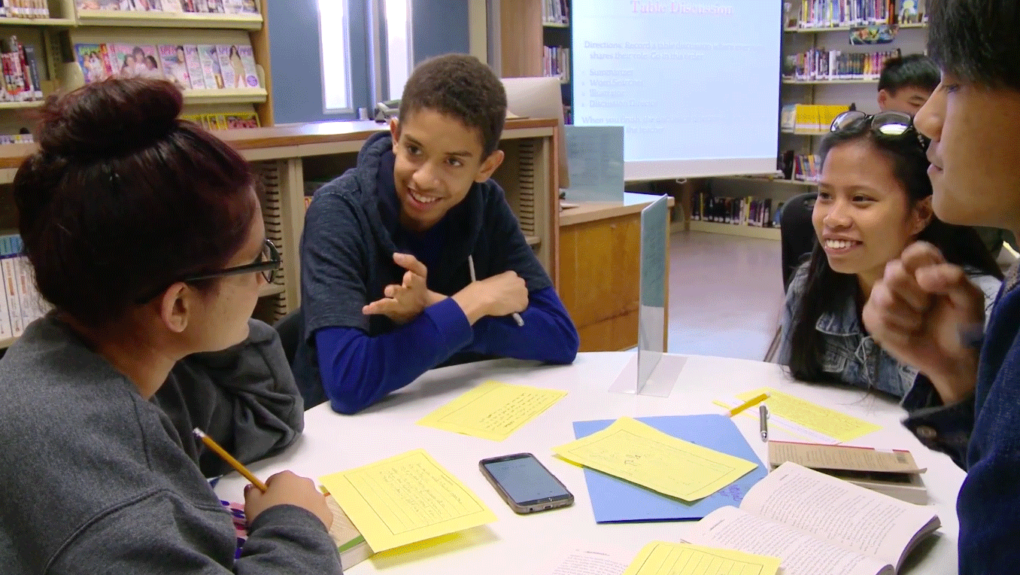
"caption": "Students at San Francisco International High School discuss literature. ",
"description": null,
"title": "Jigsaw",
"credit": "Teaching Channel",
"status": "inherit",
"isLoading": false,
"fetchFailed": false
},
"mindshift_49336": {
"type": "attachments",
"id": "mindshift_49336",
"meta": {
"index": "attachments_1716263798",
"site": "mindshift",
"id": "49336",
"found": true
},
"parent": 49330,
"imgSizes": {
"small": {
"file": "https://ww2.kqed.org/app/uploads/sites/23/2017/09/iStock-523496466-520x354.jpg",
"width": 520,
"mimeType": "image/jpeg",
"height": 354
},
"twentyfourteen-full-width": {
"file": "https://ww2.kqed.org/app/uploads/sites/23/2017/09/iStock-523496466-1038x576.jpg",
"width": 1038,
"mimeType": "image/jpeg",
"height": 576
},
"thumbnail": {
"file": "https://ww2.kqed.org/app/uploads/sites/23/2017/09/iStock-523496466-160x109.jpg",
"width": 160,
"mimeType": "image/jpeg",
"height": 109
},
"fd-sm": {
"file": "https://ww2.kqed.org/app/uploads/sites/23/2017/09/iStock-523496466-960x654.jpg",
"width": 960,
"mimeType": "image/jpeg",
"height": 654
},
"post-thumbnail": {
"file": "https://ww2.kqed.org/app/uploads/sites/23/2017/09/iStock-523496466-672x372.jpg",
"width": 672,
"mimeType": "image/jpeg",
"height": 372
},
"xsmall": {
"file": "https://ww2.kqed.org/app/uploads/sites/23/2017/09/iStock-523496466-375x256.jpg",
"width": 375,
"mimeType": "image/jpeg",
"height": 256
},
"kqedFullSize": {
"file": "https://ww2.kqed.org/app/uploads/sites/23/2017/09/iStock-523496466-e1506493804477.jpg",
"width": 1920,
"height": 1308
},
"large": {
"file": "https://ww2.kqed.org/app/uploads/sites/23/2017/09/iStock-523496466-1020x695.jpg",
"width": 1020,
"mimeType": "image/jpeg",
"height": 695
},
"xlarge": {
"file": "https://ww2.kqed.org/app/uploads/sites/23/2017/09/iStock-523496466-1180x804.jpg",
"width": 1180,
"mimeType": "image/jpeg",
"height": 804
},
"guest-author-50": {
"file": "https://ww2.kqed.org/app/uploads/sites/23/2017/09/iStock-523496466-50x50.jpg",
"width": 50,
"mimeType": "image/jpeg",
"height": 50
},
"guest-author-96": {
"file": "https://ww2.kqed.org/app/uploads/sites/23/2017/09/iStock-523496466-96x96.jpg",
"width": 96,
"mimeType": "image/jpeg",
"height": 96
},
"medium": {
"file": "https://ww2.kqed.org/app/uploads/sites/23/2017/09/iStock-523496466-800x545.jpg",
"width": 800,
"mimeType": "image/jpeg",
"height": 545
},
"guest-author-64": {
"file": "https://ww2.kqed.org/app/uploads/sites/23/2017/09/iStock-523496466-64x64.jpg",
"width": 64,
"mimeType": "image/jpeg",
"height": 64
},
"guest-author-32": {
"file": "https://ww2.kqed.org/app/uploads/sites/23/2017/09/iStock-523496466-32x32.jpg",
"width": 32,
"mimeType": "image/jpeg",
"height": 32
},
"fd-lrg": {
"file": "https://ww2.kqed.org/app/uploads/sites/23/2017/09/iStock-523496466-1920x1308.jpg",
"width": 1920,
"mimeType": "image/jpeg",
"height": 1308
},
"fd-med": {
"file": "https://ww2.kqed.org/app/uploads/sites/23/2017/09/iStock-523496466-1180x804.jpg",
"width": 1180,
"mimeType": "image/jpeg",
"height": 804
},
"full-width": {
"file": "https://ww2.kqed.org/app/uploads/sites/23/2017/09/iStock-523496466-1920x1308.jpg",
"width": 1920,
"mimeType": "image/jpeg",
"height": 1308
},
"detail": {
"file": "https://ww2.kqed.org/app/uploads/sites/23/2017/09/iStock-523496466-150x150.jpg",
"width": 150,
"mimeType": "image/jpeg",
"height": 150
},
"medium_large": {
"file": "https://ww2.kqed.org/app/uploads/sites/23/2017/09/iStock-523496466-768x523.jpg",
"width": 768,
"mimeType": "image/jpeg",
"height": 523
},
"guest-author-128": {
"file": "https://ww2.kqed.org/app/uploads/sites/23/2017/09/iStock-523496466-128x128.jpg",
"width": 128,
"mimeType": "image/jpeg",
"height": 128
},
"xxsmall": {
"file": "https://ww2.kqed.org/app/uploads/sites/23/2017/09/iStock-523496466-240x164.jpg",
"width": 240,
"mimeType": "image/jpeg",
"height": 164
}
},
"publishDate": 1506493772,
"modified": 1506493797,
"caption": null,
"description": null,
"title": "iStock-523496466",
"credit": "iStock/Belitas",
"status": "inherit",
"isLoading": false,
"fetchFailed": false
},
"mindshift_48046": {
"type": "attachments",
"id": "mindshift_48046",
"meta": {
"index": "attachments_1716263798",
"site": "mindshift",
"id": "48046",
"found": true
},
"parent": 48044,
"imgSizes": {
"small": {
"file": "https://ww2.kqed.org/app/uploads/sites/23/2017/04/NEW-school-space-520x390.jpg",
"width": 520,
"mimeType": "image/jpeg",
"height": 390
},
"twentyfourteen-full-width": {
"file": "https://ww2.kqed.org/app/uploads/sites/23/2017/04/NEW-school-space-1038x576.jpg",
"width": 1038,
"mimeType": "image/jpeg",
"height": 576
},
"thumbnail": {
"file": "https://ww2.kqed.org/app/uploads/sites/23/2017/04/NEW-school-space-160x120.jpg",
"width": 160,
"mimeType": "image/jpeg",
"height": 120
},
"fd-sm": {
"file": "https://ww2.kqed.org/app/uploads/sites/23/2017/04/NEW-school-space-960x720.jpg",
"width": 960,
"mimeType": "image/jpeg",
"height": 720
},
"post-thumbnail": {
"file": "https://ww2.kqed.org/app/uploads/sites/23/2017/04/NEW-school-space-672x372.jpg",
"width": 672,
"mimeType": "image/jpeg",
"height": 372
},
"xsmall": {
"file": "https://ww2.kqed.org/app/uploads/sites/23/2017/04/NEW-school-space-375x281.jpg",
"width": 375,
"mimeType": "image/jpeg",
"height": 281
},
"kqedFullSize": {
"file": "https://ww2.kqed.org/app/uploads/sites/23/2017/04/NEW-school-space.jpg",
"width": 4032,
"height": 3024
},
"large": {
"file": "https://ww2.kqed.org/app/uploads/sites/23/2017/04/NEW-school-space-1020x765.jpg",
"width": 1020,
"mimeType": "image/jpeg",
"height": 765
},
"xlarge": {
"file": "https://ww2.kqed.org/app/uploads/sites/23/2017/04/NEW-school-space-1180x885.jpg",
"width": 1180,
"mimeType": "image/jpeg",
"height": 885
},
"guest-author-50": {
"file": "https://ww2.kqed.org/app/uploads/sites/23/2017/04/NEW-school-space-50x50.jpg",
"width": 50,
"mimeType": "image/jpeg",
"height": 50
},
"guest-author-96": {
"file": "https://ww2.kqed.org/app/uploads/sites/23/2017/04/NEW-school-space-96x96.jpg",
"width": 96,
"mimeType": "image/jpeg",
"height": 96
},
"medium": {
"file": "https://ww2.kqed.org/app/uploads/sites/23/2017/04/NEW-school-space-800x600.jpg",
"width": 800,
"mimeType": "image/jpeg",
"height": 600
},
"guest-author-64": {
"file": "https://ww2.kqed.org/app/uploads/sites/23/2017/04/NEW-school-space-64x64.jpg",
"width": 64,
"mimeType": "image/jpeg",
"height": 64
},
"guest-author-32": {
"file": "https://ww2.kqed.org/app/uploads/sites/23/2017/04/NEW-school-space-32x32.jpg",
"width": 32,
"mimeType": "image/jpeg",
"height": 32
},
"fd-lrg": {
"file": "https://ww2.kqed.org/app/uploads/sites/23/2017/04/NEW-school-space-1920x1440.jpg",
"width": 1920,
"mimeType": "image/jpeg",
"height": 1440
},
"fd-med": {
"file": "https://ww2.kqed.org/app/uploads/sites/23/2017/04/NEW-school-space-1180x885.jpg",
"width": 1180,
"mimeType": "image/jpeg",
"height": 885
},
"full-width": {
"file": "https://ww2.kqed.org/app/uploads/sites/23/2017/04/NEW-school-space-1920x1440.jpg",
"width": 1920,
"mimeType": "image/jpeg",
"height": 1440
},
"detail": {
"file": "https://ww2.kqed.org/app/uploads/sites/23/2017/04/NEW-school-space-150x150.jpg",
"width": 150,
"mimeType": "image/jpeg",
"height": 150
},
"medium_large": {
"file": "https://ww2.kqed.org/app/uploads/sites/23/2017/04/NEW-school-space-768x576.jpg",
"width": 768,
"mimeType": "image/jpeg",
"height": 576
},
"guest-author-128": {
"file": "https://ww2.kqed.org/app/uploads/sites/23/2017/04/NEW-school-space-128x128.jpg",
"width": 128,
"mimeType": "image/jpeg",
"height": 128
},
"xxsmall": {
"file": "https://ww2.kqed.org/app/uploads/sites/23/2017/04/NEW-school-space-240x180.jpg",
"width": 240,
"mimeType": "image/jpeg",
"height": 180
}
},
"publishDate": 1492476029,
"modified": 1492476080,
"caption": "Catlin Tucker and Marika Neto have tried to create different types of space within their traditional classroom so students feel at home.",
"description": null,
"title": "NEW school space",
"credit": "Katrina Schwartz",
"status": "inherit",
"isLoading": false,
"fetchFailed": false
},
"mindshift_49014": {
"type": "attachments",
"id": "mindshift_49014",
"meta": {
"index": "attachments_1716263798",
"site": "mindshift",
"id": "49014",
"found": true
},
"parent": 49012,
"imgSizes": {
"small": {
"file": "https://ww2.kqed.org/app/uploads/sites/23/2017/08/Wayfinder-520x293.jpg",
"width": 520,
"mimeType": "image/jpeg",
"height": 293
},
"twentyfourteen-full-width": {
"file": "https://ww2.kqed.org/app/uploads/sites/23/2017/08/Wayfinder-1038x576.jpg",
"width": 1038,
"mimeType": "image/jpeg",
"height": 576
},
"thumbnail": {
"file": "https://ww2.kqed.org/app/uploads/sites/23/2017/08/Wayfinder-160x90.jpg",
"width": 160,
"mimeType": "image/jpeg",
"height": 90
},
"fd-sm": {
"file": "https://ww2.kqed.org/app/uploads/sites/23/2017/08/Wayfinder-960x540.jpg",
"width": 960,
"mimeType": "image/jpeg",
"height": 540
},
"post-thumbnail": {
"file": "https://ww2.kqed.org/app/uploads/sites/23/2017/08/Wayfinder-672x372.jpg",
"width": 672,
"mimeType": "image/jpeg",
"height": 372
},
"xsmall": {
"file": "https://ww2.kqed.org/app/uploads/sites/23/2017/08/Wayfinder-375x211.jpg",
"width": 375,
"mimeType": "image/jpeg",
"height": 211
},
"kqedFullSize": {
"file": "https://ww2.kqed.org/app/uploads/sites/23/2017/08/Wayfinder.jpg",
"width": 1920,
"height": 1080
},
"large": {
"file": "https://ww2.kqed.org/app/uploads/sites/23/2017/08/Wayfinder-1020x574.jpg",
"width": 1020,
"mimeType": "image/jpeg",
"height": 574
},
"xlarge": {
"file": "https://ww2.kqed.org/app/uploads/sites/23/2017/08/Wayfinder-1180x664.jpg",
"width": 1180,
"mimeType": "image/jpeg",
"height": 664
},
"guest-author-50": {
"file": "https://ww2.kqed.org/app/uploads/sites/23/2017/08/Wayfinder-50x50.jpg",
"width": 50,
"mimeType": "image/jpeg",
"height": 50
},
"guest-author-96": {
"file": "https://ww2.kqed.org/app/uploads/sites/23/2017/08/Wayfinder-96x96.jpg",
"width": 96,
"mimeType": "image/jpeg",
"height": 96
},
"medium": {
"file": "https://ww2.kqed.org/app/uploads/sites/23/2017/08/Wayfinder-800x450.jpg",
"width": 800,
"mimeType": "image/jpeg",
"height": 450
},
"guest-author-64": {
"file": "https://ww2.kqed.org/app/uploads/sites/23/2017/08/Wayfinder-64x64.jpg",
"width": 64,
"mimeType": "image/jpeg",
"height": 64
},
"guest-author-32": {
"file": "https://ww2.kqed.org/app/uploads/sites/23/2017/08/Wayfinder-32x32.jpg",
"width": 32,
"mimeType": "image/jpeg",
"height": 32
},
"fd-lrg": {
"file": "https://ww2.kqed.org/app/uploads/sites/23/2017/08/Wayfinder-1920x1080.jpg",
"width": 1920,
"mimeType": "image/jpeg",
"height": 1080
},
"fd-med": {
"file": "https://ww2.kqed.org/app/uploads/sites/23/2017/08/Wayfinder-1180x664.jpg",
"width": 1180,
"mimeType": "image/jpeg",
"height": 664
},
"full-width": {
"file": "https://ww2.kqed.org/app/uploads/sites/23/2017/08/Wayfinder-1920x1080.jpg",
"width": 1920,
"mimeType": "image/jpeg",
"height": 1080
},
"detail": {
"file": "https://ww2.kqed.org/app/uploads/sites/23/2017/08/Wayfinder-150x150.jpg",
"width": 150,
"mimeType": "image/jpeg",
"height": 150
},
"medium_large": {
"file": "https://ww2.kqed.org/app/uploads/sites/23/2017/08/Wayfinder-768x432.jpg",
"width": 768,
"mimeType": "image/jpeg",
"height": 432
},
"guest-author-128": {
"file": "https://ww2.kqed.org/app/uploads/sites/23/2017/08/Wayfinder-128x128.jpg",
"width": 128,
"mimeType": "image/jpeg",
"height": 128
},
"xxsmall": {
"file": "https://ww2.kqed.org/app/uploads/sites/23/2017/08/Wayfinder-240x135.jpg",
"width": 240,
"mimeType": "image/jpeg",
"height": 135
}
},
"publishDate": 1502829783,
"modified": 1502829918,
"caption": "Students at the Project Wayfinder retreat use the kit to think through the qualities they embody.",
"description": null,
"title": "Wayfinder",
"credit": "Patrick Beaudouin/Project Wayfinder",
"status": "inherit",
"isLoading": false,
"fetchFailed": false
},
"mindshift_49281": {
"type": "attachments",
"id": "mindshift_49281",
"meta": {
"index": "attachments_1716263798",
"site": "mindshift",
"id": "49281",
"found": true
},
"parent": 49280,
"imgSizes": {
"small": {
"file": "https://ww2.kqed.org/app/uploads/sites/23/2017/09/kinder-discussion-520x268.png",
"width": 520,
"mimeType": "image/png",
"height": 268
},
"thumbnail": {
"file": "https://ww2.kqed.org/app/uploads/sites/23/2017/09/kinder-discussion-160x82.png",
"width": 160,
"mimeType": "image/png",
"height": 82
},
"post-thumbnail": {
"file": "https://ww2.kqed.org/app/uploads/sites/23/2017/09/kinder-discussion-672x372.png",
"width": 672,
"mimeType": "image/png",
"height": 372
},
"xsmall": {
"file": "https://ww2.kqed.org/app/uploads/sites/23/2017/09/kinder-discussion-375x193.png",
"width": 375,
"mimeType": "image/png",
"height": 193
},
"kqedFullSize": {
"file": "https://ww2.kqed.org/app/uploads/sites/23/2017/09/kinder-discussion.png",
"width": 894,
"height": 460
},
"guest-author-50": {
"file": "https://ww2.kqed.org/app/uploads/sites/23/2017/09/kinder-discussion-50x50.png",
"width": 50,
"mimeType": "image/png",
"height": 50
},
"guest-author-96": {
"file": "https://ww2.kqed.org/app/uploads/sites/23/2017/09/kinder-discussion-96x96.png",
"width": 96,
"mimeType": "image/png",
"height": 96
},
"medium": {
"file": "https://ww2.kqed.org/app/uploads/sites/23/2017/09/kinder-discussion-800x412.png",
"width": 800,
"mimeType": "image/png",
"height": 412
},
"guest-author-64": {
"file": "https://ww2.kqed.org/app/uploads/sites/23/2017/09/kinder-discussion-64x64.png",
"width": 64,
"mimeType": "image/png",
"height": 64
},
"guest-author-32": {
"file": "https://ww2.kqed.org/app/uploads/sites/23/2017/09/kinder-discussion-32x32.png",
"width": 32,
"mimeType": "image/png",
"height": 32
},
"detail": {
"file": "https://ww2.kqed.org/app/uploads/sites/23/2017/09/kinder-discussion-150x150.png",
"width": 150,
"mimeType": "image/png",
"height": 150
},
"medium_large": {
"file": "https://ww2.kqed.org/app/uploads/sites/23/2017/09/kinder-discussion-768x395.png",
"width": 768,
"mimeType": "image/png",
"height": 395
},
"guest-author-128": {
"file": "https://ww2.kqed.org/app/uploads/sites/23/2017/09/kinder-discussion-128x128.png",
"width": 128,
"mimeType": "image/png",
"height": 128
},
"xxsmall": {
"file": "https://ww2.kqed.org/app/uploads/sites/23/2017/09/kinder-discussion-240x123.png",
"width": 240,
"mimeType": "image/png",
"height": 123
}
},
"publishDate": 1505860941,
"modified": 1505861038,
"caption": "Kindergarten students share with one another different facts about American symbols.",
"description": null,
"title": "kinder discussion",
"credit": "\u003ca href=\"https://www.teachingchannel.org/videos/teaching-facts-sfusd\">Teaching Channel\u003c/a>",
"status": "inherit",
"isLoading": false,
"fetchFailed": false
},
"mindshift_49231": {
"type": "attachments",
"id": "mindshift_49231",
"meta": {
"index": "attachments_1716263798",
"site": "mindshift",
"id": "49231",
"found": true
},
"parent": 49230,
"imgSizes": {
"small": {
"file": "https://ww2.kqed.org/app/uploads/sites/23/2017/09/biomedicine-final-web_custom-ea28a702b4465e0cbccd77be12dc6715deb4add8-520x292.jpg",
"width": 520,
"mimeType": "image/jpeg",
"height": 292
},
"twentyfourteen-full-width": {
"file": "https://ww2.kqed.org/app/uploads/sites/23/2017/09/biomedicine-final-web_custom-ea28a702b4465e0cbccd77be12dc6715deb4add8-1038x576.jpg",
"width": 1038,
"mimeType": "image/jpeg",
"height": 576
},
"thumbnail": {
"file": "https://ww2.kqed.org/app/uploads/sites/23/2017/09/biomedicine-final-web_custom-ea28a702b4465e0cbccd77be12dc6715deb4add8-160x90.jpg",
"width": 160,
"mimeType": "image/jpeg",
"height": 90
},
"fd-sm": {
"file": "https://ww2.kqed.org/app/uploads/sites/23/2017/09/biomedicine-final-web_custom-ea28a702b4465e0cbccd77be12dc6715deb4add8-960x539.jpg",
"width": 960,
"mimeType": "image/jpeg",
"height": 539
},
"post-thumbnail": {
"file": "https://ww2.kqed.org/app/uploads/sites/23/2017/09/biomedicine-final-web_custom-ea28a702b4465e0cbccd77be12dc6715deb4add8-672x372.jpg",
"width": 672,
"mimeType": "image/jpeg",
"height": 372
},
"xsmall": {
"file": "https://ww2.kqed.org/app/uploads/sites/23/2017/09/biomedicine-final-web_custom-ea28a702b4465e0cbccd77be12dc6715deb4add8-375x211.jpg",
"width": 375,
"mimeType": "image/jpeg",
"height": 211
},
"kqedFullSize": {
"file": "https://ww2.kqed.org/app/uploads/sites/23/2017/09/biomedicine-final-web_custom-ea28a702b4465e0cbccd77be12dc6715deb4add8-e1505709540451.jpg",
"width": 1920,
"height": 1078
},
"large": {
"file": "https://ww2.kqed.org/app/uploads/sites/23/2017/09/biomedicine-final-web_custom-ea28a702b4465e0cbccd77be12dc6715deb4add8-1020x573.jpg",
"width": 1020,
"mimeType": "image/jpeg",
"height": 573
},
"xlarge": {
"file": "https://ww2.kqed.org/app/uploads/sites/23/2017/09/biomedicine-final-web_custom-ea28a702b4465e0cbccd77be12dc6715deb4add8-1180x663.jpg",
"width": 1180,
"mimeType": "image/jpeg",
"height": 663
},
"guest-author-50": {
"file": "https://ww2.kqed.org/app/uploads/sites/23/2017/09/biomedicine-final-web_custom-ea28a702b4465e0cbccd77be12dc6715deb4add8-50x50.jpg",
"width": 50,
"mimeType": "image/jpeg",
"height": 50
},
"guest-author-96": {
"file": "https://ww2.kqed.org/app/uploads/sites/23/2017/09/biomedicine-final-web_custom-ea28a702b4465e0cbccd77be12dc6715deb4add8-96x96.jpg",
"width": 96,
"mimeType": "image/jpeg",
"height": 96
},
"medium": {
"file": "https://ww2.kqed.org/app/uploads/sites/23/2017/09/biomedicine-final-web_custom-ea28a702b4465e0cbccd77be12dc6715deb4add8-800x449.jpg",
"width": 800,
"mimeType": "image/jpeg",
"height": 449
},
"guest-author-64": {
"file": "https://ww2.kqed.org/app/uploads/sites/23/2017/09/biomedicine-final-web_custom-ea28a702b4465e0cbccd77be12dc6715deb4add8-64x64.jpg",
"width": 64,
"mimeType": "image/jpeg",
"height": 64
},
"guest-author-32": {
"file": "https://ww2.kqed.org/app/uploads/sites/23/2017/09/biomedicine-final-web_custom-ea28a702b4465e0cbccd77be12dc6715deb4add8-32x32.jpg",
"width": 32,
"mimeType": "image/jpeg",
"height": 32
},
"fd-lrg": {
"file": "https://ww2.kqed.org/app/uploads/sites/23/2017/09/biomedicine-final-web_custom-ea28a702b4465e0cbccd77be12dc6715deb4add8-1920x1078.jpg",
"width": 1920,
"mimeType": "image/jpeg",
"height": 1078
},
"fd-med": {
"file": "https://ww2.kqed.org/app/uploads/sites/23/2017/09/biomedicine-final-web_custom-ea28a702b4465e0cbccd77be12dc6715deb4add8-1180x663.jpg",
"width": 1180,
"mimeType": "image/jpeg",
"height": 663
},
"full-width": {
"file": "https://ww2.kqed.org/app/uploads/sites/23/2017/09/biomedicine-final-web_custom-ea28a702b4465e0cbccd77be12dc6715deb4add8-1920x1078.jpg",
"width": 1920,
"mimeType": "image/jpeg",
"height": 1078
},
"detail": {
"file": "https://ww2.kqed.org/app/uploads/sites/23/2017/09/biomedicine-final-web_custom-ea28a702b4465e0cbccd77be12dc6715deb4add8-150x150.jpg",
"width": 150,
"mimeType": "image/jpeg",
"height": 150
},
"medium_large": {
"file": "https://ww2.kqed.org/app/uploads/sites/23/2017/09/biomedicine-final-web_custom-ea28a702b4465e0cbccd77be12dc6715deb4add8-768x431.jpg",
"width": 768,
"mimeType": "image/jpeg",
"height": 431
},
"guest-author-128": {
"file": "https://ww2.kqed.org/app/uploads/sites/23/2017/09/biomedicine-final-web_custom-ea28a702b4465e0cbccd77be12dc6715deb4add8-128x128.jpg",
"width": 128,
"mimeType": "image/jpeg",
"height": 128
},
"xxsmall": {
"file": "https://ww2.kqed.org/app/uploads/sites/23/2017/09/biomedicine-final-web_custom-ea28a702b4465e0cbccd77be12dc6715deb4add8-240x135.jpg",
"width": 240,
"mimeType": "image/jpeg",
"height": 135
}
},
"publishDate": 1505709364,
"modified": 1505709551,
"caption": null,
"description": null,
"title": "biomedicine-final-web_custom-ea28a702b4465e0cbccd77be12dc6715deb4add8",
"credit": "Shannon Wright for NPR",
"status": "inherit",
"isLoading": false,
"fetchFailed": false
},
"mindshift_49214": {
"type": "attachments",
"id": "mindshift_49214",
"meta": {
"index": "attachments_1716263798",
"site": "mindshift",
"id": "49214",
"found": true
},
"parent": 49205,
"imgSizes": {
"small": {
"file": "https://ww2.kqed.org/app/uploads/sites/23/2017/09/iStock-538346254-520x347.jpg",
"width": 520,
"mimeType": "image/jpeg",
"height": 347
},
"twentyfourteen-full-width": {
"file": "https://ww2.kqed.org/app/uploads/sites/23/2017/09/iStock-538346254-1038x576.jpg",
"width": 1038,
"mimeType": "image/jpeg",
"height": 576
},
"thumbnail": {
"file": "https://ww2.kqed.org/app/uploads/sites/23/2017/09/iStock-538346254-160x107.jpg",
"width": 160,
"mimeType": "image/jpeg",
"height": 107
},
"fd-sm": {
"file": "https://ww2.kqed.org/app/uploads/sites/23/2017/09/iStock-538346254-960x640.jpg",
"width": 960,
"mimeType": "image/jpeg",
"height": 640
},
"post-thumbnail": {
"file": "https://ww2.kqed.org/app/uploads/sites/23/2017/09/iStock-538346254-672x372.jpg",
"width": 672,
"mimeType": "image/jpeg",
"height": 372
},
"xsmall": {
"file": "https://ww2.kqed.org/app/uploads/sites/23/2017/09/iStock-538346254-375x250.jpg",
"width": 375,
"mimeType": "image/jpeg",
"height": 250
},
"kqedFullSize": {
"file": "https://ww2.kqed.org/app/uploads/sites/23/2017/09/iStock-538346254-e1505342916135.jpg",
"width": 1920,
"height": 1281
},
"large": {
"file": "https://ww2.kqed.org/app/uploads/sites/23/2017/09/iStock-538346254-1020x680.jpg",
"width": 1020,
"mimeType": "image/jpeg",
"height": 680
},
"xlarge": {
"file": "https://ww2.kqed.org/app/uploads/sites/23/2017/09/iStock-538346254-1180x787.jpg",
"width": 1180,
"mimeType": "image/jpeg",
"height": 787
},
"guest-author-50": {
"file": "https://ww2.kqed.org/app/uploads/sites/23/2017/09/iStock-538346254-50x50.jpg",
"width": 50,
"mimeType": "image/jpeg",
"height": 50
},
"guest-author-96": {
"file": "https://ww2.kqed.org/app/uploads/sites/23/2017/09/iStock-538346254-96x96.jpg",
"width": 96,
"mimeType": "image/jpeg",
"height": 96
},
"medium": {
"file": "https://ww2.kqed.org/app/uploads/sites/23/2017/09/iStock-538346254-800x534.jpg",
"width": 800,
"mimeType": "image/jpeg",
"height": 534
},
"guest-author-64": {
"file": "https://ww2.kqed.org/app/uploads/sites/23/2017/09/iStock-538346254-64x64.jpg",
"width": 64,
"mimeType": "image/jpeg",
"height": 64
},
"guest-author-32": {
"file": "https://ww2.kqed.org/app/uploads/sites/23/2017/09/iStock-538346254-32x32.jpg",
"width": 32,
"mimeType": "image/jpeg",
"height": 32
},
"fd-lrg": {
"file": "https://ww2.kqed.org/app/uploads/sites/23/2017/09/iStock-538346254-1920x1281.jpg",
"width": 1920,
"mimeType": "image/jpeg",
"height": 1281
},
"fd-med": {
"file": "https://ww2.kqed.org/app/uploads/sites/23/2017/09/iStock-538346254-1180x787.jpg",
"width": 1180,
"mimeType": "image/jpeg",
"height": 787
},
"full-width": {
"file": "https://ww2.kqed.org/app/uploads/sites/23/2017/09/iStock-538346254-1920x1281.jpg",
"width": 1920,
"mimeType": "image/jpeg",
"height": 1281
},
"detail": {
"file": "https://ww2.kqed.org/app/uploads/sites/23/2017/09/iStock-538346254-150x150.jpg",
"width": 150,
"mimeType": "image/jpeg",
"height": 150
},
"medium_large": {
"file": "https://ww2.kqed.org/app/uploads/sites/23/2017/09/iStock-538346254-768x512.jpg",
"width": 768,
"mimeType": "image/jpeg",
"height": 512
},
"guest-author-128": {
"file": "https://ww2.kqed.org/app/uploads/sites/23/2017/09/iStock-538346254-128x128.jpg",
"width": 128,
"mimeType": "image/jpeg",
"height": 128
},
"xxsmall": {
"file": "https://ww2.kqed.org/app/uploads/sites/23/2017/09/iStock-538346254-240x160.jpg",
"width": 240,
"mimeType": "image/jpeg",
"height": 160
}
},
"publishDate": 1505342890,
"modified": 1505342944,
"caption": null,
"description": null,
"title": "preschool",
"credit": "iStock/gpointstudio",
"status": "inherit",
"isLoading": false,
"fetchFailed": false
},
"mindshift_49208": {
"type": "attachments",
"id": "mindshift_49208",
"meta": {
"index": "attachments_1716263798",
"site": "mindshift",
"id": "49208",
"found": true
},
"parent": 49207,
"imgSizes": {
"small": {
"file": "https://ww2.kqed.org/app/uploads/sites/23/2017/09/sam_rowe_slide-e6d8d91af10a225a09d64f407ff4f15246b34004-520x347.jpg",
"width": 520,
"mimeType": "image/jpeg",
"height": 347
},
"twentyfourteen-full-width": {
"file": "https://ww2.kqed.org/app/uploads/sites/23/2017/09/sam_rowe_slide-e6d8d91af10a225a09d64f407ff4f15246b34004-1038x576.jpg",
"width": 1038,
"mimeType": "image/jpeg",
"height": 576
},
"thumbnail": {
"file": "https://ww2.kqed.org/app/uploads/sites/23/2017/09/sam_rowe_slide-e6d8d91af10a225a09d64f407ff4f15246b34004-160x107.jpg",
"width": 160,
"mimeType": "image/jpeg",
"height": 107
},
"fd-sm": {
"file": "https://ww2.kqed.org/app/uploads/sites/23/2017/09/sam_rowe_slide-e6d8d91af10a225a09d64f407ff4f15246b34004-960x640.jpg",
"width": 960,
"mimeType": "image/jpeg",
"height": 640
},
"post-thumbnail": {
"file": "https://ww2.kqed.org/app/uploads/sites/23/2017/09/sam_rowe_slide-e6d8d91af10a225a09d64f407ff4f15246b34004-672x372.jpg",
"width": 672,
"mimeType": "image/jpeg",
"height": 372
},
"xsmall": {
"file": "https://ww2.kqed.org/app/uploads/sites/23/2017/09/sam_rowe_slide-e6d8d91af10a225a09d64f407ff4f15246b34004-375x250.jpg",
"width": 375,
"mimeType": "image/jpeg",
"height": 250
},
"kqedFullSize": {
"file": "https://ww2.kqed.org/app/uploads/sites/23/2017/09/sam_rowe_slide-e6d8d91af10a225a09d64f407ff4f15246b34004.jpg",
"width": 2997,
"height": 1998
},
"large": {
"file": "https://ww2.kqed.org/app/uploads/sites/23/2017/09/sam_rowe_slide-e6d8d91af10a225a09d64f407ff4f15246b34004-1020x680.jpg",
"width": 1020,
"mimeType": "image/jpeg",
"height": 680
},
"xlarge": {
"file": "https://ww2.kqed.org/app/uploads/sites/23/2017/09/sam_rowe_slide-e6d8d91af10a225a09d64f407ff4f15246b34004-1180x787.jpg",
"width": 1180,
"mimeType": "image/jpeg",
"height": 787
},
"guest-author-50": {
"file": "https://ww2.kqed.org/app/uploads/sites/23/2017/09/sam_rowe_slide-e6d8d91af10a225a09d64f407ff4f15246b34004-50x50.jpg",
"width": 50,
"mimeType": "image/jpeg",
"height": 50
},
"guest-author-96": {
"file": "https://ww2.kqed.org/app/uploads/sites/23/2017/09/sam_rowe_slide-e6d8d91af10a225a09d64f407ff4f15246b34004-96x96.jpg",
"width": 96,
"mimeType": "image/jpeg",
"height": 96
},
"medium": {
"file": "https://ww2.kqed.org/app/uploads/sites/23/2017/09/sam_rowe_slide-e6d8d91af10a225a09d64f407ff4f15246b34004-800x533.jpg",
"width": 800,
"mimeType": "image/jpeg",
"height": 533
},
"guest-author-64": {
"file": "https://ww2.kqed.org/app/uploads/sites/23/2017/09/sam_rowe_slide-e6d8d91af10a225a09d64f407ff4f15246b34004-64x64.jpg",
"width": 64,
"mimeType": "image/jpeg",
"height": 64
},
"guest-author-32": {
"file": "https://ww2.kqed.org/app/uploads/sites/23/2017/09/sam_rowe_slide-e6d8d91af10a225a09d64f407ff4f15246b34004-32x32.jpg",
"width": 32,
"mimeType": "image/jpeg",
"height": 32
},
"fd-lrg": {
"file": "https://ww2.kqed.org/app/uploads/sites/23/2017/09/sam_rowe_slide-e6d8d91af10a225a09d64f407ff4f15246b34004-1920x1280.jpg",
"width": 1920,
"mimeType": "image/jpeg",
"height": 1280
},
"fd-med": {
"file": "https://ww2.kqed.org/app/uploads/sites/23/2017/09/sam_rowe_slide-e6d8d91af10a225a09d64f407ff4f15246b34004-1180x787.jpg",
"width": 1180,
"mimeType": "image/jpeg",
"height": 787
},
"full-width": {
"file": "https://ww2.kqed.org/app/uploads/sites/23/2017/09/sam_rowe_slide-e6d8d91af10a225a09d64f407ff4f15246b34004-1920x1280.jpg",
"width": 1920,
"mimeType": "image/jpeg",
"height": 1280
},
"detail": {
"file": "https://ww2.kqed.org/app/uploads/sites/23/2017/09/sam_rowe_slide-e6d8d91af10a225a09d64f407ff4f15246b34004-150x150.jpg",
"width": 150,
"mimeType": "image/jpeg",
"height": 150
},
"medium_large": {
"file": "https://ww2.kqed.org/app/uploads/sites/23/2017/09/sam_rowe_slide-e6d8d91af10a225a09d64f407ff4f15246b34004-768x512.jpg",
"width": 768,
"mimeType": "image/jpeg",
"height": 512
},
"guest-author-128": {
"file": "https://ww2.kqed.org/app/uploads/sites/23/2017/09/sam_rowe_slide-e6d8d91af10a225a09d64f407ff4f15246b34004-128x128.jpg",
"width": 128,
"mimeType": "image/jpeg",
"height": 128
},
"xxsmall": {
"file": "https://ww2.kqed.org/app/uploads/sites/23/2017/09/sam_rowe_slide-e6d8d91af10a225a09d64f407ff4f15246b34004-240x160.jpg",
"width": 240,
"mimeType": "image/jpeg",
"height": 160
}
},
"publishDate": 1505303678,
"modified": 1505303678,
"caption": null,
"description": "Student connecting dots of constellations in the sky",
"title": "Student connecting dots of constellations in the sky",
"credit": null,
"status": "inherit",
"isLoading": false,
"fetchFailed": false
},
"mindshift_49196": {
"type": "attachments",
"id": "mindshift_49196",
"meta": {
"index": "attachments_1716263798",
"site": "mindshift",
"id": "49196",
"found": true
},
"parent": 49194,
"imgSizes": {
"small": {
"file": "https://ww2.kqed.org/app/uploads/sites/23/2017/09/iStock-526490803-520x346.jpg",
"width": 520,
"mimeType": "image/jpeg",
"height": 346
},
"twentyfourteen-full-width": {
"file": "https://ww2.kqed.org/app/uploads/sites/23/2017/09/iStock-526490803-1038x576.jpg",
"width": 1038,
"mimeType": "image/jpeg",
"height": 576
},
"thumbnail": {
"file": "https://ww2.kqed.org/app/uploads/sites/23/2017/09/iStock-526490803-160x106.jpg",
"width": 160,
"mimeType": "image/jpeg",
"height": 106
},
"fd-sm": {
"file": "https://ww2.kqed.org/app/uploads/sites/23/2017/09/iStock-526490803-960x638.jpg",
"width": 960,
"mimeType": "image/jpeg",
"height": 638
},
"post-thumbnail": {
"file": "https://ww2.kqed.org/app/uploads/sites/23/2017/09/iStock-526490803-672x372.jpg",
"width": 672,
"mimeType": "image/jpeg",
"height": 372
},
"xsmall": {
"file": "https://ww2.kqed.org/app/uploads/sites/23/2017/09/iStock-526490803-375x249.jpg",
"width": 375,
"mimeType": "image/jpeg",
"height": 249
},
"kqedFullSize": {
"file": "https://ww2.kqed.org/app/uploads/sites/23/2017/09/iStock-526490803-e1505154916907.jpg",
"width": 1920,
"height": 1276
},
"large": {
"file": "https://ww2.kqed.org/app/uploads/sites/23/2017/09/iStock-526490803-1020x678.jpg",
"width": 1020,
"mimeType": "image/jpeg",
"height": 678
},
"xlarge": {
"file": "https://ww2.kqed.org/app/uploads/sites/23/2017/09/iStock-526490803-1180x784.jpg",
"width": 1180,
"mimeType": "image/jpeg",
"height": 784
},
"guest-author-50": {
"file": "https://ww2.kqed.org/app/uploads/sites/23/2017/09/iStock-526490803-50x50.jpg",
"width": 50,
"mimeType": "image/jpeg",
"height": 50
},
"guest-author-96": {
"file": "https://ww2.kqed.org/app/uploads/sites/23/2017/09/iStock-526490803-96x96.jpg",
"width": 96,
"mimeType": "image/jpeg",
"height": 96
},
"medium": {
"file": "https://ww2.kqed.org/app/uploads/sites/23/2017/09/iStock-526490803-800x532.jpg",
"width": 800,
"mimeType": "image/jpeg",
"height": 532
},
"guest-author-64": {
"file": "https://ww2.kqed.org/app/uploads/sites/23/2017/09/iStock-526490803-64x64.jpg",
"width": 64,
"mimeType": "image/jpeg",
"height": 64
},
"guest-author-32": {
"file": "https://ww2.kqed.org/app/uploads/sites/23/2017/09/iStock-526490803-32x32.jpg",
"width": 32,
"mimeType": "image/jpeg",
"height": 32
},
"fd-lrg": {
"file": "https://ww2.kqed.org/app/uploads/sites/23/2017/09/iStock-526490803-1920x1276.jpg",
"width": 1920,
"mimeType": "image/jpeg",
"height": 1276
},
"fd-med": {
"file": "https://ww2.kqed.org/app/uploads/sites/23/2017/09/iStock-526490803-1180x784.jpg",
"width": 1180,
"mimeType": "image/jpeg",
"height": 784
},
"full-width": {
"file": "https://ww2.kqed.org/app/uploads/sites/23/2017/09/iStock-526490803-1920x1276.jpg",
"width": 1920,
"mimeType": "image/jpeg",
"height": 1276
},
"detail": {
"file": "https://ww2.kqed.org/app/uploads/sites/23/2017/09/iStock-526490803-150x150.jpg",
"width": 150,
"mimeType": "image/jpeg",
"height": 150
},
"medium_large": {
"file": "https://ww2.kqed.org/app/uploads/sites/23/2017/09/iStock-526490803-768x511.jpg",
"width": 768,
"mimeType": "image/jpeg",
"height": 511
},
"guest-author-128": {
"file": "https://ww2.kqed.org/app/uploads/sites/23/2017/09/iStock-526490803-128x128.jpg",
"width": 128,
"mimeType": "image/jpeg",
"height": 128
},
"xxsmall": {
"file": "https://ww2.kqed.org/app/uploads/sites/23/2017/09/iStock-526490803-240x160.jpg",
"width": 240,
"mimeType": "image/jpeg",
"height": 160
}
},
"publishDate": 1505154886,
"modified": 1505154910,
"caption": null,
"description": null,
"title": "helicopter",
"credit": "iStock/Naruden",
"status": "inherit",
"isLoading": false,
"fetchFailed": false
},
"mindshift_49191": {
"type": "attachments",
"id": "mindshift_49191",
"meta": {
"index": "attachments_1716263798",
"site": "mindshift",
"id": "49191",
"found": true
},
"parent": 49190,
"imgSizes": {
"small": {
"file": "https://ww2.kqed.org/app/uploads/sites/23/2017/09/jenn-liv-illustration-npr-depression-web1_custom-23f9c98a276314e17429facabbb7cb17f807e284-520x292.jpg",
"width": 520,
"mimeType": "image/jpeg",
"height": 292
},
"twentyfourteen-full-width": {
"file": "https://ww2.kqed.org/app/uploads/sites/23/2017/09/jenn-liv-illustration-npr-depression-web1_custom-23f9c98a276314e17429facabbb7cb17f807e284-1038x576.jpg",
"width": 1038,
"mimeType": "image/jpeg",
"height": 576
},
"thumbnail": {
"file": "https://ww2.kqed.org/app/uploads/sites/23/2017/09/jenn-liv-illustration-npr-depression-web1_custom-23f9c98a276314e17429facabbb7cb17f807e284-160x90.jpg",
"width": 160,
"mimeType": "image/jpeg",
"height": 90
},
"fd-sm": {
"file": "https://ww2.kqed.org/app/uploads/sites/23/2017/09/jenn-liv-illustration-npr-depression-web1_custom-23f9c98a276314e17429facabbb7cb17f807e284-960x539.jpg",
"width": 960,
"mimeType": "image/jpeg",
"height": 539
},
"post-thumbnail": {
"file": "https://ww2.kqed.org/app/uploads/sites/23/2017/09/jenn-liv-illustration-npr-depression-web1_custom-23f9c98a276314e17429facabbb7cb17f807e284-672x372.jpg",
"width": 672,
"mimeType": "image/jpeg",
"height": 372
},
"xsmall": {
"file": "https://ww2.kqed.org/app/uploads/sites/23/2017/09/jenn-liv-illustration-npr-depression-web1_custom-23f9c98a276314e17429facabbb7cb17f807e284-375x211.jpg",
"width": 375,
"mimeType": "image/jpeg",
"height": 211
},
"kqedFullSize": {
"file": "https://ww2.kqed.org/app/uploads/sites/23/2017/09/jenn-liv-illustration-npr-depression-web1_custom-23f9c98a276314e17429facabbb7cb17f807e284-e1505135883585.jpg",
"width": 1920,
"height": 1078
},
"large": {
"file": "https://ww2.kqed.org/app/uploads/sites/23/2017/09/jenn-liv-illustration-npr-depression-web1_custom-23f9c98a276314e17429facabbb7cb17f807e284-1020x573.jpg",
"width": 1020,
"mimeType": "image/jpeg",
"height": 573
},
"xlarge": {
"file": "https://ww2.kqed.org/app/uploads/sites/23/2017/09/jenn-liv-illustration-npr-depression-web1_custom-23f9c98a276314e17429facabbb7cb17f807e284-1180x663.jpg",
"width": 1180,
"mimeType": "image/jpeg",
"height": 663
},
"guest-author-50": {
"file": "https://ww2.kqed.org/app/uploads/sites/23/2017/09/jenn-liv-illustration-npr-depression-web1_custom-23f9c98a276314e17429facabbb7cb17f807e284-50x50.jpg",
"width": 50,
"mimeType": "image/jpeg",
"height": 50
},
"guest-author-96": {
"file": "https://ww2.kqed.org/app/uploads/sites/23/2017/09/jenn-liv-illustration-npr-depression-web1_custom-23f9c98a276314e17429facabbb7cb17f807e284-96x96.jpg",
"width": 96,
"mimeType": "image/jpeg",
"height": 96
},
"medium": {
"file": "https://ww2.kqed.org/app/uploads/sites/23/2017/09/jenn-liv-illustration-npr-depression-web1_custom-23f9c98a276314e17429facabbb7cb17f807e284-800x449.jpg",
"width": 800,
"mimeType": "image/jpeg",
"height": 449
},
"guest-author-64": {
"file": "https://ww2.kqed.org/app/uploads/sites/23/2017/09/jenn-liv-illustration-npr-depression-web1_custom-23f9c98a276314e17429facabbb7cb17f807e284-64x64.jpg",
"width": 64,
"mimeType": "image/jpeg",
"height": 64
},
"guest-author-32": {
"file": "https://ww2.kqed.org/app/uploads/sites/23/2017/09/jenn-liv-illustration-npr-depression-web1_custom-23f9c98a276314e17429facabbb7cb17f807e284-32x32.jpg",
"width": 32,
"mimeType": "image/jpeg",
"height": 32
},
"fd-lrg": {
"file": "https://ww2.kqed.org/app/uploads/sites/23/2017/09/jenn-liv-illustration-npr-depression-web1_custom-23f9c98a276314e17429facabbb7cb17f807e284-1920x1078.jpg",
"width": 1920,
"mimeType": "image/jpeg",
"height": 1078
},
"fd-med": {
"file": "https://ww2.kqed.org/app/uploads/sites/23/2017/09/jenn-liv-illustration-npr-depression-web1_custom-23f9c98a276314e17429facabbb7cb17f807e284-1180x663.jpg",
"width": 1180,
"mimeType": "image/jpeg",
"height": 663
},
"full-width": {
"file": "https://ww2.kqed.org/app/uploads/sites/23/2017/09/jenn-liv-illustration-npr-depression-web1_custom-23f9c98a276314e17429facabbb7cb17f807e284-1920x1078.jpg",
"width": 1920,
"mimeType": "image/jpeg",
"height": 1078
},
"detail": {
"file": "https://ww2.kqed.org/app/uploads/sites/23/2017/09/jenn-liv-illustration-npr-depression-web1_custom-23f9c98a276314e17429facabbb7cb17f807e284-150x150.jpg",
"width": 150,
"mimeType": "image/jpeg",
"height": 150
},
"medium_large": {
"file": "https://ww2.kqed.org/app/uploads/sites/23/2017/09/jenn-liv-illustration-npr-depression-web1_custom-23f9c98a276314e17429facabbb7cb17f807e284-768x431.jpg",
"width": 768,
"mimeType": "image/jpeg",
"height": 431
},
"guest-author-128": {
"file": "https://ww2.kqed.org/app/uploads/sites/23/2017/09/jenn-liv-illustration-npr-depression-web1_custom-23f9c98a276314e17429facabbb7cb17f807e284-128x128.jpg",
"width": 128,
"mimeType": "image/jpeg",
"height": 128
},
"xxsmall": {
"file": "https://ww2.kqed.org/app/uploads/sites/23/2017/09/jenn-liv-illustration-npr-depression-web1_custom-23f9c98a276314e17429facabbb7cb17f807e284-240x135.jpg",
"width": 240,
"mimeType": "image/jpeg",
"height": 135
}
},
"publishDate": 1505135784,
"modified": 1505135893,
"caption": null,
"description": "Teen Negativity art",
"title": "Teen Negativity art",
"credit": "Jenn Liv for NPR",
"status": "inherit",
"isLoading": false,
"fetchFailed": false
},
"mindshift_49178": {
"type": "attachments",
"id": "mindshift_49178",
"meta": {
"index": "attachments_1716263798",
"site": "mindshift",
"id": "49178",
"found": true
},
"parent": 49177,
"imgSizes": {
"small": {
"file": "https://ww2.kqed.org/app/uploads/sites/23/2017/09/npr_final2_3_custom-a7570222896f6461b8c99a67ce4ce5b34794005f-520x341.jpg",
"width": 520,
"mimeType": "image/jpeg",
"height": 341
},
"twentyfourteen-full-width": {
"file": "https://ww2.kqed.org/app/uploads/sites/23/2017/09/npr_final2_3_custom-a7570222896f6461b8c99a67ce4ce5b34794005f-1038x576.jpg",
"width": 1038,
"mimeType": "image/jpeg",
"height": 576
},
"thumbnail": {
"file": "https://ww2.kqed.org/app/uploads/sites/23/2017/09/npr_final2_3_custom-a7570222896f6461b8c99a67ce4ce5b34794005f-160x105.jpg",
"width": 160,
"mimeType": "image/jpeg",
"height": 105
},
"fd-sm": {
"file": "https://ww2.kqed.org/app/uploads/sites/23/2017/09/npr_final2_3_custom-a7570222896f6461b8c99a67ce4ce5b34794005f-960x629.jpg",
"width": 960,
"mimeType": "image/jpeg",
"height": 629
},
"post-thumbnail": {
"file": "https://ww2.kqed.org/app/uploads/sites/23/2017/09/npr_final2_3_custom-a7570222896f6461b8c99a67ce4ce5b34794005f-672x372.jpg",
"width": 672,
"mimeType": "image/jpeg",
"height": 372
},
"xsmall": {
"file": "https://ww2.kqed.org/app/uploads/sites/23/2017/09/npr_final2_3_custom-a7570222896f6461b8c99a67ce4ce5b34794005f-375x246.jpg",
"width": 375,
"mimeType": "image/jpeg",
"height": 246
},
"kqedFullSize": {
"file": "https://ww2.kqed.org/app/uploads/sites/23/2017/09/npr_final2_3_custom-a7570222896f6461b8c99a67ce4ce5b34794005f-e1504785507185.jpg",
"width": 1920,
"height": 1259
},
"large": {
"file": "https://ww2.kqed.org/app/uploads/sites/23/2017/09/npr_final2_3_custom-a7570222896f6461b8c99a67ce4ce5b34794005f-1020x669.jpg",
"width": 1020,
"mimeType": "image/jpeg",
"height": 669
},
"xlarge": {
"file": "https://ww2.kqed.org/app/uploads/sites/23/2017/09/npr_final2_3_custom-a7570222896f6461b8c99a67ce4ce5b34794005f-1180x774.jpg",
"width": 1180,
"mimeType": "image/jpeg",
"height": 774
},
"guest-author-50": {
"file": "https://ww2.kqed.org/app/uploads/sites/23/2017/09/npr_final2_3_custom-a7570222896f6461b8c99a67ce4ce5b34794005f-50x50.jpg",
"width": 50,
"mimeType": "image/jpeg",
"height": 50
},
"guest-author-96": {
"file": "https://ww2.kqed.org/app/uploads/sites/23/2017/09/npr_final2_3_custom-a7570222896f6461b8c99a67ce4ce5b34794005f-96x96.jpg",
"width": 96,
"mimeType": "image/jpeg",
"height": 96
},
"medium": {
"file": "https://ww2.kqed.org/app/uploads/sites/23/2017/09/npr_final2_3_custom-a7570222896f6461b8c99a67ce4ce5b34794005f-800x525.jpg",
"width": 800,
"mimeType": "image/jpeg",
"height": 525
},
"guest-author-64": {
"file": "https://ww2.kqed.org/app/uploads/sites/23/2017/09/npr_final2_3_custom-a7570222896f6461b8c99a67ce4ce5b34794005f-64x64.jpg",
"width": 64,
"mimeType": "image/jpeg",
"height": 64
},
"guest-author-32": {
"file": "https://ww2.kqed.org/app/uploads/sites/23/2017/09/npr_final2_3_custom-a7570222896f6461b8c99a67ce4ce5b34794005f-32x32.jpg",
"width": 32,
"mimeType": "image/jpeg",
"height": 32
},
"fd-lrg": {
"file": "https://ww2.kqed.org/app/uploads/sites/23/2017/09/npr_final2_3_custom-a7570222896f6461b8c99a67ce4ce5b34794005f-1920x1259.jpg",
"width": 1920,
"mimeType": "image/jpeg",
"height": 1259
},
"fd-med": {
"file": "https://ww2.kqed.org/app/uploads/sites/23/2017/09/npr_final2_3_custom-a7570222896f6461b8c99a67ce4ce5b34794005f-1180x774.jpg",
"width": 1180,
"mimeType": "image/jpeg",
"height": 774
},
"full-width": {
"file": "https://ww2.kqed.org/app/uploads/sites/23/2017/09/npr_final2_3_custom-a7570222896f6461b8c99a67ce4ce5b34794005f-1920x1259.jpg",
"width": 1920,
"mimeType": "image/jpeg",
"height": 1259
},
"detail": {
"file": "https://ww2.kqed.org/app/uploads/sites/23/2017/09/npr_final2_3_custom-a7570222896f6461b8c99a67ce4ce5b34794005f-150x150.jpg",
"width": 150,
"mimeType": "image/jpeg",
"height": 150
},
"medium_large": {
"file": "https://ww2.kqed.org/app/uploads/sites/23/2017/09/npr_final2_3_custom-a7570222896f6461b8c99a67ce4ce5b34794005f-768x504.jpg",
"width": 768,
"mimeType": "image/jpeg",
"height": 504
},
"guest-author-128": {
"file": "https://ww2.kqed.org/app/uploads/sites/23/2017/09/npr_final2_3_custom-a7570222896f6461b8c99a67ce4ce5b34794005f-128x128.jpg",
"width": 128,
"mimeType": "image/jpeg",
"height": 128
},
"xxsmall": {
"file": "https://ww2.kqed.org/app/uploads/sites/23/2017/09/npr_final2_3_custom-a7570222896f6461b8c99a67ce4ce5b34794005f-240x157.jpg",
"width": 240,
"mimeType": "image/jpeg",
"height": 157
}
},
"publishDate": 1504785487,
"modified": 1504785521,
"caption": "Many students worry about the cost of college and end up not going freshman year.",
"description": "Many students worry about the cost of college and end up not going freshman year.",
"title": "Many students worry about the cost of college and end up not going freshman year.",
"credit": "Sam Octigan for NPR",
"status": "inherit",
"isLoading": false,
"fetchFailed": false
}
},
"audioPlayerReducer": {
"postId": "stream_live",
"isPaused": true,
"isPlaying": false,
"pfsActive": false,
"pledgeModalIsOpen": true,
"playerDrawerIsOpen": false,
"liveAudioPlayStartedAt": 0,
"liveAudioPlayContext": ""
},
"authorsReducer": {
"byline_mindshift_49330": {
"type": "authors",
"id": "byline_mindshift_49330",
"meta": {
"override": true
},
"slug": "byline_mindshift_49330",
"name": "Claudia Wallis, \u003ca href=\"http://hechingerreport.org/\">The Hechinger Report\u003c/a>",
"isLoading": false
},
"byline_mindshift_49230": {
"type": "authors",
"id": "byline_mindshift_49230",
"meta": {
"override": true
},
"slug": "byline_mindshift_49230",
"name": "Esther Landhuis",
"isLoading": false
},
"byline_mindshift_49207": {
"type": "authors",
"id": "byline_mindshift_49207",
"meta": {
"override": true
},
"slug": "byline_mindshift_49207",
"name": "Anya Kamenetz",
"isLoading": false
},
"byline_mindshift_49190": {
"type": "authors",
"id": "byline_mindshift_49190",
"meta": {
"override": true
},
"slug": "byline_mindshift_49190",
"name": "Mary Alvord",
"isLoading": false
},
"byline_mindshift_49177": {
"type": "authors",
"id": "byline_mindshift_49177",
"meta": {
"override": true
},
"slug": "byline_mindshift_49177",
"name": "Elissa Nadworny",
"isLoading": false
},
"katrinaschwartz": {
"type": "authors",
"id": "234",
"meta": {
"index": "authors_1716337520",
"id": "234",
"found": true
},
"name": "Katrina Schwartz",
"firstName": "Katrina",
"lastName": "Schwartz",
"slug": "katrinaschwartz",
"email": "kschwartz@kqed.org",
"display_author_email": false,
"staff_mastheads": [
"news"
],
"title": "Producer",
"bio": "Katrina Schwartz is a journalist based in San Francisco. She's worked at KPCC public radio in LA and has reported on air and online for KQED since 2010. She covered how teaching and learning is changing for MindShift between 2012 and 2020. She is the co-host of the MindShift podcast and now produces KQED's Bay Curious podcast.",
"avatar": "https://secure.gravatar.com/avatar/edb4ee79070447a018538c9aae6eeecf28786515b8a0c30e43b6b7dce5aa44c8?s=600&d=blank&r=g",
"twitter": "kschwart",
"bluesky": null,
"facebook": null,
"instagram": null,
"linkedin": null,
"sites": [
{
"site": "",
"roles": [
"editor"
]
},
{
"site": "news",
"roles": [
"editor"
]
},
{
"site": "mindshift",
"roles": [
"administrator"
]
},
{
"site": "stateofhealth",
"roles": [
"author"
]
},
{
"site": "science",
"roles": [
"editor"
]
}
],
"headData": {
"title": "Katrina Schwartz | KQED",
"description": "Producer",
"ogImgSrc": "https://secure.gravatar.com/avatar/edb4ee79070447a018538c9aae6eeecf28786515b8a0c30e43b6b7dce5aa44c8?s=600&d=blank&r=g",
"twImgSrc": "https://secure.gravatar.com/avatar/edb4ee79070447a018538c9aae6eeecf28786515b8a0c30e43b6b7dce5aa44c8?s=600&d=blank&r=g"
},
"isLoading": false,
"link": "/author/katrinaschwartz"
},
"ksung": {
"type": "authors",
"id": "4596",
"meta": {
"index": "authors_1716337520",
"id": "4596",
"found": true
},
"name": "Ki Sung",
"firstName": "Ki",
"lastName": "Sung",
"slug": "ksung",
"email": "ksung@kqed.org",
"display_author_email": false,
"staff_mastheads": [
"news"
],
"title": "KQED Contributor",
"bio": "Ki Sung is Managing Editor of Digital News at KQED. She is former Senior Editor of MindShift and worked at NPR before joining KQED in 2014.",
"avatar": "https://secure.gravatar.com/avatar/64271e01dc95486c133be56937739045b7c00c990525bf9add12d3dd4f0433c9?s=600&d=blank&r=g",
"twitter": null,
"bluesky": null,
"facebook": null,
"instagram": null,
"linkedin": null,
"sites": [
{
"site": "arts",
"roles": [
"administrator"
]
},
{
"site": "news",
"roles": [
"administrator"
]
},
{
"site": "mindshift",
"roles": [
"administrator"
]
},
{
"site": "science",
"roles": [
"administrator"
]
},
{
"site": "forum",
"roles": [
"administrator"
]
},
{
"site": "perspectives",
"roles": [
"administrator"
]
},
{
"site": "elections",
"roles": [
"administrator"
]
}
],
"headData": {
"title": "Ki Sung | KQED",
"description": "KQED Contributor",
"ogImgSrc": "https://secure.gravatar.com/avatar/64271e01dc95486c133be56937739045b7c00c990525bf9add12d3dd4f0433c9?s=600&d=blank&r=g",
"twImgSrc": "https://secure.gravatar.com/avatar/64271e01dc95486c133be56937739045b7c00c990525bf9add12d3dd4f0433c9?s=600&d=blank&r=g"
},
"isLoading": false,
"link": "/author/ksung"
},
"dfkris": {
"type": "authors",
"id": "11087",
"meta": {
"index": "authors_1716337520",
"id": "11087",
"found": true
},
"name": "Deborah Farmer Kris",
"firstName": "Deborah Farmer",
"lastName": "Kris",
"slug": "dfkris",
"email": "dfkris@gmail.com",
"display_author_email": false,
"staff_mastheads": [],
"title": null,
"bio": "\u003cem>\u003ca href=\"https://twitter.com/@dfkris\">Deborah Farmer Kris\u003c/a> has taught elementary, middle and high school and served as a charter school administrator. She spent a decade as an associate at Boston University’s \u003c/em>\u003cem>\u003ca href=\"http://www.bu.edu/ccsr/about-us/\">Center for Character and Social Responsibility\u003c/a>, \u003c/em>\u003cem>researching, writing, and consulting with schools. She is the mother of two young children. You can follower her on Twitter \u003ca href=\"https://twitter.com/@dfkris\">@dfkris\u003c/a>.\u003c/em>",
"avatar": "https://secure.gravatar.com/avatar/48efe6f17031ed31222b74af9605fe5a?s=600&d=blank&r=g",
"twitter": "dfkris",
"facebook": null,
"instagram": null,
"linkedin": null,
"sites": [
{
"site": "mindshift",
"roles": [
"author"
]
}
],
"headData": {
"title": "Deborah Farmer Kris | KQED",
"description": null,
"ogImgSrc": "https://secure.gravatar.com/avatar/48efe6f17031ed31222b74af9605fe5a?s=600&d=blank&r=g",
"twImgSrc": "https://secure.gravatar.com/avatar/48efe6f17031ed31222b74af9605fe5a?s=600&d=blank&r=g"
},
"isLoading": false,
"link": "/author/dfkris"
}
},
"pagesReducer": {
"mindshift_tag_featured": {
"type": "terms",
"id": "mindshift_20784",
"meta": {
"index": "terms_1716263798",
"site": "mindshift",
"id": "20784",
"score": 7.6563687
},
"featImg": null,
"name": "featured",
"description": null,
"taxonomy": "tag",
"headData": {
"twImgId": null,
"twTitle": null,
"ogTitle": null,
"ogImgId": null,
"twDescription": null,
"description": null,
"title": "featured Archives | KQED Mindshift",
"ogDescription": null
},
"ttid": 20061,
"slug": "featured",
"isLoading": false,
"title": "featured",
"pageMeta": {
"site": "mindshift",
"WpPageTemplate": "page-topic-editorial",
"currentPage": 41
},
"blocks": [
{
"blockName": "kqed/post-list",
"attrs": {
"layout": "cardArticle2",
"query": "posts/mindshift?tag=featured",
"seeMore": false,
"paginated": true,
"page": 41
}
},
{
"blockName": "kqed/ad"
}
]
}
},
"pfsSessionReducer": {},
"postsReducer": {
"stream_live": {
"type": "live",
"id": "stream_live",
"audioUrl": "https://hls.kqed.org/hls/kqed_app/playlist.m3u8",
"title": "Live Stream",
"excerpt": "Live Stream information currently unavailable.",
"link": "/radio",
"featImg": "",
"label": {
"name": "KQED Live",
"link": "/"
}
},
"stream_kqedNewscast": {
"type": "posts",
"id": "stream_kqedNewscast",
"audioUrl": "https://www.kqed.org/.stream/anon/radio/RDnews/newscast.mp3?_=1",
"title": "KQED Newscast",
"featImg": "",
"label": {
"name": "88.5 FM",
"link": "/"
}
},
"mindshift_49362": {
"type": "posts",
"id": "mindshift_49362",
"meta": {
"index": "posts_1716263798",
"site": "mindshift",
"id": "49362",
"score": null,
"sort": [
1507018265000
]
},
"parent": 0,
"labelTerm": {
"site": "mindshift"
},
"blocks": [],
"publishDate": 1507018265,
"format": "standard",
"disqusTitle": "10 Tips for Creating a Fertile Environment for Kids' Creativity and Growth",
"title": "10 Tips for Creating a Fertile Environment for Kids' Creativity and Growth",
"headTitle": "MindShift | KQED News",
"content": "\u003cp class=\"p1\">\u003cem>\u003cspan class=\"s1\">The excerpt below is from the book \"\u003ca href=\"https://mitpress.mit.edu/books/lifelong-kindergarten\">Lifelong Kindergarten: Cultivating Creativity through Projects, Passion, Peers, and Play\u003c/a>\" by Mitchel Resnick, published by MIT Press. \u003c/span>\u003c/em>\u003c/p>\n\u003cp>\u003cstrong>TEN TIPS FOR PARENTS AND TEACHERS \u003c/strong>\u003c/p>\n\u003cp>There’s a common misconception that the best way to encourage children’s creativity is simply to get out of the way and let them be creative. Although it’s certainly true that children are naturally curious and inquisitive, they need support to develop their creative capacities and reach their full creative potential.\u003c/p>\n\u003cp>Supporting children’s development is always a balancing act: how much structure, how much freedom; when to step in, when to step back; when to show, when to tell, when to ask, when to listen.\u003c/p>\n\u003cp>In putting together this section, I decided to combine tips for parents and teachers, because I think the core issues for cultivating creativity are the same, whether you’re in the home or in the classroom. The key challenge is not how to “teach creativity” to children, but rather how to create a fertile environment in which their creativity will take root, grow, and flourish.\u003c/p>\n\u003cp>[ad fullwidth]\u003c/p>\n\u003cp>I’m organizing this section around the five components of the Creative Learning Spiral: imagine, create, play, share, and reflect. I propose strategies for helping children imagine what they want to do, create projects through playing with tools and materials, share ideas and creations with others, and reflect on their experiences.\u003c/p>\n\u003cfigure id=\"attachment_49364\" class=\"wp-caption alignnone\" style=\"max-width: 685px\">\u003cimg class=\"size-full wp-image-49364\" src=\"https://ww2.kqed.org/mindshift/wp-content/uploads/sites/23/2017/10/Creative-Learning-Spiral.png\" alt=\"\" width=\"685\" height=\"656\" srcset=\"https://ww2.kqed.org/app/uploads/sites/23/2017/10/Creative-Learning-Spiral.png 685w, https://ww2.kqed.org/app/uploads/sites/23/2017/10/Creative-Learning-Spiral-160x153.png 160w, https://ww2.kqed.org/app/uploads/sites/23/2017/10/Creative-Learning-Spiral-240x230.png 240w, https://ww2.kqed.org/app/uploads/sites/23/2017/10/Creative-Learning-Spiral-375x359.png 375w, https://ww2.kqed.org/app/uploads/sites/23/2017/10/Creative-Learning-Spiral-520x498.png 520w, https://ww2.kqed.org/app/uploads/sites/23/2017/10/Creative-Learning-Spiral-32x32.png 32w\" sizes=\"(max-width: 685px) 100vw, 685px\">\u003cfigcaption class=\"wp-caption-text\">Creative Learning Spiral \u003ccite>(Courtesy of Mitchel Resnick)\u003c/cite>\u003c/figcaption>\u003c/figure>\n\u003cp>For each of the five components, I’ll suggest two tips. That’s a total of 10 tips. Of course, these 10 tips are just a very small subset of all of the things you might ask and do to cultivate children’s creativity. View them as a representative sample, and come up with more of your own.\u003c/p>\n\u003cp>\u003cstrong>1. \u003cem>IMAGINE\u003c/em> : SHOW EXAMPLES TO SPARK IDEAS \u003c/strong>\u003c/p>\n\u003cp>A blank page, a blank canvas, and a blank screen can be intimidating. A collection of examples can help spark the imagination. When we run Scratch workshops, we always start by showing sample projects—to give a sense of what’s possible (inspirational projects) and to provide ideas on how to get started (starter projects). We show a diverse range of projects, in hopes of connecting with the interests and passions of workshop participants. Of course, there’s a risk that children will simply mimic or copy the examples that they see. That’s OK as a start, but only as a start. Encourage them to change or modify the examples. Suggest that they insert their own voice or add their own personal touch. What might they do differently? How can they add their own style, connect to their own interests? How can they make it their own?\u003c/p>\n\u003cp>\u003cstrong>2. \u003cem>IMAGINE\u003c/em> : ENCOURAGE MESSING AROUND \u003c/strong>\u003c/p>\n\u003cp>Most people assume that imagination takes place in the head, but the hands are just as important. To help children generate ideas for projects, we often encourage them to start messing around with materials. As children play with LEGO bricks or tinker with craft materials, new ideas emerge. What started as an aimless activity becomes the beginning of an extended project. We’ll sometimes organize mini hands-on activities to get children started. For example, we’ll ask children to put a few LEGO bricks together, then pass the structure to a friend to add a few more, then continue back and forth. After a few iterations, children often have new ideas for things they want to build.\u003c/p>\n\u003cp>\u003cstrong>3. \u003cem>CREATE\u003c/em> : PROVIDE A WIDE VARIETY OF MATERIALS\u003c/strong>\u003c/p>\n\u003cp>Children are deeply influenced by the toys, tools, and materials in the world around them. To engage children in creative activities, make sure they have access to a broad diversity of materials for drawing, building, and crafting. New technologies, like robotics kits and 3-D printers, can expand the range of what children create, but don’t overlook traditional materials. A Computer Clubhouse coordinator was embarrassed to admit to me that her members were making their own dolls with “nylons, newspapers, and bird seed,” without any advanced technology, but I thought their projects were great. Different materials are good for different things. LEGO bricks and popsicle sticks are good for making skeletons, felt and fabric are good for making skins, and Scratch is good for making things that move and interact. Pens and markers are good for drawing, and glue guns and duct tape are good for holding things together. The greater the diversity of materials, the greater the opportunity for creative projects.\u003c/p>\n\u003cp>\u003cstrong>4. \u003cem>CREATE\u003c/em> : EMBRACE ALL TYPES OF MAKING \u003c/strong>\u003c/p>\n\u003cfigure id=\"attachment_49365\" class=\"wp-caption alignright\" style=\"max-width: 160px\">\u003cimg class=\"size-thumbnail wp-image-49365\" src=\"https://ww2.kqed.org/mindshift/wp-content/uploads/sites/23/2017/10/Mitchel-Resnick-160x224.png\" alt=\"\" width=\"160\" height=\"224\" srcset=\"https://ww2.kqed.org/app/uploads/sites/23/2017/10/Mitchel-Resnick-160x224.png 160w, https://ww2.kqed.org/app/uploads/sites/23/2017/10/Mitchel-Resnick-800x1120.png 800w, https://ww2.kqed.org/app/uploads/sites/23/2017/10/Mitchel-Resnick-768x1075.png 768w, https://ww2.kqed.org/app/uploads/sites/23/2017/10/Mitchel-Resnick-1020x1428.png 1020w, https://ww2.kqed.org/app/uploads/sites/23/2017/10/Mitchel-Resnick-960x1344.png 960w, https://ww2.kqed.org/app/uploads/sites/23/2017/10/Mitchel-Resnick-240x336.png 240w, https://ww2.kqed.org/app/uploads/sites/23/2017/10/Mitchel-Resnick-375x525.png 375w, https://ww2.kqed.org/app/uploads/sites/23/2017/10/Mitchel-Resnick-520x728.png 520w, https://ww2.kqed.org/app/uploads/sites/23/2017/10/Mitchel-Resnick.png 1125w\" sizes=\"(max-width: 160px) 100vw, 160px\">\u003cfigcaption class=\"wp-caption-text\">Mitchel Resnick\u003c/figcaption>\u003c/figure>\n\u003cp>Different children are interested in different types of making. Some enjoy making houses and castles with LEGO bricks. Some enjoy making games and animations with Scratch. Others enjoy making jewelry or soapbox race cars or desserts—or miniature golf courses. Writing a poem or a short story is a type of making, too. Children can learn about the creative design process through all of these activities. Help children find the type of making that resonates for them. Even better: Encourage children to engage in multiple types of making. That way, they’ll get an even deeper understanding of the creative design process.\u003c/p>\n\u003cp>\u003cstrong>5. \u003cem>PLAY\u003c/em> : EMPHASIZE PROCESS, NOT PRODUCT \u003c/strong>\u003c/p>\n\u003cp>Throughout this book, I’ve emphasized the importance of making things. Indeed, many of the best learning experiences happen when people are actively engaged in making things. But that doesn’t mean we should put all our attention on the things that are made. Even more important is the process through which things are made. As children work on projects, highlight the process, not just the final product. Ask children about their strategies and their sources of inspiration. Encourage experimentation by honoring failed experiments as much as successful ones. Allocate times for children to share the intermediate stages of their projects and discuss what they plan to do next and why.\u003c/p>\n\u003cp>\u003cstrong>6. \u003cem>PLAY\u003c/em> : EXTEND TIME FOR PROJECTS \u003c/strong>\u003c/p>\n\u003cp>It takes time for children to work on creative projects, especially if they’re constantly tinkering, experimenting, and exploring new ideas (as we hope they will). Trying to squeeze projects into the constraints of a standard 50-minute school period—or even a few 50-minute periods over the course of a week—undermines the whole idea of working on projects. It discourages risk taking and experimentation, and it puts a priority on efficiently getting to the “right” answer within the allotted time. For an incremental change, schedule double periods for projects. For a more dramatic change, set aside particular days or weeks (or even months) when students work on nothing but projects in school. In the meantime, support after-school programs and community centers where children have larger blocks of time to work on projects.\u003c/p>\n\u003cp>\u003cstrong>7. \u003cem>SHARE\u003c/em> : PLAY THE ROLE OF MATCHMAKER\u003c/strong>\u003c/p>\n\u003cp>Many children want to share ideas and collaborate on projects, but they’re not sure how. You can play the role of matchmaker, helping children find others to work with, whether in the physical world or the online world. At Computer Clubhouses, the staff and mentors spend a lot of their time connecting Clubhouse members with one another. Sometimes, they bring together members with similar interests—for example, a shared interest in Japanese manga or a shared interest in 3-D modeling. Other times, they bring together members with complementary interests—for example, connecting members with interests in art and robotics so that they can work together on interactive sculptures. In the Scratch online community, we have organized month-long Collab Camps to help Scratchers find others to work with—and also to learn strategies for collaborating effectively.\u003c/p>\n\u003cp>\u003cstrong>8. \u003cem>SHARE\u003c/em> : GET INVOLVED AS A COLLABORATOR \u003c/strong>\u003c/p>\n\u003cp>Parents and mentors sometimes get too involved in children’s creative projects, telling children what to do or grabbing the keyboard to show them how to fix a problem. Other parents and mentors don't get involved at all. There is a sweet spot in between, where adults and children form true collaborations on projects. When both sides are committed to working together, everyone has a lot to gain. A great example is Ricarose Roque’s Family Creative Learning initiative, in which parents and children work together on projects at local community centers over five sessions. By the end of the experience, parents and children have new respect for one another’s abilities, and relationships are strengthened.\u003c/p>\n\u003cp>\u003cstrong>9. \u003cem>REFLECT\u003c/em> : ASK (AUTHENTIC) QUESTIONS \u003c/strong>\u003c/p>\n\u003cp>\u003ca href=\"https://mitpress.mit.edu/books/lifelong-kindergarten\">\u003cimg class=\"alignright size-thumbnail wp-image-49363\" src=\"https://ww2.kqed.org/mindshift/wp-content/uploads/sites/23/2017/10/9780262037297-160x235.jpg\" alt=\"\" width=\"160\" height=\"235\" srcset=\"https://ww2.kqed.org/app/uploads/sites/23/2017/10/9780262037297-160x235.jpg 160w, https://ww2.kqed.org/app/uploads/sites/23/2017/10/9780262037297-800x1173.jpg 800w, https://ww2.kqed.org/app/uploads/sites/23/2017/10/9780262037297-768x1126.jpg 768w, https://ww2.kqed.org/app/uploads/sites/23/2017/10/9780262037297-1020x1495.jpg 1020w, https://ww2.kqed.org/app/uploads/sites/23/2017/10/9780262037297-1180x1730.jpg 1180w, https://ww2.kqed.org/app/uploads/sites/23/2017/10/9780262037297-960x1407.jpg 960w, https://ww2.kqed.org/app/uploads/sites/23/2017/10/9780262037297-240x352.jpg 240w, https://ww2.kqed.org/app/uploads/sites/23/2017/10/9780262037297-375x550.jpg 375w, https://ww2.kqed.org/app/uploads/sites/23/2017/10/9780262037297-520x762.jpg 520w, https://ww2.kqed.org/app/uploads/sites/23/2017/10/9780262037297.jpg 1500w\" sizes=\"(max-width: 160px) 100vw, 160px\">\u003c/a>It’s great for children to immerse themselves in projects, but it’s also important for them to step back to reflect on what’s happening. You can encourage children to reflect by asking them questions about their projects. I often start by asking: “How did you come up with the idea for this project?” It’s an authentic question: I really want to know! The question prompts them to reflect on what motivated and inspired them. Another of my favorite questions: “What’s been most surprising to you?” This question pushes them away from just describing the project and toward reflecting on their experience. If something goes wrong with a project, I’ll often ask: “What did you want it to do?” In describing what they were trying to do, they often recognize where they went wrong, without any further input from me.\u003c/p>\n\u003cp>\u003cstrong>10. \u003cem>REFLECT\u003c/em> : SHARE YOUR OWN REFLECTIONS \u003c/strong>\u003c/p>\n\u003cp>Most parents and teachers are reluctant to talk with children about their own thinking processes. Perhaps they don’t want to expose that they’re sometimes confused or unsure in their thinking. But talking with children about your own thinking process is the best gift you could give them. It’s important for children to know that thinking is hard work for everyone—for adults as well as children. And it’s useful for children to hear your strategies for working on projects and thinking through problems. By hearing your reflections, children will be more open to reflecting on their own thinking, and they’ll have a better model of how to do it. Imagine the children in your life as creative thinking apprentices; you’re helping them learn to become creative thinkers by demonstrating and discussing how you do it.\u003c/p>\n\u003cp>\u003cstrong>CONTINUING THE SPIRAL \u003c/strong>\u003c/p>\n\u003cp>Of course, the Creative Learning Spiral doesn’t end with a single cycle of imagining, creating, playing, sharing, and reflecting. As children move through the process, they get new ideas and continue to the next iteration of the spiral, with another cycle of imagining, creating, playing, sharing, and reflecting. With each iteration of the spiral, there are new opportunities for you to support children in their creative learning.\u003c/p>\n\u003cp>[ad floatright]\u003c/p>\n\u003cp>\u003cem>Mitchel Resnick, an expert in educational technologies, is Professor of Learning Research at the MIT Media Lab. He has worked closely with the LEGO toy company for thirty years, collaborating with them on such innovative projects as the LEGO Mindstorms robotics kits, and he holds the LEGO endowed chair at MIT. He leads the team developing the Scratch programming software and online community, and he is cofounder of the Computer Clubhouse project, a network of after-school learning centers for youth from low-income communities.\u003c/em>\u003c/p>\n\n",
"disqusIdentifier": "49362 https://ww2.kqed.org/mindshift/?p=49362",
"disqusUrl": "https://ww2.kqed.org/mindshift/2017/10/03/10-tips-for-creating-a-fertile-environment-for-kids-creativity-and-growth/",
"stats": {
"hasVideo": false,
"hasChartOrMap": false,
"hasAudio": false,
"hasPolis": false,
"wordCount": 1900,
"hasGoogleForm": false,
"hasGallery": false,
"hasHearkenModule": false,
"iframeSrcs": [],
"paragraphCount": 31
},
"modified": 1507018265,
"excerpt": "Mitchel Resnick of the MIT Media Lab applies the Creative Learning Spiral to show how parents and educators can better support kids' creativity. ",
"headData": {
"twImgId": "",
"twTitle": "",
"ogTitle": "",
"ogImgId": "",
"twDescription": "",
"description": "Mitchel Resnick of the MIT Media Lab applies the Creative Learning Spiral to show how parents and educators can better support kids' creativity. ",
"title": "10 Tips for Creating a Fertile Environment for Kids' Creativity and Growth | KQED",
"ogDescription": "",
"schema": {
"@context": "https://schema.org",
"@type": "Article",
"headline": "10 Tips for Creating a Fertile Environment for Kids' Creativity and Growth",
"datePublished": "2017-10-03T01:11:05-07:00",
"dateModified": "2017-10-03T01:11:05-07:00",
"image": "https://cdn.kqed.org/wp-content/uploads/2020/02/KQED-OG-Image@1x.png"
}
},
"guestAuthors": [],
"slug": "10-tips-for-creating-a-fertile-environment-for-kids-creativity-and-growth",
"status": "publish",
"path": "/mindshift/49362/10-tips-for-creating-a-fertile-environment-for-kids-creativity-and-growth",
"audioTrackLength": null,
"parsedContent": [
{
"type": "contentString",
"content": "\u003cdiv class=\"post-body\">\u003cp>\u003cp class=\"p1\">\u003cem>\u003cspan class=\"s1\">The excerpt below is from the book \"\u003ca href=\"https://mitpress.mit.edu/books/lifelong-kindergarten\">Lifelong Kindergarten: Cultivating Creativity through Projects, Passion, Peers, and Play\u003c/a>\" by Mitchel Resnick, published by MIT Press. \u003c/span>\u003c/em>\u003c/p>\n\u003cp>\u003cstrong>TEN TIPS FOR PARENTS AND TEACHERS \u003c/strong>\u003c/p>\n\u003cp>There’s a common misconception that the best way to encourage children’s creativity is simply to get out of the way and let them be creative. Although it’s certainly true that children are naturally curious and inquisitive, they need support to develop their creative capacities and reach their full creative potential.\u003c/p>\n\u003cp>Supporting children’s development is always a balancing act: how much structure, how much freedom; when to step in, when to step back; when to show, when to tell, when to ask, when to listen.\u003c/p>\n\u003cp>In putting together this section, I decided to combine tips for parents and teachers, because I think the core issues for cultivating creativity are the same, whether you’re in the home or in the classroom. The key challenge is not how to “teach creativity” to children, but rather how to create a fertile environment in which their creativity will take root, grow, and flourish.\u003c/p>\n\u003cp>\u003c/p>\u003c/div>",
"attributes": {
"named": {},
"numeric": []
}
},
{
"type": "component",
"content": "",
"name": "ad",
"attributes": {
"named": {
"label": "fullwidth"
},
"numeric": [
"fullwidth"
]
}
},
{
"type": "contentString",
"content": "\u003cdiv class=\"post-body\">\u003cp>\u003c/p>\n\u003cp>I’m organizing this section around the five components of the Creative Learning Spiral: imagine, create, play, share, and reflect. I propose strategies for helping children imagine what they want to do, create projects through playing with tools and materials, share ideas and creations with others, and reflect on their experiences.\u003c/p>\n\u003cfigure id=\"attachment_49364\" class=\"wp-caption alignnone\" style=\"max-width: 685px\">\u003cimg class=\"size-full wp-image-49364\" src=\"https://ww2.kqed.org/mindshift/wp-content/uploads/sites/23/2017/10/Creative-Learning-Spiral.png\" alt=\"\" width=\"685\" height=\"656\" srcset=\"https://ww2.kqed.org/app/uploads/sites/23/2017/10/Creative-Learning-Spiral.png 685w, https://ww2.kqed.org/app/uploads/sites/23/2017/10/Creative-Learning-Spiral-160x153.png 160w, https://ww2.kqed.org/app/uploads/sites/23/2017/10/Creative-Learning-Spiral-240x230.png 240w, https://ww2.kqed.org/app/uploads/sites/23/2017/10/Creative-Learning-Spiral-375x359.png 375w, https://ww2.kqed.org/app/uploads/sites/23/2017/10/Creative-Learning-Spiral-520x498.png 520w, https://ww2.kqed.org/app/uploads/sites/23/2017/10/Creative-Learning-Spiral-32x32.png 32w\" sizes=\"(max-width: 685px) 100vw, 685px\">\u003cfigcaption class=\"wp-caption-text\">Creative Learning Spiral \u003ccite>(Courtesy of Mitchel Resnick)\u003c/cite>\u003c/figcaption>\u003c/figure>\n\u003cp>For each of the five components, I’ll suggest two tips. That’s a total of 10 tips. Of course, these 10 tips are just a very small subset of all of the things you might ask and do to cultivate children’s creativity. View them as a representative sample, and come up with more of your own.\u003c/p>\n\u003cp>\u003cstrong>1. \u003cem>IMAGINE\u003c/em> : SHOW EXAMPLES TO SPARK IDEAS \u003c/strong>\u003c/p>\n\u003cp>A blank page, a blank canvas, and a blank screen can be intimidating. A collection of examples can help spark the imagination. When we run Scratch workshops, we always start by showing sample projects—to give a sense of what’s possible (inspirational projects) and to provide ideas on how to get started (starter projects). We show a diverse range of projects, in hopes of connecting with the interests and passions of workshop participants. Of course, there’s a risk that children will simply mimic or copy the examples that they see. That’s OK as a start, but only as a start. Encourage them to change or modify the examples. Suggest that they insert their own voice or add their own personal touch. What might they do differently? How can they add their own style, connect to their own interests? How can they make it their own?\u003c/p>\n\u003cp>\u003cstrong>2. \u003cem>IMAGINE\u003c/em> : ENCOURAGE MESSING AROUND \u003c/strong>\u003c/p>\n\u003cp>Most people assume that imagination takes place in the head, but the hands are just as important. To help children generate ideas for projects, we often encourage them to start messing around with materials. As children play with LEGO bricks or tinker with craft materials, new ideas emerge. What started as an aimless activity becomes the beginning of an extended project. We’ll sometimes organize mini hands-on activities to get children started. For example, we’ll ask children to put a few LEGO bricks together, then pass the structure to a friend to add a few more, then continue back and forth. After a few iterations, children often have new ideas for things they want to build.\u003c/p>\n\u003cp>\u003cstrong>3. \u003cem>CREATE\u003c/em> : PROVIDE A WIDE VARIETY OF MATERIALS\u003c/strong>\u003c/p>\n\u003cp>Children are deeply influenced by the toys, tools, and materials in the world around them. To engage children in creative activities, make sure they have access to a broad diversity of materials for drawing, building, and crafting. New technologies, like robotics kits and 3-D printers, can expand the range of what children create, but don’t overlook traditional materials. A Computer Clubhouse coordinator was embarrassed to admit to me that her members were making their own dolls with “nylons, newspapers, and bird seed,” without any advanced technology, but I thought their projects were great. Different materials are good for different things. LEGO bricks and popsicle sticks are good for making skeletons, felt and fabric are good for making skins, and Scratch is good for making things that move and interact. Pens and markers are good for drawing, and glue guns and duct tape are good for holding things together. The greater the diversity of materials, the greater the opportunity for creative projects.\u003c/p>\n\u003cp>\u003cstrong>4. \u003cem>CREATE\u003c/em> : EMBRACE ALL TYPES OF MAKING \u003c/strong>\u003c/p>\n\u003cfigure id=\"attachment_49365\" class=\"wp-caption alignright\" style=\"max-width: 160px\">\u003cimg class=\"size-thumbnail wp-image-49365\" src=\"https://ww2.kqed.org/mindshift/wp-content/uploads/sites/23/2017/10/Mitchel-Resnick-160x224.png\" alt=\"\" width=\"160\" height=\"224\" srcset=\"https://ww2.kqed.org/app/uploads/sites/23/2017/10/Mitchel-Resnick-160x224.png 160w, https://ww2.kqed.org/app/uploads/sites/23/2017/10/Mitchel-Resnick-800x1120.png 800w, https://ww2.kqed.org/app/uploads/sites/23/2017/10/Mitchel-Resnick-768x1075.png 768w, https://ww2.kqed.org/app/uploads/sites/23/2017/10/Mitchel-Resnick-1020x1428.png 1020w, https://ww2.kqed.org/app/uploads/sites/23/2017/10/Mitchel-Resnick-960x1344.png 960w, https://ww2.kqed.org/app/uploads/sites/23/2017/10/Mitchel-Resnick-240x336.png 240w, https://ww2.kqed.org/app/uploads/sites/23/2017/10/Mitchel-Resnick-375x525.png 375w, https://ww2.kqed.org/app/uploads/sites/23/2017/10/Mitchel-Resnick-520x728.png 520w, https://ww2.kqed.org/app/uploads/sites/23/2017/10/Mitchel-Resnick.png 1125w\" sizes=\"(max-width: 160px) 100vw, 160px\">\u003cfigcaption class=\"wp-caption-text\">Mitchel Resnick\u003c/figcaption>\u003c/figure>\n\u003cp>Different children are interested in different types of making. Some enjoy making houses and castles with LEGO bricks. Some enjoy making games and animations with Scratch. Others enjoy making jewelry or soapbox race cars or desserts—or miniature golf courses. Writing a poem or a short story is a type of making, too. Children can learn about the creative design process through all of these activities. Help children find the type of making that resonates for them. Even better: Encourage children to engage in multiple types of making. That way, they’ll get an even deeper understanding of the creative design process.\u003c/p>\n\u003cp>\u003cstrong>5. \u003cem>PLAY\u003c/em> : EMPHASIZE PROCESS, NOT PRODUCT \u003c/strong>\u003c/p>\n\u003cp>Throughout this book, I’ve emphasized the importance of making things. Indeed, many of the best learning experiences happen when people are actively engaged in making things. But that doesn’t mean we should put all our attention on the things that are made. Even more important is the process through which things are made. As children work on projects, highlight the process, not just the final product. Ask children about their strategies and their sources of inspiration. Encourage experimentation by honoring failed experiments as much as successful ones. Allocate times for children to share the intermediate stages of their projects and discuss what they plan to do next and why.\u003c/p>\n\u003cp>\u003cstrong>6. \u003cem>PLAY\u003c/em> : EXTEND TIME FOR PROJECTS \u003c/strong>\u003c/p>\n\u003cp>It takes time for children to work on creative projects, especially if they’re constantly tinkering, experimenting, and exploring new ideas (as we hope they will). Trying to squeeze projects into the constraints of a standard 50-minute school period—or even a few 50-minute periods over the course of a week—undermines the whole idea of working on projects. It discourages risk taking and experimentation, and it puts a priority on efficiently getting to the “right” answer within the allotted time. For an incremental change, schedule double periods for projects. For a more dramatic change, set aside particular days or weeks (or even months) when students work on nothing but projects in school. In the meantime, support after-school programs and community centers where children have larger blocks of time to work on projects.\u003c/p>\n\u003cp>\u003cstrong>7. \u003cem>SHARE\u003c/em> : PLAY THE ROLE OF MATCHMAKER\u003c/strong>\u003c/p>\n\u003cp>Many children want to share ideas and collaborate on projects, but they’re not sure how. You can play the role of matchmaker, helping children find others to work with, whether in the physical world or the online world. At Computer Clubhouses, the staff and mentors spend a lot of their time connecting Clubhouse members with one another. Sometimes, they bring together members with similar interests—for example, a shared interest in Japanese manga or a shared interest in 3-D modeling. Other times, they bring together members with complementary interests—for example, connecting members with interests in art and robotics so that they can work together on interactive sculptures. In the Scratch online community, we have organized month-long Collab Camps to help Scratchers find others to work with—and also to learn strategies for collaborating effectively.\u003c/p>\n\u003cp>\u003cstrong>8. \u003cem>SHARE\u003c/em> : GET INVOLVED AS A COLLABORATOR \u003c/strong>\u003c/p>\n\u003cp>Parents and mentors sometimes get too involved in children’s creative projects, telling children what to do or grabbing the keyboard to show them how to fix a problem. Other parents and mentors don't get involved at all. There is a sweet spot in between, where adults and children form true collaborations on projects. When both sides are committed to working together, everyone has a lot to gain. A great example is Ricarose Roque’s Family Creative Learning initiative, in which parents and children work together on projects at local community centers over five sessions. By the end of the experience, parents and children have new respect for one another’s abilities, and relationships are strengthened.\u003c/p>\n\u003cp>\u003cstrong>9. \u003cem>REFLECT\u003c/em> : ASK (AUTHENTIC) QUESTIONS \u003c/strong>\u003c/p>\n\u003cp>\u003ca href=\"https://mitpress.mit.edu/books/lifelong-kindergarten\">\u003cimg class=\"alignright size-thumbnail wp-image-49363\" src=\"https://ww2.kqed.org/mindshift/wp-content/uploads/sites/23/2017/10/9780262037297-160x235.jpg\" alt=\"\" width=\"160\" height=\"235\" srcset=\"https://ww2.kqed.org/app/uploads/sites/23/2017/10/9780262037297-160x235.jpg 160w, https://ww2.kqed.org/app/uploads/sites/23/2017/10/9780262037297-800x1173.jpg 800w, https://ww2.kqed.org/app/uploads/sites/23/2017/10/9780262037297-768x1126.jpg 768w, https://ww2.kqed.org/app/uploads/sites/23/2017/10/9780262037297-1020x1495.jpg 1020w, https://ww2.kqed.org/app/uploads/sites/23/2017/10/9780262037297-1180x1730.jpg 1180w, https://ww2.kqed.org/app/uploads/sites/23/2017/10/9780262037297-960x1407.jpg 960w, https://ww2.kqed.org/app/uploads/sites/23/2017/10/9780262037297-240x352.jpg 240w, https://ww2.kqed.org/app/uploads/sites/23/2017/10/9780262037297-375x550.jpg 375w, https://ww2.kqed.org/app/uploads/sites/23/2017/10/9780262037297-520x762.jpg 520w, https://ww2.kqed.org/app/uploads/sites/23/2017/10/9780262037297.jpg 1500w\" sizes=\"(max-width: 160px) 100vw, 160px\">\u003c/a>It’s great for children to immerse themselves in projects, but it’s also important for them to step back to reflect on what’s happening. You can encourage children to reflect by asking them questions about their projects. I often start by asking: “How did you come up with the idea for this project?” It’s an authentic question: I really want to know! The question prompts them to reflect on what motivated and inspired them. Another of my favorite questions: “What’s been most surprising to you?” This question pushes them away from just describing the project and toward reflecting on their experience. If something goes wrong with a project, I’ll often ask: “What did you want it to do?” In describing what they were trying to do, they often recognize where they went wrong, without any further input from me.\u003c/p>\n\u003cp>\u003cstrong>10. \u003cem>REFLECT\u003c/em> : SHARE YOUR OWN REFLECTIONS \u003c/strong>\u003c/p>\n\u003cp>Most parents and teachers are reluctant to talk with children about their own thinking processes. Perhaps they don’t want to expose that they’re sometimes confused or unsure in their thinking. But talking with children about your own thinking process is the best gift you could give them. It’s important for children to know that thinking is hard work for everyone—for adults as well as children. And it’s useful for children to hear your strategies for working on projects and thinking through problems. By hearing your reflections, children will be more open to reflecting on their own thinking, and they’ll have a better model of how to do it. Imagine the children in your life as creative thinking apprentices; you’re helping them learn to become creative thinkers by demonstrating and discussing how you do it.\u003c/p>\n\u003cp>\u003cstrong>CONTINUING THE SPIRAL \u003c/strong>\u003c/p>\n\u003cp>Of course, the Creative Learning Spiral doesn’t end with a single cycle of imagining, creating, playing, sharing, and reflecting. As children move through the process, they get new ideas and continue to the next iteration of the spiral, with another cycle of imagining, creating, playing, sharing, and reflecting. With each iteration of the spiral, there are new opportunities for you to support children in their creative learning.\u003c/p>\n\u003cp>\u003c/p>\u003c/div>",
"attributes": {
"named": {},
"numeric": []
}
},
{
"type": "component",
"content": "",
"name": "ad",
"attributes": {
"named": {
"label": "floatright"
},
"numeric": [
"floatright"
]
}
},
{
"type": "contentString",
"content": "\u003cdiv class=\"post-body\">\u003cp>\u003c/p>\n\u003cp>\u003cem>Mitchel Resnick, an expert in educational technologies, is Professor of Learning Research at the MIT Media Lab. He has worked closely with the LEGO toy company for thirty years, collaborating with them on such innovative projects as the LEGO Mindstorms robotics kits, and he holds the LEGO endowed chair at MIT. He leads the team developing the Scratch programming software and online community, and he is cofounder of the Computer Clubhouse project, a network of after-school learning centers for youth from low-income communities.\u003c/em>\u003c/p>\n\n\u003c/div>\u003c/p>",
"attributes": {
"named": {},
"numeric": []
}
}
],
"link": "/mindshift/49362/10-tips-for-creating-a-fertile-environment-for-kids-creativity-and-growth",
"authors": [
"4354"
],
"categories": [
"mindshift_1"
],
"tags": [
"mindshift_862",
"mindshift_20784",
"mindshift_1040",
"mindshift_556",
"mindshift_713",
"mindshift_498"
],
"featImg": "mindshift_49368",
"label": "mindshift"
},
"mindshift_49275": {
"type": "posts",
"id": "mindshift_49275",
"meta": {
"index": "posts_1716263798",
"site": "mindshift",
"id": "49275",
"score": null,
"sort": [
1506667244000
]
},
"parent": 0,
"labelTerm": {
"site": "mindshift"
},
"blocks": [],
"publishDate": 1506667244,
"format": "standard",
"disqusTitle": "Using A Jigsaw Activity To Help Every Student Engage With Literature",
"title": "Using A Jigsaw Activity To Help Every Student Engage With Literature",
"headTitle": "MindShift | KQED News",
"content": "\u003cp>Jigsaw activities are not a new innovation in education. Teachers have been using the strategy for years because it blends independent work with the power of group work to extend learning. John Hattie even found that it was one of the only activities in his model that helped students \u003ca href=\"https://ww2.kqed.org/mindshift/2017/06/14/how-do-you-know-when-a-teaching-strategy-is-most-effective-john-hattie-has-an-idea/\" target=\"_blank\" rel=\"noopener noreferrer\">acquire and consolidate both surface and deep knowledge\u003c/a>.\u003c/p>\n\u003cp>Kyle Halle-Erby, a 12th grade English teacher at \u003ca href=\"https://ww2.kqed.org/mindshift/2017/02/23/why-group-work-could-be-the-key-to-english-learner-success/\" target=\"_blank\" rel=\"noopener noreferrer\">San Francisco International High School\u003c/a> likes the jigsaw activity because it helps his English language learning students feel comfortable participating in literature discussions. He'll often do a jigsaw activity before a literature discussion to help students playing different facilitating roles prepare together before joining a group where they will be the only person with that role.\u003c/p>\n\u003cp>\"Our classrooms are always heterogeneous and we foster as much collaboration as possible,\" Halle-Erby said in a \u003ca href=\"https://www.teachingchannel.org/videos/fostering-heterogeneous-collaboration-sfusd\" target=\"_blank\" rel=\"noopener noreferrer\">Teaching Channel video \u003c/a>about his strategies. \"The idea is that students will develop their English skills most effectively if they're participating in complex tasks as a group where the common language is English.\" His class is focused on developing specific skills around textual analysis and discussion that students will need in college.\u003c/p>\n\u003cp>\"I think that discussion makes reading and reading comprehension visible in a way that otherwise it can feel very invisible. And so asking students to produce language about what they've read is a really important evaluation and assessment tool that I use,\" Halle-Erby said. He has students record their conversations on their phones so he can listen later for the type of language he's been encouraging all year.\u003c/p>\n\u003cp>[vimeo 205967855 w=640 h=360]\u003c/p>\n\u003cp>\u003ca href=\"https://vimeo.com/205967855\">Literature Circles: Fostering Heterogenous Collaboration\u003c/a> from \u003ca href=\"https://vimeo.com/user11426713\">Teaching Channel\u003c/a> on \u003ca href=\"https://vimeo.com\">Vimeo\u003c/a>.\u003c/p>\n\u003cp>[ad fullwidth]\u003c/p>\u003cp>\u003c/p>\n",
"disqusIdentifier": "49275 https://ww2.kqed.org/mindshift/?p=49275",
"disqusUrl": "https://ww2.kqed.org/mindshift/2017/09/28/using-a-jigsaw-activity-to-help-every-student-engage-with-literature/",
"stats": {
"hasVideo": true,
"hasChartOrMap": false,
"hasAudio": false,
"hasPolis": false,
"wordCount": 284,
"hasGoogleForm": false,
"hasGallery": false,
"hasHearkenModule": false,
"iframeSrcs": [],
"paragraphCount": 8
},
"modified": 1506667353,
"excerpt": "Watch how senior English teacher Kyle Halle-Erby supports his English language learning students to analyze literature.",
"headData": {
"twImgId": "",
"twTitle": "",
"ogTitle": "",
"ogImgId": "",
"twDescription": "",
"description": "Watch how senior English teacher Kyle Halle-Erby supports his English language learning students to analyze literature.",
"title": "Using A Jigsaw Activity To Help Every Student Engage With Literature | KQED",
"ogDescription": "",
"schema": {
"@context": "https://schema.org",
"@type": "Article",
"headline": "Using A Jigsaw Activity To Help Every Student Engage With Literature",
"datePublished": "2017-09-28T23:40:44-07:00",
"dateModified": "2017-09-28T23:42:33-07:00",
"image": "https://cdn.kqed.org/wp-content/uploads/2020/02/KQED-OG-Image@1x.png"
}
},
"guestAuthors": [],
"slug": "using-a-jigsaw-activity-to-help-every-student-engage-with-literature",
"status": "publish",
"path": "/mindshift/49275/using-a-jigsaw-activity-to-help-every-student-engage-with-literature",
"audioTrackLength": null,
"parsedContent": [
{
"type": "contentString",
"content": "\u003cdiv class=\"post-body\">\u003cp>\u003cp>Jigsaw activities are not a new innovation in education. Teachers have been using the strategy for years because it blends independent work with the power of group work to extend learning. John Hattie even found that it was one of the only activities in his model that helped students \u003ca href=\"https://ww2.kqed.org/mindshift/2017/06/14/how-do-you-know-when-a-teaching-strategy-is-most-effective-john-hattie-has-an-idea/\" target=\"_blank\" rel=\"noopener noreferrer\">acquire and consolidate both surface and deep knowledge\u003c/a>.\u003c/p>\n\u003cp>Kyle Halle-Erby, a 12th grade English teacher at \u003ca href=\"https://ww2.kqed.org/mindshift/2017/02/23/why-group-work-could-be-the-key-to-english-learner-success/\" target=\"_blank\" rel=\"noopener noreferrer\">San Francisco International High School\u003c/a> likes the jigsaw activity because it helps his English language learning students feel comfortable participating in literature discussions. He'll often do a jigsaw activity before a literature discussion to help students playing different facilitating roles prepare together before joining a group where they will be the only person with that role.\u003c/p>\n\u003cp>\"Our classrooms are always heterogeneous and we foster as much collaboration as possible,\" Halle-Erby said in a \u003ca href=\"https://www.teachingchannel.org/videos/fostering-heterogeneous-collaboration-sfusd\" target=\"_blank\" rel=\"noopener noreferrer\">Teaching Channel video \u003c/a>about his strategies. \"The idea is that students will develop their English skills most effectively if they're participating in complex tasks as a group where the common language is English.\" His class is focused on developing specific skills around textual analysis and discussion that students will need in college.\u003c/p>\n\u003cp>\"I think that discussion makes reading and reading comprehension visible in a way that otherwise it can feel very invisible. And so asking students to produce language about what they've read is a really important evaluation and assessment tool that I use,\" Halle-Erby said. He has students record their conversations on their phones so he can listen later for the type of language he's been encouraging all year.\u003c/p>\n\u003cp>\u003c/p>\u003c/div>",
"attributes": {
"named": {},
"numeric": []
}
},
{
"type": "component",
"content": "",
"name": "vimeo",
"attributes": {
"named": {
"w": "640",
"h": "360",
"label": "205967855"
},
"numeric": [
"205967855"
]
}
},
{
"type": "contentString",
"content": "\u003cdiv class=\"post-body\">\u003cp>\u003c/p>\n\u003cp>\u003ca href=\"https://vimeo.com/205967855\">Literature Circles: Fostering Heterogenous Collaboration\u003c/a> from \u003ca href=\"https://vimeo.com/user11426713\">Teaching Channel\u003c/a> on \u003ca href=\"https://vimeo.com\">Vimeo\u003c/a>.\u003c/p>\n\u003cp>\u003c/p>\u003c/div>",
"attributes": {
"named": {},
"numeric": []
}
},
{
"type": "component",
"content": "",
"name": "ad",
"attributes": {
"named": {
"label": "fullwidth"
},
"numeric": [
"fullwidth"
]
}
},
{
"type": "contentString",
"content": "\u003cdiv class=\"post-body\">\u003cp>\u003c/p>\u003cp>\u003c/p>\n\u003c/div>\u003c/p>",
"attributes": {
"named": {},
"numeric": []
}
}
],
"link": "/mindshift/49275/using-a-jigsaw-activity-to-help-every-student-engage-with-literature",
"authors": [
"234"
],
"categories": [
"mindshift_193"
],
"tags": [
"mindshift_20851",
"mindshift_20784",
"mindshift_1040",
"mindshift_21140",
"mindshift_20652"
],
"featImg": "mindshift_49351",
"label": "mindshift"
},
"mindshift_49330": {
"type": "posts",
"id": "mindshift_49330",
"meta": {
"index": "posts_1716263798",
"site": "mindshift",
"id": "49330",
"score": null,
"sort": [
1506496507000
]
},
"parent": 0,
"labelTerm": {
"site": "mindshift"
},
"blocks": [],
"publishDate": 1506496507,
"format": "standard",
"disqusTitle": "Science of Learning: Marijuana, Achievement and the Teen Brain",
"title": "Science of Learning: Marijuana, Achievement and the Teen Brain",
"headTitle": "MindShift | KQED News",
"content": "\u003cp>A funny thing happened in the Dutch city of Maastricht in the fall of 2011. A policy went into effect banning the sale of marijuana at the city’s 13 legal cannabis shops to visitors from most other countries. The goal was to discourage disruptive drug tourism in a city close to several international borders. The policy had its intended effect, but also a remarkable unintended one: foreign students attending Maastricht University starting getting better grades. According to an analysis published earlier this year in \u003ca href=\"https://academic.oup.com/restud/article-abstract/84/3/1210/3091869/High-Achievers-Cannabis-Access-and-Academic?redirectedFrom=fulltext\">Review of Economic Studies\u003c/a>, students who had been passing their courses at a rate of 73.9% when they could legally buy weed were now passing at a rate of 77.9% — a sizeable jump.\u003c/p>\n\u003cp>The effect, which was based on data from 336 undergraduates in more than 4,000 courses, was most dramatic for weaker students, women, and in classes that required more math. Some of this falls in line with past research: marijuana use has been linked to inferior academic achievement (and vice versa), so it makes sense that poorer students might benefit most from a ban, and the drug is known to have immediate effects on cognitive performance, including in math.\u003c/p>\n\u003cp>But what’s really unusual about the study, notes one of its authors, economist \u003ca href=\"http://ulfzoelitz.com/\">Ulf Zoelitz\u003c/a> of the Briq Institute on Behavior and Inequality, is that rather than merely correlating academic performance with cannabis use, as much past research has done, “we could cleanly identify the causal impact of a drug policy.” Zoelitz co-authored the study with \u003ca href=\"http://roa.sbe.maastrichtuniversity.nl/?page_id=838\">Olivier Marie\u003c/a> of Erasmus University Rotterdam.\u003c/p>\n\u003cp>The findings come in the wake of a movement to liberalize marijuana laws in the U.S. and some other countries. A total of 29 states and Washington, D.C. now allow the use of medical marijuana and eight states have decriminalized recreational use. \u003ca href=\"http://monitoringthefuture.org/pubs/monographs/mtf-vol2_2013.pdf\">Research shows\u003c/a> that the legalization movement has coincided with a shift in attitudes among teenagers over the past decade: a steep decline in the perception of marijuana as risky. Use of all illicit drugs by adolescents has been dropping in the U.S., but smoking weed remains broadly popular: more than a \u003ca href=\"https://www.drugabuse.gov/publications/drugfacts/monitoring-future-survey-high-school-youth-trends\">third of high school seniors report some use and 6% \u003c/a>admit they partake daily.\u003c/p>\n\u003cp>How much harm are they wreaking on their brains and academic performance? Obviously, students who are actively high in class are not doing themselves any favors. There’s a rich scientific literature demonstrating that learning, memory and attention all take a hit from cannabis intoxication.\u003c/p>\n\u003cp>[ad fullwidth]\u003c/p>\n\u003cp>The bigger question concerns cumulative damage. A substantial body of research – much of it summarized in \u003ca href=\"http://jamanetwork.com/journals/jamapsychiatry/article-abstract/2488041\">2016 review paper in JAMA Psychiatry\u003c/a> – shows that heavy marijuana use that begins in adolescence and continues over many years predicts lower achievement and less overall happiness in life. It has also been linked to a variety of changes in brain anatomy and function, such as altered patterns of connectivity between the two hemispheres and within the prefrontal cortex — the center for higher thinking and learning. Brain imaging studies of habitual marijuana users have revealed a smaller amygdala and hippocampus — structures that, among other things, play a role in regulating emotions and forming memories. Marijuana also appears to be a trigger for schizophrenia in people with underlying vulnerabilities.\u003c/p>\n\u003cp>But it’s maddingly difficult to separate the impact of cannabis from other factors, such as poverty and childhood trauma, which increase the odds of using marijuana and which themselves can directly alter the brain. In an attempt to eliminate the role of poverty, psychologist \u003ca href=\"https://isearch.asu.edu/profile/2215386\">Madeline Meier\u003c/a> and colleagues at Arizona State University published a \u003ca href=\"https://www.ncbi.nlm.nih.gov/pmc/articles/PMC4633365/\">study in 2015\u003c/a> that looked at the relationship between smoking pot and grade-point average among upper-middle-class high school students. Sure enough, she found a correlation, but it was impossible to disentangle it from the effects of drinking and smoking. “The problem is that adolescents who use marijuana tend to also use alcohol and smoke tobacco,” she explains.\u003c/p>\n\u003cp>A \u003ca href=\"https://www.ncbi.nlm.nih.gov/m/pubmed/26237288/\">study published the same year\u003c/a> by epidemiologist \u003ca href=\"https://sph.umd.edu/people/amelia-arria\">Amelia Arria\u003c/a> and colleagues at the University of Maryland, managed to separate these influences and found that as students’ weed consumption rose, their GPA fell — just as the experience in Maastricht would suggest. In addition, they found that the frequency of marijuana use during freshman year predicted how likely students were to graduate on time.\u003c/p>\n\u003caside class=\"pullquote alignright\">'The fact that this [endocannabinoids] system is changing significantly during adolescence is of major importance.’\u003ccite>Yasmin Hurd, neuroscientist and director of the Addiction Institute at Mount Sinai Hospital, New York City.\u003c/cite>\u003c/aside>\n\u003cp>Perhaps the biggest source of worry, where teenagers are concerned, stems from scientists’ growing appreciation of how much the body’s own cannabis-like chemicals shape the brain. These “endocannabinoids,” which are made in nerve cells throughout the body, play a key role in wiring the brain during fetal development and also in guiding major changes that occur from puberty through the mid-20s, when the brain reaches full maturity. Throughout life, this system influences reward-seeking behavior around food, sex and social interaction and regulates our emotions, memory, movement and sleep.\u003c/p>\n\u003cp>“The fact that this system is changing significantly during adolescence is of major importance,” says neuroscientist \u003ca href=\"http://www.mountsinai.org/profiles/yasmin-hurd\">Yasmin Hurd\u003c/a>, director of the Addiction Institute at Mount Sinai in New York City. She wonders if young people would be quite so cavalier about “flooding their brain with marijuana” if they knew that this system is “one of the most important players in regulating communication between nerve cells and therefore in determining who we are on multiple levels — from motivation and cognition to motor function.”\u003c/p>\n\u003cp>Still, no one can say for sure that cannabis disrupts this system, and even less clear is the impact of short-term or moderate use. But answers are coming. The National Institutes of Health has launched the massive Adolescent Brain Cognitive Development Study (ABCD), which will track more than 10,000 nine- and ten-year-olds for 10 years — before and after the period when substance use typically begins. The children will undergo brain scans every two years to examine both structure and function, says Nora Volkow, director of the National Institute on Drug Abuse. In addition, she says, “we will be very carefully recording exposure to drugs, social environment and performance at school.” Researchers cannot wait to get their hands on the data, which should answer many of the unresolved questions about marijuana in the teenage years.\u003c/p>\n\u003cp>For now, though, it makes sense to talk to kids about what we do know: the startling role of the endocannabinoid system and the findings in Maastricht and elsewhere about the impact of marijuana on achievement in school. Even if the ABCD study winds up showing that marijuana does not directly harm the brain, it certainly hits kids in another place that matters: their GPA.\u003c/p>\n\u003cp>[ad floatright]\u003c/p>\n\u003cp>\u003cem>This story was produced by \u003c/em>\u003ca href=\"http://hechingerreport.org/\">The Hechinger Report\u003c/a>\u003cem>, the nonprofit, independent news website focused on inequality and innovation in education. Sign up for our \u003c/em>\u003ca href=\"http://eepurl.com/6PKcL\">newsletter\u003c/a>\u003cem>.\u003c/em>\u003c/p>\n\n",
"disqusIdentifier": "49330 https://ww2.kqed.org/mindshift/?p=49330",
"disqusUrl": "https://ww2.kqed.org/mindshift/2017/09/27/science-of-learning-marijuana-achievement-and-the-teen-brain/",
"stats": {
"hasVideo": false,
"hasChartOrMap": false,
"hasAudio": false,
"hasPolis": false,
"wordCount": 1187,
"hasGoogleForm": false,
"hasGallery": false,
"hasHearkenModule": false,
"iframeSrcs": [],
"paragraphCount": 15
},
"modified": 1506496507,
"excerpt": "As we loosen cannabis laws, we should weigh the impact on learning\r\n\r\n",
"headData": {
"twImgId": "",
"twTitle": "",
"ogTitle": "",
"ogImgId": "",
"twDescription": "",
"description": "As we loosen cannabis laws, we should weigh the impact on learning\r\n\r\n",
"title": "Science of Learning: Marijuana, Achievement and the Teen Brain | KQED",
"ogDescription": "",
"schema": {
"@context": "https://schema.org",
"@type": "Article",
"headline": "Science of Learning: Marijuana, Achievement and the Teen Brain",
"datePublished": "2017-09-27T00:15:07-07:00",
"dateModified": "2017-09-27T00:15:07-07:00",
"image": "https://cdn.kqed.org/wp-content/uploads/2020/02/KQED-OG-Image@1x.png"
}
},
"guestAuthors": [],
"slug": "science-of-learning-marijuana-achievement-and-the-teen-brain",
"status": "publish",
"nprByline": "Claudia Wallis, \u003ca href=\"http://hechingerreport.org/\">The Hechinger Report\u003c/a>",
"path": "/mindshift/49330/science-of-learning-marijuana-achievement-and-the-teen-brain",
"audioTrackLength": null,
"parsedContent": [
{
"type": "contentString",
"content": "\u003cdiv class=\"post-body\">\u003cp>\u003cp>A funny thing happened in the Dutch city of Maastricht in the fall of 2011. A policy went into effect banning the sale of marijuana at the city’s 13 legal cannabis shops to visitors from most other countries. The goal was to discourage disruptive drug tourism in a city close to several international borders. The policy had its intended effect, but also a remarkable unintended one: foreign students attending Maastricht University starting getting better grades. According to an analysis published earlier this year in \u003ca href=\"https://academic.oup.com/restud/article-abstract/84/3/1210/3091869/High-Achievers-Cannabis-Access-and-Academic?redirectedFrom=fulltext\">Review of Economic Studies\u003c/a>, students who had been passing their courses at a rate of 73.9% when they could legally buy weed were now passing at a rate of 77.9% — a sizeable jump.\u003c/p>\n\u003cp>The effect, which was based on data from 336 undergraduates in more than 4,000 courses, was most dramatic for weaker students, women, and in classes that required more math. Some of this falls in line with past research: marijuana use has been linked to inferior academic achievement (and vice versa), so it makes sense that poorer students might benefit most from a ban, and the drug is known to have immediate effects on cognitive performance, including in math.\u003c/p>\n\u003cp>But what’s really unusual about the study, notes one of its authors, economist \u003ca href=\"http://ulfzoelitz.com/\">Ulf Zoelitz\u003c/a> of the Briq Institute on Behavior and Inequality, is that rather than merely correlating academic performance with cannabis use, as much past research has done, “we could cleanly identify the causal impact of a drug policy.” Zoelitz co-authored the study with \u003ca href=\"http://roa.sbe.maastrichtuniversity.nl/?page_id=838\">Olivier Marie\u003c/a> of Erasmus University Rotterdam.\u003c/p>\n\u003cp>The findings come in the wake of a movement to liberalize marijuana laws in the U.S. and some other countries. A total of 29 states and Washington, D.C. now allow the use of medical marijuana and eight states have decriminalized recreational use. \u003ca href=\"http://monitoringthefuture.org/pubs/monographs/mtf-vol2_2013.pdf\">Research shows\u003c/a> that the legalization movement has coincided with a shift in attitudes among teenagers over the past decade: a steep decline in the perception of marijuana as risky. Use of all illicit drugs by adolescents has been dropping in the U.S., but smoking weed remains broadly popular: more than a \u003ca href=\"https://www.drugabuse.gov/publications/drugfacts/monitoring-future-survey-high-school-youth-trends\">third of high school seniors report some use and 6% \u003c/a>admit they partake daily.\u003c/p>\n\u003cp>How much harm are they wreaking on their brains and academic performance? Obviously, students who are actively high in class are not doing themselves any favors. There’s a rich scientific literature demonstrating that learning, memory and attention all take a hit from cannabis intoxication.\u003c/p>\n\u003cp>\u003c/p>\u003c/div>",
"attributes": {
"named": {},
"numeric": []
}
},
{
"type": "component",
"content": "",
"name": "ad",
"attributes": {
"named": {
"label": "fullwidth"
},
"numeric": [
"fullwidth"
]
}
},
{
"type": "contentString",
"content": "\u003cdiv class=\"post-body\">\u003cp>\u003c/p>\n\u003cp>The bigger question concerns cumulative damage. A substantial body of research – much of it summarized in \u003ca href=\"http://jamanetwork.com/journals/jamapsychiatry/article-abstract/2488041\">2016 review paper in JAMA Psychiatry\u003c/a> – shows that heavy marijuana use that begins in adolescence and continues over many years predicts lower achievement and less overall happiness in life. It has also been linked to a variety of changes in brain anatomy and function, such as altered patterns of connectivity between the two hemispheres and within the prefrontal cortex — the center for higher thinking and learning. Brain imaging studies of habitual marijuana users have revealed a smaller amygdala and hippocampus — structures that, among other things, play a role in regulating emotions and forming memories. Marijuana also appears to be a trigger for schizophrenia in people with underlying vulnerabilities.\u003c/p>\n\u003cp>But it’s maddingly difficult to separate the impact of cannabis from other factors, such as poverty and childhood trauma, which increase the odds of using marijuana and which themselves can directly alter the brain. In an attempt to eliminate the role of poverty, psychologist \u003ca href=\"https://isearch.asu.edu/profile/2215386\">Madeline Meier\u003c/a> and colleagues at Arizona State University published a \u003ca href=\"https://www.ncbi.nlm.nih.gov/pmc/articles/PMC4633365/\">study in 2015\u003c/a> that looked at the relationship between smoking pot and grade-point average among upper-middle-class high school students. Sure enough, she found a correlation, but it was impossible to disentangle it from the effects of drinking and smoking. “The problem is that adolescents who use marijuana tend to also use alcohol and smoke tobacco,” she explains.\u003c/p>\n\u003cp>A \u003ca href=\"https://www.ncbi.nlm.nih.gov/m/pubmed/26237288/\">study published the same year\u003c/a> by epidemiologist \u003ca href=\"https://sph.umd.edu/people/amelia-arria\">Amelia Arria\u003c/a> and colleagues at the University of Maryland, managed to separate these influences and found that as students’ weed consumption rose, their GPA fell — just as the experience in Maastricht would suggest. In addition, they found that the frequency of marijuana use during freshman year predicted how likely students were to graduate on time.\u003c/p>\n\u003caside class=\"pullquote alignright\">'The fact that this [endocannabinoids] system is changing significantly during adolescence is of major importance.’\u003ccite>Yasmin Hurd, neuroscientist and director of the Addiction Institute at Mount Sinai Hospital, New York City.\u003c/cite>\u003c/aside>\n\u003cp>Perhaps the biggest source of worry, where teenagers are concerned, stems from scientists’ growing appreciation of how much the body’s own cannabis-like chemicals shape the brain. These “endocannabinoids,” which are made in nerve cells throughout the body, play a key role in wiring the brain during fetal development and also in guiding major changes that occur from puberty through the mid-20s, when the brain reaches full maturity. Throughout life, this system influences reward-seeking behavior around food, sex and social interaction and regulates our emotions, memory, movement and sleep.\u003c/p>\n\u003cp>“The fact that this system is changing significantly during adolescence is of major importance,” says neuroscientist \u003ca href=\"http://www.mountsinai.org/profiles/yasmin-hurd\">Yasmin Hurd\u003c/a>, director of the Addiction Institute at Mount Sinai in New York City. She wonders if young people would be quite so cavalier about “flooding their brain with marijuana” if they knew that this system is “one of the most important players in regulating communication between nerve cells and therefore in determining who we are on multiple levels — from motivation and cognition to motor function.”\u003c/p>\n\u003cp>Still, no one can say for sure that cannabis disrupts this system, and even less clear is the impact of short-term or moderate use. But answers are coming. The National Institutes of Health has launched the massive Adolescent Brain Cognitive Development Study (ABCD), which will track more than 10,000 nine- and ten-year-olds for 10 years — before and after the period when substance use typically begins. The children will undergo brain scans every two years to examine both structure and function, says Nora Volkow, director of the National Institute on Drug Abuse. In addition, she says, “we will be very carefully recording exposure to drugs, social environment and performance at school.” Researchers cannot wait to get their hands on the data, which should answer many of the unresolved questions about marijuana in the teenage years.\u003c/p>\n\u003cp>For now, though, it makes sense to talk to kids about what we do know: the startling role of the endocannabinoid system and the findings in Maastricht and elsewhere about the impact of marijuana on achievement in school. Even if the ABCD study winds up showing that marijuana does not directly harm the brain, it certainly hits kids in another place that matters: their GPA.\u003c/p>\n\u003cp>\u003c/p>\u003c/div>",
"attributes": {
"named": {},
"numeric": []
}
},
{
"type": "component",
"content": "",
"name": "ad",
"attributes": {
"named": {
"label": "floatright"
},
"numeric": [
"floatright"
]
}
},
{
"type": "contentString",
"content": "\u003cdiv class=\"post-body\">\u003cp>\u003c/p>\n\u003cp>\u003cem>This story was produced by \u003c/em>\u003ca href=\"http://hechingerreport.org/\">The Hechinger Report\u003c/a>\u003cem>, the nonprofit, independent news website focused on inequality and innovation in education. Sign up for our \u003c/em>\u003ca href=\"http://eepurl.com/6PKcL\">newsletter\u003c/a>\u003cem>.\u003c/em>\u003c/p>\n\n\u003c/div>\u003c/p>",
"attributes": {
"named": {},
"numeric": []
}
}
],
"link": "/mindshift/49330/science-of-learning-marijuana-achievement-and-the-teen-brain",
"authors": [
"byline_mindshift_49330"
],
"categories": [
"mindshift_194"
],
"tags": [
"mindshift_21093",
"mindshift_767",
"mindshift_20784",
"mindshift_1040",
"mindshift_21142",
"mindshift_1038"
],
"featImg": "mindshift_49336",
"label": "mindshift"
},
"mindshift_49315": {
"type": "posts",
"id": "mindshift_49315",
"meta": {
"index": "posts_1716263798",
"site": "mindshift",
"id": "49315",
"score": null,
"sort": [
1506428375000
]
},
"guestAuthors": [],
"slug": "be-the-change-you-want-to-see",
"title": "Be The Change You Want To See",
"publishDate": 1506428375,
"format": "audio",
"headTitle": "Be The Change You Want To See | KQED",
"labelTerm": {
"term": 21942,
"site": "mindshift"
},
"content": "\u003cp>\u003cstrong>\u003ca href=\"https://www.kqed.org/mindshift/transcript-be-the-change-you-want-to-see\">Transcript\u003c/a>\u003c/strong>\u003c/p>\n\u003cp>When \u003ca href=\"https://twitter.com/Catlin_Tucker?ref_src=twsrc%5Egoogle%7Ctwcamp%5Eserp%7Ctwgr%5Eauthor\" target=\"_blank\" rel=\"noopener noreferrer\">Catlin Tucker\u003c/a> pulled into the Windsor High parking lot for a staff professional development day at the end of Christmas break she was feeling less than inspired. She’d started to think that no matter what she tried in her traditional high school English classroom she wasn’t really preparing kids for the world they’d find in college and beyond. And she wasn’t optimistic that the jam-packed schedule of workshops would make her feel any better. But to her surprise, the talk delivered by the keynote speaker, \u003ca href=\"https://ww2.kqed.org/mindshift/2016/07/18/how-can-schools-prioritize-for-the-best-ways-kids-learn/\" target=\"_blank\" rel=\"noopener noreferrer\">Will Richardson\u003c/a>, spoke to everything she’d been feeling.\u003c/p>\n\u003cp>“He just spoke to me, to everything that concerns me about education and the way we’re shuttling kids through classes and losing so many of them, and how we have to reimagine learning for kids of this generation,” Tucker said. It was the validation she needed to top wishing things could be different, and \u003ca href=\"https://ww2.kqed.org/mindshift/2017/04/19/be-the-change-you-want-to-see-by-shifting-traditional-high-school/\" target=\"_blank\" rel=\"noopener noreferrer\">start making big changes in her own teaching\u003c/a>.\u003c/p>\n\u003cp>“I walked out of that keynote and right into my principal’s office and I was like, ‘I want to do something different,'” Tucker said. The principal, Marc Elin, didn’t shut her down; instead he let her explore the idea. When Tucker approached \u003ca href=\"https://twitter.com/MarikaNeto\" target=\"_blank\" rel=\"noopener noreferrer\">Marika Neto\u003c/a>, a rookie teacher who was already proving herself to be restless with the traditional model, a partnership was born.\u003c/p>\n\u003cfigure id=\"attachment_49320\" class=\"wp-caption alignright\" style=\"max-width: 640px\">\u003cimg loading=\"lazy\" decoding=\"async\" class=\"wp-image-49320 size-large\" src=\"https://ww2.kqed.org/mindshift/wp-content/uploads/sites/23/2017/09/Catlin-and-Marika-1020x1020.jpg\" alt=\"\" width=\"640\" height=\"640\" srcset=\"https://cdn.kqed.org/wp-content/uploads/sites/23/2017/09/Catlin-and-Marika-1020x1020.jpg 1020w, https://cdn.kqed.org/wp-content/uploads/sites/23/2017/09/Catlin-and-Marika-160x160.jpg 160w, https://cdn.kqed.org/wp-content/uploads/sites/23/2017/09/Catlin-and-Marika-800x800.jpg 800w, https://cdn.kqed.org/wp-content/uploads/sites/23/2017/09/Catlin-and-Marika-768x768.jpg 768w, https://cdn.kqed.org/wp-content/uploads/sites/23/2017/09/Catlin-and-Marika-1180x1180.jpg 1180w, https://cdn.kqed.org/wp-content/uploads/sites/23/2017/09/Catlin-and-Marika-960x960.jpg 960w, https://cdn.kqed.org/wp-content/uploads/sites/23/2017/09/Catlin-and-Marika-240x240.jpg 240w, https://cdn.kqed.org/wp-content/uploads/sites/23/2017/09/Catlin-and-Marika-375x375.jpg 375w, https://cdn.kqed.org/wp-content/uploads/sites/23/2017/09/Catlin-and-Marika-520x520.jpg 520w, https://cdn.kqed.org/wp-content/uploads/sites/23/2017/09/Catlin-and-Marika-32x32.jpg 32w, https://cdn.kqed.org/wp-content/uploads/sites/23/2017/09/Catlin-and-Marika-50x50.jpg 50w, https://cdn.kqed.org/wp-content/uploads/sites/23/2017/09/Catlin-and-Marika-64x64.jpg 64w, https://cdn.kqed.org/wp-content/uploads/sites/23/2017/09/Catlin-and-Marika-96x96.jpg 96w, https://cdn.kqed.org/wp-content/uploads/sites/23/2017/09/Catlin-and-Marika-128x128.jpg 128w, https://cdn.kqed.org/wp-content/uploads/sites/23/2017/09/Catlin-and-Marika-150x150.jpg 150w, https://cdn.kqed.org/wp-content/uploads/sites/23/2017/09/Catlin-and-Marika.jpg 1852w\" sizes=\"(max-width: 640px) 100vw, 640px\">\u003cfigcaption class=\"wp-caption-text\">Catlin Tucker (left) and Marika Neto. \u003ccite>(Courtesy Catlin Tucker)\u003c/cite>\u003c/figcaption>\u003c/figure>\n\u003cp>Tucker and Neto created a program in which they share sixty students, a mix of freshman and sophomores, every other day. The interdisciplinary program blends science, English and technology learning standards into projects, and students are given more choice and independence over how and what they learn. Tucker and Neto hoped that by redesigning the classroom experience they could shift what students value about learning. Instead of being focused on grades and points, they’re pushing students to see the value in self-reflection, self-assessment, and creative thinking.\u003c/p>\n\u003cp>[ad fullwidth]\u003c/p>\n\u003cp>Listen to Episode Three of the MindShift Podcast to get a feel for this alternative classroom model, and to hear from the students, teachers, and parents who were willing to give learning this new way a try. Shifting long-held expectations of what school looks like hasn’t been easy, but Tucker and Neto say it’s been incredibly rewarding.\u003c/p>\n\u003cp>\u003c/p>\n\u003cp>Listen on \u003cstrong>\u003ca href=\"https://podcasts.apple.com/us/podcast/be-the-change-you-want-to-see/id1078765985?i=1000392728380\">Apple Podcasts\u003c/a>\u003c/strong>, \u003cstrong>\u003ca href=\"https://play.google.com/music/m/Dmfwavnuxbn5kui2gcskdqkldky?t=Be_The_Change_You_Want_To_See-MindShift_Podcast\">Google Play\u003c/a>\u003c/strong>, \u003ca href=\"https://one.npr.org/i/553695980:553695982\">\u003cstrong>NPR One\u003c/strong>\u003c/a>, \u003cstrong>\u003ca href=\"https://open.spotify.com/episode/1uTvgpLuGRkCgqD6xojicQ\">Spotify\u003c/a>\u003c/strong>, \u003cstrong>\u003ca href=\"https://www.stitcher.com/s?eid=51603295&autoplay=1\">Stitcher\u003c/a>\u003c/strong> or wherever you get your podcasts.\u003c/p>\n\n",
"blocks": [],
"excerpt": "Catlin Tucker and Marika Neto are shaking up the traditional high school experience and learning a lot about what it takes to make change along the way.",
"status": "publish",
"parent": 0,
"modified": 1726872678,
"stats": {
"hasAudio": false,
"hasVideo": false,
"hasChartOrMap": false,
"iframeSrcs": [],
"hasGoogleForm": false,
"hasGallery": false,
"hasHearkenModule": false,
"hasPolis": false,
"paragraphCount": 9,
"wordCount": 422
},
"headData": {
"title": "Be The Change You Want To See | KQED",
"description": "Catlin Tucker and Marika Neto are shaking up the traditional high school experience and learning a lot about what it takes to make change along the way.",
"ogTitle": "",
"ogDescription": "",
"ogImgId": "",
"twTitle": "",
"twDescription": "",
"twImgId": "",
"schema": {
"@context": "https://schema.org",
"@type": "Article",
"headline": "Be The Change You Want To See",
"datePublished": "2017-09-26T05:19:35-07:00",
"dateModified": "2024-09-20T15:51:18-07:00",
"image": "https://cdn.kqed.org/wp-content/uploads/2020/02/KQED-OG-Image@1x.png"
}
},
"audioUrl": "https://www.kqed.org/.stream/mp3splice/radio/storiesteachersshare/2017/09/BetheChangeYouWanttoSee.mp3",
"sticky": false,
"audioTrackLength": 1238,
"path": "/mindshift/49315/be-the-change-you-want-to-see",
"audioDuration": 1255000,
"parsedContent": [
{
"type": "contentString",
"content": "\u003cdiv class=\"post-body\">\u003cp>\u003cp>\u003cstrong>\u003ca href=\"https://www.kqed.org/mindshift/transcript-be-the-change-you-want-to-see\">Transcript\u003c/a>\u003c/strong>\u003c/p>\n\u003cp>When \u003ca href=\"https://twitter.com/Catlin_Tucker?ref_src=twsrc%5Egoogle%7Ctwcamp%5Eserp%7Ctwgr%5Eauthor\" target=\"_blank\" rel=\"noopener noreferrer\">Catlin Tucker\u003c/a> pulled into the Windsor High parking lot for a staff professional development day at the end of Christmas break she was feeling less than inspired. She’d started to think that no matter what she tried in her traditional high school English classroom she wasn’t really preparing kids for the world they’d find in college and beyond. And she wasn’t optimistic that the jam-packed schedule of workshops would make her feel any better. But to her surprise, the talk delivered by the keynote speaker, \u003ca href=\"https://ww2.kqed.org/mindshift/2016/07/18/how-can-schools-prioritize-for-the-best-ways-kids-learn/\" target=\"_blank\" rel=\"noopener noreferrer\">Will Richardson\u003c/a>, spoke to everything she’d been feeling.\u003c/p>\n\u003cp>“He just spoke to me, to everything that concerns me about education and the way we’re shuttling kids through classes and losing so many of them, and how we have to reimagine learning for kids of this generation,” Tucker said. It was the validation she needed to top wishing things could be different, and \u003ca href=\"https://ww2.kqed.org/mindshift/2017/04/19/be-the-change-you-want-to-see-by-shifting-traditional-high-school/\" target=\"_blank\" rel=\"noopener noreferrer\">start making big changes in her own teaching\u003c/a>.\u003c/p>\n\u003cp>“I walked out of that keynote and right into my principal’s office and I was like, ‘I want to do something different,'” Tucker said. The principal, Marc Elin, didn’t shut her down; instead he let her explore the idea. When Tucker approached \u003ca href=\"https://twitter.com/MarikaNeto\" target=\"_blank\" rel=\"noopener noreferrer\">Marika Neto\u003c/a>, a rookie teacher who was already proving herself to be restless with the traditional model, a partnership was born.\u003c/p>\n\u003cfigure id=\"attachment_49320\" class=\"wp-caption alignright\" style=\"max-width: 640px\">\u003cimg loading=\"lazy\" decoding=\"async\" class=\"wp-image-49320 size-large\" src=\"https://ww2.kqed.org/mindshift/wp-content/uploads/sites/23/2017/09/Catlin-and-Marika-1020x1020.jpg\" alt=\"\" width=\"640\" height=\"640\" srcset=\"https://cdn.kqed.org/wp-content/uploads/sites/23/2017/09/Catlin-and-Marika-1020x1020.jpg 1020w, https://cdn.kqed.org/wp-content/uploads/sites/23/2017/09/Catlin-and-Marika-160x160.jpg 160w, https://cdn.kqed.org/wp-content/uploads/sites/23/2017/09/Catlin-and-Marika-800x800.jpg 800w, https://cdn.kqed.org/wp-content/uploads/sites/23/2017/09/Catlin-and-Marika-768x768.jpg 768w, https://cdn.kqed.org/wp-content/uploads/sites/23/2017/09/Catlin-and-Marika-1180x1180.jpg 1180w, https://cdn.kqed.org/wp-content/uploads/sites/23/2017/09/Catlin-and-Marika-960x960.jpg 960w, https://cdn.kqed.org/wp-content/uploads/sites/23/2017/09/Catlin-and-Marika-240x240.jpg 240w, https://cdn.kqed.org/wp-content/uploads/sites/23/2017/09/Catlin-and-Marika-375x375.jpg 375w, https://cdn.kqed.org/wp-content/uploads/sites/23/2017/09/Catlin-and-Marika-520x520.jpg 520w, https://cdn.kqed.org/wp-content/uploads/sites/23/2017/09/Catlin-and-Marika-32x32.jpg 32w, https://cdn.kqed.org/wp-content/uploads/sites/23/2017/09/Catlin-and-Marika-50x50.jpg 50w, https://cdn.kqed.org/wp-content/uploads/sites/23/2017/09/Catlin-and-Marika-64x64.jpg 64w, https://cdn.kqed.org/wp-content/uploads/sites/23/2017/09/Catlin-and-Marika-96x96.jpg 96w, https://cdn.kqed.org/wp-content/uploads/sites/23/2017/09/Catlin-and-Marika-128x128.jpg 128w, https://cdn.kqed.org/wp-content/uploads/sites/23/2017/09/Catlin-and-Marika-150x150.jpg 150w, https://cdn.kqed.org/wp-content/uploads/sites/23/2017/09/Catlin-and-Marika.jpg 1852w\" sizes=\"(max-width: 640px) 100vw, 640px\">\u003cfigcaption class=\"wp-caption-text\">Catlin Tucker (left) and Marika Neto. \u003ccite>(Courtesy Catlin Tucker)\u003c/cite>\u003c/figcaption>\u003c/figure>\n\u003cp>Tucker and Neto created a program in which they share sixty students, a mix of freshman and sophomores, every other day. The interdisciplinary program blends science, English and technology learning standards into projects, and students are given more choice and independence over how and what they learn. Tucker and Neto hoped that by redesigning the classroom experience they could shift what students value about learning. Instead of being focused on grades and points, they’re pushing students to see the value in self-reflection, self-assessment, and creative thinking.\u003c/p>\n\u003cp>\u003c/p>\u003c/div>",
"attributes": {
"named": {},
"numeric": []
}
},
{
"type": "component",
"content": "",
"name": "ad",
"attributes": {
"named": {
"label": "fullwidth"
},
"numeric": [
"fullwidth"
]
}
},
{
"type": "contentString",
"content": "\u003cdiv class=\"post-body\">\u003cp>\u003c/p>\n\u003cp>Listen to Episode Three of the MindShift Podcast to get a feel for this alternative classroom model, and to hear from the students, teachers, and parents who were willing to give learning this new way a try. Shifting long-held expectations of what school looks like hasn’t been easy, but Tucker and Neto say it’s been incredibly rewarding.\u003c/p>\n\u003cp>\u003c/p>\n\u003cp>Listen on \u003cstrong>\u003ca href=\"https://podcasts.apple.com/us/podcast/be-the-change-you-want-to-see/id1078765985?i=1000392728380\">Apple Podcasts\u003c/a>\u003c/strong>, \u003cstrong>\u003ca href=\"https://play.google.com/music/m/Dmfwavnuxbn5kui2gcskdqkldky?t=Be_The_Change_You_Want_To_See-MindShift_Podcast\">Google Play\u003c/a>\u003c/strong>, \u003ca href=\"https://one.npr.org/i/553695980:553695982\">\u003cstrong>NPR One\u003c/strong>\u003c/a>, \u003cstrong>\u003ca href=\"https://open.spotify.com/episode/1uTvgpLuGRkCgqD6xojicQ\">Spotify\u003c/a>\u003c/strong>, \u003cstrong>\u003ca href=\"https://www.stitcher.com/s?eid=51603295&autoplay=1\">Stitcher\u003c/a>\u003c/strong> or wherever you get your podcasts.\u003c/p>\n\n\u003c/div>\u003c/p>",
"attributes": {
"named": {},
"numeric": []
}
}
],
"link": "/mindshift/49315/be-the-change-you-want-to-see",
"authors": [
"234"
],
"programs": [
"mindshift_21847",
"mindshift_21942"
],
"categories": [
"mindshift_21130",
"mindshift_21848",
"mindshift_193"
],
"tags": [
"mindshift_20678",
"mindshift_20784",
"mindshift_1040",
"mindshift_21088",
"mindshift_21132",
"mindshift_256"
],
"featImg": "mindshift_48046",
"label": "mindshift_21942"
},
"mindshift_49012": {
"type": "posts",
"id": "mindshift_49012",
"meta": {
"index": "posts_1716263798",
"site": "mindshift",
"id": "49012",
"score": null,
"sort": [
1506322884000
]
},
"parent": 0,
"labelTerm": {
"site": "mindshift"
},
"blocks": [],
"publishDate": 1506322884,
"format": "standard",
"disqusTitle": "Helping Teens Find Purpose: A Tool For Educators To Support Students' Discovery",
"title": "Helping Teens Find Purpose: A Tool For Educators To Support Students' Discovery",
"headTitle": "MindShift | KQED News",
"content": "\u003cp>\u003cem>This post has been edited*\u003c/em>\u003c/p>\n\u003cp>Classroom educators know better than anyone else how much of learning is built on the strength of relationships in the room. When students like and trust their teacher, they learn better. That’s why large class sizes and a focus on standardized test scores -- to the exclusion of other things -- frustrate many veteran teachers. They know those factors often hinder teachers’ ability to form relationships. But a slow shift may be coming as some school leaders are starting to recognize that the health and happiness of teachers, students and staff depend on making space in school for relationship-building.\u003c/p>\n\u003cp>\u003ca href=\"https://ww2.kqed.org/mindshift/2016/01/12/how-schools-build-a-positive-culture-through-advisory/\" target=\"_blank\" rel=\"noopener noreferrer\">Advisory programs\u003c/a> are a popular way school leaders are trying to shift school culture toward relationships. Advisory programs set aside time in the week for a smaller group of students to meet with an adult mentor in a casual setting and with the intent of building relationships. While that sounds like a good idea, too often advisories are glorified study halls; that time isn’t used well because content teachers aren’t always comfortable in the role of adviser. Leading a productive advisory takes thought and training, just like teaching, and strong relationships don’t magically form without work.\u003c/p>\n\u003caside class=\"pullquote alignright\">'It was born out of a question about how you get students to develop a sense of purpose in their lives, which for the most part high school doesn't really do.'\u003ccite>Patrick Cook-Deegan, co-director Project Wayfinder\u003c/cite>\u003c/aside>\n\u003cp>“There’s not a lot of resources for advisers that work well,” said Patrick Cook-Deegan, co-director and lead program designer of \u003ca href=\"http://projectwayfinder.com/\" target=\"_blank\" rel=\"noopener noreferrer\">Project Wayfinder\u003c/a>. Advisers are usually teachers with many other demands on their time, so some advisory support goes a long way to gain their buy-in. On the flip side, prepackaged curricula can feel canned and inauthentic, the worst possible combination when asking students to be vulnerable about their life, worries and dreams. \u003ca href=\"http://projectwayfinder.com/who-we-are-old/\" target=\"_blank\" rel=\"noopener noreferrer\">Cook-Deegan and his co-director, Kelly Schmutte\u003c/a>, think about their Project Wayfinder tools as a supportive structure for open-ended conversations. The focus is on \u003ca href=\"https://ww2.kqed.org/mindshift/2017/05/02/how-schools-can-help-students-develop-a-greater-sense-of-purpose/\" target=\"_blank\" rel=\"noopener noreferrer\">helping adolescents find purpose\u003c/a>.\u003c/p>\n\u003cp>“Project Wayfinder was born out of trying to make advisory more meaningful,” Cook-Deegan said. “And it was born out of a question about how you get students to develop a sense of purpose in their lives, which for the most part high school doesn’t really do.” Cook-Deegan believes purpose is a critical component of adolescent development that is utterly lacking from traditional high schools. His theory is based largely on the work of \u003ca href=\"https://coa.stanford.edu/people/william-damon\" target=\"_blank\" rel=\"noopener noreferrer\">Stanford psychologist William Damon\u003c/a>, who says a sense of purpose is “the long-term, number one motivator in life.”\u003c/p>\n\u003cp>[ad fullwidth]\u003c/p>\n\u003cp>“For you to have a sense of purpose you need two things: One, you need to know what’s important to you and what you care about,” Cook-Deegan said. “And two, you need to know how your work is going to have consequence in the world.” Many high school students go through four years of school doing exactly what they are told to do. The work often feels divorced from the real world -- a prescriptive set of “shoulds” that adults say will lead to a happy life. But for many students, the end goal of all that work -- college or a career -- is a hazy future, not a tangible one.\u003c/p>\n\u003cfigure id=\"attachment_49018\" class=\"wp-caption aligncenter\" style=\"max-width: 640px\">\u003cimg class=\"size-large wp-image-49018\" src=\"https://ww2.kqed.org/mindshift/wp-content/uploads/sites/23/2017/08/WayfinderEG-1020x574.jpg\" alt=\"\" width=\"640\" height=\"360\" srcset=\"https://ww2.kqed.org/app/uploads/sites/23/2017/08/WayfinderEG-1020x574.jpg 1020w, https://ww2.kqed.org/app/uploads/sites/23/2017/08/WayfinderEG-160x90.jpg 160w, https://ww2.kqed.org/app/uploads/sites/23/2017/08/WayfinderEG-800x450.jpg 800w, https://ww2.kqed.org/app/uploads/sites/23/2017/08/WayfinderEG-768x432.jpg 768w, https://ww2.kqed.org/app/uploads/sites/23/2017/08/WayfinderEG-1180x664.jpg 1180w, https://ww2.kqed.org/app/uploads/sites/23/2017/08/WayfinderEG-960x540.jpg 960w, https://ww2.kqed.org/app/uploads/sites/23/2017/08/WayfinderEG-240x135.jpg 240w, https://ww2.kqed.org/app/uploads/sites/23/2017/08/WayfinderEG-375x211.jpg 375w, https://ww2.kqed.org/app/uploads/sites/23/2017/08/WayfinderEG-520x293.jpg 520w\" sizes=\"(max-width: 640px) 100vw, 640px\">\u003cfigcaption class=\"wp-caption-text\">Example of a Wayfinding activity. \u003ccite>(Project Wayfinder)\u003c/cite>\u003c/figcaption>\u003c/figure>\n\u003cp>At a Project Wayfinder \u003ca href=\"https://dschool.stanford.edu/events/wayfinder-5-day-summer-program-for-high-schoolers\" target=\"_blank\" rel=\"noopener noreferrer\">summer program\u003c/a>, students expressed similar sentiments. Many of them had joined the one-week camp at Stanford because their parents encouraged them to, and most thought it was a camp about \u003ca href=\"https://ww2.kqed.org/mindshift/tag/design-thinking/\" target=\"_blank\" rel=\"noopener noreferrer\">design thinking\u003c/a>, but they were glad it turned out to be more than that.\u003c/p>\n\u003cp>“I want to do something meaningful in life, that’s going to have an impact on everyone,” said DeShun Smith, a senior at San Lorenzo High School. “It’s just going deeper in myself and finding out what my life is about.” Smith said he’s been thinking about what he wants to do with his life for the past five years, but the way has never seemed clear. He was excited about a Wayfinder activity he’d just completed in which he listed his skills and passions, as well as needs he saw in the world. Then he thought about all the ways he could combine those things. He’s thinking about writing a book about his life.\u003c/p>\n\u003cfigure id=\"attachment_49015\" class=\"wp-caption aligncenter\" style=\"max-width: 640px\">\u003cimg class=\"size-large wp-image-49015\" src=\"https://ww2.kqed.org/mindshift/wp-content/uploads/sites/23/2017/08/IMG_2356-1020x680.jpg\" alt=\"\" width=\"640\" height=\"427\" srcset=\"https://ww2.kqed.org/app/uploads/sites/23/2017/08/IMG_2356-1020x680.jpg 1020w, https://ww2.kqed.org/app/uploads/sites/23/2017/08/IMG_2356-160x107.jpg 160w, https://ww2.kqed.org/app/uploads/sites/23/2017/08/IMG_2356-800x533.jpg 800w, https://ww2.kqed.org/app/uploads/sites/23/2017/08/IMG_2356-768x512.jpg 768w, https://ww2.kqed.org/app/uploads/sites/23/2017/08/IMG_2356-1180x787.jpg 1180w, https://ww2.kqed.org/app/uploads/sites/23/2017/08/IMG_2356-960x640.jpg 960w, https://ww2.kqed.org/app/uploads/sites/23/2017/08/IMG_2356-240x160.jpg 240w, https://ww2.kqed.org/app/uploads/sites/23/2017/08/IMG_2356-375x250.jpg 375w, https://ww2.kqed.org/app/uploads/sites/23/2017/08/IMG_2356-520x347.jpg 520w\" sizes=\"(max-width: 640px) 100vw, 640px\">\u003cfigcaption class=\"wp-caption-text\">A student's \"backpack\" of Wayfinding qualities filled with traits the student finds valuable, as well as ones that are valued externally by the world, to help the student determine who they want to be. \u003ccite>(Patrick Beaudouin/Project Wayfinder)\u003c/cite>\u003c/figcaption>\u003c/figure>\n\u003cp>“I think it’s kind of cool to slow down and think and reflect about what you do,” said Maya Holton, a senior at Los Gatos High School who said many of the experiences connected to Wayfinding were new to her. As a senior she feels a lot of pressure to pick a college and a career – and it feels like whatever she decides will determine the rest of her life. But through conversations with mentors over the week she’s realized her path might be more of a zigzag than a straight line, and that’s helped relieve some of the pressure.\u003c/p>\n\u003cp>“My school is very traditional,” Holton said. “We just go to math and then English and they don’t teach us these new broader ideas about social awareness within the classes, which I think is very important.” During the camp she thought a lot about her passion for helping people with special needs, something she’s dabbled in, but never put a lot of time into. “You never really think about what you’re good at, or what you love to do,” she said. She’s trying to design a project to help kids with special needs learn life skills in silly and fun ways.\u003c/p>\n\u003cp>Cook-Deegan, who’s helping to run the weeklong retreat, is encouraging students to broadly outline a project they might pursue with their insights after they leave the retreat. He thinks \u003ca href=\"https://ww2.kqed.org/mindshift/tag/project-based-learning/\" target=\"_blank\" rel=\"noopener noreferrer\">project-based learning\u003c/a> could be powerful avenue for educators to help students discover purpose, if they allow enough time and structure for students to think through what holds meaning for them.\u003c/p>\n\u003cfigure id=\"attachment_49016\" class=\"wp-caption aligncenter\" style=\"max-width: 640px\">\u003cimg class=\"size-large wp-image-49016\" src=\"https://ww2.kqed.org/mindshift/wp-content/uploads/sites/23/2017/08/IMG_3267-1020x680.jpg\" alt=\"\" width=\"640\" height=\"427\" srcset=\"https://ww2.kqed.org/app/uploads/sites/23/2017/08/IMG_3267-1020x680.jpg 1020w, https://ww2.kqed.org/app/uploads/sites/23/2017/08/IMG_3267-160x107.jpg 160w, https://ww2.kqed.org/app/uploads/sites/23/2017/08/IMG_3267-800x533.jpg 800w, https://ww2.kqed.org/app/uploads/sites/23/2017/08/IMG_3267-768x512.jpg 768w, https://ww2.kqed.org/app/uploads/sites/23/2017/08/IMG_3267-1180x787.jpg 1180w, https://ww2.kqed.org/app/uploads/sites/23/2017/08/IMG_3267-960x640.jpg 960w, https://ww2.kqed.org/app/uploads/sites/23/2017/08/IMG_3267-240x160.jpg 240w, https://ww2.kqed.org/app/uploads/sites/23/2017/08/IMG_3267-375x250.jpg 375w, https://ww2.kqed.org/app/uploads/sites/23/2017/08/IMG_3267-520x347.jpg 520w\" sizes=\"(max-width: 640px) 100vw, 640px\">\u003cfigcaption class=\"wp-caption-text\">Several Wayfinder activities happen outside. Students at the retreat said hiking and chatting with mentors was some of the most productive relationship-building time during the week. \u003ccite>(Patrick Beaudouin/Project Wayfinder)\u003c/cite>\u003c/figcaption>\u003c/figure>\n\u003cp>\u003cstrong>CONNECTING STUDENTS TO WORLD BEYOND SCHOOL\u003c/strong>\u003c/p>\n\u003cp>The \u003ca href=\"https://district.bluevalleyk12.org/Pages/Home.aspx\" target=\"_blank\" rel=\"noopener noreferrer\">Blue Valley Schools\u003c/a> in Kansas are high-performing and generally serve a fairly affluent community. The graduation rate is 97 percent and most of those students go to four-year colleges. But administrators there know these impressive numbers aren’t enough. They were concerned that while the district was winning the traditional accountability game, it wasn’t helping students to think about who they are, where they want to go, and how they’ll successfully meet their goals. So in 2009 they started the \u003ca href=\"http://bvcaps.yourcapsnetwork.org/\" target=\"_blank\" rel=\"noopener noreferrer\">Center for Advanced Professional Studies (CAPS)\u003c/a> to help connect students to real-world experiences in careers they might be interested in pursuing.\u003c/p>\n\u003cp>“If we’re really going to make a huge difference in terms of preparing students not just for college or career, but for life, we need to tap into something that feels like a calling for them and not just a job,” said Cory Mohn, executive director of CAPS.\u003c/p>\n\u003cp>The CAPS program partners with local industry to identify strands like bioscience, human services, engineering and health care, where there are rich community resources. Mentors work with students to identify their personal interests and connect them to real-world challenges that local businesses put forward. About 30 percent of Blue Valley graduates end up doing a semester with CAPS, where they spend half the school day immersed in a passion-driven project with mentors at the center or with community partners. When students aren’t at CAPS, they return to their home high school where they take more traditional classes.\u003c/p>\n\u003cp>Despite being a well-resourced, innovative program, CAPS mentors still struggle to help students identify their passions. Often the question “what do you want to be when you grow up?” is too broad and open-ended for students. Students end up gravitating toward fields where they’ve received external validation. But the CAPS mentors want students to find their own purpose, and they’ve partnered with Project Wayfinder to help students think through their goals.\u003c/p>\n\u003caside class=\"pullquote alignright\">'I think there's also a fear with students that they think if they miss one of those hoops then they're done, they've crashed and burned.'\u003ccite>Erin Hayes, CAPS teacher\u003c/cite>\u003c/aside>\n\u003cp>“The teachers appreciate the ability to have those guiding conversations with students,” said Scott Kreshel, director of program development for CAPS. “We want this to be an exciting path,” not just another hoop to jump through. The Wayfinder toolkit has helped students think not just about the most lucrative careers or even about their own strengths, but to look at the intersection of need, passion and strengths to find something that might be more fulfilling.\u003c/p>\n\u003cp>“A lot of times they don’t know where to begin,” said Erin Hayes, a foundations of medicine instructor for CAPS. “Sometimes it’s hard for those high-achieving students to do that piece because they’re looking for the check boxes.” She tries to weave Wayfinding activities throughout her curriculum when she thinks students need a moment to reflect or a tool to help them gain clarity.\u003c/p>\n\u003cp>Hayes also uses the tools to help individual students. One student came to Hayes with a dilemma: She thought she’d found her passion and was excited to pursue it, but knew her parents thought she should become a doctor. She felt \u003ca href=\"https://ww2.kqed.org/mindshift/2017/05/18/how-parents-can-help-kids-develop-a-sense-of-purpose/\" target=\"_blank\" rel=\"noopener noreferrer\">weighed down by their expectations\u003c/a>, as well as anxious that they might be right. Hayes gave her the “Islands and Buoys” exercise.\u003c/p>\n\u003cp>The activity asks the student to think about all buoys in life -- the “should dos.” Then the student brainstorms the islands, the things she would love to do. Sometimes the buoys can help a person reach their island, so the activity leads the student through a reflection process about which buoys might help them reach their goal and which ones may be in contention with the goal.\u003c/p>\n\u003cp>“For her I think it was so helpful to lay it all out on the table,” Hayes said. Her ultimate goal was to affect change on a global scale and she felt tension with the “should” of becoming a doctor. But the activity helped her see the idea of becoming a doctor differently, as a potential route to global change.\u003c/p>\n\u003cp>“What I liked about it was, even as the instructor, I was looking at what’s the end goal here,” Hayes said. It wasn’t prescriptive. There are lots of potential solutions to the student’s problem, but it offered a structured way to deal with the tensions she was feeling. “It was a tool you might reflect on and then you might come back to it,” she said.\u003c/p>\n\u003cp>Hayes has found the activities personally helpful as well. There are 10 Wayfinding traits, many of which are in direct tension with others. Students think about “packing their backpack” with the traits that they find valuable, as well as ones that are valued externally by the world. It’s really asking students who they want to be, a question Hayes has also asked herself. She used to be a biomedical cancer researcher at Kansas University before realizing that benchwork wasn’t her passion. That’s when she switched to teaching. Her roundabout life path has helped her empathize with the stress students feel.\u003c/p>\n\u003cp>“I think there’s also a fear with students that they think if they miss one of those hoops then they’re done, they’ve crashed and burned.” Hayes said. “I don’t think that’s true at all. You just have to twist and turn a little.” Life is rarely exactly as one expects, even if the goal remains the same. Helping students to see the twists and turns as normal also helps them be more resilient when they hit bumps.\u003c/p>\n\u003cp>[ad floatright]\u003c/p>\n\u003cp>\u003cem>\u003cstrong>*Correction: September 29, 2017\u003cbr>\n\u003c/strong>\u003c/em>\u003cem>An earlier version of this story included information that overstated Henry M. Gunn High School’s involvement with Project Wayfinder. While some teachers helped test some activities in the past, Gunn is not currently affiliated with Project Wayfinder. We regret this error.\u003c/em>\u003c/p>\n\n",
"disqusIdentifier": "49012 https://ww2.kqed.org/mindshift/?p=49012",
"disqusUrl": "https://ww2.kqed.org/mindshift/2017/09/25/helping-teens-find-purpose-a-tool-for-educators-to-support-students-discovery/",
"stats": {
"hasVideo": false,
"hasChartOrMap": false,
"hasAudio": false,
"hasPolis": false,
"wordCount": 2180,
"hasGoogleForm": false,
"hasGallery": false,
"hasHearkenModule": false,
"iframeSrcs": [],
"paragraphCount": 27
},
"modified": 1506708466,
"excerpt": "Helping students to find purpose in their lives could not only motivate them in school, but help them be resilient to life's bumps.",
"headData": {
"twImgId": "",
"twTitle": "",
"ogTitle": "",
"ogImgId": "",
"twDescription": "",
"description": "Helping students to find purpose in their lives could not only motivate them in school, but help them be resilient to life's bumps.",
"title": "Helping Teens Find Purpose: A Tool For Educators To Support Students' Discovery | KQED",
"ogDescription": "",
"schema": {
"@context": "https://schema.org",
"@type": "Article",
"headline": "Helping Teens Find Purpose: A Tool For Educators To Support Students' Discovery",
"datePublished": "2017-09-25T00:01:24-07:00",
"dateModified": "2017-09-29T11:07:46-07:00",
"image": "https://cdn.kqed.org/wp-content/uploads/2020/02/KQED-OG-Image@1x.png"
}
},
"guestAuthors": [],
"slug": "helping-teens-find-purpose-a-tool-for-educators-to-support-students-discovery",
"status": "publish",
"path": "/mindshift/49012/helping-teens-find-purpose-a-tool-for-educators-to-support-students-discovery",
"audioTrackLength": null,
"parsedContent": [
{
"type": "contentString",
"content": "\u003cdiv class=\"post-body\">\u003cp>\u003cp>\u003cem>This post has been edited*\u003c/em>\u003c/p>\n\u003cp>Classroom educators know better than anyone else how much of learning is built on the strength of relationships in the room. When students like and trust their teacher, they learn better. That’s why large class sizes and a focus on standardized test scores -- to the exclusion of other things -- frustrate many veteran teachers. They know those factors often hinder teachers’ ability to form relationships. But a slow shift may be coming as some school leaders are starting to recognize that the health and happiness of teachers, students and staff depend on making space in school for relationship-building.\u003c/p>\n\u003cp>\u003ca href=\"https://ww2.kqed.org/mindshift/2016/01/12/how-schools-build-a-positive-culture-through-advisory/\" target=\"_blank\" rel=\"noopener noreferrer\">Advisory programs\u003c/a> are a popular way school leaders are trying to shift school culture toward relationships. Advisory programs set aside time in the week for a smaller group of students to meet with an adult mentor in a casual setting and with the intent of building relationships. While that sounds like a good idea, too often advisories are glorified study halls; that time isn’t used well because content teachers aren’t always comfortable in the role of adviser. Leading a productive advisory takes thought and training, just like teaching, and strong relationships don’t magically form without work.\u003c/p>\n\u003caside class=\"pullquote alignright\">'It was born out of a question about how you get students to develop a sense of purpose in their lives, which for the most part high school doesn't really do.'\u003ccite>Patrick Cook-Deegan, co-director Project Wayfinder\u003c/cite>\u003c/aside>\n\u003cp>“There’s not a lot of resources for advisers that work well,” said Patrick Cook-Deegan, co-director and lead program designer of \u003ca href=\"http://projectwayfinder.com/\" target=\"_blank\" rel=\"noopener noreferrer\">Project Wayfinder\u003c/a>. Advisers are usually teachers with many other demands on their time, so some advisory support goes a long way to gain their buy-in. On the flip side, prepackaged curricula can feel canned and inauthentic, the worst possible combination when asking students to be vulnerable about their life, worries and dreams. \u003ca href=\"http://projectwayfinder.com/who-we-are-old/\" target=\"_blank\" rel=\"noopener noreferrer\">Cook-Deegan and his co-director, Kelly Schmutte\u003c/a>, think about their Project Wayfinder tools as a supportive structure for open-ended conversations. The focus is on \u003ca href=\"https://ww2.kqed.org/mindshift/2017/05/02/how-schools-can-help-students-develop-a-greater-sense-of-purpose/\" target=\"_blank\" rel=\"noopener noreferrer\">helping adolescents find purpose\u003c/a>.\u003c/p>\n\u003cp>“Project Wayfinder was born out of trying to make advisory more meaningful,” Cook-Deegan said. “And it was born out of a question about how you get students to develop a sense of purpose in their lives, which for the most part high school doesn’t really do.” Cook-Deegan believes purpose is a critical component of adolescent development that is utterly lacking from traditional high schools. His theory is based largely on the work of \u003ca href=\"https://coa.stanford.edu/people/william-damon\" target=\"_blank\" rel=\"noopener noreferrer\">Stanford psychologist William Damon\u003c/a>, who says a sense of purpose is “the long-term, number one motivator in life.”\u003c/p>\n\u003cp>\u003c/p>\u003c/div>",
"attributes": {
"named": {},
"numeric": []
}
},
{
"type": "component",
"content": "",
"name": "ad",
"attributes": {
"named": {
"label": "fullwidth"
},
"numeric": [
"fullwidth"
]
}
},
{
"type": "contentString",
"content": "\u003cdiv class=\"post-body\">\u003cp>\u003c/p>\n\u003cp>“For you to have a sense of purpose you need two things: One, you need to know what’s important to you and what you care about,” Cook-Deegan said. “And two, you need to know how your work is going to have consequence in the world.” Many high school students go through four years of school doing exactly what they are told to do. The work often feels divorced from the real world -- a prescriptive set of “shoulds” that adults say will lead to a happy life. But for many students, the end goal of all that work -- college or a career -- is a hazy future, not a tangible one.\u003c/p>\n\u003cfigure id=\"attachment_49018\" class=\"wp-caption aligncenter\" style=\"max-width: 640px\">\u003cimg class=\"size-large wp-image-49018\" src=\"https://ww2.kqed.org/mindshift/wp-content/uploads/sites/23/2017/08/WayfinderEG-1020x574.jpg\" alt=\"\" width=\"640\" height=\"360\" srcset=\"https://ww2.kqed.org/app/uploads/sites/23/2017/08/WayfinderEG-1020x574.jpg 1020w, https://ww2.kqed.org/app/uploads/sites/23/2017/08/WayfinderEG-160x90.jpg 160w, https://ww2.kqed.org/app/uploads/sites/23/2017/08/WayfinderEG-800x450.jpg 800w, https://ww2.kqed.org/app/uploads/sites/23/2017/08/WayfinderEG-768x432.jpg 768w, https://ww2.kqed.org/app/uploads/sites/23/2017/08/WayfinderEG-1180x664.jpg 1180w, https://ww2.kqed.org/app/uploads/sites/23/2017/08/WayfinderEG-960x540.jpg 960w, https://ww2.kqed.org/app/uploads/sites/23/2017/08/WayfinderEG-240x135.jpg 240w, https://ww2.kqed.org/app/uploads/sites/23/2017/08/WayfinderEG-375x211.jpg 375w, https://ww2.kqed.org/app/uploads/sites/23/2017/08/WayfinderEG-520x293.jpg 520w\" sizes=\"(max-width: 640px) 100vw, 640px\">\u003cfigcaption class=\"wp-caption-text\">Example of a Wayfinding activity. \u003ccite>(Project Wayfinder)\u003c/cite>\u003c/figcaption>\u003c/figure>\n\u003cp>At a Project Wayfinder \u003ca href=\"https://dschool.stanford.edu/events/wayfinder-5-day-summer-program-for-high-schoolers\" target=\"_blank\" rel=\"noopener noreferrer\">summer program\u003c/a>, students expressed similar sentiments. Many of them had joined the one-week camp at Stanford because their parents encouraged them to, and most thought it was a camp about \u003ca href=\"https://ww2.kqed.org/mindshift/tag/design-thinking/\" target=\"_blank\" rel=\"noopener noreferrer\">design thinking\u003c/a>, but they were glad it turned out to be more than that.\u003c/p>\n\u003cp>“I want to do something meaningful in life, that’s going to have an impact on everyone,” said DeShun Smith, a senior at San Lorenzo High School. “It’s just going deeper in myself and finding out what my life is about.” Smith said he’s been thinking about what he wants to do with his life for the past five years, but the way has never seemed clear. He was excited about a Wayfinder activity he’d just completed in which he listed his skills and passions, as well as needs he saw in the world. Then he thought about all the ways he could combine those things. He’s thinking about writing a book about his life.\u003c/p>\n\u003cfigure id=\"attachment_49015\" class=\"wp-caption aligncenter\" style=\"max-width: 640px\">\u003cimg class=\"size-large wp-image-49015\" src=\"https://ww2.kqed.org/mindshift/wp-content/uploads/sites/23/2017/08/IMG_2356-1020x680.jpg\" alt=\"\" width=\"640\" height=\"427\" srcset=\"https://ww2.kqed.org/app/uploads/sites/23/2017/08/IMG_2356-1020x680.jpg 1020w, https://ww2.kqed.org/app/uploads/sites/23/2017/08/IMG_2356-160x107.jpg 160w, https://ww2.kqed.org/app/uploads/sites/23/2017/08/IMG_2356-800x533.jpg 800w, https://ww2.kqed.org/app/uploads/sites/23/2017/08/IMG_2356-768x512.jpg 768w, https://ww2.kqed.org/app/uploads/sites/23/2017/08/IMG_2356-1180x787.jpg 1180w, https://ww2.kqed.org/app/uploads/sites/23/2017/08/IMG_2356-960x640.jpg 960w, https://ww2.kqed.org/app/uploads/sites/23/2017/08/IMG_2356-240x160.jpg 240w, https://ww2.kqed.org/app/uploads/sites/23/2017/08/IMG_2356-375x250.jpg 375w, https://ww2.kqed.org/app/uploads/sites/23/2017/08/IMG_2356-520x347.jpg 520w\" sizes=\"(max-width: 640px) 100vw, 640px\">\u003cfigcaption class=\"wp-caption-text\">A student's \"backpack\" of Wayfinding qualities filled with traits the student finds valuable, as well as ones that are valued externally by the world, to help the student determine who they want to be. \u003ccite>(Patrick Beaudouin/Project Wayfinder)\u003c/cite>\u003c/figcaption>\u003c/figure>\n\u003cp>“I think it’s kind of cool to slow down and think and reflect about what you do,” said Maya Holton, a senior at Los Gatos High School who said many of the experiences connected to Wayfinding were new to her. As a senior she feels a lot of pressure to pick a college and a career – and it feels like whatever she decides will determine the rest of her life. But through conversations with mentors over the week she’s realized her path might be more of a zigzag than a straight line, and that’s helped relieve some of the pressure.\u003c/p>\n\u003cp>“My school is very traditional,” Holton said. “We just go to math and then English and they don’t teach us these new broader ideas about social awareness within the classes, which I think is very important.” During the camp she thought a lot about her passion for helping people with special needs, something she’s dabbled in, but never put a lot of time into. “You never really think about what you’re good at, or what you love to do,” she said. She’s trying to design a project to help kids with special needs learn life skills in silly and fun ways.\u003c/p>\n\u003cp>Cook-Deegan, who’s helping to run the weeklong retreat, is encouraging students to broadly outline a project they might pursue with their insights after they leave the retreat. He thinks \u003ca href=\"https://ww2.kqed.org/mindshift/tag/project-based-learning/\" target=\"_blank\" rel=\"noopener noreferrer\">project-based learning\u003c/a> could be powerful avenue for educators to help students discover purpose, if they allow enough time and structure for students to think through what holds meaning for them.\u003c/p>\n\u003cfigure id=\"attachment_49016\" class=\"wp-caption aligncenter\" style=\"max-width: 640px\">\u003cimg class=\"size-large wp-image-49016\" src=\"https://ww2.kqed.org/mindshift/wp-content/uploads/sites/23/2017/08/IMG_3267-1020x680.jpg\" alt=\"\" width=\"640\" height=\"427\" srcset=\"https://ww2.kqed.org/app/uploads/sites/23/2017/08/IMG_3267-1020x680.jpg 1020w, https://ww2.kqed.org/app/uploads/sites/23/2017/08/IMG_3267-160x107.jpg 160w, https://ww2.kqed.org/app/uploads/sites/23/2017/08/IMG_3267-800x533.jpg 800w, https://ww2.kqed.org/app/uploads/sites/23/2017/08/IMG_3267-768x512.jpg 768w, https://ww2.kqed.org/app/uploads/sites/23/2017/08/IMG_3267-1180x787.jpg 1180w, https://ww2.kqed.org/app/uploads/sites/23/2017/08/IMG_3267-960x640.jpg 960w, https://ww2.kqed.org/app/uploads/sites/23/2017/08/IMG_3267-240x160.jpg 240w, https://ww2.kqed.org/app/uploads/sites/23/2017/08/IMG_3267-375x250.jpg 375w, https://ww2.kqed.org/app/uploads/sites/23/2017/08/IMG_3267-520x347.jpg 520w\" sizes=\"(max-width: 640px) 100vw, 640px\">\u003cfigcaption class=\"wp-caption-text\">Several Wayfinder activities happen outside. Students at the retreat said hiking and chatting with mentors was some of the most productive relationship-building time during the week. \u003ccite>(Patrick Beaudouin/Project Wayfinder)\u003c/cite>\u003c/figcaption>\u003c/figure>\n\u003cp>\u003cstrong>CONNECTING STUDENTS TO WORLD BEYOND SCHOOL\u003c/strong>\u003c/p>\n\u003cp>The \u003ca href=\"https://district.bluevalleyk12.org/Pages/Home.aspx\" target=\"_blank\" rel=\"noopener noreferrer\">Blue Valley Schools\u003c/a> in Kansas are high-performing and generally serve a fairly affluent community. The graduation rate is 97 percent and most of those students go to four-year colleges. But administrators there know these impressive numbers aren’t enough. They were concerned that while the district was winning the traditional accountability game, it wasn’t helping students to think about who they are, where they want to go, and how they’ll successfully meet their goals. So in 2009 they started the \u003ca href=\"http://bvcaps.yourcapsnetwork.org/\" target=\"_blank\" rel=\"noopener noreferrer\">Center for Advanced Professional Studies (CAPS)\u003c/a> to help connect students to real-world experiences in careers they might be interested in pursuing.\u003c/p>\n\u003cp>“If we’re really going to make a huge difference in terms of preparing students not just for college or career, but for life, we need to tap into something that feels like a calling for them and not just a job,” said Cory Mohn, executive director of CAPS.\u003c/p>\n\u003cp>The CAPS program partners with local industry to identify strands like bioscience, human services, engineering and health care, where there are rich community resources. Mentors work with students to identify their personal interests and connect them to real-world challenges that local businesses put forward. About 30 percent of Blue Valley graduates end up doing a semester with CAPS, where they spend half the school day immersed in a passion-driven project with mentors at the center or with community partners. When students aren’t at CAPS, they return to their home high school where they take more traditional classes.\u003c/p>\n\u003cp>Despite being a well-resourced, innovative program, CAPS mentors still struggle to help students identify their passions. Often the question “what do you want to be when you grow up?” is too broad and open-ended for students. Students end up gravitating toward fields where they’ve received external validation. But the CAPS mentors want students to find their own purpose, and they’ve partnered with Project Wayfinder to help students think through their goals.\u003c/p>\n\u003caside class=\"pullquote alignright\">'I think there's also a fear with students that they think if they miss one of those hoops then they're done, they've crashed and burned.'\u003ccite>Erin Hayes, CAPS teacher\u003c/cite>\u003c/aside>\n\u003cp>“The teachers appreciate the ability to have those guiding conversations with students,” said Scott Kreshel, director of program development for CAPS. “We want this to be an exciting path,” not just another hoop to jump through. The Wayfinder toolkit has helped students think not just about the most lucrative careers or even about their own strengths, but to look at the intersection of need, passion and strengths to find something that might be more fulfilling.\u003c/p>\n\u003cp>“A lot of times they don’t know where to begin,” said Erin Hayes, a foundations of medicine instructor for CAPS. “Sometimes it’s hard for those high-achieving students to do that piece because they’re looking for the check boxes.” She tries to weave Wayfinding activities throughout her curriculum when she thinks students need a moment to reflect or a tool to help them gain clarity.\u003c/p>\n\u003cp>Hayes also uses the tools to help individual students. One student came to Hayes with a dilemma: She thought she’d found her passion and was excited to pursue it, but knew her parents thought she should become a doctor. She felt \u003ca href=\"https://ww2.kqed.org/mindshift/2017/05/18/how-parents-can-help-kids-develop-a-sense-of-purpose/\" target=\"_blank\" rel=\"noopener noreferrer\">weighed down by their expectations\u003c/a>, as well as anxious that they might be right. Hayes gave her the “Islands and Buoys” exercise.\u003c/p>\n\u003cp>The activity asks the student to think about all buoys in life -- the “should dos.” Then the student brainstorms the islands, the things she would love to do. Sometimes the buoys can help a person reach their island, so the activity leads the student through a reflection process about which buoys might help them reach their goal and which ones may be in contention with the goal.\u003c/p>\n\u003cp>“For her I think it was so helpful to lay it all out on the table,” Hayes said. Her ultimate goal was to affect change on a global scale and she felt tension with the “should” of becoming a doctor. But the activity helped her see the idea of becoming a doctor differently, as a potential route to global change.\u003c/p>\n\u003cp>“What I liked about it was, even as the instructor, I was looking at what’s the end goal here,” Hayes said. It wasn’t prescriptive. There are lots of potential solutions to the student’s problem, but it offered a structured way to deal with the tensions she was feeling. “It was a tool you might reflect on and then you might come back to it,” she said.\u003c/p>\n\u003cp>Hayes has found the activities personally helpful as well. There are 10 Wayfinding traits, many of which are in direct tension with others. Students think about “packing their backpack” with the traits that they find valuable, as well as ones that are valued externally by the world. It’s really asking students who they want to be, a question Hayes has also asked herself. She used to be a biomedical cancer researcher at Kansas University before realizing that benchwork wasn’t her passion. That’s when she switched to teaching. Her roundabout life path has helped her empathize with the stress students feel.\u003c/p>\n\u003cp>“I think there’s also a fear with students that they think if they miss one of those hoops then they’re done, they’ve crashed and burned.” Hayes said. “I don’t think that’s true at all. You just have to twist and turn a little.” Life is rarely exactly as one expects, even if the goal remains the same. Helping students to see the twists and turns as normal also helps them be more resilient when they hit bumps.\u003c/p>\n\u003cp>\u003c/p>\u003c/div>",
"attributes": {
"named": {},
"numeric": []
}
},
{
"type": "component",
"content": "",
"name": "ad",
"attributes": {
"named": {
"label": "floatright"
},
"numeric": [
"floatright"
]
}
},
{
"type": "contentString",
"content": "\u003cdiv class=\"post-body\">\u003cp>\u003c/p>\n\u003cp>\u003cem>\u003cstrong>*Correction: September 29, 2017\u003cbr>\n\u003c/strong>\u003c/em>\u003cem>An earlier version of this story included information that overstated Henry M. Gunn High School’s involvement with Project Wayfinder. While some teachers helped test some activities in the past, Gunn is not currently affiliated with Project Wayfinder. We regret this error.\u003c/em>\u003c/p>\n\n\u003c/div>\u003c/p>",
"attributes": {
"named": {},
"numeric": []
}
}
],
"link": "/mindshift/49012/helping-teens-find-purpose-a-tool-for-educators-to-support-students-discovery",
"authors": [
"234"
],
"categories": [
"mindshift_192",
"mindshift_20874"
],
"tags": [
"mindshift_20957",
"mindshift_167",
"mindshift_20784",
"mindshift_1040",
"mindshift_20772",
"mindshift_21092"
],
"featImg": "mindshift_49014",
"label": "mindshift"
},
"mindshift_49280": {
"type": "posts",
"id": "mindshift_49280",
"meta": {
"index": "posts_1716263798",
"site": "mindshift",
"id": "49280",
"score": null,
"sort": [
1506106410000
]
},
"parent": 0,
"labelTerm": {
"site": "mindshift"
},
"blocks": [],
"publishDate": 1506106410,
"format": "standard",
"disqusTitle": "Making Social Studies More Social for All Kindergarteners",
"title": "Making Social Studies More Social for All Kindergarteners",
"headTitle": "MindShift | KQED News",
"content": "\u003cp>This kindergarten classroom at Lafayette Elementary in San Francisco has both native English speakers and students who are still learning English. As teacher Elizabeth Iwaszewicz works to help her students understand the difference between fact and opinion she makes sure that students have multiple opportunities to talk with a \"rug partner\" so they can practice skills like listening and paraphrasing. Iwaszewicz has intentionally paired students so that English learners speak at least once with native English speakers.\u003c/p>\n\u003cp>\"Having an academic conversation in kindergarten is very challenging, but breaking it down, they're able to do it. And that's very rewarding,\" Iwaszewicz said. Watch these little ones explain why they think different statements are fact or opinion in this \u003ca href=\"https://www.teachingchannel.org/videos/teaching-facts-sfusd\" target=\"_blank\" rel=\"noopener noreferrer\">Teaching Channel video\u003c/a> focused on how teachers in San Francisco support English language learners.\u003c/p>\n\u003cp>[vimeo 194076215 w=640 h=360]\u003c/p>\n\u003cp>\u003ca href=\"https://vimeo.com/194076215\">Just the Facts, A Social Studies Lesson\u003c/a> from \u003ca href=\"https://vimeo.com/user11426713\">Teaching Channel\u003c/a> on \u003ca href=\"https://vimeo.com\">Vimeo\u003c/a>.\u003c/p>\n\u003cp>[ad fullwidth]\u003c/p>\u003cp>\u003c/p>\n",
"disqusIdentifier": "49280 https://ww2.kqed.org/mindshift/?p=49280",
"disqusUrl": "https://ww2.kqed.org/mindshift/2017/09/22/making-social-studies-more-social-for-all-kindergarteners/",
"stats": {
"hasVideo": true,
"hasChartOrMap": false,
"hasAudio": false,
"hasPolis": false,
"wordCount": 154,
"hasGoogleForm": false,
"hasGallery": false,
"hasHearkenModule": false,
"iframeSrcs": [],
"paragraphCount": 6
},
"modified": 1506106410,
"excerpt": "These little ones are just beginning their academic journey, but with support they know how to listen, paraphrase and use each other as resources.",
"headData": {
"twImgId": "",
"twTitle": "",
"ogTitle": "",
"ogImgId": "",
"twDescription": "",
"description": "These little ones are just beginning their academic journey, but with support they know how to listen, paraphrase and use each other as resources.",
"title": "Making Social Studies More Social for All Kindergarteners | KQED",
"ogDescription": "",
"schema": {
"@context": "https://schema.org",
"@type": "Article",
"headline": "Making Social Studies More Social for All Kindergarteners",
"datePublished": "2017-09-22T11:53:30-07:00",
"dateModified": "2017-09-22T11:53:30-07:00",
"image": "https://cdn.kqed.org/wp-content/uploads/2020/02/KQED-OG-Image@1x.png"
}
},
"guestAuthors": [],
"slug": "making-social-studies-more-social-for-all-kindergarteners",
"status": "publish",
"path": "/mindshift/49280/making-social-studies-more-social-for-all-kindergarteners",
"audioTrackLength": null,
"parsedContent": [
{
"type": "contentString",
"content": "\u003cdiv class=\"post-body\">\u003cp>\u003cp>This kindergarten classroom at Lafayette Elementary in San Francisco has both native English speakers and students who are still learning English. As teacher Elizabeth Iwaszewicz works to help her students understand the difference between fact and opinion she makes sure that students have multiple opportunities to talk with a \"rug partner\" so they can practice skills like listening and paraphrasing. Iwaszewicz has intentionally paired students so that English learners speak at least once with native English speakers.\u003c/p>\n\u003cp>\"Having an academic conversation in kindergarten is very challenging, but breaking it down, they're able to do it. And that's very rewarding,\" Iwaszewicz said. Watch these little ones explain why they think different statements are fact or opinion in this \u003ca href=\"https://www.teachingchannel.org/videos/teaching-facts-sfusd\" target=\"_blank\" rel=\"noopener noreferrer\">Teaching Channel video\u003c/a> focused on how teachers in San Francisco support English language learners.\u003c/p>\n\u003cp>\u003c/p>\u003c/div>",
"attributes": {
"named": {},
"numeric": []
}
},
{
"type": "component",
"content": "",
"name": "vimeo",
"attributes": {
"named": {
"w": "640",
"h": "360",
"label": "194076215"
},
"numeric": [
"194076215"
]
}
},
{
"type": "contentString",
"content": "\u003cdiv class=\"post-body\">\u003cp>\u003c/p>\n\u003cp>\u003ca href=\"https://vimeo.com/194076215\">Just the Facts, A Social Studies Lesson\u003c/a> from \u003ca href=\"https://vimeo.com/user11426713\">Teaching Channel\u003c/a> on \u003ca href=\"https://vimeo.com\">Vimeo\u003c/a>.\u003c/p>\n\u003cp>\u003c/p>\u003c/div>",
"attributes": {
"named": {},
"numeric": []
}
},
{
"type": "component",
"content": "",
"name": "ad",
"attributes": {
"named": {
"label": "fullwidth"
},
"numeric": [
"fullwidth"
]
}
},
{
"type": "contentString",
"content": "\u003cdiv class=\"post-body\">\u003cp>\u003c/p>\u003cp>\u003c/p>\n\u003c/div>\u003c/p>",
"attributes": {
"named": {},
"numeric": []
}
}
],
"link": "/mindshift/49280/making-social-studies-more-social-for-all-kindergarteners",
"authors": [
"234"
],
"categories": [
"mindshift_193"
],
"tags": [
"mindshift_20851",
"mindshift_20784",
"mindshift_1040",
"mindshift_790",
"mindshift_20652"
],
"featImg": "mindshift_49281",
"label": "mindshift"
},
"mindshift_49230": {
"type": "posts",
"id": "mindshift_49230",
"meta": {
"index": "posts_1716263798",
"site": "mindshift",
"id": "49230",
"score": null,
"sort": [
1505710336000
]
},
"parent": 0,
"labelTerm": {
"site": "mindshift"
},
"blocks": [],
"publishDate": 1505710336,
"format": "standard",
"disqusTitle": "How A Stereotype Threat Intervention Can Help Students in STEM Fields",
"title": "How A Stereotype Threat Intervention Can Help Students in STEM Fields",
"headTitle": "MindShift | KQED News",
"content": "\u003cp>When he came to the United States 12 years ago, Edgar Velazquez hardly spoke a word of English. Most days of his first year, the 14-year-old Mexican immigrant went to the library after school to read the dictionary, determined to learn 250 words — the minimum for basic conversation.\u003c/p>\n\u003cp>At home, Velazquez often did his homework in the bathroom. It was the quietest spot in his family's 500 square-foot studio in the Tenderloin, a San Francisco neighborhood with \"needles on the ground and a lot of homeless on the streets,\" he recalls.\u003c/p>\n\u003cp>His hard work paid off. Velazquez graduated from San Francisco State University last year with a bachelor's degree in biology. He's now applying to medical school. Over coffee at the student center on a recent Monday morning, he spoke about his journey with calm fluency.\u003c/p>\n\u003cp>Still, Velazquez recalls that when meeting with school instructors or lab mentors, he worried about his accent and stressed over what they might think of him, the rare Latino pursuing a biomedical career. At times \"I was so nervous,\" he says, \"I could barely put a sentence together.\"\u003c/p>\n\u003cp>Psychologists call this type of worry \"stereotype threat\"\u003cem> — \u003c/em>the fear of confirming a negative stereotype about one's social group. \"It's unconscious most of the time, but it takes up energy,\" says SFSU biology professor \u003ca href=\"http://biology.sfsu.edu/people/leti\">Leticia Márquez-Magaña\u003c/a>.\u003c/p>\n\u003cp>[ad fullwidth]\u003c/p>\n\u003cp>At the time, Velasquez didn't realize his feelings were common among minorities, particularly those who are underrepresented in science and technology fields.\u003c/p>\n\u003cp>Stereotype threat can drive up a person's heart rate, raise stress hormones, and \u003ca href=\"http://onlinelibrary.wiley.com/doi/10.1111/psyp.12580/abstract\">sap working memory\u003c/a>, leaving less brainpower for the task at hand. Studies have shown that such worry can make women and minorities \u003ca href=\"http://journals.sagepub.com/doi/abs/10.1111/1467-9280.00272\">choke on math exams\u003c/a>. These experiences breed feelings of inadequacy and isolation that lead some to drop a course or even \u003ca href=\"http://www.npr.org/2012/07/12/156664337/stereotype-threat-why-women-quit-science-jobs\">leave science\u003c/a>.\u003c/p>\n\u003cp>SFSU researchers developed a short online tutorial to educate students about stereotype threat. They focused on ethnic groups less likely to pursue science and showed, in a recent study, that the program helped these students perform better at school and build mental resilience against future threats.\u003c/p>\n\u003cp>The work is part of the university's larger effort to create a safe, affirming culture where minorities — which make up more than half the student body — can thrive. Márquez-Magaña leads this program, called \u003ca href=\"https://sfbuild.sfsu.edu/home\">SF BUILD\u003c/a> (Building Infrastructure Leading to Diversity).\u003c/p>\n\u003cp>The university launched the initiative in fall 2014 with a $17 million grant from the National Institutes of Health. SF BUILD is one of 10 \u003ca href=\"https://diversityprogramconsortium.org/pages/build\">NIH-funded sites\u003c/a> testing strategies to expand the pool of students who choose biomedical careers.\u003c/p>\n\u003cp>Of course, diversity initiatives aren't new. For decades the NIH has used them in hopes of recruiting more minority researchers. But until recently, the agency hadn't rolled out the programs in a coordinated way to see if they were making a difference, says cardiologist \u003ca href=\"https://www.nhlbi.nih.gov/research/intramural/researchers/pi/valantine-hannah\">Hannah Valantine\u003c/a>, the chief officer of scientific workforce diversity at NIH.\u003c/p>\n\u003cp>After the Institutes reviewed a 2011 analysis that found African Americans significantly \u003ca href=\"http://www.npr.org/2011/08/22/139850480/blacks-at-disadvantage-in-winning-research-grants\">less likely\u003c/a> than white applicants to win NIH research grants, it pushed for a deeper look. It formed a committee to address \"this big question of how we enhance diversity in the scientific workforce,\" Valantine says, \"... to understand what kinds of programs work, how they work and for whom they work.\"\u003c/p>\n\u003cp>When the NIH asked universities to propose new strategies to boost diversity in biomedicine, Márquez-Magaña went to her colleague, \u003ca href=\"http://online.sfsu.edu/abenzeev/abenzeev/Avi_Ben-Zeev.html\">Avi Ben-Zeev\u003c/a>, a cognitive psychologist. Ben-Zeev studies stereotype threat. The two worked together to build and test the web-based tutorial for students. Those findings appear in the June issue of \u003ca href=\"http://www.mdpi.com/2227-7102/7/2/65\">\u003cem>Education Sciences\u003c/em>\u003c/a>.\u003c/p>\n\u003cp>The results indicate that directly discussing the phenomena of stereotype threat appears to help students of ethnic groups underrepresented in science as well, if not better, than traditional approaches that bolster students without specifically talking about stereotypes.\u003c/p>\n\u003cp>Past research shows minority students can be helped by being prompted to think about things they care about like sports, friends, or religion. It's called affirmation training. Asking students to recall these values nurtures a broader sense of self and makes individual threats, such as a math test, seem less daunting, says Stanford psychologist \u003ca href=\"http://gregorywalton-stanford.weebly.com/\">Greg Walton\u003c/a>. Indeed, a \u003ca href=\"https://diversity.llnl.gov/content/pages/docs/walton.pdf\">study\u003c/a> by Walton and colleagues showed that so-called affirmation training can improve women's attitudes about school and raise their science GPAs.\u003c/p>\n\u003cp>But sometimes relying on affirmation falls short. \"There's no acknowledgment or overt discussion of stereotypes that can affect you,\" says Ben-Zeev.\u003c/p>\n\u003cp>He and colleagues came up with a more direct approach, teaching students what stereotype threat is, then having them develop coping strategies based on how they've successfully dealt with past threats. The online tutorial they developed is called Speaking Truth to EmPower (STEP).\u003c/p>\n\u003cp>To test it, the researchers recruited 670 undergraduates in science, technology, engineering and math majors of all races and gave them a set of abstract reasoning puzzles. They told the students these were hard puzzles designed to measure intelligence. It's a subtle comment, but powerful enough to prime stereotype threat in vulnerable groups.\u003c/p>\n\u003cp>Participants were randomly assigned to receive no intervention, affirmation training, or the new STEP tutorial. For each, researchers noted their score on the puzzles and checked their grades at the end of the semester.\u003c/p>\n\u003cp>On puzzle solving, both affirmation and STEP essentially erased the performance deficit of Black, Latino, Latina, and Native American students. To some extent STEP also raised math and science grades in these underrepresented minorities. The results were encouraging \"because some people thought speaking truth might actually make people do worse,\" says Ben-Zeev.\u003c/p>\n\u003cp>The analysis had a third component — a survey that gauges how much a person cares about being judged through stereotypes. \"To open yourself to caring about something you never thought you would do, or that your group is not supposed to be doing ... that's a vulnerability,\" says Ben-Zeev, who feels a personal connection to his research. He grew up in Israel with working-class parents who didn't expect him to go to college.\u003c/p>\n\u003cp>Measuring stereotype concern is important because it predicts how easily someone succumbs to these threats, he says. In the study, STEP reduced stereotype concern in vulnerable groups — but the affirmation intervention did not.\u003c/p>\n\u003cp>So, while both interventions improved test performance, STEP seemed better at creating resilience. \"If people are experiencing threats on a regular basis,\" says Walton, \"it may be that the more direct approach of talking about stereotype threat and starting people thinking about how to respond is necessary.\"\u003c/p>\n\u003cp>In addition to creating the student intervention, Márquez-Magaña and colleagues lead workshops on stereotype threat at faculty retreats and orientation programs. They also discuss these topics when training older students to lead study sessions for STEM classes.\u003c/p>\n\u003cp>It was at one of those trainings that Velazquez first heard the term stereotype threat several years ago. \"It finally made sense,\" he recalls. Thinking about his own path in science, \"this was exactly how I'd felt in so many occasions.\"\u003c/p>\n\u003cp>[ad floatright]\u003c/p>\n\u003cp>\u003ca href=\"http://www.estherlandhuis.com/\">Esther Landhuis\u003c/a>\u003cem> is a freelance science journalist in the San Francisco Bay Area. Follow her at \u003c/em>\u003ca href=\"https://twitter.com/elandhuis\">\u003cem>@elandhuis\u003c/em>\u003c/a>\u003cem>.\u003c/em>\u003c/p>\n\u003cdiv class=\"fullattribution\">Copyright 2017 NPR. To see more, visit http://www.npr.org/.\u003cimg src=\"https://www.google-analytics.com/__utm.gif?utmac=UA-5828686-4&utmdt=Tackle+Negative+Thinking+Head-On+To+Boost+Diversity+In+Biomedicine&utme=8(APIKey)9(MDAxOTAwOTE4MDEyMTkxMDAzNjczZDljZA004)\">\u003c/div>\n\n",
"disqusIdentifier": "49230 https://ww2.kqed.org/mindshift/?p=49230",
"disqusUrl": "https://ww2.kqed.org/mindshift/2017/09/17/how-a-stereotype-threat-intervention-can-help-students-in-stem-fields/",
"stats": {
"hasVideo": false,
"hasChartOrMap": false,
"hasAudio": false,
"hasPolis": false,
"wordCount": 1231,
"hasGoogleForm": false,
"hasGallery": false,
"hasHearkenModule": false,
"iframeSrcs": [],
"paragraphCount": 28
},
"modified": 1505710336,
"excerpt": "One California university is trying a new strategy to help minority students perform better in STEM classes and develop the mental resilience to face future challenges.",
"headData": {
"twImgId": "",
"twTitle": "",
"ogTitle": "",
"ogImgId": "",
"twDescription": "",
"description": "One California university is trying a new strategy to help minority students perform better in STEM classes and develop the mental resilience to face future challenges.",
"title": "How A Stereotype Threat Intervention Can Help Students in STEM Fields | KQED",
"ogDescription": "",
"schema": {
"@context": "https://schema.org",
"@type": "Article",
"headline": "How A Stereotype Threat Intervention Can Help Students in STEM Fields",
"datePublished": "2017-09-17T21:52:16-07:00",
"dateModified": "2017-09-17T21:52:16-07:00",
"image": "https://cdn.kqed.org/wp-content/uploads/2020/02/KQED-OG-Image@1x.png"
}
},
"guestAuthors": [],
"slug": "how-a-stereotype-threat-intervention-can-help-students-in-stem-fields",
"status": "publish",
"nprApiLink": "http://api.npr.org/query?id=550192727&apiKey=MDAxOTAwOTE4MDEyMTkxMDAzNjczZDljZA004",
"nprByline": "Esther Landhuis",
"nprStoryDate": "Sat, 16 Sep 2017 05:09:27 -0400",
"nprLastModifiedDate": "Sat, 16 Sep 2017 05:09:27 -0400",
"nprHtmlLink": "http://www.npr.org/sections/health-shots/2017/09/16/550192727/tackle-negative-thinking-head-on-to-boost-diversity-in-biomedicine?ft=nprml&f=550192727",
"nprImageAgency": "Shannon Wright for NPR",
"nprStoryId": "550192727",
"nprRetrievedStory": "1",
"nprPubDate": "Sat, 16 Sep 2017 05:09:00 -0400",
"path": "/mindshift/49230/how-a-stereotype-threat-intervention-can-help-students-in-stem-fields",
"audioTrackLength": null,
"parsedContent": [
{
"type": "contentString",
"content": "\u003cdiv class=\"post-body\">\u003cp>\u003cp>When he came to the United States 12 years ago, Edgar Velazquez hardly spoke a word of English. Most days of his first year, the 14-year-old Mexican immigrant went to the library after school to read the dictionary, determined to learn 250 words — the minimum for basic conversation.\u003c/p>\n\u003cp>At home, Velazquez often did his homework in the bathroom. It was the quietest spot in his family's 500 square-foot studio in the Tenderloin, a San Francisco neighborhood with \"needles on the ground and a lot of homeless on the streets,\" he recalls.\u003c/p>\n\u003cp>His hard work paid off. Velazquez graduated from San Francisco State University last year with a bachelor's degree in biology. He's now applying to medical school. Over coffee at the student center on a recent Monday morning, he spoke about his journey with calm fluency.\u003c/p>\n\u003cp>Still, Velazquez recalls that when meeting with school instructors or lab mentors, he worried about his accent and stressed over what they might think of him, the rare Latino pursuing a biomedical career. At times \"I was so nervous,\" he says, \"I could barely put a sentence together.\"\u003c/p>\n\u003cp>Psychologists call this type of worry \"stereotype threat\"\u003cem> — \u003c/em>the fear of confirming a negative stereotype about one's social group. \"It's unconscious most of the time, but it takes up energy,\" says SFSU biology professor \u003ca href=\"http://biology.sfsu.edu/people/leti\">Leticia Márquez-Magaña\u003c/a>.\u003c/p>\n\u003cp>\u003c/p>\u003c/div>",
"attributes": {
"named": {},
"numeric": []
}
},
{
"type": "component",
"content": "",
"name": "ad",
"attributes": {
"named": {
"label": "fullwidth"
},
"numeric": [
"fullwidth"
]
}
},
{
"type": "contentString",
"content": "\u003cdiv class=\"post-body\">\u003cp>\u003c/p>\n\u003cp>At the time, Velasquez didn't realize his feelings were common among minorities, particularly those who are underrepresented in science and technology fields.\u003c/p>\n\u003cp>Stereotype threat can drive up a person's heart rate, raise stress hormones, and \u003ca href=\"http://onlinelibrary.wiley.com/doi/10.1111/psyp.12580/abstract\">sap working memory\u003c/a>, leaving less brainpower for the task at hand. Studies have shown that such worry can make women and minorities \u003ca href=\"http://journals.sagepub.com/doi/abs/10.1111/1467-9280.00272\">choke on math exams\u003c/a>. These experiences breed feelings of inadequacy and isolation that lead some to drop a course or even \u003ca href=\"http://www.npr.org/2012/07/12/156664337/stereotype-threat-why-women-quit-science-jobs\">leave science\u003c/a>.\u003c/p>\n\u003cp>SFSU researchers developed a short online tutorial to educate students about stereotype threat. They focused on ethnic groups less likely to pursue science and showed, in a recent study, that the program helped these students perform better at school and build mental resilience against future threats.\u003c/p>\n\u003cp>The work is part of the university's larger effort to create a safe, affirming culture where minorities — which make up more than half the student body — can thrive. Márquez-Magaña leads this program, called \u003ca href=\"https://sfbuild.sfsu.edu/home\">SF BUILD\u003c/a> (Building Infrastructure Leading to Diversity).\u003c/p>\n\u003cp>The university launched the initiative in fall 2014 with a $17 million grant from the National Institutes of Health. SF BUILD is one of 10 \u003ca href=\"https://diversityprogramconsortium.org/pages/build\">NIH-funded sites\u003c/a> testing strategies to expand the pool of students who choose biomedical careers.\u003c/p>\n\u003cp>Of course, diversity initiatives aren't new. For decades the NIH has used them in hopes of recruiting more minority researchers. But until recently, the agency hadn't rolled out the programs in a coordinated way to see if they were making a difference, says cardiologist \u003ca href=\"https://www.nhlbi.nih.gov/research/intramural/researchers/pi/valantine-hannah\">Hannah Valantine\u003c/a>, the chief officer of scientific workforce diversity at NIH.\u003c/p>\n\u003cp>After the Institutes reviewed a 2011 analysis that found African Americans significantly \u003ca href=\"http://www.npr.org/2011/08/22/139850480/blacks-at-disadvantage-in-winning-research-grants\">less likely\u003c/a> than white applicants to win NIH research grants, it pushed for a deeper look. It formed a committee to address \"this big question of how we enhance diversity in the scientific workforce,\" Valantine says, \"... to understand what kinds of programs work, how they work and for whom they work.\"\u003c/p>\n\u003cp>When the NIH asked universities to propose new strategies to boost diversity in biomedicine, Márquez-Magaña went to her colleague, \u003ca href=\"http://online.sfsu.edu/abenzeev/abenzeev/Avi_Ben-Zeev.html\">Avi Ben-Zeev\u003c/a>, a cognitive psychologist. Ben-Zeev studies stereotype threat. The two worked together to build and test the web-based tutorial for students. Those findings appear in the June issue of \u003ca href=\"http://www.mdpi.com/2227-7102/7/2/65\">\u003cem>Education Sciences\u003c/em>\u003c/a>.\u003c/p>\n\u003cp>The results indicate that directly discussing the phenomena of stereotype threat appears to help students of ethnic groups underrepresented in science as well, if not better, than traditional approaches that bolster students without specifically talking about stereotypes.\u003c/p>\n\u003cp>Past research shows minority students can be helped by being prompted to think about things they care about like sports, friends, or religion. It's called affirmation training. Asking students to recall these values nurtures a broader sense of self and makes individual threats, such as a math test, seem less daunting, says Stanford psychologist \u003ca href=\"http://gregorywalton-stanford.weebly.com/\">Greg Walton\u003c/a>. Indeed, a \u003ca href=\"https://diversity.llnl.gov/content/pages/docs/walton.pdf\">study\u003c/a> by Walton and colleagues showed that so-called affirmation training can improve women's attitudes about school and raise their science GPAs.\u003c/p>\n\u003cp>But sometimes relying on affirmation falls short. \"There's no acknowledgment or overt discussion of stereotypes that can affect you,\" says Ben-Zeev.\u003c/p>\n\u003cp>He and colleagues came up with a more direct approach, teaching students what stereotype threat is, then having them develop coping strategies based on how they've successfully dealt with past threats. The online tutorial they developed is called Speaking Truth to EmPower (STEP).\u003c/p>\n\u003cp>To test it, the researchers recruited 670 undergraduates in science, technology, engineering and math majors of all races and gave them a set of abstract reasoning puzzles. They told the students these were hard puzzles designed to measure intelligence. It's a subtle comment, but powerful enough to prime stereotype threat in vulnerable groups.\u003c/p>\n\u003cp>Participants were randomly assigned to receive no intervention, affirmation training, or the new STEP tutorial. For each, researchers noted their score on the puzzles and checked their grades at the end of the semester.\u003c/p>\n\u003cp>On puzzle solving, both affirmation and STEP essentially erased the performance deficit of Black, Latino, Latina, and Native American students. To some extent STEP also raised math and science grades in these underrepresented minorities. The results were encouraging \"because some people thought speaking truth might actually make people do worse,\" says Ben-Zeev.\u003c/p>\n\u003cp>The analysis had a third component — a survey that gauges how much a person cares about being judged through stereotypes. \"To open yourself to caring about something you never thought you would do, or that your group is not supposed to be doing ... that's a vulnerability,\" says Ben-Zeev, who feels a personal connection to his research. He grew up in Israel with working-class parents who didn't expect him to go to college.\u003c/p>\n\u003cp>Measuring stereotype concern is important because it predicts how easily someone succumbs to these threats, he says. In the study, STEP reduced stereotype concern in vulnerable groups — but the affirmation intervention did not.\u003c/p>\n\u003cp>So, while both interventions improved test performance, STEP seemed better at creating resilience. \"If people are experiencing threats on a regular basis,\" says Walton, \"it may be that the more direct approach of talking about stereotype threat and starting people thinking about how to respond is necessary.\"\u003c/p>\n\u003cp>In addition to creating the student intervention, Márquez-Magaña and colleagues lead workshops on stereotype threat at faculty retreats and orientation programs. They also discuss these topics when training older students to lead study sessions for STEM classes.\u003c/p>\n\u003cp>It was at one of those trainings that Velazquez first heard the term stereotype threat several years ago. \"It finally made sense,\" he recalls. Thinking about his own path in science, \"this was exactly how I'd felt in so many occasions.\"\u003c/p>\n\u003cp>\u003c/p>\u003c/div>",
"attributes": {
"named": {},
"numeric": []
}
},
{
"type": "component",
"content": "",
"name": "ad",
"attributes": {
"named": {
"label": "floatright"
},
"numeric": [
"floatright"
]
}
},
{
"type": "contentString",
"content": "\u003cdiv class=\"post-body\">\u003cp>\u003c/p>\n\u003cp>\u003ca href=\"http://www.estherlandhuis.com/\">Esther Landhuis\u003c/a>\u003cem> is a freelance science journalist in the San Francisco Bay Area. Follow her at \u003c/em>\u003ca href=\"https://twitter.com/elandhuis\">\u003cem>@elandhuis\u003c/em>\u003c/a>\u003cem>.\u003c/em>\u003c/p>\n\u003cdiv class=\"fullattribution\">Copyright 2017 NPR. To see more, visit http://www.npr.org/.\u003cimg src=\"https://www.google-analytics.com/__utm.gif?utmac=UA-5828686-4&utmdt=Tackle+Negative+Thinking+Head-On+To+Boost+Diversity+In+Biomedicine&utme=8(APIKey)9(MDAxOTAwOTE4MDEyMTkxMDAzNjczZDljZA004)\">\u003c/div>\n\n\u003c/div>\u003c/p>",
"attributes": {
"named": {},
"numeric": []
}
}
],
"link": "/mindshift/49230/how-a-stereotype-threat-intervention-can-help-students-in-stem-fields",
"authors": [
"byline_mindshift_49230"
],
"categories": [
"mindshift_192"
],
"tags": [
"mindshift_20610",
"mindshift_20784",
"mindshift_1040",
"mindshift_21038",
"mindshift_47",
"mindshift_21138",
"mindshift_21053"
],
"featImg": "mindshift_49231",
"label": "mindshift"
},
"mindshift_49205": {
"type": "posts",
"id": "mindshift_49205",
"meta": {
"index": "posts_1716263798",
"site": "mindshift",
"id": "49205",
"score": null,
"sort": [
1505479244000
]
},
"parent": 0,
"labelTerm": {
"site": "mindshift"
},
"blocks": [],
"publishDate": 1505479244,
"format": "standard",
"disqusTitle": "Why Preschool is the 'Most Important Year' In a Child's Development",
"title": "Why Preschool is the 'Most Important Year' In a Child's Development",
"headTitle": "MindShift | KQED News",
"content": "\u003cp>\u003cb>\u003ci>\u003c/i>\u003c/b>\u003cspan style=\"font-weight: 400\">Publicly funded pre-K programs enjoy \u003c/span>\u003ca href=\"https://www.theatlantic.com/education/archive/2015/10/pre-k-vs-college/412048/\">\u003cspan style=\"font-weight: 400\">broad\u003c/span>\u003c/a>\u003cspan style=\"font-weight: 400\"> public and political support, largely because of research suggesting that preschool graduates enjoy both short-term and long-term benefits, including \u003c/span>\u003ca href=\"http://www.npr.org/sections/ed/2017/05/03/524907739/pre-k-decades-worth-of-studies-one-strong-message\">\u003cspan style=\"font-weight: 400\">improved academic and school readiness\u003c/span>\u003c/a>\u003cspan style=\"font-weight: 400\">, \u003c/span>\u003ca href=\"http://www.centerforpubliceducation.org/Main-Menu/Pre-kindergarten/Pre-Kindergarten\">\u003cspan style=\"font-weight: 400\">higher graduation rates\u003c/span>\u003c/a>\u003cspan style=\"font-weight: 400\">, and \u003c/span>\u003ca href=\"http://www.epi.org/publication/book_enriching/\">\u003cspan style=\"font-weight: 400\">lower incarceration rates.\u003c/span>\u003c/a>\u003cspan style=\"font-weight: 400\"> Public preschool is also a financial benefit to lower- and middle-class parents, as quality pre-K \u003c/span>\u003ca href=\"http://time.com/money/4289032/pre-k-costs-more-than-college-in-23-states/\">\u003cspan style=\"font-weight: 400\">can cost as much as a college tuition\u003c/span>\u003c/a>\u003cspan style=\"font-weight: 400\">. \u003c/span>\u003c/p>\n\u003cp>\u003cspan style=\"font-weight: 400\">“We are at a really critical moment for pre-K in the United States,” said Suzanne Bouffard, an education researcher and author of the newly published book \u003c/span>\u003ca href=\"http://www.penguinrandomhouse.com/books/534830/the-most-important-year-by-suzanne-bouffard/9780399184949/\">\u003ci>\u003cspan style=\"font-weight: 400\">The Most Important Year: Pre-Kindergarten and the Future of Our Children.\u003c/span>\u003c/i>\u003c/a>\u003ci>\u003cspan style=\"font-weight: 400\"> \u003c/span>\u003c/i>\u003cspan style=\"font-weight: 400\">In 2016,\u003c/span>\u003cspan style=\"font-weight: 400\"> enrollment in \u003c/span>\u003cspan style=\"font-weight: 400\">state-funded preschool programs \u003c/span>\u003ca href=\"http://nieer.org/state-preschool-yearbooks/yearbook2016\">\u003cspan style=\"font-weight: 400\">reached an all-time high\u003c/span>\u003c/a>\u003cspan style=\"font-weight: 400\"> of nearly 1.5 million children in 43 states. \u003c/span>\u003c/p>\n\u003cp>\u003cspan style=\"font-weight: 400\">While Bouffard applauds the momentum to make pre-K more accessible, she said policy makers are not paying enough attention to what is happening in these classrooms. \u003c/span>\u003c/p>\n\u003cp>\u003cspan style=\"font-weight: 400\">“We need to look at \u003c/span>\u003ci>\u003cspan style=\"font-weight: 400\">how \u003c/span>\u003c/i>\u003cspan style=\"font-weight: 400\">we do pre-K, not just \u003c/span>\u003ci>\u003cspan style=\"font-weight: 400\">whether\u003c/span>\u003c/i>\u003cspan style=\"font-weight: 400\"> we do it\u003c/span>\u003ci>\u003cspan style=\"font-weight: 400\">,” \u003c/span>\u003c/i>\u003cspan style=\"font-weight: 400\">said Bouffard. Without this vision, not only will students be poorly served, lawmakers may ultimately say, “Well, we tried that, we funded it, and it didn’t work.”\u003c/span>\u003c/p>\n\u003cp>\u003cspan style=\"font-weight: 400\">“Quality,” she said, “really matters.” \u003c/span>\u003c/p>\n\u003cp>[ad fullwidth]\u003c/p>\n\u003cp>\u003cb>The Most Important Year\u003c/b>\u003c/p>\n\u003cp>\u003cspan style=\"font-weight: 400\">Pre-K is a foundational year because, for most children, it provides their initial exposure to school and sets the tone for their educational career. “They develop certain feelings, perceptions, and ideas about school. It’s a great opportunity to get kids off on the right foot,” said Bouffard. Conversely, she noted, a sub-par experience in pre-K has the potential to create “enduring negative emotions about school.”\u003c/span>\u003c/p>\n\u003cp>\u003cspan style=\"font-weight: 400\">According to Bouffard, \u003c/span>\u003ca href=\"https://cepa.stanford.edu/content/will-public-pre-k-really-close-achievement-gaps-gaps-prekindergarten-quality-between-students-and-across-states\">\u003cspan style=\"font-weight: 400\">researchers\u003c/span>\u003c/a>\u003cspan style=\"font-weight: 400\"> have found that few pre-K are truly poor quality, and few are truly excellent. Most are stuck in the middle “with considerable room for improvement.” \u003c/span>\u003c/p>\n\u003cp>\u003cspan style=\"font-weight: 400\">She argues that many parents and lawmakers don’t know what to look for in a pre-K classroom -- and that even elementary school administrators may not be well-versed in the distinct needs of this developmental age.\u003c/span>\u003c/p>\n\u003cp>\u003cspan style=\"font-weight: 400\">When Bouffard talks to parents, she tells them, “Don’t worry about a gorgeous facility. The most important things to look for is how the adults interact with children. You want to see them engage with children in a way that is positive, nurturing and genuinely curious.” \u003c/span>\u003c/p>\n\u003cp>\u003cspan style=\"font-weight: 400\">In fact, according to her research, the best pre-K programs are staffed by trained teachers who know how to build students’ self-regulation skills; nurture their creativity and curiosity; and foster an environment of playful learning.\u003c/span>\u003c/p>\n\u003cp>\u003cb>Building Self-Regulation Skills\u003c/b>\u003c/p>\n\u003cp>\u003cspan style=\"font-weight: 400\">According to Bouffard, \u003c/span>\u003ca href=\"https://childmind.org/article/can-help-kids-self-regulation/\">\u003cspan style=\"font-weight: 400\">self-regulation\u003c/span>\u003c/a>\u003cspan style=\"font-weight: 400\"> -- the ability to manage one’s behavior and emotions in a given situation -- is the the most important skill to foster at this age.\u003c/span>\u003c/p>\n\u003cp>\u003cspan style=\"font-weight: 400\">“Good pre-K programs effectively build students’ self-regulation skills that will help them experience success in pre-K and beyond,” said Bouffard. These classrooms teach children “how to be learners,” including how to deal with difficult emotions, how to pay attention, and how to be peers who listen to and interact positively with their classmates.\u003c/span>\u003c/p>\n\u003cp>\u003cspan style=\"font-weight: 400\">“You want to teach children how and why to behave. What \u003c/span>\u003ci>\u003cspan style=\"font-weight: 400\">to do\u003c/span>\u003c/i>\u003cspan style=\"font-weight: 400\"> instead of just what \u003c/span>\u003ci>\u003cspan style=\"font-weight: 400\">not\u003c/span>\u003c/i>\u003cspan style=\"font-weight: 400\"> to do,” said Bouffard. Effective pre-K classrooms teach self-regulation through songs and routines; picture prompts can remind children of the steps in a process. Skilled preschool teachers have strategies for redirecting student behavior and use language that provides instruction. “It’s the difference between, ‘Be quiet – I’m reading’ and ‘I know you are excited to share. Can you hold that and tell me after we finish story time?'”\u003c/span>\u003c/p>\n\u003cp>\u003cspan style=\"font-weight: 400\">Bouffard said that rewards and punishment are not effective tools because they do not teach kids how or why to behave. Rather, “it just emphasizes that \u003c/span>\u003ci>\u003cspan style=\"font-weight: 400\">you\u003c/span>\u003c/i>\u003cspan style=\"font-weight: 400\"> want them to do something.” Ironically, she said, “Kids who have the biggest struggle with self-regulation are those most damaged by these strategies.” When they are unable to earn the reward, they may feel frustration or shame or simply decide to stop trying.\u003c/span>\u003c/p>\n\u003cp>\u003cb>Nurturing Creativity and Curiosity\u003c/b>\u003c/p>\n\u003cp>Effective pre-K classrooms also engage students’ natural curiosity and creativity. In these classrooms, said Bouffard, you will hear teachers using open-ended inquiries such as:\u003c/p>\n\u003cul>\n\u003cli style=\"font-weight: 400\">\u003cspan style=\"font-weight: 400\">“How do you know that?” \u003c/span>\u003c/li>\n\u003cli style=\"font-weight: 400\">\u003cspan style=\"font-weight: 400\">“How did you figure that out?”\u003c/span>\u003c/li>\n\u003cli style=\"font-weight: 400\">\u003cspan style=\"font-weight: 400\">“Explain to me what you are doing.”\u003c/span>\u003c/li>\n\u003cli style=\"font-weight: 400\">\u003cspan style=\"font-weight: 400\">“What do you think will happen if we . . . ?”\u003c/span>\u003c/li>\n\u003c/ul>\n\u003cp>\u003cspan style=\"font-weight: 400\">This dialogue between teacher and student focuses on the \u003c/span>\u003ci>\u003cspan style=\"font-weight: 400\">process\u003c/span>\u003c/i>\u003cspan style=\"font-weight: 400\"> of learning. “In pre-K everything should be process focused and not outcome focused.” For example, art projects should be more about exploring materials and techniques than about producing a replica of what the teacher made. \u003c/span>\u003c/p>\n\u003cp>\u003cb>Fostering Playful Learning \u003c/b>\u003c/p>\n\u003cp>\u003cspan style=\"font-weight: 400\">Much of the public debate around early childhood education comes down to which matters more: academics or play. That’s a false dichotomy, said Bouffard. “Play is really the way that young children learn. It’s a way that they experience the world, and it engages them and helps them learn more deeply.”\u003c/span>\u003c/p>\n\u003cp>\u003cspan style=\"font-weight: 400\">Bouffard is concerned that the “skill and drill” approach to teaching academics is most frequently used in classrooms serving at-risk preschoolers, in an attempt to close the gap on school readiness. Unfortunately, these teaching methods can “turn young kids off to school and introduces the possibility of shame and anxiety. [Skill and drill] doesn’t teach kids the curiosity and critical thinking skills that they need to develop in early childhood.”\u003c/span>\u003c/p>\n\u003cp>\u003cspan style=\"font-weight: 400\">However, pure free play -- an approach she hears advocated more frequently by wealthier cohorts -- also misses the mark. “I hear a lot about just ‘free play classrooms.” But, Bouffard said, if it only involves setting out materials and not thinking about learning goals, there’s a real missed opportunity. For example, she said, researchers have found that children used more sophisticated language about building activity when they had a goal in mind. \u003c/span>\u003c/p>\n\u003cp>What effective preschools aim for is “guided play” or “scaffolded play,” in which adults create a purposeful play environment that encourages student exploration. “For example, in setting up blocks, a teacher might put up pictures of buildings to inspire kids. They may ask students, ‘What are you doing?’ and gently push kids’ thinking by offering new information or nudging them to experiment,” said Bouffard.\u003c/p>\n\u003cp>\u003cspan style=\"font-weight: 400\">Of course, the ability to find this balance rests with teachers. “Good teachers make it look really easy. That’s why it’s really important that we invest in teachers and give them the training to find that middle ground -- to guide play without overly controlling it and to encourage kids to develop an understanding of letters and numbers without ‘skill and drill.’”\u003c/span>\u003c/p>\n\u003cp>\u003cb>Investing in Teacher Training\u003c/b>\u003c/p>\n\u003cp>\u003cspan style=\"font-weight: 400\">As states and cities make a commitment to fund early childhood education, they must also invest in support and training for pre-K teachers, said Bouffard. “We need coaches or mentors for early childhood teachers, particularly in the first few years of their career.” Teachers also need support in the form of other specialists, especially in responding to students with trauma and special needs. She calls for more cooperation between state agencies to make sure pre-K students are set up for success: “This is a time when kids age out of early intervention, so a lot of kids at community-based centers aren’t getting the help they need.”\u003c/span>\u003c/p>\n\u003cp>\u003cspan style=\"font-weight: 400\">And it’s not just teachers who need research-based training: “Everyone involved in the fate of these kids needs to have information about what developmentally appropriate practices look like,” including principals, site-managers and lawmakers.\u003c/span>\u003c/p>\n\u003cp>[ad floatright]\u003c/p>\n\u003cp>\u003cspan style=\"font-weight: 400\">Bouffard hopes this “critical period” of expansion leads to a more systematic review of the early childhood education glide path. “Sometimes policymakers view pre-K as \u003c/span>\u003ci>\u003cspan style=\"font-weight: 400\">the\u003c/span>\u003c/i>\u003cspan style=\"font-weight: 400\"> answer for closing the achievement gap,” she said. “We need to think about our whole system of care from birth to school.” \u003c/span>\u003c/p>\n\n",
"disqusIdentifier": "49205 https://ww2.kqed.org/mindshift/?p=49205",
"disqusUrl": "https://ww2.kqed.org/mindshift/2017/09/15/why-preschool-is-the-most-important-year-in-a-childs-development/",
"stats": {
"hasVideo": false,
"hasChartOrMap": false,
"hasAudio": false,
"hasPolis": false,
"wordCount": 1415,
"hasGoogleForm": false,
"hasGallery": false,
"hasHearkenModule": false,
"iframeSrcs": [],
"paragraphCount": 31
},
"modified": 1505479244,
"excerpt": "A child's experience in preschool sets the foundation for her educational journey, but not all schools know how to deliver what's best, according to author Suzanne Bouffard. ",
"headData": {
"twImgId": "",
"twTitle": "",
"ogTitle": "",
"ogImgId": "",
"twDescription": "",
"description": "A child's experience in preschool sets the foundation for her educational journey, but not all schools know how to deliver what's best, according to author Suzanne Bouffard. ",
"title": "Why Preschool is the 'Most Important Year' In a Child's Development | KQED",
"ogDescription": "",
"schema": {
"@context": "https://schema.org",
"@type": "Article",
"headline": "Why Preschool is the 'Most Important Year' In a Child's Development",
"datePublished": "2017-09-15T05:40:44-07:00",
"dateModified": "2017-09-15T05:40:44-07:00",
"image": "https://cdn.kqed.org/wp-content/uploads/2020/02/KQED-OG-Image@1x.png"
}
},
"guestAuthors": [],
"slug": "why-preschool-is-the-most-important-year-in-a-childs-development",
"status": "publish",
"path": "/mindshift/49205/why-preschool-is-the-most-important-year-in-a-childs-development",
"audioTrackLength": null,
"parsedContent": [
{
"type": "contentString",
"content": "\u003cdiv class=\"post-body\">\u003cp>\u003cp>\u003cb>\u003ci>\u003c/i>\u003c/b>\u003cspan style=\"font-weight: 400\">Publicly funded pre-K programs enjoy \u003c/span>\u003ca href=\"https://www.theatlantic.com/education/archive/2015/10/pre-k-vs-college/412048/\">\u003cspan style=\"font-weight: 400\">broad\u003c/span>\u003c/a>\u003cspan style=\"font-weight: 400\"> public and political support, largely because of research suggesting that preschool graduates enjoy both short-term and long-term benefits, including \u003c/span>\u003ca href=\"http://www.npr.org/sections/ed/2017/05/03/524907739/pre-k-decades-worth-of-studies-one-strong-message\">\u003cspan style=\"font-weight: 400\">improved academic and school readiness\u003c/span>\u003c/a>\u003cspan style=\"font-weight: 400\">, \u003c/span>\u003ca href=\"http://www.centerforpubliceducation.org/Main-Menu/Pre-kindergarten/Pre-Kindergarten\">\u003cspan style=\"font-weight: 400\">higher graduation rates\u003c/span>\u003c/a>\u003cspan style=\"font-weight: 400\">, and \u003c/span>\u003ca href=\"http://www.epi.org/publication/book_enriching/\">\u003cspan style=\"font-weight: 400\">lower incarceration rates.\u003c/span>\u003c/a>\u003cspan style=\"font-weight: 400\"> Public preschool is also a financial benefit to lower- and middle-class parents, as quality pre-K \u003c/span>\u003ca href=\"http://time.com/money/4289032/pre-k-costs-more-than-college-in-23-states/\">\u003cspan style=\"font-weight: 400\">can cost as much as a college tuition\u003c/span>\u003c/a>\u003cspan style=\"font-weight: 400\">. \u003c/span>\u003c/p>\n\u003cp>\u003cspan style=\"font-weight: 400\">“We are at a really critical moment for pre-K in the United States,” said Suzanne Bouffard, an education researcher and author of the newly published book \u003c/span>\u003ca href=\"http://www.penguinrandomhouse.com/books/534830/the-most-important-year-by-suzanne-bouffard/9780399184949/\">\u003ci>\u003cspan style=\"font-weight: 400\">The Most Important Year: Pre-Kindergarten and the Future of Our Children.\u003c/span>\u003c/i>\u003c/a>\u003ci>\u003cspan style=\"font-weight: 400\"> \u003c/span>\u003c/i>\u003cspan style=\"font-weight: 400\">In 2016,\u003c/span>\u003cspan style=\"font-weight: 400\"> enrollment in \u003c/span>\u003cspan style=\"font-weight: 400\">state-funded preschool programs \u003c/span>\u003ca href=\"http://nieer.org/state-preschool-yearbooks/yearbook2016\">\u003cspan style=\"font-weight: 400\">reached an all-time high\u003c/span>\u003c/a>\u003cspan style=\"font-weight: 400\"> of nearly 1.5 million children in 43 states. \u003c/span>\u003c/p>\n\u003cp>\u003cspan style=\"font-weight: 400\">While Bouffard applauds the momentum to make pre-K more accessible, she said policy makers are not paying enough attention to what is happening in these classrooms. \u003c/span>\u003c/p>\n\u003cp>\u003cspan style=\"font-weight: 400\">“We need to look at \u003c/span>\u003ci>\u003cspan style=\"font-weight: 400\">how \u003c/span>\u003c/i>\u003cspan style=\"font-weight: 400\">we do pre-K, not just \u003c/span>\u003ci>\u003cspan style=\"font-weight: 400\">whether\u003c/span>\u003c/i>\u003cspan style=\"font-weight: 400\"> we do it\u003c/span>\u003ci>\u003cspan style=\"font-weight: 400\">,” \u003c/span>\u003c/i>\u003cspan style=\"font-weight: 400\">said Bouffard. Without this vision, not only will students be poorly served, lawmakers may ultimately say, “Well, we tried that, we funded it, and it didn’t work.”\u003c/span>\u003c/p>\n\u003cp>\u003cspan style=\"font-weight: 400\">“Quality,” she said, “really matters.” \u003c/span>\u003c/p>\n\u003cp>\u003c/p>\u003c/div>",
"attributes": {
"named": {},
"numeric": []
}
},
{
"type": "component",
"content": "",
"name": "ad",
"attributes": {
"named": {
"label": "fullwidth"
},
"numeric": [
"fullwidth"
]
}
},
{
"type": "contentString",
"content": "\u003cdiv class=\"post-body\">\u003cp>\u003c/p>\n\u003cp>\u003cb>The Most Important Year\u003c/b>\u003c/p>\n\u003cp>\u003cspan style=\"font-weight: 400\">Pre-K is a foundational year because, for most children, it provides their initial exposure to school and sets the tone for their educational career. “They develop certain feelings, perceptions, and ideas about school. It’s a great opportunity to get kids off on the right foot,” said Bouffard. Conversely, she noted, a sub-par experience in pre-K has the potential to create “enduring negative emotions about school.”\u003c/span>\u003c/p>\n\u003cp>\u003cspan style=\"font-weight: 400\">According to Bouffard, \u003c/span>\u003ca href=\"https://cepa.stanford.edu/content/will-public-pre-k-really-close-achievement-gaps-gaps-prekindergarten-quality-between-students-and-across-states\">\u003cspan style=\"font-weight: 400\">researchers\u003c/span>\u003c/a>\u003cspan style=\"font-weight: 400\"> have found that few pre-K are truly poor quality, and few are truly excellent. Most are stuck in the middle “with considerable room for improvement.” \u003c/span>\u003c/p>\n\u003cp>\u003cspan style=\"font-weight: 400\">She argues that many parents and lawmakers don’t know what to look for in a pre-K classroom -- and that even elementary school administrators may not be well-versed in the distinct needs of this developmental age.\u003c/span>\u003c/p>\n\u003cp>\u003cspan style=\"font-weight: 400\">When Bouffard talks to parents, she tells them, “Don’t worry about a gorgeous facility. The most important things to look for is how the adults interact with children. You want to see them engage with children in a way that is positive, nurturing and genuinely curious.” \u003c/span>\u003c/p>\n\u003cp>\u003cspan style=\"font-weight: 400\">In fact, according to her research, the best pre-K programs are staffed by trained teachers who know how to build students’ self-regulation skills; nurture their creativity and curiosity; and foster an environment of playful learning.\u003c/span>\u003c/p>\n\u003cp>\u003cb>Building Self-Regulation Skills\u003c/b>\u003c/p>\n\u003cp>\u003cspan style=\"font-weight: 400\">According to Bouffard, \u003c/span>\u003ca href=\"https://childmind.org/article/can-help-kids-self-regulation/\">\u003cspan style=\"font-weight: 400\">self-regulation\u003c/span>\u003c/a>\u003cspan style=\"font-weight: 400\"> -- the ability to manage one’s behavior and emotions in a given situation -- is the the most important skill to foster at this age.\u003c/span>\u003c/p>\n\u003cp>\u003cspan style=\"font-weight: 400\">“Good pre-K programs effectively build students’ self-regulation skills that will help them experience success in pre-K and beyond,” said Bouffard. These classrooms teach children “how to be learners,” including how to deal with difficult emotions, how to pay attention, and how to be peers who listen to and interact positively with their classmates.\u003c/span>\u003c/p>\n\u003cp>\u003cspan style=\"font-weight: 400\">“You want to teach children how and why to behave. What \u003c/span>\u003ci>\u003cspan style=\"font-weight: 400\">to do\u003c/span>\u003c/i>\u003cspan style=\"font-weight: 400\"> instead of just what \u003c/span>\u003ci>\u003cspan style=\"font-weight: 400\">not\u003c/span>\u003c/i>\u003cspan style=\"font-weight: 400\"> to do,” said Bouffard. Effective pre-K classrooms teach self-regulation through songs and routines; picture prompts can remind children of the steps in a process. Skilled preschool teachers have strategies for redirecting student behavior and use language that provides instruction. “It’s the difference between, ‘Be quiet – I’m reading’ and ‘I know you are excited to share. Can you hold that and tell me after we finish story time?'”\u003c/span>\u003c/p>\n\u003cp>\u003cspan style=\"font-weight: 400\">Bouffard said that rewards and punishment are not effective tools because they do not teach kids how or why to behave. Rather, “it just emphasizes that \u003c/span>\u003ci>\u003cspan style=\"font-weight: 400\">you\u003c/span>\u003c/i>\u003cspan style=\"font-weight: 400\"> want them to do something.” Ironically, she said, “Kids who have the biggest struggle with self-regulation are those most damaged by these strategies.” When they are unable to earn the reward, they may feel frustration or shame or simply decide to stop trying.\u003c/span>\u003c/p>\n\u003cp>\u003cb>Nurturing Creativity and Curiosity\u003c/b>\u003c/p>\n\u003cp>Effective pre-K classrooms also engage students’ natural curiosity and creativity. In these classrooms, said Bouffard, you will hear teachers using open-ended inquiries such as:\u003c/p>\n\u003cul>\n\u003cli style=\"font-weight: 400\">\u003cspan style=\"font-weight: 400\">“How do you know that?” \u003c/span>\u003c/li>\n\u003cli style=\"font-weight: 400\">\u003cspan style=\"font-weight: 400\">“How did you figure that out?”\u003c/span>\u003c/li>\n\u003cli style=\"font-weight: 400\">\u003cspan style=\"font-weight: 400\">“Explain to me what you are doing.”\u003c/span>\u003c/li>\n\u003cli style=\"font-weight: 400\">\u003cspan style=\"font-weight: 400\">“What do you think will happen if we . . . ?”\u003c/span>\u003c/li>\n\u003c/ul>\n\u003cp>\u003cspan style=\"font-weight: 400\">This dialogue between teacher and student focuses on the \u003c/span>\u003ci>\u003cspan style=\"font-weight: 400\">process\u003c/span>\u003c/i>\u003cspan style=\"font-weight: 400\"> of learning. “In pre-K everything should be process focused and not outcome focused.” For example, art projects should be more about exploring materials and techniques than about producing a replica of what the teacher made. \u003c/span>\u003c/p>\n\u003cp>\u003cb>Fostering Playful Learning \u003c/b>\u003c/p>\n\u003cp>\u003cspan style=\"font-weight: 400\">Much of the public debate around early childhood education comes down to which matters more: academics or play. That’s a false dichotomy, said Bouffard. “Play is really the way that young children learn. It’s a way that they experience the world, and it engages them and helps them learn more deeply.”\u003c/span>\u003c/p>\n\u003cp>\u003cspan style=\"font-weight: 400\">Bouffard is concerned that the “skill and drill” approach to teaching academics is most frequently used in classrooms serving at-risk preschoolers, in an attempt to close the gap on school readiness. Unfortunately, these teaching methods can “turn young kids off to school and introduces the possibility of shame and anxiety. [Skill and drill] doesn’t teach kids the curiosity and critical thinking skills that they need to develop in early childhood.”\u003c/span>\u003c/p>\n\u003cp>\u003cspan style=\"font-weight: 400\">However, pure free play -- an approach she hears advocated more frequently by wealthier cohorts -- also misses the mark. “I hear a lot about just ‘free play classrooms.” But, Bouffard said, if it only involves setting out materials and not thinking about learning goals, there’s a real missed opportunity. For example, she said, researchers have found that children used more sophisticated language about building activity when they had a goal in mind. \u003c/span>\u003c/p>\n\u003cp>What effective preschools aim for is “guided play” or “scaffolded play,” in which adults create a purposeful play environment that encourages student exploration. “For example, in setting up blocks, a teacher might put up pictures of buildings to inspire kids. They may ask students, ‘What are you doing?’ and gently push kids’ thinking by offering new information or nudging them to experiment,” said Bouffard.\u003c/p>\n\u003cp>\u003cspan style=\"font-weight: 400\">Of course, the ability to find this balance rests with teachers. “Good teachers make it look really easy. That’s why it’s really important that we invest in teachers and give them the training to find that middle ground -- to guide play without overly controlling it and to encourage kids to develop an understanding of letters and numbers without ‘skill and drill.’”\u003c/span>\u003c/p>\n\u003cp>\u003cb>Investing in Teacher Training\u003c/b>\u003c/p>\n\u003cp>\u003cspan style=\"font-weight: 400\">As states and cities make a commitment to fund early childhood education, they must also invest in support and training for pre-K teachers, said Bouffard. “We need coaches or mentors for early childhood teachers, particularly in the first few years of their career.” Teachers also need support in the form of other specialists, especially in responding to students with trauma and special needs. She calls for more cooperation between state agencies to make sure pre-K students are set up for success: “This is a time when kids age out of early intervention, so a lot of kids at community-based centers aren’t getting the help they need.”\u003c/span>\u003c/p>\n\u003cp>\u003cspan style=\"font-weight: 400\">And it’s not just teachers who need research-based training: “Everyone involved in the fate of these kids needs to have information about what developmentally appropriate practices look like,” including principals, site-managers and lawmakers.\u003c/span>\u003c/p>\n\u003cp>\u003c/p>\u003c/div>",
"attributes": {
"named": {},
"numeric": []
}
},
{
"type": "component",
"content": "",
"name": "ad",
"attributes": {
"named": {
"label": "floatright"
},
"numeric": [
"floatright"
]
}
},
{
"type": "contentString",
"content": "\u003cdiv class=\"post-body\">\u003cp>\u003c/p>\n\u003cp>\u003cspan style=\"font-weight: 400\">Bouffard hopes this “critical period” of expansion leads to a more systematic review of the early childhood education glide path. “Sometimes policymakers view pre-K as \u003c/span>\u003ci>\u003cspan style=\"font-weight: 400\">the\u003c/span>\u003c/i>\u003cspan style=\"font-weight: 400\"> answer for closing the achievement gap,” she said. “We need to think about our whole system of care from birth to school.” \u003c/span>\u003c/p>\n\n\u003c/div>\u003c/p>",
"attributes": {
"named": {},
"numeric": []
}
}
],
"link": "/mindshift/49205/why-preschool-is-the-most-important-year-in-a-childs-development",
"authors": [
"11087"
],
"categories": [
"mindshift_192"
],
"tags": [
"mindshift_20720",
"mindshift_20784",
"mindshift_1040",
"mindshift_498",
"mindshift_152"
],
"featImg": "mindshift_49214",
"label": "mindshift"
},
"mindshift_49207": {
"type": "posts",
"id": "mindshift_49207",
"meta": {
"index": "posts_1716263798",
"site": "mindshift",
"id": "49207",
"score": null,
"sort": [
1505303915000
]
},
"parent": 0,
"labelTerm": {
"site": "mindshift"
},
"blocks": [],
"publishDate": 1505303915,
"format": "standard",
"disqusTitle": "A Future-Forward Look At Higher Ed",
"title": "A Future-Forward Look At Higher Ed",
"headTitle": "MindShift | KQED News",
"content": "\u003cp>\"What would it mean to redesign higher education for the intellectual space travel students need to thrive in the world we live in now?\"\u003c/p>\n\u003cp>That's one of the provocative questions that opens Cathy Davidson's latest book, \u003cem>The New Education\u003c/em>. And unlike some of the journalists and business figures who have taken previous swings at that pinata, Davidson has a full career of research and practice to inform her abundance of answers.\u003c/p>\n\u003cp>Davidson spent more than two decades as a professor at Duke University. She taught English and humanities, but with the advent of the internet, she saw the need for a new kind of interdisciplinary and student-centered learning. She opened up her classrooms, beginning in simple ways, to try to get more people to participate and collaborate — while lecturing less. She's even been known to interrupt her own keynote addresses to get people in the audience talking to each other.\u003c/p>\n\u003cp>In 1998 she became the university's Vice Provost of Interdisciplinary Studies. And in 2002, Davidson cofounded the \u003ca href=\"https://www.hastac.org/about/history\" target=\"_blank\" rel=\"noopener noreferrer\">Humanities, Arts, Science, and Technology Alliance and Collaboratory\u003c/a>, which has grown to an international network of more than 15,000 scholars, artists and technologists working on teaching, learning, technology, innovation and much more.\u003c/p>\n\u003cfigure id=\"attachment_49209\" class=\"wp-caption alignright\" style=\"max-width: 200px\">\u003cimg class=\"size-full wp-image-49209\" src=\"https://ww2.kqed.org/mindshift/wp-content/uploads/sites/23/2017/09/davidson-cathy-the-news-and-observer-john-rottet-_custom-e17f8f3620e473cd3126bdb6e8ad363d6b48c15f.jpg\" alt=\"\" width=\"200\" height=\"274\" srcset=\"https://ww2.kqed.org/app/uploads/sites/23/2017/09/davidson-cathy-the-news-and-observer-john-rottet-_custom-e17f8f3620e473cd3126bdb6e8ad363d6b48c15f.jpg 200w, https://ww2.kqed.org/app/uploads/sites/23/2017/09/davidson-cathy-the-news-and-observer-john-rottet-_custom-e17f8f3620e473cd3126bdb6e8ad363d6b48c15f-160x219.jpg 160w\" sizes=\"(max-width: 200px) 100vw, 200px\">\u003cfigcaption class=\"wp-caption-text\">Cultural historian and technologist Cathy Davidson finds the seeds of necessary innovation in unexpected places, like her home institution, the City University of New York. \u003ccite>(John Rottet/Courtesy of Hachette Book Group)\u003c/cite>\u003c/figcaption>\u003c/figure>\n\u003cp>\u003cem>The New Education's\u003c/em> title is taken \u003ca href=\"https://www.theatlantic.com/magazine/archive/1869/02/the-new-education/309049/\">from Charles Eliot,\u003c/a> Harvard University's president for 40 years, beginning in 1869. He is credited for laying the framework that we now recognize as fundamental to formal education, such as credit hours, majors and distribution requirements.\u003c/p>\n\u003cp>[ad fullwidth]\u003c/p>\n\u003cp>It's time to rethink all of that, Davidson argues. And, the examples are already out there.\u003c/p>\n\u003cp>Our conversation has been edited for length and clarity.\u003c/p>\n\u003cp>\u003cstrong>What led you to write this book now? \u003c/strong>\u003c/p>\n\u003cp>I've probably been thinking about it for about 20 years — getting more and more agitated and feeling like so much of what people say about higher ed is governed by that less-than-1 percent of students who go to the most elite private institutions. We have to break that apart and realize there are different goals for different institutions.\u003c/p>\n\u003cp>\u003cstrong>You put your money where your mouth is by leaving one of those elite institutions, Duke, for the City University of New York Graduate Center, where you direct something called the Futures Initiative. Tell me why? \u003c/strong>\u003c/p>\n\u003cp>First of all, it's the largest public urban institutional system in the country. And it's kind of a metaphor for all of higher education. Some of the CUNY campuses have acceptance rates and test scores on a par with NYU down the street, where the tuition is $50,000, not $6,000.\u003c/p>\n\u003cp>And, quoting Gail Mellow, the president of LaGuardia Community College: Our mission is to reach the top 100 percent. And if you think that's easier than reaching the top 4 percent, you're far off.\u003c/p>\n\u003cp>We have to constantly think, who are we meeting and how are we finding those people? A sex worker, a gang member, someone getting out of prison, someone with severe handicaps, an elderly person retraining, immigrants who don't speak English as a first language.\u003c/p>\n\u003cp>It's an amazing system to be part of. I'm often frustrated, I often feel like a failure, but I've never met more inspiring students, teachers or administrators.\u003c/p>\n\u003cp>I have students who walk two hours one way to get to a class, and back two hours for a minimum-wage job. And do that every day because they don't want to take money for MetroCards.\u003c/p>\n\u003cp>\u003cstrong>So speaking of money, you talk about when you were in the hospital with a health crisis, and got in a conversation with the doctors who saved your life about their crushing medical school debt. And essentially you say that if we are going to bring down the cost of college for students, we need to spend more money. Is that likely? \u003c/strong>\u003c/p>\n\u003cp>I think one reason college costs so much is because we've tacitly said college is for the 1 percent or 10 or 20 percent. I do think we have to do better at targeting money to the classroom.\u003c/p>\n\u003cp>In the best of all possible worlds, I want free tuition to everybody. In reality, I think a more calibrated solution is better. That's why I talk about the system in Australia [\u003ca href=\"https://www.theatlantic.com/education/archive/2016/03/australia-college-payment-model-exposes-shortcomings-of-new-american-version/473919/\" target=\"_blank\" rel=\"noopener noreferrer\">where you pay nothing up front and repay a percentage based on income\u003c/a>].\u003c/p>\n\u003cp>\u003cstrong>\u003ca href=\"http://www.npr.org/books/titles/547292607/the-new-education-how-to-revolutionize-the-university-to-prepare-students-for-a-\">\u003cimg class=\"alignright size-thumbnail wp-image-49212\" src=\"https://ww2.kqed.org/mindshift/wp-content/uploads/sites/23/2017/09/The-New-Education-160x248.jpg\" alt=\"\" width=\"160\" height=\"248\" srcset=\"https://ww2.kqed.org/app/uploads/sites/23/2017/09/The-New-Education-160x248.jpg 160w, https://ww2.kqed.org/app/uploads/sites/23/2017/09/The-New-Education.jpg 200w\" sizes=\"(max-width: 160px) 100vw, 160px\">\u003c/a>You write,\u003c/strong> \u003cstrong>\"The new twenty-first-century education makes the academic periphery the core.\" What does this mean? \u003c/strong>\u003c/p>\n\u003cp>The basic structure of academe is the major. But the major is what's most ossified — the least likely to be a good match for anything out in the real world. Back in the late 1990s at Duke, I tried to get our computer science program to do something about the web. They said no, this isn't computer science. So I created something now called Information Science + Studies.\u003c/p>\n\u003cp>At every university there are cool professors doing amazing work antithetical to their real work — and overseeing collaborations too big for any one person. But rarely is it the major. It's often electives or a certificate.\u003c/p>\n\u003cp>This, plus experiential learning, community-based learning, co-curricular, study abroad programs, independent research projects and capstones ...\u003c/p>\n\u003cp>All those things on the outside are what people really remember.\u003c/p>\n\u003cp>\u003cstrong>You include a list of tips at the back of the book — for students, on getting the most out of their college experience, and for professors and teachers, on making their classes more participatory and more of a level playing field for people of all gender identities and minorities. What are you hoping that people will take away from this book? \u003c/strong>\u003c/p>\n\u003cp>That there are things you can do tomorrow that will make an instant difference in how your students learn. And, if you do this, it will make you feel less impotent.\u003c/p>\n\u003cp>It's an Occupy or Indivisible approach.\u003c/p>\n\u003cp>And the same thing for administrators and accreditors. They don't want to be bureaucrats who are just doing evil.\u003c/p>\n\u003cp>[ad floatright]\u003c/p>\n\u003cp>I wish every person who reads this felt like it was their job to make a change in their classroom tomorrow.\u003c/p>\n\u003cdiv class=\"fullattribution\">Copyright 2017 NPR. To see more, visit http://www.npr.org/.\u003cimg src=\"https://www.google-analytics.com/__utm.gif?utmac=UA-5828686-4&utmdt=A+Future-Forward+Look+At+Higher+Ed&utme=8(APIKey)9(MDAxOTAwOTE4MDEyMTkxMDAzNjczZDljZA004)\">\u003c/div>\n\n",
"disqusIdentifier": "49207 https://ww2.kqed.org/mindshift/?p=49207",
"disqusUrl": "https://ww2.kqed.org/mindshift/2017/09/13/a-future-forward-look-at-higher-ed/",
"stats": {
"hasVideo": false,
"hasChartOrMap": false,
"hasAudio": false,
"hasPolis": false,
"wordCount": 1074,
"hasGoogleForm": false,
"hasGallery": false,
"hasHearkenModule": false,
"iframeSrcs": [],
"paragraphCount": 30
},
"modified": 1505303915,
"excerpt": "Cathy Davidson is a historian of technology who finds the seeds of necessary innovation in unexpected places, like her home institution, the City University of New York.",
"headData": {
"twImgId": "",
"twTitle": "",
"ogTitle": "",
"ogImgId": "",
"twDescription": "",
"description": "Cathy Davidson is a historian of technology who finds the seeds of necessary innovation in unexpected places, like her home institution, the City University of New York.",
"title": "A Future-Forward Look At Higher Ed | KQED",
"ogDescription": "",
"schema": {
"@context": "https://schema.org",
"@type": "Article",
"headline": "A Future-Forward Look At Higher Ed",
"datePublished": "2017-09-13T04:58:35-07:00",
"dateModified": "2017-09-13T04:58:35-07:00",
"image": "https://cdn.kqed.org/wp-content/uploads/2020/02/KQED-OG-Image@1x.png"
}
},
"guestAuthors": [],
"slug": "a-future-forward-look-at-higher-ed",
"status": "publish",
"nprApiLink": "http://api.npr.org/query?id=547037211&apiKey=MDAxOTAwOTE4MDEyMTkxMDAzNjczZDljZA004",
"nprByline": "Anya Kamenetz",
"nprStoryDate": "Wed, 13 Sep 2017 06:01:26 -0400",
"nprLastModifiedDate": "Wed, 13 Sep 2017 06:01:26 -0400",
"nprHtmlLink": "http://www.npr.org/sections/ed/2017/09/13/547037211/a-future-forward-look-at-higher-ed?ft=nprml&f=547037211",
"nprImageAgency": "Sam Rowe for NPR",
"nprStoryId": "547037211",
"nprRetrievedStory": "1",
"nprPubDate": "Wed, 13 Sep 2017 06:01:00 -0400",
"path": "/mindshift/49207/a-future-forward-look-at-higher-ed",
"audioTrackLength": null,
"parsedContent": [
{
"type": "contentString",
"content": "\u003cdiv class=\"post-body\">\u003cp>\u003cp>\"What would it mean to redesign higher education for the intellectual space travel students need to thrive in the world we live in now?\"\u003c/p>\n\u003cp>That's one of the provocative questions that opens Cathy Davidson's latest book, \u003cem>The New Education\u003c/em>. And unlike some of the journalists and business figures who have taken previous swings at that pinata, Davidson has a full career of research and practice to inform her abundance of answers.\u003c/p>\n\u003cp>Davidson spent more than two decades as a professor at Duke University. She taught English and humanities, but with the advent of the internet, she saw the need for a new kind of interdisciplinary and student-centered learning. She opened up her classrooms, beginning in simple ways, to try to get more people to participate and collaborate — while lecturing less. She's even been known to interrupt her own keynote addresses to get people in the audience talking to each other.\u003c/p>\n\u003cp>In 1998 she became the university's Vice Provost of Interdisciplinary Studies. And in 2002, Davidson cofounded the \u003ca href=\"https://www.hastac.org/about/history\" target=\"_blank\" rel=\"noopener noreferrer\">Humanities, Arts, Science, and Technology Alliance and Collaboratory\u003c/a>, which has grown to an international network of more than 15,000 scholars, artists and technologists working on teaching, learning, technology, innovation and much more.\u003c/p>\n\u003cfigure id=\"attachment_49209\" class=\"wp-caption alignright\" style=\"max-width: 200px\">\u003cimg class=\"size-full wp-image-49209\" src=\"https://ww2.kqed.org/mindshift/wp-content/uploads/sites/23/2017/09/davidson-cathy-the-news-and-observer-john-rottet-_custom-e17f8f3620e473cd3126bdb6e8ad363d6b48c15f.jpg\" alt=\"\" width=\"200\" height=\"274\" srcset=\"https://ww2.kqed.org/app/uploads/sites/23/2017/09/davidson-cathy-the-news-and-observer-john-rottet-_custom-e17f8f3620e473cd3126bdb6e8ad363d6b48c15f.jpg 200w, https://ww2.kqed.org/app/uploads/sites/23/2017/09/davidson-cathy-the-news-and-observer-john-rottet-_custom-e17f8f3620e473cd3126bdb6e8ad363d6b48c15f-160x219.jpg 160w\" sizes=\"(max-width: 200px) 100vw, 200px\">\u003cfigcaption class=\"wp-caption-text\">Cultural historian and technologist Cathy Davidson finds the seeds of necessary innovation in unexpected places, like her home institution, the City University of New York. \u003ccite>(John Rottet/Courtesy of Hachette Book Group)\u003c/cite>\u003c/figcaption>\u003c/figure>\n\u003cp>\u003cem>The New Education's\u003c/em> title is taken \u003ca href=\"https://www.theatlantic.com/magazine/archive/1869/02/the-new-education/309049/\">from Charles Eliot,\u003c/a> Harvard University's president for 40 years, beginning in 1869. He is credited for laying the framework that we now recognize as fundamental to formal education, such as credit hours, majors and distribution requirements.\u003c/p>\n\u003cp>\u003c/p>\u003c/div>",
"attributes": {
"named": {},
"numeric": []
}
},
{
"type": "component",
"content": "",
"name": "ad",
"attributes": {
"named": {
"label": "fullwidth"
},
"numeric": [
"fullwidth"
]
}
},
{
"type": "contentString",
"content": "\u003cdiv class=\"post-body\">\u003cp>\u003c/p>\n\u003cp>It's time to rethink all of that, Davidson argues. And, the examples are already out there.\u003c/p>\n\u003cp>Our conversation has been edited for length and clarity.\u003c/p>\n\u003cp>\u003cstrong>What led you to write this book now? \u003c/strong>\u003c/p>\n\u003cp>I've probably been thinking about it for about 20 years — getting more and more agitated and feeling like so much of what people say about higher ed is governed by that less-than-1 percent of students who go to the most elite private institutions. We have to break that apart and realize there are different goals for different institutions.\u003c/p>\n\u003cp>\u003cstrong>You put your money where your mouth is by leaving one of those elite institutions, Duke, for the City University of New York Graduate Center, where you direct something called the Futures Initiative. Tell me why? \u003c/strong>\u003c/p>\n\u003cp>First of all, it's the largest public urban institutional system in the country. And it's kind of a metaphor for all of higher education. Some of the CUNY campuses have acceptance rates and test scores on a par with NYU down the street, where the tuition is $50,000, not $6,000.\u003c/p>\n\u003cp>And, quoting Gail Mellow, the president of LaGuardia Community College: Our mission is to reach the top 100 percent. And if you think that's easier than reaching the top 4 percent, you're far off.\u003c/p>\n\u003cp>We have to constantly think, who are we meeting and how are we finding those people? A sex worker, a gang member, someone getting out of prison, someone with severe handicaps, an elderly person retraining, immigrants who don't speak English as a first language.\u003c/p>\n\u003cp>It's an amazing system to be part of. I'm often frustrated, I often feel like a failure, but I've never met more inspiring students, teachers or administrators.\u003c/p>\n\u003cp>I have students who walk two hours one way to get to a class, and back two hours for a minimum-wage job. And do that every day because they don't want to take money for MetroCards.\u003c/p>\n\u003cp>\u003cstrong>So speaking of money, you talk about when you were in the hospital with a health crisis, and got in a conversation with the doctors who saved your life about their crushing medical school debt. And essentially you say that if we are going to bring down the cost of college for students, we need to spend more money. Is that likely? \u003c/strong>\u003c/p>\n\u003cp>I think one reason college costs so much is because we've tacitly said college is for the 1 percent or 10 or 20 percent. I do think we have to do better at targeting money to the classroom.\u003c/p>\n\u003cp>In the best of all possible worlds, I want free tuition to everybody. In reality, I think a more calibrated solution is better. That's why I talk about the system in Australia [\u003ca href=\"https://www.theatlantic.com/education/archive/2016/03/australia-college-payment-model-exposes-shortcomings-of-new-american-version/473919/\" target=\"_blank\" rel=\"noopener noreferrer\">where you pay nothing up front and repay a percentage based on income\u003c/a>].\u003c/p>\n\u003cp>\u003cstrong>\u003ca href=\"http://www.npr.org/books/titles/547292607/the-new-education-how-to-revolutionize-the-university-to-prepare-students-for-a-\">\u003cimg class=\"alignright size-thumbnail wp-image-49212\" src=\"https://ww2.kqed.org/mindshift/wp-content/uploads/sites/23/2017/09/The-New-Education-160x248.jpg\" alt=\"\" width=\"160\" height=\"248\" srcset=\"https://ww2.kqed.org/app/uploads/sites/23/2017/09/The-New-Education-160x248.jpg 160w, https://ww2.kqed.org/app/uploads/sites/23/2017/09/The-New-Education.jpg 200w\" sizes=\"(max-width: 160px) 100vw, 160px\">\u003c/a>You write,\u003c/strong> \u003cstrong>\"The new twenty-first-century education makes the academic periphery the core.\" What does this mean? \u003c/strong>\u003c/p>\n\u003cp>The basic structure of academe is the major. But the major is what's most ossified — the least likely to be a good match for anything out in the real world. Back in the late 1990s at Duke, I tried to get our computer science program to do something about the web. They said no, this isn't computer science. So I created something now called Information Science + Studies.\u003c/p>\n\u003cp>At every university there are cool professors doing amazing work antithetical to their real work — and overseeing collaborations too big for any one person. But rarely is it the major. It's often electives or a certificate.\u003c/p>\n\u003cp>This, plus experiential learning, community-based learning, co-curricular, study abroad programs, independent research projects and capstones ...\u003c/p>\n\u003cp>All those things on the outside are what people really remember.\u003c/p>\n\u003cp>\u003cstrong>You include a list of tips at the back of the book — for students, on getting the most out of their college experience, and for professors and teachers, on making their classes more participatory and more of a level playing field for people of all gender identities and minorities. What are you hoping that people will take away from this book? \u003c/strong>\u003c/p>\n\u003cp>That there are things you can do tomorrow that will make an instant difference in how your students learn. And, if you do this, it will make you feel less impotent.\u003c/p>\n\u003cp>It's an Occupy or Indivisible approach.\u003c/p>\n\u003cp>And the same thing for administrators and accreditors. They don't want to be bureaucrats who are just doing evil.\u003c/p>\n\u003cp>\u003c/p>\u003c/div>",
"attributes": {
"named": {},
"numeric": []
}
},
{
"type": "component",
"content": "",
"name": "ad",
"attributes": {
"named": {
"label": "floatright"
},
"numeric": [
"floatright"
]
}
},
{
"type": "contentString",
"content": "\u003cdiv class=\"post-body\">\u003cp>\u003c/p>\n\u003cp>I wish every person who reads this felt like it was their job to make a change in their classroom tomorrow.\u003c/p>\n\u003cdiv class=\"fullattribution\">Copyright 2017 NPR. To see more, visit http://www.npr.org/.\u003cimg src=\"https://www.google-analytics.com/__utm.gif?utmac=UA-5828686-4&utmdt=A+Future-Forward+Look+At+Higher+Ed&utme=8(APIKey)9(MDAxOTAwOTE4MDEyMTkxMDAzNjczZDljZA004)\">\u003c/div>\n\n\u003c/div>\u003c/p>",
"attributes": {
"named": {},
"numeric": []
}
}
],
"link": "/mindshift/49207/a-future-forward-look-at-higher-ed",
"authors": [
"byline_mindshift_49207"
],
"categories": [
"mindshift_192"
],
"tags": [
"mindshift_20784",
"mindshift_1040",
"mindshift_68"
],
"featImg": "mindshift_49208",
"label": "mindshift"
},
"mindshift_49194": {
"type": "posts",
"id": "mindshift_49194",
"meta": {
"index": "posts_1716263798",
"site": "mindshift",
"id": "49194",
"score": null,
"sort": [
1505214933000
]
},
"guestAuthors": [],
"slug": "stepping-back-from-overparenting-a-stanford-deans-perspective",
"title": "Stepping Back from Overparenting: A Stanford Dean's Perspective",
"publishDate": 1505214933,
"format": "audio",
"headTitle": "Stepping Back from Overparenting: A Stanford Dean’s Perspective | KQED",
"labelTerm": {
"term": 21942,
"site": "mindshift"
},
"content": "\u003cp class=\"p1\">When \u003ca href=\"https://www.julielythcotthaims.com\">Julie Lythcott-Haims\u003c/a> was dean of freshmen at Stanford, she saw troubling behavior from some of the most accomplished students in the country. Students would involve their parents — and parents would involve themselves — in every aspect of the student’s life and school work at a time when these young adults were supposed to exercise greater independence.\u003c/p>\n\u003cp class=\"p1\">“Parents seemed to feel a need to talk with their college student, inform them about something, check in about something, know their whereabouts, ask, ‘How did that quiz go?’” said Lythcott-Haims. Sometimes the constant checking-in even seemed to verge on the unethical.\u003c/p>\n\u003cp class=\"p1\">This parental behavior doesn’t start when kids head off to college, it begins long before: there’s the excessive help with school assignments and fighting with teachers over every grade. For many parents this type of advocacy feels necessary to ensure their child’s success, but Lythcott-Haims says normalizing over-parenting can lead young adults to experience an “\u003ca href=\"https://ww2.kqed.org/mindshift/2015/06/09/what-overparenting-looks-like-from-a-stanford-deans-perspective/\">existential impotence.\u003c/a>” They end up feeling incapable of handling life’s challenges on their own.\u003c/p>\n\u003cp class=\"p1\">On the latest episode of the \u003ca href=\"https://ww2.kqed.org/mindshift/category/mindshiftpodcast/\">MindShift Podcast\u003c/a>, we discuss the tension between the parental need to help children get ahead in life, and the unintended consequences of those good intentions. In a hyper-competitive world, how do parents strike the right balance?\u003c/p>\n\u003cp class=\"p1\">Listen on \u003cstrong>\u003ca href=\"https://podcasts.apple.com/us/podcast/stepping-back-from-overparenting-stanford-deans-perspective/id1078765985?i=1000392150683\">Apple Podcasts\u003c/a>\u003c/strong>, \u003ca href=\"https://play.google.com/music/m/Dchenm2h3gs24wgh2zvjtwbsdbq?t=Stepping_Back_from_Overparenting_A_Stanford_Deans_Perspective-MindShift_Podcast\">\u003cstrong>Google Play\u003c/strong>\u003c/a>, \u003cstrong>\u003ca href=\"https://www.stitcher.com/s?eid=51448633&autoplay=1\">Stitcher\u003c/a>, \u003ca href=\"https://one.npr.org/i/550375071:550375073\">NPR One\u003c/a>\u003c/strong>, \u003cstrong>\u003ca href=\"https://open.spotify.com/episode/58cKh3nepnetZyVRMdI6kv\">Spotify\u003c/a>\u003c/strong>or wherever you get your podcasts.\u003c/p>\n\u003cfigure id=\"attachment_40770\" class=\"wp-caption alignright\" style=\"max-width: 160px\">\u003cimg loading=\"lazy\" decoding=\"async\" class=\"wp-image-40770 size-thumbnail\" src=\"https://ww2.kqed.org/mindshift/wp-content/uploads/sites/23/2015/06/Julie-Lythcott-Haims_Author-photo-for-publicity-and-marketing_Credit-to-Kristina-Vetter-400x600.jpg\" alt=\"\" width=\"160\" height=\"240\">\u003cfigcaption class=\"wp-caption-text\">Author Julie Lythcott-Haims \u003ccite>(Kristina Vetter)\u003c/cite>\u003c/figcaption>\u003c/figure>\n\u003cp class=\"p1\">Julie Lythcott-Haims is the author of \u003cem>\u003ca href=\"https://www.julielythcotthaims.com/\">How to Raise an Adult\u003c/a>\u003ca href=\"https://www.julielythcotthaims.com/\">: Break Free of the Overparenting Trap and Prepare Your Kid for Success \u003c/a>\u003c/em>and \u003cem>\u003ca href=\"https://us.macmillan.com/books/9781250137746\">Real American: A Memoir\u003c/a>\u003c/em>.\u003c/p>\n\u003cp>[ad fullwidth]\u003c/p>\n\u003cp>\u003c/p>\n\u003cp class=\"p1\">\n\u003c/p>\n",
"blocks": [],
"excerpt": "Parents are essential to a child’s development. But when parents get too involved in helping and directing a child’s every move, they can end up doing more harm than good.",
"status": "publish",
"parent": 0,
"modified": 1726872685,
"stats": {
"hasAudio": false,
"hasVideo": false,
"hasChartOrMap": false,
"iframeSrcs": [],
"hasGoogleForm": false,
"hasGallery": false,
"hasHearkenModule": false,
"hasPolis": false,
"paragraphCount": 2,
"wordCount": 288
},
"headData": {
"title": "Stepping Back from Overparenting: A Stanford Dean's Perspective | KQED",
"description": "Parents are essential to a child’s development. But when parents get too involved in helping and directing a child’s every move, they can end up doing more harm than good.",
"ogTitle": "",
"ogDescription": "",
"ogImgId": "",
"twTitle": "",
"twDescription": "",
"twImgId": "",
"schema": {
"@context": "https://schema.org",
"@type": "Article",
"headline": "Stepping Back from Overparenting: A Stanford Dean's Perspective",
"datePublished": "2017-09-12T04:15:33-07:00",
"dateModified": "2024-09-20T15:51:25-07:00",
"image": "https://cdn.kqed.org/wp-content/uploads/2020/02/KQED-OG-Image@1x.png"
}
},
"audioUrl": "https://www.kqed.org/.stream/mp3splice/radio/storiesteachersshare/2017/09/WhatOverparentingLooksLikefromaStanfordDeansPerspective.mp3",
"sticky": false,
"audioTrackLength": 1286,
"path": "/mindshift/49194/stepping-back-from-overparenting-a-stanford-deans-perspective",
"audioDuration": 1303000,
"parsedContent": [
{
"type": "contentString",
"content": "\u003cdiv class=\"post-body\">\u003cp>\u003cp class=\"p1\">When \u003ca href=\"https://www.julielythcotthaims.com\">Julie Lythcott-Haims\u003c/a> was dean of freshmen at Stanford, she saw troubling behavior from some of the most accomplished students in the country. Students would involve their parents — and parents would involve themselves — in every aspect of the student’s life and school work at a time when these young adults were supposed to exercise greater independence.\u003c/p>\n\u003cp class=\"p1\">“Parents seemed to feel a need to talk with their college student, inform them about something, check in about something, know their whereabouts, ask, ‘How did that quiz go?’” said Lythcott-Haims. Sometimes the constant checking-in even seemed to verge on the unethical.\u003c/p>\n\u003cp class=\"p1\">This parental behavior doesn’t start when kids head off to college, it begins long before: there’s the excessive help with school assignments and fighting with teachers over every grade. For many parents this type of advocacy feels necessary to ensure their child’s success, but Lythcott-Haims says normalizing over-parenting can lead young adults to experience an “\u003ca href=\"https://ww2.kqed.org/mindshift/2015/06/09/what-overparenting-looks-like-from-a-stanford-deans-perspective/\">existential impotence.\u003c/a>” They end up feeling incapable of handling life’s challenges on their own.\u003c/p>\n\u003cp class=\"p1\">On the latest episode of the \u003ca href=\"https://ww2.kqed.org/mindshift/category/mindshiftpodcast/\">MindShift Podcast\u003c/a>, we discuss the tension between the parental need to help children get ahead in life, and the unintended consequences of those good intentions. In a hyper-competitive world, how do parents strike the right balance?\u003c/p>\n\u003cp class=\"p1\">Listen on \u003cstrong>\u003ca href=\"https://podcasts.apple.com/us/podcast/stepping-back-from-overparenting-stanford-deans-perspective/id1078765985?i=1000392150683\">Apple Podcasts\u003c/a>\u003c/strong>, \u003ca href=\"https://play.google.com/music/m/Dchenm2h3gs24wgh2zvjtwbsdbq?t=Stepping_Back_from_Overparenting_A_Stanford_Deans_Perspective-MindShift_Podcast\">\u003cstrong>Google Play\u003c/strong>\u003c/a>, \u003cstrong>\u003ca href=\"https://www.stitcher.com/s?eid=51448633&autoplay=1\">Stitcher\u003c/a>, \u003ca href=\"https://one.npr.org/i/550375071:550375073\">NPR One\u003c/a>\u003c/strong>, \u003cstrong>\u003ca href=\"https://open.spotify.com/episode/58cKh3nepnetZyVRMdI6kv\">Spotify\u003c/a>\u003c/strong>or wherever you get your podcasts.\u003c/p>\n\u003cfigure id=\"attachment_40770\" class=\"wp-caption alignright\" style=\"max-width: 160px\">\u003cimg loading=\"lazy\" decoding=\"async\" class=\"wp-image-40770 size-thumbnail\" src=\"https://ww2.kqed.org/mindshift/wp-content/uploads/sites/23/2015/06/Julie-Lythcott-Haims_Author-photo-for-publicity-and-marketing_Credit-to-Kristina-Vetter-400x600.jpg\" alt=\"\" width=\"160\" height=\"240\">\u003cfigcaption class=\"wp-caption-text\">Author Julie Lythcott-Haims \u003ccite>(Kristina Vetter)\u003c/cite>\u003c/figcaption>\u003c/figure>\n\u003cp class=\"p1\">Julie Lythcott-Haims is the author of \u003cem>\u003ca href=\"https://www.julielythcotthaims.com/\">How to Raise an Adult\u003c/a>\u003ca href=\"https://www.julielythcotthaims.com/\">: Break Free of the Overparenting Trap and Prepare Your Kid for Success \u003c/a>\u003c/em>and \u003cem>\u003ca href=\"https://us.macmillan.com/books/9781250137746\">Real American: A Memoir\u003c/a>\u003c/em>.\u003c/p>\n\u003cp>\u003c/p>\u003c/div>",
"attributes": {
"named": {},
"numeric": []
}
},
{
"type": "component",
"content": "",
"name": "ad",
"attributes": {
"named": {
"label": "fullwidth"
},
"numeric": [
"fullwidth"
]
}
},
{
"type": "contentString",
"content": "\u003cdiv class=\"post-body\">\u003cp>\u003c/p>\n\u003cp>\u003c/p>\n\u003cp class=\"p1\">\n\u003c/p>\n\u003c/div>\u003c/p>",
"attributes": {
"named": {},
"numeric": []
}
}
],
"link": "/mindshift/49194/stepping-back-from-overparenting-a-stanford-deans-perspective",
"authors": [
"4596"
],
"programs": [
"mindshift_21847",
"mindshift_21942"
],
"categories": [
"mindshift_21130",
"mindshift_21848"
],
"tags": [
"mindshift_20784",
"mindshift_1040",
"mindshift_21132",
"mindshift_20870",
"mindshift_20568"
],
"featImg": "mindshift_49196",
"label": "mindshift_21942"
},
"mindshift_49190": {
"type": "posts",
"id": "mindshift_49190",
"meta": {
"index": "posts_1716263798",
"site": "mindshift",
"id": "49190",
"score": null,
"sort": [
1505135952000
]
},
"parent": 0,
"labelTerm": {
"site": "mindshift"
},
"blocks": [],
"publishDate": 1505135952,
"format": "standard",
"disqusTitle": "For Teens Knee-Deep In Negativity, Reframing Thoughts Can Help",
"title": "For Teens Knee-Deep In Negativity, Reframing Thoughts Can Help",
"headTitle": "MindShift | KQED News",
"content": "\u003cp>\"Why didn't she text me back yet? She doesn't like me anymore!\"\u003c/p>\n\u003cp>\"There's no way I'm trying out for the team. I suck at basketball\"\u003c/p>\n\u003cp>\"It's not fair that I have a curfew!\"\u003c/p>\n\u003cp>Sound familiar? Parents of tweens and teens often shrug off such anxious and gloomy thinking as normal irritability and moodiness — because it is. Still, the beginning of a new school year, with all of the required adjustments, is a good time to consider just how closely the habit of negative, exaggerated \"self-talk\" can affect academic and social success, self-esteem and happiness.\u003c/p>\n\u003cp>Psychological research shows that what we think can have a powerful influence on how we feel emotionally and physically, and on how we behave. Research also shows that our harmful thinking patterns can be changed.\u003c/p>\n\u003cp>[ad fullwidth]\u003c/p>\n\u003cp>You may not be of much help when it comes to sharpening your son's calculus skills. But during my 35-plus years of clinical practice it's become clear to me that parents can play a huge role in helping their children to develop a critical life skill: the ability to take notice of their thoughts, to step back and view the bigger picture, and to decide how to act based on that more realistic perspective.\u003c/p>\n\u003cp>Taking heed of an alarmist or pessimistic inner voice is a universal experience. It has survival value; it often protects people from danger. And it's often true that a worrying thought can act as a motivating force – to study, for example.\u003c/p>\n\u003cp>Still, the insecurities that adolescents feel as they undergo the multiple transitions necessary in growing up make them especially vulnerable to believing the worst. This tendency can lead to chronic anxiety, depression and anger, and can interfere with relationships and success in school.\u003c/p>\n\u003cp>Helping children grasp the importance of thinking more realistically may help protect them later when they make the huge transition to college. A 2016 \u003ca href=\"http://www.acha-ncha.org/docs/NCHA-II_FALL_2016_REFERENCE_GROUP_EXECUTIVE_SUMMARY.pdf\">survey\u003c/a> by the American College Health Association of undergraduates at over 50 colleges and universities found that about 38 percent had felt so depressed at some time during the previous year that it was tough to function. Some 60 percent had experienced an episode of debilitating anxiety.\u003c/p>\n\u003cp>The power of thoughts to affect feelings and behavior is a foundational principle of cognitive behavioral therapy, which is the form of therapy that I practice. CBT teaches people how to recognize faulty negative self-talk, to notice how it makes them feel and act, and to challenge it. Parents can practice this skill themselves, and act as models as they guide their kids to question a thought by looking at the evidence for and against it.\u003c/p>\n\u003cp>If your child often seems withdrawn, sad or angry, you may be able to identify a problematic thinking pattern by listening closely. Here are four key styles of negative self-talk to listen for:\u003c/p>\n\u003cp>\u003cstrong>Catastrophizing.\u003c/strong> One common thought habit is the tendency to jump to the worst-case scenario (\"What if I fail the test? I'm never going to get into college!\") Scanning constantly for disaster ahead acts as a huge contributor to anxiety. And catastrophizing often leads teens to avoid people or become reluctant to try new things.\u003c/p>\n\u003cp>\u003cstrong>Zooming in on the negative.\u003c/strong> Ruminating on a disappointment without taking into account the many positive and neutral aspects of one's experience is often associated with sadness and depression. A missed soccer goal might overshadow everything else that happens one day – the lunch with friends, the good grade on a test, the hilarious TV show – and consume your high-schooler for days.\u003c/p>\n\u003cp>\u003cstrong>It's not fair! \u003c/strong>Interpreting every letdown as a grave injustice – the \"it's not fair!\" habit – often underlies teens' anger and can harm friendships and family relationships.\u003c/p>\n\u003cp>\u003cstrong>I can't!\u003c/strong> Reacting habitually to difficult situations or to new opportunities with \"I can't,\" rather than \"I can try,\" leads to helplessness. Changing the thought to \"I can try!\" encourages problem-solving and a willingness to be proactive, to take positive action — both keys to being successful and resilient.\u003c/p>\n\u003cp>For parents, the idea is not to squelch the negative thought. Research has found that attempted \"thought stopping\" can actually make the idea stickier. Rather, you want your child to face the thought, thoroughly examine it and replace it with a more realistic and helpful perspective.\u003c/p>\n\u003cp>Questions that you might pose to carefully weigh the evidence include: \"You had a group of friends at your old school and at camp – realistically, what are the chances you can't make friends now? What actions can you take to reach out? What would you say to somebody else who worries about this?\"\u003c/p>\n\u003cp>A helpful replacement thought might be: \"It probably will take a few weeks to get to know people, but I've made friends before and there are things I can try. I can sign up for the photography or robotics club and meet people that way.\"\u003c/p>\n\u003cp>More realistic and balanced thinking leads to positive action, which, in turn, tends to bolster confidence, enhance self-esteem and result in greater happiness.\u003c/p>\n\u003cp>\u003c/p>\n\u003cp>\u003cem>Mary K. Alvord, Ph.D., is a psychologist and director of Alvord, Baker & Associates, LLC, in Rockville, Md. She is the co-author of \u003c/em>Conquer Negative Thinking for Teens: A Workbook to Break the Nine Thought Habits That Are Holding You Back\u003cem>, as well as the audio recording \u003c/em>Relaxation and Self-Regulation Techniques for Children and Teens\u003cem>.\u003c/em>\u003c/p>\n\u003cdiv class=\"fullattribution\">Copyright 2017 NPR. To see more, visit http://www.npr.org/.\u003cimg src=\"https://www.google-analytics.com/__utm.gif?utmac=UA-5828686-4&utmdt=For+Teens+Knee-Deep+In+Negativity%2C+Reframing+Thoughts+Can+Help&utme=8(APIKey)9(MDAxOTAwOTE4MDEyMTkxMDAzNjczZDljZA004)\">\u003c/div>\n\n",
"disqusIdentifier": "49190 https://ww2.kqed.org/mindshift/?p=49190",
"disqusUrl": "https://ww2.kqed.org/mindshift/2017/09/11/for-teens-knee-deep-in-negativity-reframing-thoughts-can-help/",
"stats": {
"hasVideo": false,
"hasChartOrMap": false,
"hasAudio": false,
"hasPolis": false,
"wordCount": 927,
"hasGoogleForm": false,
"hasGallery": false,
"hasHearkenModule": false,
"iframeSrcs": [],
"paragraphCount": 22
},
"modified": 1585038385,
"excerpt": "Irritation and gloom may seem like the default mode for teenagers, but parents can help them gain a more realistic and resilient way of thinking. A clinical psychologist explains how.",
"headData": {
"twImgId": "",
"twTitle": "",
"ogTitle": "",
"ogImgId": "",
"twDescription": "",
"description": "Irritation and gloom may seem like the default mode for teenagers, but parents can help them gain a more realistic and resilient way of thinking. A clinical psychologist explains how.",
"title": "For Teens Knee-Deep In Negativity, Reframing Thoughts Can Help | KQED",
"ogDescription": "",
"schema": {
"@context": "https://schema.org",
"@type": "Article",
"headline": "For Teens Knee-Deep In Negativity, Reframing Thoughts Can Help",
"datePublished": "2017-09-11T06:19:12-07:00",
"dateModified": "2020-03-24T01:26:25-07:00",
"image": "https://cdn.kqed.org/wp-content/uploads/2020/02/KQED-OG-Image@1x.png"
}
},
"guestAuthors": [],
"slug": "for-teens-knee-deep-in-negativity-reframing-thoughts-can-help",
"status": "publish",
"nprApiLink": "http://api.npr.org/query?id=549133027&apiKey=MDAxOTAwOTE4MDEyMTkxMDAzNjczZDljZA004",
"nprByline": "Mary Alvord",
"nprStoryDate": "Sat, 09 Sep 2017 05:00:00 -0400",
"nprLastModifiedDate": "Sat, 09 Sep 2017 13:07:26 -0400",
"nprHtmlLink": "http://www.npr.org/sections/health-shots/2017/09/09/549133027/for-teens-knee-deep-in-negativity-reframing-thoughts-can-help?ft=nprml&f=549133027",
"nprImageAgency": "Jenn Liv for NPR",
"nprStoryId": "549133027",
"nprRetrievedStory": "1",
"nprPubDate": "Sat, 09 Sep 2017 05:00:00 -0400",
"path": "/mindshift/49190/for-teens-knee-deep-in-negativity-reframing-thoughts-can-help",
"audioTrackLength": null,
"parsedContent": [
{
"type": "contentString",
"content": "\u003cdiv class=\"post-body\">\u003cp>\u003cp>\"Why didn't she text me back yet? She doesn't like me anymore!\"\u003c/p>\n\u003cp>\"There's no way I'm trying out for the team. I suck at basketball\"\u003c/p>\n\u003cp>\"It's not fair that I have a curfew!\"\u003c/p>\n\u003cp>Sound familiar? Parents of tweens and teens often shrug off such anxious and gloomy thinking as normal irritability and moodiness — because it is. Still, the beginning of a new school year, with all of the required adjustments, is a good time to consider just how closely the habit of negative, exaggerated \"self-talk\" can affect academic and social success, self-esteem and happiness.\u003c/p>\n\u003cp>Psychological research shows that what we think can have a powerful influence on how we feel emotionally and physically, and on how we behave. Research also shows that our harmful thinking patterns can be changed.\u003c/p>\n\u003cp>\u003c/p>\u003c/div>",
"attributes": {
"named": {},
"numeric": []
}
},
{
"type": "component",
"content": "",
"name": "ad",
"attributes": {
"named": {
"label": "fullwidth"
},
"numeric": [
"fullwidth"
]
}
},
{
"type": "contentString",
"content": "\u003cdiv class=\"post-body\">\u003cp>\u003c/p>\n\u003cp>You may not be of much help when it comes to sharpening your son's calculus skills. But during my 35-plus years of clinical practice it's become clear to me that parents can play a huge role in helping their children to develop a critical life skill: the ability to take notice of their thoughts, to step back and view the bigger picture, and to decide how to act based on that more realistic perspective.\u003c/p>\n\u003cp>Taking heed of an alarmist or pessimistic inner voice is a universal experience. It has survival value; it often protects people from danger. And it's often true that a worrying thought can act as a motivating force – to study, for example.\u003c/p>\n\u003cp>Still, the insecurities that adolescents feel as they undergo the multiple transitions necessary in growing up make them especially vulnerable to believing the worst. This tendency can lead to chronic anxiety, depression and anger, and can interfere with relationships and success in school.\u003c/p>\n\u003cp>Helping children grasp the importance of thinking more realistically may help protect them later when they make the huge transition to college. A 2016 \u003ca href=\"http://www.acha-ncha.org/docs/NCHA-II_FALL_2016_REFERENCE_GROUP_EXECUTIVE_SUMMARY.pdf\">survey\u003c/a> by the American College Health Association of undergraduates at over 50 colleges and universities found that about 38 percent had felt so depressed at some time during the previous year that it was tough to function. Some 60 percent had experienced an episode of debilitating anxiety.\u003c/p>\n\u003cp>The power of thoughts to affect feelings and behavior is a foundational principle of cognitive behavioral therapy, which is the form of therapy that I practice. CBT teaches people how to recognize faulty negative self-talk, to notice how it makes them feel and act, and to challenge it. Parents can practice this skill themselves, and act as models as they guide their kids to question a thought by looking at the evidence for and against it.\u003c/p>\n\u003cp>If your child often seems withdrawn, sad or angry, you may be able to identify a problematic thinking pattern by listening closely. Here are four key styles of negative self-talk to listen for:\u003c/p>\n\u003cp>\u003cstrong>Catastrophizing.\u003c/strong> One common thought habit is the tendency to jump to the worst-case scenario (\"What if I fail the test? I'm never going to get into college!\") Scanning constantly for disaster ahead acts as a huge contributor to anxiety. And catastrophizing often leads teens to avoid people or become reluctant to try new things.\u003c/p>\n\u003cp>\u003cstrong>Zooming in on the negative.\u003c/strong> Ruminating on a disappointment without taking into account the many positive and neutral aspects of one's experience is often associated with sadness and depression. A missed soccer goal might overshadow everything else that happens one day – the lunch with friends, the good grade on a test, the hilarious TV show – and consume your high-schooler for days.\u003c/p>\n\u003cp>\u003cstrong>It's not fair! \u003c/strong>Interpreting every letdown as a grave injustice – the \"it's not fair!\" habit – often underlies teens' anger and can harm friendships and family relationships.\u003c/p>\n\u003cp>\u003cstrong>I can't!\u003c/strong> Reacting habitually to difficult situations or to new opportunities with \"I can't,\" rather than \"I can try,\" leads to helplessness. Changing the thought to \"I can try!\" encourages problem-solving and a willingness to be proactive, to take positive action — both keys to being successful and resilient.\u003c/p>\n\u003cp>For parents, the idea is not to squelch the negative thought. Research has found that attempted \"thought stopping\" can actually make the idea stickier. Rather, you want your child to face the thought, thoroughly examine it and replace it with a more realistic and helpful perspective.\u003c/p>\n\u003cp>Questions that you might pose to carefully weigh the evidence include: \"You had a group of friends at your old school and at camp – realistically, what are the chances you can't make friends now? What actions can you take to reach out? What would you say to somebody else who worries about this?\"\u003c/p>\n\u003cp>A helpful replacement thought might be: \"It probably will take a few weeks to get to know people, but I've made friends before and there are things I can try. I can sign up for the photography or robotics club and meet people that way.\"\u003c/p>\n\u003cp>More realistic and balanced thinking leads to positive action, which, in turn, tends to bolster confidence, enhance self-esteem and result in greater happiness.\u003c/p>\n\u003cp>\u003c/p>\n\u003cp>\u003cem>Mary K. Alvord, Ph.D., is a psychologist and director of Alvord, Baker & Associates, LLC, in Rockville, Md. She is the co-author of \u003c/em>Conquer Negative Thinking for Teens: A Workbook to Break the Nine Thought Habits That Are Holding You Back\u003cem>, as well as the audio recording \u003c/em>Relaxation and Self-Regulation Techniques for Children and Teens\u003cem>.\u003c/em>\u003c/p>\n\u003cdiv class=\"fullattribution\">Copyright 2017 NPR. To see more, visit http://www.npr.org/.\u003cimg src=\"https://www.google-analytics.com/__utm.gif?utmac=UA-5828686-4&utmdt=For+Teens+Knee-Deep+In+Negativity%2C+Reframing+Thoughts+Can+Help&utme=8(APIKey)9(MDAxOTAwOTE4MDEyMTkxMDAzNjczZDljZA004)\">\u003c/div>\n\n\u003c/div>\u003c/p>",
"attributes": {
"named": {},
"numeric": []
}
}
],
"link": "/mindshift/49190/for-teens-knee-deep-in-negativity-reframing-thoughts-can-help",
"authors": [
"byline_mindshift_49190"
],
"categories": [
"mindshift_192",
"mindshift_20874"
],
"tags": [
"mindshift_21093",
"mindshift_21137",
"mindshift_20784",
"mindshift_1040",
"mindshift_20865",
"mindshift_1038"
],
"featImg": "mindshift_49191",
"label": "mindshift"
},
"mindshift_49177": {
"type": "posts",
"id": "mindshift_49177",
"meta": {
"index": "posts_1716263798",
"site": "mindshift",
"id": "49177",
"score": null,
"sort": [
1504785724000
]
},
"parent": 0,
"labelTerm": {
"site": "mindshift"
},
"blocks": [],
"publishDate": 1504785724,
"format": "standard",
"disqusTitle": "In The Weeks Before Starting College, Money Worries Aplenty",
"title": "In The Weeks Before Starting College, Money Worries Aplenty",
"headTitle": "MindShift | KQED News",
"content": "\u003cp>During the last few weeks of August, Torri Hayslett's room at McKinley Technology High School feels more like an accountant's office than a college adviser's.\u003c/p>\n\u003cp>\"Thirty-one thousand dollars minus $4,000, minus $2,500,\" she says, saying the numbers out loud before punching them into the calculator. She's sitting with one of her students, who recently graduated from McKinley. They're looking over her first college bill.\u003c/p>\n\u003cp>\"Does the $9,000 include the $3,000?\" Hayslett asks. \"I think that is including,\" the student responds. \"Again, I do not know a lot of logistics right now.\"\u003c/p>\n\u003cp>Hayslett works as a college and career manager, helping nearly 150 seniors at this public high school in Washington, D.C. Nearly 40 percent of McKinley's students come from low-income families.\u003c/p>\n\u003cp>She says this is what happens in July and August: Seniors who've already graduated come to her office (or call or text) trying to get a handle on all these numbers.\u003c/p>\n\u003cp>[ad fullwidth]\u003c/p>\n\u003cp>Many of the students who shuffle into her office ended the school year in celebration. They're going to college! The schools they've picked were pinned up on bulletin boards in the hall; some students even made the local news.\u003c/p>\n\u003cp>And then summer rolls around, bringing with it one big question: Can I actually afford this?\u003c/p>\n\u003cp>\"It still doesn't become a reality until they see those numbers on a piece of paper and it doesn't balance out,\" says Hayslett.\u003c/p>\n\u003cp>This last-minute money scramble is one of the main reasons that nearly a third of low-income students with college-going plans never start freshman year.\u003c/p>\n\u003cp>This past spring, every graduating member of the senior class at McKinley Tech was accepted to college, Hayslett tells me. But she works year-round, so her work didn't stop after graduation. She knows that only about 75 percent of those students will start classes in the fall.\u003c/p>\n\u003cp>Over the summer weeks, I visited Hayslett several times in her office. I saw her solve a range of problems: A homeless student was short several thousand dollars and hadn't yet received housing on campus. Hayslett borrowed a car and drove the student an hour north to Baltimore in order to talk face-to-face with the director of financial aid. While they were there, she helped secure the extra money he needed — plus a year-round dorm, so he won't have to sleep on someone's couch over winter break.\u003c/p>\n\u003cp>Another student's gap — about $6,000 — was filled when Hayslett ran into a local dentist when she was out with some friends. It turned out that one of his employees was that student's mom. The dentist made the connection and asked how the student's college plans were going. When Hayslett mentioned they were applying for last-minute scholarships, the dentist offered to help. He's now paying that $6,000.\u003c/p>\n\u003cp>Sometimes, Hayslett will pay the difference herself. When a student needed just $250 for a housing deposit, she covered it.\u003c/p>\n\u003cp>\"I know I can't do that for every student,\" she says, \"but sometimes it can just make such a big difference.\" She also gets her friends and family to chip in. \"I'm not above asking anyone for college money for these students,\" she says. That includes local celebrities. This year, she helped students needing college money write personal letters, which she mailed to anyone she could find addresses for, including actress Taraji P. Henson.\u003c/p>\n\u003cp>One of her students, Damoni Tolson, planned on going to Johnson & Wales University, a private college in Florida. Ever since he was a kid, he'd wanted to make his way to Florida — he'd gotten a good scholarship in March. (Later it would turn out that he'd gotten the highest amount of scholarship money the school could give, because Johnson & Wales doesn't give full-rides.)\u003c/p>\n\u003cp>And yet, in the last week of August, he was still about $12,000 short. His mom was having trouble getting a loan. And so, with the days counting down, he found himself in Hayslett's office, facing a tough decision.\u003c/p>\n\u003cp>Hayslett turns to Damoni, cutting right to it: Do you want to consider going to another school?\u003c/p>\n\u003cp>\"We can see,\" he says, looking down at his feet. \"I don't really want to switch this decision this late in, but if the loan doesn't go through, I don't really have any other options.\"\u003c/p>\n\u003cp>Most students in Damoni's position have limited options. They can sit out for a semester, while they get finances in order. Or they can see if they can get in somewhere else.\u003c/p>\n\u003cp>Often, spots at local community colleges are still available, and some state programs have rolling admission. Though for both options, much of the scholarship money has already been given out to other students.\u003c/p>\n\u003cp>It can be really disheartening, says Shaquinah Wright, who oversees College Bridge, \u003ca href=\"http://caranyc.org/programs/college-bridge/\">a program in New York City that pairs current college students\u003c/a> with high school seniors in order to support them through the college process.\u003c/p>\n\u003cp>\"These are young people who haven't figured it all out, and they're not supposed to,\" she says. \"The finish line keeps getting further and further away.\"\u003c/p>\n\u003cp>Experts say there are things that can help: High school students can select smarter college choices. Colleges and universities can send clearer financial-award letters. And high schools can support students over the summer with year-round college counselors, like Torri Hayslett.\u003c/p>\n\u003cp>Damoni has some advice for current seniors, too: \"When you're applying to schools, make sure you have an idea of what you're willing to spend,\" he says. \"Come up with a plan with your parents, to make sure everything is good financially, so when the time comes, you're not forced into anything.\"\u003c/p>\n\u003cp>\u003c/p>\n\u003cp>He never made it down to Florida. Instead, he got a football scholarship from St. Augustine's University, a historically black college in North Carolina. He's relieved everything worked out — and pretty excited that his football-playing days aren't over.\u003c/p>\n\u003cdiv class=\"fullattribution\">Copyright 2017 NPR. To see more, visit http://www.npr.org/.\u003cimg src=\"https://www.google-analytics.com/__utm.gif?utmac=UA-5828686-4&utmdt=In+The+Weeks+Before+Freshman+Year%2C+Money+Worries+Aplenty&utme=8(APIKey)9(MDAxOTAwOTE4MDEyMTkxMDAzNjczZDljZA004)\">\u003c/div>\n\n",
"disqusIdentifier": "49177 https://ww2.kqed.org/mindshift/?p=49177",
"disqusUrl": "https://ww2.kqed.org/mindshift/2017/09/07/in-the-weeks-before-start-of-college-money-worries-aplenty/",
"stats": {
"hasVideo": false,
"hasChartOrMap": false,
"hasAudio": false,
"hasPolis": false,
"wordCount": 1039,
"hasGoogleForm": false,
"hasGallery": false,
"hasHearkenModule": false,
"iframeSrcs": [],
"paragraphCount": 27
},
"modified": 1504785766,
"excerpt": "Students often struggle over the summer to make their bills balance out, and it's one of the main reasons that nearly a third of low-income students with college going plans don't show up in the fall.",
"headData": {
"twImgId": "",
"twTitle": "",
"ogTitle": "",
"ogImgId": "",
"twDescription": "",
"description": "Students often struggle over the summer to make their bills balance out, and it's one of the main reasons that nearly a third of low-income students with college going plans don't show up in the fall.",
"title": "In The Weeks Before Starting College, Money Worries Aplenty | KQED",
"ogDescription": "",
"schema": {
"@context": "https://schema.org",
"@type": "Article",
"headline": "In The Weeks Before Starting College, Money Worries Aplenty",
"datePublished": "2017-09-07T05:02:04-07:00",
"dateModified": "2017-09-07T05:02:46-07:00",
"image": "https://cdn.kqed.org/wp-content/uploads/2020/02/KQED-OG-Image@1x.png"
}
},
"guestAuthors": [],
"slug": "in-the-weeks-before-start-of-college-money-worries-aplenty",
"status": "publish",
"nprApiLink": "http://api.npr.org/query?id=542574774&apiKey=MDAxOTAwOTE4MDEyMTkxMDAzNjczZDljZA004",
"nprByline": "Elissa Nadworny",
"nprStoryDate": "Thu, 07 Sep 2017 04:44:00 -0400",
"nprLastModifiedDate": "Thu, 07 Sep 2017 06:00:13 -0400",
"nprHtmlLink": "http://www.npr.org/sections/ed/2017/09/07/542574774/in-the-weeks-before-freshman-year-money-worries-aplenty?ft=nprml&f=542574774",
"nprAudio": "https://ondemand.npr.org/anon.npr-mp3/npr/me/2017/09/20170907_me_in_the_weeks_before_freshman_year_money_worries_a_plenty.mp3?orgId=1&topicId=1013&d=224&p=3&story=542574774&t=progseg&e=549097919&seg=15&ft=nprml&f=542574774",
"nprImageAgency": "Sam Octigan for NPR",
"nprAudioM3u": "http://api.npr.org/m3u/1549098334-b53aa9.m3u?orgId=1&topicId=1013&d=224&p=3&story=542574774&t=progseg&e=549097919&seg=15&ft=nprml&f=542574774",
"nprStoryId": "542574774",
"nprRetrievedStory": "1",
"nprPubDate": "Thu, 07 Sep 2017 07:51:00 -0400",
"path": "/mindshift/49177/in-the-weeks-before-start-of-college-money-worries-aplenty",
"audioUrl": "https://ondemand.npr.org/anon.npr-mp3/npr/me/2017/09/20170907_me_in_the_weeks_before_freshman_year_money_worries_a_plenty.mp3?orgId=1&topicId=1013&d=224&p=3&story=542574774&t=progseg&e=549097919&seg=15&ft=nprml&f=542574774",
"audioTrackLength": null,
"parsedContent": [
{
"type": "contentString",
"content": "\u003cdiv class=\"post-body\">\u003cp>\u003cp>During the last few weeks of August, Torri Hayslett's room at McKinley Technology High School feels more like an accountant's office than a college adviser's.\u003c/p>\n\u003cp>\"Thirty-one thousand dollars minus $4,000, minus $2,500,\" she says, saying the numbers out loud before punching them into the calculator. She's sitting with one of her students, who recently graduated from McKinley. They're looking over her first college bill.\u003c/p>\n\u003cp>\"Does the $9,000 include the $3,000?\" Hayslett asks. \"I think that is including,\" the student responds. \"Again, I do not know a lot of logistics right now.\"\u003c/p>\n\u003cp>Hayslett works as a college and career manager, helping nearly 150 seniors at this public high school in Washington, D.C. Nearly 40 percent of McKinley's students come from low-income families.\u003c/p>\n\u003cp>She says this is what happens in July and August: Seniors who've already graduated come to her office (or call or text) trying to get a handle on all these numbers.\u003c/p>\n\u003cp>\u003c/p>\u003c/div>",
"attributes": {
"named": {},
"numeric": []
}
},
{
"type": "component",
"content": "",
"name": "ad",
"attributes": {
"named": {
"label": "fullwidth"
},
"numeric": [
"fullwidth"
]
}
},
{
"type": "contentString",
"content": "\u003cdiv class=\"post-body\">\u003cp>\u003c/p>\n\u003cp>Many of the students who shuffle into her office ended the school year in celebration. They're going to college! The schools they've picked were pinned up on bulletin boards in the hall; some students even made the local news.\u003c/p>\n\u003cp>And then summer rolls around, bringing with it one big question: Can I actually afford this?\u003c/p>\n\u003cp>\"It still doesn't become a reality until they see those numbers on a piece of paper and it doesn't balance out,\" says Hayslett.\u003c/p>\n\u003cp>This last-minute money scramble is one of the main reasons that nearly a third of low-income students with college-going plans never start freshman year.\u003c/p>\n\u003cp>This past spring, every graduating member of the senior class at McKinley Tech was accepted to college, Hayslett tells me. But she works year-round, so her work didn't stop after graduation. She knows that only about 75 percent of those students will start classes in the fall.\u003c/p>\n\u003cp>Over the summer weeks, I visited Hayslett several times in her office. I saw her solve a range of problems: A homeless student was short several thousand dollars and hadn't yet received housing on campus. Hayslett borrowed a car and drove the student an hour north to Baltimore in order to talk face-to-face with the director of financial aid. While they were there, she helped secure the extra money he needed — plus a year-round dorm, so he won't have to sleep on someone's couch over winter break.\u003c/p>\n\u003cp>Another student's gap — about $6,000 — was filled when Hayslett ran into a local dentist when she was out with some friends. It turned out that one of his employees was that student's mom. The dentist made the connection and asked how the student's college plans were going. When Hayslett mentioned they were applying for last-minute scholarships, the dentist offered to help. He's now paying that $6,000.\u003c/p>\n\u003cp>Sometimes, Hayslett will pay the difference herself. When a student needed just $250 for a housing deposit, she covered it.\u003c/p>\n\u003cp>\"I know I can't do that for every student,\" she says, \"but sometimes it can just make such a big difference.\" She also gets her friends and family to chip in. \"I'm not above asking anyone for college money for these students,\" she says. That includes local celebrities. This year, she helped students needing college money write personal letters, which she mailed to anyone she could find addresses for, including actress Taraji P. Henson.\u003c/p>\n\u003cp>One of her students, Damoni Tolson, planned on going to Johnson & Wales University, a private college in Florida. Ever since he was a kid, he'd wanted to make his way to Florida — he'd gotten a good scholarship in March. (Later it would turn out that he'd gotten the highest amount of scholarship money the school could give, because Johnson & Wales doesn't give full-rides.)\u003c/p>\n\u003cp>And yet, in the last week of August, he was still about $12,000 short. His mom was having trouble getting a loan. And so, with the days counting down, he found himself in Hayslett's office, facing a tough decision.\u003c/p>\n\u003cp>Hayslett turns to Damoni, cutting right to it: Do you want to consider going to another school?\u003c/p>\n\u003cp>\"We can see,\" he says, looking down at his feet. \"I don't really want to switch this decision this late in, but if the loan doesn't go through, I don't really have any other options.\"\u003c/p>\n\u003cp>Most students in Damoni's position have limited options. They can sit out for a semester, while they get finances in order. Or they can see if they can get in somewhere else.\u003c/p>\n\u003cp>Often, spots at local community colleges are still available, and some state programs have rolling admission. Though for both options, much of the scholarship money has already been given out to other students.\u003c/p>\n\u003cp>It can be really disheartening, says Shaquinah Wright, who oversees College Bridge, \u003ca href=\"http://caranyc.org/programs/college-bridge/\">a program in New York City that pairs current college students\u003c/a> with high school seniors in order to support them through the college process.\u003c/p>\n\u003cp>\"These are young people who haven't figured it all out, and they're not supposed to,\" she says. \"The finish line keeps getting further and further away.\"\u003c/p>\n\u003cp>Experts say there are things that can help: High school students can select smarter college choices. Colleges and universities can send clearer financial-award letters. And high schools can support students over the summer with year-round college counselors, like Torri Hayslett.\u003c/p>\n\u003cp>Damoni has some advice for current seniors, too: \"When you're applying to schools, make sure you have an idea of what you're willing to spend,\" he says. \"Come up with a plan with your parents, to make sure everything is good financially, so when the time comes, you're not forced into anything.\"\u003c/p>\n\u003cp>\u003c/p>\n\u003cp>He never made it down to Florida. Instead, he got a football scholarship from St. Augustine's University, a historically black college in North Carolina. He's relieved everything worked out — and pretty excited that his football-playing days aren't over.\u003c/p>\n\u003cdiv class=\"fullattribution\">Copyright 2017 NPR. To see more, visit http://www.npr.org/.\u003cimg src=\"https://www.google-analytics.com/__utm.gif?utmac=UA-5828686-4&utmdt=In+The+Weeks+Before+Freshman+Year%2C+Money+Worries+Aplenty&utme=8(APIKey)9(MDAxOTAwOTE4MDEyMTkxMDAzNjczZDljZA004)\">\u003c/div>\n\n\u003c/div>\u003c/p>",
"attributes": {
"named": {},
"numeric": []
}
}
],
"link": "/mindshift/49177/in-the-weeks-before-start-of-college-money-worries-aplenty",
"authors": [
"byline_mindshift_49177"
],
"categories": [
"mindshift_192"
],
"tags": [
"mindshift_20784",
"mindshift_1040",
"mindshift_68",
"mindshift_21135"
],
"featImg": "mindshift_49178",
"label": "mindshift"
}
},
"podcastsReducer": {
"isFetching": false,
"fetchFailed": false,
"hasFetched": false,
"podcasts": {}
},
"radioProgramsReducer": {
"isFetching": false,
"fetchFailed": false,
"hasFetched": false,
"radioPrograms": {}
},
"radioSearchSegmentsReducer": {},
"programsReducer": {
"all-things-considered": {
"id": "all-things-considered",
"title": "All Things Considered",
"info": "Every weekday, \u003cem>All Things Considered\u003c/em> hosts Robert Siegel, Audie Cornish, Ari Shapiro, and Kelly McEvers present the program's trademark mix of news, interviews, commentaries, reviews, and offbeat features. Michel Martin hosts on the weekends.",
"airtime": "MON-FRI 1pm-2pm, 4:30pm-6:30pm\u003cbr />SAT-SUN 5pm-6pm",
"imageSrc": "https://cdn.kqed.org/wp-content/uploads/2024/04/All-Things-Considered-Podcast-Tile-360x360-1.jpg",
"officialWebsiteLink": "https://www.npr.org/programs/all-things-considered/",
"meta": {
"site": "news",
"source": "npr"
},
"link": "/radio/program/all-things-considered"
},
"american-suburb-podcast": {
"id": "american-suburb-podcast",
"title": "American Suburb: The Podcast",
"tagline": "The flip side of gentrification, told through one town",
"info": "Gentrification is changing cities across America, forcing people from neighborhoods they have long called home. Call them the displaced. Now those priced out of the Bay Area are looking for a better life in an unlikely place. American Suburb follows this migration to one California town along the Delta, 45 miles from San Francisco. But is this once sleepy suburb ready for them?",
"imageSrc": "https://cdn.kqed.org/wp-content/uploads/2024/04/American-Suburb-Podcast-Tile-703x703-1.jpg",
"officialWebsiteLink": "/news/series/american-suburb-podcast",
"meta": {
"site": "news",
"source": "kqed",
"order": 19
},
"link": "/news/series/american-suburb-podcast/",
"subscribe": {
"npr": "https://rpb3r.app.goo.gl/RBrW",
"apple": "https://itunes.apple.com/WebObjects/MZStore.woa/wa/viewPodcast?mt=2&id=1287748328",
"tuneIn": "https://tunein.com/radio/American-Suburb-p1086805/",
"rss": "https://ww2.kqed.org/news/series/american-suburb-podcast/feed/podcast",
"google": "https://podcasts.google.com/feed/aHR0cHM6Ly9mZWVkcy5tZWdhcGhvbmUuZm0vS1FJTkMzMDExODgxNjA5"
}
},
"baycurious": {
"id": "baycurious",
"title": "Bay Curious",
"tagline": "Exploring the Bay Area, one question at a time",
"info": "KQED’s new podcast, Bay Curious, gets to the bottom of the mysteries — both profound and peculiar — that give the Bay Area its unique identity. And we’ll do it with your help! You ask the questions. You decide what Bay Curious investigates. And you join us on the journey to find the answers.",
"imageSrc": "https://cdn.kqed.org/wp-content/uploads/2024/04/Bay-Curious-Podcast-Tile-703x703-1.jpg",
"imageAlt": "KQED Bay Curious",
"officialWebsiteLink": "/news/series/baycurious",
"meta": {
"site": "news",
"source": "kqed",
"order": 3
},
"link": "/podcasts/baycurious",
"subscribe": {
"apple": "https://podcasts.apple.com/us/podcast/bay-curious/id1172473406",
"npr": "https://www.npr.org/podcasts/500557090/bay-curious",
"rss": "https://ww2.kqed.org/news/category/bay-curious-podcast/feed/podcast",
"amazon": "https://music.amazon.com/podcasts/9a90d476-aa04-455d-9a4c-0871ed6216d4/bay-curious",
"stitcher": "https://www.stitcher.com/podcast/kqed/bay-curious",
"spotify": "https://open.spotify.com/show/6O76IdmhixfijmhTZLIJ8k"
}
},
"bbc-world-service": {
"id": "bbc-world-service",
"title": "BBC World Service",
"info": "The day's top stories from BBC News compiled twice daily in the week, once at weekends.",
"airtime": "MON-FRI 9pm-10pm, TUE-FRI 1am-2am",
"imageSrc": "https://cdn.kqed.org/wp-content/uploads/2024/04/BBC-World-Service-Podcast-Tile-360x360-1.jpg",
"officialWebsiteLink": "https://www.bbc.co.uk/sounds/play/live:bbc_world_service",
"meta": {
"site": "news",
"source": "BBC World Service"
},
"link": "/radio/program/bbc-world-service",
"subscribe": {
"apple": "https://itunes.apple.com/us/podcast/global-news-podcast/id135067274?mt=2",
"tuneIn": "https://tunein.com/radio/BBC-World-Service-p455581/",
"rss": "https://podcasts.files.bbci.co.uk/p02nq0gn.rss"
}
},
"californiareport": {
"id": "californiareport",
"title": "The California Report",
"tagline": "California, day by day",
"info": "KQED’s statewide radio news program providing daily coverage of issues, trends and public policy decisions.",
"imageSrc": "https://cdn.kqed.org/wp-content/uploads/2024/04/The-California-Report-Podcast-Tile-703x703-1.jpg",
"imageAlt": "KQED The California Report",
"officialWebsiteLink": "/californiareport",
"meta": {
"site": "news",
"source": "kqed",
"order": 8
},
"link": "/californiareport",
"subscribe": {
"apple": "https://podcasts.apple.com/us/podcast/kqeds-the-california-report/id79681292",
"amazon": "https://music.amazon.com/podcasts/26099305-72af-4542-9dde-ac1807fe36d5/kqed-s-the-california-report",
"npr": "https://www.npr.org/podcasts/432285393/the-california-report",
"stitcher": "https://www.stitcher.com/podcast/kqedfm-kqeds-the-california-report-podcast-8838",
"rss": "https://ww2.kqed.org/news/tag/tcram/feed/podcast"
}
},
"californiareportmagazine": {
"id": "californiareportmagazine",
"title": "The California Report Magazine",
"tagline": "Your state, your stories",
"info": "Every week, The California Report Magazine takes you on a road trip for the ears: to visit the places and meet the people who make California unique. The in-depth storytelling podcast from the California Report.",
"airtime": "FRI 4:30pm-5pm, 6:30pm-7pm, 11pm-11:30pm",
"imageSrc": "https://cdn.kqed.org/wp-content/uploads/2024/04/The-California-Report-Magazine-Podcast-Tile-703x703-1.jpg",
"imageAlt": "KQED The California Report Magazine",
"officialWebsiteLink": "/californiareportmagazine",
"meta": {
"site": "news",
"source": "kqed",
"order": 10
},
"link": "/californiareportmagazine",
"subscribe": {
"apple": "https://podcasts.apple.com/us/podcast/the-california-report-magazine/id1314750545",
"google": "https://podcasts.google.com/feed/aHR0cHM6Ly9mZWVkcy5tZWdhcGhvbmUuZm0vS1FJTkM3NjkwNjk1OTAz",
"npr": "https://www.npr.org/podcasts/564733126/the-california-report-magazine",
"stitcher": "https://www.stitcher.com/podcast/kqed/the-california-report-magazine",
"rss": "https://ww2.kqed.org/news/tag/tcrmag/feed/podcast"
}
},
"city-arts": {
"id": "city-arts",
"title": "City Arts & Lectures",
"info": "A one-hour radio program to hear celebrated writers, artists and thinkers address contemporary ideas and values, often discussing the creative process. Please note: tapes or transcripts are not available",
"imageSrc": "https://ww2.kqed.org/radio/wp-content/uploads/sites/50/2018/05/cityartsandlecture-300x300.jpg",
"officialWebsiteLink": "https://www.cityarts.net/",
"airtime": "SUN 1pm-2pm, TUE 10pm, WED 1am",
"meta": {
"site": "news",
"source": "City Arts & Lectures"
},
"link": "https://www.cityarts.net",
"subscribe": {
"tuneIn": "https://tunein.com/radio/City-Arts-and-Lectures-p692/",
"rss": "https://www.cityarts.net/feed/"
}
},
"closealltabs": {
"id": "closealltabs",
"title": "Close All Tabs",
"tagline": "Your irreverent guide to the trends redefining our world",
"info": "Close All Tabs breaks down how digital culture shapes our world through thoughtful insights and irreverent humor.",
"imageSrc": "https://cdn.kqed.org/wp-content/uploads/2025/02/CAT_2_Tile-scaled.jpg",
"imageAlt": "KQED Close All Tabs",
"officialWebsiteLink": "/podcasts/closealltabs",
"meta": {
"site": "news",
"source": "kqed",
"order": 1
},
"link": "/podcasts/closealltabs",
"subscribe": {
"apple": "https://podcasts.apple.com/us/podcast/close-all-tabs/id214663465",
"rss": "https://feeds.megaphone.fm/KQINC6993880386",
"amazon": "https://music.amazon.com/podcasts/92d9d4ac-67a3-4eed-b10a-fb45d45b1ef2/close-all-tabs",
"spotify": "https://open.spotify.com/show/6LAJFHnGK1pYXYzv6SIol6?si=deb0cae19813417c"
}
},
"code-switch-life-kit": {
"id": "code-switch-life-kit",
"title": "Code Switch / Life Kit",
"info": "\u003cem>Code Switch\u003c/em>, which listeners will hear in the first part of the hour, has fearless and much-needed conversations about race. Hosted by journalists of color, the show tackles the subject of race head-on, exploring how it impacts every part of society — from politics and pop culture to history, sports and more.\u003cbr />\u003cbr />\u003cem>Life Kit\u003c/em>, which will be in the second part of the hour, guides you through spaces and feelings no one prepares you for — from finances to mental health, from workplace microaggressions to imposter syndrome, from relationships to parenting. The show features experts with real world experience and shares their knowledge. Because everyone needs a little help being human.\u003cbr />\u003cbr />\u003ca href=\"https://www.npr.org/podcasts/510312/codeswitch\">\u003cem>Code Switch\u003c/em> offical site and podcast\u003c/a>\u003cbr />\u003ca href=\"https://www.npr.org/lifekit\">\u003cem>Life Kit\u003c/em> offical site and podcast\u003c/a>\u003cbr />",
"airtime": "SUN 9pm-10pm",
"imageSrc": "https://cdn.kqed.org/wp-content/uploads/2024/04/Code-Switch-Life-Kit-Podcast-Tile-360x360-1.jpg",
"meta": {
"site": "radio",
"source": "npr"
},
"link": "/radio/program/code-switch-life-kit",
"subscribe": {
"apple": "https://podcasts.apple.com/podcast/1112190608?mt=2&at=11l79Y&ct=nprdirectory",
"google": "https://podcasts.google.com/feed/aHR0cHM6Ly93d3cubnByLm9yZy9yc3MvcG9kY2FzdC5waHA_aWQ9NTEwMzEy",
"spotify": "https://open.spotify.com/show/3bExJ9JQpkwNhoHvaIIuyV",
"rss": "https://feeds.npr.org/510312/podcast.xml"
}
},
"commonwealth-club": {
"id": "commonwealth-club",
"title": "Commonwealth Club of California Podcast",
"info": "The Commonwealth Club of California is the nation's oldest and largest public affairs forum. As a non-partisan forum, The Club brings to the public airwaves diverse viewpoints on important topics. The Club's weekly radio broadcast - the oldest in the U.S., dating back to 1924 - is carried across the nation on public radio stations and is now podcasting. Our website archive features audio of our recent programs, as well as selected speeches from our long and distinguished history. This podcast feed is usually updated twice a week and is always un-edited.",
"airtime": "THU 10pm, FRI 1am",
"imageSrc": "https://cdn.kqed.org/wp-content/uploads/2024/04/Commonwealth-Club-Podcast-Tile-360x360-1.jpg",
"officialWebsiteLink": "https://www.commonwealthclub.org/podcasts",
"meta": {
"site": "news",
"source": "Commonwealth Club of California"
},
"link": "/radio/program/commonwealth-club",
"subscribe": {
"apple": "https://itunes.apple.com/us/podcast/commonwealth-club-of-california-podcast/id976334034?mt=2",
"google": "https://podcasts.google.com/feed/aHR0cDovL3d3dy5jb21tb253ZWFsdGhjbHViLm9yZy9hdWRpby9wb2RjYXN0L3dlZWtseS54bWw",
"tuneIn": "https://tunein.com/radio/Commonwealth-Club-of-California-p1060/"
}
},
"forum": {
"id": "forum",
"title": "Forum",
"tagline": "The conversation starts here",
"info": "KQED’s live call-in program discussing local, state, national and international issues, as well as in-depth interviews.",
"airtime": "MON-FRI 9am-11am, 10pm-11pm",
"imageSrc": "https://cdn.kqed.org/wp-content/uploads/2024/04/Forum-Podcast-Tile-703x703-1.jpg",
"imageAlt": "KQED Forum with Mina Kim and Alexis Madrigal",
"officialWebsiteLink": "/forum",
"meta": {
"site": "news",
"source": "kqed",
"order": 9
},
"link": "/forum",
"subscribe": {
"apple": "https://podcasts.apple.com/us/podcast/kqeds-forum/id73329719",
"google": "https://podcasts.google.com/feed/aHR0cHM6Ly9mZWVkcy5tZWdhcGhvbmUuZm0vS1FJTkM5NTU3MzgxNjMz",
"npr": "https://www.npr.org/podcasts/432307980/forum",
"stitcher": "https://www.stitcher.com/podcast/kqedfm-kqeds-forum-podcast",
"rss": "https://feeds.megaphone.fm/KQINC9557381633"
}
},
"freakonomics-radio": {
"id": "freakonomics-radio",
"title": "Freakonomics Radio",
"info": "Freakonomics Radio is a one-hour award-winning podcast and public-radio project hosted by Stephen Dubner, with co-author Steve Levitt as a regular guest. It is produced in partnership with WNYC.",
"imageSrc": "https://ww2.kqed.org/news/wp-content/uploads/sites/10/2018/05/freakonomicsRadio.png",
"officialWebsiteLink": "http://freakonomics.com/",
"airtime": "SUN 1am-2am, SAT 3pm-4pm",
"meta": {
"site": "radio",
"source": "WNYC"
},
"link": "/radio/program/freakonomics-radio",
"subscribe": {
"npr": "https://rpb3r.app.goo.gl/4s8b",
"apple": "https://itunes.apple.com/us/podcast/freakonomics-radio/id354668519",
"tuneIn": "https://tunein.com/podcasts/WNYC-Podcasts/Freakonomics-Radio-p272293/",
"rss": "https://feeds.feedburner.com/freakonomicsradio"
}
},
"fresh-air": {
"id": "fresh-air",
"title": "Fresh Air",
"info": "Hosted by Terry Gross, \u003cem>Fresh Air from WHYY\u003c/em> is the Peabody Award-winning weekday magazine of contemporary arts and issues. One of public radio's most popular programs, Fresh Air features intimate conversations with today's biggest luminaries.",
"airtime": "MON-FRI 7pm-8pm",
"imageSrc": "https://cdn.kqed.org/wp-content/uploads/2024/04/Fresh-Air-Podcast-Tile-360x360-1.jpg",
"officialWebsiteLink": "https://www.npr.org/programs/fresh-air/",
"meta": {
"site": "radio",
"source": "npr"
},
"link": "/radio/program/fresh-air",
"subscribe": {
"npr": "https://rpb3r.app.goo.gl/4s8b",
"apple": "https://itunes.apple.com/WebObjects/MZStore.woa/wa/viewPodcast?s=143441&mt=2&id=214089682&at=11l79Y&ct=nprdirectory",
"tuneIn": "https://tunein.com/radio/Fresh-Air-p17/",
"rss": "https://feeds.npr.org/381444908/podcast.xml"
}
},
"here-and-now": {
"id": "here-and-now",
"title": "Here & Now",
"info": "A live production of NPR and WBUR Boston, in collaboration with stations across the country, Here & Now reflects the fluid world of news as it's happening in the middle of the day, with timely, in-depth news, interviews and conversation. Hosted by Robin Young, Jeremy Hobson and Tonya Mosley.",
"airtime": "MON-THU 11am-12pm",
"imageSrc": "https://cdn.kqed.org/wp-content/uploads/2024/04/Here-And-Now-Podcast-Tile-360x360-1.jpg",
"officialWebsiteLink": "http://www.wbur.org/hereandnow",
"meta": {
"site": "news",
"source": "npr"
},
"link": "/radio/program/here-and-now",
"subsdcribe": {
"apple": "https://itunes.apple.com/WebObjects/MZStore.woa/wa/viewPodcast?mt=2&id=426698661",
"tuneIn": "https://tunein.com/radio/Here--Now-p211/",
"rss": "https://feeds.npr.org/510051/podcast.xml"
}
},
"hidden-brain": {
"id": "hidden-brain",
"title": "Hidden Brain",
"info": "Shankar Vedantam uses science and storytelling to reveal the unconscious patterns that drive human behavior, shape our choices and direct our relationships.",
"imageSrc": "https://ww2.kqed.org/radio/wp-content/uploads/sites/50/2018/05/hiddenbrain.jpg",
"officialWebsiteLink": "https://www.npr.org/series/423302056/hidden-brain",
"airtime": "SUN 7pm-8pm",
"meta": {
"site": "news",
"source": "NPR"
},
"link": "/radio/program/hidden-brain",
"subscribe": {
"apple": "https://itunes.apple.com/us/podcast/hidden-brain/id1028908750?mt=2",
"tuneIn": "https://tunein.com/podcasts/Science-Podcasts/Hidden-Brain-p787503/",
"rss": "https://feeds.npr.org/510308/podcast.xml"
}
},
"how-i-built-this": {
"id": "how-i-built-this",
"title": "How I Built This with Guy Raz",
"info": "Guy Raz dives into the stories behind some of the world's best known companies. How I Built This weaves a narrative journey about innovators, entrepreneurs and idealists—and the movements they built.",
"imageSrc": "https://ww2.kqed.org/news/wp-content/uploads/sites/10/2018/05/howIBuiltThis.png",
"officialWebsiteLink": "https://www.npr.org/podcasts/510313/how-i-built-this",
"airtime": "SUN 7:30pm-8pm",
"meta": {
"site": "news",
"source": "npr"
},
"link": "/radio/program/how-i-built-this",
"subscribe": {
"npr": "https://rpb3r.app.goo.gl/3zxy",
"apple": "https://itunes.apple.com/us/podcast/how-i-built-this-with-guy-raz/id1150510297?mt=2",
"tuneIn": "https://tunein.com/podcasts/Arts--Culture-Podcasts/How-I-Built-This-p910896/",
"rss": "https://feeds.npr.org/510313/podcast.xml"
}
},
"hyphenacion": {
"id": "hyphenacion",
"title": "Hyphenación",
"tagline": "Where conversation and cultura meet",
"info": "What kind of no sabo word is Hyphenación? For us, it’s about living within a hyphenation. Like being a third-gen Mexican-American from the Texas border now living that Bay Area Chicano life. Like Xorje! Each week we bring together a couple of hyphenated Latinos to talk all about personal life choices: family, careers, relationships, belonging … everything is on the table. ",
"imageSrc": "https://cdn.kqed.org/wp-content/uploads/2025/03/Hyphenacion_FinalAssets_PodcastTile.png",
"imageAlt": "KQED Hyphenación",
"officialWebsiteLink": "/podcasts/hyphenacion",
"meta": {
"site": "news",
"source": "kqed",
"order": 15
},
"link": "/podcasts/hyphenacion",
"subscribe": {
"apple": "https://podcasts.apple.com/us/podcast/hyphenaci%C3%B3n/id1191591838",
"spotify": "https://open.spotify.com/show/2p3Fifq96nw9BPcmFdIq0o?si=39209f7b25774f38",
"youtube": "https://www.youtube.com/c/kqedarts",
"amazon": "https://music.amazon.com/podcasts/6c3dd23c-93fb-4aab-97ba-1725fa6315f1/hyphenaci%C3%B3n",
"rss": "https://feeds.megaphone.fm/KQINC2275451163"
}
},
"jerrybrown": {
"id": "jerrybrown",
"title": "The Political Mind of Jerry Brown",
"tagline": "Lessons from a lifetime in politics",
"info": "The Political Mind of Jerry Brown brings listeners the wisdom of the former Governor, Mayor, and presidential candidate. Scott Shafer interviewed Brown for more than 40 hours, covering the former governor's life and half-century in the political game – and Brown has some lessons he'd like to share. ",
"imageSrc": "https://cdn.kqed.org/wp-content/uploads/2024/04/The-Political-Mind-of-Jerry-Brown-Podcast-Tile-703x703-1.jpg",
"imageAlt": "KQED The Political Mind of Jerry Brown",
"officialWebsiteLink": "/podcasts/jerrybrown",
"meta": {
"site": "news",
"source": "kqed",
"order": 18
},
"link": "/podcasts/jerrybrown",
"subscribe": {
"npr": "https://www.npr.org/podcasts/790253322/the-political-mind-of-jerry-brown",
"apple": "https://itunes.apple.com/us/podcast/id1492194549",
"rss": "https://ww2.kqed.org/news/series/jerrybrown/feed/podcast/",
"tuneIn": "http://tun.in/pjGcK",
"stitcher": "https://www.stitcher.com/podcast/kqed/the-political-mind-of-jerry-brown",
"spotify": "https://open.spotify.com/show/54C1dmuyFyKMFttY6X2j6r?si=K8SgRCoISNK6ZbjpXrX5-w",
"amazon": "https://music.amazon.com/podcasts/44420f75-3b0e-4301-ab3b-16da6b09e543/the-political-mind-of-jerry-brown"
}
},
"latino-usa": {
"id": "latino-usa",
"title": "Latino USA",
"airtime": "MON 1am-2am, SUN 6pm-7pm",
"info": "Latino USA, the radio journal of news and culture, is the only national, English-language radio program produced from a Latino perspective.",
"imageSrc": "https://ww2.kqed.org/radio/wp-content/uploads/sites/50/2018/04/latinoUsa.jpg",
"officialWebsiteLink": "http://latinousa.org/",
"meta": {
"site": "news",
"source": "npr"
},
"link": "/radio/program/latino-usa",
"subscribe": {
"npr": "https://rpb3r.app.goo.gl/xtTd",
"apple": "https://itunes.apple.com/WebObjects/MZStore.woa/wa/viewPodcast?s=143441&mt=2&id=79681317&at=11l79Y&ct=nprdirectory",
"tuneIn": "https://tunein.com/radio/Latino-USA-p621/",
"rss": "https://feeds.npr.org/510016/podcast.xml"
}
},
"marketplace": {
"id": "marketplace",
"title": "Marketplace",
"info": "Our flagship program, helmed by Kai Ryssdal, examines what the day in money delivered, through stories, conversations, newsworthy numbers and more. Updated Monday through Friday at about 3:30 p.m. PT.",
"airtime": "MON-FRI 4pm-4:30pm, MON-WED 6:30pm-7pm",
"imageSrc": "https://cdn.kqed.org/wp-content/uploads/2024/04/Marketplace-Podcast-Tile-360x360-1.jpg",
"officialWebsiteLink": "https://www.marketplace.org/",
"meta": {
"site": "news",
"source": "American Public Media"
},
"link": "/radio/program/marketplace",
"subscribe": {
"apple": "https://itunes.apple.com/WebObjects/MZStore.woa/wa/viewPodcast?s=143441&mt=2&id=201853034&at=11l79Y&ct=nprdirectory",
"tuneIn": "https://tunein.com/radio/APM-Marketplace-p88/",
"rss": "https://feeds.publicradio.org/public_feeds/marketplace-pm/rss/rss"
}
},
"masters-of-scale": {
"id": "masters-of-scale",
"title": "Masters of Scale",
"info": "Masters of Scale is an original podcast in which LinkedIn co-founder and Greylock Partner Reid Hoffman sets out to describe and prove theories that explain how great entrepreneurs take their companies from zero to a gazillion in ingenious fashion.",
"airtime": "Every other Wednesday June 12 through October 16 at 8pm (repeats Thursdays at 2am)",
"imageSrc": "https://cdn.kqed.org/wp-content/uploads/2024/04/Masters-of-Scale-Podcast-Tile-360x360-1.jpg",
"officialWebsiteLink": "https://mastersofscale.com/",
"meta": {
"site": "radio",
"source": "WaitWhat"
},
"link": "/radio/program/masters-of-scale",
"subscribe": {
"apple": "http://mastersofscale.app.link/",
"rss": "https://rss.art19.com/masters-of-scale"
}
},
"mindshift": {
"id": "mindshift",
"title": "MindShift",
"tagline": "A podcast about the future of learning and how we raise our kids",
"info": "The MindShift podcast explores the innovations in education that are shaping how kids learn. Hosts Ki Sung and Katrina Schwartz introduce listeners to educators, researchers, parents and students who are developing effective ways to improve how kids learn. We cover topics like how fed-up administrators are developing surprising tactics to deal with classroom disruptions; how listening to podcasts are helping kids develop reading skills; the consequences of overparenting; and why interdisciplinary learning can engage students on all ends of the traditional achievement spectrum. This podcast is part of the MindShift education site, a division of KQED News. KQED is an NPR/PBS member station based in San Francisco. You can also visit the MindShift website for episodes and supplemental blog posts or tweet us \u003ca href=\"https://twitter.com/MindShiftKQED\">@MindShiftKQED\u003c/a> or visit us at \u003ca href=\"/mindshift\">MindShift.KQED.org\u003c/a>",
"imageSrc": "https://cdn.kqed.org/wp-content/uploads/2024/04/Mindshift-Podcast-Tile-703x703-1.jpg",
"imageAlt": "KQED MindShift: How We Will Learn",
"officialWebsiteLink": "/mindshift/",
"meta": {
"site": "news",
"source": "kqed",
"order": 12
},
"link": "/podcasts/mindshift",
"subscribe": {
"apple": "https://podcasts.apple.com/us/podcast/mindshift-podcast/id1078765985",
"google": "https://podcasts.google.com/feed/aHR0cHM6Ly9mZWVkcy5tZWdhcGhvbmUuZm0vS1FJTkM1NzY0NjAwNDI5",
"npr": "https://www.npr.org/podcasts/464615685/mind-shift-podcast",
"stitcher": "https://www.stitcher.com/podcast/kqed/stories-teachers-share",
"spotify": "https://open.spotify.com/show/0MxSpNYZKNprFLCl7eEtyx"
}
},
"morning-edition": {
"id": "morning-edition",
"title": "Morning Edition",
"info": "\u003cem>Morning Edition\u003c/em> takes listeners around the country and the world with multi-faceted stories and commentaries every weekday. Hosts Steve Inskeep, David Greene and Rachel Martin bring you the latest breaking news and features to prepare you for the day.",
"airtime": "MON-FRI 3am-9am",
"imageSrc": "https://cdn.kqed.org/wp-content/uploads/2024/04/Morning-Edition-Podcast-Tile-360x360-1.jpg",
"officialWebsiteLink": "https://www.npr.org/programs/morning-edition/",
"meta": {
"site": "news",
"source": "npr"
},
"link": "/radio/program/morning-edition"
},
"onourwatch": {
"id": "onourwatch",
"title": "On Our Watch",
"tagline": "Deeply-reported investigative journalism",
"info": "For decades, the process for how police police themselves has been inconsistent – if not opaque. In some states, like California, these proceedings were completely hidden. After a new police transparency law unsealed scores of internal affairs files, our reporters set out to examine these cases and the shadow world of police discipline. On Our Watch brings listeners into the rooms where officers are questioned and witnesses are interrogated to find out who this system is really protecting. Is it the officers, or the public they've sworn to serve?",
"imageSrc": "https://cdn.kqed.org/wp-content/uploads/2024/04/On-Our-Watch-Podcast-Tile-703x703-1.jpg",
"imageAlt": "On Our Watch from NPR and KQED",
"officialWebsiteLink": "/podcasts/onourwatch",
"meta": {
"site": "news",
"source": "kqed",
"order": 11
},
"link": "/podcasts/onourwatch",
"subscribe": {
"apple": "https://podcasts.apple.com/podcast/id1567098962",
"google": "https://podcasts.google.com/feed/aHR0cHM6Ly9mZWVkcy5ucHIub3JnLzUxMDM2MC9wb2RjYXN0LnhtbD9zYz1nb29nbGVwb2RjYXN0cw",
"npr": "https://rpb3r.app.goo.gl/onourwatch",
"spotify": "https://open.spotify.com/show/0OLWoyizopu6tY1XiuX70x",
"tuneIn": "https://tunein.com/radio/On-Our-Watch-p1436229/",
"stitcher": "https://www.stitcher.com/show/on-our-watch",
"rss": "https://feeds.npr.org/510360/podcast.xml"
}
},
"on-the-media": {
"id": "on-the-media",
"title": "On The Media",
"info": "Our weekly podcast explores how the media 'sausage' is made, casts an incisive eye on fluctuations in the marketplace of ideas, and examines threats to the freedom of information and expression in America and abroad. For one hour a week, the show tries to lift the veil from the process of \"making media,\" especially news media, because it's through that lens that we see the world and the world sees us",
"airtime": "SUN 2pm-3pm, MON 12am-1am",
"imageSrc": "https://ww2.kqed.org/radio/wp-content/uploads/sites/50/2018/04/onTheMedia.png",
"officialWebsiteLink": "https://www.wnycstudios.org/shows/otm",
"meta": {
"site": "news",
"source": "wnyc"
},
"link": "/radio/program/on-the-media",
"subscribe": {
"apple": "https://itunes.apple.com/us/podcast/on-the-media/id73330715?mt=2",
"tuneIn": "https://tunein.com/radio/On-the-Media-p69/",
"rss": "http://feeds.wnyc.org/onthemedia"
}
},
"pbs-newshour": {
"id": "pbs-newshour",
"title": "PBS NewsHour",
"info": "Analysis, background reports and updates from the PBS NewsHour putting today's news in context.",
"airtime": "MON-FRI 3pm-4pm",
"imageSrc": "https://cdn.kqed.org/wp-content/uploads/2024/04/PBS-News-Hour-Podcast-Tile-360x360-1.jpg",
"officialWebsiteLink": "https://www.pbs.org/newshour/",
"meta": {
"site": "news",
"source": "pbs"
},
"link": "/radio/program/pbs-newshour",
"subscribe": {
"apple": "https://itunes.apple.com/us/podcast/pbs-newshour-full-show/id394432287?mt=2",
"tuneIn": "https://tunein.com/radio/PBS-NewsHour---Full-Show-p425698/",
"rss": "https://www.pbs.org/newshour/feeds/rss/podcasts/show"
}
},
"perspectives": {
"id": "perspectives",
"title": "Perspectives",
"tagline": "KQED's series of daily listener commentaries since 1991",
"info": "KQED's series of daily listener commentaries since 1991.",
"imageSrc": "https://cdn.kqed.org/wp-content/uploads/2025/01/Perspectives_Tile_Final.jpg",
"imageAlt": "KQED Perspectives",
"officialWebsiteLink": "/perspectives/",
"meta": {
"site": "radio",
"source": "kqed",
"order": 14
},
"link": "/perspectives",
"subscribe": {
"apple": "https://podcasts.apple.com/us/podcast/id73801135",
"npr": "https://www.npr.org/podcasts/432309616/perspectives",
"rss": "https://ww2.kqed.org/perspectives/category/perspectives/feed/",
"google": "https://podcasts.google.com/feed/aHR0cHM6Ly93dzIua3FlZC5vcmcvcGVyc3BlY3RpdmVzL2NhdGVnb3J5L3BlcnNwZWN0aXZlcy9mZWVkLw"
}
},
"planet-money": {
"id": "planet-money",
"title": "Planet Money",
"info": "The economy explained. Imagine you could call up a friend and say, Meet me at the bar and tell me what's going on with the economy. Now imagine that's actually a fun evening.",
"airtime": "SUN 3pm-4pm",
"imageSrc": "https://ww2.kqed.org/radio/wp-content/uploads/sites/50/2018/04/planetmoney.jpg",
"officialWebsiteLink": "https://www.npr.org/sections/money/",
"meta": {
"site": "news",
"source": "npr"
},
"link": "/radio/program/planet-money",
"subscribe": {
"npr": "https://rpb3r.app.goo.gl/M4f5",
"apple": "https://itunes.apple.com/us/podcast/planet-money/id290783428?mt=2",
"tuneIn": "https://tunein.com/podcasts/Business--Economics-Podcasts/Planet-Money-p164680/",
"rss": "https://feeds.npr.org/510289/podcast.xml"
}
},
"politicalbreakdown": {
"id": "politicalbreakdown",
"title": "Political Breakdown",
"tagline": "Politics from a personal perspective",
"info": "Political Breakdown is a new series that explores the political intersection of California and the nation. Each week hosts Scott Shafer and Marisa Lagos are joined with a new special guest to unpack politics -- with personality — and offer an insider’s glimpse at how politics happens.",
"airtime": "THU 6:30pm-7pm",
"imageSrc": "https://cdn.kqed.org/wp-content/uploads/2024/04/Political-Breakdown-2024-Podcast-Tile-703x703-1.jpg",
"imageAlt": "KQED Political Breakdown",
"officialWebsiteLink": "/podcasts/politicalbreakdown",
"meta": {
"site": "radio",
"source": "kqed",
"order": 5
},
"link": "/podcasts/politicalbreakdown",
"subscribe": {
"apple": "https://podcasts.apple.com/us/podcast/political-breakdown/id1327641087",
"amazon": "https://music.amazon.com/podcasts/e0c2d153-ad36-4c8d-901d-f1da6a724824/political-breakdown",
"npr": "https://www.npr.org/podcasts/572155894/political-breakdown",
"stitcher": "https://www.stitcher.com/podcast/kqed/political-breakdown",
"spotify": "https://open.spotify.com/show/07RVyIjIdk2WDuVehvBMoN",
"rss": "https://ww2.kqed.org/news/tag/political-breakdown/feed/podcast"
}
},
"possible": {
"id": "possible",
"title": "Possible",
"info": "Possible is hosted by entrepreneur Reid Hoffman and writer Aria Finger. Together in Possible, Hoffman and Finger lead enlightening discussions about building a brighter collective future. The show features interviews with visionary guests like Trevor Noah, Sam Altman and Janette Sadik-Khan. Possible paints an optimistic portrait of the world we can create through science, policy, business, art and our shared humanity. It asks: What if everything goes right for once? How can we get there? Each episode also includes a short fiction story generated by advanced AI GPT-4, serving as a thought-provoking springboard to speculate how humanity could leverage technology for good.",
"airtime": "SUN 2pm",
"imageSrc": "https://cdn.kqed.org/wp-content/uploads/2024/04/Possible-Podcast-Tile-360x360-1.jpg",
"officialWebsiteLink": "https://www.possible.fm/",
"meta": {
"site": "news",
"source": "Possible"
},
"link": "/radio/program/possible",
"subscribe": {
"apple": "https://podcasts.apple.com/us/podcast/possible/id1677184070",
"spotify": "https://open.spotify.com/show/730YpdUSNlMyPQwNnyjp4k"
}
},
"pri-the-world": {
"id": "pri-the-world",
"title": "PRI's The World: Latest Edition",
"info": "Each weekday, host Marco Werman and his team of producers bring you the world's most interesting stories in an hour of radio that reminds us just how small our planet really is.",
"airtime": "MON-FRI 2pm-3pm",
"imageSrc": "https://cdn.kqed.org/wp-content/uploads/2024/04/The-World-Podcast-Tile-360x360-1.jpg",
"officialWebsiteLink": "https://www.pri.org/programs/the-world",
"meta": {
"site": "news",
"source": "PRI"
},
"link": "/radio/program/pri-the-world",
"subscribe": {
"apple": "https://itunes.apple.com/us/podcast/pris-the-world-latest-edition/id278196007?mt=2",
"tuneIn": "https://tunein.com/podcasts/News--Politics-Podcasts/PRIs-The-World-p24/",
"rss": "http://feeds.feedburner.com/pri/theworld"
}
},
"radiolab": {
"id": "radiolab",
"title": "Radiolab",
"info": "A two-time Peabody Award-winner, Radiolab is an investigation told through sounds and stories, and centered around one big idea. In the Radiolab world, information sounds like music and science and culture collide. Hosted by Jad Abumrad and Robert Krulwich, the show is designed for listeners who demand skepticism, but appreciate wonder. WNYC Studios is the producer of other leading podcasts including Freakonomics Radio, Death, Sex & Money, On the Media and many more.",
"airtime": "SUN 12am-1am, SAT 2pm-3pm",
"imageSrc": "https://ww2.kqed.org/radio/wp-content/uploads/sites/50/2018/04/radiolab1400.png",
"officialWebsiteLink": "https://www.wnycstudios.org/shows/radiolab/",
"meta": {
"site": "science",
"source": "WNYC"
},
"link": "/radio/program/radiolab",
"subscribe": {
"apple": "https://itunes.apple.com/us/podcast/radiolab/id152249110?mt=2",
"tuneIn": "https://tunein.com/radio/RadioLab-p68032/",
"rss": "https://feeds.wnyc.org/radiolab"
}
},
"reveal": {
"id": "reveal",
"title": "Reveal",
"info": "Created by The Center for Investigative Reporting and PRX, Reveal is public radios first one-hour weekly radio show and podcast dedicated to investigative reporting. Credible, fact based and without a partisan agenda, Reveal combines the power and artistry of driveway moment storytelling with data-rich reporting on critically important issues. The result is stories that inform and inspire, arming our listeners with information to right injustices, hold the powerful accountable and improve lives.Reveal is hosted by Al Letson and showcases the award-winning work of CIR and newsrooms large and small across the nation. In a radio and podcast market crowded with choices, Reveal focuses on important and often surprising stories that illuminate the world for our listeners.",
"airtime": "SAT 4pm-5pm",
"imageSrc": "https://ww2.kqed.org/radio/wp-content/uploads/sites/50/2018/04/reveal300px.png",
"officialWebsiteLink": "https://www.revealnews.org/episodes/",
"meta": {
"site": "news",
"source": "npr"
},
"link": "/radio/program/reveal",
"subscribe": {
"apple": "https://itunes.apple.com/us/podcast/reveal/id886009669",
"tuneIn": "https://tunein.com/radio/Reveal-p679597/",
"rss": "http://feeds.revealradio.org/revealpodcast"
}
},
"rightnowish": {
"id": "rightnowish",
"title": "Rightnowish",
"tagline": "Art is where you find it",
"info": "Rightnowish digs into life in the Bay Area right now… ish. Journalist Pendarvis Harshaw takes us to galleries painted on the sides of liquor stores in West Oakland. We'll dance in warehouses in the Bayview, make smoothies with kids in South Berkeley, and listen to classical music in a 1984 Cutlass Supreme in Richmond. Every week, Pen talks to movers and shakers about how the Bay Area shapes what they create, and how they shape the place we call home.",
"imageSrc": "https://cdn.kqed.org/wp-content/uploads/2024/04/Rightnowish-Podcast-Tile-500x500-1.jpg",
"imageAlt": "KQED Rightnowish with Pendarvis Harshaw",
"officialWebsiteLink": "/podcasts/rightnowish",
"meta": {
"site": "arts",
"source": "kqed",
"order": 16
},
"link": "/podcasts/rightnowish",
"subscribe": {
"npr": "https://www.npr.org/podcasts/721590300/rightnowish",
"rss": "https://ww2.kqed.org/arts/programs/rightnowish/feed/podcast",
"apple": "https://podcasts.apple.com/us/podcast/rightnowish/id1482187648",
"stitcher": "https://www.stitcher.com/podcast/kqed/rightnowish",
"google": "https://podcasts.google.com/feed/aHR0cHM6Ly9mZWVkcy5tZWdhcGhvbmUuZm0vS1FJTkMxMjU5MTY3NDc4",
"spotify": "https://open.spotify.com/show/7kEJuafTzTVan7B78ttz1I"
}
},
"science-friday": {
"id": "science-friday",
"title": "Science Friday",
"info": "Science Friday is a weekly science talk show, broadcast live over public radio stations nationwide. Each week, the show focuses on science topics that are in the news and tries to bring an educated, balanced discussion to bear on the scientific issues at hand. Panels of expert guests join host Ira Flatow, a veteran science journalist, to discuss science and to take questions from listeners during the call-in portion of the program.",
"airtime": "FRI 11am-1pm",
"imageSrc": "https://cdn.kqed.org/wp-content/uploads/2024/04/Science-Friday-Podcast-Tile-360x360-1.jpg",
"officialWebsiteLink": "https://www.wnycstudios.org/shows/science-friday",
"meta": {
"site": "news",
"source": "npr"
},
"link": "/radio/program/science-friday",
"subscribe": {
"apple": "https://itunes.apple.com/WebObjects/MZStore.woa/wa/viewPodcast?s=143441&mt=2&id=73329284&at=11l79Y&ct=nprdirectory",
"tuneIn": "https://tunein.com/radio/Science-Friday-p394/",
"rss": "http://feeds.wnyc.org/science-friday"
}
},
"snap-judgment": {
"id": "snap-judgment",
"title": "Snap Judgment",
"tagline": "Real stories with killer beats",
"info": "The Snap Judgment radio show and podcast mixes real stories with killer beats to produce cinematic, dramatic radio. Snap's musical brand of storytelling dares listeners to see the world through the eyes of another. This is storytelling... with a BEAT!! Snap first aired on public radio stations nationwide in July 2010. Today, Snap Judgment airs on over 450 public radio stations and is brought to the airwaves by KQED & PRX.",
"airtime": "SAT 1pm-2pm, 9pm-10pm",
"imageSrc": "https://cdn.kqed.org/wp-content/uploads/2024/05/Snap-Judgment-Podcast-Tile-703x703-1.jpg",
"imageAlt": "KQED Snap Judgment",
"officialWebsiteLink": "https://snapjudgment.org",
"meta": {
"site": "arts",
"source": "kqed",
"order": 4
},
"link": "https://snapjudgment.org",
"subscribe": {
"apple": "https://podcasts.apple.com/us/podcast/snap-judgment/id283657561",
"npr": "https://www.npr.org/podcasts/449018144/snap-judgment",
"stitcher": "https://www.pandora.com/podcast/snap-judgment/PC:241?source=stitcher-sunset",
"spotify": "https://open.spotify.com/show/3Cct7ZWmxHNAtLgBTqjC5v",
"rss": "https://snap.feed.snapjudgment.org/"
}
},
"soldout": {
"id": "soldout",
"title": "SOLD OUT: Rethinking Housing in America",
"tagline": "A new future for housing",
"info": "Sold Out: Rethinking Housing in America",
"imageSrc": "https://cdn.kqed.org/wp-content/uploads/2024/04/Sold-Out-Podcast-Tile-703x703-1.jpg",
"imageAlt": "KQED Sold Out: Rethinking Housing in America",
"officialWebsiteLink": "/podcasts/soldout",
"meta": {
"site": "news",
"source": "kqed",
"order": 13
},
"link": "/podcasts/soldout",
"subscribe": {
"npr": "https://www.npr.org/podcasts/911586047/s-o-l-d-o-u-t-a-new-future-for-housing",
"apple": "https://podcasts.apple.com/us/podcast/introducing-sold-out-rethinking-housing-in-america/id1531354937",
"rss": "https://feeds.megaphone.fm/soldout",
"spotify": "https://open.spotify.com/show/38dTBSk2ISFoPiyYNoKn1X",
"stitcher": "https://www.stitcher.com/podcast/kqed/sold-out-rethinking-housing-in-america",
"tunein": "https://tunein.com/radio/SOLD-OUT-Rethinking-Housing-in-America-p1365871/"
}
},
"spooked": {
"id": "spooked",
"title": "Spooked",
"tagline": "True-life supernatural stories",
"info": "",
"imageSrc": "https://cdn.kqed.org/wp-content/uploads/2024/10/Spooked-Podcast-Tile-703x703-1.jpg",
"imageAlt": "KQED Spooked",
"officialWebsiteLink": "https://spookedpodcast.org/",
"meta": {
"site": "news",
"source": "kqed",
"order": 7
},
"link": "https://spookedpodcast.org/",
"subscribe": {
"apple": "https://podcasts.apple.com/us/podcast/spooked/id1279361017",
"npr": "https://www.npr.org/podcasts/549547848/snap-judgment-presents-spooked",
"spotify": "https://open.spotify.com/show/76571Rfl3m7PLJQZKQIGCT",
"rss": "https://feeds.simplecast.com/TBotaapn"
}
},
"tech-nation": {
"id": "tech-nation",
"title": "Tech Nation Radio Podcast",
"info": "Tech Nation is a weekly public radio program, hosted by Dr. Moira Gunn. Founded in 1993, it has grown from a simple interview show to a multi-faceted production, featuring conversations with noted technology and science leaders, and a weekly science and technology-related commentary.",
"airtime": "FRI 10pm",
"imageSrc": "https://cdn.kqed.org/wp-content/uploads/2024/04/Tech-Nation-Radio-Podcast-Tile-360x360-1.jpg",
"officialWebsiteLink": "http://technation.podomatic.com/",
"meta": {
"site": "science",
"source": "Tech Nation Media"
},
"link": "/radio/program/tech-nation",
"subscribe": {
"rss": "https://technation.podomatic.com/rss2.xml"
}
},
"ted-radio-hour": {
"id": "ted-radio-hour",
"title": "TED Radio Hour",
"info": "The TED Radio Hour is a journey through fascinating ideas, astonishing inventions, fresh approaches to old problems, and new ways to think and create.",
"airtime": "SUN 3pm-4pm, SAT 10pm-11pm",
"imageSrc": "https://ww2.kqed.org/radio/wp-content/uploads/sites/50/2018/04/tedRadioHour.jpg",
"officialWebsiteLink": "https://www.npr.org/programs/ted-radio-hour/?showDate=2018-06-22",
"meta": {
"site": "news",
"source": "npr"
},
"link": "/radio/program/ted-radio-hour",
"subscribe": {
"npr": "https://rpb3r.app.goo.gl/8vsS",
"apple": "https://itunes.apple.com/WebObjects/MZStore.woa/wa/viewPodcast?s=143441&mt=2&id=523121474&at=11l79Y&ct=nprdirectory",
"tuneIn": "https://tunein.com/radio/TED-Radio-Hour-p418021/",
"rss": "https://feeds.npr.org/510298/podcast.xml"
}
},
"thebay": {
"id": "thebay",
"title": "The Bay",
"tagline": "Local news to keep you rooted",
"info": "Host Devin Katayama walks you through the biggest story of the day with reporters and newsmakers.",
"imageSrc": "https://cdn.kqed.org/wp-content/uploads/2024/04/The-Bay-Podcast-Tile-703x703-1.jpg",
"imageAlt": "KQED The Bay",
"officialWebsiteLink": "/podcasts/thebay",
"meta": {
"site": "radio",
"source": "kqed",
"order": 2
},
"link": "/podcasts/thebay",
"subscribe": {
"apple": "https://podcasts.apple.com/us/podcast/the-bay/id1350043452",
"amazon": "https://music.amazon.com/podcasts/d800ea4c-7a2c-42f2-b861-edaf78a5db0b/the-bay",
"npr": "https://www.npr.org/podcasts/586725995/the-bay",
"stitcher": "https://www.stitcher.com/podcast/kqed/the-bay",
"spotify": "https://open.spotify.com/show/4BIKBKIujizLHlIlBNaAqQ",
"rss": "https://feeds.megaphone.fm/KQINC8259786327"
}
},
"thelatest": {
"id": "thelatest",
"title": "The Latest",
"tagline": "Trusted local news in real time",
"info": "",
"imageSrc": "https://cdn.kqed.org/wp-content/uploads/2025/05/The-Latest-2025-Podcast-Tile-703x703-1.jpg",
"imageAlt": "KQED The Latest",
"officialWebsiteLink": "/thelatest",
"meta": {
"site": "news",
"source": "kqed",
"order": 6
},
"link": "/thelatest",
"subscribe": {
"apple": "https://podcasts.apple.com/us/podcast/the-latest-from-kqed/id1197721799",
"npr": "https://www.npr.org/podcasts/1257949365/the-latest-from-k-q-e-d",
"spotify": "https://open.spotify.com/show/5KIIXMgM9GTi5AepwOYvIZ?si=bd3053fec7244dba",
"rss": "https://feeds.megaphone.fm/KQINC9137121918"
}
},
"theleap": {
"id": "theleap",
"title": "The Leap",
"tagline": "What if you closed your eyes, and jumped?",
"info": "Stories about people making dramatic, risky changes, told by award-winning public radio reporter Judy Campbell.",
"imageSrc": "https://cdn.kqed.org/wp-content/uploads/2024/04/The-Leap-Podcast-Tile-703x703-1.jpg",
"imageAlt": "KQED The Leap",
"officialWebsiteLink": "/podcasts/theleap",
"meta": {
"site": "news",
"source": "kqed",
"order": 17
},
"link": "/podcasts/theleap",
"subscribe": {
"apple": "https://podcasts.apple.com/us/podcast/the-leap/id1046668171",
"npr": "https://www.npr.org/podcasts/447248267/the-leap",
"stitcher": "https://www.stitcher.com/podcast/kqed/the-leap",
"spotify": "https://open.spotify.com/show/3sSlVHHzU0ytLwuGs1SD1U",
"rss": "https://ww2.kqed.org/news/programs/the-leap/feed/podcast"
}
},
"the-moth-radio-hour": {
"id": "the-moth-radio-hour",
"title": "The Moth Radio Hour",
"info": "Since its launch in 1997, The Moth has presented thousands of true stories, told live and without notes, to standing-room-only crowds worldwide. Moth storytellers stand alone, under a spotlight, with only a microphone and a roomful of strangers. The storyteller and the audience embark on a high-wire act of shared experience which is both terrifying and exhilarating. Since 2008, The Moth podcast has featured many of our favorite stories told live on Moth stages around the country. For information on all of our programs and live events, visit themoth.org.",
"airtime": "SAT 8pm-9pm and SUN 11am-12pm",
"imageSrc": "https://ww2.kqed.org/radio/wp-content/uploads/sites/50/2018/04/theMoth.jpg",
"officialWebsiteLink": "https://themoth.org/",
"meta": {
"site": "arts",
"source": "prx"
},
"link": "/radio/program/the-moth-radio-hour",
"subscribe": {
"apple": "https://itunes.apple.com/us/podcast/the-moth-podcast/id275699983?mt=2",
"tuneIn": "https://tunein.com/radio/The-Moth-p273888/",
"rss": "http://feeds.themoth.org/themothpodcast"
}
},
"the-new-yorker-radio-hour": {
"id": "the-new-yorker-radio-hour",
"title": "The New Yorker Radio Hour",
"info": "The New Yorker Radio Hour is a weekly program presented by the magazine's editor, David Remnick, and produced by WNYC Studios and The New Yorker. Each episode features a diverse mix of interviews, profiles, storytelling, and an occasional burst of humor inspired by the magazine, and shaped by its writers, artists, and editors. This isn't a radio version of a magazine, but something all its own, reflecting the rich possibilities of audio storytelling and conversation. Theme music for the show was composed and performed by Merrill Garbus of tUnE-YArDs.",
"airtime": "SAT 10am-11am",
"imageSrc": "https://cdn.kqed.org/wp-content/uploads/2024/04/The-New-Yorker-Podcast-Tile-360x360-1.jpg",
"officialWebsiteLink": "https://www.wnycstudios.org/shows/tnyradiohour",
"meta": {
"site": "arts",
"source": "WNYC"
},
"link": "/radio/program/the-new-yorker-radio-hour",
"subscribe": {
"apple": "https://itunes.apple.com/us/podcast/id1050430296",
"tuneIn": "https://tunein.com/podcasts/WNYC-Podcasts/New-Yorker-Radio-Hour-p803804/",
"rss": "https://feeds.feedburner.com/newyorkerradiohour"
}
},
"the-sam-sanders-show": {
"id": "the-sam-sanders-show",
"title": "The Sam Sanders Show",
"info": "One of public radio's most dynamic voices, Sam Sanders helped launch The NPR Politics Podcast and hosted NPR's hit show It's Been A Minute. Now, the award-winning host returns with something brand new, The Sam Sanders Show. Every week, Sam Sanders and friends dig into the culture that shapes our lives: what's driving the biggest trends, how artists really think, and even the memes you can't stop scrolling past. Sam is beloved for his way of unpacking the world and bringing you up close to fresh currents and engaging conversations. The Sam Sanders Show is smart, funny and always a good time.",
"airtime": "FRI 12-1pm AND SAT 11am-12pm",
"imageSrc": "https://cdn.kqed.org/wp-content/uploads/2025/11/The-Sam-Sanders-Show-Podcast-Tile-400x400-1.jpg",
"officialWebsiteLink": "https://www.kcrw.com/shows/the-sam-sanders-show/latest",
"meta": {
"site": "arts",
"source": "KCRW"
},
"link": "https://www.kcrw.com/shows/the-sam-sanders-show/latest",
"subscribe": {
"rss": "https://feed.cdnstream1.com/zjb/feed/download/ac/28/59/ac28594c-e1d0-4231-8728-61865cdc80e8.xml"
}
},
"the-splendid-table": {
"id": "the-splendid-table",
"title": "The Splendid Table",
"info": "\u003cem>The Splendid Table\u003c/em> hosts our nation's conversations about cooking, sustainability and food culture.",
"imageSrc": "https://cdn.kqed.org/wp-content/uploads/2024/04/The-Splendid-Table-Podcast-Tile-360x360-1.jpg",
"officialWebsiteLink": "https://www.splendidtable.org/",
"airtime": "SUN 10-11 pm",
"meta": {
"site": "radio",
"source": "npr"
},
"link": "/radio/program/the-splendid-table"
},
"this-american-life": {
"id": "this-american-life",
"title": "This American Life",
"info": "This American Life is a weekly public radio show, heard by 2.2 million people on more than 500 stations. Another 2.5 million people download the weekly podcast. It is hosted by Ira Glass, produced in collaboration with Chicago Public Media, delivered to stations by PRX The Public Radio Exchange, and has won all of the major broadcasting awards.",
"airtime": "SAT 12pm-1pm, 7pm-8pm",
"imageSrc": "https://ww2.kqed.org/radio/wp-content/uploads/sites/50/2018/04/thisAmericanLife.png",
"officialWebsiteLink": "https://www.thisamericanlife.org/",
"meta": {
"site": "news",
"source": "wbez"
},
"link": "/radio/program/this-american-life",
"subscribe": {
"apple": "https://itunes.apple.com/WebObjects/MZStore.woa/wa/viewPodcast?s=143441&mt=2&id=201671138&at=11l79Y&ct=nprdirectory",
"rss": "https://www.thisamericanlife.org/podcast/rss.xml"
}
},
"tinydeskradio": {
"id": "tinydeskradio",
"title": "Tiny Desk Radio",
"info": "We're bringing the best of Tiny Desk to the airwaves, only on public radio.",
"airtime": "SUN 8pm and SAT 9pm",
"imageSrc": "https://cdn.kqed.org/wp-content/uploads/2025/04/300x300-For-Member-Station-Logo-Tiny-Desk-Radio-@2x.png",
"officialWebsiteLink": "https://www.npr.org/series/g-s1-52030/tiny-desk-radio",
"meta": {
"site": "news",
"source": "npr"
},
"link": "/radio/program/tinydeskradio",
"subscribe": {
"rss": "https://feeds.npr.org/g-s1-52030/rss.xml"
}
},
"wait-wait-dont-tell-me": {
"id": "wait-wait-dont-tell-me",
"title": "Wait Wait... Don't Tell Me!",
"info": "Peter Sagal and Bill Kurtis host the weekly NPR News quiz show alongside some of the best and brightest news and entertainment personalities.",
"airtime": "SUN 10am-11am, SAT 11am-12pm, SAT 6pm-7pm",
"imageSrc": "https://cdn.kqed.org/wp-content/uploads/2024/04/Wait-Wait-Podcast-Tile-300x300-1.jpg",
"officialWebsiteLink": "https://www.npr.org/programs/wait-wait-dont-tell-me/",
"meta": {
"site": "news",
"source": "npr"
},
"link": "/radio/program/wait-wait-dont-tell-me",
"subscribe": {
"npr": "https://rpb3r.app.goo.gl/Xogv",
"apple": "https://itunes.apple.com/WebObjects/MZStore.woa/wa/viewPodcast?s=143441&mt=2&id=121493804&at=11l79Y&ct=nprdirectory",
"tuneIn": "https://tunein.com/radio/Wait-Wait-Dont-Tell-Me-p46/",
"rss": "https://feeds.npr.org/344098539/podcast.xml"
}
},
"weekend-edition-saturday": {
"id": "weekend-edition-saturday",
"title": "Weekend Edition Saturday",
"info": "Weekend Edition Saturday wraps up the week's news and offers a mix of analysis and features on a wide range of topics, including arts, sports, entertainment, and human interest stories. The two-hour program is hosted by NPR's Peabody Award-winning Scott Simon.",
"airtime": "SAT 5am-10am",
"imageSrc": "https://cdn.kqed.org/wp-content/uploads/2024/04/Weekend-Edition-Podcast-Tile-360x360-1.jpg",
"officialWebsiteLink": "https://www.npr.org/programs/weekend-edition-saturday/",
"meta": {
"site": "news",
"source": "npr"
},
"link": "/radio/program/weekend-edition-saturday"
},
"weekend-edition-sunday": {
"id": "weekend-edition-sunday",
"title": "Weekend Edition Sunday",
"info": "Weekend Edition Sunday features interviews with newsmakers, artists, scientists, politicians, musicians, writers, theologians and historians. The program has covered news events from Nelson Mandela's 1990 release from a South African prison to the capture of Saddam Hussein.",
"airtime": "SUN 5am-10am",
"imageSrc": "https://cdn.kqed.org/wp-content/uploads/2024/04/Weekend-Edition-Podcast-Tile-360x360-1.jpg",
"officialWebsiteLink": "https://www.npr.org/programs/weekend-edition-sunday/",
"meta": {
"site": "news",
"source": "npr"
},
"link": "/radio/program/weekend-edition-sunday"
}
},
"racesReducer": {},
"racesGenElectionReducer": {},
"racesGenElection2026Reducer": {},
"racesGeneralEl2026Reducer": {},
"radioSchedulesReducer": {},
"listsReducer": {
"posts/mindshift?tag=featured": {
"isFetching": false,
"latestQuery": {
"from": 480,
"size": 12
},
"vitalsOnly": false,
"totalRequested": 12,
"isLoading": false,
"isLoadingMore": true,
"total": {
"value": 1082,
"relation": "eq"
},
"items": [
"mindshift_49362",
"mindshift_49275",
"mindshift_49330",
"mindshift_49315",
"mindshift_49012",
"mindshift_49280",
"mindshift_49230",
"mindshift_49205",
"mindshift_49207",
"mindshift_49194",
"mindshift_49190",
"mindshift_49177"
],
"complete": true
}
},
"recallGuideReducer": {
"intros": {},
"policy": {},
"candidates": {}
},
"savedArticleReducer": {
"articles": [],
"status": {}
},
"newslettersReducer": {
"isFetching": false,
"fetchFailed": false,
"hasFetched": false,
"newsletters": {},
"isSubscribing": false,
"isUnsubscribing": false,
"subscribedNewsletters": {}
},
"termsReducer": {
"about": {
"name": "About",
"type": "terms",
"id": "about",
"slug": "about",
"link": "/about",
"taxonomy": "site"
},
"arts": {
"name": "Arts & Culture",
"grouping": [
"arts",
"pop",
"trulyca"
],
"description": "KQED Arts provides daily in-depth coverage of the Bay Area's music, art, film, performing arts, literature and arts news, as well as cultural commentary and criticism.",
"type": "terms",
"id": "arts",
"slug": "arts",
"link": "/arts",
"taxonomy": "site"
},
"artschool": {
"name": "Art School",
"parent": "arts",
"type": "terms",
"id": "artschool",
"slug": "artschool",
"link": "/artschool",
"taxonomy": "site"
},
"bayareabites": {
"name": "KQED food",
"grouping": [
"food",
"bayareabites",
"checkplease"
],
"parent": "food",
"type": "terms",
"id": "bayareabites",
"slug": "bayareabites",
"link": "/food",
"taxonomy": "site"
},
"bayareahiphop": {
"name": "Bay Area Hiphop",
"type": "terms",
"id": "bayareahiphop",
"slug": "bayareahiphop",
"link": "/bayareahiphop",
"taxonomy": "site"
},
"campaign21": {
"name": "Campaign 21",
"type": "terms",
"id": "campaign21",
"slug": "campaign21",
"link": "/campaign21",
"taxonomy": "site"
},
"careers": {
"name": "Careers",
"type": "terms",
"id": "careers",
"slug": "careers",
"link": "/careers",
"taxonomy": "site"
},
"checkplease": {
"name": "KQED food",
"grouping": [
"food",
"bayareabites",
"checkplease"
],
"parent": "food",
"type": "terms",
"id": "checkplease",
"slug": "checkplease",
"link": "/food",
"taxonomy": "site"
},
"education": {
"name": "Education",
"grouping": [
"education"
],
"type": "terms",
"id": "education",
"slug": "education",
"link": "/education",
"taxonomy": "site"
},
"elections": {
"name": "Elections",
"type": "terms",
"id": "elections",
"slug": "elections",
"link": "/elections",
"taxonomy": "site"
},
"events": {
"name": "Events",
"type": "terms",
"id": "events",
"slug": "events",
"link": "/events",
"taxonomy": "site"
},
"event": {
"name": "Event",
"alias": "events",
"type": "terms",
"id": "event",
"slug": "event",
"link": "/event",
"taxonomy": "site"
},
"filmschoolshorts": {
"name": "Film School Shorts",
"type": "terms",
"id": "filmschoolshorts",
"slug": "filmschoolshorts",
"link": "/filmschoolshorts",
"taxonomy": "site"
},
"food": {
"name": "KQED food",
"grouping": [
"food",
"bayareabites",
"checkplease"
],
"type": "terms",
"id": "food",
"slug": "food",
"link": "/food",
"taxonomy": "site"
},
"forum": {
"name": "Forum",
"relatedContentQuery": "posts/forum?",
"parent": "news",
"type": "terms",
"id": "forum",
"slug": "forum",
"link": "/forum",
"taxonomy": "site"
},
"futureofyou": {
"name": "Future of You",
"grouping": [
"science",
"futureofyou"
],
"parent": "science",
"type": "terms",
"id": "futureofyou",
"slug": "futureofyou",
"link": "/futureofyou",
"taxonomy": "site"
},
"jpepinheart": {
"name": "KQED food",
"relatedContentQuery": "posts/food,bayareabites,checkplease",
"parent": "food",
"type": "terms",
"id": "jpepinheart",
"slug": "jpepinheart",
"link": "/food",
"taxonomy": "site"
},
"liveblog": {
"name": "Live Blog",
"type": "terms",
"id": "liveblog",
"slug": "liveblog",
"link": "/liveblog",
"taxonomy": "site"
},
"livetv": {
"name": "Live TV",
"parent": "tv",
"type": "terms",
"id": "livetv",
"slug": "livetv",
"link": "/livetv",
"taxonomy": "site"
},
"lowdown": {
"name": "The Lowdown",
"relatedContentQuery": "posts/lowdown?",
"parent": "news",
"type": "terms",
"id": "lowdown",
"slug": "lowdown",
"link": "/lowdown",
"taxonomy": "site"
},
"mindshift": {
"name": "Mindshift",
"parent": "news",
"description": "MindShift explores the future of education by highlighting the innovative – and sometimes counterintuitive – ways educators and parents are helping all children succeed.",
"type": "terms",
"id": "mindshift",
"slug": "mindshift",
"link": "/mindshift",
"taxonomy": "site"
},
"news": {
"name": "News",
"grouping": [
"news",
"forum"
],
"type": "terms",
"id": "news",
"slug": "news",
"link": "/news",
"taxonomy": "site"
},
"newsletters": {
"name": "newsletters",
"type": "terms",
"id": "newsletters",
"slug": "newsletters",
"link": "/newsletters",
"taxonomy": "site"
},
"perspectives": {
"name": "Perspectives",
"parent": "radio",
"type": "terms",
"id": "perspectives",
"slug": "perspectives",
"link": "/perspectives",
"taxonomy": "site"
},
"podcasts": {
"name": "Podcasts",
"type": "terms",
"id": "podcasts",
"slug": "podcasts",
"link": "/podcasts",
"taxonomy": "site"
},
"pop": {
"name": "Pop",
"parent": "arts",
"type": "terms",
"id": "pop",
"slug": "pop",
"link": "/pop",
"taxonomy": "site"
},
"pressroom": {
"name": "Pressroom",
"type": "terms",
"id": "pressroom",
"slug": "pressroom",
"link": "/pressroom",
"taxonomy": "site"
},
"quest": {
"name": "Quest",
"parent": "science",
"type": "terms",
"id": "quest",
"slug": "quest",
"link": "/quest",
"taxonomy": "site"
},
"radio": {
"name": "Radio",
"grouping": [
"forum",
"perspectives"
],
"description": "Listen to KQED Public Radio – home of Forum and The California Report – on 88.5 FM in San Francisco, 89.3 FM in Sacramento, 88.3 FM in Santa Rosa and 88.1 FM in Martinez.",
"type": "terms",
"id": "radio",
"slug": "radio",
"link": "/radio",
"taxonomy": "site"
},
"root": {
"name": "KQED",
"image": "https://ww2.kqed.org/app/uploads/2020/02/KQED-OG-Image@1x.png",
"imageWidth": 1200,
"imageHeight": 630,
"headData": {
"title": "KQED | News, Radio, Podcasts, TV | Public Media for Northern California",
"description": "KQED provides public radio, television, and independent reporting on issues that matter to the Bay Area. We’re the NPR and PBS member station for Northern California."
},
"type": "terms",
"id": "root",
"slug": "root",
"link": "/root",
"taxonomy": "site"
},
"science": {
"name": "Science",
"grouping": [
"science",
"futureofyou"
],
"description": "KQED Science brings you award-winning science and environment coverage from the Bay Area and beyond.",
"type": "terms",
"id": "science",
"slug": "science",
"link": "/science",
"taxonomy": "site"
},
"stateofhealth": {
"name": "State of Health",
"parent": "science",
"type": "terms",
"id": "stateofhealth",
"slug": "stateofhealth",
"link": "/stateofhealth",
"taxonomy": "site"
},
"support": {
"name": "Support",
"type": "terms",
"id": "support",
"slug": "support",
"link": "/support",
"taxonomy": "site"
},
"thedolist": {
"name": "The Do List",
"parent": "arts",
"type": "terms",
"id": "thedolist",
"slug": "thedolist",
"link": "/thedolist",
"taxonomy": "site"
},
"trulyca": {
"name": "Truly CA",
"grouping": [
"arts",
"pop",
"trulyca"
],
"parent": "arts",
"type": "terms",
"id": "trulyca",
"slug": "trulyca",
"link": "/trulyca",
"taxonomy": "site"
},
"tv": {
"name": "TV",
"type": "terms",
"id": "tv",
"slug": "tv",
"link": "/tv",
"taxonomy": "site"
},
"voterguide": {
"name": "Voter Guide",
"parent": "elections",
"alias": "elections",
"type": "terms",
"id": "voterguide",
"slug": "voterguide",
"link": "/voterguide",
"taxonomy": "site"
},
"guiaelectoral": {
"name": "Guia Electoral",
"parent": "elections",
"alias": "elections",
"type": "terms",
"id": "guiaelectoral",
"slug": "guiaelectoral",
"link": "/guiaelectoral",
"taxonomy": "site"
},
"mindshift_tag_featured": {
"isLoading": true
},
"mindshift_20784": {
"type": "terms",
"id": "mindshift_20784",
"meta": {
"index": "terms_1716263798",
"site": "mindshift",
"id": "20784",
"found": true
},
"relationships": {},
"featImg": null,
"name": "featured",
"description": null,
"taxonomy": "tag",
"headData": {
"twImgId": null,
"twTitle": null,
"ogTitle": null,
"ogImgId": null,
"twDescription": null,
"description": null,
"title": "featured Archives | KQED Mindshift",
"ogDescription": null
},
"ttid": 20061,
"slug": "featured",
"isLoading": false,
"link": "/mindshift/tag/featured"
},
"mindshift_1": {
"type": "terms",
"id": "mindshift_1",
"meta": {
"index": "terms_1716263798",
"site": "mindshift",
"id": "1",
"found": true
},
"relationships": {},
"featImg": null,
"name": "Uncategorized",
"description": null,
"taxonomy": "category",
"headData": {
"twImgId": null,
"twTitle": null,
"ogTitle": null,
"ogImgId": null,
"twDescription": null,
"description": null,
"title": "Uncategorized Archives | KQED Mindshift",
"ogDescription": null
},
"ttid": 1,
"slug": "uncategorized",
"isLoading": false,
"link": "/mindshift/category/uncategorized"
},
"mindshift_862": {
"type": "terms",
"id": "mindshift_862",
"meta": {
"index": "terms_1716263798",
"site": "mindshift",
"id": "862",
"found": true
},
"relationships": {},
"featImg": null,
"name": "creativity",
"description": null,
"taxonomy": "tag",
"headData": {
"twImgId": null,
"twTitle": null,
"ogTitle": null,
"ogImgId": null,
"twDescription": null,
"description": null,
"title": "creativity Archives | KQED Mindshift",
"ogDescription": null
},
"ttid": 865,
"slug": "creativity",
"isLoading": false,
"link": "/mindshift/tag/creativity"
},
"mindshift_1040": {
"type": "terms",
"id": "mindshift_1040",
"meta": {
"index": "terms_1716263798",
"site": "mindshift",
"id": "1040",
"found": true
},
"relationships": {},
"featImg": null,
"name": "full-image",
"description": null,
"taxonomy": "tag",
"headData": {
"twImgId": null,
"twTitle": null,
"ogTitle": null,
"ogImgId": null,
"twDescription": null,
"description": null,
"title": "full-image Archives | KQED Mindshift",
"ogDescription": null
},
"ttid": 1045,
"slug": "full-image",
"isLoading": false,
"link": "/mindshift/tag/full-image"
},
"mindshift_556": {
"type": "terms",
"id": "mindshift_556",
"meta": {
"index": "terms_1716263798",
"site": "mindshift",
"id": "556",
"found": true
},
"relationships": {},
"featImg": null,
"name": "MIT",
"description": null,
"taxonomy": "tag",
"headData": {
"twImgId": null,
"twTitle": null,
"ogTitle": null,
"ogImgId": null,
"twDescription": null,
"description": null,
"title": "MIT Archives | KQED Mindshift",
"ogDescription": null
},
"ttid": 559,
"slug": "mit",
"isLoading": false,
"link": "/mindshift/tag/mit"
},
"mindshift_713": {
"type": "terms",
"id": "mindshift_713",
"meta": {
"index": "terms_1716263798",
"site": "mindshift",
"id": "713",
"found": true
},
"relationships": {},
"featImg": null,
"name": "Mitch Resnick",
"description": null,
"taxonomy": "tag",
"headData": {
"twImgId": null,
"twTitle": null,
"ogTitle": null,
"ogImgId": null,
"twDescription": null,
"description": null,
"title": "Mitch Resnick Archives | KQED Mindshift",
"ogDescription": null
},
"ttid": 716,
"slug": "mitch-resnick",
"isLoading": false,
"link": "/mindshift/tag/mitch-resnick"
},
"mindshift_498": {
"type": "terms",
"id": "mindshift_498",
"meta": {
"index": "terms_1716263798",
"site": "mindshift",
"id": "498",
"found": true
},
"relationships": {},
"featImg": null,
"name": "play",
"description": null,
"taxonomy": "tag",
"headData": {
"twImgId": null,
"twTitle": null,
"ogTitle": null,
"ogImgId": null,
"twDescription": null,
"description": null,
"title": "play Archives | KQED Mindshift",
"ogDescription": null
},
"ttid": 501,
"slug": "play",
"isLoading": false,
"link": "/mindshift/tag/play"
},
"mindshift_193": {
"type": "terms",
"id": "mindshift_193",
"meta": {
"index": "terms_1716263798",
"site": "mindshift",
"id": "193",
"found": true
},
"relationships": {},
"featImg": null,
"name": "Teaching Strategies",
"description": "Innovative ideas - projects, processes, curricula, and more - that are transforming how we teach and learn.",
"taxonomy": "category",
"headData": {
"twImgId": null,
"twTitle": null,
"ogTitle": null,
"ogImgId": null,
"twDescription": null,
"description": "Innovative ideas - projects, processes, curricula, and more - that are transforming how we teach and learn.",
"title": "Teaching Strategies Archives | KQED Mindshift",
"ogDescription": null
},
"ttid": 193,
"slug": "teaching-strategies",
"isLoading": false,
"link": "/mindshift/category/teaching-strategies"
},
"mindshift_20851": {
"type": "terms",
"id": "mindshift_20851",
"meta": {
"index": "terms_1716263798",
"site": "mindshift",
"id": "20851",
"found": true
},
"relationships": {},
"featImg": null,
"name": "English Language Learners",
"description": null,
"taxonomy": "tag",
"headData": {
"twImgId": null,
"twTitle": null,
"ogTitle": null,
"ogImgId": null,
"twDescription": null,
"description": null,
"title": "English Language Learners Archives | KQED Mindshift",
"ogDescription": null
},
"ttid": 20129,
"slug": "english-language-learners",
"isLoading": false,
"link": "/mindshift/tag/english-language-learners"
},
"mindshift_21140": {
"type": "terms",
"id": "mindshift_21140",
"meta": {
"index": "terms_1716263798",
"site": "mindshift",
"id": "21140",
"found": true
},
"relationships": {},
"featImg": null,
"name": "Internationals Network",
"description": null,
"taxonomy": "tag",
"headData": {
"twImgId": null,
"twTitle": null,
"ogTitle": null,
"ogImgId": null,
"twDescription": null,
"description": null,
"title": "Internationals Network Archives | KQED Mindshift",
"ogDescription": null
},
"ttid": 20412,
"slug": "internationals-network",
"isLoading": false,
"link": "/mindshift/tag/internationals-network"
},
"mindshift_20652": {
"type": "terms",
"id": "mindshift_20652",
"meta": {
"index": "terms_1716263798",
"site": "mindshift",
"id": "20652",
"found": true
},
"relationships": {},
"featImg": null,
"name": "Teaching Channel",
"description": null,
"taxonomy": "tag",
"headData": {
"twImgId": null,
"twTitle": null,
"ogTitle": null,
"ogImgId": null,
"twDescription": null,
"description": null,
"title": "Teaching Channel Archives | KQED Mindshift",
"ogDescription": null
},
"ttid": 19929,
"slug": "teaching-channel",
"isLoading": false,
"link": "/mindshift/tag/teaching-channel"
},
"mindshift_194": {
"type": "terms",
"id": "mindshift_194",
"meta": {
"index": "terms_1716263798",
"site": "mindshift",
"id": "194",
"found": true
},
"relationships": {},
"featImg": null,
"name": "Culture",
"description": "How trends in technology – social networks, Internet privacy, cyberbullying – influence education.",
"taxonomy": "category",
"headData": {
"twImgId": null,
"twTitle": null,
"ogTitle": null,
"ogImgId": null,
"twDescription": null,
"description": "How trends in technology – social networks, Internet privacy, cyberbullying – influence education.",
"title": "Culture Archives | KQED Mindshift",
"ogDescription": null
},
"ttid": 194,
"slug": "culture",
"isLoading": false,
"link": "/mindshift/category/culture"
},
"mindshift_21093": {
"type": "terms",
"id": "mindshift_21093",
"meta": {
"index": "terms_1716263798",
"site": "mindshift",
"id": "21093",
"found": true
},
"relationships": {},
"featImg": null,
"name": "adolescence",
"description": null,
"taxonomy": "tag",
"headData": {
"twImgId": null,
"twTitle": null,
"ogTitle": null,
"ogImgId": null,
"twDescription": null,
"description": null,
"title": "adolescence Archives | KQED Mindshift",
"ogDescription": null
},
"ttid": 20365,
"slug": "adolescence",
"isLoading": false,
"link": "/mindshift/tag/adolescence"
},
"mindshift_767": {
"type": "terms",
"id": "mindshift_767",
"meta": {
"index": "terms_1716263798",
"site": "mindshift",
"id": "767",
"found": true
},
"relationships": {},
"featImg": null,
"name": "brain research",
"description": null,
"taxonomy": "tag",
"headData": {
"twImgId": null,
"twTitle": null,
"ogTitle": null,
"ogImgId": null,
"twDescription": null,
"description": null,
"title": "brain research Archives | KQED Mindshift",
"ogDescription": null
},
"ttid": 770,
"slug": "brain-research",
"isLoading": false,
"link": "/mindshift/tag/brain-research"
},
"mindshift_21142": {
"type": "terms",
"id": "mindshift_21142",
"meta": {
"index": "terms_1716263798",
"site": "mindshift",
"id": "21142",
"found": true
},
"relationships": {},
"featImg": null,
"name": "marijuana",
"description": null,
"taxonomy": "tag",
"headData": {
"twImgId": null,
"twTitle": null,
"ogTitle": null,
"ogImgId": null,
"twDescription": null,
"description": null,
"title": "marijuana Archives | KQED Mindshift",
"ogDescription": null
},
"ttid": 20414,
"slug": "marijuana",
"isLoading": false,
"link": "/mindshift/tag/marijuana"
},
"mindshift_1038": {
"type": "terms",
"id": "mindshift_1038",
"meta": {
"index": "terms_1716263798",
"site": "mindshift",
"id": "1038",
"found": true
},
"relationships": {},
"featImg": null,
"name": "teens",
"description": null,
"taxonomy": "tag",
"headData": {
"twImgId": null,
"twTitle": null,
"ogTitle": null,
"ogImgId": null,
"twDescription": null,
"description": null,
"title": "teens Archives | KQED Mindshift",
"ogDescription": null
},
"ttid": 1043,
"slug": "teens",
"isLoading": false,
"link": "/mindshift/tag/teens"
},
"mindshift_21847": {
"type": "terms",
"id": "mindshift_21847",
"meta": {
"index": "terms_1716263798",
"site": "mindshift",
"id": "21847",
"found": true
},
"relationships": {},
"featImg": null,
"name": "MindShift",
"description": null,
"taxonomy": "program",
"headData": {
"twImgId": null,
"twTitle": null,
"ogTitle": null,
"ogImgId": null,
"twDescription": null,
"description": null,
"title": "MindShift Archives - KQED Mindshift",
"ogDescription": null
},
"ttid": 21119,
"slug": "mindshift",
"isLoading": false,
"link": "/mindshift/program/mindshift"
},
"mindshift_21942": {
"type": "terms",
"id": "mindshift_21942",
"meta": {
"index": "terms_1716263798",
"site": "mindshift",
"id": "21942",
"found": true
},
"relationships": {},
"name": "Mindshift Podcast",
"slug": "mindshiftpodcast",
"taxonomy": "program",
"description": null,
"featImg": null,
"headData": {
"title": "Mindshift Podcast - KQED Mindshift",
"description": null,
"ogTitle": null,
"ogDescription": null,
"ogImgId": null,
"twTitle": null,
"twDescription": null,
"twImgId": null
},
"ttid": 21214,
"isLoading": false,
"link": "/mindshift/program/mindshiftpodcast"
},
"mindshift_21130": {
"type": "terms",
"id": "mindshift_21130",
"meta": {
"index": "terms_1716263798",
"site": "mindshift",
"id": "21130",
"found": true
},
"relationships": {},
"featImg": "https://ww2.kqed.org/app/uploads/sites/23/2017/08/Mindshift_KQEDorg_1440x1103_02-1.jpg",
"name": "MindShift Podcast",
"description": "It’s easy to see a child’s education as a path determined by grades, test scores and extra curricular activities. But genuine learning is about so much more than the points schools tally. MindShift explores the future of education by investigating innovations and issues that are shaping how kids learn.\r\nEmotional safety, trust, and relationships: this season, we investigate the intangible, and often overlooked, elements of academic success. You’ll hear how teacher home visits can help parents see themselves as a valued a partner in their child’s education; how far a public high school goes to develop an inclusive experience for the crucial transition to ninth grade; how parents and schools can address childhood trauma so it doesn’t become an obstacle to learning, and what parents and communities can do to help kids grow.\r\nThis podcast is part of the MindShift education site, a division of KQED News. KQED is an NPR/PBS member station based in San Francisco. You can also visit the MindShift website for episodes and supplemental blog posts or tweet us @MindShiftKQED or visit us at MindShift.KQED.org.",
"taxonomy": "category",
"headData": {
"twImgId": null,
"twTitle": null,
"ogTitle": null,
"ogImgId": null,
"twDescription": null,
"description": "It’s easy to see a child’s education as a path determined by grades, test scores and extra curricular activities. But genuine learning is about so much more than the points schools tally. MindShift explores the future of education by investigating innovations and issues that are shaping how kids learn. Emotional safety, trust, and relationships: this season, we investigate the intangible, and often overlooked, elements of academic success. You’ll hear how teacher home visits can help parents see themselves as a valued a partner in their child’s education; how far a public high school goes to develop an inclusive experience for the crucial transition to ninth grade; how parents and schools can address childhood trauma so it doesn’t become an obstacle to learning, and what parents and communities can do to help kids grow. This podcast is part of the MindShift education site, a division of KQED News. KQED is an NPR/PBS member station based in San Francisco. You can also visit the MindShift website for episodes and supplemental blog posts or tweet us @MindShiftKQED or visit us at MindShift.KQED.org.",
"title": "MindShift Podcast Archives | KQED Mindshift",
"ogDescription": null
},
"ttid": 20402,
"slug": "mindshiftpodcast",
"isLoading": false,
"link": "/mindshift/category/mindshiftpodcast"
},
"mindshift_21848": {
"type": "terms",
"id": "mindshift_21848",
"meta": {
"index": "terms_1716263798",
"site": "mindshift",
"id": "21848",
"found": true
},
"relationships": {},
"featImg": null,
"name": "Podcast",
"description": null,
"taxonomy": "category",
"headData": {
"twImgId": null,
"twTitle": null,
"ogTitle": null,
"ogImgId": null,
"twDescription": null,
"description": null,
"title": "Podcast Archives - KQED Mindshift",
"ogDescription": null
},
"ttid": 21120,
"slug": "podcast",
"isLoading": false,
"link": "/mindshift/category/podcast"
},
"mindshift_20678": {
"type": "terms",
"id": "mindshift_20678",
"meta": {
"index": "terms_1716263798",
"site": "mindshift",
"id": "20678",
"found": true
},
"relationships": {},
"featImg": null,
"name": "education technology",
"description": null,
"taxonomy": "tag",
"headData": {
"twImgId": null,
"twTitle": null,
"ogTitle": null,
"ogImgId": null,
"twDescription": null,
"description": null,
"title": "education technology Archives | KQED Mindshift",
"ogDescription": null
},
"ttid": 19955,
"slug": "education-technology",
"isLoading": false,
"link": "/mindshift/tag/education-technology"
},
"mindshift_21088": {
"type": "terms",
"id": "mindshift_21088",
"meta": {
"index": "terms_1716263798",
"site": "mindshift",
"id": "21088",
"found": true
},
"relationships": {},
"featImg": null,
"name": "interdisciplinary",
"description": null,
"taxonomy": "tag",
"headData": {
"twImgId": null,
"twTitle": null,
"ogTitle": null,
"ogImgId": null,
"twDescription": null,
"description": null,
"title": "interdisciplinary Archives | KQED Mindshift",
"ogDescription": null
},
"ttid": 20360,
"slug": "interdisciplinary",
"isLoading": false,
"link": "/mindshift/tag/interdisciplinary"
},
"mindshift_21132": {
"type": "terms",
"id": "mindshift_21132",
"meta": {
"index": "terms_1716263798",
"site": "mindshift",
"id": "21132",
"found": true
},
"relationships": {},
"featImg": null,
"name": "MindShift Podcast",
"description": null,
"taxonomy": "tag",
"headData": {
"twImgId": null,
"twTitle": null,
"ogTitle": null,
"ogImgId": null,
"twDescription": null,
"description": null,
"title": "MindShift Podcast Archives | KQED Mindshift",
"ogDescription": null
},
"ttid": 20404,
"slug": "mindshift-podcast",
"isLoading": false,
"link": "/mindshift/tag/mindshift-podcast"
},
"mindshift_256": {
"type": "terms",
"id": "mindshift_256",
"meta": {
"index": "terms_1716263798",
"site": "mindshift",
"id": "256",
"found": true
},
"relationships": {},
"featImg": null,
"name": "Project Based Learning",
"description": "Educators use Project Based Learning to allow students to make projects as they learn certain subjects.",
"taxonomy": "tag",
"headData": {
"twImgId": null,
"twTitle": null,
"ogTitle": null,
"ogImgId": null,
"twDescription": null,
"description": "Educators use Project Based Learning to allow students to make projects as they learn certain subjects.",
"title": "Project Based Learning Archives - KQED Mindshift",
"ogDescription": null
},
"ttid": 256,
"slug": "project-based-learning",
"isLoading": false,
"link": "/mindshift/tag/project-based-learning"
},
"mindshift_192": {
"type": "terms",
"id": "mindshift_192",
"meta": {
"index": "terms_1716263798",
"site": "mindshift",
"id": "192",
"found": true
},
"relationships": {},
"featImg": null,
"name": "Big Ideas",
"description": "The latest findings from experts in the field related to the future of learning.",
"taxonomy": "category",
"headData": {
"twImgId": null,
"twTitle": null,
"ogTitle": null,
"ogImgId": null,
"twDescription": null,
"description": "The latest findings from experts in the field related to the future of learning.",
"title": "Big Ideas Archives | KQED Mindshift",
"ogDescription": null
},
"ttid": 192,
"slug": "big-ideas",
"isLoading": false,
"link": "/mindshift/category/big-ideas"
},
"mindshift_20874": {
"type": "terms",
"id": "mindshift_20874",
"meta": {
"index": "terms_1716263798",
"site": "mindshift",
"id": "20874",
"found": true
},
"relationships": {},
"featImg": null,
"name": "Teenage Years",
"description": null,
"taxonomy": "category",
"headData": {
"twImgId": null,
"twTitle": null,
"ogTitle": null,
"ogImgId": null,
"twDescription": null,
"description": null,
"title": "Teenage Years Archives | KQED Mindshift",
"ogDescription": null
},
"ttid": 20152,
"slug": "teenage-years",
"isLoading": false,
"link": "/mindshift/category/teenage-years"
},
"mindshift_20957": {
"type": "terms",
"id": "mindshift_20957",
"meta": {
"index": "terms_1716263798",
"site": "mindshift",
"id": "20957",
"found": true
},
"relationships": {},
"featImg": null,
"name": "advisory",
"description": null,
"taxonomy": "tag",
"headData": {
"twImgId": null,
"twTitle": null,
"ogTitle": null,
"ogImgId": null,
"twDescription": null,
"description": null,
"title": "advisory Archives | KQED Mindshift",
"ogDescription": null
},
"ttid": 20229,
"slug": "advisory",
"isLoading": false,
"link": "/mindshift/tag/advisory"
},
"mindshift_167": {
"type": "terms",
"id": "mindshift_167",
"meta": {
"index": "terms_1716263798",
"site": "mindshift",
"id": "167",
"found": true
},
"relationships": {},
"featImg": null,
"name": "design thinking",
"description": null,
"taxonomy": "tag",
"headData": {
"twImgId": null,
"twTitle": null,
"ogTitle": null,
"ogImgId": null,
"twDescription": null,
"description": null,
"title": "design thinking Archives | KQED Mindshift",
"ogDescription": null
},
"ttid": 167,
"slug": "design-thinking",
"isLoading": false,
"link": "/mindshift/tag/design-thinking"
},
"mindshift_20772": {
"type": "terms",
"id": "mindshift_20772",
"meta": {
"index": "terms_1716263798",
"site": "mindshift",
"id": "20772",
"found": true
},
"relationships": {},
"featImg": null,
"name": "intrinsic motivation",
"description": null,
"taxonomy": "tag",
"headData": {
"twImgId": null,
"twTitle": null,
"ogTitle": null,
"ogImgId": null,
"twDescription": null,
"description": null,
"title": "intrinsic motivation Archives | KQED Mindshift",
"ogDescription": null
},
"ttid": 20049,
"slug": "intrinsic-motivation",
"isLoading": false,
"link": "/mindshift/tag/intrinsic-motivation"
},
"mindshift_21092": {
"type": "terms",
"id": "mindshift_21092",
"meta": {
"index": "terms_1716263798",
"site": "mindshift",
"id": "21092",
"found": true
},
"relationships": {},
"featImg": null,
"name": "purpose",
"description": null,
"taxonomy": "tag",
"headData": {
"twImgId": null,
"twTitle": null,
"ogTitle": null,
"ogImgId": null,
"twDescription": null,
"description": null,
"title": "purpose Archives | KQED Mindshift",
"ogDescription": null
},
"ttid": 20364,
"slug": "purpose",
"isLoading": false,
"link": "/mindshift/tag/purpose"
},
"mindshift_790": {
"type": "terms",
"id": "mindshift_790",
"meta": {
"index": "terms_1716263798",
"site": "mindshift",
"id": "790",
"found": true
},
"relationships": {},
"featImg": null,
"name": "Kindergarten",
"description": null,
"taxonomy": "tag",
"headData": {
"twImgId": null,
"twTitle": null,
"ogTitle": null,
"ogImgId": null,
"twDescription": null,
"description": null,
"title": "Kindergarten Archives | KQED Mindshift",
"ogDescription": null
},
"ttid": 793,
"slug": "kindergarten",
"isLoading": false,
"link": "/mindshift/tag/kindergarten"
},
"mindshift_20610": {
"type": "terms",
"id": "mindshift_20610",
"meta": {
"index": "terms_1716263798",
"site": "mindshift",
"id": "20610",
"found": true
},
"relationships": {},
"featImg": null,
"name": "diversity",
"description": null,
"taxonomy": "tag",
"headData": {
"twImgId": null,
"twTitle": null,
"ogTitle": null,
"ogImgId": null,
"twDescription": null,
"description": null,
"title": "diversity Archives | KQED Mindshift",
"ogDescription": null
},
"ttid": 19887,
"slug": "diversity",
"isLoading": false,
"link": "/mindshift/tag/diversity"
},
"mindshift_21038": {
"type": "terms",
"id": "mindshift_21038",
"meta": {
"index": "terms_1716263798",
"site": "mindshift",
"id": "21038",
"found": true
},
"relationships": {},
"featImg": null,
"name": "resilience",
"description": null,
"taxonomy": "tag",
"headData": {
"twImgId": null,
"twTitle": null,
"ogTitle": null,
"ogImgId": null,
"twDescription": null,
"description": null,
"title": "resilience Archives | KQED Mindshift",
"ogDescription": null
},
"ttid": 20310,
"slug": "resilience",
"isLoading": false,
"link": "/mindshift/tag/resilience"
},
"mindshift_47": {
"type": "terms",
"id": "mindshift_47",
"meta": {
"index": "terms_1716263798",
"site": "mindshift",
"id": "47",
"found": true
},
"relationships": {},
"featImg": null,
"name": "STEM",
"description": null,
"taxonomy": "tag",
"headData": {
"twImgId": null,
"twTitle": null,
"ogTitle": null,
"ogImgId": null,
"twDescription": null,
"description": null,
"title": "STEM Archives - KQED Mindshift",
"ogDescription": null
},
"ttid": 47,
"slug": "stem",
"isLoading": false,
"link": "/mindshift/tag/stem"
},
"mindshift_21138": {
"type": "terms",
"id": "mindshift_21138",
"meta": {
"index": "terms_1716263798",
"site": "mindshift",
"id": "21138",
"found": true
},
"relationships": {},
"featImg": null,
"name": "STEM ed",
"description": null,
"taxonomy": "tag",
"headData": {
"twImgId": null,
"twTitle": null,
"ogTitle": null,
"ogImgId": null,
"twDescription": null,
"description": null,
"title": "STEM ed Archives | KQED Mindshift",
"ogDescription": null
},
"ttid": 20410,
"slug": "stem-ed",
"isLoading": false,
"link": "/mindshift/tag/stem-ed"
},
"mindshift_21053": {
"type": "terms",
"id": "mindshift_21053",
"meta": {
"index": "terms_1716263798",
"site": "mindshift",
"id": "21053",
"found": true
},
"relationships": {},
"featImg": null,
"name": "stereotype threat",
"description": null,
"taxonomy": "tag",
"headData": {
"twImgId": null,
"twTitle": null,
"ogTitle": null,
"ogImgId": null,
"twDescription": null,
"description": null,
"title": "stereotype threat Archives | KQED Mindshift",
"ogDescription": null
},
"ttid": 20325,
"slug": "stereotype-threat",
"isLoading": false,
"link": "/mindshift/tag/stereotype-threat"
},
"mindshift_20720": {
"type": "terms",
"id": "mindshift_20720",
"meta": {
"index": "terms_1716263798",
"site": "mindshift",
"id": "20720",
"found": true
},
"relationships": {},
"featImg": null,
"name": "early childhood education",
"description": null,
"taxonomy": "tag",
"headData": {
"twImgId": null,
"twTitle": null,
"ogTitle": null,
"ogImgId": null,
"twDescription": null,
"description": null,
"title": "early childhood education Archives | KQED Mindshift",
"ogDescription": null
},
"ttid": 19997,
"slug": "early-childhood-education",
"isLoading": false,
"link": "/mindshift/tag/early-childhood-education"
},
"mindshift_152": {
"type": "terms",
"id": "mindshift_152",
"meta": {
"index": "terms_1716263798",
"site": "mindshift",
"id": "152",
"found": true
},
"relationships": {},
"featImg": null,
"name": "preschool",
"description": null,
"taxonomy": "tag",
"headData": {
"twImgId": null,
"twTitle": null,
"ogTitle": null,
"ogImgId": null,
"twDescription": null,
"description": null,
"title": "preschool Archives | KQED Mindshift",
"ogDescription": null
},
"ttid": 152,
"slug": "preschool",
"isLoading": false,
"link": "/mindshift/tag/preschool"
},
"mindshift_68": {
"type": "terms",
"id": "mindshift_68",
"meta": {
"index": "terms_1716263798",
"site": "mindshift",
"id": "68",
"found": true
},
"relationships": {},
"featImg": null,
"name": "Higher Education",
"description": null,
"taxonomy": "tag",
"headData": {
"twImgId": null,
"twTitle": null,
"ogTitle": null,
"ogImgId": null,
"twDescription": null,
"description": null,
"title": "Higher Education Archives - KQED Mindshift",
"ogDescription": null
},
"ttid": 68,
"slug": "higher-education",
"isLoading": false,
"link": "/mindshift/tag/higher-education"
},
"mindshift_20870": {
"type": "terms",
"id": "mindshift_20870",
"meta": {
"index": "terms_1716263798",
"site": "mindshift",
"id": "20870",
"found": true
},
"relationships": {},
"featImg": null,
"name": "overparenting",
"description": null,
"taxonomy": "tag",
"headData": {
"twImgId": null,
"twTitle": null,
"ogTitle": null,
"ogImgId": null,
"twDescription": null,
"description": null,
"title": "overparenting Archives | KQED Mindshift",
"ogDescription": null
},
"ttid": 20148,
"slug": "overparenting",
"isLoading": false,
"link": "/mindshift/tag/overparenting"
},
"mindshift_20568": {
"type": "terms",
"id": "mindshift_20568",
"meta": {
"index": "terms_1716263798",
"site": "mindshift",
"id": "20568",
"found": true
},
"relationships": {},
"featImg": null,
"name": "parenting",
"description": null,
"taxonomy": "tag",
"headData": {
"twImgId": null,
"twTitle": null,
"ogTitle": null,
"ogImgId": null,
"twDescription": null,
"description": null,
"title": "parenting Archives - KQED Mindshift",
"ogDescription": null
},
"ttid": 19845,
"slug": "parenting",
"isLoading": false,
"link": "/mindshift/tag/parenting"
},
"mindshift_21137": {
"type": "terms",
"id": "mindshift_21137",
"meta": {
"index": "terms_1716263798",
"site": "mindshift",
"id": "21137",
"found": true
},
"relationships": {},
"featImg": null,
"name": "cognitive behavioral therapy",
"description": null,
"taxonomy": "tag",
"headData": {
"twImgId": null,
"twTitle": null,
"ogTitle": null,
"ogImgId": null,
"twDescription": null,
"description": null,
"title": "cognitive behavioral therapy Archives | KQED Mindshift",
"ogDescription": null
},
"ttid": 20409,
"slug": "cognitive-behavioral-therapy",
"isLoading": false,
"link": "/mindshift/tag/cognitive-behavioral-therapy"
},
"mindshift_20865": {
"type": "terms",
"id": "mindshift_20865",
"meta": {
"index": "terms_1716263798",
"site": "mindshift",
"id": "20865",
"found": true
},
"relationships": {},
"featImg": null,
"name": "mental health",
"description": null,
"taxonomy": "tag",
"headData": {
"twImgId": null,
"twTitle": null,
"ogTitle": null,
"ogImgId": null,
"twDescription": null,
"description": null,
"title": "mental health Archives - KQED Mindshift",
"ogDescription": null
},
"ttid": 20143,
"slug": "mental-health",
"isLoading": false,
"link": "/mindshift/tag/mental-health"
},
"mindshift_21135": {
"type": "terms",
"id": "mindshift_21135",
"meta": {
"index": "terms_1716263798",
"site": "mindshift",
"id": "21135",
"found": true
},
"relationships": {},
"featImg": null,
"name": "summer melt",
"description": null,
"taxonomy": "tag",
"headData": {
"twImgId": null,
"twTitle": null,
"ogTitle": null,
"ogImgId": null,
"twDescription": null,
"description": null,
"title": "summer melt Archives | KQED Mindshift",
"ogDescription": null
},
"ttid": 20407,
"slug": "summer-melt",
"isLoading": false,
"link": "/mindshift/tag/summer-melt"
}
},
"userPermissionsReducer": {
"wpLoggedIn": false
},
"eventsReducer": {},
"fssReducer": {},
"tvDailyScheduleReducer": {},
"tvWeeklyScheduleReducer": {},
"tvPrimetimeScheduleReducer": {},
"tvMonthlyScheduleReducer": {},
"userAccountReducer": {
"user": {
"email": null,
"emailStatus": "EMAIL_UNVALIDATED",
"loggedStatus": "LOGGED_OUT",
"loggingChecked": false,
"articles": [],
"firstName": null,
"lastName": null,
"phoneNumber": null,
"fetchingMembership": false,
"membershipError": false,
"memberships": [
{
"id": null,
"startDate": null,
"firstName": null,
"lastName": null,
"familyNumber": null,
"memberNumber": null,
"memberSince": null,
"expirationDate": null,
"pfsEligible": false,
"isSustaining": false,
"membershipLevel": "Prospect",
"membershipStatus": "Non Member",
"lastGiftDate": null,
"renewalDate": null,
"lastDonationAmount": null
}
]
},
"authModal": {
"isOpen": false,
"view": "LANDING_VIEW"
},
"error": null
},
"youthMediaReducer": {},
"checkPleaseReducer": {
"filterData": {
"region": {
"key": "Restaurant Region",
"filters": [
"Any Region"
]
},
"cuisine": {
"key": "Restaurant Cuisine",
"filters": [
"Any Cuisine"
]
}
},
"restaurantDataById": {},
"restaurantIdsSorted": [],
"error": null
},
"userAgentReducer": {
"userAgent": "Mozilla/5.0 AppleWebKit/537.36 (KHTML, like Gecko; compatible; ClaudeBot/1.0; +claudebot@anthropic.com)",
"isBot": true
},
"requestOutcomesReducer": {
"notFound": []
},
"navPromosReducer": {
"isFetching": false,
"fetchFailed": false,
"hasFetched": true,
"promos": {
"news": {},
"podcasts-radio": {},
"video-tv": {},
"events": {},
"support": {
"name": "Shop exclusive Bay Area offers",
"link": "https://shop.kqed.org/",
"imageURL": "https://cdn.kqed.org/wp-content/uploads/2026/11/Nav-Support-KQED-Marketplace@2x-e29b8111.png",
"description": "100% of net proceeds go to support KQED’s mission."
}
}
}
}